Business RadioX ®

  • Home
  • Business RadioX ® Communities
    • Southeast
      • Alabama
        • Birmingham
      • Florida
        • Orlando
        • Pensacola
        • South Florida
        • Tampa
        • Tallahassee
      • Georgia
        • Atlanta
        • Cherokee
        • Forsyth
        • Greater Perimeter
        • Gwinnett
        • North Fulton
        • North Georgia
        • Northeast Georgia
        • Rome
        • Savannah
      • Louisiana
        • New Orleans
      • North Carolina
        • Charlotte
        • Raleigh
      • Tennessee
        • Chattanooga
        • Nashville
      • Virginia
        • Richmond
    • South Central
      • Arkansas
        • Northwest Arkansas
    • Midwest
      • Illinois
        • Chicago
      • Michigan
        • Detroit
      • Minnesota
        • Minneapolis St. Paul
      • Missouri
        • St. Louis
      • Ohio
        • Cleveland
        • Columbus
        • Dayton
    • Southwest
      • Arizona
        • Phoenix
        • Tucson
        • Valley
      • Texas
        • Austin
        • Dallas
        • Houston
    • West
      • California
        • Bay Area
        • LA
        • Pasadena
      • Colorado
        • Denver
      • Hawaii
        • Oahu
  • FAQs
  • About Us
    • Our Mission
    • Our Audience
    • Why It Works
    • What People Are Saying
    • BRX in the News
  • Resources
    • BRX Pro Tips
    • B2B Marketing: The 4Rs
    • High Velocity Selling Habits
    • Why Most B2B Media Strategies Fail
    • 9 Reasons To Sponsor A Business RadioX ® Show
  • Partner With Us
  • Veteran Business RadioX ®

Search Results for: marketing matters

How Authenticity Can Transform Your Business Through Video Content

November 11, 2025 by angishields

CBR-Podium-Studios-Feature
Cherokee Business Radio
How Authenticity Can Transform Your Business Through Video Content
Loading
00:00 /
RSS Feed
Share
Link
Embed

Download file

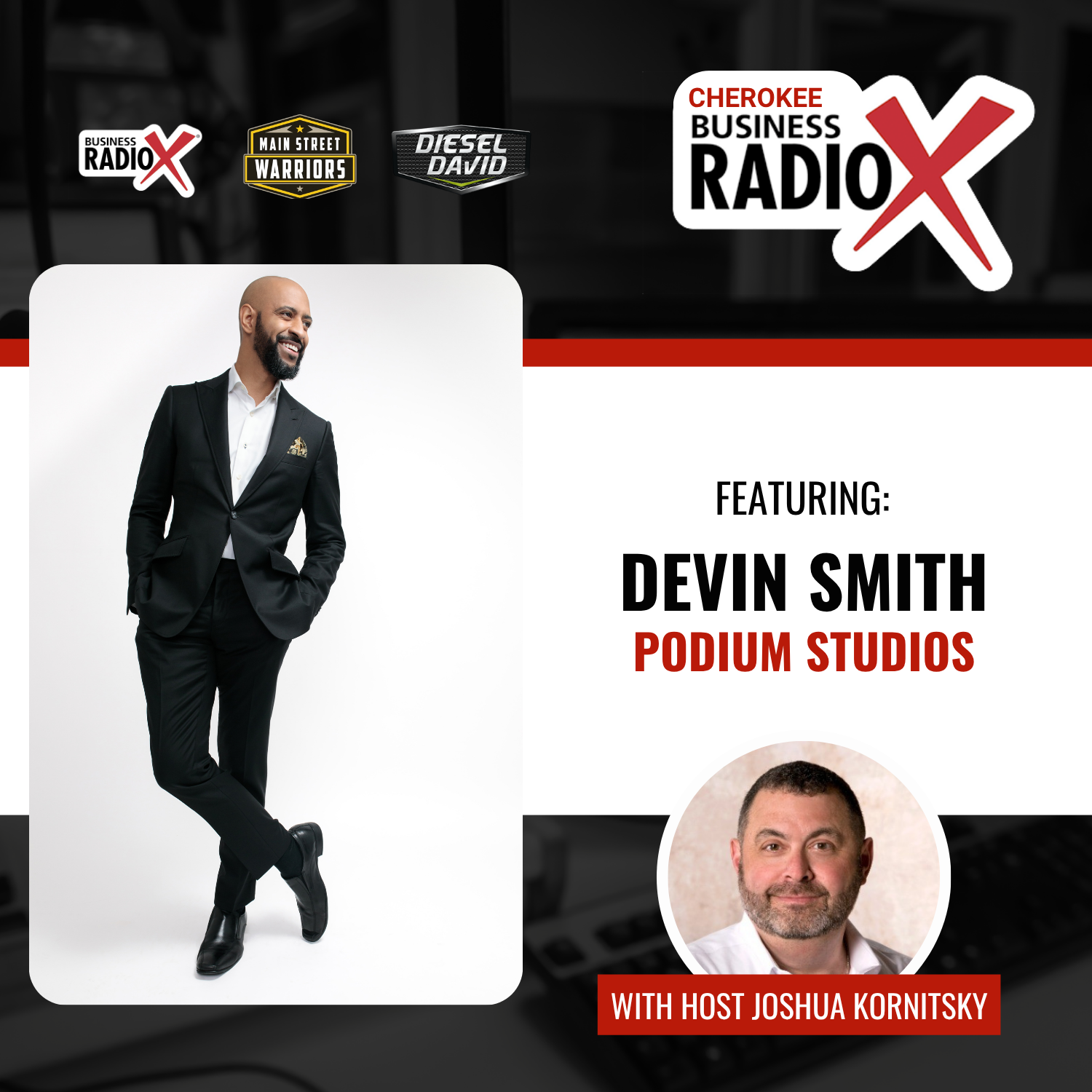
In this episode of Cherokee Business Radio, Joshua Kornitsky visits Podium Studios in Marietta, Georgia to interview founder Devin Smith. Devin shares his journey from advertising to launching Podium Studios, emphasizing the importance of authentic, strategic video and podcast content for business branding. The conversation covers content creation strategies, balancing personal and company brands, and the value of authenticity over perfection. Devin offers practical advice for businesses at any stage, highlighting how Podium Studios supports clients with both advisory and full production services.

Brought to you by Diesel David and Main Street Warriors

CherokeeSponsorImageDieselDavidMSW

logo-podium-logo-podiumstudios-hrz

Devin-SmithDevin Smith is a branding and experience guy with a passion for quality production and podcasting. He’s spent nearly 25 years cutting his chops in design, advertising, marketing, and branding.

During that time, he worked with major brands like Wells Fargo, Verizon, and Michelin.

These days, he leverages all of that as he does content strategy, production, editing, and even hosting for podcasts through Podium Studios in the metro Atlanta area.

Episode Highlights

  • Devin’s background and career transition from advertising to founding Podium Studios.
  • Importance of branding and content strategy for businesses.
  • Role of authenticity in video content creation and audience engagement.
  • Challenges faced by clients in front of cameras and strategies to overcome nervousness.
  • The significance of clear communication and avoiding jargon in content.
  • Balancing personal and company branding for business owners.
  • The evolving landscape of video content and podcasting in business marketing.
  • Resources and team requirements for producing professional video content.
  • Strategies for businesses at different stages of maturity in content creation.
  • Accessibility of content creation tools and the value of starting with basic equipment.

Transcript-iconThis transcript is machine transcribed by Sonix.


TRANSCRIPT

Intro: Broadcasting live from the Business RadioX studios in Woodstock, Georgia. It’s time for Cherokee Business Radio. Now, here’s your host.

Joshua Kornitsky: Welcome back to Cherokee Business Radio. I’m your host, Joshua Kornitsky professional EOS implementer. And today I’m excited to be in someone else’s studio, which I’ll tell you about in just a moment. But I want to remind everybody that today’s episode is brought to you in part by our community partner program, the Business RadioX Main Street Warriors Defending Capitalism, promoting small business, and supporting our local community. For more information, please go to Mainstreet Warriors and a special note of thanks to our title sponsor for the Cherokee chapter of Mainstreet Warriors. Diesel. David Inc. Please go check them out at diesel. David. So today is a show unlike any other. Uh, today I’m a guest within the incredible Podium Studios location in Marietta, Georgia. And, uh, with his gracious invitation, Devin Smith, the founder of Podium Studios, has invited me in to record Cherokee Business Radio.

Joshua Kornitsky: Today’s guest is Devin Smith, founder of Podium Studios in Marietta. Through his work, Devin helps leaders and brands create engaging, professional video content that helps strengthen personal brands and expand their reach. His background in design and his passion for branding give him a really unique perspective on how content can be shaped and really help change the reputation and influence the view. We’ll hear directly from Devin about his journey, his insights, and get his perspective on branding, and learn more about the work being done here at Podium Studios in Marietta, Georgia. Well, thanks for having me, having me. Devin, it’s really a thrill to be here.

Devin Smith: My pleasure. You know, honestly, like I was mentioning, I. It’s very rare that I get invited on somebody else’s show. So I’m just glad you’re willing to make the drive and come hang out, man.

Joshua Kornitsky: Absolutely, absolutely. We’re not that far from Cherokee County. It all works out. So tell us a little bit about yourself and your background, if you would. Because if we don’t know the origin story, it’s hard to understand where we’re at.

Devin Smith: I absolutely. So, uh, you know, essentially, um, I kind of I started out in, um, advertising, actually. Okay. Uh, I wanted to go into I wanted to go into animation. My dad convinced me that was a hard field to break into and talk me into going to design school. Okay. Went to design school and then went into advertising industry, working at ad agencies and stuff like that. And, um, and just got to work on, um, big brands, got to work next to world class creatives. Uh, you know, I’m sitting next to people who are writing copy for Verizon and BMW.

Joshua Kornitsky: And I’m curious, was that here in Georgia?

Devin Smith: That was actually that was actually in South Carolina. Really? So that’s where I’m from. I’m from Greenville, South Carolina. And, um, I was working at, uh, an agency in Greenville that, you know, you wouldn’t expect Greenville to house an.

Joshua Kornitsky: No, not at all.

Devin Smith: That is working on major brands like that. Um, but it it does. And now they, uh, I mean, they’re, they’re it was an agency called, uh, they’re now called EP and Co.

Joshua Kornitsky: Okay. They got class here.

Devin Smith: Yeah. Yeah. And they’re now like agency of record for like John Deere.

Joshua Kornitsky: Oh that’s.

Devin Smith: Awesome. And all kinds of big companies. And I also worked at another agency called Jackson. And you know we were again working on Michelin, working on, you know, just um.

Joshua Kornitsky: That’s fantastic exposure.

Devin Smith: Yeah, man. And getting getting to getting to work on those brands and getting to work with those people. Uh, it it taught me how marketing is done in the big leagues. You know, it taught me how brand positioning and creative is done in the big leagues. And, um, you know, I wound up getting out of the ad agency world going into tech. Every company I ever worked at, I just wound up. I wound up, you know, doing creative. Yeah. You know, I’d work on stuff. We’re working on building software. Building, you know, um, web, web apps and all that. And eventually I’d just be like, man, we. What are we doing with the brand guys? Like what? What is this?

Joshua Kornitsky: Which which, honestly, a lot of organizations that’s not high on their list unless they’re specifically marketing focused.

Devin Smith: That’s right. Yeah. Or if they’re big enough to where? They’re used to hiring agencies to handle that stuff, they’re just like, well, we don’t have anybody in-house. You know, we’re not paying an agency. And I just I’m a firm believer that, uh, you shouldn’t wait too long to make sure that you have Professional brand positioning, you know.

Joshua Kornitsky: Couldn’t agree more because it’s a defining. It is the defining characteristic of your business. It’s the public face. And if you’re not going to prioritize that at a certain point, I understand financially it may be difficult, but when you have achieved a level of success where you’re able to prioritize it, it is your best foot forward every time. Yeah. So so you’ve got this incredible pedigree of working with these top tier organizations that clearly brought, uh, a lot of expertise into their marketing and into their creative endeavors. Um, what what got you from being in, in that particular, uh, universe to here where you’re now helping create, uh, incredible video content for others?

Devin Smith: Man. Uh, so that’s a great question. So I, uh, the funny thing is, is that, uh, I wound up, uh, I wound up going out on my own. Um, it was late 22, late 2022. I wound up deciding to start my own business, and I was consulting, and I thought I was going to be helping people build software and still wound up doing marketing. Sure.

Joshua Kornitsky: And eventually tried to get out, and it just kept bringing.

Devin Smith: You kept bringing me back in, you know, and and, um, eventually, like John Wick, you know, people, you know, asking if you’re back. And I’m like, yeah, I’m thinking I’m back. Yeah.

Joshua Kornitsky: There you.

Devin Smith: Go. And and so I had a friend, uh, who had the idea of starting a podcast studio. And so that’s how Podium Studios was born. And I got into podcasting, um, back in like 2020, um, I released my first show, and I tried to work on shows before that and never released anything because I was too much of a perfectionist, you know?

Joshua Kornitsky: Well, and I imagine that does get in the way.

Devin Smith: Yeah. Oh, yeah. For especially, you know, my dad, my dad’s an audio engineer. Musician. Oh, okay. So?

Joshua Kornitsky: So. Yeah. So you do. It has to be perfect.

Devin Smith: Yes. Like, you know, I watched my dad doing that stuff, and he was absolutely maniacal about sound quality. Sure. You know, um, and so I was like that, and that stopped me from releasing things. And eventually I realized, like, I just got to put it out, you know? And so I started doing that. Fell in love. I just fell in love with podcasting. I love I love making shows, man. I love making great shows. One of the things that I, I noticed is like when I’m making my own stuff, you know, I love just going and listening to different theme music and thinking, what kind of podcast could I match this theme music?

Joshua Kornitsky: That’s kind of a that’s an interesting mental exercise. Yeah, yeah, but it still helps you visualize it. I’m all for that. Yeah. So who who are the types of organizations or what size what what are the organizations you find that the work you’re doing is resonating with?

Devin Smith: Oh man. That’s so that is a it’s been an interesting journey to figure figure that out really. And what I’ve found is that you have, uh, people, um, whether they’re business owners or executives who know that content content’s the game now, um, you know, the the smartphone we got in our pocket is the new TV, right? And so people expect you to be there and and we find that we resonate the most with business owners, with executives who understand if you’re not there, it’s kind of like, you know, when we were growing up, if you weren’t on radio or TV.

Joshua Kornitsky: You didn’t exist.

Devin Smith: You didn’t exist. Like, you know, you just weren’t or you weren’t a big deal. Right? Right.

Joshua Kornitsky: Um, mom and pop, location store, restaurant, whatever. One, one location. You didn’t expect anything. But if you’re in multiple locations, you got to have a presence.

Devin Smith: That’s right. We expect you to be on the radio. We expect you to at least be on local TV. People expect you to be on social now. They expect you to be on YouTube. And and they go looking for you there. And some, some people will go looking for your Instagram, especially if you’re a local business. They’ll go looking for your Instagram before they look for your website. And and so people who get that have been our our best clients. And we love working with people who know, hey, we got to get attention. And that’s what we do. We bring people attention through doing great content for them. You know, we do. We do video content, we do podcasts. And, um, you know, we we try to make it to where people just don’t have to think about it too much. They come in and we go to them and we shoot and they don’t worry about the rest.

Joshua Kornitsky: Well, so that brings up to me a really interesting question, which is, okay, it’s harder to put a finger on the exact size because it’s really it sounds like it’s more about mindset, right? They’ve got to understand the value of the content. Yeah. Assuming that you’ve crossed that hurdle and you have someone or a group of people that understand the value of the content, how do you help them arrive at what it is the show is going to be about. Because if I am a painter and and I understand the value of building the the brand of my company, I, you know, people don’t want to talk about paint drying, right? It’s not particularly interesting. So, you know, is that something that you’re able to help understand their brand or do you help them create their brand or how does that work?

Devin Smith: Great question, great question. So, um, coming coming from the branding world, um, that is one of the things that if somebody needs that, uh, we will do that. Most of the people who are coming to us, they have their brand, uh, they have their company brand at least established. Okay. Um, most people don’t have a personal brand established as much. And so we will we’ll go from end to end. So we’ve helped people start podcasts and YouTube channels from nothing. Um, and so we’re talking about the content strategy. We’re figuring out what does your audience care about. You know we’re going to do an audience research to find out what kinds of questions are they asking. Um, what kind of problems are they trying to solve that they’re out there looking for information on. And that’s the stuff that we’re that we’re going to make content about, because we’re meeting them where they are with the way that they think about the problems that they have. So, you know, the titles that we’re going to suggest because we’re we’re helping our clients with, with content strategy, with titles, with, with the actual publishing, with monitoring how the content’s performing. And we’re saying, hey, we need to do four videos. We need to do four videos next week on these topics. You know.

Joshua Kornitsky: So I don’t have to come necessarily with an agenda of these are the things I want to talk about, or that this is what I want to create content around. You’ll help them actually understand what the market’s looking for.

Devin Smith: Totally totally. Because it’s just there’s so much guesswork and you can go, I mean, you can honestly go a year and not strike gold, and it’s just better to go and do the research, find out what people care about, and just skip right to that. And so we we do that. Some people are able to come in here. You know, we had we had a local law firm come in and the partners, they’re just so good at sounding like they prepared a statement, uh, that we could give them a topic and they would go for five minutes straight and it sounded like a scripted video. Most people don’t have that skill.

Joshua Kornitsky: Sure. And that’s that’s sort of a sort of directly related to what they spend their time doing. But yes. Um, what are some of the misconceptions people have? Right. Because I imagine I work primarily in audio and and in audio, it’s considerably more forgiving. Right. Because other than when I broadcast live, I have the ability to help fix things that get stepped on or screwed up. How is it different working with video? What are some of the things people walk in? Um, perhaps misunderstanding?

Devin Smith: Oh, I think the biggest thing is that people expect you to be perfect and they don’t. People don’t expect you to be perfect on camera. They don’t expect you to know every word that you’re going to say. As a matter of fact, they want, especially in the age of AI. They want more evidence that you’re human, that you’re authentic.

Joshua Kornitsky: That’s that’s terrifying, but accurate.

Devin Smith: Yeah, right. You know.

Joshua Kornitsky: We’ve all gotten that one email where you’re like, yeah, no human wrote this.

Devin Smith: That’s right. That’s exactly right. You yeah. You get those emails. You see that blog post? Yeah. Uh, that that it’s evident that somebody just phoned it in with, with, uh, you know, AI and they didn’t even really spend much time on it. And one of my favorite sayings I saw a writer post this on X. He said, everybody wants to write content with AI, but nobody wants to read content.

Joshua Kornitsky: That’s very boy that’s really telling. Yeah.

Devin Smith: Yeah. And so we are I think the biggest misconceptions you got to come in, you got to say all the right words and you got to you know, you got to be perfect. Actually, what people want is for you to be authentic. And they want they want to feel like they’re getting to know you and what you’re going to be like when they meet you in person. That’s actually what they want. And we have to tell some of our clients who are really good presenters, we have to tell them, like, dial it back a little bit.

Joshua Kornitsky: You’re you’re too polished.

Devin Smith: Yeah, exactly.

Joshua Kornitsky: Really. So I think that’s interesting because we were talking earlier about sort of, uh, something I talk with my clients about that perfectionism. Perfectionism is the enemy of progress, right. And if you’re hyper, hyper focused on getting every word right, not occasionally having a misstep, I get that, but we’re not in movie production. We’re we’re having genuine conversations. Yeah.

Devin Smith: And you should be able to let your hair down. You should. I should relax you. Some people that stresses them out. Some people want everything to be prepared ahead of time. Totally understand we have a teleprompter for that reason.

Joshua Kornitsky: You know, there’s lights, there’s microphones, there’s cameras. So people I do think have a tendency to be nervous. Oh, yeah. And and in that, in those contexts, how do you help them overcome that?

Devin Smith: Uh, you know, one of the best tools that we use, essentially, is we just start asking them questions, and we have the cameras rolling the whole time, and they’re just talking and, and we get great content out of just asking them honest questions, especially if we’re, you know, we’re a layman to most.

Joshua Kornitsky: Of our.

Devin Smith: Universe. Yeah. To their whole world. We don’t we’re not experts in that. So we’re asking the kind of questions that somebody who doesn’t know anything is going to ask, right? Um, and that tends to be good content.

Joshua Kornitsky: Near and dear to my heart. Because for me, I always want to make sure that I’m asking the types of questions that if someone ran into you on the street, Devin, and you said, well, I you know, I help companies create content. Yeah. Well, what does that mean? Right. Right. Because those are the things we we all tend to live in our own little professional bubbles. And in in my life as a as a business coach and teacher and facilitator, I have a list of acronyms that I have to carry a lexicon to hand to other people. Yeah. To be like, okay, these are the this is what I’m talking about. Right. Um, that shouldn’t be necessary in a normal dialog.

Devin Smith: Right. And you don’t want that on social media because you won’t get the chance to explain it. And, you know, you think about how much time you spend on a reel before you go to the next one. I mean, you’ve got you’ve got 3 to 5 seconds, tops. I mean, five seconds is generous to get somebody’s attention. And if it’s not, um, easy for them to grasp why they should invest the full 30s to a minute to to watch your your video. I mean, you’ve lost them, you know.

Joshua Kornitsky: Well. And that brings up another question for me. So when you’re when you’re helping create the branding that leads to the content, even if they’ve brought their own business branding to you. And I’m saying branding meaning their their identity. Yeah. Excuse me. Oh. You’re good. When? When they arrive. How do you help separate? Uh, for lack of a better expression. Sort of the ego from the business. Um, because just using an easy example of somebody like Elon Musk. Right? He is his own brand identity. He also has SpaceX, and he has Tesla, and he has Starlink, all of which kind of have their own identities as well. Right? I know he’s an extreme example, but but having worked with many small businesses, often the founder or founders do have their own community identity. So how do you help balance that?

Devin Smith: That’s an excellent question. So the one of the things that we will do, um, is if the if the business is to a certain level of maturity, we will actually create content that is intended to go on the business owner’s personal pages. Um, and so they are drawing people to the business and we’ll make, we’ll make content that goes to the business page as well. But we’re, you know, the thing about social, uh, and YouTube is that people want to connect with people. And so we prioritize, hey, we’re going to make content that get people to know, like, and trust you without having met you in person. And then they’re going to naturally, if they want to do business with you, then they got to go through your company. And so we’re going to make sure that we’re linking off to your company on your social profile.

Joshua Kornitsky: Right.

Devin Smith: You know, that that, uh, they know exactly if they’re in a position where they’re ready to start having serious conversations or they’re ready to buy that they know exactly where to go. But up until then. Um, as a as an executive, as a business owner, as a salesperson, you are producing stuff and putting it out that allows you to be yourself and feels authentic without, um, without you necessarily, uh, painting the entire company with that brand.

Joshua Kornitsky: It sounds like it’s a lot of work.

Devin Smith: Yes, yes, yes. We I when we when we started doing this and it was just a it was just a couple of us and I mean, we were I mean we were up every night, uh, you know, it was me, um, my business partner and my wife. It was just the three of us, and we were doing everything. And my wife was the social media manager and the copywriter, and, you know, uh, me and my business partner were doing the editing and the graphics and the sessions, and, and we were up super, super late every night doing that stuff. And now we have more of a team, which I’m very thankful for. But it is. It is a ton of work. And I think that people, sometimes our best clients, know how much work it is. They know how much work. And I’m not doing that myself.

Joshua Kornitsky: Well and doesn’t. Isn’t that another misconception that this is easy? Right. And and and on on the subject before we leave it of understanding what resonates currently. And and I don’t profess to have any level of social media expertise, however, just on my own personal life, what interests me personally versus the articles I read professionally are really quite different, and the things that catch my attention are quite different. So how do you balance that? Because sometimes, right, if I’m B2C, if I’m home services, right, I sort of straddle that line. But if I’m if I’m in a business accounting firm that only works with other businesses. You know, the the the home grown content probably doesn’t resonate.

Devin Smith: Right, right. And that that is why we try to make sure that we have a balanced approach to it. So there’s some stuff that it’s it’s only really going to make sense on the company profiles.

Joshua Kornitsky: On LinkedIn versus.

Devin Smith: Right. Yeah. And and I will say, you know, for instance, like LinkedIn really good, really good for B2B content, really good for, uh, you know, it’s expected that you’re talking about business there. Sure. Um, Instagram, surprisingly. And I had to unlearn what I thought I knew about Instagram.

Joshua Kornitsky: I’m listening carefully now.

Devin Smith: Instagram is really, really good for local businesses. Um, if you are, if you have a, a, a radius, essentially, uh, a physical radius that you serve. You have a local business that people show up to, or you serve a certain, you know, local geographic area. Instagram is really good at putting you in front of people who are in your area. Linkedin is not as as good at LinkedIn’s.

Joshua Kornitsky: It pretends to be a global stamp. I don’t really know that it is, but right. But on that point and that brings up something very interesting. I know we’re sitting in your in your beautiful production facility, but what if I’m a local business and I what you’re saying right now about Instagram resonates with me. But I don’t have the budget for what I presume is, you know, not an inexpensive endeavor to go into video production. Do you still offer, um, services and advice and guidance to to companies that aren’t going full in on video and just looking for content guidance?

Devin Smith: Yeah, absolutely. So, you know, we we definitely still offer assessments and, and and advisory uh, That, you know, if you, you know, we we like to follow a process that, you know, everybody, everybody when they’re starting with us, if they’re going to go full in, we still have them start out with the assessment advisory. Um, because all that still has to be done anyway. If they bought in fully, still got to do the.

Joshua Kornitsky: It’s a discovery process, right. You got to learn about them and what matters to them and what message they want. Right.

Devin Smith: That’s exactly right. And basically what we do is we start out with the we start out with that process. And if they decide that they want more, we apply what they paid for the advisory and deduct it from the full package. And so somebody who decides, hey, I just want to be able to sit down and hear from you guys on research that you did on, on our market. And, and you give us advice about what content we should even be making, what should we be doing. And we’re able to do that at a low enough cost. It’s accessible for most businesses.

Joshua Kornitsky: And and that’s funny because it doesn’t seem while I get the ask. And I encounter that myself quite often where people people would like you to, they don’t want you to solve the problem. They would just like to get direction from you. And working with entrepreneurs, as we both do, that’s not uncommon because they’re used to solving their own problems. And, and, and some come back around and realize that additional guidance in in ongoing um, let’s go with encouragement is beneficial for them. Some are not. And for some people it is enough. But tell us what if there is an average engagement? If, if if an organization, let’s say they’re going what I presume is the more traditional path that they’re looking for, video content creation, um, what does that look like? Is it for a set period of time, a set number of episodes? Is it a one size fits all? How do you approach, uh, engagement in that regard?

Devin Smith: Great question. So, um, we generally we generally approach it from two different angles. We will, um, come from the we’ll come from the angle of if you’re basically looking to have a us be your content marketing engine, you know that that is that is where we will say, all right, we do a flat retainer and we just take it over. We manage it. We we act like we are taking, uh, control of that function within the business. And you don’t really have to worry. We lead it. We act like a fractional content marketing executive. Okay. Um, and, and, uh, you know, those, those usually start around. Do you want me to talk about pricing?

Joshua Kornitsky: Well, that’s really up to you. And the reason that I don’t typically push on pricing is, you know, for, for a ten person operation versus a 250 person operation, the needs and the frequency. I feel like you’re you’re certainly welcome to. But I, I feel like it wouldn’t be fair because no matter what the price is, it’s not likely to align. I was thinking much more about the sort of the time commitment and and even the production time. So, you know, I don’t know how long it takes to go from ideation to discussion to getting guests in to getting that onto whatever medium you’re going to put it on. I think those are the types of things that that, that people would benefit. Yes, everyone wants to know how much it costs, but like everything else, it the answer almost universally with every guest I have is it depends.

Devin Smith: It depends. Yeah. Right.

Joshua Kornitsky: Yeah. So you can you can order a glass of water, or you can order six lobsters in six steaks. It depends. Right. Right.

Devin Smith: And we generally we try to we try to keep people in rails. We do have an opinion about how it should be done. And so we have some folks who may just want, you know, you can have folks who just want to do some content. They want to come in, they want to do some content. We’ll schedule out a day. We’ll literally do a content day. That’s what we call it, do a content day. They come in and shoot, get, you know, eight short form pieces. We we still do the audience research and and all that and help with the ideas ahead of time. Um, and, you know, we go we go all the way up to like I said, it’s, it’s we are taking over that function and the, the time commitment on the business owner’s part really comes in on, you know, obviously the meetings with us, we try to keep those to a minimum. Um, but we, we want to be available. So we, we try to make it to where the whole reason people are coming to us is because they don’t have time to deal with it.

Joshua Kornitsky: Um, or the skills or the knowledge, because that’s the other piece I’m going to ask about next.

Devin Smith: Sure. Yeah, you’re exactly right. And they don’t want to they don’t want to have to be an expert in that. They have a business to run already. And so we we try to keep it to a minimum. So at most you’re looking at um, somewhere between uh depending on how much content you want to produce. Because. Because, you know, you can go from, hey, I just want some short form videos to I want to have a whole show, and I’m putting out short form content and excuse me, I want clips off of the, uh, off of the show. And so that can turn into. Yeah, you’re looking at probably somewhere between ten and, and and 12 hours a month, you know, depending on how much content you want to produce. 4 to 8 of that is, is, uh, actually shooting content. Um, and then you’ve got meetings and all that, but if you’re just producing, you just, hey, I want to have a steady, steady drip of content coming out. I mean, we’re definitely able to to do that in in eight hours or less, uh, per month. And, uh, I mean, if you give us honestly, if you give us eight hours, we can produce several months of of content.

Joshua Kornitsky: That’s that’s really good to know, because Is one of the other things that’s indicative of of entrepreneurial organizations that are still learning and growing. And a lot of the folks that I work with is the idea of a marketing budget, of having dollars set aside. It’s not that they don’t get there, it’s just that’s part of evolution. Right? And my my wrapped van for my plumbing business is my advertising budget when I start. But when I get up to 4 or 5 vans, I have to think about how to keep calls coming in across the board, and that requires dedicating resources to that on an ongoing basis.

Devin Smith: Yes, yes, that’s right. And that’s generally who we’re going after are people who have said, okay, I know that I need to be marketing. I am willing to spend this much on marketing per month, and we’re able to say, give us, you know, a part of that budget and we will produce results with that budget. Because like I said, we are on, we are on the screens. We are we are in the earbuds. Right. And that’s that’s the game right now, you know.

Joshua Kornitsky: So here’s the question that I was thinking of before. And yes, that that all makes sense to me. So I was trying to think in my head. And I am not a content creation expert in, in the arenas that you are. But I’m thinking, you know, again, that entrepreneurial mindset of I can just do this myself, never mind the cost of the equipment in the room, most of which I can’t identify. Never mind that. Just set that aside. Uh, help me count off how many people need to be involved. So so you’ve you’ve got to have someone. You’ve got to have someone that’s doing the research into social media. Yes. You’ve got to have someone who is steering and directing the client, engaging with the client. Uh, or in this case, let’s pretend we’re doing this in-house. Someone that’s making the creative decisions. So call that a chief marketing officer. What have you. Then you’ve got to have how many production staff would a would an average thing need. 2 or 3 people. Then you need an editor. What about sound and lighting.

Devin Smith: Yeah. Yeah that’s that’s great.

Joshua Kornitsky: And so so I’m up to eight already and and that’s just with the stuff that occurs to me. Yeah. Um, I, I imagine there’s a few more folks that probably get involved. So you’re talking about for, for midsize content creation, anywhere from, what, 6 to 10, 12 people in aggregate. Right.

Devin Smith: Even between our company and their company. Right. And and so we one of the things that that I wanted to do and putting a studio together is that because, you know, because we still go on site for people and we’ll show up with a crew, you know, really.

Joshua Kornitsky: So you can take the whole show on the road.

Devin Smith: Yeah. So we yeah, we can, we can show up on site. Um, uh, you know, if people don’t want to come into the studio if they’re too far. Um, or, you know, some people, they want to be able to show off.

Joshua Kornitsky: Their beautiful space. Yeah.

Devin Smith: And they want, they want because that’s a part of their culture. It’s a part.

Joshua Kornitsky: Of.

Devin Smith: The draw. And so absolutely, we’ll go we’ll go on location and get some of that stuff. But with the studio makes it possible for us to do with, you know, 1 or 2 people what it would normally take 3 or 4 people to accomplish. And so, you know, we’re we’re able to do it at a, at a lower cost. When people come into the studio and we’re able to be more efficient, it takes it takes a lot less time to go from you walked in the door to we’re rolling. You know.

Joshua Kornitsky: It’s the difference between going to a restaurant and having an event catered. Yes.

Devin Smith: 100%. That’s exactly right. And so we, you know. Yeah, you’re. But still even with that, you’re looking at you’re looking at probably 4 to 5 five people who are touching, you know, touching a piece of content to make sure that it it goes up. It’s done well that it’s on strategy and that it goes up on time and with as few errors as possible, we try to make sure that we have zero errors. Right? Sure. But I mean, you’re looking at, um, strategists, you’re looking at, uh, you’re looking at a line producer in the studio or on site. You’re looking at, um, the, the, uh, designer. You’re looking at the social media manager and the project manager. That’s five people, right? And that’s that’s that’s the minimum of of. So you don’t want to hire all those people. Most people don’t want to have.

Joshua Kornitsky: And it doesn’t make financial sense in most. You have to be scaled to a pretty good size for that to make sense. And the reason that I bring all this up is, is it seems to me that hiring a professional who brings all this to the table is actually a cost savings. And um, in my universe, it also creates accountability for if I hire all those people and I’m not afraid of suggesting people take on accountability. But if I hire all that in-house, never mind whatever my budget is and whatever my spend is and my explosion in headcount, I’m now accountable for being at a professional production level. Right? And unless I’ve done this before, that’s that’s like hiring all the staff for for a michelin starred restaurant, walking in the kitchen and expecting to know what to do. Yes. Uh, and and as we talked about earlier in your journey, there was a learning curve.

Devin Smith: Oh, absolutely. So, absolutely.

Joshua Kornitsky: So if if I’m a B2B accounting firm that decides that they get the value of the content. Right. But I think that I should do this myself, it seems to me that politely, the math doesn’t add up.

Devin Smith: No. We were actually, uh, you know, I had a leadership meeting yesterday. We were working on a proposal for, you know, what could be a pretty big client. And we were doing the math on what it would take for them. It’s like, okay, we have to make sure this makes sense for them. What would it cost them to hire what we’re going to do for them? Sure. And I mean, they were at they they were at somewhere between 180 to $300,000 a year in just staff. You haven’t bought any equipment yet, right? You don’t have a space to record in. Um, you haven’t done any of that. You literally just hired staff, and they expect you to be able to direct them.

Joshua Kornitsky: With no experience.

Devin Smith: Right?

Joshua Kornitsky: And and that brings up the other point that that was on my mind, which you just very carefully articulated without meaning to articulate it. You’re putting your customer first in that consideration. I know that that sounds like you’re structuring a business proposal to win business. Yes. Yeah, but it sounds to me like you’re still putting your customer first, because I imagine depending on the engagement, there could be a circumstance where if they had certain staff, maybe you’re not the right 100%.

Devin Smith: You’re absolutely right. And that’s basically what we have to make sure is that we’re acting, uh, we’re acting in the best interest of the client. And so when we do that math, we’re saying, does this make sense for them? Because we’re looking at how much work it is. We’re like, how are we going to do this? And it makes sense for us, but is it a good deal for them? And I’m, you know, I’m a business owner. I’m thinking to myself, well, would I, would I hire me at that rate? If I were them, would I hire me and my team? And absolutely. The the idea of me having to hire all those people to be able to do this stuff. The crazy thing is that this particular company has two people on staff who are really good at production, but they already have other jobs, and so they were doing production for the company. You know what they said? The last.

Joshua Kornitsky: Conversation.

Devin Smith: I had with the marketing director, she said, I asked the question, hey, is so and so still doing video for you guys? And she said, yeah, he’s going to do one more for us. But he said he doesn’t want to do it anymore and that’s why they’re having the conversation with us.

Joshua Kornitsky: Well, and that again not to tie it back to the entrepreneurial mindset, right. Is is in most organizations, even if they’re 200 people, you still have you have folks who have God given talent who are willing to pick up tasks or accountabilities that really aren’t part of their universe, but you get to a point where it’s not scalable, right? Where, where clearly you ask that person to do that job, or to assume that role because of budget, because of constraints of any kind. But at a certain point, if that is a valuable role, you either need to hire someone who is the right person for that seat, or you need to outsource. And this is where I was going before to a third party who is accountable to the contractual standards. The production standards and that if those and I’m sure it doesn’t happen, but it can if those failed to be met, somebody is accountable for that. And the value of having that as someone outside of the house is your hiring expertise. Yeah. Yeah. And, you know, it’s not I don’t want to equate it to a lawyer, because a lawyer can lose a case for reasons that have nothing to do with the lawyer. That’s right. But a lawyer can also lose a case because they’re a lousy lawyer. Yeah. And if they lose the case because they’re a lousy lawyer, that’s who you hold accountable.

Devin Smith: You have recourse.

Joshua Kornitsky: Right. And that’s the piece that I think, particularly in that that entrepreneurial arc, when you reach the point of realizing, okay, content’s unavoidable. I have to create it if I’m going to stay relevant. And I and I even if you weren’t in this business, I think everybody can agree that we’re at a point now where that is the billboard. That is the radio ad. That is whether it’s social media or any of those other mediums. You’ve got to have a presence. If you’re a business that’s looking to grow.

Devin Smith: That’s right.

Joshua Kornitsky: And if you accept that at a certain point, you have to accept the fact that, like your, in most cases, your taxes or like your legal representation or, you know, like the plumbing in the building, at a certain point, you have to engage a professional in order for it to get done, because it becomes cost prohibitive for you to do that on your own. And more importantly, it becomes skill constraining because you know you can be the the greatest B2B accountant in the world. You can have 15 people on staff, you can have 30, 300 whatever. That doesn’t mean you know how to create content. That’s right.

Devin Smith: That’s right. That that’s so well said. Because you realize that this is an entire focus. Um, my business partner, I picked him because he is not just a video guy, he’s not just a photographer. He’s a marketer. And he understands, uh, that you have to be able to make, not only make content that’s of a certain level of quality, but it’s got to be the right content. And we we’re plugged in to what’s happening. I mean, this guy always I love it because he’s always on the cutting edge of what’s happening in the social space of what’s happening in the AI space and all of that. And we’re always talking about, okay, well, how can we take this and apply it to this client? How can we change up the strategy?

Joshua Kornitsky: And that’s expertise. Yeah. And you can’t. Money doesn’t solve expertise. Expertise solves expertise.

Devin Smith: I’m gonna steal that.

Joshua Kornitsky: That’s really it. It’s all yours. You can’t hire intuitiveness. And an intuitiveness comes from exposure to the industry to being in depth and immersed in the industry. And it’s built over time. Yeah. And and you can hire experience, but you can’t hire intuitiveness. Yeah.

Devin Smith: Um, I you get that some of that intuition you get from getting punched in the face.

Joshua Kornitsky: 100%.

Devin Smith: You know, sometimes.

Joshua Kornitsky: Most of it.

Devin Smith: Yeah. And and you learn how to learn how to slip the jab, and and you realize over time that, um, that is something that when you’re a business owner, you can’t always afford the learning curve. You’re at a stage or you’re at an inflection point. The learning curve is actually a much higher cost than just paying the experts.

Joshua Kornitsky: If you get to the point where you’re hiring or considering hiring for content creation, you’ve learned that lesson a bunch of times on a bunch of other subjects already. You have. Yeah. Right. And the the smartest business leaders that I know get to a point in everything across the board that’s outside of their core focus. They hire expertise if it doesn’t make sense to bring it in-house. Sometimes it does, whether it’s content creation or something else. Sometimes it makes sense to hire a creative. Sometimes it makes sense to to hire a maintenance person to care for the buildings. But at a certain point, you realize that that’s not your strong suit. So you’ve got to bring somebody in that, that or someone’s in that can do that. That’s right. So one more question that just is, is I want to know, because I think it’s very telling about you as, as a, as a business owner, but also about you as a creative mind. Tell me a story where you had fun doing what you’re doing.

Speaker4: Oh man.

Devin Smith: Oh my gosh. So so many.

Joshua Kornitsky: I put you on the spot.

Devin Smith: So sorry. No, there’s so many of them. Uh, I gotta, I gotta pick one because one respecting.

Joshua Kornitsky: The privacy of those whose privacy? You know. Yes. You can just call. You don’t have to say Mercedes. You can just say a B, and I put that out there. I’m just saying you can just say it’s a a car brand.

Speaker4: Yeah, yeah.

Devin Smith: So. Well, well, I’ll actually give I’ll give an example of, um, you know, one of our, our clients, you know, we’ve been working on their show now, um, for over a year. And, uh, it’s been so cool to see the progression of, um, their podcast and their skill and, um, the production quality as we’ve increased and just always thinking about how to improve it, you know, I kept threatening them because they keep coming in here and they say a lot of funny stuff, you know, outside of the actual show. And I’m like, man, I’m gonna put I’m gonna start putting some bloopers in the show because, you know, they’re talking about wealth and finance and you know, it. It can be it can be funny a lot. A lot of that stuff is just, you know, it can be, uh, they they have great personalities and they make it. They make it fun. But I was thinking to myself, you guys have so much fun off camera. It’s not right to hide this from the audience.

Speaker4: And so.

Joshua Kornitsky: And it shows that human authentic side. That’s right, that’s right. So so my last question is before I ask how people get in touch with you is, is, uh, going back to that progress over perfection. And this might be a little selfish, but I’m going to ask it anyway.

Speaker4: Yeah.

Joshua Kornitsky: If you don’t have the ability to produce the top tier content, is some content better than no content?

Devin Smith: Absolutely, absolutely. So so the, uh, the thing that I tell people, I actually have a kit, I have a kit I’ve built out in a spreadsheet because I get asked by people so many times, they say, hey, we’re not ready. We’re not financially at the point where we can work with you guys. How can we even get started? And I send them our, you know, I send them that spreadsheet with the starter kit of what you should buy. And thankfully, just as technology gets better and better, that.

Speaker4: List gets cheaper, it gets.

Devin Smith: Easier. You have to have the less less pieces of equipment. I mean, if you’re literally just starting out on your phone, um, that’s what I tell people. Just start. Just start putting stuff out there. Show people what you’re doing. Right. Um, tell people what you’re what you’re working on. And one of the things that I love that I have seen with our, with our clients is we’re producing this, you know, this high grade content for.

Speaker4: To your stuff. Yeah.

Joshua Kornitsky: I mean.

Devin Smith: We try, we try, you know, um, uh, but they will we still encourage them, even though you’re coming in here doing this every now and again. You have a thought. Get the phone out. Just record a story, get the phone out. Just record something and post it and just post the raw thing. And we found that people gravitate towards that. They trust you because they’ve seen all the other stuff we’re doing. Right. But even still, after they’ve done that, some of that raw just I picked up my phone. I had a thought. I wanted to share it with you. Everybody who’s following me, that stuff still plays. If you can’t afford any of this, still do that stuff. That stuff will get you going.

Joshua Kornitsky: Well, it sounds like if I had to distill this down, it sounds like if you are authentic and that that resonates in your message, um, something is going to be better than nothing.

Speaker4: That’s right.

Joshua Kornitsky: And if you’ve got nothing, you still need that brand.

Speaker4: Yep.

Joshua Kornitsky: Um, I can’t thank you enough, Devin. I learned more, uh, today than I have in in the last several weeks.

Speaker4: Uh, it’s great discussion.

Joshua Kornitsky: What’s the best way for people to reach you and for people to learn more about Podium Studios?

Devin Smith: Oh, awesome. So, um, I think the the best way for people to find me, uh, is generally on, uh, if you want to find me on LinkedIn, uh, LinkedIn.com. Devon. Smith. Super easy. Um. Uh, and, uh. Instagram. Devon W Smith on Instagram. If you want to look at our, uh, content as a company on Instagram, uh, that is. I hope I’m not getting this wrong at the podium on on Instagram. So, uh, that and we and we try to provide value to people with our content. Um, if you’re not in a place where you can afford us, we’re trying to help you still make great content.

Joshua Kornitsky: And I think that, more than anything speaks to who you are, right. Uh, because the entirety of this discussion has been from your heart. Uh, and, and it’s clear that helping people grow and succeed is is what’s driving you.

Speaker4: Yeah.

Joshua Kornitsky: Don’t get me wrong. Gotta gotta have money to pay the bills. But but that impact that you’re making Speaking clearly is making a difference for your clients, and I can’t thank you enough for inviting me down here to Podium Studios in Marietta. It’s it’s absolutely beautiful. And the quality of of the production facility alone tells me that they’ve invested a lot of time and money and effort into this. So, um, thank you again. Uh, my guest today. And I’m going to turn because I’m not used to cameras. Uh, my guest today has been Devin Smith, the founder of Podium Studios in Marietta, Georgia. Uh, through his work, Devin helps leaders and brands create engaging, professional video content that strengthens personal brands and expands their reach. And I’m going to stop reading my page there to tell you he’s just a smart, clever, creative, incredible guy that wants to help you succeed. That alone, plus the fact that he can help provide the guidance that’ll get you where you need to go so that you’re in a position to create the video content and other content that they can help you with. Is is worth your time, so please check him out. Um. Thank you. Devin, it’s been a pleasure.

Speaker4: My pleasure, my pleasure.

Joshua Kornitsky: I just do want to remind everybody that today’s episode was brought to you in part by our Community Partners program, the Business RadioX Main Street Warriors defending capitalism, promoting small business, and supporting our local community. For more information, please go to Mainstreet Warriors. And a special note of thanks for our title sponsor at the Cherokee chapter of Main Street Warriors diesel David, Inc. please go check them out at diesel. David. Comm. I’m your host, Joshua Kornitsky. I am a professional implementer of the entrepreneurial operating system, and it’s been my pleasure to share today, uh, from the Unbelievable Podium Studios in Marietta, Georgia. Uh, we’ll see you next time. Thank you.

 

Scaling with Confidence: How One Operator Transforms Multi-Site Businesses

November 5, 2025 by Jacob Lapera

Franchise Marketing Radio
Scaling with Confidence: How One Operator Transforms Multi-Site Businesses
Loading
00:00 /
RSS Feed
Share
Link
Embed

Download file

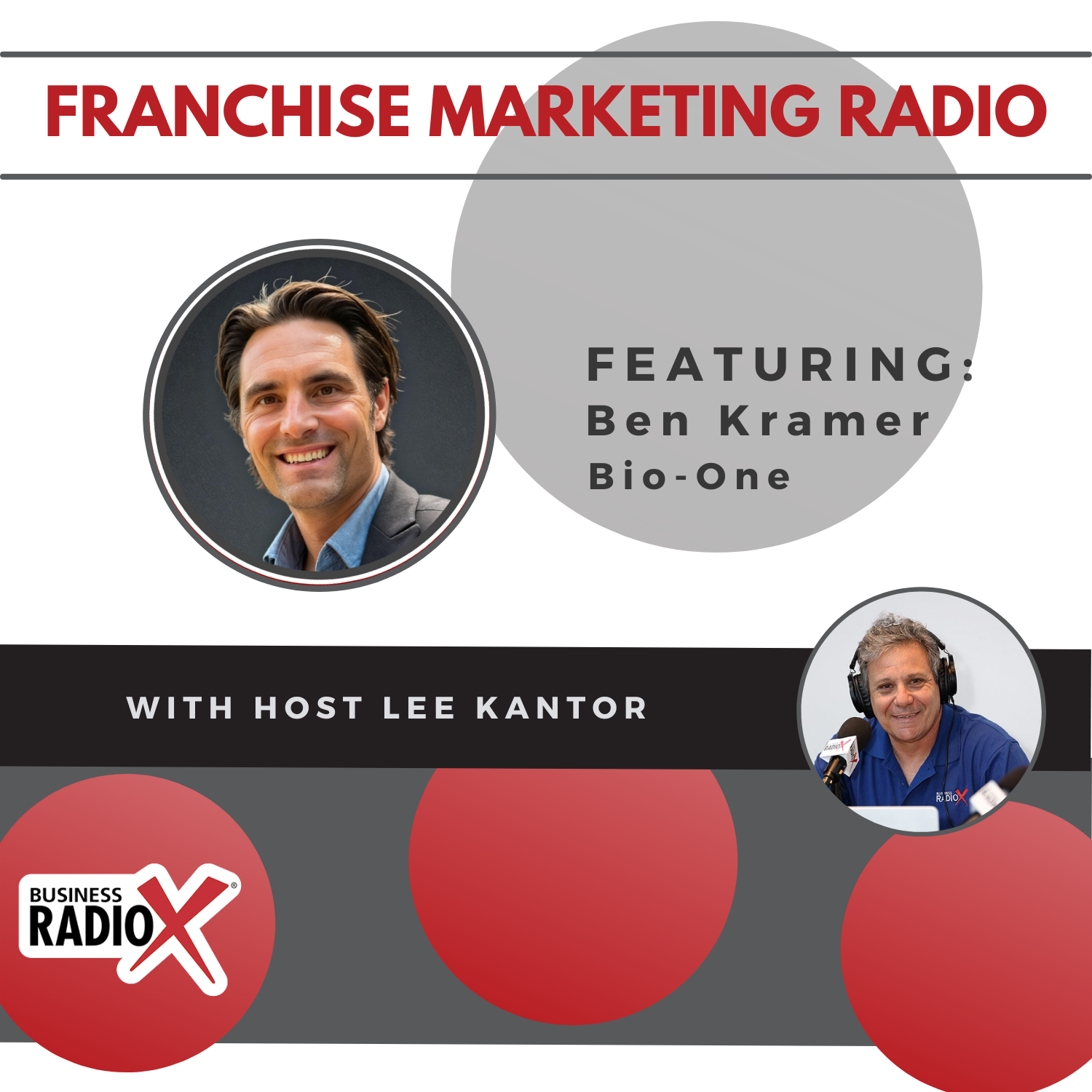
In this episode of Franchise Marketing Radio, Lee Kantor interviews Ben Kramer—a seasoned franchise and operations executive with more than 15 years of experience leading multi-site service businesses through transformation, growth, and profitability. Known for turning around underperforming units and building high-performing teams, he brings a clear, practical approach to scaling brands and driving operational excellence.

Ben Kramer, President of Bio-One.

He is a franchise and operations executive with more than 15 years of experience leading multi-site service organizations through transformation, growth, and sustained profitability. He excels in solving complex operational challenges, building aligned and accountable teams, and guiding franchise brands as they scale with clarity and confidence.

He is particularly motivated by creating forward momentum. Whether revitalizing underperforming business units or enabling teams to perform at their highest level through effective systems and processes, he believes the strongest organizations invest in their people, measure what truly matters, and continually refine their operations.

𝗦𝗲𝗹𝗲𝗰𝘁𝗲𝗱 𝗔𝗰𝗰𝗼𝗺𝗽𝗹𝗶𝘀𝗵𝗺𝗲𝗻𝘁𝘀:
• Reversed a $30M restoration business from six-figure monthly losses to break-even within 90 days
• Increased average job size by 23% through the redesign of billing processes
• Reduced annual labor spend by nearly $2M by implementing a scalable staffing model
• Led a comprehensive overhaul of franchisee onboarding, evolving a 3-day session into a structured 6-week ramp-up program
• Scaled a startup to $500K in revenue and negotiated its acquisition by an international brand

Outside of his professional responsibilities, he enjoys spending time with his family, mountain biking, and continually expanding his knowledge. He believes that curiosity, empathy, and disciplined execution are the foundations of exceptional leadership.

Connect with Ben on LinkedIn and Facebook.

What You’ll Learn In This Episode

  • More efficient processes, smoother long-term operation and start up
  • Ongoing training and updated equipment
  • National marketing/advertising campaign support

Transcript-iconThis transcript is machine transcribed by Sonix.


TRANSCRIPT

Intro: Coming to you live from the Business RadioX studio. It’s Franchise Marketing Radio.

Lee Kantor: Lee Kantor here. Another episode of Franchise Marketing Radio and this is going to be a good one. Today on this show we have the president of Bio-One, Ben Kramer. Welcome.

Ben Kramer: Hey Lee. Thank you. It’s good to be here.

Lee Kantor: Well I’m excited to learn what you’re up to. Tell us a little bit about bio one. How you serving folks.

Ben Kramer: Yeah absolutely. So you know bio one’s a it’s a very, uh, very interesting brand. Uh, we we definitely are not uh, I would say your typical, uh, clean up company. Uh, we we’re a franchise system that is truly built around helping people. Uh, and quite honestly, they’re, you know, one of their, if not their most difficult moment. Um, and it’s that interesting model built, um, around a, you know, purpose driven business that combines a really strong business model, which I think just makes us a very unique brand, uh, out, in, out in this space.

Lee Kantor: Now, to be clear, a lot of your work is crime scene cleanup, biohazard decontamination. Like, you’re kind of working it, like you said, probably in someone’s worst day.

Ben Kramer: Yeah, absolutely. Um, yeah, there’s there’s several markets that we hit, uh, you know, we call it bio bio cleanup. So that’s going to cover crime scenes or, uh, anything similar to that. Um, and then there’s a lot of also, um, hoarding cleanup, uh, that we do in our communities as well. Um, we also do a good portion of our owners do, uh, drug remediation, um, as well. And that’s becoming a big piece of our business.

Lee Kantor: Now, can you take us back to how this the genesis of the business, how to get started?

Ben Kramer: Yeah. Started, um, you know, I’d say almost 15 years ago, individual started actually here where I sit in Denver, Colorado. Um, and it just grew like, like a lot of, uh, organic franchises grow, um, and it grew to, you know, from 2 or 3 offices here in the, you know, front Range of, of of Denver, uh, out to, you know, now we’re at, um, you know, give or take 125, uh, territories with 110 plus owners. Um, we went through a lot of transition transactions, mostly transitions, I’d say mostly, uh, 2022 time frame where instead of being an independently owned franchise, uh bio one was acquired by uh five Star uh franchising, which is a platform brand owned several brands and their private equity backed. So, um, you know, different definitely different, um, feel for some of the owners, uh, initially. But, uh, I think we’re all coming around to the benefits of being part of a platform brand and also having, you know, private equity funding behind us to, uh, put in some bigger tools, you know, larger system wide CRMs and things like that.

Lee Kantor: Now, when it’s first started, was it built to be a franchise or was it just someone said, hey, I can help people in my market by doing this kind of work?

Ben Kramer: Yeah, no, I don’t know the answer to that. Lee. I think it was built initially as I think I can help people. Um, and if you look at our, our our our tagline, our mantra help first, business second, um, I would venture to say it was built around helping people. And then that grew into the concept of how can we help more people? Uh, and like most franchises, you know, putting brick and mortar and scaling a business yourself, uh, nationwide, just it’s just not not a possibility. Right. But franchising makes that possible.

Lee Kantor: Now, what does that ideal franchisee look like? Because it’s such a weird business. Like it’s not a yogurt shop, you know? Yeah.

Ben Kramer: No, definitely not a yogurt shop. Um, you know, there is definitely a piece of this ideal owner that that we have the conversation with about making sure they fully understand, uh, what this job entails day in and day out. And what we do see, a lot of we see a lot of, uh, uh, EMTs, uh, that want to kind of start their own business, uh, first responders, other first responders, police officers, firefighters, um, that have already gone through a lot of the training, uh, that they might need to, uh, be able to deal with this on a day to day basis. Uh, so we do see a lot of that, a lot of military, actually. A lot of, uh, retired military folks also feel pretty comfortable in this space. And quite honestly, we also see just a lot of business folks, um, that, that go down the route of, uh, you know, executive model, so to speak. Um, they see our business model, um, and they say, hey, that looks good. Uh, I don’t necessarily want to do this work every day, but I know I can find a great general manager, I can find a great lead tech, and I can scale and run a profitable business.

Lee Kantor: So then, um, the the kind of the operations and the mathematics of it are attractive to folks who may not be as comfortable, you know, being inside that a crime scene environment there. You can hire folks to do that work.

Ben Kramer: Yeah, absolutely. Yeah. We could inside bio one, we call it in the suit. Uh, right. Because we have to put on these Tyvek suits. A lot of times to enter into these different environments. And so we definitely have owner operators that are in the suit, so to speak. Uh, and we definitely have owners that are not in the suit. Um, and, and it does work. You know, it works for both, both types of owners, I would say. Yeah.

Lee Kantor: So now when you’re working on, um, it’s a it’s such an unusual concept to be a franchise. And I love it for the because of that, because a lot of people think they know what franchising in is and they think it’s some restaurant or it’s some, you know, kind of food related business. And franchising works in a lot of different industries. And this is a great example of how, um, this isn’t an obvious franchise for folks. And I would imagine that’s, uh, kind of is good and bad, like to attract a person to even be aware that this is a franchise that takes a lot of education. And I would imagine you work with a lot of brokers or folks that are out there recommending this as an option, because, I mean, how many people just think, hey, maybe this will be an area.

Ben Kramer: Maybe I want to go do pricing, right?

Lee Kantor: Like.

Ben Kramer: It’s not, it’s it’s not. And we do we do a lot of outreach, a lot of, uh, work in the broker networks. Um, and it’s interesting your point, Lee, we, uh, ifg recently, uh, bio one took away a broker, um, a broker voted award of. Don’t judge a book by its cover. Um, because of exactly what we’re talking about here, which is, you know, on the surface, it may immediately kind of turn some people off and say, oh, I don’t I don’t know about this. Right. Uh, but when you start opening up, uh, you know, the FTD and looking through the financials and looking through the operating model and the business model and the support, um, you start to see that it’s not quite what you thought it was on the surface.

Lee Kantor: Yeah, and I think it’s the hard part. I don’t know if this is true, but just to be part of someone’s consideration set, you know, takes a lot of education because again, this is not something if somebody’s putting a list together of things where they would work because they just, you know, retired from, you know, IBM, I don’t know where this would be on that list unless someone prompts them.

Ben Kramer: Yeah. And that’s why I would say the majority of, uh, of the interested parties that we get to talking to are coming from broker networks, uh, where they’re able to have those conversations with them about, have you thought about something like this? Let’s look at the let’s look at the, uh, you know, what they’ve got published as kind of the, the model and and how do you feel about it. And and so and that is why you do see, like you asked me at the beginning, traditional or ideal owner type. And even brokers tend to lean in more towards first responders and military, um, and EMTs and nurses, uh, even ex doctors we have in the network. Um, just because there’s not as much of an initial right.

Lee Kantor: They’re not going to be squeamish about this. This is not something, you know, if you just go to some random person, I’m sure the average person’s like, do you want to be around this or do you not want to be around this? And they’d say, no, I don’t want to be around this. Yeah. You know.

Ben Kramer: But I will say, what I will say is having started here at bio one and, um, we have a lot we five star in bio one, you know, there is very proud brands and so everything we have is branded. And uh, I travel quite a bit for this job. And so I’m always wearing bio one logoed gear and I’ve had more people, uh, just random strangers stop and talk to me about it than I ever have of any other logo that’s been on my shirt, so there’s definitely an interest in it. Yeah, I won’t admit it off the top.

Lee Kantor: Well, I mean, I think there’s a curiosity. I mean, I think what goes in your favor is that so many people love true crime, things like that, that it’s just a conversation starter just around that.

Ben Kramer: It is. You’re right, you’re right. But but the real I mean, honestly, the part of the reason why I’m at this brand now is, is that that very unique. And I think this is what draws in and what brokers are able to talk to potential owners about is, is what draws in people about this, uh, this ability to combine, uh, a successful, profitable business with a mission driven focus. Um, that that, to me, helps people put the work aside sometimes, um, because it opens up the door to them being able to put those two worlds together, which, which is, which is sometimes, uh, a A challenge. Um, in any work you’re doing?

Lee Kantor: Yeah. When you have a why that’s so compelling. And again, I don’t I’m not I think what you’re doing is important. And I want more people to know about it because it is important. It’s just I don’t think they connect the dots that this could be a franchise for me. You know, in my town, like, they don’t, they don’t even think of the possibility. So the more that we can help you get the word out, I think is important because it should be part of a consideration set of someone who’s thinking about this. Because, like you said, there’s probably in any community, a bunch of people that can go into this environment and do a great job and turn someone’s worst day into something manageable, you know, down the road because they did good work. I mean, I think it’s important work you’re doing. I don’t think there’s any debate about that.

Ben Kramer: Yeah. And the owner group here, uh, we we are just hyper focused on that mission of help first, business second. And quite honestly, I think that’s what distinguishes us from other brands. And that’s what you start to call we’re just not another cleanup company. There’s the owners that come in and maybe I’ll go back to, you know, what an ideal owner, the other ideal owner has to be one that is going to lead with that mantra, with that mindset, uh, that I’m here to service the community, my community, um, and help these folks and I can have a profitable business while I’m doing that.

Lee Kantor: Now, how do you kind of train that level of empathy and not look at it as, hey, get out of my way. I got to clean this stuff up, but really kind of empathize with whatever the situation is that the person that called them is going through, because that’s kind of some art and science there, I would bet it is.

Ben Kramer: And quite honestly, I don’t think you can you can’t train it. Um, so really, I think, well, what we do is we look for that, those personality traits while we’re going through the process with prospective owners. And once we as a brand feel like, yeah, they fit, they have this because teaching somebody, you know, to to balance empathy with with also running a successful business is is very challenging to do. It’s one of those things they almost have to bring to the table. Um, but we do coach and teach on why and how it’s important. Um, and what impact that can directly have on your business. And I’ll take that to, uh, Google right now. Right. Google is Google changes their algorithms for, you know, paid advertising and SEO constantly. But more recently they’ve pivoted to this, uh, eat algorithm or eat algorithm, which we, they experience, uh, expertise, authoritativeness and trustworthiness. And that’s different for Google. It’s a pretty big shift for Google. Um, but it’s in bio ones favor. Um, because of the way we’ve built this brand from the beginning, uh, which is around this the and I would I’m never going to say it’s a customer. Right. It’s a it’s around the client’s experience. Um, and what we as a brand are bringing to the table so that having that is kind of a necessary requirement. And then we teach them how to how to make that a business advantage, if that makes sense.

Lee Kantor: Now, how does that, uh, franchisee kind of the boots on the ground in a, in a market, um, go about building the I would imagine referrals are the key for you. Um, because, you know, I don’t I hope they don’t have a lot of repeat customers, you know.

Ben Kramer: Well, it it’s interesting. We we really have a couple paths, a couple verticals to, to pull those revenue streams from. And there are actually, um, uh, recurring revenue, uh, that, that a bio one owner can can get. Um, and it’s not what you would think. It’s not a, it’s not a person’s home that we’re going into or an apartment or something like that. Um, those are no, that’s not a repeat business, but the apartment complex itself, uh, property managers that oversee, uh, multiple complexes, those are referral partners that we build relationships with that do deliver, uh, recurring revenue streams. Um, and because of what our owners are trained in handling every day, there’s some really unique ones out there that that owners have been able to find, uh, you know, partnering with, uh, vet clinics, um, partnering with, um, uh, recently I’ve talked to one that partnered with, uh, trailer, a trucking company, and they their job is to to haul biohazardous waste. And these trucks have to be cleaned. Uh, you know, every month. So again, that’s a recurring revenue stream that they’re partnering with locally, um, in their community.

Lee Kantor: So now is your team at corporate, like you’re trying to figure out the processes and equipment and the things they need to deliver on whatever kind of, um, situation that a franchisee might find in their local community. So, like, once somebody finds the trucking company and it’s like, hey, that’s great. Everybody can use that. Uh, then then you go to work building the process and equipment and the, the systematic way to execute on something like that so that everybody benefits from that kind of learning.

Ben Kramer: You hit the nail on the head. That’s exactly what we’re doing. We’re leveraging those those um, in this particular case where we were taking, uh, brand fund dollars and we’re applying that to what we’re calling national accounts, national relationships. And we take these that are happening at a local level, and we scale them up and we put the tools and the resources behind that. You know, let’s let’s take a couple examples. Call centers, distribution centers, uh, to be able to say, all right the call comes in dispatch center, be able to take the call, dispatch it to the right owner. Um, make sure the owners, uh, understand what the SLAs are for that national account. Make sure that to your point, you know, do we have and are there any special, uh, equipment that we have to have, uh, for any of these accounts that we can, again, leverage our buying power as a network to get them at a better prices for the owners. These are things that we as the franchisor, um. As a leader, I look at the North Star as what are we doing as a franchisor to help these owners be more successful? And what you just laid out and what I went into a little more detail is exactly that. It’s leveraging the community buy in through brand fund or software, tech fee or SEO fees to to provide a service to these owners that they wouldn’t otherwise be able to get if they were independent operators.

Lee Kantor: Right. And you’re just constantly kind of pushing the value up and create more and more value to make it easier for your franchisees to get one more client.

Ben Kramer: Yeah, absolutely. Yeah. And and not only that, but we you know, we answered the phone and we dispatch it to them, right? So we make it even easier.

Lee Kantor: So that’s part of the offering is that, um, you’re kind of giving them the leads in their local market.

Ben Kramer: Yeah. That’s, that’s the direction we’re moving is we’re giving them leads. I mean, they’ll get leads through the SEO process, which we definitely, you know, that’s a huge piece of of what we’re doing as a brand, uh, is trying to leverage leverage national SEO. Right. The so-called saying of, you know, the rising tide lifts all the boats. Um, get everybody going up with that. Um, so that’s where a lot of the lead delivery is going to come from. You know, we’re looking at actually delivering them the job, right? So let’s walk through a small example that we we’ve been kind of using is locally somebody finds a relationship with a trucking company. Uh, we pass that to our national accounts, which is, you know, funded by the brand Fund national accounts, gets Ahold of them, negotiates a national deal for the whole network. Right. And now those calls. And when we negotiate those calls come into our call center. Um, we we take those calls 24 over seven. And then we’ve trained that call center to even dispatch that call to the particular location that need that would be able to service that job and push it directly into their into our CRM. And so it’s just interesting to look at that like that’s the brand fund working. That’s the tech fee working. Um, that’s all of these, um, monthly fees going to work and paying dividends back to the owners.

Lee Kantor: So now, um, what do you need more of? How can we help you?

Ben Kramer: You know, I think what we need is just to your point earlier, right? We need more exposure and more understanding that franchising, uh, isn’t just, you know, yogurt shops and dog washing places and restaurants, um, that there are there are franchising opportunities out there for folks that that are wildly different from what most people think. Um, and quite honestly, uh, I think provide a, you know, a really strong operating model and profitable business that can couple with this mission driven again. So we just need more exposure. We need more people to know about us.

Lee Kantor: Now, is there a story you can share, maybe a franchisees success story that you’re most proud or is memorable.

Ben Kramer: Yeah. You know, um, we had a franchisee join the system, uh, last year. Um, you know, let’s call it mid-year. Uh, 24, in the, in the, uh, Maryland area, uh, ex-military and, um, just, you know, really bought into, um, our startup and our ramp up and our onboarding, um, really, even from an early, early stage was just. Yeah, this is what I’ve been looking for. Um, and the revenue growth that he saw was like, nothing I’ve seen in a short ramp up time. Uh, and it allowed him to. Within 12 months of starting, he bought two more locations, um, and funded that through his business, which is just incredible. Um, and to to see that kind of success. And now he has three communities that he’s supporting. Uh, with bio one services is really awesome to see. Yeah.

Lee Kantor: So how do you kind of, um, manage the territories? Like what? Because I can’t imagine, like, it can’t be a subway where there’s one on every corner.

Ben Kramer: No, no, no. Definitely not. Um, you know, we manage the territories, uh, right now. You know, it was a it was a difficult topic because early on, um, we talked about how the brand was founded initially. Right. And, um, they my experience in franchising, it wasn’t really set up. Like, I like a traditional franchise. There weren’t dedicated, uh, territories assigned, which makes it a challenging once we’re coming back on this now. But now we’re looking at it through these protected marketing territories or pmts. So every new owner that comes in gets a PMT, and then we base that off of a couple of different numbers. Population is one, demographic is another. And then we can cross that with, you know, public statistics as well, uh, that show us what we believe. The potential in that particular, um, PMT would be for the owner.

Lee Kantor: Now is the I mean, can you educate us a little bit about how it works, like say something terrible happens, like crime related? Is it the like the residence owner’s responsibility to pay for the cleanup on that? Like, how does that work?

Ben Kramer: Yeah, you know, it’s interesting. There are quite a bit of what we call self pays that do happen in this space, but there’s also quite a bit of insurance coverage that happens during this time as well. Um, and that’s an education piece on bio one when we, when we get this and typically we’re going to get that kind of a crime scene. Uh, we’d would typically come through um, either local law enforcement, usually the detectives that would be potentially be involved um, and or um, the medical examiner’s office or coroner’s office, um, also lets families know about our type of services. And so when we come in, it’s our job to educate, uh, that homeowner, if it’s an individual, um, that in many cases, their insurance policy, their homeowner’s policy may cover some or all of this type of service.

Lee Kantor: So our insurance agents also referral source.

Ben Kramer: Not so much the agents. Um, we we go more towards, um, the adjusters themselves. Um, and then also again on a national level, we would approach them nationally for national contract work.

Lee Kantor: Oh, so they say, okay, if this happens in this market, these are our go to or.

Ben Kramer: Yeah, typically with insurance companies you really just get put on a preferred.

Lee Kantor: Preferred vendors list.

Ben Kramer: Because insurance can’t mandate something, right? Right. But we buy one is, you know, a preferred vendor on a few of the carriers. Yeah.

Lee Kantor: Well, if somebody wants to learn more, have more substantive conversation with you or somebody on the team, what’s the website? What’s the best way to connect?

Ben Kramer: Yeah. Bio-one Bio-one, Inc. Inc.com is the website to go to. And all the information they would need is there.

Lee Kantor: And it’s all together. B I o n e I n c.com.

Ben Kramer: That’s correct.

Lee Kantor: Yeah. Good stuff Ben. Well congratulations on all the success. You’re doing such important work and we appreciate you.

Ben Kramer: Yeah, absolutely. I really appreciate you having us on and getting getting by one a little more exposure to to the communities out there.

Lee Kantor: All right. This is Lee Kantor. We’ll see you all next time on Franchise Marketing Radio.

Tagged With: Ben Kramer, Bio-One

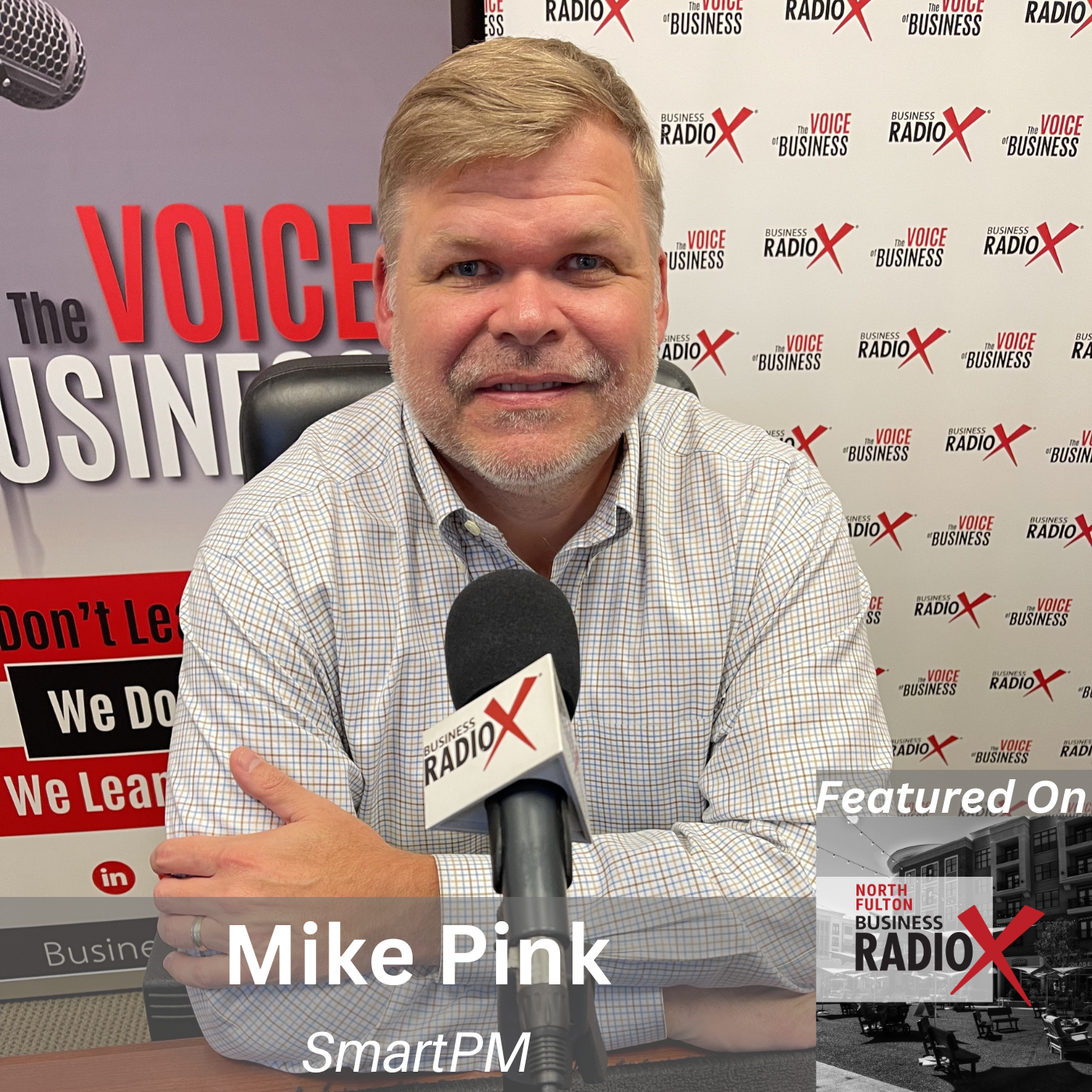
Mike Pink, SmartPM: Cutting Construction Delays and Overruns

November 4, 2025 by John Ray

Mike Pink, SmartPM: Cutting Construction Delays and Overruns, on North Fulton Business Radio with host John Ray
North Fulton Business Radio
Mike Pink, SmartPM: Cutting Construction Delays and Overruns
Loading
00:00 /
RSS Feed
Share
Link
Embed

Download file

Mike Pink, SmartPM: Cutting Construction Delays and Overruns, on North Fulton Business Radio with host John Ray

Mike Pink, SmartPM: Cutting Construction Delays and Overruns (North Fulton Business Radio, Episode 910)

On this episode of North Fulton Business Radio, host John Ray talks with Mike Pink, founder and CEO of SmartPM. Mike explains why construction projects slip on time and budget, and how tighter use of the project schedule can prevent it. He breaks down CPM schedules, the detailed timelines used to plan a job. CPM stands for Critical Path Method, which is simply the chain of tasks that must finish on time for the whole project to finish on time.

Mike also demystifies schedule analytics. Think of it as software that reads the timeline like an auditor, checks whether the plan is sound, and spots early warning signs such as tasks starting out of order, the critical path bouncing around, or float shrinking. He shares examples of catching problems early, like a trade falling a week behind across several activities, or a logic link that quietly puts the project finish at risk. The result is fewer surprises, clearer conversations between the field and the office, and faster decisions that keep work moving for both owners and contractors.

Why it matters: Days turn into dollars. Each week of slippage can trigger liquidated damages, burn overhead, extend rentals, and push labor into overtime. Owners may delay revenue from a school, hospital, or plant that is not open. Contractors see margin erosion, slower pay apps, and a higher chance of disputes. Better schedule quality and frequent checks reduce those costs, speed decisions, and cut the odds of a claim.

John Ray is the host of North Fulton Business Radio. The show is produced by John Ray and North Fulton Business Radio, LLC, an affiliate of Business RadioX®, and is recorded inside Renasant Bank in Alpharetta.

Key Takeaways from This Episode

  • The project schedule is data, not a document. If you analyze it regularly, you can spot risks weeks before they hit the jobsite.
  • Good inputs matter. A clean baseline schedule is required before any tool can give trustworthy insights.
  • Simple metrics beat guesswork. Track things like critical path changes, total float shrinking, and out-of-sequence work to see trouble early.
  • Start small. Even mid-market contractors can begin with scheduled quality checks, then add regular risk reviews as they build the habit.

Topics Discussed in this Episode

00:00 Introduction and Welcome to North Fulton Business Radio
00:36 Guest Introduction: Mike Pink from SmartPM
01:57 The Problem with Construction Projects
02:18 Mike’s Background and Passion
03:08 Challenges in Construction Projects
04:24 The Birth of SmartPM
07:47 How SmartPM Works
15:58 Building Trust in the Construction Industry
20:34 Customer Collaboration and Trust-Building
21:15 Introduction to Mike Pink and SmartPM
21:25 The Role of AI in SmartPM
22:07 Understanding and Leveraging Schedule Data
25:09 SmartPM’s Approach to Project Management
26:52 Symptoms Indicating the Need for SmartPM
32:53 Success Stories and Impact
37:27 How to Get in Touch with SmartPM
38:22 Closing Remarks and Additional Resources

Michael Pink, Founder & CEO, SmartPM

Michael Pink, Founder & CEO, SmartPM
Michael Pink, SmartPM

Michael Pink is the founder and CEO of SmartPM Technologies, a company he started in 2016 with a mission to transform construction project management through innovative schedule analytics. With over 20 years of experience in project controls, risk management, and forensic delay analysis across various sectors, Pink identified the construction industry’s struggle to effectively use vast amounts of schedule data. His background includes working with top consulting firms and earning a BS in Industrial Engineering from Georgia Tech, an MBA from NYU Stern, and certifications as a Planning and Scheduling Professional and Certified Cost Engineer. Pink is known as a thought leader who frequently speaks on how AI and machine learning can drive improvements in project controls and construction outcomes.

SmartPM Technologies, under Pink’s leadership, offers an AI-powered platform that automates schedule analytics to provide real-time, actionable insights for commercial construction projects. The software helps teams identify potential delays, reduce inefficiencies, and resolve disputes by converting complex schedule data into understandable information accessible to all project stakeholders. The company is based in Atlanta, Georgia, and has quickly grown as a pioneer in using advanced technology to improve construction project performance, making schedule management more precise, proactive, and collaborative across the industry.

Website | Company LinkedIn | Mike’s LinkedIn

Renasant Bank supports North Fulton Business Radio

Renasant BankRenasant Bank has humble roots, starting in 1904 as a $100,000 bank in a Lee County, Mississippi, bakery. Since then, Renasant has become one of the Southeast’s strongest financial institutions, with over $17 billion in assets and more than 180 banking, lending, wealth management, and financial services offices throughout the region. All of Renasant’s success stems from each banker’s commitment to investing in their communities as a way to better understand the people they serve. At Renasant Bank, they understand you because they work and live alongside you every day.

Website | LinkedIn | Facebook | Instagram | X (Twitter) | YouTube

Beyond Computer Solutions supports North Fulton Business Radio

Whether you’re a law firm, medical practice, or manufacturer, there’s one headline you don’t want to make: “Local Business Pays Thousands in Ransom After Cyberattack.” That’s where Beyond Computer Solutions comes in. They help organizations like yours stay out of the news and in business with managed IT and cybersecurity services designed for industries where compliance and reputation matter most.

Whether they serve as your complete IT department or simply support your internal team, they are well-versed in HIPAA, secure document access, written security policies, and other essential aspects that ensure your safety and well-being. Best of all, it starts with a complimentary security assessment.

Website | LinkedIn | Facebook | YouTube

About North Fulton Business Radio and host John Ray

With over 900 episodes and having featured over 1,400 guests, North Fulton Business Radio is the longest-running podcast in the North Fulton area, covering business in our community like no one else. We are the undisputed “Voice of Business” in North Fulton!

The show invites a diverse range of business, non-profit, and community leaders to share their significant contributions to their markets, communities, and professions. There’s no discrimination based on company size, and there’s never any “pay to play.” North Fulton Business Radio supports and celebrates businesses by sharing positive stories that traditional media ignore. Some media lean left. Some media lean right. We lean business.

John Ray, host of  North Fulton Business Radio, and Owner, Ray Business Advisors
John Ray, host of North Fulton Business Radio and Owner, Ray Business Advisors

John Ray is the host of North Fulton Business Radio. John and the team at North Fulton Business Radio, LLC, an affiliate of Business RadioX®, produce the show, and it is recorded inside Renasant Bank in Alpharetta.

The studio address is 275 South Main Street, Alpharetta, GA 30009.

You can find the complete archive of shows by following this link. The show is available on all the major podcast apps, including Apple Podcasts, Spotify, Google, Amazon, iHeart Radio, and many others.

John Ray, The Generosity MindsetJohn Ray also operates his own business advisory practice. John’s services include advising solopreneurs and small professional services firms on their value, their positioning and business development, and their pricing. His clients are professionals who are selling their expertise, such as consultants, coaches, attorneys, CPAs, accountants, bookkeepers, marketing professionals, and other professional services practitioners.

John is the author of the five-star rated book, The Generosity Mindset: A Journey to Business Success by Raising Your Confidence, Value, and Prices, praised by readers for its practical insights on raising confidence, value, and prices.

Tagged With: baseline schedule, Beyond Computer Solutions, capital projects, construction analytics, construction delays, construction tech, cost overruns, CPM scheduling, critical path, Critical Path Method, data driven construction, delay claims, dispute avoidance, ENR contractors, forensic schedule analysis, general contractors, Georgia Tech, John Ray, mid-market contractors, Mike Pink, North Fulton Business Radio, out of sequence work, project controls, project schedule, renasant bank, Risk Management, SaaS for construction, schedule analytics, schedule quality, schedule risk, SmartPM, SmartPM Technologies, total float

Behind the Screens: The Power of Human-Centered Operations

October 31, 2025 by Jacob Lapera

High Velocity Radio
High Velocity Radio
Behind the Screens: The Power of Human-Centered Operations
Loading
00:00 /
RSS Feed
Share
Link
Embed

Download file

In this episode of High Velocity Radio, Lee Kantor interviews Tamara Munoz, a Fractional COO to leading online businesses and founder of Behind the Screens. Drawing on decades of experience with global brands like Disney and Starbucks, Tamara brings deep expertise in high-stakes operations and people-centered leadership. Her corporate career shaped her commitment to building systems that safeguard both performance and humanity, inspired by pivotal moments where she witnessed the cost of prioritizing results over people.
Tamara Munoz, Fractional COO to some of the world’s leading online businesses and founder of Behind the Screens, is an operations and leadership partner for growth-minded companies. After university, she built an illustrious, decades-long corporate career with iconic brands like Disney and Starbucks, mastering high-stakes operations in organizations with a 24 hour workday.
A human-first leader, she believes results should never come at the expense of people. That conviction was fueled by her corporate experience with moments that mattered: requesting only three to four bereavement days to mourn the grandmother who raised her, leaving Christmas dinner to manage an actual store fire and losing a team member in a car accident only to see corporate leadership respond with chilling detachment. These instances crystalized her mission to design systems that protect both people and performance.

She has spent years serving high achieving founders, proving her signature approach to systems and processes and giving busy CEOs back their lives. She has grown Behind the Screens to a 22-person team of employees and contractors. Seven years in, she is renowned for getting to the heart of operational gaps, building clear roadmaps and designing better systems so no one has to ask permission to grieve, to celebrate or live a full life.

She is a first generation American citizen and finds joy in travel and cooking with her husband and three children.

Connect with Tamara on LinkedIn and Facebook.

What You’ll Learn In This Episode

  • Crisis Made Me a Better Leader: Rewriting Culture After Loss and a Christmas Fire
  • Why it matters: Real crises expose broken systems—and the path to better ones

Transcript-iconThis transcript is machine transcribed by Sonix.


TRANSCRIPT

Intro: Broadcasting live from the Business RadioX studios in Atlanta, Georgia. It’s time for High Velocity Radio.

Lee Kantor: Lee Kantor here. Another episode of High Velocity Radio, and this is going to be a good one. Today on the show we have the founder and CEO of Behind the Screens, Tamara Munoz. Welcome.

Tamara Munoz: Thank you so much. I’m so excited to be here.

Lee Kantor: Well, tell us a little bit before we get too far into things about your practice. How are you serving folks?

Tamara Munoz: Absolutely. So we support small business owners with the back end operations of their business. So we’re an operational partner for CEOs who are ready to get out of the weeds. We come in, we build sustainable systems structure and the team support that small businesses need. So that way the CEO stops being the bottleneck. And we then handle the daily operation so that they can focus on delivery, marketing, sales and everything that’s needed to grow the business.

Lee Kantor: So what’s your backstory? How’d you get involved in kind of the operations side of business?

Tamara Munoz: Oh my goodness. So I have been in operations since I was a teenager back in the day. I was in corporate operations, so I went straight from high school to college to study business. And during that time, I got sucked into food and beverage operations, which then turned into management operations. And I spent about a decade in that role, and it was a incredible time in my career, and also a one way ticket to burnout. And while I was at the tail end of my career in the corporate space, I was running high volume stores, big teams, massive operations. And there was a lot of nonstop work. No work life balance. I was getting sick. Uh, there was a lot of tragedy that was going on at the time. Personally, I lost a family member. And bereavement policies aren’t very flexible. Uh, especially when you’re at a higher level role where there really isn’t too many options to replace you in the business so that the operation can keep going while you’re grieving. And things kept happening, and it felt like the universe was telling me that it was time to move on. There was a fire at one of the stores that I was managing on Christmas Day, so I had to leave Christmas Day with my family to go handle that. And it was around that time, as things kept happening where I realized that there had to be a better way. There was no reason for for me to keep running the way that I was running, running ragged, getting sick, missing out with my family.

Tamara Munoz: So I then turned into the online space, and I realized that there was a place for me here, because so many small businesses are doing incredible work, and their business owners are actually running ragged themselves because they’re doing all of the operations. And most of these business owners are not operators, they’re service people. So they’re excellent at what they do, their practices, their managers. They are speakers, consultants, teachers, educators, but they’re not true operators in creating the systems that can support their business. I am my background for over a decade was doing just that. So once I came into the online space, it was very easy for me to find a niche where I can support business owners in creating those sustainable systems and creating those processes so that they can remove themselves from the weeds of their operations from the trenches, and move into a role that allowed them to actually practice what they want to practice and serve their clients how they want to serve them, but also grow the business in a sustainable way and feel fully supported. And sometimes that growth looks monetary, and some other times that growth looked like they were able to just work a 6 to 8 hour day, 4 to 5 days a week instead of 14 plus hours, 6 to 7 days a week. So that is the transition from corporate to the online space. And it’s been a lot of fun.

Lee Kantor: So when you decided to make that change, were you thinking that your initial clients would be other corporates, or did you see the opportunity for small to midsize businesses as kind of the ideal prospect for you?

Tamara Munoz: It was small and medium sized businesses from the beginning. Those are the businesses that truly need this type of fractional support that we offer. Um, financially it makes the most sense, but also operationally, they don’t have the infrastructure at all to be able to scale, whereas, um, like corporate businesses already have a lot of this set. And of course, it’s it would be amazing to go in and be able to advise. And we have done that a lot of advising for higher level businesses and, um, corporations. However, my passion is truly in the small business, medium sized business, growing teams, leadership like growing, um, our CEOs and bringing them into a space of true leadership and visionary foresight for their business. So then that way, they’re able to enjoy the fruits of their labor and not necessarily end up on that hamster wheel where the resentment comes in. Once your business is stuck in a certain place for a little too long.

Lee Kantor: Now, when you’re working with those folks, I would imagine a lot of them, you know, might have hired a VA and said, that’s my chief operations officer. Now, um, because they’re doing all the admin stuff. Are you working? Kind of at a higher level. Like a more strategic level to really put the right people in the right seats. Because a CEO is not necessarily a VA.

Tamara Munoz: Right. So a virtual assistant is a tasker. And they are very necessary in businesses. They are the ones that keep the lights on and keep your inbox clear and your calendar managed. The work that we do is at a higher level where the strategic systems are put in place. A virtual assistant thrives when they are working within a system and when they have documented processes that are optimized. So then that way we get the most bang for our buck for the services that we’re paying for. So if a virtual assistant comes in and you don’t have processes in place and you just tell them, hey, so I need you to get X, Y, and Z done, that person’s going to do their best with the tasks that they have, but at the end of the day, they’re taskers, they’re not operational strategists and they don’t have the experience to create scalable processes. So they are just going to do what they can with what they know. Now, when you get a virtual assistant who is killer at getting things done, and you plug them into a system that is specifically designed for your business that is optimized. So that way it is efficient and consistent throughout. They’re going to kill it. They’re going to do such an incredible job, and they’re going to feel very supported in that role. Something that we see very often is when virtual assistants are put into a business and are expected to function at a higher level than they want to function. So at the strategist level, they get burned out. And there’s a lot of turnover there. And on the business side, there’s a lot of expenses that come with turnover. Having to replace them, having to do the work yourself while you’re finding a replacement. It gets very messy very quickly.

Lee Kantor: So let’s talk about the CEO of some of these organizations you’re approaching. Are they what’s kind of a pain they’re having. What’s a frustration they’re having where they should, uh, call your team to at least have an exploratory discovery call.

Tamara Munoz: Yeah, absolutely. So the biggest thing is they are still the linchpin in their business. So every single task that a team member has to do goes through them. Every single decision that has to be made in the business, regardless of how small it is, has to go through them. They are still the ones that are project managing everything, managing the timelines, managing the contractors. They are still the ones at the end of the day are still managing their inbox. They might have a VA in there, but their VA is still circling back. Hey, I don’t know how to respond to this. What do we do in this case? What happens here? They are the ones that on the weekend, if something breaks, they have to come in and step in and fix it. So they are very much involved in every single facet of the business. And there’s overwhelm. So if you find yourself stressed out, overwhelmed, being the only point of contact for the business, being the only one with answers, there comes this this feeling of frustration. And also you find yourself that you don’t have time for revenue driving activities because you are so stuck in the administrative piece of your business, so you can’t go out there and network. Go on podcasts, expand your, um, your worth because you can’t be having these sales conversations when you’re stuck in an inbox or, um, figuring out software or walking your team member through something. You’re missing that key operational partner that is the bridge between the ops and yourself.

Lee Kantor: So say I’m a CEO of an organization. I come to this realization. I have those frustrations. I call you up, I contact you. What does that onboarding. What are some of the questions you’re going to ask me to help better serve me and to give me the outcome I desire.

Tamara Munoz: So the first thing is, what are the things that you’re that you are personally handling in your business? And usually this is where business owners brain dump. And they let me know all of the things. I digest that for them and let them know exactly what their job description. As the owner and chief operating officer or chief executive officer of their business is supposed to be, and it’s supposed to look like from there. In terms of onboarding, we do a full audit of the business, so we go through every single pillar of the business, from offer suite to what you have going on administrative wise to marketing, sales, delivery, all of the things. So we know exactly what the operational gaps are in the business from where you are today to where you want to be. And then we create a plan of action. So we have a full plan of action. Anywhere from 3 to 6 months is usually what it takes to bridge most of those gaps. And then our team moves in and starts implementing the plan of action once it’s approved by the business owner. But there is a full audit that is done because every business is so individual and every CEO has their own strengths and weaknesses. So those are usually reflected in the business. If they are very strong at marketing and very strong at delivery, but not so strong at time management, project management, team management, we’re going to see that reflected in the business.

Lee Kantor: And then is this a done for you or done with you? Um how does that kind of arrangement work? Are you are you training my virtual assistants or my team members, or is your team actually kind of rolling up their sleeves and doing the work?

Tamara Munoz: Yeah. So this is all done for you. So we come in, we do the full audit, you give us the green light, and then my team comes in and handles all of the implementation if you do have team members. So for example, if you have a virtual assistant on the team as we are on the back end creating these systems. We are having meetings with your team members, getting their buy in, getting their experience in the business, and at the end, we are training them up on the processes, saying that if you don’t have a team member in your business, we can come in and run the operations for however long you’ll have us running things after we set everything up.

Lee Kantor: And are you kind of creating a standard operating procedures for each of the activities in the business as documentation? So if I wanted to franchise or replicate the business, I would have kind of a playbook to do that.

Tamara Munoz: Yep, absolutely. So we create the playbooks, we create the SOPs, and then we make sure that they are written, that there are videos involved so that whoever you plug into the business, we are meeting their needs in terms of, um, visual learners, audio learners, um, they’re able to just go through everything and process it, digest it and be able to execute. They know what it looks like for a job well done. So we have all of that as part of our handoff.

Lee Kantor: Now you mentioned online businesses. Is this kind of tailored to like e-commerce. Is that your kind of sweet spot now?

Tamara Munoz: So we handle a lot of our work is actually with online business owners. Um, who have we work with a lot of e-commerce. We work with coaches, consultants, agencies. We work with, um, practitioners. So doctors, dietitians, accountants, bookkeepers, um, basically anyone who has a online part of their business, we are equipped to support, um, operationally when it comes to the, the administrative stuff and the systems. We’re pretty agnostic. Most most systems are were able to plug them into most businesses. There are of course the outliers. And I am very I’m a very honest person. So if if your business is not a great fit, or if we’re not a great fit for your business, I will let you know and I will point you in the right direction.

Lee Kantor: Now, is there a certain revenue size or, um, it could work for solopreneurs? I would imagine that it doesn’t matter really how many employees they have, but is there a certain revenue size that’s the right fit for your firm?

Tamara Munoz: Yeah. Usually once, um, businesses are hitting that quarter million. So 250,000 is when we start seeing things fall apart. And it’s usually a great time to get us in, plug us into the business. So that way as you continue to scale, you’re able to scale quicker with more piece. But also there’s not a lot of cleanup that happens once your business is hitting that half million to $1 million mark.

Lee Kantor: So that’s where kind of bad habits form.

Tamara Munoz: Yeah, yeah. Bad habits. Um, and then it takes a lot more in terms of the cleanup of the business to get it to where you want it to be. Um, yeah, it takes a whole lot more once you’re getting closer to that million dollar mark. We’re happy to do it. We’re very well versed. We have many clients who come to us close to that million, if not beyond. Um, it’s just knowing that the sooner that you bring us in, the easier it’s going to be.

Lee Kantor: Now, is there a story you can share that maybe illustrates what this looks like in real life? Is there, you know, obviously don’t name the name of the organization, but maybe share what challenge they came to you with and how you were able to help them get to new levels.

Tamara Munoz: Yeah, absolutely. So we have this client, we’ll call her Alex for the for the purposes of the story right now. So she is a practitioner. She is incredible. And when she came to us, she was working anywhere from 14 to 16 hour days, 6 to 7 days a week. So she was working a lot and she was very tired. She and and she had a full team. So she had a virtual assistant. She had a podcast manager, she had, um, a social media manager. And she was still doing all of the work. So she was reworking everything that the team was doing. She found herself having to constantly be communicating the same things over and over and over again. So she came to us. She had been stuck at about half a million for going on two years, and not only that, she was burnt out. She was getting sick. She was very tired. So within 90 days of us being in there, we did the full business audit. We went ahead and created a 90 day roadmap to extract it from the business. So within three months we had extracted her from about 80% of the daily operations. Everything was living in her brain, so all the standard operating procedures were living in her brain, the systems that she had created.

Tamara Munoz: She’s not an operator. She’s a she’s a holistic practitioner. So all of those systems were things that she had patchworked together when she first started her business. And then she just plugged in a virtual assistant into what she had created with no optimization. So we went ahead and we gave everything a facelift, optimized everything that she had trained up her virtual assistant, and it got to the point where her business was scaling so quickly that we had to put one of our online business managers on retainer in her business, and we’ve been there for, at this point, three years just, um, supporting and running the day to day business for her. So now she’s working four days a week. She works anywhere from 4 to 6 hours a day. Her revenue has in the last three years, it has tripled from when we first started and she has now a podcast. She has a very robust email list and, um, she has no issues making money and bringing people in without necessarily adding more work to her plate, because we have a full team that is plugged into the systems that we’ve created.

Lee Kantor: I would imagine one of the benefits of working with you and your firm is that you’re kind of accumulating these best practices across a variety of, um, professional service operations so that you can kind of, you know, choose the right path for new folks based on what you’ve learned from previous folks?

Tamara Munoz: Yeah, absolutely. We have at this point worked with almost 300 different businesses. And when it comes to best practices with different software, um, it’s it’s a lot easier for us now to be able to match the business owner and their specific business to what exactly they need. Everyone is so different. So it’s not cookie cutter at all. I am of the belief that everything needs to be customized to the goals, right? Because like, um, one business owner is going to have completely different goals than the next one and their business is going to be completely different. So for us, it’s it’s been great. And as clients stay with us because a lot of clients stay with us after we set everything up and they we bring in our operators and they run the businesses for our clients. Um, as they stay with us, we evolve. So as we continue to find better, you know, best practices. Even this last year, everything has changed so much in the online space and also with buyer behavior and how the market is moving. We have been able to view trends across the businesses that we’re working in and make strategic shifts as we go and as we grow. And it has really benefited the clients that we have on board.

Lee Kantor: Now, any advice for the folks out there that might think they can do it themselves? Is there some low hanging fruit they can do to have tighter operations?

Tamara Munoz: Absolutely. So the first thing is document everything. And if you think it’s the smallest task in the world, document it. And you don’t have. It doesn’t have to be anything fancy. You can literally use a software like scribe and it will help you create an SOP. It might not be refined, it might not be optimized, but it is documented and out of your head. So it is easy to then it’s easier to delegate to a team member. That’s the first thing. The second thing is to do a time audit on yourself. So as a business owner, take the next two weeks and every single day use a free software like toggle. Toggle. It’s a timer and pop in every task that you do and time yourself. So if you’re in the inbox, just click Type down Inbox Management Start Timer and see how much time you’re actually spending on the operational tasks in your business. It is going to open your eyes to how much time you are spending on things that don’t necessarily move the needle. It’s also going to help you identify exactly who you might have to hire to get some of these things off your plate. So those are my the two lowest hanging fruit that make a big difference when you are first starting out in business, or when you are first starting to think about handling things yourself, document everything and track everything, and then you’ll have a really good idea of what you need to outsource and to who. And you have these documented processes ready to go.

Lee Kantor: Now, you mentioned who the ideal client for your firm is in professional services, uh, etc. but who is that referral source? Do you have referral partners that you collaborate with?

Tamara Munoz: We do. We do. So most of our business comes from referral partners. Great people know great people. So usually most of our clients have referred anywhere from 1 to 3 of their peers to us. And it has been, um, we’re really just very fortunate in that way.

Lee Kantor: So it’s your existing clients refer clients to you.

Tamara Munoz: But we also have, um, referral partners outside of this. So we work with complimentary services. So complimentary service providers, a lot of the times ads agencies, marketing agencies, we work with coaches, for example, who coach CEOs, um, either on marketing or sales or anything like that. They also send business our way. We work with incredible people, for example, like the, um, um, what’s it called? Public relations specialists? Um, mentors. Anyone who really has a large audience of business owners, we collaborate with them, and then they’ll send people our way, and then they do get a cut of the retainer.

Lee Kantor: Oh, so it’s a true partnership.

Tamara Munoz: It is a true partnership. Yeah. I am a big believer in in energetic exchanges and true partnership in business. It makes it a lot of fun too.

Lee Kantor: So what do you need more of? How can we help you?

Tamara Munoz: Um, so for us right now, we are growing. Our team has at this point doubled in the past year. And I would really, really appreciate to be part of a community of small business, small and medium sized businesses and business owners to just a connect connection is huge for me. I am a mother of three young children, so any human connection I can have with grown ups is incredible. But also, um, it would be great to be put in front of an audience that can benefit from our services, and that their lives can be changed by the work that we do. My team is so incredible. The work that they do is life changing, truly, and our biggest way to impact lives is to help our clients be able to impact more people. Because the, the, the clients that we have do such incredible work and really impact the lives of the people that they serve, whether it is through their services, whether it is through their products, their education. So any way that we can serve your audience, I am happy to do so.

Lee Kantor: If somebody wants to connect with you or somebody on the team, what’s the website? What’s the best way to connect?

Tamara Munoz: Yeah. So our website is behind the screens. And um, same on social media. Behind the screens.biz, we kept it very simple. They would just have to. We have a form on the website. They can go ahead and submit a form. They can get on a call with me directly, and I’m happy to lean in and support and, um, get them started. And if they want to have a chat back and forth. Happy to. Like I said, there’s a form on the website or they can just DM me directly on Instagram.

Lee Kantor: And that’s behind the screens. Biz biz.

Tamara Munoz: Yep.

Lee Kantor: Good stuff. Well, congratulations on all the momentum and all the success. You’re doing such important work and we appreciate you.

Tamara Munoz: Thank you so much I appreciate you.

Lee Kantor: All right. This is Lee Kantor. We’ll see you all next time on High Velocity Radio.

Tagged With: Behind the Screens, Tamana Munoz

Dr. Bill Lampton on Communication and the Leap from Academia

October 29, 2025 by John Ray

Dr. Bill Lampton on Communication and the Leap from Academia, on The Price and Value Journey with host John Ray
North Fulton Studio
Dr. Bill Lampton on Communication and the Leap from Academia
Loading
00:00 /
RSS Feed
Share
Link
Embed

Download file

Dr. Bill Lampton on Communication and the Leap from Academia, on The Price and Value Journey with host John Ray

Dr. Bill Lampton on Communication and the Leap from Academia (The Price and Value Journey, Episode 151)

For expert-service pros, communication is not polish; it is how work gets won. In this conversation, Dr. Bill Lampton, “The Biz Communication Guy,” shares practical habits that help professionals be understood the first time, steer tough moments, and stop undercutting themselves on price. Bill traces his path from teaching at the University of Georgia to launching Championship Communication, including the six months of cold calls that went nowhere, the mentors and mastermind groups that changed his trajectory, and the lesson that too-low pricing tells buyers you are not ready yet.

Bill and John get specific. They talk about Stanislavsky’s “illusion of the first time” to keep repeat talks fresh, a short prep routine that settles nerves without turning you into a script reader, and why short video reps two or three times a week sharpen delivery while creating proof buyers can see. They cover how to host a podcast without making yourself the star, how to ask for referrals and public reviews right after a win, and why executives should treat board updates, deal discussions, and internal briefings as real presentations. John closes by underscoring a core point: clients do not buy credentials; they buy outcomes.

Listen if you want workable steps you can use this week and a clear path for turning reputation into revenue, whether you are already consulting or moving from campus to clients.

The Price and Value Journey is presented by John Ray and produced by North Fulton Business Radio, LLC, an affiliate of the Business RadioX® podcast network.

Key Takeaways You Can Use from This Episode

  • Price with self-respect. Too-low pricing signals “not ready” and slows deals.
  • Keep repeat talks fresh with the “illusion of the first time.” Relive the message, do not recite it.
  • Use a two-part prep: one page of message bullets, then one minute of breath work before you speak.
  • Post short videos two or three times a week. The reps improve delivery and give buyers visible proof.
  • Ask for referrals and public reviews immediately after a win, and make it easy for clients to post.
  • Treat board updates, sales calls, and deal conversations as presentations. Prepare and review them.
  • If you are leaving academia, stop leading with courses and credentials. Translate expertise into outcomes buyers want.

Topics Discussed in this Episode

00:00 Introduction and Welcome to Dr. Bill Lampton
01:38 The Power of Communication
03:31 Early Passion for Communication
06:11 Dramatic Roles and Lessons Learned
13:04 Transition from Academia to Business
15:48 Challenges and Strategies in Consulting
24:06 Importance of Pricing and Value
27:55 Advice for Academics Entering Consulting
31:07 The Importance of Referrals
32:49 Building a Compelling Internet Presence
34:59 The Power of Video Shorts
42:45 Hosting a Podcast: Why and How
44:28 Common Mistakes Podcast Hosts Make
46:19 Communication Skills for Executives
49:06 The Value of Professional Coaching
53:23 Final Thoughts and Contact Information

Dr. Bill Lampton, The Biz Communication Guy

Dr. Bill Lampton, "The Biz Communication Guy"
Dr. Bill Lampton, “The Biz Communication Guy”

Bill Lampton, Ph.D., known as The Biz Communication Guy, coaches executives to say what matters, listen for what is missing, and run meetings that lead to decisions. He earned his Ph.D. at Ohio University, taught speech communication at the University of Georgia, and then spent two decades in senior management in higher education and health care. In 1997 he started Championship Communication, where he speaks, coaches, and consults.

His clients include the University of Georgia Athletic Association, Georgia Power, Oceania Cruises, Ritz-Carlton Cancun, the Missouri Bar, Gillette, and Procter & Gamble. He works with CEOs, CFOs, COOs, and CIOs in business, healthcare, higher education, and nonprofits. He coaches the moments that decide outcomes: board updates, investor and media conversations, M&A discussions, sales presentations, and internal briefings.

Website | LinkedIn | YouTube | TikTok | Facebook | Twitter

John Ray, Host of The Price and Value Journey

John Ray, Author of The Generosity Mindset and Host of The Price and Value Journey

John Ray is the host of The Price and Value Journey.

John owns Ray Business Advisors, a business advisory practice. John’s services include business coaching and advisory work, as well as advising solopreneurs and small professional services firms on their pricing. John is passionate about the power of pricing for business owners, as changing pricing is the fastest way to change the profitability of a business. His clients are professionals who are selling their expertise, such as attorneys, CPAs, accountants and bookkeepers, consultants, coaches, marketing professionals, and other professional services practitioners.

John is a podcast show host and the owner of North Fulton Business Radio, LLC, an affiliate of Business RadioX®. John and his team work with B2B professionals to create and conduct their podcast using The Generosity Mindset® Method: building and deepening relationships in a non-salesy way that translates into revenue for their business.

John is also the host of North Fulton Business Radio. With over 900 shows and having featured over 1,300 guests, North Fulton Business Radio is the longest-running podcast in the North Fulton area, covering business in its region like no one else.

John’s book, The Generosity Mindset: A Journey to Business Success by Raising Your Confidence, Value, and Prices

John Ray at Barnes & Noble with his book, The Generosity MindsetJohn Ray is the author of the five-star rated book The Generosity Mindset: A Journey to Business Success by Raising Your Confidence, Value, and Prices, praised by readers for its practical insights on raising confidence, value, and prices.

If you are a professional services provider, your goal is to do transformative work for clients you love working with and get paid commensurate with the value you deliver to them. While negative mindsets can inhibit your growth, adopting a different mindset, The Generosity Mindset®, can replace those self-limiting beliefs. The Generosity Mindset enables you to diagnose and communicate the value you deliver to clients and, in turn, more effectively price to receive a portion of that value.

Whether you’re a consultant, coach, marketing or branding professional, business advisor, attorney, CPA, or work in virtually any other professional services discipline, your content and technical expertise are not proprietary. What’s unique, though, is your experience and how you synthesize and deliver your knowledge. What’s special is your demeanor or the way you deal with your best-fit clients. What’s invaluable is how you deliver outstanding value by guiding people through massive changes in their personal lives and in their businesses that bring them to a place they never thought possible.

Your combination of these elements is unique in your industry. There lies your value, but it’s not the value you see. It’s the value your best-fit customers see in you.

If pricing your value feels uncomfortable or unfamiliar to you, this book will teach you why putting a price on the value your clients perceive and identify serves both them and you, and you’ll learn the factors involved in getting your price right.

The book is available at all major physical and online book retailers worldwide. Follow this link for further details.

Connect with John Ray:

Website | LinkedIn | Email

Business RadioX®:  LinkedIn | Twitter | Facebook | Instagram

Tagged With: academia to consulting, academic consulting, Biz Communication Guy, Championship Communication, discovery questions, Dr. bill lampton, executive communication coaching, John Ray, leaving academia, listening skills, mastermind groups, on camera presence, presentation skills, pricing confidence, professional services, professional services growth, referrals and reviews, short form video, The Biz Communication Show, The Price and Value Journey, University of Georgia, value conversations

Mastering AI: Essential Tips for Women-Owned Businesses to Differentiate and Win More Contracts

October 22, 2025 by angishields

WIM-Stephanie-Nivinskus-Feature
Women in Motion
Mastering AI: Essential Tips for Women-Owned Businesses to Differentiate and Win More Contracts
Loading
00:00 /
RSS Feed
Share
Link
Embed

Download file

In this episode of Women in Motion, Lee Kantor and Renita Manley welcome back Stephanie Nivinskus, an AI marketing expert from Sizzle Force. Stephanie shares practical strategies for women-owned businesses to use AI in clarifying their unique differentiators, enhancing credibility, and winning more contracts—especially during the proposal and RFP process. She emphasizes the importance of providing AI with rich, specific inputs and engaging in iterative dialogue to generate compelling, customized content. The episode also highlights an upcoming hands-on workshop at the WBEC-West conference, where Stephanie will offer deeper insights into strategic AI use for business growth.

Stephanie-NivinskusEveryone’s got a story to tell, and Stephanie Nivinskus, CEO of SizzleForce, knows how to tell them. Since 1995, she’s helped thousands of business owners, big and small, transform their mission and vision into strategic marketing plans, compelling brand stories and meaningful marketing messages that humanize commerce, maximize opportunities and win customers.


The international #1 bestselling author of Absolutely Unforgettable: The Entrepreneur’s Guide To Creating A Heart-Centered Brand That Stands Out In A Noisy World, Stephanie is well-respected in the marketing industry.

She has written for Forbes and Entrepreneur and shared the stage with some of the world’s most renowned marketing and business growth experts, including Les Brown, Jasmine Star, and Suzy Batiz at Digital Marketer events as well as at countless business-building conferences including Level Up Live, The Copywriter Club IRL, and more.

Connect with Stephanie on LinkedIn.

Episode Highlights

  • Use of artificial intelligence (AI) in business strategy.
  • Importance of clearly articulating business differentiators.
  • Challenges faced by women-owned businesses in proposal processes.
  • The difference between competent and compelling proposals.
  • Connecting proof of capabilities to client pain points.
  • Strategic use of AI to enhance messaging and content creation.
  • Importance of providing specific inputs to AI for better outputs.
  • Techniques for repurposing content across different platforms.
  • Upcoming conference for hands-on learning about AI in proposals.
  • Need for expert guidance to avoid generic AI outputs in proposals.

Music Provided by M PATH MUSIC

Transcript-iconThis transcript is machine transcribed by Sonix


TRANSCRIPT

Intro: Broadcasting live from the Business RadioX studios, it’s time for Women in Motion. Brought to you by WBEC-West. Join forces. Succeed together. Now, here’s your host.

Lee Kantor: Lee Kantor here with Renita Manley. Another episode of Women in Motion. And this is going to be a good one. But before we get started, it’s important to recognize our sponsor, WBEC-West. Without them, we couldn’t be sharing these important stories. Today’s topic is how to use AI to clearly articulate your differentiators, prove your credibility and win more contracts. Renita, this is a very important show. And we have with us Steph Nivinskus with SizzleForce to help explain all this stuff.

Renita Manley: That’s right. We have Steph who’s joining us again today. Steph has become our, like, WBEC-West AI marketing guru. But this time, she’s actually educating us on how we can use AI before the proposal process even begins. And for those of you who are attending our conference in Phoenix, Arizona this December, Steph will be continuing this conversation in person. But at the conference, she’s going to be giving way more insight, and she’ll be answering your personal questions about your business. So, let’s start off today with this question about your session. On your session description, there is a powerful statement about it. It says that if buyers don’t instantly see what sets you apart, you won’t win. So, why do you think so many businesses struggle to clearly communicate their differentiators?

Stephanie Nivinskus: I think one thing that happens all the time, especially I see this all the time in the WBEC circle, there’s so many brilliant women that are way too close to their own brilliance, right? They know what they do. And often, they don’t know, though, why it matters. Or in some cases, they know exactly what they do and they know exactly why it matter, but they don’t do a good job of articulating that well to other people, right? So, other people are left to guess, right?

Stephanie Nivinskus: Like it’s pretty crazy, honestly, when I will sit down next to different people and I’ll say, “Oh, so what makes you different?” and how many of them will give me like some snooze-worthy response like, “Oh, well, we have great service,” or “We’re really known for our quality work,” or “We’re all about integrity.” And when the truth is, literally, anybody could say that. Anybody. And everybody does say those things. So, that doesn’t Set you apart in any way, right? Like what I think is really missing here, it’s not talent, it’s translation, right? So, like, when you learn how to use AI properly, it gives you not just words, it gives you words that take you from being like everybody else to being unforgettable.

Renita Manley: All right. That sounds really good. So, here’s my next. It actually sounds really good because I know some WBEs might be wanting to know, “Well, what type of differentiated can I have?” But she can’t tell you that unless you come to the conference or you ask SizzleForce marketing directly. So, I want to ask you next. Many WBEs do feel like their proposal writing skills are very strong, yet they still get shortlisted. So, besides the differentiator aspect, what else is missing?

Stephanie Nivinskus: Yeah, I think a lot of times, people sound really competent on their proposals, but they don’t sound compelling. And there’s a big difference, right? Like buyers, at the end of the day, every buyer wants to feel understood. And that doesn’t matter. If you’re selling WBE to WBE or you’re selling to the corporates, it doesn’t matter. Everybody wants to feel understood. They want to feel like you get them. And so, one thing that I am frequently advising people of is the importance of connecting the proof of your capabilities to the pain points that the proposals reveal, right. When you start doing that, that’s how you get evaluators looking at it and saying, “Oh, my gosh. Finally, someone who gets us,” right. That’s how you move from being qualified to fulfill the proposal to actually being chosen to fulfill the proposal.

Lee Kantor: So, let’s get a little bit into the weeds with the AI portion of this. A lot of people, hopefully, everybody, but definitely a lot of people are playing around with AI, and they’re probably using it in a kind of a superficial surface manner, and they’re not really kind of wringing out the most value from AI. Is there anything you can share when it comes to AI on how to use it strategically to help a business clarify, amplify, and really have their differentiation shine? Is there something you can share about that, so that they can stand out and be the one that’s chosen instead of just another one on the list?

Stephanie Nivinskus: Yeah. So, one mistake I see people make is they often will just insert really generic prompts. There’s so many of them that are floating all around the internet, all around social media and people will be like, “Oh, my gosh. Use this magic prompt and it will do all these things for you.” And really, about 99% of them are complete garbage. I’m sorry to break it to you, but they are complete garbage.

Stephanie Nivinskus: So, here’s what I want you all to know. Any outputs you get from AI are a direct reflection of what you have fed it, right? So, this is why it is so important to equip your AI to write on your behalf in a powerful way. So, like some things that you might want to feed it, you might want to feed it your case studies. You might want to feed it your testimonials, an audience profile, the psychology, the things that keep them up at night, the things that they fear, the things that they have been burned by in the past and are not willing to let happen again, any differentiators that you’ve already identified, and then you continue to peel back the layers of the differentiating onion as time marches on. The more that you start doing this, the more likely AI is going to be giving you content that really has extracted consistent themes for you, right? This is how it hones in on your tone. This is how it generates content that’s really rooted in the unique insights and the unique value that you provide.

Lee Kantor: Do you have to give it kind of competitor information to give it some context, so it knows what’s special about you versus what other people in the market are doing? Is there any value into kind of giving it outside information, maybe industry information that isn’t just all about you, but it’s just about the ecosystem as a whole?

Stephanie Nivinskus: Yeah, there’s definitely a place for that. The important thing is to understand how to provide that information and communicate it to the AI, so it does not mix signals and think that that competitive information is actually yours, right. So, yes, to the question, should you provide competitive information. And when you do that, you make sure to educate the AI. Say, you know, being very clear, “This is information on my competitors. I’ve named this file XYZ.” And then, you make sure the file that you upload is called XYZ or whatever it is, right. And then, you need to instruct it saying things like, “I want you to analyze what you see that my competitors are talking about doing, positioning,” all that stuff, “but I do not want you to duplicate it. I want you to identify my key differentiators knowing what theirs are.”

Lee Kantor: And when it kind of spits out its response, how often is it important to just kind of push back and ask it to dig deeper or to take another look at this or I disagree? Like, like how much back and forth is there or do you just take whatever they just kind of give you?

Stephanie Nivinskus: Yeah. Well, I think that depends on a couple things. I think it depends on how much time you have. And I also think it depends on how deep you really want to go. I mean, I get into very, very, very long and detailed conversations when I’m using AI to generate any type of content. Even though I know how to write killer prompts, I still get into this because I think genius is uncovered through discussion and brainstorming. And so, I largely will use whether it’s ChatGPT or Gemini or whichever one it is, I will use it as my brainstorming partner. I call it sparring, right? I’ll also ask it to do things like act like my harshest critic and tell me why what you just wrote is the worst thing I could ever say. And you start getting very interesting feedback at that point, and it will help shape what you’re writing. Of course, it really depends also on how strong of a writer you are, because some people might be like, “Oh, my gosh. It’d be easier to just do it myself than spar with ChatGPT.” And for some people that’s true. But most people, it’s not true because most people aren’t going to consider all of these different angles.

Lee Kantor: Yeah, I find that people aren’t kind of pushing enough. Like they’re just taking kind of the first response back, and then moving on instead of kind of doing what you’re doing is really getting in there, and digging in, and going layers and layers deep, and looking at kind of facets that you’re curious about and you want them to kind of poke at and to find that, uncover that hidden gem or that kind of clever answer.

Stephanie Nivinskus: Yeah. Most of the time, when people are copying and pasting the first answer, often even the second answer, they’re getting a bunch of regurgitated, snooze-worthy stuff, right? They’re getting stuff that it might sound nice when it first is read, the words sound pretty, but they don’t do anything to set you apart. They don’t do anything that makes somebody that’s reading it feel energized or motivated or driven to take any sort of action because it’s just more noise. It just sounds like all the other stuff that’s out there.

Lee Kantor: Now, ultimately, the WBEs want to be differentiated as the obvious choice in their RFPs. Is there anything that you see as kind of the low hanging fruit that can help them become that obvious choice?

Stephanie Nivinskus: Yeah. Yeah, definitely. One thing is to rely on AI to help you build what we call visibility equity, okay? So, whenever you have an insight of any kind, you want to ask AI to repurpose it into other types of content for you. Specifically, thought leadership content in this particular case, right. So, for example, let’s say that you were interviewed on a podcast, right? You would take the transcript from that podcast, upload it into AI, and then say, “Help me repurpose this discussion into three different pieces of thought leadership content.” For example, a lesson that can be learned from this, a misconception that can be debunked from this, a commentary on why this is extra important, something like that.

Stephanie Nivinskus: And then also have it — creating unique content for different platforms, as well as unique content for the same platform. So, let me explain. That kind of sounded confusing but, for example, when you go to AI, you don’t want to say, “Create something for LinkedIn.” And every single time you just get a text post, okay. That’s going to get real boring. It’s not going to differentiate you, right? You need to take advantage of the different types of content that you can put on LinkedIn. So, have a text post at one point, have a video at one point, have something with an image at one point. Get that variety to keep your audience engaged.

Stephanie Nivinskus: And then outside of just LinkedIn, whatever other social platforms you’re on, say, for example, you’re on LinkedIn but you’re also on YouTube, right? How can you repurpose this podcast script into a YouTube short, something that’s under 60 seconds, maybe even 10 seconds, seven seconds, right. What nugget can you grab out of this to make it applicable over here? And when you get AI being your content syndicator, so to speak, that’s when you’ve tapped into real power.

Lee Kantor: So, now, we’re just scratching the surface on all this. At the workshop, I’m sure you’re going to be digging in a lot deeper, and it’ll be a lot more interactive with the attendees. Can you tell us where the WBEs can go to experience this workshop firsthand? I know it’s in December. Do you have the logistics or website?

Renita Manley: Yeah, Lee, you know what, Stephanie, I was going to answer that for you if you want me to. Or did you?

Stephanie Nivinskus: Yes, please. Yes, please. Because I was like, I know it’s in December in Arizona.

Renita Manley: It’s something. Okay. The conference is actually taking place December 16th through the 18th in Phoenix, Arizona. And Stephanie, along with another WBE by the name of Lisa Rehurek, those two will be diving deeper at the conference into how AI can be more helpful with your proposal.

Renita Manley: Now, this is the word on the street, and I’m not here to gossip or do anything like that, but I’m just being very honest. I am learning that corporates or whoever’s who’s reading these contracts or proposals, they are starting to see patterns in their submissions and it’s getting rather boring. I guess maybe Stephanie, everybody’s using the same prompts, and they’re getting the same regurgitated information. So, don’t think you can bypass coming to our conference just because you can Google what prompts should I use for this proposal, for this RFP? You probably need to talk to people like Stephanie and Lisa, who will be presenting at our conference, so they can give you the real inside scoop on how to update those prompts to ChatGPT and how to play around and maybe even manipulate ChatGPT to help get you those proposals that differentiate you from everybody.

Renita Manley: So, if you want to talk to Stephanie more and Lisa more again, Lisa’s another baby who will be presenting at our conference coming up on AI and RFP integration, go to our website WBEC-West.com. That’s WBEC-West.com and register to join our conference. That’s in person December 16th through 18th in Phoenix, Arizona.

Lee Kantor: And Steph, if somebody wants to connect with you about SizzleForce or just connect with you in general, is there a website for SizzleForce or maybe your LinkedIn kind of coordinates?

Stephanie Nivinskus: Yeah. Absolutely, yes. Sizzleforce.com. I always say sizzle like bacon, force like may the force be with you. SizzleForce.com. And you can find me on LinkedIn. My name’s a little crazy. So, hopefully, it’ll be in the show notes that can be a link to me on LinkedIn. Also, if you really want to learn more about how to use AI practically to grow your business, I do a ton of stuff on TikTok that I, then, repurpose on YouTube and Instagram and Facebook.

Lee Kantor: Well, thank you so much for sharing what you do. You do important work and we appreciate you.

Stephanie Nivinskus: Thank you. I’m so excited to see everybody in December.

Renita Manley: Me too. I’ll be there. I’ll be there this year, Stephanie. Looking forward to meeting you.

Stephanie Nivinskus: You too.

Lee Kantor: All right. This is Lee Kantor for Renita Manley. We’ll see you all next time on Women in Motion.


Tagged With: AI, Sizzle Force

From Tax Strategy to Wealth Preservation: Mark Kanakaris on Financial Mastery

October 21, 2025 by Jacob Lapera

High Velocity Radio
High Velocity Radio
From Tax Strategy to Wealth Preservation: Mark Kanakaris on Financial Mastery
Loading
00:00 /
RSS Feed
Share
Link
Embed

Download file

In this episode of High Velocity Radio, Lee Kantor Mark Kanakaris, Founding President of Kanakaris & Associates and Managing Partner of Cherokee Tax Group, shares his expertise in helping individuals, families, and business owners build, protect, and transfer wealth with precision and purpose. With over 20 years of experience in financial planning and tax strategy, Mark discusses how a proactive, client-first approach can transform retirement planning, optimize tax efficiency, and preserve wealth for future generations. As a federally authorized Enrolled Agent, he brings deep insight into complex tax matters and offers practical guidance for navigating today’s ever-changing financial landscape.

Mark Kanakaris is a trusted authority in financial planning and tax strategy with over 20 years of experience helping individuals, families, and business owners build, protect, and transfer wealth. As Founding President of Kanakaris & Associates and Managing Partner of Cherokee Tax Group, he leads with a client-first approach—offering tailored, strategic solutions for retirement planning, wealth management, and complex tax matters.
A licensed Enrolled Agent (EA), Mark is federally authorized by the U.S. Department of the Treasury to represent taxpayers before the IRS. This designation places him among the nation’s top tax professionals, with specialized knowledge in navigating high-stakes tax scenarios and delivering forward-looking financial strategies.

He works extensively with individuals nearing retirement, small business owners seeking tax-efficient structures, and families interested in long-term estate preservation. His dual academic background in Economics and Philosophy (Mercer University) and Accounting (Saint Leo University) reinforces a well-rounded, analytical approach to problem-solving.

He is a go-to expert for insights on tax policy changes, retirement income planning, and strategies for high-net-worth individuals.

Connect with Mark on LinkedIn.

What You’ll Learn In This Episode

  • Navigating retirement income planning: Key strategies for securing a comfortable future
  • Wealth management for the next generation: Building and protecting family legacies
  • Understanding complex tax scenarios: How to handle IRS audits and tax disputes
  • Estate & trust planning: How to ensure a smooth wealth transfer
  • Tax strategies for business owners: Maximizing deductions and minimizing liabilities

Transcript-iconThis transcript is machine transcribed by Sonix.


TRANSCRIPT

Intro: Broadcasting live from the Business RadioX studios in Atlanta, Georgia. It’s time for High Velocity Radio.

Lee Kantor: Lee Kantor here. Another episode of High Velocity Radio, and this is going to be a good one. Today on the show we have the Founding President of Kanakaris and Associates, Mark Kanakaris. Welcome.

Mark Kanakaris: Thank you. Thank you for having me.

Lee Kantor: Well, I’m excited to learn what you’re up to. Uh, for folks who aren’t familiar, can you share a little bit about your practice? How are you serving folks?

Mark Kanakaris: Sure. So we are a full service tax, investment and estate planning firm here in Woodstock. Been here for 17 years. So we kind of cover the whole gamut, you know, from what you make is what you keep, you know, get you prepared for retirement and make sure that you have your estate planning documents in order. So there’s no messes later on.

Lee Kantor: So who is your kind of avatar for your ideal client? Are they people that are already at that stage ready to retire, or are they up and comers who maybe haven’t, or who are in the kind of growing their wealth stage?

Mark Kanakaris: Well, we’ve got a mix of everybody. Predominantly. What we’re geared for is for people within the first five years before and after retirement. But we have a lot of folks, um, you know, business owners, because they need a special hand-holding. We’re able to guide them through the tax work because a lot of accountants just don’t give them the tax. Call it insider thinking that they need to have to be proficient with their cash flows, how they handle their taxes, recognizing income, and, uh, how how to set up the right kind of investment plans for retirement plans, whatever it might be for themselves or their employees.

Lee Kantor: So is your firm, um, would it help a retiree eliminate. They wouldn’t need a CPA. They can use you for both the CPA and for wealth management.

Mark Kanakaris: Correct. We do all that for our clients included in our management fees are a one stop shop. We do it all so and we take a proactive approach. We don’t have people say, oh gee, Mark, should I convert? We’re actually telling them how much the Roth convert and why. So one of the biggest things we find with Roth conversions is people try to drag it out. And what they don’t realize is that Irma taxes, well, it’s not really a tax, but the Irma costs and their Medicaid will end up eating them up if they don’t get aggressive with their Roth conversions.

Lee Kantor: So when you’re, uh, helping with both sides of the equation there, it seems more efficient because I know a lot of folks have a difficult time getting their wealth advisor and their CPA kind of on the same page.

Mark Kanakaris: Yeah. We, uh, in our workshops, we talk about the three monkeys, your tax guy, your financial guy and your lawyer and getting them all. Most people just don’t think they need to have them all in the same room once a year saying, what do we need to do for our client? And it’s a big challenge. And and a lot of efficiency is lost there. I mean, a tremendous amount in my opinion, obviously.

Lee Kantor: So now talk Talk to me how you work. So say I’m using your firm for this kind of thing. Are you meeting with me every year? Like, what does it look like when you’re in a relationship with your clients?

Mark Kanakaris: So we meet with our clients usually several times a year. Obviously we’re going to see them twice a year, at least at tax time alone, because we’re going to have to, you know, drop off your return. We go over things. When you pick it up, we’re going to have a meeting. And there’s usually follow on meetings from that because we’ll figure out based off of this year’s taxes what kind of Roth conversions. And then you know, what tax laws change. Maybe more advanced tax strategies like using charitable trusts or Nim cuts or flip cuts to to, you know, offset future taxes. So we’ll usually have sometimes five and six meetings with the client a year just because of the tax work. It’s so heavily involved.

Lee Kantor: And is this fee based or um is it a percentage of the portfolio.

Mark Kanakaris: Yeah, it’s all fee based. Guys are percentage of the portfolio. So we take our percentage as well and we knock it all out. And for most of my clients, I tell them that you’ll save more money in taxes than you’ll ever pay me in fees by a landslide. You can’t even you can’t even compare the two.

Lee Kantor: And that’s, um. So because because you have, uh, the knowledge of the wealth management side as well as the tax side. So then that helps even in the investment side, I would imagine when you’re, uh, kind of helping them build, you know, put their portfolio together.

Mark Kanakaris: Yeah. More than most people realize, especially those. And I see it all the time as people who have non-qualified money, which is money that maybe came out of their bank account they gave to an investment guy, and he just went and put it to work. And every time he makes a trade or has dividends or income, that stuff hits their tax return. Well, one of the biggest things I see is, is all I see people with non-qualified all the time and I’m like, well, where’s your Roth accounts? Because this is money that you could put into a Roth and they’re never doing it. And it just it blows me away that people don’t think to do this. It’s a no brainer to me for somebody who’s got nonqualified money to automatically if they’re working, of course, to be putting money into their Roth. I see it all the time. It really shocks me to see how much that opportunity is mixed. Probably more than most, more than anything else, I would imagine. And then, of course, they’ll invest backwards. They’ll put their trading account in a non-qualified account, so they’re throwing their tax return all over the place because of their gains and losses. Instead of investing that way in their IRAs, where no matter what they do so that money comes out of the IRA, there’s no tax issues.

Lee Kantor: Now, when you’re working with the retired, um, how do you recommend they navigate the spending of the money? I know that’s a challenge for a lot of folks that are retired. They’ve spent their whole life accumulating, and now you get time to spend. And that’s trickier than maybe they anticipated.

Mark Kanakaris: Well, you know, in retirement, every day Saturday. Right. Can be what we do is we? Yeah, we, uh, we have an income chart that we put together, and it’s just it gives us a baseline to work off of, and we’ll take a client. We’ll show them the Social Security and their investments and a nominal rate of return and say, we just make this rate of return. Here’s your budget that you can live on on a day to day basis. And usually we’ll show them a couple of we’ll show them the max amount that they can have. And if that’s more than what they’ll ever need, then we’ll show them what they really need so that they’ll see what their nest egg that they may be leaving as an inheritance. So we can deal with the taxes on the inheritance. But once you have that road to go off of that baseline every year, you could say, you know, just make up some numbers. Hey, Mr. and Mrs. Retiree, you can have 100,000 a year, but we need to make sure that every year our investment accounts worth so much money. If that starts to change to the downside, we have a problem. The other thing we find, too, is a lot of folks who, even if they have that chart later on in life, they’re never going to spend what we tell them to spend, because I call it the rule of 85. I say, look, your knees, my knees, my back, your shoulders, all that they’re going to hurt. And the thought of traveling and doing a bunch of things at 85, when we’re aching all the time doesn’t sound that exciting anymore. So your spending will probably drop from outside activities. So we’ll probably find that we’re saving a little bit more than what we anticipated. Now, of course, if we do better than anticipated, that makes a big difference.

Lee Kantor: Now, how do you help folks when it comes to insurance? It seems like you you, uh, have carved that area out as not part of your, uh, services.

Mark Kanakaris: No, we, um, we’re fully licensed in insurance, so life insurance, annuities. If we need, um, for the people who are working disability, uh, we have access to all that stuff, and we do quite a bit of it. It’s, you know, it’s always case by case. Some clients like the guarantees of annuities, the guaranteed payments. Some people, uh, they’ll come in and say, look, there’s no way I’m going to get all this money and pay the taxes. So maybe they’ll buy a big life insurance policy to offset the taxes or to buy their their heirs. The time to pay the taxes on that money over the ten year period that they have to pull the money out and give them just cash to work with. We see that becoming a more popular idea. I’m of the opinion that we’re in the cheapest taxes we’ve seen for a while. Let’s stick with Roth conversions that no longer make sense.

Lee Kantor: So now when you work with your business clients, um, how do you go about helping them kind of maximize their deductions and minimize some of their liabilities?

Mark Kanakaris: So there’s a lot with that. You know, first and foremost, you know, we make sure that their books are in order, you know, enough that if they ever were to get audited that they’re going to be able to stand through an audit. And luckily, audits are not as frequent, I think, as people think they are. Once we know that’s in place, you know, we look at what they’re spending money on, how they’re spending money, if they’re doing really well, you know, we have to see how many what kind of retirement plans, if they have to have a retirement plan for all their employees to keep them, versus if they’re just having one for themselves, where they can dump a lot more money in it. We have a gentleman now with a medical practice, and, uh, most of his employees are all subcontractors to him. So he can set up a set plan, and he could put a ton of money into his retirement account and avoid paying the taxes on it now. Yes, it’s going to be an IRA. It’ll be taxed later on. But right now he’s in such a high tax bracket, he needs every deduction he can get his hands on. And sometimes we look at, hey, what purchases are we making? Maybe we need to, you know, uh, look at bringing in new, uh, new, uh, inventory for next year early, uh, prepay, maybe next year’s advertising sometimes just to get the, to get the expense out so we can keep the taxes down. So we’ll have, we’ll have like, uh, right about now is when we start our Q4 huddles to say, what are we going to do to end out this year and keep our taxes where we want them to be?

Lee Kantor: Now, what about for the retirees that are struggling kind of financially? Maybe they anticipated having more income. Is there any advice for that person? Um, to maybe create additional revenue streams or maybe, uh, having to invest in maybe getting buying a business or something along those lines?

Mark Kanakaris: Uh, you know, when people are kind of when they didn’t save enough, you’re caught in this. It’s been my theory right now. I would tell that client, you know, the market’s doing good. Let’s grow that money until we can create the income we need. Or can that money be converted to something like, like an annuity for, say, and maybe give them the income they would want? But hopefully you don’t have to use that whole nest egg. I always like to leave some liquidity in case an emergency comes up, but that’s such a case by case basis. Um, you have to take it, you know, person by person. I don’t know if I would tell them to go out and buy a business or start a business, but, you know, some folks will work part time in retirement. Just one. I always think it’s just to keep you busy, but if it helps you from having to use your nest egg for a few more years and let it grow. That usually helps, because I find that the first 5 to 10 years of retirement can have the most impact on a retirement, so I really want to avoid big losses in that that time period to the best of my ability. So that’s why we’re active money managers. So we’ll get out of the market. We don’t like what we’re seeing. Uh, because the mathematics, you can’t beat the math. If you take a big hit early in retirement, you could be permanently hurt for the rest of your retirement.

Lee Kantor: So. So then when you’re wealth advising, so you’re buying individual stocks for individual, um, clients.

Mark Kanakaris: Correct. We have several portfolios based on their risk tolerance and what they’re designed, what they want them to do. And we use stocks and ETFs. Um I don’t we do some mutual fund work. The 401 KS that we manage for some company that we have 41K services for. Obviously they’re all based off of mutual funds. But to be an active money manager we use stocks and ETFs, portfolios that we backtest and do a lot of making sure we’re buying what we think are the best of the best companies out there to, you know, grow our clients money safely. We have a lot of criteria that goes into how we build it. You could have a whole podcast on how we build just one of our portfolios, but there’s a lot of things that we go through to screen it back, test it to make sure that this portfolio has got good chances of being a successful portfolio for the year. And then every year we kind of look at it. Was there any poor performance, any of the companies not, you know, making the grade, so to speak, and then we’ll replace them with something better. And that way we can also keep in tune with the market more.

Lee Kantor: And then how often do you make those changes?

Mark Kanakaris: Usually once a year. Once I buy a stock I’m going to I’m going to hold it or trade it for the year depending on the ebbs and flows. You know, the whole thing is trying to you know, you can’t perfectly time the market, but you have a pretty good idea when the bottom is marketing it out and you have a pretty good idea when it’s topping out. And when we see those big bottoming outs, we start buying in there. And I always kind of say my clients probably think I’ve bought stock a days. They think I’ve lost their mind. And I always say, I’m looking for the day where everybody thinks, from here we’re just going to go to zero, and that’s the day I’m looking to buy. And there, you know, it helps. You know, the money’s always made in the buying. And hopefully that really helps with what helps our clients keep those big returns in their pocket.

Lee Kantor: So, um, are you optimistic in the way the economy is going and the way the market’s going? This is are you bullish or like what? Or you’re kind of a uh, on the fence.

Mark Kanakaris: Long term bullish. Yep. Definitely long term bullish this week. Been kind of choppy but you know still seems to be moving up. But yeah I think long term bullish I think once we get some of the deregulation out of the way I think when interest rates come down and hopefully inflation will come with it. Um yeah, I’m definitely bullish. I think that we’ll probably hit some sort of bump sometime in the next year. Can’t really tell you when because, you know, there’s a lot of concern about the unemployment. And unfortunately, I think that we’re going to need to see higher unemployment to get inflation down. You just can’t have everybody working and spending it, you know, big rates and expect inflation to come down. Um, people aren’t saving like they used to, so they’re spending more. I see a lot of reports on it. There’s a lot of talk about it. So, um, once we kind of get through that or if that can work itself out, which would be the obviously the most ideal route I think will be fine. But I’m bullish, you know, especially over the the current political administration’s outlook on the market. I think it’s going to be a good four years. Well, three more to come.

Lee Kantor: And then you’re okay with the preponderance of, um, the AI stocks kind of pulling more than their share of the weight for the, say, the S&P 500.

Mark Kanakaris: You know, that’s that’s talk every day. And we’re always saying every day that we’re in an AI bubble. And will it bust. I you know I think as long as earnings continue to be there for these AI companies, the AI bubble will continue to grow. Uh, I, I think AI is the future. And at some point as, as you know, as I mean, the big companies are selling to the big companies when you see the big mid companies really embracing AI. I think it’s I think then you’re going to know we’re fully enveloped in a big AI world. Uh, it’s going to be the cost of AI. I think for some companies are going to be expensive. But you know, we’ve been looking into AI and even AI, small AI companies, and they’re selling their services at record rates. And I think those companies would get into AI early and get those people who are using their AI chats or their AI agents. You know, once they lock up that customer, I think as long as they’re pretty happy, they’re going to stay with this company for a while, and you’re going to see these companies have really big, positive revenue for long, long times. They’re always they’re always going to be talking about retention rates.

Lee Kantor: So how are you seeing AI impact the financial world? Well is it affecting your firm?

Mark Kanakaris: Ai. We use AI in our firm. Absolutely. Um, you can use AI a variety of ways. Obviously, we use AI to help update our CRM. We have AI, AI trying to help us predict what the market’s going to do. Uh, there’s a variety. I mean, the big firms, the big box firms, they’re using AI and anything they think they can help them figure out where the market’s going to go before it goes there. That’s that’s one big use. But we also use a lot of you know, we’re using it to automate more things in our office. So we could be more efficient for our clients and not have to hire as much as many, you know, full time employees.

Lee Kantor: Now, when you’re looking at the lens of an individual, uh, client, are you looking at it? I know your services are both tax and wealth management, but which are you? Are you leaning more one way than the other, or how do they how are you kind of viewing that?

Mark Kanakaris: I kind of think that your income and your wealth drive your taxes, so. Uh, I can’t say they go totally hand in hand because I think the wealth part, your wealth management drives the taxes. So I think that’s the bigger thing that we focus on. But as because we build our portfolios and put our clients in the right portfolios based on the kind of money we have. It makes us not have to be so constantly looking over our shoulder, making sure we did the right thing. As long as we manage our funds right, the taxes tend to take care of themselves. And what I mean is, we have a lot of people with very large non-qualified accounts. We just have to be careful in how we buy and sell those accounts that we don’t create watch sales. And as long as we can avoid that, then the clients keep more of their profits. So we try not to do too much trading in those because we don’t want to, you know, just create them to death and create just what could be a what look like to look on paper like a tax nightmare. But again, you know, the devil’s in the details and you pay for me to be in the details on the tax side. I’m not worried about that.

Mark Kanakaris: We don’t have it covered. We do have it covered. But I think the wealth really the wealth management side kind of drives the taxes. So the wealth drives it. And at the end of the year, the tax kind of cleans it all up. And it helps us sometimes say, what do we need to do different next year. Some of our clients, because maybe they’re bumping income brackets or tax brackets. And we have to, you know, do larger Roth conversions or maybe even, hey, you know, maybe we should take a different approach on some of these investments. The change isn’t an investment. Hasn’t been a big of a deal. Usually what we find is that our IRAs that are growing, we’re you know, we’re trying to always keep them from jumping tax brackets when they go in to start taking their RMDs. So we’re trying to always encourage our clients to do large RMDs for Roth conversions before they retire. Uh, to keep them from jumping those brackets, because with the income chart that we create for our clients, I know roughly when you’re going to wind up in a new tax bracket so I can plan ahead of that. Now, of course, if I have a great year in the market, you know, then maybe I’m right.

Lee Kantor: Then you have to make some adjustments.

Mark Kanakaris: Right? And good problem to have. Obviously good problem to have.

Lee Kantor: Right. Well, I mean and the reverse could happen if you have a bad year then there’s other problems. Um, right.

Mark Kanakaris: But that’s really a bigger issue on a non-qualified really on your IRA account, if that’s what you’re counting on for your retirement income, more so than your taxes. Right. Because if your IRA came down, you’re and you’re taking RMDs because that’s where you’re taking it from. It’s you’ll take less. Um, but yeah.

Lee Kantor: Now, um, you mentioned that, uh, your clients usually are coming to you in a few years before retirement. Are they moving typically from a different firm, or are they maybe they would do it yourselfers that got a little gun shy and realized that this is more complicated than they envisioned at this stage?

Mark Kanakaris: Um, the DIY ers, you know, the do it themselves. Sometimes I think, uh, I don’t see as many of them coming over. I think it’s, it’s I’ll just say it’s just ego. They think they can do a better job. Um, and they’ll do that for a while. And let’s be honest, in a bull market, they think they’re doing a great job, but they’re, you know, listen, rising tide raises all ships. So in a bull market right now, I mean, Elmer Fudd could do a good job in the market, you know, to do an outstanding job, take somebody with some insight, but you could do in the market as a DIY or the people that are getting a retirement. You know, when they start saying, I want to retire in a few years, they like knowing they have a plan in place. They know they like to have their money’s in the right bucket so that they know. And even if I tell them if something happened and God forbid you had, let’s just say you had a health scare and you had to retire early, you know exactly where you’re sitting. You may not like it, but you know where you are and you know it’s not the end of the world.

Lee Kantor: So is something happening with their current advisor when they switch to you, like, are they being ignored? Like, is there some problem that is the trigger that gets them to you?

Mark Kanakaris: Or like we hear a variety of things, but normally we do. I think a lot of people feel that they don’t hear from their advisor. Um, I think that’s a big one. The ones that are working, they don’t have an advisor. So, you know, maybe we met them through a tax office event or a dinner workshop and they’re coming in like, you know, I’m getting ready to retire, and I really haven’t talked to anybody, but maybe we said something that made sense to them. So it’s a it’s a bit of a mix. Um, we do hear a fair amount of people think that their advisor didn’t care. They thought they weren’t, you know, big enough potatoes, so to speak. Um, we hear that some I don’t know if that’s the highest one, but maybe if it is the most common one, it wouldn’t be by much. We hear kind of a variety of things because we see everybody from all walks of life.

Lee Kantor: So what size portfolios are appropriate for your firm?

Mark Kanakaris: You know, I have this don’t close the door on anybody attitude. But the clients that we have the biggest impact on and make the most money and have the most tax effect on tend to have at least $1 million. But it doesn’t mean if you don’t have $1 million, I’m not going to take you. I mean, we took a client today with 29,000. It’s her. It’s her life savings and how important it is. I know what the money’s got to do. And I’ve got a portfolio that’ll do exactly what you want it to do. And I’m. And I think that’s a win win situation.

Lee Kantor: And so you don’t have to have a mega or you don’t have to be a movie star or an athlete to use your firm.

Mark Kanakaris: No, but it’s funny that we seem to draw a lot of wealthier clients because we do. We do have more wealthier clients than we did, say, over a half a million then don’t have a half a million. But we don’t. You know, I don’t discriminate. My practice isn’t for sale. So, um, at this point, I’m at a good place where I’m just here to materially improve upon what people have already started. You know, it’s no longer about me. It’s about what can I do for others. I’ve got all the things I want. I just want to do a good job. And I get a lot of personal gratitude when I call up somebody and say, hey, look how much your account’s grown. And they’re like, oh my gosh, that’s that’s really one of the best things I get out of my job. Or I saw a tap loophole where we could Roth convert a ton of money for pennies on the dollar that they never saw before, like we had a guy two years ago do a $30,000 Roth conversion. It didn’t cost him a penny in taxes. I to me, that’s cool stuff. I love all that. Just I love seeing my clients win, whatever that means to them.

Lee Kantor: Now, how do you handle kind of the the adult children of your clients? I know a lot of firms don’t have any plan in place to really get the next generation, like the the wealth advisor ages with the client. Do you have any kind of, uh, succession, uh, strategy for the children of your clients?

Mark Kanakaris: Well, the ones that have clients, the clients that are here, uh, we always invite their children to come in and get their taxes done from us and get to know us just because we are we are their advisor. And a lot of the times they go, I’ve been listening to dad or mom saying, you’ve done a good job. I just changed jobs. I want to give you my 401 K and see what you can do. And we have that happen quite a bit. Um, we had it just happened last month, and that’s how a lot of them seem to come in. Or when people do pass, the errors will go well if the blah blah blah thought you were great, I should probably stay with you and we’ll say, well, great, let’s try it for a year. And if you’re happy in a year, you should stay. And if you’re not, happy New Year, let’s talk about it. So we do try to keep people in that way as well and keep them engaged. But usually the best way to get them started just doing their taxes so they know who we are and they’ll feel comfortable with us and we do a good job with their taxes. When an opportunity comes up, they’re like, hey, let’s talk to Mark. He’s done a good job so far, so I want him to feel comfortable with me and feel that I’ve got good credibility when they when I work with them on their in their investments.

Lee Kantor: So a lot of times the taxes is kind of the first point of entry. And then from there it just evolves.

Mark Kanakaris: Yeah. Usually evolves on its own because everybody knows that we do both. When you walk in you see our tax side, you see our investment side. So there’s there’s no you know, there’s no like hey you guys do this. Wow I didn’t know that. So they can see it. They know about us. And uh you know when they feel comfortable they do it.

Lee Kantor: And if somebody wants to learn more, have a more substantive conversation with you or somebody on the team, what’s the website? What’s the best way to connect?

Mark Kanakaris: It’s Ken Harris and Associates comm I know it’s a mouthful, but I think the K. Aws is still working. And, you know, I always tell folks, just click on there and give us a call, set up an appointment, phone calls. Fine. If you just want to talk to me, you don’t want to come to Woodstock. Um, we do what we seem to. As you know, everyone’s doing a lot more virtual appointments than ever before. So we’ve been doing a lot more virtual appointments, and, uh, people get to know us a little bit, and sometimes we do a couple before they come in, but, you know, know who you’re working with.

Lee Kantor: Absolutely.

Mark Kanakaris: Well, I try to tell them, let’s have a couple of chats before we make a decision. Make sure I’m a good fit for you. And you’re a good fit for me.

Lee Kantor: Well, Mark, thank you so much for sharing your story today. You’re doing such important work, and we appreciate you.

Mark Kanakaris: Thank you.

Lee Kantor: All right. This is Lee Kantor. We’ll see you all next time on High Velocity Radio.

Tagged With: Kanakaris & Associates, Mark Kanakaris

Scaling the Creator Economy: Cam Pritchard on AI-Powered Revenue Growth

October 21, 2025 by Jacob Lapera

High Velocity Radio
High Velocity Radio
Scaling the Creator Economy: Cam Pritchard on AI-Powered Revenue Growth
Loading
00:00 /
RSS Feed
Share
Link
Embed

Download file

In this episode of High Velocity Radio, Lee Kantor interviews  Cam Pritchard, CEO and Co-founder of Station, shares how his Chattanooga-based startup is transforming the creator economy with the world’s first AI Revenue Assistant for creators. Cam reveals how Station helps podcasters, YouTubers, and digital entrepreneurs unlock new revenue streams and boost earnings by up to 30%—all while automating the heavy lifting of media sales. From his entrepreneurial roots in New Zealand to building a venture-backed platform backed by investors from Canva, YouTube, Reddit, and Spotify, Cam’s story is a masterclass in innovation, grit, and the future of creator monetization.

Cam Pritchard is the CEO and co-founder of Station, the Chattanooga-based startup behind the first AI Revenue Assistant for creators.
Station helps podcasters, YouTubers, and digital creators instantly unlock new revenue streams—from sponsorships and memberships to merch and newsletters—by encoding the workflows of a full media sales team into AI.

The platform boosts creator earnings by an estimated 20–30% while saving hundreds of dollars in subscription costs each year.

Originally from Wellington, New Zealand, Cam has been building companies since college, including New Zealand’s first textbook rental business. He later worked in Toronto’s tech scene and at Thumbtack in San Francisco before turning his focus to the creator economy.

Since founding Station in 2022, he has raised $1.5M from leading VCs and angels from Canva, YouTube, Reddit, and Spotify. Cam now lives in Chattanooga, where he is scaling Station as the “Shopify for creators.”

Connect with Cam on LinkedIn and Twitter.

What You’ll Learn In This Episode

  • AI under the hood
  • Impact and value
  • Positioning in the market

Transcript-iconThis transcript is machine transcribed by Sonix.


TRANSCRIPT

Intro: Broadcasting live from the Business RadioX studios in Atlanta, Georgia. It’s time for High Velocity Radio.

Lee Kantor: Lee Kantor here. Another episode of High Velocity Radio, and this is going to be a good one. Today we’re talking to the CEO with Station, Cam Pritchard. Welcome.

Cam Pritchard: Hey, Lee, how’s it going?

Lee Kantor: It is going great. It is so good to be catching up with you. For folks who aren’t aware, can you tell us a little bit about station? How you serving folks?

Cam Pritchard: Yeah. So station is a platform for podcasters and YouTubers to monetize their show. So now I think there’s last year, there’s 185,000 new podcasters and 3 million YouTube channels that are now monetizing. And a lot of these folks don’t really have the support that a traditional media broadcast company would have around, uh, finding advertisers and understanding the business and how all the different ways that you can make money.

Lee Kantor: Yeah, I’m sure you know the stats. And maybe you can share some of the stats of how many people attempt podcasting, but quit after just a handful of episodes because the back end is too hard or too complicated, or they’re not making money.

Cam Pritchard: Yeah, there is. There is one saying in the industry, it’s the pod fade, and I think it’s 12 episodes. You make it over 12 episodes, you’re, uh, you’re well on the way. You’re you’ve persisted and you’ve, uh, you’ve passed the first trial.

Lee Kantor: But that’s one of those. I mean, not a high percentage. Don’t make 12.

Cam Pritchard: Uh, very high percentage, I would say maybe 70%. 60% at least. Yeah. I’d need to look at the stats up, but it is it is considerable.

Lee Kantor: Yeah. It’s one of those things where it sounds good and it looks easy, but once you start doing it, there’s there’s some moving parts that maybe you’re not aware of.

Cam Pritchard: Yeah, well, I think like with, with AI, it’s getting easier and easier to create content and edit it, which has been a huge bottleneck to people stopping after some time. And then also there’s platforms like ours which are really set up to help with the monetization side, which, you know, can be a deterrent as well. If you’re if you’re not being able to make money or cover your costs, then you know, it can become more of a cost than an asset that you’re, that you’re you’re building.

Lee Kantor: So let’s walk through the platform and and how you help the creators generate some revenue. So so what are you hosting the content or are they hosting it on a, on a podcast hosting site. And then they’re partnering with you to generate revenue?

Cam Pritchard: Absolutely. So they host on their separate sites and they put put their content out into the world. And we help them figure out how they can make money, uh, through either memberships, uh, newsletter revenue. Um, but most importantly, brand partnerships, which is where the majority of the revenue comes in the industry. And it’s been a huge bottleneck because a lot of creators that are creating this kind of content, they don’t have ad sales or media teams going out to find placements in their show. And so we’ve we’ve generated a really, really intelligent AI that goes and finds all the different brands that are advertising and then suggest the ones that are, that are most likely to spend with your show, given, uh, the category you’re in, you know, their, their expenditure on other similar shows and how often they’re repeat buying and some other, other nuances, which is, uh, I guess like a little bit of our magic behind the system.

Lee Kantor: Now, what size audience do you need to have in order for this to be a good partnership?

Cam Pritchard: Yeah, this is a great question, because if you’re if you’re a show and you’re talking to top chief marketing officers and you’re getting an engaged audience and they’re, you know, there’s 200 of them or 300 of them. A lot of brands would pay to be in that room with you. And so that can be a very, very, uh, you know, good, valuable audience that, uh, is, you know, you can you can charge good rates for because, you know, the the CMOs out there could be spending hundreds of thousands of dollars, millions of dollars on different software or products. Um, but generally speaking, when it comes to consumers, I think you want at least a couple thousand, um, active listeners every, uh, every time you put an episode out, um, or, uh, or at least 10,000 a month, uh, if you’re on a daily, then, you know, that can be lower, but that certainly helps. But again, huge caveat on what the audience looks like, especially if it’s localized. That’s a different story as well. So, you know, lots of different nuances.

Lee Kantor: So and and the creator doesn’t have to be an expert, right? They just have to go to your site. And then your site has the AI that’s going to determine or help determine, you know, the makeup of the audience, who they are, how much it’s worth, and things like that. Like, I’m not going to be I’m not going to have to figure out all those analytics, right?

Cam Pritchard: Yeah, absolutely. It’s going to so what you do is you just connect your show. So you go and you search up your show and then it, it, uh, takes a little bit of thinking time maybe 10s. And then it spits out all the different ways that you can monetize and how much you could make for each of the different, um, avenues you could walk down, uh, whether that’s a membership or, uh, offering, um, merchandise, bonus content, um, creating a newsletter. Um, and, and like, like we said, uh, finding advertisers.

Lee Kantor: So once it makes those recommendations, does the platform also help me spin those things up, or do I have to go now, get another piece of software that’s going to do a newsletter or a membership or something like that.

Cam Pritchard: Great question. I think what’s really groundbreaking about what we’ve done is you can you can literally spin up all of those pieces, even your newsletter. You do not have to write. So it’s going to listen to your last episodes, and it’s going to generate an engaging newsletter based on the way that you talk and your sort of style. And, and then you can you can publish that newsletter, you can post it to your social media, and you can even embed your episodes into that newsletter as well, so people can find your show not just by listening, but through your newsletter as well. So it’s a, it’s a it’s an interesting acquisition strategy there. So that’s like one example. But um, yeah. All built in. And when it comes to brand partnerships we have a program. So we basically showcase the top brands that would be, um, perfect for your show and, and great fits. And this is really important because if a brand is not a good fit for your audience. It’s probably not going to work or convert for the brand, and it’s going to waste everyone’s time long term. So really identifying the right brands is important. And then you can use some some of our specialists to go and represent you and find you brands if you don’t want to do it yourself. So we do the outreach and and take a take a modest commission.

Lee Kantor: Now do you also help with maybe repurposing the content, like because within one show there could be sound bites, there could be, you know, like kind of a highlight reel. Um, do you do things like that as well, or is it just the show in its entirety?

Cam Pritchard: Yeah, I think that’s definitely on our roadmap. I think that what we’ve found is there’s so many tools popping up to make that very easy, that a lot of a lot of podcasts and YouTubers already have that service built in. Um, and so it’s really they’re leveraging us for the monetization side.

Lee Kantor: So they’re focusing on monetization of the entire episode or the Newsletter that might also come out of it.

Cam Pritchard: Yeah, absolutely. And we, uh, and and we find advertisers as well. We’re going to be launching an, a program as well, where you can put advertisers into your newsletter directly from us. So you don’t have to source those advertisers as well.

Lee Kantor: And then how are the advertisers, um, kind of embedded into future shows. Is it, um, like, how does that occur?

Cam Pritchard: Yeah. So it’s all host read based, meaning that a host will come in and they will they will read the advertisement out on their show, uh, themselves. So there’s a little bit of back and forth and coordination, uh, that takes place for audio ads or video ads that, um, that we connect, uh, shows and brands on. Um, but if it is, if it is an advertiser inside of a newsletter, uh, it’s a display ad that we’ve sourced from a brand and, um, you know, it’s it’s been matched to you as a good fit.

Lee Kantor: But in the podcast it’s just a the host is going to read some sponsor, um, like a short, uh, few sentences about the sponsor.

Cam Pritchard: Exactly. And, and what’s, what’s interesting is if the host reads it out, it’s, uh, the brand is willing to pay about double, uh, just because the host influence really matters versus, um, you know, your, your typical pre-produced radio or, um, cable TV ad, which is a brand is already, uh, mocked that one up and you’re just putting it into your space.

Lee Kantor: And then also so it’s not a dynamic ad that can change. So that ad’s going to be there forever then.

Cam Pritchard: Yeah, there’s different ways to structure it where, um, some, uh, some networks they can put in, uh, ads temporarily and they can be host read ones. Um, but um, for the most part, for a lot of the shows that we’re representing, it’s, it’s baked in, meaning that it’s going to be there, um, for the episode and the duration of the episode. And that’s valuable for advertisers as well, because if the if the episode blows up, then they’ve built this, like, really cool asset that keeps on giving. Um, obviously for the show, they’re looking to monetize all of the possible real estate that they’ve got. And so dynamic can be a good option for them because they can repurpose that, uh, that evergreen content now.

Lee Kantor: So it sounds like you’re helping with the advertising component and generating revenue through advertising, and you’re helping with the content, uh, a little bit with the distribution of repurposing it into a newsletter. Are you helping with the distribution of the sharing of it and making it kind of go viral or get more eyes on it or ears?

Cam Pritchard: Yeah, we yeah, we we don’t do that just yet. It’s been really around just making sure that we can match you with really, really strong advertisers. Um, because that’s, uh, that’s a huge facet. And most there is a lot of hosting platforms are now that are really helping with the social side of it as well. So we’re kind of we’re kind of looking to partner with the hosting platforms. Uh, they can they help with that first part of the, uh, the process and then uh, and then we do the, we do the monetization piece.

Lee Kantor: And the only thing you really need is kind of the RSS feed.

Cam Pritchard: That’s right. The RSS feed, the, uh, the YouTube link. And then everything is generated. We style everything up for you. We give you a link in bio so you can put a link on your socials and you can put in, uh, your show and all your different assets. So really try and make it. So we’re showcasing the show in the best possible way.

Lee Kantor: Okay. So then you are helping then from that side. So I don’t need like a link tree.

Cam Pritchard: Exactly. Yeah. You can replace you can replace your link tree. In fact, we, we eliminate about $400 worth of tools that, uh, a lot of shows are using. And, uh, and our entry price, uh, for our newsletter and basic functionality is $9 a month.

Lee Kantor: Oh, so everybody can afford that? Just.

Cam Pritchard: That’s the idea. Yeah, exactly.

Lee Kantor: And and doing that is going to get me at least seen by potential advertisers that I’m not they’re not looking at my thing now anyway.

Cam Pritchard: Right. Exactly. And you you want to know, right. You want to know. Okay. What what advertisers could be really interested in your show that you’re not getting to. Because that’s really hard to figure out.

Lee Kantor: Right. Yeah. As an individual, like if you have a podcast somewhere, I mean, I don’t even know how you would begin trying to figure that that would take you so much time to identify and then reach out and the back and forth, it’s this seems so much more efficient.

Cam Pritchard: Oh, it’s it’s crazy. And our, uh, founding AI engineer, Sogut, he, uh, he basically spent months in a room synthesizing all the data and building quite a sophisticated AI to find these signals and the right brands for a show. And so, yeah, it’s, uh, it’s hard to do it by yourself. I can, uh, I can definitely attest to that. After going through the whole process and, and making, uh, making recommendations for it.

Lee Kantor: So, uh, you recently, uh, raised some money. You want to talk a little bit about that because you got some, some pretty impressive folks have, uh, invested in this concept.

Cam Pritchard: Yeah. So we we raised 1.5 million, uh, which was a pre-seed round. So really, you know, getting getting us, uh, to the next level and, uh, some incredible investors that are just super experienced in the media space from Canva, YouTube, Snapchat, Twitch, um, uh, thumbtack, a bunch of, uh, bunch of really great operators. So it gives us a huge advantage and that confidence as well to, um, you know, that know, we’re really touching on a big problem. And we actually just brought on someone from one of the top, uh, advertising agencies as, as well, uh, as an investor. And so, you know, she’s very excited about the, uh, the potential here and how we can help solve the matching problem for brands and shows. That’s being very evident and very hard to to solve. And and I think this is this is why podcasters and YouTubers make 60% less than other creators, because it’s just really hard to get to advertisers and know what to do. If you’re a sort of a smaller shop and you know the infrastructure is not really there for it.

Lee Kantor: So what do you need more of? How can we help you?

Cam Pritchard: Uh, so I think, um, word of mouth is massive for us right now. I mean, we’re offering a solution at $9 a month. So if you know anyone that is, uh, is starting a podcast or has a podcast, and it’s just really curious to figure out how they can monetize and what this looks like. Often people jump into this journey and they don’t really look ahead at all the different options and understand it. We, uh, we get you there, you know, in 30s and show you, hey, look, these are these are all the potential ways to monetize, but a little bit of growth assistance in there as well. And, uh, and then you can spin up all these assets to make your show look really good and to share it with your friends and start getting more adoption, um, without, you know, the, the heavy cost and going around and setting up all these other tools so that, uh, that would be a massive helping hand.

Lee Kantor: Now, is it $9 per RSS feed? Is that how it works? Like, say that you’re a podcaster and you do three shows. Is it $9 times three?

Cam Pritchard: Yeah, exactly. Per show.

Lee Kantor: It’s per show. All right. And if somebody wants to learn more and connect, is it free to just see how much advertising is potentially there? You have to pay the $9 to kind of figure that out.

Cam Pritchard: Well, so right now, if you if you go on, it’s absolutely free to see what advertisers could be really interested in your show and all the different ways that you can monetize. There’s actually a calculator to show, given that given your show and what it looks like, this is, this is how much you could be making per month. And these are all the things that you can do. So you can get in with that, um, free at this point.

Lee Kantor: And so you just go to the website station dot page.

Cam Pritchard: Station dot page, go check it out. Very simple. It’s really fun as well. Like if you’re if you’re curious and you got a show, you should just you should just have a look and see what’s in there. I mean, we’re we’re building this platform to support people to get a lot more out of their show and build it into a business. Um, but there’s there’s a lot of valuable insights that we’ve generated, um, with AI, uh, to help.

Lee Kantor: Yeah. And if you have a show of any size, you can go and check it out. Um, but if you have a show of some size, you should definitely check it out.

Cam Pritchard: Absolutely. And if you’re if you’re really passionate about creating content and you don’t want to go to advertisers all the time, and you know that because that keeps a lot of creators up at night, um, we can help, uh, we, you know, we we work with a bunch of advertisers, and we, uh, we’re really there to support your, uh, your show, to go and find great sponsors that are going to last with you.

Lee Kantor: Good stuff. Well, cam, congratulations on all the success. I know you’ve been working on this for a minute, and, um, it’s great to see you getting traction and taking this to a new level.

Cam Pritchard: Thank you so much, Lee.

Cam Pritchard: Great to great to chat again and really appreciate you having me on the show.

Lee Kantor: All right. This is Lee Kantor. Uh, we’ll talk to you next time on High Velocity Radio.

Tagged With: Cam Pritchard, Station

Raymond (RJ) Grimshow with ABLE Leadership

October 20, 2025 by angishields

HBR-ABLE-Leadership-Feature
Houston Business Radio
Raymond (RJ) Grimshow with ABLE Leadership
Loading
00:00 /
RSS Feed
Share
Link
Embed

Download file

RJ-GrimshawRaymond (RJ) Grimshaw is the Founder of ABLE Leadership and former CEO of UniFi Equipment Finance, where he scaled the company from $14M to $250M. A recognized expert in intrapreneurship and business growth,

RJ now mentors leaders on how to think like owners and use AI responsibly through his platform, The AI CEO. With decades of experience and a certification in Financial AI, RJ continues to shape the future of leadership with clarity, strategy, and impact. BestTheAILogo-RJGrimshaw

He holds financial AI certification from Upstart and continues to write, teach, and serve the industry with a steady hand and clear voice.

LinkedIn: https://www.linkedin.com/in/rjgrimshaw/
Website: http://www.theaiceo.ai

Transcript-iconThis transcript is machine transcribed by Sonix


TRANSCRIPT

Intro: Broadcasting live from the Business RadioX studios in Houston, Texas. It’s time for Houston Business Radio. Now, here’s your host.

Trisha Stetzel: Hello, Houston. Trisha Stetzel here bringing you another episode of Houston Business Radio. Today’s guest is RJ Grimshow, founder of ABLE Leadership and the AI CEO, a recognized authority on entrepreneurship. We’re going to talk more about that in a little bit. And business growth. Rj spent a decade as CEO of Unify Equipment Finance, where he scaled the company from 14 million to 250 million by focusing on execution, team development and long term value. Now, through his leadership programs and AI expertise, he mentors Towards executives that think like owners, and to leverage artificial intelligence responsibly to scale what matters. With a financial AI certification and years of hands on leadership success, RJ brings a clear voice and practical strategies to the future of leadership. Rj, welcome to the show.

RJ Grimshow: Wow, thank you for that introduction. Uh, I better compliment my bio writer, which is ChatGPT in regards to that. And uh, makes me sound, uh, you know, I’ve been blessed enough to be surrounded by amazing people, uh, in every team I’ve worked with, which is driven all the success that I’ve been able to be blessed with. Um, and it doesn’t stop. I mean, we’re in a time right now that a lot of business owners are facing either excitement, uh, in terms of what the future looks like or uncertainty. So, um, I feel it’s a good time for, you know, people like what you do and the people you surround yourself with. And what we’re trying to do here at Able Leadership, it’s much needed, um, for the for the society that we all, we all live in.

Trisha Stetzel: Yeah, absolutely. So you want to give me a little bit of background on RJ? Who are you as a human being? And then let’s jump into able leadership.

RJ Grimshow: Sure. I was fortunate enough to be born into, um, somewhat entitled into a family of entrepreneurs. My dad owned his own company. My grandparents on both sides of the family. My grandfather owned a soda distributorship in Massachusetts. My grandmother on the other side had many florist stores. My uncle was an optician. He owned three locations, and this was back in the 70s and 80s before you saw, you know, mass consolidation. So he was a leader in that. And I started my first company at 23. Uh, crazy enough, my dad actually bankrolled myself and my brother into a bar restaurant, which, looking back. Oh, wow. Dad, I don’t know what you were thinking putting a 23 year old in a bar. But the good news I was married because I was actually in the military, in the Air Force, which was the best thing that ever happened to me. Uh, because the Air Force, you know, really taught me discipline, teamwork, how to serve your country, why we serve our country. And it really laid a foundation for me to enter into or entrepreneurship or entrepreneurship. See, I’m already confusing the two. Trisha. Um, and then by the age of 30, I fell into corporate America by accident. Unfortunately, my dad died at 61 from a massive heart attack. I turned 30, I already had two boys at the time. I started young, and I had a hard decision to make. Either. Do I want to go into a safety net of corporate America with benefits and things of that nature, or do I want to continue on this entrepreneurial path that we’ve been successful doing? And I made the decision, uh, to go into corporate America, and that’s where I found the term entrepreneurship.

RJ Grimshow: Uh, I started an individual contributor and 15 years later worked my way up again, being surrounded by a lot of great people. Lucky at the right time, at the right place, and also being extremely proactive. So many. Um, I don’t want to sound, um. We all control our destiny. We all control our careers. It doesn’t matter if you’re in corporate America or working for yourself. And so many people forget that, that we are in control of our future and where we want to go might not be a straight line, but I knew I wanted to get to become a CEO. I from the day that, you know, high school, I would tell people, what are you going to do? I’m going to be a CEO. I don’t know what, I don’t know where, I don’t know what kind of organization, but I know that I want to, uh, and it wasn’t about the title, it was more about leadership. And, uh, in regards to that, today is a somewhat of a special day for my family. Um, over the last three weeks, both my sons, uh, Tyler, who’s 31, and Trent, who’s 26, both have accepted an assistant coaching positions at the college level, the collegiate level.

RJ Grimshow: Both of them played college hockey. But it’s crazy to think within three weeks of both of them being offered full time assistant coaching positions at the college level one in Minot, North Dakota, and the other one in Middlebury, Vermont. So leadership has always been part of, you know, our core. Beliefs and standards. And it doesn’t come down to title. It’s just the way that you interact with other people. And it starts with your interpersonal in terms of leading yourself. So sorry for the long winded answer on who is RJ, but kind of gives you a backstop. And then my other passion is just business. I love the art of business. I love the science of business. I love just just taking the macro view of a business. The E-myth is a fabulous book that every entrepreneur should have to read of working on your business, not in your business, because we’re all guilty of that. At, and I just love taking a step back and working with business owners to understand and try and see around the corner before they can. Sometimes I’m right, sometimes I’m wrong. But that’s the fun of it. And the art of it is making that educated decision of what the future might look like. And that’s right. Now is a critical time. Um, a lot of those decisions.

Trisha Stetzel: Yeah, absolutely. So, RJ, I you didn’t talk specifically or use the word mindset, but I heard you say, uh, being in the right place at the right time. And your boys, um, Tyler and Trent taking on those leadership responsibilities, just something about them. And I think the energy and the mindset that you put out there is so important. So that’s my perspective. What’s your perspective on the energy and the mindset that we carry around with us, and how it correlates to good or bad leadership?

RJ Grimshow: Yeah. I um, everything is around energy. You know, I’m a big Pete Carroll fan. Uh, who’s now the head coach of the Las Vegas Raiders. And and Pete is a high energy. And when I used to coach youth hockey back in 20, I’m going to date myself here. I think it was 2010. Maybe his book came out, uh, compete. Uh, and I had my coaching staff at that read. It wasn’t even corporate America. It was a coaching staff. We’re coaching 15 year olds. But my point being, energy, it all starts with energy around leadership. And energy isn’t about being the loudest or the rah rah, but it’s the energy and the passion that you bring to the task at hand in terms of who you’re leading or what you’re leading. And more importantly, focus on the people within the team and the organization. Relationships are everything now, um, and I learned the hard way. I was at times transactional over my career. I’m not going to you have to be self-aware in order to improve. Um, but the world that we live in now, today, The meaningful, fruitful relationships that will give you more than the transaction is when you form that relationship with. I don’t even want to say like minded people because the world that we live in today, you have to understand everyone’s point of view and then make a conscious decision if it fits into what you’re trying to build within the ecosystem of your business, if that makes sense.

Trisha Stetzel: Yeah, absolutely. No, I appreciate that. So from the mindset has to be straight. You have always known what it is that you wanted to do. You’ve taken unify equipment finance from 14 million to 250 million. Besides having the right energy and mindset, what are the other key leadership decisions and practices that really made that transformation possible?

RJ Grimshow: The true growth really came when we built out our management team. Um, and what I mean by that is we grew from 13 to 30 6 to 70, and at that 70 plateau range is really where we made some great investments in bringing in key individuals into the organization and allowing them to do leverage their superpower within the discipline and the organization. So what I mean by that is, in our world, you have, you know, operations. So a real strong CEO that’s really focused on processes and understanding processes and the ins and the outs. A credit portfolio manager that understands their their role, customer service, the key thing, and this is a great segue though into that is the term entrepreneurship. I started learning and teaching around that topic back in 2010, 2011. And there’s characteristics that you can look for in individuals when you’re hiring them or bringing them into your organization, that when you identify these individuals, you know that they’re going to have discretionary effort because they are wired a certain way. And most entrepreneurs are very resourceful. They’re life learners. They love learning new things, which means that they’re going to stretch themselves. They’re very resourceful, so they can figure out influence things without, uh, the capital per se, and or the direct line of hierarchy of leadership in the organization.

RJ Grimshow: But they can influence people. And as soon as we had those that those team members in place, as well as the culture of idea sharing, the whole idea of entrepreneurship is 75% of your front line workers. Your employees have ideas and best practices to make your company better. However, as business owners and leaders, we don’t provide the proper vehicle for them to share those ideas and be rewarded for sharing those ideas. So when you’re able to formulate that and it starts at the top in terms of your communication as a leadership team that we want ideas. It fosters everyone feeling they own a piece of the organization and the processes and their voices are being heard, which today is so critical for people. People just want to be heard. They want to feel valued. They want to feel they’re part of something bigger than just showing up and going through the motions. And people you can attract higher caliber talent, people. And guess what? It’s not about pay. Pay is important, but it’s more about feeling part of a community and part of a team that their personal beliefs are aligned with the company’s beliefs. And that’s critical for any entrepreneur.

Trisha Stetzel: Yeah, absolutely. Okay, so if you guys didn’t catch it, we’re talking about intra preneurs, which are these growth minded leaders inside of a bigger business, right. Yesterday when you and I had a conversation, I was very interested in that. You want to dig around in that just a little bit further, RJ? Sure.

RJ Grimshow: Yeah. So an entrepreneur is a individual that works in the confines of an organization but has the mindset of the entrepreneur. I did not know what that was, but I went into corporate America as a 30 year old, just thinking the same way that I did the last ten years of owning a business. Also, then taking the discipline from the military, from the Air Force before that, and just thought that was the normal, just the normal way of behaving in terms of corporate America. You figure out ways how to do things, and that’s the way I was brought up. So I was blessed, fortunate enough. And it starts as an individual contributor in sales. And that’s what I was in. So rookie of the year, top salesperson, top salesperson. And then all of a sudden you can it leads into management. Unfortunately corporate America that’s the normal path sometimes is they take we take high achievers and we put them into leadership roles. But I knew at that time that’s what I wanted to do. I wanted to be a manager, a leader, a coach. I’ve you know, I grew up again in that family and I saw that. So it was just naturally in me. But then I found I read a book by Tom Peters who’s a brilliant, brilliant gentleman who wrote a lot of books in the 80s and 90s around leadership.

RJ Grimshow: And that was when I was introduced to the term entrepreneurship. And when entrepreneurs can self-identify as an entrepreneur, you see their confidence level go up tremendously, and they understand what they’re doing and the value that they’re bringing the organization. So they lean into it. And that’s what I did. And the beautiful thing about being an entrepreneur, I like to expand on right now, if you’re listening to this, uh, or watching on YouTube and you’re debating on going into business on your own, but you’re in corporate America right now and you don’t want to give up the safety net of corporate America, and probably is a wise choice right now in the economy we work in and the world. Go find the job that is similar to what you want to start in your business and be paid to learn how to run that type of organization. I’ve had people push back and say, isn’t that stealing from the business owner when you when you are going there just to learn and then maybe go start your own. Know what I said was go add value. Learn we’re not stealing anything if it’s proprietary. No, we don’t take that. But learn the behaviors and learn what the day in the life of. Before you have to write a check, okay. To start that business, to ensure that you like it.

RJ Grimshow: And guess what? You might like the company end up staying there and becoming an entrepreneur there without writing the check, and have amazing success. Because entrepreneurs will have success in their roles. And their compensation, of course, will be in correlation to that success because they’re bringing higher value to the organization, which at the end of the day is all around revenue. It’s about bottom line revenue. Um, so that that’s why entrepreneurship, we look at organizations and we we identify team members as really functional, which is 80% of everyone that shows up within an organization, 20% are vital. Your intrapreneurs are your vital you. You don’t want all vital employees, because that means that no one’s focused on the day to day of running the business, the functional, because they’re just as important. But you want the vital who are always looking and striving and looking at everything within the organization. They understand the inputs and outputs, and they naturally do this on their own. A leader isn’t telling them, hey, go learn this, go learn that. And I have a story to exemplify this or example of this at Unifi. I had a young program manager that identified as an entrepreneur multiple degrees sports Athletics. He he had it all. I mean, just well rounded but more importantly, energy that we talk about before he had a lot of energy, passion, energy of becoming a better version of himself.

RJ Grimshow: He came to me and said, hey, RJ, I believe that we need an online portal for our clients to make payments. At that time, this was 2014 and we’re just really taking off, and my focus was on other areas. And I said to him, I said, well, Tyler, I believe I’m not sure I haven’t done enough research. We don’t have anything in the budget allocated for that this year. It was right right around August time frame. I said, but if you want to take and run with this and keep, you know, you still have to know what you still have to deliver on your objectives, your other objectives. But if you want to take this in your spare time and push this along, I’m all for it. I’m a huge proponent of this, and this was really before we started the whole what I call the EOS entrepreneur operating system within Unifi. So this was early on, one of our first use cases, PaTrisha, within four months. And I think our cost, the capital outlay was maybe $3,000. He had an online portal built out leveraging our IT department, leveraging an outside service provider. And now Unifi process is close to a quarter million dollars a month of monthly payments for our customers.

Trisha Stetzel: Wow.

RJ Grimshow: You just had to allow them the opportunity to say, I’m focused up here working out. Not that I’m more important, but I’m I’m trying to do direction and things of that nature, and you’re tactical. And if you can drive this forward without the resources you’re going to influence and things of that nature, then let’s do it. And he was successful doing it. Now here’s the downside of an entrepreneur. If there’s one negative. If you can’t fulfill the entrepreneur’s curiosity of what’s next for them in the organization, unfortunately they’ll leave. And Tyler ended up leaving. I could not fulfill that. But I’m okay with that because at at that time, um, he wanted more. He also was an attorney by trade.

Trisha Stetzel: Okay.

RJ Grimshow: So he wanted to follow that. And that’s what he does now. He practices law.

Trisha Stetzel: That’s amazing. So for those of you who are listening, who are on the edge, because I know there are a lot of you about wanting to open your own business and get away from corporate. There are actually ways to embrace that entrepreneurial spirit that you have inside of the position that you hold today, which is intrapreneurship. If you’re in the right space, if you’re in the right space, and you can also help others be in that entrepreneur mindset if you’re still in, um, bigger businesses, right? Or you can help them.

RJ Grimshow: I love to expand on this, too, Trisha. Uh, yeah. Let’s go. Now, there’s a lot of people, and I know this is a business focused podcast, but in the same respect, you you have a lot of high achievers, and maybe they’ve been downsized recently. Maybe they’ve been, you know, maybe they’re just not happy. And they had enough. And they said, I can’t take this anymore. You know, there’s really this is just our opinion. There’s a couple of things that you could be doing as you go enter into the job market. Or if you’ve been frustrated by trying to be in the job market. Take some time today or when you’re listening to this, learn around the topic of entrepreneurship. You can Google it. There’s all kinds of papers, YouTube videos, things of that nature. And it’s about mindset. Add that to your resume that you have you’ve identified. Now if you’re not, if you don’t identify as an entrepreneur in terms of the characteristics, don’t list yourself as an entrepreneur mindset. But you’d be surprised if you added that to your resume. Okay, your likelihood of an interview will go up tremendously. However, you’re going to have to talk around that topic and give examples of that when you identify during your during your interview. The second thing. And I and and you, you mentioned this earlier, is AI. Focus on learning how to prompt how to drive the LMS. And you can reach out to me at RJ, at RJ Grimshow Comm. I can send you an ebook that shows you how to prompt and then add that to your resume.

RJ Grimshow: And there’s several free classes on LinkedIn, on several other, you know, YouTube things of that nature, and start learning around how to leverage AI. Just subtly learn how to prompt learn the differences between ChatGPT Claude Gemini just from a high level. Again, you’re going to take your resume and it’s going to go up a notch because you are leaning into what the future looks like and understanding it. I gave this advice to a young girl that just graduated college. I said, what are you doing with are you dabbling with AI? She goes, oh no, I, I’m not doing anything with it, which is normal. People are busy with their life. I said, and she was looking for a marketing job. I said, hey, I would I would press you tomorrow as a Sunday, on Monday to take a couple hours. And this is youRJob now because you don’t have a job. This is youRJob. You’re going to study AI for a couple hours. I can send you some videos and then do exactly what I said to do. List it on your entrepreneurship. Because she was an entrepreneur. Two weeks later she had a job, full time job, marketing department, dream job. Just subtle changes. Now, I don’t know if it was that or not, but in the same respect, it makes me feel good. And and at the end of the day, she’s fully gainfully employed and and is extremely happy. So my point being, you have to think a little bit different in the world that we live in today.

Trisha Stetzel: Yeah, absolutely. So, um, I do want to tackle and go a little bit deeper in the AI space. But first let’s talk about able leadership. So RJ, what is it that you deliver under able leadership.

RJ Grimshow: So able is a framework that we leverage enable stands for analyze, build, leverage execute. And it’s a continuous circle. So if you’ve heard of EOS. Gino Wickman traction everything’s a there’s a lot of frameworks out there. And I would recommend that any entrepreneur have some type of framework. When you’re running your organization, which is your it’s really your operating system. I mentioned entrepreneur operating system either earlier EOS, which is not the Apple EOS. That’s why I do not use that, of course, because it’s trademarked things of that nature, but it’s an operating system that leverages able. And when I say able, again, if there’s an idea, we’re going to analyze the idea or if it’s an issue, we’re going to analyze it, and then we’re going to make a decision to build around that, to fix it, we’re going to leverage the process and then we’re going to execute. And that’s a continuous life cycle of every process within any organization. And it’s a mindset that plays into your abling the team members to do theiRJob, to make the ecosystem and the culture within the organization high achieving. And if you’re always analyzing from an able mindset perspective, it just naturally happens. It’s a muscle that you work that just naturally happens over time because intrapreneurship is just not an initiative. It’s an operating system and mindset, one for the individual in the company and two for the company overall. And now you layer on AI as a resource with a model to do deep research and expedite and speed things up for individuals. And you’re an entrepreneur. Game over. I mean, it’s it’s it’s a magic, powerful combination of human element because at the end of the day, AI is as good as the human that is driving it. Simple as that.

Trisha Stetzel: Absolutely. All right. So then let’s dive into the AI CEO. I mentioned it a little bit earlier and you just started talking about you didn’t say the intersection between humans and AI, but there is right where the two come together. So let’s talk a little bit more about the AI CEO and what that looks like from a responsible use of AI.

RJ Grimshow: Yeah. Great question. And you know, you mentioned earlier, you know, AI expert or guru I’m far from that. I my buddies, you know, tease me all the time. I said no, I said the reason why I went in, really why I started leaning into AI is because I know as a business leader, you do not have the time to drink out of a fire hose and the information just gets faster and faster and faster. So if I could go and learn. Learned. Not as a data scientist, but learn from a business operations perspective and take that knowledge and then share it with my clients. Okay, that’s my goal is to be your ears and vetting opportunities and having cutting through the noise to say no, this is where we want to go. Or have you thought about this or have you thought about that? Because where companies are getting in trouble right now with AI, when I say in trouble, it’s not delivering. What they expected is from a foundation perspective. If you are a poorly run business before, AI is not going to fix you. If anything, it’s probably going to hurt you because you’re hoping that it’s going to do things that it can’t do. And if you’re a well run business before with solid mission, vision, values, operating system, everything that goes into a strong business, those are the organizations who are already using AI. They’ve been using AI, and you can use it in different capacities, either from automation to content to ideation to, um, you know, reviewing of data to manual, you know, just manual, um, tasks that you’re doing in your organization. Those companies are using it because they had the foundation built.

Speaker4: Mhm. Mhm.

RJ Grimshow: And to take a step back I talk a lot around strategy. And and there’s really we’re great planners. I’m guilty of it. I can plan like there’s no tomorrow. I mean I can, I can list and cross off and do everything. That’s not strategy. Strategy when you’re having a true strategic conversation as a team or an individual, if you’re strategically thinking you’re going, you will feel if you’re doing it right, nervous anxiety. Because now you’re talking about the future of Blue Ocean and trying to lay out a strategy of using tools that you might not know about today, but you know they’re going to be delivered in the future. So what I how I coach and consult our clients is everything starts with the foundation and we’re going to go backwards before we go forward. And it’s going to be uncomfortable because there’s going to be a lot of questions asked, a lot of evaluations, and really getting to the crutch of what you do and how you do it. But as soon as you I have a buddy that he he wrote a book, Burn the ships. You know, he burnt his down and built it back up. And so many entrepreneurs do do that. I’m not saying burn it down. Let’s take what you have and enhance it now by layering, taking the foundation and now layering on where we can leverage AI. Is it automation? Is it data? Where can we leverage it and then provide you the right tools? Either self-built because a lot of these tools can be built now very inexpensively with some some knowledge and education? Or do we just, you know, um, bolt on to Salesforce and Copilot, Microsoft Copilot and the big manufacturers are already delivering AI to us already.

Trisha Stetzel: Yeah, there’s a big difference between planning and strategy. I’m so glad that you brought that up. I know it was something we talked about yesterday and didn’t tackle here, so thank you for circling us back to that. So as we finish up our conversation today, my last ask is if you could leave the listeners today with one piece of advice on how to adopt that entrepreneurial mindset in their own careers or their businesses. What would it be?

RJ Grimshow: Be proud of who you are. You. You’re most likely the person in the organization asking why a lot of questions. You’re that you’re that doer that just is going to roll up your sleeves and get things done. But also you have that secret power of strategic processing, too, because you understand the ins and outs of every process. So first self-identify and then just start listening to videos around entrepreneurship. A lot of it’s ideation and new products that I focus more on the ideation around how we improve our current business. Then we focus on ideation and new products. Like I gave you example before earlier of Tyler. Maybe that wasn’t a product, but it really was an investment towards a product per se. So there’s two. And if you identify as an entrepreneur. Leverage that and be confident of who you are and lean into it and be proud of it and tell people and educate other individuals. Because if we can get entrepreneurs that are self-identifying, we’re only going to make corporate America or America or businesses better. Okay. And I’m all about the small person. No disrespect. If you work for a big company. Been there, done that. I’m now about to I want to help the SMEs and the my definition of SMEs is a company with 20 or less employees. You know, if they’re in the community, they’re they’re making meaningful strides of helping the community. They probably look at a bank at a local community bank. They’re active. Those are the organizations that I love helping. And I guarantee Trisha, probably you’re the same exact way. You know, and again, I’m not knocking big companies. They serve a purpose. But this country was built on businesses like my dad, my grandfather, my grandmother. And we need to bring those back and provide them the proper tools to be successful.

Trisha Stetzel: Yeah, absolutely. This has been such a great conversation, RJ. I appreciate your time so much. Would you please give your contact information for those who want to learn more, oRJust reach out and have a connection with you?

RJ Grimshow: Sure. We have all kinds of resources at the AI, AI, the AI, CEO, AI. We have an ebook. We have a prompting guide. We have some agents that we’ve developed on there. You can start at least looking at at them from around custom agents. Uh, and my contact information is on that website. I’m on YouTube talking about entrepreneurship. You can just Google RJ Grimshow and you’ll, you know, a lot of stuff will pop up in regards to that. Or you can just reach out to me, RJ at the AI, CEO, AI. Um, I respond to all my emails, uh, try and get back to everyone within a day. Um, I have also exercises if you want to see if you would identify as an entrepreneur. I actually have a assessment that I can send you as well, that you can take, and it gives you, um, feedback in regards to your traits and characteristics around that.

Trisha Stetzel: Very nice. It’s fantastic. All right you guys, it’s RJ Grimshow g r I’m s h a w. As always, I will put all of the links that RJ talked about in the show notes. So you guys can just point and click if you happen to be sitting at your computer. If you’re in your car, please wait until you get home to point and click. And again, RJ, thank you so much. I really enjoyed our conversation today.

RJ Grimshow: Thanks, Trisha for having me. I greatly appreciate the opportunity to to have this conversation.

Trisha Stetzel: That’s all the time we have for today. If you found value in this conversation that I had with RJ today, please share it with a fellow entrepreneur, a veteran or a Houston leader ready to grow. Be sure to follow, rate, and review the show. It helps us reach more bold business minds just like yours and your business. Your leadership and your legacy are built one intentional step at a time. So stay inspired, stay focused, and keep building the business and the life you deserve.


  • « Previous Page
  • 1
  • …
  • 13
  • 14
  • 15
  • 16
  • 17
  • …
  • 70
  • Next Page »

Business RadioX ® Network


Our Most Recent Episode

CONNECT WITH US

  • Email
  • Facebook
  • LinkedIn
  • Twitter
  • YouTube

Our Mission

We help local business leaders get the word out about the important work they’re doing to serve their market, their community, and their profession.

We support and celebrate business by sharing positive business stories that traditional media ignores. Some media leans left. Some media leans right. We lean business.

Sponsor a Show

Build Relationships and Grow Your Business. Click here for more details.

Partner With Us

Discover More Here

Terms and Conditions
Privacy Policy

Connect with us

Want to keep up with the latest in pro-business news across the network? Follow us on social media for the latest stories!
  • Email
  • Facebook
  • Google+
  • LinkedIn
  • Twitter
  • YouTube

Business RadioX® Headquarters
1000 Abernathy Rd. NE
Building 400, Suite L-10
Sandy Springs, GA 30328

© 2026 Business RadioX ® · Rainmaker Platform

BRXStudioCoversLA

Wait! Don’t Miss an Episode of LA Business Radio

BRXStudioCoversDENVER

Wait! Don’t Miss an Episode of Denver Business Radio

BRXStudioCoversPENSACOLA

Wait! Don’t Miss an Episode of Pensacola Business Radio

BRXStudioCoversBIRMINGHAM

Wait! Don’t Miss an Episode of Birmingham Business Radio

BRXStudioCoversTALLAHASSEE

Wait! Don’t Miss an Episode of Tallahassee Business Radio

BRXStudioCoversRALEIGH

Wait! Don’t Miss an Episode of Raleigh Business Radio

BRXStudioCoversRICHMONDNoWhite

Wait! Don’t Miss an Episode of Richmond Business Radio

BRXStudioCoversNASHVILLENoWhite

Wait! Don’t Miss an Episode of Nashville Business Radio

BRXStudioCoversDETROIT

Wait! Don’t Miss an Episode of Detroit Business Radio

BRXStudioCoversSTLOUIS

Wait! Don’t Miss an Episode of St. Louis Business Radio

BRXStudioCoversCOLUMBUS-small

Wait! Don’t Miss an Episode of Columbus Business Radio

Coachthecoach-08-08

Wait! Don’t Miss an Episode of Coach the Coach

BRXStudioCoversBAYAREA

Wait! Don’t Miss an Episode of Bay Area Business Radio

BRXStudioCoversCHICAGO

Wait! Don’t Miss an Episode of Chicago Business Radio

Wait! Don’t Miss an Episode of Atlanta Business Radio