Business RadioX ®

  • Home
  • Business RadioX ® Communities
    • Southeast
      • Alabama
        • Birmingham
      • Florida
        • Orlando
        • Pensacola
        • South Florida
        • Tampa
        • Tallahassee
      • Georgia
        • Atlanta
        • Cherokee
        • Forsyth
        • Greater Perimeter
        • Gwinnett
        • North Fulton
        • North Georgia
        • Northeast Georgia
        • Rome
        • Savannah
      • Louisiana
        • New Orleans
      • North Carolina
        • Charlotte
        • Raleigh
      • Tennessee
        • Chattanooga
        • Nashville
      • Virginia
        • Richmond
    • South Central
      • Arkansas
        • Northwest Arkansas
    • Midwest
      • Illinois
        • Chicago
      • Michigan
        • Detroit
      • Minnesota
        • Minneapolis St. Paul
      • Missouri
        • St. Louis
      • Ohio
        • Cleveland
        • Columbus
        • Dayton
    • Southwest
      • Arizona
        • Phoenix
        • Tucson
        • Valley
      • Texas
        • Austin
        • Dallas
        • Houston
    • West
      • California
        • Bay Area
        • LA
        • Pasadena
      • Colorado
        • Denver
      • Hawaii
        • Oahu
  • FAQs
  • About Us
    • Our Mission
    • Our Audience
    • Why It Works
    • What People Are Saying
    • BRX in the News
  • Resources
    • BRX Pro Tips
    • B2B Marketing: The 4Rs
    • High Velocity Selling Habits
    • Why Most B2B Media Strategies Fail
    • 9 Reasons To Sponsor A Business RadioX ® Show
  • Partner With Us
  • Veteran Business RadioX ®

Search Results for: marketing matters

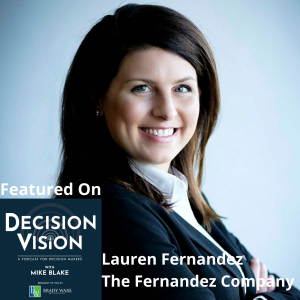
Decision Vision Episode 120: Should I Change Careers? – An Interview with Lauren Fernandez, The Fernandez Company

June 10, 2021 by John Ray

The Fernandez Company
Decision Vision
Decision Vision Episode 120: Should I Change Careers? - An Interview with Lauren Fernandez, The Fernandez Company
Loading
00:00 /
RSS Feed
Share
Link
Embed

Download file

The Fernandez Company

Decision Vision Episode 120: Should I Change Careers? – An Interview with Lauren Fernandez, The Fernandez Company

Lauren Fernandez tells her story of “taking the law degree down off the wall in an executive office, putting it away in a closet, and putting on a hairnet and clogs.” Lauren joined host Mike Blake to discuss both the successes and difficulties of her career journey moving from corporate counsel to restaurant owner/operator. Decision Vision is presented by Brady Ware & Company.

The Fernandez Company

The Fernandez Company specializes in helping restaurant brands grow from 2 units to 20 and beyond. Lauren Fernandez is fully immersed in the restaurant industry as an operator, developer and executive with deep business and industry understanding. The Fernandez Company generates new revenue streams for companies, particularly in the food & hospitality industries. They diversify revenue streams outside the four walls of a restaurant by creating new channels of revenue in the areas of organic expansion, franchising, product development and licensing. They create this growth for their clients through their process of strategic consulting, management support and investment.

Company website

Lauren Fernandez, Principal and Founder, The Fernandez Company

Lauren Fernandez, Principal and Founder, The Fernandez Company

Lauren is the founder of The Fernandez Company, the culmination of nearly two decades as a trusted brand consultant and legal advisor with all kinds of clients, from start-ups to multinational companies, to private equity and investment firms.

She consults with companies in all aspects of restaurant and franchise development, brand licensing, product development, and market implementation. Lauren is an expert in multi-national product development and commercialization in the heavily regulated food, alcohol, pharmaceutical, and medical industries.

As a co-founder and investor in Origin Development Group, Ms. Fernandez has been both a multi-unit franchisee and brand developer, serving as a strategic growth partner for companies such as Chicken Salad Chick®. Lauren also served as the General Counsel for FOCUS Brands where she led both the legal team and franchise administration and was instrumental in the rapid growth of the licensing program.

Prior to joining FOCUS Brands, Lauren was part of an elite team at Novartis/CIBA VISION that successfully launched the company’s first new product in over a decade. She started her career in one of Atlanta’s most respected Intellectual Property Boutiques, Gardner Groff.

Lauren holds an undergraduate degree from Stetson University, as well as a Juris Doctorate and MBA from Emory University. She serves on the Advisory Board for the Atlanta Community Food Bank.  She also is a dedicated fundraiser for The Leukemia & Lymphoma Society and was named the 2015 Woman of the Year by the Atlanta Chapter.  She is a native of the Tampa Bay area but has lived in the Atlanta area for nearly two decades.

LinkedIn

Mike Blake, Brady Ware & Company

Mike Blake, Host of the “Decision Vision” podcast series

Michael Blake is the host of the Decision Vision podcast series and a Director of Brady Ware & Company. Mike specializes in the valuation of intellectual property-driven firms, such as software firms, aerospace firms, and professional services firms, most frequently in the capacity as a transaction advisor, helping clients obtain great outcomes from complex transaction opportunities. He is also a specialist in the appraisal of intellectual properties as stand-alone assets, such as software, trade secrets, and patents.

Mike has been a full-time business appraiser for 13 years with public accounting firms, boutique business appraisal firms, and an owner of his own firm. Prior to that, he spent 8 years in venture capital and investment banking, including transactions in the U.S., Israel, Russia, Ukraine, and Belarus.

Brady Ware & Company

Brady Ware & Company is a regional full-service accounting and advisory firm which helps businesses and entrepreneurs make visions a reality. Brady Ware services clients nationally from its offices in Alpharetta, GA; Columbus and Dayton, OH; and Richmond, IN. The firm is growth-minded, committed to the regions in which they operate, and most importantly, they make significant investments in their people and service offerings to meet the changing financial needs of those they are privileged to serve. The firm is dedicated to providing results that make a difference for its clients.

Decision Vision Podcast Series

Decision Vision is a podcast covering topics and issues facing small business owners and connecting them with solutions from leading experts. This series is presented by Brady Ware & Company. If you are a decision-maker for a small business, we’d love to hear from you. Contact us at decisionvision@bradyware.com and make sure to listen to every Thursday to the Decision Vision podcast.

Past episodes of Decision Vision can be found at decisionvisionpodcast.com. Decision Vision is produced and broadcast by the North Fulton studio of Business RadioX®.

Connect with Brady Ware & Company:

Website | LinkedIn | Facebook | Twitter | Instagram

TRANSCRIPT

Intro: [00:00:01] Welcome to Decision Vision, a podcast series focusing on critical business decisions. Brought to you by Brady Ware & Company. Brady Ware is a regional full-service accounting and advisory firm that helps businesses and entrepreneurs make visions a reality.

Mike Blake: [00:00:20] Welcome to Decision Vision, a podcast giving you, the listener, clear vision to make great decisions. In each episode, we discuss the process of decision making on a different topic from the business owners’ or executives’ perspective. We aren’t necessarily telling you what to do, but we can put you in a position to make an informed decision on your own and understand when you might need help along the way.

Mike Blake: [00:00:39] My name is Mike Blake, and I’m your host for today’s program. I’m a director at Brady Ware & Company, a full-service accounting firm based in Dayton, Ohio, with offices in Dayton; Columbus, Ohio; Richmond, Indiana; and Alpharetta, Georgia. Brady Ware is sponsoring this podcast, which is being recorded in Atlanta per social distancing protocols. If you’d like to engage with me on social media with my Chart of the Day and other content, I’m on LinkedIn as myself and @unblakeable on Facebook, Twitter, Clubhouse, and Instagram. If you like this podcast, please subscribe on your favorite podcast aggregator, and please consider leaving a review of the podcast as well.

Mike Blake: [00:01:13] So, we’re sort of continuing an impromptu mini-series here about how the workplace has changed and is changing as a result of the pandemic, and what we’re seeing in this trans-pandemic period as more people become vaccinated and the economy continues to reopen and resume, or achieve some semblance of normalcy. In the last few weeks, we’ve covered talking about hiring people with criminal records, we’ve talked about hiring people with disabilities. Last week, we published a conversation on attending and sponsoring live events.

Mike Blake: [00:02:01] And today, we’re going to talk about the labor force a little bit from a different angle, and that is changing careers. Should I change careers? And the labor market is behaving in a way that most of us have not seen in our lifetimes. I can’t remember anything even approaching this since maybe the dotcom bubble of the late ’90s. But even this, I think, frankly, is a different animal because it’s much more economy-wide as opposed to technology-specific. And what we’re seeing – at least what I’m seeing – is that our society’s relationship with work has changed. And I don’t think any of us really saw this coming to this extent.

Mike Blake: [00:02:49] Now, there’s a notion that there were some canaries in the coal mine. Labor force participation has been on the decline for the last decade or so. But really not to this extent. I think most of us, myself included – I’m certainly no great theoretical mind here – thought that once we all had the opportunity to return to work that we would do just that. You know, we’ve heard about everything from Zoom fatigue, to isolation depression, to everything in between. And now, instead, we’re finding ourselves with labor shortages. We’re finding that people are demanding more to be enticed to go back into the workforce.

Mike Blake: [00:03:40] And I think a lot of people, frankly, have simply rearranged their priorities. They’ve said, “Look, life is too short and I’m willing to make a little bit less, maybe even a lot less. I’m willing to adjust my lifestyle or our lifestyle of two income family going to one in order for us to build the lives that we want.” And that’s putting employers and business owners in a little bit of a bind. So, like, you can put a gun to people’s head and force them to go back to work.

Mike Blake: [00:04:09] And one of the other dynamics that I think is changing or is occurring – and I think it is a good thing economy-wide even though I think that there are clearly some industries that are a bit victimizes and a little bit flatfooted, I think, for fair – is, I think, people are also changing careers. They’ve taken the time that they had in the last year, whether they were laid off, they were furloughed, forced to get out of the workforce because they had family care obligations or health concerns or whatnot, and happily, instead of just sort of sitting around and watching Jeopardy reruns or whatever they do on daytime TV – do they do soap operas anymore? I have no idea. I don’t miss them.

Mike Blake: [00:04:51] But, anyway, you know, people are now retooling to assume a different career or maybe the first career they’ve had in their lives. And so, I think the topic of changing careers in this environment is particularly timely because, you know, my life experience tells me that for every one person that’s changed or is changing their career, there are another five or six out there that are actively thinking about it.

Mike Blake: [00:05:21] And I’ll leave with this before I introduce our guest. I saw quote actually this morning by Adam Grant, who is the author of a fantastic book that I read earlier this year called Atomic Habits, and many other important business books. And he’s a professor and a researcher of organizational theory at Wharton. But he wrote that, “It’s better to lose the past two years of progress than to waste the next 20.” I thought that was kind of profound. And if you look at the data, the average U.S. worker may expect to have something like 11 jobs in their lifetimes. But how many people actually change careers? That data is pretty sketchy and all. I saw numbers out there, there’s nothing I thought was sufficiently robust that I want to quote it. But I’m sure people don’t change careers 11 times in their lifetimes. But we are very fluid work sources is the point.

Mike Blake: [00:06:11] So, joining us to talk about this – she’s a recidivist. This is her second time on the program – is Lauren Fernandez of the Fernandez Company. At the Fernandez Company, they generate new revenue streams for companies, particularly in the food and hospitality industries. They diversify revenue streams outside the four walls of a restaurant by creating new channels of revenue in the areas of organic expansion, franchising, product development, and licensing. They create this growth for their clients through their process of strategic consulting, management support, and investment.

Mike Blake: [00:06:45] Lauren is the founder of the Fernandez Company. The culmination of over a decade of practice as a trusted brand consultant and legal adviser with all kinds of clients, from startups to multinational companies. Before forming the Fernandez Company, Lauren served as the general counsel for Focus Brands, where she was instrumental in the rapid growth of licensing program. She holds an undergraduate degree from Stetson University and a JD and an MBA from Emory University. She serves on the advisory board for the Atlanta Community Food Bank, and is a dedicated fundraiser for the Leukemia and Lymphoma Society, and was named 2015 Woman of the Year by them for raising nearly $95,000 in less than three months for cancer research. She’s a native of the Tampa Bay area but has lived in the Atlanta area for over 15 years. Lauren Fernandez, welcome back to the program.

Lauren Fernandez: [00:07:29] Hey, Mike. Thanks for having me back.

Mike Blake: [00:07:31] So, I’d love you just to start and tell us kind of in your own words, what is the background for your own career change? You know, I only learned recently – and, again, one of the fun parts about this program is I learn things about people, sometimes people I’ve known for a lot of years and things just never came up. But I learned that you, in fact, started out as an attorney before you became the restaurant maven that you are. Tell us about that origin story. How did that all come to be?

Lauren Fernandez: [00:08:05] So, I knew I wanted to be a JD/MBA. I knew I wanted to go to law school, but was pretty adamant on going to a school that had a top 20 MBA and law program. And entering several of them chose oddly enough, it was like birds singing, tulips everywhere. It was just a beautiful April spring day when I visited here and it made the Northeastern schools I was looking at pale by comparison.

Mike Blake: [00:08:34] Clearly, you don’t have allergies, but go ahead.

Lauren Fernandez: [00:08:36] I’m constantly on Claritin, actually point of fact. But I really enjoyed my visit to Atlanta. It was relatively close to my home base in Florida. And here I ended up, and I’ve been here for over 19 years. And so, my journey is a little bit about the balance between my law degree and my MBA. And in fact, when I finished the program at Emory in 2006, it was a tough time. The economy was already starting to tank a little bit.

Lauren Fernandez: [00:09:05] And I got some really good advice from another in-house counsel who was also a JD/MBA and she said, “Listen. When you leave, if you decide to go practice marketing, you’re going to miss an opportunity to be apprenticed at a law firm and really learn what it is to practice law. And it’s very hard to go back and do that later if you choose a law career later.” And that couldn’t have been more right.

Lauren Fernandez: [00:09:29] I was extremely fortunate to land at Gardner Groff, a very storied and long tenured boutique intellectual property firm here in Atlanta. And they brought me on and taught me the basics of intellectual property, and litigation, and licensing, and product development. And for that, I am eternally grateful because that’s a huge investment in young lawyers to have to train them up. And I was there for a little over three or four years before I moved in-house.

Lauren Fernandez: [00:09:55] And that was the first of many steps I took in my career to move closer and closer to the business of my clients. Because as an attorney, I always viewed my role as really understanding the business so I could put the proper context around the problem and help them navigate into white space, not necessarily to make decisions for my clients, even with respect to the legal risk, but more or less risk management and kind of moving into white space.

Lauren Fernandez: [00:10:24] And so, I landed at a division of Novartis here in Atlanta, which at the time was called CIBA Vision, and is now Alcon post-merger. And I became their associate general counsel and global head of trademarks and domain names. So, they took two roles and smooshed them together for me. I was just really so fortunate to land right at the exact time they were doing a major product dev. It was the first time they had pulled a product dev of R&D in ten years. So, I got to be part of a billion dollar product launch in over 148 countries, which is right in my wheelhouse. And that experience was phenomenal.

Lauren Fernandez: [00:11:02] But as things happen, you know, the company changed. We went through a merger. And I was working through kind of what my next step would be within Novartis and kind of talking to them about that when I got a phone call one day from an MBA friend of mine who, you know, we have a good working relationship. We were also good friends outside of work. And she would call me from time to time just to ask a trademark question, a licensing question, what have you. And she said, “Would you come and meet with our CEO?” And I said, “Yeah. Sure. What’s going on?” And she said, “Well, I sort of printed out your LinkedIn profile and he wants to talk to you.” And I was like, “Oh, okay.” So, that was the origin story of how I ended up at Focus Brands.

Lauren Fernandez: [00:11:40] Focus, at the time, was looking for, not only in-house legal counsel, but also someone who had specific expertise in product development and licensing to help grow their program. And so, when I went to Focus and made that decision, I was leaving a former career behind. Which, for most lawyers, that’s a very lucrative golden handcuffs all the way in-house job and working for a phenomenal company. I loved working there.

Lauren Fernandez: [00:12:03] But when I made the leap, I made it specifically for one reason. I met with the CEO at the time, Russ Umphenour. I was very compelled that he saw me as a business person. And that he wanted to invest in me and teach me the ropes of restaurants and franchising. And really felt like it was important for me to get training. And so, I went over. I met the executive team, the rest of the brand presidents, the rest of the C Suite. And I thought, “If I’m going to make this jump, I’m going to make it to here because this is where I’m going to get the training that I need to really be in an industry that’s more aligned with who I am personally and professionally.”

Lauren Fernandez: [00:12:40] And so, it wasn’t too much of a leap as an attorney because most intellectual property matters is fully translatable. And to the extent that you do product dev and it’s in regulated markets, that’s Food and Drug Administration. So, drugs being obviously a little harder in some cases to get through for approval. So, moving over to food was a pretty easy leap in that respect. So, off I went to Focus and that was yet another kind of step in my career. And I think I got a lot of flack from that from people who were in my peer group were like, “What are you doing leaving pharma? That’s ridiculous.” And I said, “No. I like the runway I have with this company. It makes sense.”

Lauren Fernandez: [00:13:19] So, I went over to Focus. I headed up their legal department for over three years. Grew it from me and a part-time paralegal to a team of over 24 people. Ran the legal department and the franchise administration, at the same time that was helping grow the licensing program and a lot of their international deals. So, it was a wonderful place to learn from other executives. I just really had a phenomenal talent group around me and the peers there. And I can’t speak highly enough about that leadership.

Lauren Fernandez: [00:13:50] And, you know, again, things just change. So, about three years in, we had a leadership change and things just got shuffled. And it was just starting to feel like that time. I was getting calls, recruiters were calling. And it was just an interesting moment. It was a pivot point in my career. And I had been a general counsel at that point for three years. And I was in my mid-30s and I thought, “I have really checked the box on my legal career. I feel, really, like I’ve done it all. I really want to move more into the business side.”

Lauren Fernandez: [00:14:21] And one of the things that kept happening, Mike, was I was going on these interviews for, you know, publicly traded food companies, restaurant companies. I was meeting with CEOs, meeting with boards. And their vision of what a general counsel would look like and talk like was very different than how I was used to operating – more involved in the business, engaged in finding white space, brainstorming, really charting a path for the company. And it was just making me feel really sick to my stomach. I just had this like really bad pit about it. Even though the jobs are all super lucrative and really interesting, it didn’t really feel aligned with my compass at that point.

Lauren Fernandez: [00:15:01] And I’ll never forget this. I went out and had lunch one day with my former CEO-mentor and I told him, “This isn’t lining up. I’m having trouble finding another CEO who looked at me the way that you did and treated me like a business partner.” And he said, “Yeah. Kind of like good luck with that.” And he said, “Why don’t you own a restaurant? Like, why don’t you actually operate a restaurant? That’s something you haven’t done.”

Lauren Fernandez: [00:15:27] And, Mike, in the industry, a lot of restaurant executives come up in the industry. And I had a very different background. I have a college degree and two postgraduate degrees. And, yeah, I’d worked in hospitality and restaurants. But, you know, summer jobs and never, like, actually really gotten handed to me in a restaurant, so to speak. And, you know, I took that advice and it stuck with me and I couldn’t shake it. So, I started, literally, shopping for franchises. I had some money to invest and I thought, “Okay. Let me find one that maybe I can buy by myself and I’ll operate it as a business. And then, I can hire someone to help me run it.”

Lauren Fernandez: [00:16:08] And so, around that time, I had started the Fernandez Company as our consulting firm, which still exists. We do a lot of consulting work around product development, lines of revenue around licensing, and product dev especially for restaurant companies. And I had a decent client base and things were going, but I still wanted to kind of invest in a restaurant. So, I’d been looking for about a month. And I bumped into – through a mutual friend – an investor who actually ended up becoming a business partner of mine. And we formed Origin Development Group for the sole purpose of going out to find restaurants to invest in, and to grow, and operate, and, hopefully, realize some benefits out of that.

Lauren Fernandez: [00:16:52] So, we started Origin, and I became a restaurant operator within, maybe, six months. We ended up closing a deal to purchase three Chicken Salad Chick restaurants and the entire territory for Atlanta, Augustine, and Athens for the brand. And three years later, we had 11. We had three nontraditional locations and we had three more locations under development when we ended up selling the entire company’s assets, in fact, all the Chicken Salad assets, over back to Chicken Salad Chicks parent company. So, it was very much like a slow progression and then a sudden progression into restaurant operations.

Lauren Fernandez: [00:17:35] But what I will say from that was, every step that I took in my career was towards the goal of getting more and more and more onto the business side. And I think, for me, one of the important risks that was certainly worth it with Origin was, I had ownership in the company. So, I wanted to be able to help steer the boat. I had an assumption of the development obligations, like actually opening restaurants, but also the daily operations of the restaurants themselves.

Lauren Fernandez: [00:18:02] So, that was certainly an education by experience. And I learned more in that three year period than I think I did in my entire four years at Emory. And that is saying a lot, because they’ve packed a lot into that for years at Emory. Because I think there’s nothing that can really substitute when you are losing money in a restaurant and you’re trying to figure out where you can cut and make sacrifices and drive profit margin is the most real world education of a profit and loss statement. And, suddenly, all of these things that I had learned in grad school were coming so alive for me and so real. And so, they were tools in my belt that I hadn’t really used and really those muscles I hadn’t flexed before. And really being able to put them into good use in our restaurants was extraordinary.

Lauren Fernandez: [00:18:51] And then, just continuing to learn. Like, we had great support in the field from the brand. We had a wonderful franchise business consultant. The ops team was fantastic. So, I was just like a sponge. I constantly was asking every manager, “Why do you do that that way? Who taught you that? Like, tell me more.” And I just became almost annoying in how much I was asking why questions to get them to teach me. And I think that that just takes a little bit of humility. But I really was hungry to learn a little bit more about restaurant operations and to be a really good operator.

Lauren Fernandez: [00:19:28] And where that part of the story ended, and that brings us to where I took a sabbatical to help figure out what I wanted to do next. But that was the progression, really, from intellectual property attorney to restaurant owner. You know, of course, until we get to the place where we’re operating Full Course today, my restaurant development and investment firm.

Mike Blake: [00:19:53] So, you know, so many interesting things to kind of go back and pick on, and we will. The first question I have is, what made you want to get into law in the first place? And the reason I ask that question is because the follow up question is going to be, I seem to know a lot of people that trained to be lawyers and then didn’t last very long in the industry. One of my closest friends, he was my RA in college just moved to New Zealand, but he lived here in Atlanta for a long time. And after getting his law degree, it took him about a year before he went into technology, basically. So, the first part of the question is, why did you want to get into law? And then, we’ll come back to the second part in a second.

Lauren Fernandez: [00:20:38] Yeah. Great question. Wow. So, throughout high school, my parents were very much like, “Hey, look. You’re good at a lot of stuff, but let’s try some different things so that you can narrow it down.” I think if you ask them, they were probably super concerned that I would go and try and do too much at college, which happened anyway. But, you know, I did a whole summer with marine biology, like rescuing turtles and dolphins and doing necropsies. It was an experience. And then, I really loved architecture and construction. I did a whole summer with Habitat for Humanity.

Lauren Fernandez: [00:21:17] So, my parents very much encouraged me to have practical experience. And one of those experiences was specifically working or summer interning in high school with a law firm. And I think it was actually my dad who suggested = he’s a physician. And my mom, at the time, was an R.N. and working on her PhD in mental health and counseling. We have all this medicine in the family. And I was kind of like, “I don’t know what to do, but I don’t think I want to do that.” And my dad said, “You know, you’re in moot court. You do all this public speaking stuff. You’ve done all these competitions at science fair where, arguably, the science is great but what you’re really good at is pitching what you’ve done. Why don’t you go intern with one of our lawyer friends?” And that was really where it started.

Lauren Fernandez: [00:22:06] And I just fell in love with it. I mean, I loved the bates numbering, like this numbering on. I’m so organized and really kind of compulsively so. So, they had this big litigation going on. I got to, like, Xerox stuff and collate things. And I was just asking questions about the case the whole time. And it kind of sucked me in. At the time, I was an unabashed, like, completely obsessed with Law and Order, which is criminal law. But it seemed to be a good fit. And everyone who knew me was like, “Oh, yeah. Obviously, she’s going to be a lawyer.”

Lauren Fernandez: [00:22:36] So, what was really funny was, I did get a scholarship as part of my undergrad to go prelaw. But when it came down to it and I took the LSAT and everything was groovy, my mom became pretty critically ill and had lymphoma. And so, I took a year between college and grad school and kind of just put everything on pause. And in that time, 9/11 happened. So, we really had to do as a family, I mean, with my mom being sick, and with 9/11, and the economy suffering as a result, there was a lot going on.

Lauren Fernandez: [00:23:13] And so, I had a chance to reevaluate what I wanted to do. And, really, when it came down to it, I had already taken the LSAT. It was fairly easy for me to take the GMAT. I think that’s what it was, the GMAT. And start applying to JD/MBA programs because I had a very narrow window of time. We had come back from cancer treatment with my mom. They had just allowed air travel again. It was just a very crazy time.

Lauren Fernandez: [00:23:36] And I remember sitting there with her typewriter – people, a typewriter because this is back in, like, 2001 or 2002. We’re sitting there like banging out the applications on the typewriter. And I remember her saying to me, “You have to apply to a JD/MBA program. You just have to.” She’s like, “You’re going to be behind a desk running a company someday. You’re going to want that MBA. Don’t just pick schools that have both really good programs.” And I was like, “Okay.” And so, we narrowed it down and applied to, like, five or six schools. And that was just really what got it going.

Lauren Fernandez: [00:24:14] And I’m going to be honest, Mike, I got to law school. In about three months in, my mom got sick again. And I was away from my family and I had a complete meltdown. I mean, something had happened at school, you know, one of those classic stories of someone hiding a book in the library actually happened. I was like, “This is ridiculous. Like, these people are crazy.” And I called my lawyer-mentor friend back at home, and I said, “Should I leave? Like, I don’t know that this is really for me.” And he said, “No. You should stay. You should see this through. The first year is always the hardest. Just see it through. Next year, you can start your MBA program. It’s going to be okay.”

Lauren Fernandez: [00:24:56] And so, I really struggled. My biggest problem was I loved my MBA program so much. And this is after I had already enjoyed my law training. And there’s a special product commercialization and development track at Emory called the Tiger Program, which I think I might have been the first or the second graduating class.

Mike Blake: [00:25:16] I’ve been a teacher for them.

Lauren Fernandez: [00:25:17] Yeah. Okay. Great. Full circle here. I love the program. At the time, it was run by Margo Bagley, who’s phenomenal. And I really loved my law experience there. And then, I love the business school even more. So, for me, it was just like popping out of that program, I was like, “Which path do I take?” And as I mentioned earlier, I ultimately made the decision to become an apprentice, effectively, lawyer as a junior lawyer and associate at a law firm. So, hat’s how I ended up in law to start with.

Mike Blake: [00:25:52] So, I’m curious – this is only relevant to a segment of the audience, but it’s my show, so I got to ask the questions. And that question is, I seem to see a lot more people change careers from law than from any other professional field that I can think of. I’m curious if your experience is like that, too. And if so, why do you think that is?

Lauren Fernandez: [00:26:17] So many thoughts here, but I’ll try and keep it short. So, first and foremost, the United States pumps out, like, four times as many lawyers every year as any other country in the world. So, it’s my personal opinion that we pump out a lot of lawyers. There’s a lot of adults who go to law school. And it, you know, seems like a professional career that can be translated into multiple different things. And for reasons that you just mentioned, like, I know multiple attorneys who never sat for the bar, or sat for the bar and practiced for a year and then transitioned to something else.

Lauren Fernandez: [00:26:55] And so, I think there’s a bit of a mythology out there that you can use a law degree for whatever you want. Well, true. But the law degree also costs three years of your life and you’re roughly $200,000, probably even more now.

Mike Blake: [00:27:09] Probably more now, yeah.

Lauren Fernandez: [00:27:09] I’m just throwing that out there. I mean, of course, there’s state schools and everything. And I had scholarship money. So, it is what it is. But I think there’s a cost benefit analysis that needs to happen there. I remember my dad, I was 21, 22, sitting down with me and forced me to make an Excel spreadsheet on the ROI of me going to Emory over another school that was literally going to pay me in addition to paying everything else, is going to pay me $11,000 a year to go to school there. And he was like, “Prove to me why you need to do this.” And I did the math for him and I showed him my payoff timeline and all this kind of stuff, which, of course in the economy that ensued was not really what happened. But that’s a story for another day.

Mike Blake: [00:27:53] No way you could’ve know that.

Lauren Fernandez: [00:27:54] I don’t regret it at all. I love my Emory experience. I’m a huge proponent of the school. Just to say that. I do think that that’s number one, is, there is a lot of lawyers that are kind of getting pumped out into the market. So, that’s kind of number one. Number two is, in the United States – and I’m going to just compare this to Spain, where I have a little bit more, like, firsthand knowledge – the process of going to law school doesn’t necessarily teach you practical skills as an attorney. That is shifting a little bit more as we get a little more progressive. But it’s still very Socratic method, the same first year for everyone.

Lauren Fernandez: [00:28:34] And so, it is considered unusual to have a very heavy practicum load where it’s practical application of law and teaching you actual legal skills. So, when you come out of law school, you don’t even know what you don’t know. I mean, you basically know how to take the bar. And that’s about it. So, true to my form, when I was in high school and in college, I took every internship opportunity that was offered to me at Emory. I think I had a total of four, maybe even five, that I got credit for and was able to actually get my foot in the door at a couple of companies. I worked at Cingular Wireless, which then became AT&T. I worked at Coke twice on the legal side and on the marketing side, and various other places.

Lauren Fernandez: [00:29:19] But, you know, I don’t think that we really invest time in training lawyers how to be lawyers. You pop out and then you basically have another two to three years of learning how to be a lawyer. And that means a firm usually has to invest in you to really give you that level of training and expertise. So, imagine coming out of grad school. You’ve got all this debt. You know, you are sitting in a chair in a firm, probably not making the cushy salary that you thought. And your life is, literally, you draft a document and it’s blood red with red lines because that’s the accepted method of teaching young lawyers how to be a lawyer. You red line the heck out of their work and you go over it with them. If you’re lucky, you have a partner who will, like, review it with you and coach you and mentor you.

Lauren Fernandez: [00:30:08] And, you know, every single minute of your day is accounted for. You have a billable rate. You have to bill a certain number of hours a day, and that has to be collected dollars that they’re not writing off as a firm. So, that’s your efficiency ratio. So, you’ve just effectively come out of a three year program. You have a graduate degree. You’ve got a square after — for being those ratios. And it’s just facts. I mean, it’s just how law firms make money. It’s how the system works. And, now, there are a variety of different models that are different these days. But that can be a very soul crushing experience.

Lauren Fernandez: [00:30:55] I just will speak for myself. I had a great firm. I had wonderful mentors. But, literally, two years in, I was sick to my stomach with the stress, literally. And it wasn’t until I went in-house that that went away. And the only other time in my life I’ve ever had that feeling of, like, extreme exhaustion and anxiety was when I was operating 11 restaurants and trying to juggle too much. And I kind of burned myself out. This is, you know, 15 years later. But that is a very stressful environment. And you’re being paid to put your opinion out. And it’s always a judgment call, right?

Lauren Fernandez: [00:31:38] It’s never black and white. That’s why lawyers have a job. They’re shades of gray all in the middle. And that’s why lawyers are important in what they do in assessing and managing risk for clients. And especially in intellectual property, where there’s very clear deadlines on patents and trademark filings for copyright matters, there’s always the looming monster of malpractice. So, I think that this has sort of created this blender, maybe, or it just chews people up. And some people thrive in those environments. You know, my brother and my sister-in-law are still attorneys and practice. And I have plenty of friends and peers who still work and practice in the industry.

Lauren Fernandez: [00:32:28] But I think there is a side to it where it’s not necessarily aligned with what a lot of people think it’s going to be. And there’s also that perpetuation of like, “Oh, I just finished college.” I have heard this said, law schools are very accepting and embracing of applicants. You don’t have to have any experience. Meanwhile, over in my business program at Emory, I was probably the least experienced business person that got into our program. And I already had a full two pager business resume that had nothing to do with law. And so, it’s just a jump from college to law school. And so, I think that’s part of it, too. I’m sure I missed some things in there.

Lauren Fernandez: [00:33:14] It’s sad to me because I think the reality is, there’s a high rate of depression amongst lawyers, alcoholism, substance abuse, and a lot of other mental health issues that, as an industry, we don’t really talk about very well. And I think that’s really sad because, I think, fundamentally, it’s a byproduct of what the kind of institutional structures of whether it’s a firm or in-house – I don’t know that it makes the difference – it’s just kind of part of how the profession works, if you know what I mean. And especially in the United States. I don’t think that it’s universally true. I’m speaking about the United States here.

Mike Blake: [00:33:53] I wonder how many people, too, go to law school because they were good students, but they don’t know what to do next.

Lauren Fernandez: [00:34:01] I mean, if I had to guess, I think it was roughly a fourth of my law school class. No joke. And I think it would be really interesting to go back now and kind of look at where they all are. And I do follow, like, a number of them on Facebook or LinkedIn. But I have noticed that it’s my JD/MBA colleagues who are the first to jump, you know, who either never practiced law or practiced to a point and then made a successful leap over into other business ventures. Oh, for sure. For sure.

Mike Blake: [00:34:33] So, let’s talk about that transition, and your story is interesting. And correct me if I’m wrong – but, one, it sounds fairly gradual. And the second, it sounds fairly organic. It didn’t sound like you had this many epiphany moments where you said, “I got to get out of A and then move into B.” Or it may have been parse to the case, I suppose, moving from billable to in-house counsel. But the rest of it sort of sounded like people were pursuing you for your skills and then kind of moving you away from practicing law directly into doing other things. Is that a fair way to characterize it?

Lauren Fernandez: [00:35:12] I think I was always looking for those opportunities. And so, one of the key things I want to say here for anyone who’s thinking of making a big leap, a big leap is really a big leap because you’re going drastically from point A to point D. And so, I knew that I wanted to get out of the law eventually and into the more business side. You know, when I was at Novartis, that could have been product moving over to product dev, that could have been moving over into the marketing department. I’m sort of was always analyzing other opportunities to kind of make that lateral move over. Because in my mind, you want to take all the aggregate skills that you’ve developed and just sort of make a lateral step over or up to help get you to the end goal.

Lauren Fernandez: [00:36:00] So, you’re right, I didn’t, like, leave Novartis and go, “Oh, I’m going to go over into Focus. And then, someday I’m going to own a restaurant.” No. I mean, I learned a lot when I was at Focus. And I saw all these franchisees, like, buying restaurants and just absolutely crushing it and just doing great as business people. And I thought, “Well, there’s something to this,” which was just sort of in the back of my mind.

Lauren Fernandez: [00:36:21] And then, when opportunities presented themselves for me to be able to do that and be more entrepreneurial, it made sense to kind of take that kind of risk. Because, to me, it was a step over as opposed to being a giant jump from A to Z. It was just so much more. It does seem more organic in that respect. But I think it was sort of always the plan. And I think the key to that, Mike, is, I’m very clear on what I’m good at, but I’m also really clear on what I’m not good at.

Lauren Fernandez: [00:36:51] And it’s something that, I think, when people are very confident and put together and poised and you look at this impressive resume, whether you see it on LinkedIn or wherever, you go, “Oh, she must have really had a plan for that.” No. But I knew myself. And, humbly, I also know what I’m not capable of and what I’m not good at. And that’s something that I used to build really great teams around me because I play to my weaknesses and their strengths, and I know how to hire for that and really how to energize and motivate people. And that’s been something that’s helped me kind of make those big junctures feel more like a sidestep.

Mike Blake: [00:37:30] You know, so that’s really interesting, the way that you characterized that. So, an overarching thread that strikes me that I think is potentially very instructive is, when you are making these career changes – I think they sound plural to me. You may disagree, but this is semantic — you are not necessarily running away from something as you are running towards something else.

Lauren Fernandez: [00:38:00] Yeah. But I just hate to characterize negatively. I’m pragmatic, but I’m very optimistic. So, I’m never going to cast the law or the practice of law in a negative light. Let’s talk about that. So, you know, there was a moment when I was sitting at my desk in Focus, we had had a change in upper leadership, and it was really late at night. And I was one of two people left in the building. And I thought to myself, “What am I doing? Is this really what I want with my life?” Really, like just had that moment, which we may call an epiphany that I was like, “You know, maybe this isn’t worth it anymore. Why am I working this hard? What am I trying to prove?”

Lauren Fernandez: [00:38:44] And, I think, if I had to really, really identify, there have been two major jumps for me. One was leaving the law and kind of starting a consulting firm and opening restaurants. And this next one, where I started my own restaurant development and investment firm. And in both of those moments, I had to let go of what everyone else thought of me. I had to let go of what everyone else thought my next career step should be. I had to not give a You-Know-What about what the next thing on my LinkedIn profile was going to be. And have the confidence that whatever I chose next was going to be, not only a learning experience, but a great experience and adventure for me.

Lauren Fernandez: [00:39:23] And that seemed more exciting to me than sitting at a desk. And I’m not going to lie, in that moment, I did some math. And I thought, you know, you think the salary is great and you think the title is great, and then you realize how hard your working is essentially less money than I was making in college, which is crazy to think about. And it wasn’t about that, though. It was just sort of having a validation moment that, “Yeah. Maybe I need to start thinking of other things.”

Lauren Fernandez: [00:39:53] And then, I have my lifeboat. They’re like my informal board of directors for Lauren. And I started putting calls into people and saying, “Hey, listen. What would you think if I told you I was going to start a consulting firm and sort of just slowly not practice law anymore?” And they were like, “Yes. You should do that. You’re good. You’ve checked the box. Your career is great. Like, no one would ever say that you left the law too early. I think you’d be great at it. You should do that.” And I started getting a lot of thumbs ups and like, “Yeah. Do it.”

Lauren Fernandez: [00:40:26] And then, you know, I did it, and it was scary. And then, I invested in some restaurants with a partner, and that was scary, too. Because I think you have to have the courage to accept that you’re kind of boldly going where you haven’t gone before. And so, you leave the comfort of being an expert and at the top of your game to not really knowing how to fix a walk-in cooler in a restaurant. It’s this big. That’s big. Like, there’s something very humbling about taking the law degree down off the wall in an executive office, putting it away in a closet, and putting on a hairnet and clogs. And that’s literally what my life became. And I did it.

Lauren Fernandez: [00:41:03] I did it on purpose because I wanted that experience and I wanted to really be able to say, as we do all the time now with Full Course, like, we’ve walked the walk. We understand it. We speak operator. We’ve been there. We’ll be there with you. So, we’re not just investing in your restaurant, we’ve actually run them ourselves. So, all of those things just to say, Mike, like, yeah, maybe we are kind of running from some things, but I think I’d rather think of it as running towards the runway. Sometimes you just hit a wall and you’re like, “I’ve done all I can do here.” And things change in companies, too. And I wouldn’t consider that necessarily as much running away as just sort of – let’s just use the phrase – finding white space or runway.

Mike Blake: [00:41:49] Good. Well, I mean, that’s exactly how your story comes across. And, you know, to me, I think that’s an important mentality. Because when you are running to something, frankly, I think that’s a mindset that puts you in a position to make a better decision. If you’re running away from something, you’re in crisis, you have emotional baggage that, I think, is associated with running away that interferes with a good intellectual decision process, and it can lead to mistakes. It doesn’t mean there weren’t negative things that were kind of nudging you towards something. It doesn’t mean that you are leaving one plane and having to move to another plane, so to speak.

Mike Blake: [00:42:34] But I do think that you’re mentality that, again, it wasn’t about running away from something. But here’s another opportunity, I’m going to grab it. I think that’s an underrated and underappreciated driver behind a successful versus a less than successful career change.

Lauren Fernandez: [00:42:54] I couldn’t have said it better. And I think the scariest moment for me was, when I literally had to create my own runway. So, I mentioned earlier I took a sabbatical. Which, anyone who knows me, I’ve been working nonstop since I was probably, about, 14. And when we sold the company, I was pretty late and 39. It was the end of December ’18, I was still 39. I was about to turn 40. And I told everyone publicly I was going to take three months off. But my husband and I knew that I was actually taking off six months to a year. And I took the full year. And I’m actually so enormously proud of that. Like, it actually gives me a little bit of a teary eyed moment.

Lauren Fernandez: [00:43:40] Because I think when you take a minute to really think about what you’ve been through, and to put some parentheses on it, and to really think hard about what you’ve learned and what you still need to learn, and what was humbling about it, where can you still grow. And having that moment, which was a year, which I’m so blessed I had that opportunity. But I think sometimes just taking that moment.

Lauren Fernandez: [00:44:08] I’m a huge fan of Ina Garten, the Barefoot Contessa. And she just reminds me of, my mom, just everything about her spirit and her personality. Plus, I love the way she cooks. And so, I went to one of her book signings and she said something to me. Literally, I was still a restaurant operator at the time that I saw the horizon because she said something so profound. It just smacked me upside the head. And I took out my phone and I started taking notes.

Lauren Fernandez: [00:44:32] And what she described was the process of selling the shop and the restaurant, Barefoot Contessa. And selling it to new owners and not knowing what to do with herself. And so, she rented this office space upstairs because she had to consult with them still. And she would just go in there and sit there and do the New York Times crossword puzzle, and read old cookbooks. And, you know, she was just basically sitting there at their beck and call. But she made a routine for herself to go in and just kind of sit there so that she could let inspiration come to her.

Lauren Fernandez: [00:45:06] And in that moment, she looked over at a coffee table and four of her favorite cookbooks were on the coffee table. And they were all published by the same publisher. And she thought, “Well, I own all the recipes. I’ve just documented them for them downstairs. Let me just fire off an email and see what happens.” She fires off an email. And the next day, they’re like, “When can you start? And here’s your advance.” And that’s how she started her first cookbook, which then led to a television show. Which, by the way, she said no to, like, four times. And then, her story of how they got her in front of a camera is hilarious, but I’ll save that for another day.

Lauren Fernandez: [00:45:45] But the moral of her story was, sometimes you just have to take time and make the time to let the next step come to you. And that year, I was probably about six months in when I really started seeing the problems that I was having as an operator, and a restaurant developer, and understanding the financing in the middle, and kind of how all of those things work together was an endemic problem with restaurant growth in our industry. And that’s why a lot of one and two unit restaurants don’t ever make it to ten, and don’t make it from 10 to 20. And by the way, that’s where the exponential ROI is for restaurant owners. It’s not in a one-and-a-half multiple times profit margin when you sell one restaurant. It’s at 11X when you sell 10.

Lauren Fernandez: [00:46:36] So, really thinking through that problem and how I could help bring up other minorities and women in ownership in the industry. And I started brainstorming with my lifeboat, with my informal board of directors. Like, “Hey, if I started a company and its stated agenda was to fix X, Y, and Z problems, what would it look like and how would we start it?” And I had the luxury of six months to plan out what it was going to look like. And then, the pandemic happened. So, I had even more time to really think about what it was going to look like, what its mission and purpose was going to be. And to create that runway for, not just me, but for our team.

Lauren Fernandez: [00:47:22] And that is hands down the most exciting but terrifying thing that I’ve ever done in my career. Because, truthfully, it’s the first time I’ve made that side step into something that I fully created. Even when I was a consultant with Fernandez Company and we started that, like, I was doing what I was doing for Focus for, you know, other companies. Like, just basically helping them on their legal issues, helping them brainstorm about how to add more revenue to their business. It was consulting work. Yes, it wasn’t legal work. But it was not as big a step as this one over to Full Course. You know what I mean?

Lauren Fernandez: [00:48:03] So, I think that there’s some magic in kind of taking that pause and really reflecting on where you’ve come from, and where you want to go next. And really building out that runway, not just for you, but for the team that you want to bring with you.

Mike Blake: [00:48:20] So, let me pause a little bit and ask you a question about Full Course. Because what I’m hearing from you is that was the first transition that you made where you really were starting and embarking on something totally new or pretty much totally new. Some might call it starting at the bottom, I don’t like that term. But maybe a flat footed start is the best way to put it.

Lauren Fernandez: [00:48:45] So, you’ve been doing that for a while now and you have an interesting knack for timing, right? You became a lawyer in the worst job market for lawyers ever. It was the Hiroshima of the job market for lawyers. But, now, you’re doing that in the restaurant industry, too, right? I mean, they’re going through charitably a seismic shift. Are you yet comfortable in that role? Or if you are comfortable, how long did it sort of take you before you felt like, “I’ve transitioned into this role and this is now me.”

Lauren Fernandez: [00:49:18] Great question. So, we signed our first clients January 1st, and that was the day I took the law degree down off the wall.

Mike Blake: [00:49:29] No kidding.

Lauren Fernandez: [00:49:30] Yeah. It’s actually rolled up in my closet. And I had a personal thing with myself and I said this to anyone who kind of gave me crap for having my degrees up on the wall, because I have gotten crap for it over my career, believe it or not. It is, but not really. If you think about the industries I’ve worked in, not really. I mean, in Novartis, it was kind of a joke because there would be patent attorneys that we worked with who had, like, three PhDs. It’s just, like, crazy smart people in the company. But I would always tell people, “I’m taking them down when they’re paid for. So, if you want to write me a check, I’ll take them down for you right now.” And I’ve been saying that for 20 years – you know, 15, 20 years. So, they are, in fact, paid for and I’m very proud of that.

Lauren Fernandez: [00:50:16] But I took them down and I put them away. I took them out of their frames and I rolled them up. And I did that because I felt like I didn’t need anyone else’s approval of what I was doing. And for the first time in my career, I think I finally shed the last layer of needing anyone else’s permission or okay or blessing to do this. And that’s a really pivotal moment. I think a lot of us get stuck in worrying about what our parents think, what our spouses are going to think, what people are going to think if they look at a gap on their resume.

Lauren Fernandez: [00:50:47] I just spoke last week to an attorney who was concerned that jumping from job A to B in less than three years was going to be problematic. And I’m like, “Are you kidding me? Not in this environment. Certainly, not at your level of expertise. Like, that’s the kind of stuff we’re worried about when we were, like, baby lawyers. Like, come on now. Like, no.” So, I think that we carry those around and it’s so heavy. And you don’t take a pause to really think about you and what you’ve learned and give yourself credit for that. And where you want to go to really challenge yourself and maximize your talents and skills. You’re going to keep listening to all of that noise. And I think that that pause is so important. It really is.

Lauren Fernandez: [00:51:37] You know, my parents have said to me my entire life, “You have an extraordinary amount of talent and skill. But what we expect of you is that you use it in service to others. You use it to the best of your ability and in service to others.” And even for me, for years, I’m not going to lie, that was a lot of pressure. That was a lot of noise. And I had to let go of that, too. Because even though that was a really huge guiding principle for me my entire career, at the end of the day, it’s not what got me to where I am in this last jump. I think that really having that pause and thinking long and hard about where I felt led to take the next step was very important.

Mike Blake: [00:52:18] We’re talking to Lauren Fernandez. And the topic is, Should I change careers? We’ll have time for a couple more questions. But there’s so many that we could ask. But one I want to make sure to get out there is, is there anything that you might do differently in terms of how you made your decisions to change or evolve your career over time? Anything you might do differently?

Lauren Fernandez: [00:52:40] Wow. Yeah. I think there’s one thing that I realize now. I was very sheepish about self-promotion, about advocating for me within the company, advocating for me professionally within my peer group. I had no issue doing presentations if I was asked or going out and helping give information out and being a part of academia, if you will. Like, sort of the academic or intellectual pursuit of what I was doing as an attorney. And indeed recognized as an expert in both licensing, branding, co-branding, and in product development as an attorney in the space. And I’m very proud of that.

Lauren Fernandez: [00:53:26] But I think what I missed as an executive, especially comparing to where my peers are at, was, the attorneys are sometimes given the shaft even inside of a company where they’re a cost center. They don’t generate revenue for the company. You know, they want to be seen but not heard. You know, it’s kind of like the Imperial Death March when I walk in a room like, da, da, da. So, I think you kind of shrink a little bit. And I think that that’s unfortunate. Because, now, I realize that I missed so many opportunities to be of value to my MBA peers, to other minorities, other women in the industry, just by being present whether that’s in LinkedIn or in the industry events. You know, I did plenty of networking, but I don’t feel like I probably was as much of an advocate for myself as I should have been.

Lauren Fernandez: [00:54:30] So, if there’s one thing that I would do differently, I think I would have taken more opportunities to stick up for myself and probably, also, to advocate and to promote myself professionally, Because your reputation is important and it’s a lot of what you do on a regular basis and showing up and having integrity. But I think, obviously, there’s a part to this that you get lost in the noise unless you have something to say and you’re not afraid to say it. And I think that that fear sometimes, probably to be fair, got in the way of me really being out there.

Mike Blake: [00:55:07] Laura, this has been a great conversation. Again, I’ve learned so many neat things about you personally. I’m just going to be very selfish of the podcast, almost beside the point. But there’s a lot here that we could have covered, and didn’t. And I know you’ve got a business to run and a weekend to get to. But, you know, if any of our listeners have a question we didn’t cover that want to go deeper into something that we did, can they contact you? And if so, what’s the best way to do that?

Lauren Fernandez: [00:55:36] Yeah. Absolutely. I absolutely love taking calls to help anybody. I love to pay it forward and have on many occasions mentored young women, minorities, everybody. So, I’m happy to talk to anyone who’s interested in shifting careers into the restaurant industry, which I cannot advocate more, especially at this time, or leaving the law, whatever the topic may be. And you can reach me at fullcourse.com. You can actually book a meeting with me directly on our website. Or you can just email me directly at lauren@fullcourse.com.

Mike Blake: [00:56:12] That’s going to wrap it up for today’s program. I’d like to thank Lauren Fernandez so much for joining us and sharing her expertise with us.

Mike Blake: [00:56:19] We’ll be exploring a new topic each week, so please tune in so that when you’re faced with your next business decision, you have clear vision when making it. If you enjoy these podcasts, please consider leaving a review with your favorite podcast aggregator. It helps people find us that we can help them. If you like to engage with me on social media with my Chart of the Day and other content, I’m on LinkedIn as myself and @unblakeable on Facebook, Twitter, Clubhouse, and Instagram. Once again, this is Mike Blake. Our sponsor is Brady Ware & Company. And this has been the Decision Vision podcast.


Tagged With: Brady Ware & Company, Focus Brands, franchise development, Lauren Fernandez, Mike Blake, restaurant ownership, The Fernandez Company

HWW E31: Amber Griffiths; Your Brand By Design

June 5, 2021 by angishields

BRXStudioCoversTUCSON-large
Tucson Business Radio
HWW E31: Amber Griffiths; Your Brand By Design
Loading
00:00 /
RSS Feed
Share
Link
Embed

Download file

ABOUT AMBER GRIFFITHS

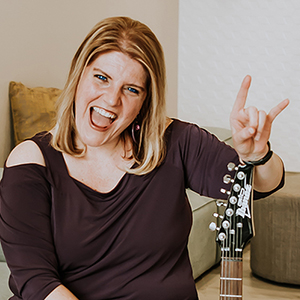
Amber Griffiths is a Maker of Legends, and Brand Strategist of Your Brand by Design.

She is a bestselling author, international speaker and sought-after Strategist to A-List and soon-to-be A-List players. A Bonafede Rockstar, Amber is dedicated to guiding entrepreneurs to develop a brand that moves them from unknown to unforgettable and establish them as Legend.

Amber works with individuals who are committed to creating deep, genuine connections with their Ideal Clients and are looking to deliver an unforgettable experience that matters.

They understand that it is by building higher-impact connections in a brand aligned manner that they can increase their profits and dramatically impact lives.

They see the importance of being intentional with their marketing with specific attention to their Brand presence and are committed to a vision that matters.

Website: www.yourbrandbydesign.com

Email: amber@yourbrandbydesign.com

Phone: 801.427.6034


About the Host

Karen M. Fisher
Senior Loan Officer
NMLS ID# 180167 – AZ MLO Lic# 0911886

Summit Funding, Inc.
5151 E. Broadway Blvd., Ste. 700
Tucson, AZ  85711
Branch NMLS ID# 1464335 – Summit Funding, Inc NMLS ID#3199
AZ Lic# 0925837 – Equal Housing Opportunity 

(520) 447-2279 Direct Phone
Karen.Fisher@SummitFunding.net
www.OurNeighborsOurHeroes.com

As a Senior Loan Officer, I originate residential home loans (1-4 Units) for purchase or refinance transactions for owner-occupied, second homes, or investment properties.  I am licensed in the State of Arizona; however, I can connect you to great mortgage loan officers anywhere in the United States or Canada.  I have been a loan officer for just over 20 years.  In the prior 17 years, I was a Realtor, an Associate Broker, Branch Manager, and Designated Broker.  My beloved husband Scott and I have been married for over 37 years, we have an awesome daughter Allison who is engaged to her Gonzaga University sweetheart, Enrique.  I love to read, travel, hike, golf, camp, entrepreneurial ideas, inventions, animals, and children. My key to success is to focus on excellence, not perfection, and being growth-minded. 

Tagged With: Amber Griffiths, Healthy Wealth & Wise, healthy wealthy & Wise, Healthy Wealthy and Wise, HWW, Your Brand By Design

TMBS E174: Bob Doylan – Author 2 New Books

May 31, 2021 by angishields

Tucson Business Radio
TMBS E174: Bob Doylan - Author 2 New Books
Loading
00:00 /
RSS Feed
Share
Link
Embed

Download file

Calm Water Thinking: New Book Offers 4 Simple Solutions to Improve Your Life, Your Career, and Your Focus 

Our thoughts define who we are. But for many of us, thoughts of work and the things we need to get done consume our waking hours. How can we achieve a more balanced life if we are so overwhelmed?

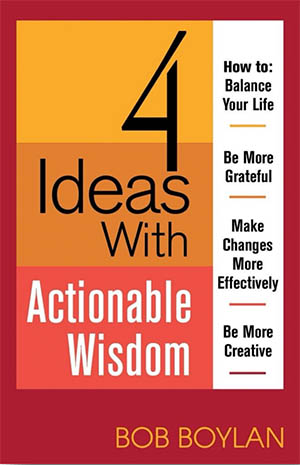
This is where Bob Boylan and his new book, 4 Ideas With Actionable Wisdom, come in, offering concrete, actionable suggestions from which readers of all ages can benefit.

“People don’t realize that they’re actually living in ‘white water,’” Boylan says. “Busyness has become their normal. They don’t realize that they can improve their lives by just spending a little time each day in ‘calm water thinking’ to help generate fresh, thoughtful ideas and improve focus.”

Bob Boylan is a retired presentation skills trainer, professional landscape photographer, seasoned traveler, and the founder of Successful Presentations. He has been self-employed since the age of 31, which has given him the flexibility to travel, explore, and live his life outside the box. A lifelong encourager, Boylan wrote 4 Ideas with Actionable Wisdom to help people see their lives through different eyes and to realize that there is so much more they could be doing to live more effective, “calm water” lives.

“Practical and inspirational, this is a much needed guide, especially now! Highly recommended.”

Grady Harp, Amazon Top 50 Hall of Fame Reviewer; 5 Stars

Written in short, digestible chapters, 4 Ideas with Actionable Wisdom offers insight that readers can act on now. Readers are encouraged to learn to balance their lives, to be more grateful, to make changes more effectively, and to be more creative. Boylan’s included discussion questions help readers pinpoint exactly where they can change their own thinking, find calm and focus, and take more effective control of their lives and what they will become.

“No matter how young or old you are, you can always take steps to change your life for the better, and Bob has some excellent, wisdom-filled advice to offer. Highly recommended!”

Rachel Song, Editor and Writer; 5-stars

“My goal is to make sure that readers not only understand my ideas but use them,” Boylan says. “We become what we think about. Ultimately, you are in control of what you think about and how you think about it.”

4 Ideas With Actionable Wisdom, ISBN 9781098361563 (paperback) $10.95, ISBN 9781098361570 (e-book) $6.99, 2021, 99 pages, Book Baby, Available at Amazon and Book Baby.


Is Your Windshield Bigger Than Your Rearview Mirror? New Book Highlights Ways to Make Retirement Your Biggest Adventure Yet 

Woodland Park, CO – Have you thought seriously about retirement? No, not about downsizing your home or having enough money in your bank account to afford it. Have you thought about what you will do and how you will live?  

For most, our days, weeks, and years are shaped by unforgiving work schedules. Then, when we finally retire, we find ourselves floundering with an empty calendar and no idea how to fill the time. This is where Bob Boylan and Retirement: Your New Adventure!, a new book focusing on how to make your retirement extraordinary, come in.  

Bob Boylan is a retired presentation skills trainer, professional landscape photographer, seasoned traveler, and the founder of Successful Presentations. He has been self-employed since the age of 31, which has given him the flexibility to travel, explore, and live his life outside the box. A lifelong encourager and adventurer, Bob wrote Retirement: Your Next Adventure to inspire people who are starting to think seriously about retirement or who have already taken the plunge to use the time they have to live an adventurous, out-of-the-box life.  

“I want people to use this book to help them define and design their adventure in their retirement years,” Boylan says. “It’s your choice to decide if your windshield will be bigger than your rearview mirror. You’ll be better off if you do something more than talk about just ‘remember when.’” 

“Boylan emphasizes the power of imagination, having more fun, and that the future matters more than the past, as well as other important thoughts that escort us into a happy and meaningful retirement.” 

Grady Harp, Amazon Top 50 Hall of Fame Reviewer; 5-stars 

Boylan encourages his readers to stop looking toward the past, getting stuck in “remember when’s.” He urges people to think differently, to stop living on “someday isle,” and to recognize that the “windshield is bigger than the rearview mirror.” He emphasizes that what you do with your time and opportunity is ultimately your choice, so make it count.  

“A much needed and helpful read for people of all ages, but especially those who are thinking about retiring or who have already retired. Highly recommended!” 

Rachel Song, Editor and Writer; 5-stars 

Each chapter is short, sweet, and easy to understand, offering actionable wisdom and discussion questions to get you (and your spouse) thinking about what might be possible. Retirement: Your Next Adventure assumes you are financially ready for this next phase and hopes to guide you toward living an exciting, rewarding life.  

“My goal is to make sure that readers not only understand my ideas but use them,” Boylan says. “Sometimes we can look hope right in the face and not see it. I want you to be able to see hope in the season of your retirement.” 

Retirement: Your New Adventure!, ISBN 9781098363048 (e–book) $8.99, ISBN 9781098363031 (paperback) $14.95, 2021, Book Baby, 128 pgs, Available at Amazon. 


About Bob Boylan 

Bob Boylan is a presentation skills trainer and professional landscape photographer with a zest for life. He has been self-employed since the age of thirty-one. He founded Successful Presentations and travels across the country delivering “training that takes” to middle to senior management. His goal is to help people change their paradigms and open their minds to a better way of doing things.  

 A native of Minnesota, Bob attended Saint Thomas University in Saint Paul, then transferred to the University of Minnesota where he graduated with a BA in psychology. He has five children and six grandchildren. 

 After photographing the best tulip gardens in Austria in 2013, Bob and his wife Linda decided to sell everything they owned and move to Salzburg. Today, Bob and Linda live in Woodland Park, Colorado, where they’re always looking for their next adventure. 

 Bob is the author of Retirement: Your New Adventure! and 4 Ideas with Actionable Wisdom. For more information, visit bobboylan.com. 

 Media Contact: For a review copy of and 4 Ideas with Actionable Wisdom or Retirement: Your Next Adventure! or to arrange an interview with Bob Boylan, contact Scott Lorenz of Westwind Communications Book Marketing at scottlorenz@westwindcos.com or by phone at 734-667-2090. Follow Lorenz on twitter @abookpublicist 


The Mark Bishop Show

Tagged With: Bob Doylan, The Mark Bishop Show, TMBS

Flexibilty – Catholic Education Arizona and Fasturtle E9

April 30, 2021 by Karen

Flexibilty-Catholic-Education-Arizona-and-Fasturtle-E9
Phoenix Business Radio
Flexibilty - Catholic Education Arizona and Fasturtle E9
Loading
00:00 /
RSS Feed
Share
Link
Embed

Download file

Flexibilty-Catholic-Education-Arizona-and-Fasturtle-E9-top

Flexibilty – Catholic Education Arizona and Fasturtle E9

This was a very special episode for our Culture Crush Podcast team. Our sponsor, Catholic Education Arizona, was on the show! Not only is Catholic Education Arizona a great sponsor, but they are also a company building a great company culture.

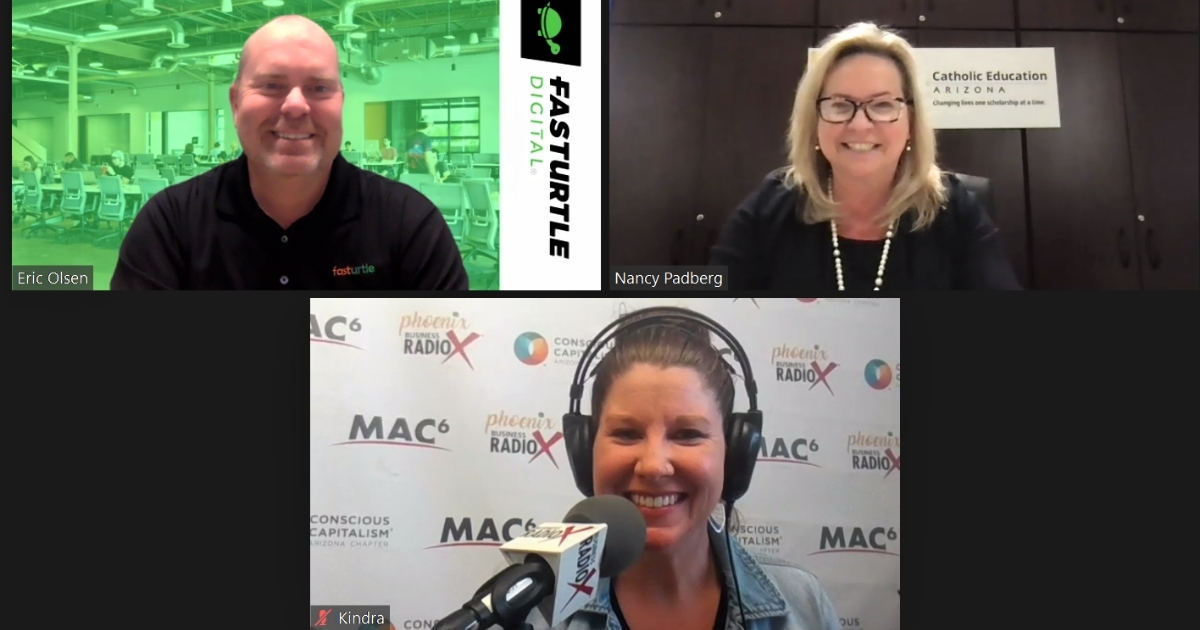
Nancy Padberg has been an amazing leader and advocate for building a great company culture. Nancy had the opportunity to invite a guest on the show with her that is leading a company with a great company culture, and Eric Olsen with Fasturtle Digital Marketing was her choice. What a great choice it was too!

The energy with Nancy, Eric, and the Culture Crush host, Kindra Maples, was so dynamic and fluid that the hour flew by. This conversation dove into a variety of different angles of company culture including what culture is and what it is not. The trio discusses the need to grow positive company culture in all teams, the importance of values that align the team, and remembering that company culture not just having a foosball table in the office.

This episode is a great one to listen to if you are a company leader that thinks you have a great company culture. This episode will help you double check the culture that you are growing and help you ask yourself if your employees think you have a good culture or if you are just handing out free snacks and have fun games in the office for the team. If you are not the company leader, this is a great podcast to listen to in order to help understand what good company culture really is and if you have it with the company that you are currently working.

Thank you again to our sponsor Catholic Education Arizona, for being a great sponsor, as well as a company with a great company culture!

For 23 years Catholic Education Arizona has helped serve underserved children with $268 million in scholarships. Catholic High Schools have a 99.4% graduation rate and 97% move on to higher education or military service.

Participating partners like APS, BBVA, and Grand Canyon University receive a dollar for dollar Arizona State Tax Credit.
The corporate partners enjoy helping our future work force,
Building the Arizona community and future leaders!

The partners also enjoy promotion in our newsletter, social media channels and podcast!
Please call us at 602-218-6542 or visit www.ceaz.org, that’s www.ceaz.org – they are changing lives one scholarship at a time!

#culture #companyculture #companyculturematters #podcast #podcastshow #values #alignment #sponsorship #education #digitalmarketing

23CEALogo

Catholic Education Arizona is 23 years old and the #1 School Tuition Organization of approximately 60 in Arizona. They have served over 138,000 scholarships and provided $268 million in assistance to students in Arizona. The mission is to provide scholarships to underserved children to change lives, serve society and transform culture.

They provide assistance to the Diocese of Phoenix 37 Catholic schools in Arizona. Catholic High Schools have a 99.4% graduation rate with 97% of graduates matriculating to higher education or military service. Arizona is one of estimated 19 states that have Tax Credit contributions.

There are 4 revenue streams for Catholic Education Arizona: 1. Individual Tax Credits 2. Corporate Tax Credits 3. Matching Gifts from Corporations and 4. Individual/Foundation/Corporate Donations.

Nancy-Padberg-Being-a-Servant-Leader-EP-35Nancy Padberg, MBA is the President & CEO of Catholic Education Arizona. She has been in the role for almost two years. She earned her BS at Iowa State University and MBA at Pepperdine University, Graziadio School of Business with the point of view of service, purpose and leadership.

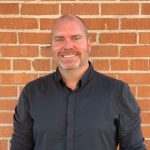
She built her career in Santa Monica and San Francisco leading media companies and integrated marketing agencies. She worked on strategy, brand and execution for PETCO, Fairmont Hotels & Resorts, Whole Foods Markets, Pepperdine University, Tahiti Tourism, USF, SF State. She has been fortunate to work with entertainment brands as Food Network, Disney and Universal Studios.

Nancy’s expertise is servant leadership, digital marketing and building healthy cultures through trust, respect, communication and consistent behavior. She was nominated by Los Angeles Business Journal, “Women Making a Difference,” nominated for an Athena Award in Phoenix and most recently on the cover of Arizona Business Magazine for leadership with CEO’s of Blue Cross/Blue Shield, FirstBank and SRP.

She served on the Board of Advisors, Pepperdine University and Iowa State University’s Greenlee School of Journalism & Communications. She currently serves on Board of Directors, Catholic Charities. Nancy is married to David, has three children, played Big 12 Collegiate Golf, is a Kappa Delta, loves to travel and walk their dogs, Snickers and Buttercup.

Connect with Nancy on LinkedIn and Twitter, and follow Catholic Education Arizona on Facebook and Instagram.

Fasturtle-logo

Fasturtle is a leading provider of Digital Marketing Solutions; including website design, search engine ranking, and digital marketing strategy. We are an Arizona based, top 10 ranking internet marketing firm specializing in helping small-medium size businesses, non-profit organizations, and service industry professionals. Since 2000, we have successfully delivered the most innovative and cost effective tools to expand your brand online. Working with clients in many different industries we have the skills to develop revenue generating solutions while keeping your costs down.

Fasturtle has been consistently ranked one of Phoenix, Arizona’s Top 10 Website Design and Internet Marketing Companies by Ranking AZ and the Phoenix Business Journal. With over 14 years of experience, an “A+” Rating by BBB and numerous other design and marketing awards including the American Marketing Association 2012 Spectrum Award, we proudly offer the highest level of customer service and results oriented internet marketing solutions.

Fasturtle: Fast Turtle (N) /fast/ tur·tle /ˈtərtl/ – Many groups and cultures around the world symbolize the turtle as the wisest of all, good health, long life and protection. We at Fasturtle view our business integrity, operations model and scopes of work in the same light. We are committed to authentic, honorable, effective and long lasting business relationships with all of our clients. Our Fasturtle programs be it SEO Management, Email Marketing or Website Design are spearheaded and developed for long term sustainability.

Eric-Olsen-FasturtleEric Olsen is a serial entrepreneur; he has spent over 20 years in the website and digital marketing industry.
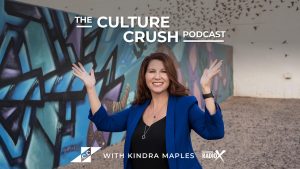
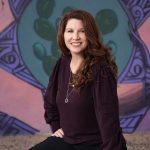
A national speaker, a frequent contributor to the Phoenix Business Journal, and a thought leader in the digital marketing space. His most important position is as a husband and father of three teenagers here in Phoenix AZ.

Follow Fasturtle on LinkedIn, Facebook, Twitter and Instagram.

About Culture Crush

Culture Crush is officially relaunched! We are thankful to Debra Caron who launched and hosted the show originally. Culture Crush is back with a new host but the same focus- highlighting what makes a great company culture and how it affects the overall success of a company.CultaureCrushKindraBanner2

Culture is not just a tag word to be thrown around. It is not something you throw in job descriptions to draw people to applying for jobs within a company.

According to Marcus Buckingham and Ashely Goodall in their book Nine Lies About Work, “Culture is the tenants of how we behave. It’s like a family creed. This is how we operate and treat each other in the family.”

On this long form podcast we will highlight companies local to Arizona and beyond that are crushing it with great culture!

We will talk with company leaders to learn about real-life experiences, tips, and best practices for creating a healthy work environment where employees are finding joy and satisfaction in their work while also striving and growing within the company.

About the Host

ABHOUTHOSTHEADSHOTKindra Maples is your new host taking the lead on the relaunch of Culture Crush! She is spartan racer, past animal trainer, previous magician’s assistant, and has a weakness for Oreo cookie shakes. Her journey working with people actually started working with animals as a teenager (don’t worry we won’t go that far back for her bio).

She worked for over 15 years in the zoo industry working with animals and the public. Her passion of working with animals shifted into working with people in education, operations and leadership roles. From there her passion of leadership and helping people develop has continued to grow.

Then came the opportunity for relaunching the Culture Crush Podcast and she jumped on it. Leadership, growth, and strong company cultures are all areas that Kindra is interested in diving into further.

Shout Outs

We want to thank a few people for their behind the scenes effort in helping this relaunch to come to life. James Johnson with Tailored Penguin Media Company LLC.– It is a small, but powerful video production company with a goal to deliver the very best by articulating the vision of your brand in a visually creative way. Gordon Murray with Flash PhotoVideo, LLC. -Flash Gordon has been photographing since high school and evolving since then with new products that will equip, encourage, engage, and enable. Renee Blundon with Renee Blundon Design – She is not only one of the best free divers (that’s not how she helped with the podcast) but she is great with graphics design and taking the direction for the vision that you have while also adding creative ideas to bring to your vision to life.

These are just a few of the folks that supported the relaunch of the podcast. If you would like to be part of the Culture Crush team or would like to support underwriting the show- please reach out: culturecrushpodcast@gmail.com

About Our Sponsor

For 23 years Catholic Education Arizona has helped serve underserved children with $268 million in scholarships. Catholic High Schools have a 99.4% graduation rate and 97% move on to higherCatholic-Educaton-Arizona-logo  education or military service.

Participating partners like APS, BBVA, and Grand Canyon University receive a dollar-for-dollar Arizona State Tax Credit. The corporate partners enjoy helping our future work force, Building the Arizona community and future leaders!

The partners also enjoy promotion in Catholic Education Arizona’s newsletter, social media channels and podcast! For more information, call 602-218-6542 or visit www.ceaz.org – they are changing lives one scholarship at a time!

Decision Vision Episode 112: Should I Market with Search Engine Optimization (SEO)? – An Interview with Ian Lurie, Ian Lurie, LLC

April 15, 2021 by John Ray

Ian Lurie
Decision Vision
Decision Vision Episode 112: Should I Market with Search Engine Optimization (SEO)? - An Interview with Ian Lurie, Ian Lurie, LLC
Loading
00:00 /
RSS Feed
Share
Link
Embed

Download file

Ian Lurie

Decision Vision Episode 112:  Should I Market with Search Engine Optimization (SEO)? – An Interview with Ian Lurie, Ian Lurie, LLC

Ian Lurie nerds out, as he terms it, on SEO, considering it both an art and a science. On this edition of “Decision Vision,” Ian and host Mike Blake discussed how SEO impacts a business’s visibility and success, mistakes businesses make with SEO, why good SEO is akin to building an asset, and much more. “Decision Vision” is presented by Brady Ware & Company.

Ian Lurie, CEO of Ian Lurie, LLC

Ian Lurie, LLC provides digital strategy, content, and SEO consulting to small businesses and Fortune 500 companies alike.

Ian Lurie is a digital marketing consultant, SEO, content guy, and overall digital marketing nerd. He has 40,000+ hours of experience in internet marketing. Ian uses both sides of his brain as a content creator, search engine optimization nerd, and data addict. He is a speaker and author as well.

Ian founded Portent, a digital marketing agency, in 1995, and sold it to Clearlink in 2017. He’s now on his own, consulting for brands he loves and speaking at conferences that provide Diet Coke. He’s also trying to become a professional Dungeons & Dragons player, but it hasn’t panned out.

He has a TikTok profile, but his kids are embarrassed by it, so we’ll leave that out.

Company website | LinkedIn

Mike Blake, Brady Ware & Company

Mike Blake, Host of the “Decision Vision” podcast series

Michael Blake is the host of the “Decision Vision” podcast series and a Director of Brady Ware & Company. Mike specializes in the valuation of intellectual property-driven firms, such as software firms, aerospace firms, and professional services firms, most frequently in the capacity as a transaction advisor, helping clients obtain great outcomes from complex transaction opportunities. He is also a specialist in the appraisal of intellectual properties as stand-alone assets, such as software, trade secrets, and patents.

Mike has been a full-time business appraiser for 13 years with public accounting firms, boutique business appraisal firms, and an owner of his own firm. Prior to that, he spent 8 years in venture capital and investment banking, including transactions in the U.S., Israel, Russia, Ukraine, and Belarus.

Brady Ware & Company

Brady Ware & Company is a regional full-service accounting and advisory firm which helps businesses and entrepreneurs make visions a reality. Brady Ware services clients nationally from its offices in Alpharetta, GA; Columbus and Dayton, OH; and Richmond, IN. The firm is growth-minded, committed to the regions in which they operate, and most importantly, they make significant investments in their people and service offerings to meet the changing financial needs of those they are privileged to serve. The firm is dedicated to providing results that make a difference for its clients.

Decision Vision Podcast Series

“Decision Vision” is a podcast covering topics and issues facing small business owners and connecting them with solutions from leading experts. This series is presented by Brady Ware & Company. If you are a decision-maker for a small business, we’d love to hear from you. Contact us at decisionvision@bradyware.com and make sure to listen to every Thursday to the “Decision Vision” podcast.

Past episodes of “Decision Vision” can be found at decisionvisionpodcast.com. “Decision Vision” is produced and broadcast by the North Fulton studio of Business RadioX®.

Connect with Brady Ware & Company:

Website | LinkedIn | Facebook | Twitter | Instagram

TRANSCRIPT

Intro: [00:00:01] Welcome to Decision Vision, a podcast series focusing on critical business decisions. Brought to you by Brady Ware & Company. Brady Ware is a regional full service accounting and advisory firm that helps businesses and entrepreneurs make visions a reality.

Mike Blake: [00:00:21] Welcome to Decision Vision, a podcast giving you, the listener, clear vision to make great decisions. In each episode, we discuss the process of decision making on a different topic from the business owners’ or executives’ perspective. We aren’t necessarily telling you what to do, but we can put you in a position to make an informed decision on your own and understand when you might need help along the way.

Mike Blake: [00:00:40] My name is Mike Blake, and I’m your host for today’s program. I’m a director at Brady Ware & Company, a full service accounting firm based in Dayton, Ohio, with offices in Dayton; Columbus, Ohio; Richmond, Indiana; and Alpharetta, Georgia. Brady Ware is sponsoring this podcast, which is being recorded in Atlanta per social distancing protocols. If you would like to engage with me on social media with my Chart of the Day and other content, I’m on LinkedIn as myself, and @unblakeable on Facebook, Twitter, Clubhouse, and Instagram. If you like this podcast, please subscribe on your favorite podcast aggregator, and please consider leaving a review of the podcast as well.

Mike Blake: [00:01:16] So, today’s topic is, Should I market with Search Engine Optimization or SEO? And before we dive into that, you may hear some pauses throughout this podcast. I came down with a touch of bronchitis yesterday. But I’m a lunch pail guy. I don’t have a lot of talent, but I play hard to make sure I stay on the team. So, I think that we’ll get through it. So, if you notice some gaps, that’s just me trying not to blow your eardrums out as I’m hacking something up. But on with the show.

Mike Blake: [00:01:47] So, I want to talk about SEO because I think SEO has sort of fallen to the background a little bit in terms of the common vernacular, and, certainly, it hasn’t gone away by any stretch of the imagination. But I think there’s a lot more chatter right now around marketing, through LinkedIn, and marketing through Facebook, and marketing through YouTube. And, of course, you know, the podcast we do does have marketing value to it. I’m not going to sit here and say that it doesn’t.

Mike Blake: [00:02:19] But, you know, before the advent of social media, really everything was about SEO. It’s all about where are you going to fall in terms and be presented in a search. And what we’re going to talk about today is that, you know, there are lots of sneaky search engines around there that, if anything, have made SEO more pervasive rather than less. But it may have changed.

Mike Blake: [00:02:44] And to be perfectly candid, I have not looked at SEO in a meaningful way, I think, in ten years. It just hasn’t been on my business radar screen personally. But I’m sure it’s on the business radar screens for you guys, at least some of you. And I may learn in this podcast that it needs to be on my radar screen. So, you know, it’s a topic that I think is sort of one of these unsung heroes and one of these topics that’s sort of in the background. And I want to give it the light of day that it deserves.

Mike Blake: [00:03:17] And joining us today is Ian Lurie, joining us from California, who is a digital marketer and with a 25 year intolerance of trendy concepts and nonsense – so a man that is near and dear to my heart. Someone told him to say no to bullshit – I can say that because this is the internet – so he’s trying really hard not to. Ian uses both sides of his brain as a content creator, search engine optimization nerd, and data addict. Ian founded Portent, a digital marketing agency in 1995, and sold it to Clearlink in 2017.

Mike Blake: [00:03:53] He’s now on his own consulting for brands he loves and speaking at conferences that provide Diet Coke. He’s also trying to become a professional Dungeons and Dragons player, but it hasn’t panned out. He has a TikTok profile, but his kids are embarrassed by it – so we’ll leave that out. Ian Lurie, welcome to the program.

Ian Lurie: [00:04:09] Thanks, Mike. If you start coughing, I never shut up so I can always fill in the gaps.

Mike Blake: [00:04:15] Well, good. You’re going to be my human cough bud, so that’s good.

Ian Lurie: [00:04:19] And the other thing is never call someone from Washington, never say that they’re from California. I’m actually based in Seattle, Washington, right now.

Mike Blake: [00:04:27] I beg your pardon.

Ian Lurie: [00:04:28] It’s okay. I just wanted to make clear that, you know –

Mike Blake: [00:04:31] No. I’m glad that you reminded me. I knew that. And you know what? I’m just going to blame it on the Sudafed and Mucinex that I’m on.

Ian Lurie: [00:04:41] Yes. Absolutely.

Mike Blake: [00:04:41] That sort of blanked out on me.

Ian Lurie: [00:04:42] The big difference is we don’t have a basketball team, so just kind of keep that in mind.

Mike Blake: [00:04:49] That is a shame, isn’t it? I’m old school enough that I remember back then they were called the Seattle SuperSonics because of only being in town. But I think you’re supposed to get a team in the next couple of years. If I’m not mistaken, you guys are going to get the next expansion team.

Ian Lurie: [00:05:05] Yeah. Yeah. We’re supposed to win a World Series, too.

Mike Blake: [00:05:07] So, before I get into this, I don’t understand why it hasn’t panned out to become a professional Dungeons and Dragons player. Just do what critical role does, become professional voice actor yourself, get five or six other professional voice actors, get your own studio, and produce a video cast of your game every week, and off you go.

Ian Lurie: [00:05:30] I shouldn’t say it hasn’t panned out. I should say it doesn’t make any money. I could be a professional Dungeons and Dragons player. I’m just not going to make any money doing it. That’s the difference.

Mike Blake: [00:05:44] Fair enough. So, Ian, thanks for coming on the program. You’re a good sport. I like to remind everybody what is exactly search engine optimization?

Ian Lurie: [00:05:56] So, SEO is about improving visibility anywhere anybody searches for anything online. And I suspect we’re going to talk more about this, but Google is the big one. The main thing is, an SEO works to ensure better visibility on any search engine.

Mike Blake: [00:06:19] And you’re right, we’re going to talk about this a little bit later so I don’t want to get ahead of myself. So, instead, what I want to do is I want to draw the line between SEO and something called search engine marketing. Is SEM still a thing? And if it is, what is the difference between the two? How are they related? How are they different?

Ian Lurie: [00:06:38] So, SEM is definitely still a thing. There used to be a big argument about whether SEO is part of SEM or not. But, now, as the accepted definition is that SEM is paid search advertising. You, actually, are paying by the click. It’s an auction of some kind where you say to Google, or Bing, or Amazon, or whoever, you’re going to pay X number of dollars every time someone clicks on your ad. And in exchange for that, you will be positioned in a certain place in those paid ads. There’s a lot of bits to it. There is an algorithm that helps.

Ian Lurie: [00:07:10] But with search engine optimization, you are not paying Google, nor can you pay Google to improve your rankings. There’s no way to influence those rankings by sending money to Google. You can send it to me. I’ll do my best. But Google will not accept money in exchange, nor will Bing, nor will Amazon, or anybody else.

Mike Blake: [00:07:34] And you say that in kind of an interesting way. So, they will not accept money, I mean, is it a matter of principle because they’re trying to keep their search engine optimization engines and the reputation clean and they just want to create that clear delineation? Or they just haven’t figured out how to monetize it that way yet?

Ian Lurie: [00:07:51] Well, paid search ads, search engine marketing, that is how they monetized it. Because the paid ads show up above and below the organic results, the unpaid results. That is why Google can now buy and sell the entire planet any time they want, is because businesses everywhere pay them by the click to occupy real estate that surrounds – what we call – the organic results. The results where you can’t pay. The results that you influence through SEO.

Ian Lurie: [00:08:21] Google won’t accept money for those, in part, because they want to maintain their credibility. And Bing is the same. They want to maintain their credibility as a search engine, in part, because the antitrust lawsuits would ramp up that much faster. And in part, because, I think they want to deliver good results. And results that are based on paying by the click can be good. And as I said, Google and Bing have algorithms that try to make sure that you place ads that will satisfy the user, but it’s not quite the same as a completely organic algorithmic search result. And, by the way, tell me if I’m nerding out too far, too fast here. Just say interesting or something and I’ll stop and I’ll rewind.

Mike Blake: [00:09:05] Well, I’ll tell you what, I’ll blink three times if that happens.

Ian Lurie: [00:09:09] Okay. All right.

Mike Blake: [00:09:09] But I think this is great because I do think that even if you’re not a tech, if you’re going to make an informed decision about this stuff, you need to have at least a remedial knowledge of how this works. Because, otherwise, you don’t really know what you’re spending money on. You don’t know if you’re spending it on the right team, on the right technology, on the right processes. And that’s no good.

Ian Lurie: [00:09:33] Another way to look at it is, if you do the right things for SEO, there’s a certain amount of a flywheel. This guy, Andy Crestodina, a colleague of mine who’s way smarter than me, talks about how SEO is a sailboat and SEM is a rowboat. So, to some extent, you still have to maintain the sails and everything. But to some extent, the wind keeps you going. You don’t have to keep pouring money into ads.

Ian Lurie: [00:10:00] SEM, you can accelerate whenever you want, you can turn whenever you want, but it requires constant energy to keep it going. So, each has an advantage. But that’s probably the biggest difference. You will always pay for SEO, but you will not pay for every single person who comes to your site. You will not pay more because you’re getting more traffic from organic search.

Mike Blake: [00:10:21] That’s really interesting. So, in the terms of a finance nerd like me might understand, SEO is more about building an asset, whereas, SEM is paying for a service.

Ian Lurie: [00:10:31] Yes. Yeah. That’s a very good way to put it. SEO, I always used to call it an annuity, which I probably just mangled it. But you’re putting money in, you’re investing in it, and you will steadily get a return. Whereas, SEM is much more you’re paying for something that you’re going to get right then and you must continue to pay for it if you want to continue to get it.

Mike Blake: [00:10:54] And of course – I shouldn’t say, of course – but it seems to me that the notion of ad retargeting on social media, that’s really just a cousin or on the family tree of SEM, correct?

Ian Lurie: [00:11:06] It’s another form of paid media. I mean, if we go back before the internet, there was earned media, which is the ability to get a cool story written about you in the newspaper or wherever. And then, there’s paid media, where you buy a T.V. ad or something like that. Paid social advertising is paid media. Getting someone to say something wonderful about you in social media is earned media. And it’s the same with search, organic search SEO is about earned media, paid search. SEM is about paid media.

Mike Blake: [00:11:35] So, the next question, which is an important question, but I think it’s hard even for somebody like you to answer, because I suspect the answer is so expansive. But what are the elements of SEO? What are the things that – I know I used to go into SEO. I don’t even know if those things are relevant anymore. But as of today, 2021, what are the elements that go into it to make it work?

Ian Lurie: [00:11:58] So, I can give you three elements that never change, and I can give you a few details about each one. So, search engines require visibility, relevance, and authority. Visibility is about ensuring that a search engine can find you and crawl your website. So, it’s just making sure that Google, Bing, whoever, can actually get through your content. If you’re on YouTube, it’s making sure that your content is rendered sufficiently well that YouTube can figure out what’s there. So, that’s visibility, it’s just making sure that computers can see “your content”.

Ian Lurie: [00:12:34] Relevance is making sure that search engines, whatever they are, can understand what you’re talking about and match you up with whatever the query is. So, visibility is making sure you’re available. Relevance makes sure that it makes sense. Authority is all about – and everyone talks about links – links are part of it, but depending on the search engine, it may also be sales per click. It may be shares and likes and plays, whatever. But authority is the measure of how important you are compared to other folks in your space.

Ian Lurie: [00:13:09] Visibility is all about technology. It’s making sure that your site – that’s where I would have to nerd out pretty deeply – but it’s about how your site is built and delivered. Relevance is about content, how you say it, how you structure your site. Authority is about how many people see and care about what you do and say. So, those are the three basics. The tactics involved, we could spend a week, so I’ll stop.

Mike Blake: [00:13:35] Okay. Maybe if we have time we’ll come back to that. But that segues nicely into the next question, which is, when we think of SEO, I think now most of us think of Google. Now, I’m of a certain age and I think you are, too, that we remember such names as Web Crawler, Lycos, AltaVista, Ask Jeeves. Google didn’t use to be a thing, right? But I think there’s a temptation to think that we only now have one, or maybe two search engines if you think Yahoo! is still relevant, I’m not sure it is. But, certainly, Google is out there. But my impression is that search engines have simply migrated into different platforms haven’t they?

Ian Lurie: [00:14:21] Yeah. I mean, Google still dominates the planet. But YouTube is the second biggest search engine on the planet. Amazon is probably number three. Bing is number four. And understand, Bing has five to ten percent of the market, but that’s five to ten percent of everything. Right? That’s a big five to ten percent.

Mike Blake: [00:14:40] I’m surprised it’s that high.

Ian Lurie: [00:14:42] This is just for me looking at client data. Some of my clients get only one percent or two percent of their traffic from Bing. Some get as much as 15 to 20 percent. But most of them are in the five percent range. Google, obviously, is still the biggest generator of traffic, and YouTube is owned by Google. If you sell a product, though, on Amazon, obviously, Amazon is the search engine that you care about. So, there’s more to it than Google. But, yeah, Google dominates the landscape.

Mike Blake: [00:15:12] Is there a search engine that you’re aware of on the Apple side of ecosystems?

Ian Lurie: [00:15:18] Apple is building a search engine. So, we’ll see. Hopefully, it goes better than Apple Maps when it launched.

Mike Blake: [00:15:25] It couldn’t go worse.

Ian Lurie: [00:15:26] Yeah, it couldn’t go worse. I am skeptical. And, again, we can do another podcast about this, but I’m skeptical about Apple’s ability to seize a large part of the market. I think that they can grab Apple users to some extent. But as much as I love to talk about it, we are a very small slice of the population.

Mike Blake: [00:15:46] Yeah, me too. I’m a Mac user and Apple mostly through our ecosystem too. But as you mentioned, I kind of wonder if they’re kind of too late to the party like they were with Homepod. Homepod could have been a player in the home automation market, but I think you’re too late. And I think they’re probably five years too late in the search engine area, unless they just come up with something that just blows you away somehow.

Ian Lurie: [00:16:16] I mean, again, this is going to sound terrible, but it can’t be Safari versus Chrome, right? They’ve got to do something better than that. So, we’ll see. I mean, Apple, in my opinion, is great at certain things. And we’ll see if they can match up with a company whose sole purpose in the universe is to build a great search engine. That’s going to be the biggest obstacle they’re going to face.

Mike Blake: [00:16:41] So, as I mentioned at the top of the program, I looked into SEO quite a bit a decade ago. I have not paid that much attention to it. You’ve been in it for pretty much your whole career in some form or fashion. How has SEO changed since the last time I looked at it, say, around 2010, to today in early 2021?

Ian Lurie: [00:17:05] So, there’s really two big changes, one nerdy and one not. The non-nerdy one is how much more complicated the search results have become. Google and Bing have a lot more search features in them now. So, if you do a search result, you’ll see like a box at the top. Sometimes it has the shortest answer to your question. Google or Bing may be pushing in some kind of scraped result or tool. So, like, if you try to do a speed test right now of your internet connection on Google, instead of just showing you speedtest.net, there’ll actually be a box that shows up that let’s you use Google to do the speed test. If you ask, “How do I cook pancakes?” You’ll actually get a recipe at the top of the page.

Mike Blake: [00:17:44] That’s true. Yeah, I hadn’t noticed that. That’s very subtle. But you’re right.

Ian Lurie: [00:17:49] And it’s a subtle way, again – hopefully, not many people from Google listen to this. I’m a fan of a lot of people at Google – that Google is attempting to become a publisher instead of a search engine and keep you on Google at all times. It’s basically the real estate dedicated to what used to be called the 10 blue links. The traditional search results has become smaller and smaller. All of those search features, like that answer box, those are still part of a search engine and you can optimize for those locations, but search has changed.

Ian Lurie: [00:18:24] Now, the nerdier side is, of course, Google and Bing have both gotten – but Google in particular – much better at understanding language. Google’s ability to understand a query, what you really mean when you search for something in the context of other searches you’ve made and other searches other people make, has grown by leaps and bounds. Their ability to figure out the true meaning of words on a page has also grown by leaps and bounds.

Mike Blake: [00:18:50] I agree. And, in fact, this show is very much a beneficiary of that. Because the reason that we retitle our shows as questions is because Google now allows and really encourage you just to simply type out a question. And that’s been a big hit. And I don’t want to steal a thunder away from our producer, it’s really John Ray who thought of it. But I think we kind of stumbled upon it. We didn’t really know that. But once we figured it out, we discovered that we were drawing a much larger audience from Google, from search engines just by that tweet.

Ian Lurie: [00:19:29] Mm-hmm. Well, you know, you remember Ask Jeeves, right?

Mike Blake: [00:19:33] I do.

Ian Lurie: [00:19:33] And their whole thing was you could just ask it a question. Well, guess what?

Mike Blake: [00:19:38] And in fact, I believe it was Google who bought Ask Jeeves, if I’m not mistaken.

Ian Lurie: [00:19:41] I think so. Yeah. I’m not sure.

Mike Blake: [00:19:43] At that time they’re ask.com, I think, or something like that.

Ian Lurie: [00:19:46] Yeah. That’s right. But the complexity of results, I think, is the most obvious change for the average person. Just how much more stuff there is that shows up on the page.

Mike Blake: [00:19:57] Yeah. And I guess getting into that, too, because it used to be that the search engines would pretty much just bring you to other web pages. Now, they’re bringing you podcasts. They’re bringing you video clips. They’re bringing you social media fragments. So, the universe of things to be searched and the format of the results is vastly expanded too. I think, suddenly, because of this conversation, I’m gaining in admiration for just how deep this technology has gotten in such a short period of time.

Ian Lurie: [00:20:31] Yeah. I have a genuine nerdy admiration for it. And as a marketer, I have a grudging admiration for it. And as a free speech advocate, I have a grudging respect for it.

Mike Blake: [00:20:47] So, my impression – and correct me if I’m wrong – and one of the reasons I kind of stepped away from SEO is that, it seems like an all or nothing game. That, you’re either at the top of a search engine results or you’re just nobody, nowhere to be found. Is that true? Was that ever true and I just didn’t get it? And if it’s not true, how can that kind of be nuanced? And I say that in this context, that, my impression of SEO is that, in many cases, it’s not just a pay to play, it’s a pay to win game. And if you don’t have a certain budget, why bother? Because if you’re a retail store and you’re in there with Walmart, you’re just not going to be able to match them dollar for dollar. So, that’s a long preamble to the question of, if you can’t match your competitors dollar for dollar for SEO, is it still worth doing?

Ian Lurie: [00:21:42] So, that’s a two part question. The first one, is it a zero sum game? And the answer is, if you look at one term, it’s a zero sum game. But smart SEO doesn’t focus on one term. It focuses at an enormous number of terms, some of which you don’t even optimize necessarily for most of the individual search phrases. That’s that visibility part. And that relevance part is, make sure that your site is visible so that Google and Bing can crawl it and find all the stuff. And then, work on relevance first to make sure that Google, Bing, YouTube, whoever, can figure out what you’re talking about in this stuff. And you will start to rank for things.

Ian Lurie: [00:22:25] Everyone can’t optimize for everything. Even Walmart can’t optimize for everything. So, if you do it right and you’re persistent, you will probably match up with them at some point because you will start to rank for terms that they simply miss.

Mike Blake: [00:22:40] Go ahead.

Ian Lurie: [00:22:40] The other real quick thing is, companies like Walmart are very good at certain kinds of SEO. But what they’re terrible at is changing and fixing things. And I have some wonderful clients that are very large, and I shouldn’t say they’re terrible at it. They are not structurally built to make rapid change. There are many things where they have to be much more deliberate.

Ian Lurie: [00:23:06] So, if you are a smaller organization, a small business, one advantage you have is that you can make changes and adjust much more quickly. If you want to become more relevant for a particular concept, you could theoretically put together stuff and publish it much more quickly. You could do a set of videos much more quickly because you don’t have to go through legal, and a marketing team, and a branding team. If you have a visibility issue on your site and you need to change something in WordPress or change something in the way your videos are done, you don’t have to go through a whole IT team. At most, you’ve got to go on Upwork and hire a developer to fix it for you. It’s a much quicker process.

Mike Blake: [00:23:47] Okay. So, that’s really interesting, and I think it gives hope to our listeners. I don’t think any of them are working for Walmart at a high level. And it leans actually nicely into the next question, which is, how much of this is art and how much of this is science? If I’ll just direct this to you, Ian Lurie, do you distinguish yourself as somebody who sort of understands SEO from a different angle, a different perspective, maybe from other SEO experts. And, therefore, there’s a potential for creative differentiation that you can find those search terms that others might be missing, or those other tags, or other SEO elements that others are missing, and, therefore, creates sort of an outsized performance for the client.

Ian Lurie: [00:24:41] So, I flatter myself by thinking that I have a foot in both the left and right brain sides of this. So, I do work on the technical stuff quite a bit on visibility, and that’s much more science. And I work on the relevance and authority side, which is much more art. There is science involved with relevance and understanding how machines process language. But, ultimately, Google and Bing do not give us a manual regarding their algorithms.

Ian Lurie: [00:25:15] So, no matter how much science you apply, at some point, you are making highly educated guesses and doing a lot of research and thinking about what your audience is going to best respond to as one way to generate a positive outcome in SEO. So, it’s a little bit of both. I’m not going to try and suggest that I’m even among the best at SEO. There are a lot of amazing SEOs out there. But that is what a lot of folks bring to SEO. It’s why I love it. Because I come from a creative background and both my parents are scientists or a liberal arts background and both my parents are scientists. Being able to put those two things together is a professional paradise for me.

Mike Blake: [00:26:03] Yeah. So, my impression and you’re starting to dispel it, but I want to drill a little bit deeper because I think this is really interesting and relevant. We had a guest on a few weeks ago, his name is Adam Houlahan, and he’s one of the top experts on LinkedIn. And he actually has a bank of people under his employ whose sole job is to understand the nature of LinkedIn algorithms so that he can then help his clients monetize their own LinkedIn presences better. Do people do something like that with search engines as well to try to understand it or glean their algorithms better or somehow reverse engineer it? And if so, is that even a useful thing?

Ian Lurie: [00:26:56] I don’t want to start a nerd fight, but when I ran my agency, I had teams of people who also did their best to understand the Google algorithm. But you can no more confirm and scientifically prove how the LinkedIn algorithm works than you can the Google algorithm. I just got to put that out there.

Mike Blake: [00:27:15] I think in fairness, you can say that he could prove it. I think just simply said that they were able to run tests that led data to ease you in a certain direction.

Ian Lurie: [00:27:25] Yeah. And you can do the same thing with Google to some extent. And it pays to chase the algorithm a little bit. But there are those three basic rules of visibility, relevance, and authority. And you don’t need to understand the algorithm to understand those. Now, knowing the algorithm can help you avoid some kind of tricks that people recommend, the tactics that don’t really work but make people think they work. And knowing the algorithm can also help you figure out that there are certain things that are more important on a page than others. You know, a good title tag, writing really well as opposed to repeating the same keyword 52 times on the page. That’s where understanding the algorithm can really, really help.

Mike Blake: [00:28:19] Now, there was a time when entrepreneurs and small businesses could effectively put into place some kind of useful SEO. And maybe I’m talking about 20 years ago or 15 years ago. Has SEO simply grown up so much that maybe that’s no longer feasible? Or are there scenarios where somebody could plausibly apply some DIY, maybe with a little bit of effort and learning, to raise the SEO effectiveness of their own web presence?

Ian Lurie: [00:28:56] I think you absolutely can. I worked with a lot of really, really small clients. A lot of it is relative, like, maybe you’re not going to compete with Walmart, but maybe you can triple your organic search traffic. SEO is DIY. No matter how big your organization is, eventually you have to look to visibility, relevance, and authority. And someone’s going to have to make those changes.

Ian Lurie: [00:29:23] So, again, you’ve got some advantages as an individual or a really small business as much as you don’t have an IT team. That also means you don’t have to worry about IT resource constraints. You know, somewhere along the way, you can find someone to help you work on that site. Creating content, you have less time, maybe you don’t have a team to do it. On the other hand, it’s going to come directly from the person who knows most about it. So, you’re probably going to create the best content on a particular topic. So, you absolutely can DIY it. And, in fact, it’s easier to compete in the SEO world than in the SEM world.

Mike Blake: [00:29:56] And I think that’s right. Before I joined Brady Ware, I guess, about three-and-a-half years ago now, I had my own company, Arpeggio Advisors. Now, I was pretty active in terms of creating content for that website. And I’m in a niche business valuation and so forth, so, fortunately, I didn’t have that many competitors online. But even with the modest amount of content that I create, I might have had like 30 pieces up there or something. I think even at least two years after I stopped using the website entirely, it’s still ranked in the top five for business valuation firms in Atlanta.

Ian Lurie: [00:30:36] Again, it’s an annuity, right? You don’t have to buy inventory. You’re not paying constantly for advertising. Stuff you write now will probably pay off later. Videos you record now will pay off later. So, yeah. No, that totally makes sense to me.

Mike Blake: [00:30:53] I’m going off script a little bit here, and I’m also sort of cornering you in a little bit of free advice while I’m doing a podcast interview, but I think others will benefit too. Is there a kind of a minimum amount of content you have to shoot for before you start getting some leverage behind your SEO?

Ian Lurie: [00:31:14] No. Usually, the biggest obstacle I find for clients is visibility, not relevance. And any content is better. Steady growth is very important. And stuff that’s truly useful for your audience. So, if you sell running shoes, writing 52 articles about the history of the running shoe is probably not as important as two really good articles on selecting and sizing the best running shoe. So, I would always look to that.

Ian Lurie: [00:31:50] Assuming you could produce great content, more is always better. But none of us have infinite resources. So, I was just going to say, you also have to remember that everything you have on your site is content, product description, service descriptions, descriptions of what you do, case studies. Everything is content, so optimize what you got first.

Mike Blake: [00:32:12] So, this brings up – and you touched on it earlier, but I think it’s such an important point, I want to underscore it – that SEO is a commitment, right? One of the things I’m curious about whenever I have these conversations is, who shouldn’t do it SEO? And it sounds like somebody who shouldn’t do SEO is somebody who isn’t willing to kind of make the commitment into the flywheel to initiate the flywheel, sort of apply at least some minimum momentum to keep it going. If you really just want a one-off step, then just go over to the SEM side.

Ian Lurie: [00:32:47] I mean, probably you already can tell I have opinions. Don’t invest in SEO if you don’t want to grow your business. And that sounds like really cheesy marketing speak, and I’m not coming at it from that direction. Again, investing in SEO starts with visibility. If you’re not willing to make the investment in a website that a search engine can easily crawl and index, then I would say you’re probably at a point where you’re not really investing in your online business. And I’m not saying that that is a choice. And I’m not saying that’s wrong. It’s all about context. But if you’re investing in a quality website and you’re spending time on quality content, including product descriptions, then you’re already investing in SEO. So, you should definitely do it.

Mike Blake: [00:33:41] So, we’ve probably covered this indirectly, but I want to make it explicit. What is the most common mistakes you see being made with SEO?

Ian Lurie: [00:33:55] Websites that are invisible in some way, especially folks who hire developers who say that they know SEO and then build a site that is completely invisible to search engines. Quantity over quality is the most common SEO issue. I see hiring someone for $5 a blog post to write 200 blog posts, Google has actually specifically put together algorithms that hammer sites like that now.

Mike Blake: [00:34:23] Oh, really?

Ian Lurie: [00:34:24] Oh, yeah. Oh, yeah. So, quantity over quality is a mistake. Attempting to manipulate lengths and gain links in manipulative ways is another common mistake. But the biggest one is that initial investment, it’s how you build your site. And this is, unfortunately, the hardest part for a business owner to understand and grasp because it requires technical expertise. And it’s not fair that a business owner should have to understand that. But there is a little bit of caution when you’re building the site. And I’m not talking about a beautiful design, which is great. I’m talking about just basic functional, useful website infrastructure.

Mike Blake: [00:35:10] I mean, does that go into the architecture of the site too? Is that SEO managing, for example, site bounces which can include just people being frustrated with a poorly functioning site and they throw their hands up and go someplace else.

Ian Lurie: [00:35:23] Yeah. I mean, bounce rate is a hard one because sometimes a high bounce rate means people are getting exactly what they want. The Portent blog, my old agency, had an 88 percent bounce rate. But that was because people found the article, got what they wanted, and left. But bounce rate is an important one of site performance. Ignoring the SEO side, just paying attention to one of the indications of quality of your site. If it takes five seconds or ten seconds for a page to load, that’s a problem. Does your site work on mobile? Does it offer really good experience on mobile? Is all the same content visible on mobile? Those are all important things as well.

Mike Blake: [00:36:05] I’m glad you mentioned those two things because I wanted to get into that just a little bit. So, you do think that mobile is important? Sort of what I’ll call mobile desktop parity is important.

Ian Lurie: [00:36:17] It is no longer a parity. Google has said that they are shifting to a mobile only index. Meaning that if content is not visible on mobile, they will not index it. We’re not accessible on mobile, they will not index it.

Mike Blake: [00:36:30] Wow. Okay.

Ian Lurie: [00:36:31] Yeah. They talked about mobile first for a long time, but there was a minor nerd riot on Twitter because it became clear that Google is actually moving to mobile only.

Mike Blake: [00:36:44] That is interesting. So, I mean that’s a big learning point for our audience, is that, you know, ignore mobile at your peril because it can effectively invalidate all your other SEO.

Ian Lurie: [00:36:59] I mean, anyone building you a reasonably good website should be building a site that offers a really good mobile experience. If it does not, then – I’m sorry this is another opinion of mine – but you should not be paying them to build your website.

Mike Blake: [00:37:15] I mean, do the the Squarespace’s and the Wix’s of the world, are those templates reasonably mobile friendly?

Ian Lurie: [00:37:23] Some of them are very mobile friendly. You need to test the templates. But, you know, it is all about the template. And, yes, some of them are great.

Mike Blake: [00:37:34] Okay. So, how long does it take to kind of see results from improved SEO performance? Is it a right of way? Do you have to kind of wait a few weeks, a few months?

Ian Lurie: [00:37:50] In the SEO industry, the going joke is the phrase, it depends. Because almost any question you ask can be answered that way. And it does depend. If your site has a technical problem, a visibility problem, it is possible that when you fix it, you will see results very quickly because Googlebot and Bingbot will suddenly be able to crawl your content. On YouTube, if there’s something that was just preventing your content from appearing, obviously, you fix it and you see results right away. If you have a different issue, if there’s a relevance challenge, something like that, it could take quite a bit longer. And there’s this subtle, messy in-between space where you’re probably looking at, you know, anywhere from weeks to months to move up. So, if you think about the sailboat analogy, it takes some time to get going.

Mike Blake: [00:38:41] Yeah. Okay. Now, in terms of web functionality, I think there are websites out there that you can basically put in your domain and they’ll issue a report that talks to you about your web functionality, accessibility, broken links, et cetera. Are those useful kind of self-help diagnostics or do you really kind of need to bring somebody in who’s an expert to test your website for you to figure that out?

Ian Lurie: [00:39:06] It depends on the tool. Most of the free diagnostics are not terrific. There are companies out there like Moz and folks like that that offer decent diagnostics. But all that stuff has to be taken in context. Those tools will give you objective measurement of things that you’re doing. And they don’t necessarily understand your industry. They don’t understand your own resource challenges. They don’t understand the history behind the building of your site.

Ian Lurie: [00:39:32] And just so you know, you can send me questions and I will not charge just to answer basic questions. I would recommend talking to someone who knows something about this stuff. And always keep in mind visibility, relevance, authority. Keep it that simple in your mind. If you’re looking at your site and you see an issue that is affecting visibility, if you think it’s very difficult to figure out what a page is about, those are problems and you need to think about them. If it’s very hard to find a piece of content on your site, that’s a problem you need to think about it. So, there’s a lot you can do. Use those tools, but be very careful when you look at their feedback.

Ian Lurie: [00:40:12] Also, the stronger the sales pitch after you run the tool, the more suspicious you should be. And if the tool requires that you register before you get the report, don’t use it. Sorry. I have a lot of friends who will get mad at me, but just don’t. Just because I’ve built those myself, and I’m telling you right now, I’m only giving you one tenth of the story.

Mike Blake: [00:40:32] Well, I mean, clearly, they’re simply lead generation funnels or something else. We’re talking with the Ian Lurie of Ian Lurie LLC. And the topic is, Should I market with Search Engine Optimization or SEO? We’ve touched on this a little bit, but I want to make this clear. And that is, my impression is that at the end of the day, if it’s my website, I still don’t really own that real estate. Google does for all intents and purposes. And, therefore, I shouldn’t necessarily expect to have 100 percent control over my SEO outcomes. It doesn’t entirely depend on what I do, is it or does it? Is there, in fact, a perfect algorithm, perfect conversation, perfect combination, perfect best practices? Or if I do everything right, that I’m just almost guaranteed success?

Ian Lurie: [00:41:30] Patience definitely makes a big difference. You know, consistent application of good tactics makes a difference. But in the end, algorithms change, Google changes. I’m always telling clients – because I don’t just do SEO – to diversify channels as much as they can, diversify search engines as much as you can, and understand applying the right tactics and strategies will help you. And it will get you consistent and consistently improving results.

Ian Lurie: [00:42:05] But in the end, it is Google’s world and we live in it. And to some extent it’s true with Bing as well. There are things you can do to perform better within those algorithms. But we will never have complete control over it.

Mike Blake: [00:42:21] Again, the boat analogy, I think, seems to apply because I can control what I do on the boat, but I can’t control the current and I can’t control the wind.

Ian Lurie: [00:42:30] Yeah. You can take best advantage and you can position yourself to take best advantage of the wind, and the currents, and the weather. And even in a rowboat, you’re still somewhat subject to them, but you can do your best to be ready and to capitalize.

Mike Blake: [00:42:48] So, let’s say that somebody in our audience – I hope somebody in our audience – is now thinking they want to up their SEO game and they feel like they need help from somebody like you to help them do that. How do you find somebody that’s really good? I guess the question is, are there any credentials, any special training, or degrees that people normally get to demonstrate their command of the SEO world? Is there anything like that? And if so, which are the ones that clients ought to be looking for?

Ian Lurie: [00:43:26] I’m a history major. I was a history major, so there’s definitely no degrees. I actually think a lot of it is about ability to explain what you’re going to do and why it matters. There is no credentialing. There is no good credential out there. There is no good certificate out there, partly because it evolves so quickly, partly because we don’t know the algorithm, and partly because I just haven’t seen a good credentialing system. And it’s been tried in our industry many, many times.

Ian Lurie: [00:43:55] But find someone who can explain what they’re going to do and why it matters. Truly explain it, like it makes sense to you. Not saying, “You need more links because”. But explain why. You know, “I would like you to make this change to WordPress because” and make it make sense. If they can’t do that, I would be concerned. And then, look at whether you’re comfortable with that person. Because you’re hiring a consultant or a consulting agency like you hire any other consultant or consulting agency. You need to be able to work with them and you need to want to work with them.

Ian Lurie: [00:44:33] Unfortunately, that’s the best I can do. The two danger signs are, if someone tells you that they know someone who used to work at Google or they have some kind of inside track, there is no such thing. And the other one – you may want to edit this one out – if they are making a big deal out of the fact that they have a credential from somewhere, that makes me a little bit nervous. And maybe they’re legit, but it makes me a little nervous because it’s impossible to be credentialed for something when there are a couple of hundred algorithm updates every single year.

Mike Blake: [00:45:15] Well, first, whenever somebody says you may want to edit this out, that guarantees we’re not going to edit it out.

Ian Lurie: [00:45:21] Well, that’s why I didn’t say it before.

Mike Blake: [00:45:23] It’s too juicy. It’s too juicy. But, I mean, look, it’s not unfair. In my industry, we do have professional credentials. And while I do think they have some meaning, I tell people that if there are people have a bunch of letters after their name that I would not trust to do a valuation of a lemonade stand. And there are people who are completely uncredentialed that are very competent business appraisers that can do a great job for you. And credentials are fine, but at the end of the day, all the credential really says is that, “I passed a series of exams and I paid to take those courses. I’m current on the annual fee. And I haven’t done something so egregious as a professional that they’re taking it away from me.”

Ian Lurie: [00:46:11] They threw me out.

Mike Blake: [00:46:12] That’s it.

Ian Lurie: [00:46:14] Yeah. A big difference with SEO and a lot of marketing is, there has never been an accepted curriculum that will make you good at SEO or really good at marketing. And that makes it even more difficult. And by the way, I have a law degree, too. I never practiced. But there is a certain set of things you must learn to be minimally qualified to be an attorney. And those things, to some extent, can be quantified because you took the bar and you passed it.

Ian Lurie: [00:46:42] With SEO, it is far more difficult. Even as a technical SEO, it’s difficult. You can look at what I know about websites and computers and how websites work. And assuming you can actually understand any of what I talk about – and I’m not saying that you don’t understand it because you’re dumb. I’m saying you don’t understand it because you actually have a life. Even assuming you could understand it all, that doesn’t mean that I’m establishing my qualifications as a consultant. So, it is very similar in a lot of ways. And in some ways, it’s even more difficult because there is no primary credentialing body for SEO and there may not be for decades.

Mike Blake: [00:47:22] I want to go back and underscore the I know a guy at Google kind of thing. You know, I would imagine the reason that cannot possibly be true is because Google will fire and then sue anybody that is disseminating information about their algorithm, because that’s a trade secret. And that person will be blackballed from their job, from that industry, and they’ll be paying Google for the rest of their lives.

Ian Lurie: [00:47:48] Yeah. I mean, there’s that. There’s also, I’m pretty sure Google plants some kind of explosive in people’s brains when they leave. People at Google don’t become SEOs. People who truly understand the ins and outs of the algorithm don’t become SEOs. Try to prove me wrong. I dare you. You will not.

Ian Lurie: [00:48:14] I can hire someone who worked at Google, but they’re not search engineers, because they’re the ones who signed the non-competes and the nondisclosures and the non-everything else. So, it’s very unlikely I’m going to find someone from Google who’s going to truly give me an advantage as an SEO.

Mike Blake: [00:48:33] Well, even if you did, how long before their knowledge becomes obsolete? Six months maybe?

Ian Lurie: [00:48:39] There’s that too. Yeah, there’s that too. You know, things evolve awfully quickly, and it might be a couple of years, but at some point their knowledge will become obsolete.

Mike Blake: [00:48:50] You want to become a professional Dungeons and Dragons player, well, what [00:48:55] edition? [00:48:56] If you’re a first edition player, your knowledge is not going to be that useful in fifth edition.

Ian Lurie: [00:49:03] Well, and then, of course, now that there’s the internet, there’s new rules and things for Dungeons and Dragons coming out on a daily basis. So, even somebody who works at Wizards of the Coast, the company that makes it, they cannot give you all the secrets of Dungeons and Dragons.

Mike Blake: [00:49:16] No. That’s right. Ian, this has been a terrific conversation. And I learned stuff and I’m very confident the audience has learned some very valuable things. If people want to contact you for more information, either to ask a question we didn’t cover or go into more depth than something that we did, how can people best contact you?

Ian Lurie: [00:49:36] So, you can reach me, just email me directly. It’s ian, I-A-N, @ianlurie.com. Or just send me a tweet just @ianlurie. Either one of those works. My last name by the way is L-U-R-I-E, I can barely spell it.

Mike Blake: [00:49:52] Very good. Well that’s going to wrap it up for today’s program. I’d like to thank Ian Lurie so much for joining us and sharing his expertise with us.

Mike Blake: [00:50:01] We’ll be exploring a new topic each week, so please tune in so that when you’re faced with your next business decision, you have clear vision when making it. If you enjoy these podcasts, please consider leaving a review with your favorite podcast aggregator. It helps people find us that we can help them. If you like to engage with me on social media with my Chart of the Day and other content, I am myself on LinkedIn, and @unblakeable on Facebook, Twitter, Clubhouse, and Instagram. Once again, this is Mike Blake. Our sponsor is Brady Ware & Company. And this has been the Decision Vision podcast.


Tagged With: Brady Ware, Brady Ware & Company, digital marketing, digital strategy, Ian Lurie, Michael Blake, Mike Blake, search engine marketing, search engine optimization, SEM, SEO, SEO consulting, seo optimization

Workplace MVP: Geoff Topping, Challenger Motor Freight, and Sara Rose, Hennepin Healthcare

April 8, 2021 by John Ray

Challenger Motor Frieght
Minneapolis St. Paul Studio
Workplace MVP: Geoff Topping, Challenger Motor Freight, and Sara Rose, Hennepin Healthcare
Loading
00:00 /
RSS Feed
Share
Link
Embed

Download file

Hennepin Healthcare

Workplace MVP: Geoff Topping, Challenger Motor Freight and Sara Rose, RN, MVN, Hennepin Healthcare

The pandemic created unique and acute workplace challenges for both trucking and healthcare enterprises. Geoff Topping, Challenger Motor Freight, and Sara Rose, Hennepin Healthcare, joined host Jamie Gassmann to reflect on their experiences of both difficulty and hope over the past year. “Workplace MVP” is underwritten and presented by R3 Continuum and produced by the Minneapolis-St.Paul Studio of Business RadioX®.

Geoff Topping, Vice President of People & Culture, Challenger Motor Freight Inc.

Geoff Topping, Challenger Motor Freight

Geoff Topping has been in the trucking industry for over 25 years and has held many roles in that time. Geoff started his career as a Driver and has since held positions in Operations, Sales, Recruiting and Human Resources. Currently, Geoff is Vice President of People & Culture including Safety, Recruiting and Risk Management for Challenger. Geoff has also served Industry associations such as the Truck Training Schools of Ontario where he acted as the Chair of the Carrier committee and is currently the co-chair of the Recruiting, Retention and HR committee at TCA as well as a Commissioner for the Niagara Bridge Commission. In 2018 Geoff was awarded the HR Leader of the year by Trucking HR Canada and is 2017 was also recognized as the HR Innovator.

Challenger Motor Freight Inc.

Challenger Motor Freight is a total supply chain provider to a large and diverse customer base in Canada, United States, and Mexico. Challenger employs more than 1,500 people with locations in Toronto, Montreal, Vancouver, Atlanta, Chicago, Dallas, and Long Beach.

Since its inception in 1975, Challenger Motor Freight Inc. has continually set new standards of quality and performance. Their unwavering commitment has earned us some of the highest accolades in the transportation industry and an impressive record of customer satisfaction.

From its earliest days, Challenger has made innovation a part of its corporate culture. The Challenger team has always been on the forefront of operational and technological advancements that have significantly changed the nature of the transportation industry. These innovations continue to take them in new directions by allowing the company to offer enhanced services to meet their customer’s increasingly diversified needs.

With a full range of transportation, warehousing, and logistics services, Challenger can meet client requirements and transport your goods between Canada and anywhere in North America.
Their modern fleet serves truckload, less-than-truckload, special commodities and expedited needs. A team of professionally trained drivers and state-of-the-art electronic monitoring and on-board tracking systems help ensure the highest quality standards and timely arrivals.

At Challenger, they are proud of our history and excited about their future, but their greatest pride lies in helping customers reach new heights.

Leading the Way. Challenger Motor Freight is a company that shares your drive to outperform the competition.

Company website | LinkedIn | Facebook

Sara Rose, RN, MSN, Hennepin Healthcare

Hennepin Healthcare
Sara Rose, RN, MVN, Hennepin Healthcare

Sara Rose is an energetic and visionary hospital leader with thirty-two years of healthcare experience including fourteen years in a nursing leadership role. Sara has experience in smaller critical access hospitals as well as urban, academic medical center environments. Sara is passionate about maintaining a strong focus to provide support and well-being resources for her teams. She sees staff as the most valuable resource in any healthcare organization.

LinkedIn

Hennepin Healthcare

Hennepin Healthcare is a network of inpatient and outpatient services across the Twin Cities in Minnesota.

Their flagship, Hennepin County Medical Center (HCMC), is a 400-bed Adult and Pediatric Trauma Center, Comprehensive Stroke Center, Verified Burn Center, and Verified Bariatric Center in the heart of Minneapolis.  As an academic medical center and safety net hospital, their mantra is “Every Life Matters.”  The Critical Care and Heart and Vascular divisions oversee adult intensive care and cardiology services.  HCMC is accredited by the Joint Commission.

Company website| LinkedIn |Facebook | Twitter

About “Workplace MVP”

Every day, around the world, organizations of all sizes face disruptive events and situations. Within those workplaces are everyday heroes in human resources, risk management, security, business continuity, and the C-suite. They don’t call themselves heroes though. On the contrary, they simply show up every day, laboring for the well-being of employees in their care, readying the workplace for and planning responses to disruption. This show, “Workplace MVP,” confers on these heroes the designation they deserve, Workplace MVP (Most Valuable Professionals), and gives them the forum to tell their story. As you hear their experiences, you will learn first-hand, real life approaches to readying the workplace, responses to crisis situations, and overcoming challenges of disruption. Visit our show archive here.

“Workplace MVP” Host Jamie Gassmann

In addition to serving as the host to the Workplace MVP podcast, Jamie Gassmann is the Director of Marketing at R3 Continuum (R3c). Collectively, she has more than fourteen years of marketing experience. Across her tenure, she has experience working in and with various industries including banking, real estate, retail, crisis management, insurance, business continuity, and more. She holds a Bachelor of Science Degree in Mass Communications with special interest in Advertising and Public Relations and a Master of Business Administration from Paseka School of Business, Minnesota State University.

TRANSCRIPT

Intro: [00:00:04] Broadcasting from the Business RadioX Studios, it’s time for Workplace MVP. Workplace MVP is brought to you by R3 Continuum, a global leader in workplace behavioral health, crisis, and security solutions. Now here’s your host, Jamie Gassmann.

Jamie Gassmann: [00:00:26] Hi, everyone. Your host, Jamie Gassmann, here. And welcome to this edition of Workplace MVP. Every day around the world, workplaces of all sizes face disruptions, such as loss of employees, business interruptions, natural disasters, workplace violence. And, yes, a pandemic. Within those workplaces are everyday heroes whose role calls for them to ready the workplace for and respond to those disruptions. This show features those heroes we call Workplace MVP’s, otherwise known as Most Valuable Professionals. While we celebrate their inspiring work, we also hope to learn from their experiences as well.

Jamie Gassmann: [00:01:09] Today, we have two wonderful MVP’s to celebrate. Geoff Topping, Vice President of People and Culture from Challenger Motor Freight, and Sara Rose, Senior Director, Critical Care from Hennepin County Medical Center, also known as HCMC. They will be sharing with us today the amazing work they have done for their organizations and their people as they navigated the twists and turns brought on by the various challenges of 2020.

Jamie Gassmann: [00:01:35] Our first workplace MVP is Geoff Topping, Vice President of People and Culture at Challenger Motor Freight. Hi there, Geoff.

Geoff Topping: [00:01:43] Good morning.

Jamie Gassmann: [00:01:45] So, you’ve been named the accidental H.R. Manager. Can you share with me how you got that title?

Geoff Topping: [00:01:51] Yeah. Absolutely. So, I am the Vice President of People and Culture here at Challenger. That kind of came about in a strange way. I started my career in the trucking industry at the age of 18 as a driver. I was a driver and owner-operator. I worked in operations and I worked in sales. And then, back in, I guess, it was about 2016 or 2015, somewhere in there, I was kind of tapped on the shoulder and asked to move in to the recruiting and retention side of the trucking business.

Geoff Topping: [00:02:26] And it was kind of an odd thing for me because I don’t have any postsecondary education in H.R. I had never worked in the H.R. field. In fact, I used to pick on the H.R. people, I called it the hug department, actually, lots of times. And so, it was kind of an odd thing for me to be put into the H.R. role. Yeah, it was a very unconventional way of getting here. But I think I’m pretty proud of the way things have turned out. It’s been an exciting time. And we’re going to talk a bit about that a little more as we go through things here today.

Geoff Topping: [00:02:58] But I’ve often said now, I wish it was what I’d done all my career was working the H.R. side of things. But it’s been pointed out to me by many people, a couple of mentors that I have that, you know, if I hadn’t done all the different roles I have within the industry and within the school of hard knocks, I guess we’ll call it, then I wouldn’t be able to fulfill the role the way I do. So, kind of a weird pattern or way to get here, but it’s been exciting.

Jamie Gassmann: [00:03:24] Definitely. So, tell me a little bit about, you know, the career journey you’ve had. You know, your mentors pointed out that it helped you in your current role. In your opinion, how has that helped you be more effective at what you do?

Geoff Topping: [00:03:37] Well, I think in our industry, because I’ve worked in basically all areas of our industry, I can really empathize with the drivers, with the mechanics, with the people in the operations floor, the people in the admin sections of the business. I’ve done a lot of the same roles they are currently doing. I’ve faced a lot of the same challenges, it gives me a good perspective of what they might be dealing with.

Geoff Topping: [00:04:03] It’s also really helped where I can relate and kind of tell the story, or I joke and call it translate. I can translate what the other departments might be dealing with. You know, when you put in an order, for example, you’re putting in an order for a load to pick up somewhere. That information that’s put in there is not only important to the driver, it can be important to the billing department. It can be important to the safety department. It can be important to the risk department. And because of all my different roles, I’m able to kind of share with everybody what you do and how it affects other people throughout the supply chain.

Jamie Gassmann: [00:04:36] Great. Now, over the last year, I’m sure it helped out a lot to have some of that background, but what were some of the hardest parts of your role over this last year?

Geoff Topping: [00:04:48] Since the pandemic started in March the 11th at about 1:15 in the afternoon – I’ll never forget it – in 2020, getting people answers has been the hardest part, I think. People were dealing with fear in a lot of ways. I mean, if we look at Maslow’s Hierarchy of Needs, you know, those basic needs were in question for a lot of people. They didn’t know if they were going to have a job. They didn’t know what this might mean for their health. They didn’t know what it might mean for their loved one’s health. And so, there was a lot of fear. And, you know, we still go through waves of that as the pandemic continues. And we’re in wave 3 of it here now in the Province of Ontario.

Geoff Topping: [00:05:33] But I think getting people answers was the hardest thing because people were scared. They were having emotions that they didn’t understand. I mean, none of us have been through a pandemic before. This is something new and unprecedented. So, coming up with answers fast enough for people and ones that weren’t going to change, I mean, this was a very fluid situation. The health care professionals, which we have one of them on the line here with us today, we’re learning about this virus. It was a changing virus and still changes to this day. So, how it was being handled, what the medical professionals, what the the boards of health or the Departments of Health were requiring was constantly changing. And I think just getting people the answers to make them feel safe and make them feel comfortable was the biggest challenge.

Jamie Gassmann: [00:06:25] Now, you’ve mentioned fear and we’re going to talk a little bit more about that in a little bit. But tell me a little bit about what was it like for your staff? What were you experiencing? You know, you’ve heard stories of every employee kind of responded differently. Some were really afraid. Some were not. Kind of like almost like a spectrum of fear. What was it like for your staff over this last year with all of the different twists and turns, cases rising, cases falling? What was it like for your team?

Geoff Topping: [00:06:59] It’s been a time of constant change, I’ll say that. I could not be more proud of the way our organization has handled it. I mean, from the frontline, the drivers out on the road, the mechanics, all the admin staff back here in the offices supporting everybody, people have handled it amazingly. I mean, the challenges they faced have been things we’ve never dealt with before.

Geoff Topping: [00:07:25] And, you know, I take the drivers, for example, out on the road. That’s a tough job to start with. You’re away from home. It’s a lot of hours. You’re dealing with different weather, different traffic, all those kind of things. But the drivers had a real interesting challenge. Again, I can’t be more proud of the way the organization handled it. But the drivers, you know, restaurants were closed for a long time. They didn’t have access to restaurants. So, they were having to pack extra food with them or eat fast food out of their truck. Getting into shippers and receivers was an issue. They weren’t allowed on the dock. They weren’t allowed in the office. They couldn’t use the washroom facilities due to COVID. I mean, for those drivers, it was a real tough situation.

Geoff Topping: [00:08:11] I mean, all of us back in our offices or working from home, sure, we had all those fears to deal with as well. But we had some comfort and we were going home at the end of every shift or we were at home. Well, the drivers were living on the road in a very fluid situation with, you know, again, lack of access to rest areas, to washrooms, to restaurants. It was a tough time for them.

Jamie Gassmann: [00:08:37] So, we kind of have talked about the fear of the employees and, obviously, the struggles that all the drivers went through. Talk to me about, in your role, how did you support the well-being and encouraged self-care? Because obviously those are some trying times. How did you help them to kind of keep their mental health as well as their physical health intact through this?

Geoff Topping: [00:09:04] Yeah. Sure. So, communication, I think, was the biggest thing. And we started right away. Back on March the 11th, 2020, we started a communication plan that still continues to this day. We’re actually working on COVID communication number 73, we started working on it this morning. Then, they were going out kind of every other day for a little while. Then, we switched it to weekly, then biweekly, and as needed. But very detailed communication that went out. We sent it out to all the drivers in the trucks. We have the satellite system. We sent it to every drivers’ email. We sent it to every employees’ email. We sent it to all of the mechanics. We posted it on our social media pages.

Geoff Topping: [00:09:47] But a very detailed communication that kind of explained what’s happening, what’s changed since last week, here’s what we’re hearing in dealing with the various levels of government, various industry associations. We really tried to keep people up to date on what we knew at the time with the caveat that, you know, this is a very fluid situation that changes and we’ll update you as we can.

Geoff Topping: [00:10:10] Mental health is something I’m concerned about, for sure, still to this day. I kind of refer to it as the mental health hangover, that could come from this pandemic. And we’ve tried to share a lot of resources with people, resources that our EAP providers gave us, resources that are available online for people, whether that be just websites with information or access to virtual counseling, virtual doctors, to get medical appointments, all those kind of things. For the drivers, that’s certainly something that’s helped them a lot because they can’t always get home to get to the doctor at a certain time.

Geoff Topping: [00:10:49] But every one of those communications, we not only shared what we’re doing, health and safety wise just to reiterate all the protocols and safety measures, but we tried to share as many resources as we could for people to access to help them or their family or their friends. We also sent out messages to the leadership team and the managers on a biweekly basis during the initial phases of the pandemic with how to help manage your team or how to help coach your team through this situation. We just tried to provide a lot of extra information.

Geoff Topping: [00:11:26] We also made a point of doing management by walking around, I’m a big fan of that. And I tried and still do try to take a lot of the the full building at least once a day and just kind of check in with the various departments, see how people are doing, and kind of keep my ear to the ground of what might be the pinch points so that we can address that in those communications as well. In a time like this, communication, I think, is the key. I’m sure we’ve over communicated in some ways, but I felt it was important to keep people up to date on what’s going on.

Jamie Gassmann: [00:12:01] So, what is something that you’re most proud of within your career? It could be something maybe over the last year that you’ve done or just in your career in general, you know, within your role at Challenger Motor Freight or other roles that you’re just most proud of, you know, of your accomplishment.

Geoff Topping: [00:12:23] I hate kind of talking about myself, but I think one of them would be when I first got into the recruiting and retention role of things on the H.R. side. I was asked to be the face or the voice of our culture change program. And we’d done a lot of work as a company on focusing on our culture. And we believe there’s three pillars to a business, and that’s people, customer, and profit. And if we take care of the people, they’ll take care of the customers, and that will ultimately take care of the profit.

Geoff Topping: [00:12:57] And we did a a good to great – we call it – a good to great journey, where we went out and did a discovery where we met with about 40 different people one-on-one, and did intense interviews with them on what they thought was going well with the company and what they thought needed improvement. We did about 25 sessions at all days, hours, and shifts where anybody could attend any role in the company and ask those same questions. Through the help of a consultant, we boiled all that down into the main themes that we needed to address. And then, we went back out and did another road show where we said, this is what we heard, this is what we can do about it today, this is what we’re going to work on next year, the year after, et cetera. I still think that’s one of my most proudest accomplishments was working on that.

Geoff Topping: [00:13:48] And I had a lot of support. It was by no means a one man effort. You know, it was a team of people. But I got to be the voice of it, which I felt pretty privileged of. And it’s been something that’s worked very well. I think that all put us in a great spot for what we had to deal with during the pandemic, because we had proven to people that we’ll go out and ask for your opinions. We might not be able to change everything exactly the way you want, but we will give you an answer on what we’re going to do, what we can do, or what we, unfortunately, might not be able to do to affect something. So, I think combine those two, the first one put us in a great spot to handle the pandemic and the situation that we’re in today.

Jamie Gassmann: [00:14:28] Wonderful. Well, thanks, Geoff, for all that great information. We’re going to come back to you after we talk with Sara Rose now. So, our next Workplace MVP is Sara Rose, Senior Director, Critical Care, Heart and Vascular at Hennepin County Medical Center. We’ll be referring to Hennepin County Medical Center throughout the rest of the show as HCMC. So, welcome, Sara.

Sara Rose: [00:14:53] Hi, Jamie. Thanks for having me.

Jamie Gassmann: [00:14:55] So, you oversee a number of areas at HCMC, can you walk us through what those areas are and your role within the hospital?

Sara Rose: [00:15:04] Sure. I’m a nurse and I’m a patient care director, so I have several departments that report up through me in, actually, two divisions. In the Critical Care Division, I have the Adult ICUs, and the Burn Unit, and Respiratory Therapy. We are a Level 1 Trauma Center, so those are very busy areas. In the Heart and Vascular Division, I have all the procedural areas that report up through cardiology. So, the cardiac cath lab, where you might go if you have a heart attack, the echocardiography lab, and those smaller departments.

Jamie Gassmann: [00:15:47] Great. So, looking at the last year, obviously health care has been hit pretty hard in terms of being the frontline responding to patients with COVID, what for you has been the hardest part of your role over this last year?

Sara Rose: [00:16:03] Yeah. Well, I can echo some of what Geoff said too. You know, I think the hardest part was asking staff to trust us and be flexible as we moved forward. It was a year where we didn’t have the answers. And in health care, we like to have those answers. Things were changing with our personal protective equipment every day. They were changing in the way we isolated patients with COVID, the medications we gave them, the protocols, and the treatments. And that was the hardest part, really. Health care is an environment where you’re asked to change all the time, but we are very protocolized. And that’s how we keep patients safe. We have standard work and we follow it. And so, turning on a dime is not our strong suit. But staff did, we all got through it together.

Jamie Gassmann: [00:17:05] Yeah. And so, talk to me a little bit about the staff. I know when we talked earlier, you know, you shared kind of some of the ups and downs and the changes. Talk to me a little bit of what was the last year like for your staff?

Sara Rose: [00:17:21] Well, it started out before the shutdown. We knew this was coming. I don’t think any of us knew the tsunami that we were headed for. But we started by looking at our elective procedures and we started shutting those down. And focusing on what was absolutely necessary to do. So, during that time, we had furloughs, we had a loss of business because we were shutting down those elective procedures and staff went home. And at the same time, the other half of the organization was really busy building up for what was to come, building out extra care spaces to take care of overflow patients. So, it was a real dichotomy. Nurses were asked to work in different areas. Maybe your area was shut down, but you’re a critical care nurse and you could be utilized in the ICU. So, again, we were asking staff to be very flexible.

Sara Rose: [00:18:27] Then, when we hit our first surge around the March or April timeframe, it was crazy. We did not have enough staff. We were out taking care of patients in areas we hadn’t cared for them before. And we were working with our local business partners, the other hospitals, to try to load level and make sure that none of us were overly burdened, while others were status quo. It was a crazy time.

Sara Rose: [00:19:00] And going into the summer, we saw the COVID numbers go down a little bit. People were outside. However, there was a lot of civil unrest in our community that took the violent injuries up quite a bit. And so, we saw, I think, about 300 percent increase in our penetrating trauma over the summer. And so, that was another stress on the staff.

Sara Rose: [00:19:34] Then, we had another surge in October where we were asked again to change our nursing ratios, do things differently to accommodate the influx of patients. So, it’s been a real roller coaster from feast or famine. And that creates a lot of emotional drag on staff, and I can still feel it today.

Jamie Gassmann: [00:20:01] Sure. So, you kind of touched on it a little bit with the unexpected patient increases, obviously, in the violent injuries. What other increases did you see as a result of people kind of changing how they live? A lot of people working remote, maybe being home all day. What were some of the other areas that also increased along with, obviously, COVID patients at your hospital?

Sara Rose: [00:20:30] You know, mental health resources in this country are really stretched. And we saw that there were an increase in demand for counseling. And we shut down a lot of our group therapies and had to do those on line. So, we saw people getting sicker with their mental health. But we also saw across the country and at HCMC an increase in the burns, especially in the pediatric population. Parents working from home, trying to homeschool their kids, young kids maybe not being as supervised, so coffee burns. And this was a country-wide phenomenon.

Jamie Gassmann: [00:21:18] Interesting. And those were the things that we weren’t really hearing about because there’s so many other things to report on. So, it’s interesting that both you and Geoff shared areas that we maybe hadn’t thought about as increases or challenges that each of your industries faced. So, you kind of touched on this a little bit, your hospital is located in downtown part of Minneapolis. So, how has the civil unrest impacted your team? I know you mentioned the increase in violent injuries, but what other impacts have you had to manage as a result of that civil unrest being so close to home?

Sara Rose: [00:21:57] Well, we’re a very multicultural and diverse organization. And so, you know, what goes on in our community is often brought inside our doors because we live and work in the community. There’s been a lot of anxiety. As a leader, my job is to make sure that people are safe and that patients are safe, that staff can get to and from their cars safely, and that the patients we’re taken care of inside our walls are safe. You know, there have been necessary conversations that have been sparked because of the civil unrest. And so, emotions are raw. But, again, these are things that we have to go through.

Sara Rose: [00:22:46] I’m really proud as an organization that from the top down, we’re really committed to equity in the care we deliver and how we treat each other. And so, we’re on the road on that journey actively pursuing it. But I would say in wrapping up this question, it’s an emotional time and we’re trying to understand each other. And I think we need to have these conversations, but they’re hard in the midst of a busy workday.

Jamie Gassmann: [00:23:20] Evidently. So, now, your team on a normal workday – and year – see a lot due to being a Level 1 Trauma Center. This last year, as you kind of mentioned, is a roller coaster, especially taxing, so what approaches have you used to support the well-being and encourage self-care within your team?

Sara Rose: [00:23:42] Much like Geoff, we have a portfolio of offerings for staff. We have employee assistance and we have online trainings. We also have a critical incident support team that we can call on to come and help our staff members get through a crisis or a critical time, something that’s really affecting them in the moment. I think we struggle a little more looking back and saying we realize people need help, but what do we do for them? And that’s really where we are today.

Sara Rose: [00:24:21] For me, it’s important for me to show up. I think a leader shows up for their team even on a day that they don’t want to be face-to-face with people. And Geoff alluded to it as well, getting out there and walking around. It’s so important to staff that they know that we know what they do. Right? And so, for me, being present, stepping up, having an open door policy. But I still feel like we have some room for improvement in really getting to our team members and making sure that they’re doing okay. And that’s a passion of mine and something I hope that we can continue to work on here at HCMC in my career time.

Jamie Gassmann: [00:25:13] Great. And so, what is something that you are most proud of within your career and your role at HCMC?

Sara Rose: [00:25:23] I’ve always been proud of the teams I’ve worked with. I can look back on every team, whether I was a staff member or a leader, and I’ve been proud to be part of those teams. But I would say, especially in this last year, everyone in this hospital, from environmental services, to nursing, to respiratory therapy, to facilities, we really pulled together. And I’m proud of the team we became. We became a different team. A team that had no bounds and no barriers. And we just worked to get the job done. No politics. No long conversations. We just did the work. And looking back, I wouldn’t want to go through it again. But looking back, I’m very proud of them and I would work with that team any day. And I’m fortunate to be here still working with them.

Jamie Gassmann: [00:26:22] Wonderful. So, real quick, we’re going to a little word from our Workplace MVP’s underwriter, R3 Continuum. R3 Continuum is a global leader in providing expert, reliable, responsive, and tailored behavioral health crisis and security solutions to promote workplace well-being and performance in the face of an ever changing and often unpredictable world. Learn more about how R3 Continuum can tailor a solution for your organization’s unique challenges by visiting www.r3c.com today.

Jamie Gassmann: [00:26:57] So, now, I’d like to open up a conversation with both of our MVP’s. So, first question I have for the two of you is, looking at your employees today, a year after the start of the pandemic, what would you say are some of the challenges that you might be still facing or are new challenges that you’re facing as a result of the last year or just as we continue to move forward into 2021, having started the year out with some of the same of what we went through in 2020? So, I’ll open up with whoever wants to kickoff that answer.

Geoff Topping: [00:27:32] I can go ahead first. I guess the first thing I wanted to say before we get into that was, a big thank you to Sara and her team and all the health care professionals across Canada, the U.S. and, really, everywhere. I know we’re all stressed in this time, but I think the health care professionals are doing an amazing job of keeping us all safe, keeping us all healthy, and helping everybody navigate through it. So, my hat is off to you and everyone that does the kind of work you do. So, thank you.

Sara Rose: [00:28:01] Thanks, Geoff.

Geoff Topping: [00:28:01] I think the biggest thing now that people are still dealing with is not work related issues as much as it is personal issues and home issues. There’s compound stress due to kids being at home from school, online learning. People haven’t been able to see their family. They haven’t been able to take vacations. All those things that we kind of take for granted on a normal level. So, I think the stress outside of work is probably the biggest thing, I think, that we still need to focus on and help people deal with. And that comes back to mental health for sure. But all of those things are compounding on people.

Geoff Topping: [00:28:39] In the climate where I live and where Sara is, there’s that whole thing called winter. That certainly doesn’t help the situation. You know, it’s hard for people to get outside. It’s hard for them to get fresh air and sunlight and those kind of things. So, it’s really helping people kind of live their whole life, I think is the important thing right now. Work is a part of it for sure. We all spend a lot of hours at work everyday. But there’s more to a person than just them being at work. We need to make sure that the people are getting the tools and resources they need to help them with the other parts of their life, which I think is where the bigger stresses are right now.

Sara Rose: [00:29:18] And I can say for me, my staff, they’re just starting to bounce back. Resilience is an issue. We felt a large lift when we started getting vaccinated. You could almost feel the tempo or the temperature. People were a little more relaxed just knowing that we were getting vaccinated. But, still, we have a lot of emotional baggage that we’re carrying around and a lot of emotional injury.

Sara Rose: [00:29:53] As an organization and across the Twin Cities, we’re really trying to judge when is the best time for us to open up to visitors. This has been hard. The caregivers at the bedside, really have had to be the family for patients because family hasn’t been able to come in. And so, when is it safe to open up? And there’s a whole bunch of emotions attached to that. We want families here, and yet we’re afraid, you know, to have possible COVID positive people walking through our doors. So, yeah, they’re struggling, but I see glimmers of hope. People supporting each other and high fives and elbow bumps and all the things, you know, that you can do when you walk into work that really start the day off well.

Jamie Gassmann: [00:30:44] So, over this last year, what do you feel has helped you to navigate the year successfully? You know, even though, obviously, there’s hardships with the various challenges, but what would be something that helped you to navigate it?

Geoff Topping: [00:31:00] I think the big thing for us was the communication, keeping people informed and sharing communication over and over and over. The other thing that really helped was, we did have a crisis management team in place prior to this. And I know many people thought I was being a little too serious and taking things a little too far by pushing having that crisis team in place. But we had put that in place a-year-and-a-half, two years ago with members of each department. And information on teams that people could access remotely, phone numbers, procedures, plans, all those kind of things. And I think having that in place really proved successful and proved that we could hit the ground running as soon as it started.

Geoff Topping: [00:31:47] And that was a huge team effort. I mean, there was people from every department, every office, every location we have that really jumped in and and did what needed to be done. And to serious point, there wasn’t long conversations. It was, “This is what we know right now. This is what we’re going to do.” What we know ten minutes from now might be totally different, but we have to act. We have to act swiftly and we need to get going right away. So, that was really helpful.

Jamie Gassmann: [00:32:13] How about you, Sara?

Sara Rose: [00:32:14] Yeah. I agree with a lot of what Geoff said, that resonates with me. Personally, you know, I had to remain grounded to show up for my team. So, the shelter in place was really a gift to me. It afforded me the time that I needed to recharge at the end of the day. And as an organization, you know, I think the biggest thing was having a psychology presence on each of our units. The psychologists went above and beyond. They have patients to see and they’re hired to see patients. But they actually took care of the staff, too. And we had them somewhat embedded in our units so that staff could talk at huddles or at any time of the day and reach out to this person. And I think that was a huge help going forward to keep us moving.

Jamie Gassmann: [00:33:16] Great. So, a question that I have for the both of you as well is, you know, we talk a lot about employee well-being and self-care, but we also know that it’s important for leaders themselves to be following some of those same guidelines. So, across the last year, what were some of the approaches you did for yourself as a leader so that you could, as you say, show up and be present for your staff? You know, what types of self-care and well-being did you do for yourself throughout the year or continue to do?

Geoff Topping: [00:33:47] So, one of the things I’ve tried to do is, I mean, obviously, it’s more difficult to get to gyms and fitness facilities. So, I’ve tried to make sure I, at least, get out and walk every day and try to get a half-hour in weekdays and maybe do a couple of those everyday on the weekend. And I think being out and some fresh air certainly helps. The exercise helps. I have a theory, you can’t walk and worry at the same time. So, it kind of takes your mind away from things. Try to eat as healthy as I can. And I really believe in taking some quiet time every morning to sit and read something, sit and meditate, sit and think, whatever you want to call that. And I believe everybody has their own version of what they like to do that.

Geoff Topping: [00:34:32] And one of the things I do and I know some people kind of think it’s kind of funny or hokey, but I think a gratitude journal has massively helped me. It’s something I did on and off prior to the pandemic. But as I was doing some research, you know, I was under a lot of pressure and still am, and by no means it isn’t just me. Everybody’s under a lot of pressure right now. And I was reading about doing a gratitude journal again and picked up the habit and really focused hard on it. And I believe that has really helped me. It’s helped me first thing in the morning put a positive spin on my life and on my day, and give me some good thoughts to get the day started.

Sara Rose: [00:35:13] I agree, Geoff. I mean, nature for me is very healing. So, I tried to be active, get out in the woods, get to the spots in my life that really fill my cup. I, too, do some meditation. I know not everyone can meditate and so I think it’s important for people to just do what fills them up. And quite frankly, there were nights that I came home and went to bed at 6:00 p.m. and slept until I got up the next day, and that was what was needed.

Jamie Gassmann: [00:35:47] Yes. I think we’ve all had those nights for sure.

Geoff Topping: [00:35:51] Well, it wasn’t just me.

Sara Rose: [00:35:52] No.

Jamie Gassmann: [00:35:52] Definitely. Wonderful. So, if you were going to give one piece of advice to our listeners, what would that piece of advice be?

Geoff Topping: [00:36:06] During the pandemic?

Jamie Gassmann: [00:36:08] During the pandemic or just in general leading through kind of a crisis situation or challenging situations, what would that be?

Geoff Topping: [00:36:16] Mine would be just be honest, be empathetic to people. Try and understand the things from their point of view and what they’re going through, because everybody is going through something a little different. And be honest with what you know. And I know sometimes people are disappointed that you can’t give them the answer they want or sometimes you can’t even give them an answer, but give them a time when you’re going to have them an answer. And say, “I’ll look into this and I’ll get back to you with something at X, Monday at noon, Tuesday at noon,” whatever that might be.

Geoff Topping: [00:36:47] Again, during this time, it was so fluid. Things were changing so fast that it was hard to give those answers. But I believe being honest like that lets people know that you will give them an answer when you can and that you’re not going to make something up. And to make something up in a situation like this, it could spiral out of control terribly. It just would not be the right thing to do.

Sara Rose: [00:37:12] I agree, Geoff. Authentic leadership is really important. For me, I guess, I wouldn’t be able to leave this podcast as a health care provider and not say my advice would be get vaccinated. It’s the way out of the pandemic. Get vaccinated and wear your mask.

Jamie Gassmann: [00:37:37] Great. Well, you both are amazing. And, you know, a big thank you for letting me celebrate you, letting us celebrate you, and for all of the hard work and tenacity that you guys went through over the last year in keeping things moving in both your respective industries. And for sharing your stories and giving great advice with our listeners. We appreciate you. And I’m sure your organizations and staff do as well.

Jamie Gassmann: [00:38:06] So, you can find Geoff Topping and Sara Rose on LinkedIn, if you would like to connect with them both. We also want to thank our show underwriter, R3 Continuum for supporting the Workplace MVP podcast. And to our listeners, thank you for tuning in. If you have not already done so, make sure to subscribe so you get our most recent episodes and our other resources. You can also follow our show on LinkedIn, Facebook, and Twitter, @Workplace MVP. If you are a Workplace MVP or know someone who is, we want to know. Email us at info@workplacemvp.com. Thank you all for joining us and have a great rest of your day.


Tagged With: Challenger Motor Freight, Geoff Topping, healthcare industry, Hennepin Healthcare, Human Resources, human resources support, Jamie Gassmann, R3 Continuum, Sara Rose, trucking industry, workplace culture

The Business Side of Name, Image, and Likeness Rights in College Sports, with Bruce Siegal, Taylor English

March 30, 2021 by John Ray

Taylor English
North Fulton Business Radio
The Business Side of Name, Image, and Likeness Rights in College Sports, with Bruce Siegal, Taylor English
Loading
00:00 /
RSS Feed
Share
Link
Embed

Download file

Taylor English

The Business Side of Name, Image, and Likeness Rights in College Sports, with Bruce Siegal, Taylor English (North Fulton Business Radio, Episode 346)

Pending state and federal legislation will allow collegiate athletes the ability to hire agents and monetize their name, image, likeness (NIL). Sports trademark and IP veteran Bruce Siegal of Taylor English joined host John Ray to discuss the business issues involved with NIL. “North Fulton Business Radio” is produced virtually from the North Fulton studio of Business RadioX® in Alpharetta.

Taylor English

Taylor English Duma LLP is a full-service law firm composed of experienced, results-driven lawyers. Their model is purpose-built around their clients and designed to seek new opportunities for them.

They deliver superior service through…

1. Efficiency. They focus our resources more on client work and less on corporate overhead. As a result, their clients think of them as a business-building investment, not a corporate expense.

2. Partnerships. Their clients’ businesses are as important to them as their own. Taylor English’s belief in long-term relationships is more than talk; it is the basis of everything they do.

3. Results. They are creative problem solvers. That’s why their infrastructure is built to deliver as much value as possible, as they achieve the results that will best support their clients.

Taylor English works each day to provide timely, creative, and cost-effective counsel to help clients solve problems and achieve goals. They represent all types of clients—from Fortune 500 companies to start-ups to individuals. A majority of their lawyers carry vast experience from years of front-line work with top firms and leading businesses, including many who served as in-house and general counsels. In addition, a number of their members have worked outside of the practice of law, including in the start-up and management of businesses. Combining diverse talents in an environment that promotes efficiency and eliminates big-firm trappings, they provide a full array of legal services at a fraction of the cost.

Company Website | LinkedIn

Bruce B. Siegal, Senior Counsel, Taylor English

Taylor English
Bruce Siegal, Senior Counsel, Taylor English

Bruce B. Siegal is a member of Taylor English’s Intellectual Property and Entertainment, Sports and Media Departments. Mr. Siegal has more than 30 years of experience as Senior Vice President and General Counsel for the Collegiate Licensing Company (CLC) and its related sports licensing entities. He focuses on sports brand protection and enforcement, licensing, contract negotiation, marketing and business operations, helping brand owners maximize IP value thru licensing, sponsorship and endorsement agreements, and assisting licensees navigate the licensing marketplace through utilizing a vast network of industry contacts.

As the SVP and General Counsel of CLC, Mr. Siegal oversaw all litigation matters, trademark enforcement actions, and anti-counterfeiting efforts. He established CLC as a founding member of CAPS, a trademark protection and enforcement alliance among CLC and the professional sports leagues such as the NFL, MLB, NBA, and NHL. He played an essential role in establishing and managing the CLC legal department, implementing company-wide systems, policies and risk management procedures. Mr. Siegal advised on issues related to contests, social media initiatives and promotions. Additionally, he negotiated and drafted contracts, including agency, license, and sponsorship agreements with clients, licensees, and sponsors in the collegiate business, and for related sports and entertainment clients.

Mr. Siegal played an integral part devising programs to protect the trademark rights of numerous sports clients, including organizing systems to protect the NCAA Final Four and College Football Playoff marks by clearing the marketplace of counterfeit and unlicensed merchandise in coordination with the event organizers, investigators, and law enforcement officials.

In addition, Siegal developed and guided the implementation of CLC’s labor code of conduct and monitoring program, and worked with collegiate institutions and licensees to implement Corporate Social Responsibility programs designed to ensure that licensed product bearing collegiate trademarks are produced under safe and fair working conditions.

During his career, Mr. Siegal has written numerous publications on trademark and licensing protection, as well as anti-counterfeiting best practices, especially surrounding sports branding and special events.

He earned his law degree and BA from the University of Alabama.

LinkedIn

Questions and Topics in this Interview:

  • Background including being a founding member of CLC
  • collegiate institutions protecting and licensing their marks
  • Trademark protection and enforcement, including NCAA
  • Why is NCAA reforming its rules regarding name, image, likeness (NIL)
  • What is NIL
  • State legislation
  • Federal legislation
  • Legal cases (including upcoming Supreme Court review of NCAA v. Alson; arguments 3/31)
  • What does this mean for student athletes?
  • What does this mean for college athletic departments?
  • Ongoing educational efforts
  • Future of college sports

“North Fulton Business Radio” is hosted by John Ray and produced virtually from the North Fulton studio of Business RadioX® in Alpharetta. You can find the full archive of shows by following this link. The show is available on all the major podcast apps, including Apple Podcasts, Spotify, Google, Amazon, iHeart Radio, Stitcher, TuneIn, and others.

Renasant Bank has humble roots, starting in 1904 as a $100,000 bank in a Lee County, Mississippi, bakery. Since then, Renasant has grown to become one of the Southeast’s strongest financial institutions with over $13 billion in assets and more than 190 banking, lending, wealth management and financial services offices in Mississippi, Alabama, Tennessee, Georgia and Florida. All of Renasant’s success stems from each of their banker’s commitment to investing in their communities as a way of better understanding the people they serve. At Renasant Bank, they understand you because they work and live alongside you every day.

Tagged With: Bruce Siegal, college sports, Collegiate Licensing Company, intellectual property, name image and likeness, NCAA, NCAA v. Alson, NIL, Taylor English, trademarks

Celebrating Women In Agile with Maria Matarelli, Patty Aluskewicz E7

February 25, 2021 by Karen

Phoenix Business Radio
Celebrating Women In Agile with Maria Matarelli, Patty Aluskewicz E7
Loading
00:00 /
RSS Feed
Share
Link
Embed

Download file

Celebrating-Women-In-Agile-with-Maria-Matarelli-Patty-Aluskewicz-E7

Celebrating Women In Agile with Maria Matarelli, Patty Aluskewicz E7

Don’t know how to start or where to get the resources from? Look no further, these ladies have the answers you need. Their journeys are so unique, this is worth the listen! In this episode you can grasp some valuable insight from them and learn how to overcome those challenges you’re facing now!

Alway wanted to be involved in the Agile community, but don’t know where to start? Well, these ladies have the answers you need. Their journeys are so unique, this is worth the listen! In this episode you can grasp some valuable insight from them and learn how to overcome those challenges you’re facing now!

FILogoNamewithlink.

At Formula Ink we inspire people to push past limiting beliefs, leverage their strengths and reach unparalleled individual and business results.

Our market differentiator is in bridging the gap; helping corporations think like entrepreneurs and helping entrepreneurs get what they need to develop their companies.

“We show entrepreneurs how to implement and leverage the same systems and processes used by large corporations.”

“We show corporations how to tap into that raw passion and excitement that’s so common in the start-up culture.”

With more than ten years of experience consulting organizations on business strategy, planning, process improvements, and organizational change, our consultants have the industry knowledge and experience to help take your organization to the next level.

Through organization consulting, training classes, and workshops, Formula Ink helps organizations enhance their effectiveness, reduce conflict, and increase communications to achieve better results.

Maria-Matarelli-Formula-InkMaria Matarelli is an international business consultant, experienced Agile Coach, and Certified Scrum Trainer (CST) who consults and trains companies on reaching true agility. Maria travels to consult Fortune 100 companies and speak at industry conferences with locations from Shanghai to Singapore and Thailand to Nova Scotia.

While looking for ways to continue to expand Agile outside IT, Maria and her team have been applying Agile to the Marketing realm with incredible results, which led to Maria co-founding the Agile Marketing Academy. Maria also co-founded the Personal Agility Institute, helping people use Agile to do more of what matters in their lives and shift the culture of organizations.

Maria is also the Founder and President of Formula Ink, an international consulting company and is passionate about working with people and organizations to increase speed to market, increase efficiency, and get greater results in business.

Connect with Maria on LinkedIn.

Agile-Mindset-ConsultingLogoRGB

Patty-Aluskewicz-Agile-Mindset-ConsultingPatty Aluskewicz, Founder of Agile Mindset Consulting, is a Scrum Master, Agile Coach and Consultant, and Professional Educator.

With over 14 years of experience, she assists businesses and their employees in building Agile skills and successfully implementing them into their daily operations.

She is passionate about helping those new to Agile learn the fundamentals for accelerated career development and progress. ​

Connect with Patty on LinkedIn.

About The Lurnist – Celebrating Women in Agile

We highlight fantastic women who are doing great things in the Agile field, all the while creating role models to inspire young women in high school and college to want to have a career in Agile.TheLurnistShowPromotingWomeninAgileDebraandLauryn

Who do you know that leads scrum teams? Builds great products as a product owner or product manager? Coaches leading agile transformations? Or, is an agile teacher or trainer? We’d love to get to know her with the hope to feature her story and journey to success on The Lurnist Radio Show & Podcast.

About Your Co-hosts

Debra-Hildebrand-on-Phoenix-Business-RadioXDebra Hildebrand is the Founder and CEO of LurnAgile and has over 20 years’ experience in project management; including consulting and training in the public and private sector and teaching in higher education.

She is one of the architects for the Project Management Certification program at the University of Washington, where she received the Team-Teaching Excellence Award and currently instructs in the online portion of the program. Additionally, she developed and currently teaches traditional and agile project management courses at Stanford University.

Her passion projects include Celebrating Women in Agile through her Business RadioX Show, The Lurnist Show, and helping veterans transition into meaningful careers in project management after service disconnection through her work on the board of Veteran Project Manager Mentor Alliance (VPMMA).

She is a certified SAFe Program Consultant (SPC 5.0), Project Management Professional (PMP) from the Project Management Institute and has an MBA from Columbia Business School in New York, NY.

Co-hostLaurynJenneHeadshotLauryn Jenne is a senior student at University of Washington Bothell (UWB), majoring in Management Information Systems with a minor in Computer Science IT. Lauryn currently works for UWB School of Business and is also the Digital Marketing Manager at Veteran Project Manager Mentor Alliance (VPMMA), a non-profit that assists veterans and military spouses in gaining careers in project management.

Additionally, she is the Vice President of Fundraising for Delta Sigma Pi, a professional business fraternity at the University.

Lauryn aspires to work for an organization as  a project manager and eventually create her own brand and startup company.

Lauryn currently lives in Seattle, WA

About Our Sponsor LurnAgile

LurnAgile is a Boutique, Woman Owned Small Business that delivers top quality Agile Certification courses and Agile Coaching.  We are a Scaled Agile Silver SponsorLurnAgileLogoTransformation Partner, which shows our clients that we have invested in and are committed to the Scaled Agile training standards and coach offerings.



Each of our team of Elite coaches/instructors have over 10 years of leading and coaching Agile Transformations in some of the largest Fortune 100 and 500 companies in the world. This means that your organization is learning from someone who has “been there and done that”.

Tagged With: Agile, Agile Coach, Agile Marketing, Agile Transformation, Certified Agile Trainer, Personal Agility, Scrum

Zach Miller-Frankel and Neil Dunne with Andrson

February 24, 2021 by angishields

Daring-To
Daring to
Zach Miller-Frankel and Neil Dunne with Andrson
Loading
00:00 /
RSS Feed
Share
Link
Embed

Download file

Welcome to Daring To, a podcast that finds out how CEOs and entrepreneurs navigate today’s business world – the conventions they’re breaking, the challenges they’ve faced and the decisions that they’ve made, and lastly, just what makes them different.

A sound-driven A&R platform, Andrson is a brand new A.I.-powered tool which connects emerging artists to the right industry professionals, helping them to become discovered.

Zach Miller-Frankel is Co-Founder and CEO of Andrson. A manager himself, he and partner Neil Dunne built Andrson to solve their own A&R challenges. He is also the founder & co-director of ThinkTank Music Management, a boutique firm based in New York City and Dublin.

For his artists, Zach has secured multi-million dollar contracts, global tours, mainstage festival performances, and talent agency representation. He has nearly a decade of experience in the music industry and artist management, and has worked with artists such as Philip Glass, The National, and The Antlers.

A frequent conference speaker, his dynamic keynotes on innovative methods for Digital A&R and the use of AI and Machine Learning in Music Tech, have been heard by audiences around the world. He sits on the Young Leadership Board of a cancer research fund, from which he received the “Founder’s Award” for the production of their inaugural music festival.

He holds an MBA from Trinity College Dublin and undergraduate degrees in Opera Performance & French.

Neil-Dunne-AndrsonNeil Dunne is the Co-Founder and COO of Andrson. At age 25 he has already been named in the 30 Under 30 list for both the Sunday Business Post and The Sunday Independent in 2020.

In 2019, Neil was awarded a spot as one of Ireland’s Best Young Entrepreneurs and has represented Andrson in print, broadcast, and digital media. Neil is also the co-director of ThinkTank Music Management, a boutique firm based in New York City and Dublin.

Alongside founder Zach, they have now grown their Irish roster to 7 artists, for whom Neil has secured agency representation, sync deals, and international touring opportunities. He studied engineering at Trinity College Dublin and also holds an undergraduate degree in Marketing from IADT.

A musician himself, Neil grew up in the south of Ireland singing and performing with orchestras, bands and singing groups. He has featured in podcasts and hosted panels on the application of AI in music and on the broader A&R landscape.

Connect with Zach and Neil on LinkedIn and follow Andrson on Facebook and Twitter.

TRANSCRIPT

Intro: [00:00:02] Welcome to Daring To, a podcast that finds out how CEOs and entrepreneurs navigate today’s business world – the conventions they’re breaking, the challenges they faced, and the decisions that they’ve made, and lastly, just what makes them different.

Rita Trehan: [00:00:19] Well, welcome. And today on today’s podcast, Starting Back, what better way to start back my podcast than to have two unconventional breaking boundaries, really showing what Daring To is all about, I have with me Zach Miller-Frankel, who is the co-founder and CEO of Andrson, and Neil Dunne, who is the co-founder and COO of this.

Rita Trehan: [00:00:44] Now, guys, I have to say, I’m a lover of music. I’m a bit older than the two of you, right? You two are youngsters, but are doing some amazing things around music. And interestingly, it started because you both have an interest in music. You kind of have different upbringings. Now, Zach, I understand that you’re a New York guy, from the States maybe and living in Dublin. Is that right?

Zach Miller-Frankel: [00:01:07] I am. Yeah. I am a statesman who – don’t worry – was brought up on music far older than I. So, I was brought up on opera and doo-wop and Woodstock soundtrack and all that. And hopped across the pond four years ago to expand my management company, which is where I met Neil, and we decided to go into business together.

Rita Trehan: [00:01:36] Well, you know, number one, quite say, talent come across the pond, if you like, and sort of show how collaboration can happen when you bring talent together. But most importantly, I think, is what you’re actually doing in the music industry. And I know you could not have found a better sort of example of how the crisis that we’ve experienced, the pandemic, about how big things can come from that. Although, your business actually didn’t start on the basis of COVID. It was really founded on the basis of discovery. And if I think about that concept of discovery and how it’s played out with what you’re actually doing with music, it kind of says it all really. It’s discovery, right? Because you’re about trying to link really talented musicians with people that are responsible for the music industry and bringing that talent together.

Rita Trehan: [00:02:34] And it’s been talked about for decades, artists having struggles with music companies, and who owns rights, and who owns that. And, like, every wannabe singer we’ve seen more on the reality TV shows. Like, I sing in the shower thinking maybe one day I’ll be a star. I’m never going to be that. But tell me a little bit about that passion. This idea – like, how can you describe it and say – that you are about the discovery of talent, that you have a passion for music and music discovery. What does that mean, guys, the passion for music and music discovery? And that your role is to serve artists and the music industry. Wow.

Neil Dunne: [00:03:22] Thanks. It’s a big introduction for us to try and live up to. But I think you hit the nail on the head, we came across Andrson, the technology we’ve built from our own pain point. As Zach said, we’re managers and we were sitting in front of our laptops day in, day out years ago, and going to gigs, and reading blogs, and relying on word of mouth to try and discover artists to manage and to work with. And it was, like, 2:00 a.m. in the morning one day – back in the day when we could be sitting in a library together working – and Zach turned to me, he’s like, “Why can’t we automate this? And why can’t we bring it back to what matters most, which is the music?” And I think that’s where the passion sort of comes into play, because myself and Zach wake up every morning, the first thing we think about is music. We go to bed, the reason we can’t sleep is because of music.

Neil Dunne: [00:04:17] And it’s that passion of (1) musicians have the odds stacked up against them, which is why we work in management to try the system. And technology, for better or for worse, can be an aid or a hindrance. And we want to build something that aided both musicians and industry folks. And, again, we have this saying that we just beat on the whole time, it’s, the most powerful tool in the music industry is the human ear. And sure, technology can aid people. But ultimately it should just be aiding people to listen and make the right decisions.

Zach Miller-Frankel: [00:04:57] Right. I think the –

Rita Trehan: [00:04:59] Sorry, Zach.

Zach Miller-Frankel: [00:05:00] No. Sorry. Just to add a little bit on to that, because you mentioned it as well, that it’s been happening for decades. I think it’s pretty safe to say – and I don’t think it’s pessimistic to say – that this idea of democratizing the music industry is a very lofty goal. I think musicians will always have the odds stacked against them. But it’s our passion, our job, almost an obligation to help them along with that. And the tools that the industry is currently using, as Neil was saying, don’t focus on the music. They focus on aspects of the artist, so velocity metrics, streaming numbers, things like that. And they don’t necessarily speak to the quality of the act or the potential tenure or longevity of it either.

Rita Trehan: [00:06:07] I mean, it’s fascinating to think of using AI. We see a lot of technology being used everywhere. But it’s the first time that I’ve ever heard of it being used in a very different way to help people discover artists. Like sound, and particularly in these kind of COVID restricted world, I mean, you’re making it digital. People would go and listen to a live concert, go and sit in a pub and listen to somebody playing the guitar. Some of the best musicians have been discovered playing in their local pubs, clubs, whatever. But you often find, as you say, they’re listening to this and they’re not necessarily listening to the sound of the music, they’re watching the audience around them and seeing how they react to it, but not necessarily taking into account what is it about that sound, that uniqueness that the artist has.

Rita Trehan: [00:07:06] Now, you’ve kind of made that possible, because in COVID, nobody can go see anything, right? You can’t see anything. Never mind about hearing things. So, tell me a little bit about this concept of sound. Because, you know, everyone thinks it could have, like, a persona or a brand, but actually you kind of strip away from that. You’re actually getting to the core of, like, what’s really good music and how can you help the music industry focus on that in a way that narrows that focus down, so that they can actually spend their time doing what the music industry should be, which is like making that music and talent available.

Neil Dunne: [00:07:43] Exactly.

Zach Miller-Frankel: [00:07:43] They are part and parcel, I will say. So, I think in order to truly succeed in the industry, artists do have to have that brand, have that point of view, you know, sort of have a purpose that drives them. But we’re also all about prioritizing the right data at the right time. And for a fledgling artist who mightn’t have the image already but definitely has the sound, it’s more important that they have that first. Because then, anybody can help them craft a persona, can help them craft that image. And in fact, by getting involved with artists sooner, not only do things like drive down hiring or contract prices and things like that, deal prices, but you’re able to aid in that sort of construction and ensure that they’re reaching the demographic that they want to be and that you want them to be as well.

Rita Trehan: [00:08:50] And you guys managed to run this business up very quickly. You started it what? Less than two years ago, I think? About that? And have got to raise lots of money for it, which means that people kind of see this as a really good business out there. How did you manage to get, like, over 8,000 artists to come aboard and go like, “Yeah. We like this idea. Like, this is different.” Why you? Like, what was it? What was your value proposition that you were going to them to help them and they’re like, “Hey, we want to change how you can make yourself come alive, how you get discovered.” How do you kind of take that idea forward? Lots of entrepreneurs would love to know that.

Neil Dunne: [00:09:34] I think you sort of touched on it a few times, and it’s tough using positive language around a global pandemic, but we’ve been incredibly fortunate that people are now focusing on digital discovery. So, you’re right, we’ve been working on this for a long time because the technology itself is state of the art, and it’s brand new, and it’s never been done before. But when we launched initially, we did it as a beta launch back in 2019 at the end of the year, and we wanted to make some changes before we went to market. And I’m so glad we did make those changes. I think one of the fear factors and best pieces of advice combined from other CEOs and other tech founders is, don’t be afraid of releasing your product. Get it out there as soon as possible and start getting feedback.

Neil Dunne: [00:10:30] Because based off that, we have products that could succeed and could withstand initial scrutiny. It’s not perfect. We’re constantly adapting and building it. And I think that, combined with the fact those opportunities have been decimated in the live industry for both discovery and for artists, and combining that with the opportunity of our platform. Like, we’ve had almost a hundred artists connect and start collaborating with each other online, thanks to Andrson. Which is just like we’ve built it for discovery, but to see that we’re also fostering this community of new music. Like, one of our artists on the platform, one half is based in Denmark, the other half is in Chicago. And another, we’ve got a few collaborations happening and we’re going to have our first few releases. So, I think the fact that we’re all locked up, the fact that we have to focus on screens all the time allows people to look for better forms of technology, better forms of discovery.

Rita Trehan: [00:11:40] I think, I mean, you can hear it in your voice as you talk about it, the passion that clearly comes from what you have brought to market, which is much more than a product, right? It’s a special kind of collaboration. It’s a kind of way of bringing not just music together, but people together, I can sense from this. I mean, it really is doing that.

Rita Trehan: [00:12:06] What I find really interesting – which if listeners go back and rewind just a bit – that you say about the advice that you got was like, “Launch it, even if it’s not perfect, because you’ll get feedback.” Because so often we’re finding – and as a true nugget of, like, really valuable leadership learning that you’ve given – that a lot of companies and a lot of organizations where they’re struggling is that they’re producing products that nobody wants. They’re not actually asking if this would be it. But what you guys, it seems, have done is actually going off. Is that right?

Neil Dunne: [00:12:44] Exactly. And I think the other element of it is that, you can have an idea. Anyone can have an idea. What makes an entrepreneur, what makes you a founder, what makes you successful, is making that idea a reality. And that is scary. I think I was talking to some young founders recently and they were saying they’ve got their idea, but they’re not ready to share it yet. I’m like, “Start sharing it. We are all so busy doing our own thing.” Like, Rita, if I told you our next project, you’re not going to go off and do it. You’re too busy running the most amazing podcast out there.

Rita Trehan: [00:13:20] Well, thank you very much. Like, I don’t know that it is, but thank you anyway.

Neil Dunne: [00:13:23] But you know what I mean, we’re all busy running our own careers, pursuing our own goals. If you allow someone else to hear your idea and what you’re going to work on, realistically, they’re just going to try and give you advice and give you some feedback rather than –

Rita Trehan: [00:13:42] Why do you think people are fighting about that? What is it that stops people from doing that?

Zach Miller-Frankel: [00:13:47] I think there’s a lot that goes into it. I think we’re still not quite out of the echo of business leaders, or mentors, or parents, or whoever saying, “Don’t share your ideas, someone’s going to come and steal it.” Or, “You better patent that before you do it,” or something like that. And I think there’s this sort of like – it’s not even really old school business mentality, it’s just this older –

Rita Trehan: [00:14:17] It’s old school mentality.

Zach Miller-Frankel: [00:14:19] But I think it still lingers a little bit. I think, although on a personal level for me anyway, I know I had to work really, really hard at separating the personal aspect of the business from the actual business. And removing myself and knowing that a misstep or a wrong feature or something wasn’t a slight on my idea or on me. It was just a piece of feedback that I needed to adapt to make my product better or our product better. And I think a lot of people are afraid of hearing that because you’re so fueled by this passion that –

Neil Dunne: [00:15:04] It’s a part of you.

Zach Miller-Frankel: [00:15:05] Yeah. It is.

Neil Dunne: [00:15:07] The other element is the fact that the social network was one of the most successful movies of its time, and it centers around people feeling like their idea was stolen. I think that’s going to come between –

Rita Trehan: [00:15:21] I’ve got an interesting insight – and, again, I think it’s a really important nugget of leadership advice – that the world today isn’t about trying to beat competition or to hold on to an idea. It’s about – I’ll keep using the word discovery because I think it’s a very powerful word – discovery to share, to learn, to engage, to collaborate. They say music is a way of bringing people together, ideas together. I mean, what better pattern to do it than what you’re doing? And by using technology, that just brings – I mean, like, you put the cherry on the cake. Like, the icing is already there, you put the final decadent piece to make this come together.

Zach Miller-Frankel: [00:16:12] Thank you.

Rita Trehan: [00:16:12] I mean, it’s exciting. Where do you see it going, guys? You know, how do you feel with this passion so that takes it to another level?

Zach Miller-Frankel: [00:16:21] I do think it’s important to say – though we both really appreciate it and no Sunday is complete without a cherry on top – I think our competitors, some of our competitors and some of our forbearers, might think that they were the cherry. But, certainly, I think it’s not about beating the competition, but it is about the differentiation. And I do think that the way we differentiate is why we might be the cherry at the moment.

Neil Dunne: [00:16:55] Yeah. And I think it’s also important if you’re asking where we see this going, we’re trying to redefine music discovery. It’s currently operating on some really great systems of user behavior. So, if you like Rihanna and you always like-

Rita Trehan: [00:17:13] I love Rihanna.

Neil Dunne: [00:17:13] There you y go. But what we’re trying to do is trying to broaden that scope so that you can discover musicians that nobody’s ever heard of. They haven’t been signed yet. As a fan, you have the opportunity to be a first fan. You have the opportunity to recommend it to a friend when they’re only playing a hundred cap venues rather than only really getting to engage with an artist when they’re already supported by major labels, which we all know is a real sort of time in the world of opportunity. And so, we’re trying to, I think as an end goal, is being synonymous with music discovery and people understanding the power of audio driven and sound driven search.

Rita Trehan: [00:18:02] I guess, let’s talk about it. Like, you’ve done a great job of bringing kind of artists to the forefront to say, like, “Let’s help you be discovered.” But the music industry must be clamoring over you guys surely. Like, the guys that are watching the figures must be going, “This is great because they’re spending less money. And because they’re being much more targeted and focusing and looking at some of the artist.” But, also, you invented a way, which means they can actually discover more. They can actually gain more and bring more to the world in terms of music. So, the music industry must be excited by what you do. Are they or are they threatened by it?

Neil Dunne: [00:18:45] I definitely don’t think they’re threatened. Certainly, so far, the response has been overwhelming. And, again, I think in a pre-COVID world, it would have made myself and Zach’s job a lot tougher having to fly over to London rather than being able to hop on a Zoom call and being able to get someone’s 15 minutes time and show them something, rather than having to go over and schmooze them for a couple hours and a couple of meetings. It has made things quicker and has made opening doors a lot simpler. And I think it’s also worthwhile knowing, again, when you’ve built something new, it takes a long time for it to be adopted. So, I think we’ve had a really good six months from June to Christmas establishing ourselves, establishing a new user base.

Neil Dunne: [00:19:38] And now, this year, is really about scaling our company and leveraging the partnerships we already have, and growing upon that to try and get real enterprise wide solutions on boards and integrating with other larger platforms, which we’re beginning conversations at the moment. And I think that’ll be the real icing on the cake this year/cherry on top].

Rita Trehan: [00:20:06] And we’ll talk a little bit about that, like, that aspiration that you have and some of the work that you just launched. But let’s get personal for a minute if that’s all right. You two, you kind of just meet and decide to go into business together. So, what’s it been like? You know, let’s talk about how the CEO, the COO, two different personalities, a very common passion that brings you together, different backgrounds. You’re going to be not wanting to be, like, coming across as overconfident. But, you know, Neil, you get named in the 30 Under 30 list of entrepreneurs. Zach, you bought multimillion dollar contracts. Like, musicians and industry has really come together. I mean, you two bring, like, a package together, but tell me, do you guys clash?

Neil Dunne: [00:21:12] Yes.

Zach Miller-Frankel: [00:21:12] Never. Never, never, never.

Neil Dunne: [00:21:14] And it’s her personality type showing. I know 100 percent. I think one of our strengths is the fact that we definitely have that sort of yin-yang leadership style. We took each other’s boxes when we kind of took them ourselves. And we both have very different skill sets. I think that’s sometimes one of the hardest things when, again, I’m really young. I’m still learning on the job. You’ll always learn on the job. And as soon as you stop learning on the job, you need to change jobs. And I think that’s one of the biggest learning, is, understanding that you can’t do everything yourself. But also learning how to work very closely with someone. And that balance can be really challenging, especially when you’re under pressure.

Neil Dunne: [00:22:05] And I think when you’re a founder and you’re running a company, it really highlights your weaknesses and being able to own up to them and not take things personally, own up to your mistakes, try and fix them, ask for help, move on. That’s how you grow as a person. And I think that’s also really important in partnerships because you are relying on more than just yourself.

Zach Miller-Frankel: [00:22:38] Yeah. Absolutely.

Rita Trehan: [00:22:38] So, have you been giving each other feedback?

Neil Dunne: [00:22:42] What’s that?

Rita Trehan: [00:22:42] Have you been good at giving each other feedback?

Neil Dunne: [00:22:46] To good maybe.

Zach Miller-Frankel: [00:22:51] Not quite daily, but we do check in. I mean, we were on the phone to each other pretty much all day, every day, in constant contact, especially now. And there is always this aspect of, as Neil said, yin and yang, sort of the give and take, the picking up where we might have a blind spot, or where we need a pinch hitter, or something like that. And then, it always inevitably comes back to sort of the end of the day, debrief conversation, where you might say, “Please don’t ever make me do that ever again.” Or, “Thanks for taking that, but please don’t ever do that ever again because you really mucked it up.”

Rita Trehan: [00:23:46] It sounds like a very healthy way of, like, being able to be authentic with each other and sort of share and recognize that I’m being honest. Yeah, of course, there’s pressures, which I think is helpful for people that are thinking of working together, that’s kind of natural that it will happen, but it’s how you kind of deal with it.

Rita Trehan: [00:24:06] Let’s talk a little bit about your mentors. Have you had, like, any great mentors in this business? Because, like, it’s an industry that will have loads of advice, people wanting to give you advice in what to do. And how did you decide whether to have mentors, the mentors that you chose? Talk a little bit about that.

Neil Dunne: [00:24:27] They sort of picked themselves. And, certainly, I found that anyway. Like, you’re 100 percent right, we’ve had hundreds of people give us advice. But the ones that are really valuable pick themselves because their advice shines through. And it’s the one that resonates best with us or it’s the one that they’re willing to be so blunt and open and honest rather than just compliments. They’re not there to compliment. They’re there to advice us strategically.

Rita Trehan: [00:24:59] Your tough love mentors. I call them the tough love mentors.

Neil Dunne: [00:25:04] Sometimes.

Zach Miller-Frankel: [00:25:06] Yeah. It’s a combination.

Neil Dunne: [00:25:07] And we do. I don’t know, Zach, if you want to talk about someone specifically, but Miguel is a very successful CEO in our world has been an amazing adviser to us almost since the very beginning. And has been constantly able to give us feedback from small things like new pictures, tech feedback, but everything all the way to, like, strategic conversations around new clients. And then, I guess, the growing pains that every startup goes through as well. And I think he also hit the nail on the head like everyone offers advice and it’s about understanding what advice is valuable.

Zach Miller-Frankel: [00:25:56] Absolutely. And I think it’s nice that we sort of straddle the two industries because you have the opportunity to learn them from both sides of the coin. So, Colin absolutely has been an incredible mentor to us. He’s also a musician in his own right. I don’t know that he’ll willingly tell people this right off the bat, but he was in a band at one point.

Rita Trehan: [00:26:27] We have to look that up. We’ll have to look that up and check it out.

Zach Miller-Frankel: [00:26:33] But on the industry side, I think it’s really important to have – on the music industry side, I think it’s really important that we have mentors there because we’re not techies coming to the industry with what we believe is a solution, which is so often the case with music technology. We come at it having grown up with great mentors in the music industry that have made the venture into technology possible because we understand the landscape so well, and I think that’s a huge asset.

Rita Trehan: [00:27:15] And place here, I think your purpose or your values, whatever you wish to call them, are pretty unique, right? We talked about a couple of them. But there’s one that I love that we haven’t talked about, which I’m really intrigued by as well. A commitment to accuracy, rarely do I see people talk about commitment to accuracy. And I go, “That’s intriguing. That’s interesting.” Where does that come from? And then, I think back to what we’re trying to do, to show that we’re about that, because that’s a unique viewpoint to have, and why you chose that for its importance.

Zach Miller-Frankel: [00:27:58] I think it comes down to time. I hate this phrase so much, but it is true, time is money. Accuracy cuts down on wasted time, right? So, for music discovery, basically what that means is, more relevant results faster. And I think that was really key to us because, as Neil was saying, in those 2:00 a.m. library sessions, the databases we were using were completely inaccurate because they relied on user tagging and things like that.

Zach Miller-Frankel: [00:28:04] So, for instance, when I moved to Ireland, I thought, “Oh, sure. I’ll just find the next Hozier and will be happy out.” And what we were finding was that girl groups were tagging themselves like Hozier because it’s Hozier, and they were expecting people to search for him. But that doesn’t do anybody any good. That wastes my time. It puts sort of a bit of a negative image in my head about that band. And I might really, really like them in the end. But I’m not looking for them and I’ve just wasted my time. So, for us, it was all about the accuracy that music analysis can bring rather than the analog ways of user feedback or sort of the ancillary statistics that current systems sort of rely on.

Rita Trehan: [00:29:38] So, it’s getting to the heart of what’s really important, I guess, is what you’re trying to say. It’s like that it’s really trying to get to, like, what’s important. By the way, I like the term time core.

Zach Miller-Frankel: [00:29:50] I like that.

Rita Trehan: [00:29:50] The time core, because you don’t have all the time that you would like. So, the time that you have, you got to use it to the best advantage that you can. And there is another piece, that commitment to accuracy, I think, is so applicable, like, beyond the music industry. So, what you actually are posing and have done is so applicable across so many different industries and different ways in which that could be used. That kind of thought process of how do you kind of connect what’s important to a passion and to bring real insights into whether it’s running a business, or your music, to listeners, to solving more problems. I mean, really, it’s the intricate thought process that you guys have used to put that together that seems to hold true.

Rita Trehan: [00:30:43] And, of course, you don’t just stop at that, do you? Like, one of the last thing that you talked about that’s been really important to you is around this constant strive for intelligent and relevant technology, but continuously learning. So, this whole concept of continuously learning, unlike earlier when everybody says that, “I’ve said that”. I wonder if it’s true or not. But then, I go and read a couple of your blogs and I go, “Yeah. Crap. It is true.” And I’m sitting there and I’m writing notes of the things that I’m going to do, the habits that I need to do every day to kind of think about. And I’m taking away learnings from that and going like, “Wow. That’s what I need today that I need to focus on.”

Rita Trehan: [00:31:25] And just recently this year, you kind of gave this fresh, inspirational insight about 2021 and how to look at that. So, for you guys, this learning actually goes beyond the business itself. It seems like you are committed to sort of sharing personal knowledge, experience, and helping your musicians grow as individuals. Is that a fair comment? Is that intentional?

Neil Dunne: [00:31:52] I think we’ve both been really lucky in the community that we’ve, not grown up in, but grown up in as entrepreneurs. And, again, it’s sort of like coming back to the fear factor. But most people are very willing to help. And I think when you’re on the receiving end of this, it’s also a duty of yours to try and further share that knowledge that you’ve learned, and normalize some of the stresses and anxieties that come with setting up a business. Because business is smoke and mirrors far too often that it needs to be.

Neil Dunne: [00:32:35] And I think one of the great things from COVID has been, like, we’ve been on Zoom calls and it gets interrupted by a screaming baby or a pass. And it’s making people realize what matters most, and why we’re all here, why we’re doing what we’re doing. And I think if we can shed a small bit of light on our experiences, if we can offer up advice to musicians and industry folk and new entrepreneurs, then why not? And in terms of how we’re learning, we’re constantly – like, again, we’ve got a platform out there. It’s pretty cool. It’s doing a lot of great stuff, but we now have an obligation. It’s not even what it is or want, but it’s an obligation. We’ve got 8,000 musicians on our platform, we are obliged to make our platform better for them. And so, I think it turns into an obligation once you start really sort of gaining some traction.

Rita Trehan: [00:33:40] They say leadership is a choice that you make and it’s an obligation once you make it. So, it sounds like that’s exactly what you guys are doing. Now, let’s talk about something exciting, because you’ve also just launched something new, right? Or about to launch something new.

Neil Dunne: [00:33:56] Yeah. last week.

Rita Trehan: [00:33:56] So, let’s talk a little bit about that, because I can’t like to hear a bit about that, ReWrapped.

Neil Dunne: [00:34:01] Yeah. ReWrapped, basically we have our platform which allows industry musicians connect. And then, we have our engine underneath it that runs all of our audio analysis. And the great thing about our engine is it can plug into any machine that other industry professionals use. And we want to demonstrate that because, again, we’re in a world right now that it’s easy to connect, but we want to make people understand how our technology works.

Neil Dunne: [00:34:33] So, we decided to run a public test where you login with your Spotify and we analyze your top songs that you listen to, and then we generate a playlist of new music that you’ve never heard. Because I think a lot of people sometimes get a little bit bored of some suggestions they get given on music platforms and we want to shake things up and so we did. And we launched it last week and the response was amazing. We’ve had thousands of playlists created from people all over the world. And it’s been really, really rewarding to see people interact with our technology that way.

Rita Trehan: [00:35:13] So, anybody can go do that? Like, they can log onto it and just like check it out and try it and get a whole list of new artists to go listen to?

Neil Dunne: [00:35:23] Exactly.

Rita Trehan: [00:35:23] My husband is going to be so happy when I do that. He’s going to be so excited.

Neil Dunne: [00:35:27] Amazing. Yeah. So, it’s at rewrapped.andrson.com. And it’s currently only using artists in the Andrson database, so a lot of them are unsigned. But I think what we really want to highlight is the potential there. Because, again, if we plug that engine into another system, we got a streaming service like Spotify or Apple Music or in with a major label and use their database. The opportunities are endless.

Rita Trehan: [00:35:56] That’s brilliant. Honestly, guys, it’s been brilliant to talk with you and to learn more about what you’re doing. Your passion, like, it oozes out. I always ask guests on the show to share with our listeners what their Daring To moment is. So, what they’ve dared to do, or daring to do, or all the Daring To learning moment that they’ve had. So, each of you, what’s your Daring To that you would share?

Zach Miller-Frankel: [00:36:22] Neil, you first.

Neil Dunne: [00:36:25] My Daring To moment is actually quite simple, it’s we’ve built this audio search tool and we’re daring to be the new form of music discovery in the industry. The odds are always stacked up against new tech companies and new startups. And I think it’s been really encouraging the last few months the progress we have made. So, we’re daring to be the number one in sound based discovery.

Zach Miller-Frankel: [00:36:55] And mine is similar and sort of opposite, its dare to fail. The worst thing that happens is you fail – it sucks if you’re skydiving. But if you’re running a business and if you’re a leader, you’ve committed to being sort of the keeper or the captain of your audience’s imagination, you know, your user base is imagination. There’s a lot of trust that comes with that. And the worst thing that happens is that you don’t hit the nail on the head, but you get up and start going again. So, yeah, dare to fail.

Rita Trehan: [00:37:43] Wow, what a fantastic sort of ending to the podcast, like, the brilliant advice for anybody that’s listening. So, if listeners want to get in touch, they want to know more about what you’re doing, they want to access some of the technology that you’ve got, or they’re an artist or a big music industry mogul that wants to say, like, “Why did I not know about these guys?” How do they get in touch with you? What’s the best way, Skype, Twitter?

Neil Dunne: [00:38:15] Yeah. Everything. I think I was telling you earlier, we’re one of those really annoying startups that decides to remove a letter from a word that everyone already knows. So, we’re called Andrson, but there’s no E, so it’s anderson.com. And you can get us at Andrson Music on all social media. And so, yeah, absolutely reach out. We’re always willing to have a conversation. We’re always willing for people to tell us that they don’t like what we did because that helps us learn. But, yeah, hit us up. We love to chat.

Rita Trehan: [00:38:45] That’s great. And if you want to find out more about the Daring To podcast and you liked it, make sure that you click and say, yes, you liked it and share it. And you can find out more about Dare Worldwide on www.dareworldwide.com. And you can follow me on Twitter @rita_trehan. And if you really want to, you can find me on LinkedIn, Rita Trehan. It’s been great having you guys. Thank you so much. I look forward to seeing your success. Your rise to success continues.

Zach Miller-Frankel: [00:39:17] Thank you so much.

Outro: [00:39:18] Thanks for listening. Enjoyed the conversation? Make sure you subscribe so you don’t miss out on future episodes of Daring To. Also, check out our website, dareworldwide.com for some great resources around business in general, leadership, and how to bring about change. See you next time.

Tagged With: Andrson

  • « Previous Page
  • 1
  • …
  • 47
  • 48
  • 49
  • 50
  • 51
  • …
  • 70
  • Next Page »

Business RadioX ® Network


Our Most Recent Episode

CONNECT WITH US

  • Email
  • Facebook
  • LinkedIn
  • Twitter
  • YouTube

Our Mission

We help local business leaders get the word out about the important work they’re doing to serve their market, their community, and their profession.

We support and celebrate business by sharing positive business stories that traditional media ignores. Some media leans left. Some media leans right. We lean business.

Sponsor a Show

Build Relationships and Grow Your Business. Click here for more details.

Partner With Us

Discover More Here

Terms and Conditions
Privacy Policy

Connect with us

Want to keep up with the latest in pro-business news across the network? Follow us on social media for the latest stories!
  • Email
  • Facebook
  • Google+
  • LinkedIn
  • Twitter
  • YouTube

Business RadioX® Headquarters
1000 Abernathy Rd. NE
Building 400, Suite L-10
Sandy Springs, GA 30328

© 2026 Business RadioX ® · Rainmaker Platform

BRXStudioCoversLA

Wait! Don’t Miss an Episode of LA Business Radio

BRXStudioCoversDENVER

Wait! Don’t Miss an Episode of Denver Business Radio

BRXStudioCoversPENSACOLA

Wait! Don’t Miss an Episode of Pensacola Business Radio

BRXStudioCoversBIRMINGHAM

Wait! Don’t Miss an Episode of Birmingham Business Radio

BRXStudioCoversTALLAHASSEE

Wait! Don’t Miss an Episode of Tallahassee Business Radio

BRXStudioCoversRALEIGH

Wait! Don’t Miss an Episode of Raleigh Business Radio

BRXStudioCoversRICHMONDNoWhite

Wait! Don’t Miss an Episode of Richmond Business Radio

BRXStudioCoversNASHVILLENoWhite

Wait! Don’t Miss an Episode of Nashville Business Radio

BRXStudioCoversDETROIT

Wait! Don’t Miss an Episode of Detroit Business Radio

BRXStudioCoversSTLOUIS

Wait! Don’t Miss an Episode of St. Louis Business Radio

BRXStudioCoversCOLUMBUS-small

Wait! Don’t Miss an Episode of Columbus Business Radio

Coachthecoach-08-08

Wait! Don’t Miss an Episode of Coach the Coach

BRXStudioCoversBAYAREA

Wait! Don’t Miss an Episode of Bay Area Business Radio

BRXStudioCoversCHICAGO

Wait! Don’t Miss an Episode of Chicago Business Radio

Wait! Don’t Miss an Episode of Atlanta Business Radio