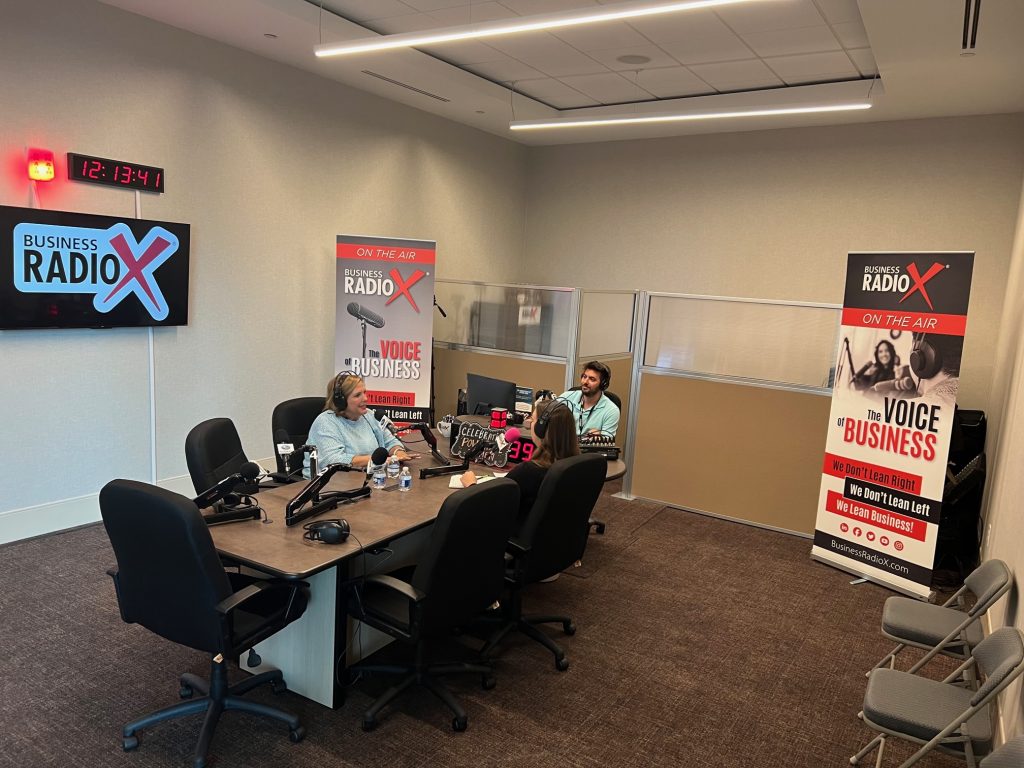
Business RadioX® produces, distributes, and markets professional podcasts and online radio shows for individuals and businesses of all sizes. Email us at moreinfo@businessradiox.com to learn more!
Listen Live Here
All live broadcasts from the studio will appear in this player as soon as the show begins. Please be sure to refresh your browser if you do not see it.
Decision Vision Episode 12: Splitting Up a Business Partnership - An Interview with Bill Piercy, Berman Fink Van Horn
/
RSS Feed
Share
Link
Embed
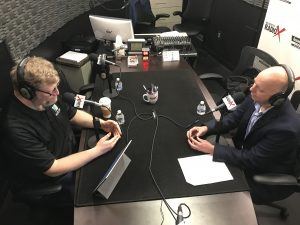
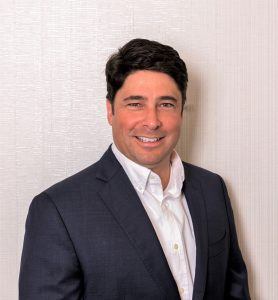
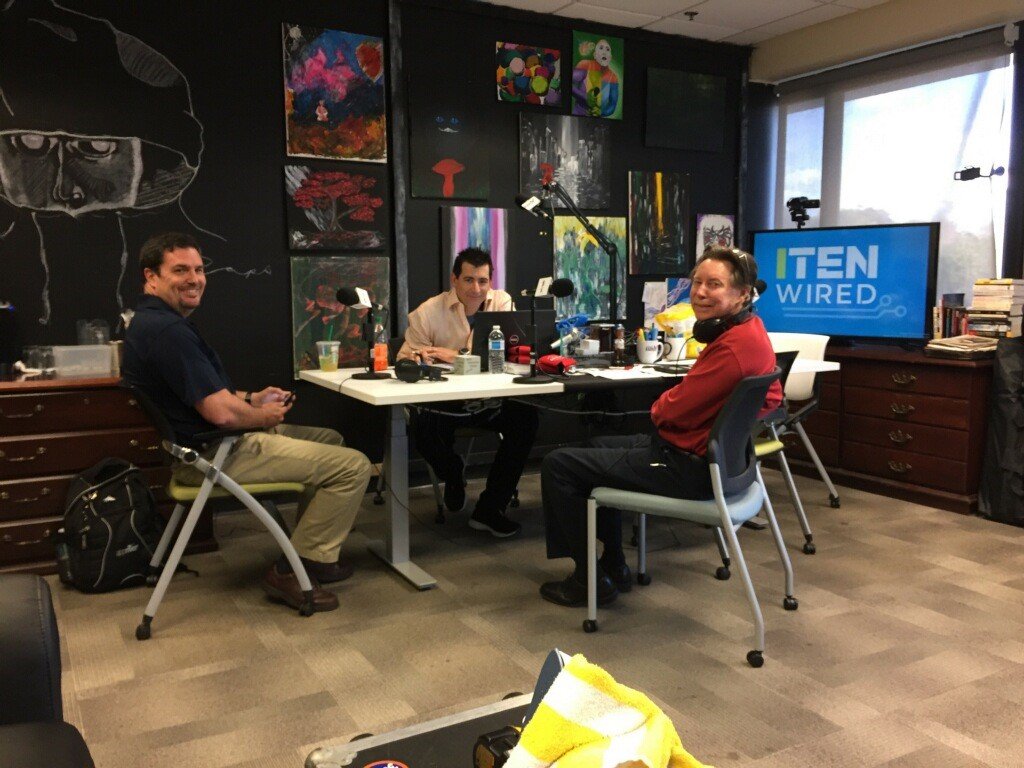
Michael Blake, Host of “Decision Vision” and Bill Piercy, Berman Fink Van Horn
Splitting Up a Business Partnership
It’s inevitable that business partnerships will dissolve, argues Bill Piercy of Berman Fink Van Horn, so partners need to prepare for the inevitable. In this episode of “Decision Vision” host Michael Blake talks with Piercy on how to prepare ahead of time, signs it is time to dissolve a partnership, and mistakes to avoid.
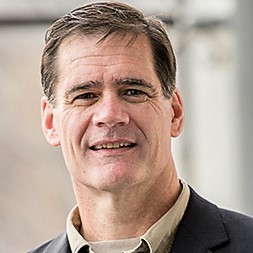
Bill Piercy, Berman Fink Van Horn
Bill Piercy is a Shareholder with Berman Fink Van Horn. Bill works with business owners to bring successful resolution to disputes concerning the management and control of the business. Frequently this means representing partners or shareholder groups who find themselves embroiled in controversy with their co-owners. After more than two decades of practice in the “corporate divorce” arena, he understands the challenges and the opportunities that arise from internal dissension within the management, operations and ownership of a closely held business.
Bill was named a “SuperLawyer” in the Atlanta legal community by Atlanta Magazine in 2012 – 2019, and as a “Rising Star” by that same periodical in 2006, 2009, 2010 and 2011. He is a member of the 2012 Class of Leadership DeKalb, as well as an Eagle Scout.
Recently, Bill put pen to paper to share his more than two decades of practice in the “corporate divorce” arena with entrepreneurs in his new book Life’s Too Short for a Bad Business Partner.
Michael Blake, Brady Ware & Company
Mike Blake, Host of “Decision Vision”
Michael Blake is Host of the “Decision Vision” podcast series and a Director of Brady Ware & Company. Mike specializes in the valuation of intellectual property-driven firms, such as software firms, aerospace firms and professional services firms, most frequently in the capacity as a transaction advisor, helping clients obtain great outcomes from complex transaction opportunities. Mike is also a specialist in the appraisal of intellectual properties as stand-alone assets, such as software, trade secrets, and patents.
He has been a full-time business appraiser for 13 years with public accounting firms, boutique business appraisal firms, and an owner of his own firm. Prior to that, he spent 8 years in venture capital and investment banking, including transactions in the U.S., Israel, Russia, Ukraine, and Belarus.
Brady Ware & Company
Brady Ware & Company is a regional full-service accounting and advisory firm which helps businesses and entrepreneurs make visions a reality. Brady Ware services clients nationally from its offices in Alpharetta, GA; Columbus and Dayton, OH; and Richmond, IN. The firm is growth minded, committed to the regions in which they operate, and most importantly, they make significant investments in their people and service offerings to meet the changing financial needs of those they are privileged to serve. The firm is dedicated to providing results that make a difference for its clients.
Decision Vision Podcast Series
“Decision Vision” is a podcast covering topics and issues facing small business owners and connecting them with solutions from leading experts. This series is presented by Brady Ware & Company. If you are a decision maker for a small business, we’d love to hear from you. Contact us at decisionvision@bradyware.com and make sure to listen to every Thursday to the “Decision Vision” podcast. Past episodes of “Decision Vision” can be found here. “Decision Vision” is produced and broadcast by Business RadioX®.
Intro: [00:00:01] Welcome to Decision Vision, a podcast series focusing on critical business decisions, brought to you by Brady Ware & Company. Brady Ware is a regional, full-service accounting and advisory firm that helps businesses and entrepreneurs make vision a reality.
Michael Blake: [00:00:20] And welcome back to another episode of Decision Vision, a podcast giving you, the listener, clear vision to make great decisions. In each episode, we discuss the process of decision making on a different topic. Rather than making recommendations because everyone’s circumstances are different, we talk to subject matter experts about how they would recommend thinking about that decision.
Michael Blake: [00:00:38] Hi, I’m Mike Blake. And I’m your host for today’s program. I’m a Director at Brady Ware & Company, a full-service accounting firm based in Dayton, Ohio, with offices in Dayton; Columbus, Ohio; Richmond, Indiana; and Alpharetta, Georgia, which is where we are recording today. Brady Ware is sponsoring this podcast. If you like this podcast, please subscribe on your favorite podcast aggregator, and please also consider leaving a review of the podcast as well.
Michael Blake: [00:01:04] Today, we’re going to talk about splitting up a business partnership, or some people call it a business divorce. And for purely selfish reasons, this is a topic that’s near and dear to my heart because this, actually, happens to be a big part of my practice. Often though, not every time, that there’s a business split, somebody wants to know what the number is that one person should be bought out at. And, so, that’s a part of my practice from, sort of, a purveyor of misery.
Michael Blake: [00:01:35] But the thing about business divorces is that they can be equally as dramatic, equally as painful, equally as tense. And, yes, on some levels, equally as entertaining as watching a conventional marital divorce. But we don’t have to just take my word for it. We’re bringing in a subject matter expert. And joining us today, to help us work through this decision process is my good friend Bill Piercy of Berman Fink Van Horn here in Atlanta.
Michael Blake: [00:02:02] Bill works with business owners to bring successful resolution to disputes concerning the management and control of businesses. Frequently, this means representing partners or shareholder groups who find themselves embroiled in controversy with their co-owners. After more than two decades of practice in the corporate divorce arena, Bill understands the challenges and the opportunities that arise from internal dissension within management, operations, and ownership of a closely-held business.
Michael Blake: [00:02:28] Through hard work, candid advice and effective advocacy, Bill helps clients achieve successful outcomes. Bill was named a Super Lawyer in the Atlanta Legal Community by Atlanta Magazine in 2012 and as a Rising Star by that same periodical in 2006, 2009, 2010 and 2011. Bill is a member of the 2012 Class of Leadership DeKalb. Bill previously served on the Executive Committee of the Gators for Business Arm of the Atlanta Gator Club and as a member of the Board of Directors of the Sole Practitioner Small Firm Section of Atlanta Bar Association.
Michael Blake: [00:03:04] In addition, to practicing in the corporate divorce arena, Bill has written a book on the subject, Life’s Too Short for a Bad Business Partner. Bill’s book is available for purchase at amazon.com. I would also say a bookseller near you, but those are pretty much gone now, especially, I think, Barnes & Noble is history, about to be history. And Bill has an undergraduate degree from the University of Florida and earned his law degree from Emory University in Atlanta. And I understand his parents did not bribe either institution in order to get in there. So, we’re getting the real deal. Bill Piercy, thanks so much for coming on the program.
Bill Piercy: [00:03:38] Thank you very much. I appreciate the opportunity to be here.
Bill Piercy: [00:03:41] So, you’ve got kids, I’ve known you a long time. You’re a busy successful attorney doing important things. Why do you find the time to write this book on business divorce?
Bill Piercy: [00:03:55] I found myself saying the same things to clients over and over again. And it occurred to me one day, “Why don’t I write this stuff down? It might be easier or better for people to digest it that way.” When someone has dissension in their business particularly with the other owners that can be a very lonely time and a lonely place to be.
Bill Piercy: [00:04:23] You can’t really go talk to the CPA to ask for a referral to a lawyer because, well, he answers to your business partner too. You certainly don’t want to go to clients and had them know that there’s some sort of problem with the business. You don’t tell vendors, you don’t tell lenders. And so, sort of like when your leg hurts and you go on to Google or Web MD to figure out what’s going on, people would find my blog and find me through that. And it occurred to me that if I created maybe a little more comprehensive guide, I might be able to help even more people.
Michael Blake: [00:05:02] Okay. I’d never thought of that but you’re right. I mean, all the venues that you would normally associate with getting help are close to you because the last thing you want broadcasted to anybody is I’ve got a potential business dispute internally. That freaks out employees. It freaks out advisors. It freaks out clients, vendors. Pretty much everybody within earshot gets freaked out by that.
Bill Piercy: [00:05:28] It’s absolutely right.
Michael Blake: [00:05:28] So, essentially. I haven’t thought of it that way, but that makes sense. So, they say that debt and taxes are the two things in the world that are inevitable. Is the same true of business partnerships? Are business partnerships kind of hired to be fired?
Bill Piercy: [00:05:43] I mean, they should be. Marriage is supposed to last forever or until death do us part, but that’s not the way business partnerships are supposed to be. You come together. You work together. It’s the common goal of making some money. And hopefully everybody leaves with their pockets loaded and as friends. Sometimes, they don’t end that way. And my practice is typically revolves around those situations where folks are less than happy as they are parting ways.
Michael Blake: [00:06:16] I did not expect that answer. I learned something. And you’re right, the notion of death do us part. And what the heck, my wife will never listen to this. But we know that that convention came into play when the life expectancy was about 42. And by then, you’re expected to die of black death, or a rotten chicken bone, or having somebody impale you with a hoe, basically, right?
Michael Blake: [00:06:45] And, now, things have changed. That till death do you part is a much larger commitment. I think when we think of partnership as intimate as a business partnership, I have to admit, I think of it as a lifelong engagement. But maybe you’re right, it’s healthy that you should kind of plan for the split. And maybe if it works out, that you both, as two business partners, you die lovingly and in each other’s arms on a pile full of money, right?
Bill Piercy: [00:07:15] That’s right.
Michael Blake: [00:07:15] Maybe that’s the optimal outcome, but that’s sort of a rarity. So, planning for that in advance, I guess, makes you more prepared, right?
Bill Piercy: [00:07:25] Absolutely.
Michael Blake: [00:07:26] Okay. So, where do the cracks start? I mean, you and I could trade war stories probably all afternoon. We don’t have unlimited time unfortunately. But I’d like to hear from you and maybe I’ll jump in, but where the cracks start to show? What are the things that tend to be the kernels that, ultimately, result in a dispute that is most likely to lead to some kind of split?
Bill Piercy: [00:07:52] Sure. Lack of communication is huge. Lack of transparency is distinguished, in my mind, from lack of communication because it’s one thing for everybody be talking. It’s another thing to actually reveal the financial statements or the underlying transactions that one partner may be responsible for as opposed to the other. The lack of a shared vision among the partners, one wants fast growth, the other doesn’t.
Bill Piercy: [00:08:28] And tied to that, maybe a divergent comfort level with risk score, with debt. Some people, rob Peter, pay Paul, let’s run to the races. And other people want all kinds of money in the bank before they do anything. And that can cause a lot of tension among owners of a business. Disparity and contribution, right. It’s owned 50/50, but one guy is doing 80% of the work. You can see why he might get frustrated.
Bill Piercy: [00:08:56] And a lack of clearly defined roles. Sometimes, early on, we’re all going to jump in. We’re all going to do everything that needs to be done to make this a success, and they’re excited. And 10 years down the line, it would make sense for one person with a particular set of skills to do certain aspects of the business, and someone else to do other tasks. And sometimes, those either formally or informally happen. Sometimes, they don’t. Sometimes, it’s, “Well you were in the office, so you did it, or I thought you were going to do it,” and that can lead to problems.
Michael Blake: [00:09:36] That communication transparency part it, really resonates with me. With the partnership splits in which I’ve been involved in appraising the core business, it has always struck me that if a few honest conversations for 30 minutes had happened two years prior to when they’ve hired me, we may very well not be here, right? And the transparency, to me, is connected with surprise, right?
Bill Piercy: [00:10:11] That’s right.
Michael Blake: [00:10:11] When a surprise happens in the business. In my case, one of the things I really insist on is if a company hires me in a buy/sell that I want to interview both partners even if one of them is retaining me, and try to get them all involved in that, and engaged in that conversation because you’re more likely to get buy-in if there’s not a surprise, if you see the freight train coming, right. And the lack of transparency leads to surprise. Surprise leads to anger. And then, that leads to imagination.
Bill Piercy: [00:10:43] That’s exactly right.
Michael Blake: [00:10:44] And that’s where you kind of get the runaway train, right?
Bill Piercy: [00:10:46] Well put.
Michael Blake: [00:10:50] So, are there are the reasons that are, kind of, avoidable? I mean, we just talked a little about communication. But when you kind of look at that portfolio of partnership disputes, what are the ones you see most often that maybe resonate with what I describe which is, “Jeez, why are we here?” Like the old cartoon of what would you’ve done right to the police is never what would have happened, that sort of thing. Are there things in your mind or patterns that you see that have you, kind of, asking yourself why we’re at this point or are we sure this is not reparable?
Bill Piercy: [00:11:29] It’s whatever the problem is, it’s festering for a while. And so, it’s not necessarily — I mean, communication is a huge one, but whatever the issue is, the people, the partners involved aren’t addressing it head on. They aren’t confronting it with each other. And from my perspective, if there is tension in that way, I would encourage folks to consider ending the business relationship, in its current form. I’m not saying that every fight should lead to divorce, but if there is a persistent problem, the underlying structure isn’t working, right.
Bill Piercy: [00:12:22] And so, it may just need to be fixed, but I find it’s often more productive to go into that fix with, “You know what, the old way is done. We are starting from scratch, and we’re going to talk about how often we’re going to communicate, and we’re going to talk about who is responsible for what, and we’re going to talk about who stays in whose lane, and we’re going to decide what level of commitment and what level of compensation we’re going to have.” And I think those are the business relationships that can be salvaged, if that’s the right word.
Michael Blake: [00:12:57] Yes. So, I’m going to go off script a little bit. I think that’s really smart, if nothing else, because I never thought of it that way. The notion that there is this binary choice that you either keep the partnership as is, baby and bathwater, or you dump baby and bathwater out, it’ s a false choice, isn’t it, right? There’s an option to say, to consider, maybe this relationship, the way it’s structured, isn’t working. But what if we just sort of took a blank sheet of paper, literally a blank sheet of paper, that clean slate, what would we do differently to make us both happy? And maybe there’s a way to salvage that.
Bill Piercy: [00:13:33] That’s my idea.
Michael Blake: [00:13:35] And I’m curious, what’s your betting average with that? Have you suggested that? Have you gotten traction with that?
Bill Piercy: [00:13:44] I have, not a lot.
Michael Blake: [00:13:46] Yeah.
Bill Piercy: [00:13:46] By the time folks get to me, and they’re paying a lawyer by the hour to fight, they’re generally pretty mad. I think that there are probably a lot of transactional lawyers that do this sort of thing all the time. I’m a litigator. When they get to me, we’re typically filing lawsuits, or threatening lawsuits, or being threatened with a lawsuit.
Bill Piercy: [00:14:12] And so, it’s pretty rare, but I do have one shining moment example where I helped. And my opposing counsel was of a similar mindset. And we got these folks to agree to have breakfast at Shoney’s every Friday morning with a checklist. And they would talk through that checklist because despite all their hating each other, they were printing money, and it just made sense to keep printing money. And as far as I know, they’re still printing money today.
Michael Blake: [00:14:43] No kidding. Well, good for you. Well, if the law thing doesn’t work out, maybe you can be a counselor.
Bill Piercy: [00:14:48] Maybe.
Michael Blake: [00:14:48] Maybe as a second career. So, you’ve written this book, and you’ve done it because it’s an opportunity to, kind of, avoid the repetition. And it’s a quick read. Certainly, you’re not going to be mistaken for a Russian novel. But even that having been said, if you wanted a reader to take one thing away from that book, what do you think that would be? ***
Bill Piercy: [00:15:15] To focus on the future, where you’re headed, where you want to be, and not on the past, and what your partner did or didn’t do, and how angry you are about it, if you’re at the point where you’re reading a book called Life’s Too Short for a Bad Business Partner, or talking to a business litigator, or to a business valuation person because your business is in some sort of crisis, then, you’ve already, kind of, lost. And, now, it’s time to stop the bleeding, and to focus on going somewhere else, and making some money. It is easy to let that anger or fear consume you, and it’s just not productive.
Michael Blake: [00:16:07] And I will attest that. I’ve never had to go as far as a litigation, but I’ve been involved in business partnerships where I’ve been upset. And I think that advice is so good that, on the one hand, you do feel like you’ve been wounded somehow. And you’ve been wounded in what, really, is a very intimate relationship. You’ve placed your financial well-being and that of your family in somebody else’s hands to a certain extent.
Bill Piercy: [00:16:39] That’s right.
Michael Blake: [00:16:39] And that means that the second that is even a whiff of being threatened in some way, it’s very hard not to react. Like your bass is super tight in piano string, right?
Bill Piercy: [00:16:51] I’m not suggesting it’s easy.
Michael Blake: [00:16:52] Yeah. And there’s a lot of deep breaths and whatnot that sort of have to take place. And I think that focusing kind of — because you can remedy the passing. A lot of what you do is to recover things from the past, the past injuries. But the end of the, day everything’s out in front of us, I guess, right?
Bill Piercy: [00:17:12] That’s right.
Michael Blake: [00:17:15] Okay. So, you talked about, by the time you get to reading a book, by the time you get to talking to somebody like you, and paying your fees, and so forth, what is that trigger? How do I know that I’m so mad that I got to contact Bill Piercy, and have him help me figure this out, and have some combination of making me whole/extracting horrible revenge versus, yeah, I’m ticked off, but do I really like to get a lawyer involved? You know what I mean? What’s that Rubicon? What’s that inflection point?
Bill Piercy: [00:18:01] Sure. It’s nice when folks have the option of just being mad or annoyed. Sometimes, they do. Sometimes, they don’t. Frankly, in either circumstance, I would encourage folks to get a handle pretty quickly on what rights and obligations they have to and from the business, to and from the other owners, to and from lenders and landlords. And that may mean getting a hold of your shareholder’s agreement, seeing where you can’t remember if you guaranteed the lease on the building or not. Those kinds of things.
Bill Piercy: [00:18:44] Some people are pretty organized. And sometimes, those documents are pretty easy to read. Sometimes, it takes a lot of work. Sometimes, there is no document. Sometimes, it’s on the back of a napkin, or it’s just a handshake, right. And a good lawyer can help folks understand that the law will impose some order on your situation, but it’s not intuitive always what those rules are. So, I would encourage folks to do it.
Bill Piercy: [00:19:15] And as for the trigger, as to when you start investigating those things, I mean, when you don’t trust your partner anymore, when you just can’t see yourself being in business with them anymore. or on a shorter time frame when your little key doesn’t work in the office lock one day-
Michael Blake: [00:19:37] Okay, that’s a trigger.
Bill Piercy: [00:19:38] … or you get served with a summons. I mean those sorts of things.
Michael Blake: [00:19:43] Okay, yeah. Or, as I’ve had with a client, just all of a sudden, one day, gets walked out of the building.
Bill Piercy: [00:19:51] That’s right.
Michael Blake: [00:19:51] Right. Obviously, there’s going to be a call to maybe multiple counsel at that point. So, I was going to ask one question, but I want to interject or intercede one question. Obviously, one sign that a business breakup is coming is that summons, that walking out, right. But are there more subtle signs that it’s sort of happening, but it may not be that apparent, and you’re like the frog in the water? You don’t realize it’s a business break until you’re the boiled frog in the water. You know what I mean?
Bill Piercy: [00:20:25] There are. There absolutely are. Trust that spidey sense or trust your gut. If it seems like maybe, “Boy, my partner seems to be having a lot of meetings with a closed door, or out of the office, or he’s kicked the can down the road on our weekly catchup meeting four weeks in a row. And I keep asking about the financial statements, and I keep being told I’ll see them tomorrow.” We all have other things to do. And not everybody turns everything in on time. But when those things start to lag, and you start to get suspicious, listen to your gut. Trust but verify.
Michael Blake: [00:21:12] Yeah. So, when that spidey sense, then, kicks in, what should you do? First thing, top of the to-do List.
Bill Piercy: [00:21:24] Gather whatever information you can that will help you and your team understand what rights and obligations you have and your partner has because that will be hugely determinative about your next steps and, frankly, the obstacles and opportunities that you have.
Michael Blake: [00:21:47] Now, do you have to treat a little bit differently when — I mean, you’re a company insider. On the one hand, I could certainly see advising somebody to be aggressive because if you think you might get locked out of the business, that means you may be locked out of your access to that information, and the only way we’re going to get it is through discovery. But on the other hand, do I have to be careful if I’m in that scenario because I may be acquiring and taking information that isn’t rightfully mine to have custody? Or I’m an owner of the business, therefore, I have the right to custody. Is there a balance there or a maze there that has to be navigated?

Bill Piercy: [00:22:28] It’s absolutely a complicated maze. And you’ve touched on a really good point. It’s as an owner of the business, you generally have the right to look behind the curtain and see whatever is there. But property that belongs to the business doesn’t belong to you just because you own a piece of the business. It’s not so much taking that information to yourself. I wouldn’t counsel anybody to email the customer a pricing list to their Gmail account, but I would encourage them to access it regularly and to ensure that they have that access.
Bill Piercy: [00:22:28] Sometimes, the division of labor leads partners to where one’s never met the landlord, or the IT guy, or the banker. And, all of a sudden, those things get shut off. It’s much harder to turn it back on when the relationship manager at the bank has never heard of you, and the IT guy doesn’t really know who you are. But if you have — not saying you take over that responsibility, but every once in a while, you stick your head in, and you make sure those folks know you. It’s much easier to restore your access should your partner do something nefarious.
Michael Blake: [00:23:49] So, one of the lessons here is in a partnership, protect yourself. Make sure that there are no key relationships and information sources that are proprietary to your other business partner. Maybe you’ll never have to call upon that, but if you do, you’ll be glad that you made that effort to have that line of communication, that recognition regularly.
Bill Piercy: [00:24:10] Absolutely.
Michael Blake: [00:24:10] So, sort of a hypothetical. Let’s say that that maybe there’s a bunch of information on a laptop, right. It’s a company laptop. It’s one that has not necessarily been assigned to me, but that laptop has information that, I think, is material to my potential case going forward. Is that’s something I may be forced to kind of leave behind, or can I take it, or is it a it-depends kind of deal.
Bill Piercy: [00:23:12] I mean, it’s a it-depends kind of deal. Is it used in the day-to-day business by you? Physically taking it, are you depriving the business of the opportunity to use that information? I’m not so worried about where the laptop sits. It’s, “Can the other partner access the data on it just because it’s sitting in your living room?” Maybe. Maybe it’s linked to cloud, or they can call you up and say, “Hey, I want to come look at it.” And if you allow that, I’m much less concerned about that conduct than one partner excluding the other from some critical piece of the business.
Michael Blake: [00:25:19] Right. So, don’t take the laptop, and then put in a safe deposit box, or bury it, or something like that.
Bill Piercy: [00:25:25] That’s probably right.
Michael Blake: [00:25:26] Okay. So, one of the most common mistakes you see business owners, soon-to-be-splitting partners make during that process that if they hadn’t made those mistakes, they might have had a better outcome.
Bill Piercy: [00:25:40] I think that we’ve touched on really the two big ones already here today. And that’s taking company property and assuming that because you own a piece of that company, you can take this equipment or this data, and either use it for competitive purposes or exclude the other folks in the business from using it. That’s number one. And number two, just not having keys to the castle. Not knowing how to turn your access to the network back on, or get back in the front door, or whatever it may be.
Michael Blake: [00:26:18] I’m going to go off script again because I think this is an important question. What about the scenario, I’ve got two clients in the scenario now, the majority shareholder, basically, fires a minority shareholder, cuts off their income, cuts off access to bank accounts. How is that properly handled? Can the majority shareholder typically just do that? Is it that simple, or, for the minority shareholders, is there are remedy, or does a majority shareholder have to go through a process to do that legally?
Bill Piercy: [00:26:53] So, the firing, pretty much if the majority owner can say, “You know what, we’re going to hire out whatever work you’ve been doing,” or “I’m going to start doing it.” And it’s a complicated question but, generally, can show that minority owner to the door.
Michael Blake: [00:27:15] Okay.
Bill Piercy: [00:27:16] But access to information, if you own a piece of the company, you have a statutory rite, generally, to review the books and records of the business. And it’s a different right, whether it’s a corporation or an LLC, but, generally, you’ve got that right. And you’re supposed to just be able to write a letter, and then be provided reasonable access and an opportunity at your cost to copy whatever information you want to copy. And if that information is not provided, there is generally an expedited legal remedy for ensuring your access to that information. Basically, it means filing a lawsuit, but that lawsuit is supposed to and typically does move faster than your average case.
Michael Blake: [00:28:13] Okay. So, not all business divorces go to court, right, thankfully. But some of them do. I think you’ve touched upon this, but I want to make sure the point is clear. What, in your mind, distinguishes the amicable or, at least, non-hostile partnership dissolution from the all-out, knockdown, drag-out, street-fight of litigation?
Bill Piercy: [00:28:42] Sure. Fundamentally, people change their interest in the business, change their interest in being involved in the business, and what they want to do can change over time. Those are legitimate bases for folks just deciding to part ways and go do something else. Where it turns hostile and expensive, typically, I mean without getting too philosophical about it, it’s pride, greed, lust, anger, gluttony, envy, and sloth. The seven deadly sins or some combination of them that cause people not only to decide they don’t want to be in business together but decide that I want all the business or whatever their dispute may be. Those typical, those raw emotions are often what’s behind it.
Michael Blake: [00:29:44] That’s interesting. That’s a heck of a checklist. I’ve been around a long time now. So, have you found — I mean, people talk a lot about buy/sell agreements. And for the listeners, a buy/sell agreement is just the rules by which the two or more partners agree that a share will be bought out either by the company of one or more shareholders or between each other when somebody is going to get out of the partnership. Have you found them to be helpful? I mean, are they as useful as advertised?
Bill Piercy: [00:30:16] So, in some, typically, when they’re is useful as advertised, I never see it because it doesn’t result in litigation. And so, the transactional lawyers that are deal makers do them and do them well all the time. And I think they provide a valuable set of rules for — agree when you’re agreeable, right. And so, everyone has come to it. We’ve already established how we’re going to decide, how much, and when somebody pays somebody else for their share in the business. And we’re going to already decide ahead of time on these triggering mechanisms. And so, it provides, I think, an efficient and useful tool for helping people through what can sometimes be a pretty difficult situation.
Michael Blake: [00:31:09] Okay.
Bill Piercy: [00:31:10] That said, when I see them, either there is a legitimate dispute about language, and who’s got the right to do what, or somebody is gaming the system. It may be that one partner or faction has significantly more resources than the other. And so, a common buy/sell arrangement is one in which one partner makes an offer to buy the other out at a fixed price per share. And the recipient of that offer, then, has the option. I can either take that offer, or turn it around, and buy out the offer, or at the same price. So, that ought to result in a fair offer because you don’t know if you’re going to be a buyer or a seller.
Bill Piercy: [00:32:02] And it, probably, most of the time, does. I never see it because I’m a business litigator. I see it when maybe one side has more money than the other and thinks, “You know what, even if I make a low-ball offer, he still can’t come up with the cash to buy me out,” or the insider trading, kind of, “I know something about the business that’s about to happen that he doesn’t know. So, I’m either going to offer more than fair market value or try to get myself bought out before things go down the tubes by manipulating my offer. So, those are, unfortunately, the kinds of things that I see on a fairly regularly basis with buy/sell. But I’m certainly not against them. I think in a lot of situations, they can be very useful.
Michael Blake: [00:32:56] I see similar manipulation. In particular if the buy/sell price is either a set number or a set formula because that’s set number or set formula could be right whenever the buy/sell was initiated. But now, five years down, the road the company has changed, the market has changed, the economy has changed. That price is going to benefit someone, right?
Bill Piercy: [00:33:21] Right.
Michael Blake: [00:33:23] And then, there’s at least a financial incentive to manipulate or force a transaction because you know you’re either going to be bought dear or you have an opportunity to sell cheap, right?
Bill Piercy: [00:33:33] That’s absolutely right.
Michael Blake: [00:33:34] And I’m guessing that’s also a scenario that might come your way even though there is a buy/sell. I think in those cases the buy/sells actually can do more harm than good because they motivate the kind of behavior they’re trying to avoid.
Bill Piercy: [00:33:48] That’s right.
Michael Blake: [00:33:51] So, I’m going to switch gears here, more of a governance question. So, I would imagine if I’m a general counsel for a company – internal, external, it doesn’t matter – I have to imagine the worst nightmare I could think of is I’m in the middle now of a business partnership because I’m going to be asked to take sides. All right. It’s just inevitable.
Michael Blake: [00:34:21] But on the other hand, I mean, on one level, it’s “Golly, does the company have to have an attorney, and both sides have to have their own counsel and combine? You’re running the clock at $2000 an hour or something like that.” Have you seen that? Is that a legitimate concern? How does that get resolved? If you’re a corporate counsel or if you’re involved in that, what can you reasonably expect your corporate counsel to do and not do…
Bill Piercy: [00:34:48] Sure.
Michael Blake: [00:34:49] … or that they cannot do for you.
Bill Piercy: [00:34:51] That’s right. The corporate counsel can certainly help partners to access the information that they need to determine their respective rights and obligations like we’ve talked about. What the company’s lawyer can’t do, what would be a conflict of interest is for the company’s attorney to offer advice or suggestions to one partner, or the other, or God forbid. both on what their respective rights are, or what positions or strategies they might employ. The company’s lawyers got to look out for the company and really needs to be careful not to be answering to more than one chief at any one time.
Michael Blake: [00:35:47] The last thing you said, “God forbid, both.” So, I want to expand on that a little bit because I can see a scenario where maybe a counsel feels like they’re doing the right thing, right. They feel like, somehow, they’re giving equal advice to both parties. There’s no conflict of interest. Can you expand that upon it? That sounds like a land mine.
Bill Piercy: [00:36:08] I mean, yeah, it sounds to me like a call to your malpractice carrier at some point because, eventually, likely, one partner is not going to be happy with the advice they got, or even if they are happy with it, they may see an opportunity, and because desperate times call for desperate measures. And really, it doesn’t help anybody to do that. Partners would do well to go get their own private independent counsel even if it’s just a, “Hey, run through this with me for an hour and help me understand where I stand,” as opposed to relying on someone who has multiple folks to answer to and may or may not have your best interest at heart.
Michael Blake: [00:36:59] Now, I think, if I’m not mistaken, there’s a nuclear option out there where if there’s enough of an impasse, at least, in our State in Georgia, I don’t know if this is true in all 50 states. Logically, I don’t, but a judge could actually dissolve a company if there is a sufficient impasse. Is that correct? And what are the circumstances under which that might actually occur?
Bill Piercy: [00:37:23] There absolutely is. It’s called judicial dissolution. And there are two general scenarios when that can happen. One is — and I think it’s the more common of the two deadlock. And that would be very common if you’ve got two partners, and each one of them owns 50% of the company, and one of them wants to franchise and go national, and the other wants a sole location and to become the master of one particular area of town in which whatever they do, they do. One wants white, the other wants black. They can’t agree. They have equal voting power. The company can’t do anything. In that circumstance, a judge can order that the company be dissolved. And we’ll talk about that. I’ll talk about that just a little more after I talk about the other factor.
Bill Piercy: [00:38:19] The other is waste. If the one partner – often, the majority owner – is taking advantage of the company paying unequal distributions, just taking money, and not even calling it a distribution out of the company or steering work to other businesses, all of those things can happen. And in those circumstances, a judge can order, “You know what, this is never going to work. The majority isn’t taking care of the minority here, not fulfilling his fiduciary duties. I’m just going to order this company dissolved.”
Bill Piercy: [00:38:57] And basically, a receiver is typically appointed. some third party. It might be a business broker. It might be a real estate agent. It, kind of, depends on what the company’s assets are. The assets are marshaled, gathered all in one place, and then sold. Sometimes, on the courthouse steps on foreclosure day. Other times, in a more orderly fashion. And then, that money is used to pay the company’s debts. And if there’s any money left over, it’s divided up pro-rata among the owners of the company.
Michael Blake: [00:39:31] And just like that.
Bill Piercy: [00:39:32] It is not a simple process, it’s not an inexpensive process, and you’re never going to get top dollar for a business that’s being sold on the first Tuesday of the month.
Michael Blake: [00:39:44] Yeah, yeah. In effect, it’s a slightly dignified fire sale.
Bill Piercy: [00:39:50] That’s exactly it. I’m not even sure it’s dignified.
Michael Blake: [00:39:53] Okay, fair enough. I certainly don’t want to put words in your mouth. Well, we’re running out of time. I wish we could talk more about this. There’s a lot of war stories I know that we could swap. But if somebody wants to learn more, or they’re thinking about they may be in this situation, think may be in the situation, and want to learn more, how can they contact you to to benefit from your expertise?
Bill Piercy: [00:40:16] I am fairly easy to find on the internet. Again, my name is Bill Piercy. I practice law with the Berman Fink Van Horn. The firm web site is bfvlaw.com. And my email address is bpiercy@bfvlaw.com.
Michael Blake: [00:40:37] All right. Well, thank you. That’s going to wrap it up for today’s program. I’d like to thank Bill Piercy so much for joining us and sharing his expertise with us today. We’ll be exploring a new topic each week. So, please tune in, so that when you’re faced with your next business decision, you have clear vision when making it. If you enjoy this podcast, please consider leaving a review with your favorite podcast aggregator. It helps people find us, so that we can help them. Once again, this is Mike Blake. Our sponsor’s Brady Ware & Company. And this has been the Decision Vision Podcast.
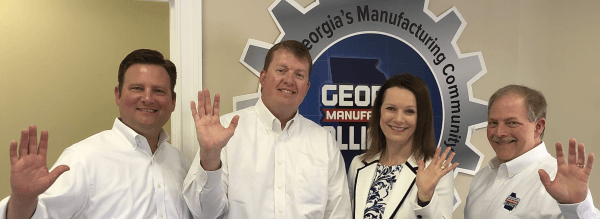
“Custom metal fabrication, Kaolin production & Leadership” #ManufacturingMinute series on SCNR Sponsored by the Georgia Manufacturing Alliance Learn more: Www.GeorgiaManufacturingAlliance.com
Holly Gotfredson serves as President of American Metalcraft, Inc. She graduated from the University of Georgia with a BA in Art History, spending the first part of her career in the creative world – working at the High Museum of Art in Atlanta and then moving onto a marketing and advertising professional path for the next decade. Holly entered the world of manufacturing and was amazed at the artistry and effort that goes into each piece, each project. She says “I feel like this gives me a unique perspective in merging the architect’s vision for a project with the nuts and bolts of bringing it into production.” Holly purchased American Metalcraft, Inc. from her family in 2017 and says she is honored to carry on the legacy that her father in law started in 1986.
American Metalcraft’s rain screen and metal panel systems, custom sunshades, infill, perforated and shadowbox panels, brake metal and column covers grace local landscapes such as Buckhead Atlanta, 14th Street Bridge, The SunTrust Building, 55 Allen Plaza, The Pleasant Hill Bridge – as well as the national landscapes such as the Newseum in DC, The National Marine Corp Museum in Quantico, Virginia, The Research Center at the University of Idaho and the Fort Bliss Hospital in El Paso, Texas – just to name a few. With AMI’s thirty–three years of experience and work nationwide, clients trust American Metalcraft and Holly is honored to be part of its story.
Holly hastwo daughters- her oldest was adopted from Latvia at 13 – she’s now 24, just completed five years in the military as a MPO and is now serving in the National Guard. Her youngest is a competitive swimmer and artist. When she’s not working she loves spending time with her family, playing and composing music and traveling. Connect with Holly Gotfredson on LinkedIn and learn more about American Metalcraft, Inc here: http://americanmetalcraft.com/
Jason Maxwell is the Vice President of Operations at KaMin LLC. Maxwell joined KaMin LLC (formerly J.M. Huber Corporation) in 2003, and has served in a variety of roles including Plant and Product Manager. Mr. Maxwell has over 20 years of industry experience and has previously held manufacturing management and engineering positions at Owens Corning Fiberglass, Alcatel and Transitions Optical.
He also currently serves on a number of boards ranging from the FAMU/FSU Engineering Advisory Board, FAMU/FSU College of Engineering, Department of Chemical and Biomedical Engineering, Georgia Mining Foundation, and Georgia Mining Association.
Mr. Maxwell earned his M.B.A. from Georgia College and State University in 2009 and his B.S. in chemical engineering from Florida State University in 1999. Connect with Jason Maxwell on LinkedIn and learn more about KaMin LLC here: https://www.kaminllc.com
Jason Moss is Founder and CEO of the Georgia Manufacturing Alliance (GMA). The organization is the fastest growing community of industry professionals in the state. Since 2008, GMA has provided the premier platform for manufacturing leaders to form strategic alliances, share best business practices, and make profitable business connections.
GMA now has six chapters across the state that are facilitated by volunteer chapter directors. The organization’s staff and Chapter Directors work together to identify quality manufacturers, coordinate plant tours, and provide educational workshops in their regions.
Each month GMA provides at least 5 plant tours where others can learn best business practices from their peers.Connect with Jason Moss on LinkedIn and learn more about the Georgia Manufacturing Alliance here: https://www.georgiamanufacturingalliance.com/
Scott W. Luton is the founder of Supply Chain Now Radio and also serves as Managing Partner for TalentStream. He has worked extensively in the end-to-end Supply Chain industry for more than 15 years, appearing in publications such as The Wall Street Journal, Dice and Quality Progress Magazine.
Scott currently serves as Executive Vice President of APICS Atlanta, was recently named a 2019 Pro to Know in Supply Chain by Supply & Demand Executive. He served on the 2018 Georgia Logistics Summit Executive Committee and currently serves as Chair of the 2019 Atlanta Supply Chain Awards Planning Committee. He is a certified Lean Six Sigma Green Belt and holds the APICS Certified Supply Chain Professional (CSCP) credential.
As a Veteran of the United States Air Force, Scott also volunteers on the Business Pillar for VETLANTA, and maintains active membership in the Georgia Manufacturing Alliance & CSCMP Atlanta Roundtable. Connect with Scott Luton on LinkedIn and follow him on Twitter at @ScottWLuton. Learn more about TalentStream, a leading recruiting & staffing firm that helps companies find top talent in the Engineering, Manufacturing and Supply Chain space, by visiting their website here: www.talentstreamstaffing.com
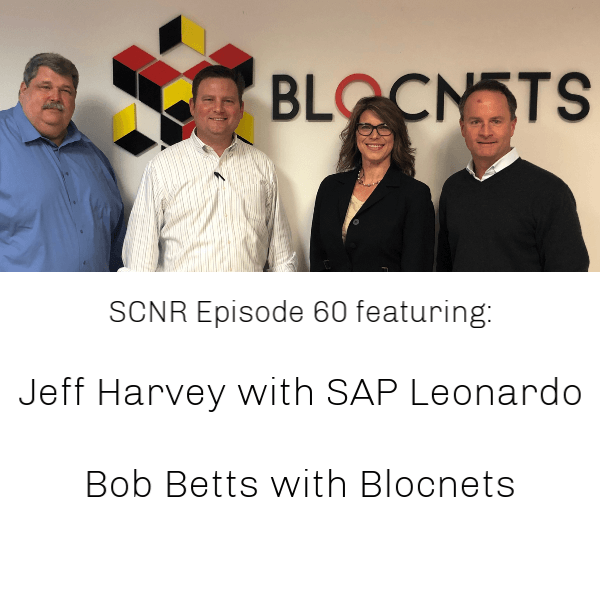
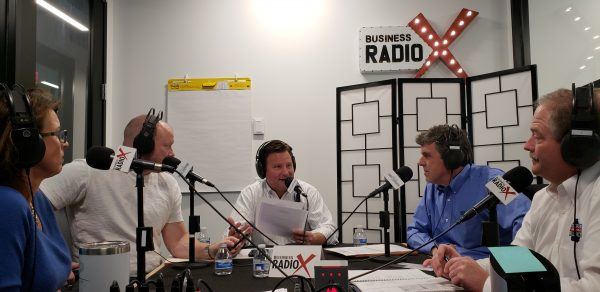
Supply Chain Now Radio, Episode 60 “Blockchain, Big Data, and Big Change” Live broadcast from the offices of Blocnets in Alpharetta, GA Learn more here: https://blocnets.com/
Jeffrey Harvey serves as Chief Operating Officer for SAP’s Intelligent Enterprise Solutions & Industries organizations. In this role, Jeff oversees the business globally, including business strategy, product management, business development, marketing, sales, channels, customer experience, renewals and field enablement. Jeff has over 30 years of progressive experience in the technology arena, including sales management, implementation strategy and delivery, as well as regional, national and global management roles.
Prior to his current position, Jeff served as the President of Strategic Industries for SAP North America. In this role, he was responsible for the overall business strategy and execution for SAP’s key industries including financial services, retail, and regulated industries, which encompassed utilities, federal government, state and local government, higher education and healthcare. In his prior position as Managing Director of the South region for SAP U.S., Jeff guided the market unit to become the top performer in the Americas in 2013.
Since joining SAP in 2002, Jeff has held a series of executive leadership roles including Senior Vice President (SVP) of the Central region for SAP North America, SVP and Chief Customer Officer for North America, as well as SVP and General Manager for both the Midwest and Southeast regions of the U.S. Within these posts, Jeff built SAP’s market position by developing and executing sound go-to-market strategies and placing a high priority on customer success and satisfaction.
As SVP of Emerging Industries globally, Jeff established the industry portfolio strategies for SAP’s financial services, health sciences, and public services practices, and drove go-to-market execution to help achieve market-share growth and customer success objectives. Prior to joining SAP, Jeff served as general manager of the national consulting practice for Systems & Computer Technology Corporation (later acquired by SunGard). He has also served in leadership positions with Accenture and was Chief Information Officer for Sandberg & Sikorski Corporation.
Jeff holds a bachelor’s degree in operations management and information systems from Northern Illinois University. Jeff served eight years on the board of TechBridge, an Atlanta-based nonprofit that helps other nonprofits leverage technology to better serve the community, and currently serves as the National Co-Chair for Els for Autism at SAP. Connect with Jeff Harvey on LinkedIn and learn more about SAP Leonardo here: https://www.sap.com/products/leonardo.html
Robert “Bob” Betts is CEO and Co-Founder of Blocnets, which enables extended Supply Chain networks to leverage Distributed Ledger Technologies to improve overall supply chain agility, nearly eliminate counterfeit parts, enable intelligent contracts between Supply Chain network companies, and enable all companies in the extended Supply Chain network to economically participate and realize value in participating.
Previously, Bob founded and served as CEO for MainStreet Applications. The company significantly improved the financial results of companies, driven by operating improvements in extended Supply Chains. The improvements focused on aligning total Supply Chain throughput, with overall customer demand, and specific customer demand patterns. The insights to drive the alignment were generated by applying Big Data Analytics to Supply Chain Networks operations. Connect with Bob Betts on LinkedIn and learn more about Blocnets here: https://blocnets.com/
Ashley Liebke is the CEO of Vision Media Group, LLC, Co-Host of Supply Chain Now Radio’s #TechConnect series, a Wine consultant with Scout & Cellar, and Co-Founder/Chief Editor and YouTube Creator with her Epic-Taste lifestyle blog. She was formerly the Vice-President of Marketing for Deposco, a provider of Supply Chain Software solutions for Coca Cola, Chickfila and hundreds of other shippers, ditributors and 3PLS.
Ashley is a 12 year veteran of UPS, where she mastered the retail technology arena and implemented a new Retail Partner Marketing program. She frequently consulted with company Presidents and Enterprise retailers such as Macy’s, QVC, Cabela’s. Ashley managed UPS and ComScore’s multi-year, global research project, the UPS Pulse of Online Shopper Studies, to inform retailers and industry of consumer preferences and suggest necessary supply chain solutions to better meet their needs. As a long-time member of UPS’s Customer Technology Marketing group, Ashley launched global software upgrades for millions of shippers in multiple languages, managed complex address validation and shipping Web Services and APIs, and managed Strategic Alliances with Amazon, Google, Manhattan Associates, Ozlink now part of Descartes Systems Group.
Ashley, aka @thevisionchic, has spoken at numerous events, webinars and is a blogger on her own Food & Lifestyle Blog Epic-Taste. Passionate about fashion and food logistics, Ashley and her firm are helping brands, restaurants, organizations and technology companies to optimize their brand and leverage the latest technology for automation of their marketing and logistics. Ashley lives in Peachtree Corners, GA with her daughter and son and enjoys eating while photographing food, yoga and fitness. Connect with Ashley Liebke on LinkedIn and learn more about Epic Taste here: http://www.epic-taste.com/
Scott W. Luton is the founder of Supply Chain Now Radio and also serves as Managing Partner for TalentStream. He has worked extensively in the end-to-end Supply Chain industry for more than 15 years, appearing in publications such as The Wall Street Journal, Dice and Quality Progress Magazine. Scott currently serves as Executive Vice President of APICS Atlanta, was recently named a 2019 Pro to Know in Supply Chain by Supply & Demand Executive.
He served on the 2018 Georgia Logistics Summit Executive Committee and currently serves as Chair of the 2019 Atlanta Supply Chain Awards Planning Committee. He is a certified Lean Six Sigma Green Belt and holds the APICS Certified Supply Chain Professional (CSCP) credential. As a Veteran of the United States Air Force, Scott also volunteers on the Business Pillar for VETLANTA, and maintains active membership in the Georgia Manufacturing Alliance & CSCMP Atlanta Roundtable.
Connect with Scott Luton on LinkedIn and follow him on Twitter at @ScottWLuton. Learn more about TalentStream, a leading recruiting & staffing firm that helps companies find top talent in the Engineering, Manufacturing and Supply Chain space, by visiting their website here: www.talentstreamstaffing.com
Decision Vision Episode 5: Should We Use Data Analytics in Our Business? - An Interview with Angela Culver, Mobile Labs, and Micky Long, Arketi Group
/
RSS Feed
Share
Link
Embed
Angela Culver, Micky Long, and Michael Blake
Should We Use Data Analytics in Our Business?
It’s a question for which all businesses should have an affirmative answer. Businesses large and small have all the means to collect and store significant amount of data on every aspect on their business. In this interview with Decision Vision host Michael Blake, Angela Culver and Micky Long argue that business success in coming years will be determined by a company’s ability to analyze the data they collect.
Angela Culver, Mobile Labs
Angela Culver
Angela Culver is the Chief Marketing Officer of Mobile Labs. Since the first install in 2012, Mobile Labs remains the leading supplier of in-house mobile device clouds that connect remote, shared smartphones and tablets to Global 2000 mobile web, gaming, and app engineering teams. The company’s patented GigaFox™ is offered on-premises or hosted, and solves mobile device sharing and management challenges that arise during development, debugging, manual testing, and automated testing. A pre-installed and pre-configured Appium server with custom tools provides “instant on” Appium test automation. GigaFox enables scheduling, collaboration, user management, security, mobile DevOps, and continuous automated testing for mobility teams spread across the globe and can connect cloud devices to an industry-leading number of third-party tools such as XCode, Android Studio, and many commercial test automation tools. For more information please visit www.mobilelabsinc.com.
Micky Long, Arketi Group
Micky Long
Micky Long is Vice President and Practice Director, Lead Nurturing at Arketi Group. Arketi Group is a public relations and digital marketing firm that helps business-to-business technology organizations accelerate growth through intelligent strategy, public relations, messaging, branding and demand generation. Consistently recognized by Chief Marketer magazine as one of the nation’s “B2B Top Shops” and a “Chief Marketer 200” firm, Arketi helps its clients use marketing to generate revenue. Companies benefiting from this approach to B2B marketing include Cox, First Data, Featurespace, Mobile Labs, NCR and Snapfulfil. For more information, call 404-929-0091 ext. 210 or visit www.arketi.com.
Michael Blake, Brady Ware & Company
Mike Blake, Host of “Decision Vision”
Michael Blake is Host of the Decision Vision podcast series and a Director of Brady Ware & Company. Mike specializes in the valuation of intellectual property-driven firms, such as software firms, aerospace firms and professional services firms, most frequently in the capacity as a transaction advisor, helping clients obtain great outcomes from complex transaction opportunities. Mike is also a specialist in the appraisal of intellectual properties as stand-alone assets, such as software, trade secrets, and patents.
He has been a full-time business appraiser for 13 years with public accounting firms, boutique business appraisal firms, and an owner of his own firm. Prior to that, he spent 8 years in venture capital and investment banking, including transactions in the U.S., Israel, Russia, Ukraine, and Belarus.
Brady Ware & Company
Brady Ware & Company is a regional full-service accounting and advisory firm which helps businesses and entrepreneurs make visions a reality. Brady Ware services clients nationally from its offices in Alpharetta, GA; Columbus and Dayton, OH; and Richmond, IN. The firm is growth minded, committed to the regions in which they operate, and most importantly, they make significant investments in their people and service offerings to meet the changing financial needs of those they are privileged to serve. The firm is dedicated to providing results that make a difference for its clients.
Decision Vision Podcast Series
Decision Vision is a podcast covering topics and issues facing small business owners and connecting them with solutions from leading experts. This series is presented by Brady Ware & Company. If you are a decision maker for a small business, we’d love to hear from you. Contact us at decisionvision@bradyware.com and make sure to listen to every Thursday to the Decision Vision podcast. Past episodes of Decision Vision can be found here. Decision Vision is produced and broadcast by Business RadioX®.
Intro: [00:00:01] Welcome to Decision Vision, a podcast series focusing on critical business decisions, brought to you by Brady Ware & Company. Brady Ware is a regional, full-service accounting and advisory firm that helps businesses and entrepreneurs make visions a reality.
Michael Blake: [00:00:22] And welcome back to Decision Vision, a podcast giving you, the listener, clear vision to make great decisions. In each episode, we will discuss the process of decision making on a different topic. Rather than making recommendations because everyone’s circumstances are different, we will talk to subject matter experts about how they would recommend thinking about that decision.
Michael Blake: [00:00:41] Hi. My name is Mike Blake, and I’m your host for today’s program. I’m a Director at Brady Ware & Company, a full-service accounting firm based in Dayton, Ohio, with offices in Dayton; Columbus, Ohio; Richmond, Indiana; and Alpharetta, Georgia, which is where we are recording today. Brady Ware is sponsoring this podcast. If you like this podcast, please subscribe on your favorite podcast aggregator, and please consider leaving a review of the podcast as well.
Michael Blake: [00:01:06] And, today, we’re going to talk about making customer data analytics an integral part of your business. And this is a topic that, I think, we’re only, as a community, as an economy, scratching the surface of. American society sort of runs away from math. We kind of run away from numbers. We know what the educational data are out there in terms of our general math capability, but the fact of the matter is, now, if you’re running away from numbers, you’re running away from business. And like it or not, if you want to be successful, you’ve got to get comfortable with data analytics, with data collection, with data science.
Michael Blake: [00:01:52] But that’s an intimidating decision because what I’ve observed – and we have experts here that will say if this is right or not – people are having to fundamentally change how they are thinking about their businesses. They’re changing their business models based on data analytics, and they’ve had to move towards kind of a fact-based, scientifically-driven decision making process that the age of, sort of, the crusty executive that just flies by the seat of their pants and makes gut decisions, takes gut decisions on major points of interests or points of issue, that is rapidly disappearing. So, this is a very interesting topic, a very important topic, and one that I hope that you, as a listener, will listen to very carefully.
Michael Blake: [00:02:37] A little bit of data here. With predictions that by 2020, there will be 1.7 megabytes of data created for every person on earth every second. I’m old enough to remember one when all the data would fit on a half of a megabyte floppy disk. I still have a computer that does that. And now that that data is being created at that rapid rate, there’s no doubt that we’re in the age of data-driven business.
Michael Blake: [00:03:08] Businesses of all sizes, all markets, and all customer types simply must get a handle on the information generated by business transactions, internet behavior, and simple day-to-day activity. Those who understand and find ways to manage this endless and growing data flow will flourish. Those who don’t are destined to drown. And I couldn’t agree with that more.
Michael Blake: [00:03:30] We’re being joined by two guests today. Our first guest, not concurrently, but I’m just going left to right as I sort of see across the microphone, is Angela Culver. Since the first install in 2012, Mobile Labs remains the leading supplier of in-house mobile device clouds that connect remote shared smartphones and tablets to global 2000 mobile web gaming and app engineering teams.
Michael Blake: [00:03:55] The company’s patent of GigaFox is offered on premises or hosted and sells mobile device sharing and management challenges that arise during development, debugging manual testing and automated testing, a pre-installed and pre-configured IPM server with custom tools, provides instant-on IPM test automation. GigaFox enables scheduling, collaboration, user management, security, mobile dev ops, and continuous automated testing for mobility teams spread across the globe and can connect cloud devices to an industry-leading number of third-party tools such as Xcode, Android Studio, and many commercial test automation tools. Angela, thanks for joining us today.
Angela Culver: [00:04:35] Thank you.
Michael Blake: [00:04:36] We’re also being joined by Micky Long of Arketi Group. Arketi Group is a public relations and digital marketing firm that helps business-to-business technology organizations accelerate growth through intelligent strategy, public relations messaging, branding, and demand generation. Consistently recognized by Chief Marketer Magazine as one of the nation’s B2B Top Shops and a Chief Marketer 200 Firm, Arketi helps its clients use marketing to generate revenue. Companies benefiting from this approach to B2B marketing include Cox, FirstData, Featurespace, Mobile Labs, NCR, and Snapfulfil. Micky, thanks for joining us.
Micky Long: [00:05:14] You’re welcome. Glad to be here.
Michael Blake: [00:05:16] So, you guys are tag teaming today. You guys, obviously, had a relationship. Talk about that relationship. How did it start? How are you guys working together?
Micky Long: [00:05:26] You want to go first?
Angela Culver: [00:05:28] So, I actually inherited Arketi. I joined Mobile Labs about four months ago, and they were the agency of hire. I know one of the founders of Arketi. He’s been in my network for quite some time and was, actually, introduced to Mobile Labs through Mike Neumeier. I’m a data-driven marketer. Mike is all about numbers as well. He has built a practice, a marketing agency practice around that. So, there has definitely been synergy. I met Micky about four months ago. And we’ve had a great relationship. He is one of the drivers. I see him and his team as my extended marketing team, and they help me execute almost on daily tasks for what we need to get done.
Micky Long: [00:06:22] Yeah. As you say, we are a company that believes in the data. Everything we do is built around data. And having Angela at Mobile Labs has been really refreshing because with her approach, it really, really works much better than if you’re dealing with an organization that perhaps doesn’t have the same focus and commitment to making the data work for you.
Micky Long: [00:06:40] So, marketing has changed. Marketing over the years goes back to the way — I go back as far as to say I remember the days when marketing and advertising was built around I know that of every dollar I spend, I’m going to waste 50 cents of it, but I just don’t know which 50 cents. Well, those days are really gone. We have the tools, we have the data streams, we have all those things today that we can measure it. We just, now, have to figure out how to put it into practice and make it work.
Michael Blake: [00:07:05] Yeah, that’s a great point. So, I’ve heard that expression before. I mean, that’s just not acceptable anymore to say you’re going to waste 50% of your money, right?
Angela Culver: [00:07:14] Yeah.
Michael Blake: [00:07:14] But it wasn’t that long ago when that was sort of considered acceptable losses, right? But, now, for most well-run businesses, if you tell somebody, “Hey, look, I need $5000. We’ll do well to get 2500 bucks of value of.” You’ll be laughed at out of their office at this point, right?
Angela Culver: [00:07:33] Absolutely.
Michael Blake: [00:07:33] For most mature businesses, right?
Micky Long: [00:07:35] Right.
Michael Blake: [00:07:35] There are others, I’m sure, that haven’t gotten the program yet. So, where’s this data coming from? Data is hitting us from everywhere. I’ve got Amazon Echoes in my house, I’ve got a smart home, I’ve got cameras every place. Pretty much anybody on the planet who wants to know anything about my habits, they know it all, right. Where’s the data that you’re working with coming from?
Angela Culver: [00:08:03] So, we’re inundated with data. It truly is coming from all different sources. Everything that we do is tracked, essentially. My iRobot tracks and mops my house and becomes more intelligent on how it needs to vacuum my floors. Your Echo tracks your behaviors and delivers products to you that is more succinct with what you want.
Angela Culver: [00:08:38] It really is coming from everywhere. We are in a situation where we are living in a world, especially in business, where the mindset is the more data I have, the more I rule the world. And we’re about to take a bit of a shift with this. It’s no longer how much data you have. It’s how you use that data and why you’re using that data. And we’re starting to see that shift happen where our big data is just too big for us to manage and for us to actually use intelligently. And, now, we’ve got to focus on the quality of the data.
Micky Long: [00:09:17] It seems to me it’s kind of gotten to the point now there is so much data available. It’s like living in a library where all the books are in a foreign language.
Angela Culver: [00:09:25] Yes.
Michael Blake: [00:09:26] Right? And there’s so much of it that you cannot possibly use at all. And 20 years ago, companies would be begging for this kind of data. They thought they died and gone to whatever heaven it is they believe in. And, now, it’s an embarrassment of riches. They’re so much coming from all sides. Is it fair to say the first step is kind of wrestling that steer to the ground, and hog tying it, and just trying to organize it?
Micky Long: [00:09:56] I think you have to start with the goals of your own business. And this is where we see because we deal with a lot of companies helping them try to figure this out. And what we typically find is companies start at — Usually, they start at step two or three. And what is missing is the initial step of saying, “Okay, I’ve got all these data streams, but what from a business standpoint do I really want to accomplish with this? What can I do? What do I want to do? Assume I have everything, but what do I want to do?”
Micky Long: [00:10:22] And figure a plan based on that because once you have your strategy, then you can plug in what you’ve got. If you don’t do that, you go back to sort of just thrashing about. And we see a lot of thrashing. Companies have not really mastered that yet. That’s one of the things that we’re working with Angela is to figure out how the process is supposed to work. So, I think that’s the key. That’s the first step you’ve got to look at.
Michael Blake: [00:10:43] So, is there a particular kind of data that you find is the most often overlooked? There’s just a goldmine sitting right there in front of people. They just walk by it every day, not realizing they’re walking past a goldmine.
Angela Culver: [00:10:55] Yes. So, especially in B2B, one of the most overlooked data sources or types of data is emotional and behavior data. From a marketer, we all buy from people. We buy products. And for the longest time in B2B, there was a sense that there was no emotion in the buy. There’s always emotion in the buy because you are buying into a relationship with another organization, and you’ve got an entry point of the person.
Angela Culver: [00:11:28] Tracking that type of information, it’s been difficult. It’s much like unstructured data. We’re inundated today with unstructured data. Figuring out how to manage it is a bit reminisce of about 20 years ago, 15-20 years ago, of how you manage transactional data. Everybody wanted very structured data, non-changing. It stayed essentially in its format and didn’t it morph into something else like transactional data. And, now, we’re looking at that in an unstructured data. But within the unstructured data, the gold mine is understanding how to use the emotional behavior components.
Michael Blake: [00:12:17] All right. So, you said something really cool I want to come back to because I think there’s a very important vocabulary point, but this notion of of emotional data is really fascinating. And I’m in finance, and emotions have finally worked its way into what I do. It’s called behavioral economics or behavioral finance where academics and I are asking, “Well, what if everybody doesn’t make the right decision all the time?” Well, we never thought of that. Well, let’s start thinking about that.
Michael Blake: [00:12:43] Is emotional data, is it as simple as, “It’s 10:00 at night, and I stress eat, so I know I’m going to Taco Bell,” or is it, “I’m more likely to make impulse purchase because I’m depressed or I’m an insomniac. I’m up 2:30 in the morning watching QVC or Home Shopping Network”? Is it as simple as that or is it — Where else does that kind of show up?
Micky Long: [00:13:07] From my perspective, one of the things that is really interesting is you, now, with the tools and the ability, you have the ability to track behavior enough that I’ll eventually know more about you than you know about yourself. So, I know what behavior you take. And we often tell people, and this is somewhat overlooked when you’re looking at just crunching the numbers, if you want to find out what people are about sometimes, one of the easiest ways to is to ask them because from a behavioral standpoint, they’ll tell you. If you ask the right questions, they’ll tell you.
Micky Long: [00:13:35] A lot of companies we work with will do why they won analysis of sales, but what they don’t do is they don’t do the loss sale analysis. They don’t say, “Why did somebody either did not buy my product in favor of somebody else’s or just not buy anything at all?” And knowing that information to balance that scale is critical if you want to drive additional sales from learning what the behavior was that was going on in your prospect’s mind when they made the purchase decision, or they didn’t make a purchase decision.
Michael Blake: [00:14:02] And that requires behavioral changes of itself, right, because a big part of what I do is in sales, and learning a new engagement candidly is an endorphin rush. I like it. I never thought I’d enjoy sales as much as I do because I’m a natural introvert. My wife always says if they ever do a Mars mission, I’m going to be first one. Like I’m going to be a tin can with no way to talk to for seven months.
Angela Culver: [00:14:28] Yeah.
Michael Blake: [00:14:28] I am in. Radiation be damned, but that on the other side, it’s human nature to focus on the positive. But as Bill Gates is famous for saying, “Success is a lousy teacher. It’s learning from the places where you failed,” but that’s hard to do. So [crosstalk].
Micky Long: [00:14:45] I think, you learn more about it from why you failed if you really look at it that way because, again, we all believe that what we’re selling is wonderful, and it solves a problem for people, and what have you, and everybody should buy it, but not everybody does. So, learning why they didn’t is really the key thing. To me, that’s the most interesting data points that you can pull out of things. And, now, with the tools we have, we don’t have to do a one-to-one conversation each time. The behavior is out there for us to kind of measure and pull together. And it makes it much easier.
Michael Blake: [00:15:16] But, as a company or as a decision maker, you’ve got to have the courage to dive into the failure.
Angela Culver: [00:15:23] Absolutely.
Michael Blake: [00:15:23] And I think, Angela, you’ve told me stories about that with people that have basically made that kind of change in terms of their attitudes and approaches to things that it really drives it.
Angela Culver: [00:15:34] Yes. Emotional type of data can be seen as abstract. And I’ve learned over the years, I started off my career in technology and business intelligence, BI tools. And I went through the dot com boom, and then immediately the bust. And I realized very quickly that in order to keep my job, I had to become a data scientist. And then, I had to teach my team and my customers how to be that as well. One thing I realized is that marketing has really started taking this shift.
Angela Culver: [00:16:10] I seem to take it probably a little earlier than most folks, but, now, everyone needs to be a data scientist in marketing. And I use the scientific, basically, approach. I create a hypothesis, I formulate what my end result is going to be, I use math to manage and monitor that result that I’m anticipating. And with emotional behavior data, you’ve got to do the same thing. You’ve got to understand how you’re going to use it to make business decisions, and you’ve got to put a stake in the ground to start with. I find that a lot of people find this intimidating initially until they start working through this process. And it is all about a process, putting a process in place.
Michael Blake: [00:17:02] So, you mentioned something a little while back, but I think it’s important vocabulary, structured versus unstructured data.
Angela Culver: [00:17:09] Yes.
Michael Blake: [00:17:09] What does that mean? What is the difference?
Angela Culver: [00:17:11] So, unstructured data would be e-mail, or Slack messages, or Instagram feeds, or video content where you’re — I’m going to throw another word out there, where you’re managing it through metadata, which is essentially data about data. You’re giving a description. But the core information content is not in a table column field format that’s easy to search on. You’re doing more of a, I would say, free-form find and search.
Micky Long: [00:17:52] And the tools are getting better. And there’s a lot of the — We’re starting to see the prominence of artificial intelligence coming into data management and things like that that are giving us the ability to sort of go after this unstructured data and start to pull it together in ways that we didn’t have before. But it’s still early stage on that. But it’s a matter — You still have to do both because there’s a lot of unstructured data that factors into the process that you’ve got to consider.
Michael Blake: [00:18:15] And that unstructured data has a lot of really cool stuff. It’s harder to use because it’s unstructured. But like so many things, the thing that’s most valuable requires the most effort to monetize. So, yeah, I suspect almost anybody who’s listening to this podcast has read an article, Harvard Business Review, McKinsey Quarterly, whatever it is, you got to get on data. You got to get on data. Does that apply to any sized company? Like if I’m a small, three-person, graphic design shop, do I need to get on top of data, or is this something that only applies to the NCRs of the world, the Coxes of the world, and so forth?
Angela Culver: [00:19:02] Yes. Everybody needs to have an understanding of their data. You’re not too small. You’re definitely not too big. The biggest challenge I’ve seen over the course of my career is that companies start too late. They start during a growth acceleration period. And at that point, they don’t have the historical data captured to help them make decisions to properly forecast on growth. How many leads they need to have? How many leads turn into sales opportunities that, then, turn into closed one? They’re having to back step, and capture the data, and hoping that their intuition is going to guide them in the right direction while they’re going through growth acceleration.
Angela Culver: [00:19:50] So, I believe you start the minute that you open your company doors. Do you have to have so much sophisticated technology? No. You can start with a spreadsheet, but you have to have a plan. That’s the number one thing that you have to go to the table with is having a data management plan. And you need to be looking at where you need to go two quarters from now, but also a year from now, versus five years, so that you can grow and manage your data strategy according to the company growth.
Michael Blake: [00:20:27] It’s a whole lot easier when you’re small.
Angela Culver: [00:20:29] Yeah.
Micky Long: [00:20:30] Yeah.
Michael Blake: [00:20:30] … than when you get bigger.
Micky Long: [00:20:30] That’s right. It really is. And so, if you get the right things, it’s like a lot of other things, if you set the discipline up on the early stage, and you put the processes in place that are going to drive it, it’s a whole lot easier than trying to come back and backfill as Angela mentioned when you get larger or when you’re going through a growth stage. That’s a challenge.
Michael Blake: [00:20:50] I don’t know this for sure, but it makes intuitive sense. As you grow the data inflows become exponentially greater, right? And it’s just it’s harder to wrestle that loose firehose off the ground and do something with it. You haven’t developed habits. And then, I’m guessing, I do a lot of work with startups, when you do hit that high growth, when you haven’t put in that discipline of data analytics yet, it’s hard to kind of stop and make yourself do that when you have five prospects wanting to get a proposal right away, right?
Angela Culver: [00:21:22] Absolutely.
Michael Blake: [00:21:22] And the next thing you know, it just never gets done. Until then, it becomes such a big problem you can never tackle, right?
Micky Long: [00:21:27] Yeah. Let me give you a really, really quick example of what you were just talking about. A lot of companies spend a good bit of time trying to make sure they capture their information about prospects into a program like Salesforce. If they don’t have the discipline set up on the early stage to identify, “How are we going to manage the titles of these prospects that we’re using or the functions of these prospects?” and they allow that to go on for a while, you could end up-
Michael Blake: [00:21:54] We had a client, for example, and a couple of years back that will remain nameless that when we went in to try to find out how to segment to do a better job of marketing, they had 375 different types of titles in their Salesforce program because they never forced their salespeople to consolidate. So, if I was the vice president of stuff in my organization, that’s what went into Salesforce. But the vice president of stuff is not really something that you could really sort on.
Micky Long: [00:22:24] So, the reality is as it gets larger, and as your database gets larger, this company had 100,000 people in their database when we started to look at this. It was a phenomenal problem, a very expensive problem to fix. So, if you start early, and put the discipline process in place early, when you have 25 people or 100 people, it’s a whole lot easier to deal with.
Michael Blake: [00:22:45] Yeah. Our firm is a case study as well. We’re starting to go back now and trying to understand basic things about our clients. What industries are they in? And can we associate them with [makes] codes, so we can start doing some kind of categorization, and some geographic analysis, and income levels, very basic stuff.
Michael Blake: [00:23:05] But we’ve been in business 60 years. The easiest thing to do is to cache that stuff and make people put that on the client intake form. But then, you try to go back and capture. You’re trying to ask a partner who’s building it 400 bucks an hour, and it’s busy tax season. Like, “Hey, can you verify these 80 different clients?” Like, “No, I can’t. I mean, I understand you need this data, but I’m not going to tell — which client do I tell their tax return doesn’t get filed because I’ve responded to your data request.” It’s because 65 years ago, nobody thought about this. But, now, we have to go back. It does become 10 times harder.
Michael Blake: [00:23:42] But let’s say you do have a clean slate, and start a company called Donut Shop. What’s the most — What are the pitfalls or how do I get started? Sorry, this. How do I get started doing that, right? I think about data, open the door day one. What’s my to-do list?
Angela Culver: [00:24:04] So, I always advise people to start with the company goals. What are your company goals? What are you trying to achieve within this first calendar year? And then, how do you need to make those decisions whether it’s successful, failure, or neutral? And then, from there, start building an alignment with the type of data that you need to help you manage to those goals.
Angela Culver: [00:24:35] Data is not the only thing that you’re using as a resource, but it should be one that allows you to create predictability. Most of our data is still historical. So, if you’re just starting, then you really need to identify your company goals, so that you can start mapping. And a lot of times, I advise people to start with a free technology. Start with a spreadsheet and just start identifying some of those metrics that will help you move towards that.
Angela Culver: [00:25:09] Being in marketing, I focus more on that. So, I’m looking at, what is it going to cost me to acquire a customer? What’s my cost per lead? What are my retention rates? How many products am I selling by month, by quarter? Do I have any slow periods? What is the actual selling price on average, and the time for payback as well? Not just marketing but overall cost of the company. Those are some fundamentals that I look at initially. As you drill down, you’ll see that you have website metrics that roll up to that. You’ll have advertising metrics that roll up to that. But it all starts with company goals. Micky, what do you think?
Micky Long: [00:25:59] Yeah, you have to have them. And the other part of this is you can’t go too far too fast. What I mean by that is you have to — I would say the way I would put it is you have to figure out the appetite of your company for this because if you try to bite off too much and go way down the path, you’re not going to win. You’re not going to be able to do it, and you get frustrated, and somebody’s going to throw up their hands and say, “Well, that was a wasted exercise.” And it isn’t. It’s just that you tried to do too much. So, the idea of having a plan based on your business goals and taking steps along the way, so you create milestones is really the way to sort of do it in stages, so that you’re not trying to eat the elephant all at one time. So, that’s an important consideration.
Michael Blake: [00:26:40] So, there’s something to be said about being incremental and that-
Angela Culver: [00:26:42] Yes.
Micky Long: [00:26:42] Absolutely, absolutely.
Michael Blake: [00:26:43] Otherwise, you’re so intimidating, like, “Yeah.” You’re just sort of-.
Micky Long: [00:26:44] And if you try to do too much too fast, this is where you run into problems with something that nobody from the marketing side, anyway, wants to hear about, which is the data quality issues. So, that’s a real problem for clients now, for companies that are trying to deal with this because as the data flow comes in, and this data gets into their systems, if it’s not set up right the first way, if it’s not cleaned regularly, what you’re going to end up with is the dirty data issue, which costs companies millions of dollars to sort of struggle through. And that’s a big problem that it’s out there because if you run it too fast, you’re not going to have the discipline to sort of figure it out.
Micky Long: [00:27:22] So, I could be in your system as Micky Long, Micky L. Long, M. Long, or something else, and how do you know it’s all the same person? So, if you don’t have those things figured out, the tools and the processes, you’re not going to get there. So, you really have to make sure that you put the emphasis on ensuring that the data that you have in your system is clean. That’s a big consideration.
Michael Blake: [00:27:44] And the data collection itself, I think, to a degree, needs to be non-intrusive too, right? I’m old enough to remember RadioShack. And RadioShack used to be able to get cool stuff. I want to fix my TV, I want to get a remote-controlled car, you go to RadioShack. But, golly, the thing I always dreaded was that they would insist on taking my phone number every time I went in. Every time, which meant they took it. So, they wanted it, presumably, to know the geographic distribution of their customers, but they never hung onto it. There’s nothing — And, I think, the technology is not available that there is a central database to which they could connect, right?
Michael Blake: [00:28:30] If you think about it, if we had that barrier to kind of mechanically cough up our data every time we bought something, we’d never buy anything. We’d all live on some sort of agricultural economy and just share things with each other because the time costs of going into Kroger, and share, and getting our blood drawn is just not worth it, right?
Angela Culver: [00:28:49] Yeah.
Micky Long: [00:28:50] But the reality of that is I often had this this conversation with my kids, there is more data about you, and there are more people out there that know more about you than you’ll ever imagine. So, we’ve given up a lot of our data freedom, if you will, because of the exchanges we made. So, the reality in my mind is it’s there. Why can’t companies put it together and make sense of it? So, why can’t I walk into a Publix or a Kroger, and as I’m walking down the aisle with my mobile phone, have them immediately start feeding me offers about the dog food that I bought last time I was in the store or the competitor’s dog food with a special opportunity to try it?
Michael Blake: [00:29:29] All of that exists. All of that data is there at all of the stores. This is what Angela’s company does is help companies with these mobile applications. So, the applications are there. The data streams are there. Why haven’t they put it together? That’s, I guess, the big question is, why haven’t they figured out how to join A to B to create a really strong environment? Because they build better customer interactions that way, along with higher revenue.
Michael Blake: [00:29:54] Is part of it because maybe the data tools themselves are just prohibitively expensive, intimidating?
Angela Culver: [00:30:01] So, intimidation is probably one key. So, if we just look at MarTech alone, in 2018, there were over 8000 types of technology in this space. So, if you look at the Loomis Escape, you need a magnifying glass to actually see the logos now on the sheet. About five years ago, I think, we were at about 600 companies. So, the space has grown considerably. So, there’s more options than you know what to do with.
Angela Culver: [00:30:33] And a lot of companies start with, “Okay. I’ve got this huge dataset. I know I have all the answers in this dataset. So, I need to run out and buy the technology to support that, and be able to mine it, and digest it.” The problem is they start with the how. They go out and buy this complex system, multiple systems, integrated together, but they never really understand why they’re doing it and what they’re trying to solve for.
Angela Culver: [00:31:03] So, they put in these systems. They’ve got the technology to find the answer, but they don’t know what the answer they’re looking for. So then, they start breaking it apart and going backwards. So, we see this shift in companies quite a bit just because they didn’t start with the plan initially to figure out what they wanted. So, if I went into a grocery store, and they had an aisle that said, “Angela, here’s all the products you want. And this is what you typically buy,” or they packed my bags for me, they have all that information, and they could manage that if they wanted to create that type of a customer experience for their customers.
Micky Long: [00:31:50] Amazon’s doing it. You look at what Amazon does. When you go to Amazon, you buy something from Amazon. And so, for the next lifetime, you’re going to get recommendations from Amazon based on the products you’re buying. So, they’re using that same kind of technology with the data from previous sales to give you a better user experience. And that’s what it’s all about is trying to make the user feel more comfortable, more personal, and more engaged with the brand of the company.
Micky Long: [00:32:14] And that goes across, I think, companies from the three-person company that starting out as a very boutique-oriented company to a large organization. It’s trying to just keep things going in the middle of the road. So, whether you’re large or small, you really want to build that brand. So, it’s all about customer experience.
Michael Blake: [00:32:32] Now, there’s the tool out there. And that makes sense. I mean, if you have a mismatch tools, it’s like buying a Tesla. And then, all of a sudden, realizing you really like to do off-road stuff, and you think it’s the Tesla’s fault, right.
Angela Culver: [00:32:45] yeah.
Michael Blake: [00:32:46] Well, it’s not. You just you didn’t buy a truck. So, the other side of the coin is the skills, right?
Angela Culver: [00:32:54] Right.
Michael Blake: [00:32:54] Not everybody has taken a course in statistics. And many who did like me 20 years ago in my MBA diploma’s in a caved wall in France someplace, I don’t necessarily remember it. How do you get up to speed or how do you hire for that, find somebody that can make sense of that data and interpret it in a way that becomes useful business information?
Angela Culver: [00:33:16] So, when I’m hiring someone into a marketing operations role, which is traditionally where my data scientists, or analytics person or persons would sit, I am looking for someone that has a science and math mind, and they have a natural curiosity to solve problems with numbers. They’re usually linear in thought, but they’re very flexible to creative ideas. So, they’re a bit different than a financial person that you would see doing accounting or working in the finance department. But I found if — I have discovered that if I find someone that has a knack for science and really likes math, then they can learn the technology and be successful in this job.
Micky Long: [00:34:12] I think, you got to find somebody — Forgive the term. You have to find some that’s a little geeky, somebody that really gets excited over data, the kind of person that kind of runs out of their office and says, “Look what I found,” when they put these two things together, but they really have to I think have a passion for it because if you really want to see what the insights are, you’re looking for something, as you said for that, you want that curiosity, that deep curiosity that says, “If I put A and B together with 1 and 4, what I’m going to show you is this is something you never thought of before, and this is going to help drive our business in a different direction or a different way.”.
Micky Long: [00:34:43] To me, that’s nirvana. That’s what you really want to get out of this is to be able to take these things together in ways people haven’t thought of and say. “That’s going to put us in a new direction. That’s going to really, really light some fires under the sales team to get some high revenue coming in.” And it happens every day. You just have to have the right people.
Michael Blake: [00:35:00] And that sounds a lot like what Angela was describing in terms of that like hybrid of flexibility and linearity. You need the flexibility and creativity to ask the right questions, but then the linearity to answer the question in a process-driven way-
Angela Culver: [00:35:13] Absolutely.
Michael Blake: [00:35:14] … so, that the statistics are meaningful? right?
Angela Culver: [00:35:16] Yes.
Michael Blake: [00:35:16] If we don’t do that, then you get gobbledygook basically.
Micky Long: [00:35:19] Right.
Michael Blake: [00:35:24] What do most companies miss? What are companies most missing out on in data management? What do you think is the most frequent opportunity or biggest opportunity they’re missing out on?
Angela Culver: [00:35:33] I think to go back to when they get started, I think that is a miss that I see quite a bit in a lot of companies where they’re starting too late. They don’t set it as a priority earlier in the business when it can have a huge impact. They’re not treating data as an asset from day one. And that’s a potential mess.
Micky Long: [00:36:02] Yeah. I see two things. Number one, they take the approach that’s incorrect, which is that this is a marathon, it’s not a sprint. You have to be able to do this and have the discipline to do this over the long haul, and not do this as, “Oh, let’s try this for a couple of months. And if it doesn’t quite work, we’ll go back and do something else.” That’s one thing.
Micky Long: [00:36:18] And the other thing is it’s not a marketing exercise for the most part, it’s a revenue exercise, which means you can’t just sort of take the data streams coming in and say, “That’s the prevalence of the marketing organization.” You’ve got to join marketing and sales together for this thing to really work. And that’s something that is still a challenge.
Micky Long: [00:36:36] I remember back in the day when marketing automation tools first started. It was supposed to be the answer to all of our prayers. It was going to be marketing and sales were now, finally, going to get together, and sing Kumbaya around the campfire, and we’re all going to do everything together. And we’re still trying to put marketing and sales people together. And it’s been at least 10 years since that started. So, why has that not happened? It’s because we still have issues. They’re the people issues. They’re not tool issues.
Micky Long: [00:37:00] So, the reality of it is you’ve got to look at this thing holistically and say, “It’s a business issue, not so much that.” So, that’s what people miss, in my mind, that are big things that they don’t look at. It’s the integration.
Michael Blake: [00:37:10] So, do you have a favorite data success story, something really wonderful, spectacular you’ve found that you just did not expect to find in a data exercise?
Angela Culver: [00:37:20] I have two actually. I was working for a company a few years back, and part of what I was hired to do was to increase the brand equity of the company in a relatively short period of time. And when I got into the company, the brand colors were predominantly green and red. And after looking at the customer base, I realized that 80% were male, most of them were between the age of 35 to 50, and 1:10 were color blind, red/green colorblind. So-
Michael Blake: [00:37:59] Oh, yeah. I’ve heard of that statistic. Yeah.
Angela Culver: [00:38:00] Yeah. So, our ads, the call to action were either highlighted in red or green. And the company was losing almost a half a million dollars in advertising cost due to the end user not being able to see the call to action. So, I went into the leadership team, said, “We need to change the brand colors,” presented my data, and within seconds had the approval to change the brand colors. I changed from red/green to essentially green/yellow, citron. And we immediately saw an uptick in the brand value. We went from about 16% to a 25%, which is unheard of, especially with a tech company. So, I wouldn’t have been able to do that without the data.
Micky Long: [00:39:03] So, I can give you one that’s a really simple one hasn’t having to do with database size and the quality of data we talked about before. I had a client that had a base of 100,000 people, and they were doing the classic marketing e-mails and things like that to try to get them in place, and they were having miserable returns, miserable e-mail open rates, and all those statistics you look at. So, what we did was we started doing an analysis. And what we found was there was a large group of these 100,000 that had never opened an email, had never engaged with it, and had never done anything for them.
Michael Blake: [00:39:36] So, what we tried was something very revolutionary for that company, which is we said, “Let’s ignore that 75,000 people in your database that have never touched anything. Just don’t send e-mail to them. Don’t think about them when you’re crafting your messages, and concentrate only on that smaller group, and really refine that smaller group to see what we could do.”.
Michael Blake: [00:39:56] And as you might expect, what’s happening is the company is now seeing a tremendous return on the investment against that smaller group of people. And, now, with better messages and better approaches, they can start to expand out to other people that are like that. And the 75,000 that never did anything, they still sit there, and we don’t do anything with them.
Michael Blake: [00:40:14] So, the reality is it’s a matter of concentrating on the people that are likely to do something and ignore the ones that don’t. And I would predict that most companies, if not all companies, have that same situation in place.
Angela Culver: [00:40:25] We have been dealing with email within our support group. We track at mobile apps, all our support tickets. And we actually get a little worried if we’re not receiving support tickets from our customers because, typically, they’re not using the product daily. One set of support tickets we’ve realized has helped us educate and improve the functionality of the product. So, within our product, we use iPads, telephones, mobile devices. They come in at all different versions. So, you’ll have an iPhone 6, an iPhone 8, and they’re plugged in 24 hours a day.
Angela Culver: [00:41:15] After a certain period of time, you will start seeing battery bloating. And it will slow down the performance of actually testing a mobile application on one of those devices. So, through our support tickets, we started seeing that customers were complaining about battery bloating. So, we actually started sending out information in advance. We knew if they were a customer for six months, and that they were constantly plugged in, that they were most likely going to start seeing deterioration of devices. And we’ve been able to counterattack that through putting out more educational information through emails; where in the past, we would send out promotional materials and emails, and they weren’t getting it, they didn’t want it, but this educational material is actually helping them improve the performance of the product overall. And in the end, it has an impact on retention rates, customer churn. So-
Michael Blake: [00:42:14] Sure, it makes sense. So, okay. So, we’ve talked through a lot of topics here. Some of our listeners are thinking, “Okay, I’m sold. I got to make data part of my business,” where do they start? What’s the what’s the first thing on their to do-list?
Angela Culver: [00:42:32] Start with the goals, set realistic expectations. So, like what Micky has said, you don’t want to try to boil the ocean. Start with what your company can tolerate. So, understanding that if you’re going to set up a marketing data hub, and you need to utilize sales information, understand what the tolerances from your sales team. Putting over 50 required fields in Salesforce for them to fill out every time they have a prospect come in probably might be over their risk tolerance or their ability to handle that initially. Maybe start with five fields if you’re just starting to input data and utilize data. So, setting up expectations would definitely and setting goals would be my first.
Micky Long: [00:43:34] Mine would be just do it. Just stop talking about it, stop thinking about it, stop reading about it. Just go do something because even if the first thing you do isn’t 100% correct, it’s going to get you further than if you just start reading whitepapers about, “Look, I get this data under control.” And that’s what we see is just that inertia is what stops a lot of people because they start looking at all the downsides to it. Just go do it is really what I would recommend.
Michael Blake: [00:44:00] Just rip the Band-Aid off.
Micky Long: [00:44:01] Just rip the Band-Aid off and just go for it.
Michael Blake: [00:44:04] Okay. So, all right. So, again, a lot to unpack here. We’ve only scratched the surface. We could easily make this a three-hour podcast, but not everybody would listen for three hours. So, if somebody wants to learn more, can they contact you and ask you some questions?
Angela Culver: [00:44:21] Absolutely.
Michael Blake: [00:44:21] Would that be okay?
Micky Long: [00:44:21] Sure.
Michael Blake: [00:44:21] So, Angela, why don’t you go first? If somebody wants to ask you about your experience with this, ask you some advice, how would they contact you?
Angela Culver: [00:44:28] So, you can definitely contact me via LinkedIn. That’s my name, Angela Culver, Mobile Labs. Also, my email, angela.culver@mobilelabsinc.com.
Micky Long: [00:44:41] And likewise, my LinkedIn profile is out there for prevalence. And my email is really, really simple. It’s mlong@arketi.com.
Michael Blake: [00:44:53] Okay. Gone are the days, the long strings with nine different numbers behind the at symbol, right? So, thank goodness for that. That’s going to wrap it up for today’s program. I’d like to thank Angela Culver and Mickey Long from Mobile Labs and Arketi Group respectively so much for joining us and sharing their expertise with us.
Michael Blake: [00:45:13] We’ll be exploring a new topic each week, so please tune in so that when you’re faced with your next business decision, you have clear vision when making it. Again, if you enjoy this podcast, please consider leaving a review with your favorite podcast aggregator. It helps people find us, so that we can help them. Once again, this is Mike Blake. Our sponsor is Brady Ware &c Company. And this has been the Decision Vision Podcast.
Hugh Tait serves as Vice President of Customer Solutions at The Shippers Group. Hugh’s primary responsibilities focus on customer relationships and customer solutions. His charge encompasses growth and expansion of The Shippers Group services further emerging as the industry’s apparent national supply chain leader. “Hugh is well regarded as an industry leader with expert knowledge in both operations and sales. With his vast skill set he will advance our sales effort in a collaborative and true customer solutions approach to bolster profitable growth across multiple verticals and service offerings nationwide,” says Rob Doyle, president of The Shippers Group. An engineer by training, Hugh received his Masters at Georgia Tech in 1986 and has over 25 years of logistics experience covering just about every industry and extending across all aspects of 3PL operations. Hugh has been responsible for sales, pricing, account reviews and process improvement for his entire career. His expertise is in customer relationship management, rate development and pricing solutions for new clients, enhancing operational quality levels and driving cost out of warehouse operations.
Hugh’s greatest strengths are his high energy and positive attitude that he displays daily while trying to solve the supply chain problems of potential and current customers, as well as his unique ability to use an engineer’s view of operations to help ensure continuous improvement in both operational and business development processes. When he’s not helping Shipper’s clients and prospects, Hugh is probably playing tennis or enjoying time with his wife and four children in Atlanta. Connect with Hugh Tait on LinkedIn and follow The Shippers Group on Twitter.
Jason Moss is Founder and CEO of the Georgia Manufacturing Alliance (GMA). The organization is the fastest growing community of industry professionals in the state. Since 2008, GMA has provided the premier platform for manufacturing leaders to form strategic alliances, share best business practices, and make profitable business connections. GMA now has six chapters across the state that are facilitated by volunteer chapter directors. The organization’s staff and Chapter Directors work together to identify quality manufacturers, coordinate plant tours, and provide educational workshops in their regions. Each month GMA provides at least 5 plant tours where others can learn best business practices from their peers. Connect with Jason Moss on LinkedIn and follow GMA on Twitter.
Beau Groover is Founder and President of The Effective Syndicate. He has been working with manufacturing and operations-focused organizations for over 20 years, primarily focused on developing bullet-proof processes and teams that are built to win. Beau has helped organizations save millions of dollars while also improving those companies’ customer experiences and building high-performing teams that continue to drive the business forward. He has developed his approach and strategy over years of working with some of the biggest companies in multiple levels within the organizations, including The Coca-Cola Company, Nordson Corporation, and Westrock (formerly RockTenn). Just prior to launching The Effective Syndicate in 2015, Beau served as the Director of Lean Supply Chain at Serta Simmons Bedding, LLC. Beau also currently serves as an APICS Atlanta Executive Advisory Board member. Connect with Beau Groover on LinkedIn and follow The Effective Syndicate on Twitter.
Ashley Liebke is President & CEO at Vision Media Group and is an innovative digital marketing and strategy leader with two decades of business development experience. Over the last five years she has become a noted leader in retail supply chain optimization and digital consumer experience – – and is connecting the dots for businesses looking to optimize their cloud platforms for today’s on demand economy. Ashley collaborates with partners and customers to publicize how unified customer experience with store operations, distributed order management and supply chain optimization can drive growth for US and global businesses. In previous roles, Ashley has served as Vice President of Marketing with Deposco and Acting Director/Marketing Manager with UPS. Ashley earned a Bachelor of Arts Degree in Political Economy from Tulane University, as well as an MBA from Georgia State University. Recently, she co-founded Epic Taste, a blog that delivers mouth-watering imagery and reviews of the finest food, beverages, tables, places, chefs in Atlanta. Connect with Ashley Liebke on LinkedIn and learn more about Epic Taste here: http://www.epic-taste.com/
Scott W. Luton is founder of Supply Chain Now Radio and also serves as Managing Partner for TalentStream. He has worked extensively in the end-to-end Supply Chain industry for more than 15 years, appearing in publications such as The Wall Street Journal, Dice and Quality Progress Magazine. Scott currently serves as Executive Vice President of APICS Atlanta and was named to the 2018 Georgia Logistics Summit Executive Committee. He is a certified Lean Six Sigma Green Belt and holds the APICS Certified Supply Chain Professional (CSCP) credential. As a Veteran of the United States Air Force, Scott also volunteers on the Business Pillar for VETLANTA, and maintains active membership in the Georgia Manufacturing Alliance & CSCMP Atlanta Roundtable. Connect with Scott Luton on LinkedIn and follow him on Twitter at @ScottWLuton. He can also be reached by email. Learn more about WBENC-certified TalentStream here, a leading recruiting & staffing firm that helps companies find top talent in the Engineering, Manufacturing and Supply Chain space.: www.talentstreamstaffing.com
Studio operator and veteran sportscaster Mike Sammond has been interviewing local business leaders on Business RadioX since 2013, serving as a host or co-host on several shows from the Gwinnett studio. Mike is a former sports anchor at CNN Headline News and Sports Director at WRBL-TV in Columbus, GA. He has served as a talk show host on Atlanta Sports Radio 92.9 The Game, and is a longtime play-by-play announcer calling high school, college, and professional sports including games for the Atlanta Braves, Gwinnett Braves, Southeastern Conference, and the Arena Football League. He has also broadcast for Olympic Broadcasting Services (OBS) and Olympic Channel News in Vancouver (2010), London (2012), Rio (2016), Tokyo (2020), Beijing (2022), and Paris (2024). Follow Mike on Twitter and LinkedIn.
AMANDA PEARCH amanda@businessradiox.com
The Chief Marketing Officer (CMO) of Business RadioX and Owner of Forsyth Business RadioX Studio, Amanda Pearch also serves as the host of the weekly show “Celebrating Powerhouse Women“. She has a tenured career in sales and marketing, specializing in brand awareness and driving engagement. Energizing and engaging, she is an active participant within the business community and you can often find her at business networking and civic events. Amanda is from the golf cart community of Peachtree City, but currently resides in Cumming. Follow Amanda on LinkedIn.
STEVEN JULIAN steven@businessradiox.com
Local businessman Steven Julian has been one of the more popular hosts on Business RadioX since 2013 and is excited to be part of “giving a voice” to local businesses in and around Gwinnett. He serves as the colorful and comedic co-host of “Gwinnett Business Radio” and as the “slightly annoying” (his words, not ours) host of “The Tiffany Krumins Show” on iHeartRadio. After a 10-year career in pastoral youth ministry, Steven currently works in the financial services industry when he’s not playing radio. Steven and his wife Stacey have three children and reside in Suwanee. Follow Steven on LinkedIn.
HARPER LEBEL harper@businessradiox.com
After an 11-year career playing in the National Football League, Harper LeBel was working in the banking solutions business when he was introduced to Business RadioX. His former Atlanta Sports Radio 92.9 The Game co-host Mike Sammond invited him to appear as a guest on a show. More recently, Harper has joined the Business Radio X staff as a guest scheduler and on-air host. His radio background began in 2004 on the Atlanta Falcons Pregame Show on WGST Radio. He then moved to high school football broadcasting in Gainesville on WDUN Radio where he co-hosted pregame, halftime, and postgame shows before becoming an analyst on the Gainesville High School football broadcasts for six seasons, which included a state championship run in 2012. Harper has been a part of the Georgia State college football radio broadcasts since the school added the sport in 2010, and he is also currently working as a pregame and postgame host on the Atlanta Falcons Radio Network. Harper and his wife of over 30 years, Magda, have five children and reside in Suwanee. Follow Harper on LinkedIn.
Thought Leader Radio featuring Amber Johns with Jackson Corporate Law
/
RSS Feed
Share
Link
Embed
Amber M. Johns is a principal at Jackson Corporate Law and her practice focuses on international business and corporate law. Ms. Johns humble beginning started in the small gold mining town of Grass Valley, located in the Northern foothills of California. As a child, she loved camping and horseback riding. Ms. John’s legal career began in 2004 when she participated in an exchange program at UC Berkeley, where she got her undergraduate degree. The exchange program would take her to Paris, France where she would study international relations and the European Union at Sciences-Po, the most prominent political science institution in France. During her time at Science -Po she became captivated by the debates surrounding the unification of Europe and how the law was the fundamental tool of organization. Combining her love of the French language and culture with a legal career, Ms. Johns envisioned the business prospects of a career path in international law where she could advise French and francophone businesses on international strategies and growth. This vision led Ms. Johns to other international experiences such as interning for the United Nations at the International Criminal Tribunal for Rwanda in Arusha, Tanzania and studying international law in Venice, Italy. Her pursuit of a practice in international business led her to join Jackson Corporate Law in 2013. Today, Ms. Johns advises small and medium-sized businesses on corporate structuring and international business. However, she specializes in working with businesses who have international offices or who have distribution and trade agreements with foreign companies, particularly in France and West Africa, and she provides corporate legal services for foreign companies doing business in the United States. Ms. Johns is fluent in French, serves on the Boards of the African Global Chamber of Commerce, the AeroStar Avion Institute, and Henry Booth House. She is a member of the Chicago Bar Association, the Black Women Lawyers Association, the Cook County Bar Association and she is involved with the French American Chamber of Commerce, the International Trade Association of Greater Chicago and is an Advisor for the African Business Portal. Believing strongly in investing in her community, she is also a college student mentor at the One Million Degrees Program. She is an avid animal lover and adores her two cats – Smokey and Selena and is a serious wine connoisseur who prefers wines from the Cotes du Rhone and Saint-Émilion regions of France. Prior to joining Jackson Corporate Law Offices, Ms. Johns was the Associate In-Counsel for the Woodlawn Community Development Corporation (WCDC). She holds two Bachelors of Arts degrees in French and International Relations from the University of California, Berkeley and she received her Juris Doctorate (J.D.) and her Law and Business Certificate from Vanderbilt University Law School. She is currently earning her masters in law (L.L.M.) in Business and Trade Law at the Johns Marshall Law School.
ITEN WIRED RADIO- Ep2 2018 "The Program" and JETRO Coming to Pensacola
/
RSS Feed
Share
Link
Embed
Jim Rhodes- Director ITEN WIRED
Keith Hoffert-eightfifty:media
Stan Harper – JETRO Influencer
ITEN WIRED is a conference hosted by IT Gulf Coast and Florida West Economic Development Alliance. The annual summit provides networking and learning opportunities for executives, entrepreneurs, technology professionals and academia to foster local economic development efforts surrounding innovation, technology, and entrepreneurship.
The ITEN WIRED planning team is composed of volunteers from IT Gulf Coast, Florida West Economic Development Alliance, and other members of our local IT community.
Jim has actively participated in the planning of the annual ITEN Wired Summit since 2012 and is in his 5th year serving as its director.
He is a native of Pensacola and a graduate of Tate High School and the University of West Florida, where he received his degree in finance. He moved to Charlotte, NC in 1997 with a goal of furthering his career in banking, but later developed a passion for information technology. Upon graduating ECPI College of Technology, he officially entered into the world of IT in 2001. After working several years as a network engineer, he and his family relocated back to Pensacola in 2007.
Jim has been employed by AppRiver since 2008 and currently manages the mobile solutions team which provides mobile device support for a global customer base of almost 300,000 users. He also serves as an advisor to the board of directors for IT Gulf Coast and as a board member for Innovation Coast.
He is married and has two sons. He enjoys golfing, kayaking, and fishing.
JETRO
DESCRIPTION
We hope you can join us for Japan-US Grass-Root Business Partnership Forum organized in collaboration with local authorities. This Forum will deepen the essential economic partnership between Japan and the U.S. To further that aim, the Forum will advocate the creation of new business through bi-directional Trade and investment, strengthening cooperative work between Japan and U.S. companies, as well as business expansion in other countries and regions.
By promoting Grass-Root Business partnerships, we hope to contribute to the economic prosperity of both countries and regions. The format of the Forum will be divided into two sessions, one focused upon the strategies Japanese companies have taken when expanding in the U.S. market, and the second session focusing on the opportunities that currently exist in the Japanese market as well as newly emerging ones, including advanced technology applications. We hope that you will save the date. An invitation will be issued shortly.
◆Program (tentative)
1) Opening remarks and Greeting: Hon. Ashton Hayward, Mayor of Pensacola
2) Keynote address: JETRO Atlanta Chief Executive Director, Norikazu Mori
3) JETRO function of Business Development with Japan
4) Session 1 Approaching Business in Japan (US Speakers)
Attractiveness of Japan as a Hub for business expansion in Asia
Challenges Encountered and Overcome Japan
Case Studies Key Factors for Company Success in Japan
Opinions for making Japan more investment-friendly to U.S. Companies
5) Session 2 Approaching Business in the U.S. (Japan Speakers)
Case Studies Key Factors for Company Success in the U.S.
Opportunities for Japanese and U.S companies alliances with advanced technology.
JETRO (Japan External Trade Organization)
Organizer of Japan-US Grass-Root Business Partnership Forum
About the Japan External Trade Organization
JETRO is a non-profit organization that connects businesses with the resources they need to successfully expand to Japan. Since 2003, JETRO has supported more than 15,000 business investment projects and helped over 1,500 companies successfully invest in Japan.
Originally established in 1958 to promote Japanese exports abroad, JETRO’s core focus has since shifted to promoting foreign direct investment (FDI) into Japan and helping small to medium-sized Japanese firms maximize their global export potential.
Through JETRO, clients can incorporate their business in Japan; receive visa, immigration, and HR support; find dedicated office space; identify local government subsidies; meet Japanese business partners; and more.
JETRO is organized and managed by the Ministry of Economy, Trade and Industry (METI), a ministry of the Japanese government that focuses on economic and industrial development through innovation, technology, and foreign investment. JETRO currently maintains 74 offices overseas in 55 countries and 46 offices in Japan, including the Tokyo and Osaka headquarters.
JETRO in the United States
There are six JETRO offices in the United States. Each offers a full range of business support services to U.S. companies seeking to invest in Japan, as well as several industry-specific exhibits, seminars, and webinarsfor networking and partnership purposes.
In the last decade, JETRO has helped hundreds of U.S. businesses successfully enter or expand in the Japanese market. Companies supported include Amazon, Tesla, AdRoll, Johnson & Johnson, and more.
Business Investment Services
JETRO provides a wide range of free and subsidized business services to foreign businesses. Companies can work one-on-one with JETRO to learn more about business incorporation, visa applications, legal regulations, subsidy programs, and more.