Business RadioX ®

  • Home
  • Business RadioX ® Communities
    • Southeast
      • Alabama
        • Birmingham
      • Florida
        • Orlando
        • Pensacola
        • South Florida
        • Tampa
        • Tallahassee
      • Georgia
        • Atlanta
        • Cherokee
        • Forsyth
        • Greater Perimeter
        • Gwinnett
        • North Fulton
        • North Georgia
        • Northeast Georgia
        • Rome
        • Savannah
      • Louisiana
        • New Orleans
      • North Carolina
        • Charlotte
        • Raleigh
      • Tennessee
        • Chattanooga
        • Nashville
      • Virginia
        • Richmond
    • South Central
      • Arkansas
        • Northwest Arkansas
    • Midwest
      • Illinois
        • Chicago
      • Michigan
        • Detroit
      • Minnesota
        • Minneapolis St. Paul
      • Missouri
        • St. Louis
      • Ohio
        • Cleveland
        • Columbus
        • Dayton
    • Southwest
      • Arizona
        • Phoenix
        • Tucson
        • Valley
      • Texas
        • Austin
        • Dallas
        • Houston
    • West
      • California
        • Bay Area
        • LA
        • Pasadena
      • Colorado
        • Denver
      • Hawaii
        • Oahu
  • FAQs
  • About Us
    • Our Mission
    • Our Audience
    • Why It Works
    • What People Are Saying
    • BRX in the News
  • Resources
    • BRX Pro Tips
    • B2B Marketing: The 4Rs
    • High Velocity Selling Habits
    • Why Most B2B Media Strategies Fail
    • 9 Reasons To Sponsor A Business RadioX ® Show
  • Partner With Us
  • Veteran Business RadioX ®

Search Results for: regions business radio

Ken Thompson with Thompson Hypnotherapy and Chip Smith with Performance Systems

June 17, 2022 by Mike

Gwinnett Business Radio
Ken Thompson with Thompson Hypnotherapy and Chip Smith with Performance Systems
Loading
00:00 /
RSS Feed
Share
Link
Embed

Download file

Steven Julian, Chip Smith, Ken Thompson, Ken Thompson

Ken Thompson/Thompson Hypnotherapy

Thompson Hypnotherapy helps people improve, change, or replace their habits and behaviors in areas such as permanently losing weight, overcoming insomnia and improving sleep, reducing effects of stress and anxiety, improving performance, overcoming panic attacks, and moving past traumatic events just to name a few.


Chip Smith/Performance Systems
Hammer Smith Sports delivers professional sports performance training and training equipment to professional, Olympic, collegiate, and high school athletes. Their training programs are based upon modern Russian training principals that are proven to develop fast, powerful, and more explosive athletes. By using a ground based training philosophy and integrating position specific skill movements into high speed drills, they are able to quantitatively improve overall athletic performance. This exclusive training system has been used by professional athletes in every major sport around the world, as well as numerous Olympic medalists.
Gwinnett Business Radio is presented by

Tagged With: ces, chip smith performance systems, competitive edge sports, gwinnett business, Gwinnett Business Radio, harper lebel, Ken Thompson, performance systems, steven julian, Thompson Hypnotherapy

Decision Vision Episode 173: Should I Purchase Trade Credit Insurance? – An Interview with Janelle Foy and Carlos Garcia, Allianz Trade

June 16, 2022 by John Ray

Allianz Trade
Decision Vision
Decision Vision Episode 173: Should I Purchase Trade Credit Insurance? - An Interview with Janelle Foy and Carlos Garcia, Allianz Trade
Loading
00:00 /
RSS Feed
Share
Link
Embed

Download file

Allianz Trade

Decision Vision Episode 173: Should I Purchase Trade Credit Insurance? – An Interview with Janelle Foy and Carlos Garcia, Allianz Trade

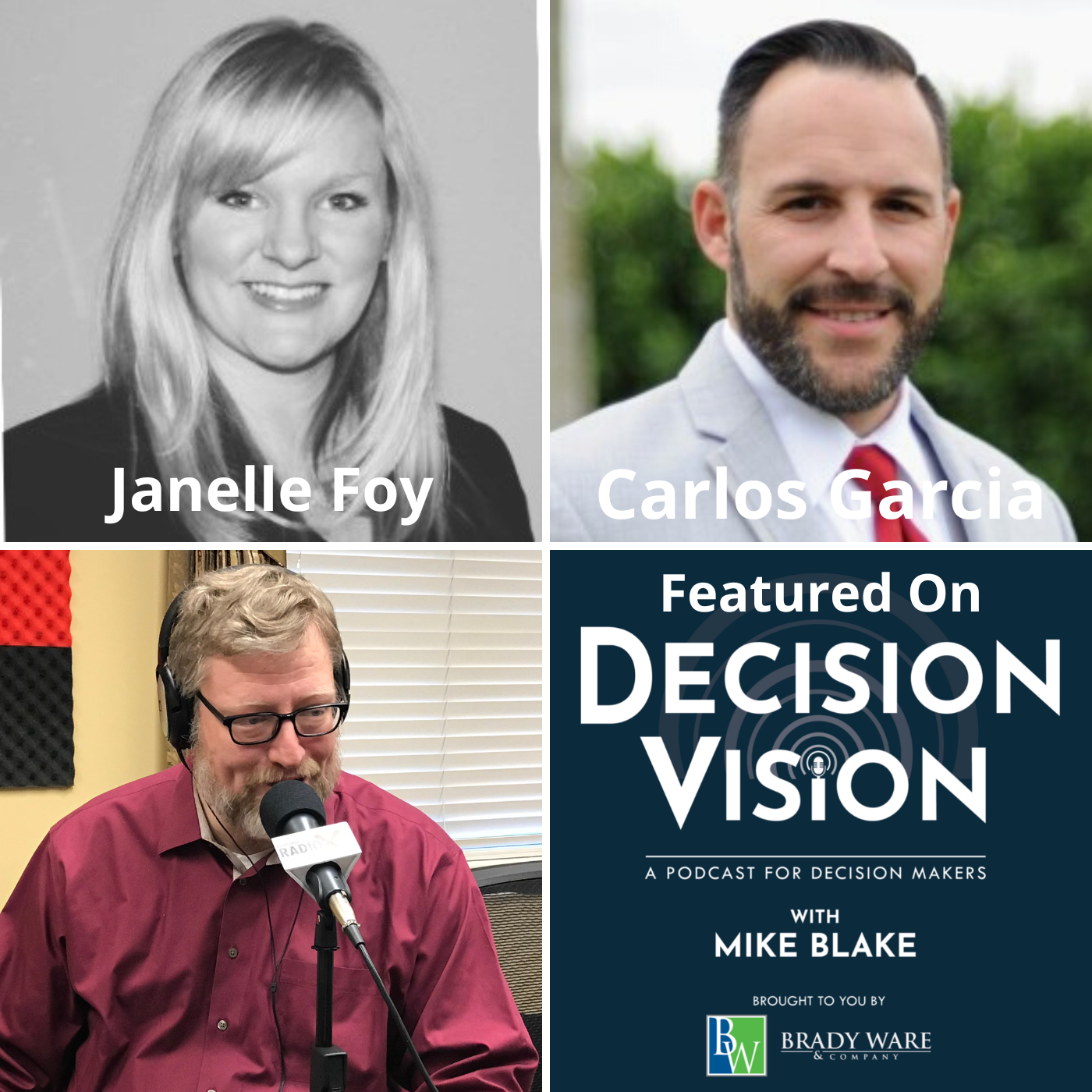
On this episode of Decision Vision, Janelle Foy and Carlos Garcia of Allianz Trade joined host Mike Blake to discuss the ins and outs of trade credit insurance. Janelle and Carlos explained how this insurance comes into play and what it provides for, why this insurance is a reliable source of due diligence of trading partners, and much more.

Decision Vision is presented by Brady Ware & Company and produced by the North Fulton studio of Business RadioX®.

Allianz Trade

Euler Hermes North America Insurance Company and its affiliated debt collection company are part of the Allianz group and market their products and services using the ‘Allianz Trade’ trademark. They are the global leader in trade credit insurance and a recognized specialist in the areas of surety, collections, structured trade credit, and political risk.

For over a century, they have been helping businesses like yours anticipate risks, act with speed, make informed decisions and grow securely. Headquartered in Paris, they are present in more than 50 countries with 5,500 employees. In 2021, their global business transactions represented 931 billion Euro in exposure.

As a member of the Allianz Group, they are a strong global community committed to a culture where both people and performance matter. They truly care for their employees and their individual needs and aspirations. They all shape an environment in which everyone has the confidence to dream, to explore and to grow.

Company website | LinkedIn |Twitter

Janelle Foy, Senior Agent, Allianz Trade

Janelle Foy, Senior Agent, Allianz Trade

Janelle just celebrated 15 years with Allianz Trade. She works in business development and is focused on fostering her clients aggressive sales growth while protecting against credit risk.

Prior to Allianz Trade, Janelle spent 7 years in sales and account management for BellSouth Business, selling telecommunication services to middle-market customers. She is an active member of multiple professional organizations and currently serves as President of the Secured Finance Network (SFNet) Atlanta Chapter.

Janelle lives in Chamblee, Georgia with her husband and two teenage sons.

LinkedIn

Carlos Garcia, Sales Vice President, Allianz Trade

Carlos Garcia, Sales Vice President, Allianz Trade

For over 15 years, Carlos Garcia has been consulting with a variety of companies in diverse industries to help them navigate the growth of their business.

As a part of Allianz Trade, he has access to a wide range of B2B trade receivables protection and credit management solutions, including credit insurance and debt collection.

His goal is to leverage the knowledge he has amassed over the years to help you deal with the inevitable hiccups that happen while growing your business. He can make sure your business continues to thrive in the face of the unexpected.

LinkedIn

Mike Blake, Brady Ware & Company

Mike Blake, Host of the “Decision Vision” podcast series

Michael Blake is the host of the Decision Vision podcast series and a Director of Brady Ware & Company. Mike specializes in the valuation of intellectual property-driven firms, such as software firms, aerospace firms, and professional services firms, most frequently in the capacity as a transaction advisor, helping clients obtain great outcomes from complex transaction opportunities. He is also a specialist in the appraisal of intellectual properties as stand-alone assets, such as software, trade secrets, and patents.

Mike has been a full-time business appraiser for 13 years with public accounting firms, boutique business appraisal firms, and an owner of his own firm. Prior to that, he spent 8 years in venture capital and investment banking, including transactions in the U.S., Israel, Russia, Ukraine, and Belarus.

LinkedIn | Facebook | Twitter | Instagram

Brady Ware & Company

Brady Ware & Company is a regional full-service accounting and advisory firm which helps businesses and entrepreneurs make visions a reality. Brady Ware services clients nationally from its offices in Alpharetta, GA; Columbus and Dayton, OH; and Richmond, IN. The firm is growth-minded, committed to the regions in which they operate, and most importantly, they make significant investments in their people and service offerings to meet the changing financial needs of those they are privileged to serve. The firm is dedicated to providing results that make a difference for its clients.

Decision Vision Podcast Series

Decision Vision is a podcast covering topics and issues facing small business owners and connecting them with solutions from leading experts. This series is presented by Brady Ware & Company. If you are a decision-maker for a small business, we’d love to hear from you. Contact us at decisionvision@bradyware.com and make sure to listen to every Thursday to the Decision Vision podcast.

Past episodes of Decision Vision can be found at decisionvisionpodcast.com. Decision Vision is produced by John Ray and the North Fulton studio of Business RadioX®.

Connect with Brady Ware & Company:

Website | LinkedIn | Facebook | Twitter | Instagram

TRANSCRIPT

Intro: [00:00:02] Welcome to Decision Vision, a podcast series focusing on critical business decisions. Brought to you by Brady Ware & Company. Brady Ware is a regional, full-service accounting and advisory firm that helps businesses and entrepreneurs make visions a reality.

Mike Blake: [00:00:21] Welcome to Decision Vision, a podcast giving you, the listener, clear vision to make great decisions. In each episode, we discuss the process of decision making on a different topic from the business owners’ or executives’ perspective. We aren’t necessarily telling you what to do, but we can put you in a position to make an informed decision on your own and understand when you might need help along the way.

Mike Blake: [00:00:44] My name is Mike Blake, and I’m your host for today’s program. I’m the Managing Partner of Brady Ware Arpeggio, a data-driven management consultancy which brings clarity to owners and managers of unique businesses facing unique strategic decisions. Our parent, Brady Ware & Company, is sponsoring this podcast. Brady Ware is a public accounting firm with offices in Dayton, Ohio; Alpharetta, Georgia; Columbus, Ohio; and Richmond, Indiana.

Mike Blake: [00:01:08] If you would like to engage with me on social media with my Chart of the Day and other content, I’m on LinkedIn as myself and @unblakeable on Facebook, Twitter, and Instagram. I also host a LinkedIn Group called Unblakeable’s Group That Doesn’t Suck, so please join that as well if you would like to engage.

Mike Blake: [00:01:24] Today’s topic is, Should I purchase trade credit insurance? According to the Federal Reserve, U.S. non-financial firms had $4.5 trillion in trade credit outstanding, equal to approximately 21 percent of gross domestic product.

Mike Blake: [00:01:40] So, accordingly, trade credit is the largest form of short term business financing. And I want to cover this topic today because, even though it’s a niche topic, it’s foundational to the import-export business. And we haven’t really done foreign business in a while. I don’t remember what podcast number it is, it had been within the first 50, when we had Gene Plavnik on to talk about Should I export? And we didn’t really touch upon trade credit there is my recollection.

Mike Blake: [00:02:17] But I think what we’re going to find from one of our guests is that one of the key things that allows import-export to go, especially at scale, is the existence of this kind of insurance product. And so, whether you are exporting, or perhaps even importing, now or you’re thinking of doing so in the next couple of years, this is a topic that you’re going to want to understand as you go down that path.

Mike Blake: [00:02:48] So, joining us today are Janelle Foy and Carlos Garcia of Allianz Trade. Janelle just celebrated 15 years with Allianz. She works in business development and is focused on fostering her clients’ aggressive sales growth while protecting against credit risk. And protecting against risk is something near and dear to my heart. Prior to working with Allianz, Janelle spent seven years in sales and account management for BellSouth business, selling telecommunication services to middle market customers. She’s an active member of multiple professional organizations and currently serves as president of the Secured Finance Network, Atlanta Chapter.

Mike Blake: [00:02:48] For over 15 years, Carlos Garcia has been consulting with a variety of companies and diverse industries to help them navigate the growth of their business. As part of Allianz Trade, Carlos has access to a wide range of business-to-business, trade receivables, protection, and credit management solutions, including credit insurance and debt collection. Carlos’s goal is to leverage the knowledge he has amassed over the years to help clients deal with the inevitable hiccups that happen while growing their business.

Mike Blake: [00:03:52] Headquartered in Paris, Allianz Trade is present in more than 50 countries, with over 5,500 employees. A member of the Allianz Group, they are a strong global community, committed to a culture where both people and performance matter. Janelle and Carlos, welcome to the Decision Vision podcast.

Carlos Garcia: [00:04:10] Thank you for having us.

Janelle Foy: [00:04:12] Thank you for having us.

Mike Blake: [00:04:14] So, let’s start off with something very basic, because I think a lot of our listeners are not going to necessarily be familiar with this topic, what is trade credit insurance and why do people buy it?

Carlos Garcia: [00:04:29] Well, trade credit insurance, it’s very, very easy to understand, but a lot of people want to make it very difficult. Imagine – to use something that everybody discusses and knows, brands – Samsung, so let’s say Samsung is going to go and sell $100,000 worth of T.V.s to Best Buy. Well, we insure is that if Best Buy goes bankrupt, disappears, slow pace, or there’s any type of political risk, if they’re in an export market, we’re going to pay them 90 percent of that loss. So, it’s basically an insurance when you give a customer terms.

Mike Blake: [00:05:15] Now, I think something that will be helpful is to explain to our listeners, and to me – because I don’t do a lot of import-export. I have some sales to foreign customers, but nothing of the magnitude you guys deal with – how do import-export deals generally work? And where does trade credit insurance fit into that process?

Carlos Garcia: [00:05:39] Well, from import-export, once you import the product, if you’re distributing it within the U.S., the minute that you reach out to us where we would approve a buyer, as soon as you cut that invoice and that product has left your warehouse, at that point is where the receivable starts and the insurance begins.

Carlos Garcia: [00:06:06] On the export side, it basically starts either it goes to the freight forwarder or you deliver it directly to the customer. That’s where the insurance starts when you’ve lost control of the product.

Mike Blake: [00:06:23] And so, how does it work? I mean, to me, it’s fairly obvious about how this works from an export perspective. You sell something. You expect to get paid for it. Something happens. All of a sudden you don’t think you’re going to get paid. That’s when the insurance comes in. But what about on the import side? How does trade credit insurance work on the import side?

Carlos Garcia: [00:06:53] It’s not a product for the import.

Mike Blake: [00:06:56] It’s not. Okay. I want to make sure I understood that.

Carlos Garcia: [00:06:58] Once you import the product, what you’re going to do with that product, so if you’re going to sell it to a customer and give them terms to pay you, for example, within the U.S., that’s where our insurance starts.

Mike Blake: [00:07:12] Got it. Okay. So, what are the reasons that deals go badly? What are the most typical reasons that your insurance is ultimately called upon?

Janelle Foy: [00:07:22] I think, like you had mentioned before, when you talk about that 4.5 trillion in trade credit outstanding, essentially, when you give somebody 60 day terms, you’re giving them a loan. It’s basically a small business loan. A bank would never do that without getting collateral, without getting financials, without getting credit terms, all the information that they need. But buyers expect you to do that on virtually no information.

Janelle Foy: [00:07:48] So, what credit insurance does is, essentially, provides that collateral for the loan. We’re going to help you know if that customer is a good customer and a strong one to work with. And then, if in the end they don’t pay you, we’re going to cover you and pay you for it.

Mike Blake: [00:08:02] Not being paid by a customer is something that is a risk, of course, whether it’s an international or a domestic deal. Why is that risk different when you’re exporting to a foreign country versus, say, a deal between a company in New Jersey and a company in Indiana?

Carlos Garcia: [00:08:27] Well, the biggest thing is because we cover political risk. So, if you’re shipping overseas and there’s a political risk situation, that’s the biggest thing of exporting why people require the insurance or the financial institution requires the insurance. It’s because of that political risk factor.

Mike Blake: [00:08:48] Okay. So, let’s dive into that because I think it’ll be helpful for our audience to get granular. What are some examples of a place where political risk puts being paid at risk?

Carlos Garcia: [00:09:04] A real easy one, for example, is a couple of years ago when Argentina or Venezuela said, “Hey, you’re not pulling any money out of the country to pay a U.S. debt.” So, a situation like that where the government gets involved and either seizes the products at the port or says, “Hey, there’s no money coming out of here to pay U.S. debt.” Those are political risk events that would cause our insurance to trigger and cover that.

Janelle Foy: [00:09:32] I think another timely example is sanctions in Russia. We had a client with a barge full of perishable goods that we’re shipping into Russia. We put the sanctions in place. They were no longer able to deliver those goods. So, that then becomes a political risk claim as well.

Mike Blake: [00:09:50] I’m glad you mentioned that because I was going to ask about that. One day you’re able to do business in Russia, another day you’re not. And, to me, the interesting risk or dynamic that political risk brings into these deals is, you may have a customer who is perfectly willing and able to pay. But because of some policy intervention, they may not be allowed to. Russia’s interesting and that the policy intervention has not been within Russia itself, at least not initially. It’s been on Western countries, including the United States.

Mike Blake: [00:10:30] But the more classic case for what you described, in Latin America, where they put in currency controls, for example. The point is that, even with the best of intentions, the buyer, the customer, may simply be legally prohibited from paying, even though they can and want to do so.

Mike Blake: [00:10:52] So, you bring Argentina – I’m curious about this – Argentina is a very interesting case because I’m old enough to remember at least two debt defaults. And we’re old enough to remember at least two currency devaluations where another comma was put on the currency, maybe two commas, in fact. I’m curious, in your experience, once a country kind of commits those acts, which then compel you to pay out insurance claims, how long does it take to get comfortable to go back into that country?

Mike Blake: [00:11:35] Because it’s kind of interesting how short memories we have when during the 1980s default, the chatter was, “Well, Argentina can’t default because nobody will ever put money into the country again.” Within five years, it was as if nothing had ever happened. I’m curious about that phenomenon. This is kind of a philosophical question, but just fascinates me, if you’re going to be an international risk, international credit, do you sort of have to have a short memory? Does that come with the territory?

Carlos Garcia: [00:12:06] Absolutely. From every aspect of what we do, we have a short memory. Our head underwriter tells me that all the time, when we go through difficult times and I tell him, “Hey, Steve. Do you think we learned that we’re not going to do this again?” And he tells us, “Hey, we’re going to have short memory and we’re going to do this and worse.” Because you never know what’s going to happen.

Carlos Garcia: [00:12:36] And in the situation with Argentina, yeah, sometimes we come off the political risk. Currently, we’re off the political risk. So, if you purchase credit insurance in Argentina, for example, we tell you, “Hey, this is excluding the political risk factor because the chances of there being a political risk event in today’s world in Argentina is extremely, extremely high.” But we do have very short term memory when it comes to things.

Janelle Foy: [00:13:05] And, ultimately, we are in the business of paying claims. So, we can’t live in a no risk market. Ultimately, we do pay claims to our clients, so we have to take on some level of risk.

Mike Blake: [00:13:18] So, I’m also curious, we hadn’t discussed this before, we talked about Argentina and talked about Russia, places which, historically, let’s just say, had had some volatility to them. Do you ever write policies with more, frankly, stable political environments? Maybe even somebody, the G20 or the G7, that we wouldn’t ordinarily have political risk. But maybe there’s a perception in each area where there could be political risk. Or is it purely so-called developing world?

Janelle Foy: [00:13:55] Political risk for certain countries is very valuable. But when we look at foreign receivables, there’s multiple reasons why companies buy them. A lot of banks will not lend on any foreign receivables that aren’t insured, so to help them prove a borrowing base and their lending capabilities.

Janelle Foy: [00:14:13] But, in addition, as much as we insure foreign receivables, we also insure domestic. So, companies look at it for a credit management tool. They look at it for an insurance product. They look at it to just protect the risk that is out there, regardless if it’s in Argentina or Germany, the risk is still there. And the ability to go collect a receivable in Germany is going to be just as difficult as going to Argentina and collecting it. So, that’s where we kind of step in and make sure they’re going to get paid for those receivables.

Mike Blake: [00:14:40] Yes. That’s really interesting, too. So, the political risk is not limited to a foreign or a distinct policy, but simply the risk of trying to collect on a judgment in a foreign judicial system is something that also is insured against.

Janelle Foy: [00:15:03] Absolutely.

Carlos Garcia: [00:15:05] It’s got a default. The easy way to understand it, is, we cover the inability to pay. Not I don’t want to pay. But it has to be I can’t pay for X, Y, Z reason. Not I don’t want to pay because the product was bad. Now, there’s got to be an inability to pay.

Mike Blake: [00:15:27] Got it. Okay. So, let’s say someone’s been listening to this and they’re thinking, “Oh, I really ought to think about trade credit insurance. I just didn’t know that this existed or hadn’t learned anything about it.” What is the process like to apply for an insurance policy from you guys or somebody similar to you?

Janelle Foy: [00:15:50] The process is really pretty simple. It’s an application and a recent copy of their aging report. Oftentimes, we can help them complete the application. But it’s a pretty simple process. Turnaround, we can do it in five to ten business days. So, we can have a quote for them and a proposal in front of them pretty quickly.

Mike Blake: [00:16:10] And over time, does a relationship with the customer matter? In other words, is it easier once you’ve done a deal or two with a particular customer? Do you find that it’s easier to underwrite more policies for that person? Is there benefit to that relationship to go back to, for example, you guys, Allianz or somebody else? Or is each opportunity purely a standalone exercise that’s evaluated on its own merits?

Janelle Foy: [00:16:41] We don’t generally write transactional policies. When we write a policy, it’s usually for a one to two year term. The idea being that then we bundle all of their customers in, or a portion of their customers, and we continue to insure those for the policy period. So, unlike, say, a letter of credit, where for every transaction you have to get a new letter of credit, with credit insurance, we set a policy in place and you’re covered and insured for all those buyers for the policy period.

Mike Blake: [00:17:09] Okay. That’s interesting. I didn’t know that. I presumed that these would be transaction-based policies. But, in fact, you’ll write a policy for all transactions, presumably between a customer and all their customers in one country for a fixed period of time. Is that how that works? So, like, if I were going to do business in Germany, for example, you’d be writing a one to two year policy on all the business that I do in Germany over a one to two year period?

Janelle Foy: [00:17:42] Essentially, we underwrite at a buyer level. So, they would let us know they’re doing business with ABC Company. They would tell us how much they need that insured for. And that goes to our local underwriting department. So, like you had mentioned earlier, we have offices in 50 countries. We cover 200 markets. So, if you have a customer in Germany, that request goes to our local German risk department, and they determine whether or not that customer is insurable.

Janelle Foy: [00:18:07] So, in addition to the insurance, you’re also getting a credit management tool that helps you understand if a company is insurable. We continue to monitor their risk throughout the policy period. And you know that ABC Company is insured for X amount of dollars. So, you know based on that policy exactly how much coverage you have on that particular buyer.

Mike Blake: [00:18:26] Oh, I see. Okay. So, it’s really focused on one particular trade relationship over a period of time, right? One buyer, one seller.

Janelle Foy: [00:18:37] Average is at a buyer level. The policy itself is combined of all those buyers, a combination of those buyers together.

Mike Blake: [00:18:46] Understood. So, that brings me to another question I want to make sure to ask, because it seems to me that bringing in trade credit insurance can actually have a useful sort of – no pun intended – collateral impact in that what you do must be a great source of due diligence. And that’s got to be one of the hardest things with a new foreign customer how do you kind of check them out. You know, is there a German or an Austrian version of D&B or Hoovers? Does that even matter anymore? But your analysis can be very useful tactical intelligence to the customer.

Carlos Garcia: [00:19:28] Exactly. An easy way to understand it, we’re like their credit manager with a checkbook. So, if your credit manager makes a mistake, you can’t go to them and say, “You made a mistake. I need 200 grand for this loss.” That’s what we do. We review the buyer, look at their financials, in some cases, make a decision. If we make a mistake, you receive a check.

Mike Blake: [00:19:52] Now, most of the time when we talk about doing foreign business, I think we automatically think about selling products to foreign buyers. But point of fact, of course, America is a pretty big exporter of professional services abroad, especially architectural services, among others. Can services be insured in this way as well?

Carlos Garcia: [00:20:18] Yes. Any service, any product, as long as you give terms, 30, 60, 90, 120 days, we can ensure it.

Mike Blake: [00:20:30] Okay. And I’m curious. This may be a silly question, but it occurs to me, I wonder if in the terms of a particular transaction there might be a question or discussion over who actually pays for the insurance policy. Is the insurance policy going to be paid for by the seller or the buyer, maybe both, depending on the structure of the transaction? Is that a thing or does the seller always pay for the insurance or maybe the buyer always pays? I truly don’t know.

Janelle Foy: [00:21:04] As a general rule, the seller will pay for the policy. But I’ve certainly had situations where a bank has required credit insurance and the bank has paid for the policy parent company, even the insurer’s supplier. There’s multiple cases where somebody else may pay for the policy. But, generally, as a rule, the supplier or the person that owns the policy and manages it, they’re the ones that pay for the premium.

Mike Blake: [00:21:27] Okay. And how long does it take? So, let’s say somebody wants to take out insurance on a particular trade activity, how long does it take from somebody contacting one of you guys? Assuming that the policy is writable, that that works out, how long does it take to go from phone call to being insured?

Carlos Garcia: [00:21:52] Two or three days.

Mike Blake: [00:21:53] How much?

Carlos Garcia: [00:21:54] Two or three days.

Mike Blake: [00:21:55] Oh. Two or three days. That’s pretty quick. So, you’re not going to get in the way of a transaction happening.

Carlos Garcia: [00:22:02] No, absolutely not.

Mike Blake: [00:22:04] Now, within the context of political risk, does that in any way cover currency risk or is that just a totally separate thing?

Carlos Garcia: [00:22:15] It’s separate. We don’t cover devaluation of currency.

Mike Blake: [00:22:20] So, in an insurance policy like this, how are they priced or how is the pricing expressed? And what I mean by that is, I have car insurance, so I just pay a number of dollars per month. But I think there are certain other kinds of insurance or financial instruments that are expressed as a percentage of the amount of the transaction or expected transactions over time or maybe something else. So, can you talk to me about kind of what the model looks like in terms of pricing these policies?

Carlos Garcia: [00:22:58] The policy, most of them, they go based on an insured sales volume annually and then it’s a percent. So, to give you a little bit of an idea. Let’s say a company comes up to us and says, “Hey, I want to insure my receivables. My sales on credit are $10 million a year.” Our underwriter will come back and say, “Okay. Your rate is going to be a quarter of one percent.” We take a quarter of one percent, multiply times 10 million, and it’s 25 grand a year. And we give you two options, either you can pay it in full or you can finance it 25 percent down in quarterly payments. It’s basically that simple.

Carlos Garcia: [00:23:37] We do have policies that are coverage based, for example, single debtor transactions. A big hot topic now as the cruise line, “Hey, I need $5 Million on cruise line.” We’ll tell them, “Okay. It’ll cost you 0.42 percent a month.” So, we have two options to price policies.

Janelle Foy: [00:23:59] And I think –

Mike Blake: [00:24:00] Sorry. Go ahead, Janelle.

Janelle Foy: [00:24:03] Well, I was just going to say, I think one thing to point out that the big misnomer in credit insurance is you do not have to insure the entire portfolio. So, if you only want to insure your export business, if you only want to insure key accounts, we can carve out that business. And, essentially, every policy is customized for the customer’s needs. So, depending on what they’re looking for, we can structure a policy to meet their needs.

Mike Blake: [00:24:26] And do the terms vary on the policy? My world is M&A, so I tell clients all the time that in an M&A deal, price and terms are dancing partners. And you might get a better price, but you may have to give up more strict terms. Or maybe from an insurance perspective, maybe there’s a “higher deductible” in order to lower your fees. Does that kind of conversation happen in your world? Or are the terms pretty much standardized no matter what you’re insuring?

Carlos Garcia: [00:25:01] No. There is a little bit of a wiggle room, you know, increase in deductible and increase of price share. But at the end of the day, there’s a cost to turn the lights on. So, at some point we’re going to say, “It doesn’t matter if you lower that another 20 percent, it’s still not going to change the price.”

Mike Blake: [00:25:24] So, when a customer approaches you for an insurance policy like this, what sorts of information are you going to be requesting to review?

Janelle Foy: [00:25:38] So, on the application, the information is pretty simple. We’re looking at the annual sales of what we’re insuring, and we talked about being able to segment your business. So, we look at the annual sales. In the event of foreign receivables, we look at how those break down by country. We look at the industry you’re in, your loss history, the terms you sell on. All those things kind of rolling together to determine the premium.

Mike Blake: [00:26:03] So, is there a minimum – not transaction. I keep thinking transaction. That’s not right. Is there a minimum amount of sales volume, let me put it that way? Or even a maximum sales volume that you or others like you will consider?

Carlos Garcia: [00:26:25] No. There is no minimum. What we have is a minimum premium. So, for a domestic policy, the minimum premium is going to be 10,000. For an export policy, it’s going to be 15,000, because of the coverage of the political risk. And, basically, there is no maximum.

Mike Blake: [00:26:40] Okay. So then, at that point, customers will self-select that. Obviously, if it’s a $10,000 transaction, spending on insurance doesn’t make any sense.

Carlos Garcia: [00:26:49] Exactly.

Mike Blake: [00:26:50] Interesting. Okay. So, I think one of your competitors, either directly or indirectly, is going to be somebody like EXIM Bank or Maeda over in Japan, entities of that nature who are designed to be in particular export promotion entities. And if I’m not mistaken, they also provide some sort of trade credit insurance, typically based on political risk. How do you coexist with them? Or where does it make sense to come to you guys versus to go to an EXIM Bank or a similar authority? How do you help clients navigate that decision?

Janelle Foy: [00:27:32] EXIM Bank really was developed to help support small businesses. And really where its strength is, is at that transactional level, like you were talking about earlier. So, if you do four or five transactions a year, small export business, that’s where EXIM really does well.

Janelle Foy: [00:27:49] Once you start getting into regular business and you really are doing a decent amount of volume on the export side, at that point, private insurance is going to be more cost effective. We also have the access to more information. So, we have the risk underwriters throughout the world that are providing the data that somebody like an EXIM Bank wouldn’t be able to offer.

Janelle Foy: [00:28:09] And in addition, we don’t have requirements for where the products are made. EXIM requires that a large portion of it be manufactured here in the United States. And, also, we can cover domestic receivables, and that’s something that EXIM can’t do.

Mike Blake: [00:28:24] How does the company prepare to work with somebody like you? What do they need to do in order to make your job easier so you can quickly and effectively put up an insurance policy in place?

Carlos Garcia: [00:28:38] Basically, it’s very, very easy. All we’re going to ask them for, like Janelle said, that information on the application. But moving forward, all we ask them is for three pieces of information. What’s the name of the customer you’re going to sell to? What’s their address? And how much you need? That will go to our underwriting team. And on the U.S. side, from instant to 48 hours, you’re going to get an answer. One of three answers. Either (1) the buyer is insured for that amount; (2) the buyer is insured for a lesser amount and the reason why; or (3) stay away from this buyer, they’re not insurable, and this is the reason why.

Carlos Garcia: [00:29:11] On an export, it’s a little longer. It could be from instant to five days with the same information. So, from a customer’s point of view, it’s basically taking it from a situation where they’re going from the credit manager sitting on their desk to review it, to maybe going to the credit manager, he or she looking at it, putting it in our system, making a decision, and now they can make a business decision, do they want to still sell to that buyer or not? So, it’s really not a lot of effort that they got to put on their part to get a transaction insured.

Mike Blake: [00:29:50] I’m talking with Janelle Foy and Carlos Garcia. And the topic is, Should I purchase trade credit insurance? So, a question I like to ask in almost every show is, Who shouldn’t get trade credit insurance? Is there a profile of somebody that maybe should be thinking about it but you kind of tell them, “Don’t waste your time. This probably isn’t the right kind of product for you”?

Carlos Garcia: [00:30:14] Customers that don’t give credit to their customer. Someone that does prepaid, COD, on delivery. But as soon as they want to grow, the only way to grow is for them to start giving terms to their customers. At that point, they have to come get the insurance. I would say anybody that’s got an accounts receivables should have credit insurance.

Mike Blake: [00:30:38] So, are there countries right now that are basically on a no fly list? Are there countries that pretty much an application is going to be dead on arrival that that risk is just simply uninsurable?

Carlos Garcia: [00:30:53] On my world out of Miami here, the biggest one is Venezuela and Cuba. Those are non-starters.

Mike Blake: [00:31:06] All right. So, this has been a good conversation. I’ve learned a lot. I’m sure there are questions that my listeners would have liked me to have asked or that our listeners would have liked us to spend more time on, if somebody wants to contact you for more information about this topic, can they do so? And if so, what’s the best way for them to do so?

Carlos Garcia: [00:31:30] I’m sure you’re going to provide our email and phone number. Janelle and I are readily available. You can just shoot us an email or give us a call. And if we don’t answer the phone on the second, within 24 hours, they’ll have a call from us.

Mike Blake: [00:31:48] That’s going to wrap it up for today’s program. I’d like to thank Janelle Foy and Carlos Garcia so much for sharing their expertise with us.

Mike Blake: [00:31:55] We’ll be exploring a new topic each week, so please tune in so that when you’re faced with your next business decision, you have clear vision when making it. If you enjoy these podcasts, please consider leaving a review with your favorite podcast aggregator. It helps people find us that we can help them.

Mike Blake: [00:32:10] If you would like to engage with me on social media with my Chart of the Day and other content, I am on LinkedIn as myself and @unblakeable on Facebook, Twitter, Clubhouse, and Instagram. Also, check out my LinkedIn Group called Unblakeable’s Group That Doesn’t Suck. Once again, this is Mike Blake. Our sponsor is Brady Ware & Company. And this has been the Decision Vision podcast.


Tagged With: Allianz Trade, Brady Ware, Carlos Garcia, import/export, Janelle Foy, Michael Blake, trade credit insurance

Suzanna Martinez with PEO For The CEO and Megan Satterlee, Max Soubannarath & David Nieves with Effortless Mining

June 9, 2022 by Mike

Gwinnett Business Radio
Suzanna Martinez with PEO For The CEO and Megan Satterlee, Max Soubannarath & David Nieves with Effortless Mining
Loading
00:00 /
RSS Feed
Share
Link
Embed

Download file

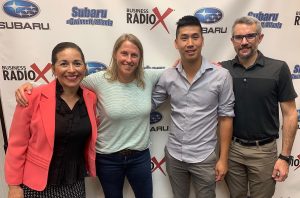
Suzanna Martinez, Megan Satterlee, Max Soubannarath and David Nieves

Suzanna Martinez/PEO For The CEO

PEO for the CEO increases the bottom line for companies by helping with their HR nightmares, saving them money on health and workers comp insurance, and matching them to the best-fit Professional Employer Organization (PEO) company.


Megan Satterlee, Max Soubannarath & David Nieves/Effortless Mining

Effortless Mining is a company that aims to make Bitcoin mining easy for all. Interested in getting into crypto currency but don’t know where to start? Have you heard about Bitcoin mining but hesitant to jump in? Let them help you. Their all-inclusive package will handle every aspect of the mining for you so that you can sit back and watch daily payments roll into your wallet.

Gwinnett Business Radio is presented by
Tagged With: David Nieves, Effortless Mining, gwinnett business, gwinnett business podcast, Gwinnett Business Radio, harper lebel, Max Soubannarath, Megan Satterlee, PEO For The CEO, Suzanna Martinez

Decision Vision Episode 172: Should I Align My Company with a Political Position? – An Interview with Peter Baron, Carabiner Communications

June 9, 2022 by John Ray

Peter Baron
Decision Vision
Decision Vision Episode 172: Should I Align My Company with a Political Position? - An Interview with Peter Baron, Carabiner Communications
Loading
00:00 /
RSS Feed
Share
Link
Embed

Download file

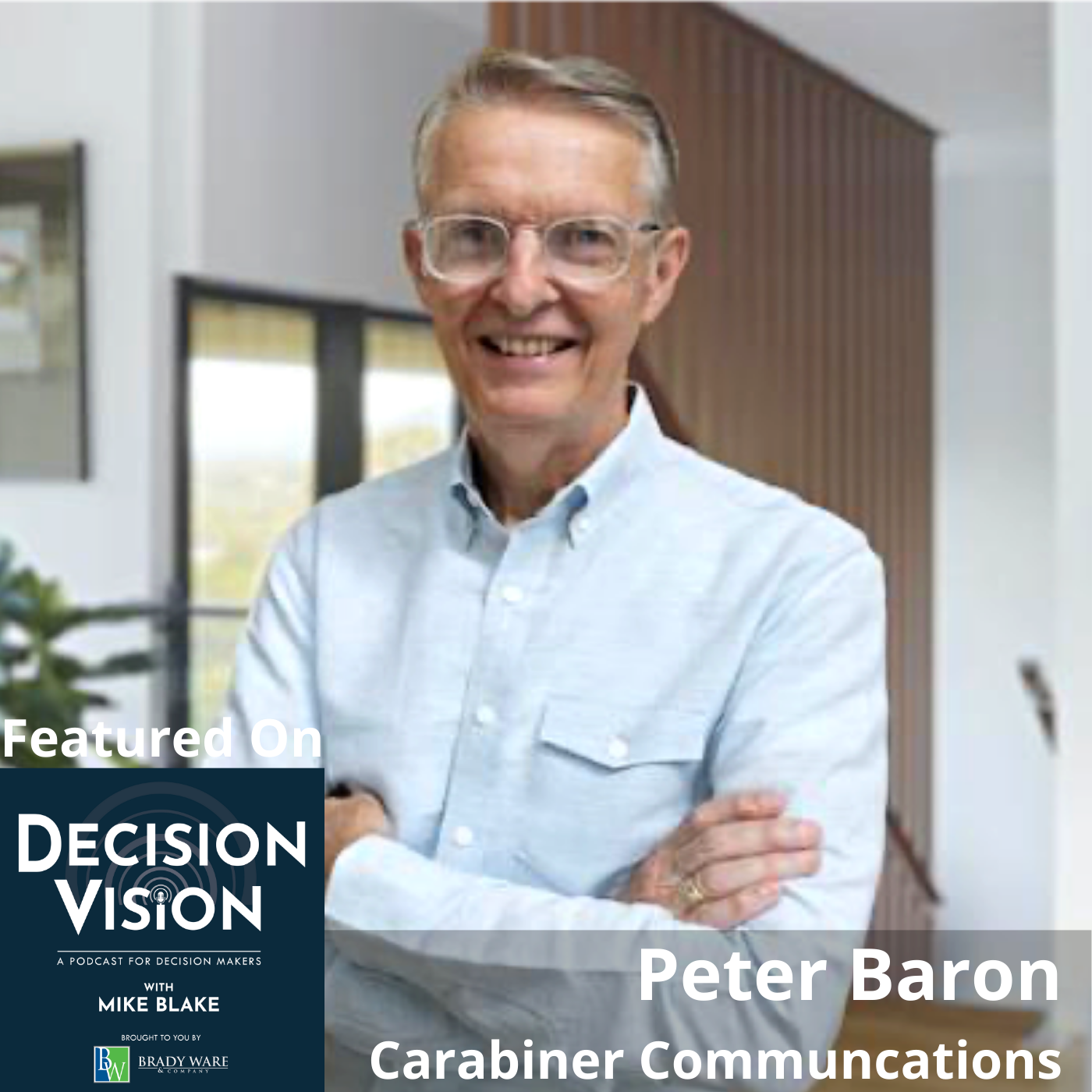
Peter Baron

Decision Vision Episode 172: Should I Align My Company with a Political Position? – An Interview with Peter Baron, Carabiner Communications

If a company chooses to align with a political position, how does it impact revenue? Do consumers care more about their products than their politics? Peter Baron, CEO of Carabiner Communications, and host Mike Blake come to some interesting thoughts on this topic while considering examples of companies that have taken strong political positions such as Nike, Disney, and others. They discuss the kinds of influence companies engage in, what might factor into a board’s decision to take a position, the role of diversity on a board, the impact of “easy outrage,” and much more.

Decision Vision is presented by Brady Ware & Company and produced by the North Fulton studio of Business RadioX®.

Carabiner Communications

Carabiner Communications is a leading full-spectrum marketing and public relations firm. Founded in 2004, Carabiner Communications has a proven history of helping companies tell their most engaging stories and navigate a path to success. As their name implies, the agency helps B2B tech and healthcare organizations get connected to their targeted audiences and the influencers who have their ear.

The Carabiner team is comprised of experienced professionals whose services include messaging and branding, content development and marketing, public relations, lead generation, and more. They are known for being strategic, cost-effective, and always ready to partner with great companies to drive sales.

Company website | LinkedIn |Twitter

Peter Baron, CEO, Carabiner Communications

Peter Baron, CEO, Carabiner Communications

Although Peter began his career with a large PR agency in NYC, he ultimately found his way to the warm and sunny South and made it home. True to our agency name, he is one connected guy—some folks think he knows pretty much everyone in the Atlanta tech community. Peter is typically the Carabiner you’ll run into at conferences and networking events, where he’s friendly, open, and loves to talk about the latest technology trends or his large family.

While Peter drives agency direction and business development for Carabiner, he also consults frequently on accounts and offers high-level campaign strategy. He loves to brainstorm! Peter enjoys the great outdoors, including hiking, kayaking, and camping.

Fun fact: You may not realize it since he dropped the accent years ago, but Peter is from “across the pond”— he’s an expatriate of the U.K.

LinkedIn

Mike Blake, Brady Ware & Company

Mike Blake, Host of the “Decision Vision” podcast series

Michael Blake is the host of the Decision Vision podcast series and a Director of Brady Ware & Company. Mike specializes in the valuation of intellectual property-driven firms, such as software firms, aerospace firms, and professional services firms, most frequently in the capacity as a transaction advisor, helping clients obtain great outcomes from complex transaction opportunities. He is also a specialist in the appraisal of intellectual properties as stand-alone assets, such as software, trade secrets, and patents.

Mike has been a full-time business appraiser for 13 years with public accounting firms, boutique business appraisal firms, and an owner of his own firm. Prior to that, he spent 8 years in venture capital and investment banking, including transactions in the U.S., Israel, Russia, Ukraine, and Belarus.

LinkedIn | Facebook | Twitter | Instagram

Brady Ware & Company

Brady Ware & Company is a regional full-service accounting and advisory firm which helps businesses and entrepreneurs make visions a reality. Brady Ware services clients nationally from its offices in Alpharetta, GA; Columbus and Dayton, OH; and Richmond, IN. The firm is growth-minded, committed to the regions in which they operate, and most importantly, they make significant investments in their people and service offerings to meet the changing financial needs of those they are privileged to serve. The firm is dedicated to providing results that make a difference for its clients.

Decision Vision Podcast Series

Decision Vision is a podcast covering topics and issues facing small business owners and connecting them with solutions from leading experts. This series is presented by Brady Ware & Company. If you are a decision-maker for a small business, we’d love to hear from you. Contact us at decisionvision@bradyware.com and make sure to listen to every Thursday to the Decision Vision podcast.

Past episodes of Decision Vision can be found at decisionvisionpodcast.com. Decision Vision is produced by John Ray and the North Fulton studio of Business RadioX®.

Connect with Brady Ware & Company:

Website | LinkedIn | Facebook | Twitter | Instagram

TRANSCRIPT

Intro: [00:00:01] Welcome to Decision Vision, a podcast series focusing on critical business decisions. Brought to you by Brady Ware & Company. Brady Ware is a regional, full-service accounting and advisory firm that helps businesses and entrepreneurs make visions a reality.

Mike Blake: [00:00:22] Welcome to Decision Vision, a podcast giving you, the listener, clear vision to make great decisions. In each episode, we discuss the process of decision making in a different topic from the business owners’ or executives’ perspective. We aren’t necessarily telling you what to do, but we can put you in a position to make an informed decision on your own and understand when you might need help along the way.

Mike Blake: [00:00:44] My name is Mike Blake and I’m your host for today’s program. I am the managing partner of Brady Ware Arpeggio, a data-driven management consultancy which brings clarity to owners and managers of unique businesses facing unique strategic decisions. Our parent, Brady Ware & Company, is sponsoring this podcast. Brady Ware is a public accounting firm with offices in Dayton, Ohio; Alpharetta, Georgia; Columbus, Ohio; and Richmond, Indiana.

Mike Blake: [00:01:08] If you’d like to engage with me on social media with my Chart of the Day and other content, I’m on LinkedIn as myself and @unblakeable on Facebook, Twitter, Clubhouse, and Instagram. I also host a LinkedIn Group called Unblakeable’s Group That Doesn’t Suck, so please join that as well if you would like to engage.

Mike Blake: [00:01:26] Today’s topic feels extremely timely, and I wish I could tell you that on May 31st I had the foresight that the topic was going to be so timely as it is, but I can’t. Sometimes just things work out. I don’t want to use the word luck, because given where we are, that’s not a term I’m very comfortable with.

Mike Blake: [00:01:51] But the topic today is, Should I align my company with a political position? And whether you find yourself on the left or the right of the political spectrum, I think few people would argue that we are in an unusually fractured political environment, which is spilling over into the social environment. And as a result, competing ideologies are now competing for whatever power, influence, resources they can muster in order to ensure the outcome of a society that they deem ideal, or at least as close to ideal as is humanly possible.

Mike Blake: [00:02:43] And I’m old enough to remember apartheid in the movement against American companies, or rather the social movement that were protesting companies that would continue to do business with South Africa, because people felt that in doing so, you are propping up the apartheid government there. And, of course, in the late ’80s, early ’90s, the apartheid government went away. South Africa is now what it is today. But that’s an early example of social activism, at least in my memory. Social activism, putting pressure on companies to take a specific position.

Mike Blake: [00:03:24] And, now, in recent history and, frankly, as current events, we see quite a bit of that. There was a fairly extraordinary step of Nike deciding to go all in with Colin Kaepernick. A move that I thought was risky. I still think it was risky. But it did work out for them. It turns out the 100 people or so that burned Nike shoes on YouTube were probably about the only 100 customers they lost. And their stock price has gone through the roof ever since. And one of the object lessons there is you have to be careful just because you see somebody on the media saying something or doing something, that doesn’t mean that there’s a critical mass of support behind it.

Mike Blake: [00:04:11] And more recently, we have seen the fight between the government of the State of Georgia and Disney. And, now, and we’ve seen it with companies lining up on two sides of the Russia-Ukraine war. Most now, I think companies, some of them somewhat belatedly, and even perhaps begrudgingly, are choosing to withdraw from Russia as a show of support for the Ukrainians in that particular war.

Mike Blake: [00:04:43] And now that we find ourselves in the wake of the Texas school shootings and the Buffalo hate crime shootings, the next battleground clearly is going to be gun control. And then, later this year, it’s a drop dead certainty that abortion is going to be a position that consumers are, frankly, just going to demand that companies take a position on.

Mike Blake: [00:05:11] I remember in college, Peter Elich, a practicing Catholic, was very supportive of anti-abortion causes. And that did hurt for a long time Domino’s position in the college market, which tend to skew more liberal.

Mike Blake: [00:05:31] But the point is that, to my mind anyway, this notion of companies that are going to be asked to take a public political position, and not only take a public position, but actually act on it, possibly to the short term apparent detriment to their businesses, I think, is something that is likely here to stay, at least for the medium term. And that means that as business owners, as business decision makers, and advisors, we’re going to be in a position of making that decision, like it or not, and helping other people make that decision.

Mike Blake: [00:06:04] And so, joining us today to help us understand at least his perspective on this, and I think his perspective is quite valuable and learned, is Peter Baron, who is CEO of Carabiner Communications, which is a leading full-spectrum marketing and public relations firm.

Mike Blake: [00:06:19] Founded in 2004, they have a proven history of helping companies tell their most engaging stories and navigate a path to success. As their name implies, the agency helps B2B tech and health care organizations get connected to their targeted audiences and the influencers who have their ear. The Carabiner team is comprised of experienced professionals, whose services include messaging and branding, content development and marketing, public relations, lead generation and more. They are known for being strategic, cost effective and always ready to partner with great companies to drive sales.

Mike Blake: [00:06:50] Although Peter began his career with a large public relations agency in New York City, he ultimately found his way to the warm and sunny South and made it home. True to the agency name, he is one connected guy. Some folks think – and I’m one of them – he knows pretty much everyone in the Atlanta tech community. And as an aside, they like him. A lot of people like that, they don’t necessarily like them. That’s an important distinction. Peter is typically the Carabiner you run into at conferences and networking events where he’s friendly, open, and loves to talk about the latest technology trends or his large family.

Mike Blake: [00:07:24] While Peter drives agency direction and business development for Carabiner, he also consults frequently on accounts and offers high level campaign strategy. He loves to brainstorm – and I can attest to that. He also enjoys the great outdoors, including hiking, kayaking, and camping, great places for brainstorming. And fun fact, he may not realize it, since he dropped the accent years ago, but Peter is from across the pond and he’s an expatriate of the United Kingdom. Your Majesty, Peter Baron, welcome to the Decision Vision podcast – or Your Excellency.

Peter Baron: [00:07:54] Thank you. Thank you. It’s so good to be here. Thanks, Mike.

Mike Blake: [00:07:58] So, great to see you again. And thanks for coming on to talk about, frankly, what I think is a very difficult topic. And I imagine if you’re not getting questions about it now, you’re going to quite a bit. Businesses seem to be more willing to align themselves with political causes, I think, than they have in the past. Do you agree with that observation? If so, why do you think that is?

Peter Baron: [00:08:25] I think so. It’s certainly more visible than it has. But I think the thing to realize is not necessarily because of PR guys like me. And I’ve been doing this since 1985, so it’s been a few years. And I think back to my education and the things that we were taught. It led to sort of a discipline in the boardroom or at least in the corporate communications team where these kinds of things have been discussed and thrashed around for a long time because what, ultimately, I think you’re trying to do as a business is either try to control your business environment or operate well within an environment.

Peter Baron: [00:09:08] So, the fact that this topic has come up and the companies might be feeling more pressure is interesting. But over the arc of time, I think you see that companies have tried to stay ahead of this curve and you know that they’re working pretty hard right now to figure out what they want to do. And so, when the pressure comes publicly, it’s not unanticipated would be my thought.

Mike Blake: [00:09:37] So, one question I have is, just because we observe something doesn’t necessarily make it true. But are companies in actuality becoming more active in the political discourse in our country? Or have they been all along realistically and it’s simply becoming more visible than it has been?

Peter Baron: [00:10:00] I think they’ve probably been involved all along. I made a couple of notes in preparing for the show, and it’s interesting to quantify some things. But if you think about being aligned or involved with political causes, there are a number of ways to do that. One is publicly through your messaging and how you get involved. Another is what you do behind the scenes with your dollars.

Peter Baron: [00:10:24] So, lobbying, for instance. And when you look at lobbying, I wanted to see what was going on in terms of increasing dollars. So, in 2021, the total lobbying spending in the United States amounted to $3.73 billion. And this was an increase from the three-and-a-half billion the year before.

Peter Baron: [00:10:49] And the leaders in terms of spending were the National Association of Realtors, which is fascinating. I mean, this is kind of an interesting time to buy and sell homes. The next group was the U.S. Chamber of Commerce. The next is the Pharmaceutical Research and Manufacturers of America. And then, the last one was the American Hospital Association.

Peter Baron: [00:11:14] So, you know, spending a good bit of money. Pfizer spent 10.9 million on lobbying in 2020. I mean, you could argue at a time when companies that were producing a COVID vaccine didn’t really need to spend a lot of money. They were making a lot of money. But, yeah, they’re still applying their dollars in the halls of Congress or, perhaps, even on a state level. So, that’s, to me, evidence of how businesses really play in the political spectrum.

Peter Baron: [00:11:48] But I know our show is probably more about what we’re seeing in the news right now. So, the public pressure to play, I think, realistically they’re being pretty sophisticated players.

Mike Blake: [00:12:01] Well, you know, I do think those two things are linked. I agree with you, they’ve been playing all along through lobbying. And lobbying, to me, is kind of interesting. Nobody likes lobbyists unless they’re lobbying for something that you care about and agree with. And lobbying is also quite opaque. I’m sure it’s happened, I just can’t remember, but I can remember the last time a specific company – a trade association, yes, like the NRA, sure – has been taken to task over their lobbying activity. I don’t think, for whatever reason, it’s not considered a part of the brand or maybe it’s just simply on some level expected once your company achieves a certain critical mass.

Mike Blake: [00:12:53] But beyond that now, what are you seeing companies considering as actions they might take to go beyond simple lobbying? And I’ll put campaign donations in sort of the same bucket because they’re not quite as visible. What steps are they considering taking now?

Peter Baron: [00:13:11] Lobbying and donations, of course, are the first two things that you see. But activism and encouraging their workforce to do something. This is not a particularly charged example, but you’ve got a lot of companies that like to steer their employees into doing things. Like Habitat for Humanity, Home Depot, doing these crews where they go out and help build homes. I think that’s more of a grassroots effort. There are lots of companies doing that.

Peter Baron: [00:13:48] Many of them are forced into doing things with compliance. So, you look at environmental, social, and governmental ESG, compliance requirements in the construction space. And I’m not an expert there, but I read a little bit about it recently. But there were a lot of requirements for LEED buildings. These are buildings that are built using standards that indicate that the materials are sourced reasonably locally and that sustainable methods are being used. A lot of those things have been now encoded into regulation on the state level, county level, but also on the federal level too.

Peter Baron: [00:14:27] So, in terms of actions that companies are taking, some of them are not voluntary, they’re compliance oriented. And I guess if a company doesn’t like the requirements, then you have to circle back to the lobbying and say, “Well, what you’re asking for me to do here on a lawsuit is an opportunity.” And there are certainly a lot of actions taken into the legal sphere.

Peter Baron: [00:14:55] Boards, you do find board members being involved. It used to be that the board members were encouraged to be on the symphony board just to get some public exposure or to be good citizens in their communities. But, now, board members are bringing their influence to bear, and other organizations too. I’m not sure they’re on political campaign committees.

Peter Baron: [00:15:19] But I guess it was in 2010, the Supreme Court said the companies could make direct investments in presidential elections. When a company takes a decision like that, that’s going to be an interesting discussion in the boardroom, who do you decide to pick? And maybe there’s a majority owner, but can you imagine it as sort of a diversely held public corporation if one of those is going to endorse a political candidate or not. That’ll be a fascinating discussion.

Mike Blake: [00:15:55] Yeah. And I want to come back to that, because I do think that’s an interesting part of the discussion. But before I do, you used a word, which I think is critically important, I want to kind of go back to and drill down on, which is influence. I speculate, but I don’t know – I don’t have the data to support this. I don’t know the data exists – that at least some of these politically oriented activities are intended to simply gain influence in government rather than embrace, or espouse, or promote a particular political position.

Mike Blake: [00:16:31] Indeed, I think I’ve seen a number of instances where the same company has made campaign donations to the two opposing candidates in the same election. In some respect, that tells me that they don’t really care who wins. They just want to make sure that whoever wins is going to take their phone call.

Peter Baron: [00:16:51] Yeah. It’s kind of a funny fact now that Trump has come and gone. But prior to Trump running for president, 50 percent of his donations went to the Democrat Party and the other 52 Republican. I mean, that kind of underlines your point in kind of a highly public funny way. I do think that, yes, maintaining a business environment is one of the sort of top responsibilities for any of these big businesses.

Peter Baron: [00:17:24] But as you were reading the introduction to the show, you talked about unique businesses. And I think a lot of our discussion so far has involved big businesses, highly public. But when you talked about unique businesses, I thought, well, if I’m driving along the road going somewhere, I’m usually in traffic with vans that belong to plumbers, and electricians, and dry cleaners, and legitimate businesses that are beholden to their customers. And they wake up every day trying to find parts so they can fix things, or source products so they can sell them and install them, and trying to do good work and try to hire people. And, you know, we never know or ask what causes they’re supporting.

Peter Baron: [00:18:12] So, part of the discussion that’s interesting is, what part of our economy, which is mostly small businesses, even care about this and what level does it become? Do you have the luxury, for instance, of trying to be somebody that’s being a leader in this space?

Mike Blake: [00:18:30] Now, that circles back nicely, I think, to the question about the boardroom is that, how do you suppose – maybe you’ve been in those discussions. I have not – those discussions go? Is it a CEO, or is it a board member, or a member of the executive team and says, “Hey, our company has an obligation to take this particular stance.”

Mike Blake: [00:18:57] And it seems to me there are really two questions to be answered. Number one is, do we want to take and spend shareholder capital on any stance at all? And then, B, you’re going to pick a side. How do you do that? What are the implications? How do you even broach that? I mean, just that conversation internally, unless you’re really sure that everybody is just aligned, that has the capacity to destroy a management team in about a-half-an-hour, doesn’t it?

Peter Baron: [00:19:28] That does. And you should have a board that has diverse opinions where they can speak openly and debate with one another but, hopefully, reach a consensus at some point. One thing that I’ve observed over time is that, large corporations spend a good bit of time and money on risk evaluation. And this information is regularly discussed in board meetings. And so, this sort of climate – unless you’re brand new to a board – if you’ve been on a board for a number of years, every meeting, you’ve got this sort of evaluation of risk and the climate that they’re involved in. And so, their comments are always going to be made inside of that sort of soup mixture.

Peter Baron: [00:20:18] So, the question I would have is, given that you understand what the primary risk factors are for your business – let’s say you’re Georgia-Pacific and you’re still generating electricity from coal fired plants, or you’re Home Depot and you’re sourcing wood from places like the Amazon – all of these sort of hot button issues, you’re aware of these things from a risk standpoint, and you probably persist in doing them. So, the energy companies that are still getting oil out of fracking operations even though they’re highly unpopular.

Peter Baron: [00:20:55] So, it seems like the business’s persist in doing things the way that they’re currently set up until the point becomes not as big of a risk for them to make a change. Does that sound cynical? I think that’s part of the evaluation that the board is almost required to make, is, when is the right time for us to leave this sort of maybe older, dirtier way of doing things or a way that’s marginalizing a group of people? Is now the right time for us to do that without breaking the company? And there might be some people out there that say, “I don’t care if it breaks the company. Let’s go ahead and do it anyway.”

Mike Blake: [00:21:37] So, you mentioned something else in passing, I think is quite interesting, I want to come back to that. And you talked about wanting boards to be diverse and bring diverse opinions to the table. And I hadn’t thought of this angle before, but now I’m thinking about it. And that is that, I wonder if companies that are willing to take strong political positions – I’m going to use Disney for a moment because Disney is an example where they’re just flat out entering into open conflict with the Florida government. And they’ve basically said, “We’ll go toe to toe. We can match you dollar for dollar in court. And probably can out market you.”

Mike Blake: [00:22:24] I wonder if that suggests that Disney’s board may not be all that diverse. If they are able to take such a strong position that they’re willing to openly confront and, in some respects, I guess, really defy the wishes of the government of their host state, it seems implausible to me that it’s possible to get a truly independent and diverse board in full alignment over such a strong, risky position.

Peter Baron: [00:22:58] That’s interesting. As you were speaking, I wondered that it would be interesting to look at the composition of the Disney board. You can argue – and this is sort of coming from my perspective as an immigrant somewhat. I’ve lived in the United States for a long time. I lived in the West. I lived in the South – I wonder how many people on the Disney board are actually from the South? Do any of them have ties to Florida other than perhaps living there fairly recently?

Peter Baron: [00:23:32] But this is a complete guess on my part, but as a sort of leading entity in the entertainment business, that there are probably more folks from the West Coast generalities – so forgive me if I’m way off here – where positions that they have seen, and growing up with, and become accustomed to, and things that this is natural, everybody should think and feel this way, are not the thoughts and feelings in the positions of a board in Kissimmee, Florida.

Peter Baron: [00:24:12] You get up to that sort of northern part, I mean, Orlando is a big city, but it’s a long way from Miami. I don’t know how far it is from Tallahassee, but Florida is an interesting state as they’re finding out. So, I wonder from a diversity standpoint if the board isn’t more reflective of a non-Florida State mentality – that’s maybe an obvious thing, right? They’re obviously not.

Mike Blake: [00:24:43] I bet you a lot of them come from California. You know, a typical entertainment company.

Peter Baron: [00:24:48] Yeah. That’s kind of what I was implying there. And California does look at the world differently, but California is invading the rest of the country.

Mike Blake: [00:25:00] Well, that’s certainly one position, right? That some are interpreting that California’s, in fact, either they’re invading or they’re using their economic power to promulgate certain viewpoints, I guess. But the fact that they’ve taken the extraordinary step of openly defying a strong Florida Government that, right now, may very well be currently led by somebody who may be the Republican nominee in 2024. And I’m not advocating one way or the other. This isn’t the forum for it. But I do have a curiosity of what the process was and how hard it was to achieve the kind of consensus at the upper levels of that company required to take a combative stand out to that extent.

Peter Baron: [00:25:58] Like you said, I think that’s probably right. There probably was a unanimity – is that the right way to say that? – in terms of thought and philosophy with regards to wanting to take this on like they did.

Mike Blake: [00:26:13] So, I’m going to ask you a very unfair question, because you’re not a sociologist but I know this is something you think about. In your mind, do you have a view as to the social implications of corporations aligning themselves politically like this? Is it in your mind something that can be distorting to society, something that can be helpful, or maybe you haven’t even sorted it through yet. But what do you think are the implications?

Peter Baron: [00:26:44] Yeah. I do have a thought or two. They tend not to be political but social. So, like, I don’t have any TOMS shoes, but I like the fact that TOMS gives a pair of shoes away when somebody buys a pair of shoes. And I think that’s really cool. And there are others that do it with socks or other materials as well. And when you look and you read about some of these companies – I know Zappos is involved with social causes, too – you realize that they’re coming from places where the leadership of the company has genuine concerns and they tend to be apolitical, but wanting to address a broad need, sometimes overseas, sometimes domestically.

Peter Baron: [00:27:34] When you look at a political stance that a company has taken and does that have a social impact? I’ve done a little bit of reading and I’m sort of trying to remember myself, I can’t see that it’s had a sort of overly negative impact.

Peter Baron: [00:27:55] You look at companies, again, not political, but you look at somebody like Chick-fil-A who is probably making decisions from a religious philosophy. Opening their store six days a week instead of seven. They’re the number five fast food company rising in sales all the time. And yet there have been periods through the last few years where there have been boycotts because of the thoughts and beliefs and opinions, or perceived thoughts and opinions, of their leadership. It hasn’t seemed to have affected their growth.

Peter Baron: [00:28:37] There might be people that won’t eat there and never will. But to your point in the opening with Colin Kaepernick and Nike, maybe the 100 people that burned their shoes were the only people that stopped doing business with them. So, I wouldn’t imagine that companies taking political stances in terms of helping or entering their business tends not to be that dramatic.

Peter Baron: [00:29:05] And if you’ve got a second, I found a quote here, this is from a McKinsey report. It’s talking about this is a professor at Northwestern University, Kellogg School of Management noted that in 2019, taking a political stance can be good for business. However, to be successful, the key is for companies to know who they are, and who their core shareholders are, and what those stakeholders believe in. The article goes on to note that we live in an era of easy outrage. But King said that when consumers threaten to boycott a brand, the company’s reputation will generally be affected more than its finances. In that light, it also seems to evolve into an era of great forgiveness.

Peter Baron: [00:29:53] That’s the quote I was trying to find. It’s not only the quote, but it does seem interesting that when people are making decisions about where to spend their money, it doesn’t really seem to make that big of a difference.

Mike Blake: [00:30:03] Yeah. I’ve seen similar data. The Economist had a good article, I’m going to say about three years ago, that basically showed that, for the most part, boycotts don’t work. And the reason they don’t work – I’ll get into the finance geek part of this – it actually boils down to game theory. Because as someone who says they’re going to participate in a boycott, you gain the social approval as if you were actually behaving that way. But because there’s no way to actually check upon your actual behavior, you can still do as you did, but would you still achieve the same sort of social approval or social capital?

Mike Blake: [00:30:47] So, at that point, what is the cost of cheating? What is the likelihood of being caught and basically outed? And so, effectively, there isn’t really no evidence that boycotts impact a company one way or the other.

Mike Blake: [00:31:07] And I suspect, also, to the extent that people are so extreme, that they’ll modify their purchasing decisions. Let’s take Disney. Lots of people have gotten on T.V. and said, “Well, I’ll never go to Disney World again. I’m never going to watch Snow White,” everything else, “we’re boycotting.” But I think our political spectrum is a bell curve. For everybody who says they’re no longer going to do that again, there’s another person on the other side who says, “I’m going to make it a point to make sure that Disney gets all my money at every single opportunity to reward them for the position that they took.”

Mike Blake: [00:31:41] And then, there’s the 99.5 percent of the rest of the population that may express an opinion. But at the end of the day, as economists say, they express their reveal preferences, don’t believe what people say, believe what they spend their money on.

Peter Baron: [00:31:56] Right. Yeah. Those are great points. I mean, you made the Nike analogy earlier. I found a number, Nike’s overall brand value increased by $6 billion after its decision to feature Colin Kaepernick. And that’s an old number. So, businesses are in business to make money. And so, this climate that we’re in with this – what was the quote I used? – easy outrage. What’s making the easy outrage possible? People always had the same temperament or similar temperament to what we have now. But I think we’re in kind of a middle of a movement, almost, where we realize that things can be done for good.

Peter Baron: [00:32:45] Obviously, with the social changes that came in the early days of the pandemic with racial issues, movements were formed and noise made and good changes made. And I think people were encouraged by that. And sort of we’re told, you can’t be seen as being thoughtful about this. You have to be seen as making statements.

Mike Blake: [00:33:14] And the ones that were like, “Well, hold on a minute. I really need to think this through. I need to know how I feel about this.” Like, “Well, you’re part of the problem.” You really need to hurry and make up your mind. And if you’re not making up your mind, actually they tell you which side you’re on. That’s a little bit of the problem we have with this.

Mike Blake: [00:33:37] I really love that term easy outrage. I agree with you, it’s something that social media has enabled because, now, if you’re outraged about something, it used to be kind of hard to find somebody that was just as outraged about it as you are even more. Where, now, 1,000 people having the same outrage, and maybe the only 1,000 people that are truly outraged about it, are only a click away. And they’re an amplification chamber, basically.

Peter Baron: [00:34:08] I think in the climate we’re in, though, it’s going to have a season. Because I think being considerate and thoughtful is valued more highly. And because we’re on a timeline as things go forward and as you look back, you know, you try to learn the lessons of history. And it’s hard to be running at ten all the time.

Mike Blake: [00:34:39] Yeah. I mean, that’s not the topic of the conversation, but I’m going to interject it anyway. I know people that appear to have an endless capacity for outrage. I have the capacity to be outraged for about three things in any one given point in time. And one of those is usually being frustrated with one of my sports teams screwing something up. And it takes a lot of energy.

Mike Blake: [00:35:08] But, now, coming back to the actual topic, I do wonder – and maybe this is too cynical, but there’s data to back this up – if outrage sells.

Peter Baron: [00:35:20] Good question.

Mike Blake: [00:35:20] And my support for that is that The Economist, again – every time I mention that I should be getting some kind of royalty, but anyway – they published a great article about two years ago that outlined the case that the more outrage a media outlet generates, the more profitable they are. And they’re more profitable because people who are outraged are going to spend more time in the place that feeds their outrage, because, in fact, it’s a dopamine manipulation when somebody sort of satisfying your outrage, there’s a hormonal reaction.

Mike Blake: [00:36:01] And, second, when those people self-identify – this gets into your neck of the woods, Peter – is, what a great way to identify your customer avatar. They’re screaming at you all the time saying this is the one thing that I care about. As opposed to the olden days where 50 percent of advertising was wasted. In an outrage environment now, in the right kind of medium, you’re getting 90 percent efficiency in your advertising dollars now.

Peter Baron: [00:36:34] Yeah. I totally agree. I mean, if you look at some of the billionaires that make investments politically, several of them are from this industry that really makes a lot of money from fanning the outrage. So, you’ve got Rupert Murdoch with the Fox Group and you’ve got Michael Bloomberg. There’s a number that directly benefit from people tuning in and persisting to tune in.

Mike Blake: [00:37:14] Elon Musk is another.

Peter Baron: [00:37:17] Yeah. Yeah. The whole Twitter thing. I mean, it’s a platform for people to listen to thoughts and opinions all the time. And a confession, a number of years ago, probably – probably 20 years ago – I would be driving around a lot in the car to meetings and would listen to AM radio. And I found it very stimulating and interesting, but also enraging. And then, I realized that it was sort of coloring my thoughts and opinions of people. So, I couldn’t almost enter a room without trying to figure out who was what.

Peter Baron: [00:37:54] And I decided that that’s not the way I want to be. I like people and I want to sort of treat them for who they really are. And I stopped listening to it. And then, I realized, “Boy, my life is so much happier now.” Plus, I’m not listening to as many commercials. And then, I thought, “Okay. Yeah. That’s the whole deal, right?” They want to keep me on the line to have me listening to commercials. And so, that’s the moneymaker for all of this. Let me engage these people so that they’ll keep coming and I can keep putting commercials in front of them and making money.

Peter Baron: [00:38:32] But having said that, I think, for instance, if you look at the right hand side of the spectrum on the left, both of those, I think, have kind of shot all their bullets and they’re declining audiences. People are just sick of it. Especially when the war in Ukraine started, people wanted to find other sources for information. And I did. I’d be looking to the German, the French, the British streaming broadcasts. I even was looking at Al-Jazeera just to try and figure out where’s the real information here. Completely didn’t even consider the sort of two main U.S. sources of information. And I think a lot of people are either getting to that point or have gotten to that point.

Peter Baron: [00:39:23] What does that say for audience loss, losing customers? That too much of the same thing all the time, milking it, milking it until you’ve lost the trust of your customers. To me, that’s not doing your business a favor.

Mike Blake: [00:39:39] So, in your mind, when companies are choosing to align with some political position, do you think that that’s being led top down that the company executives are in effect thinking, “Because we have this resource, because we have this audience, and because we have this money, we have an obligation to do something.” Or do you think that it’s more being led, “Our customers who align with us expect us to do something and, therefore, we have to take a position where our customers will start to be confused with our why.”

Peter Baron: [00:40:20] I’ve got two answers. One of them is Koch Industries, and the other is a quote from Unilever. So, Koch Industries – that’s not Coca Cola – K-O-C-H, they own Georgia-Pacific and several others. I know they’re at least $15 billion, maybe be a lot more. Their political involvement is really driven by the ideology of the two brothers that own this immensely huge private company. I know there’s probably a lot of people that work at Georgia-Pacific that don’t side with the views of their owners.

Mike Blake: [00:41:05] I know someone who quit Georgia-Pacific over it.

Peter Baron: [00:41:07] Yeah. Yeah. And, actually, we were doing work for them when Koch bought them. And there were a lot of people that were not happy with sort of leanings of the Koch brothers and others that were. So, some corporations make their decisions based on the very top level. This is kind of their ideology and they’re going to use their resource pool to take care of it.

Peter Baron: [00:41:29] But then, you look at the other side of the coin, there’s a quote from Paul Polman, the CEO of Unilever. He said, “I go on a lot of home visits or I go around with shoppers, and I seldom met a consumer who buys our wonderful Knorr products, or Lipton, or OMO, or Skippy because they like our strategy. And so, our business is a very simple one of getting the right products to the right place and of the right quality and the right price all the time.” I thought it was fascinating given that this guy is kind of well-known for making comments about social causes that, really, what they’re about as a company. And he’s going on home visits. How many CEOs actually go to see somebody that buys Skippy Peanut Butter?

Mike Blake: [00:42:21] Well, I would argue that’s probably why they’ve enjoyed success. But, you know, that says a really interesting thing. And that at the end of the day, consumers have a problem they’ve got to solve. And if the company is solving that problem well and better than a readily available alternative, then perhaps a lot of customers will just sort of turn a blind eye or, frankly, just will override it, saying, “Yeah. I don’t love the fact that the Koch brothers presumably are contributing heavily to Republican candidates.”

Mike Blake: [00:43:03] But on the other hand, “They have the best flying at the best price, they can have it on my jobsite in two days. I have a business to run.” And I wonder if what we’re discovering here is that when businesses take a political position, they are expressing a high level of confidence in their market power that they aren’t going to alienate customers. Because it is hard for them to switch. It would be more painful for them to switch than it would be to continue to pay money that they know may ultimately be directed at a cause to which they are opposed.

Peter Baron: [00:43:43] I think that’s a good summation. In fact, if you were to try and look for an example of a company that really suffered because of taking the political position, it might be hard to find more.

Mike Blake: [00:43:55] And I was going to ask about that. I know that there are small companies that might have. There is a restaurant in town, I’m sure that you know it, over there near 285 and 75, and I’m not going to call them out by name, but they’re very well known in the business community. We’ve all had breakfast there.

Peter Baron: [00:44:18] Oh, okay.

Mike Blake: [00:44:19] And then, shortly before the 2020 election, they decided they were going to go all in for Donald Trump. And a lot of people, some people you and I both know that have been longtime patrons, long time cheerleaders just said – I’m going to assume for the moment they actually did what they said they did – “I’m never going back there again.” Again, did it hurt or did it also encourage people who were supporters of Donald Trump to say, “Okay. We got to rally around this restaurant and reward them for taking this position because it’s costing them business.”

Mike Blake: [00:44:55] And absent a very expensive survey, there’s really no practical way to know that. But I do know they’re still operating. And when you go there, there’s still a lot of people in the restaurant.

Peter Baron: [00:45:05] Okay. I was going to ask, are they still in business?

Mike Blake: [00:45:07] They are. They are in a state that voted blue last election.

Peter Baron: [00:45:15] Well, and hanging on through COVID, too, is pretty remarkable achievement.

Mike Blake: [00:45:20] Yep, very much so.

Peter Baron: [00:45:22] And especially a test when you’re taking a political statement like that.

Mike Blake: [00:45:26] Yep. Yeah.

Peter Baron: [00:45:27] So, the examples may be visible with smaller companies. But with bigger ones, take your Disney example, a global brand, nobody in France or England or Germany or Japan is going to even know about the stance that they’re taking with Florida. They’re just going to want to tune in and continue to enjoy the content. And they’re going to continue to pump out that’s why they have a relationship with Disney.

Mike Blake: [00:45:57] Well, you know, maybe something to this would be fun to research to see if anybody has done a paper on this. But I think Disney has a certain amount of monopoly power. You know, they’re the preeminent brand in amusement parks, with all due respect to Six Flags. I think the Disney brand has a greater mystique to it. And the fact that they own so many entertainment properties from Mickey Mouse to Star Wars. And I think they own Marvel. I think they do.

Peter Baron: [00:46:29] They do. Good for them, because Marvel has been a gold mine.

Mike Blake: [00:46:33] Yeah. Yeah. So, I do think that they own Marvel. And, of course, they own ESPN, which means they own a lot of the sports franchises. I wonder if part of that conversation – and this can be painful for some people here – Disney says, “You know what? They’re going to be mad. They’re going to go away for a while. But, eventually, their kids are going to say, ‘I want to watch Star Wars. I want to watch Marvel.'” And as a parent, there’s a limit to how long you’re willing to sort of allow that to go on for some people. I know I wouldn’t be that committed. I’m like, “Okay. Here’s Luke Skywalker. Go.”

Peter Baron: [00:47:16] Yeah. I totally agree. And when you watch that content, it doesn’t come with a warning. By the way, this is the stand that they took in 2022 in Florida. It’s just not going to linger. So, taking the long view is really important. I think some people wonder why, sort of jumping on the bandwagon too late on some issues.

Peter Baron: [00:47:47] When you think about Walmart – and this may date the show – but the last week or so, Walmart apologized because they were going to be selling merchandise around Juneteenth. And so, they took the merchandise away and apologized that they’d done this. And then, there’s a variety of comments that are made after the fact. Some of them saying, “Well, they should have kept it in there, because there’s probably a lot of people in the United States that don’t even know what Juneteenth is.” And they’re bringing visibility to this. And others saying, “Well, they’re kind of exploiting this opportunity to respectfully celebrate this day by commercializing it.”

Peter Baron: [00:48:32] So, they sort of damned if they did and if they didn’t. But, nonetheless, here’s this global corporation that felt like they made a misstep and had to pull back and apologize. It’s fascinating.

Mike Blake: [00:48:45] I’m glad you mentioned that, because I do wonder if in some cases, at least some cases, many companies, like it or not, are taking a political position. Even through an action, you’re taking a political position. And Walmart probably caused that problem. But you’re the PR expert. I’m not. If they never broached the topic at all, they probably would have been better off than had they done what they did, which is have a false start. Because nobody would have had the conversation. But now that they did, their position, either way they go, they’re going to be viewed as heroes by somebody and bad people by somebody else.

Peter Baron: [00:49:35] Right. And this is a company that probably worked really hard. And this probably wasn’t a board level decision. The apology was. But getting the items designed and manufactured, that was done at sort of product management level. They probably have a pretty reasonably diverse board now. And that discussion to pull the products and apologize went through that forum, I would think. And you can second guess it now, but they made the decision. It probably made clear sense.

Peter Baron: [00:50:11] And I think to err on the side – and probably this is where they went risk management – of being respectful and not seen as leveraging something, there are a lot of sensitivities about is probably the right place to be. The comments about, “Well, most people don’t know what it is. Thanks for helping us with publicizing this.” They could have hoped for that, but probably wouldn’t have gotten enough of that to make it worth it.

Mike Blake: [00:50:39] I’m talking with Peter Baron. And the topic is, Should I align my company with a political position? And by the way, Walmart, I’m sure if you want Peter’s help to resolve those issues in the future, he’d be glad to take your call or email. So, give him a shout if you’re listening out there in Bentonville, Arkansas.

Mike Blake: [00:50:59] You mentioned something in passing. I want to make sure that I didn’t skip over because I do think it’s important. And that is, in your view, is the timing of taking a political position an important factor in the decision? Being an early adopter, if you will, versus a latecomer. One’s a riskier position, the other possibly perceived as being a bandwagon jumper. What’s your view on that? If a client is asking you, “Hey, should we take this position early or late?” What do you think would be more likely to advise?

Peter Baron: [00:51:34] Yeah. I like that question. I think it’s really, really a tough one. So, through the lens of history, you know, people are buying Mercedes-Benz despite decisions they made during World War II. Same with Mitsubishi and other Japanese brands, we love them now, right?

Peter Baron: [00:51:55] So, you can make political decisions and throw your support in certain directions, and probably regret it, but do okay in the end if you can survive as a business. And I think what we’ve decided through our conversations are, many political decisions that are made that are existential for corporations, they may affect profit. But if you’re taking the long view, then it’s a different discussion.

Peter Baron: [00:52:29] I think that’s my advice is, take a long view. Have a hard look at your customers. Drive like the Unilever guy over to the customers and find out how they’re enjoying the Skippy Peanut Butter and what’s their life like. And realize your position with them. You’re a supplier of a vessel that you screw the top off of and they put a knife into and spread it on bread. That’s who you are. Don’t get ahead of yourself.

Peter Baron: [00:53:02] And, you know, don’t feel like you’ve got this right to change the world. So, you certainly have clout and the ability to do some things. But be careful about how you view yourself in the world. It’s a timeline that you should really be considering getting into early, getting into late. I have done enough research to know if that really hurts or helps. Publicity-wise, yeah, getting in early is obviously better for publicity.

Mike Blake: [00:53:38] Peter, this has been a great conversation. I have a bunch of questions that I could have asked, but we’ve had such a thoughtful conversation, we just don’t have the time. So, I’m sure there are questions that either our listeners wish we would have covered or wish we would have covered more than we did. If somebody wants to contact you for advice on this question, can they do so? And if so, what’s the best way for them to contact you?

Peter Baron: [00:53:59] Yeah. The best way is probably email, which is pbaron, B-A-R-O-N, @carabinercomms, which is C-A-R-A-B-I-N-E-R-C-O-M-M-S, .com.

Mike Blake: [00:54:14] That’s going to wrap it up for today’s program. I’d like to thank Peter Baron so much for sharing his expertise with us.

Mike Blake: [00:54:20] We will be exploring a new topic each week, so please tune in so that when you’re faced with your next business decision, you have clear vision when making it. If you enjoy these podcasts, please consider leaving a review with your favorite podcast aggregator. It helps people find us that we can help them.

Mike Blake: [00:54:37] If you would like to engage with me on social media with my Chart of the Day and other content, I’m on LinkedIn as myself and @unblakeable on Facebook, Twitter, Clubhouse, and Instagram. Also, check out my LinkedIn Group called Unblakeable’s Group That Doesn’t Suck. Once again, this is Mike Blake. Our sponsor is Brady Ware & Company. And this has been the Decision Vision podcast.


Tagged With: activism, board diversity, Brady Ware & Company, Carabiner Communications, Decision Vision, influence, Mike Blake, Peter Baron, political activism, political lobbying

Jay H. Tepley With Unbreakable Entrepreneur LTD

June 7, 2022 by Jacob Lapera

JayH.Tepley
Cherokee Business Radio
Jay H. Tepley With Unbreakable Entrepreneur LTD
Loading
00:00 /
RSS Feed
Share
Link
Embed

Download file

UnbreakableEntrepreneurLTD

JayH.TepleyJay H. Tepley is an author, entrepreneur, international speaker and passionate mental health advocate.

A lifelong geek and a research aficionado, she helps entrepreneurs overcome depression through her proven masculine-geared system of spiritual evolution. Her Unbreakable ONE program has shown many men the road to personal power and renewed hope, and is credited with saving many lives. She has spent the last 20 years teaching and coaching students around the globe.

Her charity work supporting mental health has been featured in the Guardian, The Jeremy Vine Show and BBC 1.

When she’s not teaching or writing, Jay enjoys reading about Japan where she studied and lived for a time (she also speaks fluent Japanese, and her unique novel, the Lightwatch Chronicles, begins in Tokyo).

Connect with Jay on LinkedIn. Follow Unbreakable Entrepreneur on Facebook, Instagram, Twitter, and Youtube.

What You’ll Learn In This Episode

  • the psychological cause of depression in modern society
  • It is important to do personal/spiritual development for a more fulfilled life

This transcript is machine transcribed by Sonix

TRANSCRIPT

Intro: [00:00:04] Broadcasting live from the Business RadioX studios in Atlanta, Georgia. It’s time for High Velocity Radio.

Stone Payton: [00:00:13] Welcome to the High Velocity Radio show, where we celebrate top performers producing better results in less time. Stone Payton here with you this morning. You guys are in for a real treat. Please join me in welcoming to the broadcast with unbreakable entrepreneur Jay Tepley. How are you?

Jay H. Tepley: [00:00:33] Hello. Yeah, I’m really good. Excited to be on this show and talking to you today.

Stone Payton: [00:00:38] Well, I almost said good morning, but it’s actually not morning for you. We have the the blessing of technology enabled conversation. You’re you’re actually located over in the U.K., right?

Jay H. Tepley: [00:00:52] That’s right. Yeah. Okay. London.

Stone Payton: [00:00:54] So when we get a business radio studio set up in your neck of the woods, as we say down here, we’ll we’ll we’ll do something live from there. But in the meantime, what a marvelous opportunity. And maybe we’ll get Business RadioX, U.K., U.K. going. So talk to us a little bit. Mission, purpose, what’s your focus over there? What are you really trying to do for people with this body of work?

Jay H. Tepley: [00:01:21] Okay. So I help male entrepreneurs overcome depression in eight weeks without medication or traditional therapy.

Stone Payton: [00:01:32] And so why the focus on on males? That was obviously that was a conscious choice. Yeah.

Jay H. Tepley: [00:01:39] Absolutely. I well, several reasons. Firstly, the system that I’ve designed is specifically focused on how the male mind works. And so it’s designed to produce the best results for the male mind. And the reason why I thought it was really important is because, as you probably know, depression is a great problem right now, but not just not everyone is exposed to it equally, so to speak. And so according to research, the rates of male suicide and depression actually double that of female and especially with entrepreneurs. I realized there weren’t many people helping them the right way because the mind of the entrepreneur is quite different from someone who works 9 to 5. It’s a very different mindset, it’s a very different outlook on life. And to me, entrepreneurs are the heroes, the new heroes of these times. And because of that, they require a different approach and a different treatment.

Stone Payton: [00:02:54] Well, I’m sure that my wife would agree with you 110%. I’ve been an entrepreneur almost my entire career. She has a very rewarding and fulfilling career with a little company some of our listeners may have heard of called IBM, and I’m sure she would agree with you that the mind of the entrepreneur is different. But if you would say more about that, in what ways?

Jay H. Tepley: [00:03:19] Right. Well, first of all, it’s the ability to push against your fear, against obstacles, against your comfort zone, something that many people feel troubled by. And also is this thing about having a mission and striving to create something bigger than yourself, to leave a legacy. So not just to pay your bills, to live your day, to die, but to actually create a change in the world.

Stone Payton: [00:03:52] So as you might imagine, in my in my role with Business RadioX and just really my lifestyle in general, I hang out with a lot of entrepreneurs and business owners and I don’t know, it wouldn’t surprise me at all, particularly as I learn more from you about this whole issue of depression, if some of them are depressed, but boy, they don’t present themselves that way, you know, like, are we particularly good at masking our depression? Well, I’ll ask that on two fronts, entrepreneurs and men. And then this is like a double whammy.

Jay H. Tepley: [00:04:24] Yes. Well, it has to do a lot with how men are brought up in our society and from a very young age. So, you know, boys don’t cry and you don’t have to either. You can’t really talk about your feelings openly. And in my observation, what happens is many men actually lose that conscious connection with their feelings. And so what I’ve noticed sometimes is someone is really suffering, but consciously they’re not fully aware of it. So there are rather telltale signs, but the person themselves thinks that everything is a rut up to a point, obviously, up until they psychologically and mentally crumble, and then they realize that something is wrong. But yes, you’re right.

Stone Payton: [00:05:20] What an interesting line of work. It’s obviously a noble pursuit, but I got to know a little bit more about the back story. What in the world compelled you to to do that? How did you find yourself in this line of work in the first place?

Jay H. Tepley: [00:05:35] Right. So I started doing this work about 20 years ago, just over 20 years ago now. I’ve been a spiritual mentor and teacher over all these years, but gradually I decided to narrow down my focus. And so the more I was seeing, obviously, what kind of people are benefiting from my teachings the most and what kind of people need them the most as well. Then naturally I realized the entrepreneurs, because I’m surrounded by that tribe, I’m an entrepreneur myself. And so I’ve realized that the entrepreneurs are those people who. Who would really benefit from what I teach, because the task that they’ve chosen for themselves quite often is very strenuous and quite often that far exceeds what they wear mentally and emotionally prepared for going up to this point. And so I’ve realized that having those tools that I’m sharing would make a massive difference for this tribe.

Stone Payton: [00:06:49] So have you through your work, have you been able to identify, kind of get at the the root cause of like, do you know, I don’t know the psychological reasons, like, why is it happening?

Jay H. Tepley: [00:07:04] There are several there are several reasons. Obviously, it’s not it would be very easy and very simplistic to say one size fits all and this is why this is what you do. But however, there is an underlying motive and underlying pattern with what is happening. And quite often, not always, as I said, but quite often with developing depression, it has to do a lot with how our mind works. And we can see our mind as a structure divided into four levels or layers. And the way those levels are designed to function are in full synchronicity and synergy. And this unfortunately doesn’t happen with many people. So you don’t need to be a psychologist to have heard about the conscious and the subconscious mind. And quite often those two don’t agree with each other. And if they don’t agree with each other massively, they start that internal war and the subconscious mind has its desires, needs and goals. And then the conscious mind or the ego has its own desires and goals usually imposed by someone else, usually copied from someone we admire, or from society, or from our peers, our parents. And so when these two are at odds, what happens is they they become an internal war. And that, in terms of war is like a friction, like a mental friction that causes a kind of a mental inflammation within. And you can you can tell it even from how the body responds to it, because inflammation on the physical level quite often accompanies depression. And so that mental inflammation is the root cause of that, what we call depression in many cases. And the easiest way out is to address that conflict and to stop that war within.

Stone Payton: [00:09:24] So let’s talk about the work itself. What does the what does it look like when you begin to try to help someone get their arms around this issue and actually help them become unbreakable?

Jay H. Tepley: [00:09:36] I love this question so falsely I teach them how their mind works, because if you want to repair something, say a machine first. You want to learn how this machine operates with your mind is very similar. So I teach them about the four levels of the mind, how this levels interact and how they want and need to be in synchronicity. So that’s step number one. And then step number two, I teach them how to make sure that the needs of your subconscious, the part that starts the war, are met. And it’s a very straightforward system where all you need to do need to learn that your subconscious basically only wants one thing. And no, it’s not disgusting.

Stone Payton: [00:10:29] I you know where my mind went.

Jay H. Tepley: [00:10:33] Yes, but everyone’s subconscious only wants one thing and that thing is personal power. I may sound really strange because in our society, in our current paradigm, the word power has a lot of negative rep. But what we need to understand and really understand to pull ourselves out of depression is that we are meant to be very powerful beings and it’s reflected in many philosophies and regions of the world where it says that we come from the source, that we are the children of the absolute of God. And when you think about it, children take after their parents. And so if we are part of that universal force that created everything, obviously part of that creative power and that consciousness is in us. And our deepest desire as human beings is to realize that power and to make a dent on the world. And again, I know that some people think, oh, but I don’t want to be powerful. And I want to say, yes, you do, Sarah, your feelings, you know this to be true, because everything we do, everything we do, ultimately it comes down to living a mark on the world. Because why do we even want to stay alive? Because we want to make a difference. Why do we want to be with someone ultimately? Because we feel that we are pulling someone into our orbit and we are creating something meaningful together.

Jay H. Tepley: [00:12:21] So, again, it’s it’s a reflection of that personal power. So for entrepreneurs creating their businesses, it’s a very pure expression of wanting to leave a mark on the world and to change something by their presence. Now, the problem is, though, that the conscious and the subconscious mind say this thing very differently. And as I said, the word power has a lot of bad rep in our society, and this is because we don’t suddenly have a different word for power to and power over. And these are different concepts. I should explain them in my book. So the power of two is the side that often gets misused and abused and has this very dark connotation in our society, because the power to springs from that inner insecurity and emptiness, and it’s the power of a resources or social power of some kind. And quite often people abuse it because they don’t have a solid standing because they are compensating for something. And you know, it’s a similar to say, if there was a very, very muscular guy sometimes who compensates with his lobes for his inner insecurity, and it’s just something that does happen. So people who crave a lot of power over those who compensate for the lack of power too, and the power too is what we actually really crave as human beings, is what we are searching for or all our lives.

Jay H. Tepley: [00:14:09] So that power too means that is the power over our internal resources, over our mind, over our internal power, our gift to manifest in the world. And when we have. To the power too. You will notice that people who meditate a lot, people who are spiritually curious or spiritually inclined, are much more peaceful and much more compassionate if they do it in the right way. I mean, if they really see the results from their practice, you can see that there is like an aura of calmness and confidence around them. And that happens because they acquire the power to. And the curious thing is that once you have this power to once you are able to consciously mold your mind and your reality in alignment with your will, suddenly the power over is given to you. But you are not that interested, because if you have the real treasure, why would you compensate? And so the lack of access to that very fundamental need, which is the power to which is our inner confidence and the and the ability to create our own reality the way we want it. This is what drives people to depression and sometimes even suicide.

Stone Payton: [00:15:39] Wow. All right. So say more about this book. In my experience, books that that complement a professional service providers work like in your situation for me what I like about it as a as as supplementing the work is it often reinforces just how to get started. And I suspect that’s one of the great benefits of your book. But say more about the book, why you chose to commit the time and energy to commit this to to a book. And I don’t know where my instincts right. Is. One of the benefits that it helps you just get get this thing going. It gives you a starting place.

Jay H. Tepley: [00:16:20] I wrote several books and you can find them on Amazon. So I am an author. And for me, writing books, well, I would say the way it started was students kept asking me the same questions over and over. And I felt actually, you know, rather than explaining that every time, it would be easier to put them into a book. But since then, I’ve written several books, and with this in particular, the idea was to get someone started from where they are. Okay, so someone may choose to work with me and that’s great. That’s one of the purposes of this book. So you can read it, say, fall in love with what I’m talking about and really think that, wow, that resonates with me. That makes so much sense. I need to take it further and explore it further. But even if someone decides to just get a little bit of help and say they want to do it on their own, this book gives you the tools to do it.

Stone Payton: [00:17:30] So as a and I did know that you’re a prolific author. So one of the reasons I was so excited about having you on on the on the show is did you find that the book came together pretty easy for you or was that a bit of a challenge taking what you naturally do and then getting it committed to paper and in a structure that the layperson could really use? Or what was that, the actual book writing process like for you?

Jay H. Tepley: [00:17:57] You used to be a quiet, quiet, insidious work. But over all these years that I’ve been rising, it became pretty effortless, I would say, because also I read articles, I read posts and social media. So I think like with everything, it just comes with experience. So the more you do something, say I was writing same, was working out, same with my mother. The more you do something, the better you become at it. And you may come to the point, hopefully when it becomes your second nature, when it becomes natural. So I know that many people are dreading to write a book because it seems like such a huge mammoth task. But for me, I just don’t. It’s just something to do. Let’s say if if there is a task to write a book, it’s just another entry on my to do list. So it’s not strenuous anymore. And I think my readers can feel it as well, because many people told me that my books are very enjoyable and easy to read.

Stone Payton: [00:19:11] So let’s let’s talk about this, this broader topic, I guess, of this personal spiritual development. Again, in my experience, some some of the most successful people that I’ve had the pleasure of interviewing and getting to know a little bit really do invest a great deal of energy in a time in their own, their personal, their spiritual well, and also their physical development. Can you speak to that some more?

Jay H. Tepley: [00:19:43] Absolutely. And I love this question. I think it’s super important for any teacher and any mentor to keep going on, on their journey and never become complacent and never rest on their laurels and always seek for something greater. Because the more they work on themselves, the more value they can offer to their students on a continuous basis. So yes, I apart from obviously I meditate every day. I also love working out. I love martial arts. And before the dark times, I used to run a light saber choreography club here in London for charity purposes.

Stone Payton: [00:20:30] Oh, that sounds fun. It’s probably great.

Jay H. Tepley: [00:20:34] I love.

Stone Payton: [00:20:34] It.

Jay H. Tepley: [00:20:36] I love it. And it’s a very good workout. And I was also teaching those guys meditation as well. And with with the lightsaber or with the sword, I used to deal with swords as well. It trains you something very important because apart from obviously developing your balance, your stamina and your physical strength, it also allows you to have a very important shift in mindset, which is to be able to stand up for yourself, because if someone is attacking you in that way, you’re forced to defend yourself. And I think it’s great for people who in their everyday life have problems putting their foot down or saying no where they should say yes. And it can be very sneaky because many people think, oh, you know, I don’t have this issue. I’m super confident this is how I run my business. That’s that’s who I am. But really, if deep down they look into the darkest recesses of their soul, they may find that they actually feel they have this imposter syndrome, which is more common than most people think. So that ties up with what we spoke about earlier, about many men not fully being not being fully connected with their emotions and with what they feel. And this is why this self searching and self inquiry work is so, so important.

Stone Payton: [00:22:10] So what are you finding the most rewarding? What are you enjoying the most about your work?

Jay H. Tepley: [00:22:19] Honestly, I for me, it’s being able to make a difference in someone’s life. Every time when someone comes to me saying Thank you, your work has saved my life. I wouldn’t be talking to you right now if I didn’t discover you in time. And it’s very humbling and it’s very rewarding. And I think I wouldn’t want to do anything else more than what I’m doing right now.

Stone Payton: [00:22:49] I believe that it comes through over the airwaves. It comes through over the video. I can see it in your eyes. We could hear it. We could hear. In your voice. So what’s next? I mean, surely you’ll be writing more books and expanding your work. Do you plan to kind of try to grow the business and scale the business, or have you kind of got that where you want it and it’s allowing you to do the the work you want to do?

Jay H. Tepley: [00:23:16] I absolutely plan on growing it internationally. The reason why I want to do it is now because of, say, EGA or the financial aspect. And I know obviously it’s important I understand the importance of it, but for me the main goal is to spread the message. And so as many guys as possible can discover this tools just when they need them. And if that’s all right with you, I wanted to share one simple technique. Please start someone off.

Stone Payton: [00:23:53] Yes, please.

Jay H. Tepley: [00:23:55] Right. So all you need to do and if you meditate already, right. If you’re done, that’s fine as well. And all you need to do is to find a quiet moment during the day to calm down a breathing and then to be able to focus fully on what you’re feeling in that moment. And most people never do that. So really, without any judgment, without any anger, without any resistance, look at your feelings in that moment and simply label them. So imagine that you are a researcher of your own mind and you have like a notepad. So everything that you knows is there. You simply write it down. So let’s say, you know, anger or tiredness or frustration or joy or happiness or being in love, just simply write it down. And after that, have a think. What are the underlying feelings in your life? What are the most dominant feelings that run in the background of your mind every day? Because those feelings ultimately create your life?

Stone Payton: [00:25:11] What marvelous counsel. And I, I think it’s important that we that we build in the time to make that happen. I, I, my business partner and I, we set aside different blocks of time to accomplish different tasks. And I think it would be wise to not just say, I’m going to do that, but, you know, block it off in your calendar. Right, and make it a.

Jay H. Tepley: [00:25:33] Habit and.

Stone Payton: [00:25:34] Do it consistently. Terrific.

Jay H. Tepley: [00:25:36] Absolutely. And the beauty of it is you don’t need that much time. You only need a couple of minutes. And no matter how busy someone is, they can only they can always find a few minutes in there. They’re even, you know, just taking a quiet time out, you know, as you’re sitting on the couch relaxing, you could do them.

Stone Payton: [00:25:59] So we touched on this earlier. You mentioned the idea of mentoring. So I got a couple of before we wrap, there’s a couple of things I’d like to get your insight and perspective on with regard to mentoring. One, I’m just interested to know a little bit more about your experience being what do you call a mentee like when you maybe had a mentor in your life and then your experience in insight from being a mentor? Anything you can offer me personally, by the way, guys, if you if you want to get some really great professional counsel at without paying for it, get yourself a radio show. I learned so much. But yeah, anything you might you might have to offer in terms of this whole idea of seeking out and fully capitalizing on either side of that mentoring relationship, I’m sure our listeners would really appreciate that.

Jay H. Tepley: [00:26:58] Okay. Absolutely. It’s my belief that mentorship is really important if you want to achieve real results. And I think I don’t need to explain to entrepreneurs why it’s so important, because obviously, if you got some great results in your business, usually it’s because you found a great mentor that showed you how to do it. And with spiritual development is very similar. And I would say it’s even more urgent because I like the saying, your mind is a dangerous neighborhood. Don’t go there alone.

Stone Payton: [00:27:36] I love that. So kind of along that same that same line, it strikes me that if you’re going to be a good mentor, a leader, that it would be it would be wise to understand that a male, particularly in the context of this conversation that you’re working with, may be dealing with some of these challenges. And so maybe be prepared to to at least acknowledge for yourself, hey, this person may be experiencing some of this. So as a result, I’m going to, you know, let that inform the way I communicate and try to help this person. Yes.

Jay H. Tepley: [00:28:16] Absolutely. So I have a very sophisticated diagnosis system and you can actually get it from my website. So if you go on my website, you can choose one of the options to get this depression self check list. The results may surprise you so because as I said, there are many different reasons why the depression like symptoms may occur in that person. And this is why I don’t believe in one fix fits all, because it can be the the symptoms are similar, but the root cause is actually different. And this is why I always run the person through that depression self checklist first and there are only seven points. So it’s pretty straightforward. But as I said, certain things are very unexpected. For many people. It’s like, really? Have I been affected by that? I would have never thought so. I think self understanding is really key to developing yourself to the point where you become unbreakable.

Stone Payton: [00:29:35] All right. And we can find this checklist right on your right on your website, which is a perfect Segway. But before we wrap and I could talk about this all day, but I have to have go I have to go meditate now that I’ve done it.

Jay H. Tepley: [00:29:47] That’s a good reason.

Stone Payton: [00:29:49] So before we wrap, let’s do let’s make sure that our listeners, if they would like to have a conversation with you or someone on your team, or they’d like to go access the book or go to the website, let’s leave them with some some points of contact, whatever you feel like is appropriate. The website, LinkedIn, Amazon let’s make sure we give them a path to make it make it easy for them.

Jay H. Tepley: [00:30:10] Fantastic. Yes. Surely you can find me on Amazon as a tablet and all my books, and you can find me on LinkedIn, on Facebook and on Twitter as Unbreakable Entrepreneur and on TikTok and on YouTube, which is where you’re probably watching this video right now. But I would say the bus and the easiest way to get in touch with me is at the back of my books, but also in all of my materials. You will have a link to my Telegram channel and if you join this channel you will have also access to some exclusive content that I share only with my students. And you will get to talk to me personally and to some of the advanced students of the course. So it can be the beginning of a really fascinating journey.

Stone Payton: [00:31:01] Well, Jay, it has been an absolute delight having you on the show today. Thank you so much for joining us and sharing your insight. This has been informative, inspiring and candidly, just a lot of fun.

Jay H. Tepley: [00:31:15] I’m glad to hear that. And thank you so much for inviting me on. The show. Has been a pleasure.

Stone Payton: [00:31:20] All right. Until next time, this is Stone Payton for our guest today, Jay Tapley with Unbreakable Entrepreneur and everyone here at the Business Radio X family saying we’ll see you in the fast lane.

Tagged With: Jay H. Tepley, Unbreakable Entrepreneur LTD

Steven Mouzen with (Un)Discovered Athlete and Aaron Brown with Town Center Music

June 2, 2022 by Mike

Gwinnett Business Radio
Steven Mouzen with (Un)Discovered Athlete and Aaron Brown with Town Center Music
Loading
00:00 /
RSS Feed
Share
Link
Embed

Download file

Harper LeBel, Aaron Brown, Steven Mouzon, Steven Julian

Steven Mouzon/(Un)Discovered Athlete

(Un)Discovered Athlete  is Gwinnett County’s premier baseball training facility, owned and operated by local minor league baseball players providing comprehensive baseball development for any athlete.


Aaron Brown/Town Center Music

At Town Center Music, they make music makers. They offer lessons, repairs, and a curated selection of unique products to help their customers express themselves through music, no matter their age or musical experience.

Gwinnett Business Radio is presented by

Tagged With: Aaron Brown, Gwinnett Business Radio, harper lebel, steven julian, steven mouzon, Town Center Music, undiscovered athlete, undiscovered training center

Decision Vision Episode 171: Should I Allow My Company to Unionize? – An Interview with Jonathan Hyman, Wickens Herzer Panza

June 2, 2022 by John Ray

unionize
Decision Vision
Decision Vision Episode 171: Should I Allow My Company to Unionize? - An Interview with Jonathan Hyman, Wickens Herzer Panza
Loading
00:00 /
RSS Feed
Share
Link
Embed

Download file

unionize

Decision Vision Episode 171: Should I Allow My Company to Unionize? – An Interview with Jonathan Hyman, Wickens Herzer Panza

Jonathan Hyman revisits the Decision Vision podcast to talk with host Mike Blake about unions and how companies should navigate an attempt to unionize by their employees. Jonathan defined exactly what a union is, how it looks different than the established unions that peaked in the 1950s, why it’s on the rise again today, what is motivating today’s employees, the implications for companies today, and much more.

Decision Vision is presented by Brady Ware & Company and produced by the North Fulton studio of Business RadioX®.

Wickens Herzer Panza

Wickens Herzer Panza has been committed to providing sound legal guidance to businesses of Lorain & Cuyahoga Counties since 1932. Wickens Herzer Panza provides legal counsel to family- and privately-owned businesses in the areas of Business Organizations & Tax, Probate & Estate Planning, Elder Law, and Business Litigation.

They are more than legal counsel, too. They’re a business partnership, an advocate for their clients, and advisors who support, give advice and protect those they work with. They are their clients’​ trusted advisors and make it their mission to be responsive, accountable, proactive, and client-centered. They have offices in Avon, Ohio, and Sandusky, Ohio.

Company website | LinkedIn

Jonathan Hyman, Attorney, Wickens Herzer Panza

Jonathan Hyman, Attorney, Wickens Herzer Panza

Mr. Hyman is a member of the Firm’s Litigation Department and Employment & Labor practice group and serves on the Board of Directors. He focuses his practice on management-side labor and employment law, providing businesses proactive solutions to solve their workforce problems and reactive solutions when they find themselves litigating against an employee or group of employees.

Proactively, Mr. Hyman serves as outside in-house counsel for businesses. He is the voice on the other end of a phone when a business needs advice on firing an employee, a policy or agreement drafted, guidance on a leave of absence, disability accommodation, or internal complaint or investigation, or information on any number of other issues that plague human resources professionals and businesses daily. Mr. Hyman also has extensive experience on more specialized labor and employment law issues, such as wage and hour compliance, social media, cybersecurity, and other workplace technology concerns, affirmative action compliance, and union avoidance and labor relations.

Reactively, Mr. Hyman represents businesses in employment and labor litigation, including discrimination, retaliation, harassment, and claims, non-competition and trade-secret misappropriation disputes, wage-and-hour class and collective actions, and union certification and decertification matters.

He is also the author of the renowned and award-winning Ohio Employer Law Blog (www.ohioemployerlawblog.com, an American Bar Association Blawg Hall of Fame inductee), which he updates daily to provide businesses and human resources professionals breaking news and other updates on the ever-changing landscape of labor and employment law.

LinkedIn

Mike Blake, Brady Ware & Company

Mike Blake, Host of the “Decision Vision” podcast series

Michael Blake is the host of the Decision Vision podcast series and a Director of Brady Ware & Company. Mike specializes in the valuation of intellectual property-driven firms, such as software firms, aerospace firms, and professional services firms, most frequently in the capacity as a transaction advisor, helping clients obtain great outcomes from complex transaction opportunities. He is also a specialist in the appraisal of intellectual properties as stand-alone assets, such as software, trade secrets, and patents.

Mike has been a full-time business appraiser for 13 years with public accounting firms, boutique business appraisal firms, and an owner of his own firm. Prior to that, he spent 8 years in venture capital and investment banking, including transactions in the U.S., Israel, Russia, Ukraine, and Belarus.

LinkedIn | Facebook | Twitter | Instagram

Brady Ware & Company

Brady Ware & Company is a regional full-service accounting and advisory firm which helps businesses and entrepreneurs make visions a reality. Brady Ware services clients nationally from its offices in Alpharetta, GA; Columbus and Dayton, OH; and Richmond, IN. The firm is growth-minded, committed to the regions in which they operate, and most importantly, they make significant investments in their people and service offerings to meet the changing financial needs of those they are privileged to serve. The firm is dedicated to providing results that make a difference for its clients.

Decision Vision Podcast Series

Decision Vision is a podcast covering topics and issues facing small business owners and connecting them with solutions from leading experts. This series is presented by Brady Ware & Company. If you are a decision-maker for a small business, we’d love to hear from you. Contact us at decisionvision@bradyware.com and make sure to listen to every Thursday to the Decision Vision podcast.

Past episodes of Decision Vision can be found at decisionvisionpodcast.com. Decision Vision is produced by John Ray and the North Fulton studio of Business RadioX®.

Connect with Brady Ware & Company:

Website | LinkedIn | Facebook | Twitter | Instagram

TRANSCRIPT

Intro: [00:00:01] Welcome to Decision Vision, a podcast series focusing on critical business decisions. Brought to you by Brady Ware & Company. Brady Ware is a regional, full-service accounting and advisory firm that helps businesses and entrepreneurs make visions a reality.

Mike Blake: [00:00:21] Welcome to Decision Vision, a podcast giving you, the listener, clear vision to make great decisions. In each episode, we discuss the process of decision making on a different topic from the business owners or executives’ perspective. We aren’t necessarily telling you what to do, but we can put you in a position to make an informed decision on your own and understand when you might need help along the way.

Mike Blake: [00:00:42] My name is Mike Blake and I’m your host for today’s program. I’m the managing partner of Brady Ware Arpeggio, a data-driven management consultancy, which brings clarity to owners and managers of unique businesses facing unique strategic decisions. Our parent, Brady Ware & Company, is sponsoring this podcast. Brady Ware is a public accounting firm with offices in Dayton, Ohio; Alpharetta, Georgia; Columbus, Ohio; and Richmond, Indiana.

Mike Blake: [00:01:06] If you would like to engage with me on social media with my Chart of the Day and other content, I’m on LinkedIn as myself, and at @unblakeable on Facebook, Twitter, Clubhouse, and Instagram. I also host a LinkedIn group called Unblakeable’s Group That Doesn’t Suck, so please join that as well if you would like to engage.

Mike Blake: [00:01:22] Today’s topic is should I allow or gasp, even encourage, my company to unionize? And I think this is an important topic and a very timely topic. And as we have discussed at various points since the pandemic started 5,000 years ago, our relationship with work or our society’s relationship with work and labor, I think, has changed, and I think very few people debate that. I think the only debate is whether or not that change is a good one or a bad one, and we’re not going to debate that here. That’s not our role, and I’m not even sure that there’s a right answer to it.

Mike Blake: [00:02:10] But one of the ways in which the nature of work has changed is for the first time in a long time, maybe in my lifetime, and I’m 52 years old now, we are seeing an increased interest in unionization. For whatever reason, I suspect it has to do with a lot of things. I think it has to do with wage inequality. I think it has to do with a desire for people to self-actualize at work. I think it has to do with the fact that health care is tied to employment and other reasons as well, but there’s been an uptick in an interest to unionize.

Mike Blake: [00:03:02] One Amazon warehouse, I believe, in New York has successfully unionized or is on the verge of doing so, I’ve forgotten. Starbucks is, right now, fighting a mass unionization event, and the thought was that if they brought back their founder for a third time, Howard Schultz, that guy retires more than Brett Favre ever did, that they would be able to head off the unionization path, but that doesn’t seem to be cutting it.

Mike Blake: [00:03:29] And there does seem to be an uptick now in unionization, and for many of us, I think, particularly, if you’re under the age of 40 or maybe even 50, most of us don’t remember a world in which large parts of the economy were unionized. I’ve never worked in a union shop. I don’t think I’ve even had a client that has had a unionized labor force. Now, part of that is because I live in Georgia, so it’s a right to work state.

Mike Blake: [00:04:01] But the fact of the matter is—or at least just not the fact of that, my observation is that as unionization gains steam, I think we, as a society, are having to re-familiarize ourselves with unionization almost all over again. It’s been out there for government jobs, teacher’s unions, things like that. We encountered for good or ill with The Screen Actors Guild, oddly enough, Ronald Reagan was actually the chairman of The Screen Actors Guild for a while, and gosh, we sure do love it when professional sports leagues go on strike, and we just love their unions, and millionaires, and billionaires fighting over their vast sums of revenue.

Mike Blake: [00:04:43] But on a day-to-day basis, I think most of us don’t remember a world, and certainly, we’ve never had to manage a business in a world where unionization, for the most part, was a thing. And so, again, I’m not advocating for or against unionization, but I do think the topic is now timely, and we’re going to have to, as a society and as business people, come to grips with understanding what unionization is.

Mike Blake: [00:05:11] Is it fair to have a knee-jerk reaction, which many people do, that unions are automatically bad for business and they’re a disaster, or what does it actually mean? So, other than what I just told you, I don’t know very much about the topic, I’ve just spent the last five minutes basically revealing my ignorance.

Mike Blake: [00:07:24] So, joining us today and returning to the show, actually, is Jon Hyman, who’s a Partner at Wickens Herzer Panza. Jon is a nationally recognized author, speaker, blogger, and media source on employment and labor law. Jon’s legal practice provides proactive and results-driven solutions to employers’ workforce problems. He also works with businesses to help position them to best combat the ongoing risk of cyber crimes.

Mike Blake: [00:07:48] Jon serves as outside in-house counsel role for business. In this role, he drafts policies and handbooks, audits human resources and technology practices and procedures, advises companies on day-to-day human resource issues, and successfully litigate employee disputes. Jon has written two books, The Employer Bill of Rights and Manager’s Guide to Workplace Law, and Think Before You Click: Strategies for Managing Social Media in the Workplace.

Mike Blake: [00:08:14] Jon has appeared on the Fox Business Network, NPR, and locally on WEWS. He has also been quoted on workplace issues in publications such as the Wall Street Journal, NPR, msnbc.com, Business Insurance Magazine, Crain’s Cleveland Business, and The Cleveland Plain Dealer. Finally, Jon appeared on a November 1999 episode of Who Wants to Be a Millionaire, but sadly lacks the fastest fingers. Jon, welcome to the Decision Vision podcast.

Jon Hyman: [00:08:41] Thank you so much, Mike, both for the introduction and for the invite to have me back on. I really appreciate it.

Mike Blake: [00:08:47] So, we’re going to start really, really basic, because I don’t think this is necessarily obvious to everybody. What is a labor union?

Jon Hyman: [00:08:55] Yeah, it’s not obvious to everybody, and it’s a great starting question, because I think like you said in your intro, we live in a world where it’s something we haven’t thought about. Businesses haven’t thought about it. HR professionals haven’t thought about it. A lot of employees, frankly, haven’t thought about it. So, asking the very basic question like, what is a labor union? Great kind of foundational place to start.

Jon Hyman: [00:09:19] And at its most basic level, a labor union is an organization that a majority of employees in a unit within a business agree to join, and then on behalf of those employees, that organization engages in collective bargaining with those employees’ employer regarding their members’ wages, hours, benefits, other terms and conditions of their employment.

Jon Hyman: [00:09:57] But the key aspect of a union, a labor union, and their relationship with both the employees and the employer, is that the union, once they’re in, they are the exclusive representative of the employees that they’re representing for all those issues, wages, hours, benefits, terms, conditions of employment. They are exclusive. They speak on behalf of the employees, and they are, in almost all cases, the only entity that can speak on behalf of the employees on those issues.

Mike Blake: [00:10:33] So, at my age, I kind of remember unions being a thing growing up. There are strikes. The UAW is pretty powerful. The Teamsters are pretty powerful. But since then, unions have declined sharply to the point of being barely noticeable, in my opinion, anyway. Why did labor unions decline across the United States over the last four decades?

Jon Hyman: [00:11:00] Yeah, they peaked in the ’50s. The number that I see most often cited is around 35% of American workers were collectively bargained in the 1950s. By the early ’80s, that dropped to around 20%. And then, if you look for like a historical event that started the real decline of labor unions, it’s interesting that you mentioned Ronald Reagan in your opening, because in addition to being president of The Screen Actors Guild, he was also the president when the air traffic controllers went on strike in 1981, and he famously busted that strike by replacing all 11,500 and so on air traffic controllers.

Jon Hyman: [00:11:45] He just fired them all and permanently replaced them, which an employer can do during a labor stoppage. And I think if you look for kind of a historical snapshot in time as to what started the decline of organized labor, that’s probably the event that, at least I look at, is really starting organized labor’s decline in the US. But if you look at it, that’s kind of on the micro level.

Jon Hyman: [00:12:16] If you look at it more on the macro level, I think if you look at all of the kind of alphabet soup of employment laws that protect employees in the workplace on a day-to-day basis, Title VII, ADA, Americans with Disabilities Act, ADEA, Age Discrimination in Employment Act, FLSA, Fair Labor Standards Act, OSHA, Occupational Safety and Health Administration, plug in your kind of alphabet soup of letters that form some federal protection for employees, and there are dozens upon dozens of them.

Jon Hyman: [00:12:54] The question is, the question that I always come back to is like our unions, I mean, what purpose do they serve in today’s workplace? Are they relevant? Are they necessary to provide employees the same level of protections that employees needed when organized labor really started in the 1920s and people were working 80 hours a week in sweatshops for pittance wages? Do they still serve that purpose? And my answer is no. And I think by and large, I think employees, at least over the last three or four decades, have seen that as well, and have said to themselves, why pay a union dues, why bring someone else in to speak for us when we can do this for ourselves?

Jon Hyman: [00:13:44] We have all these protections. Whether inherently, implicitly, or explicitly, I think employees just feel that unions don’t serve the purpose that they’ve historically needed them to serve. And then, on top of that, employers have gotten in the last 30 or 40 years very, very aggressive in what they’ve done to combat unions when unions try to organize employees that have helped prevent unions from taking hold as well. So, I think unions are kind of getting it from both sides.

Mike Blake: [00:14:21] So, that’s really interesting. I hadn’t thought about how worker protections as legislated made labor feel that unions became somehow obsolete. I actually expected a different answer, but that’s fine, I learned something. So, why now? First of all, I guess do you agree with my observation that unions may be making a little bit of a comeback? I don’t want to overstate it, but I certainly hear more about union activity than I’m used to hearing. And if so, why now?

Jon Hyman: [00:14:55] Unions are definitely having their moment. I think it remains to be seen how much of a foothold they will ultimately grab as a result of the push and momentum that they have. Unions right now are, and I’m going to take public sector out of the equation, because it’s somewhat different set of rules and public sector unions never really declined the same way that private sector unions did.

Jon Hyman: [00:15:24] But in the private sector, unions sit at about 6% of American workers are organized in the private sector. It remains to see kind of where that goes, but they’re definitely having their moment. They are very high-publicity-organizing campaigns that have garnered a lot of headlines. The JFK facility in Staten Island, New York, the first Amazon facility to organize, grabbed huge headlines. Starbucks right now, as you said, at the outset is facing hundreds of organizing petitions and has had tremendous success in the elections that have been held so far in getting Starbucks stores organized.

Jon Hyman: [00:16:06] I think as to why now, I think there’s a couple of factors that have come together at once. I think the pandemic has really played into the types of union talking point issues, where union organizers start talking to employees, the issues they’re talking about are things like workplace safety, and does management listen to you, do you have a voice in how things occur in the workplace, culture, respect, all the issues that the pandemic really brought to the forefront in the workplace, and that led to employees feeling a tremendous amount of dissatisfaction with their employers over the last two years.

Jon Hyman: [00:16:58] That really plays into the hands of the talking points that unions often use to kind of get traction with employees. I think when you couple that with, and I always hate to make generational generalizations, it’s hard to say, generational generalizations, because stereotypes, I mean, they always have kind of some basis in reality, but they’re always often overexaggerated, but here, I think it is actually fairly instructive.

Jon Hyman: [00:17:32] A lot of what’s going on, if you look at Amazon, if you look at Starbucks, these are not your grandfathers, steel workers labor unions. These are organizing drives that are being led by and large by educated, younger workers. And you have Gen Z that, I think, largely skews, at least in their belief structure, take a look at like a Bernie Sanders rally, for example, like who’s in the crowd? It’s a lot of young people, right?

Jon Hyman: [00:18:05] Gen Z skews, by and large, a lot more socialist in their beliefs than capitalist, and you have a generation that, over the last couple of years, cut their teeth organizing not around workplace issues, but around societal issues, Black Lives Matter rallies, George Floyd protest, LGBTQ rights. You’re seeing it now around the Roe v. Wade issues as well. You have a generation that has really cut their teeth learning how to organize around societal issues and they are now focusing that lens inward on the workplace. So, when you put that generational attitude together with the issues that we’ve seen the pandemic highlight, it’s really made a perfect storm for the current wave in organizing that we’re seeing.

Mike Blake: [00:18:57] So, I think unions are often portrayed as being anti-business, maybe even anathema to business. Is that a fair characterization?

Jon Hyman: [00:19:10] I think so, but I’m also an advocate for business. I think union organizers might disagree with that, but I believe they are. I think when you look from management’s perspective, what happens when a union comes in, it definitely makes it more difficult to manage employees. You can’t talk directly to employees anymore. You have to go through a union rep. Oftentimes, kind of the lowest common denominator in the workplace from a performance standpoint is protected, because they have just cause protections and collective bargaining agreements, so you can’t just fire an employee without cause for doing so, and sometimes, that protects not always the best performers in the workplace.

Jon Hyman: [00:19:58] Things like seniority and longevity are often valued over things like merit in promotions, raises, transfers, and the like. And so, does it make it harder to manage your business and manage your workforce when it’s collectively bargained? I think objectively, the answer is yes, although I understand that if you had someone coming from the union side, I mean, they would certainly give you a much different answer to that question.

Mike Blake: [00:20:29] So, question I want to ask, because I think this is going to gain a lot more visibility, back in the early 20th century, the way that you prevented a union was you hired a bunch of guys that would come in and just beat up the labor, beat up the workers or shoot them outright, which has happened. Now, I don’t think we’re going to go back to that, but who knows the way society is going? But I’d love you to kind of just sort of be expositional in what are some common tactics that businesses will take to discourage unionization of their workplace? And then, I’d love to get into a discussion as to where is the line between—where is the ethical line, where maybe it’s legal to do that, but maybe it’s unethical?

Jon Hyman: [00:21:28] I mean, you can take a look at, for example, what Starbucks is doing. You talked about Howard Schultz being back in at Starbucks, and he is stridently anti-union, and they have taken a very aggressive stance to try to squash the campaign that’s going on across the country at all these various Starbucks stores, and I think their efforts have been largely unsuccessful, because they are doing things like—allegedly, right?

Jon Hyman: [00:21:55] And there are challenges filed at stores all over the country, retaliating against organizers, firing them, cutting their hours, and the like, holding what are called captive audience speeches that is putting everyone in a room, and you’re going to listen to us tell you why you shouldn’t join the union. These are all things that may have worked 40, 50, 60 years ago.

Jon Hyman: [00:22:21] They’re not working today, and they’re not working because they’re playing right into the hands of the reasons why these organizers are telling workers they need to form a union in the first place, right? You need job protections. Your management is out to get you. They don’t have your best interests at heart. You don’t have a voice at the table. They’re not listening to your concerns. As soon as you start firing organizers, cutting their hours, or trying to force them out the door, you’re playing right into the hands of why the unions are telling these people, you should vote for us in the first place.

Jon Hyman: [00:22:57] And so, in my view, this is a different type of organizing than what we’ve seen in the past because of the generational issues I talked about before. I think employers need to take a much different, much softer approach to how they’re opposing union organizing. And I’m not saying that softer approach means you need to open the door and welcome the labor unions in, some employers choose to do that. Fair State Brewing, for example, in Minneapolis was organized a number of years ago.

Jon Hyman: [00:23:36] They were one of the first craft breweries in the US to be organized by a union and they chose to voluntarily recognize the union. Their ownership saw it as their like obligation as a democratic business to promote fairness and equity across their workers, and they chose to voluntarily recognize the union. Most employers don’t do that. Most employers oppose organizing drives. They fight hard on first collective bargaining agreements, the first contract they’re going to reach with their employees.

Jon Hyman: [00:24:14] I just think that the retaliation, the heavy-handed tactics that have historically worked in the past, illegal, right? Some of them, right? You can’t retaliate, that’s illegal, but there have been—even though illegal have proved to be successful, because you scare employees off who don’t want to lose their jobs, those just aren’t working anymore. So, I think what is going to work for businesses is taking a more inward look at culture, why is the union here in the first place? What are we doing wrong? Where are we failing our workers?

Jon Hyman: [00:24:54] And you can’t—and again, there’s fine legal lines you have to walk here, you can’t make promises to employees to fix things during union organizing. That’s an illegal promise. But it doesn’t mean you can’t do it on your own without promising employees you’re going to do it. And so, you’ve got to figure out why employees are upset, and then striving to do better for your employees. Culture has always been kind of the best way to fight union organizing, and it’s even more important today, because it’s exactly the types of issues these organizers are hitting on.

Mike Blake: [00:25:34] So, with respect to unionization in companies, how can I put this? Yeah. My question is, how do companies sell to employees that they shouldn’t unionize? What are the arguments that the companies make? Because it seems on the surface of labor, it seems like—I’m surprised unionization sort of hasn’t come back. It seems like it’s so clearly in their self-interest, why don’t they? How are companies able to convince workers not to organize?

Jon Hyman: [00:26:12] Yeah. I mean, there’s a number of things you can do. And again, there’s a fine legal line you have to walk, because you can’t threaten workers. You can’t interrogate workers about their union beliefs or how they’re going to vote. You can’t make them promises, right? And you can’t spy on them or surveil them to figure out who’s meeting with whom, and what people are saying, and whatever.

Jon Hyman: [00:26:37] So, there is a fine line you have to walk in terms of what you can do legally, and what you can say legally, and what you can’t. But it is factual, for example, that if employees are telling you what—one of the union messages is that we need more money, it is factual to say, there is one pie that’s going to be divvied up and that pie is not going to get bigger just because of unions coming in.

Jon Hyman: [00:27:08] And in fact, your pie might get smaller, because in addition to the benefits that come out of your paycheck and other things, you’re paying union dues as well. You’re paying union dues whether you vote for the union, whether you support the union or not, right? And so, we just can’t magically create greater profits because a union comes in, and in fact, it’s reported to suggest that profits actually decrease when unions come in.

Jon Hyman: [00:27:41] There’s a number of reports, I was looking at one this morning by the National Bureau of Economic Research that suggests that share value, if you look at share value as a measure of profits, decreases 10 to 14% once a company is organized by labor. And so, if they’re coming in looking for money, for higher wages, for example, if our share value is going to decrease 10 to 14% if we organize, where is that extra money going to come from to pay wages?

Jon Hyman: [00:28:12] And on top of that, you’re going to be paying union dues on top of that to the union. And so, there are a number of talking points that you can’t threaten employees by saying we will decrease your wages if you organize, but there is an economic reality of the situation that employees need to understand as well. Telling employees that you’re not going to be able to talk to us anymore, you’re going to lose communication, because the labor union becomes your exclusive representatives, so we have to deal with the union.

Jon Hyman: [00:28:49] Now, Jennifer Abruzzo is the general counsel of the NLRB, is trying to take that talking point away from employers. She’s trying to make it illegal for employers to, among other things, tell employees, that they’ll lose the right to deal directly with an employer if a union comes in. Remains to be seen whether she’s able to prevail on the National Labor Relations Board to make that change in the law, but she’s at least making that argument.

Jon Hyman: [00:29:18] So, there are a number of talking points that prove successful, but employers are fighting an uphill battle here. Employees win, unions win a lot more elections than they lose. Annually, it’s anywhere between 60 and 70% of elections are won by the labor unions, not by employers. And we have historically the most pro-union National Labor Relations Board we’ve ever had.

Jon Hyman: [00:29:53] The NLRB, National Labor Relations Board, is the federal agency that governs union management relations. They are stridently, right now, pro-union. Jennifer Abruzzo, the general counsel, is trying to make a number of changes that would—a number of very aggressive pro-union changes that are going to make that number even higher. It’s going to make the union win percentage even higher. It’s going to make it that much more difficult for employers to oppose union organizing.

Mike Blake: [00:30:26] And one thing that has not come up in this conversation, and I’m a little surprised now that we’re about a half-an-hour into it is the threat of relocation. My misapprehension maybe or my understanding was I always kind of thought that management always had the nuclear option of saying, you know what, if unionization becomes a threat, we are simply going to move to, A, a right to work state, or we’re going to move out of the country to a low wage location. Am I overstating that threat or I’m not remembering, or for some reason, does that threat no longer carry the weight that it once did?

Jon Hyman: [00:31:08] You can’t make threats. So, a threat during union organizing is illegal. And so, you actually can’t—if you’re making a statement with the word will in it, we will do this, we will do that, the odds are pretty good the NLRB’s going to find that to be an unlawful or illegal threat and is going to find unfair labor practice. So, you can’t do that. One of the things that’s interesting, though, it’s interesting that you bring that up, and I think one of the things that’s fueling what’s going on in Starbucks, for example, is that’s not an—and the hospitality industry kind of at large is that you can’t relocate a Starbucks to China or to Mexico, right?

Jon Hyman: [00:31:56] Whether that threat is explicit and unlawful or implicit and somehow pass a scrutiny at the board, that threat carries no weight at a Starbucks at all, because that Starbucks that’s on that street corner, where is it going to move to, to the street corner across the street? It’s going to have the same issues, but it’s certainly not relocating to Mexico or to China, because that’s a long way to go for your morning coffee. So, when we talk about kind of what’s fueling the rise and organizing in industries like hospitality, where we’re seeing a lot of this push right now, that lack of an implied threat of relocation, I think, is fueling a lot of it, because there’s just nowhere else for these stores to go. They are where they are.

Mike Blake: [00:32:45] So, if a business interferes, I want to dive into this, because I think this is really interesting, getting really into brass tacks, and in some cases, brass knuckles, and that is, what are the penalties if the NLRB does find that a company has violated laws regarding impeding an organization effort? How are those fines calculated?

Jon Hyman: [00:33:11] Well, so if an employee is fired, for example, in retaliation, that’s going to be things like back pay and reinstatement for the terminated employee. If it’s something more systemic on the organizational level, like making an illegal threat to employees across the board, you might get a redo election where the board is going to say, we find—because the board requires that elections be held in what’s called laboratory conditions. So, think of a laboratory as sterile, clean, pristine. That has to be the conditions around which that election is held.

Jon Hyman: [00:33:47] And if the board finds those laboratory conditions did not exist because of unfair labor practices that took place during the campaign, the board could order a redo election. In the most egregious cases with egregious serial, repeat, unfair labor practices, the board could skip the election and could actually just order—can enter what’s called a bargaining order, and just say, you know what, we find that it’s impossible to reach laboratory conditions here, because these unfair labor practices were so severe, so pervasive, there’s nothing we can order that’s going to create those laboratory conditions on any redo election, so we’re just going to say union wins, employer, you must bargain with the union.

Mike Blake: [00:34:36] That’s fascinating, and I’m glad we touched upon this, because it strikes me that, taking Starbucks, for example, it would be hard to find Starbucks enough to make it worthwhile. And I kind of go back, when I lived in New York for a few years, I was struck by the fact that if you violated a traffic law, not only would there be a fine, but there would also be a court summons.

Mike Blake: [00:35:01] And the reason they do that is because there are enough rich people in Manhattan to say, you know what, 200 bucks, if I’m going to a meeting that may make me $1,000,000, I’ll double park and I’ll pay the 200-dollar fine, but you tell that person to show up in court and burn a day in court, that’s the deterrent, right? And I was curious if there is sort of an agent principle problem where you can sort of say, well, I’ll just take the flag, they can only find me once, but it sounds like that they actually have much stronger remedies, where in an egregious case, in effect, the government, by fiat, can just say, bam, you’re a union.

Jon Hyman: [00:35:38] They can, but the union’s just the first step. The second step is actually bargaining that first contract, and it’s the next arrow that an employer can pull out of its quiver if it wants to stay non-union, is that—I mean, you can’t bargain in bad faith, you have to bargain in good faith. But as long as you’re bargaining in good faith, you can bargain to an impasse. And if you bargain to a bona fide impasse, the employer can then take its last proposal and implement that as the terms and conditions of employment. And so, there’s always that kind of implied threat that hangs over the negotiations that we’re going to bargain to an impasse and the employer is going to do what it wants anyway.

Jon Hyman: [00:36:24] And so, there is a lot of—that’s where the employer’s ultimate leverage is in getting what it wants out of this, because the union’s making all these promises to employees, we’re going to get you a 10% raise, we’re going to get better benefits, we’re going to get better hours, better whatever, and the employer can just dig its heels in, and say, no, we can’t do that. And as long as they’re doing that in good faith, and we can talk about what good faith looks like and what it means, but as long as you’re doing it in good faith, there’s not a lot the union can do, because once you reach that impasse, then the employer can essentially do what it wants at that point.

Mike Blake: [00:37:05] So, in your opinion, or maybe a bit in your observation, are unions in the 21st century likely to look, act, behave differently than unions of the 20th century? And if so, how?

Jon Hyman: [00:37:18] Yes, they will, and we’re seeing that now, in that the unions that are driving the campaigns at Starbucks, the campaigns at Amazon, these are not your united steelworkers, united auto workers, your kind of legacy unions. These are unions that have been started by employees by and large. These are employee-started, employee-driven. Now, they’re being backed by large kind of legacy international corporate unions.

Jon Hyman: [00:37:59] And let’s not kid ourselves, I mean, unions are a business no differently than the businesses that are on the other side of the bargaining table with them are businesses. And these employee-driven campaigns are being backed by these legacy unions. They’re getting office space. They’re getting legal support. They’re getting business support. They’re definitely being helped. But these are not the unions that we’re used to seeing because these are largely started by, ran by, managed by the employees of these organizations, not by professional union business people.

Mike Blake: [00:38:49] So, I would suspect that union organizers and advocates for unionization in general will hold up the example of countries in Northern Europe, specifically Germany and the Nordic countries as examples of strong union involvement that has not been destructive to their economies. A, do you agree with that? And then, B, what is it about those unions or those relationships that allows those relationships to exist the way that they do, but still have economies that are still pretty productive, pretty competitive? And can that model realistically be replicated here?

Jon Hyman: [00:39:37] I’ll answer the last part first, which is no, and let me explain why. And it’s because the European unions are very different than the labor unions we have here in the States. In the States, we have, basically, enterprise-level labor unions. Unions organize business to business. Starbucks, obviously, it’s a coffee shop, but the employees that are organizing Starbucks, they’re not organizing Starbucks as a corporation. They’re organizing store by store.

Jon Hyman: [00:40:10] And so, we have hundreds of petitions filed at stores all over the country and there are individual elections that are being held on a store-by-store level. Europe doesn’t have—and depending on the business, a business might be organized by a union, but it might just be a piece of that business. You might have manufacturing employees in a facility that organized, but shipping and receiving, because they do different work, are not included in that bargaining unit and they remain non-union.

Jon Hyman: [00:40:44] So, you can have union workers working arm-in-arm with non-union workers in the exact same facility, just depends on how the units are divvied up. Europe doesn’t have these, by and large, doesn’t have these enterprise-level unions. Europe has sector-level unions. So, if it’s not, I’m going to use Starbucks as the example, because that’s what everyone’s talking about. It’s not Starbucks it’s organizing. It’s coffee shops that are organizing on the sector level.

Jon Hyman: [00:41:12] And so, they’re having one union that’s covering all employees in a particular sector. And so, when we say, why does it succeed in Europe, where it doesn’t succeed here? It succeeds because there’s no advantage or disadvantage to an individual business going union or non-union, because all the businesses in the same sector they’re competing against are also in the union once that sector unionizes. So, it’s just a very different model of how labor is organized in Europe versus how it’s organized here.

Mike Blake: [00:41:52] I’m talking with Jonathan Hyman, and the topic is, should I allow my company to unionize? If a union is successfully organized in a company, how does the company have to change? What changes are coming in store for management in terms of governance, how they operate, and so forth?

Jon Hyman: [00:42:16] You lose communication with employees. You can’t communicate directly with employees anymore. You have to go through the union. At least for the employees that are in the bargaining unit, you can’t give individual raises. All this needs to be bargained with the employer. Promotions, transfers, it’s all governed by the contract. The contract becomes the Bible for the employer-employee relationship.

Jon Hyman: [00:42:43] And you’ve got to follow what the contract says in terms of when raises are given, how raises are given, when and how employees can be disciplined, who gets promoted, who gets transferred, when, how, why, et cetera. You can’t make changes on anything that’s a mandatory subject of bargaining. It has to be bargained with the union. So, mandatory subject, anything that is essentially core to terms and conditions of employment, that has to be bargained with the employer or bargained with the employees through the union, an employer just can’t make a change to its employee handbook like it does in a non-union facility.

Jon Hyman: [00:43:28] And then, you better get used to sitting in grievance meetings with the union reps and possibly sitting in conference rooms with the arbitrators talking about discipline and termination decisions, because that’s what happens. When you discipline or fire someone, those decisions get challenged by the union, and as a manager, you oftentimes lose your ability to effectively control performance, discipline employees, because an arbitrator who live under their own rules of industrial justice might come in, and say, we find this decision was unfair, arbitrary, unreasonable, and we’re going to put this employee back to work. And so, it is a whole different way for employers as to how they choose to or how they’re able to manage their employees on a day-to-day basis.

Mike Blake: [00:44:31] Can you think of or imagine a scenario in which it would be to a company’s benefit to allow or even get on board with encouraging a unionization effort?

Jon Hyman: [00:44:44] I mean, we’re seeing it now with Starbucks. There are shareholders, large, large shareholders of Starbucks who are petitioning the board, saying, you’re hurting our share value by taking the aggressive anti-union stance that you are. You’re hurting the value of our investments, and so we’re urging you, maybe not necessarily to be pro-union, but at least adopt a union-neutral viewpoint, where you won’t welcome the union with open arms, but you’ll be stopped being aggressively anti-union and just let the vote happen or let employees have their choice without you actively trying to discourage employees from joining the union.

Jon Hyman: [00:45:31] And so, in a large, publicly traded company like Starbucks, where you have—I mean, these are shareholders with tens of millions of dollars of investment that’s on the line here, and they’re saying you are severely decreasing the value of our investment. I mentioned Fair State Brewing earlier, Minneapolis brewery, one of the first craft breweries in the country to organize, they said, their ownership said, we view this as essentially a social justice issue. And so, if the employees want to unionize, we’re going to welcome the union with open arms.

Jon Hyman: [00:46:12] We view that as part of our obligation to help further a fair and equitable society, right? So, they viewed it as a social justice issue. So, philosophically, there may be employers who think that way. Economically, there may be employers who potentially see being anti-union as significantly and materially diminishing the value of the company as maybe taking a less hostile position towards union. So, there are certainly situations where a company may decide either to welcome the union or at least be neutral with their position towards the union, but that’s largely going to be the minority view.

Mike Blake: [00:47:01] Jon, this has been a good conversation. I didn’t get through, I think, half the questions I’d hoped to ask, it’s just too big a topic, so there are likely questions that either our listeners would have wished that we’d spent more time on or just didn’t ask at all. If somebody wants to follow up with you and ask about addressing a unionization effort in their business, can they contact you? And if so, what’s the best way to do so?

Jon Hyman: [00:47:26] Absolutely. They can contact me. The best way is they can find me at my firm’s website, wickenslaw.com. They can contact me. They’ll find all my contact information there. I don’t hide online either, so if you just Google Jon Hyman, employment lawyer, you’ll find me, my blog, my LinkedIn, my Twitter, where I write about this stuff all the time. And then, in addition to my employment law practice, I also chair my firm’s craft beer practice. And so, you can also find me at ohiobeerlawyers.com, where you’ll find information about that practice, and that takes you to my contact information as well.

Mike Blake: [00:48:04] So, that’s going to wrap it up for today’s program. I’d like to thank Jonathan Hyman so much for sharing his expertise with us. We’ll be exploring a new topic each week, so please tune in, so that when you’re faced with your next business decision, you have clear vision when making it.

Mike Blake: [00:48:17] If you enjoy these podcasts, please consider leaving a review with your favorite podcast aggregator. It helps people find us that we can help them. If you would like to engage with me on social media with my Chart of the Day and other content, I’m on LinkedIn as myself, and @unblakeable on Facebook, Twitter, Clubhouse, and Instagram. Also, check out my LinkedIn group called Unblakeable’s Group That Doesn’t Suck. Once again, this is Mike Blake, our sponsor is Brady Ware & Company, and this has been the Decision Vision podcast.


Tagged With: Brady Ware & Company, collective bargaining agreements, Decision Vision, Jonathan Hyman, Labor Law, labor unions, Mike Blake, unionize, Wickens Herzer Panza

Dean Reeves with Reeves Young Construction and Steve Milone with Milone Realty Group

May 19, 2022 by Mike

Gwinnett Business Radio
Dean Reeves with Reeves Young Construction and Steve Milone with Milone Realty Group
Loading
00:00 /
RSS Feed
Share
Link
Embed

Download file

Steven Julian, Dean Reeves, Steve Milone, Harper LeBel

Dean Reeves/Reeves Young Construction

Founded in 1952, Reeves Young is a fully-integrated construction company made up of four business units: Commercial, Water Resources, Industrial, and Heavy Civil. Reeves Young’s approach to each project is “Built by Relationship” which means everything they build – from 30 feet below the ground to 30 floors above it – is about people. With a team of more than 400 employees and offices in Atlanta, Nashville, and Greenville, Reeves Young is positioned to deliver a diversity of building services to clients throughout the Southeast.

Steve Milone/Milone Realty Group

Steve Milone with Milone Realty Group has been a realtor in the Metro Atlanta area for several years. Before joining eXp Realty, he was initially with Keller Williams for almost four years, consistently performing as one of the top 10% of Realtors in his office. He initially started off with one of the top teams in his market center, helping to push them to a Top 5 team in the office. Those years with the team helped him learn the best practices of marketing and selling homes, looking at homes through the eyes of a buyer and home inspector, and how to truly serve his clients. In time, he started his own group to improve the ways which he serves his clients.

Gwinnett Business Radio is presented by
Tagged With: dean reeves, eXp Realty, gwinnett business, Gwinnett Business Radio, milone realty, milone realty group, reeves & young construction, reevesyoung, reevesyoung construction, steve milone, steven julian

Decision Vision Episode 168: Should I Adopt the Entrepreneurial Operating System (EOS)?- An Interview with Billy Potter, Snellings Walters Insurance Agency

May 12, 2022 by John Ray

Billy Potter
Decision Vision
Decision Vision Episode 168: Should I Adopt the Entrepreneurial Operating System (EOS)?- An Interview with Billy Potter, Snellings Walters Insurance Agency
Loading
00:00 /
RSS Feed
Share
Link
Embed

Download file

Billy Potter

Decision Vision Episode 168: Should I Adopt the Entrepreneurial Operating System (EOS)? – An Interview with Billy Potter, Snellings Walters Insurance Agency

Billy Potter, CEO of Snellings Walters Insurance Agency, joined host Mike Blake to discuss the successful outcomes his firm achieved after implementing the Entrepreneurial Operating System (EOS). They discussed what EOS is, the role of values, the impact of EOS not only on the bottom line but in one’s personal life, the challenges implementing such a system brings, and much more.

Decision Vision is presented by Brady Ware & Company and produced by the North Fulton studio of Business RadioX®.

Snellings Walters Insurance Agency

Snellings Walters has been providing honest advice & protecting what you value most for more than 69 years. They are the smartest way to protect your business & family. They identify the critical issues facing your company. Survival of your business requires managing risks. In today’s environment, these risks are rapidly changing and becoming more complex. They have built a customizable platform to provide you with the security you need.

Company website | LinkedIn | Twitter 

Billy Potter, CEO, Snellings Walters Insurance Agency

Billy Potter, CEO, Snellings Walters Insurance Agency

Billy Potter’s career in insurance spans more than two decades. In 2011, he joined Snellings Walters to head the Employee Benefits Division and quickly proved to be an effective consultant. His superior consultation contributed to his winning various awards within the agency, and in 2018, he was nationally recognized as “Broker of the Year” by BenefitsPRO Magazine.

His reputation as both a top consultant and engaged team leader resulted in an invitation to become an owner at Snellings Walters in 2018. As Chief Sales Officer, Potter led his team to produce record sales for the agency. The combination of his knowledge, experience, character, and passion resulted in his transition to Chief Executive Officer in 2022.

In addition to his expertise and technical know-how, Billy’s personal philosophy aligns with the core values that drive the Snellings Walters vision: engagement, accountability, curiosity, and authenticity.

By cultivating and nurturing an agency culture that allows its employees to feel empowered and supported, Billy’s mission is to inspire the next generation of successful business people at Snellings Walters and beyond.

LinkedIn

Mike Blake, Brady Ware & Company

Mike Blake, Host of the “Decision Vision” podcast series

Michael Blake is the host of the Decision Vision podcast series and a Director of Brady Ware & Company. Mike specializes in the valuation of intellectual property-driven firms, such as software firms, aerospace firms, and professional services firms, most frequently in the capacity as a transaction advisor, helping clients obtain great outcomes from complex transaction opportunities. He is also a specialist in the appraisal of intellectual properties as stand-alone assets, such as software, trade secrets, and patents.

Mike has been a full-time business appraiser for 13 years with public accounting firms, boutique business appraisal firms, and an owner of his own firm. Prior to that, he spent 8 years in venture capital and investment banking, including transactions in the U.S., Israel, Russia, Ukraine, and Belarus.

LinkedIn | Facebook | Twitter | Instagram

Brady Ware & Company

Brady Ware & Company is a regional full-service accounting and advisory firm which helps businesses and entrepreneurs make visions a reality. Brady Ware services clients nationally from its offices in Alpharetta, GA; Columbus and Dayton, OH; and Richmond, IN. The firm is growth-minded, committed to the regions in which they operate, and most importantly, they make significant investments in their people and service offerings to meet the changing financial needs of those they are privileged to serve. The firm is dedicated to providing results that make a difference for its clients.

Decision Vision Podcast Series

Decision Vision is a podcast covering topics and issues facing small business owners and connecting them with solutions from leading experts. This series is presented by Brady Ware & Company. If you are a decision-maker for a small business, we’d love to hear from you. Contact us at decisionvision@bradyware.com and make sure to listen to every Thursday to the Decision Vision podcast.
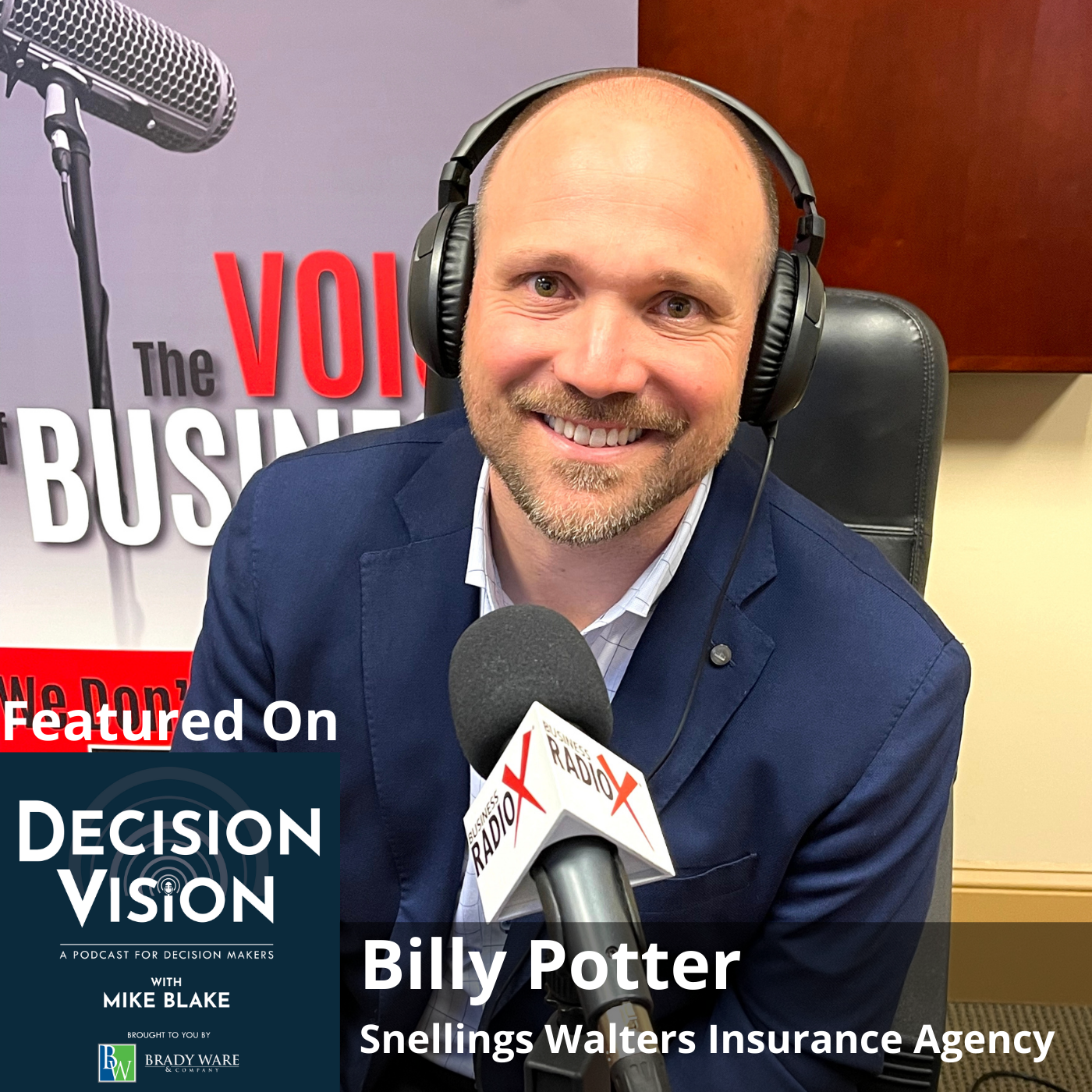
Past episodes of Decision Vision can be found at decisionvisionpodcast.com. Decision Vision is produced by John Ray and the North Fulton studio of Business RadioX®.

Connect with Brady Ware & Company:

Website | LinkedIn | Facebook | Twitter | Instagram

TRANSCRIPT

Intro: [00:00:01] Welcome to Decision Vision, a podcast series focusing on critical business decisions. Brought to you by Brady Ware & Company. Brady Ware is a regional, full-service accounting and advisory firm that helps businesses and entrepreneurs make visions a reality.

Mike Blake: [00:00:21] Welcome to Decision Vision, a podcast giving you, the listener, a clear vision to make great decisions. In each episode, we discuss the process of decision-making on a different topic from the business owners’ or executives’ perspective. We aren’t necessarily telling you what to do, but we can put you in a position to make an informed decision on your own and understand when you might need help along the way.

Mike Blake: [00:00:42] My name is Mike Blake, and I’m your host for today’s program. I’m a director at Brady Ware & Company, a full-service accounting firm based in Dayton, Ohio, with offices in Dayton; Columbus, Ohio; Richmond, Indiana; and Alpharetta, Georgia. I’m a managing partner of the Strategic Valuation and Advisory Services Practice, which brings clarity to the most important strategic decisions that business owners and executives face by presenting them with factual evidence for such decisions. Brady Ware is sponsoring this podcast.

Mike Blake: [00:01:09] If you would like to engage with me on social media with my Chart of the Day and other content, I’m on LinkedIn as myself and @unblakeable on Facebook, Twitter, Clubhouse, and Instagram. I also recently launched a new LinkedIn group called Unblakeable’s Group That Doesn’t Suck, so please join that as well if you would like to engage.

Mike Blake: [00:01:26] Today’s topic is, should I adopt the entrepreneurial operating system or EOS? And according to Wipfli, almost 9000 companies now run on the EOS system that was presented and popularized by Gino Wickman in his book called Traction. And, I have a particular interest in this discussion because you may have – if you’re a long time listeners of the show, you may have noticed there’s a subtle change in the intro of the podcast, whereby we’ve spun off my practice group into a separate company and I was named managing partner. And in doing so, when something like that happens, you are both excited for the opportunity and terrified of the responsibility.

Mike Blake: [00:02:13] And, one of the things that I realized very quickly as this was happening was that I needed to have some kind of operating system, if you will, for my company, because this is my first time in that role. I’ve managed before. I’ve led before, but I’ve never sort of been at the top of the org chart before. And candidly, that’s a very different kind of responsibility and a different kind of opportunity. And, about a year ago, I ran across Gino Wickman’s book. Somebody recommended it to me, and really have fallen in love with it, have studied it, and we’re in the initial stages of implementing EOS in this new company. So, I know a tiny bit about it.

Billy Potter: [00:02:58] And so, to talk about this, and so that I can mooch off of somebody else’s expertise, I’ve invited somebody that’s actually been living the EOS life and has been successful in doing so, also in a professional services context. So, I’m very pleased to introduce to you Billy Potter whose career in insurance spans more than two decades. In 2011, he joined Snellings Walters to head the Employee Benefits Division and quickly proved to be an effective consultant. His superior consultation contributed to his winning various awards within the agency, and in 2018 he was nationally recognized as Broker of the Year by BenefitsPRO Magazine.

Mike Blake: [00:03:37] In addition to his expertise and technical know-how, Billy has a personal philosophy that aligns with the core values that drive the Snelling Walters vision, engagement and accountability, curiosity and authenticity. I think we’re going to hear those words a lot in the next hour. By cultivating and nurturing an agency culture that allows its employees to feel empowered and supported, Billy’s mission is to inspire the next generation of successful business people at Snellings Walters and beyond.

Mike Blake: [00:04:07] Snellings Walters leads complex businesses into safety and security through commercial insurance and employee benefits and they focus on their values of core delivery of process, energy, and growth. For more than 60 years, they’ve been advising clients on business, personal, and life/health insurance. They’re the only commercial insurance and employee benefits company that energizes with a proven process. Growth is personal for them. Billy Potter, welcome to the Decision Vision podcast.

Billy Potter: [00:04:34] Thank you, Mike. Happy to be here.

Mike Blake: [00:04:36] So, not enough people know about the EOS and surely some people who are listening have never heard of it before. So, you’re a guy that’s living and having success with it. How would you describe the entrepreneurial operating system or EOS to somebody else?

Billy Potter: [00:04:51] I think the easiest way to paint a picture of what it does for your business is EOS is an assembly line for small businesses. The assembly line allowed them to be more effective and more efficient with manufacturing product. And, this has the same impact to running your business. A lot of us in small businesses we get to where we’re at because we’re good at our craft, whether it be manufacturing or offering a service. And many of the times, we don’t get an actual chance to work on our business, to make the business – allow the business to have a better impact to our product or our service. And the opposite occurs where we’re incapable of delivering our product or service because we’re so poor at developing structures to run an effective business. So, I like to look at EOS as an assembly line for your organization. And that’s been our experience. In fact, I’m a direct product of EOS. They implemented it right when I got here. So, I’m the benefactor of that efficiency.

Mike Blake: [00:06:09] So, the operating system sounds kind of cheeky maybe to somebody who’s not familiar with it. Is the name apt? Is it truly an operating system?

Billy Potter: [00:06:18] I would say yes, it is. So as, you know, it’s not a sexy term at all, EOS. We commonly refer to it as a language that we all speak, a language of efficiency and smoking out issues. That’s what we commonly refer to. In our L10 meetings is let’s smoke out the issue. So, these are the things that we speak of, or maybe that we know about that we’re not openly sharing, that the operating system has a good way of shaping your conversation so that the issue is a safe thing to address. So, from a communication perspective, which I think is the most powerful component of EOS, it sounds a little cheesy, but it’s true. It allows you to speak with one another. And it also allows you data points that should align with what you’re saying.

Mike Blake: [00:07:15] So, you know, the back story is kind of interesting in that – and if I understood correctly, you walked into EOS. It wasn’t necessarily that you were running a company and chose EOS, but rather you came from one situation, I presume, that was not an EOS organization and you walked into one. As you did so, what were some of the immediate – what were some of the differences that you might have noticed immediately or very quickly after making that transition?

Billy Potter: [00:07:45] Yeah. So, I came to this organization December 1, 2011, and the only thing I brought to the company was debt. And I had to work my tail off to get square of the house. But I would say sometime in mid to late 2012, they decided to implement EOS and we were not a young company at that point. We were 60 years old, but we had a ceiling that we couldn’t get through. And, the owners at that time thought that pursuing EOS was a fix to breaking through that ceiling.

Billy Potter: [00:08:22] The first thing that we saw, and this is going to sound a little negative, but we found people that didn’t want to be in a culture of accountability. And, I don’t know what’s worse, having people that don’t want a culture of accountability in business or not knowing that you have people that don’t want a culture of accountability. That is even worse. So, that was a big shocker.

Billy Potter: [00:08:52] The second thing that I think that really jumped out at us is I believe that this operating system, it provides an environment that protects your highly engaged employees. So, the numbers are somewhere like 30% of your organization is highly engaged. I think, if I remember correctly, 50% is disengaged and 20% is actively disengaged. So, the actively disengaged means these people are trying to ruin your business. So, you’re fighting for the 50% and you’re trying to protect the 30%. The 50% are in the boat without a paddle. The 30% are not in the boat. They’re in the water with a rope pulling the boat, swimming in the river. And then, the 20% are in the back of the boat, rowing in the other direction. That was just a very polarizing picture for us.

Billy Potter: [00:09:49] And, once we started implementing EOS and having some traction with it, we realized that all the metrics that we thought that were valuable, they quadrupled in productivity. It was unbelievable; a 60-year-old firm quadrupled in productivity. We had single people that single-handedly shaped an entire division with how we run service. And these are not like industry veterans. These are rookies just like me that came in, that were highly engaged, that were attracted to a system. And honestly, it kind of unchained them and unleashed their potential.

Mike Blake: [00:10:32] And, I’m curious about that process. How long did it take to start showing results that dramatic?

Billy Potter: [00:10:40] You know, I’m not completely – I can’t completely remember. I’d say that we had some turnover that we experienced probably within the first two years.

Mike Blake: [00:10:50] Which is by design, right?

Billy Potter: [00:10:51] Which is – well, the book said it. The book said you’re going to lose really good people that know insurance. It doesn’t say that in the book, but that know that your product or know your service, they’re industry veterans. We didn’t really believe it.

Billy Potter: [00:11:07] The second thing is, I would probably say that those productivity scores probably jumped up about 2 to 3 years as well, where we were like, holy cow. But I think the squishier, the more the subjective impact, the things that you didn’t see in the scorecard is the harmony that started to create in our leadership team. And honestly, I think that that’s what the biggest plague is in most small businesses. It arrests the ego that’s driving the business.

Billy Potter: [00:11:40] So, if Mike and I are running a company, and Mike wants to do X and Billy wants to do Y, and then your employees can’t serve two masters, and there’s a lot of end-arounds, which is what the book refers to it. It’s an actual thing. It’s like, “I know Mike told you to do this but do that.” And there started to get alignment within our leadership team of what’s your role and responsibility? What’s my role and responsibilities? Let’s be accountable to that, which fostered a greater community.

Billy Potter: [00:12:14] The word conflict is kind of funny. We were implementing Patrick Lencioni’s Five Dysfunctions of a Team at the same time of EOS, which is really a dynamic duo because – we might get into this later – healthy conflict is certainly a part of EOS. It’s not like a fight club. You know, conflict is a positive word. That’s how we look at it.

Billy Potter: [00:12:37] So, when you talk about immediate results, I’d say it opened our mind that conflict is a sign of progress, not a negative for a business if you think about conflict in your life. Probably the greatest conflict I’ve had is with family, maybe my spouse. But it’s because we have trust and we started to seeing more of that in our leadership dialogue.

Mike Blake: [00:13:03] Yeah. And, you know, there’s a thought that conflict is where ideas come from. And there’s a school of thought. I don’t remember who put this forward, but it suggests that truth only comes out of conflict, right, where at some point, there needs to be a conflict of ideas and that needs to be resolved. One of the things you’re kind of getting at, I think you’re getting at, feel free to correct me if I’m wrong, is EOS is sort of the interferon for passive aggression. Like, passive-aggressiveness just cannot survive in an EOS implementation. It’s passive-aggressive killer.

Billy Potter: [00:13:46] Yeah. And Traction, the first chapter of Traction, I believe, is titled Letting Go of the Vine.

Mike Blake: [00:13:54] Yep.

Billy Potter: [00:13:54] And so, you know, I’d like to believe that most issues of most organizations start with leadership. And, you know, we work with a guy that likes to say that you are ridiculously in charge. And I love that. That saying, it just resonates with me that we’re ridiculously in charge. We are ridiculously responsible for employing employees that don’t want to be accountable. You know, that’s on us. That’s a product of leadership.

Billy Potter: [00:14:21] And so, once you drop this model and you start fostering, “Well, Mike, what do you think is best for the business? Why do you think that’s best for the business?” That kind of conflict and that rub. You’re right. That’s what births truth, and perhaps hopefully a better process for your business, which is where we’re both aligned. We both want a successful business. And that allows kind of the ego to be, “Okay, well, maybe Mike’s not attacking me. He’s making a logical argument of the business and what we have a shared goal on.” And that’s what EOS really does a good job of not making it about the person, but making it about the company.

Mike Blake: [00:15:01] One of the things I find seductive about EOS is how it ties in to so many other ideas. And you mentioned the word conflict. I want to stop on that for a second because I think that’s really important. And it ties in with part of my introduction, which talks about how much you value curiosity. Right? And if I’m not mistaken, the EOS, EOS system is about converting the anger of conflict and the threat of conflict into curiosity. Right? Because you can still get to the same place but if you phrase the debate away from you’re an idiot for thinking that to why do you think that, right, and you really listen to the answer, that’s such a much more constructive platform for that conflict to take place.

Billy Potter: [00:15:52] I couldn’t agree more. We implemented it for two reasons. And all of our core values, which was such a fun process that EOS suggests you follow, it was fantastic. It helped bring our leadership team closer together. But we also came up with little phrases to help us be centered on what the core value means. So, for example, curious is seek to understand. And so, the reason we did –

Mike Blake: [00:16:17] [Inaudible] it’s a highly effective people. Right?

Billy Potter: [00:16:18] There you go. There you go. And honestly, that’s one of our favorite values because it’s a little unique too. You don’t see curious as a core value in many organizations but it really does two things effectively. First, it attacks ego. And, I think a lot of the times, I don’t want to listen because I know better, right? And, when I’m forced to think, okay, we’ll seek to understand. Why is Mike bringing this up? And you know what? This is the fourth time he’s brought it up in a meeting. Let’s smoke out that issue. What is the issue behind the issue?

Billy Potter: [00:16:55] And then, secondly, assumptions. How much conversations we have on a daily basis where we assume that we understand and we don’t? Is it George Shaw, George Bernard Shaw, maybe, who has a phrase something along the lines of the most challenging thing about the communication is the illusion that it’s taking place?

Mike Blake: [00:17:18] I don’t know who said it but it certainly sounds wise.

Billy Potter: [00:17:20] It’s brilliant. And it’s like once you start becoming a student of this and realizing I don’t understand, I am assuming what Mike means by that, it’s incredible the dialogue it promotes within your teams and within your community. And it makes it more about someone other than you when your focus is understanding their message. And once you do a good enough job of understanding, I think the really the solution presents itself. I don’t think it’s really hard to solve the issue once you understand the issue, but it’s understanding the right issue, which is the yeoman’s work.

Mike Blake: [00:18:00] And, to me, the flip side of that is that that also requires vulnerability to admit when you don’t understand something and going back to your discussion of ego. And now, there’s sort of – at least people are writing about it. I don’t know if people are doing it. People are writing and talking more about authentic management, vulnerable leadership, and so forth. And it strikes me that that’s really the flip side of curiosity. It has to be, right?

Billy Potter: [00:18:31] Amen. And authenticity, which is another core value. So, you are kind of striking here why are we aligned with those core values. So, curiosity, seek to understand. Authenticity. Authentic is the core value; your true self.

Billy Potter: [00:18:46] Look, we want to create an environment where you’re allowed to disagree. You’re allowed to have an opinion. It’s incredible. Like, when we onboard a new employee and we ask for their candid feedback, they’re like wounded animals. They look at us and be like, “You really want to know? Are you sure?” And, we have to literally position it to the point where if you don’t tell us – if you tell us that everything’s right, we know you’re lying. The only way you’re going to get in trouble here is if you’re a silent sufferer. That’s it. And, we need you to love us enough to tell us when we have broccoli in our teeth.

Billy Potter: [00:19:27] And, new employees are actually really critical because these are uncontaminated people. They have a fresh perspective on what we’re doing. We’re drinking the Kool-Aid, we’re making the Kool-Aid, and we’re swimming in the Kool-Aid. So, having that fresh perspective to create a more vulnerable and authentic environment, it’s crucial. It allows us to not be aspirational.

Mike Blake: [00:19:50] It sounds a lot like something of one of my philosophies for what it’s worth is that I want our frontline people, when we’re delivering work product, everybody can, anybody can stop a work product going out. It can be an intern. If they see something that isn’t right, they don’t like, they don’t understand and they see it going out, I’m not going to kill you for stopping the work product. I’m not even going to kill you if we miss a deadline, if it isn’t too critical. Right? But, boy, what I’m going to lose it over is if you saw something that was wrong and you didn’t mention it to anybody. That drives me crazy.

Billy Potter: [00:20:30] Yes.

Billy Potter: [00:20:30] And that gets to – one of my, what I hope is our core value, is honesty and integrity, not just to our clients and not just to each other but to yourself. And if you don’t have that, then you’re not going to – you’re not going to stop that blunder from going out that everybody else overlooked, even though you’ve read the report four times. Right? Somebody else is going to find some of that fifth time. But the bargain for that is you got to create the safe space for that, right?

Billy Potter: [00:21:00] Yeah. And the way that we word it for a similar reason is accountable. And the tagline is, own your part. So, we don’t want somebody saying, “Well, what was Mike’s report? Mike sent it out. Yes, I did see the flaw in it, but that was Mike’s responsibility.” No, it’s not. Own your part. What is your responsibility in that incorrect report going out?

Billy Potter: [00:21:22] The former CEO of Ritz Carlton, he allowed any employee to spend up to $2000 on the spot to fix the customer’s problem. That’s a lot of money.

Mike Blake: [00:21:35] Yeah.

Billy Potter: [00:21:36] But – I mean, how empowering that is for them to be a part of the solution on whatever they’re touching. And, I’m so thankful for EOS and just forget about the business for allowing them to allow me time to reflect on how important some of these qualities are in my own personal life, in my marriage, with the children I’m raising. What a gift this structure, this operating system has given to help me live a more fulfilling life at work.

Mike Blake: [00:22:09] So, I want to pause on that because I do think that’s a really important facet of this conversation, in that if you’re not familiar with EOS, one might be tempted to jump to a conclusion, it’s just a way to make more money or just a way to squeeze more productivity. Right? Whatever. Productivity hacks, life hacks, whatever you want. But the thing that strikes me about EOS and I think why people such as yourself who have embraced it are so passionate about it is because it’s not just about your job, right? If you do it right, it has a virtuous cycle kind of knock-on effect of every element of your life. That’s what I’ve observed from people who’ve kind of made that journey and why I’m so excited and intent on starting it for our firm.

Billy Potter: [00:23:02] I couldn’t agree more with you. Truett Cathy said if you make people better, bigger is inevitable, and, you know, the whole concept of we’re a for-profit entity. So, just to be clear, we’re in business to become more successful. We want to grow. These are reasons that we want to be held accountable to something bigger than ourselves, and it’s okay to want to make more money. But that’s a lagging indicator, not a leading one. Making more money is a result of something.

Billy Potter: [00:23:32] And it’s almost like, I think most businesses are saying, we want to get an A on the test. Let’s not talk about our preparation for the test, you know. That’s what EOS does. It allows you a study guide to make sure that you get an A. Actually, it allows you to study guide to redefine what an A is. And that’s what all the metrics are that we have.

Billy Potter: [00:23:56] And so, of course, we want to make more money in the end or be more successful. We want to pay employees more money in the end. We want to do all those things. But, you know, it came down to what makes us unique, which again is a product of EOS. And the first one that we have of three uniques is growth is personal. And so, if we are winning at work and we are not winning at home, we’ve lost. We’ve missed the point. We want your personal life to benefit with your professional life. We want both to be enhanced. And, honestly, in the end, we’re going to get a better product, a better result, a better service, a better experience because we are open to improving both. It can’t just be one or the other.

Mike Blake: [00:24:41] And, you know, the way when you say things like the money is the result not the goal, I hear Simon Sinek talking.

Billy Potter: [00:24:49] Yeah. That’s exactly right.

Mike Blake: [00:24:51] People listening to the podcast, now I’m basically a cyberstalker of his. Like, Simon, please come on the show at some point. I haven’t gotten a restraining order yet, but I probably will. But again, another tie-in where the EOS comes in. Knowing your why, I think, is critical to understanding, to successfully adopting an eOS.

Billy Potter: [00:25:08] Mike, I almost feel like you’re stalking us. When you walk into our office, you’re going to see Simon Sinek’s Golden Circle taking up an entire wall.

Mike Blake: [00:25:19] Really?

Billy Potter: [00:25:20] Yes. I swear to you.

Mike Blake: [00:25:21] I may visit. I want to see that and take a photo.

Billy Potter: [00:25:23] You’re welcome. Any time you want, buddy. In fact, part of me wants to take the Zoom call right now and show you the wall. But he says, people don’t buy what you do; they buy why you do it. So, all of these things were coming together at once for us. We had Simon Sinek. It starts with the why. Honestly, the video is really all you need to see, the TED Talk. It’s 18 minutes long. How Great Leaders Inspire Action is the name of the TED Talk. And so, that influence combined with Patrick Lencioni’s Five Dysfunction of a Team and Gino Wickman’s Traction. All of those things came together at once for our organization, which was like bottling lightning, you know,

Billy Potter: [00:26:01] And, my partner, Steve Harmon, went on a trip with other people in our industry and they said, “Why do you do what you do?” And you want to know what he was told? Man, it’s great money. Man, it’s a well-known secret, you know, this industry. It’s just great. The substance of what he was looking for wasn’t being shared by his peers. So, then he came back to us and said, “Hey, why are we getting out of bed in the morning? Why is God waking us up?”

Billy Potter: [00:26:27] His name is Steve Harmon. He’s had a phenomenal impact on our culture and was really one of the thought leaders in inspiring us to go down this journey. And, you know, we do have a why statement from EOS, and it’s “we lead to inspire confidence so we can unleash your potential.” And that’s super important, especially when you’re thinking growth is personal. You know, it has nothing to do with insurance.

Mike Blake: [00:26:54] I was going to say that noticeably absent is the word insurance.

Billy Potter: [00:26:58] Of course. Yes, Chick-fil-A. They want to become the most caring organization in the world. Where do you see chicken in there? It just doesn’t – it’s not there. It’s not Care-fil-A.

Mike Blake: [00:27:11] Yeah. Yeah.

Billy Potter: [00:27:11] So, it’s inspiring. And they were describing all of this, not even EOS. They didn’t know it exist when I was interviewing them in 2011. And as skeptical as I am, I thought, if they deliver on 20% of what they’re describing, this will be pretty cool. And we knocked it out of the park. I mean, EOS has more than quadrupled our business in a decade. We’re a 70-year-old company. It’s more than quadrupled it in a decade. That’s incredible. That’s the lagging indicator that gets everybody’s attention. And what’s powerful about this experience is like, “Oh, wait a minute. How I’m leading the company could lead to better revenue? Like, that’s amazing.”

Mike Blake: [00:27:53] Who knew?

Billy Potter: [00:27:54] Yeah. That’s crazy. I just thought I needed a longer whip.

Mike Blake: [00:27:58] Yeah. And again, another tie-in. I mean, that’s classic good to great, right? That’s classic flywheel stuff, the EOS – before I encountered EOS, I had an inkling of this but it wasn’t – I didn’t – nobody’s buying my book. I didn’t even write one. They wouldn’t buy it if I wrote one. But I did have an understanding or an idea that what really matters is not key performance indicators, but [inaudible] key performance drivers. Right? What I care about is, are you doing the things that you need to be doing consistently and faithfully? Right? And if you do those, eventually the results are going to show.

Billy Potter: [00:28:35] That’s it. You’re right.

Mike Blake: [00:28:36] It may take a while. It may take a while, but, man, if you have the mental toughness and tenacity to do that and the faith that it’s going to work out. Just like a farmer, right, you’ve got to have faith that all that work is going to result in growing things. You can’t just start yanking carrots out of the ground two days after you put the seed in. That’s where the action is, isn’t it?

Billy Potter: [00:28:57] Amen. And, the leading indicators, you know, and the leading and the lagging indicators were a gift from EOS. And it’s fun to even come up. Well, what are the leading indicators? What are the things that we need to report on a weekly basis to let you know that I’m rowing the boat, man? We’re not at the destination yet, but we are well on our way. And, that was a fun dialogue. And it constantly evolves. You know, like once it was no longer an issue anymore or once that habit is formed, we move on to a new leading indicator. And then, suddenly you look back and you’re like, “Oh, my goodness. We’ve quadrupled the business. How did this happen?”

Billy Potter: [00:28:57] When I got here, we were 21 employees and we had a lot of attrition. I mean, this is the valley of EOS. We did have a lot of attrition. Some employees said, “Hey, I love where you’re going. It’s not for me.” And so, we helped some of them find a job. We were sad to lose some of them, but that’s the truth of it. And then, the peak that followed that valley was a level of operational excellence that we didn’t really think was achievable. Our employees helped develop that. That’s what EOS creates, a ground-up movement.

Mike Blake: [00:30:16] So, we’ve talked a lot in this conversation so far about value so I want to come back to that because I think values – I think a lot of people cringe when they hear the word corporate values because they’ve often been abused, frankly, and employees have been abused in the name of so-called corporate values. How do you get – how do you sort of get past that? How did you find, identify and articulate your company values, one? And then, what did it take to establish a credibility that it wasn’t just more PR speak, but there was a real – there is a real substance and authenticity behind it?

Billy Potter: [00:31:03] This is a phenomenal process. We locked the door, the four owners locked the door. And, we said, who are the two people in your life that you could take over the world with? And then, you describe them. What are their adjectives?

Billy Potter: [00:31:20] For me, the two people that I said were my father and a lady named Jennifer Goodwin. And I enjoyed, like, just reflecting on what are all the characteristics of these individuals that I love, that I hold so precious. And everybody in the room does that in their own little space. And then, we come back together and we throw all of our adjectives up on the board, and then you group the adjectives.

Billy Potter: [00:31:47] So, for example, you say honesty and I say transparency. And we settle on a word that encompasses integrity. Okay? And so, we whittled the board down to maybe eight adjectives. So, we started with what? I mean, probably something like 60. Okay? And then, we whittled it down. We paired all the adjectives, grouped them together into maybe eight, and then you evaluate one another round. And, the evaluation of these adjectives, these core values are three grades. A plus, meaning you usually demonstrate; you mostly demonstrate that behavior. A plus-minus, you sometimes do, you sometimes don’t; or a minus, you consistently do not demonstrate that behavior.

Billy Potter: [00:32:34] So, any value that any one of our leaders had a negative in, we threw the value out. You could not do it. Because if you have an owner or a leader or whatever your group is that’s deciding the core values not defend one of those behaviors, then you’re aspirational. And far too often, I think that is what occurs within an organization. They say these things or they have 11 of them, or nobody can remember all the core values. And the truth of the matter is, you shouldn’t have to remember them. You should see them on a weekly basis from your people, and it should be modeled mostly by your leadership.

Billy Potter: [00:33:19] And that was a really fantastic experience and something that you can be proud of. You know, there’s a personal connection within our ownership to each one of those core values, and there’s a beautiful story behind it as well. So, we had fun. It was probably a full-day exercise where we say, “Hey, tell me why specifically your dad. You know, what about your experience with your dad? Did you feel like you could take over the world with?” That was a joy to share. And it brought the team closer together.

Mike Blake: [00:33:52] I want to change – I want to change gears here because I just thought of a question I want to get out because I hope it’s interesting. And that is, I’ve been reading a lot recently about return-to-office and everybody’s talking about return-to-office, but one of the features of return-to-office is that it’s bringing back – it’s bringing back sort of the Peter principle guys, the people that tend to rise to the level of incompetence, the people who tend to get by more because of the relationships they develop with their superiors more than their objective capabilities and accomplishments. There’s probably a catch-all word for those types of people. I don’t know what that is, but I think you know what I’m talking about. And it led me to wonder as I sort of think about U.S. and our organization’s entirely virtual. I mean, you can come to the office if you want, I don’t care. It’s not necessary. And, I wonder if EOS is actually potentially easier to implement in a virtual environment because by necessity you have to be so much more intentional about how you communicate. It offers more opportunities for measurement and it frankly blunts the people that are getting by, by frankly schmoozing, for lack of a more polite better term. Do you think there’s anything to that, or am I smoking something from Colorado?

Billy Potter: [00:35:25] So, I don’t think you’re smoking Twinkies, although they’re not made anymore in Colorado. So, here’s what comes to mind when you ask that question. First and foremost, throughout COVID, everything that’s meaningful in our organization peaked. Record sales year. Record operational efficiency. We monitor tasks and activities within our client management record production of that. So, again, I don’t think that has to do with necessarily like in the office or outside of the office. I think it has to do with being a talent magnet of highly engaged people. Okay? And the truth of the matter is, when you have a highly engaged person, they want to do a good job, not for you but for them. And that’s pretty special. So, that’s the first thing that comes to mind when I think about the impact of working from home and things of that nature.

Billy Potter: [00:36:18] Secondly, I would actually say that there is a negative to EOS. And, the negative is you have a 90-minute meeting that your people sit in and it’s the same day, same time every week. Okay? And, I was a meeting snob. Well, actually, hold on, I am a meeting snob now. If I’m sitting in a meeting now and it’s not an EOS meeting, all I think about is, “Oh, my gosh. This is so inefficient.” So, I’m grateful for that structure and I’m not a structure guy, so I’m more of like a caged animal when you drop a structure on me. So, the fact that I welcome those 90-minute meetings says something about how much I appreciate the process.

Billy Potter: [00:37:00] But here’s the negative, Mike. The negative is of that 90 minutes, 60 of it is spent on identifying, discussing, and solving issues. And, people in America are not welcoming of conflict. That is not something that is, like, second nature. So I do believe there’s value in having face-to-face interaction and developing rapport and trust with your team. That is, it takes longer to do it remotely unless you’re like Simon Sinek.

Billy Potter: [00:37:34] Simon Sinek with his people has a call, like, every Monday where they all get on a Zoom call and the one rule is you can’t talk about work. It’s just to build rapport. It’s that lost time we have in the workplace where I’m going to get a cup of coffee and I’m like, “Hey, Mike, how was your kid’s baptism? How did it go, you know?” It’s that interaction that we lose virtually that we have to be intentional. It’s like a long-distance relationship. You have to be intentional about making it work.

Billy Potter: [00:38:07] And so, if there’s a negative to the effectiveness of EOS, it’s not like it’s less effective. But if you’re going to have juicier meetings, you’ve got to have trust so you can have healthy conflict. And I think the remoteness means you just need to be more intentional about creating that trust. Does that make sense, Mike?

Mike Blake: [00:38:26] Yeah. It does. It does make sense. You talked about sort of a downside of EOS, and one of the things that Wickman talks about in the book is that some companies just aren’t ready for EOS yet. They need to do some work before they’re there. He’s even talked about basically firing people, firing clients that want to do EOS. But once he got in there, he just realized they weren’t ready for it yet. And, I see you’re nodding. What makes a company – what does a company need to do to be ready for EOS? Or what are they lacking when they’re not ready?

Billy Potter: [00:39:03] So, if you have a desire to build a better business, go EOS. Okay? Now, here’s the whammy. You might be thinking that you don’t have a better business because of other people, which is the problem. You’re going to eat some serious humble pie throughout EOS. But you’ll gladly eat it because, in the end, you want to build a better business. And if that’s truly at your heart, building a better business, building a better environment, attracting better talent, making your employees want to be at work, then I would say EOS is for you.

Billy Potter: [00:39:44] But the truth of the matter is if you can’t find your part in the problem, you won’t be a part of the solution. And EOS does that. It helps you identify what the problem is. And if you want to foster an environment where there’s vulnerability and people can feel open and honest in sharing where you’ve let them down or how the process can be better, many times that’s leadership’s fault. And that’s hard to do. That’s why the book starts off with letting go of the vine and delegating and elevating. And what you hope is that I will delegate a duty to somebody else and they will elevate in their seat wanting to do that task or that service or that project on my behalf. But the hard part is letting me let them do it and letting them be better than me at it or letting them fail at it. That’s hard to do. And that’s just the humble pie that comes with operating the system.

Billy Potter: [00:40:43] And I’ll tell you when you’re aligned with wanting to build a better business, it’s like a spoonful of sugar. It helps the medicine go down. But if you’re not aligned with wanting to build a better business, there’s a potential chance that you’re going to take that personally and you will refuse to let go of the vine.

Mike Blake: [00:41:06] There’s so much to unpack there. I mean, number one, it goes – it really gets down to what do you define as a better business, right? If a better business is one that delivers on its mission that delights its customers, that it’s a great platform for people’s careers, etc., EOS may be a good fit. If, on the other hand, the goal is -the definition of bigger, of a better business is to show everybody that I’m right, it’s about as effective as dragging your spouse to marriage counseling for the sole goal of having them lecture your spouse and how they’re wrong about everything.

Billy Potter: [00:41:44] That’s right. That is a great analogy. We’re here, doctor. Could you please tell my spouse everything she’s doing wrong?

Mike Blake: [00:41:51] Yeah. I wouldn’t get so mad if you weren’t just so damn stupid.

Billy Potter: [00:41:57] That’s exactly right. Yeah. You have to look internally first. And so, when you work with an implementer, most of the time, I think they have you work the process of EOS just within your leadership first. I know – I was not a shareholder at the time and they did it for maybe six to eight months. And then, they rolled it out to sales and then they rolled it out to the entire company over the course of like a year or so, but to learn the cadence and get comfortable with how the meetings should be run and really adopt and embrace, you know, implementing this system. And, you know, Gino says that. He says, “You know, even if you don’t adopt EOS, just commit, commit to doing it.” You know, that’s the key. And that means sometimes you’ve got to take your medicine.

Mike Blake: [00:42:45] Yeah. I hope I’m not being too forward with this question, but I do think it’s really important so I hope you’re willing to answer it. But if not, we’ll let it out.

Billy Potter: [00:42:45] Okay.

Mike Blake: [00:42:56] My question is, you alluded pretty heavily to how adopting the EOS not only has helped your professional life but it’s also filtered back into your personal life. Would you be willing to share a couple of examples on how it’s done that? Because I think that would be very inspiring to some of our listeners.

Billy Potter: [00:43:14] Hundred percent. So, the first one that jumps out at me is, you know, EOS has a 1310. So when you create – there’s this thing called a VTO, vision traction organizer, that EOS has you fill out and it says, “Hey, what is your business going to look like in 10 years? What is it going to look like in three years? And then, what do you have to do in the next year to be on track with those goals?”

Billy Potter: [00:43:40] I did it personally for myself. We had our sales team do it personally. How old will your kids be in 10 years? What will be your expenses? What are – what’s the life you want to be living in 10 years? What’s the life you need to be living in three years to marry that 10-year vision? What’s the life you want in one year? And when I looked at my results and I thought about what I was doing, I was like, am I going to make it? I’m recognizing right now how I will fall short on the vision that I want to create for my family. And that was – that stunk. I wasn’t doing enough. I quantified how I was falling short on the Billy I wanted to be.

Billy Potter: [00:44:22] And EOS talks a lot about putting the right people in the right seat, and they have several tools that they suggest in helping you find the right people to be in the right seat. One of the tools that we use, and it came from the book Rocket Fuel, is this system called Culture Index.

Mike Blake: [00:44:43] Yep.

Billy Potter: [00:44:44] And so, the Culture Index kind of, it tells me who I was since I was age 12. And it is unbelievably accurate. It’s incredible. So, long story short, it told me who I needed to be in my prospect engagement with some of the people I was trying to make in clients. And it let me know that I needed to be a little bit more logical. I was too emotional. I would make a sarcastic joke. I’d show a level of humor that was inappropriate to be trusted with millions of dollars worth of their investment. And I was like, “What was that matter?” Well, I listened to it. I listened to the feedback, and I applied it. And, I saw my numbers soar. I smoked my 10-year vision, smoked it. It was incredible. And, it was all because I started finding my part in the problem. And, I’m a very high – I have a high A trait, which can be a big threat to other people.

Billy Potter: [00:45:48] And, I had my wife fill out the same tool that we use in our business. And, I realized in my marriage, the way that I engage in conversation was challenging and hurtful in my marriage. I was speaking to others as I want to be spoken to. And, that’s not appropriate. The golden rule, do unto others as you would have done unto you, doesn’t work with communication. What I’ve learned as a product of this system is I have to speak so that my audience can receive it, not how I want to say it. How do I have to convey my issue or my concern so that it’s appropriately received by my audience?

Billy Potter: [00:46:29] And, when I saw my wife’s results, I said, “Honey, have I been crushing you for 15 years?” And she goes, “It’s been rough.” And I felt so bad because I had a blind eye to it. But on paper, if I looked at how she was aligned to her seat, if she worked for me, I’d have an intervention. And, I’m coming home every day and I’m thinking to myself, she didn’t ask me about my day, you know. And, that was some serious humble pie about the man I could be that I’m not being at home. Now, I would become that man at work because my work was helping me become the man that I needed to be to hit my 10-year vision. But then I would check out at home and think that none of those principles apply.

Billy Potter: [00:47:18] And, look, I have EOS to thank, but growth is personal. It has benefited every relationship in my life and I use that word with great intention, every relationship in my life, solely because I’ve learned more about who I am and who I don’t need to be. Because the way that issues work – and I think about that, IDS, identify, discuss and solve issues – when we uncover an issue about Billy at work, which we have, it’s not like I don’t take that issue in every other one of my relationships. Of course, I do. And so, once we figure that out here, I’m able to solve it everywhere. What a gift.

Mike Blake: [00:47:59] I’m talking with Billy Potter, and the topic is should I adopt the entrepreneur operating system or EOS. So, you mentioned Rocket Fuel. In fact, I got into this, the concept of EOS, backward. Somebody recommended Rocket Fuel to me first and then I figured out, “Oh, this is the sequel. I’m basically watching the Star Wars movies out of order.” I’m not even sure the order they’re supposed to be in anymore, but I guess there is one. But anyway, are you a visionary or an integrator?

Billy Potter: [00:48:28] I’m a visionary.

Mike Blake: [00:48:30] Yeah.

Billy Potter: [00:48:31] Yeah. And honestly, whoever gave you that advice, I think is brilliant. Because now after reading those books myself, I encourage people to read, well, certain people to read the Rocket Fuel first because –

Mike Blake: [00:48:45] Do you really?

Billy Potter: [00:48:46] I do. Because think if you’re speaking to the visionary and/or the integrator, they’ll have a greater appreciation of the impact they can have on their business. And Traction is a brilliant book, but it is the blueprint. It’s not as wonderful of a read as Rocket Fuel. It’s not written in a story format. But I’ll tell you, if you’re a business owner, every issue that’s identified in Traction or that blueprint addresses almost every issue you have in your business. But Rocket Fuel is just a great appetizer, I think, because the most crucial – it only names to seats in your organization, visionary and integrator. And when you look back, just like Jim Collins did, when you look back at every great business in America, more than likely they had a wonderful dance between the visionary and the integrator, just a rock-solid relationship.

Mike Blake: [00:49:36] Yeah. Well, that’s exactly what my appetite and also what it made me realize that even though I’m a visionary type, which means I tend to look much more 5 miles ahead in the road and not necessarily the road that’s 10 feet in front of me and the pothole there, it made me realize I’m not a bad person or a bad executive. It just means that I’m normal and that I need to be paired with an integrator in order to achieve that – to realize my full potential.

Billy Potter: [00:50:06] Not only that, we need to hang scores on it. So, for example, one of my scores is, have I spent 4 hours this week thinking about our business, where we need to go, and what I need to solve in order for us to get there down the road? That is crucial. It’s part of my favorite score. When I actually carve out the time each week to think about growing our business, I love it, and that is using my gifts. That’s where I want to be. And so, you’re costing your business when you’re not in that seat, when you’re not looking down the road.

Billy Potter: [00:50:39] And it’s just so clear and crisp when you see what they call the accountability chart, we define all the roles and responsibilities by seat, and then we tie each role and responsibility to a score, usually a leading indicator. And then, monthly we do, we report on lagging indicators. But I love that. And, I took the test. Are you a visionary? Are you an integrator? All that stuff. And, I’m fulfilled by the work. I’m energized by it. So, your company is benefiting when you are working more out of your strengths, and that’s the key.

Mike Blake: [00:51:13] Yeah. I think that’s right. I read a book by Gallup called Focus on Your Strengths and made a very compelling case that ideally, you’re better off focusing on what you do really well because you can – the sky’s the limit on the things you do well, but you can only overcome the things you’re lousy at to a limited extent. Right? There are just certain things on my best day I’m going to be mediocre at.

Billy Potter: [00:51:40] Yeah. That’s right.

Mike Blake: [00:51:41] That’s an important function that’s going to hold the company back.

Billy Potter: [00:51:43] And it drains your energy.

Mike Blake: [00:51:45] It does.

Billy Potter: [00:51:45] You know. And I could work, you know, not that this is the goal, but I could work twice as many hours. But if I’m working on things that I’m gifted at, I’m fulfilled. Like, I could run home, versus, you know, no offense, but I couldn’t be an accountant. I just I don’t –

Mike Blake: [00:52:03] Neither can I.

Billy Potter: [00:52:03] I don’t have the bandwidth. I don’t have the appreciation or the level of execution on details. Could I do the job? Of course. Of course, I could do the job. But would I be good at it? Would it make me want to do more? That’s not my skill set. And conversely, we have other people that would be in more of a visionary or CEO seat that would be intimidated or not want to do the job. Like, I’d be fearful of making all kinds of mistakes as an accountant. I couldn’t do it.

Mike Blake: [00:52:32] Billy, this has been a great conversation. I could go another hour with you, but that’s not fair to you or your family, for that matter. There are probably topics that either our listeners wish we would have spent more time on or wish that we’d cover we didn’t get to. If somebody wants to ask more, ask you about the EOS and your experience with it, can they, and if so, what’s the best way for them to contact you?

Billy Potter: [00:52:53] Absolutely, they can. I’ll give you my direct line. So, the number is 470-660-8880.

Mike Blake: [00:53:06] That’s going to wrap it up for today’s program. I’d like to thank Billy Potter so much for sharing his expertise with us.

Mike Blake: [00:53:13] We’ll be exploring a new topic each week, so please tune in so that when you’re faced with your next business decision, you have clear vision when making it. If you enjoy these podcasts, please consider leaving a review with your favorite podcast aggregator. It helps people find us that we can help them.

Mike Blake: [00:53:28] If you would like to engage with me on social media with my Chart of the Day and other content, I’m on LinkedIn as myself and @unblakeable on Facebook, Twitter, Clubhouse, and Instagram. Also, check out my new LinkedIn group called Unblakeable’s Group That Doesn’t Suck. Once again, this is Mike Blake. Our sponsor is Brady Ware & Company. And this has been the Decision Vision podcast.


Tagged With: Billy Potter, Brady Ware & Company, Decision Vision, EOS, Gino Wickman, Mike Blake, Snellings Walters, The Entrepreneurial Operating System, Traction, values, vision

  • « Previous Page
  • 1
  • …
  • 51
  • 52
  • 53
  • 54
  • 55
  • …
  • 81
  • Next Page »

Business RadioX ® Network


Our Most Recent Episode

CONNECT WITH US

  • Email
  • Facebook
  • LinkedIn
  • Twitter
  • YouTube

Our Mission

We help local business leaders get the word out about the important work they’re doing to serve their market, their community, and their profession.

We support and celebrate business by sharing positive business stories that traditional media ignores. Some media leans left. Some media leans right. We lean business.

Sponsor a Show

Build Relationships and Grow Your Business. Click here for more details.

Partner With Us

Discover More Here

Terms and Conditions
Privacy Policy

Connect with us

Want to keep up with the latest in pro-business news across the network? Follow us on social media for the latest stories!
  • Email
  • Facebook
  • Google+
  • LinkedIn
  • Twitter
  • YouTube

Business RadioX® Headquarters
1000 Abernathy Rd. NE
Building 400, Suite L-10
Sandy Springs, GA 30328

© 2025 Business RadioX ® · Rainmaker Platform

BRXStudioCoversLA

Wait! Don’t Miss an Episode of LA Business Radio

BRXStudioCoversDENVER

Wait! Don’t Miss an Episode of Denver Business Radio

BRXStudioCoversPENSACOLA

Wait! Don’t Miss an Episode of Pensacola Business Radio

BRXStudioCoversBIRMINGHAM

Wait! Don’t Miss an Episode of Birmingham Business Radio

BRXStudioCoversTALLAHASSEE

Wait! Don’t Miss an Episode of Tallahassee Business Radio

BRXStudioCoversRALEIGH

Wait! Don’t Miss an Episode of Raleigh Business Radio

BRXStudioCoversRICHMONDNoWhite

Wait! Don’t Miss an Episode of Richmond Business Radio

BRXStudioCoversNASHVILLENoWhite

Wait! Don’t Miss an Episode of Nashville Business Radio

BRXStudioCoversDETROIT

Wait! Don’t Miss an Episode of Detroit Business Radio

BRXStudioCoversSTLOUIS

Wait! Don’t Miss an Episode of St. Louis Business Radio

BRXStudioCoversCOLUMBUS-small

Wait! Don’t Miss an Episode of Columbus Business Radio

Coachthecoach-08-08

Wait! Don’t Miss an Episode of Coach the Coach

BRXStudioCoversBAYAREA

Wait! Don’t Miss an Episode of Bay Area Business Radio

BRXStudioCoversCHICAGO

Wait! Don’t Miss an Episode of Chicago Business Radio

Wait! Don’t Miss an Episode of Atlanta Business Radio