Business RadioX ®

  • Home
  • Business RadioX ® Communities
    • Southeast
      • Alabama
        • Birmingham
      • Florida
        • Orlando
        • Pensacola
        • South Florida
        • Tampa
        • Tallahassee
      • Georgia
        • Atlanta
        • Cherokee
        • Forsyth
        • Greater Perimeter
        • Gwinnett
        • North Fulton
        • North Georgia
        • Northeast Georgia
        • Rome
        • Savannah
      • Louisiana
        • New Orleans
      • North Carolina
        • Charlotte
        • Raleigh
      • Tennessee
        • Chattanooga
        • Nashville
      • Virginia
        • Richmond
    • South Central
      • Arkansas
        • Northwest Arkansas
    • Midwest
      • Illinois
        • Chicago
      • Michigan
        • Detroit
      • Minnesota
        • Minneapolis St. Paul
      • Missouri
        • St. Louis
      • Ohio
        • Cleveland
        • Columbus
        • Dayton
    • Southwest
      • Arizona
        • Phoenix
        • Tucson
        • Valley
      • Texas
        • Austin
        • Dallas
        • Houston
    • West
      • California
        • Bay Area
        • LA
        • Pasadena
      • Colorado
        • Denver
      • Hawaii
        • Oahu
  • FAQs
  • About Us
    • Our Mission
    • Our Audience
    • Why It Works
    • What People Are Saying
    • BRX in the News
  • Resources
    • BRX Pro Tips
    • B2B Marketing: The 4Rs
    • High Velocity Selling Habits
    • Why Most B2B Media Strategies Fail
    • 9 Reasons To Sponsor A Business RadioX ® Show
  • Partner With Us
  • Veteran Business RadioX ®

Search Results for: regions business radio

Decision Vision Episode 44: Should I Run for Political Office? – An Interview with Rep. Dar’shun Kendrick, Georgia House of Representatives, and Councilman Colin Ake, City of Woodstock

December 19, 2019 by John Ray

should I run for political office
Decision Vision
Decision Vision Episode 44: Should I Run for Political Office? - An Interview with Rep. Dar'shun Kendrick, Georgia House of Representatives, and Councilman Colin Ake, City of Woodstock
Loading
00:00 /
RSS Feed
Share
Link
Embed

Download file

should I run for political office

Decision Vision Episode 44: Should I Run for Political Office? – An Interview with Rep. Dar’shun Kendrick, Georgia House of Representatives, and Councilman Colin Ake, City of Woodstock

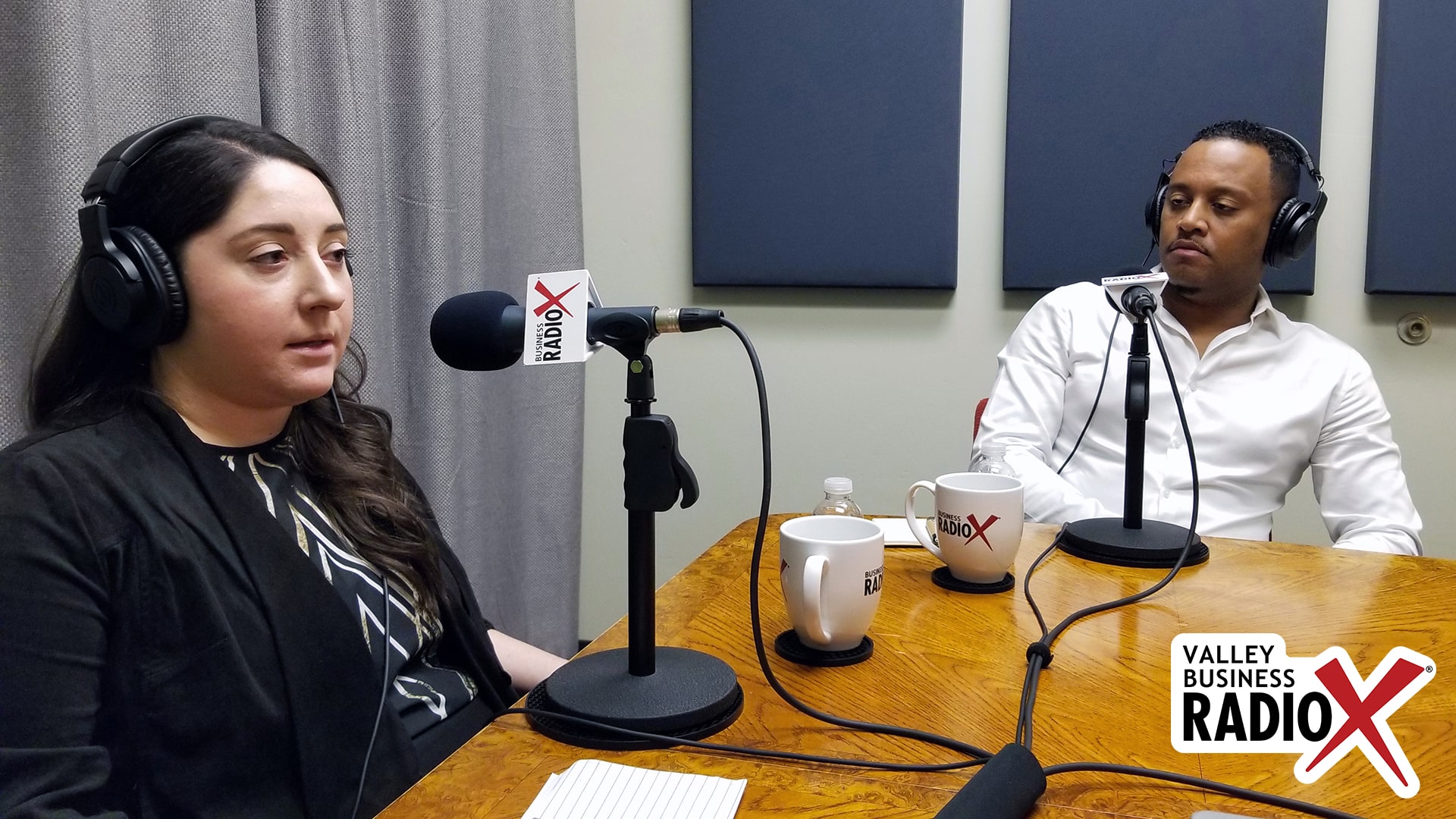
More business owners than ever are running for political office. What should I consider in making this decision? How will holding political office affect my business? On this edition of “Decision Vision,” host Mike Blake speaks with business Rep. Dar’shun Kendrick, Georgia House of Representatives, and Councilman Colin Ake, City of Woodstock on these questions and much more. “Decision Vision” is presented by Brady Ware & Company.

Rep. Dar’shun Kendrick, Georgia House of Representatives

should I run for political office
Georgia Rep. Dar’shun Kendrick

Dar’shun Kendrick was born and raised in Decatur, Georgia. She has a dual degree in political science and communications from Oglethorpe University, a law degree from the University of Georgia and a Master in Business Administration from Kennesaw State. Both of her parents are entrepreneurs so she grew up understanding the unique challenges of business owners, particularly business owners of color.

That’s why since 2010, Dar’shun has dedicated her capital compliance law firm to making sure everyone has access to legal services and tools to raise capital for their business in a way that makes sense for every size business and every investor. Her passion and focus have specifically been on making sure that minorities and women have access to the tools and resources they need to reach their capital raising goals. To date, she has helped companies raise over half a billion ($500MM) in investment funds. In 2019, she became a Series 65 license holder (investment adviser representative) with the ability to provide strategic investment advice to her corporate clients as a part of her services.

Dar’shun is also an innovator and community activist. She was featured in the Huffington Post as 1 of 25 people positioned to Scale Atlanta’s Growing Inclusive Technology Start Up Ecosystem for Black Americans and Beyond. In 2017, she was elected to the Technology Association of Georgia’s (TAG) Corporate Development Board and in 2018 elected to the TAG Diversity Board. She is also a past contributor to Black Enterprise Magazine focusing on economic justice issues. In 2017, she founded Georgia’s 1st ever Georgia Blacks in Tech Policy Conference & Follow Up “Day of Action” with the focus on advocating for inclusive tech policy throughout the state. This event continues on today as the “Tech for All” Policy Conference.

Dar’shun’s service extends beyond her capital compliance firm. Since the age of 27, she has also served as a member of the Georgia House of Representatives. She represents over 54,000 Georgians in DeKalb and Gwinnett counties. She also founded Georgia’s first Technology, Innovation & Entrepreneurship Caucus which is a bipartisan caucus of Georgia legislators and stakeholders committed to the mission of supporting entrepreneurs within the state. She currently serves as the Chief Deputy Whip of the House Democratic Caucus and a ranking member of the Small Business & Jobs Creation committee.

Awards (last 3 awards awarded)- She was awarded the Urban League of Greater Atlanta Young Leader Award (2019) and named as an awardee for the Atlanta Business Chronicle’s “40 under 40” awards (2019) and nominated for 2 NAACP awards for criminal justice reform and her business (2017 and 2019).

Dar’shun is a community activist, public speaker & teacher, elected official, private securities attorney, and a proud member of Alpha Kappa Alpha Sorority, Inc. She currently resides in Lithonia, Georgia.

Councilman Colin Ake, City of Woodstock
should I run for political office
Councilman Colin Ake, City of Woodstock

Colin Ake was elected to Woodstock City Council in 2017. Prior to announcing his run for City Council, Colin served as the Mayor’s appointee on the Woodstock Planning and Zoning Commission for a year and a half. While on the Planning Commission, he was elected Vice-Chair by his peers. Colin served as the Chair of the Greenprints Alliance Board of Directors in 2016 and 2017, and as the Vice-Chair in 2015. He was invited to represent Greenprints Alliance on the Woodstock Police Department’s Body-Worn-Camera Working Group. Colin has provided significant input to the Cherokee Office of Economic Development and Woodstock Office of Economic Development on Fresh Start Cherokee and The Circuit as they work to incorporate startups into their economic development plans.

Professionally, Colin is employed by Georgia Tech’s VentureLab, where he works with commercialization projects. He teaches entrepreneurship to commercialization teams through the NSF I-Corps Program, where he is a Regional Lead Instructor. He leads programs across the southeast and assists in the administration of the I-Corps South grant at Georgia Tech. Colin has taught at Georgia Tech’s Scheller College of Business and is a member of the Georgia Tech Faculty Senate. He also represented Georgia Tech on the State Senate’s Camden County Spaceport Study Committee, where he studied the opportunities and challenges facing the potential spaceport on the Georgia coast.

Prior to joining Georgia Tech, Colin spent four years rebuilding an aerospace company focused on reusable launch operations and lunar/planetary lander technology development. He previously worked at the Georgia Tech Research Institute and at an early-stage technology startup for two years. Colin holds a Bachelor of Science in Management and a MBA from Georgia Tech.

Colin grew up a mile from Woodstock and moved back to the city with his wife Nikki to start their family. Colin, Nikki, and children (Owen & Lealynn) are members at Sojourn Community Church in Woodstock, where Nikki is an active member of the finance committee, and Colin plays drums and works on long-term planning projects.

Michael Blake, Brady Ware & Company

Mike Blake, Host of “Decision Vision”

Michael Blake is Host of the “Decision Vision” podcast series and a Director of Brady Ware & Company. Mike specializes in the valuation of intellectual property-driven firms, such as software firms, aerospace firms and professional services firms, most frequently in the capacity as a transaction advisor, helping clients obtain great outcomes from complex transaction opportunities. He is also a specialist in the appraisal of intellectual properties as stand-alone assets, such as software, trade secrets, and patents.

Mike has been a full-time business appraiser for 13 years with public accounting firms, boutique business appraisal firms, and an owner of his own firm. Prior to that, he spent 8 years in venture capital and investment banking, including transactions in the U.S., Israel, Russia, Ukraine, and Belarus.

Brady Ware & Company

Brady Ware & Company is a regional full-service accounting and advisory firm which helps businesses and entrepreneurs make visions a reality. Brady Ware services clients nationally from its offices in Alpharetta, GA; Columbus and Dayton, OH; and Richmond, IN. The firm is growth minded, committed to the regions in which they operate, and most importantly, they make significant investments in their people and service offerings to meet the changing financial needs of those they are privileged to serve. The firm is dedicated to providing results that make a difference for its clients.

Decision Vision Podcast Series

should my business buy real estate?“Decision Vision” is a podcast covering topics and issues facing small business owners and connecting them with solutions from leading experts. This series is presented by Brady Ware & Company. If you are a decision maker for a small business, we’d love to hear from you. Contact us at decisionvision@bradyware.com and make sure to listen to every Thursday to the “Decision Vision” podcast. Past episodes of “Decision Vision” can be found here. “Decision Vision” is produced and broadcast by the North Fulton studio of Business RadioX®.

Visit Brady Ware & Company on social media:

LinkedIn:  https://www.linkedin.com/company/brady-ware/

Facebook: https://www.facebook.com/bradywareCPAs/

Twitter: https://twitter.com/BradyWare

Instagram: https://www.instagram.com/bradywarecompany/

Show Transcript

Intro: [00:00:09] Welcome to Decision Vision, a podcast series focusing on critical business decisions brought to you by Brady Ware & Company. Brady Ware is a regional full-service accounting and advisory firm that helps businesses and entrepreneurs make visions a reality.

Mike Blake: [00:00:28] And welcome to Decision Vision, a podcast giving you, the listener, clear vision to make great decisions. In each episode, we discuss the process of decision making on a different topic from the business owners or executives perspective. We aren’t necessarily telling you what to do, but we can put you in a position to make an informed decision on your own and understand where you might need help along the way.

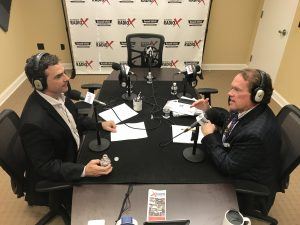
Mike Blake: [00:00:48] My name is Mike Blake, and I’m your host for today’s program. I’m a director at Brady Ware & Company, a full-service accounting firm based in Dayton, Ohio, with offices in Dayton; Columbus, Ohio; Richmond, Indiana; and Alpharetta, Georgia, which is where we’re recording today. Brady Ware is sponsoring this podcast. If you like this podcast, please subscribe in your favorite podcast aggregator and please consider leaving a review of the podcast as well.

Mike Blake: [00:01:11] So, today, we’re going to talk about whether you as a business owner executive should run for political office. And regardless, I think, of where you are in the political spectrum, if you are at any place, I’m not sure where I am anymore, I think that’s an increasingly important topic. I think we’re seeing more people with a business background seeking office at all levels. And indeed, like them or love them, love them or not like them, the current President of the United States does come from a business background. And indeed, he ran on his business background as a reason why that is the case he made that he would be a good president of the United States. And that’s something that he invokes fairly regularly.

Mike Blake: [00:02:02] And it’s not just he that’s doing that. Mike Bloomberg has recently jumped into the race. There’s discussion now about, you know, whether billionaires can buy their way to the presidency. And again, we’re not going to talk about that particular topic, but I think there’s an increasingly blurred line now between politics and business. And maybe there’s always been a blurred line and depending, again, where you sit, maybe it’s an uncomfortably blurred line. But the fact of the matter is, I think, that the people who did not think that they had the stuff or the wherewithal, even the desire to run for political office and just sort of put themselves in the seat of being a business person, now, are thinking of themselves potentially in a dual role or maybe it’s even something they do with either a subsequent or intervening chapter in their lives.

Mike Blake: [00:02:56] And, you know, the recent statistics on this podcast still are flooring to me. We’re pushing about three-and-a-half million downloads, I understand, since February. Chances are good at least one of you has thought about running for political office. So, at least, this could be interesting to one of you out there. But I think it will be interesting to more on that. And we actually have a director at Brady Ware & Company that was elected mayor for one of the towns, I believe, outlying Dayton. He took over as mayor when the previous mayor resigned. And then, ran and was elected in his own right. So, we’re even seeing that inside our own company.

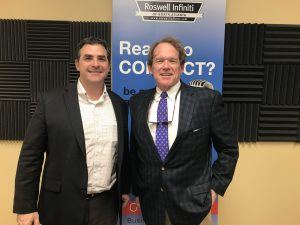
Mike Blake: [00:03:35] So, as you know, when you listen to this podcast, we’re bringing in people who actually know what they’re talking about, because I certainly don’t. And coming in to talk about this topic today are two people who are balancing public service and their own careers. And so, joining us today is Dar’shun Kendrick, a five-term member of the 93rd and/or 94th Districts of Georgia in the Georgia House of Representatives as the chief deputy whip. And I say the 93rd/94th, because I think it was a 94th District for her first term. And then, thanks to redistricting, I think it then became the 93rd. But for those who aren’t in Georgia, our assembly is made up of 180 members, a fairly large body, partially because we just have, I think, more counties than anybody in the country.

Mike Blake: [00:04:25] We’re not serving her constituents in this capacity. Dar’shun is a capitol compliance lawyer dedicated to guiding Black and female founders in the capitol, raising investing process. She provides these services through her company, the Kendrick Advisory, an advocacy group. She’s an arbitrator of the Financial Industry Regulatory Authority or FINRA. I did not know that before I was researching this podcast and she holds a bachelor of arts from Oglethorpe University, I live about a-mile-and-a-half from there, holds an MBA from Kennesaw State University and a law degree from the University of Georgia.

Mike Blake: [00:04:56] And she’s joining us by phone today. So, you may hear some noise in the background. With those of you who are not from Georgia, we have a unique driving environment here. And one of the unique features of the driving environment is that rain, particularly cold rain, will turn the streets of the greater Atlanta metropolitan area into an episode of Ice Road Truckers, basically. So, Dar’shun, please drive carefully as you’re on the podcast. Thanks for joining us.

Dar’Shun Kendrick: [00:05:25] Yeah. Thanks so much. And I’m sorry I couldn’t be in the office or in the studio today. But as you know, we are getting ready for session. So, we’re trying to make do with the 24 hours we get.

Mike Blake: [00:05:37] Yeah. Well, if you guys can vote a 26-hour day, I’d really appreciate that.

Dar’Shun Kendrick: [00:05:42] Yeah. So would I. I’ll work on that.

Mike Blake: [00:05:45] Also, joining us today is Colin Ake. Colin was elected city councilman in 2018 for the City of Woodstock, Georgia, a municipality of southern Cherokee County, the population of just over 30,000. And Woodstock is, oh, I’m going to say about 20 miles north and west of downtown city of Atlanta, maybe a little bit farther than that. Prior to serving in that role, Colin was a—or give me some help here, was it a or the planning and zoning commissioner for the City of Woodstock.

Colin Ake: [00:06:13] I was one of seven.

Mike Blake: [00:06:15] Okay. One of seven. So, a planning and zoning commissioner. When not serving his constituents, Colin is a principal at Georgia Tech VentureLab, where he serves as an instructor on innovation and entrepreneurship. Colin actively works with entrepreneurs and researchers to commercialize research, identify, and secure grant funding, mentor startups, and modify and implement Georgia Tech’s evidence-based entrepreneurship curricula. This includes training and evaluating other instructors in the customer development methodology employed by the I-Corp program and across Georgia Tech.

Colin Ake: [00:06:44] At some point, I’d have you back to talk about because that’s an interesting program. It’s one that I think is unique. Colin holds his bachelor degree in management and his MBA from Georgia Tech. So, regardless of any kind of political discussion here, we have somebody from the University of Georgia and somebody from Georgia Tech, and that’s probably going to create more tension on this program than anything. And if you are from Alabama or Auburn or Florida, Florida State, you know exactly what I’m talking about. Colin, welcome to the program.

Colin Ake: [00:07:10] Thanks, Mike. Thanks for having me.

Mike Blake: [00:07:12] And interestingly, you’re wearing a shirt today that’s yellow with black stitching on that. Is that something that you arranged or?

Colin Ake: [00:07:20] Not specifically because of where Dar’shun went to get her law degree, but I did pick it out.

Mike Blake: [00:07:29] All right. So, let’s jump into it, because we got a ton to cover here. So, Dar’shun, let me let you go first. Ten years ago, you began to serve in your capacity in the Georgia legislature. What motivated you to do that?

Dar’Shun Kendrick: [00:07:49] Well, here, I have a very unique and interesting story. So, I essentially was at the right place at the right time or the right place at the wrong time, depending on which day of the week it is. I was a 27-year old who had just started practicing law for small business litigation firm downtown. And the law firm imploded one summer. And so, they let everybody go. And so, I had started my MBA program. And I had to start my own law firm.

Dar’Shun Kendrick: [00:08:28] So, I actually happened to be down as the capitol because two hours before I got down there to meet with our rep on some sort of marketing for my new firm, the person in my seat decided to run for governor. And so, they were looking for people. And I just so happened to be at the capitol meeting on an unrelated matter. I didn’t even know they would qualify me. And so, the person I was meeting with, I had known since I was a teenager because I worked at the capitol and they asked me what district I was in.

Dar’Shun Kendrick: [00:09:04] And I said, House District 94, which is 94 at the time. And he said, “Well, we need you to run for office.” And of course, I thought he was crazy because I was starting the MBA program and a new law firm. But the long story short is I ended up qualifying 30 minutes before the qualifying ended. So, I actually went from a private citizen to a full-blown candidate unexpectedly overnight. So, I wish I had a better inspirational story about how I worked hard enough and I planned to be in this position, but that is the true story of how it happened.

Dar’Shun Kendrick: [00:09:43] But I ultimately decided to say yes because I knew I eventually wanted to work on state house. I just thought it would be kind of be, you know, sort of when I had a more stable career, when I was older, maybe with a family. But I decided to say yes, because, you know, I grew up in DeKalb County and I represent Dekalb County. I knew that I was more qualified than the people that were running. I already had tremendous support before I even signed the qualification document, so I knew that I could do it. And even though it came unexpectedly and it came fast, I have had a pleasure of serving 54,000 Georgians ever since.

Mike Blake: [00:10:29] Okay. And I have a feeling there are probably other stories that are kind of like that. But Colin, how about you? What’s your story? Did you also sort of fall into public service that way or is that the more of a longer term ambition of yours?

Colin Ake: [00:10:44] No, I kind of fell into it. I grew up in Woodstock. And Woodstock has changed a lot. It has grown massively in the last couple of decades and really become a place that is much different than where I grew up. My wife and I moved back to Woodstock in 2013. And I got involved in a local nonprofit focused on building a trail system just because I want to be able to raise a family somewhere over there. It was a good outdoor recreation opportunity. And from there, I got asked one day to serve on the Planning and Zoning Commission, which was not on my radar, not something I’d been to, not something I was involved in.

Mike Blake: [00:11:26] Did you know anything about planning and zoning?

Colin Ake: [00:11:27] I did not know anything about planning and zoning. But I love learning new things. And so, I dove in and had a lot of fun over the course of about a-year-and-a-half. Planning and zoning in the State of Georgia, most bodies are recommending bodies. In other words, they’re appointed by mayor and city council, but they recommend decisions. And then, the mayor and city council make the final decision. And after about a-year-and-a-half of seeing recommendations go one way or the other and the city council listened to some of them and not listened to others, I decided, well, it might be time to make this vote count if I’m spending the time on it.

Mike Blake: [00:12:05] Like the Christmas song goes, if you’re so smart, you rig up the lights, right?

Colin Ake: [00:12:09] Something like that.

Mike Blake: [00:12:10] So, let’s go into that then. Your first election, talk about running in your first election was like.  You, yeah.

Colin Ake: [00:12:21] Yeah.

Mike Blake: [00:12:22] Colin.

Colin Ake: [00:12:22] So, my first election was an experience. So, I ran against an incumbent that was first elected and hadn’t been in office continuously, but was first elected in the year 1990.

Mike Blake: [00:12:35] Wow.

Colin Ake: [00:12:36] So, 2017, I’m running against a guy who has been in office in and out a couple of times, but for for a while. Nice guy. But I wanted a shot. So, I qualified and started running. Somebody else also qualified. So, I had a three-way race and that was quite the experience. It’s a lot of door-knock and it’s a lot of talking to people. It’s a lot of time. It is a great experience. You know, I teach this entrepreneurship stuff at Georgia Tech, right? We teach researchers to go talk to customers and actually understand the people. I mean, knocking on doors is all that, right?

Mike Blake: [00:13:12] Yeah.

Colin Ake: [00:13:12] It is essentially sitting there and that-

Mike Blake: [00:13:13] I hadn’t thought about that. That’s right.

Colin Ake: [00:13:15] … you are learning about your constituents or potential constituents at this point. And what do they care about? Why do they care about those things? And it’s a lot of fun, but it’s a lot of work. You wear through some shoes and it was a good time. I was fortunate enough to avoid a runoff. I won outright. I was a little surprised. You know, I know a lot of people do these victory parties, I didn’t do any of that. I was ready to find out who I was going to be against in the runoff. And I had about four people at my house. And it turned out okay.

Mike Blake: [00:13:51] Well, knowing you, that sounds about right though. You’re kind of a low-key guy, so I don’t see you as a victory lap guy. Dar’shun, how about you? I mean, I know you, sort of, were an overnight qualification story, but what was that first election like? Were you opposed?

Dar’Shun Kendrick: [00:14:09] I was. So, I had four other people was—and my district is largely democratic. So, obviously—general. But I did have four other people in the primary. It is somebody who is very active in the Democratic Party. Somebody who had ran for this three times before. And there’s somebody who was very, very active that have supporters in Rockdale. But I’m just—so, I was the youngest. And so, every time the media printed something, they just ask it without at least letting you know for whatever reason.

Dar’Shun Kendrick: [00:14:53] But I, you know, knocked on doors. I have been involved in politics since I was 18. So, we have to like run a campaign. And so, I had a number of primary voters who were at least three times. And that’s when the primary—fly. It wasn’t in vain like it is now. So, it was a long, hot summer, a very long, hot summer. And I, you know, didn’t quite know how I was able to—start a law firm while knocking on doors. That still felt quite interesting in how I did it—business.

Mike Blake: [00:15:38] Well, let’s, in fact, talk about that, because, you know, one of the things that draws me to this conversation is, you know, where does running for office intersect with business, right? And both of you, in your case, you have a business and Colin has, you know, a career and neither of your post, they’re not designed to have you be a career politician in that respect. But I’m curious, as you are knocking on doors, do you think that that actually helped you kind of understand your market better, Dar’shun?

Dar’Shun Kendrick: [00:16:20] You know, I think it helped me not only to understand my market better, but just to broaden my understanding of just opinions and the issues facing Georgia in general. When I first ran for office, I was—at Rockdale County. And Rockdale County is that county who have very, very active supporters of commerce. And so, you know, on the campaign, so obviously, I was engaged with those two views. But it helped me that I did have a business background to sort of, I think, connect with people on the campaign trail at these retail or business centers.

Dar’Shun Kendrick: [00:17:06] And I am accused more than I would like about being one of the more full-business Democrats. But I think it served me well, because I am able to understand sort of the base of my calling, which is labor and balancing with the people that I represent, which are obviously founders of this. So, I definitely learned a lot about that market, but around Georgia issues as well. It was a really great opportunity to just meet people and hear different views. I really enjoyed the campaign. I know it’s hard, but I learned a lot of their stories.

Mike Blake: [00:17:47] So, Colin, my next questions for you is, you know, as you are preparing to run, have you had professional mentors or advisors in your life that maybe, you know, have helped you along the way to get to where you’ve been professionally? Did you also rely on them as you contemplated this political step? And if so, were they helpful? If not, then where did you kind of find that expertise?

Colin Ake: [00:18:11] Yeah, it’s a great question. So, you know, I tend to be the student of, you know, whatever world I’m going into. I worked with a bunch of different entrepreneurs from a bunch of different backgrounds and bunch different industries, right? And so, that’s taught me to take advice from the people who have experienced something before and go find people that can share something with me that, you know, is based off that experience. I certainly had conversations with business mentors or people that I worked with previously. I’m about running for office. I got encouragement to do so.

Colin Ake: [00:18:45] But of course, you know, if you’ve not run a campaign, you generally go well. But I’ve never run a campaign and that’s kind of, you know, where that stops. I had some help from some friends that had experienced parsing data and find someone that they can parse data well. And go grab some voter data and, you know, data’s data. You got to know what you’re looking for, but once you know what you’re looking for, it’s fairly easy to pull together a strategy.

Mike Blake: [00:19:13] Indeed, I’ve heard that superior command of data was a big factor in enabling the president to win in 2016, right? It wasn’t whether he’s a better candidate or not, but this was a lot of analysis. And I think there’s some truth to this that he and his team just paid more attention and just did better with parsing data.

Colin Ake: [00:19:36] My experience has been that the data certainly gives you an edge. And it helps inform whatever strategy you’re developing as a team. Dramatically different to run for president than it is to run for city council for the City of Woodstock.

Mike Blake: [00:19:49] Sure.

Colin Ake: [00:19:51] For the small business owners that are out there that are thinking about getting involved in local government, at either the local or the county or the state level, it’s really easy to not even be—you know, you don’t have to be a presidential level data parser to make a difference in a small race.

Mike Blake: [00:20:12] Yeah. And in fact, interestingly enough, there is one of these rare cases where a meaningful office was won by one vote, a Boston city council office, after their fourth recount was just decided by one vote with over 70,000 thousand votes involved. So-

Colin Ake: [00:20:30] That’s fairly narrow.

Mike Blake: [00:20:31] There’s probably going to be a lawsuit, too. One vote, you know, you got to believe that’s gonna be challenged, I would think. But still-

Colin Ake: [00:20:39] Hanging chad somewhere.

Mike Blake: [00:20:40] Yes. So, it does happen. So, Dar’shun, how about you? I suspect, but you tell me. I don’t want to put words in your mouth. What about your mentors and advisors? Have they been the same for you along the way in business as in politics or have you found that they’ve been different?

Dar’Shun Kendrick: [00:21:01] So, my sort of mentors in business have always been my parents. So, I grew up in an entrepreneurial household. So, I love business owners, but typically, minority female founders and Black-owned founders share sort of the challenges that they went through. So, my parents have kind of taught me a lot about business. And, you know, I have people that I sort of look up to. I wouldn’t say that I have a formal mentorship with anyone. And that’s probably because, believe it or not, I’m—about it. So, you know, I just had not gotten opportunity to ask somebody to do that mentorship. But I am because one of the things that I added to my success and firm is I just recently got a series of job life investment-

Dar’Shun Kendrick: [00:22:05] So, I am intentional about how people have been successful in the state for a very, very long time with that aspect of it. But political-wise, you know, as a politician, I value amongst anything else—good and anything like that is people who are persistent in their belief and that is true. So, one of the reasons that one of my best friends is a partner is because we are very, very truthful with one another. And because above all else, we are very persistent in our belief. So, for me, you know, I will look up to or admire anybody in the political world that is consistent in their belief and persistent about it.

Mike Blake: [00:22:59] So, you’ve been in public service now for a decade. Really remarkable. And which means you’ve won five elections. Again, remarkable. How have you found that’s impacted your legal practice and your consulting practice?

Dar’Shun Kendrick: [00:23:20] So, obviously, in the beginning, since I was an overnight candidate, from a law firm perspective, I wasn’t prepared to be a full-blown candidate. So, I think that was the hardest time because I didn’t have the preparation. I literally went from a private citizen to a full-blown candidate overnight. So, those early years are very, very rare. I’ve done a very good job, indeed, of managing it.

Dar’Shun Kendrick: [00:23:54] And so, one of the things that I do, particularly during this upcoming legislative session, is I’m very, very good about saying no. Obviously, I have about 31,000 followers on this and everybody, you know, wants to pick my brain or hear a story or just advice about this. And I just say, “Hey, listen, I’m very good about saying no.” But the other thing is I try to focus on policies that I have an expertise into it, which is capital label, security work, investment, strategies, and things like that.

Dar’Shun Kendrick: [00:24:32] So, it makes the work a little, not only more fun or more engaging, but a little easier to just pass the learning curve as you’re not spending as much time on it, you’re just focused on things that you really couldn’t deal with. So, over the years, I’ve been able to really find that balance. And I think that it served not only me will, but the State of Georgia will to have somebody focusing on policies that is also a part of their day job.

Mike Blake: [00:25:06] And Colin, how about you? You haven’t been in service quite as long, but it looks certainly long enough to have an impact. How have you found that’s impacted your career?

Colin Ake: [00:25:13] Yeah. It’s got a time impact for sure. You know, juggling multiple responsibilities is a challenge. You have to be very good about saying no.

Mike Blake: [00:25:25] And you’re moonlighting. Both of you are basically moonlighting when it comes down to it.

Colin Ake: [00:25:28] And, you know, there’s beauty and there’s challenge in citizen legislature and in citizen governance, but there’s balance that comes from having those multiple perspectives and experience. You have to find things that are important to you and prioritize them. You have to say no to a lot of things. People ask me what my hobbies are. My hobby is serving the citizens. You know, there are no other hobbies.

Colin Ake: [00:25:53] I’ve got a family, I’ve got a real job, and I’ve got an elected office. And that’s the majority of my time. So, you know, it changes things because it gives you different perspectives on life. You know, we don’t manage a budget anywhere near the size that Dar’shun deals with. This is, you know, at the city level, it’s a much smaller world. You know, our form of government, we have a city manager that’s full-time, essentially the CEO.

Colin Ake: [00:26:25] And we act as, you know, kind of a part-time board. But there are infinite subjects at any point time you can go learn a lot about, right? There are people who have built their careers off of public safety response, out of public works, out of community development. And to be a student of each of those games, enough where you’re informed, but not enough where you’re unable to focus on other things as, you know, you just have to juggle it.

Mike Blake: [00:26:50] So, the question I want to ask both of you, I’ll give Colin first crack at this, is there’s what I would call a romantic notion out there. And I used to have this. I’ve moved away from this view myself. But there’s a romantic notion that if you could just run government the way you’d run a private business, everything would just be hunky dory. And I’m not sure that our attempts to do that have worked out well, but I’m willing to be educated otherwise. Colin, in your experience, is that a realistic expectation? Is it partially realistic? Where do you kind of come down on that?

Colin Ake: [00:27:30] I’m going to say and I am making up an answer on the spot here. I think it depends on the level of government. Local government, small municipality is dramatically different from large municipality, it’s dramatically different from county government, and dramatically different from state government, which none of that, you know, is nearly as complex as the federal government. When you’re in a small municipality or, you know, we’re just over 30,000 people, it’s growing fast, there are elements that certainly translate.

Colin Ake: [00:28:05] You have HR challenges, you have budget challenges. So, there’s elements that translate. I don’t think it’s necessarily the same, right? Because you’re dealing with a lot of things like social contracts between neighbors and zoning issues that are really personal for people and really come down to, you know, interpretation of and belief in basic rights and principles. And so, there’s elements that translate, there’s elements that don’t translate even at the local level. But I don’t know if at the local level there’s more of it or less of it. What’s your your thought, Dar’shun?

Mike Blake: [00:28:43] Dar’shun, where do you come down on this?

Dar’Shun Kendrick: [00:28:46] Yeah. So, it’s interesting. I just had finished going to a retreat with the technology advancements in Georgia. And my colleague, Joe, does a lot of technology work. He said, when he first got elected, which was last year, he said, “I have the misconception that government is—like a business. And boy, did I get a big surprise?” And I think if that is right and that—the problem with running government like a business is that their end goal is different, right?

Dar’Shun Kendrick: [00:29:20] So, for businesses, this is representing corporations like I do, their first responsibility is a job upholder, which is to make profits, right? That is the end goal. There is the fiduciary duty that’s involved there. With government, obviously, it’s very, very different. The end goal is uphold constitution, improving for the public safety and welfare of their citizens. So, I think, the common point, you are going to have some-

Dar’Shun Kendrick: [00:29:53] You know, sometimes, when it works well, like under Georgia, we have a 26-billion dollar budget and we are not allowed to print money or borrow money like the federal government is. So, every year, we have to balance our budget like I effectively—but at the same time, you know, we were making those various techs and things that the priorities are going to be very, very different. Because it is a government entity, I suppose they have really different budgeting.

Mike Blake: [00:30:23] You know, that’s an interesting point. I want to kind of underscore something that in terms of that capacity to borrow. And in fact, most private businesses can borrow at some point, right? Even if you’re a sole practitioner, you could put a $20000 Mac Pro on your credit card if you wanted to. I’m not sure what you’d do with it, but you could certainly do that. Whereas, you know, as you said, if you’re not in the federal government, generally speaking, there is no borrowing capacity. You balance the budget, end of discussion or you just run out of money.

Dar’Shun Kendrick: [00:31:03] Yeah. And, you know, that’s one of the things that obviously, the—this upcoming legislative session. And those conversation is just going to be different than if I was having a conversation with a board that I represented in the business.

Mike Blake: [00:31:22] So, has there been at some point, Dar’shun, where you’re concerned about there being a negative impact in your business? I mean, you know, we’re taught that we should be not discussing politics and business and generally speaking from the except of some very close business associates, I don’t entertain that discussion. You can’t avoid that because you’re out there and you got bumper stickers and you got signs on people’s house corners and so forth. You know, have there been points in which, you know, maybe that’s negatively impacted your business? Because there are people who look at you as a Democrat and say, “You know what, I’m just not going to do business with a Democrat, end of discussion.”

Dar’Shun Kendrick: [00:32:06] Yeah. That’s very possible. You know, I don’t have any empirical data that somebody has done that. But two things to your point. So, the first thing is I am an oddball and that I am not one of those people that think that we shouldn’t discuss policy. I think that’s the reason. Otherwise, because you don’t have those horrible sessions, that dinner on the table, so I am free and open—probably to my social media rather than dinner table.

Dar’Shun Kendrick: [00:32:39] So, I am probably an anomaly and that I think it will never be obviously the factors of—it had taught me to be more tolerant of other people’s opinions. And so, I just think holding it up doesn’t serve anybody. So, I’m definite in my belief in that respect. But the second thing is, as I mentioned before, I tend to be one that criticized on both sides. But particularly, for Democrats, because I do understand and relate to business owners and founders, what they might do for the underlying labor movement.

Dar’Shun Kendrick: [00:33:16] And that’s not to say that, you know, I’m against labor or anything like that. It’s just that I bring a different perspective. And so, I think knowing that and because of the things that I do as far as policy and collaborations and things like that, people might know that I’m a Democrat. But when it comes to business, particularly when it comes to technology, really, the people are more willing to—to me because of my support of businesses on the side.

Mike Blake: [00:33:55] So, let me switch gears here, because I think there’s an important question. And somebody out there is thinking about this question, I guarantee it. And that question is this. Colin, let me put it to you first. Somebody is thinking, “Wow. If I could just run for office, that would really help raise my profile.” What a great resume build or what a great thing to put on LinkedIn. And maybe it even gives you some other opportunities as well. And we’ll talk about conflicts of interest in a minute. But just generally speaking, you know, in your mind, is it worth running for office to help your career?

Colin Ake: [00:34:37] To me, no. There’s different opinions on this, obviously.

Mike Blake: [00:34:41] Right.

Colin Ake: [00:34:41] I think it’s worth running for office if you want to invest yourself in something and you want to learn a different perspective. Sure. I am sure there are examples of people who’ve gone into politics and their career has blossomed as a result. But at the local level, right? To me, I want counterparts on council, I want counterparts on the county commission that are dedicated to making the place that we live a better place, right?

Colin Ake: [00:35:12] And they come with a desire to invest their time and their resources and their energy in making those decisions that are never easy. And that’s a much better motivator to me than someone who’s there for them. It’s about a group. It’s about, you know, building consensus amongst people that don’t necessarily always see eye-to-eye and understanding nuances of issues and finding ways to come to agreements. Like that’s what it’s about. It’s not about, you know, personal gain.

Mike Blake: [00:35:50] Dar’shun, how about you? If somebody is thinking about running for office because they think it would help them personally or from a business perspective, is it worthwhile to have that thought process?

Dar’Shun Kendrick: [00:36:08] I think that is probably the biggest myth besides—that I have heard with respect to public office. Well, because you want to prove and just have the heart to prove it. That I will tell you personally, one of the biggest, most helpful things that people just adviced that I got before I entered the legislature or that before I entered the legislature, it came from my predecessor, who was a lawyer, a legislator.

Dar’Shun Kendrick: [00:36:40] And for those that don’t know, lawyer legislators are a dying breed. When I first got into office, we were about almost 25% of the general assembly and now, we’re down to about 17%. So, you might think that’s not bad, but it is what it is. So, that is—in the general assembly. But historically, we had less than that number. So, this lawyer legislator said it and put it ever so distinctly and it has been every bit of truth, is that it’s not a matter of if we will lose revenue and income in this position, it’s a matter of how much.

Mike Blake: [00:37:26] Okay.

Dar’Shun Kendrick: [00:37:27] And every time a lawyer legislator is thinking about running for office, even if they have zero motives, I always give them the same advice. Your revenue and you income will go down. It’s not a matter of if it is going to go down, the question is how much. And a lot of that had to do with the fact that, you know, we especially engage in policy making for the first few months of the year, right? But then, there’s also, you know, possible conflict of interest, particularly if you work with bigger firms that might come about.

Dar’Shun Kendrick: [00:38:04] People think we just work for four months out of the year. But I can tell you that I work no less than about three hours outside of session a week on legislature side. So, you know, you can be one of those legislators that just shows up and doesn’t advice anything and never say anything and just for like a check. I mean, that is, you know, “Why don’t you show up and vote for the budget?” Constitutionally, you’ve done what it is that you’re required to do on this constitution.

Dar’Shun Kendrick: [00:38:32] But most people, you know, don’t want to do that and they wanted to be re-elected, so it does become a full-time desk job during the session and then, the other part is the time we’re out, it’s more of a part-time job. So, I would caution anybody who thinks that this is better, it’s going to raise your brand, for sure, but if you think that is going to translate to dollars, I would just be cautious about this and that it’s going to have a correlation.

Mike Blake: [00:39:00] So, Dar’shun, you brought something up that I want to jump on, because I think it makes sense to talk about here. And it’s another critical question we got to cover, which is I have to imagine there are many opportunities, particularly in your position, for conflict of interest to arise. How do you manage that?

Dar’Shun Kendrick: [00:39:22] So, it actually is not as much of a conflict as you would think. So, because there are citizen legislators, right? Everybody knows we have a full-time job and we have to work. So, if I work for a bigger firm and I had a client of the firm that was advocated for a deal, that would be, of course, sort of conflict of interest right there. But because I’m a solo and because I am an attorney, you know, constitutionally, nobody can prevent me from practicing law, because just by law—right.

Dar’Shun Kendrick: [00:40:06] So, you know, I consult on reviews that we have and things like that because that’s literally my job as a lawyer. But there are sometimes that the legislature will specifically set the legislation that we can’t engage in particular firms, particularly AJC—which was cannabis bill that we passed for the—growing the cannabis. I have never in my mind used to being down there seeing legislation that specifically sits in what I call a poison pill.

Dar’Shun Kendrick: [00:40:47] And that it specifically prohibits legislators, former and current legislators, from investing in the cannabis business past 5% of an investment. And that was put in there for a long, drawn out reason that I know about. But anyway, it does prohibit. So, for example, I started an investment group that is going to participate in investing in the supply chain for cannabis. Well, I started the group, but I only serve as general counsel.

Dar’Shun Kendrick: [00:41:23] I’m not investing into it. I’m not putting any money into it. I’m not, you know, having input on the pitch process, in the investment process. Just because there is that specific proposition in there and I don’t want to be on the front page of AJC. So, there are times when the conflict is written into either the law or they probably prohibit us from engaging in it. But because, you know, it’s literally my profession, I’m generally allowed to sort of practice law and give advice, even though I might vote on this bill.

Mike Blake: [00:42:05] So, Colin, I’ll ask you a different question as we head to the end here. You know, how does sort of having a job and doing what you do alongside being a city councilman inform how you vote and how you propose and pursue policy?

Colin Ake: [00:42:29] It’s a good question. So, how does having a job help inform policy? So, I’m an entrepreneur turned academic, right? My day job is down at Georgia Tech. As such, I get access to a ton of people who are really smart in any given field. You know, we’re very fortunate to have a school of city and regional planning that is really good at pumping out good planners. There’s people down there that I can learn from on a technical topic. There’s a balance there, right? There’s obviously people with deep expertise that we can learn from and turn that into knowledge that informs policy.

Colin Ake: [00:43:18] There’s also a balance of, you know, when I’m at Georgia Tech, my Georgia Tech hat is on. And when I go off the clock there and go to City of Woodstock, my City of Woodstock hat has to be on. So, it’s a great question. For local policy, it’s different, I think, because local policy is often about things like sign code or zoning regulations or, you know, it gets into the minutiae really fast. And it’s not necessarily, you know, directly the same thing that I do with it at Georgia Tech. So, you know, I’ve got all sorts of ideas on an entrepreneurship policy or policy that could impact that world, the professional world that I deal with, but it’s not the same scale of policy that we deal with at the city level.

Mike Blake: [00:44:08] So, if I’m understanding correctly, in reality, you’re kind of in two parallel worlds that don’t necessarily meet a whole lot.

Colin Ake: [00:44:15] They don’t meet a whole lot.

Mike Blake: [00:44:18] Okay. We are running out of time here. And I want to thank you both so much for joining us. We could talk a lot longer about this, but we have to let you get back to serving your constituents. Dar’shun, how can people contact you if they may have an interest in running for office and want to learn more about it and why to do it and maybe why not to do it?

Dar’Shun Kendrick: [00:44:41] Yeah, sure. Anybody can follow me on social media. Beware, though, I am very vocal. So, just like yourself. But it’s just Dar’shun and Kendrick, D-A-R-S-H-U-N, Kendrick, K-E-N-D-R-I-C-K on Instagram and LinkedIn and Facebook and Twitter. So, people can, you know, invite me on there. I’m a millennial and I will give out my cellphone number, but that might be a little dangerous. So, if you can contact me on social media or either email me, just dkendrick@kendrickfor, F-O-R, georgia, Georgia—.com, then I will try my best to get back with you if we can if I’m not very, very busy. And short messages and questions.

Mike Blake: [00:45:33] Very good. And Colin, how about you?.

Colin Ake: [00:45:37] Email me at cake@woodstockga.gov, C-A-K-E, @woodstockga.gov. More than happy to lend some thoughts. My encouragement would be find a way to get involved in your local community and invest your time and energy somewhere near you. It doesn’t have to be an elected office, but we need people that are engaged, that are giving back, and that are trying to make the world a better place.

Mike Blake: [00:46:05] Okay, that’s gonna wrap it up for today’s program. I’d like to thank Dar’shun Kendrick and Colin Ake so much for joining us and sharing their expertise with us. We’ll be exploring a new topic each week, so please tune in so that when you’re faced with your next executive decision, you have clear vision when making it. If you enjoy these podcasts, please consider leaving a review with your favorite podcast aggregator. It helps people find us so that we can help them. Once again, this is Mike Blake, our sponsor is Brady Ware & Company. And this has been the Decision Vision podcast.


Tagged With: CPa, CPA firm, customer discovery, Dar'Shun Kendrick, data analytics, Dayton accounting, Dayton business advisory, Dayton CPA, Dayton CPA firm, Decision Vision, Georgia Tech, Mentors, Michael Blake, Mike Blake, political campaigns, political consulting, politics, running for political office

To Your Health With Dr. Jim Morrow: Episode 22, Seasonal Affective Disorder

December 12, 2019 by John Ray

North Fulton Studio
North Fulton Studio
To Your Health With Dr. Jim Morrow: Episode 22, Seasonal Affective Disorder
Loading
00:00 /
RSS Feed
Share
Link
Embed

Download file

seasonal affective disorder
Dr. Jim Morrow, Morrow Family Medicine, and Host of “To Your Health With Dr. Jim Morrow”

To Your Health With Dr. Jim Morrow:  Episode 22, Seasonal Affective Disorder

On this edition of “To Your Health with Dr. Jim Morrow,” Dr. Morrow discusses seasonal affective disorder, signs, symptoms and treatment. He also shares his own story of how he was affected by the Thanksgiving holiday. “To Your Health” is brought to you by Morrow Family Medicine, which brings the CARE  back to healthcare.

About Morrow Family Medicine and Dr. Jim Morrow

Morrow Family Medicine is an award-winning, state-of-the-art family practice with offices in Cumming and Milton, Georgia. The practice combines healthcare information technology with old-fashioned care to provide the type of care that many are in search of today. Two physicians, three physician assistants and two nurse practitioners are supported by a knowledgeable and friendly staff to make your visit to Morrow Family Medicine one that will remind you of the way healthcare should be.  At Morrow Family Medicine, we like to say we are “bringing the care back to healthcare!”  Morrow Family Medicine has been named the “Best of Forsyth” in Family Medicine in all five years of the award, is a three-time consecutive winner of the “Best of North Atlanta” by readers of Appen Media, and the 2019 winner of “Best of Life” in North Fulton County.

Dr. Jim Morrow, Morrow Family Medicine, and Host of “To Your Health With Dr. Jim Morrow”

Dr. Jim Morrow

Dr. Jim Morrow is the founder and CEO of Morrow Family Medicine. He has been a trailblazer and evangelist in the area of healthcare information technology, was named Physician IT Leader of the Year by HIMSS, a HIMSS Davies Award Winner, the Cumming-Forsyth Chamber of Commerce Steve Bloom Award Winner as Entrepreneur of the Year and he received a Phoenix Award as Community Leader of the Year from the Metro Atlanta Chamber of Commerce.  He is married to Peggie Morrow and together they founded the Forsyth BYOT Benefit, a charity in Forsyth County to support students in need of technology and devices. They have two Goldendoodles, a gaggle of grandchildren and enjoy life on and around Lake Lanier.

Facebook: https://www.facebook.com/MorrowFamMed/

LinkedIn: https://www.linkedin.com/company/7788088/admin/

Twitter: https://twitter.com/toyourhealthMD

The complete show archive of “To Your Health with Dr. Jim Morrow” addresses a wide range of health and wellness topics, and can be found at www.toyourhealthradio.com.

Dr. Morrow’s Show Notes

What is seasonal affective disorder?

  • Seasonal affective disorder (SAD) is a type of depression that is triggered by the seasons of the year.
    • Symptoms usually begin in late fall or early winter.
    • People with SAD usually feel better in the spring and summer.
    • It is thought that SAD is related to changes in the amount of daylight during different times of the year.
    • Some people have SAD with depressive episodes in the summer instead of winter. This is much less common.

How common is Seasonal Affective Disorder?

  • Between 4% and 6% of people in the United States suffer from SAD.
    • Another 10% to 20% may experience it in a milder form.
    • SAD is more common in women than in men.
    • Some children and teenagers get SAD.
    • But it usually doesn’t start in people younger than 20 years of age.
    • The risk of SAD decreases for adults as they age.
    • SAD is more common in northern regions of the United States.
    • Winters are typically longer and harsher there.
    • There is also less sunlight because they are farther away from the equator.

Symptoms of Seasonal Affective Disorder

  • Not everyone who has SAD experiences the same symptoms.
    • Common symptoms of winter-onset SAD include:
  • change in appetite, especially craving sweet or starchy foods
  • weight gain
  • fatigue
  • sleeping more than normal
  • difficulty concentrating
  • irritability and anxiety
  • increased sensitivity to rejection
  • avoidance of social situations
  • loss of interest in the activities you used to enjoy
  • feelings of guilt or hopelessness
  • physical problems, such as headaches.

Symptoms of summer-onset SAD include:

  • loss of appetite
  • weight loss
  • insomnia
  • irritability and anxiety
  • agitation

Symptoms of SAD tend to come back year after year.

    • They usually come and go at about the same time every year.
    • If you think this could be happening to you, call your family doctor.

What causes Seasonal Affective Disorder?

  • In most cases, SAD seems to be related to the loss of sunlight in the fall and winter.
    • Researchers have found that reduced sunlight can affect the body in ways that could contribute to SAD.
    • These include:
      • Circadian rhythm (biological clock) – The decrease in sunlight could disrupt your body’s natural rhythms.
        • This could lead to feelings of depression.
      • Serotonin levels – Serotonin is a brain chemical that affects your mood.
        • Reduced sunlight could cause serotonin levels to drop.
        • This could trigger depression.
      • Melatonin levels – Melatonin is a brain chemical that regulates sleep.
        • More darkness causes the body to produce more melatonin.
        • More melatonin could make you feel more tired and lethargic.
        • These are common symptoms of depression
  • Vitamin D levels – It is believed that vitamin D plays a role in serotonin levels.
    • Much of the vitamin D we get is from the sun.
    • Less sunlight could lead to a deficiency in vitamin D.
    • This can cause depression symptoms.
  • Some people have a higher risk of developing SAD.
    • Factors that increase risk include:
      • Being female.
        • Four times as many women are diagnosed with SAD than men.
      • Living far from the equator.
        • In the United States, living farther north increases your risk.
        • These areas get less sunlight in fall and winter.
      • Family history.
        • Having family members with SAD or other forms of depression increases your risk.
      • Having depression or bipolar disorder.
        • If you have one of these conditions, your symptoms may worsen with the seasons.
      • Young age.
        • SAD is more common among younger adults.
        • It has been reported in teens and children.
        • Your chances of getting it decrease as you get older.

How is SAD diagnosed?

  • Your doctor will ask you about your symptoms, thoughts, feelings, and behavior.
  • He or she may perform a physical exam.
  • They may request lab tests to rule out other conditions that cause symptoms similar to SAD.
  • They may refer you to a specialist to diagnose your condition.
    • This could be a psychologist or a psychiatrist.

Can SAD be prevented or avoided?

  • There’s not much you can do to avoid getting SAD.
  • But you can take steps to manage it so your symptoms don’t get worse.
  • Some people start treatment before their symptoms start.
  • They also continue treatment past the time that their symptoms normally go away.
  • Others need continuous treatment to control their symptoms

SAD treatment

  • The three main ways SAD is treated are with:
    • light therapy,
    • behavioral therapy, or
    • Your doctor may want to combine therapies if using one does not work for you.

Light therapy

  • Light therapy is designed to make up for the lack of sunlight during the fall and winter.
    • It has been used to treat SAD since the 1980s.
    • You sit in front of a special light box every day.
    • The box emits a bright white light that mimics natural sunlight.
      • It seems to make a change in brain chemicals that regulate your mood.
      • The amount of time you sit in front of the light box depends on the strength of the light.
      • It is usually between 20 and 60 minutes.
  • There are other types of light therapy.
    • Instead of sitting in front of a box, you can wear a visor that emits light.
    • Another kind is a “dawn simulator.”
      • This light turns on early in the morning in your bedroom.
      • It mimics a natural sunrise and gradually increases in brightness.
      • This allows you to wake up naturally, without using an alarm.
  • If light therapy helps, you’ll continue it until enough sunlight returns.
    • This usually happens in spring.
    • Stopping light therapy too soon can result in a return of symptoms.
  • When used properly, light therapy seems to have very few side effects.
    • Some side effects include eyestrain, headache, fatigue, and irritability.
    • If you use it too late in the day, you could have trouble sleeping.
    • Talk to your doctor before starting light therapy if you have:
      • bipolar disorder
      • skin that is sensitive to sunlight.
      • conditions that make your eyes vulnerable to sunlight damage.
  • Tanning beds should not be used to treat SAD.
    • The light sources in tanning beds are high in ultraviolet (UV) rays.
    • These harm your eyes and your skin.
    • They also cause skin cancer.

Behavioral therapy

  • Talk therapy or behavioral therapy can help you identify negative thoughts.
    • Then you replace those with more positive thoughts.
    • Therapy can help you learn healthy ways to manage your symptoms of SAD.
    • You can also learn how to manage stress.

Medicines

  • Your doctor might recommend you take medicine to help with your symptoms, especially if they are severe.
    • Selective Serotonin Reuptake Inhibitors (SSRIs) are often used to treat depression.
  • You may have to take the medicine for several weeks before you feel better.
    • You may have to try more than one medicine to find the one that works best for you.
  • You can also make lifestyle changes that can help your symptoms.
  • Let as much natural light as possible into your home or office.
    • Open blinds, sit close to windows, and keep your environments as bright as possible.
  • Get outside when you can.
    • Even if it’s cold or cloudy, the light can still benefit you.
  • Keep physically active.
    • Exercise and activity boost endorphins and relieve stress.
    • Both of these can keep you feeling better.

Living with Seasonal Affective Disorder

  • The keys to living with SAD are to plan ahead and to manage your symptoms.
  • Follow your treatment plan.
    • This includes going to appointments, taking medicines, and following up if things aren’t working.
  • Take care of your body.
    • Eat healthy foods and get enough sleep.
  • Exercise has been shown to have the same effect on depression as antidepressants.
  • Have a plan.
    • Know what you will do when your depression symptoms start to get worse.
    • Watch for early signs and take action before you feel bad.
  • Don’t turn to alcohol or drugs.
    • They make depression worse.
    • They can also have negative reactions with antidepressants.
  • Manage stress.
    • You can’t avoid stress, so you have to learn to manage it.
    • Talk to a counselor or read about ways to handle stress better.
  • Don’t isolate yourself.
    • It’s harder to be social when you’re depressed.
      • But being alone can make you feel worse.
      • Try to reach out as much as you can.
  • Start treatment early.
    • If you know your symptoms usually start in October, start your treatments in September, before symptoms start.
    • You might be able to prevent them.
  • Plan ahead.
    • Some people purposely plan their lives to be very busy during the time they normally feel down.
    • This helps prevent them from “hiding out” at home, because they have already made commitments.
  • Take a trip.
    • Plan a trip to a warmer, sunnier climate during the winter.
    • The positive feelings will extend before, during, and after your trip.

Questions to ask your doctor

  • What treatment is best for me?
  • Should I use light therapy?
  • What changes can I make at home to help myself?
  • What is causing my SAD?
  • How long will I have to continue treatment?
  • Should I talk with a counselor?
  • Should I make any changes to my diet?
  • Could exercise help me deal with SAD?


Tagged With: Cumming doctor, Cumming family care, Cumming family doctor, Cumming family medicine, Cumming family physician, Cumming family practice, Cumming md, Cumming physician, Depression, Dr. Jim Morrow, holiday blues, light therapy, Milton doctor, Milton family care, Milton family doctor, Milton family medicine, Milton family physician, Milton family practice, Milton md, Milton physician, Morrow Family Medicine, Pineal Gland, SAD, SAD symptoms, seasonal affective disorder, serotonin, To Your Health, vitamin d, vitamin D deficiency, winter doldrums

Decision Vision Episode 42: Should I Issue Equity to Employees? – An Interview with Scott Harris, Friend, Hudak & Harris

December 5, 2019 by John Ray

Should I Issue Equity to Employees?
Decision Vision
Decision Vision Episode 42: Should I Issue Equity to Employees? - An Interview with Scott Harris, Friend, Hudak & Harris
Loading
00:00 /
RSS Feed
Share
Link
Embed

Download file

Should I Issue Equity to Employees
Mike Blake and Scott Harris

Decision Vision Episode 42: Should I Issue Equity to Employees? – An Interview with Scott Harris, Friend, Hudak & Harris

Why should I even consider issuing stock to employees? If I do, what form of equity should I use? Business attorney Scott Harris answers these questions and much more as he speaks with host Mike Blake on this edition of “Decision Vision,” presented by Brady Ware & Company.

Scott Harris, Friend, Hudak & Harris

Should I Issue Equity to Employees?
Scott Harris

Scott Harris is a Partner with Friend, Hudak & Harris. Scott’s expertise is in business law. He concentrates his practice on corporate, transactional, licensing, intellectual property, merger and acquisition, joint venture, and finance law. By finding the right solutions to challenges and taking advantage of opportunities, Scott ensures that closely-held businesses and their owners grow and succeed.

Scott approaches his work differently. Rather than telling clients what they cannot do, he defines strategies to best accomplish their objectives. Instead of a detached legal assessor, Scott stands shoulder-to-shoulder as a client teammate. Based on solid judgment and decades of experience, he works to understand his clients’ businesses and provides them with successful alternatives.

Scott is admitted in Georgia and California. He has a B.A., cum laude, from Wake Forest University, and graduated from the Emory University School of Law with distinction.

For further information, go to the Friend, Hudak & Harris website or you can email Scott directly.

Michael Blake, Brady Ware & Company

Mike Blake, Host of “Decision Vision”

Michael Blake is Host of the “Decision Vision” podcast series and a Director of Brady Ware & Company. Mike specializes in the valuation of intellectual property-driven firms, such as software firms, aerospace firms and professional services firms, most frequently as a transaction advisor, helping clients obtain great outcomes from complex transaction opportunities. Mike is also a specialist in the appraisal of intellectual properties as stand-alone assets, such as software, trade secrets, and patents, and helps clients develop successful commercialization paths for such assets.

He has been a full-time business appraiser for 15 years with public accounting firms, boutique business appraisal firms, and as owner of his own firm. Prior to that, he spent 8 years in venture capital and investment banking, including transactions in the U.S., Israel, Russia, Ukraine, and Belarus.

Mike is very active in the Atlanta startup community. He is the co-founder of StartupLounge, a nonprofit that supports early stage technology entrepreneurs and investors, he teaches the technology valuation module in the Georgia Tech/Emory University TIGER program, and he has coached 6 teams to victory in various business plan competitions for a total of $350,000 in prize money and another entrepreneur who received funding through ABC’s Shark Tank.  He continues holding monthly office hours in Chamblee and Alpharetta.

Mike was named to the Atlanta Business Chronicle’s Top 40 Under 40 list in 2009 and is a graduate of the Leadership Atlanta Class of 2014.  Mike is also a semi-professional musician, playing keyboards and vocals for a classic rock cover band.

Brady Ware & Company

Brady Ware & Company is a regional full-service accounting and advisory firm which helps businesses and entrepreneurs make visions a reality. Brady Ware services clients nationally from its offices in Alpharetta, GA; Columbus and Dayton, OH; and Richmond, IN. The firm is growth minded, committed to the regions in which they operate, and most importantly, they make significant investments in their people and service offerings to meet the changing financial needs of those they are privileged to serve. The firm is dedicated to providing results that make a difference for its clients.

Decision Vision Podcast Series

“Decision Vision” is a podcast covering topics and issues facing small business owners and connecting them with solutions from leading experts. This series is presented by Brady Ware & Company. If you are a decision maker for a small business, we’d love to hear from you. Contact us at decisionvision@bradyware.com and make sure to listen to every Thursday to the “Decision Vision” podcast. Past episodes of “Decision Vision” can be found here. “Decision Vision” is produced and broadcast by the North Fulton studio of Business RadioX®.

Visit Brady Ware & Company on social media:

LinkedIn:  https://www.linkedin.com/company/brady-ware/

Facebook: https://www.facebook.com/bradywareCPAs/

Twitter: https://twitter.com/BradyWare

Instagram: https://www.instagram.com/bradywarecompany/

Show Transcript

Intro: [00:00:01] Welcome to Decision Vision, a podcast series focusing on critical business decisions brought to you by Brady Ware & Company. Brady Ware is a regional full-service accounting and advisory firm that helps businesses and entrepreneurs make visions a reality.

Michael Blake: [00:00:20] And welcome to Decision Vision, a podcast giving you, the listener, a clear vision to make great decisions. In each episode, we discuss the process of decision making on a different topic, rather than making recommendations because everyone’s circumstances are different. We talk to subject matter experts into how they would recommend thinking about that decision. My name is Mike Blake and I am your host for today’s podcast. I’m a director at Brady Ware & Company, a full-service accounting firm based in Dayton, Ohio, with offices in Dayton, Columbus, Ohio, Richmond, Indiana, and Alpharetta, Georgia, which is where we are recording today.

Michael Blake: [00:00:52] Brady Ware is sponsoring this podcast. If you like this podcast, please subscribe on your favorite podcast aggregator and please also consider leaving a review of the podcast, as well. The topic today is, should I consider issuing equity to employees? And I think there are few decisions in business that are of greater importance and greater depth. And I think many people make that decision with such care. Maybe they even become paralyzed and they don’t do something.

Michael Blake: [00:01:32] And I think, frankly, in other cases, particularly in the tech sphere, but not always that way, you kind of see that decision taken lightly. And, you know, there are people handing out stock and options, you know, more frequently than, you know, handing out replica phases at Comic-Con. And companies can sort of make or break themselves because when you invite someone to become a co-shareholder with you in your company, I think that that is about the most intimate relationship that there is in business.

Michael Blake: [00:02:06] Because once you make that commitment, like a marital divorce, that is not something that is easily done or undone by, you know, hitting control+Z and just trying to undo it. And, you know, I think in some cases, there’s a sense that in some businesses, again, in tech software, biotech, you have to make other people shareholders, you have to issue options or even give them stock or you’re just not going to go any place. There’s an expectation on the part of venture cap blushing and make plans to do that.

Michael Blake: [00:02:41] Others, you know, I think correctly assess this decision with a tremendous amount of caution. Because again, it’s not something that’s easy to do. And when a shareholder, even a relatively minor one kind of goes broken arrow on you, at a minimum, it is spiritually painful. And often, it is legally and financially painful as well. So, you know, a topic of this gravity deserves a guest of the high deal of gravitas.

Michael Blake: [00:03:17] And I can think of nobody better to invite to help us work through this than my pal, Scott Harris, who is a partner at Friend Hudak and Harris here in Atlanta, though he is joining us from their palatial and so far, thank God, safe Napa Valley office. Scott’s expertise is in business law and concentrates his practice on corporate transactional licensing, intellectual property, merger and acquisition, joint venture, and finance law.

Michael Blake: [00:03:45] He helps find the right solutions to challenges and taking advantage of opportunities. He ensures that closely held businesses and their owners grow and succeed, and approaches his work differently in that regard. And like our podcast actually, rather than just telling clients what they can and cannot do, he helps to find strategies to best accomplish their objectives. And as an aside, that’s what a good lawyer tells you.

Michael Blake: [00:04:08] That’s what a good lawyer is when they’re an adviser. They don’t just tell you what you can’t do but they lay out a menu of options of, you know, “Here’s what you could do and here’s what the cost benefits, risks, and potential returns are of doing so.” He stands shoulder-to-shoulder as a client teammate. And based on solid judgment, decades of experience, he works to understand his client’s businesses and provides them with successful alternatives.

Michael Blake: [00:04:35] He holds a bachelor’s degree, cum laude from Wake Forest University and his law degree with distinction from Emory University. During his off hours, Scott enjoys trail running and has a love for working with his hands restoring American muscle cars and making furniture. And, you know, I’ve known and worked with Scott for a long time and he’s a hell of an attorney and hell of a business advisor. Scott, welcome to the program. Thanks so much for coming on.

Scott Harris: [00:05:03] Well, thanks very much for including me, Mike. And thanks for that largely true introduction.

Michael Blake: [00:05:11] It’s the internet, doesn’t have to all be true. The rest, we had filled in by a Russian meme farm. So-

Scott Harris: [00:05:18] Well, thank you very much anyway.

Michael Blake: [00:05:20] Yeah. So, before I get into this, I have to ask you, what is the muscle car douceur?

Scott Harris: [00:05:28] Well, I’m between muscle cars, which is a sad situation. But the last three that I had were all Chrysler products back when Chrysler was American-owned. They were two ’71 Plymouth Cudas and a ’73 Dodge Charger that I really—was owned by my daughter, who followed in my footsteps of spending a lot of time and money underneath cars, as opposed to behind the wheel of cars. So, that’s been the trajectory so far.

Michael Blake: [00:06:12] Well, good for you. I have to come out there and get a ride with whatever the next muscle car is that’s coming down the line.

Scott Harris: [00:06:19] I’ll let you know.

Michael Blake: [00:06:20] Good. So, you know, you’ve worked with a lot of technology companies. I’ll bet you, there’s not a lot that you haven’t seen yet. But let’s start off with a very basic discussion here, because we want to help our listeners work through this question. You know, why do companies even consider issuing equity at all? I mean, it’s an enormous pain the neck. There’s some risk. Why would a company even want to approach that discussion at all?

Scott Harris: [00:06:49] Well, that is the threshold question and a good place for us to start. So, imagine yourself running a company and potential employees number 1, 2 and 3 come to you as we’ve experience out here as a bit of an archetype for technology companies. They’re very qualified people. They have long resumes and you need to make yourself stand out among other people vying for their skills. Your choices are, you could pay them a lot of money or being a startup, you may be a little bit cash-strapped, you may be self funding at this point, but you still would like to engage these people and attract them and retain them.

Scott Harris: [00:07:36] You know, how else do you do that if you can’t do it with money? Well, that’s when stock and what we call synthetic stock alternatives come in for employers. And the most and easiest to understand examples of stock are, “Hey, employee number 1, love you to come to work for me. I don’t have enough money to pay you your full salary. I’ll pay you some salary and I’ll just outright grant you X in equity of my company.” And X is a percentage or it could be a number of shares, but it’s a “chunk”. That’s an outright grant.

Scott Harris: [00:08:20] And you don’t have to do this inconsistently between them, but I’m just giving other illustrations. To employee B, you might say, “Look, in lieu of giving you a chunk of stock right now, I’d like to give you stock options or equity options to buy a set number of units of equity at a given time based on certain circumstances over a period.” The most obvious examples of those or just a typical example of those would be four-year options, vesting 25 percent of the total grant of exerciseable equity units, a quarter a year on each anniversary of the grant date.

Scott Harris: [00:09:15] So, you come to work for me today, that’s the same day that I give you these options. A year from now, you can buy 25 percent of the stock at a given price. Another year from now, you buy another 25 percent, et cetera, all the way to the fourth year. And the last example I’ll give you is something called synthetic equity. We’ll make that our third example of employee. And to that employee, we tell them, “Hey, look, I’d like you to come to work for me. I can’t afford to pay you the entire salary that you should demand somebody of your qualifications, but I’d like to give you”, let’s call them, “stock appreciation rights.”.

Scott Harris: [00:09:59] We could also call them phantom stock, but we’ll just use the general description of both of those. It’s not stock. You’re not going to end up with stock in my company, but you’re going to end up with the economic benefits of having that stock like the appreciation that you would see in stock price from today’s grant until when you exercise these or in the event the company is sold, we’re going to calculate what you get as compensation as a bonus based on the sale price of equity as if you own that equity.

Scott Harris: [00:10:38] And the benefit there to the company is you don’t actually have to deal with the headaches of issuing stock in the terms upon which it is held and having shareholder and/or member agreements, but the employee has a lot of the same economic benefits as if they were a shareholder without some of the downsides including a voting stake in the company. So, there are many ways to do it. I’ve just explained three different ways to do it.

Scott Harris: [00:11:07] What are the benefits of doing that? Well, to the employer, one of the primary benefits is in lieu of paying somebody cash, you’re giving them these bonuses that are basically in the form of stock or options or synthetic equity. You save cash. That’s a major benefit particularly to startup companies. There are other incentives as well. It causes employees often to think of their contributions to companies in terms of what does this do to entity valuation.

Scott Harris: [00:11:47] Is my contribution making the company more valuable or am I just getting a paycheck at the end of the day? Sometimes, the alignment in economic incentives between employers and employees is crucial for those companies getting off the ground. And it puts everybody largely on the same side of the company benefits and may benefit to part of the ledger as opposed to the tension between, you know, management, just labor.

Scott Harris: [00:12:20] Another plus for employers in using equity and equity-like compensation is the ability to attract people you might not otherwise be able to secure. Especially in today’s environment with 3 percent unemployment, it sure helps to have equity and equity kicker attraction to people that you’re looking to hire and/or maybe, you know, hire away from other engagements. At least, in the tech and in many other industries, it’s pretty much a standard.

Scott Harris: [00:12:59] And particularly with early stage companies and initial key employees, there are very few that operate without some sort of an equity incentive. And then, of course, the last—and I wouldn’t say it’s the last, but it’s the last one I’ll cover today. The last reason companies doing this is as compared with just giving somebody a paycheck twice a month or at the end of each month, when you have that equity compensation vests over a period of time, the ability to enjoy more of that benefit vests over a longer period of time, you tend to incentivize retention of employees.

Scott Harris: [00:13:41] “I’m not going to leave this week because at the end of the year, I’ve got a 25 percent vesting of my options that I would like to be entitled to. I’m going to hang out for a little bit longer.” And then, at the end of that year, somebody might say, “You know, I’ll stay on in another year because at the end of that year, I’ve got another chunk of this equity that’s going to vest with me”, as opposed to the paycheck that you just cashed and spent on your muscle car that week. So, those are some of the incentives for the employers.

Michael Blake: [00:14:19] Now, you know, the question I’m asked a lot and I’m sure you got a lot to when you’re talking about this is a concern about giving up control. You know, you mentioned three different approaches, equity, options, and synthetic equity. What are the different implications in terms of having to share control with the people to whom you are making those grants?

Scott Harris: [00:14:48] Well, let me try to be a little bit more concise in this answer than the previous answer that I gave. The difference between equity and non-equity or synthetic equity is technically speaking, the synthetic equity, it’s more of a bonus and it does not involve the issuing of stock or rights to purchase stock or equity. It’s really just a bonus that is tracked based on equity value. That’s the yardstick for it.

Scott Harris: [00:15:22] So, when you give it out, you’re not giving up voting control and there is no voting aspect to it. On the other hand, equity grants or options, those are either just the outright giving of stock or the outright giving of a right to buy stock in a future date based on certain conditions in any given price. If you give away too much of that, you could give away voting control of the company, but I’ve hardly ever seen that happen.

Scott Harris: [00:15:52] And that’s because there are many ways to deal with the loss of control as a result of granting equity-based options to employees. One is you just make sure you don’t give out enough of it to constitute a considerable percentage of voting equity. Another option is to give away non-voting equity, non-voting stock, or membership interest if you’re in an LLC. So, it can be done both ways. But generally speaking, it’s not a concern that you’re going to be giving up control in a properly constructed equity compensation plan.

Michael Blake: [00:16:37] Now, for purposes of our discussion, because I think that’s the nature of our listener base, companies that we’re covering are privately held probably on the smaller side. So, you know, if I’m an employee, why do I find these grants attractive? You know, it’s not like I can go on my E-Trade account and sell them. In fact, even if I could do that, in many cases, the grant agreements themselves put, you know, pretty heavy restrictions on the opportunity to sell. Why do employees find these instruments attractive in lieu of cash?

Scott Harris: [00:17:22] Well, the bottom line answer is economic upside. Nobody ever, at least that I’m aware, became a billionaire at Microsoft, Google, or Facebook based on salary alone. It was mostly because of the ability to process pay and the increase in value of the entity, AKA stock or options or synthetic equity. So, it has a quality all unto itself even though at the end of the day, it’s all dollars. Equity often is a multiple potential upside, rather than just typical bonuses or compensation. They can also have different—and I will caution this by saying you shouldn’t take any tax advice in the aggregate that is not based on a specific analysis of individual facts.

Scott Harris: [00:18:25] So, I will throw that out there as a caveat to anybody running off and doing something without proper advice. But generally speaking, equity can be taxed. But the upside of equity compensation is taxed at times differently than just straight cash compensation. Sometimes, it’s subject to capital gains, taxes which are at least federally and it’s generally a lower rate than in some states as well. So, it has a tax advantage to some employees over and above the same amount of just the general cash compensation. Those are just a couple of reasons.

Michael Blake: [00:19:11] Now, I associate these kinds of grants with some sort of technology company, though that just may be the myopic world in which I live. Do you see grants of this nature in other industries the same frequency, more frequency, less frequency? And if it’s more or less than tech, why do you think—or if a tech does indeed sort of lead in this regard, why do you think that is?

Scott Harris: [00:19:41] I guess I would say that, you know, these types of compensation arrangements can exist virtually in any company, in any field. They do tend to be—you know, they become so popularized as a result of tech that I think a lot of people think that they’re perhaps more prevalent in tech than other industries. I’ve seen them across, you know, many industries. But I think they have just become a standard particularly in tech, biotech, healthcare, you know, healthcare startup industries. And we tend to associate them as maybe being more prevalent, although I don’t have statistics on it.

Scott Harris: [00:20:30] So, the question is, do they fit with your business plan and what you want to do to incentivize your employees regardless of what company you’re in? I have clients in distribution businesses that have employee equity participation, got a lot of clients obviously in the tech and biotech sectors that do this almost all the time, invariably. But I can’t say that it is—I don’t have any specifics, although I would think that it is a practice that has become so standard in the tech industry and it had more of an effect on other industries as a result of that. I don’t have the numbers to back it up.

Michael Blake: [00:21:24] Okay. So, is there a relationship between companies issuing some form of equity to their employees and their later on capacity to raise money? For example, I’ve actually heard some time in some cases, there’s some VCs that require an option pull to be put in place that they just don’t believe they’ll ever be able to retain talent. Maybe there are instances where VCs don’t like a lot of options out there because they don’t want to have a big shareholder base. Do you think there’s a connection between sort of the capacity or attractiveness as a company to raise money and their activity or their propensity to issue equity in this regard?

Scott Harris: [00:22:16] I do. And I think it’s a direct and positive correlation, meaning that for the most part in my experience for my clients that I’ve dealt with and have had an exit in terms of a purchase by another entity, as you know, they’ve sold out, so to speak, in one form or another, either partially or wholly, I think acquirers like to retain the attributes of the business that have caused it to be successful in the past. One of the largest contributors of which is the employees. They tend to see equity compensation as the glue that holds a lot of, you know, talented people together and tends to make them loyal to giving it a single given entity.

Scott Harris: [00:23:04] So, I think it’s an attraction for a lot of companies that are acquired especially, you know, through venture funds. And of course, you see that because a lot of those funds give an incentive to employees that has previously held options in the company to either roll those existing options into the acquired company and/or to also be participants in stock plans with the employees in the acquired firm. So, it’s good as a retention pool and targets for acquirer owners and so much so that they use them themselves often once they’ve acquired those entities.

Michael Blake: [00:23:55] So, have you found that one format or another seems to be more popular with employees? And to remind, we’re talking about the choices between direct equity, synthetic, and options. Does one seem to be more popular than the others?

Scott Harris: [00:24:17] I think options are more prevalent and they have some attractions to employees. Employees tend to like to think they have some sort of voting control, if it is options for voting equity. It’s generally not enough to sway control one way or the other. Sometimes, they like it, but you can have options in both voting and unvoting shares. But I would say the advantage that options have is if done a certain way, they’re not taxable at the time of grant.

Scott Harris: [00:24:59] And imagine if you’re an employee not getting what you think you should be—the market might bear if you were just getting paid in cash alone, the last thing you want to do is get an option award and have to come out of pocket cash to pay the taxes on it when you’re really not getting that cash in this compensation anyway. It provides a cash flow pitch for the employee. So, options and some synthetic equity as well can provide upon grant a non-taxable event to the employee. They don’t have to come out of pocket money. And they can time when they exercise their option and when there might be a subsequent taxable event.

Scott Harris: [00:25:47] So, a grant of stock on the other hand while nice, they’re a little bit less prevalent. It’s nice to get a chunk of stock. The difficulty for the employee is that’s going to trigger a taxable event to them if the stock has value at the time it’s granted, which we would hope it does. And again, sometimes, that means—well, in all instances, that generally means that that’s going to come with a tax bill. That tends to be a disincentive for a lot of employees as I’ve seen it. Hence, the preference for options or synthetic equity that doesn’t have that tax bill that comes with receiving the grant before you’ve actually exercised everything.

Michael Blake: [00:26:37] Yeah, direct equity grant reminds me of the scenario in which somebody wins a car on a game show, right? You’re not really winning a car, you’re winning a discount to buy the car from the US government basically depending on what your tax rate is.

Scott Harris: [00:26:55] Exactly the same situation here. It’s the white elephant that you won but now, you have to pay taxes on.

Michael Blake: [00:27:03] Right. So, let’s say now that somebody is listening to this program and they’re thinking, “Okay. Well, I understand at a high level, you know, why it’s desirable to sort of spread some of the equity around and, you know, maybe we’ll do it in one format or another.” What do the administrative steps at a high level look like in order to actually execute an equity or equity-like instrument grant?

Scott Harris: [00:27:31] Okay. Well, they’re very similar for stock grants and options. Generally speaking, the company adopts an option plan or a grant plan. Then secondly, they issue individual option grants to individual employees, like employee A, B, and C in our previous example. And that allows those people the right to purchase a given number of units at a set price at a time in the future under certain conditions. And then, once those conditions are met, there’s an eligibility of vesting, so to speak, of ability to purchase those options.

Scott Harris: [00:28:20] And then, they may or may not be purchased, you know, at that time or later. But that’s kind of the way that the equity side of it works. The synthetic equity side of it, very similar. The company adopts a plan. It issues individual grants. They wait for the conditions for those grant’s exercise to occur. And then, the employee is entitled to a bonus typically without the need to pay for purchasing stock or equity, they’re entitled to that bonus payout when those conditions are met.

Michael Blake: [00:29:05] So, you know, another question that I see come up a lot is, in particular, if I was in issuing options or some sort of synthetic instrument, does that mean that my company has to have a certain corporate form, whether it’s a C corp, S corp, LLC, something else? You know, does that drive even whether it’s possible or does it change the mechanics of how such instruments might be issued?

Scott Harris: [00:29:36] No, it really doesn’t. We can make—the basic three flavors of entities that you see these days, especially small entities, when they’re starting out are corporations, whether they’re taxed as corporations or whether they’re taxed as partnerships. We separate those into the categories of C corps, taxed as corporations or sub-chapter S corporations that are more taxed like partnerships. And then, the other one is limited liability companies, LLCs. And long story short is both equity and synthetic equity grants can be done the same in each entity regardless of which one a company has at that time.

Michael Blake: [00:30:34] Okay.

Scott Harris: [00:30:34] So, the good news is we’re company form-agnostic.

Michael Blake: [00:30:40] So, certainly, Silicon Valley will appreciate that. So, I’m going to bring back a term that we don’t hear as much anymore interestingly of late, at least, I don’t, maybe you do, which is options backdating. And what is exactly options backdating and is it a bad thing? And if so, why?

Scott Harris: [00:31:04] Well, first of all, let’s get a little bit of background on what we’re talking about, so we can consider this question with a little bit more understanding of how it comes about. As I said before, an option grant is the ability to purchase equity at a later date at a specified price. Generally speaking, in order for those options not to be taxable to the employee at the time they’re granted, the specified purchase price has to be equal to or greater than the prevailing price of the same equity at the time of the option grant.

Scott Harris: [00:31:48] Now, let’s unpack that. That’s a whole lot of terms. Let’s look at it this way, if I grant you the right to buy for $50 a unit of equity that is on the day that I grant you that right worth $100, it’s really like me handing you a lot in 50-dollar per equity benefit. And that’s generally compensation to the employee and granting those types of options can also have tax consequences to the employer.

Scott Harris: [00:32:23] So, let’s talk about backdating an option. So, same situation, but I’m going to grant you this option to buy equities for $50. Today, let’s say the stock is worth $100. But six months ago, the stock was worth $50. If I backdate this option to you and date it six months ago and give you the right to buy stock that at that time of the backdated grant is worth $50 or $50, those tax situations that we talked about both for their employer and the employee do not exist in theory.

Scott Harris: [00:33:12] And therefore, the grants can be issued to you without those tax consequences. Well, that’s mostly true except for the parts that the backdating brings up other issues. And while backdating options is not, per se, illegal, it can be very problematic and it can bring taxes and other legal considerations and complications to this situation when it’s done. So, is it good? Is it bad? Well, people have different opinions on that.

Scott Harris: [00:33:48] Obviously, the executives receiving grants kind of like having that locked-in benefit to effectively have the right to buy something that is more valuable today for a price at a time when it was less valuable. The flip side of that is other shareholders say, “Hey, that’s kind of like taking money away from us”, the other shareholder, by giving somebody else the right to buy what today is more valuable. So, opinions vary. If it’s done, it needs to be done very carefully or it can raise a whole host of problems that you wouldn’t want to have.

Michael Blake: [00:34:27] Now, a term you and I both hear a lot and it’s a term that nobody likes, except for maybe some people like me, is the notion of what’s called a 409A valuation. And so, can you explain to my listeners what 409A kind of is and means in the context of a stock option or potentially, even a stock appreciation rights grant?

Scott Harris: [00:34:57] Well, I’m not sure I can, but I’ll do my best. It’s a very complicated concept. You need to figure out what it means to each individual based on the particulars of that person’s situation. But let’s try the 40,000 flip view. Section 409A is the section of the Internal Revenue Code that covers non-qualified deferred comp arrangements. So, those would be both options and synthetic equity or stock appreciation rights as an example, okay?

Scott Harris: [00:35:32] You either have a non-qualified deferred compensation plan under 409A that complies with 409A or it doesn’t comply. If it complies with 409A, you can avoid a lot of unfavorable tax consequences. If you don’t comply with 409A, you can be hit with a lot of punitive taxes that are really intended to be a disincentive to not qualify. So, what does it take to qualify or not qualify, generally speaking?

Scott Harris: [00:36:13] Well, one of these has to do with one of the factors that we talked about before, which was whether or not, whatever the exercise price is equal to or higher than the value of the equity on the date of grant. So, in other words, is there that locked-in gain or is there no locked-in gains? And therefore, no incentive to exercise the options on the day of grant even if you could. So, in situations where somebody issues their stock, their options, or their synthetic equity grant not in compliance with 409A as we talked about before, there could be a pretty considerable tax burden given to the company. So, you know, sure, the company-

Michael Blake: [00:37:17] And it’s the recipient too.

Scott Harris: [00:37:20] Well, into the recipient as well. That’s right. It’s a double whammy, it hits on both sides. So, the question, you know, may be, well, should we still issue these in spite of those disincentives? And all I can say is it’s the question that you need to deal with specifically under the conditions of your situation and those of the grantee, the party, the employee holding the option right because you wouldn’t want to step in anything. It could be expensive.

Michael Blake: [00:37:57] So, let’s say we’ve gone through the process of setting these things up administratively, we’ve got the tax aspect handled, we’re working with a good CPA firm and good law firm to get this thing handled. You know, what happens if an employee in spite of my best efforts to keep them and I’ve given them precious shares and options, you know, has the temerity to leave the company? What happens then, typically?

Scott Harris: [00:38:25] Well, again, it depends on the terms of their grants or their options or their synthetic equity. Some require that those be redeemed or exercised, the ones that are vested at the time of termination. Some give a period of time after termination for them to be exercised. Some would cause those rights to go away. So, it just depends on how the rights are constructed.

Michael Blake: [00:39:04] So the key there, I think the key takeaway is, you know, think of this problem at the start, don’t think of it when it actually happens because at the outset, you can and should kind of dictate what the outcome is if an employee leaves. In other words, there should really be no uncertainty if those agreements are drawn up and structured correctly.

Scott Harris: [00:39:29] Yes. And that’s why one of the first things that is done in constructing these plans is to draft and adopt the plan at the corporate level. And then, all of the awards granted under that plan or subject to it. And then, one of the terms that’s typical in those plans is what happens upon termination and the ability to exercise and whether those rights go away or not. Absolutely.

Michael Blake: [00:39:56] And it is at least 10 times harder and more expensive to change things afterwards than it is to do it the way you need it to be done at the outset, right?

Scott Harris: [00:40:07] You don’t even want to go there.

Michael Blake: [00:40:09] Right. You don’t even want to go there. Right. Exactly.

Scott Harris: [00:40:11] Yeah. Have a plan and follow your plan.

Michael Blake: [00:40:12] The only people benefit from that is you and me.

Scott Harris: [00:40:16] Well, as I say, have a plan and follow your plan.

Michael Blake: [00:40:21] There you go. So, you touched upon this before but I don’t think we gave a name to it. It’s an important concept that I think we make sure that the listener understands. And that is, you know, what is vesting and why is the notion of vesting typically part of the equity grant equation?

Scott Harris: [00:40:43] Retention is the one-word answer. The example of that was like the example I gave earlier, where somebody had one quarter of their entire grant able to be exercised at the end of each one year anniversary of their grant date, which may be their initial employee, the date or may be a different date. That gives me as an employee the incentive to keep chasing after that carrot to stay employed, to stay eligible to exercise those grants in the chunks that become vested, as opposed to just leaving the company, which typically terminates the ability for having any options to grant. So, it’s the carrot on the end of the ever extending stick. I get the first bite. After a year, maybe the second bite. After two years, three, and four or whatever the term of the vesting is.

Michael Blake: [00:41:51] Now, in my experience, typically—maybe typically is not the right word. But in my experience, much more often than not, the agreements that govern these equity grants have a provision that says something to the effect that if the employee leaves the company that, you know, they’ll either forfeit what they’ve got or they’ve got a sell back to the company in a fairly punitive rate. And in some cases, I think there’s a good term basis, if we fire you for cause, you do something, you know, really ass-headed, you get yourself put in jail or do something that’s going to hurt the company, right, then you might just forfeit them outright. Do you see things that are similar in your world as well?

Scott Harris: [00:42:38] Yes. Usually, the purpose of equity and equity-related compensation is to incentivize the behavior that you wanted in an employee that is valuable to the company. In the same respect, you’d like to disincentivize behavior that is harmful. One of the best ways to do that is to deal with the repurchase of either stock that’s already been bought as a result of the exercise of options or in the alternative, to terminate those options and the ability to participate and to exercise that behavior is not what the company wants to incentivize. So, yes.

Michael Blake: [00:43:26] Okay.

Scott Harris: [00:43:27] We see those and we see differences in prices depending on how parties might separate at the end of an employment term.

Michael Blake: [00:43:36] All right. We are getting close to our time limit and I know you’ve still got an afternoon of stuff you’ve got to do as we’re wrapping up here on the East Coast. But one of the last questions I have is what happens to these grants when the company is sold?

Scott Harris: [00:43:54] Okay. Well, we touched on this before.

Michael Blake: [00:43:57] Yeah.

Scott Harris: [00:44:00] And the answer is it depends on the plan. But typically speaking, one aspect of option grants vesting is pretty interesting and let’s cover that. Imagine the situation where, you know, you’re a four-year employee and you’re, you know, two years into your employment and in your vesting of your option, and they turn around and they sell the company. Well, generally speaking, absent any other provisions in the plan, you only got half of the stock that you were hoping to get and they sold a little “too early” for you to maximize your benefit.

Scott Harris: [00:44:44] And, you know, that may always weigh on you if you’re an employee when you’re worried about the company being sold. The way to alleviate that concern and something that many companies do is allow accelerated vesting of options in the event of certain dispositions of the company “selling out”. And the reason they do that obviously is to align the interests of the employee no matter where they are in their vesting schedule with the control group of shareholders. I get paid, you get paid, and you don’t have to continue to serve out your employment term.

Scott Harris: [00:45:31] Now, there could be exceptions to that. Some people that acquire companies would like options rolled in. They don’t want them to necessarily accelerate and allow an employee to, you know, cash out and walk away, and start, you know, buying their next yacht, and they want them to stick around. But generally speaking, the disposition of a company accelerates vesting so that an employee gets treated the same way with their full grants and ability to exercise those at the same time the company is part and essentially, participate in a shareholder in that disposition event just like the rest of the shareholders do.

Michael Blake: [00:46:15] All right. So, we’re running out the clock here. We’ve covered a lot of ground. There’s so much more to cover. We can’t do it justice, the scope of a 45-minute program. Maybe a 45-credit hour program, we could. But I think that this is going to give the listeners a pretty good idea at least of how to frame this discussion. If somebody would like to reach out to you to talk about this more, maybe they’re thinking about doing this with their own company and would like your help, what’s the best way for them to contact you?

Scott Harris: [00:46:49] Probably, the best way to contact me is email. My email address is sharris, no punctuation between that, spaces, underscores, dashes, anything, just sharris, all smooshed together, H-A-double R-I-S, @fh2, the letter F like Frank, the letter H like Harry, then Arabic number 2, looks like FH-squared, .com.

Michael Blake: [00:47:14] I love that domain name, by the way. I mean, I don’t think I know anybody else with a three-character domain name. That’s awesome. I got to hear the story of how you did that at some point. But, Scott, thank you so much for doing this. And, you know, I learned something and I know our listeners did too. It’s a very complex issue, but at least, this will give people a head start. That’s going to wrap it up for today’s program. I’d like to thank Scott Harris again so much for joining us and sharing his expertise with us today.

Michael Blake: [00:47:46] We’ll be exploring a new topic each week. So, please tune in so that when you’re faced with your next business decision, you have clear vision when making it. If you enjoy these podcasts, please consider leaving a review with your favorite podcasts aggregator. It helps people find us so that we can help them. Once again, this is Mike Blake. Our sponsor is Brady Ware & Company. And this has been the Decision Vision podcast.

Tagged With: CPa, CPA firm, Dayton accounting, Dayton business advisory, Dayton CPA, Dayton CPA firm, Decision Vision, Employee incentives, employee options, employee ownership, Friend Hudak Harris, issuing equity to employees, Michael Blake, Mike Blake, Scott Harris, stock grant, synthetic stock

Global Chamber: Young Global Leaders with Ali Anderson, Anibal Abayneh, Tina Sweis

December 2, 2019 by angishields

Young Global Leaders

Ali Anderson with Squire Patton Boggs and Anibal Abayneh with Africa Fest USA & Cafe Lalibela speaking on Valley Business RadioX in Phoenix, Arizona

Ali Anderson with Squire Patton Boggs, Anibal Abayneh with Africa Fest USA & Cafe Lalibela, and social impact consultant Tina Sweis broadcasting live from the Valley Business RadioX studio in Phoenix, Arizona
Valley Business Radio
Global Chamber: Young Global Leaders with Ali Anderson, Anibal Abayneh, Tina Sweis
Loading
00:00 /
RSS Feed
Share
Link
Embed

Download file


This episode of Valley Business Radio is brought to you by the Global Chamber, a unique, growing and collaborating community of CEOs, executives, and leaders taking on global business in 525 metro regions around the world. The Global Chamber provides information, connections, and mentoring for leaders to capture global business opportunities. Connect with their resources and tens of thousands of members and followers worldwide to accelerate your success and improve your business, our region and the world.

Follow the Global Chamber on LinkedIn, Facebook, Twitter, and Instagram.

Get tickets for the Global to Local Innovation Summit: Sustaining Growth on December 10, 2019 in Scottsdale, AZ


Ali Anderson, Squire Patton Boggs

Ali Anderson with Squire Patton Boggs in the studio at Valley Business RadioX in Phoenix, ArizonaAli Anderson is a corporate attorney in the Phoenix office of Squire Patton Boggs, where she advises clients on mergers and acquisitions, corporate governance, and financial services matters. She has been instrumental in state, national, and international business transactions valued at more than $4 billion.

A native Arizonan who graduated top of her class from Barrett Honors College at Arizona State University, Ali spent time working for the Greater Phoenix Economic Council, Senator Jon Kyl in Washington, DC, and the U.S. Embassy in The Hague. After graduation, she was awarded a Fulbright grant and spent two years in South Korea. There she served as a cultural ambassador, researcher, and instructor to over 650 students, was a special assistant to the Executive Director of the Korean-American Educational Commission, and was a liaison to the U.S. Embassy in Seoul.

Ali went on to receive her law degree from Northwestern University in Chicago and serve as editor-in-chief of the Journal of International Law and Business. Her legal career began in Washington, DC with a leading international law firm, Paul Hastings, LLP. Since returning to Phoenix, she has participated in the State Bar of Arizona’s Bar Leadership Institute (2019) and Valley Leadership Advance (2017), and was recently named Young Global Leader of the Year by the Global Chamber (2019).

Connect with Ali Anderson on LinkedIn, and follow Squire Patton Boggs on LinkedIn, Facebook, Twitter, and Instagram.


Anibal Abayneh, Africa Fest USA & Cafe Lalibela

Anibal Abayneh with Africa Fest USA & Cafe Lalibela in the studio at Valley Business RadioX in Phoenix, ArizonaAnibal Abayneh is founder and Executive Director of Africa Fest USA and CEO of Lalibela Healthy Foods, an offshoot of Café Lalibela, a top-rated Ethiopian restaurant in Tempe, Arizona.

Anibal grew up in Addis Ababa, Ethiopia, and worked there as a videographer for more than a decade. He owned and operated a video production company and was a cameraman and editor at Orion Video Production. In 2006, Anibal migrated to Canada, where he set up a production company, Leyu Entertainment Inc. in Calgary, Canada. After taking a break to work in the oil industry, Anibal moved to the US in 2013 and started managing Café Lalibela, his family’s restaurant in Tempe. In January 2018 he opened a food processing company, Lalibela Healthy Foods LLC, to expand the Lalibela line to mainstream markets like Whole Foods Market and Natural Grocers.

Being an active member of community, Anibal tries to give back as much as possible. In 2017 he created a non-profit organization called African Fest USA, to educate, serve and entertain people in Phoenix, Arizona and to promote African culture through music, film, arts, fashion and foods. African Fest USA is an independent collaborative of professionals for the advancement of African culture. Culturally and entertainment focused, African Fest USA invites and encourages artists, and other professionals to showcase their work and contribute to the ongoing conversation and action across the diaspora. From family stories told to children, to the written stories, entertainment is part of many cultures across Africa, with distinct stories in each country. The cultures, identities, and people of Africa are holders of a unique individual and continental story. Africa’s story is yet to be told on a global stage. African Fest USA can play a critical part in introducing African culture to the citizens of Arizona.

Connect with Anibal Abayneh on LinkedIn, Facebook, Twitter, and Instagram. Follow Africa Fest USA on LinkedIn, Facebook, Twitter, and Instagram. Follow Cafe Lalibela on Facebook, Twitter, and Instagram.


Tina Sweis, social impact consultant

Tina Sweis in the studio at Valley Business RadioX in Phoenix, ArizonaTina Sweis is a social impact consultant with over a decade of experience directing youth engagement programs, establishing creative problem solutions, developing curriculum, and connecting people with their passion. Tina believes that every successful partnership starts when you pair an individual’s passion and skills with an environment that is ideal for their growth.

Tina earned an MA in American Studies and has served in a variety of roles in her home country of Jordan, most notably as Youth Advisor for the Prime Minister of Jordan. She is a Board Member of the NewThink Theatre-Festival in Jordan and a Board Member at Phoenix Modern, a free public school and learning community in Phoenix, Arizona.

Connect with Tina Sweis on LinkedIn, and follow Phoenix Modern on LinkedIn, Facebook, Twitter, and Instagram.


Get tickets for the Global to Local Innovation Summit: Sustaining Growth on December 10, 2019 in Scottsdale, AZ

Anibal Abayneh with Africa Fest USA & Cafe Lalibela and social impact consultant Tina Sweis on the radio at Valley Business RadioX in Phoenix, Arizona

Anibal Abayneh with Africa Fest USA & Cafe Lalibela and social impact consultant Tina Sweis speaking on Valley Business RadioX studio in Phoenix, Arizona

ATL Developments with Geoff Smith: Frank Norton, Jr., The Norton Agency

November 21, 2019 by John Ray

Frank Norton Jr.
North Fulton Business Radio
ATL Developments with Geoff Smith: Frank Norton, Jr., The Norton Agency
Loading
00:00 /
RSS Feed
Share
Link
Embed

Download file

Frank Norton Jr.
Geoff Smith and Frank Norton, Jr.

ATL Developments with Geoff Smith:  An Interview with Frank Norton, Jr., The Norton Agency

Host Geoff Smith speaks with Frank Norton Jr., Chairman and CEO of The Norton Agency, on the growth dynamics of Metro Atlanta and the North Georgia regions.

Frank Norton, Jr., The Norton Agency

Frank Norton Jr.
Frank Norton, Jr.

Frank Norton, Jr. is the Chairman and CEO of The Norton Agency. In 1986, Frank Norton Jr., joined the Norton Agency to direct the Commercial and Residential Real Estate Divisions of the Agency. His expertise, combined with his energy and creative imagination, has thrust the company forward at a faster pace. He was elected President of the firm by the Board of Directors in 1997 and Chairman in 2004.

The Norton Commercial and Acreage Group provides clients extensive resources and services associated with the purchase or sale of commercial property and large acreage tracts for development. Investment counseling, corporate relocation, in-depth development services, territory market analysis and an unparalleled customer base give clients confidence as they invest in the community.

In the field of commercial real estate, The Norton Agency’s professionalism, service and knowledge are unmatched. Investors and corporations have a wide range of real estate needs. The Norton Agency specializes in site selection for restaurants, industrial parks, retail centers, neighborhoods, resorts, multi-family and single family developments. In addition, The Norton Agency offers brokerage services for industrial sites and buildings and industrial park development.

The Norton Agency’s Commercial and Acreage Division is designed with the brokerage needs of the investor in mind. Eighty-five years of experience and unique resources unite to form the area’s most comprehensive brokerage service.

Since 1986, Frank has collected and interpreted community market research data through Norton Native Intelligence™ , and has developed consulting and strategic planning services for the firm. Norton Native Intelligence™ is a unique and powerful tool employed by Norton to power their client’s purchases, investments and portfolio strategies. This 30 year statistical database is sought out by relocating businesses, investors and developers alike. The material is modeled to strategically position banking, medical, retail, residential and industrial development and to provide a deeper understanding of ever-changing market dynamics.

Clients as diverse as Hall County School System, Valentine Farms, Northeast Georgia Medical Center, United Community Bank, Wendy’s, Walmart and Publix use the ever changing stream of data to secure strategic opportunities and better anticipate future growth directions.

Geoff Smith, Host of “ATL Developments with Geoff Smith”

Geoff Smith, Host of “ATL Developments with Geoff Smith”

“ATL Developments with Geoff Smith” covers all things economic development in the Atlanta Metro area. From everything inside the Beltline to Avalon and beyond, Geoff Smith interviews the movers and shakers making the ATL one of the best places to live, work and play. An archive of past episodes can be found here.

Geoff Smith is a mortgage banker with Assurance Financial working with Real Estate agents and homebuyers to help them get happily to their closing table. Geoff is an authority on the latest economic development trends shaping the Atlanta Metro area. His interviews reveal an inside perspective at how things get done in the ATL.

Geoff is an active member of his community serving on the Board of Directors of the Greater North Fulton Chamber of Commerce, as well as holding the position of chairman for the Chamber’s Education Committee. He is also Secretary of the Roswell Youth Baseball Association and coaches his sons in football, baseball and basketball. Geoff enjoys golf, camping and traveling with his wife and two sons. He is a graduate of the University of Georgia.

“ATL Developments with Geoff Smith” is broadcast from the North Fulton studio of Business RadioX®, located inside Renasant Bank in Alpharetta. Renasant Bank has humble roots, starting in 1904 as a $100,000 bank in a Lee County, Mississippi, bakery. Since then, Renasant has grown to become one of the Southeast’s strongest financial institutions with approximately $12.9 billion in assets and more than 190 banking, lending, wealth management and financial services offices in Mississippi, Alabama, Tennessee, Georgia and Florida. All of Renasant’s success stems from each of their banker’s commitment to investing in their communities as a way of better understanding the people they serve. At Renasant Bank, they understand you because they work and live alongside you every day.

Tagged With: corporate housing, corporate relocation, Forsyth County, Frank Norton, GA 400, Ga. 400 corridor, Gainesville, Geoff Smith, growth in Metro Atlanta, gwinnett county, Hall County, hall county real estate, housing affordability, housing inventory, internet deserts, Metro Atlanta, Metro Atlanta growth, North Georgia, North Georgia real estate, The Norton Agency

Decision Vision Episode 41: Should I Sell My Company to an ESOP? – An Interview with Andre Schnabl, Tenor Capital Partners

November 21, 2019 by John Ray

Decision Vision
Decision Vision
Decision Vision Episode 41: Should I Sell My Company to an ESOP? - An Interview with Andre Schnabl, Tenor Capital Partners
Loading
00:00 /
RSS Feed
Share
Link
Embed

Download file

should I sell my company to an esop
Mike Blake and Andre Schnabl

Decision Vision Episode 41: Should I Sell My Company to an ESOP? – An Interview with Andre Schnabl, Tenor Capital Partners

Is selling my business to employees through an ESOP advisable? What kind of businesses are the best candidates to sell to an ESOP? In this edition of “Decision Vision,” host Mike Blake discusses this question with Andre Schnabl, Tenor Capital Partners. “Decision Vision” is presented by Brady Ware & Company.

Andre Schnabl, Tenor Capital Partners

Andre Schnabl

Tenor Capital Partners is financial advisory firm focused exclusively on the design and installation of Employee Stock Ownership Plans (ESOPs). These transactions use employee ownership as a platform for business owners to realize the value of their businesses through the sale to an ESOP.

Andre Schnabl is a managing partner of TCP and leads the firm’s debt placement practice. Prior to joining TCP, Andre retired as Managing Partner of the Atlanta office of Grant Thornton LLP in 2012. Prior to his retirement he held a variety of positions within the firm in the firm’s offices in Zimbabwe, Montreal, Canada and Atlanta. During his career, he has consulted with mid market companies on a variety of matters, including mergers and acquisitions, debt and equity financings including public offerings. Since joining Tenor in 2013, Andre has been advising companies and shareholders in business succession using ESOP’s, including shareholder advocacy, structuring and leading the financing raises. Andre has a Bachelor of Science degree in Chemistry and Geology from the University of London and is a CPA. He serves on a number of corporate and not-for-profit boards.

For more information, visit the Tenor Capital Partners website or call Andre directly at 404-372-2759.

Michael Blake, Brady Ware & Company

Mike Blake, Host of “Decision Vision”

Michael Blake is Host of the “Decision Vision” podcast series and a Director of Brady Ware & Company. Mike specializes in the valuation of intellectual property-driven firms, such as software firms, aerospace firms and professional services firms, most frequently in the capacity as a transaction advisor, helping clients obtain great outcomes from complex transaction opportunities. He is also a specialist in the appraisal of intellectual properties as stand-alone assets, such as software, trade secrets, and patents.

Mike has been a full-time business appraiser for 13 years with public accounting firms, boutique business appraisal firms, and an owner of his own firm. Prior to that, he spent 8 years in venture capital and investment banking, including transactions in the U.S., Israel, Russia, Ukraine, and Belarus.

Brady Ware & Company

Brady Ware & Company is a regional full-service accounting and advisory firm which helps businesses and entrepreneurs make visions a reality. Brady Ware services clients nationally from its offices in Alpharetta, GA; Columbus and Dayton, OH; and Richmond, IN. The firm is growth minded, committed to the regions in which they operate, and most importantly, they make significant investments in their people and service offerings to meet the changing financial needs of those they are privileged to serve. The firm is dedicated to providing results that make a difference for its clients.

Decision Vision Podcast Series

“Decision Vision” is a podcast covering topics and issues facing small business owners and connecting them with solutions from leading experts. This series is presented by Brady Ware & Company. If you are a decision maker for a small business, we’d love to hear from you. Contact us at decisionvision@bradyware.com and make sure to listen to every Thursday to the “Decision Vision” podcast. Past episodes of “Decision Vision” can be found here. “Decision Vision” is produced and broadcast by the North Fulton studio of Business RadioX®.

Visit Brady Ware & Company on social media:

LinkedIn:  https://www.linkedin.com/company/brady-ware/

Facebook: https://www.facebook.com/bradywareCPAs/

Twitter: https://twitter.com/BradyWare

Instagram: https://www.instagram.com/bradywarecompany/

Show Transcript

Intro: [00:00:02] Welcome to Decision Vision, a podcast series focusing on critical business decisions brought to you by Brady Ware & Company. Brady Ware is a regional full-service accounting and advisory firm that helps businesses and entrepreneurs make visions a reality.

Michael Blake: [00:00:20] And welcome to Decision Vision, a podcast giving you, the listener, a clear vision to make great decisions. In each episode, we discuss the process of decision making on a different topic, rather than making recommendations because everyone’s circumstances are different. We talk to subject matter experts about how they would recommend thinking about that decision. My name is Mike Blake and I’m your host for today’s program. I’m a director at Brady Ware & Company, a full-service accounting firm based in Dayton, Ohio, with offices in Dayton, Columbus, Ohio; Richmond, Indiana; and Alpharetta, Georgia, which is where we are recording today.

Michael Blake: [00:00:53] Brady Ware is sponsoring this podcast. If you like this podcast, please subscribe on your favorite podcast aggregator and please also consider leaving a review of the podcast as well. Our topic today is, should I consider an ESOP? An ESOP is an acronym for employee stock ownership program. And, you know, this is a topic that sort of comes and goes. You kind of see waves of ESOP’s popularity in the marketplace. And I don’t frankly know for it a crust or a nadir of waves right now.

Michael Blake: [00:01:31] But what I do know is that ESOPs are interesting. They are complicated. They can be accompanied by some risk, but I also am convinced, in certain circumstances, they are, flat out, the best way for an owner to exit their business. There are tax advantages to doing so. In some cases, the ESOP is in a position to pay more for a business than any other buyer. And also, there are business owners out there who have an interest in giving their employees an opportunity to share in the wealth that the business has created will generate.

Michael Blake: [00:02:18] And that may be in the ongoing role of the owner or even after the owner sort of drops off the keys and retires some place to Costa Rica. And, you know, I don’t know if this is still true, there’s not tricks have emerged since, but for a long time, I think the largest ESOP in United States was United Airlines. And for a long time, they are an employee-owned company, merged I think with Continental. I can’t keep track now. They’re just all, in the United States, making airlines anyway.

Michael Blake: [00:02:55] But, you know, it’s probably a topic that at least some of you have had arise either as a business owner or an advisory capacity. And once you start getting into regulations, the mechanics, it can be dizzying. And I am far from being an expert on this, as I am with just about every topic that we bring on the program, which is why we do the program. And so, instead of my trying to fumble my way through it, I have brought on my friend and colleague, Andre Schnabl, who is a principal and managing partner of Tenor Capital Partners, a financial advisory firm that is focused exclusively on the design installation of employee stock ownership plans.

Michael Blake: [00:03:38] Prior to joining TCP, Andre retired as managing partner of the Atlanta office of Grant Thornton in 2012. And we’ve known each other long before then. We were sort of friendly quasi-competitors. Prior to his retirement, he held a variety of positions within the firm and the firm’s offices in Zimbabwe, Montreal, Canada, and Atlanta. During his career, he has consulted with mid-market companies in a variety of matters including mergers and acquisitions, debt and equity financings, including public offerings.

Michael Blake: [00:04:10] Since joining Tenor in 2013, again, a very busy retired guy, Andre had been advising companies and shareholders in business succession using ESOPs, including shareholder advocacy, structuring, and even the financing raises. Andre is a bachelor of science in chemistry and geology from the University of London and is a CPA. I did not know that you’re a scientist. He serves on a number of corporate and not for profit boards. He has the passionate belief that the advancement of women into leadership positions is not only the right thing to do, but also a business paradigm. I strongly agree with that.

Michael Blake: [00:04:44] He partnered with Women in Technology to help create the Women of the Year Technology Awards that began 17 years ago. For those of you who are not in Atlanta, that is a big deal. I think it is one of the two or three most important awards ceremonies on the Atlanta tech sector calendar. And I did not know that you helped start that, so good for you. And thank you for doing that. Andre continues his unwavering support for diversity and has been a frequent guest speaker for corporations and associations on the critical importance of diversity within leadership ranks. Women in Technology recognized Andre’s contributions in this regard with their legacy award. Andre, thanks for coming on the program.

Andre Schnabl: [00:05:22] Thank you, Mike.

Michael Blake: [00:05:24] So, let’s start with very basic—this first question I ask in almost every interview, it’s probably the most important interview for which I’m asking this question so we can set the vocabulary. What is an ESOP?

Andre Schnabl: [00:05:37] The acronym literally means employee stock ownership plan. I would like to say that the acronym unfortunately connotes a number of different things for different people. And to some extent, maybe it’s the press that it’s received has been unfortunate. What an ESOP essentially does, it creates a platform for employee ownership. So, this is a mechanism by which a shareholder, a founder, somebody who basically has built a business, it’s time for them to consider a variety of options on how to exit. They can either take it public. They can sell to a competitor. They can sell to a supplier and/or other strategic buyer or they can sell to a financial buyer, such as private equity. They seldom think about this other potential exit strategy, which is selling to an ESOP. And therein I guess is the basis of this conversation.

Michael Blake: [00:06:44] I’m glad you brought that up because in my line of work dealing with many companies, I hear people use the term ESOP in connection with stock options, right? And they’re calling it employee stock option program. And it’s descriptive but factually incorrect, right? So, it’s important because those two things are about as different. In fact, later today, we’re recording a podcast on stock option programs, but that’s not what we’re talking today. So, we’re selling to an ESOP. When we say selling to an ESOP, I mean, what exactly is ESOP? I mean, we talked about, you said that it is a vehicle for employees to own a company or a portion of a company. Can you expand upon that in terms of what the mechanics of an ESOP actually are?

Andre Schnabl: [00:07:34] Yes. Basically, what happens is one creates a trust, an employee stock ownership trust, and you sell all of the shares of the business from the selling shareholders or a portion of the shares to that trust. Can be anything from 1 percent to 100 percent into the trust for the benefit of all of the employees. And so, over time, the trust releases those shares into employee accounts. A little bit like a company’s match on a 401(k) plan. And by releasing those shares into employee accounts, over the years, those employees enjoy the benefit of the equity appreciation of the company.

Andre Schnabl: [00:08:27] And on their retirement, they can essentially sell back those shares at fair market value and have created value for themselves. And on the sell side, here is a way for selling shareholders to sell their shares at full value. They’re not leaving anything on the table or be it that they are doing something wonderful for their employees, they’re going to get full value. And they get paid out over time and the employees ultimately get ownership over time.

Michael Blake: [00:08:59] And the thing that strikes me over the head about an ESOP, one of the things that makes it so unique, is the fact that, in effect, you create your own buyer, when you think about it, right? And that just struck me. When you say you create a trust, you are, in effect, creating a vehicle that is going to be the buyer of your own company.

Andre Schnabl: [00:09:23] That is-

Michael Blake: [00:09:23] I cannot think of any other scenario in which that exists.

Andre Schnabl: [00:09:26] Well, you’re absolutely right. And let’s just think about this. I cannot tell you how many times we get a knock on the door and get brought into a potential ESOP opportunity because the potential selling shareholders have been let down or disappointed or left at the altar by a third-party buyer. There is enormous transactional risk when you start talking to a third party about buying your company. You have risk about whether it’ll ever close. You have risk that the original promise of price is actually met. You have a lot of warranties and reps and escrow.

Michael Blake: [00:10:12] In fact, the price probably won’t be met.

Andre Schnabl: [00:10:14] I was-

Michael Blake: [00:10:14] If we’re really honest about it, chances are that LOI price ain’t going to get paid.

Andre Schnabl: [00:10:18] That is exactly correct. In a case where you’ve created your own buyer, nothing in the business from an operational standpoint changes, whatsoever. So, employees don’t get unsettled that anything negative is to happen and you know the deal terms before you pull the trigger. So, there is no transaction risk. There’s no integration risk. It’s not as if a third party now has to integrate the buy, the business that they’ve just bought into their own business. And as a result, the trustee is prepared to pay total and full value in spite of the fact that the employees get a wonderful benefit over time.

Michael Blake: [00:11:02] And, you know, that last part, I don’t know how relevant it is to the podcast but it does bear highlighting. And that one of the greatest gifts that you can give I think anybody is a functioning operating viable business, right? And I say that I do a lot of work with succession planning and I strongly encourage people, whatever they can, if they have a business that they can keep it in the family to do so and maybe that’ll be a—and we’ve had a topic on succession planning.

Michael Blake: [00:11:38] But anyway, you know, giving that same thing to employees, especially in a time where retirement is very uncertain, right? Depending on your ideology, you may or may not think that Social Security and Medicaid/Medicare are going to be out there in 30 years. I’m not going to go down that rabbit hole. But one thing we do know for certain is that most of us are going to live longer than we ever thought we would, right? And one of the best hedges against that is ownership of a viable going concern.

Andre Schnabl: [00:12:14] Absolutely correct. And in addition to having ownership in a viable concern, there is significant empirical research that supports the fact that employee ownership, as opposed to selling to a third party and in particular, selling to private equity, will in fact create a business that outperforms a business owned by private equity. Productivity, employment, wage rates all move in the wrong direction when purchased by private equity. And I don’t want to be disparaging about private equity. There is a wonderful place in our macroeconomic equation-

Michael Blake: [00:13:02] Sure.

Andre Schnabl: [00:13:02] … for private equity and capital formation. But one of the negatives is that private equity, in order to enhance returns, do things, sometimes, that are very much negative for the performance of that business and the experience of employees.

Michael Blake: [00:13:20] You know, it brings up an interesting point. I’m going to take a little sidebar here. One of the things I’ve been studying a lot is business holding periods and one of the things I’m learning is that basically, the longer you hold on to a business, the better it performs. In fact, there’s data suggest that at a 20-year threshold, the average stock has less risk than the typical bond over the same period. And that’s St. Louis Fed data. And the thing that has struck me about private equity, and this is where this is relevant to the ESOP, is that private equity has a structural problem and that it has a countdown, right? Private equity must sell in some period of time. Very few private equity funds have more than a 10-year vintage.

Michael Blake: [00:14:12] You’re starting to see some 20-year, but those are very much kind of unicorns, which means that depending at what point in the firms, the PE fund’s life cycle the company’s been bought, the holding period may be somewhere between three to seven years. And that creates distortions, as opposed to an ESOP, which is definitionally a long-term owner, a buy and hold structure. If you accept my premise that the time horizon is meaningful to the business outcome, by definition then, the ESOP is structured to build that better outcome not because they’re better, smarter, more noble better motivated, but simply because they have more time.

Andre Schnabl: [00:14:57] Well, I wonder if I could provide a specific data point-.

Michael Blake: [00:15:02] Please.

Andre Schnabl: [00:15:02] … that takes that broad conceptual observation and brings it down to earth. We happen to be in a bank building. I have done about 10 transactions with this bank. This bank has provided the senior debt on a leveraged ESOP transaction. I don’t know the total number of millions of dollars that those 10 transactions aggregate. But the lead ESOP lender for this bank gave me an interesting statistic a few months ago. If you can consider 10 borrowers because essentially, these 10 companies that shareholders sold their stock to a trust, the company borrowed money to pay off the selling shareholders.

Andre Schnabl: [00:16:00] And so, we’ve got 10 companies who are 10 borrowers of this very bank. Of those 10 loans, each quarter, the bank measures covenants. And so, they are acutely tuned into the performance of these 10 companies. One of these borrowers had a covenant breach in one quarter. And so, over the six years that I have been doing this with this particular bank, those ten companies, they have ten performing loans and they are performing not only in accordance with the prescribed documents, but in fact, in every case, they’ve accelerated the delivering process because of this structure that an ESOP provides.

Michael Blake: [00:16:48] So, ESOP sounds great. Why is not every company an ESOP? Should every company be an ESOP?

Andre Schnabl: [00:16:58] No. I think that we design each transaction based on the priorities and strategic objectives of the selling shareholders. And not every company is either performing at the level that one needs in order to accomplish those objectives or the balance sheet of the company may not be strong enough to support the structure that we design. The growth rates may not be appropriate. There may be a number of reasons that a particular business is either not ready or not suited to this particular exit strategy. So, I’m not saying that there are an enormous number of hurdles to jump over in order to be eligible, but there are companies that are far more suitable for this transaction than others. But what I can tell you, for those that do fit nicely into this model, there is nothing that comes close to competing with it.

Michael Blake: [00:18:06] So, let’s dig into that because I think that’s really kind of the main course of this interview. Profile for me the characteristics of a great ESOP candidate, please.

Andre Schnabl: [00:18:20] A great ESOP candidate is a business that employs at least 20, 25 employees, these are general guidelines, is profitable, has been around for several years, so that they are an attractive borrower to a bank. And finally, the value of the business tracks with the business’s ability to throw off cash. In other words, if we have a business that is worth $100 million but isn’t profitable or is worth $100 million and throws off $1 or $2 million dollars in cash, it’s probably not the best candidate for an ESOP. So, we are looking for businesses where the enterprise value of the business is tied very closely to the cash that it throws off.

Andre Schnabl: [00:19:21] Generally, in this market, valuation somewhere between five and 10 times EBITDA, those are the kinds of businesses that really fit very, very well into this ESOP model. I’ll give you an example of something that doesn’t fit. If you’ve got a software company that has built an enormous amount of intellectual property that it hasn’t yet monetized. In other words, it’s early in its market cycle. I don’t think that’s a good ESOP candidate. A business that is a multi-generational manufacturer of widgets that has been profitable, that has got a very strong balance sheet, a perfect example of a wonderful candidate for an ESOP exit.

Michael Blake: [00:20:10] And so, you touched on valuation, which, of course, is a topic near and dear to my heart. And I want to explore that just a little bit with you because what you’re highlighting that I think is very important here is that not all values are alike. And your example I think is very apt. For example, that software company, if I were to perform an appraisal, may very well exhibit a value of say $20 million, right? But the thing may very well be pre-revenue, certainly pre-profit. And the value of that company is derived primarily from a strategic fit for a, you know, potential strategic buyer.

Michael Blake: [00:20:54] Basically, Google, Microsoft, Oracle, Facebook decides that they just sort of have to have it. And there’s nothing wrong with that value but the thesis of that value is inconsistent with the thesis of the ESOP because in effect, that market-based value, this gets in so many interesting questions, I got to keep my mind on topic, that thesis of value is sort of the flipper value, right, as opposed to an ESOP where a cash-driven value implies, again, a buy and hold strategy. And it must be able to support and sustain a buy and hold investment and ownership thesis.

Andre Schnabl: [00:21:33] And that is all correct. There are two elements within it, most ESOP structures and ESOP design transactions. The one is that the selling shareholders get paid over time, but they want a down payment. That down payment generally represents somewhere between 30 and 50 percent of the entire value of the business. And where does that money come from? It comes from a lender. The lender may sell to a software company pre-revenue, but it’s unlikely to. They would love to lend to a business that is cash flowing.

Andre Schnabl: [00:22:17] And so, with the added tax benefits, banks love to lend to ESOPs and that money goes into the pockets of the selling shareholders. And then, the remainder of the selling price will come from the profitability of the business going forward so that the selling shareholders are paid out in total over, let’s say, a five to seven-year period. There are a number of bells and whistles that we haven’t touched upon here that make the transaction even more attractive to the selling shareholder than them getting full and fair value over a multi-year payout.

Michael Blake: [00:22:58] And I want to touch upon that. But before I forget, I want to clarify or bring one issue into the characteristics of an ESOP to your attention or for your comment really. And that is that although the ideal candidate, as you said and I agree with this, certainly that, you know, multigenerational manufacturing company, lots of fixed assets is an ideal candidate, you don’t necessarily have to be that to be a viable ESOP.

Michael Blake: [00:23:25] For example, there is a stereotype that architecture and engineering firms seem to make very good ESOP candidates. And they’re unlikely to—they don’t manufacture things, they’re a professional services firm. But for whatever reason, they seem to find ESOPs as, there seems to be a match there with ESOPs. A, is that true? And B, why do you suppose that is? And then, C, if you can remember all these questions, is can that be applied to other services firms, maybe even accounting firms?

Andre Schnabl: [00:23:56] First of all, it is true. Secondly, the reason is why are ESOPs attractive to professional services? Professional service firm’s primary driver of growth, in addition to market conditions, is the attraction and retention of talent. And ESOP provides a unique opportunity for a future employee to look at two offers and say in one situation, “I’m simply going to get a paycheck”, in the other situation, “I’m going to get the same paycheck plus ownership over time”, which is more attractive.

Andre Schnabl: [00:24:41] And so, ESOP-owned professional service firms have got competitive advantage in attracting and retaining talent, which is the lifeblood of professional services. Now, in terms of what kinds of professional service firms work, in our firm, Tenor Capital, we’ve done architects and engineers, we’ve done general construction, we’ve done intermediaries, and consultants, marketing consultants, for example. And as you may recall, we’ve done one for your firm.

Michael Blake: [00:25:19] Yeah.

Andre Schnabl: [00:25:19] And they were a professional services firm themselves. Whether this would work for an accounting firm or for a law firm for that matter, the answer is yes. But there’s certain regulatory hurdles that one has to consider when you consider a law firm or an accounting firm. Because the regulators of those professions generally require that the shareholder or a principal in an accounting firm is an accountant. In an ESOP, everybody, including support staff, including the person at the front desk who answers the phone will be a shareholder and one has to navigate the regulatory environment, which one certainly can do before one can actually execute an effective transaction for professional services.

Michael Blake: [00:26:18] Now, why are banks interested in lending to such ESOPs? Because the fixed assets are not going to be there, right? The traditional collateral, as we would think about it, is not there. How do banks get comfortable with that?

Andre Schnabl: [00:26:35] Well, the fixed assets are not there in professional services.

Michael Blake: [00:26:39] Right.

Andre Schnabl: [00:26:40] The fixed assets are certainly there for other kinds of ESOP transactions. Banks become comfortable because they lend on collateral, yes, but they also lend on cash flows. And an ESOP transaction, the cash flows are actually enhanced when the owner of a company is an ESOP compared to a traditional individual like you and me. Most smaller businesses in the United States are S corporations.

Andre Schnabl: [00:27:19] And that means that the company itself is not a tax-paying entity, but the shareholders that own the business are. In order for those shareholders to pay their tax liability each year, to make a distribution of cash to those shareholders. Well, if instead of those shareholders, you replace those shareholders with a tax-exempt trust, which is what an employee stock ownership trust is, then overnight, you are no longer required to make tax distributions to your shareholder because your shareholder has no tax liability.

Andre Schnabl: [00:27:58] So, all of a sudden, 100 cents on the dollar that you make, you keep and can be used to pay off the bank as opposed to only 60 cents on the dollar or 70 cents on the dollar. So, you have immediately enhanced the borrowing power of a company, which is obviously very attractive to a lender. And that is why they look at these things and enjoy the possibility of lending to an ESOP, even if it is a professional service firm that doesn’t have hard collateral.

Michael Blake: [00:28:33] Okay. So, let’s say by now, we’ve convinced some of our listeners that an ESOP is a viable vehicle. What’s involved in setting one of these programs up?

Andre Schnabl: [00:28:47] Well, we’ve talked about the formation of a buyer, which is the trust itself.

Michael Blake: [00:28:52] Right.

Andre Schnabl: [00:28:53] And one needs to obtain a trustee. Now, the company itself could nominate an executive to be a trustee. It’s not something that I would recommend, but it can be done. So, let’s assume that you follow my recommendation and get an independent trustee. So, you need a trust and you need an independent trustee. And on an ongoing basis, you need a third-party administrator, who is the person that does a lot of the day to day mechanics, so that an employee, when they want to see how many shares they have in their account, they need an annual statement.

Andre Schnabl: [00:29:38] That annual statement is produced by a third-party administrator. So, those individuals have to be put in place. And there is an annual cost associated with those individuals. The cost is very manageable. And I will say that quite frankly, this is more a misconception than reality that this is a complicated affair to set in place. There is certain costs for a small business, let’s say, worth $25 million and less, the average annual cost is somewhere around $50,000 for all of these activities combined.

Michael Blake: [00:30:25] So, pretty reasonable, right? That’s-

Andre Schnabl: [00:30:27] Pretty reasonable.

Michael Blake: [00:30:28] … a junior employee, basically. And one other feature that I want to bring up, a tip also is that an ESOP, when it’s formed, is typically accompanied by some form of third-party appraisal, right, which is, in effect, a fairness opinion. And the role of that exercise is basically, in effect, to prove to the bank that the asset they’re buying is worth what they’re lending against, I think. And second, I think it also has something to do with communicating to the shareholders now what it is they’re actually receiving, then there’s an ongoing need for that as well. Can you talk a little bit more about that?

Andre Schnabl: [00:31:08] Yes. I apologize that I didn’t bring up the valuation firm at the outset as to their annual running costs. But you’re absolutely right. The trustee that is essentially representing the trust as the buyer, from a legal standpoint, cannot pay more than fair value for the shares. And so, they get a valuation firm to give them a valuation to ensure that they don’t overpay for the business. On an annual basis, that valuation is updated so that the employees know the value of the number of shares that they hold in their account. So that when they retire, they know the value that they’re going to get for those shares, so that they can then take that cash and use it to put bread on the table. So, yes, a valuation is required for the transaction itself, the sale. And it is required on an annual basis to maintain, essentially, the efficacy of the plan.

Michael Blake: [00:32:13] And that valuation on an ongoing basis will also serve as the basis for setting the price at which shares will be repurchased or, in fact, redeemed, correct?

Andre Schnabl: [00:32:24] That is correct. Yes.

Michael Blake: [00:32:25] So, you know, it’s a big deal in my experience that the valuation part is among, if not the most expensive part of the ESOP.

Andre Schnabl: [00:32:36] Well, I can give you some numbers and you know this business better than I do. The cost associated with giving the trustee what they need, that fairness opinion is heavily dependent on the target company. Generally speaking, the larger the transaction, the more expensive the valuation. But also, the complexity of the valuation may be driven by the kind of business that the company is in. The valuation therefore can be anything from $25,000 up, depending on the size and complexity. However, we haven’t talked about all the savings associated with this transaction-

Michael Blake: [00:33:24] Yes.

Andre Schnabl: [00:33:25] … which generally funds all of these expenses. And without getting ahead of myself, when we get to that point, you will very quickly see that selling to an ESOP is less expensive than selling to a third-party.

Michael Blake: [00:33:39] Well, you know what, it’s Friday. Let’s go ahead and get ahead of ourselves. So-

Andre Schnabl: [00:33:43] All right.

Michael Blake: [00:33:43] … let’s talk about what those cost savings look like because they are significant, but they’re also a little bit complicated. So, let’s walk through that a little bit.

Andre Schnabl: [00:33:52] Okay. Well, essentially, an ESOP-owned company gets a unique set of tax deductions that no other entity gets. We’ve already talked about the fact that if it’s an S corp, you don’t even care what tax deductions you’ve got because the company is effectively a tax-exempt entity. But let’s assume that it’s a C corp, the C corp gets a tax deduction equal to 25 percent of its payroll over and above its payroll itself.

Michael Blake: [00:34:31] Wow.

Andre Schnabl: [00:34:31] So, essentially, they get a tax deduction which represents 125 percent of its payroll. So, if a company is a professional services firm, where its primary cost of delivery is salaries and compensation, you can imagine that it’s very easy to drive down your taxable income to zero when you’ve got that tax deduction which represents 125 percent of your primary cost. In manufacturing, same thing, labor cost is huge. So, you’ve got a huge tax deduction. So, what is the value associated with that 25 percent tax deduction? It usually exceeds the cost of that valuation that you were talking about. And so, effectively, it is a very tax-efficient and cost-efficient way of selling your business.

Michael Blake: [00:35:29] Now, do all employees participate in ESOP? Is there an option to exclude some employees either from the owner side or from the employee side, if they choose they don’t want to be a member?

Andre Schnabl: [00:35:40] No, there is no choice.

Michael Blake: [00:35:41] Okay.

Andre Schnabl: [00:35:41] This is a qualified plan and you cannot discriminate. Everybody has to participate. Now, their level of participation is dependent on their personal compensation. So, not everybody participates at the same level, but everybody is required to participate at some level.

Michael Blake: [00:36:04] Okay. So, one of the other features of an ESOP that makes it so different is that it is a government-regulated entity, right, by the Department of Labor, if I’m not mistaken, under ERISA from the 1970’s Employee Retirement Income Security Act, if I did that correctly.

Andre Schnabl: [00:36:25] Well done, Michael.

Michael Blake: [00:36:25] Oh boy. So, what are the implications of that external regulation? Do they add a level of risk? Do they interfere in the business? Is there a lot of activity of the Department of Labor as taking actions against companies? How do you see that environment?

Andre Schnabl: [00:36:45] And let us consider the Department of Labor as you might consider the IRS. As a company that is a taxpayer, you’re always subject to potential audit. And if you’ve been doing something that is untoward or potentially illegal or irresponsible, you may get sideways with the IRS. The same thing with the Department of Labor. The Department of Labor has the right to audit the filings that an ESOP is required to file every year. But in the event that that filing doesn’t raise any questions, you don’t hear from the Department of Labor. If you’ve been doing something a little strange or something that raises a number of questions, then it is true, you’re subject to a Department of Labor audit.

Andre Schnabl: [00:37:37] And if they believe that there is something that is being done that is inappropriate, you are potentially subject to legal risk as a result of that. So, I don’t consider the risks to be enhanced any more than somebody who doesn’t pay their taxes and they should. So, there have been court cases brought against trustees and selling shareholders as a result of litigation brought by employees and third parties, but that is infrequent. And when you look at the history, the chances of that happening is as remote as you being thrown into jail because you were a bad boy by the IRS.

Michael Blake: [00:38:26] Okay. And I actually could touch on one question that I want to make sure we get back to, which is the ongoing role of the trustee, right? And for our listeners, you know, that the trustee’s role in ESOP, as I understand, is that of a fiduciary, meaning that the trustee is there to represent the interests of the employees who are the participants in the ESOP. How involved or engaged is a trustee in the business of the ESOP? Do they effectively serve as a board member? Do they have veto rights over certain corporate actions? What does that role look like?

Andre Schnabl: [00:39:03] That’s a great question, Mike. And we get that question a lot from selling shareholders. The reality is that the selling shareholder, although they have sold a part of their company or potentially 100 percent of their company, they still control the board of directors. The trustee has absolutely no interest in being a board member or in running the board or participating in running the business.

Andre Schnabl: [00:39:32] They know as well as anybody that the people who built this business are the best people to run this business. Having said that, there are certain items where trustee approval is required and where a vote of the shares held in the trust is required. An example would be if an ESOP-owned company is approached by a third party to buy the business, then the board of directors has to consider whether that offer would be good for all the shareholders, which includes the employees who are represented by the trustee.

Andre Schnabl: [00:40:15] And so, in the sale of a business to a third party, the trustee needs to support the transaction. Generally, what would happen, the board would evaluate the transaction, would conclude that this is a deal that they’d like to do and then, they would approach the trustee and show why this is good for all shareholders and the trustee would sign off. But on all operating decisions and most strategic decisions, the trustee has absolutely no interest.

Andre Schnabl: [00:40:48] In the absence of something nefarious occurring, if the trustee became suspicious that, for example, the selling shareholders had granted a bonus or a distribution to themselves outside of the agreed upon deal terms, then the trustee would have a right to demand an explanation. But they are, quite frankly, from a practical standpoint, invisible other than once a year reviewing the annual valuation that we talked about previously.

Michael Blake: [00:41:31] Okay. So, we’re running out of time. We have time for a couple more questions. One question I want to make sure I get out there is how permanent is an ESOP? If I decide, you know, I have a company that decided, “Can we go do an ESOP?” But I’m concerned, maybe five years from now, maybe I don’t like the ESOP so much. Can an ESOP be canceled, terminated like a benefit plan sometimes is or once it’s there, is it pretty much there, carved in stone?

Andre Schnabl: [00:42:07] The answer is once you’ve decided to sell your business to an ESOP, they are now the owners. And in the event that you want to buy back your business, which is absolutely within your power, you need to cut a deal with now the seller who is the trustee. Just as selling to a third party needs a trustee approval, if you want to buy it back, you need trustee approval. So, it is cast in stone in the sense that you can’t just tear up the documents and pretend it never happened. But you can very much reverse it by buying it back or selling to a third party.

Andre Schnabl: [00:42:54] In fact, an ESOP-owned company is a wonderful vehicle for an intermediate step in a roll up. For example, if you were a professional services firm, sell it to an ESOP, you now have a tax-exempt entity that has a lot of cash and a very attractive platform to be a buyer for other professional service firms. So, you can build a business, you can grow your business through acquisitions before you decide to sell the entire shooting match to a third party. So, it is a wonderful way to build wealth and then, flip it out to a third party using an ESOP platform to accelerate that growth because you preserve cash because of the tax efficiency we talked about.

Michael Blake: [00:43:47] So, in effect, it’s really no different than if you have another shareholder in your company to say, “Hey, I’d like to buy your share.” “Okay. Let’s talk” or “I’m not interested.” Same kind of conversation.

Andre Schnabl: [00:43:57] That is correct. That is correct. There is one thing that we haven’t talked about and because we are getting to the end of our time that I want to bring up, that the selling shareholders, they sell their company for fair value. But there is also an opportunity for them to get an amount over and above fair value. And that sounds a little bit too good to be true. Let me tell you how that happens. Because selling shareholders are waiting for all of their money, they get compensated for that wait. And they get compensated by being issued warrants in the business.

Andre Schnabl: [00:44:39] And a warrant is the right to buy shares in the business at a price that is agreed upon. And so, as the business grows after you’ve sold the business, their warrant position becomes more and more valuable. That warrant position can be as much as 20 or 30 percent of the entire business. So, if you just think about this, if you’ve got a growing business, that 20 or 30 percent will grow in a business that is no longer paying taxes. Very often over a decade, that 20 or 30 percent is worth more than the entire business was worth the day you sold it. So, that warrant position should not be forgotten. It is something that is unique to these ESOPs.

Michael Blake: [00:45:31] I’m glad you brought that up because candidly, I did not know that. And you’re right. It does sound too good to be true. It sounds very much like, you know, you’re literally getting two bites of the apple.

Andre Schnabl: [00:45:43] That’s right. This is-

Michael Blake: [00:45:43] You sell your company but you still maintain a foothold in the company so you participate in the upside.

Andre Schnabl: [00:45:49] Absolutely. It is the second bite of the apple. But you’re financing a transaction that is for the benefit of employees, you deserve compensation and you get that compensation through the warrant position we’ve been talking about.

Michael Blake: [00:46:04] Well, we’ve covered a lot of ground here. And thank you, Andre, for helping us work through what is a very technical and complex topic, a lot of moving parts. I suspect a few listeners will find that they want to learn more about ESOPs to see if it’s right for their company. How can they reach you to learn more about this topic?

Andre Schnabl: [00:46:24] Well, my name is Andre Schnabl and my telephone number, 404-372-2759. And pay tenorcapital.com a visit on the web and you’ll see how to get a hold of us by email and you get to learn a little bit more about our firm.

Michael Blake: [00:46:44] Okay. Well, that’s going to wrap it up for today’s program. I’d like to thank Andre Schnabl so much for joining us and sharing his expertise with us. We’ll be exploring a new topic each week. So, please tune in so that when you’re faced with your next business decision, you have clear vision when making it. If you enjoy these podcasts, please consider leaving a review through your favorite podcasts aggregator. It helps people find us so that we can help them. Once again, this is Mike Blake. Our sponsor is Brady Ware & Company and this has been the Decision Vision podcast.
Tagged With: CPa, CPA firm, Dayton accounting, Dayton business advisory, Dayton CPA, Dayton CPA firm, Decision Vision, employee owned business, employee stock ownership plan, ERISA, ERISA Legal Compliance, ESOP, exit strategy, exit strategy planning, fairness opinion, Michael Blake, Mike Blake, private equity, professional services firms, renasant bank, Tenor Capital Partners, United Airlines, warrants

Decision Vision Episode 39: Should I Write a Book? – An Interview with Bea Wray, Michael Levin Writing Company

November 7, 2019 by John Ray

Decision Vision
Decision Vision
Decision Vision Episode 39: Should I Write a Book? – An Interview with Bea Wray, Michael Levin Writing Company
Loading
00:00 /
RSS Feed
Share
Link
Embed

Download file

Mike Blake and Bea Wray

Decision Vision Episode 39:  Should I Write a Book? – An Interview with Bea Wray, Michael Levin Writing Company

Are books still relevant? How do I get a book out of my head and down on paper? Should I self-publish? The answers to these questions and much more come from this interview with Bea Wray, Michael Levin Writing Company, “Decision Vision” is hosted by Mike Blake and presented by Brady Ware & Company.

Bea Wray, Michael Levin Writing Company

Bea Wray

An innovation expert, Bea Wray helps thought leaders share their stories, passions and knowledge as they invent, launch, and promote new products. As the former Chair of the Entrepreneurship Practice Group at Advantage Media Group, ForbesBooks, Bea further leveraged the wisdom and experience of these innovators through branding, visibility, and marketing efforts substantiated by the ForbesBooks brand name.

Bea is an innovator herself.  She successfully built and eventually sold SourceHarbor Inc.  Along the way, she expanded the company to serve thousands of clients internationally, and has consulted with hundreds of startups. Bea served as the Executive Director of The Creative Coast, a regional non-profit building the innovation economy in Savannah, Georgia where she hosted TEDxCreative Coast and the innovation conference known as GeekEnd. Her years of energy and effort are an immediate benefit to entrepreneurs across 26 countries and throughout the United States.

Bea’s upcoming book, titled What Harvard Taught Me, But My Kids Made Me Learn, is expected to arrive late in 2019. She is looking forward to sharing how her experiences as a mother of three taught her how to negotiate, communicate, and adapt in the business world.

Bea holds an MBA with Distinction from Harvard Business School, is a summa cum laude graduate of Emory University, and is one of South Carolina’s prestigious Liberty Fellows of the Aspen Global Leadership Network. She is a frequent keynote speaker on innovation, entrepreneurship and business growth, and an inspiring contributor to various publications, including Entrepreneur.com, The Grindstone, and The Savannah Morning News.

Michael Blake, Brady Ware & Company

Mike Blake, Host of “Decision Vision”

Michael Blake is Host of the “Decision Vision” podcast series and a Director of Brady Ware & Company. Mike specializes in the valuation of intellectual property-driven firms, such as software firms, aerospace firms and professional services firms, most frequently in the capacity as a transaction advisor, helping clients obtain great outcomes from complex transaction opportunities. He is also a specialist in the appraisal of intellectual properties as stand-alone assets, such as software, trade secrets, and patents.

Mike has been a full-time business appraiser for 13 years with public accounting firms, boutique business appraisal firms, and an owner of his own firm. Prior to that, he spent 8 years in venture capital and investment banking, including transactions in the U.S., Israel, Russia, Ukraine, and Belarus.

Brady Ware & Company

Brady Ware & Company is a regional full-service accounting and advisory firm which helps businesses and entrepreneurs make visions a reality. Brady Ware services clients nationally from its offices in Alpharetta, GA; Columbus and Dayton, OH; and Richmond, IN. The firm is growth minded, committed to the regions in which they operate, and most importantly, they make significant investments in their people and service offerings to meet the changing financial needs of those they are privileged to serve. The firm is dedicated to providing results that make a difference for its clients.

Decision Vision Podcast Series

“Decision Vision” is a podcast covering topics and issues facing small business owners and connecting them with solutions from leading experts. This series is presented by Brady Ware & Company. If you are a decision maker for a small business, we’d love to hear from you. Contact us at decisionvision@bradyware.com and make sure to listen to every Thursday to the “Decision Vision” podcast. Past episodes of “Decision Vision” can be found here. “Decision Vision” is produced and broadcast by the North Fulton studio of Business RadioX®.

Visit Brady Ware & Company on social media:

LinkedIn:  https://www.linkedin.com/company/brady-ware/

Facebook: https://www.facebook.com/bradywareCPAs/

Twitter: https://twitter.com/BradyWare

Instagram: https://www.instagram.com/bradywarecompany/

Show Transcript

Intro: [00:00:02] Welcome to Decision Vision, a podcast series focusing on critical business decisions, brought to you by Brady Ware & Company. Brady Ware is a regional, full-service accounting advisory that helps businesses and entrepreneurs make visions a reality.

Michael Blake: [00:00:20] And welcome to Decision Vision, a podcast giving you, the listener, clear vision to make great decisions. In each episode, we discuss the process of decision making on a different topic. Rather than making recommendations because everyone’s circumstances are different, we talk to subject matter experts about how they would recommend thinking about that decision.

Michael Blake: [00:00:38] My name is Mike Blake and I’m your host for today’s program. I’m a director at Brady Ware & Company, a full-service accounting firm based in Dayton, Ohio, with offices in Dayton; Columbus, Ohio; Richmond, Indiana; and Alpharetta, Georgia, which is where we’re recording today. Brady Ware is sponsoring this podcast. If you like this podcast, please subscribe in your favorite podcast aggregator. And please, also, consider leaving a review the of podcast as well.

Michael Blake: [00:01:02] Our topic today is, should I write a book? And this is a topic that is near and dear to my heart because books have become, in some respect, easier to write and circulate than ever before. And I do sort of have this secret desire to get about five or six books out, which surprises a lot of people because they’re a surprise and I learned I could read. But in point of fact, I think that there’s a voice in there that wants to put things down on either dead tree paper or virtual paper.

Michael Blake: [00:01:38] And I think a lot of people are thinking about that as well. And it may be people who are like me that are in the services area that wish to establish and reaffirm our reputations as subject matter experts to the market. It may be people that have an artistic bent and this is, you know, a book is in effect their canvas for self-expression. Or it could be somebody that simply feels like they have a story to tell or a lesson to teach. And a book is their way of of getting that lesson out to the world. That’s sort of their contribution to society. And we all know this proliferation of books out there under various names. They could be books, they could be e-books, they could be something else.

Michael Blake: [00:02:27] And, you know, I think that, you know, as we record today in 2019, this is a topic that really wouldn’t have even mattered 20 years ago. You know, the notion that somebody would just somehow write a book was a much larger undertaking because of the way the industry was structured, because of the way technology worked or didn’t work. And it’s just another one of those signs of the times that technology is enabling us all to put a voice out there in a way that, for good or bad, we simply were not able to.

Michael Blake: [00:03:06] And joining us today is my pal Bea Wray, who is with Michael Levin Writing Company with the awesome tag line, their books make their clients happy, famous, trusted and rich. You have a story to tell, a business case to make, a family history, to capture, your book as the ultimate leave behind on sales calls. And I agree with that. The best way to record the culture of the enterprise you’ve built and your legacy for your family.

Michael Blake: [00:03:31] Bea herself is an innovation expert. And she and I know each other from back in the days when Startup Lounge was active in Savannah, Georgia, and she was the director of—executive director of our partner organization Creative Coast there. And now she’s helping thought leaders share their stories, passions and knowledge as they invent, launch and promote new products. As the former chair of the Entrepreneurship Practice Group and Advantage Media Group, Forbes Books, Bea further leverage the wisdom and experience of those innovators through branding, visibility, marketing efforts substantiated by the Forbes Books brand name.

Michael Blake: [00:04:08] Bea is an innovator herself. She successfully built and eventually sold Source Harbor Incorporated. Along the way, she expanded that company to serve thousands of clients internationally and has consulted with hundreds of startups. She serves as the executive director of the Creative Coast, a regional nonprofit building the innovation community in Savannah, Georgia. By the way, one of those awesome cities anywhere. If you don’t—if you’ve never been there, go. If I can ever afford to retire there, that is where I’m going. She hosted TEDxCreative Coast and the Innovation Conference known as GeekEnd.

Michael Blake: [00:04:40] Her years of energy and effort are an immediate benefit to entrepreneurs across 26 countries and throughout the United States. She holds an MBA with Distinction from Harvard Business School and a summa cum laude graduate of Emory University and a bunch of other good things. And last but not least, I mean, we’ll get to this one. She has written her own book or is in the fit—in the process of putting her own finishing touches on that book. What Harvard taught me but my kids made me learn, which is expected to arrive in 2019. And I know she’s looking forward to sharing how her experiences as a mother of three taught her how to negotiate, communicate and adapt in the business world. And I think there’s a lot that I’m going to learn from that, too, as a father of two who I think already can negotiate better than I can. Bea Wray, thank you so much for being on the program.

Bea Wray: [00:05:30] I’m so happy to be here, Mike. This is wonderful.

Michael Blake: [00:05:33] So, let’s sort of get down to it. You know, normally I start these podcasts with a definition because we’re talking about a fairly technical topic. But I’m just going to go on a limb here and say everybody knows what a book is. So, why would I want to write a book? You know, I don’t have time to even read all the books that I would like to read. Why am I going to take that time and write one instead?

Bea Wray: [00:05:57] Well, the main reason is to—that people want to be known, loved, and trusted and businesses want to hire people that they know love and trust. And more and more businesses are deeper in whomever they’re working with. Whether it’s your accounting firm, your lawyer, even your orthodontist. You know, I helped an orthodontist write a book because he explains that the impact of straightening teeth on a child’s sleep and what was happening in sleep and the ability for that child to do better in school. So, I thought, orthodontia was all about just keeping your smile pretty. Well, it turns out that the fact that this doctor spends more time understanding the numerous impacts, he wrote a book about it.

Bea Wray: [00:06:53] And so, I guess what I’m trying to say is, you introduced the podcast, which was excellent by, you know, this was not something you could have done 20 years ago because technology was different and the distribution was different. That’s very true. I would argue that in addition, the knowledge base was different. And so, one of the reasons fewer and fewer people publish with a traditional publisher is because we are not all reading the same book. You just said yourself, there’s 10 or 12 books you would love to read. Those are probably not the 10 or 12 that are on my list.

Bea Wray: [00:07:35] It’s that we want more specific stories, more connected to our lives. I want to know not what is the most popular book in the country, but I want to relate to someone who’s more like me, who has insights about things that I need. And so, one of the reasons you might write a book is because you have a unique and special experience and perspective that can help some people, thousands of people, tens of thousands of people. Maybe not a few billion people. And yet helping thousands of people is actually a really great thing to do, and sharing your own thoughts in that way is a great endeavor.

Michael Blake: [00:08:23] So, you touched on something that I think I want to jump to, because if you’re—if you really haven’t looked at this and if you’re a people of a certain age such as myself, you think, oh, I need a book, I then need to, I guess, find a way for John Wiley and Sons or McGraw-Hill or, you know, somebody else that’s going to pick this thing up, is that necessarily the case anymore? Is that gateway or that barrier to entry still important?

Bea Wray: [00:08:55] It is not. And I’m a big fan of both of those companies. And working with a traditional publisher can be great and it might not work for you at all. And I have had the privilege of working with hundreds of authors. And what I find is that that industry continues to consolidate and to minimize in such a way that the services one would have gotten in the past, like marketing services are smaller and fewer. And so, it may not be a great experience if you, one, go down that route even if you’re successful. Then the distribution of the book may not be what you’re hoping for.

Bea Wray: [00:09:39] What also can happen is, you know, they’re in the business of selling books. Not in the business of selling you or your company or your idea, which can be great as long as your incentives are aligned with what you want with your book. And so, if they’re not aligned, what can happen is a very specific methodology that maybe it’s something you go over in your consulting practice. It’s a way you use as a business card. It’s what you start talking about and bringing people to your company. Make it watered down in the book that’s trying to be sold to a million people. And so, right off the get go, just the book you envision in your head, depending on what level of control you want, it may be better to self-publish or a hybrid publish than going the traditional route because you lose a lot of control. There’s a lot of talk about how you lose money. You get 40 cents on the book versus $10 on each book sold. But a big problem is, are you actually putting out there the book that is in your heart and mind and soul?

Michael Blake: [00:10:50] And you know, you touched on something there that I want to kind of break from the script a little bit and drill into because I think that’s an important point. You know, the business model of bookselling and the life model of the author may not very—may not be in alignment, right, to sell a book. If you’re going to really do it the way McGraw-Hill put on a bestseller list, that kind of becomes your job, doesn’t it? And maybe you don’t want that to become your job.

Bea Wray: [00:11:18] Absolutely. That’s exactly right. And you know, you mentioned me and my own book. And I’ll just use this as a very specific example. Is—I write not exclusively to women, but sometimes to women, because I’m a mom and I am a woman and I’m a business person. And what I have found is that, we as women, choose to belittle our own experiences in the home and outside of the corporate world, even though they’re very, very relevant to learning about how to deal with people and learning how to negotiate and all those things you said earlier. I never speak from a platform of corporations to conferences or in my book as a victim, or about those bad men who don’t treat me well enough, because that’s not something I think about.

Bea Wray: [00:12:14] However, there is a huge market for that. There is a lot—after the #MeTooMovement, there’s a lot of energy and there’s—I have actually been approached by traditional publishers, write the book in this way because there is a market for, if only men would pay a dollar and a dollar to men and women and the gender pay gap and all this whole language that—those are important factors and there are important things to fight for. But I’m going to fight it from the perspective I know which is I’m going to get better at raising my hand. I’m going to get better at taking risks. I’m going to be better at stepping forward. Not about saying I’m a victim.

Bea Wray: [00:12:55] And the point I’m trying to make here is I have personally been approached, hey, if you change your book to say something that wasn’t in your heart, mind and soul, we can sell it. That’s not been my personal choice. And I know 30 other people who’ve made a similar choice to me because what was more—if you’re going to go through the effort of writing a book, it is a long journey and it sticks with you a long time, my encouragement is make it a book you want it to be.

Michael Blake: [00:13:22] And you know, I would think the thing about a book even by today, it—still, if you compare it to other forms of communication, media, it—a book still has a permanency to it that even a blog doesn’t, a YouTube video, or a Facebook post, whatever, an Instagram, whatever it’s called, a gram, I don’t know. I’m not on histogram, you know, tweet, whatever. A book is still different in that regard, isn’t it, that once it’s out there, either on on dead tree paper or a virtual paper, at some point, I think most people would would have a need to be proud of that out there, because if you’re not, it ain’t going away.

Bea Wray: [00:14:08] Correct. And it is all about—I mean, I love that the word author is part of authority. It is all about establishing your authority. So, be clear on what authority you want to be establishing. Be clear on who you are on that paper because this is where you have your chance to shape it.

Michael Blake: [00:14:30] So, let’s do a close eye role play here. But what I’m really doing is I’m getting free consulting and other guys are giving you a podcast interview opportunity. But I’ve got a book and I’ve got several books in my head that I think I want to write. Do I just start writing? Do I do the Snoopy cartoon thing where I’m on my doghouse, the typewriter and say it was a dark and stormy night? Or how do you—what are the first steps toward that goal?

Bea Wray: [00:15:00] Well, that’s a great question. And you certainly can. Most people start to at least have an outline and a set. The kind of questions you’re thinking is, what is the book I want to write and for whom? And then why? I do recommend being I won’t say selfish but a little bit. Like know your purpose for writing the book because that will help you define your audience and your use. And it will certainly keep you motivated.

Bea Wray: [00:15:34] So, I’ve worked with people who are writing a book because they just hope that one of their grand kids will read it someday, that they don’t want to die without their story somewhere written down. And that’s what they’re going to do. Maybe it will get published in a place and all those people around the world will read it but it was really just about a legacy. That’s a great reason. I’ve helped people write books because their need is to drive business to their company. Now, those kinds of people may be selling $40 gene. Usually, they’re selling a complicated relational relationship kind of product. So, $150,000 on average. Way that leads to consulting, whether it’s for manufacturing or setting up of insurance captive or whatever, where their wisdom and knowledge and the sense to be trusted is so critical. You can’t have that across in a phone call. They want their ideas out and they want to be trusted. And that’s their way that they attract people to their company.

Bea Wray: [00:16:45] Some people want to launch a speaking career. Some people—so, understanding your why. I think it is really, really important before you go too far in writing your book. And then there’s the how. What I will say is I learned over time that the average entrepreneur take around three years to write his or her own book. And unfortunately, fewer than 40 percent of the entrepreneurs to start out on that personal endeavor finish. And that’s why people like the Michael Levin Writing Company exist, is people who are running their own company have—there’s so much at stake every two hours that they spend just writing, not working in the company. And so, it’s constantly the battle that’s most urgent thing and the book never gets done. And so, it becomes a very costly endeavor just an opportunity cost.

Michael Blake: [00:17:54] So, you know, you said another thing. You’re going to make us rip off the script, which is great, because I can do that with you because you’re smarter than I am, empirically. And that is that you say something that kind of runs against what a lot of us, I think almost everybody, is taught and as a hardwired way, which is cater to your audience, cater to your audience, cater to your audience. And while I think you’re acknowledging kind of the existence of the audience, at the end of the day, if you’re going to produce a book that you’re going to feel is worthwhile at the end, it’s really about what you want. It sounds like, correct me if I’m wrong, but what I’m hearing is that it’s really about what you want to put out there to the world. And then if people buy it, buy into and engage cause they’re great. But that’s just kind of the way that it’s got to go.

Bea Wray: [00:18:48] Yes. I mean, one of the first questions we ask people is who is this book for? And what are you going to do for them? And so, in why are they going to do what you want them to do? It may be that they—you want to motivate them to take better care of their health. Great. It may be that you want them to call you to take better care of their health. We don’t know. But one of the very first questions is who are you writing for? So, I do care about the audience.

Bea Wray: [00:19:21] But before that, you have an idea for the book. It really needs to be your idea that’s deep in your heart and your passion connected to the life that you are ready to lead as an author. And so, whether that’s a business person who has a book, whether that is a speaker who has a book, or whether that I’m a grandparent, I’m leaving a legacy that has a book. This book is becoming a part of who you are and you have to have a reason for wanting to write it. And that will help define your audience. And then you can start tailoring to that audience and you have to or otherwise it won’t be a good book. But I—what I don’t recommend is go out, survey the world, and see what book is missing.

Michael Blake: [00:20:12] Interesting, because I’ve actually heard exactly that advice given many times. So tell me more about that. Why? Why is that a bad idea?

Bea Wray: [00:20:23] Because we don’t live in—because, well, we’re going to think I’m an old fuddy duddy, but because we don’t want beaver cleaver on T.V. anymore is basically the reason. And let me explain that. So 40 years ago, you watch, you consume video television, the same—you and every other neighbor were watching the same thing as there were three channel. And we all watched the same thing. We consume information in a certain way. And my guess is you didn’t watch that last night. Am I right?

Michael Blake: [00:20:59] Yeah.

Bea Wray: [00:20:59] And you didn’t watch even the same thing as everyone on your street. And if you’re like most of America, you don’t even watch everything that was the same even if people in your home. So not only is it not consistent. Three options down the street. Most of us watching the same thing and talking about it. And as the water cooler the next day, we are self-selecting and sometimes is independently created content like YouTube videos, TedX Talk, and so on and so forth. So the way we consume information is so totally different than the way it was years ago. At that time, publishing of individual books had certain channels. We need so many mysteries, we need so many adventure stories, we need so many biographies. And we don’t have a recent biography of Abe Lincoln for 10-year-old. We needed to fill that.

Bea Wray: [00:21:56] That is not the way information is consumed today. It’s quite the opposite. We create whether video content or written content as a way of connecting with people. Who do we want to connect with? Is it based on our faith? Is it based on our geography? Is it based on our clients? And so, I want to write a book that helps me be who I want to be and connect with the people I want to connect with. I have a—I have an e-mail today from a friend who went to Harvard Business School who wrote a book about parenting and leveraging Harvard Business School, very, very similar in some ways as my book and not at all similar. And it will be used in the same way. But we became friends because our books were similar. But never did she think, oh, gosh, you’re writing on that topic, I can’t. Or did I think you’re writing on that topic, I can’t.

Michael Blake: [00:23:01] Yeah. And to some extent, right, it probably kind of reaffirms a factor you may be on to something.

Bea Wray: [00:23:07] Yes.

Michael Blake: [00:23:08] If one person, other person thinks it’s worth writing that book, that would tell me there’s 10,000 people that think it’s reading that book.

Bea Wray: [00:23:18] Exactly. But it wouldn’t be the case if there were only one spot on the network or only one spot in the McGraw-Hill sells for this type of book. But that’s not the way books are distributed, written especially today.

Michael Blake: [00:23:36] So—and this actually—this does circle back then to a question I actually had prepared to ask for today, which is, you know, given all of the media that bombards us and is available, you know, I mean, are books on their way out or are books still a real thing?

Bea Wray: [00:23:58] That’s so interesting because many times you also in this podcast talked about, you know, a paper book or an online book. And I believe that not only are books very much relevant today. Funny, I’m looking at a bookshelf right now suddenly filled with books. But I think paper books are still very relevant, even though I’m an audible fan. I listen to books often. And the reason is because they are a way of connecting with people.

Bea Wray: [00:24:30] So more and more people are writing books, more and more people are writing books to connect with their audience. It may not be a billion people. It may not even be 300,000 people. But writing a book—well, take the guy, for example, whose client is $150,000 every time he gets a client. This gentleman wrote a book, put it in the hands of fewer than a thousand people, and his business increased by $5 million in the first year because it didn’t take many people to learn, to know, love, and trust him. Does that make sense?

Michael Blake: [00:25:15] It does. And by the way, as an aside, I have stolen that phrase because I’m familiar with the phrase no like and trust. No love and trust is so much better. So kudos to you.

Bea Wray: [00:25:26] Well, thank you.

Michael Blake: [00:25:26] And if you hear lots of other people that are using that, it’s because I stole it from you and told everybody they can have it.

Bea Wray: [00:25:33] I appreciate that. I was told one time that, you know, the first time you borrow, you give credit. The second time, you know, oh, I was talking and so-and-so said. The next time you say, so and so taught me to say. The third time you forget about so-and-so altogether and you just know it.

Michael Blake: [00:25:52] That’s right. And by the fourth time, it just came to me one day. I don’t know where. But you’re welcome to borrow it if you want.

Bea Wray: [00:26:01] There you go.

Michael Blake: [00:26:01] Yeah. So I do think, you know, there is still some—there is still a mystique around a book. In spite of all the other media that, you know, compete for attention, I give books a lot because I recommend that people read a book and then to guilt them into reading and I’ll often buy it for them and send it to them. So they’ll at least lie to me the next time they see me and say they read it. But, you know, it is a very powerful calling card.

Michael Blake: [00:26:32] And I’ll share my own story. So years ago, I co-authored a book called Entrepreneurship Back to Basics, and it’s one long out of print. But I remember, I was applying for a job and they asked me for a writing sample. I say, okay, if I send you a copy of my book, right, just sort of hear a pin drop at the interview at that point. An extreme case, but still an anecdote of the impact that a book could make.

Bea Wray: [00:27:00] Totally fabulous. And you know, a lot of time it’s okay if someone doesn’t read the whole book. But one of the most powerful sales talk is to say, you know, hey, Michael, it was great to speak with you today. I really appreciated the questions you had on my marketing strategy. Please turn to page 26 in the book that I’ve enclosed.

Michael Blake: [00:27:23] Yeah. And of course, then there’s if you want the benefit of reading the book and I haven’t actually read it, you can just hire me.

Bea Wray: [00:27:31] Precisely.

Michael Blake: [00:27:34] So let’s say we’re well along the way to a book being written or maybe it’s even written. Is it as hard to get a book picked up by Amazon and distributed to Kindle or iBooks or something like that? Is it hard at all or can anybody just sort of do it? How, you know, what’s your assessment of that electronic distribution medium in terms of making it harder or easier to actually get a book out there?

Bea Wray: [00:28:01] Well, I think anybody can do it. Most people need help with how. So certainly making sure the book is a great quality. You know, you do want an excellent manuscript, well-written, but that’s not enough. You definitely have to have someone who’s helping you do the layout, make it look excellent. Pull out images and illustrations and even font type and book jackets. All of that matters.

Bea Wray: [00:28:30] And so, I’ve never met someone who can do all of that him or herself. You know, that usually takes a team who can get that done. And that’s where, you know, hybrid publisher and that’s where, you know, our company helps people find that right team at the Michael Levin Writing Company so that—because what people don’t want to do is finally get this book out of themselves. Finally have this manuscript and then say, now what, and still run into all of the hurdles that they were experiencing before, you know, they took the steps to get the book actually done. That said, you know, Amazon will put a book up, and so you don’t have to go to McGraw-Hill to have—to be a published author. And you still get—and you get to retain much more of the profits of the book, which is excellent.

Bea Wray: [00:29:27] But there’s still a science around how do you get it in the very category? How do you get the ISBN number? How do you make sure that it becomes an Amazon best-seller because Amazon does a great job of creating certain categories. And there’s a system around making sure enough people are voting for you at the time so that you can be a best-seller. And so, there—it’s not that hard. You just, you know—my husband will kill me for saying this. I don’t even change my oil in my car because I don’t know how to do that, right.

Michael Blake: [00:30:03] Right.

Bea Wray: [00:30:03] He does and he knows how to take the radiator out, too. And if he doesn’t, he’ll learn on YouTube. That’s not me. So my philosophy is get the people who are excellent at doing these things for you so that you can feel comfortable and go do the things that you’re excellent at.

Michael Blake: [00:30:25] So you mentioned in passing that assuming the book is finished at all, that it would take an entrepreneur roughly three years to complete a book. Is that reflective of best practices or is that reflective more of that? There have been a bunch of fits and starts and mistakes and restarts. And that’s not really an efficient path. And if you do it kind of the Bea Wray way that it doesn’t necessarily take a full presidential cycle to do that.

Bea Wray: [00:30:55] Now, I think the best practice is 90 to 120 days.

Michael Blake: [00:31:00] So good. Yeah. Because I’m not nearly that patient if I’m going to write my book. So, let’s walk through that. If you’re talking to somebody and they’re serious about writing a book, what—how does that time typically get allocated? Do somebody take 90 days off to write the book and they go to a, you know, a Nepalese monastery where they’re not going to be disturbed? Or do they take one or two days a week or they just sort of locked themselves in an office and do that? Or is it, you know, the method where somebody gets up at 4:00 in the morning and the first two and a half hours a day, they write? How does that typically work?

Bea Wray: [00:31:38] So, what I have experienced in the last few years, both with the Michael Levin Writing Company and the ghostwriting company and when I ran the Forbes book is that they realize they want to buy their—what they’re really doing as CEO of a company is buying his or her own time. They’re saying, I don’t want to delay fits and starts because there’s something about our brains that actually gets ourselves in the way of writing our own book because we want to be perfect. And writing is an imperfect endeavor. We have to get it out and then it needs to be edited and changed and moved around.

Bea Wray: [00:32:18] And so, most people who have not been trained as writers and have 10 years of history as a writer with things that are not emotionally connected to themselves, are not going to be the best at writing their own book. They’re going to be the best at speaking their own books. And so, what they typically do is say, I want to hire a partner to help me with this book. And then, the first thing that happens is there’s a 90-minute phone call where there’s a conversation about who’s the audience, why are you doing the book, and let’s work through what is the book, meaning the outline of the book in the book plan.

Bea Wray: [00:33:00] And then usually the writers will go back and take probably six to eight hours with that 90 minute, listening to it, just writing it, re-listening to it, reshaping it, understanding, doing some research and then deliver back. Sometimes a 10 to 12 fixed, detailed outline, sometimes with holes. This is the way I see the book. Here’s where I sit these stories. What do you think? And so, now we’re working off of a book plan. And from that book plan, sometimes weekly phone calls are scheduled, sometimes every other week, depending on the schedule of the book and whether there is sort of a launch of that. But we need this book to be done by X date. What are we aiming for in order to hopefully get the 90 to 120 days.

Bea Wray: [00:33:51] And oftentimes, the entire book is interviewed. And then the writer goes away and delivers factious the first three chapters, never the whole book. That’s too much to digest for the author. So, the ghostwriter will deliver back the first two or three chapters, are we—did I get the voice right? Are we on the right path? That’s the time to iterate and decide how to shape the next two-thirds of the book. And within 90 days, an excellent ghostwriter, ghostwriting team should be able to deliver to a CEO his or her book written in his or her voice about his or her story.

Michael Blake: [00:34:40] And so, you know, kind of working through that process. And it certainly makes sense to me if you’re retaining a ghostwriter. You know, you’re surely buying back that time. And by the way, I’ve got to assume being a ghostwriter is extremely hard because writing to capture someone else’s voice has—I know is excruciatingly difficult because I’ve tried to work with ghostwriters in just small articles. And it’s never worked very well. And I think it’s something that’s very hard to do. Meaning that if you find somebody like you guys that can do it, you know, that is a precious commodity.

Bea Wray: [00:35:23] I think so. I can’t not do it. So, let me be clear. But the Michael Levin Writing Company has written over 700 books in 25 years. And I’ve been tracking for the last five years, and what I find is there are people who can do it. And interestingly, I spent enough time with them that these actual ghostwriters will say it’s easier for me to write your books than my own because all of those emotional things like that are those blocks that get ourselves in the way, get in our, we put in our own way don’t happen.

Bea Wray: [00:36:07] But it is one reason why the calls are cheap recorded, is there’s a lot of time spent getting that voice correct. Getting even that like (inaudible) of stories correct.

Michael Blake: [00:36:22] So, you touched on something I think is an important definitional point and that is editing and proofreading. I don’t think those are necessarily the same thing. And if you agree with that, can you explain to our audience what the differences between those two steps?

Bea Wray: [00:36:39] Yeah. So, anything—you know, they’re closely related, but editing is this—is a little more thorough and has a little more power. So, there’s ghostwriting. There’s really an overseeing. So, Michael Levin actually does all the book planned and he does the overseeing as a whole company. But there’s dozens of ghostwriters who are very carefully, closely match specifically to the author, but they’re never going to do their editing themselves. And so, then, there’s an overall editor who’s paying attention to tying the written work back to the author,b Back to the transcripts, back to the plan.

Bea Wray: [00:37:24] And then the proofreading is more the very final, you know, fork it out the door.

Michael Blake: [00:37:35] Right. Make sure there are no glaring errors and so forth, as opposed to high level kind of structure elements, I’m guessing.

Bea Wray: [00:37:41] Exactly.

Michael Blake: [00:37:42] Okay.

Bea Wray: [00:37:42] Editing can be—proofreading is making sure what they’re perfect. Editing is making sure we have everything we need there and identifying what’s not there.

Michael Blake: [00:37:57] Yeah. Okay. So, we’ve touched on this next question a little bit, but I don’t want to skim over because I do think it’s important. What’s your opinion of e-books?

Bea Wray: [00:38:11] Well, I think a lot of people that have them need to have them. Personally as a parent driving me crazy that my kids almost only read e-books because they read them on their phone and then there goes the text message, it’s like an invitation for a distraction. So, I don’t think they’re going away but there is a lot lost. I also don’t think—I’m positive they’re not replacing paper books where you can highlight and send and give as a gift and wrap up in a way. That cannot be done as effectively in an e-book.

Michael Blake: [00:38:55] And in terms of impact on a reader, do you think there’s a difference? Do you think that maybe readers look at e-books—and I want to make a distinction. I don’t necessarily mean a formal analog book that also happens to have a Kindle variant, but I’m more referring to kind of the promotional e-books that you see out there and they’re often called an e-book and maybe they’re not even worthy of the name. They should be called something else. But, you know, maybe they’re 15, maybe they’re 50 or 80, 90 pages to be considered almost too short a book to publish in paper format. But you see kind of that genre of book that appears in a digital format. You know what I’m talking about?

Bea Wray: [00:39:36] Yeah, I know exactly what you’re talking about. And, you know, there are certain things that are seen to be shared and they are sort of too short that would never make it as a book that also has an electronic version. I hear what you’re saying. So, I tell people that some of those out, it’s definitely not my specialty and I don’t personally have a big desire, so I don’t know that I have enough experience to say, you know, to have an opinion about them. It makes sense to me that sometimes people have a shorter message to give and a 50 page e-book will get it done.

Michael Blake: [00:40:20] Okay. So, now, I’m curious on your view, and I think our listeners are curious, and it’s an off—it’s an awkward, almost insipid question, but I think it has to be asked and that is, you know, how easy or hard is it to actually produce a book that people are willing to pay for? And, you know, for most people, is that even a realistic or desirable goal?

Bea Wray: [00:40:55] Well, I think that the hardest part is digging deep in your heart. So, I’ve been involved with the publishing of hundreds of books and every one of them has met that bar. They are—some people are paying for them. What I’m not sure is that enough people are paying—the author is getting a million dollars. So, I am not a fan of published—I never say to someone go write a book, you’ll be a millionaire because it’s selling—making money, selling books is hard work. So, it depends. You know, you’re not going to get very far if your book is of bad quality and you can’t find some market who will pay for it.

Bea Wray: [00:41:48] Oftentimes, the way to get to that is you might give it away to other people, but it has to be excellent quality, has to have an excellent work, has to have a brief title, has to know the audience but that’s a big leap from, you know, I sold books at the back of a conference to I became a millionaire selling books. And I say a million dollars because it’s really not worth your time and effort. Probably you’re gonna get a $200,000 but there are easier ways to make a living.

Bea Wray: [00:42:22] And so, that is really hard. And I don’t think it’s about the quality of the book at that point. I think it’s about the quality and the dedication of your marketing and how many—did you run here to get on the radio station? And how many public speaking engagements are you doing and how did you work your way onto The Today Show?

Michael Blake: [00:42:45] So, it’s about the business of the book?

Bea Wray: [00:42:46] Most people don’t want to do all of that work because they don’t need to, that their book is making them a million dollars because it’s tied to a business that they’re doing or it’s tied to some other reason. So, they don’t go through the effort to get on The Today Show.

Michael Blake: [00:43:01] Right. And plus, I mean, it sounds like—I mean, that process, if you want your book itself to be that kind of income generator, the book itself becomes a business and it requires a substantial investment. You know, I don’t think you just sort of write at info@todayshownbc.com, whatever their domain is. Hey, can I come on. I’d really like you to interview me. You know that in itself is a huge financial investment.

Bea Wray: [00:43:27] I used to help software companies sell their software. And what we always said was no matter how great it is, you can’t just cut a hole in the side of the building and hope that people start driving up like Burger King.

Michael Blake: [00:43:40] Darn it.

Bea Wray: [00:43:42] It’s true with books.

Michael Blake: [00:43:44] So, we’re running out of time. Before we do, if it’s okay with you, I’d like to shift gears to your own upcoming book. It’s going to be released later this year. Are you self-publishing that or is that going for a formal publishing house?

Bea Wray: [00:43:57] I am actually self-publishing that and I’m really excited about it. We’re finally getting into the homestretch here.

Michael Blake: [00:44:05] And if it’s not a major state secret, what is the voice of that book and what is the idea that you just had to get out of yourself and into that book?

Bea Wray: [00:44:18] Thank you. So, I had the privilege. I called the company and I had the privilege of taking about six years off of corporate work to raise my children. And I actually did so on a (inaudible) island in South Carolina. Daufuskie Island. So basically it’s exactly next to heaven and it was a perfect experience. But when I went back to work, which was at the Creative Coast, which you’ve already mentioned, I’m terrified. Did I have any skills? What can I do? How could I help them? Could I even find a job? And it was even way worse when I did because then I thought of all the ways I would fail because I had been at home with my children for six years.

Bea Wray: [00:45:00] And what amazed me is I had floods of thank you note. Thank you for that introduction to the venture capitalist. Thank you for this great event that you put on. Thank you for the strategic consulting. And I kept wondering, what were we doing that was helping these people? And then I kept wondering specifically, where did I personally get this skill to help these 300 plus companies? And over and over and over, the answer to that last question was not that I got this skill because I had attended the Harvard Business School. It wasn’t that I got this skill because I had decades of experience as an entrepreneur. Over and over again, the ability that I had to connect people, make people feel comfortable at an event, set out a vision for where we were going I received because I was raising children. So I want to talk about it.

Michael Blake: [00:46:00] And what what is the—is there one lesson that stands out as to the most important or the most obvious that your children taught you?

Bea Wray: [00:46:16] There isn’t one. Well, there’s dozens of them. But I think the main—the overarching lesson is that business is done with people. So people skills matter. So a great way to get people feel—hone your people skills is to try to raise them in your home.

Michael Blake: [00:46:37] Very good.

Bea Wray: [00:46:38] The one to do I have that I hope people walk away with is we, both men and women, belittle on our LinkedIn profile anything to do with parenting. We treat it as like a black mark, especially people who have taken time off. We try to cover it up from our professional experience. And my invitation is to consider not feeling that. And if you consider saying, you know, here’s who I am as a whole person. It’s basically Sheryl Sandberg said, hey, your corporate—your career path is not a corporate ladder. It’s not linear. It’s a jungle gym. And what I’m trying to do with this book is to validate that parenting is a reasonable spot on that corporate jungle gym.

Michael Blake: [00:47:33] Well, I am going to hit you up for a signed copy of that book. I can certainly see where that would fit because you’re right, there’s not just people skills. I think, you know, modern parenting involves tremendous time management requirements. I think obviously there’s economics that are involved. There’s conflict resolution. There’s so many things that actually can take from that. I’ve never thought about that. But the more you talk about it, the more inherent sense it makes to me. So, like I said, I’m going to hit you up for an autographed copy of the book.

Bea Wray: [00:48:10] I can’t wait.

Michael Blake: [00:48:11] So we need to wrap up. I think this is the longest podcast we’ve actually done and this is number 37 or 38, something like that. So I’m not sure if congratulations are in order or not, but it is what it is. If people want to contact you about writing a book or or maybe just figuring out where, you know, what lessons their children should be teaching them, how can they best contact you?

Bea Wray: [00:48:36] So, my personal e-mail is bea, is my name. B like boy, @beawray.com.

Michael Blake: [00:48:47] Okay. And that’s gonna do it for today’s program. I’d like to thank Bea Wray so much for joining us and sharing her expertise with us. We’ll be exploring a new topic each week. So, please tune in, so that when you’re facing your next business decision, you have clear vision when making it. If you enjoy these podcasts, please consider leaving a review with your favorite podcast aggregator. It helps people find us, so that we can help them. Once again, this is Mike Blake. Our sponsor is Brady Ware & Company. And this has been the Decision Vision podcast.
Tagged With: connecting with an audience, CPa, CPA firm, Dayton accounting, Dayton business advisory, Dayton CPA, Dayton CPA firm, Decision Vision, Michael Blake, Mike Blake, Parenting, personal brand, personal branding

Decision Vision Episode 38: Should I Outsource My IT? – An Interview with Tony Rushin, Network 1 Consulting

October 31, 2019 by John Ray

Decision Vision
Decision Vision
Decision Vision Episode 38: Should I Outsource My IT? – An Interview with Tony Rushin, Network 1 Consulting
Loading
00:00 /
RSS Feed
Share
Link
Embed

Download file

Mike Blake and Tony Rushin

Decision Vision Episode 38:  Should I Outsource My IT? – An Interview with Tony Rushin, Network 1 Consulting

Will outsourcing my IT increase my cybersecurity? What’s a human firewall and how does a managed services provider help me with this aspect of my IT? In this episode of “Decision Vision,” host Mike Blake explores these questions and much more with Tony Rushin, Network 1 Consulting. “Decision Vision” is presented by Brady Ware & Company.

Tony Rushin, Network 1 Consulting

Tony Rushin

Tony Rushin is a Vice President, Sales & Marketing, with Network 1 Consulting.

Network 1 Consulting is a 21-year-old, IT Support company in Atlanta, GA. They become – or augment – the IT department for law firms, medical practices and real estate & construction companies. Their IT experts can fix computers, but what their clients value most are the industry-specific best practices we bring to their firms. This is especially important with technology, along with regulations and cyber threats, changing so rapidly. They take a proactive approach to helping our clients use technology to gain and keep their competitive advantage.

For more information, go to the Network 1 Consulting website, or contact Tony directly by email.

Michael Blake, Brady Ware & Company

Mike Blake, Host of “Decision Vision”

Michael Blake is Host of the “Decision Vision” podcast series and a Director of Brady Ware & Company. Mike specializes in the valuation of intellectual property-driven firms, such as software firms, aerospace firms and professional services firms, most frequently in the capacity as a transaction advisor, helping clients obtain great outcomes from complex transaction opportunities. He is also a specialist in the appraisal of intellectual properties as stand-alone assets, such as software, trade secrets, and patents.

Mike has been a full-time business appraiser for 13 years with public accounting firms, boutique business appraisal firms, and an owner of his own firm. Prior to that, he spent 8 years in venture capital and investment banking, including transactions in the U.S., Israel, Russia, Ukraine, and Belarus.

Brady Ware & Company

Brady Ware & Company is a regional full-service accounting and advisory firm which helps businesses and entrepreneurs make visions a reality. Brady Ware services clients nationally from its offices in Alpharetta, GA; Columbus and Dayton, OH; and Richmond, IN. The firm is growth minded, committed to the regions in which they operate, and most importantly, they make significant investments in their people and service offerings to meet the changing financial needs of those they are privileged to serve. The firm is dedicated to providing results that make a difference for its clients.

Decision Vision Podcast Series

“Decision Vision” is a podcast covering topics and issues facing small business owners and connecting them with solutions from leading experts. This series is presented by Brady Ware & Company. If you are a decision maker for a small business, we’d love to hear from you. Contact us at decisionvision@bradyware.com and make sure to listen to every Thursday to the “Decision Vision” podcast. Past episodes of “Decision Vision” can be found here. “Decision Vision” is produced and broadcast by the North Fulton studio of Business RadioX®.

Visit Brady Ware & Company on social media:

LinkedIn:  https://www.linkedin.com/company/brady-ware/

Facebook: https://www.facebook.com/bradywareCPAs/

Twitter: https://twitter.com/BradyWare

Instagram: https://www.instagram.com/bradywarecompany/

Show Transcript

Intro: [00:00:02] Welcome to Decision Vision, a podcast series focusing on critical business decisions, brought to you by Brady Ware & Company. Brady Ware is a regional, full-service accounting and advisory that helps businesses and entrepreneurs make visions a reality.

Michael Blake: [00:00:20] And welcome to Decision Vision, a podcast giving you, the listener, clear vision to make great decisions. In each episode, we discuss the process of decision making on a different topic. Rather than making recommendations because everyone’s circumstances are different, we talk to subject matter experts about how they would recommend thinking about that decision.

Michael Blake: [00:00:37] My name is Mike Blake, and I’m your host for today’s program. I’m a director at Brady Ware & Company, a full-service accounting firm based in Dayton, Ohio, with offices in Dayton; Columbus, Ohio; Richmond, Indiana; and Alpharetta, Georgia, which is where we are recording today. Brady Ware is sponsoring this podcast. If you like this podcast, please subscribe on your favorite podcast aggregator. And also, please, consider leaving a review of the podcast as well.

Michael Blake: [00:01:01] Our topic today is, should I outsource my IT or information technology functions? And you know, I think this is a question that companies wrestle with quite a lot. In fact, I know companies that kind of do the IT two-step where they’ll insource it, and then outsource it for a while then. And then, thrilled to kind of bring it back, and then send it out again. And, you know, it’s really sort of the Texas two-step information technology style. And, you know, having been a business owner myself, I had to face that decision.

Michael Blake: [00:01:32] Now, as an anecdote, when I had my firm for a while, Arpeggio Advisors, our family at that time had started out as a Windows platform family. And then, something like three weeks into my trying to launch my company where my blood pressure was at a fairly high level, all of a sudden, my wife’s computer crashes and my oldest son’s computer crashed. Basically a race time when they can’t do anything and we’ve got to figure it out. And I’ve spent an entire day getting them back up and running, which I eventually did. But I said I’m just never doing that again.

Michael Blake: [00:02:16] So, on Saturday, I don’t know if Apple salespeople work on commission or not. But whoever—if they did, they made a lot of money on me that day because that day all the PCs are out. Macs were in. Never had trouble since. And this is not meant to be an Apple infomercial. I mean I do actually still have Windows machines for some things, but it’s indicative of how IT can be disruptive to a business, even if you’re a sole practitioner or even if you’re a home based business. That when you—when you’re infrastructure doesn’t work well, it is a real pain in the neck. It’s one of those things. It’s kind of like an umpire in baseball. You don’t notice and necessarily they do great. But boy, when they fail, you notice the heck out of them.

Michael Blake: [00:03:02] And IT is like that one. When your technology fails you, I can tell you from my perspective, I feel betrayed when my technology does not work. So, I feel like, you know what? I’m doing my my job. Right. Why is Apple, why is Microsoft, why is whoever not sort of holding up their end of the bargain? And so, the IT function in a company in the 21st century is every bit as important, if not more important than sales, than an accounting product delivery. You know, it’s right up there. But I don’t think that there’s as much controversy or consternation on whether or not to to keep that function or to outsource it or maybe if there’s, you know, identify kind of where that inflection point is, where you should consider that—you should consider that decision.

Michael Blake: [00:03:59] And so, as is often the case, you know, I’m not qualified to advise you on how to make that decision. So, I’ve brought in somebody who is qualified to help you make that decision. And joining us today is my friend Tony Rushin, who is vice president of Network 1 Consulting. Spending 30 years in high technology sales and marketing from IBM to startups, Tony brings his broad experience and business development marketing in IT business strategy to Network 1’s leadership team clients and partners. His passion is to help people achieve greatness and however they define it. And by the way, if your Atlanta Braves fan, you will appreciate this. He does run it out when the ball is hit into the gap in the outfield. Unlike some of our players here.

Michael Blake: [00:04:38] Network 1 delivers I-T managed services exclusively to businesses in Metro Atlanta. Since 1998, Network 1 becomes or augments the IT department for companies. Network 1’s IT experts fix computers for what their clients really values, the industry best practices they bring to the firm. It’s especially important with technology, along with regulations and cyber threats, which are changing rapidly.

Michael Blake: [00:05:02] With over 30 employees, Network 1 has built a culture that attracts and retains network and desktop professionals who know their stuff and have an outstanding desk side. Man, that is not easy to do. They find a fixed root causes instead of putting a Band-Aid on issues. Network 1 delivers proactive planning, so their clients avoid problems and gain competitive advantage. They’re not just a cost function. Network 1 is a fractional chief information officer, a support desk network engineer and everything in between. Tony, welcome to the program.

Tony Rushin: [00:05:32] Well, glad to be here, Mike. Thank you.

Michael Blake: [00:05:34] So many of us encounter outsource support when we need to fix our computer in sort of a robot vacuum. Is outsourced IT support simply hiring day from India. What does that look like?

Tony Rushin: [00:05:49] Well, no offense today from India, but if that’s all outsourced, IT support would be, there wouldn’t be much outsourced IT. So, it’s much more than that. But, you know, it can be confined to that, too. It really runs the gamut as far as what companies need, and then what they go out and get.

Michael Blake: [00:06:08] So, you know, what if a company happens to have a lot of people who are relatively computer uncomfortable, does that change the equation? Not every company necessarily has or needs people who are power users at every desk, right? Does that at all impact the decision on whether or not you should keep that function in-house versus outsourcing it?

Tony Rushin: [00:06:29] Great question. We’ve got 120 clients around Metro Atlanta. And I would say most of the users we support are relatively uncomfortable with technology and yet they still have a job to do. And their threshold for when they need help is much lower than that, power user often. And some of those that are uncomfortable with technology are also in some form the rainmakers. It could be a salesperson. It could be a managing partner in a law firm. And so, we haven’t found any correlation to whether or not you outsource to the how comfortable or uncomfortable people are with technology.

Michael Blake: [00:07:15] So, let’s back up. I probably should have made this the first question but too late. But there’s a term people hear a lot and I’m not sure they understand what it means. What—when we say managed services, what does that mean?

Tony Rushin: [00:07:27] Yeah. Managed services. It can mean something different to different IT support companies. What it means for Network 1, and in general I think we’re aligned with the industry, it’s the ongoing and always up to date services that are delivered by your outsourced IT company. So, what does that mean? And not all outsourced IT is—includes managed services.

Tony Rushin: [00:07:53] But, for instance, basic security. Well, that’s antivirus. Well, making sure it’s the latest version and it’s on everyone’s desktop or laptop. Well, that kind of infers that desktops and laptops need to be monitored to make sure that the latest is on there. It could be advanced security suite that’s got more tools and solutions in there to protect and prevent bad guys from getting in, but also detecting them when they get in. It can be managing a firewall. So, it always has the latest firmware and software involved in the company that is being managed on behalf. Never has to worry about it, never has to buy the hardware, it just gets supplied. So, think of it as baked in.

Michael Blake: [00:08:40] And so, in effect, is it fair to kind of characterize managed services for the most part as just a turnkey solution to some IT operation that needs to happen?

Tony Rushin: [00:08:50] Yeah, great, great summary of it. Turnkey and but typically it’s also based on a menu. Hey, I need this, that and the other and I don’t need those other things.

Michael Blake: [00:08:59] Okay. So, I think—in fact, I know a question on a lot of business owners and executives minds. As you know, we both understand the importance of IT to an organization. Right. And when IT doesn’t work, an organization can stop dead. And we’ve seen, we’ve heard of those those things. How do you overcome as an executive this notion or the idea or the fear that if I don’t own my IT department, really own them, right, they’re employees and I can, I don’t know, yell at them or fire or throw rocks at them, whatever, right, that that just leaves me more vulnerable to a disaster?

Tony Rushin: [00:09:42] Yeah. You know, it’s great you do this podcast because you’re getting advisors in here that have some experience and yet some in your audience that own businesses will say, yeah, I hear that but I think I have a better way. And so, we don’t do too much to educate people. We let the marketplace educate them for them. What I mean by that is the common sense of one business owner might be, I need IT in-house and it could be going great because let’s say there are financial advisory company and they’ve got 15 people and they’ve got an IT guy. That’s good. He’s customer-oriented. He’s focused. He runs around. He helps fix issues. And then, he gets sick or he quits or he’s not so good and he’s spotty.

Tony Rushin: [00:10:36] That’s the education of the owner like, oh, wait a minute, he is who he is. And by the way, the dynamic of the marketplaces, if he is really good, and I say he because most of them are guys, then he won’t be satisfied forever at a 15 person financial advisory company. He’ll want colleagues. He’ll want more challenges, whatever it is. And so, if someone chooses to bring it in-house, it could work great. My guess is for a small size business, say under 50 employees, it will bite them in some way, in some form or fashion.

Michael Blake: [00:11:17] You bring up something I want to make sure that I talked about because I do think it’s important. You know what was not intended to create innuendo here, but I think size really does matter. Right? I mean, I think there’s a—is it fair to speculate on my part that there’s maybe a sweet spot where, you know, can an organization get so big that having outsourced IT just isn’t—at least entirely, is no longer practical and maybe even on the small end, right, outsourced IT may kind of even be overkill, right? If you only wanted two people and you know your way around a computer, maybe it should just kind of do that. Is that fair?

Tony Rushin: [00:11:57] It is fair. And I’ll talk in generalities because it’s different depending on the kind of business it is. Some are highly regulated. I use financial advisory as an example and some are less regulated for instance. In the marketplace over time—and Network 1’s 21 years old. I’ve been there almost 10 years. I’ve seen almost a physics of size and when they need certain IT support. And if you’re less than 10 employees or or less than 8, you can often get away with some kind of as needed IT support. So, the opposite of managed services. You simply pick up the phone and call somebody if you need their help, only when you have an issue. And sometimes that can be done internally if you got a smart guy. And hey, I’ll fix it for you, right.

Tony Rushin: [00:12:52] Sometime between 5 and 10 employees, if they’re doing it with a smart person in-house and they’re growing, they might say, hey, wait a minute, it’s better to have Sally get out there and get new clients than fix our computers, and she’s really good at getting new clients, for instance. And so, that’ll happen. And they’ll say, well, let’s get someone that can fix things when they break. Often at about that 10 employees standpoint up to say 50, they’ll say, hey, look, I need—it would be better if there was someone more proactive and all inclusive delivering these services, not just when my hair’s on fire. Because when my hair’s on fire, I need him here now. And you can always get him here now. Whereas if they’re fixing little things along the way, it can avoid the big thing.

Tony Rushin: [00:13:42] So, really, for companies less than 50 employees, but 10 to 50, we don’t find a lot of in-house IT people. They’re outsourcing everything. Somewhere between 50 and 100, typically, we see them get their first IT person and that can actually be worked really well with an outsourced firm. We love working with an internal IT person because no matter how good our support desk is and they’re really good, I mean, they get to every issue within on average, seven minutes.

Michael Blake: [00:14:16] Wow.

Tony Rushin: [00:14:16] But the person on site can beat that every time. Now, not if he’s helping Joe and Susie down the hall needs him at the same time.

Michael Blake: [00:14:26] Right. That just assumes a personal sort of waiting for the phone to ring and that phone lights up and all of a sudden-

Tony Rushin: [00:14:32] Yeah.

Michael Blake: [00:14:32] … you’re rushing up to that person, right?

Tony Rushin: [00:14:34] Yeah. But between that 50 and 100 people, they typically have a person onsite. And then, if they get to that issue where, hey, we have multiple people and you know, our IT guy can’t get to them all, they’ll often bring in someone like us and say, hey, look, is there a way we can streamline, so that they take what they can? But if it’s over their technology knowledge or if they’re flat out, you know, covered up with a couple different issues or you know what, the dang employee wants vacation once in a while, go figure, right. They’ll have a relationship with someone like us, a managed service company, and says, look, we want to escalate or we want to hand off whenever we need to. So, that’s about 50 to 100.

Tony Rushin: [00:15:19] And then, when you get multiple people in I.T., then they have colleagues, then they can internally go on vacation or go to a class and still have someone to back fill. And we find that typically when there’s more than 100 employees.

Michael Blake: [00:15:35] So, I think there’s an important point there that I want to make sure we highlight is that this choice may or may not necessarily be an either or. Right. It very well could be an and, right. You may have, you know, one IT resource that is captive. Right. But then some firm like yours might then be available to augment that. It could be as needed, it could be strategic, whatever. Right. So, maybe in some cases it’s a fault—you can have your cake and eat it, too.

Tony Rushin: [00:16:09] Yeah. Really, it ends up being managing the business risk and managing the ongoing productivity of the employees on a fundamental level. The business risk is I have one IT guy and he gets sick. He leaves, he goes on vacation, whatever. And, of course, Murphy says that’s when the bad things gonna happen. And you need help.

Michael Blake: [00:16:28] Absolutely.

Tony Rushin: [00:16:29] And if you wait till then to have this outsourced relationship, well, the company you bring in doesn’t know your system. And so, they’re doing the best they can. But at best, it’s triage learning the systems. Oh, was it documented? Oh, you don’t even know passwords. Well, then they’re hacking into your system.

Michael Blake: [00:16:48] Right. It’s like an emergency room visit.

Tony Rushin: [00:16:50] Exactly. Whereas if you do it when everything’s quiet, you’ve got your IT person, they’re part of the solution of bringing in the company. They’re actually even getting, hey, what’s my style? What’s the style of the person to work with? Do they work with me well? Then they’re part of the solution. And it works fine for when those emergencies come up.

Michael Blake: [00:17:12] So, you mentioned something else I want to make sure to underline, because I think one of the arguments somebody might have to maintain a captive IT resource is that notion that while I own most of the service, the response time is going to be instantaneous. Right. But, you know, that’s not necessarily the case. And if you work with the right partner, you may very well find that you get, you know, assuming it doesn’t necessarily need to be an onsite because most of these—most computer issues can be addressed remotely now that you aren’t necessarily making that sacrifice of responsiveness that you thought you might.

Tony Rushin: [00:17:47] Yeah, it all depends. It depends a lot on how customer service oriented is the person you hire. And, you know, people can be really good in interviews, and then you get what you get. But let’s say they’re great, you know, and they know their technology and they’re really customer service oriented. You still run into, oh, my gosh, the rainmaker’s on the road and his laptop failed and yet they’re addressing a server down issue in the other part of your company, they can’t do two things at once. But that’s part of the business dynamic. I think companies get there on their own, get their meaning. Oh, we need to augment the current person we have in site simply from enduring enough IT issues that, you know, the person can’t clone themselves.

Michael Blake: [00:18:36] So, I would have to imagine that you’re having many more conversations about cyber security now than you were, say, 10 years ago, 5 years ago, right. So, how does—how do concerns about cyber security impact that decision of outsourcing IT functions? On the one hand, I could see an argument that’s well, again, if I have this captive asset, I own it, it’s ostensibly a closed cycle that should be nominally more secure. On the other hand, maybe it’s by outsourcing your brain and expertise, you could not possibly afford to hire cause cyber security experts are—they’re as well paid as a senior software engineer, if not more, at this point. Where do you kind of fall in that? Where—how do you kind of look at that, that many decision within the decision process?

Tony Rushin: [00:19:27] Yeah, great question. I don’t think overall it really affects the fundamental of do I outsource or do I bring it, have it in-house. What it has done—and really we’ve seen the acceleration rapidly in the last three years, you know, where cyber security, it’s gone from reading about it in the newspaper like, oh, it happened to someone else, to people—oh, it happened in my company or my next door neighbor’s company and I know him personally and I think that’s what’s accelerated it.

Tony Rushin: [00:20:00] You kind of set it up really well with if it’s that single in-house person and you’re keeping them really busy, how much time do they have to do that proactive. Hey, what new solutions are in the marketplace that might protect us better? Do they have colleagues already in-house that they can pick up the phone and just have a brainstorm sounding board conversation about, hey, we got this bad malware, how did you guys prevent it? It’s hard to find that really tactically good computer broke, fix it fast, person. And have that same person be that strategic, always looking forward, hey, what’s on the horizon? What do the bad guys do and what do the good guys do and what solutions should I be looking at? Oh, I should bring it in and vet it and do a pilot on it. Oh, wait a minute, this guy’s computer broke. That’s where I have to spend my time. And that’s the reality of what that single shingle person is involved with. And so, it ends up driving more people, I think driving more outsourced I.T.’s conversations, whether you keep that internal person and if he’s good, you should or whether you simply want to outsource all of it.

Michael Blake: [00:21:15] So many companies now are also using cloud services or putting all their data up in the cloud, whether that’s One Drive, Dropbox, something like that. Does that impact a need to—does that impact at all kind of the decision as to whether or not you outsource versus keep in-house, given that by definition, when you’re putting your data in a cloud, you’re already taking a step to outsource anyway, right?

Tony Rushin: [00:21:41] Yeah. Yeah. And a lot of things that are bundled into that, you know, cloud solution are what a company like us would do if you had it running on a server internally, meaning the servers in that cloud solution if you picked a good one, right. Not one that’s really in someone’s basement, but, you know, Microsoft or, you know, Office 365 or something like-

Michael Blake: [00:22:10] Josvpn.com.

Tony Rushin: [00:22:12] Right. They’re going to have redundancy built in. They’re going to have backups built in. And they’re going to make sure that everything is designed in a way where the application is not going to go down. Or if it goes down, it’s gonna be minutes and, you know, like that, not two days. So, all of that is a real big step up where we find that people—I mean you still need—you still have users and you still have them. I mean, I’ll flip it around, ask you question. Do people still go to the wrong websites?

Michael Blake: [00:22:47] All the time.

Tony Rushin: [00:22:47] Do they still get tricked by that e-mail, that phishing e-mail, and they might click on something?

Michael Blake: [00:22:53] You better believe that.

Tony Rushin: [00:22:55] Do they still forget to run the updates when their computer says run these updates?

Michael Blake: [00:23:00] Especially with Windows, I think many people actively avoid it.

Tony Rushin: [00:23:04] Yeah, because then, you know, you got a reboot or hey, the update might cause a problem.

Michael Blake: [00:23:09] And takes a minute.

Tony Rushin: [00:23:10] Takes a minute. So, it’s the user issues that are still the same. In fact, maybe they’re more complicated because you’re not going to pick up the phone if Office 365’s not working right and call Microsoft and actually get a response.

Michael Blake: [00:23:23] Right. Not unless you’re a really big user.

Tony Rushin: [00:23:25] Right.

Michael Blake: [00:23:26] Or you’ve really paid for their Cadillac plan, which they will sell you. Right. But then are you really saving anything, right?

Tony Rushin: [00:23:31] Right.

Michael Blake: [00:23:32] You know, I want to go back to those questions you just asked because they’re so important. You know, speaking of spear phishing attack, a friend of mine who was a CFO fell prey to a spear phishing attack and lost her job.

Tony Rushin: [00:23:52] Wow.

Michael Blake: [00:23:52] Within two days, gone. Right. Now, I do not believe it was her fault. The organization had never trained her or anybody to recognize spearfishing. There are no policies, rules, procedures, right? Yes, there’s human error. But to me, that was human error that was set up by an organizational failure to be prepared. So, my question for you is, beyond kind of the nuts and bolts of of keeping a machine running and keeping software update and so forth, can an outsourced IT function, if it’s not you, maybe somebody else, also help kind of establish those rules, procedures, create awareness? Because the end of the day, you do still need your end users to be smart about this thing.

Tony Rushin: [00:24:37] Yeah, and it’s interesting. The biggest weakness in any network is still the human firewall.

Michael Blake: [00:24:44] Yeah.

Tony Rushin: [00:24:44] It’s that person. And you hit the nail on the head. Well, how do you make that human firewall more secure? It’s through education. It’s through training. It’s through—and not one time events. Right. It’s like, hey, security is important. And that’s the day that you hired him, and then you never talk about it again. Well, that doesn’t work.

Michael Blake: [00:25:06] Right. This isn’t sensitivity training. OK, just kidding, just kidding, hold your e-mails.

Tony Rushin: [00:25:11] Right. So, the—first of all, we, as the outsourced IT or any outsourced IT can influence the leadership of the company to take security seriously and make it part of their employee handbook, make it part of their regularly ongoing employee training. But at the end of the day, if they don’t—if the leadership doesn’t step up to lead it and say this is important and this is what we’re doing, we can only influence, right.

Tony Rushin: [00:25:51] But let’s say it is a company that they care. It’s like, look, I want this to care. Then, yeah, we can advise. Well, then here are the steps, the processes, the training that you should incorporate into your culture. And here’s the frequency at which you should do it. So, I think most companies that are like us and helping those smaller companies can at least advise, influence, give some examples of processes and procedures to put in place to raise up their security. And solutions are put in place. If they need—if they’re in a regulated industry and they need something more robust than you’ve got those paid as much as a software developer kind of people that are consultants to put whole company assessments in place around security, physical and online security and put, you know, really extensive processes and procedures in place.

Michael Blake: [00:26:53] I mean, that—yeah, and that security space has has evolved into sort of the neurosurgery, I think of the IT world. Partially because I’m glad about the regulations, because, you know, financial statement, audit rules are now directly addressing this. Right. Your data security. In my world now, you know, I am—although badly I am now asking customers, not customer, I’m asking clients, why appraise their business? What are they doing about data security? How many records do they have that are potentially exposed, right, to do business in Europe where GDPR becomes effective or in California where their roles become effective? Because I don’t think that if you’re—if you ignore that, you’re really missing a big potential risk, right?

Tony Rushin: [00:27:38] Yeah.

Michael Blake: [00:27:39] So—but it’s become so specialized that, you know, if you’re a generalist, you just can’t cover it, right. And if you’re really sensitive, if you’ve got high sensitivity, that maybe another IT function that needs to ultimately be outsourced and just part of the cost of doing business. Right?

Tony Rushin: [00:27:56] Yeah. And the good news is. When you look at the tools of the technology that’s available to also help protect and prevent and detect security breaches, in this day and age, they are very affordable for small businesses. And especially if they outsource because what they also get the benefit of, let’s say with us, is a 50 person company pays a 50 person price for whatever licenses they might get of Cisco umbrella that protects them way out on the Internet side, or Huntress Labs, which is a cool piece of software that doesn’t protect you. But it always scans to check and detect if something made it through because something’s going to get through no matter how good your protection is.

Tony Rushin: [00:28:51] Well, those things for a 50 person company might cost them, say, $40 per computer per month. Well, a company like us will buy 2000 nodes for all our clients, and then we’ll offer it to our clients for $10 a computer a month. Plus, by the way, you know, we’ll get an alert when something happens and we’ll dig into it. You don’t even have to know about it. So I wanted to bring in costs because it’s important. These solutions typically start with big companies. And then, over the years, more competition comes in or that same company will develop a price point that is very palatable for small businesses.

Michael Blake: [00:29:37] And interestingly enough, I see the same thing, but from a different angle. I see that also occurring because small companies, most of them at some point would like to be bought by a larger company. And I have seen deals get stopped dead or at least get dragged through the mud and prices go down because the larger acquirer that does have kind of “best practices”, I think they do. Right. And they’re reaching down into this small company that is farther behind. Right. And it’s like trying to buy a house and you realize you’ve got to put a million dollars to get up the code and the deal can fall apart.

Michael Blake: [00:30:18] So, you know, I think a best practice for many companies is to make your IT as best practice as you can afford if you want to be acquired, because an information officer will say, look, this is too risky.

Tony Rushin: [00:30:33] Right.

Michael Blake: [00:30:33] Either they’ve got to go through and get a real grown up IT audit and a clean bill of health from your national firm or it just doesn’t make sense. An Exhibit A was the Verizon Yahoo! deal. Right. I remember when Verizon bought Yahoo! a while ago. And in the middle of that deal, they discovered a breach and it shaved billions of dollars off the acquisition price. I mean that’s an extreme example, but it happens all the time.

Tony Rushin: [00:30:57] Yeah. And I want to play off that a couple different ways. And in your example, it doesn’t mean the small company has to spend big company money. I mean, at the end of the day, you have to be more secure than your neighbor, just like physical security with your house.

Michael Blake: [00:31:13] Run faster than the other guy when you’re running from there.

Tony Rushin: [00:31:16] Exactly. And so, no one’s asking them to, you know, spend what Yahoo! or Verizon spent. In fact, no matter how much they’re spending, they can’t keep themselves safe. So, if the bad guys want to get you, they’re going to get you. What you want to do is button down things, so when they knock on your door from a cyber standpoint, oh, no one’s home. Go to the next. I checked the windows, can’t get in and they quickly go to the next. And so, you don’t have to spend that kind of price. You just have to pay attention to it appropriately.

Tony Rushin: [00:31:51] And going back to outsourcing, if you’re a single small business, you may not know what’s available out there in your price point or what are best practices without overspending for a company that’s 40 people. Whereas a company like us has one hundred and twenty clients that are that size and we work in there all day. And by default then because we earn a living doing this, we understand what best practice is or what’s appropriate and what’s available for that sized company.

Michael Blake: [00:32:23] Now, correct me if I’m wrong. If I’m not mistaken, a lot of your clients are law firms and accounting firms.

Tony Rushin: [00:32:30] They’re law firms and financial advisors.

Michael Blake: [00:32:31] Financial advisors, okay.

Tony Rushin: [00:32:32] Yeah, not quite accounting firms.

Michael Blake: [00:32:34] So, is that because those kinds of firms tend to lend themselves better to outsourced IT than do others? And are there other kinds of firms that say, you know what, this kind of firm probably really needs to just have staff in-house?

Tony Rushin: [00:32:51] So, way back in our history, 21 years, our founder married an attorney and the daughter of an attorney. So, it’s not rocket science why we got law firms at the beginning. We got referred in by people that knew our-

Michael Blake: [00:33:05] Right. Fair enough.

Tony Rushin: [00:33:06] And then, we built enough reputation there for being good. We call it that side manner to be able to explain things to an attorney or their staff that wasn’t tech talk and to be empathetic and to be responsive. And so, we got more law firms and attorneys. So, truth be told. Now, are some better outsourced than others? No, pretty much we find across the board any business can benefit from it. The ones we found actually—I say any. The ones that don’t seem to be quite as good a fit is that technology company that part of their offering is delivered through technology that’s facing for their client.

Tony Rushin: [00:33:52] Think of Amazon when they were really little. Well, when they were really little, they’re structured the same way as they are now and their technology was really client facing. Click here and go on and order a book. Well, if you outsource the IT support for that, you may not—that’s a critical function to their business. Those critical functions or the family jewels, if you will, you typically want to have in-house. So, that’s not quite a fit. But any others, we haven’t seen the correlation.

Michael Blake: [00:34:29] So, what does—what are the economics of outsourcing IT typically look like? And what I mean by that in a more specific way is, is pricing typically done on a monthly retainer? Is it on a per incident basis, done on an hourly basis, some other basis? How does that typically work?

Tony Rushin: [00:34:53] Yeah. Well, the good news for that small business owner is it’s a highly competitive marketplace. In Metro Atlanta alone, there’s over 800 IT support companies.

Michael Blake: [00:35:07] Wow.

Tony Rushin: [00:35:07] Yeah.

Michael Blake: [00:35:08] I thought I had competition.

Tony Rushin: [00:35:09] That’s a real number. And now, granted, 780 of those 800 are one, two or three-man shops. But the good news is that business owner, you brought up examples, you know, is it on a monthly retained basis, is it per incident, is it this or that? The answer’s yes.

Michael Blake: [00:35:26] Got it.

Tony Rushin: [00:35:26] You can find a provider that works with any of those models.

Michael Blake: [00:35:31] And what about you guys? Is it—do you find that you kind of tailor your pricing to the particular needs and wants of that customer as while? Do you sort of have—or do you have kind of a more of a fixed model?

Tony Rushin: [00:35:44] It’s both. We have three different basic plans, and then we have these managed services that, oh, you don’t need the advance security suite in your environment. Okay, don’t get that. Or you don’t need the the backup and recovery with disaster recovery built into it or at least it’s not at your price point. Great, let’s not do that. So, it’s some of both smorgasbord and fixed plans.

Tony Rushin: [00:36:10] We, in particular, won’t take a client that merely wants to call us when their hair’s on fire. That’s the as needed only. However, we’ve been around Atlanta for 21 years. So, if we find someone or if someone’s referred to us and say this is the kind of plan I want, we’ll simply say, well, that doesn’t fit us but we know two people that are really good at that. And would you like their names. Yes, we would. All right. Go call them. We found—we—I’ve been there 10 years. And for the first three years of me being there, we tried to serve both kind of client and we found we simply couldn’t because our monthly retained clients are where we put all our resources. And then, that person with their hair on fire calls and it’s like, do we take this engineer off this client that pays us every month? No, of course, we don’t. And then, we’d never be responsive enough for the hair on fire guy.

Michael Blake: [00:37:00] Right. That makes sense. And it would be like working at, you know, at a car company. And they have this assembly line, that’s their model, and then all of a sudden the CEO wants a custom car built, right? It would break everybody. Right. You wouldn’t get a very good custom car and it would disrupt the entire assembly line, too. Tony, this has been great. We’re running out of time, so we’re gonna need to wrap up. But if somebody wants to contact you with questions about this decision, how can they do that?

Tony Rushin: [00:37:31] Yeah, a lot of ways to contact. It’s trushin, R-U-S-H-I-N, @network1consulting.com. And that’s the numeral 1. So, that’s long the first time you type it. You know, just put me in as a contact. You can find me on LinkedIn, Tony Rushin. We’ve got a website. You know, we do tweet and we do Facebook. Personally, I’m not on those too much cause our—I’m on LinkedIn mostly cause that’s where business people are.

Michael Blake: [00:37:56] Right.

Tony Rushin: [00:37:57] Yeah.

Michael Blake: [00:37:58] Well, good. Well, that’s going to wrap it up for today’s program. I’d like to thank Tony Rushin so much for joining us and sharing his expertise with us. We’ll be exploring a new topic each week. So, please tune in, so that when you’re faced with your next business decision, you have clear vision when making it. If you enjoy these podcasts, please consider leaving a review with your favorite podcast aggregator. It helps people find us, so that we can help them. Once again, this is Mike Blake. Our decision—our sponsor is Brady Ware & Company and this has been the Decision Vision podcast.

Tagged With: CPa, CPA firm, Dayton accounting, Dayton business advisory, Dayton CPA, Dayton CPA firm, Decision Vision, firewall, Information technology, information technology strategies, IT managed services, it outsourcing, managed IT services, managed IT support, Managed Service Provider, managed services, Michael Blake, Mike Blake, Network 1 Consulting, outsourced it, outsourced IT services, outsourcing IT, Tony Rushin

Decision Vision Episode 37: Should I Use an Offshore Software Developer? – An Interview with Dave Bernard, The Intellection Group

October 24, 2019 by John Ray

Decision Vision
Decision Vision
Decision Vision Episode 37: Should I Use an Offshore Software Developer? – An Interview with Dave Bernard, The Intellection Group
Loading
00:00 /
RSS Feed
Share
Link
Embed

Download file

Mike Blake and Dave Bernard

Decision Vision Episode 37:  Should I Use an Offshore Software Developer? – An Interview with Dave Bernard, The Intellection Group

What countries should I consider for offshore software development? How should I manage an offshore software development project? The answer to these questions and much more come in this in-depth, frank interview with Dave Bernard of The Intellection Group. “Decision Vision” is hosted by Mike Blake and is presented by Brady Ware & Company.

Dave Bernard, The Intellection Group

Dave Bernard

Dave Bernard is the CEO and Co-Founder of The Intellection Group. He is a serial entrepreneur, technologist, investor, inventor.

The Intellection Group specializes in rapidly building sophisticated, high-quality and innovative technology solutions that deliver breakthrough business results.

No matter where you are in the world, if your company or government agency is a market leader in your niche that requires highly-custom systems to maintain your leadership position and invent further marketplace advantages, they can help. The company’s specialty is complex (and often, award-winning) SaaS projects, and they’ve become well-known as the “vendor of last resort” for many of their clients.

The Intellection Group applies their versatile and deep technology and project management skills to solve problems in areas like developing database architectures that ensure effective data mining, integrated disparate information systems through service oriented architectures and loosely-coupled techniques, applying advanced techniques in data presentation, often an important selling point and differentiator, and rescuing complex technology projects that threaten to derail business plans.

The Intellection Group also has special expertise in emerging technologies, including voice recognition, text-to-speech, location services (GPS, RFID), natural language processing and search (supported by their patent portfolio.)

They like nothing better than for you to count on us to bring new and exciting ideas to the table that enable you to succeed in a tough and complex marketplace.

The Intellection Group delivers technology solutions which get results, like

  • A comprehensive portfolio management program for a world-leading private equity firm
  • A flexible data interchange application for one of the world’s largest vehicle transporters
  • A complex human resources system for a European defense ministry
  • A sales force productivity management system used by Microsoft, Symantec and Computer Associates
  • The most advanced online education delivery platform available.

The Intellection Group’s work has won awards such as the TAG (Technology Association of Georgia) Excalibur Award, the TAG Top 40 Most Innovative Company Award, and the Virginia Governor’s Technology Award.

To contact Dave, you can find him on LinkedIn or you can email him directly.

Michael Blake, Brady Ware & Company

Mike Blake, Host of “Decision Vision“

Michael Blake is Host of the “Decision Vision” podcast series and a Director of Brady Ware & Company. Mike specializes in the valuation of intellectual property-driven firms, such as software firms, aerospace firms and professional services firms, most frequently in the capacity as a transaction advisor, helping clients obtain great outcomes from complex transaction opportunities. He is also a specialist in the appraisal of intellectual properties as stand-alone assets, such as software, trade secrets, and patents.

Mike has been a full-time business appraiser for 13 years with public accounting firms, boutique business appraisal firms, and an owner of his own firm. Prior to that, he spent 8 years in venture capital and investment banking, including transactions in the U.S., Israel, Russia, Ukraine, and Belarus.

Brady Ware & Company

Brady Ware & Company is a regional full-service accounting and advisory firm which helps businesses and entrepreneurs make visions a reality. Brady Ware services clients nationally from its offices in Alpharetta, GA; Columbus and Dayton, OH; and Richmond, IN. The firm is growth minded, committed to the regions in which they operate, and most importantly, they make significant investments in their people and service offerings to meet the changing financial needs of those they are privileged to serve. The firm is dedicated to providing results that make a difference for its clients.

Decision Vision Podcast Series

“Decision Vision” is a podcast covering topics and issues facing small business owners and connecting them with solutions from leading experts. This series is presented by Brady Ware & Company. If you are a decision maker for a small business, we’d love to hear from you. Contact us at decisionvision@bradyware.com and make sure to listen to every Thursday to the “Decision Vision” podcast. Past episodes of “Decision Vision” can be found here. “Decision Vision” is produced and broadcast by the North Fulton studio of Business RadioX®.

Visit Brady Ware & Company on social media:

LinkedIn:  https://www.linkedin.com/company/brady-ware/

Facebook: https://www.facebook.com/bradywareCPAs/

Twitter: https://twitter.com/BradyWare

Instagram: https://www.instagram.com/bradywarecompany/

Show Transcript

Intro: [00:00:02] Welcome to Decision Vision, a podcast series focusing on critical business decisions, brought to you by Brady Ware & Company. Brady Ware is a regional, full-service accounting and advisory firm that helps businesses and entrepreneurs make vision a reality.

Michael Blake: [00:00:20] Welcome to Decision Vision, a podcast giving you, the listener, clear vision to make great decisions. In each episode, we discuss the process of decision making on a different topic. Rather than making recommendations because everyone’s circumstances are different, we talk to subject matter experts about how they would recommend thinking about that decision.

Michael Blake: [00:00:38] My name is Mike Blake, and I’m your host for today’s program. I’m a director at Brady Ware & Company, a full service accounting firm based in Dayton, Ohio, with offices in Dayton; Columbus, Ohio; Richmond, Indiana; and Alpharetta, Georgia, which is where we are recording today. Brady Ware is sponsoring this podcast. If you like this podcast, please subscribe on your favorite podcast aggregator. And please, also, consider leaving a review of the podcast as well.

Michael Blake: [00:01:02] Our topic today is, should I have software developed offshore? And for those of you who either know me in real life or have follow the podcast, and if you have followed the podcast, thank you very much for doing that. It’s a small but growing club I’m sure. You know that I have a background working with emerging technology companies, even matured technology companies. And in working with such companies, there are a few universal truths that I hear about how somebody is going to grow and scale their company. One, they say, well, we’re gonna have viral marketing and that’s a whole—that’s a different animal that we’ll tackle at some point. But if you know how to reliably produce viral marketing, you don’t need to raise money. Somebody will pay you $10 million a year to do it. But I digress.

Michael Blake: [00:01:59] Second is, all I need is three million dollars and this idea comes to fruition. And the third is we are going to develop software offshore. And we tend to think about this as if it’s something that is just very easily done and very easily executed because we are used to technology now being imported from overseas, whether it’s phones from Korea, whether it’s Macintosh’s or iPhones being made in Taiwan and China, whether it is Facebook memes coming from Volgograd. The fact of the matter is we have a lot of technology that comes from abroad. And of course, everybody is familiar with the meme of Steve from Wichita, who’s actually based over in Mumbai. And so, we’re used to having our technology come from someplace else.

Michael Blake: [00:02:50] And so, at a high level, it’s easy to kind of think about, well, we’ll just have our software developed abroad. These—you know, many of these countries have very strong educational systems and in particular,  very strong in producing engineers, scientists, mathematically oriented people. People are clearly very comfortable with computers. And by the way, you know the story goes that they basically work for peanuts or whatever the Indian equivalent of a peanut is.

Michael Blake: [00:03:20] And that’s fine as far as it goes. But when you sort of dig into it, you know, I’ve discovered that for every success story about well, we’re just going to offshore and outsource our software development, there are few stories that are not as successful. In fact, some of them are just outright tire fires. And so, it’s indicative, I think, of an important notion that software development abroad, really anywhere, but especially offshore doesn’t just happen just because you know that other companies have been able to do it.

Michael Blake: [00:03:55] And so, it’s a decision that needs to be worked through very carefully, because for most companies, getting your software done correctly, getting it done on time and now in a way that makes sure that you’ll have security back doors is not just a financial imperative, it is existential to the firm. And if you get that wrong, you just have no product. Not every firm can just sort of hit the reset button. So, OK, this didn’t work, let’s try it again a second or third time. And so, I think it’s important to kind of understand what exactly is involved in that.

Michael Blake: [00:04:27] And other than what I just told you, this is not a topic I know anything about, but fortunately I have a guy here in front of me who does know a lot about that and he’s going to tell us about it and share that knowledge with us. So, joining us today is Dave Bernard. Dave is a serial entrepreneur, technologist, inventor, and investor living in Atlanta, Georgia, an expert in new and emerging technologies.

Michael Blake: [00:04:48] Dave has co-founded several companies, including the Intellection Group, an innovative technology consulting group that has been recognized as one of Georgia’s most innovative companies. The Intellection Group specializes in building complex award winning-software as a service systems for both commercial and government entities in North America, Europe, and Africa. The Intellection Group specializes in rapidly building sophisticated, high-quality and innovative technology solutions that deliver breakthrough business results. They like nothing better than for you to count on them, to bring new and exciting ideas to the table that enable you to succeed in a tough and complex marketplace.

Michael Blake: [00:05:26] Dave has led and helped create award-winning complex software programs for organizations across many different industries, including healthcare, supply chain, insurance, retail, hospitality. You get the idea, all shapes and sizes from startup to multi-billion dollar enterprises. Dave has also founded a company called BeneVets providing technology solutions to veterans services organizations. Boy, did we ever need that. He’s also led the Intellection Group’s development of a patented technology architecture that unifies web development capabilities with voice recognition, text to speech, natural languages, radio frequency identification, and global positioning system technologies, deliverable to wireless, handheld, and desktop services. And his credentials go on and on but you get the idea. He’s pretty smart. He’s pretty accomplished. Dave, welcome to the program.

Dave Bernard: [00:06:19] Thanks, Mike. That’s quite, quite an intro. I’m really glad to be here, though. Going to have fun with this.

Michael Blake: [00:06:24] We’re going to have fun with this. And I know that we’re going to learn a lot because, you know, do you agree with me that I think you know, I think a lot of people are just sort of take for granted that offshore software development happens, right? And that’s not the case.

Dave Bernard: [00:06:38] They do. And, you know, there’s definitely what I would consider an almost mythology about it. And, you know, I tend to have a bit of a contrarian attitude about a lot of things. I’ve been in this business 40 years. I’ve seen a lot of best thing since sliced bread come and go. And so, I have an increasing skepticism about what that next best thing is.

Dave Bernard: [00:07:03] When we first started our company, our technology company, about 16 years ago, you know, you’re a new company, you want to control costs and make some money coming out of the gate. And I already had a large network of offshore people I have met at conferences over the years. And I just kind of flipped through my Rolodex and started calling some of these people overseas and we actually started establishing a nice little business doing that. And it has been—it has not been a better process. All along we’ve learned a lot through the school of hard knocks. And I’ll tell you, one of the biggest revelations for me in building this up has been that I thought software development is software development, no matter where it’s done, and that meaning that I didn’t think that there were cultural differences that would make a difference. I’ve found that to be diametrically opposite in practice, that cultural differences may matter a lot to how work is done and you have to account for that.

Michael Blake: [00:08:06] Good. So, let’s put a pin in that. So, we are going to get back to that. But speaking about kind of those cultural differences, in your mind and your experiences, you see it sitting here today. What are the countries right now that seem to attract the most interest in terms of being hosts of offshore development exercises?

Dave Bernard: [00:08:24] Yeah, it—I mean, everybody talks about South Asia, India, Pakistan, even Bangladesh. You have the Far East emerging as a very low cost area, Vietnam, Philippines in particular. The Philippines is very attractive because a lot of English speakers there. But there are also an entire half day ahead of you. So, that needs to be—I actually use a virtual assistant of the Philippines. So, I am acutely aware of that.

Dave Bernard: [00:08:52] Other areas that are up and coming, I think of Central America, South America, their values, because there tend to be in about the same time zone we’re in. And you also have to pull in Canada as a nearshore opportunity. But mostly Canada’s been positioning itself as QA technical support type of capability. So, that’s what you hear about. What we have found after going through the school of hard knocks on this is that Eastern Europe for us is the biggest bang for the buck. Best cultural fit. And just—there’s just a lot of stud developers over there.

Michael Blake: [00:09:28] Now, an important sort of nuance. When you say Eastern Europe, do you mean sort of all of the countries east of Germany or do you parse kind of central Europe that has Poland, Czech Republic versus Belarus, Ukraine, Russia? Does that make a difference?

Dave Bernard: [00:09:42] I would say Central and Eastern Europe.

Michael Blake: [00:09:44] OK.

Dave Bernard: [00:09:45] We’ve been—we have a ton of experience with Bulgaria, for example. And I’d like to highlight them because there’s a historical reason why there’s that way, but also a substantial experience in Poland and Belarus. And I know people who work with Serbs, Croats, Romanians, and Hungarians, and Czechs, and they’re all very, very good. It’s a very similar type of approach.

Michael Blake: [00:10:13] You know something about Bulgaria, they produce a ton of academic finance people and economists, for some reason more than any other country. When—you know, in my field, when somebody writes a really new and interesting paper that is super quantitative, like, you know, it takes me an hour and a half to get through the first page basically, Bulgaria seems to produce a lot of people like that. And I think that goes to the culture, right. For whatever reason, their culture, maybe their education system seems to skew towards that way.

Dave Bernard: [00:10:47] Yeah, there’s a very interesting wrinkle in Bulgaria that I did not discover till after I was working there for a few years. And that is that if you recall, the command economy that the Soviet Union ran in the Warsaw Pact, you had countries like Poland that were building aircraft. So, the Soviets would outsource a lot of their aircraft manufacturer to Poland in order for the economy to succeed. So, the Czechs and Hungarians built cars. The Bulgarians built computers. That’s what they did. They built software-

Michael Blake: [00:11:18] That’s right.

Dave Bernard: [00:11:19] … firmware and computers. They’re very well known for that. So, when you do that, your whole education ecosystem is built around that. So, that is still there. That disproportionate focus on the hardware and software side of things is tremendous there. And I think that part of that is informed—you know, a disproportionate amount of their population is in that business. And we just found tremendously talented people there.

Michael Blake: [00:11:48] That’s really interesting. And somewhere in the back of my mind, I was aware of that, but never made that connection until you made it for me. That explains. And I’ll pull the kimono back for just a second. One of my hobbies is retro computers. One of my prized possessions is an Apple IIGS. It actually works, souped up, et cetera, et cetera. But one of the—one thing that I do not have in my collection and I will not because that will be a major fight with my wife that I’m not going to have is a Pravetz computer, which was their knockoff of the Apple II, that their spies basically went into Cupertino, stole the diagram, stole everything, basically, and remade it. And if you look, you can find on eBay once in a while and it looks almost exactly like an Apple IIe, except Apple has been replaced with the Pravetz.

Dave Bernard: [00:12:40] Well, next time, I’ll go see if I dig one up for you.

Michael Blake: [00:12:42] Oh, boy, you do that. You’re my friend forever.

Dave Bernard: [00:12:44] But, you know, there’s one other really interesting thing about this and something that Bulgarians are immensely proud of. And that is the the person who invented the digital computer is widely regarded as a fellow named John Atanasoff out of, I believe, is Iowa State University. Well, at—his name is spelled Atanasoff with two Fs at the end. But I didn’t ever made the connection because I know a lot of Atanasoff in Bulgaria. And sure enough, he’s Bulgarian.

Michael Blake: [00:13:18] Is that right?

Dave Bernard: [00:13:19] And, in fact, when I made that connection, I asked—when I was in Soviet one time, I asked my team, do you know about this? “Oh, yeah. He’s one of our greatest heroes.” And they took me to a large statue in the middle of Soviet that has his figure on it. And I also had a little—another little antidote is that I was actually at a soccer game with my daughter, probably about 12 years ago and standing next to an old friend of mine who also had a daughter in the team. And I had mentioned—so, I must have been talking about going to Bulgaria. And she said, “Oh, my family’s Bulgarian.” Oh, really? No kidding. And she said, “Oh, by the way, my grandfather invented the digital computer.” And I was like, John Atanasoff? “Yeah, that was him.” And actually, a few years later, on his 100th birthday anniversary, they came over, found her, and brought her whole family over for 10 days random around the country and just celebrating his 100th anniversary. It was a big deal there. Big deal.

Michael Blake: [00:14:17] Well, good. So—and by the way, if you’re listening from the Bulgarian Embassy, the commercial attache, feel free to call up and sponsor our program. That’s fascinating. I did not know that. But, you know, getting back to the, you know, the current part of the question is that not all offshore hosts are the same, right? And it’s not just about cost structure but cultural. So, I’m curious. You said that Central and Eastern Europe for, at least for you, seem to have worked the best, maybe for your clients. Why is that?

Dave Bernard: [00:14:49] Yeah, there’s a very definite pattern there. When you’re in a small business like me, you know, I can’t afford to micromanage people. I need to have smart people, knowledge workers you can call them, that could run on their own, take initiative and go solve problems and think for themselves. Otherwise, it doesn’t scale, just doesn’t scale. So, with a lot of countries, there is actually a great cultural barrier to saying no to the boss, you know, or disagreeing with the boss at all. So, you—they’ll just say yes to you all day long, and then you’re just paying them all day long.

Dave Bernard: [00:15:29] With the Bulgarians and with many others in that part of the world, I found a pretty common theme is that they definitely will push back. I mean, it’s great to have those kind of—you know, they’re not tense conversations but they, you know, sharpening the steel. And we’ve had many times, many times when I’ve said for them to do something and they said, “Dave, that’s a really bad idea. And this is why.” And I said, oh, you’re right. Thank you for telling me. And I love that aspect of it with them.

Michael Blake: [00:16:01] And, you know, I’ve found something similar. As you know, I spent a lot of time in Belarus and Ukraine myself. And they are not shy. I mean, they’ve-

Dave Bernard: [00:16:10] They aren’t.

Michael Blake: [00:16:10] And for whatever reason, maybe it’s because for 70 years, they couldn’t say no. Now, they can’t say no fast enough, right. And you’re right, that is a good thing. You’d much rather have that than the passive aggressive, hey, we’ll take your money, right?

Dave Bernard: [00:16:23] Yes.

Michael Blake: [00:16:24] But then you don’t wind up with what you want. I’d much rather be told that I’m not doing the right thing upfront.

Dave Bernard: [00:16:30] And they do appreciate that directness, too. It’s part of their culture. So, if I’m direct with them, they’re direct with me, we all get along great and we get a lot done. So, that’s what—that’s really the big difference for me.

Michael Blake: [00:16:42] Interesting. Okay. So, the obvious driver to move development offshore is cost, at least perceived cost anyway. Are there other things you might want to consider? Is there a reason besides cost to consider offshore development?

Dave Bernard: [00:16:58] Yeah. I mean—and I hope I don’t upset too much of the audience but, you know, I’ve been just underwhelmed by the bang for the buck I get from onshore developers. There’s several problems with onshore developers and I just have chosen not to deal with them. One, I think is they’re grossly overpaid for what they do. And I’ve seen that firsthand with working with developers all over the world. The other thing is I think that even more important—and all these things are kind of tied together. Cost is an issue. Culture is an issue. Work ethic and attitude is an issue. But also there’s this kind of pattern in the U.S. where you job hop. You don’t like your job. You can make 10 bucks an hour or more over there or another 20 grand a year over there. You job hop. That just doesn’t happen. In my world, in Central and Eastern Europe.

Dave Bernard: [00:17:49] We have multiple examples where we’ve had the same small group of developers working on a project for 10, 12, 13 years. And when you have that kind of continuity on a project, all kinds of things happen that you don’t have to worry about. They tend to be a lot better at their work because they can work in the system. They make a lot fewer mistakes. That makes QA and testing a whole different ballgame. Responsiveness goes way through the roof. And I don’t have to have all these processes and plans for when they leave. So, we actually don’t even think about that. Because there’s so much continuity now, we don’t worry about it, you know. And that is so ingrained in the U.S. approach. If you really looked at all the processes and procedures that they put into U.S. based software development, the vast majority of is geared toward that guy walking out the door and screwing us.

Michael Blake: [00:18:46] You know, it’s—you know, actually, you bring up two things that I want to kind of highlight. One is that, yeah, the cost here is higher but it doesn’t sound like that in and of itself is problematic. What’s the value that you get for the cost?

Dave Bernard: [00:18:59] Yeah.

Michael Blake: [00:19:00] Right? You can live with the high cost if the value were there. But-

Dave Bernard: [00:19:03] Yes.

Michael Blake: [00:19:03] … the value was not there.

Dave Bernard: [00:19:05] And I would say too that, you know, we don’t pay the lowest rates that are out there.

Michael Blake: [00:19:09] Right.

Dave Bernard: [00:19:10] And there is a lot of academic work done on programmer productivity. If you look at DeMarco and Lyster and Ed Yordan and some of—and Steve McConnell, you’ll see a lot of academic work. And at the end of it is, is that there’s a wide range of talent in developer community. The difference between a mediocre developer and a top notch stud, it can be 7, 8, 9 10x. So, what we want to do is we want to find the 7 or 8x guy that we can pay 2x, 4. That’s a tremendous bargain. So, a lot of times the $10 and $15 an hour people take four times as long to do something. I could pay somebody $20 or $25 an hour and they do the work of five people. So, there’s a whole different mindset there. It’s economics. It’s math.

Michael Blake: [00:20:01] Yeah.

Dave Bernard: [00:20:01] You know, that’s what it boils down to.

Michael Blake: [00:20:02] And we’ll take a little bit of the finance side tour. As you know, one of the things I do a fair amount of is, is appraising software. Right. Internally developed software. And two of the factors that we consider that plugged directly into the quantitative models we use are how effective are the programmers and what is the turnover. And it’s fascinating because you would think not knowing, and I didn’t know this, not knowing the intricacies of that software development process. The knee jerk reaction would be, oh, turnover is gonna be lower here, especially if they’re kind of in-house people, right. I can pay him. I can keep him.

Michael Blake: [00:20:45] But that’s so not true it sounds like that, in fact, these offshore teams, for whatever reason and maybe that’s cultural, right, tend to stick around for prolonged periods of time. They’re actually more stable than even if you hire people in-house.

Dave Bernard: [00:20:59] They are. And there’s—I think there are some insight that I can add to that. I think software developers in general, having been one for 40 years myself, I think in general they’re a lot like doctors. They’re trained to practice a craft. And that’s what they want to do. They don’t want to run a business. They don’t want to have to deal with insurance companies. They don’t want to have to market themselves. Software developers not that much different. If you could create an environment for them where all they got to do is code and build stuff and be creative, they’re very happy.

Dave Bernard: [00:21:30] So, really our job in the Intellection Group is to find customers and give them work. And when we do that, we make them very happy and they’re not going to go anywhere because they’d be shooting themselves in the foot. I think the other thing we do, because of distance, it’s also very hard to—it’s harder to build relationships with people, even if you get Skype and e-mail and all that. We communicate with our guys constantly. But we also visit them on a regular basis, at least once a year. And we know their kids. We know we—visit their houses. We know their spouses. So, it’s a relationship that’s built on that personal side as well as the commercial side.

Michael Blake: [00:22:14] So you talked about the fact that you’ve found some folks that work really well and you’ve got long-term relationships. Let’s put ourselves in the seat of somebody now as thing on a map, you know, I should think about offshoring. How do you go about making an assessment as to whether or nothing would be a good fit? I mean, it can’t be as simple as finding resumes on Indeed.com or something, you know. And you’ve got the cultural, geographic, distance, how do you do that?

Dave Bernard: [00:22:43] You know, I mean getting introduced to them is probably the hardest part because there’s a lot of them out there to sift through. What I try to do is—and I rarely add new teams, although I did add some new teams the last couple of years in Krakow, in Minsk. And I actually went to visit them before I engaged with them, to see their offices, to see how they run their shops, you know, and look them in the eye. I mean, I—that’s worth the investment because I’m about to bet my company on these guys.

Dave Bernard: [00:23:14] The other thing we’ll do is to test them on some small projects that we don’t pay for. Okay. I learned that a long time ago. Find a 20 or 40 hour project that they’ll do. And almost all them will say, yeah, sure, we’ll be happy to do that. And what you really want to test there is not necessarily their coding ability, but I want to see how well and how they communicate and how responsive they are, because in our business has everything. Our clients want us to be responsive and communicate frequently. They don’t want unknowns. And that’s the same way I want to run my business. So that’s really what I’m looking for. If I see a lag in that, that’s a big red flag for me.

Michael Blake: [00:23:56] And that’s gonna be another differentiator between an offshore market here. I mean you try to get somebody local to take on a project of that scope to test out their capabilities, right.

Dave Bernard: [00:24:08] They’re not going to do it.

Michael Blake: [00:24:09] They’re not going to do it.

Dave Bernard: [00:24:09] Yeah.

Michael Blake: [00:24:10] Right. At best, they will not refuse with extreme prejudice.

Dave Bernard: [00:24:15] Yeah. And that’s part of that whole attitude thing.

Michael Blake: [00:24:18] Yeah.

Dave Bernard: [00:24:18] You know, I actually think there’s a tremendous desire to work with Americans in overseas markets.

Michael Blake: [00:24:25] I think so too.

Dave Bernard: [00:24:26] There’s a cache to that. That’s leverage for you. And if you treat them as equals—you know, the thing I used to hear all the time from some teams—I mean every time I visited, they tell me this. You know, we do work with some other U.S. companies but they don’t let us do cool stuff. You guys let us do stuff that people actually use. They also feel distrusted and disrespected in a lot of ways because oh, well, the Americans know best, but that’s not the case.

Dave Bernard: [00:24:52] And what we try to do, actually, because it’s good for business is to push everything down to the lowest level. We want them to do architecture. We want them to do database design. We want them to do documentation, so that they own the whole thing, and then they learn the business. So, again, that scales. If I get to tell them every little thing to do, that doesn’t scale. So, Mike, I got guys who know—I got guys in Soviet who know more about global private equity than most people in New York. You know, I’ve got people in Minsk who know more about sales, online sales and marketing than most people in California do. That’s because they’ve had to bury themselves in it, in the details and build it and they own it. So, I don’t have to tell them technical specs. I just say the customer wants a report that shows this, this, and this. Four or five sentences, they go build it. They know what to do.

Michael Blake: [00:25:44] So, that brings up another question or two later but the segue works here. It sounds like—and correct me if I’m wrong but it sounds like you’re an advocate of sending entire projects, not necessarily having the offshore developer work on a piece or a part of it and maybe keep it here. Sounds like you think just either you’re going to give them the project or not. Is that fair?

Dave Bernard: [00:26:06] That is fair. I mean the structure we have is we have onshore managers here, but really the delineation is in customer ownership. Who owns relationship? We own the relationship, the Intellection Group, with our customers. The developers rarely talk directly to our customers. We want to be that intermediary who want to own the relationship. And actually, quite frankly, the developers are very happy with that. They don’t wanna talk to customers.

Michael Blake: [00:26:32] I’m sure.

Dave Bernard: [00:26:34] They want to do their thing. So, that works out very, very well. So, we—that model is really important, I think. And that’s actually—I would say it’s our biggest problem is finding good onshore management. That is a—still an Achilles heel for us, because, again, you know, we’re dealing with people who are trying to run by an agile playbook or something like that. And I think if I just put all these processes in place, everything’s going to work. No, you’ve got to get engaged. You’ve got to talk these people everyday. You can’t just e-mail them, you got to get on Skype, look them in the eye. You got to be able to be flexible and move priorities around. These guys are good at that. Make use of it. You know, and I still have a difficulty finding people who will do that.

Michael Blake: [00:27:25] And I think that’s an important point because it’s different to manage an offshore team.

Dave Bernard: [00:27:32] It is.

Michael Blake: [00:27:32] Right. Even if you’ve had 15 years of experience that—pick a company, Cox Communications, right, managing their internal software development processes, it’s just a different skill set, a different animal managing an offshore team, isn’t it?

Dave Bernard: [00:27:48] It is. And we have—I have my own personal philosophy with the hundreds of projects I’ve been involved in in my career. Like agile is not fast enough. Two weeks grumps to me are awful. We drop code every day with our clients. You know, when you do that, you don’t have to give them a status report because the system is the status. It’s always built. It’s always running. It’s always up to date. You want to see where we are? Go look at the system. That’s where we are.

Dave Bernard: [00:28:18] And if you do that every day, mind share is preserved. okay, so that’s where we would hate for a developer to make a change. Wait for two weeks to deploy it. So, the customer tests it. He’s already forgotten after the third day what he did. Customers come back and said, “Oh, there’s something wrong with it.” I don’t know what I did back then. That’s how things really work. We would rather have that very tight velocity and much, much—it’s much better use of mind share for us. And that has worked for me in lots of projects.

Dave Bernard: [00:28:50] So, we call it, for want of a better term, call it super agile. And we’ve gotten that confirmed with some independent third parties who looked over our process and our code. And they—I was actually told by a European firm that just did a large code review, a multi-million line system we’ve been building for 10 or 12 years and they told us they’d never seen a more productive team. And I said, it’s really simple. We just—we deploy a lot and we still do 500 hours of work on that system every month, every single month. It’s never going to end. And so—and they couldn’t—they’ve never seen by with our velocity. But that to me is the only way to build this, to preserve mind share. It’s a knowledge worker business.

Michael Blake: [00:29:36] It’s—even in my field, it’s very hard to start, put down, pick up, down, pick up.

Dave Bernard: [00:29:44] Right.

Michael Blake: [00:29:45] It’s—the creativity gets lost, the time getting up to speed and so forth.

Dave Bernard: [00:29:53] And you know it intuitively, you know.

Michael Blake: [00:29:55] You do. I mean I—you know, I had—not in software, but I was set to be an expert witness in a case that I last touched about four years ago. And I assume the thing had settled. And then, all of a sudden, you know, the attorney e-mails and says, “Hey, this thing looks like it’s going to trial.” Let me see if I can find it. I wish I find can it. But, you know, you’re trying to kind of get back and step back for—you know, thankful it’s settled. So, nobody wanted to be in that case. But the notion of having something that’s sort of still like that, and then try to pick it up and try to do the same quality work that you were doing when you started, boy, that’s the exception rather than the rule, isn’t it?

Dave Bernard: [00:30:39] It is. And, you know, I would—and this discussion is about offshore development, but a lot of things I’m talking about apply to software development in general. And the point I want to make is that the reason we do offshore development is it actually makes some of the other stuff clearer and easier and more predictable to do in a lot of ways. So, that’s—its big advantage.

Michael Blake: [00:31:02] So, talking about kind of where you can get this done and you of all people appreciate this, because I know that there’s something that you’re very involved in studying, is the nature of security, right. There are countries out there that wish the United States ill. And candidly, they realize they cannot defeat us on a conventional battlefield. And so, their battlefield is cyberspace.

Michael Blake: [00:31:28] And there’s concern. And we’ve seen even with the current administration that, you know, we’re not necessarily letting other companies sort of have the run of the place from technology anymore. And I’m curious on, even if it’s not a particularly “sensitive project”, is that something you think about? If you think about, you know, a Russia, if you think about a China being a software developer for us. Maybe they’re not enemies but I’m not sure I’d say they’re friends either. Right. Is that something if you’re in the private sector, should give you pause?

Dave Bernard: [00:31:59] You know, I would say that we let economics drive us and talent. Talent and economics drive us where we’re gonna go. So, I have nothing against working with Russians or Chinese. There may be some other things that give me pause. So, I do pay attention to things like economic sanctions. And that’s a business risk. It’s a business risk if—you know, I was actually working in Bulgaria before the VAT was implemented there, and I had some concern about whether they were going to apply it to services. It turns out they didn’t because that would have changed our business model. That’s a 20 percent tax. So, it’s things like that more that are going to drive me.

Dave Bernard: [00:32:37] I—if you’re talking about intellectual property, I get that asked of me a lot. People will say, well, what if they go and steal our code? And my response to that is a question. What are they going to do with it? I mean, they don’t—by definition, they don’t like marketing or selling. So, they’ve got to have—they would have to package it up and figure out where the market is and go sell and build a business around it. They don’t have time for that. They don’t want to do it. And plus AB, as soon as I found out about it and I would, I’d kill—you know, I’d cut them off.

Michael Blake: [00:33:08] Right.

Dave Bernard: [00:33:08] So, that’s a disincentive. So, I think right now, can you completely bottle that up and make sure it doesn’t happen? No, you can’t. And even if you have NDAs and contracts, they’re worth your ability to defend them, which you want to do.

Michael Blake: [00:33:25] Right.

Dave Bernard: [00:33:26] It’s like a pattern-

Michael Blake: [00:33:26] Which is tough.

Dave Bernard: [00:33:27] So, if you’d not willing to defend it, why go do it? But in our case, we are—we focus on making a relationship very strong and making it a really symbiotic relationship that tends to keep those things at bay. And I’ve never had a problem with that. As far as national security types of aspects of this. Well, that has its own rules. And we have done cleared projects overseas under U.S. Army contract or NATO. And I do some pro bono work on the national security space anyway. So, I have a maybe an extra sensitivity to working with some of those places. And for me, there’s just so much work and so many good people that I can work with. Why risk working with people who are on the fringe? And I might consider right now in the current political climate and economic climate that Russia and China are kind of on the fringe.

Michael Blake: [00:34:20] Got it. So, switching gears a little bit. I’m curious in your experience, are there certain kinds of software applications that are better or worse suited to being developed offshore?

Dave Bernard: [00:34:36] You know, I was giving that some thought because I had your question ahead of time and I just couldn’t think of any pattern one way or the other.

Michael Blake: [00:34:44] Okay.

Dave Bernard: [00:34:44] The thing that I could think of the most was if you had a—an application that was such high availability that you needed to have 24/7 engineering support on it and that time zones might cause your problem with that. But other than that, we’ve already built systems used in tens of countries at a time 24/7 around the world and they were all built by the offshore guys. And you know, a lot of our customers in the beginning, they’ll say, well, you know, they’re not available after like 1:00 p.m. Eastern or something like that. And they actually fall into our pattern of following the sun. They love sending me stuff at 11 p.m. And when they get up in the morning, it’s done. So, actually, they’ve all adapted to our pace and our time zone and they actually understand it. You’re going to have a gap somewhere or by sleeps, right. So, all they do is they understand, hey, I can get stuff today late and it’s going to be done while I’m sleeping.

Michael Blake: [00:35:48] It’s interesting you said that. And sometimes I wonder if they sleep, because for a while, I’ve actually used an Indian contractor for my valuation practice. And, you know, it just astounded me. I would send something at 9:00 at night. That’s when I have a bunk bunch of my sort of technical work done and I’m getting a response in 30 minutes. I’m like, dude, you should—what? You should be asleep.

Dave Bernard: [00:36:11] I’ve had that same experience. I tell them the same thing, go to bed.

Michael Blake: [00:36:16] You know, you’re no use to me if you do it, you know, if you’re—but you’re right. They seem to adapt. They seem to be willing and enthusiastic to adapt their body clocks to match our time zone if necessary.

Dave Bernard: [00:36:27] And your customers adapt too.

Michael Blake: [00:36:30] Yeah.

Dave Bernard: [00:36:30] I mean, it’s all kind of the same thing you’ve got to do with them anyway, set expectations. This is the way it works and it’s very effective for them.

Michael Blake: [00:36:41] So, I’m going to show off a word here that our mutual friend, Scott Burkett, who is on podcast number two or three, I think-

Dave Bernard: [00:36:48] Oh, I know Scott.

Michael Blake: [00:36:48] … shared with me and that was technical debt. So, I did not know what that was until about six months ago. Anyway, it is—and for those who don’t know, as I did not six months ago, technical debt is basically the amount of rework you may have to do with a software package to get it done, so that it actually can be expanded upon as opposed to just getting it done in a rigid way to meet a deadline.

Dave Bernard: [00:37:15] Yes.

Michael Blake: [00:37:16] More or less. Right. Also sort of covering-

Dave Bernard: [00:37:18] That’s a good definition.

Michael Blake: [00:37:18] Also, covering obsolescence to a certain extent. Is there a greater risk or a lesser risk of accumulating technical debt when an offshore project is-

Dave Bernard: [00:37:28] The short answer is no, I don’t think so.

Michael Blake: [00:37:29] Okay.

Dave Bernard: [00:37:30] I mean developers—you know, a good developer knows the best way to implement any given task. Now, given that, I’ll just get on my soapbox a little bit about technical debt and I have a really good example, a counter example-

Michael Blake: [00:37:45] Got it.

Dave Bernard: [00:37:45] … for this. It’s actually a little bit of a surprise when I heard it. Like I said earlier, we had had a large system reviewed by European—it took months for them to do the review. Very thorough job. They looked at every bit of our code. And they came out and said, you know, you have a bunch of technical debt in your reports. And this is a system that had been around for a while. We’ve probably built 200 or 300 reports. We’d even retired like 20 of them. And they said you have a tremendous amount of code duplication among these reports. And I said, really? Because I don’t tell the developers how to write stuff. That’s their job.

Dave Bernard: [00:38:21] And I talked to developers and they had a very interesting story to tell me. They had followed my directive exactly. And what I directive to them was this customer is extremely sensitive to accuracy and risk in the code. They just don’t want bugs. So, they took that to heart. And basically the approach they took is whenever a new report request came, they went and found another report that was battle tested, coded and worked, copied the code and worked from that, the one that was closest to what they had to build. So, immediately, they were reducing the risk tremendously, increasing the likelihood of accuracy and reduce the amount of work they had to do. So, responsiveness went through the roof. Accuracy was still really good and risk was low. Exactly what the customer wanted and they’d been doing that for years. Okay.

Dave Bernard: [00:39:10] And so—but these guys who were reviewing said, oh, this has got to be fixed. I said, really? Okay. So, what’s my pitch to the customer here? I’ve got to go burn a whole bunch of time that you’re gonna pay for and I’m gonna refactor this code. So, now, I’ve just instituted a whole lot of risk and I get cussed. I get developers changing code. That’s risk. And then, at the end of the day, it’s all gonna be tested again, which is the bulk of work in software development. And so, at the end—and after all that’s done, then the customer’s got to verify it, which they’ve already done with the existing reports.

Dave Bernard: [00:39:46] And after all that’s done, they had the same thing they started with. So, how do I pitch that to them? And they said, “Oh, I see your point.” Because they were gonna make it a prominent part of their presentation to clients. I said you can do whatever you want but I know what they’re going to say. And so actually, it’s turned into—it was eye opening for me because I love—it was the genius creativity in my mind because the customer doesn’t care how it’s written. They just want it to work and make their business grow. And this is a customer who’s realize billions of dollars of return on this system.

Dave Bernard: [00:40:21] So that’s why there’s a lot of these little things, object-oriented programming, agile development, technical debt, QA processes, you know, test driven development. All this stuff is really to me, they’re red herrings. They’re distractions from serving the customer in the way that best does that. So, I have a similar contrarian attitude about testing as well based on experience. So, you know, I did tell the customer a little bit about this, said you may hear about it, I’m just telling you, just say no, you know, it doesn’t matter. So, that’s my my little soapbox on that.

Michael Blake: [00:41:02] All right. So, let-

Dave Bernard: [00:41:07] And oh, by the way, I would challenge anyone in the audience to counterpoint that. I would love to hear it.

Michael Blake: [00:41:11] Okay. Well, please do also, because the more you challenge something and write about the podcast, the better SVO it gets. So, light it up, everybody. It’s open season for trolls on offshore software development.

Dave Bernard: [00:41:25] There you go.

Michael Blake: [00:41:26] So, I want to ask this. I mean you’ve mentioned several countries in which you work. I’m curious if you’ve ever had different teams in different countries working on the same project or do you kind of allocate kind of one project per team?

Dave Bernard: [00:41:41] Yeah, as a general rule, it’s one team per project. I think it’s—you know, there was a book 50 more years ago by Fred Brooks, the guy who invented the 360 operating system for IBM called The Mythical Man-Month and is still in print. It’s a fabulous book. Every software developer should read it. Basically, one of his famous quotes in there, adding people to a late project makes it later. But his big thing was that  lines of communication expand exponentially as you add people. So. the Google approach is to keep teams very small because the lines of communication are very—are fewer. If you have three people, then you have—you know, I guess it’s a factorial, three factorial lines of communication. And if you add a fourth one, it goes up a lot.

Dave Bernard: [00:42:35] So, if I have to have multiple teams working in different parts of the system at the same time, I have to not only contend with communication, but I also have to contend with different styles and approaches. I have to contend with different velocities because there’s different talent in different places. It’s a nightmare, quite frankly. It’s really, I think, is uncontrollable. I think there are certain—there could be situations where the system can be built in very parallel pieces where you could probably get away with that. But I prefer actually for the mind share to be in one place and not in multiple places. It’s just—that’s just something I’ve not—I’ve found to work much better. And there’s an ownership issue, too, you know. These developers want to own their work. They want to have—it’s their baby. You know, it’s a creative process. It’s not engineering. It’s a craft. So, if you’ve split the craft up between two groups, who owns it? You know, they’ll bid—you get into finger pointing exercises. It becomes a blame game if something goes wrong.

Michael Blake: [00:43:39] Yeah. Okay. So, you’re obviously a big fan of offshore development. So, let me ask you a contrarian question. Are there cases where you have advised clients that offshore development may be not—may not be a great idea?

Dave Bernard: [00:43:57] I think if there—for—there are clients out there or people I’ve talked to who just can’t wrap their head around it. They don’t—it’s a trust issue when you boil it down. They just don’t trust what they can’t see. They want the person in their office. You know, you just can’t get around that. And I would tell them, then we’re not a good fit for you because we don’t work that way. You know, we can’t give you the economies and the performance and velocity of development in that environment because we’re committing to something when we quote our system. And we’re committing to it based on how we do it. You know, if you want to change that, then you got to get a different group of people. So, I think that’s probably the only real time I tell them it’s not going to work for you.

Michael Blake: [00:44:42] Okay.

Dave Bernard: [00:44:42] Other than that, because we tend to deliver very quickly on stuff, it’s almost like they’re there. You know, it just starts. And then, they forget that the person is not there because they’re seeing results. A lot of it is that trust, because I don’t see what’s happening, I don’t see a guy typing at a keyboard and come in at 8:00, leaving at 5:00. But if you see and results, then it doesn’t matter. They quickly get over that. That’s what I would say to them.

Michael Blake: [00:45:09] Okay. Well, Dave, we could easily go another hour on this but we’re running out of time. So, I think what I’d like to do is invite people if they want to learn more about this, if they’re thinking about this for their own companies, how can they contact you to maybe ask a question or two and follow up?

Dave Bernard: [00:45:24] You know, my e-mail address is, I’m always available, dbernard@intellectiongroup.com. You can easily find me on LinkedIn. I get a lot of people communicating with me on LinkedIn. Happy to do that. So, I’m not gonna give out my phone number over the podcast but I can be called too. Once you e-mail me, then you—I’ll allow you to call me.

Michael Blake: [00:45:48] Yeah, you’re not hard—and I mean phones are so 20th century anyway.

Dave Bernard: [00:45:52] My phone number is probably on several websites out there anyway.

Michael Blake: [00:45:54] Probably is.

Dave Bernard: [00:45:55] If you do a search, you’ll find me.

Michael Blake: [00:45:56] Probably is. Well, that’s going to wrap it up for today’s program. I’d like to thank Dave Bernard so much for joining us and sharing his expertise with us. We’ll be exploring a new topic each week. So, please tune in, so that when you’re faced with making your next business decision, you have clear vision when making it. If you enjoy these podcasts, please consider leaving a review with your favorite podcast aggregator. It helps people find us, so that we can help them. Once again, this is Mike Blake. Our sponsor is Brady Ware & Company. And this has been the Decision Vision podcast.

Tagged With: CPa, CPA firm, Dave Bernard, Dayton accounting, Dayton business advisory, Dayton CPA, Dayton CPA firm, Decision Vision, Eastern Europe, location services, Michael Blake, Mike Blake, natural language processing, offshore development, offshore software development, Software Developers, software development, Software Development project management, text-to-speech technology, The Intellection Group, voice recognition

  • « Previous Page
  • 1
  • …
  • 71
  • 72
  • 73
  • 74
  • 75
  • …
  • 81
  • Next Page »

Business RadioX ® Network


Our Most Recent Episode

CONNECT WITH US

  • Email
  • Facebook
  • LinkedIn
  • Twitter
  • YouTube

Our Mission

We help local business leaders get the word out about the important work they’re doing to serve their market, their community, and their profession.

We support and celebrate business by sharing positive business stories that traditional media ignores. Some media leans left. Some media leans right. We lean business.


Sponsor a Show

Build Relationships and Grow Your Business. Click here for more details.

Partner With Us

Discover More Here

Terms and Conditions
Privacy Policy

Connect with us

Want to keep up with the latest in pro-business news across the network? Follow us on social media for the latest stories!
  • Email
  • Facebook
  • Google+
  • LinkedIn
  • Twitter
  • YouTube

Business RadioX® Headquarters
1000 Abernathy Rd. NE
Building 400, Suite L-10
Sandy Springs, GA 30328

© 2025 Business RadioX ® · Rainmaker Platform

BRXStudioCoversLA

Wait! Don’t Miss an Episode of LA Business Radio

BRXStudioCoversDENVER

Wait! Don’t Miss an Episode of Denver Business Radio

BRXStudioCoversPENSACOLA

Wait! Don’t Miss an Episode of Pensacola Business Radio

BRXStudioCoversBIRMINGHAM

Wait! Don’t Miss an Episode of Birmingham Business Radio

BRXStudioCoversTALLAHASSEE

Wait! Don’t Miss an Episode of Tallahassee Business Radio

BRXStudioCoversRALEIGH

Wait! Don’t Miss an Episode of Raleigh Business Radio

BRXStudioCoversRICHMONDNoWhite

Wait! Don’t Miss an Episode of Richmond Business Radio

BRXStudioCoversNASHVILLENoWhite

Wait! Don’t Miss an Episode of Nashville Business Radio

BRXStudioCoversDETROIT

Wait! Don’t Miss an Episode of Detroit Business Radio

BRXStudioCoversSTLOUIS

Wait! Don’t Miss an Episode of St. Louis Business Radio

BRXStudioCoversCOLUMBUS-small

Wait! Don’t Miss an Episode of Columbus Business Radio

Coachthecoach-08-08

Wait! Don’t Miss an Episode of Coach the Coach

BRXStudioCoversBAYAREA

Wait! Don’t Miss an Episode of Bay Area Business Radio

BRXStudioCoversCHICAGO

Wait! Don’t Miss an Episode of Chicago Business Radio

Wait! Don’t Miss an Episode of Atlanta Business Radio