Business RadioX ®

  • Home
  • Business RadioX ® Communities
    • Southeast
      • Alabama
        • Birmingham
      • Florida
        • Orlando
        • Pensacola
        • South Florida
        • Tampa
        • Tallahassee
      • Georgia
        • Atlanta
        • Cherokee
        • Forsyth
        • Greater Perimeter
        • Gwinnett
        • North Fulton
        • North Georgia
        • Northeast Georgia
        • Rome
        • Savannah
      • Louisiana
        • New Orleans
      • North Carolina
        • Charlotte
        • Raleigh
      • Tennessee
        • Chattanooga
        • Nashville
      • Virginia
        • Richmond
    • South Central
      • Arkansas
        • Northwest Arkansas
    • Midwest
      • Illinois
        • Chicago
      • Michigan
        • Detroit
      • Minnesota
        • Minneapolis St. Paul
      • Missouri
        • St. Louis
      • Ohio
        • Cleveland
        • Columbus
        • Dayton
    • Southwest
      • Arizona
        • Phoenix
        • Tucson
        • Valley
      • Texas
        • Austin
        • Dallas
        • Houston
    • West
      • California
        • Bay Area
        • LA
        • Pasadena
      • Colorado
        • Denver
      • Hawaii
        • Oahu
  • FAQs
  • About Us
    • Our Mission
    • Our Audience
    • Why It Works
    • What People Are Saying
    • BRX in the News
  • Resources
    • BRX Pro Tips
    • B2B Marketing: The 4Rs
    • High Velocity Selling Habits
    • Why Most B2B Media Strategies Fail
    • 9 Reasons To Sponsor A Business RadioX ® Show
  • Partner With Us
  • Veteran Business RadioX ®

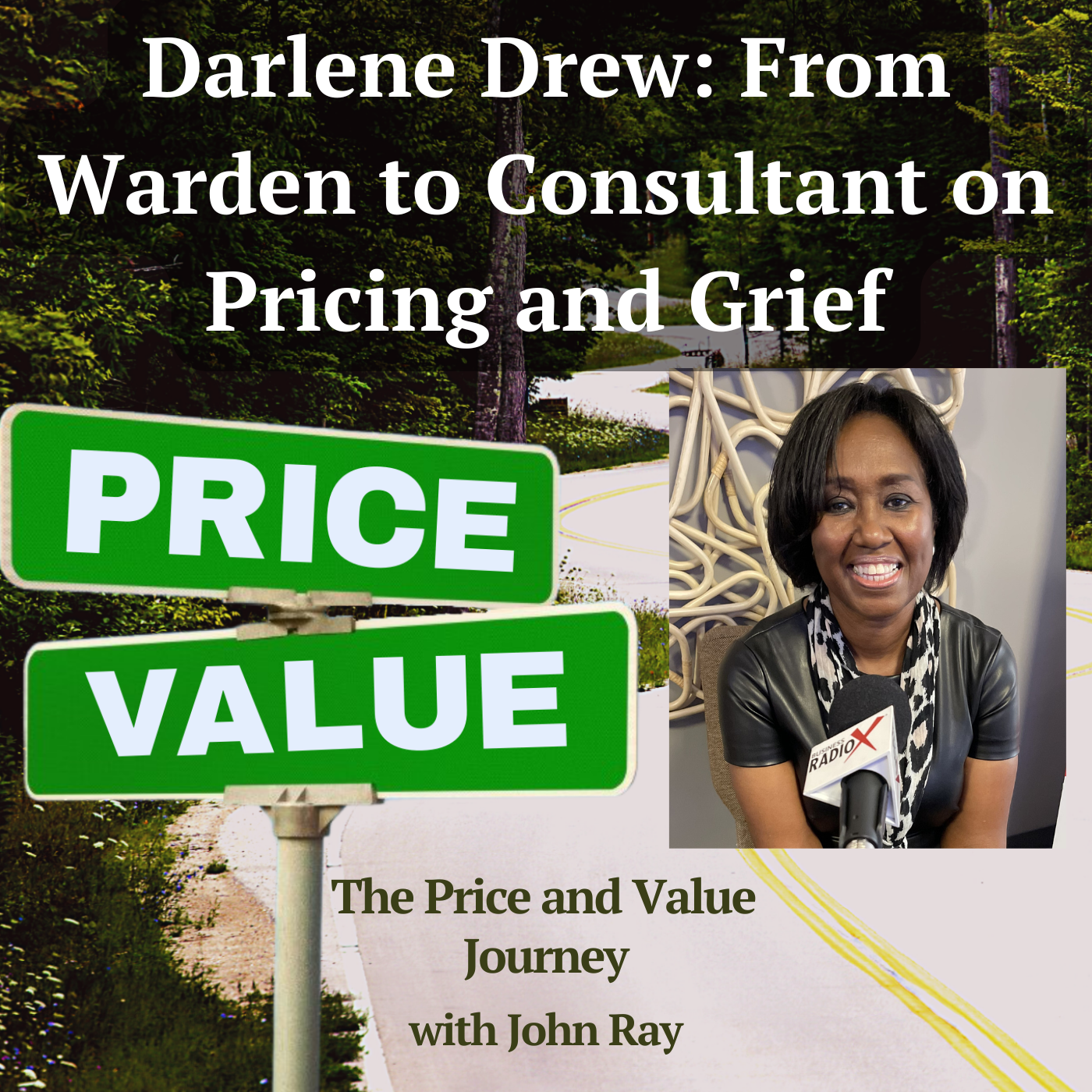
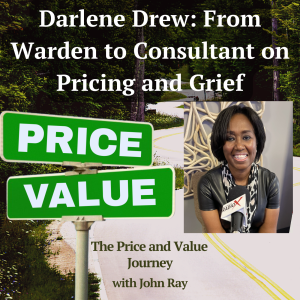
Darlene Drew: From Warden to Consultant on Pricing and Grief

November 19, 2025 by John Ray

From Federal Warden to Leadership Consultant: Darlene Drew on Building Your Practice, Pricing Mistakes, and Running a Business Through Grief, on The Price and Value Journey podcast with host John Ray
North Fulton Studio
Darlene Drew: From Warden to Consultant on Pricing and Grief
Loading
00:00 /
RSS Feed
Share
Link
Embed

Download file

From Federal Warden to Leadership Consultant: Darlene Drew on Building Your Practice, Pricing Mistakes, and Running a Business Through Grief, on The Price and Value Journey podcast with host John Ray

From Federal Warden to Leadership Consultant: Darlene Drew on Building Your Practice, Pricing Mistakes, and Running a Business Through Grief (The Price and Value Journey, Episode 153)

Do you want to know how to build a professional services business when you have deep expertise but no client base? Darlene Drew shares exactly how she did it after retiring from 32 years in federal corrections, including her time as the first and only woman to serve as warden at the U.S. Federal Penitentiary in Atlanta.

Darlene didn’t join the John Maxwell Team for certification. She joined for resources, guidance, and a roadmap to build relationships in a world entirely different from the one she knew. She reveals her strategic approach to launching her speaking, training, and coaching business, including how she used free speaking at Rotary Clubs within a 90-mile radius to build visibility and generate paying clients. You will learn why she initially wanted to leave “Warden Drew” behind and how her clients taught her that her unique background was actually her greatest asset.

This conversation gets practical fast. Darlene shares the underpricing mistakes she made early on, how demanding clients helped her recognize she was undervaluing her work, and the internal signals that told her it was time to raise her rates. She discusses client red flags she missed, the one engagement she deeply regretted taking, and why giving yourself grace to say no is critical to building a sustainable business.

The second half of the episode shifts to navigating one of life’s hardest challenges. Darlene opens up about losing her husband to pancreatic cancer in 2024 and what it’s been like to rebuild her business while grieving. She shares what helped her, what didn’t, the language that serves grieving people versus the well-intentioned phrases that fall flat, and why “moving forward” isn’t the right frame. If you’ve ever supported a colleague or client through loss or faced it yourself, this part of the conversation offers real wisdom on presence, boundaries, and incremental steps back to work.

The Price and Value Journey is presented by John Ray and produced by North Fulton Business Radio, LLC, an affiliate of the Business RadioX® podcast network.

Key Takeaways You Can Use from This Episode

  • Speaking for free at the right venues can build your business faster than waiting for paid gigs. Darlene used Rotary Clubs within a 90-mile radius to showcase her expertise, build relationships with business leaders, and generate training contracts.
  • You don’t need certification to start. You need resources, guidance, and a way to meet your ideal clients. Darlene joined the John Maxwell Team not for credentials but for content, community, and a roadmap to build her business outside corrections.
  • Clients will tell you what they value, and it’s often not what you think. Darlene wanted to retire “Warden Drew,” but corporate clients saw her corrections background as a unique asset for leading difficult conversations and motivating teams under pressure.
  • Underpricing reveals itself through client behavior. When clients who barely paid demanded more than those who invested significantly, Darlene realized she wasn’t valuing her own work and adjusted her pricing accordingly.
  • Red flags in client conversations matter. If a potential client does not invest time in understanding the problem or co-creating solutions, they are likely seeking a quick fix rather than a solution. Trust those signals early.
  • When supporting someone through grief, presence beats advice. A weekly card, an offer to help without expectation, or simply waiting to listen means more than advice, scripture quotes, or questions about “moving forward.”
  • It’s okay to set boundaries around your grief and ask for what you need. Darlene paused her workaholic tendencies, took incremental steps back into client work, and communicated clearly with her network about what “navigating grief” looked like for her.

Topics Discussed in this Episode

Darlene Drew
Darlene Drew

00:00 Introduction and Guest Welcome
02:02 Darlene Drew’s Career Journey
04:01 Transition to Leadership Training
07:23 Joining the John Maxwell Team
18:38 Building a Speaking Business
26:29 Networking and Referrals
29:17 Developing Pricing Strategies
31:19 Using Google as a Starting Point
33:22 Recognizing Underpricing Signals
35:30 Identifying Poor Fit Clients
37:51 Lessons from a Difficult Client
40:54 Coping with Personal Tragedy
44:35 Navigating Grief and Business
45:28 Support Systems During Grief
52:05 Healing Routines and Self-Care
59:28 Future Plans and Moving Forward
01:01:28 Final Thoughts and Contact Information

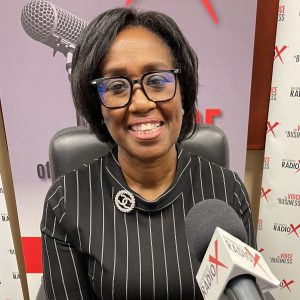
Darlene Drew, CEO, Leadership Conditioning, Personal & Professional Development

Darlene Drew, speaking at the 2024 GNFCC BOLD Women's Leadership Summit
Darlene Drew, speaking at the 2024 GNFCC BOLD Women’s Leadership Summit

Darlene Drew is the CEO and Founder of Leadership Conditioning, Personal & Professional Development, LLC. She is also a certified & independent leadership trainer, professional speaker, and executive coach with the Maxwell Leadership Team.

Darlene serves businesses, companies, and organizations by helping leaders develop leaders. Through her training sessions, she equips, engages, and energizes participants with leadership and professional development training by providing them with tools that can immediately be applied in their personal and professional lives.

As an authority in leadership, building relationships, and communications, she helps organizations develop their staff in a manner that improves their bottom line of first valuing people, which improves the operation of their business and the performance and production of their staff.

She has been recognized in the Maxwell Leadership Team as one of the Top 20 Nominees for the Maxwell Leadership Team Culture Award. She’s a 2019 Stage Time Winner. Darlene has been featured in the Peachtree City Magazine on two occasions.

More recently, in 2023, Darlene was one of only 10 recipients of the Culture Award from the John Maxwell system. Her specific award was on “Lead and Lift.”

Her prior career began in the federal government at the entry level as a correctional officer, promoted up to a Senior Executive Service Appointment to the position of Warden. One of her most groundbreaking accomplishments was becoming the first and only female to serve as warden at the United States Penitentiary, Atlanta, GA. She served as warden of three federal prisons after being told early on in her career that she would never make it!

These dynamics brought leadership expertise that has positioned her to help those she partners with in their growth.

Website | Facebook | Darlene’s LinkedIn

John Ray, Host of The Price and Value Journey
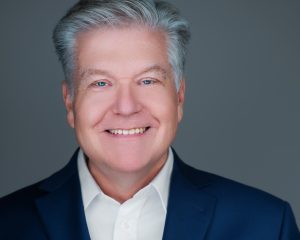
John Ray, Author of The Generosity Mindset and Host of The Price and Value Journey

John Ray is the host of The Price and Value Journey.

John owns Ray Business Advisors, a business advisory practice. John’s services include business coaching and advisory work, as well as advising solopreneurs and small professional services firms on their pricing. John is passionate about the power of pricing for business owners, as changing pricing is the fastest way to change the profitability of a business. His clients are professionals who are selling their expertise, such as attorneys, CPAs, accountants and bookkeepers, consultants, coaches, marketing professionals, and other professional services practitioners.

John is a podcast show host and the owner of North Fulton Business Radio, LLC, an affiliate of Business RadioX®. John and his team work with B2B professionals to create and conduct their podcast using The Generosity Mindset® Method: building and deepening relationships in a non-salesy way that translates into revenue for their business.

John is also the host of North Fulton Business Radio. With over 900 shows and having featured over 1,300 guests, North Fulton Business Radio is the longest-running podcast in the North Fulton area, covering business in its region like no one else.

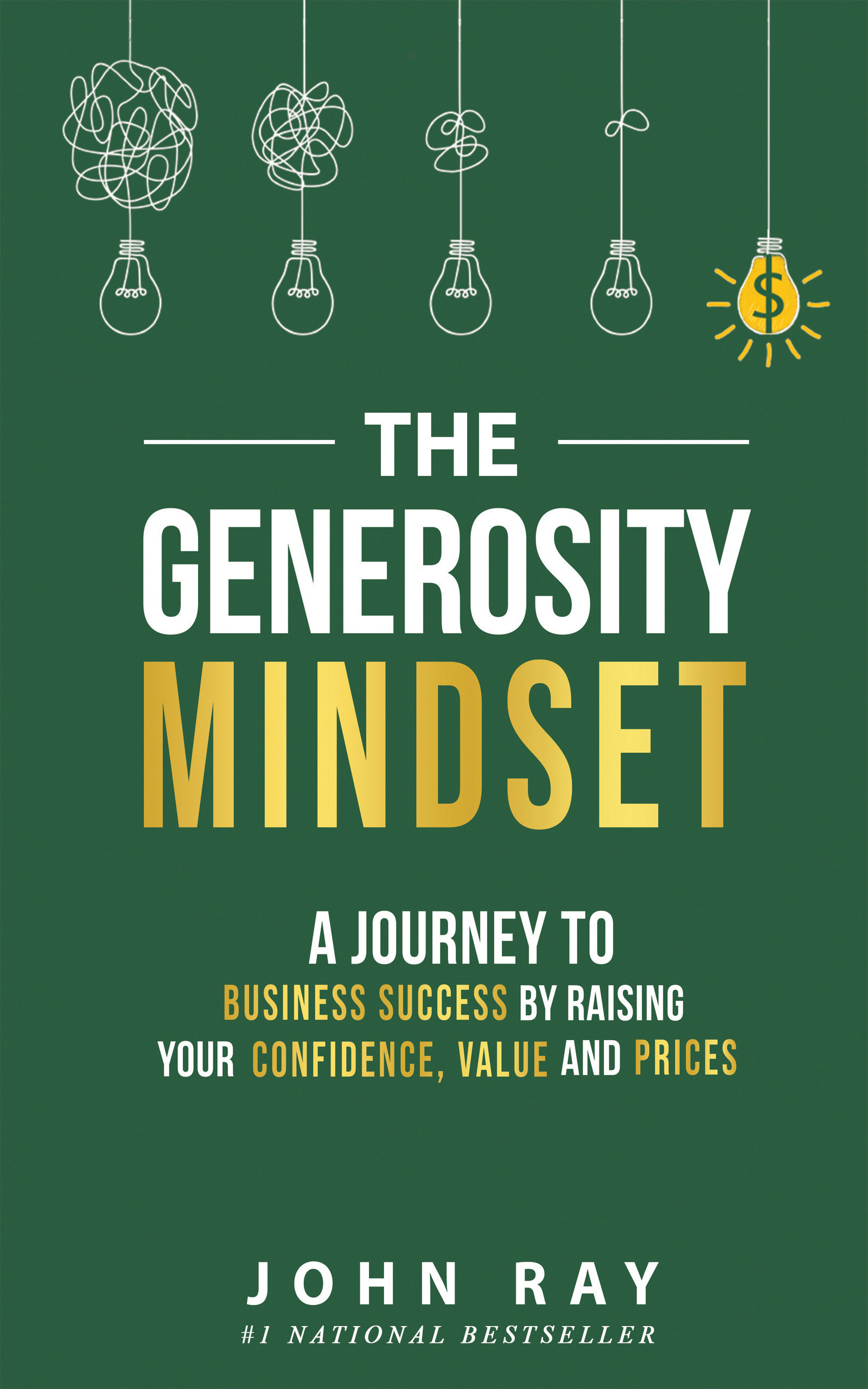
John’s book, The Generosity Mindset: A Journey to Business Success by Raising Your Confidence, Value, and Prices
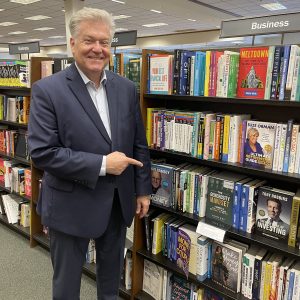
John Ray at Barnes & Noble with his book, The Generosity MindsetJohn Ray is the author of the five-star rated book The Generosity Mindset: A Journey to Business Success by Raising Your Confidence, Value, and Prices, praised by readers for its practical insights on raising confidence, value, and prices.

If you are a professional services provider, your goal is to do transformative work for clients you love working with and get paid commensurate with the value you deliver to them. While negative mindsets can inhibit your growth, adopting a different mindset, The Generosity Mindset®, can replace those self-limiting beliefs. The Generosity Mindset enables you to diagnose and communicate the value you deliver to clients and, in turn, more effectively price to receive a portion of that value.

Whether you’re a consultant, coach, marketing or branding professional, business advisor, attorney, CPA, or work in virtually any other professional services discipline, your content and technical expertise are not proprietary. What’s unique, though, is your experience and how you synthesize and deliver your knowledge. What’s special is your demeanor or the way you deal with your best-fit clients. What’s invaluable is how you deliver outstanding value by guiding people through massive changes in their personal lives and in their businesses that bring them to a place they never thought possible.

Your combination of these elements is unique in your industry. There lies your value, but it’s not the value you see. It’s the value your best-fit customers see in you.

If pricing your value feels uncomfortable or unfamiliar to you, this book will teach you why putting a price on the value your clients perceive and identify serves both them and you, and you’ll learn the factors involved in getting your price right.

The book is available at all major physical and online book retailers worldwide. Follow this link for further details.
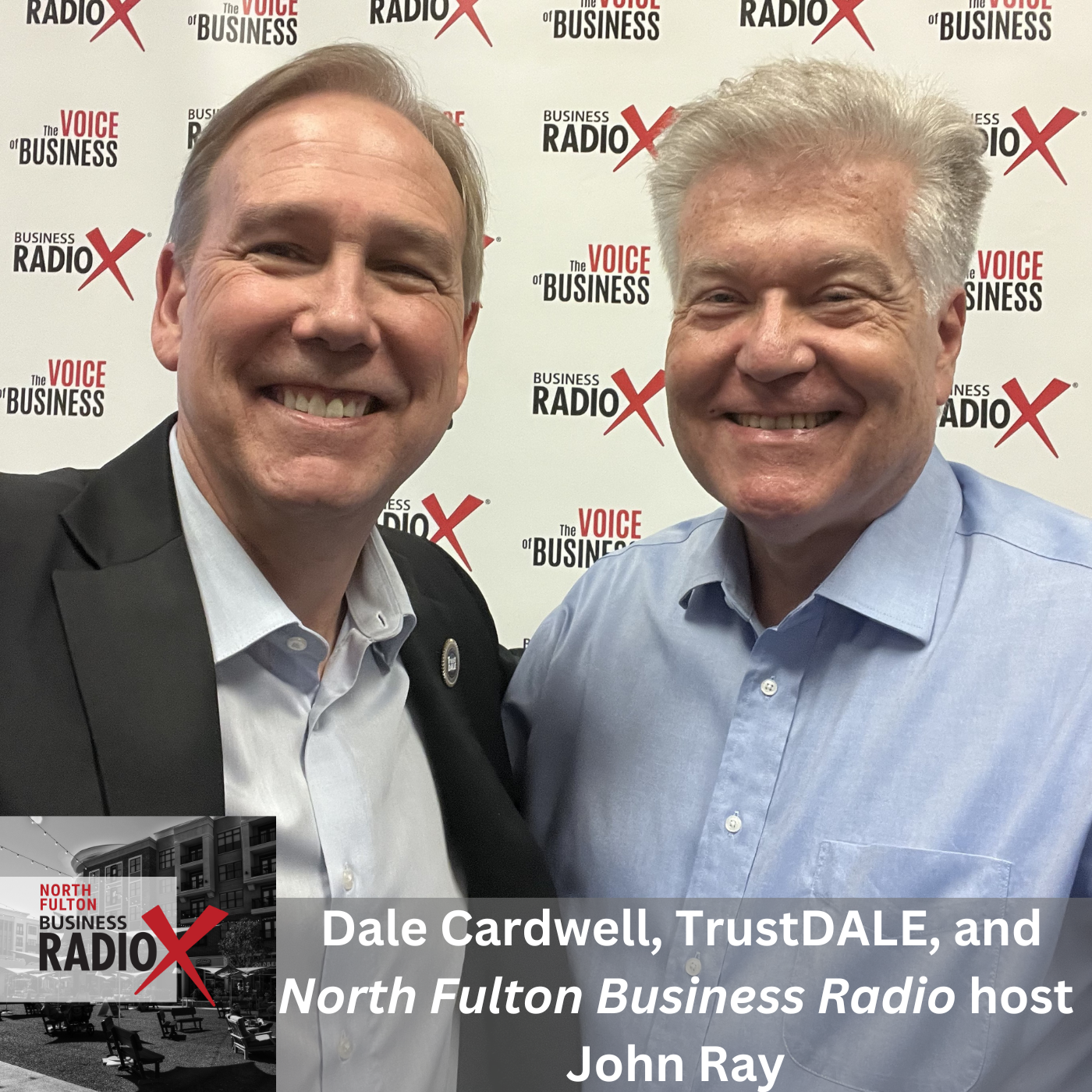
Connect with John Ray:

Website | LinkedIn | Email

Business RadioX®:  LinkedIn | Twitter | Facebook | Instagram

Tagged With: atlanta, Business Development, business pause, career transition, caregiver experience, client boundaries, consulting business, corrections leadership, Darlene Drew, executive coaching, Federal Bureau of Prisons, federal prison warden, Georgia, grief and business, incremental recovery, john maxwell, John Maxwell Team, John Ray, Leadership Conditioning Personal & Professional Development, leadership training, navigating loss, networking strategy, pancreatic cancer, pricing strategy, prison warden, professional services, professional speaking, Rotary Club speaking, Service Business, The Price and Value Journey, underpricing

Artisan Design Studio, Walk Your Plans Atlanta Win GNFCC Honors

October 30, 2025 by John Ray

Artisan Design Studio, Walk Your Plans Atlanta Win GNFCC Honors, on the GNFCC 400 Insider podcast
North Fulton Studio
Artisan Design Studio, Walk Your Plans Atlanta Win GNFCC Honors
Loading
00:00 /
RSS Feed
Share
Link
Embed

Download file

Artisan Design Studio, Walk Your Plans Atlanta Win GNFCC Honors, on the GNFCC 400 Insider podcast

Artisan Design Studio, Walk Your Plans Atlanta Win GNFCC Honors (GNFCC 400 Insider, Episode 109)

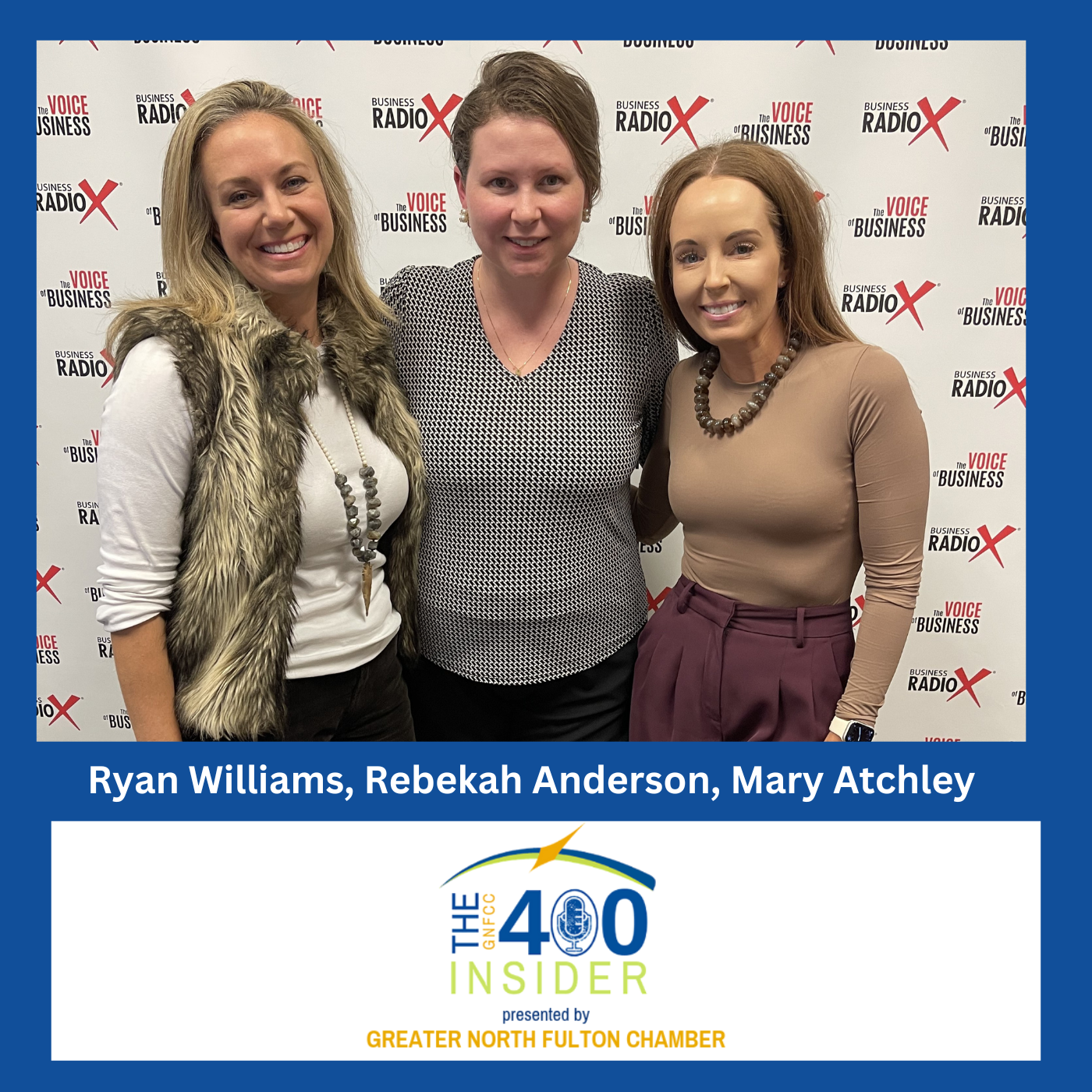
This edition of the GNFCC 400 Insider podcast features two entrepreneurs who are changing what “seeing the plan” means for homeowners and builders in our region. Ryan Williams, owner of Artisan Design Studio, shares how a small design firm can grow without losing its soul. She discusses pricing for outcomes, opening a retail studio to create community touchpoints, and why disciplined books and a good CPA are growth tools, not afterthoughts.

Mary Atchley, co-owner of Walk Your Plans Atlanta and co-founder of Design & Build XR, explains how clients make better decisions when they can literally walk their floor plans at full scale. Then she layers in extended reality to preview kitchens, baths, and additions on-site or in their studio, reducing rework and surprises.

Together, Mary and Ryan trade practical lessons: how to decide when to expand, where to invest first, what metrics to watch, and how to balance momentum with margin. They also highlight their shared work with Sunshine on a Ranney Day, creating accessible spaces for families who need them most. If you’re building, renovating, or growing a design-related business, this conversation is a blueprint for smarter decisions and happier clients.

The GNFCC 400 Insider is presented by the Greater North Fulton Chamber of Commerce and produced by John Ray and the North Fulton affiliate of Business RadioX®.

Key Takeaways from This Episode

  • XR goes beyond 2D: Walk Your Plans Atlanta launched Design & Build XR to layer AR/VR and on-site visualization so clients understand unbuilt spaces and reduce surprises.
  • Category creation is hard work: Educating a successful industry to try a new modality takes daily consistency and clear value stories.
  • Boutique by design: Artisan Design Studio grew from a home office to a retail studio after past lessons on scaling, prioritizing process and the craft of design.
  • Community at the center: Both Artisan Design Studio and Walk Your Plans Atlanta volunteer with Sunshine on a Ranney Day, creating accessible bedrooms, baths, and therapy spaces for kids and families.
  • Make it easy to connect: Artisan’s Roswell storefront hosts events, while Walk Your Plans Atlanta invites prospects to see work online and on social.
  • Mindset for year one: Guard time, choose communities wisely, and keep showing up. Consistency compounds.

Topics Discussed in this Episode

00:00 Introduction to the GNFCC 400 Insider podcast
00:26 Celebrating Small Business Award Winners
01:06 Meet two of the Award Winners: Artisan Design Studio and Walk Your Plans Atlanta
02:15 Journey of Entrepreneurship: Challenges and Inspirations
05:05 Innovations and Expansions in Business
12:28 Community Involvement and Giving Back
20:00 Advice for Aspiring Entrepreneurs
27:06 Connecting with the Businesses
28:59 Conclusion and Farewell

Ryan Morgan Williams, Artisan Design Studio

Ryan Williams, Artisan Design Studios

Principal designer Ryan Williams owns Artisan Design Studio. Williams has been practicing interior design for twenty years and has been a business owner for more than 15 of those.

​With utmost attention given to learning about her clients and their families, Williams prioritizes making sure she is not only creating breathtaking spaces for them but also improving their mental, physical, and emotional well-being. As a member of a custom home-building family in Atlanta, Williams advocates for her clients through building and remodeling, as well as full furnishings projects. She prides herself on being the expert in the room but also a friend at the table.

Williams graduated with a Bachelor of Science degree in Furnishings & Interiors from the University of Georgia. She is an Atlanta native and she currently lives with her husband and two children in Roswell.

Website | Instagram | LinkedIn

Mary Atchley, Walk Your Plans Atlanta

Mary Atchley, Walk Your Plans Atlanta

Mary Atchley is the owner and driving force behind Walk Your Plans Atlanta, a cutting-edge business that enables clients to experience life-sized floor plans before construction begins. Bringing over 20 years of expertise in marketing, brand strategy, and entrepreneurship, Atchley created a platform that bridges the gap between abstract blueprints and real-life spatial understanding so homeowners, architects, and commercial developers can make informed, confident decisions. Her visionary leadership and relentless focus on client service have transformed Walk Your Plans Atlanta into a destination for immersive, collaborative design walkthroughs, helping Atlanta’s building community identify issues early, optimize layouts, and minimize costly post-construction changes.​

Atchley’s deep commitment to the local community matches her passion for innovation. She has ensured that Walk Your Plans Atlanta provides complimentary access to families sponsored by Sunshine on a Ranney Day, supporting ADA-compliant renovations for children with special needs. Recognized for her ability to foster lasting relationships and deliver tailored technology solutions, Mary Atchley is also active in regional leadership and professional organizations, including Leadership North Fulton and Women in Sport & Events (WISE). Her work continues to propel industry standards forward, making the design and construction process more transparent, collaborative, and client-focused throughout the greater Atlanta area.

Website | Instagram | LinkedIn

About GNFCC and The GNFCC 400 Insider podcast

Kali Boatright, President and CEO of the Greater North Fulton Chamber of Commerce (GNFCC)
Kali Boatright, President and CEO of the Greater North Fulton Chamber of Commerce

The GNFCC 400 Insider is sponsored by the Greater North Fulton Chamber of Commerce (GNFCC), and the host of the show is Kali Boatright, President and CEO of GNFCC.

The Greater North Fulton Chamber of Commerce is a private, non-profit, member-driven organization comprised of over 1,400 business enterprises, civic organizations, educational institutions, and individuals. Their service area includes Alpharetta, Johns Creek, Milton, Mountain Park, Roswell, and Sandy Springs. GNFCC is the leading voice on economic development, business growth, and quality of life issues in North Fulton County.

Greater North Fulton Chamber of Commerce, GNFCCAs a five-star accredited chamber, GNFCC’s vision is to be the premier organization driving member and community success across the region, and they are dedicated to pursuing this vision based on the guiding principles of advocacy, inclusivity, and operational excellence.

GNFCC promotes the interests of their members by assuming a leadership role in making North Fulton an excellent place to work, live, play, and stay. They provide one voice for all local businesses to influence decision-makers, recommend legislation, and protect the valuable resources that make North Fulton a popular place to live.

For more information on GNFCC and its North Fulton County service area, follow this link or call (770) 993-8806. For more information on other GNFCC events, follow this link.

Tagged With: AR VR, Artisan Design Studio, atlanta, Community Impact, construction technology, Design & Build XR, Entrepreneurship, Extended Reality, Floor Plan Projection, Georgia, GNFCC 400 Insider, GNFCC Small Business Awards, Greater North Fulton Chamber of Commerce, home renovation, interior design, Mary Atchley, Nonprofit, North Fulton, Rebekah Anderson, Residential Design, Retail Studio, roswell ga, Ryan Williams, small business, sunshine on a ranney day, Walk Your Plans Atlanta, XR

Jason Cline and Sameera Luthur, SHRM-Atlanta and SOAHR 2023

February 28, 2023 by John Ray

Jason Cline and Sameera Luthur, SHRM-Atlanta and SOAHR 2023
North Fulton Business Radio
Jason Cline and Sameera Luthur, SHRM-Atlanta and SOAHR 2023
Loading
00:00 /
RSS Feed
Share
Link
Embed

Download file

Jason Cline and Sameera Luthur, SHRM-Atlanta and SOAHR 2023

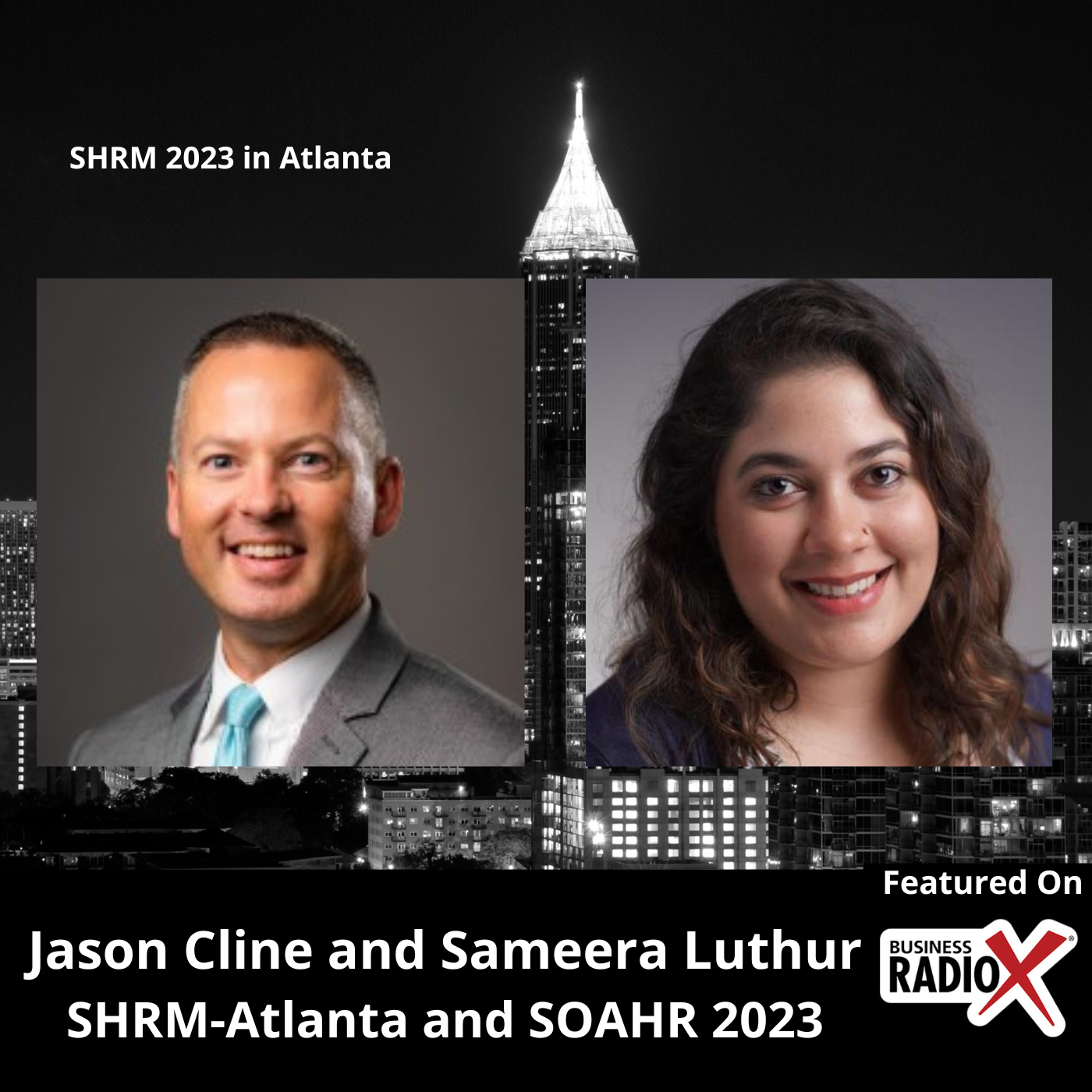
Jason Cline and Sameera Luthur, SHRM-Atlanta and SOAHR 2023 (North Fulton Business Radio, Episode 613)

SHRM-Atlanta CEO Jason Cline and Manager of Events Sameera Luthur joined host John Ray on this edition of North Fulton Business Radio to offer a preview of SOAHR 2023, SHRM-Atlanta’s annual conference for the region’s HR and people management professionals, which will be held on March 28 and 29, 2023. Jason and Sameera discussed the exciting new venue for this year’s conference, the Gas South District Convention Center in Duluth, the robust offering of a wide variety of sessions, the collegiality of members, and much more.  Jason also provided an update on exciting new events and educational opportunities SHRM-Atlanta has in store for its members later in 2023.

Also, the Business RadioX team will be broadcasting live from this event on Tuesday and Wednesday, March 28th and 29th. Stop by and see us!

North Fulton Business Radio is broadcast from the North Fulton studio of Business RadioX® inside Renasant Bank in Alpharetta.

SHRM-Atlanta

SHRM-Atlanta is one of the largest chapters of SHRM and shares its purpose of elevating the HR profession. As a leader in the Atlanta metro business community, SHRM-Atlanta strives to be the premier resource for those working in and supporting the human resource function. SHRM-Atlanta’s predominant goal is to be the voice of HR in metro Atlanta and be the first contact for those seeking information and solutions.

This will be achieved through the growth and diversity of members, education, and delivery of content, and by strengthening partnerships with organizations that share its vision.

Website | LinkedIn | Facebook | Instagram | Twitter

SOAHR 2023

SOAHR is the can’t-miss conference of the year for anyone in HR or People Management in greater Atlanta or the Southeast. If you’re looking for a conference that will supply you with actionable ideas, new insights, and best practices for you, your team, and your company, you don’t want to miss this event.  The 2-day conference includes Pre-Conference Workshops, a Resource Partner Showcase, networking opportunities, and more. Average attendance is 1000+ and this year’s conference will be held at the Gas South District Convention Center in Duluth, Georgia on March 28th and 29th.

This year’s theme is SHIFT, Develop, Perform: Moving HR into the Next Normal. The keynote speaker and workshop facilitators will empower attendees to intentionally focus on their talent, develop a network of new and seasoned professionals, and establish skills needed to perform in their new role.

Conference Website

Jason Cline, CAE, Chief Executive Director, SHRM-Atlanta

Jason Cline, CAE, Chief Executive Director, SHRM-Atlanta

Jason Cline brings over 18 years of association management and leadership experience to SHRM-Atlanta. Previously, Jason was the President & CEO of the Printing & Imaging Association of Georgia. There, Jason spearheaded the development and execution of a strategic plan and led a highly profitable insurance arm of the organization. Prior to that role, he was the Strategic Initiatives Executive at the Association of College Unions International, the Section Membership Development Manager at the American Bar Association, and he began his association career as the Director of Membership at the Roller Skating Association International.

Jason earned both his undergraduate degree in Elementary Education and a graduate certificate in Nonprofit Management from Indiana University. He also holds the Certified Association Executive (CAE) credential from ASAE: The Center for Association Leadership. Jason has called Atlanta home since 2016 when he moved here from Indianapolis.

LinkedIn

Sameera Luthur, Manager of Events & Emerging Content, SHRM-Atlanta

Sameera Luthur, Manager of Events & Emerging Content, SHRM-Atlanta

Sameera Luthur joins the SHRM-Atlanta team as Manager of Events and Emerging Content and will be responsible for event logistics, developing relationships, partnering with organizations, and curating content in new and emerging areas outlined in the SHRM-Atlanta strategic plan.

She has served in several Higher Education roles, working directly with students to build community on college campuses and develop leadership skills needed in the workforce. She brings experience planning large-scale events and creating training initiatives for students and professionals across a variety of fields. Sameera holds an M.S. in Educational Psychology from Georgia State University, with research focused on two of her passion areas: mental health and DEI.

Sameera is excited to serve the SHRM-Atlanta community and grow her experiences and career with an association that has so much impact in the Atlanta area.

LinkedIn

North Fulton Business Radio is hosted by John Ray and broadcast and produced from the North Fulton studio of Business RadioX® inside Renasant Bank in Alpharetta. You can find the full archive of shows by following this link. The show is available on all the major podcast apps, including Apple Podcasts, Spotify, Google, Amazon, iHeart Radio, Stitcher, TuneIn, and others.

RenasantBank


Renasant Bank has humble roots, starting in 1904 as a $100,000 bank in a Lee County, Mississippi, bakery. Since then, Renasant has grown to become one of the Southeast’s strongest financial institutions with over $13 billion in assets and more than 190 banking, lending, wealth management, and financial services offices in Mississippi, Alabama, Tennessee, Georgia, and Florida. All of Renasant’s success stems from each of their banker’s commitment to investing in their communities as a way of better understanding the people they serve. At Renasant Bank, they understand you because they work and live alongside you every day.

Since 2000, Office Angels® has been restoring joy to the life of small business owners, enabling them to focus on what they do best. At the same time, we honor and support at-home experts who wish to continue working on an as-needed basis. Not a temp firm or a placement service, Office Angels matches a business owner’s support needs with Angels who have the talent and experience necessary to handle work that is essential to creating and maintaining a successful small business. Need help with administrative tasks, bookkeeping, marketing, presentations, workshops, speaking engagements, and more? Visit us at https://officeangels.us/.

Tagged With: 2023, atlanta, Duluth, gas south district, HR, HR Conference, Jason Cline, John Ray, North Fulton Business Radio X, Office Angels, renasant bank, Sameera Luthur, shrm, SHRM Atlanta, SOAHR 2023

Decision Vision Episode 109: Should I Become a Digital Nomad? – An Interview with Maria Joyner, FounderScale

March 25, 2021 by John Ray

FounderScale
Decision Vision
Decision Vision Episode 109: Should I Become a Digital Nomad? - An Interview with Maria Joyner, FounderScale
Loading
00:00 /
RSS Feed
Share
Link
Embed

Download file

FounderScale

Decision Vision Episode 109:  Should I Become a Digital Nomad? – An Interview with Maria Joyner, FounderScale

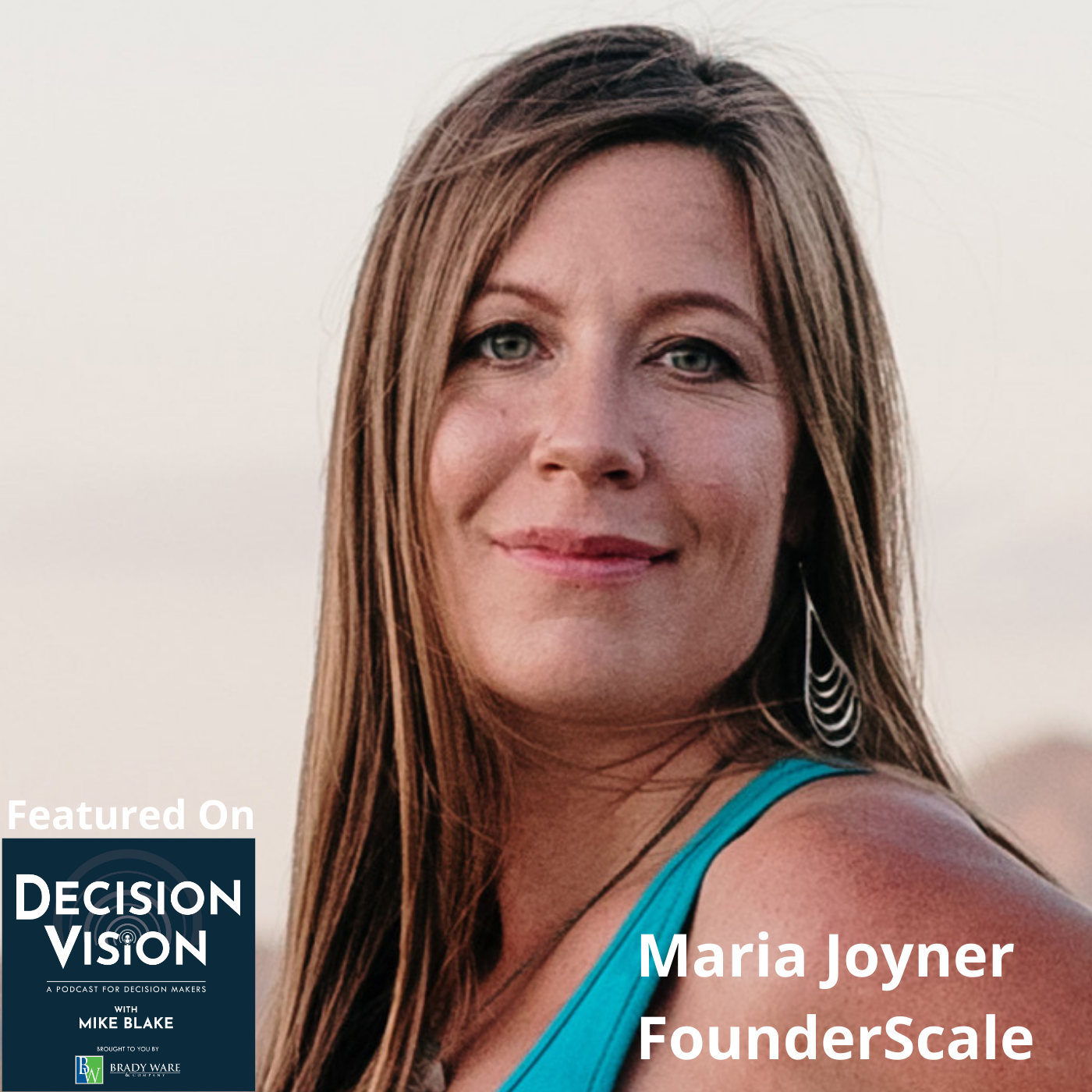
In a “trans-pandemic” environment, does becoming a digital nomad make sense? Maria Joyner, FounderScale, tells host Mike Blake her story of moving from Atlanta to Costa Rica and the well-being she has discovered as a “digital nomad.” “Decision Vision” is presented by Brady Ware & Company.

FounderScale

FounderScale helps founder-led B2B businesses increase sales by reducing friction in the sales and marketing process. As a founder and entrepreneur-led company, the team understands that business growth is tied directly to the ability to drive sales.

Maria Joyner, FounderScale

Maria Joyner is an entrepreneur and marketing technologist with a background in email deliverability, marketing automation, and scaling B2B startups. As the Marketing Automation Practice Lead, she brings years of Hubspot and marketing automation experience to help founders get the most out of their marketing technology stack. She works from the jungles of Costa Rica where she lives with her husband and son. Maria spends her free time trail running, hiking through the mountains, exploring hidden waterfalls, and learning how to surf.

Company website | LinkedIn | Joyner LinkedIn

Mike Blake, Brady Ware & Company

Mike Blake, Host of the “Decision Vision” podcast series

Michael Blake is the host of the “Decision Vision” podcast series and a Director of Brady Ware & Company. Mike specializes in the valuation of intellectual property-driven firms, such as software firms, aerospace firms, and professional services firms, most frequently in the capacity as a transaction advisor, helping clients obtain great outcomes from complex transaction opportunities. He is also a specialist in the appraisal of intellectual properties as stand-alone assets, such as software, trade secrets, and patents.

Mike has been a full-time business appraiser for 13 years with public accounting firms, boutique business appraisal firms, and an owner of his own firm. Prior to that, he spent 8 years in venture capital and investment banking, including transactions in the U.S., Israel, Russia, Ukraine, and Belarus.

Brady Ware & Company

Brady Ware & Company is a regional full-service accounting and advisory firm which helps businesses and entrepreneurs make visions a reality. Brady Ware services clients nationally from its offices in Alpharetta, GA; Columbus and Dayton, OH; and Richmond, IN. The firm is growth-minded, committed to the regions in which they operate, and most importantly, they make significant investments in their people and service offerings to meet the changing financial needs of those they are privileged to serve. The firm is dedicated to providing results that make a difference for its clients.

Decision Vision Podcast Series

“Decision Vision” is a podcast covering topics and issues facing small business owners and connecting them with solutions from leading experts. This series is presented by Brady Ware & Company. If you are a decision-maker for a small business, we’d love to hear from you. Contact us at decisionvision@bradyware.com and make sure to listen to every Thursday to the “Decision Vision” podcast.

Past episodes of “Decision Vision” can be found at decisionvisionpodcast.com. “Decision Vision” is produced and broadcast by the North Fulton studio of Business RadioX®.

Visit Brady Ware & Company on social media:

LinkedIn:  https://www.linkedin.com/company/brady-ware/

Facebook: https://www.facebook.com/bradywareCPAs/

Twitter: https://twitter.com/BradyWare

Instagram: https://www.instagram.com/bradywarecompany/

TRANSCRIPT

Intro: [00:00:01] Welcome to Decision Vision, a podcast series focusing on critical business decisions. Brought to you by Brady Ware & Company. Brady Ware is a regional full service accounting and advisory firm that helps businesses and entrepreneurs make visions a reality.

Mike Blake: [00:00:20] Welcome to Decision Vision, a podcast giving you, the listener, clear vision to make great decisions. In each episode, we discuss the process of decision making on a different topic from the business owners’ or executives’ perspective. We aren’t necessarily telling you what to do, but we can put you in a position to make an informed decision on your own and understand when you might need help along the way.

Mike Blake: [00:00:40] My name is Mike Blake, and I’m your host for today’s program. I’m a director at Brady Ware & Company, a full service accounting firm based in Dayton, Ohio, with offices in Dayton; Columbus, Ohio; Richmond, Indiana; and Alpharetta, Georgia. Brady Ware is sponsoring this podcast, which is being recorded in Atlanta per social distancing protocols. If you like this podcast, please subscribe on your favorite podcast aggregator, and please consider leaving a review of the podcast as well.

Mike Blake: [00:01:06] So, this week’s topic is, Should I become a digital nomad? And being a digital nomad, historically, has had a certain meaning. It’s now evolved, I think, particularly in the wake of the pandemic or during this – what I call – trans-pandemic period here. But, historically, a digital nomad refer to somebody who would wander usually from country to country – though not necessarily – but would wander from country to country doing their thing. Visiting spots wherever they felt like. And often would not stay long enough to run afoul of local immigration laws. And most countries let you stay in a place for about 90 days or so before they want you to either register for some sort of permanent residency or get the heck out of there.

Mike Blake: [00:02:03] And there are others that do it domestically. Rod Burkert, who was a guest on one of our early podcasts, has been living with his wife in a recreational vehicle for the last decade or so, I think. And so, they’re constantly moving about the country. I don’t know if they’ve ever crossed over to Canada or Mexico. I have to ask him about that. But, certainly, they would qualify as a digital nomad.

Mike Blake: [00:02:25] But, historically, being a digital nomad has been associated with somebody who has gone outside, who left the country, or is working from outside the country where their principal employment is at least nominally located. And, you know, a few things kind of bring this to the forefront. Number one, the pandemic has forcefully, I think, taught us a lesson that most of us, particularly in the professional services world, really can work from anywhere.

Mike Blake: [00:03:02] I’m going to tell you that I think I have met fewer than 50 percent of my clients in person. It may be down to 25 percent. They just don’t need to see me. Certainly, seeing me in person has no value on any level. And while people in my world will sometimes do site visits to an appraiser company, I don’t do a lot of those because I work with tech companies. And all I would do is I, basically, show up, I’d see some cubicles, and conference rooms, and maybe a ping pong table or something. So, there’s really not much use to doing a site visit. I mean, you wouldn’t even see servers anymore. Everything’s on the Cloud. So, I’m fortunate that, you know, I truly can work from anywhere and that’s been demonstrated.

Mike Blake: [00:03:49] But I think a lot of people are finding out that they truly can work from anywhere. Now, not everybody wants to do that. I know many people that are yearning to go back to the office. They like having their work set up separate. They like having sort of the permanency of a workspace. And, look, not everybody’s home is well set up to work from home. If you have kids and you’re trying to work in your kitchen table, boy, my hat is off to you. That is not easy.

Mike Blake: [00:04:18] But, you know, we’re finding out that we can do that. And, of course, you know, I think every time we have massive social upheaval, every time we have an election cycle, there’s somebody who is happy with the outcome, there’s somebody who is not happy with the outcome. And a lot of them say, “Well, I’m going to emigrate.” Which, in most cases, is madness because, frankly, most countries don’t want us there. It’s not that easy to immigrate to most countries, particularly ones that we would consider developed. Now, in other countries, it is easier. Some countries in Central America and Eastern Europe do make it easier to a certain extent, we’re going to talk about that. So, the option is there. But, you know, it’s not that easy to pick up and move.

Mike Blake: [00:05:05] But I do think there’s a certain romanticism about it. I’m seeing more articles about being a digital nomad. I’m seeing more articles about going to a place like the Republic of Georgia or to Estonia or to Portugal where a lot of American retirees are going. And, of course, there’s a lot of interest in Central America where, you know, the American cultural presence has been there for quite some time. And some of those countries even still use the U.S. dollar as their currency or at least have their currencies pegged to the U.S. dollar. And so, I think a lot of people are at least sort of thinking about it. You know, could we pack up and move? Maybe not for the rest of my life. But maybe we do it for a year. And we enjoy a beach on the Caribbean and we enjoy, you know, being in a different culture. And we enjoy maybe there’s some economic benefit to living a lower cost of living or in some cases simply a simpler lifestyle.

Mike Blake: [00:06:04] So, I think that’s an interesting topic. I certainly find it intriguing. And joining us today to talk about this is my friend Maria Joyner, who is co-founder of FounderScale. A B2B marketing and sales operations agency that helps B2B organizations drive revenue utilizing marketing technologies like HubSpot. She hails from one of my favorite cities in the planet, which is Savannah, Georgia. Well, Thunderbolt to be exact, and she’ll have to tell me what Thunderbolt is. I’ve lived in Georgia for 18 years, I have no clue where Thunderbolt is, except I gather it’s near Savannah.

Mike Blake: [00:06:40] Maria is an accomplished marketing technologist and entrepreneur that is living her dream in Costa Rica. And she and I go back to the old Startup Lounge day. She knew me before I had gray hair. Prior to moving to Central America, Maria spent ten years in Atlanta studying and growing technology startups. She took her previous company, Synapp.io – by the way, one of the first companies to do a dot io before everybody thought it was cool – an email deliverability startup from pre-revenue to $2 million in annual sales in less than 18 months. As founder and entrepreneur of this company, she’s leading a team that understands that business growth is tied directly to the ability to drive sales. Maria Joyner, welcome to the program.

Maria Joyner: [00:07:23] Thanks for having me.

Mike Blake: [00:07:25] So, Maria, you’re here – and then I remember – I mean, not in a way that’s like traumatic or anything, but I do remember because I looked at it with such admiration – when you left. And sort of one day, from my perspective – we’re not the best friends in the world, but we know each other – and, frankly, one day you were here and then it seemed like the next day you popped up and said, “Hey, I’ve moved to Central America. Adios”, or something like that. So, how long ago was that? And where exactly in Central America did you move to?

Maria Joyner: [00:08:01] Yes. So, it was about five years ago that I took the leap to leave the States and move to Costa Rica. So, I’m located in Costa Rica in the Guanacaste Region near Lake Arenal. So, a lot of people may be familiar with the Arenal Volcano. It’s the perfect pyramid shaped volcano in Costa Rica.

Mike Blake: [00:08:25] Is that volcano active? I hope not.

Maria Joyner: [00:08:27] It is an active volcano, but it is in a period of inactivity since, I think, 2011 or 2010. But it hasn’t had a huge explosion since 1968, when there was a very large explosion. They didn’t actually know it was a volcano in 1968.

Mike Blake: [00:08:48] So, how is it that you chose to move to Costa Rica as opposed to someplace else?

Maria Joyner: [00:08:54] So, when I was part of Synapp.io, I came to visit Costa Rica for a couple of days with – a friend of mine has a group travel company called Under 30 Experiences. So, it’s a small group travel, 8 to 12 people, and they focus on going to places that are locally owned, self-sustainable, that focuses on ecotourism. And so, I went with them to a Costa Rica rainforest retreat, which was located at a permaculture farm off the grid, self-sustainable, near La Fortuna, Costa Rica, near the Arenal Volcano.

Maria Joyner: [00:09:33] And I was there a few days. And I was really fascinated by how everything worked. Like, I wanted to see what was underneath the hood. It was like they grew everything they eat. They support guests who come through here. Their whole design works in unison with nature. And I was really fascinated by these natural systems that work together. We work with technology systems all the time and we create systems, but I was really fascinated how they can work in such unison with nature.

Maria Joyner: [00:10:02] So, after that visit, I decided to make it a company-wide part at Synapp.io that anybody in the whole company could work from wherever they wanted, it was June of 2015. And it was essentially so I could come back to Costa Rica and volunteer on the farm. So, it was really self-serving. And so, I came down here one month past, two months past, three months past, my co-founders were like, “Maria, what the hell is going on?” And I decided it was time to come home. I came back and tried to just fall back into my life, fall back into duties of a VP of marketing and growth, and all of that. And I just was somewhere else. And my co-founders sat me down and they were like, “Look, it’s all over your face. You’re somewhere else, just go.” And so, with that, I had the permission to make a big life change.

Mike Blake: [00:11:01] Now, when you did that, were you still able to retain your role with the company or did you have to exit the company at that point?

Maria Joyner: [00:11:08] Yes. So, yes, I exited the company. One of the challenges that we ran into at the off the grid self-sustainable farm was the internet. The internet is solar powered. So, you have solar powered internet in the middle of rainy season, which is, I mean, basically June through November, depending on where you are in the country. And there isn’t much internet. And so, I wasn’t necessarily able to perform my duties the last month I was there because it was peak rainy season. Which, it made that argument very difficult to make that, “Oh, yeah. I can move to Costa Rica and continue running the company.”

Mike Blake: [00:11:48] Interesting. And now that you’ve been there five years, is it any better? The internet, I mean.

Maria Joyner: [00:11:54] Yes. Yes. So, when I moved down here, I was able to get satellite, I think, maxed at five megs, and I thought that that was just awful. Then, I moved to another farm, and the internet maxed out at three megs, and I thought that was just awful. And where I’ve lived the past year-and-a-half, it maxes out at two megs. However, Costa Rica over the past years has been putting a lot of effort into building out the fiber optic infrastructure. And so, where I’m at right now, I actually rent an apartment really close to my house that gets fiber optic so we can have conversations like this and so I can have a productive work week. But locations that are more appealing to tourists have excellent internet here. Like, at the beaches, you’re looking 50 to 100 megs, sometimes 200 megs in places.

Mike Blake: [00:12:50] So, I didn’t know the full background of the story. So, you moved down – I’m sorry – you visited Costa Rica with the intent of learning about, basically, a way of life. And it sounded like you kind of accidentally fell in love with it. It doesn’t sound like it was your intent that you were necessarily intending to leave the country and live elsewhere at that time.

Maria Joyner: [00:13:16] Oh, my gosh. Absolutely not. I was so happy with my life in the States. I love the team. I was loving the journey that Synapp.io was on. I love the team we built. And I thought, I mean, in my mind, I couldn’t have – if you had asked me before I came to Costa Rica, what would you do in your life to make to make it better or happier? I would have said nothing. And I remember stepping off of the van, like out of the van, and onto this farm. And I almost felt like somebody grabbed my soul and shook it. Like, I had this just huge just, “Whoa. What is this place? And what is this? Just what is this?” And after seeing Costa Rica, there was just no going back. Like, I had seen just a whole different way of life. And that wasn’t my intention. And I wanted to go back and sort of just carry on with life how it was. But I guess once that whiplash is so strong, it just never goes back to being the same.

Mike Blake: [00:14:17] And, you know, to me, it sounds like you’re exposed to two things at once. And I’m curious if there’s a way to separate the two or not. You’re exposed to a permaculture way of life, which I guess, theoretically, could occur any place if you have the community to drive and sustain it. And, of course, you’re also in a foreign country, Costa Rica, which has its own culture, traditions, language, et cetera, et cetera. And I’m curious, did you give any thought to exploring whether or not – actually, I’m going to rephrase this question. Have you ever given thought to whether or not it was the permaculture that drew you, or the Costa Rican cultural experience that drew you, or were they so intermingled that you either can’t tell or it doesn’t matter?

Maria Joyner: [00:15:10] The permaculture is what drew me and the Costa Rican experience is what sold me. That was the Kool-Aid that I drink.

Mike Blake: [00:15:18] I’m curious. I’ve never been to Central America. What was it about the Costa Rican experience that that was the Kool-Aid?

Maria Joyner: [00:15:29] The people. And, obviously, we can’t be general and say the people, but people are happy here. The Costa Rican motto is Pura Vida, which means the pure life. And I mean, as a tourist, maybe it gets overused. But locals, “Good morning. Goodbye. How are you? I’m good.” Pura Vida is the two words that say it all. And it’s really evident in the way that people live their lives. For example, if you are in a bank waiting for two hours – because that’s normal here – to make a deposit, nobody is stressed out. Nobody is looking at their watch. Everybody is Pura Vida.

Maria Joyner: [00:16:15] And not just that, people who live here love this country. They love all the natural wonders it offers. They love to show tourists the country. And I guess with that being said, I think that the Costa Ricans don’t necessarily treat Americans in a way that isn’t welcoming. I’ve been to other countries that I have, like, been treated in a way that it was very obvious that I was not wanted there. And I think Costa Rica really embraces tourism and they love showing people their country.

Maria Joyner: [00:16:51] And so, I think that this just laid back, but not too laid back, way of life is, like, really what keeps me here. Because I’m a product of my environment. So, whatever environment I put myself in, that’s what the output is going to be. And so, if I can if I’m in a high paced, high stress environment, I’m going to be high paced, high stress. And so, one of the things I realized by doing the exact same things I was doing in the United States and moving them here to Costa Rica, from a work perspective, is, I was able to remove that high stress and continue the high pace – I don’t want to say no stress – but with low stress here just because of the environment around me.

Mike Blake: [00:17:36] So, you initially went down, you weren’t planning on staying, you fell in love with the place, came back. And then, it sounds like at that point you decided that when you were going, you were going for good. What was that process from sort of that day until you landed in Costa Rica with whatever belongings you had, what was that process like? How long did it take you to execute?

Maria Joyner: [00:18:01] All right. So, I remember it was October, maybe it was October 21, 2015, and I remember I had a boyfriend that time and I’m like, “We have to go. We have to move to Costa Rica. It has to happen.” And he was like, “Okay.” And so, that was October 21st. We landed here, I think, it was January 23, 2016. And so, once I made the decision at the end of October to make everything happen, I contacted two of the friends that I made when I was volunteering at the permaculture farm. I mean, everybody at the farm knew I wanted to move there. So, I just was like, “Yeah. I’m moving. It’s happening.” And I asked if they could help me find a place to live that has internet that could support what I needed to do marketing, technology work.

Maria Joyner: [00:18:52] And then, I just started the process of selling my stuff. I think the most helpful thing to me was having feet on the ground, was having somebody who was local, finding a house for me, talking to the telecommunication companies. Because if you think telecommunication companies are difficult in the United States, try coming down here. And so, that was a huge help to me. And I flew to Costa Rica December 11, 2015. All of this is so embedded in my mind. It was such an impactful time. And I came down here for about 11 days to look at the house that I was going to move into. But, essentially, it was just a trip to travel around the country and see more of the country. And so, I got everything in order in December. The house looked good. I talked to the owner. It was all great. And then, yeah, we flew back in January. We came back in January.

Maria Joyner: [00:19:46] So, a couple of things really helped us. The first thing is, is the home we were living in, the owner of the home told us to leave anything we don’t want to take or we don’t want to sell. So, I don’t know that we would have been able to pull this off if we had to sell and get rid of everything in our house. So, that was the first thing that was a huge benefit. The second thing was I actually paid a friend to fly down with us so we could bring four more suitcases.

Mike Blake: [00:20:14] Really?

Mike Blake: [00:20:15] Yeah. So, shipping is like $5 or 10 a pound. Think of a cast iron pan, like a cast iron pan to get that down here, we’re talking like 25 bucks. So, I actually paid a friend to fly down, so it’s cheaper to buy her plane ticket. And we flew Southwest because Southwest has two free checked bags. And it was cheaper for me to pay for her plane ticket. I think it was just one way and made a round trip than to ship everything. And that is kind of what we did. And I brought two dogs with with me, so they were emotional smart animals, so they sat under the seat in front of us. So, it was a super smooth trip once we got on the plane.

Maria Joyner: [00:20:59] However, two days before we were set to fly out, I got a phone call from my friend – because we were going to fly Atlanta to Baltimore, Baltimore to Houston, Houston to Costa Rica, because that was the Southwest route at the time. Well, I got a call from my friend. She’s like, “Did you not see that there’s been a huge blizzard in Baltimore and all the airports are closed down?” I was like, “What?”

Mike Blake: [00:21:22] No, I did not see that.

Maria Joyner: [00:21:23] Yeah. And in my mind, I thought there is nothing that’s going to keep me from flying out and going to Costa Rica in two days. And so, I changed all of our airline plans. There was actually not a blizzard in Atlanta, but all the roads were iced over in Atlanta. So, we actually rented a car, drove 11 hours to Houston so we could fly out of Houston direct to Costa Rica, and still end up making our original flights. So, it was a pretty smooth process until that last two days scramble at the end. And then, once we landed, it was just smooth sailing.

Mike Blake: [00:21:58] Now, how about getting a visa? Was it difficult to obtain a visa that would allow you to to stay there long term?

Maria Joyner: [00:22:06] So, for the past five years, basically, what I’ve had to do – well, the past four years, what I’ve had to do is cross the border every 90 days to get a renewed visa. So, in Costa Rica, they allow you to stay 90 days and then all you have to do to renew your visa is cross into another country and come back. Unless you’re purchasing things, you don’t have to stay, like, three days or anything. I mean, usually immigration makes you stay an hour on whichever side it is within Nicaragua or Panama. And you pay just a small fee to exit, a small fee to come back in, and then you’re good for another 90 days. They do require that you show an exit ticket with those. So, you can buy an airline – I mean, some people buy airline tickets and cancel them just so they have something to show immigration when they come back in the country.

Maria Joyner: [00:22:55] But after doing that for so many years, probably about a-year-and-a-half ago, two years ago, they started just being a little more difficult at immigration coming in to Costa Rica. They’re like, “You’ve been doing this for the past four years. You either need to file for permanent residency or we’re not going to give you your full 90 days.” And so, you know, I’ve never really had any issues they made some comments like that. And so, after that happened a couple of times, I decided it was time to start exploring permanent residency.

Mike Blake: [00:23:26] And once you decide to do that, how difficult was that to obtain?

Maria Joyner: [00:23:31] Well, I had a good friend of mine that I had known since we were working at the ranch and he had been working with me. And I’ve always been joking for years, like, “Why don’t we just get married so I don’t have to cross the border?” And in this time of us joking about this, I guess we fell in love and so we ended up getting married. I always tell people it was for residency, but we actually do love each other. So, I got married.

Maria Joyner: [00:23:56] And there are multiple ways to get permanent residency here. The first way is a rentee style, which is you rent here. And I think the process is something like you put 60 grand in a bank account, you don’t touch it for five years, and then you have residency. I think that’s one way.

Maria Joyner: [00:24:13] The other way is investing. So, if you make an investment of $250,000 or more, you can get residency. And I believe since COVID, they have lowered that number substantially. I think it’s either 200 or 175 now because they’re trying to encourage people to take a permanent residency. You can get it through marriage, you can get it through having a child, or you can get it through retiring here. So, like, a U.S. retiree can live here off of their Social Security. And Costa Rica offers a path for people to come down and retire here.

Maria Joyner: [00:24:47] So, I chose the marriage route because that made the most sense to me, and it is the least expensive. And so, we got married, let’s see, two years ago – maybe two years ago. So, coming up on the third year, I’m also able to file for naturalization, which would mean that I could get dual citizenship between Costa Rica and United States.

Mike Blake: [00:25:11] So, when you moved down, I mean, did you have any exposure to Latin America? Did you happen to speak Spanish? Was there anything that gave you a head start in terms of assimilating? You know, because most Americans don’t travel abroad, because we’re separated from a lot of countries by an ocean and all that. I think many Americans would find moving abroad daunting. How is that for you? Was the language an issue? Was cultural adaptation or homesickness ever an issue? Or how was that for you?

Maria Joyner: [00:25:45] So, when I told my dad that I was going to move to Costa Rica, I might as well have been telling him that I was going to move to the Middle East. It was a very, very large shock. However, after he’s done all of his research. I mean, Costa Rica, for Americans, is the only country in Central America that we can buy land. Any other country, Americans cannot buy land without a cosigner that is a local. Here in Costa Rica, you can buy land. So, Costa Rica does a good job of making it easy for Americans to come down here. And they also make it easy for the residency process.

Maria Joyner: [00:26:21] However, some of the things here that are huge culture shock is a total lack of inefficiency across practically everything. And I think that that’s why a lot of people, they get frustrated here. So, for example, the internet went out in the office – I feel like this happen anywhere – but, you know, it was out for a week and finally we found someone we knew. And the company who came and looked at it, unofficial visit. But things like that. I spent four months without internet at home. And I went to the office every single day. It was super polite, like, “Hi. I still don’t have internet. Can you please send someone to look at it?” And so, just a total lack of inefficiency can lead to extreme stress.

Maria Joyner: [00:27:12] And some other things here, if you have to make a deposit in the bank, you could be there two-and-a-half hours and that’s normal. So, that’s another thing that is extreme lack of inefficiency. Things like BillPay, PayPal, those things aren’t really common here. So, most of the contractors that come over and help us out or work for me or kind of help us out with our baby or at the house, it’s all cash. There’s not a lot of electronic transactions here, so that’s another challenge. I think, I guess the main theme of one of the big challenges here is just banking in itself.

Mike Blake: [00:27:47] That’s interesting. Now, in Costa Rica, my understanding is a fairly large American population, as you said, that they are deliberately trying to attract American retirees. Do you ever interact with them? Or have you decided to try and keep yourself as locally embedded as possible?

Maria Joyner: [00:28:07] So, when I first moved here, the first year-and-a-half I was here, I was in rural Costa Rica, and I was the only foreigner in the whole town. And so, I really enjoyed that. I intentionally didn’t want to move to the area I’m living now because I’m like, “Oh, it’s just a bunch of foreigners. I’m not here to live with foreigners, so I don’t want to live there.” And the reason I decided to move here is I saw it’s just beautiful. The Lake Arenal area is just stunning, totally gorgeous. And so, now, I’m in this area.

Maria Joyner: [00:28:41] I think I read a stat of it, around Lake Arenal, which is 88 square kilometers, there are over 5,000 houses owned by foreigners. That’s not total foreigners, and they’re just 5,000 houses owned by foreigners. Just to give you an idea of how large the population is in just this area. But you don’t really feel it. I mean, it’s all green as far as you can see. There’s not any high rise condos or anything like that.

Maria Joyner: [00:29:06] But because of where I live now, I do interact a lot more with with foreigners. And that’s always an interesting thing to see, because you’ll still see people who have down here 30 years and never tried to speak Spanish a day in their life. So, there’s just very interesting things that we’ll see with immigrants.

Mike Blake: [00:29:23] It is remarkable. You know, I lived in former Soviet Union for a number of years. And, you know, I took a similar approach. I didn’t live in the rural area. I lived in the city. But I definitely limited my access to Americans because I thought that it just would be too easy to go back to that as a crutch and not assimilate. And that was going to impact my experience and, frankly, my ability to work in the country. And you’re right, it’s amazing how many people, rather than try to learn the language, go through what I think is a much more difficult exercise of trying to get by without learning the local language. But I guess it can be done.

Mike Blake: [00:30:06] So, let me ask, you’ve been there for five years. Do you feel like a native? And if so, how long did it take you before you felt like Costa Rica was really your home and maybe America even feels more like the foreign country now?

Maria Joyner: [00:30:21] So, that’s an interesting question, because the moment that I talked about earlier when I stepped off the shuttle at that farm, at that moment, I really felt that I had come home. It was just a really incredible moment. And I think moving down here, you know, maybe after a couple of months, that’s when I really started to be comfortable. I spoke Spanish before I moved here, but not fluent. I mean, like everybody, I took it in high school. I took a little more advanced than most people in high school. I mean, I got up to like Advanced Placement classes, but I hadn’t spoken in 15 years.

Maria Joyner: [00:30:55] And so, I did have a little bit of a head start coming down here because it wasn’t just present tense. I mean, I think Spanish has 21 different tenses. So, I had some background, but it’s still like – for example, to be in a restaurant with somebody and be listening to a conversation passively, that took years to happen. You know, it took years for me to be able to sit down and listen to a conversation without having to actively listen to every word and process it in my mind and go through that.

Maria Joyner: [00:31:23] So, from a language perspective, it’s a couple of years to really feel completely comfortable. To feel comfortable calling the telecommunication companies. To feel comfortable talking to somebody about business ideas in Spanish instead of English. So, that took a couple of years. As far as feeling like whether I’m at home, I totally feel that I’m a foreigner in the United States when I go back now. I think the thing about Costa Rica that really is appealing to me, it’s the first place I’ve ever felt that I can be totally 100 percent myself. And it’s just an awesome feeling.

Mike Blake: [00:32:02] Well, it is. I mean, and that’s a great reason to move. You know, in America, we’re trained to think of people that come to the United States, because that’s our mythos. That’s sort of our thing. And then, there are people that don’t feel in place where they are. And so, they come or at least try to come to the United States to build that new life where they’re a better fit. But there are cases where, you know, Americans feel like they’re a better fit just in a different culture, a different environment. It certainly sounds like that’s been the case for you.

Maria Joyner: [00:32:34] Yeah. It’s funny, one of the times I went back to the United States a couple of years ago, we went over to visit some of my friends who have kids. And I was like, “Oh, my gosh. There is a tree in the backyard.” So, I climbed the tree and my boyfriend at the time came down, he was like, “Get down from that tree.” I’m like, “Why? It’s just a tree. I’m just climbing it.” He said, “You can’t do that here.” And it was just one of the first moments that I was like, “Wow.” Like, it’s just climbing a tree. Why is that such a big deal?

Maria Joyner: [00:33:01] But it just sort of made me realize that, you know, here, you can kind of just do what makes you happy. In the States, there is an image you have to maintain and certain things you do and certain things that you don’t that are expected by society. And I think those expectations are so much more embedded in us as a culture in the States. And I think that that is something that is really appealing to me here is, people are accepting of everybody.

Mike Blake: [00:33:29] So, you’re now with your new company, FounderScale. I’m curious, how has it mattered at all with your clients and prospects that you’re not inside the United States? That you are, in fact, located working out and just sit tight there in Costa Rica?

Maria Joyner: [00:33:53] So, when I first moved down here – so one of the clients I currently have, I have been working with since 2015. And he has been totally understanding of the internet problems. And it’s been a great working relationship. One of the clients that I had when I moved down here, they were fairly stressed with the internet issues. I got a lot of pressure from them to move to the city and try to find somewhere that had better internet. And I think that one of the benefits of consulting for so many years is, it becomes really easy to know the red flags and be aware of the questions that could cause friction after a contract sign and avoid that.

Maria Joyner: [00:34:36] So, you know, I’m very open and upfront with clients when I talk to them. Even though I do have great internet, I mean, there’s power outages here. I mean, there’s plenty of things that are out of control in a way that maybe wouldn’t be out of control in the States. And so, I’m very upfront with clients and I let them know, “Okay. I don’t always have great internet. Sometimes we may not be able to connect via video. Sometimes we may not be able to connect at all.” So, I allow those expectations, but then I kind of go a step further now and I’m like, “Hey, I may be out two hours a day going on a hike or may be out two hours a day surfing.” Just so there’s an expectation that I’m not always available. So, that’s just not an expectation. And so, living here has helped really identify, like, what my clients need to know to feel that they can always contact me.

Maria Joyner: [00:35:31] But more than all of that, accept you’re really freaking awesome work all the time. And then, my location is never an issue. Like, that’s really the secret. I think so many people come to Costa Rica and they ask me, “How do you make it work? Like, how do you get clients? How do you stay here?” And I mean, getting clients, fortunately, I have a great network in Atlanta that has just worked through referrals since I moved down here. So, that has been a blessing. But keeping clients is just doing awesome work. And if you do awesome work, no matter where you are, the client really isn’t going to care about your location.

Maria Joyner: [00:36:06] You know, I think that’s right. You know, I think, really, the big issue is not that your remote, it’s just you happen to be in a place where the internet is not all that – at least was not all that reliable. If you’d have that same issue saying – I’m doing a picking – let’s say, Fort Wayne, Indiana, you still have that same issue. Right? So, it was just the infrastructure. But what’s kind of interesting is that sounds like it – and maybe I’m putting words in your mouth, so feel free to tell me to fly a kite, but it sounds like in a way it forced you to confront what is the ideal client. And really force them and forcing yourself sort of a discipline of the right client to take. If it’s a client that just needs me to be available 24/7 with 99.9 percent of time, that’s just not the client that you’re going to serve. And I suspect you didn’t move to Costa Rica just so you could bring that stress level down there with you, right?

Maria Joyner: [00:37:03] Yeah. That’s absolutely right. And right now, I am working with a client that is the best line of workers in my entire career. And I look at this and I’m like, this is sort of pinnacle because, you know, it’s taken years to get here. And I think the other big thing, too, with working remote is overcommunication. And this is something that I’ve been working with for the past five years. So, over communicating everything.

Maria Joyner: [00:37:29] And, now, ever since COVID started, I’ve felt like I’ve been at a competitive advantage because I’ve already been doing this for five years. When COVID started, everyone’s like, “Oh, no. We’ve got to go work from home.” And they’re working through the issues of how to communicate. Because it’s a lot more difficult when you can’t just walk up to someone’s desk. Or someone is like, “Talk to me when I’m not busy.” We lose that now that we’re working remote. And so, I think that I’m kind of a competitive advantage from the communication perspective. But I think that any client you want to work with anywhere, I think it really comes down to communication, and clarity in communication, and clarity in expectations.

Mike Blake: [00:38:10] Yeah. I think that’s right. I mean, as it happens, I’ve effectively worked from home most of the time at least for ten years. And, at the end of the day, for most companies, if you’re performing – as I like to say, if you’re throwing up the numbers because I’m a finance guy – if you’re throwing out the numbers, nobody cares where you are. People are going to start to care about that if you’re not throwing out the numbers. Like the smart company says and one of the companies I work for, Arpeggio, was smart about this. They said, “Look, this is not what we would advise our other employees to do, but it seems to work for you and we’re not going to get in the way of it. So, you go, do you.”

Mike Blake: [00:38:48] And I think one thing that does give people, like you and me, that advantage, because we’ve been working remotely as a matter of course for so long is, we do have those more advanced sensibilities and communication skills. And we know what’s going wrong when our microphone doesn’t work, our camera doesn’t work, because we’ve had to do that when it wasn’t nearly as easy to fix, for one. And, you know, clients have come to accept that – you know, they’ve come to realize that the in-person contact doesn’t matter. And we’ve also had to build better management systems. A lot of managers can outwork their mistakes by “managing by walking around”. You go around, you fix things. That’s also micromanagement. You manage after the fact. Not before. You cannot do that now. If you try to manage that way now, you will get killed.

Maria Joyner: [00:39:48] Yeah. Yeah. That’s so true. And I think you bring up a really good point, too, when you were talking about identifying the right people to work with. That’s another factor that I always look out for, is the micromanager questions – or the micromanagement questions, because that’s another red flag for, I guess, for being an employee, too, not just the contractor.

Mike Blake: [00:40:13] Yeah. I think that’s right. I manage a team of three, and one is across town Atlanta, a couple of them are in Ohio. And, you know, I can’t go to their desk and look over their shoulder and make sure things are being done right. But at the end of the day, it’s about better management. So, I’m curious, you know, we’re working in Costa Rica, living in Costa Rica, have you picked up any local clients or is that even a realistic possibility where you are?

Maria Joyner: [00:40:42] So, that’s definitely on the roadmap. So, one of the technologies we heavily focus on is HubSpot. And we help companies better utilize that technology to generate revenue. And so, I’m in the process of building a team here right now. But as far as signing local clients, we haven’t started going down that road yet for a couple of reasons. One, the price point is very different for a client. I mean, this is actually an assumption. So, I should validate this before saying it. But my assumption would be that the price point a U.S. based client would pay would be very different to the price point a Costa Rica based client would pay. I could be wrong, but I think that would be my assumption.

Maria Joyner: [00:41:32] And then, two, one of the things that I’ve seen is most of the business in Costa Rica really does happen in the city. So, for example, there is chapter of entrepreneur’s organization down here that I was looking to get plugged into. And I mean, everybody who participates is really in the city. So, I think that, that in itself, could be a hindrance because I have no desire to travel to the city, not even for a quick trip. San Jose is about four hours from me. The last time I went, I went to go buy running shoes. Eight hour round trip to go buy running shoes. I would not want to do that trip on a monthly or even a bimonthly basis. So, I think that some of it is my reluctance to go to the city because I didn’t move down here to be in the city.

Maria Joyner: [00:42:16] And I guess the other side is just getting getting our team to a point where we can handle having international clients, because I would love to be able to work with Spanish versed clients versus English versed clients. So, that’s in the roadmap, but I don’t see that really manifesting for probably another year or so.

Mike Blake: [00:42:34] Okay. We’re talking with Maria Joyner of FounderScale, and the topic is, Should I become a digital nomad? So, a question I think that a lot of folks in your position must wrestle with is, how easy is it for you to get back to the United States if something happened that were a true emergency, maybe a family emergency or something? Is it hard to get back to the United States? Is that something that concerns you? Is that something you’ve had planned out? Where are you with that in your mind?

Maria Joyner: [00:43:04] So, fortunately, where I live, I’m an hour away from Liberia airport. So, there’s two airports in Costa Rica, there’s Liberia, which is in the North Pacific, and San Jose, which is in the central part of the country. And so, for COVID times, I mean, I’m sure things will be a little bit more complicated right now just because of the availability of flights. But in previous emergencies, for example, a couple of years ago, my grandfather, I found out he was being rushed to the hospital and I just had a feeling. And the next day I was on a plane. And so, it was very simple. I mean, if cost isn’t a problem, it’s pretty simple to get back to the United States. Right now with COVID, I know that the availability of flights is a concern. But, historically, it hasn’t been an issue to just drop and go.

Mike Blake: [00:43:54] Okay. What about access to health care? Have you had to use the local health care system? Has it been an issue for you?

Maria Joyner: [00:44:03] So, I had a child a year ago. And I live in an area where there are a lot of women with children. And most of them that were that are American immigrants, they opted to use a private hospital to have their child care birth, which you pay, I think, five grand for that. And so, I had the option of using free health care, because if you are a pregnant woman in Costa Rica, you’re protected by law. And you get taken care of, your baby is taken care of with no charge. And so, I used the public health care system and my experience was great.

Maria Joyner: [00:44:41] I look at things like giving birth. People have been doing that for thousands and thousands and thousands of years. It’s not like it’s some super specific surgery or something.

Maria Joyner: [00:44:51] Right. You’re not growing a new limb.

Maria Joyner: [00:44:52] Exactly. And so, I had a lot of faith in the system and I had a great experience. But some of the things that my American friends who are having children were asking did you get this test or did you get that test, or did they tell you this, did they tell you that. I think the availability of information, the availability of tests, and a lot of the things that we may have in the United States being a first world, that stuff is here, but not necessarily available in the public health care system.

Maria Joyner: [00:45:19] But, honestly, for me, I wasn’t bombarded with all the different things that were medically available to me and we just focus on the basics. So, I had a great experience. I mean, I found some of the check ups to be a little redundant. They’d ask the same questions in every checkup. So, I guess they did in the States, you know, that I’m thinking about it. They always ask the same questions.

Mike Blake: [00:45:40] Yeah. I don’t think that’s unique to Costa Rica.

Maria Joyner: [00:45:43] Yeah. No. But I’ve had good experiences with it. And I’ve also had emergency experiences with the health care system. And it’s all been great for me. So, I feel fairly confident that staying here long term that I’ll be taking care of.

Mike Blake: [00:46:04] What about taxes? I’m not trying to get into a specific situation, to your specific situation, of course. But I’m curious, do you have to pay taxes both in the U.S. and Costa Rica? Does one offset the other? How has that worked for you?

Maria Joyner: [00:46:18] So, my company is U.S based, my clients are U.S based, and I don’t own any land in Costa Rica right now, so all of my taxes I pay are in the United States as of right now. In the event that I open a bank account here or that I buy land here, I will – well, if I open a bank account here, I think legally I have to report that money to the United States and there is some foreign exclusion or foreign income exclusion. However, my income is in the United States, so I haven’t gone that route. And the other upcoming event that would require me to pay taxes in Costa Rica would be buying property here, because there are property taxes. So, right now, it’s just United States.

Mike Blake: [00:47:04] Okay. And that explains why you’re going to the bank a lot. I remember when I lived in Minsk and I’d be paid in dollars, and somebody have to wire it over a correspondence bank, and then actually physically go pick up my cash. I don’t know if that works exactly that way for you. But I’m familiar with those bank trips.

Maria Joyner: [00:47:21] Yeah. I think the big thing with the bank is, if I have to deposit money into a Costa Rican account here, the option is doing a wire transfer, it’s just a little too complicated to just do that for everyday transactions. And I guess that does add up. So, it’s just usually going in and making deposits in the bank. So, I still utilize all my U.S. Banks here. So, anybody who is listening to this that does want to be a digital nomad, there are two banks that I recommend.

Maria Joyner: [00:47:49] Charles Schwab has a high yield checking accounts that’s connected to a brokerage account and they refund all ATM fees. So, you’re going to be pulling out a lot of cash, at least, abroad. So, Charles Schwab refunds any fees charged by banks. And there are banks on here that charge $9. So, that really is a big help. And then, Capital One, they don’t refund the ATM fees, but their Capital One accounts, they don’t do foreign transaction fees. And it’s very simple to move money in between your accounts. And so, those are the two banks that I recommend people get before they come down here.

Maria Joyner: [00:48:26] I have friends who still use credit unions from the States who are living down here. And the monthly fees that they accumulate are in the thousands of dollars between foreign transaction fees and ATM fees.

Mike Blake: [00:48:38] We’re running out of time, but I want to sneak in a couple more questions before we let you go. And one, I’m curious now that you’ve been here for a good long time and, I mean, you’ve had such a life experience here from moving down here to getting married to having a baby. I mean, you’ve really been through it. If you had to do it all over again in terms of the process of moving down and getting yourself settled and integrated, is there anything that you’d do differently?

Maria Joyner: [00:49:03] So, I think that if I did anything differently, it would have drastically affected every part of my experience. But I will say that when I first moved down here, the first year-and-a-half, we tried doing a community style farm. So, we had two couples and then a couple other people living in one house, working on a farm together, growing our food, cooking meals together, and all of that. I would probably not do that again. That was a very challenging experience.

Maria Joyner: [00:49:37] But I really knew that I was down in Costa Rica for a reason. And because of that, because I felt like I knew that this is where I want to be, it was easy for me to go through very difficult experiences as part of that community living. Because I knew that these experiences were going to get me where I eventually needed to go. But that would be the big thing that I would change would be I probably wouldn’t have tried living doing the community living experiments.

Mike Blake: [00:50:05] Okay. Well, Maria, this has been great. And I think our listeners, if they’re thinking about the digital nomad life experience, I think there’s a lot they can learn from what you’ve described and discussed in this episode. If somebody has a question they want to follow up with that we haven’t touched on or didn’t go deep enough for them, is it oaky if they contact you? And if so, what’s the best way to do that?

Maria Joyner: [00:50:26] Yeah. For sure. I’d be happy to talk to anybody who is interested in Costa Rica or being a digital nomad, wven though I’m not too nomadic these days. I think the best way to contact me would be on Twitter, @mariajoyner is my handle, and that would be the best way to get a response.

Mike Blake: [00:50:44] Okay. Well, thank you so much. And that’s going to wrap it up for today’s program. I’d like to thank Maria Joyner so much for joining us and sharing her expertise with us.

Mike Blake: [00:50:54] We’ll be exploring a new topic each week, so please tune in so that when you’re faced with your next business decision, you have clear vision when making it. If you enjoy these podcasts, please consider leaving a review with your favorite podcast aggregator. It helps people find us so we can help them. Once again, this is Mike Blake. Our sponsor is Brady Ware & Company. And this has been the Decision Vision podcast.


Tagged With: atlanta, Brady Ware, Brady Ware & Company, Costa Rica, digital nomad, founderscale, hubspot, Maria Joyner, Marketing Automation, Mike Blake

Sophia Johnston, Xero Accounting Software

January 26, 2021 by John Ray

Xero Accounting Software
North Fulton Business Radio
Sophia Johnston, Xero Accounting Software
Loading
00:00 /
RSS Feed
Share
Link
Embed

Download file

Sophia Johnston, Xero Accounting Software (North Fulton Business Radio, Episode 324)

Sophia Johnston of Xero Accounting Software joined host John Ray to discuss Xero’s growth and development, how they help bookkeepers and accountants transition to advisory relationships with their clients, and much more. “North Fulton Business Radio” is produced virtually from the North Fulton studio of Business RadioX® in Alpharetta.

Xero Accounting Software

Xero was founded to change the game for small business.  Their cloud-based accounting software connects people with the right numbers anytime, anywhere, on any device. For accountants and bookkeepers, Xero helps build a trusted relationship with small business clients through online collaboration. They are proud to be helping over 2 million+ subscribers worldwide transform the way they do business.

Founded in 2006 in New Zealand, Xero is one of the fastest growing software-as-a-service companies globally. We lead the New Zealand, Australian, and United Kingdom cloud accounting markets, employing a world-class team of more than 3,000+ people. Forbes identified Xero as the World’s Most Innovative Growth Company in 2014 and 2015.

Small business makes the world go round – it’s the heart of the global economy. They want millions of small businesses to thrive through better tools, information and connections. Like all great challenges, they can’t do it alone: they work closely with customers, partners, and other friends to push innovation forward, turning Xero into the online business platform for the world.

Company website

Sophia Johnston, Senior Account Manager, Xero Accounting Software

Sophia empowers Atlanta’s accounting community with cloud technology, business strategy and workflow advisory, so they can better serve the small business community. She has empowered hundreds of firms to reach their growth and efficiency goals. Xero’s online accounting software helps small businesses save time and grow. That means you can automate everyday business tasks, get up-to-date financials and run your business – from wherever you are.

She is passionate about fostering a genuine community in Atlanta, connecting professionals who can support one another on the shared mission of helping small business thrive, worldwide.

You can reach Sophia Johnston at sophia.johnston@xero.com

Questions and Topics in this Interview:

  • Tell me about who you are and what you do at Xero.
  • Where is Xero in the market today?
  • How does Xero support its partners, accountants and bookkeepers?
  • What makes Xero different from the competition?
  • What are some key pointers you have for the small business community, specifically those starting up a new business?

North Fulton Business Radio” is hosted by John Ray and produced virtually from the North Fulton studio of Business RadioX® in Alpharetta. You can find the full archive of shows by following this link. The show is available on all the major podcast apps, including Apple Podcasts, Spotify, Google, Amazon, iHeart Radio, Stitcher, TuneIn, and others.

Renasant Bank has humble roots, starting in 1904 as a $100,000 bank in a Lee County, Mississippi, bakery. Since then, Renasant has grown to become one of the Southeast’s strongest financial institutions with over $13 billion in assets and more than 190 banking, lending, wealth management and financial services offices in Mississippi, Alabama, Tennessee, Georgia and Florida. All of Renasant’s success stems from each of their banker’s commitment to investing in their communities as a way of better understanding the people they serve. At Renasant Bank, they understand you because they work and live alongside you every day.

Tagged With: accountants, Accounting, accounting software, atlanta, bookkeepers, John Ray, Sophia Johnston, Xero, Xero Accounting Software

Darryl Cobbin, The A Pledge

December 16, 2020 by John Ray

The A Pledge
North Fulton Business Radio
Darryl Cobbin, The A Pledge
Loading
00:00 /
RSS Feed
Share
Link
Embed

Download file

Darryl Cobbin, The A Pledge (North Fulton Business Radio, Episode 312)

Branding and marketing veteran Darryl Cobbin joined host John Ray to discuss The A Pledge. This collective initiative, by his firm and others in the Atlanta marketing community, seeks to increase inclusive opportunities in the industry. “North Fulton Business Radio” is produced virtually from the North Fulton studio of Business RadioX® in Alpharetta.

The A Pledge

The A Pledge is a call to Atlanta advertising and marketing agencies to come together in a committed effort to create inclusive opportunities within the industry. Over the next decade, members of this initiative will make the changes needed to ensure their teams reflect the diversity of the Atlanta community. As they do, they look for systemic opportunity to grow in the industry, our city, and our nation.

To learn more, visit The A Pledge website.

Darryl Cobbin, The A Pledge

Darryl Cobbin is an award-winning branding expert, author, and speaker. He is widely recognized for leading game-changing marketing approaches that result in #1 business growth positions across diverse industries.

At The Coca-Cola Company as Vice President, Sprite Brand Business Unit he co-led Sprite to become the #1 growth soft drink Brand in the U.S. As CMO of Boost Mobile (later acquired by Sprint Nextel), the start-up became the #1 growth brand and redefined marketing in the wireless space. And as EVP of Marketing for 20th Century Fox films, Darryl co-led the development of the marketing strategy for Avatar, the #1 Box Office Movie of All Time.

He is currently President of Brand Positioning Doctors; a marketing firm that focuses exclusively on helping clients build better brands. Cobbin is a contributing blogger for The Huffington Post and his business results have been chronicled in multiple books including The Tanning of America, The Big Payback, and Romancing The Brand, among others. Cobbin is also the recipient of the Brandweek Marketer of the Year Award.

Cobbin currently resides in Atlanta and is the father of three daughters.

Questions/Topics Discussed in this Show

  • What is The A Pledge?
  • Who’s behind The A Pledge?
  • What Atlanta agencies and brands are involved?
  • What is the pledge looking to accomplish?
  • Why is this pledge unique?
  • How will you hold agencies and brands accountable?
  • What can we expect year one?

North Fulton Business Radio” is hosted by John Ray and produced virtually from the North Fulton studio of Business RadioX® in Alpharetta. You can find the full archive of shows by following this link. The show can be found on all the major podcast apps by searching “North Fulton Business Radio.”

Renasant Bank has humble roots, starting in 1904 as a $100,000 bank in a Lee County, Mississippi, bakery. Since then, Renasant has grown to become one of the Southeast’s strongest financial institutions with over $13 billion in assets and more than 190 banking, lending, wealth management and financial services offices in Mississippi, Alabama, Tennessee, Georgia and Florida. All of Renasant’s success stems from each of their banker’s commitment to investing in their communities as a way of better understanding the people they serve. At Renasant Bank, they understand you because they work and live alongside you every day.

Tagged With: atlanta, Atlanta Marketing agency, Brand Positioning Doctors, Darryl Cobbin, diversity, diversity and inclusion, inclusion, inclusion in the marketing industry, The A Pledge

Terry Russell with Stanley Martin Homes

July 6, 2020 by angishields

Terry-Russell-Stanley-Martin-Homes
Atlanta Business Radio
Terry Russell with Stanley Martin Homes
Loading
00:00 /
RSS Feed
Share
Link
Embed

Download file

OnPay-Banner

Stanley-Martin-Homes

Terry-Russell-Stanley-Martin-HomesFor over 25 years, Terry Russell has been working in the Atlanta real estate business. He has been Region President at Stanley Martin Homes for over two years, overseeing the Atlanta division.

For more than 50+ years, Stanley Martin has been building homes designed for you. We design all our homes focused on how YOU actually live, so your home reflects your personal lifestyle. We love what we do, and are honored to create homes and neighborhoods that always begin with our homebuyer.

Follow Stanley Martin Homes on Facebook and Twitter.

What You’ll Learn in This Episode

  • How to keep sales alive during COVID-19
  • New real estate in the Atlanta area
  • How Atlanta companies are giving back

About Our Sponsor

OnPay’sOnPay-Dots payroll services and HR software give you more time to focus on what’s most important. Rated “Excellent” by PC Magazine, we make it easy to pay employees fast, we automate all payroll taxes, and we even keep all your HR and benefits organized and compliant.

Our award-winning customer service includes an accuracy guarantee, deep integrations with popular accounting software, and we’ll even enter all your employee information for you — whether you have five employees or 500. Take a closer look to see all the ways we can save you time and money in the back office.

Follow OnPay on LinkedIn, Facebook and Twitter.

Tagged With: atlanta, homebuilder, Stanley Martin Homes

Matt Johnson with Johnson Venture Partners

May 29, 2020 by angishields

Matt-Johnson-Johnson-Venture-Partners
Atlanta Business Radio
Matt Johnson with Johnson Venture Partners
Loading
00:00 /
RSS Feed
Share
Link
Embed

Download file

OnPay-Banner

Johnson Venture Partners (JVP) is a micro VC fund investing in high-growth startups in the Southeast. The fund seeks long-term capital growth through a diversified portfolio of startup companies with high potential for growth to acquisition, IPO, or other liquidity event. JVP was founded in 2006 and is based in Atlanta, GA.

Johnson-Venture-Partners

Matt-Johnson-Johnson-Venture-PartnersMatt Johnson is the Managing Partner of Johnson Venture Partners and has been responsible for the daily operations of the fund since its inception. In his role, Matt identifies and analyzes investment opportunities, performs due diligence, assists portfolio company management teams, and administers all investments made by the fund.

He has executed investments in 30+ venture-backed companies throughout 14 years of fund management experience, resulting in 4 successful exits. Matt is an active member of many regional and national venture investor networks including AIM Group, Florida Funders, Keiretsu Forum, and VentureSouth.

He is a popular public speaker on the topics of startup investing, innovation and entrepreneurship, and has served as a mentor and advisor to numerous startups.

Matt earned a BA in Economics from Clemson University and is currently pursuing an MBA in Entrepreneurship and Innovation.

Connect with Matt on LinkedIn.

What You’ll Learn in This Episode

  • What Johnson Venture Partners does
  • The state of venture capital
  • Predictions of Atlanta’s tech and healthcare industries in light of the pandemic
  • 2020 investment trends

About Our Sponsor

OnPay’sOnPay-Dots payroll services and HR software give you more time to focus on what’s most important. Rated “Excellent” by PC Magazine, we make it easy to pay employees fast, we automate all payroll taxes, and we even keep all your HR and benefits organized and compliant.

Our award-winning customer service includes an accuracy guarantee, deep integrations with popular accounting software, and we’ll even enter all your employee information for you — whether you have five employees or 500. Take a closer look to see all the ways we can save you time and money in the back office.

Follow OnPay on LinkedIn, Facebook and Twitter.

Tagged With: atlanta, high growth, High-Tech, start-ups, venture capital

Business RadioX ® Network


Our Most Recent Episode

CONNECT WITH US

  • Email
  • Facebook
  • LinkedIn
  • Twitter
  • YouTube

Our Mission

We help local business leaders get the word out about the important work they’re doing to serve their market, their community, and their profession.

We support and celebrate business by sharing positive business stories that traditional media ignores. Some media leans left. Some media leans right. We lean business.

Sponsor a Show

Build Relationships and Grow Your Business. Click here for more details.

Partner With Us

Discover More Here

Terms and Conditions
Privacy Policy

Connect with us

Want to keep up with the latest in pro-business news across the network? Follow us on social media for the latest stories!
  • Email
  • Facebook
  • Google+
  • LinkedIn
  • Twitter
  • YouTube

Business RadioX® Headquarters
1000 Abernathy Rd. NE
Building 400, Suite L-10
Sandy Springs, GA 30328

© 2025 Business RadioX ® · Rainmaker Platform

BRXStudioCoversLA

Wait! Don’t Miss an Episode of LA Business Radio

BRXStudioCoversDENVER

Wait! Don’t Miss an Episode of Denver Business Radio

BRXStudioCoversPENSACOLA

Wait! Don’t Miss an Episode of Pensacola Business Radio

BRXStudioCoversBIRMINGHAM

Wait! Don’t Miss an Episode of Birmingham Business Radio

BRXStudioCoversTALLAHASSEE

Wait! Don’t Miss an Episode of Tallahassee Business Radio

BRXStudioCoversRALEIGH

Wait! Don’t Miss an Episode of Raleigh Business Radio

BRXStudioCoversRICHMONDNoWhite

Wait! Don’t Miss an Episode of Richmond Business Radio

BRXStudioCoversNASHVILLENoWhite

Wait! Don’t Miss an Episode of Nashville Business Radio

BRXStudioCoversDETROIT

Wait! Don’t Miss an Episode of Detroit Business Radio

BRXStudioCoversSTLOUIS

Wait! Don’t Miss an Episode of St. Louis Business Radio

BRXStudioCoversCOLUMBUS-small

Wait! Don’t Miss an Episode of Columbus Business Radio

Coachthecoach-08-08

Wait! Don’t Miss an Episode of Coach the Coach

BRXStudioCoversBAYAREA

Wait! Don’t Miss an Episode of Bay Area Business Radio

BRXStudioCoversCHICAGO

Wait! Don’t Miss an Episode of Chicago Business Radio

Wait! Don’t Miss an Episode of Atlanta Business Radio