Business RadioX ®

  • Home
  • Business RadioX ® Communities
    • Southeast
      • Alabama
        • Birmingham
      • Florida
        • Orlando
        • Pensacola
        • South Florida
        • Tampa
        • Tallahassee
      • Georgia
        • Atlanta
        • Cherokee
        • Forsyth
        • Greater Perimeter
        • Gwinnett
        • North Fulton
        • North Georgia
        • Northeast Georgia
        • Rome
        • Savannah
      • Louisiana
        • New Orleans
      • North Carolina
        • Charlotte
        • Raleigh
      • Tennessee
        • Chattanooga
        • Nashville
      • Virginia
        • Richmond
    • South Central
      • Arkansas
        • Northwest Arkansas
    • Midwest
      • Illinois
        • Chicago
      • Michigan
        • Detroit
      • Minnesota
        • Minneapolis St. Paul
      • Missouri
        • St. Louis
      • Ohio
        • Cleveland
        • Columbus
        • Dayton
    • Southwest
      • Arizona
        • Phoenix
        • Tucson
        • Valley
      • Texas
        • Austin
        • Dallas
        • Houston
    • West
      • California
        • Bay Area
        • LA
        • Pasadena
      • Colorado
        • Denver
      • Hawaii
        • Oahu
  • FAQs
  • About Us
    • Our Mission
    • Our Audience
    • Why It Works
    • What People Are Saying
    • BRX in the News
  • Resources
    • BRX Pro Tips
    • B2B Marketing: The 4Rs
    • High Velocity Selling Habits
    • Why Most B2B Media Strategies Fail
    • 9 Reasons To Sponsor A Business RadioX ® Show
  • Partner With Us
  • Veteran Business RadioX ®

Achieving Culture Excellence: Harnessing AI and Empowering Teams E34

September 8, 2023 by Karen

Achieving-Culture-Excellence-Harnessing-AI-and-Empowering-Teams-feature
Phoenix Business Radio
Achieving Culture Excellence: Harnessing AI and Empowering Teams E34
Loading
00:00 /
RSS Feed
Share
Link
Embed

Download file

Achieving-Culture-Excellence-Harnessing-AI-and-Empowering-Teams

Achieving Culture Excellence: Harnessing AI and Empowering Teams E34

This was a unique episode for the Culture Crush Business Podcast. We are always talking about ways to improve company culture so companies can thrive, and this episode was no different in that aspect. The topic was one that is often left out from the conversation of thriving company cultures, the focus on process improvement and the technology for improving the operations and culture of the company.

We discuss the need to focus on technology and resources that will help with the strategic side of the company in order to treat employees as humans rather than machines, which is essential for preventing burnout and maintaining a motivated team.

Effective leadership involves identifying and leveraging employees’ strengths and interests. This allows them to excel in their roles and contribute to the company’s growth. Offloading repetitive tasks to AI or outsourcing can free up employees to concentrate on their core competencies.

AI can be a game-changer for businesses, especially when handling data-intensive tasks. It can optimize scheduling, automate processes, and even enhance customer experiences, as demonstrated by the example of creating a Taylor Swift-inspired AI bot.

The conversation highlights the need to adapt to rapidly evolving technology. The emergence of new career paths, such as prompt engineering, underscores the importance of staying current and embracing technological advancements.

Many companies use numerous software tools, often without realizing the extent of their tech stack. Lauri Erickson emphasizes the importance of integrating these tools to streamline operations and data management, ultimately saving time and resources.

This episode focuses on a few key takeaways for our listeners:

  • Empower the employees to focus on the true strengths
  • The power of AI in enhancing efficiencies
  • Continuous adaptation to evolving technology
  • Integration of software and tools

Overall, the episode emphasizes the value of fostering a positive company culture, empowering employees, and leveraging outsourcing, technology, and AI to enhance efficiency and employee satisfaction. It also underscores the importance of staying open to new possibilities in the ever-changing business landscape.

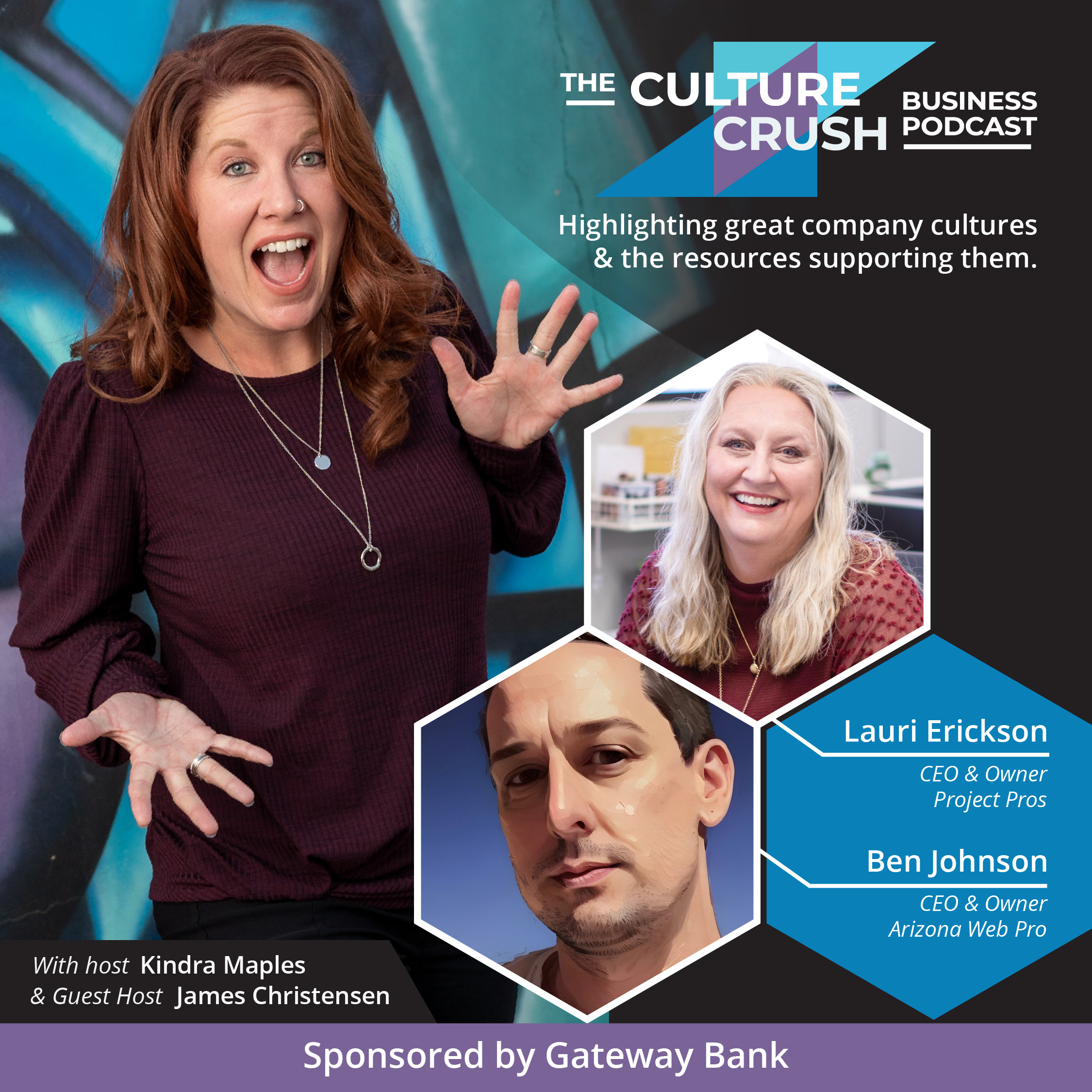
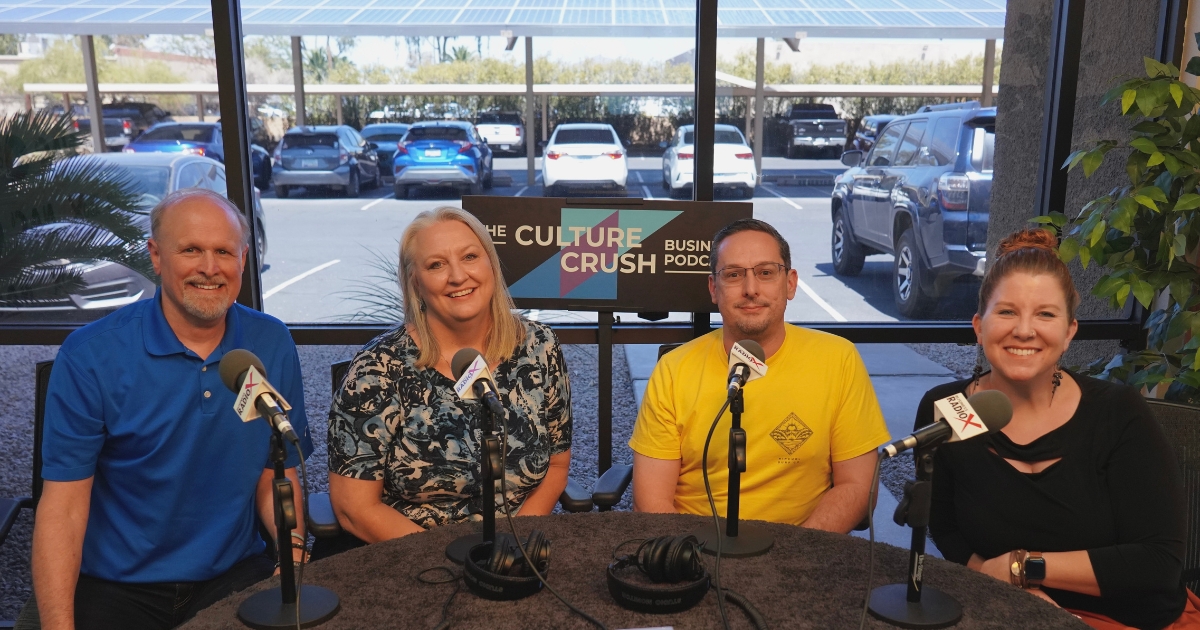
Thank you to James Christensen, the President of Gateway Bank, for joining in this conversation and adding his additional insight and stories as the co- host for this episode with Lauri and Ben.

Located in Tempe, Arizona, Project Pros is a family-owned business that’s dedicated to alleviating the administrative burdens faced by small business owners. Their comprehensive support services are designed to give business owners more time, spanning areas like bookkeeping, HR, social media management, phone answering, and virtual administrative assistance.

Project Pros emerged from CEO Lauri Erickson’s understanding of the need to shift small business owners from working ‘in’ their business to working ‘on’ it. The team at Project Pros fosters a synergetic environment, collaborating to find solutions for each client’s unique needs.

Their approach emphasizes collaborative problem-solving, ensuring that every team member’s skills contribute to the clients’ success. Project Pros goes beyond traditional outsourcing, streamlining processes to save their clients both time and money. They serve as an extension of their clients’ businesses, partnering at every stage to facilitate the growth and success of those businesses.

Lauri-Erickson-Culture-CrushLauri Erickson’s professional journey is highlighted by her executive-level expertise gained through diverse experiences in various companies and positions. With a background in human resources, bookkeeping, customer service, and sales, she possesses invaluable insights into the unique needs of small businesses.

Lauri’s driving force lies in helping small businesses thrive and flourish. To achieve this, she surrounds herself with a team of like-minded, highly talented, forward-thinking, and energetic individuals who share her passion for making a difference. Their unwavering dedication and support leave a powerful and positive impact on their customers’ success.

Connect with Lauri on LinkedIn and follow Project Pros on Facebook and Instagram.

AI automation agency. We act as the automation department for your business removing redundant work and helping you scale with ease.

Ben-Johnson-Culture-CrushBen Johnson is a seasoned data engineer and software developer with 20 years of experience.

He takes complex problems and solves them with simple and elegant solutions.

Connect with Ben on LinkedIn.

About Our Guest Co-Host

James-ChristensenJames Christensen is the President of Gateway Bank, the only community bank in Mesa, Arizona. Under his leadership, Gateway has thrived through multiple economic downturns and grown to consistently be one of the strongest performing financial institutions in its peer group.

James is also very active in the local community and was named Mesa Citizen of the Year in 2023. He is a fierce advocate for small businesses, marginalized groups, and people in need. From one-on-one meetings to presentations and podcasts like this, James enjoys educating and inspiring diverse audiences to improve their financial health and overall well-being.

Connect with James on LinkedIn.

About Culture Crush

At Culture Crush, culture isn’t just a corporate buzzword. It’s a key factor that can either boost your company or lead to its failure. 

We’re culture consultants, with a focus on leadership, appreciation, communication, processes, accessibility, mental health, diversity, inclusion, and creating a dynamic workplace.

CultaureCrushKindraBanner2

As a growing company:

Culture Crush Business is your hub for company culture resources. With deep cultural insights and years of expertise, we evaluate your company’s needs and connect you with the precise resources to cultivate a thriving culture.

We work with CEOs, founders, HR Directors, or Culture Leaders of companies or teams, who value company culture and understand its impact on their business success.With Culture Crush you’ll learn how to transform your workplace into a place of unity, efficiency, and growth. Don’t just fix your company culture – transform it with Culture Crush Business.

On this podcast:  We focus on everything surrounding businesses with good company culture. We will talk with company leaders to learn about real-life experiences, tips, and best practices for creating a healthy work environment where employees are finding joy and satisfaction in their work while also striving and growing within the company. We share the resources to help improve company culture and showcase them on the podcast with their tips and tricks for growing culture.

About the Host

ABHOUTHOSTHEADSHOT

Kindra Maples  is spartan racer, past animal trainer, previous magician’s assistant, and has a weakness for Oreo cookie shakes. Her journey working with people actually started working with animals as a teenager (don’t worry we won’t go that far back for her bio).

She worked for over 15 years in the zoo industry working with animals and the public. Her passion of working with animals shifted into working with people in education, operations and leadership roles. From there her passion of leadership and helping people develop has continued to grow.

Then came the opportunity for leading  the Culture Crush Business Podcast and she jumped on it. Leadership, growth, and strong company cultures are all areas that Kindra is interested in diving into further.

Thank you for our Sponsor!

This episode is sponsored by Gateway Bank, a community bank in Arizona that specializes in serving small businesses across the Valley and the country.

When you work with Gateway, you don’t have to call an 800 number for support, or submit your loan application and wait weeks or months for an answer. You get fast, personal service from a team who knows you and cares about you.

When Gateway was founded in 2007, the team had a vision of building a hometown bank that prioritizes people over profits. Over 15 years later, they’re proud to still be one of the highest-performing AND highest-rated community banks around.

Whether you need a loan or banking services for your business, Gateway is here to help. Visit gcbaz.com/culturecrush for details and a free consultation with bank President James Christensen.

All loans subject to approval. Member FDIC.

gateway-logo-color

Tagged With: AI, arizona back office support, arizona bookkeeping service, automation, back office support, business processes, business support services, Data Pipelines, small business support, web design

Ian Rush with Summit Electric Supply and Jason Haines with ISI Arizona

May 30, 2023 by Karen

Ian-Rush-with-Summit-Electric-Supply-and-Jason-Haines-with-Industrial-Solutions-feature
Phoenix Business Radio
Ian Rush with Summit Electric Supply and Jason Haines with ISI Arizona
Loading
00:00 /
RSS Feed
Share
Link
Embed

Download file

Ian Rush with Summit Electric Supply and Jason Haines with ISI Arizona

Ian Rush with Summit Electric Supply and Jason Haines with ISI Arizona

Summit Electric Supply is an electrical supply company. For over 30 years they have been providing Schneider/Square D components to Electrical contractors in Arizona.

Since 2021, they have been expanding their business into the industrial automation space; providing essential components to manufacturing, distribution, and warehousing operations in the state of Arizona.

Ian-Rush-Phoenix-Business-RadioIan Rush is an Arizona native, but has lived in 2 countries outside the USA; Paraguay and Brazil. He is fluent in both Spanish and English.

After graduating from Red Mountain High School, Ian immediately enlisted in the Marine Corps; serving from 2007-14.

Ian has a Bachelor’s Degree in Engineering from Minnesota State University. He has worked as an engineer at companies like: 3M, Wabash National, and Summit Electric Supply.

His current role at Summit Electric Supply, has him building a new division of the company, focused on Automation components and solutions for Arizona Industrial organizations.

Connect with Ian on LinkedIn.

With a robust library of Lean training materials, ISI Arizona can help improve any part an organization through training, facilitation, or consulting work. ISI-Logo

We help business owners and leadership achieve a standard of excellence by creating strong internal team relationships, employees who produce quality – all while saving resources.

We strive to make it possible for these owners and leaders to focus on working on the business, by developing their employees so they no longer feel they must do everything themselves.

Furthermore, ISI Arizona is licensed and certified to present Blue Collar Leadership© Training. This leadership training is uniquely designed content specifically created to engage and develop the front-line workforce and those who lead them, by taking powerful leadership concepts and packing them in easy to understand and apply resources.

Jason-Haines-Phoenix-Business-RadioJason Haines is Owner, Lead Consultant and Trainer at Industrial Solutions, LLC of Arizona (ISI Arizona). As part of the Industrial Solutions team, Jason has the ability develop and execute customized solutions and/or Lean trainings for Commercial, Healthcare, Hospitality, and Industrial companies.

Through these solutions and trainings, organizations can expect to increase their bottom line, improve system capacity, remove unnecessary steps, to streamline and increase overall efficiency through Lean Thinking implementation.

Our goal is to help companies create stronger leadership, increase morale, employee retention, and ultimately greater profitability.

Connect with Jason on LinkedIn.

Tagged With: automation, Coaching, continuous improvement, Industry-of-Things (IOT), Labor-Stable, Leadership, lean, Manufacturing, robotics

Quick Tips for Time Well Spent: Saving Time on Prescriptions

April 24, 2023 by John Ray

Prescriptions
North Fulton Studio
Quick Tips for Time Well Spent: Saving Time on Prescriptions
Loading
00:00 /
RSS Feed
Share
Link
Embed

Download file

Prescriptions

Quick Tips for Time Well Spent: Saving Time on Prescriptions

On this edition of Quick Tips for Time Well Spent, host Julie Hullett offers her thoughts on saving time by automating prescriptions.

Julie’s commentary was taken from this episode of Time Well Spent with Julie Hullett. 

Time Well Spent with Julie Hullett is presented by Julie Hullett Concierge, LLC and produced by the North Fulton studio of Business RadioX®.

About Time Well Spent

Time Well Spent with Julie Hullett features stories from busy professionals who have created more time to do what they love. Every other week, your host and personal concierge Julie Hullett speaks with entrepreneurs, community leaders, and influencers to answer the question: What would you do if you had more time?

The show is produced by the North Fulton studio of Business RadioX® and can be found on all the major podcast apps. The complete show archive is here.

Julie Hullett, Host of Time Well Spent with Julie Hullett

Julie Hullet, Host of Time Well Spent with Julie Hullett

Julie Hullett is the host of Time Well Spent with Julie Hullett.

Julie Hullett is a personal concierge and entrepreneur in Nashville, TN. She founded Julie Hullett Concierge, LLC in 2011 to give people their time back so they can do more of what they love. No stranger to big ideas and pursuing passions, Julie left corporate America to create her business. She capitalized on her skills—multi-tasking, attention to detail, and time management, to name a few—to build a successful business that gives back. Her clients enjoy ample free time. They’ve traveled more, spent more time with those they love, and have even created their own businesses.

Connect with Julie:

Website| LinkedIn | Instagram. Sign up to receive her newsletter.


Tagged With: automation, Julie Hullett, Julie Hullett Concierge LLC, personal concierge, pharmacy, prescription refills, prescriptions, Quick Tips for Time Well Spent, Time Well Spent

How to Modernize Your Business to Sell at Maximum Value, with Jason Beutler, RoboSource

January 3, 2023 by John Ray

RoboSource
How to Sell a Business
How to Modernize Your Business to Sell at Maximum Value, with Jason Beutler, RoboSource
Loading
00:00 /
RSS Feed
Share
Link
Embed

Download file

RoboSource

How to Modernize Your Business to Sell at Maximum Value, with Jason Beutler, RoboSource (How To Sell a Business Podcast, Episode 5)

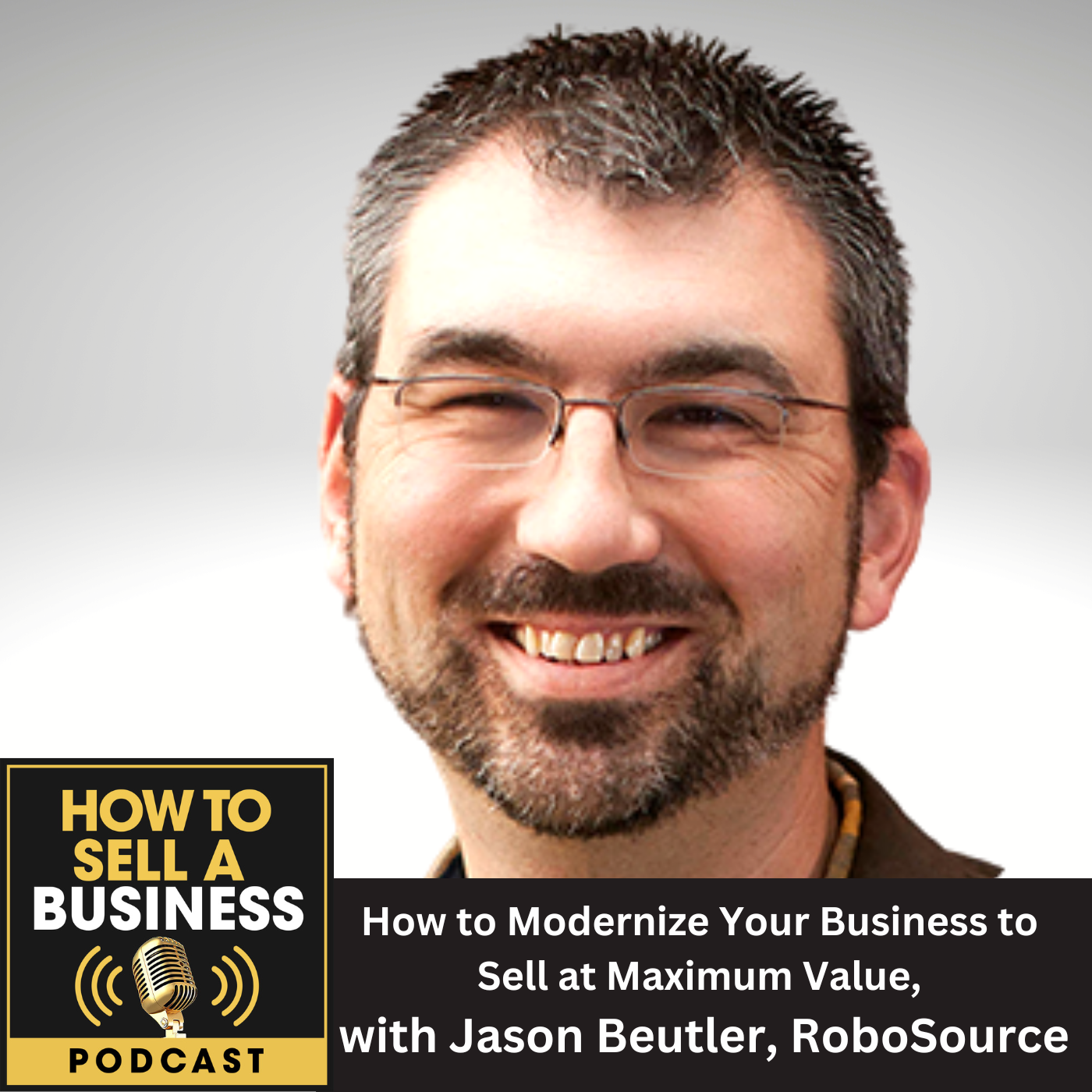
Jason Beutler, CEO of RoboSource, joined Ed Mysogland to discuss various kinds of business automation, why RoboSource uses bots, what’s involved in automating processes, what industries benefit from it most, how it maximizes value and reduces overhead, the return on investment, and much more.

How To Sell a Business Podcast is produced and broadcast by the North Fulton Studio of Business RadioX® in Atlanta.

RoboSource

RoboSource bots work 24 hours a day, completing monotonous tasks for their clients.

Process Automation is the future of work. Soon every business will have a digital workforce alongside its human workforce. Automated processes get work through faster, more efficiently, and more accurately.

So what is process automation? Think of all the jobs around the office that your team has to complete every day (or week) to keep the business operational – things like entering information into multiple systems, manning email inboxes, pulling down the same information from a website over and over again. With Robotic Process Automation (RPA), software engineers teach digital bots how to perform those jobs for you.

RoboSource can provide process-writing and support for those using RPA on premises. But with their “as-a-service” model, they can also do it all in house, for a low monthly payment, eliminating the usual expense associated with investing in the infrastructure, software, and training. Your cloud-based solution will scale with you, as you find new ways to save time and increase accuracy.

With their “as-a-service” model, process automation is more affordable than you’d think.

Company website | Instagram | LinkedIn

Jason Beutler, CEO, RoboSource

Jason Beutler, CEO, RoboSource

Several years ago, Jason Beutler was teaching a college computer engineering class when he realized that his students were writing better code than an outsourced team he was supervising at the same time. And that’s how RoboSource was born.

With almost 20 years of professional programming experience, you might expect Jason to spend his free time reading fantasy fiction, playing board games, or drinking Mountain Dew. He does. But he also spends a fair amount of time playing competitive sand volleyball and fanning hard-core at Notre Dame football games. His passion for Notre Dame extended to completing his MBA there in 2009.

Professionally, Jason is passionate about process improvement and using accountability to grow young developers. He speaks often on this topic, to audiences as diverse as coding conference attendees, classes full of university students, and computer science educators.

LinkedIn

Ed Mysogland, Host of How To Sell a Business Podcast

Ed Mysogland, Host of “How To Sell a Business”

The How To Sell a Business Podcast combines 30 years of exit planning, valuation, and exit execution working with business owners. Ed Mysogland has a mission and vision to help business owners understand the value of their business and what makes it salable. Most of the small business owner’s net worth is locked in the company; to unlock it, a business owner has to sell it. Unfortunately, the odds are against business owners that they won’t be able to sell their companies because they don’t know what creates a saleable asset.

Ed interviews battle-tested experts who help business owners prepare, build, preserve, and one-day transfer value with the sale of the business for maximum value.

How To Sell a Business Podcast is produced virtually from the North Fulton studio of Business RadioX® in Alpharetta.  The show can be found on all the major podcast apps and a full archive can be found here.

Ed is the Managing Partner of Indiana Business Advisors. He guides the development of the organization, its knowledge strategy, and the IBA initiative, which is to continue to be Indiana’s premier business brokerage by bringing investment-banker-caliber of transactional advisory services to small and mid-sized businesses. Over the last 29 years, Ed has been appraising and providing pre-sale consulting services for small and medium-size privately-held businesses as part of the brokerage process. He has worked with entrepreneurs of every pedigree and offers a unique insight into consulting with them toward a successful outcome.

Connect with Ed: LinkedIn | Twitter | Facebook


TRANSCRIPT

Intro: [00:00:00] Business owners likely will have only one shot to sell a business. Most don’t understand what drives value and how buyers look at a business. Until now. Welcome to the How To Sell A Business Podcast, where every week we talk to the subject matter experts, advisors, and those around the deal table about how to sell at maximum value. Every business will go to sell one day. It’s only a matter of when. We’re glad you’re here. The podcast starts now.

Ed Mysogland: [00:00:35] In today’s podcast, I had the opportunity to interview Jason Beutler of RoboSource. I’ve known him for a while. He’s a friend and we’ve known each other through an organization called Truth at Work. So, I know him professionally as well as personally. And I can tell you he is probably one of the smartest people I have ever, ever plowed into.

Ed Mysogland: [00:01:01] And so, today we’re going to be talking about automation and what that means for a seller to sell the company or a buyer that may be buying the company and how to maximize that investment. He talked a lot about where to identify those opportunities to automate the business. So, I am certain that you will get a lot from this episode. So, enjoy my conversation with Jason Beutler of RoboSource.

Ed Mysogland: [00:01:40] Welcome to another episode of How To Sell A Business Podcast. I’m your host, Ed Mysogland. I help business owners identify what creates value in their companies so that one day that they can sell at maximum value. Today, I have a good buddy of mine, Jason Beutler from RoboSource. So, Jason, tell us a little bit about RoboSource, and not too long because I got lots of questions for you.

Jason Beutler: [00:02:07] Thanks, Ed. So, RoboSource is a process automation company. We basically help businesses automate mundane, repetitive tasks within their business to maximize their time and get their people working on things that are more important and strategic to the business.

Ed Mysogland: [00:02:25] Well, as I was saying when we first got started, you know, there’s so much here and I guess I’m looking first, define automation for everybody.

Jason Beutler: [00:02:40] So, automation is essentially taking the work out of a human’s hands. So, letting the computer do the task that needs to be accomplished. So, it can be simple things such as one of our clients puts invoices into QuickBooks and they need to classify those invoices by salesperson. So, instead of having a human go through and classify that, the computer automates that process and does that for them.

Ed Mysogland: [00:03:10] Okay. So, from the standpoint of that automation, because like I was telling you, I was beating up on one of our guys here today on you and I had an opportunity to work together and I couldn’t sell it to my partners. They were just fearful of what this meant to the business and the risk associated with it. So, where we ended up with was offshoring a lot of what we were talking about with automation.

Ed Mysogland: [00:03:43] So, I know like Zapier and If This Then That, and then you have your custom work, and then, in our case, offshoring. Is that kind of the lifecycle of automation that I’m scared to automate so I’m going to hire somebody at a lower cost and then I’m going to back into automation? Because at least I think that is our trajectory, you know what I mean? Go ahead.

Jason Beutler: [00:04:21] And I would say a lot of companies are doing that. So, let’s talk specifically about the different kinds of automation. So, there are three specific kinds, and RoboSource does all of them. So, to start, first, we’ve got the traditional software. So, traditional software is what we’ve been doing since, like, the ’50s, right? It’s building software that manages data and processes and helps you sort of automate the day-to-day. That’s where the warehouse systems, the ERPs, all of those came about. That was a form of automation and it’s still something that’s done a lot today.

Jason Beutler: [00:04:52] The second and more recent form of automation that’s come about are these low-code and no-code tools that you talked about, the Zapiers, the If This Then That, the Microsoft Make or Power Automate platforms. Those tools are, essentially, drag and drop so that you don’t have to have any concept on how to code, but you can still kind of automate and build in. They operate off of triggers. So, if something happens in one system, it will trigger this automation to happen and do something from there. So, you could say watch an inbox for an incoming email and trigger it to do something for you.

Ed Mysogland: [00:05:24] I got it.

Jason Beutler: [00:05:26] The last form of automation is what’s referred to as robotic process automation, and that’s a very new technology that’s come about where essentially you can mimic clicking on a desktop the way that a human would click on the desktop. So, if a human can click on buttons and move around on a website or an application, you now can write a software bot that will automate that for you.

Jason Beutler: [00:05:50] So, I say all of that in answering your question around how do we have these conversations and what’s the trajectory of adopting automation. Most people already are adopting automation in some way, shape, or form because they’re using software as a traditional form of software. It’s an area that they feel comfortable because we spent the last 20 years looking at it and dealing with that kind of automation. Where people get uncomfortable is when they see the bot clicking on the buttons for a human. That’s when they start to think, “Oh, where are humans making decisions that I would be uncomfortable having a bot make a decision.”

Jason Beutler: [00:06:29] And the problem is most people don’t know that. They don’t know the decisions that are being made, that a human’s being made when they’re clicking those buttons. And as a result they get a little bit uncomfortable. And so, that’s really where I start in those conversations, is, digging into what are the real decisions that are being made when you’re clicking these buttons.

Ed Mysogland: [00:06:46] Yeah. Give me an example of that. And I’m totally transparent, you can beat up on us all you want. I mean, when we were talking, I’m sitting here going, “All right. I can see it, but am I willing to risk it?” You know what I mean? I can see what you’re talking about, but am I willing to put, in this case, we were talking about inbound confidentiality agreements. We get about a thousand a month and we’re using DocuSign and this, that, and the other. And it’s like, “Okay.” What’s the risk and how do I understand what you’re talking about as far as the bot doing what it does to replace the person that is physically doing it for us now. So, how do I get comfortable with that?

Jason Beutler: [00:07:40] So, some of it is just mindset. The reason you’re comfortable having a human do that is because you trust the human’s decision making process. What’s interesting is the bot is going to make the same decision every time because it’s software. So, there are rules going to be defined around that that are going to have the bot make the same decision. It’s just uncomfortable for us because we’re not used to it.

Jason Beutler: [00:08:03] And this is the transition that’s happening I think in the ’20s right now, is, there’s starting to become more and more comfort with the fact that computers can actually make the decisions that humans have been making on issues like what you’re dealing with. And so, at the end of the day, those NDAs are vital to your organization and your business. It’s like a cornerstone of what you’re doing. Having the human click that button gives you a sense of warm fuzzies that you know someone had to sit there and make the right decision.

Ed Mysogland: [00:08:33] You’re right. But at the same time, I mean, after I hear you say that, I’m like, that is such a nice guy that’s doing it. But, you know, I’m sitting here going, “Well?” Because I can’t remember what the savings was. I mean, it was probably – I don’t know – ten bucks an hour or whatever doing all the processing. And I can’t remember what the financial mechanics were, but it was about a 95 percent savings, I think, something like that.

Jason Beutler: [00:09:11] Yeah. Probably.

Ed Mysogland: [00:09:11] And so, hearing myself say this, I’m like, “Oh, my gosh.” But you’re totally right. And I wanted to feel better about the decision. Like, if there was a problem, that guy was going to call me. And I’m afraid with a bot, the whole damn place falls apart before I know it. And so, how does that work? Where’s the tripwire to prevent my infrastructure to fall apart?

Jason Beutler: [00:09:49] Yeah. So, when looking at automation, one of the first things you want to look at is what happens on – what we call – the non-happy path, what happens in the exception cases. And really that’s where we plan our automations around, is, we know that the happy path, that’s going to work. But what happens when it’s not following that. So, that’s how you build the process. That’s where you want to make sure you’ve got the automation defined.

Jason Beutler: [00:10:15] So, in this instance, it would have been like here are the boundaries. Here are the scenarios, where if it falls within these boundaries, we’re going to go ahead and send out the NDA because we feel confident that we’re operating effectively. If it’s outside of this range, either there’s some form of maybe AI decision making we can go through to come to a better decision or we’re going to send it to a human to click the button for us.

Ed Mysogland: [00:10:39] Okay.

Jason Beutler: [00:10:40] Because not all automation has to be 100 percent hands off, and I think that’s another area that people don’t understand. The 80/20 rule applies here. How much more time would you get if we could get rid of 80 percent of the scenario and you only have to deal with 20 percent of it?

Ed Mysogland: [00:10:58] You’re right. I mean, you’re totally right. But at the same time, I’m looking at it like in our process. The NDA came in, RoboSource was going to write the NDA to our CRM, but that’s where it stopped. Because we had 16 people, whose client does that belong to? And that’s where the rub was, was how does the bot know? And now, after I’ve gotten away from it, you were like, “Well, simple. You just see whose client was tagged and you’re off to the races and then it’ll do it for you.” And that leads me to my next question of, how much of a process can this be automated? I mean, how many steps is a typical automation?

Jason Beutler: [00:12:04] So, we’ve done automations that are as small as two to three steps, just because they do them in high volume, to we’ve done automations that have as many as about 400 steps, and that’s more on the mortgage side. And we’ve also done some work with a nonprofit processing incoming transcripts, where they’re extracting content out of a high school transcript and putting it into a system and running them through some approval processes. So, those are massive processes that are very long running, potentially running three, four months even.

Ed Mysogland: [00:12:43] Okay. So, you just said, a bot is scanning a transcript and extracting the paragraph. What are they extracting?

Jason Beutler: [00:12:55] It’s extracting the semester, the class, and the grade, as well as the grade point average, what school they went to.

Ed Mysogland: [00:13:02] I got it. I got it. But it’s not, like, reading the essay and pulling –

Jason Beutler: [00:13:09] Oh. No.

Ed Mysogland: [00:13:10] I got it. I was like, “Oh, my gosh.” So, one of the biggest reasons I wanted you on here was we have the baby boomers that are looking to sell businesses, and you hear it all the time. And the challenge we have is coming from the other side, the buyers are looking at it on, “Hey, I want a really well operated business.” But at the same time, I got to figure out, not only how I get my money back from the acquisition, but how do I grow this.

Ed Mysogland: [00:13:55] And they’re finding good companies, and that’s part of the problem. When I say problem, that’s part of the challenge. From the buy side, it’s like, “Okay. I want a really good company. But at the same time, I’m trying to elongate a business that is perhaps on the mature side of the company lifecycle.” From the seller’s side, I’m sitting here saying, “Okay. If I have enough runway, I want to put some of this in so I can maximize, not only the earnings pre-sale, but also it’s already set up for the next guy.”

Ed Mysogland: [00:14:34] I mean, you can look at it both ways. Well, from my standpoint, I think I would look at it from the buyer standpoint. When I’m looking at a business, how do I look at automation? Are there industries that are ripe for it? Are there processes that this is the low lying fruit that you can have immediate value impact?

Jason Beutler: [00:14:58] Yeah. Talking to that specifically, I have a client that ended up selling their business in the industry they were in. And the reason being is there was a PE firm that was coming in and looking to buy something in their industry. And because we’d been working with them, their overhead was 35 percent less than their competitors. And they got sucked up as a result of it and he had a pretty good exit.

Jason Beutler: [00:15:22] So, it is something that’s of a lot of value. And you can create scenarios where the automation is actually a differentiator. I think from the buy standpoint, the things that I would be looking for are places where there is human repetitive action. I mean, at the end of the day, computers are going to be better at that. Computers are really good at doing repetitive tasks, that’s what they’re made to do.

Jason Beutler: [00:15:50] And so, if we’re seeing things where people are taking paper and keying it into systems or people are having to key in two or three different systems – which is common. I run into that probably three or four times a week – where we’ve got to put it into our inventory system, our CRM, and our ERP in some way, shape, or form, or our finance system. So, we’re literally putting the same client in three different places. Those are areas where you’re going to see a lot of automation opportunities show up very quickly and you’re going to save quite a bit of time and money off of that.

Ed Mysogland: [00:16:19] So then, it begs the question, what do I deploy? Like, for example, I am a Mac guy. I have Text Expander. I’ve got this thing called Hazel that moves my files and stuff like that. When do you say, “You know what? I need custom. I need somebody to come in, evaluate, and build this thing out.” As opposed to, “I think I’m going to try this Zapier thing. I’m going to click on it and here’s my trigger and here’s the next step.” But it’s just one step. So, how do I – I don’t want to say work with someone like you, but how do I know what I don’t know? Because, truly, most people don’t have no clue about this stuff.

Jason Beutler: [00:17:21] Yeah. So, tools like Zapier are extremely powerful and they do make it available for individuals who don’t understand necessarily all the intricate behind the scenes working of a computer to be able to do some basic automations. It’s when you start to get into the more complex decision making processes that you’re probably going to want to bring in somebody who understands.

Jason Beutler: [00:17:44] Automation is the intersection between data, business, and software. You’ve got to understand data analytics, which gets into artificial intelligence. You’ve got to understand how to build software. Because at the end of the day, a computer is going to operate in a different way than a human would operate, and understanding how that works makes sense. But if you don’t understand business, then automation is just going to be a waste of your time. So, you’re at that intersection point.

Jason Beutler: [00:18:10] I would say if you’re doing automation and you’re getting to the point where you’re like, “Wow. There are acronyms coming up that I don’t know what they mean. Things like O off, things like APIs, they’re starting to show up because I’m trying to do more complicated things.” That’s when you probably want to bring in somebody who’s been there.

Ed Mysogland: [00:18:27] I got it. And for somebody like me mixing and matching a RoboSource with my dabbling of Zapier and stuff like that, that’s probably a bad idea, isn’t it?

Jason Beutler: [00:18:47] There’s some advantage to putting it all into a single location, but there’s nothing that’s going to keep you from being successful in that environment. So, a lot of automations are now operating inside the Cloud. And by the Cloud, we basically just mean someone else’s computer on the internet, which is really all that that’s meaning. So, as a result, you can use Zapier to do some of your more basic things.

Jason Beutler: [00:19:11] And when you get into what we refer to as intelligent automation or hyper automation, where you’re really trying to accelerate some things or make some decisions, you might want to send it off to maybe an Azure with a cognitive services behind the scenes. And I just went all geeky on people, but, you know.

Ed Mysogland: [00:19:25] I got it. And, again, this isn’t an ad for Zapier even though it sounds like it. It’s more from the standpoint of I don’t know what I don’t know, but I read all this. And not many people are saying these are the people that will come in, evaluate your process, and automate it. Versus, “Hey, gain five hours to your day by using Zapier.” So, I’m with you.

Ed Mysogland: [00:20:10] So, one of the things that I was writing about is, in business valuation, recurring revenue is pretty high up on the value hierarchy. Conversely, if I look at automation, I am optimizing, basically, the engine of the company. So, I know you were saying what’s a human doing, the data entry, and so on and so forth. I’m assuming accounting is right off the bat because I heard you mentioned QuickBooks. Where else should I be looking? Let’s just take a manufacturing company. Where am I looking for a manufacturing company?

Jason Beutler: [00:21:13] Work orders, what that work order process look like, how is that coming through. We do a lot with purchase orders. We do a lot on invoice processing. Finance comes up quite often. And specifically also, when you start getting into debt reconciliations across banks, credit card processing across banks, making sure that you’re standardizing all those accounts and everything all lines up, that’s a lot of manual work that can be automated and those decisions can be made.

Ed Mysogland: [00:21:46] I got it. I was interviewing a guy that optimizes CPA practices. And one of the things that he was saying that was coming down the pike is taking a person’s tax return, scanning it in, extracting the tax return for the next guy to do their analysis. And I assume the IRS does something like that already. I mean, from a procedural standpoint, it’s looking at the image and it’s looking at a particular area and it’s extracting what is in that pixel. I mean, is that how it does it?

Jason Beutler: [00:22:45] So, that’s hard to explain without getting into the science behind it all. But, essentially, yes, that’s basically what it’s doing, is, it is looking at the image structure and it’s an array of pixels, so it’s an array of colors. And it’s looking at those colors and it’s identifying patterns around those.

Jason Beutler: [00:23:06] Now, something to note on PDFs is not all PDFs are scans. A lot of PDFs are actually printed. And that’s actually a different underlying structure. So, if it’s a printed PDF from, like, an application and you print it to file, that actually has the text embedded in it and that text is a lot easier to pull out.

Ed Mysogland: [00:23:28] That’s the OCR or no?

Jason Beutler: [00:23:31] OCR is going to work off of the scanned images because that’s doing optical character recognition. And that’s where you’re going to take a scan or a picture and it’s going to figure out what the words are. And that’s pretty accurate but it’s going to run into some issues. Then, I’d say most PDFs that are received these days now are in QuickBooks. You hit print a PDF and it comes out as a really pretty formatted PDF. That’s actually not an image. That’s actually a text embedded document that you can go behind the scenes and pull that text out directly.

Ed Mysogland: [00:24:03] I had no idea. And that’s how you’re able to do it with purchase orders. I get it.

Jason Beutler: [00:24:14] Yes.

Ed Mysogland: [00:24:15] Okay. So, everybody gets all shook up about employees that the employees are being replaced by robots. I mean, I know it’s true. But I’m trying to figure out whether or not that’s a bad thing, you know?

Jason Beutler: [00:24:40] Yeah. And one of the thoughts I’ve had around that recently is we’ve had recently The Great Resignation, and now we have quiet quitting. So, we’ve got our workforce saying, I don’t want to do things that I don’t feel are important. I don’t want to work in a place or work on work that isn’t meaningful and impactful. I want my day to matter. And then, we say, “Okay. Let’s automate some of the meaningless work.” And everyone’s up in arms about we’re replacing jobs. I’m not seeing it line up. And I see the workforce basically begging to work on more important things. So, why wouldn’t we automate away the things that, basically, they’re already saying they don’t want to do?

Ed Mysogland: [00:25:24] Wow. Out of everything you’ve said, that’s probably the most impactful for me. Because you’re exactly right, you know, if you can take away the mundane and give them the opportunity to maximize whether it be creativity or whatever, I got to imagine it’ll improve corporate culture and retention. I never looked at it that way. That’s a great way to look at it.

Ed Mysogland: [00:26:02] So, I’m trying to determine if I have two businesses and one has automation, one has people doing it. I’m trying to determine risk. You follow? I mean, on the automated side, you’re saying, “Look. I got a bot doing all this. There is no risk. The only risk is it breaking.” On this side, I have people, and they do break, they make mistakes. But yet I’m trying to determine if I’m the buyer looking at the business, am I intuitively thinking that the business with people is less risky than the automated one? You know what I mean?

Ed Mysogland: [00:26:57] Like, if you have a buyer that shows up and they see the automation, am I sitting here going, “You know, I think that’s a business for me” versus I got these people. I’m great at managing people. I’m great at maximizing their efficiency, and so on and so forth. What do you say to that? I mean, that’s a hard one, right?

Jason Beutler: [00:27:27] Yeah, it is. And, to me, I guess it comes down to how far out you’re looking. So, if you’re looking out just a couple of years, then, yeah, go with what you’re comfortable with. But if you look back at history, and let’s just take Stud, Studebaker, Duesenberg, they could build cars, but they’re not around. Why? Because someone came along and made it more efficient and figured out how to do things more efficiently than they were able to do things. And, eventually, it got to the point where, competitively, they couldn’t keep up.

Jason Beutler: [00:28:04] And I guess the question I would have is, if you’re looking at a business that is primarily people driven versus one that has a lot of automation driving it, how long out are you looking? Because if you’re looking at long term, your competitive advantage is going to come with automation. And why is that? It’s an asset you own and it’s an asset that’s scalable. So, if you need to go twice as fast, it’s a bot. You literally can push buttons and have it go twice as fast.

Jason Beutler: [00:28:31] If you all of a sudden are like I need to scale way back because recession or something’s hit, you can push buttons and scale it way back. You’ve got flexibility that you wouldn’t have with people necessarily. Not to say that the people aren’t vital because there’s strategic and relational and things that really only people can do that you want to make sure you got the right people doing that. But in terms of the day-to-day operations, I would say it depends on your duration.

Ed Mysogland: [00:28:57] You know what? It’s fascinating that you say that, because the holding period for a business tends to be long. And you talk about getting financing to buy companies and you’re talking about a ten year amortization. And if you think about what has transpired in the last ten years – and I can’t remember what the term is about technology, how fast it’s changing – but there’s some —

Jason Beutler: [00:29:30] Doubles every seven years.

Ed Mysogland: [00:29:31] Yeah, that too. So, if I’m a buyer, I mean, you’re exactly right. As I look at business owners, especially the ones that are looking to retire, buyers are evaluating where are they on that lifecycle. And I would imagine that there’s a lot of businesses that aren’t marketable because of where they’re at in the life cycle as opposed to, “Hey. I think I can fix this.”

Ed Mysogland: [00:30:07] Now, I’ll tell you, there’s some guys that are rolling up foundries. And these guys, I love watching what they’re doing and that’s exactly what they’re doing. I mean, the foundries, that business hasn’t changed in decades. And they’re coming in and just retooling it, make it more efficient economies of scale. Those are the type of buyers, I think, are probably we’re going to see more of over the next half-a-decade or so.

Ed Mysogland: [00:30:46] As a vendor, it’s one thing for me to hire you to fix my stuff. It’s another thing having somebody on site to be – I call it and I’m seeing more and more – chief automation officers. Do I need that or is an outsourced vendor like yourself adequate? You know what I mean?

Jason Beutler: [00:31:11] Yeah. I would say, right now you’re not going to find a lot of people that are going to be qualified to be a chief automation officer. It’s a relatively new concept. And it is going to be a unique skill set, as we talked earlier about that blend between data analytics and AI, having software development background and process orientation, but also having enough business acumen to know how to automate and run the business.

Jason Beutler: [00:31:37] So, what I find works best is to take the AI and software component and outsource that, but keep the business acumen in-house. So, take a subject matter expert, somebody operationally that understands what’s going on, and partner them with somebody, like us, that can provide the technical oversight and the technical aspects. Most businesses will have some form of technology on staff, but not necessarily the automation technology. And these days you don’t need it to be in-house. You can leave that outsourced. Personally, I think you’ll be better served that way because you’ll be able to get some economies of scale off of that.

Jason Beutler: [00:32:18] So, with a partnership between your in-house subject matter expert and outsourced or consultative help on the technology front, I think you can accomplish the technology and the support of it in a very effective manner without having to go bring in a chief automation officer, which is frankly going to increase all your infrastructure costs as well.

Ed Mysogland: [00:32:42] I got it. So, I’m certain every buyer that is listening to this is going to say, what are the industries that are ripe for me to go target? And you said, those that are heavy in paper. But are there any particular businesses or industries or the types of businesses that – I know you said – paper heavy, but any industries that come to mind that if I’m a buyer, because you may be a buyer, Jason, where are you looking to buy?

Jason Beutler: [00:33:27] Right now, the clients I’m running into the most often are insurance. Mortgage is actually coming up all the time right now. I’m running into mortgage applications and mortgage underwriting almost daily on that front. So, those are two areas that I’m hitting often. Banking is starting to show up a lot more, though they do have more of their internal systems that they’re able to run on. The other on I’m hitting is health care, health care billing. It is the Wild West out there. And the opportunity to standardize and automate on that is huge.

Ed Mysogland: [00:34:07] I also heard HOA, so that was one that kind of caught me by surprise. I didn’t think of that in my research for our talk. It seems as though anything that has an application, whether some use Google forms and that will bring it in. Others, especially like apartments, where somebody comes in and actually fills out an application. Those are our candidates. We talked a little bit about manufacturing. CPAs are definitely trying to automate. Yeah, so that’s really interesting.

Ed Mysogland: [00:35:03] So, you said something earlier about you own this process. Does it have to be updated? What’s the security? How do I protect, like whatever, open source? You know, that’s open to the world, right? So, I have this proprietary. I engage you. I have a proprietary process. How do I protect that? And is it really mine or is it yours?

Jason Beutler: [00:35:37] So, the process is yours. That being said, it is implemented inside of a piece of software. So, most of these tools nowadays are built inside of tools. You’ll hear things called UiPath, Blue Prism, Microsoft Power Automate, Logic Apps. There’s a whole series of these tools that you will implement the automation inside of. So, while the process is your intellectual property and how it executes is specific to you, it is somewhat proprietary to the software that it’s been built inside of. That being said, you could take that software, implement it in another location, and move that process into that, and have no trouble at all running it.

Jason Beutler: [00:36:20] So, just to make sure we’re clear on that, security, that is a challenge. Now, we talked about the different kinds of automation, right? The low-code, no-code, the traditional software, and the RPA. RPA security, which is the desktop automation, that’s a little more straightforward because it’s literally logging in like a human one. So, it’s the same security that you have. If you put a username and password in and navigate a site or navigate an application, that’s the way the software bot is going to go. So, you can control the security the same way you would on a user.

Jason Beutler: [00:36:52] When you get into the traditional software and some of the low-code stuff, security gets to be pretty challenging. There are what are referred to as application programming interfaces or APIs. Those have a series of security, they’re called tokens. You use tools like OAuth, which is open authentication to integrate with them all. If you’re starting to get into a lot of that, you probably want to call a software guy because you’re getting into some pretty low level security type of things. But those are all built into these tools these days, so you’re not having to necessarily figure it out. You just have to know how to implement it.

Ed Mysogland: [00:37:31] So, I’m a consumer and I sit here and go, “All right. Exactly what does RoboSource do for me? What does a guy like Jason do?” You know, it’s being protected, so it’s design. So, I know you’re designing it. I don’t know why I’m talking for you. So, let me turn it over to you, what is Jason doing in my world? What are you doing for me?

Jason Beutler: [00:38:05] So, first and foremost is, we’ve built a ton of these, so we understand the pitfalls. So, when we sit down and work with on a process with you, we’re going to essentially know how to make this process operate and we’ll build from that standpoint. Second is we build it. Most of our clients do not know how to build out software. They don’t know the appropriate ways, the best way to build that automation. So, with our architects and our experience, we build that out for you.

Jason Beutler: [00:38:31] So, not only do we plan out how it should look, we build it for you, and then we support it. Meaning, you don’t have to worry about it at all. We just take care of it. We’ll specifically give you an app that shows you real time what your software bot is doing. And if anything breaks, we’re looking at it. So, we’re writing software and tools to handle all those scenarios you said earlier where it’s like, “I want to know this thing broke before it breaks. I want to be ahead of it.” We’re doing all of that.

Jason Beutler: [00:38:59] That’s the monitoring and systems that we put in place, and that’s the platform that we’re building out, is to make sure that all that is safe and secure and that somebody is looking at it. We can catch the anomalies before they happen. If something breaks, we got it fixed as quickly as we can to keep your business up and running. So, that’s what we’re doing on that front is we’re essentially providing automation as a service for you so you don’t have to know anything about how to automate. You just have to know that you’ve got something that you want automated, and we’ll take it from there.

Ed Mysogland: [00:39:27] And if I’m not mistaken, how you get paid is based on the automate the event, right.

Jason Beutler: [00:39:37] Correct. Yeah. So, similar to electricity, we scale by usage.

Ed Mysogland: [00:39:45] Okay. I get it. So, have you done any studies on the ROI to this stuff? Knowing you, you probably have. So, what kind of ROI should someone expect by doing it?

Jason Beutler: [00:40:02] So, the ROI that we’ve seen, let’s kind of break down how the costs look. Typically, there’s an upfront cost that comes into building out the process in some way, shape, or form. Similar to if you were to onboard somebody, you’re going to have an upfront training cost, right? Getting up to speed. You’re going to have that same type of cost with getting the software built or getting the automation built. After that, then there is sort of the monthly recurring usage based fees that come out of it.

Jason Beutler: [00:40:30] What we’ve seen is we’re saving anywhere between 35 and 50 percent from a human on that monthly recurring level. Depending upon the automation, it can get as high as, like, 80, 90 percent. But conservatively, we’re saying between 35 and 50. So, given that, what I see across most of my clients is about a six month payback period, six to nine months at the most in year one. But, remember, that includes the implementation fee. So, by year two, your savings are phenomenal. And so, we’re seeing in the second year, you’re often spending a quarter of what you were the year before.

Ed Mysogland: [00:41:10] I got it. All right. I want to be sensitive to your time, so at the end of every episode I always ask, what’s the one piece of advice that you could give our listeners that would make the most immediate impact on their business? Go ahead, I dare you to say automate.

Jason Beutler: [00:41:32] I mean, along those lines, though, I guess I would say busy is the new broke. So, when you’re broke, you don’t have enough money to focus on and to put towards the things you should, let alone the things you want to do. The same is true when you’re busy. So, if you’re busy, you don’t have enough time to focus on the things you should be focusing on, let alone the things that you want to be focusing on.

Jason Beutler: [00:41:57] And you really only have two options. You can delegate and you can automate. Those are your only two options in order to get your time back. And really, at the end of the day, time is the resource we’re managing as business owners and business leaders. So, I guess automation is a new thing. You need to learn it. It’s half your solution. It’s half the possible solutions that are out there. And I think that’s an important aspect and something to think about.

Ed Mysogland: [00:42:24] Yeah, you’re exactly right. And I really appreciate how you look at that, that this is not so much about costs as it is about time. I get it. So, what’s the best way that we can find you?

Jason Beutler: [00:42:49] Website, robosource.us. You can always email me, jason.beutler@robosource.us. And then, my phone number as well.

Ed Mysogland: [00:43:01] Okay. And we’ll have all of that in the show notes. Super easy. All right, oh, buddy. Thanks for taking the time. I know this is the future. And I’ve been following along for quite some time about buyers and what’s inducing them to buy businesses. And so, I am so grateful for your generosity to spend some time with us today and and talk about how we can make businesses either more marketable, or post sale, how to maximize the buy. So, thanks so much for hanging out with me.

Jason Beutler: [00:43:45] Hey, it was fun. I appreciate it. And I look forward to talking to you again soon.

Ed Mysogland: [00:43:49] Sounds good. Thanks, buddy.

Outro: [00:43:52] Thank you for joining us today on the How To Sell A Business Podcast. If you want more episodes packed with strategies to help sell your business for the maximum value, visit howtosellabusinesspodcast.com for tips and best practices to make your exit life changing. Better yet, subscribe now so you never miss future episodes. This program is copyrighted by Myso, Inc. All rights reserved.


Tagged With: automation, bots, Business Owners, business process, business value, Ed Mysogland, exit planning, How to Sell a Business Podcast, how to sell my business, how to sell your business, Jason Beutler, Notre Dame, process improvement, RoboSource, Sell my business

Project Management and Technology E37

November 2, 2022 by Karen

Project-Management-and-Technology-feature
Phoenix Business Radio
Project Management and Technology E37
Loading
00:00 /
RSS Feed
Share
Link
Embed

Download file

Project-Management-and-Technology

Project Management and Technology E37

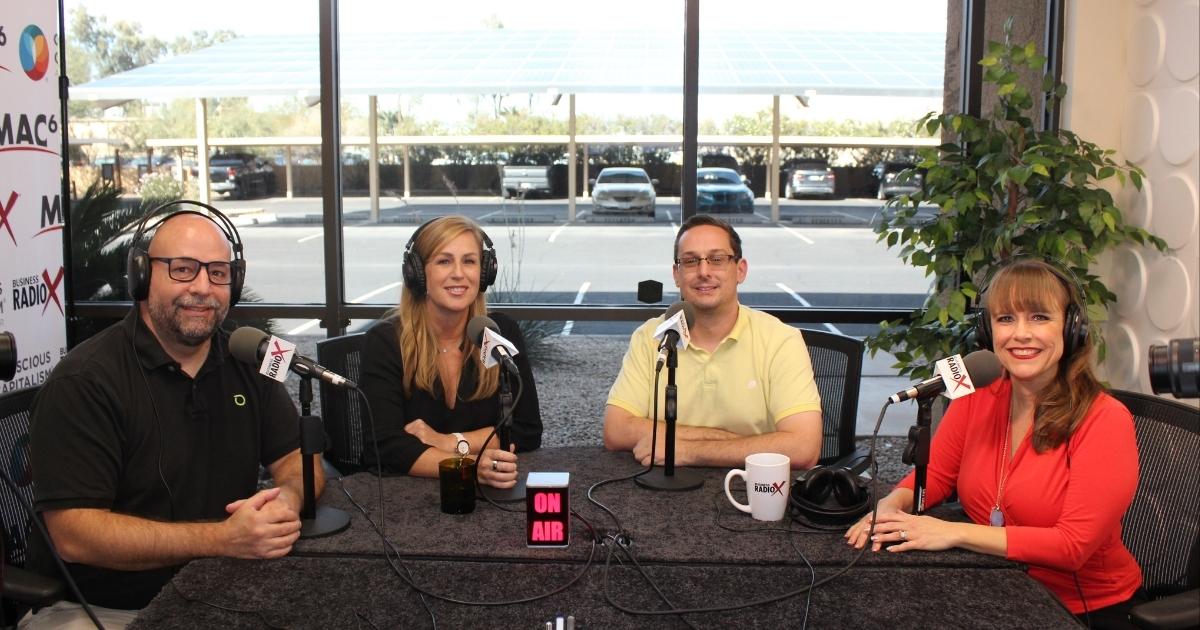
How much easier would life be if there was an app to streamline your business or you could outsource all of your projects to someone else? Sounds amazing right? Check out this episode of Collaborative Connections Radio Show and Podcast to hear how it’s possible.

Host, Kelly Lorenzen was on-air with Joe Pusz, PMP, Founder of The PMO Squad and The PMO Leader, Melissa McDonald, PMP, Founder of The Smart PM, and Ben Johnson, Owner of Arizona Web Pro. All four business owners shared advice, insights, and lessons learned.

Ben, Kelly, Joe, and Melissa talked about business ownership, community, philanthropy, project management, and technology. This is a great episode to listen to if you want to learn more about any of the above. These guests are experts in their field and share so many great tidbits.

PMO-Logo1

The PMO Squad is a Phoenix-based Project Management Consulting firm which helps organizations deliver projects better. Their team of Project Management experts assist clients across all industries with Solutions Made Simple to improve their project delivery capabilities. Our Customer Focused and Purpose Driven Approach provides custom Agile and Project Management solutions to fit your needs.

They have been recognized as the 2022 Small Business of the Year, micro category, by the Phoenix Business Journal. Their Founder and President is a Finalist for 2022 World PMO Influencer of the Year by the PMO Global Alliance.

You can count on The PMO Squad for all your Project Management resource needs, to build or improve your Project Management Office, Project Management training, or PMOaaS to take on the full Project Management needs of your organization.

Now approaching their 10th year in business, The PMO Squad has earned the Platinum Medallion designation in 2021 and 2022 from the Department of Labor HIRE VETS program for the work they do hiring and retaining Veterans. They are also Co-Founders of VPMMA, Veteran Project Manager Mentor Alliance, a 501c3 non-profit organization supporting Veterans and Military Spouses transitioning to civilian project management careers.

Joe-Pusz-Collaborative-ConnectionsJoe Pusz, PMO Joe is an internationally recognized leader in the Project Management and PMO community. He is a frequent Keynote Speaker, Author, Project Management Innovator and was recently named a Finalist for 2022 World PMO Influencer of the Year by the PMO Global Alliance. Joe speaks on topics of Leadership, PMOs, Purpose Driven Mindset, the Project Management Journey, and a variety of other trending Project Management topics.

He is the Founder and President of THE PMO SQUAD, a Phoenix-based PMO and Project Management Consulting firm serving clients across the United States. The PMO Squad was named 2022 Small Business of the Year, Micro Category, by the Phoenix Business Journal. Joe is the host of the Project Management Office Hours Radio Show and Podcast providing Project Management Leaders a voice within our community. Now in the 5th season, the show has over 40 million plays and downloads featuring guests from around the world.

Joe is also Co-Founder of VPMMA, the Veteran Project Manager Mentor Alliance which is a 501c3 Non-Profit Organization assisting Veterans seeking to transition into civilian Project Management careers. He is the Founder of The PMO Leader global community. The community is the only global e-commerce community for PMO Leaders and teams to share content, gain knowledge, and exchange experiences.

Joe supports our industry having served as a Judge for the Global PMO Awards, participates with the PMI Executive Roundtable on PMOs, and is a long-time member of the Project Management Institute. He has been a PMI Volunteer, Sponsor, and Mentor.

Follow The PMO Squad on LinkedIn, Facebook, Twitter and Instagram.

The-Smart-PM-logo

The Smart PM is a Woman Veteran-Owned Small Business with Certified Project Management Professionals and Smartsheet Professional Services providers that love what they do! They are recognized 5x as top 5% Smartsheet Automators who will help your organization adopt, implement, and optimize your use and knowledge of Smartsheet to fit your processes to prioritize, manage, and see the work you are doing.

TSP consultants are Project, Agile, Change Management, and Smartsheet certified with more than 30 years of project portfolio management experience in public and private sectors. Their services expand outside of project management and include Smartsheet assessment, design, development, administration, training, and optimization for your current business programs and processes.

The Smart PM provides dedicated support by working together to create a smarter business solution for your team and the know-how to take it to the next level. TSP team members are nationwide and provide onsite, virtual, and hybrid consulting options, as well as the availability to travel to your location.

Melissa-McDonald-Collaborative-ConnectionsMelissa McDonald is the Founder and Managing Director of The Smart PM, a Woman Veteran Owned Small Business that provides expert Project Management and Smartsheet services and support. Melissa is a Smartsheet Silver Partner. More importantly, she is a former three-time PMO Director and Smartsheet user herself. Melissa and her team at TSP will enhance your organization with project management best practices and advanced Smartsheet know-how.

Melissa has more than 20 years of experience managing people, projects, and portfolios in both the government and private sectors. She has supported clients in various industries, to include Defense, IT, Healthcare, Finance, Engineering, HR, and Operations. Melissa has a Master of Science Degree in Project Management (MSPM) from Boston University and Bachelor of Science in Physics from Xavier University. In addition, she is a certified Project Management Professional (PMP), Agile Certified Professional (PMI-ACP), Certified Change Management Professional (CCMP), SAFe Agilist, and Certified Smartsheet Professional Services Provider and Trainer.

Before joining the consulting industry, Melissa worked her way up in corporate American from a Project Manager to implementing and leading PMOs. And before that, she proudly served on Active Duty in the United States Army as an Engineer Officer. Melissa has spent over 20 years supporting the military community and has received the U.S. Army Forces Command Dr. Mary E. Walker Award and 2013 Volunteer of the Year for the Vicenza, Italy Military Community. She is an active member of PMI, The PMO Leader, and The Women’s National Memorial. Outside of work, she loves to road bike, hike, and travel the globe with her family.

Follow The Smart PM on LinkedIn. Arizona-Web-Pro-logo

Ben-Johnson-Collaborative-ConnectionsArizona Web Pro is a web development and automation business focused on simplifying complex data solutions.

Ben Johnson is a web developer, a data engineer, a digital nomad, a father, and tinkerer.

Connect with Ben on LinkedIn.

About Collaborative Connections

Kelly Lorenzen started the “Collaborative Connections” show to bring her clients and favorite charities together to meet each other, connect and collaborate in life and business.collaborative-connections-Radio-Show-Podcast-logo1

She hopes to build a stronger community one show at a time.

About Our Sponsor

KLM is a one-stop support shop for small business owners who are starting, growing, or trying to sustain. Our purpose is to foster the growth and prosperity of small businesses in our community.

Entrepreneurs & small business owners come to KLM for support in all areas of business. KLM clients think of us as a concierge, business snuggy, another arm, or duplicate for the business owner; They call us when they need us. Business owners can continue to do what they love while having the support they need when they need it.klm-logo-small

About Your Host

Kelly-Lorenzen-on-Phoenix-Business-RadioXKelly Lorenzen, CEO of KLM, is an award-winning entrepreneur with over 15 years of business-ownership experience. She is also a certified project management professional.

Kelly’s expertise is in business development, customer service, marketing, and sales.

Connect with Kelly on LinkedIn, and follow KLM Consulting on Facebook.

Tagged With: automation, business solutions, Data Pipelines, PMO, PMO Leadership, PPM tool, Project Delivery, project management, project management training, Smartsheet, Smartsheet Admin, Smartsheet Developer, Smartsheet partner, Smartsheet Support, work management platform

LIVE from HAVEN 2022: Deb Dutta, Criya

September 13, 2022 by John Ray

Criya
North Fulton Studio
LIVE from HAVEN 2022: Deb Dutta, Criya
Loading
00:00 /
RSS Feed
Share
Link
Embed

Download file

Criya

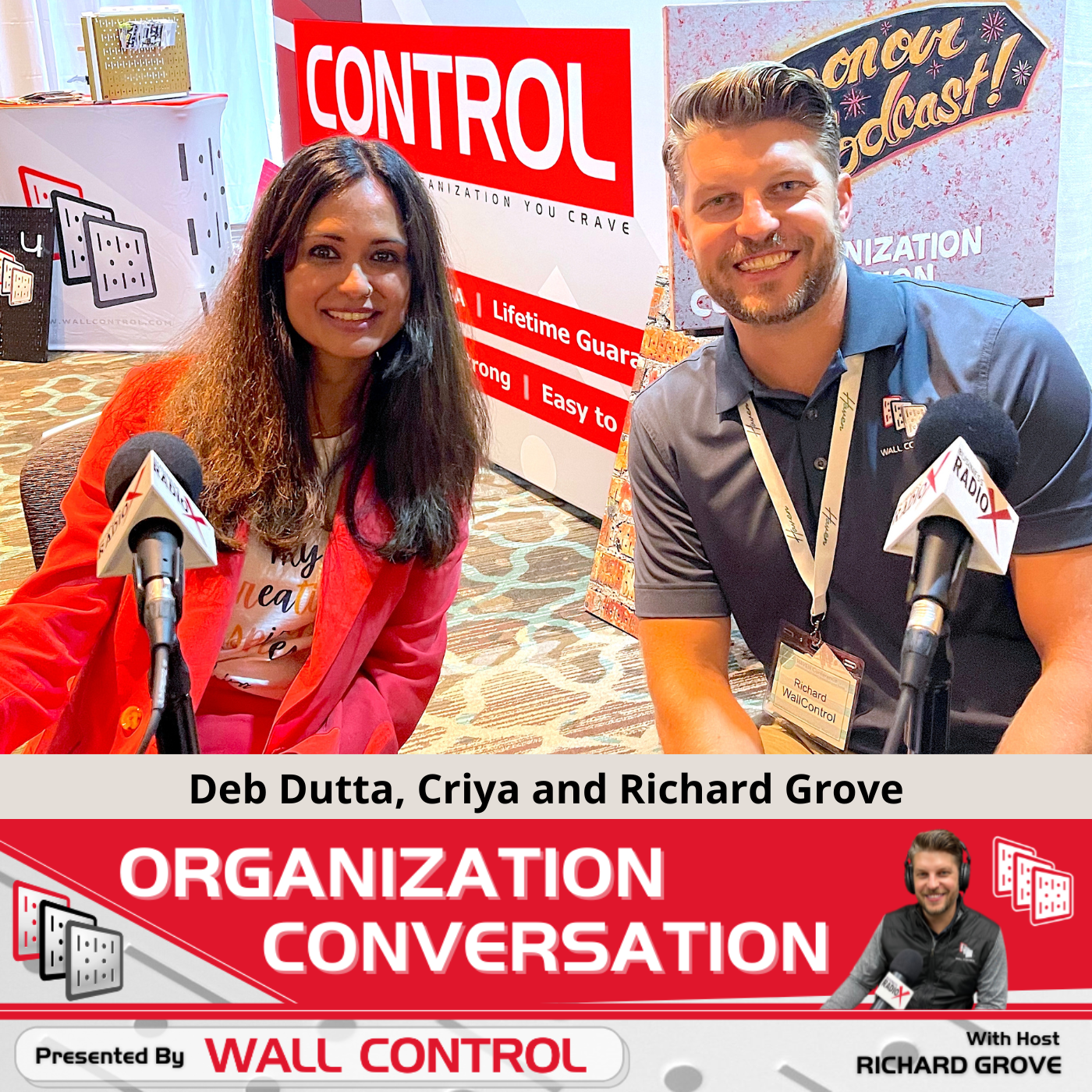
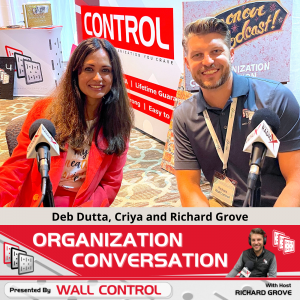
LIVE from HAVEN 2022: Deb Dutta, Criya (Organization Conversation, Episode 38)

Deb Dutta, Founder and CEO of Criya, joined Richard Grove on Organization Conversation LIVE from HAVEN 2022. She tracked her evolution starting from her career in tech, creating a lifestyle blog and Instagram following, to building a new app for creatives to monetize the work. She talked about the development of the business, expanding to other creatives, her presentation at HAVEN, and much more.

This show was originally broadcast live from the 2022 HAVEN Conference held at the Grand Hyatt Buckhead in Atlanta, Georgia.

Organization Conversation is broadcast from the North Fulton studio of Business RadioX® inside Renasant Bank in Alpharetta.

Criya

Your One-Stop store & back-office for booking leads, accepting payments, managing projects & client relationships. Criya is designed for interior designers, coaches and consultants, marketers and web designers, and many other creative industries.

With Cria, you can create a stunning client experience, autopilot your sales, engage leads automatically, booking and calendar integrations, custom proposals and payment solutions.

Website | Instagram | Facebook | LinkedIn | YouTube

Deb Dutta, Founder and CEO, Criya

Deb Dutta, Founder and CEO, Criya

As a first-generation female immigrant, Deb hustled most of her adult life – landed 6-figure jobs, and paid off grad school loans. She moonlighted for 8 years as an influencer, grew to 150K followers, partnered with 250+ Top brands and traveled the world for sponsored collaborations. While at her 9-5, Deb led global Product management at companies like PayPal and doubled down on nights and weekends to turn her blog into a global business.

But, building a business is scary, especially with so few role models for women. Growing up in a middle-class home with 2 working parents, it was always women who sacrificed their dreams so the men could take on bigger risks and achieve greatness. Deb’s dream is to build a world where women are embracing ambitious careers and setting examples for the next generation

Female creators are the future. You are building something that’s greater than yourself. Criya’s mission is to empower you to bring your vision to life. You start with our thoughtful technology platform to take the leap and continue to grow and protect your empire with a community that believes that YOU CAN.

LinkedIn | Instagram

About Organization Conversation

Organization Conversation is hosted by Richard Grove and broadcast and produced from the North Fulton studio of Business RadioX® inside Renasant Bank in Alpharetta. You can find the full archive of shows by following this link. The show is available on all the major podcast apps, including Apple Podcasts, Spotify, Google, Amazon, iHeart Radio, Stitcher, TuneIn, and others.

About Richard Grove

Richard Grove, Host, Organization Conversation

Richard Grove‘s background is in engineering but what he enjoys most is brand building through relationships and creative marketing. Richard began his career with the Department of Defense as an engineer on the C-5 Galaxy Engineering Team based out of Warner Robins. While Richard found this experience both rewarding and fulfilling, he always knew deep down that he wanted to return to the small family business that originally triggered his interest in engineering.

Richard came to work for the family business, Dekalb Tool & Die, in 2008 as a Mechanical Engineer. At the time Wall Control was little more than a small ‘side hustle’ for Dekalb Tool & Die to try to produce some incremental income. There were no “Wall Control” employees, just a small warehouse with a single tool and die maker that would double as an “order fulfillment associate” on the occasion that the original WallControl.com website, which Richard’s grandmother built, pulled in an order.

In 2008, it became apparent that for the family business to survive they were going to have to produce their own branded product at scale to ensure jobs remained in-house and for the business to continue to move forward. Richard then turned his attention from tool and die to Wall Control to attempt this necessary pivot and his story with Wall Control began. Since that time, Richard has led Wall Control to significant growth while navigating two recessions.

Outside of Richard’s work at Wall Control he enjoys helping other business owners, operators, and entrepreneurs along their own paths to success by offering personal business coaching and advising through his website ConsultantSmallBusiness.com. Richard has developed an expansive and unique skillset growing and scaling Wall Control through a multitude of challenges to the successful brand and company it is today. Richard is happy to share his knowledge and experience with others who are looking to do the same within their own businesses.

Connect with Richard:

Instagram | Twitter | LinkedIn | Richard’s Website

About Wall Control

The Wall Control story began in 1968 in a small tool & die shop just outside Atlanta, Georgia. The first of three generations began their work in building a family-based US manufacturer with little more than hard work and the American Dream.

Over the past 50+ years, this family business has continued to grow and expand from what was once a small tool & die shop into an award-winning US manufacturer of products ranging from automobile components to satellite panels and now, the best wall-mounted tool storage system available today, Wall Control.

The Wall Control brand launched in 2003 and is a family-owned and operated business that not only produces a high-quality American Made product but sees the entire design, production, and distribution process happen under their own roof in Tucker, Georgia. Under that same roof, three generations of American Manufacturing are still hard at work creating the best tool storage products available today.

Connect with Wall Control:

Company website | Facebook | Instagram

Tagged With: automation, Criya, crm, Deb Dutta, Deboshree Dutta, DIY, home organization, Organization Conversation, Richard Grove, Wall Control

Pedram Afshar, Amaka

June 8, 2022 by John Ray

Amaka
North Fulton Business Radio
Pedram Afshar, Amaka
Loading
00:00 /
RSS Feed
Share
Link
Embed

Download file

Amaka

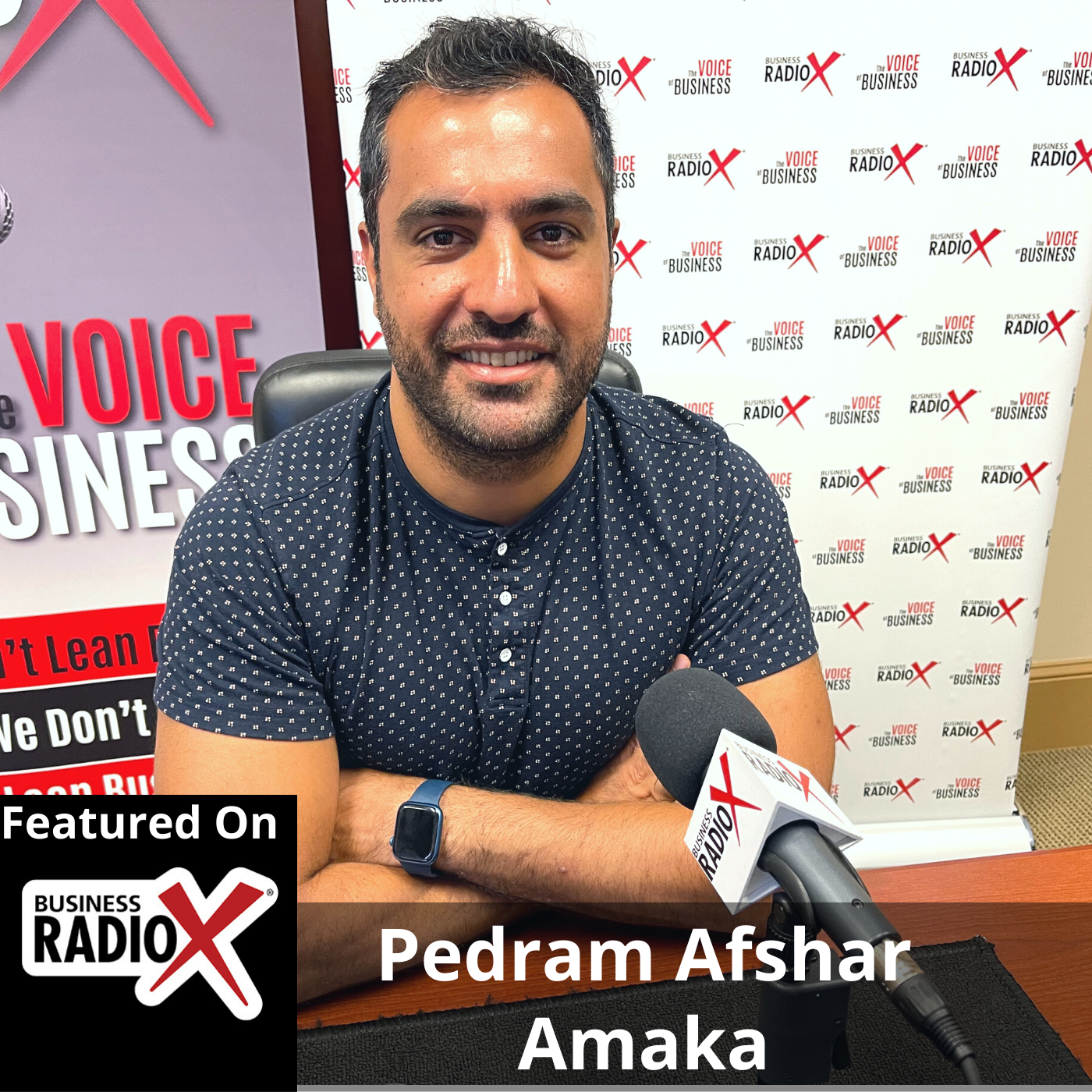
Pedram Afshar, Amaka (North Fulton Business Radio, Episode 464)

Pedram Afshar joined host John Ray to discuss the automation and artificial intelligence technology Amaka employs to serve small business owners and their advisors. Pedram discussed how automation and AI can be used to improve customer service for a business, the tools Amaka offers to give businesses a better, faster look at their financial picture, why their tools enable advisors to better serve their small business clients, and much more.

North Fulton Business Radio is broadcast from the North Fulton studio of Business RadioX® inside Renasant Bank in Alpharetta.

Amaka

Amaka is a business automation platform, that leverages APIs to bring business and accounting automation for small and medium-sized businesses.

It is for accountants, bookkeepers, and business owners with the need to automate their data entry. You can save tens of hours by automating the data aggregation process between POS, online stores, and accounting softwares.

Company Website |LinkedIn | Facebook | Twitter

Pedram Afshar, Co-Founder and CEO, Amaka

Pedram Afshar, Co-Founder and CEO, Amaka
Pedram is a serial tech entrepreneur from Australia. He has built global technology solutions, mainly focused on the B2B market. He is currently the CEO of Amaka and is focused on business and accounting automation, leveraging APIs. He has a passion for small and medium-sized businesses, which he regards as the engine room for any economy.
Pedram is from Australia and moved to Atlanta in 2021.

LinkedIn

Questions and Topics in this Interview:

  • Automation and the future of SMBs
  • Automation and Artificial Intelligence (AI) and the impact on employment more generally
  • Process improvement in SMBs, and how to improve profit margins
  • What is your tech stack, and how do you leverage technology, to provide the most amount of value to customers
  • Startup journey and what skills founders need to succeed
  • Customer service as a differentiation

North Fulton Business Radio is hosted by John Ray and broadcast and produced from the North Fulton studio of Business RadioX® inside Renasant Bank in Alpharetta. You can find the full archive of shows by following this link. The show is available on all the major podcast apps, including Apple Podcasts, Spotify, Google, Amazon, iHeart Radio, Stitcher, TuneIn, and others.

RenasantBank


Renasant Bank has humble roots, starting in 1904 as a $100,000 bank in a Lee County, Mississippi, bakery. Since then, Renasant has grown to become one of the Southeast’s strongest financial institutions with over $13 billion in assets and more than 190 banking, lending, wealth management and financial services offices in Mississippi, Alabama, Tennessee, Georgia and Florida. All of Renasant’s success stems from each of their banker’s commitment to investing in their communities as a way of better understanding the people they serve. At Renasant Bank, they understand you because they work and live alongside you every day.


Special thanks to A&S Culinary Concepts for their support of this edition of North Fulton Business Radio. A&S Culinary Concepts, based in Johns Creek, is an award-winning culinary studio, celebrated for corporate catering, corporate team building, Big Green Egg Boot Camps, and private group events. They also provide oven-ready, cooked from scratch meals to go they call “Let Us Cook for You.” To see their menus and events, go to their website or call 678-336-9196.

Tagged With: A&S Culinary Concepts, accounting app, AI, AI technology, Amaka, artificial intelligence, automation, bookkeepers, North Fulton Business Radio, Pedram Afshar, pos, QBO, renasant bank, SMBs

Business RadioX ® Network


Our Most Recent Episode

CONNECT WITH US

  • Email
  • Facebook
  • LinkedIn
  • Twitter
  • YouTube

Our Mission

We help local business leaders get the word out about the important work they’re doing to serve their market, their community, and their profession.

We support and celebrate business by sharing positive business stories that traditional media ignores. Some media leans left. Some media leans right. We lean business.

Sponsor a Show

Build Relationships and Grow Your Business. Click here for more details.

Partner With Us

Discover More Here

Terms and Conditions
Privacy Policy

Connect with us

Want to keep up with the latest in pro-business news across the network? Follow us on social media for the latest stories!
  • Email
  • Facebook
  • Google+
  • LinkedIn
  • Twitter
  • YouTube

Business RadioX® Headquarters
1000 Abernathy Rd. NE
Building 400, Suite L-10
Sandy Springs, GA 30328

© 2025 Business RadioX ® · Rainmaker Platform

BRXStudioCoversLA

Wait! Don’t Miss an Episode of LA Business Radio

BRXStudioCoversDENVER

Wait! Don’t Miss an Episode of Denver Business Radio

BRXStudioCoversPENSACOLA

Wait! Don’t Miss an Episode of Pensacola Business Radio

BRXStudioCoversBIRMINGHAM

Wait! Don’t Miss an Episode of Birmingham Business Radio

BRXStudioCoversTALLAHASSEE

Wait! Don’t Miss an Episode of Tallahassee Business Radio

BRXStudioCoversRALEIGH

Wait! Don’t Miss an Episode of Raleigh Business Radio

BRXStudioCoversRICHMONDNoWhite

Wait! Don’t Miss an Episode of Richmond Business Radio

BRXStudioCoversNASHVILLENoWhite

Wait! Don’t Miss an Episode of Nashville Business Radio

BRXStudioCoversDETROIT

Wait! Don’t Miss an Episode of Detroit Business Radio

BRXStudioCoversSTLOUIS

Wait! Don’t Miss an Episode of St. Louis Business Radio

BRXStudioCoversCOLUMBUS-small

Wait! Don’t Miss an Episode of Columbus Business Radio

Coachthecoach-08-08

Wait! Don’t Miss an Episode of Coach the Coach

BRXStudioCoversBAYAREA

Wait! Don’t Miss an Episode of Bay Area Business Radio

BRXStudioCoversCHICAGO

Wait! Don’t Miss an Episode of Chicago Business Radio

Wait! Don’t Miss an Episode of Atlanta Business Radio