Business RadioX ®

  • Home
  • Business RadioX ® Communities
    • Southeast
      • Alabama
        • Birmingham
      • Florida
        • Orlando
        • Pensacola
        • South Florida
        • Tampa
        • Tallahassee
      • Georgia
        • Atlanta
        • Cherokee
        • Forsyth
        • Greater Perimeter
        • Gwinnett
        • North Fulton
        • North Georgia
        • Northeast Georgia
        • Rome
        • Savannah
      • Louisiana
        • New Orleans
      • North Carolina
        • Charlotte
        • Raleigh
      • Tennessee
        • Chattanooga
        • Nashville
      • Virginia
        • Richmond
    • South Central
      • Arkansas
        • Northwest Arkansas
    • Midwest
      • Illinois
        • Chicago
      • Michigan
        • Detroit
      • Minnesota
        • Minneapolis St. Paul
      • Missouri
        • St. Louis
      • Ohio
        • Cleveland
        • Columbus
        • Dayton
    • Southwest
      • Arizona
        • Phoenix
        • Tucson
        • Valley
      • Texas
        • Austin
        • Dallas
        • Houston
    • West
      • California
        • Bay Area
        • LA
        • Pasadena
      • Colorado
        • Denver
      • Hawaii
        • Oahu
  • FAQs
  • About Us
    • Our Mission
    • Our Audience
    • Why It Works
    • What People Are Saying
    • BRX in the News
  • Resources
    • BRX Pro Tips
    • B2B Marketing: The 4Rs
    • High Velocity Selling Habits
    • Why Most B2B Media Strategies Fail
    • 9 Reasons To Sponsor A Business RadioX ® Show
  • Partner With Us
  • Veteran Business RadioX ®

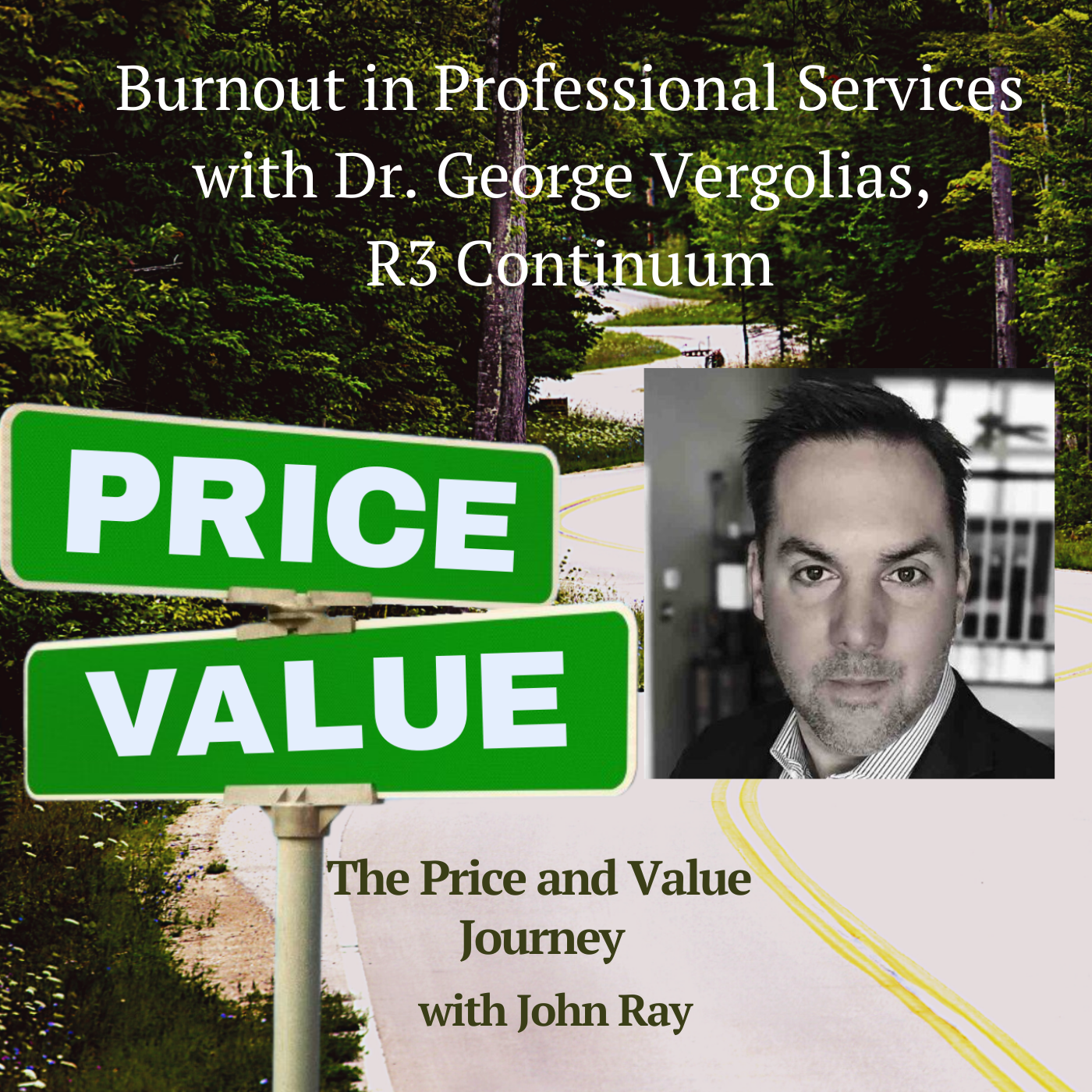
Burnout in Professional Services, with Dr. George Vergolias, R3 Continuum

June 8, 2023 by John Ray

Burnout
North Fulton Studio
Burnout in Professional Services, with Dr. George Vergolias, R3 Continuum
Loading
00:00 /
RSS Feed
Share
Link
Embed

Download file

Burnout

Burnout in Professional Services, with Dr. George Vergolias, R3 Continuum

Dr. George Vergolias, Chief Clinical Officer at R3 Continuum, joined host John Ray to discuss burnout in solo and small firm professional services providers. Dr. Vergolias described the stages of burnout, differentiated between stress and burnout, and offered tips and strategies to mitigate its effects, particularly when your firm is small without a lot of big firm resources. He also discussed building resilience in recovery from burnout, broaching the topic with someone you think might be suffering, and much more.

The Price and Value Journey is presented by John Ray and produced by the North Fulton studio of Business RadioX®.

R3 Continuum

Behavioral health is fundamental to workplace wellbeing, culture, and performance. It is also the key to resilient and thriving employees, organizations, and communities. For over thirty years, R3 has been a workplace behavioral health pioneer and innovator, providing rapid response and ongoing behavioral health solutions that help people and organizations recover, perform, and thrive in the wake of disruption and stress.

Company website | LinkedIn | Facebook

Dr. George Vergolias, Chief Clinical Officer, R3 Continuum

Dr. George Vergolias, Chief Clinical Officer, R3 Continuum

George Vergolias, PsyD, LP is a forensic psychologist and threat management expert. As part of his role of Chief Clinical Officer of R3 Continuum, he leads their Threat of violence and workplace violence programs.

Dr. Vergolias is also the founder and President of TelePsych Supports, a tele-mental health company providing involuntary commitment and crisis risk evaluations for hospitals and emergency departments. He has over 20 years of forensic experience with expertise in the following areas: violence risk and threat management, psychological dynamics of stalking, sexual offending, emotional trauma, civil and involuntary commitment, suicide and self-harm, occupational disability, law enforcement consultation, expert witness testimony, and tele-mental health.

Dr. Vergolias has directly assessed or managed over one thousand cases related to elevated risk for violence or self-harm, sexual assault, stalking, and communicated threats. He has consulted with regional, state, and federal law enforcement agencies, including the FBI, Secret Service, and Bureau of Prisons.

He has worked for and consulted with Fortune 500 companies, major insurance carriers, government agencies, and large healthcare systems on issues related to work absence management, workplace violence, medical necessity reviews, and expert witness consultation.

LinkedIn

TRANSCRIPT

John Ray : [00:00:00] Hello, I’m John Ray on the Price and Value Journey. As we pour our passion and energy into serving our clients and growing our respective businesses, we often find ourselves walking a tightrope, you might say, balancing multiple responsibilities in our firms and with our families, of course, and pushing ourselves to meet the ever-increasing demands of entrepreneurship. Those never stop. The risk of burnout is ever present in that kind of situation and understanding its causes, its consequences, and most importantly, prevention strategies is essential for our well-being and our long-term success.

John Ray : [00:00:44] So, to address the issue of burnout, I’m privileged to have Dr. George Vergolias join us today. George is a doctor of psychology. He’s a workplace resilience consultant. He’s an expert in workplace well-being. He’s got quite a CV, you might say, in this area. And he is the chief clinical officer at R3 Continuum, and R3 Continuum is a worldwide leader in providing tailored behavioral health solutions for organizations that help people manage through workplace disruption and stress. George, thank you for joining us.

George Vergolias: [00:01:23] Pleasure to be here, John. Thanks for having me.

John Ray : [00:01:25] Yeah, thank you so much. So before we get going on burnout, let’s talk a little bit about you and R3 Continuum and the work you’re doing.

George Vergolias: [00:01:34] Certainly. Let me start with talking about R3 Continuum. We’ve been in business for about 35 years, and as you said in the intro, we really offer tailored behavioral health solutions to workplaces to help promote well-being, help mitigate disruptive events. Those could be anywhere from a natural disaster like a fire or tornado, as well as manmade tragedies like an active shooter situation, an accidental death, a suicide at the workplace. We respond to almost 3000 individual events every month. We have an international network of providers that we leverage to do that. And our goal is in that front to really help people recover and bounce back from those events in a way that kind of maximizes their resilience and allows them to get back on their feet.

George Vergolias: [00:02:21] We also offer a range of psychological evaluations that might be required in the workplace, fitness for duty evaluations, pre-employment screens that help reduce risk and help, again, get people back on track that may be struggling with some issues. And then, we do workplace violence solutions as well because unfortunately, we see a rise in those across the workplace, across all sectors.

George Vergolias: [00:02:46] And then, we have a leadership program and executive optimization, leadership wellness program, where we work with high-level leaders and a number of organizations, both small and large, around helping promote their well-being and their leadership skills. And part of that is leadership wellness, support as well as performance coaching. So, it’s a wide range of activities that we engage in, but all of it is geared towards offering those tailored behavioral health solutions to the workplace.

George Vergolias: [00:03:14] As far as my background, I’ve been a psychologist, initially a clinical psychologist, and I did my post-doc in forensic psychology at Notre Dame many years ago, longer than I care to admit. But I’ve been doing this for almost 30 years. And early career, I actually did a lot of traditional forensic work. I did a lot of work with the courts. I did a lot of assessments for people not guilty by reason of insanity and so on.

George Vergolias: [00:03:39] And then, at one point I started moving into doing school violence assessments and school shooting assessments right around the time that Columbine hit and when that occurred, because there were so few specialists doing that, you were thrust into being an expert. A few years later, I transitioned that expertise into the corporate setting, working with workplace violence, and I’ve been doing that now for 20-plus years.

George Vergolias: [00:04:01] It was about 10 or 12 years ago that I really felt like when I joined R3 about 12 years ago, it was right around that time that I began to realize that dealing with individual threats, I still do that, by the way. It’s an important activity. There’s a lot we can do to mitigate threats if we’re aware of them. But I felt like it was whack-a-mole, like you would deal with one threat and mitigate it and then another would pop up somewhere else and another would pop up somewhere else.

George Vergolias: [00:04:28] And I began to ask the question, “What can we do at scale? What can we do larger? And I was watching a documentary on the Dalai Lama, ironically, and it struck me, John, that the Dalai Lama is probably close to 0% risk of engaging in a mass shooting because the Dalai Lama it’s because he’s living his life, maximizing a sense of emotional and psychological well-being. He’s living a really sharp, well-honed life of resilience and compassion. And that got me thinking. If we could build workplace cultures, and let’s be honest, we spend about a third of our life at work, if we could build workplace cultures that foster well-being and resilience, we at scale can really start moving the needle towards more people being somewhat inoculated from engaging in heinous, violent acts. That’s what got me into understanding psychological resilience and well-being. I approach it from a kind of a tougher edge. I don’t approach it from the let’s-go-to-a-mountain-top-and-do-yoga approach. I find it’s really useful. And then, of course, the pandemic hit and the awareness of employee well-being skyrocketed. It had to.

John Ray : [00:05:40] Yeah.

George Vergolias: [00:05:40] And that finds us here today. So that’s my trajectory with a lot of details left out. But that’s a larger part of my story that brings me here today.

John Ray : [00:05:48] Yeah, that’s really helpful. And that could take me on a bunny trail we don’t have time to go down, so I’m going to the Dalai Lama piece of that particularly, but we’ll let that go for the moment. But maybe that’s another episode. But let’s talk about burnout. And maybe what we can do is start by defining burnout, because everyone’s got their own idea of what that means.

George Vergolias: [00:06:10] Yeah. And there are many definitions of this, by the way. When I think of burnout, I think of feeling overwhelmed, right? And by the way, I’m stealing some of these ideas from Brene Brown. She does wonderful work. Many of your audience may know her. She does wonderful work on resilience and vulnerability.

George Vergolias: [00:06:25] So when we speak of overwhelm, it really means an extreme level of stress and emotional or cognitive intensity that really evolves to a point where we’re feeling unable to function. We’re immobile. Even if we’re somewhat functional, we’re just clearly not near the top of our game. What’s interesting is we can function with stress. We all have stress. We have stress every day at various levels. And some of that stress is good. When we think of negative stress we don’t want in our life, the word stress captures that.

George Vergolias: [00:06:25] There’s actually a psychological concept that’s not often used. It’s called eustress, E-U-S-T-R-E-S-S. And this stands for stress that we actually embrace or choose. Think of planning a wedding. Think of planning a large family reunion, of preparing for the birth of a first child or a second child, and the nesting that comes with that. These are very stressful events. Building a new home, which I’m doing right now. These are very stressful things, but they’re exciting stress. So there is a difference there. The key is we all experience that.

George Vergolias: [00:07:26] But when we get to burnout, really what we’re talking about is there are three stages we tend to think about. And the first is normative. We’re not even necessarily – I call it pre-burnout, right? It’s stage one. It’s stress. We feel increased arousal, increased demands on us, both personal and professional. We have some irritability and we might have some anxiety. We might wake up in the night and we can’t get back to bed.

George Vergolias: [00:07:50] Stage two, we actually go into almost an evolutionary defense of starting to conserve energy. We might be showing up to work late. Even if we’re working remotely from home as I do, we might be waking up later. It’s harder to get out of bed. It’s harder to be excited in the morning. We procrastinate a little more than we normally would, and that eventually could lead to presenteeism or quiet quitting.

George Vergolias: [00:08:16] Stage three, we get to a place we are psychologically and physically exhausted. In addition to that, there’s a disengagement from the work. The passion just is no longer there anymore. And that could also then lead to or spill into clinical levels of sadness, depression, and anxiety, among other things, which can lead to increased substance abuse if someone’s trying to cope or combat those.

George Vergolias: [00:08:40] That is my definition. But the stages I think are helpful because it helps people understand where they might be in that process of evolving or – I don’t like evolving – progressing into more and more burnout.

John Ray : [00:08:54] Yeah, that’s very helpful. But let’s dive into that a little further. These are signs or symptoms. But how do I self-identify? Particularly, our audience is particularly solo and small professional services providers. You know, the question of self-identification of where you are in those stages can be hard, right?

George Vergolias: [00:09:18] Absolutely. It absolutely can be. And what’s tough is when you are a solopreneur, right, a solo entrepreneur or whether even just a small group, most people that are running or leading those companies, they’re in it at some level because they feel some passion for it. Not always necessarily. It might be, I just got connected to a job, but often there is some degree of feeling some ownership, especially owners of these groups and solo folks.

George Vergolias: [00:09:46] And so, what’s interesting is, what I like to ask, is there a passion that has been lost? I remember a quote I heard a while back that said this, the reason that you feel burned out is not that you’re doing too much. The reason that you feel burned out is that you’re not doing enough of what really gets you excited. And what happens often with solo entrepreneurs or really small companies, especially leaders in those companies, is they go into the business because they love being an architect.

George Vergolias: [00:10:22] I love being a psychologist, but then once I start a group practice and I got four or five people under me and I’m running it, now I’m a business person, now I’m an H.R. director. Now I’m navigating malpractice insurance premiums. I’m navigating marketing and sales if I want to grow. And most small companies don’t have separate divisions for all of these functions. And it takes a while for that person to realize that I’m no longer doing the thing I love doing at the beginning, which is being a psychologist. Being aware of that, being aware of where has that passion gone and how has it been lost is the first step.

George Vergolias: [00:10:52] I think it’s also important to just be aware of how we feel emotionally and physically. And I know that sounds so easy, but for most people, and there are some gender differences, especially for men, we’re not very good at that. And entrepreneurs that maybe are a little type-A personality, maybe high motivation that goes, it’s really hard to slow down and take inventory around how we’re feeling. So, things like meditation, journaling, doing gratitude practices, they are helpful in their own right by slowing us down, but they’re helpful because they allow us to self-reflect and get an idea of where we stand. So that helps with that identification of that first stage of burnout even going into that second stage. It comes with awareness.

John Ray : [00:11:43] So, I would think a lot of professionals have the feeling, look, it’s supposed to be stressful. I’ve been in a stressful profession my whole life. I think of accountants, the tax deadlines and having to deal with that. Just, for example, attorneys with court filings and deadlines they have to meet and so forth, they are – stress is part of the deal. Right? And so – and how do I incorporate some sense of awareness when my default has always been stress?

George Vergolias: [00:12:19] Yeah, that’s a great point. So what I like to do to break that down, because it is hard, right? Because again, when you’re high performing, when the whole company lays on your shoulders or you feel like it does, it’s hard to turn that off. And the reality is you may not be able to, right? You just may not be able to. There’s people that depend on you, not only your family, but other workers that depend on you.

George Vergolias: [00:12:40] What I like to do is I like to look at barriers and goals. And what’s interesting is when people start out any kind of new business, even a new job, they tend to be focused on goals, right? How do I improve? How do I get these sales? How do I build this new production line? How do I grow this practice? Whatever it may be. And there’s excitement with that often. At some point, for many of us, what happens is we transition and we have to deal with the barriers that get in the way.

George Vergolias: [00:13:08] When we are focused, when we are waking up every day, or for me at times in my life, waking up at three in the morning and just focused and obsessing over the barriers and not focusing on the goals as well, I start asking for me at least, am I now entering some realm of burnout? Because the goal is what sustains us. We could be stressed and as long as we’re still focused on that ultimate goal, getting through law school, getting through med school, whatever it may be, even more benign issues like planning a wedding, that’s stressful, but there’s that ultimate goal that kind of sustains us.

George Vergolias: [00:13:45] When we start focusing just on the barriers, and I don’t mean just our attention emotionally, we’re just emphasizing and obsessing over the barriers in a way that we feel like we’re stuck in a sandbag or in a mud pit, the inertia, then I start asking the question the people I consult with, “Are we now in a burnout stage? And let’s reassess where we’re at.”

John Ray : [00:14:07] Right.

George Vergolias: [00:14:07] The question is, what can you do to reignite the spark? And that’s where – I don’t want to go down a rabbit hole because we might get to it, but just at a high level right now, that might mean time management. It might mean we have to give up some control and delegate so that we can get back to doing some of what we really love. And that doesn’t mean we’re doing it 50% of the time.

George Vergolias: [00:14:28] I remember when I was at the height of growing my hospital practice, I got to a point that 10% of my time was what I love doing, 90% I just felt like a daily slog. I just offloaded maybe an additional 20% to some key people and I paid them well to do it, and I still do. So, I didn’t go from 10% of what I love to do to 70%. I literally went from 10 to 30%. That made all the difference in the world. That sustained me. So, it’s finding that balance and then reigniting what it is that brought you to this work and what used to get you excited in it.

John Ray : [00:15:04] This is a really important point here because I think a lot of professionals, service providers, think of outsourcing as something that’s purely economic, that, hey, my time is worth more when I’m working on a case or I’m working on a client issue than it is when I’m doing the social media, or I’m doing the bookkeeping, or I’m doing administrative tasks in the business. And so, they think of it in economic terms purely as opposed to self-care terms, which is what you’re getting at.

George Vergolias: [00:15:36] Yeah. And I would even push back a little. I absolutely am getting at that about the self-care because, again, as leaders, we are not optimizing our performance. We are no different than a track star or a hockey player or an NBA player that is coming off an injury and trains or forces them to play the next night. We know that doesn’t happen, right? It doesn’t happen, right? Now, they have huge resources. They have massive budgets. Right? They have cold plunge baths and all kinds of technology to help recover from injury. But it’s the same logic from an emotional well-being perspective. You can’t lead, you can’t grow if you’re not working close or trying to push towards your optimal performance. And so, there is a cost from that angle: innovation, creativity, flexibility, just good management of people, all suffers, when we feel we don’t have the time to do those things or focus on those things. So, I think it is important to be aware of that from the self-support or emotional support angle to ourselves.

George Vergolias: [00:16:38] But I would say one other thing that I want to push back on only, John, is that from a purely economic stance, my time certainly is better spent seeing a client at a couple of hundred dollars an hour or whatever the rate would be than social media. But the question is, if I want to scale, if I want to grow, if I want to expand, I got to figure out how to do that. And maybe for me, it makes sense for me to do it. If maybe I’m good at it, maybe I enjoy it. I actually enjoy social media a bit myself, so maybe it actually fuels me so then I’ll just keep it. But if it is just another task that continues, I wake up every day loathing, there’s a value in offloading that in some cases. And that’s where each individual has to decide what makes sense.

John Ray : [00:17:30] Yeah. I like the way you frame that because I guess what you’re saying is there are hidden economics in there that you need to recognize and maybe they’re not – maybe they’re hidden, maybe they’re long-term versus short-term. But they have an economic impact on the business one way or the other.

George Vergolias: [00:17:50] Yes.

John Ray : [00:17:50] Ultimately.

George Vergolias: [00:17:51] The most common variation of this that I see, John, and I see it in Fortune 500 companies down to companies that have four employees, I don’t have time to really manage my people and grow them. Like, I can manage them in terms of problems. You made a mistake, let me bring out the stick and admonish you for – but don’t have time to grow them. And my rebuttal constantly is you don’t have time not to, because the cost of replacing them, the cost of building talent in your organization, whether you have two people or 2000 people, is extremely costly in terms of time, lost opportunity, lost sales and lost customer satisfaction. And so, we have to make time for these things. We have to carve out time.

John Ray : [00:18:37] Yeah, for sure. Those costs are only going up, right?

George Vergolias: [00:18:40] Especially since the pandemic hit. Because workers now are really saying, you know, the old model that I grew up in, and perhaps you and I both grew up in and certainly our parents did, you work at a place for 10 or 12 years, you work like a dog, and hopefully there’s some payout at the end. We have Gen X and Gen Z workers that want a lot out of their – they want to feel valued, they want to feel supported, they want to feel like they have a growth trajectory, they want to be compensated well, and they are not afraid to move around every two or three years. They don’t care if their resume has a new job on it for every two years. Whereas I remember coming up early on, all of my advisors were saying, “Oh, you can’t leave a job under five years because it looks terrible.” So as leaders, we have to be mindful of those new dynamics in the workforce because otherwise, we’re just going to lose talent.

John Ray : [00:19:27] Yeah, for sure. George, you mentioned a little earlier and I want to get to this before we get too far away from it. You mentioned the term stepping outside yourself. It strikes me that phrase is a vital one for people that hear the phrase mindless – mindfulness and think, I’m not that person. I’m not the Dalai Lama. You’re pointing toward something I think that may be helpful to people like that.

George Vergolias: [00:19:57] Yeah. Exactly.

John Ray : [00:19:59] Say more about that.

George Vergolias: [00:20:00] Yeah. Yeah. I have a saying and I’ve heard it around. It’s not mine. I didn’t coin it. But we are at a place, I think, in business understanding well-being where yoga does wonderful things. But the saying is you can’t yoga your way out of this. And that’s what we learned from the pandemic, right? All the stressors hitting us and even now, economic stressors, high-interest rates, tremendous difficulty getting reasonable rates on loans and lending, all of that. We’re just not going to be able to sit on a mountaintop and yoga our way out of this as leaders.

George Vergolias: [00:20:30] And so, the mindfulness isn’t necessarily just about meditation or gratitude practices. It’s about really understanding what are you good at as a leader and what are you not good at. And related to that, overlapping that, is what charges you, refuels you, and what burns you out, and then architecting, structuring your workplace, your leadership, whether again three people or a thousand people, in a way that builds on your strengths and builds on what refuels you, and then finding people to do those other things that fuel them, that they’re good at it. And that’s going to take some time to restructure that. That’s how I think about mindfulness. But it begins with really taking a deep inventory, right, of what works for you and then what doesn’t work for you.

George Vergolias: [00:21:19] And that, I think is at the core of resilience as well, is understanding where am I, what do I need to do in this situation and what’s my best plan forward, and having that approach. It can be difficult to figure that out. For many people, they’re like, “Listen, I’m not a meditation person.” That’s fine. By the way, I cannot sit and just meditate. I actually do walking meditation. I’m way too active. I have ADHD. I manage it. Sometimes it’s a superpower, sometimes it’s a liability. You know, my mindfulness is I fly fish. I go out in the river and there’s a meditative thing to that fly fishing unless I get caught in the tree and then it’s frustrating. But I don’t think of work. I come back after two hours on the river.

John Ray : [00:22:03] Yeah.

George Vergolias: [00:22:04] My family will ask, “So what’d you do? What’d you think about?” Nothing. I didn’t think about anything. But I am now ready to attack the day either later or tomorrow.

George Vergolias: [00:22:13] So, mindfulness isn’t just meditating or putting Tibetan bowls in front of you, right? It can be any activity that allows you to recharge and allows the dust to settle so you can re-approach the barriers and issues in front of you with a fresh eye.

John Ray : [00:22:28] Yeah, that’s really liberating, I think, for a lot of people because it’s not -you’re talking about practices now.

George Vergolias: [00:22:35] Yes.

George Vergolias: [00:22:35] And so, those practices can be as varied as there are human beings, right? It just – it depends on your own mindset, your own DNA when it comes to that kind of thing.

George Vergolias: [00:22:46] Yeah, absolutely. The other thing I would add, I encourage, is seek input from other people. Get an inventory around, whether it’s your workers, whether you have a business coach, whether there’s just somebody you respect in the community that is a colleague of sorts. Maybe you’re part of a business group, maybe you’re part of a church-based group and someone understands you. What kind of leader do you think I am? How do I engage with people? If you could give me feedback on improving my leadership approach or helping grow people, what would that be like?

George Vergolias: [00:23:21] You know what I did early career and I still do it from time to time, I will ask this of coaches of soccer or baseball, not necessarily super young, but grade school to high school coaches that have done it for 15 plus years, ten, 15 years, because these people that stick with that, they know how to develop kids. They know how to develop youngsters. And what I love about when I ask people that do that regularly, they’ll tell me, “I know you, George, and I think you’re too harsh on yourself and as a result, you’re too harsh on your people.” That’s interesting. And then I’ll take that back and I’ll think about that. So you have to seek that input. One of the difficulties of being a solopreneur or just even a small business is you don’t have the feedback loop.

John Ray : [00:24:05] Exactly.

George Vergolias: [00:24:06] Yeah. And so you have to seek that where else you can from people that know you reasonably well. That’s part of the mindfulness as well.

John Ray : [00:24:14] Yeah, for sure. Let’s talk about workload management, and to your point about solo and small professional services firms, there’s a heavy workload, and I’m sure a lot of folks hear tips about time management or what have you and think, “Oh, that’s great for them. I’m not sure it works for me.” So, let’s talk about how you see that for these particular professionals.

George Vergolias: [00:24:40] Yeah. It’s a great question and it’s something that really strikes a lot of people. You know what’s interesting? I consult with a number of firms. I’m not going to mention them but they are in the financial or tax arena, and they have seasons in which half the year they’re working 12, 14 plus hours a day.

John Ray : [00:24:59] Sure.

George Vergolias: [00:24:59] Sometimes six days a week. And we apply these concepts. The first thing we talk about is you have to make it feasible. And so, I’m going to start with what not to do, right? If you go on Instagram or TikTok these days, you’re going to find some productivity guru that’s going to say, you should wake up at 6 a.m., go out – and by the way, I love all of these techniques. I do. But they’re saying do this every day. Go get ten, 15 minutes of sun, then do a cold plunge, and then, or a cold shower, then do like 10 or 15 minutes of mindfulness meditation. Then maybe do 5 to 10 minutes of breath work, then go work out, then come back and have a nice breakfast and fuel yourself. Then do a gratitude. Who has time for that? I got kids. I got to get up and get to work. Right? Chronic, not chronically, but often, I’m up at two in the morning and I can’t get back to bed. I have mental insomnia occasionally, so I need that extra hour of sleep to compensate for what I missed.

George Vergolias: [00:25:53] So what I say is, you can’t do all of that. The question is what can your morning ritual be even if it’s really minimized down that allows you to at least get something in. Just because you can’t do a ten-minute meditation, do a two minute. Just do it. Just get it going, right? Get it started. If you can’t do a 15 or 20-minute walk, do a five-minute walk. Whatever it may be, try to find those places in your day where you can carve out the things that you feel you need to sustain yourself. There will be days that are just not feasible.

George Vergolias: [00:26:28] But what I think one of the hardest things that many solopreneurs and small business leaders do, but I also see this at higher leadership levels with big companies, is they will say, I just don’t have time for that. And I will often say, you know, you have 40 hours a week to get done your work. The question isn’t you don’t have the time. The question is how are you allocating it. A little bit about different ways to think about that and try to do that, it becomes very individualistic. Now that takes time. It takes time to architect that.

George Vergolias: [00:27:02] So one thing that I do, John, usually the first weekend of the new year, I will purposely not plan anything for the weekend. Obviously, there might be some family activities within reason, but I try to have nothing planned and I take that weekend and I do it on the weekend because during the week it’s hard. Business stuff comes up. And I really try to architect what worked for me last year, what do I need to change in my schedule this year, and let me lay that out.

George Vergolias: [00:27:31] I also go into my goals, writing my objectives, but I really try to architect my day of what habits do I want to instill and how do I do that, and then how do I set a goal for 21 days because we know that 21 days is typically your window of really solidifying a habit, and then I build on that. That takes time to do that. It takes time to build that out. I know that’s pretty high level, so we could get into some detail if you want, depending on –

John Ray : [00:27:57] I think everyone’s mileage may vary. Right? And I think to some degree, we’re not going to be able to hit all the possibilities there. But certainly, you’ve given folks, I think, a lot to think about. So, maybe we can just leave it at that because I want to get to recovery. So, building resilience as you recover from burnout, for those of our listeners that may have had an episode, a time in their life when they experienced burnout, how do they recover?

George Vergolias: [00:28:30] Yeah. So, it does begin with awareness of just being aware that I need to recover and I need – where I am today is not where I want to be. There’s a quote I heard not long ago, which I absolutely love, and it is, the reason that you’re burned out is not – no, sorry, I already said that one. Sorry. It’s – bear with me. I’ve got some notes here.

John Ray : [00:28:51] Sure.

George Vergolias: [00:28:54] And actually, I know this by heart. I don’t even need to say it. The single most important factor in determining your success in life is the degree into which you can keep a promise to yourself. And what I love about that is because think about it, how many times on January 1st we said, I’m going to lose weight, I’m going to learn Spanish, I’m going to do something else. February is completely riddled with the broken promises that we made in January for all of us.

George Vergolias: [00:29:19] But when you frame it as I am making a promise to myself, one, there’s total accountability there now. And you’re really framing it in a way that you could choose to go back on that promise. And I do. There’s things I promised, and I said, this isn’t the year for that or this isn’t the month for that. I need to reassess my goals. Nothing wrong with that. But that’s a different dynamic than I let myself down. So I think it starts with awareness and knowing what do you want to improve on. From there, I think what comes with the resilience piece, and this is pretty critical, is understanding the different components of resilience.

George Vergolias: [00:29:58] So for me, I go back to the old Jim Collins analogy from Good to Great, the mirror, the window and the interaction between. So what I like to say when I think of resilience, it’s the ability to absorb adversity and to bounce back from difficult situations. So it really has two forms. One is when I’m resilient emotionally and psychologically, I can take the blow better. I can take a punch better without completely falling down. But there are times in life that I’m going to fall down and resilience also helps me get back on my feet more quickly, right, emotionally and psychologically.

George Vergolias: [00:30:35] And so, from the mirror perspective, I ask the question, “Am I responding to this situation the best way I know how? Am I maximizing my response?” So, I’m looking in the mirror at what can I do, what can I control. It’s a very stoic kind of way of looking at the world.

George Vergolias: [00:30:50] I’m also looking out the window, which is not I’m blaming John because he was mean to me or he didn’t give me the promotion. I’m looking out the window and saying, how has this dilemma or situation been broken down into actionable steps that I can act on? Because again, now I have locus of control. I’m not blaming the world. I’m I now have some ability to control the situation, even if it’s seemingly not in control. And what I mean by that, John, is sometimes there are things we simply cannot control.

George Vergolias: [00:31:21] A great example of resilience, and this was not easy, many local, very small family-owned restaurants or bars when the pandemic hit were just completely limited when everything shut down.

John Ray : [00:31:34] Sure.

George Vergolias: [00:31:36] Bars were – in North Carolina, bars could not open. They were just stuck. But those that had food, they were starting to pivot to doing DoorDash, takeout, delivery. And for a number of them, that allowed them to barely get by. That’s an example where they looked at the situation, said this isn’t ideal, what can we do in the moment?

George Vergolias: [00:31:54] And then, the third aspect there is exploring what are the options. So what resources in me and what resources externally based on the situation and the actionable steps I’ve identified need to come together to maximize the outcome I want to drive towards, right? It’s a very analytical way of looking at it. But the problem when we get beat down or when we get knocked down in life is we tend to get stuck in the emotionality of it. And so, breaking it down that way at least gets us back on track.

George Vergolias: [00:32:25] The other thing that we have to be mindful of or just aware of is there’s a tendency when we feel broken down, beat down, to sink into a state of inertia and hopelessness. That can be very difficult and it could even elevate to clinical levels of depression or anxiety. It’s important that we try to break through and push through those, and there are a number of things we can do to do that, and we could talk about that depending on what direction you want to go in the conversation.

John Ray : [00:32:51] Yeah.

George Vergolias: [00:32:53] You want to do that?

John Ray : [00:32:54] Yeah, let’s briefly do that because I’ve got another little particular piece of this puzzle I want to get to as well.

George Vergolias: [00:32:59] So, I will say that what we saw even pre-pandemic, exacerbated in the pandemic and still lingering on, is four big areas related to burnout that affect people. One is stress and anxiety, two is depression, three is general sleep problems, and four is difficulty with focus.

George Vergolias: [00:33:17] So under anxiety, stress and depression, I’m not going to go into all of these, but it’s important to, one, deep breathing exercises can help with stress and anxiety. Doing easy stuff. Start the day if you feel like I can’t get the motor going in the morning, start with easy stuff. Wash the dishes. In some cases, if you’re simply procrastinating or emotionally avoiding a task, “I don’t want to do my taxes,” right, then start with the harder task. Do something unrelated that’s even more difficult. And what happens is in both of those scenarios, you’re actually priming your dopamine circuit. And not only is it psychologically beneficial because you say to yourself, “I just did that harder thing that was even more annoying, now I’m more open to doing the taxes. The taxes are actually a relief compared to having cleaned out the garage this morning.” But there’s a dopamine effect, a circuit of the dopamine circuit that kicks in, based on achieving those tasks. That’s why when we check off a to do, we often feel good. It’s a little win for the day. There’s actually both a psychological and a biological basis for that.

George Vergolias: [00:34:21] The other is with depression especially or withdrawal, trying to prioritize FaceTime with people. And now that we’re back to engaging, it’s important to try to get out, push past inertia and keep it simple. The KISS technique, Keep It Simple, Stupid. Right? Often people will say, “I need to paint the bedroom. I can’t get motivated.” I’ll tell you what, just paint one wall. Get started.

George Vergolias: [00:34:48] Years ago, I was quite young, but years ago, I just – I procrastinated and I didn’t floss much. Right? A lot of people. Some people floss regularly, others don’t. I had a dentist that said something amazing to me. “I don’t want you to floss your whole mouth. All I want you to do in the morning and when you go to bed is floss one tooth. You floss one tooth. Just do it for a while.” And I did. But what happened is once I got the floss on my fingers and I started doing one tooth, my mind said, “You’re already there, man, finish it. Just finish it.”

George Vergolias: [00:35:16] So when you start with small steps, it creates “All right, now, I’ll take the second. Now, I’ll take the third.” And before you know it, you’ve taken 100 or 200 steps. So that helps in terms of dealing with that bouncing-back inertia that often hits people.

John Ray : [00:35:31] Yeah, that’s very helpful. So, let’s talk about a different aspect of this burnout issue, and that’s what we see in others that we care about. So, maybe it’s a colleague, maybe it’s a strategic partner that has their own firm that we spend a lot of time with, that we refer business back and forth to each other, whatever. What are those warning signs that we need to be watching out for with them? And how do you broach that topic with a colleague that you may think is suffering from burnout?

George Vergolias: [00:36:06] Yeah. That’s a really great question and something that I think affects all of us, not perhaps just on the being burnout side, but certainly on knowing or interacting with others. So, I’ll start with the signs and they can be different, certainly, but some of what I mentioned earlier. So, people that are either more aroused, more vigilant, more emotionally volatile than they used to be, especially if they were subdued and now they’re just acting or their arousal is more, they get more upset, they get more irritable. But the flip side can happen. If you have somebody that’s normally – I’m Greek and Irish, I tend to be a little more dynamic.

John Ray : [00:36:44] You don’t have a chance, George.

George Vergolias: [00:36:45] I don’t. I don’t. Here’s what’s funny, though. I was out a week ago, got some bad news about a friend going through health issues. And ironically, I was at a bar with some friends for a Thursday night trivia thing, and a buddy came up and he goes, “Hey, George, you seem really subdued and quiet today. Everything okay?” I wasn’t, like, sad. I wasn’t crying in my beer, but I was just subdued and he noticed. So, a change in someone’s demeanor is important to notice. That’s one of the first steps. Irritability, more anxiety. And at some point, especially for smaller organizations or companies, because we interact so much with each other when it’s four or five or six of us or less, we can tell when people are off for a period of time. Now, people might be off for a few days or a week or two weeks. Typically what I like to look at is if you’re off for a week or two, I now want to start checking in with you. That’s not just a blip on the map once you get past two or three weeks.

George Vergolias: [00:37:45] What’s interesting, a lot of the diagnostic categories in the Diagnostic and Statistical Manual of Mental Disorders use two to three weeks as a window by which you go from simply having symptoms of depression to now you are in a depression. So I often look at that too. And then, what I will – so, again, irritability, increased anger, just a change in mood, is there a sense that they’re phoning in work where before they weren’t? Are they more scattered with their focus? Are they more short or curt in their emails or a little more hostile? And you’re like, “God, that’s not like John. What’s going on with him?” And I noticed that for a week or one to two weeks for a while.

George Vergolias: [00:38:26] What I will do is, one, I’m pretty direct but in a supportive way. So what I’d like to do is I don’t do it in an audience. I don’t do it in a group format. Let’s say to you, John, I’ll pull you aside and say, “Hey, John, we’ve been working together for five, what, five, six years now?” And if it’s a small business, it might be something like, “You come over to the pool, I’ve come and seen your kids play basketball. We know each other pretty well. I’m a little concerned. I just noticed a change in you, and I just want to check in. How are you doing? Is there anything I can help or support with?” And I open that up not in an accusatory way, “John, you look depressed. John, what the hell is wrong with you?”

John Ray : [00:39:03] Sure.

George Vergolias: [00:39:04] Especially men, especially men. And so really, it’s “I care about you. I’m noticing a change. I just want to check in and see how you’re doing and how can I help.” Hopefully, that leads to a little more dialogue around how things are going. This gets back to what we said earlier, John, around we don’t have time to not manage and engage with our employees. It’s part of that process. The more that we do that as a baseline and we know what their baseline is, the easier it will be for us to spot that they’re sliding a bit into burnout or they’re struggling with their mental health.

John Ray : [00:39:42] Do you find that individuals like this are they’re really just waiting for someone to break that ice for them, to broach this and that by us just knowing that, if that’s the case, that might give us the courage to have that conversation when it’s needed?

George Vergolias: [00:39:59] Yeah, I think it’s one of two things, but both should embolden our courage. One is just they may not be aware, they may not be aware. They may be – their MO in life and in business might be just I am that knight on the white horse and I’m going to ride this white horse until I fall off and die. That’s just – that’s been successful for me for ten years. And damn it, I’m going to keep doing it.

George Vergolias: [00:40:22] And if your ankle was just – imagine a running analogy. If your ankle is a little sore or your Achilles tendon is just tight, maybe pushing through that and doing a marathon works. If you have a broken leg, that’s not going to work. It’s just not going to work. You have to take time away. So that’s the first bucket is they’re just not aware.

George Vergolias: [00:40:41] The other bucket is exactly like you said, they are aware and they feel I cannot slow down. Everyone is depending on me and I can’t let myself down. I can’t let my family down. I can’t let my employees down. When someone comes to you and opens up in the way I said, checks in, they still might be a little bit defensive, but it softens. It makes it more open for them to engage.

George Vergolias: [00:41:08] I heard something ironically from a cartoon. There’s a great cartoon called The Horse, the Fox, I think, the Hare and the Boy. And the fox and horse are walking along and the horse says to the fox, “What’s the bravest word you ever said?” And the fox said, “Help. That’s the bravest thing I’ve ever said is help.” What’s funny is when you ask for help or if we were to go, if I saw you struggling and I came to you and checked in and you admitted, “Yeah, I am struggling and this is what I’m dealing with,” in a way, you’re saying help. If it’s nothing more than just hear me out, just listen to me, that is decidedly not giving up because you’re still in the fight. You’re still wanting to engage. Right?

George Vergolias: [00:41:53] So I think it’s important that we try to have those conversations earlier, then better. There is a point when people get so burned out that they are now just checked out. They are just disengaged. It doesn’t mean it isn’t worth having. It’s just harder to get them back. But I think those are really important discussions that we don’t have enough at work.

John Ray : [00:42:14] Yeah, absolutely. So, we were talking before we came on here about just the plethora of resources that are out there that have come about here over the last few years, even really before the pandemic as you pointed out, and some innovative approaches to address burnout and workplace well-being. Talk about the ones – help people sort through those, if you will, and the ones that our listeners ought to pay attention to in your view.

George Vergolias: [00:42:47] So, I want to open this by just anchoring a critical concept and that is I do a lot of training internationally and I always ask around this topic. If I were to write a blog, let’s say, or an article on physical health, what do you think I would talk about? And typically people say nutrition, weight lifting, cardio, working out, yoga, Pilates, whatever. And if I was going to talk about physical illness, what would I be writing about? Cancer, diabetes, heart issues. Okay.

George Vergolias: [00:43:17] What’s funny is when I ask the same question about mental health, people mention anxiety, depression, bipolar disorder, suicidality, substance abuse. We automatically attribute mental health to mental illness. We equate them in the zeitgeist, in the general culture. It’s important to know that mental health is like physical health. We are all invested in that. Some of us do better than others in managing that. Some of us do well for a while and we fall away. But every day we are invested in our mental health the way we are invested in our physical health. We all don’t have physical illness and we all don’t have mental illness.

George Vergolias: [00:43:53] So, it’s important for us to understand there’s a difference. As a leader, you have to be engaged and invested in your people’s mental health, even if they don’t have mental illness. Those are not always the same. So, it’s important for us to realize that.

George Vergolias: [00:44:04] In terms of resources, larger companies have employee assistance programs or they have internal wellness or well-being programs that are built in. Solo entrepreneurs don’t have that. Smaller companies often don’t have that. So what you can do, in some ways, maybe you could bring in training to help build on these concepts of resilience and well-being even that can be expensive. But there’s a benefit to being a small company with only a few employees, and that is if you or maybe you designate your office manager because he or she is really into well-being issues, right, you designate them to learn about some of these techniques and then you have them educate or train maybe the rest of the company or just check in with people, or you have certain incentives.

George Vergolias: [00:44:51] You can have – at a local company in Raleigh here, literally, I think they had six people. And what they did is they did a really simple thing. They said, for people that want to do hot yoga or Pilates or even CrossFit, we are going to supplement 25 or 50% of the cost of your training for two months. So it didn’t break the budget. It wasn’t like exactly, totally cheap, but it didn’t break the budget. And what they found, why two months? If you do these things for two months, people either drop out after two weeks, but those that go for two months, they tend to stick with it and they tend to find, hey, this is now is worth it to me and I’m going to pay for it on my own and it’s going to help with my well-being.

George Vergolias: [00:45:35] So, there are creative ways to think about how to connect people to resources without necessarily paying for them for the next two years. The other thing that we will do or we recommend with small companies is have occasional check-ins, right, where it might be once a week, it might be once every other week where you’re checking in with your employees in a morning huddle, and you’re decidedly, for those days, not talking about the business. You’re checking in with how are you doing, how are things at home? Not pushing for that but you’re creating a space in which people feel open to raise their hand and say, “You know what? I’m struggling. My kid’s struggling in school and there’s a lot of tension in the marriage right now and it’s adding to my overall burnout.” Sometimes just sharing that or having coworkers know what that understanding is helps a lot. And then, from there, it’s amazing that other coworkers might say, “You know what? I dealt with that three years ago, and I went and talked to this counselor,” or, “I joined this group,” or My church has a group that deals with this issue.” It’s amazing what those resources are organically if we can tap into those.

John Ray : [00:46:43] Yeah, for sure. And I want to follow up on that, just to be specific. Are you suggesting that as leaders of our teams that we should bring that up in a small group or just in our one-on-one sessions with our team members, or both?

George Vergolias: [00:47:00] No, that’s a great distinction. And I’m glad you made that because I don’t want to, I don’t want to – I was not totally clear on that. What I would recommend is if you have a concern in particular about one employee, back to your previous question, I would do that on a one-to-one basis. Again, let’s say, John, I thought you maybe were struggling. You’ve had a change in behavior. I wouldn’t call you out in front of a group for confidentiality reasons, for stigma. Sometimes people feel a little bit shamed or shameful. They shouldn’t, but they do. It’s a natural reaction. I would do that on a one-to-one basis to keep the confidentiality and the privacy intact.

George Vergolias: [00:47:34] But what I’m talking about in the group format is, let’s say I did this for a while when I was working in the hospital, we would have a Wednesday morning huddle and it was always patient care and what do we need to work on and what do we need to change in our documentation. But what I did at least once a month is I would say the first 15 minutes, no business. I’m just checking in. And how are you guys doing? Let’s just take a temperature. On a scale of 1 to 10, how are you coping? And then, if someone said – ten being bad, they might say – I’m at an eight, do you want to say anything more about that? And invariably, the first few times, no. But as soon as one person starts opening up and engaging, the other group starts feeling more comfortable. So what you’re doing is you’re creating just a safe environment for people to open up and talk and share ideas about how they’re dealing with it.

George Vergolias: [00:48:22] Often you know what one of these is, I’m working with a certain client who’s extremely demanding, maybe even hostile. And someone says, “I had that client last year and this is what I found works with him.” It can be something just really tactical like that that really can help take the edge off and give somebody some insight on how to face a certain problem.

George Vergolias: [00:48:44] So, that’s what I would do in the group format is keep it more general and then allow people to explore whatever or discuss what they feel they need to.

John Ray : [00:48:53] Yeah. Wow. That’s extremely valuable advice there, George. We’re coming up on time for sure. And you’ve been so generous with your time and thank you again for that. But before we let you go, any other success stories of individuals that have overcome burnout or lessons that can be learned that maybe we haven’t touched on?

George Vergolias: [00:49:18] I think there are a lot of success stories. None immediately come to mind. But what I would say is what’s really interesting about burnout is it’s not about – people – we keep thinking it’s about stress. It’s about our reaction to the stress. It’s fascinating how much the human individual, the human being can take in terms of managing stress if we’re managing it in a way that’s palatable. It isn’t about volume. It’s about the quality of how we’re managing that and prioritizing things. And so often what leads to burnout is we are prioritizing things in a way that doesn’t necessarily have to be put at the front of the line.

George Vergolias: [00:50:03] So a classic example for me, and I guess maybe I’m the story, is being a bit ADHD and being a bit driven, I chronically for years, I’m 54, up until literally about 50 years of age I did this, I would make a list of 25 things every day I wanted to get done, and if I didn’t get them done, I really felt like I’m a loser. What am I doing? What did I accomplish? I finally just had to make – I have three key things I want to get done. Everything beyond that is gravy. And if I only get two of those, I feel like it’s a major success. If I get one, I still feel positive about the one. I just had to reorient my sense of priority and my sense of accomplishment. It didn’t take away my drive or my motivation.

George Vergolias: [00:50:47] So, those things that I think are important to realize is that the burnout is yes, we have a lot going on outside of us, but it’s really about our reaction to that and how we’re managing that.

John Ray : [00:50:58] Yeah. Wow, George, this has been terrific. And I can’t imagine there aren’t some folks that having heard some of the advice, tips, guidance that you’ve shared would like to know more. Can they be in touch, and if so, how?

George Vergolias: [00:51:13] Certainly. One is our website, of course, r3c.com, is a great place to find more about the topics I’m talking about. You can reach me directly. It’s george.vergolias – I’ll spell that, V-E-R-G-O-L-I-A-S – @r3c.com. And I’m also, if you use that same name I just linked to you, I’m on LinkedIn, which is another wonderful way to reach out to me.

John Ray : [00:51:41] Terrific. Dr. George Vergolias, R3 Continuum, thank you so much for joining us here on the Price and Value Journey.

George Vergolias: [00:51:48] My pleasure, John. Thanks so much for having me.

John Ray : [00:51:51] Thank you. And, folks, just a quick reminder as we wrap up here, if you want to be in touch with me directly, feel free to email me at john@johnray.co. I’m happy to respond there. Or also on LinkedIn, John Ray, on LinkedIn. You can find me there.

John Ray : [00:52:09] If you would like to receive an update or updates on my upcoming book due to be released later this year, 2023, you can go to pricevaluejourney.com. The name of the book is The Price and Value Journey. Imagine that. The Price and Value Journey: Raising Your Confidence, Your Value and Your Prices Using The Generosity Mindset Method. So if those are issues for you, this book may be right up your alley. Feel free to be in touch to learn more on that.

John Ray : [00:52:39] So for my guests, Dr. George Vergolias, I’m John Ray on the Price and Value Journey. Thank you again for joining us.


About The Price and Value Journey

The title of this show describes the journey all professional services providers are on:  building a services practice by seeking to convince the world of the value we offer, helping clients achieve the outcomes they desire, and trying to do all that at pricing which reflects the value we deliver.

If you feel like you’re working too hard for too little money in your solo or small firm practice, this show is for you. Even if you’re reasonably happy with your practice, you’ll hear ways to improve both your bottom line as well as the mindset you bring to your business.

The show is produced by the North Fulton studio of Business RadioX® and can be found on all the major podcast apps. The complete show archive is here.

John Ray, Host of The Price and Value Journey

John Ray The Price and Value Journey
John Ray, Host of “The Price and Value Journey”

John Ray is the host of The Price and Value Journey.

John owns Ray Business Advisors, a business advisory practice. John’s services include advising solopreneur and small professional services firms on their pricing. John is passionate about the power of pricing for business owners, as changing pricing is the fastest way to change the profitability of a business. His clients are professionals who are selling their “grey matter,” such as attorneys, CPAs, accountants and bookkeepers, consultants, marketing professionals, and other professional services practitioners.

In his other business, John is a Studio Owner, Producer, and Show Host with Business RadioX®, and works with business owners who want to do their own podcast. As a veteran B2B services provider, John’s special sauce is coaching B2B professionals to use a podcast to build relationships in a non-salesy way which translate into revenue.

John is the host of North Fulton Business Radio, Minneapolis-St. Paul Business Radio, Alpharetta Tech Talk, and Business Leaders Radio. house shows which feature a wide range of business leaders and companies. John has hosted and/or produced over 2,000 podcast episodes.

Coming in 2023:  A New Book!

John’s working on a book that will be released in 2023:  The Price and Value Journey: Raise Your Confidence, Your Value, and Your Prices Using The Generosity Mindset Method. The book covers topics like value and adopting a mindset of value, pricing your services more effectively, proposals, and essential elements of growing your business. For more information or to sign up to receive updates on the book release, go to pricevaluejourney.com.


Connect with John Ray:

Website | LinkedIn | Twitter

Business RadioX®:  LinkedIn | Twitter | Facebook | Instagram

Tagged With: behavioral health, burnout, Dr. George Vergolias, John Ray, Price and Value Journey, pricing, professional services, professional services providers, R3 Continuum, solopreneurs, stress, value, value pricing

Shasta Broadus, Dr. Nancy Gaines-Dillard, Kyanti Palmer and Vaddess Like Goddess

October 14, 2022 by Karen

Shasta-Broadus-Dr-Nancy-Gaines-Dillard-Kyanti-Palmer-and-Vaddess-Like-Goddess-feature
Phoenix Business Radio
Shasta Broadus, Dr. Nancy Gaines-Dillard, Kyanti Palmer and Vaddess Like Goddess
Loading
00:00 /
RSS Feed
Share
Link
Embed

Download file

Shasta-Broadus-Dr-Nancy-Gaines-Dillard-Kyanti-Palmer-and-Vaddess-Like-Goddess

Shasta Broadus, Dr. Nancy Gaines-Dillard, Kyanti Palmer and Vaddess Like Goddess

Capital Stewardship is a personal and professional business development network geared toward the growth of the business owner which in turns grows their business. cslogoiconclr

Shasta-Broadus-Phoenix-Business-RadioShasta Broadus is a personal and professional business development executive with the heart for small businesses and entrepreneurs.

She has a BS in Psychology, Masters course work in organizational leadership and a background in finance.

Connect with Shasta on LinkedIn and Facebook.

Dr. Nancys Integrative Medicine

Dr-Nancy-Gaines-Dillard-Phoenix-Business-RadioDr. Nancy Gaines-Dillard, DNP-BC Doctorate prepared, Board Certified Family Medicine Integrative Healthcare Practitioner with over 26 years of varied experience in Family, Emergency, and Acute Care Medicine at teaching hospitals, Level I Trauma Centers and Tertiary facilities.

She has taught at Thomas Jefferson University, Harcum College and various other educational institutions. She is a business owner, Inventor, Innovator, Philanthropist, Entrepreneur and Talk show host who owns NGC Network LLC, a media broadcast network.

Dr. Nancy’s Integrative Medicine has a unique perspective on healthcare modalities in that she is creative and progressive in her healthcare and education practice. She has two practice sites in the greater Phoenix metropolitan area with satellite offices and affiliate providers throughout the valley.

She provides services such as Telemedicine (multiple states), Women’s Health/Wellness, IV vitamin drip therapy, Stem Cell Therapy, Weight-Loss, Aesthetics, and Holistic and Traditional Medical Office Visits. She has her own product line “NG Cares” customized wellness solutions that address overall health and wellness. She offers individual and family healthcare plans. Dr. Nancy believes in living your best life now.

Her philosophy is such that she empowers her patient population by personalizing care and relationship building that improves health outcomes. She is a pioneer in her field and is dedicated to heal and educate the world, one person at a time.

Connect with Dr. Nancy on LinkedIn.

Keys Community Inc. was founded in 2013 with a goal to open doors for opportunity to their community. Just seven years later Keys Community opened their first behavioral health clinic in Phoenix, Arizona. Keys-Community-logo

Their mission is to improve access to high quality, mental and behavioral health services for all of Arizona’s youth, adults and families. They are building a healthy community by providing therapeutic services that preserve the overall family structure for individuals struggling with behavioral health and mental health challenges.

Keys Community offers a variety of services such as clinical services, life skills development, mentoring and community events. Their clinical services are geared towards trauma, child & adolescents behaviors, faith-based, LGBTQIA+ , individual, family & couples therapy and art, animal & gardening therapy.

Family services focus on family preservation, family respite and parenting classes. Keys help adults with career readiness, case management, community engagement, health & wellness, peer support and mentoring. They have a youth program called Keys Kids which provide after-school program, tutoring, life skills development, mentoring, Y.E.S -Youth Eliminating Stress respite and their skills geared summer program.

Mentoring is one of their main components when services members/clients. While mentoring they’re teaching how to model healthy coping skills, they’re providing substance recovery support and how to maintain positive relationship/interaction. Keys Community outlines the importance of health & wellness, how to create a nutritious meal plan and living a balanced physical, mental and spiritual lifestyle.

Kyanti-Palmer-Phoenix-Business-RadioKyanti Palmer has a true devotion to children which drives her daily in her chosen profession of Behavioral Health, Kyanti is currently the CEO of Keys Community Inc., a behavioral health clinic in Phoenix, Arizona since 2020.

Her passion for behavioral health began eleven years ago when she was employed as a behavioral health tech. In working in the industry firsthand, she knew early on that she wanted to start her own behavioral clinic with a focus on family reunification. elite-soiree

Kyanti realized the need for cultural awareness, financial wisdom, health and wellness in the community as she became more involved with families of the children she coached and mentored. She started Keys Community Foundation, Inc. a non-profit organization with a mission to support the community in developing better families by offering a variety of educational and developmental forums in mental health, wellness, daily life skills and parenting.

In addition, the non-profit provides a temporary housing program and her ultimate goal is to open a chain of community centers that supports her vision for family development.

Kyanti has a degree in Theology which enables her to mentor, counsel and lead with a compassionate heart without bias intentions. Kyanti’s work ethic is commendable and is fueled by her desire to help others. She leads by example in an outgoing, energetic, fun way.

If you ever want to see a true visionary, take time to get to know Kyanti Palmer; she truly is a great person to know and very resourceful.

Connect with Kyanti on LinkedIn and follow Keys Community on Facebook, Twitter and Instagram.

Healing Wings Ministries & Publishing is a multi-faceted ministry endeavoring to transform lives by empowering the brokenhearted and fostering healing, wholeness, and freedom through the unconditional love of Christ. We aspire to inspire by being Vessels of Light—shining light into the dark world. VOL-Front-Cover

Healing Wings is publishing its first book, Vessel Of Light, a narrative biography from a compilation of journals based on Vaddess’ extraordinary life encounters and her quest for healing. Vaddess leaves nothing to imagine as she recounts complex traumas she bravely faced and overcame.

She shares her amazing stories in hopes of encouraging people to take inventory of their own lives, motivating each one to D.A.S.H. to their destiny, and Display Acts of Selfless Humanity by being a Vessel Of Light.

VaddessVaddess (like Goddess) has been motivating, inspiring, and empowering others for decades. Majoring in Engineering, she holds minors in Interior Design and Counseling. She worked closely with the Probation and Parole Office, counseling those sent to her by court order, and taught A.A. and N.A. classes for the probationers and parolees.

She is no stranger to television appearances and hosted a radio talk show. Through the years, she has formed various support groups and has traveled the country for motivational speaking engagements. In addition, she has coordinated and hosted leadership/inner healing conferences and women’s empowerment groups.

The hope of Vaddess is that her inspirational stories will reveal a new perspective on daily life, humanity, and future vision. She gives people the notion to partake in the voyage to D.A.S.H. to destiny by being a Vessel Of Light.

Vaddess lives in Phoenix, AZ, with her husband, Daveed, their goddaughter, Annie, her former husband, Harley, and their nine fur and feather babies. She hosts “SheRose High Tea Parties,” conferences, seminars, and speaking engagements wherever opportunities are open.

Connect with Vaddess on LinkedIn, Facebook, Twitter and Instagram.

Tagged With: behavioral health, collaboration, community, cooperation, domestic violence, Dr nancy, Entrepreneurs, healing wings ministries & publishing, Holistic doctor, integrative medicine, Keys Community, Leadership, Medical celebrity doctor, outpatient clinic, Personal and Professional Development, reciprocity, substance abuse, vaddess, vaddess n daveed, vessel of light

LIVE from the 2022 Roswell Rotary Golf and Tennis Tournament: Lori Allen, Wellstar Foundation

September 27, 2022 by John Ray

Wellstar Foundation
North Fulton Business Radio
LIVE from the 2022 Roswell Rotary Golf and Tennis Tournament: Lori Allen, Wellstar Foundation
Loading
00:00 /
RSS Feed
Share
Link
Embed

Download file

Wellstar Foundation

LIVE from the 2022 Roswell Rotary Golf and Tennis Tournament: Lori Allen, Wellstar Foundation (North Fulton Business Radio, Episode 528)

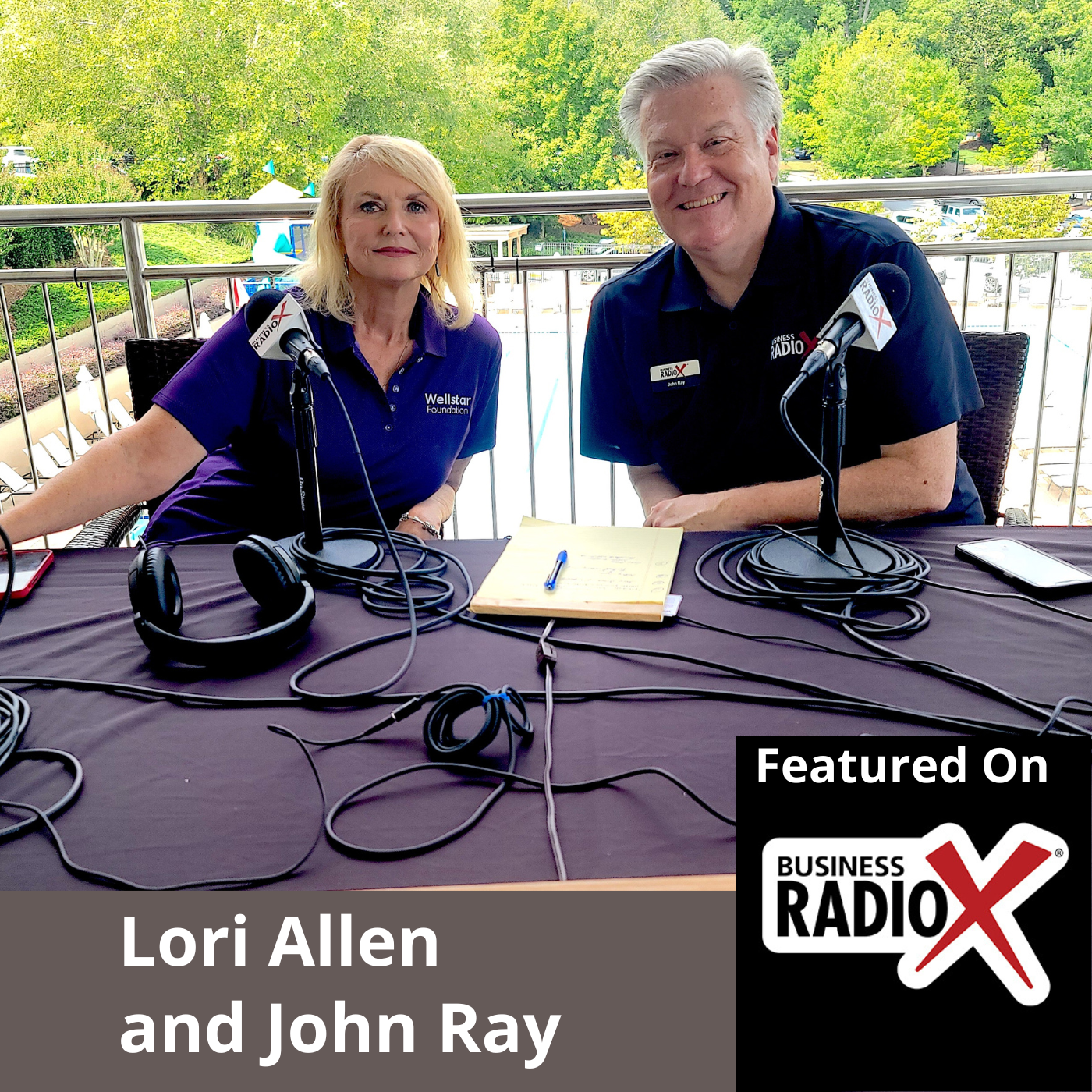
Lori Allen, Regional Development Officer for the Wellstar Foundation and a Roswell Rotary member, joined host John Ray to cover the philanthropic work of the Foundation. Lori discussed the Foundation’s mission, her connection to Roswell Rotary, the “Roswell Teens Talk” podcast being produced and made available to the public, thanks to a grant from Roswell Rotary, other areas the Foundation addresses such as workforce development, and much more.

This show was originally broadcast live from the 2022 Roswell Rotary Golf and Tennis Tournament at Brookfield Country Club in Roswell, Georgia, on September 12th, 2022.

North Fulton Business Radio is produced and broadcast by the North Fulton studio of Business RadioX® inside Renasant Bank in Alpharetta.

Lori Allen, Regional Development Officer, Wellstar Foundation

Lori Allen, Regional Development Officer, Wellstar Foundation

Since 1985, the community has invested millions of dollars through the Foundation to make sure every Georgia resident has access to quality care. As a not-for-profit health system, our passion for people extends beyond our walls and into the communities we serve. Our vision is to ignite the passion of donors and partners to accelerate healthcare innovation and wellness to create a healthier future for all.

Philanthropic contributions are transforming healthcare and improving access for all across four areas of focus:

Health Equity- They work to ensure all Georgians have access to high-quality healthcare and preventative services.

Behavioral Health – Team members provide whole-person care that integrates behavioral health with other health services.

Innovation – They work to promote best practices and equip our patients and every care site with state-of-the-art technology.

Workforce Development – They equip, support, and train their team members so they may provide superior, highly skilled care while cultivating the new generation of healthcare leaders.

Foundation website | Lori Allen LinkedIn

Questions and Topics in the Interview:

  • About Wellstar Foundation
  • Lori’s role as Development Officer
  • The grant from Roswell Rotary to Wellstar Foundation
  • Mental Health Podcast Series “Roswell Teen Talk”
  • Workforce Development

North Fulton Business Radio is hosted by John Ray and broadcast and produced from the North Fulton studio of Business RadioX® inside Renasant Bank in Alpharetta. You can find the full archive of shows by following this link. The show is available on all the major podcast apps, including Apple Podcasts, Spotify, Google, Amazon, iHeart Radio, Stitcher, TuneIn, and others.

RenasantBank


Renasant Bank has humble roots, starting in 1904 as a $100,000 bank in a Lee County, Mississippi, bakery. Since then, Renasant has grown to become one of the Southeast’s strongest financial institutions with over $13 billion in assets and more than 190 banking, lending, wealth management and financial services offices in Mississippi, Alabama, Tennessee, Georgia and Florida. All of Renasant’s success stems from each of their banker’s commitment to investing in their communities as a way of better understanding the people they serve. At Renasant Bank, they understand you because they work and live alongside you every day.


Special thanks to A&S Culinary Concepts for their support of this edition of North Fulton Business Radio. A&S Culinary Concepts, based in Johns Creek, is an award-winning culinary studio, celebrated for corporate catering, corporate team building, Big Green Egg Boot Camps, and private group events. They also provide oven-ready, cooked-from-scratch meals to go they call “Let Us Cook for You.” To see their menus and events, go to their website or call 678-336-9196.

Tagged With: behavioral health, Lori Allen, non-profit hospital, North Fulton Business Radio, Roswell Rotary, Roswell Teen Talk, Wellstar Foundation, Wellstar North Fulton

The R3 Continuum Playbook: Coordinating Compassionate Care After Disruption – Not Your Typical Counseling

September 8, 2022 by John Ray

disruption
Minneapolis St. Paul Studio
The R3 Continuum Playbook: Coordinating Compassionate Care After Disruption - Not Your Typical Counseling
Loading
00:00 /
RSS Feed
Share
Link
Embed

Download file

disruption

The R3 Continuum Playbook: Coordinating Compassionate Care After Disruption – Not Your Typical Counseling

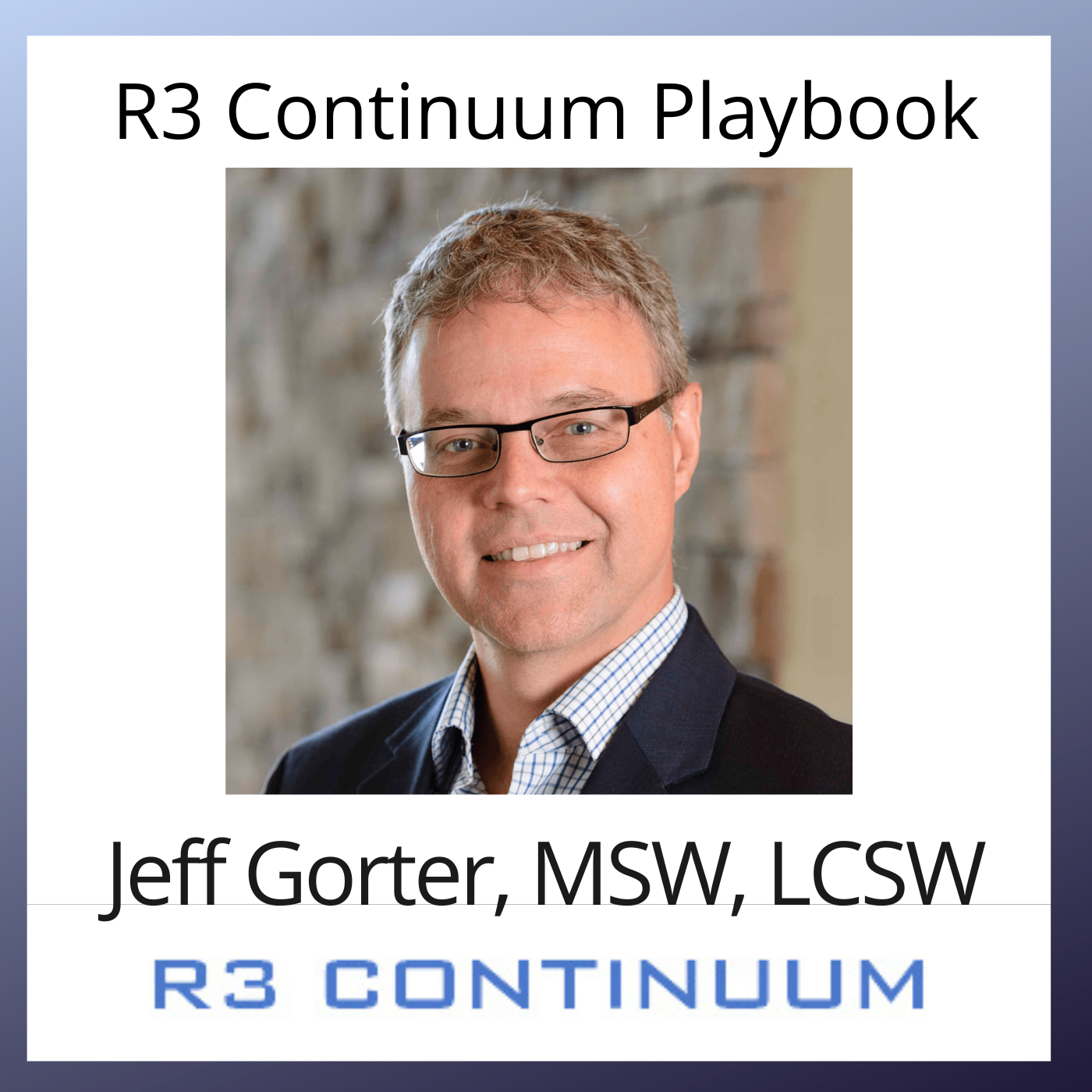
In this excerpt from a recent R3 Continuum webinar, Jeff Gorter, MSW, LCSW, Vice President of Crisis Response Clinical Service, answers questions about the behavioral health impact on employees following a disruption. He provides steps employers can take to address the disruptions their employees experience and how such adversity impacts job performance.

The full webinar from which this excerpt was taken can be found here.

The R3 Continuum Playbook is presented by R3 Continuum and is produced by the Minneapolis-St.Paul Studio of Business RadioX®. R3 Continuum is the underwriter of Workplace MVP, the show which celebrates heroes in the workplace.

TRANSCRIPT

Shane McNally: [00:00:00] Broadcasting from the Business RadioX Studios, here is your R3 Continuum Playbook brought to you by Workplace MVP’s sponsor, R3 Continuum, a global leader in workplace behavioral health crisis and security solutions.

Hi there. My name is Shane McNally, Digital Marketing Project Lead at R3 Continuum. On this episode of the R3 Continuum Playbook, we’ll be featuring a segment from a recent webinar presented by R3 Continuum’s Vice President of Crisis Response Clinical Services, Jeff Gorter. This recent webinar is titled Coordinating Compassionate Care After Disruption, Not Your Typical Counseling.

Jeff brings more than 30 years of clinical experience, including consultation and extensive onsite critical incident response to businesses and communities. In this segment from our recent webinar, Jeff was answering questions that were asked by some of our attendees during registration to the webinar about disruption in the workplace and what leaders can do to respond to some of those events. What steps can employers take to respond to a disruption?

Jeff Gorter: [00:01:00] Yeah. I think that’s again, that’s kind of getting to the heart of the matter. And I really appreciate that because that flows pretty naturally from our first one.

So if we start with the assumption that crises will occur, how can I, as a responsible business leader, take some steps. And it begins with the concept of engagement. Engagement at the workforce is a very prominent concept and one that is frequently looked at and analyzed that particularly from large scale employers, you know, mammoth ones to a mom and pop shop with a few that being able to understand influence promotes encourage worker engagement is a hot button issue right now.

And part of that is for two reasons. Because an engaged workforce is protective in the concept or in the context of what we’ve been talking about with disruptions and crises, that it’s important to recognize that an engaged workforce and there’s typically two metrics that researchers use to gauge how well a person is doing.

They look at engagement, which is how well they’re doing at the workplace and well-being is how well are you doing outside of the workplace. Things like health, relationships, financial stability, all those kinds of things are reflections of well-being. Whereas engagement is how invested I am at work. How energetic am I? How much am I pouring realistic time, energy and effort into doing well at work?

And the key thing is, and what’s so fascinating about this research is that we tend to think of engagement as the workplace well-being as at home. The research is absolutely clear that they are mutually influential, that what happens at the workplace affects what happens at home. And what happens at home obviously is brought to the workplace. I bring myself to work.

And so concerns I have with other issues are going to have an impact. And so both of them influence each other. And we have to look at the both to understand the whole person, the whole individual.

Now, what is so cool about that is that I think the research showed and this is more recent research showed that engagement influences aspects of wellbeing beyond what we think. So you might think, well, if I’m happy at work, I’m going to be happy at home. True. But it’s also true that if I’m happy at work, I tend to be more healthy at home. My relationships are stronger at home. Obviously, my financial stability can be better at home because I’m engaged in meaningful work.

It’s a fascinating thing that I think most employers are unaware of the outsized impact that they can have in both spheres. The more I promote engagement, the more it spills over and enhances the well-being of that individual and also makes it easier when they are having trouble to be able to focus at work.

So if they’re having difficulty at home, they can focus at work as well. And so employees that identify as thriving, the characteristic of not just muddling through, not just enduring, but actually thriving, growing, vibrant. And that is, again, research tracks that employees who identify as thriving, who have both high engagement and high well-being, report greater confidence in managing the unexpected.

It gives them greater buoyancy, greater ability to take the hit when the hit comes and I bounce back quicker, more effectively. I.E., resilience. I have greater resilience the more my engagement is fostered at the workplace. But not only is it protective, but an engaged workforce is profitable.

I think the research, this was somewhat surprising, that the research found that business units with high engagement, employees who report high engagement, are 23% more profitable overall. And so they quite frankly, they make more money, they are more profitable.

And also some of the things that are cost dreams, they experience lower turnover, experience lower absenteeism, lower accidents at the workplace, and they experience higher customer loyalty. So not just their employees, but engagement is an investment in customer loyalty.

Because it turns out customers like shopping and doing business and procuring services from places where the employees are engaged, where there is a positive workplace culture. Customers want to go to a place where I think those who are meeting my needs, whatever it is, they pick it up, they pick it up. And they say, that’s a place I want to do business with. I want to go back there. And so engagement is both protective and profitable at the same time.

Shane McNally: [00:06:37] And before we move on, I just kind of wanted to talk a little bit about that first point about the engagement and well-being. And I think that you mentioned it a little bit, but it could be anything that outside that it affects you inside. It could be a family pet is sick or it’s a loved one is is you know, they’re sick or they just passed or something like that, that can totally impact how somebody does at work.

And then when they go to work, if there’s no support, no engagement, nothing, you know, it’s just like they’re clearly not going to feel, you know, appreciated or supported by that company. And then it’s not going to reflect, right?

Jeff Gorter: [00:07:20] I think that’s a great observation and really, again, makes it very, very real to so many of us. That OK, those issues that I am not holding my employer responsible for the death of my pet or for an ill loved one or for a situation that occurs in my, you know, among my friends or in my neighborhood.

But what you highlight, what is implied and it’s nuanced but it’s powerful, is that the engagement I have at work is sustaining. It gives me more energy. It gives me more bandwidth to be able to manage those things in my outside of work life, because the workplace is providing an engaged, energizing environment for me.

So it’s not that the manager directly impacts what I do with my pet, but it he provides that opportunity. Workplace is functionally resilient, which is to say when I have success at work, it breeds success in other areas of my life.

When I’m able to confidently do something at work and feel that my efforts were worthwhile and engaging, that spills over. That gives me confidence. Well, maybe I can also manage these other things in my life. And so it is a core bedrock element that is so often overlooked. And it’s why I want to highlight that leadership really plays an unexpected and outsized role in promoting not just engagement at work, but well being at home.

Shane McNally: [00:09:13] And I think that’s perfect into the next slide. You know, talking about leadership and really getting into the nitty gritty of things.

Jeff Gorter: [00:09:23] Exactly. And so leadership really is the key, as you’ve sure picked up already, as I’ve been talking about. And one of the, again, I’m looking at research. I want this all to be grounded in research. And one of the largest surveys recently on burnout, which I think we can we can disengagement is certainly an aspect of burnout. They identified that of all the reasons that people say, here’s what fuels my burnout, here’s what fuels my disengagement, far and away, the number one contributor was feeling unfairly treated at work, unfair treatment at work, closely followed by lack of manager support.

So again, feeling unfair and feeling lack of support, putting that again in the context of a crisis. So when a crisis occurs and if I feel that I am misunderstood, mistreated, unfairly asked to do things or unfairly blamed for things, if I feel that the manager’s only response is, well, get back to work- time is money following the crisis – that just highlights that sense of disengagement. And those are things that leaders have a direct influence over.

And conversely, looking at the positive, those who report my manager truly cares indicates the highest levels of thriving. Recall, the highest levels of engagement at work and well being at home, both in and out of work, those who feel that their manager cares have the highest levels of of engagement.

And crisis again, think about the judgments that fall on leaders following their crisis. Judgements of were they fair, did they get it, were they supportive, were they caring, were they reasonable in their expectations and did they have a plan? All of those things, think again, in a workplace crisis that brings all these issues to sharp focus that how a leader communicates is going to directly influence the sense of feeling fairly treated at work and supported.

Shane McNally: [00:11:50] And just to kind of a follow up question on that, Jeff, you know, with leadership and now we’re talking maybe it is something in work, maybe a, you know, I feel like disruption can come in so many different forms. They can be the bigger things. Like we mentioned earlier, maybe it’s a workplace shooting.

But it could also be something as simple as, you know, coworkers are out to lunch and one of them drops and has a heart attack or something like that. And they could be totally fine. But those that are around the person and saw this person drop and have a heart attack, that’s a pretty daunting thing. And they may not be able to just go straight to work. So is it always important for leadership to be active and supportive and provide resources even with the smaller things that kind of disrupt those coworkers?

Jeff Gorter: [00:12:39] Well, you ask a very poignant question because one can say, you know, let’s say it’s a small work group and one of the members has a heart attack or dies in a automobile accident. Let’s say it’s a small bank branch and there was a note passing robbery, no weapons brandish, no threats made but somebody passed a note and the teller was robbed. You might say, well, you know, how significant was that? How important was that? It was pretty doggone important to that one individual, to that one employee, the one who works next to the person who’s no longer going to come back to work, the one who was in that queue and had to receive it and had to give the money because they understood there’s an implied threat.

It’s not the — it’s not as if there’s an objective criteria that one can say, ah, well, this crisis clearly meets some arbitrary metrics of crisisness and that it is worthy of response. No, it’s not the crisis that drives it. It’s the impact on the individuals that drives it.

And so you are absolutely correct. It’s not a numbers game. It’s not about, well, did it make the local news and therefore we can now treat it as a crisis? No. Most savvy leaders know what a crisis is for their folks. And it might be something as mundane, if that’s a correct term to use with crisis.

If it’s something as coarse of life events as the kinds that we’re talking about, it doesn’t always have to be a big, giant issue. It can be something that impacts perhaps only a handful of people. But how the leader responds to it shapes their culture and begins to foster that engagement. Those are opportunities.

Shane McNally: [00:14:58] Disruptions in the workplace are inevitable. Following a disruption being reactive will typically be much more impactful on your employees and organization. Having a proactive plan and resources available following a disruption is key as a leader.

R3 Continuum can help. Our disruptive event management services offer the best in practice and tailored solutions to help your organization following a disruption. Learn more about our services and connect with us at www.r3c.com or email us directly at info@r3c.com.



Show Underwriter

R3 Continuum (R3c) is a global leader in workplace behavioral health and security solutions. R3c helps ensure the psychological and physical safety of organizations and their people in today’s ever-changing and often unpredictable world. Through their continuum of tailored solutions, including evaluations, crisis response, executive optimization, protective services, and more, they help organizations maintain and cultivate a workplace of wellbeing so that their people can thrive. Learn more about R3c at www.r3c.com.

R3 Continuum is the underwriter of Workplace MVP, a show which celebrates the everyday heroes–Workplace Most Valuable Professionals–in human resources, risk management, security, business continuity, and the C-suite who resolutely labor for the well-being of employees in their care, readying the workplace for and planning responses to disruption.

Connect with R3 Continuum:  Website | LinkedIn | Facebook | Twitter

Tagged With: behavioral health, Compassionate Care, Disruption, Jeff Gorter, R3 Continuum Playbook, R3C, Workplace MVP

LIVE from RISKWORLD 2022: Oscar Villanueva, Managing Director of Security Services, R3 Continuum

May 26, 2022 by John Ray

Security Services
Minneapolis St. Paul Studio
LIVE from RISKWORLD 2022: Oscar Villanueva, Managing Director of Security Services, R3 Continuum
Loading
00:00 /
RSS Feed
Share
Link
Embed

Download file

Security Services

LIVE from RISKWORLD 2022: Oscar Villanueva, Managing Director of Security Services, R3 Continuum

Oscar Villanueva, Managing Director of Security Services for R3 Continuum, joined host Jamie Gassmann at the R3 Continuum booth. Oscar explained the role of security services when clients reach out to R3 Continuum for help, the impact of an event that goes beyond the victim, the ultimate cost of not being prepared, and much more.

Workplace MVP is underwritten and presented by R3 Continuum and produced by the Minneapolis-St.Paul Studio of Business RadioX®.

This show was originally broadcast from the RIMS 2022 RISKWORLD Conference held at the Moscone Center in San Francisco, California.

Oscar Villanueva, Managing Director of Security Services, R3 Continuum

Oscar Villanueva, Managing Director of Security Services, R3 Continuum

Oscar Villanueva, a well-known international security expert, and former federal law enforcement senior executive brings many years of risk assessment and management, investigative, emergency preparedness, training, and critical infrastructure security experience, worldwide. He oversaw the security-based initiatives in over 180 locations throughout the world and has worked directly with the United Nations, Interpol, Europol, and during multiple Olympic Games.

He has over 30 years in federal law enforcement and corporate security consulting domestically and internationally. One of his areas of focus was workplace violence during his time with federal law enforcement and for the last decade in corporate security venues.

He now helps individuals and organizations navigate the difficulties of overall security and risk issues.

Mr. Villanueva lives in San Francisco.

LinkedIn

About Workplace MVP

Every day, around the world, organizations of all sizes face disruptive events and situations. Within those workplaces are everyday heroes in human resources, risk management, security, business continuity, and the C-suite. They don’t call themselves heroes though. On the contrary, they simply show up every day, laboring for the well-being of employees in their care, readying the workplace for and planning responses to disruption. This show, Workplace MVP, confers on these heroes the designation they deserve, Workplace MVP (Most Valuable Professionals), and gives them the forum to tell their story. As you hear their experiences, you will learn first-hand, real-life approaches to readying the workplace, responses to crisis situations, and overcoming challenges of disruption. Visit our show archive here.

Workplace MVP Host Jamie Gassmann

Jamie Gassmann, Host, “Workplace MVP”

In addition to serving as the host to the Workplace MVP podcast, Jamie Gassmann is the Director of Marketing at R3 Continuum (R3c). Collectively, she has more than fourteen years of marketing experience. Across her tenure, she has experience working in and with various industries including banking, real estate, retail, crisis management, insurance, business continuity, and more. She holds a Bachelor of Science Degree in Mass Communications with special interest in Advertising and Public Relations and a Master of Business Administration from Paseka School of Business, Minnesota State University.

R3 Continuum

R3 Continuum is a global leader in workplace behavioral health and security solutions. R3c helps ensure the psychological and physical safety of organizations and their people in today’s ever-changing and often unpredictable world. Through their continuum of tailored solutions, including evaluations, crisis response, executive optimization, protective services, and more, they help organizations maintain and cultivate a workplace of wellbeing so that their people can thrive. Learn more about R3c at www.r3c.com.

Company website | LinkedIn | Facebook | Twitter


TRANSCRIPT

Intro: [00:00:03] Broadcasting Live from RISKWORLD 2022 at the Moscone Center in San Francisco, it’s time for Workplace MVP. Brought to you by R3 Continuum, a global leader in helping workplaces thrive during disruptive times. Now, here’s your host.

Jamie Gassmann: [00:00:23] Hi, everyone. Your host, Jamie Gassmann here at the RISKWORLD 2022 Expo Hall in R3 Continuum Booth. And joining me is Oscar Villanueva, who is with R3 Continuum. Welcome to the show.

Oscar Villanueva: [00:00:38] Hello, Jamie. Good talking with you today.

Jamie Gassmann: [00:00:40] So, talk to me a little bit about the role you play at R3 Continuum.

Oscar Villanueva: [00:00:44] Well, my role is as Managing Director of Security Services for R3 Continuum. And, basically, what I do is I support the organization and clients when it comes to security services. And that could be anything from investigations, protective services, threat assessments, facility security assessments. Anything that has to do with physical security, I am available for clients to to use and to take advantage of our services.

Jamie Gassmann: [00:01:13] Yeah. You know, and from conversations I’ve had with you, you know, the uniqueness of the services that R3 provides is that behavioral health component to the solution. So, talk to me a little bit about that and how that’s a differentiator or unique in the marketplace.

Oscar Villanueva: [00:01:28] Well, you know, R3 continuum is a leader in behavioral health support and solutions with disruptive event management and crisis response, all of those kinds of services. And R3 has been doing it for many, many years and doing it very, very well as a leader in the industry. What makes my contribution to R3 significant is that every time you have a crisis situation, every time you have a workplace violence issue, every time you have a call that you’re making to R3 Continuum for services, there’s usually a security component that comes along with that. And, you know, having those two services – security and crisis response – along with behavioral health really does a unique and best-in-class response service from R3 Continuum for our clients. So, I think it’s an important component.

Jamie Gassmann: [00:02:26] Yes, it’s almost like they have the holistic response basically. It’s like you can look at it from a physical, you know, what caused the particular, you know, situation or incident, but then also from the behavioral side of it as well. They’re kind of almost getting a comprehensive kind of support from the company, correct?

Oscar Villanueva: [00:02:44] Yes. And I think part of what that type of service means is that R3 Continuum uses a team of experts approach. So, if you come to R3 Continuum, and you’re getting behavioral health, and there’s some security question that comes up, I’m brought into the case, the situation, and I provide an assessment from a security perspective. And if I’m working a security issue, you know, the same thing occurs because, you know, R3 Continuum has experts in behavioral health. So, the combination of the two and a team-of-experts approach is really what makes it a powerful service for our clients.

Jamie Gassmann: [00:03:26] And from a risk insurance perspective, you know, taking and looking at it through that lens, you know, how does that help them from like a litigation perspective or kind of a risk mitigation perspective?

Oscar Villanueva: [00:03:40] Well, for insurance providers, I think the most important thing is to mitigate crisis and even to prevent it, if you can. And contacting R3 Continuum, for example, I can think of a number of cases where, perhaps, you had a workplace violence issue that started as a threat, and then, through our services and doing a threat assessment, we are able to discover what the cause of the threat is, what’s behind the the potential violence, and we can provide an assessment as to what the best way is to move forward. And when you do this, you’re really either preventing or mitigating risk, which in the insurance world, I’m fairly certain that it’s extremely important. The less claims you have, the better off you are, or if you can minimize the claim to the lowest possible level, so that the loss is contained, then it becomes very desirable for an insurance company to use those services.

Jamie Gassmann: [00:04:44] Absolutely. And it also helps holistically for that organization to recover, you know, financially and not only that, but with their people as well.

Oscar Villanueva: [00:04:53] Right. Yeah. So, clients that — excuse me. Clients that use us, generally, are able to get the situations resolved quicker and people back to work sooner. And in the long run, that results in some, you know, significant results that really can save not only financial resources but also minimizes the human effects of this type of crisis when it happens to someone at work.

Jamie Gassmann: [00:05:25] Absolutely. And so, you are presenting on Wednesday on the human impact or the human cost, the true cost to human impact of workplace violence. Can you talk a little bit about that presentation that you’re giving here at RIMS?

Oscar Villanueva: [00:05:41] Yes, it’s on Wednesday at noon at the Thought Leader Theater on the exhibit hall. And what I want to talk about is the true impact of workplace violence on individuals at the workplace, and how it’s not just the individuals that are affected at the workplace but their families, coworkers that maybe were not there at the time. There’s a range of individuals, a number of people that get affected beyond the victim.

And when you hear about this workplace violence issues on the news or in the media, typically you think about the victim, right? The victim was, you know, threatened, assaulted or even killed, unfortunately. But there’s a range of other — there’s other victims that go along with that particular one that are almost unnoticed or unmentioned that also suffer. So, I think there’s a bit of a discussion to be had there, along with also talking about how to mitigate it, how to plan for it and how to prepare for it because the better an organization prepares for it, obviously, the less likely it is that it will happen. And if it does happen, then the impact can be minimized significantly.

Jamie Gassmann: [00:07:04] Yeah, it’s almost like a ripple effect, right?

Oscar Villanueva: [00:07:06] Correct.

Jamie Gassmann: [00:07:06] You got your kind of point of impact where you have your most concentrated, impacted employees. But there’s always more people that are involved that have to be taken into consideration. And then, not only that, how do you support them to make sure that they get the help that they need, you know, being that they might be in more of like a tertiary kind of layer of of impact and could get forgotten.

Oscar Villanueva: [00:07:28] That’s very true. Very true.

Jamie Gassmann: [00:07:29] Yeah.

Oscar Villanueva: [00:07:30] And, you know, it all starts with behavioral health, because when somebody goes to trauma and crisis, it’s really important to get them back to some level of normalcy. You never-

Jamie Gassmann: [00:07:39] Yeah.

Oscar Villanueva: [00:07:39] You know, it never goes away. You know, the thoughts of being in a workplace violence issue or witnessing a workplace violence homicide or something like that, it really never leaves you. But with behavioral health and psychological support, you can really have people come back to some level of normal and continue their daily lives without it affecting them to a large extent.

Jamie Gassmann: [00:08:01] Yeah. And what I’ve heard, and I don’t know if you can kind of comment on that, I know that there might be others within R3 that can as well, that there’s a different type of — you need somebody specialized in these types of incidents that it’s a different type of coaching or consulting that they’re giving to individuals impacted as opposed to someone that maybe just has like a depression or anxiety. It’s a different type of support, correct?

Oscar Villanueva: [00:08:29] Well, yes, that has been my experience. And I think R3 Continuum does it very, very well with the staff of counselors that are available and how quickly you can get there to provide the services. Because after you have a crisis, it’s really critical to have someone get to those individuals as quickly as possible. The sooner they can talk about how they feel and what happened, the faster they can recover. And so, it’s really critical that that happens. Yes.

Jamie Gassmann: [00:08:56] Yeah, absolutely. So, if there are three takeaways or takeaways that you want your audience to be left with after attending your session, what would those be?

Oscar Villanueva: [00:09:06] Well, one is that it’s important to prepare. And in order to prepare, you really need to do a few things, mainly to put together a workplace violence program with threat assessment teams, and just be ready for anything that comes because through that process, you can prevent or you can mitigate workplace violence going forward. So, that would be number one.

The second is that the impact of workplace violence on individuals goes far beyond that initial victim, and it really affects their families, or communities or workers. So, that would be the second takeaway. So, when you’re thinking about a workplace violence issue, it’s really important to consider who else is being affected by this. So, that would be the second takeaway.

And the third takeaway that I would like to share is that oftentimes, you know, there’s a saying that when you’re a hammer, everything looks like a nail. And so, many of our clients tend to think about their world on the basis of what they do for a living. For example, they could be in manufacturing, they could be in services, they could be a medical office. And so, their worldview always focuses on that type of service or that type of product that they’re manufacturing. But in reality, when it comes to workplace violence, it kind of goes outside of that. So, you have to shift your paradigm, your thinking to consider, “Okay, I am a manufacturing company primarily, but if I have a workplace violence issue, that could be a problem. So, I’m going to think about that. I’m going to prepare for that. And I’m just going to go back and do my business because now I’m prepared,” right?

And the result of that is that, oftentimes, companies, organizations that have workplace violence issues fail to prepare for it. But when something happens, there’s no end to how much money they have to spend on it and they’re gladly spending it. So, in the long run, it’s easier, cheaper and better to prepare ahead of time than to have an issue later and make it very costly in terms of human capital and also financial capital.

So, prepare early and often, have a plan, and be ready because there’s only really two kinds of companies in this world, one that has had a workplace violence issue and that one that will have a workplace violence issue because as long as you employ people, as long as you have employees, you’re going to have those kinds of concerns. So, those would be my three recommendations.

Jamie Gassmann: [00:11:42] Wonderful. And that sounds like a great presentation. I hope the audience picks up on all those great takeaways that you’re providing to them. If somebody wanted to get a hold of you to learn a little bit more about what R3 Continuum does or a little bit more about what your role is there and the services that we provide, how can they do that?

Oscar Villanueva: [00:12:02] Well, they can get a hold of me through R3 Continuum by going to the website, and there’s a contact information in there. The other way is to just email me the Oscar,Villanueva@r3c.com.

Jamie Gassmann: [00:12:19] Wonderful. And that website’s r3c.com, correct?

Oscar Villanueva: [00:12:22] That’s correct.

Jamie Gassmann: [00:12:23] Awesome. Well, thank you so much for joining us, Oscar. It’s been great to have you on the show.

Oscar Villanueva: [00:12:26] Thank you, Jamie.

Outro: [00:12:32] Thank you for joining us on Workplace MVP. R3 Continuum is a proud sponsor of this show and is delighted to celebrate most valuable professionals who work diligently to secure safe workplaces where employees can thrive.


Tagged With: behavioral health, Crisis Response, Jamie Gassmann, Oscar Villanueva, preventing workplace violence, R3 Continuum, RISKWORLD 2022, Security Services, Workplace MVP, workplace violence

The R3 Continuum Playbook: Reducing the Stigma: Ways Leaders Can Support Employee Mental Health

March 3, 2022 by John Ray

employee mental health
Minneapolis St. Paul Studio
The R3 Continuum Playbook: Reducing the Stigma: Ways Leaders Can Support Employee Mental Health
Loading
00:00 /
RSS Feed
Share
Link
Embed

Download file

employee mental health

The R3 Continuum Playbook: Reducing the Stigma: Ways Leaders Can Support Employee Mental Health

In a recent webinar featuring Dr. Tyler Arvig, Associate Medical Director at R3 Continuum, Dr. Arvig addressed a variety of questions on employee mental health, and how leaders can make it easier for employees to request and receive behavioral health support. Dr. Arvig mentioned not only better communication, but more personal and honest conversation with employees, making modeling self-awareness and vulnerability a priority, being creative in balancing the needs of the organization with the needs of the employees, knowing when to pull in experts, and much more.

The full webinar can be found here. The R3 Continuum Playbook is presented by R3 Continuum and is produced by the Minneapolis-St.Paul Studio of Business RadioX®. R3 Continuum is the underwriter of Workplace MVP, the show which celebrates heroes in the workplace.

TRANSCRIPT

Intro: [00:00:00] Broadcasting from the Business RadioX Studios, here is your R3 Continuum Playbook. Brought to you by Workplace MVP sponsor, R3 Continuum, a global leader in workplace behavioral health, crisis, and security solutions.

Shane McNally: [00:00:14] Hi, there. My name is Shane McNally, marketing specialist for R3 Continuum. On this episode of the R3 Continuum Playbook, we are featuring a segment from a recent webinar that was done with R3 Continuum’s Associate Medical Director, Dr. Tyler Arvig.

Shane McNally: [00:00:28] The webinar was titled Reducing Stigma, Ways Leaders Can Support Employee Mental Health. And it looked into the current workplace climate, what and what employees are currently feeling, ways that leaders can start to notice if their employees may be struggling, what leaders can do to help reduce the stigma of mental health in their organization and resources available to them.

Shane McNally: [00:00:48] During the webinar, we asked our audience the question of what issues are you seeing in those around you right now. And the top three responses were anxiety, work-life imbalance, and changes in productivity. What we can gather from this is that many folks are noticing their employees or colleagues struggling, but may not know how to handle it. In this excerpt from the webinar, Dr. Tyler Arvid gives advice to leaders on what they can do to support their employees and what they should be doing to help their employees that are struggling.

Tyler Arvig: [00:01:17] So, here’s, again, these aren’t in any particular order. The first thing you can do in your organization is, make behavioral health a priority and employee health a priority not just at the H.R. level or at the wellness committee level, but at the very top, you know, your C-suite folks, your president. You know, them indicating, you know, we have a business to run and we have things to do but we care about you too. And, you know, checking me in and showing that it’s something that’s not just on paper. Like the previous slide, 96% of the companies [inaudible] H.R. policy. Most still don’t feel supported. And, we often look for H.R. to be that support and that they should be and that’s wonderful and we want them to do that. But we also want our leaders, people that hired us, that support us, that run our businesses to say, “Hey, this is a priority for us, too.”

Tyler Arvig: [00:02:23] The second point, engaging your employees, we already talked about. But, really, you know, how do you communicate with them? Don’t just do it in emails. You call them. You call them for no reason. You check in with them. Are you – are you keeping them in the fold, or are they just off on an island doing their own thing?

Tyler Arvig: [00:02:42] Modeling strength and vulnerability is a bit of what I talked about before, which is – there is no – saying the great thing about this is a bad choice of words. But, you know, with COVID-19 being what it is, there’s no us in them here. Right? We’re all experiencing these things, whether we’re at a management level or the entry-level or somewhere in the middle. We’re all experiencing those stressors and those challenges, and those things. So being able to be a little bit transparent with your folks not overly so and not over disclosing or, you know, laying out your every personal problem you ever had at their doorstep.

Tyler Arvig: [00:03:31] But, again, I’m struggling with my kid. Like, you know, last year when there was distance learning for a lot of us and a lot of our kids were struggling. Yeah. And you get parents that maybe they’re not as productive because they’re trying to help their kids in school, like, not fail. And it’s a problem, and chances are you felt that too. Share it. So, really, you know, kind of joining with your folks. And also, showing some strength in terms of, you know, effective ways to manage things. You know, they might be looking to you for some level of leadership and modeling in trying to do that.

Tyler Arvig: [00:04:11] The communication I think we’ve already addressed. But, really, it’s – the important part here is your communication is two-way. It’s not just I’m dictating to you what is. It should be a dialogue. “Hey, what do you guys think would be helpful for this problem?” And then, sharing back and forth, having an open conversation. Most really good ideas and organizations don’t come from someone at the very top that dictates something and then commands people to do it. It usually starts organically at the lower level and then gets adopted at the higher levels.

Tyler Arvig: [00:04:50] Same thing when it comes to employee health and organizational health. Make sure there’s an open dialogue there. Show some creativity when it comes to things you can alter. There are things that we can’t alter [inaudible] workday or work environment or work tasks. But there are things that we can. “I got to go pick my kid up for half an hour. You know, I can adjust my schedule or, you know, tweak.” Those kinds of things. Do it. Thinking through not, you know, did you serve your nine to five and punch in and punch out for your lunch break, but did you meet the needs of the organization?

Tyler Arvig: [00:04:50] You know, Jane mentioned earlier everyone is always fearful at the beginning that, well, what if we send everyone home, they work from home and no one is productive? And, really, that fear in our organization, at least in most organizations, didn’t come true. It turns out giving people flexibility and some creativity and changing some things actually made things more likely to get done more effectively.

Tyler Arvig: [00:05:53] You know, know your lane. And, by this, I mean, you know, we can all be better supporting our people. But you’re going to get to a point where you’re like, “This is above my pay grade. This is outside of my wheelhouse. I don’t know.” And, that’s when you want to consult with an expert. I mean, our company does this for a living. It’s what we do, right? It’s our thing. And, it’s because we realize that some of these challenges, there are a lot of them you can do on your own and you can manage on your own. But if it gets to be a bigger challenge, you’re better off trying to pull in an expert who can really give you the guidance of what you need and when you need it.

Tyler Arvig: [00:06:42] The last piece I’m going to mention here is it’s really more of a self-reflective piece. If I’m going to be a leader and I’m going to lead my folks, I need to have a good understanding of myself and what my own vulnerabilities are. Right? So, I think we’ve all found, over the course of the past couple of years and most of our lives if we’ve been leaders for long enough, there’s stuff we’re not very good at. And there are things we’re good at and there are things that we really struggle with. If I don’t have a good sense of this isn’t a strength of mine and I can’t adjust for that, I’m going to struggle to really effectively lead other people. If I don’t have a sense of, you know, what my own pain points are in my personal life, I’m not going to recognize it when I see it in my people.

Tyler Arvig: [00:07:33] So, part of, you know, being a coach or a mentor or a leader or a manager to other people is being able to look internally and go, “How am I doing? What are my strengths and weaknesses? What do I need to work on?” There’s a lot of rich material there that a lot of us haven’t had to sit and think about or deal with. But when do we do, when we try and figure some of that stuff out, we actually get much more effective in what we’re doing for our organization. So, yeah.

Shane McNally: [00:08:12] I loved your point about with be creative. You know, that’s one thing from working from home is. So, you know, for me, it’s like if I’m stumped on creating something, you know I’m having just a tough time, and I can just get up and go out to the living room and go play with my cat for like five minutes and all of a sudden I come back and it’s like, “Oh, I got up. I moved.” You know, it’s a little just different than having to take a walk down the hall or go grab a cup of coffee. It’s a little bit – you know, gives me a little bit more, I don’t know, I don’t know the word, happiness, I guess if that makes sense. So, I thought that was a good point there.

Tyler Arvig: [00:08:48] All right. So, if you have an employee who is struggling, again we’ve already talked about this, ask. You know, be inquisitive in an appropriate way. You know, if you have a good relationship, they’re going to be open. And if you have someone you consider [inaudible], try and connect them with some help. I would say start with your human resources department, know what resources your company has for folks. Maybe you have different programs, different opportunities, maybe even having an understanding of what the different benefits are that people might have, be [inaudible], be that health insurance or employee assistance or whatever it is.

Tyler Arvig: [00:09:35] One of the things people that often need help, often struggle with, is they don’t know where to go or what to do, and so they just don’t do it. So, it’s our responsibility but also kind of our honor to be able to say, “Hey, you’re struggling and here, here are some things I think can help.” And help them. Don’t just say, “Oh, go talk to H.R.” You know, maybe have a conversation and maybe, you know, facilitate it. Do something a little bit more active to get them help.

Tyler Arvig: [00:10:06] And then, you know, directing resources kind of falls within that as well. But, you know, there are a lot of resources out there right now, a lot of the resources, even in private mental health treatment. You know, now telemedicine is not only a thing. It’s been a thing for a long time. It’s becoming the norm. I can see a psychiatrist or a therapist or whoever without leaving my desk. It’s much easier to get access to some of those things than it used to be. So, you know, you have apps on your smartphone, that kind of thing.

Tyler Arvig: [00:10:43] So, there are lots of resources out there. It’s not your job to know what all those are, but do know what’s available to your people and be able to talk to those a little bit. Because, again, a lot of our people are struggling. And if we can do anything we can do to help get them the help they need at that moment, it’s going to help them.

Tyler Arvig: [00:11:07] And by the way, there’s a real business element to this that I think it’s missed, and that is all these things like asking how you’re doing and directing the resources and doing a warm handoff on some of these things. These are things that will ingratiate your employees to your organization in a way that other organizations that don’t do that kind of stuff. Don’t – you know, to them, you’re just – you know, those organizations might be just a paycheck if you can take those extra steps in these cases. You know, even if you don’t pay the highest or even if you make them work a few extra hours, they’re going to do that because you care about them as people. And one of the things with, you know, people talk about the great resignation, it’s not just about pay. I mean, you might leave for a bigger paycheck. You might leave for, you know, personal reasons. A lot of it is, my employer doesn’t care about me. My manager doesn’t care about me. I was struggling and they said they didn’t care. If I’m struggling, [inaudible], it doesn’t mean I won’t leave, but the odds of me leaving are much lower if I feel like I’m in a place where I should be and you value me as a person. So, just things to be aware of.

Shane McNally: [00:12:31] This information is extremely important for leaders, but it’s also good for people at any level in a company. While the best support for an organization starts at the top, it’s important to know how to assist someone that may be struggling.

Shane McNally: [00:12:43] Looking for more information on how you can begin implementing a more supportive behavioral health program for your employees? R3 Continuum can help. Learn more about R3 Continuum services and contact us at www.r3c.com or email us directly at info@r3c.com.


Show Underwriter

R3 Continuum (R3c) is a global leader in workplace behavioral health and security solutions. R3c helps ensure the psychological and physical safety of organizations and their people in today’s ever-changing and often unpredictable world. Through their continuum of tailored solutions, including evaluations, crisis response, executive optimization, protective services, and more, they help organizations maintain and cultivate a workplace of wellbeing so that their people can thrive. Learn more about R3c at www.r3c.com.

R3 Continuum is the underwriter of Workplace MVP, a show which celebrates the everyday heroes–Workplace Most Valuable Professionals–in human resources, risk management, security, business continuity, and the C-suite who resolutely labor for the well-being of employees in their care, readying the workplace for and planning responses to disruption.

Connect with R3 Continuum:  Website | LinkedIn | Facebook | Twitter

Tagged With: anxiety, behavioral health, Dr. Tyler Arvig, employee mental health, employees, HR, R3 Continuum, R3 Continuum Playbook, Workplace MVP, workplace wellness

Workplace MVP LIVE from SHRM 2021: Brandee Izquierdo, SAFE Project

September 16, 2021 by John Ray

Brandee Izquierdo SAFE Project
Minneapolis St. Paul Studio
Workplace MVP LIVE from SHRM 2021: Brandee Izquierdo, SAFE Project
Loading
00:00 /
RSS Feed
Share
Link
Embed

Download file

Brandee Izquierdo SAFE Project

Workplace MVP LIVE from SHRM 2021:  Brandee Izquierdo, SAFE Project

About 10 years ago, Brandee Izquierdo was sitting in a jail cell, struggling with a substance abuse disorder. Brandee joined Workplace MVP host Jamie Gassmann to talk about her long-term recovery, her work at SAFE Project, addiction in the workplace, and how her organization battles the U.S. addiction epidemic.  Workplace MVP is underwritten and presented by R3 Continuum and produced by the Minneapolis-St.Paul Studio of Business RadioX®.

This show was originally broadcast live from the 2021 SHRM Annual Conference held at the Las Vegas Convention Center in Las Vegas, Nevada.

Brandee Izquierdo, Executive Director, SAFE Project

Brandee Izquierdo SAFE Project
Brandee Izquierdo, Executive Director, SAFE Project

Brandee Izquierdo’s drive and determination are built on making an impact within behavioral health, promoting long-term recovery, and ensuring communities are educated and have the tools necessary to combat the addiction epidemic. Before leading the SAFE Project team, Brandee worked for Faces & Voices of Recovery as the Director of Advocacy and Outreach. In addition, she served as the Associate Director of Special Populations with Behavioral Health System Baltimore and as the Director of Consumer Affairs for the state of Maryland’s Behavioral Health Administration. In these leadership roles, Brandee has led advocacy efforts to expand access to behavioral health services and recovery support services while providing technical assistance both nationally and internationally, empowering others within the recovery movement. Her ability to build relationships and bridge gaps within behavioral health, community services, and criminal justice have been a catalyst for global peer expansion.

As a subject matter expert with Center for Social Innovation, Policy Research Associates, SAMHSA, and the International Certification and Reciprocity Consortium (IC&RC), Brandee has made vast contributions within behavioral health and within the recovery movement around public policy, outreach, and workforce development. Additionally, Brandee has made a significant impact within the judicial system, advocating for access to treatment and recovery and is the principal investigator of Maryland’s integrated-Forensic Peer Recovery Specialist curriculum.

Brandee’s passion for service work and knowledge of recovery support services extends beyond behavioral health. With a master’s degree in Public Administration and a bachelor’s degree in Government and Public Policy, Brandee is currently working on her Doctorate in Public Administration with a specialization in Administration Justice.

SAFE Project

SAFE Project was founded in November 2017 by Admiral James and Mary Winnefeld, following the loss of their 19-year old son Jonathan to an accidental opioid overdose. Read more about Jonathan Winnefeld.

The Winnefelds immediately channeled their grief into action, hoping to save more families from the pain of loss. Whether it was seeking treatment, getting answers, or understanding the nature of the disease – they knew there needed to be a different solution to help other families facing the same journey with substance use disorder.

They swiftly built our SAFE Project team of experts who strive for meaningful action through our programs, and lead efforts that are unifying, non-partisan and evidence-based. SAFE seeks meaningful metrics that strengthen our interdependent six lines of operation, and ultimately aim to achieve SAFE Communities, SAFE Campuses, SAFE Workplaces and SAFE Veterans across the nation.

About Workplace MVP

Every day, around the world, organizations of all sizes face disruptive events and situations. Within those workplaces are everyday heroes in human resources, risk management, security, business continuity, and the C-suite. They don’t call themselves heroes though. On the contrary, they simply show up every day, laboring for the well-being of employees in their care, readying the workplace for and planning responses to disruption. This show, Workplace MVP, confers on these heroes the designation they deserve, Workplace MVP (Most Valuable Professionals), and gives them the forum to tell their story. As you hear their experiences, you will learn first-hand, real life approaches to readying the workplace, responses to crisis situations, and overcoming challenges of disruption. Visit our show archive here.

Workplace MVP Host Jamie Gassmann

Jamie Gassmann, Host, “Workplace MVP”

In addition to serving as the host to the Workplace MVP podcast, Jamie Gassmann is the Director of Marketing at R3 Continuum (R3c). Collectively, she has more than fourteen years of marketing experience. Across her tenure, she has experience working in and with various industries including banking, real estate, retail, crisis management, insurance, business continuity, and more. She holds a Bachelor of Science Degree in Mass Communications with special interest in Advertising and Public Relations and a Master of Business Administration from Paseka School of Business, Minnesota State University.
R3 Continuum

R3 Continuum is a global leader in workplace behavioral health and security solutions. R3c helps ensure the psychological and physical safety of organizations and their people in today’s ever-changing and often unpredictable world. Through their continuum of tailored solutions, including evaluations, crisis response, executive optimization, protective services, and more, they help organizations maintain and cultivate a workplace of wellbeing so that their people can thrive. Learn more about R3c at www.r3c.com.

Company website | LinkedIn | Facebook | Twitter

TRANSCRIPT

Intro: [00:00:03] Broadcasting live from the SHRM 2021 Conference at the Las Vegas Convention Center, it’s time for Workplace MVP. Brought to you by R3 Continuum, a global leader in workplace behavioral health, crisis, and security solutions. Now, here’s your host.

Jamie Gassman: [00:00:21] Hey, everyone. Jamie Gassman here, your host of Workplace MVP, broadcasting again from our SHRM 2021 Conference in Las Vegas, Nevada. And with me today I have Brandee Izquierdo.

Brandee Izquierdo: [00:00:34] Very good.

Jamie Gassman: [00:00:35] Did I say that right? All right. And, she is the executive director for Safe Project. Welcome to the show.

Brandee Izquierdo: [00:00:40] Thanks, Jamie. I appreciate it.

Jamie Gassman: [00:00:42] So, tell me a little bit about your career journey and how you kind of came to be as part of Safe Project.

Brandee Izquierdo: [00:00:49] Wow. What a journey it’s been. I’d like to first start by saying I am the executive director of Safe Project. However, I’m also a person in long-term recovery. So, my journey has been, needless to say, it’s been very complex and I think right now, especially with this radio station and the behavioral health component of things, the conversation is extremely timely.

Brandee Izquierdo: [00:01:12] I will tell you from my own personal journey and my own personal perspective, I work in the behavioral health field now, but that is not the trajectory of my career or where I thought it was going to be. During my active addiction stages or days, for example, I worked in the corporate world and, you know, what a timely conversation to have because I found myself, you know, really faced with a lot of challenges in terms of mental health and substance use. And quite often in the workplace environment, we don’t have those conversations as candidly as we need to.

Jamie Gassman: [00:01:46] Yeah. Absolutely. So, from your perspective, those conversations, you know, and we can probably get into that. But, like, how does an employer open up those environments? So, from somebody who’s actually gone through that, what would you’ve wanted at that time from your employer?

Brandee Izquierdo: [00:02:02] Yeah. I think safety, safety first, a safe space to actually have those conversations. I think quite often, especially in the world of human resources, there’s a lot of fear around mental health conversation, substance use conversation. We’re afraid of legal issues, maybe overstepping our bounds. If I would have had some of those conversations early in my career when I was in the corporate world, I may have recognized that I had a problem.

Brandee Izquierdo: [00:02:33] You know, we talk about employee retention. We talk about job performance. We talk about all of that from a business standpoint. But we don’t talk about the why. Why are organizations having a hard time retaining employees? Why are organizations having a difficult time, you know, keeping employees or making sure their own time or their performances is up to par? And a lot of times, if you start to ask that why and create that safe space in a workplace environment, you’re more likely for individuals to come out and say, “Hey, I need help.”

Jamie Gassman: [00:03:10] Yeah. You got to make it comfortable for them to be able to – that they’re not going to be penalized or treated differently, right. Because when you talk a lot about stigma with mental health in the workplace, you know, from your perspective, was that some of what held you back, maybe from talking about it was just that fear as an individual?

Brandee Izquierdo: [00:03:28] Absolutely. I mean, even if you take a look at my family dynamic, for example, you know, there was a lot of substance use in my earlier years and my youth years and I didn’t want to be one of those people. And, it wasn’t until, you know, the disease of addiction is very cunning and baffling.

Brandee Izquierdo: [00:03:45] So, we don’t know what’s going to hit us. And, once it does, you’re in those grips and then you become those people and you perpetuate the stigma and the shame, both internally and externally. So, you’re not as free or feel as free or liberated to actually talk about that.

Brandee Izquierdo: [00:04:02] And, I think from an employer standpoint also, you know, quite often we don’t think it’s our problem. You always hear, especially with the addiction epidemic that’s going on now, we’re losing 93 American – 93,000 Americans, over 250 individuals a day, and we deem it as a public health crisis. But it’s more than that. It is definitely more than that. And, I think corporations and businesses need to invest in their people and in their communities, and this is one way to do it.

Jamie Gassman: [00:04:30] Yeah. Well, [inaudible] a corporate or business level, you know, really, that can be sometimes the first places that you see that. I mean, you hear it with, like, schools and children that’s their outlet and that’s usually where people can see that somebody needs help. You know, if an employer is more open to seeing some of that or has education around the signs, they might be able to help them in being able to give an extension to their employee of help and support that maybe they aren’t able to get that outside of the workplace.

Jamie Gassman: [00:04:59] Absolutely. I mean, we look at America and our work habits. You know, for me, for Safe Project, I really try to build a culture of safe space or a judgment-free zone. We’re with individuals in our workplace for more than eight hours a day. If we say that we typically work 40 hours, we’re probably lying. We’re probably working more than that. So, we’re around other individuals in terms of colleagues, professionals, vendors, you know, just to name a few. So, we really need to understand the signs and symptoms of addiction and invest in our employees rather than just doing away with them because, you know, perhaps that’s a liability. We talk a lot of stuff as far as, “Oh, I care about my employees.” But do you really care about your employees? And if you do, start talking the talk and walking the walk.

Jamie Gassman: [00:05:51] Absolutely. So, Safe Project, tell me a little bit about your nonprofit and the work that you do.

Jamie Gassman: [00:05:55] Sure. So, again, as I mentioned, Safe Project was founded by Admiral Winnefeld and his wife, Sandy, who lost their son to an accidental overdose in 2017, actually on a college campus. So, their heart is in the collegiate space, but more importantly the community space as well.

Brandee Izquierdo: [00:06:13] So, we work with different stakeholders whether it be college campuses, communities, safe workplaces, and safe veterans. So, in working with those different stakeholders, we know that we need to create collaborative partnerships to ensure that we are providing the best resources, education, and knowledge around substance use and mental health challenges that we possibly can throughout the nation.

Brandee Izquierdo: [00:06:38] And that’s what we do. We meet communities and our stakeholders where they are and start to move them in the right direction. I kind of call it the Monty Hall approach, kind of old school. You know, let’s pick door one, two, or three. Door number one, for example, may be something as simple as let’s provide some preventive measures. We’re here with Detarra, for example, as one of our partners in drug disposal bags, in-home drug disposal bags. Or, we may want to go a little bit deeper and say, hey, how can we start developing these initiatives in these programs in your workplaces, not only to encompass a holistic wellness approach but also tackle, you know, the stigma associated with addiction and mental health.

Jamie Gassman: [00:07:19] Yeah. And I’ve heard that from some statistics that, you know, with people being home over this last year, substance abuse, addictions are on the rise because they’re doing it at home and there’s nobody to be able to, kind of, catch some of that stuff. Has your work increased, or what kinds of things have you guys put into place in kind of response to that?

Brandee Izquierdo: [00:07:43] Absolutely. It has increased. We are really taking off. We launched our Safe Workplaces initiative not too long ago, probably about six months ago. It’s been in development for a little bit over a year. But when COVID hit, what we’ve realized is that we need to start communicating with individuals because you can’t compartmentalize. It’s not your daily routine where you go to work, you work in an environment, and then you come home. You can really, you know, move back and forth in the substance use arena as far as your use is concerned and hide it very well.

Brandee Izquierdo: [00:08:17] But there are also a lot of different aspects of mental health. You’re dealing with being a mom, perhaps a teacher, trying to keep your kids together, yourself together, and there’s no clear disconnect when it comes to work and your home environment.

Brandee Izquierdo: [00:08:34] So, we’re seeing a lot in terms of mental health on the rise – people – but I’m also seeing some good stuff too. I’m seeing telehealth coming into play. I’m seeing individual organizations and businesses, really, saying, “Hey, how do we maintain the health and well-being of our employees?” But it’s pretty interesting. We can lead quite often with the mental health side of things. People are a little more accepting of that. They’re not as accepting of the substance use side. So, I think we need to really shine some light on that and that it is happening and it affects everyone.

Jamie Gassman: [00:09:08] Yeah. So, we’re here at SHRM, obviously an HR-focused work conference. If you were going to give advice to these H.R. leaders that are here at this conference from your own personal perspective, what would you want to leave them with?

Brandee Izquierdo: [00:09:22] I think I’d want to leave them with invest in your employees, not only from a work performance perspective but also from a well-being perspective. Start having those conversations and start to build a culture that creates judgment-free safe zones. You know, again, we’re saying that we can’t retain employees. We need to start investing in them as people. We don’t stop at the door and drop our bags off when we’re talking about our problems or issues or challenges in our home life. So, we need to start recognizing that and really just invest in our people and kind of get back to old school, you know. Care.

Jamie Gassman: [00:10:03] Yeah. Just care. Awesome. And creating that environment of safety.

Brandee Izquierdo: [00:10:06] Right.

Jamie Gassman: [00:10:07] Very cool. Well, thank you so much for joining us. If somebody wanted to get in touch with you or get more information about Safe Project and the work that you’re doing, how would they go about doing that?

Brandee Izquierdo: [00:10:16] Sure. They can visit us on our website at www.safeproject.us and I’m all about emailing me directly, which is brandee, B-R-A-N-D-E-E, @safeproject.us.

Jamie Gassman: [00:10:29] Wonderful. Well, thanks again, Brandee, for joining us. Thanks for sharing your story. Thank you for providing an opportunity for H.R. leaders to kind of hear another perspective and also kind of be more aware of ways that they can help support their employees that maybe are dealing with some substance abuse. Thanks for joining us.

Brandee Izquierdo: [00:10:45] Thank you so much for having me. I appreciate it.


Tagged With: addiction, addiction epidemic, addiction in the workplace, addiction recovery, behavioral health, Brandee Izquierdo, employee behavioral health, Jamie Gassmann, Las Vegas, long-term recovery, R3 Continuum, SAFE Project, SHRM 2021, SHRM21

Choosing Resources to Support Employee Behavioral Health, with Dr. Thomas Young, nView, Robyn Hussa Farrell, Sharpen, and Dr. George Vergolias, R3 Continuum

August 12, 2021 by John Ray

Nview
Minneapolis St. Paul Studio
Choosing Resources to Support Employee Behavioral Health, with Dr. Thomas Young, nView, Robyn Hussa Farrell, Sharpen, and Dr. George Vergolias, R3 Continuum
Loading
00:00 /
RSS Feed
Share
Link
Embed

Download file

Nview

Workplace MVP:  Choosing Resources to Support Employee Behavioral Health, with Dr. Thomas Young, nView, Robyn Hussa Farrell, Sharpen, and Dr. George Vergolias, R3 Continuum

With all the newly developed approaches, resources, and tools that employers can access to support employee behavioral health, how does one decide on which to use? It’s a high stakes question which many employers are struggling to solve. Host Jamie Gassmann explores answers with three outstanding professionals:  Dr. Thomas Young of nView, Robyn Hussa Farrell with Sharpen Minds, and Dr. George Vergolias, R3 Continuum. Workplace MVP is underwritten and presented by R3 Continuum and produced by the Minneapolis-St.Paul Studio of Business RadioX®.

nView

nView is a team of doctors, scientists, authors, technologists, parents, families, survivors – passionately focused on mental illness and how it’s perceived, assessed, diagnosed, and treated.  They are activists, advocates, business leaders, and disruptors who are determined to alter a status quo that is failing by any statistical measure.

They are realists who know change is difficult, and also dreamers who understand change is necessary.  They categorically refuse to go quietly into that good night, and they are hopeful for meaningful dialogue and change. They are committed to doing better, being better, driving big changes in the perceptions of and treatments for mental health.

Cited in thousands of FDA-approved studies and clinical trials, nView empowers healthcare professionals, educators and researchers with software solutions that allow them to more accurately and efficiently identify, diagnose, and monitor these individuals who need behavioral health assistance.

They uniquely do this through evidence-based solutions that have been referenced or validated in more than 17,000 studies and used by physicians all over the globe for the past 25+ years.

Thomas R. Young, MD is a board certified family physician with more than 35 years of medical experience. He is recognized as an innovator and thought leader in the fields of Consumer Directed Health Care and Population Healthcare Management.

Company website

Dr. Thomas Young, Chief Medical Officer & Founder, nView

nView
Dr. Thomas Young, Founder and CMO, nView

Dr. Young served for six years as the Medical Director of Idaho Medicaid and has remained active in the formation of medical and mental health policy for the state of Idaho. Dr. Young was also Chief Clinical / Medical Officer of Idaho Medicare QIO Qualis Health.

Previously, Dr. Young served as Executive Vice President and Chief Medical Officer at Connextions Health, a Florida-based healthcare technology company that was acquired by Optum Health, a division of United HealthGroup.

Dr. Young also served as President of Behavioral Imaging Solutions, a technology firm recognized for its application of video imaging for the treatment of children with autism. Most recently, he served as Chief Operating Officer at US Preventive Medicine, a health technology leader in Population Health Management.

He is also a successful entrepreneur. His businesses ventures include Diversified Franchises, LLC which owns a chain of specialty restaurants, a home health business, and Elite Sports Society, a successful sports marketing business where he serves as the business development officer.

LinkedIn

Robyn Hussa Farrell, MFA, E-RYT, Founder and CEO, Sharpen

Robyn Hussa Farrell, MFA, E-RYT, Founder and CEO, Sharpen

Robyn Hussa Farrell, MFA, E-RYT, Founder and Chief Executive Officer for Sharpen, extends knowledge in building large-scale initiatives to listen closely to the stakeholders, individuals with lived experience and clinicians to ensure all voices have been incorporated into prevention of mental illness and substance use disorders. For nearly two decades, Robyn has been building collaborative relationships between state agencies, educational systems, public health, and researchers across the U.S. to increase connectedness and primary prevention for communities.

Hussa’s tiered model for teaching mental health, population health, and prevention in schools has been published in peer-reviewed medical journals. She has built mindfulness-based stress reduction initiatives that incorporate trauma-informed Resilient Schools frameworks in the state of South Carolina. Robyn served as an advisory committee member for Way to Wellville/Rethink Health Community Engagement and Listening Campaign and served as SC Youth Suicide Prevention Spartanburg County coordinator through the SC Department of Mental Health Office of Suicide Prevention. She founded four companies, first an award-winning NYC theatre company, Transport Group, which earned the prestigious Drama Desk award its first 7 years of operation and celebrates its 20th anniversary.  Robyn and her husband Tim met as award-winning artists in NYC almost 30 years ago and have directed over 3,000 films, live events and educational programs through Sharpen and their production company, White Elephant Enterprises.

LinkedIn

Sharpen

Healthy communities are made up of healthy individuals. Sharpen provides a cost-effective and flexible platform that: Provides easy access to research-based, standards-aligned, and award-winning content for mental wellness, enhances, extends, and expands the reach of therapists or counselors. connects and coordinates local and regional community resources, provides data to improve resource utilization, and builds individual, family, and community capacity, competence, and confidence to navigate successfully in these uncertain times and in the future.

IMPACT:
– 15 years research
– Suicide prevention focus
– Trauma-informed
– Self-guided CBT available 24 hours a day
– Evidence-based
– Highly customizable
– 200+ experts in 450 modules

Company website| LinkedIn |Facebook | Twitter

Dr. George Vergolias, Vice President and Medical Director, R3 Continuum

Dr. George Vergolias, Medical Director, R3 Continuum

George Vergolias, PsyD, LP is a forensic psychologist and threat management expert serving as Vice President and Medical Director for the R3 Continuum. As part of his role of Vice President and Medical Director of R3 Continuum, he leads their Threat of violence and workplace violence programs. Dr. Vergolias is also the founder and President of TelePsych Supports, a tele-mental health company providing involuntary commitment and crisis risk evaluations for hospitals and emergency departments. He has over 20 years of forensic experience with expertise in the following areas: violence risk and threat management, psychological dynamics of stalking, sexual offending, emotional trauma, civil and involuntary commitment, suicide and self-harm, occupational disability, law enforcement consultation, expert witness testimony, and tele-mental health. Dr. Vergolias has directly assessed or managed over one thousand cases related to elevated risk for violence or self-harm, sexual assault, stalking, and communicated threats. He has consulted with regional, state, and federal law enforcement agencies, including the FBI, Secret Service, and Bureau of Prisons. He has worked for and consulted with Fortune 500 companies, major insurance carriers, government agencies, and large healthcare systems on issues related to work absence management, workplace violence, medical necessity reviews, and expert witness consultation.

LinkedIn

R3 Continuum

R3 Continuum is a global leader in workplace behavioral health and security solutions. R3c helps ensure the psychological and physical safety of organizations and their people in today’s ever-changing and often unpredictable world. Through their continuum of tailored solutions, including evaluations, crisis response, executive optimization, protective services, and more, they help organizations maintain and cultivate a workplace of wellbeing so that their people can thrive. Learn more about R3c at www.r3c.com.

Company website | LinkedIn | Facebook | Twitter

About Workplace MVP

Every day, around the world, organizations of all sizes face disruptive events and situations. Within those workplaces are everyday heroes in human resources, risk management, security, business continuity, and the C-suite. They don’t call themselves heroes though. On the contrary, they simply show up every day, laboring for the well-being of employees in their care, readying the workplace for and planning responses to disruption. This show, Workplace MVP, confers on these heroes the designation they deserve, Workplace MVP (Most Valuable Professionals), and gives them the forum to tell their story. As you hear their experiences, you will learn first-hand, real life approaches to readying the workplace, responses to crisis situations, and overcoming challenges of disruption. Visit our show archive here.

Workplace MVP Host Jamie Gassmann

In addition to serving as the host to the Workplace MVP podcast, Jamie Gassmann is the Director of Marketing at R3 Continuum (R3c). Collectively, she has more than fourteen years of marketing experience. Across her tenure, she has experience working in and with various industries including banking, real estate, retail, crisis management, insurance, business continuity, and more. She holds a Bachelor of Science Degree in Mass Communications with special interest in Advertising and Public Relations and a Master of Business Administration from Paseka School of Business, Minnesota State University.

TRANSCRIPT

Intro: [00:00:04] Broadcasting from the Business RadioX Studios, it’s time for Workplace MVP. Workplace MVP is brought to you by R3 Continuum, a global leader in workplace behavioral health and security solutions. Now, here’s your host, Jamie Gassmann.

Jamie Gassmann: [00:00:24] Hi, everyone. Your host, Jamie Gassmann here, and welcome to this episode of Workplace MVP. Employee behavioral health has been a growing focus for employers over the years. And looking at the last year-and-a-half with the global pandemic, this focus has become even clearer and the need to take action even more prominent. For years, employers have leaned on the support and resources made available through more traditional methods. Now, along with the increasing focus, comes a new set of approaches, resources, and tools that employers can leverage in expanding the support they offer to their employees.

Jamie Gassmann: [00:01:00] Knowing which to choose in offering additional support to employees can be overwhelming. Do I go with the new app? Do I go with the new service, resource? And the list goes on. How can one choose the most effective approach in offering support services for their employees?

Jamie Gassmann: [00:01:17] Well, today, to help shed some light on how employers can approach making a decision on choosing the most appropriate support tools and resources for their employee’s behavioral health are three amazing MVPs: Dr. Tom Young, Chief Medical Officer and Founder of nView; Robyn Hussa Farrell, CEO and Cofounder of SharpenMinds; and Dr. George Vergolias, Medical Director for R3 Continuum. Welcome, everyone, to the show. So, our first workplace MVP is Dr. Tom Young, Chief Medical Officer and Founder of nView. Welcome, Dr. Tom Young.

Tom Young: [00:01:55] Good morning. Glad to be here.

Jamie Gassmann: [00:01:58] So, let’s start off with you telling us a little bit about yourself and your company, nView.

Tom Young: [00:02:04] Sure. Thank you, Jamie. My background is in family medicine. I started out in family medicine many years ago. And have evolved my practice life over the years to behavioral health. The last 20 years, I’ve been in the behavioral health space seeing the need for improved tools and improved methodologies, particularly for primary care doctors. I practiced everywhere, from small rural towns where I was the only doctor for a thousand square miles, to city-based areas, and seeing the need.

Tom Young: [00:02:43] And so, that’s kind of how nView began to evolve, back in early 2016, running across some tools that were out there, but finding a better way to get those in the marketplace, to get those to primary care doctors. But, basically, to help and begin to help in the battle, if you will, that we have in this country and have had for years around mental health issues.

Jamie Gassmann: [00:03:12] So, your company, nView, has won several awards. Talk to me about how you’ve won those awards. What were some of them focused on?

Tom Young: [00:03:21] Yes, we have, and we’ve been very proud of that. We started out our sort of journey, if you will, in the mental health space, in the pure research space. Our tools have been used around the world over the past 25 plus years, particularly in pharmaceutical research trials, large clinical trials, multinational clinical trials. Our tools have become available in about 160 languages. So, from that pure research base, I started looking for more digitally acceptable ways to bring them into the common space, if you will, of health care. So, some of the awards have been just sort of about creativity and changing something that’s very staid and tried and true in the research space, and making it a little bit more usable in the digital health space for providers. Trying to take some of those things and then gradually move them into partnerships with other groups to be able to make them more patient friendly, if you will, more engaging.

Tom Young: [00:04:27] I think one of the keys for us in getting there is really finding a space in the world of behavioral health as it’s evolved to being the key to doing, what I call, opening the door. We’ve become the way you put your hand on the doorknob if you’re a patient, the way to open up something to begin to get some information, whether that’s information about children in your family. So, that’s some of the things that we’ve evolved to and that’s where some of the awards have come from is kind of fun ways to start to look at new ways to do things.

Jamie Gassmann: [00:05:05] And part of that is some of the screening and the assessment tools, you’ve mentioned them already, that your organization offers. Can you share with us a little bit information around what those assessment tools are that you have available and how are they different than other tools that might be out there?

Tom Young: [00:05:23] That’s a great question. Really, I think one of the things about our tools is the ease of use of most of them and the fact that they differ significantly. The big difference is, most screening tools that people are used to, both providers and patients, are tools that really screen for a specific set of symptoms. I’ll give you a tool that helps screen for depression. I’ll give you another tool that helps you screen if you’ve got anxiety. So, the trick is, if you’re the patient, all you have to know is what’s wrong with you and then you can pick the right screening tool, which is sort of a perverse way of getting in the system, if you will.

Tom Young: [00:06:02] So, our tools focus on generally helping people discover what type of disorder they might be involved with. If it’s your child, it’s the ability for a parent to understand is their son or daughter depressed or are they anxious. Are they showing tendencies towards bipolar disease? Do they have ADHD? Some of the things that concern parents. Rather than saying, “Okay. Yes. You have some of the symptoms of depression. Thank you.” So, our tools are based in that world, if you will, of being more specific. Providing the average physician, pediatrician, nurse practitioner, the ability to understand, not just that the patient has symptoms of depression, but that they may well have major depressive disorder or they may well be bipolar, and thereby speeding the process for getting the right diagnosis to people.

Jamie Gassmann: [00:06:59] Great. And so, talking about it from the hospital sense and maybe a practitioner using these tools, how would an employer be able to leverage these assessment tools in helping the overall wellbeing of their organization or their employees?

Tom Young: [00:07:13] Well, I think that’s where the employer uses my term called opening the door. If I’m an employer, what I want to offer my employees is the ability to get information, to get highly validated, quality information, to be able to make their own decisions. If I’m a parent – again, as a good example and I’m concerned about my child – and my employer has offered me some tools that I can go to, I can begin to understand where I need to go. And by offering a simple assessment tool, the employer is saying to the employee in one way, “I care about your mental health. Let’s talk about your mental health. Let’s get this on the table.” We, together, the employer and employee, understand that there are problems.

Tom Young: [00:08:05] So, it’s that door opening kind of technology, if you will. It doesn’t have to make all the diagnoses and do all the treatment. It has to get you started on that mental health journey, if you will, or behavioral health improvement journey. So, that’s, I think, what employers can do.

Jamie Gassmann: [00:08:23] It almost empowers their employee to be a little bit more kind of informed about what they might be feeling. Would that be a correct kind of assessment?

Tom Young: [00:08:33] Absolutely. I think that’s the key element, is, giving them opportunity to become more informed. And one of the terms I use, particularly with families, is that, often, a family will choose a child to be sort of the point person in the family. And so, one of the things I used when I was working actively in the pediatric space was telling parents that, “Well, children are very often explorers into the wonderful world of psychotherapy for their families.”

Tom Young: [00:09:05] So, very often, the first person through the door that brings the family with them is a child. So, employers then are empowering a family. And so, from the employer base, if I can make the family stronger, I have a stronger employee, I have a more valuable employee, I have a more focused employee. So, providing tools not just to the employee themselves, but to the family, I think, are really key items.

Jamie Gassmann: [00:09:35] And looking at society and you’ve mentioned this a couple of times already in some of your responses, there’s a lot of focus on depression and anxiety. But why is it important to screen employees for mental health disorders beyond depression and anxiety?

Tom Young: [00:09:49] Well, there are many other disorders which mimic anxiety and which mimic depression. But a perfect example if somebody is obsessed with a simple tool and says, “Well, you have depression, so let’s treat you for depression.” That’s fine if that’s what you have. But if what you have is bipolar disease, or what you have is PTSD with depressive symptomatology, or if you have some psychotic features to your depression, simple treatment is going to sometimes make it worse. So, the real key is getting a more specific diagnostic nomenclature to the discussion.

Tom Young: [00:10:27] So, if somebody, for example, an adolescent, may appear quite depressed, but the underlying disorder may be an eating disorder. A child or an adult may look anxious, but the underlying disorder may be a specific phobia. An adult may look anxious, but may have underlying OCD, which a certain portion of the population has. So, getting the correct diagnostic understanding at the beginning shortens the process and improves the outcome for the individual patient, as well as for the employer who gets back to their employee in a much more rapid fashion, if you will.

Jamie Gassmann: [00:11:14] Great. And I know we have more questions to kind of focus around this, but for right now, if somebody wanted to connect with you, how would they go about doing that?

Tom Young: [00:11:23] Well, nView has a website, nview.com, N-V-I-E-W.com, you can reach me that way. Through there, we have a phone number, you can call me. When the phone rings, I answer. I’m happy to talk to people. So, either by email or off the website is the phone number, and certainly happy to touch base with people at any point in time.

Jamie Gassmann: [00:11:48] Great. And so, we’ll be bringing you back in for the group conversation later. For right now, I want to move to our next Workplace MVP, who’s returning to our show for a second time, Robyn Hussa Farrell, CEO and Cofounder of SharpenMinds. Welcome back to the show, Robyn.

Robyn Hussa Farrell: [00:12:06] Thank you so much, Jamie. It’s great to be here.

Jamie Gassmann: [00:12:09] So, give our audience a quick refresher on your career journey and kind of some background around how you moved through your career and what led to creating SharpenMinds.

Robyn Hussa Farrell: [00:12:20] Yeah. My career began really bringing a live health education program into schools. So, I was really looking at disordered eating prevention and the comorbidities thereof. And the avenue into reaching a lot of individuals and families was through a high quality arts intervention. So, I looped all the clinicians and the researchers to that program and connected over 4,000 kids appropriately to care. During that process, we surveyed over 80,000 participants over the course of four years. And we kind of came up with 160 most commonly asked questions. So, that also led us to kind of developing the 50 risk factors that we’re seeing in schools.

Robyn Hussa Farrell: [00:13:10] And so, it was through that, a lot of learning, a lot of listening campaigns, that my husband and I picked up a camera and we started seeking out the answers to those questions. Really finding the top scientists around the country. And to date, we have captured over 3,000 videos and over 500 evidence based psycho educational modules that we deploy through Sharpen, which is our turnkey service.

Jamie Gassmann: [00:13:40] Great. And when you were on our show earlier this year, we discussed how things, like stress and anxiety, have been increasingly affecting employees mental health. So, since then, have you seen any major changes in overall employee mental health?

Robyn Hussa Farrell: [00:13:53] Oh, yeah, for sure. So, in fact, we have been doing a lot of listening with CHRO executives and what we know, they’ve said many different things to us that they’re seeing this year. But in particular, one quote that kind of stands out in my mind they’ve said, “If you’re just sending employees to a 1-800 number, that’s like Russian Roulette.” So, they’ve been requesting a lot of nonclinical on demand services. They’ve been telling us that employees need to be able to talk to someone immediately, and in a safe and identified environment. They’re desperate to learn how to normalize the conversation around mental health and decrease that stigma, like Dr. Young was just talking about. So, I think there’s a lot of worry in some that’s happening at the employee level and at the employer level. And we’re excited, actually, that we have all this research and data to be able to support them.

Jamie Gassmann: [00:14:53] And from your perspective, you know, I know you’ve kind of mentioned that they’re starting to look for more options to support those employees, but have you seen changes in how employers are responding to the growing need for behavioral health support?

Robyn Hussa Farrell: [00:15:12] Yeah, Jamie. So, I think what they’re finding, there’s a couple of things going on, and Dr. Young addressed it earlier. Number one, that traditional EAP model, they’re noticing that really isn’t working. It’s not enough. We know we need a comprehensive solution. They need more supplemental customizable services that sort of help with that destigmatization piece and normalizing the conversation around mental health.

Robyn Hussa Farrell: [00:15:39] I think, also, from what I’ve heard in the listening campaigns that CHROs really feel like they’re starting at the ground level having to figure out the mental health space. And so, what I always say is, there are so many experts who’ve been navigating this space for decades and established those best practices, like Dr. Vergolias and Dr. Young and the companies that they have founded, that it’s really essential that, I think, those employers and employer groups really start connecting with those best practice frameworks.

Jamie Gassmann: [00:16:15] And so, there’s many different ways to support the behavioral health of employees, from traditional methods to more nontraditional or even alternative approaches. In your opinion, how would you say they compare for an employer looking at all of these different approaches? What are the comparatives?

Robyn Hussa Farrell: [00:16:34] Yeah. So, what we know is the EAP service, I don’t think it was really designed as an ongoing feature. It was really kind of a supplement to the traditional health insurance model. So, I don’t think it was intended to have utilization on this large of a scale, which, of course, we’ve seen increase with COVID. Fewer than five percent of employees actually engage with their EAP service. What we learned through our listening campaigns is, often, employees don’t even know it exists or they don’t know what it is so why would I ever call it. So, I think that H.R. executives are finding that they are having to be that mental health navigator in the moment, either of a crisis or, like Dr. Young was talking about, when a family member is in crisis. And so, we just need to enhance the system pretty much all together.

Robyn Hussa Farrell: [00:17:25] And so, from my perspective, what is needed is ongoing mental health literacy training, the social emotional skills development, and the ongoing sort of resiliency builders, they meet every employee, every employer, but also every family member where they are. And it kind of helps normalize that conversation around mental health.

Jamie Gassmann: [00:17:47] So, can an employer have one versus the other? Or is there true power in more of a comprehensive, multifaceted offering to employees?

Robyn Hussa Farrell: [00:17:59] Yeah. I’m biased, obviously, because I offer a comprehensive solution with partners like nView and R3C. And so, why I say that is specifically because there are experts, specialists, and researchers who’ve been finding these outcomes over the course of four decades. What we want to do is plug in to those experts and make it a seamless one stop sort of experience. And so, that is what’s required right now. It’s fabulous to have a mindfulness app. It’s fabulous to just take a screening. It’s fabulous to have evidence-based crisis intervention or postvention. What you want is the whole wheel of support so that at any step along the way, you can identify someone who’s struggling, get them connected to care, help them in between visits, and keep that wheel going.

Jamie Gassmann: [00:18:56] Like, a full continuum of supports. Wonderful. If someone wanted to connect with you, how can they go about doing that?

Robyn Hussa Farrell: [00:19:04] Yeah. We’re sharpenminds.com. You can learn more all about our services and reach out to us directly there.

Jamie Gassmann: [00:19:10] Great. And so, moving to our next Workplace MVP, it’s another returning MVP to our show, is our guest, Dr. George Vergolias, Medical Director for our show sponsor, R3 Continuum. Good to have you back to the show, George.

George Vergolias: [00:19:26] Great to be here, Jamie. My pleasure.

Jamie Gassmann: [00:19:28] So, let’s start off with you giving our listeners a refresher on your career journey.

George Vergolias: [00:19:34] Certainly. So, I actually began in engineering in college, believe it or not. And then, went into philosophy and then realized I wouldn’t have a job other than working as a teacher. That led me into psychology. And then, I kind of pursued the ranks of clinical psychology and just kind of fell into a postdoc in forensic psychology. I won’t bore you with all the details there, but really just fell in love with it and fell in love with it after my doctoral degree. That’s when I kind of found my love for forensic work is after I got a concentration in neuropsychology. So, there’s hope for people that are in their doctoral programs and still don’t know what they want to be when they grow up. So, that’s good news for folks out there.

George Vergolias: [00:20:16] Early career, I did a lot of court based testimony, diminished capacity, not guilty, by reason of insanity. I did a lot of threat assessments for child and family services, the Department of Corrections, and so on. And that kind of led into kind of a general expertise in violence and violence risk assessment. And then, along the way, this was around just a year or two after Columbine, so I’m dating myself here. And what happened around that time is, if you were in forensic psychology and ever dealt with violence risk at all, you suddenly were the expert on school violence because there really wasn’t an expertise back then. And you just had to learn it quickly and dive in because there wasn’t anyone to fill that gap.

George Vergolias: [00:21:00] I happened to be working at a juvenile detention center and we did see a lot of would be school threateners and a lot of would be school shooters come through the system over a number of years. And so, I developed a proficiency and a specialty in that. And then, naturally, what happened a few years later is, local corporations – I live in Raleigh, North Carolina. We have a big kind of East Coast technology hub at Research Triangle Park – began to reach out to me and say, “Hey, we’ve got a guy or a woman -” usually, overwhelmingly men, but occasionally a woman “- who’s making a threat. And we don’t know what to do. And someone said to call you.”

George Vergolias: [00:21:36] And that kind of led me into the corporate space of understanding workplace violence and the impact of workplace culture and management and other variables that contribute to both effective workplace violence as well as, what we tend to hear about more often, predatory or targeted workplace violence. And I’ve been in that space now for 17 plus years.

George Vergolias: [00:22:00] In addition to that, I’ve continued to maintain a private practice going on 19 years now, where I have a group of doctors that work exclusively in emergency departments. And we do crisis evaluations and involuntary commitment evaluations that we deal with people at their most vulnerable coming into the emergency departments. And we try to figure out, do they need to be in the hospital? Can they be safely diverted home or to community resources?

George Vergolias: [00:22:26] So, those kind of bookended kind of my career in a way that provided me a really sound clinical basis around, not only the threat space and behaviors of concern, but the flip side of that – and this is relevant to what Tom and Robyn are talking about – resilience. Because what we know is people that are resilient and have high levels of emotional intelligence and are functioning well are almost immune – I’m never going to say it fully, 100 percent. I never say that in my field – but they’re almost fully immune to going on a shooting spree. The Dalai Lama is not going to go on a shooting spree. Why? Because he’s managing his emotional relationship life in a way that that is not a viable solution to his problems, among many other, more prosocial, proactive, appropriate ways of managing.

George Vergolias: [00:23:19] So, that led me into also needing to understand the world of resilience and the world of more adaptive functioning as a buffer to violence risk. And then, I joined R3 about ten years ago. And in that time, we have expanded our Disrupted Event Management program. We’ve expanded our Fitness for Duty program. I developed a specialized Fitness for Duty evaluation called the Fitness for Duty with the Violence Screen, which identifies people that are struggling at work with hostility and anger management issues. And that has kind of brought me to today.

Jamie Gassmann: [00:23:54] Great. And so, from the work that R3 Continuum does, and you mentioned a few of the different service outlets that they provide, I mean, you obviously see all varieties of workplace impact from either a death of a coworker, workplace violence, pandemic stress. Based on the cases that you’ve seen and worked, what is the common impact on employees that you’re seeing from the challenges and stressors faced over the last year-and-a-half?

George Vergolias: [00:24:22] Yeah. It’s a great question, Jamie. There’s a lot of individual variables, to be sure. But we’re clearly seeing patterns. And the patterns are consistent with what the data is coming out of CDC, Department of Health, Johns Hopkins, among other places. Clearly, we’re seeing an uptick in anxiety. We know that during the pandemic, anxiety has been up fourfold. We also know depression, depressive symptoms, has been up roughly threefold.

George Vergolias: [00:24:47] We are seeing an uptick in suicidal ideation. But, interestingly, we’re not necessarily seeing an uptick in suicide attempts. That’s kind of an interesting dynamic that I still think, across the field, we’re unpacking a little bit and trying to understand that. Typically, a suicidal ideation goes up, attempts go up. So, it’s kind of an interesting variable that we’re seeing there.

George Vergolias: [00:25:06] Stress in general is also going up. All of that, I think, is expected given the nature of the pandemic, how disruptive it has been in all of our lives. But there’s been this kind of bimodal or opposite effect I’ve seen where people are simultaneously – well, it’s changing a bit now. But you go back a year ago, many people, many workers were simultaneously disconnected and reconnected at the same time.

George Vergolias: [00:25:36] The disconnection was all the ancillary, more superficial, but still very meaningful connections we had in our day-to-day life. Bumping into that person at Starbucks every morning. Going to your kid’s little league and talking with the other parents. Bumping into people at the grocery store that you would actually stop and talk to you or give a hug to. Coworkers in the office, stopping at the water cooler, having a lunch at the breakroom, going out to lunch.

George Vergolias: [00:26:04] All of those things came to a pretty abrupt stop in early 2020. And we lost that immediately. And I think for most people, including myself, who’s been doing this almost all my adult life, I grossly underestimated the positive impact those small connections make. I call those emotional strokes. Those small emotional strokes every day when they’re ripped away from us.

Intro: [00:26:28] At the same time, for many of us – not all of us – what it did is, it forced us to go very, very local. So, after a couple of months of struggling in the soup, in the thickness of it, what started happening – at least in my neighborhood, and I heard this about others – as people started having fire pits, and they started getting together in the driveways, and they started reconnecting with neighbors in a way that the manic lifestyle previous to the pandemic just didn’t allow us to do. And so, it was kind of this weird thing of disconnecting with something that’s very powerful. But also for many – not all of us – reconnecting.

George Vergolias: [00:27:06] What we have found at R3, both internally and externally, with many workers is perhaps one of the hardest hit groups, were those groups that were typically younger, unmarried, and living in apartments. They didn’t have the neighborhoods necessarily where they could go to someone’s driveway and bring lawn chairs and socially distance. They were literally just stuck in their apartment and they didn’t necessarily have that kind of engagement. So, we saw it across the age span, but we tended to see that really negatively impacting those younger groups, the 20s and young 30s, a little more intensively. But I would say those were some of the big trends that we saw in our work and even internally amongst our own employees.

Jamie Gassmann: [00:27:53] So, for an employer, when they’re looking at supporting their employee mental health, particularly since there is so many different individual variables that can impact it, what is one thing that you would say they need to make sure they’re considering that someone might be missing right now as they’re looking at different programs or ways to support their employees?

George Vergolias: [00:28:14] So, there’s a lot of talk, Robyn made a great point, about understanding and awareness. There’s a lot of talk about communication. And these are the ones that are kind of out there. The one I don’t hear as much that I would pick – if you’re going to force me to be on an island, Jamie, and pick one, which is a great question. It really makes me think – I would say this, model strength in vulnerability. Everybody this last year has fallen.

George Vergolias: [00:28:41] And, again, get off social media, because, again, what we tend to do with social media is reviewing other people’s highlight reels when we have our behind the scenes reel that we’re comparing our behind the scenes reel to their highlight reel.

George Vergolias: [00:28:52] But model strength and vulnerability, as a leader do that as well. It doesn’t mean we break down totally. It doesn’t mean we lose control. But it does two things. It gives our people – I’m going to use that more generally term here – permission to feel whatever they need to feel during this process. And as we go into the upswing of the Delta variant and how they’re talking about a possible Lambda variant down the road, this continues to be a valid thing. But it gives people the permission, if you will, the validation to say, “Yeah. You can stumble. You could fall down. That’s okay.” Because we’re all going to do that at different times.

George Vergolias: [00:29:31] But what it also does by modeling that you have done that as a leader and then you’ve gotten back up, it also models what resilience is about. Resilience is about never faltering. Resilience is about when you falter, you’re able to work through that, learn from it, and grow better from it.

George Vergolias: [00:29:48] I always think of the image of a lobster. I saw a talk years ago where a rabbi was talking about how does a lobster grow. And a lobster grows by constantly pushing against its shell until it literally breaks out of its shell. And then, it grows bigger and it forms a new shell. And then, it grows bigger and breaks out of that shell. When you look at resilience through the lifespan – by the way, breaking of the shell isn’t easy. It’s a tough process. It’s painful. But when we do that through the life span, we’re not always getting better on a linear trajectory. But over the aggregate, we’re constantly improving and getting stronger in terms of our sense of emotional functioning and resilience. I would say model that in a way that gives your employees a sense of hope and motivation.

Jamie Gassmann: [00:30:35] So, are there support tools, or resources, or approaches aside from showing that vulnerability that they can use to help support their employees as they’re showing that vulnerability? Maybe it’s, “I use this service too.” Can they promote it? What are some approaches that they can use that help their employees to get that support that they need?

George Vergolias: [00:31:00] Sure. And I’m going to start with something that’s going to sound tremendously self-serving, but I mean it authentically, and that is, you need to understand the problem. If you don’t understand what’s going on with your people, you’re going to be just throwing things at the wall and some might stick, but many won’t. So, you need to screen the problem and understand the nature of it. And that’s where Tom and his group with nView are instrumental in terms of the kinds of surveys, and questionnaires, and tools that they have available to help understand that.

George Vergolias: [00:31:30] From there, you also need resources that can help deepen awareness, educate people, and guide them in the right direction towards either whatever self-help structures they need. Or, in some cases, if they need guidance to more formal clinical services. And, again, that’s where Robyn and SharpenMinds comes in. So, I know that sounds very self-serving, but again, we wouldn’t be partnering with these groups if we didn’t have that kind of fully-round full support that we all provide together in a way that enhances all that we’re bringing to the table.

George Vergolias: [00:32:02] In addition, I would say you need clear communication strategies. So, people feel able to come forward with the concerns that they have, but also feel able to give feedback to leadership about what’s working and what isn’t. And then, we all need a sense of humility. And leaders, it’s so hard when you roll out a big program. It’s really hard a year later to look in the mirror and say, “That isn’t working.” r “Parts of it aren’t working.” And we need to reshape it so that it works. And I think that’s where that humility comes in to constantly reassess our tools and redesign what is working and what isn’t working.

George Vergolias: [00:32:40] What I love about, in particular both these groups, SharpenMinds and nView, is – you know the old saying, if all you have is a hammer, every problem is a nail – both of these groups have a full toolbox of solutions that they bring to the table. I also think that – I think we’re going to get to this maybe later – leveraging apps in the right way can be very useful. I’ll leave that as a teaser because I think we might be touching on that later on.

Jamie Gassmann: [00:33:10] Awesome. And so, if somebody wanted to get in touch with you, how could they go about doing that?

George Vergolias: [00:33:15] The best way to reach me is if you go to our website, obviously, www.r3c -that’s the letter R-the number 3-the letter C.com, and you could just search under our profiles and about, George Vergolias, Medical Director. I’m quite easy to find. And both my number and my email are located in there.

Jamie Gassmann: [00:33:38] Perfect. So, now, we’re going to have a word from our sponsor. Workplace MVP is sponsored by R3 Continuum. R3 Continuum is a global leader in providing expert, reliable, responsive, and tailored behavioral health, crisis, and security solutions to promote workplace wellbeing and performance in the face of an ever changing and often unpredictable world. Learn more about how our R3 Continuum can tailor a solution for your organization’s unique challenges by visiting r3c.com today.

Jamie Gassmann: [00:34:10] So, now, we’re going to come to a group discussion and conversation. I have some questions here for our Workplace MVPs. The first one is, why should employers be concerned with the mental health of their employees today? And so, let’s start out with Dr. Young. From your perspective, why should employers be concerned?

Tom Young: [00:34:31] You need to understand your employees. You need to communicate with them. So, I think that’s the first thing. I think we just take the broader picture for just a moment. Healthy emotionally strong individuals also spend less money in the medical space. So, if you think about it from the employer’s standpoint, just a minute and step away from the behavioral health space and, say, talk about cost issues. If you’re self-employed, for example, you’re an employer who pays their own bills, healthy emotionally strong people don’t spend as much money on their health care. Their chronic diseases are not as bad, diabetes, hypertension, heart disease. So, from that standpoint, good mental health is associated with lower cost.

Tom Young: [00:35:23] And then, secondarily, we all know and I think it’s readily apparent, people who are resilient, as George and Robyn have talked about, as I often say to people, “Look, you know, there’s a choice between being happy and being right. Which one do you want?” So, those who choose happy often are more productive, they’re more creative. They’re less likely to be absent. They’re less likely to make mistakes. So, all of those things, I think, are reasons for employers to be involved in, and communicate with, and discuss, and make offerings into the wonderful world of wellbeing, if you will, on a mental health level.

Jamie Gassmann: [00:36:14] Robyn, do you want to add your thoughts around this conversation?

Robyn Hussa Farrell: [00:36:18] Sure. Of course, in addition to what Tom and George have shared, there’s a statistic that, I think as we all know, but the Kaiser Family Foundation found in particular 47 percent of women and 34 percent of men experienced increased anxiety or depression last year working remotely. So, as we’re looking at what could be, again, around the corner here in the pandemic, we want to just be really mindful of all of those resiliency builders that, both, George, Tom, and I have been kind of talking about. And know that the little steps that you take do matter.

Robyn Hussa Farrell: [00:37:00] And there’s been also an incredible impact on women in the workplace and in the workforce to be mindful of, in particular, what the sort of burden on women in the workspace has been like. We also know there’s just been a substantial increase. I know eating disorder treatment has increased almost double last year, the admissions. And we’re seeing that because of things like increased time on social media, lack of kind of that structured environment, irregular sleep schedules. So, all of these things speak to that loss in productivity that Tom was referencing. And it’s all a great reason to begin the conversation if you haven’t already.

Jamie Gassmann: [00:37:50] And, George, how about from your perspective?

George Vergolias: [00:37:54] Yeah. So, there’s two things I would highlight, and they’re not exactly related. I’m going to start by piggybacking off something that Robyn just said because I think it’s a great point. Related partly to the burden on women, but the impact of social media. And that is, as we re-enter the workforce, I think there’s going to be a tendency for leaders to be like, “All right, guys and women, we’re back.” And by the way, as a Chicago native, guys means all inclusive. “All right, guys, we’re back. Let’s make up ground. Everybody work, work, work, productive, productive, productive.” People need socialization. They need some water breaktime. They need that lunchbreak more than ever. They’ve been deprived of it for a-year-and-a-half plus.

George Vergolias: [00:38:38] And those emotional strokes are tremendously life affirming. We spend a third of our life at work, most of us that don’t work remotely. Even when we travel, a third of our life is spent with this cohort of peers. We’re going to need time to re-engage. So, keep that in mind as a leader.

George Vergolias: [00:38:57] So, another thing that I would highlight is, hostility is up. We have clearly seen an increase in incidents of mass attacks, which the FBI defines as four victims or more not including the assailant. What’s really interesting is, historically, for the past 30 years, those mass attacks have almost predominantly been targeted predatory violence, meaning non-emotional. An assailant would be attacking a group in a very cognitive, focused, predatory mindset. Most of the attacks we’ve seen throughout the pandemic, massive shootings, have been emotionally charged attacks, barbecues, parties, family get togethers where there’s an emotional dispute, neighbors, arguments at a grocery store over masks or whatever or vaccines or whatever. It’s a different dynamic than we’ve historically seen.

George Vergolias: [00:39:51] And what it clearly is telling us is, people are more and more on edge in general. We know this from depression and anxiety and stress levels. But they’re also on edge at a level where it’s boiling over more into emotional reactive anger and even violence. And so, I think companies have to be very mindful as they enter back that the role of workplace violence prevention and hostility management is going to be more important than ever. That’s an important thing to keep in mind.

Jamie Gassmann: [00:40:25] Great. And so, looking at mental health issues, the stigma, though, there’s been a lot of work to kind of break down the stigma of mental health, it’s still very real. So, when looking at an employer, what can be done, as Dr. Tom Young has mentioned, as open the door for employees to have a place to begin that journey easily? How can an employer create that comfortable environment where an employee knows what resources they have available to them and can feel comfortable to seek out those resources without that stigma being attached to it? And we’ll go ahead and start with you, Dr. Vergolias.

George Vergolias: [00:41:07] I heard something recently by a colleague that was quite brilliant. It was in response to the Olympics and it was in response to Simone Biles and Naomi Osaka pulling out of the games. And he said, “Wouldn’t it be interesting in a much better world if we were disappointed for them or with them versus in them for pulling out?” And that’s me kind of captured is, as we re-enter and if we want to destigmatize mental health – which I think is continually to be important – we have to change the dialogue from being disappointed in people and conveying messages both overt and covert, and understanding that we could still be disappointed for them.

George Vergolias: [00:41:48] When somebody that’s on a high career trajectory and skyrocketing in their career at a large firm suddenly has a mental health breakdown, and it kind of very well may derail that career trajectory, it’s not like they woke up one day and planned it and wrote out, “Dear Diary. I’m looking forward to my breakdown.” So, we could be disappointed for them and with them. And then, work on getting them the resources that are needed to help them get kind of back on track and reclaim their life. And I think just those subtle rewording kind of changes our orientation to the problem and it becomes less of a stigmatizing issue.

Jamie Gassmann: [00:42:24] How about you, Dr. Young?

Tom Young: [00:42:27] Well, interesting, I was saying the same thing George was, you know, how can we change the discussion, for example, around Simone and those folks. And so, I agree totally with George on that. I think the other thing is, I think, employers, leaders, and organizations need to be more humanized. I think one of the things that happens as we ascend to leadership, we tend to become a little bit less our own selves, our own humanness, if you will.

Tom Young: [00:42:59] And so, I think one of the things that is important is for leaders to understand and be able to voice their own personal struggles, not only with the pandemic, but to be able to own up to, if you will, their emotions, so that their employees understand, “Well, if he can talk about it or she can talk about it, then maybe I can talk about it. Then, maybe I can ask someone about it.” So, I think that process of self-humanization or re-humanizing, depending upon what the process has been, is critical at all stages of employee relationships. People need to understand that you have struggles, you’ve had problems.

Tom Young: [00:43:57] And I think, often, when employers can have those levels of discussions, when they can level the discussion playing field between the individuals in an organization, whether it’s a boss, an employee. But if everybody is on the same level emotional playing field, then good things happen.

Jamie Gassmann: [00:44:26] Robyn, do you have anything you want to add to that?

Robyn Hussa Farrell: [00:44:28] Yeah. I mean, I’m going to keep my talking points a little bit more examples of what I’ve seen deployed. Sharpen offers various components that are supportive to getting this conversation started. It’s kind of our specialty in terms of that pure engagement, that George is talking about, and the real focus on those human stories of not only the struggle piece, but the stories of strength. So, we know it’s extremely protective when we’re listening and hearing stories like Simone Biles and others who are coming out and talking about.

Robyn Hussa Farrell: [00:45:06] And it’s not just mental health disorders or substance use disorders. This is like life has been hard. We are talking real challenges. Like, how do I juggle all this? So, one of the things that I think has been really effective, we’ve seen a lot of employer groups and a lot of our clients leaning into kind of lunch and learns where, again, we have all of these video based stories that are resiliency focused. You can play those afterwards, sort of have a little dialogue, just literally leaning in and getting the conversation started right there in the workplace. People are very interested in that.

Robyn Hussa Farrell: [00:45:47] They’re also very interested, there’s really simple like poster campaigns, daily email, daily prompting that just, again, normalizes this conversation using content that is validated and has a strong evidence base. And then, through these CHRO groups, what we’ve heard – and I’ll tell you, it’s just so simple – they were like, wouldn’t it just be cool if we could have a place where different groups of employees and maybe the manager groups in a safe and identified way could just share with each other, either in text, maybe it’s just through another platform, conversations about, “Hey, how are you guys managing raising three kids and then getting to work on time?” Again, not necessarily about mental health disorders, but just life stress. So, those were some of the examples that we’ve heard, of course, especially in the last year.

Jamie Gassmann: [00:46:41] Great. So, looking at those various resources, apps is a big topic. So, there’s a lot of different consumer apps and business apps that are available to help people assess their own mental health and find a therapist to talk to, either online or in-person. So, how does what nView, Sharpen, and R3 Continuum offer differ from these other apps that are out in the space? And we’ll go ahead and start with you, Robyn, and get your perspective on that.

Robyn Hussa Farrell: [00:47:10] Yeah. So, aside from R3 and nView being, literally, the gold standard, so when you look under the hood of what’s there, the research validity, the number of clinically validated studies – I think Tom, nView, you guys are up to, what, 19,000 now? So, I mean, there’s nothing else like it. So, it’s truly the gold standard. And I think you want to know that when you are putting a mental health screening tool in front of an individual and also those best gold standard crisis response supports and intervention, that George has been discussing, I think, you want to make sure you’re obviously in the best care possible.

Robyn Hussa Farrell: [00:47:53] I think it’s the combination of the three with the high customization, the localization, so it’s really local when you’re talking about where do I go to get care, what kind of sliding scale, other supports are available for the family members that are involved. It’s that level of detail that I think, as a trio, we are laser focused on.

Jamie Gassmann: [00:48:17] Great. How about you, Dr. Tom Young?

Tom Young: [00:48:20] I agree with what Robyn said. I think it really is key. It’s hard for people, and always has been, to make decisions about quality in broad areas like health care. It is difficult. And I think the more straightforward and uncovered we can make that, we can make those statements with whatever we’re offering to people, I think that’s critical because people have a look into our world as much as others.

Tom Young: [00:48:54] And then, I think the other thing is the ability to respond to what they are asking. Here’s my product, respond to it. But that might not be what you’re asking and what your need is. So, helping people find the right spot, there’s sort of one I always use. There’s a old tribe of Apache Indians that used to live in the mountains of New Mexico. And their whole goal in life from a religious standpoint was to find the right spot. And that was the drive, that was the journey of life. And so, I think sometimes we need to help people find the right spot, even if it’s not our spot, it’s their spot.

Tom Young: [00:49:40] And so, I think having broad tools that are all quality allow people to have the right place to find themselves in that tool is the way to go. Not just, “You have to like my tool. You have to like what I’m saying. You have to believe what I’m saying.” But rather, “Here it is. Let us help you find your spot in this tool. Where does it fit for you?”

Jamie Gassmann: [00:50:04] Great. How about you, Dr. Vergolias?

George Vergolias: [00:50:07] Boy, you know, between Robyn and Dr. Young’s response, I don’t have a whole lot to add. Other than, I guess I’ll amplify that slightly by just saying, I remember one of the earliest things I learned in writing forensic reports. I had a mentor – it’s like my second mentor, actually. I wish my first told me this, it would have been better years earlier. But he said, “You know, the problem with your reports, George, is you’re writing for other psychologists. You’re not writing for your audience.” And at the time, my audience were lawyers and judges, and judges don’t think like psychologists.

George Vergolias: [00:50:37] And in this space – and this is what I love both what Dr. Young and Robyn are doing and our own app, R3 resiliency app, which is an app for employers and EAPs that give you a number of tools around stress management and so on – what I love about all of these is that they really are based on evidence-based approaches to these problems. That’s important. You can’t be making this stuff up. There needs to be an evidentiary base. But it’s written in a way that is very accessible. It’s written in a way that laypeople can understand the concepts and then apply them in a way that it quickly gets off psychobabble and gets on to what is the functional impact in your life. How is this going to help your life and help you help make your life better?

Jamie Gassmann: [00:51:24] Great. So, one last question for this group. You know, obviously, there is employers out there considering different resources, different tools. They’re making lots of decisions around how do they put that program together. If you could leave one advice or one thing that they should be considering or looking for when making these decisions for either the employees or supporting just the employment, the health, but also then expanding it to their families. From your experience, what would you advise employers to be thinking and doing as they’re making those important decisions for their employees? I’ll go ahead and start with you, George.

George Vergolias: [00:52:08] Again, these are good questions. It’s hard for me to pick one, but I will. You know, we all know the saying, hope floats, right? I love it. It’s a big saying that we’ve heard. It’s big in the south. But I like to say hope floats, but it don’t swim. Hope is great. And that elevates people. But they need tools. They need direction. And they need support to get from the middle of the river to the bank, if that’s the goal.

George Vergolias: [00:52:38] And related to that, I’ll just say that, one doesn’t drown by falling in the river. They drown by staying submerged in it. And so, if we keep these in mind as kind of our guiding mantra as leaders – I certainly try to, I don’t always succeed – I think we’re going to be in a really good place as we go forward. Because this next year – as we return, whatever that may mean for different organizations – as we return to work, it’s going to be different than what we’ve ever experienced. We’re not just going back to 2019. It’s not going to happen. So, we need to be thinking differently as we go forward.

Jamie Gassmann: [00:53:13] And how about you, Robyn?

Robyn Hussa Farrell: [00:53:15] Well, of course, I would agree with Dr. Vergolias and everything Dr. Young has conveyed thus far. I think I would encourage employers to have some self-compassion. This is big what you’re faced with, especially in the H.R. space. I’ve seen and I’ve heard directly the stress you guys are under. And so, just give yourself a little grace there and to know that there are really smart people who have got you and who can help you put this together. So, I would say don’t think you have to do this all on your own.

Jamie Gassmann: [00:54:01] How about you, Dr. Young?

Tom Young: [00:54:03] Well, I’m going to key on what George said about falling in the river and hope floats, being a guy from the south. I think, as an employer, what you have to understand is when your employee is in the river, what you need to throw them is what they need, which is a life vest, a lifebuoy, if you will. And not just any rock you pick up off the shore. And there’s an old Winnie the Pooh story about when Roo fell in the river. And everybody was standing on the bridge, so Eeyore decided that somebody had to do something. And what seemed like the most important thing at the time was he put his tail in the river so Roo would have something to grab on to.

Tom Young: [00:54:54] And I think there’s a certain truth to that, employers need to know that I’ve got to just be there to throw what I can that’s appropriate. And somebody may have had to tell me, “Here’s a lifebuoy.” But when they’re in that crisis, when they’re in that river, you have to do something. And, often, we need to just help employers understand what the most appropriate thing to do is at that moment. And the moments are always going to be different. They’re never going to be the same. No two people are the same. So, I think the real key for an employer is to be willing and open to themselves to ascertain the right thing to do at the moment and not be stuck in their own belief system.

Jamie Gassmann: [00:55:50] Great. Well, thank you all for letting us celebrate you and for sharing your expertise and advice with our listeners. We appreciate you and I’m sure your organizations and staff do as well. We also want to thank our show sponsor, R3 Continuum, for supporting the Workplace MVP podcast. And to our listeners, thank you for tuning in. If you have not already done so, make sure to subscribe so you get our most recent episodes and other resources. You can also follow our show on LinkedIn, Facebook, and Twitter at Workplace MVP. If you are a workplace MVP or know someone who is, we want to know. Email us at info@workplace-mvp.com. Thank you all for joining us and have a great rest of your day.


Tagged With: behavioral health, dr, Dr. George Vergolias, employee behavioral health, employee mental health, Jamie Gassmann, Nview, R3 Continuum, Robyn Hussa Farrell, Sharpen Minds, Thomas Young, workplace mental health, Workplace MVP

Mental and Behavioral Health

June 10, 2021 by Mike

Giving Back To Gwinnett
Mental and Behavioral Health
Loading
00:00 /
RSS Feed
Share
Link
Embed

Download file

Chad Jones, Heather Loveridge and Farley Barge

Chad Jones/View Point Health

View Point Health is a community behavioral health center utilizing a team of psychiatrists, nurses, licensed counselors and social workers, as well as other professionals, to provide services to individuals who need treatment and support to cope with mental illness, substance abuse, and intellectual and developmental disabilities. View Point Health serves uninsured, underinsured, low-income Medicaid, Medicare, war veterans, and some private insurance across multiple locations with a full continuum of behavioral health services and supports. The services provided by View Point Health contribute to the reduction in homelessness, reduction in crime and subsequent incarcerations, higher graduation rates, lower dropout rates, decreased ER visits, and decreased inpatient admissions.

Farley Barge/Navigate Recovery

Navigate Recovery Gwinnett is a Recovery Community Organization (RCO) committed to supporting individuals and families in recovery from addiction. Safe Harbor is an Addiction Recovery Support Center. Services are provided at no charge. Their mission is to serve individuals and families impacted by addiction, connecting them to the resources they need and removing barriers that prevent them from getting and staying well. Their vision is a community that treats addiction as a chronic condition and those who are affected with dignity and respect.

Host: Heather Loveridge/Magnolia Media Group 

At the heart of marketing is great storytelling – and that’s what they do at Magnolia Media Group. Whether it’s through social media, e-newsletters, websites, brochures or complete marketing services, they help organizations tell their story.
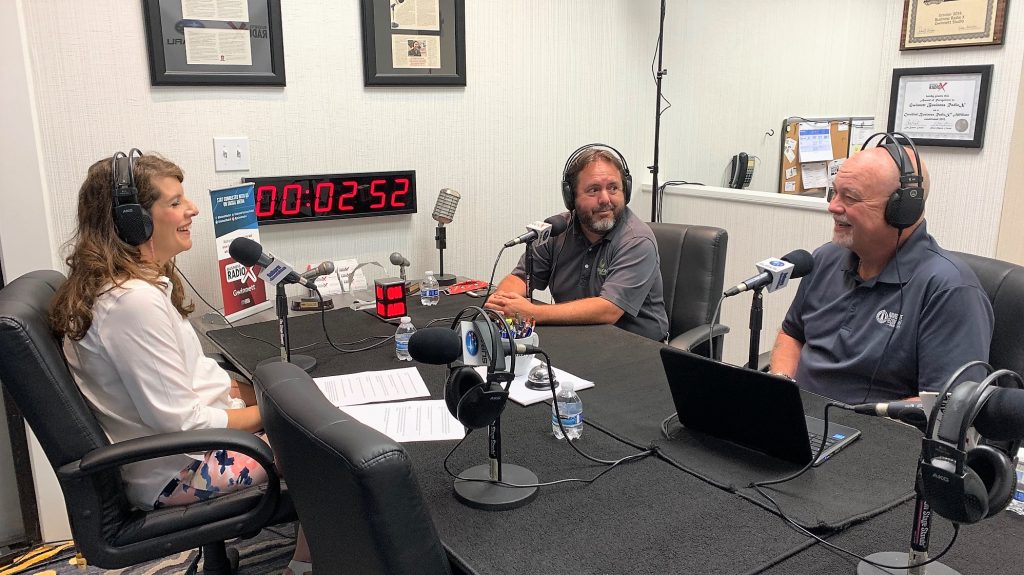
Giving Back to Gwinnett is presented by:

Tagged With: behavioral health, business radio, Business RadioX, chad jones, charities, charity podcast, community foundation for ne georgia, community foundation for northeast Georgia, farley barge, giving back podcast, giving back to gwinnett, gwinnett charities, gwinnett coalition, gwinnett non-profits, heather loveridge, magnolia group, mental health, navigate recovery, non-profits podcast, non-profits radio show, Radiox, view point health

  • 1
  • 2
  • Next Page »

Business RadioX ® Network


Our Most Recent Episode

CONNECT WITH US

  • Email
  • Facebook
  • LinkedIn
  • Twitter
  • YouTube

Our Mission

We help local business leaders get the word out about the important work they’re doing to serve their market, their community, and their profession.

We support and celebrate business by sharing positive business stories that traditional media ignores. Some media leans left. Some media leans right. We lean business.

Sponsor a Show

Build Relationships and Grow Your Business. Click here for more details.

Partner With Us

Discover More Here

Terms and Conditions
Privacy Policy

Connect with us

Want to keep up with the latest in pro-business news across the network? Follow us on social media for the latest stories!
  • Email
  • Facebook
  • Google+
  • LinkedIn
  • Twitter
  • YouTube

Business RadioX® Headquarters
1000 Abernathy Rd. NE
Building 400, Suite L-10
Sandy Springs, GA 30328

© 2025 Business RadioX ® · Rainmaker Platform

BRXStudioCoversLA

Wait! Don’t Miss an Episode of LA Business Radio

BRXStudioCoversDENVER

Wait! Don’t Miss an Episode of Denver Business Radio

BRXStudioCoversPENSACOLA

Wait! Don’t Miss an Episode of Pensacola Business Radio

BRXStudioCoversBIRMINGHAM

Wait! Don’t Miss an Episode of Birmingham Business Radio

BRXStudioCoversTALLAHASSEE

Wait! Don’t Miss an Episode of Tallahassee Business Radio

BRXStudioCoversRALEIGH

Wait! Don’t Miss an Episode of Raleigh Business Radio

BRXStudioCoversRICHMONDNoWhite

Wait! Don’t Miss an Episode of Richmond Business Radio

BRXStudioCoversNASHVILLENoWhite

Wait! Don’t Miss an Episode of Nashville Business Radio

BRXStudioCoversDETROIT

Wait! Don’t Miss an Episode of Detroit Business Radio

BRXStudioCoversSTLOUIS

Wait! Don’t Miss an Episode of St. Louis Business Radio

BRXStudioCoversCOLUMBUS-small

Wait! Don’t Miss an Episode of Columbus Business Radio

Coachthecoach-08-08

Wait! Don’t Miss an Episode of Coach the Coach

BRXStudioCoversBAYAREA

Wait! Don’t Miss an Episode of Bay Area Business Radio

BRXStudioCoversCHICAGO

Wait! Don’t Miss an Episode of Chicago Business Radio

Wait! Don’t Miss an Episode of Atlanta Business Radio