Business RadioX ®

  • Home
  • Business RadioX ® Communities
    • Southeast
      • Alabama
        • Birmingham
      • Florida
        • Orlando
        • Pensacola
        • South Florida
        • Tampa
        • Tallahassee
      • Georgia
        • Atlanta
        • Cherokee
        • Forsyth
        • Greater Perimeter
        • Gwinnett
        • North Fulton
        • North Georgia
        • Northeast Georgia
        • Rome
        • Savannah
      • Louisiana
        • New Orleans
      • North Carolina
        • Charlotte
        • Raleigh
      • Tennessee
        • Chattanooga
        • Nashville
      • Virginia
        • Richmond
    • South Central
      • Arkansas
        • Northwest Arkansas
    • Midwest
      • Illinois
        • Chicago
      • Michigan
        • Detroit
      • Minnesota
        • Minneapolis St. Paul
      • Missouri
        • St. Louis
      • Ohio
        • Cleveland
        • Columbus
        • Dayton
    • Southwest
      • Arizona
        • Phoenix
        • Tucson
        • Valley
      • Texas
        • Austin
        • Dallas
        • Houston
    • West
      • California
        • Bay Area
        • LA
        • Pasadena
      • Colorado
        • Denver
      • Hawaii
        • Oahu
  • FAQs
  • About Us
    • Our Mission
    • Our Audience
    • Why It Works
    • What People Are Saying
    • BRX in the News
  • Resources
    • BRX Pro Tips
    • B2B Marketing: The 4Rs
    • High Velocity Selling Habits
    • Why Most B2B Media Strategies Fail
    • 9 Reasons To Sponsor A Business RadioX ® Show
  • Partner With Us
  • Veteran Business RadioX ®

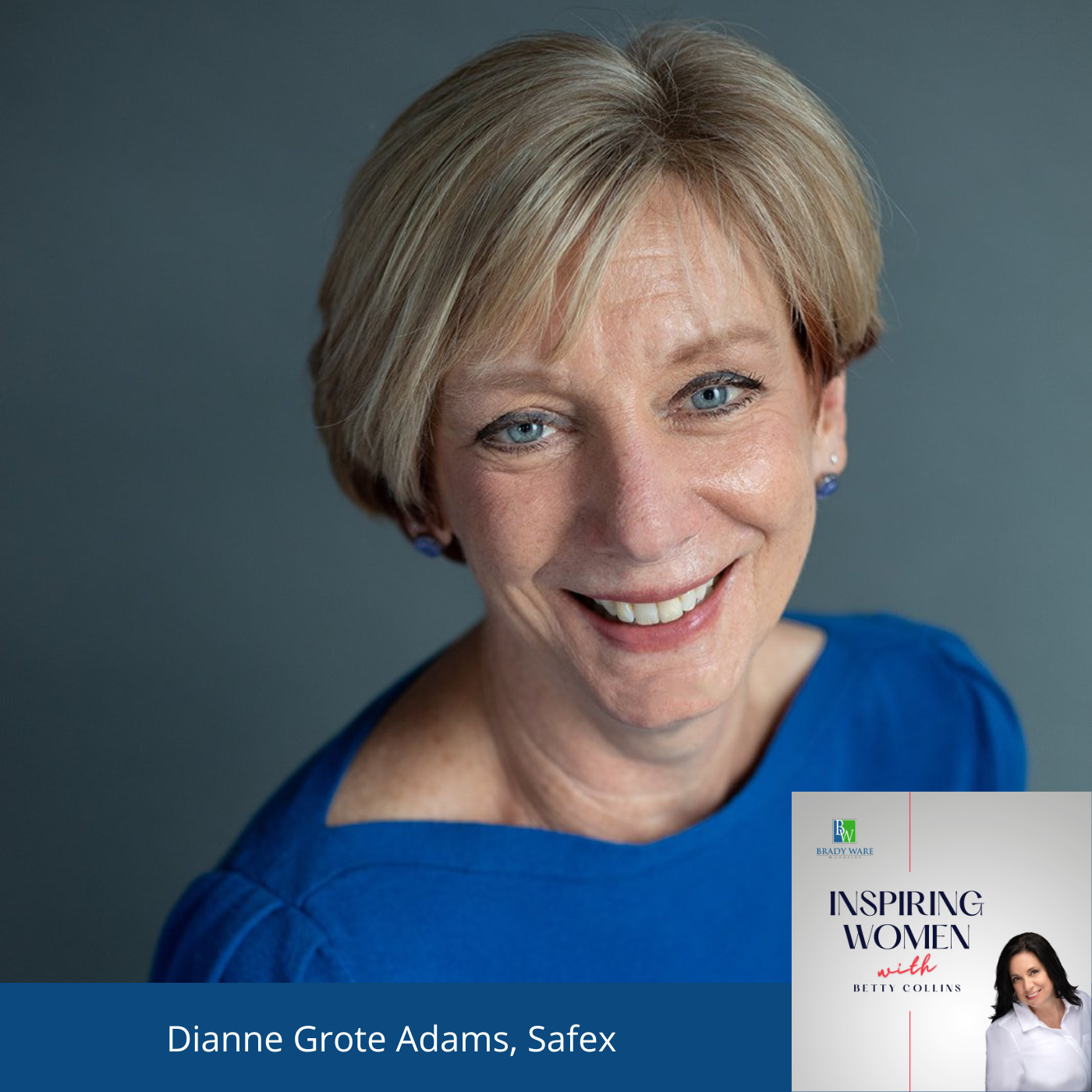
Work/Life Balance, with Dianne Grote Adams, Safex

September 19, 2022 by John Ray

Safex Dianne Grote Adams
Inspiring Women PodCast with Betty Collins
Work/Life Balance, with Dianne Grote Adams, Safex
Loading
00:00 /
RSS Feed
Share
Link
Embed

Download file

Safex Dianne Grote Adams

Work/Life Balance, with Dianne Grote Adams, Safex (Inspiring Women, Episode 50)

As a working mother juggling family and a career, Dianne Grote Adams felt a compulsion to start her company, Safex, with a core value of giving employees the opportunity to realize a better work/life balance. In this interview with Inspiring Women host Betty Collins, Dianne discussed the development of Safex, what role the focus on work/life balance has had in attracting and retaining talent, and much more.

The host of Inspiring Women is Betty Collins and the show is presented by Brady Ware & Company.

Betty’s Show Notes

Balancing your professional and personal life can be challenging, but it’s essential.

Often, work takes precedence over everything else in our lives. Our desire to succeed professionally can push us to set aside our own well-being.

Creating a harmonious work-life balance or work-life integration is critical, though, to improve not only our physical, emotional, and mental well-being, but it’s also important for our career.

My guest is Dianne Grote Adams. She is president of Safex, a health and safety consulting business, who started her company in 1992. As a working mom with a young family, she wanted to create a company that would respect the abilities of people in a technical career while also offering them some flexibility. From its beginning, Safex has offered flexible scheduling and benefits—vacation, insurance, and paid holidays—for anyone who works more than 25 hours.

Did you find that you attracted the right team around you because of that philosophy?

A lot of people, I think, have this myth that part-time workers aren’t committed.  And they say, well, they’re not really committed to their careers. And I found the opposite. They have time to do personal things. And guess what? They don’t make doctor’s appointments during work hours. They don’t make personal calls during work hours because they have other days to take care of that. So I find actually they are probably more committed because they knew they have a special opportunity that others might not have.

But there are people who maybe can’t handle flex time and flexibility. They need more structure. Do you find that sometimes that’s a challenge?

I think there are certain people who maybe need more guidance or more coaching to help them learn how to manage flex time. Many of us didn’t grow up with that as an option, right? Can everyone be successful? I don’t know. But you’ve got to be able to manage responsibility and accountability.

What would you tell employers who are starting businesses to get into this mindset today? How do you get started?

It has been a focus on what does that person. What is that person supposed to contribute, what are they supposed to do? And if you can put a good definition around that and they meet that, then why should you care what the exact hour is or whether they rode their bike for an hour at lunch or they left early to catch a concert?

So in your journey, what comes easy for you in the work-life balance?

For me, it’s really easy to tell someone else to go take the time off. I struggle still with that work ethic that I grew up with, that I need to be first in, last out, and yes, I need to on Sunday night to prepare for the upcoming week. I just don’t give myself that same grace.

Hosted by Betty Collins, CPA, and Director at Brady Ware and Company. Betty also serves as the Committee Chair for Empowering Women, and Director of the Brady Ware Women Initiative. Each episode is presented by Brady Ware and Company, committed to empowering women to go their distance in the workplace and at home.

For more information, go to the Resources page at Brady Ware and Company.

Remember to follow this podcast on Apple Podcasts and Google Podcasts.  And forward our podcast along to other Inspiring Women in your life.

TRANSCRIPT

[00:00:00] Betty Collins
I’m Betty Collins. And this is inspiring women. And today we’re going to go through a topic that all of us think about, all of us wish it were just easy. All of us some of us think it’s a it’s a myth. Some of us think it’s a lifetime journey of perfecting. But it really comes down to work life balance and knowing how to make that happen. And sometimes I do really well at it. Other times I’m like, okay, I’ve got to reset again and figure this out. So I think it’s a challenge. It’s all part of your journey. And then one day you figure out it’s probably is a little bit of a myth, but it’s something you can do if you’re intentional about it. It’s like everything intentionality makes it happen. So today I have a very special guest, Dianne Grody Adams, and she founded a company built this company for for quite a while and has and everything about it had in mind a work life balance. So we are just fortunate to have you today, Dianne. We are so glad that you are taking some time with us and the audience. And I know they’re going to be inspired by what you have to say. So the first thing I do want to do is just tell us a little bit about take a couple of minutes to tell us about Dianne Grote Adams.

[00:01:14] Dianne Grote Adams
Wow. Gosh, what is there to tell? So long time Columbus resident, born basically here and grew up here and started the company actually worth 30 years old this year. Very good. So but you’re right, work life balance was something that I aspired to when I was working and thus led me to start Safex. I started working back many years ago and obviously in the traditional workforce didn’t always have as much flexibility as I would have liked to have.

[00:01:49] Betty Collins
Correct. Today we’ve learned all about flexibility because you have a crisis come in and then everyone all of a sudden just went to flexibility. Right. But in 30 years ago, that wasn’t the case. So when you say you have something in mind for that, that you wanted to keep that at your forefront. Tell me just some specifics of what that would be back when you’re thinking through this has to happen, you know.

[00:02:14] Dianne Grote Adams
So I think the big part for me, the motivator for me was I had a professional career, I started a family and I couldn’t balance traveling full time and raising two sons and being a good wife and a good employee. Right. And I didn’t feel like I should have to sacrifice any of those things. So I looked for options and I found a part time job in my field, but it was not very fulfilling. The pay was terrible. There were no perks you got, as many of us probably have done. Hopefully it’s better now. But at that time, right. So as I started to start the business, I thought, well, why does it have to be that way? Why couldn’t I work less than 40 hours a week and still have benefits? Or why couldn’t other mothers or fathers that wanted to be caregivers? Or maybe they just were at a different point in their career and they didn’t want to work 40 or 50 hours a week. Right. Why couldn’t we model a company like that? So that was the intent.

[00:03:14] Betty Collins
Okay. Well, in those beginning stages was of of that and that was part of your culture, probably that was just part of the quote, the mission statement. That was part of how you thought. Did you find that you attracted the right team around you because of that?

[00:03:32] Dianne Grote Adams
That’s a great question, because a lot of people, I think, have this myth that part time workers aren’t committed.

[00:03:36] Betty Collins
Yeah.

And part time B, let’s define as less than 40 hours. And they say, well, they’re not really committed to their careers. And I found the opposite. Those of us who work there knew that we had something special, that we could come to work for three days a week, and then we could have time to do the personal things. And guess what? I didn’t make doctor’s appointments during my work hours. I didn’t make personal calls during my work hours because I had those other days to take care of that. So I found actually they were probably more committed because they knew they had a special opportunity that others might not have.

[00:04:13] Betty Collins
Right. And 30 years ago, this conversation would have been the extreme or it would have been on the out an outlier. It would have been like, okay, good. I’m good luck with that. Right? So you probably had a lot of critics at that point, but at the same time, you felt like you developed a great team that probably stayed with you a long time because of it. One of the things that I that I tell women is your seasons are different. So my twenties look nothing like my thirties. You know, my fifties weren’t my forties. I don’t know what 60 is, but it’s coming there. I’m going to find out pretty soon. Okay. And so sometimes when you look at work life balance, it’s just an easier time to make it happen versus other times. So as an employer and as that person that was building your team. That as far as the work life balance where you flexible as they tendered in came in and out of those seasons. So whether men or women it doesn’t matter.

[00:05:08] Dianne Grote Adams
Certainly and you’re right on and that we all have a different desire or need depending on where we are in our work journey. And sometimes it’s a young family that wants more flexibility. We’ve had other extreme where someone is in their sixties, wants to keep working, but they don’t want to be there five days a week. And so they would like the alternative as well. So I agree with you. It’s not limited to a certain demographic or a certain age group.

[00:05:37] Betty Collins
Right. And in today’s markets, completely different issues of the day. But I mean, people are really back to I want more flexibility. I got used to flexibility and now the things that in their seasons are become extremely important to them, which is not a bad thing. Right. So have you made we had this thing called COVID. You know, we had this thing called a pandemic. Have you made changes since COVID or, you know, as yet another generation is joining the workforce? How are you dealing in all of that? So 38 years ago, you were on the cutting edge. Now it’s like och post-COVID, millennials, all of that.

[00:06:14] Dianne Grote Adams
So actually what we’ve been saying to people is, you know, we’ve been doing this for 30 years. This for us isn’t something really new. But we did recently document our work, flex time, I guess for help for the younger people coming in. We actually got feedback from them is I like the thought here, but I think I need a better understanding and some. Boxes around what you want me to do and not do. Which I was kind of surprised because I was kind of like, Well, you got to take care of your customers and you’ve got to meet your client needs and your internal client needs. And other than that, if you need to run with the doctor under the doctor, but they wanted a little more structure around it. So we actually put it on paper and said, okay, here are your options and laid it out for them.

[00:07:03] Betty Collins
Right. So do you find that this model doesn’t, though, work for everyone? You know, because it’s like, oh, man, I get all this. But there are people who maybe can’t handle flex time and flexibility. They need more structure. Do you find that sometimes that’s a challenge?

[00:07:21] Dianne Grote Adams
I think there are certain people who maybe need more guidance or more coaching to help them learn how to manage flex time. Many of us didn’t grow up with that as an option, right? You went to school and you were expected to be there certain hours and you had homework and it was due a certain time in your first jobs if you’ve been working a while. We had very structured schedules, right? So I think some people need guidance on how do they manage that right now. Can everyone be successful? I don’t know. But you’ve got to be able to manage responsibility and accountability.

[00:07:59] Betty Collins
Right. And I think and I’m sure that you do this for Betty Collins. I do better when I’m in an office. I don’t know if it’s because I’ve always been in an office, but I know when I’m home, I’m like, I’ll just get one more thing done here and I’ll change one more laundry load and maybe I can just shop off to Kroger and then I’ll come back. So for me to go in and out like that, it’s not it’s not a good mindset. I need to stay focused and in there. But when I was raising my kids and that season of Sports and Youth Group and you name it, I could do it then. I can’t do it now. Like I could leave and go. I got to go to the game and then I’ll come back and fit and I was able to. So some of it has to do with the season, but for me, I know if I had I would have to still have a lot of structure around it. So but that’s just me. So when we’re balancing things, what do you find that people like to balance the most? I mean, for me, I look at my life and go, okay, this is the order. I have a spiritual life. I have a mental health life, a physical life. And then there’s this big category called The Routine of Life. And as long as I balance this first, I can handle routine fairly well. So when you’re finding people want that balance, is it that cut and dry? Because I’m a CPA and I’ve got four sections, you know, but when they talk about balance, what do you find your employees want to balance besides doctor appointments or or maybe that’s a lot of what it is.

I do think a lot of it is just life. Yeah. There are things you have to do, right? It’s part of that. Adulting. Yes. And it takes time. Yeah. And if all the people you need to make a phone call and appointments for work 8 to 5 and you work 8 to 5, that’s hard. So that is part of it. I think others I think it’s all over board depending on what their interests are. Right. I have some people who want to go use the gym for lunch or I have some people who want to go the grocery store before they pick a child up at childcare or somebody wants a long weekend to go hiking. So I think it’s really all over the board what those other things are, depending on what their personal interests are.

[00:10:01] Betty Collins
Yeah. So for you, you know, this is part of your culture. It’s been part of the why and the how, because it was personal to you 30 years ago that I need this in my life for people who still don’t grasp this, like maybe my older partners, they just don’t grasp it. What would you tell employers today or women who are starting businesses or anyone who’s starting a business, you know, to get this mindset, especially if it’s hard for them, like how do you really just get in there and go because this works? How do you get started? You know, how do you change that?

[00:10:40] Dianne Grote Adams
For us? I think it has been a focus on what does that person what is that person supposed to contribute, what do they is supposed to do? Right. And if you can put a good definition around that and they meet that, then why should you care what the exact hour is or whether they rode their bike for an hour at lunch or they left early to catch a concert? I mean, why should you care as long as you have our clearly communicating what the expectations are as consultants? I mean, it is a little easier. You have a certain amount of revenue you’re expected to generate and you have certain deadlines to meet with your clients. If you’re not meeting those, then it’s an obvious discussion that we have a problem. But if you are meeting those, should I really care?

[00:11:25] Betty Collins
Right. Right. And I mean so. So your company is very intentional about setting expectations. We are. Okay. So tell us a little bit about your company. So people kind of know that they might be going well, this is easy for her because. You know, what is it that Safex does?

[00:11:43] Dianne Grote Adams
So let me say first, I’m not going to say it’s easy. Well, and I grew up, as many of us did, with this work ethic that you’re in the office at seven, you’re the last to leave. And that’s what life is all about and that’s how you prove yourself. So that was the mindset I started with, and that is how I spent the first ten years of my career. So this was a mind shift for me, no question. And there were days I still have a little heartburn when I’m not sure that everybody has the client’s best interests at heart. But then you have to have a conversation, right? So that being said, because we are occupational safety and health partners with our customers, they often have a project and it has a known deadline. We have a budget. There are known hours to complete that project and each person knows how many hours of revenue they need to generate in a year. So you break that out month by month and then it’s easy, relatively easy to have a conversation about this is what you need to accomplish. And so if you have the open conversation and you share all that information and maybe that’s what helps us, we’re very transparent in our books, the revenue we generate, the hours that everybody is billing, the clients that are happy with us, the disappointments. And so that open communication perhaps reinforces the message of how much we trust you, but also the huge responsibility you have to maintain that trust.

[00:13:13] Betty Collins
So people really trying to to hear you today and go, I mean, I would love to get there. It all started with a Y and it was personal. But it also is your intentional. You’ve set expectations, communication being very open. So as I say in here, your flexibility cannot cause chaos to the overall client in your peer. Correct. And that’s just an expectation that has to be there from the beginning. So who have you seen do did you have a mentor or somebody that you saw in life that did this well or no? I was the mentor and I helped other people do this. It could be either way.

[00:13:56] Dianne Grote Adams
30 years ago, there weren’t a lot of people doing this right. I more went to This is not what we want to do. So how do we do this differently? Yeah, and it wasn’t just my desire for my life. My husband was working in consulting at the same time and he would often be out of town for ten straight days, back home for four gonn again ten. And he didn’t have a choice about that schedule. He was told, this is where you’re going. Yeah. And they expected him to figure out child care or whatever or they assumed he didn’t have to worry about it, that I would worry about it, whatever the case might have been 30 years ago. But then I also saw he came home. He was exhausted. Right. He didn’t have quality time at home. And then he still had to do his timecard and his marketing responsibilities and things. So those four days off really weren’t a four days off. Yeah. So I saw that as, okay, these are other things we can’t do, can’t dictate schedules. We can’t dictate. You have to go out of town this week. You’ve got to have a conversation with people on where they are in their life and who can we count on to travel this month or who can we travel on to next month? Or maybe you can travel next week, but the following weeks, not really good because your spouse is.

[00:15:09] Betty Collins
Gone, right?

[00:15:10] Dianne Grote Adams
And so those kind of conversations is what helped allow us to create that.

[00:15:15] Betty Collins
To create that. Yeah. Again, the flexibility can’t cause chaos, but let’s see what we can do to make it all work.

And there are days it doesn’t work. Yeah, we’re there more than we want to be or.

[00:15:27] Betty Collins
Right. Because if you.

[00:15:28] Dianne Grote Adams
Say we’re out of balance and we need to pull back and have a conversation about it, it happens.

[00:15:32] Betty Collins
Yeah. So. So for you, do you I mean I mean, you’ve had this incredible journey of a great company. You’re pretty known for it. Do you find that even though you’ve done this this long and I don’t like to make my podcast about about pandemics, but it was a pretty major thing. Was there any adjustment, though, even to that? Because now we can’t be maybe as flexible because clients we can’t be there when you know what I mean. There was definitely I know for us, for instance, auditors couldn’t just go on it, you know, and then all of our clients are doing these whole audits electronically, which they really didn’t want to do. And you’re doing safety. I mean, so was it Hey, we’ve been doing this, so we’re good to go. And the pandemic, or did you still find that challenging with with doing like everyone did?

[00:16:23] Dianne Grote Adams
There are certain things that we were probably more prepared for than others. Yeah, but no question, there are certain tasks that had never been done remotely that we either had to figure out, can this even be done remotely? Or is that something that’s going to have to wait? Yeah. So no, there’s still some adjustments that absolutely had to be made.

[00:16:45] Betty Collins
So this is a terrible question, but I’ll ask it anyway so you can say no. Edit this, take it out. So the question is so in your journey, what comes easy for you with work life and balance? But what comes hard? I mean, like, what’s the good and what’s the bad? And again, you don’t have to answer, but we’re waiting.

[00:17:03] Dianne Grote Adams
Oh, no, it’s okay. Yeah, there’s nothing to hide. Yeah, I struggle still with that work ethic that I grew up with, that I need to be first in, last out, and yes, I need to on Sunday night prepare for the upcoming week. I am so wired that way that I really struggle to not think about work on the weekend. Now that might be in part business owner and not just employee, a combination of the two. So that for me is still hard. Yeah, what is easy for me. A young man came to me yesterday and he said I got my work all caught up and I’m supposed to be here till the end of the day. But we have our new puppy and it has its first vet appointment. And I’m not a dog lover, so I didn’t really get it, but I’m like, okay, he’s all gushy about it, you know? And he says, I really want to go with my wife to see to the puppy’s first vet appointment. I said, So go. He goes, Really? I’m like, Yeah. Did you not read our flexible work policy? You can do that. You’ll work, you’ve met your needs. Go. So for me, it’s really easy to tell someone else to go do that. I just don’t give myself that same grace probably.

[00:18:18] Betty Collins
Well, it’s amazing to me and how I would answer is it’s the it’s the constant engagement that we have set ourselves up to be. And that first one is just the email, shut it down, quit having it on your watch, your phone everywhere round. That’s one that people you don’t really have your flexibility in my mind on the weekends if you’re getting emails from the person who wants to work all weekend and yet how you not you know and that one is the hardest for me and I’ve even learned I have ideas or emails that I draft and wait until Monday morning to send them all out. Good for you. You know, because you’re you may be wired to do this, but you’re your people maybe don’t want to do this or they don’t want to keep getting this stuff that engages them back in. And so as employers, we need to set a better example of that to me. But how did we ever do this? Because email, it’s hundreds a day. It can be where it wasn’t like I was on the phone all day in the eighties. But, you know, that’s one to me that’s a challenge for me and work life balance. Don’t answer email, shut it down. But then don’t send emails and think people will just come in on Monday and answer them. You put them in an anxious spot, right?

[00:19:39] Dianne Grote Adams
I agree. I resisted email on my phone long after. People are like, What do you mean you don’t check your email on your phone? I’m like, Because the minute I look at something, then my brain engages and I can’t disengage. But I don’t have a smartphone or a smartwatch because I don’t want email.

[00:20:00] Betty Collins
On my.

[00:20:01] Dianne Grote Adams
Wrist because I just will go nuts.

[00:20:04] Betty Collins
And I did turn off notifications because that does help at least. So then it is. If I don’t see a bunch of notifications on those two things, I’m not going to dig in to.

[00:20:14] Dianne Grote Adams
I have all my notifications off 100%.

Yeah.

[00:20:17] Dianne Grote Adams
Even in the office. Because if I’m focusing on something, I don’t need those little reminders that somebody has something to tell me. Right. Because sometimes what I’m. Doing is more important than whatever that person had to tell me at that moment. And if I’m engaging with a client, I need to be focused on what that client’s needs are. So I don’t use those at all. But you have a valid point.

[00:20:38] Betty Collins
It’s tough. It’s tough. So use the employer. If you’re really say you have work life balance and the weekend is yours, then don’t make it theirs. Don’t make it yours. I mean, you know, so the other thing I would ask, work life balance, we always think of it’s well, that’s the mom.

[00:20:53] Dianne Grote Adams
That’s for women, right?

[00:20:55] Betty Collins
It’s not for the dad or whatever. Maybe the dad is more of the caretaker or those type of things. How do your if you have a balance of men and women do men I mean, does it seem like it’s always geared to women and that’s what they think? Or are men going, no, I get this.

[00:21:14] Dianne Grote Adams
30 years ago when we started, we had some men who felt put out would probably be a good way to put it, that all of our women didn’t work full time and they worked like Monday through Friday every day, and that they had to take the really hard road. And we talked about it and got through it. But over time, no, it’s been men and women who have taken advantage of the part time at side effects. My husband joined us after a few years and he worked less than full time for a number of years because the our sons were in ball and it was perfect for him. Right. He got to leave at 230. When they got out of school, he went and helped coach. I mean, it was a great family environment and I would come later then and we’d have dinner together as a family. So for us, that worked great. I had he and another person came both men and at the end of their careers worked less than full time and we’re still able to mentor our young people, do productive work, feel good about themselves, but didn’t have to be there Monday through Friday. So I think it’s not just a woman’s issue, but it does take very strong men, I think, to be able to buck the tradition and be that less than full time person. And I think it’s more acceptable now than certainly 30 years ago.

[00:22:32] Betty Collins
Right.

[00:22:32] Dianne Grote Adams
And I’ll brag a little bit, my son is the primary caregiver of his two sons. And when right before he got married, he said, you know, Mom, what I would really like to do is be the stay at home dad. And I said, well, then talk to your wife to be about that. It may not happen for whatever reason, but that’s a conversation you two need to have. She’s an attorney. Her hours are not as flexible, and that’s a choice they’ve made. But he’s thrilled and he’s good at it. And so I think just giving all of our family members the option for whatever works for their family is what is that real work life balance.

[00:23:07] Betty Collins
What I really like is that your employees, your environment, your clients, whoever they solve from the top that it’s for, it’s for both. It’s for parents, not moms or it’s not the single dad who has to was you guys showed that example that this is how we want our work in life and balance to be. So then it gives people kind of the they see it and then they go, oh well maybe maybe I can do this right. So for women business owners who tend to go, everything is on me because it’s hard, right? And you’re and you take it all on. And one of the reasons I would say that women struggle in business more because men will start a business and it goes like this. Women are like this. You know, it’s the journey is a little bit longer. Doesn’t mean it’s wrong. It’s just they don’t and a lot of it is is because they think they have to do it all instead of you can have it all, you don’t have to do it all. So kind of our end today, I’d like to talk about how we inspire women to to think about that statement of you can have it all. You just don’t need to do it all. Can you kind of expand on that?

[00:24:27] Dianne Grote Adams
Sure. I think there’s two components to that, though. I’m not in business and this will upset some people. I’m not in business to see how much money I can make in a short period of time. I’m in business to provide a decent living for my family and for those that we work with. So my end game might be a little different than other business owners, so I didn’t need to go from 0 to 102 years. Right. So that being said, I might have a slightly different perspective, but it is hard, I think as a woman who was brought up, that you are the rock, right? I guess the core focus to be able to ask for help. And Betty knows I am a caregiver now and that is the hardest thing for me to do is to ask for help. And so I have been honest with our team that I can’t do what I use. To do, and it’s killing me in my soul because it’s still something I love. But I need other things for people to either pick up or if I ask you for help, it’s because I really need help. I’m not trying to quote unquote dump on you. Right. And I think, Ben, it’s back to that, just being honest and communicating. I don’t think anybody judges if you’re honest, I think we all think we’re being judged. Right. But if you have the conversation about it, I don’t really think people then are judging. It’s when you try to keep it a secret and they don’t understand that misconceptions maybe.

You’re guarding it close because oh my we can’t show that or but women business owners have a tendency to and not even the end game the end game they don’t see the full potential of who and what they could be because they’re wrapped up in in doing it all.
Because what you want to be and what you want to do might be completely different. At the end of the day. I mean, as a CPA, my goal is not to focus on your depreciation, and those things are all important. But the goal for me has always been if the marketplace is successful in this country, the world works, it just does. And when you get to be that employer you have, that means you have employees and you’re the provision, right? You’re the provision. And those are households and those households firm communities. And so how do I make sure that success happens and it’s not doing it all? Because, you know, there’s another balance and another world out there.

[00:26:57] Dianne Grote Adams
So one of our core values, we say, is equality. And that’s part of what we tell people when we first come is like, you have a different experience than me. You have a different skill set than me. None of us are better than the other. Without our collective skill set, we can’t be successful. Right. And so I think saying that does help a little bit and living that, not just saying it, but living that also helps you ask for help a little bit or say, you know what, your strength is really good in this area and I’m going to take 6 hours to do this because I am not good at this. I can do it, but I’m not good at it and being honest. And then that person picks it up, gets it done an hour, you’re like, Well, that was a much better use of time, right? And I’ll go do something that I’m better suited to do.

[00:27:43] Betty Collins
Yeah, well, today we’ve had Dianne Adams with Safex, and you have just been a delight. You have restored my. Maybe I don’t need to go through a big plan and reset. I just need to go know there is work life imbalance. It takes work, but it’s worth it. So we appreciate you coming with us today. We appreciate you talking to our audience and being part of this.

[00:28:06] Dianne Grote Adams
It’s my pleasure. I love to share our story and to hear from other women.

[00:28:11] Betty Collins
It’s a great story.

[00:28:12] Speaker1
It’s a wonderful part of being in business. Right. All right.

[00:28:16] Speaker1
Thank you very much.

Automated transcription by Sonix www.sonix.ai
Tagged With: Betty Collins, Brady Ware & Company, Dianne Grote Adams, Inspiring Women with Betty Collins, safety consulting, safex, work-life balance

What Millennials Want in a Job, with Danielle Godby

August 15, 2022 by John Ray

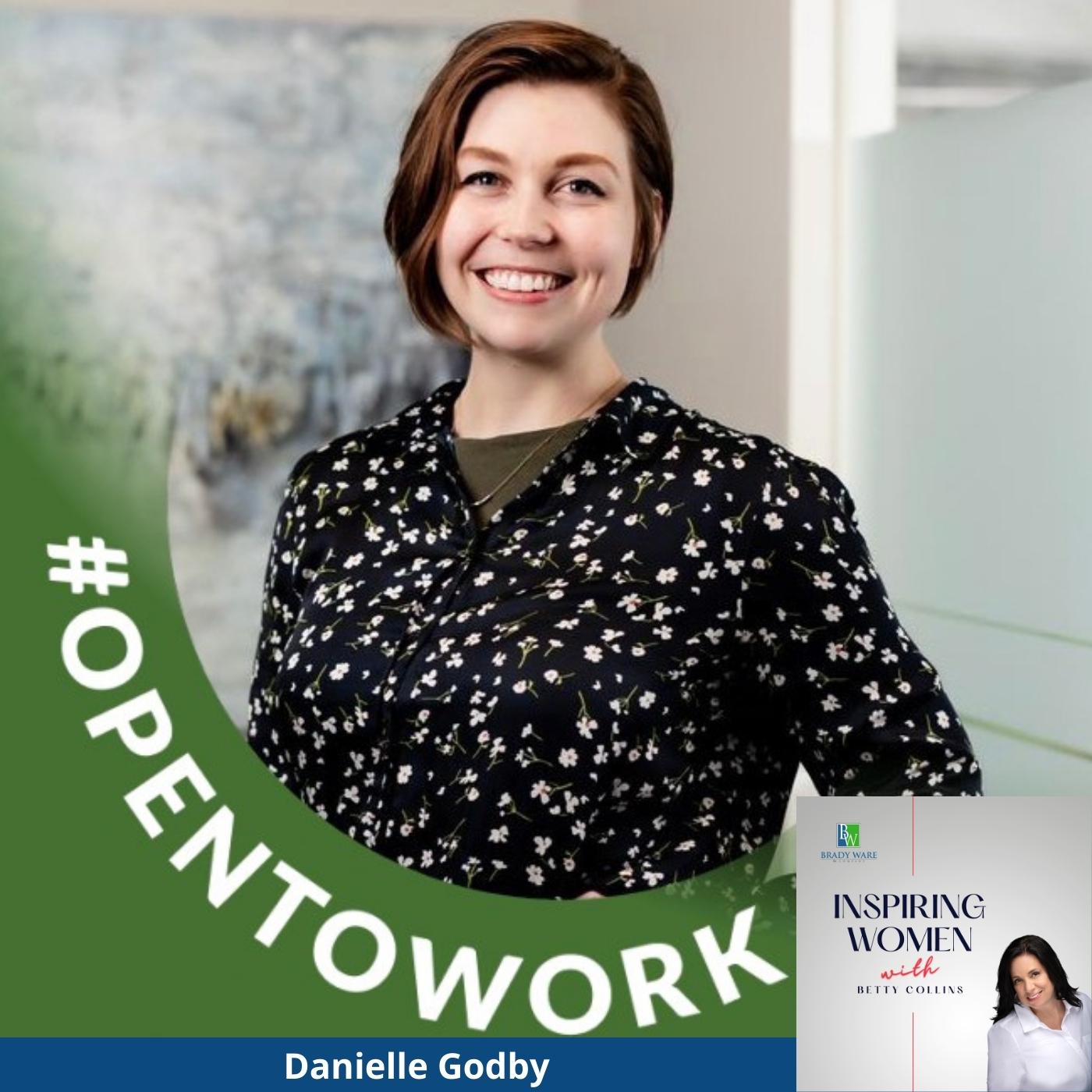
Danielle-Godby-Inspiring-Women
Inspiring Women PodCast with Betty Collins
What Millennials Want in a Job, with Danielle Godby
Loading
00:00 /
RSS Feed
Share
Link
Embed

Download file

Danielle-Godby-Inspiring-Women

What Millennials Want in a Job, with Danielle Godby (Inspiring Women, Episode 49)

Danielle Godby is a millennial retirement planner who talks about how her generation is often unfairly portrayed. She shares her own journey from ballet dancer to fitness instructor to retirement planner, highlighting how she has always been drawn to helping others. Godby discussed with host Betty Collins how job-hopping is often seen as the best way to make more money and get more experience, but she wonders why more employers don’t try to keep their employees happy and engaged. She also emphasizes the importance of offering value before asking for anything in return.

The host of Inspiring Women is Betty Collins and the show is presented by Brady Ware & Company.

Betty’s Show Notes

The millennial generation has been subjected to a lot of criticism – they are perceived as selfish, entitled and demanding, not to mention addicted to technology.

Are these stereotypes true? Certainly not for everyone.

But there are certain tendencies and habits associated with the millennial generation that are more prevalent than in the other generations currently in the workforce. However, bashing any one group of people does more harm than it does it good.

My guest is Danielle Godby, a Retirement Planner at Golden Reserve.

Danielle talks about her generation’s focus on their job search. What’s a priority to them?

When I talk to my friends, it’s a lot about feeling fulfilled by the work that they do, being able to go home at night and know that they helped someone do something better or they can feel better about their contributions to their own community.

Does money come into play?

It’s not necessarily about how much money you can make, which, honestly, it’s quite surprising given all the student loan debt that is saddling my generation. But that’s really not the dialogue that I hear. It’s a lot more about feeling good about what they do and feeling appreciated in what they do.

Among your colleagues and your peers, do you find that they value other job attributes like learning and advancement more than they do income?

There are a few different things that I hear come up in conversation and they’re surprising to me. You would think income would be front and center of the conversation, given that we were taught our whole lives to prepare for college.  But what I hear is they want to make an impact. They want to feel good about what they do. They want to have the flexibility to work from home if they need it or to take mental health days to have a work-life balance.

What can business owners do to motivate them to stay?

I think it’s very basic. If you pull it back to the bare bones, it’s just building a relationship with someone that’s strong, and consistent. You want something that lasts. So you have to invest in that relationship.

Hosted by Betty Collins, CPA, and Director at Brady Ware and Company. Betty also serves as the Committee Chair for Empowering Women, and Director of the Brady Ware Women Initiative. Each episode is presented by Brady Ware and Company, committed to empowering women to go their distance in the workplace and at home.

For more information, go to the Resources page at Brady Ware and Company.

Remember to follow this podcast on Apple Podcasts and Google Podcasts.  And forward our podcast along to other Inspiring Women in your life.

TRANSCRIPT

[00:00:00] Betty Collins
So today we’re going to interview somebody from Golden Reserve and what we really, really like about this person first, she’s a millennial. She’s full of life, she’s energetic, and she’s just been starting her career. And we just really wanted to talk today about her generation. I am not a millennial. I don’t even know what really bracket I’m in. I just know I’m 58. Right. And so we want to talk about millennials. Everyone wants to kind of put them in a box sometimes, you know, so we want to get inside your brain a little bit. But since that what you are. But so first, before we get started to talk about a little bit, two or 3 minutes of just kind of about you, you know, and golden reserve and and just take some time to to introduce yourself to the audience.

[00:00:48] Danielle Godby
Yeah. Hi, I’m Danielle Godby. I’m a retirement planner with Golden Reserve and a millennial. So I’m grateful for this opportunity to talk about things in a light that that might not be. Millennials are killing the cinema industry. What industry are we killing next? You know, I don’t think that’s the impression that my fellow millennials have of ourselves. You know, there’s a lot of intergenerational I won’t call it bullying. It’s all in good fun, you know. But I feel, you know, boomers are very down on millennials and Gen Gen Z is also, you know, so I feel that it’s good to have a representation of us. That is true. So I grew up in Mt. Vernon, Ohio. Oh, okay. Yep. I went to Ohio University down in Athens and I studied exercise physiology. Okay, so that’s something near and dear to me so that I can learn how to improve my own health and to help people around me to improve their health. That’s always been top of mind for me.
Yeah. I love to help people. I, I did ballet for 14 years.

[00:01:51] Betty Collins
Oh, very nice. Wow. How talented. That’s. I mean, that’s that takes strength. That takes a lot of discipline.

[00:01:59] Danielle Godby
Discipline is the word I would use. Yeah, certainly. But I remember finding that, you know, that core of who you are that always follows you and you tell stories about where you started out and where you ended up and have always been teaching people. Yeah, I started in ballet. I was doing we were doing stretches and people nearby would be bent in a certain way. And then like, you know, if you point your toe this way or straighten your leg in this way or or pivot this way, it’s going to feel a lot better. And I’ve always been helping people in little ways like that. So, you know, I found a strange little journey. I don’t know very many people who graduated with their bachelor’s and then continued on in that field. And I had done that for a while. I did fitness for about ten years, managed boutique fitness studios like Row House. And what was the act, the Amanda Kaiser technique. I love kickboxing, so a handful of of different things that I’ve done in the past. But I don’t think that it’s it’s something that I have to do to limit myself to being good at one thing. Yeah. You know, so I.

[00:03:03] Betty Collins
Learn that now do three things well, not ten things average.

[00:03:06] Danielle Godby
Yeah. Absolutely. So.

[00:03:08] Betty Collins
Well, my daughter loves kickboxing, I mean and so for Christmas, I always have my kids give a gift. Their spouse gives them a gift that they don’t know is coming because everything else is done with links. And they give me these lists and they know everything that’s going to be open. So I said, Are you sure you want to buy her boxing gloves? He goes, I can handle it. I got it. Incredible. But yeah, but she loves how it’s a good venting for her. It’s a great plus. She really works out and it’s a good exercise.

[00:03:36] Danielle Godby
A phenomenal workout.

[00:03:37] Betty Collins
Well, let’s talk the one thing millennials and I don’t look as millennials as the enemy, by the way. But, you know, a lot of times you’re known for job hopping. I mean I mean, that is it’s kind of the environment. And in fact, it’s three times higher than than that of non millennials who do the same job. So, you know, I’m a business owner. You really probably are too in what you do. I need to make it easier for millennial prospects to to choose me because I’m a little bit older and choose me over my competition. But what exactly in your mind do many millennials look for in their job search? What’s that priority to them? What’s what are what’s going to attract them? Right.

[00:04:18] Danielle Godby
Well, we have to keep in mind the advice that we’ve been receiving since we were children, like people in your generation have been telling people in my generation to look for something that they love, right? Do something that you love. You’ll never work a day in your life. And then we all laughed collectively because it’s still work. Right? Right. But I think I hear a lot of buzzwords like impact or, you know, what does that really mean? And I think when I talk to my friends, it’s a lot about feeling fulfilled by the work that they do, being able to go home at night and know that they helped someone do something better or they can feel better about their contributions to their own community. And so it’s not it’s not necessarily about how much money you can make, which. Honestly, it’s quite surprising given all the student loan debt that is saddling my generation, but that’s really not the dialogue that I hear. It’s a lot more about feeling good about what they do and feeling appreciated in what they do.

[00:05:13] Betty Collins
Yeah. So when, when, when millennials look in job searching, I know my daughter is is looking to do some job search or to make a change. She. Is more concern first about truly their mission statement and the culture. And she wants to know what they’re doing in the community. Now, that’s coming from my daughter. We didn’t talk about money a whole lot. We didn’t talk about her career aspirations in five years. What do you want to do? She talked about those things first. Talk to me about your generation with those things being mission culture and what are they really do for the community? Is that a driver for you? Is that going to be an attractor to you for a place to work?

[00:06:02] Danielle Godby
I think workplace culture is definitely a priority for me. Yeah, you know, I’ve left I left places because I don’t feel happy or comfortable. I’ve turned down jobs that were six figures because I didn’t like the story they were painting of their workplace culture. Yeah. And it boiled down to, I think the question they asked me was, do you ever lose sleep at night over your work? And I said, No, I do not, because I leave it all on the table every day. And I know that. And I get to go home and I get to close my laptop and feel good about what I did that day. And I thought to myself, that’s not very it doesn’t prioritize my mental health. Yeah. Or my time off. And then what is the point of then having all that money if you have no time to use it or a family or friends to spend it on, you know. Yeah. And so what are they doing in the community? I did not interview Golden Reserve and ask them what sort of philanthropy they were involved in, but it is important to me to know that their mission is to offer people tools to fight back against the financial industry. And what I mean by that is like seniors don’t have as many resources as the rest of us, like we are very well prepared to plan for retirement. But once we get into retirement, the skills are very different. The view is different. And, and it makes me very happy to know that we are doing extra things for that group.

[00:07:25] Betty Collins
Yeah, yeah, that’s good. That’s good stuff. Well, of course, this is a we’ll put you in the box because all of you want ping pong tables and free beer. Right. You know, what about the ping pong tables and the free beer that you hear that other companies are doing? You know, you see that? Is this something that really millennials want? I mean, is that a preference when they’re picking a company that will that help them learn, grow and be better or be who they want to be, to have those that typical ping pong table work? And I can be in flip flops and we have beer at lunch and nobody cares. I mean, is that really a driver for you?

[00:08:05] Danielle Godby
Well, I can only speak for myself. I would I would say no, definitely not. Those things are very novel. I love that we have a fancy schmancy water machine in our office and I can have cucumber water when I want, but I can make cucumber water at home. Right. You know, I think for me, it’s just wanting the resources required to do my job really well. And I want a group of people around me who will assume the best in me and offer me. Accommodations if I need them or, you know. Yes, wearing flip flops. That’s great. I’m wearing flip flops right now. I love that. It makes me feel happy. I know if that’s a dealbreaker for my job, I wonder how serious I am about that job, you know?

[00:08:48] Betty Collins
Yes.

[00:08:49] Danielle Godby
Yes.

[00:08:49] Betty Collins
I like the way you say that. That’s good. Yeah. Now, when you first interviewed for your job, was it a you just knew that this is it. And I’m I’m going and I’m going to jump in and do this.

[00:09:01] Danielle Godby
Well, they had a very different approach on their job posting. So a lot of the job postings in any sales position have to do with commission only. Or what do we need from you? We need top closers, top performers, very disciplined people who know what they’re doing, like that’s the dialogue. As always, this is what I need from you. And if you can’t check these boxes, then move on, you know, take it or leave it. And that’s always what I read. But this one was very backwards. It was this is what we’re prepared to offer to you. This is our 6 to 12 months of training with a partner of the firm. You know, we’re seeking people that don’t have finance backgrounds. And I asked them about that. I said, you know, I have a decade of fitness experience on this resume. Does that give you pause? Yeah. And they said no, because you have you know, you have personality and you have the desire to learn. And we’ll teach you everything else that you need to know. Yeah. And so ping pong tables and free beer, that’s not really my style. But if I have someone who’s willing to look at me in my strengths and my shortcomings and say, Hey, let me meet you where you.

[00:10:02] Betty Collins
Are, yeah.

[00:10:03] Danielle Godby
And let me give you some training where you need it to watch you shine. Like that goes a long way, right?

[00:10:08] Betty Collins
So are millennials getting a bad rap when that’s what we think that they like and that they’re motivated by? I mean, you know what I mean? I mean, is that not a fair assessment? Because, sure. You know, your generation, is that really I mean, you’re speaking for you, but is that not a fair assessment to put everyone in that box?

[00:10:27] Danielle Godby
The best advice I’ve ever gotten is someone else’s opinion of me is none of my business. And so if I look at Gen Z and think they’re the tide pod people, yeah, that’s not maybe a fair representation of their generation. Right? But it’s none of their business. What I have to think about them and vice versa. You know, all I can do is represent myself and what I know to be good and true. And when people get to know me, they see those qualities over time. So, I mean, if I have to pleasantly surprise employer after employer that I don’t want their ping pong tables and they can return them and save a couple of hundred dollars.

[00:11:00] Betty Collins
But we have an audience with a lot of business owners and, you know, and so I’m hoping they’re hearing what you’re saying. I mean, you’re getting to something that we all just think is the thing, right? And it’s.

[00:11:11] Danielle Godby
The novel.

[00:11:11] Betty Collins
Thing. Right? The novel thing. That’s a good way to say it. So so, you know, income is not among millennials. Top five factors when they’re applying for a job. I don’t even know what my daughter, who I’m helping, wants in salary. We’ve never talked about it.

[00:11:26] Danielle Godby
Interesting.

[00:11:27] Betty Collins
Yes, but it still has to matter with the high student debt that you have. But among your friends, among your colleagues and your peers, do you find that they value other job attributes like learning and advancement more than they do income? You’ve already kind of touched on that, but let’s expand on that.

[00:11:45] Danielle Godby
Definitely. There are a few different things that I hear come up in conversation and and they’re surprising to me. You would think income would be front and center of the conversation, given that we were taught our whole lives to prepare for college and then college seemed to be the only option for me. That was the only presentation. My mom, you’re going to college, right? No one in our family did. You are. And I’m like, Well, I guess I am. How will we pay for it? You know? So I would think that would be more more prevalent. But what I hear is. They want to make an impact. They want to feel good about what they do. They want to have flexibility to work from home if they need it or to take mental health days to have work life balance. I think is a really important thing. Or then you can go into the benefits package can really make a big difference. Like if you have health care, that could make a huge difference. I know a lot of potential business owners who are one foot in their job and one foot out because they have health care at that job. Right. And they have benefits that they wouldn’t otherwise have or things like paternity leave. You know, I hear a lot of maternity leave, but how many dads get the chance to go home and spend time with their new babies?

[00:12:57] Betty Collins
Right.

[00:12:57] Danielle Godby
You know, it’s the little things that kind of flag someone’s humanity. For me and again, in one person, I can speak for myself. But when I talk to my friends, they like to leave their job and know they feel good being there. They don’t want to have to vent about their co-workers or their managers or how how the culture there doesn’t align with them. You know, that’s a very stressful experience. It just gets in the way of doing the job. And so it sounds simple, but if you can just be good people to each other and remove the barriers between that person and accomplishing the goal of their job, that’s. That’s it.

[00:13:34] Betty Collins
Right?

[00:13:36] Danielle Godby
That’s it.

[00:13:36] Betty Collins
I know my son has said to me with his children, then they’re three and one and a half. But he’s like, I’m not going to just say college is your only option. There are all kinds of things that you can do, but it all starts with passion for it. And both of my kids, everything was about this is the experience I want to do. She ended up being a teacher. He’s a hospice chaplain and I’m a business person. Yeah, they give me a bad. They give me a bad rap. It’s all good. It’s all good. So business owners want to I think they want to do a better job than retaining millennials. They want that future. They want that next generation. They do. I mean, we we talk about it in Brady. We’re now a lot not just who’s going to replace Betty Collins, but who’s going to replace Betty Collins replace place. You know, it’s not just me. And here’s somebody now. We’re trying to think in two generations. Sure. So they want to keep them. But but investing in in their learning and advancement can be costly. And it can be uncomfortable for us to take that risk to some degree because we’re going, okay, of course, we’re thinking you want the novelties more than substance.

[00:14:45] Danielle Godby
Share.

[00:14:45] Betty Collins
Too, but what can business owners do to motivate them to stay? And then, you know, you’re not looking for the next thing or the next best thing and that kind of thing. How can we do that?

[00:15:01] Danielle Godby
Well, I think it’s very basic. If you pull it back to the bare bones, it’s just building a relationship with someone that’s that’s strong, consistent. You want something that lasts. So you have to invest in that relationship, right? It doesn’t matter if it’s a friendship, a romantic relationship or a work relationship. You know, you have to continue to follow up with these people and and check in with them and offer them choices. But I’ve noticed some of the things that piqued my interest is I’ll hear someone who’s been in a job for a long time and they seem to get these. I’m using air quotes here, promotions. Right. And they’re getting to other people’s jobs, but there’s no pay increase for these people. And so they’re being it feels like a reward. They’re being rewarded with this opportunity, but then it also feels like a punishment. Yeah. Why do I have to do all this extra work just because I’m good at it, you know? And so to me, it’s it might be simple on one side, not being a business owner yet. You know, I have a business mindset, but I don’t have to work with a pal.

[00:16:00] Danielle Godby
Right. So but consistent opportunities for promotions, you know, lateral roles in the same job. You don’t have to leave your workplace, but maybe they’re sick of doing that role. Maybe they want something where they can be paid the same and do something else and contribute in a different way. Or, you know, ultimately, if it’s a good workplace culture, I’ve been hit with a couple of non-compete agreements in my time, and I mean, that’s very common in fitness, it’s common in finance, common and anywhere in the industry. Yeah. So anywhere that there’s sales, you have talented people, you want to retain them and there’s a little bit of fear like I just invested so much time, so many resources into you and your growth. I don’t want you to leave me and that’s reasonable and fair. But if you take that into, let’s say, a romantic relationship, relationship and you’ve invested all this time and dates into this one person, you say, I don’t want to fully commit to you because what if you leave me?

[00:16:57] Betty Collins
Yeah.

[00:16:58] Danielle Godby
And that’s not a very productive or fruitful way to live the great relationship. Yeah, right. But I mean, it’s not easy to be the first one to go first. But one of the things I really liked about Golden Reserve is that they said, Hey, we’re going to take a bet on you and you’re going to take a bet on us, and it’s going to take a lot of work on your part. But we’re here for you and here are your resources, and it’s up to you if you succeed. And they told me one in ten people make it in this industry that I’ve decided to go into. Six months ago.
Right? Right.

[00:17:30] Betty Collins
But you’re making it.

[00:17:30] Danielle Godby
You know, I have the audacity and the boldness to know that’s me. I have to be that one person out of ten. Yeah, but I don’t think I would be that comfortable if they weren’t ready to sponsor my licensure or my certificates or to give me training when I ask for it, you know? So.

[00:17:47] Betty Collins
But you felt like they were all in with you. It wasn’t. Here’s what we’ll do, but here’s what we’ll do. If it was, we’re all in.

[00:17:56] Danielle Godby
Yes. And people don’t want to leave jobs like that because they become family. Yeah. And it’s not like that. We’re all a family here. So we’re going to abuse you mentally? Sort of.

[00:18:06] Betty Collins
Yeah, yeah, yeah. Get.

[00:18:09] Danielle Godby
I’ve seen some some memes as a millennial, we communicate in memes. Right. But the places that are the hardest for me to leave are places that feel like family. The communities that I’ve built in different fitness studios. I was really, really sad to leave those, but I was guided by people who know and love me. That job hopping is how you make more money, and if you leave one job, you get to bump your pay a lot. And if you do that every few years, you get more experience and more skills and more pay. What’s stopping us from keeping that person there and still giving them these bumps and these opportunities to contribute? Yeah, I guess would be my question.

[00:18:47] Betty Collins
Well, let me ask you a few things and see what you mean, because first of all, do you feel like you, your generation. The you guys who are going to take over the world one day and we’re all going to be going. They took over the world. Right. When you hear things like. Do you want a mentor? I want to be your mentor or I’m a mentee. I can’t be a mentor or whatever. What do you think of mentor mentee relationships? Your generation? That. Are you open to being teachable? Are you open to hearing and being part of somebody who just might know more? Or they might really want to generally help you?

[00:19:29] Danielle Godby
Absolutely.

[00:19:29] Betty Collins
Just expand on that a little bit.

[00:19:31] Danielle Godby
I think everybody knows something that I don’t know and you never know unless you listen to them talk and you ask them to tell you their story. And I’m very supportive of any mentorship that I hear about or participate in. I don’t think being a mentee precludes you from mentoring someone else. Because we have diverse skills and we can offer a lot to different groups of people. And I think if you are very closed off to that, you’re going to have a very hard time in and anything that you do. And that’s one of the one of the things that I attribute to my success and being flexible enough to go from one industry to the next is being coachable. Because if I came from a decade of fitness experience and I was closed off to the idea of somebody knowing more than me, I would know a fraction of what I know now, and I wouldn’t have nearly as much success as I do now in this new role. And I would probably be really lonely and anxious about it too. Right. Why is it just my job to do this when there’s a wealth of information around me? I think I’m a little bit. I like to offer value before I ask for anything. So engaging in those relationships can be can be, I don’t know, complex, difficult, I guess, to approach someone and say, hey, can you mentor me? Right. Like, what am I supposed to offer that person? You know? So I think it’s more comfortable in situations where I’ve met people who I know I can help and I say, Hey, you know, I drop a little breadcrumbs for them. I let them come to me. I don’t want to be overbearing at all. Sure, either side of that is a difficult conversation, though. Like I know something that would benefit you. I want to I want to take you under my wing. That’s delicate. But then being the person who wants to know more is delicate, too. So.

[00:21:19] Betty Collins
Right. Because I think there is a huge desire that boomers, which is kind of where I’m in. I was born in 63, so I don’t know where I’m at, but it doesn’t matter to me. I really could care less. But we love to be able to mentor, but sometimes turns into we’re going to tell you all we know and what we think. And and then it isn’t a relationship where you’re going to really get you’re not going to hear us, you know? So sure. But I think your generation, two or generations, that two and three behind me are craving somebody that was willing to jump in with them, whether it’s hard or not, whether it’s a it’s awkward or not.

[00:22:00] Danielle Godby
Right. Definitely.

[00:22:01] Betty Collins
So so interesting thing about you is when we talked just before we started in the podcast, what I find intriguing is that you were a ballerina, I don’t know, very many ballerinas. And you did that for what about you said 14 years and you said, I learned a lot of things about when I was a ballerina. Definitely talk about that.

[00:22:24] Danielle Godby
Well, I’ve always been a dancer. I think that was my mother’s not so subtle way of getting me out in front of people. Okay. Just she says my father is very awkward around people and he’s very is very shy. And she didn’t want that for me. And so, for better or for worse, I was three years old and she stuck me in a.

[00:22:43] Betty Collins
To get on stage.

[00:22:44] Danielle Godby
Right. So I’ve been performing since I was very, very little and I didn’t really know anything else and which is good because I’m pretty extroverted and it would be a strange combination of qualities to be extroverted and also shy. Right? Right. So I think you learn a lot about your limitations and how strong you can be. I think dance is a powerful form of self expression. You know, I didn’t have an outlet for that after college and that’s what prompted me to start Group Fitness. Yeah, and I missed it so much because it helped me feel valued, like I was contributing to my community. I had impact, all these things. And so kind of to bring this back into our earlier conversation. It’s kind of like you can look for these things in a job, but it’s almost the same concept of putting all of your eggs in one basket and looking for the same thing in a romantic partner, for example. Like you want them to be your everything, your whole universe. And that’s just not realistic, right? One job cannot be your whole universe. It’s not realistic. So I think it’s important to sort of pad your life with things that bring you joy and that bring you passion. So I find all sorts of opportunities to dance, whether that’s in my kitchen or at a ballroom dancing studio that I just found, fitness dance classes. I think that brings people out of their comfort zone in a really beautiful way.

[00:24:07] Betty Collins
Well, I will say to you that. It would be good if we just took our labels off. You know, I kind of want to end with a little bit about that, whether I’m a boomer or an X or gen. If we took our we took those names away, it would be so much better. Right. I agree. And then just having these kind of conversations, you’ve been such a delight today. It’s just restores my faith in OC. There are generations behind me that get a lot at at your age. You’re just because I shouldn’t ask this. But how old are you?

[00:24:41] Danielle Godby
I’m 29 inches.

[00:24:42] Betty Collins
49 in July. Oc OC We say we’re 29 again many times.

[00:24:48] Danielle Godby
I’m at the age I’ll always be.

[00:24:50] Betty Collins
Yeah, that’s right.

[00:24:51] Danielle Godby
That’s right. I have arrived.

[00:24:53] Betty Collins
So what would you like to say to my audience who probably looks a lot like me? Oc As a kind of a closing, inspirational thing coming from a millennial that we’re not going to call you a millennial, but what would you want to say to my audience that would just maybe wrap up all this in a nice bow?

[00:25:11] Danielle Godby
Well, I think if you can approach another human being with kindness and curiosity, it goes a really long way, no matter who you’re talking to or what kind of conversation you’re having, because there are many people in every generation that I’ve met who go in with this this thought that they they already know what that person is about to say, and that closes you off to actually listening to them.
And so listening actively being genuinely curious about what that other person has to say is it’s going to solve a lot of problems before they begin. You know, there are a lot of really educated, passionate people out there who just want to meet someone else in the middle. Right. It takes two to tango. I don’t think it’s an easy one. One sentence answer by any stretch. But I mean, I’ll stop making fun of boomers as soon as they start making fun of me. Right? That’s not going to work. I’m going to have to stop first. Yeah, right.
And then boomers can see that and they can say, like, okay, right. Maybe I’ll give this one slack.

[00:26:09] Betty Collins
I have a lot of people under the age of 40 here and they’ll say to me, When your generation keeps using the word you millennials, we shut down immediately. We don’t have we don’t hear anything else. You have to say. True. If we learn something today, it’s like, let’s stop putting everyone in a box. Well, Danielle, it’s been a pleasure to interview you today. I think my audience will get a lot out of what you have to say. Totally invigorating. Totally inspiring. And that’s what we do. Inspiring women.

Automated transcription by Sonix www.sonix.ai
Tagged With: Betty Collins, career, Danielle Godby, Golden Reserve, Inspiring Women with Betty Collins, millennials, retirement planning

Lindsay Karas Stencel, Startup and Venture Capital Attorney

July 11, 2022 by John Ray

Lindsay-Karas-Stencel-Inspiring-Women
Inspiring Women PodCast with Betty Collins
Lindsay Karas Stencel, Startup and Venture Capital Attorney
Loading
00:00 /
RSS Feed
Share
Link
Embed

Download file

Lindsay-Karas-Stencel-Inspiring-Women

Lindsay Karas Stencel, Startup and Venture Capital Attorney (Inspiring Women, Episode 48)

On this edition of Inspiring Women, Lindsay Karas Stencel joined host Betty Collins to discuss her career journey and how she navigates the male dominated world of venture capital.

The host of Inspiring Women is Betty Collins and the show is presented by Brady Ware & Company.

Betty’s Show Notes

My guest, Lindsay Karas Stencel, is a law firm partner, venture capitalist, podcaster, wellness advocate, fitnesser, adjunct law professor, and self-proclaimed dog mom.

One of the reasons that I have such a respect for her is that she thrives in a male-dominated venture capitalist environment. Women represent just 2% of the workforce in venture capitalism. So how does she navigate that world?

You always want to be in a position where you can make the decisions that are best for you and whether that’s for your career, for your family, for your mental health, whatever.

And when men dominate venture capital work, how does she work in that atmosphere?

I never even noticed it because I was just doing my job. Like, shame on me. I should have been better about that. In retrospect, I, I should have. But I was just doing my job. And then I realized like, holy smokes, I have a responsibility. Because if I’m one of the few people who was able to get a role that’s like this and start to pave a pathway for other females and diverse individuals to come, I better like do it right so that their path is a little bit easier. Because mine wasn’t easy.

Lindsey talks about what she would tell women today who are moving up in the corporate ranks.

You can never let that (intimidation) show, that it’s shaking you. If it’s shaking you, don’t let them see it. Because the second that they do, I think a lot of people smell blood in the water and they say like, oh, I can dig in here. The fight isn’t over. We’ve got a long way to go. And so people need to continue to push on.

And how do women do this?

You have to be prepared for that. And you have to be prepared to be better than everybody else that’s around you. And you’ve got to put in the time to do it.

Women can be really tough on women.

I think when people behave in that way, male or female, but females have a tendency to do it to other females for whatever reason. It’s usually a reflection of them. It’s not a reflection of us, right? It’s a reflection because they don’t feel good about themselves. They don’t feel enough. All of those things. Unfortunately, that’s not my problem. Right? That is a them problem and not a me problem.

Find out more about her here.

TRANSCRIPT

[00:00:00] Betty Collins
So today is just a really unique guest. I’ve always just admired her. Seen her a lot in the the events that are around town of Columbus, Ohio. And she’s always a big advocate for women. And she’s she’s just really cool. And I always call it the Marilyn Monroe of my life, because she’s just got the beauty of that, the hair, the whole thing. But but those are just some you know, she’s got a unique side to her. She’s tenacious and she just gets out there and but at the same time, you know, sometimes we tend to be we can be unique, but are we are we intentional and are we effective? Right. And it’s not even about I’m going to be tenacious, so I’ll be effective. No, I’m going to be effective. And I’m just having to be tenacious. I don’t know which one’s better, but but so today I have Lindsey Stencel. She is just a rock star in what she does. And it’s a man’s world, what she does, and she makes it look really easy from a distance. So Lindsey welcome today, and I’m just honored that you would take some time to be with us today. I know you’re a really busy person.

[00:01:05] Lindsay Karas Stencel
Well, that’s great.

[00:01:06] Betty Collins
Okay, great. So the first question I’m going to ask and I always hate reading bios because, you know, I’m reading them, I’d rather the person take two or 3 minutes and just tell us who you are, what you do, and then we’re going to get into your story, which I can’t wait to hear. So.

[00:01:22] Lindsay Karas Stencel
Sure. So Lindsey Stencel and I am born and raised in Buffalo, New York, and I’m a diehard Buffalo Bills fan to this day. Maybe this is our year.

[00:01:35] Betty Collins
Yeah, it might be. It might be.

[00:01:39] Lindsay Karas Stencel
And I went to high school in that area or college and that area where I played Division one lacrosse and was a student body president and then finally spread my wings to go to law school. Did my first year of law school out in New Jersey? Didn’t love that. I’m not sure if I didn’t love New Jersey or I didn’t love the school. And so I said, okay, I’m going to transfer to something more Midwestern. And that brought me to the Ohio State University, where I did another year of schooling. And then I still didn’t really love being a lawyer, which is funny because today I play a lawyer full time, but we’ll get there. Yeah. And I, I, you know, and it’s one of the things I advocate a lot of people do is just saying yes and jumping in if your gut says yes. So I ran into after my second year of law school, after my second year of working and during the summer, had a job lined up like everything was, you know, doing what it’s supposed to do if you’re in law school. Right? Right. And I just wasn’t happy and arena to someone who was talking about the Fisher Business School programs to include the MBA. And I just approached him afterwards and I said, hey, I’d love to get an MBA someday. I just don’t know what I’m going to do it.

[00:02:54] Lindsay Karas Stencel
And I’m old. So at the time the business school was on quarters at OSU and the and the law school was on semesters. So I was six weeks deep in my last fall semester of law school and I jumped ship and took a full time MBA program course load and kept my night classes in the law school. So I graduated with both degrees and that’s what set me on a path into venture capital. My first full time job was in a family of venture funds and ventures in Columbus, Ohio. I worked there for full time for 12 years. I started as a little associate and then fought and scratched and clawed my way up and we can talk all about that to become one of the managing partners and chief legal officer there. In the interim, I’d accidentally started a law firm, as one does, because I saw a need in the marketplace to help startups and venture funds in the area because at the time, venture and startup work was very nascent in Ohio, in the Midwest generally. And so I saw an opportunity to provide legal services the right way and at an affordable cost. And I didn’t intend to do anything but pay off my student loans. And it turned into this megalith of a thing that I needed to manage. And we can talk about that too. Yeah. And while that was happening, I was also running two different CrossFit gyms, one here and one in Buffalo in my hometown, and that was a lot.

[00:04:17] Lindsay Karas Stencel
And I also took on a role as chief investment officer for an organization in Buffalo called Launch New York, where I ran the most active seed fund in the state, one of the top ten most active in the country for four consecutive years before 2019, where we had a little bit of a health scare. And it sort of said to me, like, Hey, what’s the biggest priority in your life? And so I made some decisions to sell my law firm or roll it into Thompson. Hein So I’m a partner in Thompson High now, and I sit within the new ventures practice, which represents startups, and then I also oversee fund formation for the firm. So think venture funds, hedge funds, PE funds, real estate funds, all that kind of stuff. Sits under my purview now, and that’s what I get to do day to day. And there’s some other things I do, too. I teach at the law school and that’s fine, but it’s a lot of work. And I recently launched a nonprofit too, because I’m really big on entrepreneurial wellness, and I think it’s one of the things that hinders founders abilities to be rampantly successful because they just get caught up in mental health issues, physical health issues or financial health issues, right?

[00:05:29] Betty Collins
So if you haven’t heard the energy in her, then you kind of just you might as well end the clock as now because her energy and passion is so there. And one of the reasons that I have such a respect for is, I mean, it’s a tough environment and the VC is tough. I mean, it’s not anything that you just jump in and go do. I mean, it’s, you know, it’s relationship, it’s boldness. It’s going so now that we’ve heard, hey, here’s where I am right now. Today, when you started out in the journey, you know, and and you’re going up the hill and we’re going to talk a little bit, but the hills of 2020 and 21 and where the environment is today, can you take us back to those times where you had some wow, I don’t how am I going to navigate this? And what were your barriers in that whole navigation of? No, but this is what I really want to do. But I’ve got these barriers and the navigating is tough. Can you talk a little bit about that?

[00:06:33] Lindsay Karas Stencel
Yeah, sure. So that’s a really great question. So when I first started out in venture, it was 2008, 2009. And if we finally look back on that time, it was one of the worst economic times in history, really in the US. It was just atrocious and I was lucky enough that I did get a job. I was one of the 13% of people in my graduating law school, so that’s to get a job and not have their job rescinded. So that was great. But it was a really tough time because for a litany of reasons, one law school and taking four years of graduate work, I was lucky enough to not have undergraduate student debt, but good law school and MBA program, very expensive. And when you carry law student loans and things like that, it forces you to make decisions in certain ways, right? So it kind of handcuffs you. So I always joke with people. I’m like, you know, one of the things I learned is to interview and I won’t say the word on the podcast.

[00:07:39] Betty Collins
Right? Yeah, we’ll bleep that out. Yeah.

[00:07:43] Lindsay Karas Stencel
But what I mean by that is that you always want to be in a position where you can make the decisions that are best for you and whether that’s for your career, for your family, for your mental health, whatever. Because what I found is that I had to make certain decisions in my career which ultimately worked out very, very well. But, you know, part of the reason to start a law firm was to pay those student loans down faster. I had a full time job while that was happening. Right. And so you’re layering on an additional full time job to make something go away. And so it was a blessing because it gave me something that I have now and I’m very, very grateful. But I really do encourage people to really think about in any scenario that you’re in, like how can you be in a power position where if something isn’t a good fit for you or something isn’t working for you, you can make decisions accordingly that are best for you and for your health, right? The next layer of that was actually something I didn’t really recognize because when I started at my family of funds, I just put my head down. I loved the work. I thought it was like super interesting, super fun.

[00:08:55] Lindsay Karas Stencel
I was very engrossed in it. I was. And one of the things I also tell people is like, get really good at your craft. I got really good at the craft because I was in the craft 60 hours a week, head down, like didn’t leave my desk, you know, and it wasn’t really until 2013, 2014, where I started to kind of pop my head out more and take more meetings. And basically I had this personal philosophy of take every meeting. So every person who reached out to me to build my network, I made a conscious effort to take all of those. But I also said, Hey, if this person isn’t a great fit for some sort of relationship with with me, they could probably lead me to the next person who is. And so that ultimately led me to be able to be what I would classify as a super connector, because my network now is so big and broad because I was very generous with my time. So I think giving is very important. But the other piece of it is that my head was down, I was working. So her I was trying to be the best that I could be. I started to come up for. And I had lots of people who had come up to me and be like, you know, you’re the only woman in the room always.

[00:10:05] Lindsay Karas Stencel
Right? And I never even noticed it because I was just doing my job. Like, shame on me. I should have been better about that. In retrospect, I, I should have. But I was just doing my job. And then I realized like, holy smokes, I have a responsibility. Because if I’m one of the few people who was able to get a role that’s like this and start to pave a pathway for other females and diverse individuals to come. Right, man, I better like do it right so that their, their path is a little bit easier than maybe mine was because it wasn’t easy. You know, I had tons of people who I would be in the meeting. They wouldn’t even look at me when I would ask them a question, I would you know, I had people who would blatantly ignore me and pretend like I wasn’t in the room. I had people who asked me if my dad was coming to the meeting to supervise me. I had people at countless opportunities tell me to go get them their coffee and I was like, Did you see who the meeting is with? Like, go get me coffee. Like, right.

[00:11:09] Betty Collins
Exactly. Exactly.

[00:11:12] Lindsay Karas Stencel
It was just really it was hard for a long time and it still is hard. Don’t get me wrong. There’s still some of that in everyday life. There’s a lot of it really in my industry. But slowly but surely I like to think that it’s getting slightly better.

[00:11:28] Betty Collins
You know, we were just at an event together with the Columbus Metropolitan Club, and where Mary lives was with Lives was a big name back in the day in Columbus, and she was invited to speak at a lunch. Right. But they had to bring her in the back door because it was a men’s club. Only I’m real and you and I don’t relate to that. Right. So it’s certainly gotten better because we we were the topic at lunch. But, you know, it’s interesting when you talk about, hey, control your decisions, indecision is not good, know your craft and then you were a giver in hey, I’m going to get these relationships and build my network. But the be aware moment of I am the only woman in the room and I’ve had that where I went. I didn’t get that. And that’s one reason why I’m passionate about my women’s initiative internally, because I’m like, I have a responsibility to make sure that women that are coming up beneath me see it, that there’s a 40 year career. You don’t need to do everything in the first ten or whatever, whatever it is. Right? But to me, to hear you say someone was asking you for coffee, that just blows. I mean, I still can’t even comprehend that. But for.

[00:12:40] Lindsay Karas Stencel
You. Yeah. And like to.

[00:12:42] Betty Collins
Oh, oh, my gosh.

[00:12:43] Lindsay Karas Stencel
It was like I like it with too sweet and low and I was like, cool. I look cool and cream.

[00:12:49] Betty Collins
Yeah. My goodness. But what would you say to women today who are in your position? I mean, you’re you’re not because you had to work twice as hard, probably, right? I mean, because just like I had to now prove myself even more. And I have to be this level to do this to be to have some respect maybe, but help women not let that barrier get you. How did you push through that? Besides, yeah, I like cream and sugar too. Good luck, you know. But I mean, what are other things that you can think back? And this is what I did to push through that moment. I’m glad I did it.

[00:13:23] Lindsay Karas Stencel
Yeah. I mean, it’s it’s funny, right? Because some people sometimes say, oh, like, Lindsay, you do these things and you handle them with aplomb and like, it doesn’t even look hard. And I think the thing is, they’re like, people see the 10% on top of the water of the tip of the iceberg and they don’t see the 90% underneath of, you know, the times. Where did a conversation rock me that happened in person. And I would get back to my car where no one could see me and I would sob, right? Like because people were just heinous, you know? And I would still say even to this day, because I look how I look and I dress how I dress and I act how I act. And I say what I say. People still I still have to be 20% better than the best man in the room. People are always looking for me to fail in some way because then they can point and be like, well, like that’s what’s wrong. Because whatever. I mean, I had colleagues at a different firm. They’ve got some moles in their environment that they don’t know about. But, you know, they said I couldn’t possibly be a good attorney because of the way that I dress and the way that I do my nails. And I didn’t realize that my physical appearance was the thing that dictated whether or not my brain worked well.

[00:14:36] Lindsay Karas Stencel
I don’t know why it is what it is, but I would say, you know, you can never let that show that it’s shaking you if if it’s shaking you like high that stuff you need, don’t let them see it. Because the second that they do, I think a lot of people smell blood in the water and they say like, oh, I can dig in here. It’s the fight isn’t over like it’s we’ve got a long way to go. And so people need to continue to push on and they can’t think, Oh, will, I waltzed in the room and everything is going to be wonderful. And sunshine and rainbows. It’s still not in my world. It’s the man’s world. I mean, I can’t make that more clear. It’s 98% male. Right. And so it it is just one of those things where you just people just have to understand that it’s going to continue to be hard. It probably isn’t as hard as it used to be, let’s admit that. But it’s not going to be easy. And you have to be prepared for that. And you have to be prepared to be better than everybody else that’s around you. And you’ve got to put in the time to do it.

[00:15:44] Betty Collins
You’ve got to be prepared to react. Yeah, I mean, I mean because like there is a I’m sure you have a really good support system so that when you do go to your car and you’re like, I got to sob and I got to get this emotion out or I’ve got event vent, you have a support system that you know you can go to, right. Versus let let everyone around that that unfortunately doesn’t don’t they don’t want your success. They don’t think of your success. Right? They don’t want you to succeed in it. So but, you know, one of the things you are passionate about is small business and helping businesses. It’s not just I’m VC and I’m in this big name and I’m you know, you really have a passion about helping that smaller business or that woman owned business. Talk a little bit about the passion behind that. Or, you know, you could just work for five big clients, but, you know, you might have 20 smaller ones. Tell talk a little bit about that.

[00:16:39] Lindsay Karas Stencel
Yeah. I think it’s just sort of been a coming of age where women are in a place now where it’s normal for them to run the business or be the CEO or run the show. And I think a lot of. Women specifically, you know, they second guess themselves. They want everything to be really perfect all the time. And that’s fine, except for we miss a lot of our opportunities and we don’t do that. So when we do that, excuse me. So we need to sometimes just go. And so some of the things I think about is like, how do we push people to go a little bit faster? Why? Because I want to see them be successful. I want the business world, the working world, the legal world, the finance world to look like the rest of the world around us, like all of the businesses shouldn’t be owned and controlled by a middle aged white man. And I have nothing against the middle aged white man. I love my middle aged white man husband.

[00:17:32] Betty Collins
Right.

[00:17:35] Lindsay Karas Stencel
You know, that’s not real. That’s not that’s not how we get the best of the best. And and so for me, it’s, you know, I think my parents made a ton of sacrifices to allow my siblings and I to have really great opportunity. And I would be really mad at myself if I didn’t take that opportunity and turn it into something really great. So I want people to have everything that they could ever dream and desire. It’s people ask me, they’re like, Lindsay, you needs money on the table. Why do you do it the way you do it? And it’s like, well, sometimes it’s not about money, you know? Sometimes I tangibly just want to see people be successful, right? And because that makes the whole world.

[00:18:16] Betty Collins
Better, right? When I always say this, when the US economy and marketplace succeed, the world succeeds. We’re still that. And so how do you help as a CPA or as a venture capitalist or an attorney? How do you make sure that that’s happening? And when 80% of America is small business, then you have to jump in with that small business. Right now. One of the things about, you know, the barriers and and we talk about middle aged white men I’m married to. We’re old. We’re we’re the older white. I’m old the older white guy that’s 58. But but I mean women too, though can be the barrier to and I’m sure you have enough stories. I don’t want to we don’t have time for all of them but you know, speak to the audience about don’t do that, you know, how do you communicate? Because that I’m sure it happened to you. Can you believe that she’s this or can you believe that she’s that or why did she get this privilege or what? You know, women can be really tough on women. So talk a little bit about that.

[00:19:14] Lindsay Karas Stencel
Yeah, I think unfortunately it’s just really sad, right? Because I think when people behave in that way, male or female, but females have a tendency to do it to other females for whatever reason. It’s usually a reflection of them. It’s not a reflection of us, right? It’s a reflection because they don’t feel good about themselves. They don’t feel enough. All of those things. Unfortunately, that’s not my problem. Right? That is a them problem and not a me problem. But gosh, like the amount of energy that I have, I have watched people expend. I’m trying to point out flaws or discredit me or things of that nature. If they would just apply like 20% of that energy into like doing something for themselves, holy hell, could we have a place that would be so much better? And so part of it is just like, look, you can waste your time trying to attack other women because you don’t feel good about yourself. Or you could take yourself to therapy and you can figure out why you’re doing this, and then you can focus on you and knock the cover off the ball. Like for me, I literally don’t care what the people who have done less than scrupulous things to me in my life are doing today, I couldn’t tell you what they’re doing. I literally could care less, and I just wish that they would think about it that way to like, just get in your lane, know what that lane is in it and go.

[00:20:42] Lindsay Karas Stencel
But unfortunately I’ve seen, especially in my industry, it comes back to I think a lot of people because I hide well if something’s upsetting to me or has frustrated me or if I’m anxious about something, I hide it really well. Like I don’t think it’s something that the outside not that I don’t feel it. It’s just like I don’t think it’s relevant to the outside world that they need to see it. And I just don’t think people understand that it didn’t come easy. It came with a lot of scars, like the stress of doing what I, I mean, my life now is, is wonderful, but enough that it hasn’t been the whole time. But the stress of what I was doing when I listed off the approximately five full time jobs that I had at one time almost killed me. So I had this mask that formed in my sinus cavity and my frontal lobe that was literally killing me. It was cutting off like air. It was cutting off. Oh, my goodness. He couldn’t figure out why I was sick for like six consecutive months, but, like, my body just registered, like, we can’t do it all anymore. And so I think people just don’t see that there’s like, we all fight our battles, like, instead of fighting battles with each other, if we fought a common battle and move the ball forward differently, we’d all be in a much. Her place?

[00:21:56] Betty Collins
Absolutely. Absolutely. Well, hopefully the audience really heard that. Absorb that. Think about your behavior. Women with women especially and even women with men. Men are not the enemy that they’re just not. They can be your biggest advocate, you know. So but let’s talk your craft because you are really good at your craft. And you spoke at the Women’s Leadership Conference last year when it was virtual. And on a Friday you were the last one, right? It’s like, oh, my.

[00:22:20] Lindsay Karas Stencel
Well.

[00:22:21] Betty Collins
I know. But I’ll tell you, the women at Brady, where we were all in a room together watching the conference, they were so energized by man. I’m not sure what she does, but man, she knows what she does, right? She’s got energy behind it. So now we’re in this market in 22 going, yikes. You know, it’s feels like it kind of feels like 2008 except on steroids. So talk about, you know, VCs and what’s going on and give some optimism to people right now where we’re going. Are we really good? Yeah, we’re still really good. It’s just not the greatest. Maybe, but I’ll let you I’ll let you answer question first.

[00:22:57] Lindsay Karas Stencel
There’s lots of things that I think are less than ideal inflation, less than ideal interest rates going up, less than ideal. But, you know, the Fed is doing that because they’re trying to slow a train down. Right. So they need to be paying attention to economic theory like that’s why they’re doing it. Hopefully it’s like a short term thing. But, you know, overall, there’s tons of opportunity that remains in business. And so, you know, some of the greatest businesses in time are spawned out of times of recession because people go, I’ve got I see a problem. I can create a solution. I can get people to pay me more for the solution than the problems like let’s rock and roll. And so, first of all, I think there’s an opportunity in that always. Secondly, venture isn’t as economically impacted by massive macro scale economic downturn. You know, people might be a little bit more cautious with a valuation of a business or they might be a little bit more cautious with cash. But the right businesses that should be getting the funding typically don’t have an issue getting the funding right. And if the business is kind of in the right place at the right time, they’re still going to continue to excel despite what the market is doing. So one of the things I tend to encourage people to do is like, look, if you don’t love what the market is doing, you can hedge against that by investing in alternative investments, be adventurous things of that nature. And so now I think is an appropriate time to do that. I don’t think it’s the time to sit on cash and go, Oh, man, I, I’m afraid I’m going to put this under my mattress. I think it’s time to say, like, Hey, what are there some things that I’m really passionate about or have knowledge based in that I can invest in, that might be startup B or small businesses or whatever the case is going to be and see if I can make some money.

[00:24:59] Betty Collins
Yeah. I mean, in 08 i can remember it pretty clear where it was like, oh my goodness. And but it was a good wake up call just like maybe 2020 when we were all in a pandemic. But there was a lot of people who said, okay, now what? And they did. And right now, the people who are going to go, now what and what are we going to do just to climb this hill? It’s a little it’s a little taller. Right. And I was telling a client this morning, we were and he said, I’m sitting on this much cash. And I said, that’s fine if you don’t want to grow, if you don’t want to reinvest, if you want to go earn 2% for a while, if you whatever it is. Right. I said because it’s there’s a paralysis to that. And I’m not saying go out and just be crazy, but there’s a lot of opportunity market right now and you can’t listen to yesterday’s news on target lost whatever you know you’ve got to go och it’s probably a bad day for Target, but it doesn’t mean it’s a bad day for everyone.

[00:25:58] Lindsay Karas Stencel
Well, that in the index, the market usually index is upright over time. So yes, there’s good days and bad days and there you can’t look at it in a one day time frame. Yes. Are there days that have been worse than others in 1929 and 2000? Seven and eight? Sure. Right. But like, look how the market has rebounded since. And overall, the market does continue to index up so.

[00:26:21] Betty Collins
Well in just to give women some encouragement. I mean, the venture capital money’s out there. Access to capital is out there. And we tend to think it’s not there for us. So bankers don’t sit and go, here’s a pile for women. Here’s a pile for men. Right? They don’t do that when they get an application. It really isn’t that way. Some of it is what industries we tend to choose maybe are tougher to finance or you know. But let’s encourage you. How can you encourage women today to keep know, keep asking for that, you know, venture capital, keep pursuing it, you know, don’t give up on it. What do they do?

[00:26:57] Lindsay Karas Stencel
Yeah. So first things first. The answer is always no unless we ask, right? So if we don’t ask, we don’t.

[00:27:03] Betty Collins
Get that.

[00:27:03] Lindsay Karas Stencel
Love that we should be. It’s almost shocking to me when I ask for things, what I get. I mean just by asking. And then I get mad at myself for not asking for more because I’m like, Well, they’re just going to capitulate to this like, Geez, Louise, what would they have done otherwise? But I mean, I always start from a place of extreme fairness, so I feel good about it and hopefully they do too. But alas, that’s not what we’re talking about. So first ask.

[00:27:30] Betty Collins
Yes.

[00:27:31] Lindsay Karas Stencel
Second, there is an interesting thing happening in market where, yes, you might hear some of this on the SEC side, ESG environment, sustainability, governance, where we care about governance in terms of like what does the diversity of a board look like? What does diversity of maybe funding look like or things that get invested and look like? And so companies have been putting out mandates to say, yes, CEI, diversity, equity and inclusion is incredibly important to us. And I’m saying I’m talking here on the corporate side and oftentimes corporate investors are investing into venture funds or they have their own venture funds either way. But they have a lot of times mandates that they are needing to deploy capital into women and diverse led businesses, and a portion of their monies need to go there by their corporate mandates. And so we have never seen it like this before. So the wind, in a lot of ways is like at our back. And when the wind is at your back, you got to say, okay, that’s what you got to do. And it’s scary and it’s crummy. And asking people for money is hard, but like so is sitting where you are right now today.

[00:28:48] Lindsay Karas Stencel
So from my perspective it is get out there, take advantage of the wind at your back. Find allies that are in some of these different organizations and maybe not even just an ally, but an accomplice like someone who really wants to see something be successful for whatever reason. We’re all personally motivated in some way, shape or form. So what’s moving those people and how are you helping them achieve their goals and make the story simple for them? Like a lot of times it is a no brainer when you’re like, Hey, company, insurance company. I am a female and I have an insurance technology that could help you. Here’s how it can help you. It can help you on your initiative. It can help you because we make your stuff more efficient. It can make the story simple so that they. They can go. Oh, yeah, that that does make my life better. Like, look at this easy thing that I could do right now, and it’s never easy. But you get conceptually what I’m.

[00:29:48] Betty Collins
I’m involved with the High Women’s Coalition. And I was just talking with Rachel Weiner, who’s the executive director, you’re familiar with her. And she said some exciting news was that Intel, of course, is coming to the region. And they so, of course, Rachel is strategic. And hey, you know, how do we how do we get a conversation with them? They are so excited. Intel is that they’re going to get to talk to the Ohio Women’s Coalition and hear about it to know what can we do because we’re coming to the region. And you’re right, they want to invest in this, right? They want to give to this and not just give the women’s coalition a check, but it’s like, how can we help women business owners? What businesses are women to own? Who is certified? I mean, it’s exciting time. You’re right. You know, so so what I hear you say is to get up every day and do what you’re supposed to and tell your story. Because if you do and then, of course, ask the question that you want the answer to. So that is why I just love Lindsey Stenzel. I love listening to you even with your high state LinkedIn, things that are out there, it’s just always so very, very cool. But we’ll close today with just an inspiring something from Lindsey Stenzel to the audience of, you know, on whatever comes to your mind. I don’t know if that’s a terrible question.

[00:31:06] Lindsay Karas Stencel
No, it’s good. So that’s actually when I was little, my parents read me a book, say we read lots of books, but one book we also read every single day. And the book was called Duga and the Unusual Duck. And my dad always said it like Doug in the Unusual Suck.

[00:31:26] Betty Collins
I love it, I love it.

[00:31:28] Lindsay Karas Stencel
And some Asian Doogan had some disabilities, we’ll call it, and he was different than the other docs. But those differences made him very unique in a litany of ways which allowed him to be successful in a litany of ways that other people couldn’t be successful. And at the last sentence of the book is, Don’t be afraid to be different. Our differences make us special. And so it’s one of the things that I have lived by my entire life. You know, I have I don’t own a suit. I am a lawyer. I’m a partner in a law firm who does not own a suit. It’s a little challenging going to a meeting with the CEO of Chase yesterday where I was like, what does one wear.

[00:32:07] Betty Collins
This one wears? You always knock it out of the park. So I say Wear what you want.

[00:32:13] Lindsay Karas Stencel
But you know, I sort of embrace that in every aspect of my life. And I encourage other people to do it too, because I think when we are authentically us, the differences that do make us special, we are more comfortable in our own skin and we’re more more comfortable in our own skin. We’re not wasting our energy. Even if it’s a little bit of energy. I’m like, Oh, my suit’s uncomfortable. Or, you know, my my hair is not done the right way or whatever, you know, instead you’re just out there being comfortable you and pushing forward whatever the thing is that’s motivational to you and moves your soul. And so I, I desperately encourage people to not be afraid to be different because those differences make us special. And that is what ultimately can drive us to be. Oftentimes recognized and respected for the things that we do every day.

[00:32:59] Betty Collins
Okay. You had me at the dock, I guess. I mean, what a what a fabulous way to end. And I just appreciate you giving of your time today. I know you’re very busy, but what an inspirational message that my audience gets to hear today. So I so appreciate. And we will get this podcast out and get it to my audience. And again, thank you for joining us, Lindsey Karas Stencel.

Automated transcription by Sonix www.sonix.ai
 Hosted by Betty Collins, CPA, and Director at Brady Ware and Company. Betty also serves as the Committee Chair for Empowering Women, and Director of the Brady Ware Women Initiative. Each episode is presented by Brady Ware and Company, committed to empowering women to go their distance in the workplace and at home.

For more information, go to the Resources page at Brady Ware and Company.

Remember to follow this podcast on Apple Podcasts and Google Podcasts.  And forward our podcast along to other Inspiring Women in your life.

Tagged With: Betty Collins, Inspiring Women, Lindsay Karas Stencel, Startup, venture capital

Ohio Women’s Coalition with Rachel Winder

June 7, 2022 by John Ray

Rachel-Winder-Ohio-Womens-Coalition-Inspiring-Women
Inspiring Women PodCast with Betty Collins
Ohio Women's Coalition with Rachel Winder
Loading
00:00 /
RSS Feed
Share
Link
Embed

Download file

Rachel-Winder-Ohio-Womens-Coalition-Inspiring-Women

Ohio Women’s Coalition with Rachel Winder (Inspiring Women, Episode 47)

On this edition of Inspiring Women, host Betty Collins interviews Executive Director Rachel Winder on the advocacy work the Ohio Women’s Coalition performs on behalf of women throughout the state.

The host of Inspiring Women is Betty Collins and the show is presented by Brady Ware & Company.

Betty’s Show Notes

My guest is Rachel Winder, Executive Director at the Ohio Women’s Coalition.

What is the Ohio Women’s Coalition?

“The Ohio Women’s Coalition is a diverse, non-partisan alliance of women in business, women leaders, women business owners, and men that support the mission across Ohio who are coming together to improve the economic position for all women in our state. The OWC was created to amplify the voice of women in Ohio and to help draw attention to the unique challenges that women encounter, especially underserved women of color and women who live in underserved areas of the state, to gain access to economic opportunities in order to achieve financial stability and prosperity.”

In a very short time, the OWC continues to increase the awareness of women small business owners, and help them find funding and support that is usually elusive to them. Rachel goes in-depth about the exciting initiatives the OWC has accomplished, and what is on the horizon.

Here’s an overview of what we talk about…

Accomplishments on behalf of Women-Owned Businesses in Ohio
• Created a statutory definition of “microbusiness” in the Ohio Revised Code (2016)
• Created a Women’s Business Enterprise (WBE) program in the State of Ohio (2020)
• Successfully advocated for $10 million in state-backed women-owned business loans at 3% interest rate (2021)
• Successfully advocated for $10 million in state-backed women and minority owned business microloans at 0% interest rate (2021)

Results
• As of May 2022, $2,297,012 in Women’s Business Enterprise Loans have been approved for 11 companies, and $1,490,511 Ohio Micro-Loans have been approved for 39 companies. Nearly $3 million remains available in both loan programs with an additional $5 million available next fiscal year for each program.
• There are nearly as many WBE’s certified in Ohio as MBE’s, which is a program that was established more than 40 years ago. The OWC is committed to equality and lifting everybody up!
• The State of Ohio is literally making room for Ohio women-owned businesses. Recently, members of the Minority Development Financing Advisory Board voluntarily stepped away in recognition of the lack of women-owned businesses represented. Because of our advocacy, the work of this Board has been mostly focused on women-owned business loans, and they recognized women-owned businesses were not represented equally on the Board.
• For the first time in Ohio history, in 2022, each state agency is being asked to predict how many contracts will be going to women-owned businesses during the next fiscal year.

Also, don’t miss your chance to attend this year’s Women’s Leadership Conference.

WHEN: June 24, 2022, 7:30 a.m. to 5 p.m.
WHERE: Renaissance Columbus Downtown Hotel

Gain insights and connections with your Columbus professionals during this full-day event featuring:

Networking opportunities to make friends, business contacts, and
build relationships to grow your career and business!

More than 300 professionals in attendance

Customize your day with choices from 15 breakout speakers

A powerful breakfast speaker

A luncheon keynote

More than 30 exhibitors

This is THE podcast that advances women toward economic, social, and political achievement. Hosted by Betty Collins, CPA, and Director at Brady Ware and Company. Betty also serves as the Committee Chair for Empowering Women, and Director of the Brady Ware Women Initiative. Each episode is presented by Brady Ware and Company, committed to empowering women to go their distance in the workplace and at home.

For more information, go to the Resources page at Brady Ware and Company.

Remember to follow this podcast on Apple Podcasts and Google Podcasts.  And forward our podcast along to other Inspiring Women in your life.

TRANSCRIPT

[00:00:00] Betty Collins
So today is a is a great topic and it’s a topic that I really wanted to have a great conversation with a great woman who I’ve known for some years. And it’s all on advocacy. And it’s it’s not politics. It’s advocacy, although that includes politicians. Right. So I’m really fortunate because in central Ohio is where the government is for a higher rate. And so you have a little bit more access, a little bit more easier. And so there’s a lot more lobbyists here. There’s people who you can connect yourself with. But I really didn’t know much about advocacy until I was in the National Association of Women Business Owners Columbus chapter, and they are known for advocacy. It’s kind of they’re different characteristics compared to other groups in town. And so I started seeing that, hey, we’re going to go talk to this senator or we’re going to try to get to the governor’s office, or we’re going to do these things because we want to tell our story or we want to communicate what’s important to us. And I really didn’t really think much about it until in 2019 I started I was going to become the president of the that Columbus chapter in July of 19. So I went to an annual neighbor’s annual training in D.C. but it’s also really their advocacy day. So the presidents and the incoming presidents and the past presidents all meet for a day about NAWBO and training. And then we have a day or so on advocacy. And we actually in the year that I went in 19, we actually get to get in these big black SUVs. They went in a parade over to the White House grounds. And if you know the White House, you’re not walking in the front door, but there’s other buildings on that ground.

[00:01:46] Betty Collins
So we went to the Eisenhower building and we met with at that time the Trump administration officials all all morning long. But it was the coolest experience. And it was invigorating because I saw everyday people who wanted to serve their country, not what you see on the news that want to make noise. These were everyday people that wanted to hear from you. And then from there we got back in the cars and we got to go over to the hill and we met with our different various senators on both sides of the aisle. We met with the National Chamber of Commerce and heard where they were. And it was all geared to women, women owned businesses, women’s capital access, you name it. The topic was there, and the more I was there that day, the more I said, These are some everyday people who want to make a difference and they’re the influencers. And it dawned on me, advocacy is where I want to hang my hat and the rest of my career as I. I’m a CPA first, but I really am involved with women groups in town. So today I want to talk about a very, very amazing organization called the Ohio Women’s Coalition and the executive director. It’s the first executive director she’s going to tell the story of of this. But it’s Rachel Winder and she has an amazing story. I’m going to let her talk first about what she does for she’s like me. She has an everyday living and then she really advocates for women. So Rachel welcomed today. And just give us, you know, tell us a little bit about you, the law firm you work with and and what you you know, what your passion is.

[00:03:23] Rachel Winder
Yeah. Thank you so much. Thanks for having me. I really appreciate it. Great to be here. So as Betty said, I’m Rachel Winder. I am. I’m a lobbyist by trade. It’s not a dirty word. We do a lot of important work.

[00:03:36] Betty Collins
It’s a good thing.

[00:03:36] Rachel Winder
It is a good thing. And I’ve spent the last 30 years working in and around the state house for various entities, and I came to Benesch Law, which is where I am now in 2013, and I started my own practice inside. It’s it’s not a legal practice. It’s a government relations practice. And I was so lucky to have been introduced to the National Association of Women Business Owners early, early on in my trajectory at Benesch, maybe in 2014, 13 and 13, 14, and I was fortunate enough to become their public policy advisor. So and their first first public policy advisor. And they, you know, including Betty, they are filled with really passionate women that understood that they needed a bigger voice.

Right.

[00:04:28] Rachel Winder
And I learned a lot through that experience. I’m not even sure like we knew and maybe we still don’t even know exactly what we need, but we knew we needed more.

[00:04:37] Betty Collins
Right? Right.

[00:04:39] Rachel Winder
Whatever that was. And so we just started picking away at things that were lacking when it came when it came to women owned businesses and public policy. And it sort of has become my passion to examine and figure out the intersection of public policy and women owned businesses.

[00:04:58] Betty Collins
Correct.

[00:04:59] Rachel Winder
So. And above Columbus. We they accomplished a lot. We did a lot with with the issues that they wanted to tackle. And one was they we created a definite Mary McCarthy brought it to us and she said we need a definition of a micro-business because a small business is defined as anywhere to 400 to 500 employees.

[00:05:21] Betty Collins
And that’s a very small number of companies in the country have that many employees. This is not that’s not a representation.

[00:05:30] Rachel Winder
It’s not a true representation. And especially for women owned businesses, a lot of our the members of NAWBO and others or were solopreneur. Right. Right. So we created a definition of a micro-business in the Ohio revised code. And it means know a company that has fewer than 20 employees, which is just close to the majority of businesses in the city.

[00:05:48] Betty Collins
See it all the time.

[00:05:49] Rachel Winder
97% of all businesses have are micro-businesses. And so now we have that definition in the revised code and we can steer programs that way that are there to benefit micro-businesses, large sized businesses.

[00:06:01] Betty Collins
Right.

[00:06:02] Rachel Winder
And then we created this amazing program, the Women’s Business Enterprise Certification Program in Ohio. And the goal of that program really is just to increase contracts to women owned businesses, not just government contracts, but private businesses. And so we created this this certification program, and it was brought to us by some great NAWBO employees, you know, Mary Korn and Sean Skinner and Jeannie Goetsch and all the names that I know, you know. And they’re so passionate and they were experiencing an issue because they wanted to compete for contracts in other states. Right. So Indiana is an example. They went to Indiana. They have a really robust woman business enterprise certification program, which means they steer contracts specifically to WBS. And our our friends Sean and Jeanie and Mary and others wanted to be certified by that program so they can compete fairly with other women on businesses that were certified. And they were told, you can’t be certified in Indiana, you have to be certified in your home state. Well, Ohio doesn’t have a certification program, so there’s absolutely no way that we can compete fairly with these other women owned businesses in those states without a program. So we put one in place, right? Nobody said we could.

[00:07:17] Betty Collins
But we.

[00:07:17] Rachel Winder
Did. It’s one of our priorities, you know. Yes, it is one of our proudest accomplishments. And now we have this WB program in Ohio. And I’ll talk a little bit more about sort of what that’s meant for Ohio. But so through my experience with NAWBO, I just learned that women needed so much more, right?

You know, and hopefully you and the audience will will think, well, I’m not certified. Well, I’m not I don’t want to get certified. I don’t need to be certified or this doesn’t apply to me. If you understand two things from this today is that there’s a lot of issues that still need advocated for women and women owned businesses. We focus mostly in the business area, but access to capital is is one of the crucial things. And so you would be surprised. So don’t don’t shut your mind down. But knowing who your representation is and especially the environment we’re in right now is crucial. And so I’ve watched and worked along this side of Rachel, and I wanted to talk about something really that I’m totally passionate about, which is this Ohio Women’s Coalition. So one day I get a call from Rachel and she said, you know, we have this thing going on called COVID and it’s March of 2020. And guess what? I’m going to let her go into it a little bit more. But tell us a little bit about the Ohio Women’s Coalition, because it’s the it is the hottest thing in Ohio women. So if you’re not a member or you’re not, you don’t know what it is. We want to make sure you do today. So tell us about it.

[00:08:52] Speaker2
Oh, I’d love to. So the Ohio Women’s Coalition started out very organically back in March of 2020, in the middle of COVID had just started. And and those of you who are in Ohio, it was it was right during the time when Governor DeWine and Amy Acton were Dr. Acton from the Department of Health were coming on our televisions every day at 2:00 and talking about everything that was happening and with COVID. And after they shut the economy down and they created this this advisory council or a panel of businesses, they they called the Economic Recovery Advisory Council, which was businesses from across the state. Well, we got I was the public policy advisor for Nabil at the time, and we got a call from some other amazing women business or women or women’s organizations around Columbus and around the state. And they were concerned that this advisory organization did not have enough representation of women, did not have enough representation of minorities, and did not have a single micro-business on on the panel. And these are the people that are making decisions on how. We’re going to open back up the economy in Ohio.

[00:10:02] Speaker1
Because it was just going to be a couple of weeks. It was just going to.

[00:10:06] Speaker2
That’s right. They’re getting ready to open it up back in April, early April of 2020. And so they all these women’s organizations across Ohio were going to join together and write a letter either to the governor or to the media or to the editor, just expressing their concern about why this organization, why this advisory committee was not representative. And they came to nab Columbus and they said, will you sign on to this? And leadership at NAB Columbus was that you were were you?

[00:10:35] Speaker1
That was myself and Michele Kasper.

[00:10:37] Speaker2
At that time. Yes. So you and others brought it to me and said, is this something that we should sign on to? And I read and I looked at it and I you know, I know the governor, you know, and I know he’s doing the best that he can do. And I know that he’s focused on trying to put this back together. And I said, let’s just see if we can get a seat at the table. Maybe we can find a spot for us, or maybe we can talk with his office and make sure that they are considering our thoughts. And so I suggested that, you know, give me an opportunity to reach out to the governor’s office and see if we can get somebody to talk with us.

[00:11:10] Speaker1
Right.

[00:11:11] Speaker2
Lo and behold. Zoom, I had never I think I had maybe been on one zoom call in my life.

[00:11:16] Speaker1
All of us had only been on one zoom call. So we get it.

[00:11:20] Speaker2
So we were able to get the governor’s advisor to the Economic Advisory Committee and all of these women’s organizations, which, in my my mind was the coolest part of this. Forget the governor’s office. This was so cool that we had all of these women’s organizations. We’re talking NABA, Columbus, NABA, Cleveland, the Women’s Fund, Weld.

[00:11:40] Speaker1
The SBA, the.

[00:11:42] Speaker2
Sba, the Dress for Success, the Asian Pacific score of Thrive. I mean, all of these people on this call and and the governor’s office, you know, he was great. He listened to us. He you know, he maybe got off after 30 minutes or so. And the rest of us stayed on. And we just talked about the issues that we’re dealing with and what we’re, you know, like. And it was just really inspiring. And so we all agreed, let’s do it again. Let’s do it again next week.

[00:12:09] Speaker1
Yep.

And so I was like, okay, well, let’s bring let’s invite somebody else. You know, let’s, let’s have a guest, but also continue talking amongst ourselves. So I, we called and I think the next week we had a woman who was sitting on that advisory committee up in the Cleveland area, and we got her to join our call and talk with her about what her experience is like and if she could help make sure that our voices are being heard. And and then the fall. And then we had another great conversation. Right then the following week, I invited a staffer from the Department of Development and they instead bumped it up to the director and they said the director would want to be on this call. And instead we got, you know, so I always joke like I usually get bumped down.

[00:12:50] Speaker1
Right, right. You got bumped up to the top.

[00:12:52] Speaker2
I got bumped up to the top because this is an audience that they want to talk with. Right. So it sort of work both ways. So long story short, we incorporated and we became the Ohio Women’s Coalition. And Betty, as you know, didn’t hesitate to jump on our board.

[00:13:07] Speaker1
Oh, absolutely. By the way, I’m the treasurer. Imagine that she’s the chair.

[00:13:11] Speaker2
Poor thing. So we got great financial advice and but.

[00:13:16] Speaker1
What the audience needs to hear of what she just talked about was. She saw something geared to women, women, business owners. It triggered something within her that said and even though she knows the governor, not all of us do. Obviously, something triggered her to go. We have to do something. We’re in that environment a lot today, but you got to do something in a way that works, right? You got to have a voice that people can hear so that then they can listen. And that was the lesson I learned in the early days. We were nothing more than every Friday at 11:00. You know, and there were some times there might have been 75 to 100 women. Hopefully I’m not inflating that. But it was like, this is what I’m going through. This is what we need. And and the traction of this group took to new levels. So then we’re like, okay, it’s not over. It’s not going to be over. It’s lasting much longer than we all thought. Right. And we said, what do we want to do? Which is that. And and I was the one who said, well, we’re just a coalition of voices, you know. And then we started thinking, how do we do that? But why did it become Ohio? You know, let’s go that it’s not just the Columbus area. Why did we go Ohio?

[00:14:33] Speaker2
Well, yeah. So I mean, we had had a lot of success with Nabil Columbus and you had said it’s a local chapter, right. But we created a statewide program, the WB, that’s for the entire state of Ohio. But what I was learning when I was talking to legislators and we were having legislative events and we were at advocating and lobbying, legislators are asking, do you have my constituents in your organization? You know, are my constituents going to be at your legislative event? And I was like, only if you’re in Columbus because we’re the Columbus chapter and those are our members. Right? But the president of the Senate and the speaker of the House are both from Lima, Ohio. They want to hear from their constituents. So so where are the women businesses in Lima? And the chairman of the Finance Committee in the Senate is from Cleveland, Ohio, and the chairman of the House Finance Committee is from Akron. And they need to hear from their constituents. And I knew we needed a statewide voice. And this just became an opportunity to be able to have the voices from every corner of the state.

[00:15:36] Speaker1
And and that’s what also, again, when you’re thinking about, I don’t know, my senator, I don’t know my rep. And yet we have people in Cleveland who are in powerful positions or in what you said in Lima. It’s not just Columbus. So. So making sure that you’re at these table with influencers and is crucial, it’s just important. And that’s why I’m all in with Ohio, the Women’s Coalition, because it is we’re just everyday people trying to get little things done. Because one thing we saw during Coban, I don’t want this to be a covered topic, but everybody had access to PPE. If you were an employer and you had employees, there was no how long have you been in business? You know, we need all your tax returns for three years and we need this and we need this and we need it was how can we help you and how can we empower you? And so we wanted to take that concept. Absolutely. Along with the Ohio Women’s Coalition. So when you look at this, you’re looking at this, you’re trying to have an intersection of policy and then the success of women business and pulling that all together. What have you helped accomplish for women business owners in Ohio so far? The coalition? What have we.

[00:16:51] Speaker2
Done? Yeah, so. Oh, my gosh, we’ve had we’ve had a lot of success. We have we’ve more to do. But, you know, I mentioned the micro-business definition. I mentioned the WB, which we created. But what, what was so crazy is the MWC. We started informally having these calls every Friday and one of our calls we invited the governor’s chief of staff. And, you know, and I ask our members and everyone on the calls, what do you need? What do you want? Access to capital. Access to capital. Access to capital. We don’t need a lot. We need 5000. It would change our businesses, you know, but we can’t get it because we don’t have we haven’t been in business long enough. And they only really all these different reasons why it’s just so hard to obtain. So we talked to the governor’s office and she invited the director of development back on our call again. And the two of them just listen to us. Two wonderful women, by the way.

[00:17:43] Speaker1
Right.

That’s Governor DeWine. They happened. Yes, he does. He’s got a great cabinet full of women. So they listened. They understood. They heard us. And out of the the budget of the state of Ohio, you know, it’s 40 plus billion dollars was introduced maybe January, February of 2021, and it included two $10 Million loan funds, one just for women owned businesses and one for minority and women.

[00:18:12] Speaker1
Microloans, right.

[00:18:13] Speaker2
$20 million. It’s crazy, you know, that that is was part of the statute we immediately went to. Work. We started, we testified in committee. We had the most pieces of written testimony of any issue in the committee that day. I testified in person and we fought to keep those dollars in the budget and they stayed. And we have these loan programs now in the state of Ohio first, first ever.

[00:18:40] Speaker1
Write.

[00:18:41] Speaker2
In the history of the state of Ohio what were women owned? Businesses were even mentioned in the Ohio revised code.

[00:18:46] Speaker1
Right. I mean, I hope you heard that first ever mentioned. I mean, that’s amazing to me. But as when we got and I honestly, I thought we’ll never get 10 million over two years or we’ll know. And it was like, wow. And you know what the really the key was? We asked. Yeah. And not only did we ask, we were ready to ask and we and you were you’ve got enough people around you again, the influencers, that’s who you needed to ask. And we did it. And so if you’re a women owned business and you’re not asking and you’re not pushing with data and with all of the things that, you know, you’re probably not going to get anything if you don’t. Right? So so when we got the 20 million or I should say really, Rachel and the Ohio High Women Coalition, there was a lot of people that were involved with that. They just all did the part that they could. We then said, we’ve got 20 million reasons to tell our story, you know?
And so we became but we’re known in Ohio, especially in the I mean, it’s a known no maybe not to the general public as much, but it certainly is within the influencer groups. So what other things, though? I know you have a minority financing advisory board. Let’s go through some of those things that has really been impactful.

[00:19:59] Speaker2
So, you know, we mentioned the WB that was created and we’re seeing we’re starting to see these ancillary impacts from the work that we’re doing that is like it literally these these kinds of things give me chills, you know.

[00:20:11] Speaker1
Right.

[00:20:12] Speaker2
But there is because this loan program is becoming so popular and women businesses are are stepping up to the table and they’re asking and they’re getting these loans they’ve given away here somewhere. They’ve been away almost three, almost 5 million so far. And we’ve got another 15 million to go. So get your loans, you know, get your loan applications in.

[00:20:35] Speaker1
Yes.

[00:20:36] Speaker2
But part of the process with the loans is the very last thing that you do is you go before this this organization called the Minority Minority Financing Advisory Board, and it has members appointed, I believe, by just the Department of Development, director of Department of Development. They might have some governor appointments, but they all have to give a thumbs up and sign off to the money that’s being.

[00:20:56] Speaker1
Which is good. That’s good accountability.

[00:20:58] Speaker2
That’s good. Right? You like that?

[00:21:00] Speaker1
Yes.

And I started attending these meetings because I want to see what’s happening with these dollars that we have advocated for. I want to know what they’re doing with them. And I look around the table and it’s it’s all men, which is fine. I mean, it’s fine. And they’re all very diverse. Right. But they’re giving away they’re interviewing these women and these women owned businesses. Where are the women? Right. And so what’s happened is they’ve recognized it that they need to be more diverse. Obviously, they need women businesses on this. You know, they do. And so they they have a gentleman who’s stepping aside to make room very good. So they’re literally making room at the table for women owned businesses, like like we talk about and, you know, sort of a imagine way. And here it is like happening, right? And there’s another open seat that they’re making sure is filled by, you know, so they’re making room for us. So that’s just been amazing. The other thing that we learned recently is the WB program is only a year old. They had we passed the bill maybe at the end of 2020 and then they had to write the rules and they had to go in and it went into effect and it’s not even been around for that long. There are nearly as many women owned businesses or women certified as women business enterprises, as minority business enterprises, which is so interesting to me because the MBA program has been around for 40 years.

[00:22:22] Speaker1
Wow.

[00:22:23] Speaker2
We’re 100 businesses off from having the same number as they do, which is just incredible to me. Like, why have we not had a voice before?

[00:22:32] Speaker1
Right.

[00:22:33] Speaker2
So that’s crazy to me. And again, like, we want to lift everybody up, you know, we’re not competing with anybody. We just want equality and everything that that is happening at the state level, public policy and everywhere else.

[00:22:45] Speaker1
Absolutely. And you know, when I look at what my mom, you know, and she my mom was a very she was interesting because she she was your typical I got married when I was not 1819 and we had kids and my dad was the patriarch he was till they were 85 until he died when he was 83. And and she will she sat my sister and I down when we were a teenager saying, you’re not going to do this now. Today, she’s like, This has just gone too far. But in her mind, she got her daughters to be educated and self independent. I’m still going. We still have things because you can’t believe that men and men aren’t bad, are making decisions on women. Right. But they’re making decisions on women owned businesses. And it’s like, where is the. So we just still have things to advocate for. That’s my point. We still have to push these things. But if you don’t ask, it won’t get done. And if you don’t say, I want to be at that table, you will never be there. You just.

[00:23:44] Speaker2
Won’t. I just want to mention one other thing that adds to my chills. You know, so we just learned from the Department of Development that they have asked every agency in the state to predict how many contracts will be going to women owned businesses for the first time in the history of Ohio. So now every single state agency that contracts for anything, and you’d be surprised how many things they contract with the prisons, contract with yoga instructors. You know, there’s there’s a lot of opportunity out there for folks that don’t think they might want to look into being certified or work with contracts. But so they, at every single state agency now has to make a deliberate choice of writing down the number of contracts that they expect to go to women businesses. So it’s no longer an afterthought. It’s a deliberate idea of where these contracts should go.

[00:24:32] Speaker1
And that’s the success of Indiana. So when you look at a state like Indiana, they have benchmarking, which everyone always kind of hates benchmarking and maybe affirmative action type things. But it’s like if you don’t start there, it’s all just really good rhetoric, you know? So there has to be some accountability to it, you know, that, hey, this is is this is something that we have to achieve. So that’s, in my mind, is a great start.

[00:24:57] Speaker2
Start. It’s a great.

[00:24:58] Speaker1
Start. Hey, we’re asking the question, are we making sure we’re doing that? And that’s that’s that is chilling. I mean, that really is that definitely is. So and what’s interesting about how women’s coalition I do want to make this clear. It’s very bipartisan because I don’t really I’m kind of a conservative by nature in many respects. So I’m kind of the sometimes the outlier in the room. But I don’t care if I’m with an independent or a liberal or a moderate Democrat or a right winger or whatever you want to call everybody, if they understand the passion behind the women’s coalition, we’re going we want them to hear us. You know, we want to have our voice with them because you just never know who’s going to be the one that you that that influence is going to go. I might be over here. I might be over here, but I can I get it? I get what you’re saying. And so we’re very bipartisan. I want to make sure people understand that. But you’ve accomplished a lot. I mean, it’s really amazing what you, the board and how our members are growing. Our sponsors are stepping up. But what’s next? What’s next for the IWC? What do we got coming.

Oh goodness.

[00:26:05] Speaker1
So because you can’t top that year I think, but I shouldn’t.

[00:26:08] Speaker2
Say I don’t know. Well, well so we have to protect our our 20 million. We have a, we have a budget every two years. We got to make sure that and maybe it should be more.

[00:26:16] Speaker1
Well, I want to put this out there. The Ohio Women’s Coalition is in its infancy stage and has accomplished this much. It’s in a very embassy stage for a non profit. So to go and say, yeah, we influenced and got $20 million in the budget for a state in like year one, maybe a little bit. I mean, you’re like, wow, so what’s but what’s next? Yeah.

[00:26:38] Speaker2
By the way, because we’re in our infancy, we’re growing. We need members. We need board members. So if you’re listening to this and you want to be a part of it, you can be you can help us figure this out because we’re still young, very, very young.

[00:26:52] Speaker1
We’re any treasures out there, any CPAs out there? I’ll move over to something else.

[00:26:56] Speaker2
Yeah. Yeah, well, we have a great treasure. So what’s next? So you talked about metrics in Indiana, right? So they’re sometimes referred to as like set asides or goals, right? So they set aside a certain percentage of contracts and those set asides go to whatever preference program, whether it’s minorities or women or and then there’s goals, right? Which is they don’t it’s not a mandatory, but agencies need to aspire. Right, to hit a number of those many contracts going into women businesses. And in Ohio, we have four different preference programs. We have a minority business enterprise program that has a 15% set aside. So 15% of contracts go to minority certified companies. We have an EDGE certification, which is economically disadvantaged companies. If you get certified there, there’s a 5% goal. So agencies are try to aspire to give 5% of their contracts and it can be a subcontract to you can be a sub on a prime contract. So 5% goal, veteran business enterprise certification, certified companies have an extra point. So when they put a bid in their score, they get one extra point if they’re a certified veteran and then the WB, the women’s business, they have nothing. So we don’t we don’t have a goal. We don’t have a set aside. We don’t have a and.

[00:28:11] Speaker1
All these other things.

[00:28:11] Speaker2
Do all these other things do. Right. So we do know that there’s the whole system needs to maybe be revamped and looked at. So that’s certainly something that we’re. Advocating. We’re talking to the powers that be about that. That doesn’t really work. Maybe we need to take a step back, have an umbrella type program where everybody fits under it or something that makes sense. But before you even know what it should look like, you need to understand the data. And so and you need something in place called a disparity study. And that has to be a statewide state sponsored study that courts can use if these programs ever get challenged. So if you’re a minority or a woman business and you win a contract and somebody who lost the contract is upset about it, files a lawsuit over this, these programs. You need that disparity to defend yourself. And there hasn’t been the state of Ohio does and there hasn’t been one done. I couldn’t find one, actually. I did research. It’s at least 20, I think more like 30 or 40 years that one has been done, if it’s ever been done. So we are advocating for the state to fund a statewide disparity study.

[00:29:14] Speaker1
And what would be in that for anyone who maybe they don’t know what I mean? I never understood that the power of data until I have been involved with it. So what would be in a disparity study?

[00:29:25] Speaker2
So, you know, I don’t know if you were I’m sure you recall we met with Governor DeWine. A bunch of us sat around the table. We met with Governor DeWine. And we said to him at the time, hey, we need goals for women and businesses. We need we need to require your agencies to give us contracts. And he goes, How do I know that you have the capacity in the state to respond to? I’m going to put an arbitrary number on my agencies and tell them that they have to hire these. But I don’t even know if we have these specific businesses that are owned by women. Women. So how do we.

[00:29:53] Speaker1
Right.

[00:29:54] Speaker2
And so that’s what you’ll find out. Like you’ll find out not only what how is the state been doing in the way that they contract? Are they contracting fairly equally or is there a disparity, a proven disparity with using data? The city of Columbus just did one. They found that there were disparities. They found that there were underutilized companies and they found in some instances there were not disparities. So that’s what we hope to learn. But on a statewide basis and then also the capacity of the of the companies in the state. Right. And then they they will have recommendations on how to even out whatever they find. And maybe, you know, maybe we’re doing great. I doubt it. But maybe.

But we don’t know.

[00:30:31] Speaker2
What we don’t know. Right. And so even even legislators that are by nature do not support these preference programs. And I understand it, it’s certainly not they’re terrible. I mean, to get certified as a burden, you know, so that’s something else we’re doing is trying to ease that certification process so it’s more streamlined. Right. But we just want to we just want to see what’s out there. And we want recommendations put in place by you utilizing the data so we can just change the way that things are done in Ohio for the better.

[00:31:00] Speaker1
And studies make so much sense. I mean, like with Nabil, there’s a person she owns Measurement Resources, Sheri Chaney Jones, and she’s great because she can come up with not just women. It’s not fair. It’s like, by the way, here are how many women owned businesses owners we have. Here’s how many are under this revenue. So here’s how here’s how women are paid versus because she’s gone out and she’s gotten real data. Yeah. And again, when you put that in front of your influencer, it’s it’s huge. So a disparity study would be great. What other things do you feel like you’re going to what’s next? What’s on the agenda?

[00:31:37] Speaker2
Oh, well, I mean, so so we’re starting to we talk about government contracts a lot, but the private industry, the private sector, also, these especially the larger businesses they contract all the time to and and supplier diversity is the buzzword of the day. Right. And these companies, a lot of times don’t know where to find the where are these diverse suppliers. Right. So we’ve recognized that the Ohio Women’s Coalition is an opportunity for suppliers to get in front of hundreds of women businesses who want to work for these companies, hundreds of hubs in the state. So as an example, we have a we have a guest coming at the end of June. I don’t know when this is going to be heard the end of June, June 17th or so. If it’s already passed, you call us, we’ll tell you about it. But the national supplier diversity director from Intel is going to be joining the Ohio Women’s Coalition, and they have $500 million set aside for women owned businesses. So we’re going to talk with the the head of that that initiative. Right. And we’re going to she’s going to tell if she wants. She was excited to get in front of us. So we’ll learn about that. And we also have some interest from Ohio Health. We have some interest from Wright State. And so we’re trying to connect, be a connector for these women and the supplier diversity folks. And then I mentioned, you know, we got to replenish the loan program and we got to streamline the WB certification process and all the certification processes. So those are a few things.

[00:33:09] Speaker1
People do get really wrapped up in the certification, all the paperwork, and I got to hire a consultant to get it because I can’t keep getting denied or they keep sending it back. And so that streamlining. Would be huge, but we got to keep the budget now going. But that’s exciting about meeting with Intel again. We just you know, Rachel was really triggered by a committee that she saw that was not representing the business community, which is a lot of women owned business are are the ones who keep starting them. And so now here we are. We’re going to be in front of this large, large change to the region called Intel. And we’re going to be at the table.
Yeah, you know, just started out with we got to make a difference. And but you also have to make a difference. You’ve got to be prepared. Nothing is easy, but you can make it easier. I mean, that’s, you know, so in the certification process, you know, for me, I am a shareholder at Brady where but I’m not I don’t have enough. I mean, there’s 21 of us. So it doesn’t really apply to me, right? I mean, it can in some ways. But but for you that are in the audience going, that’s not me and we’re not advocate. There’s so many women’s issues we could be advocating for, by the way, that we said we’re going to narrow this and keep it focused, but maybe one day you’ll have a staff of 20 and we’ll get to do all this.

[00:34:21] Speaker2
Right. Well, just real quick, you just reminded me that the WB these loan these loan programs they put in place, they put the parameters around what you have to do in order to be eligible for the loans and they’re requiring in the micro loan program that you are WB or MHB certified right so even if you don’t do government contracting, you can get access to these 3% loans. And then the WB loan program, which is a larger loan program, they’re not requiring that you’re certified. And so if you’re not certified, you’re and you do win a loan or you know was the.

[00:34:56] Speaker1
Yeah, well yeah. You’ve won the lottery. Yeah. No you get the loan.

[00:34:59] Speaker2
If you get the loan you’re eligible for the loan. It’s a, it’s a 3% interest rate but if you are WB certified, it’s a 1.5% interest rate and I said 3% on the NBB it’s not I’m sorry it’s 0% in the micro loans. So these are the loans that we’ve created is that we’re going to replenish in this next budget. Right.

[00:35:19] Speaker1
So what I would tell you is get educated about what these things mean instead of making an assumption this doesn’t apply to me. I mean, really dive in. And as women in this audience, in key women in management or players in organizations or you own your own business, this is the moment to grab, right? Oh, and the RWC. So tell us your five and ten year plan and hey, you’re going to retire as the executive director of the Women’s Coalition, right?

Oh, my gosh. I mean, I don’t you know, when I think ahead five or ten years, I honestly I mean, I just I think there’s just no stopping us. I don’t know. I just we just need to grow. Where are we going to be in 5 to 10 years? I look at us like I want to be the like an Ohio Chamber or like a NFIB, which is the National Federation of Independent Businesses. I want to be big and powerful, and I want people to continue to listen to us. And I want people so what? We just need support. We need members, we need sponsors. We need people who are passionate about what we’re doing. It’s really cheap to be a member. You know, we try to make it affordable.
It’s 100 bucks, $135. I think for the year we really tried to make it affordable, but we want lots of lots of people to come join with us.

[00:36:33] Speaker1
You know, one of the things that why the coalition took off so much was those Friday calls had, you know, 50, 70, 100 people on them. And you’re your influence, your senators, you’re representing your directors in the government, the governor’s office. They saw the power and number. They’re like, this is like a lot of people. So, okay, so so that’s a reason to really join. And you also are supporting other women business owners, you know, and it’s again, it’s we’re not going to get you with all these fees and all we’re going to be really reasonable and how we’re going to get you involved. So so why though beyond hey the influencers and and we’re making change and we had a we had an I mean, amazing basically about 18 months, two years and made so much progress. I can see 5 to 10 years you’re accomplishing this. Right, but what are the reasons would you support or join the WC beyond that? I mean, I love the camaraderie of it all, I can tell you.

[00:37:35] Speaker2
Yeah, well, I mean, it is great. You know, we just we some of my favorite moments were when our special guest and we’ve had the lieutenant governor, we’ve had the secretary of state twice. We’ve had director of development a couple of times. You know, we our legislators, you know, we’ve had the editor of The Dispatch joined us. I mean, yes, we’re bringing these amazing people to the table. So you get sort of a firsthand view of of of these folks and what they do. And you sort of have a front row seat. I mean, and we do zoom it just to make it convenient. We’ve done a couple of in-person events. We have a great event coming up.

[00:38:09] Speaker1
Let’s talk a little about that. Just why you joined. Because this is this is real stuff.

[00:38:13] Speaker2
So, you know, Betty is passionate about advocacy. Right. And that’s what we’re trying to do. We are an advocacy organization. And that’s why we exist. We’re not necessarily a networking organization, but you need to network with your legislators. You need to network with the influencers and the people, and you need to know them. So when you when you need to ask for something, you already know them. So the upcoming Women’s Leadership Conference, which Brady Wares is helping to sponsor along with the SBA. And I think the better.

[00:38:41] Speaker1
Business, the Better Business Bureau. Yes. Yeah, we started this conference already. We we started this conference in 2014. And so this is our ninth year. And what I wanted to do this year was include a lot more advocacy with it, because last year we were virtual, which was not my preference, but we still had 164 people registered and we had 102 to 110 people were there on it all day. But at noon, Governor DeWine came in and zoomed in. And people, you don’t have to like him. You can love him. But it was the governor of Ohio was there. And so we’re going to have some really cool stuff throughout the day at this conference on June 24th. You really definitely want to check it out. It’s on Brady Wares website, but it’s the Women’s Leadership Conference. And so tell us about what your firm is a sponsor. Yes. And we’re going to have some fun with I know we can’t tell who’s going to be there yet because a lot of times they can’t commit till it gets out. But tell us a little bit about how advocacy in your firm is going to play a role in it?

[00:39:40] Speaker2
Oh, well, we definitely so we have some invitations out to some high level folks. We did get confirmation that the director of the Department of Development, Lydia Mihalic, is going to be speaking to us at lunch, which is amazing. And she is the person she just inherited all of these preference programs. So she’s trying to learn about them and she’s in a position to change them, you know, and and so she’s really passionate about what we’re doing. She also controls the loans. I mean, it’s her agency that’s giving up. So so she is. And she’s the one who’s asking other agencies, how many contracts are you going to give to women businesses? So she is just a huge supporter. You know, when I sent her an email, when I saw these these dollars in the budget and I said, oh, my gosh, thank you, thank you, thank you. And she responded to me with one sentence. We heard you. I mean, I like it’s crazy. It’s like, wow, you know, advocacy really does matter. So Lydia’s going to be there. And then at the end of the day, we’re going to have a really fun, relaxing reception right in the hotel, the same area. And we’re inviting policymakers and public officials and candidates. And you’re going to be in the room mingling with folks that are going to be making decisions about things that impact you on a daily basis, not just in your business, but your personal life, wherever. And and so we’re really excited about that. It’s important. And that’s going to be, I think, what, 330 or 4:00?

[00:40:59] Speaker1
Yeah. So the conference is is an all day conference. But if you just can only come to advocacy, you can come. The only downside is you have to pay for your own drinks and the cocktails. If you attend the conference, you actually we have five women who have stepped up right now to pay for the cocktails for that for that hour and a half, it’ll go 330 to 5. But we’re going to have players in the room. So why wouldn’t you want to be there, right? Why wouldn’t you want to come to it? But last year, Rachel was so supportive in her company, Benesch was so supportive in sponsoring this. And they’re doing it again this year. And then this year we’re going to bring a lot more players and we have some other surprises, maybe hopefully for that, but that will be there that day. But it was really, really it’s going to be impactful. So you want to be there.

Let me just tell you that Mary McCarthy and Betty Collins know how to put on a conference. They know how to put it’s it’ll you will leave inspired you will be interested throughout the entire day. There’s actually too much on the agenda I want to do more than right. The time even allows for us to do right, but they’re always great.

[00:42:00] Speaker1
Because we’ll kick off with a really great breakfast speaker. She’s she just wrote a book. It’s on it’s doing really well on Amazon. And and then we’ll have a national speaker, Cindy Solomon, at lunch. We’ll have 15 breakout sessions. So you can choose through the day. There’s exhibitor tables if you even want to do that. And in in 2019, we had probably I’m going to say 250 people there all day, and we had another 70, probably 50 to 70 for lunch. I mean, it’s well attended to have to have 2020 where I had to just cancel it. It wasn’t appropriate with health and everything and the uncertainty of that time. And then for 21 to still have that many people because we just had great speakers. So at the end of this podcast we’ll get you actually where you can register and be a part of it. So make no mistake about Benesch law. Rachel Winder we’re going to have really good influencers in the room throughout the day. And you you don’t want to miss that part of it. But I really appreciate you coming on today. And if you want to know more about the Ohio Women’s Coalition and yourself, where can the audience find you?

[00:43:06] Speaker2
So definitely check out our website. It’s WW Ohio Women’s Coalition. All one word dot org org and I actually bet you’ll be proud of me. I’ve upgraded the website I’ve been. I figured out how to do that. We’re still in our infancy. We also need some website design. If you do website design, check us.

[00:43:27] Speaker1
Out. Yep.

[00:43:28] Speaker2
But w w w dot Ohio Women’s Coalition dot org. Please join us if you can. And all my contact information is on there, including my cell phone. Call me.

[00:43:37] Speaker1
Yep.

[00:43:38] Speaker2
I’d love to talk with you. Join us if.

[00:43:39] Speaker1
You want to talk more about some of these topics, whether it be certification or how do I get involved with these loans or those I mean, the WC is going to be able to give you that. They’re going to get the information. So today we didn’t talk about politics and we we try not to talk about CO but as little as possible. But we did talk about the importance of influencing and Ohio’s women coalition is doing that and we as women whether we’re in business or not or we’re key players or just we just want to help women. We want to help further things along and empowerment, make sure you’re in the right room with the right people. O How? W w is what we call the High Women’s Coalition can get you there, but I appreciate you listening today and I appreciate that I have this opportunity to hopefully inspire you in some manner. And this is Betty Collins. Have a great day.

Automated transcription by Sonix www.sonix.ai
Tagged With: Betty Collins, Ohio Women's Coalition

Aree Bly from Alignment Ally

May 9, 2022 by John Ray

Aree-Bly-with-Alignment-Ally
Inspiring Women PodCast with Betty Collins
Aree Bly from Alignment Ally
Loading
00:00 /
RSS Feed
Share
Link
Embed

Download file

Aree-Bly-with-Alignment-Ally

Aree Bly from Alignment Ally (Inspiring Women, Episode 46)

It could be in a career path, pursuing personal development, or working with a team, says Aree Bly of Alignment Ally. Alignment “allows you to find success, be an effective leader, and show up authentically as you evolve through your career.” Aree joined host Betty Collins to discuss various aspects of alignment on this episode of Inspiring Women.

The host of Inspiring Women is Betty Collins and the show is presented by Brady Ware & Company.

Betty’s Show Notes

My guest, Aree Bly, is all about alignment. What do I mean by “alignment?” As she puts it on her LinkedIn profile, “Alignment is about recognizing where you lead at your best, identifying your next learning and growth opportunities, and exploring how to support those around you. It allows you to find success, be an effective leader, and show up authentically as you evolve through your career.” Here’s what her take is on how the pandemic reawakened our alignment…

Maybe this comes back to like a Leonard Cohen quote of “the cracks are where the light comes in.” The pandemic forcing people to break those routines. Raise the awareness of, “oh my gosh, I did not realize that my 50 hour, 60 hour workweeks were violating my desire to connect with people.” Or “I didn’t realize how much conflict I was feeling until I stepped away and went, OK, this is not working and this is why.” And we can start to see and become more aware of what is and isn’t working.

So how often does she think someone can reinvent themselves?

I think you could do it daily, honestly, depending on how big a change. The reinvention can and should be coming regularly, and it should be something that we’re looking at deliberately as we’re kind of saying, “Okay, where do I want to be going and what steps do I take to move in that direction?” And then it also means looking up occasionally and going, “Okay, I was headed on this path. Is it still right?”

Not only is alignment for you personally, but it can be an alignment change for your team. How does she approach this?

Let’s rearrange things to make sure that we’re setting ourselves up for success by recognizing how people operate. And that helped to clarify some of the decisions because some people were saying, “Well, You just like them better. So you’re moving them to this role” and you’re like, “Well, no, there’s a reason to it.” And once you put it all on paper and let everyone see, you know, and talk about it, it’s like, “Oh, you know, I’m really good at this, but I’m really tired of doing that because I’ve been doing it for years. I’d like to learn something new.”

What is the first step that people can do to make a change?

The first step is awareness, and it’s so hard to see the truth. And then from there it’s activating it.

Here she is from a recent Tedx Talk. Her website to find out more.

This is THE podcast that advances women toward economic, social, and political achievement. Hosted by Betty Collins, CPA, and Director at Brady Ware and Company. Betty also serves as the Committee Chair for Empowering Women, and Director of the Brady Ware Women Initiative. Each episode is presented by Brady Ware and Company, committed to empowering women to go their distance in the workplace and at home.

For more information, go to the Resources page at Brady Ware and Company.

Remember to follow this podcast on Apple Podcasts and Google Podcasts.  And forward our podcast along to other Inspiring Women in your life.

TRANSCRIPT

Betty: Well, welcome to inspiring women today. What a great day that we’re going to have with a really, really guest who is out in Colorado. And she does all kinds of speaking and podcasts and TED talks. And you’re going to really, I think, enjoy her. She has a great company and her name is Ari Bly. And we met because of my women’s conference. And so she and I just connected and I loved her content and I said, Man, would I love to have you on my podcast. And she readily agreed. And she has a company called Alignment Ally and realigning yourself. First of all, I like it just seems positive the whole the whole connotation. But it’s about realigning so you can take your path forward and it’s it’s getting you to be able to navigate challenges and create success. And and on top of that, she gives you so many tools to make sure it happens so that you do it confidently right and to build and conquer and go. So reinvention through alignment is the takeaway for me when I’ve talked with her and gone through some of her TED talks and looked at her information. So, you know, the challenge is for us to be able to evolve with changes while we don’t lose sight of who we are. And I like that because sometimes when we reset or re re change or we realign, we forget maybe who we are in the process or this is really who we want to be. So but she’s going to do all this today. I’m kind of giving you my highlights and my take away. So first, Ari, I would love for you just to talk about you talk a little bit about your passion and what you do and why you do it, all those kinds of things. So let’s just take a couple of minutes to get to know her.

Aree: Absolutely. Thank you, Betty. And it’s a pleasure to be here with you. So my background is very much not as a coach and as a speaker. I went into actuarial work coming out of college. I got my degree in accounting and math and combined the two into the actuarial world. So it was a very. Technical corporate role for 25 years and. It meant leaning on all my skills, right? What do I do? Well, I did well with math. I did well with connecting with people. I did well with strategic thinking. And as I got farther in my career, I started to realize that it wasn’t. Engaging me anymore. It wasn’t as energizing anymore. And when I really started to look at what changed, it was my own evolution of I became someone who was much more focused on the people and the mentoring and the coaching and developing others. And so instead of pushing harder into the skills that I did have, I decided to lean into those values and develop those skills that I wanted to build a little bit more. And what that turned into when I looked back on my own journey was the idea of alignment. It was really about understanding not only what I was good at and what I wanted to be doing, but who I was, what were my natural strengths and what was what were my values today? Because they shift with you over the seasons of your life, and how can I combine all of those to really understand the landscape in front of me and where I could make choices for for how I wanted to move forward?

Betty: Well, certainly for for both people who are accounting degrees and technical skill sets have to be really on there. Yet we both have a lot of soft skills. We both have a lot of things that we are energized by. And it’s probably not technical things, right? I’m sorry. I’m surrounded by people who are so using the right, you know, what am I going to try to say, using the right tools and using the right strengths that you have? Did you struggle with that as an actuary? Because I struggled that as a CPA, because I thought this is who I have to be, because this is my technical skill or this is my industry. Did you struggle with that?

Aree: Absolutely. Because as a CPA, as an actuary, we spend a lot of time building the credibility and going through the exam processes and getting the certification to be the CPA or be the FSA or be what’s attached to our title. And it can feel like. Your failure might be a hard word, but you’re stepping away from all that success that you kind of built. And that’s a hard thing to do because everyone that you work with connects you with that name and with those letters at the end of your your name as well. So yeah, it’s it it takes a little bit of soul searching to say, okay, but we are everybody is so much more than the letters at the end of their name. And the path that you took to get to where you are today has built other skills besides the ones that you deliberately studied for and deliberately went to get a degree in. And those are a lot of the soft skills that when you start looking at it and you realize that, Wow, I really enjoy that.

Betty: Yeah.

Aree: You’ve got to listen to that voice too and say, Okay, so what does that mean? Who am I now? How do I want to show up and how do I want to contribute to other actuaries, to other CPAs in my life? Right. Well.

Betty: And to the audience, we’re not just going to talk to CPAs and actuaries today. This will apply to everybody. But let’s just dig into some some kind of help, the audience kind of get some definition. So what is alignment? You know, when you say that and why is that important?

Aree: Right. The way that I think of alignment is really and again, this because my brain works very much in models, it’s adding another dimension to the skill sets that we have. So we push through and create success with our skills very easily. But when we start looking at our values and our natural strengths and kind of what’s innate to us, that the elements that don’t change very much for us, that creates kind of a two layer of things that we can line up with. So the alignment, if we start thinking about that, I like to think about it as a grid. You could think about it as a Venn diagram, whatever works for you. But where those two overlap, when you’re working within your your values and your natural strengths and with your skills, that’s when you’re really fully aligned to kind of what you’ve got today. But there are other areas that allow you to learn optimally, really effectively. When you’re within your values, you can step out of your skills and you won’t have as much friction. You’ll be able to more efficiently learn what you need to when you’re out of your values.

Aree: You can find yourself working with your skills and kind of pushing through and being a little gritty and getting things done. Supporting your team, maybe. And when you get completely out of both of those elements of alignment, that’s when we really find ourselves in the danger zone, when we don’t have the skill set to do what what the task calls for in front of us. And we’re pushing against all of this friction because we’re violating our current values. That’s when we start seeing a lot more burnout and we feel helpless and we don’t see the the path out. So it’s really understanding how important kind of recognizing your alignment is and being able to intentionally move through the different areas because it’s not about staying aligned at all times. If we were, we would never grow. We would get very complacent in our comfort zone. So it’s about moving through, but doing so deliberately and knowing what’s best for us so that we can kind of choose the path that we want to and find the challenges that we want to along the way.

Betty: So when somebody moves deliberately and they take that where you said stepping out, what do you think the number one challenge for that person is in saying, I’m going to do this?

Aree: Getting comfortable with change. I think that’s what a lot of people struggle with. I know I did because it’s easy, especially when we’re successful in our current role. It’s hard to be a novice again. It’s hard to step in and learn something new, or it’s hard to kind of get outside of where we know we can check the box and we know we can. We can perform. So that change is difficult.

Betty: Yeah, I’m sure there’s it really. When I think of that, I think of fear. I think of what is the fear of of what if I do this and I don’t do it? Well, how am I going to step back?

Aree: Absolutely.

Betty: Absolutely. But, you know, values can change. Right. And what we thought even in this season, we don’t maybe think in this season, but in your mind, what causes your values to change because you’re really trying to align now these values. So what?

Aree: Right, right. And and that’s that part of that is another reason why you can’t just stay in one spot because, you know, your skills change much faster than your values, but your values do shift with you throughout the seasons of your life. For me, connection to people and family and friends has always been a very important value in me. Now, in my early career, when I was living thousands of miles away from my parents and my my family, it looked very different than when I needed to move closer to home to take care of aging parents. And the needs that come with living into those values is very different. So early in my career it was important, but it wasn’t a highlight. It wasn’t demanding as much time, and it could show up differently because I was connecting with other people in my new career right now as I as I got older and my parents got older and I had my own family, that’s kind of shifting some of the needs. And I know women feel this a lot as our ability to play different roles in our careers shifts, our values look different at different points, right? So we need to recognize that maybe learning and ambition is a big value, but it looks different in the first ten years of your career than it does in the Middle Ages of your career. And then it does when you’re stepping back in and pushing harder. Right.

Betty: I know I tell the women of Brady where your twenties are, not your thirties and your fifties don’t look like anything of your forties. And I don’t know what sixties look like. I’m getting close, but it’s what you’re saying. You do your values change. They can even change in your mid-forties. They don’t have to be like, now I’ve hit 50, but seasons are different and all of a sudden what you value or what you what you will put your time into changes. And what did you see with the pandemic? People changed a lot of values during that time. Or not change values. Their values changed. I should say it that way. What did you what did you see when you were, you know, because, like, I really want to be home now or I really don’t need to work this much or, you know, I’m cherishing whatever. They just thought about things through that time.

Aree: Right. I think what happened during the pandemic and you know, maybe this comes back to like a Leonard Cohen quote of the cracks are where the light comes in, like the pandemic and forcing people to break those routines. Raise the awareness of, oh my gosh, I did not realize that my 50 hour, 60 hour workweeks were violating my desire to connect with people. Or I didn’t realize how how much conflict I was feeling until I stepped away and went, Och, this is not working and this is why. And we can start to see and become more aware of what is and isn’t working. Right now I know people that during the pandemic, once they were working at home, some of them just absolutely loved it. They’re like, This is the best thing ever. I can focus. I can eat when I want, what I want. I can go for a walk. And other people were struggling a little bit because they lost the connection. They were more extroverted and they wanted to connect with people. And so it’s not a one size fits all. It’s understanding what is and isn’t working for you and why. So it’s recognizing those those frictions and kind of the inner conflict and what that’s telling you. We can before the pandemic, I think people were much more willing to. Push through those frictions and set them aside and ignore them because I’m using my skills. I can do this. I got it checking the boxes. And I think now they’re starting to see it’s not just one dimensional anymore. It’s understanding and creating the whole life that we want to have.

Betty: Right. And of course, I really did get kind of tired of the word I’m going to have to pivot. I’m going to pivot. I’m going to have to do these things. But but I like where you’re coming from is kind of reinvention, right? Reinvent. And we did a lot of reinventing during that time, but really it should be before that and after that. So how often do you think someone can reinvent themselves?

Aree: I think you could do it daily, honestly, depending on how big a change. Obviously, my I had a huge reinvention when I retired from actuarial work and stepped into consulting or coaching and speaking and shifted away. But throughout my whole career, I could see that I was reinventing myself periodically. I started in a big insurance company and then I went into consulting. That was a reinvention when I shifted from being the individual contributor to managing projects and teams. That was a reinvention. When I started working with our HR team to kind of. Teach actuaries on our teams how to mentor each other a little bit better. That was a reinvention. So. At different levels. The reinvention can and should be coming regularly, and it should be something that we’re looking at deliberately as we’re kind of saying, okay, where do I want to be going and what steps do I take to move in that direction? And then it also means looking up occasionally and going, okay, I was headed on this path. Is it still right?

Betty: Yeah.

Aree: Or should I? What have I learned? What is The View look like now? And who’s with me now? Who’s on my team? Yeah, so all of that can change. I always think about it as when you’re wandering out in the landscape because I’m like, you mentioned, I’m from Colorado, I grew up in Wyoming. I spent a lot of time outside and I love hiking and I love exploring the wilderness and. Your career and your your life is a lot like that. It’s about getting around the next hill or looking over the next bend or crossing the river and seeing what it looks like from that side. So you have your goals, especially your long term goals that are more setting your direction. But at every point you can kind of say, okay, what do I see now? Where do I want to go? Do I want to go left on this path, or do I want to blaze my own trail to the right? What might I find there? Am I equipped to go in that direction or not?

Betty: Well, too, I think we look at reinvent sometimes as a major thing had to happen. So now I’ve got to reinvent versus just know. I’ve got to this top of this hill like you’re talking about. So now, now which way am I going to go? Which way am I going to? Yeah, I think we. I think look at it that way. Sorry.

Aree: No. Yeah, I think reinvention. Sometimes people tie the idea of I’m reinventing because I was wrong in my original direction. You know, it’s a correction where really it’s a realignment or an evolution. You’re not leaving everything that you’ve learned, who you are, your personality, all of that behind, all of that’s coming with you and building from there. You’re changing direction. Yes. But you’re not negating everything that happened before.

Betty: You know, and I think that’s really crucial when you’re looking at reinventing that. You I mean, what you’re saying it it isn’t all or nothing. It isn’t it might just be just enough step around just to get around something that you don’t want to get into. I don’t know. But that’s interesting. I just am this person like when I finished 418 for taxes. Now I think it’s this big life is going to change or January 1st of every year now is, you know. Yeah. And it really isn’t that way. I mean, life just continues to go on and I do do a really big reset and maybe, maybe I’m confusing reset with reinvent. So I need to think that through. But I do really like what you said. Cracks are where the light comes in. That is. I’m going to take that with me for sure. Well, so so, you know, you’ve talked a little bit about you’ve had teams because you’ve led teams and such. And and so what is alignment look like for a team? Like how does a team, whether you manage them, whether you’re the owner, you’ve got this executive team, small teams, whatever teams, how does that work? How does alignment look for a team look like for a team?

Aree: Yeah, it’s I love it because it’s it’s layering on the individuals alignment. You’re going to have teams where you can identify some values that are common through all of you and you can lean into those and you have other ones where you’re like, okay, these people are just very different. Their priorities are different. Ones focused on, you know, personal, professional financial success, which is a great value to have, and someone else is more focused on relationships. So when you’re thinking of teams, it’s about recognizing the similarities and the differences in the values and finding ways to lean into those and help them work together. Right. So and and also when you’re talking about the skills, I think a lot of times I saw this, you know, in my career, there was a lot of, well, you’re at this level, therefore this is the work you do and you’re at this level. So here’s your skills and your your challenge. But when you really step back and take the labels away and the roles away, you kind of say, okay, who’s equipped to do this and who wants to learn to do it? So it’s it’s really looking without the labels and without the the hierarchy of who is on our team and where are we headed and how do we best organize our people, given the skill sets that we have, given their natural strengths, given the time frame that we have in order to make this happen. So alignment when we’re talking about teams is about, first of all, understanding who’s on the team and then working together to say, okay, here’s where we’re going to go and why we’re going to go with that direction and how it’s going to work. Leveraging everybody’s skills and trying to keep people in their values as much as possible so that we can all be comfortable and more effective along the way.

Betty: You know, when you think about teams, I think sometimes we’re more wrapped up in in what is Betty Collins comfort. So I just want this person to do this because I trust them or and really, at the end of the day, you’re going, this is not what they do well or this isn’t something they’re thriving on because maybe they don’t really value it or it’s not in their DNA. It’s not the skill set, but it’s the team leader’s comfort. And that’s what I’ve always done. And so, so really, you know, how do how does Betty College Bridge to go? No, I’ve got to look at my team, which is about ten people and see their strengths and and focus on that. How do how do I start that? It’s a big question and I know it’s not on our list, but it’s. You just made me think about that.

Speaker2: Yeah. And so I actually worked with a team in my old company that wasn’t they were all very, very individually successful people, yet they were struggling to really make the progress that they should be making. And we actually did the exercise we use Strength Finder to really say, okay, let’s take a look. Going back to the facts, let’s take a look at the facts of who each of you are and what your strengths are. Because this is when you’re busy, when it’s April 1st and you’ve got two weeks or you’re in crunch period, we fall back on our natural tendencies, we fall back on our knee jerk reactions because those are innate to us. So we took some time to actually say, let’s take a look at that and put them together and line them up and be like, okay, this person’s very strategic thinking, this person’s relationship oriented, this person should be spending more time planning and this person should be working more closely with the clients. So let’s rearrange things to make sure that we’re setting us up for success by recognizing how people operate. And that helped to clarify some of the decisions because some people were saying, well, you’re just you just like them better. So you’re moving them to this role and you’re like, Well, no, there’s a reason to it. And once you put it all on paper and let everyone see, you know, and talk about it, it’s like, Oh, you know, I’m really good at this, but I’m really tired of doing that because I’ve been doing it for. Five years. I’d like to learn something new. How to get people’s input on. What they want to be building if it’s something new as well. So but yeah, I think a lot of it was just finding the time and I know it’s hard to do that sometimes, finding the time to get all that down and get the facts in front of you so that you can see where the pieces line up the best.

Betty: Because everyone doesn’t see their skill set. Right. I mean, that has been something where all my career someone sees my strength and I call it the five guys I worked for. I’ve worked for five guys, and they all saw something in my strength, right? They saw these things that I didn’t see. And so trying to convince me sometimes that those were my strengths and that’s where I would be valuable to the team was always has always been. It’s just been something I’ve had to work at. And then I’m like, Why didn’t I see it? You know? And so as the leader for them, it was this is a great skill. We’re going to use this in her and she’s going to do these things and boom. But I didn’t see it until about 50. And I’m like, Wait a minute, this is my journey and I should be seeing these things. But I still had to have people around me help, help me see it. Yeah. And so you’re doing your team of favor when you’re going. These are the strengths, these are the skills. And and they’ll be more motivated because when I focus on what I do well, I’m a lot happier. A lot.

Aree: Happier. So. Absolutely. And that that goes to when we focus on what we do well and intentionally kind of building the skills we don’t, but also pushing into and leaning into intentionally activating our values. We find more sustainable success. We’re not pushing as hard to achieve the the goal that we’ve set. But we’re finding more happiness. We’re finding more comfort. We’re finding more natural. Consistency. Ability to show up without draining our energy along the way. So it makes it a much more sustainable path when you can kind of pay attention to that. And a lot of times, like you said, people see it before we do, right?

Betty: Yeah. And they’ve got to be as a leader, you’ve got to be able to go, this is really what you do well. And chances are it’s because it’s a natural skill or they value it. Right, right, right. And I know Betty Clarky with CPMedia, she said, I really think you need to find out your why. And I think that you need to listen to Simon Simek and go through his stuff. I said, Oh, sure, you know, but I really did go from saying I can do your taxes and your QuickBooks, and these are the things that I do. And that’s what I was engrossed in to the marketplace needs to work in our country when it works, the world works because helping business owners be more of a business advisor, it’s what I’m better at. Right.

Aree: Well, in that example that you said, you’re good at QuickBooks, you have the skills, right? But once you start looking at the other elements that’s getting into your values, that’s touching your heart, not just your brain, it’s tying it all together.

Betty: Right. And I just started that was something that changed my whole perception of what I am about. And that’s where I could start seeing these are my skills and these are the things I’m in, and I do value the marketplace in our country. It’s just important. It’s provision for households. You know, when an employer can be your you have an employer who has employees. Those are households that form communities. And so you’re starting to see this bigger picture and then it doesn’t become accounting anymore to me. So. Right. But it’s a hard thing to challenge and to get people to see that side of who they are.

Aree: But yes. Yes.

Betty: So alignment for a team is huge, huge, huge. But what is with with alignment and reinventing ourselves and and just bringing our values, knowing our values, all the things that we’ve just kind of talked about. What is the first step that people can do to make change?

Speaker2: The first step is awareness, and it’s so hard to see the truth. Sometimes there’s if you start paying attention to what people are coming to ask you for, you know, they come to you to I had I had people that would come to me and say, hey, you know what? I know you’re not on this project. That’s kind of a difficult client. Can you just sit in on the call and listen and tell me where the challenge is? Where is the miscommunication? Because my skill was listening. Like I could pay attention and and hear what wasn’t being said. And, you know, not anything that an actuary is ever trained to do. It was something that was natural in me. But when I started paying attention, I’m like, Wait, people are asking me for things that I don’t go seeking. And and then I and then I start paying attention. I’m like, does that actually make sense? Is that something I enjoy doing? Is that something that when I get to do that, do I come away energized and pay attention to that? Pay attention to the negative things to pay attention to? What are you procrastinating on? What’s the friction that’s kind of holding you back? Is it something that’s pointing to a value that’s being violated? It’s like you just hesitate to do something because it doesn’t line up with your values. There’s usually a reason that your body is not jumping right into it and going, Okay, let’s get this project done.

Aree: So start paying attention to those things. So awareness is huge. And then, yeah, and then from there it’s activating it. I think that the, the big step that we miss once we start knowing what our values are is we tend to say, okay, you know, my value, I value curiosity. So I’m going to hope that it shows up. And when it does, I’m going to really enjoy it. But, but when we take that step of how do I create it for others, or how do I bring it alive in myself, adding a verb to what curiosity is for you or what collaboration is for you? Bringing that intentionally, bringing that value to life, whether it’s internal or with others, or just spreading it in the world, that will help you and create the habit of of making it a part of your days, not just waiting for it to show up and go, you know? Yeah. You know, I love authenticity and I’m glad I saw it in three people today and, you know, but intentionally saying, here’s how I’m going to do it. I’m going to start encouraging my team to show up. I’m going to ask them about what they’re doing at home so that they can bring their whole self. I’m going to act into these values, not just wait for them to show up.

Betty: That’s really good. I’m going to say that again, act into the values. And not just waiting for them to show up. That’s really good. So chances are you really have to get people to to define their values, you know, I mean, they really got to tap into what do I value?

Aree: Right.

Betty: Right. And and we think of sometimes that as well. We don’t want to hear about how you want to make money. That’s not a value. But it it is.

Aree: It can’t be.

Betty: Yeah, sure.

Aree: It’s financial security is a big value, especially for people who grew up without it. It’s important to have that because it keeps them safe. It helps them feel comfortable.

Betty: Acting to the values and not waiting for them just to happen. I really I’ll put that in my one of my quotes somewhere. I’m taking I’m stealing your quotes. I shouldn’t be doing this.

Aree: Perfect. Please do.

Betty: What is the one thing that you would want the audience to really take away today about alignment that so they can kind of maybe get started or really do some soul searching and thinking about it. What would that be?

Aree: I think the one thing is that with alignment, when you start seeing the the dimensions open up, it gives you choices. So you get to be the pilot. You get to navigate into what you want your future to be. So it’s it’s about taking those controls back and we all have that opportunity.

Betty: Right. So two more questions that have nothing to do with this. So what’s your favorite place to hike and go out? Where’s where’s the spot? Because you’re in you’re in beautiful country.

Aree: That’s for sure. I yes. And. Well lately around the Denver area. Roxboro is a it’s it’s right in the foothills and it’s got some beautiful, towering red rocks. And it’s just a very unique landscape where you never know what you’ll come across. There’s a lot of birds and wildlife and it’s just gorgeous because it’s got the red rock and the green grass and the blue skies. And yeah.

Betty: I love Sedona. Probably is one of my favorite places to go because of that Red Rock. But you also have a whole, I don’t know, whole series. I shouldn’t. But you have something about navigating and you use a lot of that. So if you’re looking for that, it’s it’s it’s a pretty cool. I’ve watched some of your TED talks and some of that. So but tell us where we can find you because she has been on a TED Talk. I don’t know how many you’ve done, but I saw some of them and and they’re pretty interesting topics. But tell us a little bit about about where they can find your information and maybe some of the other things that you speak about.

Aree: Yeah. So the best place to find me is on LinkedIn. It’s Aree Bly. Aree Bly the only one out there? That’s where I’m most active. And I also you can always go to my website alignmentally.com. I’ve got a blog active there and you can learn more about the speaking and, and how to reach me for coaching too, because I do complementary calls for anyone that might be interested in coaching this to, to get a little bit of traction. But yeah, I think that what I speak about and you’re right it all because of who I am, because I am happiest when there’s no roof above me is all very much navigation and outdoor lingo in it. So, you know, I’ve done quite a few talks on hacking your G.P.S., which is really about a lot of what we’ve been talking about now, how to involve your values, how to get beyond just the flat map of what are my skills and how do I move forward, but how do I activate that so that I can create the path that fits where I want to go like a GPS does? There’s do a bit of talking about the landscape itself and understanding the different areas and how to move through there. And then another talk that that I really enjoy giving is how not to die in the wilderness. It’s recently retitled, but it’s all about, you know, we die, quote unquote, in the wilderness, in our careers, in our in our lives by not living true to who we are, by not by going alone when we shouldn’t be going alone, by holding too tightly to the goal and getting there at all costs. And we lose ourselves along the way. There’s a lot of ways that we can counteract kind of our tendency to to let ourselves die in our careers.

Betty: Yeah, well, I certainly appreciate getting to know you and to getting to have you on the podcast today. I would tell you to check out Ari Bly. That’s cool that you’re the only Ari Bly on LinkedIn, how many people they have, but that’s awesome. But we appreciate you coming on today. We look forward to to getting to know you more and to the audience. Enjoy digging in a little bit and being inspired, that’s for sure. So I’m Betty Collins. This is inspiring women and we are so glad that you were with us today. Thank you.

Aree: Thank you.


Tagged With: Alignment Ally, Aree Bly, Betty Collins, Brady Ware, Brady Ware & Company, Inspiring Women

Mentor and Mentee Pt. 2

April 19, 2022 by John Ray

Inspiring Women PodCast with Betty Collins
Mentor and Mentee Pt. 2
Loading
00:00 /
RSS Feed
Share
Link
Embed

Download file

MentorandMenteePt2

Mentor and Mentee Pt. 2 (Inspiring Women, Episode 45)

In this episode of Inspiring Women, Merry Korn and Sheryl Marrero continue the story of their mentor-mentee relationship, which began through the Women’s Small Business Accelerator.

The host of Inspiring Women is Betty Collins and the show is presented by Brady Ware & Company.

Betty’s Show Notes

In our previous episode, Merry Korn and Sheryl Marrero talked about their journey as a mentor and a mentee.

Merry is the owner of Pearl Interactive Network, Inc., and Sheryl is the President of SavKon Construction.

Sheryl, as the mentee, was in really, really bad shape as a business owner and reached out and said, I need a mentor. And she met Merry Korn, who’s a very successful businesswoman. She has used common sense practices, good advisors, all that kind of stuff. But Merry was not in Sheryl’s industry. Merry was a little intimidated by it, but she became a great mentor because business is business.

The key thing about their relationship that made it successful from the beginning, there was a connection. They had a great connection to the point that Sheryl, who didn’t know Merry, could be transparent, be open, and then she could actually listen and as she says, “be obedient” to and accountable to what Merry was telling her. Those were key elements of a good mentor relationship.

They also didn’t put a timetable on the relationship. They are still going strong. It’s not just about getting together. It’s not just getting coffee together. It’s just not talking. It’s about developing success. And in the case of Sheryl and Merry, Sheryl really became a completely different person as a business owner and a person. And Merry really loved the mentor role and was energized by being there with her. And there will probably be, I would say, business friends and lifetime friends.

This is why Sheryl thinks the mentoring was so impactful.

It was impactful because it actually pushed me to believe in myself. It was like it unleashed my potential that I didn’t even recognize.

We find out what Sheryl was hoping in the beginning that the mentoring would accomplish.

In the beginning, I was just hoping to break even because I was in a different mindset at the time. So initially I was thinking, if I can just break even, I’ll walk away and be done with business. But after being in the program, that changed it. I mean, it just changed everything and it just ended up being so much more.

And what did Merry want the mentoring relationship to accomplish?

One of the things I always said to Sheryl is, Sheryl, whatever happens between us, I know you’re going to be successful. And my big ask is to pay it forward. Her success as a minority woman business owner is she’s literally one in a million. It’s that rare. So my big ask of Sheryl is to pass it forward.

This is THE podcast that advances women toward economic, social, and political achievement. Hosted by Betty Collins, CPA, and Director at Brady Ware and Company. Betty also serves as the Committee Chair for Empowering Women, and Director of the Brady Ware Women Initiative. Each episode is presented by Brady Ware and Company, committed to empowering women to go their distance in the workplace and at home.

For more information, go to the Resources page at Brady Ware and Company.

Remember to follow this podcast on Apple Podcasts and Google Podcasts.  And forward our podcast along to other Inspiring Women in your life.

TRANSCRIPT

[00:00:00] Betty
Has anyone ever inspired you to change your life that made you more fulfilled? Well, as a leader in your business and in your community, what are those questions that you ask yourself on a daily basis? It’s these questions that we explore on inspiring women. I am your host, Betty Collins, and I’m a certified public accountant, a business owner and a community leader who partners with others who want to achieve remarkable results for themselves and their organizations. I am here to help inspire you to a positive step forward for a better life. So today we’re in part two of a podcast on mentoring, whether you’re the mentor or the mentee. And in our previous episode, which you should listen to, by the way, Merry Korn and Sheryl Marrero talked about their journey as mentor and mentee. And Sheryl was the mentee and she was in really, really bad shape as a business owner and reached out and said, I need a mentor. And she met Merry Korn, who’s a very successful businesswoman, who has used common sense practices, good advisors, all that kind of stuff. And she was not in her industry. She was a little intimidated by it, but she became a great mentor because business is business. The key things about their relationship that made it successful was this from the beginning, there was a connection. They had a great connection to the point that Sheryl, who didn’t know Merry, could be transparent, be open, and then she could actually listen and as she says, be obedient in and accountable to what Merry was telling her. Those were key elements of a good mentor relationship. They also didn’t put a timetable on the relationship. They are still going along as this has played out.
Other successful things about mentoring is that you see progress. In some manner.

[00:02:08] Betty
It’s not just getting together. It’s not just coffee. It’s just not talking. You’re seeing success. And in the case of Sheryl and Merry, Sheryl really became a completely different person as a business owner and a person. And Merry really loved and was energized by being there with her. And there will probably be, I would say, business friends and lifetime, lifetime friends the way the way they are. What generally doesn’t work well, though, in mentoring is if there is no connection from the beginning, if there is even a bit of tension or. You just can’t really let your guard down. You know, that’s not the mentor for your life. You know, that’s not going to get you through it if you start off anyways with that relationship and nothing progresses and everything they try to mentor you on is going against the entire grain of what you wanted to get out of this. You’ve got the wrong mentor, so knowing how to be a mentor and identifying things in your mentee are really important from the beginning. The connection is really important. In the case of Merry and Sheryl, there was Sheryl who had a lot of hard work to do, was willing to be the student. That’s the key. And and then in the whole mentoring episode that we have, everyone needs to play the role. Whether you’re the mentee or the mentor throughout your entire business career, people around you need you and you need them. So we’re going to talk a little bit more today about Sheryl, the mentee, and Merry, the mentor. Let’s take a shift and go and talk about the mentoring piece. I’m going to talk to Sheryl a little bit first and then we’ll talk with Merry. But why do you think the mentoring was so impactful, this program?

[00:04:11] Cheryl
I think it was impactful because it actually pushed me to believe in myself. I had different abilities. I didn’t know that I had because I almost gave up. But the mentoring program, it was impactful because. It was like it unleashed. Like. I guess my some of my potential that I didn’t even recognize. And and just seeing small wins at the time, I think that was the the key that I needed to keep going.

[00:04:55] Betty
Those milestones are awesome. When you can and you see it, then you’re like, okay, what’s the next milestone? Instead of I’ve got this big cloud, it’s like, I’m on my next milestone, right? What were you hoping in the beginning that that the mentoring would accomplish?

[00:05:11] Cheryl
In the beginning, I was just hoping to break even because I was in a different mindset at the time. So initially I was thinking, if I can just break even, I’ll walk away and be done with business. But after being in the program, that changed it. I mean, it just changed everything and it just ended up being so much more. I just got more involved with Get Well Planned. I was able to push myself, become more confident, like Merry said, and then it all just came together for me as we continued on the program.

[00:05:55] Betty
Well, how long did it take you to see impact? I mean I mean, how long were you in in the journey? I mean, it’s been a couple of years now, but when was that first impact that you saw?

[00:06:06] Cheryl
I believe the first impact, I would say, was the first six months I recognized that I was headed in the right direction, even though, you know, six months just wasn’t enough to help me get to where I am today. Because at that point, that’s when I went back to the SBA and I had asked them if they would be willing for me to continue like six month program and extend it six months within six month increments. So I recognized a difference within the first six months, but it just ended up being two years.

[00:06:47] Betty
And probably now you just want to be together. That’s all good. But you know, you had results. Obviously a paying down a lot of debt, but what other results did you see that that we haven’t kind of talked about?

[00:06:59] Cheryl
Okay. So some of the other things I think that was very helpful for me, paying down the debt was one of them. That was the biggest issue that I had, but also just starting from scratch. I didn’t have what I would consider a good foundation for my business. I mean, although I had QuickBooks, but we were doing it internally. And I learned, just like you mentioned earlier, Betty, like having the right professionals in your corner. So we had QuickBooks, but we were doing it internally. And so there was no one internally who. Who would be considered an expert. So that’s when I met Kathy, who’s a professional in QuickBooks. So I ended up surrounding myself with professional people who could help me with the foundation of my business. And by doing that, it seemed like it had a ripple effect. So now I have bigger lines with better interest rates. Now my banker, if they ask for anything, I can provide it with a click of a button for certain reports. And now I’m getting notified by my banker saying, Hey, we got this good promotion for business owners. Here you go. So it was just one thing after another. So I’m in a very good place, credit wise, for the business. I’m also what most people say bankable. I’m bankable, but I’m just very careful. Yes. Linda Boyle. So I’m Linda Boyle. And. It’s just been good. I mean, those are some of the things I can think of off the top, you know, having a CPA, you know, as a resource. He works well with Cathy and, you know, just the team together know, they just help me with certain expenses and and a smarter way of spending for the business and things like that. So it’s help all the way around and it’s like it came back full circle, you know, from the financial piece of it.

[00:09:19] Betty
Well, when I hear you talk about being the mentee, I really I really kind of summarize it in this way. It sounds like being in in this I’m going to call it not a program, but a journey of these last couple of years. It’s redefined you as a businesswoman. And I think that’s just key for other people to hear, because now you can be a different business woman going forward as you get to keep seizing the opportunities and the dream of that because you have a lot of passion about it. So I’m going to switch over to the mentor, which of course, is is Merry. And, you know, first of all, how were you guys matched? You did talk a little bit about that and you talk a little bit about I didn’t know anything about construction, but talk a little bit more about so other people who think they can’t be a mentor because they don’t know construction, how can that work? How can you be matched with someone?

[00:10:19] Merry
Sheryl, could you take a stab at that first? Because I don’t know quite how they decided we should be together, but what is your perception?

[00:10:32] Cheryl
I think my perception of it, I know initially it was probably thought I would end up being matched with the other construction person there, but I believe they took the time to review my story, you know, where I was. And I believe and no one said this, but this is just my belief. I believe they knew that I needed support. You know how to start a business from scratch pretty much, and to get on a financially healthy plan. And I believe they probably looked at Merry’s background or what she had done with her business. She I’m pretty confident that she had to grow it to get to where she is today. And so I think she had the proper skills and characteristics to know the basics of a business, just maybe not the specialty. Right. And I think I had the specialty when it came to the construction, but I was missing everything she had, although it wasn’t with construction, but I was missing everything that she had from a business standpoint on how to make it successful. And like she said, I had the number like the revenue coming in the top line, but the bottom line just wasn’t there. And I think she probably has a special skill on how to make it work for your bottom line to be profitable.
Probably more than she knows. And I think that’s probably why they agreed to allow us to. Well.

[00:12:19] Betty
I think when we’re word we’re talking to the audience about becoming a mentor, don’t get wrapped up in. I can only mentor this industry. Right. Because what techniques really did you kind of use, Merry, in helping her? It was just business, common sense. But I mean, what did you you know, what were some of those things that you saw and maybe advised the audience on? Don’t be intimidated by industry. Help help your peer, help your other woman.

[00:12:48] Merry
So I feel like the collaboration we had, I had the success of it. I attribute to Sheryl’s. And I said this at that dinner you were at Betty, she has resilience because there are so many people who dream of having businesses and then they stumble and they fall and they don’t pick themselves up again. So a big part of it was Sheryl’s dream was so visual and so visceral, so it was starting with her passion. And I knew she wanted it so much. So the student was so open. So the first place we started was numbers, numbers, numbers. What are we going to do to pay back your debt? What are we going to do to build this business? And how are we going to more intelligently pick business that has both bottom and top line viable revenues? And by the way, to Sheryl’s credit, she did all this fixing and wellness plan. Well, she was working full time, and I thought that was just remarkable.

[00:14:07] Betty
So really, the technique you saw, the resilience you saw the characteristics and you took your common sense and applied it right. And so the mentor mentee relationship works when those things are there, right? Because if she didn’t have the resilience and it would have been the same conversation over and over then, right? It would have been. I’m kind of done mentoring because you’re but I like your whole thing that the student the teacher will come when the student is ready. Is that how you what do you feel, though, as the mentor that you learned from Sheryl? Because you’re very successful. You’ve been there, you’ve done that, you’ve had your rollercoaster ride. You’re probably still going to have some. What did you learn from her?

[00:14:51] Merry
So Bernie Brown has written all these books on being vulnerable.

[00:14:55] Betty
Yeah.

[00:14:55] Merry
And a lot of people have a very hard time being vulnerable, but it’s actually a gift because if you’re honest with someone else about, I need help, can you support me? And Sheryl was so is that honesty? I don’t know about you. Sure, but I just liked you. And I felt myself caring about you. And that I think that in any relationship, whether it be therapist and patient or doctor and patient, mentor and mentee, you have to have that rapport and you have to have that trust and relationship. And if you have that, anything can happen.

[00:15:34] Betty
Yeah. So as the mentor, I think you’ve gotten out of this just as much in some ways as Sheryl, because you talk about her so passionately. What’s the biggest change you’ve seen in Sheryl since you guys started the journey together?

[00:15:52] Merry
The biggest was, I mean, I wish I could describe for you that luncheon we met at a luncheon some someplace downtown. It was some venue. And I just saw this very frail, scared, timid, very soft spoken, unsure woman. And you can see in front of you, Betty, I mean, I don’t know if you’re podcast, I don’t know if you could send this visual to podcasters, but she’s just like blossoming into this beautiful, confident woman who can’t be broken because she’s grown so much faith and strength.

[00:16:36] Betty
It’s huge. I mean, what I want, what I want women to take from this today is that this relationship can work in your own life. And if you’re at and it doesn’t matter what stage you are, because I mean, I’ve done this since I was since 1988, done this a long time. I’m 58 years old and I still look for the mentor. But I also know that I have a responsibility to be the mentor and not just be the mentee. Right. What I want to end today with Sheryl is tell the audience, be the mentee, you know, but tell them what what you’re. Let me I’m going to start that over. So I want to end today is Sheryl you’re the mentee and and Merry, you’re the mentor. Give that audience that last tidbit on being the mentee and being the mentor, and don’t be afraid of being both. So, Sheryl, that’s a I’ll put you up first. Sorry for the pressure.

[00:17:45] Cheryl
Okay. So I would say as the mentee. The key would be obedience. Just obedience and. There’s a reason you’re learning or there’s a reason you’re going through the journey, and you should apply that to help someone who or another entrepreneur or someone else who has not made it to the point where you are when it’s time for you to be the mentor. So there was a couple of things I would advise people at their mentee just be obedient and also take notes from your mentor. Because I know for me, just from watching Merry and my experience with Merry as my mentor, I cannot wait to be someone else’s mentor. I love that.

[00:18:43] Betty
Nice Merry Corn, the mentor. What would be the thoughts you would want to leave with the audience today?

[00:18:53] Merry
Well, one of the things I always said to Sheryl is, Sheryl, whatever happens between us, I know you’re going to be successful. And my big ask is pay it forward. Because what Sheryl hasn’t shared is that when we had that dinner at the Women’s Small Business, I did research to try to understand how many black women are in construction and the number is so small, I couldn’t find the number anywhere. But the granular statistics I did is even in male owned construction businesses very close to the average male construction company, was it 50% of the top line revenues of Sheryl’s numbers? So her success as a minority woman business owner is she’s literally one in a million. It’s that rare. So my big ask of Sheryl is pass it forward. And then on another SBA project, we hired a group of graduate students to share with us what do women need for success? And they need mentors. They need mentors because it’s lonely. And as far as women have come in business, yeah, they’ve come real far, but oh my God, they have a much further way to go for the listeners. Find a mentor. And if you don’t need a mentor, become a mentor, right? And as a mentor, always start with where your mentee is. Begin with where they are, not where you think they should be.

[00:20:45] Betty
Very, very good. Ladies, I always love to go through this and I improvise, as, you know, with my questions and my where we navigated today. But because you’re both so passionate and you’ve been on this, it was just a great information for the audience and to encourage other women. But I’m going to leave with this because I really think people who who are thinking about mentoring or being a mentee or both or whatever. Women in business. Women who lead. Be kind to yourself regardless. And we need to do that more. And that that’s just so part of this journey and time. I know for me, I have informal mentoring relationships, formal relationships. And we as women need to be giving back and doing. We’ve just experienced a really tough time period that has affected women greatly, whether it’s about day care issues, having to leave workforce, all of it industries you’re in. So get out there and help your peer, help that other woman. And there’s so many ways to do it. I can’t help but plug the SBA Women’s Small Business Accelerator out of Columbus, Ohio. Phenomenal organization to be a part of. And these these ladies have been totally effective by that. So thank you again for your time today. I know you’re very busy and but my audience, I know, appreciates that you were with us today. So thank you. Inspiring Women has been presented by Brady and Company. As your career advancements continue, your financial opportunities will continue to grow. Be prepared. Visit Brady Care.com to find out more about the accounting services that can assist you to that next level. All this, plus more about the podcast can be found in the show notes for this episode. Thank you so much for tuning in. Feel free to share this show or give us a review. Remember, inspiration is powerful. Whose life will you be changing?

Automated transcription by Sonix www.sonix.ai
Tagged With: Betty Collins, Brady Ware & Company, business mentor, Inspiring Women, Mentee, mentor, Merry Korn, Sheryl Marrero

Mentor and Mentee Pt. 1

April 12, 2022 by John Ray

Mentor-Mentee-Inspiring-Women
Inspiring Women PodCast with Betty Collins
Mentor and Mentee Pt. 1
Loading
00:00 /
RSS Feed
Share
Link
Embed

Download file

Mentor-Mentee-Inspiring-Women

Mentor and Mentee Pt. 1 (Inspiring Women, Episode 44)

In this episode of Inspiring Women, Merry Korn and Sheryl Marrero share the story of how they came together in a mentor-mentee relationship through the Women’s Small Business Accelerator. The host of Inspiring Women is Betty Collins and the show is presented by Brady Ware & Company.

Betty’s Show Notes

I have two women who completely inspired me at an event that I attended for the Women’s Small Business Accelerator. The WSBA has a gala every fall, and Brady Ware & Company is a big supporter of that organization.

Merry Korn and Sheryl Marrero told their story of how they came together. They started out together as mentor-mentee through a six-month program with the WSBA. As women business owners, we need to be inspired by other women business owners. So I really want them to tell a little bit about their journey together. And then we’re going to talk about mentoring, being a mentor or a mentee.

Merry is the owner of Pearl Interactive Network, Inc., and Sheryl is the President of SavKon Construction.

We cover a lot of ground in this episode, including how and why Sheryl needed the mentor relationship that Merry had to offer to help her with her business debt.

I was in a large deficit and so I was referred to the Mentor Match program through the WSBA. I ended up at the table with Merry. And although her business was totally different from mine, I instantly felt trust in her. And that was one of the things I had hoped for and prayed for, for a mentor who I could trust.

Find out what made the difference in turning her business around, and more detail about Merry’s Wellness Checkup Plan.

This is THE podcast that advances women toward economic, social, and political achievement. Hosted by Betty Collins, CPA, and Director at Brady Ware and Company. Betty also serves as the Committee Chair for Empowering Women, and Director of the Brady Ware Women Initiative. Each episode is presented by Brady Ware and Company, committed to empowering women to go their distance in the workplace and at home.

For more information, go to the Resources page at Brady Ware and Company.

Remember to follow this podcast on Apple Podcasts and Google Podcasts.  And forward our podcast along to other Inspiring Women in your life.

TRANSCRIPT

[00:00:00] Betty
So today on inspiring women. I have two women who completely inspired me at an event that I attended for the Women’s Small Business Accelerator. They have a gala every fall, and we’re a big supporter of that organization. I’ll refer to it as the SBA, and these two ladies told their story and how they came together. And it’s Merry Korn and Sheryl Marrero. And they just were so awesome that I said, I’ve got to have this out to women, business owners and women so they can, you know, take their journey if they’re in the same path that these two have been on and utilize the experience of it and come together. So, you know, they started out together as mentor mentee, which is like this six month program with the SBA. Well, that’s a couple of years ago, I think. So they’ve really had a great time with it and really have just done some amazing things. And as women business owners, we need to be inspired by other women business owners. And so I really want them to to tell a little bit about their journey together. And then we’re going to talk about mentoring, being a mentor or a mentee. So first, Merry, I’m going to just start with you. Just a real quick introduction of who you are. I look at you as the Merry Corn in Columbus, Ohio, but maybe just tell us two or 3 minutes at the most of who you are and your company. It can be 30 seconds as well, but go ahead.

[00:01:34] Merry
Yeah. So I am a clinical social worker by background and I love business and our company is a women owned federal contracting call center. We’re a social impact firm in that we always give hiring priority to disabled veterans, veterans, military spouses, people with disabilities, and people living in geographically challenged areas at the number of employees. We have changes by the day, but it’s anywhere from 700 to 1200 employees we have in 27 states.

[00:02:15] Betty
Wow. I would just wrap up that with she’s a mover and shaker. She gets it done and she really is just an inspiration to women in the Columbus, Ohio and beyond area. So thank you again for being here, Merry and Sheryl, if you could just give your 32nd to three minute commercial on who you are and what you do.

[00:02:39] Sheryl
Okay. So my name is Sheryl Marrero, and I am a business owner of a company known as Self Construction. The company has been around since 2010. And what we do, we do renovations for residential and commercial real estate, and it’s always been a passion of mine, although my background was in information technology. But real estate is just been a passion of mine. So that’s what we do, definitely.

[00:03:09] Betty
When when Sheryl told her background of growing up and it’s a great story. So if you’re inspired, maybe you should have a conversation with her and coffee over zoom but she she really loved real estate and construction when she was what six or seven years old wanting to fix her house. So it’s a great story, great background. I wish we had all the time for it, but but these two ladies got together and a lot of times we we go to mentors or find mentors. Sometimes we have them. We don’t even realize it. But because Sheryl really needed some help and she sought that out. And so I want Merry and Sheryl to kind of just share quickly that time that day you met and what you had to face, what you were facing. Sheryl, we’ll start with you. Kind of like I went, sought out a mentor, got connected to Merry. Where were you at that moment in time as a business owner and a person?

[00:04:06] Sheryl
So at that moment in time, I was actually at what I would consider one of my lowest points as an entrepreneur. I was actually thinking that I was going to have to close my doors, things. They just weren’t going as planned or as I had hoped for. I was in a large deficit and so I was referred to the Mentor Match program through the SBA. And initially, what was strange, I initially was at a table with another woman entrepreneur who was in construction, but after we traded tables, I ended up at the table with Merry Korn. And although her business was totally different from mine, I instantly felt trust with her. And that was one of the things I had hoped for and prayed for, for a mentor who I could trust. And just to help me turn my business around to a point where I wanted it to just break even and possibly walk away. But it ended up being so much more than that after we connected and she agreed to be my mentor.

[00:05:23] Betty
Merry, do you remember the day when you heard the story of Sheryl and how you just thought, oh, my gosh. Take us back to that start.

[00:05:33] Merry
I thought, I don’t know anything about construction. She’s not she doesn’t want me because I just I know government contracts, which, by the way, Sheryl knows government contracts. But I was intimidated because I felt incompetent. And I am I don’t know government. I don’t know construction. But I know business.

[00:06:00] Betty
Right? Right. And did you ever see you know, when you heard where she was, did you think, could we get through this challenge? Because you’re a business owner, right?

[00:06:12] Merry
Yeah. Business owners need so much support. It is so hard. And it’s lonely. And it is so lonely. But I was sitting with Melissa. Inger. Is it Ingersoll?

[00:06:27] Betty
Yeah.

[00:06:28] Merry
She was the president of KeyBank. And sure, both of us heard your story, and both of us came to the same conclusion of You just need to get well planned. Because, you know, Sheryl, very few people get beyond 90,000 a year in revenue and you were three, almost three quarters of a million. You came too far to turn away.

[00:07:02] Betty
Right. Right. Well, and so the starting point was a lot of debt lay offs. All of I mean, it was just one big bundle of mess, which, you know, every entrepreneur goes through it. I don’t care who you are. It’s not an easy path. But let’s do one thing. That’s that was the starting moment we met each other. Now, where are you right now, Sheryl? Where are you today?

[00:07:27] Sheryl
Today I am profitable. The deficit is very manageable and I’m in business. My doors are open. And, you know, the biggest thing is I’m out of debt and I’m very happy because I’m doing what I love to do as an entrepreneur, you know, just being passionate about real estate. I feel like I’m back at it. I’m taking it slower and it’s it feels really good. So I’m in a very good place today.

[00:08:01] Merry
By the way.

[00:08:02] Betty
Go ahead, Merry.

[00:08:03] Merry
I’ve just seen Cheryl go through this. She’s not the same person today. When I met Sheryl, she was broken and timid and uncertain. And all I knew is that she had this great heart for the work she did. And Sheryl, I look at you and no one would know you were the same person, because there’s this level of strength and confidence and joy as you’re working on screen with her.

[00:08:37] Betty
She’s she is all confident. She’s all smiles.

[00:08:40] Merry
And so different. Right. So different.

[00:08:43] Betty
Well, that was what I loved about the connection at that gala when you guys were talking about this journey. And I wanted to go back to that starting day of despair, overwhelmed. How am I ever going to do this to There is victory, it’s still work, it’s still a journey. You’re always on a journey as an entrepreneur, right till you sell and you have the check in your hand. But that success is due to a lot of hard work in between that starting day to now. Which which. Merry, what was the time frame of that? Is it about two, two and a half years?

[00:09:18] Merry
Yeah. Nobody told me it was only supposed to be six months.

[00:09:23] Betty
Well, in trying to get rid of that kind of debt, you could never have that. What? The debt that you were in, Cheryl, you could have never done that in six months. It was a process in time, right?

[00:09:33] Merry
It still is a process. Sure.

[00:09:35] Speaker1
Sure. So what I want to talk about and I and I loved this and I’ve done this a long time and I read every book. And I you know, I’m out there with hearing speakers and such, but I never heard the wellness checkup or plan. You always hear you need a business plan. Well, she already had a business. She already had a plan that went amuck. It was now we just need to fix, you know, we need to to to get wellness in business. And I thought that was a great I liked the way that flowed for sure when you guys talked about it. And the plan, of course, was attached to accountability and some mentoring, because obviously Mary took the time to go. I’m going to mentor, I’m going to tell you facts, I’m going to give you direction. And I kind of expect you to do it right. So what I’d love to hear from is just some highlight, Sheryl, from you of why why you have this success in the wellness program. What did you do? What were the things that made the difference for the turnaround? Because women need to hear that they’re listening right now that are where you are.
What were some key things that turned it around for you? And then, Mary, I want you to kind of add to what she’s saying.

[00:10:52] Speaker3
Okay. So for me, I’m the type of person I’ve always been like a hard worker and I’ve always held myself accountable and responsible for things maybe too much versus the average person, I would say. So for me, I was very hard on myself because I couldn’t figure out like, how did I get to that point so fast? And so the first thing I think was key for me was just to surrender. Like I surrendered everything and I put my trust into my mentors guidance. I had to trust her 100%. And although some of the advice that was given or even some of the tasks in the beginning, it seemed kind of foreign to me because it wasn’t the way I was used to operating, but I had to have that trust and I trusted her from day one, and that’s why I thought she would be the best mentor for me. I never had any doubt that if I, you know, open up any financial statements or just anything to her, that I could just really trust her. So giving complete trust to your mentor, although you may not understand the task, but you just go and do it and with trust.

[00:12:15] Speaker3
The second thing I would say for me, it was, you know, I learned this from Mary. Like, don’t be so hard on myself. I was really hard on myself. I had beaten myself up in addition to the deficit that I was facing. So she taught me during the journey, like just something personal, like be kind to yourself and I’ll never forget the words when she told me that. And so once I started looking at myself differently, as, you know, there’s no way you could have known. You know, I wasn’t ever exposed to certain types of resources and things like that. I started to just give myself a break because that’s what I would have done for someone else. So you just have to do it for yourself as well. So I would say trust a trusted mentor, you know, just surrender to it and hold yourself accountable to the task that they give you. You know, you may not understand it, but it’ll all work out.

[00:13:19] Speaker1
Well, it sounds like you had to be pretty transparent with Mary, and that’s a hard thing. Everyone’s like, Oh no, I’m smiling today and I have a perfect Facebook life. You had to be really open and say, Here’s where I’m at. How was that for me?

[00:13:38] Speaker3
I thought it was going to be hard because part of my story was part of my deficit had come. You know, it it turned out because I ended up having employees and people who are very close to me who I couldn’t trust. So I didn’t know how I was going to go about trusting a total stranger. But because I felt like Mary was just God sent, I surrendered and I trusted her. So it was very easy from day one.
Like I said, that was the first thing about her, is why I wanted her to be my mentor, because I felt like an instant trust with her. But it was easy. I was very transparent with her. It was easy for me to just open up everything from my business to my personal life, just everything. And so she was able to just give me the proper coaching and advising that was needed to get me in a better place.

[00:14:42] Speaker1
I hope my audience hears that because that’s so key. So key that you could be trusted. You can trust someone, you can be open and then go, okay, I’m going to surrender this and I’m going to listen. I mean, perfect. So, Mary, tell me about the things in the wellness thing. Like you probably challenged her with things that she wasn’t used to doing, but kind of go back to that time where you were helping her through things to get out of the position she was in.

[00:15:11] Speaker2
So there is an old adage when the student is ready, the teacher comes. And so step number one is Cheryl attained heights in business that she has the God given talent for. But there’s a big difference between top line and bottom line revenue. Yes. And so a big first step is we’ve got to get your finances into account. And we introduced her to a financial advisor who was I think the. Is it okay to mention names?

[00:15:50] Speaker3
Oh, absolutely.

[00:15:52] Speaker2
They weren’t like, Yeah, she was perfect because Cathy is very pro women in business. And I remember I saw Cathy and I said, I really think you could help her. And she did. And Cheryl, you could go into detail about what she did. But so many people get so enamored with the business. And they and Betty, you know this, when it comes to finances, it’s like, oh, it’s a deer in headlights. But the other thing that Sheryl and I worked on is a go, no go. So even though contracts sound really good and wonderful, they could put you under if you don’t have a very thoughtful process. And which contracts are you going to take on and which are you not? So step number one is pay down the debt. And Sheryl has the fortitude of having a really good full time job. So plan number one is pay down the debt. Plan number two was go, no go. Plan A, number three, a really good, solid financial advisors who got deep into the weeds but sure went through a whole lot of heartache with her family and health. And I felt like almost 50% of my being there is just the heartache, just being there and saying, this is a horrible thing that’s going on with the health of all these people you love and the losses you’ve had. But you can do this and you can go on. Don’t give up. Sheryl at least that’s my perception is, well, the financials were incredibly important. It was the belief, the support behind you saying this feels insurmountable, but you’re going to get through it. And sometimes in all of our lives, terrible things happen. But to let you know, sometimes you can’t be there for people who are dying and that you love. And sometimes your personal life has to take precedence because you can’t do it all right. All the time.

[00:18:09] Speaker1
Right. Well. And hopefully, you know, women that are listening to this podcast can take away that there’s there’s plans there steps, but there’s emotions. All of it needs to be dealt with. All of it need. It’s a whole package. And I love the fact that you said you can’t do it all. And women don’t get that. I mean, especially women. I always say you can have it all. You just can’t do it. All right. And those are two different things. So I just wanted to kind of get that background before we dive into being mentors and being the mentor and being the mentee so that they kind of would get an idea of the journey that you guys have gone on together. And I can’t emphasize enough, and probably it’s because I am a professional that I always go, You’re as good as your professionals, but it’s true. And there’s many professionals you have to have in your life when you when you run a business. I mean, some of them are different for other things. But the banker and not the bank, the banker, you know, the financial advisor that understands.

[00:19:17] Speaker2
The accounting, the bookkeeping.

[00:19:20] Speaker1
Right. And you have to understand that, you know, earning money like she had to go back to a job for a while because you’ve got to pay bills. And so it was this whole big balance, which I that’s why I just wanted you guys to encourage people today. There’s ways out. It might not be what you think it is at first, but man, where you are today, Cheryl, you have a lot more options because you chose to do those things that you maybe didn’t want to do. So let’s just take this one step further. Can you guys I mean, because. You were in a pretty, pretty bad place. And I’d love for you to give perspective of the debt you had and that that big, big, big cloud over you so people can understand that you can get out of anything if you put together the things we just talked about.

[00:20:06] Speaker3
So for me, I had well over $200,000 in debt. Like, I was upside down with the business and. Initially I didn’t know how I would be able to pay it off because at the time, you know, I was under with my business. I couldn’t see a way out. And I think. One of the most impactful things from having a mentor. I’m not going to say that it diminished my fear, but it when I was open with Mary about it, I was very I mean, she listened. She understood that I didn’t have a clue how to get rid of that amount of debt that was strictly just from the business. But. She always had words of encouragement as if it was nothing. That’s how I interpreted it. So she was like, Oh, that’s nothing. You can do this. And so. I would walk away or, you know, thinking maybe I’m thinking this is bigger than what it actually is. And so I could take a step back and take a breather and go through the world plan. And then I just started to tackle the debt we mean some of the tasks were to get refinanced and, you know, take out loans and different things of that nature, you know, lower interest rates and just start plugging away at paying it down, you know, as efficiently as possible.

[00:21:50] Speaker3
And just to hear someone else say that, you know, it can be done. When I didn’t have a clue how to get it done. It just, I guess more so confirms that you really have to trust them. You have to trust their advice and trust what they tell you. And it also. Boosted my confidence because as I started to pay things down, then it was like, I can do this. She’s right, I can’t do this. And then the tasks just seemed easier and easier. I mean, they were a lot of tasks, but I was able to accomplish them and, and just it was just one step at a time until I was able to pay it down. And just to give you a perspective like today, I think I’m like closer to $41,000 in debt at this point, but it’s very, very manageable.

[00:22:53] Speaker1
Well, I appreciate Mary and Sheryl sharing so beautifully and being very open and honest with the audience. But this is this is a great time to kind of recap, because we’re going to have part two where we really talk about what it is to be a mentor and what it is to be a mentee and what works and what doesn’t. So make sure you tune in for part two of this podcast. Inspiring Women has been presented by Brady and Company. As your career advancements continue, your financial opportunities will continue to grow. Be prepared. Visit Brady where to find out more about the accounting services that can assist you to that next level. All this, plus more about the podcast can be found in the show notes for this episode. Thank you so much for tuning in. Feel free to share this show or give us a review. Remember, inspiration is powerful. Whose life will you be changing?

Automated transcription by Sonix www.sonix.ai
Tagged With: Betty Collins, Brady Ware & Company, Inspiring Women, mentor, Merry Korn, Pearl Interactive Network, SavKon Construction, Sheryl Marrero

Sadaya “Daisy” Lewis and Modern Southern Table

March 16, 2022 by John Ray

Sadaya-Daisy-Lewis
Inspiring Women PodCast with Betty Collins
Sadaya “Daisy” Lewis and Modern Southern Table
Loading
00:00 /
RSS Feed
Share
Link
Embed

Download file

Sadaya-Daisy-Lewis

Sadaya “Daisy” Lewis and Modern Southern Table (Inspiring Women, Episode 43)

On this episode of Inspiring Women, Sadaya “Daisy” Lewis discussed the challenges of managing her restaurant and catering business during the pandemic, developing another product line, dealing with both family and funding challenges, and much more. The host of Inspiring Women is Betty Collins and the show is presented by Brady Ware & Company.

Betty’s Show Notes

Modern Southern Table owner, Sadaya “Daisy” Lewis, started her restaurant and catering business seven years ago, combining her experience cooking southern-style cuisine and an MBA in marketing and finance from Capital University, Lewis has built an incredible southern comfort food concept offering fried chicken, gumbo, macaroni and cheese, and other southern classics. I like to call her the “comeback kid.”

First off, Daisy talks about working with restauranteur Cameron Mitchell…

Cameron has been just like the Big Brother (to me), being there to support. Always there to have advice (on pricing and branding) if needed.

Catering took a bit hit in 2020. And her business was no exception.

So when the governor DeWine said no events and he shut down the city of Columbus, you know, we thought it was going to be two weeks, three weeks. We thought it was going to be a little bit. But when he said no large gatherings, no weddings, my calendar cleared almost instantly. People started immediately calling, asking for refunds, asking to reschedule, asking to cancel.

But all business owners hit a point where they go, what the heck just happened? Daisy talks about the comeback.

I left Corporate America a few years earlier, so I really didn’t want to go back to that. And so I knew like I can’t cater, but there has to be something else you can do that will allow you to bring income in because you have a family to feed. And I started paying attention to what was happening around me on social media. Everybody had fallen into this situational depression. And one thing that was making us feel better was to eat or get some sweets. And I hate to say I took advantage of that horrible stress eating. But I did notice it with my peers and other businesses that the dessert industry had all of a sudden skyrocketed due to people were eating through their depression.​

So she relaunched.

So the hardest part for me with Little Daisy Cakes was starting a business all over again and trying to find new clientele and basically just start all over again. This was a whole new business. People weren’t familiar with my desserts. And so the hardest role was just relaunching and starting an all new venture, starting from zero.

Modern Southern Table

This is THE podcast that advances women toward economic, social, and political achievement. Hosted by Betty Collins, CPA, and Director at Brady Ware and Company. Betty also serves as the Committee Chair for Empowering Women, and Director of the Brady Ware Women Initiative. Each episode is presented by Brady Ware and Company, committed to empowering women to go their distance in the workplace and at home.

For more information, go to the Resources page at Brady Ware and Company.

Remember to follow this podcast on Apple Podcasts and Google Podcasts.  And forward our podcast along to other Inspiring Women in your life.

TRANSCRIPT

[00:00:00] Betty Collins
So today on inspiring women, we have a really, really great guest, and she in my mind is the is the defines coming back in business. She defines how you do it well and keep navigating through things. I kind of call her the comeback kid and Daisy’s with us today, and she just has a great story that I think we could all benefit from, especially during the we’re not going to talk about COVID, but during the COVID year. So there was tremendous amount of coming back and even coming into twenty twenty two. She’s got to regroup and think it’s always about what’s next and how are you going to do things, especially in the industry season, which is restaurant and food? So Daisy, if you want to just kind of, you know, introduce yourself, give your 30 second to three three minute commercial of what you do and and why you do it.

[00:00:57] Sadaya “Daisy” Lewis
Okay, great. Hi, my name is Sadaya “Daisy” Lewis. I’m the owner of Modern Southern Table Restaurant and Catering. I’m located in the Buttery Dairy Food Hall, which is Cameron Mitchell facility ran facility and we’re one of the 10 food vendors there. My food is basically a southern tour of the South. We’ve specialize in food all below the Mason-Dixon line. And so we start from all the way from the east coast of the Gullah Islands or the Sea Islands, as most people know, and we start with Gullah cuisine and then we reach all the way into the deep south, such as Mississippi and Alabama. And we do like fried chickens and fried fish based off of those regional fairs as well.

[00:01:50] Betty Collins
Yeah, if you really want to to to see some good food on your website because I was on there and I’m like, Oh my gosh, this looks amazing. Where can people find your website or you know something about your restaurant?

[00:02:06] Sadaya “Daisy” Lewis
Our website is modern southern table so they can find us there. That would be the best place. We have a Facebook and Instagram modern southern table as well on those two platforms. They can. They can also, you know, just Google US. We have a lot of cool articles and reviews and things there. So find out more about us as well.

[00:02:34] Betty Collins
Yeah, I mean, you will salivate when you see these pictures of the fish and the chicken. It’s all amazing. So I was on there going, Oh my goodness. But you know, in Columbus, Ohio, area in this podcast is is all over the United States, but in the Columbus area.
Cameron Mitchell is is a pretty big deal. He’s he’s a guy who’s known all over the country. He has restaurants everywhere, but he’s a he’s a Columbus, Ohio, guy. I grew up in Upper Arlington and you’ve gotten to work with him. I just like you tell you, just tell the audience a little bit about working with Cameron Mitchell and what that’s been kind of like

[00:03:12] Sadaya “Daisy” Lewis
To work with the Cameron Mitchell organization as a whole. It’s been great. They’ve really helped me develop the brand. Help me get it ready for a reopening. They’ve been really great with just helping us with key with key business issues, with one of the issues we’ve had right now is pricing. And so the CMO team has really came in and helped us with that, especially since there’s so many people having problems with shipping and the pricing is going up and things like that that they really stopped and said, Hey, let’s get your pricing right. Help you with this because this is going to be a huge error. So they’ve been really awesome. And as most people can imagine, Cameron has been just like like the Big Brother, being there support of always there to have advice if needed.

[00:04:06] Betty Collins
Yeah, he’s he’s really been. He’s been very impactful when it came to the in twenty twenty with the state of Ohio, with the governor’s office and making sure that restaurants did this well and stayed alive. And he, you know, he’s been that guy that started out as a startup and became this huge success. And so he’s been at all levels in your industry. So let’s just talk about you’ve got a nice full plate in twenty twenty and take it from there as to the story of everything’s buzzing along and the bottom drops and you came back. So let’s kind of talk through a little bit of that.

[00:04:48] Sadaya “Daisy” Lewis
So, yes, so 2020 started out really great, I was kind of like on a high, I was staying. I had just finished the best catering year that we’ve had with the business. We had a full calendar going into 2020. We had just inked a deal with the Camera Mitchell organization. I actually had just did a ceremony, a speech with Cameron Mitchell and things like that. So things were going really, really well at the beginning of 2020 and then COVID hit. What was that in February? Well, it started to affect, yeah, but say it started to affect my business March nine. That was the day. I remember the day very clearly because I had a big event for a big pharmaceutical company, and they called that day the maybe I think it was a day before their event or two days before their event, and they called and was like, Hey, we’re going to have to cancel this event due to COVID. And so March 9th was the day that COVID immediately started impacting my business. But I didn’t see the major effects until the governor shut down the city when he said no events that just killed my business being that I was a catering business at the time, 100 percent catering. We have to have events to function. So when the governor DeWine said no events and he shut down the city of Columbus, you know, we sat indefinitely, right? Because we thought it was going to be two weeks, three weeks.

[00:06:38] Betty Collins
Yeah, no. You didn’t work out. Didn’t work out.

[00:06:43] Sadaya “Daisy” Lewis
Right. So we thought, you know, it was going to be a little bit. But when he said no offense, no large gatherings, no weddings, my calendar cleared almost instantly. People started immediately calling, asking for refunds, asking to reschedule, asking to cancel. It was. I like to say that it was amazing. How it just like unfolded because it was almost like two days of non-stop calling and people just trying to fix everything. And then it was over. Mm hmm. It was like, OK, everybody asked for their money back or asked for a refund. Everybody canceled the calendar. I went from a full calendar to absolutely nothing for 2020, and it went from, you know, thinking I was going to have my most, my next most profitable year to absolutely, absolutely having no income in two days. It was like, I like to say it was pretty amazing to see how that could happen. But yeah, it was. It was. Wow.

[00:08:00] Betty Collins
So let’s go to that point because all business owners hit a point where they go, what the heck just happened? Go back to your your kind of your mindset because business owners face that at times you’re never going to you’re going to have those moments if you’re a business owner. And and for the audience, can you take us back to that moment to go? What am I going to do?

[00:08:29] Sadaya “Daisy” Lewis
So at that moment was really hard, as you could imagine, because like I said, it was just a two really two full days of where I literally how can I say this took money out of my child’s mouth? Like, you know, like, I don’t like, take food out of my child’s mouth, like I was like literally every day checking off or crossing out someone’s name, that was canceling. So to see the money just slip away, slip away, slip away. It was very disheartening, very overwhelming. And I quickly fell into a depression because you saw your business that you worked so hard for. And I don’t know if you probably heard this, but to me it was like, I worked so hard for this business for so many years and something that is totally out of my control. I have no control whatsoever, just shut me down. And less than two days, like I see if it was the health department came in and I had violated something, or if I didn’t do something, I would be like, Oh, it’s my fault. This was like, Oh, it’s not your fault at all. And to see that happen quickly sent me spiraling to what you know is situational depression. I couldn’t function for about two weeks, right?

[00:10:00] Betty Collins
Right. I get it. You probably ate comfort food. Is that a good statement? That’s what I would have done. Ok, that’s what I would have done.

[00:10:09] Sadaya “Daisy” Lewis
You know, when you know it was comfort food, it was sweets. Yes, you know, yes. Every cookie, every dessert, whatever I could get my hands on, I ate, you know, just fell into that. You know, they even called it with the Kobe 15. I said I gave like the Kovic 40.

[00:10:29] Betty Collins
I think it really should probably be more the cove and 20, 30, 40. You’re probably right because we all did it. But so you know, you said, you know, you faced your reality, you you had your emotional time, so to speak, and you probably still have some of that with the reality. When did you figure out I got to do something to come back? I’m not going to just give this away or give this up. What did you do?

[00:10:58] Sadaya “Daisy” Lewis
I just had to, you know, I look at my daughter a little bit, you know, see her and was like, Well, how am I going to feed her? You know, I don’t want to be on welfare or anything. I’m never been that person. So I was like, Well, it was time to work. You know, it’s time to do something. And I just, you know, I left Corporate America a few years earlier, so I really didn’t want to go back to that. And so I knew like, OK, you know, you can’t cater, but there has to be something else you can do that will allow you to bring income in because you got a toddler to feed, you have a family to feed. So you know, there was something to do. And I started paying attention to what was happening around me on social media and everybody had fell into this situational depression. And I hate to say that I, you know.
Matt, I took this opportunity, but I realized that we all have fell into this slump. And one thing that was making us feel better was to eat or was to, you know, get some sweets or whatever. And I hate to say I took advantage of that horrible, you know, eat stress eating.
But I did notice it with my peers and other businesses that the dessert industry had all of a sudden skyrocketed due to come with it because people were. Um, depression or eating through their depression?

[00:12:45] Betty Collins
Well, that’s a great point in coming back because you obviously faced your reality. It was thrown at you out of your control. You got bills to pay. You’ve got things that have to happen. You worked hard. And now you’re going, Oh, wait, here’s another opportunity I could use my skill sets at because this is now the newest thing out there that people need, which was sweets. I still do that. I don’t. I didn’t need covidiot sweets. But so I mean, you were aware of your surroundings. I mean, coming back make you have to be aware of the surroundings. You have to be engaged in what’s going on so you can not just sit there in and stew in what just happened to you. So you saw the need and said, I’m going to fill it. Is that a good statement?

[00:13:35] Sadaya “Daisy” Lewis
Correct. Yes, I saw that people were buying desserts left and right. And I was like, Oh, I could do dessert. And it was funny because a lot of people don’t know. Even though I have a southern restaurant, my beginning culinary experience was with my little daisy cakes venture. I had started making desserts back in 2005, and I was just making cakes and pies. And that’s where I really, really started getting into the culinary world in 2005 with little daisy cakes. So when I saw this moment again, I knew that, Oh, I have this in my back pocket, I can make cakes, I could decorate cakes, I could do this. Maybe I can start selling dessert. I already had what I consider a little following of customers. So I was like, Well, maybe I could reach out to those customers and start this business to, you know, just help everyone, help myself, help them as they use it to recover, you know? And so I relaunch little daisy cakes.

[00:15:01] Betty Collins
Wow. So how did that go? You relaunched, you re pivoted everyone. You used the word pivoted. I was kind of tired of hearing that word, but that’s really did you know? How was the how, what, what was the uphill climb, if any?

[00:15:17] Sadaya “Daisy” Lewis
So the hardest part for me with Daisy Cakes was trying to find was basically starting a business all over again and trying to find new clientele and, you know, start well, basically just start all over again, like this was a whole new business, even though modern southern table had became a name in itself. Daisy cakes wasn’t and people weren’t familiar with my desserts. And so. The hardest role was just relaunching and starting all new venture, which basically had to start from zero like, Hi, I’m Daisy, I make it.

[00:16:02] Betty Collins
Sounds good, though, but I mean, I mean, but you just did it. So how long did it take to get off the ground? You know, how long did it take for you to get to a point? You’re like, OK, this is going to work?

[00:16:14] Sadaya “Daisy” Lewis
So I knew the first day that I put it on Facebook when I got 20 orders that. I was like, OK, this might be something. Mm hmm. Mm hmm. Yeah, I got 20 orders the very first day that I launched and I was like, Wow, this might be something serious, and we might have a new venture for the Lewis Restaurant Group. We like to call ourselves. And. We immediately it just took off from there. We were doing probably 10 to 12 orders every day and I was restricted to my home because of COVID. I had a toddler that was not in daycare because COVID had shut daycares down. I do have a commercial kitchen that I could cook at that I use regularly. But with a toddler being home at this time, she was three to three and I couldn’t take her to the kitchen because she was too. She was terrible, too. So, you know, that was a nightmare in the kitchen, so I ended up baking at home. And relaunching a baking business out of my home, even though I had commercial kitchens. That I rent and pay for monthly. I couldn’t even get to them because of COVID. So literally, I was just baking 10 or 12 pies a day out of my home. And it was pretty crazy. We were. Busy, pretty much all of 2020 with pies and cheesecakes.

[00:18:07] Betty Collins
Well, you know, the interesting thing that I’m hearing as you’re telling your story is you had you had more than just the challenge of COVID, an uncontrolled thing shut me down to I’ve got a launch from ground zero to I’ve got to get customers to I’ve got a toddler. It was challenges all around you. What really was the thing when you’re coming back and you’re doing it? What kept you persevering?

[00:18:37] Sadaya “Daisy” Lewis
It definitely was my daughter. Yeah.

[00:18:41] Betty Collins
So you had a driver in there that was helping you with the, you know, you always have something that drives you and when you’re coming back, you have to have that or you’re not going to put your. You’re not going to persevere through it.

[00:18:52] Sadaya “Daisy” Lewis
Right? Just knowing that I had to keep her safe. One, because COVID, we just didn’t know. And knowing that I had to do this to, you know, feed us and take care of us was important. And so I just kept pushing, kept grinding every day through it. And you know, we did well. We did pretty well up until August of 2020. And then that’s when COVID really impacted my life.

[00:19:28] Betty Collins
Right, because it became personal to you. Mm hmm. Yeah. So but you and you really couldn’t continue on with this you. I mean, from what you’ve told with your story, but it got you through a time period and you came back and you did the responsible thing by taking care of people that had COVID in your life and that you had to to to take that and prioritize it. But but then again, you had to come back to, Hey, the restaurant is going to get to open again. Right. So now you’re back to I got to start over again. I got to come back again.

[00:20:07] Sadaya “Daisy” Lewis
Right. Because in August, family got impacted by COVID and some other health concerns. And I had to literally shut little daisy cakes down just because there was no way that I could take care of family and do it. So we literally sent out a note to all the customers and said, Hey, we can’t take orders now until we are. Our family is over the culvert. He and it took a long time. My father ended up having a stroke, and so several things ended up just delaying it. And so I ended up going from, you know, a booming business that I just knew was about to were about to flip and turn into a new venture. And then COVID and life hit again, like you said. And so I had to start all over again. It wasn’t until the beginning of 2021 that that Cameron Mitchell Group reached out and said, Hey, we heard the governor is about to lift some of these restraints. Restaurants will be able to reopen, and so we’re ready to go. And at that moment, I had to decide. What to do, because I’ll be honest, I kind of fell out of love with the restaurant business because now I had this new venture, daisy cake, and I was just using my creativity. I was just it was just blowing up and everybody loved it and I was like, Oh, goodness. So I kind of fell out of love with the restaurant also. What was happening with the restaurant industry was terrifying.
Restaurants still to this day are shutting down every day.

[00:22:02] Sadaya “Daisy” Lewis
You know, the price of food is going up astronomically. You know, we can’t find staffing, so when Cameron Mitchell calls, it was kind of like terrifying, do I tell him, No, I don’t want to do this now and or, you know, and just work and work to build daisy cakes up because I knew that was it was nowhere near where modern southern table had been. You know, it was really in its new infancy stages. So it was nowhere near where modern southern table had been for the last seven years. So I knew that little daisy cakes was going to be a long, long road. So I had to decide to put daisy cakes on the hold again and relaunch the restaurant, or just keep going with daisy cake. And I decided to go with the restaurant. And the reason I did that one was because, yes, I had worked so hard for the last seven years to get there. And second is because I had the Cameron Mitchell team behind me. That was like the biggest the drawer like. I wouldn’t want to do this by myself, like re-open a restaurant during COVID. By myself, I know restaurants who have tried and haven’t succeeded, and I know some that who have tried, but I totally knew that I couldn’t have done it without the sea of.
Just having that additional support. And so that was what pushed me to go ahead and work on reopening the restaurant.

[00:23:59] Betty Collins
Well, I want to take a minute to kind of recap when you’re when you are your lowest point and you come back and you have challenges and you come back and you have things that you have to do. I’m hearing you that challenges just doesn’t stop. On March 9th, they continued, and you just kept addressing them, too. You had the right drivers, your family and your daughter was your motivation. So you know, that is what helped you go. I got to keep doing this. So if you don’t have the right driver when you’re trying to come back, you’re not going to succeed, right? And then you had to make decisions quick, because when the governor’s office says we’re reopening in two to three weeks and organization like Cameron Mitchell calls, you don’t say no to that very often. So you had to make some quick decisions and you based it on, Hey, I’ll have a support system. Or do I really start over again, you know, so you had to pick. You had to make quick decisions, but you had to pick. There had to be some common sense in logic.

[00:25:07] Betty Collins
So when people are coming back, you have to do those things right? Right. The other thing I’m hearing you say is fear played a role. And Tara being terrified as you. How did you say that? Terrified. Yeah. Played a role, but you didn’t let it get you. So when you’re, it’s so to the audience. When you are in this position, like Daisy has been in in a time period in an industry that’s just hard. Anyways, challenges don’t stop. Drivers have to be right. Quick decision sometimes had to be made. You have to know why. And I’m sorry, but support and common sense that’s the CPA coming out of me has to be a consideration. And then fear and fear can’t grip you. You know, you’ve got to keep that going. So those were things that in your story, I want to make sure people are hearing besides just the story. So you reopen, you got a couple of weeks and you got to go right. And so how did twenty twenty one go? Talk a little bit about that.

[00:26:15] Sadaya “Daisy” Lewis
Twenty twenty twenty twenty one started out amazing. We we went ahead and launched and at that time I feel like Ohio or Columbus was, you know, sick of it. And so they came out full speed.

[00:26:29] Betty Collins
Yeah, oh yes. We’re all we’re all still sick of it, by the way. But yes,

[00:26:33] Sadaya “Daisy” Lewis
Right? Um, and so we launched with a lot of success. We did really, really well. Like I said, we had the partnership of the camera Mitchell team, and so Dave helped pull us along. We’ve we’ve just been flowing doing really well. We kind of were one of the standouts. And at the boundary we had a lot of publicity, a lot of press and we still are getting publicity and press. So we were doing really good. But again, you know, twenty twenty one. Also was plagued again with COVID, this time to new variants, and as soon as the, you know, the news analysis of variant we can see. Almost in sales, the the drop off. Of customers and the new one, I’m a crime or a minor crime. I never said that one is wow, it’s it’s it’s knocking ourselves out drastically again. So we’re still in this upward hill battle of fighting everything that comes with this covert. We’re called the age of COVID basically is what it is, nothing else, but we’re now in an age of COVID and now it’s just it’s going to be an uphill battle regardless. We can sell, sell, sell. But now we got, you know, hyperinflation coming and all our profits are being eaten up because now you know, the cost of chicken is three times the price it was in April. You know, it was just, you know. 2021 was was great, but we saw a lot of issues just because of the age of COVID and that most restaurants before COVID never really experienced. So like I said, like literally, I give you a price comparison. So if anyone ever wants to know like what restaurants are struggling with, but when I opened in April of 2021, a case of the fish that I was for the catfish I was buying was like 50. It was about $50. Now, a case of the catfish is almost one hundred and twenty five dollars, and that’s not even a full year price difference. So to have such major price swing so quickly was, you know, really detrimental to a lot of businesses.

[00:29:33] Betty Collins
Well, I will tell you, though, there’s no doubt in my mind that you will continue to come back, go three steps forward and take two steps back because based on what you’ve been through in the last year, you continually hit those challenges one after another. And I’m assuming your daughter is still the driver, you know, because provision has to be in that household, you’re going to still keep making quick decisions or sometimes a little bit more methodical. But in today’s environment, you really can’t. And I think you’re going to still know why you know the why you do this is is why you can come back, right? Correct. And having the right support teams around you is huge, not just with the camera Mitchell team, but with advisors and with everyone that keeps you focused on the forward of going. And the fear, the fear and the tariffication are still here for twenty two. And so what would you tell the audience to embrace? You can do this. You just got to keep. You might be doing come back a lot. You know, what would you what would you say to the audience on coming back, staying focused going forward? And by the way, in June, you might have to come back again?

[00:30:50] Sadaya “Daisy” Lewis
Exactly. I would definitely tell them to just kind of focus on not kind of focus on your main drivers, as you mentioned, and, you know, have goals and realize that things change. I can’t even tell people to have plan a Plan B, Plan C because I had those and none of them worked out

[00:31:21] Betty Collins
Your D or E, maybe you might be due by June, right?

[00:31:25] Sadaya “Daisy” Lewis
Right. So yes. So, yeah, so you know, it’s just one of those things is you just have to have a driver, a main focus in life and push towards that and know that things are going to hit every roadblock and every thing is going to get in your way and just know that you just have to keep pushing and that you have to pivot or pivot or or refocus quickly, like you don’t have time to give yourself a full pity party. You know, have that moment cry, do whatever you need to do. But reality is you’ve got to get back to work. So just, you know, pull up your big girl pants or boy pants or whatever and just realize that this is the direction I have to go. I have my main focus, my goal that my my original goal. And just stay focused on that goal and do one thing perfectly every day.

[00:32:37] Betty Collins
There you go. Do one thing perfectly every day. I love that great, great line. But one thing I will tell you with you is your product is above the standard. So you’ve got you’ve got something that that is not just a restaurant, you’ve got something that’s really, really quality, it’s it’s above. You’ve got a product that can come back, you know, you’ve got something that can sell when when the selling can happen or when people can be out and about. So that that’s really a lot of your battle. Even if you came and said, I’m going to do cakes and I’m going to do the restaurant, I mean, you’ve got products that are worth putting time into. It’s worth, you know, it’s it’s worth the investment you’re doing. There are some people whose like, just give it up. It’s not a good product. You can’t get it out the door, you’ve just got high standards with your stock. But, you know, women in business had a really tough time in COVID. Some of it was the type of industry they were in. Some of it was it was the daycare issues. Just like you could have made twice the pies in a commercial restaurant, but you had daycare issues. So the challenges for women during this COVID were a lot more than male owned businesses and even for for women of color, it was even harder. The statistics and the data is staggering when you see it.
What would you tell the audience today for women who are in business, women of color? You know the challenges that they can conquer. What would you say they were in and how did you conquer them?

[00:34:22] Sadaya “Daisy” Lewis
Um, you know. No, I was going to say, no, no, I’m just going to say I didn’t feel like the challenges or necessary of color, but then when you think about it, yeah, they are because one of the major issues that I have always have was getting funding. My peers, there’s 10 other restaurants in but dairy. And when I talked to them, majority of them had no problem getting funding. And I’m the only African-American there. And I was the one that had problems getting funding. So, yeah, you know, things like that definitely were roadblocks to, you know, you know, getting back open and just doing this age of COVID. So there was definitely things that affected us more than probably other people. However, the one thing that I would tell anybody. Female minorities, especially minorities, is create a team, a group support system outside of your family and your friends. As you know, Mary McCarthy is like my biggest support system. She’s like my. She’s my mentor. She’s like my mother.

[00:35:50] Betty Collins
Mary McCarthy does that with many. She’s with the SBA, which Daisy’s very associated with. It’s the women’s small business accelerator. And a lot of your success can be attributed to that organization. But you’re right, having the support systems outside your family. Huge. Huge.

[00:36:06] Sadaya “Daisy” Lewis
Right. Because a lot of us tend to just turn to people who haven’t dreamed our dreams before or haven’t accomplished our goals before. And so when we turn to those people, they can’t tell us yay or nay or which direction to go. So we really should reach out and create a peer system, a support system of people who have done things better than you or greater than you or have their own resources or whatever, because your family and friends will only push you as far as you let them push you. And that’s really nowhere. You know, so you’ve got to have a support system, and I find people of minority minorities. Minority women tend to not do that. We tend to try to do it all ourselves because that’s what we have taught and that’s what we have been through all our lives. But at this point, if you want to be successful, you can’t do it by yourself. That’s the biggest thing that I could tell anyone that not one step of my whole journey has been by myself.

[00:37:19] Betty Collins
There you go. So when you come back, it’s with others helping you. Yes. Got it. That’s that’s fantastic. Well, Daisy, I can tell you this much. I’m part of the Ohio Women’s Coalition and we are working right now with the Legislature in Ohio. We got $10 million in the budget, five million each year starting July of last year, and they’re figuring out how it can help women in business that we’re definitely had to do some comebacks and be the comeback kid, and you’re going to probably be it again. So there how women’s coalitions really working to make sure it’s another support system that’s fairly new that you can have success. So I’m really glad you brought in that component of support systems outside of your family, because if you don’t have people who are that business entrepreneur in your family and friends, they don’t get it. So you have to have the other side. But I just appreciate you coming on today talking about your experiences, your comebacks. I still would love it if you delivered me a chocolate cake with white icing, I would take it and that with no hesitation. I’m sure it’s delicious, but I just appreciate your your I saw you at at a gala where you talked and it was just inspiring hearing you. And I think everybody should make sure they get down to your restaurant and try it. If you want to tell us again where the location is and your website, so people will know what that is.

[00:38:46] Sadaya “Daisy” Lewis
Ok, yes. So we’re the modern southern table and we’re at the Buttery Dairy Food Hall, which is located at 10 86 North 4th Street. So we’re in the Italian village area. All that new development down there, we’re right smack dab in the middle of that. And our website is modern southern table.

[00:39:11] Betty Collins
And I really believe although I shouldn’t put this pressure on you, that you should do something still with the cakes. I just know you’re already stretched thin, but I appreciate you being on today, I. Appreciate you telling your story. Giving the audience some things about, Hey, here’s how you can come back. Challenges aren’t going to stop the right drivers quick decisions. And no, why do not let fear and be terrified? Do not let that get you and make sure you have plenty of support. So thank you for sharing today and you’re making me hungry, but have a great day and we’ll we’ll do this again. Hopefully, we’ll hear. We’ll hear how you came back in. Twenty two, OK?

[00:39:51] Sadaya “Daisy” Lewis
All right. Well, thank you for having me, Betty.

[00:39:53] Betty Collins
You got it. Thanks.

[00:39:54] Sadaya “Daisy” Lewis
All right. Take care. Bye bye.

Automated transcription by Sonix www.sonix.ai
Tagged With: Betty Collins, Catering, Inspiring Women, Modern Southern Table, restaurant, Sadaya “Daisy” Lewis

Plain and Simple. It’s Hard to Be in Business or a Business Owner

January 10, 2022 by John Ray

Inspiring Women PodCast with Betty Collins
Plain and Simple. It's Hard to Be in Business or a Business Owner
Loading
00:00 /
RSS Feed
Share
Link
Embed

Download file

Plain and Simple. It’s Hard to Be in Business or a Business Owner (Inspiring Women, Episode 40)

On this episode of Inspiring Women, Betty Collins discusses issues which are making business ownership particularly challenging today, and some of her recommendations for avoiding fear and paralysis. Inspiring Women is presented by Brady Ware & Company.

Betty’s Show Notes

We’re in a new year again, and we just need it to be easier, right?

Many business owners have felt that they can’t move forward because they’re paralyzed. When you’re paralyzed, it means you can’t move. But if you’re a business owner or in business, you aren’t meant to be still, you aren’t meant to be not able to move. So you live in that fear.

But we can’t do that. We have to get to what’s driving the fear.

I’ve put it into a few categories in this episode. I’m sure that there are other things that you could add to it, but you really need to address these things.

This is THE podcast that advances women toward economic, social and political achievement. Hosted by Betty Collins, CPA, and Director at Brady Ware and Company. Betty also serves as the Committee Chair for Empowering Women, and Director of the Brady Ware Women Initiative. Each episode is presented by Brady Ware and Company, committed to empowering women to go their distance in the workplace and at home.

For more information, go to the Resources page at Brady Ware and Company.

Remember to follow this podcast on Apple Podcasts and Google Podcasts.  And forward our podcast along to other Inspiring Women in your life.

TRANSCRIPT

Betty Collins: [00:00:01] Has anyone ever inspired you to change your life that made you more fulfilled? Well, as a leader in your business and in your community, what are those questions that you ask yourself on a daily basis? It’s these questions that we explore on inspiring women. I am your host, Betty Collins, and I’m a certified public accountant, a business owner and a community leader who partners with others who want to achieve remarkable results for themselves and their organizations. I am here to help inspire you to a positive step forward for a better life. You know, plain and simple, it’s just hard to be in business or be a business owner in today’s environment. I mean, you know, 20, 20, let’s look back. That was a whole new world we had to totally deal with. And then twenty one was all about, we’re going to recover and we’re going to have normal. And now we’re in a new year again, and we just need it to be easier, right? Not easy, easier. And part of the reason I think that people get wrapped up in. How can this be easier, but they can’t move forward because they’re paralyzed? I mean, when you’re paralyzed, it means you can’t move. But if you’re a business owner or in business, you you are meant to be still you aren’t meant to be not able to move. So we live in that fear in general, but certainly has been as business owners in the marketplace.

Betty Collins: [00:01:33] We can’t do that. So we have to get to what’s driving the fear. I mean, what’s driving the fear? And I’ve kind of put it into a few categories, but I’m sure that there’s other things that you could add to it, but you really need to address those things. So as as you’re listening, I would be writing down what is driving the fear that’s paralyzing me. Well, I think overall leadership at our local, state and federal level, you know, in the country, I think in our companies, the politics of it all, there’s a lot of fear with that. The workforce is definitely something that is going to take some time after what we’ve been through to get back to the levels that we would like, so that’s a huge issue for people. And if you don’t have workforce, you can’t have the supply chain back. So that’s another thing that we’re a lot of fear about now. If you’re like me, I’m a professional services person. I don’t have a big problem with the supply chain. It doesn’t affect me much. But for a lot of people, it’s very real. I mean, we haven’t seen inflation like this in a long time. It makes people a little nervous, makes them a little afraid. And then I think, you know, for many people, the effects of that 20 20 year in that year, a lot of money in cash were thrown at business owners.

Betty Collins: [00:02:56] And that’s not the norm. We don’t get cash thrown at us because we had to kind of change our mindset in twenty one and now that we’re we’re heading into new years and a new time period. It’s now about us earning money again. It’s about our bottom lines. And because we don’t have a bunch of cash being thrown at us or that we can apply for or get for free. We’re back to that. Hey, we got to get a fair how to sell services and we got to figure out how to provide products so that we can actually earn money again. And I think one of the fears is people, you know, they’re tired. You hear that a lot. Well, OK, so how do we respond to fear? First, we got to do what I just did. You’ve got to identify them. I’m identifying the things that I see all the time with business owners. They just these are the things they talk about over and over, sometimes with fear that we retreat. We kind of suppress. We ignore it. We live in denial. I’m guilty of all those things. We get very sidetracked. Today is nothing. But all of a sudden you’re sidetracked over here and you’re consumed in this and a tweet came across and another notification and you can’t. And then subject matters at all gets you sidetracked. We focus on the negative when we when we’re in fear and remember again, when I said, we’re in fear, we’re paralyzed, we can’t move.

Betty Collins: [00:04:10] The other thing that we think about when we’re in these frame of minds is, Oh, no one else is experiencing what I’m experiencing, not true. And we’ll talk about that. And then we’re kind of holding our assets close. I mean, you’re holding them to you close. And what do you do when you hold something close? It’s not going to grow, it’s not going to go out there. It’s not going to make into something because you’re hovering, you’re holding it. So those are things that we do when we when we have fear. I always ask this question. So now what? Ok, you’ve talked about the fears you know of. I’ve written down some fears. We’ve talked about how we respond to them. So now what? What do I do? Well, if you’re this is a business session, this is about being a business owner. The marketplace is your answer. The marketplace working is your answer and you have a role to play in that as a business owner and a leader. That’s the key. So go back and start with your why and get it figured out. I mean, for me, I keep that focus. I keep that in my forefront. I had someone help me go through Simon Smith’s University of Why. And it came up with when, when the U.S. works, the world works, and I took it a step further and instead when employers, which means they have employees, are taken care of.

Betty Collins: [00:05:26] Those are people that are getting provisions and those are households that form our communities. So in times where I have to look and go, OK, I got to focus on what’s important. I pull out that why I have it in front of me, I go back to that. The other thing when I say now what? Well, control what you can and influence what you’re not controlling to get it to where you need it to be. And of course, you have to look at, you know what? Change is not an option. We all changed in twenty twenty. I hate the word pivot, but we used it a lot. But we had no choice and we really didn’t have those choices in twenty one. And as we go into new times, we’re still not having that choice. And then you have to deal with what keeps you up at night. That’s the hardest thing. If you want more sleep and not wake up at two o’clock, everyone has that conversation. You already know what it is, right? You wake up and you start thinking about it. I used to wake up and instead of just like being grateful that I’m up and going and had a good night’s sleep, I thought, Well, I’ve got to do this. I got to do that and I got to do this.

Betty Collins: [00:06:24] And what about this and what? What keeps you up at night? And I kind of, you know, the overall. So I’m going to go back to these, the overall leadership and politics, the environment that workforce, the supply chains, financial concerns, people are like, well, the stock market’s rocking, Oh, it went down five hundred. No stop. Stop that. We’re going to talk about what you do with that. And then, you know, we still are kind of talking about twenty twenty and twenty one, right? We’re still. But are we looking back or are we looking forward? What keeps you up at night? And I think exhaustion sometimes can keep you up at night because you just can’t wind down and you’re just beyond. Let’s talk about these things that keep you up at night. Things about business owners that are crazy the workforce. Eighty three percent of businesses are struggling with real workforce access. They just don’t have people coming back to work. They don’t have new, new folks. It’s just that way. Eighty three percent, this is not a problem for just hey, retail or restaurants. It’s bigger than than that. It was really tight prior to COVID. I don’t think most people knew that. So when we went through this time period of tremendous change, I think it’s going to take a time period to have it change. Back when I was coming across information about the workforce, this was one of the statistics I was very, very surprised in.

Betty Collins: [00:07:45] 50 percent of teenagers work today. That’s mind boggling to me. We all worked when I was growing up. My kids all work, so it’s not just my generation and now we’ve taken that workforce out of our system. So I don’t know if it’s parents. Put your kids back to work because we’re all focused on act scores and college prep and et cetera, sports and being in two or three sports. But that has contributed to our workforce. So we’ve got to figure out how to get some of that back. You know, people think the shortages, they come up with these things, it’s like, do you have any research or data on it? And there’s some myths about it. You know, people stay home, they get paid more. That was only for three percent of the country during 2020 and 21. Well, if you pay more, they’ll come to work. No. They’re making outrageous offers right now to folks. In fact, if you ask people who are unemployed or employed, what is the number one thing they really want to they want to have in their job? It’s flexibility because they’ve been used to it over this last couple of years. Another myth is that we just are showing a lack of interest or people, and they just that’s not true. There’s a shortage of people. There was pre COVID.

Betty Collins: [00:08:55] So what are the solutions? You know, what do we do to get that workforce back? Well, part of it is I think you’re going to see it happening. First of all, the state and federal unemployment has ended. And so and that’s probably not going to go back to those those levels again, where they’re giving additional money for people to so that they could make it through this time. Another thing is in this may sound harsh, but you can you can now evict people. There’s not a lot of those things going on where for a while you couldn’t evict people if they weren’t paying rent. Another factor is student loan deferment is now over. So that’s another factor, right? But on the other side of that’s the income side. The other is that households, a family of four, it’s about one hundred and seventy five to two hundred dollars more a month to live in cost between food and gas and basic needs. So at some point, you’re going to start seeing people come back to work. For that reason, though, the incomes are gone and the expenses are higher. So I think you’re going to start seeing that, but I still think it’s going to take some time. So you’re going to be up at night. When it comes to your workforce, you’re going to be thinking about that. It’s just harder to do business. So any option and any idea and anything thing take that you can have with your team is crucial during this moment.

Betty Collins: [00:10:13] So you can hire and get on track solutions, pay more sure increase hours. Make sure certainly that you are competitive giving people more hours, especially if they were a 30 hour week. Can you can you do thirty two to thirty five? That would help anything to make productivity better. So you’ve got to evaluate your products and your services and how you’re delivering them and how you’re doing it. Because when you do that kind of stuff. Bingo, you don’t need as many people. So those are that’s another solution. And then you’ve got to focus on five very basic things when it comes to your workforce training, training, training and training. Now that’s not all my five, but training must exist for your employees. They want that. And when they have that and training isn’t just here’s how you do your job. Here’s why we do this. Here’s why we do our salad this way because we want it to be a certain product for the client. That’s why we do this. It’s why we order this kind of food to make it, et cetera, et cetera. So training is not just about here’s how you do it. Here’s why we do it. The other thing you have to focus on is adaptability. Flexibility is the number one thing people are looking for in their jobs right now.

Betty Collins: [00:11:25] Are you hybrid? Can I be home? Can I come in sometimes? Am I going to be hoteling my office? I mean, what can I do? Can I work any time from Monday through Sunday just so I get my job done, et cetera? When you look at those things, the next thing is then how are you going to recruit if you’re going to give those options? Because that’s what people are looking for and you’re looking for people. So you’ve got to be looking at what they are looking at and partnering with educational facilities around you. You know, it was funny. I have a client who is a cleaning company, and the Baby Boomers, of course, are starting to really, really retire. Kind of they still are working part time, but they’re doing things like, I just want two days a week where I can get out and do something. And so this cleaning company all of a sudden has had some retirees. So I said, Well, great. Go to your local senior center, go to your local community areas where older people hang out because they might see a job posting. They don’t want to go online, they don’t want to try to register that way. Instead, they might see something that looks more personal and just call you. It’s a great way to get that. Workforce, because they’re out there and they’re this is a very driven generation. And then you’ve got to consider.

Betty Collins: [00:12:32] Should I get some contingent workers in place contracts and temporary things which take attorneys and insight? But so those are some of the things you can do when you’re focusing on the five basics to get that workforce back. But eighty three percent of are going through it and focus on not what we used to do, focus on what do we need to do and the five things that I just talked about. What else keeps you up at night? Why is it hard to do business and be a business owner, the supply chain? I will tell you that when we get the people back to work, we will have our stuff right. I have a person who is in promotional products and instead of selling what they normally sell, and if client calls and wants this, they direct them to something that they can get. Ok. She’s had. And she says taking the order now is just not taking the order. It’s really giving them all kinds of different options of what’s available. And so she’s had to really work at that. But the five supply chain drivers are production, inventory, location and transportation and information. So those are the things that you need to have some influence on. Maybe you become the supplier. I have somebody doing that in right now in construction because he can’t get wood to build decks. So he’s like, everyone can’t get wood to build decks.

Betty Collins: [00:13:42] So he started buying wood and building it up and guess who has the wood he does because he’s now the supplier? He fixed his own supply problem by continually ordering bulk and finding it where he could find it. It took some time to build up. It was not instant, but now he is the supplier selling things that are really, really good profit. You know, the thing that needs to happen in our supply chain is that complexity needs to be removed and regulation has to be worked on. Do not ever underestimate that if you are big and need supplies and you can’t get it and you know it’s bogged down in regulation, call your representatives and your senators and people that are influential. These are everyday people. Most of them don’t look at the news, look at who’s in your in your districts and start calling them and say, I really need help. My association, this or my lobbying group that or I’m a business owner and I need this. How can you help me? Do not underestimate the power of that phone call because you have to try to to get that complexity removed. Companies with being intentional will win, and it will have the advantage. So when this guy goes out and buys his own lumber and just keeps stockpiling it, he now has something that somebody needs. It’s the same thing in the services industry as well. So you have to look at the supply chain as what can I control about it or it’s just going to take longer or I’m going to not sell as much.

Betty Collins: [00:15:05] So I’m going to have to sell it for more. You have to look at how can you control it and it will come back, especially as the workforce comes back. People have made a ton of stuff that’s sitting on ships. Believe me, they want to sell it, believe me. The other things that keep people up at night really are financial concerns. And it’s funny. This was a funny one because people are like, I’m holding onto my cash. I’m not going to borrow any money. And oh my goodness, and look at this. And then I have people who are like, Look at the stock market, we are rocking it. I mean, so both people are living in worlds of sort of you’re only focused or your your tunnel vision. You have to look at more than one thing when it comes to the financial concerns because this is what holds businesses back from reinvestment. They’re like, I better not do it now because who knows what’s going to happen to my four one kay or my savings or my line of credit, et cetera. These are the things you pay attention to. The stock market’s the easiest one. First, I have a very good financial planner. Do not try to play that. If you you can really lose very badly in that.

Betty Collins: [00:16:02] But the stock market is is very holding. It is thirty six thousand. It is all those things. It could go to thirty four. It could go up five hundred one day and eight hundred. It’s not the only indicator out there that you should be making financial decisions on interest rates. Right now they’re holding and the feds are doing that intentionally. So you really have to look at that interest rate thing and go, are they going up? Which interest rates going up the kind where I earn money in the bank? No. Or the kind I’m paying on my credit card or my loans. And right now, they’re holding those things. So that’s a strong indicator. How long will they hold it? So that’s why you look at it, what’s going to happen in twenty three and watch those interest rates? So now you’re watching the stock market, you’re watching the interest rates, look at unemployment rates. And yes, we are coming back and people are going to go to work. And we saw that even the numbers continue to get better with people who are not filing unemployment claims across the country. That number is a really important number. We’re very used to that being low, but you need to to continue to watch that, obviously during COVID when it went to 18 and 20 percent. Of course, that’s crazy, but that’s not where we normally live and it came back very quickly.

Betty Collins: [00:17:08] Inflation rate, everyone is not used to this. I remember it in the seventies. I remember my brother buying a house and 15 percent interest was what it was. And the day he got that to be, six percent was like a huge deal. But interest rates play. So not only just interest, I’m sorry in. Violation rates, interest, inflation, unemployment stock market, you need to watch all those, and if it’s something that overwhelms you, then get somebody to help you with that, whether it is your account or your financial planner. Economists are out there. They can be hard to understand sometimes, but those are things to pay attention to when you’re making financial decisions. But living in fear or making quick judgments on one factor is going to paralyze you and we all know what paralyzed does. You can’t move the other two things in financial concern. I’m not going to spend a lot of time on today, but they’re not easy. Is the GDP, which is really just the market value of your final goods and services? Is that growing? If it’s not and it’s stagnant, then you have to look and go, Oh, it’s stagnant. But all the costs to do business is continuing to go up. Those are things you watch the last one, which everyone kind of understands, but you know, maybe you don’t talk about it all the time is the consumer price index.

Betty Collins: [00:18:25] You know, what do you pay for things now? Well, I just said earlier in this podcast, groceries, basic needs and gas on a family of four is up one hundred and seventy five dollars a month. So we are paying more. But our are the goods that we’re selling are there’s something you can sell it for more right? Or is it going to be stagnant? So when you’re talking financial concerns, don’t just look at one thing. So then what other keeps us up at night? Well, the uncertainty, just the uncertainty from day to day in your operations. So what? What does that mean? Well, I’m going to tell you to stay with the basics of business. There are three things you stick with. I don’t care if it’s good times, bad times, I don’t care if it’s 19 and we’re roaring and 20 we stop and twenty one we climb out of a hole and twenty two. We’re optimistic and twenty three, et cetera. It doesn’t really matter. These are basics of business that you must practice if you’re going to have success and life is going to be not as hard. When I when I talk about plain and simple, it’s just hard to be in business. Stay with the basics. Number one, align your leadership. If you do not have aligned leadership, everybody going in the same direction, everybody in agreement. At the after they’ve all disagreed, we’re going to agree to disagree, but I mean, they must be aligned.

Betty Collins: [00:19:37] There must be a an absolute strong unity. Stick to strategy. That’s the second one. You do not want to have shoot from the hip. Let’s pivot. Now, let’s make a rash decision. No stick to strategy. Strategy means you’re thinking about it. You have a plan. It means you have purpose. You’re pulling all together. Your strategy needs to be relevant as well in the market time that you’re in. So don’t look at the what we call Sally in accounting, which is same as last year. But you have to stick to strategy and then you have to strengthen your sales and your operations together. You can have all kinds of sales goals if you don’t have supply chain and supplies and product to sell or you don’t have people to service, it doesn’t matter that you put all your focus and strategy on. We’re going to grow 30 percent or, hey, we’re going to just not hire anybody because we can’t hire anyone. And so we’re just going to be flat. And but the sales department is still going to grow. No, when you’re dealing in bigger contracts are bigger things you have to get with the operations, day to day folks and the people who are selling the product. So before you take a contract or before you decide to sell something or whatever it is, do you have the supplies and do you have the people? So those have to go hand in hand? It doesn’t matter that you want to grow 20 percent if you don’t have the people in the service to do, it doesn’t matter.

Betty Collins: [00:21:02] I mean, we have Bob Evans in our area right now who a lot of times can’t open for dinner because they have a host and a cook so they can talk all they want. That restaurant sales needs to be this today. Well, if you’re only open eight hours and their model and plan is to be open 15, you’re not going to meet those sales goals because you don’t have this. What some restaurants have just done has become very good at carryout because you can do that with a skeleton crew, so you still have to come with those options because everything in that store, strategy wise and and when you’re pulling your sales and operations together are counting on that. So you have to do those basics of business when you feel uncertain, stick to basics, align your leadership, stick to strategy and strengthen sales and operations together. You know, you’re up at night, and I made the comment that you probably have a night because you’re so exhausted. Have you ever had those nights where you can’t sleep because you’re just exhausted? I’ve had that right. So how do we quit being as exhausted as we continue to go forward? Well, here are things that I have personally done, and quite frankly, they work.

Betty Collins: [00:22:02] It’s been great for me. I have very little social media. You know why? Because it just takes from me more than it gives. Shut it down. Shut it down. Stop. I’ve actually gotten into crossword puzzles and reading a lot more. I still, though, must be informed you can’t just hide from the world what you’re living in. So research your outlets and make sure that their outlets that are making decisions on truth or giving you truthful information so you can make the decisions. You will not be as exhausted when you can be very cut and dry. Now, one of the things I like is the Epic Times. It’s a conservative newspaper, but I can go in there and it gives me my headlines of the day. It’s not sexy, it’s not jazzy. Because you know what? It’s just news. It’s not opinions. It’s not. Here’s an editorial. It’s just this happened today, OK? At least I know kind of what happened. If I want to click on it, I can. Part of not being exhausted, part of getting some good sleep at night is you have to plan restoration. I know for myself when I know my week is going to be a certain way, I do this now. I look at Sunday or I look at Saturday or Thursday afternoon. I find a time where since I knew Tuesday and Wednesday, we’re going to be absolutely mind boggling.

Betty Collins: [00:23:15] I’m going to be home at Thursday working or I’m going to come. I’m going to take off a little earlier. I’m going to make sure Thursday night isn’t filled with an activity because I need to have a little bit of quiet, maybe with a nice firepit night. It doesn’t matter that it’s Thursday night. I need that restoration to get through Friday and the weekend or whatever it is. When I know that I’m going to hit some certain deadlines right after that, I always make sure there’s a day spa. Something right doesn’t have to be a whole day. It doesn’t have to be crazy. But I have planned restoration when I know my children are coming and they’re bringing their beautiful babies. I know in 30 hours of that, I’m going to be exhausted so nothing can be planned for the next 24 hours because I’ve got I’m going to need to totally overhaul my house because I wanted a certain way, and I know that I’m going to have to plan to rest so that I can enjoy them. But then I’m OK. Planned restoration elimination of negative people just continued to get those purge those people out of your life. You won’t be nearly as exhausted and then you have to look at that balance of health, their spiritual, physical and emotional. They all work together. This was one who changed a lot for me in 2021, the year of twenty twenty one when I came in after a year pandemic, of course, I said I got to do something different and I found a book about rhythm and balance.

Betty Collins: [00:24:33] And in this book, it talks about, here’s the stuff that takes from you, and here’s the stuff that that gives to you. And here’s how much you need. In each balanced quarter, there were four areas, but one of the things that I really learned from that book was the first, and the last hour of the day is really crucial. How I spend my first hour of the day, I how do I want to spend that? I want to get up a little slower and I want to enjoy my house a little bit more and have coffee. I want to pack a healthy lunch. There’s just this vision I had for that first hour of the day. At the end of the day, I don’t want to wind down with TV because it distracts me. I don’t want to wind down with social media because it would distract me. Instead, I wanted to read something positive. I wanted to have some time of gratitude. I chose how I ended my day, which means when I ended that way, I sleep better. And when I start my day, I have a better day. So control the first and last hour of your day. You’ll be amazed in that. You’ve got to figure out what you want that to be.

Betty Collins: [00:25:34] So that’s that’s just as much, you know, you’re created on purpose for a purpose. I’ve never been a big fan of a of a life statement, but I am a big fan of my why and when I’m talking to you, the business owner and people who are in business, when you get discouraged with it, I make sure I focus on my why and what is that? Well, my why is when the U.S. works, the world works. But I took it a step further and I like the when employers have employees, those folks get their provision from that, from that business owner. Those are those are households, right? And those households form our communities. And what I can focus on that is my purpose. That is why I was created to help in this segment called accounting. I can clear the air a little bit. I can go, OK. You can do this. And what I would tell you is what I continue to do, so I’m not so exhausted is I’m bringing back the things that I miss in my life, especially from pre pre-COVID. Those are important things. You know, socialization is huge for me, things that I just really wanted to get together with more. I just started doing that. I have a friend who said, I just want to go to dinner and not talk about COVID 19 in politics and stuff.

Betty Collins: [00:26:48] I just wonder, know how your kids are. I just want to have some fun. I just want some light enjoyment. That was that’s what she’s missing. So she’s making sure she’s doing that and those things will energize you. They will give back to you, and the exhaustion will continue to to be less. So those are the things I want to talk about in the plain and simple, it’s just hard to be in business. It’s just hard to be a business owner. So get hold of those things that are keeping you up at night. Deal with the things. Call this thing called fear, so you’re not paralyzed. Get some help to get through these things. Maybe if they’re too much for you, economic wise, or you feel like you’ve got to be an economist to understand those things that I talked about. You’ll see a difference. I have seen that difference. So I’m just grateful that you joined me today, and I hope this podcast was inspiring for you. Inspired women has been presented by Brady Ware & Company as your career advancements continue, your financial opportunities will continue to grow. Be prepared. Visit Brady Ware to find out more about the accounting services. They can assist you to that next level. All this, plus more about the podcast, can be found in the show notes for this episode. Thank you so much for tuning in. Feel free to share the show or give us a review. Remember, inspiration is powerful. Whose life will you be changing?

Tagged With: Betty Collins, Brady Ware, business, business owner, fear, Inspiring Women

  • « Previous Page
  • 1
  • 2
  • 3
  • 4
  • Next Page »

Business RadioX ® Network


Our Most Recent Episode

CONNECT WITH US

  • Email
  • Facebook
  • LinkedIn
  • Twitter
  • YouTube

Our Mission

We help local business leaders get the word out about the important work they’re doing to serve their market, their community, and their profession.

We support and celebrate business by sharing positive business stories that traditional media ignores. Some media leans left. Some media leans right. We lean business.

Sponsor a Show

Build Relationships and Grow Your Business. Click here for more details.

Partner With Us

Discover More Here

Terms and Conditions
Privacy Policy

Connect with us

Want to keep up with the latest in pro-business news across the network? Follow us on social media for the latest stories!
  • Email
  • Facebook
  • Google+
  • LinkedIn
  • Twitter
  • YouTube

Business RadioX® Headquarters
1000 Abernathy Rd. NE
Building 400, Suite L-10
Sandy Springs, GA 30328

© 2025 Business RadioX ® · Rainmaker Platform

BRXStudioCoversLA

Wait! Don’t Miss an Episode of LA Business Radio

BRXStudioCoversDENVER

Wait! Don’t Miss an Episode of Denver Business Radio

BRXStudioCoversPENSACOLA

Wait! Don’t Miss an Episode of Pensacola Business Radio

BRXStudioCoversBIRMINGHAM

Wait! Don’t Miss an Episode of Birmingham Business Radio

BRXStudioCoversTALLAHASSEE

Wait! Don’t Miss an Episode of Tallahassee Business Radio

BRXStudioCoversRALEIGH

Wait! Don’t Miss an Episode of Raleigh Business Radio

BRXStudioCoversRICHMONDNoWhite

Wait! Don’t Miss an Episode of Richmond Business Radio

BRXStudioCoversNASHVILLENoWhite

Wait! Don’t Miss an Episode of Nashville Business Radio

BRXStudioCoversDETROIT

Wait! Don’t Miss an Episode of Detroit Business Radio

BRXStudioCoversSTLOUIS

Wait! Don’t Miss an Episode of St. Louis Business Radio

BRXStudioCoversCOLUMBUS-small

Wait! Don’t Miss an Episode of Columbus Business Radio

Coachthecoach-08-08

Wait! Don’t Miss an Episode of Coach the Coach

BRXStudioCoversBAYAREA

Wait! Don’t Miss an Episode of Bay Area Business Radio

BRXStudioCoversCHICAGO

Wait! Don’t Miss an Episode of Chicago Business Radio

Wait! Don’t Miss an Episode of Atlanta Business Radio