Business RadioX ®

  • Home
  • Business RadioX ® Communities
    • Southeast
      • Alabama
        • Birmingham
      • Florida
        • Orlando
        • Pensacola
        • South Florida
        • Tampa
        • Tallahassee
      • Georgia
        • Atlanta
        • Cherokee
        • Forsyth
        • Greater Perimeter
        • Gwinnett
        • North Fulton
        • North Georgia
        • Northeast Georgia
        • Rome
        • Savannah
      • Louisiana
        • New Orleans
      • North Carolina
        • Charlotte
        • Raleigh
      • Tennessee
        • Chattanooga
        • Nashville
      • Virginia
        • Richmond
    • South Central
      • Arkansas
        • Northwest Arkansas
    • Midwest
      • Illinois
        • Chicago
      • Michigan
        • Detroit
      • Minnesota
        • Minneapolis St. Paul
      • Missouri
        • St. Louis
      • Ohio
        • Cleveland
        • Columbus
        • Dayton
    • Southwest
      • Arizona
        • Phoenix
        • Tucson
        • Valley
      • Texas
        • Austin
        • Dallas
        • Houston
    • West
      • California
        • Bay Area
        • LA
        • Pasadena
      • Colorado
        • Denver
      • Hawaii
        • Oahu
  • FAQs
  • About Us
    • Our Mission
    • Our Audience
    • Why It Works
    • What People Are Saying
    • BRX in the News
  • Resources
    • BRX Pro Tips
    • B2B Marketing: The 4Rs
    • High Velocity Selling Habits
    • Why Most B2B Media Strategies Fail
    • 9 Reasons To Sponsor A Business RadioX ® Show
  • Partner With Us
  • Veteran Business RadioX ®

It’s 2021. So What? (Inspiring Women, Episode 29)

February 12, 2021 by John Ray

Inspiring Women
Inspiring Women PodCast with Betty Collins
It's 2021. So What? (Inspiring Women, Episode 29)
Loading
00:00 /
RSS Feed
Share
Link
Embed

Download file

Inspiring Women

It’s 2021. So What? (Inspiring Women, Episode 29)

On this edition of “Inspiring Women with Betty Collins,” Betty discusses her 2021 life statement, the difference between strength and courage, and more. “Inspiring Women” is presented by Brady Ware & Company.

Betty’s Show Notes

It’s a new year and it’s a new day.

But it’s the same stuff right now. It’s just a new year.

In the past, a new year generally meant new beginnings.

You reset.

It was this big sigh of relief.

But I think right now, it’s different.

In my reading over the holidays, I came across something. I decided to have my first life statement.

And I even went so far as to get a customized wall hanging of this statement. It’s in a big frame in my home office, where I spend about half of my time now. It’s a focal point when you walk in.

Being strong speaks of strength, but being courageous speaks to having a will to do more.

Last year was hard and exhausting. It seemed like everything was exhausting. But being strong portrays that you are confident. And you’re resilient. It’s an instinct that just kicks during all of those circumstances.

So I look at being strong. It speaks of strength. But being courageous speaks to having a will to do more and overcome.

The reality of 2021, nothing is different. That’s why this episode is titled as it is.

It’s just a different day.

This episode explores more about my 2021 life statement.

Betty Collins, CPA, Brady Ware & Company and Host of the “Inspiring Women” Podcast
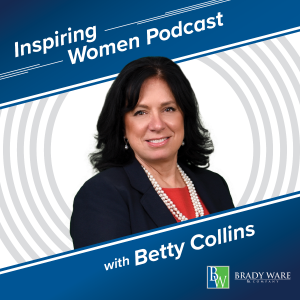
Betty Collins is the Office Lead for Brady Ware’s Columbus office and a Shareholder in the firm. Betty joined Brady Ware & Company in 2012 through a merger with Nipps, Brown, Collins & Associates. She started her career in public accounting in 1988. Betty is co-leader of the Long Term Care service team, which helps providers of services to Individuals with Intellectual and Developmental Disabilities and nursing centers establish effective operational models that also maximize available funding. She consults with other small businesses, helping them prosper with advice on general operations management, cash flow optimization, and tax minimization strategies.

In addition, Betty serves on the Board of Directors for Brady Ware and Company. She leads Brady Ware’s Women’s Initiative, a program designed to empower female employees, allowing them to tap into unique resources and unleash their full potential.  Betty helps her colleagues create a work/life balance while inspiring them to set and reach personal and professional goals. The Women’s Initiative promotes women-to-women business relationships for clients and holds an annual conference that supports women business owners, women leaders, and other women who want to succeed. Betty actively participates in women-oriented conferences through speaking engagements and board activity.

Betty is a member of the National Association of Women Business Owners (NAWBO) and she is the President-elect for the Columbus Chapter. Brady Ware also partners with the Women’s Small Business Accelerator (WSBA), an organization designed to help female business owners develop and implement a strong business strategy through education and mentorship, and Betty participates in their mentor match program. She is passionate about WSBA because she believes in their acceleration program and matching women with the right advisors to help them achieve their business ownership goals. Betty supports the WSBA and NAWBO because these organizations deliver resources that help other women-owned and managed businesses thrive.

Betty is a graduate of Mount Vernon Nazarene College, a member of the American Institute of Certified Public Accountants, and a member of the Ohio Society of Certified Public Accountants. Betty is also the Board Chairwoman for the Gahanna Area Chamber of Commerce, and she serves on the Board of the Community Improvement Corporation of Gahanna as Treasurer.

“Inspiring Women” Podcast Series

This is THE podcast that advances women toward economic, social and political achievement. The show is hosted by Betty Collins, CPA; Betty is a Director at Brady Ware & Company. Betty also serves as the Committee Chair for Empowering Women, and Director of the Brady Ware Women Initiative. Each episode is presented by Brady Ware & Company, committed to empowering women to go their distance in the workplace and at home. For more information, go to the Resources page at Brady Ware & Company.

TRANSCRIPT

[00:00:00] Betty Collins
So, here it is, it’s 2021. So what? It’s a new year, and it’s a new day, sure, but all I see is that we went from ’20 to ’21. It’s the same stuff, right now. It’s just a different time. To me, though, in the past, a new year generally meant new beginnings. You reset. It was this big sigh of relief. I think, right now, it’s a different time.
[00:00:28] Betty Collins
All the circumstances of life are the same, which we’re not going to talk a lot about today, so don’t worry, but COVID-19, and politics … I’m in tax season, and women are still not running the world. I mean, I could go on and on. I’m not a resolution person. They really don’t work, and I think they’re really irrelevant; even more now. Did you take all the time and energy to compile them, and execute a plan, and get excited. You’re all motivated, and it’s January 3rd, and you tell the world you’re doing it on all your social media. Let me ask you, have you already broken them, and given up? Probably so, because it’s February.
[00:01:08] Betty Collins
In my reading, I came across something between the holidays, where I could get away, that just really got hold of me. So, I decided to have my first life statement. I’ve always seen people do that around me. I thought, “Why do they have a life statement? That’s just too much for Betty Collins.” But, I said, “New tactics, results, and maybe some new good things.” I said, “Okay, I’m going to have a life statement.” I even went so far that I got a customized wall hanging, and made it. It’s big, framed, and it’s in my home office, where I spend about half of my time now. It’s the focal point when you walk in.
[00:01:51] Betty Collins
The first half of the statement is really about 2020, and then the second half is 2021. Here is the statement, and it’s not really mine. I stole it from someone else, and I don’t even know who I stole it from; it’s just somebody had it in their stuff … “Being strong speaks of strength, but being courageous speaks to having a will to do more.”
[00:02:14] Betty Collins
Strength, at some point, ends. We all get tired. It’s like the treadmill. We’re strong. We’re going. We’ve got it up on 4 to up a hill, but at some point, your strength runs out. I mean, you tire. But not your will. If you really want to finish the lap, the will’s what gets you through. So, strength was all about 2020, right? You had to have strength to get through that year. You had to be strong, but being courageous is going to go to a new level, and I think that’s what 2021 is all about. Again, your strength ends at some point, but your will does not.
[00:02:50] Betty Collins
As women, moms … We’re wives. Some of us are business owners, or in business; maybe you’re accountants, professionals. We all have to be strong. We all really had to be strong, again, to survive last year. It was hard and exhausting. It seemed like everything was exhausting. Being strong, though, portrays that you have this big competence, and you’re resilient. It’s an instinct that just kicks in under all of those circumstances. It speaks of your strength. Being courageous assumes also that you are strong, and confident, and resilient, and it’s about having the will.
[00:03:26] Betty Collins
So, an example – if you’re a shareholder, and you now became the business owner, you’re actually an owner, but now you’re on a board of directors making key decisions for your company. All that speaks of strength, and confidence, and resilience, and you made it there. But a courageous shareholder will vote no, when necessary. A courageous shareholder will talk about what nobody wants to talk about in the room, possibly.
[00:03:52] Betty Collins
I’m not going to get really political, but I will state this – in the midst of all the turmoil around this election, I’ll give two men credit about being courageous, and one of those was Mike Pence – one of the most loyal supporters of

President Trump – but when it came to certification day, he was courageous. He stood up; he did the certification. He probably didn’t want to do the certification. He probably didn’t want to say that Joe Biden had been certified, but he did it because that was what he was supposed to do as a vice president, and the president of the Senate.
[00:04:27] Betty Collins
On the same token, I look at Ted Cruz, who I don’t listen to a whole lot, and actually, my Bernie Sanders-loving son said, “You need to listen to this Ted Cruz speech,” because he also stood up courageously in the Senate. Somebody from the House, and the Senate said, “No, we need to have a debate.” That’s courageous. That’s courageous.
That’s not just being strong, and we’re here, and we’re in the Senate, and we do our job. So. I look at being strong speaks of strength, but being courageous speaks to having a will to do more and overcome.
[00:05:08] Betty Collins
The reality, nothing is different. That’s why this is called “It’s 2021. So What?” It’s just a different day. We’re going to talk about some of those things, about this life statement, about the things that I could spend my entire podcast on that life statement – and I may do one in the future for it because there’s a lot to that. How am I going to deal with 2021? What do I do with it? Well, it’s my story, and I’m going to control the content, and the narrative. That’s a definite. On 12-30-21, when I am having a really good dinner, probably at the Capital Grille. Somewhere having a really good steak. I’m going to say, “This was 2021. My story.”
[00:05:50] Betty Collins
I categorize my life like all good accountants, and hopefully, you do, too, because it’s a good thing. I usually do at the beginning of the year – I get it in order, but it’s a constant evolving document. It’s not just … These boxes change, and get bigger. Some get smaller – whatever you want to call it – these categories. I do it into four things. First is your spiritual life, your emotional life, your physical life. The fourth box is the routine of life. It just happens because the first three are done and thought through.
[00:06:22] Betty Collins
I choose a theme, and then I drill down because I want to accomplish each category and do it well, because they all balance my life. I keep it simple, believe it or not. It doesn’t have to all be done today, or by the end of tax season, even. It doesn’t have to be all in order and makes sense. It’s always certainly subject to change, especially in the environment we live today. You’re going to constantly pivot.
[00:06:50] Betty Collins
So, I’m looking at 2021 as my story. I control the content, and narrative. I’m going to box my life into these four categories. I’m not going to talk a lot about spiritual life. I think it’s very personal. In my spiritual life, I want- I’m a believer in God Almighty. The sun comes up every day, and it sets, and Betty Collins has nothing to do with that. I just want to turn chaos into order by doing that- let God do the super, and let Betty Collins do the natural. That’s enough. Done. It’s pretty easy, right?
[00:07:21] Betty Collins
Physical, my physical eating pie; eating bagels with cream cheese – all the things I want to do. I’m going to stop talking, and do the work. So, I’ve come up with different things. I did buy one of those [inaudible] for under my feet at work, so I can just keep moving, somehow, because, guess what? I don’t go to the gym. I have a membership, and I don’t go. I’m going to stop talking about it. It’s just time to take care of it. And I’m not going to get into a big plan, and write this, and have apps, and make it crazy. I’m just going to stop talking about it and do what I need to do.
[00:07:53] Betty Collins
Emotionally, and this is probably my biggest challenge, and I think it’s women’s biggest challenge, emotional … This is my theme: “Know the difference between branches, and sticks.” I am going to do a podcast on that. I made that decision because I’ve had more of people resonate to that line. What does that really mean? Well, I’ll give you the scenario small – the branches are connected to a tree, which is rooted. So, there is real life there. You’ve got to know what gives life to you and is something that will energize you. Sticks, they’re on the ground. I have them all over my yard because I love trees, and they’re good for firewood. That’s what they’re good for. They’re dead. They don’t have any more life in them. We have a ton of those twigs in our life. So, emotionally, I don’t need that.
[00:08:44] Betty Collins
Then, the routine of life. If the three things of spiritual, physical, and emotional are in order, it’s just the logistics. That’s all it is. So, when you are looking at your three things and you know that you’re successful, and routine of life is working, go back and look on your calendar for the last week, and it will show what you did. It’ll show how you were. What would a perfect day, or week look like? Write it down, and then work towards achieving it. Then again, look back on your calendar, because that’s going to tell you if you’re successful.
[00:09:21] Betty Collins
So, spiritual, physical, emotional, and then just routine of life – it all comes together. That’s how I’m going to deal with 2021, and that’s how I’m going to write my story. Hopefully, it will be a celebration at the end. What does this

have to do with business? Well, if Betty Collins is not in order, it has a lot to do with business. And I would tell you this – this podcast is to inspire women. It’s to keep learning, growing, and advancing, and it’s about enhancing your communication skills, building leadership, growing your business, and feeling inspired.
[00:09:50] Betty Collins
So, I would encourage you, as this podcast is called, “It’s 2021. So What?” I also have a podcast called “Now What?” It was two series, and it really breaks down your business life of getting that in order, and the things that you have to continue to do. The biggest thing, of course, is ask the question: Now what? It’s a question you’re always going to probably be asking and should be asking. My theory in life now is if you don’t ask questions, you will not have answers. That’s how I’m going to deal with this year.
[00:10:23] Betty Collins
When I go back to two things, just to give you a snippet of the branches, and the sticks, an example of that – in our environment, today, there’s a lot of twigs that you need to identify in your life. I will use this as an example. Again, I don’t mean to be political, but I think it’s good. There are people who truly have an adoration, and there are people who truly do not like, in fact, hate President Donald Trump. Do you understand the obsession either way is a twig? We’re going to talk more about that because if it’s taking from you, it’s dead on the ground, and needs to go in the fire. It’s great firewood. If it’s giving you life, great. Those are things that I think will be key to success in your challenging year that’s coming- that’s here.
[00:11:20] Betty Collins
So, challenges for all of you – two things to help you get through … Stretch goals, get them in your life. I just spent a two-day retreat with Brady Ware, and the guy kept saying, “Stretch goals.” I’m like, “Is he talking about, like, stretching, or is he talking about stretch goals?” It kind of speaks for itself. He made it very clear – only have two, or three, or maybe even just one, but something that is going to stretch you. It simply is a target that’s above what is expected to be accomplished.
[00:11:53] Betty Collins
There’s really a lot about stretch goals on the internet when you Google it, so when you’re trying to get the four components in your life together, and balanced, and defined, and all those things, I would also challenge you to get some stretch goals in your life. And it’s going to be about productive discomfort. It’s going to be about building confidence because you’re achieving things, so your confidence goes up. It’s helping to avoid the catastrophic, that unexpected. Then, it’s that sense of control, bringing that order into chaos, which I talked about.
[00:12:32] Betty Collins
The other thing, when I’m telling- when I’m challenging you to set some things in front of you and keep it simple – two to three stretch goals, maybe – small things can generate into big things. My goal this year is to not lose all my weight by tax season’s over, so I can just go have a fun vacation and eat all summer. That is not my goal. My goal is that if I take 52 weeks, and say 30 pounds – I want to talk about my 30-pound weight loss next December. That’s just small things, all year, that will accomplish a big.
[00:13:04] Betty Collins
Here’s another great example of the small things generate big things. Maybe that’s where you need to be, right now. I think of a really good example of that is Niagara Falls cable cars. There’s a car, if you’ve ever gone up there, that goes across Niagara Falls. Well, back in the 1800s, they decided – we’re going to build a cable. We’ve got to get something from one side of the Falls to the other. This is the late 1800s. They didn’t have the things we have today. So, they started with a very small concept.
[00:13:42] Betty Collins
I think it actually was a young person who said, “Let’s fly a kite across, and the wind will take it over, and let’s see if we can get it somehow across. We’ll be on the other side to catch the kite.” They mastered that – simple as flying a kite. They said, “Well, if we can get the kite to work like that, let’s modify the kite, and let’s add some cable to it; something that’s heavier than string.”
[00:14:08] Betty Collins
They kept modifying it til the right cable was going to be able to get across. Well, now we’ve got to have parts go across. So, then they had to have kites with the right cabling to get the part across. Slowly, over time, these little things all ended up being a cable across Niagara Falls, in the late 1800s. That was just taking some small things that, at the end of the day, generated some big things.
[00:14:35] Betty Collins
So, I would tell you, in doing all of your categorizing, and stretching, think of small things that can do it. Today it’s 2021. So what? It’s your story. Control the content. Control the narrative for the year by using these very simple, simple tactics. It’s one day at a time. I’m Betty Collins, and I’m so glad you joined me today. Inspiring women, it’s what I do. I leave you with this – “Being strong speaks of strength, but being courageous speaks to having a will to do more and overcome.”
 

Tagged With: Betty Collins, Brady Ware, Brady Ware & Company, Inspiring Women, Inspiring Women with Betty Collins

Decision Vision Episode 103: Should My Company Borrow Money? – An Interview with Bill McDermott, The Profitability Coach

February 11, 2021 by John Ray

Profitability Coach
Decision Vision
Decision Vision Episode 103: Should My Company Borrow Money? - An Interview with Bill McDermott, The Profitability Coach
Loading
00:00 /
RSS Feed
Share
Link
Embed

Download file

Decision Vision Episode 103:  Should My Company Borrow Money? – An Interview with Bill McDermott, The Profitability Coach

Bill McDermott, Profitability Coach and ex-banker, speaks with host Mike Blake on when and how business owners should borrow money for their business. Bill also breaks down how bankers assess business borrowers and make lending decisions, various types of debt, one type of business loan he considers predatory, and much more. “Decision Vision” is presented by Brady Ware & Company.

Bill McDermott, The Profitability Coach

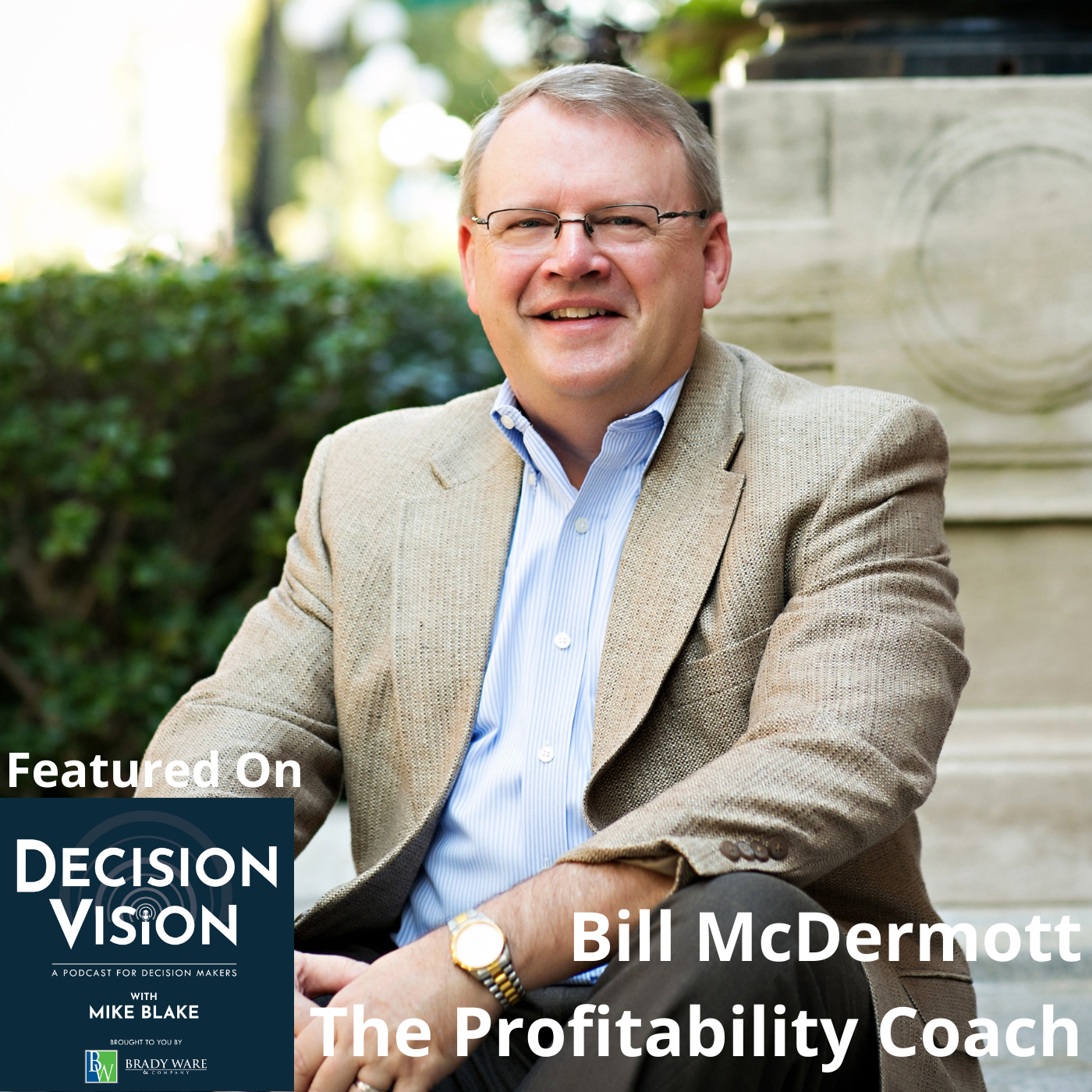
Bill McDermott is the Founder and CEO of McDermott Financial Solutions, serving as a profitability coach to his clients. When business owners want to increase their profitability, they don’t have the expertise to know where to start or what to do. Bill leverages his knowledge and relationships from 32 years as a banker to identify the hurdles getting in the way and create a plan to deliver profitability they never thought possible.

Bill currently serves as Treasurer for the Atlanta Executive Forum and has held previous positions as a board member for the Kennesaw State University Entrepreneurship Center and Gwinnett Habitat for Humanity and Treasurer for CEO NetWeavers. Bill is a graduate of Wake Forest University and he and his wife, Martha have called Atlanta home for over 40 years. Outside of work, Bill enjoys golf, traveling, and gardening.

Connect with Bill on LinkedIn and Twitter and follow McDermott Financial Solutions on LinkedIn.

Mike Blake, Brady Ware & Company

Mike Blake, Host of the “Decision Vision” podcast series

Michael Blake is the host of the “Decision Vision” podcast series and a Director of Brady Ware & Company. Mike specializes in the valuation of intellectual property-driven firms, such as software firms, aerospace firms, and professional services firms, most frequently in the capacity as a transaction advisor, helping clients obtain great outcomes from complex transaction opportunities. He is also a specialist in the appraisal of intellectual properties as stand-alone assets, such as software, trade secrets, and patents.

Mike has been a full-time business appraiser for 13 years with public accounting firms, boutique business appraisal firms, and an owner of his own firm. Prior to that, he spent 8 years in venture capital and investment banking, including transactions in the U.S., Israel, Russia, Ukraine, and Belarus.

Brady Ware & Company

Brady Ware & Company is a regional full-service accounting and advisory firm which helps businesses and entrepreneurs make visions a reality. Brady Ware services clients nationally from its offices in Alpharetta, GA; Columbus and Dayton, OH; and Richmond, IN. The firm is growth-minded, committed to the regions in which they operate, and most importantly, they make significant investments in their people and service offerings to meet the changing financial needs of those they are privileged to serve. The firm is dedicated to providing results that make a difference for its clients.

Decision Vision Podcast Series

“Decision Vision” is a podcast covering topics and issues facing small business owners and connecting them with solutions from leading experts. This series is presented by Brady Ware & Company. If you are a decision-maker for a small business, we’d love to hear from you. Contact us at decisionvision@bradyware.com and make sure to listen to every Thursday to the “Decision Vision” podcast.

Past episodes of “Decision Vision” can be found at decisionvisionpodcast.com. “Decision Vision” is produced and broadcast by the North Fulton studio of Business RadioX®.

Visit Brady Ware & Company on social media:

LinkedIn:  https://www.linkedin.com/company/brady-ware/

Facebook: https://www.facebook.com/bradywareCPAs/

Twitter: https://twitter.com/BradyWare

Instagram: https://www.instagram.com/bradywarecompany/

TRANSCRIPT

Intro: [00:00:02] Welcome to Decision Vision, a podcast series focusing on critical business decisions. Brought to you by Brady Ware & Company. Brady Ware is a regional, full service accounting and advisory firm that helps businesses and entrepreneurs make visions a reality.

Mike Blake: [00:00:20] Welcome to Decision Vision, a podcast giving you, the listener, clear vision to make great decisions. In each episode, we discuss the process of decision making on a different topic from the business owners’ or executives’ perspective. We aren’t necessarily telling you what to do, but we can put you in a position to make an informed decision on your own and understand when you might need help along the way.

Mike Blake: [00:00:41] My name is Mike Blake, and I’m your host for today’s program. I’m a director at Brady Ware & Company, a full service accounting firm based in Dayton, Ohio, with offices in Dayton; Columbus, Ohio; Richmond, Indiana; and Alpharetta, Georgia. Brady Ware is sponsoring this podcast, which is being recorded in Atlanta per social distancing protocols. If you like this podcast, please subscribe on your favorite podcast aggregator, and please consider leaving a review of the podcast as well.

Mike Blake: [00:01:08] Today’s topic is, Should my company borrow money? And, you know, talk about borrowing and lending, it’s automatically a charged topic. And so much of our consciousness, I think, revolves around debt. And I don’t know if it’s always been that way. Certainly throughout history, people have talked about debt, usually from the dangers of debt. Of course, “neither a borrower nor a lender” attributed to Benjamin Franklin. And, of course, you know, there’s a whole ton of discussion around medical debt, student debt, the national debt. There are individuals that have made, frankly, fortunes and careers advising people against the dangers of debt, Dave Ramsey is probably the most important one, but there are several others, of course.

Mike Blake: [00:02:12] And I see that this mentality does bleed over into the corporate world to some extent. And there are a lot of funny things about debt, you know, one, it has a mystique to it. I think, because when debt works well, it works great. When it works badly or when the outcome is bad, the outcome is usually spectacular. And even our most recent past president – you know, there’s at least a lot of suspicion. We don’t know his full financial position – the prevailing suspicion or understanding or belief – I don’t want to use suspicion in a pejorative sense. That’s not the intent – but the belief that our own president has built an empire on debt and that he’s still very heavily leveraged. But in spite of that fact, he doesn’t appear to be financially hurting.

Mike Blake: [00:03:12] So, you know, debt can be somewhat paradoxical. And I think when debt fails, it fails badly, it fails in a lot of ways publicly. And who doesn’t love a good car crash, as long as you’re not in it. You know, I think that generates a lot of attention. And I’m not a debt expert at all. I have much more experience on the equity side than on the debt side, which is we have a guest coming up that does know what he’s talking about. But, you know, it’s understanding that debt is a power tool. And a power tool, you know, take a circular saw as a great example. If you know what you’re doing and you respect the power of the tool, the circular saw, you can build amazing things, right? You can build furniture. You can build a shelter, you know, effectively with a circular saw and a few other tools. Not that I’d ever do it. I’m incompetent. But I’ve seen people do it and this seems to be the way that it happens.

Mike Blake: [00:04:17] Conversely, if you don’t know what you’re doing, if you put your hand in the wrong place, the next thing you know, your name is Lefty or The Claw or whatever. But the saw itself isn’t bad. It’s simply a matter of the capability and the emotional intelligence of the person using it. And so, as a consequence, you know, I do think that, of course, there are companies that use debt irresponsibly. And we’ve had an interview on a podcast with Tom Rosseland of Bodker, Ramsey talking about, you know, should I enter into a workout? So, we’ve covered that part. And eventually we’ll cover bankruptcy as well. I just haven’t really found the right guest for that.

Mike Blake: [00:05:00] And we’ve talked about SBA lending in a very sort of particular finite discussion. But we haven’t had a far ranging strategic discussion about debt, how it works. You know, the world of debt is much more expansive than simply SBA lending. SBA is a great program. Don’t get me wrong. It’s one thing that I think our government actually has implemented pretty well with a lot of the desired effect. But there’s a lot more to it.

Mike Blake: [00:05:31] So, I want to give this topic, frankly, the amount of depth and breathing space that it is due. And helping us fill that breathing space is my friend Bill McDermott. Bill and I have known each other for over a decade. He is a graduate from Wake Forest University and launched a career in banking that spanned 32 years. And in spite of knowing Bill for a while, as I’ve said previously on this program, I’ll dig into some of his bio. And I learned something that I did not know. And I did not know that he first started out as the repo man for Wachovia Bank in their management training program. And he later moved to Peachtree Bank, which later became SunTrust. You all know the deal, SunTrust is something like the product of 9,000 mergers. And that’s how banking works, I guess.

Mike Blake: [00:06:22] You know, he was a great producer of both loans and deposits for the bank. Climbing the ranks to ultimately become a group vice-president for the commercial banking division. And in 2001, Bill’s group won the SunTrust Cup – the highly coveted, I imagine, SunTrust Cup – for being the highest performing commercial bank group in the company. He worked in community banking, becoming a top producer for Ironstone Bank, et cetera, et cetera. So, Bill really knows what he’s talking about. Over the last 11 years, Bill has been the profitability coach. A recovering commercial banker, he has served over 200 clients in the last year by delivering results – I don’t know if it’s last year or not. He’ll clarify it. I think it’s more than that – by delivering results oriented insights, helping them to make financial – to take them – sorry – from financial confusion to financial clarity.

Mike Blake: [00:07:15] Bill currently sits on the board of directors for Pinnacle Bank. He also hosts a monthly podcast, ProfitSense, which features stories of successful business owners and the professionals that advise them. When Bill is not working, you can find him on the golf course, gardening, spending time with his family, and leading a small group at his local church. Bill McDermott, welcome to the program.

Bill McDermott: [00:07:37] Mike, thanks so much for having me. I’m excited about talking about the topic. And, yes, the repo man spent time either collecting payments at the local furniture factory. I did move to Kinston, North Carolina, which is tobacco country. So, back in the day, I was known to collect past due car payments from some of the tobacco workers coming out of the field. I had a cash receipt book and collected those payments. Or I did have to repossess a car, too, in my day. So, back then, they thought you had to figure out a way to collect loans before you could make them. So, I did survive that, by the way, as proof of me being here, right?

Mike Blake: [00:08:26] Yeah. You know, otherwise, I have to say, this podcast is sponsored by Weegee. So, clearly you’re here to do it. But, you know, when we were talking off air, you told me something that I thought was fascinating that makes all the sense in the world to me. And that is, you said that before they let you lend money, you’d have to collect it.

Bill McDermott: [00:08:47] Yeah. And so, essentially as a banker, you have to know the characteristics of a good loan from a bad loan. And so, you learn the bad loans first. Unfortunately, you learn what not to do before you learn what to do. And the perspective of a banker in lending money from a banker’s point of view, everything is about risk. A lot of people don’t really understand that a bank really only makes about a 4 or a 5 percent gross margin. They’re leveraged about 10 to 1. So, they don’t really have much room to make mistakes given that margin and given that leverage position. So, it is risky to be in the money lending business. Plus, they’re not loaning their money. They’re loaning their depositor’s money. They have to be sure that they get that money back so that can take care of their depositors as well.

Mike Blake: [00:09:49] You know, I’m probably going to set a record here, I’m going to rip up the script before I even get to the first question. But that is, you know, I think what that would teach you, they talk about the C’s of borrowing. I can’t remember if it’s four or five C’s, but I recall that one of them as character. And that must teach you a lot about the character part. And I wonder if some of that is getting lost. You know, banking, like everybody else, is now in data analytics. But, you know, it’s hard to do that with character. And I’m curious if you have a view as to whether or not maybe that one of the C’s is now getting lost a little bit because, one, they’re not making people learn how to collect money and see borrowers face-to-face before they lend it. And, two, if they were so focused on analytics where, you know, maybe sometimes we go a little bit overboard.

Bill McDermott: [00:10:42] Yeah. And so, I think another point – so I think you’re spot on in what you’re saying – character, the average banker right now that is interfacing with a business owner client typically has not had any form of credit training. And I’m generalizing here, but most bankers below the age of 40 may not have had any formalized credit training. And so, they might be able to evaluate character, but they also may not. The other thing is, there was a time when the banker you met with face-to-face had the authority to approve the loan. Now, the approval process is the salesperson meets with that business owner, gets the financial information, takes it to the credit approver. Well, the credit approvers kind of like the Wizard of Oz behind the green curtain, pulling all the levers, but never himself or herself gets the opportunity to determine the character of that borrower.

Mike Blake: [00:11:53] And I mean, you know, you really can’t know it. We try to get a view of it, of course, with credit history, but that’s only one piece of the deal. But anyway, we do need to get through these questions. But, you know, I just love talking about this stuff, and I could for a long time, but we do need to get into it. So, I’d like to start at a very basic level. And that is, you know, talk about what you see currently as what is more or less a typical borrowing process. And does that vary a lot or can you generalize it fairly widely that most lending programs or lending entities, including banks, follow that?

Bill McDermott: [00:12:32] Yeah. At a high level, there are some commonalities. I think the first thing is, a business owner has to put together a loan package. That loan package is generally going to have three years worth of historical financial information. It may have the most recent interim financials. You know, we just finished January, so a January balance sheet and an income statement. It will include a personal financial statement of any owner that has more than 20 percent ownership. Because a bank looks at the people that make up the ownership of the business. Yes, they are loaning to the business. But, generally, that business is a reflection of the people that are running it.

Bill McDermott: [00:13:23] So, first part is the loan package, Mike. The second part, generally, a credit interview. Again, as I mentioned, banks are looking at everything in terms of risk. So, they will have analyzed those financials. They’re going to have some underwriting questions, what’s going on in the business. But, yeah, to your point about the C’s, there are 5C’s as they’re going through that interview. They’re going to be evaluating the character of the borrowers. They’re going to be looking at the cash flow. Does the business have the ability to pay it back? They’re going to be looking at credit score. Generally, the business owner’s personal credit score is the proxy for the business. They’re going to be looking at collateral. Do they have the ability to secure the loan?

Bill McDermott: [00:14:10] And then, the last thing has nothing to do with the business or the business owner. But they’re looking at conditions, specifically economic conditions. So, we just are, hopefully, on the tail end of a pandemic. But the economic conditions and the economic uncertainty have played a big role in bank’s willingness to loan money in the current economic environment. And so, credit has tightened because conditions of economic uncertainty have tightened. But that’s generally the process, one package, credit interview, evaluating the 5C’s. It’s really important for the business owner to have a clear request. And it’s also very important for the business owner to have a compelling case. Why should the bank loan them money? How does the company present itself in terms of risk? And if there are any risks, can those risks be mitigated to help the bank approve the loan?

Mike Blake: [00:15:14] So, I’m curious because you’ve talked about banks tightening lending standards. And a lot has been made around Fed policy, not just now, but really starting in 2008 when we entered the quantitative easing phase and, all of a sudden, quantitative easing entered the jargon. And as a person who’s a trained economist, that scared the living you know what out of me, because you’re not supposed to be able to do that. It turns out, at least for now, you are. But there’s a paradox that’s happened, I think, and I’d love you to comment on it, which is, things like quantitative easing, things like lowering the discount rate, i.e., the Fed rate, is supposed to make more money available for lending. But, you know, it’s one thing to make more money available. It’s another for the bank to feel comfortable. They’re going to actually get that money back, right? And those two things don’t always flow together and cooperate the way that, I think, policymakers would like.

Bill McDermott: [00:16:19] Yeah. And so, let’s go back to 2008, 2009. Quantitative easing was to make more money more available. But, frankly, banks had capital calls. They had liquidity calls. There was a huge devaluation of real estate. Banks had to actually reset their portfolios. And, frankly, Mike, there were a lot of bank failures because of that. They were undercapitalized. There were cease and desist orders. Banking is a highly regulated business to protect the depositors, of course. And so, you had to record bank failures. So, even though banks are supposed to always be healthy, the level of real estate lending caused a lot of banks to become undercapitalized. And so, the quantitative easing really didn’t help, primarily, because it was the banks that were in poor financial position at that moment, which created a huge consolidation during that phase.

Mike Blake: [00:17:25] So, I’m going to combine kind of two questions here, because I think it just flows better. And that is, you know – well, actually, let’s do it this way. So, my next question is, when you’re lending money, do banks care as to the reason – you know, are they going to ask what you want the money for? And if so, does the answer matter as long as, maybe, there’s enough collateral cash flow or whatever? And what are some good reasons to borrow money and what are some not so great reasons to borrow money?

Bill McDermott: [00:18:04] Yeah. So, that’s a great question. And the answer is, do banks care about what the money is being used for? Absolutely. Unequivocally, yes. As a matter of fact, banks have very specific lending policy that says, I will loan into these situations. I will not loan into these situations. So, for example – you know, appropriate reasons for borrowing money. And I’m going to go back to your circular saw, which I thought was a great example. Circular saw used well from a banking point of view, having a line of credit for a business eases the cash flow bumps. You know, all business owners have generally erratic cash flow. It can either be feast or famine. Having a line of credit helps those famine times by having cash available to insert into the business’s purchasing fixed assets, a business that may need equipment, may need vehicles.

Bill McDermott: [00:19:11] Fixed assets also include real estate, a lot of businesses will buy a building and lease it to their company. So, all of those things – one more, acquisition. You know, one company wants to buy another company. So, certainly those are things that banks would say yes to and are good reasons to borrow.

Bill McDermott: [00:19:34] Two things that come to mind reasons you wouldn’t want to borrow money – and banks would probably not look favorably on that – is, you don’t borrow money to fund losses. If your business is losing money, borrowing money to fund losses is like pouring gas on a fire. It’s an accelerant. The other thing is, there are business owners that like to look at their business as their own personal cookie jar. They take a lot of distributions. And so, banks are not really interested in loaning money to fund the business owner’s lifestyle. So, those would probably be two reasons why a bank wouldn’t lend money to either fund losses or fund distributions.

Bill McDermott: [00:20:23] Another thing would be, banks probably wouldn’t finance anything that they consider to be of speculative nature. And, again, coming from a very conservative point of view, based on the leverage and the gross margin that I mentioned, what I would define as speculative as an entrepreneur and what a banker defines as speculative are really two different things.

Mike Blake: [00:20:48] So, I imagine you have too, but you tell me, you do run into people that are just ideologically opposed or even borderline phobic of debt, right? And they’re proud of the fact that their balance sheet has no liabilities to it. And, you know, what do you think of that attitude? And is that a healthy attitude? Or is that attitude actually creating costs of its own?

Bill McDermott: [00:21:16] Yeah. So, I have a client who’s a professional services provider, she is totally opposed to borrowing money. As a matter of fact, now that I think of it, I have two clients. They don’t believe in using debt. If there is a capital call in the business, they’ll fund it out of their own pocket or fund it out of profits. And so, I’m not really sure. It’s kind of a choice. I would say it’s a little unhealthy and the reason is, primarily, there is a cost associated with that. All businesses need to have access to capital from time to time. And so, for a business to be opposed to debt, they’ve just taken one thing off the table in terms of having access to capital that they won’t use.

Bill McDermott: [00:22:12] And then, the other thing, I think, not having access to that capital, their ability to grow is going to be limited to how much internal cash that they can generate in order to accommodate that growth. So, yes, there is a cost to that attitude. I think it can be limiting. But as far as whether it’s healthy or not, I certainly respect people’s choices. But I think, as with anything else, choices have consequences.

Mike Blake: [00:22:40] So, a term you used earlier today that I want to make sure that we talk about, because you can’t really have a discussion about debt without it. What is the difference between a loan and a line of credit? And when is one more appropriate than the other?

Bill McDermott: [00:22:59] Yeah. So, a loan, in its purest sense, is really a sum of money that is put out there. And the structure of that loan really determines the difference between a loan and a line. So, there are actually three types of loans. The line of credit is one, you borrow, repay, reborrow. And it’s great for handling short term cash flow. The other two types, of course, there’s a term loan. Term loans you use to borrow for equipment. And then, the third is a mortgage loan, Mike, which are used primarily again to purchase real estate, which then is leased back to the company. So, loans fit into three categories really just depending on what the money is used for and then how it’s structured for, short term versus long term.

Mike Blake: [00:24:01] Okay. Now, banks aren’t the only lenders. I think, a lot of people, when they think loans, they think of banks. Or, you know, they think of the loan shark who has the big fur coat is going to break your kneecaps if you don’t pay back. But there’s a lot in between those two, isn’t there?

Bill McDermott: [00:24:22] Yeah. There really is. So, you know, if I’m going to walk down a balance sheet for a business owner, I’m always going to look at bank debt first. Because the accounts payable are a way of financing the business. But as far as actual bank financing or non-bank financing, it’s the cheapest source of capital, the interest rates are lower. But banks are basically loaning against the balance sheet and the income statement of that borrower. If they lost money last year or their balance sheet is leveraged generally more than about $3 of debt to every $1 of equity, they’re going to have a hard time. They can get a loan, but generally not beyond that.

Bill McDermott: [00:25:15] So, for somebody that lost money last year or has a leveraged balance sheet, there are asset-based lenders. Asset based lenders don’t care about the balance sheet. They don’t care about the income statement. All they care about is the collateral. And so, if you have $100,000 in accounts receivable, you should be able to loan or borrow about 75 to 80 percent of that. But it carries a high interest rate. Generally, there’s 1 to 1-1/2 percent per month service charge and then there’s money usually at about prime plus two, prime plus three on top of that. So, 1 percent a month for 12 months is 12 percent interest, prime plus three is another 6 or 6-1/2, so all of a sudden, it adds up quick. Mike, that’s an 18-1/2 percent loan you’re up to credit card rates.

Bill McDermott: [00:26:12] Also, I’m going to say there are some – what I’ll call – payday lenders. Honestly, I think they’re borderline predatory lenders. There are some people that will loan you money, but they ask you to pay a piece of it back every day. And sometimes the annual percentage rate on those loans can be in the 30s, even in the 40 percent. It’s absolutely borderline criminal, in my view. Not to say anything disparagingly about those lenders. I’m sure they serve a purpose. But at such high interest rates, it’s incredibly difficult for a business owner to sustain their business. Because a lot of times. those interest rates exceed the gross profit that the business is even generating.

Mike Blake: [00:27:02] Yeah. And, you know, payday loans and their ilk are kind of interesting. I mean, I’m generally a free market guy, but I also enjoy studying the psychology of decision making. It’s why I do this podcast. And one of the things I’ve learned about decision making in crisis – and it almost doesn’t matter if it’s a financial crisis or physical crisis or something else – I’ve seen empirical studies that show that when a person is in crisis, the average person has a functional IQ reduction of between 10 to 15 percent in the midst of that crisis.

Mike Blake: [00:27:44] So, in effect, when you’re in a crisis, most people become dumber because the nature of the crisis makes you tunnel visioned. It makes you focus on how do you solve the problem today the most painlessly, even though you’re creating a problem ten times bigger that you have to confront a week from now. But the psychology of crisis leads you into that decision. So, you know, whether that means that’s predatory, I’m not sure. And I’m not afraid to say, this in my view, it does call for some regulation because you’re selling to what is effectively an impaired market. It’s fine to say that people are free to make their own decisions, but when there’s data that shows that your market, by definition, is cognitively impaired by the very thing that’s leading it to come to you, there’s a clear conflict of interest.

Bill McDermott: [00:28:43] Yeah. And I think at that point, the business owner in crisis has ultimately a concern that his or her business is no longer viable. And so, they will go to almost any length in order to make sure that their business stays viable. And so, I’m a big believer in the good, fast, cheap – pick any two. If it’s good and if it’s fast, there is no way it’s going to be cheap. But I do think predatory lending goes to the end extreme. It’s not really good, it is fast, but you’re paying exorbitant interest rates for that speed.

Mike Blake: [00:29:29] Yeah. And, frankly, in that kind of scenario, you really should be looking at equity, right? And you talked about funding losses. It’s not as if there isn’t a financial vehicle out there to help you. It’s just that debt is the wrong tool. If we take the circular saw, if you’re in crisis, you’re basically trying to cut a ham sandwich with a circular saw. And all you’re going to do is get a messy kitchen if you try to do that. But on the other hand, if you’re using equity, you’re using a nice little Wusthof knife to cut that sandwich, yeah, it’s going to be more expensive, but it’s the right tool for the right job.

Bill McDermott: [00:30:09] Yeah. No question. So, the nice thing about debt, debt magnifies gains, but the downside is debt also magnifies losses. So, people that use debt are able to grow quicker. But people who use debt when they’re funding losses, it magnifies those losses as well, because you’re basically borrowing money that you can’t pay back and the interest expense pushes your breakeven point even higher. So, you’re, in effect, borrowing into your future when your future is actually trending negatively.

Mike Blake: [00:30:48] So, you know, there are nonbank lenders out there, and not just the asset based lenders, but there are mezzanine lenders. And maybe you’re talking about the same thing – if you are, feel free to correct me. But, you know, lenders for subprime borrowers, I think, if I’m not mistaken, there’s a group out there that they’re not payday lender types, but they’re also are credit that’s available at a higher interest rate that is not bankable from a banking standpoint. Right? So, you know, what are those groups like? And, you know, are they legit? Is interfacing with them similar or different from that with a bank? What does that world kind of look like?

Bill McDermott: [00:31:38] Well, necessity is the mother of invention. Access to capital for business owners has been critical. We went through a period of time where banks were somewhat unhealthy. I think banks are healthy now. But over the last ten years, quite a few nonbanks have entered the market. Possibly the benefit is, they don’t necessarily have to chin to the same regulatory environment that banks do. And so, yeah, I think there are some viable entities out there that can provide capital. They actually require sources of funding. They probably go to the public markets, borrow that money, and then loan it back out on a spread. But, no, I think there are viable options out there that nonbank lenders provide and have kind of helped give business owners access to capital that banks either can or can’t provide, given whatever the prevailing economic factors are.

Mike Blake: [00:32:51] So, once you get into the lending world and all the financial world at all, you’ll start to hear terms like senior debt, junior debt, subordinated debt, can you quickly give us a vocabulary lesson. What do those things mean relative to one another?

Bill McDermott: [00:33:05] Yeah. So, first, senior debt is in the senior position, so it’s the highest of the debt positions. Typically, senior debt is predominantly bank debt. There are a lot of growth companies out there that have lending requirements behind that. Then, generally, junior debt means that it is subordinate to the senior debt. That junior debt is also mixing terms here. But subordinated debt, it’s actually debt that exists under the senior debt. It accomplishes some great things. First, for that growth company, they get access to capital. The senior debt looking at that junior subordinated debt underwrites that debt as if it were equity.

Bill McDermott: [00:33:59] And so, for a senior lender’s point of view, that junior debt gives them extra comfort that there’s cash behind their debt that is also capitalizing the business. From the junior subordinated debt, they provide a very viable access to capital that the senior debt holder is unwilling to provide. But, yeah, all you’re really doing is looking at banks in the senior position. Junior debt and subordinated debt are those institutions that provide capital subordinate to that senior position.

Mike Blake: [00:34:42] So, I wonder if this is true or I’m speculating here, is there also kind of an emotional comfort component that if you’re a senior lender and you know that somebody who’s willing to come in and be a junior lender, that it just sort of validates your judgment?

Bill McDermott: [00:35:00] Yeah. Absolutely.

Mike Blake: [00:35:01] It’s not out there on a limb, right?

Bill McDermott: [00:35:03] Yeah. And the the other thing is, if for one reason or another, that senior debt holder decides that maybe they’re wanting to exit that credit, there is a junior position behind them who may be willing to take them out if they decide to exit. So, it really gives the senior debt holder an opportunity to be taken out, if needed, from the junior subordinate. It gives them the opportunity, potentially, by taking that out, they become the senior debt holder and then that allows other juniors to come in under them.

Mike Blake: [00:35:47] I want to switch gears here, you know, I’d like to talk about the intersection and interdependence, if there is any, on personal credit versus corporate credit. I mean, there must be at some point, I guess, but you tell me where it is. You know, where is the point where lenders make a distinction or stop making a distinction – maybe that’s easier – between the company as a borrower and the owner as a borrower? You know, is there a separation between the two? Or as far as lenders are concerned, are the buyer and the company the same thing? And so, you know, does the credit score of one impact the other? How are those two things linked, if at all?

Bill McDermott: [00:36:40] That’s another great question. So, generally speaking, a closely held business where the ownership is closely held, usually concentrated in anywhere from, maybe, one to three or four partners, the personal credit score of either that individual or individuals, in effect, is the business credit score by proxy. And so, the credit worthiness of that business is, frankly, dependent on the credit score of those individuals. When you get to businesses that aren’t closely held, the ownership is widely dispersed. Publicly held companies, for example, where the ownership is widely dispersed, they have access to sources of capital outside the market. Those businesses usually have their own credit score. If they’re publicly traded, they’re going to have a rating by S&P or Moody’s. They may have a rating by Dun and Bradstreet. So, in those cases, those businesses have developed their own credit score, no longer relying on the ownership because it’s so widely distributed. So, the intersection is, once a closely held business becomes publicly held, the owner’s credit score is no longer.

Mike Blake: [00:38:07] So, sometimes I hear from borrowers that they’ll say, “Well, you know, the bank wouldn’t lend me money if they didn’t think I can repay.” And, to me, that sounds like a little bit of a dangerous statement, because I think you’re kind of offloading too much responsibility to the bank to make the right decision for you. But I like you to respond to that. I mean, can you take some comfort even if you, yourself, have, maybe, misgivings? And maybe we’ll take that person that’s kind of debt-phobic as a good example. Is the very fact that a bank is willing to lend money to you, is that somehow self-validating for the company?

Bill McDermott: [00:38:48] Yeah. So, when I was in banking, the knock on bankers to your point was, “Oh, gosh. Banks just loaned money to businesses that don’t need it.” And so, that is a prevailing thought out there. However, the reality is 80 percent of a bank’s income comes from lending money, Mike. So, if banks don’t loan, they can’t. So, bottom line, I think someone who says that could be maybe that person that got declined, primarily because there was a factor within those 5C’s. You know, maybe they didn’t have sufficient cash flow. Maybe their balance sheet was a little too leveraged. Maybe they were wanting to borrow the money for a speculative purpose. And it just made the sum total of those things unbankable.

Bill McDermott: [00:39:53] Also, I will say, because of COVID, there are a lot of good businesses in a good economic environment were able to borrow money, but not able to borrow money in a COVID type environment. So, the economic conditions also play big into that decision.

Mike Blake: [00:40:15] I want to go back to kind of the personal versus company kind of debt profile, if you will. How do personal guarantees work? Are most business loans to a small business going to require personal guarantee? Can you talk a little bit about how they work? And if I’m a borrower, should I be expected to provide a personal guarantee and what that looks like?

Bill McDermott: [00:40:42] Yeah. So, I got to take you back to my Peachtree bank days. So, I graduated from being the repo man, just beginning to do small business lending. And so, my boss, because the subject to personal guarantees came up, his comment to me was, Mike – and it really resonated to me – he said, “Bill, if a business owner isn’t willing to stand behind his or her business, why should I?” And so, part of that personal guarantee is, yes, a closely held business, 9.9 times out of 10, it’s going to require a personal guarantee for that very reason. If the business owner won’t stand behind their business, then why should the bank stand behind it?

Bill McDermott: [00:41:38] Interestingly, though, just yesterday, I had an email from an owner that I worked with. So, he was offered a six figure line of credit. It was at four percent. There was a 2-1/2 percent origination fee, but it was unsecured and unguaranteed. Now, it was not a bank. It was a nonbank, but the rate was attractive, the fee was high, but unguaranteed. I mean, that really kind of caught me off guard. So, I guess it is out there, but I have not seen it at a bank.

Mike Blake: [00:42:23] So, bottom line, be pleasantly surprised if you’re not asked for a personal guarantee. And maybe a question to think about before you even start the borrowing process is, be prepared for that question, right? And if you’re not prepared to make that personal guarantee, it may not be a good use of your time or the banks to even pursue the discussion.

Bill McDermott: [00:42:43] Precisely. You’re spot on.

Mike Blake: [00:42:45] Okay. So, how can borrowers evaluate their own attractiveness to potential lenders? Are there any kind of self-assessment tool that the borrowers can use to understand where they might lie and maybe try to improve their profile or their attractiveness before they start this process?

Bill McDermott: [00:43:10] Yeah. Such a great question. So, a lot of times, I talk to my clients that I’m working with about what it means to be bankable. And so, the quick answer is, if you lost money last year, you’re going to have a hard time borrowing money this year, because banks believe the best indicator of the future is the past. And if you lost money last year, you’re going to lose money this year. They won’t believe you until you’ve gone through a full year and made a profit. So, self-assessment, profitability. Absolutely.

Bill McDermott: [00:43:47] The second thing is leverage. How much skin in the game do you have in your business versus how much skin in the game your creditors have? If you have more than $3 of debt to every dollar of equity, a bank will consider you highly leveraged and that could cause an issue with your ability to borrow.

Bill McDermott: [00:44:11] So, probably the other things in a different profitability and leverage, if you consistently have low liquidity, not much cash on hand, the bank is going to have some concerns. The other thing is, if you’re not good at collecting your receivables and, frankly, you’re borrowing money to replace receivables that you’re either unwilling or unable to collect, banks are going to have a hard time doing that.

Bill McDermott: [00:44:41] So, I have a little acronym that I call PALL, Profitability, Asset Quality, which is how are you turning your receivables in your inventory, Liquidity, and Leverage. And so, a self-assessment going through PALL, which I do for my clients, I provide a business financial checkup. You know, each one of us gets a physical every year, but often business owners don’t put their business through one. So, we provide that as a service so that they know once a year what’s going on in their business. And it also helps them understand whether they’re bankable or not.

Mike Blake: [00:45:20] We’re talking with Bill McDermott, the profitability coach. And the subject is, Should I borrow money for my company? And, Bill, I just had a couple more questions before we let you go. But a question I do want to get to is, you know, so much of the economy now is a service firm, which means that they’re unlikely to have the kind of collateral that a manufacturing firm has. And I think it’s something that the banking industry is really wrestling with quite a bit. Can service firms borrow money or are there certain conditions under which they can or can’t?

Bill McDermott: [00:45:56] Yeah. And I think that is something that, maybe, has evolved over time. Mike, historically, service firms versus firms that deliver a product, it is a little more nebulous to understand the delivery of a service versus a delivery of a product. You can actually determine when that product has been delivered versus service. I think that has changed over time. I worked with a lot of professional services firms, architects, engineers, I have an interior designer, I have a psychology practice. All of those are providing services, but yet banks are willing and able to loan them money. So, the risk from the bank’s point of view is it’s easier to determine delivery of a product than it is delivery of a service. But I do think the banking industry has gotten comfortable with loaning money to service firms over the years.

Mike Blake: [00:47:00] Are there times when you work with clients that are thinking about borrowing and you tell them, “You know what? Skip it. Just put it on a credit card.” And if so, what does those look like?

Bill McDermott: [00:47:11] Yeah. You know, I would say for a newer business, just getting started, there’s really no credit history. General rule of thumb is to get a bank line of credit. They like to see at least three years of history to loan money. So, yeah, for somebody who’s just getting started, I would suggest get a business credit card. I know when I started, I got a company card through American Express. I do think it’s a great idea. Don’t do it on a personal card, primarily, because when it comes to borrowing money, you want a clear audit trail as far as loaning money for your business versus – excuse me – borrowing money for your business versus borrowing money personally.

Mike Blake: [00:48:06] Bill, this has been a great conversation. There are more questions I could ask, but we have limited time. Would you be willing to answer questions of people that may have a question that we didn’t get a chance to cover here? And if so, what’s the best way for them to contact you?

Bill McDermott: [00:48:24] Sure. And I would love to. Probably the best way to do that is go to theprofitabilitycoach.net. There is a prompt in there if they want to contact me. The other way is phone number, 770-597-3136. I always pick up the phone and answer unless I’m in front of a client. But, Mike, I launched this business with the goal of helping business owners become better financial managers. And so, first, I want to applaud you for even bringing up the topic. There is a lot of mystique around it. But the goal is, I want to give business owners financial clarity out of all of the chaos of what the options are and which is best. So, I’m always happy to help any business owner that wants to contact me.

Mike Blake: [00:49:24] Well, thank you. That’s going to wrap it up for today’s program. I’d like to thank Bill McDermott so much for joining us and sharing his expertise with us.

Mike Blake: [00:49:32] We’ll be exploring a new topic each week, so please tune in so that when you’re faced with your next business decision, you have clear vision when making it. If you enjoy these podcasts, please consider leaving a review of your favorite podcast aggregator. It helps people find us that we can help them. Once again, this is Mike Blake. Our sponsor is Brady Ware & Company. And this has been the Decision Vision podcast.

Tagged With: access to capital, asset-based lenders, bank loan, Bill McDermott, borrow money, Brady Ware, Brady Ware & Company, junior debt, McDermott Financial, McDermott Financial Solutions, Michael Blake, Mike Blake, profitability coach, ProfitSense, recovering banker, SBA Lending, senior debt, subordinated debt

Decision Vision Episode 102: Should I Hire a Virtual Assistant? – An Interview with Essie Escobedo, Office Angels

February 4, 2021 by John Ray

virtual assistant
Decision Vision
Decision Vision Episode 102: Should I Hire a Virtual Assistant? - An Interview with Essie Escobedo, Office Angels
Loading
00:00 /
RSS Feed
Share
Link
Embed

Download file

Decision Vision Episode 102:  Should I Hire a Virtual Assistant? – An Interview with Essie Escobedo, Office Angels

Essie Escobedo, Founder and “Chief Executive Angel” of Office Angels, joins host Mike Blake to discuss the ins and outs of hiring a virtual assistant and how to manage a virtual assistant to create scale in your business. “Decision Vision” is presented by Brady Ware & Company.

Essie Escobedo, Chief Executive Angel, Office Angels

When Essie Escobedo majored in physics, she had no idea that she would apply her knowledge about how the universe works to the world of business. Essie launched Office Angels® in 2000 after a 25-year career as a successful small business owner. During that time, she honed her gifts of exceptional interpersonal skills and a sharp intellect, while gaining hands-on knowledge about successful business management.

Essie EscobedoTwenty years ago, Essie presciently observed that a large and growing number of credentialed, seasoned individuals with outstanding skills and proven track records had left corporate America and saw a stellar opportunity. These professionals may have left the full-time workforce, but they wanted to continue working — on their schedules. Essie realized these professionals could bring expertise and a level of professionalism to assist small businesses at rates they could not otherwise afford.

Compelled by her strong entrepreneurial character and drive to help people succeed, she developed a unique business model that addresses two needs: Office Angels helps small business owners focus on business priorities, while Angels perform a range of essential but often-neglected “back office” operations in areas such as administrative support, bookkeeping, and marketing. At the same time, Office Angels provides meaningful work to highly experienced and trained business professionals who wish to work on a flexible, part-time, freelance, or project basis.

A supreme networker, Essie is a well-known and highly respected member of the greater Atlanta business community. She has served on the Boards of the Atlanta Chapter of the National Association of Women Business Owners (NAWBO), the Atlanta Women’s Network (AWN), and the Professional Women’s Information Network (ProWIN). She currently serves on the Advisory Boards for ProWIN and Access for Capital Entrepreneurs (ACE), is an active member of the Georgia Consortium for Personal Financial Literacy, and mentors on starting and running a successful business with The Edge Connection.

The North Fulton Chamber of Commerce named Essie as a Business Person of Excellence for 2018. She was a finalist for the Chamber’s 2018 Small Business Person of the Year award, was honored by ProWIN with a Business Builder Award, and was nominated for a Turknett Leadership Character Award.

Essie has been featured in various business media, including the Atlanta Business Chronicle, VoyageATL, “Atlanta Business Radio,” “North Fulton Business Radio,” and Newstalk 1160.

Essie holds a Bachelor of Science degree in Physics from The American University and served as Adjunct Professor of Business at Lanier Technical College. In addition to her business acumen, Essie has been a beloved mentor, coach, and trainer to her Angels, clients, and friends. Her calm, proactive, practical, and gracious style brings out the best in people and creates winning outcomes.

Website

LinkedIn

Mike Blake, Brady Ware & Company

Mike Blake, Host of the “Decision Vision” podcast series

Michael Blake is the host of the “Decision Vision” podcast series and a Director of Brady Ware & Company. Mike specializes in the valuation of intellectual property-driven firms, such as software firms, aerospace firms, and professional services firms, most frequently in the capacity as a transaction advisor, helping clients obtain great outcomes from complex transaction opportunities. He is also a specialist in the appraisal of intellectual properties as stand-alone assets, such as software, trade secrets, and patents.

Mike has been a full-time business appraiser for 13 years with public accounting firms, boutique business appraisal firms, and an owner of his own firm. Prior to that, he spent 8 years in venture capital and investment banking, including transactions in the U.S., Israel, Russia, Ukraine, and Belarus.

Brady Ware & Company

Brady Ware & Company is a regional full-service accounting and advisory firm which helps businesses and entrepreneurs make visions a reality. Brady Ware services clients nationally from its offices in Alpharetta, GA; Columbus and Dayton, OH; and Richmond, IN. The firm is growth-minded, committed to the regions in which they operate, and most importantly, they make significant investments in their people and service offerings to meet the changing financial needs of those they are privileged to serve. The firm is dedicated to providing results that make a difference for its clients.

Decision Vision Podcast Series

“Decision Vision” is a podcast covering topics and issues facing small business owners and connecting them with solutions from leading experts. This series is presented by Brady Ware & Company. If you are a decision-maker for a small business, we’d love to hear from you. Contact us at decisionvision@bradyware.com and make sure to listen to every Thursday to the “Decision Vision” podcast.

Past episodes of “Decision Vision” can be found at decisionvisionpodcast.com. “Decision Vision” is produced and broadcast by the North Fulton studio of Business RadioX®.

Visit Brady Ware & Company on social media:

LinkedIn:  https://www.linkedin.com/company/brady-ware/

Facebook: https://www.facebook.com/bradywareCPAs/

Twitter: https://twitter.com/BradyWare

Instagram: https://www.instagram.com/bradywarecompany/

TRANSCRIPT

Intro: [00:00:01] Welcome to Decision Vision, a podcast series focusing on critical business decisions. Brought to you by Brady Ware & Company. Brady Ware is a regional, full service accounting and advisory firm that helps businesses and entrepreneurs make visions a reality.

Mike Blake: [00:00:21] And welcome to Decision Vision, a podcast giving you, the listener, clear vision to make great decisions. In each episode, we discuss the process of decision making on a different topic from the business owners’ or executives’ perspective. We aren’t necessarily telling you what to do, but we can put you in a position to make an informed decision on your own and understand when you might need help along the way.

Mike Blake: [00:00:41] My name is Mike Blake, and I’m your host for today’s program. I’m a director at Brady Ware & Company, a full service accounting firm based in Dayton, Ohio, with offices in Dayton; Columbus, Ohio; Richmond, Indiana; and Alpharetta, Georgia. Brady Ware is sponsoring this podcast, which is being recorded in Atlanta per social distancing protocols. If you like this podcast, please subscribe on your favorite podcast aggregator and please consider leaving our view of the podcast as well.

Mike Blake: [00:01:07] So, today’s topic is, Should I hire a virtual assistant? And this has been a topic that I’ve wanted to do for quite some time. And the reason for it is this, is that – you know, there are actually a lot of reasons for it. The first reason is, you know, for a while I was a sole practitioner before I joined Brady Ware. And that practice, frankly, was successful. You know, I didn’t join Brady Ware because I wasn’t having success. It’s just that they offered me opportunities I knew that I could not really find and exploit on my own. But one of the big reason that that practice worked was because early on I hired a virtual assistant. And I actually hired multiple virtual assistants along the way. And we’ll kind of talk about that model.

Mike Blake: [00:02:04] But, you know, I think the single best decision I made for my own company was hiring a virtual assistant because it provided so much leverage, and it took things off my plate, and out of my mental bandwidth that, frankly, just didn’t need to be there. And this virtual assistant was fantastic. She’s since retired. But, you know, it was an individual that there are certain things I can hand off to, scheduling meetings in particular. And I just knew I didn’t have to worry about them. And, you know, frankly, one of the things I miss about being a sole practitioner is having that.

Mike Blake: [00:02:41] And this gets to the second point I wanted to raise, one of the things that our economy has done in the last 35 years is, we have decided to desynthesize our economy. You know, when my father was, frankly, my age – and he just turned 77, so happy birthday, Dad – he had his own personal assistant for a long time, probably about 20 years, actually. And, you know, it wasn’t uncommon for partners in Big Four accounting firms to have their own assistant, or at most they might share that assistant with one or two people. And then, our economy decided that we were going to get efficient. And the way we were going to get efficient as an economy is, we are going to take people that bill that $500 an hour and we are going to have them do $50 an hour work. And that’s the way that we decided that we were going to streamline and really cut the fat out. And as you can tell, I think, frankly, it’s a failed mechanism.

Mike Blake: [00:03:49] You know, I think that kind of change probably looks great on the piano for about a year or so. But, frankly, I think it’s been a mistake. And even though I think the administrative assistants we have at Brady Ware are fantastic and, you know, they do what they do. But for them to get the same level of service, and they’re having to take care of 40 of us garbanzos in our office as opposed to one garbanzo like me, you know, it’s just a different level of service. I cannot expect that same level of service. And, frankly, I will not burden them with it because it’s simply an unfair ask.

Mike Blake: [00:04:30] And so, one of the ways that the market has responded now is with the virtual assistant. In particular, because so many of us have gone solo. We started small businesses and, you know, hiring an assistant add up – I’m just going to throw a number out there – you know, a salary of $40,000 maybe at the lower end, over $100,000 for the really high end ones that rise to levels of chiefs of staff and so forth. You know, that’s tough to add that startup cost, especially if you’re just starting your business. You really don’t know exactly what that assistant is going to do on a day to day basis. And, you know, hiring an assistant is one of those things that it’s like avoiding going to the dentist, you don’t really feel the impact day to day. But, man, when you finally get back in that dentist chair, you sure wish you’d gone back three months earlier. I think assistants are kind of that way as well.

Mike Blake: [00:05:28] And so, I want to visit this topic because I think, you know, now with coronavirus, lots of people are starting their own businesses for a number of reasons. And, frankly, I think the virtual assistant is still a relatively unknown quantity in our economy. And if you don’t know about virtual assistants, I believe that you should because, again, it was so helpful to me. And, frankly, there may be a role yet even in my role working within a company to have one that does some things that I cannot realistically expect, you know, our administrative staff to do. So, I hope you’re going to find this interesting. I think you will.

Mike Blake: [00:06:07] So, joining us for today’s program is Essie Escobedo, who is Chief Executive Angel of Office Angels, which provides meaningful work to highly experienced and trained business professionals who wish to work on a flexible, part-time, freelance ,or profit project basis. A supreme networker, Essie is well known and a highly respected member of the Greater Atlanta Business Community. She has served on the boards of the Atlanta Chapter of the National Association of Women Business Owners, the Atlanta Women’s Network, and the Professional Women’s Information Network, ProWIN. She currently serves on the advisory boards for ProWIN and Access for Capital Entrepreneurs, is an active member of the Georgia Consortium for Personal Financial Literacy, and mentors on starting and running a successful business with The Edge Connection – I didn’t know that. I’m a big fan of The Edge Connection.

Mike Blake: [00:06:57] The North Fulton Chamber of Commerce named Essie as a business person of excellence for 2018. She was a finalist for the Chamber’s 2018 Small Business Person of the Year award and was honored by ProWIN with a Business Builder Award and was nominated for Turknett Leadership Character Award – I was too. Essie has been featured in various business media, including the Atlanta Business Chronicle, Voyage ATL, Atlanta Business Radio, Business RadioX, and NewsTalk 1160. Essie holds a Bachelor of Science Degree in Physics from the American University. And served as adjunct professor of Business at Lanier Technical College.

Mike Blake: [00:07:32] In addition to her business acumen, Essie has been a beloved mentor, coach, and trainer to her angels, clients, and friends. Her calm, proactive, practical, and gracious style brings out the best in people and creates winning outcomes. It sounds like she’s going to class up the joint. Essie, welcome to the program.

Essie Escobedo: [00:07:50] Thank you so much for having me. It’s a pleasure.

Mike Blake: [00:07:53] So, you know, Essie, it’s funny, when I bring people on, I find things that I have in common with them that I didn’t necessarily know. But, you know, we have a number of common touch points, which I’m just going to go out on a limb and say, that’s good, because I think you’re lifting me up rather than my bringing you down. But I have to ask this question, what was the path that took you from physics to doing this?

Essie Escobedo: [00:08:24] Mike, I don’t think we have enough time.

Mike Blake: [00:08:28] Is there a 30 second version or should I just move on?

Essie Escobedo: [00:08:30] Let’s just say it was circuitous.

Mike Blake: [00:08:32] Okay. Fair enough. Well, look, I was a French major in college, and I don’t think I’ve been to France in about 30 years. So, when we talk about a virtual assistant, what is that?

Essie Escobedo: [00:08:49] You know, that can mean so many things to so many different people. So, obviously, it’s someone who assists virtually and not in person. Today, people use that term to mean they want somebody to help them with their marketing. They want someone to do executive admin type work. It could even mean that they want someone to help with bookkeeping. So, you really have to clearly define what the role would be for someone you would like to have as your virtual assistant. Obviously, one person cannot do both your bookkeeping and your marketing.

Mike Blake: [00:09:44] Right. Probably not.

Essie Escobedo: [00:09:46] I don’t think so. I don’t think that they would probably do either one well, but people ask. So, to me, when you decide that you’re looking for a virtual assistant, the first thing you need to do is put a job description together.

Mike Blake: [00:10:05] So, I’m kind of curious now. I mean, as I was putting the show together, I was thinking about virtual assistants in the pandemic environment. I mean, at some point, I kind of wonder – I like you to react to this – if so many assistants are virtual that we now just call them assistants, right? I wonder how much the virtual distinction even matters.

Essie Escobedo: [00:10:34] Well, probably not in the final analysis, because some of the people who work “virtually” are also meeting face to face, before COVID, that is. And it can be a combination of both. The technology enables so much of the work to be done without physically having to go somewhere. So, yeah, I think you’re right. We can call it an assistant and then define where the work is going to take place.

Mike Blake: [00:11:12] Yeah. I think that’s right. And I think, you know, the nature of the assistant’s role is changing so much now because, I mean, just by virtue of the virtualization of the workplace merely overnight, just what we’re asking people to do is different.

Essie Escobedo: [00:11:35] Exactly. And especially now, you know, so many people are looking for work from home because of COVID. And if you haven’t had experience working in a virtual environment, it is different. There’s the communication aspect. You have to be very, very clear in your communication and in being very specific about what your expectations are, what your turnaround times are. You’re not in close proximity so you have to trust that the person is going to execute and deliver according to your expectation.

Mike Blake: [00:12:29] Yeah. And I want to get back to that, because I do think the management element is a very important part of this conversation. But I don’t want to jump ahead because there are a couple of topics I want to cover first. And one of them is, what are the kinds of things you could ask a virtual assistant to do?

Essie Escobedo: [00:12:48] I would say that it would be limited to anything, you know, administrative tasks, setting appointments, keeping the calendar, formatting documents, reviewing, proofreading, copy editing. You know, it’s a broad range of what we would typically know of being administrative. But then, on top of that, there are some people who are asking for, what I call, a marketing support services, which are very different than what we have known to be the role of an executive admin, for example.

Mike Blake: [00:13:34] Yeah. And, you know, interestingly enough, too, I think one area where I’ve noticed the name virtual assistant pop up more frequently now is with social media. You know, I maintain my own social media account and I’m pretty aggressive with it, but I’m tapped out. I probably need a virtual assistant realistically to do more. But, you know, so much effort is required to maintain a social media presence and actually get something out of it that – I’m seeing and I’m curious if you’re going to say you see the same thing – I think there’s going to develop or maybe there’s already developing a subspecialty just of people that can manage affirms or an individual’s social media presence, particularly across a number of platforms.

Essie Escobedo: [00:14:24] Absolutely. I don’t call them virtual assistants. I call them marketing assistants.

Mike Blake: [00:14:32] And is there a reason for that? I mean, is it because marketing assistants, they prefer that term or it’s just easier branding? Or why is it that you choose to use a different term for that?

Essie Escobedo: [00:14:45] Because their focus and their expertise is in marketing. It’s not in proofreading documents and doing, you know, traditional administrative support services. And it’s not something they necessarily like to do or want to do either.

Mike Blake: [00:15:03] Yeah. And I agree with that, you know, those things are entirely different. And social media, you know, it just doesn’t work anymore if you address it on an amateur level. It really has to be addressed professionally or you’re just wasting your time. And so, having a specialist that understands that, that likes that, and also, frankly, can keep up with the cadence of work. Because it’s not just post one thing and done. To really do it right, you have to post things on multiple platforms multiple times a day. And, you know, when I talk social media with my colleagues and my clients, you know, they complain that it’s effectively a full-time job. And they’re not wrong. It sounds like that’s another great use for a virtual assistant or a marketing assistant, to use your words.

Essie Escobedo: [00:15:58] Right. Absolutely. Well, in my company, we put teams together. I typically do not have an administrative person who says she knows how to use HootSuite, for example, do marketing. They don’t know marketing. So, I would put a team together and have an admin, and a marketing person, and then a bookkeeper.

Mike Blake: [00:16:28] So, you know what? That’s an interesting model. I’d like to kind of drill down on that. So, you see scenarios or, actually, help clients with scenarios where they in fact need more than one virtual assistant to get done what they need done, and you actually put a team together.

Essie Escobedo: [00:16:46] Absolutely. You have to bring in the people who have the expertise in the different areas. I mean, it doesn’t work to have – you can’t have an admin doing bookkeeping if they don’t know bookkeeping, if they don’t know accounting. It doesn’t work.

Mike Blake: [00:17:12] And when you put teams together, are they often people that have worked together before? Or are they more often people that are working together for the first time?

Essie Escobedo: [00:17:26] They’re working together for the first time, but they’re working virtually. And as long as we have a very clearly defined job description and everybody knows what their job is, it works like a dream.

Mike Blake: [00:17:44] So, that segues nicely into what I think is going to be a big chunk of this conversation, which is, managing virtual assistants. I think one of the things that I think has been underrated a little bit – not terribly, but I think it focuses on some very narrow things – but the fact that we have to approach management differently. You know, the days of managing by walking around and sort of looking over people’s shoulders and correcting them on the fly, I mean, they’re just gone. And, frankly, I never manage that way anyway because I’m too lazy. But, to me, that’s a good thing, you know, managing by walking around, which basically means that you’re sort of shooting first and asking questions later. I’m not convinced that was a great management style to begin with.

Mike Blake: [00:18:41] So, it sounds like, to me, when I worked with virtual assistants, it required a great deal of discipline on my part to communicate thoroughly, to anticipate potential questions. Particularly in the beginning, things aren’t going to get done as quickly as you would like because there’s a training period. And even from my perspective, what I did is, I made training videos. So, I had little stupid videos I made with my Mac and QuickTime – or, actually Zoom, and recorded like a five minute training video. Here’s how you do X, Y, or Z. And I do think that that’s a big part of why my virtual assistant experience worked very well. Do you think things like that represent best practices? And if so, what other best practices have I missed?

Essie Escobedo: [00:19:34] Yeah. I think the more you can document your processes and procedures, the better, be it video or however you want to get that done. To me, in my world, I work with people who don’t need to be managed. And I think selecting the right person, who can work independently, who is proactive, who can anticipate, who is seasoned, basically, and knows pretty much what the role entails, that should be the people that you should select to work with.

Essie Escobedo: [00:20:19] So, the question is, who is not a good fit for a virtual assistant? And I say it’s a person who’s a micromanager. If you have the right person, if you have a clearly defined job description with detailed SOP, Standard Operating Procedures, you just work through what your expectations are, what your turnaround time is, how best to communicate with one another, and then let it rip.

Mike Blake: [00:21:01] And, you know, it goes back to kind of a core theme that, you know, these are things that I think good managers should have been doing all along. It’s well-documented that micromanagers are not very effective. Teams generally hate working for micromanagers, particularly teams that are high powered, that are intelligent, ones that aren’t so or maybe are less motivated. Maybe they like working for a micromanager because it takes the thought process out. But if you really want high performing people, being able to let go is so critical.

Mike Blake: [00:21:41] And, you know, like it or not, for a lot of us in this pandemic, you’re having to let go. And, you know, for a while what we were hearing – I wonder, did you hear about these apps that were starting to gain traction where companies are trying to make their employees load apps on their computers to track just how much time they actually were working versus not? And I mean, that just drove me crazy. I’m like, “If my firm ever did that, I’m out. I’m not going to subject my employees to that.”

Essie Escobedo: [00:22:13] Well, the thing about it is, when you hire someone, you have to go into the relationship based on trust. Otherwise, you don’t have anything going on.

Mike Blake: [00:22:25] So, you bring up an interesting point right there, and you touched upon this earlier and I want to come back to it. So, I mean, in your world, you must interview lots of prospective virtual assistants, correct?

Essie Escobedo: [00:22:41] I do. However, I do have some – I’ve recruited some of my H.R. angels to do a prescreening screening for me.

Mike Blake: [00:22:51] Okay. Good. So, when you are considering a virtual assistant, in your mind, what are the most important things to find out about them? And what’s the best way to go about doing that?

Essie Escobedo: [00:23:09] Well, of course, I want to see their resume. I want to see their work history. We do a thorough vetting process. I developed an Angel questionnaire where they have to write an essay, basically speaking, and they have to tell me in their own words why they want to do this and what do they bring to the table, how can they improve the life of a small business owner with the work that they would provide. So, it gives me a lot of good input as to where they’re coming from in terms of their personality.

Essie Escobedo: [00:24:01] And then, of course, I always interview them in person, or now through Zoom, to get a really better sense for their personality. Because skill set being equal, for me, what really makes or breaks a relationship is the chemistry. Can these two people work effectively together? Can they communicate well? For example, I was talking – and I interview the clients as well because I have to know from both ends if it’s going to be a good fit. So, I talked to one client and he’s from up north, and he talks real fast, and he’s very intense. And he says, “Essie, I can’t handle somebody who talks real slow.” I said, “Got it.”

Mike Blake: [00:25:00] Well, that’s fair. And I know exactly what you’re talking about. I used to work on Wall Street for a few years, and there’s a different cadence, right? They used to have those old FedEx fast talker commercials. And I guess in Nashville, that was considered fast talking. But up in New York and Boston, that’s just how we talk. We were kind of wondering what the gag was, frankly.

Mike Blake: [00:25:28] So, you talked about personality, and the thing that strikes me as we get into this conversation – and maybe I should have realized it before, but it’s only really hitting me now is – you know, you are a recruiter in effect.

Essie Escobedo: [00:25:45] I’m a matchmaker.

Mike Blake: [00:25:45] A matchmaker. And, I mean, is it fair to say that the hiring practices that are good for hiring a full-time employee, a lot of those do kind of translate over into hiring somebody or some people as virtual assistants?

Essie Escobedo: [00:26:06] Oh, I would say so. Absolutely. But, you know, I have a question, why is there so much dysfunction in corporate America if everybody does smart hiring?

Mike Blake: [00:26:17] Yeah. Well, there’s definitely a lot of bad hiring out there, and sort of puzzling. But, unfortunately, I think it’s because there’s a lot of cynicism out there. There are just a number of managers that treat people as commodities and the way they get to a good person is they feel like they just have to go through eight others, like it’s cold calling, basically.

Essie Escobedo: [00:26:48] I always say that you have to really learn how to be a good boss.

Mike Blake: [00:26:56] So, how do you be a good boss to a virtual assistant? And do they have needs that are maybe different from, you know, a more conventional employee?

Essie Escobedo: [00:27:08] Well, again, from my own experience, I worked with what I have dubbed the at home work force. And these are seasoned professionals who have chosen to permanently leave the full-time workforce for various and sundry reasons. So, they’re not temping. They’re not interested in anything full-time. So, you have to be mindful that they do have other things going on in their lives. They may have other clients. They may be caring for a special needs child or their aging parents. So, I think that it’s very, very important to understand, you know, if you’re hiring someone full-time, then, of course, they’re going to be on call, say, 40 hours a week from 9:00 to 5:00.

Essie Escobedo: [00:28:11] But most of the people that I know that are using virtual assistants are not in need of a full-time person. And so then, it becomes, you know, you need to have a person who has extremely good time management skills. And who is accustomed to working – say, if they’re working with multiple clients, managing all of them. So, therefore, it becomes very important on vetting the person that you’re going to bring in, making sure that they already have experience in doing this. You know, you can give somebody a first chance, but understand that it’s going to take a while to get into a good rhythm to make sure that it’s working and that you’re getting the value out of what you’re buying in terms of their time and expertise.

Mike Blake: [00:29:24] So, there are two points that I want to follow up on, because I think they’re so important. One is, you know, another kind of profile of somebody who probably is not a good fit for a virtual assistant, at least as their primary one, is someone who just needs to own their time. So, if you need to have somebody on call, 9:00 to 5:00, 8:00 to 6:00, whatever the job description is, that whenever you call, they’re more or less going to drop whatever they’re doing and address your issue. That’s not necessarily an appropriate role for a virtual assistant, because you are maybe one of a number of clients. And they’re a virtual assistant for a particular reason, because they have a family obligation, health obligation, whatnot. And so, that’s a way to decide not to go that route that you need to have somebody that really is on your staff.

Essie Escobedo: [00:30:19] Absolutely. Because most virtual assistants are working as independent contractors, which means that you’re not controlling them. They are controlling their own time and methods of delivery of the service. To me, I draw the line at 20 hours a week. If you need someone more than 20 hours a week, then you really just need to hire a bona fide employee.

Mike Blake: [00:30:51] Yeah. And, frankly, I guess not I’m an accountant, but, I mean, after a certain number of hours, the IRS takes over and says they have to be an employee. If you dominate enough of their income, then the IRS doesn’t care what your contract says. They will come in and say this person is an employee.

Essie Escobedo: [00:31:11] And I think they’re getting – it’s going to become much more stringent.

Mike Blake: [00:31:16] You do? Why is that?

Essie Escobedo: [00:31:18] There’s a new administration.

Mike Blake: [00:31:20] Yeah. That’s true. So, the other question I wanted to follow up with you, a comment I want to make, too, is that, I think, unfortunately, there’s a temptation for some people to treat a virtual relationship different from a physical – not intimate, but physical – just analog relationship, for lack of a better term. Right? And something you touched upon that I want to kind of toss out here or suss out here is, you know, just as you would give an employee sort of a breaking in period, you need to do that with virtual assistants, maybe even more so just because of the limitations of technology in terms of communication. You know, it’s a bad mistake just because somebody has their relationship with you online, that doesn’t make them interchangeable and disposable.

Essie Escobedo: [00:32:23] Absolutely. I think, you know, you have to go into the relationship with mutual respect and trust. And if you’ve done a good job at putting together a job description that your assistant is signing off on and agreeing with, then that becomes the way that you can hold that person responsible for their job performance. And you do have to trust that they’re going to get the work done. That’s why it’s so important to set the time frame, the expectation, and the communication. When do I need this finished by? Let’s schedule a touch base every Monday morning at 9:00. And then, sketch out the task to be done during the week. And what’s the best way to communicate? And you can’t expect – and some people send emails to their assistants at 2:00 in the morning.

Mike Blake: [00:33:38] Right. Which is okay. I mean, which is okay on a surface. I confess, I’m a night owl just because of the way our own daily routine is set up. I’m helping with the house and home schooling during the day and I get a lot of my work done at night. But I don’t expect a response at 2:00 a.m..

Essie Escobedo: [00:33:58] Right. So, if you were to expect that response, it wouldn’t work out too well.

Mike Blake: [00:34:05] Yeah. Although, that brings up another question I wanted to ask. Because, I have he’s more than a virtual assistant. He is a part-time financial analyst. But the framework is the same, who’s in India. And there’s a significant time difference, I think it’s 11 hours, if I remember – it’s a lot. And my understanding is, in fact, a lot of virtual assistants do work overseas. Philippines is a big source for them, I think, in particular because a lot of them have good command of English.

Mike Blake: [00:34:44] And my question is, do you have experience and do you have in your relationships people who are abroad that work as virtual assistants? And can you talk about, maybe, the disadvantages and some of the advantages of having somebody as your virtual assistant who works halfway around the world?

Essie Escobedo: [00:35:03] Well, I think one of the advantages, depending on the time zone, is that, you can really leverage that time difference. Well, first of all, I want to provide jobs to people right here in the good old U.S. of A. I have many clients who have worked with overseas virtual assistants end up coming around. You know, we can’t compete price- wise, clearly. But they find that the culture is different. And even though they are English speaking, it’s not the same.

Mike Blake: [00:35:47] It’s different.

Essie Escobedo: [00:35:49] It’s different, And so, it turns out, depending on the nature of the work at hand, it’s just really not giving them the results that they need, so they come over to me.

Mike Blake: [00:36:07] Okay. Well, I like to talk about something you said because I sense in your voice it’s really important to you. You clearly have decided you’re going to focus on sourcing talent here in the United States. So, why is that so important to you?

Essie Escobedo: [00:36:26] Well, because I am very proud to be an American and I think that there are plenty of people right here at home that need good work. I started my company 21 years ago just to support women in particular who needed to work with on their own terms, basically speaking, because they needed to be at home to raise their kids and care for their special needs kids. And it was an all or nothing proposition. If you wanted to have a corporate job, you had to really put your family on the back burner, and your own health, not to mention that. So, I said, “Well, there are so many small businesses and nonprofits and associations that need help but don’t need a full-time employee.” Why shouldn’t these people be able to work? So, that’s my mission. That’s my focus.

Mike Blake: [00:37:34] I’m curious. I’m kind of going off script, but I’m just asking out of curiosity, how many virtual assistants do you currently have that are active that you connected with clients?

Essie Escobedo: [00:37:47] Around 50.

Mike Blake: [00:37:48] Okay. That’s a lot. That’s a lot. It sounds like a lot of air traffic control and a lot of jobs.

Essie Escobedo: [00:37:56] There’s not a lot of air traffic control. All of these people basically fly on autopilot because they don’t need to be managed. If I do a good job at matching up the clients and my angels, as I call them, I have very little need to interfere.

Mike Blake: [00:38:18] Okay. So, how does the payment model work for – I guess, you can’t talk about everything in the world, of course – but your virtual assistants, is the payment model simply an hourly rate? Is that a flat monthly retainer? Is it a minimum number of hour commitment to kind of keep them on the roster? Is it project based? Is it all over the board? Something I’m not thinking of? How does the economics work?

Essie Escobedo: [00:38:49] Well, there are virtual assistant agencies out there, who, you have to buy a block of time, user or lose. You may or may not have the same person supporting you from week to week, month to month. For my business, we don’t do that. We have no minimums. I basically make a match and most of the work that we do, we do on an hourly fee basis. We do projects. We will put a scope of work together and do a project, but for the most part, it’s on an hourly basis. Because we need to go with the ebb and flow of the small business owner. And why should you be paying for something when you don’t have the work to be done? That doesn’t sit well with me.

Essie Escobedo: [00:39:56] And because I’m working with people who are at home, they understand that this is not a full-time permanent job with a steady, steady stream of revenue. It’s going to be as needed in my business model, which is, I have to say, it’s out of the ordinary. I don’t know anybody else who’s doing it this way, but it works.

Mike Blake: [00:40:23] Well, I mean, it seems to work. I mean, you’re right. I think one of the barriers – one question that might cause someone to hesitate about retaining a virtual assistant or any assistant is, you know, I’m not sure I have enough work for them. Now, I think in my experience – and correct me if I’m wrong – I think once you have a relationship with a virtual assistant that works, pretty quickly you’re going to find out you’re going to want to offload more and more things. You’re going to keep them more busy, not less.

Essie Escobedo: [00:40:52] Okay. You’re absolutely right. And one of the things that I do when I’m talking to a prospective client, they will come to me with one or two or three pain points. And I’ll give them a homework assignment. And I’ll say, “As you go about your routine, I want you to jot down tasks. And jot down tasks that we’ll go over the list, we’ll prioritize it, we’ll figure out your tasks that only you can do.” But for the most part, most of the tasks you can outsource. And so, that helps me in the matchmaking process, because I’ll find a person who can do a good number of the tasks on the list. And then, I’ll say, “Hey, we can start off with baby steps. And as we grow into the relationship and have a good workflow and have good communication -” and I always say, “- number one, we have to earn your trust. Number two, we have to demonstrate that our services more than pay for themselves.” And that happens very quickly. And sure enough, you start offloading more tasks to that one person.

Mike Blake: [00:42:10] So, let’s say that, you know, there’s a listener and they’re thinking to themselves, “Great. I want to try out this virtual assistant model.” How would they get started?

Essie Escobedo: [00:42:27] Like I said, the first thing they need to do is decide. You know, look around and, typically, what are the things that you’re going to need help with? You can ask yourself the question, what am I procrastinating about? Usually, we procrastinate when it’s something that we don’t like to do, want to do, know how to do, or have time to do. So, it’s a procrastination problem.

Mike Blake: [00:42:56] I’m sorry, I didn’t phrase that question as well as I would like. How do you go about finding one? Once you’ve gone through that task of setting up what you like that individual or maybe team to do, how do you find that team?

Essie Escobedo: [00:43:14] Okay. Well, that’s a good question. I guess you can ask around, you can go out to the Internet, or you can give me a call.

Mike Blake: [00:43:24] Okay. Well, hopefully, they’ll call you first before they go out to the wild west of the Internet. So, we’re talking to Essie Escobedo of Office Angels, and we’re talking about retaining virtual assistants. We’re running out of time and I want to be respectful of your time, but a couple more questions I do want to get in. And one is, we’ve spoken, I think, largely from the perspective of a small business owner that needs virtual assistant help. Is it only small business owners that might be hiring a virtual assistant? Or can somebody like me that that doesn’t have a dedicated assistant resource within a larger firm? Are there people like me who hire a virtual assistant in order to kind of have their own resource? Or are there other scenarios, maybe family-office scenario or something else, where somebody else might find it useful and reasonable to consider a virtual assistant?

Essie Escobedo: [00:44:29] Yes. We’ve worked with real estate agents, financial advisors, some attorneys, even some CPAs that have brought in outsourced help, so to speak, without having to hire an employee. Sometimes the company will pay for that. Oftentimes, it comes out of the individual’s own pocket.

Mike Blake: [00:45:01] Now, another question I want to ask is, one way one could find a virtual assistant is through one of these online matchmaking sites, the Fiverrs of the world, the Elance of the world, and so forth. What are the benefits of working through an organization like yours relative to one of those online kind of marketplaces, if you will?

Essie Escobedo: [00:45:27] I think it’s in our vetting process. We’re highly selective and go through a rigorous interview process. We also have a very stable workforce. And we also put in place a backup mechanism. You know, if you’re hiring somebody, you really don’t know who they are out there in the world. Everyone who comes to work for us has to be referred. So, I think that you have a much higher quality. And in working in a virtual situation, you really have to place a lot of trust in the person that’s supporting you. They’re going to be privy to a lot of confidential information and passwords and so forth.

Mike Blake: [00:46:26] That’s really interesting, the fact that they have to be referred. So, you’re kind of like the Freemasons of the virtual assisting world. To get in, you have to be referred in as a member. That’s really interesting. And I think that’s important because, you know, Fiverr and Elance and the others, they have their rating systems. But, you know, there are services, there are bots that will artificially create those rating services. And, you know, I consider myself fairly technologically advanced, but I’m still enough of a curmudgeonly Gen Xer, where, you know, I think one referral is worth 100 rating stars any day of the week. It’s better than 100 rating stars.

Essie Escobedo: [00:47:08] Well, the bottom line is, it makes my life so much easier because I know who these people are and where they came from. And so, the people in my network are not going to send me someone who’s going to cause trouble, bottom line.

Mike Blake: [00:47:29] Yeah. I can imagine. And I would not want to cause trouble for you, that’s for sure. So, Essie, this has been a great conversation. We’re running out of time. I got to wrap things up. But if people want to learn more about this topic or want to ask you maybe a follow up about virtual assistants, can they contact you? And if so, what’s the best way to do so?

Essie Escobedo: [00:47:51] I like to talk to people, so they can call me, 770-442-9246. We could set up a Zoom call. Of course, they can email me. I’ll take a text if I have to.

Mike Blake: [00:48:13] So, the telephone, that’s very quaintly retro. I have to go back, I think you’re probably only the second person that’s giving out their phone number on the program, so good for you.

Mike Blake: [00:48:29] That’s going to wrap it up for today’s program. I’d like to thank Essie Escobedo so much for joining us and sharing her expertise with us. We’ll be exploring a new topic each week, so please tune in so that when you’re faced with your next business decision, you have clear vision when making it. If you enjoy these podcasts, please consider leaving a review with your favorite podcast aggregator. It helps people find us that we can help them. Once again, this is Mike Blake. Our sponsor is Brady Ware & Company. And this has been the Decision Vision podcast.


Tagged With: administrative support, Bookkeeping, Brady Ware, Brady Ware & Company, Essie Escobedo, hiring a virtual assistant, marketing, Michael Blake, Mike Blake, Office Angels, virtual assistant, Virtual Assistants, woman-owned business enterprise

Decision Vision Episode 101: Should I Enter Into A Business Partnership? – An Interview with Kenji Kuramoto and Matthew May of Acuity

January 28, 2021 by John Ray

business partnership
Decision Vision
Decision Vision Episode 101: Should I Enter Into A Business Partnership? - An Interview with Kenji Kuramoto and Matthew May of Acuity
Loading
00:00 /
RSS Feed
Share
Link
Embed

Download file

Decision Vision Episode 101: Should I Enter Into A Business Partnership? – An Interview with Kenji Kuramoto and Matthew May of Acuity

How do you put together a successful business partnership when the company has already been around for quite a few years? Kenji Kuramoto and Matthew May, co-owners of Acuity, join host Mike Blake to discuss why their partnership came together, why it’s worked for them and their company, stress points they’ve had to navigate, and much more. “Decision Vision” is presented by Brady Ware & Company.

AcuityCFO, LLC

Acuity was started in 2004. Founder Kenji Kuramoto built a CFO practice knowing he could help businesses by giving them the financial tools and advice they needed to reach their full potential. Along the way, he discovered that their clients had additional financial needs, including simple bookkeeping services. Acuity realized they could better serve small businesses and challenged themselves to expand their offerings.

In 2013, Matthew May joined Kenji, and Acuity was relaunched as a full-service financial firm, tackling everything from invoicing and bill pay to industry-leading financial strategy. As accounting experts, Acuity excels at pairing sound financial advice with modern technology, and they only consider themselves successful when they deliver practical accounting solutions that allow their clients to keep growing.

From balancing the books to assisting in a first acquisition, Acuity built its foundation on meeting clients where they are and helping them take the next step — wherever that may lead.

Connect with both Kenji and Matthew on Twitter:  Kenji Kuramoto | Matthew May

Mike Blake, Brady Ware & Company

Mike Blake, Host of the “Decision Vision” podcast series

Michael Blake is the host of the “Decision Vision” podcast series and a Director of Brady Ware & Company. Mike specializes in the valuation of intellectual property-driven firms, such as software firms, aerospace firms, and professional services firms, most frequently in the capacity as a transaction advisor, helping clients obtain great outcomes from complex transaction opportunities. He is also a specialist in the appraisal of intellectual properties as stand-alone assets, such as software, trade secrets, and patents.

Mike has been a full-time business appraiser for 13 years with public accounting firms, boutique business appraisal firms, and an owner of his own firm. Prior to that, he spent 8 years in venture capital and investment banking, including transactions in the U.S., Israel, Russia, Ukraine, and Belarus.

Brady Ware & Company

Brady Ware & Company is a regional full-service accounting and advisory firm which helps businesses and entrepreneurs make visions a reality. Brady Ware services clients nationally from its offices in Alpharetta, GA; Columbus and Dayton, OH; and Richmond, IN. The firm is growth-minded, committed to the regions in which they operate, and most importantly, they make significant investments in their people and service offerings to meet the changing financial needs of those they are privileged to serve. The firm is dedicated to providing results that make a difference for its clients.

Decision Vision Podcast Series

“Decision Vision” is a podcast covering topics and issues facing small business owners and connecting them with solutions from leading experts. This series is presented by Brady Ware & Company. If you are a decision-maker for a small business, we’d love to hear from you. Contact us at decisionvision@bradyware.com and make sure to listen to every Thursday to the “Decision Vision” podcast.

Past episodes of “Decision Vision” can be found at decisionvisionpodcast.com. “Decision Vision” is produced and broadcast by the North Fulton studio of Business RadioX®.

Visit Brady Ware & Company on social media:

LinkedIn:  https://www.linkedin.com/company/brady-ware/

Facebook: https://www.facebook.com/bradywareCPAs/

Twitter: https://twitter.com/BradyWare

Instagram: https://www.instagram.com/bradywarecompany/

TRANSCRIPT

Intro: [00:00:01] Welcome to Decision Vision, a podcast series focusing on critical business decisions. Brought to you by Brady Ware & Company. Brady Ware is a regional, full service accounting and advisory firm that helps businesses and entrepreneurs make visions a reality.

Mike Blake: [00:00:21] Welcome to Decision Vision, a podcast giving you, the listener, clear vision to make great decisions. In each episode, we discuss the process of decision making on a different topic from the business owners’ or executives’ perspective. We aren’t necessarily telling you what to do, but we can put you in a position to make an informed decision on your own and understand when you might need help along the way.

Mike Blake: [00:00:40] My name is Mike Blake, and I’m your host for today’s program. I’m a director at Brady Ware & Company, a full service accounting firm based in Dayton, Ohio, with offices in Dayton; Columbus, Ohio; Richmond, Indiana; and Alpharetta, Georgia. And Brady Ware is sponsoring this podcast. This podcast is being recorded in Atlanta per social distancing protocols. If you like this podcast, please subscribe on your favorite podcast aggregator, and please consider leaving a review of the podcast as well.

Mike Blake: [00:01:07] So, today we’re going to talk about the decision of entering into a business partnership. And I feel I need to do a little bit of a preamble to this, because if you’ve been listening to the show or if you can count, you know that this is episode number 101 that we are recording. So, we just passed the century mark and we’re very pleased about that, and we’re pleased that people choose to listen. There are lots of things you can do on the Internet, and we’re glad that you decided to make us one of those things.

Mike Blake: [00:01:41] But we are going to kind of change the tenor of the show just a little bit. Now, we’re not going to go away from talking about individual business decisions, that’s why we do this. And, frankly, I can’t think of anything interesting that I could talk about with others or with you for a 45 minute period. But we are going to do something a little bit different because we are always looking to improve, of course. And that is, most of our guests up to this point have been expert advisors. And look, there’s nothing wrong with that. I consider myself an adviser. Some of my best friends are expert advisers. Our guests are, in fact, expert advisors, although they’re not coming on the show today necessarily in that capacity.

Mike Blake: [00:02:29] But I do think there’s value to having a conversation, not just with an expert about a particular decision, but somebody who has actually done it. Somebody who actually had to pull the trigger, do the analysis or not, and live with the results, whatever they may be, positive or negative, because I think that’s just a different perspective. And so, that’s going to mean two things in addition to the fact that the nature of our guests will change. Now, we’re still going to have experts on, don’t worry about that. But, also, I’m not going to be afraid necessarily to repeat a topic, because if I think that somebody has a different take on a topic and everybody comes into a decision with a different background and a different bias and, frankly, a different set of priorities and circumstances, you can have, I think, a constructive interview or conversation multiple times about the same topic and learn something different.

Mike Blake: [00:03:30] So, if you come on, you start to see these episodes, download into your phone or your computer or you look on our website, and you see repeats, don’t worry. We haven’t all of a sudden become a skipping record. But simply that we’re changing the tenor of the show, that we’re just not going to be afraid to go back and look at the same topic from a different angle. And, as you know, we can’t cover everything that we would like to in a 45 minute period. There are times when we could have easily had a three hour conversation. So, I hope you’ll agree with that. I think that’s going to be an improvement to the show.

Mike Blake: [00:04:05] Finally, a bit of housekeeping. We looked at our numbers today – really, I looked at them for the first time in a long time – and in addition to now 101 shows, I learned that we have now exceeded 15 million downloads and we’re getting into 25,000 to 30,000 downloads in the first 30 days territory, which puts us in the top 2 percent of all podcasts. And I just want to take a moment to acknowledge everybody that has made that possible.

Mike Blake: [00:04:38] I’m the front man, the ugliest one we could possibly find. But between Brady Ware’s support of the show – and I’ve mentioned this before, they’ve given me a blank check – they don’t tell me what to say or not to say. They don’t tell me what to talk about or not to talk about. I’ve been critical of my firm on occasion on the show. And it’s to their credit, they allow me to do that. Maybe it means they haven’t listened, but I’m just going to take the sunny side of the equation. You know, our marketing department has done a great job with us. Our business partner, Business RadioX, has helped get the show exposure that it could not have obtained organically.

Mike Blake: [00:05:13] And our guests that have devoted their time to being on the show. You know, me speaking into a microphone, that’s bad radio, even by Internet standards. And so, having guests that are willing to come on and take time out of their busy day to be on the show, you know, there is no show without them. So, as you can tell, this is a massive team effort.

Mike Blake: [00:05:32] And then, finally, you, the listeners. The listeners that have tuned in and have commented, have left reviews, and helped the show get out to help other people. Again, if there’s no listeners, I may just as well speak into this microphone turned off. And that’s not really my jam. So, I just wanted to acknowledge that the show has come a long way in under two years, and we hope for even better and more powerful things in the year ahead. All right. Stump speech over.

Mike Blake: [00:06:07] Today, we’re going to talk about this decision about entering in a business partnership with two longtime friends, Kenji Kuramoto, who is Chief Executive Officer, and Matthew May, who is Vice-president of Sales and Marketing, of Acuity, which is an Atlanta based firm that provides a wide array of accounting related support services. And they’ll probably correct me in how I’m describing it, but that’s the way that I described it. And I’ve known them before they’re in this partnership. And they’ve been in this partnership for a bit now.

Mike Blake: [00:06:40] And just as one person observer, you know, I think they are the fastest growing accounting services firm, certainly from an organic standpoint in the Atlanta market. There may be a couple of others that have exceeded them because they’ve gone on a massive acquisition spree. But in terms of organic, I mean, these guys are just killing it. You see them on social media, it’s all smiles. They don’t look like accountants. They almost make me want to be an accountant, except I’m a lousy accountant myself. But what I want to do is, I want to find out about these guys and what makes their partnership tick. It seems to work so well, but we’ll find that out. Maybe there’s dirty laundry that’s going to be aired right on the show. Kenji and Matthew, thank you for coming onto the program.

Kenji Kuramoto: [00:07:25] Happy to be here, Mike.

Matthew May: [00:07:27] Thanks for having us, man.

Mike Blake: [00:07:28] So, I’d like you guys to talk about your origin stories. I’m going to just invoke my inner nerd here. You know, before you became partners of Acuity, what were the tracks that kind of led you up to that point? Kenji, let’s start with you.

Kenji Kuramoto: [00:07:45] Sure. So, coming out of college with an accounting degree, I did what I thought everyone was supposed to do, you go work in big global public accounting. So, my first stop was in the Atlanta office of Arthur Andersen. You know, that firm that people used to know about that –

Mike Blake: [00:08:01] I remember them.

Kenji Kuramoto: [00:08:02] Crazy things happened too. I was in their audit practice for about four, almost five years. I got out before that crazy Enron thing or whatever happened, but it was during the dot com kind of the initial kind of take off back around 2000. So, I jumped over to a technology services company who I thought was going public because that’s what everybody did back then, was to go public.

Mike Blake: [00:08:31] Absolutely.

Kenji Kuramoto: [00:08:31] I went over as their controller, ultimately became their CFO after the bubble burst. And so, I was a young CFO for about three or four years at a technology company in Atlanta called Intelenet. And that’s actually after Intelenet got together with, actually, another former business partner – so I’m sure we’ll talk about that later – to start Acuity. And that was around ’04, and ran that up for a number of years, bought out my other partner, ran it by myself for a little while – which is an interesting period – and quickly got Matthew to come join up with Acuity.

Mike Blake: [00:09:10] All right. So, let’s put a pin on that. And now, we’ll do a screen wipe here. Matthew, what about your origin story? What radioactive insect bit you to become the man you are today?

Matthew May: [00:09:22] Well, first, I’m a lot younger than Kenji. Let’s just get that out there. Everybody thinks Kenji is younger than me, but I am a lot younger than Kenji.

Mike Blake: [00:09:30] I didn’t want to have to be the person to say it.

Matthew May: [00:09:32] It’s like a-year-and-three months, I think, he’s older than me. And he’s, like, not just – because this is how he bicker. He’s like ‘You’re older than me. It’s a-year-and-three months.” So, I went to Baylor University. I was an accounting grad. I did the same thing, I went to Big Six right out of college. I did do a little more kicking around Big Six than Kenji did. I switched firms once. I did a startup in ’99, where I was the controller. I was like the 11th hire. We ended up selling that right before the bubble burst for cash instead of stock, which was really smart. You know, that’s one of the days when a million dollar revenue company could sell for $100 million dollars, which was kind of crazy.

Matthew May: [00:10:18] I worked for the Fortune 500 company, [Levanos], it was like the 15th largest company in the world or something at the time. I think we used to call it Fortune 15. I learned about kind of working in a big environment in the shared service center. I actually came back to public accounting. Then, when I moved to Atlanta, I switched from Ernst and Young, where I’d been almost ten years, to Cherry Bekaert, where I made partner. And then, I decided to become a recovering auditor, which, I really am a fan of recovering auditors out there. I sympathize with you. So, we’re a large and growing group. And, you know, what was seven or eight years ago, I joined up with Kenji and bought half of Acuity from him. And the rest, as they say, is history.

Mike Blake: [00:11:06] So, Matthew, you brought up something I’ve always wanted to ask you about and, finally, I get the chance. And that is, I mean, you accomplished what many in public accounting spend their entire lives trying to accomplish is to make partner in a significant firm. Although Cherry Bekaert is not a Big Four, it is a significant – I don’t know what size rank it is, but it’s bigger than my firm.

Matthew May: [00:11:33] It’s number 25. It’s a top 25 at the time. I think it’s somewhere between 20 and 25 today. It’s a big firm with smart people that challenged me that we’re great. It was a wonderful experience to be able to do that. That was a great achievement.

Mike Blake: [00:11:53] So, you do that, right? And I mean, when you reached partner – I haven’t done it myself. I think many people feel like you’re sort of at the top of the steps of the Philadelphia Museum in Rocky. You sort of put your hands up and there’s music going on in the background. That’s the top of the profession, unless you get to managing partner, et cetera. You do that and then, really, in my mind, not that long afterwards, just say, “I’m going to go hang with Kenji and do what he’s doing.” What was in your mind that said once you kind of accomplished that thing, you’re like you’re just going to do something else?

Matthew May: [00:12:37] Well, it’s kind of like the analogy I give when tech clients, like, raise money. Like, it’s not the destination. So, making partner is not the destination in accounting. Although, in your early years, your first ten years or 15 years period, that’s all you go for. If you split your career up and when I reflected on it, that was like basically saying, “Now, I have to make the decision. Do I want this to be my career for the next 20 years?” So, this is kind of like when you raise money in a tech firm, raising money is not the thing. It’s what you do with that money is how you’re judged and things like that. And I did some reflection – and we’re going to get into the story a little bit – when this opportunity came up and I did what do I want the next 20 years to look out and went this way instead of sticking with it.

Mike Blake: [00:13:32] And I promise we’ll get to the actual topic, but I do got to ask sort of a follow up. In my view, being partner now is not the same as it was 25 years ago. My father was a partner in Ernst & Young in the Boston office, and he was there forever until Sarbanes-Oxley, basically, killed his business overnight. But, you know, I think, in our generation – and I’m older than Kenji so maybe I’m painting this with a too broad a brush but bear with me. I think in our generation just becoming a partner at a CPA firm is just different. I’m not going to say it’s better or worse, but I think the experience itself is different. Would you agree with that?

Matthew May: [00:14:12] I would agree with that. But I think there’s just part of it there’s a little bit of mystique to it as well that once you get there, you realize, “Oh, do I want this to be my career? Or was I just a type A? Like, I have been told all my life you need to make partner,” right? I left public and came back so I could make partner. I think I left for four years.

Mike Blake: [00:14:36] So, you have these two tracks. Interestingly, both of you came in from partnerships in one way or another – I didn’t think of that until just now. But one way or another, you decided that another partnership was a good thing. So, talk about the story, how did you become business partners? Who asked who out first? Who said I like you first? How did that all sort of work out?

Kenji Kuramoto: [00:15:03] I’ll tell this one. I love telling this one. It’s a distinct possibility, Mike, you may have been almost in the room or very close by when this was happening, because this actually occurred at – we used to host this Acuity friends and clients kind of party at the end of every year. Actually, we wait until January –

Mike Blake: [00:15:28] I’ve been to one of those.

Kenji Kuramoto: [00:15:28] – just after the holidays. Yes.

Mike Blake: [00:15:29] Those are mad joint, man. I’ve been to one of those.

Kenji Kuramoto: [00:15:33] That’s right. And so, the funny thing was because all of our friends and clients, all of our friends are other accountants. Honestly, you look around the room and there’s just a whole bunch of our other fellow accountants who are friends there that we’re referral partners and such. And we always have it at a local watering hole in Atlanta. Taco Mac from back in the day, they let us use that, they were a client. And, honestly, we get after a whole bunch of beer and hang with a bunch of our friends. And so, at one of those events, Matthew, of course, was there. Again, Mike, you may probably be in the room somewhere.

Kenji Kuramoto: [00:16:07] And he and I, after maybe a few beverages, started sort of talking about it more. And I had already at this point bought out my former business partner. And Matthew and I had been friends. We had Falcons tickets together. And so, it was certainly good to see him. But we stepped outside, kind of January in Atlanta, out of this kind of little speakeasy little bar kind of area and, you know, trying to clear my head a little bit. But I said, “Listen, this is hard. This is hard going alone and this is tough stuff.” And Matthew is always interested in what we were doing over at Acuity. He’s kind of inquiring. And just like you had pointed out earlier, with him grabbing that kind of partnership brass ring, you know, I’m thinking, “Oh, he’s found that lifelong career piece.” But I’m kind of in his ear a bit like a, “Ha. Ha.” I turn away from that like, “I could really use you over here at Acuity.” And I always remember – do you remember what you said, Matthew, when I was joking, like, “You should come work with me.” What you said?

Matthew May: [00:17:03] I probably said, “Don’t joke around about stuff like that.”

Kenji Kuramoto: [00:17:07] Don’t joke around. He said, “Don’t joke about that.” I thought, “Wait a minute. Is this guy actually, like – come on. He’s not really considering. He’s a partner at a great firm.” But that’s actually how it started outside after many beers at one of our annual events. Just kind of talking about the work –

Matthew May: [00:17:28] I was interested. He was drunk. I was actually leaving to go home early and he was already in. So, when he was walking me out, like, I thought he was just being nice and walk around as we went out.

Mike Blake: [00:17:40] He was walking you home, basically.

Matthew May: [00:17:44] He did. I think he even had his arm around me.

Kenji Kuramoto: [00:17:46] I made my move right there. I knew he was vulnerable.

Mike Blake: [00:17:49] So, is the key to initiating a partnership is there should be alcohol involved? Is that a learning point from this conversation?

Matthew May: [00:17:57] For at least one of the people over in his end –

Kenji Kuramoto: [00:18:00] Well, I will say –

Matthew May: [00:18:02] I mean, you do have to ask.

Kenji Kuramoto: [00:18:03] It stayed a recurring theme in our partnership. We certainly enjoy that time together having a beer for ourselves.

Mike Blake: [00:18:13] And you know, that part, I think, is important all joking aside, you know, especially at the outset. I think you may have added a partner since then. I’m not sure. But at the outset, if it’s just the two of you guys, you know, you better enjoy spending time together because you’re going to be doing a lot.

Kenji Kuramoto: [00:18:32] That is for sure. For sure.

Mike Blake: [00:18:40] So, I’m guessing that then because of the – well, no. I’m not going to guess anything. I’ll let you answer the damn question. After you guys had decided that a partnership was a possibility, something that is potentially desirable, what were the steps after that? I mean, it’s one thing to have – and I can speak from experience – it’s one thing to have Falcons tickets with somebody. It’s another thing to make them your business partner and place your livelihood in their hands. And so, was there any kind of vetting process, a feeling out process, anything that happened after that one initial date? Or did you rush right to Vegas and and go to the chapel?

Matthew May: [00:19:24] Wow. So, yeah, we had some interesting discussions. So, we used the same attorney to draft the documents. We did it in relatively short order as far as the fielding points I did take. After we kind of have this kind of mapped out, I did go back to Cherry Bekaert and talk about what my long term thing looks like there so I could make a decision and figure out what was going on. So, that took probably 30 days. And then, I ended up having a 90 day stick to my contract where my partnership agreement required me to stay 90 more days after that.

Matthew May: [00:20:02] But we had some great discussions. I think we got, like, the bigger points done in about an-hour-and-a-half, probably, at a Mexican food restaurant about a week later — to what ends up there. But we had some funny discussions in there, some things that would probably say a lot to us. Like, I initially wanted the deal to be 40.95 to 50.5 or 49.51. And Kenji was adamantly opposed to that. I mean, I was going to take the minority. And Kenji was adamantly opposed to that because in his previous partnership they had been not 50/50. So, we were negotiating each other backwards. It was weird. So, it was kind of some odd discussions. That was the oddest one for me. I was like, “You know, I think I need to have 49 percent.” And you’re like, “Nope. Not doing that.”

Mike Blake: [00:20:57] So, Kenji, why was that important to you? And I’m really sort of drilled down on this because there’s a lot of common wisdom out there that says that a 50/50 partnership is a bad idea. In fact, I make a lot of money helping 50/50 partnerships unwind, unfortunately. Hopefully, that will never be the case with you guys. But why did you want to do that?

Kenji Kuramoto: [00:21:20] Like Matthew mentioned, part of that had been from previous experience. I had bought out a previous partner, he was the majority and I was the minority partner. And that ended very amicably. That partner is still a friend of mine today. He’s a huge supporter and cheerleader for Acuity. But that was always something that was challenging for me as a minority partner of just feeling like we were imbalanced. And even my previous partner realized that, too. He felt like it was difficult too. Kind of as time progressed, we felt like that should have evened out a bit more. But just some of the mechanics of equity made that challenging.

Kenji Kuramoto: [00:22:02] And so, I had that experience of not feeling equal, even though we tried our best to operate that way, we did a pretty good job operating as equals. That said, I knew kind of in my heart of hearts coming into this the next time around that I wanted to make sure we were equally kind of hitched up and yoked on this one. Like, it just wanted that all of our decisions that you can never kind of look at one another and go, “Well, of course, you like it this way because that benefits you.” So, that was after, I guess – gosh – eight, nine years. So, I had a little bit of experience under my belt. I had a short window of time, about a year of doing it solo, which I thought was going to be fantastic. And I ended up coming away from that going, “That’s terrible. I hate it. It was awful.” I mean, the business was just on a downhill trajectory, which is probably why I was out drunk begging Matthew, “Please help me.” Everyone thinks this is going great. I’m struggling here.

Kenji Kuramoto: [00:22:57] So, I knew I needed a partner. And I needed a partner, you know, one that I just could feel completely vulnerable with. And likewise, he should too. And I think having that aligned equity, a perfectly aligned equity, was at least one way to make sure we didn’t get on different pages.

Mike Blake: [00:23:14] So, let me follow up on that, what is it that you felt that you’re missing at the time that Matthew was the solution to?

Kenji Kuramoto: [00:23:23] So, it was interesting because being such good friends – and, actually, Matthew and I were really strong referral partners, that was another thing we actually talked about was, “Wait a minute. Are we better together or apart?” Because we do a lot to help each other as referral partners in each other’s firms. And we got over that and realized we think we’re better together.

Kenji Kuramoto: [00:23:50] But when I bought out my previous partner, I had a number of ideas that I wanted to kind of get rolling that I thought could be beneficial for the startup business community, and entrepreneurs, and for us as a firm. And I had some good foresight on that and got some of those going, but, essentially, created another line of business that operated very different from the traditional CFO services that we were providing. And I just failed to take into account that we’re really kind of running almost two different business models and businesses. It just doubled kind of the workload. I’m still trying a little bit to manage. Should I be out there billing myself as the owner, doing all those things, that I’m actually working on the business? And all those are kind of happening at once, realizing that I need some help.

Kenji Kuramoto: [00:24:35] I had tried empowering a couple of our other more senior employees to say, “Hey, maybe I can get them to help share some of this management strategy kind of leadership load.” And it didn’t work. And so, I realized like, “Okay. This may be a good idea of this new direction line of business we’re going in.” I don’t think I can get it off the ground. There’s just not enough hours to the day for me to pour into it, to try to keep the other lines of business going, to keep cash flow in the firm going enough. So, it was, I needed someone else who saw the vision – and this is something Matt and I talked about what we were building and believed in it. It just had the energy and some of that. Not just an employees vision of like, “Hey, that sounds good. If you pay me a salary, I’ll do it.” It was a, “No. I’m a believer. I’m willing to stake some of my reputation and some equity in this thing to go forward.” And so, that’s where I knew I needed help there. And Matthew was the perfect one to bring in to do that.

Mike Blake: [00:25:33] So, Matthew, on your side, you know, what was it that made you so attracted to this particular partnership? Because a guy as capable as you with your pedigree, you could have done a lot of things. You could have flown a lot of airlines, but you chose to fly Acuity. And Kenji, what made that attractive to you?

Matthew May: [00:25:59] Well, the sad reality of being a partner at a bigger firm is that you have to deal with bigger clients. And I’ve always had that passion for the smaller clients, the million dollar revenue clients, not the $100 million revenue clients. You come and do their audit like it’s a check-a-box thing, you know. We add any value. And I felt like I’ve always enjoyed just getting in the ecosystem. Being in a lot of businesses, helping out a bunch, and helping five or six $100 million clients versus how could we help one hundred startups. You know, like, do things better just got my juices flowing.

Matthew May: [00:26:39] And then, when kind of the other things kind of – I did a bunch of checklist stuff about the pros and cons of keeping with this joker. But one of the couple of things that I – and my dad is an entrepreneur so I talked to him a lot. He had two failed partnerships, so I assumed he was going to be, like, really anti-partnership. But it started a bunch of great conversations with him about how long we had been, that’s why he kept trying to do the partnerships even though two of them failed. It’s just a lonely place to be if you try to do it by yourself. So, I could have tried to do something by myself, but then I would have been in that same spot with my dad where it was very lonely.

Matthew May: [00:27:23] And then, a couple of things aligned really well with Kenji. And the oddest one, I think, that I keep always pointing back to is our kids are the same age, so I knew that we were going to be able to invest in the company at the same time and need cash from the company at the same time. And I think a lot of people underestimate kind of those kind of things. So, I knew I had seven years before my kid goes to college that we could invest in the business and grow it as big as we could. And then, we would need some cash flow so we could send the kids to college. So, we had a bunch of things like that lining up outside of our kind of mutual interest.

Matthew May: [00:27:59] And then, the biggest negative is, I was like, “Well, you’re one of my best friends. I’m probably losing my best friend at this point because I would put us more like very sibling like now versus friend like.” And that was kind of a negative to me at the time. I was like losing kind of one of those friendships which are hard to come by, right?

Mike Blake: [00:28:23] They are. So, you said a couple of things I want to pause on, because I think they’re so insightful and underrated. That loneliness thing, you know, I’ve been a sole practitioner and the loneliness of being in business for yourself is underrated. And if you’re a social person – I’m not. I’m an excessive introvert. You can bury me in the ground in a missile silo for six years, I’ll be fine. But I’m weird. My wife, on the other hand, has had a number of businesses. And without fail, the times when she has been happiest and most successful was when she simply had a business partner. Someone to shoulder the load, that could shoulder the emotional toll that being a business owner takes on you. And it does, even if you’re successful. It does.

Mike Blake: [00:29:16] And the fact that you bring that up, I think, is a really important point to bring up to anybody listening to this podcast thinking about a partnership, is that, that social is such a big difference. Even if you only have one business partner, there’s such a big difference in the dynamics and the emotional support you get for running a business, if it’s the right business partner. And it seems like that’s – I see Kenji nodding, so it sounds like you find that to be the case as well.

Kenji Kuramoto: [00:29:42] That was my experience, not as long as Matthew’s dad, who is the entrepreneur so much longer than I was by himself. But that year that I was getting to run the business the way I wanted to, which was exciting, I failed to recognize that aspect of loneliness. And I am an extrovert. I like being out and about. And I’ve learned, especially as I’ve kind of matured, that I operate better with a partner. I operate better in a group in community. And I saw it firsthand for that year of where, “Gosh. I’m at one of the most exciting points. I own my own business. And I’m getting pats on the back from everybody. And I’ve got new things launching.” But it was incredibly frustrating and lonely.

Kenji Kuramoto: [00:30:25] And, you know, even I tried to empower some employees to kind of help offset that, it didn’t work. And so, I do think it’s incredibly underestimated. So, knowing yourself a bit, what you like, are you going to be kind of missile silo Mike or are you going to need to kind of be a little bit more of someone who you need someone. There’s probably other aspects of your life you can look at and say, “Well, where have I gotten better productivity or achievement out of it? Has it been like when I’ve gone into that silo or is it when, like, I just had to get around other people who are helping push me?” And that may help you get some thought process and direction around the partnership concept.

Mike Blake: [00:31:03] And, you know, there’s another kind of lesson point there, too. And something I tell my clients is that, you know, you can try to get your employees to behave like owners all you want, but unless they’re owners, you just ain’t going to get there.

Kenji Kuramoto: [00:31:20] Absolutely. I mean, it’s very rare. We’ve tried it a few times. We have one exception to that today, I mean, Matthew and I don’t have any other partners, but we do. Our COO, Lisa, we absolutely refer to as a partner. And I think at this point, we just probably haven’t wanted to burden her with some of the aspects that some people don’t think about coming with Acuity. But she’s been one exception of, again, the vast minority of people that really helped us think about the business. We consider her and call her a partner. But by and large, it’s not a direction that I’ve seen most of our employees step up to.

Mike Blake: [00:31:57] Probably the exception that proves the rule as much as anything else.

Kenji Kuramoto: [00:32:00] Absolutely. Absolutely.

Kenji Kuramoto: [00:32:02] And the other part Matthew brought up that I think does not get talked about enough as partnerships are formed, is the priority to take out cash. And, boy, does that come up. If you walk into a partnership assuming that your cash needs or desires are the same as other partners, then they aren’t, that is just a killer. So, you know, whether you said that explicitly – or, again, I think taking the cues from the fact you’re in a similar life stage and, probably, similar kind of financial position, if you will, but understanding disposition of cash and profits, boy, that’s really important to get on the table early. Because if you have one person that just wants to leave it in because maybe they can, but another person that needs to draw because otherwise you’re on food stamps. Boy, don’t assume that, right?

Matthew May: [00:32:54] That was probably the hardest part of our partnership where we were most disaligned was while I was paying off a debt buying the company. Like, we had fundamentally different cashflow for the first four or five years of the company, because most of my cashflow – almost all my free cashflow was going to debt service. And Kenji’s is going to whatever Kenji wants to do, you know.

Mike Blake: [00:33:18] Falcons tickets for some reason.

Kenji Kuramoto: [00:33:18] Falcons ticket, that’s right.

Matthew May: [00:33:21] That was the biggest disalignment that we ever had in our partnership. It was that for several years.

Kenji Kuramoto: [00:33:30] And it was the number one thing with my previous partner – as close as you and I were, as amicable as it was – which is an age difference. Like, he was older than I was. He had kids. Just like Matthew mentioned, seven years ago, they were heading off to college. My kids were still in middle school, elementary school. And so, he needed a different cash situation, which causes you to make different decisions about the business and how you invested it. And so, that was probably the number one reason why he said, “Hey, I’m going to go do something else.” Just because we were at different stages of life personally and had different needs. It’s an incredibly important aspect to consider before getting into a partnership with someone.

Mike Blake: [00:34:11] And this touches upon an important thing too. Matthew, you weren’t just given shares, right? If you’re on the outside of the accounting and legal world, you’re not given shares because they’d be taxable. If you do, you normally buy in. The company lends you money to buy into the company, basically. And it sounds like that happened here as well. And interestingly, you know, because of the debt service, you did have a bit of a cash disconnect. Did that ever become a source of friction? And if so, how did you work through it?

Matthew May: [00:34:47] It was hard. I worked to getting a home equity line of credit and then bothered Kenji with it.

Mike Blake: [00:34:51] Okay. That’s an answer.

Matthew May: [00:34:57] No. And I do encourage every business owner, too, before you get off W2s to get a home equity line of credit for the max value that you possibly can, because once you start drawing on that home equity line of credit, you have to make some big changes in your business to make cashflow different changes. But I don’t know if I did. Maybe I was stress for you, but –

Kenji Kuramoto: [00:35:20] Well, I think that one of the ways that we offset that, I think for me, it does cause stress. Because, again, I had a proclivity from day one to have just this very clear, perfect alignment. Because then, every issue that we’re approaching were coming from a common framework and a common place. So, it did stress me out. It stressed me out that you had that. But one thing, I think, what we did to mitigate that was, we were just very open. We know everything about each other. We know each other’s personal financials. I mean, we don’t just, “Hey, how much are you drawing out this month?” It is, we know each other’s mortgages. We know what our investments look like together.

Kenji Kuramoto: [00:36:01] I know it’s a little unusual, but for us having transparency and understanding of the situation that each other was in, I mean, it just allows for, if one of us needs something, we can help each other out. We get into this whole thing to help each other out. So, I know he and I don’t want each other to be in a place where, you know, one of us needs help and the other doesn’t know about that. That would be the most ridiculous aspect of the partnership or the friendship. It’s like, “Gosh. You just don’t step up and say something.” So, we’ve always been really good about just, “Yep. Here you go. You want to see the personal financials? Boom. Here they are.”

Mike Blake: [00:36:34] And I think another learning element from that is, perhaps a driver of the success that you guys have enjoyed with Acuity is your ability and willingness to be vulnerable with one another. I mean, really open the kimono like that that’s important to building relationships and trust. And I think a lot of partnerships do fall apart because there isn’t that level of trust and there isn’t that level of vulnerability. And, you know, like in a marriage, if you don’t have that, then, all of a sudden, you find yourself one day you think your marriage is great, the next day you’re hit with divorce papers because one of your partners was just simmering for 20 years, basically. And it sounds like you’ve taken intentional steps to avoid that.

Kenji Kuramoto: [00:37:26] We have. I think we’ve been very focused on being vulnerable and trusting each other. I will say that, however, we’ve been really lucky. And I mean that luck in that we realized there was just unique things about both he and I and our situations that I also felt like we have to take advantage of. For example, you heard we have this very eerie similarities in so many parts of our life. Matthew mentioned our oldest kids being – having kids being the same age, boy and a girl. One of each, the same age. We both married our college sweethearts. We both worked at Arthur Andersen right out of college. We worked in the same exact job in different offices. We’re both the oldest of three boys in our household. We have all these very interesting similarities. I was just at Matthew’s house this morning because we get together on Tuesdays to do our partner meeting.

Kenji Kuramoto: [00:38:19] And, you know, we find out that – this is kind of a silly one – but it does feel like this happens all the time with he and I. Both of our refrigerators broke down the last couple of weeks. I’m like, “You got a new refrigerator?” Like, “That’s the exact same one that I have too.” We didn’t talk about that. Like, that seems weird. And then, we find out that his 18 year old son starts his first job today at a restaurant. And my 18 year old started his first job yesterday. And so, we have all these interesting similarities. And I think that’s very fortunate and lucky. But I think that you take advantage of that. And this is just too – I don’t know what you want to call it to this matter or anything else, but that’s really special and awesome so why not take advantage of that? Because it’s showing us there’s some already good alignment there just in the way that life has kind of unfolded for us. Maybe that means we need to kind of be doing more together as business partners.

Mike Blake: [00:39:09] Well, I’ve heard – and I haven’t looked this up to see if it’s medically true, but I’ve heard that when women spend enough time with each other, that their monthly cycles will synchronize. But I’ve never heard about business people that have refrigerators synchronized if they work together long enough.

Kenji Kuramoto: [00:39:26] Like, it’s amazing.

Mike Blake: [00:39:28] Somebody is going to do a dissertation on that, I promise you. Someone is going to take this and go do a PhD on that. So, let me switch gears here for a little bit, because I want to take advantage of the fact that you guys work with so many clients and have over the years. And I’m sure many of those have been partnerships as well. Is that fair? And you’ve seen some of them succeed. You’ve seen some of them not succeed. And I love each of you to offer a couple of observations in terms of what’s made other partnerships successful broadly. And what has made other partnerships unsuccessful that might be cautionary tales for somebody listening on the program.

Matthew May: [00:40:09] Well, I think alignment is really key when you’re having that. When I think about alignment, I often think about what people have to contribute to earn their equity in the company. And I see a lot of startups, in particular, make the mistake of just saying, “Hey, you own a third, you own a third, you own a third.” And then, ten months later, one of the founders goes off and owns a third of the company. So, I like places where you have to actually buy in. Or if you don’t buy in, there is some portion of time that has to elapse for you to earn what your determined contribution is. But that’s a big red flag to me when I see companies that even though it started as a napkin, I still like to see you have to earn kind of your ownership somehow or buy your ownership somehow.

Mike Blake: [00:41:07] So, skin the game, right?

Matthew May: [00:41:09] Yeah. I mean, when you give things away for free, people tend to devalue them. I know that as a service provider. When we give away free services, nobody cares. But if we give service away for $10, they’ll be like, “I have to write a check for $10.” They respond to your emails and things like that. It’s the same thing with equity, like, you’ve got to be careful.

Mike Blake: [00:41:31] Kenji?

Kenji Kuramoto: [00:41:33] I agree. I think, Matthew started down this path as well, too, about kind of your values. Every time I see a partnership work well, they tend to be very aligned values of the owners involved. So, there’s really smart ways that he mentioned to mechanically build some components of equity. You know, it’s got to start from a sense of values. And it doesn’t mean you have to be exactly the same or buy the same refrigerators necessarily. There are plenty of differences that Matthew and I have. But when it comes to values, whether it’s us or other successful partnerships I’ve seen, all of them are very consistent where the partners share very much the same values and beliefs and desires for what they want out of that business. And the ones that get put together really, really quickly or treat equity as being some cheap, easy, free thing, where you just got to have a lawyer paper up, those are the ones that tend to be the problematic ones.

Mike Blake: [00:42:35] Well, that’s interesting. And that’s really sort of an interesting tale, too, because I know you do a lot of work with tech companies as well as I do. You know, there can sometimes be a tendency to treat stock certificates like you’re pulling them off of a roll of paper towels, basically. And, you know, one of the worst things you can have in any team, whether it’s a partnership or not, I guess, is a sense of entitlement.

Kenji Kuramoto: [00:43:02] Absolutely. And I think that from an accounting perspective – we’ll take it there as, in fact, I know there a lot who, maybe, who listen to the show or part of it – I was also very much shaped by looking at cap tables. I’ve had so many clients over the years, you look at these cap tables and they were just like, “How in the world did this happen?” You’re looking at this thing and we’re trying to write crazy formulas and tabs and things that well before there was such a thing as kind of equity software just to keep track of like, “What is happening? I get there’s been multiple rounds of funding, but what are all these people doing on the cap table?” And, ultimately, those are always problematic.

Kenji Kuramoto: [00:43:39] And I think Matthew and I have talked a lot about this. Others have been successful in their partnerships have talked about how much they honor and respect equity. Like, “Wow. The cleanliness of our cap table. The simpleness of our cap table. It’s something that when I hear people talk in those terms, those are people that have taken great care in how they distribute the equity and how they manage it. And I’ve seen the opposite side again, when it’s any kind of a spreadsheet that’s got the cap table on huge crazy spreadsheet, those are the problematic ones.

Mike Blake: [00:44:14] That’s actually interesting. I’m going to let that sink in and think about that. I think that’s a really interesting observation. So, in your partnership, I would characterize the two of you as, I guess, having complementary skill sets, but fairly compatible personalities. Is that a fair characterization?

Kenji Kuramoto: [00:44:38] I think so.

Mike Blake: [00:44:39] Or not? Are you different? I can tell, one of you is about to livethrough the Internet saying, “I’m a complex human being. What are you talking about?”

Kenji Kuramoto: [00:44:49] In fact, we’re very different in many ways. But like I mentioned, our values are super aligned, which is the basis of it. But we are very complementary. There’s some things that each other does that, you know, helps the other person. Like for me, for example, Matthew, in the way that he analytically thinks about deals or does some very strategic, very complex thinking, I mean, very non-linear, like, out there thinking is just mind blowing. It’s very frustrating at times, too. But it’s just something that I don’t have the capacity for. I’ve got to have this very concrete, linear process to my thinking. I have to kind of see the data. Matthew has just a very interesting abstract mind and, again, a lot of times it drives me nuts. But it fills a huge gap for us, especially when we’re in situations.

Kenji Kuramoto: [00:45:46] We just did our first acquisition of another firm, and, really, Matthew was the real architect of that. Like he, really, from a deal structure standpoint, is excellent at that and enjoys doing that. Whereas, me, that’s kind of stressful. Like, that doesn’t feel quite right, and I kind of muddle my way through it, and I second guess myself. Whereas, I think Matthew sees deals and complexity and kind of salivates. Like, “Yes. Let me get after this thing.” Is that fair?

Matthew May: [00:46:17] Oh, you’re asking me now?

Kenji Kuramoto: [00:46:20] I used to tell you but I’m doing nice with Mike here.

Matthew May: [00:46:22] I mean, if you flip that around and you say – you know, so we have a hundred people now. So, I mean, back in the day when we had eight or nine, it was not the same. But we have a hundred people now and Kenji is the one that’s predisposed to like, “Hey. Yeah. We’ve got to have, like, constant messaging.” And he’s doing the async videos where he’s getting our team updates every single week in that cadence and things like that. And that’s not something that I have the strength for. I believe in community building. I believe in investing in our team. But he’s got the DNA where it’s like built in where he’s going to do that stuff for our people.

Matthew May: [00:47:09] I think it’s really funny, our teams, we all did personality profiles and it ended up in one of those ones where you could be in one in four quadrants. We knew Kenji and I were going to be in opposite quadrants, but similar quadrants. But the top four people at our firm were all in different quadrants, it was crazy. So, our COO was more of the methodology person, will take ideas and put them into action and things like that. Then, we have, you know, our head of bookkeeping was the compliance minded person. I forget where we were. We were the crazy ones. We always are.

Matthew May: [00:47:44] But it was weird. I expected that he and I. But we had also unintentionally surrounded ourselves with people that also complemented ourselves, which I think as partners you’ve got to be really okay in your own skin in acknowledging that somebody can do things better than you. Because there’s lots of times where you got to set your ego aside. And if you have a big ego like me, those are tough days. You know, those are tough times.

Mike Blake: [00:48:19] We’re talking with Kenji Kuramoto and Matthew May of Acuity, and we’re talking about entering into a business partnership with the Decision Vision podcast. We’re running out of time but I have a couple questions I want to make sure we, at least, try to get to before we let you guys skedaddle and go back to helping clients and thinking about what the Falcons are going to do next year or are they going to draft.

Matthew May: [00:48:44] When in your mind does it make sense not to be in a partnership? Are there times where you just – you’ve probably had people come to you asking for advice and they’re thinking about entering a partnership. And maybe you’ve just sort of done, you know, the Warning! Warning! Will Robinson kind of thing and say don’t do it. What sort of things have you seen that are warning signs that maybe a partnership is not the right way for somebody to go?

Matthew May: [00:49:15] For me, when I came back from industry back into public accounting, that was a time where, I mean, I could have started something. But I realized I really needed to learn more. Like, I needed to kind of have a bigger baseline of a certain skill set and piece together some of the things I’m still working. And I guess the number one thing to me was kind of when you feel like you’ve stopped learning, I think is an okay time to start thinking about. Because I think a partnership is going out on my own and doing something new. When you stop that kind of big – I mean, you always keep learning – hurdle learning and you start kind of telling out the curve. I made partner, right? So, I think those are times when it’s great to think about.

Mike Blake: [00:50:07] Kenji?

Kenji Kuramoto: [00:50:07] I guess I have a harder time because majority of my career has been spent as an owner of something and being a partner to someone. So, certainly, I’m personally predisposed to that. But I’ll take it from a perspective of bringing another partner in, having to have to make that choice a few times, or when to encourage someone and when not to encourage someone. And, again, I think that so often when you’re trying to convince someone to join you as a partner, it gets a little easy to talk about all the wonderful great things. The profits we’re going to share. When we exit, here’s what’s going to happen. And you’re kind of the boss and the leader of things that no one can tell us what to do.

Kenji Kuramoto: [00:50:52] And when you start digging into, “Well, when we get sued, because basically, I guess, as a business, guess what happens? Pretty much everybody’s going to get sued.” You’re dealing with lawyers. You’re dealing with issues. You have to lay people off. And not to be the Debbie Downer, but it is important to speak to people who sometimes have, maybe, glamorized the, “I’m a hustler. I’m going to go and start up my own thing.” There’s a lot of people out there that say that. But, really, what they got to think about, you’re the person that’s going to be on-call to impact people’s lives and the lives of their families. And that could come in terms of, again, disastrous things happening with a client or in the business. And we’re going to count on you as a business partner. That’s someone you need to be held to be accountable to say, “Yep. I’m willing to jump in and help with that.” And that’s okay.

Kenji Kuramoto: [00:51:45] It’s completely okay if someone says, “You know what? I’m not really down for that. Like, I want to learn and progress in my career more. I want to be a contributor. But like, I’m also not looking to have to wear some of the burdens of being a business partner.” And I think it’s important to be able to have someone think through that as well too. Because if someone’s not ready for that responsibility yet, boy, you certainly don’t want to put them in there. There’s other ways to engage them within your organization as opposed to saying, “Great. Let me get you the stock certificate. Let me get you on here. We’re going to need to go ahead and get, you know, some signatures on the mortgage on your house and things like that stuff.” You got to make sure they’re all on board before that happens.

Mike Blake: [00:52:28] Guys, this have been a great conversation. I’ve only gotten through about half the questions I had prepared, which I expected, so maybe we’ll have you back on at some point. But if people want to learn more about building a successful partnership, can they contact you to ask a question or two? And if so, what’s the best way to do that?

Matthew May: [00:52:45] Oh, I’m TheTechCPA on Twitter, so you can reach out to me.

Mike Blake: [00:52:48] Yes, you are.

Matthew May: [00:52:48] TheTechCPA on Twitter. Or you can LinkedIn, too, I’m TheTechCPA.

Kenji Kuramoto: [00:52:53] I keep mine a little more simple, a little more humble than Matthew, I’m just kenjikuramoto on Twitter. A little harder to spell, probably. But you can find us both on Twitter.

Matthew May: [00:53:04] I just said tech, TheTech —

Mike Blake: [00:53:09] The Tech, I mean, that’s it. Don’t look no further.

Matthew May: [00:53:12] Look no further, folks.

Mike Blake: [00:53:14] Well, that’s going to wrap it up for today’s program. I’d like to thank Matthew May and Kenji Kuramoto so much for joining us and sharing their expertise with us.

Mike Blake: [00:53:22] We’ll be exploring a new topic each week, so please tune in so that when you’re faced with your next executive decision, you have clear vision when making it. If you enjoy these podcasts, please consider leaving a review with your favorite podcast aggregator. It helps people find us that we can help them. Once again, this is Mike Blake. Our sponsor is Brady Ware & Company. And this has been the Decision Vision podcast.

Tagged With: Acuity, AcuityCFO, Brady Ware, Brady Ware & Company, business partners, business partnership, Kenji Kuramoto, Matthew May, Michael Blake, Mike Blake, Partnership

Decision Vision Episode 100: Should I Start a Podcast? – An Interview with David Sparks, Sparky Media

January 21, 2021 by John Ray

should I start a podcast?
Decision Vision
Decision Vision Episode 100: Should I Start a Podcast? - An Interview with David Sparks, Sparky Media
Loading
00:00 /
RSS Feed
Share
Link
Embed

Download file

Decision Vision Episode 100:  Should I Start a Podcast? – An Interview with David Sparks, Sparky Media

“Should I start a podcast?” is a great question to be asked of someone who publishes not just one, but three different shows. David Sparks of Sparky Media joins host Mike Blake to discuss the “whys” behind his podcasts, how he balances his law practice with his podcast activity, and much more. “Decision Vision” is presented by Brady Ware & Company.

David Sparks

David Sparks is a nerd who podcasts about getting more out of your Apple Technology, Automating your life, and getting more focused. David also publishes MacSparky.com where he writes about finding the best tools, hardware, and workflows for using Apple products to get work done. David’s favorite thing to do is build the MacSparky Field Guides. When not doing all that stuff, David practices a bit of law.

Mike Blake, Brady Ware & Company

Mike Blake, Host of the “Decision Vision” podcast series

Michael Blake is the host of the “Decision Vision” podcast series and a Director of Brady Ware & Company. Mike specializes in the valuation of intellectual property-driven firms, such as software firms, aerospace firms, and professional services firms, most frequently in the capacity as a transaction advisor, helping clients obtain great outcomes from complex transaction opportunities. He is also a specialist in the appraisal of intellectual properties as stand-alone assets, such as software, trade secrets, and patents.

Mike has been a full-time business appraiser for 13 years with public accounting firms, boutique business appraisal firms, and an owner of his own firm. Prior to that, he spent 8 years in venture capital and investment banking, including transactions in the U.S., Israel, Russia, Ukraine, and Belarus.

Brady Ware & Company

Brady Ware & Company is a regional full-service accounting and advisory firm which helps businesses and entrepreneurs make visions a reality. Brady Ware services clients nationally from its offices in Alpharetta, GA; Columbus and Dayton, OH; and Richmond, IN. The firm is growth-minded, committed to the regions in which they operate, and most importantly, they make significant investments in their people and service offerings to meet the changing financial needs of those they are privileged to serve. The firm is dedicated to providing results that make a difference for its clients.

Decision Vision Podcast Series

“Decision Vision” is a podcast covering topics and issues facing small business owners and connecting them with solutions from leading experts. This series is presented by Brady Ware & Company. If you are a decision-maker for a small business, we’d love to hear from you. Contact us at decisionvision@bradyware.com and make sure to listen to every Thursday to the “Decision Vision” podcast.

Past episodes of “Decision Vision” can be found at decisionvisionpodcast.com. “Decision Vision” is produced and broadcast by the North Fulton studio of Business RadioX®.

Visit Brady Ware & Company on social media:

LinkedIn:  https://www.linkedin.com/company/brady-ware/

Facebook: https://www.facebook.com/bradywareCPAs/

Twitter: https://twitter.com/BradyWare

Instagram: https://www.instagram.com/bradywarecompany/

TRANSCRIPT

Intro: [00:00:01] Welcome to Decision Vision, a podcast series focusing on critical business decisions. Brought to you by Brady Ware & Company. Brady Ware is a regional, full service accounting and advisory firm that helps businesses and entrepreneurs make visions a reality.

Mike Blake: [00:00:21] Welcome to Decision Vision, a podcast giving you, the listener, clear vision to make great decisions. In each episode, we discuss the process of decision making on a different topic from the business owners’ or executives’ perspective. We aren’t necessarily telling you what to do, but we can put you in a position to make an informed decision on your own and understand when you might need help along the way.

Mike Blake: [00:00:41] My name is Mike Blake, and I’m your host for today’s program. I’m a director at Brady Ware & Company, a full service accounting firm based in Dayton, Ohio, with offices in Dayton; Columbus, Ohio; Richmond, Indiana; and Alpharetta, Georgia. Brady Ware is sponsoring this podcast, which is being recorded in Atlanta per social distancing protocols. If you like this podcast, please subscribe on your favorite podcast aggregator and please consider leaving a review of the podcast as well.

Mike Blake: [00:01:07] So, today is a bellwether show. Today, we are recording show number 100, and I can’t believe that we’ve gotten this far. But we’ve had some fascinating conversations, some wonderful guests. And, frankly, I’ve learned so much, not just about the topics, but about the guests too. Some of these guests are people that I’ve known for a long time, but I’ve never quite had these same kinds of conversations as we’ve had with the podcast. And based on the listener support, it sounds like you guys seem to think that this is useful, too, and that’s very gratifying.

Mike Blake: [00:01:43] So, you know, given that most podcasts don’t make it past episode six or seven, and the last podcast I did, Startup Lounge, made it to, I think, 42 or 43, I don’t mind telling you that I’m really proud of reaching this milestone. And I’m so thankful, as I’ve said many times but it never gets old, to you, the listeners, for supporting this; and and for my firm, Brady Ware, for supporting this; and, you know, the team we have with John Ray at Business RadioX and our marketing team; and the guests who’ve been wanting to come on and be very open, be very vulnerable, be very frank. I’m sort of the lead guy on this, but it’s very much a team effort, and I can’t thank you enough.

Mike Blake: [00:02:29] So, my present, if you will, to you, is, I think, a really fascinating topic and a very intriguing guest. So, today’s topic is, Should I have a podcast? And I think this is pretty apropos because I’m asked a lot like, “Why do you do the podcast? It seems like it’s a lot of work. And I’m glad you do it. We enjoy it. But why do you do it? What do you get out of it?” And, you know, being in the professional services world, I’m asked a lot – I’m asked frequently, you know, do you get business out of it? And that’s a very complicated question.

Mike Blake: [00:03:07] I can answer very directly. You know, do I put out a podcast and then I receive five emails from people that need a business appraisal? The answer is no. On the other hand, does putting out knowledge and contributing something, contributing a different voice to the internet and to the podcasting sphere, does that create brand? Does that create a way for people who’ve heard about me or about the firm from some other place to then sort of check us out and see, literally, if they like what they hear? I do think that that has an impact. But I don’t think you should believe me or take my word for it necessarily.

Mike Blake: [00:03:46] We have a very special guest that I’ve been looking forward to this podcast I don’t think like any other. And that podcast is David Sparks, who I “know him” from the Mac Power Users podcast. And I’m going to talk about my relationship with that in a minute because it sort of sets a table. About five or six years ago, I went into becoming a sole practitioner. I did the same thing I think David did, you know, decided, “Look, I’m not going to work in an institution anymore.” And I spent most of my professional life in the IBM PC world. But what had happened about two days after I hung up my sole proprietor shingle, every computer in our house just decided it was just going to stop working.

Mike Blake: [00:04:36] And here I am. I’m on my own. I’m stressed out. I have clients. I’m trying to build a company. I’m building a website. You know, every day a new page is being built. And all of a sudden, I’m having to do tech support on my wife’s computer and my two sons computers, and even mine was acting up. And so, what I did that day or the next day is, I backed everything up that I could. I took all those computers away and we went to the Apple store and we replaced every single device, except our phones, but every single computer with an Apple Mac. And I had not been a Mac user since college. Having moved into finance, Mac and finance don’t work all that well together. And so, we sort of nudged over into the PC area. But that had cost me so much time and so much in terms of nervous mental energy that I just didn’t know – you know, it just was unsustainable. But I remember no machine is perfect, but Macs just simply worked. And you just didn’t have to worry about that stuff. And so, we migrated over to Macs. But the last Mac operating system I had used, I think was System 7, it might have been System 8.

Mike Blake: [00:05:51] And so, you know, how am I gonna learn how to do all this? And I happened upon the Mac Power Users podcast. And back then, they’re in the 300s of episodes. And, you know, listening to that podcast was helpful, not just because they really were excellent in getting me up to speed in how to use a Mac and integrate it into business. But it’s also a sneaky, good business podcast for the sole practitioner. You know, David is a sole practitioner. I think at the time his co-host, Katie Floyd, was also a sole practitioner. And they talked about the things that were sort of day-to-day in my life that I was addressing. It happened to be with the technology platform that I had just converted to.

Mike Blake: [00:06:36] And so, you know, they became sort of my informal mentors. And I frankly do not think that my business would have been as successful as it had been and that transition would haven’t been as successful as it had been had I not had access to that podcast. So, you know, when I decided I want to do a podcast about podcasts, there’s really only one person I wanted to get on the show. And I’m so glad that David agreed to come on and talk to us. So, that’s my background of why I wanted David on.

Mike Blake: [00:07:12] Let me introduce him, because he’s really a fascinating guy. You know, he’s an Orange County, California business attorney and considers himself a geek. I think he wears that badge with honor. He’s a podcaster – as we will talk about – blogger and author who writes about finding the best tools, hardware, and workflows for using Apple products to get work done. He writes for Macworld magazine and speaks about technology. David has been a business litigation and non-litigation attorney for 27 years, his firm’s name is Sparks Law. And is as comfortable working with multi-million dollar firms as he is with a few guys and a laptop – that’s California for you.

Mike Blake: [00:07:49] One of the superpowers is using technology to secure the best outcomes for his clients. David helps clients negotiate and document agreements, catch and solve little problems before they become big problems, and generally helps his clients succeed. As I mentioned, David is also a co-host of the Mac Power Users podcast. He also is co-host of the podcast called Focused and also, I think, Automators. He publishes a business daily blog at macsparky.com. David has also published and continues to publish Apple device specific field guide and a gift wrapping field guide as well. That has also saved my bacon because I’m dreadful at that. And this year, I believe, David has launched a YouTube channel. David Sparks, thank you for coming on the program and welcome.

David Sparks: [00:08:33] Thanks. It’s my pleasure to be here. Congratulations on Episode 100. That is no easy feat.

Mike Blake: [00:08:40] Well, thank you. As I mentioned, it’s a team effort. But we’ve got a way to go to catch up to you guys. You’re on what, 569, something like that?

David Sparks: [00:08:48] Yeah. We’re recording that today. You know, I’ve obviously lost track. I think we’re recording 570 something today. So, yeah, we’re up there.

Mike Blake: [00:09:00] And hopefully, we’ll never catch up because that means you’ll never stop.

David Sparks: [00:09:02] Yeah. It’s fun. I mean, I think that’s one of the reasons why you get to Episode 100 is you enjoy the process and you feel like you’re making a difference. So, you know, it’s easy to keep going once you get that momentum rolling, just like anything in life, right?

Mike Blake: [00:09:18] I think that is right. After a while, rather than the podcast being seen as something that you have to do, it’s something that’s just sort of baked into your DNA. And if you’re not doing it, at least my body and my head sort of says, “Well, where is it?”

David Sparks: [00:09:34] Yeah. Like, if you take a week or two off through the holidays, maybe you get ahead or whatever, and you feel itchy for it, then you know that it’s got you.

Mike Blake: [00:09:44] Yeah. I think that’s right. I think that’s right. So, David, you know, I sort of see you as a Mac guru. You have so many identities when you go through these and I think that’s a fascinating story. But I want to ask – and I know this because I listen to the podcast, but the listeners maybe don’t – you know, what Apple devices are you using on a daily basis? And have you upgraded to Mac silicon yet?

David Sparks: [00:10:07] Yeah. Of course, I got one of the very first Silicon Macs. It’s an amazing laptop. I actually am trying to, like, scale back my talk about this computer because I just can’t get over how good it is. It’s really fun when you are a fan of technology when you see something revolutionary happen. Because so much of technology is evolutionary. But what Apple did was just with one move they doubled the battery life and tripled the power of a laptop. And it’s just amazing, right? And the bar has been reset. So, it’s very exciting. And they’re going to be, you know, expanding that Apple silicon to other devices over the next year. So, lots to look forward to if you’re a geek right now.

Mike Blake: [00:10:56] And, you know, it doesn’t hurt, there’s lots of content for the podcast.

David Sparks: [00:11:00] Yeah. That, too. I mean, it is crazy. And, you know, people have been talking about this and whispering about the idea that Apple would take the Intel chips out for years now. And one of the things I like about Apple – and there’s plenty of things I don’t like about Apple, too, but one that I do like about it is, they’re a very deliberate company and you can tell that they have literally years of work into this transition. But then, one day they say, “Hey, here it is.” And wow, I mean, it is something else.

David Sparks: [00:11:33] Like, I am recording right now on an Apple Silicon Mac with this podcast, and I don’t have the power plugged in. I’ve been making podcasts for over ten years, this is the first time I’ve ever done it without the power plugged in. And I have no fear of losing battery throughout this recording unless we talk for ten hours.

Mike Blake: [00:11:57] Well, we won’t. I would but you shouldn’t. And I know that you have another podcast. But I do have to ask this, this is one quick follow up before I get to the podcast part, you know, I know you’ve loved your your iMac Pro. Is that going to get relegated? Or in your world, is there a role for both – you know, did you get the MacBook Air or the MacBook Pro?

David Sparks: [00:12:22] I have a MacBook Pro and, as you mentioned earlier, I have an iMac Pro as well. So, my computer set up, I’m a two computer person. I have a big one on my desk with a big 27 inch screen and I have the laptop. I normally would be actually doing this recording on the iMac Pro, but the pandemic has brought my kids home from school and you know, I live in California, so our houses are small. And so, I have to do the laptop in a bedroom of the house now for podcast recording. But to answer your question, I use the iMac Pro way more than my laptop because, you know, the 27 inch screen is a complete game changer. You know, I can have a Microsoft Word document and a web browser and two or three things on the screen at once. And I like a big window into my computer.

Mike Blake: [00:13:17] So, now switching gears, you know, the thing about – you know, I’ve listened to your podcast, as you know, for a long time. I listen to Focused as well. But one of the things I enjoy about doing this podcast, even with people I know, I do some homework before the podcast and I learn about the guests. And even with people that I’ve known for years, I learn something new that I did not know about them. And in your case, I mean, you do a lot of things, do you have a day job? I mean, is there one thing that you describe as your day job? Or how would you describe kind of what you do?

David Sparks: [00:13:52] It’s kind of weird. And you were talking earlier about how, you know, the transition of making podcast turns into getting clients for your day job. And I could tell you stories about that. It does work, but it’s a very indirect route. But, you know, I started out a lawyer who just had an itch to scratch about being a nerd. I never really thought of this as an alternate career. And then, I just started writing and that turned into book deals. And that turned into podcasts and all sorts of things. But I have really kind of balanced them out. I mean, I spend, probably, about – you know, it’s in the 50-50 range. But some weeks, you know, the balance lies between one or the other being a lawyer and being MacSparky.

David Sparks: [00:14:40] But it really is probably a bad idea to do two things. I mean, when you think about it, you know, how do you manage two very different careers at the same time? But I also put very specific boundaries around them. You know, there are things from MacSparky that I turned down because I know I just don’t have the time for it. And there are things as a lawyer. Like, I was a litigation attorney for 20 or so years, you know, I went to court, shined my shoes, made my case. And I got to a point where I realized that is just not what I wanted to do anymore. I mean, there’s so much negativity in the litigation process. And there were so many cases that I would win. And then, the other side would declare bankruptcy or flee the country or something. And I felt like I wasn’t helping solve the problem.

David Sparks: [00:15:32] And at the same time, I was developing my law practice into what I call Preventative Law, where I’ve got all these, you know, small to medium sized companies I represent. And I spent a lot of my time helping them try to write their contracts in ways that they don’t get sued and avoid trouble. But the downside is, for a lawyer at least, litigation is like a bonfire of $100 bills. You make so much more money when you represent somebody in litigation. So, I just refused. I decided to give up the most lucrative part of my business.

Mike Blake: [00:16:12] Well, for what it’s worth, I’m right there with you. You know, my nominal day job is in business appraisal, and you’ve probably used expert witnesses like me. And I stopped doing that about three years ago for a lot of reasons. But one of them also was, you know, I’m not sure as an expert, I was ever solving a problem. You know, you’re trying to win a case. And it’s also one of the most lucrative gigs that you can get in my world. But, you know, it doesn’t really just sort of – and I don’t – how am I going to say this? I don’t look down on people that do this for a living. It’s a necessary part of the legal system. But, you know, it’s not just for me. And, you know, it’s also a grind out. Imagine if you’re still in litigation because the nature of the cadence of the way that works, that would be very difficult to maintain one podcast, let alone multiple podcasts and e-books and everything else that you do, too, right?

David Sparks: [00:17:14] Sure. Yeah. I mean, the thing that really ended litigation for me was a case I was working. I have a lot of knowledge with trade secret law. In California, that’s a big deal. And I had a trade secret case and I was deposing the other side and he started to perjure himself. And then, now that he perjure himself, the lawyer – this young dumb lawyer – went on the record and perjured himself as well. Lawyers shouldn’t give testimony, but this guy, he was young and he didn’t know any better. And I walked out of that room. And when I was a younger man, I would have been celebratory, like, “Great.” You know, as soon as someone perjures himself, you’re going to destroy him at trial. It’s a foregone conclusion. Because you can prove lies, believe it or not.

David Sparks: [00:18:02] But instead of feeling victorious, I just felt empty, you know? And then, I realized, “Oh, you know what? I don’t have what it takes anymore for this game.” Because this stuff just makes me sad. It doesn’t make me happy. And I started shutting down the litigation practice. And, of course, it took a year or so because I had to finish the cases I was in. But once I was done – and it’s been great because although I did take a pay cut, the work I’m doing, I feel very enriched for. Whereas, at one point I was wondering, “Am I going to have to get out of law?” To, now, I feel like I could be a lawyer for the duration doing the stuff I’m doing that I really enjoy.

Mike Blake: [00:18:41] So, think back to when you started the Mac Power Users podcast, it’s got to be over a decade now, what were yours and Katie’s goals when you launched it? What did you try to do?

David Sparks: [00:18:54] Well, you know, podcasting is an interesting thing. To get into podcasting, you have to really love the subject that you’re getting into. I get emails from people saying, “Well, I want to start a podcast and, you know, make a bunch of money on it.” And I just laugh. I mean, it’s not. Go get a job at McDonald’s if you want to make money, because you probably more likely to make money there than making a podcast. But it has to be something you’re passionate about.

David Sparks: [00:19:19] And Katie and I were friends, and we wanted to make a podcast related to Apple. And we spent six months figuring out the concept for the show because I did not want to make one more Apple podcast. I mean, there’s a bunch of them out there. Most of them are, like, what’s the next iPhone going to look like kind of podcast, where they look at the news and rumors and they pontificate about them for an hour and then they leave. And a few days later, the content is useless. And the idea of talking news and rumors to me is like, you know, “What’s the point?” So, I didn’t want to make a show unless I thought we could bring something to the table. And at the time, friends of ours who had successful Apple podcast are telling us, you know, “You’re too late. You shouldn’t do it anyway. There’s already so many. What’s the point? It’s crazy.”

David Sparks: [00:20:10] But I thought, well, if we had a different angle, if we could come to something. And then, I asked myself, “Well, what is the podcast that I would like to listen to that doesn’t exist now?” And that’s how I came up with the concept of Mac Power Users. And Mac Power Users is a show that takes on topics like, you know, we’ll spend two hours talking about how to get better at email or we’ll have a guest in that scores movies and find out what they use or technology, how they make a movie with their, you know, musical score. So, we try to find people who solve interesting problems or talk about solving problems with your technology. And Katie, my co-host at the time, said, “That’s a great idea. There’s only, like, ten shows and we’ll run out of content.” And, now, we’re on 570. So, it’s all good.

David Sparks: [00:20:55] But I do think the trick is finding something you’re passionate about, maybe bringing a different voice or different idea to the table if you really want to, you know, make a podcast that’s going to make a difference.

Mike Blake: [00:21:08] So, one of the challenges we have on our show – and I think this is a common challenge. But I may learn something here, which is great – is, you know, we struggle with tracking our audience engagement. How do we know how many people are actually listening? And, you know, are we making an impact other than the emails we get and so forth? First of all, do you track it? Do you bother? And if so, how do you go about tracking it?

David Sparks: [00:21:34] Kind of. I mean, it’s got a lot better. When we first started, the way Apple would distribute the podcasts would be, they’d break the audio file up into segments. Like, for one podcast, people would have four downloads. And then, if you saw the download numbers, they’d be off because there would be four downloads and there’s just one. Well, now we’ve figured out ways to actually track how many people are downloading in terms of, like, audience engagement. Like, do you know how many people skip ads? Or how many people stop halfway through? We don’t know. And, honestly, I think that’s a feature, not a bug. I don’t want to get real creepy with my audience about, you know, how much they’re listening to. I do know that people listen. That it helps people. I hear it from them all the time.

David Sparks: [00:22:21] Like, what you said today earlier just made my day. I just love hearing that something we did helped you through a tough spot. But, you know, the problem that happened on the Internet is the tracking bugs and pixels and all the things that people have done to get creepy about what people are doing on the Internet, that hasn’t made its way to podcasts. Podcast is built on RSS, which is a very open standard framework. And it doesn’t lend itself to those kinds of things. In the industry, I think, as podcasters need to kind of stick to that and not let advertisers and, you know, people that are doing analytics come in and try and do all sorts of weird things to our audience. So, we’ve actually kind of really stood strong against that. When advertisers ask us to do stuff like that, we tell them, “Thanks, but no thanks. We’ll get another advertiser.”

Mike Blake: [00:23:15] Yeah. And I think that sort of speaks to the goal, right? Your goal is not to turn this – and it doesn’t sound like your goal is to turn this into a marketing tool for David Sparks and Katie Floyd, now, your current co-host, Stephen. But it’s really about sort of helping people. Correct me if I’m wrong, but it’s about helping people and bringing a voice first. And then, if there’s collateral benefits along the way, great.

David Sparks: [00:23:40] Yeah. And I think if you do a good job of it, if you keep your focus there, there will be collateral benefits. I mean, you mentioned earlier, I make the MacSparky Field Guides, I feel like they’re good field guides and a lot of people buy them for the content. But I know some people just buy them because they like listening to the show every week and they want to help me out.

David Sparks: [00:24:02] When I went out on my own – I was with a firm for a long time. When I went out on my own, a bunch of people approached me about being their lawyer and I had to turn most of them down. I’m only licensed in California, you know. But a couple of them made sense as clients and turned into clients. I mean, I had a New York Times bestselling author hire me as her attorney. And she said, “You’re the lawyer that’s been in my ear for ten years once a week, and I trust you. And I don’t trust my existing lawyer.” And that kind of stuff, you know, pays dividends. So, those things come naturally. You don’t need to force them or do something harmful to your audience to get them.

Mike Blake: [00:24:43] So, when you and Katie set out to publish this podcast, can you talk about kind of what the key to-do list items were to get from idea and actual publication? And maybe this is an unfair question, but if you had to do it over today, what might that look like differently? Because at a minimum, the technology has changed. So, I have to imagine some of the steps might change today.

David Sparks: [00:25:10] I mean, the show Mac Power Users is a preparation intensive show. You know, I was talking earlier about new shows, those shows you just get on and you read the news and you talk about it. But with Mac Power Users, we’re going to give you a tutorial on email. We need to be up to speed on the latest apps and technology. So, we have a whole planning process. So, once we decide on a show, it could be months before we actually record it. And we have an outline we share and we, you know, trade ideas back and forth. And, you know, it just kind of evolves. Sometimes they come together quickly and sometimes it’s a little harder growing. But, you know, a lot of the work gets done before we even sit down at the microphones.

Mike Blake: [00:25:54] And I think that’s an important point that I want to sort of highlight to our audience is that, you know, I see a lot of podcasts or hear a lot of podcasts where it’s obvious there’s not a whole lot of preparation, and you can tell. You can tell when people are prepared and they’re not prepared. And look, there’s some people that can turn on a microphone, record a show entirely extemporaneously, and they can pull it off. Now, most of those people wind up working in professional radio or something. But for the rest of us mere mortals, at least, I can say for myself, for every hour show I record, there’s probably, about, five hours of prep – maybe three or four hours of prep. And with you as well, you know, every show you’ve got to become an expert because if you have a guest, you have to engage with your guests at an expert level. You don’t even ask the right questions.

David Sparks: [00:26:54] Yeah. Yeah. But that’s the fun part, I mean, for me. And if it is for you, then you’re doing the right thing.

Mike Blake: [00:27:02] Now, why did you decide that you’re going to do an interview show? You know, you could have done a show or just sort of you and Katie or Stephen talking. But you decided you’re going to have a guest in the show each week, which does make the show, frankly, a bit more complex. Why did you decide to go that route?

David Sparks: [00:27:20] The first year or so Katie and I did it, it was just the two of us. And I felt like the audience was getting to know our opinions really well. But we don’t have the only opinions on the planet. And I wanted to bring in outside people who were doing interesting things. I mean, when someone is a guest on a Mac Power Users workflow show, there’s really two fundamental questions, it’s what interesting thing do you do with your technology and how do you do it. And it’s not every week. Usually, we try to do it every other week. But sometimes, you know, we’ll do two or three in a row and sometimes we’ll go two or three weeks without doing one.

David Sparks: [00:28:03] But we find interesting people. Like, we just interviewed Austin Mann, who’s the guy Apple gives him their iPhones early. You know, he gets the pre-release iPhones. And he is an amazing travel photographer. And he took some of the iPhone cameras and he hiked up the narrows in Utah and took amazing pictures and showed what you can do with that camera. So, I wanted to get him on the show, but we talked about what he did with the Utah trip. But we also tried to turn that into, “Hey, if you’ve got an iPhone, how do you take a better picture?”

David Sparks: [00:28:40] So, you know, you just kind of figure out what the angle is. So, that show turned into a photo tutorial as much as it did an interview. And so, we do try to bring in people that have additional expertise or just a different look on things. Because I feel like every show, you can bring something that someone can get. I mean, my goal for the Mac Power Users – and, frankly, every podcast they make – is that, number one, high signal to noise. That if you listen, we goof off a little bit on microphone once in a while. That’s kind of fun. But we also really want you to get good content. And the second big request, for me, is that, every listener learn at least one thing useful in every show. And you never know what it’ll be. But if you do it right, hopefully they get something out of it.

Mike Blake: [00:29:32] Do you ever struggle to come up with topics? Do you ever find yourself, “Geez, what do we -” and I guess you guys are planning the shows out a long way in advance. But do you ever struggle for topics? Or do you find that just the subject matter so easily lends itself well to topics that it’s really more of a matter of just how to do the topic justice?

David Sparks: [00:29:53] It really it’s that latter, not the former. You know, one of the great things – you know, when we made the show, we called it Mac Power Users because Apple made Macs. But now they also make iPhones and iPads. And if you read the news, maybe cars. I mean, I don’t know. So, Apple comes up with all this new technologies, and that is just this constant source of material for the show. And then, the underlying technologies are changing. I talked about the email show earlier. We done three or four of them over the ten year run of the show because every few years technologies change a lot. And, you know, people are trying to make it better. And we want to bring the audience up to the latest and greatest. So, some topics we go back to once in a while. Some things kind of come out of nowhere. But we really never have a problem finding topics.

Mike Blake: [00:30:47] So, what do you find is the most challenging part about maintaining the podcast?

David Sparks: [00:30:55] I think the advice I give to anybody who wants to get into a podcast is, you absolutely have to bring consistency to the audience. If you make a podcast and you record and release one every blue moon, you’re never going to hold on to an audience, because they want consistency. Like, Mac Power Users drops every Sunday at 3:00 p.m. Pacific. And if you’re a listener and you know you’re going to have it in your car on Monday morning – I guess not as many people driving right now with the pandemic, but either way, you know that Monday morning when you do whatever you do that there’ll be a new episode of Mac Power Users there for you.

David Sparks: [00:31:37] And I think if you want to get into this racket, you need to really make a promise with your audience that you can keep. Now, maybe that means you just release once a month or once every two weeks, but be clear and stick to your schedule. And that’s the hard part because, you know, things happen in life and you get busy, like me and like you, too. I mean, you have other career that sometimes takes priority. But, you know, you still got to make time and do it.

Mike Blake: [00:32:08] Yeah. I think that’s right. Getting into the rhythm of just committing to be there. And I underestimated how important this was. And our producer, John, has been really helpful in terms of educating me on how important that is. But, you know, as I had podcasts, I listen to more podcasts, and I probably should even admit, let alone do. But, you know, I do look, before I add that podcast. Before I’m going to invest in this, are they still active? Do they publish regularly? Or is it just every once in a while when they feel like it? Because then I feel like I’m kind of setting myself up for disappointment. And there are enough opportunities to be disappointed in life that I don’t need to make a podcast subscription a contributor to that.

David Sparks: [00:32:56] Amen.

Mike Blake: [00:32:59] So, you’ve since added a second podcast, Focused. I did not know this until I did research, the third, Automators. What motivated you to add yet more podcasts? I think that starts to get you in a rarefied air that you’re able to maintain and publish three high quality podcasts on a weekly basis.

David Sparks: [00:33:21] Yeah. Well, the other two are not on a weekly basis, because I was very deliberate with those that they would be once every two weeks. So, the way I manage the production is that, every week I’m working on two podcasts, Mac Power Users and one other. And then, that is a schedule I can live up to. And the other two are just opportunities where there were – one of the things I tell people, “Make a podcast if there’s something that you have to absolutely get off your chest.” And in both of those cases, there were topics. Like, Automators is just a level deeper than Mac Power Users in terms of automation scales and stuff that really doesn’t fit into Mac Power Users’ outline. And then, Focused is, you know, I also have the productivity bug, you know, how do you be more productive? And I feel like, you know, productivity really is the wrong word. I feel like right now, in this day and age, the real super power is the ability to focus on one thing. Because we’ve got all these digital things that want to reach out to us, you know, Facebook and Instagram and all of these things that can grab your attention. And I think there’s a real crisis for people trying to hold on to their focus. And so, that was something I had to get out of my system so we make a show talking about that.

Mike Blake: [00:34:50] And, you know, to me, and correct me if I’m wrong, but I mean, on the surface, they seem like three podcasts, but there is a common thread. I mean, with all due respect, I know you don’t like the term productivity, but I do see them as different dimensions of, frankly, business productivity. One happens to be through technology. Another happens to be through process. Another happens through mindset. But that really is sort of the core competency, isn’t it? And probably it’s fair to say, I mean, that’s how you’re able to do all this. I mean, you do a lot and your family hasn’t thrown you out. I mean, by the way you described it, you seem to have a great family life as well. You’ve achieved a certain level of that elusive “work-life balance” – if there is such a thing to which many of us strive. And I’ll be willing to bet you that productivity, that’s a secret weapon.

David Sparks: [00:35:49] Yeah. Yeah. And just like getting focused and thinking about, you know, what is really important to you. I think it’s really easy if anybody sits down – one of the best exercises you can do is sit down and log everything you do over the course of a week or a month. And just look at it at the end and look at how much of it is just utter B.S. You know, how many dumb meetings did you go to? People find that there is a lot of extra time being wasted. And, you know, none of us are getting out of this alive. You know, we have a short amount of time here to do something. So, you know, I decided a while ago that I’m just done with that. If something isn’t really moving the ball forward for me, I’m just not going to do it. And it’s not that I’m super productive, it’s just that I’m super discriminating about where I spend my time.

Mike Blake: [00:36:43] You know, as a slight tangent, but I feel like it bears relevance here, one thing that’s taught me about when you really sit down and think about how much time in our lives is just sort of empty calories, if you will, is in homeschooling. We started homeschooling my youngest son, who’s almost ten, because just in our county in Georgia, they just have not executed hybrid schooling very well. And we just don’t want to put our kid inside a classroom right now and we start homeschooling. You realize just how much time in a school day is wasted, you know, I guess, settling in between classes and having to go as quickly as the slowest learner in the class, et cetera, et cetera. And it’s not that my son’s a genius. We don’t think that. But it’s just through squeezing all that out, we get through easily a very rigorous school day in about three hours. And then, we’re kind of like, “Well, now what do we do with them?” So, it sounds like you found that as well kind of another aspect of your life. And that, you know, technology, focus, and automation has helped you kind of maximize that.

David Sparks: [00:37:59] Yeah. You know, to the best of my ability. And honestly, I fail at this stuff just as much as everybody else. I mean, if you listen to the Focused podcast, we apologize, like, every episode, because so many of these productivity, you know, I’ve got “gurus,” they’re just full of crap. I mean, so much of this stuff is hard and we all make all these mistakes. And, you know, I think we all just need to acknowledge we’re humans and we’re all doing our best under difficult circumstances. Sometimes extremely difficult circumstances right now. But if you just try and bring some intentionality to the board, maybe you can get a little better at this stuff and that might make a difference.

Mike Blake: [00:38:40] So, you know, around your podcasts, you’ve managed to build some community around that. And I’m curious, did the community arise because you had a conscious effort to build it? Or did it just sort of arise organically where you just have all these raving fans and they just love you and they love the show and there’s a community that just sort of built around that organically?

David Sparks: [00:39:05] Yeah. It’s a little bit of both. I mean, we started with Mac Power Users with a Facebook Group. But I am not comfortable with a lot of the things Facebook does. And it was a really big Facebook Group. But I felt like we were doing a disservice to our audience. It kind of gets back to the whole thing, you know, they’re being monetized by Facebook and they’re being tracked by Facebook. And it never sat right with me.

David Sparks: [00:39:33] So, several years ago, I started researching it and we decided that there was a technology called Discord, which is an open source, old school forum, you know, technology. And I decided we’re just going to move the whole thing there and we’re going to shut down the Facebook. And everybody told me it was a mistake and that we’re going to lose audience members and everybody is going to be angry with me. And, honestly, within, like, six months of doing it, the Discord forum has doubled the size of the Facebook group and everybody’s happy. And it’s being tracked.

David Sparks: [00:40:09] The most delightful thing for me is when I search a problem I’m having on my Mac and I find the answer in he Mac Power Users forum, sometimes written by me, which is kind of sad, you know. So, there’s this big community. I actually don’t engage with it enough. I get in the forum and participate a little bit, but I’m pretty busy with the stuff I’m doing. And I think one of my big regrets is not engaging with the audience at the forum level more often. But it’s hard, you know, I mean, I got to keep making shows.

Mike Blake: [00:40:41] Well, you know, I mean, you can’t do everything. And it sounds like one skill, if not mastered, at least you’ve certainly grasped, is the need to say no. Every time you say yes to one thing, you’re saying no to something else. And, clearly, the forum has not suffered. I will say this, before I look for tech support or even Apple’s website, I go to the forum. I’m much more likely to find existing answer or someone is going to answer my question within 30 minutes.

David Sparks: [00:41:13] Yeah. And we have an amazing audience. I mean, at Mac Power Users, I can’t believe some of those people listen to us because so many of them are smarter than me.

Mike Blake: [00:41:25] Well, you know, sometimes it’s not even about being smarter. You know, you used the term I really like, which is voice. And sometimes the voice makes all the difference. And I like your stories where you talk about people trying to discourage you from doing another podcast because people felt that there was no room. But, you know, I encourage people who want to do a podcast or a blog, I think everybody has a unique voice that they can share with the world. And until we start cloning, that’s just not going to change.

David Sparks: [00:42:02] And even then, the clones aren’t going to be cooperative. Just wait and see.

Mike Blake: [00:42:05] Well, if science fiction has taught us anything, right? That’s going to be dangerous. Now, coronavirus seems to be motivating a lot of podcast launches. I don’t know if that’s because of boredom or desperation because you can’t get out and do the conventional networking that a lot of people used to like to do. Do you have any general pieces of advice for people that are thinking about taking the plunge and starting a podcast? Other than you already talked about making a commitment to consistency. And we talked about, also, you know, thinking about what it is unique that you can bring to the table. Are there any other pieces of advice that you could give to people that may be thinking about this and help them understand if whether committing to a podcast is a good decision for them or not?

David Sparks: [00:42:58] Well, I think, like I said, come up with a concept and commit to it. But I think the other mistake a lot of people make is, they run out and they buy a lot of equipment they don’t need. If you’re starting a new podcast, there are articles out there that will tell you what gear to buy. And don’t start with the most expensive stuff. For many years at the beginning of Mac Power Users, I made it on a $200 USB microphone and a pair of headphones I bought at Target, and it was just fine. And I’ve upgraded the equipment, you know, gradually over the years because I got more invested in it and I wanted to kind of up the game. But getting into the equipment early is like the guy who buys the $400 running shoes before he’s actually gone out and started running. And you don’t want to do that.

David Sparks: [00:43:49] So, take your time. Get your idea together. Get a basic set of equipment, but get some equipment. I guess the flip side of this, don’t just talk into your internal microphone. Because there are plenty of people with good ideas that won’t get enough equipment to make a listenable podcast. But the great thing is, these days, there’s so many resources on the Internet that can help you. So, it’s just not that difficult. I mean, you can do it.

Mike Blake: [00:44:20] Yeah. I mean, you know, from my own home studio, this Blue Yeti microphone was $90 on sale. And, you know, it does the job. It is fun to go out and buy all that stuff, but then it can be kind of daunting. And by the way, too, if you buy all that complicated stuff, you got to figure how to set it up. And, you know, if you never worked with a mixing board before or something or an audio interface, all of a sudden, that stuff may never get used.

David Sparks: [00:44:52] And I just updated my microphone interface, literally, just like in the last two weeks and I still haven’t figured out how to get audio out of it. So, I’ve got my headphones plugged into my Mac right now because I got to set aside an hour to figure out those things. That’s not the stuff you want to be doing when you first start making a podcast.

Mike Blake: [00:45:13] Yeah. I mean, you want to create less friction for yourself, not more. But building upon that, actually, do you guys do your own publishing and editing or do you farm that out? And that’s preamble to a larger question, which was, what was the technical learning curve like to initiate a podcast?

David Sparks: [00:45:37] When we did Mac Power Users at the beginning, we edited ourselves in GarageBand. There was a great app – and it just came back – called Levelator. And so, we would do the edit in GarageBand and we would run this app called Levelator. And it’s now in the Mac App Store, so that’s awesome. And what Levelator does is, it balances the levels of the voices. Because if you listen to a podcast and one person’s really loud and the other person’s really soft, and you find yourself driving down the road with your hand on the volume knob of the radio so you can hear it. You know, that’s a bad podcast, right? So, we got, like, the basic tools to make a passable podcast and we did it ourselves for years.

David Sparks: [00:46:19] At this point, we actually do have an editor. There’s kind of a friend of ours who does this professionally. It’s very good. He does it faster. And if you look at, you know, the value of our time, it’s much cheaper to pay him to do it. So, we don’t do the edit anymore. But because we spent all those years doing the edits, we give him very good notes and he knows exactly what to do. And we kind of got a good relationship. But when you’re starting out, you don’t need to go hire an editor. You can do it yourself. But if you want to, there are a lot of people out there on the Internet that for money will do the edit for you, if that’s the thing holding you back.

Mike Blake: [00:46:57] And if it’s basic editing, you know, it doesn’t have to be somebody who’s 100 bucks an hour. You can get somebody on Fiverr, for example, that can do a creditable job if you’re not getting too fancy.

David Sparks: [00:47:09] Yeah. And podcasts don’t need to be that fancy.

Mike Blake: [00:47:12] No, not generally. So, you talked a little bit in passing about sponsors, I would like to ask that because, you know, I do believe you do actually do have sponsors. But you don’t take everyone that necessarily wants to come on because, you know, the creepometer sort of goes where you don’t want it to go. But at what point does a podcast become sponsorable? Or maybe you can talk about at what point did your podcasts start to attract the interest of paying sponsors?

David Sparks: [00:47:40] You know, it was funny for us because we really were trying to scratch an itch. We didn’t think too much about sponsorship. And back then, podcasts weren’t the institution that they are now. So, it really didn’t occur to us early to, like, look into sponsorship. And then, we had a sponsor approach us. The sponsor has been with Mac Power Users for years, TextExpander and Smile. They wrote us and said, “Hey, we’d like to sponsor your show.” And we said, “Well, we’ve never had a sponsor. How much should we charge you?” That’s what’s our response to them, because we didn’t know.

David Sparks: [00:48:14] And over the years, we’ve got better at it. You know, the thing with sponsorship is, you know, there isn’t that many analytics about podcasts, but you do have a pretty good idea how many people are downloading your show, do you have any sort of distribution system. So, you know, you’ve got those numbers. And the point I always make to sponsors is, with a podcast, you’re buying into a trust level between the host and the audience. Because the audience has a trust level for the host, because they’ve been listening to this person for some time. So, that’s what you’re paying for. And as a result, you know, if it’s a new sponsor, we always insist on testing the product and looking into it. We don’t just take anybody that comes on because the trust level with the audience is way more important than any check from one sponsor.

David Sparks: [00:49:10] We had a long time sponsor that made some bad decisions. I don’t really want to get into it on this interview. But we sent them their money back and said, “This isn’t working anymore.” And so, you know, you just got to kind of be careful with the sponsorship, you know, because you have that trust level with your audience. But at the same time, there’s nothing wrong with getting paid for doing this. It’s a lot of work.

Mike Blake: [00:49:35] Yeah. Well, I think there’s a neat lesson in there, too. When I work with my clients and people I mentor, you know, you don’t define yourself by what you do. Define yourself by what you don’t do. And, you know, when you decide to turn down a sponsor and even take that more extraordinary step of returning cash, you’re drawing a line in the sand. You’re saying, “One side of the line is what we will do and on the other side is what we won’t.” And that’s what the definition comes.

Mike Blake: [00:50:11] So, we talked about your approaching 600 episodes and you’ve got two more podcasts, I mean, what is it that keeps you motivated to do this? I mean, is it just the love of the topic? I just don’t know. I don’t want to lead the witness, so to speak. How do you keep going?

David Sparks: [00:50:30] Well, I have never felt like I wanted to stop doing this. In fact, I think if I stopped doing it, I’d be really sad. I think what I enjoy most is the stories that I heard at the top of the show where something I did helped you through a tough time. I mean, all of us going through life just want to help other people, I think, fundamentally. No matter what we choose as a profession, we’re really, as humans, very motivated to help others. And so, you know, I talk about it in my law practice. I have big touches on people’s lives. I help them with big problems. With my MacSparky stuff, I have little touches on people’s lives, you know. But when I get an email from someone saying, “Hey, thanks for that tip. Now, I’m getting my work done faster and I get more time with my kids,” or something like that, it just makes me so happy to know that I can make a little difference with somebody’s life. So, I think that’s the drug that keeps me.

David Sparks: [00:51:28] But also there’s more to that. Like, I’ve become friends with members of the audience over the years and the forum. And, you know, I have a very big friendship with Katie and then Stephen, who’s my co-hosts on Mac Power Users, and just the kinship of making this thing with another person. And I guess that would be another piece of advice I’d give you, don’t make a podcast without a partner unless it’s a guest show. Because having one person talking to the mic alone all the time, it’s hard for an audience. Have another person there. So, there’s a whole lot of different reasons why. And, you know, I guess, what would happen if suddenly nobody liked the show anymore and we had no sponsors, would I stop doing it? I think I still would do it … I just like making it, you know. And I suspect that there will always be an audience for the stuff we’re talking about. But I guess we’ll see.

Mike Blake: [00:52:26] David, this has been a great interview. We’re running out of time here. You’re already fielding so many requests, I’m almost reticent to ask you this, but I’m going to anyway. I’m going to push through. If somebody does have a question they want to follow up, about starting a podcast or keeping it going or improving the podcast they’re already doing, you know, is there a way that they can contact you? Are you receptive to that? And if so, what’s the best way for them to do so?

David Sparks: [00:52:52] Yeah. Go ahead and send me an email at the website. It’s david@macsparky.com. I can’t promise I’ll be fast in response. Email is a challenge, obviously, because I have a lot of it. But it really is. I mean, the advice I give on the show really is what I would tell you in an email as well. Just find something you’re passionate about and just go start making it. You know, it’s easy to think about a show, but until you start making it, you don’t really know. And be willing to make ten bad shows as you figure it out. It’s okay. Don’t let the fear of perfection keep you from starting.

Mike Blake: [00:53:34] And look, first couple of shows, nobody’s listening anyway. That’s going to wrap it up for today’s program. I’d like to thank David Sparks so much for joining us and sharing his expertise with us.

Mike Blake: [00:53:46] We’ll be exploring a new topic each week, so please tune in so that when you’re faced with your next executive decision, you have clear vision when making it. If you enjoy these podcasts, please consider leaving a review on your favorite podcast aggregator. It helps people find us that we can help them. Once again, this is Mike Blake. Our sponsor is Brady Ware & Company. And this has been the Decision Vision podcast.

Tagged With: Apple, Brady Ware, Brady Ware & Company, Business RadioX, David Sparks, John Ray, Mac Power Users, MacBook, McSparky Field Guides, Michael Blake, Mike Blake, podcast, podcasting, sparks law, start a podcast

Decision Vision Episode 99: Should I Hire a Consultant? – An Interview With Meredith Moore, Artisan Financial Strategies

January 14, 2021 by John Ray

Meredith Moore
Decision Vision
Decision Vision Episode 99: Should I Hire a Consultant? - An Interview With Meredith Moore, Artisan Financial Strategies
Loading
00:00 /
RSS Feed
Share
Link
Embed

Download file

Decision Vision Episode 99: Should I Hire a Consultant? – An Interview With Meredith Moore, Artisan Financial Strategies

Meredith Moore started hiring outside consultants very early to assist with her firm’s growth. She joins host Mike Blake to discuss why she has continued this practice, why she considers it so vital for her business, pitfalls you should avoid, and more. “Decision Vision” is presented by Brady Ware & Company.

Meredith Moore, Founder & CEO of Artisan Financial Strategies

Meredith Moore brings a passion for lifelong learning to her role as Founder and CEO of Artisan Financial Strategies. She is a class of 2017 leadership Atlanta graduate and has built a practice where clients and colleagues alike appreciate Meredith’s unflagging commitment to empowering others through knowledge, skills and insights that help them meet financial and personal goals through a comprehensive and bespoke process. In addition, she has mentored dozens of other financial advisors in the industry.

Her fresh approach and insightful observations combine with 21 years of professional experience to make Meredith a compelling and sought-after speaker. She has guest lectured at Georgia Tech’s Scheller College of Business, spoken at the Wall Street Journal’s Women in the Workplace and on the WSJ Secrets of Women of Wealth podcast. She is also a contributor to Medium and Thrive Global.

As someone who’s not only beaten cancer but kicked its ass, Meredith has a growth mindset and firmly believes that perseverance and a methodical approach allow individuals to achieve any goal.

You can connect with Meredith on LinkedIn.

Meredith Moore of Artisan Financial Strategies, LLC, is a financial adviser with Eagle Strategies LLC, a Registered Investment Adviser. Artisan Financial Strategies, LLC, is not owned or operated by Eagle Strategies LLC or its affiliates. Neither Artisan Financial Strategies, LLC, nor its advisors provide tax, legal, or accounting advice. This is for informational purposes only and should not be construed as investment advice.

Mike Blake, Brady Ware & Company

Mike Blake, Host of the “Decision Vision” podcast series

Michael Blake is the host of the “Decision Vision” podcast series and a Director of Brady Ware & Company. Mike specializes in the valuation of intellectual property-driven firms, such as software firms, aerospace firms, and professional services firms, most frequently in the capacity as a transaction advisor, helping clients obtain great outcomes from complex transaction opportunities. He is also a specialist in the appraisal of intellectual properties as stand-alone assets, such as software, trade secrets, and patents.

Mike has been a full-time business appraiser for 13 years with public accounting firms, boutique business appraisal firms, and an owner of his own firm. Prior to that, he spent 8 years in venture capital and investment banking, including transactions in the U.S., Israel, Russia, Ukraine, and Belarus.

Brady Ware & Company

Brady Ware & Company is a regional full-service accounting and advisory firm which helps businesses and entrepreneurs make visions a reality. Brady Ware services clients nationally from its offices in Alpharetta, GA; Columbus and Dayton, OH; and Richmond, IN. The firm is growth-minded, committed to the regions in which they operate, and most importantly, they make significant investments in their people and service offerings to meet the changing financial needs of those they are privileged to serve. The firm is dedicated to providing results that make a difference for its clients.

Decision Vision Podcast Series

“Decision Vision” is a podcast covering topics and issues facing small business owners and connecting them with solutions from leading experts. This series is presented by Brady Ware & Company. If you are a decision-maker for a small business, we’d love to hear from you. Contact us at decisionvision@bradyware.com and make sure to listen to every Thursday to the “Decision Vision” podcast.

Past episodes of “Decision Vision” can be found at decisionvisionpodcast.com. “Decision Vision” is produced and broadcast by the North Fulton studio of Business RadioX®.

Visit Brady Ware & Company on social media:

LinkedIn:  https://www.linkedin.com/company/brady-ware/

Facebook: https://www.facebook.com/bradywareCPAs/

Twitter: https://twitter.com/BradyWare

Instagram: https://www.instagram.com/bradywarecompany/


SHOW TRANSCRIPT

Intro: [00:00:02] Welcome to Decision Vision, a podcast series focusing on critical business decisions. Brought to you by Brady Ware & Company. Brady Ware is a regional full service accounting and advisory firm that helps businesses and entrepreneurs make visions a reality.

Mike Blake: [00:00:22] Welcome to Decision Vision, a podcast giving you, the listener, clear vision to make great decisions. In each episode, we discuss the process of decision making on a different topic from the business owners’ or executives’ perspective. We aren’t necessarily telling you what to do, but we can put you in a position to make an informed decision on your own and understand when you might need help along the way.

Mike Blake: [00:00:41] My name is Mike Blake, and I’m your host for today’s program. I’m a director at Brady Ware & Company, a full service accounting firm based in Dayton, Ohio, with offices in Dayton; Columbus, Ohio; Richmond, Indiana; and Alpharetta, Georgia. Brady Ware is sponsoring this podcast, which is being recorded in Atlanta per social distancing protocols. If you like this podcast, please subscribe on your favorite podcast aggregator and please consider leaving a review of the podcast as well.

Mike Blake: [00:01:08] Today’s topic is, Should I hire a consultant? And, you know, I think this is one of the more challenging questions that many of us, as business decision makers, face. And whether it’s your first time hiring a consultant or whether it’s something that you do in the routine course of business, it is difficult. And as we’re going to talk about today, it’s even more difficult, maybe, or difficult in a different way at a minimum than hiring an employee, because the power dynamic is different, the communication dynamic is different, the degree to which you and the method by which you influence the outcome of that decision to retain a consultant is different.

Mike Blake: [00:02:02] And as most of us know, our economy is becoming increasingly consultantized. We’re being more confronted with this notion of a gig economy. Many of you listening to this may be consultants now or you had been employees earlier this year or even five years ago. And so, I think there’s a lot of use to this conversation because we can get into the mind of somebody who’s been on the hiring side of consultants, has not been afraid to use them and work with them, and understanding kind of the mind of somebody who’s had a successful – and maybe we’ll find out unsuccessful – experiences retaining consultants.

[00:02:49] And I hope that’s going to give you a framework for deciding whether or not that that’s something that you want to do or if you are doing it, if you want to continue to do it. Because, you know, one of the things we’re going to cover today is whether or not you’re using a consultant for the right job. It can sometimes, I think, be so alluring this notion that you use consultants and we’re told now you need to outsource everything because that’s how you scale. And, you know, on paper, that’s all well and good. But, you know, there’s a difference between paper and doing this in real life.

Mike Blake: [00:03:22] So, joining us today to help us kind of talk through this is a very good friend of mine, Meredith Moore, who is founder and CEO of Artisan Financial Strategies. Clients and colleagues alike appreciate Meredith’s unflagging commitment to empowering others through knowledge, skills, and insights that help them meet financial and personal goals. Her boundless drive and curiosity are always evident, whether she’s creating a comprehensive financial plan, working to understand and advance women’s issues, or serving as a mentor for other professionals. Meredith holds a Bachelor of Industrial and Systems Engineering from Georgia Tech – by the way, that’s a big deal. Those of you who don’t know, Georgia Tech has still has a major gender imbalance. So, not many women graduate from that program – where she has served on numerous boards.

Mike Blake: [00:04:12] And is a 2017 graduate of Leadership Atlanta, the second best class ever. And her numerous awards and community leadership activities, including – I’m not going to read the whole thing because otherwise we’re going to be here for too long. But I am going to highlight certain things that I think you, as a listener, need to know about her. And I don’t want to highlight as well. She was named the 2018 Goodyear North Fulton Chamber Business Woman of Excellence. She is, as I mentioned, a Leadership Atlanta Class of 2017. I was a member of the class of ’14. And she’s on the Leadership Atlanta Committee for the group’s first women’s forum and moderator of the panel discussion, Critical Issues Facing Women Breadwinners 2017 and 2018.

Mike Blake: [00:04:58] She and I were both on the Atlanta Business Chronicle Top 40 under 40, 2009. I’m not going out Meredith, but I can tell you, for me, I made that under the wire in terms of eligibility. She is on the board of directors – or was on the board of directors for Kate’s Club from 2012 to 2014. She’s a multiple year Atlanta five star wealth manager. She does a ton of mentoring and also has been guiding families and patients around the world that have been diagnosed with glioblastoma, which is based on her personal experience with the disease. And for those of you who aren’t familiar, that is the same form of cancer that took Senator Ted Kennedy of Massachusetts about a decade ago.

Mike Blake: [00:05:42] As someone who’s not only beaten cancer but kicked its ass, Meredith firmly believes that perseverance and a methodical approach allow individuals to achieve any goal. In addition to our client service and community leadership, Meredith is a widely respected writer who brings a unique perspective to every topic. Her fresh approach and insightful observations combined with 20 years of professional experience to make her a compelling and sought after speaker. And I can tell you she’s sought after because I sought after her and she’s here today. She’s a personal growth junkie, fitness enthusiast, and self-confessed foodie who enjoys finding unique restaurants around Atlanta. A lifelong resident of Georgia, she lives in Roswell with her family, who definitely appreciate Meredith’s energy and drive, but are less enamored with her practice of seizing the day by about 5:00 a.m. each morning. And I’m with your family, if I do that, I’m a disaster. Meredith, welcome to the program.

Meredith Moore: [00:06:33] Thanks, Mike. It’s good to be here. And, again, it’s like the band’s back together.

Mike Blake: [00:06:39] I’m so excited to have you on this program. It’s really too long. We’re coming up on two years of the program, incredibly, and I’ve been trying to find kind of just the right topic to bring you in on. I know people who do what you do really can’t come on the media to talk about investing because people from the SEC will just burst down your door and take your microphone away, so you can’t do that. But, you know, I think it’s worth saying for the listeners that Meredith has been an informal mentor of mine. I don’t think she realizes that she’s been a mentor of mine. Most people don’t.

Mike Blake: [00:07:20] But the way that you’ve grown the business and what I’ve gone on record many times saying, I think your business is one of the toughest out there. I think it is the toughest in finance for a lot of reasons. Not least of which because it requires such a breadth of skill set in order to do well. You cannot just be a great adviser. You have to be so many things to do well at it. And so, you offer sort of a smorgasbord of expertise. And one thing we were talking about not long ago was talking about hiring consultants. And that was sort of the light that went off my head, “Okay”. I know that we can have a really good conversation about this. So, can you think back to when was the first time that you hired a consultant?

Meredith Moore: [00:08:16] Yeah. Actually, I can. So, you know, let me start by saying that I am a firm believer in hiring the very best consultants that you can afford. Now, that is a subjective statement. So, in the spirit of a true Georgia Tech grad – and by the way, in terms of your earlier comments with sort of gender balance there, it’s gotten a little bit better. But we used to say in the 90s, like, the odds are good, but the goods are odd.

Meredith Moore: [00:08:50] But I will tell you, so my first consultant was a business coach, and I tried to systematically since then, literally, take bottom line and make sure that I am spending 10 to 15 percent of my bottom line every year on the very best consultants that those dollars can buy. Because I know I can get return on investment off human capital. And if I have an initiative that I’m working on, you do your due diligence, I know my budget, I researched everything about it, and then I know the best questions to ask. But my first consultant was a business coach that had worked in nothing but advisory. And looking back, he was not the right fit for me for a lot of reasons, and we can go there, too. But I’ll just start by saying it was a business coach.

Mike Blake: [00:09:54] So, this is going to be a record, we’re going to go off the script after question one.

Meredith Moore: [00:10:01] I told you, one question. Yeah.

Mike Blake: [00:10:03] Well, we had an inkling that might happen. But 15 percent, that’s a fascinating number. And so, as your company has grown, you’ve sustained that 15 percent.

Meredith Moore: [00:10:16] And every year I seek on where I need to spend it. By the way, I learned that from Darren Hardy. So, Darren Hardy, as you may remember, was the publisher of SUCCESS Magazine, and he’s one of my mentors. I’ve never met him. Like, one of my big goals, I have a revenue number I’m trying to hit. And it’s my reward to myself when I hit that number, I’m going to his high performance forum. So, I’m a complete fangirl. And I listen to his Darren Daily every morning as part of my morning success ritual. And he’s talked about that for years and I followed it. And my current business coach also follows that. And so, I’m very intentional about making sure – I call it my PD, my personal development budget, making sure that I spend that.

Mike Blake: [00:11:13] You know, it’s interesting you say that. I have a similar fanboy, really, fixation on Simon Sinek. And I’m hoping someday he’ll pick up this podcast and then pick up the phone and call me and want to come on. But maybe I should make that as my goal. I’m sure he does some sort of seminar or something that I can pay an ungodly amount of money and I can actually get in on that. That would be a good goal. And, you know, I don’t mind saying my obsession with him is bordering on the uncomfortable. So, I totally get it. But that virtual mentoring can be very helpful.

Mike Blake: [00:11:57] So, that first time you decided that you wanted to hire a business coach, what was the process that that led you to that?

Meredith Moore: [00:12:11] So, I was at what’s an an industry meeting from what they’re calling the Million Dollar Round Table. And there was a gentleman there, actually from Atlanta, which was rare because Million Dollar Round Table is held all over the country. He talked about coaching the issues and it wasn’t cheap. But one thing that I will say versus my peers, I’ve always understood the value in investing in my business and investing in myself. And I think a lot of people have a tougher time wrapping their head around that because they look at it as, “Hey, it’s another expense”. And not really looking on the other side of the balance sheet or the cash flow statement, as the case may be, in terms of what income is this realistically going to generate for me.

Mike Blake: [00:13:10] So, you just said something that I think is really smart, and I don’t think I would have thought of that in a million years, is, thinking about that balance sheet and the income statement. And I’m going to kind of repeat back to you what I think I heard and you tell me if I’m all wet, but the way you’re looking at that investment is that this is an expenditure. So, on your income statement, yeah, it shows this expenditure of – I’m just going to pick a number – $5,000 – it might have been more. It might have been less. It doesn’t matter. But then, as you do that, you now have an asset on your balance sheet of $5,000. That may wind up turning out more, right? And that then translates down into the equity part of the balance sheet. So, you really haven’t lost anything. What you have done is you’ve converted cash into something else. Unlike any asset, in theory, that, you know, other than cash, the assets should become worth more than whatever the value is on the balance sheet itself. Is that a fair way to put it?

Meredith Moore: [00:14:20] Yeah. That’s correct. Because I’m buying access to knowledge that I did not have. I’m buying access to best practices. I’m buying access to subject matter experts that are solely there without my own behavior biases in order to either improve myself or improve an aspect of our business that we would not have thought of.

Mike Blake: [00:14:47] So, at the outset, you talked about the first consultant that you hired, it didn’t work out. Everybody loves a good war story. So, would you be willing to share with us? We don’t need names, of course. But how did it not work out, first of all?

Meredith Moore: [00:15:06] Well, first of all, I will say, admittedly, this wasn’t my first marriage. So, the large ticket item at that point in my career, he had a harder time wrapping his head around that for the revenue that I was bringing in. So, a lot of the philosophies that we just discussed, he didn’t necessarily subscribe to them. And he, perhaps, didn’t believe in – I don’t know – my capabilities, maybe, as much as I did. And that snow knocked him. It was a fair assessment at that point in my career. And so, we had some sort of internal strife, if you will, around that.

Meredith Moore: [00:15:56] But in terms of the coach himself, I got some things out of it. I think stylistically, he didn’t really fit. And, again, this is not to knock him professionally, and this would have worked for some people. He was a deeply spiritual person. And after every session, wanted to perk up. And nothing wrong with that, but my thoughts were, this is a professional relationship, I’m really uncomfortable with that. And I just didn’t think that it was the time or place to do it. And I think that impacted sort of my own biases around that relationship.

Mike Blake: [00:16:46] You know, that’s really interesting. That’s really interesting. It actually goes back to a two part podcast we did a couple of months ago on, Should I mix my faith with my business? And that’s a case where, at least in your case, that may have added or detracted, I guess, from the the client/provider relationship. But it sounds like that actually surprised you that they weren’t necessarily that open about it. They sort of sprung it on you after you initiated the formal relationship.

Meredith Moore: [00:17:25] Yeah. And, again, he didn’t do it, certainly, out of malice or anything like that. It’s a part of who he was and who he is. But that’s not who I am. And I felt really uncomfortable with that. And it’s been so long, so I don’t know how I brought that up. The other thing is, he kept wanting me to do personal introductions, not to potentially other clients, but to women for him to meet somebody.

Mike Blake: [00:18:05] Really?

Meredith Moore: [00:18:08] Yeah. Yeah.

Mike Blake: [00:18:09] Man, that’s weird.

Meredith Moore: [00:18:11] Well, you know, I guess that’s one way of prospecting. So, it felt really inappropriate then. And looking back, of course, it was inappropriate.

Mike Blake: [00:18:29] So, let me ask you this, you, yourself, operate in a consultative capacity. I don’t know if you would characterize yourself as a consultant per se, but certainly you’re an adviser, which at least is related to consulting. Has being an adviser and growing yourself as a more effective adviser informed how you retain and work with consultants along the way?

Meredith Moore: [00:18:59] Yeah. It has a little bit. And to your point, so I am planning first. So, I would, first and foremost, identify as a consultant unilaterally. And this is where my practice is so different than many of my peers. And I can say that because I’m in multiple masterminds with dozens of other advisors. Almost every one of our clients pay us a consulting fee first, because I believe that fundamentally everything starts with a plan. And any implementation, regardless of product or whatever, is simply a byproduct of that. So, that’s a differentiator. But it also has to do with my identity as a consultant. And that certainly has informed me, because I think that methodology being sort of not usual in my space has allowed me to ask, perhaps, better questions to other consultants as we’ve gone on searches for very specific subject matter experts.

Mike Blake: [00:20:15] I would imagine, too, you know, to some extent it ought to be some kind of a virtuous cycle because with all these mastermind groups, because of your embracing engaging with consultants as part of your business and your development model, that it must also then give you more access to a wider range – or wider array, if you will, of consultants. It gives you a better chance to find exactly the right fit.2

Meredith Moore: [00:20:49] Exactly. And when you’re part of mastermind groups, especially people in your own space, you create scale because other people are using similar vendors. And my mastermind group, we’re across the country. And one of the mastermind groups I’m in, it’s my business coach. And then, he has hand selected top advisors all over the country. And because of his expertise was coaching some of the country’s top advisors. He’s created relationships with these vendors that in turn give us discounts. And then, he’s able to tell, with all the clients and those of us in the mastermind groups, like experiences. So, you can’t be a part of that network if you’ve performed poorly for an adviser. I mean, word is going to get out. And, again, you know, seeing what other people have experienced and knowing their professional and personal world, it’s enabled me to be able to ask better questions.

Mike Blake: [00:22:02] So, let’s maybe put ourselves back in your seat back when you hired that first consultant. Assume that a listener out there has never hired a consultant before. I’m sure there’s at least one. And they’re now listening intently saying, “Okay. Well, maybe mthis is something I want to do.” What is your process now for identifying and retaining a great consultant?

Meredith Moore: [00:22:33] So, I think, first, it’s very similar, as you mentioned earlier, to hiring an employee. I think, first, you have to define a very specific job description. You know, what is scope, what is functionality, and it starts there. Next, I think, you need to come up with a strong meeting rhythm or meeting cadence in which you do check ins or in which you need certain deliverables. And the more that you can sort of formulaically to develop that prior to going on your search, I think that helps manage expectations.

Meredith Moore: [00:23:15] I’m a massive believer in planning not just with what I do professionally, but as a business. In fact, next week my whole team, we’re going up to Blue Ridge, Georgia, to do 2021 business planning for the entire week. But it’s the same thing when you hire a consultant, you know, figure out a job description, very clear scope, very clear meeting cadence. And then, once you have that, now, I think you start talking to people that you know and trust that have similar situations to you in terms of who they may have hired and why they hired them. And maybe ask more questions again around, you know, how their engagement around back to scope, and how often they met, and what worked and what didn’t. That’s what I think is kind of the next step there.

Meredith Moore: [00:24:16] And only then do you have the conversation with the candidates. And I wouldn’t have the conversations with the candidates based on price yet. I’d only have it based upon their experience and sort of best in class. And then, you can figure out price points. And by figuring out the price points now and talking with these consultants, then I feel like you’re in a better place in the spirit of this podcast to make a better decision.

Mike Blake: [00:24:53] So, I want to talk about pricing, because I think, again, that’s another great point because there are a lot of layers to this. So, you know, you said at the outset of our conversation that your goal is to hire the very best consultants and, maybe, more broadly talent that you can possibly afford. And affordability means different things to different people and also at different times. And so, as you talk about pricing – it’s a long preamble to the question being this, which is – are there times where maybe what you’ll do because you are so committed to having the best and the brightest that you can afford, maybe you narrowed down their scope to get to affordability rather than compromise on talent to get all the scope that you want. Does that make any sense to you? And if so, how do you react to that?

Meredith Moore: [00:25:52] Right. No, you’re absolutely right. So, instead of Band-Aid, lesser talent, I would rather reduce scope and in-house take on the additional scope to make up the difference. Because I come back to human capital, it’s one of the best assets that you can have as part of your business. And a lot of people, I think, try to hinge on that. I know I certainly did for years in my practice and I paid dearly for it, but in other ways. So, in answer to your question, yes, I would reduce scope and over index on the person side of it. Because I’d rather start somewhere with them where they can understand my business. And as the revenues scaled up, we could scale up the scope over time to go with that.

Mike Blake: [00:26:55] Now, have you ever worked with a consultant where there was a pay per performance kind of regime so that you could connect the economics with the pricing? Have you ever done anything like that?

Meredith Moore: [00:27:08] I sure have. In fact, with my current business coach, I was on a performance model with him. And he had run that model before with advisers, had discontinued it, and then had reinstated it with, like, three or four clients, and I was one of them. And it was solely, we came up with like a benchmark which were based on sort of baseline revenues prior. And then, he got paid a percentage of growth over that. And it worked. Go ahead, I’m sorry.

Mike Blake: [00:27:49] No, please. I mean, I want to hear from you, not me.

Meredith Moore: [00:27:52] Yeah. So, in the beginning, you know, as you can imagine, it’s a win for me because I’m not having to pay him anything until I grew. And then, when you grow, that fee, it’s exponential and it can get out of control very quickly. I have a great relationship with him. And, obviously, I’m still part of his mastermind group. We still do coaching together. But at some point, he said, “Look. This is going to hurt your business.” Where, like the fee was getting to be high, high ten figures – not ten. You know, I wish it was ten figures. I’m sorry – high five figures. And he’s like, “This is going to kill your business, so we’re going to pause this and revert back to a flat fee. And then, you can pay this to me over time.” And so, I think in theory it works. And I don’t want to speak for him or anybody else working on performance like that. I think it works briefly until it doesn’t. And it can have a very negative impact had he wanted to fully honor that. But, you know, I’m just not sure that would work. But that’s the only time that I’ve done a performance driven relationship at any point with a consultant.

Mike Blake: [00:29:25] You know, what strikes me about that model is the amount of trust that’s required between consultant and client, because the consultant has to trust that you are going to basically do what they say. If you’re completely on contingency – if I’m completely on a contingency as a consultant, but you, as a client, don’t take the advice or you execute it badly, it fails to generate results but really not through my fault as the adviser. That’s a tremendous risk that I’m taking and one that I really can’t manage beyond simply selecting the right person with whom to partner.

Mike Blake: [00:30:07] And then, on your side, on the client side, there’s a lot of trust that has to be placed that, in fact, if you wind up becoming successful, you generate that financial success that you actually can, in fact, directly attribute it to the advice and support that consultant was providing, as opposed to, frankly, just dumb luck. And so, it requires an immense amount of trust, I suspect. In fact, I more than suspect. It showed itself through how that fee issue resolved, because that consultant realized that they were going to get rich and make you poor and they chose to not allow that to happen, which, obviously, speaks well of the integrity of that consultant.

Meredith Moore: [00:30:57] Yeah. And that’s absolutely right. And I think going in, like, I had to understand – look, I’m in the business of understanding people at a very deep level. And for me to do business with somebody, consultants included, especially with that when they’re going to get to know me at a deep level, I have to be able to trust them. And trust does not come easily for me. But once I do, I’m all in.

Meredith Moore: [00:31:33] But the coach ability piece, you’re right, is absolutely critical. And if we’re drawing parallels not just to consultants that I’ve hired, but people that hire me, that’s one of the things I talk about quite a bit, Mike. They pay me a flat fee and I’m like, “Look, we can do this.” But in some ways, very deliberately and from a psychology standpoint, I’m like, “You have to be coachable. If you’re not coachable, you know, please do not waste your money.” And I make this clear that this is a dictatorial relationship. I want you to be able to push back and feel comfortable pushing back. But if you’re not coachable and you have bright shiny object syndrome, which a lot of entrepreneurs do, I’m not going to be a fit for you. But if I can manage the expectation of the relationship with the frontend with that, I’ve, essentially, created an interesting power dynamic to where there’s clarity around who’s driving the bus, but the other person still has a big say in which way we turn.

Mike Blake: [00:32:55] So, I want to move on from selecting the consultant to the actual process of working with one. I’d like to get your perspective because I think you have a lot to say on this, what does it take to get started with a consultant? Or in other words, you know, when you sign the engagement and you get started, what kind of ramp up time or lead time is there for you to actually start extracting value versus you having to provide sort of the raw materials, if you will, that is needed for the consultant to build something that is useful to you?

Meredith Moore: [00:33:39] And, again, I always think of that, too, in terms of my professional process. I always think of it as the intake. We give significant homework for somebody to get for us. But I guess because that’s my world that I view it similarly. So, I think it takes time to get all the necessary items that they need. But sometimes I think it’s important to give stuff a good runway in terms of that person getting to know your business. And that runway can differ depending on back to what their scope is.

Meredith Moore: [00:34:22] So, I have two virtual assistants. One is in Brooklyn and one is here in Georgia up in Gainesville. And they do two completely different things. You know, with both of them, it took several months, but everything is dynamic with what I’m assigning to them. So, what’s been really critical, it’s no different than running teams, especially now virtual teams is what your meeting cadence. Like, how is stuff constantly changing? And that meeting cadence is critical in any relationship, and in whatever your internal team is, and what it is with a consultant. But what are the check ins need to be? And then, based upon that, you know, my hope is, especially in the beginning, they’re tighter together so that they can get to know your business more quickly. And then, as they start to really understand things, maybe you can space them out a little bit more.

Mike Blake: [00:35:34] Now, so moving beyond that then, there’s also just the ongoing relationship. And the next question brings to mind advice I got with my second full time job out of school, which was, never let a consultant wish your problems away. And what he meant by that was, talking about the time and effort that you need to manage a consultant. In other words, I think where I’ve seen most consulting relationships go awry is somebody thinks when they’ve hired a consultant, therefore, the problem has been solved. And it doesn’t quite work that way, is it? I mean, you do have to pay attention and actively be engaged in managing that relationship, don’t you?

Meredith Moore: [00:36:24] Yeah. In fact, I’m laughing because one of the things my coach said to me about two years ago, he said, “You can’t consult your way out of this problem.”

Mike Blake: [00:36:34] Okay. I like that.

Meredith Moore: [00:36:37] So, what he was trying to say was that, a lot of it was a mindset issue on my part. And just because I have the best subject matter expert on something, you know, sometimes we don’t like to think too woo woo on stuff. But, you know, if I couldn’t envision that certain kinds of clients would do business with me, it doesn’t matter how much great advice I got. And, again, because I do hire a lot of consultants and a lot of people know that in my space, but I had to do the work from a vision in a confidence standpoint to be able to think things were possible. And I’m the kind of person, I guess, being a true Georgia Tech grad, if I can’t see something, like, I have a hard time committing to it. It’s hard for me to say, “Well, I’m going to do 10x my revenue in three years.” “Okay. Well, that’s great. But how?” And that’s what he was talking about, was, I needed to see myself doing this specific goal, but I couldn’t get there until I could figure out the how.

Mike Blake: [00:38:03] You know, that reminds me, there’s a South Park episode – I haven’t watched the show in ages, but the South Park episode called the Underpants Gnomes. Somebody asked the gnomes, like, “Why are you doing this?” “Profit.” “Well, how?” And they put up this little easel that said, “Step one: Collect underpants. Step three: Profit.” I said, “Well, what’s step two?” And it just went into this feedback loop. And you’re right, you know, the how is so important. It’s amazing how often the how gets overlooked, isn’t it?

Meredith Moore: [00:38:46] It is. I’m laughing because having a high school sophomore, I’ve seen that episode multiple times. So, I share your humor on that. We’ve gotten a good laugh in this house on that episode.

Mike Blake: [00:39:01] Yeah. My wife and I, who has her own business in her own right, we talk about that episode a lot because it does sort of make you think about these things. So, you’re probably aware there are IRS rules that ensure that a consultant is actually a consultant and not a backdoor employee. Has that ever come up? Is that ever something that’s had to be on your radar screen? Or have you managed to stay very clear of that?

Meredith Moore: [00:39:29] It’s on my radar screen. And, again, you know, doing quite a bit of a big part of our practice, but we don’t do tax returns or give “obligatory” sort of statement as tax advice, accounting is a big ones in which we make recommendations. And so, I’m very familiar with having the specific definitions around what is a contractor and what is an employee. But for the most part, the role that consultants have played in my business really has been exactly that. And while they might still be around, they don’t have anything to do with the advisory side. And I’ve kept it really clean in that everybody in-house does nothing but financial advisory.

Meredith Moore: [00:40:25] But having a lot of these other sort of consultants out there, you know, fractional CFOs, marketing stuff, on and on, and on and on, coaches, it’s pretty cleanly – you know, they wouldn’t understand a 12b-1 fee if it hit him upside the head. So, that’s how I’ve been able to sort of bifurcate these other tranches of folks that are involved in the business, but more peripherally as a consultant.

Mike Blake: [00:40:59] So, you said something a minute ago that I didn’t think quickly enough, but I do want to come back to it because I think it’s a really important quote or important idea. There’s some problems you cannot consult your way out of. What’s an example of that? Where have you found that there’s had to be a line where you can’t consult your way out of that problem? There’s this work that you have to do on your own or you may have to hire somebody whose full time job is going to be to solve that problem.

Meredith Moore: [00:41:36] So, let’s give the context in which it was said. So, again, really to some degree, I’m at capacity right now. And in terms of growing, I couldn’t figure out how to do it. And that was Coach Joe’s comment to me at the mastermind group in front of my peers, and he said that lovingly. And everybody else in my group, we all care about each other. For me, the way I needed to do it was to figure out the how. So, how do I do this? And because, again, I couldn’t see how to get to that next revenue layer of growth. And so, actually, it’s like being stuck in the woods. Like, you’re stuck out there by yourself and you’ve got to just test and try different things.

Meredith Moore: [00:42:39] Ironically, ultimately, I did hire another consultant. I worked closely with Dorie Clark up in New York. She’s written some of the biggest business books that are out there now. And I spend $6,000 to 7,000 every year to spend, like, three hours with her. And she had given me some ideas. Now, I had to go execute and figure out how to get it done. But one of the best ideas that I got in my career was from her. And she knows nothing about advisory.

Meredith Moore: [00:43:15] And because of her, actually, is why I host a luncheon series, Mike, that you may be familiar with, called Interesting Women Leaders in the ATL. And that did not come from an advisory coach. That came from Dorie Clark up in New York, who’s written a number of bestsellers and knowing what I was was trying to do. But it wasn’t until that idea and when I started executing could I finally see the how. And how that component with what it was doing with my network could be the thing that could allow me growth.

Meredith Moore: [00:43:58] So, I know for me, it comes back to what we keep talking about, it’s the how. I can have the mindset. I can read my quarterly game plan every morning, which is what I do, by the way, at 5:00 a.m. I know who I am, where I’m trying to go, but it’s figuring out those things. And so, I bounced around in the woods, eventually hired Dorie, went to a few of her mastermind’s. And then, ultimately, started spending half days, got the ideas when I started implementing. Now I’m like, “I can see it. This can actually work. I can actually elevate. I can actually figure out now how to scale.” So, for me, I needed to bounce around for a while.

Mike Blake: [00:44:41] There’s a really interesting concept there that I want to kind of stay there a bit with. And that is, that, in effect, you ran into a limitation with one consultant. Clearly you thought the message or the advice you were being given was good. But there was a limitation in terms of their ability to support you with the how. Now, I think a lot of people, when they run into that, I think, they become frustrated. And they are tempted to think that the consulting model itself then is fundamentally broken and consultants are just shysters and you sort of spiral. And I’m sure you know where that internal monologue is going.

Mike Blake: [00:45:22] But what you did was a very high class decision. You said, “Okay. So, this individual got me to this point. Now, there’s this new point that I’ve got to get to. That person can’t get me there. But that doesn’t mean there’s not somebody else that can’t sort of pick up the baton and help me finish the race.”

Meredith Moore: [00:45:44] Right. And, actually, Coach Joe, he still coaches me, and he’s the one who made that comment. He had suggestions on the how but none of them really worked. But he still provides massive value in my business. But I needed to very quickly, like you said, understand that limitation. And, again, nobody in my mastermind had ever come up with this. But, I think, it’s just staying attuned, like you were saying in the beginning, there are so many hats that I wear. But by staying attuned in the personal development space, trying to read a lot, and things like that, it afforded me that mindset to go seek out somebody else around this part. And, actually, it was Dorie Clark’s book called Stand Out that brought me to her and to begin to work with her.

Mike Blake: [00:46:46] We’re talking with Meredith Moore of Artisan Financial Strategies and we’re talking about, Should I hire a consultant? Meredith, we don’t have a ton more time. And as I would have predicted, we’ve gotten through a fraction of the questions I had prepared, but that’s the way it goes. But one question I do want to put in front of you is, can you become addicted to a consultant or can you become addicted to consultants? Can you become sort of over-reliant upon them? And I mean, does that concept make any sense to you?

Meredith Moore: [00:47:24] I guess. I think you have to come up with, like, what’s their function and at what point – like, how do you judge – I think you used the term where they’ve outlived their usefulness – that sounds awful. But I think it’s figuring out when has the sort of clock run out with what they can bring to you. Because that’s going to happen too. I mean, think of all the best athletes. Ultimately, they don’t keep the same coach for their entire careers many times. And it’s understanding where that limit is.

Meredith Moore: [00:48:09] I don’t know that you can get addicted. My philosophy has been to create a very strong talent internal to the business. And then, essentially, where we have blind spots and what we can’t staff to, hire the best consultants to those areas.

Mike Blake: [00:48:31] Okay. So, I think another question that a lot of listeners are thinking about is, you know, consultants sometimes, I think, get a bad rep. Like, almost everything in the world sometimes deservedly, sometimes not. But the bad rep is, you know, consultants aren’t truly accountable. They’re hired guns. You can’t fire them the same way that you would an employee. You don’t “own” them or their time. How do you keep your consultants and your advisers accountable for the value that they’re supposed to provide you?

Meredith Moore: [00:49:16] I think they’re very clear metrics. Like in our team, we run a scorecard every week and we have to report within the team, like, where we are with our numbers. I’m accountable to all of my team even though I’m the main rainmaker and I’m the visionary, where my COO is the implementer. But I’m very clear with the scorecard on all of us. We all have specific things we have to do. And, really, consultants, it should be no different. If you don’t define what the expectation is and figure out how to very clearly understand performance and results, I mean, it should be pretty clear, like, somebody is either performing or they’re not. And if they’re not, why are they not? And then, over time, you can make a judgment if this is something that that’s a person issue, an individual issue, or is this a systemic issue if you don’t have the right kind of consultant? But I’m not one to give up, if you will, if the due diligence has been done properly and if the systems are in place to measure.

Mike Blake: [00:50:33] Okay. So, Meredith, we’re running out of time and I’ve got to let you get back to helping your own clients to do what they need to do. I’m sure that our listeners may have questions about working with consultants and, clearly, you have a lot to say on the subject that’s helpful. Can people reach out to you to learn more? And if so, what’s the best way to do that?

Meredith Moore: [00:51:00] Sure. Absolutely. So, my email is mmoore, M-O-O-R-E, @artisan, A-R-T-I-S-A-N, fs, like Financial Strategies, online.com. And our website is very similar, www.artisanfsoline.com. So, those are going to be the best places to reach out.

Mike Blake: [00:51:25] Well, great. That’s going to wrap it up for today’s program. I’d like to thank Meredith Moore so much for joining us and sharing her expertise with us.

Mike Blake: [00:51:34] We’ll be exploring a new topic each week, so please tune in so that when you’re faced with your next executive decision, you have clear vision when making it. If you enjoy these podcasts, please consider leaving a review with your favorite podcast aggregator. It helps people find us that we can help them. Once again, this is Mike Blake. Our sponsor is Brady Ware & Company. And this has been the Decision Vision podcast.


Tagged With: Artisan Financial Strategies, Brady Ware, Brady Ware & Company, Consultant, hire a consultant, hiring a consultant, Meredith Moore, Michael Blake, Mike Blake

Decision Vision Episode 98: Should I Make Social Impact Investments? – An Interview with Mark Crosswell, Community Foundation for Greater Atlanta

January 7, 2021 by John Ray

Community Foundation of Greater Atlanta
Decision Vision
Decision Vision Episode 98: Should I Make Social Impact Investments? - An Interview with Mark Crosswell, Community Foundation for Greater Atlanta
Loading
00:00 /
RSS Feed
Share
Link
Embed

Download file

Decision Vision Episode 98:  Should I Make Social Impact Investments? – An Interview with Mark Croswell, Community Foundation for Greater Atlanta

Mark Croswell leads the social impact initiative for the Community Foundation for Greater Atlanta. He joined host Mike Blake on this edition of “Decision Vision” to address factors to consider in making social impact investments, investing to maximize impact, and much more. “Decision Vision” is presented by Brady Ware & Company.

Community Foundation for Greater Atlanta

Since 1951, the Community Foundation for Greater Atlanta has been connecting the passions of philanthropists with the purposes of nonprofits doing that work. With 66 years serving the 23-county Atlanta region and a robust team of experts, the Community Foundation manages the behind-the-scenes details, empowering our donors to focus on the joy of giving. The Community Foundation is a top-20 community foundation nationally with approximately $955 million in current assets and is Georgia’s second largest foundation. Through its quality services and innovative leadership on community issues, the Foundation received $124 million from donors in 2019 and distributed $133 million that same year to support nonprofits throughout the region and beyond. Go to the CFGA website to learn more.

GoATL Fund

The GoATL Fund is designed to accelerate and sustain social outcomes in our community through impact investing, the concept that strategically invested capital can achieve both a positive social impact and a financial return. This innovative fund will provide cost-effective loan capital to address our region’s most critical needs, from healthy, safe housing for every family to new schools for 21st-century learners and more equitable access to living-wage careers. The purpose of the fund’s investments will be to support causes and enterprises that provide sustainable, long-term benefits to the community, while also achieving capital preservation and a measurable financial return. To learn more, go here.

Mark Crosswell, Managing Director, Social Impact Strategy & the GoATL Fund at the Community Foundation for Greater Atlanta

Mark Crosswell leads the Foundation’s social impact initiative, designed to accelerate the pace of social innovation in Atlanta by connecting capital to causes we care about. With a background in banking, corporate finance and M&A, Mark is an entrepreneur at heart and has started, invested in, and managed numerous businesses. In 2015, he joined Points of Light to lead strategy and venture development for the Civic Accelerator, which trains, scales and invests in innovative social ventures around the country.

With passions for youth development, education and the environment, Mark has been active in the non-profit community in Atlanta for decades. In his spare time, Mark enjoys backpacking, trail running, biking, skiing, fishing, and coaching youth sports. Mark graduated from UNC-Chapel Hill and he and his family live in Sandy Springs, GA.

Mike Blake, Brady Ware & Company

Mike Blake, Host of the “Decision Vision” podcast series

Michael Blake is the host of the “Decision Vision” podcast series and a Director of Brady Ware & Company. Mike specializes in the valuation of intellectual property-driven firms, such as software firms, aerospace firms, and professional services firms, most frequently in the capacity as a transaction advisor, helping clients obtain great outcomes from complex transaction opportunities. He is also a specialist in the appraisal of intellectual properties as stand-alone assets, such as software, trade secrets, and patents.

Mike has been a full-time business appraiser for 13 years with public accounting firms, boutique business appraisal firms, and an owner of his own firm. Prior to that, he spent 8 years in venture capital and investment banking, including transactions in the U.S., Israel, Russia, Ukraine, and Belarus.

Brady Ware & Company

Brady Ware & Company is a regional full-service accounting and advisory firm which helps businesses and entrepreneurs make visions a reality. Brady Ware services clients nationally from its offices in Alpharetta, GA; Columbus and Dayton, OH; and Richmond, IN. The firm is growth-minded, committed to the regions in which they operate, and most importantly, they make significant investments in their people and service offerings to meet the changing financial needs of those they are privileged to serve. The firm is dedicated to providing results that make a difference for its clients.

Decision Vision Podcast Series

“Decision Vision” is a podcast covering topics and issues facing small business owners and connecting them with solutions from leading experts. This series is presented by Brady Ware & Company. If you are a decision-maker for a small business, we’d love to hear from you. Contact us at decisionvision@bradyware.com and make sure to listen to every Thursday to the “Decision Vision” podcast.

Past episodes of “Decision Vision” can be found at decisionvisionpodcast.com. “Decision Vision” is produced and broadcast by the North Fulton studio of Business RadioX®.

Visit Brady Ware & Company on social media:

LinkedIn:  https://www.linkedin.com/company/brady-ware/

Facebook: https://www.facebook.com/bradywareCPAs/

Twitter: https://twitter.com/BradyWare

Instagram: https://www.instagram.com/bradywarecompany/

Show Transcript

Intro: [00:00:02] Welcome to Decision Vision, a podcast series focusing on critical business decisions. Brought to you by Brady Ware & Company. Brady Ware is a regional full-service accounting and advisory firm that helps businesses and entrepreneurs make visions a reality.

Mike Blake: [00:00:21] Welcome to Decision Vision, a podcast giving you, the listener, clear vision to make great decisions. In each episode, we discuss the process of decision making on a different topic from the business owners’ or executives’ perspective. We aren’t necessarily telling you what to do, but we can put you in a position to make an informed decision on your own and understand when you might need help along the way.

Mike Blake: [00:00:41] My name is Mike Blake, and I’m your host for today’s program. I’m a director at Brady Ware & Company, a full-service accounting firm based in Dayton, Ohio, with offices in Dayton; Columbus, Ohio; Richmond, Indiana; and Alpharetta, Georgia. Brady Ware is sponsoring this podcast, which is being recorded in Atlanta per social distancing protocols. If you like this podcast, please subscribe on your favorite podcast aggregator and please consider leaving a review of the podcast as well.

Mike Blake: [00:01:09] Today’s topic is, Should I make social impact investments? And the topic of social impact investing is not necessarily new. But I do think it’s receiving more attention, certainly in the coronavirus environment, but I think also in the last ten years as models for promoting social welfare in government and through the foundation nonprofit sector are being challenged. I think also business models for investing are being challenged. I think business models for charitable or socially oriented organizations are being challenged. It’s becoming harder to – I don’t want to say harder, but there are a lot more questions that are being asked about whether organizations that take in money, process money, and then allocate and donate it is really the right model. And I don’t think that that’s going away any time soon. But I think that there is a lot of interest in the potential for a force multiplier when you add an investment dynamic into promoting social practices.

Mike Blake: [00:02:31] And I actually saw a lot of this when I worked for the Soviet Union shortly after the fall of the Berlin Wall. It’s amazing. It’s almost 30 years ago now. But even back then, what funding organizations wanted to hear, if you’re trying to raise money, was, what is the sustainability model? And they wanted to hear it because, you know, even back then, it was hard to sell a nonprofit model or a social product model that says, “We need you to give us money so that we can give other people money. And then, we’re going to come back to you next year for more money so we can give more people money.” Even back then, that’s a tough model to sell. And it’s, of course, a tough model to sustain because you’re basically always fundraising at that point.

Mike Blake: [00:03:24] And so, this notion of social impact investing where you harness the tremendous power of capitalism – and I’m by no means one of these guys who think capitalism is perfect and doesn’t need tweaking, adjusting, et cetera – but there’s no denying that capitalism has delivered the goods, if you will, in a lot of ways to pretty much everybody on the planet that has allowed capitalism to function. And so, it’s only natural that we kind of look at, “Well, how can capitalism that has been so effective at driving innovation, for example, and has been effective for the most part in persistent increases in standard of living? How can we harness that for social impact as well?” And so, you know, it’s a very interesting model.

Mike Blake: [00:04:22] And you also hear these terms of something called a double bottom line or a triple bottom line where, you know, investments are judged not purely on the financial return – although a financial return is required or you’re not sustainable – but also looking at what is the social impact, what is the environmental impact both from an ecological and an economic standpoint? And so, you know, that sort of is out there and I think it’s a really interesting topic. And, again, I think with the coronavirus pandemic, I think it takes on a certain additional importance that maybe it did not have heretofore.

Mike Blake: [00:05:06] So, we are very fortunate to have Mark Crosswell, who is joining us today, who is Managing Director of Social Impact Strategy of the GoATL Fund at Community Foundation for Greater Atlanta. Mark leads the Community Foundation’s Social Impact Initiative, designed to accelerate the pace of social innovation in Atlanta by connecting capital to causes we care about. With a background in banking, corporate finance, and M&A, Mark is an entrepreneur at heart and has started investing and managed numerous businesses, we’re going to talk about that. In 2015, he joined Points of Light to lead strategy and venture development for the Civic Accelerator, which trains, scales, and invests in innovative social ventures around the country. With passions for youth development, education, and the environment, Mark has been active in the nonprofit community in Atlanta for decades. In his spare time, Mark enjoys backpacking, trail running, biking, skiing, fishing, and coaching youth sports. Mark graduated from the University of North Carolina Chapel Hill. Mark, thank you for coming on the program.

Mark Crosswell: [00:06:10] Thank you, Mike. I appreciate the chance to join you.

Mike Blake: [00:06:13] So, before we really dive into this, you’re also involved in the Georgia Social Impact Collaborative, and I want to make sure that we have an opportunity for you to talk about that and educate our listeners on it. What is the Georgia Social Impact Collaborative and why is it so important to you?

Mark Crosswell: [00:06:34] You know, even before I joined the Community Foundation and launched our Impact Investing work, we realized that Georgia, just like many of the states in the South, is lacking in capacity for impact capital or creative capital that’s focused on social outcomes. So, a group of us, a number of leaders from various sectors, launched – we’ll go with GSIC – Georgia Social Impact Collaborative as a way to connect and educate stakeholders of all kinds. We work with investors from private sector, philanthropy, public sector, as well as social entrepreneurs, and accelerators, and incubators, and all the stakeholders who are trying to draw capital to social causes. So, it’s been at work for four years and it’s been important for developing the ecosystem for impact investing.

Mike Blake: [00:07:30] So, tell us about the Community Foundation and why it wanted to get into impact investing.

Mark Crosswell: [00:07:40] You put it out in your commentary, Mike, that impact investing has been an increasing trend for the past ten plus years, and that’s absolutely true. In fact, it’s been double digit. Community foundations tend to be some of the more critical ecosystem level support organizations for nonprofit communities and in place based settings. And Community Foundation for Greater Atlanta is the same, been around for 70 years. We happen to be in tune in donor capital that we manage. And then, we grant about $140 million a year to the Metro Atlanta area nonprofits.

Mark Crosswell: [00:08:28] The leader of the foundation, Alicia Philipp, and the board had decided that we needed to do something different and needed to bring a different kind of product if we really wanted to scale the philanthropy we’re already putting to work. So, we launched into the Impact Investing work as the first stage of that.

Mike Blake: [00:08:51] Then, let’s drill down a little bit further. So, you’re managing the GoATL Fund, and, I think, you also founded it, correct?

Mark Crosswell: [00:09:00] That’s correct.

Mike Blake: [00:09:01] So, what’s the origin story? What’s the origin story? How did that idea come to you? And how did you go from idea to making it a reality?

Mark Crosswell: [00:09:13] So, I have been working in Social Venture Acceleration for two or three years with the National Nonprofit, and helped run venture development for an accelerator program. It was distinctly focused on civic and social outcomes. In that process, we developed an impact fund that was really focused on early stage investment in those early state ventures. That pilot fund kind of led me into understanding, “Okay. This is really what it takes to get new types of creative capital into these ventures. A lot of times, you just can’t find the money.” So, when I was in conversations with the Community Foundation, they also determined, “Okay. There’s a real need here.” And with the capacity that the foundation has, it made a lot of sense to use them as an anchor institution to launch this, because it’s really the first impact debt fund in Georgia. So, they brought me onboard in 2017. We spent a year building the concept on how we want to invest capital and then we launched the GoATL Fund in 2018.

Mike Blake: [00:10:32] So, in your own origin story, there’s something that I find fascinating that I’d like to explore with you, if you’re willing. And that is, you know, you started out in investment banking, and I’ve been in investment banking as well. And, you know, investment banking, I think it’s fair to say, is one of those fields that looks like on the surface it’s about as far away as you can think of from going into community development and even socially impactful investing. And I would love to hear and I think our audience would love to hear how is it that you’ve got from there, investment banking, to here with the GoATL Fund?

Mark Crosswell: [00:11:19] That’s a good question. I think you pointed out in your earlier commentary, we were talking about the intersection of the business challenges and the social challenges in nonprofits, by nature, just aren’t sustainable. So, a lot of, I guess, my emergence into this world came from the fact that I was very involved with nonprofits in my after hours and volunteer a lot on boards and with organizations that were doing some great things, but they’re having to fundraise every day.

Mark Crosswell: [00:11:53] And then, on the business side, I was in the M&A business, in the lending business, and then invested equity capital in my own ventures. And I just came to realize over time that there are certain business practices that nonprofits could really benefit from if they could infuse them into it. So, I think the other thing I found is, in the nonprofit sector, you don’t tend to have a lot of talents and skills that would lead into an investment type vehicle like this. So, I just happen to have a little bit of both. And there are a lot of people out there like that and that’s a growing trend. So, that whole intersection between business and nonprofit comes together in a lot of ways, not just in capital, but in skills, I guess. And I was fortunate to be in the middle of it.

Mike Blake: [00:12:48] So, the structure of GoATL Fund is something that’s called an impact debt fund. Tell our listeners what that actually means and how is that different from other kind of funding structures?

Mark Crosswell: [00:13:03] Sure. So, our impact fund – and there are a lot of them around the country. There just aren’t many of them in the South – is we’re a private debt fund, very similar to other private debt funds you might see on the market. Some of them focus on early stage and more growth stage in some capacity in larger organizations. So, our debt fund willing, we lend money. So, we are essentially taking capital that lends it into [inaudible] that can pay it back over time, typically four to seven years. We get an interest rate that’s relatively low. It’s in the two to four percent range.

Mark Crosswell: [00:13:48] But what is most unique about it and the real difference is that, we’re focused on the social outcomes. So, our money is designed specifically for a purpose. So, it’s to build affordable housing or health care clinics or charter schools in underperforming districts. And then, we’re specifically looking for the impacts that our borrowers get from that. So, in other words, how many kids are taught in those schools, how many patients are put into clinics, and so forth.

Mike Blake: [00:14:21] So, I’m curious because I’ve been on the boards of nonprofits and I’ve worked in nonprofit like work, in fact, something not too dissimilar from what you’re doing. How do you kind of collect that data and measure? What are the mechanics? Is that something that the funding recipients are required to do from a reporting perspective? Do you help them? Do you have independent audits? How do you go about collecting that data so that you can show your own capital providers that you’re making that desired impact and simply tracking your own performance?

Mark Crosswell: [00:15:00] And that is truly one of the biggest challenges in this business and one that’s still being sort of resolved by investors like myself. But just to put it into a real tangible context, so we’re lending money – so think about a promissory note and a security agreement much that you would see coming from a bank – at ours, while it covers some of the nuts and bolts that those do, it includes things like, “Okay. We want to know the number of affordable housing units that are built. We want to know the average income of the tenants in those units.” Also, for lending for small business development, we want to know the demographics of those borrowers. So, actually, they have to report that to us, just like they report their financial statements to us. And so, over that five year loan period, we can actually see what we’ve created and what we’ve produced over that period.

Mike Blake: [00:16:01] So, I’m fascinated by housing, not that I’m a real estate guy at all. I’m not even very good at Monopoly. But, you know, as I’ve been studying social causes, you know, real estate is so important. It’s not just about not having a job, you can’t pay rent. And I want to focus on this with you for a second because I’m really interested. I don’t know if anybody else interested in the answer to this question, but I am for sure. And that is, the real estate problem is one for which money is only a partial solution, right? My understanding of affordable housing is that the barriers are as much around zoning and simply neighborhoods that don’t want low income housing. And I’m just going to leave it there, even though I get on my soapbox about it. You know, for issues like that where you make an investment into affordable housing, does your organization also have the opportunity to help overcome some of the nonfinancial barriers, such as zoning, such as, I guess, political clout, if you will, or at least influence where you can help reduce some of those nonfinancial barriers as well?

Mark Crosswell: [00:17:26] Yeah. I think you get to some things that are really critical, especially as it pertains to housing, because of the enormous amount of investment and resources it takes to be successful. So, I’ll point out a couple of things, you know, nonprofits can’t lobby and have limited, I would say, direct political influence. However, I would say that there is substantial influence in partners and others that can create a real movement in the public sector. And so, we spend a lot of time with that because it’s critical.

Mark Crosswell: [00:18:02] From our standpoint on the affordable housing side, we especially lean on some policy oriented nonprofits we do business with. And they’re very good at understanding the intricacies of that. Because you’re exactly right, when it comes to housing, you’ve got very ultra local challenges like zoning and issues with MPUs. And then, you’ve got county, state, federal, all kinds of regs that overlap and it’s just very complex. So, the policy factor is really important.

Mark Crosswell: [00:18:42] The other one that I think is just one that we’re really focused on more than ever right now is, those systemic racial issues that have forced some of the, you know, neighborhood disparities that we found in society, especially in cities like Atlanta. So, to break that down, it’s really taking a change in the way people think. So, this is all the noncapital stuff and so there’s a great deal of effort around that. And a lot of people working to make sure that we create some just differences in what has happened in the past.

Mike Blake: [00:19:26] So, as you conceptualized GoATL Fund, were there other initiatives or models that you thought about and ultimately discarded? And if so, why was it that GoATL Fund kind of rose to the top of the other ideas that you were considering?

Mark Crosswell: [00:19:49] Good question. And to give this answer with context, I’ll describe more carefully where we invest. So, we launched the fund with 10 million from the Community Foundation. So, we were seeded with 10 million in, essentially, equity capital. And then, we’ve had our donors invest since then, they’ve added a couple of million. And pretty soon, we’ll be up to about 14 million in size in the fund. Because it’s not a great deal of capital and because we’re relatively lean and small team, we invest in intermediaries. These are community development banks, typically, which are nonprofit banks providing affordable housing, financing, and loans for charter schools and all that.

Mark Crosswell: [00:20:40] In order for us to be effective, we needed to leverage the power of those intermediaries. So, our kind of investing is really effective because what happens is, our partners can take that half-a-million or $1 million we invest, and then they can multiply that sometimes five, ten-fold to bring in other capital for much larger investors to get large projects done. So, the products we looked at that didn’t make sense given our capacity and our experience were things like venture capital. And through early stage venture investing, we didn’t think we could invest equity effectively, especially if we’re investing in some nonprofits, which you really can’t evaluate from an equity standpoint. And then, from a leverage standpoint, we had such little capacity that made a lot of sense for us to make sure we could leverage that money in the market, so that we could bring some other private capital in to drive the productivity of our investment.

Mike Blake: [00:21:49] So, that’s interesting, I did not get this from my research. So, is it fair to say that you guys, the GoATL Fund, is, in effect, a fund of funds?

Mark Crosswell: [00:22:00] It is in a lot of ways. We do invest in direct in some cases. But in others, we will invest into a portfolio of loans or projects that an organization has. And if you think about housing, so we have two very different housing investments that offer a contrast. One is an investment in the largest multifamily lender in our state, that’s a community development bank. They have a relatively large $80 to 100 million portfolio. We invest about $1 million specifically in Metro Atlanta. And so, our goal there is to try to lower their cost of overall borrowing so they can drive better affordability overall.

Mark Crosswell: [00:22:46] In contrast to that, we also invest in a developer that is associated with a community development bank. And that development entity is actually going in and buying vacant and blighted homes in neighborhoods that need investment. And then, rehabbing those and then selling them to first time homeowners with a buydown assistance from grants. And that money is really effective in a replaced based area in the way of home ownership. So, very different investments, but just ways that we invest both direct and through intermediaries.

Mike Blake: [00:23:27] Now, I’m curious – I’m going way off the script here, but I know you can handle it – are any of these investments made to your knowledge, maybe alongside of other programs? And to be specific, what I’m thinking about is, the SBA has certain programs that are designed also – it is designed to be a double bottom line program, a small business administration. We’ve had a podcast on small business administration lending. And I guess my curiosity is that, do you find that either in your direct investments or through the organizations that you support, do they ever work with either other government agencies or even, perhaps, other private funding sources to achieve their goals and create some kind of financial leverage?

Mark Crosswell: [00:24:30] Absolutely. In fact, you bring up the SBA. So, one of our first investments was in a local community development bank called Access to Capital for Entrepreneurs, what is know as ACE. So, ACE is a big SBA lender, and our original investment was into their Community Advantage SBA program. So, it’s where SBA provides a guarantee specifically for loans for minority and immigrant and low-income business owners. So, we put about a-million-and-a-quarter capital into that.

Mark Crosswell: [00:25:06] What’s interesting is, we’re also pretty flexible. When COVID hit, when the pandemic hit, the need for that kind of product just wasn’t very relevant. So, we actually redirected that commitment so they could use that money for COVID recovery. So, that’s one example. Another interesting one is, we just launched a relatively small microlending program through a nonprofit lender called LiftFund out of Texas. And they’ve been in Georgia for about four years. We launched this specifically for COVID recovery. And they’re going to lend zero percent interest loans with our interest bearing money. And the way they can do that is they also used our money to incent foundations to come in with grant capital to lie beside that. So, there’s a 25 percent grant that goes along with that investment that is being used both for the interest buydown and loan loss reserve, if that makes sense. So, the foundation specifically put grant money in so that we can leverage our investment capital.

Mike Blake: [00:26:21] So, I want to switch a little bit to governance here, because, you know, governance of anything like this, I imagine, is different and challenging. But my first question is this, because you operate as a fund of funds, in effect, but the people to whom you are accountable might be a little bit different. Is there a financial accountability? Or how does the financial accountability work to, say, community foundation to put in the first 10 million and then your donors who have also become investors? How does that accountability regime look like? And is that materially different from other accountability regimes that you’ve had to address in your for- profit roles?

Mark Crosswell: [00:27:15] Interesting question. So, we’re just three years old, so when we launched, there was really no roadmap for how we would develop compliance and accountability. And, you know, the auditors at the foundation don’t even know what to do with us, frankly. But nonetheless, we created a sidecar running kind of process where we basically have others in the foundation that are helping us keep up with the accounting of the fund as well as the information, say the reporting we get back from investment partners. So, there’s a compliance effort that looks a lot like what you would see in a bank for a loan fund. And we’re doing that because we know that we’re going to have to create a track record. And it really just adds integrity to the whole fund model.

Mark Crosswell: [00:28:13] And then, in terms of our reporting to investors, I would say, our reporting to our donor investors as well as the foundation looks a lot like the investor relations you’d see coming from a very small public company or from a private investment fund. We provide quarterly updates on the portfolio. We discuss specifically the activity. We also tell them if it’s in good standing or not, and it happens to be. So, we’ve never had an issue with payment. So, we report on specifically what you’d expect to see in any loan fund.

Mike Blake: [00:28:52] So, a question I’d love to get your input on is this, you know, I’ve read data all over the place that there’s a finite, definable tradeoff between social impact investing and profitability – or return, actually, more properly. And I’ve also seen some literature that suggests that socially oriented investing actually generates a higher return than a more conventional investment regime. And my interest is particularly piqued by the fact you’re doing this microlending, because everything I write about microlending programs suggests they have a fantastic track record of success, both financially and socially. So, it’s a long preamble to the short question which is, where do you fall? Do you find that there is a tradeoff between social impact investing in terms of return financially? Or, in fact, do they tend to work in tandem that you don’t necessarily have to have that tradeoff? What’s your view on that?

Mark Crosswell: [00:30:10] Well, I think this is a really important distinction because you see that a lot, especially in the institutional side of impact investing where they’ll say, “Okay. You don’t need to make a tradeoff in order to make returns.” So, that is true. I believe that that exist in the institution, in the market rate side of impact investing. But the reality is, the investor themselves – and in my case, our GoATL Fund – typically have the ability and always should make the effort to draw a distinction right up front what are the values, what are you trying to achieve with your investments? And so, there are cases where you choose, “Okay. Financial returns are just as important to me or more important than social outcomes.” In which case, you can often design around not providing a tradeoff for that.

Mark Crosswell: [00:31:06] However, funds like mine specifically make an intentional decision, we want the tradeoffs. We are choosing to be an impact first fund. We want to see the social outcomes to produce what we’re intending to invest in. And we also would like to get a return on our capital and make sure we get that capital back. But we’re willing to give up, number one, on the returns, so we’re willing to take a lower interest rate. And number two, we know that the sustainability has always been questioned in these areas that we’re investing in. If we really want to create that sustainability, we have to assume some risk. And so, that risk may be at a higher level than what the institutional investors are willing to provide.

Mark Crosswell: [00:31:53] So, it’s intentionality, Mike. It really is. It’s not, you know, you can go in the market and choose one or the other. But if you’re really a strategic investor, you’re choosing upfront what your path is.

Mike Blake: [00:32:08] So, I want to explore that a little bit further too. It seems to me – and you tell me if I’m wrong. This is pure speculation on my part – another potential benefit of an investing model versus a grant model is, I suspect that that imposes a different kind of discipline in terms of deciding which projects to fund, how to fund them, the degree to which you’re going to fund them. You know, thinking like an investor, I mean, even if you are making a social impact, I imagine that there’s just a different thought process in terms of how you evaluate potential investment opportunities. Is that fair?

Mark Crosswell: [00:32:52] Yeah. That’s exactly accurate in a couple of ways. Number one, if you think about how you invest capital or you lend money, you’re going to do specific kind of due diligence around all the financial aspects. We do that same due diligence that you would find a bank doing if you were applying for a loan. On top of that, we also do due diligence around the social outcomes. So, we want to see the history of what they produce, how they’ve done it. We want to see where the projections around what they’ll produce with our capital. How many homes will they build with it, how many families will they house, how many kids educated, we want to know that up front.

Mark Crosswell: [00:33:38] And then, in terms of the actual return on the capital, you know, there’s discipline built in there because they have to do that in a way that they would provide reporting to a bank or to any other investor. So, there’s disciplines up and down. And then, how we evaluate those outcomes, there’s also an advantage from the investment standpoint. You talked about accountability before, we can be accountable because we’re keeping up with a great deal of data on the investments we make.

Mark Crosswell: [00:34:12] But I don’t want to discount the value of philanthropy because, as you noted, there are advantages to impact investing. Number one, it’s a great deal more capital, typically, put at work than philanthropy. Number two, you are getting the money back so you can invest it again. And then, number three, because you’re driving those outcomes into the future, you’re building sustainability with those investments. But a lot of times, impact investing never happens without philanthropy. So, it often is the bridge that creates opportunities for, number one, the nonprofit target to get off the ground in the first place. And number two, the ability to really take our capital and leverage it in different degrees, like I pointed out with the microlending fund.

Mike Blake: [00:35:05] I’m curious also, I want to come to a question about how you raise the initial funding. Before we get to that, I want to like to ask, do you find also that maybe it’s easier to raise money from certain parties for social investment fund because, ideologically, it’s just going to sound better to a certain audience? This is my own view and I’d love you to react to it, but I think that there are people that are happy to write a check to say the united way. They don’t have an investment model as far as I’m aware. It’s purely a grant based model. And then, there are people that want to see capitalism kind of more central to the way that social problems are addressed. And, therefore, even though there may even be no expectation of getting the money back necessarily. But it just sort of sounds better to their ear that they’re putting money into an investment fund as opposed to writing a blank check. Am I off base there or is there something to that?

Mark Crosswell: [00:36:20] No. I think you’re right. Some of this gets back into the intersection we talked about before between business and nonprofit. But I think the other thing is this, when we’re going to raise capital, we’re making justifications to the investor much like any other private fund we do. Plus, we’re talking about the outcomes we’re going to produce from that. And it really gets down to how well you align with that investor.

Mark Crosswell: [00:36:53] But I think the traditional way of doing it is, you know, you go to work, you make your money, you build up your retirement. And, eventually, when you get to a certain maturity in that stage, you begin to spin off a little bit of that into philanthropy. What I think we’re seeing now and what really makes a huge difference is that, people are thinking about those social outcomes much sooner than they used to in the past to where it makes a difference. You know, if they’re drinking clean water and breathing clean air or having to drive through parts of town that they’re just not proud of. There’s just a difference, especially with our younger generations, where it makes a big, big difference in how they put their money to work. And it could be even just where you deposit your checking account and thinking about that as a factor in driving some social change.

Mark Crosswell: [00:37:47] But I just think aligning investor interest with the investment product is so critical. And we spend a lot of time on that because the education is long and hard. But when it comes down to it, when you go to raise money, you’ve got to justify yourself. But you want to make sure that you’re lined up well in terms of what those investors are looking for.

Mike Blake: [00:38:11] So, an observation I have is that one feature that a nonprofit organization, a social venture fund or any venture fund, have in common is that raising that initial seed capital is quite difficult. And I’m sure that any of our listeners that have an interest in pursuing like this would love to hear your story. Can you tell us a little bit about the story about how you secured the initial capital to launch the GoATL Fund?

Mark Crosswell: [00:38:48] Yeah. Thanks, because that was a critical component. Just to get the concept underway, there had to be a real commitment of budget for the startup. So, bringing me on, allowing me to have really a full year to do the discovery and the research and the build of the product. And then, through that year, once we had that startup budget in place, we had to then go back to that same investor, the startup Money which was the foundation, and essentially talk them into investing 10 million in seed money. The good news is I only had one investor to sell. The tough news is, this was dramatically different than anything the foundation have done in its 70 year history.

Mark Crosswell: [00:39:40] However, we had the leadership team behind us, we had the board behind us, and it just fell into place. Since then, we have 600 or 700 donors that we take the fund out to. Today, I think we’ve got between 25 and 30 investors. So, that’s gone a little bit slower. But I think the reality is, the more our donors realize, “Okay. I can put this capital to work, get a return, and continue to make grants, then we’ll have more success with that fundraising.”

Mike Blake: [00:40:16] We’re talking with Mark Crosswell of the GoATL Fund, and the topic is, Should I practice social impact investing? And we’re running low on time here, but what I’d love to ask you here is, you know, what have you learned along the way with the GoATL Fund? You know, what has worked in terms of successfully achieving your mission and what hasn’t worked that might be a cautionary tale for somebody else pursuing this?

Mark Crosswell: [00:40:54] Yeah. Well, we’ve been fortunate and most of our investments have turned out to be very successful. I would say we feel very good about our investments in affordable housing and the fact that we are moving the needle slightly there. In small business development, I would say the same is true. I would say we have found it more difficult in some other areas, such as education and health care specifically. And it has nothing to do with the fact that there’s a substantial amount of need in both of those areas. It has a lot to do with how ready the market is for this kind of capital. And in that respect, we need partners and intermediaries and strong intervention partners. Nonprofits that are actually doing the work in order to help us find investable kind of entities on the other end. So, some of these markets are taking longer to develop from that standpoint.

Mark Crosswell: [00:42:02] I would say the other big thing that we’ve learned is that, in less than three years, we’ve invested almost all of our capital. We have nearly 11 million invested in the next couple months. So, we’re about out of money. So, we realized there’s a constraint capital wise. We have to scale. And we’re going to continue the success at this rate. We can’t be a $10 or 15 million fund. We need to be a $50, $75, $100 million fund. So, we’re looking very closely next year and the years beyond in terms of really taking this thing to a whole different level.

Mike Blake: [00:42:44] You know, it strikes me, I think there’s a lot of things there that are consistent with other nonprofits. That initial funding is, of course, very difficult as we just talked about. But, also, I’ve been linked at least to the nonprofit world, either directly or indirectly, a theme that has been there and continues to become more prominent is partnerships. It’s increasingly difficult in any capacity to raise money for sort of a cowboy fund, if you will. And you really only see those happen, I think, you know, by the Arthur Blanks and Bernie Marcus’ of the world and so forth that can just go alone because they can write their own check. But my impression is that, you know, what you’re talking about in terms of finding the right partner, that’s now becoming, I think, almost necessary best practices for the success, not just of your fund, but really any philanthropic exercise of any scale. Do you agree with that?

Mark Crosswell: [00:43:53] Absolutely. There is no way to do it without partners. And the first thing I’ll say there is that, if you’re operating in the impact investing world, which is very close with the nonprofit world, it’s extremely collaborative. So, there’s not a sense of competition. There’s a lot of complementary type investing and strategy work that goes together. And so, it’s very easy to do business in this market. Nobody turns down your phone call and you’re willing to see just about everybody. And then, in terms of actually using the partners back and forth, we do a great job, I think, of leveraging that. I think looking at how we build the capacity of our partners is critical. We’re not just interested in growing our fund. But if we don’t see our investment partners and our intermediary partners grow in the same way, then we don’t think we’re getting anywhere because we can’t do it alone. So, it’s absolutely critical. And the good news is just it’s a very collaborative environment.

Mike Blake: [00:45:00] So, I’m curious, how has your private sector experience helped and informed you in this journey that you’ve been on to create and now run and, we hope, scale the GoATL Fund?

Mark Crosswell: [00:45:18] Well, I think that’s a big part of it from the standpoint that, like you, Mike, I’m a capitalist, but also understand there are flaws there. And as we have seen the world change and there be a higher demand from consumers and from businesses. And then, of course, those that are providing resources to nonprofits are realizing sustainability is not going to happen, which is creating capital. It’s just become more and more meaningful, I think, to understand both the business side, which I had in my private sector, and how that can really play a part in driving that sustainability in the nonprofit side.

Mark Crosswell: [00:46:05] And the good news is, it’s got positives for both. I think there are people that are making more money who were in the low income or impoverished kind of areas of the spectrum. And then, there are investors that are realizing, “Okay. We can actually make something good happen here and get our money back.” So, you know, it’s been telling the story around that. As you can imagine, it’s not very easy sometimes. So, having the private sector experience and being able to couple that with understanding the nonprofit sector has been very fortunate for me.

Mike Blake: [00:46:45] Mark, this has been a great conversation. We’re touching all of, probably, the surface of what we could touch, certainly. But, you know, time is, of course, limited and we need to get you back to helping people get housing, because that’s really important. If people have an interest, if our listeners have an interest in exploring building something like this for themselves or maybe participating or supporting what you’re doing, how can they contact you for more information?

Mark Crosswell: [00:47:15] Yeah. Thanks, Mike. The easiest way is by email, it’s mcrosswell@cfgreateratlanta.org. That domain, cfgreateratlanta.org, is also our website, and you can go find GoATL information on the fund. And then, Twitter is @ATLImpact. So, @ATLImpact is how we use the social channels. And Georgia Social Impact Collaborative is gasocialimpact.com, and that’s where you can pick up general information on impact investing.

Mike Blake: [00:47:58] Well, thank you. That’s going to wrap it up for today’s program. I’d like to thank Mark Crosswell so much for joining us and sharing his expertise with us.

Mike Blake: [00:48:06] We’ll be exploring a new topic each week, so please tune in so that when you’re faced with your next executive decision, you have clear vision when making it. If you enjoy these podcasts, please consider leaving a review with your favorite podcast aggregator. It helps people find us that we can help them. Once again, this is Mike Blake. Our sponsor is Brady Ware & Company. And this has been the Decision Vision podcast.

Tagged With: Brady Ware, Brady Ware & Company, Community Foundation of Greater Atlanta, GoATL Fund, Mark Crosswell, Michael Blake, microlending, Mike Blake, social impact investments, socially oriented investing

Decision Vision Episode 97: Should I Work With Startups? – An Interview with Harlan Jacobs, Genesis Business Centers

December 31, 2020 by John Ray

Genesis Business Centers
Decision Vision
Decision Vision Episode 97: Should I Work With Startups? - An Interview with Harlan Jacobs, Genesis Business Centers
Loading
00:00 /
RSS Feed
Share
Link
Embed

Download file

Decision Vision Episode 97:  Should I Work With Startups? – An Interview with Harlan Jacobs, Genesis Business Centers, Ltd.

Harlan Jacobs of Genesis Business Centers joins host Mike Blake of Brady Ware & Company to discuss the issues involved in doing business with startups, whether as a mentor, services provider or corporation.   “Decision Vision” is presented by Brady Ware & Company.

Harlan Jacobs, President, Genesis Business Centers, Ltd.

Genesis Business Centers, Ltd. offers specialized services to high tech inventors and entrepreneurs in respect of assistance with raising initial seed and venture capital, as well as international licensing and/or joint venture agreements. Genesis also provides Acting CFO services.

Harlan Jacobs is the founder and president of Genesis Business Centers, Ltd., a diversified high tech, for-profit incubator program established in 1993. Mr. Jacobs is a seasoned CFO with over 20 years experience as a corporate controller and treasurer prior to becoming involved in the fields of incubation and early-stage venture (seed) capital. He was the CFO for FilmTec Corporation, a successful Minnesota high tech start-up company with a unique reverse osmosis membrane technology. Formed in 1977 with only $100,000 of founders capital, the company went public in 1979.

In 1985, with sales of $10 million and net income of $1.5 million, FilmTec was sold to Dow Chemical for $75 million in cash! Mr. Jacobs was actively involved in the acquisition negotiations.

Over the years he became interested in other early-stage, high tech companies like FilmTec. Most of the companies in which he invested were having great difficulty raising the first $250,000 of capital. Paying the rent and having adequate business advisory services available early-on were common laments among the management teams he interviewed for his prospective investments.

A business opportunity seemed obvious. In 1993 he founded one of the most progressive high-tech business incubator programs in Minnesota, if not in the U.S., by offering to barter rent and “Acting CFO” services for a negotiated equity position in its incubatee companies. This bartering program has become a cornerstone of the Genesis Incubator program.

In recognition of his efforts and success in helping small businesses raise capital and get off the ground, Mr. Jacobs was appointed by Senator Rod Grams to serve as his delegate to the White House Conference on Small Business in 1995, and again as his delegate to the Congressional Small Business Conference, held in Washington, D.C., in June 2000.

Successful graduates of the Genesis Incubator program include SurVivaLink, a manufacturer of portable battery operated defibrillators that was acquired by Cardiac Sciences (stock symbol: DFIB), NT International, a specialty sensor manufacturer that was acquired by Entegris (stock symbol: ENTG), and Excorp Medical, a bioartificial liver company whose system recently received FDA “orphan drug” designation, a significant approval step.

Other promising graduates and client firms of the Genesis program (and their technologies) include CYMBET, (infinitely rechargeable lithium ion polymer battery depositions on silicon substrates), Zivix, a new electronic guitar system for use with iPads™ and the like, GEL-DEL Technologies (tissue engineering), and Electronic Materials, LLC.

Electronic Materials may very well have a “basic patent” and therefore be in a position to engage in significant licensing transactions whenever an electronics company or others utilize a computer controlled ink jet nozzle for the deposition of electronic circuitry on flexible substrates. Genesis is assisting the company to secure licensing agreements on a global basis.

Jacobs’ personal track record of investment in private placement offerings such as in Recovery Engineering, Inc. ($1.00 per share in 1986–acquired by Procter and Gamble in 1999 for $35 per share) has helped to engender the confidence of those third parties who utilize the Genesis Incubator program as a high quality screen for selecting investment candidates.

Genesis works regularly with community development organizations that wish to bring high tech jobs to their communities. Genesis helps to establish business angel networks and community-based seed capital funds that receive funding from utility companies and commercial banks (in fulfillment of the letter and spirit of the law in respect of the Community Reinvestment Act) as well as from high net worth individuals who wish to help their communities to grow and prosper.

Mike Blake, Brady Ware & Company

Mike Blake, Host of the “Decision Vision” podcast series

Michael Blake is the host of the “Decision Vision” podcast series and a Director of Brady Ware & Company. Mike specializes in the valuation of intellectual property-driven firms, such as software firms, aerospace firms, and professional services firms, most frequently in the capacity as a transaction advisor, helping clients obtain great outcomes from complex transaction opportunities. He is also a specialist in the appraisal of intellectual properties as stand-alone assets, such as software, trade secrets, and patents.

Mike has been a full-time business appraiser for 13 years with public accounting firms, boutique business appraisal firms, and an owner of his own firm. Prior to that, he spent 8 years in venture capital and investment banking, including transactions in the U.S., Israel, Russia, Ukraine, and Belarus.

Brady Ware & Company

Brady Ware & Company is a regional full-service accounting and advisory firm which helps businesses and entrepreneurs make visions a reality. Brady Ware services clients nationally from its offices in Alpharetta, GA; Columbus and Dayton, OH; and Richmond, IN. The firm is growth-minded, committed to the regions in which they operate, and most importantly, they make significant investments in their people and service offerings to meet the changing financial needs of those they are privileged to serve. The firm is dedicated to providing results that make a difference for its clients.

Decision Vision Podcast Series

“Decision Vision” is a podcast covering topics and issues facing small business owners and connecting them with solutions from leading experts. This series is presented by Brady Ware & Company. If you are a decision-maker for a small business, we’d love to hear from you. Contact us at decisionvision@bradyware.com and make sure to listen to every Thursday to the “Decision Vision” podcast.

Past episodes of “Decision Vision” can be found at decisionvisionpodcast.com. “Decision Vision” is produced and broadcast by the North Fulton studio of Business RadioX®.

Visit Brady Ware & Company on social media:

LinkedIn:  https://www.linkedin.com/company/brady-ware/

Facebook: https://www.facebook.com/bradywareCPAs/

Twitter: https://twitter.com/BradyWare

Instagram: https://www.instagram.com/bradywarecompany/

Show Transcript

Intro: [00:00:02] Welcome to Decision Vision, a podcast series focusing on critical business decisions. Brought to you by Brady Ware & Company. Brady Ware is a regional, full-service accounting and advisory firm that helps businesses and entrepreneurs make visions a reality

Mike Blake: [00:00:22] Welcome to Decision Vision, the podcast giving you, the listener, clear vision to make great decisions. In each episode, we discuss the process of decision making on a different topic from the business owner’s or executive’s perspective. We aren’t necessarily telling you what to do, but we can put you in a position to make an informed decision on your own and understand when you might need help along the way.

Mike Blake: [00:00:40] My name is Mike Blake, and I’m your host for today’s program. I’m a Director at Brady Ware & Company, a full-service accounting firm based in Dayton, Ohio, with offices in Dayton; Columbus, Ohio; Richmond, Indiana; and Alpharetta, Georgia. Brady Ware is sponsoring this podcast, which is being recorded in Atlanta per social distancing protocols. If you like this podcast, please subscribe on your favorite podcast aggregator, and please consider leaving a review of the podcast as well.

Mike Blake: [00:01:06] So, today’s topic is share work with startups. And I think a lot of people are faced with this choice. And the choice may come in one or two forms. It could be, like myself, in the form of being a trusted adviser and a service provider. And it can also be in the context of being offered employment. Startups, like any other company, they need good talent. I mean, great talent. And I would argue that startups need great talent more than anybody because they don’t have the margin for error that other companies do.

Mike Blake: [00:01:45] But it’s not that easy of a decision. Startups, they’re are different animal. They’re a different animal in terms of the pace of how they do things. By definition, you’re operating in an environment of tremendous uncertainty. How much and whether you get paid can be a significant question. You may be asked to take stock in form of compensation, or warrants, or equity, or something. And there are other complications as well.

Mike Blake: [00:02:19] And so, the thing about startups is that working with startups is pretty sexy. Back when we have cocktail parties again, they’ll make for great cocktail party stories. But what I want to get into today with our guest is, is it more than a cocktail party story? How do you think about it? How do you make the decision whether or not you’re open to working with startups? How do you make that work for you? And how do you get the best benefit from it? And how does the startup benefit from that?

Mike Blake: [00:02:49] So, joining us today is Harlan Jacobs of Genesis Business Centers, Ltd. Genesis Business Centers offer specialized services to high-tech inventors and entrepreneurs in respect to of assistance with raising initial seed and venture capital, as well as international licensing and joint venture agreements. They also provide acting CFO services. Harlan Jacobs is the founder and president of Genesis Business Centers, and they’re established in 1993. That’s 27 years. So, they’re doing something right because if they’re doing it wrong, they’re doing it for an awfully long time.

Mike Blake: [00:03:23] Mr. Jacobs is a seasoned CFO with over 20 years of experience as a corporate comptroller and treasurer prior to becoming involved in the fields of business incubation and early stage venture seed capital. Harlan is also active internationally and is acting executive director of the American Israel Chamber of Commerce of Minnesota and is the vice chairman of the Swedish American Chamber of Commerce of Minnesota. Harlan Jacobs, welcome to the program.

Harlan Jacobs, Genesis Business Centers: [00:03:48] Thank you very much, Mike. It’s great to be here. Thanks for the invitation.

Mike Blake: [00:03:52] So, let’s start off easy here. In your mind, what constitutes a startup? I want to get that out there because I think a startup can mean different things to different people at different times from different perspectives. So, in your mind, if somebody asks you to kind of define a startup, what does that look like to you?

Harlan Jacobs, Genesis Business Centers: [00:04:15] Great question. And I wish the headline writers in the newspapers and magazines would come on a standardized definition what’s a startup. To get to your point, basically, I think that the public would be well served, your viewers and readers, to understand that it’s usually a brand=new company that’s been formed or is about to be formed, and they intend to develop and commercialize a particular product or service, usually high tech, but not necessarily high tech, and there’s a sense that this new idea or invention has great value and unique characteristics that put it in the category of a breakthrough technology that could very well be disruptive; and therefore, generate sales and profits, and ultimately capital gains for the founders and the initial investors. That’s my nutshell version of a startup.

Mike Blake: [00:05:10] So, you have a background, you’ve had some success in large companies, and you’ve had success with with small companies and startups, and you work with startups now on a daily basis. What is s that experience like? How is it working with a startup versus a more established company? And maybe in your answer, you could touch upon what is that transition like? If you’re used to working in that larger environment, what is the culture shock like going from a larger company to a startup?

Harlan Jacobs, Genesis Business Centers: [00:05:41] Again, another great question. When I try to acquaint people who have no experience with startups but are enamored from their various cocktail party conversations that they’ve been a party to, and they say, “Hey, I’d like to learn more about startups,” I start them out with a differentiation as follows. In a startup, to make the payroll, you’ve got to be able to build a product, sell a product, collect the receivable, cover all the expenses, and then have money left to pay the payroll in yourself; whereas, the big company experience that many of these people come from is the idea of making payroll, as you call the payroll department, and they issue the checks.

Harlan Jacobs, Genesis Business Centers: [00:06:21] So, it’s a whole different world and a person has to be capable of doing many things. The person that’s involved in engineering but also has a flair for sales and marketing will be very valuable as opposed to the salesperson who can only sell or the engineer who can only do engineering. And it’s just literally a different world.

Mike Blake: [00:06:44] Yes. So, interesting you mention that. So, in your mind then, somebody who’s a good fit for a startup might be somebody who’s comfortable playing many roles as opposed to being strictly a deep specialist.

Harlan Jacobs, Genesis Business Centers: [00:06:55] Absolutely. The cross disciplinarian, to borrow a term, is a characteristic of many successful tech entrepreneurs. And in the company I was with back in the ’80s, Film Tech Corporation, we had an engineer who was also very good at sales and marketing. And so, he went out around the world and helped sell the reverse osmosis desalination membranes, even though he could have been back in the office helping with the engineering. And there was an example of a good successful cross disciplinarian.

Mike Blake: [00:07:29] So, you said something there initially, and you said something that I think a lot of people, they’re going to pick their ears, which is the difference in startup – and I think this is a really strong definition – a startup versus established company is how you make payroll. One is you’ve got to make sure there’s money in the account. The other is you call the payroll department. That might be enough to kind of scare a lot of people away if you don’t know how payroll is going to be made. In spite of that, why do you and others find it attractive to work with startups in spite of that uncertainty?

Harlan Jacobs, Genesis Business Centers: [00:08:06] It might sound corny to say, but there’s really a lot of excitement and energy involved in being with a startup. Whatever your relationship, whether you’re an employee, a founder, a service provider or an adviser, you’ve got a chance to bring world-class, disruptive technology to the marketplace, and you’re working with people who are extremely skilled in a particular technical discipline. And you might be part of the next Microsoft, you might be part of the next Medtronic, which is a success story here in Minnesota, or you might be part of the next film tech, which was the company I had the privilege of working with.

Harlan Jacobs, Genesis Business Centers: [00:08:48] And it’s very exciting to be part of that, but what a lot of people don’t realize is during the excitement, there’s also a lot of periods that are terrifying, frustrating, and you’re coming close to the edge of the cliff. And it’s easy to be excited and interested in the exciting aspects of it, and very few people have a comprehensive, in-depth understanding of the terror that’s involved in being part of a startup.

Harlan Jacobs, Genesis Business Centers: [00:09:17] I’ll give you an example. About 25 years ago, I was an adviser to a company, and I got a frantic call on a Sunday afternoon about 5:00 p.m. And I could tell that there was distress in the caller’s voice. And he explained to me that he didn’t know how he was going to make payroll. And I said, “Well, didn’t you plan for this?” He said, “Well, I was supposed to get a check on Wednesday from this guy, and then it didn’t come Wednesday. And then, the guy said he’ll put it in the Federal Express, and then it didn’t come on Friday. Then, he assured me it was there, and it didn’t come Saturday. But I released the payroll checks on Friday. What do I do now?” And a friend of mine who coined the phrase “the roommate factor.” What’s it like to be an adviser, or a board member, or an officer of a company that had all the other challenges? And then, all of a sudden, on a Sunday at 5:00 p.m., you hear about a new challenge that you can’t solve, and you just have to help the person through a crisis.

Mike Blake: [00:10:23] And that is sort of one, I think, of the attractions of being an adviser to a startup that there’s a clear path to making a difference, right? If I were an adviser to, say, Coca-Cola – and I’m not, but I’m just going to pick that because they’re down the street from me – I give them a piece of advice. If they take it, yay! If they don’t take it, life is going to go on, right? Coca-Cola has been around for 120 years. They will be around long after I’m anywhere near this place. With a startup though, the advice that you give them, the help that they give you through a crisis can often make the difference as to whether or not that company’s around or not.

Harlan Jacobs, Genesis Business Centers: [00:11:03] Absolutely.

Mike Blake: [00:11:04] So, do you have an ending to that story? How did they work their way through that crisis? Did they make payroll? They bounced paychecks, and the workers showed up with torches and pitchforks? What happened?

Harlan Jacobs, Genesis Business Centers: [00:11:17] Well, we we spoke to the banker and arranged for an immediate small short-term loan that required the founder to make a personal guarantee, which he promised his wife he would never do, but he had to. So, it wasn’t easy to talk him into it, but he had no choice. And it was his problem, he had to solve it.

Mike Blake: [00:11:41] Well. But the good news, and this is a topic for a different podcast, but he may not have thought of even that option if you haven’t been around him, a sort of an adviser to help him think of that. You’re in crisis. You’re hyperventilating because you think your company is about to collapse. And you might think the last thing that you’re going to be able to do is call a bank, the most risk averse of financing sources, and that’s going to be the source of your funding literally overnight, so that those checks clear.

Harlan Jacobs, Genesis Business Centers: [00:12:17] He was lucky, and it turned out well, and he learned a lesson, and eventually went on to great success. But it’s those kinds of experiences that when you sign on to be an adviser or a member of the team, whatever your status, it’s so hard to anticipate every possible thing that could go wrong. And at the end of the day, you’re dealing with people, not machines and not algorithms. And people can do odd things. They can be creative, and they can be destructive.

Mike Blake: [00:12:50] So, other than … and kind of on the payment side, and that is a risk too is that startups can’t service probably can’t pay you your full rate, and you may be in deferred … some people offer deferred payment programs. And I was, in fact, on the phone today with a law firm that has deferred payment programs for startups, and that payment may or may not materialize. But in addition to that, are there other risks of working with startups that somebody listening to this podcast should be aware of, whether they’re thinking about taking one on as a client or actually joining one as an employee or an officer?

Harlan Jacobs, Genesis Business Centers: [00:13:31] Beyond the obvious compensation issues, whether you get a paycheck, and it never happens, or whether you don’t get as much you’re supposed to get, or whether your fees are ever paid, or you get Chinese paper, and you put it on your wall 10 years later, there are other issues that anyone who’s going to join, whether as an employee, an officer, or a director, has to be mindful of. And I’m not giving legal advice but I can tell you my opinion that it’s very important for anyone who is in a role to be a helper in those capacities to be mindful of the fact that if you have check signing authority, whether you’re an employee or an officer, and if you’re a director, and the payroll withholdings aren’t remitted to the state and federal authorities in full on time, or whether the worker’s compensation insurance premiums haven’t been paid and/or if there’s back salaries and wages that haven’t been paid, you may be personally responsible and liable for that. I think the term is joint and several liability.

Harlan Jacobs, Genesis Business Centers: [00:14:39] Again, I’m not an attorney. I’m not giving legal advice, but as a person who is going to be in the trenches, one still needs to have a basic understanding of the law as it pertains to his or her personal liability. So, that’s a factor. And I’ve seen this before where, for example, in my field, someone says, “Oh, would you be our treasurer? We need someone to be the treasurer.” And I have to explain to them, “I will provide you the functions and benefits of the comptroller, or treasurer, or CFO, but I can’t accept check-signing authority because of the personal liability that’s associated with it.” And sometimes, they just don’t want to put the energy into understanding the nuance of what I’ve explained to them, but I have no choice. I can’t wake up some morning, and open my mail, and find out that the IRS wants me to pay $25,000 because I’m the only person they can find who was somehow associated in that check-signing capacity. So, that’s one of the issues.

Harlan Jacobs, Genesis Business Centers: [00:15:37] The other issue, if you’re a director, you may be liable for other damages, and the cost of defending yourself, whether the lawsuit is successful or unsuccessful. So, compensation is a whole different animal, but the downside of helping in a certain capacity is something that I think is not as well understood as it should be by someone who’s knowingly wanting to get involved. You can be an adviser or an ordinary employee and not have those perils, but if you’re a nice guy or gal, and you decide to accept the appointment as the acting CFO, and they want you to sign on the check form at the bank, beware.

Mike Blake: [00:16:22] And I think that’s really important that I want to kind of highlight this a little bit because one of the potential attractions of working for a startup is you may get a title that you might not have had the opportunity to get otherwise. You may just not have the seniority, haven’t put in your dues, or whatever it is. And all of a sudden, you become a chief something officer. And that sounds great, but being an officer of a company means something. And if you’ve got that O part at the end of your title, that does mean that, most likely … I’m not giving legal advice for sure, but there is a substantial risk that you’re being put effectively in a fiduciary position to shareholders and/or employees.

Mike Blake: [00:17:17] And this is under appreciated, as much as anything, that’s why people have that title to get paid as much as they do. It’s not just because of their skill set, and their seniority, and whatever education they have but, also, simply, the willingness to take on that responsibility because you can’t just walk away from it. And  that’s meaningful. And I can’t agree with you more that once you light the stars out of your eyes, sit down with your own legal counsel and work through what being an officer really means and put you on the hook for. And that will likely also differ state to state. So, that’s one of those things, I think, is going to be more local in terms of how the law works than is national in scope.

Harlan Jacobs, Genesis Business Centers: [00:18:07] I would add that there’s, also, the potential damage to one’s reputation and standing in the community. One might be enamored of a new pump or a new contrivance of device and not have a good grounding in the laws of thermodynamics and inertia, and doesn’t know how to perform, and wouldn’t know what the results were from a test that did a mass energy balance. But at the end of the day, if that company raised money, and it took two and a half years to find out that the basic principles of physics or the operation of it wasn’t either possible or cost effective, then everybody turns to anybody who can be pointed at and blames them for failure to provide proper oversight.

Harlan Jacobs, Genesis Business Centers: [00:18:56] And it’s a classic unknown unknowns, and it’s a danger to one’s reputation. And look at the people – and I won’t cite the exact name of the company that starts with the letter T, but there was a company in California that raised a lot of money and had some cabinet members on its board of directors, and it ended up being a well publicized failure. And I have to watch my words judiciously here, but think of all the people who get invited to a board, and they’re enamored like a moth to the flame, and then two years later, they find out it was either a hoax or it should have been understood that it could never possibly work, the thermodynamics weren’t there, the chemistry wasn’t there, the cost effectiveness wasn’t there. So, another point of risk.

Mike Blake: [00:19:49] Yeah. That actually gives me a … I’m going to write down a note here. We really should have a podcast, should I serve on a board, because that enters into that discussion, right? And there’s a lot of attractiveness to serving on a board. It’s prestigious. It can be very well compensated. It can be a very rewarding work. But there is a downside that if things don’t work out, you can very easily be left holding the bag.

Mike Blake: [00:20:15] So, Harlan, you’ve been working with startups a good chunk of your career. And I’m curious, in your in your experience, what are the most frequent needs? What does startups most frequently need help with?

Harlan Jacobs, Genesis Business Centers: [00:20:33] Well, another friend of mine coached the phrase, came up with a phrase, coaching and cash, capital and coaching. They clearly need capital, but they also need to understand how to start a business, how to grow a business, how to utilize the capital, so that they can go back for another round of capital when they’re, in all likelihood, going to need several rounds of capital. So, they have to be educable. They have to be able to process advice.

Harlan Jacobs, Genesis Business Centers: [00:21:06] Not every piece of advice that I or anybody is going to give to a client is going to be the absolute best advice to take, but they have to be able to listen to advice, and to know how to separate the wheat from the chaff, and follow the good advice more often than not. And if they listen to experienced people, they’re going to be better off, they’ll have higher prospects for success in growing their business and raising capital, utilizing the capital successfully, and going back, and getting another round at a valuation that doesn’t result in what we sometimes call a down round or a cramdown.

Mike Blake: [00:21:47] So, the capital on the coaching side, what do you find yourself coaching people most frequently about?

Harlan Jacobs, Genesis Business Centers: [00:21:56] I’m so glad you asked that question. If there’s one thing that I’d really like to do with the entrepreneurial world to help them would be to help them get away from percentages. I wish I had a $20 bill, a crisp $20 for every time an entrepreneur has come to me, and it must be in the DNA, they start telling me about how they want to do this percentage to this person, that percentage, that percentage. Stop. Again, I’m not giving legal advice, but I say the person is going to remember five years from now that they had 2% of the company. Now, what you should have said at that was at that point in time, you’ll have 2% of the company, and we’re going to have successive rounds of capital, and eventually, you’re going to have a much smaller slice of the pie, but the pie is going to be much larger.

Harlan Jacobs, Genesis Business Centers: [00:22:50] I wish I could get most entrepreneurs, especially the people who come from a scientific technical domain, to understand that shares are issued in exchange for services and capital. And at some point in time, those shares have a percentage relationship to the total number of shares issued in outstanding. But get away from the concept of an absolute percentages. You don’t take percentages out of the corporate treasury and bestow them at sword point on someone’s shoulder. You issue shares of stock, and then you can calculate the percentages of ownership in a table.

Harlan Jacobs, Genesis Business Centers: [00:23:27] And that can get them in so much trouble because they didn’t intend to mislead anybody, but five years from now, when somebody has a big success, their attorney calls him up and says, “Well, John Jones or Susan Smith said, you promised them 2%,” and you have to make a settlement to make the problem go away.

Mike Blake: [00:23:48] That’s interesting. So, I imagine a lot of those cases is there’s that promise. That’s not even a written promise, is it?

Harlan Jacobs, Genesis Business Centers: [00:23:56] Right.

Mike Blake: [00:23:56] It’s just a verbal promise. And I think a lot of people don’t understand this. And again, I’m not an attorney either but I have seen it where that implied promise is, at least, enough to get you to court. You may not win, but winning a court case is distracting and expensive, right? And there’s just enough leverage. As long as you get a judge to take the case, then that person that claims that have received the promise, they all of a sudden have a lot of leverage.

Harlan Jacobs, Genesis Business Centers: [00:24:30] I think there was a movie made about a famous case in the last 10 years, but I’ll leave that to your listeners’ imagination to figure out which one I’m talking about.

Mike Blake: [00:24:40] So. I think a common misperception or just a common perception of startups is, I mean, they just can’t pay. And you’ve been working with startups for 27 years. I can’t imagine that they’ve done that all for free. So, I’m just going to put the question to you. Can startups pay?

Harlan Jacobs, Genesis Business Centers: [00:25:02] Some can pay a small amount initially, and some can offer you a generous amount of founder’s stock, and some can offer a generous stock option or warrant depending on whether you’re an employee or whether you’re an independent contractor. I caution everybody who’s inclined to take less than market rate compensation in cash that they should be mindful that the percentages are very low. The percentage of companies that have a liquidity event of meaningful return on capital could be as little as one out of a hundred.

Harlan Jacobs, Genesis Business Centers: [00:25:37] And so, I try to put it in perspective, I explain to them, you might have to work with a hundred startups over the next 20 years for which you take warrants, or founder stock, or options. And maybe one out of a hundred, maybe two or three out of a hundred will give you a return on investment. So, it’s not for the fainthearted, and it’s not for people who have to put braces on the kids’ teeth, and send high school students on to college, unless they’re independently wealthy to begin with.

Mike Blake: [00:26:07] So, you mentioned something I want to touch upon, and I hope we’ll spend some time here because I do think it’s important and it’s complicated. And that is you may very well be offered stock, or warrants, or options in lieu of cash payment. And in your mind, how do you think through that, whether or not you’re willing to accept them at all, whether you’re being offered enough, or if there are terms that are being sufficiently flexible that you can actually do something with them? Can you walk through how you think about that in terms of being offered equity, or what you think best practices would look like?

Harlan Jacobs, Genesis Business Centers: [00:26:47] Sure. Well, for acting CFO services and for helping a scruffy little startup to raise its first quarter million to a million dollars’ worth of capital, in the past, sometimes I’ve accepted 10 percent of the founders stock. I’ll give you a case in point, without embarrassing the company. I had a company that I once owned 5% of the company for a remittance of $50, and I now own 0.0005% of the company. The company had eight venture capital rounds, preference rounds, where the B investors had their way with the A investors all the way up to the only guys that had a decent percentage of the company with a final in the eighth round. Sad story.

Harlan Jacobs, Genesis Business Centers: [00:27:40] So, having said that, it didn’t turn out well, but I made the calculus up front that if I own 5% of the company, maybe by the time there was a liquidity event, I might have 0.5% of a very large pie. And if they sell the company for a couple hundred million dollars, you take 0.05% of that proceeds of the liquidity event, that might be a meaningful amount of return on investment and capital gains rates versus maybe the $25,000 that you could have received if they would have had cash and paid you at market rates at that point in time.

Harlan Jacobs, Genesis Business Centers: [00:28:22] So, it’s your classic trade-off. You can’t do it every day. And sometimes, what you have to do is a combined cash and warrants approach. And sometimes, you just have to insist on cash. And I’ve had cases where people have come back to me, literally, this year from 2012. They weren’t quite ready in 2012. And this year, they were finally ready. And I was grateful that they kept me in line and got back to me.

Mike Blake: [00:28:53] I think that’s important is just because you no to stock now, that doesn’t mean that that opportunity will come back around later, right? So, I think what’s also kind of interesting about the dynamic of that equation is you are giving sort of a signaling effect. If somebody comes to me for advice, or they want me to provide a service, they offer stock, and I say yes versus no. I’m, in effect, blessing that stock or not blessing that stock by being willing to exchange my time for it. And that can sort of lead to its own challenges in that conversation.

Mike Blake: [00:29:41] And maybe someone’s listening to this, and they’re offered stock, they really just don’t want stock, but they like to work with the company, can you offer some advice and kind of what you say or how you handle that conversation? They say, “Look, just because I’m not taking stock doesn’t mean I hate your company. It just means I’m not taking stock right now.” How do you handle that conversation?

Harlan Jacobs, Genesis Business Centers: [00:30:06] Well, in terms of the interpersonal dynamics, the diplomacy, the desire to maintain goodwill and cordial relations with the person, obviously, one has to be tactful. Sometimes, it’s just a matter of explaining the truth. My spouse won’t let me work for stock anymore. We’ve had a couple of wallpaper items we put on the wall, they’re decorative, and the stock wasn’t worth anything. And again, as you point out, you never know when the people might come back after they do have some funding. I’m not sure if that responds to your question. Would you mind going over it again?

Mike Blake: [00:30:48] Yeah. Well, I think we’re headed in the right direction. So, that the question simply is or the question is, there’s a risk of offending somebody to some extent when you decline to take stock in their company, right? I mean, they think their company is great. And of course, even if you’re going to work for the company, if you’re going to be an adviser, they have an idea in their mind, they would like you to believe in the company as much as they do, right? But I think that that’s not appropriate. I mean, it’s great if you do happen to share the founder’s zeal, and that’s great. But it’s not appropriate that an adviser or an employee necessarily have the same fervor and devotion to the company and to the idea of the company as the founder because nobody can act like a founder unless they’re a founder, right?

Harlan Jacobs, Genesis Business Centers: [00:31:41] Well, your points are well taken. Here’s one of the ways I helped put it in a framework that depersonalizes it and helps to make sure that the person’s feelings aren’t hurt or their self-image crushed. I explain to them, this is a rank startup. I said, “You’re going to need $250,000.” A person sometimes says to me, especially a scientific technical person, “What do you mean $250,000? I’ll work for free for a couple of months.”

Harlan Jacobs, Genesis Business Centers: [00:32:07] I said, “You’re going to need $50,000 of cash for the retainer with the patent attorney. You’re going to need $50,000 retainer with the securities counsel and general counsel who are not going to work for you until you pay them a cash retainer. You’re going to need to go to some trade shows and do some travel. And that’s going to be $50,000. And you’re going to need some walking around money, and money for deposits, and a few other things. These people are not going to take stock from you. You have to have cash.” And then, that puts it in a framework where I can become part of that professional or third-party milieu where we have to be paid.

Mike Blake: [00:32:45] Now, I’m fortunate. I have built it out because I’m a business appraiser, I cannot. I’m ethically prohibited from taking stock in a company because they create a conflict of interest. So, I’m fortunate. I have an automatic jail free card. So, there’s a school of thought that suggests that it may be worthwhile going to work for a startup just because of the experience that it will give you. Do you think there’s something to that? Is there something that putting some time in with a startup, even if the pay isn’t there, just because it would give you a chance to learn new skills that you wouldn’t ordinarily have the the opportunity to do?

Harlan Jacobs, Genesis Business Centers: [00:33:27] In an absolute sense, if a person can afford the risk or can literally afford not to have any meaningful compensation for a period of time, and they have a well-defined need to learn certain skill sets, and to firsthand experience the problem, stresses and frustrations of a startup company, then by all means, they should do that. I haven’t met too many people who wanted it as a merit badge or something to add to the resume that they’ve had firsthand experience of the frustrations and problems associated with the startup. They, more likely, are inclined to get involved because they’re excited about the project.

Harlan Jacobs, Genesis Business Centers: [00:34:10] That might be a golfer and it’s a new golf club. It might be a heart surgeon and a new heart valve. It might be a person who has an airplane and a guy or gal who’s taken an iPad and substituting that for the $50,000 instrument control panel that they’d otherwise have to buy. In those kinds of situations, it makes sense for them to maybe jump in and join. But just to add to your resume, I guess I would have trouble selling that to anybody.

Mike Blake: [00:34:41] What about using work with a startup in order to help build a network and a personal brand? And I can see two scenarios in which this might be plausible. One is you’re out of school, you’re just starting out, and you’ve got sort of a blank slate professionally. Or second, you’re sort of transitioning out of a more conventional role, and you want an opportunity just to start to meet the people in the startup realm, wherever you are. And that could be a local geography. It could be national. Is there something to a thesis of saying, “This is a way to jump start building a network in the space where I would kind of like to be in”?

Harlan Jacobs, Genesis Business Centers: [00:35:24] Well, it’s a great question. If someone were coming right out of college, and the employment market wasn’t very good, and he or she wasn’t burdened by immediate payback of a substantial amount of student loans, then they could very well say to themselves in good conscience, “Hey, why don’t I go to work for this local startup? Maybe they’ll pay me. Maybe they won’t. Maybe they’ll pay me minimum wage. And maybe I’ll get some stock. It’d be great experience. And a lot of people my age, people I have common interest in are there, and who knows where it could lead.” So, that might make sense.

Harlan Jacobs, Genesis Business Centers: [00:35:59] For the person who’s 45 to 55 years old, and has family obligations, and probably hasn’t fully set aside resources for retirement, I don’t think that would be well advised. So, it’s clearly tailored to a person’s personal resources, and risk level, and ability to handle frustration. It’s. tough.

Mike Blake: [00:36:25] Yeah. And when I hear people that do that, to me, it just says it’s a dressed up way of saying, “I’m doing an internship.” And if you can do an internship, that’s fine. There’s nothing wrong with it. But like you said, I think a lot of this, just like we talked about in our podcast, not about whether or not you should do it, but part of that thought process is, can you afford to do it, right? What is the opportunity cost of taking on that kind of responsibility versus pursuing something else?

Harlan Jacobs, Genesis Business Centers: [00:36:59] Sure. Can I go back?

Mike Blake: [00:37:01] Please.

Harlan Jacobs, Genesis Business Centers: [00:37:01] Could I go back to one of your other questions? I just wanted to add something to cases where I’m looking at an opportunity. Is it timely? May I do that?

Mike Blake: [00:37:10] Yeah, go right ahead.

Harlan Jacobs, Genesis Business Centers: [00:37:11] Okay. So, I have a rule of fives as to how I size up opportunities, especially as it relates to taking all the compensation as founder stock. And in a nutshell, it’s, does the company have world-class disruptive technology that has robust intellectual property, can be protected by a combination of patents and trade secrets? That’s one. Two, does the company have market prospects for being able to achieve a hundred million dollars of revenue at 60% or higher gross margin within five years of funding? It’s the second one.

Harlan Jacobs, Genesis Business Centers: [00:37:45] Does the company’s management team have a demonstrated track record of achievement in its scientific or technical realm? That’s the third. Does the founder’s team enjoy a good reputation and for integrity and the ability to listen and process advice? That’s the fourth. And the fifth one is, does the founder’s team have a commitment to a liquidity event in a reasonable time event horizon. Those are the five things that I apply when I’m doing my mental version of the Black-Scholes formula.

Mike Blake: [00:38:15] Okay. That’s a pretty good checklist. So, let me switch gears here. If you get involved in a startup, we talked about this a little bit, and I want to expand upon that, as we talked about, there are some risks. There’s a financial risk to some extent. There may be other risks. When you work with startups, how do you protect yourself to make sure that your risk is managed appropriately?

Harlan Jacobs, Genesis Business Centers: [00:38:53] Beside the earlier point about not taking check-signing authority and to protect my reputation, I try to do as much due diligence as I can on the science and technology, not as an expert, but I will go to people who know something about metallurgy, or somebody who knows something about biochemistry, or somebody that knows something about a particular global marketing opportunity. I may not always get sufficient information but, at least, I’ve avoided the possibility of overlooking something that, somewhere down the road, people will point to and say, “Why didn’t you know? Why didn’t you find out this or that kind of a thing?”

Harlan Jacobs, Genesis Business Centers: [00:39:36] One of the real tough things with entrepreneurs is you never know. You’ve just met somebody, and start doing a criminal history on them, and a bankruptcy search, and a few other things that are sometimes difficult or less unpleasant to do, you just never know what the person’s really like or really capable of. One of the risks to the entrepreneurial team is that, oftentimes, there’s a high incidence of family stress that can lead to divorce. I’ve met a number of entrepreneurs who are ultimately very successful. They’ve been through several marriages, and they’ve had problems with some of their children. And it’s that old saw, if they can mistreat their spouse this way or that way, maybe they’re going to eventually mistreat you as a professional. And when people are cornered, and they have real serious problems, you just never know what’s going to develop.

Harlan Jacobs, Genesis Business Centers: [00:40:45] Nothing’s perfect. You can never be fully protected. You just try to do your best with reference checking and checking on the technology. And I guess the bottom line, it makes it easier for me to accept a client after I’ve introduced him to three attorneys, and three CPAs, and three patent attorneys, and three bankers, and three insurance agents, and three of this, that, and the other, and I see that they’ve taken on a prominent attorney whom I respect and a prominent CPA whom I’ve respected, et cetera, et cetera, and they are they’re associated now with good professional people to give them good, strong professional advice. That helps me to get a better comfort level, and it also increases the chances that there will be guardrails that will keep these people from going over the cliff.

Mike Blake: [00:41:37] And what about documentation and contracts? Do you think that’s a big part of that too to make sure that your scope is limited and there’s some sort of indemnification where possible?

Harlan Jacobs, Genesis Business Centers: [00:41:47] Absolutely. I find good fences, make good neighbors, and I explain to them, “Here’s what I’m going to put down on a piece of paper. Here’s what I’m prepared to do. And this is the compensation I’ll accept. And these are the contingencies, and the terms and conditions under which we’re going to operate.” And in my case, I have to explain to them that I may have two, three, four, five, or six parties for whom I’m providing similar services at the same time, but they’re not directly competitive, and there’s no conflict of interest. And on any given time, you might call me with an immediate problem, and I might be unable to give you immediate attention, and you just have to understand that it’s kind of like being a cardiologist in a small town, not everybody’s going to have a heart attack at the same time, but if they do, how do you spread yourself around?

Harlan Jacobs, Genesis Business Centers: [00:42:39] So, you do your best, you have a written agreement. And to extricate yourself from what could be a difficult situation, I always try to make an initial term that has limited duration, so that if I can see things aren’t working out very well, then we just don’t renew because a renewal requires bilateral mutual agreement to renew. And if I declined to renew, then it’s easier that way than just to pick up the phone all of a sudden say, “Hey, I’m just not comfortable. I don’t want to keep working with you. Goodbye.”

Mike Blake: [00:43:14] Yeah. And the contract part, I want to to pause on that for just a second because I think one can be lured into not having documentation when you really should. One, because the startups don’t want to deal with it, right? The startups sort of take as a badge of honor this, “We operate loosey-goosey. We operate out of the lines of of of normalcy. And we don’t care about rules and everything else.” They may also be run by 24-year-olds that don’t know anything, and haven’t had the bruises, and broken bones, and scars that come from not signing agreements.

Mike Blake: [00:43:50] And I think if you don’t come from that world, you can be lulled, you can be seduced, really, into thinking, “Well, that’s just the way startups are. We’re not going to sign agreements. And we’re all just going to do handshakes, and exchange Twitter accounts, and everything’s going to be great.” But for most people, some sort of documentation of the nature of your relationship, and where your liability and responsibility begins and ends. Don’t give in to the temptation to sort of throw that out the window. That’s worth keeping.

Harlan Jacobs, Genesis Business Centers: [00:44:24] That’s good advice. One of the other things I do oftentimes before I’ve accepted a consulting assignment is I will meet with people for coffee and give them some advice over the phone. And I’m always careful to explain to them, “I’m going to help you at this point in time up to a certain point. And for these services that are gratis, I’m happy to help you. At some point in the future, I’m going to come back to you and say, ‘Okay, the introductory period is over. If you’d like to have ongoing services, then, now, we need to have an agreement for services.'” And by telling them that in advance, and then by actually doing some things that are hopefully useful for them, and they appreciate it, it’s more likely that they’re going to take me up on the consulting assignment at the future point.

Harlan Jacobs, Genesis Business Centers: [00:45:15] So many of them are afraid that they signed a contract with you, and you take the retainer, and you do nothing. And I can understand that anxiety on their part. So, I always like to help people with a little bit. And then, if I’ve actually done something pretty good for them, and I say to them, “Okay, now it’s time for the contract,” and they say, “No, thanks,” then, I look up and I go, “Thank you,” because I’ve just found out that this is one of those persons who’s a taker and believes in a sense of entitlement, and I’d rather know that now than a year and a half from now. So, “Thank you. Good luck to you,” and that’s fine.

Mike Blake: [00:45:53] So, that touches on another point. We’re talking with Harlan Jacobs, and we’re talking about working with startups. And I can’t speak for the Minnesota environment but down here in Atlanta, we do have, I think, a very strong pay-it-forward environment here. Many of us who have experience will make ourselves available to give advice and support to startups. I’ve had monthly office hours for a long time. And I’m curious what you think about that model. Is that something you’ve ever done yourself? Have you seen others do it? Do you think it makes sense? Do you think it’s crazy? What does that sort of thing kind of sound like to you?

Harlan Jacobs, Genesis Business Centers: [00:46:37] Well, first off, I compliment you for being part of a community here that does that and for you yourself doing it. That’s a common ethos here in Minnesota. In fact, we’re the home of what’s called The 5% Club, where major corporations, starting with Pillsbury and General Mills, gave 5% of their pre-tax profits to charity.

Harlan Jacobs, Genesis Business Centers: [00:46:58] Now, as to in-person service, paying it forward, paying it back, yeah, that’s part of our ethic, our social ethic here in Minnesota. And I think it’s great. And it helps us to make up for the fact that we’re not a bastion of venture capital. I’ve seen great ideas here fail to get local funding, and these things would have got funding in Silicon Valley; and therefore, they need a lot of extra coaching and talent.

Harlan Jacobs, Genesis Business Centers: [00:47:26] Another problem that we have, which we try to overcome in the mentorship thing, is in Silicon Valley, you fail, and that entitles you to a hearing with the venture capitalists to do another deal. In Minnesota – I don’t know what it’s like in your community – you still get this … remember the book, The Scarlet Letter? Here, you get a scarlet F on your jersey for failure, and you hardly ever get a second round of capital from anybody for your next company if you’ve had a failure in your first company. And that’s a problem that we have here, and it requires extra care and attention on the part of those of us who can help these people.

Harlan Jacobs, Genesis Business Centers: [00:48:05] I was going to be an actuary, and in college we had to study statistics. And I remember a type two error is the rejection of a valid hypothesis. And I’ve seen so many valid hypotheses go unfunded here. In fact, I have companies in the medical device realm, helped them get started in 1996, and they’re still looking for more funding, and the technology is still viable. There’s been no shelf life for it. So, you just have to keep helping these people, whether it’s their first time or whether they’ve been at it for a period of time. It might sound arrogant to say, but it’s sort of a modern-day version of noblesse oblige. If you’ve benefited from other people’s help, it’s time for you to help other people.

Mike Blake: [00:48:51] Yeah, we have a similar concept. We try to push the buttons of the elevator that goes down to pick the next guy up. But we do have that scarlet F here as well, which is unfortunate because I don’t know if there’s any better education than a business failure. And in fact, one of our early podcasts, Miles King came on, I want to say it’s podcast number 12, or 13, or 14, something like that. And he was on a program whose title was “Should I Close My Business?” And he’s had to close a couple of businesses, and he was a courageous guy to come on, and was willing to sort of lay it out there and talk about the failures.

Mike Blake: [00:49:32] And one thing he made very clear, and I’ve learned about him as I’ve gotten to know him, is that the success that he enjoys now is a direct result of what he learned from the previous failures. He didn’t raise external capital. He just simply worked his ass off and bootstrapped it. But I remember when I asked, his first venture was a pizza restaurant and it failed. And I said, “What was your thought process about starting another?” He said, “I had to start another one. Otherwise, everything I invest in the education in the first one would have gone to waste.” And, unfortunately, that’s something only time is going to figure out. There are very few places, unfortunately, that celebrate failure, that see that as the education that it is. And unfortunately, this got to sort of take time.

Mike Blake: [00:50:26] Harlan, we’re running out of time here, and I want to be respectful of your time and, of course, that of the audience. This has been a neat conversation with a lot of good nuggets in it. If people like to contact you for more information to carry on this discussion, can they do so? And if so, what’s the best way to do that?

Harlan Jacobs, Genesis Business Centers: [00:50:45] Sure, I’d be very pleased to hear from any of your colleagues and viewers. Telephone number is 612-701-8153. And the email address is harlangenesis@mac.com. And I’m on LinkedIn. And I guess that’s probably the best way to try.

Mike Blake: [00:51:11] Well, thank you. That’s going to wrap it up for today’s program. I’d like to thank Harlan Jacobs so much for joining us and sharing his expertise with us. We’ll be exploring a new topic each week. So, please tune in, so that when you’re faced with your next business decision, you have clear vision when making it. If you enjoy this podcast, please consider leaving a review with your favorite podcast aggregator. It helps people find us, so that we can help them. Once again, this is Mike Blake. Our sponsor is Brady Ware & Company. And this has been the Decision Vision Podcast.

Tagged With: Brady Ware, Brady Ware & Company, Genesis Business Centers, Harlan Jacobs, Michael Blake, Mike Blake, Minnesota, startups, working with startups

Decision Vision Episode 96:  Should I Take an Home Office Deduction? – An Interview with Matthew Steinberg, Brady Ware & Company

December 17, 2020 by John Ray

home office deduction
Decision Vision
Decision Vision Episode 96:  Should I Take an Home Office Deduction? - An Interview with Matthew Steinberg, Brady Ware & Company
Loading
00:00 /
RSS Feed
Share
Link
Embed

Download file

home office deduction

Decision Vision Episode 96:  Should I Take a Home Office Deduction? – An Interview with Matthew Steinberg, Brady Ware & Company

The question of a home office deduction has suddenly come up in 2020 with so many more individuals working from home. Brady Ware Tax Manager Matthew Steinberg joins Host Mike Blake to discuss the eligibility factors for a home office deduction, how it is calculated, and more. “Decision Vision” is presented by Brady Ware & Company.

Matthew Steinberg, Brady Ware & Company

Matthew Steinberg specializes in tax and business advisory services, with an emphasis in tax compliance. He also has experience in a variety of areas, including high net-worth individuals, trusts and estates, private foundations, and tax planning. He has over eight years of experience in public accounting and focuses on providing high quality service to his clients.

Matthew is a licensed CPA in the state of Georgia. He is an active member of the America Institute of Certified Public Accountants and the Georgia Society of Certified Public Accountants. In addition to daily responsibilities, he serves as one of the firm’s liaisons at Tech Alpharetta, providing business support and tax advice to start-up technology companies.

He is also involved with the firm’s recruiting efforts at universities, and he attends on-campus events to meet with current students and discuss the opportunities a career in accounting can provide. Matthew is also an active member in his community and volunteers with the nonprofit organization All About Cats.

Mike Blake, Brady Ware & Company

Mike Blake, Host of the “Decision Vision” podcast series

Michael Blake is the host of the “Decision Vision” podcast series and a Director of Brady Ware & Company. Mike specializes in the valuation of intellectual property-driven firms, such as software firms, aerospace firms, and professional services firms, most frequently in the capacity as a transaction advisor, helping clients obtain great outcomes from complex transaction opportunities. He is also a specialist in the appraisal of intellectual properties as stand-alone assets, such as software, trade secrets, and patents.

Mike has been a full-time business appraiser for 13 years with public accounting firms, boutique business appraisal firms, and an owner of his own firm. Prior to that, he spent 8 years in venture capital and investment banking, including transactions in the U.S., Israel, Russia, Ukraine, and Belarus.

Brady Ware & Company

Brady Ware & Company is a regional full-service accounting and advisory firm which helps businesses and entrepreneurs make visions a reality. Brady Ware services clients nationally from its offices in Alpharetta, GA; Columbus and Dayton, OH; and Richmond, IN. The firm is growth-minded, committed to the regions in which they operate, and most importantly, they make significant investments in their people and service offerings to meet the changing financial needs of those they are privileged to serve. The firm is dedicated to providing results that make a difference for its clients.

Decision Vision Podcast Series

“Decision Vision” is a podcast covering topics and issues facing small business owners and connecting them with solutions from leading experts. This series is presented by Brady Ware & Company. If you are a decision-maker for a small business, we’d love to hear from you. Contact us at decisionvision@bradyware.com and make sure to listen to every Thursday to the “Decision Vision” podcast.

Past episodes of “Decision Vision” can be found at decisionvisionpodcast.com. “Decision Vision” is produced and broadcast by the North Fulton studio of Business RadioX®.

Visit Brady Ware & Company on social media:

LinkedIn:  https://www.linkedin.com/company/brady-ware/

Facebook: https://www.facebook.com/bradywareCPAs/

Twitter: https://twitter.com/BradyWare

Instagram: https://www.instagram.com/bradywarecompany/

Show Transcript

Intro: [00:00:01] Welcome to Decision Vision, a podcast series focusing on critical business decisions. Brought to you by Brady Ware & Company. Brady Ware is a regional full-service accounting and advisory firm that helps businesses and entrepreneurs make visions a reality.

Mike Blake: [00:00:20] Welcome to Decision Vision, a podcast giving you, the listener, clear vision to make great decisions. In each episode, we will discuss the process of decision making on a different topic from the business owners’ or executives’ perspective. We aren’t necessarily telling you what to do, but we can put you in a position to make an informed decision on your own and understand when you might need help along the way.

Mike Blake: [00:00:41] My name is Mike Blake, and I’m your host for today’s program. I’m a director at Brady Ware & Company, a full service accounting firm based in Dayton, Ohio, with offices in Dayton; Columbus, Ohio; Richmond, Indiana; and Alpharetta, Georgia. Brady Ware is sponsoring this podcast, which is being recorded in Atlanta per social distancing protocols. If you like this podcast, please subscribe on your favorite podcast aggregator and please consider leaving a review of the podcast as well.

Mike Blake: [00:01:07] So, today’s topic is different from what we normally do. If you’re a regular listener of the podcast, you know that although this podcast is being supported by a public accounting firm, we don’t often talk about accounting specific topics. And I don’t think I have to explain why. In fact, I think it may have been more than a-year-and-a -half since we did the last one. But there’s a topic that’s particularly topical that I want to make sure we cover. And we need to make sure that we cover it before the end of the year, because if we wait until after the end of the year, there may be some issues that may be too late for you to take action with.

Mike Blake: [00:01:57] And so, that topic is, Should I or can I deduct my home office expenses from my taxes? So, spoiler alert, the pandemic happened. A lot of us were sent packing. I mean, some of us are still in the office, but a lot of us have been sent home. And we’ve basically been told by our bosses that, you know, you can work anywhere you want, but you can’t work here. And that has created all kinds of challenges, as are well-known. There’s the general upheaval of simply working in a new environment. You’re probably, at least, initially, you were working in a setup that wasn’t geared towards work. You may not have the infrastructure that you had at the office.

Mike Blake: [00:02:44] And we had Jason Jones on a while back to talk about kind of the decisions that go around working from home and how to meet some of the challenges. And even a little bit of insight as to what the post-coronavirus real estate and office market may look like, if there’s a post-coronavirus. This may be something we live with. We’ll just have to figure that out.

Mike Blake: [00:03:05] But a question that I hear asked a lot – and I think if you’re not asking about it, you should – is, you know, now, that I’m working from home, are there any tax benefits to my doing so? I’m investing in resources and equipment and supplies. I, otherwise, would not have done unless I had been basically compelled to do so, whether it’s by the company, or a localized stay at home order, or some other force that required you to do that.

Mike Blake: [00:03:40] And as you guys know, I’m not a CPA. I’m not an account. The last thing I will do is give accounting advice or tax advice. The second last thing anybody else should do is take my advice if I offer it. So, what I’ve done here is, we’ve brought on an expert on the topic to help us kind of work through that. And there are really kind of a couple of, you know, key questions. One, can you deduct it at all? And number two, should you deduct it? And what I mean by that is, when you get into kind of high level taxes, there are deductions that you’re allowed to take and the IRS looks at, “It’s okay. That’s a deduction.” There are other deductions you take and the IRS looks at it and say, “Wait a second. We need to take a closer look at this here.” And so, you know, not everybody necessarily takes every deduction that is available to them because they don’t necessarily want to have the additional scrutiny on their finances, on their taxes. So, we’re going to talk a little bit about that balancing act to the extent that it plays out here.

Mike Blake: [00:04:51] And so, joining us is our very own Matthew Steinberg, who’s a manager at Brady Ware out of the Alpharetta office. Matthew specializes in tax and business advisory services with an emphasis on tax compliance. He also has experience in a variety of areas, including high net worth individuals, trusts and estates, private foundations, and tax planning. He has over eight years of experience in public accounting and focuses on providing high quality service to his clients. Matthew is a licensed certified public accountant in the State of Georgia. He’s an active member of the American Institute of Certified Public Accountant and the Georgia Society of Certified Public Accountants.

Mike Blake: [00:05:29] In addition to daily responsibilities, he serves as one of the firm’s liaisons of Tech Alpharetta, providing business support and tax advice to startup technology companies. Matthew is also involved with the firm’s recruiting efforts at universities, and he attends on campus events to meet with current students and discuss the opportunities a career in accounting can provide. Matthew is also an active member in his community and volunteers at the non-profit organization, All About Cats. I presume that’s not about the play. Matthew Steinberg, welcome to the program.

Matthew Steinberg: [00:05:58] Yes, it’s not about the play. Thank you for having me, Mike. A pleasure to be on here. You did mention the cat thing. I have a cat, literally, sitting next to me. One of the benefits from working from home, our animals get to enjoy us most of the day now instead of just a third or two thirds of the day, because our home is our office now. And it’s great that we are talking about that today.

Mike Blake: [00:06:22] Well, they do get to enjoy us. And I have two cats as well. I’m convinced they also mess with us, that they know when they don’t want us on the desk, when we don’t want them on the camera. And that’s exactly when they feel like they need to be there.

Matthew Steinberg: [00:06:37] Well, I hope my cat doesn’t walk over and step on the power button while we’re doing this, because that would just cause all kinds of issues.

Mike Blake: [00:06:45] So, Matthew, let’s jump in. You know, who is eligible for writing off a home office or workspace? Can employees do so or only the self-employed? Or is it more complicated than that?

Matthew Steinberg: [00:07:00] That’s a great question. So, currently, the way the tax laws are written, the only people who are really eligible for these deductions anymore are going to be people who are self-employed. The tax law was changed at the end of 2017 with the Tax Cuts and Jobs Act, which eliminated the ability for W2 employees, like you and me, to be able to deduct those expenses. And they were limited as an itemized deduction. I won’t get into the detail, but the IRS and Congress did away with that at the end of 2017, implemented in ’18. So, right now, the only people who are really eligible are those who can consider themselves self-employed or maybe they are partners in a partnership or something to that extent. Those are the people who are going to be eligible, not W2 employees.

Mike Blake: [00:07:54] Okay. And that part of the TCJA really didn’t get a lot of publicity, I don’t think. I think they’re much higher profile elements to that bill, that law. And probably we may not even be thinking about it all that much except for the fact that we have coronavirus.

Matthew Steinberg: [00:08:16] That’s right. Yeah. You know, it wasn’t really something that was being utilized that much, even by W2 employees. It’s always been a bigger bang for your buck and benefit for the self-employed individual. But there were certain people who did qualify. So, you’re exactly right that it wasn’t really publicized like some of the other items that were in that tax bill.

Mike Blake: [00:08:40] Okay. So, first decision point here, are you an employee? If yes, the answer is you’re not going to be eligible. So, I’m going to save you the rest of the 45 minutes, you could probably turn us off and go listen to something else. Listen to other fine podcasts at a podcast aggregator near you. Now, for the rest of us that are self-employed or, I guess, are in a less conventional job market, maybe you’re in a partnership and so forth, are there requirements out there for making a home office deduction? In other words, you know, a lot of IRS rules, as I understand it, have certain tests that will help you determine whether or not you are, in fact, eligible for that deduction. Is there a test of that kind for deducting home office expenses?

Matthew Steinberg: [00:09:33] Yeah. I mean, it’s a pretty standard tests in terms of it’s pretty black and white, which, you know, not a lot of items are with the IRS. Do you have a dedicated space in your home? Or, not necessarily in your home. Do you have a dedicated space that you’re using to operate your business? If the answer to that is yes, then you look to the next step, are you regularly using that space? And, say, you have two offices, say, you have a main office and then you have an office in your home, you are allowed a deduction or a potential for a deduction, even if you have two offices, as long as you can substantiate that you regularly use your home office as a place of business. So, those are pretty much the two generic standards in order to see if you would even qualify and then you move on to the next step at that point.

Mike Blake: [00:10:24] So, you said something I want to pause on. You said substantiate, what in the IRS would constitute sufficient substantiation that that space is indeed a workspace and not something else?

Matthew Steinberg: [00:10:42] I mean, that’s a good question. I mean, you know, the IRS is not going to come and knock on your door and say, “Hey, let me see your home office.” Unless you’re under some complete audit and they’re examining certain things like that. But you just need to be able to prove, you know, “Here’s my house. Here’s a room I have for it.” You don’t necessarily need a blueprint of the space. But all of that, in terms of substantiating and providing sufficient data or information related if you qualify, you know, that’s something you just need to feel comfortable about. If you have a space in your house, you have a room that you say, “Okay. This is where I do my office.” Or, “This is dedicated to it.” If the IRS ever came knocking on my door, which they don’t typically do, if they did, here’s the space and there’s the proof. That’s pretty much the basics behind it.

Mike Blake: [00:11:40] So, assuming you’re in a non-audit situation, you know, do you basically just say, “Hey, look. Our house is 2,000 square feet. We’re using 500 for the office.” And, therefore, you just sort of multiply it by your rent or by, I guess, your mortgage or something, maybe your depreciation and that’s it. And then, you might be asked to do more if the IRS decides to fly you and ask questions.

Matthew Steinberg: [00:12:07] That’s right. Yes. You’re getting into the detail. So, for example, say, your house is 2,000 square feet, like you said, and, say, your home office is 400 square feet. So, quick math, that’s 20 percent. So, if you’re thinking about expenses and things like that, getting into the depreciation, where you’re deducting part of your value of your home as an expense for your business, you’re going to take the percentage that’s related to your home office and things like that. We can get into the expenses and what are considered write-offs. You know, you mentioned mortgage interest and, I think, maybe real estate taxes, a percentage of that could be deductible against your business expenses if you’re a self-employed individual or a home office deduction. So, those are all very good points that you made.

Mike Blake: [00:12:54] What about job search expenses? You know, I haven’t looked at this because, fortunately, I have not been in a job search. But, historically, job search expenses have been something that one can write-off. If you have a dedicated space for your job search, a home office, could that potentially be a write-off opportunity as well?

Matthew Steinberg: [00:13:18] So, that’s a good question you asked. The job search expenses, those kind of went away with the TCJA, especially if it’s for, like, searching for a job, for an employment where you would be a wage worker. Those would fall under the two percent miscellaneous itemized deductions on Schedule A. But you do bring up a good point, say, you’re working for gigs and you’re an independent contractor, and you have a home office space. And you’re spending time searching for opportunities to get jobs, not necessarily employment jobs, but jobs where you get paid out of a 1099 or as a miscellaneous contractor. Then, you could qualify and substantiate some of those expenses related to a home office. But if it’s for job fulfillment related to getting a full time employment position where you’re paid a salary every week or every other week, then that wouldn’t qualify. So, it goes back to what we started with at the beginning, if it’s related to self-employment versus being a wage employee.

Mike Blake: [00:14:17] Okay. Now, for some of us, like me, the workspace is a part of the home. In my case, it’s sort of semi-detached. It’s part of the building, but you have to leave and then come back in, which is great. It means that barrier to entry means I don’t get bothered as much. But, you know, some people might have a garage, or a bar, and a workshop, a shed that’s actually a secondary freestanding structure. Does the concept or the approach to deduction change if it’s a freestanding structure? Does that make it easier, harder, no difference?

Matthew Steinberg: [00:14:57] Yeah. That’s a good point. You know, if you can designate a space that maybe isn’t part of your home, maybe it’s a separate space and you can assign value to that potentially, then it wouldn’t necessarily make it more complicated to compute the deduction. It would just be a different sort of calculation. But you’d still be eligible if you had a detached garage or a barn or shed you’re using that isn’t part of the house, that one unit of the house, you’d still be eligible for the deduction as long as you are regularly using it and conducting business there. So, that would qualify.

Mike Blake: [00:15:35] Okay. I actually know somebody who built a shed, a so-called she shed, on their backyard. And I know that that is exclusively for office use. If you do that, does the way deductions work, does that work any differently? Do you then, basically, have to depreciate the house? Is that how that works? Or can you deduct it all in the first year as an expense? Do you have any insight into how something like that might work?

Matthew Steinberg: [00:16:05] Sure. So, if you build, we’ll call it, a she shed – I don’t know what the use is – but if it’s for a business purpose and you’re generating income regularly from the use of that shed, potentially. Say, it cost them $30,000 to build it, you can easily compute that number because you had to come out of pocket for that amount. You sound like you have to break it out of anything or segregate it.

Matthew Steinberg: [00:16:33] In terms of deducting it, you could not expense it all in year one because it qualifies under the real property statute. So, if it’s being used for business, it would be depreciated over a long period of time. Thirty-nine years is the typical standard of life for a standalone building that’s used for commercial reasons. So, if it costs you 30,000 and you divide that by 39, it’s going to take you a pretty long time to realize that fact. So, it’s a slow process, but, you know, 100 percent of that would be related to the business because that’s what it’s there for.

Mike Blake: [00:17:12] Okay. Now, I want to switch gears a little bit. We’ve talked a lot about the real estate itself, but, of course, it takes more than a building to be an effective workspace. What about furniture? If I buy a Herman Miller chair, buy the snazzy microphone that I’m now working with at home for the podcast, can I deduct that as well? Does that work the same? Is it different? How does that work?

Matthew Steinberg: [00:17:42] So, it’s a little different. So, the answer is yes, you can deduct it. Say, you have an office and you decide to buy two chairs for clients to come sit, and each chair is $1,000. So, you spend $2,000 on chairs that are directly related to your home office. So, you would be able to accelerate those deductions because they’re called personal property. And they qualify under a different statute where you can accelerate the depreciation significantly faster. Then, you would be able to get immediate expensing or a deduction for something like furniture, chairs, computers, things like that. As long as it falls under, what we call, the de minimis threshold, which is set at 2,500 by the Internal Revenue Service.

Matthew Steinberg: [00:18:29] If you start purchasing pieces of property that are $5,000, $6,000, then you need to look into how we would depreciate things like that. But, currently, under the law, those would all qualify for something, we call, bonus depreciation, which right now is 100 percent. Meaning, you would get to expense it immediately under the bonus depreciation statute. So, I mean, you are in a good position in terms of if you need to purchase things like file cabinets, furniture, things like that, that are easily movable, those will qualify for that immediate depreciation or expensing.

Mike Blake: [00:19:07] Okay. I need to go back to the real estate part, because I almost forgot one question that’s really important. What about improvements to existing real estate? For example, I read an article in The Wall Street Journal, I’m going to say, about a month, maybe six weeks ago, where there is a host, I think, on Fox Sports, who basically converted one of his rooms into a home studio with different lighting, different paint, because apparently that works better on camera, soundproof and sound modification, all that kind of stuff. Can home improvements such as those potentially be a tax deduction opportunity as well?

Matthew Steinberg: [00:19:48] Yes. They can as long as it’s for conducting the business. So, if you go out and add a pool to your house, that’s not going to qualify for a business use of home. Unless you can prove that that pool somehow add to some sort of value or it’s related to your business. I mean, if you’re providing swimming lessons, sure. But for the example that you are providing, for the guy or the girl, instead of –

Mike Blake: [00:20:16] It’s a guy, it turned out.

Matthew Steinberg: [00:20:18] A guy. Okay. He had set up an in-home studio for his profession. Those improvements would qualify to be deducted as part of the business use of home deduction. And they are interior improvements more than likely. So, they would probably qualify for something we call a qualified improvement property, where you would get an accelerated benefit or deduction for it. So, that is something where you would be able to get a benefit. Now, if you’re just doing improvements all around the house and making repairs and painting rooms, that’s not going to necessarily qualify because it’s not related to the actual office space you’re using. Let’s say you paint the whole house, sure, you could allocate part of the cost to the office. But you couldn’t deduct your bedrooms and things like that where you’re just updating it and putting crown molding, and things like that. If you try to do something like that, you’re going to draw some attention from the Internal Revenue Service and increase your audit risk.

Mike Blake: [00:21:16] Now, can you write-off or potentially deduct services such as internet access, or even a portion of utilities, or maybe something else, you know, some other service you might buy for your home to work from home that you wouldn’t have if you didn’t need to do that?

Matthew Steinberg: [00:21:35] Yes. There’s something we call indirect and direct expenses. So, there are certain expenses that you’re going to have in your home, whether or not you have an office. You know, power bill, water bill, probably internet and cable, you’re going to have those things. So, we spoke briefly earlier about the square footage of a home and what is designated as the office space. So, we used 400 feet as the square feet of the office space and we used 2,000 for the total, so that was 20 percent. So, say, you have a $1,000 and we’ll call it $1,000 a month in power bills, and water bill, and cable bill. Twenty percent of that, we can designate or allocate to the home office. So, you get a $200 reduction, because 1,000 times 20 percent is $200.

Matthew Steinberg: [00:22:24] Now, there are other expenses that are more direct. Even though you’re using 20 percent of the house as an office, you have other expenses that are 100 percent. So, say, you buy or you pay for a website that’s only related to the office or to your business. Well, that’s going to be 100 percent deduction for the business. So, it’s not going to be like you have to allocate it to your house or things like that. Say, you have postage and things that you’re paying out of pocket that are only related to the business that are coming out of your businesses use of home, things like that are going to be 100 percent direct expenses, even though you only have 20 percent of the house as the office. So, you always need to be deciphering what’s a direct expense, which you get 100 percent benefit for, versus what’s an indirect expense, which you’re only getting a 20 percent benefit for because it’s allocated along the whole house.

Mike Blake: [00:23:18] Okay. Now, what about equipment such as computers, webcams, microphones, printers, things of that nature? Can that also potentially be written off?

Matthew Steinberg: [00:23:32] Yeah. So, those would all qualify as direct expenses for the business or the business use of home. So, you know, say, you need to get a webcam, say, it’s $500, that could be immediate write-off. Computer, printers, all those items would all qualify in the business use of home to reduce your business income and get you a lower taxable income and pay less taxes. So, those are all great ideas and, you know, they would all add to your benefit of having a home office and they’re all great to have.

Mike Blake: [00:24:12] Now, I’ve heard in the past that computers can be tricky and the IRS, at least, at one point, used to pay those extensive scrutiny because a lot of people kind of mix a computers personal use and – sorry – business use. So, if you have games on your computer, unless you’re a game developer, I guess, or game tester, that might be problematic. Was that the case or is that still the case now?

Matthew Steinberg: [00:24:47] You know, it’s a good point. You could say the same thing about cell phone usage. We have cell phones and, you know, do we deduct 100 percent of the cell phone bill? Or do you take 75 percent is business, 25 percent is personal? It’s a fine line. With the computers, the IRS really hasn’t released in recent years, you know, come down hard on taxpayers for buying a laptop and then deducting it all for business purposes, even though you may be using it slightly for personal, for de minimis reasons. You could technically say, if you want to be super conservative, you could allocate your usage of it and only deduct certain amount of it. But for the most part and for most of my clients, they’re going to be deducting those laptops primarily for business, more like maybe allocating those items.

Mike Blake: [00:25:52] Okay. So, I think there’s something on a tax return called a standard home office deduction. Am I right about that? And if so, how does that work?

Matthew Steinberg: [00:26:03] So, I think you’re referring to, maybe, the simplified method potentially. So, most most taxpayers, if they’re self-employed, will file something called a Schedule C, profit or loss report, to show their income and expenses, determine what their amount is that’s subject to taxes and self-employment taxes. And on that form, at the bottom, there’s a schedule called Form 8829 which is where you calculate your business use of home deduction. And that’s where you would calculate all the expenses related to your home, the direct and indirect expenses. And then, you would also be able to calculate the depreciation on the business use percentage of the home.

Matthew Steinberg: [00:26:47] Now, the IRS came out, several years ago, and put something out called a simplified method computation. And the reason they did this is, there were so many people taking a business use of home that it was just too much for the IRS to monitor. So, so many people were doing it. So, they said we’re going to give you something called a safe harbor limitation. And what it means by safe harbor is, if you take this deduction, you are free and clear. The IRS will not look at you and audit you. You can take this amount as a ceiling amount. You can deduct it and you are free and clear. You have no audit risk. It’s called a safe harbor deduction under the simplified method. And the way it works is, for every square foot that you had attributed to home office, you would get a $5 deduction. And it was maxed out at 300 square feet. And it hasn’t changed in the last year. So, the most you could get for a deduction was $300 times five square feet, which is 1,500 bucks.

Matthew Steinberg: [00:27:48] So, the IRS just gave you that as being a self-employed person. You don’t have to give them any information. You don’t have to put any data down. They’ll just give you a $1,500 deduction annually. They’re not going to ask you any questions. You just get it. So, that was put in place maybe five, six years ago. And the amount hasn’t been adjusted for inflation or anything like that. It’s kind of stayed at 1,500. And that has been what a lot of taxpayers have used, because sometimes that $1,500 simplified deduction is actually higher than what they would get if they computed an actual deduction. And you can choose and pick which one you want to do every year. You don’t have to stick with one and keep it going annually. If the actual costs and deductions of the home office are better, you can go to that. But there’s a risk there, because the IRS isn’t giving you that safe harbor. So, it’s always nice to do a comparison analysis. And that’s always why you want to get a good CPA to take a look at that for you.

Mike Blake: [00:28:47] Of course.

Matthew Steinberg: [00:28:47] I’m trying to sell a little bit here.

Mike Blake: [00:28:52] Yes. I did not know that it worked that way. Now, what if your space and equipment have dual purposes, right? As we record this, my office also doubles as my game room. Does that impact deductability? And is that as simple as just saying this room, say, 50 percent is for office and 50 percent is not? Or does it get more complicated than that?

Matthew Steinberg: [00:29:18] Well, you know, if you go and look at the regs, the IRS regulations and the black and white, it says in there that the space that you’re using is supposed to be dedicated and focused to the business. If you have a mixed use space or purpose for the space, then it’s not really designated for the use of the business. So, can you break it out and, say, maybe part of that space, maybe, there’s 500 square feet basement, and 250 is business and 250 is personal or just not related to the business. And the reason they do that is they don’t want you to create an office space that’s 2,000 square feet and really inflate your deduction by getting a lot more depreciation and really pumping up what your expense would be in order to reduce your taxable income.

Matthew Steinberg: [00:30:12] So, it’s pretty clear in the regs about the space and what should be used and what shouldn’t be used as a deduction in determining the square footage and what you can depreciate. That’s really, I guess, where it comes down to. And, also, if you have those indirect expenses, they don’t want you to be allocating more of the utility expenses and things that are more personal in nature to the business if they aren’t really qualifying. So, you have to kind of be careful about those things. You don’t want to overdo it. That’s what I would recommend to my client if they were asking these questions. You know, you don’t want to get too aggressive because then you start causing other issues.

Mike Blake: [00:30:51] Right. As they say down here, “Pigs get fat and hogs get slaughtered,” right?

Matthew Steinberg: [00:30:57] Yeah. That’s the saying I’ve heard quite a bunch.

Mike Blake: [00:31:06] You know, if you wanted to keep documentation, you know, we both know people that they just want to document everything. They just want to assume they’re going to be audited and be ready. You know, if you’re advising a client that were just dead set. And it sounds like you don’t really need to do this. But, of course, documentation is never a bad idea. If somebody listening just wanted to, if nothing else, to satisfy their own anxiety or to do things to document their home office or proactively substantiate, if you will, what kinds of things do you suggest they do?

Matthew Steinberg: [00:31:42] Well, I mean, you would want to maintain a file and you’d want to keep a separate books and records for the expenses that are related to the home office. You’d like to have spreadsheets set up where you can, at least, show on an annual basis that you’re breaking out the expenses or allocating them to the personal side of the home and on the business side of the home. You may even want to take a picture of your office space and just put it into the file that you have, whether it’s an electronic file or you’re still maintaining paper folders, because I still know people that do both.

Matthew Steinberg: [00:32:14] So, you know, if you want to really substantiate your case that you have a legitimate home office, those are the things you want to do. You’d want to keep a copy of your settlement statement from the house because that’s showing the value of the home. Because that’s what you’re going to be depreciating, a percentage of that, so you want to have all these kind of things in your file. The settlement statement, a spreadsheet allocating expenses properly, copies of the real estate document, copy of the real estate tax annually, copies of your mortgage interest statement, because all of these things are being allocated. I mean, if you want to maintain copies of your monthly bills from power companies, cable bills, water bills, anything related that could substantially be related to your business use of home office deduction, all those things you’d want in your file, if you’re just dead set on maintaining a perfect file.

Mike Blake: [00:33:07] We are speaking with Matthew Steinberg of Brady Ware & Company, and the subject today is, Can I or should I deduct my home office expenses from my tax return? Matthew, a couple more questions before we let you go and go back to helping clients. One question I have is, if you have a home and you’ve used it as a home office and then you sell it, are there any specific tax implications on the capital gains or anything else you can think of that you need to be aware of as you prepare to sell that property?

Matthew Steinberg: [00:33:45] So, that’s a good question. You posed a simple question that’s actually complicated, but I’ll do my best to answer it. So, first off, let me state that there is a rule out there that allows for your principal residency if you lived in it for two of the last five years, where you can get, what we call, exclusion of the gain up to 250,000 if you’re single and 500,000 if you’re married, filing jointly. So, what that means is, if you lived in the home for the last two years and you sell it for a million dollars, and your basis was half a million – obviously, two years, you double the value of your home, that’s great – but $500,000 of that is tax free. So, you wouldn’t pay any tax on your stuff. Or report the transaction to the IRS, but you don’t pay any tax on it. And it’s excluded from income tax or capital gains tax.

Matthew Steinberg: [00:34:39] So, getting back to your question, if you depreciate part of the property as a business use of home, is any of that recaptured as income tax? And the way that works is, say, you have depreciated $20,000 – what is called $20,000 – you are entitled to what we call an ordinary income tax deduction at that point, because it reduced your ordinary income by $20,000. So, ordinary income tax rates are higher than capital gains tax rate. So, now, we’re getting into a whole bunch of tax mumbo jumbo here, so I hope I don’t want to lose anybody.

Matthew Steinberg: [00:35:20] But at $20,000, you were able to get a deduction for ordinary rates. So, when you go to sell the home, that gets taxed at capital gain rates. So, the exclusion only allows you an exclusion for capital gains, not the ordinary component. So, when you sell the home, you would have to recapture, potentially, part of the business use depreciation when you sell the property, which would be taxed ordinary rate. So, 500,000 minus 20 would be 480, which was the original gain, 480 would be tax free. And then, you’d be subject to tax on $20,000 ordinary. So, there is a potential tax exposure if you do take actual expenses for a business use at home annually and depreciate it. So, you do need to be aware of that as a tax payer and as a self-employed individual who’s using a business use of home, that there could potentially be a consequence, a tax consequence or a tax liability, from selling a primary home that was used for business purposes at least a percentage of it. So, that is out there. If you have those issues, I would recommend a CPA to help you with that. It is complicated.

Mike Blake: [00:36:27] Yeah. We’ve probably only scratched the surface, too.

Matthew Steinberg: [00:36:31] Yeah. Yeah. That’s as basic as I can make it. That sounded complicated when I was listening to myself.

Mike Blake: [00:36:39] So, I’ve heard in the past – I don’t know if this is true or not, so I’d like you to either substantiate or debunk a myth – does putting in a home office deduction substantially increase the probability of an audit? Is that a flag the IRS kind of picks out and picks on?

Matthew Steinberg: [00:36:59] Well, let me first start with the percentage of individuals being audited has been decreasing every year for the last 20 or 30 years. The IRS is understaffed and they just can’t keep up with the volume of returns. So, let me put that out there, audit risk is already pretty low to begin with. I’m not telling you to go out there and do everything possible to make your return super aggressive and get all the benefits. I would never recommend anything like that. We want you to file a tax return correctly. We don’t want you to pay more tax than you need to pay. You pay the minimum tax which you’re required to pay.

Mike Blake: [00:37:37] Yeah. Of course.

Matthew Steinberg: [00:37:38] Every time you take a position on a return or you’re doing things that aren’t standard, you’re increasing your risk for audit. Now, I mean, I will go back and say that the IRS did implement what we call the safe harbor, which we talked about for a few minutes earlier, where you get that automatic 1,500 deduction based on 300 square foot, which is the cap. And if you do that, they’re not going to audit you. They’re going to stay away from you. But if you have a significant percentage of your home being used for a business deduction, you’re increasing your risk.

Matthew Steinberg: [00:38:14] If you have a 5,000 square foot house and you’re saying 2,500 of it is a home office, then you’re just putting yourself out there and drawing all kinds of red flags. Will you get audited? Maybe. I’ve got clients who’ve done everything right. They say for the last 40 years, and they’re just more audit prone and they get no changes. They don’t have any note. IRS comes in, spends years looking at their returns, and nothing happens. Other clients are a little more on the aggressive side in doing it that way forever. And they’ve never been looked at once. So, how lucky do you feel? I don’t want to say that. But, you know, it’s just some clients are unluckier than others and they do everything perfect. And other ones are taking some positions that may be are more aggressive, not necessarily wrong, but they’re just taking more aggressive positions and certain things and they never get looked at. So, does it increase your audit risk? The simple answer, yes. Will you be looked at? Who knows? I mean, it’s a mystery.

Mike Blake: [00:39:16] Yeah. I mean, there is a significantly random element. You know, in my opinion as a non-CPA, you know, the best defense against audit risk is just doing the right thing. Your number may just come up. I mean, there are some things, I think, that do flag audits. You know, estate, and gift tax issues, donations, those things seem to flag audits more. You know, the IRS will look for, in my experience, just what appear to be outsized deductions. And I think that’s automated, basically. But there is just sort of a random element, right? And your number just comes up and, you know, the best defense against an IRS audit is just don’t give them anything to audit.

Matthew Steinberg: [00:40:03] That’s right. You make a good point. The IRS has – you know, most of the returns are now electronically filed and they run it through a computer system, and they have the formulas in there and algorithms. Say, if you have $200,000 as income and you donate $200,000, that’s going to flag something. Like, how are you giving away all your money? Little things like that doesn’t necessarily trigger an audit, but it triggers potentially a notice or at least someone to review it. So, there are all those things in play. And the IRS system is getting more sophisticated on an annual basis as they computerized more and more of this and more returns get electronically filed.

Matthew Steinberg: [00:40:38] So, you make a good point that there are certain things that trigger notice and red flags and things to that extent. But, you know, there’s also the human element and, you know, is your number going to be up? And, obviously, the best offense is not the best defense, right? Is what they say? Or best defense is not the best offense? One of those.

Mike Blake: [00:40:59] One of those two. Well, Matthew, it’s been a good informative conversation. I’ve learned some things. I know our listeners will be learning some things, too, that they’ll either take back to their own CPA or maybe they’ll even take it back to you, which should be a good decision – speaking of decisions. But if people have more questions about this, how can they best contact you for more information?

Matthew Steinberg: [00:41:23] Sure. So, my name is Matthew Steinberg. My email address, msteinberg, S-T-E-I-N-B-E-R-G, @bradyware.com. You can also reach me at my cell phone – yeah, I’m giving my cell phone number – 678-468-1083. Since we’re not in the office as much anymore, it’s harder to reach me on the office line, so that is my cell phone number. So, please feel comfortable to reach out to me either via email or via my cell phone if you have additional questions. I would love to help you and be an adviser to you, if possible.

Mike Blake: [00:41:59] Well, Matthew, thank you. This is good stuff. And I have a feeling this could be one of those podcasts that people will be pausing and rewinding and taking notes. That’s going to wrap it up for today’s program. I’d like to thank Matthew Steinberg so much for joining us and sharing his expertise with us.

Mike Blake: [00:42:15] We’ll be exploring a new topic each week, so please tune in so that when you’re faced with your next executive decision, you have clear vision when making it. If you enjoy these podcasts, please consider leaving a review with your favorite podcast aggregator. It helps people find us that we can help them. Once again, this is Mike Blake. Our sponsor is Brady Ware & Company. And this has been the Decision Vision podcast.

Tagged With: Brady Ware, Brady Ware & Company, home office deduction, income tax planning, Matthew Steinberg, Michael Blake, Mike Blake, tax manager, tax savings

  • « Previous Page
  • 1
  • …
  • 8
  • 9
  • 10
  • 11
  • 12
  • …
  • 15
  • Next Page »

Business RadioX ® Network


Our Most Recent Episode

CONNECT WITH US

  • Email
  • Facebook
  • LinkedIn
  • Twitter
  • YouTube

Our Mission

We help local business leaders get the word out about the important work they’re doing to serve their market, their community, and their profession.

We support and celebrate business by sharing positive business stories that traditional media ignores. Some media leans left. Some media leans right. We lean business.

Sponsor a Show

Build Relationships and Grow Your Business. Click here for more details.

Partner With Us

Discover More Here

Terms and Conditions
Privacy Policy

Connect with us

Want to keep up with the latest in pro-business news across the network? Follow us on social media for the latest stories!
  • Email
  • Facebook
  • Google+
  • LinkedIn
  • Twitter
  • YouTube

Business RadioX® Headquarters
1000 Abernathy Rd. NE
Building 400, Suite L-10
Sandy Springs, GA 30328

© 2025 Business RadioX ® · Rainmaker Platform

BRXStudioCoversLA

Wait! Don’t Miss an Episode of LA Business Radio

BRXStudioCoversDENVER

Wait! Don’t Miss an Episode of Denver Business Radio

BRXStudioCoversPENSACOLA

Wait! Don’t Miss an Episode of Pensacola Business Radio

BRXStudioCoversBIRMINGHAM

Wait! Don’t Miss an Episode of Birmingham Business Radio

BRXStudioCoversTALLAHASSEE

Wait! Don’t Miss an Episode of Tallahassee Business Radio

BRXStudioCoversRALEIGH

Wait! Don’t Miss an Episode of Raleigh Business Radio

BRXStudioCoversRICHMONDNoWhite

Wait! Don’t Miss an Episode of Richmond Business Radio

BRXStudioCoversNASHVILLENoWhite

Wait! Don’t Miss an Episode of Nashville Business Radio

BRXStudioCoversDETROIT

Wait! Don’t Miss an Episode of Detroit Business Radio

BRXStudioCoversSTLOUIS

Wait! Don’t Miss an Episode of St. Louis Business Radio

BRXStudioCoversCOLUMBUS-small

Wait! Don’t Miss an Episode of Columbus Business Radio

Coachthecoach-08-08

Wait! Don’t Miss an Episode of Coach the Coach

BRXStudioCoversBAYAREA

Wait! Don’t Miss an Episode of Bay Area Business Radio

BRXStudioCoversCHICAGO

Wait! Don’t Miss an Episode of Chicago Business Radio

Wait! Don’t Miss an Episode of Atlanta Business Radio