Business RadioX ®

  • Home
  • Business RadioX ® Communities
    • Southeast
      • Alabama
        • Birmingham
      • Florida
        • Orlando
        • Pensacola
        • South Florida
        • Tampa
        • Tallahassee
      • Georgia
        • Atlanta
        • Cherokee
        • Forsyth
        • Greater Perimeter
        • Gwinnett
        • North Fulton
        • North Georgia
        • Northeast Georgia
        • Rome
        • Savannah
      • Louisiana
        • New Orleans
      • North Carolina
        • Charlotte
        • Raleigh
      • Tennessee
        • Chattanooga
        • Nashville
      • Virginia
        • Richmond
    • South Central
      • Arkansas
        • Northwest Arkansas
    • Midwest
      • Illinois
        • Chicago
      • Michigan
        • Detroit
      • Minnesota
        • Minneapolis St. Paul
      • Missouri
        • St. Louis
      • Ohio
        • Cleveland
        • Columbus
        • Dayton
    • Southwest
      • Arizona
        • Phoenix
        • Tucson
        • Valley
      • Texas
        • Austin
        • Dallas
        • Houston
    • West
      • California
        • Bay Area
        • LA
        • Pasadena
      • Colorado
        • Denver
      • Hawaii
        • Oahu
  • FAQs
  • About Us
    • Our Mission
    • Our Audience
    • Why It Works
    • What People Are Saying
    • BRX in the News
  • Resources
    • BRX Pro Tips
    • B2B Marketing: The 4Rs
    • High Velocity Selling Habits
    • Why Most B2B Media Strategies Fail
    • 9 Reasons To Sponsor A Business RadioX ® Show
  • Partner With Us
  • Veteran Business RadioX ®

Decision Vision Episode 163: Should I Increase Inventory? – An Interview with Jason Haith, OEC Group, Louisville

April 7, 2022 by John Ray

OEC
Decision Vision
Decision Vision Episode 163: Should I Increase Inventory? - An Interview with Jason Haith, OEC Group, Louisville
Loading
00:00 /
RSS Feed
Share
Link
Embed

Download file

OEC

Decision Vision Episode 163: Should I Increase Inventory? – An Interview with Jason Haith, OEC Group, Louisville

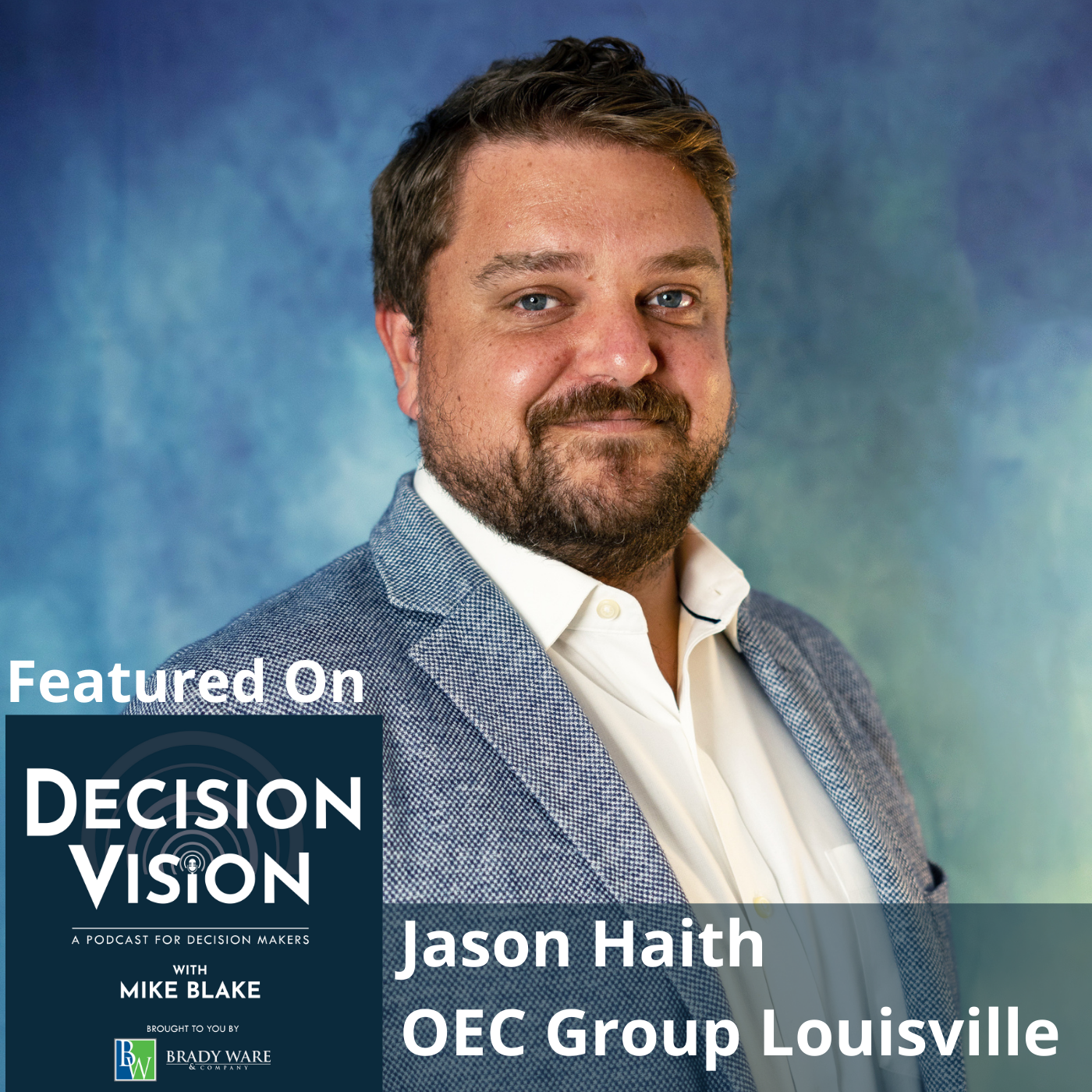
Many businesses are wrestling with the question of whether they should build up inventory to counter delivery delays due to supply chain disruption. In this interview with host Mike Blake, Jason Haith of the OEC Group contends that while those supply chain challenges have abated somewhat, they have not been solved, and may become even more challenging. Jason discussed many of the issues at hand, what may be coming later in 2022, what solutions may be available, diversifying shipping and sourcing, and much more. Decision Vision is presented by Brady Ware & Company and produced by the North Fulton studio of Business RadioX®.

OEC Group

Founded in 1981, OEC Group had a vision to provide comprehensive logistics services to clients.

Today OEC Group serves destinations throughout the world and has grown into one of the leading logistics providers from Asia to North America.

Their annual cargo volume has consistently put us in the top position for Transpacific Trade.

With offices in over fifty countries, they take pride in being close to your cargo at all times.

Proximity of their OEC logistics professionals to your cargo enables them to stay on top of relevant market trade intelligence. Their Asia offices bridge the connection between you and your supplier, bringing additional insight to the entirety of your supply chain.

Company website | LinkedIn | Twitter

Jason Haith, Manager, OEC Group, Louisville

Jason Haith, Manager, OEC Group Louisville

OEC Group is an incredibly dynamic International Logistics company specializing in the Asia and West Asia trade. OEC offers Full container, LCL, Airfreight, warehousing, and Customs Compliance services.

Jason is the manager of the office in Louisville, Kentucky and has been with OEC since 2011.

Jason has a degree from The University of Kansas. He lives in Louisville.

LinkedIn

Mike Blake, Brady Ware & Company

Mike Blake, Host of the “Decision Vision” podcast series

Michael Blake is the host of the Decision Vision podcast series and a Director of Brady Ware & Company. Mike specializes in the valuation of intellectual property-driven firms, such as software firms, aerospace firms, and professional services firms, most frequently in the capacity as a transaction advisor, helping clients obtain great outcomes from complex transaction opportunities. He is also a specialist in the appraisal of intellectual properties as stand-alone assets, such as software, trade secrets, and patents.

Mike has been a full-time business appraiser for 13 years with public accounting firms, boutique business appraisal firms, and an owner of his own firm. Prior to that, he spent 8 years in venture capital and investment banking, including transactions in the U.S., Israel, Russia, Ukraine, and Belarus.

LinkedIn | Facebook | Twitter | Instagram

Brady Ware & Company

Brady Ware & Company is a regional full-service accounting and advisory firm which helps businesses and entrepreneurs make visions a reality. Brady Ware services clients nationally from its offices in Alpharetta, GA; Columbus and Dayton, OH; and Richmond, IN. The firm is growth-minded, committed to the regions in which they operate, and most importantly, they make significant investments in their people and service offerings to meet the changing financial needs of those they are privileged to serve. The firm is dedicated to providing results that make a difference for its clients.

Decision Vision Podcast Series

Decision Vision is a podcast covering topics and issues facing small business owners and connecting them with solutions from leading experts. This series is presented by Brady Ware & Company. If you are a decision-maker for a small business, we’d love to hear from you. Contact us at decisionvision@bradyware.com and make sure to listen to every Thursday to the Decision Vision podcast.

Past episodes of Decision Vision can be found at decisionvisionpodcast.com. Decision Vision is produced by John Ray and the North Fulton studio of Business RadioX®.

Connect with Brady Ware & Company:

Website | LinkedIn | Facebook | Twitter | Instagram

TRANSCRIPT

Intro: [00:00:01] Welcome to Decision Vision, a podcast series focusing on critical business decisions. Brought to you by Brady Ware & Company. Brady Ware is a regional, full-service accounting and advisory firm that helps businesses and entrepreneurs make visions a reality.Welcome to Decision Vision, a podcast giving you, the listener, clear vision to make great decisions. In each episode, we discuss the process of decision-making in a different topic from the business owners’ or executives’ perspective. We aren’t necessarily telling you what to do, but we can put you in a position to make an informed decision on your own and understand when you might need help along the way.

Mike Blake: [00:00:41] My name is Mike Blake, and I’m your host for today’s program. This program is sponsored by Brady Ware & Company, a full-service accounting firm based in Dayton, Ohio, with offices in Dayton; Columbus, Ohio; Richmond, Indiana; and Alpharetta, Georgia. I am managing partner of the Strategic Valuation and Advisory Services Practice, which brings clarity to clients facing critical strategic decisions by presenting clients with empirical facts that enable great decision making.

Mike Blake: [00:00:41] If you would like to engage with me on social media with my Chart of the Day and other content, I’m on LinkedIn is myself and @unblakeable on Facebook, Twitter, Clubhouse, and Instagram. Also, check out my LinkedIn group called Unblakeable’s Group That Doesn’t Suck. So, please join that as well if you would like to engage. If you like this podcast, please subscribe on your favorite podcast aggregator and please consider leaving a review of the podcast as well.

Mike Blake: [00:01:32] Today’s topic is, should I increase my inventory holdings, and, specifically inventory holdings coming from abroad? During the pandemic, according to the US Census Bureau Data, US businesses on average have 37 days of inventory in hand. That is the lowest since the 2009 recession and is still trending lower. So, we all know that there are supply chain issues whether you had a hard time getting a Peloton during COVID and now they can’t give them away. It’s taking four or five weeks to get a brand new MacBook Pro. We’re routinely seeing products that we’re used to seeing on the shelves. We’re seeing empty shelves from everything – everything from steak to corned beef hash to oyster crackers. And, of course, remember in the early days when there were massive shortages of disinfectant wipes, disinfectant sprays, the great toilet paper craze of 2020, and the list goes on and on.

Mike Blake: [00:02:39] And, we are told that the reason or a reason that we’re seeing, the inflation that we’re seeing of late, is because the supply chain has yet to recover. And, that appears to be true. And from a consumer’s perspective, of course, it’s irritating. It’s disappointing. And, in some cases where inflation is really hitting, it’s potentially existential. But, of course, this is a show that is aimed at business decision-makers and this is impacting many businesses that are simply running out of product. And running out of product is a bigger deal than you might imagine, at least in some cases. Our guest will talk more about this, I’m sure.

Mike Blake: [00:03:31] But, you know, I think about – it wasn’t that long ago when you could walk into a Home Depot and you could buy Halloween or Christmas decorations on Christmas Eve and they would still have fully stocked shelves. Right. And then, if you wanted to, you could wait a few days later, they’d be selling everything off at $0.30 on the dollar or something. Now, if you’re not stocked up on that stuff by December 15th, that’s already out of there because companies have really tightened up their inventory management practices and they have decided in some cases that they’d rather miss out on a sale rather than being left holding the bag on inventory that they can’t move or going to have to take a bath on.

Mike Blake: [00:04:16] But we’re seeing now the exposure that that creates just in time inventory is fantastic when everything is working the way that it’s supposed to. But it’s vulnerable to one thing not working as well. One bottleneck will have ripple effects throughout the entire supply chain. And then, if you have ten bottlenecks as is the case or more in some of our supply chain, well, you see what we have. Right. And so, you lead to stockouts, which lead to disappointed customers. And if you’re dealing with online retail, I understand that one of the things that can just kill your rankings is if you’re just out of inventory. And that’s really hurting a lot of electronic retailers.

Mike Blake: [00:05:03] And so, this is an important decision, I’m sorry, an important conversation that is leading to a decision about whether or not companies need to change their inventory practices. Some probably have. Others are probably thinking about it very hard. If so, how to do that now? I’m not an inventory guy. I’m not a supply chain guy. I’m a finance guy through and through. So, I have told you the sum total of everything I know about the topic. So, we’ve brought in a guest who knows a heck of a lot more about the topic.

Mike Blake: [00:05:32] And joining us today is Jason Haith, who is the branch manager for OEC Group, Louisville. He’s been with OEC for 16 years, handling full container import-export, less-than-container consolidations, including buyer consolidation, airfreight import-export, along with consulting with clients and documentation. Founded in 1981, OEC had the vision to provide comprehensive logistics services to clients. They serve destinations throughout the world, and has grown into one of the leading logistics providers from Asia to North America. Jason, welcome to the program.

Jason Haith: [00:06:04] Mike, thanks so much for having me.

Mike Blake: [00:06:07] So, I’ve tried to, in a very ham-handed way, set the table here. We’ve been told for a long time excess inventory is bad. It consumes cash. It promotes inefficiency, among other things. Now, all of a sudden, we’re finding ourselves lacking in inventory. Why would companies want to go back the other way right now?

Jason Haith: [00:06:35] In terms of adding additional inventory, you mean?

Mike Blake: [00:06:37] Yes, that’s right.

Jason Haith: [00:06:38] So, I think a lot of what you’d said in your introduction is accurate. I think one of the biggest challenges the import community has faced isn’t just the cost of product in particular or shipping. It’s the uncertainty of transit time. Those issues have abated some as we’ve come out of Chinese New Year this year. But there is an issue that’s looming on the horizon that importers are really going to have to start taking a look at. And that’s the contract, the labor contract renegotiations on the West Coast. That contract is up this year, July 1st, and the possibility of a labor disruption or a full-on strike is likely enough that it’s forced conversations with clients to provide alternatives.

Jason Haith: [00:07:34] The ILWU, the International Longshore and Warehouse Association, effectively controls all of the freight terminals, and these are the terminals that [inaudible] actual vessels come into to be unloaded at the ports. They are the men and women that operate the cranes and move containers around the port facility. That contract is due July 1. And if they’re unable to reach an agreement, the possibility of a labor disruption is likely.

Jason Haith: [00:08:08] That poses a number of problems for the community. The first is that the West Coast of the United States is responsible for something around 60% of all of the volume that’s coming into the country. So, if those gateways effectively go down or inoperable, it places a huge amount of pressure on the remaining ports that are still operable. That would be the Gulf Coast, primarily Houston; the East Coast, primarily Savannah, Norfolk, and New York I think at this point. Those facilities are much smaller. They’re much smaller facilities and just not really capable of handling the volumes that are going to be coming their way. I think it’s going to be tough.

Mike Blake: [00:08:59] Now, leading up to this, there’s been an obsession, I think, or at least certainly a lot of focus on not carrying excess inventory. So, let’s go back to sort of inventory supply chain 101. How did we get to that point? Why did – why have people – why do people decide they wanted to carry as little inventory as possible? Why did we expose ourselves to this risk now?

Jason Haith: [00:09:24] I mean, ironically, I think it was because of the fluidity of the supply chain. Several years ago companies were easily able to operate in that JIT sort of scenario because product was – and product production and the transportation of that product was efficient enough that it allowed companies to sort of build these foundational pillars and how they’re going to operate moving forward. It’s those foundational pillars, I think, that have been shaken by what we saw in 2021.

Jason Haith: [00:09:59] In terms of inefficiency and excess cost, I think importers were looking at what was happening on the sales side and thinking to themselves, “Oh, my gosh, I don’t have – based on the way sales are now, I’m not sure I have the product that I’m going to need in the future. Let’s get more product moving.” And, the difficulties that I think importers saw in 2021 are really leading them to pursue a different course of action up to and including carrying inventory now that they may not have previously just because they’re unsure, not just from a transportation perspective. Transportation is incredibly inefficient. But that’s just one portion of it.

Jason Haith: [00:10:47] On the production side, there are issues as well. COVID lockdowns in China continue. Suppliers in China continue to have issues with inflation and increased product costs. The shipping delays have left product at supplier facilities longer than expected. In some cases, suppliers have had to either slow production or cancel it altogether not because they don’t have the raw materials to produce it, but because once it’s produced, they physically have no other, nowhere to put the product. Their warehouses are so stuffed full of product that was supposed to ship that didn’t that it’s hampering production. So the importers are really in a tough spot because they’re seeing these issues from literally all sides.

Mike Blake: [00:11:39] So, speaking as a citizen now and here as a consumer, I think we are under the hope that supply chain would have been kind of fixed by now or figured out by now. And clearly, it’s not. If anything, I don’t know if it’s worse or not, but it’s clearly not the way we’re used to seeing it. Why are there supply chain challenges? Is it still just on the raw production side where companies are having trouble just getting people in to do the work? Or, is it more on the distribution side? Or is it everywhere throughout?

Jason Haith: [00:12:16] I would say, to answer your question directly, it’s everywhere throughout. I think the initial problem began and is directly related to COVID. Specifically, the first three months of 2020, China was shut down. They were all locked down and US importers couldn’t really get much production because there wasn’t anyone working. And just as China starts to come out of those lockdowns, the US goes under lockdown. And so, US importers are, again, unsure. Should I bring product in or not?

Jason Haith: [00:12:49] When the US starts opening, there’s effectively a 5 to 6 month period in 2020 where not a whole heck of a lot happened, and the economy starts picking up and importers are seeing sales increase so they start to place more orders. That’s what really kicked off this craziness.

Jason Haith: [00:13:09] We find ourselves in this position now because of all of the issues that the initial problems spurred. So, all of this volume starts coming out of Asia. Steamship lines add additional vessels to start carrying it. But the ports on the US side aren’t capable of processing all of those vessels. So, we start to see congestion and then we start to see congestion at the rail, and then we start to see steamship lines canceling sailings because boats are stuck off the West Coast for three weeks. If you’re three weeks late getting to LA, you’re also three weeks late getting back to Shanghai. So, each one of these issues that we’ve seen that’s sort of propagated across the supply chain in this wave are really sort of predicated on the previous problem.

Jason Haith: [00:14:01] And, the issue I think now is I don’t – there’s no real way to throw money at the problem. A lot of people, I think, in the US are sort of under the understanding, well, let’s just build more infrastructure. And, that’s I think a necessity where it’s possible. LA, there’s just no more land. They need to make the ports more efficient. But the caveat is you don’t necessarily build the transcontinental railroad in two weeks or dredge a whole new port terminal in a month.

Mike Blake: [00:14:39] Right.

Jason Haith: [00:14:39] That infrastructure is necessary. But, man, oh, man, is it going to take a while to show up. And these issues have sort of spring boarded or bounced from one side of the Pacific to the other from the US side, back to the Asia side, back to the US side. And I think that is what has continued to present problems. I believe the community, in general, sort of thinks that all of the infrastructure that’s required to get product, say, from a supplier’s door in Shanghai to their door in Wisconsin or Illinois, it’s all the same person.

Jason Haith: [00:15:20] Similar to Amazon here in the US, you order a product on Amazon and it’s Amazon that shows up at your doorstep in most cases to deliver that. This is different. The trucking companies on the China side are not associated with the depot where they collect the container and they’re not – neither the depot nor the trucking company is really associated with the port terminal. And, the terminal is different than the steamship line. And, the steamship lines are different than the railroads in the US.

Jason Haith: [00:15:50] So, these are all sorts of segmented parts of the process that previously worked together in relative harmony. I mean, it was amazing that you could get a 40-foot container of product from, say, Shenzhen to Kansas City or Chicago in 27 days with very little problem and accurately predict the timing. And now, because, just, for example, the port gets congested in Los Angeles and the, excuse me, the truckers aren’t able to have filled enough chassis to pull out all the containers. A vessel discharges 1000 boxes. There’s only enough chassis to pull 500. Then, the next vessel arrives with 1000 containers on it and discharges all of those. They’ve got to go somewhere. So, those containers get put on top of the 500 that didn’t leave, that weren’t pulled out, and now they’re buried in a stack somewhere waiting to be exposed so that somebody can come in and collect them.

Jason Haith: [00:16:51] So, that particular problem, truckers, chassis shortage, in Los Angeles compound the issue at the port because now there are additional containers at the port that aren’t able to be cleared out. And, those containers compound the congestion issue in vessels waiting because the port can’t process as many vessels if they don’t have a place to put all of those containers, so that vessel gets delayed, and then it gets back up to Shanghai. And that’s sort of the circle, the vicious circle, I think that we in the market find ourselves.

Mike Blake: [00:17:23] So, does that mean that what we’re in is a new normal at least for a while? And if so, what is the timeframe in which we’re going to have to cope with uneven supply issues, especially from foreign sources, before it gets back to what we’re used to?

Jason Haith: [00:17:44] I think the term new normal is pretty accurate, and I think that is a lot of the pain that the import community has gone through that adjustment specifically. I think the remainder of this year will be very challenging. There are already processes underway to try and avert issues with the US West Coast. I think importers are really going to have to take a look at, excuse me – really going to have to take a look at what product is important to them. I think these problems could potentially extend through 2023, where the market and steamship lines are introducing new IMO regulations. Effectively, it’s a Go Green Decarbonization program that will result in lower overall capacity in terms of ships in the water available to move containers.

Jason Haith: [00:18:46] So from the import perspective, I do think it’s a good idea for importers to start looking for product and soon. I think those transit times, most importers right now are already considering or directly arranging shipments to avert the West Coast. The appetite for risk on the import community side is just zero. They don’t need or want any other problems or possibilities that could cause delays. So, I think they’re already taking action in sending product to some of these other places. I do think that’s a good way of proceeding. The other side is the economic side, what’s happening with the economy and our sales in three, six, nine months going to be the same as what they may be looking at right now.

Mike Blake: [00:19:40] So, in this, in the before time, if you will, there is pretty established math or algorithms to decide or determine what your optimal inventory level should be. And I’m guessing a lot of those are being either updated or thrown out the window entirely. In this new normal, how do you attack this? Do you just make sure that you have like, you’re used to having 60 days inventory, you need to make room for 120? Or, is there more math or rigor that can be used to optimize inventory under these conditions? Or is it even possible to do something like that?

Jason Haith: [00:20:22] I think a lot of people have taken a genuine swing at that problem. I’m not sure many have connected with a genuine solution that resolves the issue. The problem is the uncertainty of transit time. Yes, production is an issue. Maybe, it’s delayed a week or two or maybe a month. But the uncertainty of transit is the really difficult part. I’ve seen some shipments take 92 to 120 days to arrive. I’ve seen shipments on the subsequent vessel show up in 25 days. So, that span is incredible to try and account for.

Mike Blake: [00:21:04] Yes. It seems random.

Jason Haith: [00:21:05] It’s complete – it seems like some of these shipments that move really quickly should be kind of statistical outliers. But then, there’s an instance where your vessel arrives and the port’s too congested and they have nowhere to store the containers so you just happen to be the lucky person whose container gets moved straight over because they have no other place to physically put the product. It moves straight through. I’ve seen other instances where the containers get buried in stacks.

Jason Haith: [00:21:34] I think one of the best things that importers could probably do to the best of their ability is diversify, how some of this cargo is coming over and how the product is being routed. So, for example, a 40-foot high cube will hold roughly 65 to 67 cubic meters of cargo. If you just think of a regular old pallet, 4-foot by 4-foot by 4-foot tall, that’s about 1.81 cubic meters. So, a high cube will hold 65 to 67, excuse me, ICBMs. If you take 10 cubic meters off that order and put it in a 40-foot container and send that container to Houston and maybe arrange the other 10 cubic meters through a different port, Savannah or New York or Charleston or something along those lines, that arrangement from a financial perspective is probably more expensive than putting everything in one container. The difference is the product itself, the routing, has been diversified.

Jason Haith: [00:22:39] So, if your container in Houston gets stuck, for example, because there’s port congestion, it sits there for 45 days. If all of your product is in one container, that whole PO is stranded until the vessel docks. If you split that order up, yes, you may be looking at additional costs, but you’re also garnering an additional gateway and access to that product.

Jason Haith: [00:23:05] So, those are some of the ways and some of the advice that I’ve worked with current clients on because I really think that what we’re looking at will be extraordinarily challenging. And, like I said, if all the product is in a single container and there’s a problem with the vessel, with the port, with congestion, you’re basically waiting for everything to be processed at once.

Mike Blake: [00:23:32] That’s interesting. So, I mean, at the end of the day, it is a diversification problem, I suppose. But I don’t know. You tell me that. The reason supplies were concentrated in the first place was because that’s probably how you got the best pricing.

Jason Haith: [00:23:48] Yes.

Mike Blake: [00:23:49] And so, implicit is that you’re probably going to give some ground on pricing in order to ensure or at least hedge to make sure at least some inventory is getting through in a timely or at least net/net on a semi-regular basis. Is that right?

Jason Haith: [00:24:06] That is 100% correct. Price was initially the concern, as it should be, should always be considered. But I think if you were to pose the question to a general importer, would you be willing to pay more money? Fill in the blank, whatever that number may be. More money for better access or more consistent access to your product. I think the answer might be yes because it’s not only the cost that’s really become a problem.

Jason Haith: [00:24:40] Like, I said, I mean, the costs have jumped substantially, but importers have been able to make some of that difference up in increasing their price. That’s a problem that they’re able to cope with in one way, one form or another, not knowing when that product is going to show up. And, the span of time could be 30, 60, 90 days. That’s a problem that retailers and importers don’t really have a good solution for. And so, splitting some of these things up and looking at different gateways will help make more product available more often.

Jason Haith: [00:25:21] I do think all of the Gulf and East Coast ports will be congested, but we could see individual issues exacerbate the problem. Say, in Houston, maybe there’s a chassis issue in Houston and the port overall slows down substantially. If that’s the only bet you’ve made, all your product is subject to that contention. But if you have something coming through Savannah, maybe the delays in Savannah are only 10 days. You know, they’ve recently had to commandeer an airport to store empty equipment because of how much cargo was inside those terminals. At least, the tap is still running. And I think that’s going to be really key moving into third and fourth quarters of this year because this could be really, really challenging.

Mike Blake: [00:26:14] But you touched on something I want to come back to a little bit more explicitly, and that’s pricing. Basic economics says, well, if there’s a shortage of a product, simply raise the price, so I get a market-clearing price. It made me, at least, in the short term, that the seller may make more money. Is that a viable strategy? Or why don’t more companies adopt that approach? Or, maybe they are and I just don’t realize it.

Jason Haith: [00:26:46] I think a lot of companies are trying to do that. I think a lot of them have been successful. Larger companies tend to take a little bit longer to move that mark because the numbers are just a little bit different. I think the short-term answer to your question is, yes, raising their price is a viable solution to the fire that’s in front of them, but there just naturally comes a point when whatever that price is, it’s just too high. Whatever that price becomes just becomes too expensive for that individual making the decision at the store to purchase.

Jason Haith: [00:27:27] And, I think the scary part for a good part of the community is it’s really difficult to find that out quickly. And, what I mean by that is if March 1, let’s say April 1, the consumer is making this decision not to buy that item, you may start to see that develop or become represented in sales, maybe on the 15th of the month. But you could already have 10 or 15 or 20 containers on the water of that product with the costing built-in, assuming the price that is now too high for people to pay. So the long-term answer, I think, is, no, I don’t think it’s a viable option to continue to have to raise the costing. I think that’s a temporary answer to a problem that needs something more resolute in the long term.

Mike Blake: [00:28:25] Are there – other than what you suggest, are there areas where or elements that boiled down to, and put in quotes, simple, and there’s nothing simple about it but maybe just straight-ahead inventory management. Are there other inventory management techniques that can be tightened up also, that can help alleviate, you know make this problem a little bit less severe for businesses?

Jason Haith: [00:28:55] I do. Yeah. I think the answer is yes. I think that requires a lot of coordination between the sales team for that particular company and their operations staff who may be fulfilling those orders. I’ve frequently encountered situations where salespeople are selling a product or presenting a product that may not have arrived, that may still be stuck in congestion.

Jason Haith: [00:29:23] And so, one of the things I do in working with my clients every few weeks, I will personally put together market updates that really speak to issues that I think affect or could affect specific clients. And, I do that because I certainly want the people I’m working with to know what’s going on. But I frequently invite in not just salespeople to those conversations, but also those from the purchasing team because oftentimes the severity of the problem may not necessarily get accurately communicated to a salesperson or a purchasing person, and then they’re sort of left to whatever devices they’ve come up with to manage the problem.

Jason Haith: [00:30:10] So, I think the first place to start is to make sure all of the staff or employees in that chain to move the product from operations to sales are communicating. I think accurate information and really close coordination with providers of all types is really, really important and in conjunction with communication with suppliers, the ones actually producing the product. You definitely don’t want to solve or answer the transportation question, the warehousing question, the congestion or delay question and find out your supplier’s 60 days behind in production.

Jason Haith: [00:30:55] And so, I think businesses in the US have really been sort of stricken with a lot of requirements to operate now that just didn’t exist. These just weren’t problems that the average employee had to really address three years ago. It’s just – everything just kind of happened. The shipment got booked, it moved, showed up when it was supposed to. They got an invoice that matched what they were expecting. They paid it and life went on. So, I think communication is the first place to start.

Mike Blake: [00:31:28] So, actually, that segue is very nice in the next question I want to ask which is, how much do supplier relationships matter? And, I’m going to lump transportation and logistics here, too. And I guess what I’m really getting at is, do relationships matter to make sure or at least influence whether your shipment is going to be prioritized versus somebody else’s I guess what I’m really getting at. Does that matter? Is that a thing?

Jason Haith: [00:32:00] It can be. There are avenues. It’s certainly not easy. On the forwarding side, it requires an awful lot of communication and late-night phone calls and those types of things. That is possible for individual shipments or purchase orders. When you start talking about I want you to prioritize everything I do, that’s a different – sort of a different question. It’s no secret that capacity is really tight. Again, it’s abated. Right now, it’s a little easier now than it used to be. But capacity is expected to be really tight moving forward.

Jason Haith: [00:32:41] And so, I think forming a realistic plan with your provider on how to handle shipments that may genuinely be a line-down situation as opposed to, yes, I need this but I also understand the difficulty in getting this product moved. It is possible to prioritize individual shipments. Usually, that means there’s a cost associated with it, especially if it’s something you’re going to want to continue to do on a regular basis. If everything is hot and priority important, then sort of effectively nothing is because it’s all the same.

Mike Blake: [00:33:21] So, in this kind of and this kind of new normal, what’s the – do we change? Are there different KPIs now for inventory management than they were, or are the KPIs the same but the goalposts have moved?

Jason Haith: [00:33:42] I think the KPIs have probably changed and I think the KPIs have probably changed as a result of changes in sales that importers have seen. And I think that’s one of the big difficulties. In 2020, up through June, nothing had really been ordered because no one was really buying anything. And then, the importers started to see sales increase, realized they hadn’t really placed purchase orders for five or six months, and really started driving inventory because sales really dictated that as a necessity. I think that is likely one of the biggest challenges importers have faced is this violent swing in demand from very light to nonexistent to all of the sudden, more people want to buy my product than I have product. There is, I think, absolutely a backside to this mountain that we’re climbing, the difficulties we face, the challenges. There’s definitely a backside to this.

Jason Haith: [00:34:54] I wish I knew when exactly that was going to be. But the violent swing up in consumer demand and purchasing may result in a similar swing downward trend where people or the general consumer recoils from purchasing those items, maybe because of inflation, whatever the reason may be. And so, I think the topic of conversation, what should I do with inventory, is really pertinent for importers. I think the best direct advice I could provide, I do think importers should add to inventory soon. I do not think importers should assume sales numbers currently or in the previous quarter are the same numbers that will carry over into maybe third, fourth quarter, first quarter of 2023, kind of time frame. I think demand will wane.

Mike Blake: [00:35:52] So, we’re seeing a couple of cases. I don’t know if they’re outliers or not, but one thing we’re seeing is that semiconductor manufacturers or semiconductor vendors, probably the best way to put it, are now starting to break ground on facilities back here in the United States. Do you think there’s going to be – will there be more repatriation of production, or do you think that that’s going to be a very unique scenario? And, we’re just so interwoven with Asia that it’s just not realistic to break ourselves out unless something cataclysmic happens.

Jason Haith: [00:36:29] Yeah. So, funny you mention it. I was just earlier today speaking with a client about this exact topic. I think a few things are going to happen. I think companies, semiconductors, and auto parts potentially will reshore product just exactly like they’re doing because the disruption of supply of that item is so significant to the company that increased cost to produce it here makes sense. It’s a viable option, even though it may be a little more expensive.

Jason Haith: [00:37:04] For companies that aren’t necessarily able to reshore production because of a cost scenario, I think what a lot of them start doing is looking to other sources for similar product. Maybe, that means 60% production in Guangdong, in South China, 40% in a place like Brazil or Germany or France, or something like that. For particular commodities that are able to do it, garments, textiles, things like that, there’s an awful lot of production that goes on in places like India, Pakistan, Central America. There is a sort of pseudo trend, I suppose, called nearshoring, which isn’t necessarily coming back to the United States, but that of a country that is a lot closer, say, than Asia will be.

Jason Haith: [00:37:53] But I definitely think this problem forces importers to genuinely consider where that product is being sourced from. The process was so smooth and so easy that huge swaths of the import community had no problem whatsoever, sinking 100% of their production or near that into the Asian market because things were working so well. And this disruption, I think, has proved that changes can come swiftly and can be painful. And having options available in time of need is now a necessity.

Mike Blake: [00:38:37] So, it makes me wonder, and again I speak more of this as a citizen rather than a business person, but maybe we found the trap that we were paying too little for what we were getting because in effect, what we’re talking about is, whether you’re diversifying supply or repatriating production and those are going to lead to higher costs to some extent, mostly. But that higher cost is basically an insurance policy. Right? An insurance. Insurance is a cost of doing business.

Jason Haith: [00:39:10] I think you are exactly right. Companies in the US, you know, if you go back to the ’40s, ’50s, ’60s, maybe even ’70s, production was substantial in the United States of everything, televisions, refrigerators, all that kind of stuff. That production got outsourced specifically because it was less expensive. They didn’t have to pay people as much and the supply chain infrastructure allowed for it.

Jason Haith: [00:39:39] And I think now what the market is seeing is a period of exceptional delay. There have been disruptions in the industry before and sometimes it took a month and sometimes it was three months, sometimes it was four or five months, but things always went back to the way that they were. And I think that maybe detrimentally reinforced companies’ decisions to leave production in Asia because the problem always blew over and this issue that we’re seeing now hasn’t. It hasn’t gone away in three months or six months. It may not go away for 18 to 24 months. It could be 2023, from 2020. It could be 2023 before we see this settle at whatever it’s going to evolve into. And that landscape warrants a different approach to how companies conduct business as opposed to the landscape or environment that they saw in, say, 2015 or 16, when all of these issues were really sort of resolved.

Jason Haith: [00:40:45] You’re right. I think the US, general US consumer has benefited substantially from the lower cost of that item, and maybe not just the lower cost of the item, but the lower cost, the lower associated cost of production of that item. There are a lot of places in China that have been turned into just terrible places to be, with river pollution and air pollution and those types of things. It didn’t happen here because it was produced somewhere else.

Jason Haith: [00:41:17] I think you’re right. I think people are going to have to adjust to a higher cost product if they want to be able, in your example, to walk into a Home Depot and purchase whatever the item is whenever they happen to be at that particular place.

Mike Blake: [00:41:35] So, I want to ask sort of a broader question here. So, as we rerecord this on March 23rd, 2022, the Russia-Ukrainian War is entering its fourth week and the result of that has been in effect. The West has basically said we’re no longer interested in doing business on almost any level with Russia. And I think that a knock-on effect with that is that I think China will do business with Russia, maybe not to the extent that Russia wants to, but I don’t see them joining the sanctions, which tells me that there’s going to be competing – there’s going to be competing interests for Chinese production capacity and probably capacity throughout Asia, again for the countries that are not participating in the Russian sanctions. Is that something now – is this yet another headache that American or European importers now may have to consider? Is it that – because we’re likely seeing a massive realignment of trade flows at a fundamental level that China may not quite be as available to us just by sheer demand for capacity than it has been in the past?

Jason Haith: [00:42:58] Yeah. You know, there are, I think, a lot of issues that are stemming from Russia’s invasion of Ukraine. One of them is the average consumer certainly sees that when they go to a gas station to put fuel in their car. Trucking companies absolutely see it when they go to fill trucks up with fuel. So, you know, the cost of goods delivered by truck increases. That’s where the average US consumer, I think, sees those problems.

Jason Haith: [00:43:27] I do think this is, as you explained, a realignment potentially of trade. You know, China recently opened a railroad that flows from central China into Europe in the hopes of sort of relying less maybe on ocean transportation but a portion of that rail runs through Russia. And since they’re sanctioned now, they’re not able to bring that product through into Europe because part of the railroad goes through Russia.

Jason Haith: [00:43:58] I do think that China may look to align themselves a little more closely with Russia. Russia may look to buy more products. They may look to settle more transactions internationally, financially, not just for product. But they may look to settle more financial transactions in the yuan as opposed to maybe the dollar, which could really change the dynamic of trade in exactly the way that you had described. Chinese suppliers may be at capacity in providing products into Russia as opposed to providing that product into the United States.

Jason Haith: [00:44:39] Now, I think it has to be said that the Russian economy as compared if you’re China and you’re looking at Russia as a potential customer and the United States as a potential customer, the US wins on pretty much all fronts. They order more products. They’re more consistent. The transactions are easier. People get paid on time, all of those types of things.

Jason Haith: [00:45:04] So, there may be instances where Russia looks to maybe soak up some of that Chinese production, but I’m not sure suppliers opt to offer preference to a supplier in Russia because in most cases, those OEM buyers in the United States will be buying much larger portions of product.

Mike Blake: [00:45:30] Now, this assumes, I think that the suppliers have full freedom of choice.

Jason Haith: [00:45:36] Correct. That’s absolutely true.

Mike Blake: [00:45:39] I’m not sure they will.

Jason Haith: [00:45:39] That’s absolutely true. You know, China’s really exercised pretty stringent control over a lot of functions of business in the economy over there. A lot of their tech companies have been delisted on the US side or are in jeopardy of being delisted from stock exchanges. China’s had no problem in allowing Alibaba and Tencent and guys like that to effectively lose tens of billions of dollars in value to regain some sort of authority over how that business operates and what they do.

Jason Haith: [00:46:20] There certainly could be cases where the Chinese government may be redirects particular product or I think potentially more likely China looks to purchase product from Russia that they weren’t able, that they may not have been able to purchase on their own. So, Russia and Ukraine produce a lot of fertilizer, fertilizer components. I’ve seen some articles around that these additives are really important to US farmers in terms of crop growth.

Jason Haith: [00:46:53] If Russia and Ukraine are potentially unable to sell that product to the United States, China, I don’t think right now, wants to be seen donating money or equipment to Russia because of the sanctions. But I don’t know that it would be all that unrealistic for them to purchase products from Russia that they’re either already purchasing, but just now in larger quantities or new products that they’re trying to pull production out of as a way to sort of funnel money into the government there.

Jason Haith: [00:47:26] It’s a really, really difficult and I think extremely tenuous situation. This is definitely I don’t think the type of situation the US government wanted to find themselves in, not just with Ukraine and Russia, but the relationship specifically with China and Taiwan because it’s a very similar type of situation, I think.

Mike Blake: [00:47:50] Yeah. Well, I think China is watching this very carefully. And my own view, I think China has no interest in getting directly involved in the Russia-Ukraine thing. But they’re not our friends. They’re not our friends either. So, I think they’ll probably offer just enough support to maintain the Russian relationship but no more than that. They might supply food. They’re going to want to buy Russian oil and oil for food kind of thing, but I don’t think it will go much beyond that.

Jason Haith: [00:48:23] Yeah. It’s a tough – it’s, I mean, definitely not what any market needed right now, financial, transportation, or otherwise. It’s just one more additive to this variable concoction that people now have to try and figure out how to account for. And I think at this point, there are so many variables that people are really having a hard time coming up with a solution to the equation.

Mike Blake: [00:48:51] I’m talking with Jason Haith. And the topic is, should I increase my imported inventory holdings? Running up against the clock here, but one or two more questions I want to ask before we let you go. One is, it sounds like a tongue-in-cheek question, but it really isn’t. And that is, if we’re advocating – we’re advocating in some cases that companies may want to carry more inventory than they’re used to carrying but there are shortages. That seems paradoxical. Right? How do you build up inventory in a shortage economy?

Jason Haith: [00:49:32] I think an awful lot of people are trying to answer that question. The way that – I mean, effectively, the only way to do it is to order the product and try and wait for it to get there and hope that more product arrives than what you sell, so you’re able to increase that inventory. Now, if that’s what you’re looking to do, the only realistic way, I think, to get ahead is to just spend the money and airfreight everything over. I think in a lot of instances that’s just prohibitively expensive but I think certainly placing orders to start with. But I also think diversifying how that product is coming over, it will be a real benefit.

Jason Haith: [00:50:17] I think changing the way POs are placed. You know, maybe an importer only sends a 40-foot container instead of a 40-foot high cube. The remaining 10 cubic meters of that product are sent through a different port, and maybe you pull 15 or 20 cartons to airfreight that product over. So, you sort of have three modes of transportation, three different gateways for products to come into the United States in order to try and get ahead of the issue. I think watching sales is going to be really pertinent to try and match on the inventory that may be on the water with what types of numbers are coming down the pipeline. So, you’re in a position where you’re not over-ordering.

Jason Haith: [00:51:09] But I really think diversifying how your product, even if you don’t want to separate individual containers out, I don’t think it’s a good idea to send everything you got to one place. If you’re an importer in Chicago, I would be considering potential Mexico gateways – OEC Group has a program to bring containers into Manzanilla, Mexico – and then transport those containers in bond into Laredo, Texas. Customs clearance works exactly the same. Products get spotted in a warehouse in Laredo and then it can be pushed out to wherever it may need to go.

Jason Haith: [00:51:45] I think Houston would be an option. I would be looking at Norfolk and I’d be looking at New York. And if I had four different containers, I would send one through Mexico, one to Houston, one through Norfolk, and one in New York. Because the problem is product isn’t transiting in a timeframe that can be accurately predicted. And, if all of your product is going into one place and there’s a problem at that one place, you’re dead in the water. Everything you have is sitting on a vessel outside of Savannah or whatever. And, at least, if you’re considering additional gateways and potentially methods of transportation, airfreight or LCL, something like that, you’re lessening the risk that your business gets slammed with a huge backorder issue because all your product is stuck in a single area.

Mike Blake: [00:52:42] Jason, it’s a great topic. We covered a lot of ground, but there’s still other questions we could cover and there are likely questions that our listeners would have liked us to spend more time and a lot more depth. If they want to reach out to you for more information about this topic, can they reach out to you? And if so, what’s the best way to do that?

Jason Haith: [00:53:00] Yeah. They can send me a message, jh.sdf@oecgroup.com. I’d be happy to explain market conditions and offer some advice about how to move forward and some different options to get product over and really sort of strategize in learning what they’re trying to accomplish and trying to tailor something that most closely meets that need.

Mike Blake: [00:53:26] That’s going to wrap it up for today’s program. I’d like to thank Jason Haith so much for sharing his expertise with us.

Jason Haith: [00:53:32] We’ll be exploring a new topic each week, so please tune in so that when you’re faced with your next business decision, you have clear vision when making it. If you enjoy these podcasts, please consider leaving a review with your favorite podcast aggregator. It helps people find us that we can help them.

Mike Blake: [00:53:49] If you would like to engage with me on social media with my Chart of the Day and other content, I’m on LinkedIn is myself and @unblakeable on Facebook, Twitter, clubhouse, and Instagram. Also, check out my LinkedIn group called Unblakeable Group’s That Doesn’t Suck. Once again, this is Mike Blake. Our sponsor is Brady Ware & Company. And this has been the Decision Vision podcast.
 

Tagged With: Brady Ware & Company, consumer goods, Decision Vision podcast, international shipping, Jason Haith, Mike Blake, OEC Group, shipping, Supply Chain

Decision Vision Episode 162: Should I Replace My Salespeople with Customer Service Representatives? – An Interview with Kristin Zhivago, Zhivago Partners

March 31, 2022 by John Ray

Zhivago Partners
Decision Vision
Decision Vision Episode 162: Should I Replace My Salespeople with Customer Service Representatives? - An Interview with Kristin Zhivago, Zhivago Partners
Loading
00:00 /
RSS Feed
Share
Link
Embed

Download file

Zhivago Partners

Decision Vision Episode 162: Should I Replace My Salespeople with Customer Service Representatives? – An Interview with Kristin Zhivago, Zhivago Partners

In an age where customers can do extensive research on their own before they buy, does a business still need a traditional sales force? Kristin Zhivago, President of Zhivago Partners, and host Mike Blake explored the shifting nature of sales from a traditional salesperson to a role of customer service. They discussed the evolving needs of the customer or client, how companies meet those needs while still being able to track results, the implications for compensation and corporate culture, and much more.  Decision Vision is presented by Brady Ware & Company and produced by the North Fulton studio of Business RadioX®.

Zhivago Partners

Kristin Zhivago is the president of Zhivago Partners, a digital marketing management company that serves both B2B and B2C clients in a variety of industries. Her digital agency is comprised of a core infrastructure team and a variety of specialists in various digital methods and media.

If any of your performance “arrows” aren’t going up, we work on them until they do. That’s what Zhivago Partners think of as the whole point of marketing and sales efforts.

Today’s successful marketing demands best-practice approaches and constant attention to the success of those approaches. We all move quickly when something isn’t working as it should, improving and experimenting until the arrows start moving in the right direction.

So many clients come to Zhivago Partners after “spending so much and not getting anything for it.” You won’t have that problem with them, because they keep working on the issue—whatever it is—until your arrows start moving in the right direction.

Company website | LinkedIn | Twitter | Facebook

Kristin Zhivago, President, Zhivago Partners

Kristin Zhivago, President, Zhivago Partners

Kristin Zhivago’s career began in the high-tech industry; she and her husband, through their high-tech agency, helped introduce and market all of the technologies we take for granted today. When the web emerged as a commercial medium, she branched out into other industries and re-invented herself to become a revenue coach, helping CEOs and entrepreneurs sell the way the customers want to buy. Her 5-star book, Roadmap to Revenue: How to Sell the Way Your Customers Want to Buy was chosen by Forbes as one of the top sales and marketing books. Zhivago speaks frequently on the subject of the customer’s buying process, which she was one of the first to identify as being key to selling to today’s customers, and about building your business to compete effectively in our fast-changing, hyper-competitive markets.

LinkedIn

Mike Blake, Brady Ware & Company

Mike Blake, Host of the “Decision Vision” podcast series

Michael Blake is the host of the Decision Vision podcast series and a Director of Brady Ware & Company. Mike specializes in the valuation of intellectual property-driven firms, such as software firms, aerospace firms, and professional services firms, most frequently in the capacity as a transaction advisor, helping clients obtain great outcomes from complex transaction opportunities. He is also a specialist in the appraisal of intellectual properties as stand-alone assets, such as software, trade secrets, and patents.

Mike has been a full-time business appraiser for 13 years with public accounting firms, boutique business appraisal firms, and an owner of his own firm. Prior to that, he spent 8 years in venture capital and investment banking, including transactions in the U.S., Israel, Russia, Ukraine, and Belarus.

LinkedIn | Facebook | Twitter | Instagram

Brady Ware & Company

Brady Ware & Company is a regional full-service accounting and advisory firm which helps businesses and entrepreneurs make visions a reality. Brady Ware services clients nationally from its offices in Alpharetta, GA; Columbus and Dayton, OH; and Richmond, IN. The firm is growth-minded, committed to the regions in which they operate, and most importantly, they make significant investments in their people and service offerings to meet the changing financial needs of those they are privileged to serve. The firm is dedicated to providing results that make a difference for its clients.

Decision Vision Podcast Series

Decision Vision is a podcast covering topics and issues facing small business owners and connecting them with solutions from leading experts. This series is presented by Brady Ware & Company. If you are a decision-maker for a small business, we’d love to hear from you. Contact us at decisionvision@bradyware.com and make sure to listen to every Thursday to the Decision Vision podcast.

Past episodes of Decision Vision can be found at decisionvisionpodcast.com. Decision Vision is produced by John Ray and the North Fulton studio of Business RadioX®.

Connect with Brady Ware & Company:

Website | LinkedIn | Facebook | Twitter | Instagram

TRANSCRIPT

Intro: [00:00:02] Welcome to Decision Vision, a podcast series focusing on critical business decisions. Brought to you by Brady Ware & Company. Brady Ware is a regional, full-service accounting and advisory firm that helps businesses and entrepreneurs make visions a reality.

Mike Blake: [00:00:21] Welcome to Decision Vision, a podcast giving you, the listener, clear vision to make great decisions. In each episode, we discuss the process of decision-making on a different topic from the business owners’ or executives’ perspective. We aren’t necessarily telling you what to do, but we can put you in a position to make an informed decision on your own and understand when you might need help along the way.

Mike Blake: [00:00:44] My name is Mike Blake, and I’m your host for today’s program. I’m a director at Brady Ware & Company, a full-service accounting firm based in Dayton, Ohio, with offices in Dayton; Columbus, Ohio; Richmond, Indiana; and Alpharetta, Georgia. My practice specializes in providing fact-based, strategic, and risk management advice to clients that are buying, selling, or growing the value of companies and their intellectual property. Brady Ware is sponsoring this podcast, which is being recorded in Atlanta for social distancing protocols.

Mike Blake: [00:01:12] If you would like to engage with me on social media with my Chart of the Day and other content, I’m on LinkedIn as myself and @unblakeable on Facebook, Twitter, clubhouse, and Instagram. I also recently launched a new LinkedIn group called Unblakeable’s Group That Doesn’t Suck. So please join that as well if you would like to engage. If you like this podcast, please subscribe on your favorite podcast aggregator, and please consider leaving a review of the podcast as well.

Mike Blake: [00:01:39] Today’s topic is, should I replace my salespeople with customer service or customer care representatives? According to the State of the Connected Customer Report, 2nd Edition, produced by salesforce.com, 84% of customers say that the key to winning their business is being treated like a person and not a number.

Mike Blake: [00:01:57] And, you know, like so many things in the last two years, I think we’ve changed our relationship with sales. It’s been very difficult, I think, for a conventional sales approach to survive in a coronavirus, trans coronavirus pandemic. Hopefully, we’re getting to the other side of this thing, but who the heck knows? And for a long time, some of the traditional sales approaches and techniques simply are not available to us.

Mike Blake: [00:02:38] You couldn’t take someone out to a ball game because they weren’t playing. You couldn’t meet people in bars and restaurants. Conferences were effectively shut down for a year. Flying out to see people was difficult at best, and the list goes on and on. And meanwhile, we’ve undergone a massive digital transformation, and traditional sales methods are being replaced. At a minimum, they’re being supplemented, but they’re largely being replaced by digital relationships, real conversations, freely providing information with no expectation of something in return, an approach to business that is about alignment with core beliefs of customers, employees, and even shareholders. You know, it’s all changing and has all changed and some of it will change back. But I don’t think that all of it will. I don’t think anybody thinks that all of it will. And sales have changed. And if we want to continue to being as successful as we have been in the past, this is simply one more of the areas in which we need to change.

Mike Blake: [00:03:59] I was having a conversation with our guest about a week and a half ago. And she brought to me this idea and this concept that she’s been advising her clients on in terms of changing a posture of sales from the traditional sales representative to a customer, a customer care representative, if you will. And I thought that was really interesting.

Mike Blake: [00:04:28] And as we continued that conversation, it got my wheels turning and thinking, you know, there’s a lot here. And I think a lot of companies may be starting to do this or they’re at least sniffing around the concept if they haven’t pulled the trigger. And that tells me it’s an opportune time to address this topic on the podcast.

Mike Blake: [00:04:48] So, joining us today is Kristin Zhivago. Kristin is the president of Zhivago Partners, a digital marketing management company that serves both business-to-business and business-to-customer clients, consumer clients in a variety of industries. Her digital agency is comprised of a core infrastructure team and a variety of specialists in the various digital methods and media.

Mike Blake: [00:05:11] Kristin’s career began in the high-tech industry. She and her husband, through their high-tech agency, helped introduce and market all the technologies we take for granted today. When the web emerged as a commercial medium, she branched out into other industries and reinvented herself to become a revenue coach, helping CEOs and entrepreneurs sell the way her customers want to buy. Her five-star book, Roadmap to Revenue: How to Sell the Way Your Customers Want to Buy, was chosen by Forbes as one of the top sales and marketing books. Kristin Zhivago, welcome to the program.

Kristin Zhivago: [00:05:43] Thank you so much. Good to be here.

Mike Blake: [00:05:46] So, I want to start off with a very basic question that may not be so basic, but it sounds basic, but the answer may not be. In your mind, what is the difference between a sales representative and a customer service or customer care representative?

Kristin Zhivago: [00:06:03] There’s a big answer, several big answers to that question. I’ll try to keep it succinct. One is the way salespeople are compensated. So, they are compensated to close sales, get to the end, make the money come in. So, there’s commission, there’s quota, there’s usual push, push, push kinds of things. The other is the type of person who enjoys working in that environment and thrives in that environment, as we used to call them hunters. And then, there are other types of people who are farmers or nurturers, and those people tended to stay out of sales because they didn’t want to work on a quota and they didn’t want to do that push, push, push stuff.

Kristin Zhivago: [00:06:49] Now, the real problem is that, and I used to call myself a recovering salesperson, but I think I’m so far beyond it now. I don’t need to worry about that anymore. But there’s a tendency among salespeople to want to be the ones in the conversation who know the most about that particular thing. It’s a point of pride where they know the product and they know the answers and so on, and they’re educating the customer.

Kristin Zhivago: [00:07:18] The problem is customers are no longer dependent on salespeople anymore for their information. And even ten years ago, when I was giving speeches in Holland to sales groups about customers, even then I was saying that the customers are getting 60 to 80% of their questions answered on the web before they ever talk to a salesperson. And they had access. And they definitely do now, even more than before, to other customers who had bought that product or service. And so, they not only knew the good, wonderful stuff that the salespeople would say but the stuff that the salesperson wouldn’t say. They find out that sort of the ugly underlying truth, if there is one.

Kristin Zhivago: [00:08:06] So, that’s changed. And the customer, by the time they get to a salesperson, they have one or two very specific questions. And, the salesperson has to be able to answer those questions. And, another problem with salespeople is that they’re often trained more for the general top-of-the-funnel types of questions. And they always have to say, oh, I have to get my technical expert in on that one or something or a subject matter expert for the bottom of the funnel.

Kristin Zhivago: [00:08:38] So, there’s a lot of disconnects going on right now in all industries. And if you ask a normal person, you know, do you like being sold to? The answer is no. So, we’ve just got a real problem with people hiring people to do things that other people that they’re selling to don’t want.

Mike Blake: [00:09:00] Yeah. And, you know, I think we even have less of a tolerance for it now, for whatever reason, whether it’s lack of patience or we just find our time to be more valuable or – it’s just a rewiring of how we as human beings approach things. I think we’re even less tolerant of being sold to now than we were, say, 2 to 3 years ago. Do you agree with that?

Kristin Zhivago: [00:09:24] Oh, yeah. I definitely agree with that. And especially because, you know, Google still owns about 95% of the search market and they’ve continued to get better and better at giving you what you want when you go to look. You might have to revise your search term a little bit, but there’s a new quality among customers now, characteristic, which, and I just wrote a blog article about this recently where they assume if they just keep trying, they’re going to find exactly what they want. So, they’re just – they have no patience.

Mike Blake: [00:10:05] Now, I’m curious. I was kind of thinking about this conversation. Can customer service representatives be confused or conflated with an inside sales position? Some inside sales being defined as somebody with whom you already have a relationship as opposed to a brand new relationship that you’re trying to convert. Is there a comparison or contrast that can be made there?

Kristin Zhivago: [00:10:34] Well, it’s an interesting question. I have a client who is the shining star example of this whole approach because I’ve been talking for years to people about making this shift because I saw it coming because I interview customers for my clients all the time. And I just – there’s no question that we’ve made this shift. But this particular client is a very good manager and he’s also an operations guy. He’s a logistics person. So, he tends to think in terms of logistics and he could see that that wholesales thing wasn’t working. He made the shift and brought his customer service people into this role of making it easy for customers to buy, which is another aspect of this. By the time they come to you, they have the money in their hand, burning a hole in their pocket, their virtual pocket, and they are ready to buy.

Kristin Zhivago: [00:11:31] So, you really have to just get out of the way, give them exactly what they need, and let them make the purchase. They’re on a quest to spend the money. So, you’re really helping them buy. You’re not selling them. You’re not trying to convince them of anything. You’re just giving them the facts. You understand – you know the product really well. And you understand how to give them what they want, maybe by doing things a little differently. If they need something right away and you’re stuck with the supply chain issue, maybe you help them rent something for a month before they get the product. This particular client makes data center equipment and they found that to work.

Kristin Zhivago: [00:12:16] These same people also go back to existing customers, people they’ve had, bought the product maybe two years ago or a year ago or whatever. And they have, as part of their job, to discuss those issues with those folks and check back with them and say, how are you doing? You bought this, how is it going? And people actually appreciate that and they’ve gotten a lot of sales out of that as well.

Kristin Zhivago: [00:12:42] I do have to say that since he did this, their sales have done that wonderful hockey stick thing that we love to see, that – I live for the hockey stick, where it just was going along, going along. And then, it zooms up. And this is a company that’s been around for a long time. And even with COVID, even with supply chain issues, they’re just – they’re going gangbusters. They can’t make them fast enough.

Mike Blake: [00:13:08] You know, that brings an interesting question, at least to me in mind, is that I think what you’re saying is that the role of the salesperson as gatekeeper to information has been made obsolete.

Kristin Zhivago: [00:13:24] Oh, absolutely.

Mike Blake: [00:13:25] By that.

Kristin Zhivago: [00:13:27] Yep.

Mike Blake: [00:13:27] Now, also, I might argue that a little knowledge can go a long way to be dangerous as well.

Kristin Zhivago: [00:13:36] Yeah.

Mike Blake: [00:13:37] A customer having done their research, but, and they may be informed, but they’re not experienced and may have in mind something, one thing, but there’s something completely different or just different, perhaps even more expensive, but is a much better fit with their actual need. And, is that something that the customer service representative is equipped to address?

Kristin Zhivago: [00:14:09] They should be. And, the trick here is they need to be humble enough and honest enough to say, “I don’t know. I’ll help you find out,” or, “let me check with my boss. Let’s get him on the phone,” or whatever they need to do to keep the conversation going, but to help the customer make the decision. And, a good customer service person if something else is better for the client will say that. And, again, because they’re not on a quota, they don’t have a commission, they’re not going to be personally penalized. Sometimes you can put them on a company-wide, if our revenue goes up a certain percentage, you get a bonus. That kind of thing is good because it’s for everybody. Everybody shares and if they help each other, they all benefit. So, I think that’s a better way to handle that kind of incentive.

Kristin Zhivago: [00:15:01] But in the individual conversation, they should be able and willing to just say, “You know what? I need to find out more.” Or, “You know what? I think this other solution might be better for you.” And what’s interesting about that is that the trust factor goes up like 1000% because now the person knows that they’re willing to help you to help them make a decision without being all biased and pushing them into something they don’t want. And they will remember that later when they’re in a position where they might want that, or if they want to recommend someone to someone else. If somebody says, do you know anybody good? And they’ll say, well, you know, I didn’t actually buy from these people, but they were so helpful and this might be what you want but they’ll tell you the truth. So if you go to them, you’ll get the straight scoop.

Mike Blake: [00:15:55] And I wonder in that context too, there’s just something about the dynamic where if the representative of the company, whatever form that takes, is willing to kind of let you go, if you will, that if they’re not the right – they’re not the right solution, you don’t have the right solution for them. But you’re not trying to hammer that square peg into a round hole. And I can tell you that some of my best and most loyal clients, for me anyway, are people that I initially said, you know what, we’re not the right people to help you.

Kristin Zhivago: [00:16:30] Yes. Happens all the time. Much more than anybody likes to admit, but that is correct. I’ve even had clients where when I first started talking to them, I kept thinking, I don’t know, I don’t know if we’re right for you. And I was saying it and they kind of had to talk me into it because we started realizing maybe I could help them. But you have to be agendaless.

Kristin Zhivago: [00:16:55] The problem with the classic salesperson is they have an agenda and that’s to close the sale. And that agenda is not the same as the customer’s. The customer wants to make the correct decision. Those are two very different agendas. So, if all you’re doing is trying to help them make the right decision and think it through, they’re actually going to be appreciative of the time you spend with them and the knowledge that you do bring to that process.

Mike Blake: [00:17:23] So, I think when most of us think of a customer service representative, myself included, I think of somebody that I’m calling when there’s an issue to be addressed or a problem that has to be solved or a failure that needs to be fixed. And, in making this switch, what we’re doing is that we’re expanding the role of existing customer service representatives to then add this responsibility to take care of potential new buyers, if you will, or new purchases. Or is there a redefining kind of both roles that creates more alignment with the descriptive vocabulary?

Kristin Zhivago: [00:18:11] I think it’s more of a realignment. I was just talking to one of the wonderful people. She’s very helpful. She’s done a fantastic job in this role. And she said something interesting. She said, you know, if her manager, the guy I’ve been talking about, had set it up just like the normal sales thing, she wasn’t interested at all. You know, she wasn’t interested in the extra money. She wasn’t interested in the whole push, push, push. But she loves helping people make these decisions.

Kristin Zhivago: [00:18:43] Now, you do still have to have customer service people and they have, in this particular company, it’s a mid-size company, they have two people handling these types of conversations and then other, a couple of other people who handle the normal customer service kinds of stuff. Because that’s more of after you buy, now you’ve got an issue you need to deal with. It’s a very different thing.

Mike Blake: [00:19:11] Yep. So, you know, making this transition – let’s talk about the mechanics of making the transition because if somebody is interested in this topic, they’re probably wondering, okay, how do I go about this? And the first question is, can an existing sales force be retrained, reconfigured, reoriented realistically to adopt a customer service posture? Or, is it more likely that you’re going to have to make some wholesale changes?

Kristin Zhivago: [00:19:50] The latter. I mean, I always laugh. I mean, I would love to say you could teach. And we tried, actually, you know, because this wonderful manager had already bought into the whole concept. And so, they had me do some coaching of their current salespeople. It didn’t work, and I’m a pretty good sales coach, but it was just – it was so contrary to what got them up in the morning. They liked being the guy who knew it all. They liked being the guy who was reaching out, talking to people. And as it turns out, they actually left the company for other reasons, but which turned out to be a good thing. So, we were able to work that out. Excuse me.

Kristin Zhivago: [00:20:34] But, when we looked back at their activity, most of what they were doing was talking to existing big customers and doing that hi, how you doing, Bob? How’s the wife and kids? And going out for golf back in the day when people did that. And they weren’t really selling anyway. They were just riding on the coattails of some large deals. So that was – but that was a separate thing, I mean, that particular group of folks.

Kristin Zhivago: [00:21:08] But they really don’t have the same kind of mindset. Now, you’re going to think, well, what are salespeople going to do if the role of the salesperson is gone? And the answer is, I don’t know. I have a lot of friends who are salespeople. I love salespeople. They are great, you know. But in a way, this is like cats and dogs. Salespeople are dogs. They jump up and greet you and they’re all happy and outgoing. And the customer service people, I don’t know, if they’re exactly cats because cats kind of turn you into a slave instead of the other way around.

Kristin Zhivago: [00:21:41] But it’s a different – it’s a nurturing thing. It’s a comforting thing. It’s a caring thing. It’s a helpful thing. It’s the only thing that matters is that you end up happy when you hang up the phone. And that’s all they care about. It’s a different kind of thing. So, at the moment, I haven’t seen that work. So, yes, you probably have to hire, at least hire somebody to start working on this even if it’s part-time from their home, which is good because you can do a virtual thing and try it out.

Mike Blake: [00:22:13] I wonder if a future role for traditional salespeople – first of all, I wonder if there are industries where that’s still going to work, for example, something that’s heavily commodity-driven, where it’s really not about information at that point because everything’s homogeneous. But also I wonder if there’s still a role for that kind of salesperson making outbound calls because it seems to me, and correct me if I’m wrong, the customer service role that you’re describing seems awkward to me in an outbound role.

Kristin Zhivago: [00:22:54] Yeah. I agree.

Mike Blake: [00:22:55] And that, it’s like calling up random people and saying, “Hey, do you need help?”

Kristin Zhivago: [00:23:00] Yeah. I’m glad you brought that up.

Mike Blake: [00:23:00] And, maybe well-intentioned but [inaudible].

Kristin Zhivago: [00:23:01] Yeah. I’m really glad you brought that up because there’s another aspect of this, another part of this, which is one of the reasons that this is working so well for this particular client, is that we happen – our company, our agency lives to bring in leads, good leads for people. And, we just keep figuring out what digital channels or what other things we need to do to make that happen. And so, they have a good flow of incoming leads. They don’t need anybody to make outgoing cold calls. So, that’s number one.

Kristin Zhivago: [00:23:36] Number two, the whole idea of cold calling doesn’t really work anymore. There’s a lot of companies that claim they can do it. I’m honestly, I keep trying to see if I can make it work somehow, and I’m just not convinced. When somebody is ready to buy, nothing will stop them from going out to Google or their friends or whatever and finding the people they should talk to and then reaching out. They’re just – they know you’re accessible. The websites are all there for them. They can go and go and find you in a nanosecond.

Kristin Zhivago: [00:24:12] So, the whole idea of calling someone who might have a need maybe because of their title or their role or whatever or the company that they’re in, it’s just – the only you can do with those folks is to nurture them over time with really good information that you keep sending to them and do kind of a cold email outreach, maybe combine it with LinkedIn or something. But until they’re ready, they’re not interested. And they’re just – it’s just going to be a very discouraging exercise for someone.

Mike Blake: [00:24:46] Yeah. And to that point, I mean, I’m not even sure. In many cases, I’m not even sure how you effectively cold call, although companies still do it right. We all still receive phone calls for extended warranties and somebody wants to buy our house. So, it’s still going on. Although, again, it’s weird that this focused on those two things.

Kristin Zhivago: [00:25:08] Yeah.

Mike Blake: [00:25:09] Presumably, it works so they wouldn’t do it.

Kristin Zhivago: [00:25:11] Well, I think the extended warranty people are playing a game of numbers. They make millions of automated calls and –

Mike Blake: [00:25:19] Yeah. That’s right.

Kristin Zhivago: [00:25:20] And then, they get enough to pay for it so they keep it up.

Mike Blake: [00:25:24] And, you know, I think that I think that’s exactly right. And that because the calls themselves are automated, the economics can kind of work. But the notion of sort of dialing for dollars, how do you get through to anybody anymore?

Kristin Zhivago: [00:25:41] Well, that’s the other thing. Everyone has caller ID.

Mike Blake: [00:25:44] Yep.

Kristin Zhivago: [00:25:44] And whether it’s on their office system or their phone, mostly their phone. And they just aren’t going to answer the phone and even says, you know, possible spam.

Mike Blake: [00:25:54] Yep.

Kristin Zhivago: [00:25:55] Or I live in Rhode Island and there’s a little island off the coast of where I live, and it’s called Block Island. And I know for sure that there is no corporation on Block Island that’s going to be calling me about anything. So, when it says it’s Block Island, I just laugh. I just – you know, so the screening aspect is, oh, golly, 100 times more effective than it used to be. And so, you just don’t get through. And if they don’t want to answer you, they just don’t – they’re not interested. People don’t return every call anymore. They’re just not going to do it.

Kristin Zhivago: [00:26:31] So, yeah, I think it is broken. You said it was totally obsolete and it really is. And to me, it’s a real shame. And this is one of the biggest problems with sales and marketing, in general, is that people will go on for decades doing the wrong thing, hoping it’s going to work because somebody sold them on the idea. And it’s very different from manufacturing or finance or any of the other areas of business where you can tell pretty soon that something’s not working, especially manufacturing, and you stop doing it. But they’re not doing that with sales and marketing. They keep beating their heads against the same wall and hoping it’s going to work. It’s very sad.

Mike Blake: [00:27:13] Yeah. And, it’s interesting because I think it speaks to how hard sales and marketing is.

Kristin Zhivago: [00:27:24] Yeah.

Mike Blake: [00:27:24] That I think to some extent, you’re almost – it’s a placebo effect, right? You’re almost happy just hiring somebody that even says that they’re capable of doing it and that they want to do it.

Kristin Zhivago: [00:27:37] Yeah.

Mike Blake: [00:27:37] Even when –

Kristin Zhivago: [00:27:39] And six months later, you spent all the money. This is the situation our clients are in when they come to us is I’ve tried this and this and this and I spent all this money and the needle didn’t move. And, that’s sad. That’s really sad.

Mike Blake: [00:27:55] I’m really glad you brought that up because that segues in another question I wanted to ask, which is, it seems to me that a key difference between traditional sales and, I’m going to call this, this new approach, if you will, or the customer service approach to sales is that that traditional sales are very easy to measure, right? Number of calls, number of conversions, etc., etc. You just go down the line. Customer service seems, to me, harder to kind of define and measure and manage KPIs over time. But you tell me, is that true?

Kristin Zhivago: [00:28:32] No, it’s not true. This manager is very logistically driven, as I mentioned. And we have KPIs. We have advertising that we do. We do content marketing for them. In fact, we started advertising some of their most popular blog articles, which is bringing in wonderful leads for us. Something we just started. And, we can track. If you have a good CRM system and you’re tying the activities of the marketing campaign, the machinery of the marketing campaign, the infrastructure, to the client’s system, you can absolutely track the outgoing or the marketing effort all the way through to a closed sale. And in fact, each month we get on with the CEO of the company and we show them the actual ROI numbers. Here’s what has come from marketing and here’s your ROI. And, it’s a really big number and it’s a wonderful thing. So, yes, you can do that. There’s really no difference, I mean. And in fact, salespeople were never that good at entering data into CRM systems anyway.

Mike Blake: [00:29:46] That’s true.

Kristin Zhivago: [00:29:46] Yeah. Yeah. So, you can’t depend on them for that anyway. You really couldn’t, ever. So, now it’s a matter of automating that process going through and having little trigger points that say, okay, this was speed it came in. The only tricky thing is when they came into an ad and then they came back three months later looking at a blog article, and then maybe they had some kind of we had an email go out to them or something, and then they buy. So, which one of those things do you then attribute that to? And, we tend to there’s this is not a perfect science that you get as close as you can get. And in that case, we would attribute it to the first touch, the ad.

Mike Blake: [00:30:33] So, I wonder, do you ever encounter that maybe there’s a little bit of a stigma here that needs to be addressed and that being that there’s a distinction in sales between the originator and the order taker? And, much of what you’re describing candidly doesn’t exactly fit. But I think you can see where I’m going. And if you look through the lens of a traditional sales role, it sounds an awful lot like an order taker. And, an order taker is sort of a dirty word because the feeling is that anybody can answer the phone, take an order and not screw it up. I think I know how you’re going to respond to that, but I’d like you to react to that. Is that stigma going away and what’s sort of happening with that belief system?

Kristin Zhivago: [00:31:26] Well, first of all, they’re not order takers. They are people who are helping the customer with their buying process. And, one of the big things I’ve been pushing for years in my book and all my speeches is that our job is not to sell the customer. Our job is to make it easy for them to buy. They want to buy. We need to make it easy for them. So, how do we do that?

Kristin Zhivago: [00:31:50] Now, I need to segue into something else for a second. In the book, I talk about the four types of products and services in the world based on the amount of scrutiny that the customer applies to the purchase. So, you’ve got light scrutiny, medium scrutiny, heavy scrutiny, and intense scrutiny. The light scrutiny products are commodities, really cheap. See it, buy it. Don’t have many questions; you know, the candy bar at the checkout counter kind of thing.

Kristin Zhivago: [00:32:16] Medium scrutiny is things like clothing on the B2C side and maybe some simple software on the B2B side. You have a few questions. It costs a little bit more than hardly anything. And there might be a few other people involved maybe. Then, there’s heavy scrutiny where you have lots of questions and there’s many people involved and there’s a salesperson who has to get involved to help you figure out how to structure the deal and all that. You have a lot of questions. On the B2C side, obviously, those are houses and cars and those kinds of big purchases. And then, intense scrutiny is all of that but you get married. It’s a long-term process or it’s a big, big deal like a Boeing airplane or something that somebody’s having Boeing make.

Kristin Zhivago: [00:33:05] So, obviously, this type of thing that I’m talking about is more in the heavy to intense scrutiny products and services that cost thousands to millions of dollars. And there needs to be somebody to answer those specific questions. Is this going to fit in my physical or virtual environment? How big is it? And honestly, even on Amazon, people don’t answer that question properly.

Kristin Zhivago: [00:33:35] And, now I need to talk about one other concept, which is something came up with a few years ago, which is the mindset of the customer when they set out to buy is more important than all the other characteristics of a customer. And, the mindset consists of their desires, their concerns, and their questions. And if you address all of those in your website and every place else, if you know what they actually are because you’ve interviewed your customers, then you’re going to make sales.

Mike Blake: [00:34:10] So, in making this change and I know you’ve shepherded at least a couple of companies in making this transition, does the change have to go beyond simply swapping out traditional salespeople for customer service representatives? Or, has it changed just sort of localized to what previously had been called the sales department and sales function?

Kristin Zhivago: [00:34:35] Well, you definitely have to get the CEO on board. CEOs love sales because, to them, it’s a very logical thing. You send people out into the world and beat the bushes and knock on doors and you get money. That’s how they see it. And, as we’ve talked about extensively in this segment here, those days are done. And so, it’s kind of sad, but they don’t have that anymore.

Kristin Zhivago: [00:35:04] So, now, you have to convince them that there’s another way, a better way. And, telling a CEO that you’re going to replace the salespeople with customer service people who are going to make it easy for the customer to buy will scare him to death, especially if you don’t have the right number of leads coming in. Because if you don’t have anybody calling out, even if it wasn’t working very well, it still felt like activity, your marketing better be working, bringing in qualified clients with content marketing and social marketing and all the stuff that we do to bring to bring customers in. So, that’s the part that is difficult. He has to be – he or she has to be on board with it or you’re going to be fighting and fighting and fighting all the way.

Mike Blake: [00:35:50] And, you know, to me, it also seems there needs to be a mindset change, even a cultural change in some respects. You know, when you – I’m, as I’ve said many times on this program, I’m a big, big fan of Simon Sinek’s Start With Why.

Kristin Zhivago: [00:36:08] Yeah.

Mike Blake: [00:36:09] Just re-read the book.

Kristin Zhivago: [00:36:10] Yeah. Good old Simon.

Mike Blake: [00:36:12] You know, one of the things, one of the lessons he teaches in that book is how so much of sales is outright manipulation.

Kristin Zhivago: [00:36:21] Yeah.

Mike Blake: [00:36:22] Right? Especially when you change price, when you lower price, for example, to land a sale, that’s just outright manipulation, which is, to me, was a brilliant observation.

Kristin Zhivago: [00:36:32] It’s true.

Mike Blake: [00:36:34] When you rely on outbound sales in a traditional sense, whether you realize it or not, whether you like it or not, you’ve basically put your chips in the middle of the table saying that we rely on manipulation to sell, right, and if you’re honest about it.

Kristin Zhivago: [00:36:54] Yeah.

Mike Blake: [00:36:54] Whereas –

Kristin Zhivago: [00:36:55] And the people at the receiving end would definitely say that for sure.

Mike Blake: [00:36:59] Yeah. I mean, the people on the offering end probably would not say that and that would be a very painful revelation to many of them. But from where I sit, that’s what’s happening. That would be my analysis. I think Simon would say the same thing.

Mike Blake: [00:37:13] So, the deeper organizational change, the deeper kind of soul shift, if you will, if I can get a little bit metaphysical here, is you have to embrace the fact that you’re going to do a lot of things for people that you don’t know, who may very well never buy from you and buy from your competitors instead and get nothing for it. But that’s now table stakes.

Kristin Zhivago: [00:37:46] Yeah.

Mike Blake: [00:37:47] Because otherwise, there’s no reason for somebody to kind of come to you.

Kristin Zhivago: [00:37:52] Yeah. That is correct. You’ve said it very well.

Mike Blake: [00:37:55] And that’s easy to say. I don’t think that that’s very easy to do.

Kristin Zhivago: [00:38:02] Yeah. And, you know, the guy who headed up Zappos had a very unfortunate end. Sorry about that. Because I did read his book and I was very impressed with what he was doing there at Zappos. But he built a whole business selling shoes and those people were instructed to do whatever they could to help a customer. And there’s a famous story in there about a woman who was on with another one, a customer, a female customer. It took them 8 hours to find the right shoe for her. And, you know, usually, a CEO would be horrified that somebody would spend eight full hours for one pair of $200 shoes or whatever.

Mike Blake: [00:38:46] Right.

Kristin Zhivago: [00:38:47] But the absolute delight. You know, that was their whole thing. We’re out to delight people. And it worked. And he became a billionaire. You know, Amazon bought the company. It wasn’t a bad result. But you really have to be willing. This takes some bravery and courage.

Kristin Zhivago: [00:39:06] You have to trust the fact that your buyers really do want to buy from you and that you really do have a good product or service and you’ve trained your people to be able to help the customer when they set out to buy and have that good, meaningful, consultative conversation, which is why I don’t like the word order taker because that’s not it. They’re not just sitting there taking orders.

Mike Blake: [00:39:30] Yep.

Kristin Zhivago: [00:39:31] They’re talking about, oh, you need this buy. Okay, we’ll have to figure that out. We can’t do it by that date. What if we do this? And what’s the basic setup of your data center, for example, and what kind of floors do you have and how high are the racks up from the floor? And, you know, so you have a lot of very specific requirements that people have.

Kristin Zhivago: [00:39:57] And by the way, this whole scrutiny model has been interesting to me in a sense where you can spend four hours on Amazon trying to find the proper $10 item. I mean, it’s gotten kind of skewed because, again, people think they’re going to be able to find exactly what they need. And, their needs are very specific. And so, your customer service people have to be able to address those needs and solve – and given the power and the knowledge to solve problems for the customer. They’re problem solvers.

Mike Blake: [00:40:35] And because they’re problem solvers, I think that the process of implementing this goes as deep as to even how you recruit.

Kristin Zhivago: [00:40:46] Oh, absolutely.

Mike Blake: [00:40:47] And onboard and compensate such people.

Kristin Zhivago: [00:40:49] Yes, of course. Absolutely. As I mentioned, you stay away from commissions and quotas and you make them very aware of the sales and where it’s going overall for the company. And you also give them bonuses, maybe quarter by quarter or at the end of the year. Let’s say the whole company went up this much and you were a big part of that so you get this percentage of that.

Mike Blake: [00:41:18] So, let me throw out kind of a radical idea. I’d like you to react to it. And if you just think that I’m crazy, please feel free to say that. You will not be the first person on the show to [inaudible]. I promise you.

Kristin Zhivago: [00:41:30] That’s fine. I’m not afraid.

Mike Blake: [00:41:31] But what about – can you even go so far as to reward somebody that make sure that you don’t get a – that you don’t acquire a bad customer? Because in a traditional sales function, you bring in the sale, you get your commission, and then it’s no longer your problem, generally. Right?

Kristin Zhivago: [00:41:55] Right. Right.

Mike Blake: [00:41:56] But it could be somebody else’s big problem, big headache. And, I’ll go back to start with why and there was an anecdote about a woman who constantly sent letters to the CEO of Southwest Airlines about how she was unhappy with the service because she expected full service on a discount service airline. And, finally, they basically responded to this person, the CEO responded to this person saying, you know, “Dear Mrs. Smith,” whatever her name was, “we’re sure going to miss you.” Because they spent so much time trying to satisfy a customer that can never be satisfied.

Kristin Zhivago: [00:42:35] Right.

Mike Blake: [00:42:36] And I don’t know about you, but I mean, I’ve had customers, clients I deeply regretted taking on. I can remember every single one of them. They can be so damaging to an organization. And, I wonder if a role also of a customer service representative is to identify a customer that in the long run, and maybe even the short run, is going to wind up costing the company money and filtering them out.

Kristin Zhivago: [00:43:08] Yeah. It’s an interesting question. For service businesses – and I am one and have been for years. I have a jerk test because I refused to work with jerks. I don’t have any jerk employees and I don’t have any jerk clients. So, we’re living in this bubble, this jerk-free bubble, which is a wonderful thing. I mean, honestly, nobody’s hurting anybody. Everybody’s helping anybody. And, I define a jerk as a person who makes life harder on other people. The good people don’t do that. They try to make life easier on everybody else. So, you live in an environment if you’re jerk-free where everybody is trying to help everybody do a good job and be happy.

Kristin Zhivago: [00:43:51] As much as you can do that in a service company, in particular, it’s a really good idea, or if you have long-term relationships with people. And just like the CEO of Southwest, you have to be willing to walk away if they are making life hard on the other people in the company.

Kristin Zhivago: [00:44:10] One of my clients right now is a big company that does benefit programs for H.R. companies. They manage the benefit programs. And so, I’ve been interviewing H.R. people lately and I’ve been asking – one of my questions when I do these interviews is, what’s your biggest problem right now? And, of course, the biggest problem is finding qualified talent.

Kristin Zhivago: [00:44:31] And, what really keeps people in companies in my experience working with hundreds of companies and thousands of customers and thousands and thousands of workers inside companies, large and small, is that management and the customers make it easier for them to do their job. They come to work. Nobody’s stopping them from doing the right thing. They have permission and full support to do a good job.

Kristin Zhivago: [00:45:01] So, that’s really what we’re talking about here and it has to be a culture in the company. And if the CEO or somebody on top is a jerk and they’re just jerking people around all day and making life hard, it poisons the well, and the good people leave. They don’t need to take it. They’ll find a job somewhere else in the blink of an eye, especially these days.

Kristin Zhivago: [00:45:24] So, I think in a way, this whole thing is about caring. That’s really what this is. It’s not about manipulating. It’s not about pushing people to get what you want. It’s caring enough about the people who are interested in what you have and the people working for you so that you make it easy for them to accomplish their goals. And then, that pays off. In my experience, it pays off big time.

Mike Blake: [00:45:52] So, what are some signs of – somebody listening to this may be thinking, oh, boy, you know, this is interesting. I got to think about it. I think very carefully about maybe moving in this direction. What are some signs that somebody listening to this show could use or try to identify in order to diagnose whether or not this is a scenario that’s hurting their own organization and this may be a change they should consider making? What are the symptoms of the disease?

Kristin Zhivago: [00:46:31] Unfortunately, they are very hidden from general management. And, I used to do sales and marketing department turnarounds, and I made sure that my office was right next to – I was, you know, at the side office with the windows. But in all the cubicles, there were salespeople. And, I could hear their conversations with customers. That’s absolutely essential if you’re managing a sales department because you want to know how they’re – what they’re doing with customers.

Kristin Zhivago: [00:47:02] Now, these days, you also usually record all the conversations and you start listening. This is where you’re going to find out if they’re pushing, if they’re trying to sell the whole presentation to the customer. You know, they want to tell the history of the company and all that.

Kristin Zhivago: [00:47:21] I was just talking to somebody recently. They said they went into a dealership to buy a car. They knew just what they wanted. They thought, okay, I could go in there and 15 minutes later, walk out with a car because I know they’ll have it and I know what I want. And, instead, the salesman tried to take them through the history of the company, and then his history working with the company and then the history of the brand that he was going to sell them. The guy was like, just give me the car. You know, just give me –

Mike Blake: [00:47:50] Right. Do you want to sell me a car or not?

Kristin Zhivago: [00:47:51] Yeah. So, top management has to listen to at least ten or 20 of the calls that a salesperson is making in a given week or whatever, and just start to realize, oh, man, if I was a customer on the other end, he didn’t hear – he or she didn’t hear what I just said. They’re pushing. They’re not answering the customers’ questions.

Kristin Zhivago: [00:48:17] And, you know, with all of this in mind, are we making it easier for them to buy? Or even not just the people, but our policies. We can’t sell it this way. We can only sell it this way. And what if the majority of your customers are saying, “Well, I want it this way.” So, this is what you find out when you get into the weeds, into those conversations because the conversation is where the sale is going to be made or lost.

Mike Blake: [00:48:49] I’m talking with Kristin Zhivago, and the topic is, should I replace my salespeople with customer service representatives?

Kristin Zhivago: [00:48:57] We don’t have much time left and I want to try to squeeze every bit of information we can out of you before you take off. Are there any industries in which this kind of transformation tends to be more effective than others? Is this shift tailor-made for specific, for some industries more than others?

Kristin Zhivago: [00:49:18] Well, I’d go back to the heavy and intense scrutiny industry. So, if your sales depend on someone being on the phone, you know, it’s not an e-commerce purchase where they can figure it all out and buy it online or clothing, the medium and light scrutiny things, this isn’t – you don’t need this kind of people, although there are some companies who use this method and are selling clothing and they do really well because customers know they can get answers. Again, we go back to Zappos as an example. But I think most of what I’m talking about here applies to B2C and B2B heavy or intense scrutiny products and services.

Mike Blake: [00:50:10] Kristin, this has been a great conversation. I’ve learned a lot, and I’m sure there are questions that somebody in the audience thought of that I didn’t or wished that we would have spent more time on one question more than we did. If somebody wants to follow up with you on this conversation, ask you questions, can they do so? And if so, what’s the best way to do that?

Kristin Zhivago: [00:50:31] Yeah. You can just Google me. I dominate the top pages, so just my name, and Google is fine. Our website is zhivagopartners.com. And in addition to the digital, the whole scale of digital marketing, the whole spectrum of digital marketing services that we provide, I also do revenue coaching. I continue to do that. I did that for decades before I opened this company. And I opened this company because I saw a lot of mid-sized companies who needed to understand digital marketing, and they had digital savvy competitors who were beating them in the marketplace. So, anyway, that’s how they can find me. And the book is on Amazon. It’s Roadmap to Revenue: How to Sell the Way Your Customers Want to Buy.

Mike Blake: [00:51:24] That’s going to wrap it up for today’s program. I’d like to thank Kristin Zhivago so much for sharing her expertise with us.

Mike Blake: [00:51:31] We’ll be exploring a new topic each week. So, Please tune in so that when you’re faced with your next business decision, you have clear vision when making it. If you enjoy these podcasts, please consider leaving a review with your favorite podcast aggregator. It helps people find us that we can help them.

Mike Blake: [00:51:48] If you would like to engage with me on social media with my Chart of the Day and other content, I’m on LinkedIn as myself and @unblakeable on Facebook, Twitter, Clubhouse, and Instagram. Also, check out my new LinkedIn group called Unblakeable’s Group That Doesn’t Suck. Once again, this is Mike Blake. Our sponsor is Brady Ware & Company. And this has been the Decision Vision podcast.

 

Tagged With: Brady Ware & Company, customer service, Decision Vision, Kristin Zhivago, Mike Blake, revenue coach, Sales, Zhivago Partners

Decision Vision Episode 161: Should I Turn My Side Hustle into a Full-time Business? – An Interview with Natasha Tucker, Happy Hippie Gardening

March 24, 2022 by John Ray

Happy Hippie Gardening
Decision Vision
Decision Vision Episode 161: Should I Turn My Side Hustle into a Full-time Business? - An Interview with Natasha Tucker, Happy Hippie Gardening
Loading
00:00 /
RSS Feed
Share
Link
Embed

Download file

Happy Hippie Gardening

Decision Vision Episode 161: Should I Turn My Side Hustle into a Full-time Business? – An Interview with Natasha Tucker, Happy Hippie Gardening

Side hustles can add essential part-time income, but how and when should you transition that side gig into a full-time business? Natasha Tucker, President and CEO of Happy Hippie Gardening, found herself doing just that, as a few jobs on the side became a thriving landscape services business on word of mouth alone. She and Mike Blake discussed how it evolved for her, the decision to make it a business, the hurdles she faced, and much more. Decision Vision is presented by Brady Ware & Company and produced by the North Fulton studio of Business RadioX®.

Happy Hippie Gardening

Happy Hippie Gardening is a trusted landscape company operating in the Huntsville, AL metro market.

They offer residential and commercial landscape and maintenance services. Their hippies love weeds, but they do more than get dirty weeding flower beds.  They also add seasonal color, apply mulch, do shrub pruning, create stacked stone borders, and a lot more.

What they really do – “We Get Dirty So You Don’t Have To.”

Company website | Facebook | Instagram

Natasha Tucker, President and CEO, Happy Hippie Gardening

Natasha Tucker, President and CEO, Happy Hippie Gardening

Natasha is a relentless entrepreneur, daring businesswoman, loving mother, devoted wife, adoring daughter, caring granddaughter and a sometimes serious sister. In her many business adventures, she has successfully launched, acquired and/or owned multiple businesses including a coffee shop, children’s boutique and landscape company to name a few.

The daughter of an original 1960’s hippie and master gardener, Natasha has been working in flower beds, and getting dirty, since she was a girl. After years of maintaining her own flower beds, drawing from her childhood landscaping experiences, Natasha decided to help her hippie friends keep their flower beds looking beautiful too. After many months and much encouragement, she decided to turn her gardening side hustle into a legit business. So… on Valentine’s Day 2020 she launched Happy Hippie Gardening!

Her genuine desire and mission in business is to help others enjoy their landscapes, love their flower beds, and perhaps find a little peace and happiness. Natasha is your lovable suburban hippie who absolutely, positively loves to create, renew and maintain beauty, peace, and harmony in flower beds and landscapes. Peace & Love.

LinkedIn

Mike Blake, Brady Ware & Company

Mike Blake, Host of the “Decision Vision” podcast series

Michael Blake is the host of the Decision Vision podcast series and a Director of Brady Ware & Company. Mike specializes in the valuation of intellectual property-driven firms, such as software firms, aerospace firms, and professional services firms, most frequently in the capacity as a transaction advisor, helping clients obtain great outcomes from complex transaction opportunities. He is also a specialist in the appraisal of intellectual properties as stand-alone assets, such as software, trade secrets, and patents.

Mike has been a full-time business appraiser for 13 years with public accounting firms, boutique business appraisal firms, and an owner of his own firm. Prior to that, he spent 8 years in venture capital and investment banking, including transactions in the U.S., Israel, Russia, Ukraine, and Belarus.

LinkedIn | Facebook | Twitter | Instagram

Brady Ware & Company

Brady Ware & Company is a regional full-service accounting and advisory firm which helps businesses and entrepreneurs make visions a reality. Brady Ware services clients nationally from its offices in Alpharetta, GA; Columbus and Dayton, OH; and Richmond, IN. The firm is growth-minded, committed to the regions in which they operate, and most importantly, they make significant investments in their people and service offerings to meet the changing financial needs of those they are privileged to serve. The firm is dedicated to providing results that make a difference for its clients.

Decision Vision Podcast Series

Decision Vision is a podcast covering topics and issues facing small business owners and connecting them with solutions from leading experts. This series is presented by Brady Ware & Company. If you are a decision-maker for a small business, we’d love to hear from you. Contact us at decisionvision@bradyware.com and make sure to listen to every Thursday to the Decision Vision podcast.

Past episodes of Decision Vision can be found at decisionvisionpodcast.com. Decision Vision is produced by John Ray and the North Fulton studio of Business RadioX®.

Connect with Brady Ware & Company:

Website | LinkedIn | Facebook | Twitter | Instagram

TRANSCRIPT

Intro: [00:00:01] Welcome to Decision Vision, a podcast series focusing on critical business decisions. Brought to you by Brady Ware & Company. Brady Ware is a regional, full-service accounting and advisory firm that helps businesses and entrepreneurs make visions a reality.

Mike Blake: [00:00:21] Welcome to Decision Vision, a podcast giving you, the listener, clear vision to make great decisions. In each episode, we discuss the process of decision making on a different topic from the business owners’ or executives’ perspective. We aren’t necessarily telling you what to do, but we can put you in a position to make an informed decision on your own and understand when you might need help along the way.

Mike Blake: [00:00:44] My name is Mike Blake, and I’m your host for today’s program. I’m a director at Brady Ware & Company, a full-service accounting firm based in Dayton, Ohio, with offices in Dayton; Columbus, Ohio; Richmond, Indiana; and Alpharetta, Georgia. I am managing partner of the Strategic Valuation and Advisory Services Practice, which brings clarity to the most important strategic decisions that business owners and executives face by presenting them with factual evidence for such decisions. Brady Ware is sponsoring this podcast, which is being recorded in Atlanta per social distancing protocols.

Mike Blake: [00:01:16] If you would like to engage with me on social media with my Chart of the Day and other content, I’m on LinkedIn as myself and @unblakeable on Facebook, Twitter, Clubhouse, and Instagram. I also recently launched a new LinkedIn Group called Unblakeable’s Group That Doesn’t Suck, so please join that as well if you would like to engage. If you like this podcast, please subscribe on your favorite podcast aggregator and please consider leaving a review of the podcast as well.

Mike Blake: [00:01:42] So, today’s topic is, Should I turn my side hustle into a fulltime business? And I’ve been trying to find a guest for this topic for a while because I just run into so many people with side hustles. And, in fact, I would be willing to bet you if I actually looked at the data – I didn’t. I looked a little bit. I did a sneak peek.

Mike Blake: [00:02:04] When I first moved to Atlanta about 19 years ago, it seemed like every other person that I met had a side hustle of some kind. Now, back then, I was primarily in real estate. Because back then real estate was pretty much shooting fish in a barrel. It might be now, too, but don’t take my advice. I’m not a real estate guy. I’m not even very good at Monopoly. So, this is not the real estate investment show.

Mike Blake: [00:02:30] But it is interesting in how many people do seem to have a side hustle, and the statistics are supportive of that. According to Side Hustle Nation, 45 percent of working Americans have a side hustle and 20 percent of those bring in over $1,000 a month with those side hustles. Which is, for many households, $1,000 a month is a significant addition of income to a household.

Mike Blake: [00:03:01] And so, I’d be willing to bet many of you who are listening either have a side hustle, or are thinking of a side hustle, or have actually a business today that started off as a side hustle. So, I anticipate that this is going to be a topic of significant interest.

Mike Blake: [00:03:20] Now, I don’t have a side hustle. I can barely keep track of the one job that I have. But, fortunately, joining us today is somebody who’s done this successfully, and that is Natasha Tucker, from one of my favorite cities in the planet, Huntsville, Alabama. It is just one of the coolest places. It has really two of my favorite things. It has rockets and has German food. And those two things are actually related if you go back and sort of learn the history. But it is just a terrific place.

Mike Blake: [00:03:49] And Natasha is Founder and CEO of Happy Hippie Gardening. Happy Hippie Gardening is a trusted landscape company operating in the Huntsville, Alabama metro market. They offer residential and commercial landscape and maintenance services. Their hippies love weeds, but they do more than get dirty weeding flowerbeds. They also add seasonal color, apply mulch to shrub pruning, create stacked stone borders, and a lot more. Basically, anything that I don’t do. They get dirty so that you don’t have to.

Mike Blake: [00:04:20] Natasha is a relentless entrepreneur, daring businesswoman, loving mother, devoted wife, adoring daughter, caring granddaughter, and sometimes serious sister. In her many business adventures, she has successfully launched, acquired, and/or own multiple businesses, including a coffee shop, a children’s boutique, and landscape company to name a few. The daughter of an original 1960s hippie and master gardener, Natasha has been working in flower beds and getting dirty since she was a girl. Natasha Tucker, thank you for getting dirty with the Decision Vision podcast.

Natasha Tucker: [00:04:52] Yeah. Absolutely. Thank you so much for having me.

Mike Blake: [00:04:53] Sorry, it’s not that kind of podcast, but you get what I mean.

Natasha Tucker: [00:04:56] Hey, you know, we’ll try to keep it clean.

Mike Blake: [00:04:58] We will keep it clean. It has to be safe for work.

Natasha Tucker: [00:05:01] Exactly.

Mike Blake: [00:05:01] But thanks so much for coming on the program. And as I think I always am, but I say this in all sincerity, it’s a topic I’ve been wanting to do for a while, but haven’t felt the right person to do it. And then, your husband and I had just a conversation about entirely different topic and he had mentioned what you are into. I’m like, “Oh, I’ve got to get her on the podcast.” So, thanks so much for coming on.

Natasha Tucker: [00:05:27] Well, thank you. I’m so excited to be here.

Mike Blake: [00:05:29] So, I introed your business and kind of how you got into it, which is fascinating. So, what I’d like to do is I’d like to share with our listeners your origin story. Like, Spider-Man got bit by the radioactive spider and Superman was thrown off of his exploding planet. What’s the origin story of your business?

Natasha Tucker: [00:05:56] Well, it kind of started off with me trying to figure out what I wanted to do next. I’m kind of in a place at that time where we needed to get some extra income coming in. And I knew what I did not want to do. I did not want to go back into the service industry as far as like waitressing and things like that. I did not want to go back into the classroom. I don’t do well behind a desk.

Natasha Tucker: [00:06:30] So, it was it a big thought process. I felt stuck. And then, all of a sudden, it was the fall of 2019 and I had some friends ask, “Hey, you’re good at this. Can you please come and shred my shrubs and do some mulch? Because my lawn guys don’t want to do it.” And that was my initial little ping there that there might be a need. So, I did theirs, and then word got around, and I started doing more people’s flowerbeds.

Natasha Tucker: [00:07:05] And as that month, month-and-a-half, or fall went on, I realized this is a need that lawn guys are missing. I mean, they don’t want to have to stop and do the tedious. They want to be able to cut and go. And there’s a lot of people that don’t have the time to take care of their flowerbeds. So, that fall went by and I just kind of sat on it, because then, of course, through winter there wasn’t much then to do. So, I kind of sat on it for a little while. And as soon as the sun popped out in January and it felt warmer than normal, I started getting phone calls. And I was like, “Whoa. Okay.” So, it kind of went from there.

Mike Blake: [00:08:01] So, I have to ask and I’m just curious, you said you’re getting calls because the lawn guys wouldn’t do the shrubs and flowers and stuff. Is that a hierarchy? Do the lawn people feel like they’re too good to do that stuff? Is that the issue? Or is there something else at work?

Natasha Tucker: [00:08:20] I think that it’s more of the tedious part of it. They don’t want to get on their hands and knees and pull weeds. If you do get them to trim your shrubs, most of the time, they don’t even know what kind of shrubs they’re trimming. And when they leave, it looks like they’ve packed it to death with a chainsaw. And I’ve had quite a few people who have that happened to and it’s sad and mortifying.

Mike Blake: [00:08:51] I’ve had that happen too. I had my lawn guy do one of our shrubs exactly once, and it looked like my shrub was about to join the Marine Corps.

Natasha Tucker: [00:08:59] Exactly. Exactly. So, the attention to detail and the not minding taking the time to do it. And also one guy, you know, they charge – I don’t know what they charge there – anywhere from $50 to 75 a cut here. Well, they got to get in and out within 30, 45 minutes. You can’t be tedious and pay attention to detail with that amount of time that you’re being booked for. So, I think that’s basically why.

Mike Blake: [00:09:38] So, when you started this side hustle, did you work outside the home? And if so, what was that role?

Natasha Tucker: [00:09:47] I have done many. Especially 2018, 2019, I have had a couple of other little smaller jobs. Because I do have three children, and at the time, let me say, Isabela, my youngest, she was still, like, preschool age. So, I did not want fulltime then just because of schedule and kids. And at the time I did not have drivers yet. So, there was a lot of mommy taking around, and busing, and all that fun stuff.

Natasha Tucker: [00:10:28] So, right before I started with Hippie, I did have a fulltime desk job for a while. I realized that that was just not going to work with our schedules and with Rob’s schedule, so I did some retail work. I worked for one of my favorite stores. What else did I do? And then, I did try the waitressing thing again. I did it for many years and I realized, no, I’m just not doing that again.

Mike Blake: [00:11:03] So, at some point when this became a side hustle, not just sort of doing a person a favor, how many hours a week do you think you were doing that at first?

Natasha Tucker: [00:11:15] At first, maybe about ten. As I started getting more jobs, my dad would come and help me. So, that way I wasn’t spending five hours at one house necessarily. But it started off probably about ten hours a week to start with.

Mike Blake: [00:11:36] And is that something that you’re really embracing or did you have to kind of get dragged into it a little bit?

Natasha Tucker: [00:11:42] No. I actually fully embraced it. I love being outside and just having that freedom of I’m outside, I’m getting fresh air, I’m getting my exercise, and I’m getting paid to do it. And I could work with it when I needed to. I still had the flexibility at that point to still be the mommy bus. And so, all in all, it worked great.

Mike Blake: [00:12:18] So, when you started it, did you have any plans at that point to make this kind of a fulltime gig?

Natasha Tucker: [00:12:25] I really didn’t. I knew I loved it and I knew that it was working well for me. At the time, I did not expect for it to hit the fan, so to speak. And so, when it did that next spring in 2020, I was kind of blown away. And that’s when I was like, and even Rob being the business guy that he is, he was like, “We need to probably get your licensing and all that done and tax purposes,” so I can be legit.

Mike Blake: [00:13:08] Rob is your husband. For our listeners who haven’t met you guys, Rob is your husband.

Natasha Tucker: [00:13:11] Yes. So, he wanted me to be a legal hippie and make sure that I did things by the book as far as the business side goes. And it just kind of just happened, which worked for me because I loved it.

Mike Blake: [00:13:33] I think that’s one of the best ways to grow a business is have it organic – no pun intended. I tell people all the time that a business is like a Great Dane. And if you have to just sort of push and pull and it’s really hard to get the dog to move, then you probably don’t have the right dog. You probably don’t have the right business.

Mike Blake: [00:13:59] But on the other hand, if the Great Dane takes off down the sidewalk and nearly yanks your shoulder out of your socket and you’re running behind trying desperately to keep up with it, that’s the right business for you. That’s the market telling you that you’re really on to something.

Natasha Tucker: [00:14:15] Yes. Absolutely. And to see that the need was still there and it was greater and it grows. We’ve done very little as far as marketing. I started off with my Facebook Page. My husband, Rob, did the website. So, it was all done in-house and very manageable. And it’s all word of mouth as well. I love my people. That’s the other side of this business that I love. I love connecting with people and hearing them and saying, “Okay. This is what we want.” Even down to the colors that we pick, the style that they want. It’s individuality at its finest is your curb appeal. And so, it’s been a lot of fun. And I think that’s why I have grown so much, too, is if you enjoy what you’re doing, it shows.

Mike Blake: [00:15:22] Yeah. Yeah. I think that’s right. So, as you’re building this business or as you are trying to kind of lasso it, wrestle it to the ground – maybe that’s a better way to put it – did you have any doubts? Did you have any doubts about your ability to grow the business, run the business, be successful with it? Or did you kind of know just from day one, “Yeah. I got this”?

Natasha Tucker: [00:15:49] No. It’s a very scary ride. I think any time you’re doing something new and you are in a totally different ballgame than you’ve ever played, it can be super scary. We, all, as humans have that fear of failure kind of thing going, especially when you have your family depending, you have your customers, and your ego – let’s just be real. And so, it can be super terrifying, especially when you can’t control the weather. You can’t control supply and demand right now. There’s a lot of things that you can’t control as it is. So, being able to just keep pushing and try your best to stay levelheaded and keep the faith that, “Hey, it will work out”. Sometimes you just got to be a little patient. So, yeah, it can be terrifying.

Mike Blake: [00:16:54] So, how long did it take you from neighbors saying, “Hey, would you come help with our garden and, by the way, we’ll pay you” to getting to where you are now, where you’ve got it as an intentional, thriving business.

Natasha Tucker: [00:17:11] Well, I would say probably about four to five months. It was that fall of 2019 and then starting spring of 2020, it just kind of ran. It just took off and almost wanted to leave me behind. And, of course, spring of 2020 was when everything else hit the fan. And so, that was scary, I just started this in February and now the whole world is shutting down, which actually helped me a lot. Because I don’t work indoors. I work outdoors. People were working from home.

Natasha Tucker: [00:17:55] Especially here in Huntsville and Madison, most people were working from home. And they were forced to look at their flower beds. They were no longer doing the rat race in life and leaving and coming home at dark and not looking. Now, they’re sitting at their kitchen table with their computers looking out and going, “Oh, my God. What have I done to my yard? Or what have I not done?” And so, that actually spurred a huge push in my business. All of a sudden, like, it was a huge spike, which is great.

Natasha Tucker: [00:18:36] And then, the next year, 2021, it was stimulus checks. These little projects they’ve been wanting to do for forever, here you go. Now, they have the money for it. So, everything comes and goes and it ebbs and flows. But it always, always ends up evening out.

Mike Blake: [00:19:02] So, I’m curious, you’ve probably heard of this before. I often hear stories about somebody who cooks really well and then somebody will say, “You know what? You ought to open up your own restaurant.” And as often as not that person will say, “You know what? If I had to do it for a living, I wouldn’t like doing it anymore.” And I get that. I have hobbies. I’m into computers. I’m perfectly happy to spend a weekend fixing my own mistakes. But I would just blow my brains out if I had to make a living of fixing other people’s mistakes. So, I get that.

Natasha Tucker: [00:19:38] Yes.

Mike Blake: [00:19:39] And I’m curious, has now making what was a passionate hobby, one you had, really, from just being a little girl, how has turning that into a business impacted your passion for it, if at all?

Natasha Tucker: [00:19:53] If anything, it’s helped grow it because of the fact it is a constant learning thing. You know, there’s always something new to learn. There’s always different plants to learn. Every yard is different. Every customer is different. So, I think the difference is that, if it did become super repeat, like if I was just cutting grass and weeding and blowing and going, I would probably get bored to death. But the fact that every day is a different day, every plan that I draw up is different, I think the fact that it’s engaging me in that way, I still totally love it.

Mike Blake: [00:20:49] Now, if you’re willing, I’d like to talk about the impact on your family. Because your role economically has changed. Has that limited or changed the way that you fulfill your other roles as mother, wife, house manager, that sort of thing? And if so, has the family been supportive? How they had to adjust? How have you guys all had to adjust to now accommodate this thing that you’ve unleashed on the world with the gardening business?

Natasha Tucker: [00:21:19] Well, yes. As a wife and as a mother, let’s just say, don’t ever judge my house when you come in it. I try. I try. You know, me being gone now that the kids are even older – our eldest has graduated, my son drives, and we have a second grader – they’ve grown a little bit as well so that’s helped as far as they’re being self-reliant. Which is kind of sad, they don’t need mommy as much. But as far as I still do cook at least five nights out of the week. I do still try to make it to all the games and sports and things like that. That just means that mommy’s up until 1:00 a.m. every night.

Natasha Tucker: [00:22:20] And the balance is hard. I think that is probably the toughest part on me, is, finding the grace as a parent and as a small business owner with myself. Not beating myself up too hard for the little things. And so, my family has been great. This week is spring break, so my parents have our youngest. So, I’m all over the road and booked out this week. So, everyone has been very supportive. They’ve been my best cheerleaders.

Natasha Tucker: [00:22:59] And there’s just certain things that I had to let go of as far as my standards. No, my house isn’t perfectly clean. And, yes, there’s laundry. But I do make it a point to do my best as far as still being present. And I guess that means less sleep.

Mike Blake: [00:23:23] If you don’t mind my asking, how much sleep do you typically get a night?

Natasha Tucker: [00:23:27] Whew. Probably about five hours, maybe.

Mike Blake: [00:23:31] Okay. Okay. Okay. So, you’re really at it then. That’s a tough number. And I’m curious here, and we’ll get a little sociological, but that’s okay. We can do that here on the Decision Vision podcast. And that is that, I do think that that’s harder on women because of social media. And social media leads you to present the polished sort of market ready version of yourself. And that tends to impact women, I think, more than it impacts men in terms of making them feel badly about themselves or focusing on what they’re not doing as opposed to what they’re accomplishing. How do you react to that? Does that ring true for you?

Natasha Tucker: [00:24:19] It absolutely does. And, honestly, it’s a daily reminder that you have to give yourself. Stop allowing yourself to focus on that. Stop allowing yourself to be Negative Nancy on yourself. Look at what I did do today. You know, I brought in this much money today. I got my kids fed and out the door, at school, did jobs, did three estimates, went to a soccer game, and cooked dinner. In reality, that’s life.

Mike Blake: [00:25:03] That’s a full to-do list. You don’t have to apologize to anybody for that.

Natasha Tucker: [00:25:07] But, like you said, as women, we’re just kind of taught and expected by others, like you said, with social media and the way things are, that you’re supposed to get everything done in one day. And you’re supposed to keep things rolling, and the house clean, the dishes done. You’re supposed to still do the the feminine roles. And I am a woman working in a man’s world as well as business stuff. That’s been very interesting. At first, especially, I got a lot of looks. So, finding grace with yourself and always daily reminders of you are enough and own it. You can do this.

Mike Blake: [00:26:06] Yeah. Men have been slacking off for centuries, you know. So, let’s move over to more of the positive, and that is, you have this side hustle that’s now become a business. How has that impacted your household finances?

Natasha Tucker: [00:26:27] Oh, it’s dramatically impacted. It’s definitely carried us through quite a lot, especially the past two years. So, it’s been a huge blessing and it’s one of those things where it came at the absolute perfect time. Thank, God, for putting us in trouble.

Mike Blake: [00:26:59] So, did you have to invest any money in the business yourself when you started or could you just sort of bootstrap it?

Natasha Tucker: [00:27:08] I absolutely bootstrapped. When I first started up until – oh, wow – for a year, my poor Tahoe was loaded with all kinds of things from trimmers, and mulch, and bugs, to plants and dirt. Like, my poor Tahoe, it was embarrassingly bad. But it had to be. My work truck was all I had. I used tools out of my garage that I just had. If I needed something else, hopefully, I had a job that I would make profit on and go get it.

Natasha Tucker: [00:27:53] I know that my husband, Rob, thought I was crazy when I woke up one morning, it was April of 2020, and I got so tired of having to wait on people to make deliveries for me because I just had the Tahoe. So, there are things I couldn’t get, and I was like, “This is crazy.” I woke up and I said, “I’m going to go buy a trailer today.” He goes, “What?” I said, “I’m going to buy a trailer.” The fall of 2020, I woke up one day and I said, “That’s it. I’m getting a truck. Let’s go.”

Natasha Tucker: [00:28:26] But I had grown enough to that point where I could do that. I never borrowed money. I did not take on investments. It was all as I grew, everything else grew kind of thing.

Mike Blake: [00:28:44] It’s funny you say that. And I’m going to commiserate with you a little bit. You and I are in different fields, but I have my tools just as you have yours. And, you know, it’s funny, you do just sort of wake up one day and you say, “You know what? This just is not acceptable anymore. I’m going to go out and buy the right tool for the right job.” For me, I need a new computer because I was doing stuff that it would just take my old computer too long to do. Some of the models I do take ten hours to run through, so speed makes a big difference.

Mike Blake: [00:29:16] I woke up one day – because one was taking, like, 18 hours – I said, “You know what? There’s no numbers to run here. I’m just done doing this. I’m just going out and I’m buying a computer.” That’s all there is to it. And it’s refreshing to talk to somebody else that kind of had the same thing. It’s like I’m tired of being held back by my tools.

Natasha Tucker: [00:29:36] Yes. Yes. And the benefits that those new tools outweigh 1,000 percent what you’ve been dealing with. As long as you can do it. As long as you have the means to do it. And that’s part of being thirsty, I guess, and work smart and knowing that there’s going to come a time when you know that you’re going to have to just do it. And, thankfully, you’ll have the means to do it, if you’re thrifty.

Mike Blake: [00:30:09] It also shows that there’s a switch that flips, I think, that says I value my time now.

Natasha Tucker: [00:30:18] Yes.

Mike Blake: [00:30:19] It’s not like, “I’m buying this trailer or this truck, and then somebody is paying me right away thousands of dollars for me to go buy it.” You just know my time is too valuable to be waiting around on this stuff anymore. You know on the backend, it’s costing me money and my sanity not to do this.

Natasha Tucker: [00:30:39] Exactly. Absolutely. You know, when you do have your customers waiting on you, and you have a schedule that you’re trying to stay on, and you cannot count on other people to step up for you, especially when they have their own things going on in business or whatever. You can’t just expect people just to do it when you say do it. People, you give them always the benefit of the doubt. But when it just gets to where it is, taking up your time and money, let’s build up here.

Mike Blake: [00:31:25] What were some of the biggest challenges of converting from side hustle to full on business? If you can remember, what were some of the big hurdles for you that you had to overcome?

Natasha Tucker: [00:31:37] I think one of the biggest ones at first was the time management and the mental capacity. Because going back to everybody’s house is different, everybody’s needs or wants are different, the amount of brainpower that you have with thinking and thinking about these people. And if you have ten estimates lined up, each one the focus factor. The numbers factor of coming up with numbers for them. Then, you have to turn around and go be a mom and a wife.

Natasha Tucker: [00:32:20] So, it’s the compartmentalizing what needs to happen when. So, the time management and focus factor was probably the biggest hurdle, for me, getting thrown into a whirlwind that you knew was coming, but you just didn’t know how to fly in it.

Mike Blake: [00:32:48] So, that’s interesting, focus and time management. Were there any specific actions you took to develop those skills? Did you take courses, read books, podcasts? Or did you just learn it through the school of hard knocks and you learned what didn’t work and then tried something else?

Natasha Tucker: [00:33:09] That’s pretty much it.

Mike Blake: [00:33:10] Okay. That’s fine.

Natasha Tucker: [00:33:12] Okay. “So, that didn’t work out too well, so let’s shift here and let’s maneuver this a little bit. Because, you know, along with business, life changes as well. So, everything is constantly shifting and constantly moving. And so, half the time I just feel like I’m flying by the seat of my pants. But you have to be okay with that sometimes.

Mike Blake: [00:33:39] I get it. I need to take a picture of this. But on a table that you can’t see off camera here, there’s a bunch of stuff peeking out the bottom, a bunch of stuff I’ve thrown on the table is the workbook for David Allen’s Getting Things Done. And I can’t wait to take a picture of that because, obviously, I haven’t touched it. It’s literally on my to-do list to do the Getting Things Done Workbook.

Natasha Tucker: [00:34:07] Oh, my goodness. That’s great.

Mike Blake: [00:34:10] It’s just so meta. It’s going to make a fantastic photo when I put it out there. But there does come a point where you don’t have time to slow down and learn. You just sort of have to take the fruit as it’s thrown at you and try to juggle it as best you can. And, eventually, just learn to juggle.

Natasha Tucker: [00:34:28] Yes. Yes. And the more balls that get thrown in there, the quicker you get.

Mike Blake: [00:34:34] Yeah. That’s right.

Natasha Tucker: [00:34:35] I will say, too, I’ve never been a list person. And I can’t tell you how many calendars that I’ve thrown away in my life because I’m like, “I’m going to be one of those moms that writes everything down and I have my little schedule,” and that never worked up until now. I realized real quick that my schedule book is now my bible, because that was what kept me. If it’s written down, I can find it and I can remember. So, I did learn that part, too.

Mike Blake: [00:35:19] All right. So, as you’re making this transition, did you seek any outside advice?

Natasha Tucker: [00:35:29] Not really. I mean, Rob, my husband, is a huge business guy. So, anything that has to do with finances, money, the legal side of things, up to writing my little clauses at the bottom of my estimates, he was able to handle that. And there’s not really anybody else that I know or have heard of around here that does what I do. So, learning as far as different plants, different ways of doing things that, yes. Making good friends with nursery people and learning that way. But business side, thankfully Rob knows how to handle this stuff because that’s not my thing.

Mike Blake: [00:36:27] So, I’m curious, and feel free to not answer this almost unfair question. But I have to ask because I’m immensely curious. My wife and I have separate businesses. And they’re separate because if we tried to work in the same business together, it would either be the business than marriage, they would not both survive. I love her to death, 23 years married coming up on June, two children, all the works. She hasn’t changed the key on me yet when I left the house. But working together continues to be very hard for us. How do you guys work together? Does it work well or did you have to kind of break each other in? Or, frankly, did you have to break Rob in a little bit to get that going well?

Natasha Tucker: [00:37:12] I hadn’t break. It may have been kick him back out sometimes. What’s the word? He’s very driven and very hard focused on certain things. And I am very light spirited. I’m a total opposite. We’re complete opposite people. For a while, he did work with me daily, and it was great. And on some days, I do miss it. I do miss having him with me all the time. And then, other days I’m like, “Oh, thank goodness he’s back in an office because he does so much better there. That’s where he thrives.”

Mike Blake: [00:38:01] Okay. That’s fair.

Natasha Tucker: [00:38:02] Yeah. There were days. There were days.

Mike Blake: [00:38:08] Yeah. Well, look, my wife and I really struggle. We do a little bit, but not a lot. We’re better off sort of being in our corners and doing our thing. It doesn’t mean you have a bad marriage, but it just means that the compatibility required for a successful marriage is not the same as the compatibility required for a successful business partnership.

Natasha Tucker: [00:38:30] Exactly. Exactly.

Mike Blake: [00:38:36] What surprised you about this experience? What do you look back on? Or maybe think about now saying, “You know what? I didn’t expect this.”

Natasha Tucker: [00:38:46] Oh, gosh. I guess my biggest surprise when I look back, I’m like, “Oh, my goodness. I did that. Oh, my goodness. That happens. How in the world did we make it through? How did I even handle that?” Surprising myself, but then almost on a daily basis after a job, you turn around and you have that surprise of, “Wow.” Like, that’s one of the main reasons I continue to love this is you show up to a mess and, all of a sudden, you turn around and it’s gorgeous, and it’s beautiful, and people are happy, and you can be proud of yourself.

Natasha Tucker: [00:39:35] I did not realize when I first started because I wasn’t doing as much as I am now. I didn’t realize the sense of pride that I get. And the happiness of making other people happy, especially after you get to know them after bouncing back plans and getting to know people. That’s been my biggest surprise, is, I had no idea how happy it actually can make somebody when they do love what they do.

Mike Blake: [00:40:10] I’m talking with Natasha Tucker. And the topic is, Should I turn my side hustle into a fulltime business? We just have time for a few more questions. We got to, maybe, get you to bed at 12:45 rather than 1:00 a.m.. I certainly don’t want to be the reason you’re at that late. But what’s next for the business? What plans do you have for the business going forward?

Natasha Tucker: [00:40:37] Again, it’s the slow growth method now, because I haven’t taken on any capital per se. So, growing organically, right now I do have an assistant, which has helped keep my head a lot clearer. And I do have people that have been onboarded, so that helps a lot.

Natasha Tucker: [00:41:06] So, my ultimate goal is to be to where I can get another career going. I’m not going to say that I don’t want to be in the field working because I love it. But to where I can grow enough to where I can bounce between places a little bit more, because that makes it. And not be on the job site the whole time. But, again, I do love working outside and doing what I do and I love the people that I’ve brought on, so it’s just a lot of fun. So, get to where I can spread out and grow that way. Get a few more trucks out and go, I think that’s what’s next anyway.

Mike Blake: [00:41:56] Natasha, this has been a great conversation and I think our listeners will have learned a lot. I think they’ll just enjoy listening to the conversation, which is fine, too. It’s infotainment here on the Decision Vision podcast. But I’m sure there are questions we haven’t covered, and maybe they wish we would have done more in depth. If somebody wants to contact you about this question about turning their side hustle into a business and learn more from your expertise, can they contact you? And if so, what’s the best way to do that?

Natasha Tucker: [00:42:25] Absolutely. They can email me at natasha@happyhippiegardening.com. You can also message me through my Facebook page, Happy Hippie Gardening. And that’s probably the two direct routes that they’re absolutely welcome to email or message me.

Mike Blake: [00:42:49] That’s going to wrap it up for today’s program. I’d like to thank Natasha Tucker so much for sharing her expertise with us.

Mike Blake: [00:42:56] We’ll be exploring a new topic each week, so please tune in so that when you’re faced with your next business decision, you have clear vision when making it. If you enjoy these podcasts, please consider leaving a review with your favorite podcast aggregator. It helps people find us so that we can help them.

Mike Blake: [00:43:13] If you would like to engage with me on social media with my Chart of the Day and other content, I’m on LinkedIn as myself and @unblakeable on Facebook, Twitter, Clubhouse, and Instagram. Also, check out my new LinkedIn Group called Unblakeable’s Group That Doesn’t Suck. Once again, this is Mike Blake. Our sponsor is Brady Ware & Company. And this has been the Decision Vision podcast.



Tagged With: Brady Ware & Company, Decision Vision, entrepreneur, Happy Hippie Gardening, landscape services, Mike Blake, Natasha Tucker, side hustle

Decision Vision Episode 160: Should I Use Influencer Marketing? – An Interview with Richard Grove, Wall Control

March 17, 2022 by John Ray

Wall Control
Decision Vision
Decision Vision Episode 160: Should I Use Influencer Marketing? - An Interview with Richard Grove, Wall Control
Loading
00:00 /
RSS Feed
Share
Link
Embed

Download file

Influencer Marketing

Decision Vision Episode 160: Should I Use Influencer Marketing? – An Interview with Richard Grove, Wall Control

On this episode of Decision Vision, host Mike Blake looked at influencer marketing and its efficacy. He was joined by Richard Grove, COO of Wall Control, who shared his company’s approach to influencer marketing. Richard discussed how Wall Control learned to use influencer marketing, how to organically cultivate relationships with brand ambassadors, the potential return on investment, how it fits into their company’s overall marketing strategy, and much more. Decision Vision is presented by Brady Ware & Company and produced by the North Fulton studio of Business RadioX®.

Wall Control

The Wall Control story began in 1968 in a small tool & die shop just outside Atlanta, Georgia. The first of three generations began their work in building a family-based US manufacturer with little more than hard work and the American Dream.

Over the past 50+ years, this family business has continued to grow and expand from what was once a small tool & die shop into an award-winning US manufacturer of products ranging from automobile components to satellite panels and now, the best wall-mounted tool storage system available today, Wall Control.

The Wall Control brand launched in 2003 and is a family-owned and operated business that not only produces a high-quality American Made product but sees the entire design, production, and distribution process happen under their own roof in Tucker, Georgia. Under that same roof, three generations of American Manufacturing are still hard at work creating the best tool storage products available today.

Company website | Facebook | Instagram

Richard Grove, Chief Operating Officer, Wall Control

Richard Grove, Chief Operating Officer, Wall Control

Richard Grove’s background is in engineering but what he enjoys most is brand building through relationships and creative marketing. Richard began his career with the Department of Defense as an engineer on the C-5 Galaxy Engineering Team based out of Warner Robins. While Richard found this experience both rewarding and fulfilling, he always knew deep down that he wanted to return to the small family business that originally triggered his interest in engineering.

Richard came to work for the family business, Dekalb Tool & Die, in 2008 as a Mechanical Engineer. At the time Wall Control was little more than a small ‘side hustle’ for Dekalb Tool & Die to try to produce some incremental income. There were no “Wall Control” employees, just a small warehouse with a single tool and die maker that would double as an “order fulfillment associate” on the occasion that the original WallControl.com website, which Richard’s grandmother built, pulled in an order.

In 2008, it became apparent that for the family business to survive they were going to have to produce their own branded product at scale to ensure jobs remained in-house and for the business to continue to move forward. Richard then turned his attention from tool and die to Wall Control to attempt this necessary pivot and his story with Wall Control began. Since that time, Richard has led Wall Control to significant growth while navigating two recessions.

Richard is also the host of Organization Conversation.

LinkedIn

Mike Blake, Brady Ware & Company

Mike Blake, Host of the “Decision Vision” podcast series

Michael Blake is the host of the Decision Vision podcast series and a Director of Brady Ware & Company. Mike specializes in the valuation of intellectual property-driven firms, such as software firms, aerospace firms, and professional services firms, most frequently in the capacity as a transaction advisor, helping clients obtain great outcomes from complex transaction opportunities. He is also a specialist in the appraisal of intellectual properties as stand-alone assets, such as software, trade secrets, and patents.

Mike has been a full-time business appraiser for 13 years with public accounting firms, boutique business appraisal firms, and an owner of his own firm. Prior to that, he spent 8 years in venture capital and investment banking, including transactions in the U.S., Israel, Russia, Ukraine, and Belarus.

LinkedIn | Facebook | Twitter | Instagram

Brady Ware & Company

Brady Ware & Company is a regional full-service accounting and advisory firm which helps businesses and entrepreneurs make visions a reality. Brady Ware services clients nationally from its offices in Alpharetta, GA; Columbus and Dayton, OH; and Richmond, IN. The firm is growth-minded, committed to the regions in which they operate, and most importantly, they make significant investments in their people and service offerings to meet the changing financial needs of those they are privileged to serve. The firm is dedicated to providing results that make a difference for its clients.

Decision Vision Podcast Series

Decision Vision is a podcast covering topics and issues facing small business owners and connecting them with solutions from leading experts. This series is presented by Brady Ware & Company. If you are a decision-maker for a small business, we’d love to hear from you. Contact us at decisionvision@bradyware.com and make sure to listen to every Thursday to the Decision Vision podcast.

Past episodes of Decision Vision can be found at decisionvisionpodcast.com. Decision Vision is produced by John Ray and the North Fulton studio of Business RadioX®.

Connect with Brady Ware & Company:

Website | LinkedIn | Facebook | Twitter | Instagram

TRANSCRIPT

Intro: [00:00:03] Welcome to Decision Vision, a podcast series focusing on critical business decisions. Brought to you by Brady Ware & Company. Brady Ware is a regional, full-service, accounting and advisory firm that helps businesses and entrepreneurs make visions a reality.

Mike Blake: [00:00:23] Welcome to Decision Vision, a podcast giving you, the listener, clear vision to make great decisions. In each episode, we discuss the process of decision making on a different topic from the business owners’ or executives’ perspective. We aren’t necessarily telling you what to do, but we can put you in a position to make an informed decision on your own, and understand when you might need help along the way.

Mike Blake: [00:00:45] My name is Mike Blake, and I’m your host for today’s program. I’m a director at Brady Ware & Company, a full-service accounting firm based in Dayton, Ohio, with offices in Dayton; Columbus, Ohio; Richmond, Indiana; and Alpharetta, Georgia. I am Managing Partner of the Strategic Valuation and Advisory Services Practice, which brings clarity to the most important strategic decisions of business owners and executives face by presenting them with factual evidence for such decisions. Brady Ware is sponsoring this podcast, which is being recorded in Atlanta per social distancing protocols.

Mike Blake: [00:01:18] If you would like to engage with me on social media with my Chart of the Day and other content, I’m on LinkedIn as myself and @unblakeable on Facebook, Twitter, Clubhouse, and Instagram. I also recently launched a new LinkedIn group called Unblakeable’s Group That Doesn’t Suck, so please join that as well if you would like to engage. If you like this podcast, please subscribe on your favorite podcast aggregator, and please consider leaving a review of the podcast as well.

Mike Blake: [00:01:46] Today’s topic is, Should I use influencer marketing? According to influencermarketinghub.com, a global influencer marketing market is expected to reach $16.4 billion in 2022. YouTube’s top earner in 2021 was Ryan Kaji , who made $29.5 million. So, it’s a thing now. And, you know, this is a topic I’ve wanted to do for a while, but haven’t really found the right person to help us with it until now.

Mike Blake: [00:02:21] You know, it’s funny as I watch my kids grow up, they don’t watch movies anymore, they don’t watch T.V. shows anymore. It’s my generation, Generation X, the sort of binge watches, and I think only the Baby Boomers left will actually watch real T.V. with commercials and stuff anymore. But when a commercial comes on during a sporting event, my kids think something’s wrong with the television. And it just goes to show you how our watching habits or viewing habits have changed so rapidly, almost overnight, to me, but I’m sure it’s taken longer than that.

Mike Blake: [00:03:02] And influencers to us, to outsiders – I consider myself an outsider as sort of a late GenXer or an older GenXer – on the surface, they seem to be people that are basically famous for being famous. But we sort of forget, again, that on channels, such as YouTube and Facebook Video and TikTok and Instagram, they are celebrities. They’re simply celebrities in a medium that just isn’t the place where I normally hang out. That doesn’t make it worse. It just makes it different. And, in fact, it probably makes it increasingly attractive to marketers. So, I’m looking forward to learning more about this because I don’t know as much about it as I would like and should, and I hope you’ll get a lot out of it as well.

Mike Blake: [00:03:50] So, joining us today is Richard Grove, who is the Chief Operating Officer of Wall Control, a family-owned and operated brand of wall storage and organization systems ranging from garage tool storage to kitchen wall organizers, and even industrial tool organizational systems for industry leading Fortune 100 companies across the globe.

Mike Blake: [00:04:10] Richard’s background is in engineering, but what he enjoys most now is brand building through relationships and creative marketing, as well as implementing scalable solutions for growing his businesses. Richard began his career with the Department of Defense as an engineer on the C-5 Galaxy Engineering Team based out of Warner Robins. While Richard found this experience both rewarding and fulfilling, he always knew deep down that he wanted to return to the small family business that originally triggered his interest in engineering.

Mike Blake: [00:04:38] Richard came to work for the family business, Dekalb Tool & Die, in 2008 as a mechanical engineer. At the time, Wall Control was a little more than a small side hustle for Dekalb Tool & Die to try to produce some incremental income. There was no Wall Control employee, just a small warehouse with a single tool and die maker that would double as an order fulfillment associate on occasion at the original wallcontrol.com website, which Richard’s grandmother built, pulled in, in order.

Mike Blake: [00:05:06] Today, Wall Control is responsible for the employment of 50 employees and occupies over 60,000 square foot physical footprint of its own while still growing rapidly. Wall Control is also proud to say that they are now Dekalb Tool & Die’s biggest customer by volume sold through their shop. Richard Grove, welcome to the program.

Richard Grove: [00:05:43] Thanks, Mike. It’s my pleasure to be here. So, I appreciate the intro and kind of your background, what you want to get out of the conversation, and what you’d like your audience to get out of it. I think it’ll be a fun one.

Mike Blake: [00:05:54] Great. So, let’s start off because not everybody may be necessarily familiar with the term, when we say or when you say influencer marketing, what does that mean?

Richard Grove: [00:06:05] So, I mean, for me, just in that one question, there’s a ton of stuff we can unpack in our conversation. So, I think you nailed on what comes to mind when people think influencer marketing. If they do have any preconceived notion of it, they think it’s somebody who’s famous for being famous, a million or more Instagram followers pushing products out to their audience.

Richard Grove: [00:06:05] We think about it a little bit differently in that, influencer marketing is really any third party voice that is suggesting to an audience they should use a product or check out a brand, and that that audience is receptive to that message. So, you know, you do have your famous for being famous Instagram folks who have massive audiences who can promote a product and people will go check it out.

Richard Grove: [00:06:53] But an influencer could also be your Great Aunt Ethel, who’s got 30 really close friends that she plays bridge with, who, if she posts something on Facebook, a product she likes, maybe four of them will check it out and purchase it. So, anything in between that, in our opinion, can be defined as influencer marketing.

Mike Blake: [00:07:14] But when did influencer marketing start to gain traction? And to really just sort of put it very bluntly, at what point did influencer marketing become a thing, not just sort of a cute little side hustle or a cute little thing that people did, but became a really serious business activity?

Richard Grove: [00:07:30] From my perspective, I would say, probably, around ten years ago, it started to gain traction. And the “influencer” community started to think more in terms of monetizing their influence. And then, over really the last five to ten years, it’s really kind of picked up steam. But our experience began, probably, about 2015 is when we started kind of getting in those waters and giving it a try and allocating some marketing budget to experimenting with it.

Mike Blake: [00:08:05] So, I made an observation in my intro that I’m curious if you agree or disagree with, and please feel free to disagree, what is the relationship or the link, if any, between influencer marketing and what we might have called celebrity endorsements? How are they connected? How are they different?

Richard Grove: [00:08:25] I think there’s a lot of crossover, so there’s a lot of similarities, but there’s also a lot of differences. So, the way we look for a partner – and we don’t call them influencers. We call them partners or brand ambassadors. Because the term influencer can be a little reductionist – for instance, our product is tool storage systems. The people who use our product that have influence are tradesmen, craftsmen, makers, really skilled DIY folks. And so, those people have an audience because they’re good at what they do and their audience respects what they do. And so, if they’re to tell our audience about our product and endorse it, it carries a lot more weight.

Richard Grove: [00:09:11] So, that’s very different than just, “Hey, Kanye West. Can you sell this for me? I’ll give you however much money and we’ll make you a partner if you just push it on your channel.” So, they’re both by definition influencer marketing. It’s just in our experience, and for the size of company that we are, and the relationships that we want to build, it’s a lot better for us to start with the person who had the skill, that built the audience with the skill, and then go from that direction.

Mike Blake: [00:09:44] And I wonder if also sort of a different sort of driver behind the evolution, you know, one thing that strikes me is, most celebrity endorsements are quick hits. Think about a priceline.com, William Shatner, Kaley Cuoco – I don’t know if that’s still a thing anymore – but they were cute commercials. I’ll be the first to admit I’m just in the tank for William Shatner. I just love the guy.

Mike Blake: [00:10:11] But influencer marketing, to me, is almost they’re infomercials. You know, the people that I follow on YouTube – I’m big into tech – so I follow Linus Tech Tips and Luke Miani and some other people that are particularly in the Macintosh platform. Lisa Gade of MobileTechReviews is also excellent, and Dave2D.

Mike Blake: [00:10:35] And they’re getting up there, and they’re demonstrating products for, like, a-half-an-hour. And I’m watching them, and if I’m honest, I’m watching them do a 30 minute commercial that they may or may not be being paid for. Somehow, those influence marketers do their thing in a way that makes me want to watch a commercial for 30 minutes. It’s bizarre.

Richard Grove: [00:11:04] Absolutely. One of our biggest things when we get reached out to is what are the deliverables, what do you expect from us. And the first thing we say is we want it to be organic content. We want you to be in your shop building something and then you’re using your Wall Control system and it comes up that way versus just shoehorning something in that looks like a commercial.

Richard Grove: [00:11:26] So, like you said, you could do a whole video on how to use it, and it could actually be informative and bring value to the viewer beyond just trying to sell the product. And maybe the product is not even being sold, it’s just making them aware of what you can do, “I happen to use this system”. And, to me, that’s a very powerful message because you haven’t told anybody to buy anything, but you’ve told them this is a valuable thing to do, here’s the thing I found to be the best at it. I think that resonates a lot more than, “So and so sent me this and let me tell you about it.”

Richard Grove: [00:11:59] I mean, it’s a really subtle but big difference between a product review. I think the thing that came before the influencer marketing were, “Send me a free product and I’ll do a product review for you.” So, we saw a lot of that. And, again, it’s very subtle, but that didn’t seem to move the needle very much for us.

Richard Grove: [00:12:22] And some people would take our product out of the box. They wouldn’t even install it or use it. They would just talk about it. And so, if I’m a viewer, I’m not influenced by that. I just think you got something for free or you got paid a little to promote something on a YouTube channel.

Richard Grove: [00:12:40] And I think the good ones, too, their audience has respect for them. They don’t think they’re going to get up and just hustle something to make a buck. It’s actually something that they think will bring value to their viewer.

Mike Blake: [00:12:52] So, somebody listening to this conversation now may be thinking, “Okay. Influencer marketing is a thing. It seems like it’s growing. It’s here to stay. It’s not just a passing fad.” How did you arrive at the conclusion that influencer marketing would be useful to you? And can you tell us a little bit of the story about how you implemented or acted upon that?

Richard Grove: [00:13:13] For sure. Yeah. So, people would reach out for product review, “Pay us this and we’ll review this product.” And I forget what year, probably around 2015, the first one that we really worked with, his name is Lazy Guy DIY on Instagram. And he’s a super close partner to us now. And he reached out – and it’s a funny story we tell – he said, “If you send me a free product, I can use it in my shop and talk about it when it makes sense.” And we we’re like, “No. Why would we do that?” And he had a solid following and all that, we didn’t understand the value proposition of it like we do now.

Richard Grove: [00:13:52] And so, after a little while of building a relationship, and I think he actually bought some products, too, when we see someone do that, it really tells us they’re committed to our product line. So, we ended up sending him some product and started to slowly – I think the key is slowly for people – started to build that trust in this process and started to see results from it. And since then, there’s all kinds of creative marketing things that we’ve done together. He runs our Wall Control Instagram account. Our Brand Ambassador Program, he manages that.

Richard Grove: [00:14:27] So, we’ve brought on these partners, some we work super closely with, and some of them it is just a free product, let’s see what you can do with it kind of thing. So, I’m not sure if that helps answer the question. But, yeah, from there it started to snowball. He was able to bring in his other friends in the community.

Richard Grove: [00:14:44] And I think that’s another point, is, if you pick the right partners, they introduce you and your brand to their community. And that’s where the greatest value comes from, not just the potential consumer, but other “influencer partners” that they happen to have in their network. So, it’s as much networking as it is trying to sell product through a lot of eyeballs on any given social channel.

Mike Blake: [00:15:13] So, I want to pause on that because, nowadays, there’s no shortage of these potential influencers. That’s a thing, a lot of kids now would love to become influencers. That’s like the thing they want to do when they grow up. And I’m sure that even back when you started this, you had no shortage of potential choices. How did you settle on that particular person? What were the criteria, either explicitly or looking back implicitly, you used to select that person or maybe others, you may have increased your portfolio of partners, to decide that they are the people you wanted to represent your products in the marketplace?

Richard Grove: [00:15:57] Yeah. That’s a great question. And there was no specific criteria at the time. And we do have some criteria now, but it is still very person to person and situational that we make these decisions. But I think what happened there was, we couldn’t send free product. We had never done this before. We didn’t know what the ROI was going to look like.

Richard Grove: [00:16:18] So, we maybe gave him a discount and he bought on his own. So, he put his own money in it. He started using the product. We followed him on his channel, so we could see it in the background. He would reach out and ask us questions about it, and give us feedback on ways to improve it. And that relationship developed before we were kind of in “business together”.

Richard Grove: [00:16:38] And I think that’s an example of ideally what we look for is somebody who is aware of our product, either uses it on their own already, or has some experience with it, and really wants to develop a longer term relationship versus just paper posts, “Give me however much and I’ll do an Instagram post about it”.

Richard Grove: [00:17:00] So, it’s kind of hard to articulate, but you really start to get a feel for it after you’ve been doing it for a little bit and you have a good partner. So, once you have a good partner, you kind of know what the opposite of flash in the pan, hit or miss opportunity is going to be. And you can kind of tailor it in the right direction once you start to get a handle for it.

Mike Blake: [00:17:21] Now, I think you said that this particular partner, at least at the time when you started that relationship, was particularly active on Instagram. Is that where most of the influencer marketing hangs out? Or are there other channels that are useful as well? And does that choice of channel at all impact who you’re going to choose to partner with?

Richard Grove: [00:17:50] Definitely. I think Instagram is a good kind of barometer or thermometer to gauge the temperature of what that influencer might be able to deliver. Follower count is certainly an important criteria, but it’s not the be all, end all. So, if someone has a solid following on Instagram and they have some other channels, like a YouTube channel, or what’s really good are blogs, that’s another great thing, that’s a solid partner.

Richard Grove: [00:18:17] We’re not super interested in just the Instagram folks. And the reason being is what we’ve seen really moves the needle is evergreen content. So, content that stays online and gets indexed and shows up in search results, you know, month after month, year after year.

Richard Grove: [00:18:33] So, somebody might have a really small Instagram account and someone might overlook it, but maybe their blog has hundreds of thousands of clicks every month, well, if they’re going to do an article about us, that’s going to stay up forever, potentially. So, that could very well be far worth it than just somebody who’s got half-a-million Instagram followers and does one post that slowly or quickly starts to fall down their feed, only seen one time. So, it’s kind of a balancing act.

Richard Grove: [00:19:03] And, again, Instagram is great. And that seems to be – especially you talk about young folks trying to get out and make a name for themselves – where they want to build their audience. But I think that what we’re looking for are those influencers who have taken the step of moving their brand off of that platform and taking ownership themselves. So, they have a website and they have their brand across multiple channels.

Mike Blake: [00:19:31] I think that’s really interesting you mentioned blogs. You know, I would not have expected that, and you’d think I’d learned by now. Because blogs come up often, they’re so easy to forget. You know, we’re so enamored of video and podcasts and the so-called dynamic or rich audio visual multimedia content, whatever you want to call it. And what keeps coming up over and over in conversations like this in terms of digital marketing, is that blogs still matter. And I think a lot of people forget that. So, can you talk a little bit about your experience with blogs in terms of how they relate to your influencer marketing strategy?

Richard Grove: [00:20:15] It’s funny you mention it, because it’s like we say untapped, but it has been tapped. It’s almost like people forgot about it. And it’s like what’s old is new again. And so, we really like that because, I mean, if you do a Google search for our product and someone writes a solid blog article and it’s got perfect SEO, it’s going to show up, and it’s going to take a spot in indexing, and it’s going to bring benefit to our customer.

Richard Grove: [00:20:42] The other thing we like about it is – and we can get into this a little more wherever you want to go with it – we use an affiliate link program where they can embed affiliate links and get a commission on the traffic that they send to us. Some of our older, longer, stronger relationships of brand ambassadors, we make this available to them. And so, when they have a blog and we get traffic, that’s really solid evidence that what they’re doing is helping our brand. And it’s a lot easier for us to partner with them at a deeper level, higher, bigger projects, more spend, because we know we’re going to get that ROI. Whereas, again, if it’s just Instagram, the the analytics are not great for us knowing what our return on investment was.

Mike Blake: [00:21:25] So, was there anything that you had to do to kind of get ready to successfully leverage influencer marketing? Were there things you had to do differently, think about differently? Or were you kind of ready made to step into that and be successful from day one?

Richard Grove: [00:21:40] We have totally learned as we went along. There was nothing in place. And that’s what I would say to anybody listening, is, just start trying. There’s no right way to do it. There’s probably some wrong ways, but there’s really no right or wrong. Just whatever works for you and your brand and the partners is going to be your next best step. So, we’ve learned as we’ve went along. We definitely had to put some guardrails in there as time went along.

Richard Grove: [00:22:10] Again, we don’t want to go strictly by follower count. It’s not a really good indicator of what sort of influence they have. That’s another thing we could get into, is, what their engagement looks like. But it does set some guardrails and it allows us to start some conversations as far as vetting who we’re going to partner with.

Richard Grove: [00:22:27] Especially for everybody, budget is a factor. Lately, raw materials, supply chain issues have made product scarcity problem. So, who you send product to is much more impactful than it used to be because it’s expensive and hard to get. So, I think you’ve got to just start and you’ve got to play around with it and you’ve got to iterate quickly and go where it takes you.

Mike Blake: [00:22:54] And my understanding is your company sells both consumer and industrial grade products. You’re in the B2B and B2C, is that right?

Richard Grove: [00:23:05] Yes .Exactly. Yes.

Mike Blake: [00:23:07] So, when you started, did you have in mind that you’d be using or leveraging or investing in influencer marketing to address the consumer market or the business market or both? Or did that just sort of fall out of experimentation as well?

Richard Grove: [00:23:24] Yeah. At first, it was definitely the consumer market. But then, we started to see added benefit in the business market because a lot of our influencer partners were involved in these other programs as well for the big box stores. So, there was a lot of crossover there. And then, just by nature of all the eyeballs that are on them, get eyeballs on your potential retail partners and buyers.

Richard Grove: [00:23:50] So, say, Partner A is having a conversation with his audience. Well, the buyer for Home Depot or whatever big box store happens to watch him as well, becomes aware of your product and you can kind of work that angle to get the business to business model going.

Richard Grove: [00:24:07] So, it’s kind of weird. I mean, it goes in all kinds of different directions, and it’s been super cool just watching how things evolve. And how every single partnership, there’s been different things that have come from it. There’s certainly no straight path to where you want to go. But, yeah, we started with the end user consumer in mind, but I’ve definitely seen it benefit both sides of our business and continues to do so.

Mike Blake: [00:24:37] And I think that’s sort of evolving. When I think influencer market, I certainly think B2C. And the most important categories of influencer marketing do seem to be lifestyle, health and beauty, things of that nature, at least if the data that I see is to be believed. But I think as an increasing number of business decision makers are spending time on the Instagrams and YouTubes and so forth, it has become already and will continue to be a more important channel for B2B marketing as well.

Richard Grove: [00:25:11] I think B2B – at least our B2B – is selling to an end user or some customer who’s going to just buy a product and put it up. So, when they see all the eyeballs on our product, that tells them they want to have it on their shelves. So, it used to be – and it still is this way – you want to have a product that is an obvious best seller with higher reviews and does well across multiple channels. That was usually how you get your foot in the door with a big box store.

Richard Grove: [00:25:43] Well, now, you can also point to your social following and the people that they use to sell to their audience that are using our product already. So, it’s a really organic way to move that conversation, “Hey, I see you work with Partner X,Y,Z over there. Well, they already use our system.” All their eyeballs are your customers too. It’s an easy sell for you. It’s already there. Let’s see what we can do as far as putting something together there.

Mike Blake: [00:26:12] This may be not a fair question, but we specialize in unfair questions here on the Decision Vision podcast.

Richard Grove: [00:26:17] No problem.

Mike Blake: [00:26:19] And that question is, in your mind, as you sort of have thought about this so much, are there any industries that don’t lend themselves well to influencer marketing? There are certain kinds of industries where it’s sort of square peg, round hole kind of thing.

Richard Grove: [00:26:36] I’ll say yes, there’s some that are probably less than others, but it could be different. So, for instance, our manufacturing plant, it’s a tool and die shop, so their customer is going to be an automotive manufacturer. It’s not anything you’re going to see on Instagram. Nobody is going to buy car parts from us for an assembly line because they saw it on Instagram or using it, and there’s no way they could anyways.

Richard Grove: [00:27:03] But the way it can be leveraged is, one of our biggest challenge on the manufacturing side is finding skilled workers and finding people who want to come in and take the time to learn the trade. I mean, it’s very lucrative, but it’s just not something you hear a lot of. And so, we can use Instagram there to show what we do and make it cool, because it already is cool.

Richard Grove: [00:27:26] So, it’s the same thing with our partners we work with that are in the trades, they’re showing kids that this is cool stuff to do. If you don’t want to go to college and you want to go learn a trade, there is a path where you can be an influencer in some tool and die shop or in a woodworking shop. So, I think that influencer marketing can be used in those environments, not to sell product, but to sell your business to potential employees, which is kind of, I guess, a new way to look at it. And we’re starting to kind of play around with that too by opening up our doors and showing people on Instagram what we do and making it cool.

Mike Blake: [00:28:09] I think that’s a really smart point, is, we’re in a – in my lifetime – unprecedented period where there’s just an unusually tight labor market that appears to be structural in nature, it’s not temporary, it’s not a fad. It looks like we’ve had two seismic shift. And influencer marketing may no longer just be about selling product, but it’s also wanting to attract the best and the brightest to come work for you.

Richard Grove: [00:28:40] Yeah. I mean, if we have a solid following and we say, “Come work for us,” and maybe we have them, “You could start an Instagram account that’s semi-professional. It’s going to be you, personally, but you can show the work you’re doing in the shop,” assuming there’s no NDA or something related to it. And then, we can promote you on our channel so we can build you up. Like, if you want to be an influencer, we can try to help you a little bit along the way. So, it’s kind of leveraging our audience to help the employee do what they want to do while also performing the job.

Mike Blake: [00:29:15] Can you work with multiple influencers at once? One thing that I think might differentiate celebrity endorsements from influencer marketing is that celebrity endorsements tend to focus on one or two people at most. You have the face for your product. Is that also the case in influencer marketing? Or can you have a broader portfolio of people that are your brand ambassadors? Can you have in effect a state department as brand ambassadors for your product?

Richard Grove: [00:29:51] I think you definitely can and that’s what we do. If we had an issue, it would be, maybe, a big box store issue. Like, one big box store had this bucket of influencers and the other big box store had another bucket of brand ambassadors and they didn’t want crossover there. But because our product is sold in multiple big box stores, that’s usually not an issue. So, for us, that’s not something we really have to spend any sort of issue for where there is some sort of conflicting interest behind the scenes there.

Richard Grove: [00:30:24] Going back to kind of how we partner with them, I’ll bring back Adam from Lazy Guy DIY. He’s a good example. So, because he’s a woodworker and he’s used to our product, we figured let’s let him design a woodworking value kit. So, something we could private label under his name that he can promote on his channels and earn a commission on. And so, if you look on our website under value kits, you’d find the Lazy Guy DIY Woodworking Kit. So, he would get paid on the sale of each of those units.

Richard Grove: [00:30:58] And one of the cool things, too, it became very easy to move that into the woodworking stores because they’re familiar with his work and his name is on it, so it’s an easier sell for them. The other thing, too, they know they can tag him, that’ll get re-shared to their audience. So, there’s a lot of creative ways to go with that.

Richard Grove: [00:31:18] But that would probably be the closest thing we might run across where we couldn’t have multiple places selling that one thing because woodwork in Distributor A isn’t happy with woodwork in Distributor B selling the same product. But even with that, we’ve never run into any kind of problem or any sort of restrictions.

Mike Blake: [00:31:41] Now, of course, most, if not all, companies have finite marketing budgets. We’d love to spend endless dollars on it if we could, but we can’t. What are you finding, if anything, you’re doing less of so that you make room for influencer marketing? What is it replacing in your portfolio of marketing activities?

Richard Grove: [00:32:02] Well, that’s a good question, and it’s evolving, for sure. So, the iOS 15 update, the most recent one Apple released, very heavy on the consumer privacy. So, we’re seeing with our email marketing, our pay per click marketing, it’s becoming a little harder to track and target our ideal customer. So, the ROI there is starting to fall off a little bit. We’re still heavily involved in that and we’ll continue to.

Richard Grove: [00:32:33] But we’re starting to try to funnel some of that money away from there and into the influencer marketing space because we know their audience and their audience is our potential customer. So, we don’t have to guess. We don’t have to try to hope that they have agreed to cookie tracking and all that. We can actually know that the people they’re talking to are our potential buyers.

Mike Blake: [00:32:55] And you said something that I think is important that I want to kind of pause on it and drill into it a little bit, is that, you know your audience. Another maybe strength of influencer marketing versus broader celebrity endorsements, is, celebrity endorsements – in my impression, anyway – is that they’re blasted out to a large audience. Super Bowl commercials, for example. And you hope that you just sort of reach enough of them by sheer large numbers.

Mike Blake: [00:33:24] Influencer marketing allows you to target very specific audience. And I think – correct if I’m wrong – there’s also a lot more data available to be able to analyze the impact or at least potential impact of what you’re doing. So, you can make empirically fact-based decisions on how you spend your dollars.

Richard Grove: [00:33:47] Exactly. And just like any experiment, if you set one variable up, it’s easier to see what impact it has. So, for instance, our product line will go in a lot of different places. It goes in a woodshop. It goes in a home gym. It goes in a kitchen. So, maybe one month – for us – we’re just going to focus on home gyms and see how the needle moves speaking directly to that audience. And then, the next month move to another target audience.

Richard Grove: [00:34:17] Again, Instagram is a little tricky because we can’t really track their audience to our website unless it’s like a direct link. And the other thing, too, is we sell through retailers. So, if somebody sees our product on Instagram, they could go pick it up at a retail store, and we would never know that that’s what influenced their purchase. But if we segment our targeting, we can look over time and say, “Okay. When we were running this campaign, we really sold a lot of these.” So, let’s assume that that delta between the month before was because we were targeting that audience.

Mike Blake: [00:34:53] One concern, I imagine, is arising with some of the people listening to the program is that, “Boy, this sounds expensive.” Some of these YouTube marketers are making serious money and they’re not even going to talk to us for a level that’s outside of our budget. And it’s sort of the barrier to entry of celebrity endorsements all over again. Is that true or are there ways to kind of dip your toe in this and still have some kind of effect?

Richard Grove: [00:35:29] For sure. And I would say full disclosure, we have never been a pay for post company. That’s not how we engage with our partners, our brand ambassadors, and especially not at the very beginning. So, what we’ve always done is free product for exposure based on what that audience size looks like.

Richard Grove: [00:35:47] And we should also talk about an influencer is not an influencer, is not an influencer. There’s the micro-influencer, which you would define – we’ll just talk Instagram numbers just because it’s easy – somewhere around 10,000 followers would kind of be in that category. I say 10,000 to 100,000 followers. And then, beyond that, you start getting into the folks who have the agencies that they want you to work with and they want to be paid.

Richard Grove: [00:36:14] So, what I would do if I was starting from scratch, I’d try to find somebody who I see in the community I would like to target who seems to be knowledgeable, start following them. Maybe reach out on Instagram or send a DM on some other platform and say, “Hey. We like what you’re doing. We think our product might be a benefit to you. Would you mind if we sent you some free products?” And that’s a pretty organic way to just start a conversation and you can kind of see where that goes.

Richard Grove: [00:36:41] And then, from there, what we would do, basically kind of our playbook, is, we start with a free product and we see how that goes. From there, we see where the relationship goes and then we can talk about paid engagements after that.

Richard Grove: [00:36:56] And the other thing, too, our product line is heavy. It’s expensive to produce and ship. So, if we’ve already got the initial investment in a shop, it’s easier for us to come up with some creative ways to actually pay money to the influencer to help market our product.

Richard Grove: [00:37:11] And another creative way that we’ve found works really well, our affiliate programs. There’s a really good plug and play APIs that can plug into almost any website’s backend where you can easily track these conversions and pay your influencer partner a commission off of all the sales that they generate from traffic they send to your website. So, that’s how we do it and how we got started. And I think it’s a pretty easy way to kind of dip your toe into it.

Richard Grove: [00:37:38] The other thing, too – I keep going back to follower count – you don’t want to just look at that. You really want to look at engagement, and it doesn’t take very long to figure out if it’s there or not. So, if somebody has 200,000 followers on Instagram, but their post only gets ten likes and no comments, that’s probably not going to give you a big bang for your buck. Whereas, maybe somebody got 5,000 followers, but every post gets a thousand something likes and a bunch of comments. That’s a really engaged audience who’s going to be much more receptive to the content they put out.

Mike Blake: [00:38:11] I’m talking with Richard Grove. And the topic is, Should I use influencer marketing? So, you touched on something that I think is really important I want to make sure that we cover today. And that is, how are influencers typically compensated? Is it commission? I mean, I’m truly ignorant about this. How does that payment structure typically work?

Richard Grove: [00:38:39] I mean, a lot of different ways. So, typically, I would say your micro-influencer is probably not compensated. It’s probably just a side hustle for them, is usually what we see. And I can’t speak to all brands, but their first year of compensation for us would be that commission paid out based on sales that they send our way. That would be kind of the base level. Then, if that’s going really well and say they want to really put some time and energy into something like a blog post or a YouTube video, we could talk about what that pay structure would look like.

Richard Grove: [00:39:18] And the other thing, too, is, because it’s so hard to attribute sales in this way, it’s even more important for a company to be aware of what their typical customer acquisition cost looks like and what kind of return they’re getting across other platforms. Because that’ll give you some structure to talk about with an influencer partner.

Richard Grove: [00:39:42] So, say, we have a new product we’re rolling out and we were going to make our own internal YouTube video, there’s going to be some cost inherent to that. We’re going to have to pay our employee. We’re going to have to spend some time doing it. So, whatever costs we would spend doing that, I’m cool with paying one of our partners to do it. And we’re going to get more traction because they have a bigger audience and it’s coming from a third person perspective, so it’s going to hit a little different than if we’re telling you our product is great, go buy it. So, that’s one way to do it.

Richard Grove: [00:40:10] And another thing to keep in mind is – just like that – look for creative ways to monetize your partner. It’s going to probably be different for every brand and every industry. Even if it’s one off, that’s fine too. Don’t think that if you do it for this one person, you’ve got to do it for this other person, and it has to be totally scalable. I would work it on a partner by partner basis and then slowly refine what your criteria is as you go along. And don’t be afraid to make mistakes there either, because that’s really the only way you’re going to learn what steps to take next.

Mike Blake: [00:40:50] We touched on this a little bit, but I want to make sure we hit it, and that is, one of the benefits of influencer marketing and digital marketing, in general, is that we get much more relevant data, in some cases, effectively real time. What are the KPIs or key performance indicators you look at in measuring the effectiveness of your investment in influencer marketing?

Richard Grove: [00:41:17] So, we look at it as a whole. We look at the program as a whole. I don’t want to give all of our criteria, but we typically say that in order to send free product, we’d like for you to have 10,000 followers on at least one social channel. Because we found that based on our average order size and customer acquisition costs, that tends to be a good return on investment for us.

Richard Grove: [00:41:51] If it’s less than that, what we’ll usually do is provide some heavy discount code. And we have an incubator program that will put folks in that bucket. While they grow their audience, we’ll try to help them grow their audience through our audience as well. And develop a relationship so that when they hit these certain thresholds, it makes more sense to open up the product giveaways and we can open up the actual monetary spend.

Richard Grove: [00:42:19] So, what we do is we try to look at the program as a whole and we use the analytics that come in from our affiliate network to try to gauge what sort of return on investment we’re seeing there. And, again, it gets muddy because of the retail network. But we tend to see that rising tides lift all ships. And so, if we were running a campaign, we, generally, can tell what impact that had on our overall sales and attribute that back to the partners we working with, and what sort of budget we moved over into that bucket. Does that help answer the question?

Mike Blake: [00:42:51] Yeah, I think it does. Richard, you’ve been so generous with your time and your knowledge today, and I don’t want to abuse that. We’re running up against our time limit today. And I’m sure there are questions we either didn’t cover or our listeners would have wished that we had gone into more depth with. If people have questions about this topic about influencer marketing and want to get some feedback from you, can they contact you? And if so, what’s the best way to do that?

Richard Grove: [00:43:19] Yeah. If they want to just reach out on social media, I’m MrWallStorage on Twitter and on Instagram, and then we can go from there.

Mike Blake: [00:43:30] That’s going to wrap it up for today’s program. I’d like to thank Richard Grove so much for sharing his expertise with us.

Mike Blake: [00:43:37] We’ll be exploring a new topic each week, so please tune in so that when you’re faced with your next business decision, you have clear vision when making it. If you enjoy these podcast, please consider leaving a review with your favorite podcast aggregator. It helps people find us so that we can help them.

Mike Blake: [00:43:53] If you would like to engage with me on social media with my Chart of the Day and other content, I’m on LinkedIn as myself and @unblakeable on Facebook, Twitter, Clubhouse, and Instagram. Also, check out my new LinkedIn group called Unblakeable’s Group That Doesn’t Suck. Once again, this is Mike Blake. Our sponsor is Brady Ware & Company. And this has been the Decision Vision podcast.
 

Tagged With: Brady Ware & Company, brand ambassadors, Decision Vision, influencer marketing, Influencers, marketing, Mike Blake, Richard Grove, Wall Control

Decision Vision Episode 159: Should I Give My Employees More Autonomy? – An Interview with Kemy Joseph, F.E.A.R.S. Advantage

March 10, 2022 by John Ray

Kemy Joseph
Decision Vision
Decision Vision Episode 159: Should I Give My Employees More Autonomy? - An Interview with Kemy Joseph, F.E.A.R.S. Advantage
Loading
00:00 /
RSS Feed
Share
Link
Embed

Download file

Kemy Joseph

Decision Vision Episode 159: Should I Give My Employees More Autonomy? – An Interview with Kemy Joseph, F.E.A.R.S. Advantage

Kemy Joseph, CEO of F.E.A.R.S. Advantage, defines autonomy in the workplace as “the independence to do the work you’re hired to do with the freedom, trust and ownership in your role.” He and host Mike Blake discussed its role in career equity, how to structure it with systems, the resistance to it from leaders, helping organizations find the path forward to implement it, the element of trust, autonomy’s role in the evolving remote work environment, and much more.  Decision Vision is presented by Brady Ware & Company and produced by the North Fulton studio of Business RadioX®.

F.E.A.R.S. Advantage

F.E.A.R.S. Advantage is a DEI (Diversity, Equity, and Inclusion) Consulting Agency with team members around the globe.

They help organizations reframe Diversity, Equity, and Inclusion to go beyond HR, anti-racism, and the old version of “diversity” in the workplace.

They understand that successful DEI initiatives require active and engaged DEI leaders who cannot help their teams thrive without doing the internal work first.

They are on a mission to help 5 million leaders advance equity in their organizations by 2030 as part of our vision of a world where every human being lives safely and thrives.

They believe the distinctions of love, kindness, compassion, diversity, and inclusion shall become the norms inside company cultures across the world.

They train company leaders in the courage and vulnerability needed to manifest this vision.

Company website | LinkedIn | YouTube

Kemy Joseph, Co-Founder and CEO, F.E.A.R.S. Advantage

Kemy Joseph, Co-Founder and CEO, F.E.A.R.S. Advantage

Kemy Joseph helps business executives leverage equity as a pathway to prosperity to effectively lead their diverse teams through conflicts involving race, politics, and privilege. Raised in a single-parent household with nine siblings where poverty, violence, and racial inequity traumatized him at an early age. As an adult, he’s re-socialized himself into a healthy, educated black man who respects women, celebrates diversity, and advances equity for all people. He used negative experiences for positive change and learned the skills we need to treat others equitably.

LinkedIn

Mike Blake, Brady Ware & Company

Mike Blake, Host of the “Decision Vision” podcast series

Michael Blake is the host of the Decision Vision podcast series and a Director of Brady Ware & Company. Mike specializes in the valuation of intellectual property-driven firms, such as software firms, aerospace firms, and professional services firms, most frequently in the capacity as a transaction advisor, helping clients obtain great outcomes from complex transaction opportunities. He is also a specialist in the appraisal of intellectual properties as stand-alone assets, such as software, trade secrets, and patents.

Mike has been a full-time business appraiser for 13 years with public accounting firms, boutique business appraisal firms, and an owner of his own firm. Prior to that, he spent 8 years in venture capital and investment banking, including transactions in the U.S., Israel, Russia, Ukraine, and Belarus.

LinkedIn | Facebook | Twitter | Instagram

Brady Ware & Company

Brady Ware & Company is a regional full-service accounting and advisory firm which helps businesses and entrepreneurs make visions a reality. Brady Ware services clients nationally from its offices in Alpharetta, GA; Columbus and Dayton, OH; and Richmond, IN. The firm is growth-minded, committed to the regions in which they operate, and most importantly, they make significant investments in their people and service offerings to meet the changing financial needs of those they are privileged to serve. The firm is dedicated to providing results that make a difference for its clients.

Decision Vision Podcast Series

Decision Vision is a podcast covering topics and issues facing small business owners and connecting them with solutions from leading experts. This series is presented by Brady Ware & Company. If you are a decision-maker for a small business, we’d love to hear from you. Contact us at decisionvision@bradyware.com and make sure to listen to every Thursday to the Decision Vision podcast.

Past episodes of Decision Vision can be found at decisionvisionpodcast.com. Decision Vision is produced by John Ray and the North Fulton studio of Business RadioX®.

Connect with Brady Ware & Company:

Website | LinkedIn | Facebook | Twitter | Instagram

TRANSCRIPT

Intro: [00:00:02] Welcome to Decision Vision, a podcast series focusing on critical business decisions. Brought to you by Brady Ware & Company. Brady Ware is a regional, full-service, accounting and advisory firm that helps businesses and entrepreneurs make visions a reality.

Mike Blake: [00:00:22] Welcome to Decision Vision, a podcast giving you, the listener, clear vision to make great decisions. In each episode, we discuss the process of decision making on a different topic from the business owners’ or executives’ perspective. We aren’t necessarily telling you what to do, but we can put you in a position to make an informed decision on your own and understand when you might need help along the way.

Mike Blake: [00:00:43] My name is Mike Blake, and I’m your host for today’s program. I am a director at Brady Ware & Company, a full-service accounting firm based in Dayton, Ohio, with offices in Dayton; Columbus, Ohio; Richmond, Indiana; and Alpharetta, Georgia. My practice specializes in providing fact-based strategic risk management advice to clients that are buying, selling, or growing the value of companies and intellectual property. Brady Ware is sponsoring this podcast, which is being recorded in Atlanta per social distancing protocols.

Mike Blake: [00:01:11] If you would like to engage with me on social media with my Chart of the Day and other content, I am on LinkedIn as myself and @unblakeable on Facebook, Twitter, Clubhouse, and Instagram. I also recently launched a new LinkedIn group called Unblakeable’s Group That Doesn’t Suck, so please join that as well if you would like to engage. If you like this podcast, please subscribe on your favorite podcast aggregator and please consider leaving a review of the podcast as well.

Mike Blake: [00:01:38] Today’s topic is, Should I give my employees more autonomy? According to the Wellcome Trust Workplace Mental Health Report, low job autonomy is associated with anxiety and depression for young employees, with the data showing the strongest connection for employees under age 25. This conclusion was gleaned from 227 scholarly articles and from data sets covering over 150,000 employees by a firm named Robertson Cooper.

Mike Blake: [00:02:06] Joining us today to discuss this topic is Kemy Joseph, who is the CEO and Diversity, Equity, and Inclusion Strategist of F.E.A.R.S. Advantage. He is on a mission to help five million business leaders advance equity in their organizations by 2030 to create company cultures where people of all backgrounds can work safely and thrive. He holds a Bachelor’s Degree in Communication from the University of Miami, along with a Master’s Degree in Brain Based Teaching and Learning, as well as an Educational Specialist Degree in Leadership from Nova Southeastern University.

Mike Blake: [00:02:59] Over the past two decades, Kemy has served in several leadership roles in organizations, small and large, including working with multiple Nobel Peace Prize winners to inspire social justice initiatives in over 40 countries around the world. In 2012, he also led a 22,000 mile kindness tour across North America, which taught him the power of human connection to overcome our country’s divisions.

Mike Blake: [00:03:23] In a time where so many people are being defensive around race, politics, and privilege, he uses his real world experiences to lead difficult conversations in an uplifting way that removes shame and blame to foster true inclusion. So, today he is here to help us strengthen our understanding of DEI and to make it approachable, actionable, and even enjoyable in our organizations. Kemy Joseph, welcome to the program.

Kemy Joseph: [00:03:47] Thank you so much, Mike. Thanks for having me. Thanks for that powerful intro as well. I get fired up. I’m ready to dive in.

Mike Blake: [00:03:53] Great. So, when we talk autonomy – and, boy, as we record this show on March 3rd, 2022 – the notion of autonomy, thanks to events in Europe, has taken on a different, maybe an increased visibility in our lexicon. In terms of what we’re talking about today, what does autonomy mean to leaders?

Kemy Joseph: [00:04:20] Yeah. I appreciate that question, especially putting in the scope of the worldwide events. And it’s kind of wild how we’re being impacted by things happening all over the world simultaneously, as well as things happening in our backyard. And so, as we look at the DEI perspective around autonomy, it can mean so many pieces, including the autonomy of where you live, how you live, who you are.

Kemy Joseph: [00:04:43] I think as we talk about it in the workplace here, we define autonomy as the independence to do the work you’re hired to do with the freedom, trust, and ownership in your role. So, from a leadership perspective, a lot of the autonomous leadership is what are we doing to empower our team with the right authority making power as well as giving them the tools and the processes to actually do the jobs without having to come to us for everything.

Mike Blake: [00:05:10] And we’ll get into this later, but by giving employees autonomy, doesn’t that give us, as leaders, greater autonomy as well?

Kemy Joseph: [00:05:19] Absolutely. And seeing some leader’s conversation around autonomy and they’re like, “Wait. If I give my team more than means I have to work more.” And if they’re listening in the very first few minutes, yes, if we do this correctly, giving our teams more autonomy gives us more autonomy. And that’s a phenomenal way to just anchor the show.

Mike Blake: [00:05:39] So, is there a difference in terms of how leaders and employees perceive autonomy?

Kemy Joseph: [00:05:46] Yeah. I think that with the leaders, we’re kind of thinking about the systems we have to build and the decisions that we have to then kind of reverse engineer to prepare employees to make. I think for employees, they kind of see it more as time or job freedom instead of being micromanaged or trusted to do their jobs. I think for us, as leaders, were both experiencing the autonomy and building systems that allow for it to happen. Whereas, a lot employees will just kind of experience of benefit without necessarily having to build out the systems themselves for them to be a part of it.

Mike Blake: [00:06:20] And so, you know, you’ve done a lot of things, you’ve done a lot of very important work in diversity, equity, and inclusion, as well as the other spaces, why this topic? Why are you so interested in this topic today?

Kemy Joseph: [00:06:34] Well, autonomy is one of ten non-negotiable equities that we measure when we look at thrive leadership. So, if we look at the big picture – I’ll just say them out loud now so folks can know, but we will only be talking about autonomy today – we’re looking at what’s called career equities or the pathway for someone to actually thrive in their career. So, it goes from awareness of opportunities to access to those opportunities for the ability for people to participate, then their safety, belonging, resources, development, advancement, autonomy, and legacies.

Kemy Joseph: [00:07:05] So, autonomy is at the very top of this chart. If you think about kind of the hierarchy of needs in the workplace, the idea of having autonomy is very up there, including with legacy, the kind of purpose or what drives us to make an impact. And so, when we have been doing the CIO work over the last two years, especially, we found that many leaders were saying, “How can I give my team the belonging, the safety, the autonomy that they want when I don’t have it myself?”

Kemy Joseph: [00:07:35] And when we think about anchoring on autonomy out of those ten, it seems to be one that’s less polarizing, one that most people can say, “Yes, I want more of this.” And then, now, we start talking about what that might look like for the individual leader to have in order to give it to their team. So, that’s why it’s so important to me.

Mike Blake: [00:07:54] And you bring up an interesting point, I want to go off script for a second because I thought one thing that you said I think is really smart and that is, that if you don’t feel like you, yourself, have autonomy, that makes it hard to grant autonomy to others. And I think I understand the implications of that, but I don’t want to assume and you’d say it better anyway, so I’d like you to expand on that. What exactly does that mean?

Kemy Joseph: [00:08:24] One example in my life is, even over the last year, I was working 50 hour workweeks. And when I started my company with Brian and Sarah, who are my co-founders, they were very clear that that’s not the life that they want. They never want to be working 50 hour workweeks or killing ourselves to meet deadlines and all these things that we used to do in previous jobs. We say, “Hey, we’re building this company to be our freedom vehicle. So, why would we do this for ourselves?”

Kemy Joseph: [00:08:51] Again, that seemed fine in the beginning, and then we started getting inundated with lots of work. And I found myself working 50 to 60 hour weeks, and it was really intense for me to then support them taking time off or to not expect them to work at the same level. And so, as I think about me being the executive in that situation, if I wasn’t experiencing the autonomy, I felt very trapped. I felt trapped in a company that I was building with my partners. And so then, it was all of this resentment towards them and this idea that any time they asked for time off, I saw them as less than or I saw them as people who weren’t contributing the same.

Kemy Joseph: [00:09:28] So, part of what helped us shift that for me is we actually were measuring thriving in our organization and they saw I had the lowest autonomy scores of all of us as team members. So then, we could have a conversation that was more neutral because everything else I was, like, projecting on them was just baggage. Again, they never said they wanted to work as hard as I was or they were working hard just didn’t want the kind of lifestyle that I was living. I didn’t want it either. I just didn’t know a way out.

Kemy Joseph: [00:09:52] So, being able to measure it and then have this conversation allowed me to own my own feelings about it and then talk to them about what do we need to do in order for me to experience the same autonomy. And, you know, we’re about two months in after that conversation, I’m telling you, Mike, we’re working 30 hours a week across the board. And it is like a blessing to where I can actually take time off and they take their own time off. And there’s no more of the negative thought process or this baggage that I’m throwing at them. In fact, I actually feel like I’m more grounded and present to be with our team for those 30 hours a week.

Mike Blake: [00:10:27] You know, that’s really interesting. It dovetails nicely with some books I’ve been reading lately. I don’t know if you’re familiar at all with a concept called the Entrepreneurial Operating System.

Kemy Joseph: [00:10:37] Yeah. EOS. I love it.

Mike Blake: [00:10:38] Okay. So, you know EOS. So, I’ve just become acquainted with this. I’m now banging my head against the wall. I probably should have read this, like, 25 years ago.

Kemy Joseph: [00:10:45] Yes. Shoutout to them, for sure.

Mike Blake: [00:10:46] But these books by Gino Wickman are fascinating and I’m finishing – I should say – something called the EOS Life. And one of the exercises that the author, Gino Wickman, tells you to do in that book is, set your 100 percent. What does 100 percent mean to you? And to some people, it means 30 hours a week. To some people, it means 65. Others, it means ten minutes. You don’t even know. But the point is, know where that’s set.

Mike Blake: [00:11:18] And this actually does come back to your promise, you cannot do that without autonomy. If you feel like that’s all being driven down towards you, you can’t make that choice. And that emotionally unravels the entire operating system.

Kemy Joseph: [00:11:32] At 1,000 percent. I mean, there’s folks who are going to hear this podcast and say, “I don’t have the decision making power to support my autonomy,” we’ll talk about that. For everybody who’s at the very top of the organization and you have that power, please understand that making that one decision, you can help people in a way that is measurable and even immeasurable if we think about time being the one anchor that we all have to deal with. No matter how rich or poor, no matter your skin color, no matter whatever it is, we all have to deal with time.

Kemy Joseph: [00:12:04] So, for us, I want to give a real big shoutout to Nicole Pereira – who you’ll hear more about later – she’s been our coach guiding us through what she calls Time as a Benefit. And so, she has been doing this so well in her company that she’s teaching us how to do it so we can share that information with more folks who are engaging us for DEI services.

Kemy Joseph: [00:12:23] But from this perspective of doing 30 hour workweeks and the way that it’s set up, the short version is we end up giving people back 13 weeks of their year. So, imagine what you could do with 13 more weeks of your year back in your own hands and your own pockets. And I told her at the beginning, I was like, “I don’t even know what to do with myself if I’m not working.” She’s like, “Get a hobby, start another business, do whatever you want. Just don’t limit your work.”

Kemy Joseph: [00:12:47] So, for us, the 100 percent is the hours that we’re maxing out at 30 hours. But the amount of efficiency or the amount of exponential growth we’ve had just in limiting our time so we can come with fresh brains has been phenomenal.

Mike Blake: [00:13:04] So, the funny thing about autonomy is, everybody seems to think that it’s great. You know, I researched autonomy. I’ve never seen an article that says your employees are too free, bring them back. You never hear that. But we both know there are lots of organizations out there that don’t really live a culture of autonomy in the companies, in spite of the fact that literally everybody is saying autonomy is good. So, why isn’t every business doing this? What’s wrong with them?

Kemy Joseph: [00:13:40] Oh, I think it’s just so driven by fear. I mean, this is literally why we call our organization the F.E.A.R.S. Advantage. We want to help people to take those fears. Right now, some of the fears are, “If I give autonomy, people are just going to take advantage of me. They’re not going to do their work. I’m going to have to do all the work.” And if we’re being real, those are fears that are legitimate.

Kemy Joseph: [00:14:00] So, for us, F.E.A.R.S. stands for Fuel, Equitable, Actions, Relationships, and Systems. So, we say, “Okay. Great. If we were going to acknowledge the fear that we believe our team is going to take advantage of us or are going to underperform, let’s address that in a way that’s actually equitable by setting performance measures, by setting standards that are clearly communicated across the board. And then, taking the actions and building the relationships that allow that system to work.”

Kemy Joseph: [00:14:26] But it has to start with us acknowledging. And some folks don’t acknowledge it outright. They just say, “Oh, it doesn’t work,” and they can give us lots of examples that it’s not going to work. I say, “Okay. Well, it is working.” And to your point, there’s no articles that say don’t give autonomy. Some of them are saying, “Hey, give autonomy in this way.” There’s versions of it. Autonomy is not the same for every single person or every single organization.

Kemy Joseph: [00:14:50] So, I appreciate you giving us a chance just to talk about what’s preventing people. We would say it’s a fear of actually making things worse and more inefficient versus people having a tangible pathway forward.

Mike Blake: [00:15:03] And the flip side of that coin, I think, is also trust.

Kemy Joseph: [00:15:06] Yeah, 100 percent. And it’s one to ask people, “Do you trust your team or do they trust you?” And if we get into that, we talk about creating work environments where people live safely or can work safely and thrive, trust is at the baseline of this. And so many people dance around the trust conversation that until we bring it up and say, “Well, do you trust your team?” They were like, “Okay. Great.” They hesitated, then that’s going to prevent autonomy right out the gate.

Mike Blake: [00:15:38] I mean, you can’t have autonomy. But at least when you ask that question, you’re starting to get at the root cause. So, you mentioned this in passing, but I know you’re asked this question. It has to be, I’m sure. I know I’m asked this question, too. What do you say to somebody that says, “Well, if I give my employees too much autonomy, they’re going to be more inefficient.” I’m curious what your response to that is.

Kemy Joseph: [00:16:10] I would say, “First of all, again, thank you for sharing that that’s what you believe is the crux here.” And then, it would be interesting to find out how are they measuring efficiency right now. Because I think until we have a baseline of measurement, that wouldn’t be very hard to actually have a conversation beyond our fears.

Kemy Joseph: [00:16:29] So, assuming that they’re measuring efficiency, then be able to say, “Okay. Let’s start doing this in stages.” We’re not an all or nothing type of company. We’re very much, Mike, we call them micro-progressions. How do we progress on this journey? And I say this over and over because so many people don’t have performance measures or do performance reviews until something goes terribly wrong. They don’t have like an actual set up equitable system.

Kemy Joseph: [00:16:56] So, this is part of the reason they’re scared and they’re only thinking about the worst times because sometimes when things go really well, we don’t even clock that on our list of things that are happening in our organization. We only think about the times where people drop the ball. “Okay. Let’s actually have an equitable system to measure. And then, let’s start to think about where can we give autonomy first?”

Kemy Joseph: [00:17:18] And to that point of inefficiency, there is a transition period. Just like any new skill, there is a transition period where things may feel like you are doing a little bit more work to set the system up. But after you set the system up and you can make sure you’re monitoring and preparing the system, then it gives you a better sense to actually go forward.

Kemy Joseph: [00:17:39] And I’ll give you an example for our team. We have not been tracking time. So, we started – especially us three executives – like, we know we have to do what we need to do in order to get the business to be successful, which is a place a lot of people are in. And so, in order to do this Time as a Benefit and to get down to 30 hours, we actually have to put systems in place to track our time in different ways than we ever did before. We have to report on our time.

Kemy Joseph: [00:18:04] And of that two months, it took us about a month to figure out our transition of how do we start tracking our time, how do we report it back to our team, how do we check in when we are either above or below our benchmarks. And so, yes, that took an extra month, but now that part is done. So, at some point somebody might say, “Oh, that’s a little bit more inefficient because we have to build the system.” But, yeah, that’s how business systems work. We have to build a system that will then allow us to continue building upon it.

Mike Blake: [00:18:33] I mean, systems really are the crux, aren’t they? You know, my response to the autonomy versus efficiency question is, isn’t micromanaging the least efficient way you can do anything?

Kemy Joseph: [00:18:50] The least efficient, because then I’m not doing my job. If I’m micromanaging you, what am I up to?

Mike Blake: [00:18:55] That’s right. I’m literally doing the job somebody else is already doing. It’s being done twice. And in my terms, at a higher bill rate, basically, than it was ever budgeted for. But it all comes down to systems. And, therefore, it’s not just trusting your people, but also trusting your systems.

Kemy Joseph: [00:19:16] And being able to review them. Some folks, their systems are not built for autonomy right now. So, back to what we’re saying for the leader who is maybe a middle manager or a senior leader, but not the full executive, they might be saying, “Oh, some of our policies and our practices, including things around time off, some of these may be inefficient right now. It’s the norm.” Sometimes we get used to the norm, but the norm is actually inefficient. And there could be a different norm which would require us to really review what we have in place right now if we want to make a shift.

Mike Blake: [00:19:50] I’ll bet you, when a lot of companies start to make that transition, they may perceive inefficiency. What they’re experiencing is discomfort.

Kemy Joseph: [00:19:58] Yeah. Because there’s going to be a little bit of relaxing of control. And if you ask me if I want more control or autonomy, I would say I’ll find a balance between the two. Because we consider the opposite of thrive leadership to be controlling leadership. So, “Hey. I want to micromanage you. I have to make sure you’re reporting on this in this time.” And all these things that if we’re keeping ourselves so locked in on that piece, we may not realize we’re keeping ourselves controlled as well by trying to control other people.

Kemy Joseph: [00:20:31] So, some companies, when we started to look at the autonomy, start to then think about what our anchoring meetings that we all have to be at. Besides those anchoring meetings that we all have to be in, like the EOS, Level Ten meetings, and things that we all have to be at. Then, everything else, you can do on your own time based on how your organization is set up.

Kemy Joseph: [00:20:52] This is how we found that we operate. We have a couple of overlapping hours. And then, from there, we can work at our best hours. Sometimes for me that’s morning. Sometimes I’m a night owl and I’d rather just do it at 12:00 a.m. to make sure that I’m in my best zone, to be in my zone of genius, and be able to create what I can create.

Kemy Joseph: [00:21:08] So, I think there are ways where people can have the safety and the structure that they know. And this is going to be a challenge to expand what’s possible in their minds.

Mike Blake: [00:21:20] Are there some kinds of businesses that lend themselves better to autonomy than others?

Kemy Joseph: [00:21:27] Sure. I think as we talk about different types of autonomy, people kind of think about, “Oh, yeah. Work from home culture.” And then, they say, “Well, at a bank or at a brick and mortar, you can’t work from home. You have to be there.” So, I think work from home type of organizations are going to see some of the greatest versions of autonomy. There’s the autonomy of location, autonomy of time that you’re doing your work, autonomy of, I would say, the type of technology that has to be used to then do that.

Kemy Joseph: [00:21:59] I think with brick and mortar folks, you do have to have people show up at a certain time within your business hours. There’s not really autonomy of location because you’re all at the same location. Are we giving people an autonomy of how they’d be of service to our customers, so we can set a high level of excellence and quality for the customers? Are we allowing people to even have play wiggle room and how that looks? Or are we asking everybody do it the exact same way?

Kemy Joseph: [00:22:24] Back to the diversity, equity, and inclusion conversations, that would be minimizing folk’s ability to actually show up powerfully. Are we giving people who are back to the brick and mortar situation an ability to have kind of an autonomy of development, even how they do their learning and development and preparation to do their jobs? Not necessarily the standard kind of orientations, but allowing people to stagger it, and even understand how to grow in the company.

Kemy Joseph: [00:22:50] Those are just some examples that come to mind as I think about brick and mortar folks listening to this, like, I don’t think that autonomy is going to work. What if we also consider there’s different versions of autonomy beyond schedule autonomy?

Mike Blake: [00:23:06] Yeah. And I want to pause on that, because it brings to mind an observation. As a customer and as I look at my history of customer resolution events, the thing that frustrates me the most is when I’m dealing with somebody who has no autonomy. If my issue just conform to whatever policy was written somewhere, then you just can’t help me. And that’s frustrating, you know, to wait on hold for 45 minutes to talk to somebody that can’t help me. And going into a store, the same thing. Who wants to deal with people that can’t decide things for themselves?

Mike Blake: [00:24:00] If you do get together with your friends and your friends all the time had to ask somebody else if they could go out to a movie or to a ballgame or something, you’d start asking them less because it’s like, you know, I don’t need the three levels of administration to see if I can go to see a Hawks game.

Kemy Joseph: [00:24:20] Well, I love the customer service teams that give their folks some parameters. Like, if it’s in this parameter, great. For example, I think about calling my phone line – I won’t mention them – if I have an issue. And I’ve stuck with them for over ten years because what if I have an issue. There are times where I run into that same scenario you just said, like, I literally need to ask them for a manager because there’s nothing they’re going to be able to do. But when there’s a lot of minor pieces, they’ve been super helpful and like, “Oh, hey. We’ll give you this discount.” Or, “Hey, this promotion is available. We have that wiggle room to kind of make your experience better.”

Kemy Joseph: [00:25:01] I actually just ran into somebody today who was fundraising for an incredible earth initiative that I’m all about. They were asking me to make a decision of, like, signing up for a monthly contribution right there on the street. And I was like, “Hey, I just budgeted my money for the Ukraine for this month. So, can I get your information for next month? Totally, I’m happy to give.” And they basically said that it’s all or nothing. Like, in that interaction they can’t even give me their information to say, “Hey, I found out about this through this person on the street.” They can’t sign me up for a follow up. It just has to be all or nothing.

Kemy Joseph: [00:25:36] And I thought, what a very inequitable way to do fundraising, where this person, literally, has to, on the street, get people to make a decision to give them 20 bucks or whatever amount of money for however period of time. I was like that is a very poor way to fundraise, because that seems like it doesn’t give me, as a consumer, the option to make a choice that I want to make. I have to, like, make a choice based on their false urgency. So, I think we set up structures and we think this is the best way to manage our folks, and we actually might be setting them up for failure.

Mike Blake: [00:26:12] I’m curious what you think now, I’m sure you’ve been monitoring that now, I guess, we’re declaring victory over coronavirus. I don’t remember seeing the surrender papers being signed, but I guess that’s happening. And companies are now turned off as version three now, by my count. What’s your view on that? I mean, when you look at that and you see that Google wants people in the office three days a week – of all people, if there’s any company that should be geared to working remotely, it should be them. I mean, it makes me wonder about their other products – what do you think about that? When you see that, how do you react to that?

Kemy Joseph: [00:26:57] That has been a very interesting version of the DEI conversation as well, as people are seeking to be inclusive of different requests, different lifestyles, as well as trying to return to a version of what they thought was possible or what they thought was successful before. I can’t speak for every single company because I don’t know what is driving their decisions.

Kemy Joseph: [00:27:20] I would love some more transparency with what’s actually driving their decisions because some of what people have shared is driving their decision seems more like back to micromanaging. Especially there are companies whose teams have had better records being home, so those are the companies where I’m really struggling to understand that. If your team has actually performed better being at home, why not leave them there, especially the teams who have that kind of track record. I would say, for the teams who saw a dip in their performance and productivity, it can make a lot more sense to bring your team back.

Kemy Joseph: [00:27:55] So, I think there is multiple struggles back to the fears conversation, some folks are not even willing to share with their team the actual drivers. They start to say kind of blanket statements, and the employees we talked to are like, “Yeah, I can see right through that.” It just feels like mistrust and then the control.

Kemy Joseph: [00:28:11] So, from the outside looking in, I’m grateful that we’ve decided to stay virtual for our team, because we already seen the trust and efficiency that we can produce. For teams who are making that transition back, I would really think about who is most essential to be back and where is the wiggle room for those who would rather stay home if they’re going to be able to produce the same or better than they could in the office.

Mike Blake: [00:28:41] You know, I hadn’t thought of this angle until you brought it up, so I feel compelled to talk about it a little bit. I mean, there are a number of DEI angles in this. You know, we get back to fundamental things like access to transportation. And we get into fundamental things like access to health care – not health care. I’m sorry – access to child care. And, also, we get into things like presenteeism. There’s a growing body of evidence that employees that work remotely are in effect discriminated against because they’re perceived to be not as committed or, frankly, because they can’t schmooze in real time in the office the way that the people are present can.

Mike Blake: [00:29:28] And I can appreciate that some of that is human nature. But there are a lot of things about human nature that aren’t necessarily constructive. So, to me, that’s not an adequate explanation. You know, change human nature if it’s not working for us. And it is intertwined. The remote work thing, and it’s interesting how autonomy and work flexibility sort of do go hand in hand, but I think it’s important to understand they’re not identical. But, boy, I do wonder if kind of working from home or work from anywhere – I think is a better term – for a while it’s kind of been the great equalizer, hasn’t it?

Kemy Joseph: [00:30:09] Yeah. It’s giving people permission. I mean, some people have moved states finally. Some people finally say, “Oh, great. I can do my job really well from anywhere in the world.” I mean, the possibilities that it’s opened up has been so transformative. So, I think trying to close that late is going to be very difficult for employers who are saying, “Hey, we just want people back in the office.”

Kemy Joseph: [00:30:32] I love how you said that there is a difference between autonomy and work flexibility. I think some folks are saying, “Hey, we have a flexible work plan. You can come in three days and so on.” For us, the difference would be, what do you have to do to get the flexibility? Or some people have to jump through a lot of hoops, multiple approvals, all these things that are costing time and money versus having systems in place to say this is what autonomy looks like in our organization. Everybody has this. And then, from there, if you need some additional accommodations, that’s kind of different than here’s the baseline autonomy.

Kemy Joseph: [00:31:04] And as you started the question talking about all of the kind of access pieces, I mean, even if you have a car, some people were commuting more than an hour each way to work. And, now, they’re at home and their commute is from bedroom to their office.

Kemy Joseph: [00:31:19] Like, for me, bedroom to the office. I used to travel all over the place. I spent hours commuting to go to different client places. I can do that all here and it just gives me much more focus on what I’m actually here to do. And I’m spending less time with the decision fatigue around preparing, you said, childcare, preparing to be on the road, whatever I need to be at the client environment. Versus, this is the environment we’re in.

Kemy Joseph: [00:31:45] I’m not saying by any means that virtual replaces in-person, and this is where a lot of teams are struggling. Because there’s a bias towards people who are in-person and they’re spending more time arguing about getting everyone back into the office versus pausing and say what if we look at what ways can we bring in the virtual people in a more inclusive way? Or what are ways that we can actually build the relationships that let’s acknowledge are not going to be the same?

Kemy Joseph: [00:32:14] Some people are fine with that. Some people are like, “I don’t need to go to work. I don’t need to know all of y’all like that.” Some people are totally fine with that. It’s okay. It’s not going to be the same. But how do we make it as inclusive as possible for those of you who want to stay at home? A lot of companies are missing that conversation because they’re focusing on just trying to get everybody back in the office, which may not even be possible.

Mike Blake: [00:32:35] You know, if employees have been working in an environment for a long time with low autonomy, do you have to do some prep work to get them prepared? Or can you walk in one day and say, “Hey, you guys are all now free to do what you want.” Is it just like that, as easy as a switch? Or do you have to put in some groundwork so that when you do grant that autonomy, you actually gain benefits from it?

Kemy Joseph: [00:33:03] Yeah. I would say the latter. The idea of giving people access without education can be dangerous. If you just walk in and say, “Hey, everybody, do what you want.” And, again, that’s what I believe a lot of leaders think autonomy is. I will say again, our definition is, I have the independence to do the work I’m hired to do with the freedom, trust, and ownership in my role.

Kemy Joseph: [00:33:23] So, that means that the employees would then have to have a greater sense of ownership in their role, first and foremost. So then, say, “Hey, I have ownership, I can make relevant decisions.” If some folks believe autonomy means that everybody has to be involved in every decision, that’s still not true. We’re saying, the ones that are directly related to my job – back to the customer service metaphor we’re using earlier – can I help a customer who’s struggling with this problem? If I always have to check in with you, I don’t really have ownership in my role. I’m just a baton passer. All I’m doing is just passing it up to the next level.

Kemy Joseph: [00:33:58] And then, as we start to look at building the ownership that requires some processes and systems to be put in place and the trust to be built, I think the notice that I’m going backwards saying ownership trust and then you have the freedom. And most people want the freedom, and we’re seeing that globally where what’s happening is that people say, “Don’t tell me what to do. I’m done with these mask mandates. Don’t tell me to get vaccinated.” All these things, people want that freedom. But we’re not really talking about the personal ownership and the trust.

Kemy Joseph: [00:34:25] And so, for us, it would have to be all three of those together. And for anybody listening, I would be asking them to think about which one do they think they need to work on first for their team to build this out in phases.

Mike Blake: [00:34:38] That segues very nicely in the next question, and that is, how do leaders need to prepare for autonomy in the organization? What muscles do leaders need to build? What education do they need so that autonomy is workable?

Kemy Joseph: [00:34:57] Yeah. I appreciate that question. First, we always say this phrase, assess instead of make a mess. Check in on your own levels of autonomy as a leader. Because back to what we said before, there are some leaders who already stopped listening because they’re like, “I don’t have autonomy.” Like, they just shut it down already. So, they would need to check in on actually measuring their levels. And we’ll talk about a free self-assessment that we have that they can use to do that.

Kemy Joseph: [00:35:20] The idea is, first and foremost, check in on your own levels of autonomy and understand what has created the parts that you enjoy and what you believe is preventing you from having the autonomy, so we can work on it, so you can work on those pieces.

Kemy Joseph: [00:35:34] And the reason we call it Thrive Leadership in our programs, because we help leaders experience that and start to thrive. They give themselves more permission to give it to their team. Like, we found at the groundswell, bottom up approach, where employees are demanding autonomy with leaders who are not experiencing it. It’s not happening. It’s not going to happen. It’s been a stall. It’s been a stalemate kind of conversation.

Kemy Joseph: [00:35:58] So, instead, we’re saying, “Leaders, if you’re struggling because you don’t have this, let us help you have it, experience it in your current organization so you can give it to your team.” So, that would be the biggest mind shift, is, assess where they are and better understand what’s helping them have the autonomy or what’s preventing them so we can leverage those blocks in order to be able to actually support it in their organization because they get a sense of freedom along the way.

Mike Blake: [00:36:28] Autonomy may or may not necessarily be for everyone, or it may or may not be an adjustment that somebody can easily make. Does a company have to rethink, perhaps, even how they hire and onboard people so that that promotes a culture and a mindset of autonomy from day one? And if so, how do those things change?

Kemy Joseph: [00:36:52] Again, I’ll mention Nicole Pereira and her journey she takes. She says it takes people about nine months to kind of transition from the regular way of working to a more autonomous work, and that’s just for an individual employee. So, when she hires them, she then thinks about what’s the transition from getting someone prepared for their job?

Kemy Joseph: [00:37:13] So, for example, in her company, Remotish, somebody will start working 40 hour weeks when they first join. And their core competency, their core work is 30 hours of that, but they have ten hours of training until they can reach certain benchmarks. So, essentially, they pace themselves out of the 40 hour work week as they become more efficient in their job. And then, eventually, they are part of the rest of the group that is doing 30 hours.

Kemy Joseph: [00:37:37] And I love that approach because she also communicates that from the very beginning of the recruitment process, of the hiring process, that we are an autonomous organization. We know that’s not for everybody. We know some people want a different type of work environment, great, because that’s what we’re used to. Just know that this is not our place. Like, our place is, this is how we’re going to operate 30 hours a week. We have transition periods. We have supports in place. She creates incredible wiki articles to pretty much tell people how to do every single thing they need to do. And, again, there’s buffer time and buffer room for mistakes for people to transition.

Kemy Joseph: [00:38:16] But I think to your direct question, it’s the more you can communicate that up front, the better. It’s really interesting that right now a lot of hiring processes are kind of like lying contests. It’s almost like dating in the beginning. People are like, “Oh, this is who I am.” And then, the company is like, “This is our culture.” And then, you get to the next day, you’re like, “Oh, we both just lied to each other. This sucks.”

Mike Blake: [00:38:39] You don’t look the way you did on your Tinder profile.

Kemy Joseph: [00:38:41] “I look this way.” And I think that mismatch is what starts to create friction almost immediately and back to the lack of trust. So, I love what Nicole is doing in her team. And any organizations who are saying, “Here’s who we clearly are. And anybody who wants to be a part of that, then they know what they’re getting themselves into.”

Mike Blake: [00:39:03] And you brought up something that I think is important. My experience is that there are people in this world who don’t want autonomy. That they don’t want to have to engage their brain for whatever reason. I feel badly for those people, but they exist. Is that truly what they want? Or have they been so conditioned that they don’t strive for anything better?

Mike Blake: [00:39:32] And I guess the question I was ultimately going to get to is, if somebody has that mindset, is it worth the effort to try to change them into a mindset that embraces and really requires autonomy to thrive? Or is somebody like that kind of not likely to make it and you’re better off kind of helping them find their next thing? Am I being too cynical or is that a legitimate question?

Kemy Joseph: [00:40:00] I mean, it’s a legitimate question. I think, I wouldn’t feel bad for those folks, because that means we’d be judging their version of working is not our version. I think I just want to really promote a world where we can disagree again. That’s, for us, very important. Like, “Great. You can want to work 40 hours. Fantastic. That’s how you are. That’s great.”

Kemy Joseph: [00:40:24] For some people, I think a version of, “Hey, I go to work. I know exactly what I’m supposed to do. No one bothers me. I just do it and then I leave.” That, technically, is a version of autonomy. Or you think about the leaders, like ourselves, who are like, “Yeah. I go to work. I still work 30 hours, but I’m still thinking about my business and whatever. You know, if an emergency comes up, I’m available.” So, it’s freer to me than working 50, 60 hours a week.

Kemy Joseph: [00:40:46] So, I think it’s just better for the individual to understand what structure they thrive in the best and for the companies to be able to communicate that. Because that person who does the anchoring 40 hours a week, for example, in the coal structure, the 30 hours are spread across four weeks or for a month that has four weeks, that would be 120 hours. So, that means if I’m working 30 hours a week, I just spread that over four weeks. Great.

Kemy Joseph: [00:41:17] For that person who wants to work 40 hours a week, they might actually have a three week, month, and then they’re done. And it’s like you get a week off every month. I mean, they might just spread it out slightly different. And so, I love the idea of setting it up that way. I don’t think she gives people the ability to do that 40 hours. I think she wants to cap it, but there’s flexibility in that space.

Kemy Joseph: [00:41:40] And you can have Nicole on to flush this out a little bit further. But the idea being, there’s a way we can support those kind of folks, too, if they believe that’s their version of autonomy, they just have to be able to navigate within the systems. As long as they can do that, I’m fine with that.

Mike Blake: [00:41:58] It’s very interesting you bring this up. It’s interesting how timing works sometimes. So, I have a coach as well. And one of the things that he espouses and we’re adopting is a concept of a 12 week sprint. Now, there are only 12 of those in a 52 week year, even I can do that math. And then, the question is, what do you want to do with the other four weeks?

Mike Blake: [00:42:23] And one of the things I’ve tasked my team with is tell me what they want as a reward for hitting the goals after those 12 weeks. And for one, he basically said, “I want cash.” Like, “Okay. That’s fine. We’ll figure out the cash.” But for others, myself included, it might be a week sabbatical, it might be a special project, or just taking a week off.

Mike Blake: [00:42:49] And I don’t feel like that benefit has to or even should be the same for everybody on my team because everybody values something different. And it costs me nothing, almost nothing, to vary it for everybody. As long as I just keep a balance and it’s not something getting a disproportionate benefit, then you get into equity again. But I think we’re smart enough to manage that.

Kemy Joseph: [00:43:10] Great. Good job. I mean, you’re giving people a solid example, like autonomy of reward. Like, we don’t all even like to be appreciated the same way. How do we expect that everybody wants the same reward for working 12 weeks straight and doing the sprints?

Mike Blake: [00:43:26] You know what? That’s exactly right. And, again, a really smart comment that I want to pause on, you know, there are some people, for example, that love praise. If they do a great job, they would love it if you just sent an email throughout the entire company, “This person just did a great job and I want to show my appreciation and admiration for the job that they did.”

Mike Blake: [00:43:51] Another person may be an introvert and just hates public attention. They don’t want that. They don’t need that. They would much rather have an Outback Steakhouse gift card or something. And you’re right, I hadn’t even thought of that. See, now I’m getting free consulting from you, which is great on this podcast.

Kemy Joseph: [00:44:12] That’s how people make the decision, right?

Mike Blake: [00:44:14] Yeah. You know, let people pick the reward that’s meaningful to them. And I don’t know if you could do that if you’re a Microsoft. Maybe you can, I’m just not smart enough. But, certainly, with me running a six person organization, I certainly could.

Kemy Joseph: [00:44:28] I think even as you build the conversation, so from us back to talking about the hiring, one of my favorite interview questions is asking people, “How do you like to be appreciated for a job well done?” And most people, they actually struggle to answer that question because they’re not asked that, especially in an interview. And for us, it’s like, boom, we get to put it in our system when we know we may not be able to do every single thing they ask, like you said, we do have to pace ourselves based on how we’re growing and our income.

Kemy Joseph: [00:44:55] But the point is, people feel like they actually care about what I want and what’s important to me. And I think that’s why we love the autonomy conversation. It just broadens the perspective that, yeah, we started talking about time because we’re talking about system. Now, we’re talking about appreciation and really supporting the individuals on your team to do their best work. If we’re not doing that, what are we doing?

Mike Blake: [00:45:18] I’m talking with Kemy Joseph. And the topic today is, Should I give my employees more autonomy? You mentioned something a little while back that I want to come back to because I think it’s important. Is it reasonable to expect in the initial phases of increasing autonomy that we might see more mistakes being made?

Kemy Joseph: [00:45:41] It’s interesting as you describe mistakes, I would want to give a little bit more clarity on the mistakes. If people have been doing their jobs, and then now you’re saying, “Hey, we’re trying to give you some more decision making power,” the mistakes might come if there’s still lack of clarity around decisions.

Kemy Joseph: [00:45:57] Like, I had a client I was speaking to yesterday, and she mentioned that someone who asked to step up as a leader for this one RFP they were writing, and the person totally made mistakes. They just didn’t do it well. And as we were reflecting more, they hadn’t actually had a roadmap to teach that person what it takes to do a successful RFP. In fact, they were so good at making it look easy that this person thought it was easy. So then, there was a lot of mistakes that happened.

Kemy Joseph: [00:46:27] There wasn’t a fully communication of, “Here’s the stages that you need to go through. And let’s help your decision making process be aligned with ours. So, when we look at your work and we review it, we can get it closer to that same page.” And so, that’s what we spoke about yesterday to help her reframe like, “Hey, you actually did a really good job making it look easy.” And from that perspective, your team probably does not know what it takes to actually do what you do or to make those kind of decisions.

Kemy Joseph: [00:46:52] So, part of that will be, there may be an increase of mistakes. I would reframe it as, as you transition, make sure there’s an increase of clarity on how certain decisions or processes are done in order for people to then be able to follow along with less mistakes.

Mike Blake: [00:47:10] And, to me, that sounds like as much as anything process building and training. And the mistakes provided that are catastrophic can actually be quite informative. Because those mistakes are likely telling you that something has broken down or something was broken down all along that you’re able to cover up with excessive effort and micromanagement that you no longer have the luxury of doing, if you’re committed to gain the benefits of autonomy.

Kemy Joseph: [00:47:40] Yeah. If you’re committed. I mean, we hired somebody who is taking over some of our sales roles. And I realized, like, actually to pause and I did have to be kind of work double time to onboard her in the way that really she can take it over. And so, people kind of think about that time and like, “I have to work double.” It’s like, “Yeah, in the beginning.” But, now, she even coordinated this stage and there’s stages I’m on now that I’m like, “Oh, great. I didn’t even know. It’s just on my calendar now. Fantastic.” Versus, all the hours I would take to coordinate with stage hosts and all that.

Kemy Joseph: [00:48:14] And, to me, experiencing that autonomy was worth the extra time I had to put in to actually train her. But, again, that is required no matter what. If you’re not putting time to train people, we’re not leading them. We’re just setting them up for failure. And then, we’re going to get upset because we’re having to do the double work.

Mike Blake: [00:48:32] Yeah. I mean, you can put in some work now or a lot of work later over a long period of time. In our practice, almost all of our training is done via video. We’re having to redo some of them now because they’re getting out of date. But if our training process is done well and our video library is current, we should be able to tell any employee, “Here’s what we need you to do and go look at Videos 2, 5, 9, and 14. Come back to me if there are any questions.”

Kemy Joseph: [00:49:05] And then, start building on that. Yeah. Absolutely.

Mike Blake: [00:49:06] And employees love it. They love it because, one, employees don’t like to come back to a boss and ask questions, especially if they’re new. They want to feel perfect and they don’t want to look fallible in any way. And, again, in terms of autonomy, people keep different schedules. You may love to work at 6:00 in the morning. Well, I’d rather you not call me at 6:00 in the morning and ask me that question. But if you can look at that video on your phone, and you can stop, rewind it, pause it, whatever you want, that’s been a tool for us.

Mike Blake: [00:49:38] Anyway, the point is that it’s an illustration of how simply doubling down on training and your training processes can make autonomy so much more effective.

Kemy Joseph: [00:49:49] And then, people can actually, like, talk about, “Hey, I didn’t understand this part of the video.” And if you keep getting that feedback, great, go and change that video. If multiple people are saying this one video doesn’t make sense or I’m confused or it’s outdated, then we can just spot check that piece. One thing that’s coming to mind is to really communicate to folks of we’re investing in our autonomy. When we think about investing, we literally pay right now for future benefits. And, you know, the ROI, doesn’t have to take as long.

Kemy Joseph: [00:50:19] Except for our team, we’re experiencing it in about two months and we have a small team. You say you have six person team. The bigger the team, the longer it might take to fully feel that. But right now we’re asking people to invest in autonomy versus feeling they have to sacrifice and be a martyr. So, like, no, no, no. This is going to benefit you, too. You just have to invest in that autonomy.

Mike Blake: [00:50:40] This could be a client of yours or somebody you just watch from afar, but is there a company that in your mind has done really well with employee autonomy that sort of they’re exhibiting best practices in your mind?

Kemy Joseph: [00:50:55] Yeah. I would refer back to Nicole Pereira and Remotish. It’s been interesting to just be guided by her and just seeing the structure she built. Remotish is a HubSpot consultancy agency, and they do phenomenal work. I mean, just even their hiring and onboarding from us looking at it from a DEI perspective, like, wow, she’s been doing so many things without calling it DEI. But the idea of anchoring around autonomy – this is why I’ve been referring to examples from her – giving her team about a nine month runway and say, “Hey, if you’re coming in and you’ve never worked like this before, am I taking nine months to make that transition?”

Kemy Joseph: [00:51:33] So, clearly communicating that, but then having wiki articles, videos, or testimonials, things that allow their team to actually learn at their own pace. And as I mentioned, even setting benchmarks to say you can come down from 40 hours to 30 hours when you can prove you can do blank, blank, blank. So, the process is so mapped out that we have been talking about collaborating for how do we bring more of her information.

Kemy Joseph: [00:51:57] So, just a heads up, people who look at this, look at her company, how they operate. They’re not an agency doing this and saying, “Hey, we want to teach people about time and the benefits.” She’s choosing to teach us about that because we saw the way she operates and was like, “Wow, we’re super impressed.” As we measured autonomy, we looked around to try to find who’s helping companies do that. We have not found that many companies.

Kemy Joseph: [00:52:23] They talk about, you know, transitioning to remote. But, again, as we just discussed, some people are remote, but they’re not autonomous still. So, the idea of actually anchoring on autonomy, they, by far, at Remotish, done it the best we’ve ever seen. And we’re excited to bring those kind of tools, resources, and coaches to more folks.

Mike Blake: [00:52:44] I mean, we’re running up against our time limit, and I want to be respectful of your time. But it’s been a great conversation. We didn’t even get to a bunch of our questions, but that’s okay. But I’m sure that there are questions that either our listeners would have liked me to have asked, but didn’t or would have wished we spent more time on. If somebody wants to follow up with you on this question of employee and organizational autonomy, are they welcome to do so? And if so, what’s the best way for them to contact you?

Kemy Joseph: [00:53:12] Absolutely. I love how you did the plug for LinkedIn earlier. So, you can find me on LinkedIn. You can visit our site directly, fearsadvantage.com. And there is a Thrive Leadership Assessment, this is literally the first thing we’ll tell anybody to do. It’s a free assessment that gives you a chance to measure how much autonomy you currently have in relation to the other ten aspects of thriving that we mentioned earlier. And, to me, we’ve built it in a way that even if no one ever talks to us, they can get some insights on their own experience and then be able to share that with their team as a great level setting conversation. So, all of that is at fearsadvantage.com.

Mike Blake: [00:53:47] That’s going to wrap it up for today’s program. I’d like to thank Kemy Joseph so much for sharing his expertise with us.

Mike Blake: [00:53:54] We will be exploring a new topic each week, so please tune in so that when you’re faced with your next business decision, you have clear vision when making it. If you enjoy these podcasts, please consider leaving a review with your favorite podcast aggregator. It helps people find us that we can help them.

Mike Blake: [00:54:11] If you would like to engage with me on social media with my Chart of the Day and other content, I’m on LinkedIn as myself and @unblakeable on Facebook, Twitter, Clubhouse, and Instagram. Also, check out my new LinkedIn group called Unblakeable’s Group That Doesn’t Suck. Once again, this is Mike Blake. Our sponsor is Brady Ware & Company. And this has been the Decision Vision podcast.

 

Tagged With: autonomy, Brady Ware & Company, Decision Vision, DEI, diversity, equity, FEARS Advantage, inclusion, Kemy Joseph, Mike Blake

Decision Vision Episode 158: Should I Stop Doing Business in Russia and Belarus? – Mike Blake, Brady Ware & Company

March 3, 2022 by John Ray

stop doing business in Russia
Decision Vision
Decision Vision Episode 158: Should I Stop Doing Business in Russia and Belarus? - Mike Blake, Brady Ware & Company
Loading
00:00 /
RSS Feed
Share
Link
Embed

Download file

Russia

Decision Vision Episode 158: Should I Stop Doing Business in Russia and Belarus? – Mike Blake, Brady Ware & Company

The Russian invasion of Ukraine prompted host Mike Blake to reflect on the issues which now affect whether companies should stop doing business in Russia or Belarus. He shared his own personal experience working and living in the region, and how sanctions now make doing business not only possibly illegal, but virtually impossible, given the shutdown of banking, access to technology, and other sanctions. Mike also discussed questions around sourcing materials from other places, physical and personal risks, the potential for persecution, the impact on the economy in Russia, and much more. Decision Vision is presented by Brady Ware & Company and produced by the North Fulton studio of Business RadioX®.

Mike Blake, Brady Ware & Company

Mike Blake, Host of the “Decision Vision” podcast series

Michael Blake is the host of the Decision Vision podcast series and a Director of Brady Ware & Company. Mike specializes in the valuation of intellectual property-driven firms, such as software firms, aerospace firms, and professional services firms, most frequently in the capacity as a transaction advisor, helping clients obtain great outcomes from complex transaction opportunities. He is also a specialist in the appraisal of intellectual properties as stand-alone assets, such as software, trade secrets, and patents.

Mike has been a full-time business appraiser for 13 years with public accounting firms, boutique business appraisal firms, and an owner of his own firm. Prior to that, he spent 8 years in venture capital and investment banking, including transactions in the U.S., Israel, Russia, Ukraine, and Belarus.

LinkedIn | Facebook | Twitter | Instagram

Brady Ware & Company

Brady Ware & Company is a regional full-service accounting and advisory firm which helps businesses and entrepreneurs make visions a reality. Brady Ware services clients nationally from its offices in Alpharetta, GA; Columbus and Dayton, OH; and Richmond, IN. The firm is growth-minded, committed to the regions in which they operate, and most importantly, they make significant investments in their people and service offerings to meet the changing financial needs of those they are privileged to serve. The firm is dedicated to providing results that make a difference for its clients.

Decision Vision Podcast Series

Decision Vision is a podcast covering topics and issues facing small business owners and connecting them with solutions from leading experts. This series is presented by Brady Ware & Company. If you are a decision-maker for a small business, we’d love to hear from you. Contact us at decisionvision@bradyware.com and make sure to listen to every Thursday to the Decision Vision podcast.

Past episodes of Decision Vision can be found at decisionvisionpodcast.com. Decision Vision is produced by John Ray and the North Fulton studio of Business RadioX®.

Connect with Brady Ware & Company:

Website | LinkedIn | Facebook | Twitter | Instagram

TRANSCRIPT

Intro: [00:00:02] Welcome to Decision Vision, a podcast series focusing on critical business decisions. Brought to you by Brady Ware & Company. Brady Ware is a regional, full-service, accounting and advisory firm that helps businesses and entrepreneurs make visions a reality.

Mike Blake: [00:00:22] Welcome to Decision Vision, a podcast giving you, the listener, a clear vision to make great decisions. In each episode, we discuss the process of decision-making on a different topic from the business owners’ or executives’ perspective. We aren’t necessarily telling you what to do, but we can put you in a position to make an informed decision on your own and understand when you might need help along the way.

Mike Blake: [00:00:43] My name is Mike Blake, and I’m your host for today’s program. I’m the managing partner of the Strategic Valuation and Advisory Services practice for Brady Ware & Company, a full-service accounting firm based in Dayton, Ohio, with offices in Dayton; Columbus, Ohio; Richmond, Indiana; and Alpharetta, Georgia. The SVAS practice specializes in providing fact-based strategic and risk management advice to clients that are buying, selling, or growing the value of companies and intellectual property. Brady Ware is sponsoring this podcast, which is being recorded in Atlanta for social distancing protocols.

Mike Blake: [00:01:17] If you would like to engage with me on social media with my Chart of the Day and other content, I’m on LinkedIn as myself and @unblakeable on Facebook, Twitter, Clubhouse, and Instagram. I also recently launched a new LinkedIn group called A Group That Doesn’t Suck or Unblakeable’s Group That Doesn’t Suck. So, please join that as well if you like to engage. If you like this podcast, please subscribe on your favorite podcast aggregator, and please consider leaving a review of the podcast as well.

Mike Blake: [00:01:47] Today is going to be a different kind of show. I almost always have a guest on the show, but the timeliness and nature of the topic really don’t permit that in a way that is practical or frankly that I’m personally comfortable with. And that is, should I stop doing business with Russia and Belarus?

Mike Blake: [00:02:13] All of you know that war has broken out between Ukraine and Russia roughly almost exactly a week ago, maybe it is exactly a week ago, starting with the invasion of Russian military forces into Ukraine and the subsequent bombardment and siege of several major population centers and military installations. The consensus among western analysts is that Ukraine has put up a very spirited defense and has likely surprised Russia with the tenacity and efficacy of its defense inflicting much greater losses than they had anticipated. And I think I agree with that. I think that that war would have been – I think the Russians – the Russian high command, at least, the military leaders thought that the war would be over by now. Maybe, no war even, whatsoever. But I’m not a military strategist. I’m not even very good at risks, so I’m not qualified to discuss that.

Mike Blake: [00:03:17] But I am qualified to discuss this general topic because we do now have a choice. And, of course, unprecedented economic and political sanctions have been levied on Russia and its partner in this, the Republic of Belarus, which is a republic that is wedged in between the western frontier of Russia and the eastern border of Poland. And those sanctions are ongoing, and they may yet be tightening. There may be more things that are to come.

Mike Blake: [00:03:58] And, it does pose a challenge for American businesses, and forget it for the moment about – forget for the moment about the political ramifications. Well, you can’t forget about them, can you? Because this is the most – this is the highest that our tensions have been with Russia or the Soviet Union since the Cuban Missile Crisis. And I don’t think that they’re there yet. I don’t think we’re at that level yet, but we are closing that gap fairly rapidly, especially with President Putin announcing that he was raising the alertness of the so-called nuclear deterrent of the Russian Federation.

Mike Blake: [00:04:41] Now, by way of background, you know, why am I talking about this? Why do I feel like I’m qualified to talk about this? Well, you know, as it turns out, I spent the early part of my career in Russia, and in fact, my first visit over there was to the Soviet Union in 1987. I had an unusually rare, just unusual, and very rare opportunity to actually study Russian in a public high school. It turns out that the French teacher there was also a Russian emigre who lived in the, at that time was a very big Russian Jewish community in Brookline, Massachusetts, and then commuted to our school up in Thomasville, Massachusetts.

Mike Blake: [00:05:26] And so, I had the unique opportunity in the late ’80s to actually start learning Russian in high school. And as time went on, of course, the Berlin Wall fell, the Soviet Union went away, and it was a fascinating time to be in college. It’s really, frankly, a joyous time to be in college because every day, you know, you’d wake up – for me anyway I’d try to get the Boston Globe or if I were in school, I’d get the latest, the newest copy of The New York Times. This is before, really, news on the internet was a thing. And read about what was the latest thing going on, which country was throwing off communism successfully.

Mike Blake: [00:06:07] And I even remember the first, like, real big-time rock concert I went to was to see Billy Joel on Long Island with my girlfriend at that time on the Storm Front Tour in 1990, I think it was 1990. And it was 1980 – it was December 1989, I guess. And that was the time – and Billy Joel comes out and he says, “How about Romania?” And we hadn’t heard about what had happened to Romania yet. Again, we didn’t have smartphones or anything like. We didn’t have cell phones unless you’re like a really big deal. You didn’t even have a car phone back then. So we had to wait until the concert was over. That’s when we learned that Nicolae Ceausescu, who was the dictator of Romania, had been overthrown and, very much like Mussolini, had been basically captured on the lam and captured by his own people and shot.

Mike Blake: [00:06:59] And, of course, history unfolded that the Eastern European and Russian sphere decided that communism was untenable. They threw off their chains and with varying degrees of success became liberalized democracies with some brand of what we consider as reasonably recognizable capitalism. And I remember that time, you know, the notion that there’d be an independent Ukraine was completely foreign. The notion of being independent Lithuania, Latvia, all that stuff, was completely foreign.

Mike Blake: [00:07:40] But it was against that backdrop that I was in college, so I did study Russian. I didn’t have a major at the time, but I was very fortunate in my college days to get a fantastic education. I basically said to the Russian Department head there, I said, “Look, I’m not interested in literature. I want to prepare – I want to be prepared to go over there and actually talk to people and do impactful things.” And so, to their immense credit, they did an independent study whose sole mission was to help me develop a real-world facility for the language. That later enabled me to be a student at the Mendeleev Institute in Moscow for a summer in 1992, living in Minsk, Belarus, working on a defense conversion and privatization project, economic transformation project from 1993 to 1995, and then doing something very similar in Ukraine from 95 to 97. And also, while I was doing that, I had a chance to learn the Ukrainian language both in-country as well as I was a graduate student at Georgetown.

Mike Blake: [00:08:53] To this day, I still have or have had up, until a week ago, I still do have Russian-speaking clients, have many Russian-speaking friends. I have Ukrainian clients, Ukrainian-speaking clients and friends. And at a very high level, this is very sad for me because it’s almost like watching a devastating family dispute and not being able to do anything about it. But, here we are. And, you know, I can communicate in any either of those languages. I consider myself bilingual in English and Russian. My Ukrainian is not nearly as good, but it’s good enough to understand what’s going on on the ground there without filtration through the American press or, frankly, through a translator.

Mike Blake: [00:09:47] And so, that’s a big preamble to that. If you want a perspective on what’s happening over there from a business perspective, I think I’m reasonably qualified. There are people who are more qualified, but the challenge is that many of them who are more qualified still have associates, friends, family in Russia and Belarus that might be targeted for retribution, retaliation. I didn’t even ask them to do this program on the off chance that they would say yes because I don’t want to put them – I don’t want to even put the possibility in front of them of putting their friends and family and their other commercial interests in danger.

Mike Blake: [00:10:27] So, while I’ll be the first to admit that there’s better out there and for purposes of this show, for better or worse, I’m the best you got. But I’ll do my best to make this adequate. And I hope that given my background, give you some perspective on not just my knowledge. But if you feel like there are inherent biases, and there are, like I’m the first guy to say, you know, it’s rare in international relations that there’s a clear wrong and a clear right. You rarely have that sense of moral clarity. There is here. There is no – there is no right side. There is no moral justification for what Russia is doing. Could Ukraine have maybe made some different decisions to make? Maybe they could have. I’m not sure. On the other hand, what’s going on, I think, simply proves every day why Ukraine thought it was important to be part of NATO. Russia is proving that every single day. And I’m not even sure they realize that.

Mike Blake: [00:11:36] So, I’m going to preface this here with a very important distinction that there is a massive difference between the Russian government and the Russian people. And the same goes for Belarus. My sense is – and we’ve seen this. We’ve seen that many people have risked their lives and livelihoods to take to the streets and protest in Russia against that government where they do not have the right to free assembly. They do not practically have the right to freedom of speech. They’re taking enormous personal risk, and there’s really unlimited power of the state to exact retribution. And I believe that they are the tip of the iceberg. I think for every one person you see that that is protesting, I think there are 10 or 20 sympathizers. I believe that. I just – but the powers of expression in Russia are very limited, and the levers by which power has changed would be changed are very limited, which is why Russia has historically had very messy powers of transition that date all the way back Ivan the Terrible.

Mike Blake: [00:12:56] But that having been said, the government is not unimportant. The government is directing the military action. The government has tremendous power over daily life and commercial life in Russia and Belarus. And, you know, there are some hard decisions to be made and I can appreciate that they’re hard to be made.

Mike Blake: [00:13:20] Beyond the sanctions, Apple and Microsoft have said they’re going to stop selling products and will stop updating their software. That’s something I wish they had done at the very start. I wish that that had been an economic sanction, but they’re late to the party, but they’re at the party and I think that that’s an underrated sanction. That’s going to be very noticeable throughout all strata of society.

Mike Blake: [00:13:50] General Motors is no longer going to sell cars or spare parts there. Other western automakers may well be following suit. I just – I don’t know. I haven’t seen all of that. And Boeing is also going to stop providing spare parts and repair services. And I suspect Airbus will very soon do the same, which is going to largely ground the civilian air fleet of Russia and Belarus, particularly Russia. Belarus still mostly uses Russian – vintage Russian-built aircraft [inaudible] and all that sort of thing.

Mike Blake: [00:14:25] So now, all that’s happening. But most of the listeners here are with Boeing. They’re not with Coca-Cola, McDonald’s. They’re not with the Big Four. They’re small businesses just like mine that are trying to make a go of things. And in the case of your business, you may very well be dependent, highly dependent upon resources from Russia and Belarus in some way. And there are real decisions that have to be made, and I hope that I can help you at least lay out what those decisions are.

Mike Blake: [00:15:05] So, let’s start with some very basic questions then move to the more nuanced. The first question is, is it legal for you to do business with Russia? And that’s something that you need to speak to an attorney with if it’s not extremely obvious. If you’re a small business, you cannot afford to fight charges of breaking economic sanctions. And, frankly, there’s so much ill will towards Russia at this point nationwide. Maybe, it’s one of the few things our country is unified on right now. That you don’t even want your company to be perceived as trying to break those sanctions.

Mike Blake: [00:15:52] So, that’s number one. Can you even legally do it? And if you can’t, there’s really nothing else to discuss. You can stop listening to the podcast, go off and do something else and make contingency plans if you haven’t already.

Mike Blake: [00:16:06] The second is, is your business with Russia existential? And that starts to get difficult. There are some materials that are very hard to get from any place other than Russia, such as palladium and platinum, which are rare earth elements that are very important in electronics, automobiles because they’re at the heart of catalytic converters, and other delicate but widely used devices in our society. There are other sources of them. Canada has some. South Africa has some. There are other sources, but Russia has been a big source of them. It helps when you’re the largest country in the world by landmass and you occupy 13 time zones. You’re going to have some rare Earth metals.

Mike Blake: [00:17:01] Many companies have been looking to Russia and Belarus for software engineering for years and have received great results in doing so. Can you switch? Can you easily switch? And, you know, I wouldn’t necessarily switch to Ukraine right now because I don’t know if they’re going to have power. I don’t know if they’re going to have internet. You know, if you want to support Ukraine, I don’t think that doing business with them is the way to do it. There are a number of charities out there that are supporting Ukraine in various forms, not the least of which is the Red Cross. You know, that would be a way to go. Don’t – I don’t know that I would necessarily counsel doing it as a show of solidarity. There are more efficient ways to do that. But the question you have to ask is, is it existential? And then, you know, and if it isn’t, if there are alternatives available, you probably want to take a hard look at them for the reasons that I discussed earlier and also because it’s now just more challenging to do business with Russia.

Mike Blake: [00:18:10] You know the first question is, how do you pay them? We’ve effectively severed the banking system, the Russian banking system, from the global banking system. So, even if Russia wants to do work for you, how are you going to pay them, right? It may consist of you taking a flight to Helsinki, a car to the Russian border, and meeting somebody there to hand a bag of cash to. I’ve seen that. I saw that done in the early days, post-Soviet Union, when I was in Belarus, in particular, because the banking system was neither sophisticated nor trustworthy. It was not unusual. It was unusual but it was not unheard of to encounter people or see people that were traveling with tens of thousands of dollars in a bag so they could settle payments between Belarus or Russia and a western country.

Mike Blake: [00:19:11] Back in the old days, there was a lot of barter trade going on. Pepsi beat Coke to the Russian market because they figured out a way to basically trade Pepsi for vodka. And I think maybe [inaudible] dollars. I don’t recall exactly. But that’s how they got there – that’s how they were able to convert their product into business and to cash there. You can’t even do that anymore ironically because most of the vodka brands, the Russian-sounding vodka brands, are actually distilled in the United States or in the west. Like Smirnoff, I think, is a Swiss brand of vodka now.

Mike Blake: [00:19:47] So, all these people are swearing off Russian vodka, I mean, that’s great. I think frankly other countries make better vodka than the Russians do. But it really – it probably actually is not making any difference one way or the other in terms of the Russian economy because most of that’s probably never hitting the Russian economy unless this is like a royalty fee or something.

Mike Blake: [00:20:12] You know, the next question is, how reliable are communication links going to be? It’s a drop-dead certainty that the Belarusian KGB, yes, they kept that name, or the FSB, the Russian version of the FBI or the Federal Security Bureau, is going to be eavesdropping and intercepting private communications, anything they can. They’re looking to – they’re looking to rat out potential traders in their minds. They’re looking to find security vulnerabilities and exploit them. They’re looking for any place that may be a source of hard currency and take it, and we’ll get to that consideration in a moment. But at any point, those communication links could be cut off either through an act of cyber warfare from the Ukrainians or an outright policy decision that cuts communication links or due to a Russian desire to either implement surveillance or to cut those communications off unilaterally.

Mike Blake: [00:21:32] The next consideration is, do the Russians still want to do business with you? I’m sure there are some Russians somewhere that think that invading Ukraine is a great idea that they buy into the Putin narrative, that Ukraine never should have been an independent country in the first place, et cetera, et cetera, et cetera. And as such, they’re going to be unhappy with the fact that we are supporting a country and sending them weapons that are inflicting massive casualties on the Russian Armed Forces and inflicting, already inflicting damage on vehicles that will take them multiple years to rebuild. And so, you have to kind of read the room. The Russians, the Belarusians, if they’re patriotic, in quotes, in that way. You have to take their temperature. They may or may not want to do business with you right now.

Mike Blake: [00:22:31] And if you’re doing business with Ukrainians at the same time, you have Ukrainians on your staff, those are going to be things that you’re going to have to confront and work out. As you might imagine, Ukrainians have a very dim sense of humor about this entire thing. And the Ukrainian diaspora in North America, as I’ve experienced it, has a reputation for being faithful to their home country and being very suspicious of Russian domination in any event. So, you need to be sympathetic. You need to be sympathetic to those sensibilities.

Mike Blake: [00:23:11] And then, now that Big Tech is pulling out, how do you keep your data secure? You know, the weekly updates that prevent or plug vulnerabilities and firewalls and so forth, those are going away. And any vulnerabilities that are found will start to be exploited and they may be exploited by Ukrainian cyberattackers. They may be exploited by other cybercriminals.

Mike Blake: [00:23:41] How are you going to ensure security of data? I’m not sure what the alternative is to do that. That may be something that you want to talk to your I.T. services provider about. I don’t think that’s going to be an easy question to answer.

Mike Blake: [00:24:00] I think you have to consider physical risk to personnel. I think the longer this goes on, the larger the probability of widespread social instability, whatever that means. It could be protests. It could be riots. It could be things that we can’t even think of.

Mike Blake: [00:24:30] And do you want your people in the middle of that? Do they want to be in the middle of that? And so, you need to think about that. Is it smart to have people in harm’s way? Is it worth it? Can you get them to stay? And beyond that, I think there’s a very real risk of persecution by the government. At some point, the Russians are going to be fed up with the fact that they can’t easily reach us except with a nuclear weapon. I don’t think there’s any way they’re going to conventionally confront NATO after seeing what they’ve seen over the last week. It’d be suicide.

Mike Blake: [00:25:13] But I would not put it past the Belarusian and Russian governments to start identifying western personnel as spies, as agent provocateurs, as potential saboteurs, as something undesirable to the Russian government, and make their lives uncomfortable, possibly jail them. And, you know, you have – and again, just as with the local population. There may not be much recourse. Basically, once the Russians get a hold of you, you’re there as long as they want you there. And right now, our State Department is going to have zero influence on getting somebody released. Again, there may be squads of sort of white right-wing thugs that are looking for foreign scapegoats that could put people in danger.

Mike Blake: [00:26:25] So, you know, we need to think about that. And alongside of that, we need to think very carefully about the risk of expropriation. It’s highly likely that Russia is going to default on external debt. I’d be very surprised that they didn’t. You know, we’re basically cutting off their ability to repay debt. Why would they make a special effort to repay it? Can they make their relations with us any worse by not paying their debt? I don’t think that they can. They can in other ways, but not in that particular way.

Mike Blake: [00:26:59] As I had predicted, their currency has gone from being semi-convertible to non-convertible again. They already have controls on sending currency, hard currency, dollars, euros, et cetera, outside the country. And if these sanctions go on long enough and relations get bad enough, the conversation inside of Russia is going to be, “Well, you know, what if we just seize the GM factory? What if we just seize the McDonald’s and hand it off to one of the oligarchs to run? Or, the Coca-Cola plant or Boeing repair facilities. Whatever it is that that’s over there, what if we just seize it? What if we just seize real estate?” What does a western company going to do? And the answer is most likely nothing. If that’s happening, your personnel are just trying to get out with their lives. That’s one of those deals. You know, you have a suitcase packed. Hopefully, you have an extraction plan at this point, and off you go. But that’s a very real – that’s a real, a very real concern. And I think there’s barely any recourse at this point that’s realistic.

Mike Blake: [00:28:19] To the extent that you’ve had insurance on your assets or people over there, you know, your insurance may no longer apply. You need to check your writers. I certainly think it would be hard to renew an insurance policy there. I don’t even know as you know this is just not on the actuarial table. How would you – how would you measure, manage, and price risk? So if insurance is important to the business that you’re doing there, I think that needs to be factored on whether or not it’s feasible to continue doing business with Russia and Belarus.

Mike Blake: [00:28:55] And then, finally, a very fundamental question going from the more finesse questions to of a more brute force question, can the Russians actually buy anything at this point? The ruble has collapsed. Stock market prices on the shadow markets are collapsing. And the ability of the country to generate income is basically limited to oil. And I suspect within another week or so, we’re going to see a generalized embargo on Russian oil and gas exports.

Mike Blake: [00:29:34] It’s not clear what their capacity is going to be to generate the economic energy whereby the Russians can be a customer, even if you overcome all of this. How are the Russians going to pay for anything that isn’t simply designed to keep themselves alive and in the case of the Russian government keep their military going? And so, I think that’s a very hard conversation you have to – or hard assessment that you have to make. The hope is that the Russian government will change in some fashion or change their policy or change the people and make the policy so that these sanctions will be quickly lifted.

Mike Blake: [00:30:20] But I don’t think that they will. I think, unfortunately, we have seen this is truly a second Cold War with the Russians. I think that most of these sanctions are here to stay for the foreseeable future, and I think it’s important to think about the long game. I’d be very surprised this is a 90-day or 180-day issue because the damage they’re doing to Ukraine in some cases is permanent in terms of lives, lives lost, but is going to take required decades to fully repair, and that’s even if they just stop today.

Mike Blake: [00:31:00] So, you know, think long term, and I’m not sure what the Russian’s ability to buy things will be except for the oligarchs and I’m sure, in spite of the sanctions, have billions of dollars socked away someplace if nothing else in gold. They’re not dumb. They knew these sanctions were coming. They’ve taken measures. But that’s okay. I don’t think the oligarch sanctions are going to be what moves the needle here anyway.

Mike Blake: [00:31:30] So that said, that’s what I’ve got in terms of laying out the decision on whether or not you should continue to do business with Russia and Ukraine. First of all, can you? And really, just, a lot of it boils down to whether or not you can. Can you do so legally? Can you do so? Do you have to? Is it realistically feasible to do so? And then, what risks in terms of the physical safety of your personnel and assets are you taking by continuing that practice?

Mike Blake: [00:32:05] And, I’m sorry if you find yourself in the situation of having to make that choice. I’m certainly very saddened about the conflict in general because I see places that contributed to the early part of my life that are at war and are being destroyed in real-time in front of my eyes. And I’d very much like it to stop. But they don’t care what I think.

Mike Blake: [00:32:37] So, that’s it. And with that, I’m going to wrap it up for today’s program, and I’d like to thank you for joining us.

Mike Blake: [00:32:43] We’ll be exploring a new topic each week, so please tune in so that when you’re faced with your next big business decision, you have clear vision when making it. If you enjoy these podcasts, please consider leaving a review with your favorite podcast aggregator. It helps people find us that we can help them.

Mike Blake: [00:33:01] If you’d like to engage with me on social media with my Chart of the Day and other content, I’m on LinkedIn as myself and @unblakeable on Facebook, Twitter, Clubhouse, and Instagram. Also, check out my new LinkedIn group called Unblakeable’s Group That Doesn’t Suck. Once again, this is Mike Blake. Our sponsor is Brady Ware & Company. And this has been the Decision Vision podcast.



Tagged With: Belarus, Brady Ware & Company, Decision Vision, international business, Mike Blake, Russia, sanctions, Ukraine

Decision Vision Episode 157: Celebrating Three Years

February 24, 2022 by John Ray

Decision Vision
Decision Vision
Decision Vision Episode 157: Celebrating Three Years
Loading
00:00 /
RSS Feed
Share
Link
Embed

Download file

Decision Vision Podcast

Decision Vision Episode 157: Celebrating Three Years

Host Mike Blake took time to reflect and celebrate three years of the Decision Vision podcast by expressing his gratitude to Brady Ware, producer John Ray and his Business RadioX® team, the fantastic guests, and all the listeners. Mike also shared exciting news about a new professional direction. Decision Vision is presented by Brady Ware & Company and produced by the North Fulton studio of Business RadioX®.

Mike Blake, Brady Ware & Company

Mike Blake, Host of the “Decision Vision” podcast series

Michael Blake is the host of the Decision Vision podcast series and a Director of Brady Ware & Company. Mike specializes in the valuation of intellectual property-driven firms, such as software firms, aerospace firms, and professional services firms, most frequently in the capacity as a transaction advisor, helping clients obtain great outcomes from complex transaction opportunities. He is also a specialist in the appraisal of intellectual properties as stand-alone assets, such as software, trade secrets, and patents.

Mike has been a full-time business appraiser for 13 years with public accounting firms, boutique business appraisal firms, and an owner of his own firm. Prior to that, he spent 8 years in venture capital and investment banking, including transactions in the U.S., Israel, Russia, Ukraine, and Belarus.

LinkedIn | Facebook | Twitter | Instagram

Brady Ware & Company

Brady Ware & Company is a regional full-service accounting and advisory firm which helps businesses and entrepreneurs make visions a reality. Brady Ware services clients nationally from its offices in Alpharetta, GA; Columbus and Dayton, OH; and Richmond, IN. The firm is growth-minded, committed to the regions in which they operate, and most importantly, they make significant investments in their people and service offerings to meet the changing financial needs of those they are privileged to serve. The firm is dedicated to providing results that make a difference for its clients.

Decision Vision Podcast Series

Decision Vision is a podcast covering topics and issues facing small business owners and connecting them with solutions from leading experts. This series is presented by Brady Ware & Company. If you are a decision-maker for a small business, we’d love to hear from you. Contact us at decisionvision@bradyware.com and make sure to listen to every Thursday to the Decision Vision podcast.

Past episodes of Decision Vision can be found at decisionvisionpodcast.com. Decision Vision is produced by John Ray and the North Fulton studio of Business RadioX®.

Connect with Brady Ware & Company:

Website | LinkedIn | Facebook | Twitter | Instagram

TRANSCRIPT

Intro: [00:00:02] Welcome to Decision Vision, a podcast series focusing on critical business decisions. Brought to you by Brady Ware & Company. Brady Ware is a regional, full-service, accounting and advisory firm that helps businesses and entrepreneurs make visions a reality.

Mike Blake: [00:00:21] And welcome to Decision Vision. This is Mike Blake, your host, and our sponsor is Brady Ware & Company. This is going to be a different show, a short show. And, really, a thank you show.

Mike Blake: [00:00:34] So, we are celebrating our third anniversary of the Decision Vision podcast with the show. And, you know, something like, I don’t even know what number of episodes this is, like 155 or something. It’s a crazy number. And, you know, I just – I think it’s a good time to pause. I don’t want to – I don’t want to do this as sort of in passing because it deserves more than an in passing mention. It deserves its own airtime.

Mike Blake: [00:01:01] And, three years is a long time for a show to be on, especially a weekly show. We have now lasted officially as long as the Star Trek original series did. I don’t know that we’re going to have Decision Vision Con anytime soon, but, you know, good things can happen after only three years, and it’s hard to believe we launched this back in March of 1999. And, you know, where do we even begin, right? So much has changed since then.

Mike Blake: [00:01:30] And before we get into some perspective on that, I want to make sure to thank everybody that needs to be thanked and there are a lot of them. First, I’d like to thank Brady Ware & Company who has supported this podcast. They have supported my investing time into it. They have supported it by listening to it and directing people to listen to it. They’ve supported it financially at not an insignificant expense. Putting on a show like this, even though I do it for free, technically is still not cheap, and you can tell the difference between this show and a show that’s done in somebody’s basement, which leads me to the second group I want to thank which is the folks at Business RadioX, and John Ray and his team have been just tremendous partners with this. And it’s not just about turning on the microphone and recording things. And they’ve certainly done that, but, you know, they’ve done some editing. They’ve made me sound much smarter than I’ve sounded. They’ve saved shows because we’ve had guests that have come on and then say things that they regret. And in order to not have the show be deleted, they’ve managed to sort of edit it and make it sound natural. Some people get in front of a microphone and they’re terrified and it’s like a hostage tape. And then, there are other people that sort of forget they’re behind a microphone. It’s like they’ve had a couple of belts of scotch before they start going.

Mike Blake: [00:02:52] And John and his team helped kind of save the day and keep the show, for lack of a better term, the way that it needs to be. You know, they do all our scheduling. In some cases, they’ve handed us guests, especially when we’ve had some show holes. And, you know, sometimes it does have a little bit behind the scenes. Like even on The Tonight Show, they get guests that cancel at the last second, and all of a sudden you’re left without a show. And believe me, we don’t rise to that level. We don’t think we rise to that level. So, there are days that we kind of scramble for guests, but we also have a high standard that we don’t want to put a show on unless it’s something that we’ll be proud of. And they’ve been great at getting us guests, and they’ve been great at just letting people know that shows are up and that the show is out there and publicizing it.

Mike Blake: [00:03:40] And, I’m under no false illusions. I don’t think so. You know, we stopped counting at 30 million downloads about six months ago. I don’t know what that number is. Maybe, it’s 30 million and one, I don’t know. But the point is we would not have reached that without our partners at Business RadioX. And if you’re thinking – this is not a paid – they’re not giving us a break. They’re not giving us any kind of promotional credit. But if you’re thinking of doing a podcast for realzies and you’re thinking of doing it from a business perspective and attracting clients and representing your company and yourself well, your company and personal brands well, you know, I cannot speak highly enough of them as a partner. So, I want to make sure to thank them.

Mike Blake: [00:04:21] I want to thank our guests who have put in well over combined 150 hours of their time to share their talent and expertise with us. Some podcasts, some radio shows are just a person talking into a microphone. This isn’t that kind of show. I’m not that interesting. I would get hoarse after ten minutes. I get boring after five. So, thank God that we have the guests to do that. And I think that’s been a good format. It makes you really – it makes you appreciate the people that are on, for example, talk radio. And, without getting political for a second, you can appreciate the talent of people who can just talk into a microphone and be interesting for three hours. That is not easy to do. It’s hard to do it for three minutes, do it three hours day after day. I don’t know how they do it, and so thank goodness for the guests who are willing to come on, sometimes twice. I don’t know how we convinced them to come back. I mean, once they’ve never [inaudibly] never listened to the program but after having been through the experience, once they’re willing to come back. And, you know, I can’t thank you enough.

Mike Blake: [00:05:28] And then, finally, of course, you guys, as listeners, whether you listen once or twice or you’re a regular Decision Vision junkie, you know, you know who you are. I appreciate your social media comments. I appreciate your emails that you send to me privately. I appreciate your reviews and your constructive feedback. You know, we try to – my hope is that whenever the last show of this thing is, I don’t know if that’s going to be tomorrow or five years from now, I hope our last show is the best one we’ve ever done because each one is a little bit better than the one prior to that. And the feedback you give us, the energy you give us is what keeps us going. And, you know, it is not easy to put on a show like this on this kind of schedule, and I’m not asking for any kind of recognition or anything. I just want to acknowledge the fact that your feedback, your energy are what give me and us the energy to keep doing this and keep doing it at what I think is a high-level show that we can be proud of. You know, if there’s no listeners, then it’s just me talking into a microphone and paying somebody a lot of money to record me talking into a microphone and that doesn’t make any sense. So, thank you for letting us know that you’re having an impact. No, we’re having an impact on you.

Mike Blake: [00:06:41] So, in the last three years, we started this and we were, pre-COVID, we hadn’t gone into any Greek letters yet. And now, we’ve gone through three of them so far. I turned 50 during this period and I have the gray hair to prove it. I was [inaudible] on the other side of 50 when we started this. We survived murder hornets. Cryptocurrency has now risen to the level where it warrants multiple Super Bowl ads. The University of Georgia won the Football Championship for the first time in 41 years. I didn’t think that’s going to happen, and I was glad to be wrong. And, Matt Stafford of all people won the Super Bowl. I don’t think a lot of people thought that was going to happen. And Tom Brady retired, or at least they say he did. There’s now rumblings he may actually come back already, so we may be in a Brett Favre situation, but that’s a – but for many people, the long national nightmare is at least over and somebody else gets to be the GOAT in football terms.

Mike Blake: [00:07:41] But, you know, and it’s just been – it’s been a wild ride. It’s been a great, you know, a great three years. And we’ve got a lot more shows coming up. We’re going to come back and revisit topics that we’ve already visited. We’re going to continue to take topics on that are hard. We’re going to continue to take topics on that are thought-provoking, that may be emotionally provoking, that may provoke a very strong reaction in the negative.

Mike Blake: [00:08:07] But that’s how you make good decisions. You make good decisions by putting all the facts out there, all the feelings, all the views out there, and giving them all, visibility in the cold light of day. Letting those ideas go to war. The ideas, not the people, go to war and figuring out what is the best path forward. And that’s really what the Decision Vision is all about. It’s a show about ideas not telling you that you should do X, you should do Y, but rather here’s what we think you need to know in order to make an informed decision based on whatever circumstances or environmental conditions you’re confronting and serve as your constraints.

Mike Blake: [00:08:50] And then, finally, I’ll tease something. We’re not formally announcing it yet, but I feel like you guys have been on the journey enough where you guys deserve some inside baseball. So, my group will be spinning off, actually has technically spun off. We just haven’t announced it yet from Brady Ware. So, there’ll be a company called Brady Ware Arpeggio, which is the – Arpeggio’s the old name of my sole proprietorship. That’s the legal name. It’ll be known to the market as Brady Ware Strategic Valuation and Advisory Services, which I think is a very apt name, and we’re going to talk about – we’ll have a show as to why we chose to do a spin-off. That was a material decision why are we doing that. But once again, I’m going to be put in the position of running a company. I’ll be a material shareholder. And it’s both exhilarating and terrifying at the same time. And I think that’s probably about right. If it doesn’t scare you a little bit, you’re not taking it seriously enough. And if it’s not exciting you, why are you doing it? But that’s just me talking.

Mike Blake: [00:09:54] So, that’s sort of a state of the show. You may have been looking forward to content, but unless you’ve listened to every one of those 154 shows, and if you have, kudos to you. I haven’t. I don’t think my mother has either. But if you have, great. But for the majority of you that haven’t, there’s plenty of back catalog content that you can go enjoy and we will be back next week with a brand new show, brand new topic.

Mike Blake: [00:10:21] And, again, I just want to – I’ll just – I’ll finish like I started. You know, thank you for this opportunity to serve you, to be a focal point for your ideas, to help you think about things, to help you become a better decision-maker. I enjoy it. I find it personally enriching, and it’s an enormous compliment to me that anyone thinks that what I have to say is of value and the fact that as many of you do not just once but repeatedly. You know, at the end of the day, I think that’s what life is all about is making an impact and you’re showing me that this show is. And thank you so much. So, have a great week. Take care. And we’ll be back at you next week.


Tagged With: Brady Ware & Company, Business RadioX, Decision Vision, John Ray, Mike Blake

Decision Vision Episode 156: Should I Interview My Customers? – An Interview with Carolyn Kopf, C.E.K. & Partners

February 17, 2022 by John Ray

Carolyn Kopf
Decision Vision
Decision Vision Episode 156: Should I Interview My Customers? - An Interview with Carolyn Kopf, C.E.K. & Partners
Loading
00:00 /
RSS Feed
Share
Link
Embed

Download file

Carolyn Kopf

Decision Vision Episode 156: Should I Interview My Customers? – An Interview with Carolyn Kopf, C.E.K. & Partners

Carolyn Kopf, Founder and Managing Partner at C.E.K. & Partners, joined host Mike Blake in a conversation on how to interview customers, whether they be individuals or businesses. She covered how her firm’s studies are designed, the role of statistical significance, compensation, when a company would hire a firm like C.E.K, unexpected results, how the pandemic affected their work, and much more. Decision Vision is presented by Brady Ware & Company.

Carolyn Kopf, Founder and Managing Partner, C.E.K. & Partners

Carolyn Kopf, Founder and Managing Partner, C.E.K. & Partners

Carolyn Kopf started her career on Madison Ave in NYC and has worked at top global agencies in Europe and APAC. Today, she is the founder and managing partner of C.E.K. & Partners, a firm that provides expertise across market research, branding and digital marketing communications.

As a woman-owned firm, C.E.K. delivers work that enables companies to make more informed decisions, build awareness, establish thought leadership and generate demand to drive business growth.

Industry Focus:
–Financial services, fintech and payments
–Manufacturing (e.g., flooring, cosmetics, furniture, lighting)
–Sustainability and socially responsible/purpose-driven brands
–Healthcare, hospital systems, health plans and employee benefits
–Emerging technology and cybersecurity solutions
–Placemaking
–Retail

Their clients have included some of the most recognizable brands, and their innovation workshops have generated new product concepts for Fortune 50 companies. Each concept is expected to generate a minimum of $300 million in annual revenue. Carolyn’s curiosity and love of research led to her being awarded a patent (#7,333,635) by the USTPO for a next-generation identity authentication method to be used by financial institutions.

Company website | LinkedIn | Facebook

Mike Blake, Brady Ware & Company

Mike Blake, Host of the “Decision Vision” podcast series

Michael Blake is the host of the Decision Vision podcast series and a Director of Brady Ware & Company. Mike specializes in the valuation of intellectual property-driven firms, such as software firms, aerospace firms, and professional services firms, most frequently in the capacity as a transaction advisor, helping clients obtain great outcomes from complex transaction opportunities. He is also a specialist in the appraisal of intellectual properties as stand-alone assets, such as software, trade secrets, and patents.

Mike has been a full-time business appraiser for 13 years with public accounting firms, boutique business appraisal firms, and an owner of his own firm. Prior to that, he spent 8 years in venture capital and investment banking, including transactions in the U.S., Israel, Russia, Ukraine, and Belarus.

LinkedIn | Facebook | Twitter | Instagram

Brady Ware & Company

Brady Ware & Company is a regional full-service accounting and advisory firm which helps businesses and entrepreneurs make visions a reality. Brady Ware services clients nationally from its offices in Alpharetta, GA; Columbus and Dayton, OH; and Richmond, IN. The firm is growth-minded, committed to the regions in which they operate, and most importantly, they make significant investments in their people and service offerings to meet the changing financial needs of those they are privileged to serve. The firm is dedicated to providing results that make a difference for its clients.

Decision Vision Podcast Series

Decision Vision is a podcast covering topics and issues facing small business owners and connecting them with solutions from leading experts. This series is presented by Brady Ware & Company. If you are a decision-maker for a small business, we’d love to hear from you. Contact us at decisionvision@bradyware.com and make sure to listen to every Thursday to the Decision Vision podcast.

Past episodes of Decision Vision can be found at decisionvisionpodcast.com. Decision Vision is produced and broadcast by the North Fulton studio of Business RadioX®.

Connect with Brady Ware & Company:

Website | LinkedIn | Facebook | Twitter | Instagram

TRANSCRIPT

Intro: [00:00:01] Welcome to Decision Vision, a podcast series focusing on critical business decisions. Brought to you by Brady Ware & Company. Brady Ware is a regional, full-service, accounting and advisory firm that helps businesses and entrepreneurs make visions a reality.

Mike Blake: [00:00:22] Welcome to Decision Vision, a podcast giving you, the listener, clear vision to make great decisions. In each episode, we discuss the process of decision-making on a different topic from the business owners’ or executives’ perspective. We aren’t necessarily telling you what to do, but we can put you in a position to make an informed decision on your own and understand when you might need help along the way.

Mike Blake: [00:00:43] My name is Mike Blake, and I’m your host for today’s program. I’m the managing partner of the Strategic Valuation and Advisory Services practice for Brady Ware & Company, a full-service accounting firm based in Dayton, Ohio, with offices in Dayton; Columbus, Ohio; Richmond, Indiana; and Alpharetta, Georgia. The SAVAS practice specializes in providing fact-based strategic and risk management advice to clients that are buying, selling, or growing the value of companies and intellectual property. Brady Ware is sponsoring this podcast, which is being recorded in Atlanta for social distancing protocols.

Mike Blake: [00:01:16] If you’d like to engage with me on social media with my Chart of the day and other content, I’m on LinkedIn as myself and @Unblakeable on Facebook, Twitter, Clubhouse, and Instagram. I also recently launched a new LinkedIn group called Unblakeable’s Group That Doesn’t Suck, so please join that as well if you’d like to engage. If you like this podcast, please subscribe on your favorite podcast aggregator, and please consider leaving a review of the podcast as well.

Mike Blake: [00:01:43] Today’s topic is, should I interview my customers? And according to data from Price Intel, most software as a service companies do fewer than 10 customer interviews per month, which is surprising given that most SaaS companies have thousands, if not millions of customers. And, you know, as data becomes increasingly important, and it’s been this way for a while, you know, data has been gold for the last 20 years now. But as we develop greater analytic capability, as we develop greater AI and as we move kind of philosophically to a more evidence-based management approach, society-wide, I think this notion of interviewing customers becomes more acute.

Mike Blake: [00:02:31] And, of course, one of the more, I guess maybe it’s not important, it’s not the right word, but certainly better-known tools for understanding customer satisfaction is something called the net promoter score. And generally, that’s best achieved or understood through customer interviews, although I suppose you could do those two online surveys and so forth. But clearly, you get more – you get richer data when you actually talk to people as opposed to asking them to click on buttons on a website.

Mike Blake: [00:03:05] And so, I hope you’ll agree. I’m a data junkie as it is, and I have someone coming on today that’s a fellow data junkie. So, this is going to be data junkie to data junkie action here. And for the other data junkies out there, I think you’re going to like the show and certainly hope that you will.

Mike Blake: [00:03:20] And, joining us today is Carolyn Kopf, who is founder and managing partner of CEK & Partners, a market research, branding, and digital communications firm. Carolyn is passionate about delivering strategic insights that transform brands. Clients benefit from her team’s ability to mine data and extract gems to find insights that truly differentiate their brands. She guides and positions them to reach the next level. She holds an MBA in international business – sorry, international business.

Mike Blake: [00:03:50] Carolyn Kopf started her career on Madison Avenue in New York and has worked at top 10 global agencies in Europe and the Asia Pacific markets. Carolyn is the founder and leader of CEK & Partners, a 20-person firm of experts across market research, branding, and digital marketing communications fields.

Mike Blake: [00:04:08] As a woman-owned firm, CEK delivers work that enables brands to build awareness, establish thought leadership, and generate demand to drive business growth. CEK & Partners innovation workshops have generated new product concepts for Fortune 50 companies. Each concept is expected to generate a minimum of $300 million in annual revenue. CEK has generated $600 million in annual in aggregate revenue for its clients over the 13 years of its operation and has completed over 1200 engagements and counting.

Carolyn Kopf: [00:04:39] Thank you for that introduction. I appreciate it. I’m really honored and excited to be here with another data junkie.

Mike Blake: [00:04:47] Yes. Well, thank you for coming. So, welcome to the program. So, why are people excited, or why are people saying the best practices now includes interviewing customers?

Carolyn Kopf: [00:05:03] Well, I think really best practices, if we take it higher to what you’ve said, it’s really gathering insights, you know, and there’s so many great wonderful techniques that are effective. And, speaking with customers is just one of those techniques. But certainly, whether it’s surveys, whether it’s online bulletin boards, whether it’s focus groups, or whether it’s in-depth interviews, there are so many great ways to capture insights about what customers are thinking, how they’re behaving, and how that has changed over the past couple of years.

Mike Blake: [00:05:42] So, when is the right time to interview customers?

Carolyn Kopf: [00:05:47] You know, there’s usually critical junctures where you want to understand the latest attitudes, beliefs, and behaviors. Those critical junctures could be anything from you’re getting ready to launch and develop a new product, and you want to understand market viability for a product concept. Well, in that case, you might want to speak with, not only customers but prospective customers who haven’t purchased from you before or even lost customers to understand where that fits in with their needs. So, there’s, you know, doing – you have a new marketing campaign, you want to understand customer sentiment and be prepared. Any time you’re making an investment and you’re going out into the market, you want to make sure that you’re informed.

Mike Blake: [00:06:43] So, I want to ask you about talking about prospective customers because one of the big buzzwords around Atlanta with startups, and I know you don’t do a ton of work with startups, but you’re certainly familiar with what they do. One of the buzzwords around startups is a notion called customer discovery, right? Investors want to know what conversations have you had with prospective customers and, you know, you do interviews with people for a living, so I’m curious. I think you have unique insight to this.

Mike Blake: [00:07:14] I think when prospective customers are involved, I think there’s a predisposition psychologically to want to tell the interviewer what you think they want to hear. Right? You want to be – people want to be positive. There’s a natural predisposition, maybe to not be entirely honest but rather be encouraging. Right? Because there’s no cost to that, the interviewee of doing so.

Mike Blake: [00:07:39] As an interviewer, how do you cut through that? Is it interviewing technique? Is it structuring the questions correctly? Is it something that has to do with the post-interview data analytics? Or, is this something that’s just sort of have to live with in terms of whether or not prospective customers are willing to be truthful to you and tell you, “Nah, I don’t want to buy it. Your baby’s ugly. Get out of here.” Because I don’t think that happens as often as it does when the actual purchase decision is put in front of them.

Carolyn Kopf: [00:08:09] Yeah. I think that’s a really great question and a really strategic one. Thank you for asking that. I think what’s really important is stepping back from the actual conversations and thinking through the design of the research. All of our studies are custom-designed. So, we think through, does a study have to – we call it blind – should it be blind where the participant does not know who’s sponsoring the study? And that way, they’re not going to try to please anyone. And, that becomes especially important again with the design of the study. They’ve chosen a third-party partner again to help be that objective voice. They’re not going to, you know, lead the conversation. So, there’s really those three pieces of an experienced moderator, having a blind study and then having a third-party moderator.

Mike Blake: [00:09:08] So, do you – is best practice is that you simply try to interview as many customers as you possibly can? Or, is there a way to – do you work out sample sizes using the math, the math that’s out there that tells you how many customers you interview to get to achieve a certain confidence level? See, I told you, analytics people, you’d be happy with the geekiness here. Do you go that deep? Do you get – do you go – do you go that deep with something like this or?

Carolyn Kopf: [00:09:36] You might not be too happy with this answer. But when we do what’s called qualitative research and we’re having discussions with customers, it’s not going to be statistically significant. It will be directional. But certainly, we want to understand and think through the sample.

Carolyn Kopf: [00:09:54] So if a customer, if a client wants to speak to customers, it’s important to understand what is the lens that they want to. Is it a certain position, a certain title within a department of a company? Is it a certain size of the company? Is it a certain industry segment? What if it’s all three of those things? Then, all of a sudden it’s “Okay. Well, we want to speak only with manufacturers and a director level or above, and we want to hear from companies across three revenue ranges, you know, less than a billion, 1 to 2 billion and 2 billion plus.” I’m just, you know, shooting from the hip here. All of a sudden that determines how many people you need to recruit, right? If there’s quotas for a company size, you want to – at a minimum, we recommend five and always an odd number. So, it’s kind of that tiebreaker, if you will.

Mike Blake: [00:11:00] Yep. So, let me ask this, and you have had this conversation before, but I think our listeners will benefit. Why wouldn’t you strive for some sort of statistical significance? Is it – I don’t want to lead the witness here, so I’m going to leave that open-ended. Why would you not try for a statistically significant sample?

Carolyn Kopf: [00:11:21] Well, I think part of it is you have to remember that when you have discussions, if it’s in-depth interviews or focus groups, you’re not having someone answer every question. You’re not forcing them. You must answer this question. It’s a discussion, and there might be some questions that you skipped because someone’s not comfortable or they don’t have the expertise to answer the questions. So, you’re really from one conversation to another. You might serve up, you know, 10 out of 15 of the questions, and not to mention just the sheer number of people you would have to speak to.

Carolyn Kopf: [00:12:00] Today, we find that we really want to deliver insights faster to meet the demands of our clients and to move through hundreds of interviews. It would be very doable, but it’s just not necessary. Not to mention you start to identify themes after you’ve spoken with three to five people. So, you’ll just start to see those same themes, even if you spoke to 20 people. So, let’s just call it at five per segment, if you will, but you could have, you know, 10 segments in that case. You might be speaking to 50 people.

Mike Blake: [00:12:37] And, I had a thought of a point that you just brought up is that, you know, just because you’re talking to somebody doesn’t mean that they’ll answer all the questions, which means that if you wanted to have a statistically significant sample, you have to factor in the fact that not all the questions will be answered, which means your sample size is even greater, which means more expense, more time and like – and as you said at the end of the day, you may not gain that much more insight from a statistically significant sample.

Carolyn Kopf: [00:13:05] Well, we find a lot of – absolutely. I agree with you. We find that the best – you know, you can complement these discussions with doing quantitative studies. So, you might have, you know, 15, 20, 30 in-depth conversations, get some very good directional insights and findings. And depending on how much rigor and how much you’re investing in a product launch or a marketing campaign or a rebranding, it might warrant saying, “Okay. We’ve got some great directional insights. Let’s take those and craft an online survey and get those statistically significant insights with a larger population.” So, certainly, they work hand-in-hand, depending on the rigor that’s needed.

Mike Blake: [00:13:51] So, you spoke about a magic number five, which I find fascinating. I don’t do what you do for a living. That’s lower than I would have imagined. How do you select the five? Who are the lucky five?

Carolyn Kopf: [00:14:04] Well, keep in mind that, you know, we could have eight segments that we want to speak to. Right? So, and five within each of those segments. So, all of a sudden you’ve got 40 people that you’re speaking with but the characteristics of the five. So, it could be, you know, much of it is making sure that the people match and get through that filter and qualify to speak with you. So, certainly consumer interviews, you’re going to find those people faster. But when you start talking about B2B studies, you’re working from a much smaller universe. So at that point, really, it’s just a matter of who meets the qualifications and the specs of the participant and are they available within the window of the study.

Mike Blake: [00:15:02] So, when you make that selection, I’m curious about something, I’m kind of going off-script here, but I know that it’s common to compensate survey participants generally to participate in the survey. Do you find that’s also the case with customers? Do you have to budget for customers being willing to talk to you, to being compensated for their time, to talk to you about their own experience with you?

Carolyn Kopf: [00:15:33] You know, that’s interesting because there are different types of customers. We really bucket it into three types of customers. One is the lost customers. They’re no longer – they’re no longer your customer. There’s your current customer who should be willing to speak with you without being paid. And, of course, there’s your prospective customer who is you’re going to need to incent them to speak with you. So, that’s really the rule of thumb.

Mike Blake: [00:15:59] Interesting. We hadn’t even talked about customers who have left. And, how – do you do that a lot? And if so, how do you find that? Because there’s a saying, I’m sure you’re familiar with, that, you know, a happy customer will tell nobody, but an unhappy customer will tell 9000 people. So, I wonder, are people who are unhappy actually more willing to participate because they just can’t wait to unload on the company that pissed them off basically?

Carolyn Kopf: [00:16:29] Well, keep in mind if past customers, especially when we talk about B2B, they may not be unhappy. It could be that the project sponsor changed companies and say they went with another vendor or another relationship. It could be that their budgets were cut and they had to eliminate a partnership and consolidate. So, a lost customer in the B2B world may not be unhappy, but rather, you know, when we do speak with lost customers, it’s really valuable when you’re positioning the brand. Because remember when you position a brand, you want it to be any positioning that you articulate. You want it to be defendable, ownable, and true.

Carolyn Kopf: [00:17:17] So, if you get that 360 of your current customers, your lost customers, and your prospective customers, all of a sudden you know if it’s dependable or true. Because if you’re thinking one thing, but people have left because that’s not the case, it really helps to ground work in the defendable and true piece, at least in the B2B world.

Carolyn Kopf: [00:17:42] Absolutely, I agree. In the consumer world, a lost customer is probably someone who’s grumpy and didn’t love something, whether it was, I’m thinking about things that happened today with, you know, return policies, with everything being online or not being able to get a hold of someone on the phone. All of a sudden, there are different reasons why someone might not be happy.

Carolyn Kopf: [00:18:10] But I think absolutely it’s important to understand when you talk about that net promoter score. What are – what is the percentage of detractors, neutrals, and promoters? Because certainly if someone’s neutral to negative, there’s a chance you can recover that relationship with, I don’t know, a free trial or, you know, a 10% discount, something to get them to come back. But if it’s a true detractor that’s on the scale of NPS, down at the one or two’s, that’s just – just let them go and focus on your happy customers who are promoting and those who are neutral that you can recover and really bring them along.

Mike Blake: [00:18:59] So, who should perform the interview? Should it – leaving aside an outside firm for a second, we’ll get to that. But many firms, I’m sure, in-house this process, and if they do, who should do that? Should it be somebody in the marketing department? Should it be somebody on the direct service or provider team in the case of professional services, maybe a dedicated group entirely whose job it is to interview customers? If it’s an internal agent that’s going to be doing that, who should that be?

Carolyn Kopf: [00:19:33] You know, it really depends on the context. So, for example, if you’re talking net promoter score and you’re speaking with lost customers, you want someone from the customer insights team or someone even from customer service who’s trained in having conversations with lost customers and helping to bring them back to sign up for free month trial or whatever the business model might be. But certainly, many customers have those insight teams. They’re going to have the experienced moderators that know how to navigate conversations, know how to navigate tricky situations in a customer-friendly manner. So, certainly, we recommend someone with experience handling them.

Mike Blake: [00:20:21] So, when is it a good idea to have an outside firm as opposed to the firm, the company itself, interview the customers?

Carolyn Kopf: [00:20:30] Well, I think there’s a couple of reasons. One could be a company or a corporation. Their customer insights team is small and they need to expand capacity and expertise with an outside party. That’s one scenario. Another scenario is a company doesn’t have insights in-house, and they could lean on marketing or product marketing but maybe there’s not the expertise, so it’s really a risk and it would make sense to bring in a third party to either design the study, you know, do the comprehensive. And then, I guess the last point would just be making sure that no one’s leading the answers because certainly you want the insights to be helpful and true in the sense of making decisions versus what someone wants them to be.

Mike Blake: [00:21:32] Right. Don’t – you know, I think Brady Ware is great, don’t you agree? Right? Not exactly an honest interview question.

Carolyn Kopf: [00:21:40] I know you had a great experience with it. So, how would you rate it on a scale from 1 to 10?

Mike Blake: [00:21:45] How much do you love us?

Carolyn Kopf: [00:21:47] Exactly. And so all of a sudden, you know, people might not realize they do that. It’s just their natural, optimistic, bubbly selves. And, it may not be intentional. So, it takes out that, you know, to have that experience and that fresh, neutral perspective.

Mike Blake: [00:22:05] And, you know, you mentioned the word training. And, I want to bring something up because I don’t think this is always appreciated, but conducting interviews is a skill. It’s not easy to conduct a useful interview, is it? You don’t just walk up and just do that for the most part, do you?

Carolyn Kopf: [00:22:26] No, you don’t. I mean, experienced moderators. I mean, it starts with the design of the questions. You know, what is the order of the questions? Certainly, you want to make sure that you start out not revealing anything if you’re looking to get awareness of a particular topic or a particular brand, and then potentially reveal the sponsor if it’s relevant later in the conversation. So, it’s really that design, not only of the flow but the actual design of the questions themselves so that they don’t lead.

Mike Blake: [00:23:06] Now, what is the benefit of conducting customer interviews versus sending out a survey? Someone might say, “Could not that accomplish the same thing faster, more cheaply, more efficient.” Why go the extra mile, the extra hassle, the expense for doing the interview?

Carolyn Kopf: [00:23:24] Well, certainly I think that there’s different reasons to do in-depth interviews over a survey. One, the in-depth interviews, you’re going to get more rich context. You’re having a discussion. You can listen for certain things and you don’t hear what you’re expecting to hear. You can probe on topic areas and go deeper into the conversation so you really can guide the discussion and each one will be a little bit unique.

Carolyn Kopf: [00:23:52] With a survey, for the most part, you’re going to have closed-loop questions or, you know, they’re not going to be open-ended, and someone has to choose from six answers. And one of those answers could be, I don’t want to answer it, or, you know, I don’t know or not applicable. So, you’re really limiting. You’re getting very great information, but you’re not getting deep context.

Mike Blake: [00:24:24] So, is there an ideal length for how long an interview should take? And, I got to imagine at some point there’s got to be a limit to how much time you can get from somebody. So, in your mind, is there an ideal time limit on an interview?

Carolyn Kopf: [00:24:41] Absolutely. I think there’s really three types of interviews. There are interviews that feel like a survey where you might ask someone, I don’t know, 15 questions in 15 minutes. It’s like, “Are you aware of this?” Yes, no. Right? It’s not a conversation. You can do that in 15 minutes.

Carolyn Kopf: [00:25:00] If you want to have a conversation and really go deeper, I would suggest 30 minutes. Potentially, you could do 45. It’s just going to be harder and more expensive. The 60-minute interviews are really going to be around usability. Right? So, you want to share something on the screen and get feedback.

Carolyn Kopf: [00:25:23] So, there’s certainly different techniques that are going to be appropriate for the different amount of time. We find that really a 30-minute in-depth interview, that’s a conversation, is a tried and true. If you’re doing usability., you’re going to want a minimum of 60 minutes.

Mike Blake: [00:25:41] What are the – this may be an unfair question, but I’m going to ask it anyway, and that is, what are the most important questions to ask customers, and for the purposes of this question, let’s say current customers versus prospects or lost customers. What are the kinds of the most important questions? Or, if you want to replace important with common, that’s fine too.

Carolyn Kopf: [00:26:05] You know, it really comes back to the learning objective because, remember, each study is going to be custom-designed to fulfill the needs and objectives of the client. So, if a client is seeking to understand awareness of their organization, you’d start with asking questions around, how familiar are you with a company? Tell me, what are they known for? And you might end the survey with how are they different, better or special, compared to the competitors? Those are very common questions with awareness and trying to understand how to position or reposition a company within the world.

Mike Blake: [00:26:48] So let’s – to me, I think a common application of a customer interview is to gauge customer satisfaction and maybe detect likeliness to become an ex-customer related to net promoter, I guess. Do you think that interviews that are more structured in nature, the yes-no, or rate this one to five versus unstructured, open-ended, which format of questions do you think works better for that kind of purpose, or is a mix of the two ideal?

Carolyn Kopf: [00:27:24] It’s really a mix of the two. So, you ask, you know, on a scale from, you know, typically net promoter, we do that through a quantitative study. It’s an online that comes through a text message on the phone and email. But you could ask in a conversation for someone to rate a product attribute on a scale from zero to five, zero to 10, whatever it is, and then ask them, “Why did you rate that a 10?” And then, they explain their ratings. So, that’s how I would use a mix of questions. And that’s, you know, both regardless of the type of study you’re doing.

Mike Blake: [00:28:08] And I think the advanced class in terms of data analytics, which I candidly can’t, I don’t know how to do, is analyzing the results of those unstructured answers. So, I’m curious, how do you do it? Are there tools that you put together that are like language analysis tools that help you do that? Or, how do you approach those free-range answers to try to aggregate them and pull a cohesive story out of them?

Carolyn Kopf: [00:28:39] Yeah. That’s a really great question. I have never been asked that. I love that because unstructured data is hard for some people, right? You know, data ana – you know, people work with their Excel sheet, Tableau, these different platforms. But really with unstructured data, we’re looking for themes. Right? So, it’s not, you know, you certainly want to compare conversation to conversation to identify theme. Once you identify those themes, you’ll pull some verbatim ones to bring color to the findings document. So, a verbatim would be a direct quote from a customer, prospective customer, lost customer that represents the overall story that’s been heard, for sure.

Mike Blake: [00:29:31] So, I’d love it – Give me an example of when a client of yours, maybe, you know, that hired you to find out something from – it could be current customers, prospects, lost customers, doesn’t matter. And, maybe the client thought that I already know what the answer is going to come back but maybe you came back and surprise them where the data sort of – you didn’t surprise them, the data surprised them, and the responses surprised them. Can you think of a time when that happened?

Carolyn Kopf: [00:30:00] Yeah. I mean, I think there’s a couple of instances. I mean, especially when you talk about doing an AAU study, attitudes, awareness and usage. Right? A customer does that to establish a baseline and monitor their brand’s performance and how it’s perceived in the marketplace with its customers as well as against its competitors. And so, you’ll know you’ll rate brand attributes as far as how the brand behaves, you know. Do people think that it’s fun to interact with the brand? Do they think that the brand customer service or communication is friendly or welcoming whatever the situation may be?

Carolyn Kopf: [00:30:42] And so, a lot of times there might be things that aren’t even a hypothesis that comes back of, “Oh, wow. We didn’t realize that we weren’t considered a friendly brand. We thought everyone was really warm and welcoming. Gosh. You know, but compared to our competitors, they might be doing a better job.” So, things that weren’t maybe on the radar, especially when you compare it against the competitors.

Carolyn Kopf: [00:31:11] Another example would be in message testing that you find out that, you know, you think you’re messaging is resonating or you have some new messaging that you want to launch, whether it’s for a TV or radio campaign or, and you test it and you hear from people that, “Wow. I can’t believe the brand’s talking to me in that manner. It’s rude. It’s making me feel bad. It’s fear-based.” And so, things that, again, weren’t even on the radar to expect to come back surprise – you know, the data surprises all of us, and the importance of that is the value of the data. Right?

Carolyn Kopf: [00:32:03] It’s a small investment compared to, you know, the marketing and advertising campaign creative, the production, the media buys. I mean, when you look at it and compared it to those budgets, it’s probably a rounding error. So, it makes sense to certainly get that pulse of, “Oh, yeah. This is resonating,” or, “Oh, wow. We should really talk to our team and train against this because it’s not coming through right to our customers.”

Mike Blake: [00:32:36] And, you know, those surprises can, as you said, you know, they can be so instructive and the business you’re in, to me, from my perspective I should say, the business that you’re in from my perspective is really the insurance business. Because for a small amount of a relatively small investment compared to the overall investment of introducing a new product service company launch, whatever, right, you can find out if you need to course correct or even bail out before you make the really big investment.

Carolyn Kopf: [00:33:09] Absolutely. Especially when you’re talking about proof of concept, you’re trying to figure out what price point, what products and features should be the top three that are communicated in the marketing that are going to be most, you know, interesting and compelling to the customer in a software solution, for example. I mean, you don’t want to put 15 product features when really there’s three that are going to compel and motivate the buyer to sign up.

Mike Blake: [00:33:41] I remember when at the outset of COVID, Apple had a very short-lived campaign where they were doing these TV and video advertisements, basically showing people having lots of fun and smiling while they’re all in quarantine and using their Apple devices and so forth. And, I sensed it and there was tremendous backlash because basically, while millions of people who can’t be sequestered were forced to put their lives on the line in service to the rest of the economy, and also just sort of completely missing the point that the pandemic was serious and it wasn’t just a vacation to go home and play on your iPad. You know, I think that was a place where Apple really missed the mark, and I suspect they thought that for sure. They really understood what everybody was going for.

Mike Blake: [00:34:29] But that to me, that was a classic case where they would have done very well to have stepped outside of their office and hired somebody like you to kind of test that message and give them sort of a reality check because it truly was disastrous. Your Apple can withstand that, but nevertheless, it was a disastrous campaign that the kind of study that you’re talking about, you know, talking to customers would have avoided.

Carolyn Kopf: [00:34:56] Yeah. And, I think that what’s important here is when you talk about, you know, smaller companies, startup companies, you know, these mid-sized companies, it matters. You know, if they have a misstep, it can mean market share points for them in the millions of dollars or more. So, I think that’s a great reminder about just taking the time and being thoughtful to hear from people before you tell them what you think they want to hear.

Mike Blake: [00:35:29] So, we’re recording this in a period of a lot of uncertainty in terms of, you know, meeting in person, return to office, et cetera, et cetera. Does it impact how you earn to interview or the efficacy of interviews to conduct them virtually or remotely versus in person? And if so, what adjustments have you had to make in terms of technique or approach to close that effectiveness gap?

Carolyn Kopf: [00:36:01] You know, we’ve always done in-depth interviews over the phone, right, because we might have, you know, 20 interviews, but we’re speaking with people around the country. So, it’s not cost-effective to fly to California and then fly to Texas and then over to New York and then to South Carolina. So, those would always traditionally be done over the phone.

Carolyn Kopf: [00:36:21] The primary difference is, you know, we’re now using Zoom. So, it’s almost better because you get to see the people and it’s easier to record. You’re not, you know, jury-rigging some handheld recorder or whatever techniques people use, you know, 10 years ago. And, everyone’s comfortable for the most part on Zoom. You know, there are a few exceptions, but really Zoom or similar platforms, whether it’s a WebEx or a Teams, they’re great for in-depth interviews.

Carolyn Kopf: [00:37:00] Certainly. I think the biggest change has been in-person focus groups, right, where those have gone virtual. Certainly, there are plenty of current focus groups behind the glass that are still occurring. But I think that there are definitely some efficiencies and comfort level with virtual focus groups and that saves people money. You don’t have to fly to California to conduct focus groups. You can do them online if there’s a speed or budget constraint for a company.

Mike Blake: [00:37:33] You know, you bring the whole Zoom thing up and it’s funny. You know, we’ve had the telephone for about 145 years and we’ve had video calling available for roughly 60. And it was really a niche, fringy product nobody wanted to deal with it, except for real tech heads until the pandemic hit. And then, all of a sudden, because there’s a virus out there, for some reason now we don’t want to do phone stuff anymore. Everything has to be on video. And, it’s strange because nothing changed about the core technology or even the use case. It’s just for whatever reason because we’re all in our – for our time, we’re all in our homes, all of a sudden we had to do video. Really strange. Somebody’s got to be writing psychology papers on that.

Carolyn Kopf: [00:38:17] It’s been a great tool and I’m surprised we haven’t, like you said, used it more often. I think it just wasn’t mainstream or it wasn’t a platform that was an easy subscription. Whereas, now it’s just part of your tech stack.

Mike Blake: [00:38:35] So, you mentioned something I want to, I did want to make sure to touch upon. It sounds like that it is a practice of yours, at least sometimes, to record interviews. And if that – is that in your mind a best practice as a blanket or are there some cases where it’s more important to record an interview than others?

Carolyn Kopf: [00:38:55] You know, I think that recording the interview has value for transcription. Right? So, you can really focus on speaking and listening to the participant in the study, and you can go back and, you know, if you’re allowed, I mean, there’s different parameters depending on the study design, you can go back and cut a video if it’s a Zoom and show a minute clip of, you know, 10 customers what they said, depending on if it’s, you know, the parameters. Again, sometimes it’s confidential and it’s blind and people aren’t supposed to know who’s participating. But again, there is that opportunity at the right design. But there’s also the opportunity to transcribe the interview so you have those notes so that you can pull the verbatim. I mean, you can certainly try to type as fast as you can to get those verbatims, and that’s certainly possible. But relying on the videos is just a great, again to use your word, insurance policy that you have the notes and all the information to do the analysis.

Mike Blake: [00:40:07] And, I’m guessing, I know some attorneys feel this way when they do when they take depositions that being able to capture the body language can sometimes be very material to what you glean from that interview.

Carolyn Kopf: [00:40:25] Certainly. I mean, we’re not putting anyone under the spotlight where we’re grilling them.

Mike Blake: [00:40:29] No, I understand. I understand. You know, waterboarding anybody. But nevertheless, I mean, you can a question that may make somebody feel uncomfortable or more comfortable, and, you know, but I’m only speculating. You know, whether it’s a deposition or a conversation, right, body language is meaningful.

Carolyn Kopf: [00:40:47] Yeah. And I think that that is interesting, but that’s not the core of the in-depth interviews. But, yeah.

Mike Blake: [00:40:55] You don’t make, like, little notes saying, well, this person has shifted in their seat a little bit or looked flustered on an interview question, number nine.

Carolyn Kopf: [00:41:04] No.

Mike Blake: [00:41:05] All right.

Carolyn Kopf: [00:41:05] I think it’ll come through someone hums and haws, and most people will say, “You know what? I just don’t have the expertise to talk about that particular question.” And, it’s very different with the in-depth interviews. You know, it might be different with a focus group where you’re asking someone, “What do you think about this package design?” And they’re, you know, trying for all their might to rip something open and, you know, jabbing at it with scissors. All of a sudden, someone’s body language of, gosh, they can’t open this package, it’s not designed or consumer-friendly, that absolutely matters.

Carolyn Kopf: [00:41:42] And, there are certainly in-depth interviews that may be more ethnographic in nature, where you can send someone a product and say, “All right. I want you to work with this product and use the product, and then we’re going to have a conversation around it.” And at that point, they may share the product. And, that’s where body language would be important, for sure. So, I think you make a very good point.

Carolyn Kopf: [00:42:06] And, again, it just comes down to what you’re trying to learn. And, is it conversation, is it ethnographic where you’re really trying to learn how someone uses something in their home or office? So many variables.

Mike Blake: [00:42:21] I’m talking with Carolyn Kopf, and the topic is, should I interview my customers? A couple of questions I wanted to get through here, make sure that we cover. One, is there any value to interviewing a customer more than once? Maybe, not in the same study, but maybe you come back to that same customer a year later, two years later. Is there a, you know, maybe influences? I don’t know. I’m sort of spitballing. You’re the expert. I’m not. But I’m speculating that there could be a case in which interviewing the same customer over time might yield interesting sort of quasi-time series data. Or, is that just not a thing?

Carolyn Kopf: [00:43:09] No. I mean, I don’t know that it’s a thing. Again, it comes back to what you’re trying to monitor. So, if you’re doing an online study where you’re establishing a baseline on perceptions of a certain brand, of course, you’re going to want to redo that study in a year or 18 months or two years. You may not send it to the exact same body of people. There might be some overlap, but certainly, you start to see how perceptions change.

Carolyn Kopf: [00:43:42] Also, when you talk about the NPS surveys, again, it’s more that you’re repeating to your customer base, right, of, okay, it’s been six months since they received this appliance and they’ve installed it and used it and we asked them how everything was going or how the delivery experience was, you know, a week after they received it. But now, we want to go back and ask them how the experience is with the product.

Carolyn Kopf: [00:44:13] You know, the same with a software, right? So, “Oh, how was it to sign up? Was it easy to sign up and implement the software?” You might ask them that. And then six months later, “How happy are you with the software now that you’ve been using it for six months?”

Carolyn Kopf: [00:44:30] So, absolutely. there are reasons to do follow-up whether it’s monitoring perceptions or following up with an appropriate series of questions as they get more familiar with your product or solution.

Mike Blake: [00:44:46] Carolyn, this has been a great conversation. I want to be respectful of your time. There are probably questions that somebody wished we would have covered or maybe would have wished we spent more time on going into more detail. If somebody has a question about interviewing customers, can they contact you to follow up? And if so, what’s the best way to do that?

Carolyn Kopf: [00:45:05] Absolutely. I think the easiest way to find us and all of our contact information is online, at our website, which is cekpartners.com. So, you’ll find all our social handles there, as well as a contact form and a phone number.

Mike Blake: [00:45:24] That’s going to wrap it up for today’s program. I’d like to thank Carolyn Kopf so much for sharing her expertise with us.

Mike Blake: [00:45:30] We’ll be exploring a new topic each week, so please tune in so that when you’re faced with your next business decision, you have clear vision when making it. If you enjoy these podcasts, please consider leaving a review with your favorite podcast aggregator. It helps people find us that we can help them.

Mike Blake: [00:45:46] If you would like to engage with me on social media with my Chart of the Day and other content, I’m on LinkedIn as myself and @Unblakeable on Facebook, Twitter, Clubhouse, and Instagram. Also, check out my new LinkedIn group called Unblakeable’s Group That Doesn’t Suck. Once again, this is Mike Blake. Our sponsor is Brady Ware & Company. And this has been the Decision Vision podcast.


Tagged With: Brady Ware & Company, Carolyn Kopf, CEK & Partners, Customer interviews, Decision Vision, interviewing customers, market research, Mike Blake

Decision Vision Episode 155: Should I Start a Mental Wellness Program at My Company? – An Interview with Dr. George Vergolias, R3 Continuum

February 10, 2022 by John Ray

R3 Continuum
Decision Vision
Decision Vision Episode 155: Should I Start a Mental Wellness Program at My Company? - An Interview with Dr. George Vergolias, R3 Continuum
Loading
00:00 /
RSS Feed
Share
Link
Embed

Download file

R3 Continuum

Decision Vision Episode 155: Should I Start a Mental Wellness Program at My Company? – An Interview with Dr. George Vergolias, R3 Continuum

Dr. George Vergolias, Medical Director for R3 Continuum, joined Decision Vision host Mike Blake to discuss the considerations involved in starting a mental health and wellness program in an organization.  Dr. Vergolias discussed best practices for meeting the needs of people’s emotional and psychological health, the rise of telehealth, the potential returns of such programs, the characteristics of a successful program, and much more.  Decision Vision is presented by Brady Ware & Company.

R3 Continuum

R3 Continuum (R3c) is a global leader in workplace behavioral health and security solutions. R3c helps ensure the psychological and physical safety of organizations and their people in today’s ever-changing and often unpredictable world. Through their continuum of tailored solutions, including evaluations, crisis response, executive optimization, protective services, and more, they help organizations maintain and cultivate a workplace of wellbeing so that their people can thrive.

Company website | LinkedIn

Dr. George Vergolias, Medical Director, R3 Continuum

Dr. George Vergolias, Medical Director, R3 Continuum

George Vergolias, PsyD, LP is a forensic psychologist and threat management expert serving as Vice President and Medical Director for the R3 Continuum. As part of his role of Vice President and Medical Director of R3 Continuum, he leads their Threat of violence and workplace violence programs.

Dr. Vergolias is also the founder and President of TelePsych Supports, a tele-mental health company providing involuntary commitment and crisis risk evaluations for hospitals and emergency departments. He has over 20 years of forensic experience with expertise in the following areas: violence risk and threat management, psychological dynamics of stalking, sexual offending, emotional trauma, civil and involuntary commitment, suicide and self-harm, occupational disability, law enforcement consultation, expert witness testimony, and tele-mental health.

Dr. Vergolias has directly assessed or managed over one thousand cases related to elevated risk for violence or self-harm, sexual assault, stalking, and communicated threats. He has consulted with regional, state, and federal law enforcement agencies, including the FBI, Secret Service, and Bureau of Prisons.

He has worked for and consulted with Fortune 500 companies, major insurance carriers, government agencies, and large healthcare systems on issues related to work absence management, workplace violence, medical necessity reviews, and expert witness consultation.

LinkedIn

Mike Blake, Brady Ware & Company

Mike Blake, Host of the “Decision Vision” podcast series

Michael Blake is the host of the Decision Vision podcast series and a Director of Brady Ware & Company. Mike specializes in the valuation of intellectual property-driven firms, such as software firms, aerospace firms, and professional services firms, most frequently in the capacity as a transaction advisor, helping clients obtain great outcomes from complex transaction opportunities. He is also a specialist in the appraisal of intellectual properties as stand-alone assets, such as software, trade secrets, and patents.

Mike has been a full-time business appraiser for 13 years with public accounting firms, boutique business appraisal firms, and an owner of his own firm. Prior to that, he spent 8 years in venture capital and investment banking, including transactions in the U.S., Israel, Russia, Ukraine, and Belarus.

LinkedIn | Facebook | Twitter | Instagram

Brady Ware & Company

Brady Ware & Company is a regional full-service accounting and advisory firm which helps businesses and entrepreneurs make visions a reality. Brady Ware services clients nationally from its offices in Alpharetta, GA; Columbus and Dayton, OH; and Richmond, IN. The firm is growth-minded, committed to the regions in which they operate, and most importantly, they make significant investments in their people and service offerings to meet the changing financial needs of those they are privileged to serve. The firm is dedicated to providing results that make a difference for its clients.

Decision Vision Podcast Series

Decision Vision is a podcast covering topics and issues facing small business owners and connecting them with solutions from leading experts. This series is presented by Brady Ware & Company. If you are a decision-maker for a small business, we’d love to hear from you. Contact us at decisionvision@bradyware.com and make sure to listen to every Thursday to the Decision Vision podcast.

Past episodes of Decision Vision can be found at decisionvisionpodcast.com. Decision Vision is produced and broadcast by the North Fulton studio of Business RadioX®.

Connect with Brady Ware & Company:

Website | LinkedIn | Facebook | Twitter | Instagram

TRANSCRIPT

Intro: [00:00:01] Welcome to Decision Vision, a podcast series focusing on critical business decisions. Brought to you by Brady Ware & Company. Brady Ware is a regional, full-service, accounting and advisory firm that helps businesses and entrepreneurs make visions a reality.

Mike Blake: [00:00:21] Welcome to Decision Vision, a podcast giving you, the listener, clear vision to make great decisions. In each episode, we discuss the process of decision making on a different topic from the business owners’ or executives’ perspective. We aren’t necessarily telling you what to do, but we can put you in a position to make an informed decision on your own and understand when you might need help along the way.

Mike Blake: [00:00:42] My name is Mike Blake, and I’m your host for today’s program. I’m a director at Brady Ware & Company, a full-service accounting firm based in Dayton, Ohio, with offices in Dayton; Columbus, Ohio; Richmond, Indiana; and Alpharetta, Georgia. My practice specializes in providing fact-based strategic and risk management advice to clients that are buying, selling, or growing the value of companies and intellectual property. Brady Ware is sponsoring this podcast, which is being recorded in Atlanta per social distancing protocols.

Mike Blake: [00:01:10] If you would like to engage with me on social media with my Chart of the Day and other content, I’m on LinkedIn as myself and @unblakeable on Facebook, Twitter, Clubhouse, and Instagram. I also recently launched a new LinkedIn Group called Unblakeabl’e Group that Doesn’t Suck, so please join that as well if you would like to engage. If you like this podcast, please subscribe on your favorite podcast aggregator and please consider leaving a review of the podcast as well.

Mike Blake: [00:01:37] Today’s topic is, Should I start a mental wellness program at my company? According to Cooleaf, in 2015, Aetna saw a 28 percent reduction in stress levels, 20 percent improvement in sleep quality, and a 19 percent reduction in pain as a result of its mindfulness programs. And that’s just an example of the benefits that, I think, we’re at least hoping to see with mental wellness.

Mike Blake: [00:02:04] And, of course, we’re in this trans-pandemic period here, but having been in it now for two years plus, we’ve found a couple of things that, I think, are silver linings. Yes, there’s been terrible suffering. At last count that I saw, nearly one million Americans dead from the coronavirus. But there are some silver linings, I think, that have occurred. And one of them is that I think this is the most seriously I can remember in my lifetime, that people are taking mental health and mental wellness. And not just as a response to somebody that appears to be, frankly, deeply disturbed, but rather as a maintenance priority.

Mike Blake: [00:02:58] Just as grown ups, we try to eat our vegetables, we try to exercise, we try to limit our sugar and high cholesterol kinds of foods. But you know, for the longest time, I think mental health always sort of lagged behind that. Mental health was always that thing that, for somebody else, that person really should see a psychologist, that person really needs therapy, or that person really needs help, but it’s not me.

Mike Blake: [00:03:26] And, now, I think because of the unprecedented pressures, and not just the pressures but just the stress of change, the amount of change we’ve had in our society, whether it’s simply our relationship with work and our careers, whether it’s having to confront life choices that we’ve frankly been trying to outwork, our inability to make those hard choices, different modes of communication.

Mike Blake: [00:03:59] The video phone calls are funny. You know, we’ve had voice telephones for over 140 years, we’ve had video calls available for 60, and we couldn’t give those away, but all of a sudden there’s a pandemic. And, now, the only thing anybody ever wants to do is jump on a video phone call. I’m not sure what changed. But before 2020, nobody wanted to do those and now we’re all about it. But that’s beside the point. But it’s not just about the pressure, but it’s about change.

Mike Blake: [00:04:31] And change, for most people, is something that creates a lot of stress and pressure. We, as people, like routines. It’s probably a an evolutionary maintenance mechanism to have a routine. They’ve been completely disrupted, and many of us still have not settled into a new routine because, still, we don’t have a new normal yet. We have things that we hope are going to be new normal, but lots of fits and starts.

Mike Blake: [00:04:57] And so, as a result, mental wellness and mental health, generally, are much more on the consciousness, I think of the average American, I think of at least the enlightened and most capable business leaders. And it’s no longer something that’s for the other guy, but it’s now something that I think has become a conversation for everybody. And the stigma around mental health struggles, I think, has been significantly reduced, not entirely gone. You still can make fun of people that we think are crazy. And that’s something, as a society, we have to reckon with. But it is a different conversation.

Mike Blake: [00:05:38] And so, I hope you’ll agree that this is a good topic. And this decision about starting wellness programs is one that will be useful to you and your own companies, your own professions.

Mike Blake: [00:05:50] And joining us today is Dr. George Vergolias, who is Medical Director of R3 Continuum, a global leader in protecting and cultivating workplace well-being in a complex world. He oversees and leads R3 Continuum’s clinical risk, threat of violence, and workplace violence programs. And has directly assessed or managed over 1,000 cases related to threat of violence, or self-harm, sexual assault, stalking, and communicated threats. He is also founder and president of TelePsych Supports, a tele-mental health company providing behavioral risk consultation, resilience development, and involuntary commitment evaluations for hospitals and emergency departments.

Mike Blake: [00:06:33] He brings over 20 years of experience as a forensic psychologist and certified threat manager to bear to help leaders, organizations, employees, and communities heal, optimize, and ultimately thrive before, during, and after disruption. For over 30 years, R3 Continuum has served as a pioneer and global leader in workplace behavioral health and security in an increasingly complex and dangerous world. They helped to foster employee psychological and physical safety to optimize people, culture, and performance. And continue to do so during continued disruption, uncertainty, and dramatic change.

Mike Blake: [00:07:09] Over 500 organizations worldwide trust R3 Continuum to build the tailored solutions they need to promote the workforce safety, security, and wellbeing required for success. Dr. Vergolias, welcome to the program.

George Vergolias: [00:07:23] Thank you, Mike. It is a pleasure to be here.

Mike Blake: [00:07:25] So, let’s start from the basics because I think people could define this differently depending on their context. How do you define mental wellness?

George Vergolias: [00:07:39] So, the World Health Organization has, I think, a very usable and approachable definition. They define it as a state of wellbeing in which the individual in his or her own abilities can cope with the normal stresses of life. They can work productively and fruitfully. And they can make a contribution to their society. I kind of simplified that a little bit, and I like talking about mental wellness as a synergy between emotional, psychological, physical, and spiritual ways of being in the world that allow us to thrive.

Mike Blake: [00:08:14] So, you’ve been doing this a long time, obviously, you have a lot of expertise in this field. When people think about or consider implementing a mental wellness program, what does that look like? Most of us know what a physical wellness program looks like. It could be gym memberships, and it could be walks, it could be stretching at your desk, not sitting for too long, all kinds of things of that nature, healthy snacks in the break room. But I’m not sure all that familiar with what a mental wellness program looks like. So, what, in your mind, does that look like? And maybe you can share some best practices with us?

George Vergolias: [00:08:55] Sure. Really, it is a program that is designed at the highest level around meeting the needs of people’s emotional and psychological health. I mean, that’s kind of built into the definition. So, what does that mean in terms of best practice or what should you consider if you’re a leader at an organization? There’s a number of things that I’d recommend.

George Vergolias: [00:09:17] And the first is, it has to be catered to your organization’s needs and to your organization’s culture. I’m not a fan of a one size fits all. There are different pain points. There are different needs, different industries, different companies, different cultures. And even in the same company, you might have different regions of the world or of the country in the U.S. that have different needs. So, it has to be catered to your needs and culture. It has to be collaborative both internally amongst various departments, as well as with outside vendors that can provide additional resources that you, as the organization, may not be an expert at.

George Vergolias: [00:09:55] Leaders and managers need to be invested, engaged, and accountable at the highest level. I think a good example of this, which also shows some vulnerability, is Sheryl Sandberg from Facebook. Strong advocate of a mental health program, came out with her book a number of years ago, Lean In, and really was very open about her own experiences and her own vulnerabilities.

George Vergolias: [00:10:19] That really sets a tone for employees. You want the employees to be engaged and you want their input to be part of the process of developing a program. You need to have a clear rollout and a communication plan. You need to leverage technology to support the initiative. On this front, remember, technology is a tool, it’s not the goal.

George Vergolias: [00:10:38] I think what has happened in recent years is there have been some technology driven giants that have come on the scene that have wonderful apps and they have wonderful engagement in terms of the technology side. But they don’t necessarily have the best throughput in terms of impacting functional or behavioral change.

George Vergolias: [00:10:57] And two more things I’d recommend. Consider a plan for anticipated barriers. Given your unique needs and culture, what are the things that you might hit roadblocks on and anticipate that ahead of time. And lastly, you want to address a menu of offerings in that service plan. Ideally, it shouldn’t be just psycho-educational trainings, or just peer support, or just access to the EAP, or access to mental health services. One size doesn’t fit all, and you really want a range of those things as you’re applying these programs.

Mike Blake: [00:11:33] So, an argument might be that employees have it pretty good right now. And I’m not saying I’m saying this, but I have heard this argument, and you probably have too. Employees have not had as much power as they have right now – in my lifetime, for sure – to kind of pick and choose where they want to work, how they want to work. Many of them are working home. And for baby boomers and some Gen Xers, that seems kind of cushy, frankly.

Mike Blake: [00:12:06] And so, that leads to the question, you know, is this question of a mental wellness program relevant to organizations that now have large numbers of people working from home? Can a company even put something in place to help them? Because with people working at home now that each have their own individual environments, now their each individual needs that are no longer kind of collectivized by an organization, they’re so diffused and so diverse now. Does that take a mental wellness program off the table? Are there things that companies can do to promote mental wellness, even if you have a largely remote workforce?

George Vergolias: [00:12:48] It’s a great question, Mike. And my answer is, it absolutely does not take it off the table. In an interesting way, it heightens the need. Let me throw out some details for you. In March of 2021, the Microsoft Work Trends report was published. And what they came out with is a number of interesting findings, and I’m just going to throw a few out just to anchor this discussion. Compared to 2020, as they went into 2021, they saw a 100 percent increase in the use of Microsoft Teams. The average meeting was extended by ten minutes.

George Vergolias: [00:13:26] There was an increase of 45 percent more chats being sent at random times of the day. And one of the difficulties we were finding is you always had to be on camera. So, if you were on camera, it’s really interesting that people don’t realize is if you’re in a board meeting or just a conference meeting at your workplace, you can see the speaker or your boss, and you can see if they’re paying attention to you. So, you can divert your gaze. You could take a sip of water. You can scratch your nose. You can do a million things.

George Vergolias: [00:13:56] What’s so odd is when you’re on a Zoom meeting with eight people, you don’t know who’s looking at you at that exact moment. And so, there’s this sense of you always need to be on. You always need to be completely focused. That’s mentally exhausting. And so, there’s these realities of working remote that has really been difficult.

George Vergolias: [00:14:15] What we’ve also seen is – this is really a fascinating study – the increased number of emails delivered in February of 2021 versus February of 2020 based on this same study, it increased in the U.S. 40.6 billion more emails were sent. So, what’s interesting is when you think of chat and you think of email, think of the disruptive nature. At any moment in the day, these things can come in and interfere with your work productivity, with your focus.

George Vergolias: [00:14:45] And it’s like the real exhaustion. Eighty percent of employees say that they’re more productive through 2020 and through 2021, but 60 percent feel they’re overworked, and 40 percent feel exhausted. And leaders tend to be out of touch. A study from about three or four months ago by Deloitte showed that 61 percent of leaders say that they’re thriving, but only 38 percent of employees say that they’re thriving.

George Vergolias: [00:15:09] So, the point with all of this is although that remote environment early on seemed really nice, “I could pick my kids up. I could eat lunch in my own, you know – I could wear my gym bottoms if I’m not showing, you know -” all of these things are wonderful. This sense of merging my home-personal life and my work life and not having clear boundaries with all the things I’ve already mentioned really resulted in a great deal of emotional exhaustion.

George Vergolias: [00:15:37] And so, now, more than ever, the creative but problematic issue is, how do we engage employees in a remote work environment in a way that still meets those needs, that meets those behavioral and cognitive and psychological needs. So, it’s definitely needed and it’s a big challenge.

Mike Blake: [00:15:59] The Zoom thing is interesting, and you’re right, it is exhausting. It is exhausting to be on camera. I think we all now have a greater appreciation for how hard it is for people who are on TV or the movies as a living. And I think, also, you become so aware because you see yourself often. If you haven’t turned off your own sort of picture that creates a self-consciousness that, I think, is also draining.

George Vergolias: [00:16:33] You know what’s interesting, Mike, if I could just interject. What we’ve done at R3 Continuum – which I love this idea. It wasn’t my idea. I think our ops director came up with this because she read an article – is we tacitly or explicitly gave permission for people to go off camera, whether it’s because their kids are screaming in the background, or their dogs barking, or maybe they didn’t clean up, some of our folks were doing these calls from their bedrooms. There’s a number of reasons why you would want to do that. But that really gave permission for people to say as long as you’re still focused within reason as you normally would be in the office, you can go off camera if you need a relief.

Mike Blake: [00:17:10] Yeah. And, also, I wonder, you know, I’ve heard that some people are more focused when they can be also a little distracted. You know what I mean? They’re doodling or something, right? But being on camera where you just sort of have to lock your eyes into the camera and you can’t do that, I think that’s also very stressful for people. And turning off the cameras is a really good idea.

George Vergolias: [00:17:37] Yeah. Absolutely. Absolutely.

Mike Blake: [00:17:42] So, speaking of boundaries, here’s a question I want to ask. Are there any limits or are there boundaries in terms of how realistic it is to expect a mental wellness program to perform in terms of addressing potential sources of mental unwellness? Are there certain things that a corporate mental wellness program can or can’t do despite your best of intentions throwing all the resources at it that you want? Or is anything on the table? Could a well-constructed, well-funded mental wellness program achieve almost anything you want?

George Vergolias: [00:18:24] I don’t think it can achieve anything you want. I think what it can do, it can really help prevent a host of developing issues, like anxiety, depression, substance abuse, even suicidal ideation. It can’t fully prevent those. But what it can do is help catch those upstream when they’re developing, and then get people to the proper resources, be they formal clinical treatments, or what we call more organic supportive resources, like peer support, mindfulness programs, psycho-educational training, things of that nature. That could be really helpful.

George Vergolias: [00:19:01] And by doing that, the upside is that can impact morale. It could impact productivity, which has a bottom line impact on businesses. And most importantly, it can impact cultural cohesion and cultural engagement. It impacts talent retention, all of those.

George Vergolias: [00:19:16] There are some limits, though. So, some things I think it cannot really do is, if somebody has a moderate to severe mental health problem, they probably need formal clinical treatment. They need to be referred to proper treatment providers that can address that either through psychotherapy and/or medications. It’s important to know that it can’t do all of that.

George Vergolias: [00:19:40] The other thing I don’t think it can do fully without a separate approach is we see that there’s a host. And we certainly have seen in ’20 and ’21 a host of cultural tensions that emerge at the workplace, be they related to political, ethnic, racial, gender, regional differences. The big two that we’ve been involved in a great deal are the collective response to the murder of George Floyd and the demonstrations, and those demonstrations that then turned into riots. And then, of course, mask mandates and vaccine mandates.

George Vergolias: [00:20:12] These are really tough hot points that all the way wellness program can raise the emotional IQ of your employees. And they can alleviate how that tension manifests. If you want to address those kind of cultural issues, you need to address them head on and in some different ways. A wellness program can complement that process very well. But it is not in in it of itself going to take those cultural issues away or off the table.

Mike Blake: [00:20:40] And I’m glad you brought that up because it leads into a question I wanted to make sure to cover, and I’ll bet you encountered this. What if the company itself is the source of the mental and wellness? The new word in everybody’s lexicon now is toxic. And there are toxic people, there are toxic workplaces. I think that social media has amplified toxicity in a profound and pervasive way. And as a company reflects on or considers putting in a mental wellness program, is it possible they’re going to find that they’ve seen the enemy, and it is us. That they may be actually self-defeating because they’re the cause of the mental unwellness to begin with?

George Vergolias: [00:21:37] One hundred percent, I agree with that. It can be very counterproductive. And I said this earlier, but it’s important to just say it again, it’s really important to know thyself as an organization, to know your culture, know your employees, know your leaders, know your pain points.

George Vergolias: [00:21:58] It’s interesting, Mike, the image that comes to mind is imagine you spend $10,000 to landscape your backyard. The landscaper comes in, does wonderful works for weeks and does great. It looks like a Zen garden when they leave. And then, for the next six months, you don’t do anything. You don’t water, you don’t mulch, you don’t weed. What happens? It falls in complete disarray.

George Vergolias: [00:22:18] We have seen some companies who do a pretty good launch of a wellness program, or they partner with groups like R3 or others, and we do a really good launch working in tandem with them, but they’re not dealing with their cultural toxicity. And that just undermines the foundation on which all of that is based. What’s really interesting when you think of a physical wellness, bring in massage therapists, have a dietician come in, there’s a number of other ways you can do that. In part, you need to be engaged in that process for it to be beneficial. But there’s physical benefits that one can get without necessarily voluntarily being engaged in the process.

George Vergolias: [00:23:00] When you think of mental wellness, the recipient has to have buy in. They have to believe in it and they have to do the work. And if you don’t have a culture of trust, if you have a culture of stigmatization against feeling vulnerable or admitting that you have mental health challenges, the best program in the world just isn’t going to take off. So, it’s a really poignant question that you raise.

Mike Blake: [00:23:24] So, in point of fact, this may be something that might be considered hand in hand with a leadership and cultural evaluation. Because it seems to me this is a real double-edged sword of a mental wellness program is that, if you put that in, you may find things out about your organization that you don’t necessarily love.

Mike Blake: [00:23:48] I can easily see a scenario in which you put in a mental wellness program, let’s say, you have a telemental health consultations. And then, an employee says, “Yeah. I’m not the underperformer. My boss is really toxic. I’m quitting.” I mean, that’s a very real possible outcome, right?

George Vergolias: [00:24:08] That’s absolutely right.

Mike Blake: [00:24:09] And I kind of even wonder if before you put in a mental wellness program, you may want to do some sort of self-evaluation to make sure that, again, you’re not the one causing the mental unwellness in the first place.

George Vergolias: [00:24:26] I think that’s very important. And that’s why that engagement, all the way from top to bottom, of getting input, certainly, from leadership – that’s important – middle management, all the way down to your frontline employees is critical, so you can understand what those insights are. And it’s critical to do it in a way, I recommend doing that in an anonymous way so that people can feel more comfortable being open and there won’t be backlash on their job. Because what you really want is you don’t necessarily want people to fall in line in that step of the process. You want really honest and candid, almost gut punch data so you can take a really good appraisal of where are we as a company, and what are the pain points that we need to solve along those lines? I totally agree with that.

Mike Blake: [00:25:13] So, you’ve done this for a long time and, of course, you’re right in the middle of it with coronavirus, are you able in any way to measure kind of the ROI of putting programs like this? And what have you seen in terms of improved company performance, bottom line-wise, for companies that have successfully implemented mental wellness programs?

George Vergolias: [00:25:37] Yes. Again, great question. And it’s something that if you go back five years and certainly ten years ago, there was some studies that showed ROI, but I don’t think they were nearly as well developed. What we’re seeing just in the last two years is what I’d refer to as an explosion of studies looking at what is the ROI, not only in terms of human impact, but also in terms of bottom line.

George Vergolias: [00:26:06] And the ultimate conclusion – I’ll give you a quick data point from a Canadian study that was done recently – you have to make a business case for the benefit as well at some point to get that buy in. So, what’s interesting is Deloitte did a study – now, this was November of 2019. So, what’s interesting here is that was actually at the frontend or just before the pandemic – and they were looking at a wellness program across ten different large companies in Canada.

George Vergolias: [00:26:39] And what they found going in, they estimated that ten percent of those employees across that sample size had depression. And the annual cost of depression – and this is in the U.S. – is $31 to 51 billion in terms of lost productivity, absenteeism, presenteeism, and so on.

George Vergolias: [00:26:56] And what we know is the World Economic Forum estimates that the cost globally is going to be six trillion and that’s for mental health problems globally, the business loss or the cost of decreased productivity. What’s interesting is when they did this study and they looked at productivity, they looked at engagement of employees, they looked at talent acquisition and overall throughput of work, they found that after three years, there was a 60 percent ROI on dollar spent. And after four plus years, four or five six years, that ROI went up 118 percent. And that’s based on the productivity, and the output, and the creative inventive-ism, if you will, or ingenuity that people were bringing to the table.

George Vergolias: [00:27:40] Because the hard reality is, if you have a burned out, exhausted, anxious, depressed core group in your workforce, they’re not being innovative, they’re not being collaborative. They are getting by day-by-day and they’re not pushing the envelope from a business perspective. That’s not the talent you want. Well, you want that talent, but you want that talent to be more at a place of wellness and thriving is what I meant by that.

Mike Blake: [00:28:07] So, one question that comes to mind and probably may come to mind with some of our listeners is that, we’re reading all over the place that this is a great time to be a therapist or a psychologist or psychiatrist. You know, most doctors, they’re not even taking new patients right now. You can’t get a consult. How do companies kind of address that or not let that stand in the way of providing resources to their employees?

George Vergolias: [00:28:44] So, first, that’s an absolute harsh reality right now. And what’s interesting as a side note, in my work with my Telepsych company, we’ve been doing telehealth for almost 19 years. And up until the pandemic, we struggled with a lot of hospitals getting them to really adopt a telemental health approach. As you said earlier, Mike, as soon as COVID hit, it was like overnight that acceleration adoption just accelerated.

George Vergolias: [00:29:20] So, an upside is that there are a lot more options of access to therapists, psychiatrists, social workers, psychologists, and so on via telemental health. And those definitely should be explored. If you are a company, or an HR director, or a company leader, and you are not open to telemental health options, you are really missing out on a wonderful opportunity to expand the reach of resources to your employees. And very soon you’re really falling behind. So, that’s one point.

George Vergolias: [00:29:51] The difficulty, though, is I would say that corporations, companies, particularly HR directors, I think they really need to demand and expect their EAPs to continue to build those networks in a way that can meet their client’s needs. They’re paying for services, and it’s important that those networks be developed, be they incite or onsite evaluations and treatment or telemental health services.

George Vergolias: [00:30:22] So, that’s one thing I would recommend that if you have an EAP in place, really have dialogue with them about what are the options that you’re offering and how are you shoring up those service gaps. I think that’s really important.

Mike Blake: [00:30:36] Now, aside from direct consultations with therapists, what are some other examples of features of wellness programs that companies can put in place, or offerings, if you will?

George Vergolias: [00:30:54] Yeah. Certainly. Certainly. So, what we tend to see in those that are most successful is we tend to see an array of offerings. So, these can include psycho-educational resources. Many of those are online trainings, various videos, how to manage conflict at home, how to handle marital conflict, how to handle conflict with your teenage child, managing anxiety, navigating through a panic attack. Again, I could go on. There could be hundreds of topics.

George Vergolias: [00:31:25] We actually have a software program that we’ve developed that has well over 100 different modules on mental health and mental wellness that people can choose. And get a quick three to five minute kind of video on either educating them on the nature of the condition of the symptoms or helping them navigate and understand how to navigate those symptoms. There’s a lot of programs out there that do that.

George Vergolias: [00:31:50] Another would be, these programs really should also have a factor of peer support and empowering a culture of support and, what I call, empowering a culture of vulnerability, where it destigmatizes mental health, it allows people to feel like they have support, and it allows people to feel safe to reach out and say I need some help. It’s important to have a clear communication plan and roll out the program. We see good programs where half the employees don’t even understand the program exists or understand how the program can benefit them.

George Vergolias: [00:32:24] Beyond that, emotional and physical health education, adoption, and integration into the culture, self-help or mindfulness initiatives, peer support, disruptive event management is something R3 does a great deal of across the U.S. and globally. Helping people adjust to traumatic or disruptive events that occur at the workplace. Early intervention support, whether it’s destigmatizing campaigns, mental health first aid, all of these other things that we provide.

George Vergolias: [00:32:53] And then, at some point, helping people identify when do you need more formal clinical treatment, mental health treatment, and then linking people to resources so they can access that.

George Vergolias: [00:33:04] One last thing I’ll add that I don’t think is explored enough is developing access to what I call organic community resources. I mean, it used to be, and for some of us it still is. It used to be where you can go to your church, you can go to your local clubs, you can go to your local neighborhood groups, ethnic groups, whatever it may be, and you can still get a lot of support. Now, we have a culture by which many of us move around state by state. We are more disjointed than we were pre-COVID. And it’s harder to access some of those more natural supports or organic supports. So, I think that’s another thing that programs should consider as well.

Mike Blake: [00:33:49] Now, what about things that are really sort of – I want to get a little bit granular with you if that’s okay – like encouraging meditation or meditation training, breathing exercises. A big one might be, for example, trying to organize some kind of group events, whether in-person or remotely. Because, you know, one of the downsides for many people for remote working is loneliness and isolation.

George Vergolias: [00:34:22] Now, not for me, I’m an extreme introvert. So, you know, my wife is not concerned about me cheating on her. Her biggest concern is that I’m going to be picked for the Mars mission because I’m like, “You’re going to put me in a tin can by myself for three years? I’m in.” But, unfortunately, they don’t want fat old people on the mission, so there’s no danger of that. But the point is that sort of these other programs that just try to be a little bit kind of interventional. I guess my question is, are they used with any effectiveness in the workplace alongside the other things that you’re describing?

George Vergolias: [00:34:58] I think they are. I think what’s really interesting is mindfulness and meditation programs, including just apps. There’s a proliferation of apps that talk about this as well. The value that they have shown over time, over the last five plus years, has really been astounding in terms of people just being more mindful, more aware of what they’re feeling, more aware of developing conflicts or symptoms over time.

George Vergolias: [00:35:30] And I think that has been a huge development forward. Now, this is hard to measure, but I believe anecdotally and based on 20-some years of experience, it has been a huge benefit in helping people stem off more severe development of, not only interpersonal conflict, but other symptoms, developing more severe symptoms of depression or anxiety.

George Vergolias: [00:35:56] I also feel it has a counter. These things not only prevent things from getting bad. They help us do better. They help us perform better. They help us have more meaningful relationships. They help us have more happiness and moments of gratitude in our life. So, I think that those are very powerful aspects to a program without doubt.

Mike Blake: [00:36:21] So, how expensive are these programs? I understand that it depends on how kind of deep you want to go. I’m sure there are Cadillac programs and there are cheaper programs. But let’s say relative to a conventional healthcare physical health program, are mental wellness programs or should companies expect to spend roughly as much, or more than, or less than whatever they’re spending on their physical health programs?

George Vergolias: [00:36:56] That’s a tough one to answer. I’ve got some insights that I’ll offer. Please take these with a certain degree of flexibility. I have to say that, of course, it’ll vary by scope and size. We work with companies that want to roll out a mindfulness meditation program that can be really focused and relatively inexpensive, depending on the nature of what they want to do. We’ve had companies that want to roll out an app that’s already well developed on the App Store or on the Android Store, and they just want some communication around benefits of using it. That can be really kind of low budget, relatively speaking, and still can have some value.

George Vergolias: [00:37:40] And then, there’s companies that want to offer a full menu of all the things I already talked about in terms of the full comprehensive menu. So, that will depend a great deal. The key, I think, is identifying the needs and the pain points of your organization and then prioritizing what is it that you want to impact first. And realize that even the biggest, best programs out there with the most resource laden companies that make billions of dollars a year, none of them do all of this that we’re talking about today, Mike. None of them do all of it.

George Vergolias: [00:38:12] You know the the old saying, “How do you eat an elephant? One bite at a time.” So, start with where do you think your biggest pain points are? What do you think you’re going to get the best buy in from employees all the way up to leadership? And start with that. It might be a psycho-educational training library. It might be a mindfulness program. It might be just offering peer support groups so people can talk about what they’re struggling with pertinent to remote work or work from home.

George Vergolias: [00:38:44] Interestingly, at R3, we offered a parenting support interface, kind of a peer support for parents, including some resources. And what we did is we actually sent those parents a three month subscription to Tinker Crate. And I don’t know if you know what Tinker Crate is, but it’s like a little kit developmentally appropriate for different ages. They could put together different types of little engines or little mechanized things, and it’s kind of a nice, scientific-based project that they can do.

George Vergolias: [00:39:16] Well, what we had is we had a whole bunch of our single workers say, “What about us? We’re still struggling. And in a way, we’re struggling more because I’m home alone in an apartment. I don’t have a wife, a husband, or two kids.” And so, it made us really think, “Darn. We really missed that.” And so, we pivoted and we offered other support resources.

George Vergolias: [00:39:37] But that’s what I would say, it’s really hard to come up with a price tag because the scope could vary greatly. What I will say, I would not expect it to cost as much as the physical wellness.

Mike Blake: [00:39:50] So, I have a view – and you tell me if I’m full of it or not – but I think one thing that mental and physical wellness programs have in common is that, in the right circumstance, you can get a lot of bang for the buck with a very minimal investment. Those Tinker Crates, I think, is a great example. It might cost you $20 per month per employee, maybe. But that can make a huge difference. If that keeps an employee happier, more stable, more actualized for a couple of weeks after that, boy, what a great investment.

George Vergolias: [00:40:32] I can’t agree more. You know what’s it’s interesting, Mike? I think of those times in my life where I’m having a really rough day and I’m checking out at the grocery store. And the person at the register clerk or the cash register says, “Boy, I really like your haircut,” or, “I love that shirt”. I’m not feeling like the Dalai Lama. Like, I’m not absolutely at the zenith of my happiness as a result. But it just lifts me enough to feel like, “Well, that was kind of nice.” And that then sets in motion a trajectory of incremental steps throughout the rest of the day or the night where I keep improving on that.

George Vergolias: [00:41:15] I call those emotional strokes. Small emotional scopes that give you that uplift, that just give you that feeling of I’m not alone, these other people or these leaders get it, they understand what I’m dealing with. And this was just a nice little small blessing for me today. Those make a big difference. They really do.

Mike Blake: [00:41:37] I’m talking with Dr. George Vergolias. And the topic is, Should I start a mental wellness program at my company? We’re running out of time, unfortunately, so I only have time for a couple more questions. But what I do want to make sure we get out there is, what are best practices for companies to measure whether their wellness programs are working or doing the job they’re being asked to do?

George Vergolias: [00:42:04] So, certainly, what I would say is, you have to start by being very clear on what are you trying to achieve. Absolutely. You need to know that. What are you trying to achieve? What are the goals? And then, operationalizing those in a way that you can measure them. And what I tend to do is I tend to put it into two buckets.

George Vergolias: [00:42:22] One is satisfaction, because you want your employees and your leaders to have engagement in the program. And often, in its highest form, it’s a satisfaction type question or a series of questions. How’s the program working? Do you feel you’re getting better? Do you feel it meets your needs and so on?

George Vergolias: [00:42:41] By the way, a lot of companies stop there. And some people may not agree with me, but I’m a big fan that satisfaction doesn’t always indicate outcome or functional benefit. I could be very happy with a therapist and I’m still not getting better. And one of the reasons I’m happy with a therapist is they’re not challenging me to get better. Think of a physical therapist or think of a personal trainer that doesn’t piss you off occasionally or get you angry, that’s not a very good physical therapist and that’s not a very good personal trainer.

George Vergolias: [00:43:12] So, what you also need to measure is what are the behavioral functional changes that are occurring over time? And from a business perspective, what is the productivity or the impact on the business that is promoting the business forward? It could be increased team collaboration. It could be a measure of increased innovative ideas. It could be increased operational efficiency.

George Vergolias: [00:43:37] There’s a number of ways companies can define that. But that’s what I would say that you need to answer both of those buckets, satisfaction and then – what I call – functional outcome. And that has two types, the behavioral and kind of functional aspect of the individual and then the business functional improvement that you’re seeing as a result. That’s how I would structure that.

Mike Blake: [00:43:59] Yeah. And it occurs to me, I’ll bet you there are KPIs that can be structured around this. You know, for example, it could be productivity, it could be turnover, it could be tenure, in some cases, even your pay scale. You have to pay people more to work for you just because you’re not all that pleasant to work with.

George Vergolias: [00:44:20] Absolutely.

Mike Blake: [00:44:23] George, this has been a great conversation. I’ve got about ten more questions I love to ask, but we’re running out of time.

George Vergolias: [00:44:28] I understand.

Mike Blake: [00:44:29] I’m sure that there are questions that our listeners would have liked me to cover that we didn’t or would have liked us to cover in more depth. If they’d like to follow up with you on some of these issues, can they do so? And if so, what’s the best way to do that?

George Vergolias: [00:44:42] Absolutely. So, you can do so by emailing me at George, G-E-O-R-G-E, .vergolias, V as in Victor-E-R-G-O-L-I-A-S, @r3c.com. Or my office line, feel free to give me a call, area code 952-641-0645, and I’d be happy to engage.

Mike Blake: [00:45:11] That’s going to wrap it up for today’s program. I’d like to thank Dr. George Vergolias so much for sharing his expertise with us.

Mike Blake: [00:45:18] We’ll be exploring a new topic each week, so please tune in so that when you’re faced with your next business decision, you have clear vision when making it. If you enjoy these podcasts, please consider leaving a review with your favorite podcast aggregator. It helps people find us that we can help them.

George Vergolias: [00:45:35] If you would like to engage with me on social media with my Chart of the Day and other content, I’m on LinkedIn as myself and @unblakeable on Facebook, Twitter, Clubhouse, and Instagram. Also, check out my new LinkedIn group called Unblakeable’s Group That Doesn’t Suck. Once again, this is Mike Blake. Our sponsor is Brady Ware & Company. And this has been the Decision Vision podcast.
 

Tagged With: Brady Ware & Company, Decision Vision podcast, Dr. George Vergolias, employee mental health, mental health, Mental Wellness Program, Mike Blake, R3 Continuum, workplace behavioral health

  • « Previous Page
  • 1
  • 2
  • 3
  • 4
  • 5
  • …
  • 15
  • Next Page »

Business RadioX ® Network


Our Most Recent Episode

CONNECT WITH US

  • Email
  • Facebook
  • LinkedIn
  • Twitter
  • YouTube

Our Mission

We help local business leaders get the word out about the important work they’re doing to serve their market, their community, and their profession.

We support and celebrate business by sharing positive business stories that traditional media ignores. Some media leans left. Some media leans right. We lean business.


Sponsor a Show

Build Relationships and Grow Your Business. Click here for more details.

Partner With Us

Discover More Here

Terms and Conditions
Privacy Policy

Connect with us

Want to keep up with the latest in pro-business news across the network? Follow us on social media for the latest stories!
  • Email
  • Facebook
  • Google+
  • LinkedIn
  • Twitter
  • YouTube

Business RadioX® Headquarters
1000 Abernathy Rd. NE
Building 400, Suite L-10
Sandy Springs, GA 30328

© 2025 Business RadioX ® · Rainmaker Platform

BRXStudioCoversLA

Wait! Don’t Miss an Episode of LA Business Radio

BRXStudioCoversDENVER

Wait! Don’t Miss an Episode of Denver Business Radio

BRXStudioCoversPENSACOLA

Wait! Don’t Miss an Episode of Pensacola Business Radio

BRXStudioCoversBIRMINGHAM

Wait! Don’t Miss an Episode of Birmingham Business Radio

BRXStudioCoversTALLAHASSEE

Wait! Don’t Miss an Episode of Tallahassee Business Radio

BRXStudioCoversRALEIGH

Wait! Don’t Miss an Episode of Raleigh Business Radio

BRXStudioCoversRICHMONDNoWhite

Wait! Don’t Miss an Episode of Richmond Business Radio

BRXStudioCoversNASHVILLENoWhite

Wait! Don’t Miss an Episode of Nashville Business Radio

BRXStudioCoversDETROIT

Wait! Don’t Miss an Episode of Detroit Business Radio

BRXStudioCoversSTLOUIS

Wait! Don’t Miss an Episode of St. Louis Business Radio

BRXStudioCoversCOLUMBUS-small

Wait! Don’t Miss an Episode of Columbus Business Radio

Coachthecoach-08-08

Wait! Don’t Miss an Episode of Coach the Coach

BRXStudioCoversBAYAREA

Wait! Don’t Miss an Episode of Bay Area Business Radio

BRXStudioCoversCHICAGO

Wait! Don’t Miss an Episode of Chicago Business Radio

Wait! Don’t Miss an Episode of Atlanta Business Radio