Business RadioX ®

  • Home
  • Business RadioX ® Communities
    • Southeast
      • Alabama
        • Birmingham
      • Florida
        • Orlando
        • Pensacola
        • South Florida
        • Tampa
        • Tallahassee
      • Georgia
        • Atlanta
        • Cherokee
        • Forsyth
        • Greater Perimeter
        • Gwinnett
        • North Fulton
        • North Georgia
        • Northeast Georgia
        • Rome
        • Savannah
      • Louisiana
        • New Orleans
      • North Carolina
        • Charlotte
        • Raleigh
      • Tennessee
        • Chattanooga
        • Nashville
      • Virginia
        • Richmond
    • South Central
      • Arkansas
        • Northwest Arkansas
    • Midwest
      • Illinois
        • Chicago
      • Michigan
        • Detroit
      • Minnesota
        • Minneapolis St. Paul
      • Missouri
        • St. Louis
      • Ohio
        • Cleveland
        • Columbus
        • Dayton
    • Southwest
      • Arizona
        • Phoenix
        • Tucson
        • Valley
      • Texas
        • Austin
        • Dallas
        • Houston
    • West
      • California
        • Bay Area
        • LA
        • Pasadena
      • Colorado
        • Denver
      • Hawaii
        • Oahu
  • FAQs
  • About Us
    • Our Mission
    • Our Audience
    • Why It Works
    • What People Are Saying
    • BRX in the News
  • Resources
    • BRX Pro Tips
    • B2B Marketing: The 4Rs
    • High Velocity Selling Habits
    • Why Most B2B Media Strategies Fail
    • 9 Reasons To Sponsor A Business RadioX ® Show
  • Partner With Us
  • Veteran Business RadioX ®

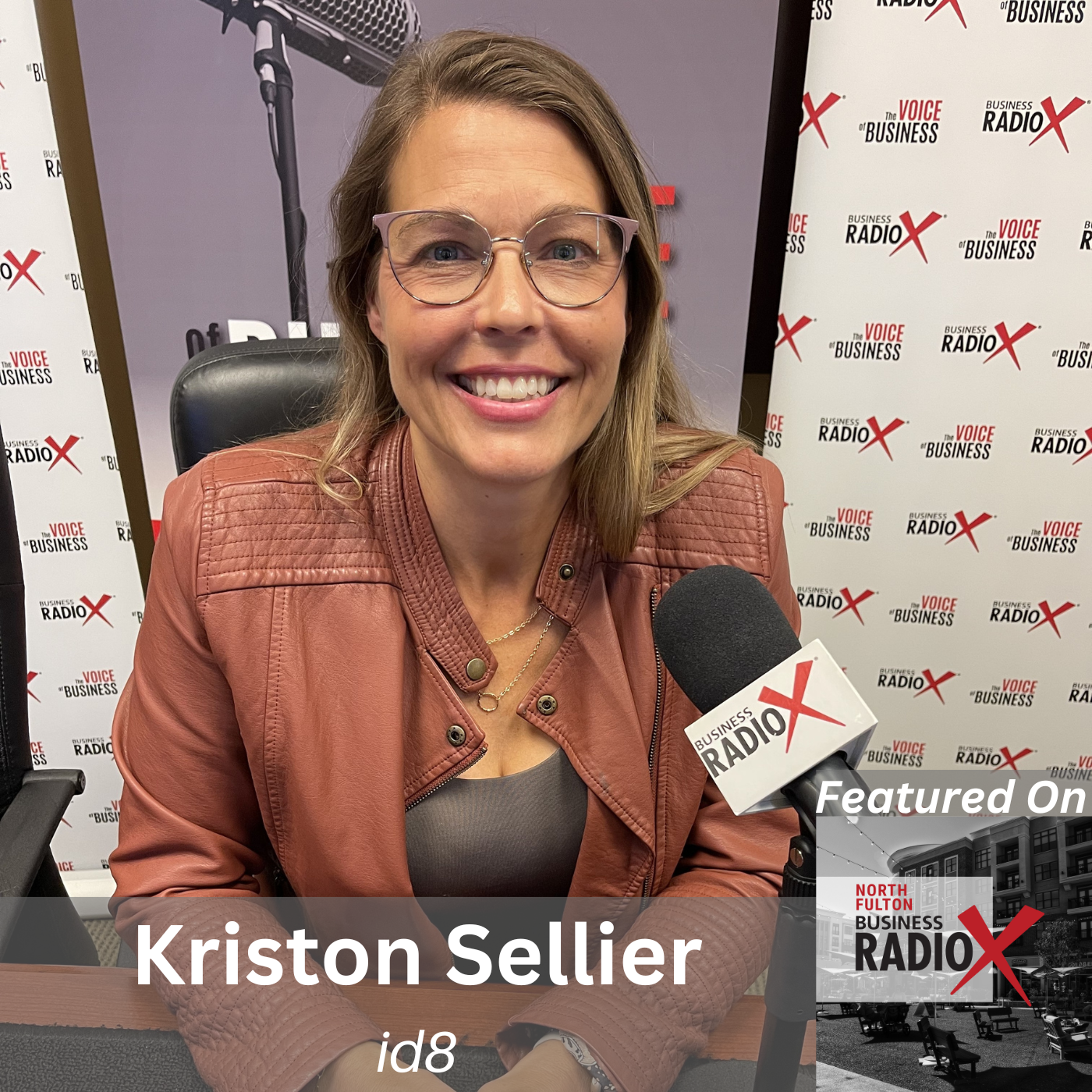
Kriston Sellier, id8, on Branding That Customers Remember

November 5, 2025 by John Ray

Kriston Sellier, id8, on Branding That Customers Remember, on North Fulton Business Radio with host John Ray
North Fulton Business Radio
Kriston Sellier, id8, on Branding That Customers Remember
Loading
00:00 /
RSS Feed
Share
Link
Embed

Download file

Kriston Sellier, id8, on Branding That Customers Remember, on North Fulton Business Radio with host John Ray

Kriston Sellier, id8, on Branding That Customers Remember (North Fulton Business Radio, Episode 912)

On this edition of North Fulton Business Radio, host John Ray welcomes Kriston Sellier, Founder and President of id8. Kriston discusses how real differentiation, rather than generic claims like quality and caring, builds enduring brands. She walks through id8’s discovery process, where small but true details become the hook that customers remember, such as a packaging story that began with an overlooked import detail and turned into a premium signal buyers could trust. She also explains why many founders struggle to see their own “orange umbrella” and how an outside team helps surface it.

Kriston lays out practical shifts leaders can make right now: deepen impact before you chase scale, retain customers longer with promises that matter, and commit to consistent messaging long enough to change minds. She tells revenue and retention stories that show what happens when a brand gets clarified, activated, and consistently expressed across touchpoints, from the website to the side of a truck. This conversation serves as a valuable guide for owners seeking a brand that generates sales without their presence.

John Ray is the host of North Fulton Business Radio. The show is produced by John Ray and North Fulton Business Radio, LLC, an affiliate of Business RadioX®, and is recorded inside Renasant Bank in Alpharetta.

Key Takeaways from This Episode

  • Differentiation lives in specific, true details customers can picture, not vague claims like “innovative” or “quality.”
  • Consistency wins: it can take 18 months of steady messaging to change how a market thinks, then another 18 months to see behavior shift.
  • Prioritize deepening impact: enhance customer lifetime value through meaningful promises and utilize the brand to retain, not just acquire.
  • Rebrands pay off when they’re activated everywhere, especially where buyers actually see you, from vehicles to proposals to the site.

Topics Discussed in this Episode

00:00 Introduction and Welcome
00:33 Guest Introduction: Kriston Sellier, id8
02:33 Kriston’s Journey and Passion for Branding
04:20 Branding Success Stories
09:14 Deepening Impact Over Scaling Up
14:55 Overcoming Hidden Barriers to Growth
21:35 Introduction to Idea Eight
21:53 Identifying Symptoms of Brand Issues
23:35 Challenges in Mergers and Acquisitions
25:34 Kriston’s Passion for Manufacturing
27:45 The Sales Process at Idea Eight
29:36 Kriston’s Journey in Sales
32:51 Reflective Apparel Success Story
36:11 Contact Information and Closing Remarks
37:02 Final Thanks

Kriston Sellier, Founder & President, id8

Kriston Sellier, Founder & President, id8

Kriston Sellier is the Founder and President of id8, an award-winning branding agency headquartered in Marietta, Georgia. She launched the firm in 2000 after building her design and strategy expertise at IBM, where she gained experience in brand development and e-business innovation with clients including The New York Times, Kodak, and the U.S.V.I. Department of Tourism.

Her philosophy centers on uncovering the heart of a brand through research, collaboration, and strategy. Kriston leads id8 with the goal of helping businesses grow their brand value by identifying what truly differentiates them in the market. She emphasizes creativity built on data and design thinking, cultivating a culture at id8 that encourages curiosity, innovation, and authenticity in client relationships.

Over the past two decades, Kriston has guided id8 to become one of the top creative agencies in the Southeast, earning multiple national design awards and recognition from the Cobb Chamber as one of the Top 25 Small Businesses of the Year. She has partnered with companies across industries—from manufacturing to retail—helping them clarify messaging, strengthen identity, and build revenue-generating brand platforms.

A graduate of Illinois State University with a degree in Graphic Design, Kriston also completed masters work at University of Cincinnati, entrepreneurship training at Dartmouth College through the Women’s Business Enterprise National Council and Babson College through the Goldman Sachs 10,000 Small Businesses program. She remains active in the Georgia business community, mentoring young designers and speaking on topics such as branding, leadership, and business growth through authenticity.

LinkedIn

id8

id8 is an award-winning branding and marketing agency based in Marietta, Georgia, specializing in helping small and mid-sized businesses unlock growth through research-driven creative solutions. The team goes beyond just making things look good; they dig into market research and strategic insights before launching any brand transformation or marketing effort. This means every logo, website refresh, or marketing campaign is built to solve real business challenges and deliver measurable results.

What really sets id8 apart from competitors is the hands-on approach of senior leadership, nimbleness, and the agency’s commitment to proactive communication. Clients work directly with an experienced strategist (not just a junior team), enjoy flexibility for changing needs, and always know where their project stands. The agency’s reputation for blending corporate branding, marketing, package and digital design with straightforward, client-focused partnership makes them a go-to for VPs of Marketing, Sales, and CEOs who want a partner that gets business, not just branding.

id8’s work has made an impact for the Georgia Department of Labor, the City of Marietta/Visit Marietta, Atlanta North School, the City of Atlanta Jazz Festival, Kistler, and Hartsfield-Jackson International Airport. Notable accomplishments include rebranding Marietta Square and Atlanta North School, winning multiple Davey Awards and GDUSA recognitions, and earning distinction as a Cobb Chamber Top 25 Small Business of the Year.

At id8, building brands isn’t about trendy templates or chasing awards; it’s about helping organizations stand apart, communicate clearly, and create lasting value in the communities they serve.

Website | LinkedIn | Instagram | Facebook

Renasant Bank supports North Fulton Business Radio

Renasant BankRenasant Bank has humble roots, starting in 1904 as a $100,000 bank in a Lee County, Mississippi, bakery. Since then, Renasant has become one of the Southeast’s strongest financial institutions, with over $17 billion in assets and more than 180 banking, lending, wealth management, and financial services offices throughout the region. All of Renasant’s success stems from each banker’s commitment to investing in their communities as a way to better understand the people they serve. At Renasant Bank, they understand you because they work and live alongside you every day.

Website | LinkedIn | Facebook | Instagram | X (Twitter) | YouTube

Beyond Computer Solutions supports North Fulton Business Radio

Whether you’re a law firm, medical practice, or manufacturer, there’s one headline you don’t want to make: “Local Business Pays Thousands in Ransom After Cyberattack.” That’s where Beyond Computer Solutions comes in. They help organizations like yours stay out of the news and in business with managed IT and cybersecurity services designed for industries where compliance and reputation matter most.

Whether they serve as your complete IT department or simply support your internal team, they are well-versed in HIPAA, secure document access, written security policies, and other essential aspects that ensure your safety and well-being. Best of all, it starts with a complimentary security assessment.

Website | LinkedIn | Facebook | YouTube

About North Fulton Business Radio and host John Ray

With over 900 episodes and having featured over 1,400 guests, North Fulton Business Radio is the longest-running podcast in the North Fulton area, covering business in our community like no one else. We are the undisputed “Voice of Business” in North Fulton!

The show invites a diverse range of business, non-profit, and community leaders to share their significant contributions to their markets, communities, and professions. There’s no discrimination based on company size, and there’s never any “pay to play.” North Fulton Business Radio supports and celebrates businesses by sharing positive stories that traditional media ignore. Some media lean left. Some media lean right. We lean business.

John Ray, host of  North Fulton Business Radio, and Owner, Ray Business Advisors
John Ray, host of North Fulton Business Radio and Owner, Ray Business Advisors

John Ray is the host of North Fulton Business Radio. John and the team at North Fulton Business Radio, LLC, an affiliate of Business RadioX®, produce the show, and it is recorded inside Renasant Bank in Alpharetta.

The studio address is 275 South Main Street, Alpharetta, GA 30009.

You can find the complete archive of shows by following this link. The show is available on all the major podcast apps, including Apple Podcasts, Spotify, Google, Amazon, iHeart Radio, and many others.
John Ray, The Generosity MindsetJohn Ray also operates his own business advisory practice. John’s services include advising solopreneurs and small professional services firms on their value, their positioning and business development, and their pricing. His clients are professionals who are selling their expertise, such as consultants, coaches, attorneys, CPAs, accountants, bookkeepers, marketing professionals, and other professional services practitioners.

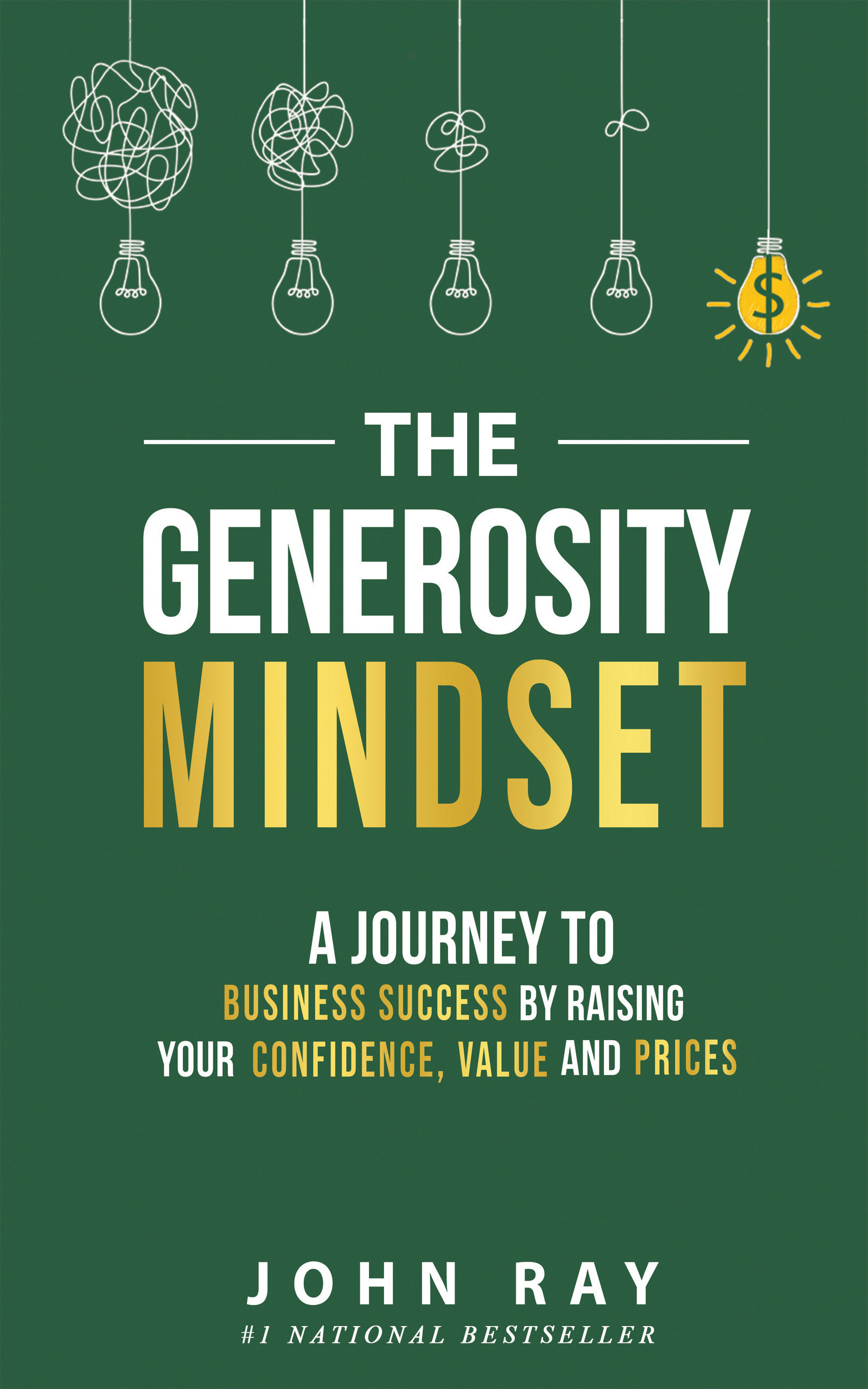
John is the author of the five-star rated book, The Generosity Mindset: A Journey to Business Success by Raising Your Confidence, Value, and Prices, praised by readers for its practical insights on raising confidence, value, and prices.
Tagged With: Beyond Computer Solutions, brand strategy, branding agency, consistent messaging, customer retention, deepening impact, differentiation, founder transition, id8, John Ray, Kriston Sellier, manufacturing marketing, mid-market growth, North Fulton Business Radio, packaging story, premium positioning, rebrand activation, renasant bank, scale vs impact

Opportunities are Everywhere E144

March 2, 2023 by Karen

Brian-Sather-Tycoons-of-Small-Biz-feature
Phoenix Business Radio
Opportunities are Everywhere E144
Loading
00:00 /
RSS Feed
Share
Link
Embed

Download file

Opportunities-are-Everywhere

Opportunities are Everywhere E144

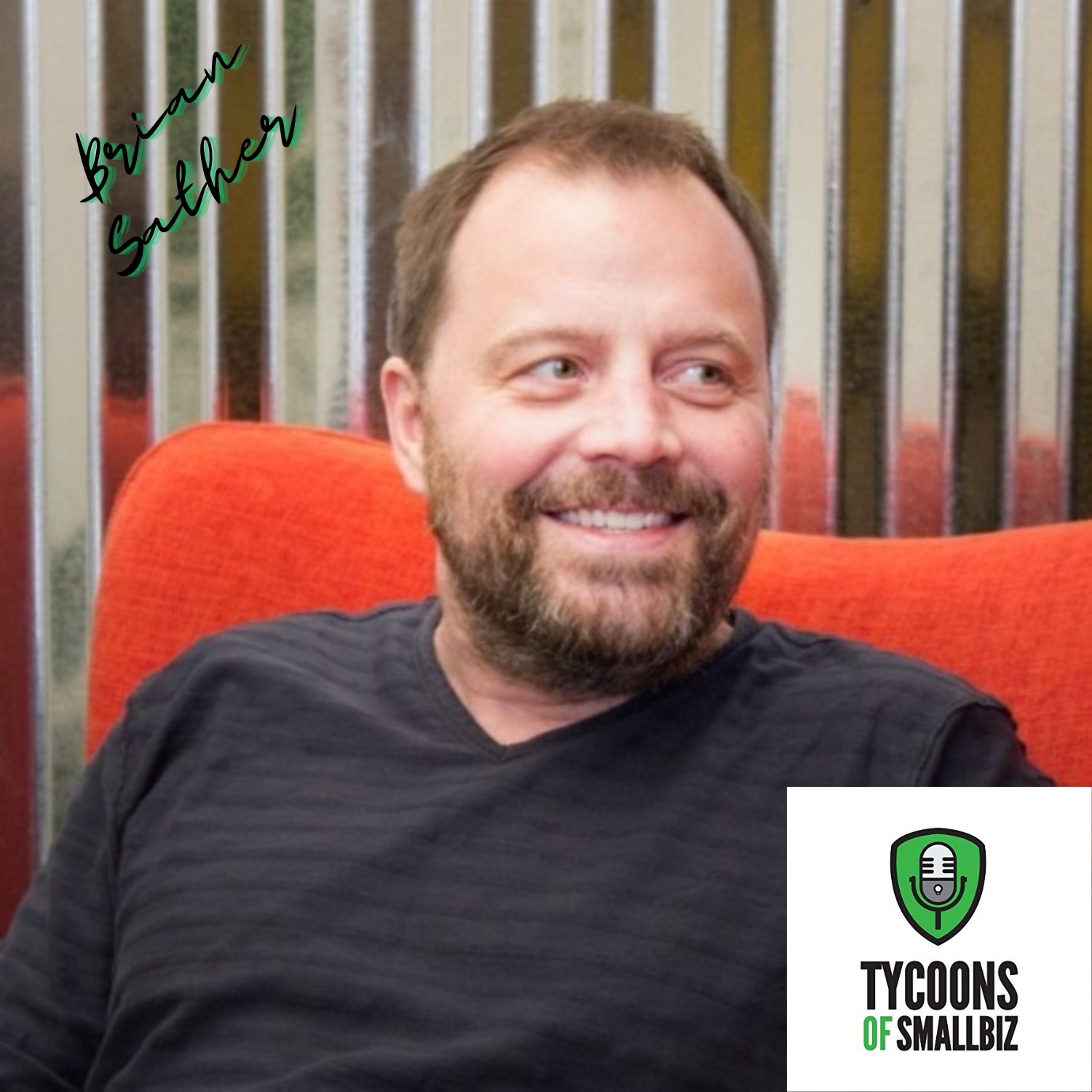
Brian Sather joined Tycoons to discuss his experience in production and entrepreneurship. He discussed his desire to being a part of defining the industry. Brian also talked about some of the choices he made during the pandemic and how he had to make changes to his business.

Tune in to hear Brian talk about the importance of finding your niche in business and how social media changes have affected businesses so drastically over the last few years. To learn more about Brian visit blacksmithint.com

blacksmith-logo-color

Blacksmith International and West Brand Lab form a 360 degree service for brand creation and extension in the physical product space. From brand strategy to design and development, GTM, product production and QA, through delivery of product, thet have the team consumer goods brands need to be successful in this changing market.

Their management team is well seasoned across all product disciplines and bring years of training and experience from some of the world’s most respected CG brands like Nike, Lululemon, Puma, and more. They have seen about every possible way to execute on projects and can bring that knowledge to brands who need projects managed from start to finish, or simply an extension of a department that may be understaffed.

The type of expertise they have is rare to find outside of major corporations. There is simply no other company like them.

Brian-Sather-Tycoons-of-Small-BizBrian Sather is the CEO of Blacksmith International, a company passionate about reforming the inefficient, costly, and environmentally damaging way apparel and other soft goods are manufactured. Blacksmith International has headquarters in Salt Lake City, Utah and Shanghai, China.

Brian is also a founder and the CEO of West Brand Lab, a company founded to build and launch new an innovative product lines in the apparel, uniform, and accessory space. West Brand Lab partners with forward thinking brands to launch product line extensionss. West exists at the intersection of brand, product, and tribe where entertainment, content, and innovation come together to create opportunity.

Brian is a founder of the Product PowerUp Conference, a community designed to educate, inspire, and connect entrepreneurs. He is a music fan, musician, skier, Dad, and hardcore entrepreneur. Brian’s career has taken him from startups to Fortune 100s, from acquiring companies to being acquired, from Silicon Valley to the Silicon Slopes, and all around the world.

Brian has previously held the position of Head of Technology Product Marketing at Apollo Group and Vice President, Acquisition Marketing at Optionetics/Charles Schwab.

In Brian’s own words, “I have been blessed with the drive and passion to find solutions to big problems.” Brian received his BA in Political Science from the University of Minnesota- Twin Cities.

Connect with Brian on LinkedIn, Facebook, Twitter and Instagram.

About the Show

Tycoons of Small Biz spotlights the true backbone of the American economy, the true tycoons of business in America… the owners, founders and CEO’s of small businesses. Join hosts,  Austin L Peterson, Landon Mance and the featured tycoons LIVE every Tuesday at 1 pm, right here on Business RadioX and your favorite podcast platform.

About Your Hosts

Autsin-Peterson-on-Phoenix-Business-RadioX

Austin Peterson is a Comprehensive Financial Planner and co-founder of Backbone Planning Partners in Scottsdale, AZ. Austin is a registered rep and investment advisor representative with Lincoln Financial Advisors. Prior to joining Lincoln Financial Advisors, Austin worked in a variety of roles in the financial services industry.

He began his career in financial services in the year 2000 as a personal financial advisor with Independent Capital Management in Santa Ana, CA. Austin then joined Pacific Life Insurance Company as an internal wholesaler for their variable annuity and mutual fund products. After Pacific Life, Austin formed his own financial planning company in Southern California that he built and ran for 6 years and eventually sold when he moved his family to Salt Lake City to pursue his MBA.

After he completed his MBA, Austin joined Crump Life Insurance where he filled a couple of different sales roles and eventually a management role throughout the five years he was with Crump. Most recently before joining Lincoln Financial Advisors in February 2015, Austin spent 2 years as a life insurance field wholesaler with Symetra Life Insurance Company. Austin is a Certified Financial Planner Professional and Chartered Life Underwriter. In 2021, Austin became a Certified Business Exit Consultant® (CBEC®) to help entrepreneurs plan to exit their businesses.

Austin and his wife of 23 years, Robin, have two children, AJ (21) and Ella (18) and they reside in Gilbert, Arizona. He is a graduate of California State University, Fullerton with a Bachelor of Arts in French and of Brigham Young University’s Marriott School of Management with a Master of Business Administration with an emphasis in sales and entrepreneurship.backbone-New-Logo

Connect with Austin on LinkedIn, Facebook, Twitter, and Instagram.

LandonHeadshot01

Landon Mance is a Financial Planner and co-founder of Backbone Planning Partners out of Las Vegas, Nevada. He rebranded his practice in 2020 to focus on serving small business owners after operating as Mance Wealth Management since 2015 when Landon broke off from a major bank and started his own “shop.”

Landon comes from a family of successful entrepreneurs and has a passion and excitement for serving the business community. This passion is what brought about the growth of Backbone Planning Partners to help business owners and their families. At Backbone Planning, we believe small business owners’ personal and business goals are intertwined, so we work with our clients to design a financial plan to support all aspects of their lives.

In 2019, Landon obtained the Certified Exit Planning Advisor (CEPA) designation through the Exit Planning Institute. With this certification, Backbone Planning Partners assists business owners through an ownership transition while focusing on a positive outcome for their employees and meeting the business owner’s goals. Landon is also a member of the Business Intelligence Institute (BII) which is a collaborative group that shares tools, resources and personnel, and offers advanced level training and technical support to specifically serve business owners. In 2021, Landon became a Certified Business Exit Consultant® (CBEC®) to help entrepreneurs plan to exit their businesses by counseling owners about exit options, estimating the value of the business, preparing the business for exit and tax considerations.

Landon enjoys spending time with his beautiful wife, stepson, and new baby twins. He grew up in sunny San Diego and loves visiting his family, playing a round of golf with friends, and many other outdoor activities. Landon tries to make a difference in the lives of children in Las Vegas as a part of the leadership team for a local non-profit. He regularly visits the children that we work with to remind himself of why it’s so important to, “be the change that you wish to see in the world.”

Landon received his B.S. from California State University Long Beach in business marketing and gets the rest of his education through the school of hard knocks via his business owner clients.

Connect with Landon on LinkedIn.

Tagged With: Blacksmith International, brand creation, brand strategy

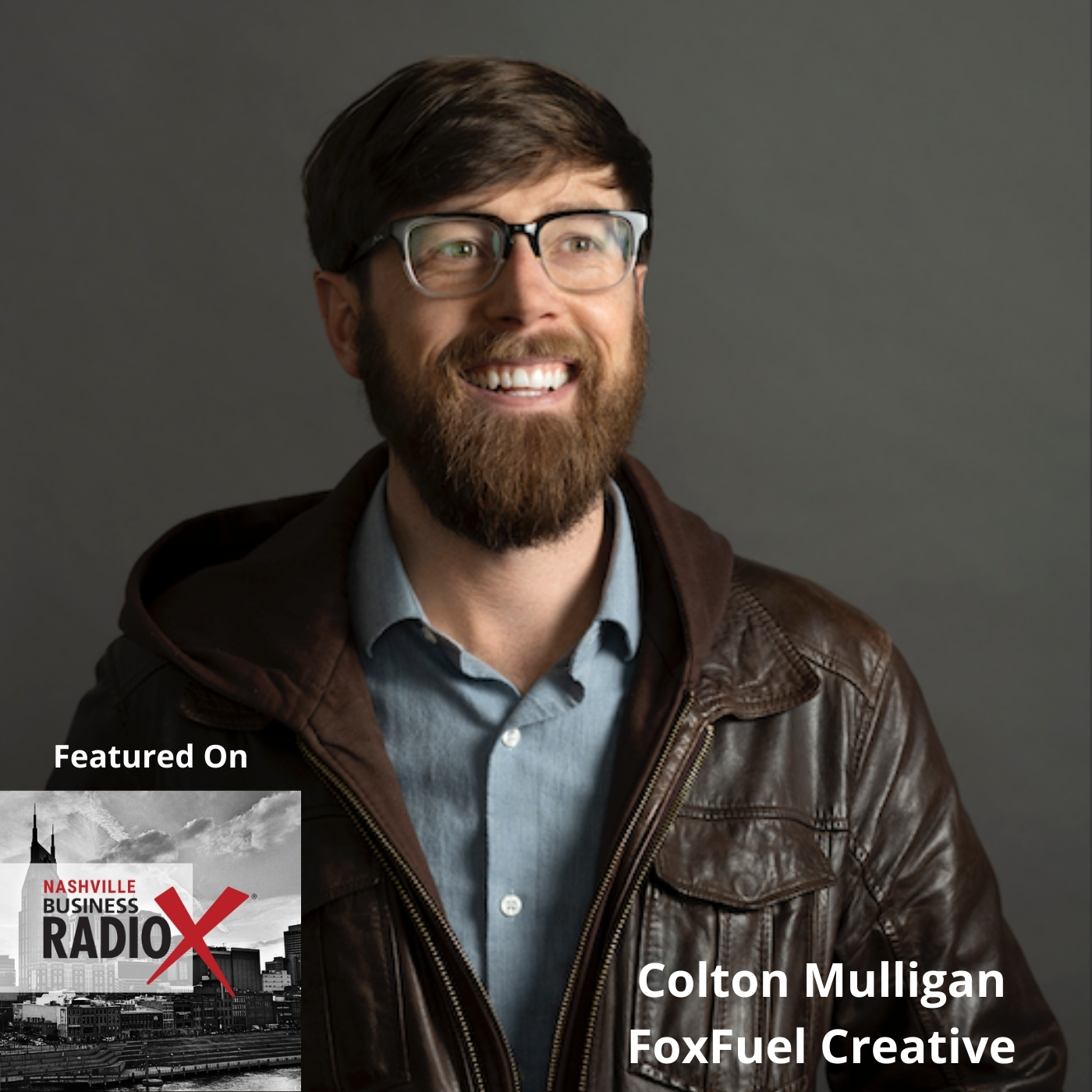
Colton Mulligan, FoxFuel Creative

June 8, 2021 by John Ray

Colton-Mulligan-Nashville-Album
Nashville Business Radio
Colton Mulligan, FoxFuel Creative
Loading
00:00 /
RSS Feed
Share
Link
Embed

Download file

Colton-Mulligan-Nashville-Album

Colton Mulligan, FoxFuel Creative (Nashville Business Radio, Episode 16)

Colton Mulligan joined host John Ray to discuss his entrepreneurial journey, how best friends work amicably as business partners, why storytelling is so important in building a company brand, and much more.  Nashville Business Radio is produced virtually from the Nashville studio of Business RadioX®.

FoxFuel Creative

FoxFuel Creative produces effective outcomes for brands and people through design, content, and technology. The company help consumer goods and products, healthcare, music and entertainment, finance, and real estate brands speak genuinely and effectively to their audience. FoxFuel-Creative-logo

Their specialties include brand and marketing strategy, consumer insights, content development, creative ideation and execution, advertising concepts, and website development.

Company website

Colton Mulligan, CEO, FoxFuel Creative

Colton-Mulligan-FoxFuel-Creative
Colton Mulligan
FoxFuel Creative

At FoxFuel, Colton Mulligan serves as CEO and is responsible for client relationships, guiding the discovery process through brand strategy into early creative concepting.

With 15+ years of branding and marketing experience, Colton has worked to develop brand and marketing strategies for TSA Pre-Check, Hilton Hotels/Home2Suites, Ben Folds, Fiesta Grande, Chip and Joanna Gaines, Pinnacle Bank, HarperCollins, Narus Health, Lifepoint, HCA, and Community Health Systems.

He also speaks at various events on Digital Marketing, Healthcare Marketing, Entrepreneurship, and the relationship between mental health and creativity. He lives in Nashville with his lovely wife Aly, and Goldendoodle JT.

Connect with Colton on LinkedIn and Instagram.

Questions and Topics in This Interview

  • Colton’s entrepreneurial journey
  • How business partners can remain friends
  • Brand strategy
  • Storytelling
  • Entrepreneurial journey

“Nashville Business Radio” is hosted by John Ray and produced virtually from the Nashville studio of Business RadioX®.  You can find the full archive of shows by following this link. The show is available on all the major podcast apps, including Apple Podcasts, Spotify, Google, Amazon, iHeart Radio, Stitcher, TuneIn, and others.

Tagged With: brand strategy, Colton Mulligan, FoxFuel Creative, marketing, storytelling

Decision Vision Episode 67: How Do I Pivot My Marketing in a Covid-19 World? – An Interview with Branden Lisi, Object 9

May 28, 2020 by John Ray

pivot marketing covid-19
Decision Vision
Decision Vision Episode 67: How Do I Pivot My Marketing in a Covid-19 World? - An Interview with Branden Lisi, Object 9
Loading
00:00 /
RSS Feed
Share
Link
Embed

Download file

pivot marketing Covid-19
Branden Lisi, Object 9

Decision Vision Episode 67:  How Do I Pivot My Marketing in a Covid-19 World? – An Interview with Branden Lisi, Object 9

What are the marketing challenges presented by a Covid-19 world? What hasn’t changed? Brand strategist Branden Lisi joins “Decision Vision” to discuss these questions and much more with your host, Mike Blake. “Decision Vision” is presented by Brady Ware & Company.

Branden Lisi, Object 9

Branden Lisi is a Partner and Brand Strategist with Object 9. Object 9 was founded in 1992, at the dawn of the internet age. Over time, they’ve developed a unique set of experiences which enable them to balance the demands of traditional marketing and sales channels while staying ahead of the ever-changing digital landscape.

Their primary customers are manufacturers and franchise brands—both of which require a steady flow of new customers to be successful.

For more on Object 9 and their work, go to their website.

Michael Blake, Brady Ware & Company

Mike Blake, Host of the “Decision Vision” podcast series

Michael Blake is Host of the “Decision Vision” podcast series and a Director of Brady Ware & Company. Mike specializes in the valuation of intellectual property-driven firms, such as software firms, aerospace firms and professional services firms, most frequently in the capacity as a transaction advisor, helping clients obtain great outcomes from complex transaction opportunities. He is also a specialist in the appraisal of intellectual properties as stand-alone assets, such as software, trade secrets, and patents.

Mike has been a full-time business appraiser for 13 years with public accounting firms, boutique business appraisal firms, and an owner of his own firm. Prior to that, he spent 8 years in venture capital and investment banking, including transactions in the U.S., Israel, Russia, Ukraine, and Belarus.

Brady Ware & Company

Brady Ware & Company is a regional full-service accounting and advisory firm which helps businesses and entrepreneurs make visions a reality. Brady Ware services clients nationally from its offices in Alpharetta, GA; Columbus and Dayton, OH; and Richmond, IN. The firm is growth minded, committed to the regions in which they operate, and most importantly, they make significant investments in their people and service offerings to meet the changing financial needs of those they are privileged to serve. The firm is dedicated to providing results that make a difference for its clients.

Decision Vision Podcast Series

“Decision Vision” is a podcast covering topics and issues facing small business owners and connecting them with solutions from leading experts. This series is presented by Brady Ware & Company. If you are a decision maker for a small business, we’d love to hear from you. Contact us at decisionvision@bradyware.com and make sure to listen to every Thursday to the “Decision Vision” podcast. Past episodes of “Decision Vision” can be found here. “Decision Vision” is produced and broadcast by the North Fulton studio of Business RadioX®.

Visit Brady Ware & Company on social media:

LinkedIn:  https://www.linkedin.com/company/brady-ware/

Facebook: https://www.facebook.com/bradywareCPAs/

Twitter: https://twitter.com/BradyWare

Instagram: https://www.instagram.com/bradywarecompany/

Show Transcript

Intro: Welcome to Decision Vision, a podcast series focusing on critical business decision, brought to you by Brady Ware & Company. Brady Ware is a regional, full-service, accounting and advisory firm that helps businesses and entrepreneurs make visions a reality.

Mike Blake: And welcome to Decision Vision, a podcast giving you, the listener, clear vision to make great decisions. In each episode, we discuss the process of decision making on a different topic from the business owner’s or executive’s perspective. We aren’t necessarily telling you what to do, but we can put you in a position to make an informed decision on your own and understand when you might need help along the way.

Mike Blake: My name is Mike Blake, and I’m your host for today’s program. I’m a director at Brady Ware & Company, a full-service accounting firm in Dayton, Ohio, with offices in Dayton; Columbus, Ohio; Richmond, Indiana; and Alpharetta, Georgia. Brady Ware is sponsoring this podcast, which is being recorded in Atlanta per social distancing protocols. If you like this podcast, please subscribe on your favorite podcast aggregator, and please consider leaving a review of the podcast as well.

Mike Blake: So, today, we’re discussing the topic of should I change my my marketing approach or maybe should I pivot my marketing? Maybe that’s a better way to describe this. But as we’re recording this, it is now May 12th. And we are, depending on where you live, I guess maybe zero weeks to six or seven weeks and to this mass house arrest that we are quasi-voluntarily imposing upon ourselves, thanks to the slow moving horror movie, that is the coronavirus. And as we all know, in an effort to save society that, frankly, to some extent, we’ve sacrificed parts of the economy in order to do that but, thankfully, more and more thought is now turning to how do we then help the economy get off the floor after the stroke punch that we’ve given it?

Mike Blake: And we’re thinking about that on a micro level as well. I think I think more and more people, especially by the time you wind up listening to this, are going to be thinking about, “Okay, we’ve done the sheltering in place. We’ve flattened the curve. It’s time to go back to work in whatever format work looks like going forward.” And that’s, of course, like the virus itself, going to be evolving and is going to differ based on what you do for a living and where you do it.

Mike Blake: And I think kind of at the top of that hierarchy is marketing and sales because in my view, and we’ll see if our guest agrees, marketing and sales are going to have to change. They have to change for a couple of reasons. They’ve got to change because, to some extent, ways in which we are used to marketing simply are not on the table anymore. If you’re the kind of person that is used to going to a corporate function or conference and collecting 50 business cards, then following up on with lunches, and cocktails, and golf outings, and baseball games and so forth, that’s just not on the table. You got to do something else.

Mike Blake: And second, I think, almost every customer is thinking about how they buy in in a different way, right? And we’re going to have a later podcast to talk about that. and the working title is Meet Your New Customer, which is your old customer but under COVID. And this is an evolving topic, and it’s going to evolve every day, and people are having to learn new ways of doing things, new philosophies, new approaches. And I’m actually doing a webinar tomorrow. It will have been several weeks ago by the time you listen to this, but I’m about to do a webinar that talks about restarting that marketing mojo in a COVID/post-COVID/COVID-adaptive world. I really don’t know what the vocabulary is anymore. I give up.

Mike Blake: And so, I hope you are of like mind that you’re now starting to think of the future and how do we get this thing going again because regardless of your ideology, it’s inarguable that remaining dormant for years is economically and financially unsustainable. So, how do we jumpstart this thing? And so, I’ve I’ve invited, and I’m very grateful he has accepted, a longtime friend of mine that, frankly, I do not talk to enough and it’s my loss. But his name is Branden Lisi, who’s founder of Object 9. He’s run and owned Object 9 for 28 years and has really paralleled the world’s migration towards a digital economy, starting with more of an old school marketing bent to, then, evolving along with the rest the economy to developing and implementing expertise in the 21st Century digital side.

Mike Blake: His work with consumer brands, specialty manufacturers and franchises offers insights into the many challenges and opportunities facing today’s corporate leaders. In addition to Object 9, Branden also owns a candy store located in Columbus, Georgia. And I’m going to pause there for a second. And that’s really cool, not only because I like candy, and I do but if you’ve listened to this podcast for any amount of time, you know that I’ve had a lot of friends come on, longtime friends, and I’m very blessed and fortunate to have the kind of network that I have people that are interesting enough to interview and actually want to come on this thing. But I would say one out of three, I read the bio, and I learn something that I did not know about them. And that ranges from people who’ve written books and didn’t bother to tell me. And I think one of them, at some point, was Prime Minister of Tasmania. But there’s always some sort of secret life that comes out of these things, which is really cool. So, maybe we’ll have time to ask Branden about that.

Mike Blake: But anyway, when Branden is not solving some marketing problem, he can usually be found serving his community while wearing a scout leader’s uniform. Just like my wife, she’s a troop leader. And finally, on a personal level, he’s been happily married for over 23 years to a talented artist, Margaret, who is lovely. I’ve had the privilege of meeting her. And together, they’re busy raising two good sons. And Branden is also an accomplished musician in his own right. And someday, when this whole thing breaks down, we can get back together and jam again. Branden, thanks for coming on the program.

Branden Lisi: Thanks for having me, Mike.

Mike Blake: So, Branden, I want to get a very banal question out of the way first because I think there’s a lot of misconception about the nature of marketing. And I think, in particular, it frustrates marketing people that the question is still out there. But I think it’s extremely important because I see the mistake being made all the time. And that is, what is the difference between a marketing function and a sales function?

Branden Lisi: Well, I think the simplest answer is the job of marketing is to figure out what the customer wants or needs, and then help that company deliberate. Sales is a way of promoting the fact that you have it. It’s just one channel, just like social media is a channel, just like public relations or traditional ads or whatever it might be. Or a marketing speak level, the job of the marketing team is to figure out what differentiates or adds value to the customers’ lives in some meaningful and relevant way. It’s the job of the salespeople to go tell people about it. So, one function, marketing is more strategic in nature, and the other function is more tactical in nature. Now, salespeople will argue with you that what they do is very strategic, but the reality is their job is to communicate that value proposition through their channel.

Mike Blake: Well, it doesn’t have to be an either or, right? I mean, you can sort of have a slider, if you will, that’s a combination of the two.

Branden Lisi: Yeah.

Mike Blake: Go ahead.

Branden Lisi: Most people, I mean, Marketing 101, man, is find a need and fill it. It’s that way for thousands of years and it’s not going to change because of COVID-19. The channels will change, the customer behavior will change, the tools will change, the talent level of the people around you, whether it’s in-house or external, will change. But the simple premise that I’ve got to figure out what people need, and I’ve got to figure out a way to get it to them is not going to change. It’s been that way for a long, long, long time, and it’s going to be that way of a long, long time before.

Branden Lisi: The challenge, I think, for a lot of people and a lot of entrepreneurs, business leaders, corporate leaders is people come into a job, come into a role with a set of skills, and it’s very, very difficult to maintain current skills or evolve your skill sets while you’re trying to do your job at the same time. And most people that are productive and successful stay quite busy doing the job for which they were hired. The challenge is, whether you’re in marketing, or you’re in sales, or public relations, or advertising, or accounting, or whatever it might be is the tools keep changing, the channels keep changing, the customer mindsets keep changing it. If you’ve got to spend time thinking about all those changes and incorporating that change into your team, to your team skills, your team actions, then it’s just easy for people to fall behind.

Branden Lisi: You saw that back in 2008-2009. Everybody started cutting expenses and cutting headcount, just like they’re doing now. Things still had to be done. The machine keeps rolling on. If you’re into digital marketing, you have to produce content, and you have to distribute it, and you have to manage it, and you have to track it, and you have to process it. And that just gets spread out across a smaller group of people who have even less time to evolve their skill sets. So, it’s part of the challenge, I think, with marketing and the challenge with sales is just keeping up with that rate of change.

Mike Blake: So, you referenced the ’08-’09 recession. That’s a good segue because I want to talk about that. And maybe if you can remember back that far, the dot com bubble of 2000, two big recessions we had before this. Can you remember kind of how did marketing change then and other parallels or important contrast between how marketing changed in the wake of those recessions versus this one? This one truly is different an animal has a lot of us maybe think it is.

Branden Lisi: Well, 2000, I was still in Louisiana. I started my business in ’92. We’re founded in Baton Rouge. We had a lot of industrial manufacturing clients down there. And that section of the world is very much tied to the oil patch. And so, financial metrics around the dot com didn’t impact Louisiana and East Texas quite as much as they did, I think, here in Atlanta. Living through 2008-2009 though, the parallels between those two things is both cases, I would say there was a massive acceleration of the migration of digital. And the digital tools, the digital technologies, and the digital channels as people were trying to figure out how to get technology to generate more leads, create more opportunities or make more connections, or automate those connections with customers because they didn’t have the headcount, because in both cases, you just lost a lot of people that were doing things.

Branden Lisi: And that’s what’s happening today. We have many clients in the world of manufacturing or franchising because of kind of where we’ve built our client base that are using this opportunity to grow. Though they cut headcount, they still have to achieve the same goals or try to achieve the same goals, which means doing the same things, if not more of the things that need to be done. And whether it’s 2000 or 2008-2009, the same kind of dynamics have played out as the expectations have come down a little bit, but not necessarily in line with reality. So, people are just trying to figure out how to get it all done and trying to figure out how to cobble these tools together on top of everything else they’re doing.

Mike Blake: That’s really interesting. I hadn’t thought of that, but that observation makes a lot of sense to me that, at least, in the last recession, you did see an accelerated migration of technology, and you’re doing it here, and you may see it even more widespread because, now, as our food supply chain is being impacted, there’s going to be even more of a clamor to automate because machines don’t get sick and they don’t contaminate food. But that’s really interesting. And are you seeing that now too? And I guess we are, right? We work from home, maybe additional automation by the marketing side. Are you seeing that, too, where there’s now another push to see what can be automated or what can be leveraged in terms of marketing activities and technology?

Branden Lisi: Well, and the core function of marketing, it’s digital marketing, lead generation, which is generally how we get out. If someone says, “I want to get more business and I’m not happy with my sales team’s results, I need to augment that. I want to feed those beast some leads. And I need to figure out how to use digital technology, paid search, paid social, display, whatever it might be to try to get more eyeballs on my brand, start more conversations.” All that’s been done remotely for years and continues to be done remotely.

Branden Lisi: I think in the short term, what some of our manufacturing clients and franchise clients are dealing with is their salespeople can’t go out and do their job. I mean, I think you’re dealing with this as a salesperson or business development guy. I deal with that. You can’t get someone on the phone. You can’t get kneecap to kneecap with people anymore. So, you really are forced to use some technologies that right now, for the most part, is replacing face-to-face, which is the Zoom stuff that we’re using or GoTo Meeting or whatever the platform is. But the underlying marketing technologies behind paid search, paid social display, or if you’re into the long-term game of SEO content marketing or whatever, that’s not really changed.

Branden Lisi: I think where I see this particular crisis affecting the marketing piece is actually on the product development front. And people can’t pivot within six weeks or whatever, but I think where you see innovation is in the product portfolio around touchless, right? It’s not just the marketing stack that we’re talking about. It’s how do we deliver experiences where people don’t necessarily have to touch physically each other or touch things? And those businesses that are so dependent upon a group experience, a restaurant, or amusement park, or a live concert, or a sporting event are really struggling to figure out how to do this and involve the customer experience in a way that keeps people safe because in the past, the crisis was financial. People were going to lose their jobs. People lost their jobs. People-

Mike Blake: They lost wealth.

Branden Lisi: The financial hit, right?

Mike Blake: Yeah.

Branden Lisi: This is a hit where they’re still trying to figure out like who’s going to get sick and how many people are going to die? And six weeks ago, I told my entrepreneur group, I’m part of the EO network, which I know you’re familiar with, I predicted that there would be 20,000 to 50,000 people dying in the next couple of months, and I missed my mark. I predicted that, I think, on March 22nd. And I undershot that. We were over at 80,000 today, right? So, I think the challenge for, not just the marketers, but the companies that the marketers represent or work for is, how do we evolve our product mix to meet the needs of the customer?

Branden Lisi: Because a lot of times marketing gets kind of pigeonholed as – going back to our discussion with your marketing sales – as a marketer, my job is to figure out what we can deliver that people want. And how I communicate that are the tools that everybody assumes marketing. That’s what marketing is. It’s advertising, or sales, or whatever. But really, the job is, as I said, find a need and fill it in. The need now is to be able to create products and experiences where people don’t have to touch stuff. Or products or services that demonstrate or deliver real value.

Mike Blake: Well, let’s touch upon that too. I’m going to kind of rip up the script a little bit because I think that’s a really important point is the word, the term essential business came into the lexicon six weeks ago, right? And I can only imagine if, all of a sudden, the government, and by extension, I guess society, I’m going to keep the ideology out of it, just said you’re a non-essential business, right? And we’re seeing that Elon Musk is already pretty pissed off about this. He’s threatened to move out of California. And as of this podcast, he’s basically given the middle finger to the California government and opened his factory anyway. So, we’ll see what happens there.

Mike Blake: But the notion of what’s essential, right? I think that’s something that now requires a lot of thought. I think it requires a lot of thought not just in what are you offering to the market. And as you’re saying, let me kind of paraphrase back to you, you tell me if I’m crazy, but at the end of the day, you can only market well something that does, at least, some fundamental demand for the market, right? If nobody wants or needs it, the best market in the world, and I don’t know who is in the marketing hall of fame, maybe you or I don’t know, right? But even then, they’re not going be able to do that much with it.

Mike Blake: And I was thinking about this yesterday because I’m starting to write a paper on working capital and. And one of the things that I’m thinking about and I think you’re seeing is companies are also simplifying their product lines. You can’t afford to keep the marginal products going just because, now, you feel like that’s what creates … or at least I think this way, that creates a complete product line. I think, now, in terms of preserving working capital, in some cases, sort of cutting off the limb in order to save the body, it’s not just about staff reductions, but it’s also got to be about product reductions that that product that generates one percent of your process but consumes 10 percent of your time of working capital, that’s part of the equation too, isn’t it?

Branden Lisi: It is. I think so much of that though varies from company to company and culture to culture. In smaller companies, where there is a lot of emotional attachment to the product, for example, it’s your baby, it’s hard to let it go, it’s hard to pivot. Sometimes, it’s hard to see the forest for the trees. In larger companies, sometimes, there’s just momentum that you’re fighting. And also, fear. And I would say that’s kind of, I think, the biggest driver right now that I look at and see that paralyzes people is the fear of uncertainty and doubt about if they make the wrong decision about pivoting. And so, they just don’t do anything. And so, if they kill that product, and then someone else become successful with that product line, it makes them look bad, right? It’s a little sort of fallacy of sunk cost. I think this plays into it, use a gambling analogy.

Branden Lisi: But really, it varies so much from client to client to client in terms of what drives that. But I would agree with you and say companies have to take a hard look at what they’re manufacturing, are they actually making stuff that people want. I used to use this analogy of kind of trying to explain differentiations. You can make the best green grams on the planet, but if everybody wants to draw fire engines, someone’s going to buy your green gram, right? People want to buy what they want to buy. And the types of wealth and luxury and excess, they’ll buy more things than they would when times get lean.

Branden Lisi: And regardless of what’s going to happen in the next year or two, I think you’ve been around long enough to know and lived long enough life to know that this is really unparalleled, right? I don’t think that this is even close to being a 2008-2009 kind of thing or certainly a 2000 dot.com kind of thing because it’s hitting everything, right? It’s not one or two sectors. It’s literally every aspect of your life is being changed and it’s introducing not just product discussion issues, but risk discussion issues.

Mike Blake: Yeah. It’s World War II, the Great Depression, and the Spanish Flu Pandemic all rolled into one nice little burrito.

Branden Lisi: Yeah. And he other part of it too, and I mean, I’m old enough to live through the early stages of AIDS because I graduated high school in 1984. And back then, I mean, nobody really knew what caused it, how you get it. It had some pretty horrible ramifications. It turns out being sexually transmitted or through blood transfusions, it wasn’t this very virulent. But there is the fear that I’m going to get this thing, the fear that my children, as a parent, that’s my big fear, my kids are going to get this and get sick.

Branden Lisi: And then, balancing that with the fear of, “Okay, I have a business. I have multiple businesses to run. And what’s the risk that I want to take on? Do I want to have my businesses open and take on the risk of health? Or do I want to keep my businesses closed and take on the risk of going out of business, which means everybody’s out on the street looking for a job, and has no health care, or whatever it might be? So, I mean, I made my decision a long time ago on all of this stuff because I’m not going to live my life in fear. But I think a lot of people are still grappling with those two very challenging things. I know I’ve gone off on a little bit of a tangent there, Mike. Sorry about that.

Mike Blake: Well, but I think it’s wrong. And it actually does segue into next question, which is I think what I’m wondering as a business owner and as an advisor is as I look at what’s going on today, how much of this is temporary? And there is a rubber banding. And how much of this, whatever this is, I’m being deliberately vague, is permanent, right?. And talking, now, back about marketing, pivoting, how do you tell or how do you make … You don’t tell. How do you make an educated guess that you can kind of live with that that says, “Okay, here are the three things that we’re probably just never going to do again. And let’s let’s kind of just move forward. Burn the ships and move forward. And here are the three things that we’re just gonna kind of put on ice or gonna put in the freezer for a year or two, but it’s gonna come back. So, we’re not going to completely forget about it. We’re just gonna move in the background because we don’t need it right now”? Does that make any sense?

Branden Lisi: Yeah, yeah. Off the top of my head, I think the uncertainty timeline is gonna be tied to, when can I go in and get a shot or take a pill and take away the threat of death, right? When does the fear go away?

Mike Blake: Right.

Branden Lisi: The thing that … and I have always been a student of history. Had I made a different choice in my life, I probably would have been a history professor. I mean, I still read a lot of history. One of the truths about all of this stuff that nobody really talks about is that the threat has always been there. This isn’t a new threat. In fact, millions and millions and millions of people are still dealing with the threat of malaria, and cholera, and dysentery, and dengue fever, and all of these other diseases. We’ve just been sort of this intellectually safe, financially safe health care bubble in the US for a long time thinking that we were invulnerable to all of this stuff. And Mother Nature reminded us that we’re not.

Branden Lisi: So, from the very beginning of all of this stuff, which I should say the first week as I thought through this, I always believed that if I lived hundreds of years ago, I would have been on one of those guys on one of those ships that would have been sailing to try to find the new world. And that had a hell of a lot more risk associated with it than this. I think, what people are going to realize the next … and people are already doing this. People have made the decision that they’re going to agree with Aristotle in philosophy that luck is when the arrow hits the guy next to you, and that they’re all immortal, and they’re going to go out, and they’re going to live their life, and that they’re not going to get sick, and they’re going to take their chances.

Branden Lisi: And that’s not driven … for some people, it’s gonna be driven by some political ideology. But I think for most people, it just comes with a rational, fundamental decision that it’s like, “I got to go live my life. I got to provide for my family,” just like every other generation of humanity has had to do going back to cavemen, right? It wasn’t a rational decision to go out with a spear and try to kill something. It was a risk. So, we’re still doing that.

Branden Lisi: I think in the short term, people who are afraid, going back to the fear issue, I think they’re going to stay away. They’re going to make different decisions. I think the people who’ve lost their jobs, 30 million people, ain’t that what it is right now, that’s a massive chunk. It’s 10 percent of the population of the US just lost their jobs.

Mike Blake: Right. 20 percent of the working population.

Branden Lisi: Lumping all the kids in, right?

Mike Blake: Yeah, well. And so-

Branden Lisi: How many more are not productive right now?

Mike Blake: Yeah. Well, yeah.

Branden Lisi: But going back to try to answer your question about the timeline and what’s going to be put on the shelves, I think, eventually, people are going to want to get back together again and do things together because we’re social animals. We always have. And we’re eventually going to feel more comfortable over time. There’s a lot of fear that’s being pushed out through the channels that people watch. There’s a lot of misinformation being pushed out through the channels that people read, which is also an interesting marketing case study in its own right now.

Mike Blake: Yeah.

Branden Lisi: And eventually people are going to have to make a decision based on what’s right for them. And I think people are going to go back to restaurants. I think people are going to go back to rock concerts. And I think people are going to go back and do the things they always used to do. But I don’t think, personally, it’s going to happen for the next couple of years to a regular degree until there is a magic pill because that’s kind of how Americans operate, at least. I can’t speak for the rest of the world. Americans will take a magic pill.

Mike Blake: So, it sounds like that you’re in the camp that we’ve got what we’ve got now, but this notion that we’re kind of never going back to that doesn’t sound like something you agree with. So, don’t completely cut off those marketing tools because at some point, you are going to want to go back into the attic, open up the chest, dust them off them, and come out again.

Branden Lisi: Yeah, I do. I think companies are going to want to go back, want to present their products in the most efficient way. And some of those people are going to go to trade shows to present their products to buyers. I think people are going to want to go back and live their life to a certain degree the way they’ve always lived their lives because it was a pretty good life. And if you believe the math, which math is all over the place but it’s somewhere around the neighborhood of 97 percent, maybe 95, maybe 98.3, I don’t know, bit the vast majority of people are not going to be substantially impacted by this if you believe the models. The reality, going back to your comment about flattening the curve, is for a percentage of people, they are going to be susceptible to this, and it’s going to be a bell curve within that group of people who go from being really sick to dying.

Mike Blake: Now, let’s say that, and I imagine you probably have clients that are facing this, if you have historically had success with a high, physical touch marketing approach, right, maybe it’s been through conferences and trade shows, maybe it’s not-.

Branden Lisi: Product sampling.

Mike Blake: What’s that?

Branden Lisi: Product sampling.

Mike Blake: With product sampling, right?

Branden Lisi: A lot of food and beverage in my day, right?

Mike Blake: Yeah. And now, that’s off the table.

Branden Lisi: Yeah.

Mike Blake: What are you telling your clients about transitioning? What are you telling your clients to do now?

Branden Lisi: Well, so, most of the clients that we work with right now are manufacturing companies. some sell direct B2B. Others go through distribution outlets or retail outlets and whatnot.

Mike Blake: Yeah.

Branden Lisi: Because you can’t go to a trade show, you have resources, you have budget, you have allocations. You can go online where people are, go find the eyeballs where they are, and start driving more traffic to your website, and investing more in a digital strategy. That’s not just because we do digital marketing. That’s where the eyeballs are. That’s where the customers are today. That’s one of the things I always advise clients is they want to spend their money where it makes the most sense.

Branden Lisi: So, for clients, the challenge when clients need to touch it or feel it, some equipment companies, these guys are engineers or construction people, they want to feel it, they want to touch it. . Right now, all you can do is create virtual experiences, and that’s not always going to be as easy. But it doesn’t mean that you can’t begin to build the pipeline and start working towards that. And that’s what a number of our clients have been doing is using this time to build the pipeline and establish relationships with people who may not be able to close everybody, but you can build the relationships, generate the lead, so to speak. The pipeline might be a little bit longer, but you could sure as heck make the top of the funnel fat right now, especially if you do some digital marketing because there are a lot of people out there trying to figure things out.

Branden Lisi: We have one client whose primary value proposition right now is that they can save you money on IT maintenance. Every company out there that’s got a massive IT spend is looking to save money. So, the value proposition of that particular company is excellent right now. We have another client that sells so much …  it is very dependent, historically dependent upon their retail distribution outlets. They’re using this opportunity to pivot more to a direct to consumer strategy.

Branden Lisi: And one of the things that they’ve balanced, I see this a lot, especially with manufacturers that sell through retailers, they’re afraid … or distributors, they’re afraid of upsetting that revenue cart and angering the money, and they don’t want to put their revenue at risk. But now, because that revenue has been inherently put at risk because people aren’t going into those retail stores, it’s given them an opportunity to go direct. And they’re not a client, but there’s been an interesting development recently. I don’t know if you pay attention to the movie industry, but some of the movies have been able to go direct to consumer now in terms of launching their movies through0.

Mike Blake: I saw that. AMC in particular, was really not happy about that. They went out of their way to attack one of the movie studios.

Branden Lisi: Right. And so, I’m a movie studio or I’m this person that manufactures a product, it’s like, “Well, you can’t sell this for me. I’ve got to take care of my core business. There are people out there that want my product. They’re not going to find it through you. So, I got to go find another way, right. Find a need and fill it. I can’t fill it that same way. I got to fill it a different way.” And that’s going to disrupt a lot of industries. I think the unsettling of established traditional distribution channels, retail and some of those experiential channels are going to take a big hit.

Branden Lisi: And I’m not going to say I’m predicting this exactly this way but while I like going to a movie theater and seeing certain movies, there is only a handful of movies that I really go, “I’m glad I went to the theater and saw that.” There’s a whole bunch of other movies out there that I’m perfectly happy to sit at home in my lovely home theater, and watch it, and pause it when I need to pause it or whatever I need to do. And I could see five years from now, movie theaters, being a little bit like the record stores in the late ’80s and early ’90s, one of those things that is just sort of a relic of a bygone day.

Branden Lisi: It’d be sad for somebody who enjoys going to movies occasionally, but for a movie theater or a movie company to be able to bypass that middleman, and save all that money, and go direct to consumers, and market directly to the consumer, and hit all those desktops and devices, or sell through Netflix or HBO or whatever might be is probably a heck of a lot more profitable. And so, I think, for a lot of customers right now in our space, both … well, let’s just stick with manufacturing, how to go directly to their customers and look at valuating the middleman is a big discussion point. And I see that happening not just in our business, but other businesses where people are beginning to question the middleman because in the margins that they really add value.

Mike Blake: We’re talking with Branden Lisi of Object 9 about changing marketing in a COVID environment. We’ve only got time for a few more questions. So, I want to pick the ones I think are of highest value at this point. And one I want to throw out there is that I think there’s a temptation on the part of many companies to pare back their marketing strategies because there’s a sense of, “Well, nobody’s buying. So, why should we bother selling?” Can you make an argument that this is a time that you could actually go, you could kind of go against the grain or go against the trend, and maybe spend more on marketing while your competitors are retrenching, and maybe strengthen your brand, relatively speaking, and gain some market share? What do you think about that thought?

Branden Lisi: I think you could spend more or you could just spend differently. It’s not a binary choice. Going back to what I said earlier about building the pipeline, you may not always be able to close every deal, but you could set yourself up so that when the economy does start moving again and people start making decisions, you’re in the catbird seat, so to speak, in terms of being the one with the relationship with the people ready to spend.

Branden Lisi: So, for those companies that really haven’t figured out how to do digital, instead of spending the money on some of their traditional venues, i.e. trade shows or whatever it might be, that are going to really bear fruit right now, reallocating that same amount of money towards building out the digital stack that you need or maybe adjusting the staffing resources and skill sets that you have or the mix of internal and external resources, the answer might not be you need to spend more money, though that certainly could be the case. But you certainly should be spending your money differently. And that’s where I think a lot of people struggle because they may not always know how to make those decisions. And that’s where people like us come into play.

Mike Blake: Now, social media, obviously, by necessity/default, is now dominating a lot of the marketing landscape necessarily. There are a set of best practices that were widely accepted and followed, say, prior to February 15th? In your mind, have any of those best practices changed or evolved now in the COVID world? Social marketing, is the best way to use it and leverage it any different now than it was?

Branden Lisi: Well, one of the things I’ve seen, which is … and I feel like maybe it’s just me because it’s getting a little overdone is the whole communicate with empathy strategy. So many people are focusing this message around compassion, and empathy, and whatnot that they’re not even communicating their value proposition of why people should care and buy. So, one one thing I would say is if you are engaged in social media, don’t forget the reason that you’re doing it, if you’re doing it for marketing purposes, is to drive traffic to your website to engage people. So, give them something to engage with and have a call to action, not just tell them that you can sympathize with the fact that they’re stuck at home taking care of their kids. So, that’s one best practice that I would say people need to get back to because I see a lot of marketing material that will not work, man. . It’s just it’s like there’s no way that this is actually going to be effective. But it might be making people feel good to put those messages out.

Branden Lisi: I think one thing that I would also say about social media, the best practice that I want everybody to take from all of this is if you can’t answer the question of who is on the other end of the communication very, very specifically, then you need to stop spending money on your social media. In fact, really, on all your marketing. And really figure out who your primary and secondary customers are. All the marketing, going back to finding a need and filling it, is understanding who that customer is. And I see way too many people, especially in the franchising space, throwing away money trying to attract franchisees, and prospects, and customers without really even understanding who the primary audiences are. And the more nichey, your business is in terms of B2B or whatever, the more specific and more targeted you need to be.

Branden Lisi: So, again, the answer, going back to your comment about should you be spending more, you should be spending more wisely and maybe you need to be spending differently. But absolutely, you need be doing it in a more targeted way.

Mike Blake: Branden, we’re running out of time, but I’m sure there are folks that are listening that had a question that we weren’t able to get to today. Assuming you’re willing to make yourself available, how can people contact you if they want to ask your question directly?

Branden Lisi: They can always reach me through LinkedIn. It’s spelled B-R-A-N-D-E-N L-I-S-I. It’s a good way to get me. You can get me via email that branden@object9.com, or you can go to object9.com and reach me that way. We have a contact form. Those are three really good ways to get all of.

Mike Blake: All right. Well, thanks so much for the conversation, I think there’s a lot of information our listeners are going to find helpful. That’s going to wrap it up for today’s program. I’d like to thank Branden Lisi of Object 9 so much for joining us and sharing his expertise with us. We’ll be exploring a new topic each week, so please tune in, so that when you’re facing your next executive decision, you have clear vision when making it. If you enjoy this podcast, please consider leaving a review with your favorite podcast aggregator. It helps people find us, so that we can help them. Once again, this is Mike Blake. Our sponsor is Brady Ware & Company. And this has been the Decision Vision Podcast.

Tagged With: Brady Ware, Brady Ware & Company, brand strategy, branden lisi, Covid-190, Decison Vision, marketing strategy, Michael Blake, Mike Blake, Object 9, pivot marketing strategy

GWBC Radio: WITH/agency CEO Blair Brady

May 8, 2020 by angishields

LogoWITH
GWBC Radio
GWBC Radio: WITH/agency CEO Blair Brady
Loading
00:00 /
RSS Feed
Share
Link
Embed

Download file

BlairBradyAs the Co-founder and CEO of the WBE Certified WITH/agency, Blair Brady is an ambassador of the movement for female entrepreneurship and leadership as well as in diversity of talent. With her leadership, the award-winning agency has received recognition for its work in brand strategy, creative and advertising.

WITH proudly serves as an agency partner for Atlanta’s iconic brands such as AT&T, The Fox Theatre, Georgia Power, Kaiser Permanente of Georgia, EarthLink and others. Blair has also led the expansion of the agency’s business and Atlanta’s creative talents to new markets through the agency’s partnership with Pacific Gas & Electric in California.

Blair co-founded the WITH/agency in 2012 to find a better way to serve Atlanta’s brands. When Blair assumed majority ownership of the agency in early 2018 and became CEO; her mission for WITH was realized: to reveal a world that works better together by creating unmatched creative work for clients while progressing a vibrant culture focused on cultivating and empowering diverse talent contributing to the rise of Atlanta’s creative community. As a trailblazer, Blair’s leadership style is centered around her intentionality to be the change she wants to see in the world around her.

The WITH/agency is an Atlanta born and based agency with service offerings including creative, strategy, advertising, video production, and branding. As a purposely small agency serving big brands, WITH is making its mark on Atlanta’s creative scene.

Blair also advocates for Atlanta’s creative community through participating in key professional organizations including:

  • The Forbes Agency Council – Member
  • Metro Atlanta Chamber – Board of Advisors
  • TimesUp Advertising – Board Member – Atlanta Chapter’
  • Network of Executive Women (NEW) – Member
  • Atlanta Advertising Club – Corporate Member and Event Host

Connect with Blair on LinkedIn and follow WITH on Facebook and Twitter.

Show Transcript

Intro: [00:00:04] Broadcasting live from the Business RadioX studios in Atlanta, Georgia, it’s time for GWBC Radio’s Open for Business. Now, here’s your host.

Lee Kantor: [00:00:18] Lee Kantor here. Another episode of Open for Business, part of GWBC’s radio show that we run here at Business RadioX. Our guest today is Blair Brady, and she’s with the WITH/agency. Welcome, Blair.

Blair Brady: [00:00:33] Hi, Lee. Thank you.

Lee Kantor: [00:00:35] Well, before we get too far into things, can you tell us about the WITH/agency? Who do you serve?

Blair Brady: [00:00:41] I’d love to. We are a full-service marketing, advertising, and design agency right here in Atlanta. And we proudly serve a lot of Atlanta’s greatest brands AT&T, Georgia Power, Kaiser Permanente of Georgia, and another wonderful client that is really Atlanta’s gem is the Fox Theater.

Lee Kantor: [00:01:07] So, how-

Blair Brady: [00:01:07] Other clients … sorry about that, Lee. Our other clients include Pacific Gas and Electric in San Francisco. And also, a wonderful re-emerging Atlanta brand of EarthLink.

Lee Kantor: [00:01:22] Oh, wow. I was with EarthLink when they were MindSpring. I have a-

Blair Brady: [00:01:27] You have?

Lee Kantor: [00:01:27] … an email address, MindSpring email address, probably still. I’m probably still paying for that. Yeah, that goes.

Blair Brady: [00:01:34] Yeah. I mean, that’s a throwback. That’s a good one. Hang on to it.

Lee Kantor: [00:01:38] So, now, how’d you get into this line of work? How’d you get started in your career?

Blair Brady: [00:01:43] I have always been on the agency side of business. I began early in my career with an agency that was born really out of sports marketing. But then, moved into general, a full-service, integrated marketing. And I was fortunate enough early in my career to serve really big brands from a young stage. So, I got to learn how to navigate corporate culture, which can be really, really rigid for a lot of good reasons as why they’re rigid. But as a marketer, you have to find a way to breathe life and creativity into those structures. So, I got to see that up close and personal early in my career.

Blair Brady: [00:02:28] And then, about eight years ago, my co-founder, Jamie Sims, and I decided that we wanted to make a new kind of agency. We thought that there was a better way. So, we founded the WITH/agency in 2012 and really bootstrapped from the very, very beginning, and years of really hard work and trying to align ourselves with the brand-forward companies who believed in creativity and really believed in brand strategy and brand storytelling was how we approached it. And we are, as you know, a proud, certified women-owned business.

Lee Kantor: [00:03:13] Now, why was it important for you to become a certified women-owned business?

Blair Brady: [00:03:20] That’s a great question. There are a couple of reasons. One, we believe that you need to be the change you want to see in the world. And, especially, in the creative industry, this rings very true. I believe that the best creative product that is really going to connect brands to people has to come from a diverse set of talent and has to come from several perspectives. And the old framework of doing things that limited female voices, diversity, that was not going to allow brands to reach the hearts and minds of people in the ways that they needed to.

Blair Brady: [00:04:12] So, we restructured, and it was important for us to certify because that meant that we were committed in going about this. And a lot of our corporate clients, they have a real need for diverse suppliers, especially in the creative industry, because a lot of really big multinational agencies are held by large companies, large holding companies that are predominantly male. And so, they are getting that. We were able to provide them a unique service and a unique perspective to serve today’s brands and what they need to reach their audience.

Lee Kantor: [00:04:51] Now, speaking of today, right now, we’re going through this coronavirus. And it’s a challenge for a lot of businesses. I’m sure you’ve had to make some adjustments. But from putting in your marketing hat on, how are you kind of consulting with your clients to help them kind of re-strategize or maybe pivot in order for them to continue to stay relevant during this?

Blair Brady: [00:05:16] That’s a great question. It is a real challenge right now because we live in a world of connection. And right now, we’re isolated physically. So, it’s a whole new way of working. And early on, in the first week of this, I challenged my team to think about the plans that we had for our clients for the year and consider that those plans were probably not going to happen. And what we needed to do to serve our clients the best way was not found in those plans because we’re in a new world. So, I urged them to take each of our clients, strip them down to their brand’s purpose and their brand’s promise. Why do they exist and what do they deliver? And then, put the new filter of today all over that. So, how are we going to exist and deliver based on this new on this new world?

Blair Brady: [00:06:19] And three of our key clients are essential business. Health care in Kaiser Permanente, obviously, they’re more essential now than ever. Pacific Gas and Electric and Georgia Power in energy and utility. Specifically with Pacific Gas Electric, we are working on how they position themselves to best help and speak with small businesses because, right now, they are in dire straits. And then, third would be in EarthLink, an Internet service provider. Everyone is at home right now working, trying to keep their kids engaged in school, and we are relying more heavily on our internet connection than ever before and in more ways. And so, we have to stay connected. That’s the way that we stay connected now. We can’t physically be connected. So, those three clients, we really leaned, we really pivoted strategy, and we quickly got in front of them to say, “You know what? We’re here. We have you. We understand that everything’s changing. But we’re ready to change too.”

Lee Kantor: [00:07:22] Now, what about when it comes to the messaging, when those people are going out to the world and saying, “Hey, we’re still open for business. We still are here to serve you. While our business may have been executed in this manner yesterday, today, we’re still here and we’re executing in this new manner,” is there any advice for those business people out there that maybe have to kind of re imagine themselves, but they don’t want to go out there, and be salesy, and yet want to be sensitive? It seems like a tricky time for marketers to communicate what they need to communicate and in what maybe a more elegant way.

Blair Brady: [00:08:07] Right. You’re so right. There is such a delicate balance right now. And you’re seeing, as you turn on the television, or Netflix, or anything, and you’re watching, brands are putting out all kinds of material that is pivoted now to the world that we’re in. And you’re starting to hear vocabulary that’s becoming cliche a little. You continue to hear words like, “In these uncertain times,” and “We’re all in this together.” And it’s difficult for marketers because we do want to speak and connect on a human level. We do want to serve the brands who are relevant to this crisis. But you can’t come across in a disingenuous way or kind of way that sounds like you’re pandering to a bad situation. You’re taking advantage of a crisis. So, it’s a very delicate line.

Blair Brady: [00:09:04] The way that that we approach it and the way that we advise our clients is that we should only put a message out there or we should only engage with consumers when we are directly relevant to what we’re talking about. We do want to pander. So, when you do put out a message, first, you have to say, “Is what we’re talking about, is our service directly relevant to what is happening in people’s lives right now?” And then, how do we make that message ring true and be genuine, so that they don’t feel like they’re being sold to and taken advantage of in a time of crisis.

Blair Brady: [00:09:44] It’s interesting. I’ll give you one more example. Our client, the Fox Theater, obviously they cannot operate right now. Their doors are closed. And we’re not sure when they’re going to reopen. But their purpose in the world is to or their promise is to create a grand sense of occasion. It’s all about coming together. It’s all about people experiencing something amazing. How can we do that? How can we come together and say something amazing when we’re apart? So, that’s been our creative brief as an agency to help them make people feel like they’re connected and experiencing something wonderful while they’re not apart. And it’s not because they’re looking to sell tickets. It’s because they’re an Atlanta icon, and they’ve made a promise to the city a long time ago to remain that way. And so, they have to continue to tell Atlanta that that promise isn’t gone. But certainly, there’s no ticket sale message at the end of that. It’s just articulating that our promise still stands.

Lee Kantor: [00:10:49] Now, when you’re working with especially a client like that, where their business is in person, people physically going to their location, is there any kind of, I don’t wanna say therapy, but it’s kind of therapy to help them kind of focus on the long haul and to help them just not panic? Because at some of these, like even the Fox as an example, I mean, the Fox is an icon to many that they’re a little special, but if you’re just like kind of Joe and Mary’s theater, this is a tough time.

Blair Brady: [00:11:26] You’re right. And so, I have to say that part of being a really good agency partner, there is a percentage of therapists that’s in your job. One of the things that we always say is that we believe in a world that works better together. And that goes in good times and bad times. And so, I spent a lot of time on the phone with my clients talking about their personal lives, talking about their work lives, talking about what they’re concerned about. And it’s just because we genuinely love to be with people. I mean, that was how our agency was built. And so, a lot of it is time spent just listening because everyone feels so disconnected. So, we don’t even have to have conversations that are directional towards a project or a campaign. Sometimes, it’s just to catch up.

Blair Brady: [00:12:26] But what I do find when … because we do need to look towards something. So, for for some of our clients whose business is a little bit on a hiatus right now, what we started doing is working with them on re-emerging plan. So, when we come back into the world, what does that look like? And though we don’t know when that may be, there’s no date on the calendar necessarily, having the actual plan there not only give a sense of something to look forward to, but it makes them feel like somebody is at them, or they’re not alone, or when the time to reopen comes, they aren’t left saying, “Well, what do we do now?” That when the time comes to reopen, that we’re ready, we have a plan. We’re not just sort of slowly starting to get going. We’re already catching our pace.

Lee Kantor: [00:13:18] Now, how have you been working with your own team to keep their morale up? And maybe you can share some tips for others that are dealing with this with a team that’s working remotely. Maybe you’ve been already working remotely prior to this, but if you weren’t doing a lot more now.

Blair Brady: [00:13:39] Yeah, I can definitely share some on that because that has been one of the biggest things for me personally. In our office, it’s a very open office. We are a very close knit group. We are together a lot. We’re a very family-like environment. So, almost overnight, we were completely separated and isolated from each other. It was really difficult at first. It was a really heavy feeling for me. So, things that I had done and we have done together since then that have really helped, we do a lot of video conferencing. I know everyone does that.

Blair Brady: [00:14:21] But one thing I will say is get in the habit of always turning on your camera and showing your face because when you see each other’s faces, it makes it so, so, so much better. That, to me, is so important. I always want to see everyone’s faces. And we do quick morning check-in meetings every morning where we just see each other’s faces, write down a quick connect for what is going to happen that day, what’s really important, what somebody needs help on, what someone’s stuck on, any updates that we had got overnight. So, that’s been really helpful.

Blair Brady: [00:14:58] Another thing is that first week I was mentioning, I felt really disconnected. It felt really heavy. On the Sunday night of that first week, I just turned on my web camera on my computer, and I talked to the team. I just recorded a video of me talking about what I talk about, and then closing it with a fun … I played like a fun song. And so, I have done that every Sunday since the first week. So, we have seven episodes of what we now call the Sunday night sit-down. And it goes to my team every Sunday night. It just goes to is. It’s not posted on social media anywhere. It’s just a message to the team. And that’s been a really great way to connect. I’ve gotten really good feedback from them that they enjoy those.

Blair Brady: [00:15:50] And then, the other thing is we’ve done just agency polls. Like just fun things. What’s a new hobby you picked up during this time? What music are you listening to? We made a quarantune playlists on Spotify. So, finding those ways have really, really been a great way to keep everybody connected.

Lee Kantor: [00:16:13] Now, you had some great advice earlier about coming up with that kind of how are you going to emerge plan with your clients. Is that something that you’ve also done internally? Like how are you going … like how does the future you’re going to see yet the work you’ve done? And are you doing work that matters? Are you looking ahead to yourself as well?

Blair Brady: [00:16:38] I am. And that’s something that that we are addressing currently and recently. I’ve been referring it to as a mental box that I’ve just sort of been putting my thoughts in and keeping to the side, and I will address them when the time is right. But the time is right. We are going to be coming out of this. And that plan is not going to look like what I thought our year was gonna look like in January. When we started this year, we had a very, very robust plan for growth. It was going to be a very transformative year for the agency.

Blair Brady: [00:17:28] And so, I think in the first few days of this crisis, I probably personally merged that a little bit, that that was probably not going to go the way I wanted it to go and the way that I really wanted our team to that had gotten. Everyone was so excited and we were ready to go. And so, it took me a while to mentally adjust to that. But I have now. And we’ve been working on a plan to reemerge. And I think a lot of the ways that we were going to transform this year will still happen. They just may happen a little later, and they may happen in some different ways. We’ve learned a lot through this.

Blair Brady: [00:18:16] And I don’t think it will change everyone’s business. I don’t think anyone will just hit the on button again and just go on as usual like they did before. I think this crisis will challenge everyone to rethink the way they operate internally and with their customers, or clients, or who they serve. It’s just the plan is there, and it’s an important one, and it has to be done with with such intentionality, and we certainly can’t rush it. But I am immensely proud for the way that my team has conducted themselves through all of this. I’ve leaned into them hard, and they have stood up and done so much more than I had ever had in mind. So, I am immensely grateful to them. And I just think that the promise of reemerging is so much brighter.

Lee Kantor: [00:19:14] Now, what’s the ideal client for you? And what pain are they having where the WITH/agency is the solution?

Blair Brady: [00:19:23] Oh, that’s a great question. So, our ideal client doesn’t come in the shape of any specific category or vertical. We are not B2B, exclusively B2B, or exclusively B2C. Our ideal client is a brand-forward company. So, a company that believes in their brand and their brand’s ability to connect with people. And so, we start every piece of work, every project, everything with strategy. The strategy is really at the centerpoint of what we do, whether that manifests itself into a television campaign or manifests itself into a new visual identity for a brand. All of that must start with strategy. And so, companies that really invest in their brand and in their brand story, that is our ideal plan.

Lee Kantor: [00:20:27] And if somebody wanted to learn more and have more substantive conversation with you, what’s the website?

Blair Brady: [00:20:34] We’re at thewithagency.com.

Lee Kantor: [00:20:38] Well, Blair, thank you so much for sharing your story today. You’re doing important work.

Blair Brady: [00:20:43] Thank you, Lee, I appreciate you.

Lee Kantor: [00:20:45] All right, that’s a wrap for this episode of GWBC Radio. We will see you again next time.

About Your Host

Roz-Lewis-GWBCRoz Lewis is President & CEO – Greater Women’s Business Council (GWBC®), a regional partner organization of the Women’s Business Enterprise National Council (WBENC) and a member of the WBENC Board of Directors.

Previous career roles at Delta Air Lines included Flight Attendant, In-Flight Supervisor and Program Manager, Corporate Supplier Diversity.

During her career she has received numerous awards and accolades. Most notable: Atlanta Business Chronicle’s 2018 Diversity & Inclusion award; 2017 inducted into the WBE Hall of Fame by the American Institute of Diversity and Commerce and 2010 – Women Out Front Award from Georgia Tech University.

She has written and been featured in articles on GWBC® and supplier diversity for Forbes Magazine SE, Minority Business Enterprise, The Atlanta Tribune, WE- USA, Minorities and Women in Business magazines. Her quotes are published in The Girls Guide to Building a Million Dollar Business book by Susan Wilson Solovic and Guide Coaching by Ellen M. Dotts, Monique A. Honaman and Stacy L. Sollenberger. Recently, she appeared on Atlanta Business Chronicle’s BIZ on 11Alive, WXIA to talk about the importance of mentoring for women.

In 2010, Lewis was invited to the White House for Council on Women and Girls Entrepreneur Conference for the announcement of the Small Business Administration (SBA) new Women Owned Small Business Rule approved by Congress. In 2014, she was invited to the White House to participate in sessions on small business priorities and the Affordable Care Act.

Roz Lewis received her BS degree from Florida International University, Miami, FL and has the following training/certifications: Certified Purchasing Managers (CPM); Certified Professional in Supplier Diversity (CPSD), Institute for Supply Management (ISM)of Supplier Diversity and Procurement: Diversity Leadership Academy of Atlanta (DLAA), Negotiations, Supply Management Strategies and Analytical Purchasing.

Connect with Roz on LinkedIn.

About GWBC

The Greater Women’s Business Council (GWBC®) is at the forefront of redefining women business enterprises (WBEs). An increasing focus on supplier diversity means major corporations are viewing our WBEs as innovative, flexible and competitive solutions. The number of women-owned businesses is rising to reflect an increasingly diverse consumer base of women making a majority of buying decision for herself, her family and her business. GWBC-Logo

GWBC® has partnered with dozens of major companies who are committed to providing a sustainable foundation through our guiding principles to bring education, training and the standardization of national certification to women businesses in Georgia, North Carolina and South Carolina.

Tagged With: advertising, big brand, brand strategy, Creative, meaningful

Business RadioX ® Network


Our Most Recent Episode

CONNECT WITH US

  • Email
  • Facebook
  • LinkedIn
  • Twitter
  • YouTube

Our Mission

We help local business leaders get the word out about the important work they’re doing to serve their market, their community, and their profession.

We support and celebrate business by sharing positive business stories that traditional media ignores. Some media leans left. Some media leans right. We lean business.

Sponsor a Show

Build Relationships and Grow Your Business. Click here for more details.

Partner With Us

Discover More Here

Terms and Conditions
Privacy Policy

Connect with us

Want to keep up with the latest in pro-business news across the network? Follow us on social media for the latest stories!
  • Email
  • Facebook
  • Google+
  • LinkedIn
  • Twitter
  • YouTube

Business RadioX® Headquarters
1000 Abernathy Rd. NE
Building 400, Suite L-10
Sandy Springs, GA 30328

© 2025 Business RadioX ® · Rainmaker Platform

BRXStudioCoversLA

Wait! Don’t Miss an Episode of LA Business Radio

BRXStudioCoversDENVER

Wait! Don’t Miss an Episode of Denver Business Radio

BRXStudioCoversPENSACOLA

Wait! Don’t Miss an Episode of Pensacola Business Radio

BRXStudioCoversBIRMINGHAM

Wait! Don’t Miss an Episode of Birmingham Business Radio

BRXStudioCoversTALLAHASSEE

Wait! Don’t Miss an Episode of Tallahassee Business Radio

BRXStudioCoversRALEIGH

Wait! Don’t Miss an Episode of Raleigh Business Radio

BRXStudioCoversRICHMONDNoWhite

Wait! Don’t Miss an Episode of Richmond Business Radio

BRXStudioCoversNASHVILLENoWhite

Wait! Don’t Miss an Episode of Nashville Business Radio

BRXStudioCoversDETROIT

Wait! Don’t Miss an Episode of Detroit Business Radio

BRXStudioCoversSTLOUIS

Wait! Don’t Miss an Episode of St. Louis Business Radio

BRXStudioCoversCOLUMBUS-small

Wait! Don’t Miss an Episode of Columbus Business Radio

Coachthecoach-08-08

Wait! Don’t Miss an Episode of Coach the Coach

BRXStudioCoversBAYAREA

Wait! Don’t Miss an Episode of Bay Area Business Radio

BRXStudioCoversCHICAGO

Wait! Don’t Miss an Episode of Chicago Business Radio

Wait! Don’t Miss an Episode of Atlanta Business Radio