Business RadioX ®

  • Home
  • Business RadioX ® Communities
    • Southeast
      • Alabama
        • Birmingham
      • Florida
        • Orlando
        • Pensacola
        • South Florida
        • Tampa
        • Tallahassee
      • Georgia
        • Atlanta
        • Cherokee
        • Forsyth
        • Greater Perimeter
        • Gwinnett
        • North Fulton
        • North Georgia
        • Northeast Georgia
        • Rome
        • Savannah
      • Louisiana
        • New Orleans
      • North Carolina
        • Charlotte
        • Raleigh
      • Tennessee
        • Chattanooga
        • Nashville
      • Virginia
        • Richmond
    • South Central
      • Arkansas
        • Northwest Arkansas
    • Midwest
      • Illinois
        • Chicago
      • Michigan
        • Detroit
      • Minnesota
        • Minneapolis St. Paul
      • Missouri
        • St. Louis
      • Ohio
        • Cleveland
        • Columbus
        • Dayton
    • Southwest
      • Arizona
        • Phoenix
        • Tucson
        • Valley
      • Texas
        • Austin
        • Dallas
        • Houston
    • West
      • California
        • Bay Area
        • LA
        • Pasadena
      • Colorado
        • Denver
      • Hawaii
        • Oahu
  • FAQs
  • About Us
    • Our Mission
    • Our Audience
    • Why It Works
    • What People Are Saying
    • BRX in the News
  • Resources
    • BRX Pro Tips
    • B2B Marketing: The 4Rs
    • High Velocity Selling Habits
    • Why Most B2B Media Strategies Fail
    • 9 Reasons To Sponsor A Business RadioX ® Show
  • Partner With Us
  • Veteran Business RadioX ®

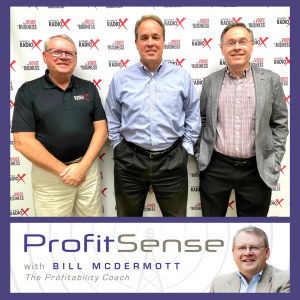
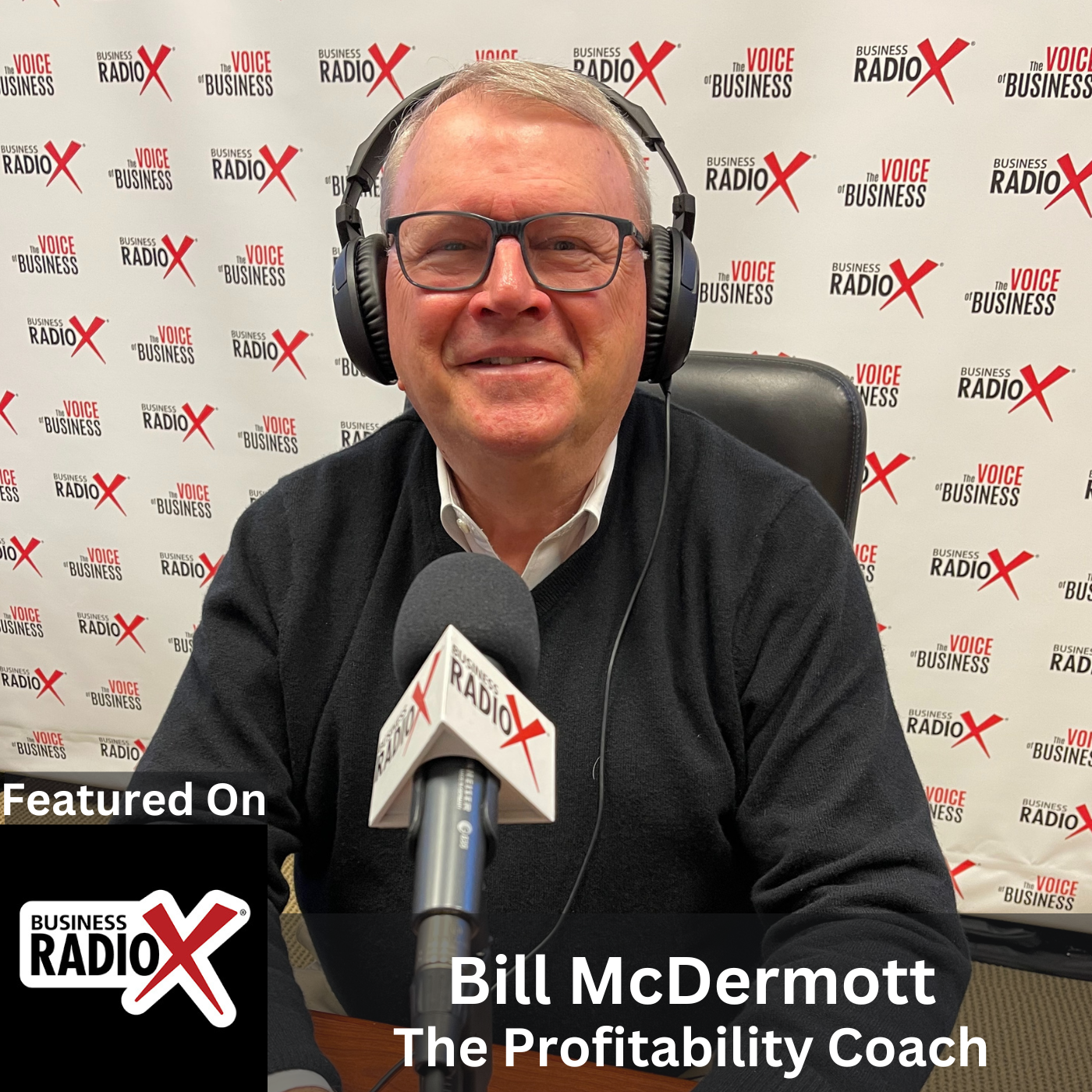
Bill McDermott, The Profitability Coach and Host of ProfitSense

January 25, 2023 by John Ray

Bill McDermott, The Profitability Coach and Host of ProfitSense
North Fulton Business Radio
Bill McDermott, The Profitability Coach and Host of ProfitSense
Loading
00:00 /
RSS Feed
Share
Link
Embed

Download file

Bill McDermott, The Profitability Coach and Host of ProfitSense

Bill McDermott, The Profitability Coach and Host of ProfitSense (North Fulton Business Radio, Episode 603)

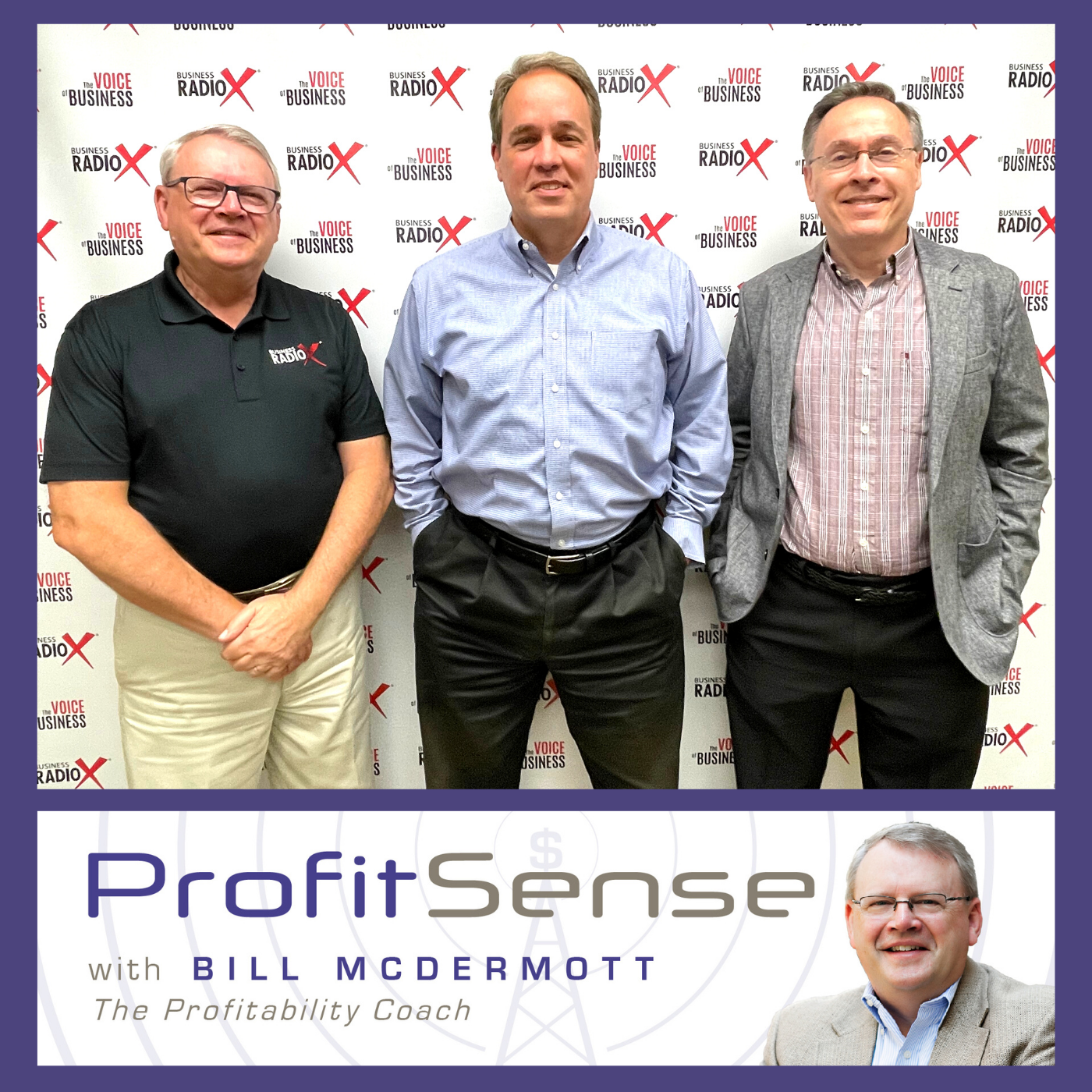
Bill McDermott, Founder and CEO of The Profitability Coach and host of ProfitSense, joined host John Ray on this episode of North Fulton Business Radio. Bill discussed his work as a profitability coach, how one client’s request for help pulled him into exit planning, what differentiates his exit planning advisory services, success stories, and much more.

North Fulton Business Radio is produced and broadcast by the North Fulton studio of Business RadioX® inside Renasant Bank in Alpharetta.

The Profitability Coach

When a business owner imagines the business of their dreams, they want to do everything they can to make it happen. In order to do that, they need to understand the operational side of the business, knowing where the money flows and the potential pitfalls that surface when you want to be all things to all people. It shouldn’t be so hard to have a business that bring in more money than it spends.

The Profitability Coach simplifies complex financial concepts and break them down into easy to understand knowledge.

Website | LinkedIn | Instagram

Bill McDermott, Founder and CEO, The Profitability Coach

Bill McDermott, Founder and CEO, The Profitability Coach

Bill McDermott is the Founder and CEO of The Profitability Coach. When business owners want to increase their profitability, they don’t have the expertise to know where to start or what to do.

Bill leverages his knowledge and relationships from 32 years as a banker to identify the hurdles getting in the way and create a plan to deliver profitability they never thought possible.

Bill currently serves as Treasurer for the Atlanta Executive Forum and has held previous positions as a board member for the Kennesaw State University Entrepreneurship Center and Gwinnett Habitat for Humanity and Treasurer for CEO NetWeavers. Bill is a graduate of Wake Forest University and he and his wife, Martha have called Atlanta home for over 40 years. Outside of work, Bill enjoys golf, traveling, and gardening.

Bill is also the host of ProfitSense, a podcast produced by North Fulton Business RadioX.

LinkedIn | Twitter

Questions and Topics in this Interview

  • How Bill’s practice started after a three decade plus career in banking
  • How he works with businesses as their profitability coach
  • How one client’s request for his help in exit planning pulled him in that direction
  • What Bill’s exit planning services involve and what differentiates him
  • The need for exit planning
  • Success stories

North Fulton Business Radio is hosted by John Ray and broadcast and produced from the North Fulton studio of Business RadioX® inside Renasant Bank in Alpharetta. You can find the full archive of shows by following this link. The show is available on all the major podcast apps, including Apple Podcasts, Spotify, Google, Amazon, iHeart Radio, Stitcher, TuneIn, and others.

RenasantBank

Renasant Bank has humble roots, starting in 1904 as a $100,000 bank in a Lee County, Mississippi, bakery. Since then, Renasant has grown to become one of the Southeast’s strongest financial institutions with over $13 billion in assets and more than 190 banking, lending, wealth management and financial services offices in Mississippi, Alabama, Tennessee, Georgia and Florida. All of Renasant’s success stems from each of their banker’s commitment to investing in their communities as a way of better understanding the people they serve. At Renasant Bank, they understand you because they work and live alongside you every day.

Since 2000, Office Angels® has been restoring joy to the life of small business owners, enabling them to focus on what they do best. At the same time, we honor and support at-home experts who wish to continue working on an as-needed basis. Not a temp firm or a placement service, Office Angels matches a business owner’s support needs with Angels who have the talent and experience necessary to handle work that is essential to creating and maintaining a successful small business. Need help with administrative tasks, bookkeeping, marketing, presentations, workshops, speaking engagements, and more? Visit us at https://officeangels.us/.


Tagged With: Bill McDermott, business transition, exit planning, management transistion, profitability, profitability coach, Profitability Coach Bill McDermott, ProfitSense, ProfitSense with Bill McDermott

Transitioning a Family Business from One Generation to Another (Part 2 of 2)

December 15, 2021 by Mike

Stewarding-Family-Wealth
Gwinnett Studio
Transitioning a Family Business from One Generation to Another (Part 2 of 2)
Loading
00:00 /
RSS Feed
Share
Link
Embed

Download file

Drew Gilbreath, Randy Brunson and Cole Porter

In the second part of a 2-part episode, host Randy Brunson discusses the benefits and challenges of transitioning a family business from one generation to another with second-generation business owners Drew Gilbreath of Sutter, McLellan & Gilbreath and Cole Porter of Porter Steel.

Drew Gilbreath/Sutter, Mclellan & Gilbreath

Sutter, McLellan & Gilbreath prides itself on being an independent agency and its ability to create a strategic business partnership between their client, their carrier and their community. Through mutually beneficial alliances, Sutter, McLellan & Gilbreath provide tailored services and products compatible with your expectations. SMG will communicate clearly and keep the program design concise. Brady is the only broker at the agency that focuses solely on employee benefits.

Cole Porter/Porter Steel

In business since 1983, Porter Steel is one of Atlanta’s premier providers of structural steel, miscellaneous metals, and architectural metals to General Contractors and other fabricators in the area. Additionally, they have a custom manufacturing division where they partner with other manufacturers in completing the steel portion of their product.


Randy Brunson/Centurion Advisory Group

Randy Brunson is the founding shareholder of Centurion Advisory Group. Randy has invested most of his forty-year career in financial services. He spent several years on the institutional side and had the opportunity to start a successful financial planning firm in 1991. Centurion Advisory Group serves individual and corporate clients, both in Georgia and throughout the country, offering personal and business financial planning, retirement plan design and management, and investment management services.

Randy studied engineering and marketing at UT Chattanooga. Randy currently holds the Accredited Investment Fiduciary (AIF®) and CKA designation and makes it a priority to stay on top of his knowledge in the financial industry through continuing professional educational opportunities and reading. In addition, Randy has completed studies in qualified plan design, estate planning and business transition planning and he enjoys speaking and writing regularly on these topics.

Stewarding Family Wealth is presented by

Tagged With: business transition, centurion advisory group, cole porter, drew gilbreath, Family Business, family business transition, financial advice, porter steel, randy brunson, stewarding family wealth, stewarding family wealth podcast, sutter mclellan & gilbreath, wealth and savings advice, wealth management, wealth podcast

Transitioning a Family Business from One Generation to Another (Part 1 of 2)

December 9, 2021 by Mike

Gwinnett Studio
Gwinnett Studio
Transitioning a Family Business from One Generation to Another (Part 1 of 2)
Loading
00:00 /
RSS Feed
Share
Link
Embed

Download file

Drew Gilbreath, Randy Brunson and Cole Porter

In the first part of a 2-part episode, host Randy Brunson discusses the benefits and challenges of transitioning a family business from one generation to another with second-generation business owners Drew Gilbreath of Sutter, McLellan & Gilbreath and Cole Porter of Porter Steel.

Drew Gilbreath/Sutter, Mclellan & Gilbreath

Sutter, McLellan & Gilbreath prides itself on being an independent agency and its ability to create a strategic business partnership between their client, their carrier and their community. Through mutually beneficial alliances, Sutter, McLellan & Gilbreath provide tailored services and products compatible with your expectations. SMG will communicate clearly and keep the program design concise. Brady is the only broker at the agency that focuses solely on employee benefits.

Cole Porter/Porter Steel

In business since 1983, Porter Steel is one of Atlanta’s premier providers of structural steel, miscellaneous metals, and architectural metals to General Contractors and other fabricators in the area. Additionally, they have a custom manufacturing division where they partner with other manufacturers in completing the steel portion of their product.


Randy Brunson/Centurion Advisory Group

Randy Brunson is the founding shareholder of Centurion Advisory Group. Randy has invested most of his forty-year career in financial services. He spent several years on the institutional side and had the opportunity to start a successful financial planning firm in 1991. Centurion Advisory Group serves individual and corporate clients, both in Georgia and throughout the country, offering personal and business financial planning, retirement plan design and management, and investment management services.
Randy studied engineering and marketing at UT Chattanooga. Randy currently holds the Accredited Investment Fiduciary (AIF®) and CKA designation and makes it a priority to stay on top of his knowledge in the financial industry through continuing professional educational opportunities and reading. In addition, Randy has completed studies in qualified plan design, estate planning and business transition planning and he enjoys speaking and writing regularly on these topics.

Stewarding Family Wealth is presented by

Tagged With: business transition, centurion advisory group, cole porter, drew gilbreath, Family Business, family business transition, financial advice, porter steel, randy brunson, stewarding family wealth, stewarding family wealth podcast, sutter mclellan & gilbreath, wealth and savings advice, wealth management, wealth podcast

The Value of Delegation, with Bill McDermott, Host of ProfitSense

October 15, 2021 by John Ray

Value of Delegation
North Fulton Studio
The Value of Delegation, with Bill McDermott, Host of ProfitSense
Loading
00:00 /
RSS Feed
Share
Link
Embed

Download file

Value of Delegation

The Value of Delegation, with Bill McDermott, Host of ProfitSense 

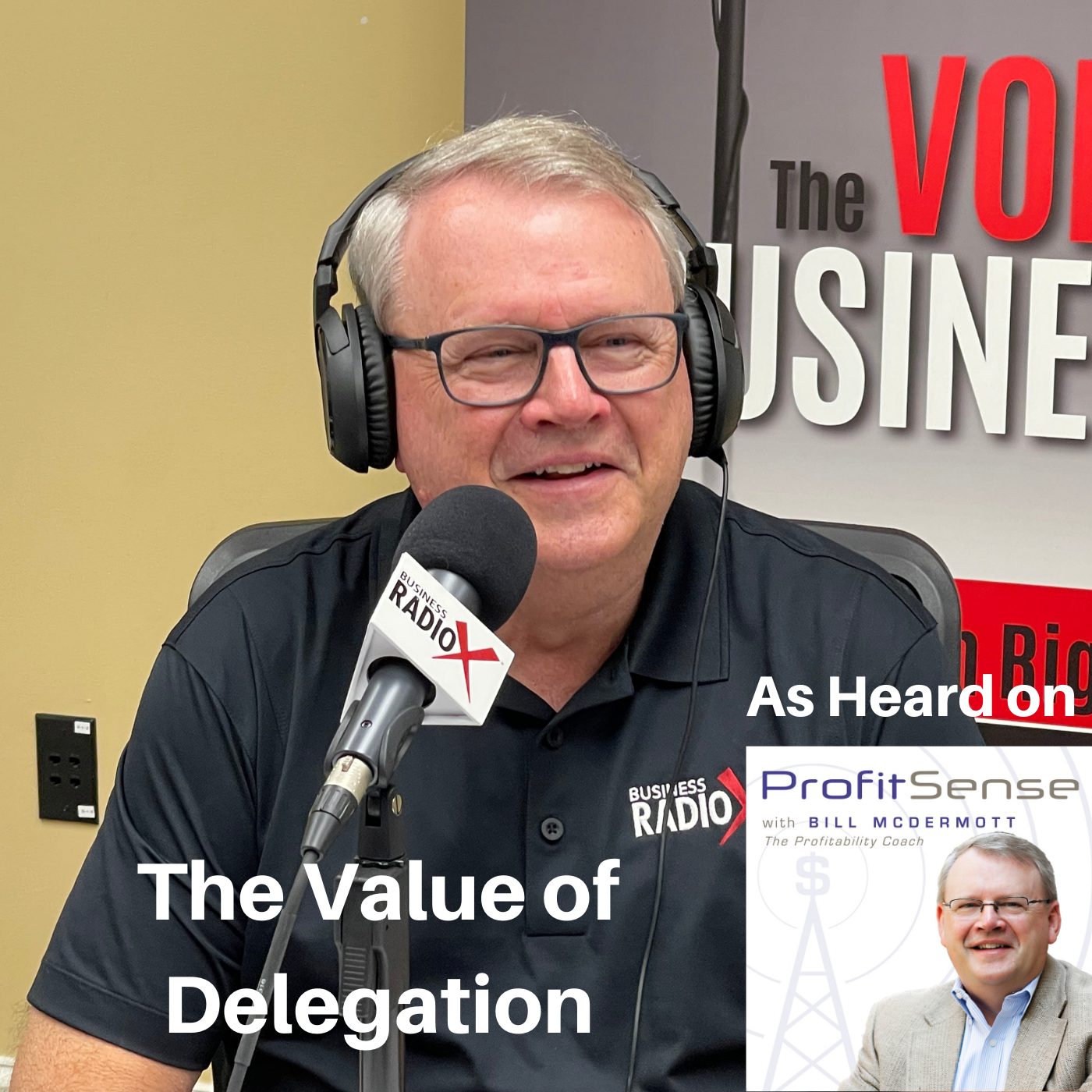
Only 1% of businesses pass the $10 million mark. As Profitability Coach Bill McDermott explains, the number one reason for this striking statistic is lack of delegation. On a recent episode of ProfitSense, Bill discussed the value of delegation, not just for the business, but for employees, company culture, and the owner’s plans to exit. ProfitSense with Bill McDermott is produced and broadcast by the North Fulton Studio of Business RadioX® in Alpharetta.

Bill’s commentary was taken from this episode of ProfitSense.

About ProfitSense and Your Host, Bill McDermott

Bill McDermott
Bill McDermott

ProfitSense with Bill McDermott dives into the stories behind some of Atlanta’s successful businesses and business owners and the professionals that advise them. This show helps local business leaders get the word out about the important work they’re doing to serve their market, their community and their profession. The show is presented by McDermott Financial Solutions. McDermott Financial helps business owners improve cash flow and profitability, find financing, break through barriers to expansion and financially prepare to exit their business. The show archive can be found at profitsenseradio.com.

Bill McDermott is the Founder and CEO of McDermott Financial Solutions. When business owners want to increase their profitability, they don’t have the expertise to know where to start or what to do. Bill leverages his knowledge and relationships from 32 years as a banker to identify the hurdles getting in the way and create a plan to deliver profitability they never thought possible.

Bill currently serves as Treasurer for the Atlanta Executive Forum and has held previous positions as a board member for the Kennesaw State University Entrepreneurship Center and Gwinnett Habitat for Humanity and Treasurer for CEO NetWeavers. Bill is a graduate of Wake Forest University and he and his wife, Martha have called Atlanta home for over 40 years. Outside of work, Bill enjoys golf, traveling, and gardening.

Connect with Bill on LinkedIn and Twitter and follow McDermott Financial Solutions on LinkedIn.

Tagged With: Bill McDermott, business transition, company culture, Delegation, employees, exit planning, McDermott Financial Solutions, Profitability Coach Bill McDermott, ProfitSense with Bill McDermott, The Profitability Coach

David Shavzin, The Value Track, and Bob Tankesley, Neri Capital 

July 16, 2021 by John Ray

Neri Capital
North Fulton Studio
David Shavzin, The Value Track, and Bob Tankesley, Neri Capital 
Loading
00:00 /
RSS Feed
Share
Link
Embed

Download file

Exit Planning

David Shavzin, The Value Track, and Bob Tankesley, Neri Capital (ProfitSense with Bill McDermott, Episode 23)

Host Bill McDermott is joined by David Shavzin of The Value Track and Bob Tankesley of Neri Capital. David and Bob advocate that the seller of a business must take the perspective of the prospective buyer. By doing so, a seller will better understand business valuation, planning for a successful exit, and how the sale process will unfold. ProfitSense with Bill McDermott is produced and broadcast by the North Fulton Studio of Business RadioX® in Alpharetta.

David Shavzin, President,  The Value Track

Exit Planning
David Shavzin, President, The Value Track
The Value Track helps business owners sell their companies, maximize value, and create an exit on their own terms. Business owners too often get so caught up in the day-to-day that they lose sight of the key to making that future happen – building value – and are unprepared when the time comes to put their transition into action. The Value Track partners with their clients to build transferrable value and sell their companies. Whether a single owner, a family business, or simply multiple partners – whether their exit planning timeline is one year or 10 years – we take our clients through The Value Track’s 7 steps to ensure success.
Company website | LinkedIn

Bob Tankesley, Principal, M&A Advisor, Neri Capital

Bill Tankesley, Principal, M&A Advisor, Neri Capital

Neri Capital Partners, a boutique investment bank and advisory firm, consists of seasoned transactional professionals and offers a variety of investment banking services to privately held lower mid-market businesses. Our team has in-depth experience with businesses in the manufacturing, business-to-business, industrial, and healthcare market sectors. Neri Capital has closed over 150 transactions with a total enterprise value of $1.3 billion. Services include:
1. Seller representations
2. Business value estimates
3. Exit planning and strategies
4. Buyer representations
5. Corporate and capital formation

Company website | LinkedIn


About ProfitSense and Your Host, Bill McDermott

Bill McDermott
Bill McDermott

ProfitSense with Bill McDermott dives into the stories behind some of Atlanta’s successful businesses and business owners and the professionals that advise them. This show helps local business leaders get the word out about the important work they’re doing to serve their market, their community and their profession. The show is presented by McDermott Financial Solutions. McDermott Financial helps business owners improve cash flow and profitability, find financing, break through barriers to expansion and financially prepare to exit their business. The show archive can be found at profitsenseradio.com.

Bill McDermott is the Founder and CEO of McDermott Financial Solutions. When business owners want to increase their profitability, they don’t have the expertise to know where to start or what to do. Bill leverages his knowledge and relationships from 32 years as a banker to identify the hurdles getting in the way and create a plan to deliver profitability they never thought possible.

Bill currently serves as Treasurer for the Atlanta Executive Forum and has held previous positions as a board member for the Kennesaw State University Entrepreneurship Center and Gwinnett Habitat for Humanity and Treasurer for CEO NetWeavers. Bill is a graduate of Wake Forest University and he and his wife, Martha have called Atlanta home for over 40 years. Outside of work, Bill enjoys golf, traveling, and gardening.

Connect with Bill on LinkedIn and Twitter and follow McDermott Financial Solutions on LinkedIn.

Tagged With: Bill McDermott, Bob Tankesley, business transition, business valuation, David Shavzin, exit planning, Neri Capital, Profit Sense, profitability coach, Succession Planning, The Profitability Coach, The Value Track

Julie Keyes, KeyeStrategies, LLC

June 29, 2021 by John Ray

Julie Keyes
Minneapolis St. Paul Business Radio
Julie Keyes, KeyeStrategies, LLC
Loading
00:00 /
RSS Feed
Share
Link
Embed

Download file

Julie Keyes

Julie Keyes, KeyeStrategies, LLC (Minneapolis-St. Paul Business Radio, Episode 14)

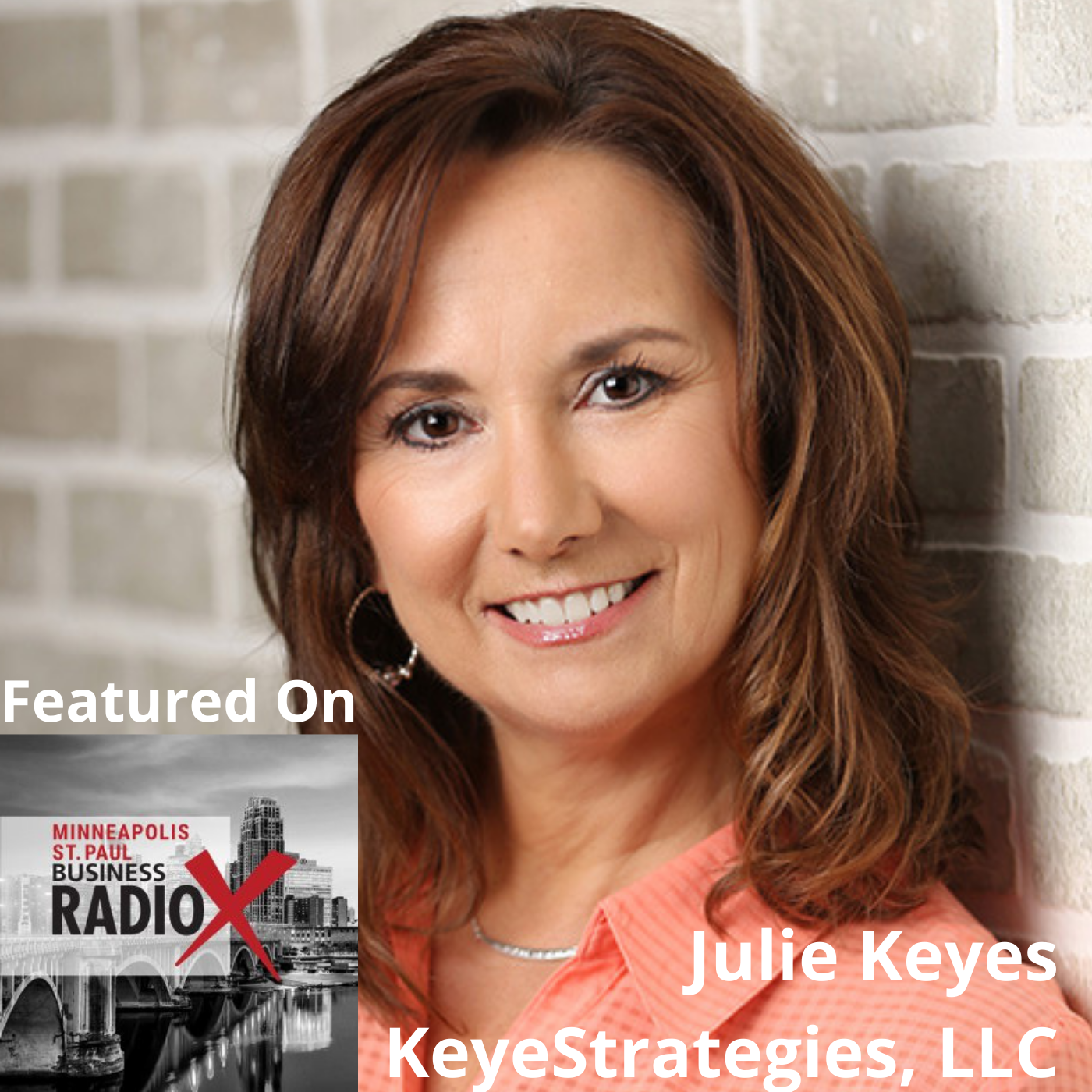
As a entrepreneur who went through her own business exit, Julie Keyes, Founder and President of KeyeStrategies, is passionate about supporting business owners in their transition and exit journey. She explains the crucial differences between transition, succession, and exit, why planning for an exit involves much more than just the numbers, what to expect when working with an exit planner, and much more. Minneapolis-St. Paul Business Radio is produced virtually by the Minneapolis St. Paul studio of Business RadioX®.

KeyeStrategies, LLC

KeyeStrategies is an advisory firm for entrepreneurs looking to grow and improve their business, while also providing Exit Planning and Transition services for companies between $5-30M in annual revenue.

The firm’s mission is to help business owners increase enterprise value and prepare the owner and the business for a future exit. Their tagline says it all… “Build enterprise value today, so you can exit on your own terms tomorrow”.

Company website | LinkedIn | Facebook | Twitter

Julie Keyes, Founder and President, KeyeStrategies

Julie Keyes
Julie Keyes, Founder and President, KeyeStrategies

Julie Keyes is the founder and owner of KeyeStrategies, LLC in Minneapolis, MN specializing in exit and transition consulting for business owners of lower middle-market companies. Julie has been an entrepreneur most of her life. As the founder and operator of several companies, she understands owner motivations and the balancing act they require to work both ‘in’ and ‘on’ the business.

Julie is a Certified Exit Planning Advisor and Value Growth Advisor. She works with business owners who seek to understand and maximize their exit and critical transition options. She founded the Exit Planning Institute Twin Cities Metro Area Chapter in 2016, serving as president until 2020, and is a faculty member for their CEPA program. In addition, Julie was awarded EPI’s 2017 “Leader of Year”.

Julie recently released her first book “Poised for Exit” which helps owners of privately held companies navigate the process of business exit. Her weekly podcast, of the same name, provides content relevant to business owners and advisors alike and can be found on all major podcast platforms.

LinkedIn | Poised for Exit


Questions and Topics in this Interview

  • What is the process of exit planning?
  • Who is involved in exit planning?
  • When should an owner start the process of preparing for a future exit?
  • Are Exit and Transition the same thing? What about Succession? How are they different?
  • When an owner works with you, what can they expect?
  • Is there any kind of urgency needed on the part of owners today? If so, why?

Minneapolis-St. Paul Business Radio is hosted by John Ray and produced virtually from the Minneapolis St. Paul studio of Business RadioX® .  You can find the full archive of shows by following this link. The show is available on all the major podcast apps, including Apple Podcasts, Spotify, Google, Amazon, iHeart Radio, Stitcher, TuneIn, and others.

Tagged With: Business Exit Planning, business transition, exit planning, Julie Keyes, KeyeStrategies, Minneapolis St Paul Business Radio, Poised for Exit, small business exit planning, Succession Planning

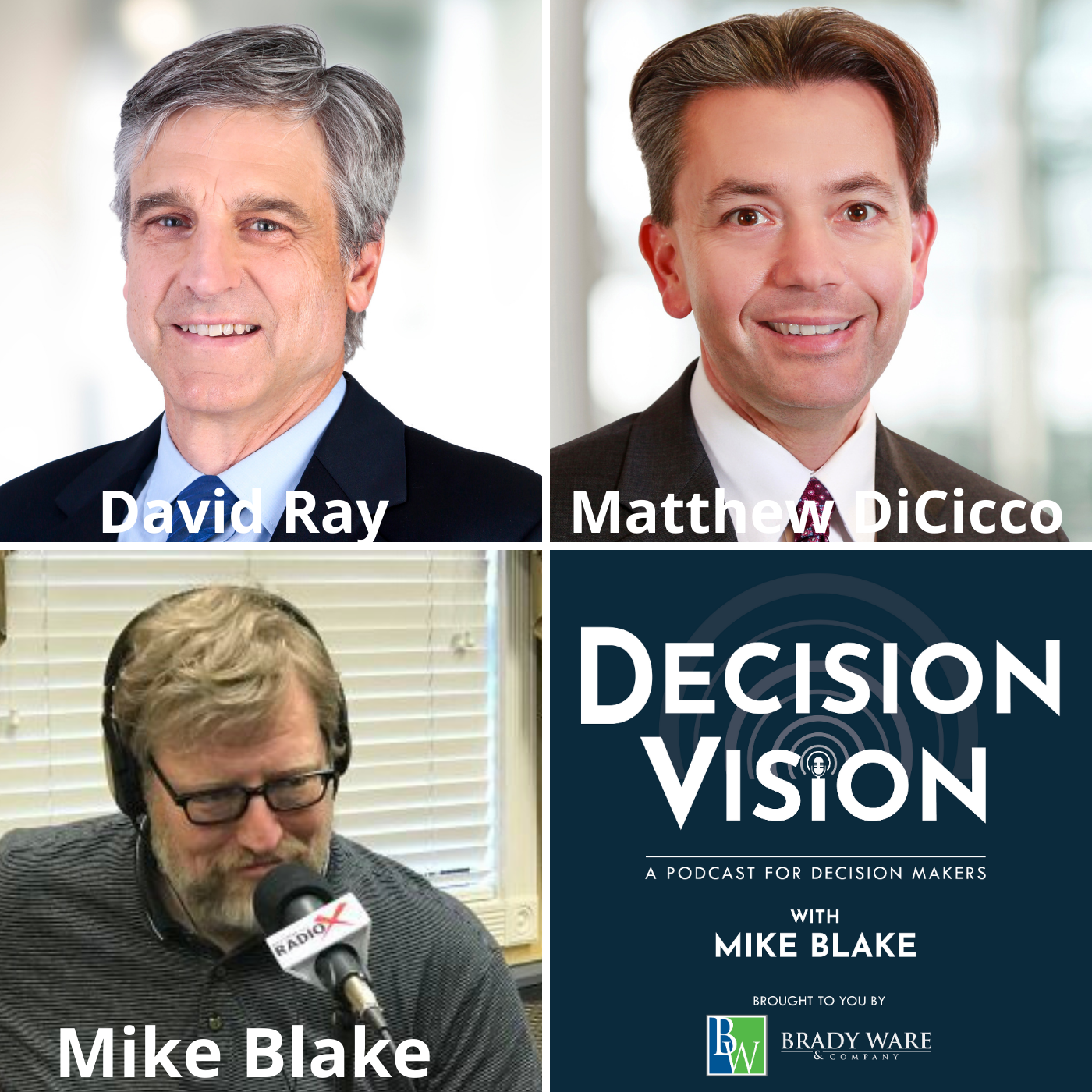
Decision Vision Episode 114: Should I Let My Children Take Over the Business? – An Interview with David Ray and Matthew DiCicco of Eubel, Brady & Suttman

April 29, 2021 by John Ray

Eubel, Brady & Suttman
Decision Vision
Decision Vision Episode 114: Should I Let My Children Take Over the Business? - An Interview with David Ray and Matthew DiCicco of Eubel, Brady & Suttman
Loading
00:00 /
RSS Feed
Share
Link
Embed

Download file

Eubel, Brady & Suttman

Decision Vision Episode 114:  Should I Let My Children Take Over the Business? – An Interview with David Ray and Matthew DiCicco of Eubel, Brady & Suttman

Only one in nine businesses make it to the third generation of family ownership. David Ray and Matthew DiCicco of Eubel, Brady & Suttman joined Mike Blake to cover some of the financial and psychological issues of transferring a business to the next generation, and the factors which go into that decision. “Decision Vision” is presented by Brady Ware & Company.

Eubel, Brady & Suttman Investment and Wealth Management

Eubel Brady & Suttman was formed when three friends came together as business partners more than two and a half decades ago. From the very beginning, a high value has been placed on trust, friendships, caring for clients, long-term investment results and a single value-oriented investment philosophy focused on absolute rather than relative returns. EBS clients are business partners and often become friends. They strive to communicate accordingly – being as transparent as possible. For EBS, Investing in You is about taking the time to learn what is important to every client, those they care about and how the firm’s investment and wealth management processes might provide them peace of mind.

Company website

David Ray, Chief Operating Officer, Eubel, Brady & Suttman

Eubel, Brady & Suttman
David Ray, Chief Operating Officer, Eubel, Brady & Suttman
David is responsible for the day-to-day business operations for the firm. He is also a member of the Consulting Services Group where he works with individual clients and business owners. David has 38 years of corporate management experience. Prior to joining EBS in 2003, he worked in various financial and management capacities at The Berry Company and as Chief Financial Officer of AcuSport Corporation. David holds a B.S. degree in Accounting from Wright State University in Dayton, Ohio and an M.B.A. from the University of Dayton in Dayton, Ohio.



 

Matthew DiCicco, Senior Vice President of Consulting Services & General Counsel, Eubel, Brady & Suttman

Matthew DiCicco, Senior VP Wealth Management / General Counsel

Matt is responsible for developing long-term relationships with high net worth individuals and business owners, and serving as the firm’s general counsel. He takes a collaborative approach and applies the experience gained through his prior law practice to help clients address their unique circumstances. Prior to joining EBS in 2016, Matt practiced law in the private sector for more than 15 years. He holds a B.A. degree in Psychology from Gannon University in Erie, Pennsylvania and a J.D. from the University of Dayton in Dayton, Ohio.

 

Mike Blake, Brady Ware & Company

Mike Blake, Host of the “Decision Vision” podcast series

Michael Blake is the host of the “Decision Vision” podcast series and a Director of Brady Ware & Company. Mike specializes in the valuation of intellectual property-driven firms, such as software firms, aerospace firms, and professional services firms, most frequently in the capacity as a transaction advisor, helping clients obtain great outcomes from complex transaction opportunities. He is also a specialist in the appraisal of intellectual properties as stand-alone assets, such as software, trade secrets, and patents.

Mike has been a full-time business appraiser for 13 years with public accounting firms, boutique business appraisal firms, and an owner of his own firm. Prior to that, he spent 8 years in venture capital and investment banking, including transactions in the U.S., Israel, Russia, Ukraine, and Belarus.

Brady Ware & Company

Brady Ware & Company is a regional full-service accounting and advisory firm which helps businesses and entrepreneurs make visions a reality. Brady Ware services clients nationally from its offices in Alpharetta, GA; Columbus and Dayton, OH; and Richmond, IN. The firm is growth-minded, committed to the regions in which they operate, and most importantly, they make significant investments in their people and service offerings to meet the changing financial needs of those they are privileged to serve. The firm is dedicated to providing results that make a difference for its clients.

Decision Vision Podcast Series

“Decision Vision” is a podcast covering topics and issues facing small business owners and connecting them with solutions from leading experts. This series is presented by Brady Ware & Company. If you are a decision-maker for a small business, we’d love to hear from you. Contact us at decisionvision@bradyware.com and make sure to listen to every Thursday to the “Decision Vision” podcast.

Past episodes of “Decision Vision” can be found at decisionvisionpodcast.com. “Decision Vision” is produced and broadcast by the North Fulton studio of Business RadioX®.

Connect with Brady Ware & Company:

Website | LinkedIn | Facebook | Twitter | Instagram

TRANSCRIPT

Intro: [00:00:02] Welcome to Decision Vision, a podcast series focusing on critical business decisions. Brought to you by Brady Ware & Company. Brady Ware is a regional full service accounting and advisory firm that helps businesses and entrepreneurs make visions a reality.

Mike Blake: [00:00:21] Welcome to Decision Vision, a podcast giving you, the listener, clear vision to make great decisions. In each episode, we discuss the process of decision making on a different topic from the business owners’ or executives’ perspective. We aren’t necessarily telling you what to do, but we can put you in a position to make an informed decision on your own and understand when you might need help along the way.

Mike Blake: [00:00:41] My name is Mike Blake, and I’m your host for today’s program. I’m a director at Brady Ware & Company, a full service accounting firm based in Dayton, Ohio, with offices in Dayton; Columbus, Ohio; Richmond, Indiana; and Alpharetta, Georgia. Brady Ware is sponsoring this podcast, which is being recorded in Atlanta per social distancing protocols. If you would like to engage with me on social media and my Chart of the Day and other content, I’m on LinkedIn as myself, and @unblakeable on Facebook, Twitter, Clubhouse, and Instagram. If you like this podcast, please subscribe on your favorite podcast aggregator, and please consider leaving a review of the podcast as well.

Mike Blake: [00:01:15] So, today’s topic is, Should I let my children or family take over the business? And, you know, this is not a topic that people run into every day, but it is a topic that has a lot of depth to it. And most of us, if we’re not in a family business, we probably know somebody that is. And it might be a business that’s been in the family for one generation, it might be a business that’s been in the family for many generations. And, interestingly, on a side note, some of the businesses with the most longevity are insurance businesses, interestingly enough.

Mike Blake: [00:01:50] And I wonder if the fact that they have this actuarial model somehow enables them to manage risk over the long term, maybe, than other firms. But it is a fascinating topic. And I think given the way that our economy is shaping capital gains, tax changes, notwithstanding, that family businesses are going to become an increasingly important asset. You know, we live in a time of great uncertainty and there’s a lot of literature now coming out of both The Wall Street Journal and The Economist that, you know, for the time being, the notion of this risk-free rate of return of a five percent that most of us have grown up with counting on is really not in the cards.

Mike Blake: [00:02:37] People who are millennials or And Gen Xers may be fortunate to have a risk- free rate of return of two to three percent, frankly, and there are a lot of factors going into that. But I’m not going to discuss it in this particular program. But, you know, a family business is potentially a tremendous asset for wealth building, for legacy building, for taking care of one’s children or not. Warren Buffett’s been very clear, he’s not going to leave a whole lot of money to his children. Bill Gates is sort of the same way. But everybody approaches this differently.

Mike Blake: [00:03:16] And intergenerational businesses do sort of take on a life of their own. I have a few clients like that where I’ve helped them write their family business charter, the family charter, which is sort of like the constitution of how are you going to govern these things. And there are businesses that are multigenerational family businesses that are names that you may not have realized. Kikkoman, the soy sauce maker in Japan, is a business that traces back to a group of eight families that are still in ownership today, back in the 17th century. The Rothschilds date back to the 18th century back in Bavaria. Something closer to home, you know, the Fords are on their fourth generation. And the Mellon’s are in something like their sixth or seventh generation. So, you know, they are around and they may not be as visible, but they’re around.

Mike Blake: [00:04:09] So, I hope you’ll find this a very interesting topic, even if it doesn’t necessarily apply to your particular situation. Or maybe you’ll decide you want to make it a situation. If you’re just starting out with your business, maybe this will inspire you to create an asset that can be valuable to future generations to come.

Mike Blake: [00:04:28] And joining us today are David Ray and Matt DiCicco of Eubel Brady & Suttman. With over 40 years of corporate management experience, David has successfully held multiple positions within the C-Suite prior to joining EBS in 2003. Today, David is responsible for the day-to-day business operations of EBS. As a member of the Wealth Management Group, David works closely with high net worth individuals and brings the ability to assist clients with the preservation and growth of a closely held family business. David also brings a unique talent through his study of behavioral assessment and talent optimization. Using behavioral analysis, David helps business owners and clients define and develop an ideal state definition for their personal business and financial future.

Mike Blake: [00:05:12] Matt joined EBS in 2016 after practicing law in the private sector for over 15 years. Today, Matt applies his experience to serve high net worth individuals and business owner clients as a member of the Wealth Management Group of EBS. Whether a client has a family member going through divorce, a probate question, or an issue burdening their business, Matt is the legal resource to provide direction. Utilizing a proactive approach, Matt helps clients prepare for the positive and negative life issues that may impact their portfolio. Matt is also responsible for managing the legal risk within EBS’s private investments.

Mike Blake: [00:05:45] Eubel Brady & Suttman was formed when three friends came together as business partners more than two-and-a-half decades ago. From the very beginning, a high value has been placed on trust, friendships, caring for clients, long term investment results, and a single value oriented investment philosophy focused on absolute rather than relative returns. EBS’s clients are business partners and often become friends. They strive to communicate accordingly being as transparent as possible. For EBS investing in you is about taking the time to learn what is important to you, those you care about, and how the firm’s investment and wealth management processes might provide you peace of mind. David and Matt, welcome to the program.

Matthew DiCicco: [00:06:23] Thank you.

David Ray: [00:06:24] Thank you very much, Mike.

Mike Blake: [00:06:26] So, I read a statistic that indicates that something on the order of eight out of ten family businesses have no succession plan whatsoever. Do you think that’s an accurate statistic? And if so, why do you think that number is so high? And this seems high to me.

David Ray: [00:06:46] Mike, I think, one of the challenges we’ve got with answering that question is, succession, if you say you have a succession plan, I think means a lot of different things to different people. And in our experience, we would view succession plan and having one in place as having a number of elements. It would include, for example, the management succession, the depth of your bench. It would include estate and tax strategies. It would include how are you going to work with families, something you alluded to in your opening comments, kind of what is the philosophy of the family around the business, and the role of active shareholders as well as those that aren’t involved in the business.

David Ray: [00:07:33] And then, ultimately, what’s the vision for the company down the road, whether it be sold or transferred or whatever that might be. So, it’s a pretty all encompassing definition in terms of the way we look at it. And, frankly, it’s not something as a to-do item. We look at it as kind of an ongoing item that’s key in governing the business correctly.

Matthew DiCicco: [00:07:58] And, Mike, I might add to that and say, when you referenced no succession plan, I think that that implies that they have no plan at all in place. I think that most business owners have some idea of what they want to do with the business some day, some conceptual idea. Now, that conceptual idea may very well change as they become educated about their options and consequences of the different strategies they wish to employ. But I think that that statistic is high. I think that most people do have some conceptual idea of what they want to do with the business.

Mike Blake: [00:08:32] So, I want to share an observation with you, you know, it seemed to me that back in the first decade of this century, I think there are a lot of predictions that somewhere around 2010, 2011, that a lot of family businesses were going to turn over. That people simply were going to have to sell their businesses. And I think investment bankers, in particular, were kind of licking their chops saying, “Oh, boy. We’re going to have the best years ever selling all of these family businesses.” And, you know, I’m not sure that that’s necessarily happened. I think that baby boomers are hanging in their businesses longer than a lot of people would have predicted. Do you agree? Do you have a similar observation? And if so, what do you think is driving that?

David Ray: [00:09:20] I would say that that’s probably correct. We were exposed in some previous presentations to a number of over 15 million private businesses and about two-thirds of those are controlled by baby boomers, Michael. And I think, frankly, one of the things that we’ve seen with many of our business owner clients is, frankly, they’d like to be farther along than they are.

David Ray: [00:09:48] However, in many cases, for you to take on some of these succession issues related, for example, to developing your management team and your bench strength, it is the equivalent of adding a part time job. And most of the business owners I know are operating the business day-to-day, frankly, are working way more than 40 hours anyway. And so, when you look at the possibility of adding on to a part time job, that’s just something that’s not practical for them to do both. I think that’s one big issue.

David Ray: [00:10:20] And I think the other one is that, people, in some cases, get so much out of running the business and are so excited about it. That’s one of those things that’s easy to procrastinate, until there’s some kind of event where you really have to act. And we see that in many cases where you have fewer options, in fact, because of the whole situation or whatever it might be becomes a reality.

Matthew DiCicco: [00:10:47] Yeah. I may speak more to really what’s driving this. And, you know, one thing I would say is, medical advancements or living longer or healthier, valuations are high right now, so, frankly, it limits the buyer pool. And then, you know, when things are good, when you’re feeling good – pre-COVID – the business is throwing off cash, valuations in the market – I think you referred to, you know, a two to three percent risk-free rate of return – when you get a whole bunch of money for your business, now, you have to figure out what you’re going to do with that money. And there’s not a lot of good options.

Matthew DiCicco: [00:11:26] So, when you’re doing good and you’re feeling good and your business is throwing off cash, it tends to lead to procrastination. And then, you can look at all the reasons why people procrastinate in the formulation of a formal strategic plan and the implementation of a formal strategic plan. And there’s lots of reasons, right? You know, one of those is tough decisions have to be made. You’re making decisions about your baby. For some people, their lifetime of work and achievement that they almost view as being a reflection of themselves, a piece of themselves. And, you know, when you have family members involved in the business, it requires tough decisions to be made with regard to those family members.

Matthew DiCicco: [00:12:11] And then, finally, there’s finality. When you make that decision, you formulate that formal plan, you begin to implement that plan, and changes start to be made. That is a real life changing moment for some people.

Matthew DiCicco: [00:12:27] So, Mike, one of the things that the David and I work together on is utilizing what — and then that succession blueprint. We’re helping business owners proactively define what a successful transition would look like for them. And in doing that, we’ll provide insight into their own behavior and the consequences of their behavior can have on planning the transition. As well as just identifying priorities, identifying the marketability of the business, what can make it more or less valuable. As well as providing some different ranges of valuations on a roughly right type of basis.

Matthew DiCicco: [00:13:08] And helping them using one of our proprietary models identify what that retirement is going to look like and what this hypothetical pot of money is going to do for them based upon their own anticipated needs. And sometimes just providing a lot of education and peace of mind can help them get over that procrastination stumbling block and start making decisions whereby they can transfer to the next generation.

Mike Blake: [00:13:36] So, I think I’m going to want to come back to that succession blueprint. But before I do, you said something at the outset of that answer that I think I’m going to make up a new word, just subtle smart. And because of that, I want to come back because I think it’s so important and it’s easy to miss. And that is that, when you sell a business, you suddenly become an investor, especially if most of your investable assets have been locked into the business. And I think something that gets missed – and I advise my clients on too – is, when you sell your business, ostensibly, you have this big pile of cash. You now need to do something with or should do something with. And is it going to generate as high a return on a risk adjusted basis as what you are already doing?

Mike Blake: [00:14:24] And trying to map that puzzle is not as easy as it sounds. And on this I’d love you to comment, a market like what we have today, I think is actually a double edged sword. Because on one hand that may allow you to sell your business for an attractive valuation. But on the other hand, when you have a market that might be at the top – and I’m not going to I’m not going to offer hard or fast comment. I’m not a RIAA. I’m unlicensed – but if you are at a high point in the market, what kind of returns are you going to get at that particular point in time? It’s just how high can these things go in the short term?

Mike Blake: [00:15:06] And, you know, that’s a subtle question that you have to think about. And maybe that may lend to a decision to keep the business in the family simply because of a market timing issue. Every CFA in the world is just about to point a gun at my head. I’m not advocating market timing. But if you have a market environment where returns are hard to come by, I do think it’s only prudent to look at that environment when you sell your business into it. I took much more time asking that question than I should have, but I love you to react to it.

David Ray: [00:15:45] So, it’s funny, because Ronny, one of our founding partners, talks about this issue a lot with business owners and with us internally. And you’re exactly right, Michael, and I’ll use an example. I think I’ll use an example, if you had bought Cisco Systems and you really liked the company in 1999. And 20 years from then, you plan to retire. Actually, when you liquidated that 20 years later, you would have had a pretty substantial double digit loss. And it’s because Cisco sold at a very high price.

David Ray: [00:16:21] And one of the things that generally is the case is, private markets and valuations you get in sales in the privates tend to follow the public markets. And, therefore, to your point, if valuations are high and you’re getting a good number on a sale to have a private business, it’s very important that you go in with both eyes wide open from a preservation of capital standpoint. Because the last thing you really want to have somebody do is to go through and to work their tail off and then, all of a sudden, reinvest and have losses that are significant. So, I think that’s something as we work with clients, we really try to manage expectations when prices are very high in terms of that reinvestment strategy.

Matthew DiCicco: [00:17:06] Yeah. And what I would say in addition to that is, we work very hard to minimize the risk of a permanent loss of capital. So, you liquidated your business for a good number. We’re going to employ several different strategies to try to minimize any risk of you throwing it into an investment now at a high number that may ultimately come down. It may not recover by the time you’re ready to use this asset. So, that could be a whole another podcast on the different strategies [inaudible], but we do employ them.

Mike Blake: [00:17:37] So, a concern I hear – and you touched on a little bit, but I’d love you to expand upon it – frequently in transferring a business within the family is the risk of creating family strife. And for good or ill, I make a lot of money on adjudicating, in effect, or refereeing those family strife kind of issues. And I’m curious, is that a consideration that you see frequently? Is that a realistic fear? And if so, what are some tips you can provide to manage it or even assess if that family strife even is manageable?

David Ray: [00:18:12] Well, to answer your question, we see it a lot particularly in situations where you have some family members who are active in the business, may have a managerial role, but may have an employee role, whatever it might be. And then, you also have other folks who live off the dividends, let’s say, of the cash flow of the business. And particularly at times when the owners and operators of the business may be looking at long term issues, and that may, for example, behoove the business to defer dividends, for example, that’s going to create some strife. But there’s also personality related issues that we see that create strife. There’s extreme examples that we’ve seen where a judge had to even intervene. And for board meetings have representation for kind of a divided family here in a business not too far from us. So, this is a huge issue.

David Ray: [00:19:10] But I think the one lesson that we see and we think is really important is, yes, there’s going to be strife. But if you don’t deal with that strife proactively, the strife down the road can be much more painful. And so, one of the things that we try to do is to kind of work with folks, give them behavioral insights on things that may help them understand why someone may be looking at the same situation differently than they do. And try to, in some cases, even encourage conversations and have kind of whiteboard sessions to really get to the bottom of these issues so that there can be a continuity in terms of how these things are addressed.

Matthew DiCicco: [00:19:54] And I think David and I could both spat off a bunch of examples. As, Mike, I’m sure you could as well, of the various causes for family strife. There’s lots of different things that that can cause it. But, you know, frankly, in terms of managing it, some of the more effective things that I’ve seen have just been where you have a strong family member, business owner-member, who’s willing to set expectations of the next generation early on.

Matthew DiCicco: [00:20:21] And then, secondly, have the confidence and the courage to put the right person in the right seat. And that’s not always the easiest thing to do. But, you know, frankly, managing and promoting your kids as you would any other employee, having defined job descriptions and duties, having performance reviews and those types of things, I think, can be helpful.

Matthew DiCicco: [00:20:42] But then, also, actually one unique thing that David and I have seen is a family business, multigenerational, where all of the kids in the next generation were required to complete college, and work outside of the family business for a period of years before they were even eligible to work in the family business. And by that point, some of the folks decided, “I’m not that interested anymore. I found what I like over here.” And for the ones that did come back, they now have real world perspective. They’ve had to work for somebody. They’ve had to answer to somebody that’s not mom or dad, or grandma, grandpa, or whoever else is there.

Matthew DiCicco: [00:21:19] You know, I can tell you, I think it’s exceptionally valuable. And that I have some investments and businesses of my own and I’ve fired my own son. And, you know, it’s a tough thing to do, but sometimes it’s the right thing to do and it certainly provides an education.

Mike Blake: [00:21:37] Well, you know, you talked about a future podcast topic, firing your own son, that’s about as real and raw as it gets.

David Ray: [00:21:45] Mike, my first business – as a side – I fired the guy who became my best man later in my wedding. So, yeah, we’ve got a whole topic opportunity there.

Mike Blake: [00:21:56] Well, boy. We’ll have you back. So, to me – and this is a an uneducated view – it seems like keeping the business seems like almost kind of a natural thing to do. It seems, at least on the surface, you don’t have to go find a buyer, for example. You know, at some point, you let somebody take over the family business. We’ve talked about the complexities in doing that. But at a very high level, that just sort of seems like the path of least resistance. In your experience, do you think that more business owners than not actually take that path? Or do more of them tend to gravitate towards some sort of external exit?

David Ray: [00:22:36] The statistics would show – and we’ve seen a couple of independent studies on this, and I’ll quickly reference one – that you take nine businesses, four tend to vanish before they get through a second generation, two are sold, three get to the second generation, but only one of those get to a third generation. So, the statistics would suggest that it’s a tough road. And I think Matt kind of alluded to this previously, but I think the more professional the management approach is, probably, the greater chance that you have to pass the business through generations in an orderly manner and continue to grow the business in value.

David Ray: [00:23:17] And, you know, we use EOS as a governance management system at our company, you know, there’s a bunch of successful ones. But in our experience and in doing some of these companies, the disciplines that they have in place, which you can pick up on pretty quick just kind of spending time with managers or touring facilities, they’re kind of the key to the ability to keep things thriving.

Matthew DiCicco: [00:23:47] Yeah. I would add that, you know, I think a lot of it depends on the type of business and then also what’s important to the owner and to the family. You know, is this a business that started as a family business, like a family restaurant or a family nursery or something like that? And other people, frankly, they are just serial entrepreneurs, right? They can’t wait to stand up the next idea, and grow it, and sell it, and amass generational wealth by building and selling companies over the course of their career. So, I mean, I would say that it’s a little bit specific.

Mike Blake: [00:24:22] So, you know, that phenomenon you just brought up segues, I think, nicely into a question. Is that, there’s a phenomenon out there called shirtsleeves to shirtsleeves. And the the notion there is that, if wealth is built in one generation, usually around a family business, that it’s typically gone by the third generation. And that might almost seem to argue against trying to keep the business in the family, because, statistically speaking, the subsequent generation just may not be equipped either emotionally, skill set, or otherwise to take on that responsibility. Would you agree with that? I mean, it sounds like at least the statistics bear that out. If only one in nine of those companies ever make it to the third generation or less than that. But what do you think about that?

David Ray: [00:25:13] You know, I think it goes back to Matt’s point, I think it is kind of facts and circumstances. I could cite an example where the first company I was in made it very successfully to the third generation. There was a sale that the third generation key person stayed on. But, frankly, chose of his own accord to leave, frankly, because of some differences of opinion and he wasn’t used to reporting to somebody. I think that’s a key part of it.

David Ray: [00:25:42] But it depends probably, Michael, more than anything else about how valuable that business is. Because you’ve got a really valuable business that is being run effectively by the family, then it’s easy to keep going. But if you can start to see the wheels slow down, the other family members who are owners, and there’s just not the level of professional management that needs to kind of take to the next generation. If you don’t do something, like trying to sell, for example, or at least take some money out, then all you’re doing is seeing that golden goose kind of a road.

Matthew DiCicco: [00:26:18] Yeah. And I’ll really be interested to see how that statistic may change with the advent of the technological advances that we have of late. Because I can think of several examples where there is a multigenerational family business that everybody has done very well. And then, you have the younger generation come in and utilize this thing called the Internet and they explode it. And, you know, it wouldn’t surprise me if you see a lot more of the younger generations coming in and taking a good, strong family business, and scaling it through technology.

Mike Blake: [00:26:53] That is a fascinating and a very compelling statement, and I haven’t given any thought to that. But, I mean, it makes sense to me – it’s also hard to put this into words. The fact of the matter is that we’re all surrounded by technology, right? Many of us maybe more than we want to. And it’s not like growing up around a car company or a candy company where you don’t just build cars or make candy over the course of your normal life, but you certainly interact with technology over the course of your normal life. Right? And that could provide sort of an environment for companies in that industry, at least, or families whose companies are in that industry to sort of have a head start in terms of the mentality about technology and how it changes. And don’t get too comfortable in so many of the other rules that make technology businesses different.

David Ray: [00:27:53] And I think to Matt’s point, if you look at some of these companies that have had in the past but have basically been forced into embracing e-commerce, and if they’ve got the right firepower behind them, they, in some cases, are experiencing very explosive growth on that segment of their business.

Mike Blake: [00:28:18] So, you know, not everybody is built to run a business necessarily. Have you encountered scenarios in which a business, maybe an owner really wanted to pass their business on to children or at least a family member. But to your mind, they weren’t really qualified. And maybe the children themselves said, “I don’t want to do this. I’ll run this into the ground. Just sell it.” What’s your advice in those circumstances? Do you just sort of then ride that out? Or do you try to be proactive in trying to get family members interested and skilled to run the business? What, in your mind, is best practices in that kind of scenario?

David Ray: [00:29:04] Well, on this behavioral side that you touched on, that’s something that we’re fascinated by and have learned a lot from. And I learned a lot from a guy named Michael Bole, who we still use, frankly, to talk to some of our business owner clients about this very issue, Michael. And I will tell you that, often without someone knowing it, they may take that next generation and kind of force them into a role that, frankly, does not give them satisfaction. They may have the confidence to do it. But, frankly, over time, they don’t get much satisfaction out of it.

David Ray: [00:29:46] And that can be something that leads to an erosion of value of business. Not to speak of, you might be contributing to that child not having as happy a life as they deserve and should have. And we’ve seen that. For example, if you get a really extroverted individual who ran the business, was great at creating relationships, and drove sales through that relationship building. And all of a sudden, you’ve got somebody that comes along that’s much more operational oriented and you try to put them in that role. We’ve seen that kind of scenario. And it’s important to kind of recognize that not just is the competence there and the desire, but is there a fit from the standpoint of a behavioral match on success for that type of job?

Matthew DiCicco: [00:30:34] Yeah. And that’s part of that succession blueprint. Some of the tools that we can offer to assess multiple factors, such as the aptitude, the competence, desire, and interest. And there’s more to the decision of finding the right person for the right seat than just who you were born to, right? So, I mean, if you’re really looking for the overall right person to move the business forward, sometimes that’s going to result in decisions that, you know, might not be the best for the family, but it’s best for business versus the opposite.

David Ray: [00:31:12] And, Mike, obviously, I think maybe one of the trickiest combinations is that, you’ve got a child who really desires to be a part of the business and take it over. But, frankly, just the aptitude or the ability to embrace what’s necessary just isn’t there. And that can create for some significant family challenges that are very apparent to the employees. Probably the employee knows better than anybody that that kid is capable of running the business.

Matthew DiCicco: [00:31:43] Yeah. And that child may have a role. It may not be in the role of –

David Ray: [00:31:47] A leader.

Matthew DiCicco: [00:31:48] Right. Exactly.

Mike Blake: [00:31:50] And at least not right away, right? I mean, the beauty of a family business, I do think the time horizons are expanded. And I think, in fact, there’s data out there that suggests that family businesses tend to outperform their non-family counterparts. I think one of the things that drives that is the fact that they tend not to make snap decisions. They tend to really kind of take their time. And, frankly, they have a longer investment time horizon, too, because they’re generally not wired to a quarter to quarter basis.

Mike Blake: [00:32:22] So, in that scenario that you described with a child that would like to take over the business, in a family scenario, I imagine that means the conversation isn’t necessarily know, but just simply not yet. Whereas, in a more “professionalized environment,” for lack of a better term, it’s more like up and out. You’re not going to give me the opportunity that I’m out.

David Ray: [00:32:44] Yes.

Mike Blake: [00:32:46] And so, I want to switch gears here. I want to talk a little bit about valuation, because that’s near and dear to my heart. And I think one of the trickiest things about a family business and one of the drivers of the decision, of course, is, what is the value of the business and what is its value to a third party buyer versus the value to the business.

Mike Blake: [00:33:16] And an observation I hear frequently, particularly from investment bankers and private equity folks is, “I couldn’t sell that business” or “I couldn’t buy that business because the seller was simply irrational.” And I kind of wonder about that because I wonder if maybe they’re irrational because the seller isn’t a private equity group. They’re not an investment banker. But I kind of wonder if sometimes the business can just simply be worth more to the current owner than it is to anybody else. And that doesn’t make anybody’s fault. That’s just kind of how the numbers kind of work and how the values kind of work. What do you think about that? Am I crazy? Do I have three heads for saying that? Or do you think there’s a grain of truth in that notion?

David Ray: [00:34:04] I think that I would tend to agree with you. And particularly, if you don’t just measure in purely an economic sense, there’s a lot of things we’ve seen that are run through the business that enhance the quality of life that by themselves can make the business more valuable to that owner. That is a significant issue that we see that can really enhance lifestyle that you would lose if you sold the business. So, I think you’re exactly right on that one.

David Ray: [00:34:43] In fact, Matt and I were talking about this in preparation. And I was telling him, all the folks I’ve sat down with that have never sold their business, I’ve only seen one that really had some internal resources that had their arms around what the business was really worth to a sophisticated buyer. And so, there really is two different notions about what a business is worth. And I think it’s really hard to keep it purely economic because of legacy issues, and lifestyle, and other things that that business owner enjoys along with the economics.

Matthew DiCicco: [00:35:21] Yeah. And, you know, we typically come across situations like that. Oftentimes, it has been brought about by locker room talk or golf course talk or cocktail party talk where, you know, they hear so-and-so got a certain EBITDA multiple for their business or, you know, Sally’s Machine Shop sold for, you know, whatever down the street. And so, therefore, my business must be worth at least that. And those situations really require education, Mike.

Matthew DiCicco: [00:35:52] And that’s where this business marketability element of that succession blueprint comes in, where, you know, we look at the different factors that impact multiples and valuation such as the type of the business, the health of the business. You know, they have a ton of revenue, but it’s concentrated in one or two customers or they don’t have recurring revenue. Every single dollar is a unique customer in a single transaction. They don’t have a moat. They don’t have any real competitive advantage. They don’t have a stable management team. I mean, you can think of all the different reasons that impact valuation.

Matthew DiCicco: [00:36:29] And sometimes helping them just understand what is impacting the valuation, but more importantly, here are some steps we can take on a going forward basis to improve valuation and improve marketability. And here’s a due diligence checklist. And this is what your prospective buyer is going to be asking of you. So, rather than try to do all this in, you know, 30 days, when you get the request for information, why don’t we change some policies and procedures on a going forward basis to start compiling that data and then you’re ready to go. You have like a very organized well run machine when you’re ready to sell. And that also improves valuation.

David Ray: [00:37:09] And, Michael, related to that, one of the tools we’ve used with business owners that we’ve worked with is to basically go through a quick assessment based on eight factors that we think drive business value through the eyes of sophisticated buyers. And try to get them to critically and independently think about where they are on those eight factors. And then, we often take some of that information and use this provider model we’ve developed for business owners that simulates liquidation at different valuations. And then, your ability to kind of sustain a lifestyle, all of that. But it really is.

David Ray: [00:37:47] Things like culture are very important in, for example, assessing value, depending on the buyer, of course. But things like that – obviously Matt alluded to this – if you got a subscription type business where the cash flows are really predictable, you’ve already got a foot up on a lot of folks.

Mike Blake: [00:38:07] But when we think about transferring a business, the word that comes to mind is selling the business. But it occurs to me that there’s more than one way to kind of skin that cat, right? You don’t necessarily have to. Or are there other ways to effectuate a transfer of a business to family members other than simply selling it to them? And if so, what are the most common ones that you see?

Matthew DiCicco: [00:38:32] Yeah. And there are several estate planning type tools that can be implemented. And right now, frankly, you’re seeing somewhat of a push in this area because of the current estate tax and estate and gift tax exemption for 2021, so 11.7 million per person and 23.4 for a husband and wife. You know, you can take advantage of that. Now, that all is expected to sunset with the Tax Cut Jobs Act on December 31 of 2025, and there’s several different plans that are out there right now. The Biden Plan, you know, I expect it’ll probably be somewhat of a reversion back to 2009 rates to three-and-a-half million for the estate tax, maybe a million for the gift tax.

Matthew DiCicco: [00:39:19] But, you know, so there are estate planning tools that you can use and there are several. Most of which, you know, I would recommend you talk to your legal advisor or to Brady Ware, or your tax advisor. But things like the Grantor Retained Annuity Trusts and the Grantor Retained Unitrust, the GRAT and the GRUT, both allow you to create an irrevocable trust. And put those business assets in there for a defined period of time and transfer to another generation. Intentionally Defective Grantor Trust, where the guarantor business owners pay taxes to allow the trust assets to appreciate. So, there are several different estate planning tools that can be used. That could be another topic in and of itself.

Matthew DiCicco: [00:40:10] But another thing that I’ve seen used quite frequently is creating and gifting non-voting shares of stock, voting and non-voting shares. And that’s also sometimes a way to manage those family dynamics that come up where you can have one family member of the next generation that’s really been active in the business. But you have several family members that work in the business and take income from the business and rely upon it. And so, you can create family voting and non-voting shares or membership units. And the benefit of that, when you’re transferring it from the parent-donor down to the kid, the parent-donor can retain the voting shares, the kids can get the non-voting shares, and then the gifts can be discounted for lack of marketability, lack of control, discounts, other things to try to get under those as gift exemption should they decline.

David Ray: [00:41:10] And, Mike, the one thing I’d add to that is that, one of the challenges we’re seeing in this environment is, with some of the multiples that are being paid by private equity with the amount of money they have sitting on the sidelines, that if there’s a material number of shares that need to be transferred with a single owner, that owner is probably going to have to be somewhat altruistic in order to be able to transfer rather than to sell outright to somebody. And so, that’s kind of created a challenge for some businesses in this high valuation environment.

David Ray: [00:41:46] The other thing we’ve seen, you have to have a certain size for this to make sense because there’s a lot of administrative costs associated with it. But we’re seeing more ESOP transactions, frankly, with some of the folks that we deal with. And we know a couple of them really well that are in the throes of an ESOP transaction. That’s another alternative in this area.

Matthew DiCicco: [00:42:08] And it would not surprise me if, you know, right now, the maximum capital gains rate is 20 percent with the addition of 3.8 percent on top of that for a combined total of 23.8 percent. Some of the proposals that I’ve seen coming out yesterday, Bloomberg reported that it was going to be 39.6 percent under Biden’s Plan as the top capital gains rate, with that additional 3.8 percent. CNBC reported today, it’s likely going to be less than that, but nobody really knows. But if that doubles, I think you’re going to see more and more folks that are looking to avoid any way they can that capital gains rate, which may cause them to want to seek an alternative other than to sell it in a third party transaction.

Mike Blake: [00:42:56] We’re talking to David Ray and Matt DiCicco of Eubel Brady & Suttman. And the topic is, Should I let my children or family take over the business? You know, working with your clients and just talking to them, I’m curious, is there any kind of consensus or common sentiment around giving their children a leg up in life? You know, many of these businesses were probably created in that generation. They’re self-made high net worth individuals as opposed to having inherited it. Do you find that it troubles them at all to turn something over a big head start to their children? Or maybe, do they tend to find that gratifying that they consider that an accomplishment of their lives? Where do most of your clients, you think, fall on that spectrum?

David Ray: [00:43:43] And, Michael, it’s a pretty simple tool we use is what we call an ownership issues assessment. And one of the things on there, it asks basic questions like, you know, how important is it to you to maintain the culture whether you transfer the business or sell the business? And so, it gives you insight into how important legacy is to them. And I believe, by and large, other than maybe the exception where somebody is just trying to maximize money, they’re just a person who just wants to make money.

David Ray: [00:44:17] But I think most folks, those soft issues like you’re talking about, are important to them. They’ve worked hard, maybe they’ve inherited this business from their mother or father, and they’ve worked hard to try to maintain that business’s reputation and grow its value. And they want to see it passed to the next generation. And that legacy is important to them. And so, in those cases, I think they are trying to do everything possible to (A) create interest from that child, and then (B) to prepare them. And Matt alluded to some things earlier, where they may go out and work in another company, get some training through that, and then come back in more prepared. But yes, we see that pretty regularly.

Matthew DiCicco: [00:45:00] And I think some people would say that shirtsleeves to shirtsleeves, you talked about earlier, is caused by as generations turn, they lose the hunger, the ambition, the drive. They’ve grown up privileged and wealthy. And how do you continue to stoke that fire into the next generation? So, some would say giving them too much of a head start in life is actually a bad thing. You know, others feel differently. But, yeah, I mean, that is a problem of balancing that approach to make sure that the kids still have drive and ambition and want to move on to the next level.

Mike Blake: [00:45:37] We only have time for a couple more questions. But before we do wrap up, one question I did want to make sure that I ask you is, how important is legacy to your clients? And how important is it to them that what they built simply survives beyond their own lifetimes? And maybe you can even touch upon whether or not you find how frequently your clients want to have their legacy live on maybe through charitable contributions, foundations, things of that nature? But starting with focusing on the business, you know, how important is it to your clients that they just simply want to make sure that whatever they built doesn’t go away like a couple of years after they step back. Even taking out the financial consideration, they just don’t want to see what they built over decades turn into, you know, a pile of sand.

David Ray: [00:46:36] I think I’ll use an example. When you go back to like, ’09, ’10, right after the Great Recession, trying to come out of that, there were some people who were going into that, the legacy was really important. But they became so beat down by what they had to go through and how the business suffered. And I believe this is the case in the COVID environment with certain businesses, where some of those have really gotten beaten up. And so, I think, Michael, in those situations, you’ve got people who all of a sudden kind of threw that legacy to the side of the road, that lays the issues to the side of the road.

David Ray: [00:47:14] However, I think by and large, there is great pride and there is a part of their self-image – that Matt touched on earlier – that is the business. And, in fact, I think that’s one of the reasons that slows down this process of getting into succession planning, because there’s such an attachment between their self-worth and the image of the business that the business owner has trouble separate themselves from that. And so, I would say, based upon just that issue alone, that that legacy issue is very important if you survey the majority of the people that we deal with.

Matthew DiCicco: [00:47:53] Yeah. And I guess to add on to that, I would say that I see this issue of legacy being more important to those folks that founded the business, you know, the ones that grew the business from the start. And legacy is not just tied to themselves or their family or the business itself. A lot of times legacy includes those relationships with employees, with customers, with vendors, a number of different folks that in many regards grew up with that business owner, and with the business, and wanting to make sure that the business vision and relationships continue on into perpetuity becomes very important.

Mike Blake: [00:48:35] This has been a very insightful conversation. I think our audience is going to get a lot out of this. We didn’t get to cover everything, and I think we could have covered today probably even a fraction of it. But if people want to follow up, they have questions about this issue of transferring a business to family members, whether it’s a next generation or just simply within the same one, can they contact you to to discuss it? And if so, what’s the best way to do so?

Matthew DiCicco: [00:49:00] Yeah. We would welcome that, David and I would. And either, the best way to reach us through our 800 number, 800-391-1223. Or you can go to our website by Googling Eubel Brady & Suttman Investment Wealth Management or going to ebs-asset.com. We would love to talk to you.

Mike Blake: [00:49:26] Well, that’s going to wrap it up for today’s program. I’d like to thank David Ray and Matt DiCicco of Eubel Brady & Suttman so much for joining us and sharing their expertise with us.

Mike Blake: [00:49:36] We’ll be exploring a new topic each week, so please tune in so that when you’re faced with your next business decision, you have clear vision when making it. If you enjoy these podcasts, please consider leaving a review of your favorite podcast aggregator. It helps people find us that we can help them. If you would like to engage with me on social media with my Chart of the Day and other content, I’m on LinkedIn as myself, and @unblakeable on Facebook, Twitter, Clubhouse, and Instagram. Once again, this is Mike Blake. Our sponsor is Brady Ware & Company. And this has been the Decision Vision podcast.


Tagged With: Brady Ware, Brady Ware & Company, business succession planning, business transition, David Ray, EBS, Eubel Brady & Suttman, Family Business, family business transition, Matthew DiCicco, Michael Blake, Mike Blake, wealth management

Dr. Larry Gard, Hamilton-Chase Consulting (The Exit Exchange, Episode 3)

March 18, 2021 by John Ray

Dr. Larry Gard
North Fulton Studio
Dr. Larry Gard, Hamilton-Chase Consulting (The Exit Exchange, Episode 3)
Loading
00:00 /
RSS Feed
Share
Link
Embed

Download file

Dr. Larry Gard

Dr. Larry Gard, Hamilton-Chase Consulting (The Exit Exchange, Episode 3)

Selling or transitioning out of a business isn’t all about dollars and cents. Acknowledged or not, psychological and emotional issues come into play, and those considerations must be navigated by business owners and their advisors. On this edition of “The Exit Exchange,” Dr. Larry Gard covers the four psychological mistakes business owners make as they approach an exit. This edition of “The Exit Exchange” is co-hosted by David Shavzin and Bob Tankesley and is produced virtually from the North Fulton studio of Business RadioX® in Alpharetta.

Hamilton-Chase Consulting

Hamilton-Chase Consulting offers pre-hire assessments to ensure that the people you hire are a good fit for the job, executive coaching and 360-degree feedback to help your key staff perform at their best. They specialize in career coaching and pre-retirement consulting to foster a positive, smooth transition to your next chapter. Find your retirement transition readiness score here: https://assess.coach/donewithwork.

Dr. Larry Gard, Consulting Psychologist, Hamilton-Chase Consulting

Dr. Larry Gard is a consulting psychologist and president of Hamilton-Chase Consulting in Chicago.  From hiring to retiring, Dr. Gard’s work centers around the concept of goodness-of-fit, ensuring that people are engaged in activities that are well-suited for their personality.  He teaches firms how to refine their selection process so that hiring decisions are more accurate and the right candidates are chosen.  Larry also works with late-career professionals and business owners, offering brief coaching to help them prepare emotionally for a satisfying transition to their next chapter. Dr. Larry Gard

He is the author of “Done with Work: A dozen perspectives on the decision to retire”.

Company website | LinkedIn | Facebook

Questions and Topics in this Interview

  • What led you to focus on psychological preparation for a business owner getting ready to sell?
  • What mistakes have you seen people make?
  • When business owners aren’t emotionally ready to retire, what consequences have you seen?
  • What specifically will affect business owners in the lower middle market that our XPX members can take into account when advising their clients?
  • How can we, as advisors, best raise this topic with our clients?
  • Why are you a member of XPX?

The Exit Planning Exchange Atlanta (XPX) is a diverse group of professionals with a common goal: working collaboratively to assist business owners with a sale or business transition. XPX Atlanta is an association of advisors who provide professionalism, principles and education to the heart of the middle market. Our members work with business owners through all stages of the private company life cycle: business value growth, business value transfer, and owner life and legacy. Our Vision: To fundamentally changing the trajectory of exit planning services in the Southeast United States. XPX Atlanta delivers a collaborative-based networking exchange with broad representation of exit planning competencies. Learn more about XPX Atlanta and why you should consider joining our community: https://exitplanningexchange.com/atlanta.

“The Exit Exchange” is produced by John Ray in the North Fulton studio of Business RadioX® in Alpharetta. The show archive can be found at xpxatlantaradio.com. John Ray and Business RadioX are Platinum Sponsors of XPX Atlanta.

Tagged With: Bob Tankesley, business transition, David Shavzin, Done With Work, Dr. Larry Gard, exit planning, exit planning advisors, Hamilton-Chase Consulting, psychologist, selling a business, XPX Atlanta

Phillip Williams, P&P Business Solutions

December 16, 2020 by John Ray

P&P Business Solutions
North Fulton Business Radio
Phillip Williams, P&P Business Solutions
Loading
00:00 /
RSS Feed
Share
Link
Embed

Download file

Phillip Williams, P&P Business Solutions (North Fulton Business Radio, Episode 313)

Phillip Williams of P&P Business Solutions joins host John Ray to discuss how he helps business clients as they work toward a successful transition or sale. Phillip also discussed the tight credit conditions which currently exist for small businesses. “North Fulton Business Radio” is produced virtually from the North Fulton studio of Business RadioX® in Alpharetta.

Phillip Williams, President, P&P Business Solutions

Throughout his 30-year commercial banking career, Phillip Williams focused on the success of his commercial clients by expertly dissecting their financials and prudently advising them. Committed to his fiduciary role, Phillip established P&P Business Solutions to serve as a trusted advisor.

After a long commercial banking career, he had the opportunity to work with hundreds of businesses and witnessed firsthand the key drivers that made his clients successful, as well as to avoid their mistakes. This invaluable experience has provided the backbone for him to help you improve your business results today. Guided by a passion for helping others, Phillip has spent many hours volunteering within his community. With a heart for serving, Phillip will prioritize your best interests above all else.

P&P Business Solutions was founded by Phillip Williams in 2015 to serve small business owners who are based in Metro Atlanta and St. Augustine, FL.  P&P stands for Passion and Prosperity. Generations of entrepreneurs like you have fueled the American Dream by their sheer passion to build businesses that, in turn, produced great prosperity

Company website

Connect with Phillip on LinkedIn

Questions/Topics Discussed in this Show

  • Cost of Capital vs Access to Capital
  • Lessons Learned from CovId19 as it relates to your business
  • Is now the right time to sell my business?
  • Business Owner Paradigm Shift: Life Style Business vs Enterprise Business
  • Tightening Credit Market – Does my bank still love me?

North Fulton Business Radio” is hosted by John Ray and produced virtually from the North Fulton studio of Business RadioX® in Alpharetta. You can find the full archive of shows by following this link. The show can be found on all the major podcast apps by searching “North Fulton Business Radio.”

Renasant Bank has humble roots, starting in 1904 as a $100,000 bank in a Lee County, Mississippi, bakery. Since then, Renasant has grown to become one of the Southeast’s strongest financial institutions with over $13 billion in assets and more than 190 banking, lending, wealth management and financial services offices in Mississippi, Alabama, Tennessee, Georgia and Florida. All of Renasant’s success stems from each of their banker’s commitment to investing in their communities as a way of better understanding the people they serve. At Renasant Bank, they understand you because they work and live alongside you every day.

Tagged With: access to capital, bank line, business transition, family business transition, P&P business Solutions, Phillip Williams, sale of a business, small business credit

Business RadioX ® Network


Our Most Recent Episode

CONNECT WITH US

  • Email
  • Facebook
  • LinkedIn
  • Twitter
  • YouTube

Our Mission

We help local business leaders get the word out about the important work they’re doing to serve their market, their community, and their profession.

We support and celebrate business by sharing positive business stories that traditional media ignores. Some media leans left. Some media leans right. We lean business.

Sponsor a Show

Build Relationships and Grow Your Business. Click here for more details.

Partner With Us

Discover More Here

Terms and Conditions
Privacy Policy

Connect with us

Want to keep up with the latest in pro-business news across the network? Follow us on social media for the latest stories!
  • Email
  • Facebook
  • Google+
  • LinkedIn
  • Twitter
  • YouTube

Business RadioX® Headquarters
1000 Abernathy Rd. NE
Building 400, Suite L-10
Sandy Springs, GA 30328

© 2025 Business RadioX ® · Rainmaker Platform

BRXStudioCoversLA

Wait! Don’t Miss an Episode of LA Business Radio

BRXStudioCoversDENVER

Wait! Don’t Miss an Episode of Denver Business Radio

BRXStudioCoversPENSACOLA

Wait! Don’t Miss an Episode of Pensacola Business Radio

BRXStudioCoversBIRMINGHAM

Wait! Don’t Miss an Episode of Birmingham Business Radio

BRXStudioCoversTALLAHASSEE

Wait! Don’t Miss an Episode of Tallahassee Business Radio

BRXStudioCoversRALEIGH

Wait! Don’t Miss an Episode of Raleigh Business Radio

BRXStudioCoversRICHMONDNoWhite

Wait! Don’t Miss an Episode of Richmond Business Radio

BRXStudioCoversNASHVILLENoWhite

Wait! Don’t Miss an Episode of Nashville Business Radio

BRXStudioCoversDETROIT

Wait! Don’t Miss an Episode of Detroit Business Radio

BRXStudioCoversSTLOUIS

Wait! Don’t Miss an Episode of St. Louis Business Radio

BRXStudioCoversCOLUMBUS-small

Wait! Don’t Miss an Episode of Columbus Business Radio

Coachthecoach-08-08

Wait! Don’t Miss an Episode of Coach the Coach

BRXStudioCoversBAYAREA

Wait! Don’t Miss an Episode of Bay Area Business Radio

BRXStudioCoversCHICAGO

Wait! Don’t Miss an Episode of Chicago Business Radio

Wait! Don’t Miss an Episode of Atlanta Business Radio