Business RadioX ®

  • Home
  • Business RadioX ® Communities
    • Southeast
      • Alabama
        • Birmingham
      • Florida
        • Orlando
        • Pensacola
        • South Florida
        • Tampa
        • Tallahassee
      • Georgia
        • Atlanta
        • Cherokee
        • Forsyth
        • Greater Perimeter
        • Gwinnett
        • North Fulton
        • North Georgia
        • Northeast Georgia
        • Rome
        • Savannah
      • Louisiana
        • New Orleans
      • North Carolina
        • Charlotte
        • Raleigh
      • Tennessee
        • Chattanooga
        • Nashville
      • Virginia
        • Richmond
    • South Central
      • Arkansas
        • Northwest Arkansas
    • Midwest
      • Illinois
        • Chicago
      • Michigan
        • Detroit
      • Minnesota
        • Minneapolis St. Paul
      • Missouri
        • St. Louis
      • Ohio
        • Cleveland
        • Columbus
        • Dayton
    • Southwest
      • Arizona
        • Phoenix
        • Tucson
        • Valley
      • Texas
        • Austin
        • Dallas
        • Houston
    • West
      • California
        • Bay Area
        • LA
        • Pasadena
      • Colorado
        • Denver
      • Hawaii
        • Oahu
  • FAQs
  • About Us
    • Our Mission
    • Our Audience
    • Why It Works
    • What People Are Saying
    • BRX in the News
  • Resources
    • BRX Pro Tips
    • B2B Marketing: The 4Rs
    • High Velocity Selling Habits
    • Why Most B2B Media Strategies Fail
    • 9 Reasons To Sponsor A Business RadioX ® Show
  • Partner With Us
  • Veteran Business RadioX ®

Wendell Strickland, Strongside Solutions

July 19, 2023 by John Ray

Strongside Solutions
Business Beat
Wendell Strickland, Strongside Solutions
Loading
00:00 /
RSS Feed
Share
Link
Embed

Download file

Strongside Solutions

Frazier & Deeter’s Business Beat: Wendell Strickland, Strongside Solutions

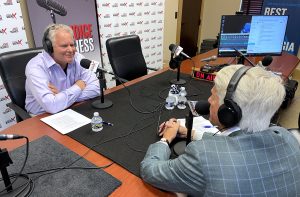
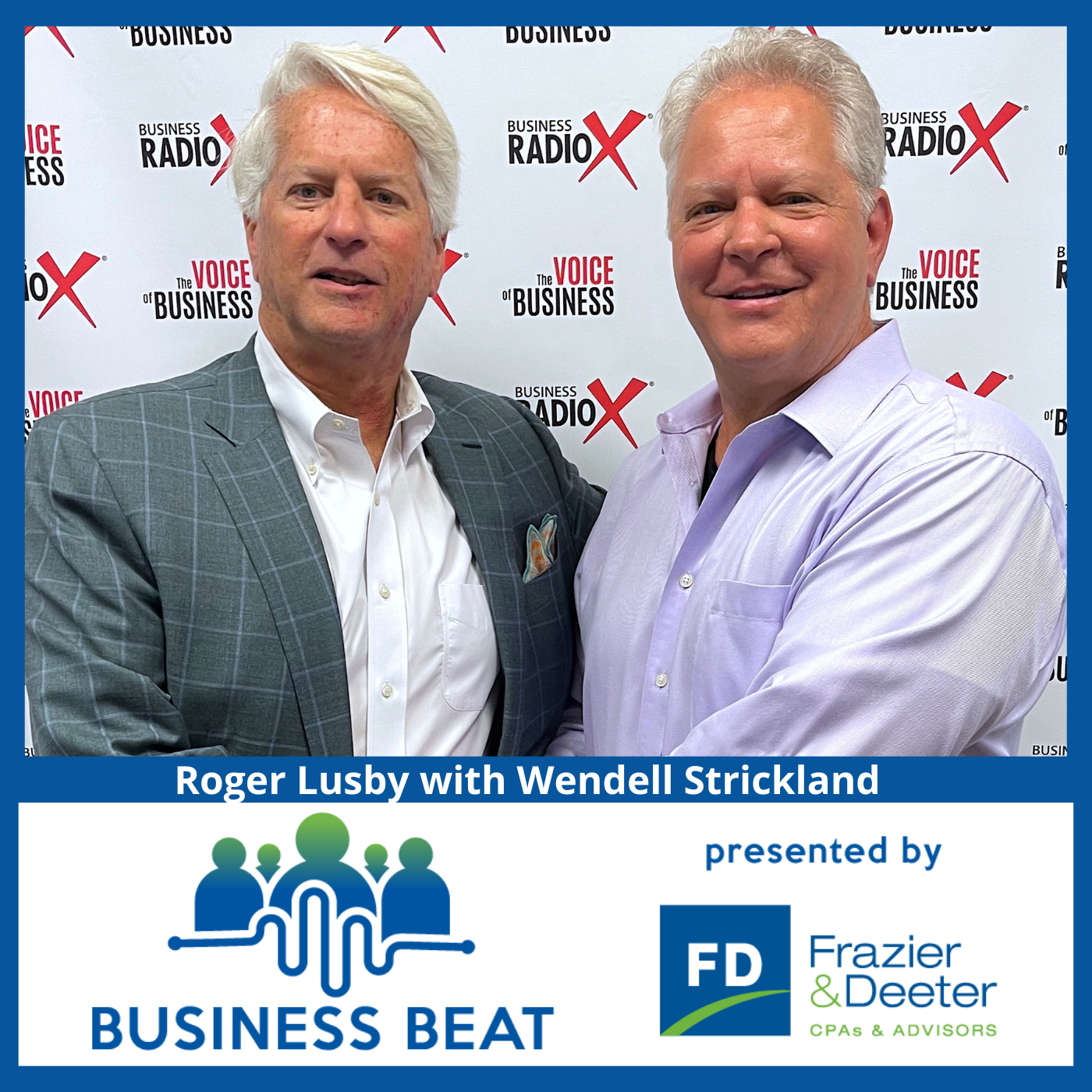
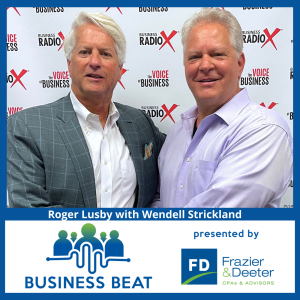
Wendell Strickland, President and CEO of Strongside Solutions, was Roger Lusby’s guest on this episode of Business Beat. Wendell talked about what sets Strongside apart as a healthcare insurance brokerage, their products, and recent changes in benefits. He also discussed Strongside’s culture, his leadership style, the long-term vision for the company, success stories, and much more.

Business Beat is presented by Alpharetta CPA firm Frazier & Deeter and is produced by the North Fulton studio of Business RadioX®

Strongside Solutions

Strongside Solutions – Insurance Brokerage PLUS is a privately held Georgia-based healthcare, insurance broker consulting and management company with over 20 years of proven results and expertise.

They specialize in the review, design, and implementation of holistic self-funded benefits programs that yield better performance, richer employee benefits with greater efficiencies.

They deploy Strongside Solutions developed services and processes that reverse healthcare cost increases, minimizes administrative burden, and improves the overall healthcare experience for employees and the employer.

Company website | LinkedIn

Wendell Strickland, President and CEO, Strongside Solutions
Wendell Strickland, President and CEO, Strongside Solutions

Wendell Strickland, President and CEO of Strongside Solutions, offers an accomplished history of executive leadership, talent acquisition and client centric business development. In Wendell’s current role at Strongside Solutions, he identifies growth opportunities, client centric strategic strategies and guides the implementation of operational services that provide greater value to the clients they serve.

The company was founded in response to growing inefficiencies, carrier option homogenization and diminishing customer service in the administration of healthcare. Strongside does not reinvent healthcare, they have found better ways of providing access to desired care while reducing time and expense.

Wendell’s programs, delivered by Strongside Solutions, challenge the status quo and are driven by the prospect of guiding greater financial control, providing options beyond the expected, and proven successes.

Our three distinct business divisions create cumulative advantages for our clients in the following areas:

  • Financial Health:
    • Initiatives that return expenses that positively impact OPEX, CAPEX, and EBITDA
    • Our programs deliver up to 40% reduction in Healthcare and Prescription costs while expanding employee benefit options
    • $0 Copays on name brand medications
  • Plan Coverage:
    • Global network access to best-in-class care
  • Claimant Liability Insulation:
    • Tailored programs isolate high-risk medical and pharmacy claims

Wendell also serves as one of Strongside’s Lead Benefit Consultants. Wendell has been a benefits consultant since 2004. Working for national and regional brokerage firms provided a platform for in-depth education and client experience. Ultimately, Wendell learned to identify and develop strategic offerings and processes that delivered better benefits at a lower cost to employees and employers.

Wendell specializes in self-funded middle and large market employer plans. His proficiency spans fully insured and self-funded medical plans. He is an expert in evaluating and managing pharmacy benefit management companies and programs as well as contract evaluation and negotiation. Wendell works closely with Strongside Solutions’ operational and management staff and our clients to develop strategies that reduce costs, deliver healthier employees, drive compliance, and reduce the overall administrative burden for benefits administration.

A Core Value that Wendell has instilled into Strongside Solutions’ culture is to listen first and offer solutions only when the business objectives and needs of our clients are understood. Wendell provides strategic direction and development of a 3-5-year client action plan that will be measured against plan analysis, forecasting and financial planning, contract negotiations and carrier/vendor management.

Wendell has over 20 years’ experience in:

  • Corporate strategy and service development.
  • Talent acquisition and development.
  • Benefits consulting for Middle and Large Market Employers.
  • Consulting experience on public sector, private sector and school system clients.
  • Self-Funded and Fully Insured plan design and implementation experience.
  • Analyzing and developing Stop Loss contract designs that meet client needs.
  • PBM Analysis experience in delivering savings on RX programs.
  • Medical Claim Analysis.
  • Wellness Clinics.
  • Population Health Management.

LinkedIn

Frazier & Deeter

The Alpharetta office of Frazier & Deeter is home to a thriving CPA tax practice, a growing advisory practice and an Employee Benefit Plan Services group. CPAs and advisors in the Frazier & Deeter Alpharetta office serve clients across North Georgia and around the country with services such as personal tax planning, estate planning, business tax planning, business tax compliance, state and local tax planning, financial statement reviews, financial statement audits, employee benefit plan audits, internal audit outsourcing, cyber security, data privacy, SOX and other regulatory compliance, mergers, and acquisitions and more. Alpharetta CPAs serve clients ranging from business owners and executives to large corporations.
Roger Lusby, Partner in Charge of Alpharetta office, Frazier & Deeter
Roger Lusby, Partner in Charge of the Alpharetta office of Frazier & Deeter

Roger Lusby, host of Frazier & Deeter’s Business Beat, is an Alpharetta CPA and Alpharetta Office Managing Partner for Frazier & Deeter. He is also a member of the Tax Department in charge of coordinating tax and accounting services for our clientele. His responsibilities include a review of a variety of tax returns with an emphasis in the individual, estate, and corporate areas. Client assistance is also provided in the areas of financial planning, executive compensation and stock option planning, estate and succession planning, international planning (FBAR, SFOP), health care, real estate, manufacturing, technology, and service companies.

You can find Frazier & Deeter on social media:

LinkedIn | Facebook | Twitter

An episode archive of Frazier & Deeter’s Business Beat can be found here.
 

Tagged With: Business Beat, Culture, Frazier & Deeter's Business Beat, Frazier and Deeter, group health insurance, group health plans, health insurance, Healthcare, insurance brokerage, Roger Lusby, self-funded benefits, Strongside Solutions, Wendell Strickland

Episode 106: How Culture Drives Financial Performance

May 11, 2023 by Karen

Phoenix Business Radio
Episode 106: How Culture Drives Financial Performance
Loading
00:00 /
RSS Feed
Share
Link
Embed

Download file

Episode-106-How-Culture-Drives-Financial-Performance

Episode 106: How Culture Drives Financial Performance

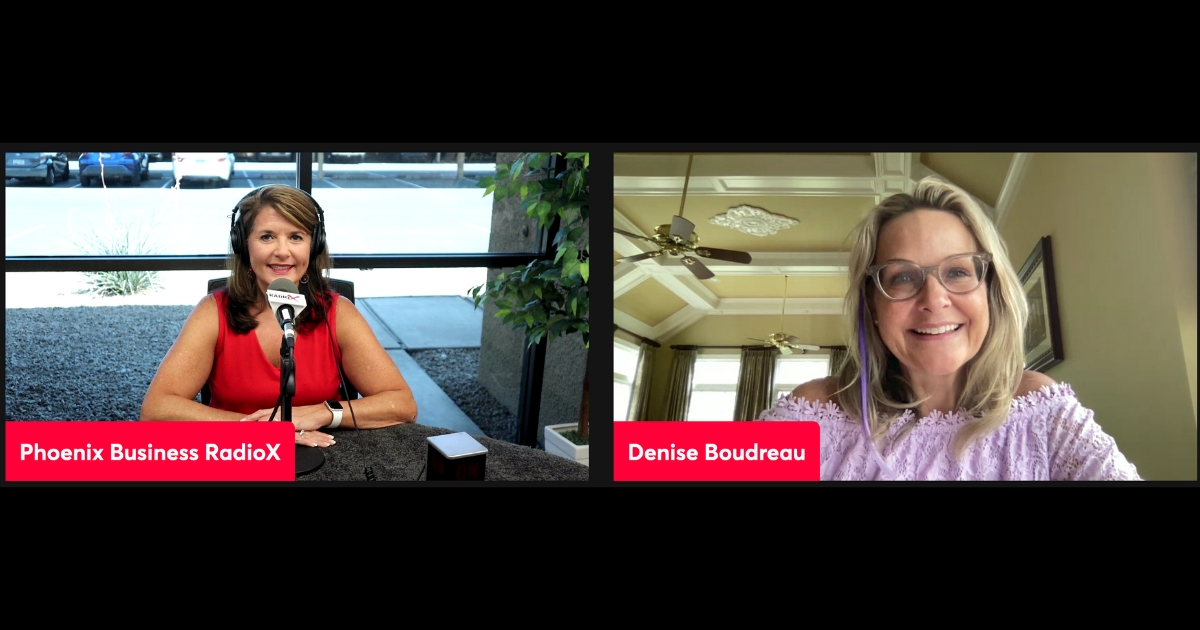
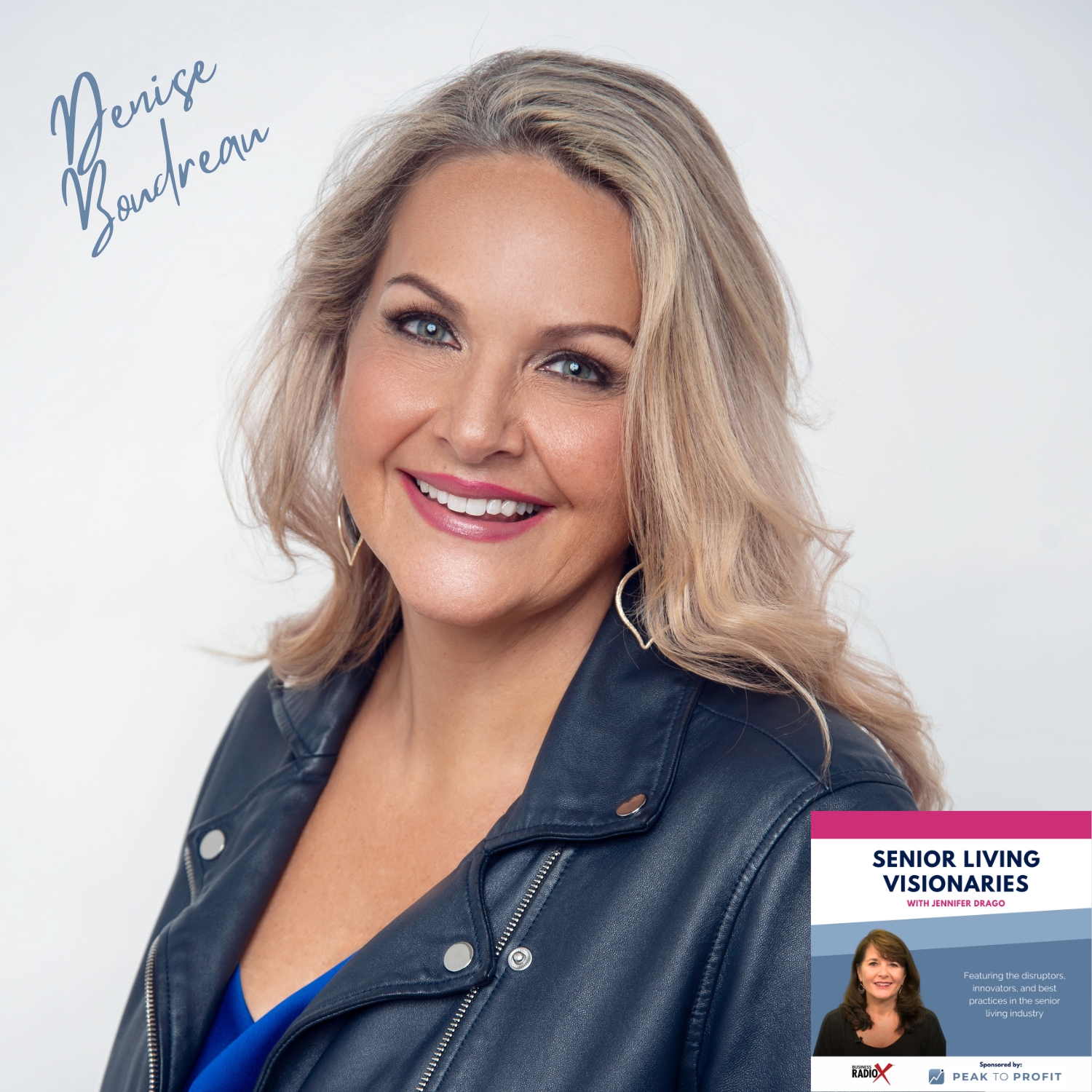
Join host Jennifer Drago as she interviews Denise Boudreau, president of Drive, and learn how organizations can measure and improve their culture to improve recruitment and retention of team members. Even more importantly, Denise shares the drivers of culture and what simple daily actions can have a dramatic impact on your organization’s culture.

Leaders in any industry will be intrigued by Denise’s takeaways on the importance of focusing on your organizational culture and how culture drives your organization’s performance on key metrics including employee engagement, client satisfaction, safety, productivity, and profitability.

Drive-logo

Drive helps senior living and healthcare organizations improve recruitment and retention through organizational culture. Drive will help you improve recruitment, staff retention, and employee engagement with a rock-solid company culture that staff love!

A toxic work culture rots organizations from the inside out… Every year, countless organizations lose millions of dollars due to bad culture. But it gets worse: poor culture also repels top-tier talent, kills workplace productivity and taints customer experience.

Our services: • Create a better work culture through our Culture Assessment. It takes a data-driven, strategic approach to transforming your culture into one that attracts happy, productive staff. And keeps them there. • Develop fundamental leadership skills that keep your staff engaged and you at your best as a leader through on-demand courses, Executive Coaching and Emotional Intelligence Coaching. • Inspire through presentations, speeches and keynotes at your meeting or conference that influence, motivate and connect deeply with your audience.

Denise-Boudreau-ScottDenise Boudreau, MHA, LNHA, is President of Drive, which helps healthcare and senior living organizations measure and improve their culture, resulting in improved recruitment and retention.

A former nursing home and assisted living administrator, she is a serial volunteer serving on numerous state and national boards. Denise received her Bachelor of Science in Gerontology from the University of Scranton and her Master in Health Administration from Cornell University where she currently works as a student mentor.

She is proud to share that she started off her career as a dietary aide and nursing assistant.

Follow Drive on LinkedIn and Facebook.

TRANSCRIPT

Intro: [00:00:05] Welcome to Senior Living Visionaries, a podcast for senior living leaders who are looking to stay ahead of the curve in the industry. On this show, we feature leaders and innovators in senior living who are pushing the boundaries and creating new effective services and solutions. And now, let’s settle in as host Jennifer Drago connects us with today’s guests.

Jennifer Drago: [00:00:30] Well, hello and welcome to Senior Living Visionaries broadcasting live from the Phoenix Business RadioX studio right here in Phoenix, Arizona. And we showcase the leaders in innovative, my goodness, innovators in the field who are shaping the future of senior living. And today is no exception.

I’m your host, Jennifer Drago, fresh off vacation. And apparently, I haven’t let my mouth know that it’s time to come back from vacation. I’m a strategy consultant and CEO of Peak To Profit Consulting, where we help senior living organizations with their strategic and business planning.

And today’s guest is Denise Boudreau. I’m so happy to welcome her here. She is the president of Drive. And Drive is an organization that helps health care and senior living organizations measure and improve their culture, resulting in improved recruitment and retention.

Denise is a former nursing home and assisted living administrator, as well as a volunteer serving on numerous state and national boards. She received her Bachelor’s in Gerontology from the University of Scranton and her Master’s in Health Administration from Cornell University, where she currently works as a student mentor. Important work. She is proud to share that she started off her career as a dietary aide and nursing assistant. So culture from the ground up, it sounds like. And I’m so excited to welcome you here. Welcome, Denise.

Denise Boudreau: [00:01:56] Thanks so much. I’m excited to be here.

Jennifer Drago: [00:01:58] Yeah. And tell us a little bit more about your organization and what you do.

Denise Boudreau: [00:02:02] Yeah. So we help take what is really this sort of, I call it woo woo, or this esoteric topic of culture and really bring data to it. So oftentimes people will say, I have a great culture, or my culture is not so good, it needs some help. And if you ask, how do you know that? People often say, I can feel it in my gut, or I just know it in my bones.

You think about how important culture is. It drives occupancy and turnover and revenue. Literally, every single outcome in an organization. And we’re using our gut to figure out if it’s working or not working. You’d never roll into owner’s meeting or a board meeting and say, we had a great financial quarter. I could feel it in my gut. I didn’t look at any numbers. I didn’t look at any data. I just know it. Right.

Jennifer Drago: [00:02:57] It feels great.

Denise Boudreau: [00:02:57] That would not fly.

Jennifer Drago: [00:02:59] That’s important. That’s important. So I love the idea that we can measure culture and we’re going to talk about that a little bit more, but explain your definition of culture as it pertains to senior living. And I know it’s really important from the recruitment and retention of employees, but I imagine it also affects our residents the way that we’re viewed in the community. So tell me more about how you define culture.

Denise Boudreau: [00:03:24] Yeah. So culture from the staff side is how we work around here. And from the resident side, it would be how we live. And there’s culture everywhere in your life. There’s a culture at your college that you went to. There’s a culture at the place of worship you might go to. In your neighborhood, right, there’s culture and micro cultures everywhere.

And the workplace or living place or a place where people are getting services is no different. And it’s basically just the attitudes, behaviors or the customs that are shaping the decisions. I was not in Tahiti and my mouth is still on vacation, but it shapes the decisions of everybody. So the people working in the organization and the people living there, how we interact with each other, what we do or don’t do is all being shaped by the culture.

Jennifer Drago: [00:04:25] Okay, perfect. That is a great definition. So knowing that senior living providers right now are experiencing significant staffing shortages, it seems like the perfect time to work on culture. However, when you’re short staffed, sometimes it’s hard to devote time to important things because you’re so strapped for time, right? So what would you say to a senior living CEO that says, I don’t have time to work on culture?

Denise Boudreau: [00:04:52] Yeah. You’re working on culture, so you’re working on it, you’re filling open positions, you’re dealing with customers. Maybe it’s residents, families, whatever, clients, whatever you call the people that you are serving and supporting and caring for. You’re dealing with their complaints. You’re probably dealing with financial issues because you’re spending so much money on turnover or an agency or maybe lack of occupancy because of the experience people are having there.

So you’re spending time on it. It’s whether it’s intentional or not. You can’t not have a culture. There’s a culture in your organization and you are intentionally shaping it or somebody else is shaping it. And that might be it’s in good hands and lots of times it’s not in good hands.

And people are creating cultures where it’s harder to recruit because people see what’s happening there and don’t want to be part of it. People might come to work for you and leave very quickly. I hear a lot of that lately, more so than ever. Or people might say this is not the place for me, I don’t want to work here. That’s all culture at work. So you intentionally shape it or you respond to the fact that you’re not intentionally shaping it.

Jennifer Drago: [00:06:07] So it’s always the right time to work on culture, it sounds like.

Denise Boudreau: [00:06:12] Yeah, Yeah. It’s like what’s the best time to plant a tree, right? That saying. Yesterday, last week, or if not today, right. You can start. People sometimes think about culture, and it feels like just so overwhelming. It’s boiling the ocean kind of. And it doesn’t have to be this huge and it shouldn’t be this huge pendulum shift. It can be small intentional changes, or it may be things that you’re doing that you just need to do a little bit more of each day.

And those behaviors are adding up to your overall culture. Culture is not that huge once a year party or if people say, we have a great culture, we raffle a car off to staff. That’s not culture, right? It’s not foosball table in the break room. It’s these small little behaviors that people are noticing and modeling themselves after that are adding up to the culture.

Jennifer Drago: [00:07:08] I’m glad you said that, because I do believe that for many executives and again, executives in a senior living organization or in health care, I know you work in health care, too. Those are really hard jobs and lots of things flying at you, especially when you’re trying to deal with a customer culture. And I shouldn’t have used your word. You’re trying to deal with your customers and their satisfaction, your employees and their satisfaction, regulatory issues. I mean, just they pile on.

And so, it can truly seem overwhelming when you say, oh my gosh, I want our culture to be better. Where do I start? So if you were to — you mentioned small behaviors or small actions can have a big impact. If you were to give our audience today just one takeaway, of one thing, they could do differently that could have a really positive impact on their culture, what would you say that might be?

Denise Boudreau: [00:08:02] Yeah. So when we measure culture, the number one value we’ve seen from our research and the number one value or behavior that we’ve seen from our research that makes a difference, starting foundational is respect. And so no organization could go wrong by focusing more on that value or behavior of respect. After that, it’s employee recognition. After that, it’s accountability. After that, it’s coaching and mentoring. But those things all build on a value of respect.

Employee recognition. A lot of times people focus on that and it’s fabulous. Usually organizations, you can’t give too much thanks or praise. But if you don’t feel respect, it’s like, Jennifer, you don’t think I respected you, and then I come over and tell you how fabulous you are, it seems pretty fake and it doesn’t really feel genuine. Right. And it doesn’t really mean much to you.

And respect, as that foundation, will always serve you and your organization. And we measure culture for a reason so we can see specifically what is needed in each organization and even each site. If you’re in a multisite organization, you know this. Every site has its own little microculture and even every department kind of has it and even shifts have it.

But overall, when we take all of our data and put it together, what we know is that respect is that number one thing. And so if I were you or your listeners, I would be thinking, well, what does that mean? I’m so glad you kind of asked. Right? It means that we, when we ask staff this, what does respect mean to you? It means to people knowing my name, saying hello to me, asking how I am.

Jennifer Drago: [00:09:51] That’s pretty simple.

Denise Boudreau: [00:09:53] Yeah. Like the bar is down here. They’re asking for, say hello, ask me how I’m doing. Show me that I actually matter to you is what people are asking for.

Jennifer Drago: [00:10:04] Wow. Wow. Really achievable. Really doable. That’s great. Yeah. And you’re right, it’s foundational that I was thinking about places where I’ve received recognition, but sometimes that day to day respect isn’t there. And you’re absolutely right, it feels disingenuous. Oh, okay, yeah, I get it. You’re checking a box now, but yeah, but you dismissed me yesterday when I was trying to tell you about a challenge that I’m having in my department. Yeah.

Denise Boudreau: [00:10:33] Exactly. And then the coaching and mentoring people create these incredible programs. Is coaching and mentoring bad? No, absolutely not, but people spend so much time creating these careers like all this other stuff. And if you don’t feel respected again and I come to you and say, hey, Jennifer, you know what, I think you’d be great in this role. You’d be like, oh, now you’re trying to push me out of my job, right?

As opposed to, we have a strong relationship and you’re going to know that I’ve got your back and support you and want you to be the best that you can absolutely be. That’s a very different answer if you want to be part of this program or whatever career ladder that we’ve created.

Jennifer Drago: [00:11:08] Sure, Sure. So I had a question set aside for you about what are the drivers of company culture? Are those the same things we just talked about and are they all truly individual in terms of how we individually treat each employee or? Yeah, tell me more.

Denise Boudreau: [00:11:26] Yeah, yeah, yeah. Great question. You can see I get excited about this. So people come with their personal values in them, what’s important to them. When they can show up true and authentically themselves, they do better, and your organization does better.

What does that mean? Humor and fun. Super important to me, right? So I want to be able to kind of have fun at work and joke around with people. Right? Do I have to be the class clown and get no work done? Nope. But it’s going to be important to me that that part of my personality can come out.

I’m creative, right? I want to bring that to work. Does that mean if I’m the CFO that I get to use creativity all the time in my job? Hopefully not, but maybe there’s something I could be doing outside of my normal role that might bring out that creative. Maybe it’s just some interactions with residents. Or maybe I want to do something for staff that helps be part of a committee that helps bring out that creative side. So certainly, everybody is wired. So knowing what’s important to people personally, credibly important.

Organization also has a culture which is shaped by values. So there’s what’s happening day to day. And I always like to think about it sort of the what’s happening at 3:00 in the morning when a nursing assistant is walking into a resident’s apartment or a resident’s room, when people are interacting with each other and there’s no supervisor or boss “around”. Right.

That’s what culture is. And so are those values and behaviors that are being lived, things that are supporting what we want for outcomes or the things that are working against us, blame and bullying and gossip. And sometimes those things show up when we measure culture. Lots of times we see blame and bullying on the list of current culture values.

People also tell us what they want, which is I always consider the magic question what they want out of their culture. And I love looking at that list. You know what the number one value that people want? And the question, by the way, is if we were performing at our best as an organization, what are the values that you’d want to see and people pick from this list, they pick ten things. You know, the number one answer is on that desired culture?

Jennifer Drago: [00:13:41] What is it?

Denise Boudreau: [00:13:42] Accountability. And I see it. All these reports we get back and every time it’s still amazes me though. Accountability. So when we think that people don’t want structure and that people kind of just want to do whatever they want to do, that is not true. People, when they think about the best organization, they think about a high accountable organization.

And that doesn’t mean, okay, go fire everybody now and go write everybody up. It means personal accountability. How can I own my job? How can I help you as my coworker be more accountable, and you help me because we’ve got each other’s backs. We’re not blaming and bullying. We’re helping each other be the best we can possibly be.

And because of that all, all of that support, that accountability, our organization is being the best that can possibly be. So there’s lots of sort of factors that come into culture, but there are themes that we see across the board for organizations in senior living and aging services and health care.

Jennifer Drago: [00:14:43] Yes. I love that you shared with us kind of the number one value that organizations aspire to be in your survey, or aspire to have, and that is accountability, because I talk a lot about accountability in some of the work that I do, too. When an employee works in an organization or a department where accountability isn’t important or isn’t enforced, and they’re working really hard to do their job and the person next to them isn’t, that is so demoralizing. And so it does not inspire people to want to stay and to continue to do a good job.

And that’s just one aspect of it, right? We need accountable leaders who walk the talk and do what we ask them to do to help clear, sometimes a leader’s job is clearing the obstacles out of the way. Right. And helping me manage this challenge that I’m dealing with. And if they don’t, if our leaders don’t follow through, same thing, just really challenging from an employee standpoint. So I love that theme. I think it’s so important.

Denise Boudreau: [00:15:51] And it goes back to the not having time piece. Right. So would you ever say our occupancy is at 50 percent? We just really don’t have time to talk to people to help them move in here. Right. That’s just, you know, oh, yeah, we’re 50 percent over budget this month. Yeah, we just don’t really have a time to look at those numbers and make sure we’re in budget.

But somehow culture, which both drives occupancy and revenue and expense, all of it, we get to say we don’t have time. So the organizations that we see do the best with culture are those organizations that have high accountability, where the leader has said the CEO or the owner, whomever has said, my expectation is that we — we actually ask people to commit 10 minutes a day. That’s literally it, 10 minutes a day. My expectation is that you are going to do these 10-minute a day tasks or assignment.

And sometimes they take no extra time. So when you’re walking around and talking to people, asking a certain question or whatever it might be, they take no extra time because you’re walking around anyway and talking to people, hopefully. But that accountability, to your point for leaders as well, to culture and what they find in the end is, my gosh, my life’s better as a leader because of this. I’m less putting out fires and more doing the work I’ve always wanted to do.

Jennifer Drago: [00:17:09] Right, Right.

Denise Boudreau: [00:17:10] So it’s a win-win overall, but it’s hard for people to see that, especially in the beginning. But it was true for me when I was an administrator, when I focused on culture, I lived this stuff. When I focused on culture, my job became so much more rewarding because I was doing what I got into the field to do which was support people and not running around like a chicken with my head cut off all the time.

And even though, my last role as an administrator was 12 years ago, so people said it was different. It was different, but turnover was still over 100 percent in that setting. We we didn’t lose a nursing assistant voluntarily in almost three years.

Jennifer Drago: [00:17:50] Wow.

Denise Boudreau: [00:17:51] Can you imagine?

Jennifer Drago: [00:17:52] Wow. That’s amazing.

Denise Boudreau: [00:17:54] Voluntarily for almost three years. And then therefore, you’re able to do so many things that you want to work on rather than that just kind of chugging along on the hamster wheel.

Jennifer Drago: [00:18:06] Right. If nothing else, right, retention is a time suck and a money suck. Right? We know that. So if we can improve retention alone, it’s worth the 10 minutes a day to focus on culture, right?

Denise Boudreau: [00:18:19] Yes, it is.

Jennifer Drago: [00:18:20] Yeah. I love that you’re breaking down for us how simple it can be to really improve our culture. And you’ve already shared with us that your company helps organizations measure their culture. Is that — I’m sure we’ve all been — I’ve never been in an organization that has tried to measure culture. So I want to learn more about that. But tell me how that is different also from measuring employee satisfaction.

Denise Boudreau: [00:18:47] Yeah, yeah, that’s a great question. So culture is driving satisfaction and driving, even employee engagement. So a lot of places are measuring employee engagement. Employee engagement is how we feel about how things work around here. Culture is actually how we work around here, or even we do it sometimes with residents to how we live, right?

And so it’s not just my boss seems to care about me as a person. No, they don’t seem to care about me as a person. There’s job insecurity here. There’s confusion. There’s blame. And now we have an insight into why I don’t think my supervisor seems to care about me as a person. So it’s driving employee engagement. It’s driving all those outcomes.

And like you, I had not heard about measuring culture. I guess it was probably, I don’t know, six, seven years ago now. You mentioned I do a lot of work with Cornell, and I was up there presenting and someone was presenting before me on measuring culture. And I thought, I’ve never heard of this. Like I want to attend this. And she works with high end hotels. Actually, she works with us now, but she works with high end hotels, Ritz, Four Seasons, so forth. And when they were struggling with occupancy at the hotels, the first thing she would do is measure the culture of the staff.

And so I thought, I have got to bring this to our field. And interestingly, three questions. What are your top ten personal values? And I shared a little bit about that. When you show up authentically, you at work, you do better, organization does better.

Thing that’s really neat about this, too, though, are people are changing their job ads. We have a woman that increased her — she’s a director of HR. She increased her applicant pool by over 1,200 percent. I did the math like ten different times, 1,200 percent.

Jennifer Drago: [00:20:30] Wow.

Denise Boudreau: [00:20:30] By taking her Indeed ad and writing it to how people were wired in her organization. So she looked at those personal values and wrote an ad to them and spoke. So people are reading this ad and saying, that’s me, I belong working there.

Jennifer Drago: [00:20:47] What a great idea. What a great strategy.

Denise Boudreau: [00:20:50] Ain’t that cool? I know. And I said like the perfect thing to kind of think about with that is I love everybody in our field, but sometimes I read these ads and I just want to cry because you can take one name out and put another organization’s name in and it’s the same ad.

But if you are selling a Ferrari and you’re selling a minivan, you could in essence, say they’re both vehicles, right? They’re both getting you from point A to point B, but a Ferrari ad is written very different from a minivan ad, and neither one is right or wrong. You’re just going after a different audience. And so it’s the same thing with our job ads, right? Are we writing in a way so if I read an ad that was kind of fun and I’d be like, oh, that’s the place for me, right, they get me.

And so there are things that are the same in every organization compassion and caring to the things we see in almost all the personal values in the organizations where we measure culture. But then there are a lot of things that are different. So humor and fun sometimes shows up. Positivity sometimes shows up. Person values, sometimes it doesn’t. So that’s the first question. What are the top ten personal values?

The second question are what are the top ten values or behaviors that you see in this organization? So what are you seeing today that’s the current culture? And then a list of words. And then, as I said before, the magic question, and I’ve done engagement surveys, I did engagement surveys for years. I usually sat on a shelf, but that’s because I didn’t ever had a destination.

And the destination is that desired culture question. If our organization was performing at its best, what are the top ten values or behaviors you would want to see? And now I’ve not only had everyone, because when we just measure engagement sometimes or do these surveys or whatever it might be, it’s kind of like people vomit on us, everything that we’ve done wrong or everything we’re doing now. And we have to guess what they want.

And so there’s no more guessing. There’s a destination which makes a difference because then we can create a roadmap. When you don’t have a destination, you ain’t getting anywhere, right? You’re going to be where you’re at and guessing where you should go. So those are the three questions, personal values, current culture values, and desired culture values.

Jennifer Drago: [00:22:54] And once you do desire culture and you know where you’re headed, and I’m sure you then work with the organization on, okay, what does this look like? What do we do to get there? Do you go back and measure a year later to say, are we better?

Denise Boudreau: [00:23:07] Yes, yes, yes, yes. Because you want to know the things you were doing are making a difference. And actually, the cool thing about this tool, too, is recently, a few years ago, they added a diversity, equity, and inclusion values in there. They’re just mixed in with all the other words.

You can see sometimes organizations unconscious bias shows up. Sometimes retaliation shows up. So you can get a measure on those diversity, equity, inclusion initiatives that so many organizations are working on right now. So we go back a year later and you’re able to see, okay, we brought down the confusion, we brought up the accountability. Right? So we know we’re going on the right track. And then we see what that current priority is.

The nice thing about this tool, too, is once again, culture feels like this boiling of the ocean. But when you have that data, you can clearly look at it and it becomes so apparent the three or four top things that you need to work on. So you could pick one of those from that.

So if we’re going to focus on accountability first, or maybe we’re going to focus on our leadership development around certain topics, it becomes very clear what we can focus on instead of taking on a lot of things and getting nothing done. And we see by measuring it a year later, are we making a difference? Are we moving a needle?

And the organizations that are actually committing to do this work, they are moving the needle. They’re saying, I’m better off committing a few minutes a day to something positive. And that’s usually fun and interesting and feels good than I am to just constantly putting out fires and being in this sort of rat race that people find themselves tied into.

Jennifer Drago: [00:24:47] Perfect. My final question for you is, and we’ve talked about it in kind of abstract terms so we know that culture drives retention, our ability to recruit and retain, I should say, it can drive occupancy, our resident satisfaction, our staff engagement, all the things we’ve talked about. I feel in my gut that culture increases financial performance of an organization. But is there any research that bears that out that shows that that’s true?

Denise Boudreau: [00:25:16] Yeah. So we actually have a white paper on our website that, this is fascinating, it is a multi site organization and we measured their culture at all their different sites. And the occupancy, the VP of Sales and Marketing was in the room when we were giving them the results, and we would say this site’s got a really strong culture. And she said, oh, they’re always full too. And these guys are kind of struggling a little bit more. Yeah, they struggle with their occupancy and census too.

And then sort of as we went along, it was like, wait a minute. And so we gave it to a researcher who looked at it. And what we found was this is the same organization. So when you think about intentionality around culture, this is why it’s so important that everyone’s not just doing their own thing, that we’re being intentional about it.
The occupancy in the struggling sites was 66 percent on average. The occupancy at the thriving cultures at those sites, the average was 94 percent.

Jennifer Drago: [00:26:15] Wow. Wow.

Denise Boudreau: [00:26:16] 66 and 94 percent. We know turnover, right, so labor is our biggest cost. We know turnover is 38 percent lower, strong cultures compared to weak cultures, 38 percent lower turnover. And I always tell people, if you have 38 percent lower turnover, guess what you get? You get 38 percent less positions to fill, too, right? So now you’ve improved your recruitment by 38 percent.

And that’s got real numbers to it. It’s certainly filling those open positions. I find there’s a huge cost. And sometimes people don’t think about this. Leaders running around to fill those open positions. Leaders that you’re paying a lot of money to doing jobs of people that make a very different salary. And is it great to pop in once in a while and help and assist? Absolutely. But to be paying somebody the salary that they should be making and not focusing on what they should be doing, right, is a complete waste of money. So it’s money out the window in so many different ways.

Productivity, we’ve tied through research the amount of, I call it energy in the organization, the limiting values and behaviors in the organization, whatever that percentage of limiting behavior. And the organization, whatever that percentage is, that has also been researched and studied to show that that is also the amount of unproductive time in an organization.

So if we have 20 percent limiting values in an organization, we have 20 percent unproductive time. Do you know what that means? That means if your labor budget is $10 million, 20 percent of that $2 million is unproductive time and add to it the turnover cost, right? That’s totally separate. And that’s because there’s confusion. I don’t know what I’m doing. And so I’m redoing work or I’m making mistakes or I’m not talking to you because I know you blame me for stuff. So I don’t tell you something that I should tell you that might help have a better outcome for someone, right? So it’s a lot of time wasted when we don’t have strong, thriving cultures.

Jennifer Drago: [00:28:15] And that accountability is missing too.

Denise Boudreau: [00:28:19] Which all adds up to dollars at the end. So you take occupancy, you take turnover, you take the ability to recruit. Even safety is related to this. Literally, every single outcome revenue has been for years, decades, they’ve shown revenue tied directly to culture. And all of these outcomes depending on am I being intentional or am I saying I don’t have time for that, right, I don’t have the time to invest in that.

Jennifer Drago: [00:28:44] So I’m a strategist. I’ve been chief strategy officer of organizations and in the strategy world for years. And there’s this saying out there that culture eats strategy for breakfast. And I believe it, but tell me how you think a good culture helps your strategy.

Denise Boudreau: [00:29:00] I think culture and strategy can sit down and have breakfast together.

Jennifer Drago: [00:29:04] Oh, that’s a nice way to say it. I’m going to start quoting you.

Denise Boudreau: [00:29:08] Don’t quote me. I read it in a book. But yes, right. But I read that and I was like, it’s so true because people kind of go back and forth, right, which is one important, more important. But if you look at your strategic plan, there is nothing on there. I can absolutely 100 percent guarantee it, there’s nothing on there that does not take a strong culture to accomplish. There’s nothing on there that won’t happen easier, faster, with less mistakes, with better outcomes, with a strong culture. Right.

Everything takes culture in order to happen. Whatever is on that plan, whether we’re opening up a new campus, we’re doing a new service line, whatever it takes culture to accomplish that, or it’s going to be culture that could kind of puts the nail in the coffin. We know from lots of research that acquisitions and mergers with so many places are going through right now, you probably see a lot of that in your work, the number one reason they don’t work, culture.

Jennifer Drago: [00:30:07] Culture. Yes. I was just —

Denise Boudreau: [00:30:08] And so we have a pool that compares them but people guess at it.

Jennifer Drago: [00:30:13] Yeah. They use their gut when they can actually measure it. So yes.

Denise Boudreau: [00:30:17] Yeah, yeah. We’ve got a really cool tool that actually shows you here’s where the cultures will match, here is going to be the problems, the red flags, so you can get ahead of it.

Jennifer Drago: [00:30:26] Yeah. So awesome. Yeah. I just came back from Leading Edge California. And we did a session on sustainability where folks were talking about affiliations, mergers, different things that they had gone through, and that came up again and again as the cultures have to match or they have to be at least close so that the organizations are compatible. So something else I didn’t know that you do that your organization does is help organizations that are considering that to figure out where they’re a match or whether they’re a match, perhaps. Is that correct?

Denise Boudreau: [00:30:58] Yeah. Yeah. And on either end, right, it might be we’ve gone down that road already. Okay. But now you can intentionally say, you know what, that change we’re going to make is going to be a little bigger of a deal than we’re anticipating. Or, you know what, we can say we’re making that change and link it to something that the team members wanted.

And we kind of say this is in your desired culture and guess what? We’re doing this thing to help with that, right? So it can be done for the positive, too. It doesn’t just have to be kind of playing defense. I should not be making sports analogies. I am not a sports person. We can — yeah, yeah. We can kind of get ahead of it a little bit.

Jennifer Drago: [00:31:37] Perfect. Well, Denise, I want to thank you so much for all the wisdom that you shared with us today. I’ve learned so much. And tell our audience, if you would, how they can get in touch with you, how they can learn more about your organization.

Denise Boudreau: [00:31:50] Yeah, absolutely. Our website is cultureoutcomes.com. So it’s culture and then outcomes, O-U-T-C-O-M-E-S.com. And you can click on there to connect with us and learn more about what we do. You can also send an email to info@cultureoutcomes.com. We’d be happy to tell you about measuring culture or send you any of the resources, that white paper I mentioned is on there, and lots of other resources that you can connect with.

Jennifer Drago: [00:32:21] Perfect. And we’ll put all the links in the show notes so everyone can have access. And I know you’re on LinkedIn and very active and your company Drive also has a company page that you can follow, so that’s awesome. Well, thank you so much for your time today, Denise, and for sharing all the wisdom around culture and why we should really pay attention to it.

Denise Boudreau: [00:32:42] Fabulous. Thanks for having me.

Jennifer Drago: [00:32:43] You bet. You bet. So this has been another episode of Senior Living Visionaries, where we honor and feature the innovators and executives and advisors who are really shaping our industry for the better. I hope you’ll join us for future episodes.

And you can also subscribe to be on the list to receive information about new episodes as they become available at seniorlivingvisionaries.com or subscribe on your favorite podcast platform. Thanks so much. I’m Jennifer Drago and I’ll see you next time.

Outro: [00:33:19] You’ve been listening to the Senior Living Visionaries podcast and radio show where we showcase the leaders and innovators in the industry who are pushing the boundaries and setting the stage for the future in senior living and services. Join us next time as we share the bold ideas and breakthroughs of the industry’s most forward thinking leaders here on Senior Living Visionaries.


About The Show

Senior-Living-Visionaries-Podcast-Cover

Senior Living Visionaries is a podcast and radio show curated specifically for leaders in the senior living industry. Our guests are among the best and brightest executives, advisors, and service providers in senior living.

These industry leaders have consistently implemented creative solutions, new customer services, and targeted financial strategies resulting in long-term brand impact and increased revenues.

About Your Host

0217JenniferDrago00654squareWith 30 years of experience working with mission-driven organizations in senior living and healthcare, Jennifer Drago is an executive leader who brings creative, out-of-the-box strategies to help organizations amplify their impact and skyrocket their revenues.

As an award-winning strategist, best-selling author, and certified business coach, Jennifer helps corporate leaders and small business owners develop and implement a laser-focused business vision and strategy so they can earn more and amplify their impact.

Jennifer holds a bachelor’s degree in Finance, a master’s degree in Health Services Administration and an MBA from Arizona State University. She is a Life Fellow of the American College of Healthcare Executives.

About Peak to Profit

Peak to Profit serves senior living, healthcare and nonprofit organizations, helping them identify and execute revenue and growth opportunities through strategic, financial and operational consulting. Our core purpose is to help mission-driven organizations amplify their impact by serving more clients and increasing their financial resiliency.

Our proprietary Peak Performance Assessment provides an objective evaluation of your organization on six key dimensions, identifying areas that need improvement and highlighting growth opportunities. With the assessment results, we help you implement an Impact Roadmap – a clear, measurable action plan to execute your strategy.

Learn more at PeaktoProfit.com.

Peak-to-Profit-logo

Tagged With: Coaching, Culture, Employee Engagement, fully staffed, Healthcare, recruitment, retention, senior living

Building Culture Through Human Connection E29

February 3, 2023 by Karen

Building-Culture-Through-Human-Connection-feature
Phoenix Business Radio
Building Culture Through Human Connection E29
Loading
00:00 /
RSS Feed
Share
Link
Embed

Download file

Building-Culture-Through-Human-Connection

Building Culture Through Human Connection E29

Do you ever feel like you are moving through the motions at work and not really connecting with the people there? You want to know them more and truly connect but you aren’t. Do you ever feel this same way when you are at a networking event? As if it is a competition for how many names and business cards you can share?

This is because you are not finding the real connection with people.

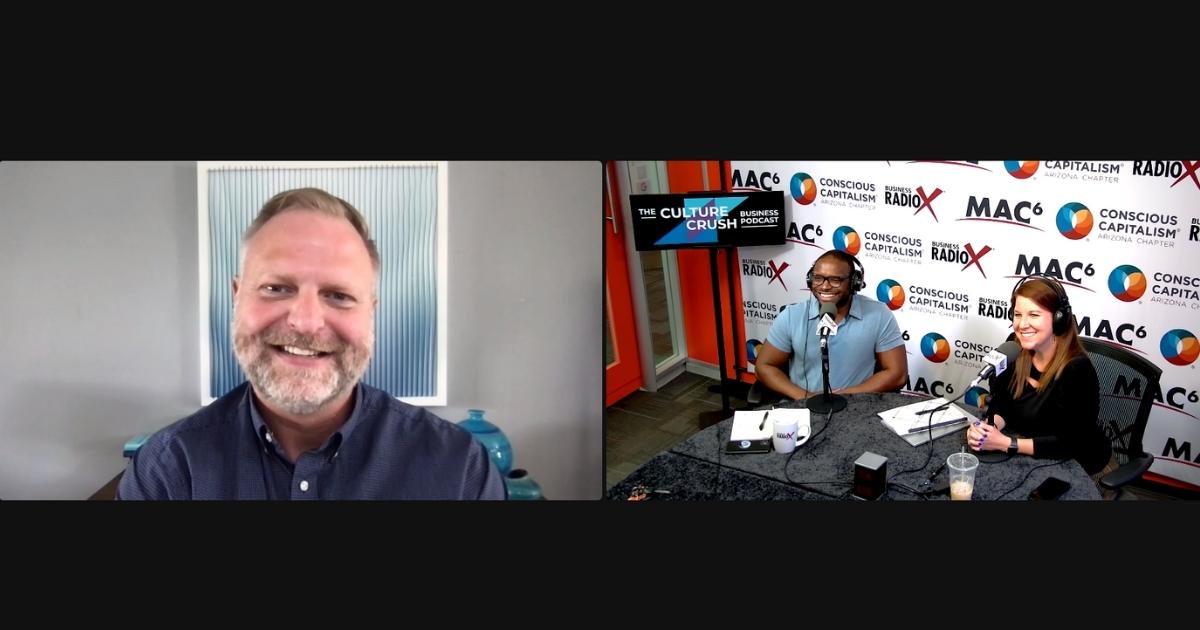
True human connection and communication is what really builds culture and relationships. True connection with others helps good leaders to become the best leaders. We discussed this with Craig Forman with CultureAmp and Bobi Seredich with Southwest Institute for Emotional Intelligence on this episode of the Culture Crush Business Podcast.

When we reflect on this podcast, we have so many topics that were discussed.

Self awareness
Military culture and influence
Emotional intelligence for the workplace
Ways to inspire people through culture
Having the courage to be vulnerable
The fitbit affect with culture
Leveraging data to grow culture
Stop, Breath, Ask

If you are curious about these topics then you will have to listen to the podcast to hear more from Bobi and Craig about them.

In the meantime, we do have a few other quick takeaways from the podcast about shifting your attitude and actions.

Intent versus impact: We all have good intentions but others judge us by our actions. When you are forming a relationship or bond with someone, be curious instead of judgemental. Love human beings, not human doings. Let’s try to be more intentional.

Transformational versus transactional: Let’s try to be less transactional and more transformational. When it comes to connections and relationships, it does not need to be a tit for tat game. If we come at relationships with the want and need to help support and transform, then the relationship has the opportunity to build in a more unique way.

culture-amp-logo-full-purple-reversed

Culture Amp is a culture-first software company that is building a survey and analytics platform for people and culture.

The Culture Amp team combines deep knowledge in psychology, statistics, user experience and engineering into a platform that is transforming organizations worldwide.

Craig-Forman-Culture-CrushCraig Forman is a Lead People Scientist at Culture Amp, an employee experience platform used by over 6000 organizations worldwide. He both supports organizations in building effective people and culture strategies along with building the world’s largest community of people focused on building a better world of work. Behind all of his work is a mission to help the world work better by improving the places we work.

He holds a Masters degree in Industrial / Organizational Psychology, and is a proud veteran of the US Air Force.

Connect with Craig on LinkedIn.

SWIEI_LogoMark_HORZ_Orange

The vision at the Southwest Institute for Emotional Intelligence is to enhance life and leadership through Emotional Intelligence (EI) mastery. They have a proven approach to teaching EI skills that are immediately applied to business growth.

They teach influencers and leaders to connect confidently with each other in more meaningful and productive ways – to better collaborate, communicate, express empathy, perform under stress, adapt to change, and drive results.

The Southwest Institute for Emotional Intelligence offers keynotes, workshops, online courses, coaching, and consulting.

Bobi-Seredich-Culture-CrushBobi Seredich is the Co-Founder & President of The Southwest Institute for Emotional Intelligence. She is a certified coach and trainer in Emotional Intelligence from the Institute for Health and Human Potential. She is a recognized speaker, author, trainer, and successful entrepreneur specializing in leadership development.

Her passion is to guide individuals and organizations to a higher performance level through her own business knowledge, inspirational stories and leadership emotional intelligence training. She has spent over 25 years of her career dedicated to creating, directing, writing and presenting leadership programs for top companies in the U.S. and around the world.

In 2001 she founded Equanimity, Inc. also known as EQ Speakers, a speakers bureau, and leadership training company. It fast became a top speaker bureau that booked hundreds of speakers with large Fortune 500 clients. EQ Speakers was sold in 2012 and continues to be a leader in the industry.

Her book, Courage Does Not Always Roar Ordinary Women with Extraordinary Courage, was published by Simple Truths in the spring of 2010. The book is a collection of her experiences and stories of women who have had the courage to overcome very difficult life events. She is a mother of twins, Alex and Gia.

Follow Southwest Institute for Emotional Intelligence on LinkedIn, Facebook, Twitter and Instagram.

About Culture Crush

Culture is not just a tag word to be thrown around. It is not something you throw in job descriptions to draw people to applying for jobs within a company.

According to Marcus Buckingham and Ashely Goodall in their book Nine Lies About Work, “Culture is the tenants of how we behave. It’s like a family creed. This is how we operate and treat each other in the family.”CultaureCrushKindraBanner2

As a growing company- Culture Crush Business Podcast is THE culture improvement resource that supports companies and leaders.  Our Mission is to improve company cultures so people WANT to go to work. Employees and leaders should like where they work and we think this is possible.

Within the company: Culture Crush has Vetted Resources and Partnerships with the right people and resources that can help improve your company culture.

On this podcast:  We focus on everything surrounding businesses with good company culture. We will talk with company leaders to learn about real-life experiences, tips, and best practices for creating a healthy work environment where employees are finding joy and satisfaction in their work while also striving and growing within the company.  We also find the companies that offer resources to help improve company culture and showcase them on the show to share their tips and tricks for growing culture.

About the Host

ABHOUTHOSTHEADSHOT

Kindra Maples  is spartan racer, past animal trainer, previous magician’s assistant, and has a weakness for Oreo cookie shakes. Her journey working with people actually started working with animals as a teenager (don’t worry we won’t go that far back for her bio).

She worked for over 15 years in the zoo industry working with animals and the public. Her passion of working with animals shifted into working with people in education, operations and leadership roles. From there her passion of leadership and helping people develop has continued to grow.

Then came the opportunity for leading  the Culture Crush Business Podcast and she jumped on it. Leadership, growth, and strong company cultures are all areas that Kindra is interested in diving into further.

Shout Outs

We want to thank a few people for their behind the scenes effort in helping this relaunch to come to life. James Johnson with Tailored Penguin Media Company LLC.– It is a small, but powerful video production company with a goal to deliver the very best by articulating the vision of your brand in a visually creative way. Gordon Murray with Flash PhotoVideo, LLC. -Flash Gordon has been photographing since high school and evolving since then with new products that will equip, encourage, engage, and enable. Renee Blundon with Renee Blundon Design – She is not only one of the best free divers (that’s not how she helped with the podcast) but she is great with graphics design and taking the direction for the vision that you have while also adding creative ideas to bring to your vision to life.

These are just a few of the folks that supported the relaunch of the podcast. If you would like to be part of the Culture Crush team or would like to support underwriting the show- please reach out: info@culturecrushbusiness.com

Tagged With: company culture, Culture, Culture Amp, Culture First, emotional intelligence, Employee Engagement, leadership training, Learn EI

Jeff Eschliman with LEAD Consulting Group

January 26, 2023 by Karen

Jeff-Eschliman-with-LEAD-Consulting-Group-feature
Phoenix Business Radio
Jeff Eschliman with LEAD Consulting Group
Loading
00:00 /
RSS Feed
Share
Link
Embed

Download file

Jeff-Eschliman-with-LEAD-Consulting-Group

Jeff Eschliman with LEAD Consulting Group

LEAD Consulting Group focuses on executive leadership development and helping their clients creating award winning team culture and performance.

Jeff-Eschliman-Phoenix-Business-RadioJeff Eschliman is an executive coach with 30 years of progressive leadership experience from combat in Iraq to the corporate boardroom. Personal development, consistency and a tenacious work ethic are hallmarks of Jeff’s leadership style. Jeff communicates crystal clear vision and bold expectations with his collaborative approach.

Jeff is a sought-after expert for building and scaling results driven teams. He believes hiring the right people, equipping them with the tools they need to be successful and then holding them accountable is the secret to exceptional business success. Jeff has created award-winning employee engagement and company culture by cultivating personal relationships then emphasizing both individual and team accountability.

What makes Jeff unique is a lifestyle of harmony he creates for himself and his clients by using his zen for success formula of careful planning and continual reflection guided by his one-page strategic plan for life.

Connect with Jeff on LinkedIn and Instagram.

Tagged With: accountability, Culture, executive coach, Harmony, leadership development

Gary Bird, SMC National

January 4, 2023 by John Ray

Gary Bird
Dental Business Radio
Gary Bird, SMC National
Loading
00:00 /
RSS Feed
Share
Link
Embed

Download file

Gary Bird

Gary Bird, SMC National (Dental Business Radio, Episode 38)

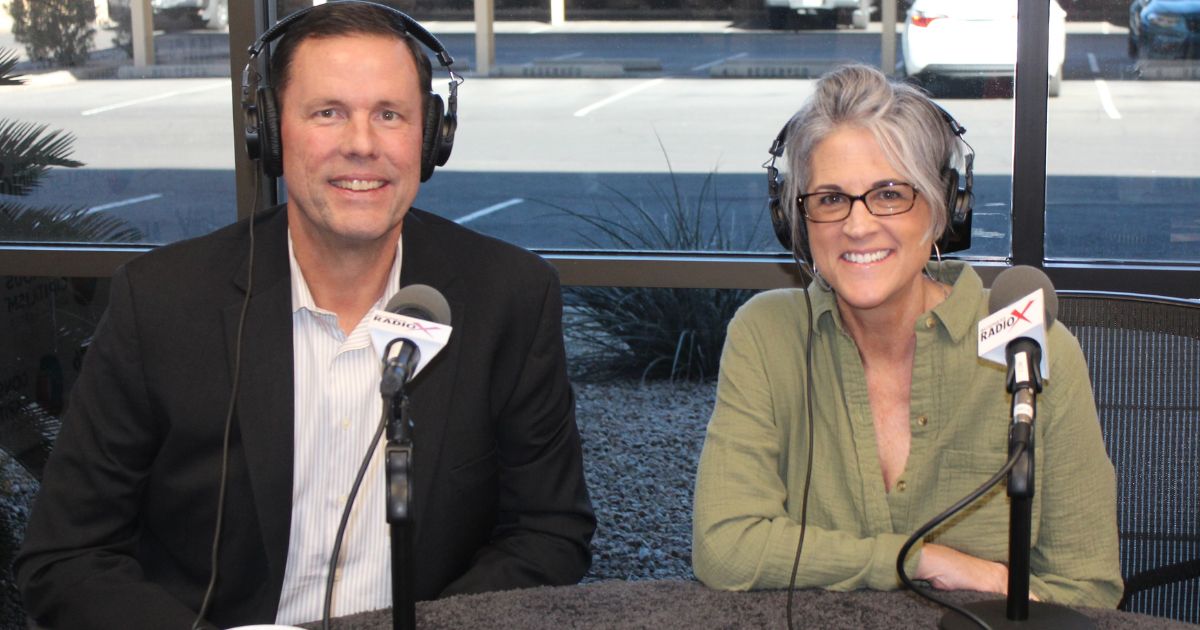
Gary Bird, Entrepreneur, Founder & CEO of SMC National, and host Patrick O’Rourke discussed marketing and business culture. Gary talked extensively about being a leader, building culture as a leader, and then talked specifics about dental marketing. The conversation also covered the cost of marketing, cost per acquisition, how SMC measures the patient journey, the need for “top of funnel” data, how they diagnose and address the practice issues in the patient journey, the nuances of structuring the practice, and much more.

Dental Business Radio is underwritten and presented by Practice Quotient: PPO Negotiations & Analysis and produced by the North Fulton studio of Business RadioX®.

SMC National

SMC uses clear, actionable data to give your dental group or DSO a predictable stream of new patients that can be adjusted monthly to meet your needs.

The team at SMC is composed of thoughtfully selected professionals who have a strong work ethic and embody their company’s core values. You’ve never met a team like theirs, and they can promise that you won’t find one as dedicated and committed to growth anywhere else.

Company website | LinkedIn | Facebook | Instagram

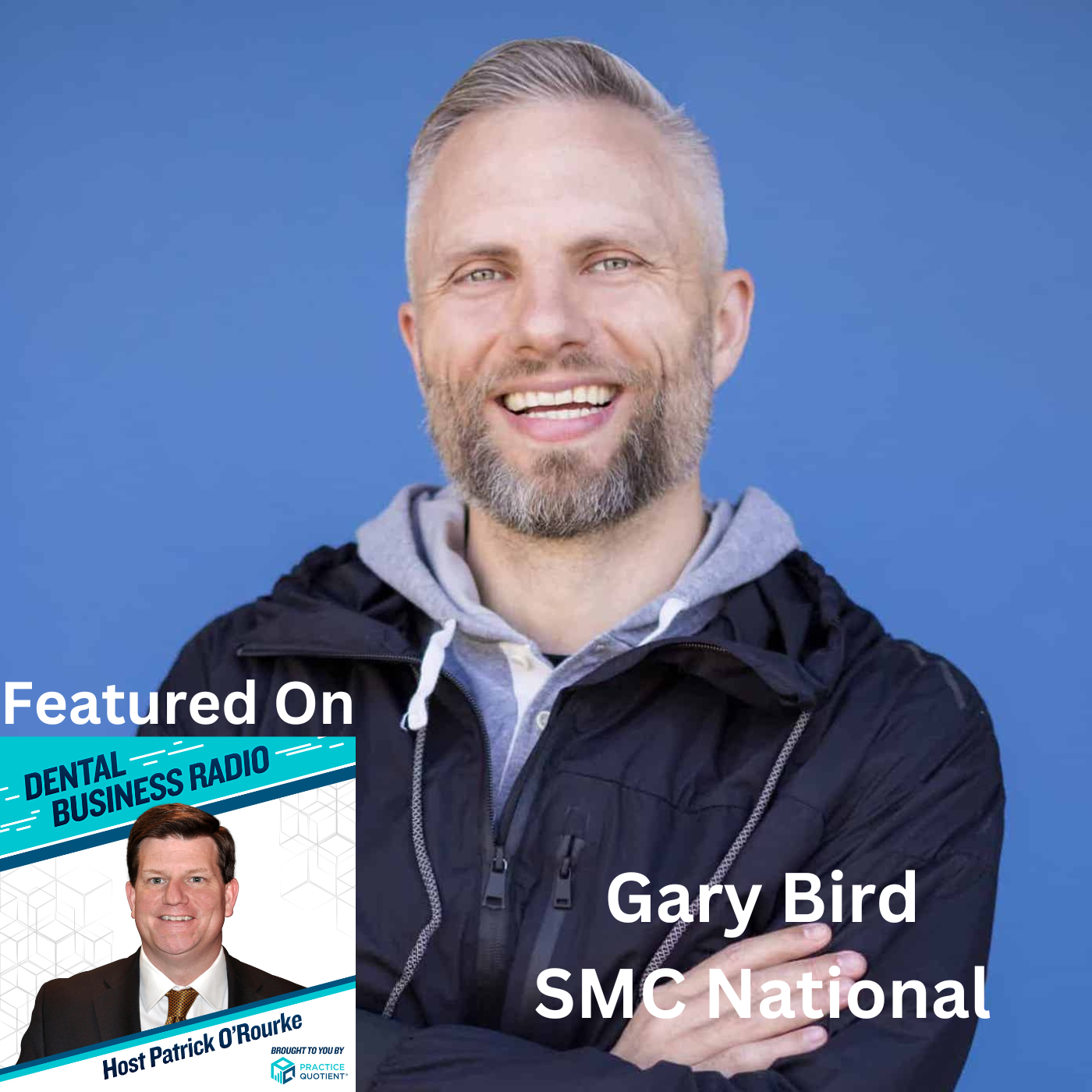
Gary Bird, Entrepreneur, Founder & CEO of SMC National

Gary Bird, Entrepreneur, Founder & CEO of SMC National

Gary runs a marketing company called SMC National and loves to share everything he’s learned while growing his agency from nothing to $20M in revenue.  He is committed to helping driven marketing entrepreneurs build on his success. Gary will show you how to make it BIG — by always giving more.

When Gary isn’t working, he dedicates his energy to serving his family and his church. He loves spending time with those he cares about most and helping fellow members of his church community to thrive.

LinkedIn

About Dental Business Radio

Patrick O'Rourke
Patrick O’Rourke, Host of “Dental Business Radio”

Dental Business Radio covers the business side of dentistry. Host Patrick O’Rourke and his guests cover industry trends, insights, success stories, and more in this wide-ranging show. The show’s guests include successful doctors across the spectrum of dental practice providers, as well as trusted advisors and noted industry participants. Dental Business Radio is underwritten and presented by Practice Quotient and produced by the North Fulton studio of Business RadioX®. The show can be found on all the major podcast apps and a complete show archive is here.


Practice Quotient

Dental Business Radio is sponsored by Practice Quotient. Practice Quotient, Inc. serves as a bridge between the payor and provider communities. Their clients include general dentist and dental specialty practices across the nation of all sizes, from completely fee-for-service-only to active network participation with every dental plan possible. They work with independent practices, emerging multi-practice entities, and various large ownership entities in the dental space. Their PPO negotiations and analysis projects evaluate the merits of the various in-network participation contract options specific to your Practice’s patient acquisition strategy. There is no one-size-fits-all solution.

Connect with Practice Quotient

Website | LinkedIn | Facebook | Twitter

Tagged With: Culture, dental business, Dental Business Radio, DSO, Gary Bird, insurance, Leadership, marketing, Patrick O'Rourke, Practice Quotient, SMC National

Creating the Safest Table Inside and Out E6

October 18, 2022 by Karen

E6-Creating-the-Safest-Table-Inside-and-Out-feature
Phoenix Business Radio
Creating the Safest Table Inside and Out E6
Loading
00:00 /
RSS Feed
Share
Link
Embed

Download file

E6-Creating-the-Safest-Table-Inside-and-Out

Creating the Safest Table Inside and Out E6

Being connected to others starts with connecting to our own true selves. When we connect to our true selves, we notice resonance and dissonance. From a place of inner resonance, we share our truth with others, holding it lightly, knowing it may only be 2% of the full picture.

People leaders help unlock the collective genius of the group by creating a safe space, ‘the safest table,’ for people to share their truths about their resonance and dissonance and productively debate and challenge one another, however uncomfortable, in service of helping each person grow and realize more of their potential.

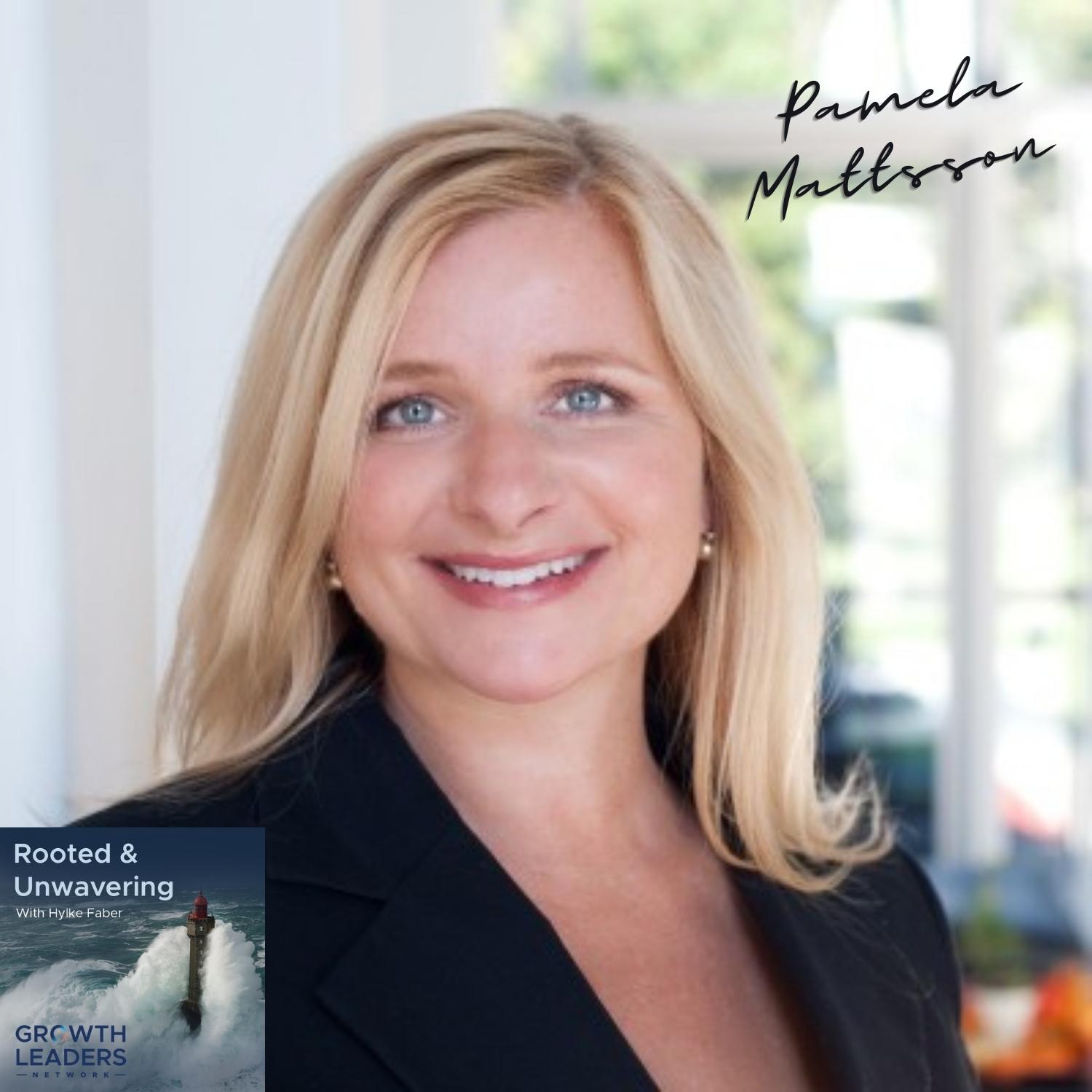
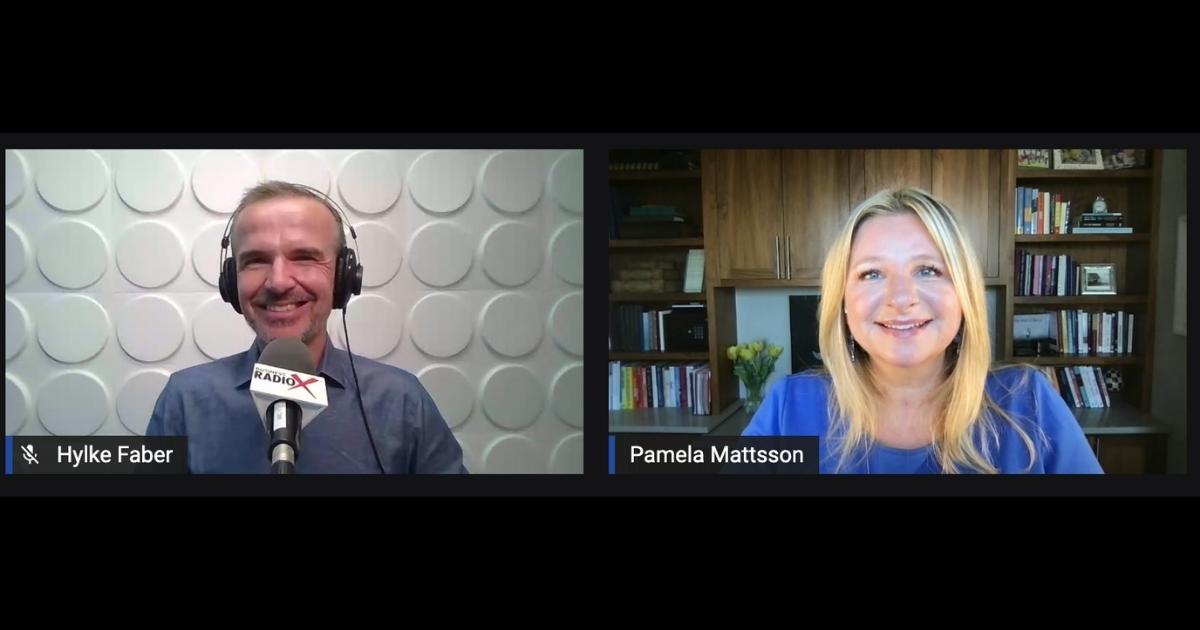
Join Rooted & Unwavering host Hylke Faber and Pamela Mattsson, SVP of People and Organizational Development at Outreach as they explore connecting to true selves.

Outreach-HorizontalLockup-Color

Outreach is the first and only Sales Execution Platform that automates sales engagement and turns intelligence into actions to improve execution across every stage of the sales cycle, from prospecting to deal management to forecasting. When organizations execute at their full potential, they win more deals with less effort and deliver a better customer experience.

Pamela-Mattsson-Rooted-and-UnwaveringPamela Mattsson is SVP of People and Organizational Development at Outreach.
She is responsible for building values-driven, human-centered and inclusive developmental experiences for all Outreach employees from individual contributors to C-Suite. She ensures Outreach’s culture is strong and pervasive yet challenges each employee to be the best version of themselves by expanding and evolving with each and every culture-add (vs. culture-fit).

She enables Outreach to walk the talk of our core values, & solidify the behaviors, systems & symbols that allow those values to scale. She uses an experiential, conscious & humanistic approach, and has 20+ years of experience in global and multicultural instructional design, change management and adult learning within organizations & as a global consultant.

Before Outreach, she led Executive Development for Amazon globally and is responsible for building Amazon’s executive onboarding program, Escape Velocity, executive coaching practice, and codifying what “It is Always Day 1” means for Amazon’s culture at scale.

Connect with Pamela on LinkedIn.

About Rooted & Unwavering

Peace, Compassion, Wisdom, Purposefulness, Creativity and Strength come online in us when we deeply connect with the true, unwavering greatness that lives within ourselves and others.Rooted-and-Unwavering-Tile

In this podcast and radio show, Hylke Faber, seasoned transformational coach and author of the award-winning Taming Your Crocodiles series, engages in deep inquiry with leaders from all walks of life about courageously connecting with our true selves, others and the world at large.

How do we stay connected to our true selves and our greatness, especially when we are challenged? How do we rest in the heart, also when our mind keeps us restless? What becomes possible when we truly stay committed to our own and others’ best selves, also when we don’t feel it? How do we practice staying connected to our true selves, in the midst of our busy lives?

Join us and leave inspired to act on your heart’s greatness and that of the people around you.

About Our Host

Hylke-Faber-headshotFor as long as he can remember Hylke Faber has been curious about what this life is about. His ongoing inquiry has become his work: helping people individually and collectively to discover what is possible in life and express that authentically and fearlessly.
Hylke started his work life with Towers Perrin as consultant and then as Partner with Strategic Decisions Group, serving a wide range of industries, including financial services, manufacturing, consumer electronics and life sciences companies. A major shift occurred during this critical phase of his life. He had become the typical, hard-charging, 16-hours-a-day strategy consultant, and was burning out at a rapid clip.

When he discovered meditation, everything changed. He was so taken by his new discoveries that he chose to bring to business what he was learning: that there is a way we can have it all – we can be fulfilled, do work we love, and create extraordinary results with others. He thinks of it as creating a sense of ease in business.

He learned how to coach and facilitate human transformation completing his coaching certification with Newfield Network and by working at Axialent, the culture and leadership company. After a few years, he founded Co-Creation Partners together with other leaders in the field of transformation and personal development. Then he formed Constancee to help people grow by creating the conditions where deep personal, interpersonal and organizational shifts happen routinely.

He leads Growth Leaders Network, the culture and team development consultancy. He has also taught coaching at Columbia Business School Executive Education and has contributed to Harvard Business Review. He is currently teaching a course on Climate Conscious Leadership at Arizona State University. His award-winning book, Taming Your Crocodiles: Unlearn Fear & Become a True Leader, was published by Dover in 2018.

His next book, Taming Your Crocodiles Practices for Leadership Depth, came out in 2020. Besides helping others grow, which he loves, he is a trained opera singer, enjoys hiking and writing, is an avid reader, in particular of biographies, and is always in the process of growing himself. He integrates all of what he learns in his work with executives.

Connect with Hylke on LinkedIn.

About Our Sponsor

Realizing Your Greatness

We are a team of experienced facilitators and coaches dedicated to helping individuals, teams and organizations thrive by helping them recognize their innate greatness and putting it to work.

    • Executive Coaching: we work with clients individually to help them connect to their calling and use every challenge as an opportunity to help them grow more into what makes them great.
    • Team Performance: we help teams evolve to their next level of excellence, connectedness and impact by working on the root drivers of team performance.
    • Culture Development: we help organizations to evolve their culture by creating clarity about where they aspire to go, and by building role models, coaches and systems that catalyze people being energized to work the new way.
  • Key Notes: we deliver powerful speeches at conferences and other events that help audiences become energized, more connected to themselves and each other, more open to discovery and ready to commit to the next stage of learning in their career and life journeys.

Growth Leaders Network (GLN) serves Fortune 500 companies, smaller organizations and non-profits globally.

GLN clients report that we catalyze significant business transformational impact and profound shifts in people, team and organizations at the root cause level.

Learn more about the Growth Leaders network here.

Tagged With: Culture, DEI, revenue innovators, sales engagement, women in sales

Sean Taylor, Smith + Howard

October 4, 2022 by John Ray

North Fulton Business Radio
Sean Taylor, Smith + Howard
Loading
00:00 /
RSS Feed
Share
Link
Embed

Download file

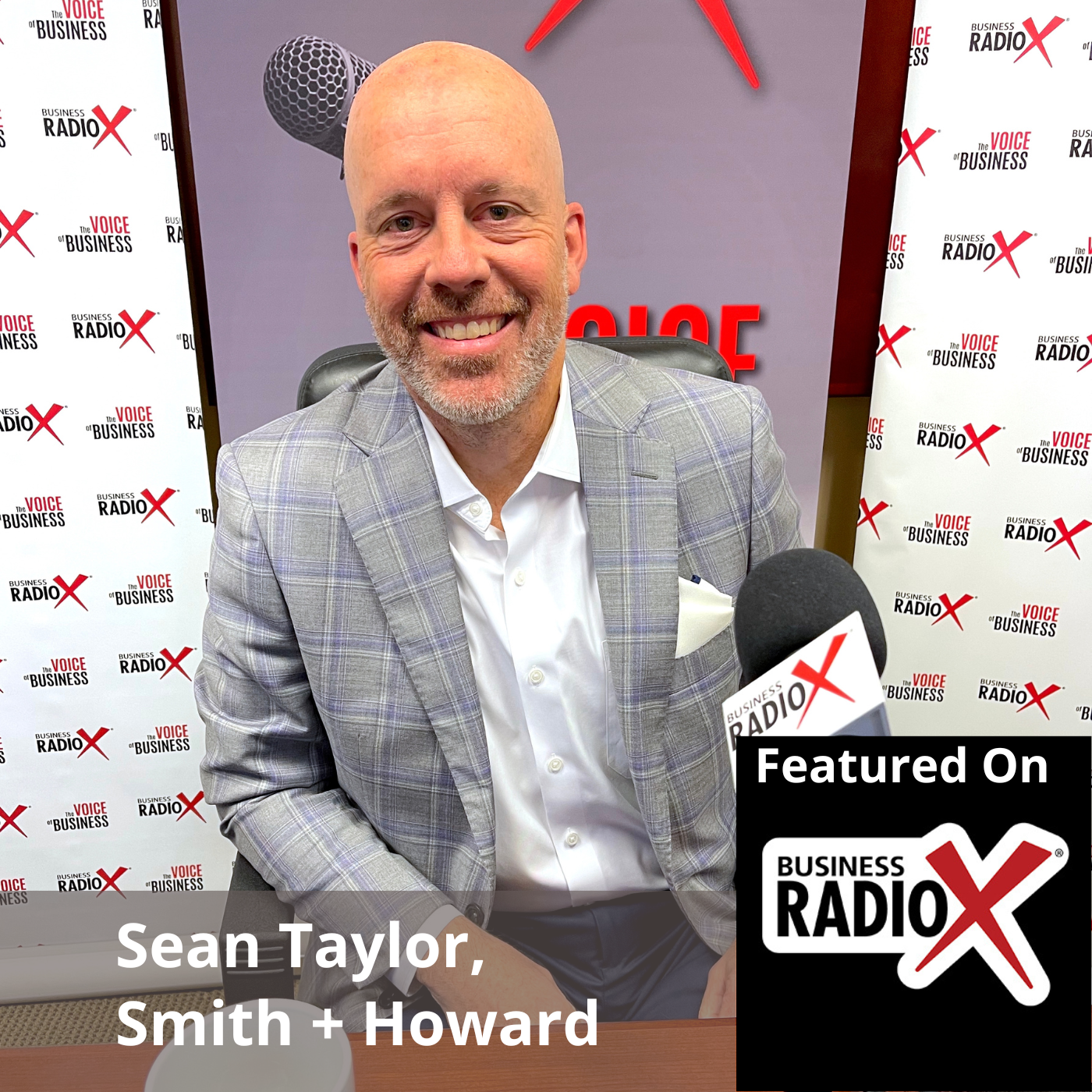
Sean Taylor

Sean Taylor, Smith + Howard (North Fulton Business Radio, Episode 532)

On this episode of North Fulton Business Radio, Sean Taylor, Managing Partner of Smith + Howard, joined host John Ray to discuss his award-winning firm’s growth and culture. Sean discussed the firm’s recognition as “Best of the Best” by Inside Public Accounting, how the firm’s culture contributes to employee retention and talent acquisition, expansion beyond traditional accounting services, and much more.

North Fulton Business Radio is broadcast from the North Fulton studio of Business RadioX® inside Renasant Bank in Alpharetta.

Smith + Howard

While many advisors say clients are their priority, Smith and Howard lives and breathes a promise of personal, responsive client service.

They hire smart, engaging professionals who find motivation and satisfaction in learning about their clients’ businesses, challenges, and goals. From that vantage point, they are positioned to provide key strategic advice and national-firm services that enable our clients to move their mission forward.

Service is such an important part of the Smith and Howard culture that if they are not serving clients, they’ll often be found serving in other ways. Many of them plant roots deep in their communities and find value and satisfaction in serving others where they live. When the needs expand beyond their neighborhoods, they can also be found on nonprofit boards or joining service projects that broaden their reach and impact.

Company website | LinkedIn | Facebook | Twitter

Sean Taylor, Managing Partner, Smith + Howard

Sean Taylor, Managing Partner, Smith + Howard

Sean drives the vision, innovation, and growth of the firm, and was named a Most Admired CEO by the Atlanta Business Chronicle in 2020 in recognition of his leadership.

Sean Taylor became managing partner of Smith and Howard in January 2019 after 25 years of leadership progression in the Assurance practice. He joined the firm as an intern and was ultimately named partner in charge of the Assurance practice in 2010, a role he held for nearly a decade.

A recognized and respected leader, Sean presents to many for-profit and nonprofit businesses, lenders, and other professional service providers. He has both served on and moderated numerous workshop and conference panels, as well as presented to local and national audiences on various topics.

Sean is an active participant and advocate at Smith and Howard for our mentoring program, personally mentoring many of our professional and administrative staff through career progression and advancement.

Sean is actively involved as a multi-year member of various committees at Dunwoody United Methodist Church (DUMC), including finance, staff parish relations, leadership roundtable, missions and evangelism. He also had led strategic planning initiatives as well as capital campaigns for the church. Additionally, Sean served seven years on the Council on Finance and Administration at the North Georgia Conference of the United Methodist Church, including time as the vice chair and chair.

Sean is currently a member of the Board of Trustees for Wesleyan School, serving actively on the finance and investment committees, and is also a member of the finance committee for the Community Foundation for Greater Atlanta.

In 2012, Sean co-founded FoodStock, an annual food packaging event in Dunwoody, Georgia, where over 1,000 community members pack 300,000 meals in one day for children in school feeding programs around the globe. This is the largest single-day food packaging event of its kind in Georgia and, to date, this event and other food packaging events in the Dunwoody community associated with FoodStock have packaged over 3.6 million meals.

Additionally, Sean serves as a mentor to 13 young men through a group he founded called Fit 4 Life, discussing various aspects of faith and life for these 13 young men.

Sean graduated from the University of Georgia with a Bachelor of Business Administration in Accounting.

Affiliations: American Institute of Certified Public Accountants Georgia Society of Certified Public Accountants (Leadership Academy Inaugural Member) Wesleyan School (Board of Trustees) Dunwoody United Methodist Church Awards Georgia Society of Certified Public Accountants’ Public Service Award (2020) Atlanta Business Chronicle Most Admired CEOs (2020).

LinkedIn

Questions and Topics in this Interview:

  • Inside Public Accounting “Best of the Best”
  • New Areas in which the firm is growing
  • #1 issue CPA profession is facing
  • Let’s talk about where you are innovating
  • What are you most excited about at Smith + Howard
  • How do you live your values
  • What is the culture like at Smith + Howard
  • Where do you see the firm 5 years from now

North Fulton Business Radio is hosted by John Ray and broadcast and produced from the North Fulton studio of Business RadioX® inside Renasant Bank in Alpharetta. You can find the full archive of shows by following this link. The show is available on all the major podcast apps, including Apple Podcasts, Spotify, Google, Amazon, iHeart Radio, Stitcher, TuneIn, and others.

RenasantBank


Renasant Bank has humble roots, starting in 1904 as a $100,000 bank in a Lee County, Mississippi, bakery. Since then, Renasant has grown to become one of the Southeast’s strongest financial institutions with over $13 billion in assets and more than 190 banking, lending, wealth management and financial services offices in Mississippi, Alabama, Tennessee, Georgia and Florida. All of Renasant’s success stems from each of their banker’s commitment to investing in their communities as a way of better understanding the people they serve. At Renasant Bank, they understand you because they work and live alongside you every day.


Special thanks to A&S Culinary Concepts for their support of this edition of North Fulton Business Radio. A&S Culinary Concepts, based in Johns Creek, is an award-winning culinary studio, celebrated for corporate catering, corporate team building, Big Green Egg Boot Camps, and private group events. They also provide oven-ready, cooked-from-scratch meals to go they call “Let Us Cook for You.” To see their menus and events, go to their website or call 678-336-9196.

Tagged With: A&S Culinary Concepts, Accounting, CPa, Culture, employee retention, Inside Public Accounting Best of the Best, North Fulton Business Radio, renasant bank, Sean Taylor, Smith & Howard, talent acquisition

Humanity and Mental Health in the Workplace E26

August 25, 2022 by Karen

E26-Humanity-and-Mental-Health-in-the-Workplace-feature
Phoenix Business Radio
Humanity and Mental Health in the Workplace E26
Loading
00:00 /
RSS Feed
Share
Link
Embed

Download file

E26-Humanity-and-Mental-Health-in-the-Workplace

Humanity and Mental Health in the Workplace E26

Authenticity, humanity, and integrity are just a few of the words to describe the two gentlemen on this show and the direction that the conversation went in.

When it comes to pairing guests for the Culture Crush Business Podcast, we pair strategically. We tend to pair a company that has a great culture with a company that offers resources to improve culture. For this show, each of the two companies that were on the show fit into both of these categories. BOTH companies are growing a great culture while ALSO supporting companies with improving their company culture.

This conversation started strongly in the direction and importance of DEI in the workplace and supporting individuals in being their authentic selves in a psychologically safe work environment. Psychological safety is a shared belief held by members of a team that the team is safe for interpersonal risk taking. It gives the employees the opportunity to disagree and still be supported in the workplace.

This was part of the bigger conversation of things that leaders and companies can do to support the mental health of their employees. Companies can’t just talk about supporting mental health- they actually need to take action on it.

We walked away with tons of examples on how to do this!!

  • Ask the right questions
  • What am I doing and what is the company doing that can be improved on?
  • How are you doing professionally?
  • How are you doing personally?
  • Have open visibility to what goes on the calendar
  • Therapy sessions
  • Dentist Appointments
  • Doctor appointments
  • A block on the calendar for self care
  • Support from leadership to the staff in being their own authentic self
  • Provide a stipend that allows them additional mental health support
  • Allowing them the time for self care during the work day
  • Letter from the CEO articulating the importance of mental health
  • Putting in boundaries for when emails can be sent to the staff

When trying to find out more info about Hummingbird Humany, head to their website www.hummingbirdhumanity.com and go to the resources tab where they offer free resources to the Hummingbird community. From the website, visitors can also sign-up for their weekly newsletter or follow their social media accounts.

evolvedMD has a variety of resources listed at their website as well. Head to their main page, https://www.evolvedmd.com/ and then head over to their resources and news tab.

Both Sentari and Brian are on podcasts out there as well! Make sure to find them and follow them!

Let’s just say this conversation will definitely have to have a Part B to it!

HHM-KLogo-TextOnlyv1

Hummingbird Humanity is committed to amplifying the voices of the unheard.

Hummingbird’s offerings include a consulting practice which partners with companies to build human-centered workplace cultures through assessment, strategy, and implementation; a speakers bureau featuring diverse voices who share about their lived experiences and offer suggestions for tangible action in their message; a growing collection of children’s books and resources for grown-ups to have age-appropriate diversity conversations with kids; and a soon to be launched practice for coaching and facilitation helping leaders develop their skills to be inclusive and people-centered.

Brian-McComak-HeadshotBrian McComak is a consultant, speaker, author, and facilitator with over 20 years of experience in Diversity, Equity, & Inclusion, HR, company culture, change management, internal communications, and employee experience.

He is the founder and CEO of Hummingbird Humanity, a consulting firm that cultivates and champions inclusive workplace cultures and human-centered leadership.

Connect with Brian on LinkedIn and Instagram.

evolvedMD-logo

evolvedMD is leading the integration of behavioral health services in modern primary care. Uniquely upfront and ongoing, our distinctive model not only places but embeds behavioral health specialists onsite at your practice. We offer an economically viable and better way to integrate behavioral health that ultimately drives improved patient outcomes.

Sentari-Minor-Headshot-CroppedSentari Minor is most passionate about bringing the best out of individuals and entities.

His love languages are strategy, storytelling, and social impact. As Head of Strategy for evolvedMD, Mr. Minor is at the forefront of healthcare innovation with a scope of work that includes strategy, corporate development, growth, branding, culture, and coaching.

Prior to evolvedMD, he worked with some of the Nation’s most prominent and curious CEOs and entrepreneurs advising on philanthropy, policy, and everything social good as Regional Director of Alder (formerly Gen Next) [PHX + DAL + SFO] and strengthened social enterprises as Director at venture philanthropy firm, Social Venture Partners.

A Phoenix native, Mr. Minor continued his education in the Midwest and is an alumnus of DePauw University in Greencastle, Indiana where he studied English with an emphasis in Creative Writing. He is also a member of Class IV of the American Express Leadership Academy through the Arizona State University Lodestar Center. If you want to profile him: he’s an ENTJ (Myers Briggs), a Maverick (Predictive Index), and trimodal Blue/Green/Red (Emergenetics).

Where does he shine? In high-touch stakeholder engagement, capital raising, public relations, and strategic planning. With his background, Mr. Minor serves on the board of directors for a diverse set of social impact organizations, as a venture mentor for socially conscious companies nationwide, and as a facilitator for businesses who want organizational clarity.

Committed to strengthening brands doing good in the world, Mr. Minor speaks nationally and publishes often on strategy, marketing, leadership, capacity building, social entrepreneurship, and engaging high-profile leaders in the dialogue of today. For his impact on business and community, he was honored among the Phoenix Business Journal’s “40 Under 40” class of 2022.

When he’s not busy changing the world, self-care to him looks like working out, stirring the pot on social media, being an amateur author, and spending time with the people who make him smile.

Connect with Sentari on LinkedIn and Instagram.

About Culture Crush

Culture is not just a tag word to be thrown around. It is not something you throw in job descriptions to draw people to applying for jobs within a company.

According to Marcus Buckingham and Ashely Goodall in their book Nine Lies About Work, “Culture is the tenants of how we behave. It’s like a family creed. This is how we operate and treat each other in the family.”CultaureCrushKindraBanner2

As a growing company- Culture Crush Business Podcast is THE culture improvement resource that supports companies and leaders.  Our Mission is to improve company cultures so people WANT to go to work. Employees and leaders should like where they work and we think this is possible.

Within the company: Culture Crush has Vetted Resources and Partnerships with the right people and resources that can help improve your company culture.

On this podcast:  We focus on everything surrounding businesses with good company culture. We will talk with company leaders to learn about real-life experiences, tips, and best practices for creating a healthy work environment where employees are finding joy and satisfaction in their work while also striving and growing within the company.  We also find the companies that offer resources to help improve company culture and showcase them on the show to share their tips and tricks for growing culture.

About the Host

ABHOUTHOSTHEADSHOT

Kindra Maples  is spartan racer, past animal trainer, previous magician’s assistant, and has a weakness for Oreo cookie shakes. Her journey working with people actually started working with animals as a teenager (don’t worry we won’t go that far back for her bio).

She worked for over 15 years in the zoo industry working with animals and the public. Her passion of working with animals shifted into working with people in education, operations and leadership roles. From there her passion of leadership and helping people develop has continued to grow.

Then came the opportunity for leading  the Culture Crush Business Podcast and she jumped on it. Leadership, growth, and strong company cultures are all areas that Kindra is interested in diving into further.

Shout Outs

We want to thank a few people for their behind the scenes effort in helping this relaunch to come to life. James Johnson with Tailored Penguin Media Company LLC.– It is a small, but powerful video production company with a goal to deliver the very best by articulating the vision of your brand in a visually creative way. Gordon Murray with Flash PhotoVideo, LLC. -Flash Gordon has been photographing since high school and evolving since then with new products that will equip, encourage, engage, and enable. Renee Blundon with Renee Blundon Design – She is not only one of the best free divers (that’s not how she helped with the podcast) but she is great with graphics design and taking the direction for the vision that you have while also adding creative ideas to bring to your vision to life.

These are just a few of the folks that supported the relaunch of the podcast. If you would like to be part of the Culture Crush team or would like to support underwriting the show- please reach out: info@culturecrushbusiness.com

Tagged With: Behavioral Health Integration, Branding, Culture, diversity, employee experience, Human-Centered, inclusion, mental health, workplace wellness

The R3 Continuum Playbook: How Can Your Organization Cultivate a Psychologically Safe Workplace?

July 6, 2022 by John Ray

Psychologically safe
Minneapolis St. Paul Studio
The R3 Continuum Playbook: How Can Your Organization Cultivate a Psychologically Safe Workplace?
Loading
00:00 /
RSS Feed
Share
Link
Embed

Download file

Psychologically safe

The R3 Continuum Playbook: How Can Your Organization Cultivate a Psychologically Safe Workplace?

Dr. George Vergolias, R3 Continuum Medical Director, provides insight for leaders to help them determine what a psychologically safe workplace looks like for their organization. Dr. Vergolias describes crucial factors to consider when navigating the process of bringing more psychological safety to the work environment.

The full webinar can be found here.

The R3 Continuum Playbook is presented by R3 Continuum and is produced by the Minneapolis-St.Paul Studio of Business RadioX®. R3 Continuum is the underwriter of Workplace MVP, the show which celebrates heroes in the workplace.

TRANSCRIPT

Intro: [00:00:00] Broadcasting from the Business RadioX Studios, here is your R3 Continuum Playbook. Brought to you by Workplace MVP’s sponsor R3 Continuum, a global leader in workplace behavioral health, crisis, and security solutions.

Shane McNally: [00:00:15] Hi, there. My name is Shane McNally, Digital Marketing Project Lead at R3 Continuum. On this episode of The R3 Continuum Playbook, we’ll be featuring a segment from a recent webinar presented by R3 Continuum Medical Director, Dr. George Vergolias. This webinar was titled How Can Your Organization Cultivate a Psychologically Safe Workplace?

Shane McNally: [00:00:33] Dr. Vergolias has over 20 years of experience as a forensic psychologist and certified threat manager and has assessed over 1000 cases related to threat of violence or self-harm, sexual assault, stalking, and communicated threats. In this short segment from his webinar, Dr. Vergolias offers his expert insight into psychological safety and what makes a psychologically safe workplace, and how leaders can create that sort of environment for their employees.

George Vergolias: [00:01:02] Now, I want to pivot and talk a little bit about solutions and ways to think about how do we foster psychologically safe workplaces. So, first I want to define that, right? I really believe the Center for Creative Leadership is really a good – they have a really good, useful definition that’s approachable and it hits home and it can translate to practical applications. Right?

George Vergolias: [00:01:32] So, what they define is a shared belief held by members of a team that others on the team will not embarrass, reject or punish you for speaking up. Now, what’s key here is, this doesn’t mean that you get to say whatever you want. It doesn’t mean that any individual’s viewpoint is automatically accepted. Right? And it doesn’t mean we’re nice all the time. I think just sometimes there’s a false narrative that psychological safety means no one will ever say anything that will upset you, right? No.

George Vergolias: [00:02:10] Let me say it this way. No one has a right to not be offended on the one hand. There’s going to be interactions in our lives, personal and in the workplace, that might annoy us or offend us or rub us wrong. What this means is that we are embracing that conflict and we feel that we have a platform, an engagement level, a dialogue by which we can work through those disagreements and conflicts in a productive way so that the group moves forward so that the group is better off for it as a result of that process. And that process isn’t always fine. Conflict is sometimes difficult. That’s why many of us avoid it.

George Vergolias: [00:02:52] So, it’s important to keep in mind that pragmatic definition, because what I feel is there is a real risk of organizations having kind of a hyperbolic reaction in either of the extremes. One extreme is we have to absolutely accept everything everybody says, and we can’t say anything that might be challenging or even remotely perceived as offensive. Right? That’s fraught with its own problems.

George Vergolias: [00:03:24] And the other is where we’re totally tone deaf to the realities, that there are issues that need to be navigated. There are issues whether they’re diversity, equity and inclusion issues, or other issues that we need to talk through and work through and do the difficult work ahead. So food for thought.

George Vergolias: [00:03:43] What they also identify are four stages of types of safety. And the first is inclusion safety, and that satisfies the basic human need to belong. So in this stage, what we’re looking at is we feel safe to be oneself and you’re accepted for who you are, including your unique attributes and defining characteristics. Right? Again, there are limits to this, right?

George Vergolias: [00:04:08] Typically what we mean here is someone can be free. Whether it’s sexual identity, racial identity, other types of identity, they can feel free to express that in a way that they can live their fullest life and not be falsely judged or negatively impacted by that. Right?

George Vergolias: [00:04:27] There are laws that somewhat protect that. And there’s been a big move through corporate America to try to adopt that. That doesn’t mean that if I – I’m going to use an extreme example here. If I identify with neo-Nazism that I have a right to bring that insignia into the workplace because it’s very threatening to other people. So there are limits that organizations will have to determine where they draw those lines. But that’s what we mean by inclusion safety.

George Vergolias: [00:05:00] Next stage is learner safety. What we mean here is, this satisfies the need to learn and grow. And when we feel this, we feel safe to exchange ideas, take risks, put an opinion out there in a way, ask questions, give and receive feedback in a way that isn’t always comfortable, because, again, that’s not the goal, but in a way that we feel safe to do so. We could take those risks in a way that we feel that it is a growth experience, not a stunting or traumatizing or shaming experience.

George Vergolias: [00:05:35] Third stage is contributor safety. So here, what we’re satisfying or the need satisfies the need to make a difference. We feel like we have agency. We can make a difference. We can have an impact. We have relevance in our role, in our job, in our teams, and in our organizations, right, to the degree that we’re gonna use our skills and abilities to do that.

George Vergolias: [00:05:56] And then lastly, challenger safety. What we mean by challenger safety, this satisfies the need to make things better. How do we challenge the status quo in a way that we can grow as individuals but also as teams and as organizations, right? And how do you take up that challenge in a way that is promotional for whatever the values of the team or the organization have behind them?

George Vergolias: [00:06:21] Now, these sound great. They’re very well thought through. Practically, how do we implement them? That’s the big challenge, I think, facing us. Where do we draw those lines, right? A recent one, where do I as a leader, as if this was up to me, but where do I as a leader draw the line between somebody that has a loved one at home that’s immunosuppressed and wants everyone to still wear masks at the workplace and other people that feel like they’ve done everything they possibly can include getting vaccinated and have asthma and find that wearing masks is difficult, not necessarily life-threatening, but really difficult for them? Where do we draw the line between that, right? These are difficult sometimes issues to answer. And we’re going to have to navigate those as we go forward.

Shane McNally: [00:07:15] Hey, George, just going back one side here. I do have a question. You mentioned it’s difficult to implement this. And I was just curious, you know, if you’re an organization that’s been around for a very long time, you’ve got employees that have been there 20, 30, 40 years, I don’t know, they’ve been there for a very long time and say you’re looking at these steps and you’re like, we don’t really have anything like this. Is this something that they should start implementing now, or do you think that these employees that have been there for so long might, you know, it might be something that’s frowned upon?

George Vergolias: [00:07:48] So, it’s a great question. I do think there is something to be said about the longer that we engage in habits, the longer that we engage in a pattern, whether it’s self-imposed or it just was the status quo that we came up with. There is something to be said about it. Yes, it can be more difficult to change. But what I constantly push back when I hear that and I hear that a lot, Shane, from organizational leaders that I consult with on resilience and workplace turnaround and all kinds of things is that every one of us has made those changes. Every one of us has made those changes, right?

George Vergolias: [00:08:23] There are people – there’s a dear friend of mine right now that’s going – just went through a liver transplant. He wasn’t an alcoholic by any means. And that wasn’t why – he had a blood issue, a blood disorder issue going on, and he needed a new liver. But he certainly enjoyed having a few beers back then. Guess what? He’s done drinking. He’s done drinking for the rest of his life, right? Now, it’s easy to say, “Well, that was life or death.” Trust me, I used to do transplant candidacy evaluations. There are a lot of people that can’t make that change or don’t want to, right?

George Vergolias: [00:08:52] Someone has a heart attack at age 50 or 55 or 60, and they totally redo their diet and their workout regimen. Somebody goes through marital counseling and completely reorients their approach to their spouse after 15 years of a volatile marriage. We, as human animals, change all the time. And so, what I don’t accept, I will accept that it’s difficult, but I won’t accept that it’s impossible.

George Vergolias: [00:09:15] And what the key then is for those leaders to do is to really figure out how do we promote the culture of change. How do we give people every chance to make that change and embrace it? And then those that are going to absolutely hold out against it at some point, maybe they’re no longer a good fit for the organization. And those are tough choices for sure, Shane, definitely. But that’s how I would think about that.

Shane McNally: [00:09:41] Awesome. Thank you.

George Vergolias: [00:09:42] Yeah, yeah, yeah. But I’m glad you asked that because that segues to my next slide. A big part of this also has to do with hope, right? As leaders, if you’re going to say to somebody, “Hey, we’re going to go into that wilderness. And although we know a little bit of that wilderness, we don’t totally know that wilderness and that’s new for you. You’ve been working for 25 years and this is a new thing for you, right? You never talked about this before when you came up in the workforce. I want you to trust me, right?”

George Vergolias: [00:10:11] As a leader, we have to give them a clear message around that and we have to give them motivation and we have to give them a sense of hope. Right? So, again, we drown not by falling in the river, we drown by staying submerged in it. So, as we look, you know, the best companies that adapted well, maybe some that even thrived during the pandemic, had leaders that really rallied the troops and they instilled a sense of hope as well as a sense of direction.

George Vergolias: [00:10:44] Later in the presentation, I’m going to mention that hope – we’ve all heard this statement, hope floats. But I have a little add-on. Hope floats but it doesn’t swim. Right? Hope gets us and rises us emotionally to the top. But then we need action and direction and intention to get somewhere with that energy. And I think that’s where that is an important part of the messaging at a leadership level.

George Vergolias: [00:11:11] And, again, Shane, I think you were getting at – your question was insightful because it was getting at the sentiment and I hear this all the time, “Well, man, that’s hard to do.” Well, yeah, it is hard. These are hard changes. But the pandemic was hard. The reality is, though, if you look back as difficult as the pandemic was at so many levels for us as individuals, as teams, as organizations, we’re here. Every time we said we couldn’t go on, we did it because we’re still here. So, it’s important to realize that as individuals and as organizations, if we want to get somewhere or get something that we never had, we have to start doing something that we never did. And it’s important to start thinking in those terms.

George Vergolias: [00:11:58] So, what does this mean? More practically, it’s a conceptual shift. So, the idea is it’s no longer a top-down. I’m not going to negate hierarchies. Decisions need to be made. Stewardship needs to still occur. And there needs to be direction at the team level and at the organizational level, for sure, without a doubt. But the conceptual shift now is more different. It’s about engagement. And it’s about shifting how we do that over time and engaging a process from end to end so that when we bump into problematic behaviors, hostility, people that are struggling, instead of Stephen Covey’s first response on that train, on that subway, which was what’s up with this jerk dad who isn’t managing his kids, that completely shifted in an instant to this guy’s really struggling and his kids are really struggling. And now, we know we have a deeper insight. And with that deeper insight, we have a whole other response that that calls for. Right?

George Vergolias: [00:13:04] So engagement from end to end and moving from an adversarial and contentious way of approaching our employees or our employee problems to one that is more collaborative and supportive. And, again, I want to be clear. Support doesn’t mean you let people get away with stuff if there’s bullying, sexual harassment, prejudice, other types of even hate verbiage, right? We just saw in Buffalo, right, a heinous mass shooting that clearly was a hate-driven crime. Those are not acceptable. So when we say supportive, we don’t mean a blank check, but we mean providing a culture by which those issues are dealt with directly and in a timely manner while also continuing to build cultures of inclusion.

George Vergolias: [00:13:48] So, education on that process is important, message of support that is balanced with the need to protect our people and our business interests, and then create alignment of those resources beyond just intervention as a singular event. All too often we think of “George is struggling. Let’s go get him an FFD.” Like that’s an event. “Let’s get him a fitness for duty.” And those, by the way, can be very, very useful. Right? Or we think, let’s give him a write-up or let’s send him to mentoring, or let’s give them a verbal warning. Right? There’s a million, not a million, but there are many ways we can think of how we deal with some problematic behavior or performance issue.

George Vergolias: [00:14:28] All too often we think of that as an intervention, a singular thing that we do, and that thing should somehow promote change. But we need to start thinking of is it’s a process and the intervention is one step in a process that might, if we’re lucky, fix the problem right then and there. But often it won’t. And there might be other steps that we need to take, and at some point we have to make the decision. Is this individual worth keeping with the organization or are they a bad fit? So, all of these are just different ways of thinking about how we start promoting psychological safety and thriving.

Shane McNally: [00:15:09] Creating a psychologically safe workplace is something that has become a lot more top of mind in the last few years. No matter the industry you’re in, ensuring that your employees feel heard and are able to receive the support and resources they need is crucial to the overall well-being of your people and organization.

Shane McNally: [00:15:26] With R3 Continuum evidence-based interventions, specialized evaluations, and tailored behavioral health programs, we can help promote your organization’s individual and collective psychological safety, recovery, and thriving. Connect with us and learn more about our services at www.r3c.com or email us directly at info@r3c.com.


Show Underwriter

R3 Continuum (R3c) is a global leader in workplace behavioral health and security solutions. R3c helps ensure the psychological and physical safety of organizations and their people in today’s ever-changing and often unpredictable world. Through their continuum of tailored solutions, including evaluations, crisis response, executive optimization, protective services, and more, they help organizations maintain and cultivate a workplace of wellbeing so that their people can thrive. Learn more about R3c at www.r3c.com.

R3 Continuum is the underwriter of Workplace MVP, a show which celebrates the everyday heroes–Workplace Most Valuable Professionals–in human resources, risk management, security, business continuity, and the C-suite who resolutely labor for the well-being of employees in their care, readying the workplace for and planning responses to disruption.

Connect with R3 Continuum:  Website | LinkedIn | Facebook | Twitter

Tagged With: Culture, Dr. George Vergolias, inclusion, psychological safety, R3 Continuum, R3 Continuum Playbook, support, Workplace MVP

  • « Previous Page
  • 1
  • 2
  • 3
  • 4
  • 5
  • Next Page »

Business RadioX ® Network


Our Most Recent Episode

CONNECT WITH US

  • Email
  • Facebook
  • LinkedIn
  • Twitter
  • YouTube

Our Mission

We help local business leaders get the word out about the important work they’re doing to serve their market, their community, and their profession.

We support and celebrate business by sharing positive business stories that traditional media ignores. Some media leans left. Some media leans right. We lean business.

Sponsor a Show

Build Relationships and Grow Your Business. Click here for more details.

Partner With Us

Discover More Here

Terms and Conditions
Privacy Policy

Connect with us

Want to keep up with the latest in pro-business news across the network? Follow us on social media for the latest stories!
  • Email
  • Facebook
  • Google+
  • LinkedIn
  • Twitter
  • YouTube

Business RadioX® Headquarters
1000 Abernathy Rd. NE
Building 400, Suite L-10
Sandy Springs, GA 30328

© 2025 Business RadioX ® · Rainmaker Platform

BRXStudioCoversLA

Wait! Don’t Miss an Episode of LA Business Radio

BRXStudioCoversDENVER

Wait! Don’t Miss an Episode of Denver Business Radio

BRXStudioCoversPENSACOLA

Wait! Don’t Miss an Episode of Pensacola Business Radio

BRXStudioCoversBIRMINGHAM

Wait! Don’t Miss an Episode of Birmingham Business Radio

BRXStudioCoversTALLAHASSEE

Wait! Don’t Miss an Episode of Tallahassee Business Radio

BRXStudioCoversRALEIGH

Wait! Don’t Miss an Episode of Raleigh Business Radio

BRXStudioCoversRICHMONDNoWhite

Wait! Don’t Miss an Episode of Richmond Business Radio

BRXStudioCoversNASHVILLENoWhite

Wait! Don’t Miss an Episode of Nashville Business Radio

BRXStudioCoversDETROIT

Wait! Don’t Miss an Episode of Detroit Business Radio

BRXStudioCoversSTLOUIS

Wait! Don’t Miss an Episode of St. Louis Business Radio

BRXStudioCoversCOLUMBUS-small

Wait! Don’t Miss an Episode of Columbus Business Radio

Coachthecoach-08-08

Wait! Don’t Miss an Episode of Coach the Coach

BRXStudioCoversBAYAREA

Wait! Don’t Miss an Episode of Bay Area Business Radio

BRXStudioCoversCHICAGO

Wait! Don’t Miss an Episode of Chicago Business Radio

Wait! Don’t Miss an Episode of Atlanta Business Radio