Business RadioX ®

  • Home
  • Business RadioX ® Communities
    • Southeast
      • Alabama
        • Birmingham
      • Florida
        • Orlando
        • Pensacola
        • South Florida
        • Tampa
        • Tallahassee
      • Georgia
        • Atlanta
        • Cherokee
        • Forsyth
        • Greater Perimeter
        • Gwinnett
        • North Fulton
        • North Georgia
        • Northeast Georgia
        • Rome
        • Savannah
      • Louisiana
        • New Orleans
      • North Carolina
        • Charlotte
        • Raleigh
      • Tennessee
        • Chattanooga
        • Nashville
      • Virginia
        • Richmond
    • South Central
      • Arkansas
        • Northwest Arkansas
    • Midwest
      • Illinois
        • Chicago
      • Michigan
        • Detroit
      • Minnesota
        • Minneapolis St. Paul
      • Missouri
        • St. Louis
      • Ohio
        • Cleveland
        • Columbus
        • Dayton
    • Southwest
      • Arizona
        • Phoenix
        • Tucson
        • Valley
      • Texas
        • Austin
        • Dallas
        • Houston
    • West
      • California
        • Bay Area
        • LA
        • Pasadena
      • Colorado
        • Denver
      • Hawaii
        • Oahu
  • FAQs
  • About Us
    • Our Mission
    • Our Audience
    • Why It Works
    • What People Are Saying
    • BRX in the News
  • Resources
    • BRX Pro Tips
    • B2B Marketing: The 4Rs
    • High Velocity Selling Habits
    • Why Most B2B Media Strategies Fail
    • 9 Reasons To Sponsor A Business RadioX ® Show
  • Partner With Us
  • Veteran Business RadioX ®

Decision Vision Episode 44: Should I Run for Political Office? – An Interview with Rep. Dar’shun Kendrick, Georgia House of Representatives, and Councilman Colin Ake, City of Woodstock

December 19, 2019 by John Ray

should I run for political office
Decision Vision
Decision Vision Episode 44: Should I Run for Political Office? - An Interview with Rep. Dar'shun Kendrick, Georgia House of Representatives, and Councilman Colin Ake, City of Woodstock
Loading
00:00 /
RSS Feed
Share
Link
Embed

Download file

should I run for political office

Decision Vision Episode 44: Should I Run for Political Office? – An Interview with Rep. Dar’shun Kendrick, Georgia House of Representatives, and Councilman Colin Ake, City of Woodstock

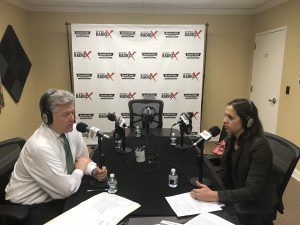
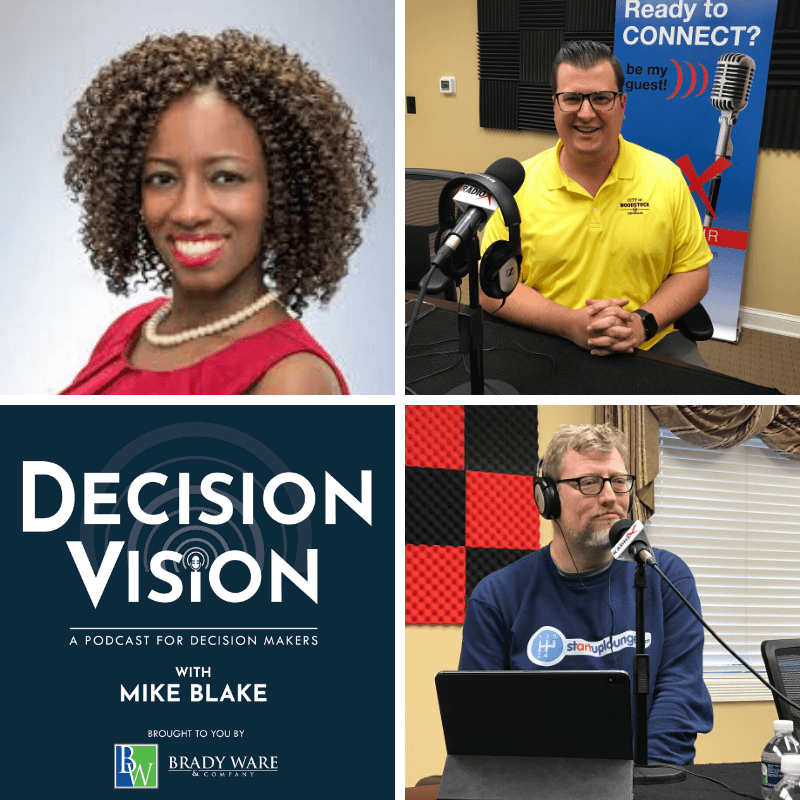
More business owners than ever are running for political office. What should I consider in making this decision? How will holding political office affect my business? On this edition of “Decision Vision,” host Mike Blake speaks with business Rep. Dar’shun Kendrick, Georgia House of Representatives, and Councilman Colin Ake, City of Woodstock on these questions and much more. “Decision Vision” is presented by Brady Ware & Company.

Rep. Dar’shun Kendrick, Georgia House of Representatives

should I run for political office
Georgia Rep. Dar’shun Kendrick

Dar’shun Kendrick was born and raised in Decatur, Georgia. She has a dual degree in political science and communications from Oglethorpe University, a law degree from the University of Georgia and a Master in Business Administration from Kennesaw State. Both of her parents are entrepreneurs so she grew up understanding the unique challenges of business owners, particularly business owners of color.

That’s why since 2010, Dar’shun has dedicated her capital compliance law firm to making sure everyone has access to legal services and tools to raise capital for their business in a way that makes sense for every size business and every investor. Her passion and focus have specifically been on making sure that minorities and women have access to the tools and resources they need to reach their capital raising goals. To date, she has helped companies raise over half a billion ($500MM) in investment funds. In 2019, she became a Series 65 license holder (investment adviser representative) with the ability to provide strategic investment advice to her corporate clients as a part of her services.

Dar’shun is also an innovator and community activist. She was featured in the Huffington Post as 1 of 25 people positioned to Scale Atlanta’s Growing Inclusive Technology Start Up Ecosystem for Black Americans and Beyond. In 2017, she was elected to the Technology Association of Georgia’s (TAG) Corporate Development Board and in 2018 elected to the TAG Diversity Board. She is also a past contributor to Black Enterprise Magazine focusing on economic justice issues. In 2017, she founded Georgia’s 1st ever Georgia Blacks in Tech Policy Conference & Follow Up “Day of Action” with the focus on advocating for inclusive tech policy throughout the state. This event continues on today as the “Tech for All” Policy Conference.

Dar’shun’s service extends beyond her capital compliance firm. Since the age of 27, she has also served as a member of the Georgia House of Representatives. She represents over 54,000 Georgians in DeKalb and Gwinnett counties. She also founded Georgia’s first Technology, Innovation & Entrepreneurship Caucus which is a bipartisan caucus of Georgia legislators and stakeholders committed to the mission of supporting entrepreneurs within the state. She currently serves as the Chief Deputy Whip of the House Democratic Caucus and a ranking member of the Small Business & Jobs Creation committee.

Awards (last 3 awards awarded)- She was awarded the Urban League of Greater Atlanta Young Leader Award (2019) and named as an awardee for the Atlanta Business Chronicle’s “40 under 40” awards (2019) and nominated for 2 NAACP awards for criminal justice reform and her business (2017 and 2019).

Dar’shun is a community activist, public speaker & teacher, elected official, private securities attorney, and a proud member of Alpha Kappa Alpha Sorority, Inc. She currently resides in Lithonia, Georgia.

Councilman Colin Ake, City of Woodstock

should I run for political office
Councilman Colin Ake, City of Woodstock

Colin Ake was elected to Woodstock City Council in 2017. Prior to announcing his run for City Council, Colin served as the Mayor’s appointee on the Woodstock Planning and Zoning Commission for a year and a half. While on the Planning Commission, he was elected Vice-Chair by his peers. Colin served as the Chair of the Greenprints Alliance Board of Directors in 2016 and 2017, and as the Vice-Chair in 2015. He was invited to represent Greenprints Alliance on the Woodstock Police Department’s Body-Worn-Camera Working Group. Colin has provided significant input to the Cherokee Office of Economic Development and Woodstock Office of Economic Development on Fresh Start Cherokee and The Circuit as they work to incorporate startups into their economic development plans.

Professionally, Colin is employed by Georgia Tech’s VentureLab, where he works with commercialization projects. He teaches entrepreneurship to commercialization teams through the NSF I-Corps Program, where he is a Regional Lead Instructor. He leads programs across the southeast and assists in the administration of the I-Corps South grant at Georgia Tech. Colin has taught at Georgia Tech’s Scheller College of Business and is a member of the Georgia Tech Faculty Senate. He also represented Georgia Tech on the State Senate’s Camden County Spaceport Study Committee, where he studied the opportunities and challenges facing the potential spaceport on the Georgia coast.

Prior to joining Georgia Tech, Colin spent four years rebuilding an aerospace company focused on reusable launch operations and lunar/planetary lander technology development. He previously worked at the Georgia Tech Research Institute and at an early-stage technology startup for two years. Colin holds a Bachelor of Science in Management and a MBA from Georgia Tech.

Colin grew up a mile from Woodstock and moved back to the city with his wife Nikki to start their family. Colin, Nikki, and children (Owen & Lealynn) are members at Sojourn Community Church in Woodstock, where Nikki is an active member of the finance committee, and Colin plays drums and works on long-term planning projects.

Michael Blake, Brady Ware & Company

Mike Blake, Host of “Decision Vision”

Michael Blake is Host of the “Decision Vision” podcast series and a Director of Brady Ware & Company. Mike specializes in the valuation of intellectual property-driven firms, such as software firms, aerospace firms and professional services firms, most frequently in the capacity as a transaction advisor, helping clients obtain great outcomes from complex transaction opportunities. He is also a specialist in the appraisal of intellectual properties as stand-alone assets, such as software, trade secrets, and patents.

Mike has been a full-time business appraiser for 13 years with public accounting firms, boutique business appraisal firms, and an owner of his own firm. Prior to that, he spent 8 years in venture capital and investment banking, including transactions in the U.S., Israel, Russia, Ukraine, and Belarus.

Brady Ware & Company

Brady Ware & Company is a regional full-service accounting and advisory firm which helps businesses and entrepreneurs make visions a reality. Brady Ware services clients nationally from its offices in Alpharetta, GA; Columbus and Dayton, OH; and Richmond, IN. The firm is growth minded, committed to the regions in which they operate, and most importantly, they make significant investments in their people and service offerings to meet the changing financial needs of those they are privileged to serve. The firm is dedicated to providing results that make a difference for its clients.

Decision Vision Podcast Series

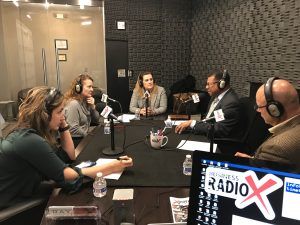
should my business buy real estate?“Decision Vision” is a podcast covering topics and issues facing small business owners and connecting them with solutions from leading experts. This series is presented by Brady Ware & Company. If you are a decision maker for a small business, we’d love to hear from you. Contact us at decisionvision@bradyware.com and make sure to listen to every Thursday to the “Decision Vision” podcast. Past episodes of “Decision Vision” can be found here. “Decision Vision” is produced and broadcast by the North Fulton studio of Business RadioX®.

Visit Brady Ware & Company on social media:

LinkedIn:  https://www.linkedin.com/company/brady-ware/

Facebook: https://www.facebook.com/bradywareCPAs/

Twitter: https://twitter.com/BradyWare

Instagram: https://www.instagram.com/bradywarecompany/

Show Transcript

Intro: [00:00:09] Welcome to Decision Vision, a podcast series focusing on critical business decisions brought to you by Brady Ware & Company. Brady Ware is a regional full-service accounting and advisory firm that helps businesses and entrepreneurs make visions a reality.

Mike Blake: [00:00:28] And welcome to Decision Vision, a podcast giving you, the listener, clear vision to make great decisions. In each episode, we discuss the process of decision making on a different topic from the business owners or executives perspective. We aren’t necessarily telling you what to do, but we can put you in a position to make an informed decision on your own and understand where you might need help along the way.

Mike Blake: [00:00:48] My name is Mike Blake, and I’m your host for today’s program. I’m a director at Brady Ware & Company, a full-service accounting firm based in Dayton, Ohio, with offices in Dayton; Columbus, Ohio; Richmond, Indiana; and Alpharetta, Georgia, which is where we’re recording today. Brady Ware is sponsoring this podcast. If you like this podcast, please subscribe in your favorite podcast aggregator and please consider leaving a review of the podcast as well.

Mike Blake: [00:01:11] So, today, we’re going to talk about whether you as a business owner executive should run for political office. And regardless, I think, of where you are in the political spectrum, if you are at any place, I’m not sure where I am anymore, I think that’s an increasingly important topic. I think we’re seeing more people with a business background seeking office at all levels. And indeed, like them or love them, love them or not like them, the current President of the United States does come from a business background. And indeed, he ran on his business background as a reason why that is the case he made that he would be a good president of the United States. And that’s something that he invokes fairly regularly.

Mike Blake: [00:02:02] And it’s not just he that’s doing that. Mike Bloomberg has recently jumped into the race. There’s discussion now about, you know, whether billionaires can buy their way to the presidency. And again, we’re not going to talk about that particular topic, but I think there’s an increasingly blurred line now between politics and business. And maybe there’s always been a blurred line and depending, again, where you sit, maybe it’s an uncomfortably blurred line. But the fact of the matter is, I think, that the people who did not think that they had the stuff or the wherewithal, even the desire to run for political office and just sort of put themselves in the seat of being a business person, now, are thinking of themselves potentially in a dual role or maybe it’s even something they do with either a subsequent or intervening chapter in their lives.

Mike Blake: [00:02:56] And, you know, the recent statistics on this podcast still are flooring to me. We’re pushing about three-and-a-half million downloads, I understand, since February. Chances are good at least one of you has thought about running for political office. So, at least, this could be interesting to one of you out there. But I think it will be interesting to more on that. And we actually have a director at Brady Ware & Company that was elected mayor for one of the towns, I believe, outlying Dayton. He took over as mayor when the previous mayor resigned. And then, ran and was elected in his own right. So, we’re even seeing that inside our own company.

Mike Blake: [00:03:35] So, as you know, when you listen to this podcast, we’re bringing in people who actually know what they’re talking about, because I certainly don’t. And coming in to talk about this topic today are two people who are balancing public service and their own careers. And so, joining us today is Dar’shun Kendrick, a five-term member of the 93rd and/or 94th Districts of Georgia in the Georgia House of Representatives as the chief deputy whip. And I say the 93rd/94th, because I think it was a 94th District for her first term. And then, thanks to redistricting, I think it then became the 93rd. But for those who aren’t in Georgia, our assembly is made up of 180 members, a fairly large body, partially because we just have, I think, more counties than anybody in the country.

Mike Blake: [00:04:25] We’re not serving her constituents in this capacity. Dar’shun is a capitol compliance lawyer dedicated to guiding Black and female founders in the capitol, raising investing process. She provides these services through her company, the Kendrick Advisory, an advocacy group. She’s an arbitrator of the Financial Industry Regulatory Authority or FINRA. I did not know that before I was researching this podcast and she holds a bachelor of arts from Oglethorpe University, I live about a-mile-and-a-half from there, holds an MBA from Kennesaw State University and a law degree from the University of Georgia.

Mike Blake: [00:04:56] And she’s joining us by phone today. So, you may hear some noise in the background. With those of you who are not from Georgia, we have a unique driving environment here. And one of the unique features of the driving environment is that rain, particularly cold rain, will turn the streets of the greater Atlanta metropolitan area into an episode of Ice Road Truckers, basically. So, Dar’shun, please drive carefully as you’re on the podcast. Thanks for joining us.

Dar’Shun Kendrick: [00:05:25] Yeah. Thanks so much. And I’m sorry I couldn’t be in the office or in the studio today. But as you know, we are getting ready for session. So, we’re trying to make do with the 24 hours we get.

Mike Blake: [00:05:37] Yeah. Well, if you guys can vote a 26-hour day, I’d really appreciate that.

Dar’Shun Kendrick: [00:05:42] Yeah. So would I. I’ll work on that.

Mike Blake: [00:05:45] Also, joining us today is Colin Ake. Colin was elected city councilman in 2018 for the City of Woodstock, Georgia, a municipality of southern Cherokee County, the population of just over 30,000. And Woodstock is, oh, I’m going to say about 20 miles north and west of downtown city of Atlanta, maybe a little bit farther than that. Prior to serving in that role, Colin was a—or give me some help here, was it a or the planning and zoning commissioner for the City of Woodstock.

Colin Ake: [00:06:13] I was one of seven.

Mike Blake: [00:06:15] Okay. One of seven. So, a planning and zoning commissioner. When not serving his constituents, Colin is a principal at Georgia Tech VentureLab, where he serves as an instructor on innovation and entrepreneurship. Colin actively works with entrepreneurs and researchers to commercialize research, identify, and secure grant funding, mentor startups, and modify and implement Georgia Tech’s evidence-based entrepreneurship curricula. This includes training and evaluating other instructors in the customer development methodology employed by the I-Corp program and across Georgia Tech.

Colin Ake: [00:06:44] At some point, I’d have you back to talk about because that’s an interesting program. It’s one that I think is unique. Colin holds his bachelor degree in management and his MBA from Georgia Tech. So, regardless of any kind of political discussion here, we have somebody from the University of Georgia and somebody from Georgia Tech, and that’s probably going to create more tension on this program than anything. And if you are from Alabama or Auburn or Florida, Florida State, you know exactly what I’m talking about. Colin, welcome to the program.

Colin Ake: [00:07:10] Thanks, Mike. Thanks for having me.

Mike Blake: [00:07:12] And interestingly, you’re wearing a shirt today that’s yellow with black stitching on that. Is that something that you arranged or?

Colin Ake: [00:07:20] Not specifically because of where Dar’shun went to get her law degree, but I did pick it out.

Mike Blake: [00:07:29] All right. So, let’s jump into it, because we got a ton to cover here. So, Dar’shun, let me let you go first. Ten years ago, you began to serve in your capacity in the Georgia legislature. What motivated you to do that?

Dar’Shun Kendrick: [00:07:49] Well, here, I have a very unique and interesting story. So, I essentially was at the right place at the right time or the right place at the wrong time, depending on which day of the week it is. I was a 27-year old who had just started practicing law for small business litigation firm downtown. And the law firm imploded one summer. And so, they let everybody go. And so, I had started my MBA program. And I had to start my own law firm.

Dar’Shun Kendrick: [00:08:28] So, I actually happened to be down as the capitol because two hours before I got down there to meet with our rep on some sort of marketing for my new firm, the person in my seat decided to run for governor. And so, they were looking for people. And I just so happened to be at the capitol meeting on an unrelated matter. I didn’t even know they would qualify me. And so, the person I was meeting with, I had known since I was a teenager because I worked at the capitol and they asked me what district I was in.

Dar’Shun Kendrick: [00:09:04] And I said, House District 94, which is 94 at the time. And he said, “Well, we need you to run for office.” And of course, I thought he was crazy because I was starting the MBA program and a new law firm. But the long story short is I ended up qualifying 30 minutes before the qualifying ended. So, I actually went from a private citizen to a full-blown candidate unexpectedly overnight. So, I wish I had a better inspirational story about how I worked hard enough and I planned to be in this position, but that is the true story of how it happened.

Dar’Shun Kendrick: [00:09:43] But I ultimately decided to say yes because I knew I eventually wanted to work on state house. I just thought it would be kind of be, you know, sort of when I had a more stable career, when I was older, maybe with a family. But I decided to say yes, because, you know, I grew up in DeKalb County and I represent Dekalb County. I knew that I was more qualified than the people that were running. I already had tremendous support before I even signed the qualification document, so I knew that I could do it. And even though it came unexpectedly and it came fast, I have had a pleasure of serving 54,000 Georgians ever since.

Mike Blake: [00:10:29] Okay. And I have a feeling there are probably other stories that are kind of like that. But Colin, how about you? What’s your story? Did you also sort of fall into public service that way or is that the more of a longer term ambition of yours?

Colin Ake: [00:10:44] No, I kind of fell into it. I grew up in Woodstock. And Woodstock has changed a lot. It has grown massively in the last couple of decades and really become a place that is much different than where I grew up. My wife and I moved back to Woodstock in 2013. And I got involved in a local nonprofit focused on building a trail system just because I want to be able to raise a family somewhere over there. It was a good outdoor recreation opportunity. And from there, I got asked one day to serve on the Planning and Zoning Commission, which was not on my radar, not something I’d been to, not something I was involved in.

Mike Blake: [00:11:26] Did you know anything about planning and zoning?

Colin Ake: [00:11:27] I did not know anything about planning and zoning. But I love learning new things. And so, I dove in and had a lot of fun over the course of about a-year-and-a-half. Planning and zoning in the State of Georgia, most bodies are recommending bodies. In other words, they’re appointed by mayor and city council, but they recommend decisions. And then, the mayor and city council make the final decision. And after about a-year-and-a-half of seeing recommendations go one way or the other and the city council listened to some of them and not listened to others, I decided, well, it might be time to make this vote count if I’m spending the time on it.

Mike Blake: [00:12:05] Like the Christmas song goes, if you’re so smart, you rig up the lights, right?

Colin Ake: [00:12:09] Something like that.

Mike Blake: [00:12:10] So, let’s go into that then. Your first election, talk about running in your first election was like.  You, yeah.

Colin Ake: [00:12:21] Yeah.

Mike Blake: [00:12:22] Colin.

Colin Ake: [00:12:22] So, my first election was an experience. So, I ran against an incumbent that was first elected and hadn’t been in office continuously, but was first elected in the year 1990.

Mike Blake: [00:12:35] Wow.

Colin Ake: [00:12:36] So, 2017, I’m running against a guy who has been in office in and out a couple of times, but for for a while. Nice guy. But I wanted a shot. So, I qualified and started running. Somebody else also qualified. So, I had a three-way race and that was quite the experience. It’s a lot of door-knock and it’s a lot of talking to people. It’s a lot of time. It is a great experience. You know, I teach this entrepreneurship stuff at Georgia Tech, right? We teach researchers to go talk to customers and actually understand the people. I mean, knocking on doors is all that, right?

Mike Blake: [00:13:12] Yeah.

Colin Ake: [00:13:12] It is essentially sitting there and that-

Mike Blake: [00:13:13] I hadn’t thought about that. That’s right.

Colin Ake: [00:13:15] … you are learning about your constituents or potential constituents at this point. And what do they care about? Why do they care about those things? And it’s a lot of fun, but it’s a lot of work. You wear through some shoes and it was a good time. I was fortunate enough to avoid a runoff. I won outright. I was a little surprised. You know, I know a lot of people do these victory parties, I didn’t do any of that. I was ready to find out who I was going to be against in the runoff. And I had about four people at my house. And it turned out okay.

Mike Blake: [00:13:51] Well, knowing you, that sounds about right though. You’re kind of a low-key guy, so I don’t see you as a victory lap guy. Dar’shun, how about you? I mean, I know you, sort of, were an overnight qualification story, but what was that first election like? Were you opposed?

Dar’Shun Kendrick: [00:14:09] I was. So, I had four other people was—and my district is largely democratic. So, obviously—general. But I did have four other people in the primary. It is somebody who is very active in the Democratic Party. Somebody who had ran for this three times before. And there’s somebody who was very, very active that have supporters in Rockdale. But I’m just—so, I was the youngest. And so, every time the media printed something, they just ask it without at least letting you know for whatever reason.

Dar’Shun Kendrick: [00:14:53] But I, you know, knocked on doors. I have been involved in politics since I was 18. So, we have to like run a campaign. And so, I had a number of primary voters who were at least three times. And that’s when the primary—fly. It wasn’t in vain like it is now. So, it was a long, hot summer, a very long, hot summer. And I, you know, didn’t quite know how I was able to—start a law firm while knocking on doors. That still felt quite interesting in how I did it—business.

Mike Blake: [00:15:38] Well, let’s, in fact, talk about that, because, you know, one of the things that draws me to this conversation is, you know, where does running for office intersect with business, right? And both of you, in your case, you have a business and Colin has, you know, a career and neither of your post, they’re not designed to have you be a career politician in that respect. But I’m curious, as you are knocking on doors, do you think that that actually helped you kind of understand your market better, Dar’shun?

Dar’Shun Kendrick: [00:16:20] You know, I think it helped me not only to understand my market better, but just to broaden my understanding of just opinions and the issues facing Georgia in general. When I first ran for office, I was—at Rockdale County. And Rockdale County is that county who have very, very active supporters of commerce. And so, you know, on the campaign, so obviously, I was engaged with those two views. But it helped me that I did have a business background to sort of, I think, connect with people on the campaign trail at these retail or business centers.

Dar’Shun Kendrick: [00:17:06] And I am accused more than I would like about being one of the more full-business Democrats. But I think it served me well, because I am able to understand sort of the base of my calling, which is labor and balancing with the people that I represent, which are obviously founders of this. So, I definitely learned a lot about that market, but around Georgia issues as well. It was a really great opportunity to just meet people and hear different views. I really enjoyed the campaign. I know it’s hard, but I learned a lot of their stories.

Mike Blake: [00:17:47] So, Colin, my next questions for you is, you know, as you are preparing to run, have you had professional mentors or advisors in your life that maybe, you know, have helped you along the way to get to where you’ve been professionally? Did you also rely on them as you contemplated this political step? And if so, were they helpful? If not, then where did you kind of find that expertise?

Colin Ake: [00:18:11] Yeah, it’s a great question. So, you know, I tend to be the student of, you know, whatever world I’m going into. I worked with a bunch of different entrepreneurs from a bunch of different backgrounds and bunch different industries, right? And so, that’s taught me to take advice from the people who have experienced something before and go find people that can share something with me that, you know, is based off that experience. I certainly had conversations with business mentors or people that I worked with previously. I’m about running for office. I got encouragement to do so.

Colin Ake: [00:18:45] But of course, you know, if you’ve not run a campaign, you generally go well. But I’ve never run a campaign and that’s kind of, you know, where that stops. I had some help from some friends that had experienced parsing data and find someone that they can parse data well. And go grab some voter data and, you know, data’s data. You got to know what you’re looking for, but once you know what you’re looking for, it’s fairly easy to pull together a strategy.

Mike Blake: [00:19:13] Indeed, I’ve heard that superior command of data was a big factor in enabling the president to win in 2016, right? It wasn’t whether he’s a better candidate or not, but this was a lot of analysis. And I think there’s some truth to this that he and his team just paid more attention and just did better with parsing data.

Colin Ake: [00:19:36] My experience has been that the data certainly gives you an edge. And it helps inform whatever strategy you’re developing as a team. Dramatically different to run for president than it is to run for city council for the City of Woodstock.

Mike Blake: [00:19:49] Sure.

Colin Ake: [00:19:51] For the small business owners that are out there that are thinking about getting involved in local government, at either the local or the county or the state level, it’s really easy to not even be—you know, you don’t have to be a presidential level data parser to make a difference in a small race.

Mike Blake: [00:20:12] Yeah. And in fact, interestingly enough, there is one of these rare cases where a meaningful office was won by one vote, a Boston city council office, after their fourth recount was just decided by one vote with over 70,000 thousand votes involved. So-

Colin Ake: [00:20:30] That’s fairly narrow.

Mike Blake: [00:20:31] There’s probably going to be a lawsuit, too. One vote, you know, you got to believe that’s gonna be challenged, I would think. But still-

Colin Ake: [00:20:39] Hanging chad somewhere.

Mike Blake: [00:20:40] Yes. So, it does happen. So, Dar’shun, how about you? I suspect, but you tell me. I don’t want to put words in your mouth. What about your mentors and advisors? Have they been the same for you along the way in business as in politics or have you found that they’ve been different?

Dar’Shun Kendrick: [00:21:01] So, my sort of mentors in business have always been my parents. So, I grew up in an entrepreneurial household. So, I love business owners, but typically, minority female founders and Black-owned founders share sort of the challenges that they went through. So, my parents have kind of taught me a lot about business. And, you know, I have people that I sort of look up to. I wouldn’t say that I have a formal mentorship with anyone. And that’s probably because, believe it or not, I’m—about it. So, you know, I just had not gotten opportunity to ask somebody to do that mentorship. But I am because one of the things that I added to my success and firm is I just recently got a series of job life investment-

Dar’Shun Kendrick: [00:22:05] So, I am intentional about how people have been successful in the state for a very, very long time with that aspect of it. But political-wise, you know, as a politician, I value amongst anything else—good and anything like that is people who are persistent in their belief and that is true. So, one of the reasons that one of my best friends is a partner is because we are very, very truthful with one another. And because above all else, we are very persistent in our belief. So, for me, you know, I will look up to or admire anybody in the political world that is consistent in their belief and persistent about it.

Mike Blake: [00:22:59] So, you’ve been in public service now for a decade. Really remarkable. And which means you’ve won five elections. Again, remarkable. How have you found that’s impacted your legal practice and your consulting practice?

Dar’Shun Kendrick: [00:23:20] So, obviously, in the beginning, since I was an overnight candidate, from a law firm perspective, I wasn’t prepared to be a full-blown candidate. So, I think that was the hardest time because I didn’t have the preparation. I literally went from a private citizen to a full-blown candidate overnight. So, those early years are very, very rare. I’ve done a very good job, indeed, of managing it.

Dar’Shun Kendrick: [00:23:54] And so, one of the things that I do, particularly during this upcoming legislative session, is I’m very, very good about saying no. Obviously, I have about 31,000 followers on this and everybody, you know, wants to pick my brain or hear a story or just advice about this. And I just say, “Hey, listen, I’m very good about saying no.” But the other thing is I try to focus on policies that I have an expertise into it, which is capital label, security work, investment, strategies, and things like that.

Dar’Shun Kendrick: [00:24:32] So, it makes the work a little, not only more fun or more engaging, but a little easier to just pass the learning curve as you’re not spending as much time on it, you’re just focused on things that you really couldn’t deal with. So, over the years, I’ve been able to really find that balance. And I think that it served not only me will, but the State of Georgia will to have somebody focusing on policies that is also a part of their day job.

Mike Blake: [00:25:06] And Colin, how about you? You haven’t been in service quite as long, but it looks certainly long enough to have an impact. How have you found that’s impacted your career?

Colin Ake: [00:25:13] Yeah. It’s got a time impact for sure. You know, juggling multiple responsibilities is a challenge. You have to be very good about saying no.

Mike Blake: [00:25:25] And you’re moonlighting. Both of you are basically moonlighting when it comes down to it.

Colin Ake: [00:25:28] And, you know, there’s beauty and there’s challenge in citizen legislature and in citizen governance, but there’s balance that comes from having those multiple perspectives and experience. You have to find things that are important to you and prioritize them. You have to say no to a lot of things. People ask me what my hobbies are. My hobby is serving the citizens. You know, there are no other hobbies.

Colin Ake: [00:25:53] I’ve got a family, I’ve got a real job, and I’ve got an elected office. And that’s the majority of my time. So, you know, it changes things because it gives you different perspectives on life. You know, we don’t manage a budget anywhere near the size that Dar’shun deals with. This is, you know, at the city level, it’s a much smaller world. You know, our form of government, we have a city manager that’s full-time, essentially the CEO.

Colin Ake: [00:26:25] And we act as, you know, kind of a part-time board. But there are infinite subjects at any point time you can go learn a lot about, right? There are people who have built their careers off of public safety response, out of public works, out of community development. And to be a student of each of those games, enough where you’re informed, but not enough where you’re unable to focus on other things as, you know, you just have to juggle it.

Mike Blake: [00:26:50] So, the question I want to ask both of you, I’ll give Colin first crack at this, is there’s what I would call a romantic notion out there. And I used to have this. I’ve moved away from this view myself. But there’s a romantic notion that if you could just run government the way you’d run a private business, everything would just be hunky dory. And I’m not sure that our attempts to do that have worked out well, but I’m willing to be educated otherwise. Colin, in your experience, is that a realistic expectation? Is it partially realistic? Where do you kind of come down on that?

Colin Ake: [00:27:30] I’m going to say and I am making up an answer on the spot here. I think it depends on the level of government. Local government, small municipality is dramatically different from large municipality, it’s dramatically different from county government, and dramatically different from state government, which none of that, you know, is nearly as complex as the federal government. When you’re in a small municipality or, you know, we’re just over 30,000 people, it’s growing fast, there are elements that certainly translate.

Colin Ake: [00:28:05] You have HR challenges, you have budget challenges. So, there’s elements that translate. I don’t think it’s necessarily the same, right? Because you’re dealing with a lot of things like social contracts between neighbors and zoning issues that are really personal for people and really come down to, you know, interpretation of and belief in basic rights and principles. And so, there’s elements that translate, there’s elements that don’t translate even at the local level. But I don’t know if at the local level there’s more of it or less of it. What’s your your thought, Dar’shun?

Mike Blake: [00:28:43] Dar’shun, where do you come down on this?

Dar’Shun Kendrick: [00:28:46] Yeah. So, it’s interesting. I just had finished going to a retreat with the technology advancements in Georgia. And my colleague, Joe, does a lot of technology work. He said, when he first got elected, which was last year, he said, “I have the misconception that government is—like a business. And boy, did I get a big surprise?” And I think if that is right and that—the problem with running government like a business is that their end goal is different, right?

Dar’Shun Kendrick: [00:29:20] So, for businesses, this is representing corporations like I do, their first responsibility is a job upholder, which is to make profits, right? That is the end goal. There is the fiduciary duty that’s involved there. With government, obviously, it’s very, very different. The end goal is uphold constitution, improving for the public safety and welfare of their citizens. So, I think, the common point, you are going to have some-

Dar’Shun Kendrick: [00:29:53] You know, sometimes, when it works well, like under Georgia, we have a 26-billion dollar budget and we are not allowed to print money or borrow money like the federal government is. So, every year, we have to balance our budget like I effectively—but at the same time, you know, we were making those various techs and things that the priorities are going to be very, very different. Because it is a government entity, I suppose they have really different budgeting.

Mike Blake: [00:30:23] You know, that’s an interesting point. I want to kind of underscore something that in terms of that capacity to borrow. And in fact, most private businesses can borrow at some point, right? Even if you’re a sole practitioner, you could put a $20000 Mac Pro on your credit card if you wanted to. I’m not sure what you’d do with it, but you could certainly do that. Whereas, you know, as you said, if you’re not in the federal government, generally speaking, there is no borrowing capacity. You balance the budget, end of discussion or you just run out of money.

Dar’Shun Kendrick: [00:31:03] Yeah. And, you know, that’s one of the things that obviously, the—this upcoming legislative session. And those conversation is just going to be different than if I was having a conversation with a board that I represented in the business.

Mike Blake: [00:31:22] So, has there been at some point, Dar’shun, where you’re concerned about there being a negative impact in your business? I mean, you know, we’re taught that we should be not discussing politics and business and generally speaking from the except of some very close business associates, I don’t entertain that discussion. You can’t avoid that because you’re out there and you got bumper stickers and you got signs on people’s house corners and so forth. You know, have there been points in which, you know, maybe that’s negatively impacted your business? Because there are people who look at you as a Democrat and say, “You know what, I’m just not going to do business with a Democrat, end of discussion.”

Dar’Shun Kendrick: [00:32:06] Yeah. That’s very possible. You know, I don’t have any empirical data that somebody has done that. But two things to your point. So, the first thing is I am an oddball and that I am not one of those people that think that we shouldn’t discuss policy. I think that’s the reason. Otherwise, because you don’t have those horrible sessions, that dinner on the table, so I am free and open—probably to my social media rather than dinner table.

Dar’Shun Kendrick: [00:32:39] So, I am probably an anomaly and that I think it will never be obviously the factors of—it had taught me to be more tolerant of other people’s opinions. And so, I just think holding it up doesn’t serve anybody. So, I’m definite in my belief in that respect. But the second thing is, as I mentioned before, I tend to be one that criticized on both sides. But particularly, for Democrats, because I do understand and relate to business owners and founders, what they might do for the underlying labor movement.

Dar’Shun Kendrick: [00:33:16] And that’s not to say that, you know, I’m against labor or anything like that. It’s just that I bring a different perspective. And so, I think knowing that and because of the things that I do as far as policy and collaborations and things like that, people might know that I’m a Democrat. But when it comes to business, particularly when it comes to technology, really, the people are more willing to—to me because of my support of businesses on the side.

Mike Blake: [00:33:55] So, let me switch gears here, because I think there’s an important question. And somebody out there is thinking about this question, I guarantee it. And that question is this. Colin, let me put it to you first. Somebody is thinking, “Wow. If I could just run for office, that would really help raise my profile.” What a great resume build or what a great thing to put on LinkedIn. And maybe it even gives you some other opportunities as well. And we’ll talk about conflicts of interest in a minute. But just generally speaking, you know, in your mind, is it worth running for office to help your career?

Colin Ake: [00:34:37] To me, no. There’s different opinions on this, obviously.

Mike Blake: [00:34:41] Right.

Colin Ake: [00:34:41] I think it’s worth running for office if you want to invest yourself in something and you want to learn a different perspective. Sure. I am sure there are examples of people who’ve gone into politics and their career has blossomed as a result. But at the local level, right? To me, I want counterparts on council, I want counterparts on the county commission that are dedicated to making the place that we live a better place, right?

Colin Ake: [00:35:12] And they come with a desire to invest their time and their resources and their energy in making those decisions that are never easy. And that’s a much better motivator to me than someone who’s there for them. It’s about a group. It’s about, you know, building consensus amongst people that don’t necessarily always see eye-to-eye and understanding nuances of issues and finding ways to come to agreements. Like that’s what it’s about. It’s not about, you know, personal gain.

Mike Blake: [00:35:50] Dar’shun, how about you? If somebody is thinking about running for office because they think it would help them personally or from a business perspective, is it worthwhile to have that thought process?

Dar’Shun Kendrick: [00:36:08] I think that is probably the biggest myth besides—that I have heard with respect to public office. Well, because you want to prove and just have the heart to prove it. That I will tell you personally, one of the biggest, most helpful things that people just adviced that I got before I entered the legislature or that before I entered the legislature, it came from my predecessor, who was a lawyer, a legislator.

Dar’Shun Kendrick: [00:36:40] And for those that don’t know, lawyer legislators are a dying breed. When I first got into office, we were about almost 25% of the general assembly and now, we’re down to about 17%. So, you might think that’s not bad, but it is what it is. So, that is—in the general assembly. But historically, we had less than that number. So, this lawyer legislator said it and put it ever so distinctly and it has been every bit of truth, is that it’s not a matter of if we will lose revenue and income in this position, it’s a matter of how much.

Mike Blake: [00:37:26] Okay.

Dar’Shun Kendrick: [00:37:27] And every time a lawyer legislator is thinking about running for office, even if they have zero motives, I always give them the same advice. Your revenue and you income will go down. It’s not a matter of if it is going to go down, the question is how much. And a lot of that had to do with the fact that, you know, we especially engage in policy making for the first few months of the year, right? But then, there’s also, you know, possible conflict of interest, particularly if you work with bigger firms that might come about.

Dar’Shun Kendrick: [00:38:04] People think we just work for four months out of the year. But I can tell you that I work no less than about three hours outside of session a week on legislature side. So, you know, you can be one of those legislators that just shows up and doesn’t advice anything and never say anything and just for like a check. I mean, that is, you know, “Why don’t you show up and vote for the budget?” Constitutionally, you’ve done what it is that you’re required to do on this constitution.

Dar’Shun Kendrick: [00:38:32] But most people, you know, don’t want to do that and they wanted to be re-elected, so it does become a full-time desk job during the session and then, the other part is the time we’re out, it’s more of a part-time job. So, I would caution anybody who thinks that this is better, it’s going to raise your brand, for sure, but if you think that is going to translate to dollars, I would just be cautious about this and that it’s going to have a correlation.

Mike Blake: [00:39:00] So, Dar’shun, you brought something up that I want to jump on, because I think it makes sense to talk about here. And it’s another critical question we got to cover, which is I have to imagine there are many opportunities, particularly in your position, for conflict of interest to arise. How do you manage that?

Dar’Shun Kendrick: [00:39:22] So, it actually is not as much of a conflict as you would think. So, because there are citizen legislators, right? Everybody knows we have a full-time job and we have to work. So, if I work for a bigger firm and I had a client of the firm that was advocated for a deal, that would be, of course, sort of conflict of interest right there. But because I’m a solo and because I am an attorney, you know, constitutionally, nobody can prevent me from practicing law, because just by law—right.

Dar’Shun Kendrick: [00:40:06] So, you know, I consult on reviews that we have and things like that because that’s literally my job as a lawyer. But there are sometimes that the legislature will specifically set the legislation that we can’t engage in particular firms, particularly AJC—which was cannabis bill that we passed for the—growing the cannabis. I have never in my mind used to being down there seeing legislation that specifically sits in what I call a poison pill.

Dar’Shun Kendrick: [00:40:47] And that it specifically prohibits legislators, former and current legislators, from investing in the cannabis business past 5% of an investment. And that was put in there for a long, drawn out reason that I know about. But anyway, it does prohibit. So, for example, I started an investment group that is going to participate in investing in the supply chain for cannabis. Well, I started the group, but I only serve as general counsel.

Dar’Shun Kendrick: [00:41:23] I’m not investing into it. I’m not putting any money into it. I’m not, you know, having input on the pitch process, in the investment process. Just because there is that specific proposition in there and I don’t want to be on the front page of AJC. So, there are times when the conflict is written into either the law or they probably prohibit us from engaging in it. But because, you know, it’s literally my profession, I’m generally allowed to sort of practice law and give advice, even though I might vote on this bill.

Mike Blake: [00:42:05] So, Colin, I’ll ask you a different question as we head to the end here. You know, how does sort of having a job and doing what you do alongside being a city councilman inform how you vote and how you propose and pursue policy?

Colin Ake: [00:42:29] It’s a good question. So, how does having a job help inform policy? So, I’m an entrepreneur turned academic, right? My day job is down at Georgia Tech. As such, I get access to a ton of people who are really smart in any given field. You know, we’re very fortunate to have a school of city and regional planning that is really good at pumping out good planners. There’s people down there that I can learn from on a technical topic. There’s a balance there, right? There’s obviously people with deep expertise that we can learn from and turn that into knowledge that informs policy.

Colin Ake: [00:43:18] There’s also a balance of, you know, when I’m at Georgia Tech, my Georgia Tech hat is on. And when I go off the clock there and go to City of Woodstock, my City of Woodstock hat has to be on. So, it’s a great question. For local policy, it’s different, I think, because local policy is often about things like sign code or zoning regulations or, you know, it gets into the minutiae really fast. And it’s not necessarily, you know, directly the same thing that I do with it at Georgia Tech. So, you know, I’ve got all sorts of ideas on an entrepreneurship policy or policy that could impact that world, the professional world that I deal with, but it’s not the same scale of policy that we deal with at the city level.

Mike Blake: [00:44:08] So, if I’m understanding correctly, in reality, you’re kind of in two parallel worlds that don’t necessarily meet a whole lot.

Colin Ake: [00:44:15] They don’t meet a whole lot.

Mike Blake: [00:44:18] Okay. We are running out of time here. And I want to thank you both so much for joining us. We could talk a lot longer about this, but we have to let you get back to serving your constituents. Dar’shun, how can people contact you if they may have an interest in running for office and want to learn more about it and why to do it and maybe why not to do it?

Dar’Shun Kendrick: [00:44:41] Yeah, sure. Anybody can follow me on social media. Beware, though, I am very vocal. So, just like yourself. But it’s just Dar’shun and Kendrick, D-A-R-S-H-U-N, Kendrick, K-E-N-D-R-I-C-K on Instagram and LinkedIn and Facebook and Twitter. So, people can, you know, invite me on there. I’m a millennial and I will give out my cellphone number, but that might be a little dangerous. So, if you can contact me on social media or either email me, just dkendrick@kendrickfor, F-O-R, georgia, Georgia—.com, then I will try my best to get back with you if we can if I’m not very, very busy. And short messages and questions.

Mike Blake: [00:45:33] Very good. And Colin, how about you?.

Colin Ake: [00:45:37] Email me at cake@woodstockga.gov, C-A-K-E, @woodstockga.gov. More than happy to lend some thoughts. My encouragement would be find a way to get involved in your local community and invest your time and energy somewhere near you. It doesn’t have to be an elected office, but we need people that are engaged, that are giving back, and that are trying to make the world a better place.

Mike Blake: [00:46:05] Okay, that’s gonna wrap it up for today’s program. I’d like to thank Dar’shun Kendrick and Colin Ake so much for joining us and sharing their expertise with us. We’ll be exploring a new topic each week, so please tune in so that when you’re faced with your next executive decision, you have clear vision when making it. If you enjoy these podcasts, please consider leaving a review with your favorite podcast aggregator. It helps people find us so that we can help them. Once again, this is Mike Blake, our sponsor is Brady Ware & Company. And this has been the Decision Vision podcast.

Tagged With: CPa, CPA firm, customer discovery, Dar'Shun Kendrick, data analytics, Dayton accounting, Dayton business advisory, Dayton CPA, Dayton CPA firm, Decision Vision, Georgia Tech, Mentors, Michael Blake, Mike Blake, political campaigns, political consulting, politics, running for political office

Dr. Quynh Do, Advancing Your Reach, and Frank X. Perissi, Atomic Wash

July 9, 2019 by John Ray

North Fulton Business Radio
Dr. Quynh Do, Advancing Your Reach, and Frank X. Perissi, Atomic Wash
Loading
00:00 /
RSS Feed
Share
Link
Embed

Download file

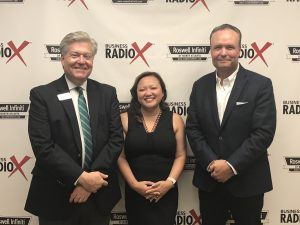
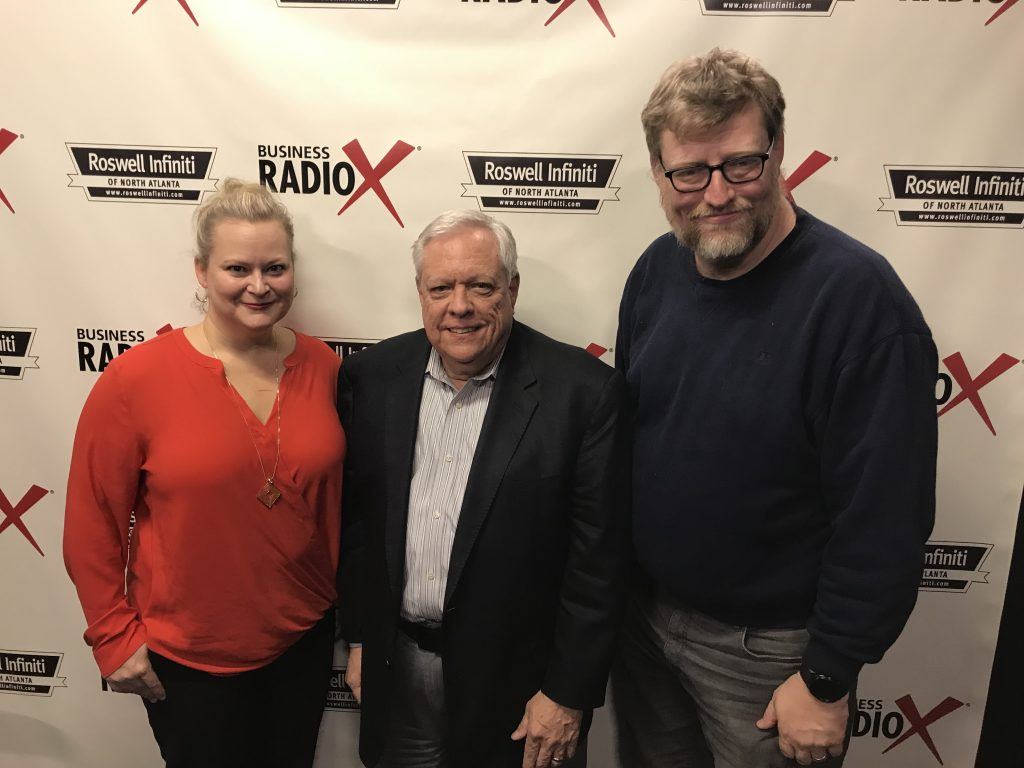
John Ray, Dr. Quynh Do, Frank X. Perissi

“North Fulton Business Radio,” Episode 147:  Dr. Quynh Do, Advancing Your Reach, and Frank X. Perissi, Atomic Wash

On this edition of “North Fulton Business Radio,” host John Ray interviews Dr. Quynh Do, Advancing Your Reach, on how she helps science and medical professionals with their personal branding and career objectives. and Frank X. Perissi, Atomic Wash, on branding, digital marketing, and his charitable work with the Miracle League.

Dr. Quynh Do, Advancing Your Reach

Dr. Quynh Do, Advancing Your Reach

Dr. Quynh Do started Advancing Your Reach with the intent to encourage professional and personal development and growth within a more holistic framework. Dr. Quynh Do is a nationally recognized authority and thought leader in clinical and epidemiological studies. She focuses on guiding health researchers and practitioners on how to utilize their strengths, weaknesses, and passion to intersect research and practice. She has worked with non-profits, government agencies, academic medical centers, and pharmaceutical companies. She provides clients with strategic planning, training, and assessments that are uniquely aligned with the demands of the healthcare industry.

For more information, go to the Advancing Your Reach website or email Dr. Do directly at advancingyourreach@gmail.com.

Frank X. Perissi, Atomic Wash

Frank X. Perissi, Atomic Wash

Responsible for business development at Atomic Wash, Frank X. Perissi brings over 20 years of sales and marketing knowledge assisting great organizations such as American Express, First Data, Moneygram, Opex, and Taylor Corporation. Frank has lead North American teams in the goal of growing our customers revenues in several industries as a VP of Strategic Channel, VP of Sales and Marketing and as a CMO. Frank is highly networked and enjoys paying it forward with great non-profit organizations such as The Kettering Executive Network, where he holds a board seat as an executive officer, and The Miracle League as a VP and board member. Frank is also member of the Hero Club, an organization that believes in the mantra of servant leadership.

To contact Frank directly, email him at fxperissi@gmail.com.


“North Fulton Business Radio” is broadcast from the North Fulton studio of Business RadioX®, located inside Renasant Bank in Alpharetta. Renasant Bank has humble roots, starting in 1904 as a $100,000 bank in a Lee County, Mississippi, bakery. Since then, Renasant has grown to become one of the Southeast’s strongest financial institutions with approximately $12.9 billion in assets and more than 190 banking, lending, wealth management and financial services offices in Mississippi, Alabama, Tennessee, Georgia and Florida. All of Renasant’s success stems from each of their banker’s commitment to investing in their communities as a way of better understanding the people they serve. At Renasant Bank, they understand you because they work and live alongside you every day.

Tagged With: data analytics, digital marketing, digital marketing agency, Dr. Quynh Do, Frank Perissi, Frank X. Perissi, marketing data analytics, medical professionals, medical research professionals, Miracle League, Norcross, personal branding, personal branding for medical professionals, personal branding for science professionals, Quynh Do, science professionals, science research professionals

NORTH ATLANTA’S BIZLINK: GNFCC’s Tech400 Committee with Winford Williams, LexisNexis Risk Solutions, and Ralph Pasquariello, Snellings Walters Insurance Agency

March 19, 2019 by John Ray

North Fulton Studio
North Fulton Studio
NORTH ATLANTA’S BIZLINK: GNFCC's Tech400 Committee with Winford Williams, LexisNexis Risk Solutions, and Ralph Pasquariello, Snellings Walters Insurance Agency
Loading
00:00 /
RSS Feed
Share
Link
Embed

Download file

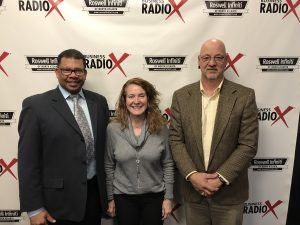
Winford Williams, Kali Boatright, and Ralph Pasquariello

Show Summary

What’s the purpose of the Tech400 Committee of the Greater North Fulton Chamber of Commerce? How do technology companies connect through the activities of this committee? What’s the latest on key technology sectors in North Fulton? This podcast answers these questions and more, as Kali Boatright, CEO of the Greater North Fulton Chamber of Commerce and Host of “North Atlanta’s Bizlink,” interviews Winford Williams and Ralph Pasquariello, Co-Chairs of the Tech400 Committee of GNFCC.

Winford Williams, Senior Director – Software Engineering, LexisNexis, Risk Solutions Division

Winford Williams

Winford Williams is a Senior Director within the Risk Solutions Division of LexisNexis Risk Solutions.  His experience extends developing information products that service the personal auto and property insurance markets domestically and internationally.  A 1985 graduate of DeVry University (Atlanta), Winford began his career in the insurance industry, as a software developer at Policy Management Systems in Columbia, South Carolina.

For the past 30 years, Winford has contributed to the phenomenal growth of the LexisNexis Risk Solutions Division.  He has led the construction of technology solutions that facilitate the underwriting experience for insurance carriers and large data warehousing applications domestically and internationally.

Currently, Winford is the co-chair of the Tech 400 Committee at the Greater North Fulton Chamber of Commerce to help solve the supply and demand gap that exists between corporations and higher learning institutions relative to filling technology jobs.

Ralph Pasquariello, Snellings Walters

Ralph Pasquariello

Ralph Pasquariello of Snellings Walters is dedicated to many things and Cyber Liability Insurance is one of them. Ralph hosts, moderates and speaks at conferences on Cyber Liability & Data Breach Risk Management. Ralph is the Co-Chairman for Tech 400, Chairman of the annual Cyber Symposium, an advisor to the Georgia Tech Research Institute, and also a member of various organizations including the GNFCC, Technology Association of Georgia, and several special interest groups. Ralph also is an associate member of the GA Electronic Crimes Task Force, under the office of the US Secret Service.

Ralph graduated from Villanova University and is active on the Atlanta Villanova Alumni Chapter Board.


About GNFCC and “North Atlanta’s Bizlink”

North Atlanta’s Bizlink is produced by the Greater North Fulton Chamber of Commerce (GNFCC) and is hosted by Kali Boatright, President and CEO of GNFCC. The Greater North Fulton Chamber of Commerce is a private, non-profit, member-driven organization comprised of over 1400 business enterprises, civic organizations, educational institutions and individuals.  Their service area includes Alpharetta, Johns Creek, Milton, Mountain Park, Roswell and Sandy Springs. GNFCC is the leading voice on economic development, business growth and quality of life issues in North Fulton County.

The GNFCC promotes the interests of our members by assuming a leadership role in making North Fulton an excellent place to work, live, play and stay. They provide one voice for all local businesses to influence decision makers, recommend legislation, and protect the valuable resources that make North Fulton a popular place to live.

For more information on GNFCC and its North Fulton County service area, follow this link or call (770) 993-8806.

Tagged With: cyber attacks, cyber liability, cyber security, cyber threats, data, data analytics, data breach, Drones, FinTech, GNFCC, GNFCC Tech 400, GNFCC Tech 400 committee, GNFCC Tech400, GNFCC Tech400 Committee, greater north fulton chamber, Greater North Fulton Chamber of Commerce, Gwinnett Technical College, Kali Boatright, LexisNexis, LexisNexis Risk Solutions, North Fulton economic development, Ralph Pasquariello, Smart Cities, Smart Cities initiative, Snellings Walters, Snellings Walters Insurance Agency, STEM school, talent retention, Tech 400, Tech400, technology in Alpharetta, technology in North Fulton, technology industry in North Fulton, technology sector in North Fulton, technology talent development, The Greater North Fulton Chamber of Commerce, virtual reality, Winford Williams

Decision Vision Episode 5: Should We Use Data Analytics in Our Business? – An Interview with Angela Culver, Mobile Labs, and Micky Long, Arketi Group

March 7, 2019 by John Ray

Decision Vision
Decision Vision
Decision Vision Episode 5: Should We Use Data Analytics in Our Business? - An Interview with Angela Culver, Mobile Labs, and Micky Long, Arketi Group
Loading
00:00 /
RSS Feed
Share
Link
Embed

Download file

Angela Culver, Micky Long, and Michael Blake

Should We Use Data Analytics in Our Business?

It’s a question for which all businesses should have an affirmative answer. Businesses large and small have all the means to collect and store significant amount of data on every aspect on their business. In this interview with Decision Vision host Michael Blake, Angela Culver and Micky Long argue that business success in coming years will be determined by a company’s ability to analyze the data they collect.

Angela Culver, Mobile Labs

Angela Culver

Angela Culver is the Chief Marketing Officer of Mobile Labs.  Since the first install in 2012, Mobile Labs remains the leading supplier of in-house mobile device clouds that connect remote, shared smartphones and tablets to Global 2000 mobile web, gaming, and app engineering teams. The company’s patented GigaFox™ is offered on-premises or hosted, and solves mobile device sharing and management challenges that arise during development, debugging, manual testing, and automated testing. A pre-installed and pre-configured Appium server with custom tools provides “instant on” Appium test automation. GigaFox enables scheduling, collaboration, user management, security, mobile DevOps, and continuous automated testing for mobility teams spread across the globe and can connect cloud devices to an industry-leading number of third-party tools such as XCode, Android Studio, and many commercial test automation tools. For more information please visit www.mobilelabsinc.com.

Micky Long, Arketi Group

Micky Long

Micky Long is Vice President and Practice Director, Lead Nurturing at Arketi Group. Arketi Group is a public relations and digital marketing firm that helps business-to-business technology organizations accelerate growth through intelligent strategy, public relations, messaging, branding and demand generation. Consistently recognized by Chief Marketer magazine as one of the nation’s “B2B Top Shops” and a “Chief Marketer 200” firm, Arketi helps its clients use marketing to generate revenue. Companies benefiting from this approach to B2B marketing include Cox, First Data, Featurespace, Mobile Labs, NCR and Snapfulfil. For more information, call 404-929-0091 ext. 210 or visit www.arketi.com.

Michael Blake, Brady Ware & Company

Mike Blake, Host of “Decision Vision”

Michael Blake is Host of the Decision Vision podcast series and a Director of Brady Ware & Company. Mike specializes in the valuation of intellectual property-driven firms, such as software firms, aerospace firms and professional services firms, most frequently in the capacity as a transaction advisor, helping clients obtain great outcomes from complex transaction opportunities. Mike is also a specialist in the appraisal of intellectual properties as stand-alone assets, such as software, trade secrets, and patents.

He has been a full-time business appraiser for 13 years with public accounting firms, boutique business appraisal firms, and an owner of his own firm. Prior to that, he spent 8 years in venture capital and investment banking, including transactions in the U.S., Israel, Russia, Ukraine, and Belarus.

Brady Ware & Company

Brady Ware & Company is a regional full-service accounting and advisory firm which helps businesses and entrepreneurs make visions a reality. Brady Ware services clients nationally from its offices in Alpharetta, GA; Columbus and Dayton, OH; and Richmond, IN. The firm is growth minded, committed to the regions in which they operate, and most importantly, they make significant investments in their people and service offerings to meet the changing financial needs of those they are privileged to serve. The firm is dedicated to providing results that make a difference for its clients.

Decision Vision Podcast Series

Decision Vision is a podcast covering topics and issues facing small business owners and connecting them with solutions from leading experts. This series is presented by Brady Ware & Company. If you are a decision maker for a small business, we’d love to hear from you. Contact us at decisionvision@bradyware.com and make sure to listen to every Thursday to the Decision Vision podcast. Past episodes of Decision Vision can be found here. Decision Vision is produced and broadcast by Business RadioX®.

 

Visit Brady Ware & Company on social media:

LinkedIn: https://www.linkedin.com/company/brady-ware/

Facebook: https://www.facebook.com/bradywareCPAs/

Twitter: https://twitter.com/BradyWare

Instagram: https://www.instagram.com/bradywarecompany/

Show Transcript:

Intro: [00:00:01] Welcome to Decision Vision, a podcast series focusing on critical business decisions, brought to you by Brady Ware & Company. Brady Ware is a regional, full-service accounting and advisory firm that helps businesses and entrepreneurs make visions a reality.

Michael Blake: [00:00:22] And welcome back to Decision Vision, a podcast giving you, the listener, clear vision to make great decisions. In each episode, we will discuss the process of decision making on a different topic. Rather than making recommendations because everyone’s circumstances are different, we will talk to subject matter experts about how they would recommend thinking about that decision.

Michael Blake: [00:00:41] Hi. My name is Mike Blake, and I’m your host for today’s program. I’m a Director at Brady Ware & Company, a full-service accounting firm based in Dayton, Ohio, with offices in Dayton; Columbus, Ohio; Richmond, Indiana; and Alpharetta, Georgia, which is where we are recording today. Brady Ware is sponsoring this podcast. If you like this podcast, please subscribe on your favorite podcast aggregator, and please consider leaving a review of the podcast as well.

Michael Blake: [00:01:06] And, today, we’re going to talk about making customer data analytics an integral part of your business. And this is a topic that, I think, we’re only, as a community, as an economy, scratching the surface of. American society sort of runs away from math. We kind of run away from numbers. We know what the educational data are out there in terms of our general math capability, but the fact of the matter is, now, if you’re running away from numbers, you’re running away from business. And like it or not, if you want to be successful, you’ve got to get comfortable with data analytics, with data collection, with data science.

Michael Blake: [00:01:52] But that’s an intimidating decision because what I’ve observed – and we have experts here that will say if this is right or not – people are having to fundamentally change how they are thinking about their businesses. They’re changing their business models based on data analytics, and they’ve had to move towards kind of a fact-based, scientifically-driven decision making process that the age of, sort of, the crusty executive that just flies by the seat of their pants and makes gut decisions, takes gut decisions on major points of interests or points of issue, that is rapidly disappearing. So, this is a very interesting topic, a very important topic, and one that I hope that you, as a listener, will listen to very carefully.

Michael Blake: [00:02:37] A little bit of data here. With predictions that by 2020, there will be 1.7 megabytes of data created for every person on earth every second. I’m old enough to remember one when all the data would fit on a half of a megabyte floppy disk. I still have a computer that does that. And now that that data is being created at that rapid rate, there’s no doubt that we’re in the age of data-driven business.

Michael Blake: [00:03:08] Businesses of all sizes, all markets, and all customer types simply must get a handle on the information generated by business transactions, internet behavior, and simple day-to-day activity. Those who understand and find ways to manage this endless and growing data flow will flourish. Those who don’t are destined to drown. And I couldn’t agree with that more.

Michael Blake: [00:03:30] We’re being joined by two guests today. Our first guest, not concurrently, but I’m just going left to right as I sort of see across the microphone, is Angela Culver. Since the first install in 2012, Mobile Labs remains the leading supplier of in-house mobile device clouds that connect remote shared smartphones and tablets to global 2000 mobile web gaming and app engineering teams.

Michael Blake: [00:03:55] The company’s patent of GigaFox is offered on premises or hosted and sells mobile device sharing and management challenges that arise during development, debugging manual testing and automated testing, a pre-installed and pre-configured IPM server with custom tools, provides instant-on IPM test automation. GigaFox enables scheduling, collaboration, user management, security, mobile dev ops, and continuous automated testing for mobility teams spread across the globe and can connect cloud devices to an industry-leading number of third-party tools such as Xcode, Android Studio, and many commercial test automation tools. Angela, thanks for joining us today.

Angela Culver: [00:04:35] Thank you.

Michael Blake: [00:04:36] We’re also being joined by Micky Long of Arketi Group. Arketi Group is a public relations and digital marketing firm that helps business-to-business technology organizations accelerate growth through intelligent strategy, public relations messaging, branding, and demand generation. Consistently recognized by Chief Marketer Magazine as one of the nation’s B2B Top Shops and a Chief Marketer 200 Firm, Arketi helps its clients use marketing to generate revenue. Companies benefiting from this approach to B2B marketing include Cox, FirstData, Featurespace, Mobile Labs, NCR, and Snapfulfil. Micky, thanks for joining us.

Micky Long: [00:05:14] You’re welcome. Glad to be here.

Michael Blake: [00:05:16] So, you guys are tag teaming today. You guys, obviously, had a relationship. Talk about that relationship. How did it start? How are you guys working together?

Micky Long: [00:05:26] You want to go first?

Angela Culver: [00:05:28] So, I actually inherited Arketi. I joined Mobile Labs about four months ago, and they were the agency of hire. I know one of the founders of Arketi. He’s been in my network for quite some time and was, actually, introduced to Mobile Labs through Mike Neumeier. I’m a data-driven marketer. Mike is all about numbers as well. He has built a practice, a marketing agency practice around that. So, there has definitely been synergy. I met Micky about four months ago. And we’ve had a great relationship. He is one of the drivers. I see him and his team as my extended marketing team, and they help me execute almost on daily tasks for what we need to get done.

Micky Long: [00:06:22] Yeah. As you say, we are a company that believes in the data. Everything we do is built around data. And having Angela at Mobile Labs has been really refreshing because with her approach, it really, really works much better than if you’re dealing with an organization that perhaps doesn’t have the same focus and commitment to making the data work for you.

Micky Long: [00:06:40] So, marketing has changed. Marketing over the years goes back to the way — I go back as far as to say I remember the days when marketing and advertising was built around I know that of every dollar I spend, I’m going to waste 50 cents of it, but I just don’t know which 50 cents. Well, those days are really gone. We have the tools, we have the data streams, we have all those things today that we can measure it. We just, now, have to figure out how to put it into practice and make it work.

Michael Blake: [00:07:05] Yeah, that’s a great point. So, I’ve heard that expression before. I mean, that’s just not acceptable anymore to say you’re going to waste 50% of your money, right?

Angela Culver: [00:07:14] Yeah.

Michael Blake: [00:07:14] But it wasn’t that long ago when that was sort of considered acceptable losses, right? But, now, for most well-run businesses, if you tell somebody, “Hey, look, I need $5000. We’ll do well to get 2500 bucks of value of.” You’ll be laughed at out of their office at this point, right?

Angela Culver: [00:07:33] Absolutely.

Michael Blake: [00:07:33] For most mature businesses, right?

Micky Long: [00:07:35] Right.

Michael Blake: [00:07:35] There are others, I’m sure, that haven’t gotten the program yet. So, where’s this data coming from? Data is hitting us from everywhere. I’ve got Amazon Echoes in my house, I’ve got a smart home, I’ve got cameras every place. Pretty much anybody on the planet who wants to know anything about my habits, they know it all, right. Where’s the data that you’re working with coming from?

Angela Culver: [00:08:03] So, we’re inundated with data. It truly is coming from all different sources. Everything that we do is tracked, essentially. My iRobot tracks and mops my house and becomes more intelligent on how it needs to vacuum my floors. Your Echo tracks your behaviors and delivers products to you that is more succinct with what you want.

Angela Culver: [00:08:38] It really is coming from everywhere. We are in a situation where we are living in a world, especially in business, where the mindset is the more data I have, the more I rule the world. And we’re about to take a bit of a shift with this. It’s no longer how much data you have. It’s how you use that data and why you’re using that data. And we’re starting to see that shift happen where our big data is just too big for us to manage and for us to actually use intelligently. And, now, we’ve got to focus on the quality of the data.

Micky Long: [00:09:17] It seems to me it’s kind of gotten to the point now there is so much data available. It’s like living in a library where all the books are in a foreign language.

Angela Culver: [00:09:25] Yes.

Michael Blake: [00:09:26] Right? And there’s so much of it that you cannot possibly use at all. And 20 years ago, companies would be begging for this kind of data. They thought they died and gone to whatever heaven it is they believe in. And, now, it’s an embarrassment of riches. They’re so much coming from all sides. Is it fair to say the first step is kind of wrestling that steer to the ground, and hog tying it, and just trying to organize it?

Micky Long: [00:09:56] I think you have to start with the goals of your own business. And this is where we see because we deal with a lot of companies helping them try to figure this out. And what we typically find is companies start at — Usually, they start at step two or three. And what is missing is the initial step of saying, “Okay, I’ve got all these data streams, but what from a business standpoint do I really want to accomplish with this? What can I do? What do I want to do? Assume I have everything, but what do I want to do?”

Micky Long: [00:10:22] And figure a plan based on that because once you have your strategy, then you can plug in what you’ve got. If you don’t do that, you go back to sort of just thrashing about. And we see a lot of thrashing. Companies have not really mastered that yet. That’s one of the things that we’re working with Angela is to figure out how the process is supposed to work. So, I think that’s the key. That’s the first step you’ve got to look at.

Michael Blake: [00:10:43] So, is there a particular kind of data that you find is the most often overlooked? There’s just a goldmine sitting right there in front of people. They just walk by it every day, not realizing they’re walking past a goldmine.

Angela Culver: [00:10:55] Yes. So, especially in B2B, one of the most overlooked data sources or types of data is emotional and behavior data. From a marketer, we all buy from people. We buy products. And for the longest time in B2B, there was a sense that there was no emotion in the buy. There’s always emotion in the buy because you are buying into a relationship with another organization, and you’ve got an entry point of the person.

Angela Culver: [00:11:28] Tracking that type of information, it’s been difficult. It’s much like unstructured data. We’re inundated today with unstructured data. Figuring out how to manage it is a bit reminisce of about 20 years ago, 15-20 years ago, of how you manage transactional data. Everybody wanted very structured data, non-changing. It stayed essentially in its format and didn’t it morph into something else like transactional data. And, now, we’re looking at that in an unstructured data. But within the unstructured data, the gold mine is understanding how to use the emotional behavior components.

Michael Blake: [00:12:17] All right. So, you said something really cool I want to come back to because I think there’s a very important vocabulary point, but this notion of of emotional data is really fascinating. And I’m in finance, and emotions have finally worked its way into what I do. It’s called behavioral economics or behavioral finance where academics and I are asking, “Well, what if everybody doesn’t make the right decision all the time?” Well, we never thought of that. Well, let’s start thinking about that.

Michael Blake: [00:12:43] Is emotional data, is it as simple as, “It’s 10:00 at night, and I stress eat, so I know I’m going to Taco Bell,” or is it, “I’m more likely to make impulse purchase because I’m depressed or I’m an insomniac. I’m up 2:30 in the morning watching QVC or Home Shopping Network”? Is it as simple as that or is it — Where else does that kind of show up?

Micky Long: [00:13:07] From my perspective, one of the things that is really interesting is you, now, with the tools and the ability, you have the ability to track behavior enough that I’ll eventually know more about you than you know about yourself. So, I know what behavior you take. And we often tell people, and this is somewhat overlooked when you’re looking at just crunching the numbers, if you want to find out what people are about sometimes, one of the easiest ways to is to ask them because from a behavioral standpoint, they’ll tell you. If you ask the right questions, they’ll tell you.

Micky Long: [00:13:35] A lot of companies we work with will do why they won analysis of sales, but what they don’t do is they don’t do the loss sale analysis. They don’t say, “Why did somebody either did not buy my product in favor of somebody else’s or just not buy anything at all?” And knowing that information to balance that scale is critical if you want to drive additional sales from learning what the behavior was that was going on in your prospect’s mind when they made the purchase decision, or they didn’t make a purchase decision.

Michael Blake: [00:14:02] And that requires behavioral changes of itself, right, because a big part of what I do is in sales, and learning a new engagement candidly is an endorphin rush. I like it. I never thought I’d enjoy sales as much as I do because I’m a natural introvert. My wife always says if they ever do a Mars mission, I’m going to be first one. Like I’m going to be a tin can with no way to talk to for seven months.

Angela Culver: [00:14:28] Yeah.

Michael Blake: [00:14:28] I am in. Radiation be damned, but that on the other side, it’s human nature to focus on the positive. But as Bill Gates is famous for saying, “Success is a lousy teacher. It’s learning from the places where you failed,” but that’s hard to do. So [crosstalk].

Micky Long: [00:14:45] I think, you learn more about it from why you failed if you really look at it that way because, again, we all believe that what we’re selling is wonderful, and it solves a problem for people, and what have you, and everybody should buy it, but not everybody does. So, learning why they didn’t is really the key thing. To me, that’s the most interesting data points that you can pull out of things. And, now, with the tools we have, we don’t have to do a one-to-one conversation each time. The behavior is out there for us to kind of measure and pull together. And it makes it much easier.

Michael Blake: [00:15:16] But, as a company or as a decision maker, you’ve got to have the courage to dive into the failure.

Angela Culver: [00:15:23] Absolutely.

Michael Blake: [00:15:23] And I think, Angela, you’ve told me stories about that with people that have basically made that kind of change in terms of their attitudes and approaches to things that it really drives it.

Angela Culver: [00:15:34] Yes. Emotional type of data can be seen as abstract. And I’ve learned over the years, I started off my career in technology and business intelligence, BI tools. And I went through the dot com boom, and then immediately the bust. And I realized very quickly that in order to keep my job, I had to become a data scientist. And then, I had to teach my team and my customers how to be that as well. One thing I realized is that marketing has really started taking this shift.

Angela Culver: [00:16:10] I seem to take it probably a little earlier than most folks, but, now, everyone needs to be a data scientist in marketing. And I use the scientific, basically, approach. I create a hypothesis, I formulate what my end result is going to be, I use math to manage and monitor that result that I’m anticipating. And with emotional behavior data, you’ve got to do the same thing. You’ve got to understand how you’re going to use it to make business decisions, and you’ve got to put a stake in the ground to start with. I find that a lot of people find this intimidating initially until they start working through this process. And it is all about a process, putting a process in place.

Michael Blake: [00:17:02] So, you mentioned something a little while back, but I think it’s important vocabulary, structured versus unstructured data.

Angela Culver: [00:17:09] Yes.

Michael Blake: [00:17:09] What does that mean? What is the difference?

Angela Culver: [00:17:11] So, unstructured data would be e-mail, or Slack messages, or Instagram feeds, or video content where you’re — I’m going to throw another word out there, where you’re managing it through metadata, which is essentially data about data. You’re giving a description. But the core information content is not in a table column field format that’s easy to search on. You’re doing more of a, I would say, free-form find and search.

Micky Long: [00:17:52] And the tools are getting better. And there’s a lot of the — We’re starting to see the prominence of artificial intelligence coming into data management and things like that that are giving us the ability to sort of go after this unstructured data and start to pull it together in ways that we didn’t have before. But it’s still early stage on that. But it’s a matter — You still have to do both because there’s a lot of unstructured data that factors into the process that you’ve got to consider.

Michael Blake: [00:18:15] And that unstructured data has a lot of really cool stuff. It’s harder to use because it’s unstructured. But like so many things, the thing that’s most valuable requires the most effort to monetize. So, yeah, I suspect almost anybody who’s listening to this podcast has read an article, Harvard Business Review, McKinsey Quarterly, whatever it is, you got to get on data. You got to get on data. Does that apply to any sized company? Like if I’m a small, three-person, graphic design shop, do I need to get on top of data, or is this something that only applies to the NCRs of the world, the Coxes of the world, and so forth?

Angela Culver: [00:19:02] Yes. Everybody needs to have an understanding of their data. You’re not too small. You’re definitely not too big. The biggest challenge I’ve seen over the course of my career is that companies start too late. They start during a growth acceleration period. And at that point, they don’t have the historical data captured to help them make decisions to properly forecast on growth. How many leads they need to have? How many leads turn into sales opportunities that, then, turn into closed one? They’re having to back step, and capture the data, and hoping that their intuition is going to guide them in the right direction while they’re going through growth acceleration.

Angela Culver: [00:19:50] So, I believe you start the minute that you open your company doors. Do you have to have so much sophisticated technology? No. You can start with a spreadsheet, but you have to have a plan. That’s the number one thing that you have to go to the table with is having a data management plan. And you need to be looking at where you need to go two quarters from now, but also a year from now, versus five years, so that you can grow and manage your data strategy according to the company growth.

Michael Blake: [00:20:27] It’s a whole lot easier when you’re small.

Angela Culver: [00:20:29] Yeah.

Micky Long: [00:20:30] Yeah.

Michael Blake: [00:20:30] … than when you get bigger.

Micky Long: [00:20:30] That’s right. It really is. And so, if you get the right things, it’s like a lot of other things, if you set the discipline up on the early stage, and you put the processes in place that are going to drive it, it’s a whole lot easier than trying to come back and backfill as Angela mentioned when you get larger or when you’re going through a growth stage. That’s a challenge.

Michael Blake: [00:20:50] I don’t know this for sure, but it makes intuitive sense. As you grow the data inflows become exponentially greater, right? And it’s just it’s harder to wrestle that loose firehose off the ground and do something with it. You haven’t developed habits. And then, I’m guessing, I do a lot of work with startups, when you do hit that high growth, when you haven’t put in that discipline of data analytics yet, it’s hard to kind of stop and make yourself do that when you have five prospects wanting to get a proposal right away, right?

Angela Culver: [00:21:22] Absolutely.

Michael Blake: [00:21:22] And the next thing you know, it just never gets done. Until then, it becomes such a big problem you can never tackle, right?

Micky Long: [00:21:27] Yeah. Let me give you a really, really quick example of what you were just talking about. A lot of companies spend a good bit of time trying to make sure they capture their information about prospects into a program like Salesforce. If they don’t have the discipline set up on the early stage to identify, “How are we going to manage the titles of these prospects that we’re using or the functions of these prospects?” and they allow that to go on for a while, you could end up-

Michael Blake: [00:21:54] We had a client, for example, and a couple of years back that will remain nameless that when we went in to try to find out how to segment to do a better job of marketing, they had 375 different types of titles in their Salesforce program because they never forced their salespeople to consolidate. So, if I was the vice president of stuff in my organization, that’s what went into Salesforce. But the vice president of stuff is not really something that you could really sort on.

Micky Long: [00:22:24] So, the reality is as it gets larger, and as your database gets larger, this company had 100,000 people in their database when we started to look at this. It was a phenomenal problem, a very expensive problem to fix. So, if you start early, and put the discipline process in place early, when you have 25 people or 100 people, it’s a whole lot easier to deal with.

Michael Blake: [00:22:45] Yeah. Our firm is a case study as well. We’re starting to go back now and trying to understand basic things about our clients. What industries are they in? And can we associate them with [makes] codes, so we can start doing some kind of categorization, and some geographic analysis, and income levels, very basic stuff.

Michael Blake: [00:23:05] But we’ve been in business 60 years. The easiest thing to do is to cache that stuff and make people put that on the client intake form. But then, you try to go back and capture. You’re trying to ask a partner who’s building it 400 bucks an hour, and it’s busy tax season. Like, “Hey, can you verify these 80 different clients?” Like, “No, I can’t. I mean, I understand you need this data, but I’m not going to tell — which client do I tell their tax return doesn’t get filed because I’ve responded to your data request.” It’s because 65 years ago, nobody thought about this. But, now, we have to go back. It does become 10 times harder.

Michael Blake: [00:23:42] But let’s say you do have a clean slate, and start a company called Donut Shop. What’s the most — What are the pitfalls or how do I get started? Sorry, this. How do I get started doing that, right? I think about data, open the door day one. What’s my to-do list?

Angela Culver: [00:24:04] So, I always advise people to start with the company goals. What are your company goals? What are you trying to achieve within this first calendar year? And then, how do you need to make those decisions whether it’s successful, failure, or neutral? And then, from there, start building an alignment with the type of data that you need to help you manage to those goals.

Angela Culver: [00:24:35] Data is not the only thing that you’re using as a resource, but it should be one that allows you to create predictability. Most of our data is still historical. So, if you’re just starting, then you really need to identify your company goals, so that you can start mapping. And a lot of times, I advise people to start with a free technology. Start with a spreadsheet and just start identifying some of those metrics that will help you move towards that.

Angela Culver: [00:25:09] Being in marketing, I focus more on that. So, I’m looking at, what is it going to cost me to acquire a customer? What’s my cost per lead? What are my retention rates? How many products am I selling by month, by quarter? Do I have any slow periods? What is the actual selling price on average, and the time for payback as well? Not just marketing but overall cost of the company. Those are some fundamentals that I look at initially. As you drill down, you’ll see that you have website metrics that roll up to that. You’ll have advertising metrics that roll up to that. But it all starts with company goals. Micky, what do you think?

Micky Long: [00:25:59] Yeah, you have to have them. And the other part of this is you can’t go too far too fast. What I mean by that is you have to — I would say the way I would put it is you have to figure out the appetite of your company for this because if you try to bite off too much and go way down the path, you’re not going to win. You’re not going to be able to do it, and you get frustrated, and somebody’s going to throw up their hands and say, “Well, that was a wasted exercise.” And it isn’t. It’s just that you tried to do too much. So, the idea of having a plan based on your business goals and taking steps along the way, so you create milestones is really the way to sort of do it in stages, so that you’re not trying to eat the elephant all at one time. So, that’s an important consideration.

Michael Blake: [00:26:40] So, there’s something to be said about being incremental and that-

Angela Culver: [00:26:42] Yes.

Micky Long: [00:26:42] Absolutely, absolutely.

Michael Blake: [00:26:43] Otherwise, you’re so intimidating, like, “Yeah.” You’re just sort of-.

Micky Long: [00:26:44] And if you try to do too much too fast, this is where you run into problems with something that nobody from the marketing side, anyway, wants to hear about, which is the data quality issues. So, that’s a real problem for clients now, for companies that are trying to deal with this because as the data flow comes in, and this data gets into their systems, if it’s not set up right the first way, if it’s not cleaned regularly, what you’re going to end up with is the dirty data issue, which costs companies millions of dollars to sort of struggle through. And that’s a big problem that it’s out there because if you run it too fast, you’re not going to have the discipline to sort of figure it out.

Micky Long: [00:27:22] So, I could be in your system as Micky Long, Micky L. Long, M. Long, or something else, and how do you know it’s all the same person? So, if you don’t have those things figured out, the tools and the processes, you’re not going to get there. So, you really have to make sure that you put the emphasis on ensuring that the data that you have in your system is clean. That’s a big consideration.

Michael Blake: [00:27:44] And the data collection itself, I think, to a degree, needs to be non-intrusive too, right? I’m old enough to remember RadioShack. And RadioShack used to be able to get cool stuff. I want to fix my TV, I want to get a remote-controlled car, you go to RadioShack. But, golly, the thing I always dreaded was that they would insist on taking my phone number every time I went in. Every time, which meant they took it. So, they wanted it, presumably, to know the geographic distribution of their customers, but they never hung onto it. There’s nothing — And, I think, the technology is not available that there is a central database to which they could connect, right?

Michael Blake: [00:28:30] If you think about it, if we had that barrier to kind of mechanically cough up our data every time we bought something, we’d never buy anything. We’d all live on some sort of agricultural economy and just share things with each other because the time costs of going into Kroger, and share, and getting our blood drawn is just not worth it, right?

Angela Culver: [00:28:49] Yeah.

Micky Long: [00:28:50] But the reality of that is I often had this this conversation with my kids, there is more data about you, and there are more people out there that know more about you than you’ll ever imagine. So, we’ve given up a lot of our data freedom, if you will, because of the exchanges we made. So, the reality in my mind is it’s there. Why can’t companies put it together and make sense of it? So, why can’t I walk into a Publix or a Kroger, and as I’m walking down the aisle with my mobile phone, have them immediately start feeding me offers about the dog food that I bought last time I was in the store or the competitor’s dog food with a special opportunity to try it?

Michael Blake: [00:29:29] All of that exists. All of that data is there at all of the stores. This is what Angela’s company does is help companies with these mobile applications. So, the applications are there. The data streams are there. Why haven’t they put it together? That’s, I guess, the big question is, why haven’t they figured out how to join A to B to create a really strong environment? Because they build better customer interactions that way, along with higher revenue.

Michael Blake: [00:29:54] Is part of it because maybe the data tools themselves are just prohibitively expensive, intimidating?

Angela Culver: [00:30:01] So, intimidation is probably one key. So, if we just look at MarTech alone, in 2018, there were over 8000 types of technology in this space. So, if you look at the Loomis Escape, you need a magnifying glass to actually see the logos now on the sheet. About five years ago, I think, we were at about 600 companies. So, the space has grown considerably. So, there’s more options than you know what to do with.

Angela Culver: [00:30:33] And a lot of companies start with, “Okay. I’ve got this huge dataset. I know I have all the answers in this dataset. So, I need to run out and buy the technology to support that, and be able to mine it, and digest it.” The problem is they start with the how. They go out and buy this complex system, multiple systems, integrated together, but they never really understand why they’re doing it and what they’re trying to solve for.

Angela Culver: [00:31:03] So, they put in these systems. They’ve got the technology to find the answer, but they don’t know what the answer they’re looking for. So then, they start breaking it apart and going backwards. So, we see this shift in companies quite a bit just because they didn’t start with the plan initially to figure out what they wanted. So, if I went into a grocery store, and they had an aisle that said, “Angela, here’s all the products you want. And this is what you typically buy,” or they packed my bags for me, they have all that information, and they could manage that if they wanted to create that type of a customer experience for their customers.

Micky Long: [00:31:50] Amazon’s doing it. You look at what Amazon does. When you go to Amazon, you buy something from Amazon. And so, for the next lifetime, you’re going to get recommendations from Amazon based on the products you’re buying. So, they’re using that same kind of technology with the data from previous sales to give you a better user experience. And that’s what it’s all about is trying to make the user feel more comfortable, more personal, and more engaged with the brand of the company.

Micky Long: [00:32:14] And that goes across, I think, companies from the three-person company that starting out as a very boutique-oriented company to a large organization. It’s trying to just keep things going in the middle of the road. So, whether you’re large or small, you really want to build that brand. So, it’s all about customer experience.

Michael Blake: [00:32:32] Now, there’s the tool out there. And that makes sense. I mean, if you have a mismatch tools, it’s like buying a Tesla. And then, all of a sudden, realizing you really like to do off-road stuff, and you think it’s the Tesla’s fault, right.

Angela Culver: [00:32:45] yeah.

Michael Blake: [00:32:46] Well, it’s not. You just you didn’t buy a truck. So, the other side of the coin is the skills, right?

Angela Culver: [00:32:54] Right.

Michael Blake: [00:32:54] Not everybody has taken a course in statistics. And many who did like me 20 years ago in my MBA diploma’s in a caved wall in France someplace, I don’t necessarily remember it. How do you get up to speed or how do you hire for that, find somebody that can make sense of that data and interpret it in a way that becomes useful business information?

Angela Culver: [00:33:16] So, when I’m hiring someone into a marketing operations role, which is traditionally where my data scientists, or analytics person or persons would sit, I am looking for someone that has a science and math mind, and they have a natural curiosity to solve problems with numbers. They’re usually linear in thought, but they’re very flexible to creative ideas. So, they’re a bit different than a financial person that you would see doing accounting or working in the finance department. But I found if — I have discovered that if I find someone that has a knack for science and really likes math, then they can learn the technology and be successful in this job.

Micky Long: [00:34:12] I think, you got to find somebody — Forgive the term. You have to find some that’s a little geeky, somebody that really gets excited over data, the kind of person that kind of runs out of their office and says, “Look what I found,” when they put these two things together, but they really have to I think have a passion for it because if you really want to see what the insights are, you’re looking for something, as you said for that, you want that curiosity, that deep curiosity that says, “If I put A and B together with 1 and 4, what I’m going to show you is this is something you never thought of before, and this is going to help drive our business in a different direction or a different way.”.

Micky Long: [00:34:43] To me, that’s nirvana. That’s what you really want to get out of this is to be able to take these things together in ways people haven’t thought of and say. “That’s going to put us in a new direction. That’s going to really, really light some fires under the sales team to get some high revenue coming in.” And it happens every day. You just have to have the right people.

Michael Blake: [00:35:00] And that sounds a lot like what Angela was describing in terms of that like hybrid of flexibility and linearity. You need the flexibility and creativity to ask the right questions, but then the linearity to answer the question in a process-driven way-

Angela Culver: [00:35:13] Absolutely.

Michael Blake: [00:35:14] … so, that the statistics are meaningful? right?

Angela Culver: [00:35:16] Yes.

Michael Blake: [00:35:16] If we don’t do that, then you get gobbledygook basically.

Micky Long: [00:35:19] Right.

Michael Blake: [00:35:24] What do most companies miss? What are companies most missing out on in data management? What do you think is the most frequent opportunity or biggest opportunity they’re missing out on?

Angela Culver: [00:35:33] I think to go back to when they get started, I think that is a miss that I see quite a bit in a lot of companies where they’re starting too late. They don’t set it as a priority earlier in the business when it can have a huge impact. They’re not treating data as an asset from day one. And that’s a potential mess.

Micky Long: [00:36:02] Yeah. I see two things. Number one, they take the approach that’s incorrect, which is that this is a marathon, it’s not a sprint. You have to be able to do this and have the discipline to do this over the long haul, and not do this as, “Oh, let’s try this for a couple of months. And if it doesn’t quite work, we’ll go back and do something else.” That’s one thing.

Micky Long: [00:36:18] And the other thing is it’s not a marketing exercise for the most part, it’s a revenue exercise, which means you can’t just sort of take the data streams coming in and say, “That’s the prevalence of the marketing organization.” You’ve got to join marketing and sales together for this thing to really work. And that’s something that is still a challenge.

Micky Long: [00:36:36] I remember back in the day when marketing automation tools first started. It was supposed to be the answer to all of our prayers. It was going to be marketing and sales were now, finally, going to get together, and sing Kumbaya around the campfire, and we’re all going to do everything together. And we’re still trying to put marketing and sales people together. And it’s been at least 10 years since that started. So, why has that not happened? It’s because we still have issues. They’re the people issues. They’re not tool issues.

Micky Long: [00:37:00] So, the reality of it is you’ve got to look at this thing holistically and say, “It’s a business issue, not so much that.” So, that’s what people miss, in my mind, that are big things that they don’t look at. It’s the integration.

Michael Blake: [00:37:10] So, do you have a favorite data success story, something really wonderful, spectacular you’ve found that you just did not expect to find in a data exercise?

Angela Culver: [00:37:20] I have two actually. I was working for a company a few years back, and part of what I was hired to do was to increase the brand equity of the company in a relatively short period of time. And when I got into the company, the brand colors were predominantly green and red. And after looking at the customer base, I realized that 80% were male, most of them were between the age of 35 to 50, and 1:10 were color blind, red/green colorblind. So-

Michael Blake: [00:37:59] Oh, yeah. I’ve heard of that statistic. Yeah.

Angela Culver: [00:38:00] Yeah. So, our ads, the call to action were either highlighted in red or green. And the company was losing almost a half a million dollars in advertising cost due to the end user not being able to see the call to action. So, I went into the leadership team, said, “We need to change the brand colors,” presented my data, and within seconds had the approval to change the brand colors. I changed from red/green to essentially green/yellow, citron. And we immediately saw an uptick in the brand value. We went from about 16% to a 25%, which is unheard of, especially with a tech company. So, I wouldn’t have been able to do that without the data.

Micky Long: [00:39:03] So, I can give you one that’s a really simple one hasn’t having to do with database size and the quality of data we talked about before. I had a client that had a base of 100,000 people, and they were doing the classic marketing e-mails and things like that to try to get them in place, and they were having miserable returns, miserable e-mail open rates, and all those statistics you look at. So, what we did was we started doing an analysis. And what we found was there was a large group of these 100,000 that had never opened an email, had never engaged with it, and had never done anything for them.

Michael Blake: [00:39:36] So, what we tried was something very revolutionary for that company, which is we said, “Let’s ignore that 75,000 people in your database that have never touched anything. Just don’t send e-mail to them. Don’t think about them when you’re crafting your messages, and concentrate only on that smaller group, and really refine that smaller group to see what we could do.”.

Michael Blake: [00:39:56] And as you might expect, what’s happening is the company is now seeing a tremendous return on the investment against that smaller group of people. And, now, with better messages and better approaches, they can start to expand out to other people that are like that. And the 75,000 that never did anything, they still sit there, and we don’t do anything with them.

Michael Blake: [00:40:14] So, the reality is it’s a matter of concentrating on the people that are likely to do something and ignore the ones that don’t. And I would predict that most companies, if not all companies, have that same situation in place.

Angela Culver: [00:40:25] We have been dealing with email within our support group. We track at mobile apps, all our support tickets. And we actually get a little worried if we’re not receiving support tickets from our customers because, typically, they’re not using the product daily. One set of support tickets we’ve realized has helped us educate and improve the functionality of the product. So, within our product, we use iPads, telephones, mobile devices. They come in at all different versions. So, you’ll have an iPhone 6, an iPhone 8, and they’re plugged in 24 hours a day.

Angela Culver: [00:41:15] After a certain period of time, you will start seeing battery bloating. And it will slow down the performance of actually testing a mobile application on one of those devices. So, through our support tickets, we started seeing that customers were complaining about battery bloating. So, we actually started sending out information in advance. We knew if they were a customer for six months, and that they were constantly plugged in, that they were most likely going to start seeing deterioration of devices. And we’ve been able to counterattack that through putting out more educational information through emails; where in the past, we would send out promotional materials and emails, and they weren’t getting it, they didn’t want it, but this educational material is actually helping them improve the performance of the product overall. And in the end, it has an impact on retention rates, customer churn. So-

Michael Blake: [00:42:14] Sure, it makes sense. So, okay. So, we’ve talked through a lot of topics here. Some of our listeners are thinking, “Okay, I’m sold. I got to make data part of my business,” where do they start? What’s the what’s the first thing on their to do-list?

Angela Culver: [00:42:32] Start with the goals, set realistic expectations. So, like what Micky has said, you don’t want to try to boil the ocean. Start with what your company can tolerate. So, understanding that if you’re going to set up a marketing data hub, and you need to utilize sales information, understand what the tolerances from your sales team. Putting over 50 required fields in Salesforce for them to fill out every time they have a prospect come in probably might be over their risk tolerance or their ability to handle that initially. Maybe start with five fields if you’re just starting to input data and utilize data. So, setting up expectations would definitely and setting goals would be my first.

Micky Long: [00:43:34] Mine would be just do it. Just stop talking about it, stop thinking about it, stop reading about it. Just go do something because even if the first thing you do isn’t 100% correct, it’s going to get you further than if you just start reading whitepapers about, “Look, I get this data under control.” And that’s what we see is just that inertia is what stops a lot of people because they start looking at all the downsides to it. Just go do it is really what I would recommend.

Michael Blake: [00:44:00] Just rip the Band-Aid off.

Micky Long: [00:44:01] Just rip the Band-Aid off and just go for it.

Michael Blake: [00:44:04] Okay. So, all right. So, again, a lot to unpack here. We’ve only scratched the surface. We could easily make this a three-hour podcast, but not everybody would listen for three hours. So, if somebody wants to learn more, can they contact you and ask you some questions?

Angela Culver: [00:44:21] Absolutely.

Michael Blake: [00:44:21] Would that be okay?

Micky Long: [00:44:21] Sure.

Michael Blake: [00:44:21] So, Angela, why don’t you go first? If somebody wants to ask you about your experience with this, ask you some advice, how would they contact you?

Angela Culver: [00:44:28] So, you can definitely contact me via LinkedIn. That’s my name, Angela Culver, Mobile Labs. Also, my email, angela.culver@mobilelabsinc.com.

Micky Long: [00:44:41] And likewise, my LinkedIn profile is out there for prevalence. And my email is really, really simple. It’s mlong@arketi.com.

Michael Blake: [00:44:53] Okay. Gone are the days, the long strings with nine different numbers behind the at symbol, right? So, thank goodness for that. That’s going to wrap it up for today’s program. I’d like to thank Angela Culver and Mickey Long from Mobile Labs and Arketi Group respectively so much for joining us and sharing their expertise with us.

Michael Blake: [00:45:13] We’ll be exploring a new topic each week, so please tune in so that when you’re faced with your next business decision, you have clear vision when making it. Again, if you enjoy this podcast, please consider leaving a review with your favorite podcast aggregator. It helps people find us, so that we can help them. Once again, this is Mike Blake. Our sponsor is Brady Ware &c Company. And this has been the Decision Vision Podcast.

Tagged With: customer data, customer data analytics, data analytics, data collection, data flow, Data Management, data science, Dayton accounting, Dayton business advisory, Dayton CPA, Dayton CPA firm, marketing, mobile applications, mobile devices, stored data, structured data, unstructured data

Steve Jeffery & Christina Ellwood, Brickstream 7/10/2013

July 15, 2013 by angishields

Booth-61-with-Steve-Jeffery-and-Christina-Ellwood-7-10-2013
Booth 61 with Ricky Steele
Steve Jeffery & Christina Ellwood, Brickstream 7/10/2013
Loading
00:00 /
RSS Feed
Share
Link
Embed

Download file

Booth 61 with Steve Jeffery and Christina Ellwood 7 10 2013Delightful and insightful conversation on July 10th with Mr. Steve Jeffery, CEO of Brickstream and Christina Ellwood, Vice President of Marketing. Steve is an entrepreneur’s entrepreneur having taken two early stage companies public and is currently leading Brickstream into great growth and expansion. Brickstream is all about Big Data and Analytics for retail stores and other gathering points for large numbers of people including stadiums and transportation portals.

Steve and Christina opened my eyes to a new dimension in data collection. I am confident that Brickstream is a company you will be hearing more about in the near future. Dig deeper at www.brickstream.com

Tagged With: data analytics, Hunter Technical Resources, retailers, Ricky steele, Steve Jeffery, TAG, technology entrepreneurs

  • « Previous Page
  • 1
  • 2

Business RadioX ® Network


Our Most Recent Episode

CONNECT WITH US

  • Email
  • Facebook
  • LinkedIn
  • Twitter
  • YouTube

Our Mission

We help local business leaders get the word out about the important work they’re doing to serve their market, their community, and their profession.

We support and celebrate business by sharing positive business stories that traditional media ignores. Some media leans left. Some media leans right. We lean business.

Sponsor a Show

Build Relationships and Grow Your Business. Click here for more details.

Partner With Us

Discover More Here

Terms and Conditions
Privacy Policy

Connect with us

Want to keep up with the latest in pro-business news across the network? Follow us on social media for the latest stories!
  • Email
  • Facebook
  • Google+
  • LinkedIn
  • Twitter
  • YouTube

Business RadioX® Headquarters
1000 Abernathy Rd. NE
Building 400, Suite L-10
Sandy Springs, GA 30328

© 2025 Business RadioX ® · Rainmaker Platform

BRXStudioCoversLA

Wait! Don’t Miss an Episode of LA Business Radio

BRXStudioCoversDENVER

Wait! Don’t Miss an Episode of Denver Business Radio

BRXStudioCoversPENSACOLA

Wait! Don’t Miss an Episode of Pensacola Business Radio

BRXStudioCoversBIRMINGHAM

Wait! Don’t Miss an Episode of Birmingham Business Radio

BRXStudioCoversTALLAHASSEE

Wait! Don’t Miss an Episode of Tallahassee Business Radio

BRXStudioCoversRALEIGH

Wait! Don’t Miss an Episode of Raleigh Business Radio

BRXStudioCoversRICHMONDNoWhite

Wait! Don’t Miss an Episode of Richmond Business Radio

BRXStudioCoversNASHVILLENoWhite

Wait! Don’t Miss an Episode of Nashville Business Radio

BRXStudioCoversDETROIT

Wait! Don’t Miss an Episode of Detroit Business Radio

BRXStudioCoversSTLOUIS

Wait! Don’t Miss an Episode of St. Louis Business Radio

BRXStudioCoversCOLUMBUS-small

Wait! Don’t Miss an Episode of Columbus Business Radio

Coachthecoach-08-08

Wait! Don’t Miss an Episode of Coach the Coach

BRXStudioCoversBAYAREA

Wait! Don’t Miss an Episode of Bay Area Business Radio

BRXStudioCoversCHICAGO

Wait! Don’t Miss an Episode of Chicago Business Radio

Wait! Don’t Miss an Episode of Atlanta Business Radio