Business RadioX ®

  • Home
  • Business RadioX ® Communities
    • Southeast
      • Alabama
        • Birmingham
      • Florida
        • Orlando
        • Pensacola
        • South Florida
        • Tampa
        • Tallahassee
      • Georgia
        • Atlanta
        • Cherokee
        • Forsyth
        • Greater Perimeter
        • Gwinnett
        • North Fulton
        • North Georgia
        • Northeast Georgia
        • Rome
        • Savannah
      • Louisiana
        • New Orleans
      • North Carolina
        • Charlotte
        • Raleigh
      • Tennessee
        • Chattanooga
        • Nashville
      • Virginia
        • Richmond
    • South Central
      • Arkansas
        • Northwest Arkansas
    • Midwest
      • Illinois
        • Chicago
      • Michigan
        • Detroit
      • Minnesota
        • Minneapolis St. Paul
      • Missouri
        • St. Louis
      • Ohio
        • Cleveland
        • Columbus
        • Dayton
    • Southwest
      • Arizona
        • Phoenix
        • Tucson
        • Valley
      • Texas
        • Austin
        • Dallas
        • Houston
    • West
      • California
        • Bay Area
        • LA
        • Pasadena
      • Colorado
        • Denver
      • Hawaii
        • Oahu
  • FAQs
  • About Us
    • Our Mission
    • Our Audience
    • Why It Works
    • What People Are Saying
    • BRX in the News
  • Resources
    • BRX Pro Tips
    • B2B Marketing: The 4Rs
    • High Velocity Selling Habits
    • Why Most B2B Media Strategies Fail
    • 9 Reasons To Sponsor A Business RadioX ® Show
  • Partner With Us
  • Veteran Business RadioX ®

Decision Vision Episode 174: Should I Fight the IRS? – An Interview with Bruce Wood, Brady Ware Arpeggio, LLC

June 23, 2022 by John Ray

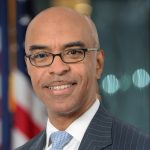
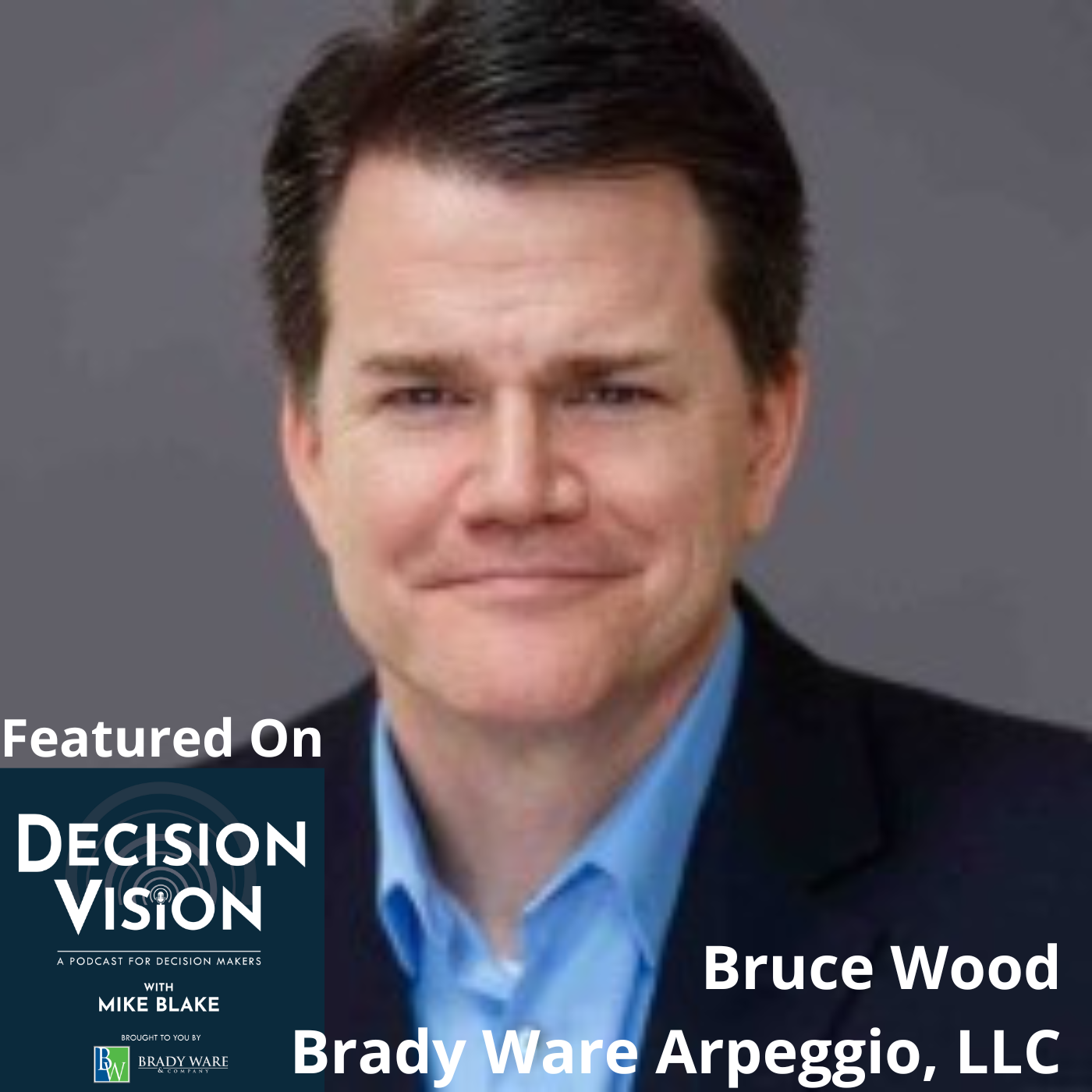
Bruce Wood
Decision Vision
Decision Vision Episode 174: Should I Fight the IRS? - An Interview with Bruce Wood, Brady Ware Arpeggio, LLC
Loading
00:00 /
RSS Feed
Share
Link
Embed

Download file

Bruce Wood

Decision Vision Episode 174: Should I Fight the IRS? – An Interview with Bruce Wood, Brady Ware Arpeggio, LLC

The decision to dispute, negotiate or litigate with the IRS is a difficult one, given its reputation and power. Bruce Wood, a principal at Brady Ware Arpeggio, is a business appraiser specializing in tax issues and a former CPA tax advisor. He and host Mike Blake looked at many of the considerations surrounding a tax issue with the IRS, from how to avoid them in the first place through how your returns are prepared, to what to expect from an IRS agent, the importance of having a professional interface with the IRS for you, the appeals process, the costs of litigating, and much more.

Decision Vision is presented by Brady Ware & Company and produced by the North Fulton studio of Business RadioX®.

Brady Ware Arpeggio, LLC

At BWA, they value your business – literally. They recognize the gravity and complexities of decisions facing individuals and businesses, and that bad decisions are often consequential and difficult to repair. BWA’s evidence-based decision systems enable businesses and their owners & executives to avoid pitfalls and blunders and accordingly successfully capture value opportunities more effectively than via mundane approaches to decision making.

They ultimately deliver decision clarity and confidence in decision-making based on well-analyzed, relevant data. Brady Ware’s team consistently delivers decision clarity via our proven processes for evaluating critical decisions. This unique insight to help make decisions has a profound impact on the result. Incorporating this decision process creates an advantage from what used to be pain points and barriers.

Company website | LinkedIn

Bruce Wood, Principal, Brady Ware Arpeggio, LLC

Bruce Wood, Principal, Brady Ware Arpeggio, LLC

Bruce’s business appraisal practice focuses primarily on tax-specific areas such as: (1) Tax Controversy – executing business appraisals and litigation support in United States Tax Court cases, as well as settlement efforts between the IRS and taxpayer, under the direction of tax and estate litigation attorneys from national and local law firms. These cases most often arise out of IRS audits of estate, gift, and trust tax returns, as well as IRS challenges of C corporation reasonable officer compensation, etc. (2) Estate, Gift and Trust Tax & business transactions -planning and compliance. Closely held businesses (S corp, C corp, LLC, and family limited partnership issues), M&A, etc.

Bruce brings over 30 years of experience to the marketplace, spending the last 20 years in business appraisal after 12 years as a CPA/tax adviser. Often faced with decisions or situations impacting the value of a transaction or business, Bruce helps navigate the complexities of those situations. He has helped in industries such as meat processing, professional services, manufacturing, distribution, food service, mining, technology, retail, and other business sectors.

While he can assist clients nationwide, most of his career has been spent in and throughout the Atlanta metropolitan area including Atlanta’s southside. With an exceptional network of contacts, Bruce can also help clients connect with other areas of expertise such as within the legal community.

LinkedIn

Mike Blake, Brady Ware & Company

Mike Blake, Host of the “Decision Vision” podcast series

Michael Blake is the host of the Decision Vision podcast series and a Director of Brady Ware & Company. Mike specializes in the valuation of intellectual property-driven firms, such as software firms, aerospace firms, and professional services firms, most frequently in the capacity as a transaction advisor, helping clients obtain great outcomes from complex transaction opportunities. He is also a specialist in the appraisal of intellectual properties as stand-alone assets, such as software, trade secrets, and patents.

Mike has been a full-time business appraiser for 13 years with public accounting firms, boutique business appraisal firms, and an owner of his own firm. Prior to that, he spent 8 years in venture capital and investment banking, including transactions in the U.S., Israel, Russia, Ukraine, and Belarus.

LinkedIn | Facebook | Twitter | Instagram

Brady Ware & Company

Brady Ware & Company is a regional full-service accounting and advisory firm which helps businesses and entrepreneurs make visions a reality. Brady Ware services clients nationally from its offices in Alpharetta, GA; Columbus and Dayton, OH; and Richmond, IN. The firm is growth-minded, committed to the regions in which they operate, and most importantly, they make significant investments in their people and service offerings to meet the changing financial needs of those they are privileged to serve. The firm is dedicated to providing results that make a difference for its clients.

Decision Vision Podcast Series

Decision Vision is a podcast covering topics and issues facing small business owners and connecting them with solutions from leading experts. This series is presented by Brady Ware & Company. If you are a decision-maker for a small business, we’d love to hear from you. Contact us at decisionvision@bradyware.com and make sure to listen to every Thursday to the Decision Vision podcast.

Past episodes of Decision Vision can be found at decisionvisionpodcast.com. Decision Vision is produced by John Ray and the North Fulton studio of Business RadioX®.

Connect with Brady Ware & Company:

Website | LinkedIn | Facebook | Twitter | Instagram

TRANSCRIPT

Intro: [00:00:02] Welcome to Decision Vision, a podcast series focusing on critical business decisions brought to you by Brady Ware and Company. Brady Ware is a regional, full service accounting and advisory firm that helps businesses and entrepreneurs make visions a reality.

Mike Blake: [00:00:23] Welcome to Decision Vision. A podcast giving you, the listener, clear vision to make great decisions. In each episode, we discuss the process of decision-making in a different topic from the business owners or executives’ perspective. We aren’t necessarily telling you what to do, but we can put you in a position to make an informed decision on your own and understand when you might need help along the way.

Mike Blake: [00:00:43] My name is Mike Blake, and I’m your host for today’s program. I’m the managing partner of Brady Ware Arpeggio, a data driven management consultancy which brings clarity to owners and managers of unique businesses facing unique strategic decisions. Our parent, Brady Ware & Company, is sponsoring this podcast. Brady Ware is a public accounting firm with offices in Dayton, Ohio, Alpharetta, Georgia, Columbus, Ohio and Richmond, Indiana.

Mike Blake: [00:01:07] If you’d like to engage with me on social media with my Chart of the Day and other content, I’m on LinkedIn as myself and at #Unblakeable on Facebook, Twitter and Instagram. I also host a LinkedIn group called Unbreakable’s Group that doesn’t suck, so please join that as well if you would like to engage.

Mike Blake: [00:01:24] Today’s topic is, “Should I fight the IRS?” And I’m actually surprised at myself that we haven’t had this topic before because I think this is topical for everybody. It’s clearly an evergreen topic. I’m not sure that anybody is more feared in our government than the Internal Revenue Service.

Mike Blake: [00:01:47] You can make an argument that outside of the armed forces of the most powerful government agency. And, you know, the fact of the matter is that hundreds of thousands, if not millions of people have interactions or people and businesses have interactions with the Internal Revenue Service every year involving some dispute over the amount of taxes that they owe.

Mike Blake: [00:02:14] And I think for many of us, the goal if the IRS approaches us with any kind of controversy is we just, kind of, want to make them go away. Most of us don’t necessarily have an appetite to fight the IRS, but that calculus may change. You may not have the money to pay what the IRS wants you to pay, or it may be just an unreasonable demand, or it may be in effect if it goes in front of a court. It may wind up being an illegal demand.

Mike Blake: [00:02:50] But how do you know that? And I think that is difficult to know. And even CPAs will give you a nuanced answer here, because fighting the IRS is hard and fighting the IRS is scary and fighting the IRS has an uncertain outcome. Notice I didn’t say, should I beat the IRS? I said, “Should I fight the IRS”? There’s no guarantee of victory. And so, I think this will be a very interesting topic, even if you haven’t been the target of an IRS investigation or action or principle of an action.

Mike Blake: [00:03:25] You may be in the future and forewarned is, of course, forearmed. And so joining us today is my new colleague, actually, Bruce Wood, who is a principal at Brady Ware Arpeggio. He is a business appraiser whose practice focuses primarily on tax-specific areas, including tax controversy, which means executing business appraisals and litigation support in US tax court cases. As well as settlement offers between the IRS and taxpayer under the direction of tax and estate litigation attorneys from national and local law firms.

Mike Blake: [00:03:59] Bruce is also an expert in estate, gift, and trust, tax and business transactions, planning and compliance. He works with closely held businesses such as S-Corp, C-Corp analysis, family partners, and et cetera.

Mike Blake: [00:04:13] He brings over 30 years of experience to the marketplace. Spending the last 20 in business appraisal after 12 years as a CPA tax adviser. Often faced with decisions or situations impacting the value of a transaction or business, Bruce helps navigate the complexities of those situations. He has helped in industries such as meat processing, professional services, manufacturing, distribution, food service, mining technology, retail, and other business sectors. And I can’t tell you how delighted we are to have him join the team and I’m equally delighted to have him on the podcast. Bruce Wood welcome to the Decision Vision podcast.

Bruce Wood: [00:04:50] Thank you so much for having me, Mike. And I am equally thrilled, not only about being here, but about being with our company. It’s been a really good, really good match.

Mike Blake: [00:05:03] So, let’s start with the basics. The IRS doesn’t challenge every tax return that comes through. In your experience, what – why does the IRS challenge tax returns at all?

Bruce Wood: [00:05:17] Well, anything else out of estate and gift, as far as I know, they’re selected first by a computer scoring system that is set up to determine anomalies. And then managers go through those returns that are selected to see which ones are audit worthy. Then this – when it comes to estate tax returns, when somebody files one, it’s going to be looked at. And more automatically, it’s not random – if you have enough estate to file an estate tax return, they’ll look at it and they’ll either send a closing letter. Once you got the closing letter then that’s saying they’re going to leave you alone. Otherwise, if they think it’s audit worthy, you know, they’ll look at it more closely, may inquire, may do an audit.

Mike Blake: [00:06:24] Now, that’s interesting. I didn’t realize they sent the closing letter. So, no news is not necessarily good news. You either get an affirmative notification that your estate appraisal has been accepted or or there’s some sort of other action that will be taken.

Bruce Wood: [00:06:41] Right.

Mike Blake: [00:06:42] Interesting. Okay. And for purposes of this discussion, I think it’s important that our audience understand, and you and I have talked about this prior to the conversation, you know, you specialize in a specific area of tax controversy. You’re not necessarily challenging or working on income tax returns, that’s what more conventional CPAs do.

Bruce Wood: [00:07:03] That’s right.

Mike Blake: [00:07:03] But rather a fairly specialized area where wealth is being transferred from one party to another, whether it’s a gift or an estate or charitable contribution, things of that nature.

Bruce Wood: [00:07:15] That’s right.

Mike Blake: [00:07:17] So, you know, when the IRS decides they’re going to raise an issue. And then they send – they say, you owe us X number of dollars. What usually goes into that? How are those numbers of dollars calculated from the IRS perspective?

Bruce Wood: [00:07:40] What they’ll do is what’s called an adjustment or first will be a proposed adjustment. And so, for example, they may disallow a discount – well, you go to a background. In business appraisals, for non-controlling interests, especially there are control in marketability discounts because people wouldn’t pay for as much for us. A block of stock that’s non-controlling.

Bruce Wood: [00:08:09] And the IRS has a serious issue with that. It’s very common that they’ll make an adjustment to the discount. So, it may – we make a proposed adjustment. So, say it’s $10 million. So, that means you owe tax in their mind on an additional $10 million-plus interest and penalties for underpayment. It may be $40 million. But they may make several adjustments in one return so it can get expensive pretty quickly.

Mike Blake: [00:08:41] And how does the IRS decide on interest and penalties to those formulas? Do they get to make up what those things are? How do those work?

Bruce Wood: [00:08:50] No, those are in the – either in the code or statutory. They’re – I mean, I’m not using the right word but they’re predetermined. They don’t get to decide.

Mike Blake: [00:09:01] Okay. So, they’re rules-based. They’re not just —

Bruce Wood: [00:09:03] That’s right, rules-based

Mike Blake: [00:09:04] Not just the IRS says, well, we think you’re a jerk. So, you have to pay more dollars. That’s —

Bruce Wood: [00:09:09] Yes, you can pay credit card interest. It’s the same.

Mike Blake: [00:09:09] There’s a rule that has to be followed.

Bruce Wood: [00:09:11] That’s right.

Mike Blake: [00:09:12] Okay. So, if you’re in the unlucky group, for lack of a better term, that does not get that all-clear notification. Instead, they’re going to challenge and propose an adjustment. What does that look like procedurally? And then, how long does that – can that process takes in trying to resolve an IRS challenge?

Bruce Wood: [00:09:39] I’m not sure there’s a limit on how long it can take. They have – a there’s generally a three-year statute for them to make changes. But litigation can go on for years. I’m dealing with a 2018 case right now. So, it’s hard to put a cap on either the time or the professional fees that would be spent.

Mike Blake: [00:10:11] So, years of litigation, that sounds expensive.

Bruce Wood: [00:10:15] Very much so.

Mike Blake: [00:10:17] So, it’s safe to say that you’re probably looking at the hundreds of thousands of dollars. And if the matter is large enough, like, say, the Michael Jackson case that recently resolved maybe millions of dollars.

Bruce Wood: [00:10:30] Exactly.

Mike Blake: [00:10:33] So –.

Bruce Wood: [00:10:34] And there are —

Mike Blake: [00:10:34] Go ahead.

Bruce Wood: [00:10:35] There are situations where it’s the best thing to do but you really – but making the decision of what we’re talking about. Analyzing and making the decision is key. Are you going to fight this or not? What’s it worth in terms of losing sleep, stress, distracting you from other things you need to do whether it’s work or play. You know, what’s that worth to you?

Mike Blake: [00:11:08] Yeah. So, you know, in a way, I mean, the IRS does that cost of prosecuting or challenging does give the IRS a particular element of leverage, doesn’t it? And that, you know, if the IRS is asking you to pay another $10,000, for example, they probably wouldn’t do that, but just for an example. They’re making an adjustment of 10,000 on an estate. Probably, most of the time, you’re going to say, you know what, just write the check and move on.

Bruce Wood: [00:11:41] I would think so.

Mike Blake: [00:11:43] A boss of mine once said, you know, you cheated me fair and square.

Bruce Wood: [00:11:48] Right. Is it worth – right. In a situation like that, typically – maybe negotiate with the agents and see what you can get. But I wouldn’t go – get heavy into litigation hiring professionals for $10,000, no.

Mike Blake: [00:12:06] So, let’s talk about the negotiating with the agent, because I’d like our audience to understand, and candidly, I don’t fully understand kind of how it works. So, you know, from a day-to-day or practical perspective, when the IRS proposes an adjustment, you decide that, as a taxpayer, you want to challenge that adjustment. What happens then?

Bruce Wood: [00:12:31] Well, first thing to do is talk to the IRS agent on your case. And get him to explain why – or get him or her to explain why the adjustment. They’ll usually – they’ll document that usually. And then, make sure they have all the facts. They may be missing facts. Well, did you know this, this, and this?

Bruce Wood: [00:12:59] So, it’s good to talk with him. A good IRS agent will talk to you about the adjustment before they make it. And that way, if there’s a – if it’s based on a misunderstanding or something, you can catch it early. But if they do propose an adjustment, one thing to keep in mind is their manager has given them this case and say, go out to this taxpayer. You’ve got to make it easy for the IRS agent to take into account what you’re saying, whether it’s you personally or through your professional. Knowledge is power.

Bruce Wood: [00:13:43] A professional should be advising the taxpayer on what to do, giving the agent the relevant law. Keep in mind these agents are – the IRS is understaffed, according to them. And there are so many things they can’t get to. So, they’re going to go for the low-hanging fruit. Don’t give them low-hanging fruit to the extent possible.

Mike Blake: [00:14:10] And then, you know, there’s an – so, there’s an agent involved, right? And I think it’s important for the – for audience to know this. It’s not like you disagree with the IRS and bang, you’re in tax court. There’s likely going to be a lot of things that need to happen before appearing in tax court is even a realistic possibility. And that’s before we even entertain the discussion as to whether or not that’s even a desirable outcome, right?

Bruce Wood: [00:14:38] Right.

Mike Blake: [00:14:39] So, Where does that conversation with the agent go? If you’re not able to get a resolution with the agent, what happens then? Is there an escalation to a manager or something or how does that work?

Bruce Wood: [00:14:55] Yes, she can request to talk to the agent’s manager next. And if you exhaust it, if you exhaust that kind of option, there’s IRS appeals. And it takes at least several months to get on their calendar, but this is just what I’ve heard in several places, but appeals will give away about half of the cases or half of the issues, I should say. Because if the IRS agent hasn’t documented it property, the agent thinks they are or that appeals agent thinks the agent is wrong, they don’t have the bandwidths to redo it for them. They’ll just, typically, I think, decide right there. Okay, we’re going to throw this issue out. We’re going to fight for the IRS for this issue.

Bruce Wood: [00:15:53] And then even if – and then lawyers talk back and forth. And it is – and then, of course, getting it heard in tax court it takes, God only knows how long. So, you would be basically held hostage. If you were – if that was a big issue to you, waiting to go to tax court, they may or may not hear your case. It may take years. There’s a lot involved.

Mike Blake: [00:16:24] So, and it’s important to understand, I think in that process, the meter’s still running to an extent, right? You’re still accruing interest and potentially additional penalties while that process is playing out, right?

Bruce Wood: [00:16:40] It depends. There are cases where you – I don’t know, I’m right offhand, but there – this would be an attorney question. But there are cases where you have to pay the tax upfront and then seek a refund.

Mike Blake: [00:16:55] Interesting.

Bruce Wood: [00:16:55] Depending on the retort you’re going to. And so, that would stop the interest and penalties from accruing.

Mike Blake: [00:17:00] Right, but of course, the downside is the IRS already has your money.

Bruce Wood: [00:17:04] Right, and you may or may not get it back.

Mike Blake: [00:17:06] Right. I mean, this may or may not apply, but they say the possession is 9/10 of the law, right? It’s —

Bruce Wood: [00:17:14] Exactly.

Mike Blake: [00:17:14] You know, I don’t know if this is true with IRS matters, but it certainly feels like I have less leverage if I’ve already written the check.

Bruce Wood: [00:17:21] It does, that never helps.

Mike Blake: [00:17:22] I don’t know if it’s actually true. But it certainly feels uncomfortable. So —

Bruce Wood: [00:17:26] Sure.

Mike Blake: [00:17:28] So, in this conversation – and let’s kind of go back to the agent level. How does having a CPA and a business appraiser, like you, and specialized tax legal counsel, how does having a team like that impact the likelihood of getting the matter resolved in a way that’s positive for the taxpayer?

Bruce Wood: [00:17:52] Well, they have – these professionals know the law. They can – you know, when the agent proposes an adjustment, they can assess the validity of the adjustment. Check out the law and provide the agent more information. There may be something the agent missed. And they can say – they can communicate if they disagree with the agent on the issue.

Bruce Wood: [00:18:22] And another – and they’re not emotionally wrapped up in the case like a taxpayer is. That’s another key element. It’s – a lot of times it’s best for the taxpayer not to talk unless he’s directed to and let the professionals do the talking.

Mike Blake: [00:18:44] And that brings up, I think, a very important point in that. You know, not speaking at all to the dedication or professionalism of the IRS agent or individuals involved. But the fact of the matter is, it’s not their money they’re playing with –.

Bruce Wood: [00:19:02] Right.

Mike Blake: [00:19:03] — on any level, right? And so —

Bruce Wood: [00:19:04] That’s right.

Mike Blake: [00:19:06] You know, I do think that there’s an inherent negotiating advantage with the IRS that is in favor of the IRS because, you know, at the end of the day, the entire exercise is depersonalized, right?

Bruce Wood: [00:19:20] Right.

Mike Blake: [00:19:20] It’s not like an IRS agent gets a bonus if they collect more tax.

Bruce Wood: [00:19:25] They’re not on commission, you’re right.

Mike Blake: [00:19:27] They’re not on commission, exactly. And so, you know, just like in my practice and transactions, we do have clients say, you know, we’re we’re too close because we don’t want to negotiate our own sale and we’ll, sort of, be that buffer. It sounds like there actually is a parallel with an IRS negotiation.

Bruce Wood: [00:19:47] There is. And another value of having the professionals there is this is not unique to IRS agents. Lawyers do this. And gaining somebody’s trust, getting them to talk. The IRS agent may go, wow, this is a really cool business. How did you do this and how did you do that? Get the guy talking. Some people love to hear themselves talk, love to talk about themselves, and they can get all kinds of information that way. And they don’t even realize, you know, what’s happened until it’s too late.

Mike Blake: [00:20:27] Well – and you know, that’s negotiating 101, too, right?

Bruce Wood: [00:20:30] Right.

Mike Blake: [00:20:30] If you can build some sort of relationship with the other party, some way of connecting and make the relationship somewhat less adversarial.

Bruce Wood: [00:20:40] Right.

Mike Blake: [00:20:40] It’s more likely you’re going to achieve some kind of resolution.

Bruce Wood: [00:20:44] Right, I agree that people skills are important. And good professionals know how to do that because IRS agents are people, too. You know, they go home. They don’t want to be screamed at or told they’re idiots, you know, anymore than anybody else does. And they have families. They go home to their families or, you know, they – after a rough day, they get upset, that kind of thing. So, they want they want respect just like the rest of us. That doesn’t mean you have to agree with them.

Mike Blake: [00:21:27] So – you touch on a point that I want to actually ask is the next question, which is, I think some people are tempted to stereotype IRS agents, or really any government employee as as somebody that may or may not necessarily be competent because they’re working for the government, right? We hear about, I’m from the government, I’m here to help, et cetera, et cetera. You know, is that true or do you find a lot of IRS agents, in fact, are very competent professionals?

Bruce Wood: [00:22:05] Sometimes, what you’re saying is true. But other times, I’ve known some that left big for CPA firms to go to work there because they wanted the work life balance. And my guess would be that they love to be underestimated, you know, they probably have fun with that.

Mike Blake: [00:22:28] Interesting.

Bruce Wood: [00:22:31] So, it – and the agent may act like they’re from a sticks. They don’t know anything. But that’s always dangerous. Underestimating people is dangerous, including IRS agents.

Mike Blake: [00:22:48] Yeah, I think that’s right. Years ago, I used to be a fairly serious chess player, decades ago now. But one of the hardest things to do is to play somebody who is new to the tournament scene because you had to make sure to not underestimate them. And because they were new, you couldn’t exactly predict what they were going to do

Bruce Wood: [00:23:11] Hustlers, perhaps.

Mike Blake: [00:23:12] Yeah, yeah. Kind of, hustlers or just, you know, they weren’t indoctrinated with conventional thinking necessarily. So, you weren’t exactly sure, kind of, what the move sequence is going to be, even if you kind of thought that you had that all figured out. And, you know, I can see that. I can see people, sort of, liking the position of being underestimated and being the underdog because if, you know, from the other side of the table, if your counterparty is overconfident, right, maybe they’re going to make a mistake, right?

Bruce Wood: [00:23:49] Right.

Mike Blake: [00:23:49] And maybe they’re going to say something dumb or damaging or compromising that if I’m the agent, that’s going to make my life a little easier.

Bruce Wood: [00:23:59] Right, that’s exactly right.

Mike Blake: [00:24:00] And you know also, I’m curious, I have – I don’t have that much experience with the government, but I’ve read enough about, in particular, SEC actions. And one thing that strikes me about the SEC anyway, is that, for the most part, they really – for the most part, they’re going to give you a lot of ways out. They’re going to give you a lot of off-ramps. But if you’re a jerk and if you’re condescending and if you’re sort of deliberately confrontational and not listening to any kind of reason, the SEC will then turn around and make an example of you.

Bruce Wood: [00:24:46] Sure.

Mike Blake: [00:24:47] There’s a point at which the door to a resolution, sort of a peaceful solution sort of closes. And now you’re going – not only you’re going to court, but you’re probably going to jail if you lose. In your experience, is that the way with the IRS, too, that you can sort of, you know, sort of, get in the ref’s face for a little bit. But at a certain point, there’s a technical foul and you’re thrown out of the game.

Bruce Wood: [00:25:14] Right. And you – well, it’s a little different. You probably won’t go to jail, but it’s – it can make your financial life hell. So, it’s not a good idea.

Mike Blake: [00:25:29] So, you know, we talked about the agent level, the manager level, and then the appeals level, and then presumably after that, there’s tax court level. In your mind, where is the optimal stage to settle a tax controversy?

Bruce Wood: [00:25:45] Well, the IRS is under pressure. Some kind of pressure to settle things at the lowest possible level. So, and to the extent, you can best get advice to follow. Because every time you decide to go over the next step, it’s more time, more stress, or more meetings with your professionals, more strategizing, work produced, and less attention to other things in your life.

Bruce Wood: [00:26:27] So, if you can get something reasonable agreement with the actual agent, that’s certainly the easiest appeals, you have a 50/50 shot. So, if you think, you know, in certain cases where it’s a lot of money, the IRS agent is being unreasonable, you don’t think they did their homework or really have a leg to stand on, that might be a good option.

Mike Blake: [00:27:03] So, in your experience, how often do challenges on – and I’m just saying limit this to your world because I know that’s the place you know. How often do challenges happen on gift and estate tax returns? What would you estimate as a percentage of, you know, given, say, 100 or 1,000 gift or estate tax returns that are filed? What number of those are likely to face a challenge?

Bruce Wood: [00:27:31] We probably – I don’t know a number but it would probably – I can tell you the start where I think the starting point would be though. The larger estates would likely be able to be looked at more closely. And they’re looking for low-hanging fruit. They don’t have – I’ve heard IRS appraisers talk. They came to the TSCPA one time and gave us a presentation. They don’t have time to look at every report. They’re overwhelmed. We have fundamental disagreements about whether control and marketability discounts even apply at all, much less the amount. But they’re going to go after the low-hanging fruit.

Bruce Wood: [00:28:20] The reports that aren’t documented that take leaps of faith that say, based at marketability discount on an average of interest studies instead of what’s going on with that company. When there’s – in time their analysis where they have an analysis when they have a conclusion and they don’t tell you how they got from one to the other, when they leave holes like that, my goal is – in my report, is always to make it easy for the user to go through and duplicate my work.

Bruce Wood: [00:29:03] They could take the same information I had, you know, access to the same databases that I have referenced in the report. So, even if the IRS doesn’t agree with it, they can duplicate my report and see how I got my answers. When they can do that, when there’s not a leap of faith somewhere, well, there’s no patrol here. So, we think it should be 20% or something like that. So, document, document, document. Make it – you’d make their job easier by making the report easier to read. And give them less gray area to jump on.

Mike Blake: [00:29:47] And you know, I’m a big fan of that approach. It’s one of the reasons I think, you know, you and I worked so well together and that we’re of the same cloth there. You know, we don’t like those holes. And in fact, one thing I regret about our profession, you know, I’m sure you know this, but not everybody does. We used to have another credentialing body, the Institute of Business Appraisers.

Mike Blake: [00:30:13] And one thing that stood out in their series of professional standards, that I think was unique, and has not been adopted since. But under IBA professional standards that, you know, a business appraisal report should be replicable by a competent professional given the same information set, basically. And again, it doesn’t mean that they agree with it, but it should be able to be replicated.

Mike Blake: [00:30:43] And, you know, we can and I truly wish the Appraisal Foundation and the National Association of Certified Valuation Analysts. I truly wish they would both – and the NACPA, the third one, would adopt that into their set of professional standards because it really should not be exceptional that we do that. But unfortunately, it is. But it’s really high class, I think, to put a report that an IRS agent or one of their valuation analysts or called engineers, still to this day, you know, that they can actually reverse engineer the report. And I think that’s really important.

Bruce Wood: [00:31:26] It is. And there is no – in our recourse, there’s no ball to hide. So, why wouldn’t we be transparent about how we did it?

Mike Blake: [00:31:37] Yeah, well, and you and I could go down a different rabbit hole. Maybe we will, but not on this particular podcast. But yes, it does sometimes – I see some reports that sometimes make me think that the appraisers are intentionally trying to ensure that their report is just unreadable and taking their chances in the chaos.

Bruce Wood: [00:31:58] Some people fall asleep, you know. I’ve seen than.

Mike Blake: [00:31:59] But, you know, actually, you touched on the next question already. So, why don’t I just go ahead and slide into it which is, you know, when the IRS looks at a return. And the return basically is going to be based on a report like somebody would – you would do. What are the most common flags in your experience that the IRS looks for?

Bruce Wood: [00:32:25] Well, they want – if a report is not logical. If it contradicts yourself, make contradictory statements, for example. The company only pays distributions to cover tax liabilities and then you see something contrary to that. If the report looks, like it was – you know, if sections of the report, kind of, looked like they were copied and pasted from different sources. If it doesn’t flow. If it’s not logical. If there are holes in the analysis, there’s no segue from the analysis to the conclusion or there’s no analysis at all. The conclusions need to be based on something to show that the appraiser did his or her due diligence and follow through and came up with a reasonable conclusion.

Mike Blake: [00:33:31] So, you know, to me, the IRS seems like a different animal. Of course, we have lots of regulatory bodies the Securities Exchange Commission, Environmental Protection Agency, OSHA, Department of Justice, you name it, we’ve got it. But the IRS seems like a different animal to me. In particular in that I think I think more than any other agency, there is a, sort of, a presumption of guilt. You have to, kind of, prove to the IRS why you’ve paid the appropriate amount. Not to the IRS, what they’re suggesting you pay is inappropriate. Is that a fair observation or do you disagree with that?

Bruce Wood: [00:34:23] Well, yes and no. The IRS has to prove income. And you have to create your expenses. So if they think your income was –.

Mike Blake: [00:34:36] Interesting.

Bruce Wood: [00:34:36] Right, if they think your income was more than you reported, they’re obligated to prove that. And any expenses, you know, you’re obligated to show documentation of those.

Mike Blake: [00:34:48] But in your world where an appraisal for the estate or for the gift or has been filed, to me, it seems, again, like the burden of proof is actually on the estate of the gift or not the IRS.

Bruce Wood: [00:35:06] Right, and that’s why documentation, explanation is so key. And at the end of the day, they still have certain mandates, like, for one thing is tax affecting earnings and evaluation. Which means accruing, you know, pass through entity accruing taxes that will be paid at the shareholder level. Because the earnings that are capitalized or discounted should be what you keep, not what you make and they disallow tax affecting.

Bruce Wood: [00:35:47] There are several cases that came up and Michael Jackson, as you mentioned. And the IRS has a national mandate to disallow tax affecting. Regardless of all these court cases now. But most of them say, the tax code is not against tax affecting. But you’ve got to do a good job of it. You’ve got to do a reasonable analysis because they’re not there to recreate it. They’re going to throw it out if your analysis was not reasonable or you made assumptions that weren’t true.

Bruce Wood: [00:36:33] Like, for example, an assumption that the buyer would be a C corporation. Hanging your head on things like that will get it disallowed. But the IRS is starting to position, that’s a huge issue for them is that no tax affecting is allowed.

Bruce Wood: [00:36:51] And so, they probably have other mandates, too. Oh, and one of the IRS appraisers told me that to the IRS all discount evaluations, family and partnerships, LLCs, et cetera, all of them are abusive tax avoidance transactions. That’s their starting gate position. So, they prefer to start at zero. And discounts, generally speaking, unless you prove every percent.

Mike Blake: [00:37:20] So, that’s a very adversarial position to take. And just for our audience, when we say tax affecting, we mean that when you’re, in particular, appraising a business that you’re determining the value of the company on an after-tax basis in terms of profits rather than pre-tax basis. And there are technical reasons why that’s important when you get into things like pass-through entities. It can become very complex.

Mike Blake: [00:37:47] But it’s interesting that – I’m sort of vaguely aware of this. Again, you know, you do a lot more of this than I do. But I am vaguely aware of the fact the IRS, at least they’ve been trying to take this position of starting with zero discounts. They’ve been trying to take the position of assuming that no tax is paid by the company. That everything is a pass through entity.

Mike Blake: [00:37:47] How much have you actually seen that in practice? Because I have to say, knock on wood, I haven’t seen it a lot in my practice. But again, you do more of this and you do it deeper than I do. So, I’m curious how much the reputation is matching the practice on the road, in your experience.

Bruce Wood: [00:38:35] I just had a meeting this week where the agent actually said that. He said that it was a national mandate. They would not allow tax-affecting. And after you said that, I thought back to some other conversations in the past with IRS agents. It seems like sometimes they’re reluctant to say that if they’ve been told, they just can’t do it. And sometimes that comes out as, you know, I’m going to disallow that. And they won’t really explain. So, this is a theory, that maybe that’s why. That they’re uncomfortable saying they’ve been told not to.

Mike Blake: [00:39:17] Yeah. And I mean, it’d be interesting. If those actually get to tax court, I think the IRS is in trouble because when you take that position, you’re actually violating professional standards. You’re basically pre-determining to a large extent, in some cases, you’re actually pre-determining the appraisal outcome.

Bruce Wood: [00:39:40] That’s a good point.

Mike Blake: [00:39:40] And that may be why. Maybe there’s a national mandate, but they’re probably going to play soft with that because, you know, tax judges, generally speaking, know what they’re doing. I’ve actually been very impressed with their reasoning and how they articulate how they got to where they got. And they seem to understand complex financial discussions with actually a fair amount of fluency. Tax judges are going to pick up on that pretty quickly.

Bruce Wood: [00:40:10] Oh, sure. They don’t buy the smoke and mirrors, that’s for sure. They’ve seen enough of it.

Mike Blake: [00:40:20] And they understand, I mean, they get the professional standards. Of course, in every place there are good judges and bad judges. And every profession, there are good appraisers and bad appraisers. But there are enough good judges that, you know, they take the time to understand professional standards and amazing to see how that goes. But anyway, I can tell you about that stuff all day.

Bruce Wood: [00:40:45] Right, and they do. The tax court has disallowed tax-affecting but they make a point of saying but it’s not because they think tax-affecting is wrong, it’s because it wasn’t done correctly. And, you know, they think it’s not their job to recompute it for you.

Mike Blake: [00:41:04] Yes, that’s right. And I’ve seen the same thing that there’ve been a, you know, they’ll do what you’re supposed to do, which is rule and/or make a valued judgment based on the prevailing facts and circumstances. Not a blanket ideological statement, which is what you’re describing.

Bruce Wood: [00:41:27] Right.

Mike Blake: [00:41:28] A question I want to make sure we get to here is, there’s been a fair amount of press to this and you’ve indicated it yourself that the IRS is understaffed, or at least they say they are. I think they’re in the midst of a big hiring push right now. Good luck. But, you know, when the IRS is understaffed, how does that impact their reaction to tax controversies? Does that mean that taxpayer might be able to get away with more or they’re simply going to be a longer queue towards resolution or are there other ways in which understaffing by the IRS, kind of, impacts the the tax controversy conversation?

Bruce Wood: [00:42:14] Well, I think they certainly do have to pick and choose. You know, the IRS certainly has to pick their battles. Because of it – another theory I have is that taxpayers hear that news that the IRS is understaffed and that sometimes they get emboldened. Certain taxpayers will get emboldened to do to push the envelope and they might end up being the ones who stick out and get audited. I don’t have data to quantify that. It’s just a theory.

Mike Blake: [00:42:47] Yeah, and I suspect that is the case, right? A key distinction here that you’ve pointed out. I just want to come back to because I think it is critical, is that with income tax returns, there’s at least a semi-random element as to whether or not your return will be flagged for some sort of closer examination. But in terms of gift or estate, if you’re a taxable estate, i.e., roughly $11 to $12 million, I think the number range for a married couple. If you’re much more than that, it’s really a case-by-case basis where somebody actually is taking the time to carefully read your documentation.

Mike Blake: [00:43:28] And then if your documentation is dubious, then you’re probably going to get that call you don’t want. And if your documentation is solid, then they’re going to move on to that low-hanging fruit, as you said.

Bruce Wood: [00:43:38] Exactly.

Mike Blake: [00:43:41] Let me ask, in your experience, the other side of that coin is, one, picking sort of the lucky few of the returns that will ultimately be audited or more closely examined. But then the other part is, once you’re in that phase, what is the motivation to negotiate, right? We’ve talked about the motivation on the part of the taxpayer, cost time, distraction, lost sleep, et cetera. In your experience, has a short-staffed IRS made the IRS more motivated to dispense with matters?

Bruce Wood: [00:44:24] I would think they would be. Since they are overwhelmed, the agent will be getting more cases from their manager or the manager – again, I’m theorizing. The manager says, Have you finished the Smith case yet? No, I have these stacks worth of filing with me, no. And I would think that the manager would be under pressure from even above them to say, settle it. Give them more. See if you can work it out.

Bruce Wood: [00:44:53] So, I think the IRS is so overwhelmed that I would think that. And They do have some pressure from the top, at least to settle at the lowest level possible. Because at some point, if they litigate too much and ask for too much more money from Congress, the taxpayers are going to start to get irritated. I think that’s how it would play out.

Mike Blake: [00:45:18] OK. Now, when we think about the IRS, we’re most of us anyway. you’re different because you’re so close to it. But most of us think of the IRS. we think of it as a pretty powerful agency. And that means that there can be concerns as to whether or not there could be an abuse of that power.

Mike Blake: [00:45:42] And what I’m getting at is there a recourse? Does a taxpayer have any recourse? If they feel like, for whatever reason, the person they’re talking to at the IRS is biased or is being unreasonable as being is not negotiating effect, not bargaining in good faith. Do taxpayers have recourse or are they kind of just stuck, they get who they get?

Bruce Wood: [00:46:11] Well, there are – the taxpayer advocate is another arm of the Treasury. And I think that’s more on the individual side. Honestly, I’ve never seen them get involved in what I do or whether business. And there are three arms of the Treasury. There is the IRS, the Taxpayer Advocates Office, and there’s TIGTA, the Treasury Inspector General for Tax Administration.

Bruce Wood: [00:46:45] And what TIGTA does is they protect the others from each other. So, nothing strikes fear in the heart of an IRS agent like TIGTA. The IRS agents fear them, kind of, like other people fear IRS agents. Because if there is some kind of abuse, if an IRS agent does an offer – engages in unauthorized access to taxpayer information, one they weren’t assigned or unauthorized disclosure. Those are examples where they can get into a tigta investigation pretty quickly if they’re not careful.

Bruce Wood: [00:47:36] And on the other hand, if a taxpayer harasses an IRS agent, like, shows them their weapons collection or something like that, TIGTA will show up very quickly to defend the IRS agent. So.

Mike Blake: [00:47:59] Okay. I’m talking with Bruce Wood and the topic is, “Should I fight the IRS?” We’re running out of time, but there are a couple more questions I do want to make sure I get in. And one of them is, can you countersue the IRS? You know, in conventional civil litigation, you can countersue for damages or at least you can seek compensation for the cost of litigating a lawsuit that might have been improper, frivolous, or whatever. Does any kind of mechanism like that exist with respect to a controversy with the IRS?

Bruce Wood: [00:48:44] Yes, I’ve heard the tax attorneys I work with that they call those administrative expenses. They can add those on as additional damages and they can be professional fees and any other direct costs of the litigation or the dealing with the IRS.

Mike Blake: [00:49:10] OK. So, Bruce, as we sort of wrap up here, there may be questions that some of our listeners would wish that I would have asked, or maybe we might have spent more time on. If somebody wants to contact you about a potential IRS controversy, just want some advice. can they do so? And if so, what’s the best way to contact you?

Bruce Wood: [00:49:33] Absolutely, they can. My cellphone is 770-310-5347. And my e-mail address is bwood@bradyware.com.

Mike Blake: [00:49:54] And that’s going to wrap it up for today’s program. I’d like to thank Bruce Wood so much for sharing his expertise with us. We’ll be exploring any topic each week. So, please tune in so that when you’re faced with your next business decision, you have clear vision when making it.

Mike Blake: [00:50:08] If you enjoy this podcast, please consider leaving a review with your favorite podcast aggregator. It helps people find us that we can help them. If you would like to engage with me on social media with my “Chart of the Day” and other content, I’m on LinkedIn is myself and at Unbreakable on Facebook, Twitter, Clubhouse and Instagram.

Mike Blake: [00:50:26] Also, check out my LinkedIn group called Unbreakable Group that doesn’t suck. Once again, this is Mike Blake. Our sponsor is Brady Ware & Company and this has been the Decision Vision podcast.


Tagged With: Brady Ware & Company, Brady Ware Arpeggio, Bruce Wood, Decision Vision podcast, IRS, IRS Appeals, Mike Blake, tax issues, tax returns, Taxes

Decision Vision Episode 163: Should I Increase Inventory? – An Interview with Jason Haith, OEC Group, Louisville

April 7, 2022 by John Ray

OEC
Decision Vision
Decision Vision Episode 163: Should I Increase Inventory? - An Interview with Jason Haith, OEC Group, Louisville
Loading
00:00 /
RSS Feed
Share
Link
Embed

Download file

OEC

Decision Vision Episode 163: Should I Increase Inventory? – An Interview with Jason Haith, OEC Group, Louisville

Many businesses are wrestling with the question of whether they should build up inventory to counter delivery delays due to supply chain disruption. In this interview with host Mike Blake, Jason Haith of the OEC Group contends that while those supply chain challenges have abated somewhat, they have not been solved, and may become even more challenging. Jason discussed many of the issues at hand, what may be coming later in 2022, what solutions may be available, diversifying shipping and sourcing, and much more. Decision Vision is presented by Brady Ware & Company and produced by the North Fulton studio of Business RadioX®.

OEC Group

Founded in 1981, OEC Group had a vision to provide comprehensive logistics services to clients.

Today OEC Group serves destinations throughout the world and has grown into one of the leading logistics providers from Asia to North America.

Their annual cargo volume has consistently put us in the top position for Transpacific Trade.

With offices in over fifty countries, they take pride in being close to your cargo at all times.

Proximity of their OEC logistics professionals to your cargo enables them to stay on top of relevant market trade intelligence. Their Asia offices bridge the connection between you and your supplier, bringing additional insight to the entirety of your supply chain.

Company website | LinkedIn | Twitter

Jason Haith, Manager, OEC Group, Louisville

Jason Haith, Manager, OEC Group Louisville

OEC Group is an incredibly dynamic International Logistics company specializing in the Asia and West Asia trade. OEC offers Full container, LCL, Airfreight, warehousing, and Customs Compliance services.

Jason is the manager of the office in Louisville, Kentucky and has been with OEC since 2011.

Jason has a degree from The University of Kansas. He lives in Louisville.

LinkedIn

Mike Blake, Brady Ware & Company

Mike Blake, Host of the “Decision Vision” podcast series

Michael Blake is the host of the Decision Vision podcast series and a Director of Brady Ware & Company. Mike specializes in the valuation of intellectual property-driven firms, such as software firms, aerospace firms, and professional services firms, most frequently in the capacity as a transaction advisor, helping clients obtain great outcomes from complex transaction opportunities. He is also a specialist in the appraisal of intellectual properties as stand-alone assets, such as software, trade secrets, and patents.

Mike has been a full-time business appraiser for 13 years with public accounting firms, boutique business appraisal firms, and an owner of his own firm. Prior to that, he spent 8 years in venture capital and investment banking, including transactions in the U.S., Israel, Russia, Ukraine, and Belarus.

LinkedIn | Facebook | Twitter | Instagram

Brady Ware & Company

Brady Ware & Company is a regional full-service accounting and advisory firm which helps businesses and entrepreneurs make visions a reality. Brady Ware services clients nationally from its offices in Alpharetta, GA; Columbus and Dayton, OH; and Richmond, IN. The firm is growth-minded, committed to the regions in which they operate, and most importantly, they make significant investments in their people and service offerings to meet the changing financial needs of those they are privileged to serve. The firm is dedicated to providing results that make a difference for its clients.

Decision Vision Podcast Series

Decision Vision is a podcast covering topics and issues facing small business owners and connecting them with solutions from leading experts. This series is presented by Brady Ware & Company. If you are a decision-maker for a small business, we’d love to hear from you. Contact us at decisionvision@bradyware.com and make sure to listen to every Thursday to the Decision Vision podcast.

Past episodes of Decision Vision can be found at decisionvisionpodcast.com. Decision Vision is produced by John Ray and the North Fulton studio of Business RadioX®.

Connect with Brady Ware & Company:

Website | LinkedIn | Facebook | Twitter | Instagram

TRANSCRIPT

Intro: [00:00:01] Welcome to Decision Vision, a podcast series focusing on critical business decisions. Brought to you by Brady Ware & Company. Brady Ware is a regional, full-service accounting and advisory firm that helps businesses and entrepreneurs make visions a reality.Welcome to Decision Vision, a podcast giving you, the listener, clear vision to make great decisions. In each episode, we discuss the process of decision-making in a different topic from the business owners’ or executives’ perspective. We aren’t necessarily telling you what to do, but we can put you in a position to make an informed decision on your own and understand when you might need help along the way.

Mike Blake: [00:00:41] My name is Mike Blake, and I’m your host for today’s program. This program is sponsored by Brady Ware & Company, a full-service accounting firm based in Dayton, Ohio, with offices in Dayton; Columbus, Ohio; Richmond, Indiana; and Alpharetta, Georgia. I am managing partner of the Strategic Valuation and Advisory Services Practice, which brings clarity to clients facing critical strategic decisions by presenting clients with empirical facts that enable great decision making.

Mike Blake: [00:00:41] If you would like to engage with me on social media with my Chart of the Day and other content, I’m on LinkedIn is myself and @unblakeable on Facebook, Twitter, Clubhouse, and Instagram. Also, check out my LinkedIn group called Unblakeable’s Group That Doesn’t Suck. So, please join that as well if you would like to engage. If you like this podcast, please subscribe on your favorite podcast aggregator and please consider leaving a review of the podcast as well.

Mike Blake: [00:01:32] Today’s topic is, should I increase my inventory holdings, and, specifically inventory holdings coming from abroad? During the pandemic, according to the US Census Bureau Data, US businesses on average have 37 days of inventory in hand. That is the lowest since the 2009 recession and is still trending lower. So, we all know that there are supply chain issues whether you had a hard time getting a Peloton during COVID and now they can’t give them away. It’s taking four or five weeks to get a brand new MacBook Pro. We’re routinely seeing products that we’re used to seeing on the shelves. We’re seeing empty shelves from everything – everything from steak to corned beef hash to oyster crackers. And, of course, remember in the early days when there were massive shortages of disinfectant wipes, disinfectant sprays, the great toilet paper craze of 2020, and the list goes on and on.

Mike Blake: [00:02:39] And, we are told that the reason or a reason that we’re seeing, the inflation that we’re seeing of late, is because the supply chain has yet to recover. And, that appears to be true. And from a consumer’s perspective, of course, it’s irritating. It’s disappointing. And, in some cases where inflation is really hitting, it’s potentially existential. But, of course, this is a show that is aimed at business decision-makers and this is impacting many businesses that are simply running out of product. And running out of product is a bigger deal than you might imagine, at least in some cases. Our guest will talk more about this, I’m sure.

Mike Blake: [00:03:31] But, you know, I think about – it wasn’t that long ago when you could walk into a Home Depot and you could buy Halloween or Christmas decorations on Christmas Eve and they would still have fully stocked shelves. Right. And then, if you wanted to, you could wait a few days later, they’d be selling everything off at $0.30 on the dollar or something. Now, if you’re not stocked up on that stuff by December 15th, that’s already out of there because companies have really tightened up their inventory management practices and they have decided in some cases that they’d rather miss out on a sale rather than being left holding the bag on inventory that they can’t move or going to have to take a bath on.

Mike Blake: [00:04:16] But we’re seeing now the exposure that that creates just in time inventory is fantastic when everything is working the way that it’s supposed to. But it’s vulnerable to one thing not working as well. One bottleneck will have ripple effects throughout the entire supply chain. And then, if you have ten bottlenecks as is the case or more in some of our supply chain, well, you see what we have. Right. And so, you lead to stockouts, which lead to disappointed customers. And if you’re dealing with online retail, I understand that one of the things that can just kill your rankings is if you’re just out of inventory. And that’s really hurting a lot of electronic retailers.

Mike Blake: [00:05:03] And so, this is an important decision, I’m sorry, an important conversation that is leading to a decision about whether or not companies need to change their inventory practices. Some probably have. Others are probably thinking about it very hard. If so, how to do that now? I’m not an inventory guy. I’m not a supply chain guy. I’m a finance guy through and through. So, I have told you the sum total of everything I know about the topic. So, we’ve brought in a guest who knows a heck of a lot more about the topic.

Mike Blake: [00:05:32] And joining us today is Jason Haith, who is the branch manager for OEC Group, Louisville. He’s been with OEC for 16 years, handling full container import-export, less-than-container consolidations, including buyer consolidation, airfreight import-export, along with consulting with clients and documentation. Founded in 1981, OEC had the vision to provide comprehensive logistics services to clients. They serve destinations throughout the world, and has grown into one of the leading logistics providers from Asia to North America. Jason, welcome to the program.

Jason Haith: [00:06:04] Mike, thanks so much for having me.

Mike Blake: [00:06:07] So, I’ve tried to, in a very ham-handed way, set the table here. We’ve been told for a long time excess inventory is bad. It consumes cash. It promotes inefficiency, among other things. Now, all of a sudden, we’re finding ourselves lacking in inventory. Why would companies want to go back the other way right now?

Jason Haith: [00:06:35] In terms of adding additional inventory, you mean?

Mike Blake: [00:06:37] Yes, that’s right.

Jason Haith: [00:06:38] So, I think a lot of what you’d said in your introduction is accurate. I think one of the biggest challenges the import community has faced isn’t just the cost of product in particular or shipping. It’s the uncertainty of transit time. Those issues have abated some as we’ve come out of Chinese New Year this year. But there is an issue that’s looming on the horizon that importers are really going to have to start taking a look at. And that’s the contract, the labor contract renegotiations on the West Coast. That contract is up this year, July 1st, and the possibility of a labor disruption or a full-on strike is likely enough that it’s forced conversations with clients to provide alternatives.

Jason Haith: [00:07:34] The ILWU, the International Longshore and Warehouse Association, effectively controls all of the freight terminals, and these are the terminals that [inaudible] actual vessels come into to be unloaded at the ports. They are the men and women that operate the cranes and move containers around the port facility. That contract is due July 1. And if they’re unable to reach an agreement, the possibility of a labor disruption is likely.

Jason Haith: [00:08:08] That poses a number of problems for the community. The first is that the West Coast of the United States is responsible for something around 60% of all of the volume that’s coming into the country. So, if those gateways effectively go down or inoperable, it places a huge amount of pressure on the remaining ports that are still operable. That would be the Gulf Coast, primarily Houston; the East Coast, primarily Savannah, Norfolk, and New York I think at this point. Those facilities are much smaller. They’re much smaller facilities and just not really capable of handling the volumes that are going to be coming their way. I think it’s going to be tough.

Mike Blake: [00:08:59] Now, leading up to this, there’s been an obsession, I think, or at least certainly a lot of focus on not carrying excess inventory. So, let’s go back to sort of inventory supply chain 101. How did we get to that point? Why did – why have people – why do people decide they wanted to carry as little inventory as possible? Why did we expose ourselves to this risk now?

Jason Haith: [00:09:24] I mean, ironically, I think it was because of the fluidity of the supply chain. Several years ago companies were easily able to operate in that JIT sort of scenario because product was – and product production and the transportation of that product was efficient enough that it allowed companies to sort of build these foundational pillars and how they’re going to operate moving forward. It’s those foundational pillars, I think, that have been shaken by what we saw in 2021.

Jason Haith: [00:09:59] In terms of inefficiency and excess cost, I think importers were looking at what was happening on the sales side and thinking to themselves, “Oh, my gosh, I don’t have – based on the way sales are now, I’m not sure I have the product that I’m going to need in the future. Let’s get more product moving.” And, the difficulties that I think importers saw in 2021 are really leading them to pursue a different course of action up to and including carrying inventory now that they may not have previously just because they’re unsure, not just from a transportation perspective. Transportation is incredibly inefficient. But that’s just one portion of it.

Jason Haith: [00:10:47] On the production side, there are issues as well. COVID lockdowns in China continue. Suppliers in China continue to have issues with inflation and increased product costs. The shipping delays have left product at supplier facilities longer than expected. In some cases, suppliers have had to either slow production or cancel it altogether not because they don’t have the raw materials to produce it, but because once it’s produced, they physically have no other, nowhere to put the product. Their warehouses are so stuffed full of product that was supposed to ship that didn’t that it’s hampering production. So the importers are really in a tough spot because they’re seeing these issues from literally all sides.

Mike Blake: [00:11:39] So, speaking as a citizen now and here as a consumer, I think we are under the hope that supply chain would have been kind of fixed by now or figured out by now. And clearly, it’s not. If anything, I don’t know if it’s worse or not, but it’s clearly not the way we’re used to seeing it. Why are there supply chain challenges? Is it still just on the raw production side where companies are having trouble just getting people in to do the work? Or, is it more on the distribution side? Or is it everywhere throughout?

Jason Haith: [00:12:16] I would say, to answer your question directly, it’s everywhere throughout. I think the initial problem began and is directly related to COVID. Specifically, the first three months of 2020, China was shut down. They were all locked down and US importers couldn’t really get much production because there wasn’t anyone working. And just as China starts to come out of those lockdowns, the US goes under lockdown. And so, US importers are, again, unsure. Should I bring product in or not?

Jason Haith: [00:12:49] When the US starts opening, there’s effectively a 5 to 6 month period in 2020 where not a whole heck of a lot happened, and the economy starts picking up and importers are seeing sales increase so they start to place more orders. That’s what really kicked off this craziness.

Jason Haith: [00:13:09] We find ourselves in this position now because of all of the issues that the initial problems spurred. So, all of this volume starts coming out of Asia. Steamship lines add additional vessels to start carrying it. But the ports on the US side aren’t capable of processing all of those vessels. So, we start to see congestion and then we start to see congestion at the rail, and then we start to see steamship lines canceling sailings because boats are stuck off the West Coast for three weeks. If you’re three weeks late getting to LA, you’re also three weeks late getting back to Shanghai. So, each one of these issues that we’ve seen that’s sort of propagated across the supply chain in this wave are really sort of predicated on the previous problem.

Jason Haith: [00:14:01] And, the issue I think now is I don’t – there’s no real way to throw money at the problem. A lot of people, I think, in the US are sort of under the understanding, well, let’s just build more infrastructure. And, that’s I think a necessity where it’s possible. LA, there’s just no more land. They need to make the ports more efficient. But the caveat is you don’t necessarily build the transcontinental railroad in two weeks or dredge a whole new port terminal in a month.

Mike Blake: [00:14:39] Right.

Jason Haith: [00:14:39] That infrastructure is necessary. But, man, oh, man, is it going to take a while to show up. And these issues have sort of spring boarded or bounced from one side of the Pacific to the other from the US side, back to the Asia side, back to the US side. And I think that is what has continued to present problems. I believe the community, in general, sort of thinks that all of the infrastructure that’s required to get product, say, from a supplier’s door in Shanghai to their door in Wisconsin or Illinois, it’s all the same person.

Jason Haith: [00:15:20] Similar to Amazon here in the US, you order a product on Amazon and it’s Amazon that shows up at your doorstep in most cases to deliver that. This is different. The trucking companies on the China side are not associated with the depot where they collect the container and they’re not – neither the depot nor the trucking company is really associated with the port terminal. And, the terminal is different than the steamship line. And, the steamship lines are different than the railroads in the US.

Jason Haith: [00:15:50] So, these are all sorts of segmented parts of the process that previously worked together in relative harmony. I mean, it was amazing that you could get a 40-foot container of product from, say, Shenzhen to Kansas City or Chicago in 27 days with very little problem and accurately predict the timing. And now, because, just, for example, the port gets congested in Los Angeles and the, excuse me, the truckers aren’t able to have filled enough chassis to pull out all the containers. A vessel discharges 1000 boxes. There’s only enough chassis to pull 500. Then, the next vessel arrives with 1000 containers on it and discharges all of those. They’ve got to go somewhere. So, those containers get put on top of the 500 that didn’t leave, that weren’t pulled out, and now they’re buried in a stack somewhere waiting to be exposed so that somebody can come in and collect them.

Jason Haith: [00:16:51] So, that particular problem, truckers, chassis shortage, in Los Angeles compound the issue at the port because now there are additional containers at the port that aren’t able to be cleared out. And, those containers compound the congestion issue in vessels waiting because the port can’t process as many vessels if they don’t have a place to put all of those containers, so that vessel gets delayed, and then it gets back up to Shanghai. And that’s sort of the circle, the vicious circle, I think that we in the market find ourselves.

Mike Blake: [00:17:23] So, does that mean that what we’re in is a new normal at least for a while? And if so, what is the timeframe in which we’re going to have to cope with uneven supply issues, especially from foreign sources, before it gets back to what we’re used to?

Jason Haith: [00:17:44] I think the term new normal is pretty accurate, and I think that is a lot of the pain that the import community has gone through that adjustment specifically. I think the remainder of this year will be very challenging. There are already processes underway to try and avert issues with the US West Coast. I think importers are really going to have to take a look at, excuse me – really going to have to take a look at what product is important to them. I think these problems could potentially extend through 2023, where the market and steamship lines are introducing new IMO regulations. Effectively, it’s a Go Green Decarbonization program that will result in lower overall capacity in terms of ships in the water available to move containers.

Jason Haith: [00:18:46] So from the import perspective, I do think it’s a good idea for importers to start looking for product and soon. I think those transit times, most importers right now are already considering or directly arranging shipments to avert the West Coast. The appetite for risk on the import community side is just zero. They don’t need or want any other problems or possibilities that could cause delays. So, I think they’re already taking action in sending product to some of these other places. I do think that’s a good way of proceeding. The other side is the economic side, what’s happening with the economy and our sales in three, six, nine months going to be the same as what they may be looking at right now.

Mike Blake: [00:19:40] So, in this, in the before time, if you will, there is pretty established math or algorithms to decide or determine what your optimal inventory level should be. And I’m guessing a lot of those are being either updated or thrown out the window entirely. In this new normal, how do you attack this? Do you just make sure that you have like, you’re used to having 60 days inventory, you need to make room for 120? Or, is there more math or rigor that can be used to optimize inventory under these conditions? Or is it even possible to do something like that?

Jason Haith: [00:20:22] I think a lot of people have taken a genuine swing at that problem. I’m not sure many have connected with a genuine solution that resolves the issue. The problem is the uncertainty of transit time. Yes, production is an issue. Maybe, it’s delayed a week or two or maybe a month. But the uncertainty of transit is the really difficult part. I’ve seen some shipments take 92 to 120 days to arrive. I’ve seen shipments on the subsequent vessel show up in 25 days. So, that span is incredible to try and account for.

Mike Blake: [00:21:04] Yes. It seems random.

Jason Haith: [00:21:05] It’s complete – it seems like some of these shipments that move really quickly should be kind of statistical outliers. But then, there’s an instance where your vessel arrives and the port’s too congested and they have nowhere to store the containers so you just happen to be the lucky person whose container gets moved straight over because they have no other place to physically put the product. It moves straight through. I’ve seen other instances where the containers get buried in stacks.

Jason Haith: [00:21:34] I think one of the best things that importers could probably do to the best of their ability is diversify, how some of this cargo is coming over and how the product is being routed. So, for example, a 40-foot high cube will hold roughly 65 to 67 cubic meters of cargo. If you just think of a regular old pallet, 4-foot by 4-foot by 4-foot tall, that’s about 1.81 cubic meters. So, a high cube will hold 65 to 67, excuse me, ICBMs. If you take 10 cubic meters off that order and put it in a 40-foot container and send that container to Houston and maybe arrange the other 10 cubic meters through a different port, Savannah or New York or Charleston or something along those lines, that arrangement from a financial perspective is probably more expensive than putting everything in one container. The difference is the product itself, the routing, has been diversified.

Jason Haith: [00:22:39] So, if your container in Houston gets stuck, for example, because there’s port congestion, it sits there for 45 days. If all of your product is in one container, that whole PO is stranded until the vessel docks. If you split that order up, yes, you may be looking at additional costs, but you’re also garnering an additional gateway and access to that product.

Jason Haith: [00:23:05] So, those are some of the ways and some of the advice that I’ve worked with current clients on because I really think that what we’re looking at will be extraordinarily challenging. And, like I said, if all the product is in a single container and there’s a problem with the vessel, with the port, with congestion, you’re basically waiting for everything to be processed at once.

Mike Blake: [00:23:32] That’s interesting. So, I mean, at the end of the day, it is a diversification problem, I suppose. But I don’t know. You tell me that. The reason supplies were concentrated in the first place was because that’s probably how you got the best pricing.

Jason Haith: [00:23:48] Yes.

Mike Blake: [00:23:49] And so, implicit is that you’re probably going to give some ground on pricing in order to ensure or at least hedge to make sure at least some inventory is getting through in a timely or at least net/net on a semi-regular basis. Is that right?

Jason Haith: [00:24:06] That is 100% correct. Price was initially the concern, as it should be, should always be considered. But I think if you were to pose the question to a general importer, would you be willing to pay more money? Fill in the blank, whatever that number may be. More money for better access or more consistent access to your product. I think the answer might be yes because it’s not only the cost that’s really become a problem.

Jason Haith: [00:24:40] Like, I said, I mean, the costs have jumped substantially, but importers have been able to make some of that difference up in increasing their price. That’s a problem that they’re able to cope with in one way, one form or another, not knowing when that product is going to show up. And, the span of time could be 30, 60, 90 days. That’s a problem that retailers and importers don’t really have a good solution for. And so, splitting some of these things up and looking at different gateways will help make more product available more often.

Jason Haith: [00:25:21] I do think all of the Gulf and East Coast ports will be congested, but we could see individual issues exacerbate the problem. Say, in Houston, maybe there’s a chassis issue in Houston and the port overall slows down substantially. If that’s the only bet you’ve made, all your product is subject to that contention. But if you have something coming through Savannah, maybe the delays in Savannah are only 10 days. You know, they’ve recently had to commandeer an airport to store empty equipment because of how much cargo was inside those terminals. At least, the tap is still running. And I think that’s going to be really key moving into third and fourth quarters of this year because this could be really, really challenging.

Mike Blake: [00:26:14] But you touched on something I want to come back to a little bit more explicitly, and that’s pricing. Basic economics says, well, if there’s a shortage of a product, simply raise the price, so I get a market-clearing price. It made me, at least, in the short term, that the seller may make more money. Is that a viable strategy? Or why don’t more companies adopt that approach? Or, maybe they are and I just don’t realize it.

Jason Haith: [00:26:46] I think a lot of companies are trying to do that. I think a lot of them have been successful. Larger companies tend to take a little bit longer to move that mark because the numbers are just a little bit different. I think the short-term answer to your question is, yes, raising their price is a viable solution to the fire that’s in front of them, but there just naturally comes a point when whatever that price is, it’s just too high. Whatever that price becomes just becomes too expensive for that individual making the decision at the store to purchase.

Jason Haith: [00:27:27] And, I think the scary part for a good part of the community is it’s really difficult to find that out quickly. And, what I mean by that is if March 1, let’s say April 1, the consumer is making this decision not to buy that item, you may start to see that develop or become represented in sales, maybe on the 15th of the month. But you could already have 10 or 15 or 20 containers on the water of that product with the costing built-in, assuming the price that is now too high for people to pay. So the long-term answer, I think, is, no, I don’t think it’s a viable option to continue to have to raise the costing. I think that’s a temporary answer to a problem that needs something more resolute in the long term.

Mike Blake: [00:28:25] Are there – other than what you suggest, are there areas where or elements that boiled down to, and put in quotes, simple, and there’s nothing simple about it but maybe just straight-ahead inventory management. Are there other inventory management techniques that can be tightened up also, that can help alleviate, you know make this problem a little bit less severe for businesses?

Jason Haith: [00:28:55] I do. Yeah. I think the answer is yes. I think that requires a lot of coordination between the sales team for that particular company and their operations staff who may be fulfilling those orders. I’ve frequently encountered situations where salespeople are selling a product or presenting a product that may not have arrived, that may still be stuck in congestion.

Jason Haith: [00:29:23] And so, one of the things I do in working with my clients every few weeks, I will personally put together market updates that really speak to issues that I think affect or could affect specific clients. And, I do that because I certainly want the people I’m working with to know what’s going on. But I frequently invite in not just salespeople to those conversations, but also those from the purchasing team because oftentimes the severity of the problem may not necessarily get accurately communicated to a salesperson or a purchasing person, and then they’re sort of left to whatever devices they’ve come up with to manage the problem.

Jason Haith: [00:30:10] So, I think the first place to start is to make sure all of the staff or employees in that chain to move the product from operations to sales are communicating. I think accurate information and really close coordination with providers of all types is really, really important and in conjunction with communication with suppliers, the ones actually producing the product. You definitely don’t want to solve or answer the transportation question, the warehousing question, the congestion or delay question and find out your supplier’s 60 days behind in production.

Jason Haith: [00:30:55] And so, I think businesses in the US have really been sort of stricken with a lot of requirements to operate now that just didn’t exist. These just weren’t problems that the average employee had to really address three years ago. It’s just – everything just kind of happened. The shipment got booked, it moved, showed up when it was supposed to. They got an invoice that matched what they were expecting. They paid it and life went on. So, I think communication is the first place to start.

Mike Blake: [00:31:28] So, actually, that segue is very nice in the next question I want to ask which is, how much do supplier relationships matter? And, I’m going to lump transportation and logistics here, too. And I guess what I’m really getting at is, do relationships matter to make sure or at least influence whether your shipment is going to be prioritized versus somebody else’s I guess what I’m really getting at. Does that matter? Is that a thing?

Jason Haith: [00:32:00] It can be. There are avenues. It’s certainly not easy. On the forwarding side, it requires an awful lot of communication and late-night phone calls and those types of things. That is possible for individual shipments or purchase orders. When you start talking about I want you to prioritize everything I do, that’s a different – sort of a different question. It’s no secret that capacity is really tight. Again, it’s abated. Right now, it’s a little easier now than it used to be. But capacity is expected to be really tight moving forward.

Jason Haith: [00:32:41] And so, I think forming a realistic plan with your provider on how to handle shipments that may genuinely be a line-down situation as opposed to, yes, I need this but I also understand the difficulty in getting this product moved. It is possible to prioritize individual shipments. Usually, that means there’s a cost associated with it, especially if it’s something you’re going to want to continue to do on a regular basis. If everything is hot and priority important, then sort of effectively nothing is because it’s all the same.

Mike Blake: [00:33:21] So, in this kind of and this kind of new normal, what’s the – do we change? Are there different KPIs now for inventory management than they were, or are the KPIs the same but the goalposts have moved?

Jason Haith: [00:33:42] I think the KPIs have probably changed and I think the KPIs have probably changed as a result of changes in sales that importers have seen. And I think that’s one of the big difficulties. In 2020, up through June, nothing had really been ordered because no one was really buying anything. And then, the importers started to see sales increase, realized they hadn’t really placed purchase orders for five or six months, and really started driving inventory because sales really dictated that as a necessity. I think that is likely one of the biggest challenges importers have faced is this violent swing in demand from very light to nonexistent to all of the sudden, more people want to buy my product than I have product. There is, I think, absolutely a backside to this mountain that we’re climbing, the difficulties we face, the challenges. There’s definitely a backside to this.

Jason Haith: [00:34:54] I wish I knew when exactly that was going to be. But the violent swing up in consumer demand and purchasing may result in a similar swing downward trend where people or the general consumer recoils from purchasing those items, maybe because of inflation, whatever the reason may be. And so, I think the topic of conversation, what should I do with inventory, is really pertinent for importers. I think the best direct advice I could provide, I do think importers should add to inventory soon. I do not think importers should assume sales numbers currently or in the previous quarter are the same numbers that will carry over into maybe third, fourth quarter, first quarter of 2023, kind of time frame. I think demand will wane.

Mike Blake: [00:35:52] So, we’re seeing a couple of cases. I don’t know if they’re outliers or not, but one thing we’re seeing is that semiconductor manufacturers or semiconductor vendors, probably the best way to put it, are now starting to break ground on facilities back here in the United States. Do you think there’s going to be – will there be more repatriation of production, or do you think that that’s going to be a very unique scenario? And, we’re just so interwoven with Asia that it’s just not realistic to break ourselves out unless something cataclysmic happens.

Jason Haith: [00:36:29] Yeah. So, funny you mention it. I was just earlier today speaking with a client about this exact topic. I think a few things are going to happen. I think companies, semiconductors, and auto parts potentially will reshore product just exactly like they’re doing because the disruption of supply of that item is so significant to the company that increased cost to produce it here makes sense. It’s a viable option, even though it may be a little more expensive.

Jason Haith: [00:37:04] For companies that aren’t necessarily able to reshore production because of a cost scenario, I think what a lot of them start doing is looking to other sources for similar product. Maybe, that means 60% production in Guangdong, in South China, 40% in a place like Brazil or Germany or France, or something like that. For particular commodities that are able to do it, garments, textiles, things like that, there’s an awful lot of production that goes on in places like India, Pakistan, Central America. There is a sort of pseudo trend, I suppose, called nearshoring, which isn’t necessarily coming back to the United States, but that of a country that is a lot closer, say, than Asia will be.

Jason Haith: [00:37:53] But I definitely think this problem forces importers to genuinely consider where that product is being sourced from. The process was so smooth and so easy that huge swaths of the import community had no problem whatsoever, sinking 100% of their production or near that into the Asian market because things were working so well. And this disruption, I think, has proved that changes can come swiftly and can be painful. And having options available in time of need is now a necessity.

Mike Blake: [00:38:37] So, it makes me wonder, and again I speak more of this as a citizen rather than a business person, but maybe we found the trap that we were paying too little for what we were getting because in effect, what we’re talking about is, whether you’re diversifying supply or repatriating production and those are going to lead to higher costs to some extent, mostly. But that higher cost is basically an insurance policy. Right? An insurance. Insurance is a cost of doing business.

Jason Haith: [00:39:10] I think you are exactly right. Companies in the US, you know, if you go back to the ’40s, ’50s, ’60s, maybe even ’70s, production was substantial in the United States of everything, televisions, refrigerators, all that kind of stuff. That production got outsourced specifically because it was less expensive. They didn’t have to pay people as much and the supply chain infrastructure allowed for it.

Jason Haith: [00:39:39] And I think now what the market is seeing is a period of exceptional delay. There have been disruptions in the industry before and sometimes it took a month and sometimes it was three months, sometimes it was four or five months, but things always went back to the way that they were. And I think that maybe detrimentally reinforced companies’ decisions to leave production in Asia because the problem always blew over and this issue that we’re seeing now hasn’t. It hasn’t gone away in three months or six months. It may not go away for 18 to 24 months. It could be 2023, from 2020. It could be 2023 before we see this settle at whatever it’s going to evolve into. And that landscape warrants a different approach to how companies conduct business as opposed to the landscape or environment that they saw in, say, 2015 or 16, when all of these issues were really sort of resolved.

Jason Haith: [00:40:45] You’re right. I think the US, general US consumer has benefited substantially from the lower cost of that item, and maybe not just the lower cost of the item, but the lower cost, the lower associated cost of production of that item. There are a lot of places in China that have been turned into just terrible places to be, with river pollution and air pollution and those types of things. It didn’t happen here because it was produced somewhere else.

Jason Haith: [00:41:17] I think you’re right. I think people are going to have to adjust to a higher cost product if they want to be able, in your example, to walk into a Home Depot and purchase whatever the item is whenever they happen to be at that particular place.

Mike Blake: [00:41:35] So, I want to ask sort of a broader question here. So, as we rerecord this on March 23rd, 2022, the Russia-Ukrainian War is entering its fourth week and the result of that has been in effect. The West has basically said we’re no longer interested in doing business on almost any level with Russia. And I think that a knock-on effect with that is that I think China will do business with Russia, maybe not to the extent that Russia wants to, but I don’t see them joining the sanctions, which tells me that there’s going to be competing – there’s going to be competing interests for Chinese production capacity and probably capacity throughout Asia, again for the countries that are not participating in the Russian sanctions. Is that something now – is this yet another headache that American or European importers now may have to consider? Is it that – because we’re likely seeing a massive realignment of trade flows at a fundamental level that China may not quite be as available to us just by sheer demand for capacity than it has been in the past?

Jason Haith: [00:42:58] Yeah. You know, there are, I think, a lot of issues that are stemming from Russia’s invasion of Ukraine. One of them is the average consumer certainly sees that when they go to a gas station to put fuel in their car. Trucking companies absolutely see it when they go to fill trucks up with fuel. So, you know, the cost of goods delivered by truck increases. That’s where the average US consumer, I think, sees those problems.

Jason Haith: [00:43:27] I do think this is, as you explained, a realignment potentially of trade. You know, China recently opened a railroad that flows from central China into Europe in the hopes of sort of relying less maybe on ocean transportation but a portion of that rail runs through Russia. And since they’re sanctioned now, they’re not able to bring that product through into Europe because part of the railroad goes through Russia.

Jason Haith: [00:43:58] I do think that China may look to align themselves a little more closely with Russia. Russia may look to buy more products. They may look to settle more transactions internationally, financially, not just for product. But they may look to settle more financial transactions in the yuan as opposed to maybe the dollar, which could really change the dynamic of trade in exactly the way that you had described. Chinese suppliers may be at capacity in providing products into Russia as opposed to providing that product into the United States.

Jason Haith: [00:44:39] Now, I think it has to be said that the Russian economy as compared if you’re China and you’re looking at Russia as a potential customer and the United States as a potential customer, the US wins on pretty much all fronts. They order more products. They’re more consistent. The transactions are easier. People get paid on time, all of those types of things.

Jason Haith: [00:45:04] So, there may be instances where Russia looks to maybe soak up some of that Chinese production, but I’m not sure suppliers opt to offer preference to a supplier in Russia because in most cases, those OEM buyers in the United States will be buying much larger portions of product.

Mike Blake: [00:45:30] Now, this assumes, I think that the suppliers have full freedom of choice.

Jason Haith: [00:45:36] Correct. That’s absolutely true.

Mike Blake: [00:45:39] I’m not sure they will.

Jason Haith: [00:45:39] That’s absolutely true. You know, China’s really exercised pretty stringent control over a lot of functions of business in the economy over there. A lot of their tech companies have been delisted on the US side or are in jeopardy of being delisted from stock exchanges. China’s had no problem in allowing Alibaba and Tencent and guys like that to effectively lose tens of billions of dollars in value to regain some sort of authority over how that business operates and what they do.

Jason Haith: [00:46:20] There certainly could be cases where the Chinese government may be redirects particular product or I think potentially more likely China looks to purchase product from Russia that they weren’t able, that they may not have been able to purchase on their own. So, Russia and Ukraine produce a lot of fertilizer, fertilizer components. I’ve seen some articles around that these additives are really important to US farmers in terms of crop growth.

Jason Haith: [00:46:53] If Russia and Ukraine are potentially unable to sell that product to the United States, China, I don’t think right now, wants to be seen donating money or equipment to Russia because of the sanctions. But I don’t know that it would be all that unrealistic for them to purchase products from Russia that they’re either already purchasing, but just now in larger quantities or new products that they’re trying to pull production out of as a way to sort of funnel money into the government there.

Jason Haith: [00:47:26] It’s a really, really difficult and I think extremely tenuous situation. This is definitely I don’t think the type of situation the US government wanted to find themselves in, not just with Ukraine and Russia, but the relationship specifically with China and Taiwan because it’s a very similar type of situation, I think.

Mike Blake: [00:47:50] Yeah. Well, I think China is watching this very carefully. And my own view, I think China has no interest in getting directly involved in the Russia-Ukraine thing. But they’re not our friends. They’re not our friends either. So, I think they’ll probably offer just enough support to maintain the Russian relationship but no more than that. They might supply food. They’re going to want to buy Russian oil and oil for food kind of thing, but I don’t think it will go much beyond that.

Jason Haith: [00:48:23] Yeah. It’s a tough – it’s, I mean, definitely not what any market needed right now, financial, transportation, or otherwise. It’s just one more additive to this variable concoction that people now have to try and figure out how to account for. And I think at this point, there are so many variables that people are really having a hard time coming up with a solution to the equation.

Mike Blake: [00:48:51] I’m talking with Jason Haith. And the topic is, should I increase my imported inventory holdings? Running up against the clock here, but one or two more questions I want to ask before we let you go. One is, it sounds like a tongue-in-cheek question, but it really isn’t. And that is, if we’re advocating – we’re advocating in some cases that companies may want to carry more inventory than they’re used to carrying but there are shortages. That seems paradoxical. Right? How do you build up inventory in a shortage economy?

Jason Haith: [00:49:32] I think an awful lot of people are trying to answer that question. The way that – I mean, effectively, the only way to do it is to order the product and try and wait for it to get there and hope that more product arrives than what you sell, so you’re able to increase that inventory. Now, if that’s what you’re looking to do, the only realistic way, I think, to get ahead is to just spend the money and airfreight everything over. I think in a lot of instances that’s just prohibitively expensive but I think certainly placing orders to start with. But I also think diversifying how that product is coming over, it will be a real benefit.

Jason Haith: [00:50:17] I think changing the way POs are placed. You know, maybe an importer only sends a 40-foot container instead of a 40-foot high cube. The remaining 10 cubic meters of that product are sent through a different port, and maybe you pull 15 or 20 cartons to airfreight that product over. So, you sort of have three modes of transportation, three different gateways for products to come into the United States in order to try and get ahead of the issue. I think watching sales is going to be really pertinent to try and match on the inventory that may be on the water with what types of numbers are coming down the pipeline. So, you’re in a position where you’re not over-ordering.

Jason Haith: [00:51:09] But I really think diversifying how your product, even if you don’t want to separate individual containers out, I don’t think it’s a good idea to send everything you got to one place. If you’re an importer in Chicago, I would be considering potential Mexico gateways – OEC Group has a program to bring containers into Manzanilla, Mexico – and then transport those containers in bond into Laredo, Texas. Customs clearance works exactly the same. Products get spotted in a warehouse in Laredo and then it can be pushed out to wherever it may need to go.

Jason Haith: [00:51:45] I think Houston would be an option. I would be looking at Norfolk and I’d be looking at New York. And if I had four different containers, I would send one through Mexico, one to Houston, one through Norfolk, and one in New York. Because the problem is product isn’t transiting in a timeframe that can be accurately predicted. And, if all of your product is going into one place and there’s a problem at that one place, you’re dead in the water. Everything you have is sitting on a vessel outside of Savannah or whatever. And, at least, if you’re considering additional gateways and potentially methods of transportation, airfreight or LCL, something like that, you’re lessening the risk that your business gets slammed with a huge backorder issue because all your product is stuck in a single area.

Mike Blake: [00:52:42] Jason, it’s a great topic. We covered a lot of ground, but there’s still other questions we could cover and there are likely questions that our listeners would have liked us to spend more time and a lot more depth. If they want to reach out to you for more information about this topic, can they reach out to you? And if so, what’s the best way to do that?

Jason Haith: [00:53:00] Yeah. They can send me a message, jh.sdf@oecgroup.com. I’d be happy to explain market conditions and offer some advice about how to move forward and some different options to get product over and really sort of strategize in learning what they’re trying to accomplish and trying to tailor something that most closely meets that need.

Mike Blake: [00:53:26] That’s going to wrap it up for today’s program. I’d like to thank Jason Haith so much for sharing his expertise with us.

Jason Haith: [00:53:32] We’ll be exploring a new topic each week, so please tune in so that when you’re faced with your next business decision, you have clear vision when making it. If you enjoy these podcasts, please consider leaving a review with your favorite podcast aggregator. It helps people find us that we can help them.

Mike Blake: [00:53:49] If you would like to engage with me on social media with my Chart of the Day and other content, I’m on LinkedIn is myself and @unblakeable on Facebook, Twitter, clubhouse, and Instagram. Also, check out my LinkedIn group called Unblakeable Group’s That Doesn’t Suck. Once again, this is Mike Blake. Our sponsor is Brady Ware & Company. And this has been the Decision Vision podcast.

 

Tagged With: Brady Ware & Company, consumer goods, Decision Vision podcast, international shipping, Jason Haith, Mike Blake, OEC Group, shipping, Supply Chain

The R3 Continuum Playbook: Should I Start a Mental Wellness Program at My Company? – An Interview with Dr. George Vergolias, R3 Continuum on the Decision Vision Podcast

February 24, 2022 by John Ray

R3 Continuum
Minneapolis St. Paul Studio
The R3 Continuum Playbook: Should I Start a Mental Wellness Program at My Company? - An Interview with Dr. George Vergolias, R3 Continuum on the Decision Vision Podcast
Loading
00:00 /
RSS Feed
Share
Link
Embed

Download file

R3 Continuum

The R3 Continuum Playbook: Should I Start a Mental Wellness Program at My Company? – An Interview with Dr. George Vergolias, R3 Continuum on the Decision Vision Podcast

Dr. George Vergolias, Medical Director at R3 Continuum, was a guest on the Decision Vision podcast, hosted by Mike Blake, discussing whether an organization should start a mental wellness program. In this insightful episode, Dr. Vergolias laid out the considerations and issues involved, best practices for meeting the needs of people’s emotional and psychological health, the rise of telehealth, the potential returns of such programs, the characteristics of a successful program, and much more.

The show archive of the Decision Vision podcast can be found here. The R3 Continuum Playbook is presented by R3 Continuum and is produced by the Minneapolis-St.Paul Studio of Business RadioX®. R3 Continuum is the underwriter of Workplace MVP, the show which celebrates heroes in the workplace.

TRANSCRIPT

Intro: Broadcasting from the Business RadioX studios, here is your R3 Continuum Playbook. Brought to you by Workplace MVP sponsor R3 Continuum, a global leader in workplace behavioral health, crisis and security solutions.

Shane McNally: Hi, there. My name is Shane McNally, marketing specialist for R3 Continuum. This week’s R3 Continuum Playbook is going to be a bit different. We’re really excited to share that R3 Continuum Medical Director, Dr. George Vergolias, was recently a guest on the Decision Vision podcast. Dr. Vergolias had a conversation with Mike Blake from Brady Ware & Company, where they discussed mental wellness programs, and if it’s worth considering the implementation of one at your organization. They also discussed best practices for supporting emotional and psychological health, the rise of telehealth and what it takes to create and implement a mental wellness program successfully. Here’s the full conversation between Mike Blake and Dr. George Vergolias.

Mike Blake: Dr. Vergolias, welcome to the program.

George Vergolias: Thank you, Mike. It is a pleasure to be here.

Mike Blake: So, let’s start from the basics because I think people could define this differently depending on their context. How do you define mental wellness?

George Vergolias: So, the World Health Organization has, I think, a very usable and approachable definition. They define it as a state of wellbeing in which the individual in his or her own abilities can cope with the normal stresses of life. They can work productively and fruitfully. And they can make a contribution to their society. I kind of simplified that a little bit, and I like talking about mental wellness as a synergy between emotional, psychological, physical, and spiritual ways of being in the world that allow us to thrive.

Mike Blake: So, you’ve been doing this a long time, obviously, you have a lot of expertise in this field. When people think about or consider implementing a mental wellness program, what does that look like? Most of us know what a physical wellness program looks like. It could be gym memberships, and it could be walks, it could be stretching at your desk, not sitting for too long, all kinds of things of that nature, healthy snacks in the break room. But I’m not sure all that familiar with what a mental wellness program looks like. So, what, in your mind, does that look like? And maybe you can share some best practices with us?

George Vergolias: Sure. Really, it is a program that is designed at the highest level around meeting the needs of people’s emotional and psychological health. I mean, that’s kind of built into the definition. So, what does that mean in terms of best practice or what should you consider if you’re a leader at an organization? There’s a number of things that I’d recommend.

George Vergolias: And the first is, it has to be catered to your organization’s needs and to your organization’s culture. I’m not a fan of a one size fits all. There are different pain points. There are different needs, different industries, different companies, different cultures. And even in the same company, you might have different regions of the world or of the country in the U.S. that have different needs. So, it has to be catered to your needs and culture. It has to be collaborative both internally amongst various departments, as well as with outside vendors that can provide additional resources that you, as the organization, may not be an expert at.

George Vergolias: Leaders and managers need to be invested, engaged, and accountable at the highest level. I think a good example of this, which also shows some vulnerability, is Sheryl Sandberg from Facebook. Strong advocate of a mental health program, came out with her book a number of years ago, Lean In, and really was very open about her own experiences and her own vulnerabilities.

George Vergolias: That really sets a tone for employees. You want the employees to be engaged and you want their input to be part of the process of developing a program. You need to have a clear rollout and a communication plan. You need to leverage technology to support the initiative. On this front, remember, technology is a tool, it’s not the goal.

George Vergolias: I think what has happened in recent years is there have been some technology driven giants that have come on the scene that have wonderful apps and they have wonderful engagement in terms of the technology side. But they don’t necessarily have the best throughput in terms of impacting functional or behavioral change.

George Vergolias: And two more things I’d recommend. Consider a plan for anticipated barriers. Given your unique needs and culture, what are the things that you might hit roadblocks on and anticipate that ahead of time. And lastly, you want to address a menu of offerings in that service plan. Ideally, it shouldn’t be just psycho-educational trainings, or just peer support, or just access to the EAP, or access to mental health services. One size doesn’t fit all, and you really want a range of those things as you’re applying these programs.

Mike Blake: So, an argument might be that employees have it pretty good right now. And I’m not saying I’m saying this, but I have heard this argument, and you probably have too. Employees have not had as much power as they have right now – in my lifetime, for sure – to kind of pick and choose where they want to work, how they want to work. Many of them are working home. And for baby boomers and some Gen Xers, that seems kind of cushy, frankly.

Mike Blake: And so, that leads to the question, you know, is this question of a mental wellness program relevant to organizations that now have large numbers of people working from home? Can a company even put something in place to help them? Because with people working at home now that each have their own individual environments, now their each individual needs that are no longer kind of collectivized by an organization, they’re so diffused and so diverse now. Does that take a mental wellness program off the table? Are there things that companies can do to promote mental wellness, even if you have a largely remote workforce?

George Vergolias: It’s a great question, Mike. And my answer is, it absolutely does not take it off the table. In an interesting way, it heightens the need. Let me throw out some details for you. In March of 2021, the Microsoft Work Trends report was published. And what they came out with is a number of interesting findings, and I’m just going to throw a few out just to anchor this discussion. Compared to 2020, as they went into 2021, they saw a 100 percent increase in the use of Microsoft Teams. The average meeting was extended by ten minutes.

George Vergolias: There was an increase of 45 percent more chats being sent at random times of the day. And one of the difficulties we were finding is you always had to be on camera. So, if you were on camera, it’s really interesting that people don’t realize is if you’re in a board meeting or just a conference meeting at your workplace, you can see the speaker or your boss, and you can see if they’re paying attention to you. So, you can divert your gaze. You could take a sip of water. You can scratch your nose. You can do a million things.

George Vergolias: What’s so odd is when you’re on a Zoom meeting with eight people, you don’t know who’s looking at you at that exact moment. And so, there’s this sense of you always need to be on. You always need to be completely focused. That’s mentally exhausting. And so, there’s these realities of working remote that has really been difficult.

George Vergolias: What we’ve also seen is – this is really a fascinating study – the increased number of emails delivered in February of 2021 versus February of 2020 based on this same study, it increased in the U.S. 40.6 billion more emails were sent. So, what’s interesting is when you think of chat and you think of email, think of the disruptive nature. At any moment in the day, these things can come in and interfere with your work productivity, with your focus.

George Vergolias: And it’s like the real exhaustion. Eighty percent of employees say that they’re more productive through 2020 and through 2021, but 60 percent feel they’re overworked, and 40 percent feel exhausted. And leaders tend to be out of touch. A study from about three or four months ago by Deloitte showed that 61 percent of leaders say that they’re thriving, but only 38 percent of employees say that they’re thriving.

George Vergolias: So, the point with all of this is although that remote environment early on seemed really nice, “I could pick my kids up. I could eat lunch in my own, you know – I could wear my gym bottoms if I’m not showing, you know -” all of these things are wonderful. This sense of merging my home-personal life and my work life and not having clear boundaries with all the things I’ve already mentioned really resulted in a great deal of emotional exhaustion.

George Vergolias: And so, now, more than ever, the creative but problematic issue is, how do we engage employees in a remote work environment in a way that still meets those needs, that meets those behavioral and cognitive and psychological needs. So, it’s definitely needed and it’s a big challenge.

Mike Blake: The Zoom thing is interesting, and you’re right, it is exhausting. It is exhausting to be on camera. I think we all now have a greater appreciation for how hard it is for people who are on TV or the movies as a living. And I think, also, you become so aware because you see yourself often. If you haven’t turned off your own sort of picture that creates a self-consciousness that, I think, is also draining.

George Vergolias: You know what’s interesting, Mike, if I could just interject. What we’ve done at R3 Continuum – which I love this idea. It wasn’t my idea. I think our ops director came up with this because she read an article – is we tacitly or explicitly gave permission for people to go off camera, whether it’s because their kids are screaming in the background, or their dogs barking, or maybe they didn’t clean up, some of our folks were doing these calls from their bedrooms. There’s a number of reasons why you would want to do that. But that really gave permission for people to say as long as you’re still focused within reason as you normally would be in the office, you can go off camera if you need a relief.

Mike Blake: Yeah. And, also, I wonder, you know, I’ve heard that some people are more focused when they can be also a little distracted. You know what I mean? They’re doodling or something, right? But being on camera where you just sort of have to lock your eyes into the camera and you can’t do that, I think that’s also very stressful for people. And turning off the cameras is a really good idea.

George Vergolias: Yeah. Absolutely. Absolutely.

Mike Blake: So, speaking of boundaries, here’s a question I want to ask. Are there any limits or are there boundaries in terms of how realistic it is to expect a mental wellness program to perform in terms of addressing potential sources of mental unwellness? Are there certain things that a corporate mental wellness program can or can’t do despite your best of intentions throwing all the resources at it that you want? Or is anything on the table? Could a well-constructed, well-funded mental wellness program achieve almost anything you want?

George Vergolias: I don’t think it can achieve anything you want. I think what it can do, it can really help prevent a host of developing issues, like anxiety, depression, substance abuse, even suicidal ideation. It can’t fully prevent those. But what it can do is help catch those upstream when they’re developing, and then get people to the proper resources, be they formal clinical treatments, or what we call more organic supportive resources, like peer support, mindfulness programs, psycho-educational training, things of that nature. That could be really helpful.

George Vergolias: And by doing that, the upside is that can impact morale. It could impact productivity, which has a bottom line impact on businesses. And most importantly, it can impact cultural cohesion and cultural engagement. It impacts talent retention, all of those.

George Vergolias: There are some limits, though. So, some things I think it cannot really do is, if somebody has a moderate to severe mental health problem, they probably need formal clinical treatment. They need to be referred to proper treatment providers that can address that either through psychotherapy and/or medications. It’s important to know that it can’t do all of that.

George Vergolias: The other thing I don’t think it can do fully without a separate approach is we see that there’s a host. And we certainly have seen in ’20 and ’21 a host of cultural tensions that emerge at the workplace, be they related to political, ethnic, racial, gender, regional differences. The big two that we’ve been involved in a great deal are the collective response to the murder of George Floyd and the demonstrations, and those demonstrations that then turned into riots. And then, of course, mask mandates and vaccine mandates.

George Vergolias: These are really tough hot points that all the way wellness program can raise the emotional IQ of your employees. And they can alleviate how that tension manifests. If you want to address those kind of cultural issues, you need to address them head on and in some different ways. A wellness program can complement that process very well. But it is not in in it of itself going to take those cultural issues away or off the table.

Mike Blake: And I’m glad you brought that up because it leads into a question I wanted to make sure to cover, and I’ll bet you encountered this. What if the company itself is the source of the mental and wellness? The new word in everybody’s lexicon now is toxic. And there are toxic people, there are toxic workplaces. I think that social media has amplified toxicity in a profound and pervasive way. And as a company reflects on or considers putting in a mental wellness program, is it possible they’re going to find that they’ve seen the enemy, and it is us. That they may be actually self-defeating because they’re the cause of the mental unwellness to begin with?

George Vergolias: One hundred percent, I agree with that. It can be very counterproductive. And I said this earlier, but it’s important to just say it again, it’s really important to know thyself as an organization, to know your culture, know your employees, know your leaders, know your pain points.

George Vergolias: It’s interesting, Mike, the image that comes to mind is imagine you spend $10,000 to landscape your backyard. The landscaper comes in, does wonderful works for weeks and does great. It looks like a Zen garden when they leave. And then, for the next six months, you don’t do anything. You don’t water, you don’t mulch, you don’t weed. What happens? It falls in complete disarray.

George Vergolias: We have seen some companies who do a pretty good launch of a wellness program, or they partner with groups like R3 or others, and we do a really good launch working in tandem with them, but they’re not dealing with their cultural toxicity. And that just undermines the foundation on which all of that is based. What’s really interesting when you think of a physical wellness, bring in massage therapists, have a dietician come in, there’s a number of other ways you can do that. In part, you need to be engaged in that process for it to be beneficial. But there’s physical benefits that one can get without necessarily voluntarily being engaged in the process.

George Vergolias: When you think of mental wellness, the recipient has to have buy in. They have to believe in it and they have to do the work. And if you don’t have a culture of trust, if you have a culture of stigmatization against feeling vulnerable or admitting that you have mental health challenges, the best program in the world just isn’t going to take off. So, it’s a really poignant question that you raise.

Mike Blake: So, in point of fact, this may be something that might be considered hand in hand with a leadership and cultural evaluation. Because it seems to me this is a real double-edged sword of a mental wellness program is that, if you put that in, you may find things out about your organization that you don’t necessarily love.

Mike Blake: I can easily see a scenario in which you put in a mental wellness program, let’s say, you have a telemental health consultations. And then, an employee says, “Yeah. I’m not the underperformer. My boss is really toxic. I’m quitting.” I mean, that’s a very real possible outcome, right?

George Vergolias: That’s absolutely right.

Mike Blake: And I kind of even wonder if before you put in a mental wellness program, you may want to do some sort of self-evaluation to make sure that, again, you’re not the one causing the mental unwellness in the first place.

George Vergolias: I think that’s very important. And that’s why that engagement, all the way from top to bottom, of getting input, certainly, from leadership – that’s important – middle management, all the way down to your frontline employees is critical, so you can understand what those insights are. And it’s critical to do it in a way, I recommend doing that in an anonymous way so that people can feel more comfortable being open and there won’t be backlash on their job. Because what you really want is you don’t necessarily want people to fall in line in that step of the process. You want really honest and candid, almost gut punch data so you can take a really good appraisal of where are we as a company, and what are the pain points that we need to solve along those lines? I totally agree with that.

Mike Blake: So, you’ve done this for a long time and, of course, you’re right in the middle of it with coronavirus, are you able in any way to measure kind of the ROI of putting programs like this? And what have you seen in terms of improved company performance, bottom line-wise, for companies that have successfully implemented mental wellness programs?

George Vergolias: Yes. Again, great question. And it’s something that if you go back five years and certainly ten years ago, there was some studies that showed ROI, but I don’t think they were nearly as well developed. What we’re seeing just in the last two years is what I’d refer to as an explosion of studies looking at what is the ROI, not only in terms of human impact, but also in terms of bottom line.

George Vergolias: And the ultimate conclusion – I’ll give you a quick data point from a Canadian study that was done recently – you have to make a business case for the benefit as well at some point to get that buy in. So, what’s interesting is Deloitte did a study – now, this was November of 2019. So, what’s interesting here is that was actually at the frontend or just before the pandemic – and they were looking at a wellness program across ten different large companies in Canada.

George Vergolias: And what they found going in, they estimated that ten percent of those employees across that sample size had depression. And the annual cost of depression – and this is in the U.S. – is $31 to 51 billion in terms of lost productivity, absenteeism, presenteeism, and so on.

George Vergolias: And what we know is the World Economic Forum estimates that the cost globally is going to be six trillion and that’s for mental health problems globally, the business loss or the cost of decreased productivity. What’s interesting is when they did this study and they looked at productivity, they looked at engagement of employees, they looked at talent acquisition and overall throughput of work, they found that after three years, there was a 60 percent ROI on dollar spent. And after four plus years, four or five six years, that ROI went up 118 percent. And that’s based on the productivity, and the output, and the creative inventive-ism, if you will, or ingenuity that people were bringing to the table.

George Vergolias: Because the hard reality is, if you have a burned out, exhausted, anxious, depressed core group in your workforce, they’re not being innovative, they’re not being collaborative. They are getting by day-by-day and they’re not pushing the envelope from a business perspective. That’s not the talent you want. Well, you want that talent, but you want that talent to be more at a place of wellness and thriving is what I meant by that.

Mike Blake: So, one question that comes to mind and probably may come to mind with some of our listeners is that, we’re reading all over the place that this is a great time to be a therapist or a psychologist or psychiatrist. You know, most doctors, they’re not even taking new patients right now. You can’t get a consult. How do companies kind of address that or not let that stand in the way of providing resources to their employees?

George Vergolias: So, first, that’s an absolute harsh reality right now. And what’s interesting as a side note, in my work with my Telepsych company, we’ve been doing telehealth for almost 19 years. And up until the pandemic, we struggled with a lot of hospitals getting them to really adopt a telemental health approach. As you said earlier, Mike, as soon as COVID hit, it was like overnight that acceleration adoption just accelerated.

George Vergolias: So, an upside is that there are a lot more options of access to therapists, psychiatrists, social workers, psychologists, and so on via telemental health. And those definitely should be explored. If you are a company, or an HR director, or a company leader, and you are not open to telemental health options, you are really missing out on a wonderful opportunity to expand the reach of resources to your employees. And very soon you’re really falling behind. So, that’s one point.

George Vergolias: The difficulty, though, is I would say that corporations, companies, particularly HR directors, I think they really need to demand and expect their EAPs to continue to build those networks in a way that can meet their client’s needs. They’re paying for services, and it’s important that those networks be developed, be they incite or onsite evaluations and treatment or telemental health services.

George Vergolias: So, that’s one thing I would recommend that if you have an EAP in place, really have dialogue with them about what are the options that you’re offering and how are you shoring up those service gaps. I think that’s really important.

Mike Blake: Now, aside from direct consultations with therapists, what are some other examples of features of wellness programs that companies can put in place, or offerings, if you will?

George Vergolias: Yeah. Certainly. Certainly. So, what we tend to see in those that are most successful is we tend to see an array of offerings. So, these can include psycho-educational resources. Many of those are online trainings, various videos, how to manage conflict at home, how to handle marital conflict, how to handle conflict with your teenage child, managing anxiety, navigating through a panic attack. Again, I could go on. There could be hundreds of topics.

George Vergolias: We actually have a software program that we’ve developed that has well over 100 different modules on mental health and mental wellness that people can choose. And get a quick three to five minute kind of video on either educating them on the nature of the condition of the symptoms or helping them navigate and understand how to navigate those symptoms. There’s a lot of programs out there that do that.

George Vergolias: Another would be, these programs really should also have a factor of peer support and empowering a culture of support and, what I call, empowering a culture of vulnerability, where it destigmatizes mental health, it allows people to feel like they have support, and it allows people to feel safe to reach out and say I need some help. It’s important to have a clear communication plan and roll out the program. We see good programs where half the employees don’t even understand the program exists or understand how the program can benefit them.

George Vergolias: Beyond that, emotional and physical health education, adoption, and integration into the culture, self-help or mindfulness initiatives, peer support, disruptive event management is something R3 does a great deal of across the U.S. and globally. Helping people adjust to traumatic or disruptive events that occur at the workplace. Early intervention support, whether it’s destigmatizing campaigns, mental health first aid, all of these other things that we provide.

George Vergolias: And then, at some point, helping people identify when do you need more formal clinical treatment, mental health treatment, and then linking people to resources so they can access that.

George Vergolias: One last thing I’ll add that I don’t think is explored enough is developing access to what I call organic community resources. I mean, it used to be, and for some of us it still is. It used to be where you can go to your church, you can go to your local clubs, you can go to your local neighborhood groups, ethnic groups, whatever it may be, and you can still get a lot of support. Now, we have a culture by which many of us move around state by state. We are more disjointed than we were pre-COVID. And it’s harder to access some of those more natural supports or organic supports. So, I think that’s another thing that programs should consider as well.

Mike Blake: Now, what about things that are really sort of – I want to get a little bit granular with you if that’s okay – like encouraging meditation or meditation training, breathing exercises. A big one might be, for example, trying to organize some kind of group events, whether in-person or remotely. Because, you know, one of the downsides for many people for remote working is loneliness and isolation.

George Vergolias: Now, not for me, I’m an extreme introvert. So, you know, my wife is not concerned about me cheating on her. Her biggest concern is that I’m going to be picked for the Mars mission because I’m like, “You’re going to put me in a tin can by myself for three years? I’m in.” But, unfortunately, they don’t want fat old people on the mission, so there’s no danger of that. But the point is that sort of these other programs that just try to be a little bit kind of interventional. I guess my question is, are they used with any effectiveness in the workplace alongside the other things that you’re describing?

George Vergolias: I think they are. I think what’s really interesting is mindfulness and meditation programs, including just apps. There’s a proliferation of apps that talk about this as well. The value that they have shown over time, over the last five plus years, has really been astounding in terms of people just being more mindful, more aware of what they’re feeling, more aware of developing conflicts or symptoms over time.

George Vergolias: And I think that has been a huge development forward. Now, this is hard to measure, but I believe anecdotally and based on 20-some years of experience, it has been a huge benefit in helping people stem off more severe development of, not only interpersonal conflict, but other symptoms, developing more severe symptoms of depression or anxiety.

George Vergolias: I also feel it has a counter. These things not only prevent things from getting bad. They help us do better. They help us perform better. They help us have more meaningful relationships. They help us have more happiness and moments of gratitude in our life. So, I think that those are very powerful aspects to a program without doubt.

Mike Blake: So, how expensive are these programs? I understand that it depends on how kind of deep you want to go. I’m sure there are Cadillac programs and there are cheaper programs. But let’s say relative to a conventional healthcare physical health program, are mental wellness programs or should companies expect to spend roughly as much, or more than, or less than whatever they’re spending on their physical health programs?

George Vergolias: That’s a tough one to answer. I’ve got some insights that I’ll offer. Please take these with a certain degree of flexibility. I have to say that, of course, it’ll vary by scope and size. We work with companies that want to roll out a mindfulness meditation program that can be really focused and relatively inexpensive, depending on the nature of what they want to do. We’ve had companies that want to roll out an app that’s already well developed on the App Store or on the Android Store, and they just want some communication around benefits of using it. That can be really kind of low budget, relatively speaking, and still can have some value.

George Vergolias: And then, there’s companies that want to offer a full menu of all the things I already talked about in terms of the full comprehensive menu. So, that will depend a great deal. The key, I think, is identifying the needs and the pain points of your organization and then prioritizing what is it that you want to impact first. And realize that even the biggest, best programs out there with the most resource laden companies that make billions of dollars a year, none of them do all of this that we’re talking about today, Mike. None of them do all of it.

George Vergolias: You know the the old saying, “How do you eat an elephant? One bite at a time.” So, start with where do you think your biggest pain points are? What do you think you’re going to get the best buy in from employees all the way up to leadership? And start with that. It might be a psycho-educational training library. It might be a mindfulness program. It might be just offering peer support groups so people can talk about what they’re struggling with pertinent to remote work or work from home.

George Vergolias: Interestingly, at R3, we offered a parenting support interface, kind of a peer support for parents, including some resources. And what we did is we actually sent those parents a three month subscription to Tinker Crate. And I don’t know if you know what Tinker Crate is, but it’s like a little kit developmentally appropriate for different ages. They could put together different types of little engines or little mechanized things, and it’s kind of a nice, scientific-based project that they can do.

George Vergolias: Well, what we had is we had a whole bunch of our single workers say, “What about us? We’re still struggling. And in a way, we’re struggling more because I’m home alone in an apartment. I don’t have a wife, a husband, or two kids.” And so, it made us really think, “Darn. We really missed that.” And so, we pivoted and we offered other support resources.

George Vergolias: But that’s what I would say, it’s really hard to come up with a price tag because the scope could vary greatly. What I will say, I would not expect it to cost as much as the physical wellness.

Mike Blake: So, I have a view – and you tell me if I’m full of it or not – but I think one thing that mental and physical wellness programs have in common is that, in the right circumstance, you can get a lot of bang for the buck with a very minimal investment. Those Tinker Crates, I think, is a great example. It might cost you $20 per month per employee, maybe. But that can make a huge difference. If that keeps an employee happier, more stable, more actualized for a couple of weeks after that, boy, what a great investment.

George Vergolias: I can’t agree more. You know what’s it’s interesting, Mike? I think of those times in my life where I’m having a really rough day and I’m checking out at the grocery store. And the person at the register clerk or the cash register says, “Boy, I really like your haircut,” or, “I love that shirt”. I’m not feeling like the Dalai Lama. Like, I’m not absolutely at the zenith of my happiness as a result. But it just lifts me enough to feel like, “Well, that was kind of nice.” And that then sets in motion a trajectory of incremental steps throughout the rest of the day or the night where I keep improving on that.

George Vergolias: I call those emotional strokes. Small emotional scopes that give you that uplift, that just give you that feeling of I’m not alone, these other people or these leaders get it, they understand what I’m dealing with. And this was just a nice little small blessing for me today. Those make a big difference. They really do.

Mike Blake: I’m talking with Dr. George Vergolias. And the topic is, Should I start a mental wellness program at my company? We’re running out of time, unfortunately, so I only have time for a couple more questions. But what I do want to make sure we get out there is, what are best practices for companies to measure whether their wellness programs are working or doing the job they’re being asked to do?

George Vergolias: So, certainly, what I would say is, you have to start by being very clear on what are you trying to achieve. Absolutely. You need to know that. What are you trying to achieve? What are the goals? And then, operationalizing those in a way that you can measure them. And what I tend to do is I tend to put it into two buckets.

George Vergolias: One is satisfaction, because you want your employees and your leaders to have engagement in the program. And often, in its highest form, it’s a satisfaction type question or a series of questions. How’s the program working? Do you feel you’re getting better? Do you feel it meets your needs and so on?

George Vergolias: By the way, a lot of companies stop there. And some people may not agree with me, but I’m a big fan that satisfaction doesn’t always indicate outcome or functional benefit. I could be very happy with a therapist and I’m still not getting better. And one of the reasons I’m happy with a therapist is they’re not challenging me to get better. Think of a physical therapist or think of a personal trainer that doesn’t piss you off occasionally or get you angry, that’s not a very good physical therapist and that’s not a very good personal trainer.

George Vergolias: So, what you also need to measure is what are the behavioral functional changes that are occurring over time? And from a business perspective, what is the productivity or the impact on the business that is promoting the business forward? It could be increased team collaboration. It could be a measure of increased innovative ideas. It could be increased operational efficiency.

George Vergolias: There’s a number of ways companies can define that. But that’s what I would say that you need to answer both of those buckets, satisfaction and then – what I call – functional outcome. And that has two types, the behavioral and kind of functional aspect of the individual and then the business functional improvement that you’re seeing as a result. That’s how I would structure that.

Mike Blake: Yeah. And it occurs to me, I’ll bet you there are KPIs that can be structured around this. You know, for example, it could be productivity, it could be turnover, it could be tenure, in some cases, even your pay scale. You have to pay people more to work for you just because you’re not all that pleasant to work with.

George Vergolias: Absolutely.

Mike Blake: George, this has been a great conversation. I’ve got about ten more questions I love to ask, but we’re running out of time.

George Vergolias: I understand.

Mike Blake: I’m sure that there are questions that our listeners would have liked me to cover that we didn’t or would have liked us to cover in more depth. If they’d like to follow up with you on some of these issues, can they do so? And if so, what’s the best way to do that?

George Vergolias: Absolutely. So, you can do so by emailing me at George, G-E-O-R-G-E, .vergolias, V as in Victor-E-R-G-O-L-I-A-S, @r3c.com. Or my office line, feel free to give me a call, area code 952-641-0645, and I’d be happy to engage.

Mike Blake: That’s going to wrap it up for today’s program. I’d like to thank Dr. George Vergolias so much for sharing his expertise with us.

Shane McNally: What an educational and important podcast episode. If you’re a small business owner, make sure you check out Mike Blake and the Decision Vision podcast, where Mike covers topics and issues small business owners are facing and talks with experts about solutions for those issues. If you’d like more information on mental wellness programs or are looking for different strategies to offer the best support and resources for your employees, R3 Continuum can help. Learn about our R3 Continuum Services and contact us at www.r3c.com or email us directly at info@r3c.com

Show Underwriter

R3 Continuum (R3c) is a global leader in workplace behavioral health and security solutions. R3c helps ensure the psychological and physical safety of organizations and their people in today’s ever-changing and often unpredictable world. Through their continuum of tailored solutions, including evaluations, crisis response, executive optimization, protective services, and more, they help organizations maintain and cultivate a workplace of wellbeing so that their people can thrive. Learn more about R3c at www.r3c.com.

R3 Continuum is the underwriter of Workplace MVP, a show which celebrates the everyday heroes–Workplace Most Valuable Professionals–in human resources, risk management, security, business continuity, and the C-suite who resolutely labor for the well-being of employees in their care, readying the workplace for and planning responses to disruption.

Connect with R3 Continuum:  Website | LinkedIn | Facebook | Twitter

Tagged With: Decision Vision podcast, Dr. George Vergolias, Mental Wellness Program, Mike Blake, R3 Continuum Playbook, workplace mental health, Workplace MVP

Decision Vision Episode 155: Should I Start a Mental Wellness Program at My Company? – An Interview with Dr. George Vergolias, R3 Continuum

February 10, 2022 by John Ray

R3 Continuum
Decision Vision
Decision Vision Episode 155: Should I Start a Mental Wellness Program at My Company? - An Interview with Dr. George Vergolias, R3 Continuum
Loading
00:00 /
RSS Feed
Share
Link
Embed

Download file

R3 Continuum

Decision Vision Episode 155: Should I Start a Mental Wellness Program at My Company? – An Interview with Dr. George Vergolias, R3 Continuum

Dr. George Vergolias, Medical Director for R3 Continuum, joined Decision Vision host Mike Blake to discuss the considerations involved in starting a mental health and wellness program in an organization.  Dr. Vergolias discussed best practices for meeting the needs of people’s emotional and psychological health, the rise of telehealth, the potential returns of such programs, the characteristics of a successful program, and much more.  Decision Vision is presented by Brady Ware & Company.

R3 Continuum

R3 Continuum (R3c) is a global leader in workplace behavioral health and security solutions. R3c helps ensure the psychological and physical safety of organizations and their people in today’s ever-changing and often unpredictable world. Through their continuum of tailored solutions, including evaluations, crisis response, executive optimization, protective services, and more, they help organizations maintain and cultivate a workplace of wellbeing so that their people can thrive.

Company website | LinkedIn

Dr. George Vergolias, Medical Director, R3 Continuum

Dr. George Vergolias, Medical Director, R3 Continuum

George Vergolias, PsyD, LP is a forensic psychologist and threat management expert serving as Vice President and Medical Director for the R3 Continuum. As part of his role of Vice President and Medical Director of R3 Continuum, he leads their Threat of violence and workplace violence programs.

Dr. Vergolias is also the founder and President of TelePsych Supports, a tele-mental health company providing involuntary commitment and crisis risk evaluations for hospitals and emergency departments. He has over 20 years of forensic experience with expertise in the following areas: violence risk and threat management, psychological dynamics of stalking, sexual offending, emotional trauma, civil and involuntary commitment, suicide and self-harm, occupational disability, law enforcement consultation, expert witness testimony, and tele-mental health.

Dr. Vergolias has directly assessed or managed over one thousand cases related to elevated risk for violence or self-harm, sexual assault, stalking, and communicated threats. He has consulted with regional, state, and federal law enforcement agencies, including the FBI, Secret Service, and Bureau of Prisons.

He has worked for and consulted with Fortune 500 companies, major insurance carriers, government agencies, and large healthcare systems on issues related to work absence management, workplace violence, medical necessity reviews, and expert witness consultation.

LinkedIn

Mike Blake, Brady Ware & Company

Mike Blake, Host of the “Decision Vision” podcast series

Michael Blake is the host of the Decision Vision podcast series and a Director of Brady Ware & Company. Mike specializes in the valuation of intellectual property-driven firms, such as software firms, aerospace firms, and professional services firms, most frequently in the capacity as a transaction advisor, helping clients obtain great outcomes from complex transaction opportunities. He is also a specialist in the appraisal of intellectual properties as stand-alone assets, such as software, trade secrets, and patents.

Mike has been a full-time business appraiser for 13 years with public accounting firms, boutique business appraisal firms, and an owner of his own firm. Prior to that, he spent 8 years in venture capital and investment banking, including transactions in the U.S., Israel, Russia, Ukraine, and Belarus.

LinkedIn | Facebook | Twitter | Instagram

Brady Ware & Company

Brady Ware & Company is a regional full-service accounting and advisory firm which helps businesses and entrepreneurs make visions a reality. Brady Ware services clients nationally from its offices in Alpharetta, GA; Columbus and Dayton, OH; and Richmond, IN. The firm is growth-minded, committed to the regions in which they operate, and most importantly, they make significant investments in their people and service offerings to meet the changing financial needs of those they are privileged to serve. The firm is dedicated to providing results that make a difference for its clients.

Decision Vision Podcast Series

Decision Vision is a podcast covering topics and issues facing small business owners and connecting them with solutions from leading experts. This series is presented by Brady Ware & Company. If you are a decision-maker for a small business, we’d love to hear from you. Contact us at decisionvision@bradyware.com and make sure to listen to every Thursday to the Decision Vision podcast.

Past episodes of Decision Vision can be found at decisionvisionpodcast.com. Decision Vision is produced and broadcast by the North Fulton studio of Business RadioX®.

Connect with Brady Ware & Company:

Website | LinkedIn | Facebook | Twitter | Instagram

TRANSCRIPT

Intro: [00:00:01] Welcome to Decision Vision, a podcast series focusing on critical business decisions. Brought to you by Brady Ware & Company. Brady Ware is a regional, full-service, accounting and advisory firm that helps businesses and entrepreneurs make visions a reality.

Mike Blake: [00:00:21] Welcome to Decision Vision, a podcast giving you, the listener, clear vision to make great decisions. In each episode, we discuss the process of decision making on a different topic from the business owners’ or executives’ perspective. We aren’t necessarily telling you what to do, but we can put you in a position to make an informed decision on your own and understand when you might need help along the way.

Mike Blake: [00:00:42] My name is Mike Blake, and I’m your host for today’s program. I’m a director at Brady Ware & Company, a full-service accounting firm based in Dayton, Ohio, with offices in Dayton; Columbus, Ohio; Richmond, Indiana; and Alpharetta, Georgia. My practice specializes in providing fact-based strategic and risk management advice to clients that are buying, selling, or growing the value of companies and intellectual property. Brady Ware is sponsoring this podcast, which is being recorded in Atlanta per social distancing protocols.

Mike Blake: [00:01:10] If you would like to engage with me on social media with my Chart of the Day and other content, I’m on LinkedIn as myself and @unblakeable on Facebook, Twitter, Clubhouse, and Instagram. I also recently launched a new LinkedIn Group called Unblakeabl’e Group that Doesn’t Suck, so please join that as well if you would like to engage. If you like this podcast, please subscribe on your favorite podcast aggregator and please consider leaving a review of the podcast as well.

Mike Blake: [00:01:37] Today’s topic is, Should I start a mental wellness program at my company? According to Cooleaf, in 2015, Aetna saw a 28 percent reduction in stress levels, 20 percent improvement in sleep quality, and a 19 percent reduction in pain as a result of its mindfulness programs. And that’s just an example of the benefits that, I think, we’re at least hoping to see with mental wellness.

Mike Blake: [00:02:04] And, of course, we’re in this trans-pandemic period here, but having been in it now for two years plus, we’ve found a couple of things that, I think, are silver linings. Yes, there’s been terrible suffering. At last count that I saw, nearly one million Americans dead from the coronavirus. But there are some silver linings, I think, that have occurred. And one of them is that I think this is the most seriously I can remember in my lifetime, that people are taking mental health and mental wellness. And not just as a response to somebody that appears to be, frankly, deeply disturbed, but rather as a maintenance priority.

Mike Blake: [00:02:58] Just as grown ups, we try to eat our vegetables, we try to exercise, we try to limit our sugar and high cholesterol kinds of foods. But you know, for the longest time, I think mental health always sort of lagged behind that. Mental health was always that thing that, for somebody else, that person really should see a psychologist, that person really needs therapy, or that person really needs help, but it’s not me.

Mike Blake: [00:03:26] And, now, I think because of the unprecedented pressures, and not just the pressures but just the stress of change, the amount of change we’ve had in our society, whether it’s simply our relationship with work and our careers, whether it’s having to confront life choices that we’ve frankly been trying to outwork, our inability to make those hard choices, different modes of communication.

Mike Blake: [00:03:59] The video phone calls are funny. You know, we’ve had voice telephones for over 140 years, we’ve had video calls available for 60, and we couldn’t give those away, but all of a sudden there’s a pandemic. And, now, the only thing anybody ever wants to do is jump on a video phone call. I’m not sure what changed. But before 2020, nobody wanted to do those and now we’re all about it. But that’s beside the point. But it’s not just about the pressure, but it’s about change.

Mike Blake: [00:04:31] And change, for most people, is something that creates a lot of stress and pressure. We, as people, like routines. It’s probably a an evolutionary maintenance mechanism to have a routine. They’ve been completely disrupted, and many of us still have not settled into a new routine because, still, we don’t have a new normal yet. We have things that we hope are going to be new normal, but lots of fits and starts.

Mike Blake: [00:04:57] And so, as a result, mental wellness and mental health, generally, are much more on the consciousness, I think of the average American, I think of at least the enlightened and most capable business leaders. And it’s no longer something that’s for the other guy, but it’s now something that I think has become a conversation for everybody. And the stigma around mental health struggles, I think, has been significantly reduced, not entirely gone. You still can make fun of people that we think are crazy. And that’s something, as a society, we have to reckon with. But it is a different conversation.

Mike Blake: [00:05:38] And so, I hope you’ll agree that this is a good topic. And this decision about starting wellness programs is one that will be useful to you and your own companies, your own professions.

Mike Blake: [00:05:50] And joining us today is Dr. George Vergolias, who is Medical Director of R3 Continuum, a global leader in protecting and cultivating workplace well-being in a complex world. He oversees and leads R3 Continuum’s clinical risk, threat of violence, and workplace violence programs. And has directly assessed or managed over 1,000 cases related to threat of violence, or self-harm, sexual assault, stalking, and communicated threats. He is also founder and president of TelePsych Supports, a tele-mental health company providing behavioral risk consultation, resilience development, and involuntary commitment evaluations for hospitals and emergency departments.

Mike Blake: [00:06:33] He brings over 20 years of experience as a forensic psychologist and certified threat manager to bear to help leaders, organizations, employees, and communities heal, optimize, and ultimately thrive before, during, and after disruption. For over 30 years, R3 Continuum has served as a pioneer and global leader in workplace behavioral health and security in an increasingly complex and dangerous world. They helped to foster employee psychological and physical safety to optimize people, culture, and performance. And continue to do so during continued disruption, uncertainty, and dramatic change.

Mike Blake: [00:07:09] Over 500 organizations worldwide trust R3 Continuum to build the tailored solutions they need to promote the workforce safety, security, and wellbeing required for success. Dr. Vergolias, welcome to the program.

George Vergolias: [00:07:23] Thank you, Mike. It is a pleasure to be here.

Mike Blake: [00:07:25] So, let’s start from the basics because I think people could define this differently depending on their context. How do you define mental wellness?

George Vergolias: [00:07:39] So, the World Health Organization has, I think, a very usable and approachable definition. They define it as a state of wellbeing in which the individual in his or her own abilities can cope with the normal stresses of life. They can work productively and fruitfully. And they can make a contribution to their society. I kind of simplified that a little bit, and I like talking about mental wellness as a synergy between emotional, psychological, physical, and spiritual ways of being in the world that allow us to thrive.

Mike Blake: [00:08:14] So, you’ve been doing this a long time, obviously, you have a lot of expertise in this field. When people think about or consider implementing a mental wellness program, what does that look like? Most of us know what a physical wellness program looks like. It could be gym memberships, and it could be walks, it could be stretching at your desk, not sitting for too long, all kinds of things of that nature, healthy snacks in the break room. But I’m not sure all that familiar with what a mental wellness program looks like. So, what, in your mind, does that look like? And maybe you can share some best practices with us?

George Vergolias: [00:08:55] Sure. Really, it is a program that is designed at the highest level around meeting the needs of people’s emotional and psychological health. I mean, that’s kind of built into the definition. So, what does that mean in terms of best practice or what should you consider if you’re a leader at an organization? There’s a number of things that I’d recommend.

George Vergolias: [00:09:17] And the first is, it has to be catered to your organization’s needs and to your organization’s culture. I’m not a fan of a one size fits all. There are different pain points. There are different needs, different industries, different companies, different cultures. And even in the same company, you might have different regions of the world or of the country in the U.S. that have different needs. So, it has to be catered to your needs and culture. It has to be collaborative both internally amongst various departments, as well as with outside vendors that can provide additional resources that you, as the organization, may not be an expert at.

George Vergolias: [00:09:55] Leaders and managers need to be invested, engaged, and accountable at the highest level. I think a good example of this, which also shows some vulnerability, is Sheryl Sandberg from Facebook. Strong advocate of a mental health program, came out with her book a number of years ago, Lean In, and really was very open about her own experiences and her own vulnerabilities.

George Vergolias: [00:10:19] That really sets a tone for employees. You want the employees to be engaged and you want their input to be part of the process of developing a program. You need to have a clear rollout and a communication plan. You need to leverage technology to support the initiative. On this front, remember, technology is a tool, it’s not the goal.

George Vergolias: [00:10:38] I think what has happened in recent years is there have been some technology driven giants that have come on the scene that have wonderful apps and they have wonderful engagement in terms of the technology side. But they don’t necessarily have the best throughput in terms of impacting functional or behavioral change.

George Vergolias: [00:10:57] And two more things I’d recommend. Consider a plan for anticipated barriers. Given your unique needs and culture, what are the things that you might hit roadblocks on and anticipate that ahead of time. And lastly, you want to address a menu of offerings in that service plan. Ideally, it shouldn’t be just psycho-educational trainings, or just peer support, or just access to the EAP, or access to mental health services. One size doesn’t fit all, and you really want a range of those things as you’re applying these programs.

Mike Blake: [00:11:33] So, an argument might be that employees have it pretty good right now. And I’m not saying I’m saying this, but I have heard this argument, and you probably have too. Employees have not had as much power as they have right now – in my lifetime, for sure – to kind of pick and choose where they want to work, how they want to work. Many of them are working home. And for baby boomers and some Gen Xers, that seems kind of cushy, frankly.

Mike Blake: [00:12:06] And so, that leads to the question, you know, is this question of a mental wellness program relevant to organizations that now have large numbers of people working from home? Can a company even put something in place to help them? Because with people working at home now that each have their own individual environments, now their each individual needs that are no longer kind of collectivized by an organization, they’re so diffused and so diverse now. Does that take a mental wellness program off the table? Are there things that companies can do to promote mental wellness, even if you have a largely remote workforce?

George Vergolias: [00:12:48] It’s a great question, Mike. And my answer is, it absolutely does not take it off the table. In an interesting way, it heightens the need. Let me throw out some details for you. In March of 2021, the Microsoft Work Trends report was published. And what they came out with is a number of interesting findings, and I’m just going to throw a few out just to anchor this discussion. Compared to 2020, as they went into 2021, they saw a 100 percent increase in the use of Microsoft Teams. The average meeting was extended by ten minutes.

George Vergolias: [00:13:26] There was an increase of 45 percent more chats being sent at random times of the day. And one of the difficulties we were finding is you always had to be on camera. So, if you were on camera, it’s really interesting that people don’t realize is if you’re in a board meeting or just a conference meeting at your workplace, you can see the speaker or your boss, and you can see if they’re paying attention to you. So, you can divert your gaze. You could take a sip of water. You can scratch your nose. You can do a million things.

George Vergolias: [00:13:56] What’s so odd is when you’re on a Zoom meeting with eight people, you don’t know who’s looking at you at that exact moment. And so, there’s this sense of you always need to be on. You always need to be completely focused. That’s mentally exhausting. And so, there’s these realities of working remote that has really been difficult.

George Vergolias: [00:14:15] What we’ve also seen is – this is really a fascinating study – the increased number of emails delivered in February of 2021 versus February of 2020 based on this same study, it increased in the U.S. 40.6 billion more emails were sent. So, what’s interesting is when you think of chat and you think of email, think of the disruptive nature. At any moment in the day, these things can come in and interfere with your work productivity, with your focus.

George Vergolias: [00:14:45] And it’s like the real exhaustion. Eighty percent of employees say that they’re more productive through 2020 and through 2021, but 60 percent feel they’re overworked, and 40 percent feel exhausted. And leaders tend to be out of touch. A study from about three or four months ago by Deloitte showed that 61 percent of leaders say that they’re thriving, but only 38 percent of employees say that they’re thriving.

George Vergolias: [00:15:09] So, the point with all of this is although that remote environment early on seemed really nice, “I could pick my kids up. I could eat lunch in my own, you know – I could wear my gym bottoms if I’m not showing, you know -” all of these things are wonderful. This sense of merging my home-personal life and my work life and not having clear boundaries with all the things I’ve already mentioned really resulted in a great deal of emotional exhaustion.

George Vergolias: [00:15:37] And so, now, more than ever, the creative but problematic issue is, how do we engage employees in a remote work environment in a way that still meets those needs, that meets those behavioral and cognitive and psychological needs. So, it’s definitely needed and it’s a big challenge.

Mike Blake: [00:15:59] The Zoom thing is interesting, and you’re right, it is exhausting. It is exhausting to be on camera. I think we all now have a greater appreciation for how hard it is for people who are on TV or the movies as a living. And I think, also, you become so aware because you see yourself often. If you haven’t turned off your own sort of picture that creates a self-consciousness that, I think, is also draining.

George Vergolias: [00:16:33] You know what’s interesting, Mike, if I could just interject. What we’ve done at R3 Continuum – which I love this idea. It wasn’t my idea. I think our ops director came up with this because she read an article – is we tacitly or explicitly gave permission for people to go off camera, whether it’s because their kids are screaming in the background, or their dogs barking, or maybe they didn’t clean up, some of our folks were doing these calls from their bedrooms. There’s a number of reasons why you would want to do that. But that really gave permission for people to say as long as you’re still focused within reason as you normally would be in the office, you can go off camera if you need a relief.

Mike Blake: [00:17:10] Yeah. And, also, I wonder, you know, I’ve heard that some people are more focused when they can be also a little distracted. You know what I mean? They’re doodling or something, right? But being on camera where you just sort of have to lock your eyes into the camera and you can’t do that, I think that’s also very stressful for people. And turning off the cameras is a really good idea.

George Vergolias: [00:17:37] Yeah. Absolutely. Absolutely.

Mike Blake: [00:17:42] So, speaking of boundaries, here’s a question I want to ask. Are there any limits or are there boundaries in terms of how realistic it is to expect a mental wellness program to perform in terms of addressing potential sources of mental unwellness? Are there certain things that a corporate mental wellness program can or can’t do despite your best of intentions throwing all the resources at it that you want? Or is anything on the table? Could a well-constructed, well-funded mental wellness program achieve almost anything you want?

George Vergolias: [00:18:24] I don’t think it can achieve anything you want. I think what it can do, it can really help prevent a host of developing issues, like anxiety, depression, substance abuse, even suicidal ideation. It can’t fully prevent those. But what it can do is help catch those upstream when they’re developing, and then get people to the proper resources, be they formal clinical treatments, or what we call more organic supportive resources, like peer support, mindfulness programs, psycho-educational training, things of that nature. That could be really helpful.

George Vergolias: [00:19:01] And by doing that, the upside is that can impact morale. It could impact productivity, which has a bottom line impact on businesses. And most importantly, it can impact cultural cohesion and cultural engagement. It impacts talent retention, all of those.

George Vergolias: [00:19:16] There are some limits, though. So, some things I think it cannot really do is, if somebody has a moderate to severe mental health problem, they probably need formal clinical treatment. They need to be referred to proper treatment providers that can address that either through psychotherapy and/or medications. It’s important to know that it can’t do all of that.

George Vergolias: [00:19:40] The other thing I don’t think it can do fully without a separate approach is we see that there’s a host. And we certainly have seen in ’20 and ’21 a host of cultural tensions that emerge at the workplace, be they related to political, ethnic, racial, gender, regional differences. The big two that we’ve been involved in a great deal are the collective response to the murder of George Floyd and the demonstrations, and those demonstrations that then turned into riots. And then, of course, mask mandates and vaccine mandates.

George Vergolias: [00:20:12] These are really tough hot points that all the way wellness program can raise the emotional IQ of your employees. And they can alleviate how that tension manifests. If you want to address those kind of cultural issues, you need to address them head on and in some different ways. A wellness program can complement that process very well. But it is not in in it of itself going to take those cultural issues away or off the table.

Mike Blake: [00:20:40] And I’m glad you brought that up because it leads into a question I wanted to make sure to cover, and I’ll bet you encountered this. What if the company itself is the source of the mental and wellness? The new word in everybody’s lexicon now is toxic. And there are toxic people, there are toxic workplaces. I think that social media has amplified toxicity in a profound and pervasive way. And as a company reflects on or considers putting in a mental wellness program, is it possible they’re going to find that they’ve seen the enemy, and it is us. That they may be actually self-defeating because they’re the cause of the mental unwellness to begin with?

George Vergolias: [00:21:37] One hundred percent, I agree with that. It can be very counterproductive. And I said this earlier, but it’s important to just say it again, it’s really important to know thyself as an organization, to know your culture, know your employees, know your leaders, know your pain points.

George Vergolias: [00:21:58] It’s interesting, Mike, the image that comes to mind is imagine you spend $10,000 to landscape your backyard. The landscaper comes in, does wonderful works for weeks and does great. It looks like a Zen garden when they leave. And then, for the next six months, you don’t do anything. You don’t water, you don’t mulch, you don’t weed. What happens? It falls in complete disarray.

George Vergolias: [00:22:18] We have seen some companies who do a pretty good launch of a wellness program, or they partner with groups like R3 or others, and we do a really good launch working in tandem with them, but they’re not dealing with their cultural toxicity. And that just undermines the foundation on which all of that is based. What’s really interesting when you think of a physical wellness, bring in massage therapists, have a dietician come in, there’s a number of other ways you can do that. In part, you need to be engaged in that process for it to be beneficial. But there’s physical benefits that one can get without necessarily voluntarily being engaged in the process.

George Vergolias: [00:23:00] When you think of mental wellness, the recipient has to have buy in. They have to believe in it and they have to do the work. And if you don’t have a culture of trust, if you have a culture of stigmatization against feeling vulnerable or admitting that you have mental health challenges, the best program in the world just isn’t going to take off. So, it’s a really poignant question that you raise.

Mike Blake: [00:23:24] So, in point of fact, this may be something that might be considered hand in hand with a leadership and cultural evaluation. Because it seems to me this is a real double-edged sword of a mental wellness program is that, if you put that in, you may find things out about your organization that you don’t necessarily love.

Mike Blake: [00:23:48] I can easily see a scenario in which you put in a mental wellness program, let’s say, you have a telemental health consultations. And then, an employee says, “Yeah. I’m not the underperformer. My boss is really toxic. I’m quitting.” I mean, that’s a very real possible outcome, right?

George Vergolias: [00:24:08] That’s absolutely right.

Mike Blake: [00:24:09] And I kind of even wonder if before you put in a mental wellness program, you may want to do some sort of self-evaluation to make sure that, again, you’re not the one causing the mental unwellness in the first place.

George Vergolias: [00:24:26] I think that’s very important. And that’s why that engagement, all the way from top to bottom, of getting input, certainly, from leadership – that’s important – middle management, all the way down to your frontline employees is critical, so you can understand what those insights are. And it’s critical to do it in a way, I recommend doing that in an anonymous way so that people can feel more comfortable being open and there won’t be backlash on their job. Because what you really want is you don’t necessarily want people to fall in line in that step of the process. You want really honest and candid, almost gut punch data so you can take a really good appraisal of where are we as a company, and what are the pain points that we need to solve along those lines? I totally agree with that.

Mike Blake: [00:25:13] So, you’ve done this for a long time and, of course, you’re right in the middle of it with coronavirus, are you able in any way to measure kind of the ROI of putting programs like this? And what have you seen in terms of improved company performance, bottom line-wise, for companies that have successfully implemented mental wellness programs?

George Vergolias: [00:25:37] Yes. Again, great question. And it’s something that if you go back five years and certainly ten years ago, there was some studies that showed ROI, but I don’t think they were nearly as well developed. What we’re seeing just in the last two years is what I’d refer to as an explosion of studies looking at what is the ROI, not only in terms of human impact, but also in terms of bottom line.

George Vergolias: [00:26:06] And the ultimate conclusion – I’ll give you a quick data point from a Canadian study that was done recently – you have to make a business case for the benefit as well at some point to get that buy in. So, what’s interesting is Deloitte did a study – now, this was November of 2019. So, what’s interesting here is that was actually at the frontend or just before the pandemic – and they were looking at a wellness program across ten different large companies in Canada.

George Vergolias: [00:26:39] And what they found going in, they estimated that ten percent of those employees across that sample size had depression. And the annual cost of depression – and this is in the U.S. – is $31 to 51 billion in terms of lost productivity, absenteeism, presenteeism, and so on.

George Vergolias: [00:26:56] And what we know is the World Economic Forum estimates that the cost globally is going to be six trillion and that’s for mental health problems globally, the business loss or the cost of decreased productivity. What’s interesting is when they did this study and they looked at productivity, they looked at engagement of employees, they looked at talent acquisition and overall throughput of work, they found that after three years, there was a 60 percent ROI on dollar spent. And after four plus years, four or five six years, that ROI went up 118 percent. And that’s based on the productivity, and the output, and the creative inventive-ism, if you will, or ingenuity that people were bringing to the table.

George Vergolias: [00:27:40] Because the hard reality is, if you have a burned out, exhausted, anxious, depressed core group in your workforce, they’re not being innovative, they’re not being collaborative. They are getting by day-by-day and they’re not pushing the envelope from a business perspective. That’s not the talent you want. Well, you want that talent, but you want that talent to be more at a place of wellness and thriving is what I meant by that.

Mike Blake: [00:28:07] So, one question that comes to mind and probably may come to mind with some of our listeners is that, we’re reading all over the place that this is a great time to be a therapist or a psychologist or psychiatrist. You know, most doctors, they’re not even taking new patients right now. You can’t get a consult. How do companies kind of address that or not let that stand in the way of providing resources to their employees?

George Vergolias: [00:28:44] So, first, that’s an absolute harsh reality right now. And what’s interesting as a side note, in my work with my Telepsych company, we’ve been doing telehealth for almost 19 years. And up until the pandemic, we struggled with a lot of hospitals getting them to really adopt a telemental health approach. As you said earlier, Mike, as soon as COVID hit, it was like overnight that acceleration adoption just accelerated.

George Vergolias: [00:29:20] So, an upside is that there are a lot more options of access to therapists, psychiatrists, social workers, psychologists, and so on via telemental health. And those definitely should be explored. If you are a company, or an HR director, or a company leader, and you are not open to telemental health options, you are really missing out on a wonderful opportunity to expand the reach of resources to your employees. And very soon you’re really falling behind. So, that’s one point.

George Vergolias: [00:29:51] The difficulty, though, is I would say that corporations, companies, particularly HR directors, I think they really need to demand and expect their EAPs to continue to build those networks in a way that can meet their client’s needs. They’re paying for services, and it’s important that those networks be developed, be they incite or onsite evaluations and treatment or telemental health services.

George Vergolias: [00:30:22] So, that’s one thing I would recommend that if you have an EAP in place, really have dialogue with them about what are the options that you’re offering and how are you shoring up those service gaps. I think that’s really important.

Mike Blake: [00:30:36] Now, aside from direct consultations with therapists, what are some other examples of features of wellness programs that companies can put in place, or offerings, if you will?

George Vergolias: [00:30:54] Yeah. Certainly. Certainly. So, what we tend to see in those that are most successful is we tend to see an array of offerings. So, these can include psycho-educational resources. Many of those are online trainings, various videos, how to manage conflict at home, how to handle marital conflict, how to handle conflict with your teenage child, managing anxiety, navigating through a panic attack. Again, I could go on. There could be hundreds of topics.

George Vergolias: [00:31:25] We actually have a software program that we’ve developed that has well over 100 different modules on mental health and mental wellness that people can choose. And get a quick three to five minute kind of video on either educating them on the nature of the condition of the symptoms or helping them navigate and understand how to navigate those symptoms. There’s a lot of programs out there that do that.

George Vergolias: [00:31:50] Another would be, these programs really should also have a factor of peer support and empowering a culture of support and, what I call, empowering a culture of vulnerability, where it destigmatizes mental health, it allows people to feel like they have support, and it allows people to feel safe to reach out and say I need some help. It’s important to have a clear communication plan and roll out the program. We see good programs where half the employees don’t even understand the program exists or understand how the program can benefit them.

George Vergolias: [00:32:24] Beyond that, emotional and physical health education, adoption, and integration into the culture, self-help or mindfulness initiatives, peer support, disruptive event management is something R3 does a great deal of across the U.S. and globally. Helping people adjust to traumatic or disruptive events that occur at the workplace. Early intervention support, whether it’s destigmatizing campaigns, mental health first aid, all of these other things that we provide.

George Vergolias: [00:32:53] And then, at some point, helping people identify when do you need more formal clinical treatment, mental health treatment, and then linking people to resources so they can access that.

George Vergolias: [00:33:04] One last thing I’ll add that I don’t think is explored enough is developing access to what I call organic community resources. I mean, it used to be, and for some of us it still is. It used to be where you can go to your church, you can go to your local clubs, you can go to your local neighborhood groups, ethnic groups, whatever it may be, and you can still get a lot of support. Now, we have a culture by which many of us move around state by state. We are more disjointed than we were pre-COVID. And it’s harder to access some of those more natural supports or organic supports. So, I think that’s another thing that programs should consider as well.

Mike Blake: [00:33:49] Now, what about things that are really sort of – I want to get a little bit granular with you if that’s okay – like encouraging meditation or meditation training, breathing exercises. A big one might be, for example, trying to organize some kind of group events, whether in-person or remotely. Because, you know, one of the downsides for many people for remote working is loneliness and isolation.

George Vergolias: [00:34:22] Now, not for me, I’m an extreme introvert. So, you know, my wife is not concerned about me cheating on her. Her biggest concern is that I’m going to be picked for the Mars mission because I’m like, “You’re going to put me in a tin can by myself for three years? I’m in.” But, unfortunately, they don’t want fat old people on the mission, so there’s no danger of that. But the point is that sort of these other programs that just try to be a little bit kind of interventional. I guess my question is, are they used with any effectiveness in the workplace alongside the other things that you’re describing?

George Vergolias: [00:34:58] I think they are. I think what’s really interesting is mindfulness and meditation programs, including just apps. There’s a proliferation of apps that talk about this as well. The value that they have shown over time, over the last five plus years, has really been astounding in terms of people just being more mindful, more aware of what they’re feeling, more aware of developing conflicts or symptoms over time.

George Vergolias: [00:35:30] And I think that has been a huge development forward. Now, this is hard to measure, but I believe anecdotally and based on 20-some years of experience, it has been a huge benefit in helping people stem off more severe development of, not only interpersonal conflict, but other symptoms, developing more severe symptoms of depression or anxiety.

George Vergolias: [00:35:56] I also feel it has a counter. These things not only prevent things from getting bad. They help us do better. They help us perform better. They help us have more meaningful relationships. They help us have more happiness and moments of gratitude in our life. So, I think that those are very powerful aspects to a program without doubt.

Mike Blake: [00:36:21] So, how expensive are these programs? I understand that it depends on how kind of deep you want to go. I’m sure there are Cadillac programs and there are cheaper programs. But let’s say relative to a conventional healthcare physical health program, are mental wellness programs or should companies expect to spend roughly as much, or more than, or less than whatever they’re spending on their physical health programs?

George Vergolias: [00:36:56] That’s a tough one to answer. I’ve got some insights that I’ll offer. Please take these with a certain degree of flexibility. I have to say that, of course, it’ll vary by scope and size. We work with companies that want to roll out a mindfulness meditation program that can be really focused and relatively inexpensive, depending on the nature of what they want to do. We’ve had companies that want to roll out an app that’s already well developed on the App Store or on the Android Store, and they just want some communication around benefits of using it. That can be really kind of low budget, relatively speaking, and still can have some value.

George Vergolias: [00:37:40] And then, there’s companies that want to offer a full menu of all the things I already talked about in terms of the full comprehensive menu. So, that will depend a great deal. The key, I think, is identifying the needs and the pain points of your organization and then prioritizing what is it that you want to impact first. And realize that even the biggest, best programs out there with the most resource laden companies that make billions of dollars a year, none of them do all of this that we’re talking about today, Mike. None of them do all of it.

George Vergolias: [00:38:12] You know the the old saying, “How do you eat an elephant? One bite at a time.” So, start with where do you think your biggest pain points are? What do you think you’re going to get the best buy in from employees all the way up to leadership? And start with that. It might be a psycho-educational training library. It might be a mindfulness program. It might be just offering peer support groups so people can talk about what they’re struggling with pertinent to remote work or work from home.

George Vergolias: [00:38:44] Interestingly, at R3, we offered a parenting support interface, kind of a peer support for parents, including some resources. And what we did is we actually sent those parents a three month subscription to Tinker Crate. And I don’t know if you know what Tinker Crate is, but it’s like a little kit developmentally appropriate for different ages. They could put together different types of little engines or little mechanized things, and it’s kind of a nice, scientific-based project that they can do.

George Vergolias: [00:39:16] Well, what we had is we had a whole bunch of our single workers say, “What about us? We’re still struggling. And in a way, we’re struggling more because I’m home alone in an apartment. I don’t have a wife, a husband, or two kids.” And so, it made us really think, “Darn. We really missed that.” And so, we pivoted and we offered other support resources.

George Vergolias: [00:39:37] But that’s what I would say, it’s really hard to come up with a price tag because the scope could vary greatly. What I will say, I would not expect it to cost as much as the physical wellness.

Mike Blake: [00:39:50] So, I have a view – and you tell me if I’m full of it or not – but I think one thing that mental and physical wellness programs have in common is that, in the right circumstance, you can get a lot of bang for the buck with a very minimal investment. Those Tinker Crates, I think, is a great example. It might cost you $20 per month per employee, maybe. But that can make a huge difference. If that keeps an employee happier, more stable, more actualized for a couple of weeks after that, boy, what a great investment.

George Vergolias: [00:40:32] I can’t agree more. You know what’s it’s interesting, Mike? I think of those times in my life where I’m having a really rough day and I’m checking out at the grocery store. And the person at the register clerk or the cash register says, “Boy, I really like your haircut,” or, “I love that shirt”. I’m not feeling like the Dalai Lama. Like, I’m not absolutely at the zenith of my happiness as a result. But it just lifts me enough to feel like, “Well, that was kind of nice.” And that then sets in motion a trajectory of incremental steps throughout the rest of the day or the night where I keep improving on that.

George Vergolias: [00:41:15] I call those emotional strokes. Small emotional scopes that give you that uplift, that just give you that feeling of I’m not alone, these other people or these leaders get it, they understand what I’m dealing with. And this was just a nice little small blessing for me today. Those make a big difference. They really do.

Mike Blake: [00:41:37] I’m talking with Dr. George Vergolias. And the topic is, Should I start a mental wellness program at my company? We’re running out of time, unfortunately, so I only have time for a couple more questions. But what I do want to make sure we get out there is, what are best practices for companies to measure whether their wellness programs are working or doing the job they’re being asked to do?

George Vergolias: [00:42:04] So, certainly, what I would say is, you have to start by being very clear on what are you trying to achieve. Absolutely. You need to know that. What are you trying to achieve? What are the goals? And then, operationalizing those in a way that you can measure them. And what I tend to do is I tend to put it into two buckets.

George Vergolias: [00:42:22] One is satisfaction, because you want your employees and your leaders to have engagement in the program. And often, in its highest form, it’s a satisfaction type question or a series of questions. How’s the program working? Do you feel you’re getting better? Do you feel it meets your needs and so on?

George Vergolias: [00:42:41] By the way, a lot of companies stop there. And some people may not agree with me, but I’m a big fan that satisfaction doesn’t always indicate outcome or functional benefit. I could be very happy with a therapist and I’m still not getting better. And one of the reasons I’m happy with a therapist is they’re not challenging me to get better. Think of a physical therapist or think of a personal trainer that doesn’t piss you off occasionally or get you angry, that’s not a very good physical therapist and that’s not a very good personal trainer.

George Vergolias: [00:43:12] So, what you also need to measure is what are the behavioral functional changes that are occurring over time? And from a business perspective, what is the productivity or the impact on the business that is promoting the business forward? It could be increased team collaboration. It could be a measure of increased innovative ideas. It could be increased operational efficiency.

George Vergolias: [00:43:37] There’s a number of ways companies can define that. But that’s what I would say that you need to answer both of those buckets, satisfaction and then – what I call – functional outcome. And that has two types, the behavioral and kind of functional aspect of the individual and then the business functional improvement that you’re seeing as a result. That’s how I would structure that.

Mike Blake: [00:43:59] Yeah. And it occurs to me, I’ll bet you there are KPIs that can be structured around this. You know, for example, it could be productivity, it could be turnover, it could be tenure, in some cases, even your pay scale. You have to pay people more to work for you just because you’re not all that pleasant to work with.

George Vergolias: [00:44:20] Absolutely.

Mike Blake: [00:44:23] George, this has been a great conversation. I’ve got about ten more questions I love to ask, but we’re running out of time.

George Vergolias: [00:44:28] I understand.

Mike Blake: [00:44:29] I’m sure that there are questions that our listeners would have liked me to cover that we didn’t or would have liked us to cover in more depth. If they’d like to follow up with you on some of these issues, can they do so? And if so, what’s the best way to do that?

George Vergolias: [00:44:42] Absolutely. So, you can do so by emailing me at George, G-E-O-R-G-E, .vergolias, V as in Victor-E-R-G-O-L-I-A-S, @r3c.com. Or my office line, feel free to give me a call, area code 952-641-0645, and I’d be happy to engage.

Mike Blake: [00:45:11] That’s going to wrap it up for today’s program. I’d like to thank Dr. George Vergolias so much for sharing his expertise with us.

Mike Blake: [00:45:18] We’ll be exploring a new topic each week, so please tune in so that when you’re faced with your next business decision, you have clear vision when making it. If you enjoy these podcasts, please consider leaving a review with your favorite podcast aggregator. It helps people find us that we can help them.

George Vergolias: [00:45:35] If you would like to engage with me on social media with my Chart of the Day and other content, I’m on LinkedIn as myself and @unblakeable on Facebook, Twitter, Clubhouse, and Instagram. Also, check out my new LinkedIn group called Unblakeable’s Group That Doesn’t Suck. Once again, this is Mike Blake. Our sponsor is Brady Ware & Company. And this has been the Decision Vision podcast.

 

Tagged With: Brady Ware & Company, Decision Vision podcast, Dr. George Vergolias, employee mental health, mental health, Mental Wellness Program, Mike Blake, R3 Continuum, workplace behavioral health

Decision Vision Episode 154: Should I Pursue Impact Investing? – An Interview with Mark Hubbard, Renew Venture Capital

February 3, 2022 by John Ray

Mark Hubbard
Decision Vision
Decision Vision Episode 154: Should I Pursue Impact Investing? - An Interview with Mark Hubbard, Renew Venture Capital
Loading
00:00 /
RSS Feed
Share
Link
Embed

Download file

Mark Hubbard

Decision Vision Episode 154:  Should I Pursue Impact Investing? – An Interview with Mark Hubbard, Renew Venture Capital

Does Environmental, Social, and Governance (ESG) investing sacrifice financial return? Mark Hubbard, General Partner of Renew Venture Capital, answers that question and others with host Mike Blake. Mark defines impact investing, its advantages, how his firm looks for investment opportunities, and much more. Decision Vision is presented by Brady Ware & Company.

Renew Venture Capital

Renew partners with amazing Impact founders leveraging technology at scale to address some of society’s biggest challenges. They partner with amazing underrepresented founders building scalable businesses committed to diversity and equity.

Company website | LinkedIn

Mark Hubbard, CEO, Pixel Recess and General Partner, Renew Venture Capital

Mark Hubbard
Mark Hubbard, CEO, Pixel Recess and General Partner, Renew Venture Capital

Mark is General Partner of Renew Venture Capital and CEO of Pixel Recess, a Design and Venture Studio.

Mark has founded, invested in, or mentored thousands of enterprises from startups to global corporations in my almost 30 years in venture capital, global private equity, and institutional asset management. I have directed billions of dollars of capital, launched one of China’s most successful asset management JVs, founded a global private equity firm, and built innovation centers for cities and states. He has spent decades deeply immersed in the Impact space (since long before it was called that!) on both the founding and funding sides of the table and has led on the forefront of the integration of faith, theology, philosophy, and investing.

Mark is an operator and a strategist with particular expertise in scalable go-to-market and funding cycle strategy and serves as a CEO and Board Whisperer for portfolio companies.

Mark’s father was a theater professor (everyone in his family is or has been a professor), and he grew up as an actor and musician. He started college as a Chemistry and Classical Guitar major and graduated with a Finance and Environmental Science degree (along with all his Wall Street licenses). Art and science, math and beauty, service, and commerce – for him, all are inextricably intertwined.

LinkedIn

Mike Blake, Brady Ware & Company

Mike Blake, Host of the “Decision Vision” podcast series

Michael Blake is the host of the Decision Vision podcast series and a Director of Brady Ware & Company. Mike specializes in the valuation of intellectual property-driven firms, such as software firms, aerospace firms, and professional services firms, most frequently in the capacity as a transaction advisor, helping clients obtain great outcomes from complex transaction opportunities. He is also a specialist in the appraisal of intellectual properties as stand-alone assets, such as software, trade secrets, and patents.

Mike has been a full-time business appraiser for 13 years with public accounting firms, boutique business appraisal firms, and an owner of his own firm. Prior to that, he spent 8 years in venture capital and investment banking, including transactions in the U.S., Israel, Russia, Ukraine, and Belarus.

LinkedIn | Facebook | Twitter | Instagram

Brady Ware & Company

Brady Ware & Company is a regional full-service accounting and advisory firm which helps businesses and entrepreneurs make visions a reality. Brady Ware services clients nationally from its offices in Alpharetta, GA; Columbus and Dayton, OH; and Richmond, IN. The firm is growth-minded, committed to the regions in which they operate, and most importantly, they make significant investments in their people and service offerings to meet the changing financial needs of those they are privileged to serve. The firm is dedicated to providing results that make a difference for its clients.

Decision Vision Podcast Series

Decision Vision is a podcast covering topics and issues facing small business owners and connecting them with solutions from leading experts. This series is presented by Brady Ware & Company. If you are a decision-maker for a small business, we’d love to hear from you. Contact us at decisionvision@bradyware.com and make sure to listen to every Thursday to the Decision Vision podcast.

Past episodes of Decision Vision can be found at decisionvisionpodcast.com. Decision Vision is produced and broadcast by the North Fulton studio of Business RadioX®.

Connect with Brady Ware & Company:

Website | LinkedIn | Facebook | Twitter | Instagram

TRANSCRIPT

Intro: [00:00:02] Welcome to Decision Vision, a podcast series focusing on critical business decisions. Brought to you by Brady Ware & Company. Brady Ware is a regional, full-service, accounting and advisory firm that helps businesses and entrepreneurs make visions a reality.

Mike Blake: [00:00:22] Welcome to Decision Vision, a podcast giving you, the listener, clear vision to make great decisions. In each episode, we discuss the process of decision making on a different topic from the business owners’ or executives’ perspective. We aren’t necessarily telling you what to do, but we can put you in a position to make an informed decision on your own and understand when you might need help along the way.

Mike Blake: [00:00:44] My name is Mike Blake, and I’m your host for today’s program. I’m a director at Brady Ware & Company, a full-service accounting firm based in Dayton, Ohio, with offices in Dayton; Columbus, Ohio; Richmond, Indiana; and Alpharetta, Georgia. My practice specializes in providing fact-based strategic and risk management advice to clients that are buying, selling, or growing the value of their companies and intellectual property. Brady Ware is sponsoring this podcast, which is being recorded in Atlanta per social distancing protocols.

Mike Blake: [00:01:15] If you would like to engage with me on social media, with my Chart of the Day and other content, I’m on LinkedIn as myself and @unblakeable on Facebook, Twitter, Clubhouse, and Instagram. I also recently launched a new LinkedIn group called Unblakeable’s Group That Doesn’t Suck, so please join that as well if you would like to engage. If you like this podcast, please subscribe on your favorite podcast aggregator and please consider leaving a review of the podcast as well.

Mike Blake: [00:01:42] Today’s topic is, Should I pursue impact investing? And according to SG Analytics, the impact investing market as of late last year with $715 billion. And you can question what is impact investing, and, in fact, we will. And those of you who are veterans of listening to this podcast know that we try to set our definitions early so that we know exactly what it is that we’re talking about.

Mike Blake: [00:02:10] But I think with a number of forces that are converging as we record this podcast on January 27, 2022, there’s renewed interest – and indeed, I think we’d find those data that demonstrates there’s a lot of renewed interest in so-called impact investing – between a renewed social reckoning in the United States on race or considering the sharp polarization of our political system. And people say that it’s been this bad before. I don’t think that I agree. I think it is worse and I think it’s being made worse because social media gives everybody a voice and not everybody should have one. But that’s a different philosophical topic.

Mike Blake: [00:03:07] And in addition to the pandemic itself has forced us en masse and has led us as individuals to reevaluate our lives and our relationships, whether they’re personal relationships, whether they’re work relationships, or something else, many of us are now prompted to and perhaps given the courage to abandon relationships or sources of energy in our lives that, frankly, have become or maybe had long since been toxic. But we’re now realizing just how toxic they were.

Mike Blake: [00:03:43] And behind this whole backdrop, there’s this whole thing called climate change. And I’m not going to debate whether or not climate change is real or not. Cards on the table, I do believe that it’s real. And I believe that it’s real, in large part, not because of what I observe, not even because supposedly 97 percent of scientists, “four out of five dentists,” whatever it is, say that climate change is real. It’s really because I understand the math.

Mike Blake: [00:04:17] And I’m fortunate that a dear friend of mine who’s a tenured professor of Environmental Policy at Emory showed me the math, and I understand how the math works. I understand not everybody else does. If you haven’t taken advanced calculus and statistics, you’re not going to understand the math. You just don’t. But to me, I understand it as a matter of math, but I’m not going to try to convince anybody. And, frankly, if you think that climate change is bunk, you probably aren’t listening to this episode and you won’t be for very long. So, I don’t think this is a debate that we need to carry here. And you know where to find me on social media if you think that I’m a tree hugging communist.

Mike Blake: [00:04:54] But for the rest of us who are still here, impact investing is a thing and there’s renewed interest in it. And the thing that I find so compelling about impact investing is, capitalism is an economic system that is capable of accomplishing tremendous things, but it is also not perfect. We have not found a perfect economic system. I’m not advocating for either one or another. But, man, when capitalism gets behind solving a problem, it freaking gets fixed. And there’s ample evidence that I can point to. But, also, when capitalism gets behind creating a problem, that problem is also amplified, magnified, and scaled up very quickly.

Mike Blake: [00:05:41] So, it’s like a power tool. A chainsaw is great to cut wood, but I wouldn’t recommend it to use on your own kneecaps. So, to help us understand and think about impact investing and whether or not impact investing is a model that you should consider, whether it’s in a portfolio, whether it’s making corporate investments, venture investments, I’m going to introduce a friend of mine, a really cool cat, Mark Hubbard, who we’ve known for longer than I think either of us would care to admit. Neither of us had gray hair, that’s how long ago we’ve known each other.

Mike Blake: [00:06:17] And before I get into this, I want to offer a very important disclaimer, is that, we are going to talk about investing today. But in doing so, we are not making any kind of investment recommendation, whether or not you should or should not make an investment of any kind, stuff it under your mattress, Bitcoin, NFT, Russian rubles, I don’t care.

Mike Blake: [00:06:37] So, before you make any kind of investment decision, consult somebody who knows what they’re doing. Preferably somebody that you’re paying for their advice so that if they screw up, you can sue them. But get an adult to actually give you that advice. You’re just listening to a couple of old white dudes talking, and if you’re going to make an investment based on a couple of dudes you don’t know on the internet, that’s on you. So, by listening further, that is a disclaimer that you are now accepting. Somewhere some lawyer just had a heart attack, but it’s all right.

Mike Blake: [00:07:11] Mark Hubbard is joining us for today’s program, and he’s General Partner of Renew Venture Capital and CEO of Pixel Recess, a design and venture studio. Mark has founded, invested in, or mentored thousands of enterprises from startups to global corporations. And is almost 30 years in venture capital, global private equity, and institutional asset management.

Mike Blake: [00:07:32] He has directed billions of dollars of capital, launched one of China’s most successful asset management, JV – I forgot about that. I remembered when you did that – founded a global private equity firm, and built innovation centers for cities and states. He has spent decades deeply immersed in the impact space since long before it was called that, long before it’s a thing – back then, it was called tree hugging, I think – on both the founding and funding sides of the table and has led on the forefront of the integration of faith, theology, philosophy, and investing.

Mike Blake: [00:08:03] Mark’s father was a theater professor, everyone in his family is or has been a teacher. And he grew up as an actor and musician. And, in fact, Mark having a guitar in his office led me to have a keyboard in mine, so he’s had that influence. He started college as a chemistry and classical guitar major and graduate of the Finance and Environmental Science degree – along with all his Wall Street licenses. Art, science, math, and beauty service in commerce, for him, all are inextricably intertwined. Buckle your seatbelts, everybody. This is going to be an interesting one. Mark Hubbard, welcome to the Decision Vision podcast.

Mark Hubbard: [00:08:38] Thank you so much. So, I have guitars in the background of my picture that you all can’t see. And you’ve got keyboards in the back of yours. So, I say we scrap all this and let’s just play some music.

Mike Blake: [00:08:47] You know what? That’s true. Fire it up. In fact, I was just talking to a friend of mine, we were in a band BC, before COVID, and neither of us are playing out right now, especially during the cold weather. And we’re kind of, you know, when do we get back to it? And, you know, performing as a semi-professional musician, you just have somebody perform for it, you let things lapse. I don’t even know if I can turn the damn thing on right now, let alone actually play and not hurt myself.

Mark Hubbard: [00:09:13] Yeah. Me, too. I hadn’t played in a while. Well, first of all, just let me say that we have known each other for a long time, and I think you just proved this through your introduction. But you’re maybe the smartest person I know, but you’re also kind and curious and thoughtful. And so, it’s an honor to be here and and talk about this topic in particular with you.

Mike Blake: [00:09:36] Well, thanks everybody for coming on the Decision Vision podcast. I think that’s all we need out of them.

Mark Hubbard: [00:09:41] Did I do that the way you wanted me to?

Mike Blake: [00:09:43] Yes, you did. Yes, you did. Yes. You’ll find the token in your crypto account at the end of the day, in your e-wallet at the end of the day.

Mark Hubbard: [00:09:50] Okay. Good.

Mike Blake: [00:09:52] All right. So, you know, I let off with a topic with a notion that I’d like you to help us out with, and that is impact investing. I don’t start off with the stupid Oxford Dictionary defines impact investing as blah, blah, blah. How uncreative is that? But I would like to know how somebody like you who actually puts capital to work in impact investing, how do you define it?

Mark Hubbard: [00:10:21] All right. I mean, I think it makes sense to go first back to the trend that you mentioned. Certainly, “coming out” of the pandemic, we have had people make this reassessment about their lives, and relationships, and their work. And I’ve heard you say things about it, like you’d to be able to talk about basketball without feeling like you’re on the clock as an accountant.

Mark Hubbard: [00:10:43] And yet that’s really part of a larger trend that’s been going on for probably 20 or 30 years or maybe even more, where – when I, as an old man – when I was growing up what I was told just sort of in general by society is that you sort of try to live a two pocket life. The first time I heard this was really from, maybe, Kevin Doyle Jones.

Mark Hubbard: [00:11:06] Or if you went to see a really successful rich person and you wanted to talk to them about something like impact investing, they would say, “I don’t invest in companies that are trying to do good.” What in the world does that even mean? I have two pockets. I have one pocket that I put all the money in the world into. And then, I have a pocket that I give to my taxes and I give to nonprofits, and they can do the good in the world. And those two things don’t cross over. It’s like relationship is origin department. Those two things don’t meet each other.

Mike Blake: [00:11:35] And that’s very much from the Chicago school, right? That’s a very free minion –

Mark Hubbard: [00:11:39] All the bad stuff goes back to Friedman.

Mike Blake: [00:11:42] Yeah. Yeah. That’s right.

Mark Hubbard: [00:11:44] In general. And so, you know, people just don’t want to live that way anymore. They want more integrated lives than that. They don’t think that’s necessary. I mean, that’s a value system that was sort of foisted on them, and they don’t feel like they need to live that way anymore. And if you’re not going to live that way, then part of the way that you express who you are is through your work and where you spend your time. And part of the way you express who you are is with your money.

Mark Hubbard: [00:12:10] And so, that’s been a big driver over the last 10 to 15 years in the impact investing space is that larger trend of folks saying, “I’m not interested in bifurcating things anymore.” The old mantra is, do do well and do good. I want to figure out how I can live my life as integrated as possible so that everything expresses what I say I believe.

Mike Blake: [00:12:30] Is impact investing synonymous with the ESG environment, ability, sustainability, and governance? Is one a subset of the other? Are those two interchangeable? How do those two concepts fit or not fit?

Mark Hubbard: [00:12:46] Yeah. Here’s the problem, is that, impact investing sort of isn’t a thing in a way. None of the things that you’ll hear said commonly in any parts of the market have all that great of a definition in it of themselves, and they all really fit on a spectrum. So, if you want me to, I can sort of lay out what the spectrum looks like, if you think that would be helpful.

Mike Blake: [00:13:07] Yeah. I actually do. Yes.

Mark Hubbard: [00:13:09] Okay. So, on one end, you sort of have Milton Friedman land, where the business of business is business. All that matters is money. All that matters is shareholder return. A business is really just there to do business and make money. That causes you to push off all kinds of externalities, environment being one of them. But all kinds of things, because what matters the most is yield. And that still exists. There are still people who run businesses that way. We think that way. We think that’s the way things should be. That’s sort of on one end of the spectrum.

Mark Hubbard: [00:13:43] The next step up, sort of, is CSR. That’s what a lot of people talked about for a long time, Corporate Social Responsibility. Really, the idea of CSR was, how do I look at the business we’re running and limit the damage we do? So, not so much proactive good, but how do I make sure we limit damage.

Mark Hubbard: [00:14:01] Right above that, I’d say is ESG – which you mentioned. So, ESG is Environmental, Social, and Governance which is sort of a mix of those two, of limit damage and do good. Like, you find proactive ways in those three categories to adjust your business, the governance of your business, the policies of your business, the way you engage with suppliers, the way you engage with employees so that you can address those three big categories.

Mark Hubbard: [00:14:26] That ESG piece is the biggest part of what you’d think of as the impact investing world right now. Because that’s really the only kind of thing you can do to apply to public markets, which are so much bigger. And so, when you apply that lens to public market, that’s where most impact investing “money” comes from. And if you include that, it’s something like a $40 trillion market right now, so it’s massive.

Mike Blake: [00:14:51] And what I find fascinating about ESG is how the G isn’t something that people think about as much. You know, governance is a lot like an umpire. You know governance is doing its job when you barely notice it’s even there. It’s when it really screws up and blows that call at home plate that you notice that it’s there and it’s doing a bad thing. And I think that’s probably why I find it fascinating, because it’s so subtle, I think, you can make an argument that it has as pervasive an impact – going back to that term – as the E and the S part of it. Because without the right governance, it just undermines so much of the other things that you’re trying to do.

Mark Hubbard: [00:15:42] Yeah. I mean, if you just think in sort of two categories of that governance, or let’s say three, board composition, executive compensation, and corporate policies, that determines all of the rest of everything in those things and those are all governance issues. And so, that’s really the biggest part of the market.

Mark Hubbard: [00:16:01] There’s sort of a step above that which they call stakeholder capitalism, which is trying to say, workers, customers, communities, environment, and shareholders, that there’s those five stakeholders. And that when you run the business, you sort of have to balance the interests of those stakeholders as you do it. You don’t just always defer to the shareholders.

Mark Hubbard: [00:16:23] And then, above that is what I call impact investment, which is companies that are intentionally and actively doing good built into the business model. I mean, really, there’s two kinds of sort of bolt ons like the TOMS shoes of the world, where you can sell one and get one, and that’s fine and all. And you know, those businesses made some progress in the marketplace. But the interesting ones are the ones where it’s baked into the business model. So, the bigger the company gets, the more profitable the company gets, the more impact it does in the world. Those are certainly the ones we’re looking for and the ones that I think are the most interesting.

Mike Blake: [00:16:56] So, I’m going to ask the question now I’m sure you’ve been asked many times, and it may be the one question most of our listeners care about so I’m going to get it out of the way. So, if people want to stop listening, they can do something else. And that is, the most common perception about impact investing is that, by definition, you therefore must be sacrificing financial return. Is that true?

Mark Hubbard: [00:17:20] So, I’ll be controversial, I think.

Mike Blake: [00:17:22] Please do. It’s only the internet.

Mark Hubbard: [00:17:25] Well, number one, no, that’s not true. I mean, there’s no data to support that, really, whatsoever. All of the data you can look, and there’s tons and tons and tons of it now. Just go through McKinsey’s website alone. Well, if you look at ESG, that ESG performers they grow faster and they have higher valuations. They have lower costs. There’s data about women-run companies outperform, women investors outperform, immigrant-run companies outperform. No, it’s just not true.

Mark Hubbard: [00:18:02] In fact, what the generalized data will tell you is that you get better risk adjusted rates of return if you are sensitive to these issues, if you use this as a lens. Now, the challenge for me is, the controversial part is, look, everything I’m about is generating those returns. So, it’s not like I don’t care in that way. But in the same time, I sort of don’t care. Like, for me, there’s also a right thing to do and that’s part of this.

Mark Hubbard: [00:18:30] I mean, we have this idea sort of in culture right now that nobody should make exclusive claims to truth. You know, if you make an unprovable exclusive claim to truth, that’s what’s wrong with society.

Mike Blake: [00:18:45] That’s your philosophy background right there, man. I love that.

Mark Hubbard: [00:18:49] Which I don’t know, it’s fine and sometimes that’s true. We make that claim. The challenge is that’s an exclusive, unprovable claim to truth. And you just said nobody else could do it, but you can. And so, there’s this idea that risk adjusted return is the only thing that matters. And that even I have to put the good parts into a risk adjusted return model that that’s the only thing that matters. But that’s an unprovable assertion of values, that making more money is what makes you happy and is the only thing that matters. And so, I just don’t know that that value system doesn’t match with mine necessarily, even though all of the numbers will say, yes, you’ll actually do better if you impact invest.

Mike Blake: [00:19:32] Right. And so, let me run a hypothesis by you, and I like you to tell me if you think there’s a validity to it or if you think it’s full of crap, and that is that, I think there’s a particular differentiator now with impact investing, in that I wonder if impact investing is going to provide companies with two advantages. Number one, I think it will enable them to attract the best talent, particularly young talent. We’re both Generation X. We’re still in that puritanical, for the most part, as a generation. We’re still the keep your mouth shut, do your job. We’re kind of the last of that generation.

Mike Blake: [00:20:19] But the generations behind us are like, “No, man. You shut up. Because I’ll go independent. I’ll work for somebody else,” or whatever. So, if you’re going to attract the best talent, once people like you and me start to age out, that’s going to be a problem if you don’t kind of adapt to that. And the second – this is a concept that was posited to me by another friend who was on the podcast, actually. And he suggested if you want to build resiliency in your company, take away one of the resources for a while. Make them play left handed. With the notion being that it forces you to become better if you have restraints, and bumpers, and guardrails.

Mike Blake: [00:21:11] And so, I wonder now can the restraints, and bumpers, and guardrails of impact investing actually force you to become a better company because you can’t be, frankly, as intellectually lazy.

Mark Hubbard: [00:21:25] So, I’ll answer, I guess, in the context of what I’m doing with my my life. So, we have a venture capital firm, we’re raising and deploying capital, and we really do it under two themes. The first thesis is, what you just mentioned, that low impact companies that want to be big companies. That some of the best founders in this generation coming up are going to be founders, who want good for the world deeply integrated into what they do. And they’re going to need to be able to attract the best talent. And they’re going to need to run through walls, like all founders do.

Mark Hubbard: [00:22:01] And when you look at all of the things that make a founder successful, you get more of them out of an impact focused founder than you get out of anybody else. Yes, 70 percent of people say they want sort of mission related in their work, and 15 percent of them say they feel like they have it. And so, an impact founder will run through walls because they’re committed to mission in a way that people who are only committed to money won’t. And by the way, since it’s a relatively underserved market, there’ll be opportunity there that other people don’t run after.

Mark Hubbard: [00:22:31] The other theme we follow, the other thesis, is that investing in women founders and historically excluded founders is really the biggest mistake that VCs made, the lack of investment in that world and that it continues now.

Mark Hubbard: [00:22:48] Look, success of venture capital is all about TAMs. It’s all about, Can I see a total addressable market that other people can’t see? And when you look at all the big successes of the last couple of decades, when you look at Uber and you look at Airbnb, the real magic in those is that there were TAMs there that nobody saw. Nobody knew where possible.

Mark Hubbard: [00:23:08] And so, if you have a whole class of people, these giant groups of people, arguably geniuses is equally distributed among, they’re going to be able to see all kinds of markets that the rest of us won’t. And that’s where you produce success is by finding those kinds of opportunities. So, yeah, I mean, I think all of it makes sense.

Mark Hubbard: [00:23:29] Now, the nice thing for us is I don’t have to play in the big ESG complicated public markets world. I can just say, “I’m just going to select the best companies we can find that happen to fit this opportunity set.”

Mike Blake: [00:23:42] And I think the best exemplar of that – not that I think he’s flawless. I think he’s highly flawed – Elon Musk, I think, is exemplary of that with electric vehicles. You know, the electric vehicle was considered very much a fringe product, a compliance product. I was an early adopter, but most people weren’t and I get it. Now, everybody is bringing electric cars to the market. They’ve gone to being from ten years ago, less than a half percent of the fleet. Now, they’re about three to four percent.

Mike Blake: [00:24:16] And I would guess, I think, in about 10, 15 years, you’ll not be able to buy an internal combustion engine car in the United States because nobody, except for big time gearheads are going to want them. But Elon Musk, for all his flaws – and, boy, he has a lot of them – he’s an example of a guy who saw that market a long time before anybody else did.

Mark Hubbard: [00:24:37] Well, it’s also an example of what you said earlier that, you know, business and markets are much larger than government action. And they’re several orders of magnitude larger than philanthropy. And so, if we’re going to address some of these big societal challenges, we have to do it through business and markets. It’s the only way you can achieve the scale. And by the way, businesses also have a way of sort of webbing their way throughout all of the life and all of activity in a way that those other two issues can’t, good and bad. And that’s how you actually end up changing systems at scale.

Mike Blake: [00:25:13] And I want to expand upon that because that’s segues into the next question that I think is so important. You know, conscious capitalism, if you will, is a model for accomplishing this. But it’s not the only model for accomplishing this. Somebody would argue, a Marxist would argue, that government should be in charge of making this happen. Because you effectively have streamlined decision making, you collect taxes from people, and then they can decide they’re going to have all the data, and then they can decide in whatever wisdom they have that they’re going to make five or six things happen with all that capital because they have that leverage.

Mike Blake: [00:25:59] And then, maybe it might be a quasi-libertarian model, where let nonprofits deal with this. Let the market for nonprofits evolve from this. Let social capital find those nonprofits and let the market settle that way. So, you’ve chosen this particular model, you’ve chosen capitalism as the engine for this, why do you believe that it’s a better tool than the other two that I mentioned?

Mark Hubbard: [00:26:32] All right. So, why do I believe it’s better than Marxism? Let’s see, let’s start with that. And the funny thing is actually the other side, the libertarian version of that is the Bill & Melinda Gates Foundation. And they’re amazing and nothing against any of that. But the other idea is that idea that you concentrate as much wealth in the hands of the “smartest people” and then they decide. Like, the Aspen Institute decides. And the most powerful people, basically, judged by how much money they have together.

Mark Hubbard: [00:27:05] And it’s another version of that same thing. It’s the capitalistic version of, this is the group of people that will know best, and they’re the ones with the resources anyway, and let them make the decisions about what happens next for everybody. The [inaudible] Indian model.

Mark Hubbard: [00:27:22] Look, anything that ends up producing good is a good thing – like I’m a fan of and I’d love to make that happen – in all parts of the marketplace as within the ecosystem. Those players serve different pieces of the marketplace. None of them can meet the level of need that we have without involving business. It’s just not possible. It’s not going to happen. Even just in the terms of climate change, we’re not going only out regulate ourselves right to it. So, none of them can accomplish what we need to have happen.

Mark Hubbard: [00:28:04] And, frankly, people are going to be founding businesses and running them anyway. And those businesses are going to be having an impact anyway. And your money is going to be invested in having an impact anyway. And so, I can be unconscious about that and unstrategic about it or I can decide that this is my lane and this is where I’m going to direct all of that activity, and power, and leverage action into something that reflects what I think I care about and the direction I think the world should head.

Mike Blake: [00:28:32] So, you’re in a position where you’re committing, you know, grown up levels of capital to these kinds of opportunities. And I’m kind of putting myself in your seat for a second – and by the way, awesome seat. It must make due diligence a bit more complicated because it must add at least one more dimension to what you’re analyzing. And then, also complicates your own governance, if you will, monitoring your investment, because it’s not just now about about financials, but also impact, however we define that. I want to come back to that in a minute. But I would imagine it’s got to be true.

Mark Hubbard: [00:29:19] Yeah. And really, frankly, more true than you could possibly even know. Because a value – I set off Siri, I think. Evaluating financial metrics, it seems like it’s a super easy, straightforward thing to do. You know, sometimes I’ll argue whether that’s the case in things like business valuation, for instance. But a lot of what we’re talking about are some of the things that are absolutely quantitative. And you can figure out quantitative things, like carbon output and those kinds of issues. But a lot of it is qualitative, not quantitative.

Mark Hubbard: [00:29:55] And the qualitative stuff is hard to define, number one. That’s a rough start. Then, it’s hard to measure. And it’s hard to measure what the impact of the measurement is anyway. That’s a complicated thing.

Mark Hubbard: [00:30:09] I pulled this one quote in case you asked this question. At the end of last year some GPs got together, so some fund managers who are running money doing the kind of thing I do, trying to figure out how they also report to LPs on impact. They decided to start making their own. So, they’re going to start reporting on metrics in Scope 1 and 2, greenhouse gas emissions, renewable energy, board diversity, work related injuries, new hires, and employee engagement. So, they’re going to make up a metric.

Mark Hubbard: [00:30:38] But here’s what the next sentences say, “These metrics borrow from existing ESG measurement frameworks created by CDP, CDSB, GRI, SASB, TCFD, and others, and broadly align with stakeholder capitalism metrics introduced in September by the World Economic Forum.”

Mike Blake: [00:30:56] I totally get it now.

Mark Hubbard: [00:30:58] So, there is no language. There is no common language. There is no common metric. It’s not like you just decide we’re going to do it in dollars. It’s across the board. And by default, what people tend to do often, they say, “Well, we’ll make up our own rubric. We’ll come up with our own way to approach all of this.” And so, yes, there’s a level of complexity sort of beyond just deciding whether the financials look good in the market is big enough that we have to evaluate and believe in because we’re committed to that mission, too.

Mark Hubbard: [00:31:26] But when it comes to reporting, yeah, it’s a nightmare. And it’s a nightmare for everybody. And I don’t think it probably will ever be solved. There’s too many people in positions of power who make money off of it being complicated.

Mike Blake: [00:31:37] Yeah. My field of accounting is discussing – you know, there’s a need and, frankly, I think a great market opportunity – for audit firms to figure out how to measure and independently report impact. And, eventually, we’re going to solve that as is often the case in accounting, we don’t address these issues nearly as quickly and as robustly as, I think, we need to or could. But it’s definitely on the radar screen there. And then, you know, it’s funny – go ahead.

Mark Hubbard: [00:32:11] Even in business valuation – you’re the king of all things business valuation – how do you decide the value of a business? So, you tell me the quick and dirty.

Mike Blake: [00:32:25] Boy. So, you’re interviewing me, that’s fine. So, I have to start with a definition of what I think a business value is. And it’s a little bit different than what most people will tell you it is. To me, a business valuation is a prediction of the most frequently occurring price that would occur if an asset were traded back and forth a thousand times within five seconds. So, it’s a point estimate that tries to mimic what would happen in a random distribution, which would probably be a bell curve or a log normal distribution.

Mike Blake: [00:33:02] How do I do that? I input. I take a bunch of information. I triangulate it with one another. At the end of the day, I sprinkle it with what’s called my informed professional judgment, and I produce an appraisal, which is my personal conclusion of value.

Mark Hubbard: [00:33:18] So, the point is that there is an art in there that isn’t science. There are some layer of that that, fundamentally, affects the equation. It goes back to the old, you can value a business, you look at all the numbers you come up with, and then you ask, “Well, what’s it worth?” It’s worth whatever anybody will pay. And so, as you said, you try to figure out what somebody would pay piece. But there’s art in that. That’s not a science.

Mike Blake: [00:33:46] Oh, yeah. That’s why I’m not a website. If we’re all equations, there would be no job for me. It would be, you pay 50 bucks and get your valuation off a website.

Mark Hubbard: [00:33:57] So, the same thing is true, frankly, in the investment world. Like, those same kinds of rules apply. We like to pretend like it’s all easy to evaluate just based on the numbers. And the truth is, all of it is art. What makes the difference? What creates alpha? I mean, you can index everything, and that’s fine. But what creates alpha is inside the art that doesn’t just exist in the numbers.

Mike Blake: [00:34:21] Right. And it has to, again, because if it did exist in the numbers, everybody would know it. The program traders would have already figured out and the alpha goes away, so it’s self-defeating.

Mark Hubbard: [00:34:30] Which is going to be true in impact metrics. There’ll be some irreducible aspect of that across the board, no matter how much you’ve tried to figure out how to standardize it. And, frankly, although there’s tons of energy around the idea that we want to standardize, all of the energy is associated with how do I create my own group to standardize it.

Mike Blake: [00:34:46] So, let me ask a very cynical but, I think, fair question, and that is, as you as a decision maker on behalf of capital, how do you tell or how do you make a determination? And admitting that this is going to be, of course, and, again, you’re informed professional judgment. But what do you consider when making a determination as to whether or not an advertised impact is legitimate as opposed to simply pro forma? And liken it to the old term greenwashing. What does your bullshit detector for that look like?

Mark Hubbard: [00:35:22] Yeah. Well, I get to punt a little bit in that. That’s particularly applicable to nonprofits, which we don’t really play in. And it’s particularly applicable to the public markets, where things are ridiculously complex. Where an impact report that a company puts out itself without even any audit is 200 pages. And so, trying to figure out in the context of a giant multibillion dollar public corporation what’s real and what’s not real, what’s washing and what’s not washing is incredibly complex. And, yes, there are consulting firms that do very, very well beyond any particular side of that, helping them prove, evaluating whether or not that’s true, all of that stuff.

Mark Hubbard: [00:36:12] I don’t have to do that because I’m just picking companies to invest in early stage. And in the early stage, things are a whole lot less complicated. And so, on the impact side – we’re really on both sides – we’re really just making what would be traditional venture capital investment decisions. What we’re picking are companies where the impact is webbed into what they do so thoroughly, that, as that market gets achieved, as they continue to grow, it can’t help but have an impact.

Mark Hubbard: [00:36:43] So, I can give you an example. So, we have an Ag tech company that does these containerized farming systems. And so, all he’s trying to do is build a giant company of distributed farms right across the country. Within that, because of that, a natural byproduct of operating that business are things that address food deserts, are things that address climate change, economic mobility.

Mike Blake: [00:37:07] Water conservation.

Mark Hubbard: [00:37:08] And so, the bigger that company gets, the more of those impacts happen. That’s pretty cut and dried, right? That’s not particularly complicated. Not measuring it is and figuring out how you talk about it is. But making the decision about whether or not you invest in that is an investment decision around the business. Not so much around that provable impact piece because it’s part of what they do.

Mike Blake: [00:37:33] Do you find that it’s harder, easier, or about the same to source viable investment opportunities when you have the impact filter as opposed to being unfiltered? Where you can invest in tobacco and toxic sludge and everything else, right?

Mark Hubbard: [00:37:54] I don’t say that’s a really interesting question where the answer is it depends on what you mean by filter. Look, my job is to look for opportunity where others don’t see it. And that’s aided if you have some limitations, like you talked about before.

Mike Blake: [00:38:12] Yeah. Well, and that’s the thing, I can see the argument both ways. On the one hand, if you open the door and say, “You know what? I’m I’m open to investing in any reasonable business opportunity.” That means a lot of stuff comes to the door, but you also are going to have a lot of competitors who want that same stuff walking through the door, and there’s much less to differentiate you.

Mike Blake: [00:38:35] On the other hand, you say, “I’m Mark Hubbard and I’m an impact investor.” “Okay. Well, I sell tobacco to children,” so I guess he’s not going to be in my my bailiwick, right? Or I make coal dirty, that’s probably not going to be a good fit. So, I’m not going to do that. But on the other hand, the solar panel guy, the aquaponics woman, whatever, “Oh, Mark really likes this stuff so I’m going to go to him first because I know he’s not going to laugh me out of the conference room or off the Zoom call. And by the way, you know, not as many people are into this yet.”

Mark Hubbard: [00:39:09] Yeah. Well, I mean, look, the selling tobacco to children I’d be up for. But the other stuff, I think you’re right. Look, when you’re raising money as an early stage founder, you have to find investors who get what you are trying to accomplish, understand it, and can add value. And I know we keep talking a bunch about me, and that’s great because I love talking about me, he says sarcastically.

Mark Hubbard: [00:39:36] But, Mike, Renew Venture Capital is 70 percent women. Like, we’re white and black and brown and immigrant. This isn’t done by me. I can’t do it. I mean, what you just mentioned, do all those people – well, great. I don’t see opportunity the way the black women on my team would or the way the Colombian immigrant on my team would. And I also can’t connect to those founders in the way that they can. The more lived experience you have, the more empathy you have, the more successful business is going to be, the more successful a product is going to be. And so, another very important piece of it is that it’s not just me, white dude, as important as that is to have the white dude.

Mike Blake: [00:40:26] Yeah. He says he’s not talking about himself. It was more plausible for me to get the Kremlin’s battle plans for Ukraine than it was for me to get a bio out of you. But thank you for coming through at the last second.

Mark Hubbard: [00:40:41] Thank you.

Mike Blake: [00:40:41] So, does impact investing either compel or lead you to think about risk differently than if you didn’t have that filter?

Mark Hubbard: [00:40:55] So, another complicated answer. What the market place would say, what the ESG, and what Goldman Sachs and their impact group would say, is that, that’s what it’s all about. That’s how it works. I mean, in 2010, JPMorgan did this research report and they said, “We think in the next decade, impact investing could be a trillion dollar asset class.” And so, as asset class, that means you buy your small cap stocks, and your large cap stocks, and you buy some impact stuff. Now, it’s a $40 trillion market, and so they were really wrong.

Mark Hubbard: [00:41:34] But how they were wrong was that it’s not an asset class. It’s a lens. And so, it’s how you evaluate all the asset classes now. Impact metrics are a part of how Goldman Sachs evaluates every asset class it invests in. Goldman Sachs can’t run around talking about values. The only context you can have to make a justifiable decision about it then becomes risk adjusted return. And so, all of it is about if they ran the risk adjusted return numbers and said it doesn’t play, you’ll do worse, then they wouldn’t make those decisions. So, yes, it should lower risk.

Mark Hubbard: [00:42:15] Now, the challenging part for me is, risk adjusted return, number one, makes you again only care about return, which is complicated. Like, how do we get our kids to not lie? We tell them that you’ll be found out and I’ll punish you and no one will like you. So, essentially fear and pride. And, now, I’m a grown up, and pretty much the only reason I ever lie is fear and pride. And so, if you just reinforce the bad thing in a different way, that’s not for a better outcome, it’s not necessarily productive.

Mike Blake: [00:42:49] So, when we talk about risk, I guess what I’m trying to get at is – I’m going to put on my economist hat – one of the things about impact investing that, I think, can differentiate it and maybe necessitates a mindset change is if you’re kind of outside the impact investing tribe, for lack of a better term – and there probably are nine better ones, the only one I can think of – you think about impact and financial returns in separate buckets.

Mike Blake: [00:43:30] But I think an enlightened economist would say their total return. You just don’t know how to measure the impact return yet. Now, you’re a real economist. There’s some sort of utility function that’s going to match up with an isoquant that they’re going to overlap that’s going to match my desire for overall return versus the availability of risk adjusted investment opportunities.

Mike Blake: [00:44:03] And so, the follow up question is, if you assume that premise that, in fact, almost by strict math, impact investing must generate a higher total return, even if only a subsegment of that or segment of that is pure financial return. And we know that the law of gravity and finance says that higher return only comes with higher risk. Otherwise, you have an arbitrage opportunity, assuming efficient markets.

Mike Blake: [00:44:37] Ergo, it must mean that you think about risk differently in order to pursue impact investing. And, in fact, you must be willing to accept a somewhat higher or adopt a higher risk posture in order to make yourself or in order to lead yourself to make those investments. Otherwise, it doesn’t mean that it’s wrong, but it means you almost have to re-reinvent an economic language.

Mark Hubbard: [00:45:06] Yeah. So, you’re really talking about two things. One is, there has been an effort in the impact investing world to figure out how you monetize – not monetize, but how you quantify the qualitative piece of it. And that’s blended value, and that’s what folks have talked about. And, really, Jed Emerson was probably the lead on that, who helped create that. And that was a way to try to say, “So, we can report to you. Here’s your financial returns. Here’s the social returns. And so, then here’s a blended profile.” I don’t know how much the marketplace has liked that.

Mark Hubbard: [00:45:43] Honestly, I’ve been in plenty of financial investor return meetings where they’re really engaged in the financial return part of that discussion. And then, they glaze a little on the social part. So, number one, that’s been a complicated part of the marketplace. Number two is, the research says that that’s not true. Like, the research says that your risk is lower by doing things like ESG. Because what you’ve been doing in the past is not correctly evaluating the risks you were exposed to.

Mark Hubbard: [00:46:16] And so, you miss this environmental risk, which is going to cause you a whole bunch of brand damage, which is going to change your marketplace, then you’re going to get overregulated, and you’re going to have to – And so, if we start including that risk into the model, now I can make decisions that are less risky. And the whole reason you make a decision that’s less risky in that framework is that it will redound to performance. That lower risk will also give me some better performance. It’s not an asset class discussion. So, you took more risk in venture capital, so it should get you higher returns. It’s a management of business question, which is a little bit different.

Mark Hubbard: [00:47:03] To bail on my other answer, the challenge for me is that risk adjusted return is really 100 percent about time horizon. And that’s part of what makes it so complicated, too, is that if you really feel like you know that you can destroy the environment like crazy for the next five years, and then make a pivot at that time, and have it not hurt you all that much, and especially not hurt you – and, look, if your time horizon is only four years and all you care about is money – then awesome.

Mark Hubbard: [00:47:36] So, again, as a motivating factor for me, that’s awfully complicated. And so, I have to have some other driver of why I should do it. And I do have sort of values-based drivers for why you should do it. But all the data will say that it’s actually less risky to adopt this kind of exposure.

Mike Blake: [00:47:54] Good. I’m glad you brought that up. And there is actually a logic to the narrative, because you characterize the ESG as being social. I characterize it as sustainability. And I think I’ve heard it used both ways. But because my way helps make my argument makes me sound smarter, I’m going to embrace that. But sustainability, by definition, is linked with risk. By definition, something that is unsustainable is going to be higher risk. And to your point, with long term investing, one of the dirty secrets about economics is that economics is great when you’re talking about timeframes that are measured in generations.

Mike Blake: [00:48:43] When you’re talking in terms of calendar months, it really falls down quite a bit. And we’ve actually found that, really, since 2008, a lot of the things we knew were true in economics just aren’t. And it’s really put the entire field into crisis. But that long term play, this gets back into the filter or the constraints causing you to be better, too, because the data I’ve seen indicates that even if you don’t have the impact angle – that impact in itself makes you a better business – simply adopting a long term posture of 10 to 20 years versus a typical VC time horizon of five to seven years. And it turns out the five to seven years is, for most companies, when they’re just getting started to be interesting.

Mike Blake: [00:49:38] Again, being forced into that longer term time horizon forces you where the market wants you to go. It’s like playing a game of chess and your opponent plays a move, he thinks he’s got you but he’s forcing you to doing something you wanted to do anyway. And I find that so elegant.

Mark Hubbard: [00:49:57] Yeah. No. I mean, I think that’s right, that the more you can integrate sort of the future, well, it’s more data. The more data you put into your model, essentially. I can put in data for the next three years or I can put in data for the next 20 years, then probably the better decisions I’ll make, because I have more better data in the data set. And so, if I address – like we talked about, the environment is always the easiest one because people can wrap their heads around it – those concerns now with a long term view, I should be positioned better as we go through the changes we’re going to go through.

Mark Hubbard: [00:50:37] And if my time horizon is only five years, I should exploit while I still have an opportunity for the next five years and just yield as much as possible. I just have to have a larger framework for why I think it should happen, because that will help you make this. It’s sort of like seeing the Matrix, it helps you make those decisions anyway.

Mike Blake: [00:51:00] We’re talking with Mark Hubbard. And the topic is, Should I pursue impact investing? How does regulation play into the calculus of making an impact investment? Is it helpful? Does it stand in the way? Is it kind of just sort of there but you don’t care? How does that fit into your thinking?

Mark Hubbard: [00:51:26] Well, regulation and, really, future regulation – is how most people in this world would think about it – absolutely plays into it. I mean, it’s part of the determining factor for all of it, is that, when you look at larger trends and you say these are things that are going to need to be handled and, by nature, some portion of that handling will happen through governments, then there will be future regulation of one kind or another. And the better I position for that now, then the better my business will probably be able to run.

Mark Hubbard: [00:52:03] And so, regardless of whether or not you like the regulation or not, the idea that you can prepare ahead of time by operating under the idea that those regulations are coming has paid off. And that’s part of the ESG framework that they argue for. It’s part of why they say they tend to do better is because, as you lower the risk, as you adjust for the future of what you’re going to have to face from a regulatory environment. And so, I mean, it actually presents sort of an opportunity for us. And we’re only investing in things that would probably fit those regulatory frameworks well anyway. And so, it’s a plus for us, regardless of whether you think that’s the way to solve problems or not.

Mike Blake: [00:52:47] Now, a question I want to make sure I get in – we’re running out of time here but I do want to give you a chance to comment on – is, many of our listeners, most of them they’re not fun managers like you are. They may have their own portfolios. But many of them are also business owners, they have their business thing that they do. And as you and I both know, when you’re a small business, most of your investable wealth is the business where you’re actually working everyday. What advice could you give to them to think about how they might make impact investing work for their own businesses?

Mark Hubbard: [00:53:31] Yeah. So, I think there’s sort of two levels for them. One level is the investable assets they have. And there’s lots of resources for that now. You can go anywhere. There’s lots of places to learn. There’s lots of nonprofits and industry associations. And every asset manager now has ESG portfolios, at least. There’s indexes. There’s low cost ways to do it. There’s alpha ways to do it. There’s venture capital funds you can invest in. So, that is one piece.

Mark Hubbard: [00:53:59] And, really, that’s just an argument just say to yourself, what are my personal values, what are the kinds of things I like to see happen in the world. And if I’d like to see more of that, then I’m going to start voting with my dollars to make that happen. And by the way, you can be reassured by the fact that the research says you’re going to do just fine. In fact, you’ll probably do better.

Mark Hubbard: [00:54:25] The next part is the business. If you’re running a business or an employee in a business, then you’re inside one of the machines. And so, there’s an opportunity to do the same thing. Essentially, go to your bosses or look at your company that you founded and own and say, “Does this thing reflect what I say I believe about the world? And does it reflect what my employees say they believe about the world? And if not, how do I go about arranging things so that it’s more integrated than it has been in the past?”

Mark Hubbard: [00:54:59] And, again, lots of frameworks that are possible. I mean, B Corp, B Labs, they have a great little great framework and so you can go through that framework and address all kinds of different categories. But I think we’re at a moment when that’s what people want to do, feel like they have to do, and I think it’s going to be a good thing for all of us.

Mike Blake: [00:55:21] Mark, this has been a great conversation, but I have to let you go back to making the impact that you always do. But I know that we didn’t get to all the questions I had prepared, which I anticipated, but there are probably questions that the listeners would have wished that I had asked or wish that we would have stayed longer on. If somebody wants to continue this conversation with you offline, can they do that? And if so, what’s the best way to contact you?

Mark Hubbard: [00:55:46] Yeah. Sure. I mean, I’m on LinkedIn, you can find me there. Renewvc.com is the website. There’s just about to be a full site launch, but at the moment there’s a form up there, so you could contact me there. On Twitter, mwhubby. And my argument is that, the future of founders, the future of funders is all community. It’s all going to be community from now on. And so, yeah, we want to talk to, and engage, and work with anybody that has an interest in this.

Mike Blake: [00:56:20] That’s going to wrap it up for today’s program. I’d like to thank Mark Hubbard so much for sharing his expertise with us.

Mike Blake: [00:56:26] We’ll be exploring a new topic each week, so please tune in so that when you’re faced with your next business decision, you have clear vision when making it. If you enjoy these podcasts, please consider leaving a review with your favorite podcast aggregator. It helps people find us that we can help them.

Mike Blake: [00:56:42] If you would like to engage with me on social media with my Chart of the Day and other content, I’m on LinkedIn as myself and @unblakeable on Facebook, Twitter, Clubhouse, and Instagram. Also, check out my new LinkedIn Group, Unblakeable’s Group That Doesn’t Suck. Once again, this is Mike Blake. Our sponsor is Brady Ware & Company. And this has been the Decision Vision podcast.
 

Tagged With: Brady Ware & Company, Decision Vision podcast, Environmental, ESG, Impact Investing, Mark Hubbard, Mike Blake, Pixel Recess, Renew Venture Capital, Social and Governance

Decision Vision Episode 153: Should I Provide My Services Pro Bono? – An Interview with Roy Hadley, Adams and Reese LLP

January 27, 2022 by John Ray

Roy Hadley
Decision Vision
Decision Vision Episode 153: Should I Provide My Services Pro Bono? - An Interview with Roy Hadley, Adams and Reese LLP
Loading
00:00 /
RSS Feed
Share
Link
Embed

Download file

Roy Hadley

Decision Vision Episode 153:  Should I Provide My Services Pro Bono? – An Interview with Roy Hadley, Adams and Reese LLP

Arguably no other industry institutionalizes pro bono work like the legal profession does. With that in mind, host Mike Blake welcomed Roy Hadley with Adams and Reese, LLP, winner of the firm’s Pro Bono Lawyer of the Year for 2021, for an in-depth conversation on pro bono work. Roy explained why pro bono work is so important in the legal profession and to him personally, how such work presents an opportunity to grow, the risks of pro bono work, and much more. Decision Vision is presented by Brady Ware & Company.

Adams and Reese LLP

Study their experience and credentials to understand why they belong on your shortlist. Get to know them as people, and you’ll recognize their dedication to client service. At Adams and Reese, they take things personally. Their people are connected – to each other, to clients, their families, and their communities.

The firm’s industry-focused practice groups of attorneys and advisors are strategically organized throughout the southern U.S. and Washington, DC. Adams and Reese professionals are known as practical and personal advisors and advocates who tailor their approach and counsel to the specific needs of each situation and client. Many on their team have years of on-the-job experience within the industries that they serve as executives, professionals, and in-house counsel.

Taking a hands-on, personal approach to every issue, challenge, and opportunity our clients face, Adams and Reese lawyers and advisors are skilled and ready to help clients achieve their goals and make their lives easier.

Company website | LinkedIn

Roy Hadley, Attorney, Adams and Reese LLP

Roy Hadley, Attorney, Adams and Reese LLP

For more than 30 years, Roy has been a trusted advisor to high-growth businesses, governments, and family/closely held businesses. Roy’s practice, which is international in scope, includes advising clients worldwide on complex corporate transactions, particularly those involving technology, cybersecurity, life sciences, economic development, telecommunications, outsourcing, and intellectual property.

With a nod to our increasingly digital world, Roy provides guidance to a wide array of governments, governmental entities, and companies (and their boards) on issues related to data security and privacy.

Roy’s work as independent counsel on cybersecurity matters helps governmental officials and corporate boards understand and mitigate legal and operational risks and exposures to protect themselves and the companies/governments they serve. He also helps clients to respond to and recover from attacks should an event happen.

Roy’s business experience includes serving as vice president, general counsel, and corporate secretary of a wireless communications company, as vice president, general counsel and chief privacy officer for an international travel services and technology company and as in-house counsel for a pair of telecommunications corporations. Roy also served as special counsel to the president of the American Bar Association and as special assistant attorney general for the State of Georgia.

Roy also counsels clients on business matters affected by personal and family dynamics, including business succession planning, legacy planning, family governance and intergenerational issues. He focuses on helping closely held businesses and families protect their interests and achieve their goals in times of transition or crisis.

A frequent speaker, lecturer and author, Roy has writings that have appeared on USAToday.com, FOXNews.com, Compliance Week, Healthcare Risk Management, Inside Counsel, Homeland Security Today, National Law Review, Sports Page Weekly, Law 360 and many other publications. He has also appeared on Georgia Public Broadcasting, TAG Radio, WXIA-TV (Tech Edge) and WUPA-TV (Focus Atlanta).

Roy was the 2021 recipient of the Pro Bono Lawyer of the Year for Adams and Reese, LLP.

LinkedIn

Mike Blake, Brady Ware & Company

Mike Blake, Host of the “Decision Vision” podcast series

Michael Blake is the host of the Decision Vision podcast series and a Director of Brady Ware & Company. Mike specializes in the valuation of intellectual property-driven firms, such as software firms, aerospace firms, and professional services firms, most frequently in the capacity as a transaction advisor, helping clients obtain great outcomes from complex transaction opportunities. He is also a specialist in the appraisal of intellectual properties as stand-alone assets, such as software, trade secrets, and patents.

Mike has been a full-time business appraiser for 13 years with public accounting firms, boutique business appraisal firms, and an owner of his own firm. Prior to that, he spent 8 years in venture capital and investment banking, including transactions in the U.S., Israel, Russia, Ukraine, and Belarus.

LinkedIn | Facebook | Twitter | Instagram

Brady Ware & Company

Brady Ware & Company is a regional full-service accounting and advisory firm which helps businesses and entrepreneurs make visions a reality. Brady Ware services clients nationally from its offices in Alpharetta, GA; Columbus and Dayton, OH; and Richmond, IN. The firm is growth-minded, committed to the regions in which they operate, and most importantly, they make significant investments in their people and service offerings to meet the changing financial needs of those they are privileged to serve. The firm is dedicated to providing results that make a difference for its clients.

Decision Vision Podcast Series

Decision Vision is a podcast covering topics and issues facing small business owners and connecting them with solutions from leading experts. This series is presented by Brady Ware & Company. If you are a decision-maker for a small business, we’d love to hear from you. Contact us at decisionvision@bradyware.com and make sure to listen to every Thursday to the Decision Vision podcast.

Past episodes of Decision Vision can be found at decisionvisionpodcast.com. Decision Vision is produced and broadcast by the North Fulton studio of Business RadioX®.

Connect with Brady Ware & Company:

Website | LinkedIn | Facebook | Twitter | Instagram

TRANSCRIPT

Intro: [00:00:02] Welcome to Decision Vision, a podcast series focusing on critical business decisions. Brought to you by Brady Ware & Company. Brady Ware is a regional, full-service, accounting and advisory firm that helps businesses and entrepreneurs make visions a reality.

Mike Blake: [00:00:22] Welcome to Decision Vision, a podcast giving you, the listener, clear vision to make great decisions. In each episode, we discuss the process of decision-making on a different topic from the business owners’ or executives’ perspective. We aren’t necessarily telling you what to do, but we can put you in a position to make an informed decision on your own and understand when you might need help along the way.

Mike Blake: [00:00:43] My name is Mike Blake, and I’m your host for today’s program. I’m a director at Brady Ware & Company, a full-service accounting firm based in Dayton, Ohio, with offices in Dayton; Columbus, Ohio; Richmond, Indiana; and Alpharetta, Georgia. My practice specializes in providing fact-based strategic and risk management advice to clients that are buying, selling, or growing the value of companies and their intellectual property. Brady Ware is sponsoring this podcast, which is being recorded in Atlanta for social distancing protocols.

Mike Blake: [00:01:14] If you would like to engage with me on social media with my Chart of the Day and other content, I’m on LinkedIn as myself and @unblakeable on Facebook, Twitter, Clubhouse, and Instagram. I also recently launched a new LinkedIn group called Unblakeable’s Group That Doesn’t Suck. We just topped 100 members, by the way, so people are getting into this thing. So, please join in with that as well if you would like to engage. If you like this podcast, please subscribe on your favorite podcast aggregator, and please consider leaving a review of the podcast as well.

Mike Blake: [00:01:45] So, today’s topic is Should I Provide My Services Pro Bono? And, according to Esquire Deposition Solutions, and I don’t think it has anything to do with the magazine, nine out of 10 lawyers provide some sort of pro bono service every year. And, according to data on Statista, many firms’ attorneys average over 100 hours per year, which when you consider that the hourly billing rates might be easily $500 at the partner level and for the bulge bracket firms can be over a thousand, that’s a significant investment that firms are making in pro bono work.

Mike Blake: [00:02:26] And I want to talk about this topic because, you know, as we move through this, again I keep calling it the trans-pandemic period, I don’t know when we’re going to get to the post-pandemic period, but we’re certainly trans, and we have this great realignment and great resignation, great this and great that. You know, one of the things that we’re seeing in our society, of course, is the fact that people’s priorities are simply changing. And I’ll share with you sort of a little anecdote from this morning.

Mike Blake: [00:02:57] A guy that I used to work for many years ago texted me because he saw on my Facebook page that I posted something about the Celtics taking the Sacramento Kings behind the woodshed and beating him by 56 yesterday. And if you don’t follow basketball, that’s a big number. And, I posted something on the website and said – and it actually turned out they won by 52, and my friend was giving me the business said, “Hey, you’re a valuation guy. You’re not allowed to get math wrong.” I said, “Dude, if I’m off duty, I’m not responsible for your math, my math, or anybody else’s.” So, you know, I just can’t be on all the time. You know, I just can’t do that. So, he kindly corrected me and gave me the business by text today.

Mike Blake: [00:03:43] But it’s sort of emblematic of the fact that everybody, I think, is searching for something different in what they’re doing. And, one of the things they search for is, we all search for, I think, or most of us search for, is some kind of meaning in what we do. And, the thing that’s fascinating and why I have this particular guest and one of the reasons I have this particular guest on, is, first of all, he’s great. We could talk about anything for an hour and you would enjoy it. But this is a business podcast, so we’ll try to stick to business as much as we can.

Mike Blake: [00:04:15] But what makes this interesting is that the legal profession, despite having, you know, sort of the meme style reputation of being greedy and self-serving and running the meter on the billable hour, when you really sort of take a step back and take a deep breath and look at it in the cold, hard light of day, I don’t know that there’s another profession out there that institutionalizes volunteer work and giving away their expertise and services like the legal profession does. I know the accounting profession doesn’t do that. The business appraisal profession, sure as hell, doesn’t do that. You know, we have to sort of make that up on our own.

Mike Blake: [00:04:55] So, you know, I think it’s important to recognize the contribution of the legal profession makes to this, and I think provides an example for, you know, I think what many other companies and industries can and should consider following, again, as we as re-evaluate the intersection of commerce and society.

Mike Blake: [00:05:21] And, joining us today is a long-time friend of mine, Roy Hadley. We’re just talking before the program – oops. Sorry, my watch wasn’t turned off. I thought I had the device turned on.

Roy Hadley: [00:05:35] Technology, technology.

Mike Blake: [00:05:35] Yeah. Exactly. I’m sure Apple is not listening. So, anyway, joining us today is not Siri, but indeed it’s Roy Hadley, who is a business lawyer and technology cybersecurity and privacy evangelist with Adams and Reese, which is headquartered in New Orleans but has a fairly substantial office here in Atlanta.

Mike Blake: [00:05:58] Roy is a lawyer and trusted adviser to businesses, governments, and families worldwide. He’s an attorney out of the Atlanta office and is a member of the corporate and security team with a nod to the interconnected world where he consults clients globally on complex business issues, particularly those involving technology, communications, cybersecurity, life sciences, economic development, and trade, and he regularly assists with matters involving data security and risk mitigation. He was named a cybersecurity visionary by USBE Magazine, was named one of Georgia’s most powerful and influential lawyers, and recognized by The Legal 500 for his work in middle markets M&A. He represented the City of Atlanta as it confronted a massive ransomware attack in 2018. I couldn’t believe it’s only been four years ago since that happened. It seems like it was 10 years ago, but, boy, time flies.

Mike Blake: [00:06:54] Roy was named a Georgia trailblazer by the Daily Report and a game-changer by Information Security by Hub Magazine. He recently received Adams and Reese’s Pro Bono Lawyer of the Year Award for 2021, which is what prompted my inviting Roy to this conversation. But I think, perhaps most importantly, as we record this podcast here on January 26, 2022, Roy holds both his bachelor’s degrees and law degree from the National College Football Champion, University of Georgia. Boy, you guys [inaudible]

Roy Hadley: [00:07:29] Bulldogs. Bulldogs.

Mike Blake: [00:07:31] I’m just going to let you have – I’m going let you have it. If you want to start –

Roy Hadley: [00:07:35] Let me have that moment. Yeah. You do have to let me have that moment. You know, it’s been, what, 41 years coming? I deserve that moment.

Mike Blake: [00:07:43] You know, 41 years and I’m not – look, I’m not a college football fan. I’ve said, look, we already have pro football up in the North. We just paid our players over the table. That’s [inaudible]. But, you know, having moved down here almost 20 years ago, about 19 years ago, you know, I don’t have, no pun intended, I have a dog in the fight. But it was remarkable just how many years Georgia would come within a game of winning that national championship and just something – it would, you know, in the 20 – in the early 2000s, it would be a bonehead loss to a bad team six games in, right, that would derail their season. Right?

Roy Hadley: [00:08:25] Right.

Mike Blake: [00:08:26] And then, they keep running into the buzz saw known as Nick Saban, obviously, and the University of Alabama Juggernaut.

Roy Hadley: [00:08:33] Right.

Mike Blake: [00:08:34] And, I didn’t think there was a chance in hell Georgia was going to win that game after the way they lost to Alabama. So, don’t take my betting advice, but –

Roy Hadley: [00:08:42] Right.

Mike Blake: [00:08:42] But I’m just so happy for University of Georgia fans who have just been suffering and have just been tortured for so long –

Roy Hadley: [00:08:53] It’s our moment. Right?

Mike Blake: [00:08:53] And they haven’t come up on top. It’s just brought this really nice vibe, really, to the entire state. Even Georgia Tech fans, I think, are giving you the nod, which is a real sign of social unity, I think.

Roy Hadley: [00:09:05] It’s out of 41 years in the making.

Mike Blake: [00:09:10] Yes. So, Roy, thanks for coming onto the program. It’s awesome to see you again, and congratulations on your Pro Bono Lawyer of the Year Award, among the other things. And, you know, by the way, in full disclosure, I could have read off all of Roy’s accomplishments and achievements and expertise, but we’d use the entire hour doing that. So, I would just invite you to look at his LinkedIn page and look at the other credentials.

Mike Blake: [00:09:36] But let’s dig in, let’s dig in here. As I said in the introduction, the legal my impression is, and correct me if I’m wrong, please. But my impression is the legal profession, interestingly, has a special relationship with pro bono work, right? And so, I want to talk about that in a minute. But before we do that, since pro bono is a Latin term and not all of us have watched The Exorcist. What does pro bono work mean? And is there a distinction between that and a more genericized term of, say, volunteering?

Roy Hadley: [00:10:13] Right. So, you know, great questions, and I’ll start it off by saying, you know, pro bono has been kind of, you know, whether you call it pro bono or you call it something else, it has always been kind of ingrained in the legal profession. You know, the lawyers have always said it is a profession despite what a lot of people think. Lawyers think of the legal profession as a profession. And, as such, you know, part of that profession is giving back to society. And, for us, what that means a lot of times is doing what we call pro bono work, and that work is really doing it for free, pro bono. And, that’s really what, you know, kind of underpins it.

Roy Hadley: [00:11:02] You know, you see it all the time. Firms have pro bono requirements. We’ll get into that a little bit later. But, also, you know, courts. A lot of times when defendants don’t have, you know, money to pay for their defense, courts will appoint lawyers, and sometimes they’re paid, sometimes they’re not. A lot of times you will see lawyers that will take up the case of indigent defendants, lawyers that will take up death penalty cases.

Roy Hadley: [00:11:30] You see the Innocence Projects that go on throughout the country. A lot of times those lawyers aren’t paid, you know, and that even goes back to when kids are in law school, because a lot of the projects they are doing pro bono, they’re doing it for free, with the thought that that same mentality kind of permeates throughout their careers.

Roy Hadley: [00:11:54] And so, it’s almost ingrained in us that part of the profession is giving back. And in some bar, state bar associations, actually require pro bono work. So, you know, it’s just one of those things that I hold near and dear to my heart because, at the end of the day, people always ask me, “Well, what do you do?” You know, you read my resume and I do a lot of technology-focused stuff. But what I tell people at my core is I help people solve problems. And, you know, you can help clients solve problems and you get paid for it and you’re happy. They’re happy. Good stuff comes out of that. But a lot of times when you do pro bono work, you’re helping people that can’t afford your services.

Roy Hadley: [00:12:40] And so, you know, it’s things that are near and dear to them that really make a difference at the end of the day. Things like keeping them from getting evicted. Things like helping them pay hospital bills. Things like, you know, custody matters. Things like – you know, in my case, what I did a lot this year was helping with COVID relief and things like that. And so, things that really impact the daily lives of people is really what a lot of the pro bono work that lawyers do accomplishes. And so, it really does make a difference, and you can see that difference at the end of the day and impacting people’s lives directly.

Mike Blake: [00:13:25] And, you know, it’s so important because at least, you know, I think so. I’m not a lawyer but I’m a citizen, and I take, I think, my civic duty, you know, very seriously. And as a citizen, you know, we’re very proud of a system that is designed to be transparent and it’s designed to give you some kind of equal representation in front of the law, right? And, look, the law is complex and it’s not – although you’re allowed to represent yourself, it’s certainly not designed to encourage that, right?

Mike Blake: [00:14:01] But, you know, the legal system is not perfect and you’re talking about whether the legal system is just or not as a separate podcast altogether and really something philosophers really need to tackle and other jurists that I’m just not qualified to. But I can say this, without the opportunity for representation, the legal system simply has no chance of being successful.

Roy Hadley: [00:14:32] Right.

Mike Blake: [00:14:33] And, you know, the people that often need representation most are the ones that can least afford to pay for it.

Roy Hadley: [00:14:41] Right. And, not getting – and that’s a great point, but not getting too philosophical here because you say it will leave some of these questions for the philosophers. But our whole system, the American system, you know the Constitution, the Bill of Rights, and all of that we all hold dearly whether you’re a Republican, Democrat, Libertarian, it really doesn’t matter. These ideals that we have, you said, hold dearly, and those ideals are predicated really on the Rule of Law.

Roy Hadley: [00:15:11] And so, it’s that Rule of Law that underpins really everything that we do in this country. You know, it’s one of those foundational elements that we have to really nurture and protect. And as lawyers, we feel a special sense of duty and a special sense of obligation because we are lawyers to help nurture and protect and uphold that Rule of Law. But, kind of inherent in all of that is, like you said, making sure that it is just that it is fair that everyone has access to proper representation whether they can afford, you know, a lawyer, you know charges, I don’t – but, you know, charges a thousand dollars an hour, or they can only afford one that costs $10 an hour, or in some cases, afford one that costs zero dollars an hour.

Roy Hadley: [00:16:08] And so, I think that’s why you see lawyers really, you know, kind of embrace this whole thing about service and pro bono and giving back legal services to the community and those most in need of them for free because it is a foundational element of our whole system, of our republic, of our, you know, democratic ideals, that Rule of Law. And so, you know, I hold it dear and we all hold it dear. And, I think it’s it’s one of those things that, regardless of profession, we all love to hold dear.

Mike Blake: [00:16:46] Yeah. And I think, you know, the best example of that was, you know, very early on in our history, John Adams was famous for representing the soldiers in the Boston Massacre, right? Not necessarily because he believed in their case, but because he believed that everybody, even if you think they’re dead, guilty bad guys, the legal system to have credibility. Everybody is entitled to representation and they’re entitled to, as I think as you guys like to say, vigorous advocacy in front of the court, right?

Mike Blake: [00:17:15] So. I’m curious about something in the mechanics. You know, you mentioned about a court appointing a lawyer. And I have this in my head and this may be totally wrong. Does the court have the power to, in effect, draft an attorney to work on a case?

Roy Hadley: [00:17:35] Yeah. In some cases, in some matters, I would say yes, they do. And so, you know, a court can appoint an attorney, whether that attorney wants to or not, in some matters, to actually represent somebody in that case. And you’ll see it a lot of times, especially in smaller communities where, you know, as part of being a member of the bar, you have to sign up and register, and the court will rotate it and appoint different members of the bar to represent certain, you know, clients, whether they’re indigent or just need special assistance.

Roy Hadley: [00:18:13] Now the thing I’ll tell you, though, is that, you know, we have 50 states and each state has its own rules regarding lawyers. Each state has its own rules regarding pro bono, regarding the ability to assign cases. And within those states, you have different bar, circuit and bars and jurisdictions, and so each one will have something totally kind of different. That said, though, again, kind of going back to one of those foundational elements of the bar being that you will give back.

Roy Hadley: [00:18:46] And so, you know, you see firms. I mean, my firm, Adams and Reese, we have a pro bono requirement for lawyers. You know, you have to work a certain number of hours a year. I think it’s 50 per lawyer that you have to work in pro bono service. And there are lots of different ways you can do it, you know. And when you look at it a lot of times early in my career, I know I did some work where people were having trouble getting their wages paid or, you know, improper withholdings from employers, and, you know, a lot of times we’ll sit back in what I call our ivory towers, our gilded towers, and say it really doesn’t make a big difference.

Roy Hadley: [00:19:30] But, you know, if you’re making the minimum wage or you’re making $8 an hour and somebody is erroneously withholding a dollar from you, or if somebody is not paying you for your 40 hours for you, they’re not paying you overtime, that has a tremendous impact on your daily life. It may be the difference, and I’m not overstating this. It may be the difference between you being evicted because you couldn’t pay your rent. It may be the difference between you not having transportation because you couldn’t pay your insurance. Or, it may be the difference between you not being able to eat or feed your child that day.

Roy Hadley: [00:20:12] You know, these sorts of things that we sometimes take can literally be that impactful in people’s lives, and I think that’s really what drives at home for me the importance of it, because when you see somebody that you have helped in a very, you know, impactful way, then, and that person is genuinely appreciative, that gets to you. You know, if you don’t feel some sense of humbleness around the ability to help and the opportunity to help, then you know, I’m not quite sure about you, because it is impactful in ways that, you know, you just don’t see every day in what we do working with clients.

Mike Blake: [00:21:00] Yeah. And, you know, in a lot of cases, you are somebody in your stead is what’s standing in the way of an injustice, right? It’s one thing. You know, if you’re going to be evicted because you’re unable to pay your rent, that’s one scenario, again, I don’t want to go deep into that, that’s philosophical, right? But it’s another if a landlord just decides to kick you out because they got an offer to buy the building, for example. They’re going to make some good money on that sale and they’re banking on the fact that you cannot defend yourself legally, right?

Mike Blake: [00:21:38] To me, that’s the thing that’s got to be that must be impeded, that, you know, I don’t think any of us want to live in a society or very few of us want to live in a society where that is simply allowed, right. And it’s people doing that pro bono work that makes sure that at least if something bad is going to befall somebody, it’s going to befall somebody within the concept of what we, as a society, have decided as a just outcome as opposed to simple, frankly, just outright bullying. I don’t like bullies.

Roy Hadley: [00:22:18] You’re right. I don’t think any of us do, you know. And, it’s interesting because a lot of times, you know, most times people aren’t asking for anything special. You know, they’re just asking to be treated within the rules that are there, the laws that are there.

Mike Blake: [00:22:36] Right.

Roy Hadley: [00:22:36] And so, a lot of times, what you’ll find is people either don’t know how to navigate the system, don’t know what the rules are, don’t know what the opportunities are. And so, a lot of times it’s not that, like you said, somebody can’t pay their rent or doesn’t want to pay their rent, it’s that the landlord is doing something. Or, it said, you know, somebody is trying to get Social Security benefits for a kid because the mother or the father passed but the parents weren’t married, and they don’t know how to navigate that Social Security System to help get those benefits for the child. And, it’s not that the child is trying to get something they’re not entitled to. It said they just don’t know how to navigate the system to get something that they are entitled to.

Roy Hadley: [00:23:24] And so, that’s where, you know, we help. That’s where lawyers can help. And quite honestly, you know, that’s where a lot of other professions can help, you know. Because you start talking. I’m going to pick on you, you and your accounting friends there might – you know, accountants aren’t dumb. And so, accountants can navigate.

Mike Blake: [00:23:48] We like to think so. But, yeah.

Roy Hadley: [00:23:50] Right. You know.

Mike Blake: [00:23:52] That’s what the website says.

Roy Hadley: [00:23:54] Right. And so, you know, there are a lot of things that accountants could do to help this, you know, help people on a pro bono basis. And, you know, I think it’s just not institutionalized again in the way that historically it has been for lawyers. And, in some ways, us lawyers think that we are the guardians of the republic, the guardians of democracy, the guardians of the Rule of Law. You know, we like to think that and in a lot of ways we are because, again, kind of going back to what we first said, our country is built upon the Rule of Law. And so, we have to respect that, nurture it, protect it, and make sure that it’s fairly applied to everybody.

Mike Blake: [00:24:41] So, you bring up a great point. And I’ll say the following, it’s going to sound defensive, but it’s really not intended to be and I’ll prove with what I’ll say next.

Roy Hadley: [00:24:52] There you go.

Mike Blake: [00:24:52] I’ve offered a number of times to attorneys that, look, if you need somebody to ride shotgun with you on a pro bono matter, there’s a valuation issue, or it could be eminent domain. But, you know, it’s a tiny business. It could be a convenience store. It could be a pop-up store, whatever. They’re not going to pay somebody like me 10 or 12 grand to appraise the business. Right? But there are damages involved, right? I’ll be happy to ride shotgun with you, or I’ll have somebody on my staff ride shotgun and help you work through the numbers that matter. And in 18 years of doing this, I’ve never been taken up on it.

Roy Hadley: [00:25:26] Really?

Mike Blake: [00:25:27] Yeah. So, as I say this, and I’m going to put you on the spot a little bit, but I think you’re going to appreciate it. Let’s you and I have an offline conversation, figure out how we can partner our two firms to help you, if there are financial issues that are involved in any of the matters that you guys are working on, if you need a partner to ride shotgun, let’s do that.

Roy Hadley: [00:25:51] Okay. Absolutely. Take done. Done. We will absolutely have that.

Mike Blake: [00:25:55] We would like to do that because you did mention it. You know, you guys have the institutionalized knowledge, right? And the reality is that these matters come to lawyers first. It’s why guys like me suck up to guys like you because guys like you have the – really are the gateway to the engagements because lawyers are the planners and accountants are the historians, which means we can base it, “Oh, man. Well, you should have done this.”

Roy Hadley: [00:26:27] Right.

Mike Blake: [00:26:27] You know, that doesn’t – great. Right? So. you know, nobody comes to us sort of initially with the legal matter, but many of these legal – you know, many of these legal matters involve, you know, finances and that’s something that we can do. And there are opportunities for partnerships where we can kind of piggyback on what you guys are seeing. And I think other firms and other practitioners would love to lend a helping hand. We really would.

Roy Hadley: [00:26:56] Absolutely. And, a lot of times they’re not complex issues. You know, they’re not complex valuation issues. They may be calculating wage an hour, you know, issues. There may be calculating rent and back rent, you know penalties, or with back taxes, trying to help calculate and negotiate with the IRS, you know. There are lots of things. And so, people always say, “Oh, I don’t have time,” because people envision this really complex thing. And sometimes they are complex. But most times they go to the other end of the spectrum and are simple matters, especially simple to somebody who does numbers, you know works with numbers all day long. So, I will absolutely take you up on it.

Roy Hadley: [00:27:44] And, it kind of pivots me to one of the things that, you know, when we talk about pro bono with lawyers is people also tend to think if you’re a lawyer, you can do anything regarding the law. And, you know, kind of like in our normal practice, you kind of stay in your lane and you have to stay in your lane. And so, even with pro bono, we kind of stay in our lane, and part of staying in our lane means that a lot of times we’ll need help from somebody like you on those little things, those number-crunching things that are outside of our lane. And so, it’s – you know, I take that offer very seriously and I will absolutely take it up, take you up on it.

Mike Blake: [00:28:26] At a minimum, take it up with me. Like I said, 18 years, nobody’s ever pulled the trigger.

Roy Hadley: [00:28:30] All right.

Mike Blake: [00:28:31] I can’t commit my entire firm, but I can commit my practice for sure, and I think I can convince my firm to do something with it. So –

Roy Hadley: [00:28:39] Wait. I heard you earlier say the firm, you know, as lawyers hear these things.

Mike Blake: [00:28:45] Well, yeah. Well, that’s why I need to walk that back. So, I don’t have the authority. As far as to go, they’re not the managing partner of the firm.

Roy Hadley: [00:28:54] Right, right, right.

Roy Hadley: [00:28:55] [Inaudible] within my group that we can do it. And I think that I can get people in my firm to do it, whether formally or informally, but –

Roy Hadley: [00:29:01] I’m messing with you.

Mike Blake: [00:29:03] But I do want to have that conversation sort of institution to institution.

Roy Hadley: [00:29:08] Absolutely.

Roy Hadley: [00:29:09] And I think we’ll be receptive to it, just knowing the people involved. So –

Roy Hadley: [00:29:12] Right.

Mike Blake: [00:29:16] Now, you have a 50-hour minimum. I don’t think they gave you the award for doing 50 hours.

Roy Hadley: [00:29:22] [Inaudible] No.

Mike Blake: [00:29:24] That would be, that would be awkward.

Roy Hadley: [00:29:26] Right.

Mike Blake: [00:29:26] So, obviously, this is something you’re doing more and more of because you truly believe in it.

Roy Hadley: [00:29:32] Right.

Mike Blake: [00:29:32] Why? What is it that drives you maybe, you know, more on sort of the edge of the bell curve to do a lot of this?

Roy Hadley: [00:29:39] Right. So, this year, you know, I was well over 200 hours in terms of pro bono work. And a lot and what – and I’ll describe a little bit of what I did. You know, we had a client that was giving out pandemic relief funds, loans, grants [inaudible]. And so, part of that was it took legal work to effectuate the loans and things like that. And so, let’s just say, for example, it’s a $10,000 loan, takes two or three hours of legal work to do. Then, you know, at my standard rate of $50 an hour, just kidding, but at most, you know, it could be a thousand to $1500 in legal fees. So, all of a sudden that $10,000 loan is 8000 or 8500, you know. But if you could get that whole 10,000 to them, then now that business can pay rent, now that business can pay employees, now that business can buy PPE, supplies, and things like that. Now, they can pay the light bill. Now, they can stay open and keep functioning, which is the whole purpose.

Roy Hadley: [00:30:52] And so, you know, I’m a business lawyer. I’m a corporate lawyer, you know, close loans, do deals all day, every day. And so, the ability to do that for these companies, and, again, these are small companies. These are a lot of times sole proprietorships. These are companies that maybe have two or three or four employees that really aren’t the big companies that have the ability to kind of withstand business dropping 50 or 70% because of COVID. These are small operators. And so, the ability to help them by getting all of the monies that we’re trying to get to them can be very impactful.

Roy Hadley: [00:31:35] I mean, you know, when you close some of these loans and you talk to the people, they are genuinely appreciative of those funds. And so, you know, and they will make a difference, and they did make a difference. They kept a lot of these businesses afloat. Again, it was the difference between their doors being open and their doors being closed. And so, you know, if you can, as a lawyer, help effectuate that, I mean, it really warms your heart.

Mike Blake: [00:32:04] And, you know, again, my firm has a minimum requirement, but they are very supportive and I was genuinely appreciative of that support that said, “Hey, go do this. This is a good thing. This is a great thing. Go do this.” Because despite the fact that we too were impacted by COVID and those sorts of things, we still will support these types of endeavors by our lawyers to make a difference in the communities we serve. And I’ve put some emphasis on that word because we really do look at communities where we are as not as the communities that we operate in but as the communities we serve.

Roy Hadley: [00:32:51] And so, you know, here in Atlanta, as you mentioned, the mothership, as I call it, is in New Orleans, but we’re all across the south in terms of our footprint. But in each of those communities, we really do make a special effort to serve the community. And, you know, when people think about, and I know I’m going on on a tangent here, but when people think about pro bono, you know, we tend to think of the legal work that we’re doing. But also inherent in our commitment to the community, legal profession’s commitment, is that you see service to the community in other ways. You see lawyers on the United Way board. You see lawyers on the Red Cross board. You see lawyers on the Community Thief board. You see lawyers, you know, on the food kitchen board, you know.

Roy Hadley: [00:33:46] And so, you see lawyers that not only are doing pro bono work in the truest sense, but you also see lawyers that are out in the community serving on these boards, bringing expertise to these boards of these organizations that also serve the community. And so, you know, all of those nonprofit boards are going to be unpaid, but that’s okay because, again, that’s giving back to the community.

Roy Hadley: [00:34:16] And so, I would challenge all businesses, all business leaders to make a special effort to, you know, push your people because these are going to be people that have special expertise. These are going to be young people. Sometimes they have a lot of time, more time, you know, that can really get in there and serve the community, not necessarily in pro bono like, you know, we have originally defined it, but in terms of giving back to the community, by giving back to other organizations that serve the community. And I think that’s something that also we should really highlight and talk about for the listeners to make sure they understand there are many, many ways that even if you’re not a lawyer, you can serve in the spirit of pro bono service.

Mike Blake: [00:35:08] So, I want to posit something to you, and I’d appreciate your reaction to it. Can’t you also make the case that there is in your profession, and I think I think mine, and as I sort of think through this conversation, I want to interject because I need to be fair. For all I know, there’s a ton of pro bono work that’s going on in my profession, in my company, I just don’t know about it, right? But I do know it’s not institutionalized. We don’t have an award for pro bono, right?

Roy Hadley: [00:35:41] Right.

Mike Blake: [00:35:42] And there are probably opportunities to make it more efficient by aggregating it. So, I do want to get that out there. But that having been said, can you also make a case that the pro bono work could be a great opportunity for somebody that doesn’t have a lot of experience yet to kind of cut their teeth on certain kinds of matters? You know, it could be a first chance to cut your teeth in litigation or, in my world, serving as a consulting or even potentially a testifying expert. Or, you know, in some cases, just sort of getting out of the office and rolling up your sleeves and getting into real world, real life, real business issues where you have to provide, you have to get into really, the very real scenario of providing a client with advice under extreme duress. And, you know, there’s no – I don’t think there’s any class in the world you can take that, would ever prepare you for that. You just have to get in. You just have to get in there, right? So, can we argue that there is a professional development aspect to pro bono work in the way that we’re describing that is also very helpful?

Roy Hadley: [00:36:58] Absolutely. You know, again, you know, the requirement here at this firm and most firms is not, you know, no requirement for young lawyers, 50 hours for senior lawyers. It’s for every lawyer, which means that young lawyers have to get out and do something. Now, what we do here in the legal profession is, again, we try to kind of stay in your lane. But if you are volunteering, say you’re a young lawyer and you are going into something you don’t have the expertise on, you know, you get a senior lawyer that does will help you navigate whatever that is. But it is an excellent opportunity, as you said, to learn new areas.

Roy Hadley: [00:37:42] You know, back – I’ve always been a corporate lawyer, but a lot of my pro bono cases when I was very young dealt with wage and hour issues, dealt with Social Security issues, dealt with evictions, you know, nothing within the lane that I was in. But because I did those things, I did learn about those types of areas of the law. But more importantly, and I think this is one of the things that is kind of underpinning your statement, is I learn how to work with clients. I learn how to interact with people. I learn how to listen and understand the issues and the problems, and then come up with real-world solutions and not just theoretical kind of book solutions.

Roy Hadley: [00:38:30] You know, it’s one thing kind of to do a law exam and come up with a solution to a question, but it’s a whole another thing when you’re out in the real world. And, like most issues, things aren’t cut and dry. They’re not black. They’re not white. They’re shades of gray and those shades of gray shift, you know, depending upon who you’re talking to and what they’re saying. And so, in any profession, you’re going to be a better fill-in-the-blank if you have experience, you know, working with those nuances and those shades of gray that are constantly shifting on you.

Roy Hadley: [00:39:08] And so, pro bono work is a fantastic opportunity to get out there and learn a new area of the law, you know, to roll your sleeves up, to get some, as you said, that real-world experience, and quite frankly, for the legal profession, we encourage that. We encourage you to say, “Okay. I’m going to go volunteer for the Atlanta Volunteer Lawyers for the Arts and learn about contracts and that sort of thing.” Or, “I’m going to volunteer for Legal Aid and learn about helping to defend somebody in, you know, or help them navigate through certain parts of the system, whether it’s child support or those sorts of things.” You know, it may be a corporate lawyer going to Legal Aid. We don’t have those kinds of prohibitions.

Roy Hadley: [00:39:58] So, it’s a great, great opportunity and it’s a great opportunity for old lawyers, you know, like myself that have been practicing for a long time to get out there and do something different, learn a new area of the law, and quite honestly, like you said, get out of the office and, you know, actually look somebody in the eye, sit across the table from them, sometimes go and take them to lunch and break bread with them, and really understand the issues. Because most times kind of like any corporate matter, again it’s not just black and white. You’re going to need to be able to navigate those nuances and nothing like real-world experience to help you navigate those nuances.

Mike Blake: [00:40:45] And, another word that comes to mind that I think is so important, and I almost hate to bring it up because one of my fears, I’m afraid this word is going to become viewed as a buzzword and it really shouldn’t, it really needs to stick, and that is that I think the pro bono work you’re describing helps you develop and strengthen your empathy muscle.

Roy Hadley: [00:41:06] Absolutely.

Mike Blake: [00:41:09] The kinds of cases you’re in, and I’ve only done a fraction of what you’ve done mainly through my old office hours, people sort of wander in, right. But, you know, they come in and the circumstances that sort of that got them there, right, in a paid scenario. You guys are in – I forget if you’re in Class A or Class B office space, but the fact of the matter is, I don’t want to get into – there’s a segue here. People are not wandering into your office most likely who are minimum wage people about to be evicted coming into the marble office, right, and reception room, saying, I need a lawyer. Right?

Roy Hadley: [00:41:46] Right.

Mike Blake: [00:41:47] And it sort of goes the reverse, right? So, unless you really make a concerted effort, you never encounter that. It’s very easy for people in our position that in fact we want to really isolate ourselves and never connect with that.

Mike Blake: [00:42:02] So, that’s a long preamble to the segue, which is if somebody – how do you – how do those opportunities to serve come your way? Right? Because they’re not calling. I don’t think – they’re not coming into your office. How do they find Adams and Reese? How do they find Roy Hadley to get the help they need?

Roy Hadley: [00:42:22] Right. So, you know, I’ll preface my whole statement here in response by your original premise of the empathy. And I think that’s important to kind of underscore here because one of my favorite sayings is, I complained that I had no shoes until I saw the man with no feet. Right? And so, you really have to always put things in perspective. And, you know, before you got on this kind of video here we’re talking and, you know, I’m always happy because I always try to keep things in perspective. And that perspective is that I’m fortunate. I’m blessed. You know, I am in a good place. Not everybody is as fortunate, right?

Roy Hadley: [00:43:13] And so, you have to remember that that a lot of times people’s circumstance is not of their choosing, you know, kind of dictates where they’re going in life and how they’re getting there. And you always have to be cognizant of that, that not everybody graduated from high school. Not everybody had the opportunity to go to college. Not everybody had the opportunity to go to grad school or to law school. And those are opportunities that are generally afforded to you, not by your own choosing, but by your circumstance. And so, I keep that filter in mind when trying to talk to people and help people. Everybody is not as blessed or as fortunate as we are, and so we just have to be cognizant, cognizant of that.

Roy Hadley: [00:44:06] Now, to get it back to the second part of your question, most times, yes, you’re right. To be quite honest, most people couldn’t get past security to come up to our office, right?

Mike Blake: [00:44:17] There. Fair.

Roy Hadley: [00:44:19] Speaking plainly. Right? What we do is we partner with, you know, institutions that are on the ground out in the community. So, you know, you’re talking about institutions like the United Way. You’re talking about institutions like, you know, Homeless Task Forces. You’re talking about the food banks. You’re talking about shelters. You’re talking about, you know, places like that, the Volunteer Lawyers for the Arts, you know, and those types of institutions that have their feet out and hands out in the community are going to be the frontline and then we partner with them. Legal Aid is another great example of an organization that has offices and people that are out in the community, you know talking to people that are accessible to people. They come in, they identify the need, and then we partner with them to address those needs.

Roy Hadley: [00:45:19] I was talking to – I had a good friend who was in the legal business, but he also had gotten into the restaurant business, and he and some other restaurant owners found it kind of a fund for their employees that, you know, if – the restaurant owner has put into the fund every month and employees could contribute whatever they want it too [inaudible]. And then, let’s say you then have rent money for a month or you were short on your rent or you’re short on your insurance payment, the fund would loan you the money or give you the money. But, you know, that fund also would help people who needed legal assistance.

Roy Hadley: [00:45:59] And so, you partner with those types of organizations, and that’s really how we do it. And that’s going to be the most efficient way because a lot of times, you know, issues can be resolved without even involving a lawyer, you know by somebody that has much more specialized practical expertise on it to say, “Hey, you need to take this form, fill it out and take it to this office there, you know, at this address, or we can take it for you.”

Roy Hadley: [00:46:27] And so, you know, those types of organizations will filter out, address a lot of things, you know, quickly and more practically, and then give the others to us, funnel them to us, and then we handle those through those organizations. And, we found that’s the most efficient and practical way to do it. And so, you know, if somebody needs help, go to those frontline organizations. And then, if they need more specific help, those organizations can get them to us to address the needs.

Mike Blake: [00:47:02] I’m talking with Roy Hadley and the topic is, Should I Provide My Services Pro Bono? So, I want to address a question that I think is important any time – because any time we talk professional services, the elephant in the room is always, what’s the liability? And, it’s unfortunate, but that’s just a fact of professional life. We have to protect ourselves or we can’t be in business very long.

Roy Hadley: [00:47:27] Right.

Mike Blake: [00:47:29] How, if at all, are there any kind of protections in place to ensure that you’re not taking disproportionate risk by taking on a pro bono case? Do you effectively have – and for example, you said, you know, pro bono is a great way to learn about a part of the law where you don’t have necessarily that much exposure, which to me means that – that means it’s going to be higher risk that something could go sideways. Are there structures in place to kind of help you manage the risk to make sure that when you’re trying to do a good thing, you’re not the good Samaritan that gets sued because you didn’t change the guy’s tire right on the side of the road? You know what I’m trying to get to?

Roy Hadley: [00:48:17] Right. Right. Absolutely. So, that’s a great question, and I can only address it from the legal standpoint, the legal law firm, you know, lawyer standpoint. I can’t really speak to other professions that might do volunteer work of this ilk. In the legal sense, you know, I talked about staying in your lane earlier, and what that means is that even if you are taking on a matter that you may not have expertise in, you get somebody at your firm who can help guide you, you know, just like they would in any other matter. You know, you use that matter as a teaching opportunity, as an opportunity to grow. So, from a staffing standpoint, we’ll always make sure that there is somebody on that matter that can provide general overall guidance.

Roy Hadley: [00:49:10] So, you may be a young corporate lawyer, you know, cutting your teeth in a pro bono litigation matter, but we’ll make sure we have a litigation senior lawyer, partner or senior associate that knows that area that can help guide you so that you don’t make those missteps. Because, you know, not only is it a legal exposure, but, again, you have to remember there’s a live person on the other end of the matter that it really impacts their lives. And so, you know, we will staff it the same way we staff a paid matter in terms of, you know, we may have a young lawyer working on it, but there’s going to be a more senior lawyer that actually knows how to do it and knows, you know, what needs to be done to oversee that young lawyer. So, we’ll always staff pro bono matters that way.

Roy Hadley: [00:50:01] We actually have a pro bono partner. And so, all pro bono matters at the firm have to be approved by this part. Part of that process is making sure that we’re putting the right staffing on the matter so that we have the right expertise on the matter.

Roy Hadley: [00:50:19] Now, the second part of it is pro bono is so ingrained in the legal culture of law firms that our professional liability insurance also covers pro bono matters. So, if a firm just happens to screw up something, you know, inadvertently, their professional liability coverage, generally speaking, will cover those types of matters also. But again, that’s just because pro bono is so ingrained in what we do as a profession that it is generally speaking covered under most firms’ and lawyers’ liability policies. But again, you go back to that first part of it and that is, you staff it no differently than you would staff a regular paid matter. You know, if a regular paid matter came in and that young – you wanted to put a young lawyer on it or that young lawyer wanted to be on it, you would have a senior lawyer supervising them, be no different than that for a pro bono matter.

Roy Hadley: [00:51:24] So, you know, again, it’s just one of those things that it’s just inherent in us. But pro bono doesn’t mean no expertise. You know, pro bono doesn’t mean shoddy work. You know, we’re going to perform the work at the same level and the same standard that we would paid work. We’re just not getting paid for it.

Mike Blake: [00:51:48] Yeah. And do you have a couple more minutes or do you have a hard stop?

Roy Hadley: [00:51:52] Absolutely. Absolutely.

Mike Blake: [00:51:52] Okay.

Mike Blake: [00:51:53] There’s one –

Roy Hadley: [00:51:54] I’m billing you for this, by the way, but –

Mike Blake: [00:51:59] Okay. That rolling sound you heard, that’s the meter, right?

Roy Hadley: [00:52:03] That’s right. That’s right.

Mike Blake: [00:52:06] Yeah. But the two questions I want to make sure that we got through, and then I’ll let you go. But one, you segued so nicely and I have to ask you, which is, how do you gear yourself up to give a pro bono client the same level of care and attention that are paying client is giving you? Because, you know – and we’ve both done pro bono work. You’ve done more than I have. But one of the things you learn pretty quickly in professional services is that a, quote-unquote, free or very low fee case can easily become as complicated and as frustrating and as emotionally challenging as the big bulge bracket case. In fact, in many ways, those are going to be hard cases for a lot of reasons we are not going to go into it but we both know.

Mike Blake: [00:52:59] When you recognize that, you know, there’s never going to be a billable moment at the end of this thing or in the middle of this thing, how do you stay focused and make sure that you don’t fall into the mental trap? “Ah, well, you know, they’re not paying anything so they can always take a back seat.” Or, you know, “I don’t have to treat this as the same due care.” How do you maintain that mindset, that professional mindset that no matter who you are, how much you’re paying me, you’re getting the same, the very best fastball the Roy Hadley has to throw?

Roy Hadley: [00:53:32] Right. So, you know, and that’s a great question because human nature would probably be “You know, okay, I’ve got to do this or do that.” And what you do is, you know, it all comes down to prioritizing and time management. And I’ll start with the time management in the sense, as a – you know, it’s easier for me because I’m a senior lawyer, and when I look at something, I can pretty much tell what it’s going to be, right? I can say, “Ooh, this is going to be complex.” “So this is going to be a simple thing.” You know, they always shift on. You know, we’re talking about those shades of gray shifting on you earlier. They always shift on you.

Roy Hadley: [00:54:11] But you know, just like a regular matter, you look at it, you assess it, you figure out on the front end what it’s going to be. And then, you know, just like a regular matter, you try to avoid that thing kind of going down the yellow brick road on you. You try to avoid scope creep, you know.

Roy Hadley: [00:54:31] And so, if you are, let’s just say, working on a rent issue, right, and you’ve been tasked with working on a rent issue, then, you know, you don’t want to go down to the scope creep. “Yeah. But, you know, my child’s father hasn’t been paying his child support. You know, can you help me on that?” Well, I can steer you to somewhere that can, you know, and it may come back around to me, but that’s not within the scope of what we’re trying to do.

Roy Hadley: [00:55:05] And so, you know, the empathy part of you wants to help. But just like a regular matter, you have to kind of set those guardrails to make sure you don’t get that scope creep, you know. And then, you just set that into your daily schedule and you just say, “Okay. On Wednesday, I have to do X and I’m going to allot two hours for that.” And you get X done and that X may be a paying client. That X may be a pro bono matter.

Roy Hadley: [00:55:36] But then, you know, just like anything else, an emergency may come up and you may have to push things down on the priority scale. And so, that’s when the professionalism that you kind of mentioned comes into play of knowing how much something is going to take, how much time it’s going to take, where it’s going to fall in the priority scale for that day. If they’re about to be evicted tomorrow, you know, then that’s going to be a priority one. If they just got the eviction notice and the eviction hearing is in a month, okay, that may not be priority one for today. You know, that may be priority three or four.

Roy Hadley: [00:56:18] And so, you just kind of mold it into your daily schedule and what you have to do and what you’re doing to make sure [inaudible] that client proper representation within the realm of everything that you’re doing.

Mike Blake: [00:56:35] Roy, this has been a great conversation. I’ve only gone through, I think, about half the questions I prepared. But I need to let other people benefit from your expertise and your empathy, so we’ll leave it at this. There are probably questions that our listeners would have liked us to cover either at all or in greater depth. If somebody wants to follow up on this and ask about pro bono work and how to get involved in that and how to do it right, can they contact you, and if so, what’s the best way for them to do that?

Roy Hadley: [00:57:06] So, the easiest way to do it would just be absolutely you can contact me. Absolutely. The easiest way is just shoot me an email and that’s going to be roy, R-O-Y, dot hadley, H-A-D as in David, L-E-Y, @arlaw, A as in Robert – A is an apple, R as in Robert, law.com. So, it’s roy.hadley@arlaw.com.

Roy Hadley: [00:57:31] And, you know, always happy to help. Love talking about this thing and the original question, you know, should you be doing pro bono? Regardless of what field you’re in, the answer is absolutely yes, you know, in terms of whatever kind of that pro bono looks like, whether it is doing legal work, doing accounting work, or whether – you know, it doesn’t have to be that complicated. It can be going down and serving at the soup kitchen. It can be going down to the food bank and helping get food in and segregating it and passing it out.

Roy Hadley: [00:58:11] It can be, you know – I took my daughters down over Christmas. We went down to an organization down in downtown Atlanta, had kind of a thing for homeless people, so we served meals to them. We had care packages for them. We gave haircuts to people. We gave manicures. We had medical facilities. We had shower facilities. And so, we just served. And, you know, my daughters and my wife and I passed out food for five or six hours that day. And, you know, it’s that spirit of giving that whether you define it as pro bono or volunteering or just a day of service, whatever that spirit of giving is and how it manifests in you, it should be done in my opinion. Again, whether you call it pro bono or whether you call it something else.

Mike Blake: [00:59:08] Well, thank you for all that you and your family do and service to our community, and I think I’d be remiss – I’d love to give you an opportunity to share with your Twitter handle because I know you’re pretty active on the platform. So, if you’d like to give out your Twitter handle on the podcast, here’s your opportunity to do that as well.

Roy Hadley: [00:59:24] Okay. Yeah. You’re putting me on the spot because, you know, it’s kind of like your home, you know your phone numbers. You don’t say them that often. But it’s GovCyberPrep. So, G-O-V, cyber, C-Y-B-E-R, prep, dot – what is the end of Twitter? Dot? I think –

Mike Blake: [00:59:42] There’s nothing. It’s nothing. That’s just it.

Roy Hadley: [00:59:44] Right. It’s just @GovCyberPrep.

Mike Blake: [00:59:48] Yup.

Roy Hadley: [00:59:48] And also, I do a lot of LinkedIn. And so, you know, you just search for me, Roy Hadley, on LinkedIn. And a lot of times it’s related to cybersecurity, but a lot of times it’s just related to life and what we’re doing in life and how we should be approaching it. So, you know, I welcome you to follow me and what I do there also.

Mike Blake: [01:00:10] That’s going to wrap it up for today’s program. I’d like to thank Roy Hadley so much for sharing his expertise with us.

Roy Hadley: [01:00:17] Pleasure is mine.

Mike Blake: [01:00:17] We’ll be exploring a new topic each week, so please tune in so that when you’re faced with your next business decision, you have clear vision when making it. If you enjoy these podcasts, please consider leaving a review with your favorite podcast aggregator. It helps people find us that we can help them.

Mike Blake: [01:00:33] If you would like to engage with me on social media with my Chart of the Day and other content, I’m on LinkedIn as myself and @unblakeable on Facebook, Twitter, Clubhouse, and Instagram. Also, check out my new LinkedIn group called Unblakeable’s Group That Doesn’t Suck. Once again, this is Mike Blake. Our sponsor is Brady Ware & Company. And this has been the Decision Vision podcast.


Tagged With: Adams and Reese LLP, Brady Ware & Company, community service, Decision Vision, Decision Vision podcast, Mike Blake, Pro Bono Legal, pro bono work, Roy Hadley

Decision Vision Episode 151: Should I Rebrand My Company? – An Interview with Stephanie Stuckey, Stuckey’s Corporation

January 13, 2022 by John Ray

Stuckey's
Decision Vision
Decision Vision Episode 151: Should I Rebrand My Company? - An Interview with Stephanie Stuckey, Stuckey's Corporation
Loading
00:00 /
RSS Feed
Share
Link
Embed

Download file

Stuckey's

Decision Vision Episode 151:  Should I Rebrand My Company? – An Interview with Stephanie Stuckey, Stuckey’s Corporation

When Stephanie Stuckey bought Stuckey’s Corporation in 2019, she knew it was a struggling brand, but she was determined to reclaim the business with the trademark family name. She got to work rebuilding the company, drawing on all her legal, political and leadership experience. In this conversation with host Mike Blake, Stephanie shares the challenges of rebranding her company, updating its focus while maintaining the founder’s vision, why she calls Stuckey’s a startup, and much more. Decision Vision is presented by Brady Ware & Company.

Stuckey’s Corporation

W.S. “Sylvester” Stuckey, Sr. founded Stuckey’s as a roadside pecan stand along Highway 23 in Eastman, GA in 1937. With a truck and the loan (from his grandmother), W.S. drove around the countryside and bought pecans from local farmers to sell at his stand, along with local honey and souvenirs. His wife, Ethel, added her delicious homemade candies – southern delicacies like pralines, Divinities, and our iconic Pecan Log Rolls.

Through grit and determination, the Stuckeys grew the stores from these humble beginnings to a roadside empire. At its peak in the 1960s, the little pecan company had become an integral part of the American road trip. It boasted 368 stores in over 30 states, each offering kitschy souvenirs, clean restrooms, Texaco gas, and of course, our famous candies.

The company was sold in 1964 but is now back in family hands and poised for a comeback.

Billy Stuckey, son of the founder and former U.S. Congressman, reacquired Stuckey’s in 1985. Stephanie took over in November of 2019 and, under her leadership, Stuckey’s has purchased a healthy pecan snack company, undergone a rebranding, added three new franchised stores, expanded its B2B retail customer base, ramped up its online sales with a new website and will soon acquire a pecan processing and candy manufacturing plant.

Company website | Facebook | Instagram | LinkedIn

Stephanie Stuckey, CEO, Stuckey’s Corporation

Stuckey's
Stephanie Stuckey, CEO, Stuckey’s Corporation

Stephanie Stuckey is CEO of Stuckey’s, the roadside oasis famous for its pecan log rolls.  Stephanie aims to continue the legacy started by her grandparents by providing a fun and quality experience for the roadside traveler through our brick-and-mortar locations, as well as expanding markets for Stuckey’s pecan products via e-commerce and other outlets.

Stephanie received both her undergraduate and law degrees from the University of Georgia. She has worked as a trial lawyer, elected to seven terms as a state representative, run an environmental nonprofit law firm that settled the largest Clean Water Act case in Georgia history, served as Director of Sustainability and Resilience for the City of Atlanta, and taught as an Adjunct Professor at the University of Georgia School of Law.

Stephanie’s achievements include being named one of the 100 Most Influential Georgians by Georgia Trend Magazine and a graduate of Leadership Atlanta. She is active in her community and serves on many nonprofit boards, including the National Sierra Club Foundation, EarthShare of Georgia, and her local zoning review board.

LinkedIn

Mike Blake, Brady Ware & Company

Mike Blake, Host of the “Decision Vision” podcast series

Michael Blake is the host of the Decision Vision podcast series and a Director of Brady Ware & Company. Mike specializes in the valuation of intellectual property-driven firms, such as software firms, aerospace firms, and professional services firms, most frequently in the capacity as a transaction advisor, helping clients obtain great outcomes from complex transaction opportunities. He is also a specialist in the appraisal of intellectual properties as stand-alone assets, such as software, trade secrets, and patents.

Mike has been a full-time business appraiser for 13 years with public accounting firms, boutique business appraisal firms, and an owner of his own firm. Prior to that, he spent 8 years in venture capital and investment banking, including transactions in the U.S., Israel, Russia, Ukraine, and Belarus.

LinkedIn | Facebook | Twitter | Instagram

Brady Ware & Company

Brady Ware & Company is a regional full-service accounting and advisory firm which helps businesses and entrepreneurs make visions a reality. Brady Ware services clients nationally from its offices in Alpharetta, GA; Columbus and Dayton, OH; and Richmond, IN. The firm is growth-minded, committed to the regions in which they operate, and most importantly, they make significant investments in their people and service offerings to meet the changing financial needs of those they are privileged to serve. The firm is dedicated to providing results that make a difference for its clients.

Decision Vision Podcast Series

Decision Vision is a podcast covering topics and issues facing small business owners and connecting them with solutions from leading experts. This series is presented by Brady Ware & Company. If you are a decision-maker for a small business, we’d love to hear from you. Contact us at decisionvision@bradyware.com and make sure to listen to every Thursday to the Decision Vision podcast.

Past episodes of Decision Vision can be found at decisionvisionpodcast.com. Decision Vision is produced and broadcast by the North Fulton studio of Business RadioX®.

Connect with Brady Ware & Company:

Website | LinkedIn | Facebook | Twitter | Instagram

TRANSCRIPT

Intro: [00:00:02] Welcome to Decision Vision, a podcast series focusing on critical business decisions. Brought to you by Brady Ware & Company. Brady Ware is a regional, full-service, accounting and advisory firm that helps businesses and entrepreneurs make visions a reality.

Mike Blake: [00:00:22] Welcome to Decision Vision, a podcast giving you, the listener, clear vision to make great decisions. In each episode, we discuss the process of decision making on a different topic from the business owners’ or executives’ perspective. We aren’t necessarily telling you what to do, but we can put you in a position to make an informed decision on your own and understand when you might need help along the way.

Mike Blake: [00:00:43] My name is Mike Blake, and I’m your host for today’s program. I’m a director at Brady Ware & Company, a full-service accounting firm based in Dayton, Ohio, with offices in Dayton; Columbus, Ohio; Richmond, Indiana; and Alpharetta, Georgia. My practice specializes in providing fact-based strategic and risk management advice to clients that are buying, selling or growing the value of companies and intellectual property. Brady Ware is sponsoring this podcast, which is being recorded in Atlanta per social distancing protocols. If you’d like to engage with me on social media, with my chart of the day and other content, I’m on LinkedIn as myself and @unblakeable on Facebook, Twitter, Clubhouse and Instagram. I also recently launched a new LinkedIn group called A Group That Doesn’t Suck, so please join that as well if you’d like to engage. If you like this podcast, please subscribe on your favorite podcast aggregator, and please consider leaving a review of the podcast as well.

Mike Blake: [00:01:41] So, the topic today is “Should I Rebrand My Company?” And I think this is probably on people’s consciousness because we’ve had one of the biggest rebranding, certainly in my memory, which is the company formerly known as Facebook now would like to be known as Meta. I think that’s going to be a tough rebrand until they actually change their platform to something other than Facebook, but they didn’t ask me for advice. And what do I know, I’m just a finance guy anyway.

Mike Blake: [00:02:13] But branding is extremely important. And according to Forbes, presenting a brand consistently across all platforms can increase company revenue by 23 percent. And there’s a HubSpot statistic out there that suggests that 86 percent of consumers prefer an authentic and honest brand personality of social networks. And our guest today, I think, does that frankly exceptionally. And according to Facebook, the aforementioned now Meta, the top four qualities people use to describe why they are loyal to a brand are cost, quality, experience, and consistency.

Mike Blake: [00:02:52] And joining us today, and I’m very grateful because I have some idea of how busy she is because I suspect we only see on social media the tip of the iceberg, but joining us today is Stephanie Stuckey, who is the third generation CEO of Stuckey’s Corporation. She started her career as a lawyer building her own practice before serving in the Georgia House of Representatives from 1999 through 2013. I did not know that. She and I served on a board together years and years ago, and I never knew that she was in the Georgia House of Representatives.

Mike Blake: [00:03:25] After that, Stephanie became the Executive Director of Green Law, an environmentally-focused law resource center. In 2015, she was appointed the City of Atlanta’s Director of Sustainability, and then to the position of Chief Resilience Officer, which is something near and dear to my heart. She’s a Georgia bulldog, having earned a degree in French, just like I did, as an undergraduate and then earning her law degree there as well, too. I’m deeply disappointed that Cincinnati did not beat Alabama, nothing against Alabama, but since we have an office in Dayton, it would have been really cool to have a Cincinnati UGA College Football Championship, but there you have it.

Mike Blake: [00:04:01] Stuckey’s was founded by W.S. “Sylvester” Stuckey Sr. As a pecan stand along Highway 1 in Eastman, Georgia in 1937. Through hard work and grit, Stuckey’s grew into a roadside empire that numbered over 300 stores in the 1970s with the familiar teal sloped roof and Refresh, Relax, Refuel billboards dotting the nation’s highways. The stores fell out of family hands for decades, but were reacquired by Billy Stuckey, son of the founder and former US Congressman in 1980 — I’m sorry, in 1985. Stephanie took over in November of 2019 after a career in public service that we already discussed. And under Stephanie’s leadership, Stuckey’s has undergone a rebranding, added three new franchise stores, expanded B2B retail customer base, and ramped up its online sales with a brand new website. Stephanie Stuckey, thank you for joining the program.

Stephanie Stuckey: [00:04:54] Thank you. Wow, what an amazing intro! I didn’t know Facebook was switching to Meta.

Mike Blake: [00:05:01] Well, you’ve been busy doing other stuff.

Stephanie Stuckey: [00:05:03] That’s crazy. They should consult us on that because I have an opinion.

Mike Blake: [00:05:09] Well, that’s good. We like people on the show who have opinions. Otherwise, it’s a very boring show. But yeah, they’ve decided to really jump into this thing that some people are calling the metaverse; others are calling Web 3.0. Not sure what that means, but yeah, they felt that a rebranding was appropriate. So, they are in the process of doing that. But I want to talk about your rebranding. I want to talk about your rebranding because you’re here and Mark Zuckerberg’s not.

Stephanie Stuckey: [00:05:38] He is not.

Mike Blake: [00:05:38] You’re probably more interesting anyway, so-

Stephanie Stuckey: [00:05:39] He’s not consulting us. And also, let me just say go Dogs!

Mike Blake: [00:05:44] There. There you go.

Stephanie Stuckey: [00:05:46] I’m kind of looking forward to us playing Bama.

Mike Blake: [00:05:52] Why is that? I mean, obviously, you’re playing for the national championship. But Alabama, they’ve done well against the Bulldogs.

Stephanie Stuckey: [00:05:59] Exactly. It’s been this psychological block for us at this point. And I think you really have to conquer the 800-pound gorilla in the room if you’re going to move forward. I don’t think that Georgia will feel like a true national champs unless we get the Championship by beating Bama. I know you didn’t have me on the show to talk football, but take [crosstalk] away.

Mike Blake: [00:06:26] Well. look, you can’t avoid it in Georgia, especially this time of year.

Stephanie Stuckey: [00:06:31] I am just obsessed right now, yeah.

Mike Blake: [00:06:31] And I think what — I’ll go ahead and continue that. We’ll go off script, tThat’s fine. I mean, it’s our show, it’s the internet. Like, what the heck? So-

Stephanie Stuckey: [00:06:38] Hey, we can brand football too. That’s a big brand.

Mike Blake: [00:06:42] It certainly is.

Stephanie Stuckey: [00:06:44] Big brand. There’s lots of [crosstalk].

Mike Blake: [00:06:44] I grew up in Boston, so I’ve been a lifelong Red Sox fan. And if you follow baseball, if you followed it for any amount of time, they had something called the Curse of the Bambino, which stems from a Red Sox selling Babe Ruths to New York Yankees, and they had not won a World Series since. And they wound up winning the series by a historic comeback over the Yankees, which wasn’t even possible because of the way divisions were aligned for so long. But it was only after beating the Yankees that they then broke through and won the World Series. They’ve won three cents. And I think there’s something to what you said. I think the only way the Red Sox could really win the World Series was to drive a stake through the heart of the vampire New York Yankee.

Stephanie Stuckey: [00:07:29] Exactly.

Mike Blake: [00:07:29] Any other way, just God wasn’t going to allow that to happen.

Stephanie Stuckey: [00:07:33] And since we’re talking branding, there are so many great branding lessons to learn from sports. And especially that whole comeback idea, to me, the greatest story ever told was the comeback. And you see that quite often in sports, not only real life, but some of the best movies that we love like Rocky, they’re all about a comeback. And so, that translates into business as well. People love to root for the underdog. They want to see the underdog come out on top and win. I think coming into this national championship, Georgia is the underdog because we have consistently been wooped by Bama. So, I would like to think there’s a lot of people out there who haven’t been following either one of these teams, but they’re going to root for the Bulldogs because we’re the underdog. So, that translates to Stuckey’s. We’re an underdog.

Mike Blake: [00:08:28] I think that’s right. And there is a comeback story there, isn’t it?

Stephanie Stuckey: [00:08:31] Absolutely. We are a comeback brand. I like to say that all the time, not only because it’s true, but psychologically, we want to see people come from all sorts of adversity and persevere, come out on top.

Mike Blake: [00:08:47] So, yeah. And frankly, I think that’s why I reached out to you, because I do follow you on social media. You do a fantastic job of transmitting your story on social media. Again, finance guy, what do I know?

Stephanie Stuckey: [00:09:01] Thank you.

Mike Blake: [00:09:01] But I do think it’s helping your brand. I do think it’s bringing your brand into a sense of awareness to the younger generations.

Stephanie Stuckey: [00:09:11] Yeah.

Mike Blake: [00:09:11] Right? Because they’re not watching billboards, and half of them don’t even drive anymore, right?

Stephanie Stuckey: [00:09:14] I know, it’s crazy. So many don’t drive.

Mike Blake: [00:09:19] Yeah. Well, yeah. It’s the new world out there, right? So, I’ve been fascinated to kind of watch your brand. And interestingly, I follow. I think you know that my wife, who does e-commerce for a long time, she carried Stuckey’s for catalogs as a flagship brand in her e-commerce site and really only stopped because Amazon-

Stephanie Stuckey: [00:09:43] Yeah. Billy and I caught up on that.

Mike Blake: [00:09:43] Really only stopped because Amazon made the rules for selling food just so draconian that she couldn’t — as a small business person, that just wasn’t worth it anymore, unfortunately, but they’re a great seller for her. So, I’ve been following the brand actually from afar for quite some time and in a way, was sort of invested in it.

Stephanie Stuckey: [00:10:01] Thank you.

Mike Blake: [00:10:01] Tell us at a high level — we’ll get into the details of the rebranding, but tell us at the high level kind of — you walked in at 2019, and I want to hear about the origin story, but before we even hear about how you got there, what did you walk into? November 2019, you walked into Stuckey’s, you take the CEO’s office or wherever you worked, what did you walk into?

Stephanie Stuckey: [00:10:24] The office was a rundown, double wide trailer that we were renting.

Mike Blake: [00:10:29] Okay.

Stephanie Stuckey: [00:10:29] I swear to God.

Mike Blake: [00:10:31] All right, keep going. So-.

Stephanie Stuckey: [00:10:33] If I did not have the last name Stuckey, I not only would not have bought the company, I would have run screaming from the prospect of buying the company. So, I bought a struggling business. What I bought was a trademark, which I think was the most valuable thing I purchased and a rented warehouse in Eastman, Georgia, with a lot of dead inventory that hadn’t moved in years. And I knew nothing about business. I knew something about budgets having worked in government, which you may or may not think is valuable budgeting lessons, but-

Mike Blake: [00:11:17] I think it’s very valuable.

Stephanie Stuckey: [00:11:19] … the one thing the Georgia Legislature constitutionally had to accomplish every single session was to pass a balanced budget. So, I did know about budgeting. I had a budget running a nonprofit and a law firm, and I had the budget running the Office of Sustainability for the City of Atlanta. So, I understood base level finances. So, I did have that understanding, but I had never run a warehouse or, now, we’re in the manufacturing world that was all new to me. But I did know innately that if you have inventory that’s sitting around for several years, that’s not good. You should be having a turn rate of a lot faster than that. So, I inherited a lot of dead inventory like Britney Spears t-shirts and ashtrays shaped like toilets and say, “Put your butts here.” We had some John Wayne bobbleheads. We just had all sorts of random shtick.

Mike Blake: [00:12:05] John Wayne bobbleheads?

Stephanie Stuckey: [00:12:07] Yeah.

Mike Blake: [00:12:08] Wow!

Stephanie Stuckey: [00:12:09] Yeah, but random. Like they were miscounts and slotted wrong, and there were three out of a case of 10. So, no store is going to buy three random items.

Mike Blake: [00:12:23] Yeah.

Stephanie Stuckey: [00:12:24] And it just — the company had, frankly, just gone somewhat on autopilot and had a very small skeleton crew. We had two main people running it and they are terrific. We’ve kept them on. They’re fabulous. This is no fault of theirs. But if you don’t have financing, if you don’t have a structural support, if you don’t have all the basics to run a successful company, it doesn’t matter how hardworking or smart you are, you can’t turn it around. And so, we had a company that had been on autopilot for about a decade.

Stephanie Stuckey: [00:13:00] My dad and his business partners had sold off the most profitable part of their business. We don’t need to get into all that, but they owned a profitable business, Interstate Dairy Queen corporation. That had largely propped up Stuckey’s. And then, when they sold Interstate Dairy Queen Corporation, they retired, they left a skeleton crew in charge managing what was left of Stuckey’s. And what was left was a rented warehouse that is a distribution facility and the trademark. But none of the stores are owned or operated by us. They’re not even franchised at this point. They’re all licensed. So, very little revenue generated from the stores, very little control over the store. So, that revenue is slowly declining and we started losing some accounts.

Stephanie Stuckey: [00:13:44] So, yeah, it was a double wide trailer, run down. And I remember, I visited the stores, and I sat in the parking lot of one store, and it looked so bad, it was completely rundown, I could not even bring myself to walk in, and I started to cry. Now, I do cry pretty easily. I cry with Hallmark commercials and-

Mike Blake: [00:14:08] Okay.

Stephanie Stuckey: [00:14:09] … when I see college fund ads, I always cry, but I’m an easy crier. But I am in the parking lot crying, and I call my vice president, and I said, “This is just horrible.” He didn’t skip a beat, he said, “Welcome to your kingdom.”

Mike Blake: [00:14:25] Interesting. Interesting response.

Stephanie Stuckey: [00:14:28] Welcome to your kingdom. Like this is your roadside mess. So, you have to have a sense of humor, you have to laugh, and you have to be able to see the potential. And I saw the potential because not only do I have the last name Stuckey, but I was around when the business was profitable, when my grandfather was still involved. He had sold the company the year before I was born, but he remained involved on the board of the company that acquired it for some years after he sold. So, I knew what it could be, I knew what it was capable of, and I believed in my heart that we could bring that back.

Mike Blake: [00:15:01] So, we didn’t come on to talk about this, but I’m so curious, I think it will come back to the topic, and that is, what do you remember that your grandfather did with the business that seemed to have stopped going on when he left? What was missing?

Stephanie Stuckey: [00:15:20] So, I didn’t remember anything about him actually running the company directly. I just remember being around the company.

Mike Blake: [00:15:27] Yeah.

Stephanie Stuckey: [00:15:28] Well, being around the stores, visiting the stores because we road trip just like everyone else. What was interesting to me was one of the most important things I acquired when I bought the company was not only the trademark but his papers. My mother gave me several boxes of his archives that no one had even touched since the 1960s. It was like opening a time capsule. So, I spent those first couple of months after acquiring the company reading through all his papers. Every single night, I would just sit down, and I just start reading, and I took notes. And he went from being my grandfather, who I call Big Daddy, he went from being Big Daddy, and I had these warm, fuzzy memories of of a granddaughter-grandfather relationship. He was not a businessman to me, but he became Stuckey. He became the businessman. I learned about how he ran the company, and that made all the difference.

Stephanie Stuckey: [00:16:29] Honestly, so much of what I’m doing is following his basic business principles. And he didn’t get an MBA. He had to drop out of the University of Georgia because it was during the Great Depression, but he had a strong understanding of people. He was a gifted salesperson, just naturally gifted, and he really firmly believed in the power of branding. He put 20 percent of everything he made into branding and marketing, even during the tough times.

Mike Blake: [00:17:04] Interesting and-

Stephanie Stuckey: [00:17:05] Especially the tough times. I realized, that’s what you need to do. You have to brand. And I’ve learned that from him, but not until many, many years later, when I got his papers did I learn that.

Mike Blake: [00:17:17] So, you bought a virtual memoir, basically. Or you bought a virtual mentor, actually, is the best way to put it.

Stephanie Stuckey: [00:17:23] Yeah. If I can only get some sort of psychic to channel him for me, that would be awesome. But unfortunately, I’ve got his papers, not him.

Mike Blake: [00:17:31] I have a feeling somebody’s going to listen to this podcast, they’re going to come to you and ask if they could publish them because if they’ve been that valuable to you, given the progress that you’ve made with the company, they’re going to be valuable to somebody else too.

Stephanie Stuckey: [00:17:44] Yeah, it’s been fascinating. But the interesting thing, there’s not a lot of his personal correspondence, it’s mostly interviews and magazine articles, original articles. A lot of these are small town papers. They’re not really going to exist anywhere else. So, it’s a lot of hard copies of original firsthand accounts. And Mercer University Press actually did a self-publish. My aunt, to her credit, got a lot of first-person narratives recorded and publish this book called Stuckey. I think five people have read it and they’re all family members, but I read that book three times, and took notes in the margins and really studied that. It’s kind of dry and clunky as far as like reading, but just the material was so helpful to me. So, I felt like an archivist.

Mike Blake: [00:18:34] Well, that’s — I’ve got to be careful because I do so much work with multigenerational businesses, it’s such a treasure trove, but I want to get back on topic the. So, from what I’m from what I’m inferring, and you tell me if I’m wrong, please, because you’re the expert, I’m not, but it sounds like maybe when you walked in, Stuckey’s didn’t necessarily have a brand at all. Or did it? I mean, how would you characterize it?

Stephanie Stuckey: [00:19:03] It did.

Mike Blake: [00:19:03] Okay. What was the brand?

Stephanie Stuckey: [00:19:04] So, that’s the great thing. I firmly believe I started on first base or second base, how far along you want to say I am, to continue with this sports theme, but there are still a lot of people out there in 2019 when I bought the company and they’re, albeit older forties, fifties, sixties and up, who rode tripped in the ’50s, ’60s, ’70s, early ’80s, and remember stopping at Stuckey’s. They remember us when we had 368 teal stores with the slope roofs, and these exact carports, and the red and yellow beautiful, iconic billboards that dotted the nation’s highways. They remember that. They remember stopping at our stores and the wonderful memories.

Stephanie Stuckey: [00:19:50] And I kid you not, I get easily ten or more messages a day from people sharing very personal stories about our business, about their road trips. When I say “about our business,” it’s not; it’s about them, it’s about their families, it’s about their road trips, and their vacations, and their memories and how we are entwined with that. So, I tapped into that, and I hunkered down on the people who knew us already. And I pulled on my experience in politics, which is you go to your base first. Don’t go chasing out after these — if you’re a Democrat, don’t go chasing after a bunch of Republican voters who are probably not going to support you. Those aren’t your people. And you go after your base, you shore up your base, and then you target those undecideds who could be persuadable.

Stephanie Stuckey: [00:20:52] So, you figure out like, who are those people? So, for us, our peeps initially were the people who actually remembered the brand. So, that was 40 and up, and I was totally okay focusing on that. I wasn’t going to start chasing after millennials right out the bat because we needed to get the people who remembered us to know we were still alive. And then, you start looking beyond that, and you look at what are the things that really define us as a brand. And that’s road tripping. And to me, road tripping defies age categorization. It defies sex or ethnicity, anything, I mean, nationality, people all over the world like to road trip. And so, I’ve expanded to talking more about the road trip, but initially it was just drawing on, “Hey, remember us? We’re still around. Here’s our story. Let’s tell you what happened to us, but we’re still here. Where’ve you been? Come back.”

Mike Blake: [00:21:49] So, that’s a very interesting, I think, distinction because some brands rebrand to get away from something or to move to something new, right? The aforementioned Facebook is trying to get away from the bad reputation they’ve accumulated over the last couple of years because of social media basically. And so, they need a reboot. In your case, you’re going the other way. You’re doubling down on what you already had.

Stephanie Stuckey: [00:22:19] Yes, exactly.

Mike Blake: [00:22:20] Almost going retro. But I think that’s maybe unfair and that sounds old fashioned, but you’re definitely doubling down on the base, as you said.

Stephanie Stuckey: [00:22:28] Exactly. And I think where you modernize, or at least for our brand, is how you communicate. What are the mediums that you use? So, we started with Facebook because that’s where the older demographic is. And then, we added Linkedin. It has been incredible for us, especially if you’re looking in the B2B space, which is how we’re growing the brand with more retail partners. So, I started with the obvious, the traditional social media forums and Twitter. Twitter’s a little harder. It’s kind of sarcastic and has an attitude, a lot of the brands that do well on Twitter. So, Twitter has not been as strong a platform for us. And Pinterest, but we’re on Instagram. And now, we’re on Tik Tok. And I’m trying to get more on YouTube and Clubhouse. You mentioned Clubhouse. I need to get more into Clubhouse, but I am on Clubhouse. So, it’s not so much the message to me that’s modernizing. It’s how we approach people, how we meet people, how we communicate in a language that they can connect with us, but the core authentic what our brand is, which is about the road trip, that’s not changed.

Mike Blake: [00:23:54] And it’s interesting, you mentioned sort of the teal roof, and that kind of reminds me of Howard Johnson’s. And I wonder if this was deliberate, right? Howard Johnson’s always had that hunter orange roof that you could see from a mile and a half away driving 70 miles an hour, right? And I wonder if-

Stephanie Stuckey: [00:24:12] What a simple sign in [crosstalk]-

Mike Blake: [00:24:15] Yeah.

Stephanie Stuckey: [00:24:17] When?

Mike Blake: [00:24:17] Yeah, and it was that part-

Stephanie Stuckey: [00:24:17] [Crosstalk].

Mike Blake: [00:24:17] Was that the thinking behind the teal roof for Stuckey’s as well?

Stephanie Stuckey: [00:24:24] So, I don’t know if my grandfather was inspired by Howard Johnson’s or not. I do know the genesis of the teal roof was when the interstate highway system came in; and suddenly, the roads that we had been located on, we were on Route 66, and the Lincoln Highway, and the Old Dixie Highway, and some of these older interstate roads, and then the National Interstate Highway System, Eisenhower starts that initiative in 1956. And so, we’re bypassing these state roads and these other roads that we are on, and we had to make a very strategic decision to survive. I say we like I was around then.

Stephanie Stuckey: [00:25:04] But to survive, my grandfather had to make a move, and he had to literally not only move how his strategy was, but he had to move his stores. And so, he used that as an opportunity to brand. And before, his stores had been sort of a mishmash of architectural styles, and there was no consistency in the color. He did have a consistent logo, but he used the move as an opportunity to get a consistent color, to get a consistent store design, to get consistent motifs.

Stephanie Stuckey: [00:25:41] So, my father for some reason came up with a carriage design. I’ve told him I’ve never been a fan of the carriage design because it does not speak to our brand. To me, it’s kind of like this old South notation. So, that, I did dismiss with, and I called my dad and I said, “No disrespect, but I’m doing away with carriage.” And we put a we put a cool little — I call it the happy car family image, which is an original advertising image of Stuckey’s from the ’60s. So, it was a retro image, but it was more aligned with our brand. But he had all these distinctive elements, and that’s when he put that blue teal color in.

Stephanie Stuckey: [00:26:18] I do know he was friends with Howard Johnson’s. No, I’m sorry he was friends with Kemmons Wilson, the founder of Holiday Inn. They were contemporaries, they were friends, they were on the interstate. It’s quite possible that he knew Howard Johnson. I don’t know that, though. I did not find that in any of his paperwork.

Mike Blake: [00:26:38] Yeah. Well, and Holiday Inn also has a trademark color scheme that makes it easy to see, right?

Stephanie Stuckey: [00:26:43] Yeah.

Mike Blake: [00:26:43] You can’t miss that yellow and green.

Stephanie Stuckey: [00:26:45] Yeah, I think he was definitely inspired by them. I’ve not found any paperwork to confirm that. And I think he just came up with the blue because it was different, nobody else was using it and you could see it from far off. And then, a lot of people did the yellow and red and their signage because of the visibility.

Mike Blake: [00:27:06] So, you touched on something that I didn’t think we’d be going in today. I hadn’t thought of it. But now that you bring it up, I think it’s really important. The south, I think, is undergoing a difficult cultural and identity transition, right?

Stephanie Stuckey: [00:27:26] Yeah.

Mike Blake: [00:27:28] As the country comes to terms with reacquainting itself with its history, how we teach it, race relations, I think, are changing, certainly in the most radical way that I can remember, I was born in 1970, so I was after the Civil Rights Movement, was Stuckey’s being sort of an old school old South brand? Is that something that you’ve had to confront and really think about? How does it fit into the millennial or post-millennium vision of the South while still staying true to the core values? Is that something you’ve had to kind of wrestle with? And if so, how have you done that?

Stephanie Stuckey: [00:28:10] Certainly. I think any southern brand that’s been around as long as we have has some racial history that you have to come to terms with and you have to address. And our history, just like our region, is messy and complicated when it comes to race.

Mike Blake: [00:28:29] Yeah.

Stephanie Stuckey: [00:28:30] Stuckey’s has an interesting story in that we were never segregated in a time when many places were-

Mike Blake: [00:28:41] Interesting

Stephanie Stuckey: [00:28:41] … especially in the south. We never had a whites only sign on anything. We were always opening.

Mike Blake: [00:28:46] Good for you.

Stephanie Stuckey: [00:28:46] My grandfather had a saying, “Every traveler is a friend.” And so, he wanted Stuckey’s to be known as a hospitality brand, as a welcoming place, and that really reflected his core values. He was a Christian, he was very philanthropic, he was a quiet donor, he was not very flashy in how he contributed to different charities he supported. And in fact, I have yet to track down the actual people, but I do know from my aunt that my grandfather actually paid to have several African-Americans from our hometown go to college. But I don’t have any specific records. I don’t have names. He did it quietly. But I say that to reflect that’s who he was. He was just a a caring person.

Stephanie Stuckey: [00:29:41] And so, we were never segregated. And if you’ve seen the movie The Green Book, there’s actually a scene in the movie where they shop at a Stuckey’s for that very reason that we were not segregated. And I do have a lot of African-Americans of a certain age who told me that they remember stopping at Stuckey’s, and they also remember driving for long stretches and needing to stop, and their parents would say, “We’ve got to wait for Stuckey’s. We’ve got to wait for Stuckey’s.” And they said, “Well, we just thought our parents loved Stuckey’s, and they did,” but one of the people told me they realized many years later they had to stop at Stuckey’s, that was the only place they could stop.

Stephanie Stuckey: [00:30:27] So, we’ve got that part of our history, but we also have a history where, frankly, we have sold Confederate flag memorabilia. We’ve sold — I’m not proud of it, but it’s part of our past, we’ve sold some of those black mammy’s little figurines. I’ve seen them in pictures of the stores. So, I know that is part of our past. I would like to think my grandfather didn’t mean any ill by that, but that is what he sold. We don’t sell it anymore.

Mike Blake: [00:31:07] Yeah, of course, you don’t sell them anymore. And look-

Stephanie Stuckey: [00:31:08] But I will say, when I took over the company, there were two stores that were selling Confederate flag stuff, and I stopped that. I said we will de-brand you, take that out of the store, that is not what we represent this day and age.

Mike Blake: [00:31:28] Yeah.

Stephanie Stuckey: [00:31:28] And I just don’t want to get in the whole debate. I recognize there are people out there who feel very strongly that this is heritage, and I respect that, but that doesn’t mean we have to sell it in our souvenir store. You can buy that in a museum shop. So, I felt very strongly that we needed to really be a — For me, it comes down to being hospitable. Are we offering products, are we recreating an experience that is going to be welcoming to everyone? So, if there is a product that we sell that is going to alienate people, that is going to make people feel divided, I don’t want to sell it.

Stephanie Stuckey: [00:32:10] And I get upset when I find out that our stores are selling Trump stuff. Frankly, that’s what I’ve heard. It’s not the other party, but Trump stuff. And I’m like, “I don’t want you selling Biden or Trump. Don’t sell it. Don’t sell anything that divides people. Don’t sell anything that antagonizes people.” Even with my background in politics, I always struggled with being a consensus builder. Like that’s what I wanted to be, and it was hard doing that in a highly charged partisan environment like Georgia politics.

Mike Blake: [00:32:46] Yeah. And someday, you’ll never have time for me to do this, but I would love to get your take on on politics generally because I’m sure you have such an informed view, but-

Stephanie Stuckey: [00:32:56] Yeah, I mean, I [crosstalk]-

Mike Blake: [00:32:58] … it makes no sense to align — Sorry?

Stephanie Stuckey: [00:33:00] I walked away. I said I will not run again. This was not — I mean, no shame if you ran and got defeated, but I didn’t get defeated. I left.

Mike Blake: [00:33:09] Yeah.

Stephanie Stuckey: [00:33:10] I did not seek re-election. I said, I’m done.

Mike Blake: [00:33:14] Yeah. Well, I think there are a lot of people that are doing that. But it’s interesting how you bring that up because you really are sort of sticking your fork in a toaster if you’re going to turn your company into a political platform, aren’t you?

Stephanie Stuckey: [00:33:32] Yeah

Mike Blake: [00:33:32] Right? And especially now where things are so volatile, you can easily see a scenario where you have customers in your parking lot fighting each other under the right — Right? Because we see that in our society. And that sounds very antithetical to the brand that you have, right? So, why even approach it, right?

Stephanie Stuckey: [00:33:57] Exactly. But I will say, I think there were some brands where that is entirely consistent with what they represent. And so, some brands-

Mike Blake: [00:34:06] For sure.

Stephanie Stuckey: [00:34:07] … it’s good to be edgy, it’s good to be out there. I think of Nike doing the whole Colin Kaepernick commercial. I think that was a hundred percent aligned with what they represent. And so, it works for them. That’s not so much political, but it is something that was highly charged, right? I mean, they’re [crosstalk]-

Mike Blake: [00:34:29] For sure. I thought it was very risky for Nike to do that.

Stephanie Stuckey: [00:34:32] It was risky and it wasn’t risky because when it came out, I thought not only was it just a beautiful ad, it’s so well done. But to me, it was just embracing their brand. And these people who were out there burning Nike sneakers, I thought, “Well, Nike’s making money off of that because people are out burning Nike sneakers for people who weren’t wearing Nike.” Those weren’t their peeps. So, they probably went out and bought some. They didn’t have them.

Mike Blake: [00:35:00] Well, and the data suggests you’re right because their stock price did go up, so.

Stephanie Stuckey: [00:35:04] Yeah, it worked for their brand. So, just know what your brand is, and your brand may be political. That may be a hundred percent where you want to be. So, go in on it. That’s not us. And you also have to accept you cannot – and it’s hard sometimes, especially like me having been in politics, a lot of times, if you’re in politics, you’re a pleaser or you’re a people pleaser, you can’t be a people pleaser in branding. You cannot be all things to all people. What is your brand? We’re a road trip brand.

Stephanie Stuckey: [00:35:40] I talked to this guy about six months ago and he said, “I’m not a road tripper. Tell me why I should stop at Stuckey’s.” I said, “You shouldn’t stop at Stuckey’s. You’re not our person. You’re not-”

Mike Blake: [00:35:50] Right.

Stephanie Stuckey: [00:35:51] I mean, I would love for you to try our product, but if you don’t enjoy road tripping, we’re really not your brand.

Mike Blake: [00:35:59] Right, you have to drive 30 miles to get to our store, right, which is-

Stephanie Stuckey: [00:36:02] We’re on the interstate. And yes, we are branching out, we are getting in more venues, but even though we’re pushing the product, and we’re promoting the delicious pecan snacks and candies that we make, it’s all wrapped up in the story of the road trip. So, know what your brand is, and hunker down on that, and don’t try to be something that you’re not, don’t try to appeal to people that really aren’t going to connect with your brand. Not everyone’s going to like your brand. If you hate sugar, if you hate candy, then I would never try to sell you a pecan log roll.

Mike Blake: [00:36:42] Sure. Yeah. Well, I mean, a brand is about — push brands don’t work, right?

Stephanie Stuckey: [00:36:48] Yes.

Mike Blake: [00:36:48] And brand is a poll asset, and you’re rallying people towards your banner for something, right? People who believe what you believe. I’m crazy a fan of Simon Sinek and all his thing about Star Wars.

Stephanie Stuckey: [00:37:03] Oh, my gosh. Yes, I love Simon Sinek.

Mike Blake: [00:37:06] Yeah. Well, if you know him, tell him I want him on the program, but nobody’s been able to provide that yet, but-

Stephanie Stuckey: [00:37:13] I don’t know him. No, I’m just a total fan girl. I watch his YouTube videos every morning. I’ve got a cynic for video on Simon Sinek, Gary Vee.

Mike Blake: [00:37:22] Yeah.

Stephanie Stuckey: [00:37:23] I’m a big Oprah fan. They all have just such great content that they put out. I listen to sort of an eclectic mix. I like Russell Brand. He’s got some philosophical side to him. But there’s some really great people out there that give wonderful perspectives, but Simon, yeah, Simon Sinek, like the whole getting to the why? Businesses know what they do. A lot of times, you may know how you do it, what your formula is, what your process is, but why are you doing it?

Mike Blake: [00:37:57] So, you walked in, you walked into that double wide trailer, realized that you had maybe not a brand change, but certainly a brand rehabilitation or reinforcement to do.

Stephanie Stuckey: [00:38:08] Yeah.

Mike Blake: [00:38:08] Maybe that’s a better way to put it.

Stephanie Stuckey: [00:38:12] That’s the patient.

Mike Blake: [00:38:13] What did that to-do list ultimately look like? If you could boil it down, what are some of the key steps you had to take in order to do that?

Stephanie Stuckey: [00:38:20] Well, you said it in the very beginning, in the intro, the quote from Forbes about consistency. Branding is consistency. And I knew something about branding because I’ve been in politics. And so, you have to brand yourself, and I had a brand that was my family. So, in a way, it was easier for me because the brand was so personal to me. It was tied in with my own brand, so I had a good sense of what my brand was, and I understood the company, I understood my grandfather, and I knew the stories. I had great stories. And I had even more stories than I thought I have had having read all my grandfather’s papers. So, my playbook was really watching what Gary Vee advises you to do, which is every single day, you get out there and post on social media. It’s just that consistency, and it’s the storytelling.

Stephanie Stuckey: [00:39:24] And it’s not just posting for post’s sake. It’s not just like, “All right, I’ve got to get something out there.” It’s got to have sticking power, and it’s got to have a higher purpose. It’s not about selling a pecan log roll; it’s about building a community. And you’re building a community around people that share an interest that you share. They care passionately about what you care about. I would rather have a small group of rabid fans that absolutely love our brand. There are a ton of people who buy our product because it’s cheap or easy to get, and they’re not loyal. There’s no sticking power there. So, the way you get that rabid fan base is you share something in common.

Stephanie Stuckey: [00:40:15] So, I just started putting out their content that was long-form narrative storytelling about what we believed in. And I wrote down our brand attributes, and I made sure every time I did a post, it touched on those attributes. And the attributes are family-friendly, hospitable, pecans because we’re all about the pecan, Georgia-grown pecans, that sense of place, small-town America, road trips, vintage/retro, Americana, celebrating all things, small-town America. So, I kind of knew those themes. I had them written down. Sort of, I have this sheet, I have a visual. It’s a diamond. And the different facets of the diamond have different words on them for the brand attributes. It’s my brand diamond. You can use whatever works for you, but I look at that all the time and I think, “Am I being brand-forward? Is this family-friendly? Is this promoting the road trip?” It’s got to hit on some of those brand’s attributes.

Stephanie Stuckey: [00:41:23] And it’s a slog. It is a slog. Every single person out there who’s got a million followers, they started with one. And you just keep at it. Somebody asked me yesterday because I didn’t know I was up this high, but it’s very gratifying, they said I had 72,000 LinkedIn followers. And when I started on LinkedIn, I think I had a thousand, which is a very respectable number to begin with, and that was from being a state rep and being head of sustainability for City of Atlanta, but I didn’t have 72,000. and I didn’t get 72,000 overnight. I got maybe a dozen a day, but you get a dozen a day over a couple of years, it adds up.

Mike Blake: [00:42:09] And this gets to a point that I think is important, I want to make sure that we get to because I think a common perception of changing or, in your case, rehabilitating a brand, but in this case, the difference is not material, and that is that, well, all you have to do is change your name, or a logo, or something; and therefore, you have a brain change, right? And to me, what you’re describing is exemplary of, at least, my view, and I may be completely wrong, but in a way, those are the two least important things. The brand is who you are every day, and the brand is what you will do every day. And most importantly, and this is why I think it’s so important, we go back to phasing out or wiping out kind of the Dixie, if you will, type memorabilia, Dixie type products in your product line, you define yourself by what you won’t do, right? You draw a line someplace.

Stephanie Stuckey: [00:43:11] Sure.

Mike Blake: [00:43:12] And I think that’s why there’s a lot of cynicism – at least I sense cynicism and I have cynicism about Facebook/Meta’s brand change is that it occurred only after Mark Zuckerberg had his rear end hauled before Congress to testify. And there started to be some talk about antitrust action, et cetera that it doesn’t seem like there’s a genuine change in the mission of the company, but rather it’s really just sort of a coat of paint; whereas, what you’re doing is by getting out there and being the lead cheerleader from the brand. And I remember the stories, I didn’t do the homework for this when I had you on the program, I love the story about you going out to Arkansas and seeing a hole in the roof of one of your stores. As a CEO, I cannot imagine how that must have impacted you. Or on the Christmas rush, you’re there with a picture of yourself on the line packaging stuff, right?

Stephanie Stuckey: [00:44:13] I got so much grief from some of my team, though. They’re like, “Do you know how much it’s costing us for these boxes to have the CEO on the line?”

Mike Blake: [00:44:21] Well, you know what, it costs you a lot more for people to want to buy Stuckey’s products and they can’t get it.

Stephanie Stuckey: [00:44:26] I’m like, “It’s branding too. It’s like showing that we are rolling up our sleeves and is all hands on deck.” And I absolutely needed to be there because we had to build a hundred boxes in a day, and we did 120.

Mike Blake: [00:44:41] Yeah. I mean, don’t we all want to work for somebody that will get down in the trenches with us?

Stephanie Stuckey: [00:44:51] Yeah, [crosstalk].

Mike Blake: [00:44:51] Not just telling us what to do from from the corner office, but geez, I just got to get in there and do it, right? And I think that, what a boost for morale. I’ll bet you probably got a lot of resumes from people after that of people just want to work for you because of that.

Stephanie Stuckey: [00:45:09] I did actually. And we can’t hire anyone because we don’t have enough money.

Mike Blake: [00:45:13] Right.

Stephanie Stuckey: [00:45:15] We are scrappy. We are still a scrappy startup. I joke, we’re an 85-year-old startup. We are. And I think it’s really good to have that edge to be in that hungry space, that startup space. I think there’s something about it that really keeps you on your toes. But you’re right about the logo. You can’t just slap on a fresh coat of paint and say, “That’s a new brand.” But I do think one of the first things I did was bring the logo back to our original logo. But for me, that was an outward manifestation of an interchange.

Mike Blake: [00:45:56] Yeah.

Stephanie Stuckey: [00:45:57] So, I think as long as what you’re doing externally is reflective of an internal shift, then it makes sense to have that name change, it makes sense to have that new design work done, but like you said, it has to be authentic and there has to be this message from the top that this is more than just we’re changing the logo.

Mike Blake: [00:46:24] So, a lot of companies doing what you’re doing, they bring in outside help – consultants and PR firms and branding experts and such. Did you avail yourself of that expertise as well? Or did you primarily make this an internal project?

Stephanie Stuckey: [00:46:38] Both. So, initially — and this is just me, and I don’t want to give consultants a hard time because there’s a lot of really good ones out there, but there are also a lot that frankly will take your money.

Mike Blake: [00:46:52] Yeah.

Stephanie Stuckey: [00:46:53] And rack up those billable hours.

Mike Blake: [00:46:56] They don’t have clients, they have victims.

Stephanie Stuckey: [00:46:59] Yeah. So, I’m not trying to say I didn’t have good consultants because I think I did have some good help, but it did not make financial sense for us. We had a very small budget when I bought the company. Like I said, we were six figures in debt. And a little bit of money we had available was money that I frankly had invested. When I bought the company, I negotiated to invest a very small amount in the company to have some upfront capital to brand and to also work on a strategic plan. And so, I paid some consultants for that. And they were good. But we had such limited dollars, and we ran through that money in a matter of months. And so, then, I had to figure out how to do it myself. And that’s when I started watching Gary Vee and some of these other resources.

Stephanie Stuckey: [00:47:58] And I think the lesson here is if you’re small, if you are scrappy, don’t think that you can’t try it yourself because a lot of the stuff, you really can do yourself, especially if you know your brand. Nobody knows the Stuckey’s story better than I do except my father and my aunt. No one. And so, that puts me in a unique position. And so, a lot of the stuff, you can do yourself. I just think too often we think, “Oh, we’ve got to hire this digital firm to run these digital ads.” And Lord knows I spent money on digital ads. And then, I went online and watched a couple of YouTube videos, and I do the ads myself.

Stephanie Stuckey: [00:48:45] What I can’t do is the creative design work, and I do have an excellent — I have two graphic designers who are amazing, and I use them. And I do have a guy who helps me with copy who’s really, really good at helping me do the e-blast, and he helps with speechwriting. So, I do have a very good writer who supports me, and we work really well together, we have similar styles. But I cut back dramatically because I just didn’t have the funding for it. So, I still do it myself. We don’t have a marketing firm.

Mike Blake: [00:49:19] I’m talking with Stephanie Stuckey, and the topic is, Should I Rebrand My Company? I have so many questions. We’re not going to get to them all, and that’s my loss. But a couple I want to get to before we let you get back to – hopefully you’re not in a double wide trailer anymore, but if you are, that’s fine, but get back to your work day.

Stephanie Stuckey: [00:49:38] That’s my home. I’m recovering from COVID.

Mike Blake: [00:49:40] Yeah, okay. Oh, really? Okay. Well, you sound great.

Stephanie Stuckey: [00:49:44] Yeah, I got [crosstalk] cases. I think Atlanta is super spiking right now, and that’s [crosstalk].

Mike Blake: [00:49:48] Yeah, for sure.

Stephanie Stuckey: [00:49:49] Yeah.

Mike Blake: [00:49:50] So, how would you describe your your brand resurrection or resuscitation effort? Do you think it’s been successful? Is it still a work in process? How do you evaluate it at this point?

Stephanie Stuckey: [00:50:04] Work in progress.

Mike Blake: [00:50:06] Okay.

Stephanie Stuckey: [00:50:06] And I’m still figuring out how to evaluate it because, obviously, you want metrics. My board especially wants metrics. So, I’m doing my best to hunker down and try to figure out what is the return on the investment that we have made with branding. And I think sometimes, that’s hard, because there’s too — I mean, generating sales comes from branding and in part. And there’s also just brand awareness. And it’s hard to measure, sometimes, that brand awareness piece if you don’t have the budget to go out and do some sort of market survey to say, “What’s your name recognition?” We don’t have that. We don’t have that budget.

Mike Blake: [00:50:54] So, it’s a work in progress, and I’m still trying to — I think for me, what I really hope moving forward is, can I figure out better ways to measure. And we are measuring conversion rate, and click rates and all the typical things that people measure. But it’s just, what is the value of people knowing your story? What is the value of people recognizing your name? But to me, that’s really hard to put in a spreadsheet.

Mike Blake: [00:51:28] It is. Stephanie, you’ve been so not only generous with your time, but really generous with your with your authenticity and revealing sort of the thought processes and emotional processes you’ve had to go through during this journey of yours. I’m sure there are questions that our listeners wish that I would have asked or wish that we would have spent more time on. We just didn’t have the time. If one of our listeners wants to follow up with you, would you be willing to share with them maybe some of your brand knowledge? And if so, what’s the best way to do that?

Stephanie Stuckey: [00:52:06] The best way is to send me an email. Linkedin messages are sporadic for me. I do my best to answer them, but I get a lot of LinkedIn messages and quite a fair amount of it is just out and out solicitation. So, sorting through all of the clutter to find the real genuine request to reach out to me is, sometimes, daunting when I’m running a company. But email, I get, and I look at, and I respond. If it’s a pure solicitation as a service that is not aligned with me, I’ll be honest, I started hitting just the delete button because I used to write polite replies, and I realize I was literally spending 40 minutes a day writing polite replies to people who are offering services that we didn’t need.

Mike Blake: [00:53:00] Okay.

Stephanie Stuckey: [00:53:00] If it’s something aligned with our brand, I will forward along to the appropriate person. But if you’re asking for advice, yes, I will respond. And it’s sstuckey@stuckeys.com. So, it’s sstuckey@stuckeys.com. And I can give that to you to put in your show notes.

Mike Blake: [00:53:17] Great, that’d be terrific. And you’re also on social media, and I would encourage our listeners, before you reach out to Stephanie, just simply watch what she does. She’s probably just going to tell you about what she’s doing anyway, but she sets a great example for how to reposition a brand, how to modernize a brand. And then, if you still have questions, go ahead and use it. And Stephanie is very generous with giving back to the community. But I would encourage you to do that homework first.

Mike Blake: [00:53:47] That’s going to wrap it up for today’s program. And I’d like to thank Stephanie Stuckey so much for sharing her expertise with us today. We’ll be exploring a new topic each week, so please tune in, so that when you’re faced with your next business decision, you have clear vision when making it. If you enjoy this podcasts, please consider leaving a review with your favorite podcast aggregator. It helps people find us, so that we can help them. If you would like to engage with me on social media with my chart of the day and other content, I’m on LinkedIn is myself and at @unblakeable on Facebook, Twitter, Clubhouse and Instagram. Also check out my new LinkedIn group called A Group That Doesn’t Suck. Once again, this is Mike Blake. Our sponsor is Brady Ware & Company. And this has been the Decision Vision Podcast.


Tagged With: Brady Ware & Company, Branding, Decision Vision podcast, Mike Blake, rebrand, rebranding, Stephanie Stuckey, Stuckey's

Decision Vision Episode 147:  Should I License My Intellectual Property? – An Interview with Andrew Innes, Anomia Press

December 16, 2021 by John Ray

Anomia Press
Decision Vision
Decision Vision Episode 147:  Should I License My Intellectual Property? - An Interview with Andrew Innes, Anomia Press
Loading
00:00 /
RSS Feed
Share
Link
Embed

Download file

Anomia Press

Decision Vision Episode 147:  Should I License My Intellectual Property? – An Interview with Andrew Innes, Anomia Press

Is licensing intellectual property “easy money” or is there more to it than that? How do you go about getting IP licensed? Andrew Innes, designer of the game ANOMIA and CEO of Anomia Press, joined host Mike Blake to discuss his journey to licensing his games, how and why one might decide to license, marketing and distribution, and much more. Decision Vision is presented by Brady Ware & Company.

Anomia Press

Anomia Press publishes the award-winning and highly-addictive card games Anomia and Duple which have sold over a million copies and have been translated into more than 15 languages around the world.

Company website | Facebook | Twitter

Andrew Innes, CEO & Founder, Anomia Press

Anomia Press
Andrew Innes, CEO & Founder, Anomia Press

Andrew started Anomia Press in May of 2009. However, a lot happened before that.

When he was 12 years old, Andrew came up with an idea for a game.  Mostly, the concept just rattled around in his head, nagging at him for years and years. Many years later, in his early 30’s, he decided to finally try and make a prototype of my idea. Five prototypes and many, many play-testing sessions later (not to mention a full-time job, a wedding, a baby, a move from Brooklyn to Boston, and another baby) Andrew realized his game, ANOMIA, was finally done.

In the spring of 2009, Andrew started Anomia Press and set out to raise enough money to pay for the first printing of ANOMIA. By the end of July 2009, he had pre-sold over 500 copies of ANOMIA and had succeeded in raising all the money needed to go into production.  The games arrived in mid-November and all 500+ copies were shipped out just in time for the Thanksgiving holidays. Word spread quickly, and Andrew sold an additional 500 copies between Thanksgiving and Christmas.

The momentum continued and by the end of 2010, ANOMIA had sold over 25,000 copies, won some major toy industry awards, and had been picked up by hundreds of stores across the United States, Canada, and Australia.

In December 2010, Andrew’s wife, Jody Burr, came on board to help with both marketing and design, not to mention Quickbooks. They have subjected their kids (and their friends) to tons of play-testing sessions, truly making Anomia Press a family business.

LinkedIn

Mike Blake, Brady Ware & Company

Mike Blake, Host of the “Decision Vision” podcast series

Michael Blake is the host of the Decision Vision podcast series and a Director of Brady Ware & Company. Mike specializes in the valuation of intellectual property-driven firms, such as software firms, aerospace firms, and professional services firms, most frequently in the capacity as a transaction advisor, helping clients obtain great outcomes from complex transaction opportunities. He is also a specialist in the appraisal of intellectual properties as stand-alone assets, such as software, trade secrets, and patents.

Mike has been a full-time business appraiser for 13 years with public accounting firms, boutique business appraisal firms, and an owner of his own firm. Prior to that, he spent 8 years in venture capital and investment banking, including transactions in the U.S., Israel, Russia, Ukraine, and Belarus.

LinkedIn | Facebook | Twitter | Instagram

Brady Ware & Company

Brady Ware & Company is a regional full-service accounting and advisory firm which helps businesses and entrepreneurs make visions a reality. Brady Ware services clients nationally from its offices in Alpharetta, GA; Columbus and Dayton, OH; and Richmond, IN. The firm is growth-minded, committed to the regions in which they operate, and most importantly, they make significant investments in their people and service offerings to meet the changing financial needs of those they are privileged to serve. The firm is dedicated to providing results that make a difference for its clients.

Decision Vision Podcast Series

Decision Vision is a podcast covering topics and issues facing small business owners and connecting them with solutions from leading experts. This series is presented by Brady Ware & Company. If you are a decision-maker for a small business, we’d love to hear from you. Contact us at decisionvision@bradyware.com and make sure to listen to every Thursday to the Decision Vision podcast.

Past episodes of Decision Vision can be found at decisionvisionpodcast.com. Decision Vision is produced and broadcast by the North Fulton studio of Business RadioX®.

Connect with Brady Ware & Company:

Website | LinkedIn | Facebook | Twitter | Instagram

TRANSCRIPT

Intro: [00:00:02] Welcome to Decision Vision, a podcast series focusing on critical business decisions. Brought to you by Brady Ware & Company. Brady Ware is a regional full-service accounting and advisory firm that helps businesses and entrepreneurs make visions a reality.

Mike Blake: [00:00:22] Welcome to Decision Vision, a podcast giving you, the listener, clear vision to make great decisions. In each episode, we discuss the process of decision-making on a different topic from the business owners’ or executives’ perspective. We aren’t necessarily telling you what to do, but we can put you in a position to make an informed decision on your own and understand when you might need help along the way.

Mike Blake: [00:00:44] My name is Mike Blake, and I’m your host for today’s program. I’m a director at Brady Ware and Company, a full-service accounting firm based in Dayton, Ohio, with offices in Dayton; Columbus, Ohio; Richmond, Indiana; and Alpharetta, Georgia. My practice specializes in providing fact-based strategic risk management advice to clients that are buying, selling, or growing the value of companies and their intellectual property. Brady Ware is sponsoring this podcast, which is being recorded in Atlanta per social distancing protocols.

Mike Blake: [00:01:14] If you would like to engage with me on social media with my Chart of the Day and other content, I’m on LinkedIn as myself and @unblakeable on Facebook, Twitter, Clubhouse, and Instagram. I also recently launched a new LinkedIn group called A Group That Doesn’t Suck. So, please join that as well so that if you would like to engage with me, that’s your opportunity to do so. If you like this podcast, please subscribe on your favorite podcast aggregator and please consider leaving a review of the podcast as well.

Mike Blake: [00:01:45] Today’s topic is, Should I license my intellectual property? And, as I look back on the history of this program and we’re now recording show number 140 something, I’m stunned that we have not covered this topic.

Mike Blake: [00:01:59] Intellectual property is such an important facet of our economy. There’s data that suggests that the value of our economy as a whole may be 90% to 95% comprised of intellectual property, certainly intangible assets. And, you know, conversely, the world in which I, at least partially, live, accounting does a terrible job of measuring the value of intellectual property gap. It’s just bad at measuring the value of intangible assets, intellectual property, which is why I so-called value investors, such as Warren Buffett, have not really done all that well the last few years because so much value just doesn’t fall into that bucket anymore.

Mike Blake: [00:01:59] And according to IBISWorld, intellectual property licensing is a 54-billion dollar industry in the United States, and this is a recent data point. This is actually as of their October 2021 report. Interestingly, the biggest player in this market is Disney. And, the most actively licensed form of intellectual property franchises at 39.8% of the market. But that doesn’t mean there isn’t a whole lot of active intellectual property licensing elsewhere.

Mike Blake: [00:03:25] And, here to join us to discuss this topic is Andrew Innes, who is a tabletop game designer based in my hometown of Boston, Massachusetts. He came up with the idea for his first game when he was 12 years old. Anomia Press, his company, publishes the award-winning and highly addictive card games, Anomia and Duple, which have sold over a million copies and have been translated into 15 languages around the world.

Mike Blake: [00:03:54] Now, I’m going to struggle very hard to maintain some sort of focus on this episode because I’m a gamer myself. I love games. I played Dungeons & Dragons with people last night, and I just freely admit that the nerd shall inherit the Earth. So, I love this. But I promise we’ll get around to a business topic at some point during this podcast.

Mike Blake: [00:04:15] Andrew, welcome to the Decision Vision podcast.

Andrew Innes: [00:04:19] Thank you, Mike. Thanks for having me. Pleasure to be here.

Mike Blake: [00:04:23] So, let’s start. When we talk about an intellectual property license, what does that mean to you? How would you define that?

Andrew Innes: [00:04:36] Well, I guess, you know, it can mean a lot of things, I suppose. I mean, in my case, it means that, you know, I came up with this idea for a game and initially I self-published it and was manufacturing it and distributing it myself. And then, after a while, you know, meanwhile, I was, you know, still had a full-time job and had two young kids and, you know, busy life.

Andrew Innes: [00:05:08] When I got an offer to license Anomia, it sort of came at a time where I was, you know, struggling to deal with the growth of Anomia Press and also faced with the issue of managing, you know, selling to retailers and trying to get paid by them and managing to have enough money to make my next batch of games and, you know, we grew kind of fast, so it was a little bit painful. And, you know, I had to borrow some money, et cetera.

Andrew Innes: [00:05:08] So, you know, in that moment, for me, licensing was a nice option because it took away a lot of the problems I had, which were, like, how to deal with the growth, how to deal with, you know, selling to retailers and maintain my career at the time and not just be like an insane person.

Andrew Innes: [00:06:04] So, you know, I guess in a nutshell, licensing means like, you know, taking – you know, putting some value on an idea you have typically in some kind of tangible form, like – and like in the form, in this case, of a game and then giving the rights to somebody else, another company to manufacture and distribute that.

Mike Blake: [00:06:27] Now, I think this is a commonly held perception of licensing IP that it’s so-called mailbox money, where you sign a licensing deal, somebody else does all the work. You put your feet up. You binge-watch Game of Thrones for the third time or something and you wait for the checks to roll in. Is that what happened to you or did you sign a couple of licensing deals and you’re just sort of living the good life and don’t have to work anymore? How does that work?

Andrew Innes: [00:06:53] Well, I did binge-watch Game of Thrones, so maybe. I don’t know. I mean, you know, your mileage may vary, I guess is the best way to put it. Like, Anomia has been very successful. And, you know, I think our situation may not be, you know, anybody else’s situation. It’s always going to vary, you know.

Andrew Innes: [00:07:26] So, I mean, on one hand, like the reason that I chose to license was, like I said, I was juggling a lot of stuff, young kids, another career, and I was sort of thinking like, well, what do I – you know, this is something I say to people when they’re considering this, I’m like, “What? You know, what do you want to do with your time? Like, what do you want to be spending your time on?” And for me, it was – I had this vision for Anomia. I wanted to see it grow to multiple products, the multiproduct line. And, I, you know, at the time, I was still, you know, focused on my other career. I mean, I’ve since left that career and I’m focused on this stuff full time.

Andrew Innes: [00:08:08] So, licensing for me in large part was about, like, making a decision about how I wanted to spend my days and what I wanted to do was grow the product line, and what I didn’t want to do was chase down 25 retailers who were past due.

Andrew Innes: [00:08:30] And, you know, also, a big, big part of this was my partner, my licensing partner. You know, they had a great distribution network, way bigger than what I had, and they had relationships with large chain stores and big box stores and the mid-tier stores and all the mom-and-pop shops. And so immediately, you know, I had already been working with them. They had been a distributor for me, you know, for I don’t know how long, maybe six to eight months or something like that. And then, they approached me with an offer to license. So I, you know, had an existing relationship with them.

Mike Blake: [00:09:14] But, yeah, so it was all about what I wanted to spend my time doing. I mean, if you want to, like, grow your business from the ground up and retain full control of everything, then you know, licensing may not be for you. If you want to take advantage of another business’s distribution network or other, you know, depending on what your product is, or, then it might make sense to consider licensing.

Mike Blake: [00:09:42] Now, I’m curious, you said when you licensed it first, you had another job. I’m curious what that was. You know, it’s well – if you’re in the roleplaying gaming community, for example, Gary Gygax, one of the founders of Dungeons & Dragons, was an insurance salesman until they got for enough for him. What was your primary hustle before you moved into gaming?

Andrew Innes: [00:10:06] Sure. So, well, at the time, my last full-time job was with the Harvard Business Review, and I did product development for them, mostly in the digital space. So, I did like app development and some mobile web development, mostly like as a sort of product manager and project and product manager type role. So, basically finding ways to take their content and then repackage it, repurpose it in a digital context.

Andrew Innes: [00:10:43] I mean, I started there right around the time the first iPhones were coming out. So, you know, we were getting into that. And prior to that, I had worked in publishing. I worked for a company called Source Media, which was a financial publisher in Manhattan. And, you know, I started there actually in print production, and that was kind of awesome because those skills were really helpful and I was first prototyping Anomia, like knowing my way around the desktop publishing software.

Andrew Innes: [00:11:16] But after a few years there, I worked there for about 10 years, and so I worked in print production like putting out a daily newspaper for a few years. And then, I moved over to their web group and I was editing, you know, an editor on the website. And then, I became a product manager there for one of their main websites. And then, over time, I took on. I think I had about five websites that were, you know, two daily papers, two monthly magazines, and, like, a weekly newspaper as well.

Andrew Innes: [00:11:47] So, just doing, basically, you know, interfacing between tech development, editorial, advertising, marketing, customer service and sort of, you know, helping all of those different parts of the business interact with and improve the website and things like that.

Mike Blake: [00:12:09] So, of the two games you have licensed, which is the one you developed first? Was it Anomia?

Andrew Innes: [00:12:15] Yeah. So, Anomia, and there’s four currently in the market. There’s four versions of Anomia app, but the original game was a small blue box with two decks, and that was the first one.

Mike Blake: [00:12:27] So, when you develop that, how did you – how developed was that game when you started to approach potential licensees? You must have had, I guess, at least a basic prototype. Was it highly polished? Was it kind of a rough prototype just to let people know generally where you were headed? How far did you have to have that product developed before you felt like you could take it to licensees and be taken seriously?

Andrew Innes: [00:12:55] Well, I mean, in my case, I actually had a product. You know Anomia was in the market. So, I had worked on it for a number of years refining it. Then, I sort of did my own version of – this was maybe, you know, right around the same time Kickstarter was beginning. But I did my own Kickstarter where I, you know, my own version of it. Like, I spammed everybody I knew and asked them to pre-purchase copies of the game, and I raised enough money to print my first print run. And then, I, you know, was able to fulfill, you know, all the orders for the people who had pre-purchase copies, and then I, you know, sold a bunch more right after that.

Andrew Innes: [00:13:39] But so, yeah, and then I started the sort of slow process of getting it out into stores and getting it, you know, learning more about the toy industry. But basically, you know, I had been sitting on this idea for so long. Like, I literally – I had had the idea for, you know, Anomia when I was a kid and then I kind of sat on the idea. I kept coming back to it over the years and then finally, I was like, “Maybe, maybe I should prototype this.” And so, I did. I started playing with friends and then I kind of playtested it for three or four years with a lot of different people and refined it further.

Andrew Innes: [00:14:13] And then, at a certain point, I was like, “Okay, it’s done. I don’t need to do anymore. Like, now what?” And so, the first thing was to just – I didn’t want to license it right away. I wanted to bring it to market first and see what happened and then go from there.

Andrew Innes: [00:14:28] So basically, I had a product in the market, you know, and it was selling well. Like, I mean, you know, we sold a thousand games our first year, but really, that was like the last two months of the first year. And then, we sold like 20 something thousand games the following year. And it was in that year that we were approached by another company saying like, “Hey, would you consider licensing this to us?”

Andrew Innes: [00:14:57] So, now there’s up and downsides to that approach. Like, one is if you’ve got an idea I mean, it’s very common in the toy industry and the tabletop game industry for an inventor to come up with an idea, make a rough prototype. It doesn’t need to have any, you know, like, fancy design or anything. It’ll be super basic, but enough so that you can show how does the game play, what are the components of the game, et cetera.

Andrew Innes: [00:15:28] And then, like, you know, part of what happens, say, at an industry event like Toy Fair, which is our big international trade event in February in New York City, where, you know, designer, game designers come and they booked meetings with different companies and they go around and they pitch their ideas to companies and people say, “Oh yeah, that looks cool. I’ll want to license that for you,” or “No, we’re going to pass on. That doesn’t really fit our product line or whatever.”

Andrew Innes: [00:15:56] So, I mean, I had actually gone to Toy Fair many times with my prototype in my bag, never showed it to anyone because I was terrified somebody would, like, steal my idea, you know.

Mike Blake: [00:16:06] Really?

Andrew Innes: [00:16:12] So, you know, so the upside of bringing your product to market first is that if you have some success, then when you’re, you know, negotiating your licensing deal, you often can get a better percentage for your royalties. If you have an –

Mike Blake: [00:16:32] I think that’s right.

Andrew Innes: [00:16:32] If you have an unproven product, like, you just have this cool idea and people like the idea, but they have no idea how it does in the market, you know, you’re going to get probably more of the standard licensing, like what’s standard for whatever industry you’re in, so.

Mike Blake: [00:16:47] If you even get that. I think that’s a really important point because –

Andrew Innes: [00:16:52] And, if you’re getting it at that rate.

Mike Blake: [00:16:53] The licensing – the most successful licensed stores I have met and worked with are ones that did bring their inventions to the market first in some fashion, proved market traction, right, proved that they could. Maybe they didn’t want you, right, but at least you theoretically could bring it to the market on your own. And that gives you a lot of leverage because you don’t have to just sort of take whatever a licensee is willing to pay. You do have at least the option. Even if in the back of your mind you’re saying, “God, I hope they take this deal because I don’t want to do this anymore.” Right?

Andrew Innes: [00:17:32] Right, right.

Mike Blake: [00:17:32] If you’re at least a modicum of a decent poker player and you cannot show that in the negotiation, then you do have this fallback position. “Okay. If you don’t like it, I’ll just keep selling it,” right, and you’ll just keep losing out on the income.

Mike Blake: [00:17:47] And so, as opposed to what I think many inventors and property, intellectual property developers romanticize about that you can put an idea down on a piece of paper, maybe even get something patented, trademarked, copyrighted, or whatever, there’s some sort of protection of something there. There’s a hope that, “Hey, if I just go to a deep-pocketed entity with a big idea, they’re just going to license it.” I think that is very much the exception rather than the rule at any price.

Andrew Innes: [00:18:22] Yeah. And, also, you know, licensing comes with some other challenges. Like, you know, when I was not licensing, you know, when it was all under my control, you know, for better or worse than I was, you know, [inaudible] the buck stopped with me and also any kind of marketing. Like, you know, I had more flexibility around marketing or where I could sell, et cetera.

Andrew Innes: [00:18:47] And now, I mean, I feel lucky with my current partner because I’ve actually maintained a lot of control over, you know, creative control over packaging, and also I do all the marketing. Like, they’re happy – you know, they’re super happy to be like the awesome distribution channel that they are and distributor, and, like, that’s what they do. They’re great at it and, like – and so I’ve, you know, over the years taken on more of a marketing role. And, basically what I do now is product development and marketing. So, I’m – and you may or may not be able to do that depending on your relationship with your license or, you know, or your licensee.

Andrew Innes: [00:19:36] So, you know, also going into it with them, I had to be really clear in my head. Like, they weren’t going to market it. You know, that’s not their job. They’re not marketing to consumers. They sell to stores, you know. They don’t sell to consumers.

Andrew Innes: [00:19:50] So, you know, when I talk to other people, I often consult with people in the game space because, you know, some friend of a friend, it’s like, “Oh, my friend made a game. Like, what should they do next?” And so, I often will meet with folks like that.

Andrew Innes: [00:20:06] And, you know, I’m always upfront about that. Like, you know, if you license your game to another company, depending on the company and their approach, you know, some game companies do market to consumers. They do have a social media presence. They do this and they do that, but some don’t. And so, you have to consider, and also know that, like, you know, my licensee, they have – they distribute, you know, for Hasbro and for Mattel. Like, my product is like one of thousands, you know. It’s one of thousands of other products and, you know, they love the game and all that. But, like, I’m not – you know, you got to go into it with your eyes open. Like, often if a larger company is taking on your product, they have other considerations. Like, they’re going to consider your product but it’s one small piece of their business, and it’s not going to get the personal attention that you may feel it needs. And so, you really need to make sure that you can deal with that or – and maybe you can deal with that by being a marketing voice for your product, you know.

Andrew Innes: [00:21:10] Like, I go to conventions. I, you know, exhibit at conventions and I’m sitting there demoing games all day, you know, to thousands of people. And, you know, I’ve got an email list I’m promoting too and websites and running contests on my website, et cetera. Like, I’m doing all of that stuff, you know, because no one else is going to do it, so.

Mike Blake: [00:21:31] And, you know, that’s exactly a point I wanted to kind of tease out of you in this conversation in that, again, I think there’s a widely held view that if you license your IP, you sign a license, you start watching TV and just let the royalty checks roll in. But the reality is that, you know, I think if you want to maximize your revenue or come close to maximizing your income from that relationship, you’ve got to help now your licensee be successful. You have to –

Andrew Innes: [00:22:04] Right.

Mike Blake: [00:22:04] You should – you need to, in some, if what you’re good at is marketing, you need to be out there and market it. Right? If you have – if you’re kind of an influencer, then you need to influence, right, whatever it is.

Andrew Innes: [00:22:15] Whatever you can do. Yeah. I mean, again, it’s going to vary from situation to situation and what your industry is, what your licensor is or what your licensee is, you know, interested in you doing.

Andrew Innes: [00:22:27] Some – you know, it’s pretty frequent that like a game designer, my license to a company and then the company doesn’t really want to deal with them. You know, they don’t – they don’t want to – they don’t want to deal with, you know, listening to all of your ideas about, you know, [inaudible] to do, so.

Mike Blake: [00:22:48] Inventors can be very hard to listen to because it’s their baby and –

Andrew Innes: [00:22:54] Yeah. They’re excited about their idea and they think it’s the best thing ever.

Mike Blake: [00:22:57] And, now they’ve been validated with one licensing agreement, and it can –

Andrew Innes: [00:23:01] Right.

Mike Blake: [00:23:02] It can be easy to fall into the trap then because you have that one agreement, you now think you have 38 other awesome ideas that everybody can be a fool not to listen to.

Andrew Innes: [00:23:10] Right. Exactly. Yeah, yeah.

Mike Blake: [00:23:14] And so, the point is, you know, you still have a business. The business model may be different, but you do still have a business when you’re licensing your IP.

Andrew Innes: [00:23:26] Yeah. I mean, it’s different in terms of the day-to-day. Like, you don’t – it’s not the same where I was, you know, shipping games and chasing down people for payment and, you know, trying to do this and trying to do that. Like, it’s a very different kind of business, you know.

Mike Blake: [00:23:46] When you started – when you took your game to market and they started appearing on retail shelves, were you hoping, were you positioning yourself in such a way that you are hoping to attract a licensee, or did that relationship kind of happen serendipitously?

Andrew Innes: [00:24:07] No, that was serendipitous. Like, I was distributing myself in the United States. I had been approached by a distributor in Canada and then I had been approached by a distributor in Australia. So, I had sort of set up – you know, I was taking care of the U.S., and then I was working with this Canadian distributor and an Australian distributor. And then – I mean, when I set out with Anomia like I didn’t, I didn’t – I think my vision was more about like, “Oh, I’ll sell a lot on Amazon and I’ll get it into some stores.” And, I didn’t really know what, you know – I didn’t know a ton about the toy industry. I didn’t – you know, there was a lot I didn’t know. So, I didn’t really have any sense of – I mean, I say it’s like after, you know, my first [inaudible] I did 2500 units and, you know, I pre-sold 500 of those, as you know, for the people who helped support that, that first printing. And then, those came – those went out right around, actually just this time in it was November 2009. And then, I sold another 500 copies, like, between November and December because of the holidays. Like, people were into the game. And, you know, some people [inaudible] for gifts and stuff.

Andrew Innes: [00:25:30] And then, in January of 2010, I had 1500 games left and they were sitting in my attic, and just above my – right above my bedroom. And, I was always worried, you know, they’d come crashing through the floor and kill me in my sleep. And, I was like, “What am I going to do with all of these games? I have so many games in my attic and I have no idea how to sell all of them. Am I going to sell them one by one? Am I going to sell them to a store?” I think I had gotten it into about three stores.

Andrew Innes: [00:26:08] And, yeah, so, I really didn’t know what I was going to do. Like, that was the next big problem. The first big thing was just getting the game made, you know. And then, the second big problem was, “All right. I made my game. Like, what do I do now?” And, I mean, I knew that I had wanted to just produce it myself initially before trying to license it.

Andrew Innes: [00:26:38] So, that’s where I was, you know, sitting there in January, going and scratching my head, trying to figure out what was next. So, I didn’t have a big vision for it and certainly not like the vision I have for it now.

Mike Blake: [00:26:52] So, what did that conversation look like? When ultimately some licensees approached you, what kind of questions did they ask? What kind of due diligence did they go through with you?

Andrew Innes: [00:27:06] I mean, they wanted to – they – I mean, they love the game, so they knew the product already and they saw, you know, they saw an opportunity there, and they asked me. You know, I had to provide them with details about, like, what I had sold, you know, basically how much I had sold over that time period.

Andrew Innes: [00:27:31] So, I think that was probably the bulk of their, you know, what they were – what they wanted to know. They wanted to know, you know, like, how many units I sold and where had I sold them and where was I getting it printed and that kind of thing. And, yeah, so those are the kinds of questions. I mean, it was a long time ago now, so.

Mike Blake: [00:27:56] Did it take – was it your impression – I mean, how quickly did those deals come together? Do you have – do you remember?

Andrew Innes: [00:28:04] I mean, pretty quickly. I think, you know, we went back and forth for a few months, like, you know, redlining the agreement. And, I worked with a lawyer and, you know, just trying to make sure that we are – you know, everything was covered on our end and that we got the percentage that we wanted, et cetera, so.

Mike Blake: [00:28:25] In those conversations, did it ever – did the topic ever come up of potentially simply selling your IP outright?

Andrew Innes: [00:28:36] No, no, not to my recollection. I mean, it’s something I think about now, but again, like, I have this vision for what I want the line to be. And so, I’m kind of working towards realizing that. And, I kind of, you know, I don’t – I’m not really sure what if my kids are going to be interested in this business down the road or they’re both just entering their eighth and ninth grade. So, you know, I could imagine it would be at least 10 to 15 years before if one of them was interested that they would potentially get involved, but like, you know.

Andrew Innes: [00:29:18] So, I think – I’m 52, so, you know, I’m starting to think about retirement in 12, 13 years and, you know, or not. I mean, like, if I can maintain this business as it is. Like, I can imagine doing this for quite a while past that point. But, you know – but I am thinking about like, “Okay, I want to have 15 products. I want to have x number of social media followers, x number on my email list. I want to have presence in these stores around the country and I want to translate it into, you know, five more languages or, you know, whatever.”

Andrew Innes: [00:29:57] So, you know, I kind of think about that stuff in terms of maybe one day selling off the IP. Like, I remember when I was just getting started around that time, Trivial Pursuit was sold to, I think, Hasbro for $80 million, and I was like, “Wow! That’s kind of amazing,” you know.

Andrew Innes: [00:30:24] So, you know – so, yeah, it’s definitely something to think about. I mean, it’s also, I feel like even though I’ve licensed it, it’s still kind of my baby and I’m – and I feel very much like the face of the game, you know, in terms of like a public marketing effort, so.

Andrew Innes: [00:30:45] When you negotiated the terms of these licensing deals, how difficult did you find it? You’d never – presumably you never negotiated a deal like this, how did you kind of come to a point where you thought the deal that was put in front of you was fair? How did you push back on certain terms? How did you know how to navigate that or did you?

Andrew Innes: [00:31:09] Yeah. Well, I mean, I had a good lawyer and that was very, very helpful and I wanted to – there were certain things I wanted. Like, I wanted to control – I saw already that there was an option, an opportunity to make more versions of the game, you know, different thematic extensions. So, I wanted to make sure that I had control over things like packaging, package design, and I wanted to be able to, you know, audit their books if I wanted to make sure that they were really doing what they said they were doing. And I wanted to – what was the other thing that was? Well, I want –

Mike Blake: [00:31:59] What about if they didn’t, weren’t successful, right? Sometimes [inaudible] rights.

Andrew Innes: [00:32:04] Right. We had a minimum – you know, they had to hit a minimum, you know, base – minimum units sold annually. And then, I also wanted – I wanted marketing stock. I wanted to be able to have games to use for marketing purposes. So, I wanted – like, we put that into the contract like I get x number of games every year and to use, you know, to use for marketing.

Andrew Innes: [00:32:36] So, you know, basically for me, like having the creative control on the packaging and the product development. You know, one thing I gave up at the time was like selling – was selling on, you know, somewhere like Amazon and which, you know, which I understood. And – but, you know, but I did have – I did maintain an e-commerce presence on my site, though it was fairly, you know, it wasn’t a big operation.

Mike Blake: [00:33:09] And, I’m curious. I may be stepping out of bounds here, but I’ll try to be as vague as I possibly can because I think the answer will be potentially of interest to our listeners. And that is, are your deals straight royalty? Are there any maintenance or milestone payments involved? Is it all just based on sales or is there any kind of fixed component to your deals?

Andrew Innes: [00:33:32] So, they’re all typically based on sales. In the case of – so I’ve been speaking mostly about my North American licensing so far, but, you know, we do have – you know, our games are in 15 languages, so we have licensing deals in many other countries. And, often those deals are sort of prefaced with a – what do you call it? You know, there’s an upfront fee which gets paid. I’m spacing on the name. An advance, sorry. Thank you. So, there’s an advance, and then typically, the licensee will then sell against that advance, or, you know, then you don’t really make any money until they’ve passed that number in sales, you know, so.

Andrew Innes: [00:34:33] So, it’s like a good faith, a token of good faith. Like, we’re going to give you x amount, and then after we’ve sold enough games to recoup that, we’ll then start paying you, you know, quarterly or annually or whatever the deal is, so.

Mike Blake: [00:34:50] And, you know, how did you ensure that your intellectual property was properly protected? Is it for what you do as copyright, as a trademark, or is it something else?

Andrew Innes: [00:35:03] It’s copyright and trademark.

Mike Blake: [00:35:04] Okay.

Andrew Innes: [00:35:05] Basically, so. And, even that, I mean, it’s goofy in the game industry because, you know, I mean, the classic example of this is Apples to Apples and Cards Against Humanity. Like, apples – you know, Cards Against Humanity is Apples to Apples. It’s the exact same game, exactly down to the nitty, fine detail and maybe nitty-gritty fine details. However, the content is very different. So, it can be its own game and obviously has a very different audience and a very different – you know, it’s sold – you know, they both have sold millions of copies. But, you know, they’re very different kinds of games.

Andrew Innes: [00:35:48] And similarly, now I see with Anomia, like there’s two knockoffs in the market now where people have taken the idea and, you know, tweaked it slightly. And, I get, you know – it’s really annoying to me. But it’s also, like, just that’s just what happens, you know. It’s why there’s McDonald’s and Burger King and, you know, so, Coke and Pepsi.

Mike Blake: [00:36:17] If – you’ve been licensing – you’ve been licensing your games for how long now?

Andrew Innes: [00:36:24] Not – licensing, about 10 years.

Mike Blake: [00:36:30] Okay. So, in that decade, what, if anything, has surprised you that you weren’t expecting from your licensing relationships?

Andrew Innes: [00:36:47] I mean – sometimes – well, I’m always really – I’m always really amused. You know, Anomia is a funny name. And so, in other countries, we often have to change the name of the game because they just are like, “We can’t deal with this name, it’s weird.” And so, I’m always, like, surprised at the names that people come up with. You know, they don’t always mean anything to me because I’m not a native language speaker of whatever the language is.

Andrew Innes: [00:37:23] Also, we had one licensee who wanted to change the game, you know, not in a huge way, but like they wanted to add this other element to it. And, you know, they were a big company and we let them do it because we thought, “Oh, they must know what they’re doing.” You know, like, they’re a big successful game company. And, you know, fast forward to now, like, we’ve ended our license with them and we’re looking for somebody else in that territory because the game didn’t do great and they didn’t – I think they screwed it up, frankly, so.

Andrew Innes: [00:37:56] You know, Anomia is a super simple, like, very elegant in its simplicity type of game. It’s not a complicated game. So, like, adding more elements, like, doesn’t really do anything to the gameplay or it doesn’t do anything for the gameplay, I should say.

Andrew Innes: [00:38:10] And so, yeah, I’m always surprised, like, you know, the names that people come up with or – and also, you know, one thing that’s super interesting is that like how the North American market is like the, you know, the massive, you know, juggernaut that it is. And then, when you add up all the sales from all the other languages, it’s like, you know, maybe equivalent to like what you’re doing in North America, but actually probably not even half as much. You know, it’s like the North American market is just this monstrous thing. And, yeah.

Mike Blake: [00:38:47] That makes sense. I mean, you know, when I’m doing – when I’m doing an intellectual property appraisal, I’ll absent specific data to the contrary. I’ll often assume that there’s the United States and then there’s sort of the rest of the world that equals the United States market. And, I’ve rarely, if ever, run into trouble with that assumption.

Andrew Innes: [00:39:14] Yeah. I’d say I don’t – I couldn’t really say exactly, but I don’t think what we sell across the rest of the world is, you know, dollars to dollars. Well, also our percentages are different in every territory, so it’s not Apples to Apples, but you know. But I should go look at that unit for unit and see how it compares. That would be pretty interesting.

Mike Blake: [00:39:40] Now, you touched on this a little bit, but it’s such an important point. I want to come back and make it explicit, even at the risk of sounding repetitive. And that is making sure that you’re paid what you’re owed. When you license a property to somebody else, you’re probably not gaining access to their internal accounting systems so you’re having to kind of rely on the kindness of strangers, if you will, or the integrity of the licensee to report revenue correctly and pay you what you’re actually owed.

Andrew Innes: [00:40:13] Yeah.

Mike Blake: [00:40:14] How do you make sure that that’s true? Or, can you, do you just sort of have to trust your partner and hope it works out?

Andrew Innes: [00:40:23] I mean, I think it’s a mixture of, like, you know, we have some language in our contract that says, you know, we can come and look at your books and see, you know, as best as possible. I mean, not to say that if they were really devious, they could probably cook up something to show us that, you know, but – I mean, you know, part of it is just good faith.

Andrew Innes: [00:40:45] In the case of the international licensing, it’s a little bit even trickier because, you know, we’ve certainly gone, you know, two, three or four quarters without getting paid from some companies, and we have to just hound them and, you know, I have a person that helps me with my international licensing. So, they’ve got – you know, one they know if this is a good company, if they’re trustworthy. Like, they’ve got the inside scoop on, like, who’s worth working with and who’s not. So, like, usually when I get a deal to license then I know going in like these people are worthy, you know, because these people that I work with to help me find the international licenses, like, they’re – I mean, the game industry and toy industries, it’s a – I mean, it’s a huge industry, but it’s also, like, it’s like everybody knows everybody, you know, so.

Mike Blake: [00:41:42] Especially in gaming.

Andrew Innes: [00:41:46] Yeah, in gaming. So, you can, you know, you can, as long as you have – like, I wouldn’t be able to do necessarily all these international deals without the folks that basically they’re like sales reps for me. Like, they go and they find and help me maintain those relationships. So, they’re plugged into that whole international network.

Mike Blake: [00:42:09] So, are your licenses exclusive? And, is that what the licensees ultimately wanted, or did you think about multi exclusivity? What’s your exclusivity situation [inaudible]?

Andrew Innes: [00:42:25] They’re typically exclusive. Like, in Europe, it’s a little funny because, like, you know, if you make the German version, then you can sell that across Europe. It’s not like you can only sell it in Germany, but you can only sell the German version, you know. You can’t go make a French version and sell that across Europe too. Like, that’s for the French licensee. So typically, they’re exclusive in a given territory, in a specific territory, and, yeah.

Mike Blake: [00:42:56] Now, have you ever had any kind of dispute with any of your licensees where, you know, it got serious?

Andrew Innes: [00:43:05] Nothing too – nothing too bad. We had – you know, we’ve had some, you know, some kind of gray area stuff, where one company kind of got into bed with another company, and then it wasn’t clear. Like, we’re we still with them or were we with this new company? You know, like, stuff like that. But nothing has gotten particularly bad, you know. Mostly, yeah, yeah, it’s been – we’ve been –

Mike Blake: [00:43:35] And what about the length of your licenses? Do they have a – do they have a finite length? Do they have automatic renewal or are they just perpetual? How does the time frame of your licenses work?

Andrew Innes: [00:43:45] They typically – they’re all different, but they often have some kind of like either a time, like a time frame in which will reconsider the license. I mean, always my approach with this stuff is to give a lot of benefit of the doubt to the business because they know their market and they know – so, like, if they want to – you know, things are going well, like I’m probably going to stay with them. You know, even if like you missed your numbers by a thousand units, but, you know, probably still going to stay with you at least for another term so that you have a chance to, you know – like, you know, I’m not going to pull the plug on someone because they didn’t sell all their units in, like, during COVID or something. You know, there’s like reality, you know. So, you know, there’s ups and there’s down.

Andrew Innes: [00:44:47] But typically there’s either a number. Like, you got to hit this many units. And, you know, you’re over here. If you’re really not hitting your numbers, then okay we’ll move on, but, you know, but we’ll work with you and give you that chance.

Mike Blake: [00:45:07] We’re talking with Andrew Innes and the topic is, Should I license my intellectual property?

Mike Blake: [00:45:14] This probably doesn’t apply to you. But on the other hand, they still have to have instructions on the side of a can of paint that you shouldn’t drink paint. So, I shouldn’t – I guess I shouldn’t assume anything. Are there any issues of liability in terms of somehow, somebody, I don’t know, injures their selves with a card cut or something? Probably, standard boilerplate, but –

Andrew Innes: [00:45:38] Not so far. I mean, you have to get your products tested in the toy industry, especially if they’re being manufactured elsewhere.

Mike Blake: [00:45:47] Right.

Andrew Innes: [00:45:47] You know, make sure there’s no lead. Make sure if they’re small parts, it’s got to have labels for, you know, little kids and, you know, there’s all that stuff. So, all that stuff’s got to happen and all the licensees have to do it, so.

Mike Blake: [00:46:00] And, who’s responsible for that? Do you do that or does the licensee do that? That test.

Andrew Innes: [00:46:07] The licensee typically does it, though – excuse me, I got a phone ringing in the background. Yeah, the licensee typically does it for their territory.

Mike Blake: [00:46:24] Got it. And, do your licenses have the right to sublicense? If they find somebody else who wants to license to them, can they do that, or do all new licenses have to come to you as kind of the mothership?

Andrew Innes: [00:46:37] Yeah. I know there’s no sublicense.

Mike Blake: [00:46:40] Okay. Andrew, we’re getting to the end of our time, and I want to be respectful of your time because I know you’ve got more games to develop. They’re going to be awesome.

Andrew Innes: [00:46:52] [Inaudible].

Mike Blake: [00:46:53] We probably have not covered everything that a listener would have wanted, or maybe we didn’t go into as much depth as they would have liked. If somebody wants to contact you, maybe for a little bit of additional advice to follow up after this podcast, would you be willing to talk to help them? And if so, what’s the best way for them to contact you?

Andrew Innes: [00:47:13] Yeah, sure. I’m always happy to talk about any of this stuff. I guess probably the best way is to just go to our website and use the contact us form. That’ll come to me which and the website is anomiapress.com. It’s A-N-O-M-I-A, P as in Paul, R-E-S-S, .com.

Mike Blake: [00:47:37] That’s going to wrap it up for today’s program. I’d like to thank Andrew Innes so much for sharing his expertise with us.

Mike Blake: [00:47:43] We’ll be exploring a new topic each week, so please tune in so that when you’re faced with your next business decision, you have clear vision when making it. If you enjoy these podcasts, please consider leaving a review with your favorite podcast aggregator. It helps people find us so that we can help them. If you’d like to engage with me on social media with my Chart of the Day and other content, I am on LinkedIn as myself and @unblakeable on Facebook, Twitter, Clubhouse, and Instagram. Also, check out my new LinkedIn Group, A Group That Doesn’t Suck. Once again, this is Mike Blake. Our sponsor is Brady Ware and company. And, this has been the Decision Vision podcast.
 

Tagged With: Andrew Innes, Anomia, Brady Ware & Company, Decision Vision podcast, Duple, game designer, gaming, intellectual property, Mike Blake

Decision Vision Episode 144: Should I Be Thankful? – Mike Blake, Brady Ware & Company

November 25, 2021 by John Ray

Mike Blake
Decision Vision
Decision Vision Episode 144: Should I Be Thankful? - Mike Blake, Brady Ware & Company
Loading
00:00 /
RSS Feed
Share
Link
Embed

Download file

Mike BlakeDecision Vision Episode 144:  Should I Be Thankful? – Mike Blake, Brady Ware & Company

Decision Vision host Mike Blake reflects on 2021 and shares what he is thankful for this season. He discusses his family, events from the past year such as SpaceX, guests who’ve appeared on the show, and much more. Decision Vision is presented by Brady Ware & Company.

Mike Blake, Brady Ware & Company

Mike Blake
Mike Blake, Host of the “Decision Vision” podcast series

Michael Blake is the host of the Decision Vision podcast series and a Director of Brady Ware & Company. Mike specializes in the valuation of intellectual property-driven firms, such as software firms, aerospace firms, and professional services firms, most frequently in the capacity as a transaction advisor, helping clients obtain great outcomes from complex transaction opportunities. He is also a specialist in the appraisal of intellectual properties as stand-alone assets, such as software, trade secrets, and patents.

Mike has been a full-time business appraiser for 13 years with public accounting firms, boutique business appraisal firms, and an owner of his own firm. Prior to that, he spent 8 years in venture capital and investment banking, including transactions in the U.S., Israel, Russia, Ukraine, and Belarus.

LinkedIn | Facebook | Twitter | Instagram

Brady Ware & Company

Brady Ware & Company is a regional full-service accounting and advisory firm which helps businesses and entrepreneurs make visions a reality. Brady Ware services clients nationally from its offices in Alpharetta, GA; Columbus and Dayton, OH; and Richmond, IN. The firm is growth-minded, committed to the regions in which they operate, and most importantly, they make significant investments in their people and service offerings to meet the changing financial needs of those they are privileged to serve. The firm is dedicated to providing results that make a difference for its clients.

Decision Vision Podcast Series

Decision Vision is a podcast covering topics and issues facing small business owners and connecting them with solutions from leading experts. This series is presented by Brady Ware & Company. If you are a decision-maker for a small business, we’d love to hear from you. Contact us at decisionvision@bradyware.com and make sure to listen to every Thursday to the Decision Vision podcast.
Past episodes of Decision Vision can be found at decisionvisionpodcast.com. Decision Vision is produced and broadcast by the North Fulton studio of Business RadioX®.

Connect with Brady Ware & Company:

Website | LinkedIn | Facebook | Twitter | Instagram

TRANSCRIPT

Intro: [00:00:02] Welcome to Decision Vision, a podcast series focusing on critical business decisions. Brought to you by Brady Ware & Company. Brady Ware is a regional full-service accounting and advisory firm that helps businesses and entrepreneurs make visions a reality.

Mike Blake: [00:00:23] Welcome back to Decision Vision, a podcast giving you, the listener, a clear vision to make great decisions. And, last year, about this time I recorded, I guess, what amounts to an address, if I’m really honest about it, regarding the question, should I be thankful? And, as it turned out at that time, that was the most listened to episode of the podcast, which, you know, I’m a data guy that tells me that for whatever reason you are interested in what I’m thankful about and I’m certainly interested in sharing that with you.

Mike Blake: [00:01:03] This is not an attempt to be a knockoff of Oprah and her favorite things sort of stuff. It’s really just, you know, an opportunity to sort of take stock of the last year and pull something positive out of it, even though the things that are going on around us and in our lives aren’t necessarily always positive.

Mike Blake: [00:01:26] And so, I want to – what I’d like to do is I’d just like to express the things that I’m thankful for and I hope that you’ll find some value in it. Some things to think about, some things to find hope and positivity, and to give you a – you know, to give you an opportunity to kind of see through the fog, if you will see through the smoke of a lot of things that are negative, that surround us and find the good in things. Because if you don’t do that as we approach the holidays, at least here in the United States and most of what we would call the Western world, this is an important time for reflection. It’s a time of, for many of us, heightened spirituality. And, hopefully, you find this – hopefully, you find this useful and resonates in some way.

Mike Blake: [00:02:20] So, the first thing I want to be thankful for, express my thanks for is my family. You know, it’s a cliche, but, you know, those things are cliches for a reason. And, my family has been very supportive of my career. They have been very supportive of my doing this podcast, which takes some time.

Mike Blake: [00:02:41] They’ve been very supportive of the boundaries that I’ve had to set that in spite of the fact that I am at home, I’m not really at home, I’m not really available because I do have a job to do and there are people who are counting on me to do it.

Mike Blake: [00:02:55] And I’m grateful that all of them have cooperated in observing the coronavirus protocols that we have as a family have agreed upon. And that has, I think in no small part resulted in the fact that, knock on wood, nobody in the immediate family has contracted coronavirus, which, of course, is a good thing and particularly a good thing, because only just recently did my youngest son become eligible for the vaccine, and we do have a person close to us that visits us quite frequently, who if he did contract the virus, it would be a grave prognosis. So, I am thankful for that.

Mike Blake: [00:03:41] And, I’m thankful for a family that is more or less stayed unified, not just the immediate family, but the extended family. And in times like these, discussions such as race, such as the vaccine, science overall, policy, politics have divided families. They have disrupted family bonds. They have destroyed friendships.

Mike Blake: [00:04:09] And, I am thankful for the fact that that we have largely been unscathed in that regard, not that we are monolithic in our thinking. We are not. We have healthy debates all the time and sometimes I learn something and , I’ll change my mind if I’m presented with a compelling argument and in particular compelling thoughts and data to support that argument. But I am thankful for that.

Mike Blake: [00:04:36] And, as an extension, I’m thankful for my health. I’m thankful for the fact that vaccines that protect us, at least partially from coronavirus, are now effectively available to anybody who wants them whenever they want them. I need to get my booster shot and I will be doing that in the next few days and I guess I’m one of the fortunate ones. I don’t tend to react to those, unlike my wife, who unfortunately is very sensitive to them. But, you know, she grits her teeth and she gets vaccinated anyway.

Mike Blake: [00:05:09] If you choose not to be vaccinated, I don’t judge you for that. I don’t judge anybody for that. There’s really no point in judging you for that. I disagree with it. I may have a different personal risk profile than you, but it’s your risk profile. And, you know, at the end of the day, we all have the power to take whatever protections we see appropriate, at least, for the most part, to protect ourselves from the coronavirus and make our own decisions in terms of risk-reward. And I only encourage people to be vaccinated because it does seem to be, does seem to be effective. That’s how I interpret the data that I see. And I would rather people not get sick and die rather than have people get sick and die. So, it’s really as simple as that.

Mike Blake: [00:05:09] I’m thankful for SpaceX. I’m thankful, in spite of the fact that I’m on record as saying, you know, I think Elon Musk is both a genius and an inspired one as that and he’s probably a little bit nuts. And maybe those two things go hand in hand.

Mike Blake: [00:06:15] But thanks to SpaceX. There now exists a privately funded or privately derived, I guess, technically the government funds, but it’s privately operated crewed space flight program. And, I think that’s an important – an extremely important step for humanity.

Mike Blake: [00:06:36] I think that the fact that we have not returned to the moon since the early 1970s is really a shame. I think it’s something that has held American society back. I understand it was expensive to do that. I understand the main reason for getting there was so that the Russians wouldn’t or the Soviets wouldn’t, or at least get there before then.

Mike Blake: [00:06:58] But, you know, we do need to expand. We need the resources of extraterrestrial bodies. We need to understand what it takes to colonize other worlds and adapt to space flight, I’m sorry, life in space and new generations in space. And, you know, it’s such an extremely important step for all of human civilization what SpaceX is doing, you know.

Mike Blake: [00:07:24] And hopefully, Blue Origin will follow. They’re not there yet. They’re sort of doing the go outside the atmosphere fall back down, and that’s fine. But it ain’t what SpaceX is doing, where they actually have crewed missions that achieve orbit and ferry people to and from the space station. And they do so in a way that is economical. So, I’m very thankful for that.

Mike Blake: [00:07:49] I’m thankful for those who ask me for help. I serve in a volunteer capacity in a number of ways. I serve – have done office hours [inaudible] get back to that. But there are companies I coach informally that have decided that probably against their better judgment but have decided that I can help them achieve whatever it is that they want to achieve.

Mike Blake: [00:08:14] And, I’m mainly thankful for the opportunity to serve, to learn about new – about businesses that I don’t know a whole lot about and to support people as they grow and that includes my staff and my own company that has entrusted their careers – have entrusted their careers collectively to me. And, it’s an awesome responsibility and honor to do that.

Mike Blake: [00:08:43] I’m thankful for the fact we are having a very important discussion in a very, I think, listened-to discussion about the changing relationship between labor and employers. I don’t think the data suggests that people are leaving the workforce because of generous government benefits, though I remain open to being convinced. As I say very often, economics is a slow science. You know, it takes us a year to figure out if we’re in a recession, another year to figure out if we’re out of it. That’s just the way economics goes. It’s getting better. But economics is a slow science, and maybe we won’t really know the full effect of extended government benefits until early next year. But the data right now that I see indicates that there’s something more secular going on. It’s not simply about paying people not to work anymore. It’s about changing priorities. It’s about people deciding that if they don’t have to work, if they’re a second income in the family, at some point it’s not worth it. They’d rather take a step back in their so-called economic standard of living to get back a part of their life that they’re missing.

Mike Blake: [00:09:59] And I’m not – I’m neither cheering those people nor am I denigrating them in any way. I just think that it’s a very important discussion that needs to be had, and I’m grateful for the fact that both employees and employers are engaged in it. And, you know, it’s a scenario that’s been exacerbated by the fact that we have chosen to make immigration into the United States harder than it has been.

Mike Blake: [00:10:29] It’s been exacerbated by the fact that roughly 2 million people retired earlier than they would have because of the coronavirus pandemic. It’s exacerbated by the fact that roughly 350,000 working-age Americans are now dead that would not have been dead if not for the virus, and it’s a classic supply shock to go on top of a steadily declining workforce in terms of sheer numbers. And you know, that’s just we’re looking at.

Mike Blake: [00:11:01] And, I’m glad we’re having this conversation because it’s giving a chance to reopen the discussion of what we want the relationship of labor in our economy to be. Now, maybe it’s time to go back to right where it was in 2019. Maybe, we were all going right back to offices and cubicles and we’re going back to the hours we worked and, you know, pushing mental health aside and maybe not changing boundaries at all. I don’t think that’s the case, but I acknowledge the fact that it could happen. But if it does happen, at least it’s happened as a result of an intentional, society-wide conversation, which means there’s an implicit choice as opposed to millions of people feeling like that has been forced upon them.

Mike Blake: [00:11:45] I’m immensely grateful to you, the listeners, or at least the downloaders. You know, I can’t track who listens to this thing. That’s the way podcasts go. But I do know that I’m pretty sure over 30 million downloads have occurred since we launched this thing about 20 months ago. And, that’s a big number any way you slice it. And, you know, we’ve been consistently hitting now 40,000 downloads in the first 30 days after a new podcast is released. That puts us in the top 1% of at least business podcasts and maybe all podcasts altogether.

Mike Blake: [00:12:22] And it’s nice to get that feedback. It’s nice to feel like you’re having an impact. You know, the thing about podcasts is that it’s one of the least engaging social media formats out there. I talk in a microphone. You may or may not listen. That’s it. There’s no conversation that happens except for when I have the guests on. All I know is the download. So, the fact that you’re downloading and presumably you’re not all just downloading without listening.

Mike Blake: [00:12:56] I appreciate, at least, your willingness to take up valuable storage space on your cell phones, your smartphones, and that you find what we do useful. And as long as you find what we do useful, I think we’re inclined to keep doing it.

Mike Blake: [00:13:12] I’d like to thank the guests who’ve come on and have provided just a ton of expertise and, as I’ve said many times on this program, this is a way of my institutionalizing mooching from guests and their particular areas of expertise. You know, they come on, they’re not compensated. I don’t think they get a lot of referrals from the podcast. The podcast – podcast doesn’t really work that way. They do it because I asked them to, and they do it because they feel like they have something they want to share with the world and they want to share with our listener base and they take the time to do this. And, I’m enormously grateful to our guests or when they want to do that.

Mike Blake: [00:14:01] I’m grateful for political stability relatively speaking. I didn’t think I’d have this on the list at some point. Maybe, I always should have, but you don’t take – I guess you take things for granted until they’re not there anymore.

Mike Blake: [00:14:18] You know, the incidents of January 6. I don’t know how you view that as anything other than an insurrection. It was a minor one. It was one that had no chance of actually overthrowing the government. Nevertheless, it was an insurrection. Just the fact it was ineffective doesn’t mean that it wasn’t that; still met the definition.

Mike Blake: [00:14:43] And, you know, what happened afterwards were extraordinary events. Our president, whether you voted for him or not, our president was sworn in under circumstances of having to be surrounded by 25,000 National Guardsmen. We did not have a peaceful transition of power. They try to – they try to dress it up as such I guess because nobody threw a rock at the president during his oath – taking his oath of office and the vice president. But we do not have a peaceful transition. There’s a reason we needed those National Guardsmen there.

Mike Blake: [00:15:21] And, I’m thankful that at least in the first election since we’ve not had a repeat of anything like that, and, you know, our political environment while still highly divided, highly charged, highly unpredictable, at times irrational on both the left and the right. But we are, for the moment, enjoying political stability, and I’m thankful for that because I have no interest in – I have no interest in being put in a position where there’s martial law. I have no interest in picking up a gun because I have to defend my family. I don’t own a gun. I don’t want to own a gun. I don’t want my – my preference is to be in a scenario where I don’t need to have one. And, I think most people agree. Even those who own guns I think would agree with that.

Mike Blake: [00:16:16] So, I’m grateful for the relative political stability that we’ve had, and I hope that it – I hope that it continues, and that goes also for other insurrections, and I know that in other places in the country, they’re still going on. Portland, Oregon being one of them. But at least here in Atlanta, it’s a fairly safe place physically, and I am grateful for that.

Mike Blake: [00:16:43] I am grateful for digital transformation. This is not a new thought. It’s been said before and not by me but by others smarter than I am. The pandemic forced us to swallow ten years of digital transformation in about 18 months. We are learning to adopt new technologies. We are getting over Zoom fatigue. We’re starting, you know, I think most of us are starting to see Zoom calls as just simply something we do now. And, I wonder if there was ever a telephone fatigue where people were fatigued when they had their first phone call. I don’t know, I wasn’t alive back then. Sometimes it feels that way, but I wasn’t alive back then.

Mike Blake: [00:17:27] And, you know, companies are evolving to accommodate this in the ways they feel are most appropriate to accomplishing their missions. And, managers and leaders like myself are learning every day on the fly. How do you lead and engage teams digitally? How do you engage your audiences digitally? How do you maintain relationships digitally? And, I’m grateful that this has happened because I do think it was something that had to happen. It was more comfortable – more uncomfortable than we wanted to because of the suddenness of the transformation. We weren’t ready for it. But I think we’re going to find that we’re a better society for it.

Mike Blake: [00:18:10] I’d like to thank those who have engaged with me on LinkedIn, particularly with my content. It’s rewarding to write and to have people respond and feel like they’ve learned something and feel like they’ve been led to a thought that they hadn’t thought of before that there are some intellectual value.

Mike Blake: [00:18:27] And, I started a LinkedIn group recently that I’ll tell you about in a minute because the LinkedIn algorithm has become, I think, a form of alchemy at this point. And, I got tired of writing things that not everybody was seeing, just because it didn’t get enough likes in the right time period. So, now there’s a more consistent way to engage with my content.

Mike Blake: [00:18:52] I like writing. I like the way writing forces me to think. I like the way writing forces me to organize my thoughts, and I’m very thankful for the opportunity to do that for you.

Mike Blake: [00:19:05] And finally, I’d like to thank Brady Ware and Business RadioX for supporting this program. You know, Business RadioX has been a fantastic partner. There’s no way we have 30 million downloads without them, and it just ain’t happening. And you know, they do a lot of work behind the scenes, particularly in helping us schedule guests and get all those moving parts set and publishing this on social media and taking care of all the nice details to make sure that our guests feel like they’re appreciated and well treated and that the show has the high production quality that it does.

Mike Blake: [00:19:42] And so, you know, the folks at Business RadioX, in particular John Ray who’s been my recording partner for most of these programs, you know, has just done a fantastic job. And, you know, if you’re thinking about doing podcasting in a serious way, I cannot recommend them enough. We are where we are because of our partnership with them. And, it would be very hard to convince me otherwise.

Mike Blake: [00:20:11] And, Brady Ware deserves a lot of credit here too. Brady Ware pays Business RadioX to do this. John is not doing this out of the goodness of his heart. He has a good heart, but ain’t that good. And, it shouldn’t be. But Brady Ware does spend some significant money to produce this podcast. And, they don’t do it because they think it’s a massive business generator, it’s not. That’s not what podcasts are for. They do it because they have a commitment to increasing body of knowledge and business to help people become better business decision-makers.

Mike Blake: [00:20:52] And, my fellow shareholders have agreed that this is a good investment, that this is a way to give back to the community. This is a good vehicle to carry that knowledge forward. You know, and they, in effect, relieve me of some of my other duties as a shareholder in the firm so that I can invest the time and energy to do this and to do it at least well enough so that you’re inclined to listen to it.

Mike Blake: [00:21:22] So, to my partners at Brady Ware, I’m immensely grateful that you give me this platform to do this show.

Mike Blake: [00:21:32] So, that’s going to wrap it up for today’s program. Starting next week, we’ll go back to the normal format. I should know which one that is, what episode it is, but I don’t, but it’ll be awesome like all the other ones. So just, you know, tune in and keep tuning in so that when you’re faced with your next business decision, you have clear vision when making it. And, again, if you like these podcasts, please leave a review. Your reviews really help us because they help people find us. That helps us help them. We can’t help them if they don’t listen to us. They don’t listen to us, they don’t know we’re out there.

Mike Blake: [00:22:06] And, if you like to engage with me on social media, I published a chart of the day on LinkedIn and I’m also @unblakeable on Facebook, Twitter, Clubhouse, and Instagram. And, also check out my new LinkedIn group called A Group That Doesn’t Suck. And I call it that because most LinkedIn groups do suck and this one sucks a little bit less because we have more control over it. And, you know, I moderate it. I make sure there’s more content in there every day. I archive some of my old content because otherwise it disappears. And, again, if LinkedIn didn’t see fit to show it on a given day, it goes away. But there was some stuff that people thought was pretty cool.

Mike Blake: [00:22:43] And it’s also a place where other people are expressing their ideas and starting conversations, which I just really dig because that’s how I learned. It’s not about – it’s not a vehicle for Mike Blake to go out there and try to show off how smart he is. That would be a fool’s errand. But it is a vehicle for other people to share, I think, smart things and engage with smart ideas. And that, I think is, for me, is the primary attraction of any social media asset.

Mike Blake: [00:23:16] So with that, I’m going to wish you all a happy thanksgiving in 2022 whether you celebrate it or not. And this is Mike Blake. Our sponsor is Brady Ware & Company. And this has been, once again, the Decision Vision podcast.

 

Tagged With: Brady Ware & Company, Business Radio X, Decision Vision podcast, grateful, gratitude, John Ray, Mike Blake, thankful

  • 1
  • 2
  • 3
  • Next Page »

Business RadioX ® Network


Our Most Recent Episode

CONNECT WITH US

  • Email
  • Facebook
  • LinkedIn
  • Twitter
  • YouTube

Our Mission

We help local business leaders get the word out about the important work they’re doing to serve their market, their community, and their profession.

We support and celebrate business by sharing positive business stories that traditional media ignores. Some media leans left. Some media leans right. We lean business.


Sponsor a Show

Build Relationships and Grow Your Business. Click here for more details.

Partner With Us

Discover More Here

Terms and Conditions
Privacy Policy

Connect with us

Want to keep up with the latest in pro-business news across the network? Follow us on social media for the latest stories!
  • Email
  • Facebook
  • Google+
  • LinkedIn
  • Twitter
  • YouTube

Business RadioX® Headquarters
1000 Abernathy Rd. NE
Building 400, Suite L-10
Sandy Springs, GA 30328

© 2025 Business RadioX ® · Rainmaker Platform

BRXStudioCoversLA

Wait! Don’t Miss an Episode of LA Business Radio

BRXStudioCoversDENVER

Wait! Don’t Miss an Episode of Denver Business Radio

BRXStudioCoversPENSACOLA

Wait! Don’t Miss an Episode of Pensacola Business Radio

BRXStudioCoversBIRMINGHAM

Wait! Don’t Miss an Episode of Birmingham Business Radio

BRXStudioCoversTALLAHASSEE

Wait! Don’t Miss an Episode of Tallahassee Business Radio

BRXStudioCoversRALEIGH

Wait! Don’t Miss an Episode of Raleigh Business Radio

BRXStudioCoversRICHMONDNoWhite

Wait! Don’t Miss an Episode of Richmond Business Radio

BRXStudioCoversNASHVILLENoWhite

Wait! Don’t Miss an Episode of Nashville Business Radio

BRXStudioCoversDETROIT

Wait! Don’t Miss an Episode of Detroit Business Radio

BRXStudioCoversSTLOUIS

Wait! Don’t Miss an Episode of St. Louis Business Radio

BRXStudioCoversCOLUMBUS-small

Wait! Don’t Miss an Episode of Columbus Business Radio

Coachthecoach-08-08

Wait! Don’t Miss an Episode of Coach the Coach

BRXStudioCoversBAYAREA

Wait! Don’t Miss an Episode of Bay Area Business Radio

BRXStudioCoversCHICAGO

Wait! Don’t Miss an Episode of Chicago Business Radio

Wait! Don’t Miss an Episode of Atlanta Business Radio