Business RadioX ®

  • Home
  • Business RadioX ® Communities
    • Southeast
      • Alabama
        • Birmingham
      • Florida
        • Orlando
        • Pensacola
        • South Florida
        • Tampa
        • Tallahassee
      • Georgia
        • Atlanta
        • Cherokee
        • Forsyth
        • Greater Perimeter
        • Gwinnett
        • North Fulton
        • North Georgia
        • Northeast Georgia
        • Rome
        • Savannah
      • Louisiana
        • New Orleans
      • North Carolina
        • Charlotte
        • Raleigh
      • Tennessee
        • Chattanooga
        • Nashville
      • Virginia
        • Richmond
    • South Central
      • Arkansas
        • Northwest Arkansas
    • Midwest
      • Illinois
        • Chicago
      • Michigan
        • Detroit
      • Minnesota
        • Minneapolis St. Paul
      • Missouri
        • St. Louis
      • Ohio
        • Cleveland
        • Columbus
        • Dayton
    • Southwest
      • Arizona
        • Phoenix
        • Tucson
        • Valley
      • Texas
        • Austin
        • Dallas
        • Houston
    • West
      • California
        • Bay Area
        • LA
        • Pasadena
      • Colorado
        • Denver
      • Hawaii
        • Oahu
  • FAQs
  • About Us
    • Our Mission
    • Our Audience
    • Why It Works
    • What People Are Saying
    • BRX in the News
  • Resources
    • BRX Pro Tips
    • B2B Marketing: The 4Rs
    • High Velocity Selling Habits
    • Why Most B2B Media Strategies Fail
    • 9 Reasons To Sponsor A Business RadioX ® Show
  • Partner With Us
  • Veteran Business RadioX ®

Humanity 101®: Promoting Fundamental Human Values

June 3, 2024 by Karen

Humanity-101-Promoting-Fundamental-Human-Values-featureHumanity-101-Promoting-Fundamental-Human-Values-featurev
Phoenix Business Radio
Humanity 101®: Promoting Fundamental Human Values
Loading
00:00 /
RSS Feed
Share
Link
Embed

Download file

Humanity-101-Promoting-Fundamental-Human-Valuesv2

Humanity 101: Promoting Fundamental Human Values

In this episode of Phoenix Business Radio, host Karen Nowicki welcomes Neal Lester, the founding director of Project Humanities at ASU, to discuss the initiative’s mission of fostering understanding through conversations on societal issues like menstrual equity and body positivity. Neal highlights Project Humanities’ engagement with communities to address current events and systemic issues such as racism and social justice through inclusive dialogue and interdisciplinary approaches, aiming to bridge divides and promote empathy.

In the latter part of the interview, Karen and Neal stress the need for diverse conversations to avoid echo chambers, with Neal emphasizing the value of accountability and challenging discussions, especially after incidents like George Floyd’s murder. They discuss Project Humanities’ collaborations with businesses and community outreach, including events like “Hacks for Humanity,” and the inclusive nature of Humanity 101®, inviting wider participation. 
Project-Humanties-atArizona-State-University

Project Humanities, at Arizona State University, is a multiple award-winning initiative that brings together individuals and communities to “talk, listen, and connect.”

Facilitated community conversations take place in various formats–film screenings and discussions, lectures and keynotes, panels, workshops, symposia, and performances.

Conversation topics have included: menstrual equity, banned books, inclusive bathrooms and fear of diversity, white women dismantling white supremacy, history of HBCUs, Indigenous rock music, social justice beyond books through ‘things and stuff,’ dispelling myths about beauty queens, dispelling myths about drag kings and queens, food and identity, Sikhism 101, body positivity, modern-day voter suppression, body neutrality, Black parenting and spanking, parenting across cultures, youth mental health and academic pressures, harm reduction, birthing justice, and the “radical” MLK.

Additionally, Project Humanities–founded in 2011–has coordinated for 10 of these years an outreach to people experiencing homelessness in downtown Phoenix. This organization distributes clothes, shoes, and toiletries to over 200 adults with intergenerational, multi-professional volunteers from across the Valley.

Their annual “Hacks for Humanity: Hacking for the Social Good,” has for 10 years, brought non-techies and techies to create technology solutions to pressing social issues. Combining entrepreneurship, humanities, and business, this unique community-building event is multigenerational and multi-professional.

Neal-LesterDr. Neal A. Lester is a Foundation Professor of English and Founding Director of Project Humanities at Arizona State University.

With specialties in African American literature and culture, Dr. Lester has published 9 books on topics ranging from Zora Neale Hurston to ntozake shange to African American Children’s Literature.

He is nationally and internationally known for his creation of the first US course on the nword, for his extensive public humanities work on cultural appropriation, and for his DEI work on everday lessons in privilege and bias that go beyond diversity.

Follow Project Humanities on LinkedIn, Facebook, X and Instagram.
Tagged With: African American literature, African American popular culture, DEI, US race relations

Creating the Safest Table Inside and Out E6

October 18, 2022 by Karen

E6-Creating-the-Safest-Table-Inside-and-Out-feature
Phoenix Business Radio
Creating the Safest Table Inside and Out E6
Loading
00:00 /
RSS Feed
Share
Link
Embed

Download file

E6-Creating-the-Safest-Table-Inside-and-Out

Creating the Safest Table Inside and Out E6

Being connected to others starts with connecting to our own true selves. When we connect to our true selves, we notice resonance and dissonance. From a place of inner resonance, we share our truth with others, holding it lightly, knowing it may only be 2% of the full picture.

People leaders help unlock the collective genius of the group by creating a safe space, ‘the safest table,’ for people to share their truths about their resonance and dissonance and productively debate and challenge one another, however uncomfortable, in service of helping each person grow and realize more of their potential.

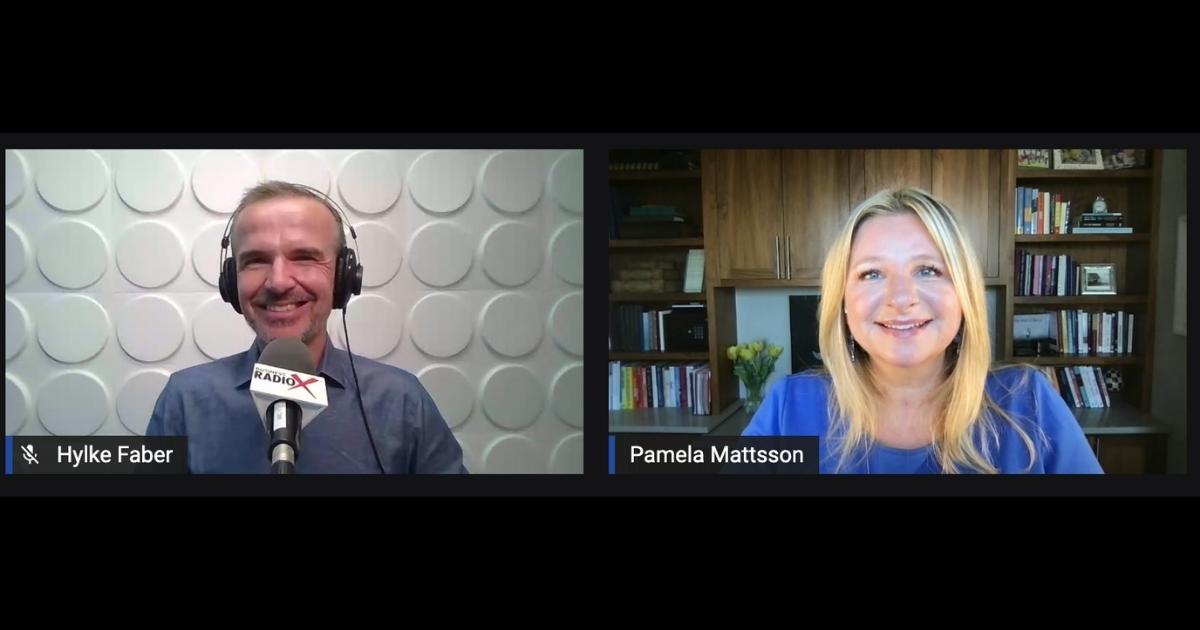
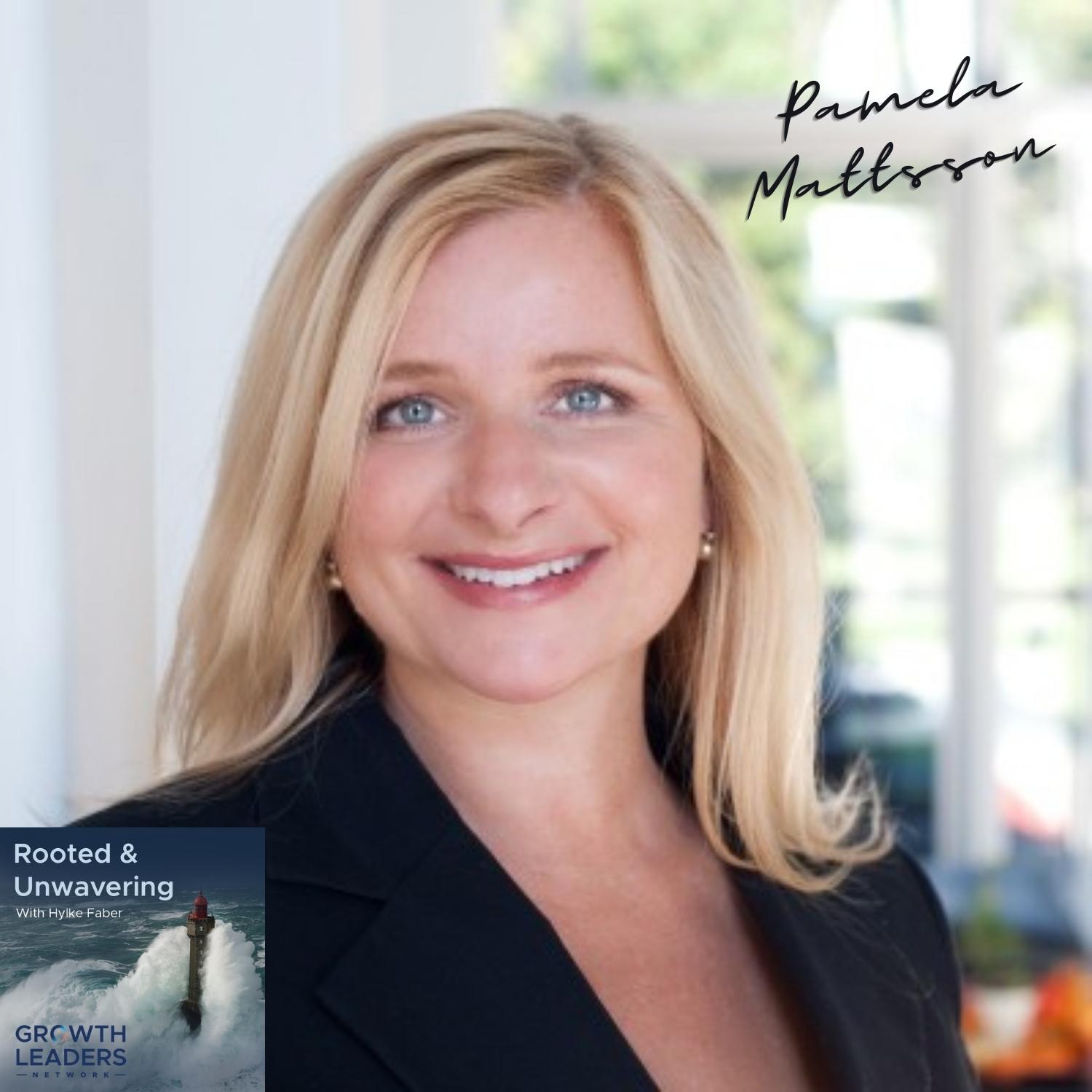
Join Rooted & Unwavering host Hylke Faber and Pamela Mattsson, SVP of People and Organizational Development at Outreach as they explore connecting to true selves.

Outreach-HorizontalLockup-Color

Outreach is the first and only Sales Execution Platform that automates sales engagement and turns intelligence into actions to improve execution across every stage of the sales cycle, from prospecting to deal management to forecasting. When organizations execute at their full potential, they win more deals with less effort and deliver a better customer experience.

Pamela-Mattsson-Rooted-and-UnwaveringPamela Mattsson is SVP of People and Organizational Development at Outreach.
She is responsible for building values-driven, human-centered and inclusive developmental experiences for all Outreach employees from individual contributors to C-Suite. She ensures Outreach’s culture is strong and pervasive yet challenges each employee to be the best version of themselves by expanding and evolving with each and every culture-add (vs. culture-fit).

She enables Outreach to walk the talk of our core values, & solidify the behaviors, systems & symbols that allow those values to scale. She uses an experiential, conscious & humanistic approach, and has 20+ years of experience in global and multicultural instructional design, change management and adult learning within organizations & as a global consultant.

Before Outreach, she led Executive Development for Amazon globally and is responsible for building Amazon’s executive onboarding program, Escape Velocity, executive coaching practice, and codifying what “It is Always Day 1” means for Amazon’s culture at scale.

Connect with Pamela on LinkedIn.

About Rooted & Unwavering

Peace, Compassion, Wisdom, Purposefulness, Creativity and Strength come online in us when we deeply connect with the true, unwavering greatness that lives within ourselves and others.Rooted-and-Unwavering-Tile

In this podcast and radio show, Hylke Faber, seasoned transformational coach and author of the award-winning Taming Your Crocodiles series, engages in deep inquiry with leaders from all walks of life about courageously connecting with our true selves, others and the world at large.

How do we stay connected to our true selves and our greatness, especially when we are challenged? How do we rest in the heart, also when our mind keeps us restless? What becomes possible when we truly stay committed to our own and others’ best selves, also when we don’t feel it? How do we practice staying connected to our true selves, in the midst of our busy lives?

Join us and leave inspired to act on your heart’s greatness and that of the people around you.

About Our Host

Hylke-Faber-headshotFor as long as he can remember Hylke Faber has been curious about what this life is about. His ongoing inquiry has become his work: helping people individually and collectively to discover what is possible in life and express that authentically and fearlessly.

Hylke started his work life with Towers Perrin as consultant and then as Partner with Strategic Decisions Group, serving a wide range of industries, including financial services, manufacturing, consumer electronics and life sciences companies. A major shift occurred during this critical phase of his life. He had become the typical, hard-charging, 16-hours-a-day strategy consultant, and was burning out at a rapid clip.

When he discovered meditation, everything changed. He was so taken by his new discoveries that he chose to bring to business what he was learning: that there is a way we can have it all – we can be fulfilled, do work we love, and create extraordinary results with others. He thinks of it as creating a sense of ease in business.

He learned how to coach and facilitate human transformation completing his coaching certification with Newfield Network and by working at Axialent, the culture and leadership company. After a few years, he founded Co-Creation Partners together with other leaders in the field of transformation and personal development. Then he formed Constancee to help people grow by creating the conditions where deep personal, interpersonal and organizational shifts happen routinely.

He leads Growth Leaders Network, the culture and team development consultancy. He has also taught coaching at Columbia Business School Executive Education and has contributed to Harvard Business Review. He is currently teaching a course on Climate Conscious Leadership at Arizona State University. His award-winning book, Taming Your Crocodiles: Unlearn Fear & Become a True Leader, was published by Dover in 2018.

His next book, Taming Your Crocodiles Practices for Leadership Depth, came out in 2020. Besides helping others grow, which he loves, he is a trained opera singer, enjoys hiking and writing, is an avid reader, in particular of biographies, and is always in the process of growing himself. He integrates all of what he learns in his work with executives.

Connect with Hylke on LinkedIn.

About Our Sponsor

Realizing Your Greatness

We are a team of experienced facilitators and coaches dedicated to helping individuals, teams and organizations thrive by helping them recognize their innate greatness and putting it to work.

    • Executive Coaching: we work with clients individually to help them connect to their calling and use every challenge as an opportunity to help them grow more into what makes them great.
    • Team Performance: we help teams evolve to their next level of excellence, connectedness and impact by working on the root drivers of team performance.
    • Culture Development: we help organizations to evolve their culture by creating clarity about where they aspire to go, and by building role models, coaches and systems that catalyze people being energized to work the new way.
  • Key Notes: we deliver powerful speeches at conferences and other events that help audiences become energized, more connected to themselves and each other, more open to discovery and ready to commit to the next stage of learning in their career and life journeys.

Growth Leaders Network (GLN) serves Fortune 500 companies, smaller organizations and non-profits globally.

GLN clients report that we catalyze significant business transformational impact and profound shifts in people, team and organizations at the root cause level.

Learn more about the Growth Leaders network here.

Tagged With: Culture, DEI, revenue innovators, sales engagement, women in sales

Workplace MVP LIVE from SHRM 2022: CJ Gross, Ascension Worldwide

July 7, 2022 by John Ray

CJ Gross
Minneapolis St. Paul Studio
Workplace MVP LIVE from SHRM 2022: CJ Gross, Ascension Worldwide
Loading
00:00 /
RSS Feed
Share
Link
Embed

Download file

CJ Gross

Workplace MVP LIVE from SHRM 2022: CJ Gross, Ascension Worldwide

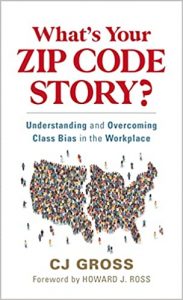
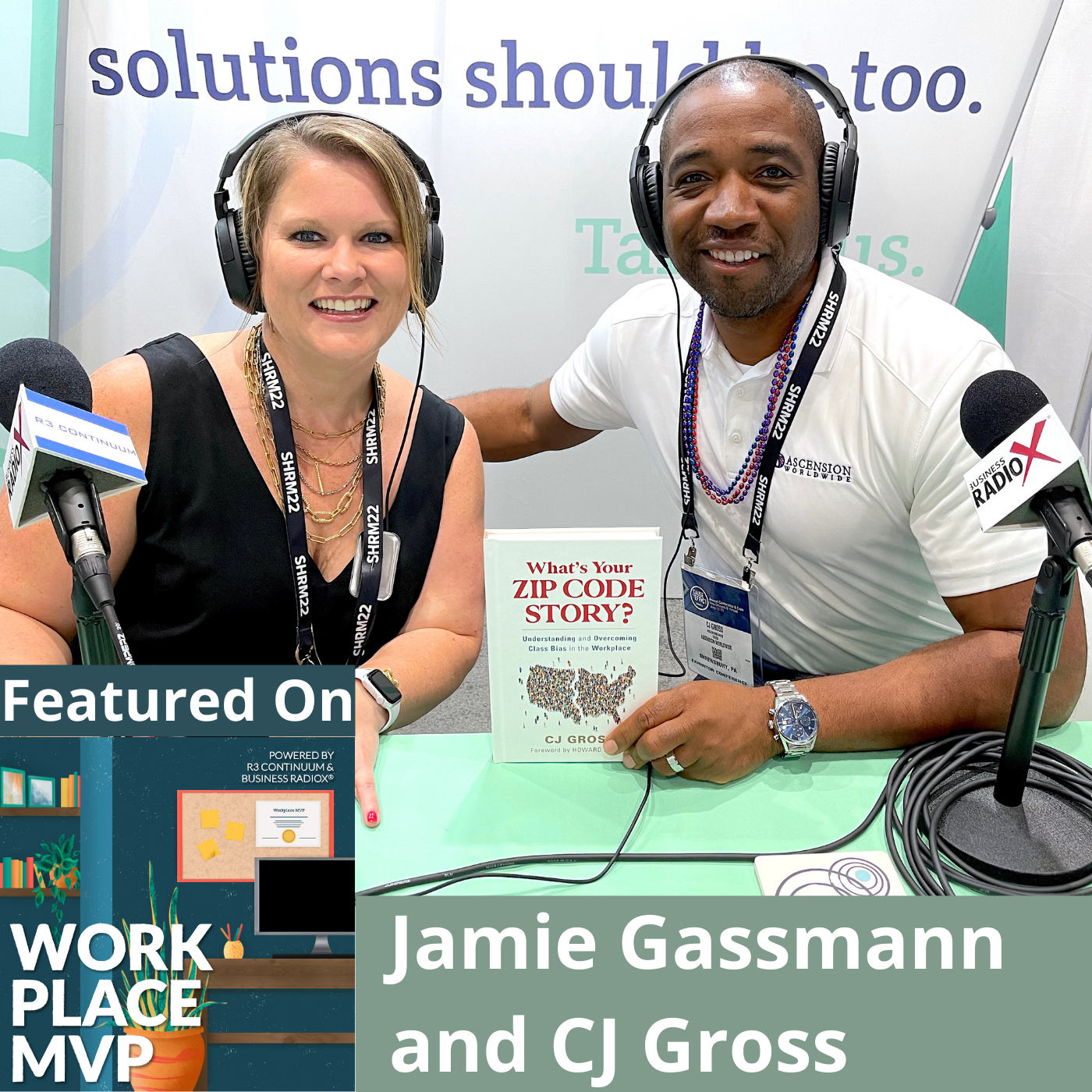
CJ Gross, Founder and CEO of Ascension Worldwide, is the author of the newly released book, What’s Your Zip Code Story? CJ joined host Jamie Gassmann live from SHRM 2022 and discussed the book’s focus on our own personal upbringing and the class biases that unfold from our individual experiences. They also covered his career journey, his presentation at SHRM in 2019, understanding others’ stories, the new sport he’s taken up, and much more.

Workplace MVP is underwritten and presented by R3 Continuum and produced by the Minneapolis-St.Paul Studio of Business RadioX®.

This show was originally broadcast live from the 2022 SHRM Annual Conference held at the New Orleans Convention Center in New Orleans, Louisiana.

Ascension Worldwide

Ascension Worldwide is a full-service minority-owned consulting firm committed to helping clients achieve workplace inclusion, employee and client diversity, and innovative growth opportunities beyond their imagination. We are a global company that utilizes Blue Ocean strategies, quantitative and qualitative analysis, internal analysis, master-minding, and other innovative techniques to support exponential growth in companies while providing specialized target business consulting services that bridge the gap in technology and human capital development.

​Ascension Worldwide provides an array of services, including talent management, leadership development, diversity, inclusion & equity consulting, strategic planning, process improvement, and other business management services.

Ascension Worldwide services clients from local and national non-profits, government agencies, as well as fortune 100 and 500 companies. We have experience in several industries including manufacturing, healthcare, construction management, engineering, law-enforcement, finance, education, insurance, retail, IT, and the military.

Company website | LinkedIn | Facebook |Twitter

CJ Gross, Founder and CEO, Ascension Worldwide

CJ Gross, Founder, Ascension Worldwide

Christopher “CJ” Gross is an international organizational development consultant specializing in leadership development and Diversity and Inclusion. CJ has 17 years of experience as a certified Social + Emotional Intelligence coach, trainer, Keirsey Temperament professional, and executive coach, with additional expertise in organizational mediation. He also serves as a Business Management, Adjunct Faculty for the Community College of Baltimore County. CJ possesses the unique ability to uncover and resolve social issues that hinder employee performance and efficiency.

CJ’s book, What’s Your Zip Code Story?, is now available and was born out of a Ted Talk you can find here.

CJ started his career as a mechanical designer at General Electric (GE) where he learned to lay out mechanical designs and run calculations. At GE, he learned how effective companies run and the importance of employee relationships to a company’s success. After receiving multiple corrective preventive idea awards for employee development, CJ merged his engineering skills with his innate understanding of people, offering professional coaching and staff development to companies in need of improved performance and effectiveness.

CJ cultivated his diversity and Inclusion acumen through an intense training and coaching program from Cook Ross, an internationally known diversity and Inclusion consulting firm. The program included key concepts from Daniel Kahneman’s book, Thinking Fast and Thinking Slow, brain science theory, and life-changing deep-dive identity coaching. In addition, CJ has worked with domestic and international leaders from fortune 500 companies, nonprofits, and government agencies on their diversity and Inclusion strategies and initiatives. This training and experience enable CJ to help clients explore impactful strategies for identity, diversity, inclusion, equity and access from a unique vantage point.

CJ received a B. A. degree in organizational management from Ashford University through the Forbes Entrepreneurship Scholarship.

CJ has consulted with domestic and international companies including the United States Postal Service, Toyota, Turner Construction Company, Oracle, Arent Fox D.C, Washington Post, D.C. Child and Family Services, Morgan Stanley, Loyola University, Howard University: School of Social Work, Maryland Association of Community Service, Primerica, Delta Sigma Theta Sorority, Inc., Maryland-National Capital Parks and Planning Commission, Maryland Department of Juvenile Services, the District of Columbia-Metropolitan Police Department, Penn State and others.
CJ has been featured in the Washington Post, the Washington Informer Newspaper, East of the River Newspaper, Diamonds Xcel Magazine, the Baltimore Examiner, and on the Tom Joyner Show, the Audrey Chapman Show, DCTV Cable, WPGC 95.5 FM, WOL 1450 AM, WUSA 9, WBAL-TV, and FOX45.

He has published three other books including How to Get a Job in 90 Days, Seeds of Greatness, and The Parent Connection. Most recently, he has co-written an article titled, Design Thinking + D&I=Innovation.

LinkedIn

About Workplace MVP

Every day, around the world, organizations of all sizes face disruptive events and situations. Within those workplaces are everyday heroes in human resources, risk management, security, business continuity, and the C-suite. They don’t call themselves heroes though. On the contrary, they simply show up every day, laboring for the well-being of employees in their care, readying the workplace for and planning responses to disruption. This show, Workplace MVP, confers on these heroes the designation they deserve, Workplace MVP (Most Valuable Professionals), and gives them the forum to tell their story. As you hear their experiences, you will learn first-hand, real-life approaches to readying the workplace, responses to crisis situations, and overcoming challenges of disruption. Visit our show archive here.

Workplace MVP Host Jamie Gassmann

Jamie Gassmann, Host, “Workplace MVP”

In addition to serving as the host to the Workplace MVP podcast, Jamie Gassmann is the Director of Marketing at R3 Continuum (R3c). Collectively, she has more than fourteen years of marketing experience. Across her tenure, she has experience working in and with various industries including banking, real estate, retail, crisis management, insurance, business continuity, and more. She holds a Bachelor of Science Degree in Mass Communications with special interest in Advertising and Public Relations and a Master of Business Administration from Paseka School of Business, Minnesota State University.

R3 Continuum

R3 Continuum is a global leader in workplace behavioral health and security solutions. R3c helps ensure the psychological and physical safety of organizations and their people in today’s ever-changing and often unpredictable world. Through their continuum of tailored solutions, including evaluations, crisis response, executive optimization, protective services, and more, they help organizations maintain and cultivate a workplace of wellbeing so that their people can thrive. Learn more about R3c at www.r3c.com.

Company website | LinkedIn | Facebook | Twitter

TRANSCRIPT

Intro: [00:00:03] Broadcasting live from SHRM 2022 at the New Orleans Convention Center, it’s time for Workplace MVP. Brought to you by R3 Continuum, a global leader in helping workplaces thrive during disruptive times. Now, here’s your host.

Jamie Gassmann: [00:00:20] Hi, everyone. Coming to you from SHRM 2022 Exhibit Hall, I am your host, Jamie Gassmann. And we are in our show sponsor’s booth, R3 Continuum. And joining me is CJ Gross from Ascension Worldwide. Welcome to the show, CJ.

CJ Gross: [00:00:35] Hey, Jamie. Thank you so much for having me. I’m very excited about today, really, at SHRM. It’s awesome kickoff here and I’m really excited about the book.

Jamie Gassmann: [00:00:44] Yeah. And I know you’ve got your book here. But before we dive into that, tell me a little bit about your background. Tell me a little bit about your journey so far in your HR career that led to you writing the book.

CJ Gross: [00:00:54] Yeah. Absolutely. So, I’m actually not in HR. My background is in engineering. And I worked for General Electric for about eight years, and I learned lots of information about how leadership happens in a healthy and productive way by things that didn’t happen and things that did happen while I was at General Electric.

CJ Gross: [00:01:17] From there, I moved into consulting work. I did leadership development for the last 20 years. And after a lot of work in diversity, equity, inclusion, I realized that it needed to be done differently. So, I actually brought my background in engineering as a different approach to talk about diversity, equity, and inclusion. Because people, really honestly, they’re tired of talking about it in the way that we’ve been talking about it. In some cases it’s very polarized and in other cases it’s exclusive to certain groups. And things don’t always change in organizations as we talk about these topics.

Jamie Gassmann: [00:01:54] Yeah. And so, you wrote a book and I know you have this book. It’s sold out of the SHRM Store.

CJ Gross: [00:02:01] Yeah. It sold out.

Jamie Gassmann: [00:02:01] What’s Your Zip Code Story?

CJ Gross: [00:02:03] In a few hours, it’s sold out.

Jamie Gassmann: [00:02:03] I know. You got to be absolutely so proud of that. That’s amazing. And I want to dive into hearing about the book. Because when we’re talking before we got on the microphone, it was just so interesting when you said you were covering some of the biases that this book kind of talks about. Let’s dive into it. Tell me a little bit about what is your book about. And what does an HR leader learn from this or a business leader? Because I think it could be really anybody that’s leading an organization. Let’s talk a little bit about what’s inside there.

CJ Gross: [00:02:32] Sure. So, the book is called What’s Your Zip Code Story? And that concept is about not just where you grew up, but how you grew up, the sights and sounds outside of your door, the conversations around the dinner table, the conversations with your parents. All those things influence and flavor the way you see the world and, ultimately, the way you build relationships in the workplace, mentorship, build teams, hire people, and really shapes the lens in which you see the world and how you connect to other people.

CJ Gross: [00:03:04] The second part of it is about class bias. So, they’re really connected there, the two components. Now, the class bias piece is something that we’re really not diving into in the diversity, equity, and inclusion conversation. So, that component came out of a presentation I did for SHRM 2019 Inclusion Conference. They put me on the very last day, the very last hour when people are leaving the conference. I was like, “No one’s going to show up.” And to my surprise, one person walked through the door. So, I was like, “Okay, I’m not alone.” And then, 60 other people walked through the door.

Jamie Gassmann: [00:03:40] Nice.

CJ Gross: [00:03:41] And not only did they stay, they wouldn’t leave. The tech person had to pull the microphone because people were staying in there, they were crying. They were weeping because they not experienced a place where they can share their own – what we call – your zip code story. And that’s really about your uniqueness and it goes beyond just your identity that we can see.

CJ Gross: [00:04:07] And so, this book really touches on those two components, your zip code story – what your background is, where you’re from – and also the eight class biases that we just talked about. And how does one expand their zip code story to mitigate those biases in the workplace.

Jamie Gassmann: [00:04:26] Yeah. So, fascinating. Because, really, we all have so many different experiences across our life from childhood on up. You know, I’m an army brat. When you look at me, you don’t know that I’m an army brat. You would never know that. But I tell you it – honestly, just sharing this as a conversation – one of the things that I hear is, “Was it hard to grow up moving a lot? That’s awful.” I’m like, “Really? That shaped who I am. That’s change management right there.”

CJ Gross: [00:04:53] It’s like a super power. It’s like a super power.

Jamie Gassmann: [00:04:53] Right. Yes. I’m like, “I actually thrive in that.” It’s actually a powerful thing. You know, you could look at it is a negative, but we never did. And so, it’s just interesting because when you think about that, everybody grows up a little different and you automatically draw an assumption about the person when you hear it.

CJ Gross: [00:05:12] The story.

Jamie Gassmann: [00:05:12] That’s so fascinating. So, how do you embrace those stories? How do you pull those stories out of your employees? Because, you know, as a leader, that can be challenging, right?

CJ Gross: [00:05:23] It is challenging across the board for all diversity conversations, not for every single person, but for many people. Because the first thing they think about is diversity, “If I’m not a part of a certain diverse culture or identity, then is this for me?” So, the first thing I tell the leaders is, “First, know your own zip code story.” It’s the first thing. Understanding your background and how that shapes the way you see the world, it’s the first thing.

CJ Gross: [00:05:49] The second thing is to share your background story, share your upbringing, share your experiences, and things that have made you who you are. And through that, you are then the leader which opens up the door for other people in different backgrounds to share their story. And then, you can lean into that story.

CJ Gross: [00:06:08] Honestly, you don’t even have to go down the road of talking about all the diversity conversations that we know. Not to say those aren’t important. But if you really want to create psychological safety, then you share your story. And you can also share the story about something about yourself that people wouldn’t know just by looking at you.

CJ Gross: [00:06:27] Because you may now be the leader sitting up high in the organization and people think, “Oh. They’ve been there. They had it easy. They’re privileged.” It’s what we hear a lot. It’s not to say that people are not privileged. But when people really know your story, you come down to earth, it’s more authentic. There is a bridge of connection there that allows people to connect with you in a different way.

CJ Gross: [00:06:49] And when you share your zip code story as a leader, you create this psychological safety which allows other people to lean in and share theirs. And it leads to better performance, lowers turnover, and you get more creativity out of those individuals, which ultimately lead to increased market share, which every company wants.

Jamie Gassmann: [00:07:12] Absolutely. Well, when I hear you talking, it makes me think you humanize yourself.

CJ Gross: [00:07:19] Yes.

Jamie Gassmann: [00:07:19] You’re a human just like your people. You give them an opportunity to relate with you at that human level.

CJ Gross: [00:07:25] It makes you relatable.

Jamie Gassmann: [00:07:27] And it allows you that opportunity, really, to be an authentic person, authentic leader. You know, at different episodes, we talk a lot about how do you create that opportunity of being vulnerable in front of your team or bringing your true self to work, that’s what I think about when I think about your book in this whole What is Your Zip Code Story? That’s amazing. Fascinating. So, if somebody wanted to get a copy of your book – I understand it’s on Amazon.

CJ Gross: [00:07:56] It’s on Amazon.

Jamie Gassmann: [00:07:57] But how do they get a copy of it now that it’s sold out at SHRM? You’ve got to let the rest of those that didn’t get to the bookstore fast enough know.

CJ Gross: [00:08:04] Well, don’t tell anyone, just between you and I, I had a private stash that I had in my book bag that I just took over there earlier before I came here. So, there’s probably about 20 books left now. So, we already sold out the first hundred in less than two hours. And now, we have, like, 20 something left, so that’s not going to last.

Jamie Gassmann: [00:08:27] So, anybody not getting it at SHRM who missed out –

CJ Gross: [00:08:32] They can go and find it on Amazon and everywhere else books are sold. And also the book, before we came a book – I was a about to say a Broadway play. But it wasn’t.

Jamie Gassmann: [00:08:40] It was a great play.

CJ Gross: [00:08:41] I know, right? It was an awesome play. What is Your Zip Code Story?

Jamie Gassmann: [00:08:43] I can see it. I think we could write the script right now.

CJ Gross: [00:08:46] But it was a TED Talk.

Jamie Gassmann: [00:08:46] So, you’re singing part to it?

CJ Gross: [00:08:48] Yeah. I wouldn’t do it. You wouldn’t want me to do it.

Jamie Gassmann: [00:08:50] You wouldn’t want me either. But a TED Talk, that’s really cool.

CJ Gross: [00:08:53] It turned into a TED Talk. And from the TED Talk, it turned into a book, and it just came out. And, actually, this is the third week that it’s been out. And next month, I’m actually doing a book talk and some work around this concept in England, London.

Jamie Gassmann: [00:09:13] Great. So, if they want to see the schedule for that book tour, so if we have any international listeners, where could they find all this great information?

CJ Gross: [00:09:20] So, the information for the UK is not on the website as of yet. It’s a good idea. I’ve been moving so fast. But they can go to either one of my websites which is, cjgrosstalks.com or ascensionworldwide.com.

Jamie Gassmann: [00:09:36] Wonderful. They’ll find you.

CJ Gross: [00:09:37] Type in CJ Gross, and I will pop up, you’ll find my LinkedIn. One of the things that I do that I want to mention about – well, it’s on LinkedIn – what makes this work for me unique is, as you look at me, I’m a person of color, I’m a male. But the zip code story, what people wouldn’t know, is that I do motocross.

Jamie Gassmann: [00:10:02] I love that. I should have asked you, what’s your zip code story?

CJ Gross: [00:10:06] It’s too much to talk about.

Jamie Gassmann: [00:10:07] I kept sitting here going, “What’s my zip code story?” Like, I’m listening to you going, “Gosh. You know, what would mine look like?” So, you do motocross?

CJ Gross: [00:10:14] I do motocross. I am learning Spanish, [Foreign language]. I am learning to surf. So, there’s so many things that I’m doing to expand my zip code. That’s what the book is also about, is expanding your zip code story around people, places, and things. I’ve taken up golf. I’ve joined the Rotary Club, I did a presentation there – was it last week or yesterday? I couldn’t remember. I’m so busy.

CJ Gross: [00:10:37] But the point is, when people read the book, yes, you should understand your zip code story. You should understand other people’s zip code story. But you should also expand your zip code story. Because from there, two things happen. One, you get to see what another person experiences. The other thing is you get to learn new cool things about yourself.

CJ Gross: [00:10:56] Like, I would have never thought I would have been into motocross. I do skeet shooting. I started swimming, so I scuba dive now. Like, all of this is within the last five years, though, and I won’t tell you how old I am. But most people would not expand their zip code because they think, “I’m too old. I’m too young.”

Jamie Gassmann: [00:11:13] You’re never too told.

CJ Gross: [00:11:15] “I’m this. I’m that.” But what this does is allows you a doorway to expand who you are. And, really, this is a new competency for the future of leadership. So, you can look diverse, but if you don’t have a mindset for diversity – traveling does that as well – you’re going to be out of a job. And it may not be today, but it will be tomorrow. And so, the goal is to expand your zip code story by doing different things and different experiences.

Jamie Gassmann: [00:11:44] I love that. And, honestly, travel can do that for you. And don’t just go to Senor Frogs. Like, seriously, go off the beaten path.

CJ Gross: [00:11:50] Go where?

Jamie Gassmann: [00:11:51] Don’t just go to Senor Frog’s if you’re in Mexico. Go to Napa, just the tourist traps. But really, really experience the culture of where you’re at and embrace it.

CJ Gross: [00:12:01] I want to tell you a quick story if we have time.

Jamie Gassmann: [00:12:03] We do. Absolutely. As much time as you want. We can talk here all day.

CJ Gross: [00:12:08] So, I went to Nicaragua. And in order to get to Nicaragua, I had to fly into Costa Rica. We’re at Costa Rica, we took a cab to the border. And from the border of Costa Rica, we had to walk – I don’t know – a-quarter-of-a-mile to Nicaragua. And on that passage, I had to show my passport, like, six or seven different times. And I remember coming back home and complaining. I was like, “You know I had to show my passport?” And then, we had to take a cab to the port. And at the port, we took a water taxi to an island. And then, I took another taxi.

CJ Gross: [00:12:54] So, not to mention all of those things, when people talk about, you know, inclusion or a privilege, you might say, “Oh. This is a person, a person of color, they don’t have privilege like other people.” But just having a U.S. passport is a privilege that people don’t think about. And when I gained that experience by actually putting myself in that situation and not really speaking the language – I only speak, like, 12 words of Spanish – but I was able to get around and get fed.

CJ Gross: [00:13:22] But the thing is, when I came back to the States and for my friends or colleagues who English is their second language, I had a whole nother appreciation for their experience. And it doesn’t mean I agree with everything that’s set out there in politics and all that, but what it means is that I can now have empathy.

CJ Gross: [00:13:41] You know, Brene Brown talks a lot about that, having empathy. I can now have empathy from someone who has a different culture and has a different passport. The same thing with women’s rights. You know, there’s lots of things that I learned about women that I had to be made aware of. For example, we asked people, “What’s the number one bias you have flying on an airplane?” And a lot of people say different things, we won’t go into that.

Jamie Gassmann: [00:14:07] I had to think about that.

CJ Gross: [00:14:10] Babies, number one.

Jamie Gassmann: [00:14:13] Sitting next to a crying baby?

CJ Gross: [00:14:15] Yes.

Jamie Gassmann: [00:14:15] Oh. See, I’m a mother. I get it.

CJ Gross: [00:14:18] Yeah. They have biases against other kids, but not theirs because they left their kids at home. But 25 percent of women said, “I want to sit next to someone who is the same gender.” And I made a comment that showed my awareness at the time. I said, “Whoa. What’s wrong with guys?” And they said, “Well, you’ve probably never been a woman on an airplane.” I was like, “You know I haven’t, right?” But women are assaulted at times on the airplane when they go to sleep or people bother. And I was like, “That’s never happened to me in that way because I’m not a woman.”

CJ Gross: [00:14:50] But hearing from women in that way created a greater empathy for their experience. So then, when you look at engineering, where I come from, where there are not a lot of women or people of color, when a woman says something, a person of color says something, I can relate with that. But, now, what it means to be the only woman in a male dominated environment opens my eyes because I’ve heard something. Or if I reverse engineer it, and I am the only.

CJ Gross: [00:15:17] So, being the only for a leader is important because if you’re trying to support someone – we always say this in our organization – you can’t take someone where you’re not willing to go yourself or you have never been yourself. So, if you’ve never been the only, if you haven’t interviewed people and understand what that’s like, it’s hard to empathize. And, although, we want to create pay equity and all those other initiatives, it’s going to fall short because people don’t have that experience.

Jamie Gassmann: [00:15:45] That’s so interesting. I would have never thought that on the airplane, and I travel quite a bit for work.

CJ Gross: [00:15:53] When you get on an airplane –

Jamie Gassmann: [00:15:54] I’m never going to get that thought out of my head now, CJ.

CJ Gross: [00:15:56] … you automatically assess people up and down and you create a story and you’re like, “Mm-hm. Not that guy. Not that woman.”

Jamie Gassmann: [00:16:03] You do. What they’re wearing. It might be what they’re looking like. I mean, if they look like they just rolled out of bed, and grabbed their pillow and their blankie, and brought it to the airport with them, I’m going, “Oh, boy.”

CJ Gross: [00:16:14] “I’m not going to sit next to them, they smell funny.”

Jamie Gassmann: [00:16:18] “They didn’t shower this morning, obviously. Like, I hope they’re not next to me.” And it was next to you, right? That’s so interesting. But we all do it. And you do it everywhere you go and everywhere you’re at, and you don’t even realize sometimes that you’re even doing it. That’s so interesting. Now, I’m going to be walking around going, “I wonder what their story is. What’s their zip code story?”

CJ Gross: [00:16:40] And that’s the hope for this book, is, it catches on and people go, “well, what’s their zip code story?” And they won’t just think about their brain is creating a story about them, but they actually lean in and lean past that bias conversation and say, “You know what? That person would never be good for this job because of this.”

CJ Gross: [00:17:02] Or here’s another one for women we hear is that, if you look like you’re of childbearing age – how does someone know? – people will not give you assignments that require travel. Because they’re thinking that, one, if you have kids, they’re thinking you may want to stay home with your kids. They didn’t ask.

Jamie Gassmann: [00:17:25] Do they do that to men?

CJ Gross: [00:17:30] No. That’s the zip code for it, because you don’t know that there are a lot of men that are actually playing the role. And so, just judging people in that way is exclusive. But, again, when we’re just talking about the normal topics of diversity, we’re missing out on a whole different conversation.

Jamie Gassmann: [00:17:50] So fascinating. Oh, my goodness. I think we’ll have to have another follow up on this. I think we could talk for hours on that.

CJ Gross: [00:17:56] Yeah. Maybe I’ll come back tomorrow or something.

Jamie Gassmann: [00:17:57] There we go. We’ll do two. Why not? It was a piggyback. We’ll talk about interviewing. Like, how do you use the zip code story in interview?

CJ Gross: [00:18:06] Stay tuned. We’ll talk tomorrow about it.

Jamie Gassmann: [00:18:07] Stay tuned. There we go. So, if you are interested in checking out CJ’s book, which I highly recommend because it sounds super interesting and I think it’d be very beneficial to any business leader or HR leader out there, What’s Your Zip Code Story?, definitely check out amazon.com. Very cool. Thanks so much, C.J. It’s been great talking with you.

CJ Gross: [00:18:31] Thank you. This has been awesome.

Outro: [00:18:31] Thank you for joining us on Workplace MVP. R3 Continuum is a proud sponsor of this show, and is delighted to celebrate most valuable professionals who work diligently to secure safe workplaces where employees can thrive.


Tagged With: Ascension Worldwide, CJ Gross, DEI, Diversity Equity and Inclusion, HR, Jamie Gassmann, R3 Continuum, SHRM 2022, What's Your Zip Code Story?, Workplace MVP

Workplace MVP LIVE from SHRM 2022: Xavier Cugnon, Arrow Exterminators

June 30, 2022 by John Ray

Arrow Exterminators
Minneapolis St. Paul Studio
Workplace MVP LIVE from SHRM 2022: Xavier Cugnon, Arrow Exterminators
Loading
00:00 /
RSS Feed
Share
Link
Embed

Download file

Arrow Exterminators

Workplace MVP LIVE from SHRM 2022: Xavier Cugnon, Arrow Exterminators

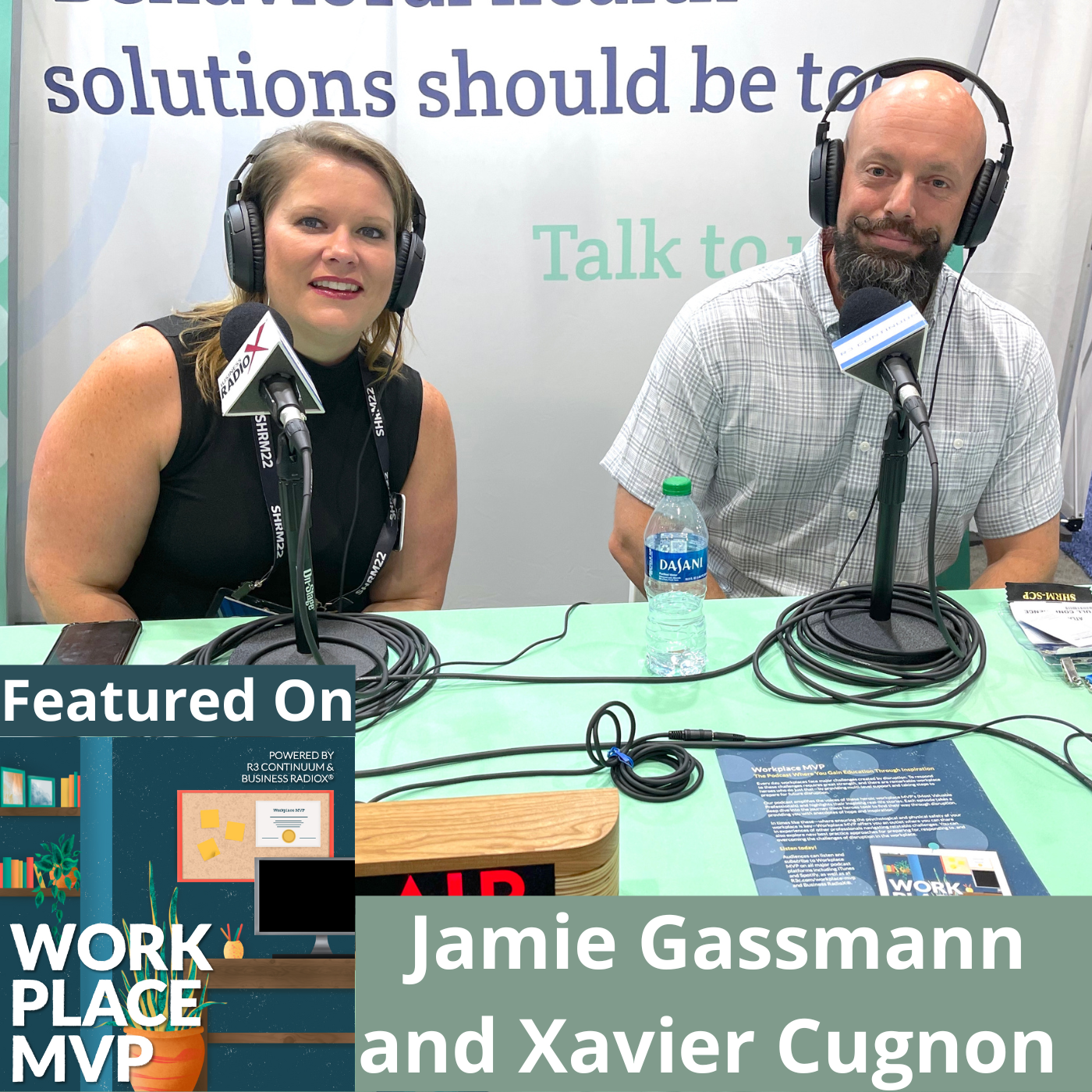
Xavier Cugnon, VP of HR Administration for Arrow Exterminators, joined host Jamie Gassmann in the R3 Continuum booth to chat about his experience at SHRM 2022 in New Orleans. He shared how he got into learning and development through his military career and his path to HR. He and Jamie also talked about the networking opportunities of being in person again, the thought leadership he was seeing around DE&I, and much more.

Workplace MVP is underwritten and presented by R3 Continuum and produced by the Minneapolis-St.Paul Studio of Business RadioX®.

This show was originally broadcast live from the 2022 SHRM Annual Conference held at the New Orleans Convention Center in New Orleans, Louisiana.

 Arrow Exterminators

Arrow is a full-service company specializing in Pest Control, Termite Protection, Mosquito Prevention and Control, Fire Ant Control, Wildlife Control and Exclusion Services, Handyman Services, Insulation Services, New Construction Treatments and providing documentation for Real Estate Transactions. They offer these services in both residential and commercial situations.

At Arrow, they pride themselves on going BEYOND THE CALL because this business is their calling and they are committed to protecting your family’s health and property while caring for the environment. They are large enough to offer a variety of pest control services at affordable prices and small enough to know their customers – the way a good business should.

Company website | LinkedIn | Facebook

Xavier Cugnon MS, SHRM-SCP, PHR, Vice President, Human Resources Admin, Arrow Exterminators

Xavier Cugnon MS, SHRM-SCP, PHR, Vice President, Human Resources Admin, Arrow Exterminators

As the VP of Human Resources Administration, Xavier works to lead the Human Resources practices at Arrow Exterminators in support of its business goals. Primarily, his team focuses on unifying Arrow’s human capital management systems and practices to effectively deliver on Arrow’s vision to hire, train, and retain rock stars and grow opportunities for generations to come.

Xavier Cugnon had an extensive career in Marine Corps aviation, manufacturing, and proposal writing which equipped him with a vast array of job skills.

He has a Master of Science degree in Human Resource Development from Villanova University. He also teaches the SHRM certification prep course for SHRM-Atlanta.

LinkedIn

About Workplace MVP

Every day, around the world, organizations of all sizes face disruptive events and situations. Within those workplaces are everyday heroes in human resources, risk management, security, business continuity, and the C-suite. They don’t call themselves heroes though. On the contrary, they simply show up every day, laboring for the well-being of employees in their care, readying the workplace for and planning responses to disruption. This show, Workplace MVP, confers on these heroes the designation they deserve, Workplace MVP (Most Valuable Professionals), and gives them the forum to tell their story. As you hear their experiences, you will learn first-hand, real-life approaches to readying the workplace, responses to crisis situations, and overcoming challenges of disruption. Visit our show archive here.

Workplace MVP Host Jamie Gassmann

Jamie Gassmann, Host, “Workplace MVP”

In addition to serving as the host to the Workplace MVP podcast, Jamie Gassmann is the Director of Marketing at R3 Continuum (R3c). Collectively, she has more than fourteen years of marketing experience. Across her tenure, she has experience working in and with various industries including banking, real estate, retail, crisis management, insurance, business continuity, and more. She holds a Bachelor of Science Degree in Mass Communications with special interest in Advertising and Public Relations and a Master of Business Administration from Paseka School of Business, Minnesota State University.

R3 Continuum

R3 Continuum is a global leader in workplace behavioral health and security solutions. R3c helps ensure the psychological and physical safety of organizations and their people in today’s ever-changing and often unpredictable world. Through their continuum of tailored solutions, including evaluations, crisis response, executive optimization, protective services, and more, they help organizations maintain and cultivate a workplace of wellbeing so that their people can thrive. Learn more about R3c at www.r3c.com.

Company website | LinkedIn | Facebook | Twitter

TRANSCRIPT

Intro: [00:00:02] Broadcasting live from SHRM 2022 at the New Orleans Convention Center, it’s time for Workplace MVP. Brought to you by R3 Continuum, a global leader in helping workplaces thrive during disruptive times. Now, here’s your host.

Jamie Gassmann: [00:00:20] Hey, everyone. You’re host, Jamie Gassmann here, coming to you from SHRM 2022 Expo Hall. And I am in the R3 Continuum Booth, our show sponsor. And with me is – oh, the last name. Oh, my goodness. X. I know it’s X, his first name.

Xavier Cugnon: [00:00:34] I’m going to help you out there. So, Xavier Cugnon.

Jamie Gassmann: [00:00:35] Yes. Help me out with your name. You covered up your – I was trying to like get that, figured out before they call you. It’s been a long day. All right. So, I’m going to call you X. You say your full name for me, please.

Xavier Cugnon: [00:00:46] Most people do. X is fine.

Jamie Gassmann: [00:00:47] Yeah. So, now who are you with?

Xavier Cugnon: [00:00:50] I am with Arrow Exterminators.

Jamie Gassmann: [00:00:52] So, talk to me and share with me kind of your background. I know you’re a VP of HR admin.

Xavier Cugnon: [00:00:57] Yeah.

Jamie Gassmann: [00:00:57] So talk to me, how did you get to that role? What’s your career journey look like?

Xavier Cugnon: [00:01:01] Okay. So, probably not the typical path or the conventional path. I’m also a former Marine, so I’ve spent a good bit of time with Uncle Sam’s Misguided Children; we would say USMC. And being a product of that, I spent my last war as an instructor, teaching my occupational specialty, which brought me into learning and development, which is my catalyst to my civilian career when I left the military. I went to grad school on my G.I. Bill in human resources. I found my current role and position as a product of grad school. And now, my day job, I’m the VP of H.R. for a wonderful company, and I twilight as an SHRM certification instructor for SHRM-Atlanta.

Jamie Gassmann: [00:01:46] Oh, that’s fantastic. So, using all those skills.

Xavier Cugnon: [00:01:48] There you go.

Jamie Gassmann: [00:01:49] You learned in the Marines and then now and then from your grad school. That’s fantastic. So, now I know this is not your first SHRM rodeo. You’ve been here a few times.

Xavier Cugnon: [00:01:59] Correct. Yeah.

Jamie Gassmann: [00:02:00] So what are you excited about this year? Are there some things or key challenges or areas of interest that you’re excited to get more information on?

Xavier Cugnon: [00:02:08] Sure. So, you know, I’m hesitant to say that this is kind of a post-COVID because I’m not sure if that’s reality, but we’re certainly past the initial wave. So coming here and, first of all, connecting with your peers to understand, to get some empathy from your peers, because we’ve all endured something quite unique. So to get those testimonials I think is a huge psychological benefit from coming to these conventions or conferences and meeting with the vendors.

Xavier Cugnon: [00:02:39] So, we interact with a lot of vendors, and one of my key responsibilities is understanding the technology that we use, but that technology is forever evolving. So, the product and services that we see from a lot of people in H.R. spaces, what they showed you last year is different from what they have available this year because it’s a constant race. I call it a race to the moon, right? You’re always trying to develop and enhance your technologies. So, my responsibility is to understand the capacity of the systems that we have, but then see what’s in the marketplace as well.

Jamie Gassmann: [00:03:06] Yeah. And make sure that you bring in some of those solutions back that help to kind of do your job better or enhance the workplace itself.

Xavier Cugnon: [00:03:14] You got it. You got it. And then, on top of that, of course, all the lectures and sessions that we have the privilege of sitting through, I mean, there’s some thought leadership going on. So, you know, I can’t pretend to be the smartest man in the room. That would just be untruthful. And I’m a man of integrity. We’re in H.R. So I love to surround myself with people who are just thought leaders in our space.

Jamie Gassmann: [00:03:34] Yeah. That’s fantastic. And I know there are a lot of thought leaders here.

Xavier Cugnon: [00:03:37] Absolutely.

Jamie Gassmann: [00:03:37] And, you know, it’s really exciting. So, you know, looking at some of the presentations that you have attended and some of the information that you’ve already obtained from being here, now it’s like day two but it’s like almost at the end of day two, what was your favorite like session or some of your favorite moments or key takeaways that you’re like, “Oh, I got to bring that back. That was just so powerful.”

Xavier Cugnon: [00:03:58] Yeah. Well, you know, I think personally, I look for diversity, equity and inclusion initiatives. I think the whole space in a whole – you know, there’s a lot of human nature that’s counterintuitive to the idea of everyone just being, you know, in a community that appreciates one another to, you know, productively. So, DE&I, it’s such a spectacular initiative. It has so much benefit but it’s also complete chaos. And it’s impossible to get it perfectly, and it’s so easy to get it wrong.


Jamie Gassmann: [00:04:36] Yeah.

Xavier Cugnon: [00:04:37] So, just again, sitting in these sessions, I sat through a few where we had some thought leadership. I mean, there’s a lot of common sense, but a lot of it is so personal. You have to do so much personal self-reflection. And as H.R. practitioners, you have to advocate that to your leadership. So you have to put your leaders in a space where they’re receptive to those concepts. And I think that’s a massive hurdle. So, you know, I’m listening. I’m very intuned.

Jamie Gassmann: [00:05:01] Yeah. Well, and you made a comment that I think is so interesting, too, is that human connection with your peers. I mean, because you have been through similar – I mean, not everybody’s story is exactly the same, but there’s so much power in being able to learn off of each other as well. So I know you mentioned the thought leadership and definitely there’s standouts in those that are, you know, those experts that have kind of a point of view on a topic. But the conversations I got to imagine that you’re having with some of your peers have got to be just as impactful and powerful as maybe some of the sessions you’re sitting in.

Xavier Cugnon: [00:05:32] Yeah. The water cooler talk so to speak.

Jamie Gassmann: [00:05:35] Yeah. Yeah. [Inaudible]

Xavier Cugnon: [00:05:36] The people tap me on the shoulder on the escalator and say, “Hey, where are you from? Who do you work with?” And then, you get into a little sidebar conversation. Yeah, you’re absolutely right. And then, there’s a lot of exchange of information between peers so that you have that network to lean on. So, I’ll always welcome somebody to give me a call and just to spar whatever they’re thinking, just to spar back and forth and say, “Hey, am I an idiot for being, you know, here by myself? Are you here with me? What are your suggestions?” Because I want that privilege, too. I want to be able to tap into some of my peers. So, it’s fantastic to come out here and meet new people.

Jamie Gassmann: [00:06:10] And you just never know when you might need somebody that you got to lean on and go, “Okay, I’ve got a situation. I’ve got to pick a brain of somebody who might have gone through that or shared a story with me somewhere.” So, you mentioned the DE&I. I mean, every workplace is going to be unique with that, too. So what works maybe over here may not work in the same capacity at a different location. So, it’s interesting that you kind of brought that up as like there’s the different technologies and things, or different approaches to it.

Xavier Cugnon: [00:06:38] Yeah, yeah, absolutely. Yeah. You know, again, DE&I is inherent to every culture. Every culture is absolutely unique. You know, it’s like a – you know, it’s like a family consultation. Every family is very different, right? So you have keen approaches and concepts, but, you know, every good shrink looks at every company or every family very differently. I think the same is true with DE&I.

Jamie Gassmann: [00:07:01] Yeah. Absolutely. It’s great. Were there any other wonderful topics or things that you were like just blown away by, I guess? It’s just like, you know, like you can’t wait to get back and like kind of put it into motion.

Xavier Cugnon: [00:07:12] You know, you have these amazing keynotes, so just getting in front of these keynote speakers. And again, you know, we had a keynote session this morning with the CEO of SHRM, what a dynamic personality. I mean, so fantastic to see. And, you know, that’s one thing you look for in a CEO is the human element. I mean, this gentleman is the personification of our profession. And to see him live and in the flesh, and I don’t mean to put him in a position of grandeur, but it was just so nice because you want to assume that his persona is reflective of our profession. And I was absolutely convinced of it. So that was a very successful session.

Jamie Gassmann: [00:07:55] That’s awesome. I know I heard. One of my other guests that stopped by had like a great quote that he had shared that was like, so it sounds like he gave some great leaving thoughts for the H.R. leaders that were in the room.

Xavier Cugnon: [00:08:07] Yeah. And you saw the human in him, which is great.

Jamie Gassmann: [00:08:09] Yeah.

Xavier Cugnon: [00:08:09] Because that’s what we are.

Jamie Gassmann: [00:08:10] Absolutely. He’s got the human back in human resource. I think that might have been the theme last year’s conference. This year is cause and effect, but yes, awesome. So if somebody wants to get in touch with you, further network, swap ideas from an H.R. perspective, how would they go about doing that?

Xavier Cugnon: [00:08:26] So, I am an email away. My contact information, you can get me at xcugnon – so, I’m going to spell that for you. So, it’s X-C-U-G-N-O-N @arrowexterminators.com. You reach out, briefly introduce yourself, and by all means, let’s get in touch.

Jamie Gassmann: [00:08:44] Yeah. Absolutely. And you heard it here, X is available to be that network away. So awesome. Great. Thank you so much for joining us on the show. [Inaudible].

Xavier Cugnon: [00:08:53] I appreciate it [inaudible]. Thank you.

Jamie Gassmann: [00:08:54] Yeah.

Outro: [00:08:59] Thank you for joining us on Workplace MVP. R3 Continuum is a proud sponsor of this show and is delighted to celebrate most valuable professionals who work diligently to secure safe workplaces where employees can thrive.


Tagged With: Arrow Exterminators, DEI, Human Resources, Jamie Gassmann, New Orleans, pest control, R3 Continuum, SHRM 2022, Workplace MVP, Xavier Cugnon

Workplace MVP LIVE from SHRM 2022: Cathy Hood, The Arthritis Foundation

June 28, 2022 by John Ray

Arthritis Foundation
Minneapolis St. Paul Studio
Workplace MVP LIVE from SHRM 2022: Cathy Hood, The Arthritis Foundation
Loading
00:00 /
RSS Feed
Share
Link
Embed

Download file

Arthritis Foundation

Workplace MVP LIVE from SHRM 2022: Cathy Hood, The Arthritis Foundation

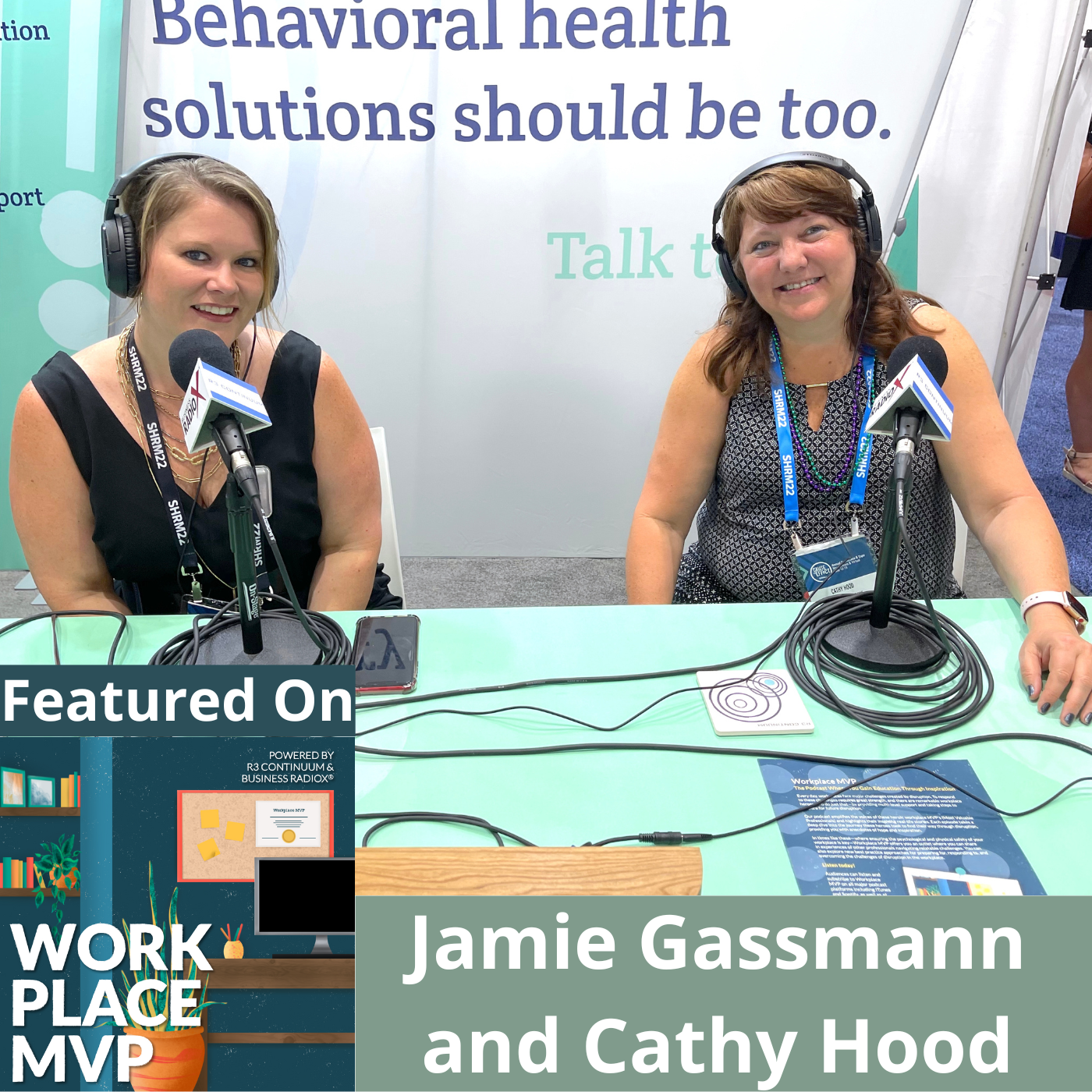
On this episode of Workplace MVP Live from SHRM 2022 in New Orleans, host Jamie Gassmann’s guest was Cathy Hood, VP of People Operations at The Arthritis Foundation. She and Jamie discussed Cathy’s career journey, the work of the Arthritis Foundation, their new initiatives, and much more.

Workplace MVP is underwritten and presented by R3 Continuum and produced by the Minneapolis-St.Paul Studio of Business RadioX®.

This show was originally broadcast live from the 2022 SHRM Annual Conference held at the New Orleans Convention Center in New Orleans, Louisiana.

Cathy Hood, Vice President of People Operations, The Arthritis Foundation

Cathy Hood, Vice President of People Operations, The Arthritis Foundation

Cathy Hood is Vice President of People Operations for The Arthritis Foundation and has been with the Foundation since 2017.

The Arthritis Foundation is boldly pursuing a cure for America’s #1 cause of disability while championing the fight to conquer arthritis with life-changing science, resources, advocacy, and community connections.

By advancing research, advocacy, and disease management support, the Arthritis Foundation helps you navigate the many challenges arthritis brings. You can easily make powerful connections that lead to real, meaningful change.

Live your best life with the help of a compassionate and caring community. Get empowering information and make meaningful connections. Online and in person (when it’s safe again), they are working together to promote life-changing resources and research, push for change and create community connections that welcome, inform and uplift. This is what makes their community of millions thrive — and why they are Champions of Yes.

Company website | LinkedIn | Facebook

About Workplace MVP

Every day, around the world, organizations of all sizes face disruptive events and situations. Within those workplaces are everyday heroes in human resources, risk management, security, business continuity, and the C-suite. They don’t call themselves heroes though. On the contrary, they simply show up every day, laboring for the well-being of employees in their care, readying the workplace for and planning responses to disruption. This show, Workplace MVP, confers on these heroes the designation they deserve, Workplace MVP (Most Valuable Professionals), and gives them the forum to tell their story. As you hear their experiences, you will learn first-hand, real-life approaches to readying the workplace, responses to crisis situations, and overcoming challenges of disruption. Visit our show archive here.

Workplace MVP Host Jamie Gassmann

Jamie Gassmann, Host, “Workplace MVP”

In addition to serving as the host to the Workplace MVP podcast, Jamie Gassmann is the Director of Marketing at R3 Continuum (R3c). Collectively, she has more than fourteen years of marketing experience. Across her tenure, she has experience working in and with various industries including banking, real estate, retail, crisis management, insurance, business continuity, and more. She holds a Bachelor of Science Degree in Mass Communications with special interest in Advertising and Public Relations and a Master of Business Administration from Paseka School of Business, Minnesota State University.

R3 Continuum

R3 Continuum is a global leader in workplace behavioral health and security solutions. R3c helps ensure the psychological and physical safety of organizations and their people in today’s ever-changing and often unpredictable world. Through their continuum of tailored solutions, including evaluations, crisis response, executive optimization, protective services, and more, they help organizations maintain and cultivate a workplace of wellbeing so that their people can thrive. Learn more about R3c at www.r3c.com.

Company website | LinkedIn | Facebook | Twitter

TRANSCRIPT

Intro: [00:00:02] Broadcasting live from SHRM 2022 at the New Orleans Convention Center, it’s time for Workplace MVP. Brought to you by R3 Continuum, a global leader in helping workplaces thrive during disruptive times. Now, here’s your host.

Jamie Gassmann: [00:00:19] Hi, everyone. You’re host, Jamie Gassmann here. And I am coming to you from the SHRM 2022 Exhibit Hall at R3 Continuum’s booth, and we’re here in New Orleans. But with me is Cathy Hood from the Arthritis Foundation. Hi, Cathy.

Cathy Hood: [00:00:34] Hi, Jamie. It’s great to be with you today.

Jamie Gassmann: [00:00:37] Oh, I’m so excited to have you on the show. Now, I understand you just recently got a title change. Is that like a promotion, kind of an upgrade?

Cathy Hood: [00:00:46] It is, additional responsibilities.

Jamie Gassmann: [00:00:49] Yeah. And we love that, right? That means you’re awesome at what you do. And you’ve been to SHRM many times it sounds like.

Cathy Hood: [00:00:56] I have.

Jamie Gassmann: [00:00:57] So, what keeps bringing you back to this conference?

Cathy Hood: [00:00:59] I love the SHRM Conference. I mean, the networking is amazing, getting to meet people across the country, hearing about what other people are doing. But, really, it’s the inspiration. I’ve been doing HR for a long time, and coming here and hearing the inspiring stories and just connecting with people and learning and growing in my profession is something that I look forward to every year.

Jamie Gassmann: [00:01:23] That’s amazing. Now, in talking about that career journey, share with us a little bit about your background. You know, what have you done in your career that has moved you to this VP of people operations?

Cathy Hood: [00:01:34] Sure. I’m happy to. So, I started out actually working for law firms and I was director of human resources for some large law firms, some international law firms, I loved that. But one of their biggest clients was a nonprofit, and so I moved to the nonprofit space. And, you know, I’ve worked in technology also, but mostly nonprofit throughout my career. And, honestly, it’s making a difference in the world.

Cathy Hood: [00:01:58] The Arthritis Foundation, I literally tell every single person that we hire, we are changing lives and that’s what we do. And so, it’s an amazing opportunity to be able to marry your profession, human resources, helping people, but then also changing the lives of people that are suffering from arthritis.

Jamie Gassmann: [00:02:16] Oh, I love that. Obviously, coming from a corporate kind of manufacturing background to this nonprofit, are there differences in the HR space that you’ve noticed or seen between those different roles?

Cathy Hood: [00:02:32] There are some differences, perhaps. But for the most part, you know, caring about people and making connections with people, loving people, supporting people, helping them grow in their careers, those are all the same things regardless of what industry you come from. People that are looking for safe space and opportunity to grow their careers and opportunity to learn and add skills to their resume. So, it’s really not that different from an HR perspective. We’re taking care of those basic needs, payroll, benefits, all of those things, and then also making sure people feel valued.

Cathy Hood: [00:03:08] And, now, just an amazing opportunity in the last few years, and so many organizations are focused on this, but the Arthritis Foundation is as well, and that is our diversity, equity, and inclusion efforts. And we are so excited about the work that we’re doing. Everyone in the organization is really excited about that.

Cathy Hood: [00:03:27] And, also, the pandemic was awful, but it brought us some opportunities. And those opportunities were to really get focused on our wellness programs and helping people. We have a program called Be Your Best You, and it really is about the whole person, and it’s about making sure that our staff know that they are cared about, we love them, we take care of them, we do some fun things, we have some cultural great things. So, that really is the same in all HR organizations.

Jamie Gassmann: [00:03:56] Yeah. No, that’s beautiful. I love that. Be Your Best You, I love that. I love taglines like that. Just like the good reminder of how do you make yourself better each day.

Cathy Hood: [00:04:06] Absolutely.

Jamie Gassmann: [00:04:07] That’s fantastic. So, here at the SHRM show, you mentioned diversity, equity, and inclusion. I know that’s a really big topic in HR, a very big focus in a lot of organizations. Is there something here at the SHRM show this year that got you really excited when you were preparing to come that you can’t wait to watch, or to check out, or see while you’re here?

Cathy Hood: [00:04:26] Well, I’m going to tell you something, I didn’t get to go to SHRM last year. But I did see a video of one of the sessions and it was about diversity, equity, and inclusion, about courageous conversations. And I thought, “You know what? I’ve got to get back.” Last year because of COVID, of course, we had layoffs, everything was down a little bit. But we’re thriving and we’re back now.

Cathy Hood: [00:04:48] And so, it was just a pleasure and a great opportunity to come back to the conference and really take advantage of those courses and diversity, equity, and inclusion, and some other things as well. I mean, all employee engagement, already, I’ve seen multiple vendors here today that are, you know, exciting things that I’m interested in adding. So, just a great opportunity.

Jamie Gassmann: [00:05:10] Well, it’s been an absolute pleasure to have you on our show. And congratulations again on your promotion. And, yeah, thank you again for stopping by. And we look forward to more chats and hearing, hopefully, from you later down the road how the show went for you.

Cathy Hood: [00:05:26] Thanks, Jamie. It was great to be with you today. Take care.

Jamie Gassmann: [00:05:28] You, too.

Outro: [00:05:33] Thank you for joining us on Workplace MVP. R3 Continuum is a proud sponsor of this show, and is delighted to celebrate most valuable professionals who work diligently to secure safe workplaces where employees can thrive.


Tagged With: Be Your Best You, Cathy Hood, DEI, Jamie Gassmann, R3 Continuum, SHRM 2022, The Arthritis Foundation, Workplace MVP

LIVE from RISKWORLD 2022: Pamela Bradshaw, Varsity Brands

May 3, 2022 by John Ray

Pamela Bradshaw
Minneapolis St. Paul Studio
LIVE from RISKWORLD 2022: Pamela Bradshaw, Varsity Brands
Loading
00:00 /
RSS Feed
Share
Link
Embed

Download file

Pamela Bradshaw

LIVE from RISKWORLD 2022: Pamela Bradshaw, Varsity Brands

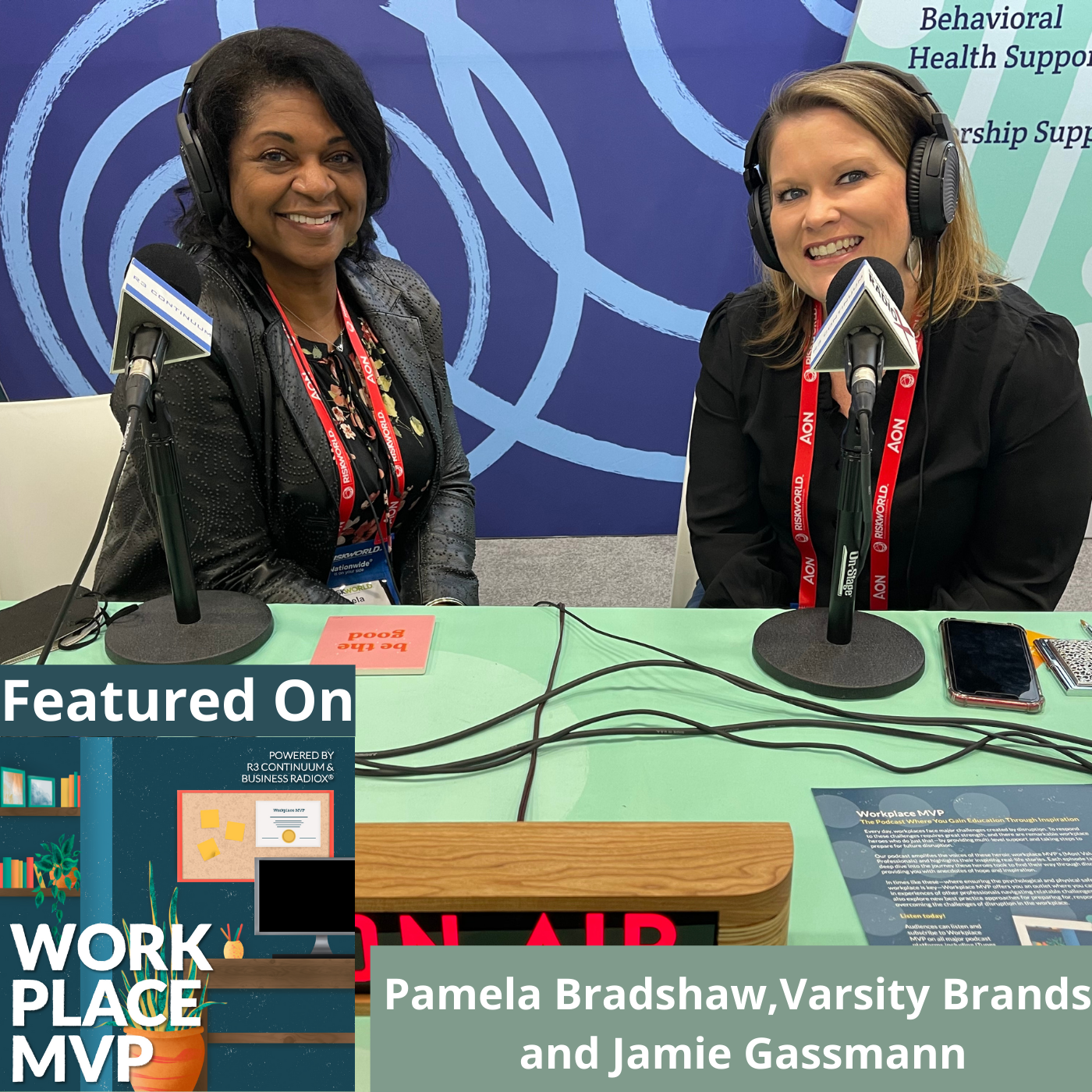
Live from the R3 Continuum booth at RISKWORLD 2022, Pamela Bradshaw, Director of Risk Management at Varsity Brands, stopped by to talk with host Jamie Gassmann. While Pamela has attended numerous RISKWORLD conferences, this was her first with Varsity Brands. She shared the details of her conference presentation, which focused on young risk professionals and bridging knowledge between generations, bringing DEI front and center, encouraging the younger generations to continue creating positive change, and much more.

Workplace MVP is underwritten and presented by R3 Continuum and produced by the Minneapolis-St.Paul Studio of Business RadioX®.

This show was originally broadcast from the RIMS 2022 RISKWORLD Conference held at the Moscone Center in San Francisco, California.

Pamela Bradshaw, Director of Risk Management, Varsity Brands

Pamela Bradshaw, Director of Risk Management, Varsity Brands

Pamela Bradshaw is Director of Risk Management for Varsity Brands and joined the company this year.

She has over 30 years of success and experience in Corporate Claims and Risk Management with public and privately-held organizations in the Retail, Restaurant, Oil/Gas, Manufacturing, Direct Selling, and Insurance industries.

As part of the DFW RIMS Chapter, she had a presentation at RISKWORLD 2022 focused on the next generation and young risk professionals.

LinkedIn


Varsity Brands

Varsity Brands is  BSN Sports, the recognized leader in team athletic gear, Varsity Spirit, the driving force in spirit, and Herff Jones, the most trusted name in celebrating student milestones.

They partner with educators, coaches, and students to build school pride, student engagement, and community spirit.

With a mission to inspire achievement and create memorable experiences for young people, Varsity Brands elevates the student experience, promotes participation and celebrates achievement through three unique but interrelated businesses: BSN SPORTS, a Varsity Sport Brand; Varsity Spirit; and Herff Jones, A Varsity Achievement Brand. Together, these assets promote personal, school, and community pride through their customizable products and programs to elementary and middle schools, high schools, colleges and universities, as well as church organizations, professional and collegiate sports teams, and corporations. Through its dedicated employees and independent representatives, Varsity Brands reaches its individual and institutional customers each year through competitions, camps and sales.

Company website | LinkedIn

About Workplace MVP

Every day, around the world, organizations of all sizes face disruptive events and situations. Within those workplaces are everyday heroes in human resources, risk management, security, business continuity, and the C-suite. They don’t call themselves heroes though. On the contrary, they simply show up every day, laboring for the well-being of employees in their care, readying the workplace for and planning responses to disruption. This show, Workplace MVP, confers on these heroes the designation they deserve, Workplace MVP (Most Valuable Professionals), and gives them the forum to tell their story. As you hear their experiences, you will learn first-hand, real-life approaches to readying the workplace, responses to crisis situations, and overcoming challenges of disruption. Visit our show archive here.

Workplace MVP Host Jamie Gassmann

Jamie Gassmann, Host, “Workplace MVP”

In addition to serving as the host to the Workplace MVP podcast, Jamie Gassmann is the Director of Marketing at R3 Continuum (R3c). Collectively, she has more than fourteen years of marketing experience. Across her tenure, she has experience working in and with various industries including banking, real estate, retail, crisis management, insurance, business continuity, and more. She holds a Bachelor of Science Degree in Mass Communications with special interest in Advertising and Public Relations and a Master of Business Administration from Paseka School of Business, Minnesota State University.

R3 Continuum

R3 Continuum is a global leader in workplace behavioral health and security solutions. R3c helps ensure the psychological and physical safety of organizations and their people in today’s ever-changing and often unpredictable world. Through their continuum of tailored solutions, including evaluations, crisis response, executive optimization, protective services, and more, they help organizations maintain and cultivate a workplace of wellbeing so that their people can thrive. Learn more about R3c at www.r3c.com.

Company website | LinkedIn | Facebook | Twitter

TRANSCRIPT

Intro: [00:00:03] Broadcasting live from Riskworld 2022 at the Moscone Center in San Francisco, it’s time for Workplace MVP. Brought to you by R3 Continuum, a global leader in helping workplaces thrive during disruptive times. Now, here’s your host.

Jamie Gassmann: [00:00:22] Hi, everyone. Your host, Jamie Gassmann here, broadcasting to you from Riskworld 2022 at the R3 Continuum booth. And joining me is Pamela Bradshaw from Varsity Brands. Welcome, Pamela.

Pamela Bradshaw: [00:00:35] Thank you. Thank you for having me.

Jamie Gassmann: [00:00:37] So, tell us a little bit about what Varsity Brands does.

Pamela Bradshaw: [00:00:40] Yes. Varsity Brands is based in Farmers Branch, Texas, which is Dallas, Texas, comprised of three corporations. BSN Sports, which you’ve seen all the high school and collegiate sports, whether it’s football, basketball, tennis uniforms. We do the apparel as well as distribution and sales. Another company is called Varsity Spirit, and you’ve heard of cheerleaders, so you have the cheerleading competition, dance competitions, and all the products related to that for sales. And, also, Herff Jones. Herff Jones is an older company of Varsity Brands. I know you’ve seen all the class rings, and diplomas, and cap and gowns, and so we manufacture those as well.

Jamie Gassmann: [00:01:19] Wonderful. And so, what is your role at Varsity Brands? What do you do for them?

Pamela Bradshaw: [00:01:24] Sure. I am the Director of Risk Management. I oversee all the procurement for all the insurance programs, the insurance renewals, oversee the claims, also oversee anything related to risk control. And I’m new to the company I just joined the company actually a couple of weeks ago.

Jamie Gassmann: [00:01:38] Oh, wonderful. So, is this the first time you’ve been to RIMS or have you come a couple of times?

Pamela Bradshaw: [00:01:42] Actually, gosh, I’ve been in the industry over 35 years, so I’ve been at least 10 or 15 RIMS conferences. And this has been, of course, the first for a lot of us due to the pandemic in the last two years. So, happy to be here.

Jamie Gassmann: [00:01:54] Wonderful. I know we’re in day two of it, but how’s it been going for you so far in terms of sessions and other things that you’ve been sitting through?

Pamela Bradshaw: [00:02:01] So far busy meeting with our broker. I have another meeting after this, as a matter of fact. But highlighting my session today, that’s the main reason why I’m here is for the session that I’m a part of. I’m part of the DFW RIMS Chapter, and I submitted a session regarding our next generation in the upcoming risk professional, the minority perspective. And so, that’s today at 1:30 p.m. in Room 205, so a little plug there.

Jamie Gassmann: [00:02:28] Yeah. Absolutely. And so, tell me a little bit about what are some of the things you’re going to be covering in that presentation and talking about?

Pamela Bradshaw: [00:02:33] Sure. I have a panelist – actually, there’s three panelists of young risk professionals. We really want to focus on how the next generation sort of can bridge the gap. As I mentioned before, a lot of us who have been in the industry for some time, we noticed that there’s a gap over the years in terms of training as far as developing the young professional so that they can take on the jobs and responsibilities that we have in their organizations from a risk perspective.

Pamela Bradshaw: [00:03:02] And specifically for the minority, I do have a panelist as an Asian-American, I have an African American male, I also have a black female, she’s actually South African. And so, we want to make sure that they feel included from a DEI perspective. I think that a lot of companies toot their horn on being inclusive and also being a DEI corporation, but we’re noticing there’s not enough action in making sure that there’s representation of these individuals. And so, that’s the focus.

Jamie Gassmann: [00:03:32] That’s fantastic. So, it’s not just words that are being spoken, but actually putting something into motion that’s going to help to kind of address building that program from an inclusive perspective.

Pamela Bradshaw: [00:03:42] Absolutely.

Jamie Gassmann: [00:03:42] And in a way, the presentation sounds like you’re kind of helping them to establish that legacy of professionals that’ll be coming up the chain of command. That’s incredible.

Pamela Bradshaw: [00:03:52] Absolutely. We see in our industry a lot of retirements. And due to, of course, the migration, if you will, great resignation, if you will, what’s happening post-pandemic, it’s very, very vital that we make sure that our industry survives, not just from the technical piece of it, but just the equality from equal pay, from making sure that we’re in the room, making sure that that glass ceiling is not concrete.

Pamela Bradshaw: [00:04:20] So, we want to make sure they understand that they can and achieve anything they want to achieve in this industry, just as we have. It’s just that we were a little bit shy about it from being a black female. In particular, we were quite a bit shy coming up and fearful that there would be retaliation if we spoke up.

Pamela Bradshaw: [00:04:39] I think this generation, the generations coming up, the millennials and the Gen X, Y and Z, they’re speaking out. And I think it’s fair to say that because of their voices being heard, the companies are now understanding because they are the consumer and the buyer, not just from risk management for all industries, but it’s important that we listen and make sure that we listen to them.

Jamie Gassmann: [00:05:01] Absolutely. And there’s so much value in having a very diverse work environment. I mean, there’s so many perspectives that different individuals can bring to a conversation, even business decisions.

Pamela Bradshaw: [00:05:12] Absolutely.

Jamie Gassmann: [00:05:12] That, you know, if just one mind and one approach, you’re losing an opportunity for some comprehensive, more integrated approaches that can actually strengthen your business’s outcome. So, that’s fantastic.

Pamela Bradshaw: [00:05:25] And ultimately increase sales, because your reach is a lot farther than if you just stay a homogeneous product, your reach is definitely a lot farther. And the ideas that come again from, not just the the younger generation, but from a cultural standpoint you’re reaching is just so much further to the audience and to the ultimate consumer.

Jamie Gassmann: [00:05:44] Yeah. Well, and your employees perform better when they feel like they have inclusive leadership, when they feel like they have a leader that wants to take that time to understand what makes them tick as a human. And tapping into some of those perspectives and strengths that they have.

Jamie Gassmann: [00:06:02] I love that your presentation is creating empowerment is the word that’s coming to my mind as I’m listening to you. Empowering people to let your voice be heard and bring your story to the leaders at your organization. So, that’s fantastic.

Pamela Bradshaw: [00:06:15] Absolutely. And I’m excited. I think that there’s quite a few young professionals here in the risk industry, and so they’re eager. They want to learn. They’re ready to learn. And we have to be responsive to that.

Jamie Gassmann: [00:06:29] Yeah. So, I always ask my guests that are speakers the three takeaways that you want that audience to be left with that when they walk out of that room after hearing that panel, what would they be?

Pamela Bradshaw: [00:06:42] I would say, number one, that we hear you. Number two, that we are learning to understand you. I think as a seasoned professional, we have a tendency to think that we know it all and that we’ve learned so much that we can’t quite see the fact that the younger ones, we can learn just as much from them as we do from each other as seasoned risk professionals. And then, I would say, the speak up, speak out. Continue to do that, because I truly believe the next generation, they are going to change the world and they’re going to change the way that we do business.

Pamela Bradshaw: [00:07:18] Especially post-pandemic, things are not going to be the same. I think we need to get over that. They’re not going to be the same. And so, how do we develop a new normal, a new way of thinking, and the younger generations are definitely showing us and telling us that they’re willing, ready, and able to do that.

Jamie Gassmann: [00:07:37] That sounds like a wonderful presentation. I wish you luck. I hope it goes well. I’m sure it will. Just hearing the topic and how you’re presenting it here on the show, I know you’re going do a fantastic job.

Pamela Bradshaw: [00:07:47] Thank you so much. And I appreciate your time for having me.

Jamie Gassmann: [00:07:51] Absolutely. Thanks for being a guest.

Pamela Bradshaw: [00:07:53] You’re welcome. Thank you.

Outro: [00:07:57] Thank you for joining us on Workplace MVP. R3 Continuum is a proud sponsor of this show, and is delighted to celebrate most valuable professionals who work diligently to secure safe workplaces where employees can thrive.


Tagged With: DEI, Jamie Gassmann, Pamela Bradshaw, R3 Continuum, Risk Management, RISKWORLD 2022, Varsity Brands

Workplace MVP: Soumaya Khalifa, Khalifa Consulting

March 24, 2022 by John Ray

Khalifa Consulting
Minneapolis St. Paul Studio
Workplace MVP: Soumaya Khalifa, Khalifa Consulting
Loading
00:00 /
RSS Feed
Share
Link
Embed

Download file

Khalifa Consulting

Workplace MVP: Soumaya Khalifa, Khalifa Consulting

On this episode of Workplace MVP, Soumaya Khalifa, President of Khalifa Consulting, joined Jamie Gassmann to discuss diversity, equity, and inclusion at the leadership level. Noting that diversity is now a given when hiring, Soumaya elaborated on the qualities an effective leader must have to be an inclusive leader. She and Jamie went on to discuss what diversity is, the impact when it’s missing, how leaders can uncover their unconscious bias, a culture of belonging, and much more. Workplace MVP is underwritten and presented by R3 Continuum and produced by the Minneapolis-St.Paul Studio of Business RadioX®.

Khalifa Consulting

Khalifa Consulting provides Fortune 100 companies, non-profit organizations, and governmental institutions with wide-ranging expertise and practical solutions to cross-cultural operations in the Arab world and the US.

Our team of top-level Diversity and Inclusion experts offers training and coaching services including Understanding the Diversity and Cultures of Arab Americans, Intercultural Communication, Managing a Cross-Cultural Team, Cultural Competency for Law Enforcement, and Keys to Success as a Woman Executive in the Arab World.

▪ For international business clients, we offer the specific cultural tools and information needed to successfully conduct business in the Arab World, including how to work within global/virtual teams, and crafting culturally appropriate videos and other media messages.

▪ For domestic and international business clients, we offer training workshops and individualized coaching to support diversity, equity, and inclusion initiatives.

▪ For US-based clients, we offer guidance and technical assistance on how to provide reasonable accommodations for their Muslim employees, by auditing current practices, making recommendations, and suggesting inclusive ways to support a positive work environment.

▪ For clients planning relocations to or from the Arab World, we offer general and specific direction for personal and family adjustment, practical shortcuts for managing new systems, and how-tos for everyday life.

▪ For our executive coaching clients, Khalifa Consulting offers personalized, ongoing, one-on-one high-level coaching to increase motivation, improve business skills and create work-life balance leading to thriving businesses and families.

Company website | LinkedIn | Facebook | Twitter

Soumaya Khalifa, President, Khalifa Consulting

Soumaya Khalifa, President, Khalifa Consulting

Soumaya Khalifa is the president of Khalifa Consulting, an Atlanta-based consulting firm specializing in intercultural coaching, consulting, and training. She is also an executive coach and teaches at Emory University Continuing education courses on Human Resources Management, Diversity, Equity and Inclusion, and Women in Leadership.

Soumaya is passionate about her work to build bridges of understanding and help leaders and organizations positively impact their employees and their bottom line.


LinkedIn

About Workplace MVP

Every day, around the world, organizations of all sizes face disruptive events and situations. Within those workplaces are everyday heroes in human resources, risk management, security, business continuity, and the C-suite. They don’t call themselves heroes though. On the contrary, they simply show up every day, laboring for the well-being of employees in their care, readying the workplace for and planning responses to disruption. This show, Workplace MVP, confers on these heroes the designation they deserve, Workplace MVP (Most Valuable Professionals), and gives them the forum to tell their story. As you hear their experiences, you will learn first-hand, real-life approaches to readying the workplace, responses to crisis situations, and overcoming challenges of disruption. Visit our show archive here.

Workplace MVP Host Jamie Gassmann

Jamie Gassmann, Host, “Workplace MVP”

In addition to serving as the host to the Workplace MVP podcast, Jamie Gassmann is the Director of Marketing at R3 Continuum (R3c). Collectively, she has more than fourteen years of marketing experience. Across her tenure, she has experience working in and with various industries including banking, real estate, retail, crisis management, insurance, business continuity, and more. She holds a Bachelor of Science Degree in Mass Communications with special interest in Advertising and Public Relations and a Master of Business Administration from Paseka School of Business, Minnesota State University.

TRANSCRIPT

Intro: [00:00:04] Broadcasting from the Business RadioX Studios, it’s time for Workplace MVP. Workplace MVP is brought to you by R3 Continuum, a global leader in workplace behavioral health and security solutions. Now, here’s your host, Jamie Gassman.

Jamie Gassmann: [00:00:25] Hi, everyone. Your host, Jamie Gassmann, here, and welcome to this episode of Workplace MVP. Diversity and inclusion is an area of focus for many senior leaders and H.R. executives. A great number of workplaces are re-examining their organization’s approach to ensuring diversity and inclusion and looking for how they can improve, build or implement new initiatives for their work environments. There are a lot of ways employers can take to building their diversity and inclusion program. But to aid in their ability to ensure their program is effective and successful, their efforts need to start at the top where they’re leaders embodying what is called inclusive leadership.

Jamie Gassmann: [00:01:08] As an inclusive leader, you are aware of your own biases and you are actively seeking out and considering different perspectives to inform your decision making and collaboration with others. These leaders are committed to ensuring all team members are treated equitably, feel a sense of belonging and value, and have the resources and support they need to achieve their full potential. How does an organization ensure they have inclusive leaders or how do their leaders learn to be inclusive if not already? Where does this fall within the process of establishing or reinventing an organization’s diversity and inclusion program?

Jamie Gassmann: [00:01:47] Well, joining us today to share her expertise and recommendations for workplaces looking to incorporate or reinvent their diversity and inclusion programs is workplace MVP and President and CEO of Khalifa Consulting, Soumaya Khalifa. Welcome to the show, Soumaya.

Soumaya Khalifa: [00:02:03] Thank you. It’s so wonderful to be with you today.

Jamie Gassmann: [00:02:07] Oh, we’re really happy to have you. So, I’d like to start out with you sharing with me your journey to becoming the President and CEO of Khalifa Consulting.

Soumaya Khalifa: [00:02:16] That is an incredible question. It has been a long road and it also has been a very unconventional journey. I earned my B.S. degree in Chemistry of all things and decided that I wanted to do something with people and not in labs. So, what I did is I pursued my MBA in human resources, worked in Corporate America for many years in the H.R. field, which I truly loved. Towards the end of that career in Corporate America, I was involved in a lot of diversity and inclusion work as well as organizational effectiveness, and it’s really amazing that the two really kind of complement each other. When I went out on my own, I wanted to bring all of my journey, all of my experiences to my clients. And so, that’s when I founded Khalifa Consulting, and it’s been about 12, 13 years now.

Jamie Gassmann: [00:03:01] Wow. So, talk to me a little bit about some of the work and the business that you do with Khalifa Consulting and helping your clients.

Soumaya Khalifa: [00:03:09] Khalifa Consulting is a boutique firm with a network of consultants covering the world. We specialize in executive coaching, intercultural and DEI training and consulting. I have a special interest in women and leadership and how to bring religion or faith into the DEI framework. We cater to large and mid-sized organizations and in the intercultural and DEI work, and also we do executive coaching for all sizes of organizations.

Jamie Gassmann: [00:03:41] Great. So, this topic we’re talking about is very near and dear to your heart. Share with me your opinion about workplaces having a diversity and inclusion program. Should they – is it – what’s the level of importance in making sure that they have something built-in?

Soumaya Khalifa: [00:03:59] Well, you know, diversity is a given because our population right here in the US has been diversifying over the last couple of decades. So, it is a given. If we are, as employers, looking for the best talent that there is out there, we will get diverse talent. Now, the real issue is how do we make our workplaces inviting enough for that talent, that top talent, to want to join us, but not only in joining us but to stay with us. So, inclusion needs to be very intentional. What does an employer have to do to attract and retain the talent that’s out there?

Soumaya Khalifa: [00:04:39] And, you know, it’s not only about talent. But if we have that talent, we are able to get into new markets. Because when we go into new markets, we have to understand them. And if we do have representation from them, that gives us an advantage, a competitive advantage to reach people in different markets. And, diversity is being invited to a party, and inclusion is being able to dance up the party. So, that’s the framework. So, diversity is a given, but what do we do with it in organization is the act and that is inclusion.

Jamie Gassmann: [00:05:19] Yeah. It’s such a great analogy. I’ve never heard it referred to that way, but it gives some context to how those two play together, basically. So, looking at that term inclusive, inclusive leader, you know, can you share from your expertise what that means? I know I gave a little brief definition of it at the beginning, but can you share from your perspective what that means?

Soumaya Khalifa: [00:05:43] Sure. In my opinion, an effective leader by default is an inclusive leader. And if we are to look at some of the characteristics of an inclusive leader, they have to have commitment to cultivate a diverse and inclusive workforce, and that takes really time and energy from them. And they have to believe in the business case for diversity and inclusion and how that is driving or will drive or will impact on the mission and vision of their organization.

Soumaya Khalifa: [00:05:43] They need to have courage. They need to have courage and not be afraid to challenge organizational attitudes and practices that yield homogeneity, even if their recommendations are politically or culturally unpopular within their organization. You know, they have to be very careful there.

Soumaya Khalifa: [00:06:34] They need to also display humility by acknowledging their own personal limitations and seeking contributions from others to overcome that. Some leaders, you know, as we all know, find it difficult to admit that they don’t have all the answers. So if they are, if they do have humility and reach out to others, that makes them better leaders. They need to be able to recognize that they have biases. We all do this. It’s just human nature. They need to work on identifying what their own biases are and learn ways to prevent them from influencing their talent decisions.

Soumaya Khalifa: [00:07:14] They want to also look at their policies, processes and structures to see if there are organizational biases that are undermining diversity and inclusion in their organization.

Soumaya Khalifa: [00:07:27] They have to be curious. They have to have an open mind and a passion for learning and a desire for their own exposure to different ideas. And, they have to also be culturally intelligent. By that, I mean that they have to be aware of their cultural preferences. When they are on autopilot, how do they act? What do they go to? But they also need to learn about the cultures of people that they work with, their team, their colleagues, and be able to identify if there are gaps and how can they bridge those gaps to be able to leverage the best from all their team members.

Soumaya Khalifa: [00:08:13] An inclusive leader needs to also be collaborative. They have to understand that collaboration is important for the success of their teams. And for them to be collaborative, they have to create a psychologically safe environment in which all individuals feel that they are empowered to express their opinions in the group. So, these are just some of the characteristics of an inclusive and, in my opinion, an effective leader.

Jamie Gassmann: [00:08:45] Great. And now, looking at those biases and thinking about diversity, just real quick, can you share with us when we hear the term diversity. I feel sometimes that can show up differently with different individuals. From your perspective, when you hear the term diversity, what does that include? What does that mean?

Jamie Gassmann: [00:09:07] Sure. Diversity, in my opinion, is everything that makes us different but also everything that makes us the same. So, a lot of organizations focus on race and on gender. And, within the US framework, that’s usually what is focused in on. But there are so many different layers of diversity that we need to look into if we are telling people bring your whole professional self to work in terms of, for instance, sexual orientation, in terms of religion, and many other different layers of diversity.

Soumaya Khalifa: [00:09:51] People on the outside might look the same, but when we start peeling off the different layers, there are differences amongst them. So, we need to treat diversity in the broadest sense. And, what’s really interesting is diversity, we need to look at the history of the nation that we’re looking at diversity at. We need to look at the social construct in it and many other things.

Soumaya Khalifa: [00:10:15] I was working with a client who works for a French company, and the French company’s diversity and inclusion philosophy is getting more women in and bringing more non-French people into their boards and into their leadership. So, that is how they define it in a French company. In a US company, that is defined a little bit differently. There’s more emphasis on race and on gender, of course.

Jamie Gassmann: [00:10:45] Interesting. So, looking at that inclusive leadership and looking at that work environment, why is it so important that you have inclusive leadership within that work environment? What are the consequences if you don’t? Or the impact?

Soumaya Khalifa: [00:11:00] The impact there is really huge. And some of it is a direct impact and some is an indirect impact. If the workplace is not inclusive, where employees don’t feel like they belong, if it is a hostile work environment, it’s not a friendly work environment, then the implications can be very enormous, anywhere from a turnover rate where people are not – don’t want to stay with the company or the organization. People can get depressed. The medical cost of the organization that they pick up on productivity goes down. People call out sick more often. Just a lot of negative consequences if we don’t have an inclusive environment in our workplaces.

Soumaya Khalifa: [00:11:55] I don’t feel like I belong. If I don’t feel like I belong and I could be myself, I don’t want to be there. I want to find somewhere else to go. And, I think with COVID-19 and if leaders were not intentional in diversity and inclusion because we went into more online and it was more difficult to provide that culture of inclusivity when we are online. So, leaders have to be even more intentional and organizations have to be more intentional to bring that inclusiveness culture into the workplace.

Jamie Gassmann: [00:12:31] Yeah. Interesting. I could imagine with the great resignation, if you will, if maybe some of that realization was coming through for some of those employees. Do you think that that had some contribution to it once they moved into this kind of remote work environment, feeling a little bit more isolated than before?

Soumaya Khalifa: [00:12:50] I do believe so. I do believe so. All our worlds really turned upside down. We did not think that we could work from home as much as we did, and we adapted to it. Everybody had an opportunity to pivot. And, as employees, they looked at their priorities and what’s important to them and decided is this the right organization for me to stay in, or do I look for something else where I’m happier? Because happiness is really important for individuals now.

Jamie Gassmann: [00:13:24] Yeah. Absolutely. And so, looking at a leader in a work environment, you know, how do they identify the biases that they have? How do they know they’ve got them? Like, what are some ways that they can help themselves to maybe identify ones that they might have that they weren’t even aware of? So, just we’d like to get some of your thoughts around that.

Soumaya Khalifa: [00:13:47] Well, thank you so much for the question. We all have biases and we have unconscious bias, whether – and they’re called unconscious because we don’t know about them and they could be really detrimental for us. If we don’t know about them, we can’t do anything about them.

Soumaya Khalifa: [00:14:02] So, your question of how do we find out. Well, there are so many different ways to find out. One quick way of doing it is for the individual leader to look at their circle of friends. Do they all look like them? Look at who they’re hiring. Do they all look like them? This is similar to me impact. And, you know, so that is looking in the mirror and seeing what world have I created around me.

Soumaya Khalifa: [00:14:33] I was involved with Leadership Atlanta and I went through that many years ago. And one of the things that came out of it is that we were challenged to look at our circle of friends. And many people from our class decided that, hey, I golf with all white guys or all black guys or whatever the race and gender happened to be. And they made a conscious decision that I need to diversify my circle of friends, circle of people that I go out with, circle people that I golf with, and that impacted them.

Soumaya Khalifa: [00:15:15] Now, another way to find out about our own cultural biases or unconscious biases, I’m sorry, is to ask a colleague or confidant. That would be a very sensitive conversation. But there needs to be a very high level of trust there.

Soumaya Khalifa: [00:15:32] There’s another way too and that is, there’s an online tool that is developed – that has been developed by Harvard University, and that’s an instrument to identify unconscious bias. And it’s free and it’s online. And, if one types implicit Harvard edu, then they will take that, take it to that website. And it’s really an amazing one. If you want to look at race or gender or religion or what have you, there are many different instruments there for people to identify what unconscious bias they might be playing.

Jamie Gassmann: [00:16:09] So, you kind of identified a couple of approaches that they can take by looking at their group of peers or that they’re spending a lot of their extra time with and look, you know, re-evaluating and identifying ways to kind of diversify that. But what are some other ways that they could overcome their bias, their unconscious bias, or even biases they know that they have and relearn a thinking, you know, that likely has been instilled in them from a really young age, because I think some of our biases that we have comes from how we grew up or how we, you know, life events that we’ve experienced. And so, how can one kind of relearn, if you will, how to look at people differently or how to kind of be more diverse or more inclusive?

Soumaya Khalifa: [00:17:00] Yeah. That is such a great question. And, you know, we pick up our unconscious biases as children at the dinner table, what is said at the dinner table. So, parents and grown-ups and leaders, we need to be watching what is said at the dinner table because the younger generations are picking up on the biases that we already have, spoken and unspoken. So, we don’t have to say much of anything and that’s picked up. Kids are very, very smart.

Soumaya Khalifa: [00:17:30] So, in terms of how do we get over that, I know that a client, he worked with very diverse background people. And one of the stories that he shared is they were talking about we don’t have, you know, we only have one Jewish person in the group. And to him, he looked and he said, “Who’s that?” And that Jewish person was somebody that he became friends with and he no longer saw him as Jewish. He was just Ed.

Soumaya Khalifa: [00:18:11] And so, that is how we can work around unconscious biases. First of all, identifying what unconscious bias we might have, and then be intentional in terms of expanding our experiences so that we have meaningful interactions with people from whatever background that we have the unconscious bias on. And then, when we see people as individuals, the stereotypes or the assumptions we have based on the group kind of falls out the way. And that is a very effective way to overcome our unconscious biases. But, again, it takes awareness. It takes intentionality, and it also takes a strong will of wanting to do it.

Jamie Gassmann: [00:18:56] Great. Great, great advice there. Because I imagine there’s people who are like, I don’t want to be seen as that person that’s not inclusive because they might feel internally that they are and maybe aren’t aware of what they can’t see. So, very interesting.

Soumaya Khalifa: [00:19:11] And, you know, more on that because that is a very important subject to think about. Again, unconscious, it’s not seen, it’s not felt. But knowing that the biases show up when we are in an ambiguous situation, such as if we don’t know about a person and we meet them, and all of a sudden we go to our stereotypes. So, we want to be able to minimize ambiguous situations. We you want to learn about all the situations we get into so we won’t be surprised. We won’t be able to surprise ourselves in a negative way when snap decisions need to be made right away, our hardwired stereotypes pop up. So, taking time to make decisions. And usually, it’s recommended that leaders make decisions early in the day when they have had a good night’s sleep and they’re less likely to make mental shortcuts.

Soumaya Khalifa: [00:20:09] And, you know, being able to push back against default assumptions when we put a stereotype in our mind that’s hardwired, you know, and I’m a short person. I love to give that example. If our stereotype in our mind is that short people are not very smart and we see a short person, then the way the stereotype works is that they are not very smart. And if that happens, if that person happens to be smart, then we push back through those stereotypes. Well, well, they’re the exception. They’re not really the rule.

Soumaya Khalifa: [00:20:44] So, we need, again, self-awareness to get over that. And then, being able to learn, learn and meet new people, be challenged and challenge our stereotypes and prejudices if they have gotten to that level.

Jamie Gassmann: [00:21:06] Yeah. Ask questions get to know people. Yeah. Be open to that. That’s kind of the approach that I like to take because I just love to hear people’s stories. So, which is why this show is so great because I get to hear so many leaders’ stories and expertise.

Jamie Gassmann: [00:21:19] So, real quick, we’re going to take a break and listen from our sponsor. So, Workplace MVP is sponsored by R3 Continuum. R3 Continuum is a global leader in empowering leaders to effectively support and help their employees thrive during disruptive times. Through their tailored workplace behavioral health support, disruption response and recovery, and violence mitigation solutions, they can help you create a work environment where your employees can feel psychologically and physically safe. To learn more, visit our r3c.com today.

Jamie Gassmann: [00:21:53] So, you mentioned in our previous conversation the importance of creating a culture of belonging within that work environment. Can you help kind of describe for our listeners what does a culture belonging look and feel like?

Soumaya Khalifa: [00:22:09] Sure. Belonging is a sense one gets that they are a valued member of an organization. They feel a sense of purpose. A sense of belonging brings meaning into our lives and all the circles. I mean, let’s face it, we spend more time at work than we spend with our family. And if we feel good about ourselves, good about the organizations that we work for, just think about how that’s going to impact us individually, as employees, as leaders, but also the organization.

Soumaya Khalifa: [00:22:44] So, there was a survey done in 2019 by an organization called BetterUp, and they found that workplace belonging can lead to a 56% increase in job performance. It can also lead to a 50% reduction in employee turnover. Workplace belonging can lead to 75% decrease in employee sick days. So, those numbers really give us the business case for why having a culture of belonging is very important. It adds to the bottom line.

Jamie Gassmann: [00:23:19] Wow. Sounds like – I mean, those are great statistics to show, you know, just by creating that environment that people want to be at and be a part of. Fantastic. So, looking at that, there was something when we talked before that really resonated with me in regards to religion and the symbolism around religion and certain holidays that are celebrated. And you and I were kind of discussing, in particular, the Christmas or Hanukkah and kind of that a lot of leaders have taken the approach of this broad messaging of happy holidays, and then removing certain symbolism like Christmas trees. And you talked about how not all your employees really want you to take that down, even if they don’t celebrate it.

Jamie Gassmann: [00:24:06] And so, the question I have is, you know, by taking and removing some of those symbolism, does it help to create that culture belonging, or what are some of your thoughts around how they can really handle those holiday seasons, you know, in an appropriate approach that allows all employees to feel like they belong and that their holidays are being celebrated.

Soumaya Khalifa: [00:24:32] I love that question. I super love that question. I am not in favor of somebody saying happy holidays. First of all, I am a Muslim. And, most of the time I don’t have a holiday around Christmas. And, for somebody to say happy holidays, it really doesn’t resonate with me. And that’s not only for Muslims, but you have Buddhists and you have Hindus, etc., who do not have a holiday around the holiday season.

Soumaya Khalifa: [00:25:02] I am not in favor of taking down the Christmas tree, but I am in favor of having an inclusive work environment that acknowledges and celebrates the religious holidays and traditions that are represented in the workforce. So, if we do have Jewish members, then Hanukkah, Passover, needs to be acknowledged. Holly, Ash Wednesday, Ramadan, and the list goes on. I want to be – I want to feel like I’m validated. By just saying happy holiday, I think it’s just a brush over and it alienates the Christians and it does not bring anybody into the fold.

Soumaya Khalifa: [00:25:44] But we want to be intentional. Again, we want to be knowing who’s in our workforce and what matters to them. If we have a calendar, let’s put it on there that Ramadan starts April 2nd. Ash Wednesdays on that date. Hanukkah is on that date. So, bring all those holidays, acknowledged people, validate people, and they feel like, hey, my workplace cares about me enough to wish me a Ramadan Mubarak or Happy Hanukkah or whatever the holidays.

Jamie Gassmann: [00:26:16] Yeah. Well, even to allow other employees to understand how each of those faiths practice their various holidays and what the symbolism and meanings are behind what they’re practicing so that people can learn.

Soumaya Khalifa: [00:26:30] Yes. And that’s the intention behind that. Because if I know – if I am – we have something called the iceberg. And the iceberg is where we say that what’s visible is what people see. But what’s below the waterline is what drives the visible attributes that we see.

Soumaya Khalifa: [00:26:50] So, if people know that my colleague’s religion is Muslim and when he takes or she takes a longer lunch hour on Friday, it’s because they have to go to prayer, or they’re not eating from April 2nd to May 2nd lunch and they leave early and we know it’s Ramadan. What is Ramadan like? What is Hanukkah like? What is the Passover and High Holy Days are like? Then, we get to know people at a deeper level and that goes hand-in-hand with belonging. I am accepted for who I am. I’m celebrated for who I am, and I am appreciated for who I am. And I don’t have to fit a mold to be able to be a validated person.

Jamie Gassmann: [00:27:40] Yeah. I love that. So, looking at that and looking at that validation of a person because obviously, you know, not feeling like you belong, not feeling validated can start to really impact somebody’s mental health and obviously ultimately their productivity. So, how does a workplace that’s not culturally belonging in your opinion, what do you see as the impact on that mental health and productivity of its employees?

Soumaya Khalifa: [00:28:08] There’s been a lot of research about that. And the outcome says – it was a 20-year research project. And it said that there’s increased depression of the employees, substance abuse, and health issues that kind of manifest themselves because of the stress and the pressure that they feel in that particular workplace. And, we know we’ve heard about people being disgruntled. We’ve heard people possibly committing suicide. We’ve heard people going postal. If the situation really gets out of hand and there’s a mental issue there, an employee could go back to the workplace and do horrific things, do it. So, it does have very negative implications.

Soumaya Khalifa: [00:29:00] But, you know, we’re talking about the employee and their mental health, which is really important. But the research also shows that the organizations are suffering as well. So, they’re suffering from decreased productivity, lower levels of employee commitment, increased turnover, and that doesn’t take into account the higher medical insurance premiums that the employer will be paying, the use of the employee assistance programs. So, it’s negative for all concerned, both the employees, leaders and the organization.

Jamie Gassmann: [00:29:38] Yeah. Absolutely. You know, it’s like when you want to bring your whole self to work because you’re passionate about the work that the company is doing, but yet you don’t feel like your whole self can be at work. You know, you want to – it’s like when you’re at work, it gets like you’re home away from home is kind of how I call it when you’re in the office because you spend so much of your day there. You want to feel like you’re welcome just like you are within your own home. So, I could see where that could have a huge impact on those individuals.

Soumaya Khalifa: [00:30:04] Absolutely.

Jamie Gassmann: [00:30:07] So, looking at cultural differences you shared previously that there are cultures that are relationship-oriented and then there’s cultures like the US that are very task-oriented. So, within our workplaces becoming more and more diverse, how does this show up? How does a leader strike that balance between allowing people to really congregate and socialize, you know, at the water cooler, if you will, when we get, you know, get that opportunity back to those days to really that task-oriented? How do they strike that balance?

Soumaya Khalifa: [00:30:39] Yeah. So, I want to share that I ran into a website that is a Ramsey County Minnesota website. And what struck me is that that website has been translated into languages that I had never heard of before. I mean, Somali, Hmood, Oromo, and Kara. All right. I had to Google each one of those languages to see where they’re spoken. So, this is not a hypothetical question. This is a true question that we need to be thinking about is we have people represented from all over the world working right here. Different cultures have different orientations. You mentioned that task-oriented cultures and the relationship-oriented cultures and they are on a spectrum.

Soumaya Khalifa: [00:31:36] So, the task-oriented culture is let’s get to work. We have a project to do. Let’s get down to what’s going to be done. What is it going to be done? Who’s going to be responsible? Where are the deliverables? And, relationships are really a second or third item that people will think about. Let’s just get the job done.

Soumaya Khalifa: [00:31:55] Now, the cultures that are relationship cultures and all those languages that I just named off, they are relationship cultures, which means that before I start doing work with you, I want to get to know you. I want to get to know about your family. I want to get to know where you went to school. What do you like to eat? Let’s go out to lunch together. Right?

Soumaya Khalifa: [00:32:15] So, if we have people who are on the opposite spectrums of that task orientation or relationship and we want them to work together, we need to be very, again, intentional. That word is very important for understanding who do we have in our teams. Come up with the team norms, identify what is a hybrid culture that will work for both the task-oriented people and the relationship-oriented people.

Soumaya Khalifa: [00:32:44] The task-oriented people, just an FYI, will look at the relationship people and say, “Gosh, they waste so much time. Why do they need to do all this small talk and drink tea or coffee? Let’s just get down to business.” The relationship people will look at the task people and say, “Oh, they’re just so rude and abrupt. They don’t even say hello and drink coffee with me.” So, that can be a real issue in terms of breakdown and communication. So, as leaders, we need to know who is on our team and how do we create a culture that would be understood and accepted by both.

Soumaya Khalifa: [00:33:20] When we look at a lot of data and research and looking at a homogeneous team versus a multicultural team and looking at when they are at their best and when they are very well managed, the multicultural team way outperforms the homogeneous team. So, it is a gift to have the diversity, but we have to manage it well to be able to leverage the results that we want to be able to achieve.

Jamie Gassmann: [00:33:55] Yeah. I find that there’s so much value in being able to build up some of those relationships. Even as a leader, you get to know people so differently. If you’re only focused on the day-to-day task, you’re not taking that time to get to know the people you’re working with. And so, when you think of that culture of belonging, it makes me think there’s benefit in trying to bring them closer to a balancing act. What are your thoughts around that and like how it contributes to that culture of belonging?

Soumaya Khalifa: [00:34:26] Yeah. One thing that I want to mention here is we are in a business to do business. So, let’s not lose sight of that. Right?

Jamie Gassmann: [00:34:35] Right.

Soumaya Khalifa: [00:34:35] And doing DEI is a very strong business case to do our business better. So, I don’t want us to just talk about DEI and not forget the bigger picture. We are doing DEI because of the bigger picture and we have to keep that very clear in front of our eyes. We are here to further and achieve the mission and vision of our organizations, and I’m a firm believer that DEI will help us achieve that.

Soumaya Khalifa: [00:35:04] So, let me give you an example and we touched upon that just a little bit earlier when we include religion and the DEI conversation. All right. We want to be able to leverage the organizational values and how they are very much aligned with our employee values. And they’re probably aligned in their religious beliefs values. So, when we say bring your religion into work, it does not mean that, hey, let’s bring everybody together and let’s argue about which faith tradition is the right tradition that’s going to get us to heaven or what have you. But it is to understand what’s below the waterline for our employees is to get to know them. It’s to be able to celebrate them, make them feel like they’re validated. So here is the way, as an example with DEI, when we bring faith tradition into work, the parameters that we need to build around it. There shouldn’t be a discussion about or proselytizing or what have you, but it’s about the person, about my teammate, about my leader, about everybody matters. And that part of them, which in many situations is a big part of who they are.

Jamie Gassmann: [00:36:25] Yeah. Absolutely. And there definitely is that you still have a business to run. So, I love that you brought that up and, you know, sharing that you’re focusing on the business needs while also focusing on your employee needs. So, how do you know when you’ve got it right? Like, is there a way for them to measure that? I mean, is it employee surveying? Is it pulling? Like, what can a leader do to know they’re striking that right balance and that right chord within that organization?

Soumaya Khalifa: [00:36:52] Well, yeah. Employee surveys are definitely something that many organizations look at and, you know, they’re done anonymously so people feel comfortable giving their true, honest opinions about the culture of the organization, about whether the culture has moved the needle to belonging or not.

Soumaya Khalifa: [00:37:15] There is something called the stay interview, like the exit interview but for people who do stay in the company, to get a read on how others perceive in the company. There are employee exit interviews, of course, but hopefully, we don’t get there. But if we do, then we want to understand why people left.

Soumaya Khalifa: [00:37:36] And one of my favorites is a very simple thing, and it’s just sitting down and speaking with employees and team members about how things are going. We look at performance management. A lot of organizations do at least that it’s done once a year, but we do ourselves a disservice when we do that. Managers and leaders need to have frequent check-ins with their employees to see how they’re doing, and hopefully, they have created a relationship with their employees where they’re open enough to share with them how things are going for them.

Soumaya Khalifa: [00:38:12] A leader should not wait very, very long time to have that conversation, but the more frequent the conversations are, the better off it is. So, it’s not rocket science. It’s communication, it’s caring, and it’s letting the employees know that there is a positive psychology within the organization and they can speak their mind.

Jamie Gassmann: [00:38:36] Yeah. Awesome. So, the leader is looking to evaluate, build or reinvent their diversity and inclusion program within their organization. What is your advice for how they should prioritize this initiative and where should they start?

Soumaya Khalifa: [00:38:51] Well, a couple of thoughts here is they need to be very clear on why they want to do that. They need to understand the business case for it. If an organization is doing DEI just to check the box, they need to rethink that. I believe that when just checking the box is done, it has very negative repercussions on the organization. And they can hire an outside consultant to assess the organization in terms of where they’re at with their DEI and collaborate.

Soumaya Khalifa: [00:39:30] If somebody brings in a consultant, it needs to be a collaboration. It’s not, “Here, consultant, take this. Let me know what I need to do.” It needs to be a collaboration. It needs to be a commitment of time and energy and resources and to understand that DEI is really a journey and not a destination. We don’t get there. It’s always work in progress. So, a lot of times people want to say, “Okay, we’ve arrived.” There’s no such thing. It’s always work in progress.

Jamie Gassmann: [00:40:02] Great. Well, I know I personally have learned a lot from you, and I so appreciate you being here on our episode. But if we have guests that want to hear more from you, or to get a hold of you, how can they do that?

Soumaya Khalifa: [00:40:17] I am on LinkedIn, Soumaya Khalifa. Our website is khalifa.consulting. So, K-H-A-L-I-F-A, dot consulting. Send us a message at info@khalifa.consulting, or call at 678-523-5080. I would love and appreciate hearing from you.

Jamie Gassmann: [00:40:40] Yeah. Wonderful. Well, thank you again so much for being on the show, Soumaya. It’s been such a great conversation. I truly appreciate you and all the work that you do.

Soumaya Khalifa: [00:40:48] Thank you so much. What a pleasure and honor to be with you.

Jamie Gassmann: [00:40:52] And we also want to thank our show sponsor, R3 Continuum, for supporting the Workplace MVP podcast. And to our listeners, thank you for tuning in. If you’ve not already done so, make sure to subscribe so you get our most recent episodes and other resources. You can also follow our show on LinkedIn, Facebook, and Twitter at Workplace MVP. If you are a workplace MVP or you know someone who is, we want to hear from you. Email us at info@workplace-mvp.com. Thank you all for joining us today and have a great rest of your day.


Tagged With: belonging, DEI, diversity, equity, executive coaching, inclusion, Jamie Gassmann, Khalifa Consulting, R3 Continuum, sense of belonging, Soumaya Khalifa, Workplace MVP

Decision Vision Episode 159: Should I Give My Employees More Autonomy? – An Interview with Kemy Joseph, F.E.A.R.S. Advantage

March 10, 2022 by John Ray

Kemy Joseph
Decision Vision
Decision Vision Episode 159: Should I Give My Employees More Autonomy? - An Interview with Kemy Joseph, F.E.A.R.S. Advantage
Loading
00:00 /
RSS Feed
Share
Link
Embed

Download file

Kemy Joseph

Decision Vision Episode 159: Should I Give My Employees More Autonomy? – An Interview with Kemy Joseph, F.E.A.R.S. Advantage

Kemy Joseph, CEO of F.E.A.R.S. Advantage, defines autonomy in the workplace as “the independence to do the work you’re hired to do with the freedom, trust and ownership in your role.” He and host Mike Blake discussed its role in career equity, how to structure it with systems, the resistance to it from leaders, helping organizations find the path forward to implement it, the element of trust, autonomy’s role in the evolving remote work environment, and much more.  Decision Vision is presented by Brady Ware & Company and produced by the North Fulton studio of Business RadioX®.

F.E.A.R.S. Advantage

F.E.A.R.S. Advantage is a DEI (Diversity, Equity, and Inclusion) Consulting Agency with team members around the globe.

They help organizations reframe Diversity, Equity, and Inclusion to go beyond HR, anti-racism, and the old version of “diversity” in the workplace.

They understand that successful DEI initiatives require active and engaged DEI leaders who cannot help their teams thrive without doing the internal work first.

They are on a mission to help 5 million leaders advance equity in their organizations by 2030 as part of our vision of a world where every human being lives safely and thrives.

They believe the distinctions of love, kindness, compassion, diversity, and inclusion shall become the norms inside company cultures across the world.

They train company leaders in the courage and vulnerability needed to manifest this vision.

Company website | LinkedIn | YouTube

Kemy Joseph, Co-Founder and CEO, F.E.A.R.S. Advantage

Kemy Joseph, Co-Founder and CEO, F.E.A.R.S. Advantage

Kemy Joseph helps business executives leverage equity as a pathway to prosperity to effectively lead their diverse teams through conflicts involving race, politics, and privilege. Raised in a single-parent household with nine siblings where poverty, violence, and racial inequity traumatized him at an early age. As an adult, he’s re-socialized himself into a healthy, educated black man who respects women, celebrates diversity, and advances equity for all people. He used negative experiences for positive change and learned the skills we need to treat others equitably.

LinkedIn

Mike Blake, Brady Ware & Company

Mike Blake, Host of the “Decision Vision” podcast series

Michael Blake is the host of the Decision Vision podcast series and a Director of Brady Ware & Company. Mike specializes in the valuation of intellectual property-driven firms, such as software firms, aerospace firms, and professional services firms, most frequently in the capacity as a transaction advisor, helping clients obtain great outcomes from complex transaction opportunities. He is also a specialist in the appraisal of intellectual properties as stand-alone assets, such as software, trade secrets, and patents.

Mike has been a full-time business appraiser for 13 years with public accounting firms, boutique business appraisal firms, and an owner of his own firm. Prior to that, he spent 8 years in venture capital and investment banking, including transactions in the U.S., Israel, Russia, Ukraine, and Belarus.

LinkedIn | Facebook | Twitter | Instagram

Brady Ware & Company

Brady Ware & Company is a regional full-service accounting and advisory firm which helps businesses and entrepreneurs make visions a reality. Brady Ware services clients nationally from its offices in Alpharetta, GA; Columbus and Dayton, OH; and Richmond, IN. The firm is growth-minded, committed to the regions in which they operate, and most importantly, they make significant investments in their people and service offerings to meet the changing financial needs of those they are privileged to serve. The firm is dedicated to providing results that make a difference for its clients.

Decision Vision Podcast Series

Decision Vision is a podcast covering topics and issues facing small business owners and connecting them with solutions from leading experts. This series is presented by Brady Ware & Company. If you are a decision-maker for a small business, we’d love to hear from you. Contact us at decisionvision@bradyware.com and make sure to listen to every Thursday to the Decision Vision podcast.

Past episodes of Decision Vision can be found at decisionvisionpodcast.com. Decision Vision is produced by John Ray and the North Fulton studio of Business RadioX®.

Connect with Brady Ware & Company:

Website | LinkedIn | Facebook | Twitter | Instagram

TRANSCRIPT

Intro: [00:00:02] Welcome to Decision Vision, a podcast series focusing on critical business decisions. Brought to you by Brady Ware & Company. Brady Ware is a regional, full-service, accounting and advisory firm that helps businesses and entrepreneurs make visions a reality.

Mike Blake: [00:00:22] Welcome to Decision Vision, a podcast giving you, the listener, clear vision to make great decisions. In each episode, we discuss the process of decision making on a different topic from the business owners’ or executives’ perspective. We aren’t necessarily telling you what to do, but we can put you in a position to make an informed decision on your own and understand when you might need help along the way.

Mike Blake: [00:00:43] My name is Mike Blake, and I’m your host for today’s program. I am a director at Brady Ware & Company, a full-service accounting firm based in Dayton, Ohio, with offices in Dayton; Columbus, Ohio; Richmond, Indiana; and Alpharetta, Georgia. My practice specializes in providing fact-based strategic risk management advice to clients that are buying, selling, or growing the value of companies and intellectual property. Brady Ware is sponsoring this podcast, which is being recorded in Atlanta per social distancing protocols.

Mike Blake: [00:01:11] If you would like to engage with me on social media with my Chart of the Day and other content, I am on LinkedIn as myself and @unblakeable on Facebook, Twitter, Clubhouse, and Instagram. I also recently launched a new LinkedIn group called Unblakeable’s Group That Doesn’t Suck, so please join that as well if you would like to engage. If you like this podcast, please subscribe on your favorite podcast aggregator and please consider leaving a review of the podcast as well.

Mike Blake: [00:01:38] Today’s topic is, Should I give my employees more autonomy? According to the Wellcome Trust Workplace Mental Health Report, low job autonomy is associated with anxiety and depression for young employees, with the data showing the strongest connection for employees under age 25. This conclusion was gleaned from 227 scholarly articles and from data sets covering over 150,000 employees by a firm named Robertson Cooper.

Mike Blake: [00:02:06] Joining us today to discuss this topic is Kemy Joseph, who is the CEO and Diversity, Equity, and Inclusion Strategist of F.E.A.R.S. Advantage. He is on a mission to help five million business leaders advance equity in their organizations by 2030 to create company cultures where people of all backgrounds can work safely and thrive. He holds a Bachelor’s Degree in Communication from the University of Miami, along with a Master’s Degree in Brain Based Teaching and Learning, as well as an Educational Specialist Degree in Leadership from Nova Southeastern University.

Mike Blake: [00:02:59] Over the past two decades, Kemy has served in several leadership roles in organizations, small and large, including working with multiple Nobel Peace Prize winners to inspire social justice initiatives in over 40 countries around the world. In 2012, he also led a 22,000 mile kindness tour across North America, which taught him the power of human connection to overcome our country’s divisions.

Mike Blake: [00:03:23] In a time where so many people are being defensive around race, politics, and privilege, he uses his real world experiences to lead difficult conversations in an uplifting way that removes shame and blame to foster true inclusion. So, today he is here to help us strengthen our understanding of DEI and to make it approachable, actionable, and even enjoyable in our organizations. Kemy Joseph, welcome to the program.

Kemy Joseph: [00:03:47] Thank you so much, Mike. Thanks for having me. Thanks for that powerful intro as well. I get fired up. I’m ready to dive in.

Mike Blake: [00:03:53] Great. So, when we talk autonomy – and, boy, as we record this show on March 3rd, 2022 – the notion of autonomy, thanks to events in Europe, has taken on a different, maybe an increased visibility in our lexicon. In terms of what we’re talking about today, what does autonomy mean to leaders?

Kemy Joseph: [00:04:20] Yeah. I appreciate that question, especially putting in the scope of the worldwide events. And it’s kind of wild how we’re being impacted by things happening all over the world simultaneously, as well as things happening in our backyard. And so, as we look at the DEI perspective around autonomy, it can mean so many pieces, including the autonomy of where you live, how you live, who you are.

Kemy Joseph: [00:04:43] I think as we talk about it in the workplace here, we define autonomy as the independence to do the work you’re hired to do with the freedom, trust, and ownership in your role. So, from a leadership perspective, a lot of the autonomous leadership is what are we doing to empower our team with the right authority making power as well as giving them the tools and the processes to actually do the jobs without having to come to us for everything.

Mike Blake: [00:05:10] And we’ll get into this later, but by giving employees autonomy, doesn’t that give us, as leaders, greater autonomy as well?

Kemy Joseph: [00:05:19] Absolutely. And seeing some leader’s conversation around autonomy and they’re like, “Wait. If I give my team more than means I have to work more.” And if they’re listening in the very first few minutes, yes, if we do this correctly, giving our teams more autonomy gives us more autonomy. And that’s a phenomenal way to just anchor the show.

Mike Blake: [00:05:39] So, is there a difference in terms of how leaders and employees perceive autonomy?

Kemy Joseph: [00:05:46] Yeah. I think that with the leaders, we’re kind of thinking about the systems we have to build and the decisions that we have to then kind of reverse engineer to prepare employees to make. I think for employees, they kind of see it more as time or job freedom instead of being micromanaged or trusted to do their jobs. I think for us, as leaders, were both experiencing the autonomy and building systems that allow for it to happen. Whereas, a lot employees will just kind of experience of benefit without necessarily having to build out the systems themselves for them to be a part of it.

Mike Blake: [00:06:20] And so, you know, you’ve done a lot of things, you’ve done a lot of very important work in diversity, equity, and inclusion, as well as the other spaces, why this topic? Why are you so interested in this topic today?

Kemy Joseph: [00:06:34] Well, autonomy is one of ten non-negotiable equities that we measure when we look at thrive leadership. So, if we look at the big picture – I’ll just say them out loud now so folks can know, but we will only be talking about autonomy today – we’re looking at what’s called career equities or the pathway for someone to actually thrive in their career. So, it goes from awareness of opportunities to access to those opportunities for the ability for people to participate, then their safety, belonging, resources, development, advancement, autonomy, and legacies.

Kemy Joseph: [00:07:05] So, autonomy is at the very top of this chart. If you think about kind of the hierarchy of needs in the workplace, the idea of having autonomy is very up there, including with legacy, the kind of purpose or what drives us to make an impact. And so, when we have been doing the CIO work over the last two years, especially, we found that many leaders were saying, “How can I give my team the belonging, the safety, the autonomy that they want when I don’t have it myself?”

Kemy Joseph: [00:07:35] And when we think about anchoring on autonomy out of those ten, it seems to be one that’s less polarizing, one that most people can say, “Yes, I want more of this.” And then, now, we start talking about what that might look like for the individual leader to have in order to give it to their team. So, that’s why it’s so important to me.

Mike Blake: [00:07:54] And you bring up an interesting point, I want to go off script for a second because I thought one thing that you said I think is really smart and that is, that if you don’t feel like you, yourself, have autonomy, that makes it hard to grant autonomy to others. And I think I understand the implications of that, but I don’t want to assume and you’d say it better anyway, so I’d like you to expand on that. What exactly does that mean?

Kemy Joseph: [00:08:24] One example in my life is, even over the last year, I was working 50 hour workweeks. And when I started my company with Brian and Sarah, who are my co-founders, they were very clear that that’s not the life that they want. They never want to be working 50 hour workweeks or killing ourselves to meet deadlines and all these things that we used to do in previous jobs. We say, “Hey, we’re building this company to be our freedom vehicle. So, why would we do this for ourselves?”

Kemy Joseph: [00:08:51] Again, that seemed fine in the beginning, and then we started getting inundated with lots of work. And I found myself working 50 to 60 hour weeks, and it was really intense for me to then support them taking time off or to not expect them to work at the same level. And so, as I think about me being the executive in that situation, if I wasn’t experiencing the autonomy, I felt very trapped. I felt trapped in a company that I was building with my partners. And so then, it was all of this resentment towards them and this idea that any time they asked for time off, I saw them as less than or I saw them as people who weren’t contributing the same.

Kemy Joseph: [00:09:28] So, part of what helped us shift that for me is we actually were measuring thriving in our organization and they saw I had the lowest autonomy scores of all of us as team members. So then, we could have a conversation that was more neutral because everything else I was, like, projecting on them was just baggage. Again, they never said they wanted to work as hard as I was or they were working hard just didn’t want the kind of lifestyle that I was living. I didn’t want it either. I just didn’t know a way out.

Kemy Joseph: [00:09:52] So, being able to measure it and then have this conversation allowed me to own my own feelings about it and then talk to them about what do we need to do in order for me to experience the same autonomy. And, you know, we’re about two months in after that conversation, I’m telling you, Mike, we’re working 30 hours a week across the board. And it is like a blessing to where I can actually take time off and they take their own time off. And there’s no more of the negative thought process or this baggage that I’m throwing at them. In fact, I actually feel like I’m more grounded and present to be with our team for those 30 hours a week.

Mike Blake: [00:10:27] You know, that’s really interesting. It dovetails nicely with some books I’ve been reading lately. I don’t know if you’re familiar at all with a concept called the Entrepreneurial Operating System.

Kemy Joseph: [00:10:37] Yeah. EOS. I love it.

Mike Blake: [00:10:38] Okay. So, you know EOS. So, I’ve just become acquainted with this. I’m now banging my head against the wall. I probably should have read this, like, 25 years ago.

Kemy Joseph: [00:10:45] Yes. Shoutout to them, for sure.

Mike Blake: [00:10:46] But these books by Gino Wickman are fascinating and I’m finishing – I should say – something called the EOS Life. And one of the exercises that the author, Gino Wickman, tells you to do in that book is, set your 100 percent. What does 100 percent mean to you? And to some people, it means 30 hours a week. To some people, it means 65. Others, it means ten minutes. You don’t even know. But the point is, know where that’s set.

Mike Blake: [00:11:18] And this actually does come back to your promise, you cannot do that without autonomy. If you feel like that’s all being driven down towards you, you can’t make that choice. And that emotionally unravels the entire operating system.

Kemy Joseph: [00:11:32] At 1,000 percent. I mean, there’s folks who are going to hear this podcast and say, “I don’t have the decision making power to support my autonomy,” we’ll talk about that. For everybody who’s at the very top of the organization and you have that power, please understand that making that one decision, you can help people in a way that is measurable and even immeasurable if we think about time being the one anchor that we all have to deal with. No matter how rich or poor, no matter your skin color, no matter whatever it is, we all have to deal with time.

Kemy Joseph: [00:12:04] So, for us, I want to give a real big shoutout to Nicole Pereira – who you’ll hear more about later – she’s been our coach guiding us through what she calls Time as a Benefit. And so, she has been doing this so well in her company that she’s teaching us how to do it so we can share that information with more folks who are engaging us for DEI services.

Kemy Joseph: [00:12:23] But from this perspective of doing 30 hour workweeks and the way that it’s set up, the short version is we end up giving people back 13 weeks of their year. So, imagine what you could do with 13 more weeks of your year back in your own hands and your own pockets. And I told her at the beginning, I was like, “I don’t even know what to do with myself if I’m not working.” She’s like, “Get a hobby, start another business, do whatever you want. Just don’t limit your work.”

Kemy Joseph: [00:12:47] So, for us, the 100 percent is the hours that we’re maxing out at 30 hours. But the amount of efficiency or the amount of exponential growth we’ve had just in limiting our time so we can come with fresh brains has been phenomenal.

Mike Blake: [00:13:04] So, the funny thing about autonomy is, everybody seems to think that it’s great. You know, I researched autonomy. I’ve never seen an article that says your employees are too free, bring them back. You never hear that. But we both know there are lots of organizations out there that don’t really live a culture of autonomy in the companies, in spite of the fact that literally everybody is saying autonomy is good. So, why isn’t every business doing this? What’s wrong with them?

Kemy Joseph: [00:13:40] Oh, I think it’s just so driven by fear. I mean, this is literally why we call our organization the F.E.A.R.S. Advantage. We want to help people to take those fears. Right now, some of the fears are, “If I give autonomy, people are just going to take advantage of me. They’re not going to do their work. I’m going to have to do all the work.” And if we’re being real, those are fears that are legitimate.

Kemy Joseph: [00:14:00] So, for us, F.E.A.R.S. stands for Fuel, Equitable, Actions, Relationships, and Systems. So, we say, “Okay. Great. If we were going to acknowledge the fear that we believe our team is going to take advantage of us or are going to underperform, let’s address that in a way that’s actually equitable by setting performance measures, by setting standards that are clearly communicated across the board. And then, taking the actions and building the relationships that allow that system to work.”

Kemy Joseph: [00:14:26] But it has to start with us acknowledging. And some folks don’t acknowledge it outright. They just say, “Oh, it doesn’t work,” and they can give us lots of examples that it’s not going to work. I say, “Okay. Well, it is working.” And to your point, there’s no articles that say don’t give autonomy. Some of them are saying, “Hey, give autonomy in this way.” There’s versions of it. Autonomy is not the same for every single person or every single organization.

Kemy Joseph: [00:14:50] So, I appreciate you giving us a chance just to talk about what’s preventing people. We would say it’s a fear of actually making things worse and more inefficient versus people having a tangible pathway forward.

Mike Blake: [00:15:03] And the flip side of that coin, I think, is also trust.

Kemy Joseph: [00:15:06] Yeah, 100 percent. And it’s one to ask people, “Do you trust your team or do they trust you?” And if we get into that, we talk about creating work environments where people live safely or can work safely and thrive, trust is at the baseline of this. And so many people dance around the trust conversation that until we bring it up and say, “Well, do you trust your team?” They were like, “Okay. Great.” They hesitated, then that’s going to prevent autonomy right out the gate.

Mike Blake: [00:15:38] I mean, you can’t have autonomy. But at least when you ask that question, you’re starting to get at the root cause. So, you mentioned this in passing, but I know you’re asked this question. It has to be, I’m sure. I know I’m asked this question, too. What do you say to somebody that says, “Well, if I give my employees too much autonomy, they’re going to be more inefficient.” I’m curious what your response to that is.

Kemy Joseph: [00:16:10] I would say, “First of all, again, thank you for sharing that that’s what you believe is the crux here.” And then, it would be interesting to find out how are they measuring efficiency right now. Because I think until we have a baseline of measurement, that wouldn’t be very hard to actually have a conversation beyond our fears.

Kemy Joseph: [00:16:29] So, assuming that they’re measuring efficiency, then be able to say, “Okay. Let’s start doing this in stages.” We’re not an all or nothing type of company. We’re very much, Mike, we call them micro-progressions. How do we progress on this journey? And I say this over and over because so many people don’t have performance measures or do performance reviews until something goes terribly wrong. They don’t have like an actual set up equitable system.

Kemy Joseph: [00:16:56] So, this is part of the reason they’re scared and they’re only thinking about the worst times because sometimes when things go really well, we don’t even clock that on our list of things that are happening in our organization. We only think about the times where people drop the ball. “Okay. Let’s actually have an equitable system to measure. And then, let’s start to think about where can we give autonomy first?”

Kemy Joseph: [00:17:18] And to that point of inefficiency, there is a transition period. Just like any new skill, there is a transition period where things may feel like you are doing a little bit more work to set the system up. But after you set the system up and you can make sure you’re monitoring and preparing the system, then it gives you a better sense to actually go forward.

Kemy Joseph: [00:17:39] And I’ll give you an example for our team. We have not been tracking time. So, we started – especially us three executives – like, we know we have to do what we need to do in order to get the business to be successful, which is a place a lot of people are in. And so, in order to do this Time as a Benefit and to get down to 30 hours, we actually have to put systems in place to track our time in different ways than we ever did before. We have to report on our time.

Kemy Joseph: [00:18:04] And of that two months, it took us about a month to figure out our transition of how do we start tracking our time, how do we report it back to our team, how do we check in when we are either above or below our benchmarks. And so, yes, that took an extra month, but now that part is done. So, at some point somebody might say, “Oh, that’s a little bit more inefficient because we have to build the system.” But, yeah, that’s how business systems work. We have to build a system that will then allow us to continue building upon it.

Mike Blake: [00:18:33] I mean, systems really are the crux, aren’t they? You know, my response to the autonomy versus efficiency question is, isn’t micromanaging the least efficient way you can do anything?

Kemy Joseph: [00:18:50] The least efficient, because then I’m not doing my job. If I’m micromanaging you, what am I up to?

Mike Blake: [00:18:55] That’s right. I’m literally doing the job somebody else is already doing. It’s being done twice. And in my terms, at a higher bill rate, basically, than it was ever budgeted for. But it all comes down to systems. And, therefore, it’s not just trusting your people, but also trusting your systems.

Kemy Joseph: [00:19:16] And being able to review them. Some folks, their systems are not built for autonomy right now. So, back to what we’re saying for the leader who is maybe a middle manager or a senior leader, but not the full executive, they might be saying, “Oh, some of our policies and our practices, including things around time off, some of these may be inefficient right now. It’s the norm.” Sometimes we get used to the norm, but the norm is actually inefficient. And there could be a different norm which would require us to really review what we have in place right now if we want to make a shift.

Mike Blake: [00:19:50] I’ll bet you, when a lot of companies start to make that transition, they may perceive inefficiency. What they’re experiencing is discomfort.

Kemy Joseph: [00:19:58] Yeah. Because there’s going to be a little bit of relaxing of control. And if you ask me if I want more control or autonomy, I would say I’ll find a balance between the two. Because we consider the opposite of thrive leadership to be controlling leadership. So, “Hey. I want to micromanage you. I have to make sure you’re reporting on this in this time.” And all these things that if we’re keeping ourselves so locked in on that piece, we may not realize we’re keeping ourselves controlled as well by trying to control other people.

Kemy Joseph: [00:20:31] So, some companies, when we started to look at the autonomy, start to then think about what our anchoring meetings that we all have to be at. Besides those anchoring meetings that we all have to be in, like the EOS, Level Ten meetings, and things that we all have to be at. Then, everything else, you can do on your own time based on how your organization is set up.

Kemy Joseph: [00:20:52] This is how we found that we operate. We have a couple of overlapping hours. And then, from there, we can work at our best hours. Sometimes for me that’s morning. Sometimes I’m a night owl and I’d rather just do it at 12:00 a.m. to make sure that I’m in my best zone, to be in my zone of genius, and be able to create what I can create.

Kemy Joseph: [00:21:08] So, I think there are ways where people can have the safety and the structure that they know. And this is going to be a challenge to expand what’s possible in their minds.

Mike Blake: [00:21:20] Are there some kinds of businesses that lend themselves better to autonomy than others?

Kemy Joseph: [00:21:27] Sure. I think as we talk about different types of autonomy, people kind of think about, “Oh, yeah. Work from home culture.” And then, they say, “Well, at a bank or at a brick and mortar, you can’t work from home. You have to be there.” So, I think work from home type of organizations are going to see some of the greatest versions of autonomy. There’s the autonomy of location, autonomy of time that you’re doing your work, autonomy of, I would say, the type of technology that has to be used to then do that.

Kemy Joseph: [00:21:59] I think with brick and mortar folks, you do have to have people show up at a certain time within your business hours. There’s not really autonomy of location because you’re all at the same location. Are we giving people an autonomy of how they’d be of service to our customers, so we can set a high level of excellence and quality for the customers? Are we allowing people to even have play wiggle room and how that looks? Or are we asking everybody do it the exact same way?

Kemy Joseph: [00:22:24] Back to the diversity, equity, and inclusion conversations, that would be minimizing folk’s ability to actually show up powerfully. Are we giving people who are back to the brick and mortar situation an ability to have kind of an autonomy of development, even how they do their learning and development and preparation to do their jobs? Not necessarily the standard kind of orientations, but allowing people to stagger it, and even understand how to grow in the company.

Kemy Joseph: [00:22:50] Those are just some examples that come to mind as I think about brick and mortar folks listening to this, like, I don’t think that autonomy is going to work. What if we also consider there’s different versions of autonomy beyond schedule autonomy?

Mike Blake: [00:23:06] Yeah. And I want to pause on that, because it brings to mind an observation. As a customer and as I look at my history of customer resolution events, the thing that frustrates me the most is when I’m dealing with somebody who has no autonomy. If my issue just conform to whatever policy was written somewhere, then you just can’t help me. And that’s frustrating, you know, to wait on hold for 45 minutes to talk to somebody that can’t help me. And going into a store, the same thing. Who wants to deal with people that can’t decide things for themselves?

Mike Blake: [00:24:00] If you do get together with your friends and your friends all the time had to ask somebody else if they could go out to a movie or to a ballgame or something, you’d start asking them less because it’s like, you know, I don’t need the three levels of administration to see if I can go to see a Hawks game.

Kemy Joseph: [00:24:20] Well, I love the customer service teams that give their folks some parameters. Like, if it’s in this parameter, great. For example, I think about calling my phone line – I won’t mention them – if I have an issue. And I’ve stuck with them for over ten years because what if I have an issue. There are times where I run into that same scenario you just said, like, I literally need to ask them for a manager because there’s nothing they’re going to be able to do. But when there’s a lot of minor pieces, they’ve been super helpful and like, “Oh, hey. We’ll give you this discount.” Or, “Hey, this promotion is available. We have that wiggle room to kind of make your experience better.”

Kemy Joseph: [00:25:01] I actually just ran into somebody today who was fundraising for an incredible earth initiative that I’m all about. They were asking me to make a decision of, like, signing up for a monthly contribution right there on the street. And I was like, “Hey, I just budgeted my money for the Ukraine for this month. So, can I get your information for next month? Totally, I’m happy to give.” And they basically said that it’s all or nothing. Like, in that interaction they can’t even give me their information to say, “Hey, I found out about this through this person on the street.” They can’t sign me up for a follow up. It just has to be all or nothing.

Kemy Joseph: [00:25:36] And I thought, what a very inequitable way to do fundraising, where this person, literally, has to, on the street, get people to make a decision to give them 20 bucks or whatever amount of money for however period of time. I was like that is a very poor way to fundraise, because that seems like it doesn’t give me, as a consumer, the option to make a choice that I want to make. I have to, like, make a choice based on their false urgency. So, I think we set up structures and we think this is the best way to manage our folks, and we actually might be setting them up for failure.

Mike Blake: [00:26:12] I’m curious what you think now, I’m sure you’ve been monitoring that now, I guess, we’re declaring victory over coronavirus. I don’t remember seeing the surrender papers being signed, but I guess that’s happening. And companies are now turned off as version three now, by my count. What’s your view on that? I mean, when you look at that and you see that Google wants people in the office three days a week – of all people, if there’s any company that should be geared to working remotely, it should be them. I mean, it makes me wonder about their other products – what do you think about that? When you see that, how do you react to that?

Kemy Joseph: [00:26:57] That has been a very interesting version of the DEI conversation as well, as people are seeking to be inclusive of different requests, different lifestyles, as well as trying to return to a version of what they thought was possible or what they thought was successful before. I can’t speak for every single company because I don’t know what is driving their decisions.

Kemy Joseph: [00:27:20] I would love some more transparency with what’s actually driving their decisions because some of what people have shared is driving their decision seems more like back to micromanaging. Especially there are companies whose teams have had better records being home, so those are the companies where I’m really struggling to understand that. If your team has actually performed better being at home, why not leave them there, especially the teams who have that kind of track record. I would say, for the teams who saw a dip in their performance and productivity, it can make a lot more sense to bring your team back.

Kemy Joseph: [00:27:55] So, I think there is multiple struggles back to the fears conversation, some folks are not even willing to share with their team the actual drivers. They start to say kind of blanket statements, and the employees we talked to are like, “Yeah, I can see right through that.” It just feels like mistrust and then the control.

Kemy Joseph: [00:28:11] So, from the outside looking in, I’m grateful that we’ve decided to stay virtual for our team, because we already seen the trust and efficiency that we can produce. For teams who are making that transition back, I would really think about who is most essential to be back and where is the wiggle room for those who would rather stay home if they’re going to be able to produce the same or better than they could in the office.

Mike Blake: [00:28:41] You know, I hadn’t thought of this angle until you brought it up, so I feel compelled to talk about it a little bit. I mean, there are a number of DEI angles in this. You know, we get back to fundamental things like access to transportation. And we get into fundamental things like access to health care – not health care. I’m sorry – access to child care. And, also, we get into things like presenteeism. There’s a growing body of evidence that employees that work remotely are in effect discriminated against because they’re perceived to be not as committed or, frankly, because they can’t schmooze in real time in the office the way that the people are present can.

Mike Blake: [00:29:28] And I can appreciate that some of that is human nature. But there are a lot of things about human nature that aren’t necessarily constructive. So, to me, that’s not an adequate explanation. You know, change human nature if it’s not working for us. And it is intertwined. The remote work thing, and it’s interesting how autonomy and work flexibility sort of do go hand in hand, but I think it’s important to understand they’re not identical. But, boy, I do wonder if kind of working from home or work from anywhere – I think is a better term – for a while it’s kind of been the great equalizer, hasn’t it?

Kemy Joseph: [00:30:09] Yeah. It’s giving people permission. I mean, some people have moved states finally. Some people finally say, “Oh, great. I can do my job really well from anywhere in the world.” I mean, the possibilities that it’s opened up has been so transformative. So, I think trying to close that late is going to be very difficult for employers who are saying, “Hey, we just want people back in the office.”

Kemy Joseph: [00:30:32] I love how you said that there is a difference between autonomy and work flexibility. I think some folks are saying, “Hey, we have a flexible work plan. You can come in three days and so on.” For us, the difference would be, what do you have to do to get the flexibility? Or some people have to jump through a lot of hoops, multiple approvals, all these things that are costing time and money versus having systems in place to say this is what autonomy looks like in our organization. Everybody has this. And then, from there, if you need some additional accommodations, that’s kind of different than here’s the baseline autonomy.

Kemy Joseph: [00:31:04] And as you started the question talking about all of the kind of access pieces, I mean, even if you have a car, some people were commuting more than an hour each way to work. And, now, they’re at home and their commute is from bedroom to their office.

Kemy Joseph: [00:31:19] Like, for me, bedroom to the office. I used to travel all over the place. I spent hours commuting to go to different client places. I can do that all here and it just gives me much more focus on what I’m actually here to do. And I’m spending less time with the decision fatigue around preparing, you said, childcare, preparing to be on the road, whatever I need to be at the client environment. Versus, this is the environment we’re in.

Kemy Joseph: [00:31:45] I’m not saying by any means that virtual replaces in-person, and this is where a lot of teams are struggling. Because there’s a bias towards people who are in-person and they’re spending more time arguing about getting everyone back into the office versus pausing and say what if we look at what ways can we bring in the virtual people in a more inclusive way? Or what are ways that we can actually build the relationships that let’s acknowledge are not going to be the same?

Kemy Joseph: [00:32:14] Some people are fine with that. Some people are like, “I don’t need to go to work. I don’t need to know all of y’all like that.” Some people are totally fine with that. It’s okay. It’s not going to be the same. But how do we make it as inclusive as possible for those of you who want to stay at home? A lot of companies are missing that conversation because they’re focusing on just trying to get everybody back in the office, which may not even be possible.

Mike Blake: [00:32:35] You know, if employees have been working in an environment for a long time with low autonomy, do you have to do some prep work to get them prepared? Or can you walk in one day and say, “Hey, you guys are all now free to do what you want.” Is it just like that, as easy as a switch? Or do you have to put in some groundwork so that when you do grant that autonomy, you actually gain benefits from it?

Kemy Joseph: [00:33:03] Yeah. I would say the latter. The idea of giving people access without education can be dangerous. If you just walk in and say, “Hey, everybody, do what you want.” And, again, that’s what I believe a lot of leaders think autonomy is. I will say again, our definition is, I have the independence to do the work I’m hired to do with the freedom, trust, and ownership in my role.

Kemy Joseph: [00:33:23] So, that means that the employees would then have to have a greater sense of ownership in their role, first and foremost. So then, say, “Hey, I have ownership, I can make relevant decisions.” If some folks believe autonomy means that everybody has to be involved in every decision, that’s still not true. We’re saying, the ones that are directly related to my job – back to the customer service metaphor we’re using earlier – can I help a customer who’s struggling with this problem? If I always have to check in with you, I don’t really have ownership in my role. I’m just a baton passer. All I’m doing is just passing it up to the next level.

Kemy Joseph: [00:33:58] And then, as we start to look at building the ownership that requires some processes and systems to be put in place and the trust to be built, I think the notice that I’m going backwards saying ownership trust and then you have the freedom. And most people want the freedom, and we’re seeing that globally where what’s happening is that people say, “Don’t tell me what to do. I’m done with these mask mandates. Don’t tell me to get vaccinated.” All these things, people want that freedom. But we’re not really talking about the personal ownership and the trust.

Kemy Joseph: [00:34:25] And so, for us, it would have to be all three of those together. And for anybody listening, I would be asking them to think about which one do they think they need to work on first for their team to build this out in phases.

Mike Blake: [00:34:38] That segues very nicely in the next question, and that is, how do leaders need to prepare for autonomy in the organization? What muscles do leaders need to build? What education do they need so that autonomy is workable?

Kemy Joseph: [00:34:57] Yeah. I appreciate that question. First, we always say this phrase, assess instead of make a mess. Check in on your own levels of autonomy as a leader. Because back to what we said before, there are some leaders who already stopped listening because they’re like, “I don’t have autonomy.” Like, they just shut it down already. So, they would need to check in on actually measuring their levels. And we’ll talk about a free self-assessment that we have that they can use to do that.

Kemy Joseph: [00:35:20] The idea is, first and foremost, check in on your own levels of autonomy and understand what has created the parts that you enjoy and what you believe is preventing you from having the autonomy, so we can work on it, so you can work on those pieces.

Kemy Joseph: [00:35:34] And the reason we call it Thrive Leadership in our programs, because we help leaders experience that and start to thrive. They give themselves more permission to give it to their team. Like, we found at the groundswell, bottom up approach, where employees are demanding autonomy with leaders who are not experiencing it. It’s not happening. It’s not going to happen. It’s been a stall. It’s been a stalemate kind of conversation.

Kemy Joseph: [00:35:58] So, instead, we’re saying, “Leaders, if you’re struggling because you don’t have this, let us help you have it, experience it in your current organization so you can give it to your team.” So, that would be the biggest mind shift, is, assess where they are and better understand what’s helping them have the autonomy or what’s preventing them so we can leverage those blocks in order to be able to actually support it in their organization because they get a sense of freedom along the way.

Mike Blake: [00:36:28] Autonomy may or may not necessarily be for everyone, or it may or may not be an adjustment that somebody can easily make. Does a company have to rethink, perhaps, even how they hire and onboard people so that that promotes a culture and a mindset of autonomy from day one? And if so, how do those things change?

Kemy Joseph: [00:36:52] Again, I’ll mention Nicole Pereira and her journey she takes. She says it takes people about nine months to kind of transition from the regular way of working to a more autonomous work, and that’s just for an individual employee. So, when she hires them, she then thinks about what’s the transition from getting someone prepared for their job?

Kemy Joseph: [00:37:13] So, for example, in her company, Remotish, somebody will start working 40 hour weeks when they first join. And their core competency, their core work is 30 hours of that, but they have ten hours of training until they can reach certain benchmarks. So, essentially, they pace themselves out of the 40 hour work week as they become more efficient in their job. And then, eventually, they are part of the rest of the group that is doing 30 hours.

Kemy Joseph: [00:37:37] And I love that approach because she also communicates that from the very beginning of the recruitment process, of the hiring process, that we are an autonomous organization. We know that’s not for everybody. We know some people want a different type of work environment, great, because that’s what we’re used to. Just know that this is not our place. Like, our place is, this is how we’re going to operate 30 hours a week. We have transition periods. We have supports in place. She creates incredible wiki articles to pretty much tell people how to do every single thing they need to do. And, again, there’s buffer time and buffer room for mistakes for people to transition.

Kemy Joseph: [00:38:16] But I think to your direct question, it’s the more you can communicate that up front, the better. It’s really interesting that right now a lot of hiring processes are kind of like lying contests. It’s almost like dating in the beginning. People are like, “Oh, this is who I am.” And then, the company is like, “This is our culture.” And then, you get to the next day, you’re like, “Oh, we both just lied to each other. This sucks.”

Mike Blake: [00:38:39] You don’t look the way you did on your Tinder profile.

Kemy Joseph: [00:38:41] “I look this way.” And I think that mismatch is what starts to create friction almost immediately and back to the lack of trust. So, I love what Nicole is doing in her team. And any organizations who are saying, “Here’s who we clearly are. And anybody who wants to be a part of that, then they know what they’re getting themselves into.”

Mike Blake: [00:39:03] And you brought up something that I think is important. My experience is that there are people in this world who don’t want autonomy. That they don’t want to have to engage their brain for whatever reason. I feel badly for those people, but they exist. Is that truly what they want? Or have they been so conditioned that they don’t strive for anything better?

Mike Blake: [00:39:32] And I guess the question I was ultimately going to get to is, if somebody has that mindset, is it worth the effort to try to change them into a mindset that embraces and really requires autonomy to thrive? Or is somebody like that kind of not likely to make it and you’re better off kind of helping them find their next thing? Am I being too cynical or is that a legitimate question?

Kemy Joseph: [00:40:00] I mean, it’s a legitimate question. I think, I wouldn’t feel bad for those folks, because that means we’d be judging their version of working is not our version. I think I just want to really promote a world where we can disagree again. That’s, for us, very important. Like, “Great. You can want to work 40 hours. Fantastic. That’s how you are. That’s great.”

Kemy Joseph: [00:40:24] For some people, I think a version of, “Hey, I go to work. I know exactly what I’m supposed to do. No one bothers me. I just do it and then I leave.” That, technically, is a version of autonomy. Or you think about the leaders, like ourselves, who are like, “Yeah. I go to work. I still work 30 hours, but I’m still thinking about my business and whatever. You know, if an emergency comes up, I’m available.” So, it’s freer to me than working 50, 60 hours a week.

Kemy Joseph: [00:40:46] So, I think it’s just better for the individual to understand what structure they thrive in the best and for the companies to be able to communicate that. Because that person who does the anchoring 40 hours a week, for example, in the coal structure, the 30 hours are spread across four weeks or for a month that has four weeks, that would be 120 hours. So, that means if I’m working 30 hours a week, I just spread that over four weeks. Great.

Kemy Joseph: [00:41:17] For that person who wants to work 40 hours a week, they might actually have a three week, month, and then they’re done. And it’s like you get a week off every month. I mean, they might just spread it out slightly different. And so, I love the idea of setting it up that way. I don’t think she gives people the ability to do that 40 hours. I think she wants to cap it, but there’s flexibility in that space.

Kemy Joseph: [00:41:40] And you can have Nicole on to flush this out a little bit further. But the idea being, there’s a way we can support those kind of folks, too, if they believe that’s their version of autonomy, they just have to be able to navigate within the systems. As long as they can do that, I’m fine with that.

Mike Blake: [00:41:58] It’s very interesting you bring this up. It’s interesting how timing works sometimes. So, I have a coach as well. And one of the things that he espouses and we’re adopting is a concept of a 12 week sprint. Now, there are only 12 of those in a 52 week year, even I can do that math. And then, the question is, what do you want to do with the other four weeks?

Mike Blake: [00:42:23] And one of the things I’ve tasked my team with is tell me what they want as a reward for hitting the goals after those 12 weeks. And for one, he basically said, “I want cash.” Like, “Okay. That’s fine. We’ll figure out the cash.” But for others, myself included, it might be a week sabbatical, it might be a special project, or just taking a week off.

Mike Blake: [00:42:49] And I don’t feel like that benefit has to or even should be the same for everybody on my team because everybody values something different. And it costs me nothing, almost nothing, to vary it for everybody. As long as I just keep a balance and it’s not something getting a disproportionate benefit, then you get into equity again. But I think we’re smart enough to manage that.

Kemy Joseph: [00:43:10] Great. Good job. I mean, you’re giving people a solid example, like autonomy of reward. Like, we don’t all even like to be appreciated the same way. How do we expect that everybody wants the same reward for working 12 weeks straight and doing the sprints?

Mike Blake: [00:43:26] You know what? That’s exactly right. And, again, a really smart comment that I want to pause on, you know, there are some people, for example, that love praise. If they do a great job, they would love it if you just sent an email throughout the entire company, “This person just did a great job and I want to show my appreciation and admiration for the job that they did.”

Mike Blake: [00:43:51] Another person may be an introvert and just hates public attention. They don’t want that. They don’t need that. They would much rather have an Outback Steakhouse gift card or something. And you’re right, I hadn’t even thought of that. See, now I’m getting free consulting from you, which is great on this podcast.

Kemy Joseph: [00:44:12] That’s how people make the decision, right?

Mike Blake: [00:44:14] Yeah. You know, let people pick the reward that’s meaningful to them. And I don’t know if you could do that if you’re a Microsoft. Maybe you can, I’m just not smart enough. But, certainly, with me running a six person organization, I certainly could.

Kemy Joseph: [00:44:28] I think even as you build the conversation, so from us back to talking about the hiring, one of my favorite interview questions is asking people, “How do you like to be appreciated for a job well done?” And most people, they actually struggle to answer that question because they’re not asked that, especially in an interview. And for us, it’s like, boom, we get to put it in our system when we know we may not be able to do every single thing they ask, like you said, we do have to pace ourselves based on how we’re growing and our income.

Kemy Joseph: [00:44:55] But the point is, people feel like they actually care about what I want and what’s important to me. And I think that’s why we love the autonomy conversation. It just broadens the perspective that, yeah, we started talking about time because we’re talking about system. Now, we’re talking about appreciation and really supporting the individuals on your team to do their best work. If we’re not doing that, what are we doing?

Mike Blake: [00:45:18] I’m talking with Kemy Joseph. And the topic today is, Should I give my employees more autonomy? You mentioned something a little while back that I want to come back to because I think it’s important. Is it reasonable to expect in the initial phases of increasing autonomy that we might see more mistakes being made?

Kemy Joseph: [00:45:41] It’s interesting as you describe mistakes, I would want to give a little bit more clarity on the mistakes. If people have been doing their jobs, and then now you’re saying, “Hey, we’re trying to give you some more decision making power,” the mistakes might come if there’s still lack of clarity around decisions.

Kemy Joseph: [00:45:57] Like, I had a client I was speaking to yesterday, and she mentioned that someone who asked to step up as a leader for this one RFP they were writing, and the person totally made mistakes. They just didn’t do it well. And as we were reflecting more, they hadn’t actually had a roadmap to teach that person what it takes to do a successful RFP. In fact, they were so good at making it look easy that this person thought it was easy. So then, there was a lot of mistakes that happened.

Kemy Joseph: [00:46:27] There wasn’t a fully communication of, “Here’s the stages that you need to go through. And let’s help your decision making process be aligned with ours. So, when we look at your work and we review it, we can get it closer to that same page.” And so, that’s what we spoke about yesterday to help her reframe like, “Hey, you actually did a really good job making it look easy.” And from that perspective, your team probably does not know what it takes to actually do what you do or to make those kind of decisions.

Kemy Joseph: [00:46:52] So, part of that will be, there may be an increase of mistakes. I would reframe it as, as you transition, make sure there’s an increase of clarity on how certain decisions or processes are done in order for people to then be able to follow along with less mistakes.

Mike Blake: [00:47:10] And, to me, that sounds like as much as anything process building and training. And the mistakes provided that are catastrophic can actually be quite informative. Because those mistakes are likely telling you that something has broken down or something was broken down all along that you’re able to cover up with excessive effort and micromanagement that you no longer have the luxury of doing, if you’re committed to gain the benefits of autonomy.

Kemy Joseph: [00:47:40] Yeah. If you’re committed. I mean, we hired somebody who is taking over some of our sales roles. And I realized, like, actually to pause and I did have to be kind of work double time to onboard her in the way that really she can take it over. And so, people kind of think about that time and like, “I have to work double.” It’s like, “Yeah, in the beginning.” But, now, she even coordinated this stage and there’s stages I’m on now that I’m like, “Oh, great. I didn’t even know. It’s just on my calendar now. Fantastic.” Versus, all the hours I would take to coordinate with stage hosts and all that.

Kemy Joseph: [00:48:14] And, to me, experiencing that autonomy was worth the extra time I had to put in to actually train her. But, again, that is required no matter what. If you’re not putting time to train people, we’re not leading them. We’re just setting them up for failure. And then, we’re going to get upset because we’re having to do the double work.

Mike Blake: [00:48:32] Yeah. I mean, you can put in some work now or a lot of work later over a long period of time. In our practice, almost all of our training is done via video. We’re having to redo some of them now because they’re getting out of date. But if our training process is done well and our video library is current, we should be able to tell any employee, “Here’s what we need you to do and go look at Videos 2, 5, 9, and 14. Come back to me if there are any questions.”

Kemy Joseph: [00:49:05] And then, start building on that. Yeah. Absolutely.

Mike Blake: [00:49:06] And employees love it. They love it because, one, employees don’t like to come back to a boss and ask questions, especially if they’re new. They want to feel perfect and they don’t want to look fallible in any way. And, again, in terms of autonomy, people keep different schedules. You may love to work at 6:00 in the morning. Well, I’d rather you not call me at 6:00 in the morning and ask me that question. But if you can look at that video on your phone, and you can stop, rewind it, pause it, whatever you want, that’s been a tool for us.

Mike Blake: [00:49:38] Anyway, the point is that it’s an illustration of how simply doubling down on training and your training processes can make autonomy so much more effective.

Kemy Joseph: [00:49:49] And then, people can actually, like, talk about, “Hey, I didn’t understand this part of the video.” And if you keep getting that feedback, great, go and change that video. If multiple people are saying this one video doesn’t make sense or I’m confused or it’s outdated, then we can just spot check that piece. One thing that’s coming to mind is to really communicate to folks of we’re investing in our autonomy. When we think about investing, we literally pay right now for future benefits. And, you know, the ROI, doesn’t have to take as long.

Kemy Joseph: [00:50:19] Except for our team, we’re experiencing it in about two months and we have a small team. You say you have six person team. The bigger the team, the longer it might take to fully feel that. But right now we’re asking people to invest in autonomy versus feeling they have to sacrifice and be a martyr. So, like, no, no, no. This is going to benefit you, too. You just have to invest in that autonomy.

Mike Blake: [00:50:40] This could be a client of yours or somebody you just watch from afar, but is there a company that in your mind has done really well with employee autonomy that sort of they’re exhibiting best practices in your mind?

Kemy Joseph: [00:50:55] Yeah. I would refer back to Nicole Pereira and Remotish. It’s been interesting to just be guided by her and just seeing the structure she built. Remotish is a HubSpot consultancy agency, and they do phenomenal work. I mean, just even their hiring and onboarding from us looking at it from a DEI perspective, like, wow, she’s been doing so many things without calling it DEI. But the idea of anchoring around autonomy – this is why I’ve been referring to examples from her – giving her team about a nine month runway and say, “Hey, if you’re coming in and you’ve never worked like this before, am I taking nine months to make that transition?”

Kemy Joseph: [00:51:33] So, clearly communicating that, but then having wiki articles, videos, or testimonials, things that allow their team to actually learn at their own pace. And as I mentioned, even setting benchmarks to say you can come down from 40 hours to 30 hours when you can prove you can do blank, blank, blank. So, the process is so mapped out that we have been talking about collaborating for how do we bring more of her information.

Kemy Joseph: [00:51:57] So, just a heads up, people who look at this, look at her company, how they operate. They’re not an agency doing this and saying, “Hey, we want to teach people about time and the benefits.” She’s choosing to teach us about that because we saw the way she operates and was like, “Wow, we’re super impressed.” As we measured autonomy, we looked around to try to find who’s helping companies do that. We have not found that many companies.

Kemy Joseph: [00:52:23] They talk about, you know, transitioning to remote. But, again, as we just discussed, some people are remote, but they’re not autonomous still. So, the idea of actually anchoring on autonomy, they, by far, at Remotish, done it the best we’ve ever seen. And we’re excited to bring those kind of tools, resources, and coaches to more folks.

Mike Blake: [00:52:44] I mean, we’re running up against our time limit, and I want to be respectful of your time. But it’s been a great conversation. We didn’t even get to a bunch of our questions, but that’s okay. But I’m sure that there are questions that either our listeners would have liked me to have asked, but didn’t or would have wished we spent more time on. If somebody wants to follow up with you on this question of employee and organizational autonomy, are they welcome to do so? And if so, what’s the best way for them to contact you?

Kemy Joseph: [00:53:12] Absolutely. I love how you did the plug for LinkedIn earlier. So, you can find me on LinkedIn. You can visit our site directly, fearsadvantage.com. And there is a Thrive Leadership Assessment, this is literally the first thing we’ll tell anybody to do. It’s a free assessment that gives you a chance to measure how much autonomy you currently have in relation to the other ten aspects of thriving that we mentioned earlier. And, to me, we’ve built it in a way that even if no one ever talks to us, they can get some insights on their own experience and then be able to share that with their team as a great level setting conversation. So, all of that is at fearsadvantage.com.

Mike Blake: [00:53:47] That’s going to wrap it up for today’s program. I’d like to thank Kemy Joseph so much for sharing his expertise with us.

Mike Blake: [00:53:54] We will be exploring a new topic each week, so please tune in so that when you’re faced with your next business decision, you have clear vision when making it. If you enjoy these podcasts, please consider leaving a review with your favorite podcast aggregator. It helps people find us that we can help them.

Mike Blake: [00:54:11] If you would like to engage with me on social media with my Chart of the Day and other content, I’m on LinkedIn as myself and @unblakeable on Facebook, Twitter, Clubhouse, and Instagram. Also, check out my new LinkedIn group called Unblakeable’s Group That Doesn’t Suck. Once again, this is Mike Blake. Our sponsor is Brady Ware & Company. And this has been the Decision Vision podcast.


Tagged With: autonomy, Brady Ware & Company, Decision Vision, DEI, diversity, equity, FEARS Advantage, inclusion, Kemy Joseph, Mike Blake

Soumaya Khalifa, Khalifa Consulting

March 1, 2022 by John Ray

Khalifa Consulting
North Fulton Business Radio
Soumaya Khalifa, Khalifa Consulting
Loading
00:00 /
RSS Feed
Share
Link
Embed

Download file

Khalifa Consulting

Soumaya Khalifa, Khalifa Consulting (North Fulton Business Radio, Episode 435)

Soumaya Khalifa, President of Khalifa Consulting, revisited the show to chat with host John Ray about her work in workplace cross-cultural and diversity, equity, and inclusion (DEI) issues. She discussed religion as an aspect of employees’ identities which must be acknowledged and respected, and well as why DEI work needs to go one step further and include belonging. Soumaya addressed the pandemic’s effect on the workplace, the consulting work she does with clients, success stories, and much more.  North Fulton Business Radio is broadcast from the North Fulton studio of Business RadioX® inside Renasant Bank in Alpharetta.

Khalifa Consulting

Khalifa Consulting provides Fortune 100 companies, non-profit organizations, and governmental institutions with wide-ranging expertise and practical solutions to cross-cultural operations in the Arab world and the US.Soumaya Khalifa

Our team of top-level Diversity and Inclusion experts offers training and coaching services including Understanding the Diversity and Cultures of Arab Americans, Intercultural Communication, Managing a Cross-Cultural Team, Cultural Competency for Law Enforcement, and Keys to Success as a Woman Executive in the Arab World.

▪ For international business clients, we offer the specific cultural tools and information needed to successfully conduct business in the Arab World, including how to work within global/virtual teams, and crafting culturally appropriate videos and other media messages.

▪ For domestic and international business clients, we offer training workshops and individualized coaching to support diversity, equity, and inclusion initiatives.

▪ For US-based clients, we offer guidance and technical assistance on how to provide reasonable accommodations for their Muslim employees, by auditing current practices, making recommendations, and suggesting inclusive ways to support a positive work environment.

▪ For clients planning relocations to or from the Arab World, we offer general and specific direction for personal and family adjustment, practical shortcuts for managing new systems, and how-tos for everyday life.

▪ For our executive coaching clients, we offer personalized, ongoing, one-on-one high-level coaching to increase motivation, improve business skills and create work-life balance leading to thriving businesses and families.

Company website | LinkedIn | Facebook | Twitter

Soumaya Khalifa, President, Khalifa Consulting

Soumaya Khalifa, President, Khalifa Consulting

Soumaya Khalifa is the president of Khalifa Consulting, an Atlanta-based consulting firm specializing in intercultural coaching, consulting, and training. She is also an executive coach and teaches at Emory University Continuing education courses on Human Resources Management, Diversity, Equity and Inclusion, and Women in Leadership. Soumaya is passionate about her work to build bridges of understanding and help leaders and organizations positively impact their employees and their bottom line.

LinkedIn 

Questions and Topics in this Interview:

  • Tell us about Khalifa Consulting
  • What is the role of religion in DEI?
  • How do you define belonging?
  • What does it look like to include religion in the workplace?
  • How has the pandemic impacted DEI?
  • What is your advice for small businesses?
  • How should a leader approach Ramadan with their Muslim employees?
  • Accountability in DEI initiatives
  • How do I measure inclusion or belonging?
  • Say more about your work with clients

North Fulton Business Radio is hosted by John Ray and broadcast and produced from the North Fulton studio of Business RadioX® inside Renasant Bank in Alpharetta. You can find the full archive of shows by following this link. The show is available on all the major podcast apps, including Apple Podcasts, Spotify, Google, Amazon, iHeart Radio, Stitcher, TuneIn, and others.

RenasantBank


Renasant Bank has humble roots, starting in 1904 as a $100,000 bank in a Lee County, Mississippi, bakery. Since then, Renasant has grown to become one of the Southeast’s strongest financial institutions with over $13 billion in assets and more than 190 banking, lending, wealth management and financial services offices in Mississippi, Alabama, Tennessee, Georgia and Florida. All of Renasant’s success stems from each of their banker’s commitment to investing in their communities as a way of better understanding the people they serve. At Renasant Bank, they understand you because they work and live alongside you every day.


Special thanks to A&S Culinary Concepts for their support of this edition of North Fulton Business Radio. A&S Culinary Concepts, based in Johns Creek, is an award-winning culinary studio, celebrated for corporate catering, corporate team building, Big Green Egg Boot Camps, and private group events. They also provide oven-ready, cooked from scratch meals to go they call “Let Us Cook for You.” To see their menus and events, go to their website or call 678-336-9196.


Tagged With: A&S Culinary Concepts, belonging, Cross-cultural training, DEI, Intercultural Communication, Khalifa Consulting, North Fulton Business Radio, Ramadan, religion, renasant bank, Soumaya Khalifa

  • 1
  • 2
  • Next Page »

Business RadioX ® Network


Our Most Recent Episode

CONNECT WITH US

  • Email
  • Facebook
  • LinkedIn
  • Twitter
  • YouTube

Our Mission

We help local business leaders get the word out about the important work they’re doing to serve their market, their community, and their profession.

We support and celebrate business by sharing positive business stories that traditional media ignores. Some media leans left. Some media leans right. We lean business.

Sponsor a Show

Build Relationships and Grow Your Business. Click here for more details.

Partner With Us

Discover More Here

Terms and Conditions
Privacy Policy

Connect with us

Want to keep up with the latest in pro-business news across the network? Follow us on social media for the latest stories!
  • Email
  • Facebook
  • Google+
  • LinkedIn
  • Twitter
  • YouTube

Business RadioX® Headquarters
1000 Abernathy Rd. NE
Building 400, Suite L-10
Sandy Springs, GA 30328

© 2025 Business RadioX ® · Rainmaker Platform

BRXStudioCoversLA

Wait! Don’t Miss an Episode of LA Business Radio

BRXStudioCoversDENVER

Wait! Don’t Miss an Episode of Denver Business Radio

BRXStudioCoversPENSACOLA

Wait! Don’t Miss an Episode of Pensacola Business Radio

BRXStudioCoversBIRMINGHAM

Wait! Don’t Miss an Episode of Birmingham Business Radio

BRXStudioCoversTALLAHASSEE

Wait! Don’t Miss an Episode of Tallahassee Business Radio

BRXStudioCoversRALEIGH

Wait! Don’t Miss an Episode of Raleigh Business Radio

BRXStudioCoversRICHMONDNoWhite

Wait! Don’t Miss an Episode of Richmond Business Radio

BRXStudioCoversNASHVILLENoWhite

Wait! Don’t Miss an Episode of Nashville Business Radio

BRXStudioCoversDETROIT

Wait! Don’t Miss an Episode of Detroit Business Radio

BRXStudioCoversSTLOUIS

Wait! Don’t Miss an Episode of St. Louis Business Radio

BRXStudioCoversCOLUMBUS-small

Wait! Don’t Miss an Episode of Columbus Business Radio

Coachthecoach-08-08

Wait! Don’t Miss an Episode of Coach the Coach

BRXStudioCoversBAYAREA

Wait! Don’t Miss an Episode of Bay Area Business Radio

BRXStudioCoversCHICAGO

Wait! Don’t Miss an Episode of Chicago Business Radio

Wait! Don’t Miss an Episode of Atlanta Business Radio