Business RadioX ®

  • Home
  • Business RadioX ® Communities
    • Southeast
      • Alabama
        • Birmingham
      • Florida
        • Orlando
        • Pensacola
        • South Florida
        • Tampa
        • Tallahassee
      • Georgia
        • Atlanta
        • Cherokee
        • Forsyth
        • Greater Perimeter
        • Gwinnett
        • North Fulton
        • North Georgia
        • Northeast Georgia
        • Rome
        • Savannah
      • Louisiana
        • New Orleans
      • North Carolina
        • Charlotte
        • Raleigh
      • Tennessee
        • Chattanooga
        • Nashville
      • Virginia
        • Richmond
    • South Central
      • Arkansas
        • Northwest Arkansas
    • Midwest
      • Illinois
        • Chicago
      • Michigan
        • Detroit
      • Minnesota
        • Minneapolis St. Paul
      • Missouri
        • St. Louis
      • Ohio
        • Cleveland
        • Columbus
        • Dayton
    • Southwest
      • Arizona
        • Phoenix
        • Tucson
        • Valley
      • Texas
        • Austin
        • Dallas
        • Houston
    • West
      • California
        • Bay Area
        • LA
        • Pasadena
      • Colorado
        • Denver
      • Hawaii
        • Oahu
  • FAQs
  • About Us
    • Our Mission
    • Our Audience
    • Why It Works
    • What People Are Saying
    • BRX in the News
  • Resources
    • BRX Pro Tips
    • B2B Marketing: The 4Rs
    • High Velocity Selling Habits
    • Why Most B2B Media Strategies Fail
    • 9 Reasons To Sponsor A Business RadioX ® Show
  • Partner With Us
  • Veteran Business RadioX ®

The R3 Continuum Playbook: Reducing the Stigma: Ways Leaders Can Support Employee Mental Health

March 3, 2022 by John Ray

employee mental health
Minneapolis St. Paul Studio
The R3 Continuum Playbook: Reducing the Stigma: Ways Leaders Can Support Employee Mental Health
Loading
00:00 /
RSS Feed
Share
Link
Embed

Download file

employee mental health

The R3 Continuum Playbook: Reducing the Stigma: Ways Leaders Can Support Employee Mental Health

In a recent webinar featuring Dr. Tyler Arvig, Associate Medical Director at R3 Continuum, Dr. Arvig addressed a variety of questions on employee mental health, and how leaders can make it easier for employees to request and receive behavioral health support. Dr. Arvig mentioned not only better communication, but more personal and honest conversation with employees, making modeling self-awareness and vulnerability a priority, being creative in balancing the needs of the organization with the needs of the employees, knowing when to pull in experts, and much more.

The full webinar can be found here. The R3 Continuum Playbook is presented by R3 Continuum and is produced by the Minneapolis-St.Paul Studio of Business RadioX®. R3 Continuum is the underwriter of Workplace MVP, the show which celebrates heroes in the workplace.

TRANSCRIPT

Intro: [00:00:00] Broadcasting from the Business RadioX Studios, here is your R3 Continuum Playbook. Brought to you by Workplace MVP sponsor, R3 Continuum, a global leader in workplace behavioral health, crisis, and security solutions.

Shane McNally: [00:00:14] Hi, there. My name is Shane McNally, marketing specialist for R3 Continuum. On this episode of the R3 Continuum Playbook, we are featuring a segment from a recent webinar that was done with R3 Continuum’s Associate Medical Director, Dr. Tyler Arvig.

Shane McNally: [00:00:28] The webinar was titled Reducing Stigma, Ways Leaders Can Support Employee Mental Health. And it looked into the current workplace climate, what and what employees are currently feeling, ways that leaders can start to notice if their employees may be struggling, what leaders can do to help reduce the stigma of mental health in their organization and resources available to them.

Shane McNally: [00:00:48] During the webinar, we asked our audience the question of what issues are you seeing in those around you right now. And the top three responses were anxiety, work-life imbalance, and changes in productivity. What we can gather from this is that many folks are noticing their employees or colleagues struggling, but may not know how to handle it. In this excerpt from the webinar, Dr. Tyler Arvid gives advice to leaders on what they can do to support their employees and what they should be doing to help their employees that are struggling.

Tyler Arvig: [00:01:17] So, here’s, again, these aren’t in any particular order. The first thing you can do in your organization is, make behavioral health a priority and employee health a priority not just at the H.R. level or at the wellness committee level, but at the very top, you know, your C-suite folks, your president. You know, them indicating, you know, we have a business to run and we have things to do but we care about you too. And, you know, checking me in and showing that it’s something that’s not just on paper. Like the previous slide, 96% of the companies [inaudible] H.R. policy. Most still don’t feel supported. And, we often look for H.R. to be that support and that they should be and that’s wonderful and we want them to do that. But we also want our leaders, people that hired us, that support us, that run our businesses to say, “Hey, this is a priority for us, too.”

Tyler Arvig: [00:02:23] The second point, engaging your employees, we already talked about. But, really, you know, how do you communicate with them? Don’t just do it in emails. You call them. You call them for no reason. You check in with them. Are you – are you keeping them in the fold, or are they just off on an island doing their own thing?

Tyler Arvig: [00:02:42] Modeling strength and vulnerability is a bit of what I talked about before, which is – there is no – saying the great thing about this is a bad choice of words. But, you know, with COVID-19 being what it is, there’s no us in them here. Right? We’re all experiencing these things, whether we’re at a management level or the entry-level or somewhere in the middle. We’re all experiencing those stressors and those challenges, and those things. So being able to be a little bit transparent with your folks not overly so and not over disclosing or, you know, laying out your every personal problem you ever had at their doorstep.

Tyler Arvig: [00:03:31] But, again, I’m struggling with my kid. Like, you know, last year when there was distance learning for a lot of us and a lot of our kids were struggling. Yeah. And you get parents that maybe they’re not as productive because they’re trying to help their kids in school, like, not fail. And it’s a problem, and chances are you felt that too. Share it. So, really, you know, kind of joining with your folks. And also, showing some strength in terms of, you know, effective ways to manage things. You know, they might be looking to you for some level of leadership and modeling in trying to do that.

Tyler Arvig: [00:04:11] The communication I think we’ve already addressed. But, really, it’s – the important part here is your communication is two-way. It’s not just I’m dictating to you what is. It should be a dialogue. “Hey, what do you guys think would be helpful for this problem?” And then, sharing back and forth, having an open conversation. Most really good ideas and organizations don’t come from someone at the very top that dictates something and then commands people to do it. It usually starts organically at the lower level and then gets adopted at the higher levels.

Tyler Arvig: [00:04:50] Same thing when it comes to employee health and organizational health. Make sure there’s an open dialogue there. Show some creativity when it comes to things you can alter. There are things that we can’t alter [inaudible] workday or work environment or work tasks. But there are things that we can. “I got to go pick my kid up for half an hour. You know, I can adjust my schedule or, you know, tweak.” Those kinds of things. Do it. Thinking through not, you know, did you serve your nine to five and punch in and punch out for your lunch break, but did you meet the needs of the organization?

Tyler Arvig: [00:04:50] You know, Jane mentioned earlier everyone is always fearful at the beginning that, well, what if we send everyone home, they work from home and no one is productive? And, really, that fear in our organization, at least in most organizations, didn’t come true. It turns out giving people flexibility and some creativity and changing some things actually made things more likely to get done more effectively.

Tyler Arvig: [00:05:53] You know, know your lane. And, by this, I mean, you know, we can all be better supporting our people. But you’re going to get to a point where you’re like, “This is above my pay grade. This is outside of my wheelhouse. I don’t know.” And, that’s when you want to consult with an expert. I mean, our company does this for a living. It’s what we do, right? It’s our thing. And, it’s because we realize that some of these challenges, there are a lot of them you can do on your own and you can manage on your own. But if it gets to be a bigger challenge, you’re better off trying to pull in an expert who can really give you the guidance of what you need and when you need it.

Tyler Arvig: [00:06:42] The last piece I’m going to mention here is it’s really more of a self-reflective piece. If I’m going to be a leader and I’m going to lead my folks, I need to have a good understanding of myself and what my own vulnerabilities are. Right? So, I think we’ve all found, over the course of the past couple of years and most of our lives if we’ve been leaders for long enough, there’s stuff we’re not very good at. And there are things we’re good at and there are things that we really struggle with. If I don’t have a good sense of this isn’t a strength of mine and I can’t adjust for that, I’m going to struggle to really effectively lead other people. If I don’t have a sense of, you know, what my own pain points are in my personal life, I’m not going to recognize it when I see it in my people.

Tyler Arvig: [00:07:33] So, part of, you know, being a coach or a mentor or a leader or a manager to other people is being able to look internally and go, “How am I doing? What are my strengths and weaknesses? What do I need to work on?” There’s a lot of rich material there that a lot of us haven’t had to sit and think about or deal with. But when do we do, when we try and figure some of that stuff out, we actually get much more effective in what we’re doing for our organization. So, yeah.

Shane McNally: [00:08:12] I loved your point about with be creative. You know, that’s one thing from working from home is. So, you know, for me, it’s like if I’m stumped on creating something, you know I’m having just a tough time, and I can just get up and go out to the living room and go play with my cat for like five minutes and all of a sudden I come back and it’s like, “Oh, I got up. I moved.” You know, it’s a little just different than having to take a walk down the hall or go grab a cup of coffee. It’s a little bit – you know, gives me a little bit more, I don’t know, I don’t know the word, happiness, I guess if that makes sense. So, I thought that was a good point there.

Tyler Arvig: [00:08:48] All right. So, if you have an employee who is struggling, again we’ve already talked about this, ask. You know, be inquisitive in an appropriate way. You know, if you have a good relationship, they’re going to be open. And if you have someone you consider [inaudible], try and connect them with some help. I would say start with your human resources department, know what resources your company has for folks. Maybe you have different programs, different opportunities, maybe even having an understanding of what the different benefits are that people might have, be [inaudible], be that health insurance or employee assistance or whatever it is.

Tyler Arvig: [00:09:35] One of the things people that often need help, often struggle with, is they don’t know where to go or what to do, and so they just don’t do it. So, it’s our responsibility but also kind of our honor to be able to say, “Hey, you’re struggling and here, here are some things I think can help.” And help them. Don’t just say, “Oh, go talk to H.R.” You know, maybe have a conversation and maybe, you know, facilitate it. Do something a little bit more active to get them help.

Tyler Arvig: [00:10:06] And then, you know, directing resources kind of falls within that as well. But, you know, there are a lot of resources out there right now, a lot of the resources, even in private mental health treatment. You know, now telemedicine is not only a thing. It’s been a thing for a long time. It’s becoming the norm. I can see a psychiatrist or a therapist or whoever without leaving my desk. It’s much easier to get access to some of those things than it used to be. So, you know, you have apps on your smartphone, that kind of thing.

Tyler Arvig: [00:10:43] So, there are lots of resources out there. It’s not your job to know what all those are, but do know what’s available to your people and be able to talk to those a little bit. Because, again, a lot of our people are struggling. And if we can do anything we can do to help get them the help they need at that moment, it’s going to help them.

Tyler Arvig: [00:11:07] And by the way, there’s a real business element to this that I think it’s missed, and that is all these things like asking how you’re doing and directing the resources and doing a warm handoff on some of these things. These are things that will ingratiate your employees to your organization in a way that other organizations that don’t do that kind of stuff. Don’t – you know, to them, you’re just – you know, those organizations might be just a paycheck if you can take those extra steps in these cases. You know, even if you don’t pay the highest or even if you make them work a few extra hours, they’re going to do that because you care about them as people. And one of the things with, you know, people talk about the great resignation, it’s not just about pay. I mean, you might leave for a bigger paycheck. You might leave for, you know, personal reasons. A lot of it is, my employer doesn’t care about me. My manager doesn’t care about me. I was struggling and they said they didn’t care. If I’m struggling, [inaudible], it doesn’t mean I won’t leave, but the odds of me leaving are much lower if I feel like I’m in a place where I should be and you value me as a person. So, just things to be aware of.

Shane McNally: [00:12:31] This information is extremely important for leaders, but it’s also good for people at any level in a company. While the best support for an organization starts at the top, it’s important to know how to assist someone that may be struggling.

Shane McNally: [00:12:43] Looking for more information on how you can begin implementing a more supportive behavioral health program for your employees? R3 Continuum can help. Learn more about R3 Continuum services and contact us at www.r3c.com or email us directly at info@r3c.com.


Show Underwriter

R3 Continuum (R3c) is a global leader in workplace behavioral health and security solutions. R3c helps ensure the psychological and physical safety of organizations and their people in today’s ever-changing and often unpredictable world. Through their continuum of tailored solutions, including evaluations, crisis response, executive optimization, protective services, and more, they help organizations maintain and cultivate a workplace of wellbeing so that their people can thrive. Learn more about R3c at www.r3c.com.

R3 Continuum is the underwriter of Workplace MVP, a show which celebrates the everyday heroes–Workplace Most Valuable Professionals–in human resources, risk management, security, business continuity, and the C-suite who resolutely labor for the well-being of employees in their care, readying the workplace for and planning responses to disruption.

Connect with R3 Continuum:  Website | LinkedIn | Facebook | Twitter
Tagged With: anxiety, behavioral health, Dr. Tyler Arvig, employee mental health, employees, HR, R3 Continuum, R3 Continuum Playbook, Workplace MVP, workplace wellness

Your Resources, Messaging, and Buy-in that Grows Company Culture E20

March 2, 2022 by Karen

Your-Resources-Messaging-and-Buy-in-that-Grows-Company-Culture-feature
Phoenix Business Radio
Your Resources, Messaging, and Buy-in that Grows Company Culture E20
Loading
00:00 /
RSS Feed
Share
Link
Embed

Download file

Your-Resources-Messaging-and-Buy-in-that-Grows-Company-Culture

Your Resources, Messaging, and Buy-in that Grows Company Culture E20

On the podcast, we love matching a great company with a company or individual that supports company culture. This time we went the route of just focusing on resources to help improve company culture. Stephanie and Larry both dedicate their careers to supporting companies to improve their company culture and they do so both in person and virtually around the world!

When it comes to improving company culture and finding the right person to help (either Larry or Stephanie possibly?) it all starts at the same place- the CEO and leadership HAS to WANT to improve the company culture. Ask the CEO what they want and this will help lead the conversation so they realize that improving company culture is at the root of all of their answers.
They want to make more money? Well, their staff can help increase sales.
They want less turnover? Well, taking care of your staff that are already with the company can help that.

Once you have the leader on board, there are a few first steps on where to look to start improving the company culture;

  • How diverse and inclusive is the company?
  • Is there a purpose in the company that the employees can stand behind?
  • How is the communication within the company?
  • Is it a physiologically safe place for conversation?
  • These are just a few of the first places to look.

Not only did the conversion talk through many of the areas of improvement for companies when they first decide to focus on improving their culture, but it also included some tidbits and takeaways for the listeners as well. Here are just a few to give you an idea, but you really should just listen to the podcast to get the full context on these tips for growing your company culture.

  • Get over yourself.
  • What is the message that you (as the leader) are sending without words.
  • Get a vision and live it.
  • Develop a culture of learning.

Larry and Stephanie are great resources to help leaders improve their company culture. Larry does so through understanding the brain’s role in accelerated performance and coaching leaders through his knowledge and experience Stephanie is an amazing resource and “jacqueline of all trades” when it comes to company support and the use of her Company Culture game (a game which can be played both in person and virtually). These two resources are great for growing your company culture BUT they also gave plenty of tips in the podcast that a listener can grab on to first!

Stephanie-Angelo-BlueCMYK

Stephanie-Angelo-Phoenix-Business-RadioXStephanie Angelo works with organizations that want to create a great Company Culture to outlive, outlast and outperform their competition.

With her training, speaking and consulting she helps her clients develop strong cultures by establishing customized in-house programs to create Traction not Transaction™ which helps employees do better on their jobs, decrease turnover and create a high engagement organizations.

In 2020 Stephanie invented the popular board game Company Culture – a Game of Workplace Traction not Transaction® which is an exclusive element in her company culture workshops in analog and digital versions.

Clients include companies like CopperPoint Mutual, Faist GreenTec, Intel and Raytheon and has spoken to numerous conferences and associations such as IFMA and ASIS and SHRM.

Stephanie has been interviewed on all five Phoenix TV channels and has been featured in publications including the Arizona Republic and The Phoenix Business Journal.
Stephanie is an eSpeakers Certified Virtual Presenter, a professional member of National Speakers Association and a member of Society for Human Resource Management. She has served in several leadership roles.

In 2014 she co-created the first-ever board game to address domestic violence – OUTrage™ – A Game to Recognize and Change Abusive Behavior. Stephanie cowrote the true-crime memoir, Serrated, and has spoken all across the U.S. and in Europe. She has won several awards for her work.

Connect with Stephanie on LinkedIn, Facebook, Twitter and Instagram.

Aperne-logo

Aperneo is an AN ACHIEVEMENT ACCELERATION COMPANY. Since 99% of people think about what’s ever on their mind and less than 1% know how they think they are in the ‘know how you think’ business. Providing the knowledge, experience, and education on how the brain processes information thus how we think, creates the small difference that makes all the difference.

By understanding the brain’s role in accelerated performance and capitalizing on the recent scientific breakthroughs of the new brain/result paradigm, Aperneo unleashes one’s innate ability to achieve record-breaking performance while living what most are only seeking.

They evaluate, educate, and establish the desired outcomes to unprecedented performance simply by educating associates on how to change their minds. Their workshops, presentations and one-on-ones create a change in performance literally overnight.

Once the entire organization has the knowledge behind how we think and its impact on performance they provided leadership with the how-to-kit on unleashing the creativity and desire within every empowered associate to accomplish company’s new and bodacious vision by accomplishing their personally driven visions.

Larry-Olsen-Phoenix-Buisness-RadioXAn advisor to Fortune 500 executives, Larry Olsen has invested the last 40 years researching, adapting, and teaching developments in the field of performance-driven neurology.

As a recognized international speaker, best-selling author, executive coach, and Mindset’s Playbook podcast host, Larry’s expertise is based on the hands-on achievement drawn from professional success within major corporations as well as entrepreneurial businesses.

Larry understands that if an organization is to succeed, its people must come first – no shortcuts, no excuses. He tells us, “It’s not the size of the organization that makes it successful, but rather the size of the vision within each individual that makes or breaks a company.”

Connect with Larry on LinkedIn.

About Culture Crush

Culture is not just a tag word to be thrown around. It is not something you throw in job descriptions to draw people to applying for jobs within a company.

According to Marcus Buckingham and Ashely Goodall in their book Nine Lies About Work, “Culture is the tenants of how we behave. It’s like a family creed. This is how we operate and treat each other in the family.”CultaureCrushKindraBanner2

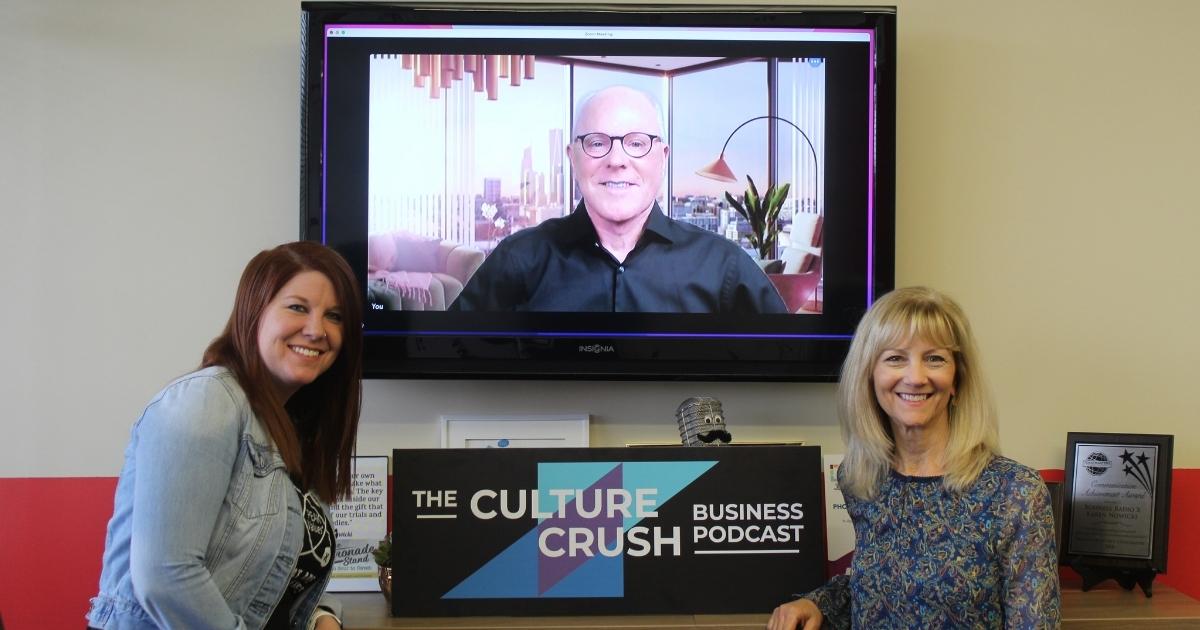
As a growing company- Culture Crush Business Podcast is THE culture improvement resource that supports companies and leaders.  Our Mission is to improve company cultures so people WANT to go to work. Employees and leaders should like where they work and we think this is possible.

Within the company: Culture Crush has Vetted Resources and Partnerships with the right people and resources that can help improve your company culture.

On this podcast:  We focus on everything surrounding businesses with good company culture. We will talk with company leaders to learn about real-life experiences, tips, and best practices for creating a healthy work environment where employees are finding joy and satisfaction in their work while also striving and growing within the company.  We also find the companies that offer resources to help improve company culture and showcase them on the show to share their tips and tricks for growing culture.

About the Host

ABHOUTHOSTHEADSHOT

Kindra Maples  is spartan racer, past animal trainer, previous magician’s assistant, and has a weakness for Oreo cookie shakes. Her journey working with people actually started working with animals as a teenager (don’t worry we won’t go that far back for her bio).

She worked for over 15 years in the zoo industry working with animals and the public. Her passion of working with animals shifted into working with people in education, operations and leadership roles. From there her passion of leadership and helping people develop has continued to grow.

Then came the opportunity for leading  the Culture Crush Business Podcast and she jumped on it. Leadership, growth, and strong company cultures are all areas that Kindra is interested in diving into further.

Shout Outs

We want to thank a few people for their behind the scenes effort in helping this relaunch to come to life. James Johnson with Tailored Penguin Media Company LLC.– It is a small, but powerful video production company with a goal to deliver the very best by articulating the vision of your brand in a visually creative way. Gordon Murray with Flash PhotoVideo, LLC. -Flash Gordon has been photographing since high school and evolving since then with new products that will equip, encourage, engage, and enable. Renee Blundon with Renee Blundon Design – She is not only one of the best free divers (that’s not how she helped with the podcast) but she is great with graphics design and taking the direction for the vision that you have while also adding creative ideas to bring to your vision to life.

These are just a few of the folks that supported the relaunch of the podcast. If you would like to be part of the Culture Crush team or would like to support underwriting the show- please reach out: info@culturecrushbusiness.com

Tagged With: company culture, Consultant, employees, Human Resources, speaker

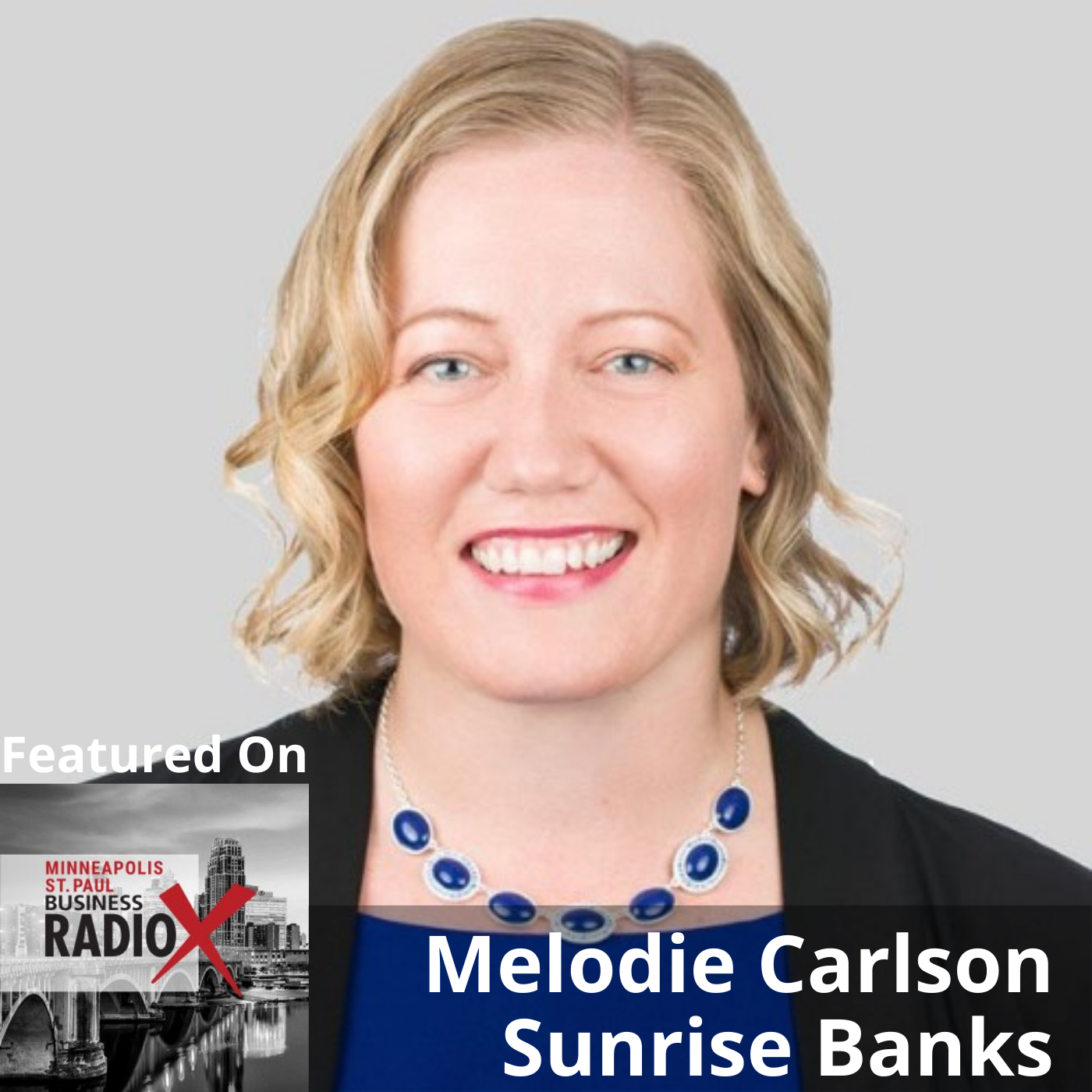
Melodie Carlson, Sunrise Banks

February 21, 2022 by John Ray

Sunrise Banks
Minneapolis St. Paul Business Radio
Melodie Carlson, Sunrise Banks
Loading
00:00 /
RSS Feed
Share
Link
Embed

Download file

Sunrise Banks

Melodie Carlson, Sunrise Banks (Minneapolis-St. Paul Business Radio, Episode 33)

Melodie Carlson, Chief Operating Officer for Sunrise Banks, reflected with host John Ray on the company’s human resources philosophies and practices, and how they have aided in the growth and development of the company. Melodie talked about flexibility in dealing with employees, how Sunrise managed the shift to remote work during the pandemic, employee communication, trusting employees and avoiding micro-management, her advice for work-from-home teams, and much more. Minneapolis-St. Paul Business Radio is produced virtually by the Minneapolis St. Paul studio of Business RadioX®.

Sunrise Banks

Sunrise Banks is a community bank headquartered in St. Paul, Minn. The bank offers traditional banking services while also partnering with fintechs to expand its reach nationally and across the globe. Sunrise is a certified B Corporation, a Community Development Financial Institution and a member of the Global Alliance for Banking on Values.

Company website | LinkedIn | Facebook

Melodie Carlson, COO, Sunrise Banks

Melodie Carlson, COO, Sunrise Banks

Melodie Carlson is Sunrise Banks’ Chief Operating Officer. Melodie’s role has evolved during her tenure at Sunrise and she has led many teams during her time with the bank. She currently leads the deposit operations, executive admin, facilities, fintech client relationships, fintech operations, human resources, internal audit, and retail banking departments.

Prior to joining Sunrise in 2015, Melodie spent 14 years at Target Corporation taking on additional responsibilities and leading teams in the internal audit, accounts payable, and payroll departments.

She started her career in public accounting at what is now called CliftonLarsonAllen (CLA), where she audited financial institutions and employee benefit plans.

 LinkedIn 

Questions and Topics Discussed in this Episode

  • How to communicate with employees while working from home.
  • 3 Steps to a Happy and Productive WFH Team
  • The benefit of one-on-one meetings with staff.
  • How to keep employees productive without micromanaging.
  • PPP loans and the mission of Sunrise Banks

Minneapolis-St. Paul Business Radio is hosted by John Ray and produced virtually from the Minneapolis St. Paul studio of Business RadioX® .  You can find the full archive of shows by following this link. The show is available on all the major podcast apps, including Apple Podcasts, Spotify, Google, Amazon, iHeart Radio, Stitcher, TuneIn, and others.

Tagged With: b corporation, Employee Engagement, employees, HR, Human Resources, Melodie Carlson, Minneapolis St Paul Business Radio, PPP loans, remote work, Sunrise Banks

Top 10 Human Resource Mistakes in Dental Practices

October 29, 2021 by John Ray

Top10DentalHumanResourceMistakesDLREpisode23Album
Dental Law Radio
Top 10 Human Resource Mistakes in Dental Practices
Loading
00:00 /
RSS Feed
Share
Link
Embed

Download file

Top10DentalHumanResourceMistakesDLREpisode23Album

Top 10 Human Resource Mistakes in Dental Practices (Dental Law Radio, Episode 23)

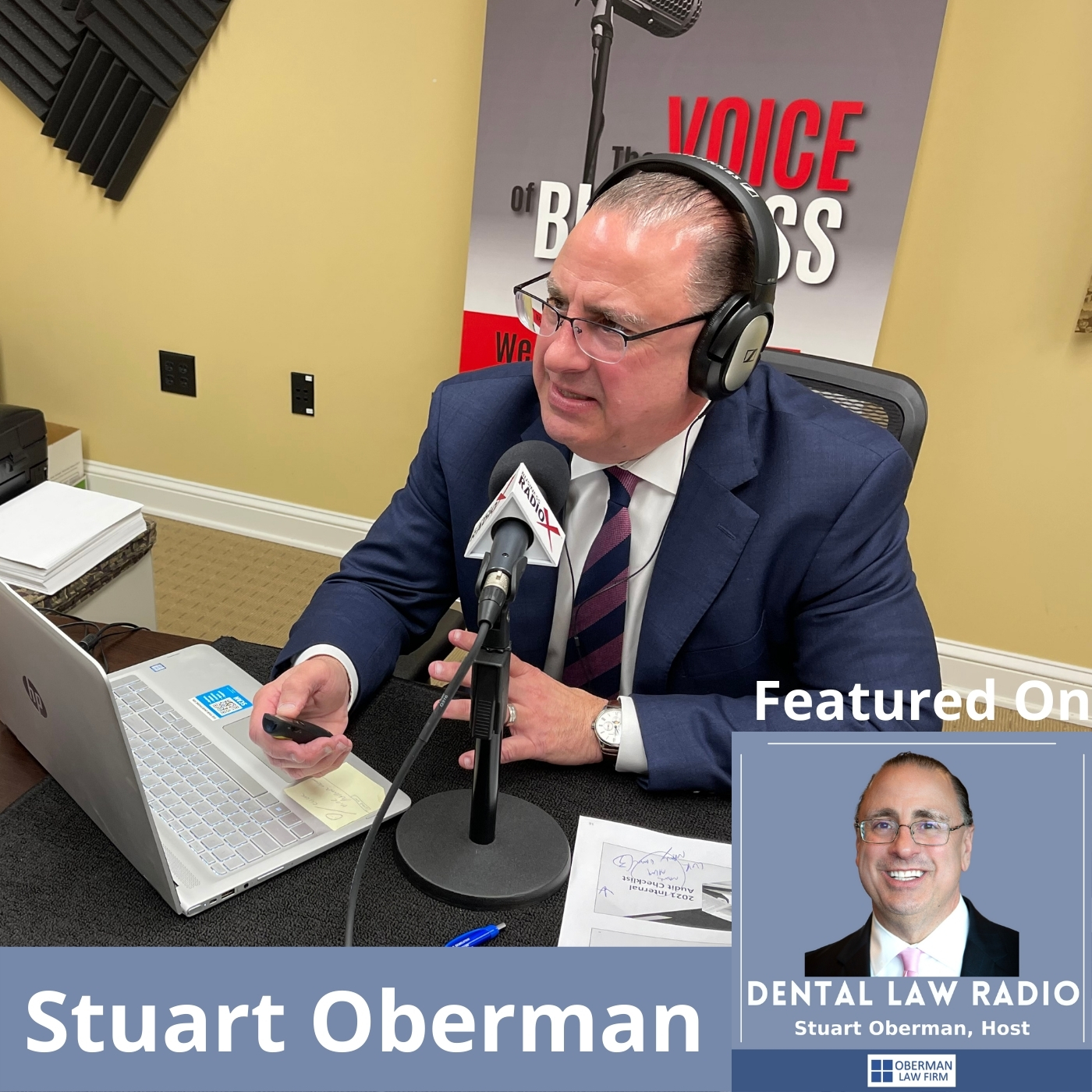
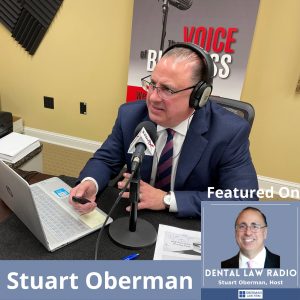
As a rule, Stuart Oberman observes, HR in the dental practices he works with is “non-existent,” and remediating those lapses and blunders can be quite costly. So what are the top ten mistakes he sees in his work, and how do those problems get fixed? Use this episode of Dental Law Radio to gauge some areas of improvement your practice may require. Dental Law Radio is underwritten and presented by Oberman Law Firm and produced by the North Fulton studio of Business RadioX®.


TRANSCRIPT

Intro: [00:00:01] Broadcasting from the Business RadioX Studios in Atlanta, it’s time for Dental Law Radio. Dental Law Radio is brought to you by Oberman Law Firm, a leading dental-centric law firm serving dental clients on a local, regional, and national basis. Now, here’s your host, Stuart Oberman.

Stuart Oberman: [00:00:25] Hello everyone and welcome to Dental Law Radio. Today’s topic, H.R. I’m going to start off by saying that, as a general rule, H.R. in our dental practices is nonexistent. We run into a lot of issues regarding H.R. in our dental practices. So, what’s the topic for today? Avoid the Top Ten Dental Human Resource Mistakes.

Stuart Oberman: [00:00:57] So, I talked about before that COVID-19 exposed a lot of issues regarding H.R. Mainly, it was nonexistent. So, going forward with that, we’re seeing a little bit of improvement, but not a lot, not enough that I feel comfortable, especially with statistics regarding the Department of Labor and the increased scrutiny of the Fair Labor Standards Act.

Stuart Oberman: [00:01:25] So, a recent survey came out from the Department of Labor that 70 percent of employers are violating the Fair Labor Standards Act. If you don’t know what that is, then you need to, honestly, listen closely. You need to join our email lists, because the Fair Labor Standards Act is under federal scrutiny right now to tighten that up from the employment side.

Stuart Oberman: [00:01:55] So, let’s take a look at what are the most common mistakes. I want to keep this simple, because, again, this can very easily go down a rabbit hole. Progress is short steps, especially on the H.R. Side. You don’t have to recreate and reinvent the wheel. Just take small steps. One of the biggest questions is, number one, failure to follow employment policies and procedures.

Stuart Oberman: [00:02:22] So, I’m talking to a doctor yesterday and he’s talking about a hygienist who is off of work. She was in an accident in a totally different state that I’m in, Georgia. And this is a doctor up north. And he was outlining how and what she was not doing, what he wanted done. Point blank question, “Doctor, does she sign a nondisclosure?” “Nope.” “Doctor, do you have an employee manual?” “Nope.” “Are there any internal documents that govern employee conduct?” “Nope.”

Stuart Oberman: [00:02:59] So, the first thing I thought to myself and I didn’t say this out loud was, you’re dead in the water. You’re just dead. I mean, it’s damage control as to what it’s going to look like. So, what do we do? You have to follow policies and procedures. You have to – I can’t even stress this enough. I feel like getting up on the table and screaming. You have to have a policy manual.

Stuart Oberman: [00:03:25] Now, I looked at one this morning, it’s 30 pages. It’s better than nothing. But we’re going to have to beef that up a little bit. They’re a little bit out of compliance with some issues, so it’s probably going to be 70 or 80 pages. By the time we get through the job descriptions and everything else, we’ll be about 100. That’s the first step, is, you’ve got an employee manual.

Stuart Oberman: [00:03:43] That doctor yesterday, dead in the water. Forget about it. It was a short conversation. He wasn’t happy with the answer that I gave him, which was to protect him going forward.

Stuart Oberman: [00:03:57] Number two, failure to keep good records. When you have a Department of Labor audit, State or Federal, if it is not in writing, if it is not in a file, it never happened and you never enforced it. One thing I would strongly recommend we do is that for each employee, you have two separate files. The professional file, which is the credentialing file and regular employment file. And I said this before on previous podcasts, never ever, ever in your life let your employees control their own personnel file. Never. Keep good records.

Stuart Oberman: [00:04:40] If you keep good employee records, then you are more likely to succeed in the Department of Labor audit, OSHA audit, and other State and Federal audits, because you’ve got the documentation. You know, as we say in the board complaints, if it wasn’t in writing, it never happened. So, writing is critical.

Stuart Oberman: [00:05:07] So, one thing our doctors do not do, number three, failure to conduct performance reviews. In today’s world where turnover is greater than ever – and I was reading a publication, it’s called Boomerang. The employees that left on the mass exodus are going to now want to start coming back – the question is, do you hire those employees back? That’s an individual question that you’ve got to answer for yourself. So, are you evaluating your employees? Do you have a valuation process on a monthly, quarterly, or yearly basis?

Stuart Oberman: [00:05:47] Because if you’re going to fire an employee and you have no performance reviews, you’re already behind the eight ball. You’ve got to provide constructive criticism. You have to jointly discuss problems and concerns. And then, you’ve got to document it. If you’re going to fire an employee, the next thing is you’re going to get slapped in the back of the head with the Americans with Disabilities Act allegation or EEOC, Equal Opportunity Employment Commission, lawsuit or complaint. And you have no documentation, you might as well open up your checkbook.

Stuart Oberman: [00:06:20] Number four is a growing concern among our dental practices, failure to follow harassment and discrimination policies. This is the fastest growing segment of problems in our dental practice across the board, small, large, large scale, doesn’t matter. Harassment and discrimination policies, in plain English, you better have a policy for that. It better be in your employee manual. And you better know how to deal with the complaint on either one of those fronts, harassment or discrimination policies.

Stuart Oberman: [00:06:57] So, in today’s world, you also probably should obtain discrimination harassment policy and contact your local insurance broker for those particular coverages. But you got to have a plan. It’s got to be written. And you’ve got to have a procedure in place to enforce it if you have complaints.

Stuart Oberman: [00:07:16] Number five is a growing area of concern as far as the Federal Fair Labor Standards Act goes. Number five, failure to pay overtime to nonexempt employees. So, the law is constantly changing, states are constantly changing. You have to keep up to date as to what exempt and nonexempt is in your state. If you do not have this documented, I will guarantee you, you will be slapped hard by the State or Federal Department of Labor. States are actually worse than the IRS, especially if your employees complain on their whistleblower statute, State or Federal.

Stuart Oberman: [00:07:59] So, again, you have to understand what the Fair Labor Standards Act is, how that applies. In January, what President Biden said as far as enforcement goes and regulatory concerns.

Stuart Oberman: [00:08:15] A gray area now in the news, creating a perception of retaliation. So, I’m not saying nothing is confidential. It’s all in the news. Whistleblower came forward on Facebook, that’s common knowledge. So, in your practice, you have to have specific policies in place that if an employee complains, they will not be retaliated against, especially if you are allegedly violating Federal Law, OSHA, HIPAA, Department of Labor, whatever it may be.

Stuart Oberman: [00:08:52] There are very specific whistleblower statutes out there that if you penalize an employee for complaining to the State or Federal agency, you can be amazingly sanctioned – and I know that’s not even a good sentence. But you will get slapped. And then, you got to come on the Federal Whistleblower Statute, which is never ever, ever a good thing.

Stuart Oberman: [00:09:18] So, as employees are quitting, as employees are being fired, laid off, one thing you have to consider, number seven, your failure to consider the impact of a layoff. The days are gone where you simply fire an employee and not worry about anything. In today’s world, you have to prepare for a layoff or a fire. One thing you have to do – and I say this all the time when I speak and I tell our clients this on our calls – you have to have a nondisclosure agreement. You have to have a cell phone, social media, and internet policy.

Stuart Oberman: [00:09:59] One thing your employees will do if you fire them, they will go straight to the internet and then you have absolutely no recourse to prevent that, unless you have these nondisclosure confidentiality agreements. Your employees are going to go to three places, OSHA, HIPAA, Department of Labor for complaints. How do you deal with that? How do you deal with an employee being fired in wanting money for severance? Are you prepared to sign a release?

Stuart Oberman: [00:10:31] A complaint that is filed by an employee never ends, it seems like, once a government gets involved. If you can resolve a case with your employee prior to any litigation complaints being filed – and that includes OSHA, HIPAA, and Department of Labor, where your employees are going to go if they have problems – get the case resolved, get a severance agreement in place, and get that employee to sign a release. If that employee goes under bad terms, there’s a pretty good chance you’re going to have an ongoing problem.

Stuart Oberman: [00:11:12] One of the biggest areas that we try to take a look at, under number eight, is the failure to manage or resolve conflicts before litigation. Get the problem resolved prior to the employee leaving or litigation. Because once you step into that arena, it is a long and expensive time consuming process that you will live with for a long, long time.

Stuart Oberman: [00:11:44] In today’s employment world, you have to consider, number nine, the Americans with Disabilities Act and the Family Medical Leave Act and, also, Employee Pregnancy Act. So, the Americans with Disabilities Act applies to a specific number of employees. Every decision that you make, hiring and firing, has to be with that in mind. And under the Family Medical Leave Act, FMLA, that is 50 employees or over.

Stuart Oberman: [00:12:22] Now, what happens is, our doctors say, “Well, you know, in three or four practices and I got them all sectioned out. And I got ten employees here. I got 20 here. I got ten here. So, all my practices, I don’t have 50, but combined I have 80.”

Stuart Oberman: [00:12:36] So then, you get a question as to whether or not they are closely connected, a nexus, and whether or not you’re going to come under that particular scenario. If you’re going to scale, you have to be concerned about that because that reflects a lot of what you’re going to do internally. So, every decision has to be made, hiring and firing, regarding those particular things in mind. If you do not know what they are, if you are not familiar with those, then I suggest you contact your legal counsel. And if they don’t know, please feel free to give us call. We deal with this every day. So, cybersecurity is first and foremost on everyone’s mind in today’s world.

Stuart Oberman: [00:13:19] So, number ten, problematic. Careless use of email and the internet. Most breaches, cybersecurity experts will tell you, comes internally from poor usage of your emails, stuff is open, viruses are spread. Every, every, every practice should have a written policy on computer usage.

Stuart Oberman: [00:13:49] And let me tell you folks, the spammers are good. The phishing – and I don’t mean at Lake Lanier – is good. It gets to the point where it is, at times, impossible to tell whether or not it’s spam. And we have actually had cases that we were working on where opposing counsel, we find out has actually been sending wire transfers to fraudulent email participants on the other end, because they were hacked and they didn’t even know it. We’re talking about billions of dollars being shifted on these particular transactions.

Stuart Oberman: [00:14:34] So, you’ve got to take a look at what the policy is. It’s got to be in writing. You’ve got to have internet guidelines. You have to monitor access to your employees. And I would urge you, urge you, to reach out to your IT company, if you have one. If not, let me know. We can, certainly, try to get you in the right direction on a lot of areas. But they should be running tests to determine your vulnerability internally and whether or not your employees will open up these emails randomly, because that’s the key.

Stuart Oberman: [00:15:09] Folks, that is a long segment, I believe, on Dental Human Resource Mistakes. It’s the little things you can do to avoid the big problems. Again, I can talk probably an hour on each topic. But just take away one thing, go through this list. Make sure you are in compliance. Make sure you have outlines. Make sure you’re taking the right steps to move forward in security and prevent problems with the employees.

Stuart Oberman: [00:15:42] Folks, thank you very much for joining us. My name is Stuart Oberman. Feel free to give us a call if you have any questions or concerns, 770-886-2400, Oberman Law Firm. Or please feel free to give me an email at stuart, S-T-U-A-R-T, @obermanlaw.com. Thank you, and we will see you on radio soon.


About Dental Law Radio

Hosted by Stuart Oberman, a nationally recognized authority in dental law, Dental Law Radio covers legal, business, and other operating issues and topics of vital concern to dentists and dental practice owners. The show is produced by the North Fulton studio of Business RadioX® and can be found on all the major podcast apps. The complete show archive is here.

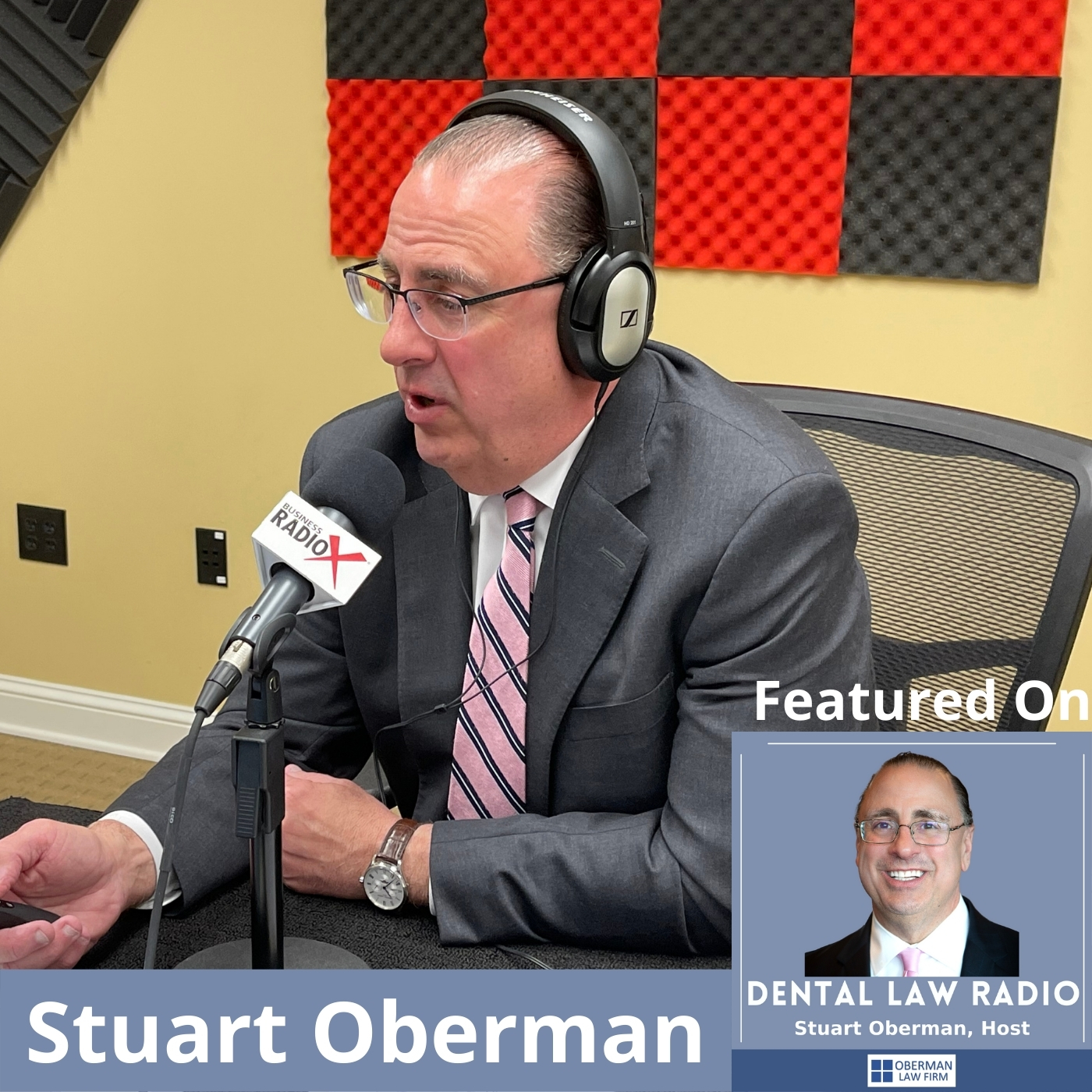
Stuart Oberman, Oberman Law Firm

Oberman Law Firm
Stuart Oberman, host of “Dental Law Radio”

Stuart Oberman is the founder and President of Oberman Law Firm. Mr. Oberman graduated from Urbana University and received his law degree from John Marshall Law School. Mr. Oberman has been practicing law for over 25 years, and before going into private practice, Mr. Oberman was in-house counsel for a Fortune 500 Company. Mr. Oberman is widely regarded as the go-to attorney in the area of Dental Law, which includes DSO formation, corporate business structures, mergers and acquisitions, regulatory compliance, advertising regulations, HIPAA, Compliance, and employment law regulations that affect dental practices.

In addition, Mr. Oberman’s expertise in the health care industry includes advising clients in the complex regulatory landscape as it relates to telehealth and telemedicine, including compliance of corporate structures, third-party reimbursement, contract negotiations, technology, health care fraud and abuse law (Anti-Kickback Statute and the State Law), professional liability risk management, federal and state regulations.

As the long-term care industry evolves, Mr. Oberman has the knowledge and experience to guide clients in the long-term care sector with respect to corporate and regulatory matters, assisted living facilities, continuing care retirement communities (CCRCs). In addition, Mr. Oberman’s practice also focuses on health care facility acquisitions and other changes of ownership, as well as related licensure and Medicare/Medicaid certification matters, CCRC registrations, long-term care/skilled nursing facility management, operating agreements, assisted living licensure matters, and health care joint ventures.

In addition to his expertise in the health care industry, Mr. Oberman has a nationwide practice that focuses on all facets of contractual disputes, including corporate governance, fiduciary duty, trade secrets, unfair competition, covenants not to compete, trademark and copyright infringement, fraud, and deceptive trade practices, and other business-related matters. Mr. Oberman also represents clients throughout the United States in a wide range of practice areas, including mergers & acquisitions, partnership agreements, commercial real estate, entity formation, employment law, commercial leasing, intellectual property, and HIPAA/OSHA compliance.

Mr. Oberman is a national lecturer and has published articles in the U.S. and Canada.

LinkedIn

Oberman Law Firm

Oberman Law Firm has a long history of civic service, noted national, regional, and local clients, and stands among the Southeast’s eminent and fast-growing full-service law firms. Oberman Law Firm’s areas of practice include Business Planning, Commercial & Technology Transactions, Corporate, Employment & Labor, Estate Planning, Health Care, Intellectual Property, Litigation, Privacy & Data Security, and Real Estate.

By meeting their client’s goals and becoming a trusted partner and advocate for our clients, their attorneys are recognized as legal go-getters who provide value-added service. Their attorneys understand that in a rapidly changing legal market, clients have new expectations, constantly evolving choices, and operate in an environment of heightened reputational and commercial risk.

Oberman Law Firm’s strength is its ability to solve complex legal problems by collaborating across borders and practice areas.

Connect with Oberman Law Firm:

Company website | LinkedIn | Twitter

Tagged With: Dental Law Radio, employees, HR, HR mistakes, Human Resources, Oberman Law Firm, performance reviews, Stuart Oberman

The Value of Delegation, with Bill McDermott, Host of ProfitSense

October 15, 2021 by John Ray

Value of Delegation
North Fulton Studio
The Value of Delegation, with Bill McDermott, Host of ProfitSense
Loading
00:00 /
RSS Feed
Share
Link
Embed

Download file

Value of Delegation

The Value of Delegation, with Bill McDermott, Host of ProfitSense 

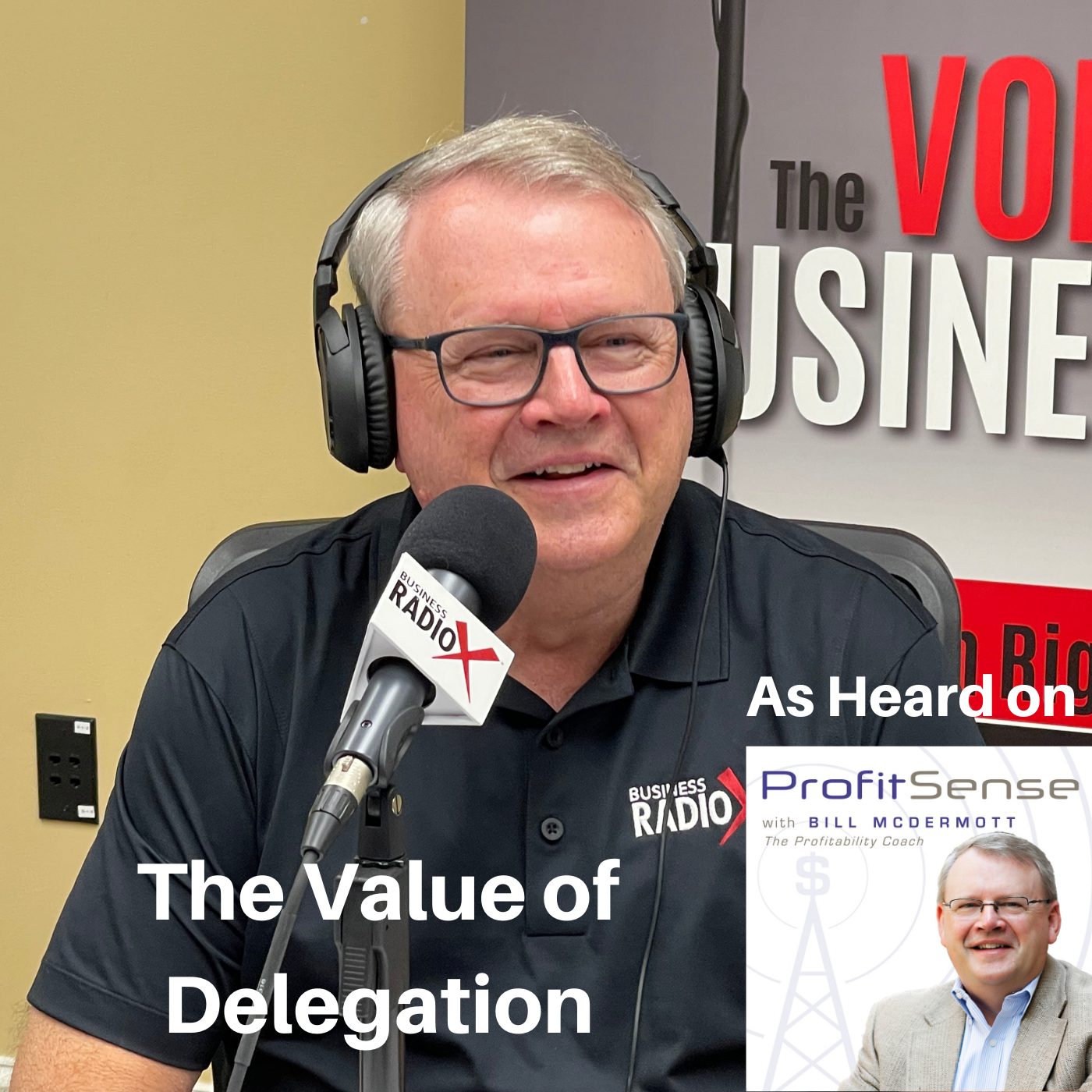
Only 1% of businesses pass the $10 million mark. As Profitability Coach Bill McDermott explains, the number one reason for this striking statistic is lack of delegation. On a recent episode of ProfitSense, Bill discussed the value of delegation, not just for the business, but for employees, company culture, and the owner’s plans to exit. ProfitSense with Bill McDermott is produced and broadcast by the North Fulton Studio of Business RadioX® in Alpharetta.

Bill’s commentary was taken from this episode of ProfitSense.

About ProfitSense and Your Host, Bill McDermott

Bill McDermott
Bill McDermott

ProfitSense with Bill McDermott dives into the stories behind some of Atlanta’s successful businesses and business owners and the professionals that advise them. This show helps local business leaders get the word out about the important work they’re doing to serve their market, their community and their profession. The show is presented by McDermott Financial Solutions. McDermott Financial helps business owners improve cash flow and profitability, find financing, break through barriers to expansion and financially prepare to exit their business. The show archive can be found at profitsenseradio.com.

Bill McDermott is the Founder and CEO of McDermott Financial Solutions. When business owners want to increase their profitability, they don’t have the expertise to know where to start or what to do. Bill leverages his knowledge and relationships from 32 years as a banker to identify the hurdles getting in the way and create a plan to deliver profitability they never thought possible.

Bill currently serves as Treasurer for the Atlanta Executive Forum and has held previous positions as a board member for the Kennesaw State University Entrepreneurship Center and Gwinnett Habitat for Humanity and Treasurer for CEO NetWeavers. Bill is a graduate of Wake Forest University and he and his wife, Martha have called Atlanta home for over 40 years. Outside of work, Bill enjoys golf, traveling, and gardening.

Connect with Bill on LinkedIn and Twitter and follow McDermott Financial Solutions on LinkedIn.

Tagged With: Bill McDermott, business transition, company culture, Delegation, employees, exit planning, McDermott Financial Solutions, Profitability Coach Bill McDermott, ProfitSense with Bill McDermott, The Profitability Coach

A Checklist for Hiring New Employees

September 17, 2021 by John Ray

ChecklistforHiringDLREpisode20Album
Dental Law Radio
A Checklist for Hiring New Employees
Loading
00:00 /
RSS Feed
Share
Link
Embed

Download file

ChecklistforHiringDLREpisode20Album

A Checklist for Hiring New Employees (Dental Law Radio, Episode 20)

You’ve hired that new employee. Now what? As host Stuart Oberman discusses, there should be an onboarding process which involves an offer letter, a well-written employee manual (not the 20-page version downloaded from the internet), consent forms, and much more. Missing steps and inadequate documentation here sow the seeds of costly problems later. Dental Law Radio is underwritten and presented by Oberman Law Firm and produced by the North Fulton studio of Business RadioX®.

TRANSCRIPT

Intro: [00:00:01] Broadcasting from the Business RadioX studios in Atlanta, it’s time for Dental Law Radio. Dental Law Radio is brought to you by Oberman Law Firm, a leading dental-centric law firm serving dental clients on a local, regional and national basis. Now, here’s your host, Stuart Oberman.

Stuart Oberman: [00:00:26] Hello, everyone, and welcome to Dental Law Radio. So, this topic, today’s topic, a checklist for hiring new employees. I will tell you, I said this before on previous podcasts, we are very fortunate. As a law firm, we have clients in approximately 30 states all the way from California, Maine to Florida. And we do a substantial amount of HR work. Now, what does that mean, HR, human resources? So, we work with our clients on hiring, firing, internal operations, documents, non-competes, nondisclosures, non-solicitations. And one of the things that we have found out that our doctors do not – do not – onboard properly, they don’t have the processes in place, they don’t understand how to onboard, they don’t have a checklist, and they have absolutely no process in place because, at some point, without a good hiring process, if that employee does not work out your firing process, which we will cover in a subsequent podcast, will be an absolute disaster.

Stuart Oberman: [00:01:45] So, let’s take a look at a couple of things that we’ve run into. First and foremost, before that employee starts, day one, you have to have a series of forms and onboarding documents. What does that look like in your practice? You probably think, “Well, I don’t have an onboarding process.” So, then next step is you better get one because you have to have one. So, I would encourage you – encourage you – to have a new hire checklist. If you don’t have one, I’ll give you information on how to get one at the end of this podcast.

Stuart Oberman: [00:02:25] So, first and foremost, when you interview – and we covered interviewing on our previous podcasts – the proper way to interview. So, let’s assume you hire the employee. Now what? Every position that you hire has to have … or I say has to, should have an offer letter. Now, that doesn’t mean one paragraph, that means a formal offer letter, which should include a couple of things. A job description: What department are they working in? What’s their work schedule? Now, you maybe thinking, “Well, I’m going to give them an employment contract.” No. In many cases, an employment contract will get you in more trouble than not having one. So, it depends on your position within the dental practice or for those that are listening that do not own a dental practice, within your organization.

Stuart Oberman: [00:03:26] So, again, first and foremost, offer letter, job information, title, department, what is the work schedule, how long are they going to be there, what’s the compensation, what’s the benefits, what are the employer responsibilities? So, with a caveat to that, the employee benefits, assuming it’s employer’s responsibilities, should already be outlined in your employee manual.

Stuart Oberman: [00:03:56] So, we see a lot of problems with employee manuals. We have doctors that will come up to us and say, “Hey, you know what? I got an employee manual for my friend, and it’s about 25 pages.” My first thought on that is you probably need to shred it. It’s just going to get you in more trouble than not. And what are the termination conditions? It is easy to get married; it is hard to get divorced.

Stuart Oberman: [00:04:24] So, then is next step is what forms do you need from a governmental standpoint to classify and compensate employees with? And it is amazing to me how many CPAs will ask us for this information, which is, a lot of times, very basic. Again, you should have all this prepared, especially in today’s market where turnover is rampant. Of course, you got to have a W-4; for contractors, W9. It is a key concept to have your workers classified as employees or independent contractors. That’s a whole another discussion on classifications. You’re I9s, your state and federal withholdings. What are you going to do when you have multiple practices that are in multiple states? Each one is different. Do you fall for a foreign entity in that particular state, even though that is not your home base? Your E-system verification. Again, those are your basic forms. You should already have those prepared and ready to roll from day one.

Stuart Oberman: [00:05:40] So, your internal forms are a little bit different and they’re relationship-based. So, these are more what I call your protectionary forms, which every practice – and again, for those that are listening that are not dental-related – every business should have. Now, depending on your position, whether or not that is a key employee position, you will want to have a non-compete. “Well, non-competes are not enforceable.” They are absolutely enforceable. It depends on the extent. As a general rule, depending on your state, it has to be geographically specific, it cannot be overly broad, and you can’t say, “I will not allow this employee to do this anywhere in the country or in the world.” That is a recipe for disaster.

Stuart Oberman: [00:06:33] Non-disclosure forms. Every – every employee should sign a nondisclosure. What happens in your place of business must and should stay in your place of business. “Well, they won’t sign one.” Then, they should not be working in your office. Every employee signs one, including social media, cell phone, and internet policy. And I would encourage you not to get those forms off of the internet. They’re very complex employment law forms.

Stuart Oberman: [00:07:06] So, then, an employee acknowledgement handbook. So, I can’t tell you how many times I say, “What’s your employee manual say?” “Well, you know, we really did give it to him,” or “We gave it to him.” “Great! Where’s the acknowledgement form that they received it?” “Well, I don’t think they ever gave back to us.” So, honestly, unless your employee really signs an acknowledgment form, in all likelihood, you probably should assume that they did not get it.

Stuart Oberman: [00:07:34] Next, drug and alcohol consent forms for testing. Now, what are you going to do if you have a state that has legalized marijuana? That is a whole another topic for another day. That is special considerations.

Stuart Oberman: [00:07:57] Employee equipment list. Lot of our doctors, a lot of our employers will provide laptops, cellphones, equipment. You better log those in because once that employee leaves, good luck getting them back unless you inventory it. Confidentiality agreements, an absolute must. Again, what stays in the practice — what happens in practice stays in the practice.

Stuart Oberman: [00:08:24] So, then, let’s take a look at a couple of other things. These are just basic things that you really should have. So, then, in the offer letter, an employee benefits documents. You need to give the employees documents regarding life and health insurance. You can’t wait 60, 90, six months, a year later to give the employees this particular set of documents.

Stuart Oberman: [00:08:54] Cellphone plan. What is your cellphone plan? It is amazing in today’s world what employees will keep and store on their cellphones. What happens when that employee leaves and all of your data, because they downloaded it at your request, is on their cellphone? Do you have a policy to delete that? Do you have a policy that will certify from your employees when they leave that that will be deleted? Do you have an app on your phone that will essentially self-destruct the employment information that you’ve sent over to your employees? If you look at the text messages and everything else that you sent over to your employees on a daily basis, it will be amazing what data is on there, and it will be also amazing what happens if that phone is hacked, and where the data goes. Then, I would strongly recommend you specify paid vacation, time off, paid holidays, sick leave. Do not assume that your employees will know that. That’s got to be in writing.

Stuart Oberman: [00:10:07] Then, the next final data is emergency information. People move. Numbers change. Do you know how to get in touch with relatives should something happen at your office place? Now, you’ve got to be really careful with this because in some instances you’re talking about the ADA, American Disabilities Act, and EEOC. Have you obtained a brief medical history in an employment application? Again, we got to take a look at EEOC issues, especially in this world of COVID. We have to take a look at GINA Title II as far as DNA information goes. So, there’s all kind of regulatory matters we need to take a look at, whether it’s food allergies. I mean, in today’s world, we don’t know what employee problems are.

Stuart Oberman: [00:11:05] So, this is a very, very, very brief, brief summary as to what you need on a new hire checklist. And I’ll tell you, we discovered this when our doctors go through an insurance or third-party governmental audit, and they want personnel files for the last five or seven years, they want ID information, they want application information, they want checks as to whether or not those employees were checked off as far as whether or not they’re eligible to provide treatment or see patients that are on the governmental payer list, if you will.

Stuart Oberman: [00:11:50] So, those are all the things that we really want to take a look at that are absolutely mandatory because when you get a governmental order from attorney general’s office or the DOJ on a federal level, and all of a sudden, they are asking for a personnel file, you’ve got a problem if all this is not in there. And all you do is have one photograph and a one-page application process, that’s an absolute recipe for disaster on a audit.

Stuart Oberman: [00:12:18] So, hopefully you’ll take away a couple of things. Take a look at your personnel file, which should always be kept separate from all the other records, especially regarding COVID-19 shot information. That should be absolutely separate from all the other personnel files and should be maintained separately. So, in summary make sure your new hire process is in place, it’s implemented because it is so easy to get into a relationship plan-wise; it is absolutely devastating to, at times, get out of these relationships.

Stuart Oberman: [00:12:59] So, thank you for joining us today. Hopefully, you picked up a couple of good ideas. If you would, feel free to reach out to us. My name is Stuart Oberman, stuart@obermanlaw.com. 770-886-2400. And please follow us on our podcast. And I always say, if you just pick up one bit of information from each podcast, it is a fantastic day. Thanks for joining us. And we will talk to you soon.

About Dental Law Radio

Hosted by Stuart Oberman, a nationally recognized authority in dental law, Dental Law Radio covers legal, business, and other operating issues and topics of vital concern to dentists and dental practice owners. The show is produced by the North Fulton studio of Business RadioX® and can be found on all the major podcast apps. The complete show archive is here.

Stuart Oberman, Oberman Law Firm

Oberman Law Firm
Stuart Oberman, host of “Dental Law Radio”

Stuart Oberman is the founder and President of Oberman Law Firm. Mr. Oberman graduated from Urbana University and received his law degree from John Marshall Law School. Mr. Oberman has been practicing law for over 25 years, and before going into private practice, Mr. Oberman was in-house counsel for a Fortune 500 Company. Mr. Oberman is widely regarded as the go-to attorney in the area of Dental Law, which includes DSO formation, corporate business structures, mergers and acquisitions, regulatory compliance, advertising regulations, HIPAA, Compliance, and employment law regulations that affect dental practices.

In addition, Mr. Oberman’s expertise in the health care industry includes advising clients in the complex regulatory landscape as it relates to telehealth and telemedicine, including compliance of corporate structures, third-party reimbursement, contract negotiations, technology, health care fraud and abuse law (Anti-Kickback Statute and the State Law), professional liability risk management, federal and state regulations.

As the long-term care industry evolves, Mr. Oberman has the knowledge and experience to guide clients in the long-term care sector with respect to corporate and regulatory matters, assisted living facilities, continuing care retirement communities (CCRCs). In addition, Mr. Oberman’s practice also focuses on health care facility acquisitions and other changes of ownership, as well as related licensure and Medicare/Medicaid certification matters, CCRC registrations, long-term care/skilled nursing facility management, operating agreements, assisted living licensure matters, and health care joint ventures.

In addition to his expertise in the health care industry, Mr. Oberman has a nationwide practice that focuses on all facets of contractual disputes, including corporate governance, fiduciary duty, trade secrets, unfair competition, covenants not to compete, trademark and copyright infringement, fraud, and deceptive trade practices, and other business-related matters. Mr. Oberman also represents clients throughout the United States in a wide range of practice areas, including mergers & acquisitions, partnership agreements, commercial real estate, entity formation, employment law, commercial leasing, intellectual property, and HIPAA/OSHA compliance.

Mr. Oberman is a national lecturer and has published articles in the U.S. and Canada.

LinkedIn

Oberman Law Firm

Oberman Law Firm has a long history of civic service, noted national, regional, and local clients, and stands among the Southeast’s eminent and fast-growing full-service law firms. Oberman Law Firm’s areas of practice include Business Planning, Commercial & Technology Transactions, Corporate, Employment & Labor, Estate Planning, Health Care, Intellectual Property, Litigation, Privacy & Data Security, and Real Estate.

By meeting their client’s goals and becoming a trusted partner and advocate for our clients, their attorneys are recognized as legal go-getters who provide value-added service. Their attorneys understand that in a rapidly changing legal market, clients have new expectations, constantly evolving choices, and operate in an environment of heightened reputational and commercial risk.

Oberman Law Firm’s strength is its ability to solve complex legal problems by collaborating across borders and practice areas.

Connect with Oberman Law Firm:

Company website | LinkedIn | Twitter

Tagged With: checklist for hiring new employees, dental practice management, employees, Oberman Law Firm, Onboarding new hires, Stuart Oberman

The Backstory of Luring Employees Back to Work, with Mike Blake, Brady Ware & Company

July 19, 2021 by John Ray

Brady Ware
North Fulton Studio
The Backstory of Luring Employees Back to Work, with Mike Blake, Brady Ware & Company
Loading
00:00 /
RSS Feed
Share
Link
Embed

Download file

Brady Ware

The Backstory of Luring Employees Back to Work, with Mike Blake, Brady Ware & Company

Mike Blake: [00:00:00] Are we going to lure people back to work? Are we going to force them back to work? So, the topic of the day now is, people are not coming back to the workforce. And that’s the chart that I have from the St. Louis Federal Reserve on Unemployment Level and Job Openings. It shows that the number of job openings exceeds the number of unemployed people in the United States. Why are people not taking them?

Mike Blake: [00:00:30] Well, before I go directly and answer that question, this chart is really important, and if you look at no other chart and look at this one – and it also is from the St. Louis Federal Reserve and it’s the Labor Force Participation Rate. And the labor force participation rate means the percentage of adult Americans who are working, or available to work, want to work, or in the labor force – you’ll notice that the American labor force has been declining since 2000, particularly since, say, late 2008, 2009. And it recovered a bit, I think a statistical noise. Really dropped during the COVID pandemic, and has come back a little bit.

Mike Blake: [00:01:22] And I say that because it provides some useful framework around understanding the nature of unemployment and the nature of people pursuing jobs. And that is, that we have been running up against a shortage of workers for two decades now. We haven’t noticed it, for whatever reason, because we’ve had enough people, more or less, to take jobs. But that gravy train may have come to an end, but we’ll see. Like I said, economics is a slow science.

Mike Blake: [00:01:55] And, frankly, I don’t know the story yet. I don’t know whether unemployment benefits are too high and people are kicking back on the extra 300 bucks a month. You know, I cannot imagine that myself. I can’t imagine $1,200 being meaningful enough to me that I would simply stop working and be on welfare. But I acknowledge I’m not everybody. I just don’t know a portion of the population that is.

Mike Blake: [00:02:23] And I do think people have awakened, and changed priorities, and are willing to give up income for a different lifestyle. I think, you know, there’s nothing like 600,000 people dying over the course of 18 months to remind people how short and precious life is. I do think that people have discovered they’d rather live on less and would rather have more of what they expect their lives to be from a personal perspective and spiritual perspective.

Mike Blake, Brady Ware & Company

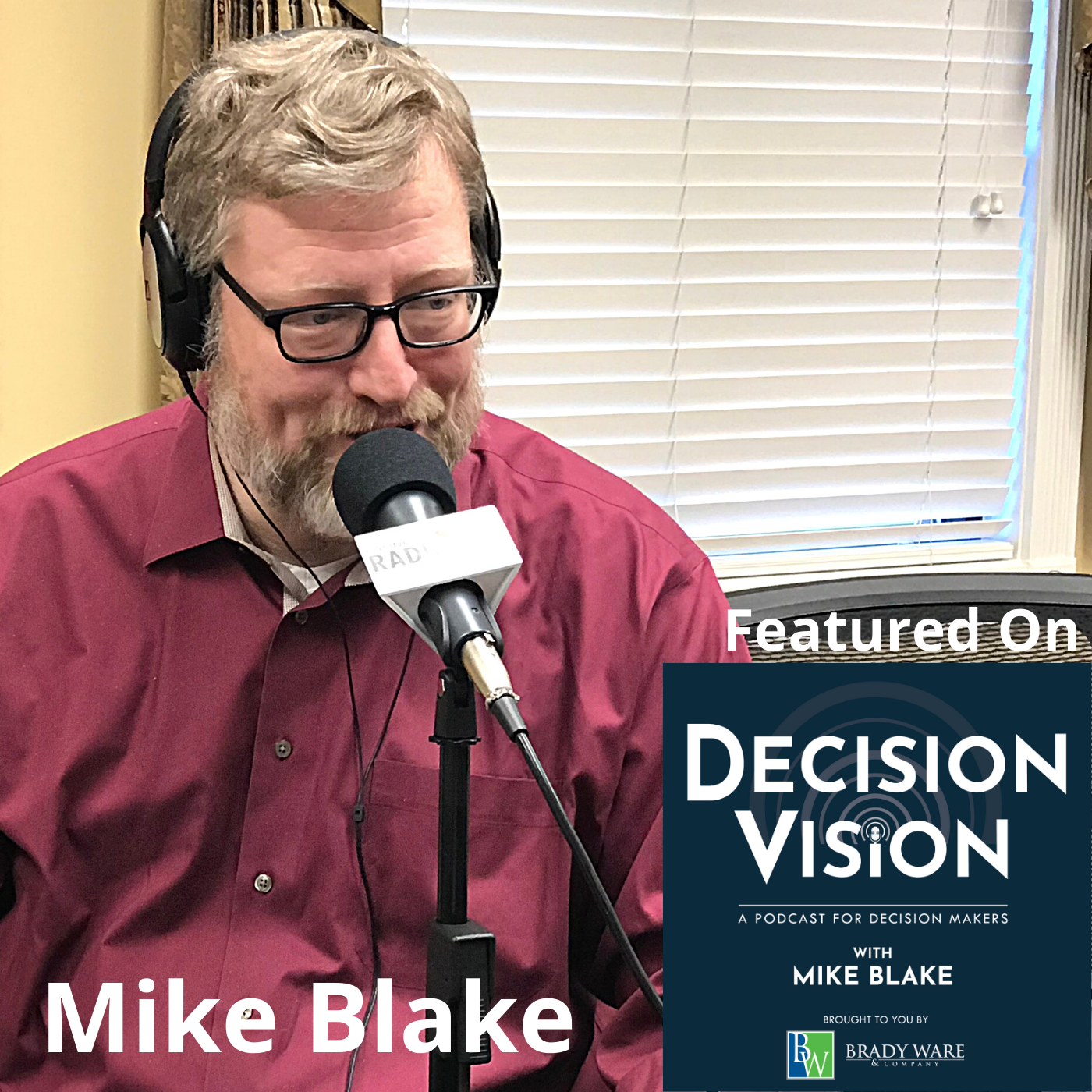
Michael Blake is the host of the Decision Vision podcast series and a Director of Brady Ware & Company. Mike specializes in the valuation of intellectual property-driven firms, such as software firms, aerospace firms, and professional services firms, most frequently in the capacity as a transaction advisor, helping clients obtain great outcomes from complex transaction opportunities. He is also a specialist in the appraisal of intellectual properties as stand-alone assets, such as software, trade secrets, and patents.

Mike has been a full-time business appraiser for 13 years with public accounting firms, boutique business appraisal firms, and an owner of his own firm. Prior to that, he spent 8 years in venture capital and investment banking, including transactions in the U.S., Israel, Russia, Ukraine, and Belarus.

LinkedIn | Facebook | Twitter | Instagram

You can find the complete Decision Vision interview here. 


The “One Minute Interview” series is produced by John Ray and in the North Fulton studio of Business RadioX® in Alpharetta. You can find the full archive of shows by following this link.

Renasant Bank has humble roots, starting in 1904 as a $100,000 bank in a Lee County, Mississippi, bakery. Since then, Renasant has grown to become one of the Southeast’s strongest financial institutions with over $13 billion in assets and more than 190 banking, lending, wealth management and financial services offices in Mississippi, Alabama, Tennessee, Georgia and Florida. All of Renasant’s success stems from each of their banker’s commitment to investing in their communities as a way of better understanding the people they serve. At Renasant Bank, they understand you because they work and live alongside you every day.

Tagged With: Brady Ware & Company, employees, unemployment benefits

Decision Vision Episode 124: Should I Get my Old Job Back? – An Interview with Owen Sizemore, Brady Ware & Company

July 8, 2021 by John Ray

Decision Vision
Decision Vision
Decision Vision Episode 124: Should I Get my Old Job Back? - An Interview with Owen Sizemore, Brady Ware & Company
Loading
00:00 /
RSS Feed
Share
Link
Embed

Download file

Owen Sizemore

Decision Vision Episode 124:  Should I Get my Old Job Back? – An Interview with Owen Sizemore, Brady Ware & Company

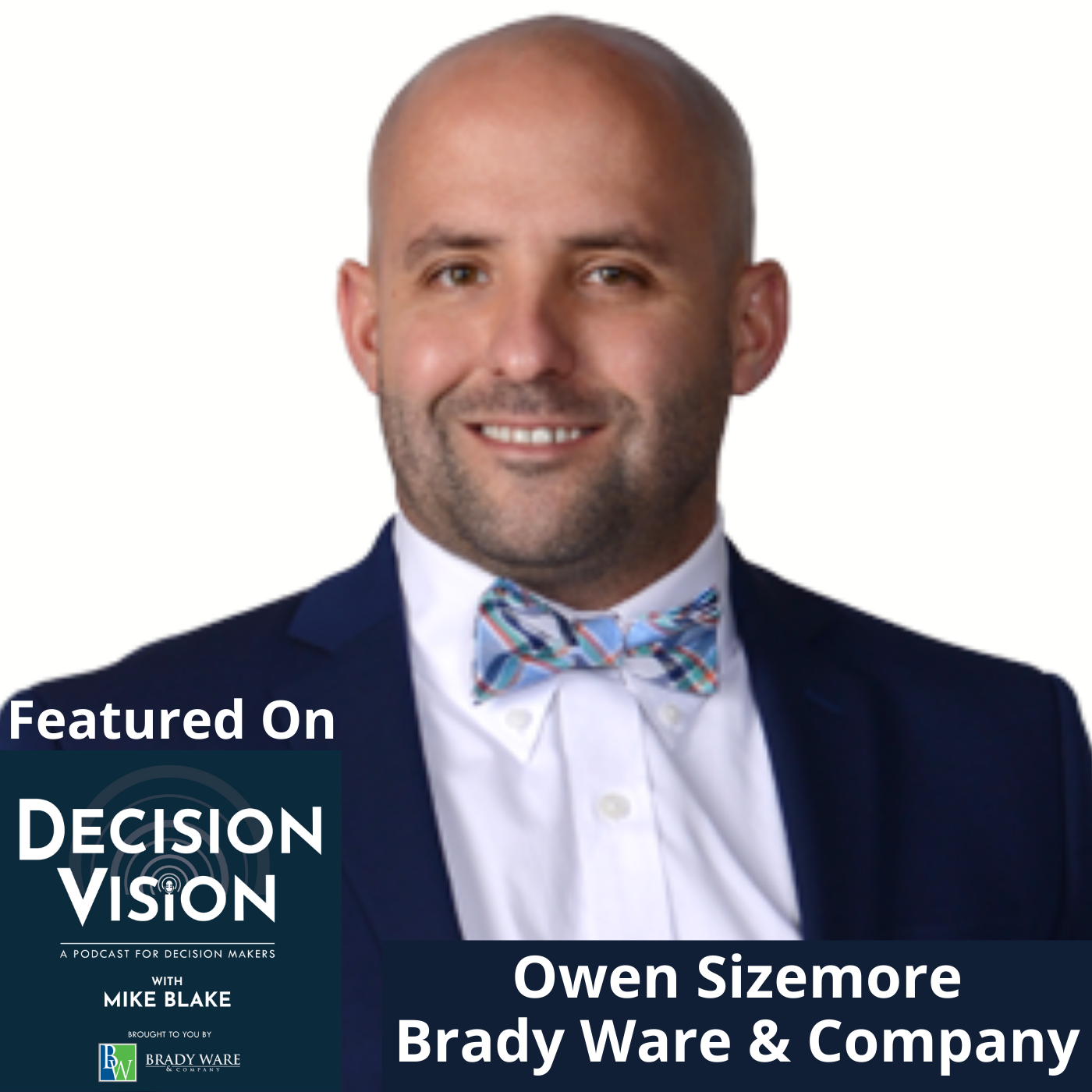
Should you return to a former employer? Brady Ware’s Owen Sizemore talked with host Mike Blake about his career and the decision points along the way which led him to leave and then return to Brady Ware, how he negotiated a return, the importance of not burning bridges, and much more. Decision Vision is presented by Brady Ware & Company.

Owen Sizemore, CPA, CVA, MBA, Brady Ware & Company

Owen provides business valuation, litigation support, and financial due diligence services across a variety of industries, with a specialty focus on breweries and distilleries. He performs business valuations for tax purposes, litigation support, and mergers and acquisitions. He also has experience in performing purchase price allocations and valuations of complex securities.

Owen is a member of the American Institute of Certified Public Accountants and the National Association of Certified Valuators and Analysts. Along with being a licensed CPA, he’s also a Certified Valuation Analyst. He obtained his B.S. in Accounting from the University of Northern Colorado and his MBA in finance from Xavier University.

Connect with Owen on LinkedIn.

Mike Blake, Brady Ware & Company

Mike Blake, Host of the “Decision Vision” podcast series

Michael Blake is the host of the Decision Vision podcast series and a Director of Brady Ware & Company. Mike specializes in the valuation of intellectual property-driven firms, such as software firms, aerospace firms, and professional services firms, most frequently in the capacity as a transaction advisor, helping clients obtain great outcomes from complex transaction opportunities. He is also a specialist in the appraisal of intellectual properties as stand-alone assets, such as software, trade secrets, and patents.

Mike has been a full-time business appraiser for 13 years with public accounting firms, boutique business appraisal firms, and an owner of his own firm. Prior to that, he spent 8 years in venture capital and investment banking, including transactions in the U.S., Israel, Russia, Ukraine, and Belarus.

LinkedIn | Facebook | Twitter | Instagram

Brady Ware & Company

Brady Ware & Company is a regional full-service accounting and advisory firm which helps businesses and entrepreneurs make visions a reality. Brady Ware services clients nationally from its offices in Alpharetta, GA; Columbus and Dayton, OH; and Richmond, IN. The firm is growth-minded, committed to the regions in which they operate, and most importantly, they make significant investments in their people and service offerings to meet the changing financial needs of those they are privileged to serve. The firm is dedicated to providing results that make a difference for its clients.

Decision Vision Podcast Series

Decision Vision is a podcast covering topics and issues facing small business owners and connecting them with solutions from leading experts. This series is presented by Brady Ware & Company. If you are a decision-maker for a small business, we’d love to hear from you. Contact us at decisionvision@bradyware.com and make sure to listen to every Thursday to the Decision Vision podcast.

Past episodes of Decision Vision can be found at decisionvisionpodcast.com. Decision Vision is produced and broadcast by the North Fulton studio of Business RadioX®.

Connect with Brady Ware & Company:

Website | LinkedIn | Facebook | Twitter | Instagram
TRANSCRIPT

Intro: [00:00:02] Welcome to Decision Vision, a podcast series focusing on critical business decisions. Brought to you by Brady Ware & Company. Brady Ware is a regional full service accounting and advisory firm that helps businesses and entrepreneurs make visions a reality.

Mike Blake: [00:00:22] Welcome to Decision Vision, a podcast giving you, the listener, clear vision to make great decisions. In each episode, we discuss the process of decision making on a different topic from the business owners’ or executives’ perspective. We aren’t necessarily telling you what to do, but we can put you in a position to make an informed decision on your own and understand when you might need help along the way.

Mike Blake: [00:00:40] My name is Mike Blake, and I’m your host for today’s program. I’m a director at Brady Ware & Company, a full service accounting firm based in Dayton, Ohio, with offices in Dayton; Columbus, Ohio; Richmond, Indiana; and Alpharetta, Georgia. If you like to engage with me on social media with my Chart of the Day and other content, I’m on LinkedIn as myself and @unblakeable on Facebook, Twitter, Clubhouse, and Instagram. If you like this podcast, please subscribe on your favorite podcast aggregator, and please consider leaving a review of the podcast as well.

Mike Blake: [00:01:10] Before we get into this week’s conversation, I want to mention that a colleague of mine, Betty Collins, who is a partner with Brady Ware and host of her own podcast, Inspiring Women, is helping to lead the Eighth Annual Brady Ware Women’s Leadership Conference. Like most things, it’s staying virtual this year. But on July 30th, if you like this podcast and the topics discussed, I suspect you will like their discussion points for that conference. Several speakers including two national voices, and the Governor of Ohio, Mike DeWine, are on the agenda. Please check out www.columbuswomensleadership.com. It may seem local to Ohio, but the content is worthwhile nationally.

Mike Blake: [00:01:45] Now, on with this week’s Decision Vision. Today’s topic is, Should I get my old job back? And I’ve been in the public accounting industry for – golly – in some fashion, I’ve been in it for, I guess, something like 10 to 12 years. So, it shows I’m not a very good accountant because I can’t count that high. And one thing I’ve noticed is, there’s a lot of kind of shuffling of talent.

Mike Blake: [00:02:16] And in particular, I’ve noticed there are a lot of folks that work for an accounting firm for some period of time. They leave, going off to find, at least, what they think are greener pastures, and then come back after a period. And I’m sure that happens a lot in other industries as well. Accounting is the one that I happen to see it. And it made me curious about the decision process to leave a job and then come back to it.

Mike Blake: [00:02:43] I’ve never done that. Not because I think it’s good or bad, just simply the circumstances really didn’t dictate it. And as people are re-entering the workforce here, as we record this podcast on July 7, 2021, people may be thinking about getting old jobs back, whether they were furloughed, whether they took a leave of absence, whether they quit altogether because of environmental circumstances dictated by the pandemic. Or maybe they simply left because, again, they saw greener pastures elsewhere.

Mike Blake: [00:03:16] So, you know, I don’t have data to support this, but my instinct tells me this is a decision that, if you’re not facing yourself, you probably know somebody that’s considering the decision. And maybe you can turn them onto this podcast.

Mike Blake: [00:03:30] And joining us today is Owen Sizemore, who is a Certified Valuation Analyst and managing the Valuation Services Group here at Brady Ware. And he’s a boomerang employee. He was with us for a while, left – and we’ll talk about that story – and has come back. And we are delighted to have him back. And I’m equally delighted to have him on the program. Owen Sizemore, welcome to Decision Vision.

Owen Sizemore: [00:03:54] Thanks for having me, Mike.

Mike Blake: [00:03:56] So, let’s start with kind of where you are today. Tell the listeners about your current role at Brady Ware, please.

Owen Sizemore: [00:04:06] Yeah. So, I am a Manager in the Valuation and Litigation Support Practice at Brady Ware, which basically means I take on valuation engagements for a variety of purposes, transactions, tax, litigation support, like I mentioned. And then, I also do some due diligence work as well, merger and acquisition due diligence. That’s a smaller part of my practice, and I anticipate that getting smaller as time goes on. But it’s worth mentioning that I do get into some of that work currently.

Mike Blake: [00:04:40] So, before you came to Brady Ware, what were you doing?

Owen Sizemore: [00:04:45] Is that the first time or the second time?

Mike Blake: [00:04:48] Oh, good question. Let’s go first time.

Owen Sizemore: [00:04:52] So, first time – Mike, you’ve probably heard me say this way too many times, but I always tell people – I’m recovering auditor and CPA. So, before I came to Brady Ware the first time, I was mainly an auditor for another public accounting firm. And that’s where I spent pretty much my whole civilian professional career was as an auditor. I did a little bit of valuation work and due diligence work along the way. I wanted to get into it full time and that’s why I came to Brady Ware.

Mike Blake: [00:05:26] So, I’m curious – I’m going off script a little bit – what was it on audit that you didn’t like or what was it about moving into specialty services like valuation that attracted you?

Owen Sizemore: [00:05:39] Well, as far as what I didn’t like about auditing was that I didn’t like the relationship that it created with your clients. It was difficult to feel like you’re adding value to them because audit is a compliance engagement for – let’s say compliance engagement. And so, I enjoyed the investigative nature of it, but I didn’t like everything around it. I didn’t like that it felt like our clients were put out by us being there. And because they’re put out by us being there, it’s really hard to engage with them on bigger picture stuff.

Owen Sizemore: [00:06:25] And it was also hard to engage with them on bigger picture stuff because you’re just down in the weeds in an audit trying to get the numbers right, that you’re looking at historical information that’s it’s really hard to talk about the future with your client. So, that’s the reason I didn’t like auditing.

Owen Sizemore: [00:06:41] And I like valuation for very similar reasons. You know, it’s forward thinking. You can get into big picture conversations with your client about where they’re going. But I also like the quantitative nature of it as well. And you don’t quite get that in auditing.

Mike Blake: [00:06:59] So, when you first came to Brady Ware, how long were you at the company the first time around?

Owen Sizemore: [00:07:06] I was at Brady Ware for almost a year. Well, I’ll say, a year and a couple months.

Mike Blake: [00:07:13] Okay. And so, what led you to start contemplating a change? What prompted that thought process of your internal conversation?

Owen Sizemore: [00:07:22] There were a handful of things that went into it. I do think it’s important to mention that the job that I left Brady Ware for was actually a job I interviewed for before I came to Brady Ware the first time. And so, ultimately, I decided to come to Brady Ware as opposed to going to Ernst and Young. So, it was always on my mind. And I had never had Big Four experience. I simply didn’t have the grades or the professional wherewithal to value an opportunity at a Big Four accounting firm right out of school like most young graduates do. And so, it was an experience I never got. It was an opportunity I knew was out there because I’d interviewed for it. So, it was kind of in the back of my mind.

Owen Sizemore: [00:08:14] But as far as what happened to Brady Ware specifically, you know, people had a hard time separating me as a CPA from the rest of the traditional CPA group. And so, even though all I did was valuation work or at least that’s all I was supposed to do, when business season rolled around, there was this pressure to behave and follow a similar schedule as the tax not all people were following. Which, as you know, valuation work, it comes and goes. You very well may find yourself extremely busy in the middle of the summer when the tax and audit folks at a CPA firm aren’t doing much.

Owen Sizemore: [00:09:05] And what was kind of the defining moment was, I had a networking event that I set up with a financial planner here in town. And I think it was maybe April 5th, so I went to this networking meeting. And at the time, the valuation group, honestly, was pretty slow. So, I go to this networking event, come back the next day. And one of the partners here asked where I had been and I said, “Well, I had a networking event.” And he said to me, “No more networking events during busy season.”

Owen Sizemore: [00:09:43] And I didn’t respond to that very well, to be honest with you. Because, again, busy season shouldn’t be something that necessarily drives the schedule of valuation people. What drives their schedule is the inflow and outflow of work. And on average, valuation people will bill as much hours or even more than their audit and tax colleagues over the span of a year. It just comes at different times. And so, I was pretty frustrated that there was this expectation to work like I’m a CPA, even though I’m not doing CPA work during that traditional business season time of the year.

Owen Sizemore: [00:10:27] And then, of course, what happened was after regular business season was over, we got very busy on the valuation side. I was working Saturdays and summer, which, again, that in and of itself not a problem. I’m happy to work 60 hours a week, 70 hours a week if I have to. But to be expected to work busy season with everyone else and then deal with the highs and lows of valuation work was not going to work for me.

Owen Sizemore: [00:10:58] And so, I had that Ernst and Young opportunity in the back of my mind and I thought, “Well, if I’m going to be expected to work this hard all the time, and I never got that Big Four experience, I might as well pursue that and see where it goes.” And at least I’ll know either way that it was a good move or a bad move. But at least I’ll put that question to rest in my mind. So, that’s pretty much why I left.

Mike Blake: [00:11:24] Okay. So then, you made the move and you were there at EY for some period of time. What made you realize or made you start to think that maybe that wasn’t the right move to make?

Owen Sizemore: [00:11:36] That’s a good question. There’s a number of things leading up to it. One, culturally, those big organizations are just different. They’re good. They’re not bad. They just are. And the best example of it I can offer is, when I walk down a hallway and I pass a coworker that I might not know at all, I may barely know, or if I do know, I always smile and and greet them and say hi, and going about my business. I certainly don’t try to pull someone into small talk conversation, but I feel like it’s just a nice thing to to acknowledge someone as you pass by them.

Owen Sizemore: [00:12:19] Well, I would do that at EY and you could tell people were – I don’t know want to say it but I’ll put it out – really didn’t know how to respond to it. And, again, I’m just trying to trying to offer a small example of the sort of tense culture in those big places. So, culturally, it wasn’t a great fit.

Owen Sizemore: [00:12:45] But probably the bigger issue for me was that I had some good ideas on how to do business development. And they worked in the middle market. I think they were easily scalable and they involved relationships with big law firms. And coming from the middle market and sort of being out of town – because I had to change locations, change cities to go to EY – I did not have the relationships with the big law firms in town, but I knew that some of the partners that Ernst and Young did.

Owen Sizemore: [00:13:22] And so, I presented this business development idea to them and just said, “Look, I just need an introduction. You can be a part of it. You can or you don’t have to be. It’s up to you. But if you can just give me an introduction, I’ll run with it. And I think it’ll work.” And that business development idea was not warmly received.

Owen Sizemore: [00:13:45] And I come from a place in the middle market when you have a senior accountant, or a senior associate, or a manager, or pretty much any level employee, that is excited and comes up with ideas about business development and networking. My experience had been that partners were they loved it. They wanted to get behind it. They were glad that somebody was thinking about that.

Owen Sizemore: [00:14:07] Whereas, that wasn’t the case at EY. You really got this feeling that they just wanted you to put your head down and do the work. And, you know, “We’ll make you a partner someday if we think you’re worthy of it. And we’re not going to get behind your own initiatives and the efforts you’re trying to take control of with your career and make it happen. We’ll do it for you if we if we want you to have it.” That that’s that’s the takeaway I got from it.

Owen Sizemore: [00:14:33] So, there’s that. Culturally, I just wasn’t a big fit. And then, it was exciting to work on big M&A deals with big companies. But, again, just the sheer size of those organizations in EY, there wasn’t really, I’ll say, a personal connection with your colleagues, really, and your clients. And it just wasn’t a good fit for me all around on those fronts.

Mike Blake: [00:15:03] So, how long did it take for you to come to realize that that wasn’t something you could fix, that you have to probably make another change?

Owen Sizemore: [00:15:15] Probably about five or six months into it.

Mike Blake: [00:15:19] So, pretty quickly.

Owen Sizemore: [00:15:21] Yeah. Pretty quickly. And at the five or six month mark, I knew that it was not going to be a long term thing. And, initially, my plan was, whatever you do, you always have to do it for a year. Or at least that’s what I’ve been told by people, that you should always stick around at whatever job you have for a year. So, that was the plan, once the year passed up, I would start looking to make a move.

Mike Blake: [00:15:48] So, you ultimately came back to Brady Ware, which is awesome. But did you think about moving to another firm first as opposed to coming back to Brady Ware? And if so, what made you choose trying to come back as opposed to moving on to another firm?

Owen Sizemore: [00:16:08] So, I knew that the first place I was going to look was Brady Ware, but I wasn’t sure if an opportunity would be there. So, I had some other firms in mind. But Brady Ware was going to be my first choice for a lot of reasons. But namely because even though we had to do some work on figuring out my schedule and my schedule expectations, at least in this area of the country, it’s difficult to find a firm the size of Brady Ware with a dedicated valuation partner. And even a dedicated valuation team. They’re just few and far between. So, I knew Brady Ware was going to be my first choice. And if that didn’t work, I was kind of throwing throwing rocks out there just to see what would happen.

Mike Blake: [00:17:02] Okay. Now, I mean, you had some very specific reasons for why you left Brady Ware in the first place. Did you have concerns about those things, basically, starting up again? And if so, how did you convince yourself that either of those concerns would go away or the second time around you’d be able to work through them?

Owen Sizemore: [00:17:23] Well, I knew that in order for me to come back, it was going to be a conversation that I had to address, first and foremost, with the managing partner of the firm. So, that was it. I knew that the people in charge of my schedule are the people in charge, period. And I had to get their buy in and it had to be very clear on what the expectations for my schedule would be before I would come back.

Mike Blake: [00:17:53] You know, did you have a sense before you even started the conversation that Brady Ware will be receptive to your return?

Owen Sizemore: [00:18:06] Well, I felt like I hadn’t burned any bridges that I was aware of. And I won’t say I didn’t know how the conversation was going to go for sure. But I recognized and I didn’t think that I burned bridges, recognizing that Brady Ware does have a valuation team, and at least they talked about taking valuation practice seriously prior to me leaving. It seemed like something that we could come to an agreement on. I’ll say, I was fairly hopeful that we could work it out.

Mike Blake: [00:18:52] Okay. And how did you initiate the conversation? Did you contact the managing partner directly? Did you go through a go between? How did you do that?

Owen Sizemore: [00:19:02] No. I contacted the managing partner directly. If I remember correctly, I think I texted him and said, “Hey, it’s Owen. Would you entertain a conversation about me coming back to Brady Ware?” And he said absolutely. And so, we set a date and time to meet for some drinks and we just sort of sat down and hashed it all out.

Mike Blake: [00:19:33] So, it sounds like it was a fairly quick. I think there’s a great object lesson there. It’s so important when you leave a place to leave it well and not burn any bridges, whether it’s leaving the door open to coming back. In my scenario, a place I worked for a number of years, they still refer me work because I didn’t burn bridges. And, you know, even if you’re leaving in a scenario where you’re kind of irritated, there’s no substitute for leaving classy. There’s no reason to just close doors prematurely.

Owen Sizemore: [00:20:10] Yeah. I totally agree with you. Even if you leave just flat out angry, you got to remember that you might be mad at the decision makers who were in charge at the time you left, but you may have had great relationships with the next generation. And whether you meet or not, you may burn bridges with the next generation that you had previously had good relationships with if you leave in so bad of a way. So, it’s best to just put angry aside and do your best to be polite, be helpful, transition your projects in the most efficient and complete way possible, and put it behind you in a way that you’ll feel good about.

Mike Blake: [00:20:58] So, I’m curious, you’re at E&Y for about five months before you realized it wasn’t the fit you thought it was going to be. So, I don’t remember the actual timeline, but it was probably less than a year that actually you’re there. Was it hard to tell them that you were going back?

Owen Sizemore: [00:21:18] Yeah. It was. Because – I think his title was managing director – it was the same guy that I had that, really, I interviewed with him the first time. And then, when I had respectfully just turned it down, I didn’t get off of the job. But my communications with him in the first time I interviewed was I felt like things went good, just sit tight. And then, of course, the initial opportunity at Brady Ware came out sight. I had to respectfully remove myself from being considered.

Owen Sizemore: [00:21:55] And then, the second time around, it was with that same individual. But the second time was a little bit different because there wasn’t an actual job posting. I just reached out to him and I invited him to breakfast. And told him that if there was a need that I’d love to explore that opportunity that I passed up on. So, it was a pretty informal process actually making the change from Brady Ware to E&Y. And his individual, I think, kind of opened some doors that weren’t formally open for me to come.

Owen Sizemore: [00:22:34] So, it was tough. It was tough to tell them that I was leaving because I felt like I certainly wouldn’t have been there if it wasn’t for him. And I think he kind of went out of his way to give me the opportunity. And I hated to let him down. And he was supportive about it. It wasn’t mean or disrespectful or anything, but I acknowledged that I got that job because of him. He worked that he worked on getting it for me and then I had turned and leave relatively quickly. So, that was tough.

Mike Blake: [00:23:11] I wonder if he sensed at all that it wasn’t a good fit and that maybe he wasn’t totally surprised. Or do you just not have enough contact with your pulse in this situation to really know that?

Owen Sizemore: [00:23:24] Mike, I honestly don’t know. I don’t know. But I wrote a hand thank you. I handwrote an apology letter/thank you later for giving me an opportunity, and apologized it didn’t work out. I never really heard from him after that. But it’s accounting, it’s Big Four. You see these people come and go all the time. So, there was probably really no skin off his back, I’m sure. But, yeah, it was tough to acknowledge to myself that I got someone to help me do something and turn around and left pretty quickly.

Mike Blake: [00:24:04] So, looking back on it now, you’ve been back at Brady Ware for some time – I think a-year-and-a-half or close to it, was it the right decision to come back?

Owen Sizemore: [00:24:13] It absolutely was. Obviously, if you’re not a fit for a place culturally, you shouldn’t be there regardless of where you end up going. But it was tough leaving Brady Ware the first time around. And I will say, you know, the process of coming back was pretty painless. I told the managing partner about the issues I was having and why I left, and he was very supportive that we’d be able to figure these things out. And no regrets. It’s been great ever since. It’s where I belong. And unless something crazy happens, it’s where I’m going to stay.

Mike Blake: [00:25:01] So, those issues that you have the first time around, it sounds like they’ve been effectively cleared up and taken off your guns.

Owen Sizemore: [00:25:12] Absolutely. Yeah. No. There’s never been any inkling that those issues are still out there. And I will say – and this is a me thing – knowing that my colleagues are here on Saturdays, sometimes I come in on Saturdays just as a show of solidarity, but that’s a choice on my part and I’m happy to do it. I don’t know, if you see people working hard, you certainly don’t want to ignore the fact that your colleagues are having a tough time, even though you’re not going to ask them to work Saturdays for you in the summer on your valuation work. But at the same time, I think they appreciate that I show up.

Owen Sizemore: [00:25:53] And I think one Saturday this busy season, I brought breakfast for everyone. So, it’s important for people to know that you support them, even though you might not be right there in the fray with them.

Mike Blake: [00:26:10] You know, I think I that’s astute. I don’t come in on Saturdays. I mean, I hardly come in the office of all. But one thing I’ve always tried to do whenever I’ve worked with a CPA firm is, at least on a big tax deadline day, like April 15th, I’ll make sure that I’m in the office and I typically extend my schedule. So that if somebody – I’m not touching a tax return – need help by stuffing envelopes and stuff, or just taking stuff down to the post office, or an extra pair of hands to make myself available.

Mike Blake: [00:26:41] Now, frankly, people are smart enough to just not engage me. And I think part of that is because I don’t know the processes. So, it takes more time to teach me than it would for me to actually be a participant. But I do think there’s an appreciation if you’re not [inaudible] but that you’re you’re at least making some effort to be there in the trenches during crunch time. I think there is something to that.

Owen Sizemore: [00:27:07] Absolutely.

Mike Blake: [00:27:10] So, looking back on it, what lessons do you think you learned from the whole experience? What are some things that you think are key takeaways that if somebody were coming to you and say, “Look, I’m thinking of getting my old job back at some place.” What might you tell them?

Owen Sizemore: [00:27:26] Well, I’d say, one, you’ve got to be direct on addressing the issues that you had and the things that drove you to leave the first time. That’s one, because don’t go into it blind, don’t go into it assuming that everything’s going to be okay. Find who’s in charge, whoever has the ability to address those issues on your behalf, and make sure they’re addressed. Because if my experience the second time around was the same as it was the first time, this wouldn’t be working. So, that’s important.

Owen Sizemore: [00:28:05] And then, two, don’t be afraid to communicate, even if that means going over somebody’s head. When the managing partner and I had a conversation about me coming back and I told him what was going on, one of the first things he said was, “Why didn’t you tell tell me this the first time? Why didn’t you let me know this was happening?” And I said, “Well, I kind of felt like I was going over someone’s head. And I’ve always been telling you just don’t do that.” And while that is a carryover from a military career, but I had this idea that you just don’t go over people’s head. And if I had let go, let go of that and just tried to address it with somebody that could do something about it, probably I may have never left.

Mike Blake: [00:28:56] That’s a really tough spot to be in. I can empathize that you want to respect the chain of command. It’s a big move politically to go over somebody’s head, because once you do that, you better kind of get what you want or it’s going to come back on know you that way. So, I can see how that part of the decision process would be hard. I think for anybody that would be hard.

Owen Sizemore: [00:29:29] Yeah. If you’re going to go over someone’s head, it better be over something that if it does get fixed, you’re leaving, because you may need to for that anyways.

Mike Blake: [00:29:40] That’s a good point.

Owen Sizemore: [00:29:40] And it’s definitely a last resort move. But I wish I wish I had done it because it might have changed things. Another thing I’ve learned is, again, the importance of not burning bridges. Because up until the time I left Brady Ware, Brady Ware was my fourth accounting firm. I kind of worked at places one to two years, three in one case, and then would change firms just to try a new out and see if there’s new clients, new opportunities. And so Brady Ware was the fourth firm I had worked at.

Owen Sizemore: [00:30:23] And aside from this whole scheduling thing, it was my favorite one. I love the fact that they empowered me do valuation work. I love that they were serious about the valuation practice. And so, it was a good thing that I didn’t burn that bridge because, I didn’t realize it at the time, but if I had burned it, I wouldn’t be able to come back and I would have regretted that.

Mike Blake: [00:30:53] So, this is, I think, a very useful conversation. Some of our listeners may have questions that I would have asked or may want to go deeper on something, if somebody wants advice on whether or not they should get their old job back, can people contact you for advice? And if so, what’s the best way to do that?

Owen Sizemore: [00:31:11] Absolutely. My email is great or, honestly, they can call my office phone. But I’d say my email is probably a better bet, and that is osizemore, so O-S-I-Z-E-M-O-R-E, @bradyware.com.

Mike Blake: [00:31:35] Very good. That’s going to wrap it up for today’s program. I’d like to thank Owen Sizemore so much for sharing his expertise with us.

Mike Blake: [00:31:42] We’ll be exploring a new topic each week, so please tune it so that when you’re faced with your next business decision, you have clear vision when making it. If you enjoy this podcast, please consider leaving a review with your favorite podcast aggregator. It helps people find us so that we can help them. If you’d like to engage with me on social media with my Chart of the Day and other content, I’m on LinkedIn as myself and @unblakeable on Facebook, Twitter, Clubhouse, and Instagram. Once again, this is Mike Blake. Our sponsor is Brady Ware & Company. And this has been the Decision Vision podcast.


Tagged With: Brady Ware & Company, employees, Mike Blake, Owen Sizemore, Return to old job

How to Mitigate the Risk of Lawsuits

May 14, 2021 by John Ray

Mitigate Lawsuits
Dental Law Radio
How to Mitigate the Risk of Lawsuits
Loading
00:00 /
RSS Feed
Share
Link
Embed

Download file

Mitigate Lawsuits

How to Mitigate the Risk of Lawsuits (Dental Law Radio, Episode 4)

Host Stuart Oberman covers the basic internal procedures necessary to mitigate the risk of lawsuits in a dental practice.  Dental Law Radio is underwritten and presented by Oberman Law Firm and produced by the North Fulton studio of Business RadioX®.

TRANSCRIPT

Intro: [00:00:02] Broadcasting from the Business RadioX Studios in Atlanta, it’s time for Dental Law Radio. Dental Law Radio is brought to you by Oberman Law Firm, a leading dental-centric law firm serving dental clients on a local, regional, and national basis. Now, here’s your host, Stuart Oberman.

Stuart Oberman: [00:00:27] Hello everyone and welcome to Dental Law Radio. So, today, is going to be an interesting topic. So, as a law firm in the dental space, if you will, we have clients in about 28 states, all the way from California, Maine to Florida, and we get this question over and over and over again. How do I mitigate my risks of lawsuits?

Stuart Oberman: [00:00:55] That’s a wide topic. You got all kinds of issues to look at. You’ve got State Department of Labor, you’ve got Federal Department of Labor, you’ve got IRS, you’ve got EEOC. You have lawyers breathing down your neck for certain regulatory matters because employees’ rights have been violated. So, you know, what is the risks of a lawsuit?

Stuart Oberman: [00:01:25] And I would say it’s probably a failure to have internal proper procedures in place. What does that mean? On a 10,000 foot view, do I have an employee manual? Do I have nondisclosure agreements? Do I have cell phone, internet, policies, social media policies? Am I in compliance with the National Labor Relations Board? Am I in compliance with my State and Federal law? There’s really a couple things that you really need to have. And we’re going to talk about this on subsequent podcasts, but I want to maybe drill down on some specifics regarding employee manual because these are critical.

Stuart Oberman: [00:02:14] Every practice should have an employee manual. “Well, I’ve got one, you know, John gave it to me when I bought his practice. And, yeah, it’s not bad. You know, it’s 29 pages. It’s a little old. But I wrote on it. And I think we got employees sign over good.” Or, “You know, I went on the internet and I bought one.” Great. Great. Well, how’s that working out for you?

Stuart Oberman: [00:02:43] So, if you have an employee manual that you’ve got from someone, trash it. If you bought a practice and you implemented the employee manual that you now scratch outs or had on a Word document that is 15 years old and you decided to put different names on it, scrap it, shred it, it’s garbage. You’re going to need an up to date employee manual that has a couple of things. If your employee manual in today’s world is less than 70, 80, 90 – I think our employee manual that we draft for dental doctors on dental sides is, probably, 100 some pages – job descriptions, acknowledgments, nondisclosure agreements, all that’s got to be included. Social media, cell phone, internet policies got to be included.

Stuart Oberman: [00:03:31] So, what are some of the things that we see really need to be within these employee manuals? Again, we’re just touching on some stuff. So, one of the things that in today’s world, in today’s media world, in today’s society, you have to have non-harassment provisions. There’s no question about it. If you do not have provisions regarding harassment, regarding sex, color, creed, origin, nationality, then you are opening yourself up to a huge, huge problem. Anti-discrimination statute language should be included in your employee manual. Again, these are basics in a world within which we live. Anti-retaliation, a previous podcast we talked about OSHA, HIPAA, whistleblower. What to do if you’re fired?

Stuart Oberman: [00:04:31] In your employee manual, do you have a process for probation? Do you have a process for reporting complaints? Do you have someone in your practice – I don’t care how big you are – that is a go-to person for complaints. If you’re a doctor, chances are they’re not going to want to report to you directly regarding any kind of internal issues. You need to have a point person designated in your practice that has the authority to take down the investigation. Do you have an anonymous reporting process? And, again, I don’t care whether you’re a 20 practice owner or one practice owner.

Stuart Oberman: [00:05:16] Next one, Family Medical Leave Act. How many employees do you have? Does it even apply? There are some instances that you will say I do not need a Family Medical Leave Act. And you have to sign a document to the government that says that you do not comply or do not have to comply with the Family Medical Leave Act, because they just don’t believe you. The Emergency Paid Sick Leave Act. The Emergency Family Act. Especially in today’s world under COVID, a Medical Leave Expansion Act under FFCRA if you’re under 500 employees.

Stuart Oberman: [00:05:58] I could probably talk about this topic for about three hours on this one particular area, what it takes to have an employee manual. But you’ve got to be very careful on this area. So, the next question is, “Well, you know, I got a manual and a company gave it to me and it’s five volumes.” I’m going to be really honest with you, if you can comply with a five volume employee manual, I need to come work for you. Because I have never seen that before. And we’ll look at manuals and it will be three, four, five volumes of employee manual. How in the world can you be in compliance on that side?

Stuart Oberman: [00:06:42] It’s very basic things that will keep you out of trouble. If you’re required under your massive war and peace novel of employee manuals, there’s no way. You got too much liability, you got too many holes that it is impossible for you to comply with. Keep it short. Keep it simple. Basic stuff. Basic information. And that is probably one of the biggest ways that will keep you out of the EEOC, Department of Labor, National Labor Relations Board, governmental investigations.

Stuart Oberman: [00:07:25] So, again, it’s the basic stuff. A lot of times our doctors will get way, way complex. They don’t need it. They’re being sold stuff they don’t need, which happens a lot. So, we need to be real careful with that. So, it’s the little things that will keep you out of trouble. It’s not, you know, recreating the world, but it’s simply one wheel at a time to get you there. So, again, that’s 10,000 foot view.

Stuart Oberman: [00:07:52] We see a lot on our side. We handle as a firm a lot of H.R. issues. We see what works. We see what doesn’t. It’s a moving target between state to state. It’s a moving target between employee to employee. And it’s a moving target in today’s regulatory matters. So, hopefully, you’ve taken away, you know, one thing that you need to look at to avoid H.R. issues, to avoid any kind of compliance issues, which is understanding basic employee manual, why you need it, why you don’t. We talked about HIPAA and OSHA before, so this is all part of that particular puzzle. So, again, quick topic today, just enough to give you a 10,000 foot view, as we say.

Stuart Oberman: [00:08:37] So, I want to thank everyone for joining us today on Dental Law Radio. If you have any questions, if you have any concerns, reach out to us. Give us a call, 770-554-1400. Or send an email, stuart, S-T-U-A-R-T, @obermanlaw.com. And we hope that you will join us on subsequent podcasts. And our goal is to keep you up to date in the industry, leading edge, cutting edge information. So, thank you everyone. Have a fantastic day. And we look forward to talking to you soon. Thank you.


About Dental Law Radio

Hosted by Stuart Oberman, a nationally recognized authority in dental law, Dental Law Radio covers legal, business, and other operating issues and topics of vital concern to dentists and dental practice owners. The show is produced by the North Fulton studio of Business RadioX® and can be found on all the major podcast apps. The complete show archive is here.

Stuart Oberman, Oberman Law Firm

Oberman Law Firm
Stuart Oberman, host of “Dental Law Radio”

Stuart Oberman is the founder and President of Oberman Law Firm. Mr. Oberman graduated from Urbana University and received his law degree from John Marshall Law School. Mr. Oberman has been practicing law for over 25 years, and before going into private practice, Mr. Oberman was in-house counsel for a Fortune 500 Company. Mr. Oberman is widely regarded as the go-to attorney in the area of Dental Law, which includes DSO formation, corporate business structures, mergers and acquisitions, regulatory compliance, advertising regulations, HIPAA, Compliance, and employment law regulations that affect dental practices.

In addition, Mr. Oberman’s expertise in the health care industry includes advising clients in the complex regulatory landscape as it relates to telehealth and telemedicine, including compliance of corporate structures, third-party reimbursement, contract negotiations, technology, health care fraud and abuse law (Anti-Kickback Statute and the State Law), professional liability risk management, federal and state regulations.

As the long-term care industry evolves, Mr. Oberman has the knowledge and experience to guide clients in the long-term care sector with respect to corporate and regulatory matters, assisted living facilities, continuing care retirement communities (CCRCs). In addition, Mr. Oberman’s practice also focuses on health care facility acquisitions and other changes of ownership, as well as related licensure and Medicare/Medicaid certification matters, CCRC registrations, long-term care/skilled nursing facility management, operating agreements, assisted living licensure matters, and health care joint ventures.

In addition to his expertise in the health care industry, Mr. Oberman has a nationwide practice that focuses on all facets of contractual disputes, including corporate governance, fiduciary duty, trade secrets, unfair competition, covenants not to compete, trademark and copyright infringement, fraud, and deceptive trade practices, and other business-related matters. Mr. Oberman also represents clients throughout the United States in a wide range of practice areas, including mergers & acquisitions, partnership agreements, commercial real estate, entity formation, employment law, commercial leasing, intellectual property, and HIPAA/OSHA compliance.

Mr. Oberman is a national lecturer and has published articles in the U.S. and Canada.

LinkedIn

Oberman Law Firm

Oberman Law Firm has a long history of civic service, noted national, regional, and local clients, and stands among the Southeast’s eminent and fast-growing full-service law firms. Oberman Law Firm’s areas of practice include Business Planning, Commercial & Technology Transactions, Corporate, Employment & Labor, Estate Planning, Health Care, Intellectual Property, Litigation, Privacy & Data Security, and Real Estate.

By meeting their client’s goals and becoming a trusted partner and advocate for our clients, their attorneys are recognized as legal go-getters who provide value-added service. Their attorneys understand that in a rapidly changing legal market, clients have new expectations, constantly evolving choices, and operate in an environment of heightened reputational and commercial risk.

Oberman Law Firm’s strength is its ability to solve complex legal problems by collaborating across borders and practice areas.

Connect with Oberman Law Firm:

Company website | LinkedIn | Twitter

Tagged With: dental practice management, dental practices, employees, employment manuals, lawsuits, Oberman Law Firm, Stuart Oberman

  • « Previous Page
  • 1
  • 2
  • 3
  • Next Page »

Business RadioX ® Network


Our Most Recent Episode

CONNECT WITH US

  • Email
  • Facebook
  • LinkedIn
  • Twitter

  • YouTube

Our Mission

We help local business leaders get the word out about the important work they’re doing to serve their market, their community, and their profession.

We support and celebrate business by sharing positive business stories that traditional media ignores. Some media leans left. Some media leans right. We lean business.

Sponsor a Show

Build Relationships and Grow Your Business. Click here for more details.

Partner With Us

Discover More Here

Terms and Conditions
Privacy Policy

Connect with us

Want to keep up with the latest in pro-business news across the network? Follow us on social media for the latest stories!
  • Email
  • Facebook
  • Google+
  • LinkedIn
  • Twitter

  • YouTube

Business RadioX® Headquarters
1000 Abernathy Rd. NE
Building 400, Suite L-10
Sandy Springs, GA 30328

© 2025 Business RadioX ® · Rainmaker Platform

BRXStudioCoversLA

Wait! Don’t Miss an Episode of LA Business Radio

BRXStudioCoversDENVER

Wait! Don’t Miss an Episode of Denver Business Radio

BRXStudioCoversPENSACOLA

Wait! Don’t Miss an Episode of Pensacola Business Radio

BRXStudioCoversBIRMINGHAM

Wait! Don’t Miss an Episode of Birmingham Business Radio

BRXStudioCoversTALLAHASSEE

Wait! Don’t Miss an Episode of Tallahassee Business Radio

BRXStudioCoversRALEIGH

Wait! Don’t Miss an Episode of Raleigh Business Radio

BRXStudioCoversRICHMONDNoWhite

Wait! Don’t Miss an Episode of Richmond Business Radio

BRXStudioCoversNASHVILLENoWhite

Wait! Don’t Miss an Episode of Nashville Business Radio

BRXStudioCoversDETROIT

Wait! Don’t Miss an Episode of Detroit Business Radio

BRXStudioCoversSTLOUIS

Wait! Don’t Miss an Episode of St. Louis Business Radio

BRXStudioCoversCOLUMBUS-small

Wait! Don’t Miss an Episode of Columbus Business Radio

Coachthecoach-08-08

Wait! Don’t Miss an Episode of Coach the Coach

BRXStudioCoversBAYAREA

Wait! Don’t Miss an Episode of Bay Area Business Radio

BRXStudioCoversCHICAGO

Wait! Don’t Miss an Episode of Chicago Business Radio

Wait! Don’t Miss an Episode of Atlanta Business Radio