Business RadioX ®

  • Home
  • Business RadioX ® Communities
    • Southeast
      • Alabama
        • Birmingham
      • Florida
        • Orlando
        • Pensacola
        • South Florida
        • Tampa
        • Tallahassee
      • Georgia
        • Atlanta
        • Cherokee
        • Forsyth
        • Greater Perimeter
        • Gwinnett
        • North Fulton
        • North Georgia
        • Northeast Georgia
        • Rome
        • Savannah
      • Louisiana
        • New Orleans
      • North Carolina
        • Charlotte
        • Raleigh
      • Tennessee
        • Chattanooga
        • Nashville
      • Virginia
        • Richmond
    • South Central
      • Arkansas
        • Northwest Arkansas
    • Midwest
      • Illinois
        • Chicago
      • Michigan
        • Detroit
      • Minnesota
        • Minneapolis St. Paul
      • Missouri
        • St. Louis
      • Ohio
        • Cleveland
        • Columbus
        • Dayton
    • Southwest
      • Arizona
        • Phoenix
        • Tucson
        • Valley
      • Texas
        • Austin
        • Dallas
        • Houston
    • West
      • California
        • Bay Area
        • LA
        • Pasadena
      • Colorado
        • Denver
      • Hawaii
        • Oahu
  • FAQs
  • About Us
    • Our Mission
    • Our Audience
    • Why It Works
    • What People Are Saying
    • BRX in the News
  • Resources
    • BRX Pro Tips
    • B2B Marketing: The 4Rs
    • High Velocity Selling Habits
    • Why Most B2B Media Strategies Fail
    • 9 Reasons To Sponsor A Business RadioX ® Show
  • Partner With Us
  • Veteran Business RadioX ®

Navigating Family Business Dynamics with EOS, with Jacqueline Jensen

April 28, 2025 by John Ray

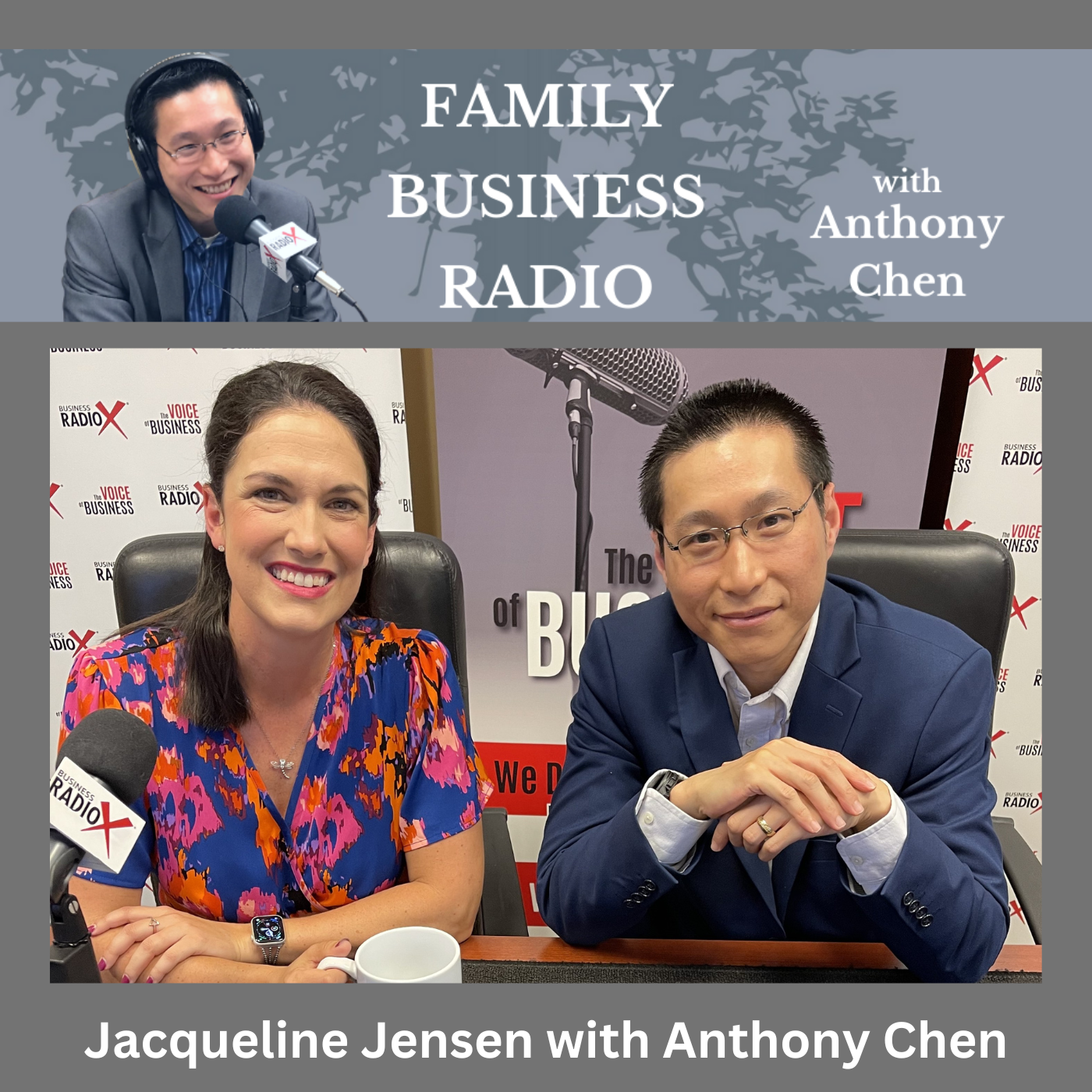
Navigating Family Business Dynamics with EOS, with Jacqueline Jensen, on Family Business Radio with host Anthony Chen
Family Business Radio
Navigating Family Business Dynamics with EOS, with Jacqueline Jensen
Loading
00:00 /
RSS Feed
Share
Link
Embed

Download file

Navigating Family Business Dynamics with EOS, with Jacqueline Jensen, on Family Business Radio with host Anthony Chen

Navigating Family Business Dynamics with EOS, with Jacqueline Jensen (Family Business Radio, Episode 63)

In this episode of Family Business Radio, host Anthony Chen interviews Jacqueline Jensen from EOS Worldwide. Jacqueline shares her unique experiences growing up in an entrepreneurial family led by a Marine and her eventual involvement in the family business. She discusses her journey through education, working in sports tourism, and finally returning to the family business out of a sense of obligation. Jacqueline speaks about the challenges she faced, including burnout and the lack of a clear roadmap, which ultimately led her to EOS. The discussion explores her transition to working with EOS Worldwide, helping other family businesses implement structured operating systems. Touching on themes like clarity in roles, succession planning, and work-life balance, this episode offers valuable insights for anyone involved in a family business or contemplating joining one.

Anthony concludes the show with thoughts on prioritizing family over financial gains.

Family Business Radio is underwritten and brought to you by Anthony Chen with Lighthouse Financial Network. The show is produced by John Ray and the North Fulton affiliate of Business RadioX®.

Jacqueline Jensen

Jacqueline Jensen
Jacqueline Jensen, EOS Worldwide

Jacqueline Jensen grew up in an entrepreneurial family, where conversations around the dinner table often centered on business goals and growth ideas. After college, she joined the family business and was quickly placed in leadership roles—often learning by doing. At just 28, she became General Manager of a private country club, where she experienced firsthand the pressure, complexity, and emotional dynamics that come with leading in a family-run organization.

In 2019, after years of long hours and chasing results, Jacqueline discovered a business framework that brought clarity, alignment, and accountability to her team—and transformed the business. She now dedicates her work to helping other family business owners simplify operations, strengthen communication, and build healthy, scalable companies. As a Professional EOS Implementer®, she believes that with the right structure, family businesses can thrive for generations.

Website | LinkedIn

EOS Worldwide

EOS Worldwide helps entrepreneurial businesses—especially family-owned companies—get what they want from their business. Through a simple, practical, proven system, EOS provides the tools and structure to help leadership teams gain clarity, improve communication, and strengthen accountability. For family businesses navigating the complexity of shared roles, generational transitions, and personal relationships, EOS brings the clarity and alignment needed to grow a healthy, scalable company. With over 28,000 companies running on EOS, it’s a powerful system for families who want to preserve their legacy, empower their team, and lead with confidence.

Topics Discussed in this Episode

00:00 Introduction to Family Business Radio
00:41 Jacqueline Jensen’s Entrepreneurial Background
02:11 Challenges and Lessons in Family Business
05:36 Discovering EOS and Its Impact
11:05 Implementing EOS in Family Businesses
18:01 Navigating Family Dynamics and Succession Planning
23:46 Discussing Family Business Succession
24:50 Generational Shifts in Family Business
27:15 Vision Traction Organizer: A Key Tool
30:29 Personal Reflections on Family Business
34:33 Understanding EOS and Ideal Clients
39:10 Client Success Stories and Organizational Clarity
41:40 Future Plans and Advice for Young Entrepreneurs

Anthony Chen, Host of Family Business Radio

Anthony Chen, Host of Family Business Radio

Family Business Radio is sponsored and brought to you by Anthony Chen with Lighthouse Financial Network. Securities and advisory services are offered through OSAIC, member FINRA/SIPC. RAA is separately owned, and other entities and/or marketing names, products, or services referenced here are independent of OSAIC. The main office address is 575 Broadhollow Rd., Melville, NY 11747. You can reach Anthony at 631-465-9090, ext. 5075, or by email at anthonychen@lfnllc.com.

Anthony Chen started his career in financial services with MetLife in Buffalo, NY, in 2008. Born and raised in Elmhurst, Queens, he considers himself a full-blooded New Yorker while now enjoying his Atlanta, GA, home. Specializing in family businesses and their owners, Anthony works to protect what is most important to them. From preserving to creating wealth, Anthony partners with CPAs and attorneys to help address all of the concerns and help clients achieve their goals. By using a combination of financial products ranging from life, disability, and long-term care insurance to many investment options through Royal Alliance, Anthony looks to be the eyes and ears for his client’s financial foundation. In his spare time, Anthony is an avid long-distance runner.

The complete show archive of Family Business Radio can be found by following this link.

Tagged With: Anthony Chen, EOS, EOS Implementer, Family Business, Family Business Radio, family business succession, Jacqueline Jensen, Professional EOS Implementer, Succession Planning

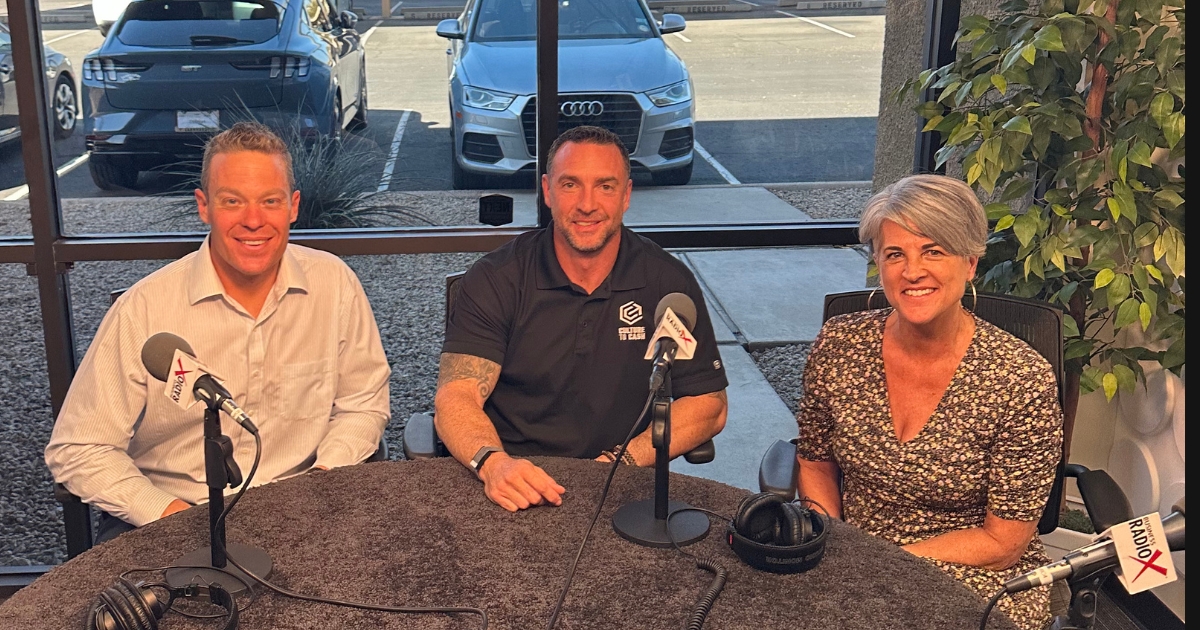
Matt Blanton and Corwin Smith with Culture to Cash

October 19, 2023 by Karen

Matt-Blanton-and-Corwin-Smith-with-Culture-to-Cash-feature.jpg
Phoenix Business Radio
Matt Blanton and Corwin Smith with Culture to Cash
Loading
00:00 /
RSS Feed
Share
Link
Embed

Download file

Matt-Blanton-and-Corwin-Smith-with-Culture-to-Cash.jpg

Matt Blanton and Corwin Smith with Culture to Cash

Culture to Cash is a top-tier Business Coaching and Consulting Firm that provides expert guidance to clients across multiple industries. Culture-to-Cash-logo

Their dedicated team assists businesses in managing, scaling, and building company operations effectively through their 3S System (Source, Sync, Success)

They commit to cutting the day to day time put in by the business owner by 50% within the first 90 days and double net profit within 24-36 months.

They build successful exit strategies that align with the retirement goals of the business owner. Their focus is on maximizing enterprise value of companies through building successful cultures, proven systems and strong people.

Matt-BlantonMatt Blanton has built, sold and acquired multiple companies over the past 17 years. Coaching for the #1 transformational program for men, he’s developed the bridge of coaching the whole CEO from personal to professional.

Matt carries the belief that business can be a joyous endeavor if built the right way.

Corwin-SmithCorwin Smith believes many CEOs are frustrated because it feels like they’re dragging their team uphill and they’ve hit an invisible growth ceiling. And the latest “hacks” or best practices have given short term relief and only a few weeks of improvement then back to chaos.

As a coach, he has a proven system to get CEOs team aligned & on fire driving the company forward; so they can grow the company of their dreams, without burning out, and ultimately leave a legacy in the world.

Corwin comes with the experience of building and selling his own company and 7+ years of business consulting.

Follow Culture to Cash on Instagram.

Tagged With: business coaching, business consulting, EOS, strategic business planning

Get a Grip on Your Business

March 23, 2023 by Karen

Get-a-Grip-on-Your-Business-feature
Phoenix Business Radio
Get a Grip on Your Business
Loading
00:00 /
RSS Feed
Share
Link
Embed

Download file

Get-a-Grip-on-Your-Business

Get a Grip on Your Business

We believe in the power of entrepreneurship to change people’s lives, and we believe that our tools have the power to change entrepreneurs’ lives.

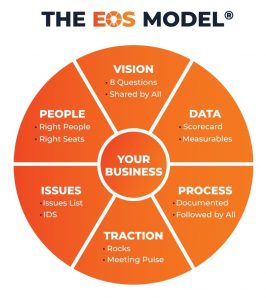
EOS®, the Entrepreneurial Operating System®, is a set of simple concepts and practical tools that has helped thousands of entrepreneurs around the world get what they want from their businesses and create a positive impact on the people and societies around them.

Scott-Goodrich-Phoenix-Business-RadioPrior to his work as an EOS Implementer, Scott Goodrich spent over twenty years leading and scaling operations for both public and privately held companies in the financial services and insurance industries.

Scott is also a local business owner. He and his wife opened a Bishops Cuts/Color franchise in Tempe in 2017.

Their shop has doubled its sales in each of the last two years and consistently ranks in the top 5 of all locations in the network. EOS-Model

Scott is excited to share his experiences as both an executive and an entrepreneur with his clients and help them to get what they want from their businesses.

Connect with Scott on LinkedIn and Facebook.

Mari-Tautimes-Phoenix-Business-RadioMari Tautimes led her family business for 22 years helping grow the company into one of the most recognized and sought after agencies in the market space.

Growing revenues from $350k to over $10m in 7 years, she experienced all the joys and sufferings of entrepreneurial leadership.

After a successful exit in 2019, she now loves coaching, leading, and facilitating entrepreneurial leaders to help them get everything they want out of their business so that they can have even greater fulfillment in their lives.

Connect with Mari on LinkedIn.

Fred-Jentgen-Phoenix-Business-RadioFred Jentgen’s entrepreneur journey started as a sales & marketing leader for a technology company.  After several business misfires, he eventually built a strong team and competitive product, and was able to deliver significant, sustained revenue growth for over 15 years. 

One of his favorite roles was partnering with entrepreneurs to grow their businesses together. Despite achieving their business goals, many were left feeling empty with struggles in their internal business operations, their families, and with their health.  That broke his heart and fueled his purpose!

In 2017, Fred began to feel empty, and the business that he loved was no longer fulfilling.  He decided to take the leap and focus full-time on his passion:  helping leaders to be their best in business and life thru EOS® Implementation.

Connect with Fred on LinkedIn.

Tagged With: Entrepreneurial Operating System, EOS, EOS Process, healthy, Traction, vision

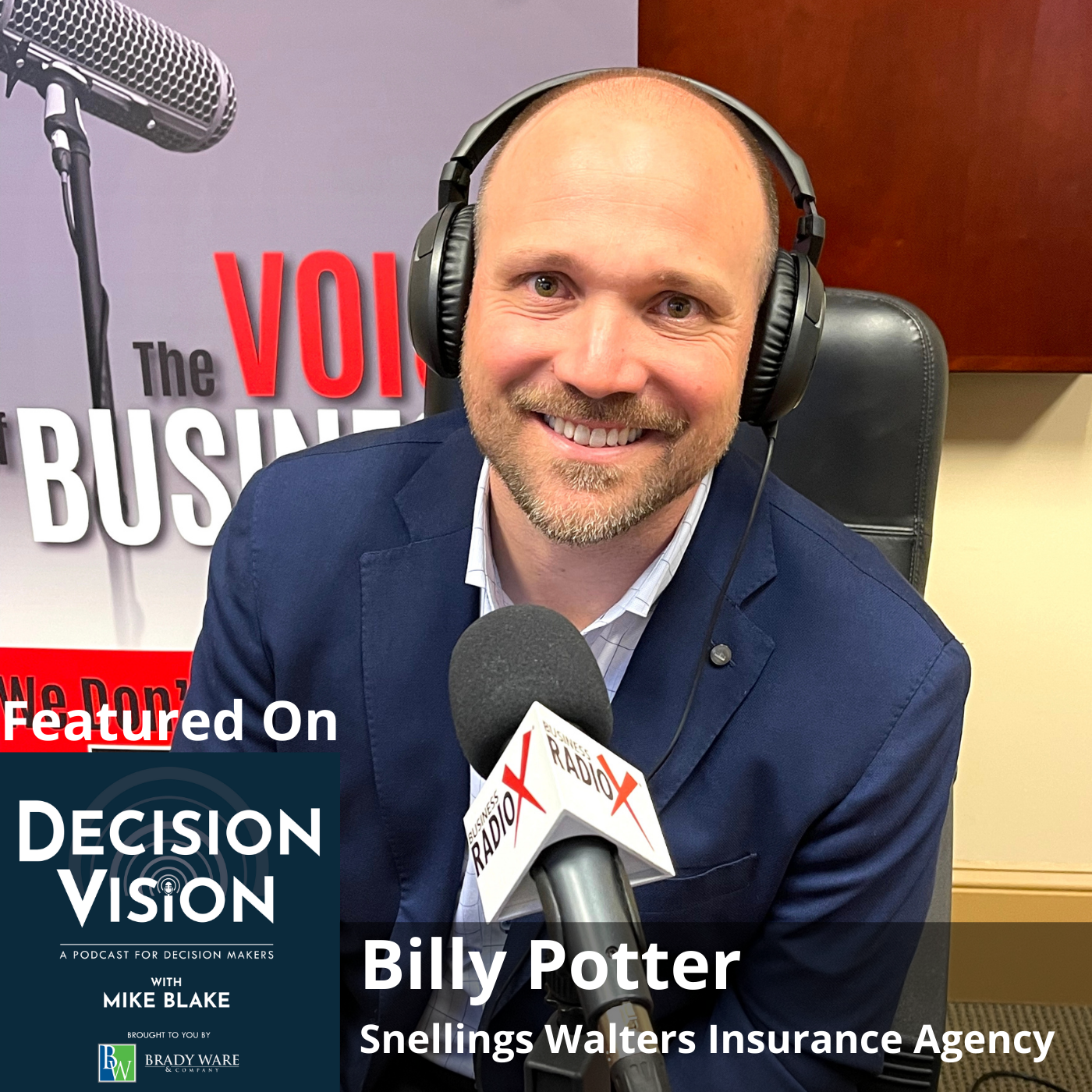
Decision Vision Episode 168: Should I Adopt the Entrepreneurial Operating System (EOS)?- An Interview with Billy Potter, Snellings Walters Insurance Agency

May 12, 2022 by John Ray

Billy Potter
Decision Vision
Decision Vision Episode 168: Should I Adopt the Entrepreneurial Operating System (EOS)?- An Interview with Billy Potter, Snellings Walters Insurance Agency
Loading
00:00 /
RSS Feed
Share
Link
Embed

Download file

Billy Potter

Decision Vision Episode 168: Should I Adopt the Entrepreneurial Operating System (EOS)? – An Interview with Billy Potter, Snellings Walters Insurance Agency

Billy Potter, CEO of Snellings Walters Insurance Agency, joined host Mike Blake to discuss the successful outcomes his firm achieved after implementing the Entrepreneurial Operating System (EOS). They discussed what EOS is, the role of values, the impact of EOS not only on the bottom line but in one’s personal life, the challenges implementing such a system brings, and much more.

Decision Vision is presented by Brady Ware & Company and produced by the North Fulton studio of Business RadioX®.

Snellings Walters Insurance Agency

Snellings Walters has been providing honest advice & protecting what you value most for more than 69 years. They are the smartest way to protect your business & family. They identify the critical issues facing your company. Survival of your business requires managing risks. In today’s environment, these risks are rapidly changing and becoming more complex. They have built a customizable platform to provide you with the security you need.

Company website | LinkedIn | Twitter 

Billy Potter, CEO, Snellings Walters Insurance Agency

Billy Potter, CEO, Snellings Walters Insurance Agency

Billy Potter’s career in insurance spans more than two decades. In 2011, he joined Snellings Walters to head the Employee Benefits Division and quickly proved to be an effective consultant. His superior consultation contributed to his winning various awards within the agency, and in 2018, he was nationally recognized as “Broker of the Year” by BenefitsPRO Magazine.

His reputation as both a top consultant and engaged team leader resulted in an invitation to become an owner at Snellings Walters in 2018. As Chief Sales Officer, Potter led his team to produce record sales for the agency. The combination of his knowledge, experience, character, and passion resulted in his transition to Chief Executive Officer in 2022.

In addition to his expertise and technical know-how, Billy’s personal philosophy aligns with the core values that drive the Snellings Walters vision: engagement, accountability, curiosity, and authenticity.

By cultivating and nurturing an agency culture that allows its employees to feel empowered and supported, Billy’s mission is to inspire the next generation of successful business people at Snellings Walters and beyond.

LinkedIn

Mike Blake, Brady Ware & Company

Mike Blake, Host of the “Decision Vision” podcast series

Michael Blake is the host of the Decision Vision podcast series and a Director of Brady Ware & Company. Mike specializes in the valuation of intellectual property-driven firms, such as software firms, aerospace firms, and professional services firms, most frequently in the capacity as a transaction advisor, helping clients obtain great outcomes from complex transaction opportunities. He is also a specialist in the appraisal of intellectual properties as stand-alone assets, such as software, trade secrets, and patents.

Mike has been a full-time business appraiser for 13 years with public accounting firms, boutique business appraisal firms, and an owner of his own firm. Prior to that, he spent 8 years in venture capital and investment banking, including transactions in the U.S., Israel, Russia, Ukraine, and Belarus.

LinkedIn | Facebook | Twitter | Instagram

Brady Ware & Company

Brady Ware & Company is a regional full-service accounting and advisory firm which helps businesses and entrepreneurs make visions a reality. Brady Ware services clients nationally from its offices in Alpharetta, GA; Columbus and Dayton, OH; and Richmond, IN. The firm is growth-minded, committed to the regions in which they operate, and most importantly, they make significant investments in their people and service offerings to meet the changing financial needs of those they are privileged to serve. The firm is dedicated to providing results that make a difference for its clients.

Decision Vision Podcast Series

Decision Vision is a podcast covering topics and issues facing small business owners and connecting them with solutions from leading experts. This series is presented by Brady Ware & Company. If you are a decision-maker for a small business, we’d love to hear from you. Contact us at decisionvision@bradyware.com and make sure to listen to every Thursday to the Decision Vision podcast.

Past episodes of Decision Vision can be found at decisionvisionpodcast.com. Decision Vision is produced by John Ray and the North Fulton studio of Business RadioX®.

Connect with Brady Ware & Company:

Website | LinkedIn | Facebook | Twitter | Instagram

TRANSCRIPT

Intro: [00:00:01] Welcome to Decision Vision, a podcast series focusing on critical business decisions. Brought to you by Brady Ware & Company. Brady Ware is a regional, full-service accounting and advisory firm that helps businesses and entrepreneurs make visions a reality.

Mike Blake: [00:00:21] Welcome to Decision Vision, a podcast giving you, the listener, a clear vision to make great decisions. In each episode, we discuss the process of decision-making on a different topic from the business owners’ or executives’ perspective. We aren’t necessarily telling you what to do, but we can put you in a position to make an informed decision on your own and understand when you might need help along the way.

Mike Blake: [00:00:42] My name is Mike Blake, and I’m your host for today’s program. I’m a director at Brady Ware & Company, a full-service accounting firm based in Dayton, Ohio, with offices in Dayton; Columbus, Ohio; Richmond, Indiana; and Alpharetta, Georgia. I’m a managing partner of the Strategic Valuation and Advisory Services Practice, which brings clarity to the most important strategic decisions that business owners and executives face by presenting them with factual evidence for such decisions. Brady Ware is sponsoring this podcast.

Mike Blake: [00:01:09] If you would like to engage with me on social media with my Chart of the Day and other content, I’m on LinkedIn as myself and @unblakeable on Facebook, Twitter, Clubhouse, and Instagram. I also recently launched a new LinkedIn group called Unblakeable’s Group That Doesn’t Suck, so please join that as well if you would like to engage.

Mike Blake: [00:01:26] Today’s topic is, should I adopt the entrepreneurial operating system or EOS? And according to Wipfli, almost 9000 companies now run on the EOS system that was presented and popularized by Gino Wickman in his book called Traction. And, I have a particular interest in this discussion because you may have – if you’re a long time listeners of the show, you may have noticed there’s a subtle change in the intro of the podcast, whereby we’ve spun off my practice group into a separate company and I was named managing partner. And in doing so, when something like that happens, you are both excited for the opportunity and terrified of the responsibility.

Mike Blake: [00:02:13] And, one of the things that I realized very quickly as this was happening was that I needed to have some kind of operating system, if you will, for my company, because this is my first time in that role. I’ve managed before. I’ve led before, but I’ve never sort of been at the top of the org chart before. And candidly, that’s a very different kind of responsibility and a different kind of opportunity. And, about a year ago, I ran across Gino Wickman’s book. Somebody recommended it to me, and really have fallen in love with it, have studied it, and we’re in the initial stages of implementing EOS in this new company. So, I know a tiny bit about it.

Billy Potter: [00:02:58] And so, to talk about this, and so that I can mooch off of somebody else’s expertise, I’ve invited somebody that’s actually been living the EOS life and has been successful in doing so, also in a professional services context. So, I’m very pleased to introduce to you Billy Potter whose career in insurance spans more than two decades. In 2011, he joined Snellings Walters to head the Employee Benefits Division and quickly proved to be an effective consultant. His superior consultation contributed to his winning various awards within the agency, and in 2018 he was nationally recognized as Broker of the Year by BenefitsPRO Magazine.

Mike Blake: [00:03:37] In addition to his expertise and technical know-how, Billy has a personal philosophy that aligns with the core values that drive the Snelling Walters vision, engagement and accountability, curiosity and authenticity. I think we’re going to hear those words a lot in the next hour. By cultivating and nurturing an agency culture that allows its employees to feel empowered and supported, Billy’s mission is to inspire the next generation of successful business people at Snellings Walters and beyond.

Mike Blake: [00:04:07] Snellings Walters leads complex businesses into safety and security through commercial insurance and employee benefits and they focus on their values of core delivery of process, energy, and growth. For more than 60 years, they’ve been advising clients on business, personal, and life/health insurance. They’re the only commercial insurance and employee benefits company that energizes with a proven process. Growth is personal for them. Billy Potter, welcome to the Decision Vision podcast.

Billy Potter: [00:04:34] Thank you, Mike. Happy to be here.

Mike Blake: [00:04:36] So, not enough people know about the EOS and surely some people who are listening have never heard of it before. So, you’re a guy that’s living and having success with it. How would you describe the entrepreneurial operating system or EOS to somebody else?

Billy Potter: [00:04:51] I think the easiest way to paint a picture of what it does for your business is EOS is an assembly line for small businesses. The assembly line allowed them to be more effective and more efficient with manufacturing product. And, this has the same impact to running your business. A lot of us in small businesses we get to where we’re at because we’re good at our craft, whether it be manufacturing or offering a service. And many of the times, we don’t get an actual chance to work on our business, to make the business – allow the business to have a better impact to our product or our service. And the opposite occurs where we’re incapable of delivering our product or service because we’re so poor at developing structures to run an effective business. So, I like to look at EOS as an assembly line for your organization. And that’s been our experience. In fact, I’m a direct product of EOS. They implemented it right when I got here. So, I’m the benefactor of that efficiency.

Mike Blake: [00:06:09] So, the operating system sounds kind of cheeky maybe to somebody who’s not familiar with it. Is the name apt? Is it truly an operating system?

Billy Potter: [00:06:18] I would say yes, it is. So as, you know, it’s not a sexy term at all, EOS. We commonly refer to it as a language that we all speak, a language of efficiency and smoking out issues. That’s what we commonly refer to. In our L10 meetings is let’s smoke out the issue. So, these are the things that we speak of, or maybe that we know about that we’re not openly sharing, that the operating system has a good way of shaping your conversation so that the issue is a safe thing to address. So, from a communication perspective, which I think is the most powerful component of EOS, it sounds a little cheesy, but it’s true. It allows you to speak with one another. And it also allows you data points that should align with what you’re saying.

Mike Blake: [00:07:15] So, you know, the back story is kind of interesting in that – and if I understood correctly, you walked into EOS. It wasn’t necessarily that you were running a company and chose EOS, but rather you came from one situation, I presume, that was not an EOS organization and you walked into one. As you did so, what were some of the immediate – what were some of the differences that you might have noticed immediately or very quickly after making that transition?

Billy Potter: [00:07:45] Yeah. So, I came to this organization December 1, 2011, and the only thing I brought to the company was debt. And I had to work my tail off to get square of the house. But I would say sometime in mid to late 2012, they decided to implement EOS and we were not a young company at that point. We were 60 years old, but we had a ceiling that we couldn’t get through. And, the owners at that time thought that pursuing EOS was a fix to breaking through that ceiling.

Billy Potter: [00:08:22] The first thing that we saw, and this is going to sound a little negative, but we found people that didn’t want to be in a culture of accountability. And, I don’t know what’s worse, having people that don’t want a culture of accountability in business or not knowing that you have people that don’t want a culture of accountability. That is even worse. So, that was a big shocker.

Billy Potter: [00:08:52] The second thing that I think that really jumped out at us is I believe that this operating system, it provides an environment that protects your highly engaged employees. So, the numbers are somewhere like 30% of your organization is highly engaged. I think, if I remember correctly, 50% is disengaged and 20% is actively disengaged. So, the actively disengaged means these people are trying to ruin your business. So, you’re fighting for the 50% and you’re trying to protect the 30%. The 50% are in the boat without a paddle. The 30% are not in the boat. They’re in the water with a rope pulling the boat, swimming in the river. And then, the 20% are in the back of the boat, rowing in the other direction. That was just a very polarizing picture for us.

Billy Potter: [00:09:49] And, once we started implementing EOS and having some traction with it, we realized that all the metrics that we thought that were valuable, they quadrupled in productivity. It was unbelievable; a 60-year-old firm quadrupled in productivity. We had single people that single-handedly shaped an entire division with how we run service. And these are not like industry veterans. These are rookies just like me that came in, that were highly engaged, that were attracted to a system. And honestly, it kind of unchained them and unleashed their potential.

Mike Blake: [00:10:32] And, I’m curious about that process. How long did it take to start showing results that dramatic?

Billy Potter: [00:10:40] You know, I’m not completely – I can’t completely remember. I’d say that we had some turnover that we experienced probably within the first two years.

Mike Blake: [00:10:50] Which is by design, right?

Billy Potter: [00:10:51] Which is – well, the book said it. The book said you’re going to lose really good people that know insurance. It doesn’t say that in the book, but that know that your product or know your service, they’re industry veterans. We didn’t really believe it.

Billy Potter: [00:11:07] The second thing is, I would probably say that those productivity scores probably jumped up about 2 to 3 years as well, where we were like, holy cow. But I think the squishier, the more the subjective impact, the things that you didn’t see in the scorecard is the harmony that started to create in our leadership team. And honestly, I think that that’s what the biggest plague is in most small businesses. It arrests the ego that’s driving the business.

Billy Potter: [00:11:40] So, if Mike and I are running a company, and Mike wants to do X and Billy wants to do Y, and then your employees can’t serve two masters, and there’s a lot of end-arounds, which is what the book refers to it. It’s an actual thing. It’s like, “I know Mike told you to do this but do that.” And there started to get alignment within our leadership team of what’s your role and responsibility? What’s my role and responsibilities? Let’s be accountable to that, which fostered a greater community.

Billy Potter: [00:12:14] The word conflict is kind of funny. We were implementing Patrick Lencioni’s Five Dysfunctions of a Team at the same time of EOS, which is really a dynamic duo because – we might get into this later – healthy conflict is certainly a part of EOS. It’s not like a fight club. You know, conflict is a positive word. That’s how we look at it.

Billy Potter: [00:12:37] So, when you talk about immediate results, I’d say it opened our mind that conflict is a sign of progress, not a negative for a business if you think about conflict in your life. Probably the greatest conflict I’ve had is with family, maybe my spouse. But it’s because we have trust and we started to seeing more of that in our leadership dialogue.

Mike Blake: [00:13:03] Yeah. And, you know, there’s a thought that conflict is where ideas come from. And there’s a school of thought. I don’t remember who put this forward, but it suggests that truth only comes out of conflict, right, where at some point, there needs to be a conflict of ideas and that needs to be resolved. One of the things you’re kind of getting at, I think you’re getting at, feel free to correct me if I’m wrong, is EOS is sort of the interferon for passive aggression. Like, passive-aggressiveness just cannot survive in an EOS implementation. It’s passive-aggressive killer.

Billy Potter: [00:13:46] Yeah. And Traction, the first chapter of Traction, I believe, is titled Letting Go of the Vine.

Mike Blake: [00:13:54] Yep.

Billy Potter: [00:13:54] And so, you know, I’d like to believe that most issues of most organizations start with leadership. And, you know, we work with a guy that likes to say that you are ridiculously in charge. And I love that. That saying, it just resonates with me that we’re ridiculously in charge. We are ridiculously responsible for employing employees that don’t want to be accountable. You know, that’s on us. That’s a product of leadership.

Billy Potter: [00:14:21] And so, once you drop this model and you start fostering, “Well, Mike, what do you think is best for the business? Why do you think that’s best for the business?” That kind of conflict and that rub. You’re right. That’s what births truth, and perhaps hopefully a better process for your business, which is where we’re both aligned. We both want a successful business. And that allows kind of the ego to be, “Okay, well, maybe Mike’s not attacking me. He’s making a logical argument of the business and what we have a shared goal on.” And that’s what EOS really does a good job of not making it about the person, but making it about the company.

Mike Blake: [00:15:01] One of the things I find seductive about EOS is how it ties in to so many other ideas. And you mentioned the word conflict. I want to stop on that for a second because I think that’s really important. And it ties in with part of my introduction, which talks about how much you value curiosity. Right? And if I’m not mistaken, the EOS, EOS system is about converting the anger of conflict and the threat of conflict into curiosity. Right? Because you can still get to the same place but if you phrase the debate away from you’re an idiot for thinking that to why do you think that, right, and you really listen to the answer, that’s such a much more constructive platform for that conflict to take place.

Billy Potter: [00:15:52] I couldn’t agree more. We implemented it for two reasons. And all of our core values, which was such a fun process that EOS suggests you follow, it was fantastic. It helped bring our leadership team closer together. But we also came up with little phrases to help us be centered on what the core value means. So, for example, curious is seek to understand. And so, the reason we did –

Mike Blake: [00:16:17] [Inaudible] it’s a highly effective people. Right?

Billy Potter: [00:16:18] There you go. There you go. And honestly, that’s one of our favorite values because it’s a little unique too. You don’t see curious as a core value in many organizations but it really does two things effectively. First, it attacks ego. And, I think a lot of the times, I don’t want to listen because I know better, right? And, when I’m forced to think, okay, we’ll seek to understand. Why is Mike bringing this up? And you know what? This is the fourth time he’s brought it up in a meeting. Let’s smoke out that issue. What is the issue behind the issue?

Billy Potter: [00:16:55] And then, secondly, assumptions. How much conversations we have on a daily basis where we assume that we understand and we don’t? Is it George Shaw, George Bernard Shaw, maybe, who has a phrase something along the lines of the most challenging thing about the communication is the illusion that it’s taking place?

Mike Blake: [00:17:18] I don’t know who said it but it certainly sounds wise.

Billy Potter: [00:17:20] It’s brilliant. And it’s like once you start becoming a student of this and realizing I don’t understand, I am assuming what Mike means by that, it’s incredible the dialogue it promotes within your teams and within your community. And it makes it more about someone other than you when your focus is understanding their message. And once you do a good enough job of understanding, I think the really the solution presents itself. I don’t think it’s really hard to solve the issue once you understand the issue, but it’s understanding the right issue, which is the yeoman’s work.

Mike Blake: [00:18:00] And, to me, the flip side of that is that that also requires vulnerability to admit when you don’t understand something and going back to your discussion of ego. And now, there’s sort of – at least people are writing about it. I don’t know if people are doing it. People are writing and talking more about authentic management, vulnerable leadership, and so forth. And it strikes me that that’s really the flip side of curiosity. It has to be, right?

Billy Potter: [00:18:31] Amen. And authenticity, which is another core value. So, you are kind of striking here why are we aligned with those core values. So, curiosity, seek to understand. Authenticity. Authentic is the core value; your true self.

Billy Potter: [00:18:46] Look, we want to create an environment where you’re allowed to disagree. You’re allowed to have an opinion. It’s incredible. Like, when we onboard a new employee and we ask for their candid feedback, they’re like wounded animals. They look at us and be like, “You really want to know? Are you sure?” And, we have to literally position it to the point where if you don’t tell us – if you tell us that everything’s right, we know you’re lying. The only way you’re going to get in trouble here is if you’re a silent sufferer. That’s it. And, we need you to love us enough to tell us when we have broccoli in our teeth.

Billy Potter: [00:19:27] And, new employees are actually really critical because these are uncontaminated people. They have a fresh perspective on what we’re doing. We’re drinking the Kool-Aid, we’re making the Kool-Aid, and we’re swimming in the Kool-Aid. So, having that fresh perspective to create a more vulnerable and authentic environment, it’s crucial. It allows us to not be aspirational.

Mike Blake: [00:19:50] It sounds a lot like something of one of my philosophies for what it’s worth is that I want our frontline people, when we’re delivering work product, everybody can, anybody can stop a work product going out. It can be an intern. If they see something that isn’t right, they don’t like, they don’t understand and they see it going out, I’m not going to kill you for stopping the work product. I’m not even going to kill you if we miss a deadline, if it isn’t too critical. Right? But, boy, what I’m going to lose it over is if you saw something that was wrong and you didn’t mention it to anybody. That drives me crazy.

Billy Potter: [00:20:30] Yes.

Billy Potter: [00:20:30] And that gets to – one of my, what I hope is our core value, is honesty and integrity, not just to our clients and not just to each other but to yourself. And if you don’t have that, then you’re not going to – you’re not going to stop that blunder from going out that everybody else overlooked, even though you’ve read the report four times. Right? Somebody else is going to find some of that fifth time. But the bargain for that is you got to create the safe space for that, right?

Billy Potter: [00:21:00] Yeah. And the way that we word it for a similar reason is accountable. And the tagline is, own your part. So, we don’t want somebody saying, “Well, what was Mike’s report? Mike sent it out. Yes, I did see the flaw in it, but that was Mike’s responsibility.” No, it’s not. Own your part. What is your responsibility in that incorrect report going out?

Billy Potter: [00:21:22] The former CEO of Ritz Carlton, he allowed any employee to spend up to $2000 on the spot to fix the customer’s problem. That’s a lot of money.

Mike Blake: [00:21:35] Yeah.

Billy Potter: [00:21:36] But – I mean, how empowering that is for them to be a part of the solution on whatever they’re touching. And, I’m so thankful for EOS and just forget about the business for allowing them to allow me time to reflect on how important some of these qualities are in my own personal life, in my marriage, with the children I’m raising. What a gift this structure, this operating system has given to help me live a more fulfilling life at work.

Mike Blake: [00:22:09] So, I want to pause on that because I do think that’s a really important facet of this conversation, in that if you’re not familiar with EOS, one might be tempted to jump to a conclusion, it’s just a way to make more money or just a way to squeeze more productivity. Right? Whatever. Productivity hacks, life hacks, whatever you want. But the thing that strikes me about EOS and I think why people such as yourself who have embraced it are so passionate about it is because it’s not just about your job, right? If you do it right, it has a virtuous cycle kind of knock-on effect of every element of your life. That’s what I’ve observed from people who’ve kind of made that journey and why I’m so excited and intent on starting it for our firm.

Billy Potter: [00:23:02] I couldn’t agree more with you. Truett Cathy said if you make people better, bigger is inevitable, and, you know, the whole concept of we’re a for-profit entity. So, just to be clear, we’re in business to become more successful. We want to grow. These are reasons that we want to be held accountable to something bigger than ourselves, and it’s okay to want to make more money. But that’s a lagging indicator, not a leading one. Making more money is a result of something.

Billy Potter: [00:23:32] And it’s almost like, I think most businesses are saying, we want to get an A on the test. Let’s not talk about our preparation for the test, you know. That’s what EOS does. It allows you a study guide to make sure that you get an A. Actually, it allows you to study guide to redefine what an A is. And that’s what all the metrics are that we have.

Billy Potter: [00:23:56] And so, of course, we want to make more money in the end or be more successful. We want to pay employees more money in the end. We want to do all those things. But, you know, it came down to what makes us unique, which again is a product of EOS. And the first one that we have of three uniques is growth is personal. And so, if we are winning at work and we are not winning at home, we’ve lost. We’ve missed the point. We want your personal life to benefit with your professional life. We want both to be enhanced. And, honestly, in the end, we’re going to get a better product, a better result, a better service, a better experience because we are open to improving both. It can’t just be one or the other.

Mike Blake: [00:24:41] And, you know, the way when you say things like the money is the result not the goal, I hear Simon Sinek talking.

Billy Potter: [00:24:49] Yeah. That’s exactly right.

Mike Blake: [00:24:51] People listening to the podcast, now I’m basically a cyberstalker of his. Like, Simon, please come on the show at some point. I haven’t gotten a restraining order yet, but I probably will. But again, another tie-in where the EOS comes in. Knowing your why, I think, is critical to understanding, to successfully adopting an eOS.

Billy Potter: [00:25:08] Mike, I almost feel like you’re stalking us. When you walk into our office, you’re going to see Simon Sinek’s Golden Circle taking up an entire wall.

Mike Blake: [00:25:19] Really?

Billy Potter: [00:25:20] Yes. I swear to you.

Mike Blake: [00:25:21] I may visit. I want to see that and take a photo.

Billy Potter: [00:25:23] You’re welcome. Any time you want, buddy. In fact, part of me wants to take the Zoom call right now and show you the wall. But he says, people don’t buy what you do; they buy why you do it. So, all of these things were coming together at once for us. We had Simon Sinek. It starts with the why. Honestly, the video is really all you need to see, the TED Talk. It’s 18 minutes long. How Great Leaders Inspire Action is the name of the TED Talk. And so, that influence combined with Patrick Lencioni’s Five Dysfunction of a Team and Gino Wickman’s Traction. All of those things came together at once for our organization, which was like bottling lightning, you know,

Billy Potter: [00:26:01] And, my partner, Steve Harmon, went on a trip with other people in our industry and they said, “Why do you do what you do?” And you want to know what he was told? Man, it’s great money. Man, it’s a well-known secret, you know, this industry. It’s just great. The substance of what he was looking for wasn’t being shared by his peers. So, then he came back to us and said, “Hey, why are we getting out of bed in the morning? Why is God waking us up?”

Billy Potter: [00:26:27] His name is Steve Harmon. He’s had a phenomenal impact on our culture and was really one of the thought leaders in inspiring us to go down this journey. And, you know, we do have a why statement from EOS, and it’s “we lead to inspire confidence so we can unleash your potential.” And that’s super important, especially when you’re thinking growth is personal. You know, it has nothing to do with insurance.

Mike Blake: [00:26:54] I was going to say that noticeably absent is the word insurance.

Billy Potter: [00:26:58] Of course. Yes, Chick-fil-A. They want to become the most caring organization in the world. Where do you see chicken in there? It just doesn’t – it’s not there. It’s not Care-fil-A.

Mike Blake: [00:27:11] Yeah. Yeah.

Billy Potter: [00:27:11] So, it’s inspiring. And they were describing all of this, not even EOS. They didn’t know it exist when I was interviewing them in 2011. And as skeptical as I am, I thought, if they deliver on 20% of what they’re describing, this will be pretty cool. And we knocked it out of the park. I mean, EOS has more than quadrupled our business in a decade. We’re a 70-year-old company. It’s more than quadrupled it in a decade. That’s incredible. That’s the lagging indicator that gets everybody’s attention. And what’s powerful about this experience is like, “Oh, wait a minute. How I’m leading the company could lead to better revenue? Like, that’s amazing.”

Mike Blake: [00:27:53] Who knew?

Billy Potter: [00:27:54] Yeah. That’s crazy. I just thought I needed a longer whip.

Mike Blake: [00:27:58] Yeah. And again, another tie-in. I mean, that’s classic good to great, right? That’s classic flywheel stuff, the EOS – before I encountered EOS, I had an inkling of this but it wasn’t – I didn’t – nobody’s buying my book. I didn’t even write one. They wouldn’t buy it if I wrote one. But I did have an understanding or an idea that what really matters is not key performance indicators, but [inaudible] key performance drivers. Right? What I care about is, are you doing the things that you need to be doing consistently and faithfully? Right? And if you do those, eventually the results are going to show.

Billy Potter: [00:28:35] That’s it. You’re right.

Mike Blake: [00:28:36] It may take a while. It may take a while, but, man, if you have the mental toughness and tenacity to do that and the faith that it’s going to work out. Just like a farmer, right, you’ve got to have faith that all that work is going to result in growing things. You can’t just start yanking carrots out of the ground two days after you put the seed in. That’s where the action is, isn’t it?

Billy Potter: [00:28:57] Amen. And, the leading indicators, you know, and the leading and the lagging indicators were a gift from EOS. And it’s fun to even come up. Well, what are the leading indicators? What are the things that we need to report on a weekly basis to let you know that I’m rowing the boat, man? We’re not at the destination yet, but we are well on our way. And, that was a fun dialogue. And it constantly evolves. You know, like once it was no longer an issue anymore or once that habit is formed, we move on to a new leading indicator. And then, suddenly you look back and you’re like, “Oh, my goodness. We’ve quadrupled the business. How did this happen?”

Billy Potter: [00:28:57] When I got here, we were 21 employees and we had a lot of attrition. I mean, this is the valley of EOS. We did have a lot of attrition. Some employees said, “Hey, I love where you’re going. It’s not for me.” And so, we helped some of them find a job. We were sad to lose some of them, but that’s the truth of it. And then, the peak that followed that valley was a level of operational excellence that we didn’t really think was achievable. Our employees helped develop that. That’s what EOS creates, a ground-up movement.

Mike Blake: [00:30:16] So, we’ve talked a lot in this conversation so far about value so I want to come back to that because I think values – I think a lot of people cringe when they hear the word corporate values because they’ve often been abused, frankly, and employees have been abused in the name of so-called corporate values. How do you get – how do you sort of get past that? How did you find, identify and articulate your company values, one? And then, what did it take to establish a credibility that it wasn’t just more PR speak, but there was a real – there is a real substance and authenticity behind it?

Billy Potter: [00:31:03] This is a phenomenal process. We locked the door, the four owners locked the door. And, we said, who are the two people in your life that you could take over the world with? And then, you describe them. What are their adjectives?

Billy Potter: [00:31:20] For me, the two people that I said were my father and a lady named Jennifer Goodwin. And I enjoyed, like, just reflecting on what are all the characteristics of these individuals that I love, that I hold so precious. And everybody in the room does that in their own little space. And then, we come back together and we throw all of our adjectives up on the board, and then you group the adjectives.

Billy Potter: [00:31:47] So, for example, you say honesty and I say transparency. And we settle on a word that encompasses integrity. Okay? And so, we whittled the board down to maybe eight adjectives. So, we started with what? I mean, probably something like 60. Okay? And then, we whittled it down. We paired all the adjectives, grouped them together into maybe eight, and then you evaluate one another round. And, the evaluation of these adjectives, these core values are three grades. A plus, meaning you usually demonstrate; you mostly demonstrate that behavior. A plus-minus, you sometimes do, you sometimes don’t; or a minus, you consistently do not demonstrate that behavior.

Billy Potter: [00:32:34] So, any value that any one of our leaders had a negative in, we threw the value out. You could not do it. Because if you have an owner or a leader or whatever your group is that’s deciding the core values not defend one of those behaviors, then you’re aspirational. And far too often, I think that is what occurs within an organization. They say these things or they have 11 of them, or nobody can remember all the core values. And the truth of the matter is, you shouldn’t have to remember them. You should see them on a weekly basis from your people, and it should be modeled mostly by your leadership.

Billy Potter: [00:33:19] And that was a really fantastic experience and something that you can be proud of. You know, there’s a personal connection within our ownership to each one of those core values, and there’s a beautiful story behind it as well. So, we had fun. It was probably a full-day exercise where we say, “Hey, tell me why specifically your dad. You know, what about your experience with your dad? Did you feel like you could take over the world with?” That was a joy to share. And it brought the team closer together.

Mike Blake: [00:33:52] I want to change – I want to change gears here because I just thought of a question I want to get out because I hope it’s interesting. And that is, I’ve been reading a lot recently about return-to-office and everybody’s talking about return-to-office, but one of the features of return-to-office is that it’s bringing back – it’s bringing back sort of the Peter principle guys, the people that tend to rise to the level of incompetence, the people who tend to get by more because of the relationships they develop with their superiors more than their objective capabilities and accomplishments. There’s probably a catch-all word for those types of people. I don’t know what that is, but I think you know what I’m talking about. And it led me to wonder as I sort of think about U.S. and our organization’s entirely virtual. I mean, you can come to the office if you want, I don’t care. It’s not necessary. And, I wonder if EOS is actually potentially easier to implement in a virtual environment because by necessity you have to be so much more intentional about how you communicate. It offers more opportunities for measurement and it frankly blunts the people that are getting by, by frankly schmoozing, for lack of a more polite better term. Do you think there’s anything to that, or am I smoking something from Colorado?

Billy Potter: [00:35:25] So, I don’t think you’re smoking Twinkies, although they’re not made anymore in Colorado. So, here’s what comes to mind when you ask that question. First and foremost, throughout COVID, everything that’s meaningful in our organization peaked. Record sales year. Record operational efficiency. We monitor tasks and activities within our client management record production of that. So, again, I don’t think that has to do with necessarily like in the office or outside of the office. I think it has to do with being a talent magnet of highly engaged people. Okay? And the truth of the matter is, when you have a highly engaged person, they want to do a good job, not for you but for them. And that’s pretty special. So, that’s the first thing that comes to mind when I think about the impact of working from home and things of that nature.

Billy Potter: [00:36:18] Secondly, I would actually say that there is a negative to EOS. And, the negative is you have a 90-minute meeting that your people sit in and it’s the same day, same time every week. Okay? And, I was a meeting snob. Well, actually, hold on, I am a meeting snob now. If I’m sitting in a meeting now and it’s not an EOS meeting, all I think about is, “Oh, my gosh. This is so inefficient.” So, I’m grateful for that structure and I’m not a structure guy, so I’m more of like a caged animal when you drop a structure on me. So, the fact that I welcome those 90-minute meetings says something about how much I appreciate the process.

Billy Potter: [00:37:00] But here’s the negative, Mike. The negative is of that 90 minutes, 60 of it is spent on identifying, discussing, and solving issues. And, people in America are not welcoming of conflict. That is not something that is, like, second nature. So I do believe there’s value in having face-to-face interaction and developing rapport and trust with your team. That is, it takes longer to do it remotely unless you’re like Simon Sinek.

Billy Potter: [00:37:34] Simon Sinek with his people has a call, like, every Monday where they all get on a Zoom call and the one rule is you can’t talk about work. It’s just to build rapport. It’s that lost time we have in the workplace where I’m going to get a cup of coffee and I’m like, “Hey, Mike, how was your kid’s baptism? How did it go, you know?” It’s that interaction that we lose virtually that we have to be intentional. It’s like a long-distance relationship. You have to be intentional about making it work.

Billy Potter: [00:38:07] And so, if there’s a negative to the effectiveness of EOS, it’s not like it’s less effective. But if you’re going to have juicier meetings, you’ve got to have trust so you can have healthy conflict. And I think the remoteness means you just need to be more intentional about creating that trust. Does that make sense, Mike?

Mike Blake: [00:38:26] Yeah. It does. It does make sense. You talked about sort of a downside of EOS, and one of the things that Wickman talks about in the book is that some companies just aren’t ready for EOS yet. They need to do some work before they’re there. He’s even talked about basically firing people, firing clients that want to do EOS. But once he got in there, he just realized they weren’t ready for it yet. And, I see you’re nodding. What makes a company – what does a company need to do to be ready for EOS? Or what are they lacking when they’re not ready?

Billy Potter: [00:39:03] So, if you have a desire to build a better business, go EOS. Okay? Now, here’s the whammy. You might be thinking that you don’t have a better business because of other people, which is the problem. You’re going to eat some serious humble pie throughout EOS. But you’ll gladly eat it because, in the end, you want to build a better business. And if that’s truly at your heart, building a better business, building a better environment, attracting better talent, making your employees want to be at work, then I would say EOS is for you.

Billy Potter: [00:39:44] But the truth of the matter is if you can’t find your part in the problem, you won’t be a part of the solution. And EOS does that. It helps you identify what the problem is. And if you want to foster an environment where there’s vulnerability and people can feel open and honest in sharing where you’ve let them down or how the process can be better, many times that’s leadership’s fault. And that’s hard to do. That’s why the book starts off with letting go of the vine and delegating and elevating. And what you hope is that I will delegate a duty to somebody else and they will elevate in their seat wanting to do that task or that service or that project on my behalf. But the hard part is letting me let them do it and letting them be better than me at it or letting them fail at it. That’s hard to do. And that’s just the humble pie that comes with operating the system.

Billy Potter: [00:40:43] And I’ll tell you when you’re aligned with wanting to build a better business, it’s like a spoonful of sugar. It helps the medicine go down. But if you’re not aligned with wanting to build a better business, there’s a potential chance that you’re going to take that personally and you will refuse to let go of the vine.

Mike Blake: [00:41:06] There’s so much to unpack there. I mean, number one, it goes – it really gets down to what do you define as a better business, right? If a better business is one that delivers on its mission that delights its customers, that it’s a great platform for people’s careers, etc., EOS may be a good fit. If, on the other hand, the goal is -the definition of bigger, of a better business is to show everybody that I’m right, it’s about as effective as dragging your spouse to marriage counseling for the sole goal of having them lecture your spouse and how they’re wrong about everything.

Billy Potter: [00:41:44] That’s right. That is a great analogy. We’re here, doctor. Could you please tell my spouse everything she’s doing wrong?

Mike Blake: [00:41:51] Yeah. I wouldn’t get so mad if you weren’t just so damn stupid.

Billy Potter: [00:41:57] That’s exactly right. Yeah. You have to look internally first. And so, when you work with an implementer, most of the time, I think they have you work the process of EOS just within your leadership first. I know – I was not a shareholder at the time and they did it for maybe six to eight months. And then, they rolled it out to sales and then they rolled it out to the entire company over the course of like a year or so, but to learn the cadence and get comfortable with how the meetings should be run and really adopt and embrace, you know, implementing this system. And, you know, Gino says that. He says, “You know, even if you don’t adopt EOS, just commit, commit to doing it.” You know, that’s the key. And that means sometimes you’ve got to take your medicine.

Mike Blake: [00:42:45] Yeah. I hope I’m not being too forward with this question, but I do think it’s really important so I hope you’re willing to answer it. But if not, we’ll let it out.

Billy Potter: [00:42:45] Okay.

Mike Blake: [00:42:56] My question is, you alluded pretty heavily to how adopting the EOS not only has helped your professional life but it’s also filtered back into your personal life. Would you be willing to share a couple of examples on how it’s done that? Because I think that would be very inspiring to some of our listeners.

Billy Potter: [00:43:14] Hundred percent. So, the first one that jumps out at me is, you know, EOS has a 1310. So when you create – there’s this thing called a VTO, vision traction organizer, that EOS has you fill out and it says, “Hey, what is your business going to look like in 10 years? What is it going to look like in three years? And then, what do you have to do in the next year to be on track with those goals?”

Billy Potter: [00:43:40] I did it personally for myself. We had our sales team do it personally. How old will your kids be in 10 years? What will be your expenses? What are – what’s the life you want to be living in 10 years? What’s the life you need to be living in three years to marry that 10-year vision? What’s the life you want in one year? And when I looked at my results and I thought about what I was doing, I was like, am I going to make it? I’m recognizing right now how I will fall short on the vision that I want to create for my family. And that was – that stunk. I wasn’t doing enough. I quantified how I was falling short on the Billy I wanted to be.

Billy Potter: [00:44:22] And EOS talks a lot about putting the right people in the right seat, and they have several tools that they suggest in helping you find the right people to be in the right seat. One of the tools that we use, and it came from the book Rocket Fuel, is this system called Culture Index.

Mike Blake: [00:44:43] Yep.

Billy Potter: [00:44:44] And so, the Culture Index kind of, it tells me who I was since I was age 12. And it is unbelievably accurate. It’s incredible. So, long story short, it told me who I needed to be in my prospect engagement with some of the people I was trying to make in clients. And it let me know that I needed to be a little bit more logical. I was too emotional. I would make a sarcastic joke. I’d show a level of humor that was inappropriate to be trusted with millions of dollars worth of their investment. And I was like, “What was that matter?” Well, I listened to it. I listened to the feedback, and I applied it. And, I saw my numbers soar. I smoked my 10-year vision, smoked it. It was incredible. And, it was all because I started finding my part in the problem. And, I’m a very high – I have a high A trait, which can be a big threat to other people.

Billy Potter: [00:45:48] And, I had my wife fill out the same tool that we use in our business. And, I realized in my marriage, the way that I engage in conversation was challenging and hurtful in my marriage. I was speaking to others as I want to be spoken to. And, that’s not appropriate. The golden rule, do unto others as you would have done unto you, doesn’t work with communication. What I’ve learned as a product of this system is I have to speak so that my audience can receive it, not how I want to say it. How do I have to convey my issue or my concern so that it’s appropriately received by my audience?

Billy Potter: [00:46:29] And, when I saw my wife’s results, I said, “Honey, have I been crushing you for 15 years?” And she goes, “It’s been rough.” And I felt so bad because I had a blind eye to it. But on paper, if I looked at how she was aligned to her seat, if she worked for me, I’d have an intervention. And, I’m coming home every day and I’m thinking to myself, she didn’t ask me about my day, you know. And, that was some serious humble pie about the man I could be that I’m not being at home. Now, I would become that man at work because my work was helping me become the man that I needed to be to hit my 10-year vision. But then I would check out at home and think that none of those principles apply.

Billy Potter: [00:47:18] And, look, I have EOS to thank, but growth is personal. It has benefited every relationship in my life and I use that word with great intention, every relationship in my life, solely because I’ve learned more about who I am and who I don’t need to be. Because the way that issues work – and I think about that, IDS, identify, discuss and solve issues – when we uncover an issue about Billy at work, which we have, it’s not like I don’t take that issue in every other one of my relationships. Of course, I do. And so, once we figure that out here, I’m able to solve it everywhere. What a gift.

Mike Blake: [00:47:59] I’m talking with Billy Potter, and the topic is should I adopt the entrepreneur operating system or EOS. So, you mentioned Rocket Fuel. In fact, I got into this, the concept of EOS, backward. Somebody recommended Rocket Fuel to me first and then I figured out, “Oh, this is the sequel. I’m basically watching the Star Wars movies out of order.” I’m not even sure the order they’re supposed to be in anymore, but I guess there is one. But anyway, are you a visionary or an integrator?

Billy Potter: [00:48:28] I’m a visionary.

Mike Blake: [00:48:30] Yeah.

Billy Potter: [00:48:31] Yeah. And honestly, whoever gave you that advice, I think is brilliant. Because now after reading those books myself, I encourage people to read, well, certain people to read the Rocket Fuel first because –

Mike Blake: [00:48:45] Do you really?

Billy Potter: [00:48:46] I do. Because think if you’re speaking to the visionary and/or the integrator, they’ll have a greater appreciation of the impact they can have on their business. And Traction is a brilliant book, but it is the blueprint. It’s not as wonderful of a read as Rocket Fuel. It’s not written in a story format. But I’ll tell you, if you’re a business owner, every issue that’s identified in Traction or that blueprint addresses almost every issue you have in your business. But Rocket Fuel is just a great appetizer, I think, because the most crucial – it only names to seats in your organization, visionary and integrator. And when you look back, just like Jim Collins did, when you look back at every great business in America, more than likely they had a wonderful dance between the visionary and the integrator, just a rock-solid relationship.

Mike Blake: [00:49:36] Yeah. Well, that’s exactly what my appetite and also what it made me realize that even though I’m a visionary type, which means I tend to look much more 5 miles ahead in the road and not necessarily the road that’s 10 feet in front of me and the pothole there, it made me realize I’m not a bad person or a bad executive. It just means that I’m normal and that I need to be paired with an integrator in order to achieve that – to realize my full potential.

Billy Potter: [00:50:06] Not only that, we need to hang scores on it. So, for example, one of my scores is, have I spent 4 hours this week thinking about our business, where we need to go, and what I need to solve in order for us to get there down the road? That is crucial. It’s part of my favorite score. When I actually carve out the time each week to think about growing our business, I love it, and that is using my gifts. That’s where I want to be. And so, you’re costing your business when you’re not in that seat, when you’re not looking down the road.

Billy Potter: [00:50:39] And it’s just so clear and crisp when you see what they call the accountability chart, we define all the roles and responsibilities by seat, and then we tie each role and responsibility to a score, usually a leading indicator. And then, monthly we do, we report on lagging indicators. But I love that. And, I took the test. Are you a visionary? Are you an integrator? All that stuff. And, I’m fulfilled by the work. I’m energized by it. So, your company is benefiting when you are working more out of your strengths, and that’s the key.

Mike Blake: [00:51:13] Yeah. I think that’s right. I read a book by Gallup called Focus on Your Strengths and made a very compelling case that ideally, you’re better off focusing on what you do really well because you can – the sky’s the limit on the things you do well, but you can only overcome the things you’re lousy at to a limited extent. Right? There are just certain things on my best day I’m going to be mediocre at.

Billy Potter: [00:51:40] Yeah. That’s right.

Mike Blake: [00:51:41] That’s an important function that’s going to hold the company back.

Billy Potter: [00:51:43] And it drains your energy.

Mike Blake: [00:51:45] It does.

Billy Potter: [00:51:45] You know. And I could work, you know, not that this is the goal, but I could work twice as many hours. But if I’m working on things that I’m gifted at, I’m fulfilled. Like, I could run home, versus, you know, no offense, but I couldn’t be an accountant. I just I don’t –

Mike Blake: [00:52:03] Neither can I.

Billy Potter: [00:52:03] I don’t have the bandwidth. I don’t have the appreciation or the level of execution on details. Could I do the job? Of course. Of course, I could do the job. But would I be good at it? Would it make me want to do more? That’s not my skill set. And conversely, we have other people that would be in more of a visionary or CEO seat that would be intimidated or not want to do the job. Like, I’d be fearful of making all kinds of mistakes as an accountant. I couldn’t do it.

Mike Blake: [00:52:32] Billy, this has been a great conversation. I could go another hour with you, but that’s not fair to you or your family, for that matter. There are probably topics that either our listeners wish we would have spent more time on or wish that we’d cover we didn’t get to. If somebody wants to ask more, ask you about the EOS and your experience with it, can they, and if so, what’s the best way for them to contact you?

Billy Potter: [00:52:53] Absolutely, they can. I’ll give you my direct line. So, the number is 470-660-8880.

Mike Blake: [00:53:06] That’s going to wrap it up for today’s program. I’d like to thank Billy Potter so much for sharing his expertise with us.

Mike Blake: [00:53:13] We’ll be exploring a new topic each week, so please tune in so that when you’re faced with your next business decision, you have clear vision when making it. If you enjoy these podcasts, please consider leaving a review with your favorite podcast aggregator. It helps people find us that we can help them.

Mike Blake: [00:53:28] If you would like to engage with me on social media with my Chart of the Day and other content, I’m on LinkedIn as myself and @unblakeable on Facebook, Twitter, Clubhouse, and Instagram. Also, check out my new LinkedIn group called Unblakeable’s Group That Doesn’t Suck. Once again, this is Mike Blake. Our sponsor is Brady Ware & Company. And this has been the Decision Vision podcast.


Tagged With: Billy Potter, Brady Ware & Company, Decision Vision, EOS, Gino Wickman, Mike Blake, Snellings Walters, The Entrepreneurial Operating System, Traction, values, vision

Jason Prentice with Outcomes COO

June 8, 2021 by Karen

Jason-Prentice-with-Outcomes-COO-feature
Phoenix Business Radio
Jason Prentice with Outcomes COO
Loading
00:00 /
RSS Feed
Share
Link
Embed

Download file

Jason-Prentice-with-Outcomes-COO

Jason Prentice with Outcomes COO

Jason-Prentice-on-Phoenix-Business-RadioXJason Prentice is the founder of Outcomes COO. Outcomes COO is able to offer something genuinely unique to Visionary CEO’s.

Building healthy and robust businesses is what he loves doing. With decades of experience and formal training in coaching and leadership, he can foster efficient, healthy, and, most importantly, happy teams that ensure we all achieve our goals.

The team is the backbone, but operations, finance, sales, and marketing are just as necessary. The ability to strategically plan and prioritize is critical, and we’re experts at marshaling the resources when and where they are most effective. This blend of team and efficiency enables extraordinary results.

Jason is an Integrator & Self-Implementer for companies running EOS®. He’s a forward-focused Executive with a strong ability to identify opportunities for revenue growth.

He loves building high-performance teams to accomplish corporate objectives. He’s passionate about identifying and implementing strategies to reduce costs, increase revenue, strengthen customer relationships, improve business practices, and drive profitable growth. Jason is adept at mentoring staff and encouraging a team environment leading to high employee confidence and satisfaction.

Jason began his career in automotive engineering, traveling and living around the world, working on some of the most popular consumer vehicles on the market. He’s started and sold several businesses ranging from a chain of Subways to a high-end woodworking and furniture business.

With experience scaling companies, he excels when working with ambitious Visionary’s and Leadership teams to achieve the seemingly unachievable. With several years of experience practicing EOS®, Jason enjoys expertly harmonizing the vision, the tools, and the team to consistently meet and exceed the goals.

When not working, Jason spends time outdoors and traveling with his wife and two boys. He’s also a certified USA Hockey coach, playing and coaching ice hockey keep him cool during the hot Arizona summers.

Connect with Jason on LinkedIn.

About Our Special Guest Co-Host

Derick-Brownell-on-Phoenix-Business-RadioXDerick Brownell is the Director of Sales and Business Development with The PMO Squad.

He enjoys spending time with his wife and two children, their dogs, and coaching youth soccer in the Arizona Olympic Development program.

Connect with Derick on LinkedIn.

Tagged With: EOS, Integrator, Operations, visionary

Certified EOS Implementer Jon Deiter EP 12

September 8, 2020 by Karen

Certified-EOS-Implementer-Jon-Deiter-feature
Phoenix Business Radio
Certified EOS Implementer Jon Deiter EP 12
Loading
00:00 /
RSS Feed
Share
Link
Embed

Download file

Certified-EOS-Implementer-Jon-Deiter

Certified EOS Implementer Jon Deiter EP 12

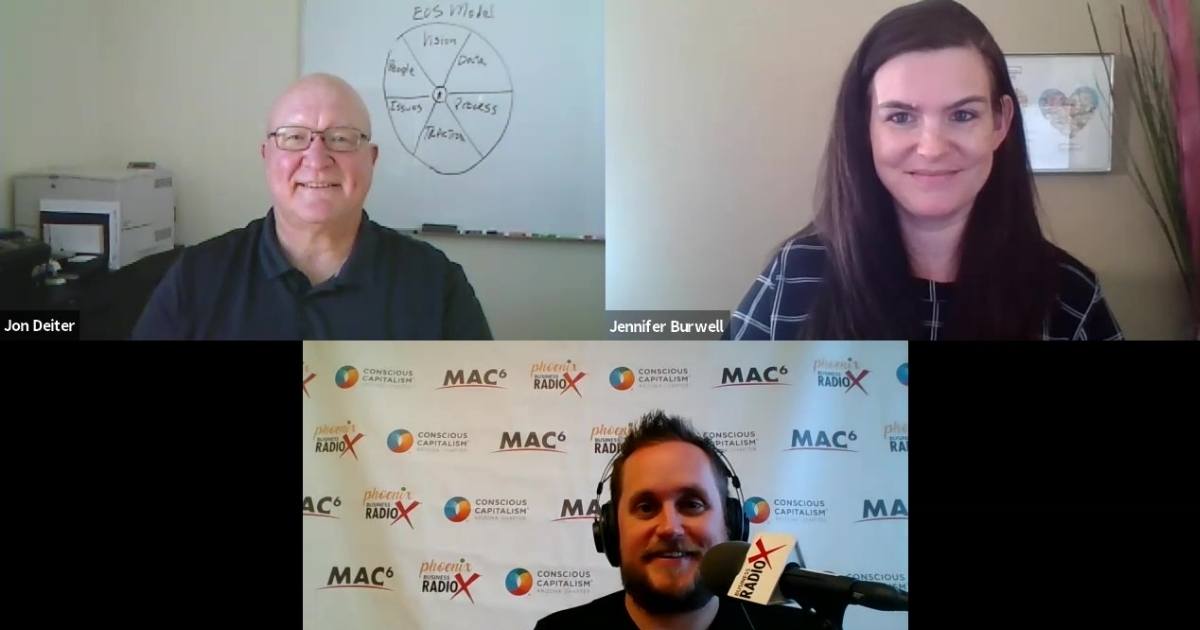
On this episode, a coming home of sorts, Kyle and Jennifer welcome Jon Deiter on the show and to discuss how Jon’s previous leadership as CFO and Integrator of MAC6 has made a lasting impact on them and the rest of the MAC6 team. Jon also shared his current work as a Certified Entrepreneurial Operating System (EOS) Implementer.

Jon gave advice on how to successfully tackle key issues organizations may be dealing with and how the EOS process can help organizations adjust to the changing business climate we are all faced with right now. We also explored the overlap of Conscious Capitalism and EOS and how companies who are interested in the philosophy of Conscious Capitalism can use EOS to continue building a conscious company.

JonDeiterSolutionsLLClogo-CMYK

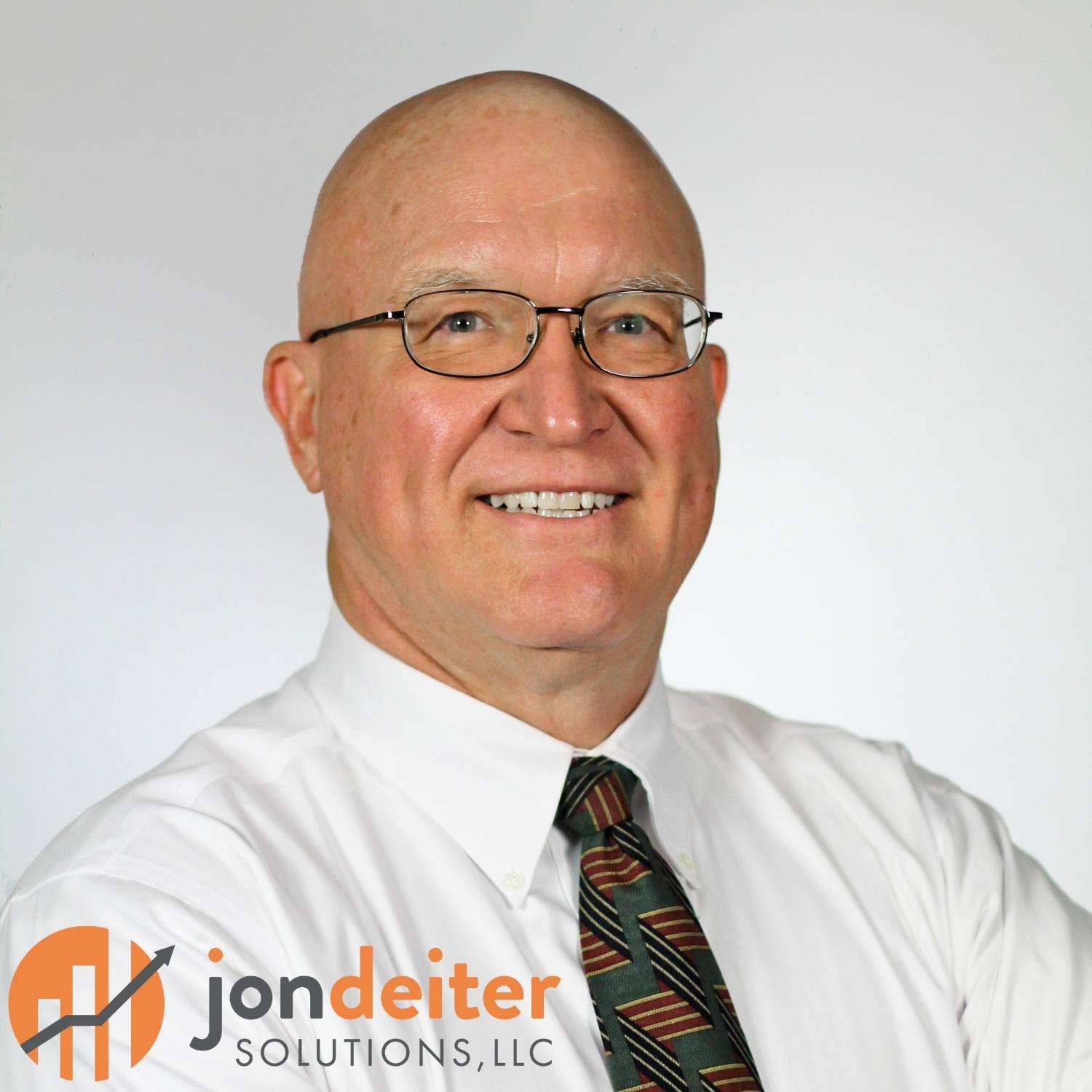
Jon Deiter Solutions, LLC was founded to provide Jon a base for helping business owners achieve all they want from their business. The primary service offered is implementation of the Entrepreneurial Operating System (EOS) which is based on the book TRACTION by Gino Wickman.

Jon’s “Help First” core value, professional training and experience in EOS Implementation and extensive financial management background, provide a unique approach to helping leadership teams break through whatever barriers and challenges they face.

Jon Deiter has over 30 years of experience in leadership roles in a variety of manufacturing, distribution and service businesses that were privately held, family owned entrepreneurial businesses as well as smaller divisions of public companies. He contributed to the success of these organizations by leading strategic planning initiatives, motivating and managing people, and adding financial perspective to the decision-making process through multiple difficult business cycles.

Jon is a CPA (inactive) with an MBA degree in Finance and was Accredited in Business Valuation, but currently focuses 100% of his time as a Certified EOS Implementer. Since 2015 he has followed his passion for helping business owners and leadership teams get a grip on their business and achieve what they want from their business by implementing the Entrepreneurial Operating System® (EOS®) based on the book TRACTION by Gino Wickman

Jon’s career experience, along with experience as both a user and implementer of EOS, give him a robust and unique perspective to follow his passion to Help First.

Connect with Jon on LinkedIn.

ABOUT YOUR MAC6 COMMUNITY CONNECTIONS CO-HOSTS

KyleMcIntoshWith a background in marketing, in various for profit and not for profit companies, Kyle McIntosh wondered, “How can I pair the passion and commitment to community progress of a non-profit with the sustainability and reach of a for profit company?” From this question and perspective a mission evolved to tear down the false distinction between the two sectors and to promote companies with Conscious Capitalism® business models through MAC6.

Kyle is the President and Creative Excitant of MAC6.  Day to day, his main operational role is on the “spaces” side of the business, focusing on creating thriving communities in the commercial office buildings, the co-working space, and the co-manufacturing space.  The other role that he plays is that of EOS implementer, working with clients to bring the Entrepreneurial Operating System, from the book Traction® to their businesses.  Additionally, he sits on the boards of Conscious Capitalism Arizona, telling the stories of good businesses in Arizona, and The Tempe Chamber of Commerce, sustaining Tempe’s quality of life and keeping our community and economy vibrant.

Kyle loves Arizona and wants to see us all collectively find great success based on the awesome things that are happening here every day.

Follow MAC6 on Facebook and Twitter.

Jennifer-BurwellJennifer Burwell, joined MAC6 in 2013. Jennifer is their VP and Director of Programs. She uses her experience in real estate, team development and management to seamlessly integrate each of the MAC6 business units to assure they are all focused on the long-term company vision. She is also a student of human behavior.

As a Certified Professional Behavioral Analyst, she uses her knowledge to facilitate culture-focused leadership programs with organizations of all sizes to integrate the company’s values and create higher-performing teams.

To learn more about MAC6 Communities, call 480-293-4075 or find them on Facebook

ABOUT OUR SPONSOR

MAC6 offers flexible spaces and programs to help your team grow, and a community of thriving businesses, just like yours.  Advocating Capitalism as a Force for Good, MAC6 is Accelerating the shift to Conscious Capitalism (where Purpose and Profit Unite) through Creativity, Collaboration, Community and Change.


Tagged With: Culture, EOS, EOS Implementer, strategic planning, Traction

E33 Scott Payne with PM Master Prep Tom Wesner with Traction Squared and Chris Spear with Traction Point

July 15, 2019 by Karen

E33-Scott-Payne-with-PM-Master-Prep-Tom-Wesner-with-Traction-Squared-and-Chris-Spear-with-Traction-Point1
Phoenix Business Radio
E33 Scott Payne with PM Master Prep Tom Wesner with Traction Squared and Chris Spear with Traction Point
Loading
00:00 / 58:45
RSS Feed
Share
Link
Embed

Download fileDuration: 58:45

E33-Scott-Payne-with-PM-Master-Prep-Tom-Wesner-with-Traction-Squared-and-Chris-Spear-with-Traction-Point

E33 Scott Payne with PM Master Prep Tom Wesner with Traction Squared and Chris Spear with Traction Point

Listen to this episode and learn how EOS ® (Entrepreneurial Operating System) and Project Management both can help organizations successfully deliver on Strategic initiatives. We learn about EOS from Chris Spear, Founder of Traction Point and Tom Wesner, Founder of TractionSquared. We also learn about an alternative to traditional PMP certification training from Scott Payne, Founder of PM Master Prep.

Tom and Chris share their stories which include time running successful start-ups, leadership roles within large corporations and now running EOS Coaching businesses. At the core of EOS is the Traction book and the processes within. We also hear the similarities and shared leadership practices of EOS and Project Management. Scott and PM Master Prep are sponsors of Project Management Office Hours and it was great to have Scott share his story. We hear how PM Master Prep came to be and why they have a unique model with the PMP training industry. We also get to hear plans for Scott’s upcoming podcast. ​

Tune in for upcoming shows with Project Management leaders and subscribe to the podcast on Apple Podcast, iHeartRadio, Spotify, Stitcher, Spreaker or your favorite podcast platform! Our next show will be July 18th with guests Roger Haskett and Jessica Kuhn. Thanks to our sponsors PM Master Prep and THE PMO SQUAD. PM Master Prep is offering 20% off all services by using code PMOJOE at checkout on www.pmmasterprep.com.

PMMPLogo-01

PM Master Prep is the world’s only case story focused PMP training company. PM Master Prep both teaches courses and partners with great companies to bolster their PMOs and provide PMP training that not only prepares students to succeed on the exam, but also improves their project management skills. PM Master Prep is offering 2 free online or live-online training seats to their groundbreaking case story focused PMP classes to any organization serious about transforming their PMP training program. Email Scott Payne (Founder PM Master Prep) directly at scott@pmmasterprep.com to receive your 2 free training seats.

Scott-PayneScott Payne has reinvented the process and focus of PMP preparation. Abandoning the traditional memorization focused methods, Scott created an entirely case story focused PMP training method. The power of this method is that it not only helps students learn faster and retain more, but it also drastically improves the student’s skills as a project manager.

Scott has published a best-selling PMP book, The PMP Exam Master Prep Manual, and created the world’s first case story focused video eCourse that flows in the order of a real project. In addition to his book, eCourse, and simulator, Scott leads students to success through focused Live and Live-Online classes weekly.

Connect with Scott on LinkedIn and follow PM Master Prep on Facebook.

Traction Squared coaches / teaches leadership teams how to run on a holistic business system called the Entrepreneurial Operating System® (EOS®). Through EOS, your leadership team will be equipped with a simple set tools to achieve the following:

  1. Vision. First, I’ll help your leaders to get 100% on the same page with a vision for your organization.
  2. Traction®. Your leaders will become self-disciplined and accountable.
  3. Healthy. Your leaders will become an open, honest and cohesive team. From there, as goes your leadership team, so goes the rest of your organization. Your entire company will become crystal clear on your vision.

People at every level will grow more disciplined and accountable in executing your vision. Your company will achieve consistent traction and drive forward as a healthy, functional, cohesive team. Our sweet spot is companies with 10-500 employees, that are open minded, and looking to get more of what they want out of their business. There are no contracts, and our time spent together is 100% guaranteed.

Tom-WesnerTom Wesner is Co-Founder & CEO of Traction Squared, Professional EOS Implementer For over 25 years Tom’s passion has been helping people achieve BREAKTHROUGHS and take their lives to the next level – no matter how successful they already are – in the areas that matter most: doing what they love for work, with people they enjoy, making a difference in the world, being appropriately compensated and having the time to pursue other passions.

Tom has helped many people from a multitude of companies transform their lives and their businesses through his approach to leadership and personal coaching. He’s worked with CEO’s of Fortune 100 companies, CEO’s of Not-For Profit organizations and world class leaders in the entrepreneurial world. Over the past few decade, he’s developed a passion for helping small business owners, entrepreneurial leaders and not-for-profit organizations.

Most of his core strategies for creating breakthroughs have come from his work within really successful businesses. He has learned, applied and modeled the art and science of growing a profitable business from some of the most renowned leaders and businesses in the world. He uses these distinctions to help optimize and grow enterprises to new and more profitable levels.

Connect with Tom on LinkedIn.

TractionPoint-01

Traction Point helps small and medium sized businesses to Create Success Faster! Every successful business needs an operating system. EOS, The Entrepreneurial Operating System, is a way of harmonizing and orchestrating all the moving parts of your business to help you run a better business and live a better life!

Chris provides professional training to give your team a proven system and the leadership skills they need to take you to the next level! They coach companies that are ready for transformation! You’re not just looking to dabble or pick up a few ideas from a seminar. You are committed to growth. Your team is willing to be open, honest and vulnerable with themselves and the people around them! You’re more afraid of the status quo than you are of change!

Chris-SpearA few years out of college, Chris Spear did something everyone told him was stupid! He walked away from a great job and co-founded a software company. The team “bootstrapped” to $2 million dollars in revenue, a dozen employees, and was acquired in year three by a public company. This launched Chris into roles at a few really big companies.

At IKON/Ricoh, he led sales and marketing process implementation for a field sales organization of over 5000 reps. At Extra Space Storage, a real estate company, he led sales and operations process implementation as the company grew from 300 to over 700 locations. Through all this Chris learned he had a “superpower” for scaling businesses. But he didn’t want to just do something big, he wanted to do something that mattered! This is when he found a growing software company called Infusionsoft. Their purpose “To Help Small Businesses Succeed” was so compelling to him, that he joined them to lead operations and systems as they grew from $50M to more than $100M in revenue.

With a “small business success” fire in his belly, Chris happened on the EOS book “Traction.” He was truly shocked to find that everything he had learned about how to scale a business through years of painful trial and error was there in one harmonious system. Chris was hooked and is now on a mission to help hundreds of small businesses change the world and get more of what they want from their businesses!

Connect with Chris on LinkedIn and follow Traction Point on Facebook.

ABOUT THE PROJECT MANAGEMENT OFFICE HOURS SERIES

Project Management Office Hours is intended to provide Project Management professionals a place to drop in and discuss Success Stories, Best Practices, and Lessons Learned.  Project Management Consultant Joy Gumz has shared with us, “Operations keep the lights on, strategy provides the light at the end of the tunnel, but project management is the train engine that moves the organization forward.”  

Each of us has a unique story to tell, but collectively we share a message that organizations who embrace Project Management Best Practices perform better than those which don’t.  Organizations which align Projects to Strategy perform better.  Organizations with Engage Executive Sponsors deliver better results.  Organizations which measure Project Management performance outperform those which don’t.

During our Project Management Office Hours, we hear directly from Industry leaders how to make an impact in our profession. How we, collectively, will Advance Project Management Best Practices, One Listener at a time! 

Project Management Office Hours is powered by The PMO SQUAD 

ABOUT YOUR HOST

Joe Pusz started THE PMO SQUAD to bring real world PMO Leadership experience to the consulting space and to advocate for Project Management through his blog PMOJOE.com. The old saying is “Do what you love and you’ll never work a day in your life.” Following this mindset Joe left Corporate America in 2013 to start THE PMO SQUAD and work with fellow Natural Born Project Managers to advance Project Management Best Practices.
THE PMO SQUAD focuses exclusively on PMO and Project Management consulting. Corporate America is full of Accidental Project Managers running projects who haven’t been trained to be PMs. To help solve this problem THE PMO SQUAD is on the Leading Edge with PMO As a Service. PMO As a Service allows our clients to focus on their respective core competencies while THE PMO SQUAD delivers Project Management expertise. Contact Joe at 678-591-7868. Follow The PMO Squad on LinkedIn, Twitter and Facebook.

ABOUT OUR SPONSOR

PM Master PrepTM is simply the worlds best PMP® Exam Preparation licensing system. There is no other product available to businesses and independent trainers that can offer the same premium courseware along with the rich feature set of our online exam simulator and study resources.

Our Courseware has been designed to be shorter, easier to learn for students, and easier to teach for instructors. Your students will learn faster, retain more and will pass the PMP exam!

PMMPLogo-01

Tagged With: entrepreneur, Entrepreneurship, EOS, EOS Implementer, eosworldwide, growth, Leadership, PM Master Prep, PMP, PMP Exam, PMP Success, success, The Entrepreneurial Operating System, Traction

Todd Weeks with Traction Focused and Ryan Burton with the Ryan Burton Music Group

May 16, 2019 by Mike

Gwinnett Business Radio
Todd Weeks with Traction Focused and Ryan Burton with the Ryan Burton Music Group
Loading
00:00 /
RSS Feed
Share
Link
Embed

Download file

Todd Weeks and Ryan Burton

Todd Weeks/Traction Focused

Todd is passionate about helping business owners and leadership teams get traction in their business through the Entrepreneurial Operating System (“EOS”). Todd personally lived inside the EOS system for four years and experienced the transformative power it can have on a business. In the first 3 years of running their business using the EOS system Todd and his team grew their Net Profit 6 times, and ultimately sold the company in the 4th year realizing a 40% increase in the overall value of the business. Now Todd spends all of his time helping other entrepreneurs experience the same growth and transformation through implementing EOS in their companies.
For more information about Traction Focused click here

Ryan Burton/Ryan Burton Music Group

The Ryan Burton Music Group is an Independent Record Company & Artist Management Company founded by Canadian/American Entrepreneur, Marketer & Musician Ryan Burton. The company is based in Lawrenceville, GA (Metro Atlanta) and focuses on recording and releasing artists that ignite the listeners imagination. Ryan Burton Music Group was started in January 2015 based around a desire to form a company that helps artists thrive. “We like to find a musician that has talent and get involved in all aspects to help them get where they need to go. We look for someone that lives for music and is prepared to do what it takes to succeed. When we meet an artist like this, development and getting their music to the masses is easy.” RBMG believes in helping artists and then participating in their success “we help you grow, then we all can benefit from that success” says Burton.

Tagged With: entrepreneur, Entrepreneurial Operating System, EOS, Gwinnett Business Radio, independent record company, Mike Sammond, ryan burton, Ryan Burton Music Group, sonesta gwinnett place atlanta, steven julian, subaru of gwinnett, Todd Weeks, Traction Focused

THINK FIT GET FIT STAY FIT MAC6 Co-Founder Scott McIntosh and EOS Implementer Jon Deiter

December 12, 2018 by Karen

THINK-FIT-GET-FIT-STAY-FIT-MAC6-Co-Founder-Scott-McIntosh-and-EOS-Implementer-Jon-Deiter-feature
Phoenix Business Radio
THINK FIT GET FIT STAY FIT MAC6 Co-Founder Scott McIntosh and EOS Implementer Jon Deiter
Loading
00:00 /
RSS Feed
Share
Link
Embed

Download file

THINK-FIT-GET-FIT-STAY-FIT-MAC6-Co-Founder-Scott-McIntosh-and-EOS-Implementer-Jon-Deiter

THINK FIT GET FIT STAY FIT MAC6 Co-Founder Scott McIntosh and EOS Implementer Jon Deiter

Scott-McIntosh-on-Phoenix-Business-RadioXFollowing an early career focused on underground mining engineering, operations and construction, Scott McIntosh grew McIntosh Engineering to become a preeminent worldwide engineering, design and project management firm focused on providing deep underground mining services to large international mining companies.  After growing to $50+ million in annual revenue and 280 worldwide employees, McIntosh Engineering was acquired in 2008 and Scott began his exploration for what’s next.
What’s next is Advocating Capitalism as a Force for Good through MAC6 and Conscious Capitalism Arizona (CCAZ).

  • MAC6 builds better communities where people and businesses thrive.  Founded by Scott and his son Kyle in 2011.  Current operations include a 10,000 ft2 state of the art Conscious Workspace, 50,000 ft2 of quiet occupancy office space, and a 38,000 ft2 light manufacturing facility in support of early stage businesses that adopt the principals of Conscious Capitalism to achieve long term sustainable growth.
  • Conscious Capitalism Arizona was founded by Scott in 2012 as the 3rd Chapter in the world, following only Chicago and Australia.  Now CCAZ is part of a truly global movement with 40 total chapters including 10 international locations.

Conscious Capitalism Arizona (CCAZ)

We believe that free enterprise capitalism has served to lift more people out of poverty than any other socio-economic system ever conceived – empowering social cooperation, human progress, and elevating humanity.  Globally, Conscious Capitalism is an idea, a movement, an approach to conducting business and an organization dedicated to advancing all of these. Conscious Capitalism exists to elevate humanity.

The future of business in Arizona lies with an upcoming generation of consumers, business leaders and employees preparing to make a difference in the world.  We (CCAZ) are passionate about giving them the tools and principles they will need to become the generation that eliminates poverty and elevates humanity. Conscious Capitalism Arizona is working with business and academic leaders to:

  • Create a library of over 1,000 stories of business as a force for good.
  • Touch the lives and shift the thinking of 100,000+ students with our educational programs.
  • Develop Arizona programs that are replicated nationally and globally.

Follow Mac6 on Facebook and Twitter, and Conscious Capitalism AZ on LinkedIn, Twitter and Facebook.

John-Deiter-on-Phoenix-Business-RadioXJon Deiter has worked for over 30 years in leadership positions in privately held and family owned entrepreneurial businesses as well as smaller divisions of public companies.  He earned an MBA in Finance from Benedictine University in Lisle, Illinois and he is a CPA with Accreditation in Business Valuation and Certified Global Management Accountant.  He has held positions in a variety of industries as Tax Advisor, Consultant, Controller, Vice President, CFO, and President.

In 2014, Jon was working on the leadership team of a company which began implementing the Entrepreneurial Operating System® (EOS®). Jon experienced first-hand the value and power of EOS and its simple tools to establish a clear vision, gain traction toward that vision, and grow a healthy team.

Jon came to realize his true motivation and passion ….. to help many more companies achieve great things through implementing EOS!  He was trained as a Professional EOS Implementer and since 2015 has been working with organizations to help them implement EOS. He is no longer a practicing CPA and is focusing 100% of his time on his passion.  He offers his implementation/coaching services through his company, Jon Deiter Solutions, LLC.  

EOS is a people-centric management system that embodies successful, proven ways of working with people and a team. In addition to company growth and achieving the life you desire, implementing EOS has positive impacts to employees, culture and team health.  Jon’s leadership career in manufacturing, distribution and service businesses, along with experience as both a user and implementer of EOS, give him a unique perspective to pursue his passion of helping business owners and leadership teams achieve all they want from their business.

Jon lives in Chandler Arizona with his wife Julie, having moved to Arizona from Chicago suburbs in 2003.

Connect with Jon on LinkedIn.

ABOUT THINK FIT-GET FIT-STAY FIT and SCOTT MARSH

Scott Marsh is the Founder and Owner of Mind and Body Strengthening which is the culmination of working in the Physical Therapy and Fitness Industry for 26 years. Scott is a Certified Strength and Conditioning Specialist (C.S.C.S.) through the NSCA (National Strength and Conditioning Association), a Precision Nutrition Level 1 Coach and a Professional Member of the Medical Fitness Network. Scott also donates his time to the New Warrior Program, which he started to help recruits with their nutrition and physical training before they leave for Boot-camp.

Two of Scott’s favorite sayings are “Change doesn’t come from just knowing what to do, it comes from consistent daily practice” and “You need to align the way you think with the results you want”. These sayings are the basis for Scott’s THINK FIT-GET FIT-STAY FIT radio show; and, the solid foundation and wisdom that Scott uses to help people achieve their goals and maintain a healthy lifestyle over the course of their life.

Tagged With: EOS, Mind & Body Strengthening, Mind and Body Strengthening, Personal Training in Tempe, Precision Nutrition

  • 1
  • 2
  • Next Page »

Business RadioX ® Network


Our Most Recent Episode

CONNECT WITH US

  • Email
  • Facebook
  • LinkedIn
  • Twitter
  • YouTube

Our Mission

We help local business leaders get the word out about the important work they’re doing to serve their market, their community, and their profession.

We support and celebrate business by sharing positive business stories that traditional media ignores. Some media leans left. Some media leans right. We lean business.

Sponsor a Show

Build Relationships and Grow Your Business. Click here for more details.

Partner With Us

Discover More Here

Terms and Conditions
Privacy Policy

Connect with us

Want to keep up with the latest in pro-business news across the network? Follow us on social media for the latest stories!
  • Email
  • Facebook
  • Google+
  • LinkedIn
  • Twitter
  • YouTube

Business RadioX® Headquarters
1000 Abernathy Rd. NE
Building 400, Suite L-10
Sandy Springs, GA 30328

© 2025 Business RadioX ® · Rainmaker Platform

BRXStudioCoversLA

Wait! Don’t Miss an Episode of LA Business Radio

BRXStudioCoversDENVER

Wait! Don’t Miss an Episode of Denver Business Radio

BRXStudioCoversPENSACOLA

Wait! Don’t Miss an Episode of Pensacola Business Radio

BRXStudioCoversBIRMINGHAM

Wait! Don’t Miss an Episode of Birmingham Business Radio

BRXStudioCoversTALLAHASSEE

Wait! Don’t Miss an Episode of Tallahassee Business Radio

BRXStudioCoversRALEIGH

Wait! Don’t Miss an Episode of Raleigh Business Radio

BRXStudioCoversRICHMONDNoWhite

Wait! Don’t Miss an Episode of Richmond Business Radio

BRXStudioCoversNASHVILLENoWhite

Wait! Don’t Miss an Episode of Nashville Business Radio

BRXStudioCoversDETROIT

Wait! Don’t Miss an Episode of Detroit Business Radio

BRXStudioCoversSTLOUIS

Wait! Don’t Miss an Episode of St. Louis Business Radio

BRXStudioCoversCOLUMBUS-small

Wait! Don’t Miss an Episode of Columbus Business Radio

Coachthecoach-08-08

Wait! Don’t Miss an Episode of Coach the Coach

BRXStudioCoversBAYAREA

Wait! Don’t Miss an Episode of Bay Area Business Radio

BRXStudioCoversCHICAGO

Wait! Don’t Miss an Episode of Chicago Business Radio

Wait! Don’t Miss an Episode of Atlanta Business Radio