Business RadioX ®

  • Home
  • Business RadioX ® Communities
    • Southeast
      • Alabama
        • Birmingham
      • Florida
        • Orlando
        • Pensacola
        • South Florida
        • Tampa
        • Tallahassee
      • Georgia
        • Atlanta
        • Cherokee
        • Forsyth
        • Greater Perimeter
        • Gwinnett
        • North Fulton
        • North Georgia
        • Northeast Georgia
        • Rome
        • Savannah
      • Louisiana
        • New Orleans
      • North Carolina
        • Charlotte
        • Raleigh
      • Tennessee
        • Chattanooga
        • Nashville
      • Virginia
        • Richmond
    • South Central
      • Arkansas
        • Northwest Arkansas
    • Midwest
      • Illinois
        • Chicago
      • Michigan
        • Detroit
      • Minnesota
        • Minneapolis St. Paul
      • Missouri
        • St. Louis
      • Ohio
        • Cleveland
        • Columbus
        • Dayton
    • Southwest
      • Arizona
        • Phoenix
        • Tucson
        • Valley
      • Texas
        • Austin
        • Dallas
        • Houston
    • West
      • California
        • Bay Area
        • LA
        • Pasadena
      • Colorado
        • Denver
      • Hawaii
        • Oahu
  • FAQs
  • About Us
    • Our Mission
    • Our Audience
    • Why It Works
    • What People Are Saying
    • BRX in the News
  • Resources
    • BRX Pro Tips
    • B2B Marketing: The 4Rs
    • High Velocity Selling Habits
    • Why Most B2B Media Strategies Fail
    • 9 Reasons To Sponsor A Business RadioX ® Show
  • Partner With Us
  • Veteran Business RadioX ®

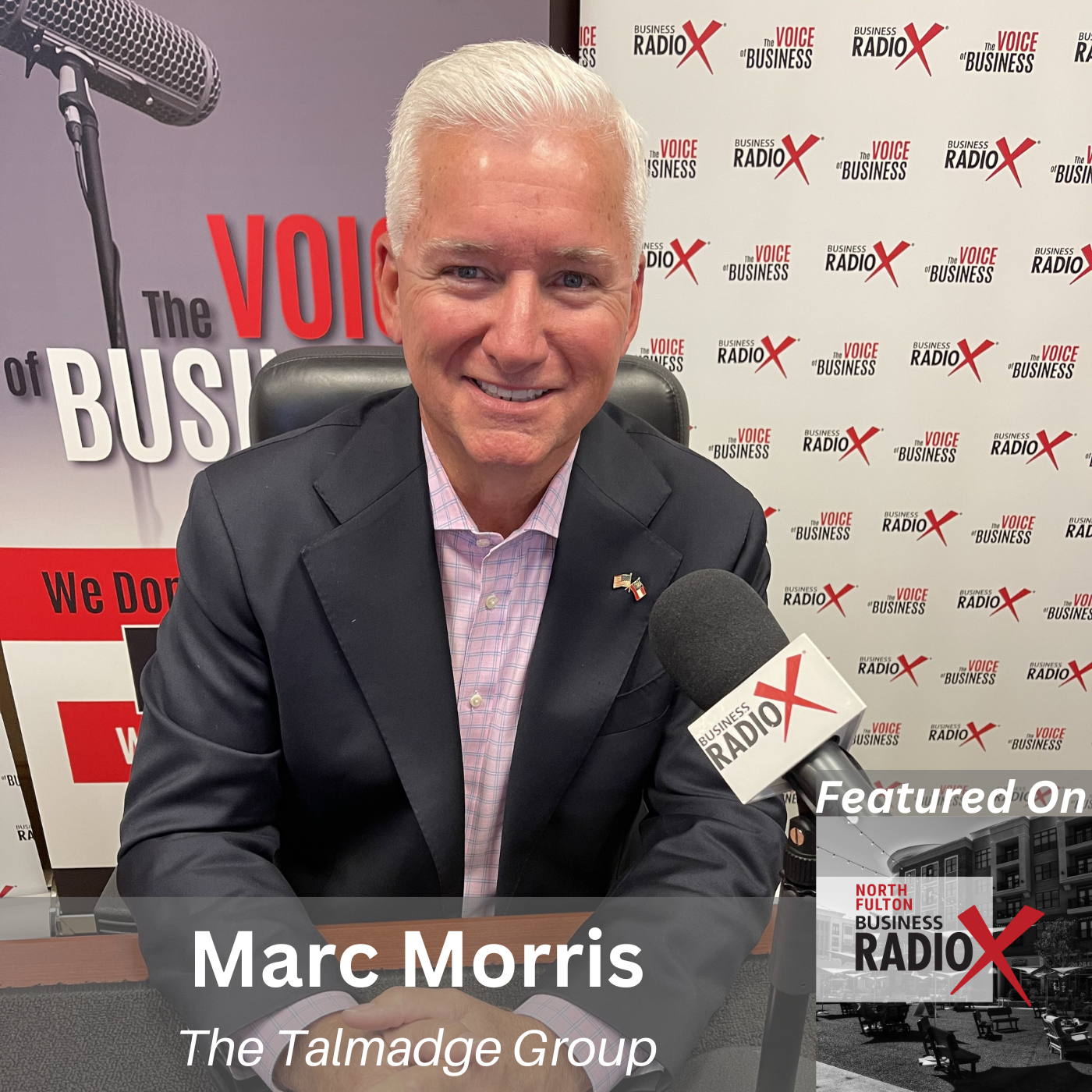
Performance-Based Hiring with Marc Morris, The Talmadge Group

October 27, 2025 by John Ray

Performance-Based Hiring with Marc Morris, The Talmage Group, on North Fulton Business Radio with host John Ray
North Fulton Business Radio
Performance-Based Hiring with Marc Morris, The Talmadge Group
Loading
00:00 /
RSS Feed
Share
Link
Embed

Download file

Performance-Based Hiring with Marc Morris, The Talmage Group, on North Fulton Business Radio with host John Ray

Performance-Based Hiring with Marc Morris, The Talmadge Group (North Fulton Business Radio, Episode 908)

Marc Morris, the president of The Talmadge Group, joins host John Ray to discuss effective hiring practices. Marc explains how his firm has evolved from providing direct IT placements to offering consulting, project-based staffing, and leadership searches in executive, sales, and construction roles, effectively serving client needs since 1998. He breaks down Lou Adler’s performance-based hiring and the POWER approach, which includes building a performance profile, evaluating objectively, widening sourcing, managing interviewer bias, and treating recruiting as marketing. Marc also calls out the trap of “frictionless” click-to-apply systems that flood employers with the wrong candidates and mask quality.

Marc shares the single question he uses to engage passive candidates who are not on the market and why it works. He also discusses employer branding, culture, and the rationale behind the superiority of outstanding managers with measurable results over trendy perks. Case stories include scaling a startup from six to sixty and multi-year public-sector tech projects with the USDA and Defense Logistics Agency.

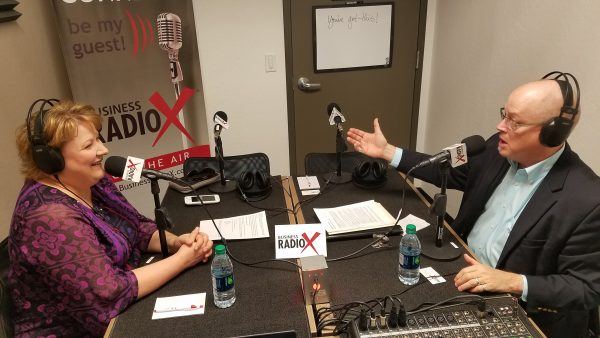
John Ray is the host of North Fulton Business Radio. The show is produced by John Ray and North Fulton Business Radio, LLC, an affiliate of Business RadioX®, and is recorded inside Renasant Bank in Alpharetta.

Key Takeaways from This Episode

  • Hire for outcomes, not resumes. Define a performance profile with the 6–12 month results you need, then assess candidates based on those outcomes.
  • Use the POWER approach: build the performance profile, set objective scorecards, widen sourcing, eliminate interviewer bias, and run recruiting like marketing.
  • Kill “frictionless apply.” High volume from one-click portals hides signals and wastes management time.
  • Treat recruiting as a campaign. Clarify the value proposition, target likely pools, and nurture passive talent.
  • Ask one incisive opener with passive candidates: invite them to describe the work they would leave for, then map that to your performance profile.
  • Upgrade interview quality. Fewer interviewers, structured questions tied to outcomes, and consistent scoring produce better decisions.
  • Brand and culture matter, but great managers with clear expectations beat office perks.
  • Measure success by time-to-productivity and retention against the performance profile, not just time-to-fill.

Topics Discussed in this Episode

00:00 Introduction and Welcome to North Fulton Business Radio
01:50 Guest Introduction: Marc Morris
01:59 The Talmadge Group: Services and Evolution
03:59 Hiring Challenges and Market Evolution
05:22 Technology’s Impact on Hiring
07:30 Performance-Based Hiring Explained
11:20 Employer Branding and Company Purpose
14:15 The Passive Candidate Strategy
23:24 Advice for Job Seekers
25:28 When to Call Marc Morris
26:53 Success Stories and Conclusion
31:12 Closing Remarks

Marc Morris, Founder and President, The Talmadge Group

Marc Morris, Founder and President of The Talmadge Group, a Service-Disabled Veteran-Owned staffing and consulting firm known for helping organizations build high-performing teams through Performance-Based Hiring. A U.S. Navy veteran and former Georgia state legislator, Marc brings decades of leadership, real-world recruiting experience, and a passion for helping people reach their full potential.

The Talmadge Group is a service-disabled veteran-owned staffing and consulting firm specializing in performance-based hiring and workforce solutions. Founded in 1998, the company partners with both commercial and government clients to deliver high-performing teams that drive measurable results.

Their approach goes beyond traditional recruiting—focusing on the alignment of people, process, and performance. By combining strategic talent acquisition with deep industry insight, they help organizations identify, attract, and retain professionals who make an immediate impact.

From technology and construction to executive leadership and government contracting, The Talmadge Group’s reputation is built on trust, precision, and a commitment to excellence in every placement.

Website | LinkedIn | Marc Morris LinkedIn | Facebook

Renasant Bank supports North Fulton Business Radio
Renasant BankRenasant Bank has humble roots, starting in 1904 as a $100,000 bank in a Lee County, Mississippi, bakery. Since then, Renasant has become one of the Southeast’s strongest financial institutions, with over $17 billion in assets and more than 180 banking, lending, wealth management, and financial services offices throughout the region. All of Renasant’s success stems from each banker’s commitment to investing in their communities as a way to better understand the people they serve. At Renasant Bank, they understand you because they work and live alongside you every day.

Website | LinkedIn | Facebook | Instagram | X (Twitter) | YouTube

Beyond Computer Solutions supports North Fulton Business Radio

Whether you’re a law firm, medical practice, or manufacturer, there’s one headline you don’t want to make: “Local Business Pays Thousands in Ransom After Cyberattack.” That’s where Beyond Computer Solutions comes in. They help organizations like yours stay out of the news and in business with managed IT and cybersecurity services designed for industries where compliance and reputation matter most.

Whether they serve as your complete IT department or simply support your internal team, they are well-versed in HIPAA, secure document access, written security policies, and other essential aspects that ensure your safety and well-being. Best of all, it starts with a complimentary security assessment.

Website | LinkedIn | Facebook | YouTube

About North Fulton Business Radio and host John Ray

With over 900 episodes and having featured over 1,400 guests, North Fulton Business Radio is the longest-running podcast in the North Fulton area, covering business in our community like no one else. We are the undisputed “Voice of Business” in North Fulton!

The show invites a diverse range of business, non-profit, and community leaders to share their significant contributions to their markets, communities, and professions. There’s no discrimination based on company size, and there’s never any “pay to play.” North Fulton Business Radio supports and celebrates businesses by sharing positive stories that traditional media ignore. Some media lean left. Some media lean right. We lean business.

John Ray, host of  North Fulton Business Radio, and Owner, Ray Business Advisors
John Ray, host of North Fulton Business Radio and Owner, Ray Business Advisors

John Ray is the host of North Fulton Business Radio. John and the team at North Fulton Business Radio, LLC, an affiliate of Business RadioX®, produce the show, and it is recorded inside Renasant Bank in Alpharetta.

The studio address is 275 South Main Street, Alpharetta, GA 30009.

You can find the complete archive of shows by following this link. The show is available on all the major podcast apps, including Apple Podcasts, Spotify, Google, Amazon, iHeart Radio, and many others.
John Ray, The Generosity MindsetJohn Ray also operates his own business advisory practice. John’s services include advising solopreneurs and small professional services firms on their value, their positioning and business development, and their pricing. His clients are professionals who are selling their expertise, such as consultants, coaches, attorneys, CPAs, accountants, bookkeepers, marketing professionals, and other professional services practitioners.

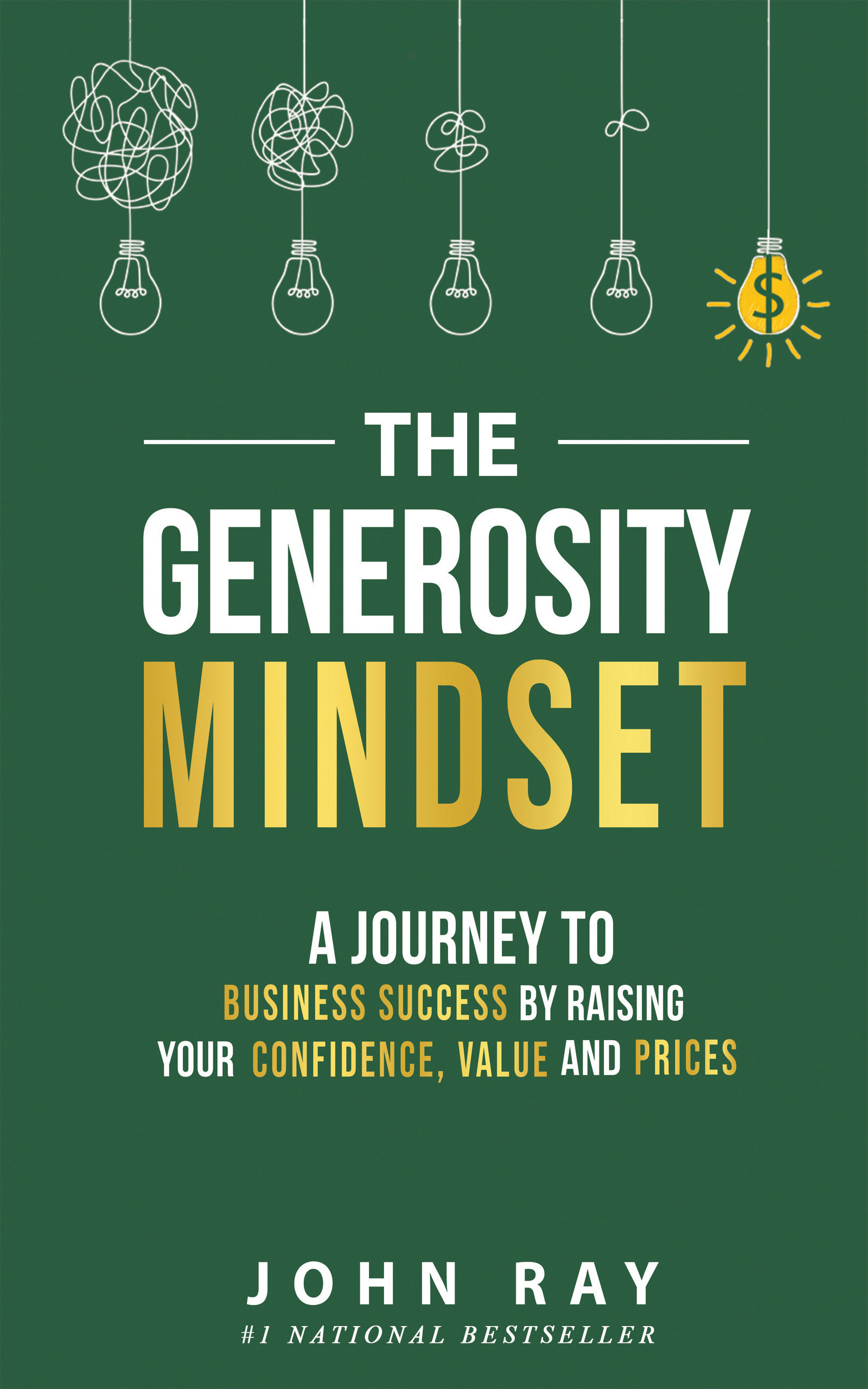
John is the author of the five-star rated book, The Generosity Mindset: A Journey to Business Success by Raising Your Confidence, Value, and Prices, praised by readers for its practical insights on raising confidence, value, and prices.


Tagged With: C-suite hiring, candidate quality, construction staffing, Defense Logistics Agency, employer branding, government contracting, IT staffing, John Ray, Marc Morris, objective interviewing, passive candidates, performance-based hiring, POWER hiring framework, Recruiting, repeatable hiring process, sales operations staffing, scaling teams, staffing consultant, startup hiring, The Talmadge Group, turnover reduction, USDA projects

Empowering Businesses: The Vendorship Approach to Government Contracting

April 11, 2024 by angishields

HVR-Vendorship-Feature
High Velocity Radio
Empowering Businesses: The Vendorship Approach to Government Contracting
Loading
00:00 /
RSS Feed
Share
Link
Embed

Download file

In this episode of High Velocity Radio, Dr. Nazeera Dawood, CEO of Vendorship, Inc, discusses her company’s role in helping businesses navigate government contracting. She shares her own frustrations with the RFP process and aims to educate and guide companies through the $600 billion industry. Vendorship assists with becoming a vendor, identifying opportunities, and submitting proposals, allowing businesses to focus on their expertise. Dr. Dawood celebrates client successes and the impact on women and minority owners, recognized by the Atlanta City Council. The company’s outreach includes newsletters, events, and word-of-mouth, emphasizing the sustainability of government contracts, particularly in tech.

Atlanta City Council recognized Dr. Nazeera Dawood, founder and CEO of Vendorship, Inc., for her outstanding contribution and service to the Greater Atlanta community in honor of Women’s History Month. A ceremony was held to celebrate and proclaim that March 7 is Dr. Nazeera Dawood Day. 

Nazeera-DawoodAfter a rewarding career as a medical doctor Dr. Nazeera Dawood’s passion for prevention prompted her to obtain a master’s degree in Public Health. During her 8 years in public service as Research Project Manger, Director of the Fulton County Health Department as well as Fulton County Chief of Staff and she developed an extensive knowledge of the (governmental) proposal process.

Nazeera has a passion for solutions- and results-driven strategies, with a focus on quality, cost-effectiveness, use of practice guidelines, evaluation, supportive collaborations and public private partnerships for the benefit of all. She currently serves on the Review Board of the inaugural Fulton County District Attorney Conviction Integrity Unit.

A serial entrepreneur she has a wide professional network in the public sector, in business and in no-profit work. Nazeera founded Vendorship to ease the entry into government contracting.

As Vendorship’s CHH (Chief of Client Happiness) she strives to deliver the custom program to government contracting opportunities our clients need to provide government agencies with high quality products and services that improve the work of the public sector and all of our citizens’ lives.

Follow Vendorship on LinkedIn.

See also this article by the LegalOn team in which Stone Payton joins the discussion on common contract-related business mistakes

Transcript-iconThis transcript is machine transcribed by Sonix

 

TRANSCRIPT

Intro: [00:00:04] Broadcasting live from the Business RadioX studios in Atlanta, Georgia. It’s time for High Velocity Radio.

Stone Payton: [00:00:15] Welcome to the High Velocity Radio show, where we celebrate top performers producing better results in less time. Please join me in welcoming to the broadcast Founder and CEO with Vendorship Inc., Dr. Nazeera Dawood. How are you?

Dr. Nazeera Dawood: [00:00:31] I’m great and thank you so much for having me today. Stone, it’s so good to speak to you and your audience.

Stone Payton: [00:00:38] Yeah, it’s a delight to have you on the program. I got a ton of questions. I know we’re not going to get to them all, but, uh, maybe let’s start with mission. Purpose. Tell us a little bit about Vendor Ship Inc and what you’re trying to do for folks.

Dr. Nazeera Dawood: [00:00:51] Sure, definitely. So in order to talk about mentorship, I have to tell you a little bit, uh, about myself and why vendor ship was started. And, um, so I used to be a physician. I used to be an ob gyn in India delivering babies. And then after I came to us, I did my master’s in public health. And from there I moved to, uh, Emory University for a job. And then I got my dream job at the county government. Uh, it was at the health department. I loved my job. And, uh, after four years, I was promoted to being the chief of staff at the former chairman’s office at the board of commissioners. Okay, so during this time, uh, I would have a lot of interactions with community members, businesses, um, other partnerships with counties and states and in the federal level as well. What I noticed was small businesses or midsize businesses or even large businesses did not know how to do business with the government. And to give you a particular example, Stone, I was also responsible as my position at the Health Promotion Division Director at that time put out opportunities, um, for uh, contractors or firms to respond. So when I did put out such an RFP, there were two bidders. One, and this was a simple technology solution that we needed, and one person responded five minutes late. So the response was stunned. Their submission was nulled and the other person was did not qualify for some of the eligibility criteria.

Dr. Nazeera Dawood: [00:02:32] So that was rejected as well. So ultimately my division ended up with zero responses after spending so much time, staff time, putting the RFP out, several discussions, interdepartmental, and then I didn’t have the solution that I really wanted. So that really frustrated me because it was taxpayers money as well. And I said, I know of so many businesses that could have responded and provided this solution that we needed. And when all the, uh, procedures were was done, I asked around a few firms on why they didn’t respond to the possibilities right in their backyard. They said there were several responses. One was they said they don’t know. They think, uh, it’s a slow process. They don’t trust the government. Or they said there’s no profitability. So they were giving all these reasons which I thought was a myth, and I knew it was sometimes a piece of cake to do business with the government. So when I, uh, got promoted to the chairman’s office, I also learned the ins and outs of what happened and how those decisions get made in choosing a contractor. And that’s when, when I resigned from the government, uh, position that I was in, uh, I saw the need, uh, where businesses need to be educated, uh, needed hand-holding, coaching and guidance in doing business with the government. And that’s when mentorship was initiated in 2018. I hope that answered your question. Well, it.

Stone Payton: [00:04:06] Does very elegantly and succinctly, but but that’s a lot of information to take in. I love that you found a need. You decided to try to fill it, but it occurs to me that there was and maybe there still is, just a tremendous amount of opportunity being left on the table out there, isn’t there?

Dr. Nazeera Dawood: [00:04:26] And can you believe $600 billion industry and, uh, people usually have all these myths. So we, we, uh, we our team loves to educate and inform because we have to bust the myths out there. One such, such myth is that people think the contracts have already been decided, which is not true, and it’s a transparent, open process. Um, all you have to be is just be eligible, uh, to make sure that you’re able to provide that service that the government is asking. There’s no one that is that cannot work with the government. It’s just that they have to be in the playing field to play the game. Otherwise, they’re just going to be sitting on the fence and watching what’s happening out there. But a $600 billion industry combining federal, state, county, city and education and schools.

Stone Payton: [00:05:14] That is a sobering number. So how does a company know if they’re eligible or if they don’t know then they’re not eligible. And they better find out.

Dr. Nazeera Dawood: [00:05:24] Exactly. So to be eligible all you need to have is a company. You have to have a company in existence. Uh, you should have you should be compliant. That is paying your taxes. And you should have a service to offer that the government needs. That’s all it takes for, uh, doing business with the government. So when you asked about eligibility, if you have a company, if you have a service to provide, and that’s a service that government needs. You can get into the playing field to do the business.

Stone Payton: [00:05:57] So, uh, walk us through, if you can, at least at a high level. How do you find out what the government needs and wants? Because. Because I’m one of these people you’re talking about. You know, I’m probably susceptible to all these myths I don’t have the first clue about to find out what they want. And, you know, for all I know, they may need something in the media area, I don’t know.

Dr. Nazeera Dawood: [00:06:18] Oh, we see those marketing and media, uh, UI, UX opportunities available all the time. So, um, Stone, let me tell you. So think about it. 50 states, almost 20,000 cities, 5000 counties, right? 100,000 public schools, more than 5000 higher education centers. All these are independent government entities with opportunities available for any firms to respond. Right. Um, so the opportunities are existing. The opportunities that government puts out is technology, even services, janitorial, um, mowing. You know, lawn mowing needs, um, office supplies, media needs. They want managers to help them strategize training needs so services that you can imagine the city government, state government, county government everyone needs is that the firms business firms usually have. Uh, the thing is, you have to know where these opportunities are. You have to become probably a vendor depending on the opportunity, and then respond to this. So the process is a little bit complicated in the sense it’s not it’s not hard, but it there is a process to follow. And that’s what people get so uh, frustrated about because they just don’t know how much to try. And then they get frustrated. They go through these red flags and they leave and they say government is not for them. But if you see once the government contractor always a government contractor, right, because they see the benefits of doing business, getting paid for it, and they see the profitability as well. So people have to be aware that it is time consuming, sometimes paperwork. But then once it is done, uh, they’re they’ve laid the foundation. Well, then it’s much easier to get into to win the contracts.

Stone Payton: [00:08:16] So let’s talk about the work specifically with regard to what you and your team do. Do you educate? Do you actually actually help execute on some of this? What what does that look like?

Dr. Nazeera Dawood: [00:08:27] Definitely. So let’s don’t let’s take it this way right with you. Uh, let’s say we are working with you and you’re a media company, right? And there is city of, uh, let’s say Petersburg. Right? Petersburg is looking for a media, uh, campaign and someone to run their campaign on smoke free areas or smoke free parks. Um, now they want to work with you because you are a media company. And, I mean, they know they put the opportunity out. Hey, we need some media person or a media company or a business firm to come and help us design this campaign and put the marketing out. So now you are working with us because you are working with us. We’ve already helped you coach. You build the documentation on what are your capabilities. We have your company’s profile business profile completely right. So once we have that, what we do is we, um, we bring the opportunity to you to say, hey, Stone, in St Petersburg, there’s this opportunity, and then we review this together and you say, this is a perfect opportunity. Our team will write the response for you. So we do proposal responses.

Dr. Nazeera Dawood: [00:09:38] Not only did we identify the opportunity for you that is fitting and you’re eligible for it, but we also help you become a vendor. We do all the paperwork. We become your extended team because we don’t want you to get succumbed to all the supplemental, uh, the massive paperwork that is needed and get frustrated. So we let you focus on what you are good at, which is your niche area, which is campaign and marketing. Right. What we want to help you is identify the opportunity, right. The response, um, we give you the intelligence behind that entire RFP on why what what’s the estimated budget that they are looking for. And then we put the response because they are not a media company. Stone. So we would we would need that specific technical response from you. So we will put the entire proposal document and submit it, uh, for, for evaluation to the government. So that is we take up the 80% of the work. Uh, the 20% of the work is your niche area. So where you will be able to tell us, this is what I want to do for this proposal?

Stone Payton: [00:10:46] Well, I just love that. I love that we can stay in our lane, do this. You know, one thing that we feel like we do really well and then work. Work with best in class experts that understand the system, how to navigate the the obstacles. Well, now that you’ve been at this a while and helping people accomplish this, what’s the most rewarding? What’s the most fun about it for you?

Dr. Nazeera Dawood: [00:11:08] So a stone. Believe it. Because we become your extended team. It’s like we, our our teams have joined, aligned together, and we gelled together for the entire one year that we are working together. We also have clients who work with us for continue to work with us in their fourth year, and our retention rate is renewal. Retention rate is 75%. So you can see people have felt this comfortability that they don’t need to go and build their own five member, six member team of proposal writers, marketing, business development directors or anyone. They just see that us coming in as the extended team. What have we felt good at is when our client wins, we all celebrate as a team, so it’s a huge win. We pat each other and that’s a huge affirmation for each one of us, because we know we put a hard work in submitting that proposal for the client to succeed.

Stone Payton: [00:12:00] Well, your work’s getting noticed. I understand you were recently recognized by the Atlanta City Council. Tell us a little bit about that. Sure.

Dr. Nazeera Dawood: [00:12:09] Yes. Uh, so Council member Andrew Andrea Boone, um, sponsored, along with all the other council members, uh, to, uh, you know, appreciate, uh, women, minority business owner, uh, along with the mentorship team for all the good work that we are doing and also assisting not just the big firms or medium sized firms, but also assisting small firms, uh, to do business with the government. And apart from that, they also named uh, uh, March 7th as uh, my day like Doctor Nasir Dawood appreciation day.

Dr. Nazeera Dawood: [00:12:47] Oh, yeah. For empowering more women to come into business and, you know, get into the entrepreneurial world.

Stone Payton: [00:12:53] So outside the government contracting world, when you were, uh, marketing to people like me, how does the whole sales and marketing thing work for you? How do you get to get your new clients?

Dr. Nazeera Dawood: [00:13:06] Sure, several ways. We have multiple touch points. We do send out newsletters, we do attend events, uh, we do attend conferences. And, uh, all we have to say is, are you planning to expand and diversify your business, to expand your revenue? Right. And everyone wants to do that, especially, uh, the technology firms. If you see, there’s been like, uh, talks about recession in the past and business has been slow. So we tell them, like with government, there’s always a sustainability government is always looking for, um, uh, services, uh, from technology firms, especially after Covid, um, the digital transformation that is happening, you know, the cloud computing, uh, getting prepared, cybersecurity, if you notice, recent in our own counties in Georgia have been ransacked or ransomed. Um, so these are we just asked them, do you want to expand your revenue into a sustainable revenue generating model and diversify their business? And people get interested, and if they come when they know that we do 80% of the work, all they have to do is stay in their lane, provide their niche area expertise. They’re they’re open and welcome to listen to us. But our touchpoint is events, uh, meet people. Um, what I’m telling you now, like, I’m sure you have listeners who might be interested in government contracting. We, uh, word of mouth. We have a lot of testimonials. Clients who work in the past who continue to give us testimonials, and someone who’s worked with us always have a good thing. Have to say.

Stone Payton: [00:14:43] Doing great work is a marvelous sales tool, isn’t it?

Dr. Nazeera Dawood: [00:14:46] Yes.

Dr. Nazeera Dawood: [00:14:48] So we realized, yes.

Stone Payton: [00:14:49] So it strikes me, and this may or may not be the case that that once you get that first one, even if it’s a relatively small government contract, now you got a little bit of track record under you. In the next one comes a little easier. Is that accurate?

Dr. Nazeera Dawood: [00:15:04] Uh, so, um, here’s I can give you two scenarios. Many cases can be it can be any case. Right. Basically you want even a single SEO firm to do business with the government. Right. And how do they do it? So what we do is we coach them to build their paperwork and documentation and, and and the company profile well documented if they need any certifications like minority or women owned or even the federal level, it is called GSA. And I don’t want to throw so many acronyms there at a program. We assist them through that entire process. Right. And certification is not begin all, end all. It is I would call it as a brownie point, right? It adds it adds few points, but doesn’t mean if you don’t have a certification, you’re not going to be in a contract. All you have to because this is you’re the you’re opening the window to the reviewers who don’t know anything about you or your company, and they’re just reading your documentation to say whether you’re a fit company to work with them or not. So it has to be very strong. Why are you unique? Why are you selling this service? How can you respond to what the government is asking? So for that you have your information has to be very, um, readable or presentable and executable and your pricing, you know, so all these, all these makes a difference because those who are reviewing are not in your field. All they know is the story that you’re telling them why you started the company, what can you do for them, and how long you can take to do for them. It’s going to help them decide whether you are the best fit for them, but for that you have to continue to play the game.

Stone Payton: [00:16:44] I can see so many ways where your council would impact this process, or even make it a plausible dream for a company like ours. Everything from how to price it, how to articulate it, how to find out where the opportunities are. And, you know, maybe there may be certifications that would serve us well. And you’re tapped into that world, too. In fact, I don’t think I’m talking out of school. Before we came on air, you had to field a call from, uh, Greater Women’s Business Council, right? Like, so you’re you’re tapped into that certification world. So, you know, if it’s something to pursue or. Yeah.

Dr. Nazeera Dawood: [00:17:19] Definitely. And like I said, one of the examples I wanted to give was one company that just opened zero days old, but came with great capabilities within their team members. They worked with us within a within a year they were able to back two projects. So what you talked about track record, you have to start somewhere to set that track.

Dr. Nazeera Dawood: [00:17:41] Right.

Dr. Nazeera Dawood: [00:17:41] You can’t you can’t keep saying, I don’t have a track record, so I can’t be in business. So there are several strategies that you can follow to establish that track record. That’s when mentorship comes in to strategize with you, to build that strong foundation for many more years in the government sector.

Stone Payton: [00:17:56] Okay.

Stone Payton: [00:17:57] So let’s kind of go back to the work. And I’m particularly interested in the front end of the work. Someone listens to this conversation or meet you at one of these events and they at least want to explore is like, is the early step just sitting down with them and learning a little bit about what they’re trying to accomplish and the kind of work they might be capable of delivering? Well, walk us through kind of the front end of the engagement, if that’s the right word.

Dr. Nazeera Dawood: [00:18:20] So let’s say Stone, you are interested in learning more, right? Um, uh, what I would do is I would ask you to visit our website, which is w w w dot vendor ship dot net. That’s vendor ship, vendor ship dot net. And there are several pages with contact us. All you have to do is fill the form up. We will get the inquiry. Our team will reach out to you to schedule an intro call. Um, that intro call can be half an hour because we are exploring and discovering we’ve had we have had, uh, calls where we say, hey, your services. We don’t see anywhere government requiring your services. Right. So we would have that intro call with you to see what is it that you offer. We would tell you, hey, we’ve seen almost a thousand opportunities across us, uh, for what you need or for what government needs from you. If you if you plan to get into government sector. And then we would have that intro call and then provide you with the next steps.

Stone Payton: [00:19:18] I absolutely love it. All right. What’s the best way for people to connect with you? I think you may have just shared it. Tap into your work. Have that conversation. I just want to make sure that they have that we give them easy access to talk to you guys.

Dr. Nazeera Dawood: [00:19:32] Definitely. We do have a number, uh, (404) 982-4070. We have a great sales team members who will pick up the phone and talk to you and schedule that call. They can also email us at info. Info. Info at vendor ship dot net.

Stone Payton: [00:19:52] Well, Nazir, it has been an absolute delight having you on the show. You’re doing such important work. I appreciate you sharing your insight and your perspective. Thank you so much for joining us this afternoon.

Dr. Nazeera Dawood: [00:20:06] Thank you so much, Stone, for having us. If anyone is looking for that government contracting, our motto is remake Government contracting. Easy and don’t miss out your piece of the pie. So what I would say.

Speaker4: [00:20:17] Don’t I.

Stone Payton: [00:20:18] Love it? All right, until next time. This is Stone Payton for our guest today, Doctor Nazir Dawood with Vendor Ship Inc and everyone here at the Business RadioX family saying we’ll see you in the fast lane.


Tagged With: government contracting, Vendorship

The Government Could Become Your Best Customer! Part 4

July 26, 2023 by angishields

WIM-Government-Pt4
Women in Motion
The Government Could Become Your Best Customer! Part 4
Loading
00:00 /
RSS Feed
Share
Link
Embed

Download file

This episode of Women in Motion discusses the topic of government contracting for women-owned businesses. The guests, Beverly Kuykendall, President of Kuykendall and Associates, Dana Arnett, CEO of Wicked Bionic, and Margie Mauldin, President of Executive Forum, share their experiences and insights on the advantages of participating in government contracting opportunities, the importance of certification, and the government’s market research process. They also discuss the importance of building relationships and utilizing free resources when starting out in government contracting.

Beverly-KuykendallBeverly Kuykendall, President of Kuykendall and Associates (KaA), establishes enterprise-wide corporate and government growth strategies by leveraging tenured experience, relationships, and regulatory knowledge to increase agency penetration through collaborative solution development.

Beverly leads KaA’s expansion into key areas aligned with client long-term strategic goals. Her background in relationship and business development includes facilitating team approaches to public sector contracting wherein she is considered a subject matter expert (SME).

Beverly has a proven track record evidenced by major contracts awarded by a myriad of governmental agencies. She brings a facilitative approach to understanding and proposing solutions to difficult economic issues.

Kuykendall’s professional foundation was built through her work with firms such as Proctor & Gamble, American Hospital Supply, Xerox and Herman Miller. She also served more than 20 years as President and CEO of Federal and Commercial Contracts, Incorporated (FCCI), her own government consulting firm and more than 8 years as President of Government Business at American Medical Depot, a medical supply distribution company. Beverly’s strength is her ability to create key programs and projects which enable achievement of business strategies and goals.

The KaA team focuses on current trends and government information, which helps clients anticipate opportunities and threats. A key tool for success evaluating legislation, policy and regulations to determine the impact to the business objectives of KaA clients.

Key to a myriad of government contracts, Beverly is most proud of her participation in securing government contracts in work with the United States Agency for International Development and the Defense Logistics Agency to provide more than 1 million Adult Hygiene Kits and Regular Hygiene Kits in response to the Syrian Refugee Effort.

Ms. Kuykendall is the recipient of numerous awards, including the Legacy Healthcare Leadership Award, the 50 Most Powerful Minority Women in Business, Supplier of the Year by the Southern California Minority Supplier Development Council, Small Business Champion of the Year by the Los Angeles District office of the U.S. Small Business Association, Entrepreneur of the Year by the Black Business Association of Los Angeles, and Advocate of the Year by the National Association of Minority Contractors.

Most recently, she was recognized by Legacy Magazine as one of South Florida’s 25 Most Influential and Prominent Women in Business and Leadership.

Born and raised in southern California and now residing in South Florida, Beverly has a BS in Business Management from Cal Poly University in Pomona, California, and an MBA from Pepperdine University in Malibu, California.

Connect with Beverly on LinkedIn.

Dana-ArnettDana C. Arnett is the CEO and co-founder of Wicked Bionic, a Los Angeles-based agency that crafts multicultural marketing and advertising campaigns. Since 2015, the agency, under Dana’s leadership, has worked with large organizations and government agencies, impacting millions of lives through strategic media campaign initiatives.

With a certificate in Diversity and Inclusion from Cornell University, Dana promotes DEI best practices and contributes to the educational aspirations of underserved high school students through her board member role for the Fulfillment Fund.

Recognized for Wicked Bionic’s work and Dana’s dedication, she received the WBEC-West WBE Supplier of the Year Class 2 award in 2022 and San Diego Gas & Electric’s LGBTQ+ Supplier of the Year award in 2021.

Additionally, her involvement with WBEC-West as the Los Angeles Forum Chair and the WBENC National Forum has shaped her mission: changing lives by fostering accessibility, active support, and genuine listening in the professional landscape.

Connect with Dana on LinkedIn.

Margie-MauldinMargie Mauldin, President and owner of Executive Forum, is an energetic, creative leader. In the past 35 years, Margie has earned the trust of the Colorado and national business community as an entrepreneur and successful business owner.

She effectively manages Executive Forum’s broad client list that include a variety of compelling projects. Galvanizing talented employees and business partners, she has created a firm that makes a difference in the lives of corporate and government business leaders delivering training to thousands of people each year.

Margie is the author of Feedback Revolution: Building Relationships & Boosting Results which was recognized:

#1 (Softcover) Business Best-seller list
# 2 Paperback Non-fiction list

Executive Forum authored the training program iLoveFeedback. In only 3 years, iLoveFeedback has become a recognized and extremely popular training program delivered to over 7,500 people.

Recognition

Colorado Entrepreneur of the Year, Women’s Vision Foundation Colorado Top Women Owned Business
Denver Community Leadership Exchange  – Delegate
Governor Appointee, Statehouse Conference on Small Business US Global Leadership Coalition – Colorado Delegate
Women of the Vine & Spirits – Top Rated Learning Program Style

In addition to her experience as a consultant and trainer, Margie is a skilled presenter addressing audiences on the topics of leadership, management, strategy and communication. Audiences range from small executive retreats, large organizational meetings and conference keynotes.

Clients describe her as a humorous, experienced and engaging speaker with real world examples and stories.

Personal

Her civic involvement includes serving on several boards and supporting education and development scholarships. When she is not at Executive Forum, she can be found out in the community cycling, hiking, playing pickleball or singing with her jazz band.

Education

M.A., University of Texas
B.S., University of South Alabama

About our Co-Host

Pamela-Williamson-WBEC-WestDr. Pamela Williamson, President & CEO of WBEC-West,  is an exemplary, dedicated individual, and has extensive experience as a senior leader for over twenty years.

She has served as the CEO of SABA 7 a consulting firm, overseen quality control at a Psychiatric urgent care facility of a National Behavioral Health Care Organization where she served as Vice President and Deputy Director,and has served as the CEO of WBEC-West, since 2008.

Her extensive experience in developing and implementing innovative alliances with key stakeholders has enabled the organizations to reach new levels of growth and stability. Her ability to lead and empower staff members creates a strong team environment which filters throughout the entire organization.

She takes an active role in facilitating connections between corporations and women business enterprises and sees a promising future for WBENC Certified women-owned businesses.

Dr. Williamson holds a Doctorate in Healthcare Administration, a Master’s degrees in Business Administration, and bachelor degrees in both Psychology and Sociology.

Connect with Dr. Williamson on LinkedIn.

Music Provided by M PATH MUSIC

This transcript is machine transcribed by Sonix
TRANSCRIPT

Intro: [00:00:07] Broadcasting live from the Business RadioX Studios. It’s time for Women in Motion. Brought to you by WBEC West. Join forces, Succeed Together. Now here’s your host.

Lee Kantor: [00:00:27] Another episode of Women in Motion. This is Lee Kantor with my co-host, Dr. Pamela Williamson. So excited to be talking to everybody today. And today we’re going to cover an important topic. Can the government become your best customer? Welcome, Pamela.

Dr. Pamela Williamson: [00:00:44] Hi. Thank you. I’m excited for this show. This month, we are all about government contracting and providing information to stir up curiosity and hopefully some action in women business owners who have not considered doing business with the government. And for those listening that currently are already doing business with the federal government, we are hoping to share some nuggets to help you expand on that business. Today we have a powerhouse of guests. I would like to start with by introducing Dana Arnett. She is the CEO and co-founder of Wicked Bionic, a Los Angeles based agency that crafts multicultural marketing and advertising campaigns. Since 2015, the agency under Dana’s leadership has worked with large organizations and government agencies impacting millions of lives through strategic media campaigns and initiatives. Dana, welcome.

Dana Arnett: [00:01:33] Thank you.

Dr. Pamela Williamson: [00:01:34] We also have Margie Mauldin, president and owner of Executive Forum, a boutique learning company. In the past 35 years, Margie has earned the trust of the Colorado and national business community. Is an entrepreneur and successful business owner. She effectively manages executive forum boards, clients, client list that includes a variety of compelling projects galvanizing talented employees and business partners. She has a creative she has created a firm that makes a difference in the lives of corporate and government business leaders delivering training to thousands of people each year. She is also the best selling author of Feedback Revolution Building Relationships and Boosting Results. Welcome. Thank you. And last but not least, we have Beverly Kuykendall, president of Kuykendall and Associates. Her company helps to establish and establish enterprise wide corporate and government growth strategies by leveraging tenured experience, relationships and regulatory knowledge to increase agency’s penetration through collaborative solution development. And Beverly, I’m going to start with you. I’ve known you for almost, gosh, almost 12 years now. That’s crazy.

Beverly Kuykendall: [00:02:46] How quickly time flies very quickly when you’re having fun in federal contracting.

Dr. Pamela Williamson: [00:02:50] Because that is insane. And so when I first met you, I think right after you said hello, pleasure to meet you, what are you doing to help women with government contracting?

Beverly Kuykendall: [00:03:02] Yes, you did. And I’m prepared to answer. That’s a very, very good question. But I would allow you to phrase the question. I have lots to say on the topic, and I look forward to engaging with the others on this call.

Dr. Pamela Williamson: [00:03:14] So my question is going to be what specific advantages do women owned businesses gain from participating in government contracting opportunities?

Beverly Kuykendall: [00:03:23] Well, the the federal government there’s I will try to narrow the discussion and with hopes that we’ll be able to have more. But the the government helps to provide a level playing field for women owned small businesses by limiting the competition only among that category of companies to businesses that participate in the women owned small business program. So if you’re if you are a certified woman owned small business and we’re talking about the federal government, right, because there’s also state and local, which is different. But in the federal government has a very specific program that’s well designed, it’s well resourced. It’s well known. What I hope to get through this conversation is to talk about how can women make that program work for them in order to gain the result that the government is dictating will happen. So it’s a special program for women owned small businesses so that you only compete among yourself. And that’s really important because you want to level you want to limit the the competitive field. You don’t want to compete with large companies, small companies, big companies, all companies. And if they narrow and limit the competition, it increases your odds to getting the business. And there are very specific areas of the Federal Acquisition Regulation that discuss that hope that helps.

Dr. Pamela Williamson: [00:04:52] Because, Dana, I can see you have something to add.

Dana Arnett: [00:04:56] Well, I’m thinking and I’m so happy to be here. And thank you, Dr. Pamela and Margie and Beverly’s. Lovely to be with you. What our experience has been and where our OSB certified as well as Quebec West WB certified and a few other certifications. But I think what you were speaking of was federal. Our experience is city, county, state and I and I believe in some ways that that narrow playing field by being a WB is what what changes the way that we’re able to compete 100% and we fortunate enough to be 85% of our work is in government contracting. And I believe that there is that I know that the opportunities are there for women, but so many women are either scared of being in the space, right? What is that? Or they don’t bid. A lot of people will see proposals come through, but they don’t bid. And I always say if you can’t if you don’t write a proposal, you can’t win. Right? So there’s a lot of opportunity for for work in that in that space for women.

Beverly Kuykendall: [00:05:56] I do want to add something because that’s that’s very, very, very good input. And in the federal arena, the government sends out what’s called a sources sought because they’re looking for women owned small businesses. And if they don’t, even before the bid comes out, if women don’t respond to the source of salt and to say, I have these capabilities, here’s my capability statement, I can absolutely participate in this requirement, then it’s not set aside for women owned small businesses, and we’ve lost that opportunity. So thank you for mentioning that.

Lee Kantor: [00:06:28] Now, before we get really deep into this, can you explain the differences? You mentioned the different types of certifications and why is that important?

Beverly Kuykendall: [00:06:45] So on the federal side, right, you must be certified because the government offers a number of different resources and federal contracting is very lucrative. So they want to make sure that you are who you say you are. The federal government has a 23% requirement that all of government contracts must go through some element of small business and women owned small businesses are a part of that. So they want to make sure you are who you say you are. And it also helps when they are looking at statistics to see how many contracts actually went to certified women owned small businesses, economically disadvantaged women owned small businesses. And I also want to bring up that in federal. So in the federal contracting arena, if you’re a WB and you’re certified as a WB, it means nothing. So for a woman owned small business in the federal sector, you must be WSB certified or WSB certified in order to be able to participate for the set aside programs along what’s called there’s about 750 eligible industries. So certification is critical and very important.

Dana Arnett: [00:08:00] The correct certification, you said you said it beautifully. One of the best things about Webrequest or Webbank in getting certified is that you can get certified at the same time as a WB and a WSB. Super helpful. Thank you for that. Dr. Pamela.

Beverly Kuykendall: [00:08:12] Oh, that’s good.Excellent.

Dr. Pamela Williamson: [00:08:15] Beverly, you mentioned a a source of in the federal government source of and I didn’t catch the entire title. That’s not something that I’m familiar with. Could you explain that a little bit?

Beverly Kuykendall: [00:08:31] Absolutely. And thank you for asking the question. The government engages in what’s called market research in order to determine if there is a specific requirement that they can set aside for a certain category of business. One part of that market research is there’s several. So there’s one called a Sources sought. Sources sought says the government is looking for, for example, a woman owned small business who can fulfill a requirement with the army for advertising and media campaigns. So they will set that out and they will say they’re looking for you. Are there any women owned small businesses that can do that? And many times, as as Dana said, women just don’t respond. And so the government says, well, we looked and there was nobody. So now we’re no longer going to set that aside. We’re going to send it out for small business. There’s also something called in that market research, a request for information, an RFI. And again, the government is saying we’re thinking about coming out with a solicitation for a certain requirement and we’re looking for any small business. Here’s what we’re looking for. What do you think about this? So they’re actually asking industry for input to to in order to say, yes, I can do that, but maybe if you tweaked it a little bit over here, it might be better, better source for women owned small businesses or maybe it’s something technical in their draft statement of work that they’ve included with that RFI and you get an opportunity for for input. So sources sought or an RFI and so also a pre solicitation is another type. So there’s various types of market research that the federal government can engage in.

Dr. Pamela Williamson: [00:10:20] Thank you. That was very helpful. There’s there’s.

Dana Arnett: [00:10:24] Also. Oh, I’m sorry. Did I interrupt you?

Dr. Pamela Williamson: [00:10:26] No, no, no, no, no.

Dana Arnett: [00:10:28] I was going to say, it’s it’s so federal is is different in the language for sure than than city, state, county. And I know it’s at least in Los Angeles, they’re trying very hard, especially county, to really look at bringing in women owned businesses. And really doing those set asides were just the county’s just started with LGBTQ getting having that certification mean something and give an advantage, which is very fortunate for us. But I really believe that over time as the work is done right, we can get more government agencies, at least on city, state, local, get them to, you know, be able to bring in other women owned businesses as something that is valuable and important.

Beverly Kuykendall: [00:11:12] Well, Dana, I have a question for you. I’m from Los Angeles and lived there all my life. I’ve only been gone about seven years. And it’s really exciting to hear that the that state and local government are actually looking at set asides because when I was there, all they did was it was really kind of like a goal. So they didn’t really carve out right areas for LGBT or women owned small businesses or for minority owned companies. So that’s that to hear that that’s happening is that’s monumental.

Dana Arnett: [00:11:40] And think about if the state of California did it, because with state of California, it’s just small business and veteran owned businesses. So we always bring that partner in because that’s being a good sport. But we always do, you know, show our certification whether it’s accepted or not, that we’re a woman owned small business or a woman owned business, because it matters to us, right, that they get to see that. That’s another advantage of hiring a diverse business is to be able to have have that that thought leadership and that connection with people that are I think it makes us more real in some way. You know.

Beverly Kuykendall: [00:12:13] I agree with you. I think also that for for women owned small businesses and people that have been looking for years to do business in the federal government, they are really are they want to get past the conversation and they want to be able to say, how can I really what is the certification really mean? What does it really do for me? And on the federal side, particularly, there’s an executive order, executive order 13985 that discusses diversity, equity and inclusion in federal procurement. And the government under the Biden-Harris administration has actually targeted $100 million no $100 billion over the next five years. A good distinction to make, right? Eo 13985. You can look it up and $100 billion for and it says for small disadvantaged businesses and so are so and you can actually see, for example the Department of the Navy they’re looking at large multibillion dollar contracts. Now. They’re disaggregating and unbundling some of those contracts and making it set aside for different socioeconomic categories, including women owned small businesses and economically disadvantaged small businesses. So as people listen to this program, I know there are many who have been disillusioned over the years because they’ve been trying. And I’m really proud to be on this panel because it truly is about execution. And I realize there are new entrants coming into these programs all the time. And I always say federal contracting is not for the faint of heart. There are so many different elements to it. And that’s why I’m glad that there are organizations like Rebecca West that have this continuous, ongoing conversation. And even thinking for a follow up, maybe don’t get mad at me, Pamela. Take one company and just walk them through the entire process. On the federal side, just one company. That’s something I’d like to just offer maybe for the future and then come back and demonstrate to people, here’s what we did, here’s what’s happening, here’s how they were hopefully awarded a contract. So it’s it’s just happy to be here.

Dr. Pamela Williamson: [00:14:26] So I have a follow up question.

Dr. Pamela Williamson: [00:14:28] So, Margie, I know that your one of your expertise is in building relationships. And I’m curious, how does I know in the non-government sector we are always talking about relationship, relationship, relationship. You have to build an authentic relationship with that buyer, that supplier diversity person. Is that the same philosophy in government contracting and do you have any insight into that?

Margie Mauldin: [00:14:54] Yes, I think relationships are relationships. We’re all human no matter where the paycheck is coming from. And it is with the desire for me, at least, with the desire of looking for information and as Dana said, helping people, bringing in other people to help when you need help. Um, on government contracting. I did find it curious. A couple of years ago, I was working on a federal contract and it came time to do our invoicing and I was talking with the with the budget analyst and different folks and I said, You do know that we’re a certified small business woman owned business? I said, You can check that box with this contract. And he was stunned. We were on a zoom and he was just stunned and so happy that he got to check one of his boxes for the year so that it’s So the relationship combined with education is the way I look at it. And it goes both ways. Um, educating our subcontractors and then educating, getting educated and providing information for our current bosses, whoever that might be.

Dana Arnett: [00:16:27] You know, I loved what you said because you made me think of I didn’t know this in the beginning, but we were very, very fortunate when we got into government contracting. We were a year and a half in business. And my my business partner said, you know, we should get into government contracts. I’m like, what are you talking? It sounds equal, right and right. And I was like, That’s no way. Right? But then as you go, right, so we got our certifications as a small business and we got woman owned. But we, we wrote a proposal for the Los Angeles Public Library. So our first proposal, it was gorgeous. It was fantastic. There weren’t a lot of rules because it was City of Los Angeles and we won. We won our very first proposal. When does that happen? But let me tell you, six years later, six years later, and the renewals and we do media campaigns for them all over the city. But I will tell you, that relationship that our client over there, she is one of our biggest cheerleaders, I thank her every year because I don’t know that we would have the business that we have if she hadn’t put us on that right path. You know, it’s it’s a revenue base for us every year, right? So we’ve been so fortunate. But on the relationship we use, we use this this person as a referral she’s our top referral. When you have to write a you know your references right and when you’re submitting a new proposal and she is our top referral, I will tell you we have three wonderful ones but that I know that’s what separates us because of the work we do for them that these fantastic people recommend us when they make a call or they fill out the survey about how we are as an agency, that relationships, those relationships are game changers, I think, for us. So that is the on the inside once you get in, being able to have that relationship is is wonderful.

Dr. Pamela Williamson: [00:18:11] Wonderful.

Dr. Pamela Williamson: [00:18:12] So I know in the private world we do a lot of education about how to build relationships with buyers. So what are some tips that you guys have that you’d like to share with the audience around? How do you build relationships with those federal or state or city government relationships? How do you go about that? What are some best practices?

Beverly Kuykendall: [00:18:35] I will I’d love to weigh in on that. And so for me, in federal contracting, right, there’s always conferences and workshops and other types of engagements. So I think it’s a very good question. Right. How do you start and you’ve heard me say this before, Dr. Williamson, that if I’m at a conference, I know I’ve already studied the literature. I know who’s going to be there. I am the first one to ask any questions. My hand goes up right away. Stand up. I say Beverly Kuykendall. Carr And then I ask a question that’s relevant to the entire audience. So one gives you an opportunity to be seen to the person on the on the stage is now they’ve seen you and now we can follow up exchange cards and then there’s that continuous involvement. But it takes a lot of study to just understand how can you engage with them from a relevant perspective. And that again, research, understanding you’re at the conference, you’re there for a specific reason. Maybe it’s the Army, maybe it’s the Navy, maybe it’s the Air Force. And you know, what kind of requirements are are coming up and are available. You can ask a question and then you continue to follow up. I just think that it’s really important also on the federal side and I’ll make this quick, whenever there’s a source of sort, an RFI or Preesall, there’s a contact person’s name and at that point you can ask questions, you can call them, you can send them an email. And as you engage, those relationships start to be built. And as someone said earlier, they last for a very long time. So those are my tips for the federal side. Make sure that you’re there.

Dr. Pamela Williamson: [00:20:06] Thanks Beverly. And I just have to say again, I’ve known Beverly for quite a while, and one of the first things she taught me is you got to make sure that you might not be the prettiest person in the room, but you will definitely be the most noticed person in the room. She’s like, You need to stand up, say your name, say your company name, and be proud of those two things, your name and your company name. And so I think that is is extremely important because I can’t tell you how many conferences I go to where people will ask a question and I’m like, who are you? What do you do? Because they don’t do that. So I think that that is a great tip for building relationships and just engagement.

Beverly Kuykendall: [00:20:42] And standing up. And they give you that microphone stand up even if nobody else has stood up and you say, well, nobody else has stood up, so I’m not going to stand up. No, stand up. You got to.

Dana Arnett: [00:20:51] And you said a great thing. Ask a question that is pertinent to the audience. Not so my little narrow niche. I think that is a great, great, great little give there. Thank you.

Dr. Pamela Williamson: [00:21:02] Thank you. It sure is. And if I’ll just follow up with one other thing that I keep in mind, and I, I agree with you wholeheartedly. Beverly preparing to attend a conference is a lot of work. It’s not ten minutes before it’s 30 minutes every day prior to spending time on the agenda, the people there. And another aspect I try to build on with that is give to get does someone have a question that maybe you might have an answer to? I will seek them out and say, I have this experience and here’s what I did specifically. And so we’ve gone from relationships to being present and giving to get. I think those are three really, really fine points for people listening.

Beverly Kuykendall: [00:22:00] Quick story. I had a recent event with the Centers for Disease Control, and there was a large requirement that was coming out for medical products and supplies. They’re really trying to stock their storehouses to make sure that we don’t have a repeat of what happened during Covid. Right. They want to they want to make sure that the warehouses are full. And so they sent out the the source of sort. I answered it and I said, is there an opportunity for industry to hear from you on a virtual meeting exactly what you’re looking for in the contracting officer wrote back and said, no, no, we don’t do the government doesn’t do that. Now I know better. We have a lot of young contracting officers. So I, I patiently and politely said wrote her an email and said, Thank you so much for providing me the information which states that the government cannot conduct industry meetings. That’s this is new information to me. And I copied her supervisor. The woman called me on us and because. Right. I didn’t say you didn’t give me the wrong information. I said, you know, that’s that’s news to me. She called me on a Saturday and apologized and said, I am so sorry. Thank you so much for posing the question in that way. And I wanted to call and tell you that I made a mistake. So fast forward 7 or 8 months later, she’s on an evaluation committee. Guess who got the contract right? So always be kind. That’s the other piece. Always be kind. Always.

Dana Arnett: [00:23:22] I always say that when you have a if they’re looking, you’ve got ten reviewers or five reviewers and they’re looking through all this, all these proposals, all these proposals, and there’s name recognition. It’s just a bias that is there no matter what. And I’d rather be the recognized name. I think it can make a difference if it’s be close between me and someone else. Yes.

Dr. Pamela Williamson: [00:23:41] And that is a great point. I will also share a story that’s not really a happy story, but I learned my lesson in refreshing my network. We had done business locally out at the Denver Federal Center with an organization for 15 years. And it was it was revenue that we depended on, just like you, Dana, and they had changeover at the top and the area that makes the decisions and we were not his favorite and we have not gotten any work from them in the last three years. And we should have been out there when we knew that that transition was taking place. We should have been out there renewing and enlivening, energizing our relationships across the board.

Beverly Kuykendall: [00:24:41] That that is a really that’s really good, humbling information for all of us. Right. Right. To make sure that that we know that something tells me you recovered somehow. I was going to say.

Dana Arnett: [00:24:53] It never happens again.

Beverly Kuykendall: [00:24:54] Right.

Dana Arnett: [00:24:55] It only happens 20% of your revenue in anything. Right. Is just going to kill us all.

Beverly Kuykendall: [00:25:01] I’m sorry, Did I interrupt someone? I just wanted to share also that so I’m a geek. I identify myself as a geek. I love federal contracting. I’m always reading the news. So we know that the war was in with Ukraine. Is really something that’s happening right now. You read the newspaper, you know, the government, the US government is giving lots of aid in a number of different ways. They’re providing weapons, they’re providing emergency supplies. And so I looked at the agency. There’s an agency called Federal Foreign Military Sales. And I had already had a contract, a very large one, about 2 or $3 million for the Syrian refugee effort. I saw that that was happening. It was in the news. I called him and I said, listen, I’m sitting on the outside looking in right now because I haven’t I’m just not sure how those dollars are being spent and how to work my way in. Quite frankly, I’ve got my nose pressed against the window hoping that I have an opportunity. Right. It helps to make them laugh a little bit, too. So and he said, you know what? And people have been going out for Covid.

Beverly Kuykendall: [00:26:06] They’re not working. He says, I’m working three days a week, Tuesday, Wednesday and Friday. If you want to fly to Philadelphia, let’s talk about it. And you better believe I’ve already got my plane ticket. So just having conversations and being aware of what’s going on because the government, especially now, is spending so much money on both grants and contracts. And if you could talk about something that’s really relevant and understand the agency that has been that has those dollars to spend, it’s a great way and a great reason to renew old contacts as well, because to to Margie’s point, people change and move all the time. And this gentleman is getting ready to take a lateral move. And so I asked him, I said, I’d love to be able to be introduced to the person that’s going to be taking your place because I know that you have to train them. So I am dusting off my shoes, making the trip to Philadelphia. I’m going to say hello to him and I’m also hopefully going to be meeting the new person. So thanks for that, Margie. You triggered something in my brain. Thank you. Well done.

Lee Kantor: [00:27:08] Now, at a tactical level, on a day to day basis for somebody who’s never done this before, what are some of the activities they should be doing? You know, to get their feet wet and to explore if this is a right fit for them to pursue government contracting work. Are there certain number of proposals a month they should be doing, or is there places they can go to see where there’s opportunity? Like what? What is kind of the the work they should be doing on a daily or weekly or monthly basis in order to be successful in this space?

Dana Arnett: [00:27:39] So best question ever. I was thinking earlier that we all jumped into the, hey, you know, we’re up here, but but there’s you know, you got to get your feet wet and and government contracting. I think you said it before Beverly isn’t for everyone, whether it’s city, state, federal, whatever. It’s not for everybody. But I will say that also the certification is if you’re any of those things, a small business, a woman owned business, LGBTQ, a veteran disadvantaged, look at what those certifications might apply because just in general, you join a wonderful community. But for what I would do is I would go and because I didn’t know anything and I would look at every possible place where I could get there called vendor portals, and I’d go into the vendor portal and I’d register wicked bionic and it could be a government portal, it could be a private industry portal. And I just was like, Oh, I’ve got to get all these portals. I had no idea if they needed my services. I had no idea if they bought bought marketing and advertising. But I thought with the volume, something will stick, right? And so what I say first and foremost is find and look at private and public entities that would want your services or have issued contracts around those type of services so you’re not wasting your time. We’re working on corporate corporate engagement this year. And I have to you said at Beverley Research, I have to know, does somebody do what we do? Otherwise we’re going, you know, put an energy so I know the right people within.

Dana Arnett: [00:29:05] It doesn’t matter if they don’t buy. I have a new friend, but it doesn’t help. So I think research and find who who wants what you have to sell. And then you start with these vendor portals and you start registering yourself and they’re easy. Like if you literally do, you know, supplier portal or vendor portal for coca or for whatever, you know, city of Los Angeles or whatever, and you become a registered vendor, what happens then is and I’m not even going to talk about the codes or anything, but then you start to get notifications of opportunities that might be right, that would be a good fit. Then you investigate an opportunity and you read it. They usually they can be 50, 60 pages, but you look at it and, you know, I used to I used to read every single word and I don’t read so many words. But, you know, you look at it, is it right? Is this right for me and for my company? Do I have the resources that could take on this kind of a job? Right. It’s usually a minimum of a year. And and if it’s right for you, then, you know, we thankfully now gratefully have a team that write our proposals because Dana Dana does not have the time, but I sign off on it. And then you start figuring out, you know, there’s a million templates out there and things and start looking at how do we craft a proposal? Because it is a.

Dana Arnett: [00:30:16] Very particular way. I learned very early with the city of Los Angeles. I was in this wonderful small business academy and they said they said, if you miss one signature on your proposal, it is it can be a reason for disqualification. And I’ll tell you, I would lay the proposal out all over the conference room and I would look making sure that every single thing. Right, because it had to be a paper copy. So so I think there’s a particular thing there’s a lot of particulars about it to learn. But and the other thing I want to go back to, there’s a lot of details you can learn and you can also search this or ask a colleague. But is is that people look at it, it overwhelms them. They want to respond. They know they can do it, but they don’t. Right. We thought we had 20 agencies that had to be competing for this, something within Oregon for this contract. In Oregon, there were three of us and we won it. Three people had the time, the energy, the focus to respond. So you think you’ve got all this competition And sometimes we want to to with the county at the end of the year because we were the only ones that wrote, the only ones that took the time. So, you know, there’s a lot of stories that can go on in your head. But if you focus on what you do best and how to share that with and respond properly, there’s a great opportunity there.

Beverly Kuykendall: [00:31:42] I wanted to on the federal side. So I always think about I think in analogies, right? You start telling yourself stories. So where are the best basketball players? Are they in the NBA? Probably not. Right there in Denver.

Dana Arnett: [00:31:59] The way to go.

Margie Mauldin: [00:32:04] Softball.

Margie Mauldin: [00:32:05] That was a that was an easy layup, Beverly.

Beverly Kuykendall: [00:32:08] I’m a straight man, Margie. All day long. Well done. It’s just like in entertainment, right? The best people are the ones that they’re the ones that we see because they have discipline. Their attitudes are correct. They do the hard work. They spend the 10,000 hours. Right. Those are the ones that make it pass the barrier so that we see them in the NBA. So I think of you made me think of that. Dana, Dana, as you were talking about, you know that all of you have only three companies were awarded the contract because they’re the ones that had the discipline and the insight. Now, where do you go to look for where would somebody really get started? On the federal side, it’s called the System for Acquisition Management. Sam.gov, you can go into it, you can look in there, you can put in search terms, you can put in your naches code. I don’t know if we want to get that deep right now, but the North American Industrial classification system.

Dana Arnett: [00:33:06] Don’t go there, don’t go there.

Beverly Kuykendall: [00:33:09] Won’t go there. And also, I wanted to say in the federal government, and it probably exists on the municipalities as well, that you have Apex, which used to be the procurement technical assistance Center, free Resources, Free Services, SBA.gov, Small Business Administration, dot gov, free resources, free information, local offices where you can meet people, sit down, engage with them. The small business development centers also.gov there. So there’s all these free resources where you can start and engage. And so we do consulting, right? For, for, for K we’re consultants, but I always tell people you don’t want to start with me. I’ve been doing this for 30 years. I’m looking for clients that have already done some aspect of federal contracting. I’m not going to fill out a CRM. I’m not going to go out and make sales calls for you. You and I are going to sit down and structure a strategy together and then an execution strategy as well. So start with the free resources and then also for federal look on Sam.gov. And I’m sure there are a number of other portals, but start there so that that to me, that’s a specific answer to the question On the federal side.

Speaker7: [00:34:25] Yeah.

Margie Mauldin: [00:34:26] I totally agree with that. Another first start would be developing your statement of qualifications. My last two government contracts. That’s all they wanted. And they didn’t put out an RFP. They they did interviews and then they made their selection. And that was kind of weird, to tell you the truth. But a lot of people don’t have that basic 1 or 2 page statement of qualifications, and that’s pretty easy to do.

Speaker7: [00:35:04] Yeah.

Beverly Kuykendall: [00:35:05] Well, Margie, maybe for those of us on the phone. Right.

Margie Mauldin: [00:35:09] What I was going to say, if you’re a WBE and part of WEBEC West or part of Webank, there’s there’s lots of opportunities to build that capability statement. Yeah.

Beverly Kuykendall: [00:35:17] Very, very good. Lots of training. I agree and I think so. So in on the federal side there’s something called the rule of two. Margie, you made me think about this, right? This is why I like working with other people. She was saying how the government just made some phone calls. They looked at the at the capability statement and they made a decision. And the federal government, there’s something called the rule of two. So if you are a wosb or a and you can Google it or an ed Wosb economically disadvantaged woman owned small business, then the government, the contracting officer has the option to, if there are two women owned small businesses that can meet the requirement, the government, the contracting officer can just set it aside, call those two, set it aside for women owned small business. But but you have to I don’t think they necessarily do it on their own. You have to understand how to make that certification really work for you. What is it? What? How does it really work? What are the step by steps? And that’s why I think it’s one thing to kind of talk about all the opportunities that are there. And it’s another conversation to say, all right, how do I execute? How do I really engage so that I will see a return on my investment by doing all of this research, by doing all of this study, by going to the conferences and spending the money, how do I get a return on my investment? I think that that’s a separate discussion, and I think some of those questions can be answered through apex sba.gov, sbdc.gov and some of the workshops that I know Rebecca West and Webbank put on.

Speaker7: [00:36:53] Yes.

Lee Kantor: [00:36:55] Now, is it reasonable for a new person to just do this on their own and figure it out? Or is this something that they have to enlist the aid of somebody that’s been there, done that and either, you know, pay for a consultant or or work with a team that has already kind of knows how to navigate this and can be their Sherpa through it, Or is it is it kind of plausible and reasonable for a lay person to just kind of figure this out?

Dana Arnett: [00:37:25] We did.

Dana Arnett: [00:37:26] We did. When there probably weren’t that many resources. We did. My business partner and I just started to read and we didn’t even know what we were going to do with any of it. But we learned, right? We learned and we started small. That’s why we started local, right? Local city. We didn’t Federal scared us, you know, it doesn’t scare us anymore. But, you know, like what’s going on in my community that I could maybe look at and join. So I think it’s possible. But there are, as Beverly stated, so many wonderful resources and then we met with the SBA and then we met with the Sbdc person assigned to us. So we just because it is an understanding, but you want an understanding based upon who you are and who your business is. So having those resources and those those people that are so willing and knowledgeable is a great advantage and it’s important to to have them in your on your team.

Beverly Kuykendall: [00:38:16] And I guarantee you I’ve not met Dana or Margie before, but these are very special women, right? So when you ask the question about, you know, is it just easy to go in, I believe I’m looking at Dana and her body language. Dana could do anything. Margie can do anything. Look, look how sophisticated. Margie They’re like the cream of the crop, right? You already know that already. So they’re. They’re kind of special. And if you’re if you’re doing if you are just kind of curious about it, I say start with the free resources because these women are already. I’m looking at you guys. You guys are so special. If if nobody else is telling you, has told you, I’m telling you, you know that you guys are some awesome women.

Speaker7: [00:39:00] Thank you Beverly.

Dr. Pamela Williamson: [00:39:02] Well, and there are so many free resources. You don’t even you if you have the money to retain a consultant, that’s great. But you don’t even know what questions to ask. And you should if you are a member of the especially we. And I always want to I the old name. I’m still hooked on the old name. I can’t do it. We back west. Um. I can call for advice. I can call for all kinds of things. And one of the prior employees went to a new job and she recommended me for a current contract that I am delivering. And it’s because we had a relationship and we were human. We treated each other as equals, as humans, as women, as colleagues. And it was just fantastic. The amount of knowledge that you can gain. I don’t mind taking some time to answer some questions, but all of those those resources are available, especially at conferencing and those sorts of things.

Dana Arnett: [00:40:22] You said such a great thing. The thing I think is paramount when we all because we all get in in fear between our ears, right about something. We make up a story that’s not true.

Dr. Pamela Williamson: [00:40:31] But every single that down, right.

Dana Arnett: [00:40:35] Every single resource that I have asked for help, whether it’s Web or any other SBA or any resource or colleague

Dana Arnett: [00:40:47] Everybody I know wants us to succeed. Like, why aren’t you know, Dr. Pamela is the best cheerleader of, like, why women owned businesses in that space and why agencies, you know, should take us in. Right. And consider because I think that’s I think that’s the biggest thing. And the other side of that is I also heard and I think it’s so true, is to to not participate with these agencies is you’re holding back your gift. You’re holding back your gift. You have a gift to give. And it’s not like people want what we have and they want us to solve whatever their problem is. So that’s why they need us as well. So I think that’s what, you know, when you’re proposing, and I think it’s a really good way to keep it all in the positive and to keep us motivated to moving forward.

Beverly Kuykendall: [00:41:34] Yeah. And on the relationship side, you know, sometimes I think folks out there, they think they have to wait or wait to be invited. Last year, I got together with six women. I invited them to Washington, DC to have a dinner with me because I thought that there was so much. One was the president and CEO of something called the US Ability one commission, one who is a partner in a law firm. Another one was a contracting officer, high level executive with the VA women that I had already had relationships with, and I wanted them to meet each other. I wanted them so I didn’t have to wait and say, Oh, you know, I don’t get invited. I took it upon myself to sit down and have dinner. I’ve gone into business with one another. One has been promoted to a very high level executive position with a large, well known manufacturing company. And so I’m doing business with her and they’re doing business with one another. You can develop a network of your own and just say, I just want to make sure that you all already know one another. I want you to meet one another. And it that really wasn’t my I was just lonely because I was so isolated during Covid. But it ended up being a wonderful engagement. And now they’ve called me and said, We want to do that again. And I thought, that’s a great thing. I don’t want it to be anything formal. Let’s just go sit down and have dinner and chat. Ladies.

Dr. Pamela Williamson: [00:43:00] I want to go. I’ll go.

Beverly Kuykendall: [00:43:02] I love it. I love it. I’m going to hold you to that.

Dr. Pamela Williamson: [00:43:08] I would like to add one other thing. And let’s say you do your statement of qualifications. You find a contract small and you you write your proposal and you win it. That is your first opportunity to outwork the competition. You all my mantra, I’m getting it back now, but is always do more. We agreed on four meetings. We’re doing six. We agreed on this timeframe and this depth. We’re doing more. And nothing is more fulfilling than your client getting their first document from you. Your first report and saying, Wow, this exceeds my expectations by. 100% finished with this contract. Now I went, Oh, no, no, no, no, no. We got more. But it only takes 1,015% to work harder on to first class. It’s just. It’s not that hard.

Beverly Kuykendall: [00:44:24] And think about it for clients and contracting officers, right? First of all, we talked about relationships. So maybe there’s a multi-million dollar or a multi-billion dollar contract that’s out there on the street. So the government does what’s called matrix, multiple award task order contracts matrix, and they’ll award a contract to maybe ten, 15 companies. And that contract may be worth $1 billion or, you know, over a 5 to 10 year period. But you’re one of the contractors on that contract. So now you have a way for the government to buy. But if you can, there’s something if you can do great work and you record that, you’ve done that great work during the course of that contract, the government also has something called the Contractors Performer Performance Assessment Rating System, Cpars. It’s a public the contracting officer ranks you within that system. Cpr dot gov you can get there, they rank you within that system. And then for the next contract, rather than ask you for a reference, they’ll go into the cpars to see how you were ranked by that contracting officer. And so what Margie, you reminded me I do quarterly reviews so that I show what we’ve shipped, what what it was like, what our fill rate was, how many did we actually deliver based versus how many they actually ordered, who we engaged with.

Beverly Kuykendall: [00:45:55] If we did something great, if we got a compliment. All of that is recorded and that goes into the quarterly review and you can do that even as a federal contractor. So, you know, one of the things that we do is we want to make sure that we’re communicating with you. And and you would be surprised sometimes I have a meeting. I have a contract with the United States Army Medical Materiel Agency for medical repair parts for capital equipment. I go in to the meeting and they have all seven of their buyers at that meeting. And they gave me some information. That wasn’t the Margie’s point. Humbling. That wasn’t good information, but I needed it wasn’t a good report on us, but it gave me the opportunity to hear it, to go back and to fix it. So definitely engagement definitely reports and make sure that you find a way to stay engaged.

Dr. Pamela Williamson: [00:46:44] I’ve got a that’s a wonderful story that demonstrates the power of the the portals and the information that’s gathered. In fact, I want another computer so I can go on and see if we’re listed. But this is my question. Is it, um, is it appropriate to ask the people that we have done work for to go on and complete that, or do they do that as a matter of record?

Beverly Kuykendall: [00:47:14] So if in federal contracting it’s they will send it to you and say, Margie, we have a we you’ve had contract number Abcdefgh we’re giving you a ranking and then you go in, you see how they’ve ranked you and then you can actually respond. So it’s specific to government contracting. They actually go into it and then have you let you inform you that it’s there and then you go in and you respond to the cpars. So that’s I think that. But the way that you’ve worded it, I still think that’s a really good thing that you can still do and say, Would you write me a separate reference? Sometimes government contracting officers don’t necessarily want to do that. Um. Okay. They don’t necessarily want to do that. But you can always I always say if you don’t ask, you don’t get.

Speaker7: [00:48:05] Right. Right.

Beverly Kuykendall: [00:48:06] Perfectly All right.

Dr. Pamela Williamson: [00:48:08] And what was the name of that again? Beverly.

Beverly Kuykendall: [00:48:10] The contractor’s performance assessment. Rating. System. Cpars And if you’ve ever had a government contract, they will give you your ranking and say how you’re doing, the status of the contract, and you have an opportunity to go in and agree or disagree. And what I’m training companies to do is don’t just check a box. Somebody said that earlier. Don’t just check a box. You go in, they give you some of like 15,000 characters and you can write. This was a great experience for my company. Here’s what we did. We helped them solve this problem and make that cpars work for you.

Lee Kantor: [00:48:50] Now, before we wrap, I think it’s important for the listener if they want to connect with each of you. I’ll start with you, Beverley. Can you share a little bit about maybe your ideal prospect and the website and best way for someone to connect with you?

Beverly Kuykendall: [00:49:06] Leigh I love that question. Ideal prospect for, for me, there are companies that have done business in the federal government before. We generally work with companies that are $30 Million in revenue and above. So they’re a little bit larger. They’re not they’re still considered small, right? Because small is based on your NAiCs code, a whole nother conversation. So those that have been involved in the federal sector before. I also like to work with companies that potentially have feet on the street who can actually make sales calls and or be involved. If I were to bring an introduction to the table, I can be reached at. The name of my company is Kuykendall Associates and I’m Beverly at CA llc.com. Beverly at K a llc.com. And what I try to I try to engage in some training um whenever I’m asked and I don’t charge for that but and it’s I just really want people to have the information and right now that executive order, you know, the administration might change in a couple of years and all that money is going to be left on the table. That’s my biggest fear. So I want people to be able to understand executive Order 13985 and how to take advantage of it. Thank you, Lee.

Lee Kantor: [00:50:17] And Margie, if somebody wants to get a hold of your book Feedback Revolution or connect with you or somebody on your team, ideal prospect and the website and contact information.

Margie Mauldin: [00:50:29] Ideal prospect for me would be since we’re talking about government agencies, um, agencies that are changing their culture. Agencies that are have conflict in their organization. For instance, the return to work conflict is just killing people and killing leaders. That’s a wrong word. It’s it’s very hard for people to do that. Um, my book is on Amazon. You can find it, you can get it on Kindle. Um, and my I can be reached at Margie Margie I dot Malden m a u l d i n at executive forum dot net and the website is executive forum dot net.

Lee Kantor: [00:51:31] Dana for folks who want to get a hold of you and others at wicked bionic can you share ideal prospect and your website and contact?

Dana Arnett: [00:51:42] Absolutely.

Dana Arnett: [00:51:43] Thank you for asking. You know, wicked bionic. We say that we connect millions of diverse consumers to products and services and initiatives that changed their lives. I think that really sums up the work that we do. Our ideal client is is in the government space, but I will say even more than that, we are always looking for other diverse partners. My goal since last year is to have a partner in every state and that might be a public relations person. That might be a transcription company because we can expand to other states if we have partners in there that if we have people that we can partner with that allow us that in in that state. And there’s, you know, state by state we see so many. So we actually have a spreadsheet that we send out. So if somebody wants to make contact to be a partner in ours, but you have to have already been in the government space in any form of government, because I think, as we’ve all said today, it’s a very different understanding. My email is Dana Dana at wicked bionic.com my website wouldn’t you know wicked bionic.com and so yes happy happy to speak to anyone or help in any way so I appreciate the ask.

Lee Kantor: [00:52:57] Well Pamela great show big a lot of big takeaways today.

Dr. Pamela Williamson: [00:53:03] Yeah, it was a ladies, thank you for a fantastic dynamic show. I’ve taken so many notes. There were so many nuggets. But the one I want our listeners to take away from is, you know, if you have not considered or considered government contracting and you are now interested in taking that leap, you know, take advantage of the free resources that are out there. And those range from sam.gov, the Sbdcs in your local area or the SBA. So, you know, start there. And we hope that this information was valuable. So, Leah, I’ll send it off to you to close out.

Lee Kantor: [00:53:46] All right. This is Lee Kantor for Dr. Pamela Williamson. We will see you all next time on Women in Motion.


Tagged With: Executive Forum, government contracting, Kuykendall and Associates, Wicked Bionic

Decision Vision Episode 73: Should I Sell to the Government? – An Interview with Sean Mahoney, Maston Space Systems

July 9, 2020 by John Ray

sell to the government
Decision Vision
Decision Vision Episode 73: Should I Sell to the Government? - An Interview with Sean Mahoney, Maston Space Systems
Loading
00:00 /
RSS Feed
Share
Link
Embed

Download file

sell to the government

Decision Vision Episode 73:  Should I Sell to the Government? – An Interview with Sean Mahoney, Maston Space Systems

If I decide to sell to the government, what are the challenges my business will face? Sean Mahoney of Maston Space Systems offers an experienced perspective on this question in this interview with host Mike Blake. “Decision Vision” is presented by Brady Ware & Company.

Masten Space Systems

Masten Space Systems is a private company founded in 2004 by CTO David Masten and has its headquarters in Mojave, CA.

Masten’s focus on reusable rocket technology is driven by the goal of enabling space transportation and reliable planetary landers for the Earth, Moon, Mars, and beyond. They are a passionate company of inventors, creators and builders with goals that include landing our own vehicle on the moon.

Masten competed in the NASA and Northrop Grumman Lunar Lander Challenge X Prize in 2009 with Xombie (model XA-0.1B). Xombie came away from the lunar lander challenge with an average landing accuracy of 6.3 inches qualifying it for Level One second prize of $150,000 on October 7th, 2009. The Xoie VTVL won the $1,000,000 Level Two prize of the Lunar Lander Challenge on October 30th, 2009 with an average landing accuracy of about 7.5 inches.  Masten’s future vehicles have improved this performance and landing accuracy to provide EDL and testbed flight services to customers through NASA’s Flight Opportunities program.

Sean Mahoney, CEO

Sean Mahoney is the CEO of Masten Space Systems, an aerospace R&D and flight services company that creates and deploys reliable, reusable rocket vehicles and components. Since joining Masten in 2010 as Director of Business Operations, Sean has focused on building a sustainable, customer-funded business. He has been instrumental in establishing Masten as one of the rising stars in the New Space movement. He served as COO during 2011-2012 and was named CEO in 2013.

Sean has over 15 years of corporate and technology industry experience, having founded and led a number of technology start-up ventures, and raised multiple rounds of private funding. Sean began his career overseeing technical sales and building internal organizations as a manager at AT&T’s Enterprise hosting division.

Sean received his MBA from Emory University’s Goizueta Business School and serves in a leadership capacity for a number of entrepreneurship and environmental non-profit organizations.

Michael Blake, Brady Ware & Company

Mike Blake, Host of the “Decision Vision” podcast series

Michael Blake is Host of the “Decision Vision” podcast series and a Director of Brady Ware & Company. Mike specializes in the valuation of intellectual property-driven firms, such as software firms, aerospace firms and professional services firms, most frequently in the capacity as a transaction advisor, helping clients obtain great outcomes from complex transaction opportunities. He is also a specialist in the appraisal of intellectual properties as stand-alone assets, such as software, trade secrets, and patents.

Mike has been a full-time business appraiser for 13 years with public accounting firms, boutique business appraisal firms, and an owner of his own firm. Prior to that, he spent 8 years in venture capital and investment banking, including transactions in the U.S., Israel, Russia, Ukraine, and Belarus.

Brady Ware & Company

Brady Ware & Company is a regional full-service accounting and advisory firm which helps businesses and entrepreneurs make visions a reality. Brady Ware services clients nationally from its offices in Alpharetta, GA; Columbus and Dayton, OH; and Richmond, IN. The firm is growth minded, committed to the regions in which they operate, and most importantly, they make significant investments in their people and service offerings to meet the changing financial needs of those they are privileged to serve. The firm is dedicated to providing results that make a difference for its clients.

Decision Vision Podcast Series

“Decision Vision” is a podcast covering topics and issues facing small business owners and connecting them with solutions from leading experts. This series is presented by Brady Ware & Company. If you are a decision maker for a small business, we’d love to hear from you. Contact us at decisionvision@bradyware.com and make sure to listen to every Thursday to the “Decision Vision” podcast.

Past episodes of “Decision Vision” can be found at decisionvisionpodcast.com. “Decision Vision” is produced and broadcast by the North Fulton studio of Business RadioX®.

Visit Brady Ware & Company on social media:

LinkedIn:  https://www.linkedin.com/company/brady-ware/

Facebook: https://www.facebook.com/bradywareCPAs/

Twitter: https://twitter.com/BradyWare

Instagram: https://www.instagram.com/bradywarecompany/

Show Transcript

Intro: [00:00:02] Welcome to Decision Vision, a podcast series focusing on critical business decisions. Brought to you by Brady Ware & Company. Brady Ware is a regional full-service accounting and advisory firm that helps businesses and entrepreneurs make visions a reality.

Mike Blake: [00:00:23] Welcome to Decision Vision, a podcast giving you, the listener, a clear vision to make great decisions. In each episode, we will discuss the process of decision making on a different topic from the business owner’s or executive’s perspective. We aren’t necessarily telling you what to do, but we can put you in a position to make an informed decision on your own and understand when you might need help along the way.

Mike Blake: [00:00:42] My name is Mike Blake and I’m your host for today’s program. I’m a director at Brady Ware & Company, a full-service accounting firm based in Dayton, Ohio, with offices in Dayton; Columbus, Ohio; Richmond, Indiana; and Alpharetta, Georgia. Brady Ware is sponsoring this podcast, which is being recorded in Atlanta for social distancing protocols. If you like this podcast, please subscribe on your favorite podcast aggregator. And please consider leaving a review of the podcast as well.

Mike Blake: [00:01:08] So, today’s topic is, should I sell to the government? And, you know, this is a topic I’ve wanted to do for a while. And I think it’s even more important now given the state of our economy. And again, the slow-moving horror movie continues that we hope we’re kind of reaching at least the final act of this thing. And, you know, I think that most companies, most business owners have thought about, you know, can I sell to the government? Should I sell to the government? And it’s certainly worth thinking about because I read somewhere that, in fact, the government does buy about 20 billion dollars of stuff every day. And that $20 billion of stuff includes things from pencils to laptops, to cars to airplanes. And as it also happens, spacecraft. More on that in a minute.

Mike Blake: [00:02:10] But I think many owners then don’t pursue the notion or the idea of selling to the government because they have some concept, or some preconceived notion, or some misapprehension of what it’s like to sell to the government and do business with the government. And maybe some of those things are true. Maybe some of those things are not. So, I think we’re going to do, maybe, today is do a little bit of myth busting. Because if you could afford to not try to sell to the government before, I think most companies now are in a position where you can’t afford to walk away from clients, even if they force you, maybe, to leave your comfort zone a bit in order to conclude a sale.

Mike Blake: [00:02:57] And to help us with that, I am bringing on a guest that I wanted to bring on for a while. He’s been harder to catch without a Taser and a butterfly net because he’s been busy building his company. But he’s a guy that I’m so excited to bring on. And I’m excited to really talk to him any opportunity I get because I’ve known him for a long time. I’ve known him since he’s been with his company. And, you know, I can tell you that right now – knock on wood. I don’t want to jinx him – but his company is enjoying some success. Believe me that the road to that success has been paid with broken glass. And he has crawled it both ways up and down the hill, however you want to express it.

Mike Blake: [00:03:45] And throughout that, I know that it’s been mentally, emotionally, physically challenging as an entrepreneur to do what he has done. And quite candidly, I think lesser men would have been broke and they would have given up. And he deserves all the credit. And he’s just – you know, through all that, he’s been authentic, he’s been nice, he’s been humble, and continues to be that way. And he’s just one of the most awesome dudes you’re ever gonna deal with. And just such an easy guy to root for. And when you listen to this, you’re going to hear that in his voice. So, you know, plan to take notes. If you’re listening to this while you’re driving, jogging, whatever, don’t take notes while you’re doing that. But plan to listen to this later. Or plan to go download the transcript, which is going to be on our website, bradyware.com. But this is going to be a good one.

Mike Blake: [00:04:46] And so, it is my absolute pleasure to introduce my friend, Sean Mahoney, who is the CEO of Masten Space Systems. It’s an aerospace research and development and flight service company that creates and deploys reliable, reusable rocket vehicles and components. Since joining Masten in 2010 as director of business operations, Sean is focused on building a sustainable, customer funded business. He has been instrumental in establishing Masten as one of the rising stars in the new space movement. He served as chief operating officer during 2011 and 2012. And was named chief executive officer in 2013. Sean has over 15 years of corporate and technology industry experience, having founded and led a number of technology startup ventures and raised multiple rounds of private funding.

Mike Blake: [00:05:33] Sean began his career overseeing technical sales and building internal organizations as a manager at AT&T’s Enterprise Hosting Division. Sean received his MBA from Emory University’s Goizueta Business School. And serves in a leadership capacity for a number of entrepreneurship and environmental non-profit organizations. Sean, thank you so much for coming on the program.

Sean Mahoney: [00:05:54] Mike, a real pleasure. Thanks to you for all of your support over the years. And thanks to folks there at Brady Ware for sponsoring this podcast and giving us a platform to talk about all this cool stuff, a little bit of space, a little bit of government, and a lot of sales. So, this is really cool. And I really appreciate the introduction. I hope to live up to the hype.

Mike Blake: [00:06:18] I think you will. This is not going to be a Batman movie for sure. But, you know, I would like – I don’t do it justice. And, in fact, I probably only know 30 percent of what you’ve gone through. But can you take a couple of minutes and sort of tell the Masten story? And I’ve hinted at your success. But, A, I want to do it justice. And B, I want to give you the opportunity to kind of express it. What is the Masten story and where are you guys now?

Sean Mahoney: [00:06:51] Yes. I will endeavor to give you a version of that that’s shorter than the 16-year history of the company. Let me just do one thing. I will tell you all about Masten, but I want to make sure just in case someone only listens this far. The one key takeaway for this whole government sales thing is, unlike perhaps other things where you just need to have someone who wants to buy a thing and they have the money to pay you, government sales requires having a third thing, which is the contract vehicle. There need to be a way to pay you that thing they want to buy. And if nothing else, maybe folks can take that away. But now, we’ll come back and explain what all that means. I just want to get that plugged in upfront.

Sean Mahoney: [00:07:46] So, I first encountered Masten hanging out down around Georgia Tech, the Technology Square. And honestly, it was a true networking breakfast that I attended on a fairly regular basis hosted by Stephen Fleming, who used to run ATDC and a bunch of stuff there in Tech Square. And the conversations in this open breakfast were really just about anything. It was about different startups and what they were doing. And there was usually some football talk and usually some Georgia Tech rivalry stuff, some politics.

Sean Mahoney: [00:08:28] And then every Monday morning, this conversation would eventually turn to the topic of discussing space. And there would be a 15-minute conversation about space policy. Because there were some space, not only enthusiasts, but people who were active in the space world. Stephen Fleming, Mike Mealing, Colin Ake, and others that we’re interested in working in space. And I used to believe it was the funniest thing. I would tell people the weirdest part of my week is the 15 minutes every Monday morning where I get to have a real conversation about space policy. And it’s not a joke. Like, it’s a real conversation. At that time, I had no idea that I would wind up working in the space industry for Masten or even running it. But for years I would tell that stories. Like, “Oh, my God. You should come to this breakfast. It’s the coolest thing.” And we have this odd conversation.

Sean Mahoney: [00:09:25] So, at that time, Masten was competing for an XPRIZE. It was the Northrop Grumman NASA Centennial Challenge Lunar Lander Challenge sponsored by XPRIZE. I think I got all of them in there. And this was phenomenal, I sat in another one of those cafe down there near Tech Square and watched on a friend’s laptop as the company competed for this big XPRIZE. And what the company was doing with the prize was, was demonstrating the ability to take off and land like you would do from a lunar orbit to the surface, refuel, then do it again.

Sean Mahoney: [00:10:07] That team with Masten Space Systems at the time was a dark horse. No one expected for them to win. There was an anointed big-name company that was going to win. And Masten Space Systems won that contest. And there’s phenomenal stories about the vehicle burning up on the pad the day before it flew and won first place. All this stuff, it’s phenomenal.

Sean Mahoney: [00:10:36] And my story with the company starts to come in after that win. Six months after they won a million dollars, the folks that I knew were like, “Hey, we need to raise the money because a million dollars doesn’t get you that far.” Which is true in space. But it’s also true – for any aspiring entrepreneurs, you think a million dollars, if you think about it in your bank account, it sounds like a lot of money. If you think about it in the operating account for paying for salaries and everything else, it’s really not that much money.

Mike Blake: [00:11:15] Payroll really changes that equation.

Sean Mahoney: [00:11:17] It turns out it does. And so, that was how I kind of started getting involved to help bring some of the – it was the decision science background and kind of structuring some of the payload opportunities and the sales opportunities and helping structure things. And that was how I first got involved with the company. And the challenge at that point was we had won an XPRIZE. The other company that had won an XPRIZE before us had turned into this company called Virgin Galactic. So, SpaceShipOne and the $10 million Ansari XPRIZE had turned into Virgin Galactic. Masten wins a $1 million XPRIZE, we’re trying to figure out what do we turn it into. And so, I honestly came in to figure that out – to help figure that out. And it was one of those things that we really didn’t know what it was going to be. And to state it bluntly, we didn’t have a big runway. We didn’t have a billionaire.

Sean Mahoney: [00:12:30] My first day on payroll, there were 42 days of cash in the bank. And some of my advisers that I still respect to this day had said, “This is a terrible idea, Sean. You’ve gone through enough of these different startups.” And they’re just, you know,” You got to find something that’s going to stick. This one is the craziest one yet.” And when I present this period of time of different crazy business ideas, it absolutely is the craziest. Hands down. But Masten had three things that I was personally looking for. I was looking for an emerging market that was transitioning from the domain of deep experts to a broader audience. Kind of, like, think internet business, internet video, green tech. They were moving from deep expertise to a broader application.

Sean Mahoney: [00:13:34] I was looking for working technology because I know how hard it is. It seems so easy to take that idea and get a prototype. But getting the prototype is really important. So, I went looking for companies that were working technology and has got a good team. Like, a good place to work. A good team to work with. And Masten fit that bill and has throughout these ten – even when there were some challenges, it has fit that screen. And so, I keep working at it.

Sean Mahoney: [00:14:10] So, what the heck do we do? So, we have this vehicle that can land, a rocket powered lander. Yes, there are other big rockets that lands now. But back then, it had been done by large government programs in this competition, of which there were only two that actually made it all the way to the final competition.

Sean Mahoney: [00:14:34] And so, “Okay, Well, how do we take this and turn this into a business?” And the big idea – and I’m going to fit in this kind of government sales thing – is that the large vision of space was that this is going to move from being government to being commercial. And people are going to buy their ticket and they’re going to go to space. Or they’re going to buy cargo and things are going to go and everyone is going to be using space. And we’re going to open use of space to everyone because it’s going to be commercial. And that is a great vision of the future. It was not the reality of the customer in 2010. It is not the reality of the customer in 2020.

Sean Mahoney: [00:15:24] And so, understanding the difference between “I’m going to solve this problem for this industry by getting away from government” might be the right answer. But be careful about confusing this ideal future state with the states you have to be to get from here to there. So, what we focused then on is the thing that we had that worked. I had a rocket powered lander. Who needs a rocket powered lander? It’s a very small market. But the thing that we found that resonated was, we had a rocket powered lander that you could come fly on. And I can offer rocket flights as a service instead of selling vehicles or selling programs that can cost, you know, 30 million or 50 million. And for less than a million dollars, we can test your thing out.

Sean Mahoney: [00:16:33] And so, we’ve figured out that there was a market for doing these terrestrial test flights. And it wasn’t because of a business case analysis. And it wasn’t because I spent a bunch of time studying market reports. The reason we are successful today is because there were people working for NASA, government employees, that saw the value we could provide. And the need that they saw existing within the agency. And they brought them together. And so, first up, the idea that it’s industry versus NASA for space or any of these things, that it’s industry versus the government, is far too great a simplification. And probably, absolutely incorrect.

Sean Mahoney: [00:17:38] So, what we did then is we took a service, a rocket powered landing test bed, which – and I’ve described it from a business perspective, I’ll say, “It does precisely what nobody needs.” Like, “Wait. What?” It does not. Our service to this day does not meet the desires of the testing community. It doesn’t meet their high-level objectives. What it does is exist. So, because I have a thing that I can do, the people are willing to use it and build up until some point we will have that higher capability. And it’s weird because if you ask – if you did a market survey, and said, “Okay. Well, what does the industry wants?” You would say, “Okay. Well, it wants all these things and we can’t do that, so therefore we need to invest. We need to build the next thing, yadda, yadda, yadda.” But that’s not a business plan that would close.

Sean Mahoney: [00:19:04] So, using the thing we have, working with the customers to meet needs they have right now is kind of the thing that we did for years. Now, along with that, we were trying to take – and we were taking the technology and spreading it out into other applications. So, we are working on technology development. Working with government agencies to develop some technologies. And then taking what we had for that low-level vehicle and applying it to other markets. And there were two that we had identified.

Sean Mahoney: [00:19:42] And Dave Masten, the founder and now CTO, had from the get go the idea of reusable launch vehicle. He, along with a couple other people that you’re probably familiar with, had the same idea. And were similarly mocked for that idea. So, what you can do with the reusable rocket is I can reduce my costs of operation if I reuse the vehicle. And then to a certain degree, the payload doesn’t care, right? If I’m buying delivery to orbit, I just need to get to orbit. I don’t care how you get me there. I just want to get there.

Sean Mahoney: [00:20:34] So, one angle to the business was launch and using reusability and launch. The other one is, where is a rocket powered lander uniquely suited to meet a need? And there are places where planes and helicopters can’t go. Places where you don’t have runways. Places where you don’t have air. Places where the air is too thin. Places that are too dangerous. So, you have a whole series of things there. But the moon is one of those places. You’re not going to land with a parachute. You’re not going to land with – you have pretty much two options to land on the moon. You either crash into it or you do some sort of propulsive landing. So, we knew those were the things. But much like the adage of, you know, can you stay liquid longer than the market can stay irrational?

Mike Blake: [00:21:38] John Keynes.

Sean Mahoney: [00:21:42] So, we had big correct ideas but the timing wasn’t right. So, part of the through broken glass has been stringing together customers creating value as some of these large trends turnover in time. And so, it’s – and I don’t know if this version of the story speaks to the decision makers that are potentially listening in. But it’s hard to know what’s the difference between grit and perseverance versus being stubborn. They are largely indistinguishable except through the lens of history. And maybe there’s – I don’t know – maybe you’ve got another guest who can speak to discerning those ones. But we have been able to persist focused largely on revenue. And I can talk about the trend to raise money in the space world and all of that stuff. But this is more about the customer side of things.

Sean Mahoney: [00:23:01] And in order to support ourselves off of revenue, realized revenue, actually getting a thing done, giving someone the value that they’re paying for, that customer or the pair for us has largely been government. And even those deals and projects and things that we have worked that are not a government entity that are commercial customer, a lot of their business is for the government. And so, either directly or indirectly, I came finally to realize, “I should stop thinking about the market in terms of what could be. And focus on what is.” And so, we’ve been able to be successful building and flying rockets. We’ve had a big DARPA program a couple of years ago. Three companies were selected to design a reusable booster, Masten Space Systems and then two other companies no one has heard of, Boeing and Northrop Grumman.

Mike Blake: [00:24:12] Oh, yeah. Those has-beens.

Sean Mahoney: [00:24:15] Yes. Yeah. And you’ll also note there’s a bunch of other companies that did not win that way. So, we had that contract that was phenomenal. I learned a lot. We grew a lot. But the market for that had turned a little crazy. And I had to make the – this was a decision point. I decided to put our launch – applying our technology to a launch solution and put it on ice. Because everyone of our brother had started a launch company. And I can’t. I was burdened with the reality of understanding how hard some of this stuff is. And I could not lie and just say, “Oh, yeah. We can do this. This will be easy.” I know it’s not going to be easy. And so, some people had the benefit of idealism and enthusiasm. Or maybe they were ten times smarter than us. But I know enough to know some of the bold proclamations of what you’re gonna do aren’t going to pan out.

Sean Mahoney: [00:25:27] So, fortunately, by the time that happened, the other piece of what we’re expecting to come around was growing. And we had been quietly working for that last decade on the lunar lander side of things. But what I didn’t do was bother talking about it. Why? Well, there was a Google Lunar XPRIZE competition going on that we had supported companies, but we were not directly competing in. And I felt that the market wasn’t real yet. I did not see the ability to actually get dollars committed and flowing. That was anticipated to change. It did change.

Sean Mahoney: [00:26:14] And now, as of today, not only do we have government buying delivery of payloads to the moon, similar to they buy payload delivery to the National Space Station. Masten has not only the broad general contract, but a specific task order. And so, we’ve been selected to deliver a series of instruments for NASA. And now, it’s time to put all of this decade in my case, a-decade-and-a-half in Dave’s case, to work delivering payloads to the moon for the government, for NASA, for other government agencies, and for commercial markets as well. So, I get to serve all of them.

Mike Blake: [00:27:03] I want to interject a little bit because hat one decision point you talked about where you had to decide if you’re going to be on a launch business or the landing business, I think was really important. And tell me if I’m wrong, but I suspect there are kind of two big factors at work. Number one is that, I don’t think you have the resources really to pursue both. You kind of have to make a decision and just put all your chips in the one square. And then second, it occurs to me – not that I want to understate the difficulty – but let’s face it, there have been a lot more spacecraft that have been launched than have been landed. So, isn’t a trick of a soft landing –

Sean Mahoney: [00:27:52] Oh, God. Yeah.

Mike Blake: [00:27:54] … isn’t that kind of a more rare thing?

Sean Mahoney: [00:27:59] Yes. Yeah. So, let me address the technology piece of it. First, absolutely going up is easy. We’ve kind of known how to do that for a long time. Coming down is even easier. Even longer amount of time we figured out how gravity works. It’s that controlled landing that is the really hard part. And so, yes. Absolutely. Now, what I can tell you is that, with that understanding, Dave started out focused on the hardest part first. And that’s why the company has – we have more flight operations. We have done more rocket landings than anyone.

Sean Mahoney: [00:28:47] But we’re not bringing it back from space. We had focused on – think of it as doing more diverse stuff rather than altitude. And there was a decision point earlier on where I was like, “Okay. Do we focus on going higher and faster or do we focus on doing more and refining more of the landing?” So, the landing stuff, I feel pretty good about. I feel like we have decent enough understanding. I know there’s things that we know. I know there’s things that we don’t know. Because we actually thought we had the whole thing figured out. And then we found out we didn’t.

Sean Mahoney: [00:29:25] And so, you know, we’ve gone through that iteration. That was the landing part is the thing that has really been a core assets of ours. And it’s not just – and this is in a lot of industries and especially in space. We really like the superlatives of saying first. But first is nice for a press release. Repeatable, reliable is what you need for the business. And so, just because you did something first doesn’t mean squat if it never goes anywhere, right? If it never gets you anywhere.

Sean Mahoney: [00:30:05] And a lot of times, because of the long timelines, people are grasping – they’re seeking something to differentiate themselves and say, “Aha. Look, I did this.” And that’s great. But I am less interested – personally, as to the business side of things, I don’t care about your feet of rocketry of technical performance. What I care about is, are you creating value for your partner? Are you helping make them rock stars inside their organization? Are you helping find ways to make someone else’s life better today? And so, yes, the landings part is hard. That was not actually the problem.

Sean Mahoney: [00:30:50] I have spent a lot of time obsessing over this question of diversification versus focus, diversification versus focus. The best practice for entrepreneurship is laser like focus. Pick a thing and do that. I understand and I agree. However, that’s not exactly what we’ve done. And we were keeping multiple things open at the same time. And here’s the reason why. For space, there are a few – it’s a small N on statistics. A few big events that happen infrequently. So, I could choose, “We’re gonna be all in on the moon. Great.” And if that had been the decision in 2011, that had been fine. But we would have run out of money and gone out of business. I could’ve said we’re all in on launch. And then when launch dried up and we weren’t selected for the next DARPA phase, we could have been them out of business there.

Sean Mahoney: [00:32:11] And so, it is a difficult thing that I’ve grappled with because I understand the best practice and yet have chosen a different approach. And so, right now, the way I frame it is, delivery to the moon is our flagship. That is the thing that is very clear. That is the big thing that gains people attention. And I can show you how the other work that we’re doing aligns with providing value to the people who want to get access to the surface of the moon. And so, our terrestrial flights.

Mike Blake: [00:32:54] Sorry about that.

Sean Mahoney: [00:32:54] No. No. It’s okay.

Mike Blake: [00:32:54] But what I take out of that is, I think, a couple of very important points. Is that one misconception is that selling to the government is fundamentally different from selling to private sector clients. But what you’re telling me is, at the end of the day, it’s still about providing value even if value might be defined somewhat differently. And it’s about making your customer somehow better. And along the way, while you talked a little bit in your story about, you know, there are some strong advocates from Masten because they know they got a technically, and I presume, decided to become advocates. And that tells me that somehow you were able to develop a relationship with the government or something in the government.

Mike Blake: [00:33:54] And I think a lot of people wouldn’t expect that that’s something you could do, at least not in a typical way. When we think about relations with the government, frankly, we think about lobbyists and we think about having your senator make a well-placed phone call to somebody. But we don’t think of it necessarily in terms of just good old-fashioned garden variety, people to people relationships. But it sounds like that that actually does – that actually is present.

Sean Mahoney: [00:34:27] Yeah. And by the way, working in space has this problem is that it oftentimes is so cool that it distracts us from whatever other conversation we’re having. So, here we’ve talked all this stuff about Masten and haven’t really addressed some of the government part.

Sean Mahoney: [00:34:44] So, yeah, first of all, the government, you do not sell to the government. No organization is actually monolithic. And that’s a mindset. Like, you’re not selling into a faceless blob. No matter what, whether you’re selling to a small company or a big company, the government. You are selling to individuals. And that is a key thing I think some people don’t quite understand. It’s not like you’re just throwing in a proposal and then someone throws money at you. There’s someone on the other side of that. That is a person that has things that they’re trying to accomplish.

Sean Mahoney: [00:35:37] And just like if you’re selling to a local mom and pop shop and you’re selling them something. The same thing applies if you’re selling something to the government. You’ve got to understand as best you can what they’re trying to do. And it’s not maybe as easy as going in. But it’s also not impossible. And it’s not necessarily as hard. So, the perception that it’s only for the bigs is not accurate. And it’s demonstrably not accurate, like, there are some specific things that are clear that our federal government has interests in working with small business.

Sean Mahoney: [00:36:23] I will tell you that there is this thing called industry capture, where any industry that is selling to the government often has a lot of influence in what the government asks for and wants to buy. It is not necessarily these whole arms, like the ideal maybe that the government chooses to acquire things and companies have to propose against it. But oftentimes the thing the government asked for is influenced and shouldn’t be influenced by what the market can provide.

Sean Mahoney: [00:37:04] And so, it is an interesting challenge. Because from the government standpoint, their risk posture is different. It’s sometimes very similar to a large organization. It used to be – and every industry has the saying, no one gets fired for buying blank industry leader. No one gets fired for buying from IBM. It doesn’t matter if it’s a good deal or a bad deal, or whatever. It doesn’t matter. They’re the industry leader. So, you’re not going to get in trouble if you buy from them.

Mike Blake: [00:37:38] Well, right now, I’d imagine in your world, nobody gets fired for buying from Grumman or Raytheon or –

Sean Mahoney: [00:37:44] Correct.

Mike Blake: [00:37:45] … Boeing, right? And I have to imagine that at least crossed your mind –

Sean Mahoney: [00:37:50] Oh, yeah.

Mike Blake: [00:37:51] … as pertaining to these things, right?

Sean Mahoney: [00:37:54] Absolutely.

Mike Blake: [00:37:54] Did it turn out that that was a legitimate fear?

Sean Mahoney: [00:38:01] Yes.

Mike Blake: [00:38:01] Or once you got in, did you find out that maybe they even kind of root for the little guy?

Sean Mahoney: [00:38:07] There are –

Mike Blake: [00:38:10] It’s not monolithic, right? It depends.

Sean Mahoney: [00:38:12] It’s not. Right. Yeah. It’s not. Yeah. So, I don’t know if it makes sense to do the negatives. Let me start with the negatives because it’s better to start there. There is an awful lot of process that is designed to prevent government fraud, waste, and abuse. There is a lot of things that exist to prevent the government from doing bad, stupid, fraudulent things. And you know what? On principle, everyone says, “Yeah, of course. We want the government to reduce fraud.”

Sean Mahoney: [00:38:53] There is a point, however, where you get diminishing returns. And so, there is an information asymmetry for you to this particular industry. And the incumbents who have mature processes and systems. And that becomes right there is the kind of the key difference. That information asymmetry means that you don’t know about the federal acquisition requirements. And if you don’t know how to quote them chapter and verse, you may wind up getting yourself into some difficulty because you have this extra burden, this extra cost of compliance. So, that favors larger companies.

Sean Mahoney: [00:39:41] Now, I will flip to the opposite side and say, “Yes.” And the government aware of that. And there are specific initiatives that have been around for a long time. And new ones where people on the government side are trying to find ways to reduce or circumnavigate those burdens of doing business with the government. And the first one is to point out the SBIR program, Small Business Innovation and Research. And then there’s an STTR, which is – oh, I don’t know. I forgot the acronym.

Mike Blake: [00:40:13] Science and Technology Transfer –

Sean Mahoney: [00:40:13] Yeah. R –

Mike Blake: [00:40:20] … Research, something like that. Yeah.

Sean Mahoney: [00:40:20] The idea there is that this is federally mandated to be a percentage of federal agency budget across, I think, 11 different agencies. And it is money that they have to spend on small businesses. Small businesses is defined as less than 500 people. So, this is obligated money that they have to push this away. The question is, how do you go about tapping into it. And how do you make sure that this is something that’s not going to just bog you down?

Mike Blake: [00:40:59] Let’s dive into that. So, how do you – I mean, what’s the first step, right? When you’ve figured out that NASA ought to be an important customer, I mean, do you just do you just call NASA up and say, “Hey, I’ve got this landing system. And, hey, you might want to use it to land on Mars, the moon, or whatever?” How do you start?

Sean Mahoney: [00:41:22] Yeah. “Dear NASA, please buy my rocket stuff.”

Mike Blake: [00:41:27] Door to door? I mean, “Hey, bud. Do you want to buy my landing system?”

Sean Mahoney: [00:41:31] The first thing to do is not to build a rocket. The first thing to do is go talk to people and understand their pain points. And so, I will refer you to the customer discovery model, and the iCore, and Steve Blank. And understand the pain in the market first. And then build a solution to it. How do you understand a pain in the market? Well, there are a lot of things that are available.

Sean Mahoney: [00:42:18] Number one, go look at the previous SBIR solicitations and the topics that are there. And you can read through what has been selected. And you can call those companies, you can call those sponsors. Most government officials probably have phone numbers and contact information available publicly that you don’t have to pay for because it’s probably required one way or another. So, you can actually pick up the phone and call people and say, “Hey, I saw the solicitation was out last year. Do you guys get what you need? Or are you looking for something different? What’s coming up in the future?” Ask the questions.

Sean Mahoney: [00:43:02] Reading industry papers. The scientists and the engineers that write industry trade papers, whatever that is, look them up, call them up. I can tell you they love talking about those papers that they wrote. And I will also tell you most people don’t read those papers and don’t refer to them. And you will immediately – if you have a topic and you actually, like, pick up and read their thing, they’ll be thrilled to talk about the thing that they spent their time writing the paper on. And can help guide you into, “Okay. Well, here’s a pain point that I know somebody has.”

Sean Mahoney: [00:43:40] And then the other one is just show up and be useful. Go to conferences, volunteer. If you’re trying to get into an industry, find an industry group. Volunteer to serve on a panel, to do a thing, to take tickets, and whatever. Become part of the community. Become a known entity. And that way you can help work your way in.

Sean Mahoney: [00:44:11] So, I know I had just kind of networked your way into the government. It sounds kind of odd. But again, it’s not the government. It is, probably, an agency. And more particularly a director. And more particularly a group. And more particularly a set of, you know, 50 to 100 people that work in and around whatever domain you have interest in. So, how to get in, that’s my recommendation for that. It is kind of pick up the phone, but start with the questions.

Mike Blake: [00:44:49] Now, let me ask you this, how did you find the government or NASA? I guess, they are not monolithic. So, I’ll ask you to talk about what you’ve actually done. How you found NASA or whatever specific office you are dealing with in NASA in terms of their responsiveness? You know, I think many of us – I don’t want to be ideological here – but many of us, when we think of the government, we basically think of the DMV. And everybody’s a DMV. And not everybody is a DMV. I don’t think the DMV could launch vehicles into orbit. But the perception is that they’re slow as molasses. And it’s going to be a nightmare in terms of length of sales cycle. And they can’t make a decision. How has your experience been relative to that perception?

Sean Mahoney: [00:45:42] Spot on.

Mike Blake: [00:45:45] Really?

Sean Mahoney: [00:45:45] In some cases, spot on. And it’s important to realize the different objectives and the different world that your government partner lives in. And it’s one thing to say, “Well, it’s crazy that this thing takes 18 months.” They might know that it’s crazy. But it also might be the way things are. And to a certain degree, some of this is a gravity problem. And this is not a space thing. A gravity problem is one of those ones that is not worth getting upset about because it’s just there. And government bureaucracy, like, if you want to skip the bureaucracy and want to just take straight payments from someone, feel free. However, you’re likely to have then have to pay the price when someone says, “Hey, how come you didn’t follow procedures and yadda, yadda, yadda.” Right?

Sean Mahoney: [00:46:52] So, yes, there are some things that are absolutely infuriating. A sales cycle for some of these things, even small amounts of money, can be 18 months easily. And if you want to go all the way back to the beginning and having the conversation with a person you want to sponsor a topic that you then apply to, that you then get selected for, then you negotiate a contract for them, and start executing on, you know, two years for a small business? I don’t know about you, but my lifestyle, like, were fruit flies. I live week to week, day to day, month to month.

Mike Blake: [00:47:37] Now, the sales cycle requires – go ahead. Sorry.

Sean Mahoney: [00:47:40] No. It’s an entirely different thing. And it’s not worth railing against it to say, “Oh, it’s not fair. It’s not right.” You know what? It’s not fair and it’s not right and it doesn’t matter. It is. And so, play the game. Play the field. Understand that it’s going to take that long. And figure out, maybe, the choice is you don’t wanna do it.

Sean Mahoney: [00:48:05] Let me also flip around the other side and say, doing a project with the Air Force – and I’m not kidding you on this – we submitted a proposal. We were contacted nine days later on a Saturday telling us we’d been selected. And we had a contract a week after that. That is unheard of. That was only 50K, but it doesn’t matter. That is the speed and why are they moving that fast? Because DOD realized that they had made it so difficult to work with. That the best and brightest are busy building, you know, the next Uber app and are not even engaging with the government. I don’t need to bother with your process and your BS and all the rest of it. I am just going to sell my stuff to someone who can pay me. And I don’t have to deal with the FAR and they don’t have to deal with all this other crap.

Sean Mahoney: [00:49:07] So, there are pieces that are in effect. Sometimes they’re referred to as Other Transaction Authority, OTA. And this can be a program if it’s set up that way. Whether the government can have reduced amount of certification, all of this other stuff that goes on. But you’ve got to have someone that’s willing to find and exercise those things.

Sean Mahoney: [00:49:38] And let me just real quick, because I talked about SBIR and I talked about the long sales cycle and how much of a pain on the butt it is. And for $125,000, it just doesn’t make sense. But this is the thing. And you have to add even more time to get to this point. Phase one might be 50, might be 150K. Not a whole lot. Phase twos might be half-a-million to a-million-and-a-half. That’s better, right? You do successful. But yield on an SBIR, depending upon the agency, 15 percent, sometimes less. Phase one to phase two, maybe 50 percent. But once you have completed an SBIR successfully, phase one, now you have a contract vehicle that will allow someone in the government to sole source a contract to you as long as it relates to that topic.

Sean Mahoney: [00:50:51] And so, I’m going to bring it back to what I said at the very beginning, someone wanting to buy the thing you’re selling, the service or product, having the budget and the money to pay for it. And you need a way for them to be able to get that to you. If you think about your business and you set it up so that you are building customers, and building budgets to support, and building a portfolio of contracts that can be used to send business to you, it can open this whole world up. So, it is a big wall in the front, but can be very beneficial once you get through it.

Mike Blake: [00:51:39] So, we’re talking with Sean Mahoney of Masten Space Systems. I think a takeaway from that is that if you are personally or institutionally impatient, selling to the government is probably not for you.

Sean Mahoney: [00:51:54] It does require – yeah.

Mike Blake: [00:51:59] I mean, again, there is a nine-day contract and so forth. But let’s face it, if you’re just the impatient type –

Sean Mahoney: [00:52:04] Yeah. Or find someone to partner with who will take half the value of the contract or more and handle all that stuff for you. Right?

Mike Blake: [00:52:17] Okay. Yeah.

Sean Mahoney: [00:52:17] If you’re really impatient, but you’ve got something that’s really valuable, don’t complain about giving up a whole – “Oh, well. I did all this work.” Yep. But you can’t sell to anybody so it doesn’t matter. Right? But yeah, it is not for the impatient. But then again, I would say entrepreneurship is not for the impatient. It takes time. You need to move extraordinarily quick every day. But then, also, it’s a marathon. So, you got to do both. You got to sprint every day in a marathon and keep your wits about you. Then it’s phenomenal, but it’s not easy, to say the least.

Mike Blake: [00:53:06] So, we’re running out of time and there are a couple more questions I want to try to sneak in here if I can. One question is about cost sensitivity. On the one hand, you hear about the government that they always go to the lowest bidder. On the other hand, you hear about $500 toilet seats. So, in your experience, what’s the reality there?

Sean Mahoney: [00:53:31] Different types of contract. So, you have a cost plus contract where the government will choose a vendor. And then, basically, you do change orders to keep adding things on. Or you then have firm fixed price contracts, which is this is the thing, you deliver it regardless. Now, in an ideal world, things that are mature would be that firm fixed price because you know your cost of production. You know, you’re selling pencils to the government. Fine.

Sean Mahoney: [00:54:06] In reality, things have kind of become inverted. And so, Masten, as a small research company, is doing from fixed price contracting for highly uncertain projects because of our R&D. I’m willing to take that risk. I have to build my pricing to the government sufficiently to cover my risk. They would be willing to allow a given contract to put me under. Does the government care about price? Yes and no. I wish I could say it’s one single answer. It’s not.

Sean Mahoney: [00:54:54] I will say to the entrepreneurs, selling on price is very difficult. And it can kill you. If you think I will cut my rate to the government in order to win this contract but you can’t pay yourself, then you will die because you’re not hitting enough. And the same in symmetry as I talked about earlier can bite you here. I am a strong advocate for the idea of SBIR programs. Basically, just coming up with a standard deduction on your tax form. They should have a standard rate and say, “We’re going to pay 200 bucks an hour on an SBIR,” or whatever it is.

Sean Mahoney: [00:55:50] In reality, you have to submit your pricing even on a firm fixed. Then you have to go through negotiations. My recommendation is use Bureau of Labor Statistics numbers. Use those industry numbers that you can. And do not allow the fact that you are taking less than market salary. And then passing that direct benefit on into an SBIR program. Because then you’ll never get yourself out of it. Right?

Sean Mahoney: [00:56:30] And so, that’s one of the things, I did not agree to price our services at the obscenely lower rate that we pay ourselves divided by 2,000 hours and say, “Okay. You can buy one hour at one/2,000ths of our salary.” No. That is not a sustainable business. So, I’m not saying government is going to buy gold plated stuff. But I am saying don’t sell on price. Because regardless if you’re selling to the government or anything else, selling on price is a bad idea.

Mike Blake: [00:57:16] Sean, there’s a lot of stuff we could still cover, but I also know you’re really busy. But if somebody wants to ask you more about selling to the government, you’re experience with it, how can people contact you? Can people contact you? And if so, how could they do it?

Sean Mahoney: [00:57:32] Yes. You can absolutely contact me, smahoney@masten.aero, A-E-R-O. That’s my email. I can not guarantee you that I’m going to be able to catch every single one. But what I’d be happy to do, if there are folks that are interested from this conversation, I’m happy to pull folks together and do another kind of seminar, Q&A sort of thing. We’re a little bit busy. I am trying to get us on our way to the moon. But I absolutely believe in making sure we’re taking others with us.

Sean Mahoney: [00:58:17] I have benefited from your advice and guidance and from others in the Atlanta area, throughout the space industry, and honoring the support they have given us. I’m doing the same. It doesn’t have to be space related. We’re absolutely trying to make sure that we don’t pull at the ladder behind us. And share some of the things that we’ve learned to help others. So, drop me an email and we’ll make sure we set something up. If you get hammered with questions about this stuff, I’m happy to do a second round less about the space stuff and more about some of these crazy contracting stories which I’m happy to share as well.

Mike Blake: [00:59:01] Very good. Well, that’s going to wrap it up for today’s program. And I’d like to thank Sean Mahoney of Masten Space System so much for joining us and sharing his expertise. We’ll be exploring any topic each week. So, please tune in so that when you’re faced with your next decision, you have a clear vision when making them. If you enjoyed these podcasts, please consider leaving a review with your favorite podcast aggregator. That helps people find us that we can help them. Once again, this is Mike Blake. Our sponsors, Brady Ware & Company. And this has been the Decision Vision podcast.

Tagged With: Brady Ware, Brady Ware & Company, government contracting, Government Contracts, Masten Space Systems, Michael Blake, Mike Blake, sales cycle, Sean Mahoney, sell to the goverment, technology transfer

WINNING BUSINESS RADIO Pamela Williamson CEO WBEC-West

April 25, 2018 by Karen

LisaRehurekandPamelaWilliamsononBusinessRadioX1
Phoenix Business Radio
WINNING BUSINESS RADIO Pamela Williamson CEO WBEC-West
Loading
00:00 /
RSS Feed
Share
Link
Embed

Download file

LisaRehurekandPamelaWilliamsononBusinessRadioX

WINNING BUSINESS RADIO Pamela Williamson CEO WBEC-West

WBEC-West is a regional partner of the Women’s Business Enterprise National Council (WBENC), a coalition of corporations, WBEs and regionally focused women’s business organizations. As an affiliate organization, WBEC-West implements the certification standards of WBENC throughout Arizona, Colorado, Southern California, Utah, Wyoming,Hawaii and Guam. WBE certification is nationally recognized and accepted by more than 7500 major corporations. We also support corporations in their efforts to include WBEs in their supplier diversity programs.

DrPamelaWilliamsonwithWBEC-WestonPhoenixBusinessRadioXDr. Pamela Williamson has been in senior leadership for over 25 years including 3 years as CEO of SABA 7 a business consulting firm, 4 years as the Vice President of a National Behavioral Health Care Organization and 3 years as a Deputy Director overseeing the quality control of Psychiatric urgent care facilities. Dr. Williamson area of expertise lies within change management, and reorganization strategies.  Dr. Williamson has taken three organizations through reorganization process in which all organizations turned around fiscally and programmatically utilizing mission driven, customer focused servant leadership concepts which resulted in creating highly efficient sustainable environments. 



Dr. Williamson is currently the President and CEO of WBEC-West.  WBEC-West’s mission is to cultivate sustainable relationships between certified Women Business enterprises and Corporate America through certification, education, and targeted networking.  In her role as President she strives to facilitate mutually beneficial procurement opportunities for WBEs and corporations on both a local and national level.  Dr. Williamson holds a Doctorate in Healthcare Administration, a Masters in Business Administration, and Bachelor degrees in both social work and psychology.

Over the past few years Dr. Williamson has received the Women of Excellence Inspiration Award, The Achieving Your Purpose Award, The ABAOC National Community Advocate Person of the Year, TNVOC Community Partner of the Year, named Diversity Champion by the Phoenix Business Journal, was a recipient of the SRP All Star Luminary awards, the WCC of NV Minority Lifetime Achievement Award and inducted into the Nevada Women’s Hall of Fame.   

Dr.  Williamson Co-Authored the book Minority and Women Business Enterprise Certification Levels Playing Field.  She has also authored the books Diverse Supplier Conference Success Guide and How to Obtain and Maintain Corporate Contract- 18 Actionable Tips.

Dr. Williamson resides in Queen Creek Arizona with her husband Ben and two daughters Alexandria ages 17 and Skyler age 12.  

Follow WBEC-West on LinkedIn, Twitter and Facebook, and read their blog here.

LisaRehurekandPamelaWilliamsononBusinessRadioX2

ABOUT WINNING BUSINESS RADIO 

What sets a successful business apart from those that fail? 80% of new businesses will fail in the first 18 months, and that statistic is not okay. Winning Business Radio connects you with business owners who are winning at business, and gives you insight into their successes, their challenges, and their strategies for winning. Tune in for some amazing discussions!

ABOUT YOUR HOST

Lisa Rehurek, the #1 leading authority on winning RFP responses, is CEO and founder of Win The Business™, a Consultancy and RFP Support Services Firm that helps businesses increase their success rate in responding to government and corporate Requests for Proposal (RFP’s). Our multi-touch point system provides RFP support services, strategy, consulting, training and team development to companies who wish to improve their response process and outcomes. The thoroughness our team provides coupled with our direct and fun approach is what separates us from our competitors. We are also home of RFP University™, an online virtual training and resource platform designed to support a business’s RFP efforts for maximum success.

After 20 years in the corporate arena responding to hundreds of public sector RFPs, Lisa started her own business and now transfers that knowledge to her clients to help improve their win rates. Lisa keeps herself very busy with life as a business owner, speaker, trainer, author, and radio show host. As a seasoned speaker, Lisa loves to inspire audiences large and small with her engaging and practical speaking topics. She is the author of 7 books including her ebook, 101 Ways to Win More Proposals Now! and her upcoming book, Win the {Damn} Business!. She is also the creator of the STARR Proposal System™ which brings simplicity and efficiency to the overall response process.

Lisa is a member APMP (Association of Proposal Management Professionals) and is Membership and Program Chair for the Valley of the Sun chapter. She is also a WBENC-certified Women Business Enterprise (WBE). She holds certifications in numerous talent assessment tools including Certified Professional Behavior Analyst (CPBA), Certified Professional Driving Forces Analyst (CPDFA), Certified Professional Emotional Quotient Analyst (CPEQA), and Certified Professional TTI TriMetrix HD Analyst (CPHDA).

Connect with Lisa on LinkedIn, Twitter and Facebook.

Tagged With: DBE, Dr. Pamela Williamson, government contracting, Government Contracts, MBE, proposals, Request for proposal, Requests for Proposal, RFP, RFP’s, small diverse business, supplier diversity, WBE, WBEC-West

WINNING BUSINESS Jerry Houston CEO with HPI Solutions

April 5, 2018 by Karen

LisaRehurekandJerryHoustononPhoenixBusinessRadioX1
Phoenix Business Radio
WINNING BUSINESS Jerry Houston CEO with HPI Solutions
Loading
00:00 /
RSS Feed
Share
Link
Embed

Download file

LisaRehurekandJerryHoustononPhoenixBusinessRadioX2

WINNING BUSINESS Jerry Houston CEO with HPI Solutions

JerryHoustonwithHPISolutionsonPhoenixBusinessRadioXJerry Houston is the founder and CEO of HPISolutions, formerly known as Houston Partners International. Jerry has held key management positions in industry for over thirty years.  Jerry has dedicated his career to the development of human potential and process excellence through a variety of certifications. As a long-time community activist, he has served as president of various associations for developmentally disabled individuals, a homeless family program, a church leader, heavy involvement in local and regional chambers of commerce, Chair of Business Advancement Services for ASBA, and has served on multiple task forces and committees in the educational sector. He has been awarded Target Training International’s (TTI) President’s Award. Jerry was also an adjunct faculty member at Purdue University-Calumet, concentrating in the area of continuous quality improvement. He has been named to the prestigious National Directory of Who’s Who in Executives and Professionals in America. Jerry was named the Volunteer of the Year in 2009 at the Arizona Small Business Association.

HPISolutions is a performance improvement company, with an emphasis on developing the human potential in your organization and the processes to support their efforts. We do this with our threefold approach, focused on Professional Development, creating a Productive Workforce and Profitable Growth. Our goal is to help you maximize the potential of your team, as individuals and as a group.

Connect with Jerry and follow HPISolutions on LinkedIn.

LisaRehurekandJerryHoustononPhoenixBusinessRadioX

ABOUT WINNING BUSINESS RADIO 

What sets a successful business apart from those that fail? 80% of new businesses will fail in the first 18 months, and that statistic is not okay. Winning Business Radio connects you with business owners who are winning at business, and gives you insight into their successes, their challenges, and their strategies for winning. Tune in for some amazing discussions!

ABOUT YOUR HOST

Lisa Rehurek, the #1 leading authority on winning RFP responses, is CEO and founder of Win The Business™, a Consultancy and RFP Support Services Firm that helps businesses increase their success rate in responding to government and corporate Requests for Proposal (RFP’s). Our multi-touch point system provides RFP support services, strategy, consulting, training and team development to companies who wish to improve their response process and outcomes. The thoroughness our team provides coupled with our direct and fun approach is what separates us from our competitors. We are also home of RFP University™, an online virtual training and resource platform designed to support a business’s RFP efforts for maximum success.

After 20 years in the corporate arena responding to hundreds of public sector RFPs, Lisa started her own business and now transfers that knowledge to her clients to help improve their win rates. Lisa keeps herself very busy with life as a business owner, speaker, trainer, author, and radio show host. As a seasoned speaker, Lisa loves to inspire audiences large and small with her engaging and practical speaking topics. She is the author of 7 books including her ebook, 101 Ways to Win More Proposals Now! and her upcoming book, Win the {Damn} Business!. She is also the creator of the STARR Proposal System™ which brings simplicity and efficiency to the overall response process.

Lisa is a member APMP (Association of Proposal Management Professionals) and is Membership and Program Chair for the Valley of the Sun chapter. She is also a WBENC-certified Women Business Enterprise (WBE). She holds certifications in numerous talent assessment tools including Certified Professional Behavior Analyst (CPBA), Certified Professional Driving Forces Analyst (CPDFA), Certified Professional Emotional Quotient Analyst (CPEQA), and Certified Professional TTI TriMetrix HD Analyst (CPHDA).

Connect with Lisa on LinkedIn, Twitter and Facebook.

Tagged With: DBE, government contracting, Government Contracts, HPISolutions, MBE, Performance Improvement, Productive Workforce, Profitable Growth, proposals, Requests for Proposal, RFP, RFP’s, small diverse business, supplier diversity, WBE

WINNING BUSINESS with Sales and Networking Expert Tish Times

February 27, 2018 by Karen

Phoenix Business Radio
WINNING BUSINESS with Sales and Networking Expert Tish Times
Loading
00:00 /
RSS Feed
Share
Link
Embed

Download file

WINNING BUSINESS with Sales and Networking Expert Tish Times

Responding to RFP’s is not just about the response itself; it starts long before the RFP is released, and your success can depend on how well you’ve built relationships with the buying team. Sales and Networking Expert, Tish Times, shares her strategies for reaching hard-to-approach connections and how to build a successful networking strategy to support us in our RFP efforts.

Tish Times is a sales and networking expert, speaker, trainer, author and the founder of Tish Times Networking and Sales.  Tish teaches small business owners, solo entrepreneurs, and sales professionals to increase income with unparalleled sales and networking strategies. Tish uses a unique approach to networking in order to help companies increase employee engagement, improve camaraderie, minimize silos and create cross-training programs in the workplace.

Tish uses her systems to empower sales professionals to create revenue-generating business connections and to transform their businesses. A corporate executive- turned – entrepreneur, Tish has grown her business exclusively through implementing the systems she teaches groups, companies, and professional organizations around the world. She combines all that with a diligent follow-up strategy to always stay top-of-mind, shorten the sales cycle and close sales with ease.

Tish’s books include Networking is Not a One-Night Stand –  A Guide for Building Lasting Business Relationships, The Unstoppable Confidence Networking Playbook, and 10 Super Simple Networking Steps for Career Success. Most recently Tish has developed the Unstoppable Confidence Sales Academy, a business school that teaches a systematic, sincere, and effective approach to networking and sales to produce lucrative bottom-line results.

https://tishtimes.com/

clientlove@Tishtimes.com

https://www.facebook.com/CoachTishTimes

https://www.linkedin.com/in/tishtimes/


ABOUT WINNING BUSINESS RADIO 

What sets a successful business apart from those that fail? 80% of new businesses will fail in the first 18 months, and that statistic is not okay. Winning Business Radio connects you with business owners who are winning at business, and gives you insight into their successes, their challenges, and their strategies for winning. Tune in for some amazing discussions!

ABOUT YOUR HOST

Lisa Rehurek, the #1 leading authority on winning RFP responses, is CEO and founder of Win The Business™, a Consultancy and RFP Support Services Firm that helps businesses increase their success rate in responding to government and corporate Requests for Proposal (RFP’s). Our multi-touch point system provides RFP support services, strategy, consulting, training and team development to companies who wish to improve their response process and outcomes. The thoroughness our team provides coupled with our direct and fun approach is what separates us from our competitors. We are also home of RFP University™, an online virtual training and resource platform designed to support a business’s RFP efforts for maximum success.

After 20 years in the corporate arena responding to hundreds of public sector RFPs, Lisa started her own business and now transfers that knowledge to her clients to help improve their win rates. Lisa keeps herself very busy with life as a business owner, speaker, trainer, author, and radio show host. As a seasoned speaker, Lisa loves to inspire audiences large and small with her engaging and practical speaking topics. She is the author of 7 books including her ebook, 101 Ways to Win More Proposals Now! and her upcoming book, Win the {Damn} Business!. She is also the creator of the STARR Proposal System™ which brings simplicity and efficiency to the overall response process.

Lisa is a member APMP (Association of Proposal Management Professionals) and is Membership and Program Chair for the Valley of the Sun chapter. She is also a WBENC-certified Women Business Enterprise (WBE). She holds certifications in numerous talent assessment tools including Certified Professional Behavior Analyst (CPBA), Certified Professional Driving Forces Analyst (CPDFA), Certified Professional Emotional Quotient Analyst (CPEQA), and Certified Professional TTI TriMetrix HD Analyst (CPHDA).

LisaRehurek.com

Tagged With: DBE, done for you sales service, Fed Ex delivery, government contracting, Government Contracts, how to do business with casinos, how to do business with the city, how to do business with the government, how to do business with tribal communities, how to use business cards, MBE, networking, Networking isn’t a one night stand, Nurture Sequence, PipeDrive, preparing for networking events, procurement officer, procurement workshops, proposals, Request for proposal, Requests for Proposal, RFP, RFP’s, small diverse business, staffing company, Start with why, supplier diversity, supplier diversity council, Tish Times, WBE, what is a business avatar, what is an avatar

WINNING BUSINESS Radio with Danny Creed

December 26, 2017 by Karen

Phoenix Business Radio
WINNING BUSINESS Radio with Danny Creed
Loading
00:00 /
RSS Feed
Share
Link
Embed

Download file

WINNING BUSINESS Radio with Danny Creed

Meet Danny Creed, award-winning master business coach; entrepreneur & best-selling author. Coach Dan has logged over 14,000 business coaching and consulting hours and growing. He has done 14 successful start-up businesses and over 400 business turnarounds and is the SIX-time recipient of the FocalPoint International Brian Tracy Award of Sales Excellence. In this episode of WINNING BUSINESS Radio, Danny shares the key secrets of success for entrepreneurs in today’s world – The Foundation/Fundamental RECIPE for Success and the criteria for being an entrepreneur.

Danny Creed
602-697-5949
dcreed@focalpointcoaching.com
www.realworldbusinesscoach.com

ABOUT WINNING BUSINESS RADIO 

What sets a successful business apart from those that fail? 80% of new businesses will fail in the first 18 months, and that statistic is not okay. Winning Business Radio connects you with business owners who are winning at business, and gives you insight into their successes, their challenges, and their strategies for winning. Tune in for some amazing discussions!

ABOUT YOUR HOST

Lisa Rehurek, the #1 leading authority on winning RFP responses, is CEO and founder of Win The Business™, a Consultancy and RFP Support Services Firm that helps businesses increase their success rate in responding to government and corporate Requests for Proposal (RFP’s). Our multi-touch point system provides RFP support services, strategy, consulting, training and team development to companies who wish to improve their response process and outcomes. The thoroughness our team provides coupled with our direct and fun approach is what separates us from our competitors. We are also home of RFP University™, an online virtual training and resource platform designed to support a business’s RFP efforts for maximum success.

After 20 years in the corporate arena responding to hundreds of public sector RFPs, Lisa started her own business and now transfers that knowledge to her clients to help improve their win rates. Lisa keeps herself very busy with life as a business owner, speaker, trainer, author, and radio show host. As a seasoned speaker, Lisa loves to inspire audiences large and small with her engaging and practical speaking topics. She is the author of 7 books including her ebook, 101 Ways to Win More Proposals Now! and her upcoming book, Win the {Damn} Business!. She is also the creator of the STARR Proposal System™ which brings simplicity and efficiency to the overall response process.

Lisa is a member APMP (Association of Proposal Management Professionals) and is Membership and Program Chair for the Valley of the Sun chapter. She is also a WBENC-certified Women Business Enterprise (WBE). She holds certifications in numerous talent assessment tools including Certified Professional Behavior Analyst (CPBA), Certified Professional Driving Forces Analyst (CPDFA), Certified Professional Emotional Quotient Analyst (CPEQA), and Certified Professional TTI TriMetrix HD Analyst (CPHDA).

LisaRehurek.com

Tagged With: Danny Creed, DBE, Decisiveness, Denis Waitley, Eat that Frog, Entrepreneurship, Finding the right business coach, Flight Plan, FOCUS, foundational recipe for business, government contracting, Government Contracts, investing in a business coach, investing in a coach, knowledge, making the conscious decision to be successful, MBE, Mr Lucky, Napoleon Hill, personal growth, practice manager, prioritization, Professional growth, proposals, Request for proposal, Requests for Proposal, resilience, RFP, RFP’s, risk taking, self discipline, setting priorities in business, Shark Tank, single mindedness, skills, small diverse business, speed of implementation, supplier diversity, taking a chance in business, taking action towards success, taking calculated risks, task shifting, the grind, Think and Grow Rich, Thought Leader in Business Ownership, time management, understanding success principles, WBE, what are the key factors of success, what’s your grind

WINNING BUSINESS RADIO with Ali Craig

December 7, 2017 by Karen

Phoenix Business Radio
WINNING BUSINESS RADIO with Ali Craig
Loading
00:00 /
RSS Feed
Share
Link
Embed

Download file

WINNING BUSINESS RADIO WITH ALI CRAIG

Winning Business Radio Host Lisa Rehurek interviews Ali Craig, international consultant, speaker, 3x best-selling author, producer, and strategist. Ali is a branding expert extraordinaire. She has created a reality TV hit, Fix My Brand With Ali Craig which can be seen on Apple TV’s Success Network. Ali can also be regularly seen on national television shows across the country and has been featured in the Wall Street Journal, New York Daily News, and the Denver Post. She’s a powerhouse and you won’t want to miss this deep dive conversation into what it takes to be a successful brand no matter what size your business is.

Ali’s Website
Ali on Facebook
Ali on Instagram
Ali on Twitter


ABOUT WINNING BUSINESS RADIO 

What sets a successful business apart from those that fail? 80% of new businesses will fail in the first 18 months, and that statistic is not okay. Winning Business Radio connects you with business owners who are winning at business, and gives you insight into their successes, their challenges, and their strategies for winning. Tune in for some amazing discussions!

ABOUT YOUR HOST

Lisa Rehurek, the #1 leading authority on winning RFP responses, is CEO and founder of Win The Business™, a Consultancy and RFP Support Services Firm that helps businesses increase their success rate in responding to government and corporate Requests for Proposal (RFP’s). Our multi-touch point system provides RFP support services, strategy, consulting, training and team development to companies who wish to improve their response process and outcomes. The thoroughness our team provides coupled with our direct and fun approach is what separates us from our competitors. We are also home of RFP University™, an online virtual training and resource platform designed to support a business’s RFP efforts for maximum success.

After 20 years in the corporate arena responding to hundreds of public sector RFPs, Lisa started her own business and now transfers that knowledge to her clients to help improve their win rates. Lisa keeps herself very busy with life as a business owner, speaker, trainer, author, and radio show host. As a seasoned speaker, Lisa loves to inspire audiences large and small with her engaging and practical speaking topics. She is the author of 7 books including her ebook, 101 Ways to Win More Proposals Now! and her upcoming book, Win the {Damn} Business!. She is also the creator of the STARR Proposal System™ which brings simplicity and efficiency to the overall response process.

Lisa is a member APMP (Association of Proposal Management Professionals) and is Membership and Program Chair for the Valley of the Sun chapter. She is also a WBENC-certified Women Business Enterprise (WBE). She holds certifications in numerous talent assessment tools including Certified Professional Behavior Analyst (CPBA), Certified Professional Driving Forces Analyst (CPDFA), Certified Professional Emotional Quotient Analyst (CPEQA), and Certified Professional TTI TriMetrix HD Analyst (CPHDA).

LisaRehurek.com

Tagged With: Content curation, Content that leads to business, curious conversation, DBE, entrepreneur, expert brander, Fix My Brand with Ali Craig, government contracting, Government Contracts, how to brand, know your brand, Luxury business, marketing specialist, MBE, mistakes made in branding, Neuro human branding method, own your look, owning your brand, owning your luxury status, professional branding, proposals, Reality TV for Business, relationship branding, Request for proposal, Requests for Proposal, RFP, RFP’s, ROKU, Science and psychology behind branding, small diverse business, social media content, social media influencer, social proof, storytelling in branding, success mindset, Success Network on Apple TV, supplier diversity, visual messaging, Wall Street Journal, WBE, White paper, winning business mindset

  • 1
  • 2
  • Next Page »

Business RadioX ® Network


Our Most Recent Episode

CONNECT WITH US

  • Email
  • Facebook
  • LinkedIn
  • Twitter
  • YouTube

Our Mission

We help local business leaders get the word out about the important work they’re doing to serve their market, their community, and their profession.

We support and celebrate business by sharing positive business stories that traditional media ignores. Some media leans left. Some media leans right. We lean business.

Sponsor a Show

Build Relationships and Grow Your Business. Click here for more details.

Partner With Us

Discover More Here

Terms and Conditions
Privacy Policy

Connect with us

Want to keep up with the latest in pro-business news across the network? Follow us on social media for the latest stories!
  • Email
  • Facebook
  • Google+
  • LinkedIn
  • Twitter
  • YouTube

Business RadioX® Headquarters
1000 Abernathy Rd. NE
Building 400, Suite L-10
Sandy Springs, GA 30328

© 2025 Business RadioX ® · Rainmaker Platform

BRXStudioCoversLA

Wait! Don’t Miss an Episode of LA Business Radio

BRXStudioCoversDENVER

Wait! Don’t Miss an Episode of Denver Business Radio

BRXStudioCoversPENSACOLA

Wait! Don’t Miss an Episode of Pensacola Business Radio

BRXStudioCoversBIRMINGHAM

Wait! Don’t Miss an Episode of Birmingham Business Radio

BRXStudioCoversTALLAHASSEE

Wait! Don’t Miss an Episode of Tallahassee Business Radio

BRXStudioCoversRALEIGH

Wait! Don’t Miss an Episode of Raleigh Business Radio

BRXStudioCoversRICHMONDNoWhite

Wait! Don’t Miss an Episode of Richmond Business Radio

BRXStudioCoversNASHVILLENoWhite

Wait! Don’t Miss an Episode of Nashville Business Radio

BRXStudioCoversDETROIT

Wait! Don’t Miss an Episode of Detroit Business Radio

BRXStudioCoversSTLOUIS

Wait! Don’t Miss an Episode of St. Louis Business Radio

BRXStudioCoversCOLUMBUS-small

Wait! Don’t Miss an Episode of Columbus Business Radio

Coachthecoach-08-08

Wait! Don’t Miss an Episode of Coach the Coach

BRXStudioCoversBAYAREA

Wait! Don’t Miss an Episode of Bay Area Business Radio

BRXStudioCoversCHICAGO

Wait! Don’t Miss an Episode of Chicago Business Radio

Wait! Don’t Miss an Episode of Atlanta Business Radio