Business RadioX ®

  • Home
  • Business RadioX ® Communities
    • Southeast
      • Alabama
        • Birmingham
      • Florida
        • Orlando
        • Pensacola
        • South Florida
        • Tampa
        • Tallahassee
      • Georgia
        • Atlanta
        • Cherokee
        • Forsyth
        • Greater Perimeter
        • Gwinnett
        • North Fulton
        • North Georgia
        • Northeast Georgia
        • Rome
        • Savannah
      • Louisiana
        • New Orleans
      • North Carolina
        • Charlotte
        • Raleigh
      • Tennessee
        • Chattanooga
        • Nashville
      • Virginia
        • Richmond
    • South Central
      • Arkansas
        • Northwest Arkansas
    • Midwest
      • Illinois
        • Chicago
      • Michigan
        • Detroit
      • Minnesota
        • Minneapolis St. Paul
      • Missouri
        • St. Louis
      • Ohio
        • Cleveland
        • Columbus
        • Dayton
    • Southwest
      • Arizona
        • Phoenix
        • Tucson
        • Valley
      • Texas
        • Austin
        • Dallas
        • Houston
    • West
      • California
        • Bay Area
        • LA
        • Pasadena
      • Colorado
        • Denver
      • Hawaii
        • Oahu
  • FAQs
  • About Us
    • Our Mission
    • Our Audience
    • Why It Works
    • What People Are Saying
    • BRX in the News
  • Resources
    • BRX Pro Tips
    • B2B Marketing: The 4Rs
    • High Velocity Selling Habits
    • Why Most B2B Media Strategies Fail
    • 9 Reasons To Sponsor A Business RadioX ® Show
  • Partner With Us
  • Veteran Business RadioX ®

E95 Bridging the Strategy-Execution Gap with Annmarie Curley

January 25, 2022 by Karen

E95-Bridging-the-Strategy-Execution-Gap-with-Annmarie-Curley-feature
Phoenix Business Radio
E95 Bridging the Strategy-Execution Gap with Annmarie Curley
Loading
00:00 / 56:59
RSS Feed
Share
Link
Embed

Download fileDuration: 56:59

E95-Bridging-the-Strategy-Execution-Gap-with-Annmarie-Curley

E95 Bridging the Strategy-Execution Gap with Annmarie Curley

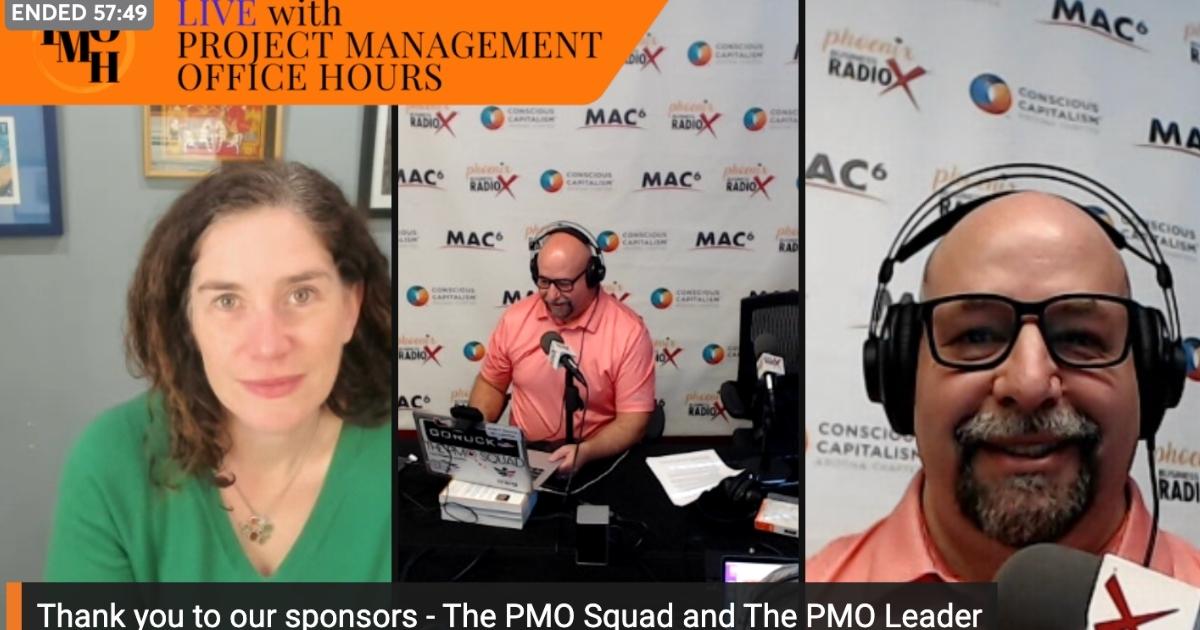
In this episode of Project Management Office Hours, Annmarie Curley and PMO Joe discussed how a top-down and bottom-up approach is necessary to bridge the strategy-execution gap and establish environments where teams can be successful without burning out.

Annmarie shares how teams spend so much of their time reacting and firefighting that they are unable to devote any time to learning new tools or methods to change how they operate. “It becomes a vicious cycle that are nearly impossible to break out of, and results in team members who are stressed, overworked, and overwhelmed.”- Annmarie Curley

One major contributor Annmarie mentioned is the type of chaotic environment, she calls “duct tape leadership” — the patched-together systems that help teams meet short-term goals, at the cost of long-term stability and sustainability. The antidote to duct tape is intentional leadership– taking time to establish the conditions your team needs to succeed.

Organizations achieve their mission through projects — and the work that project teams accomplish is pivotal to the organization’s success. The project manager’s ability to lead the team and transformation is a critical element. However executive leaders also have a responsibility to set the stage for the team’s success, and to ensure that the work being executed aligns with the strategic priorities.

“Revisiting the Agile Manifesto led me to think about the Project Leader’s Manifesto. The work that a project leader does isn’t easy – they often are working under duress, and it can sometimes feel like pushing a boulder up a mountain. However, I firmly believe that to be effective, project managers have to lead rather than manage which is why I call the role project leader rather than project manager.” “Organizations achieve their mission through projects — and the work that project teams accomplish are pivotal to the organization’s success. Project Leader Manifesto focuses on people over process and placing attention on the power skills. ” -Annmarie

Connect with Annmarie:
Website: https://lnkd.in/enfMJ6XM
LinkedIn: https://lnkd.in/gQUHz4W
Twitter: https://lnkd.in/eFYh56Sp

Thank you to THE PMO SQUAD and The PMO Leader for sponsoring this show.

The PMO Squad is a leading provider of PMO and Project Management services in the US. They assist clients building and improving PMOs, provide Project Management Consulting services, deliver custom Project Management Training and provide Project Management staffing services.

Learn more about The PMO Squad – www.thepmosquad.com

Where do PMO Leaders go for Information, Learning, Networking and Services? The PMO Leader community has “Everything You Need to Become a Great PMO Leader”. One PMO World, One Community!

Learn more about The PMO Leader – www.thepmoleader.com

NewgrangeITConsulting

Annmarie Curley launched Newgrange IT Consulting, a management consulting business, in 2010 to help businesses accelerate their mission by effectively executing their strategy.

Her vision is that executives and their teams are aligned in real-time as strategy is being planned and executed, that leaders throughout the organization are empowered to develop strong, collaborative teams and establish environments where those teams can succeed, and that leaders and teams have the necessary project management and leadership skills to succeed in their role.

The Newgrange team assists clients by leading and supporting teams through projects to realize strategic objectives while optimizing the ROI from the investment, by galvanizing Project Leaders to elevate their performance leading their teams and projects to improve outcomes and accelerate results and by developing highly collaborative teams, creating environments where they can successfully execute their organization’s mission.

Annmarie-Curley-Project-Management-Office-HoursAnnmarie Curley has over 20 years’ experience managing global teams and complex projects across financial, healthcare, Higher Education, and IT consulting services sectors. She has a track record of focusing on high-risk areas of a project or program, realigning projects that need rescuing, and delivering improved processes and technical solutions that result in tangible business value.

She is passionate about helping clients develop a culture of delivering the right results for their organization by aligning their strategy with execution and building strong collaborative teams to ensure that the initiative will succeed. She empowers leaders to step into their own leadership potential and establish environments where their teams can be successful through her project leadership and coaching programs.

Originally from Ireland, Annmarie moved to Vermont in 2006 after spending 10 years in New York City. She enjoys all the outdoors activities that Vermont has to offer and can be found on the ski slopes with her family in the winter and hiking and boating on the lake in the summer!

Annmarie has a BSc in Applied Computing from University of Ulster, Ireland. She holds a Project Management Professional (PMP) credential from the Project Management Institute, the SAFe Scrum Master (SSM) credential and Leading Safe Agilist (SA) credential from Scaled Agile.

ABOUT PROJECT MANAGEMENT OFFICE HOURS SERIES

Project Management Office Hours is intended to provide Project Management professionals a place to drop in and discuss Success Stories, Best Practices, and Lessons Learned.  Project Management Consultant Joy Gumz has shared with us, “Operations keep the lights on, strategy provides the light at the end of the tunnel, but project management is the train engine that moves the organization forward.”

Each of us has a unique story to tell, but collectively we share a message that organizations who embrace Project Management Best Practices perform better than those which don’t.  Organizations which align Projects to Strategy perform better.  Organizations with Engage Executive Sponsors deliver better results.  Organizations which measure Project Management performance outperform those which don’t.

During our Project Management Office Hours, we hear directly from Industry leaders how to make an impact in our profession. How we, collectively, will Advance Project Management Best Practices, One Listener at a time! 

ABOUT YOUR HOST

Joe Pusz started THE PMO SQUAD to bring real world PMO Leadership experience to the consulting space and to advocate for Project Management through his blog PMOJOE.com. The old saying is “Do what you love and you’ll never work a day in your life.” Following this mindset Joe left Corporate America in 2013 to start THE PMO SQUAD and work with fellow Natural Born Project Managers to advance Project Management Best Practices.

ABOUT OUR SPONSOR

THE PMO SQUAD focuses exclusively on PMO and Project Management consulting. Corporate America is full of Accidental Project Managers running projects who haven’t been trained to be PMs. To help solve this problem THE PMO SQUAD is on the Leading Edge with PMO As a Service. PMO As a Service allows our clients to focus on their respective core competencies while THE PMO SQUAD delivers Project Management expertise. Contact Joe at 678-591-7868. Follow The PMO Squad on LinkedIn, Twitter and Facebook.

Where do PMO Leaders go for Information, Learning, Networking and Services? The PMO Leader community has “Everything You Need to Become a Great PMO Leader”. One PMO World, One Community! Learn more about The PMO Leader – www.thepmoleader.com

Tagged With: change management, digital transformation, Leadership, project leader, project management, strategy execution

Driving Clarify & Focus: The 12-Week Year

January 18, 2022 by Mike

Gwinnett Studio
Gwinnett Studio
Driving Clarify & Focus: The 12-Week Year
Loading
00:00 /
RSS Feed
Share
Link
Embed

Download file

“Driving Clarity & Focus: The 12-week Year” with guests Dan Isacksen, Trinity’s CFO, and Brian Moran, author of the book “The 12 Week Year”.

Dr. Roger Spoelman of the Baldrige Foundation, and Ben Sawyer from ABOUT Healthcare, facilitate a very insightful discussion regarding how the Loyola University Health System team was able to achieve a $100 million turnaround by applying the principles of the 12-week year in a robust team-oriented effort that overcame the trap of annualized thinking and the many hurdles within a commonly experienced people-process-technology operation in order to achieve breakthrough results. The model is applicable to any strategy execution challenge an organization faces.

Roger Spoelman, DBA, MBA

Roger is a healthcare executive with more than 38 years of industry experience. He most recently served as interim CEO at Trinity Health Regional Systems in New England, Ohio, and Illinois at Loyola University Health System.

His tenure at Trinity Health included leading several hospital mergers, and later as regional executive for the corporation’s Mercy Health operations. He also is founder and executive sponsor of the Trinity Health Innovation Hub. In 2018, Roger oversaw the merger of International Aid Inc. and CURE International Inc., two organizations where he served on the Board of Directors for over a decade. He recently served as the President and CEO for CURE International Inc., which operates eight charitable hospitals in developing nations, and focuses on faith-based care that restores quality of life to pediatric patients with surgically treatable disabilities. Roger was appointed Chair of the BAMF Health board of directors in 2019. He is working closely with the company to achieve their patent-focused mission of bringing intelligence-based precision medicine to the world.

Roger is a co-host of the Baldrige Foundation Leader Dialogue program, and mentors and coaches’ numerous executives and assists organizations and their boards of directors with succession, strategy, and innovation.

Ben Sawyer, MBA, PT, OCS, LBB

Ben Sawyer is an ABOUT executive. He has more than 35 years of industry experience, most recently serving as CEO of SOAR Vision Group, and EVP of Care Logistics.

Ben started his healthcare career in 1985 as a Physical Therapist, focusing on sports medicine and orthopedics, and received his specialist certification as an Orthopedic Clinical Specialist (OCS) in 1997 from the American Board of Physical Therapy Specialties.

After securing his MBA, he moved into hospital administration, overseeing rehab, wellness, cardiac therapy, and occupational medicine services, specializing in team development and performance optimization. This expanded into a system leadership role overseeing performance and quality improvement. During that time Ben achieved his Lean Black Belt certification (LBB)

Ben has a gift for recognizing strategic gaps that can be turned into opportunities. For example, during the COVID-19 crisis he initiated national executive roundtables with the Baldrige Foundation via the Leader Dialogue program to help executives turn the pandemic disruption into an opportunity for improved collaboration and performance towards true Community Health beyond the walls of hospitals and to prioritize and coordinate action and resources.

Brian Moran/Organization

Brian Moran, President and Founder of The 12 Week Year, has 30 years of expertise as a corporate executive, entrepreneur, consultant and coach. His background as a corporate executive combined with his experience as an entrepreneur positions him with a unique skill set to help individuals and organizations grow and prosper.

Brian’s corporate experience includes management and executive positions with UPS, PepsiCo, and Northern Automotive. As an entrepreneur he has personally launched and led successful businesses and been instrumental in the success of many others. In addition, he has consulted for dozens of world-class companies.

Brian is a recognized expert in the field of leadership and execution. His realization that most people don’t lack ideas but struggle with effective implementation led him to the development of The 12 Week Year. In addition to his books, Brian has been published in many of the leading business journals and magazines. He is a sought after speaker, educating and inspiring thousands each year.

Dan Isacksen/Trinity Health

Daniel Isacksen, the Executive VP and Chief Financial Officer (CFO) at Trinity Health, leads all financial functions including financial enterprise development, treasury, financial reporting, payer strategies and revenue excellence, for the system and across the national organization’s Health Ministries (HMs). A strategic-minded and results-driven financial leader with a successful track record, Isacksen has spent the last 25 years serving in Catholic health care, including financial executive positions in other Catholic health systems, academic providers and community health care systems.

Previously, Isacksen served as Executive VP and regional CFO of Loyola Medicine in Maywood, Illinois, one of Trinity Health’s regional HMs. His efforts there contributed to operational improvements and a significant financial turnaround and stabilization of the regional ministry.

Tagged With: 12 week year, about healthcare, baldrige foundation, baldrige leadership, ben sawyer, brian moran, dan isacksen, Healthcare, healthcare challenges, healthcare leadership, leader dialogue, leader dialogue podcast, leader dialogue radio, Leadership, leading people, roger spoelman, trinity health

Know The Mission, Know Yourself and Know Your Team! E86

January 5, 2022 by Karen

Know-The-Mission-Know-Yourself-and-Know-Your-Team-feature
Phoenix Business Radio
Know The Mission, Know Yourself and Know Your Team! E86
Loading
00:00 /
RSS Feed
Share
Link
Embed

Download file

Know-The-Mission-Know-Yourself-and-Know-Your-Team

Know The Mission, Know Yourself and Know Your Team! E86

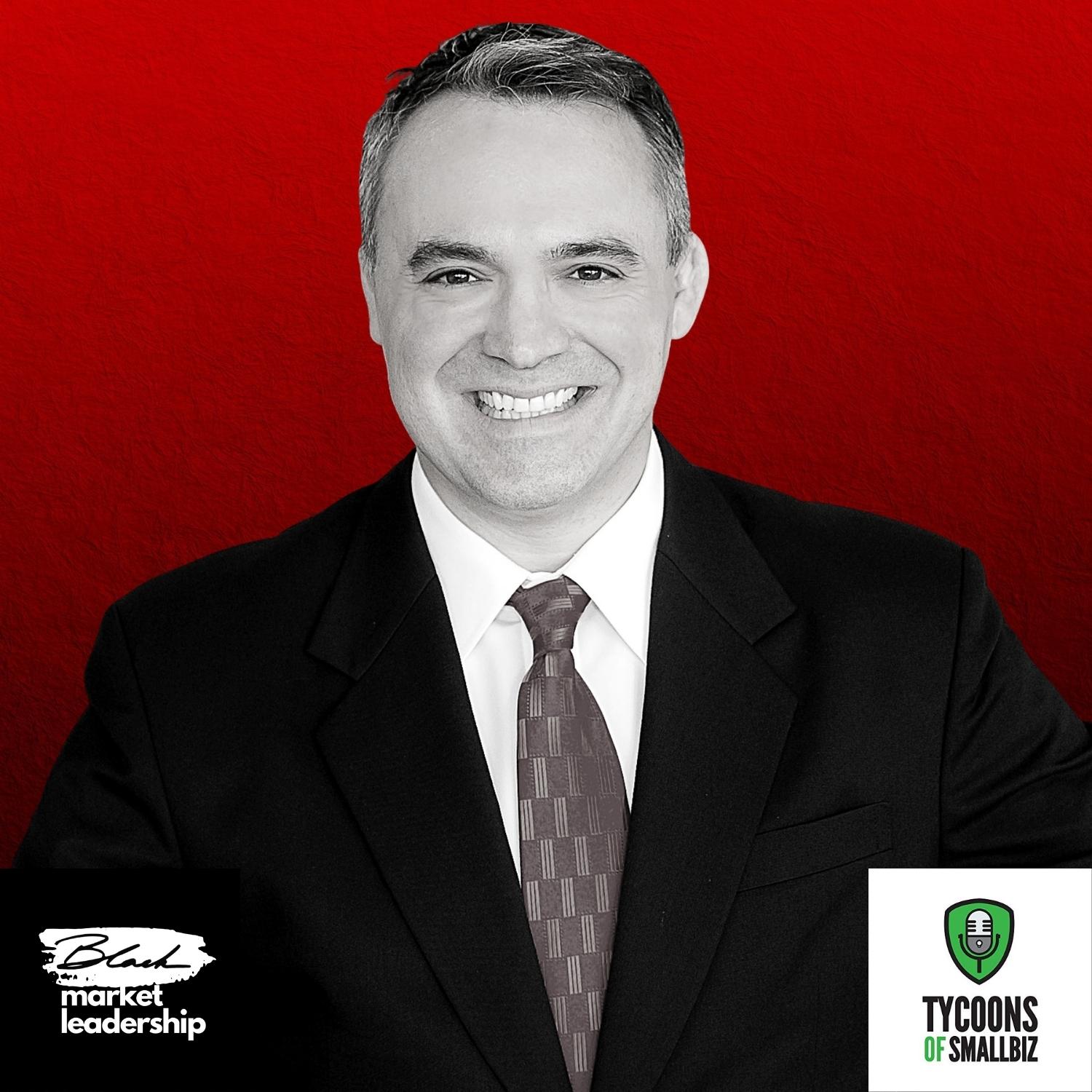
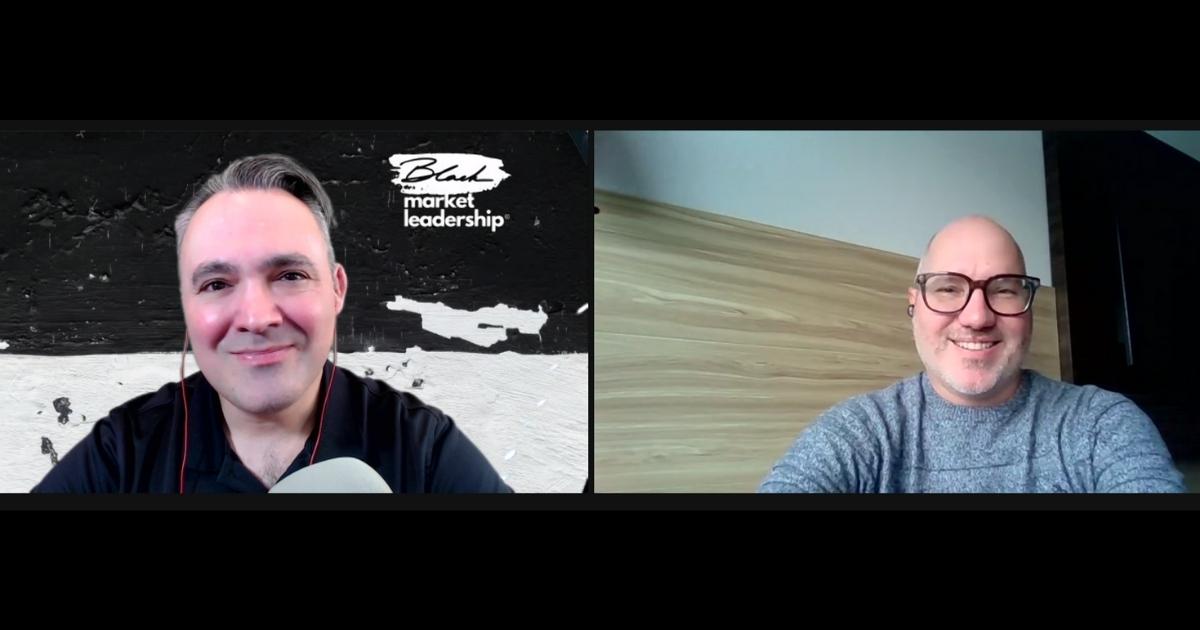
In this episode, host Austin Peterson welcomes guest, Kevin Black , Principal and Founder of Black Market Leadership.

Kevin Black is a veteran US Army officer, leadership expert and strategic advisor. He works with clients helping to develop leaders and align team across a variety of industries, from start-ups to public companies, such as LifeLock and Medtronic. Overall, he’s helped to create over $500M of value.

Kevin combines computer wargaming simulations with behavioral profiling. A veteran of the Forbes Coaches Council, he writes on issues dealing with leadership and strategy. He is the Director of the Phoenix Chapter of the COO Forum, host of the Black Market Leadership podcast, and author of the upcoming book, “Strength Through Chaos.”

Black-Market-Leadership-logo

Kevin-Black-Tycoons-of-Small-BizKevin Black, MA, MBA, is a veteran US Army officer turned nationally recognized leadership expert, executive coach, and strategy advisor who has helped create over $500 million dollars of value. Past clients include LifeLock, Medtronic, and McKesson.

Not satisfied with how leaders are developed today, Kevin created an online learning platform, Black Market Leadership. The subscription-based site provides Fortune 500 educational resources and certifications to leaders who want to be disruptive in their industries.

Kevin can help you:

  • Rapidly improve leader and team performance
  • Improve chances for promotion
  • Increase communication effectiveness
  • Enable team and organization flexibility
  • Plan operationally and strategically
  • Design online courses and curriculum

Connect with Kevin on LinkedIn and Facebook.

About the Show

Tycoons of Small Biz spotlights the true backbone of the American economy, the true tycoons of business in America… the owners, founders and CEO’s of small businesses. Join hosts,  Austin L Peterson, Landon Mance and the featured tycoons LIVE every Tuesday at 1 pm, right here on Business RadioX and your favorite podcast platform.

About Your Hosts

Autsin-Peterson-on-Phoenix-Business-RadioX

Austin Peterson is a Comprehensive Financial Planner and co-founder of Backbone Planning Partners in Scottsdale, AZ. Austin is a registered rep and investment advisor representative with Lincoln Financial Advisors. Prior to joining Lincoln Financial Advisors, Austin worked in a variety of roles in the financial services industry.

He began his career in financial services in the year 2000 as a personal financial advisor with Independent Capital Management in Santa Ana, CA. Austin then joined Pacific Life Insurance Company as an internal wholesaler for their variable annuity and mutual fund products. After Pacific Life, Austin formed his own financial planning company in Southern California that he built and ran for 6 years and eventually sold when he moved his family to Salt Lake City to pursue his MBA.

After he completed his MBA, Austin joined Crump Life Insurance where he filled a couple of different sales roles and eventually a management role throughout the five years he was with Crump. Most recently before joining Lincoln Financial Advisors in February 2015, Austin spent 2 years as a life insurance field wholesaler with Symetra Life Insurance Company. Austin is a Certified Financial Planner Professional and Chartered Life Underwriter. In 2021, Austin became a Certified Business Exit Consultant® (CBEC®) to help entrepreneurs plan to exit their businesses.

Austin and his wife of 23 years, Robin, have two children, AJ (21) and Ella (18) and they reside in Gilbert, Arizona. He is a graduate of California State University, Fullerton with a Bachelor of Arts in French and of Brigham Young University’s Marriott School of Management with a Master of Business Administration with an emphasis in sales and entrepreneurship.backbone-New-Logo

Connect with Austin on LinkedIn, Facebook, Twitter, and Instagram.

LandonHeadshot01

Landon Mance is a Financial Planner and co-founder of Backbone Planning Partners out of Las Vegas, Nevada. He rebranded his practice in 2020 to focus on serving small business owners after operating as Mance Wealth Management since 2015 when Landon broke off from a major bank and started his own “shop.”

Landon comes from a family of successful entrepreneurs and has a passion and excitement for serving the business community. This passion is what brought about the growth of Backbone Planning Partners to help business owners and their families. At Backbone Planning, we believe small business owners’ personal and business goals are intertwined, so we work with our clients to design a financial plan to support all aspects of their lives.

In 2019, Landon obtained the Certified Exit Planning Advisor (CEPA) designation through the Exit Planning Institute. With this certification, Backbone Planning Partners assists business owners through an ownership transition while focusing on a positive outcome for their employees and meeting the business owner’s goals. Landon is also a member of the Business Intelligence Institute (BII) which is a collaborative group that shares tools, resources and personnel, and offers advanced level training and technical support to specifically serve business owners. In 2021, Landon became a Certified Business Exit Consultant® (CBEC®) to help entrepreneurs plan to exit their businesses by counseling owners about exit options, estimating the value of the business, preparing the business for exit and tax considerations.

Landon enjoys spending time with his beautiful wife, stepson, and new baby twins. He grew up in sunny San Diego and loves visiting his family, playing a round of golf with friends, and many other outdoor activities. Landon tries to make a difference in the lives of children in Las Vegas as a part of the leadership team for a local non-profit. He regularly visits the children that we work with to remind himself of why it’s so important to, “be the change that you wish to see in the world.”

Landon received his B.S. from California State University Long Beach in business marketing and gets the rest of his education through the school of hard knocks via his business owner clients.

Connect with Landon on LinkedIn.

Austin Peterson and Landon Mance are registered representatives of Lincoln Financial Advisors Corp. Securities and investment advisory services offered through Lincoln Financial Advisors Corp., a broker/dealer (member SIPC) and registered investment advisor. Insurance offered through Lincoln affiliates and other fine companies. Backbone Planning Partners is a marketing name for registered representatives of Lincoln Financial Advisors. CRN-4043278-122721

Lincoln Financial Advisors Corp. and its representatives do not provide legal or tax advice. You may want to consult a legal or tax advisor regarding any legal or tax information as it relates to your personal circumstances.

The content presented is for informational and educational purposes. The information covered and posted are views and opinions of the guests and not necessarily those of Lincoln Financial Advisors Corp.

Business RadioX® is a separate entity not affiliated with Lincoln Financial Advisors Corp.

Tagged With: Black Market Leadership, Disruption, executive coaching, growth companies, Leadership

Stabilizing Revenue and Operations in a Challenging Environment

January 4, 2022 by Mike

Gwinnett Studio
Gwinnett Studio
Stabilizing Revenue and Operations in a Challenging Environment
Loading
00:00 /
RSS Feed
Share
Link
Embed

Download file

Every health system leader has unprecedented executive management challenges facing their organization in the wake of the pandemic. During a recent virtual executive roundtable session hosted by the Healthcare Management Academy (HMA), which included the Baldrige Foundation co-hosts Dr. Roger Spoelman and Dr. Charles Peck as panelists, the discussion clarified the top challenges to overcome for health systems to “future proof” their organizations.

On this episode of “Leader Dialogue Radio“, the panel is joined by highly-accomplished senior physician executive Scott Wolf to discuss how hospital systems can stabilize revenue and operations during today’s challenging environment.

Charles (Chuck) Peck, MD, FACS

Charles (Chuck) Peck is an internist and rheumatologist with more than 35 years of healthcare experience as a clinician, scientist, medical school faculty member, administrator, medical director, CEO, and partner in the global healthcare advisory company Guidehouse.

Chuck’s most recent projects include a $108M financial turnaround of a $2B integrated health system in the northeast leading to their affiliation with a leading academic health system. He was a member of President Joe Biden’s Health and Human Services transition team. Prior to joining Guidehouse, Chuck served as CEO of Piedmont Athens Regional Health System, on the board of Vizient Southern States, partner at a global healthcare consulting firm responsible for the clinical operations practice; CEO of a 150 physician group multi-specialty practice; president of the southeast and northeast regions of a large national health insurance carrier; chief medical officer of a start-up retail health clinic operator; chief medical officer/chief operations officer of a national disease management company; and CEO of an ambulatory surgery center and physician services company.

Chuck is a co-host of the Baldrige Foundation Leader Dialogue program and provides mentoring and thought leadership insights to numerous organizations and leaders across the country on a variety of operational, financial, and leadership topics.

Dr. Darin Vercillo, MD

Darin Vercillo co-founded ABOUT, drawing upon his expertise in developing and implementing medical information systems specifically designed to manage complex patient needs, medical education, and faculty and staff logistics. Darin provides clinical oversite and direction across all facets of ABOUT.

A board-certified hospitalist practicing in the Salt Lake City area, Darin also served as a clinical advisor and technical developer at the University of Utah Health Sciences Center. Previously to his work at ABOUT, Darin served as a physician knowledge engineer and interim Chief Medical Officer at TheraDoc.

Ben Sawyer, MBA, PT, OCS, LBB
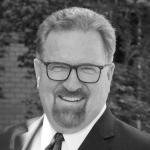
Ben Sawyer is an ABOUT executive. He has more than 35 years of industry experience, most recently serving as CEO of SOAR Vision Group, and EVP of Care Logistics.

Ben started his healthcare career in 1985 as a Physical Therapist, focusing on sports medicine and orthopedics, and received his specialist certification as an Orthopedic Clinical Specialist (OCS) in 1997 from the American Board of Physical Therapy Specialties.

After securing his MBA, he moved into hospital administration, overseeing rehab, wellness, cardiac therapy, and occupational medicine services, specializing in team development and performance optimization. This expanded into a system leadership role overseeing performance and quality improvement. During that time Ben achieved his Lean Black Belt certification (LBB)

Ben has a gift for recognizing strategic gaps that can be turned into opportunities. For example, during the COVID-19 crisis he initiated national executive roundtables with the Baldrige Foundation via the Leader Dialogue program to help executives turn the pandemic disruption into an opportunity for improved collaboration and performance towards true Community Health beyond the walls of hospitals and to prioritize and coordinate action and resources.

Scott Wolf, DO, MPH, FACP

Scott is a dynamic and highly-accomplished senior physician executive with extensive achievements leading strategic growth and service delivery initiatives as President, CEO, CMO, COO, and earlier medical director and practitioner roles. Scott exhibits cross-functional knowledge to strategic planning and process optimization, leveraging extensive healthcare industry expertise developed in leadership and consultative/advisory roles at health systems and Fortune 100 pharmaceutical and insurance companies. He has direct healthcare and vendor experience in strategic, financial, operational and quality improvements, as well as community and board engagement. He has successfully managed organizations to financial and operational performance targets, leading organic growth and M&A initiatives.

Tagged With: about healthcare, baldrige foundation, baldrige leadership, ben sawyer, charles peck, chuck peck, darin vercillo, Guidehouse, Healthcare, healthcare challenges, healthcare leadership, hospital operations, hospital revenue, leader dialogue, leader dialogue podcast, leader dialogue radio, Leadership, leading people, scott wolf

How To Lead When You’re Not In Charge

December 21, 2021 by Mike

Gwinnett Studio
Gwinnett Studio
How To Lead When You're Not In Charge
Loading
00:00 /
RSS Feed
Share
Link
Embed

Download file

Every health system leader has unprecedented executive management challenges facing their organization in the wake of the pandemic. During a recent virtual executive roundtable session hosted by the Healthcare Management Academy (HMA), which included the Baldrige Foundation co-hosts Dr. Roger Spoelman and Dr. Charles Peck as panelists, the discussion clarified the top challenges to overcome for health systems to “future proof” their organizations.

On this episode of “Leader Dialogue Radio“, the panel is joined by pastor, speaker and author Clay Scroggins to discuss his book “How To Lead When You’re Not In Charge“ and how to leverage influence when one lacks authority, such as situations that may face leaders and providers in these disruptive COVID times.

Roger Spoelman, DBA, MBA

Roger is a healthcare executive with more than 38 years of industry experience. He most recently served as interim CEO at Trinity Health Regional Systems in New England, Ohio, and Illinois at Loyola University Health System.

His tenure at Trinity Health included leading several hospital mergers, and later as regional executive for the corporation’s Mercy Health operations. He also is founder and executive sponsor of the Trinity Health Innovation Hub. In 2018, Roger oversaw the merger of International Aid Inc. and CURE International Inc., two organizations where he served on the Board of Directors for over a decade. He recently served as the President and CEO for CURE International Inc., which operates eight charitable hospitals in developing nations, and focuses on faith-based care that restores quality of life to pediatric patients with surgically treatable disabilities. Roger was appointed Chair of the BAMF Health board of directors in 2019. He is working closely with the company to achieve their patent-focused mission of bringing intelligence-based precision medicine to the world.

Roger is a co-host of the Baldrige Foundation Leader Dialogue program, and mentors and coaches’ numerous executives and assists organizations and their boards of directors with succession, strategy, and innovation.

Charles (Chuck) Peck, MD, FACS

Charles (Chuck) Peck is an internist and rheumatologist with more than 35 years of healthcare experience as a clinician, scientist, medical school faculty member, administrator, medical director, CEO, and partner in the global healthcare advisory company Guidehouse.

Chuck’s most recent projects include a $108M financial turnaround of a $2B integrated health system in the northeast leading to their affiliation with a leading academic health system. He was a member of President Joe Biden’s Health and Human Services transition team. Prior to joining Guidehouse, Chuck served as CEO of Piedmont Athens Regional Health System, on the board of Vizient Southern States, partner at a global healthcare consulting firm responsible for the clinical operations practice; CEO of a 150 physician group multi-specialty practice; president of the southeast and northeast regions of a large national health insurance carrier; chief medical officer of a start-up retail health clinic operator; chief medical officer/chief operations officer of a national disease management company; and CEO of an ambulatory surgery center and physician services company.

Chuck is a co-host of the Baldrige Foundation Leader Dialogue program and provides mentoring and thought leadership insights to numerous organizations and leaders across the country on a variety of operational, financial, and leadership topics.

Dr. Darin Vercillo, MD

Darin Vercillo co-founded ABOUT, drawing upon his expertise in developing and implementing medical information systems specifically designed to manage complex patient needs, medical education, and faculty and staff logistics. Darin provides clinical oversite and direction across all facets of ABOUT.

A board-certified hospitalist practicing in the Salt Lake City area, Darin also served as a clinical advisor and technical developer at the University of Utah Health Sciences Center. Previously to his work at ABOUT, Darin served as a physician knowledge engineer and interim Chief Medical Officer at TheraDoc.

Ben Sawyer, MBA, PT, OCS, LBB

Ben Sawyer is an ABOUT executive. He has more than 35 years of industry experience, most recently serving as CEO of SOAR Vision Group, and EVP of Care Logistics.

Ben started his healthcare career in 1985 as a Physical Therapist, focusing on sports medicine and orthopedics, and received his specialist certification as an Orthopedic Clinical Specialist (OCS) in 1997 from the American Board of Physical Therapy Specialties.

After securing his MBA, he moved into hospital administration, overseeing rehab, wellness, cardiac therapy, and occupational medicine services, specializing in team development and performance optimization. This expanded into a system leadership role overseeing performance and quality improvement. During that time Ben achieved his Lean Black Belt certification (LBB)

Ben has a gift for recognizing strategic gaps that can be turned into opportunities. For example, during the COVID-19 crisis he initiated national executive roundtables with the Baldrige Foundation via the Leader Dialogue program to help executives turn the pandemic disruption into an opportunity for improved collaboration and performance towards true Community Health beyond the walls of hospitals and to prioritize and coordinate action and resources.

Clay Scroggins/Pastor, Speaker and Author

Clay Scroggins helps emerging leaders become better people and better employees. After writing a few modestly successful leadership books and working his way through many organizational levels, Clay learned a few things about the challenge of authority deprivation. The good news is that he found a lot of hope for the “not in charge” leaders out there in the world.


Tagged With: about healthcare, baldrige foundation, baldrige leadership, ben sawyer, charles peck, chuck peck, clay scroggins, darin vercillo, Guidehouse, Healthcare, healthcare challenges, healthcare leadership, how to lead when you're not in charge, leader dialogue, leader dialogue podcast, leader dialogue radio, Leadership, leading people, roger spoelman

Rajesh Tedla with VRT Management Group

December 20, 2021 by Jacob Lapera

Rajesh-Tedla-VRT-Management-Group
Coach The Coach
Rajesh Tedla with VRT Management Group
Loading
00:00 /
RSS Feed
Share
Link
Embed

Download file

Rajesh-Tedla-VRT-Management-GroupRajesh Tedla is CEO & Chief Transformation Officer, VRT Management Group, LLC.  Described as “personable, insightful, effective, motivational and results-oriented” by his clients, Rajesh (Raj) Tedla offers wisdom, experience, and proven processes to move executives, leaders, entrepreneurs, and individuals to heightened awareness and effectiveness.

Raj respectfully provokes and partners with his clients to help each define and develop authentic, strengths-based success. Since 1990, he has coached and trained more than 11,700 senior leaders and executives from GE, Diageo Group of Companies, DELL, IBM, Microsoft, AI Engineers, Sun Microsystems, Bank of America, Accenture, Deloitte, United Health, Pepsi, Avon, KPMG, Laticrete, iTi, ITC, Ash Brokerage, MedPro, Princeton Insurance, Jersey City Medical Center and many more. Raj is an international leader who has traveled extensively to train executives and managers in 38 countries.

Raj’s expertise include leadership and organizational development, executive coaching, marketing, six sigma, Lean, and customer insights. He has researched, written, trained, and consulted extensively within these disciplines, as well as designed several high-impact programs, including:

  • EGOS: Entrepreneur Growth Operating System™ – A unique program designed to develop the next generation of entrepreneurs and businesses who successfully transform their people and businesses for profitable growth.
  • Executive Leadership Team (ELT) Coaching: A critical coaching program to transform CEO/Business owner and his/her C Suite executive leaders reach their full growth potential with tangible results and measurable effectiveness.
  • Executive Excellence Coaching: a critical coaching program to transform C Suite, executive leaders, and managers reach their full potential one leader at a time.
    Corporate Growth Alliance: a “next-generation” corporate leadership development program.
  • Business Growth Alliance: a transformation process to help entrepreneurs achieve breakthrough results.
  • Integrated Problem Solving: an innovative problem-solving method to help companies deliver faster, more successful business results.
  • LSS 4.0TM: a dynamic methodology to help companies harness the power of emotional intelligence and analytical tools to solve complex business problems.
  • Leadership Development for Human Resources (LDHR): an innovative program to develop future strategic HR leaders

Raj’s passion and focus are on transforming small and medium businesses and their executives who want to take their business and their lives to the next level and has been actively working with business leaders and clients across 28 countries. His current focus areas are:

1. Business Growth Aliance™ – BGA™ An exclusive program to help start-ups and micro-businesses with less than four employees.
2. Corporate Growth Aliance™ – CGA™ An exclusive program to help small businesses with 34 employees or less.
3. Entrepreneurial Growth Operating System™ (EGOS™) – An exclusive program to help small and medium businesses with employees between 35 and 500.

Raj brings over 32 years of outstanding experience and expertise to everything he does. Before founding VRT Management Group, LLC, he was senior vice president, marketing/growth leader, Capital Markets, GE Capital. In his twelve-plus years with GE, he created, led, and implemented.

Connect with Raj on LinkedIn and Facebook.

What You’ll Learn in This Episode

  • SMB Businesses – Strategic planning is a critical step for survival and scaling your small and medium business.
  • The 5 critical strategy steps that will help you to make 2022 an outstanding business growth year

This transcript is machine transcribed by Sonix

TRANSCRIPT

Intro: [00:00:02] Broadcasting live from the Business RadioX Studios in Atlanta, Georgia. It’s time for Coach the Coach radio brought to you by the Business RadioX Ambassador Program, the no cost business development strategy for coaches who want to spend more time serving local business clients and less time selling them. Go to brxambassador.com To learn more. Now, here’s your host.

Lee Kantor: [00:00:33] Lee Kantor here, another episode of Coach the Coach Radio, and this is going to be a fun one today on the show, we have Rajesh TDA with VRT Management Group. Welcome, Rajesh.

Rajesh Tedla: [00:00:44] Thank you, Lee.

Lee Kantor: [00:00:45] I am so excited to learn what you’re up to. Tell us a little bit about VRT. How you serving, folks?

Rajesh Tedla: [00:00:52] So we have the management group really predominantly serve small and medium sized companies. So anywhere from one employee to five hundred employees, that is a sweet spot. We have been serving them for the last approximately 14 years

Lee Kantor: [00:01:07] And then we have what kind of work are you doing with those small to midsize businesses?

Rajesh Tedla: [00:01:12] So we predominantly do three things for them. One is strategy transformation. One is people transformation and one is process transformation.

Lee Kantor: [00:01:23] And then how did you get into this line of work, what’s your back story? What makes you good at that?

Rajesh Tedla: [00:01:27] So I basically come from predominantly a very big large Fortune 10 company that is where I spent a lot of my time. I come with a very, very varied background. I come with a mechanical engineering bachelor’s degree, master’s in industrial engineering and an MBA in strategy and finance. And I have worked with several different manufacturing and capital businesses where I have quite a lot of strengths. And the interesting term was when I was with Jim, we had a program where we were helping small and medium sized companies as mentors. This was an initiative way back in nineteen ninety nine by the Vice President Al Gore. And that is where I became very fascinated with the small and medium sized businesses. The first company I worked with in way back in 2001, in less than a few months, we could take a company which was losing money for three years and made them a profit of one million. And that was a huge turning point where I said, man, we have a lot of skills that we have learned which are missing in the small and medium sized companies. And that was the turning point when I started thinking about it. And eventually in 2008, I went back and started my full time management business.

Lee Kantor: [00:02:43] Now how? What types of things transfer from a large enterprise like a GE to a small business? I mean, is it kind of the philosophy and foundational core values? Is that what transfers or or because the tactics can’t really, I wouldn’t think, transfer as well. So how do you kind of attack it coming from that large enterprise background to a kind of a smaller micro business?

Rajesh Tedla: [00:03:10] So it’s a very, very interesting question. If you go back and look at it, the systems, the processes, the knowledge, everything is very well built for the large companies and they need to be somebody who can take those things, distill them into simple things and really go back and bring it to the small businesses. And the part of the small business is, even if you look at the small business starting with one person all the way to 500 employees, they go through seven different distinct stages of growth within that 500 employees by the time. And there are certain processes and stuff which I leverage from the big companies and then applied some to stage one, applied to stage two, some of like the stage three. And that is the expertize that got distilled to really help small and medium sized companies. Let me give you one example. Sure. And stage two company, basically, they have between 11 and 20 employees. And it is still focused on the business owner or the advocate of the status of the company. But the one big thing is if he or she doesn’t identify two or three key people to start developing and start delegating things once they get into the 30 to 35 employees, they get into trouble. And that is one thing I learned, so. Stage two or what I’m working with when they have between 11 to 20 employees. The biggest thing I advise them is, Hey, have you identified one or two critical people whom you can start delegating some work now?

Lee Kantor: [00:04:39] Right. And that’s a great learning that you were able to pick up. And then, like you say, distill it down into something actionable for for that stage to company. Now, at the heart of most businesses and probably all of the businesses you work with is to have some sort of strategic planning to make sure that they are aiming at a true north that makes sense for them culturally and what their, you know, so their expectations are so they know when they get there, right? So how do you how do you help them kind of put on a strategic planning hat where a lot of people are just kind of immersed in doing the work and the strategy part really isn’t at the fore.

Rajesh Tedla: [00:05:22] So if you go back and look at it, strategic planning can be as complicated with the big companies. It goes on for months and there are several pages to a small business where it can be a simply a one page plan. And that is the difference. There are some wonderful, wonderful one page strategic plans available for small business to take. All but part of the piece of it is there are about five critical elements they need to about every small business in the owner’s mind. They feel like they can go back and serve it. Yes, the product might be required by most of the customers across. But when you are a growing company, you need to be really focused. And the first piece I tell people is focus on the geographic area where your customers. Like, I’m a coach, I can serve customers across anywhere, but do I have the resources to go back and market and communicate with the customers across the. No, I cannot do that, so I need to identify where I can really go deeper and work with the customers, and that’s who’s my ideal customer because coaching is something I can serve a one person business or a fortune. But I really have decided and I’m going to work with small and medium sized companies. Up to five hundred employees, 90 percent of my revenue comes from companies within.

Rajesh Tedla: [00:06:44] And if I take 60 percent, it comes from employees with about thirty five employees, two hundred employees. So I have targeted that customer segment because I can bring the most value to. So every single business should really look at their customer base and try to narrow that to that point. That is the second piece of it from a strategy perspective. And if you look at the products and services, any startup, I would say, should not offer more than maybe two at the most three sources. Because that way, they can be really good at it. They can really serve their customers very well and become excellent in what they. And the third piece of it is how do you reach them? You need to have a consistent way of communicating with your customers. We are almost like the social media plays a big role right now, but if you are not consistent in social media that it becomes very difficult for them to do so, they need to be consistently identifying one two three ways of communicating with their customers and consistently. And the last two aspects of their strategy is what Mr. And then the brand bonds in the value proposition, what is the value you can expect your customers to receive from? Like, if you go back and an example would be Cuba, one of the biggest things when you think of Cuba is convenience.

Rajesh Tedla: [00:08:06] And when you look at the brand promise, the biggest part of it, you think of it, let’s say FedEx. If you think of FedEx, what you think of next year, if you think of GEICO, spend 15 minutes and basically you would say $15. So these are the kind of things the small businesses need to go back and really understand and build their plan around. If you start looking at these five things, then they get a real big clarity around who they are and what their businesses. And then they move into the next part of it is what are my 12 months in the next 12 months? What are the specific two or three goals that I need to accomplish? And then to go back and put all of the ideas efforts into making sure those three or two boats are, if you have more than three to four goals or five goals at the MAX, you are spread so thin that it becomes very difficult for them to go back and they would not accomplish anything. So those are a couple of ideas from a strategy point I always tell people to go back and focus on.

Lee Kantor: [00:09:12] Now, you and one of those points you brought up the importance of kind of owning your backyard. I don’t think you said it in those terms, but that’s what I heard you say. And and this show, we deal with a lot of coaches and this is we’re trying to share a lot of information with coaches out there, other coaches to be better. And and I found a lot of coaches think the world is their oyster. So, you know, any client can come from anywhere. And what I’m hearing you say that it’s maybe focusing on an area that you know, people in real life and then have relationships with and you can kind of have coffee with and get to know and then maybe try to start selling from there and then work your way out from that rather than take on the world and compete with every other coach on the planet as a competitor.

Rajesh Tedla: [00:10:06] That is exactly correct, at least in the initial stages, until you go back and get your foothold, it is always easier to work with people in a specific geographic location. And there is one caveat I would like to add is basically because of these social platforms like LinkedIn, especially LinkedIn, that is where I work. And if you have a good followers and people really trust you and believe in you, that that can be one place where you can go back and part because you’re already having your connections. And geographically, they might be dispersed, but you still have a focus and a way to communicate with them, so that can be the other.

Lee Kantor: [00:10:47] Now, I think this goes a line in alignment with the philosophy of kind of rather than be a jack of all trades, be a go to resource in one area and be kind of known for the being the person that is an expert in a niche rather than, oh, I’m just kind of a general purpose all around. Great consultant or coach.

Rajesh Tedla: [00:11:11] Yes, that is very true, if you look at it, I focus on three things, and that is what I have been doing. When I started my business in 2008, I had almost like 15 services I put off. But as I became learning and I became smarter about it, I have three things strategy, transformation, people transformation and process transformation. And when that is something which we are very, very good at and we can deliver that.

Lee Kantor: [00:11:35] And then when you do that, you get a depth of knowledge in that area that it’s hard to compete with you because you’ve seen so many cases and seen so many kind of issues that people have dealt with it. You truly do become an expert. You truly are able to solve people’s problems faster than if they were to do it themselves or read a book or just have a kind of a generic coach help them. You have depth of knowledge in that space. So that makes you an expert in a go to resource. That’s a better positioning.

Rajesh Tedla: [00:12:04] I think you are 100 percent right. That is exactly why I have so much referral business coming to me now and because people are seeing the results and they really love what I do with them and they go back and send in their friends, their referral network.

Lee Kantor: [00:12:20] So and that’s counterintuitive to a lot of people. They think like, I have to be available for everybody. But when you’re available for everybody, you’re really available for nobody because nobody thinks of you when that specific pain occurs.

Rajesh Tedla: [00:12:34] Exactly, exactly. Very, very valid point. Basically, I would reinforce what you just said is basically become very good at what you do. One, two three at the most. And then really, really become that go-to person, just like what we was addressing. And your business will take off.

Lee Kantor: [00:12:54] Now, can you share a story of maybe you worked with somebody don’t name the name of the company or the individual, but explain what the challenge is that they were having. They brought you in and how you were able to kind of help them overcome that and get to a new level.

Rajesh Tedla: [00:13:08] So basically, I will talk about one of the customer, basically they were approximately a million dollar company when I met them in 2000. Said currently, they are close to 18 billion dollars. I just wanted to show the growth of the top. And in the process, they were twenty seven years in business when I met them first and the founder was pretty close to retiring and basically she wanted to bring the son into the business. So I went there to help them transition the ownership. And as soon as the ownership of that changed, it took us two years and that slowly now I had to implement the strategy piece of it first, then help him develop his people. Number two, because he was a growing company and there were people being added to the system. And third, as they were then doing to 40 50 employees, we had to go back and double up and help them with the process transportation. So each one of those things took us approximately 12 years to go back and help them get. I’m not saying that this is a long example of where consistently companies grow. And the reason I share this example is there were approximately 12 employees when we started. They are pretty close to about 90 employees. So there’s a lot of change that happens through the different stages of the growth. And that’s the reason why I wanted to share this example. They’re very, very profitable. And right now in the next three year plan, they want to be around twenty five million dollars. So that is how aggressively they are going and that’s making some changes.

Lee Kantor: [00:14:44] And if somebody if somebody wants to learn more about you or get on your calendar or speak to somebody on your team, is there a website for your practice?

Rajesh Tedla: [00:14:54] Yes. Basically, they can go to W WW Egos Egos LLC dot com.

Lee Kantor: [00:15:02] And then that talks about your operating system that you implement when you work.

Rajesh Tedla: [00:15:06] Yes. If they want, they can definitely send me an email to Raj at VRT Mine dot com. And one of the things I offer all the business owners is I offer them a one hour complimentary session to help them understand where they are. They get a lot of value from the session, and if they’re serious about their business and if they want to grow, just send an email. They can go back and use the reference of this radio show and just say Strategy Plan. And then definitely I will send them a meeting invite in the calendar and they will get 60 minutes of my time completely complimentary.

Lee Kantor: [00:15:39] Now, before we wrap, is there any one piece of advice you would recommend or some action you would recommend an entrepreneur or small business owner take before the end of the year?

Rajesh Tedla: [00:15:50] So one thing I definitely want them to go back is really reflect on what happened. So let us say they grew their business by five percent or they lost their business by 20 percent. It doesn’t matter. But really, take the time to understand what worked very well for what did not work for them and what are some of the changes things? That is one piece of it from a reflection perspective. And the second piece of it is I really want them to think of two to three major goals. They can go back and verify their success in 2022. So if I have a business, I set up a goal and say by Christmas of 2020, do I need to breach X dollars in sales? I need to reach X number of new customers. I need to serve X number of this. So they need to go back and look at those two or three critical metrics that can be measurable and then do a SWOT analysis. So what are my strengths to accomplish these goals and what are my weaknesses to accomplish this goal? If they identify the goals and do the SWOT analysis, identifying the strengths and weaknesses that would do them a real, real methodology or understanding and seeing if I need to do this, these are my weaknesses. What can I do to overcome those weaknesses, to accomplish them? Once they identify the weaknesses, they can start looking for the resources to really help them and accomplish them. So that is one exercise I tell a lot of people. Identify your goals, do your SWOT analysis, identify your weaknesses and get the resources to go back and overcome your weaknesses. That can be done. If you’re a small business in two to three hours or if you are 200 300 employees, it can be done in a day. Either way, I advise all the entrepreneurs and CEOs to really focus on.

Lee Kantor: [00:17:37] Well, Raj, thank you so much for sharing your story today. One more time on the website

Rajesh Tedla: [00:17:42] Website is W W W E Goes LLC dot com os LLC dot com

Lee Kantor: [00:17:51] Raj. Thank you again for sharing your story. You’re doing important work and we appreciate you.

Rajesh Tedla: [00:17:56] Thank you very much. It was a pleasure joining you and the listeners today.

Lee Kantor: [00:18:00] All right. This is Lee Kantor. We’ll see you next time on Coach the Coach radio.

Tagged With: EGOS: Entrepreneur Growth Operating System™, Leadership, SMB Businesses, strategy, VRT Management Group

Jaime Taets, Keystone Group International

November 9, 2021 by John Ray

Keystone Group International
Minneapolis St. Paul Business Radio
Jaime Taets, Keystone Group International
Loading
00:00 /
RSS Feed
Share
Link
Embed

Download file

Jaime Taets

Jaime Taets, Keystone Group International (Minneapolis-St. Paul Business Radio, Episode 23)

Jaime Taets, CEO and Founder of Keystone Group International, shared valuable insights into what is happening in the current business climate. For the first time ever, Jaime noted in this conversation with host John Ray, four generations are in the workforce, and she offered insights on the youngest workers, Gen Z, which will surprise you.  She also defined what culture really is and a leader’s role in culture, talked about her new book and her podcast, and much more. Minneapolis-St. Paul Business Radio is produced virtually by the Minneapolis St. Paul studio of Business RadioX®.

Keystone Group International

After working in corporate America for over 13 years, our CEO & founder, Jaime Taets wanted to do something more impactful.

During a family vacation to Keystone, South Dakota, Jaime’s stress was at an all-time high. She wasn’t feeling fulfilled and knew there was something more she should be doing. In 2013, she left her corporate job and launched Keystone Group International, with the goal of leveraging her business experience to help entrepreneurial companies grow and thrive.

Building upon that goal, Keystone came to life as a partner that exists to transform the organizations and leaders they work with on every level. It is their purpose, and it is what gets them out of bed each morning.

Keystone will transform the way you work, the way you lead, the way you grow, and the way you succeed. This purpose influenced their core values—and they’re not just cool words on the website. They live and breathe these values every day.

Together, the Keystone team gives companies and individuals who are ready to change the tools and knowledge to achieve more than they thought they could.

Company website | LinkedIn | Facebook | Twitter

Jaime Taets, CEO and Founder of Keystone Group International

Jaime Taets
Jaime Taets, CEO and Founder, Keystone Group International

CEO, public speaker, author, podcast host, and thought leader… in every one of these roles, Jaime Taets helps people reach their potential. She isn’t afraid to have “get real” conversations about the things that often limit people from achieving success. Harnessing her own leadership experiences, she inspires frank and sometimes challenging discussions about the crossroads between high-performance and healthy change.

Jaime TaetsUltimately, her solution-focused insights help people go from stuck to success every day—at work, home, and in their personal lives. Jaime is CEO of Keystone International Group and a keynote speaker.

Jaime is also the host of the Superpower Success Podcast and author of You Are Here, Kickass Inspiration for Navigating Your Journey to Success.

She, her husband, and their four children live in Mound, Minnesota.

LinkedIn

Questions and Topics Discussed in this Episode

  • How are you seeing the business environment evolve over the past couple of years? What trends are you seeing in the business climate?
  • Tell us more about conscious leadership – what does that mean and how does it impact an organization?
  • Culture is something that feels very nebulous and complicated for most business leaders. What is your business’s approach to making it less ambiguous?
  • What are you seeing and what advice would you give to business leaders who are experiencing burnout in their teams and in themselves.
  • If a leader is listening, where do you suggest they start with the topics we discussed today?

Minneapolis-St. Paul Business Radio is hosted by John Ray and produced virtually from the Minneapolis St. Paul studio of Business RadioX® .  You can find the full archive of shows by following this link. The show is available on all the major podcast apps, including Apple Podcasts, Spotify, Google, Amazon, iHeart Radio, Stitcher, TuneIn, and others.

Tagged With: Gen Z, Jaime Taets, John Ray, Keystone Group International, Leadership, Minneapolis St Paul Business Radio, Superpower Success Podcast, You Are Here

The Power of Intention E6

October 13, 2021 by Karen

The-Power-of-Intention-E6-feature
Mind Well
The Power of Intention E6
Loading
00:00 /
RSS Feed
Share
Link
Embed

Download file

The-Power-of-Intention-E6

The Power of Intention E6

On this week’s episode of Mind Well, host Michelle Jones interviews wellness practitioners Carla Reeves and Lara Piu. We discuss showing up for yourself and honoring what’s right for you. We explore the use of writing and intuition to learn the language of what your body, mind and spirit are communicating to you. We also discuss the power of choice and the ability we all have to tune out external voices and tune in to our own internal voice.

Listeners who want to deepen their ability to tune out external voices and tune into internal wisdom will want to tune in to this week’s episode of Mind Well.

CRLogo2Black1

Carla Reeves Coaching offers mentorship, support and tools for leaders who are ready to stop running and start living with intention.

Their programs are designed to empower leaders to break free of outdated patterns and approaches to build strong, healthy mindsets and habits for living a productive, balanced AND fulfilling life.

They offer coaching intensives, programs and partnerships that meet you where you are.

Company Commitment: We live it. | We teach it. | We love it. | We stand by it.

Carla-Reeves-Phoenix-Business-RadioXCarla Reeves is known for her compassionate, direct and truth-telling candor. For over a decade, ambitious leaders have been relying on Carla to call out their blind spots, challenge their thinking and expand their perspective.

Carla believes in ditching the illusion that life will be great “someday” in the future and teaches leaders how to wake up their thinking to create and live a juicy, rich, meaningful everyday life, now.

Carla is a Coach and Trusted Advisor and wholehearted about working with people who are ready to mess with their thinking to ignite their living.

She was born and raised in a sleepy beach town in California and now lives in Arizona on a small farm with cows, chickens and her beloved husband and boys.

Connect with Carla on LinkedIn and Instagram.

AIM: The Analytical Intuition Method is a science based, spiritually inclusive, proven intuition technique. The method helps individuals eliminate indecision, accelerate innovation, and live their best life through its 3 simple steps.

Lara-Piu-Phoenix-Business-RadioXThree-time Amazon Best-selling author Lara Piu helps businesses eliminate indecisive leadership, stalled timelines, slow sales, and lack of innovation with AIM, the Analytical Intuition Method.

As a marketing professional, she used AIM in her work for Microsoft, DSM Worldwide, Informa, and Wells Fargo Bank, and as an entrepreneur, she used it to grow several companies, including a click and mortar retail franchise she led to number one in the nation. AIM-logo

Lara earned her Bachelor’s Degree from Arizona State University 3and she earned her Master’s Degree from Portland State University.

Connect with Lara on Facebook.

About Mind Well

Mind Well radio show and podcast is all about connecting with wellness professionals and individuals with unique perspectives about developing wholeness and well being.Mind-Well-Square-logo

We recognize that every individual has the ability to connect to wholeness.

About Our Host

Michelle-Jones-Mind-Well1Michelle Jones is the President and Co-Founder of Trauma Integration, LLC.

Michelle is an educator and Certified Trauma Integration Practitioner. She loves truly connecting with people.

Michelle firmly believes in the inherent resiliency within each of us and loves uncovering the light and strength in the people she meets.

About Our Sponsor

Mind Well is sponsored by Trauma Integration LLC. Trauma Integration is an educational company that is passionate about helping people understand their own response to trauma.

We provide resources to individuals and train practitioners to guide clients to mindfully integrate their trauma response and find wholeness within. You can find us at www.integratetrauma.com.

Follow Trauma Integration on Facebook and Instagram.

trauma-integration-logo

Tagged With: balance, business instincts, corporate training, decision-making, Innovation, intuition, intuition for business, Leadership, leadership coaching, Life Coaching, medium, mindset, personal development, psychic

Workplace MVP: Jim Mortensen, R3 Continuum

September 30, 2021 by John Ray

Jim Mortensen
Minneapolis St. Paul Studio
Workplace MVP: Jim Mortensen, R3 Continuum
Loading
00:00 /
RSS Feed
Share
Link
Embed

Download file

Jim Mortensen

Workplace MVP:  Jim Mortensen, R3 Continuum

Noting not only parallels but lessons to be learned, Jim Mortensen, President of R3 Continuum, reflected on his experience of the September 11th terrorist attacks and the current pandemic. He and host Jamie Gassmann discussed how business culture was impacted by 9/11, the actions leaders can take during traumatic events, how what was learned after 9/11 helped him better address the leadership challenges of the pandemic, and much more. Workplace MVP is underwritten and presented by R3 Continuum and produced by the Minneapolis-St.Paul Studio of Business RadioX®.

Jim Mortensen, President, R3 Continuum

Jim Mortensen, President, R3 Continuum

Jim Mortensen is President of R3 Continuum (R3c), a global leader in behavioral health and security solutions to cultivate and protect workplace wellbeing in a complex and often dangerous world. R3c’s continuum of tailored support services includes crisis prevention, preparedness & response, specialized consulting, evaluations, employee outreach, training, protective services, and more.

Jim is responsible for all facets of the business, including Sales, Marketing, Quality, Clinical Behavioral and Medical Services, Business Development, HR, and Client Services.

Prior to joining R3c in 2013, Jim was a vice president at Benesyst where he was responsible for Client Relationships, Product Development and Operations. Jim has an extensive background in the Health Care and Financial Services industries, including time spent at Ameriprise and UnitedHealth Group. He has a passion for leading growing organizations to provide outstanding service.

In addition to his experience in product development and operations, Jim has an MBA in Finance and is both a Certified Public Accountant (inactive) and a Certified Internal Auditor.

LinkedIn

R3 Continuum

R3 Continuum is a global leader in workplace behavioral health and security solutions. R3c helps ensure the psychological and physical safety of organizations and their people in today’s ever-changing and often unpredictable world. Through their continuum of tailored solutions, including evaluations, crisis response, executive optimization, protective services, and more, they help organizations maintain and cultivate a workplace of wellbeing so that their people can thrive. Learn more about R3c at www.r3c.com.

Company website | LinkedIn | Facebook | Twitter

About Workplace MVP

Every day, around the world, organizations of all sizes face disruptive events and situations. Within those workplaces are everyday heroes in human resources, risk management, security, business continuity, and the C-suite. They don’t call themselves heroes though. On the contrary, they simply show up every day, laboring for the well-being of employees in their care, readying the workplace for and planning responses to disruption. This show, Workplace MVP, confers on these heroes the designation they deserve, Workplace MVP (Most Valuable Professionals), and gives them the forum to tell their story. As you hear their experiences, you will learn first-hand, real life approaches to readying the workplace, responses to crisis situations, and overcoming challenges of disruption. Visit our show archive here.

Workplace MVP Host Jamie Gassmann

In addition to serving as the host to the Workplace MVP podcast, Jamie Gassmann is the Director of Marketing at R3 Continuum (R3c). Collectively, she has more than fourteen years of marketing experience. Across her tenure, she has experience working in and with various industries including banking, real estate, retail, crisis management, insurance, business continuity, and more. She holds a Bachelor of Science Degree in Mass Communications with special interest in Advertising and Public Relations and a Master of Business Administration from Paseka School of Business, Minnesota State University.

TRANSCRIPT

Intro: [00:00:04] Broadcasting from the Business RadioX Studios, it’s time for Workplace MVP. Workplace MVP is brought to you by R3 Continuum, a global leader in workplace behavioral health and security solutions. Now, here’s your host, Jamie Gassmann.

Jamie Gassmann: [00:00:25] Hi, everyone. Your host, Jamie Gassmann, here and welcome to this special edition of Workplace MVP. Over this last month, as we have all, at some point, reflected as a nation on the events of 9/11, it is common for most of us to recall where we were and what we were doing when we first heard the news of the attacks. I know I vividly remember where I was. And I have had conversations with many others over the last 20 years that have had the same types of recollection.

Jamie Gassmann: [00:00:53] Looking back on September 11th, 2001 and jumping forward to now, 2021, and the world we live in today with the COVID-19 pandemic, and hearing how employers are increasing and focusing efforts on providing mental health support for their employees, it leaves me wondering, how did employers respond and support employees in the immediate moments, days, weeks, and now years following the events of 9/11? How did the attacks change how business leaders react and respond to disruption in their workplace, particularly as it relates to supporting the well-being of their employees?

Jamie Gassmann: [00:01:30] Well, with us today to share his experience and key learnings as a business leader during 9/11 is Workplace MVP Jim Mortensen, who is the President for our show sponsor, R3 Continuum. Welcome to the show, Jim.

Jim Mortensen: [00:01:44] Thanks, Jamie. Glad to be here.

Jamie Gassmann: [00:01:47] So, let’s start out with you walking our listeners through your career journey and how you came to be the president at R3 Continuum.

Jim Mortensen: [00:01:55] Okay. Well, sometimes I talk about my career as kind of a testament to transferable skills. So, my educational background is in accounting and finance. And that’s usually where I would start in a company because it’s the most obvious kind of skill that people can grab onto. But what I would do was, I was in finance and then I went into project management, product development, client service.

Jim Mortensen: [00:02:30] And what I found was the reality is, is that, product development, client service, and finance have to work together all the time. But they really don’t know what the other one is talking about. And since I had been in all three, I kind of coalesce and get people unified in the goals that they were going for.

Jim Mortensen: [00:02:54] So, frequently, product development, people go to client service and say, “Here’s what we want to do.” And client service rolls their eyes and says, “You have no idea what you’re asking.” I’d throw some client service in ops terms out there just to say, “Yeah. I know exactly what I’m doing to you. So, let’s figure out how to to make this work.” And with that, I worked in various large companies like American Express and UnitedHealth Group.

Jim Mortensen: [00:03:24] But I, also, through all of that, would look for kind of the small entrepreneurial groups within those large companies, because what I really love to do is go into an area that is either really falling down and/or is experiencing explosive growth. And what I would consistently see happen is, when you’re going from that kind of small boutique into a mainline business, the volumes are crushing you. And they have largely succeeded and thrived almost through a lack of process. They’re very hands-on. They adjust to everything that’s going. And the challenge is, when the volumes get that high, if you don’t change how you’re doing it, you won’t continue.

Jim Mortensen: [00:04:15] So, I really love going in there and talking about we’re going to preserve the core, but to preserve that core and remain client focused and nimble, we have to change how we do that. And that’s incredible both from a tactical standpoint and from a culture standpoint. It’s a very challenging time, and I found that I just really love that kind of approach.

Jim Mortensen: [00:04:44] Well, after being in big companies, I then moved into small to midsized companies. And really, when you’re leading in that kind of an organization, the whole company is kind of a boutique entrepreneurial group and they need people who can move across processes. So, it really was a good fit for me, and that’s how I transitioned into smaller companies.

Jim Mortensen: [00:05:09] And then, when I heard about R3 and what they did, it was just such a core, in Simon Sinek’s “why”, it just really fit for me. So, I just have a passion for what R3 does.

Jamie Gassmann: [00:05:24] Great. And it fits well within our description of our show today in talking about 9/11 and where you were at, you know, career-wise during that timeframe, because R3 was a big responder to 9/11 in terms of the psychological first aid for employees and other victims.

Jim Mortensen: [00:05:42] Sure.

Jamie Gassmann: [00:05:42] So, let’s kind of dive into that a little bit and talk about, you know, on the day of 9/11 – and I know you’ve mentioned American Express – you’re working at American Express Financial Advisors. Can you share with us what was your role at that time? Where were you officed? How many employees did you have? You know, where were they located? And kind of just share a background on that.

Jim Mortensen: [00:06:03] Sure. Sure. As you said, I was at American Express Financial Advisors, and I was, at that time, leveraging my finance background. I was in charge of forecasting and budgeting for that company, which I think at that time was about 700 million a year in revenue. And I had just recently taken over that job. I had just recently gotten a new boss, who, ironically, was commuting from Toronto at the time. And I had about five employees. We were all based in the IDS Center in Downtown Minneapolis.

Jim Mortensen: [00:06:40] I was driving to work when I heard on the radio that the plane had crashed into the World Trade Center. And I think, like a lot of us, I was kind of in shock. And I remember on the drive, they were reporting about the first one hitting and I thought, “What a horrible accident.” And then, the second one hit, and we kind of all realized this isn’t just a random accident. So, I think I spent most of that day kind of in shock.

Jamie Gassmann: [00:07:11] And you heard about it driving to work and knowing the towers were the largest towers, I believe, in the country. The IDS is one of the largest towers in Minneapolis, so were there any feelings that you were feeling as you continue to your commute in? Or any thoughts that ran through your mind?

Jim Mortensen: [00:07:32] Yeah. And, in fact, we sent everybody home by about noon, in part because, to your point, the IDS Tower was one of the tallest towers in the Midwest, so we felt like we could be a target. I mean, it’s kind of like the early days of COVID, nobody really knew what was going on. And I think, also, a lot of us – I had two elementary school aged kids and my wife was at work in the schools – I think we all just wanted to be home and close to our families at that time. So, it’s a combination of that and a real concern about the security that our whole company just shut down and sent people home.

Jamie Gassmann: [00:08:23] Interesting. So, you know, with the employees – I know you mentioned that you shut it down and everybody went home to be with their families – what were some of the communications that were going out to your employees at the time? As a leader, what were some of the things that you were asked to do from the organization?

Jim Mortensen: [00:08:45] Sure. Well, at least in the early days, I think, we made a call that’s probably not correct, but was fairly common then, is that, there was one response for the people in New York, where our headquarters were, and a very different response for the rest of the country. So, the CEO of American Express, I think, got really good press for how he handled 9/11, because he was out there and talking and communicating with employees and creating new spots for people to work. Because the American Express Tower actually was connected via tunnels to the World Trade Center, and they used the same heating and HVAC systems.

Jim Mortensen: [00:09:42] So, actually, for a while there, we assumed everything in the American Express Tower may have been incinerated by the heat coming through. But, actually, when the towers came down, it tore off the external skin of the American Express Tower. That’s how close they were to the World Trade Center. So, there was a lot of focus on trying to find all our employees.

Jim Mortensen: [00:10:06] I remember being in conference calls in the days after that. And you’d just be waiting for everybody to check in and wondering are they all still alive. And it was really kind of a weird scenario. You know, it’s not, “Gee. Is this person late to the meeting?” It’s “Is this person still alive?” We were quite fortunate, I think the only American Express employees who were killed that day was a group of five to seven people in our travel company who actually worked onsite for one of the companies in the tower.

Jamie Gassmann: [00:10:47] Interesting. So, with your employees here in the Minneapolis area, you know, what was the feeling like when you returned to the office and knowing that there were employees that were in the tower and that there were employees that were close to the vicinity of the towers? You know, what were some of the feelings that were going through that work environment? And how did you show support to them and how did you navigate that?

Jim Mortensen: [00:11:16] Yeah. There was a lot of confusion. And, again, where I think we fell down as there wasn’t a lot of communication to the non-headquarters people, so we found out about it in drips and drabs. And, again, while I think the company did an amazing job of working with the people directly impacted, I think back at that time, it took a long time before people realized this really impacted employees across the country. And even if they did realize it, I think back in that time, there wasn’t a lot of understanding of how you help and support employees during that time.

Jim Mortensen: [00:12:03] I mean, I remember for weeks, my boss, whose family was still in Toronto – if you remember, you couldn’t fly – he’s stuck in the U.S. And I started to think, from his family’s standpoint, their dad is working in a foreign country that’s been attacked. And, finally, after a few weeks, he rented a car and drove home just to go see his family. And I just think we all just really didn’t understand completely how to deal with that. So, again, we did a great job with the people we knew were directly impacted and a lesser job, frankly, for the people who were indirectly impacted.

Jamie Gassmann: [00:12:48] Yeah. Did the organization, let’s say, like fast forward to some of the anniversaries passed in the first year or even maybe in the immediate? I know you kind of mentioned that there’s a lot of support that was provided kind of in that New York area and that concentration of employees that were more directly impacted. Did they eventually kind of catch on to some of the support that might have been needed? And if they did, how did that look and feel as they kind of progressed in their learning of everything?

Jim Mortensen: [00:13:21] Yeah. I think what they did a lot of is, as they started to recover the tower – and the tower for months afterwards was actually used as a staging area for the fire and police, et cetera – American Express had abandoned the tower and put people out to remote offices and such. So, as they started to regain the tower, they did a lot of work with people around, “Will you feel comfortable coming back to work in Downtown New York and within sight of where the World Trade Center was?” And I think they had a real understanding of that’s going to be traumatic for people. And some people desperately want that in order to recover their normal. And some people don’t want that reminder.

Jim Mortensen: [00:14:17] And, again, I see a lot of parallels to today. If you think about it, I mean, we’re having the same dialogues today, do people feel safe coming back to the office. And people love working from home, but they miss their coworkers. And I think that’s some of the same impacts we’re seeing today. I just think we’re a lot more aware of mental health issues and aware of why the employer should care and be engaged in that. As opposed to, “Well, that’s really a personal issue. We shouldn’t be involved.” Does that make sense?

Jamie Gassmann: [00:14:55] It does. Yeah. And it’s interesting, I’ve heard in some of the other interviews and kind of stories I’ve heard from the 9/11 during this anniversary timeframe where they’ve mentioned that that was really kind of the turning point for the mental health focus in workplaces. That that really was kind of where employers realized there was another part to business continuity that wasn’t just systems and operations. That it was really, you know, your people. And it sounds like you saw very much something similar within the Ameriprise that they did have to make that shift over to looking at their people.

Jim Mortensen: [00:15:31] Well, some of my experience was impacted by the fact that I was in finance and in charge of budgeting and forecasting. And what happened on 9/11 had some pretty severe impacts on Ameriprise from a financial standpoint. As I recall, every one percent movement in the market impacted our bottom line by a million dollars a year. So, I spent a horrendous amount of time post-9/11 focused on reforecasting the company over and over and over again.

Jim Mortensen: [00:16:10] And at that time, particularly in that area, it wasn’t, “How are you dealing with what just happened?” It’s, “Work lots of hours and figure out how we keep the company going.” And that’s not bad people. That’s just the way things were back then. It’s like, “Okay. Well, that happened. Now, what’s our revenue going to be next month?” That’s kind of the approach.

Jamie Gassmann: [00:16:42] Yeah. It sounds similar to our interview with Col. Williams talking about his experience in the Pentagon during 9/11 and having to go back on a plane that following Monday back at it to work. So, very much during that timeframe, it sounds like it was very similar amongst other industries as well.

Jim Mortensen: [00:17:01] Yeah. And there was nothing intentional or negative about it. It’s just kind of the culture back then and the lack of understanding of how it’s impacting. And I guess in some ways, it’s also a way some people do recover well. I think it helped me to not focus on that and instead focus on work. That’s a certain approach of maintaining my normal. It was to bury back into work again.

Jamie Gassmann: [00:17:30] Yeah. Absolutely. So, we’re going to take a moment and hear from our sponsor. So, Workplace MVP is sponsored by R3 Continuum. R3 Continuum is a global leader in providing expert, reliable, responsive, and tailored behavioral health, crisis, and violent solutions to promote workplace wellbeing and performance in the face of an ever changing and often unpredictable world. Learn more about how R3 Continuum can tailor a solution for your organization’s unique challenges by visiting r3c.com today.

Jamie Gassmann: [00:18:02] So, now, looking at you as a leader during 9/11, in your perspective looking back on that, what would be some of the changes or impacts that you had in your leadership style or how you lead or view leadership today?

Jim Mortensen: [00:18:18] It’s a great question. I think one of the things I’ve really learned, both from 9/11 and also, frankly, from working where I work now is, in periods of stress, whether it be work stress or, certainly, even more so non-work trauma, it’s really important for leaders to be visible. I think like all of us, there are times during events like that, or even death of a coworker, or something we’ve had that happen here, all of us, as individuals, get struck with the, “I don’t know what to say. What’s the right thing to say right now?” And a fairly natural reaction to not knowing what to say is to say nothing.

Jim Mortensen: [00:19:13] And leaders, in particular, to go hide in your office and say nothing is the worst thing you can do. You’ve got to be out. You’ve got to be visible. And in certain events like 9/11, like the death of a coworker, leaders have to understand that that’s a time not to put your leader face on. It’s a time people want to see you as a human being. So, it’s okay to cry, or to show emotion, or to link with people that way. That’s what people are looking to their leaders for how to handle this situation, and they want to know that their leader cares.

Jim Mortensen: [00:19:57] And I think that’s part of what I really learned from 9/11, is, those kind of events require leaders to step out, step into it, and just be visible, and be human, and deal with you have to help people understand, meet, and, frankly, accept that this is a highly emotional time. It’s a very disruptive time. And we have to work through that before we can be productive again.

Jim Mortensen: [00:20:36] And then, the other thing that I’ve really learned through it all is, people have different ways of dealing with it. So, a question I’ve gotten from employees as well, how do we help someone so during this? And the answer is, “Well, you ask them what they’re needing. And then, you believe what they tell you.” So, the idea that you’ve got to go through grief a certain way is really kind of old school. Most people are not in denial. They’re just working through it in their own way. So, you ask them what they need and you believe them when they tell you what they’re needing. Did that kind of get out what you’re wanting to know?

Jamie Gassmann: [00:21:20] Yes. Absolutely. And I think what’s interesting about that is, really, what you’re sharing is, is that a leader has to demonstrate, just similar to any other cultural type nuance within an organization, whether it be “I really want a positive atmosphere”, well, the leader has to demonstrate that. And when you’re going through crisis or a traumatic event, like 9/11, it’s really no different. You showing them it’s okay to have that emotion, it’s okay to feel that way, I think probably provides just a sense of comfort in itself to those employees in knowing they can handle it and kind of work through it the way that is best for them.

Jim Mortensen: [00:21:59] Yeah. Before people can be productive, they have to feel both physically and psychologically safe. So, in R3, during the pandemic, the commitment has been, as long as there are not performance issues, we will not require you to be on work at the office unless and until you feel physically and psychologically safe being here.

Jim Mortensen: [00:22:26] Now, we’re in a unique position where we can do that. Not every company can. But the point is, ignoring the physical and psychological safety will not get people productive faster. It will slow it down. So, you got to start there before you can get the business going again.

Jamie Gassmann: [00:22:47] Yeah. It’s kind of like when you think of the great resignation that a lot of organizations are facing. Some of that is a reflection of that employee looking at their work life and going, “Yeah. It doesn’t really fit me anymore.” But you make a valid point that by being able to meet that employee where it’s comfortable for them and it feels safe for them, both physically and psychologically, you’re able to create that atmosphere that helps them to know this is a good place for you. You know, it probably helps with that movement.

Jamie Gassmann: [00:23:18] So, from your perspective – you know, you talked a lot about kind of culturally and just how work was back during the 9/11 timeframe – thinking about it now – obviously, it’s been 20 years we’ve got, I believe, two new generations to the workforce in that timeframe – what do you think has changed in terms of an employee’s expectation of leadership when events of this magnitude and that level of disruption happen in a workplace?

Jim Mortensen: [00:23:52] Another great question. I think even beyond big events, the whole view of what companies should deal with and what’s appropriate to deal with at work has shifted dramatically, both through the generations and through time. So, kind of I’m a late boomer and lots of things that are discussed every day in the workplace, it’s not that those aren’t topics that are important to general society. It’s that those topics have nothing to do with the business so they’re not issues for the business to take on. Well, I even realized how out of date that sounds when I say it. I mean, it’s kind of the same as the ledger paper I used to foot and cross foot because we didn’t have Excel at that time.

Jim Mortensen: [00:25:00] So, there’s been quite an evolution about what topics companies can and should be addressing. And employees expect their employers to address these issues. And some of that is, you know, “What are my behavioral health needs? I’m feeling burned out. I’m stressed out.” And they expect their employer to help with that.

Jim Mortensen: [00:25:26] And I think the flip side, if you want to be a pure what’s the return on investment of doing this? I think that has shown to be a false idea that ignoring that is because it has no impact on the business. It has a huge impact on the business, both in terms of short term productivity and, frankly, in terms of retention of employees. Employees want to know they’re cared about. Employees want to know that their company is doing things that are helpful and productive in society.

Jim Mortensen: [00:26:07] And to the extent employers do that, they garner more than just somebody working for a paycheck. And they get their passion and their commitment and their retention. And so, I think the whole shift, certainly, 9/11 started some of that. But there’s a lot of things going on that have made a dramatic shift during my career of what is expected of companies.

Jamie Gassmann: [00:26:38] Yeah. And so, with that, kind of keeping on to some of that same vein, if you were to provide some type of piece of guidance to our listeners for how they could effectively lead when an incident occurs, whether it’s a massive event like 9/11 or even smaller scale incidents can have a similar impact on a workplace when there’s, maybe, a death of an employee or coworker that was well-liked or loved – even sometimes customers, I’ve heard, can have a big impact on those work environments – if you were going to give guidance to a leader that’s listening right now on what they can do to have that impact on an employee, what would you leave them with?

Jim Mortensen: [00:27:25] Well, obviously, the business we’re in is helping employers and leaders with that. So, getting a counselor to come onsite and help employees with that, I think, is incredibly helpful. We went through it at one point where one of our employees was killed in a car accident on the weekend. I’m fortunate enough that I could pick up the phone and call one of our employees who’s probably the global expert in these kinds of things and have him guide me through it. And we brought a counselor onsite, and a lot of what it is, is just gathering people up and meeting them where they’re at.

Jim Mortensen: [00:28:10] And I remember the meetings we had, and some of it was really sad, and some of it was really funny as we would recall fun stories about the person, and a lot of it is – they call it – normalizing your reaction, just kind of meeting people where they are and letting them process.

Jim Mortensen: [00:28:27] So, I think what you don’t want to do is force people to pretend things are normal before they’re ready to. So, again, I think it’s being very in place, be out there, talk to your people. It’s a lot tougher right now with people working remote. And we see a lot of articles about how do you find out how people are doing when they’re all remote. It’s toughed right now. But just because it’s tougher doesn’t mean it’s not needed.

Jamie Gassmann: [00:29:01] Yeah. So, how have some of the employers that R3 has worked with, you know, handled this mass shift to remote and still being able to provide that support? What are some of the approaches that maybe R3 has built into their programming or their service delivery that has helped to make sure that employers can still reach them where they’re at?

Jim Mortensen: [00:29:25] Well, one of the things we’ve developed is an ability to do – we call it – onsite response. Typically, when something happens in the workplace, we will send a counselor onsite to talk with the employees. That’s not so effective if the people aren’t onsite. So, in hospitals, we’re still going in and working with the people in the emergency departments, in the ICU.

Jim Mortensen: [00:29:50] But if it’s an office where everybody’s remote, what we’ve developed then is an ability to do that through Zoom calls and things like that, so that we can still help the people process and help them process with their coworkers through the same vehicles that they use for other meetings. And, in that way, the fact that they’re not all in one spot doesn’t prevent the ability to reach out.

Jim Mortensen: [00:30:18] We’ve also, for a long time, for companies that have very few people onsite, so retailers who only have a couple of people onsite during a robbery, going onsite isn’t viable for them. We have an ability to to do that telephonically. So, we just use the technology tools we have in order to continue to provide the service. We believe onsite and in person is always the best response, but it isn’t the only response. And while the other responses may not be as effective, it’s better than not doing it. So, you try to reach people in the best way that you can.

Jamie Gassmann: [00:31:04] Fantastic. So, in looking at your career and you look at kind of over your career journey, if you had to choose one thing or accomplishment that you’re most proud of, what would you choose?

Jim Mortensen: [00:31:21] I think the thing I’m most proud of is the way we dealt with last year. Last year was, by far, the most challenging time for any company and any set of leaders. And if you think back to the start of COVID how rapidly things were changing. I remember mid-one week, people raising, “Are we going to send people home and work remote?” And I wondered why people were overreacting so much. And by Monday of the next week, we had 100 percent of our people at home. And I felt like we were too slow to react. And it was just things were changing that rapidly.

Jim Mortensen: [00:32:13] And the thing I’m proud of is that the company was able to react and respond that quickly. And through the weeks and months following, we went through a period that was the busiest we’ve ever had. And then, probably six months of the business being very, very slow. And we didn’t do layoffs. We managed to just tough it out and get through that. And we kept finding out what do people need and getting support to them.

Jim Mortensen: [00:32:48] We reached out to families and asked what their kids needed. And we had days where one person would just take over and do Zoom calls with a bunch of kids and do crafts to take some of the pressure off of working parents. We had food delivered. We had counselors available. Just all the different things the company was able to bring to the table to help our employees while our employees were providing critical support to the infrastructure of our country. So, that’s what I’m proudest of is what we were able to do during that time.

Jamie Gassmann: [00:33:31] Yeah. Fabulous. Like, you were delivering on what you promised to your customers, to your employees, which is very honorable in terms of a lot of companies offer a lot of services, but sometimes don’t always return it back to those employees delivering it. So, that’s fantastic. So, if our listeners wanted to get a hold of you, how can they do that?

Jim Mortensen: [00:33:54] Well, I’m on LinkedIn. My email address is jim.mortensen@r3c.com. And you can look at our website. I’m happy to talk to anybody about what they’re facing and what their needs are.

Jamie Gassmann: [00:34:13] Well, thank you so much for being on the show with us today, Jim, and letting us celebrate you, and for sharing your stories and great advice with our listeners. We appreciate you and I know for sure that the organization does as well and as does your staff. So, thank you so much for being a part of our show.

Jamie Gassmann: [00:34:31] And we also want to thank our show sponsor, R3 Continuum, for supporting the Workplace MVP podcast. And to our listeners, thank you for tuning in. If you’ve not already done so, make sure to subscribe so you get our most recent episodes and other resources. You can also follow our show on LinkedIn, Facebook, and Twitter at Workplace MVP. And if you are a workplace MVP or know someone who is, we want to know. Email us at info@workplace-mvp.com. Thank you all for joining us and have a great rest of your day.


Tagged With: 9/11, crisis communications, crisis leadership, employee behavioral health, Jamie Gassmann, Jim Mortensen, Leadership, leading business during pandemic, pandemic, R3 Continuum, stress in a pandemic, Workplace MVP, workplace wellness

  • « Previous Page
  • 1
  • …
  • 11
  • 12
  • 13
  • 14
  • 15
  • …
  • 50
  • Next Page »

Business RadioX ® Network


Our Most Recent Episode

CONNECT WITH US

  • Email
  • Facebook
  • LinkedIn
  • Twitter
  • YouTube

Our Mission

We help local business leaders get the word out about the important work they’re doing to serve their market, their community, and their profession.

We support and celebrate business by sharing positive business stories that traditional media ignores. Some media leans left. Some media leans right. We lean business.

Sponsor a Show

Build Relationships and Grow Your Business. Click here for more details.

Partner With Us

Discover More Here

Terms and Conditions
Privacy Policy

Connect with us

Want to keep up with the latest in pro-business news across the network? Follow us on social media for the latest stories!
  • Email
  • Facebook
  • Google+
  • LinkedIn
  • Twitter
  • YouTube

Business RadioX® Headquarters
1000 Abernathy Rd. NE
Building 400, Suite L-10
Sandy Springs, GA 30328

© 2025 Business RadioX ® · Rainmaker Platform

BRXStudioCoversLA

Wait! Don’t Miss an Episode of LA Business Radio

BRXStudioCoversDENVER

Wait! Don’t Miss an Episode of Denver Business Radio

BRXStudioCoversPENSACOLA

Wait! Don’t Miss an Episode of Pensacola Business Radio

BRXStudioCoversBIRMINGHAM

Wait! Don’t Miss an Episode of Birmingham Business Radio

BRXStudioCoversTALLAHASSEE

Wait! Don’t Miss an Episode of Tallahassee Business Radio

BRXStudioCoversRALEIGH

Wait! Don’t Miss an Episode of Raleigh Business Radio

BRXStudioCoversRICHMONDNoWhite

Wait! Don’t Miss an Episode of Richmond Business Radio

BRXStudioCoversNASHVILLENoWhite

Wait! Don’t Miss an Episode of Nashville Business Radio

BRXStudioCoversDETROIT

Wait! Don’t Miss an Episode of Detroit Business Radio

BRXStudioCoversSTLOUIS

Wait! Don’t Miss an Episode of St. Louis Business Radio

BRXStudioCoversCOLUMBUS-small

Wait! Don’t Miss an Episode of Columbus Business Radio

Coachthecoach-08-08

Wait! Don’t Miss an Episode of Coach the Coach

BRXStudioCoversBAYAREA

Wait! Don’t Miss an Episode of Bay Area Business Radio

BRXStudioCoversCHICAGO

Wait! Don’t Miss an Episode of Chicago Business Radio

Wait! Don’t Miss an Episode of Atlanta Business Radio