Business RadioX ®

  • Home
  • Business RadioX ® Communities
    • Southeast
      • Alabama
        • Birmingham
      • Florida
        • Orlando
        • Pensacola
        • South Florida
        • Tampa
        • Tallahassee
      • Georgia
        • Atlanta
        • Cherokee
        • Forsyth
        • Greater Perimeter
        • Gwinnett
        • North Fulton
        • North Georgia
        • Northeast Georgia
        • Rome
        • Savannah
      • Louisiana
        • New Orleans
      • North Carolina
        • Charlotte
        • Raleigh
      • Tennessee
        • Chattanooga
        • Nashville
      • Virginia
        • Richmond
    • South Central
      • Arkansas
        • Northwest Arkansas
    • Midwest
      • Illinois
        • Chicago
      • Michigan
        • Detroit
      • Minnesota
        • Minneapolis St. Paul
      • Missouri
        • St. Louis
      • Ohio
        • Cleveland
        • Columbus
        • Dayton
    • Southwest
      • Arizona
        • Phoenix
        • Tucson
        • Valley
      • Texas
        • Austin
        • Dallas
        • Houston
    • West
      • California
        • Bay Area
        • LA
        • Pasadena
      • Colorado
        • Denver
      • Hawaii
        • Oahu
  • FAQs
  • About Us
    • Our Mission
    • Our Audience
    • Why It Works
    • What People Are Saying
    • BRX in the News
  • Resources
    • BRX Pro Tips
    • B2B Marketing: The 4Rs
    • High Velocity Selling Habits
    • Why Most B2B Media Strategies Fail
    • 9 Reasons To Sponsor A Business RadioX ® Show
  • Partner With Us
  • Veteran Business RadioX ®

The Messiness of Human Connection E8

September 13, 2022 by Karen

The-Messiness-of-Human-Connection
Phoenix Business Radio
The Messiness of Human Connection E8
Loading
00:00 /
RSS Feed
Share
Link
Embed

Download file

The-Messiness-of-Human-Connection

The Messiness of Human Connection E8

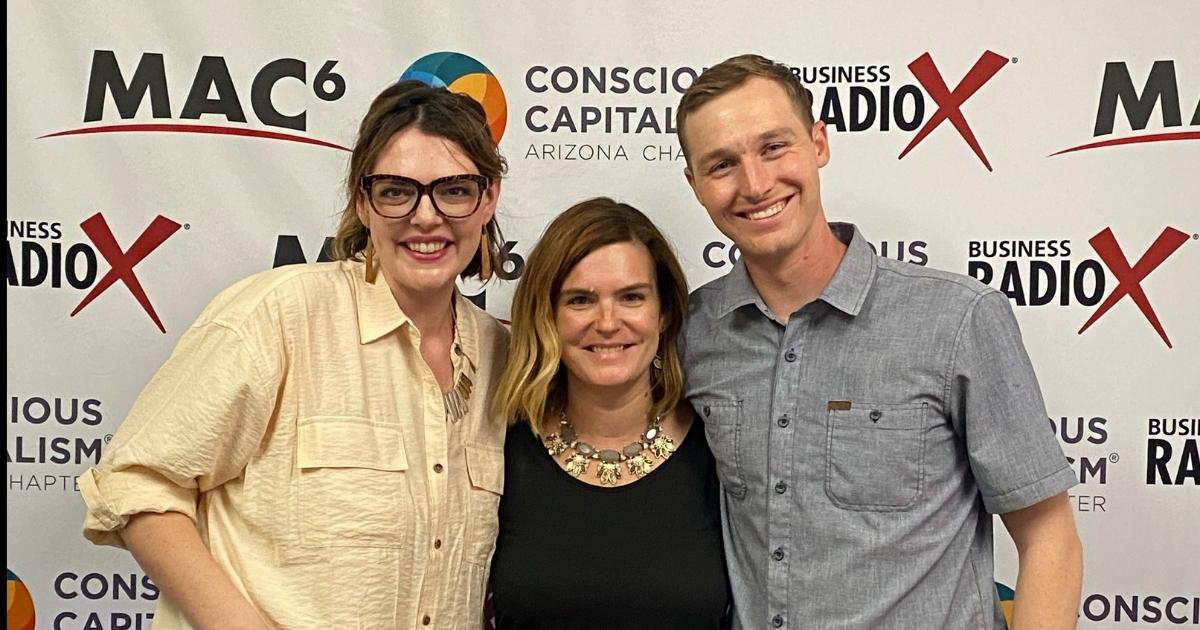
On this episode, host Jennifer Burwell is joined by the Founders of The Raft Project, Kayla and Andy Izard. Have you ever felt alone in a room full of people? Us too. When asked, “When you are going through something difficult, who do you tell?” 44% of respondents on The Raft Project online poll responded “no one”. The Raft Project is on a mission to reduce that percentage. Study after study reveals the real health risks of being lonely.

Geriatrician Carla Perissinotto followed 1,600 people in a national Health and Retirement Study for over six years to see whether loneliness poses a risk to independence and mortality. It does: Feeling lonely results in a 60 percent increased risk of functional decline and a 45 percent greater risk of death. Death! Research suggests that loneliness is associated with an increased risk of certain mental health problems, including depression, anxiety, low self-esteem, sleep problems and increased stress in any age group. Andy and Kayla share how The Raft Project is carefully designed to facilitate connection and provided space to give and receive support.

This episode is REAL, raw and honest. We discuss suicidal ideation, (please protect your own mental health and skip if the topic of suicide is triggering), the messiness of building a business, breakdowns and setting boundaries that go against societal norms. the-raft-project-logo-vertical-rgb

For those that are curious, we also give you a sneak peek of what attending a meeting is like. Kayla and Andy run Jen through their R.E.A.L. (Rate, Explain, Ask & Listen) Framework to check in with how she’s feeling. It is a powerful episode that will hopefully leave you inspired and well-resourced to help yourself or a loved one feel less alone.

So many of us feel alone. We’re struggling. We know our friends are struggling, and we want to help. But do we reach out? Maybe… Do we open up about our own shit? No, that’s scary.

The Raft Project is a community where genuine support is normal and expected. A safe place where members can connect deeply, be there for each other, and be real. A place where no one goes under.

Kayla-Andy-Izard-The-Messy-MiddleAndy and Kayla Izard are passionate students of human connection, authenticity, and empathy. After Andy’s prolonged mental breakdown in 2018, they doggedly pursued an open support group concept to process the real shit they were experiencing.

They knew they needed support – what they didn’t expect was so many others looking for the exact same thing. Over four years, Andy and Kayla developed and tested a framework for connection and “rules of engagement” that make a very vulnerable practice more predictable…and less scary.

While Kayla has BA in Communications and Andy in Psychology, this business is built mostly on lived experience and an unwavering passion to do good for other people and themselves. They can’t get enough of each other – why else would you start a business with your spouse!

And if that’s not hectic enough, add their two-year-old son, two dogs, and a cat to the mix. Phoenix natives, Andy and Kayla are raising their little family beneath gorgeous Arizona sunsets, mostly because Kayla refuses to move somewhere colder (to Andy’s bitter disappointment). They both love a good conversation, so feel free to say hi!

Follow The Raft Project on LinkedIn, Facebook and Instagram.

About The Messy Middle Podcast & Radio Show

The-Messy-Middle-logo“Beginnings are usually scary, and endings are usually sad but it’s the middle that counts the most.”- Hope Floats
We often talk about the beginnings and endings of things. We celebrate our firsts and mourn our lasts. We often ignore the in between, or what we like to call the messy middle. In this nebulous space, often there are no awards or recognition.

It is frequently characterized by the long days, hard work, uncertainty, self-doubt, small wins, setbacks, persistence, and sheer determination to simply keep moving forward. And, yet, it is also where the magic happens. The middle part of our journey is what shapes us, prepares us and fills our lives with meaning.

Welcome to the Messy Middle Podcast & Radio show! Each month we invite guests to share their own version of the Messy Middle and the lessons they’ve learned along the way.

Whether you’re in the messiness of growing a business, healing from trauma, or navigating the wild world of parenting; this show is for you! We’re so excited to celebrate the messiness of life and business with you!

About Mother & Founder Co

Mother & Founder Co was created to help people who are experiencing change and are looking for growth, healing & transformation. The only thing that is constant is change…and change is really difficult for most people. When remaining where you are is more painful than the unknown, change happens.

*And*Mother-and-Founder-logo

Mother & Founder is there to help you create, maintain, and navigate the changes you wish to make.

In addition to the amazing community of women, we provide trauma healing sessions, clarity courses designed to re-imagine what’s possible, individual coaching and small business strategy masterminds.

About Jen Burwell

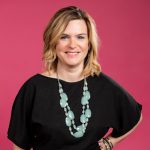
Jennifer-Burwell-Messy-MiddleJen is the Founder of Mother & Founder Co. and Co-Founder of Jens LIGHT Events.

She is a recognized public speaker and enjoys working with audiences of all sizes. She is a fierce advocate of self-development and believes a kinder world begins from within.

Her goal is to help as many leaders heal themselves as possible. A healed world is a better world for all of us. In 2020, she received the prestigious honor of Business Woman of the Year by the Tempe Chamber of Commerce.

She loves being right in the messy middle of growing business(es), mothering 3 young kiddos (2 on the Autism Spectrum) and navigating a healthy and happy marriage amid it all.

In her spare time, she enjoys morning solo runs accompanied by her AirPods and her latest Audible book. Her other joys include spa days, being near the ocean, travel and learning something new.

Follow Mother & Founder Co on Facebook and Instagram.

Tagged With: community support, inclusive community, mental health, mental health groups, processing group, support group

Humanity and Mental Health in the Workplace E26

August 25, 2022 by Karen

E26-Humanity-and-Mental-Health-in-the-Workplace-feature
Phoenix Business Radio
Humanity and Mental Health in the Workplace E26
Loading
00:00 /
RSS Feed
Share
Link
Embed

Download file

E26-Humanity-and-Mental-Health-in-the-Workplace

Humanity and Mental Health in the Workplace E26

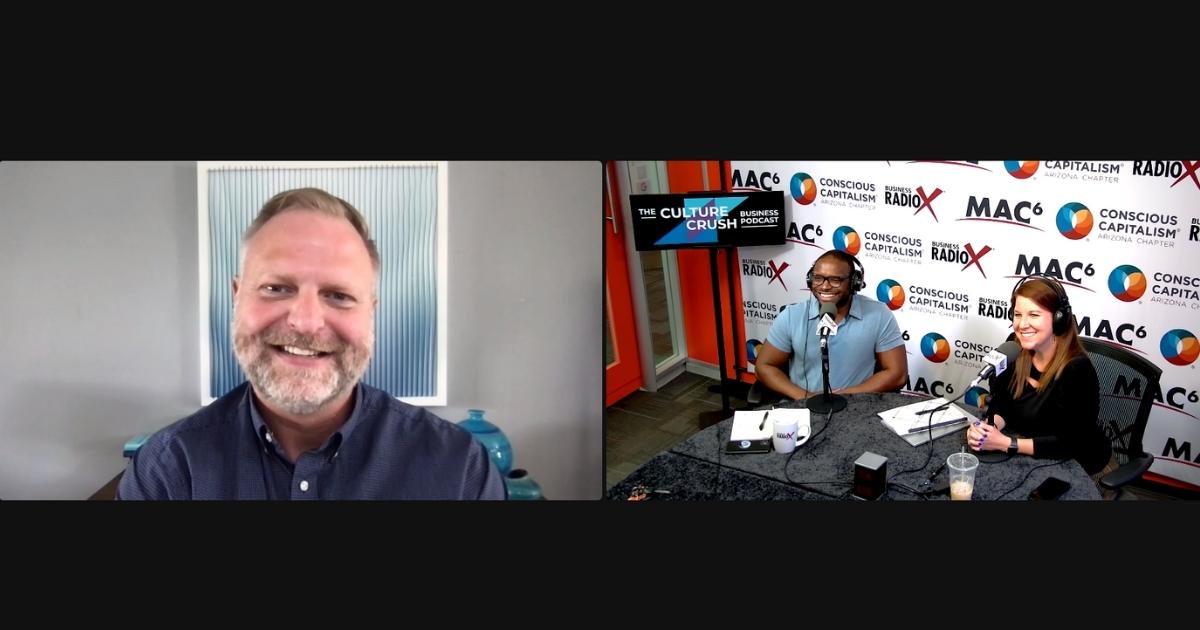
Authenticity, humanity, and integrity are just a few of the words to describe the two gentlemen on this show and the direction that the conversation went in.

When it comes to pairing guests for the Culture Crush Business Podcast, we pair strategically. We tend to pair a company that has a great culture with a company that offers resources to improve culture. For this show, each of the two companies that were on the show fit into both of these categories. BOTH companies are growing a great culture while ALSO supporting companies with improving their company culture.

This conversation started strongly in the direction and importance of DEI in the workplace and supporting individuals in being their authentic selves in a psychologically safe work environment. Psychological safety is a shared belief held by members of a team that the team is safe for interpersonal risk taking. It gives the employees the opportunity to disagree and still be supported in the workplace.

This was part of the bigger conversation of things that leaders and companies can do to support the mental health of their employees. Companies can’t just talk about supporting mental health- they actually need to take action on it.

We walked away with tons of examples on how to do this!!

  • Ask the right questions
  • What am I doing and what is the company doing that can be improved on?
  • How are you doing professionally?
  • How are you doing personally?
  • Have open visibility to what goes on the calendar
  • Therapy sessions
  • Dentist Appointments
  • Doctor appointments
  • A block on the calendar for self care
  • Support from leadership to the staff in being their own authentic self
  • Provide a stipend that allows them additional mental health support
  • Allowing them the time for self care during the work day
  • Letter from the CEO articulating the importance of mental health
  • Putting in boundaries for when emails can be sent to the staff

When trying to find out more info about Hummingbird Humany, head to their website www.hummingbirdhumanity.com and go to the resources tab where they offer free resources to the Hummingbird community. From the website, visitors can also sign-up for their weekly newsletter or follow their social media accounts.

evolvedMD has a variety of resources listed at their website as well. Head to their main page, https://www.evolvedmd.com/ and then head over to their resources and news tab.

Both Sentari and Brian are on podcasts out there as well! Make sure to find them and follow them!

Let’s just say this conversation will definitely have to have a Part B to it!

HHM-KLogo-TextOnlyv1

Hummingbird Humanity is committed to amplifying the voices of the unheard.

Hummingbird’s offerings include a consulting practice which partners with companies to build human-centered workplace cultures through assessment, strategy, and implementation; a speakers bureau featuring diverse voices who share about their lived experiences and offer suggestions for tangible action in their message; a growing collection of children’s books and resources for grown-ups to have age-appropriate diversity conversations with kids; and a soon to be launched practice for coaching and facilitation helping leaders develop their skills to be inclusive and people-centered.

Brian-McComak-HeadshotBrian McComak is a consultant, speaker, author, and facilitator with over 20 years of experience in Diversity, Equity, & Inclusion, HR, company culture, change management, internal communications, and employee experience.

He is the founder and CEO of Hummingbird Humanity, a consulting firm that cultivates and champions inclusive workplace cultures and human-centered leadership.

Connect with Brian on LinkedIn and Instagram.

evolvedMD-logo

evolvedMD is leading the integration of behavioral health services in modern primary care. Uniquely upfront and ongoing, our distinctive model not only places but embeds behavioral health specialists onsite at your practice. We offer an economically viable and better way to integrate behavioral health that ultimately drives improved patient outcomes.

Sentari-Minor-Headshot-CroppedSentari Minor is most passionate about bringing the best out of individuals and entities.

His love languages are strategy, storytelling, and social impact. As Head of Strategy for evolvedMD, Mr. Minor is at the forefront of healthcare innovation with a scope of work that includes strategy, corporate development, growth, branding, culture, and coaching.

Prior to evolvedMD, he worked with some of the Nation’s most prominent and curious CEOs and entrepreneurs advising on philanthropy, policy, and everything social good as Regional Director of Alder (formerly Gen Next) [PHX + DAL + SFO] and strengthened social enterprises as Director at venture philanthropy firm, Social Venture Partners.

A Phoenix native, Mr. Minor continued his education in the Midwest and is an alumnus of DePauw University in Greencastle, Indiana where he studied English with an emphasis in Creative Writing. He is also a member of Class IV of the American Express Leadership Academy through the Arizona State University Lodestar Center. If you want to profile him: he’s an ENTJ (Myers Briggs), a Maverick (Predictive Index), and trimodal Blue/Green/Red (Emergenetics).

Where does he shine? In high-touch stakeholder engagement, capital raising, public relations, and strategic planning. With his background, Mr. Minor serves on the board of directors for a diverse set of social impact organizations, as a venture mentor for socially conscious companies nationwide, and as a facilitator for businesses who want organizational clarity.

Committed to strengthening brands doing good in the world, Mr. Minor speaks nationally and publishes often on strategy, marketing, leadership, capacity building, social entrepreneurship, and engaging high-profile leaders in the dialogue of today. For his impact on business and community, he was honored among the Phoenix Business Journal’s “40 Under 40” class of 2022.

When he’s not busy changing the world, self-care to him looks like working out, stirring the pot on social media, being an amateur author, and spending time with the people who make him smile.

Connect with Sentari on LinkedIn and Instagram.

About Culture Crush

Culture is not just a tag word to be thrown around. It is not something you throw in job descriptions to draw people to applying for jobs within a company.

According to Marcus Buckingham and Ashely Goodall in their book Nine Lies About Work, “Culture is the tenants of how we behave. It’s like a family creed. This is how we operate and treat each other in the family.”CultaureCrushKindraBanner2

As a growing company- Culture Crush Business Podcast is THE culture improvement resource that supports companies and leaders.  Our Mission is to improve company cultures so people WANT to go to work. Employees and leaders should like where they work and we think this is possible.

Within the company: Culture Crush has Vetted Resources and Partnerships with the right people and resources that can help improve your company culture.

On this podcast:  We focus on everything surrounding businesses with good company culture. We will talk with company leaders to learn about real-life experiences, tips, and best practices for creating a healthy work environment where employees are finding joy and satisfaction in their work while also striving and growing within the company.  We also find the companies that offer resources to help improve company culture and showcase them on the show to share their tips and tricks for growing culture.

About the Host

ABHOUTHOSTHEADSHOT

Kindra Maples  is spartan racer, past animal trainer, previous magician’s assistant, and has a weakness for Oreo cookie shakes. Her journey working with people actually started working with animals as a teenager (don’t worry we won’t go that far back for her bio).

She worked for over 15 years in the zoo industry working with animals and the public. Her passion of working with animals shifted into working with people in education, operations and leadership roles. From there her passion of leadership and helping people develop has continued to grow.

Then came the opportunity for leading  the Culture Crush Business Podcast and she jumped on it. Leadership, growth, and strong company cultures are all areas that Kindra is interested in diving into further.

Shout Outs

We want to thank a few people for their behind the scenes effort in helping this relaunch to come to life. James Johnson with Tailored Penguin Media Company LLC.– It is a small, but powerful video production company with a goal to deliver the very best by articulating the vision of your brand in a visually creative way. Gordon Murray with Flash PhotoVideo, LLC. -Flash Gordon has been photographing since high school and evolving since then with new products that will equip, encourage, engage, and enable. Renee Blundon with Renee Blundon Design – She is not only one of the best free divers (that’s not how she helped with the podcast) but she is great with graphics design and taking the direction for the vision that you have while also adding creative ideas to bring to your vision to life.

These are just a few of the folks that supported the relaunch of the podcast. If you would like to be part of the Culture Crush team or would like to support underwriting the show- please reach out: info@culturecrushbusiness.com

Tagged With: Behavioral Health Integration, Branding, Culture, diversity, employee experience, Human-Centered, inclusion, mental health, workplace wellness

Tony Kimbrough, Veterans Empowerment Organization

August 2, 2022 by John Ray

veterans empowerment organization
North Fulton Business Radio
Tony Kimbrough, Veterans Empowerment Organization
Loading
00:00 /
RSS Feed
Share
Link
Embed

Download file

veterans

Tony Kimbrough, Veterans Empowerment Organization (North Fulton Business Radio, Episode 480)

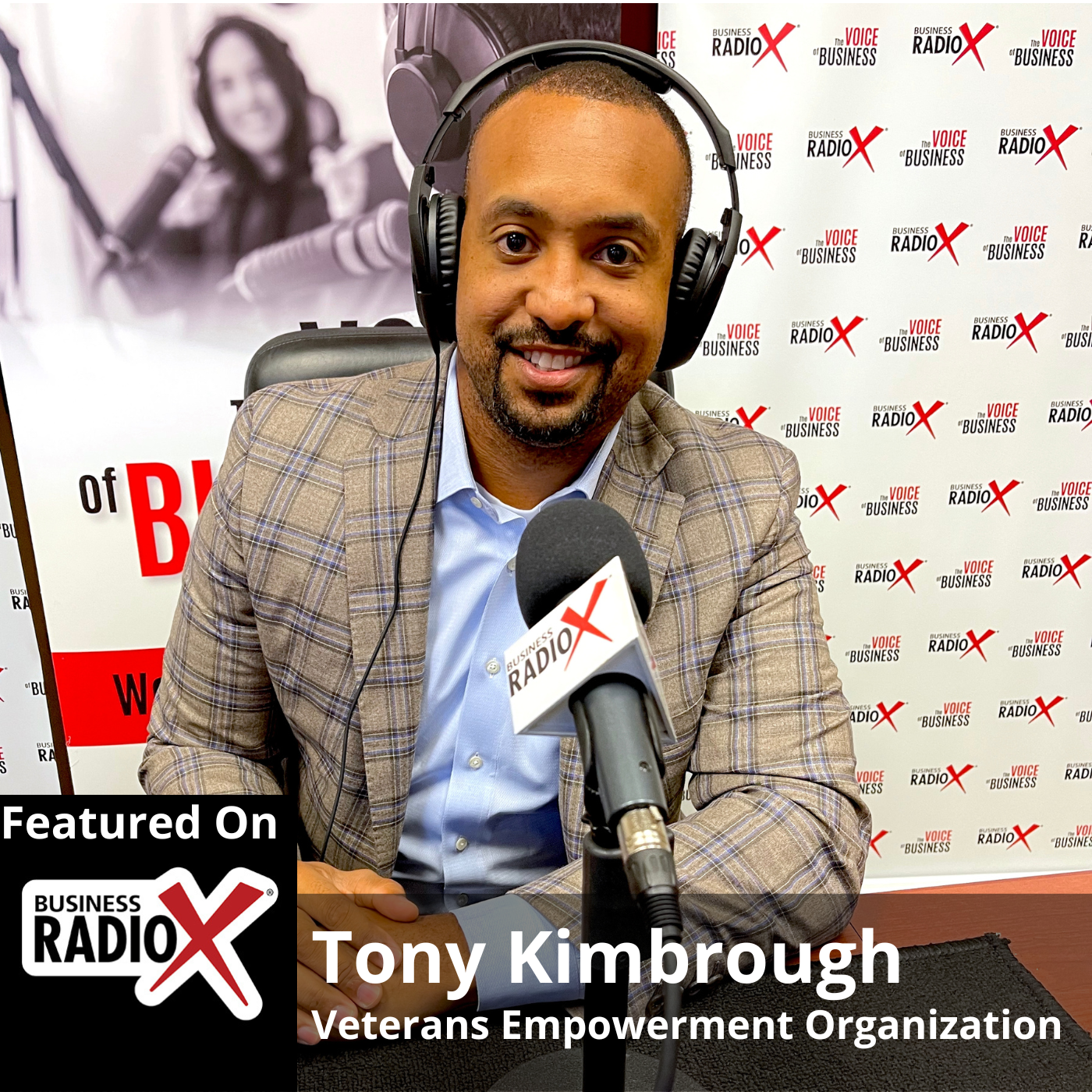
A veteran himself, Tony Kimbrough, CEO of Veterans Empowerment Organization, was in the studio with host John Ray to highlight the work of the VEO in helping homeless veterans find housing and rebuild their lives.  Tony shared some of the issues veterans face, the VEO campus on the westside of Atlanta, systemic cultural issues at play, the need for affordable stable housing, employment, and much more.

North Fulton Business Radio is broadcast from the North Fulton studio of Business RadioX® inside Renasant Bank in Alpharetta.

Veterans Empowerment Organization

An estimated 2000 veterans throughout Georgia have little access to the resources they need for daily living. There are many invisible wounds that affect veterans, including post-traumatic stress disorder, substance abuse, depression, and anxiety – all of which can lead to homelessness.

VEO’s mission is to connect Veterans to vital resources that will assist in rebuilding their holistic well-being, and empower them to make positive changes in their life.

VEO offers a healing campus environment that allows veterans to rebuild their lives. Its mission is to empower veterans along their journey to self-sufficiency.

Veteran Empowerment Organization follows a Housing model. Their housing programs offer both temporary and permanent solutions to uplift low-income and homeless veterans. Through emergency beds, Veterans Empowerment Organization provides low-barrier access to ensure that veterans have a safe place to stay while procuring permanent housing placement. Veteran Empowerment Organization provides veterans with transitional housing as a way to garner permanent housing or independent living. Their residential site offers housing in a supportive, therapeutic community, with wraparound care including workforce development, mental health, and optimal wellness, and case management services to help veterans address their specific challenges and needs.

VEO’s Optimal Wellness program offers professional counseling from licensed clinicians and peer mentorship services with a focus on social reintegration.

Company website | Facebook | Instagram

Tony Kimbrough, CEO, Veterans Empowerment Organization

Tony Kimbrough, CEO, Veterans Empowerment Organization

Tony Kimbrough is Chief Executive Officer for Veterans Empowerment Organization.

Part of a family with a long military heritage, Tony Kimbrough joined the South Carolina Army National Guard during his junior year at The Citadel. His subsequent eight years of service as a military intelligence officer included a year with the U.S. Army’s 82nd Airborne Division in Afghanistan, where he led an embedded training team.

Tony was formerly the Executive Director of Atlanta’s East Lake Family YMCA. He was recruited to Atlanta as head of the Arthur M. Blank Youth YMCA in 2015 and took on that role in 2017.

A native of Kentucky, Kimbrough grew up in Metro Atlanta, where his father was an executive with the Atlanta Journal-Constitution and his mother a development officer with the YMCA.

After college, Kimbrough spent four years with Mannheim Auto Auctions in Georgia, North Carolina, and Arizona before moving to the nonprofit sector, first with the University of Pittsburgh Medical Center and then with the YMCA.

LinkedIn

Questions and Topics in this Interview:

  • What are the problems veterans are facing?
  • What is VEO?
  • Tell us about your military journey and how you became involved with VEO
  • What services do you offer?
  • How can others get involved?

North Fulton Business Radio is hosted by John Ray and broadcast and produced from the North Fulton studio of Business RadioX® inside Renasant Bank in Alpharetta. You can find the full archive of shows by following this link. The show is available on all the major podcast apps, including Apple Podcasts, Spotify, Google, Amazon, iHeart Radio, Stitcher, TuneIn, and others.

RenasantBank


Renasant Bank has humble roots, starting in 1904 as a $100,000 bank in a Lee County, Mississippi, bakery. Since then, Renasant has grown to become one of the Southeast’s strongest financial institutions with over $13 billion in assets and more than 190 banking, lending, wealth management and financial services offices in Mississippi, Alabama, Tennessee, Georgia and Florida. All of Renasant’s success stems from each of their banker’s commitment to investing in their communities as a way of better understanding the people they serve. At Renasant Bank, they understand you because they work and live alongside you every day.


Special thanks to A&S Culinary Concepts for their support of this edition of North Fulton Business Radio. A&S Culinary Concepts, based in Johns Creek, is an award-winning culinary studio, celebrated for corporate catering, corporate team building, Big Green Egg Boot Camps, and private group events. They also provide oven-ready, cooked from scratch meals to go they call “Let Us Cook for You.” To see their menus and events, go to their website or call 678-336-9196.

Tagged With: hiring veterans, homeless veterans, Homelessness, mental health, military service, North Fulton Business Radio, renasant bank, Tony Kimbrough, Veterans, Veterans Empowerment Organization, Workforce Development

What Is Your Why? E33

July 7, 2022 by Karen

E33-What-Is-Your-Why-feature
Phoenix Business Radio
What Is Your Why? E33
Loading
00:00 /
RSS Feed
Share
Link
Embed

Download file

E33-What-Is-Your-Why

What Is Your Why? E33

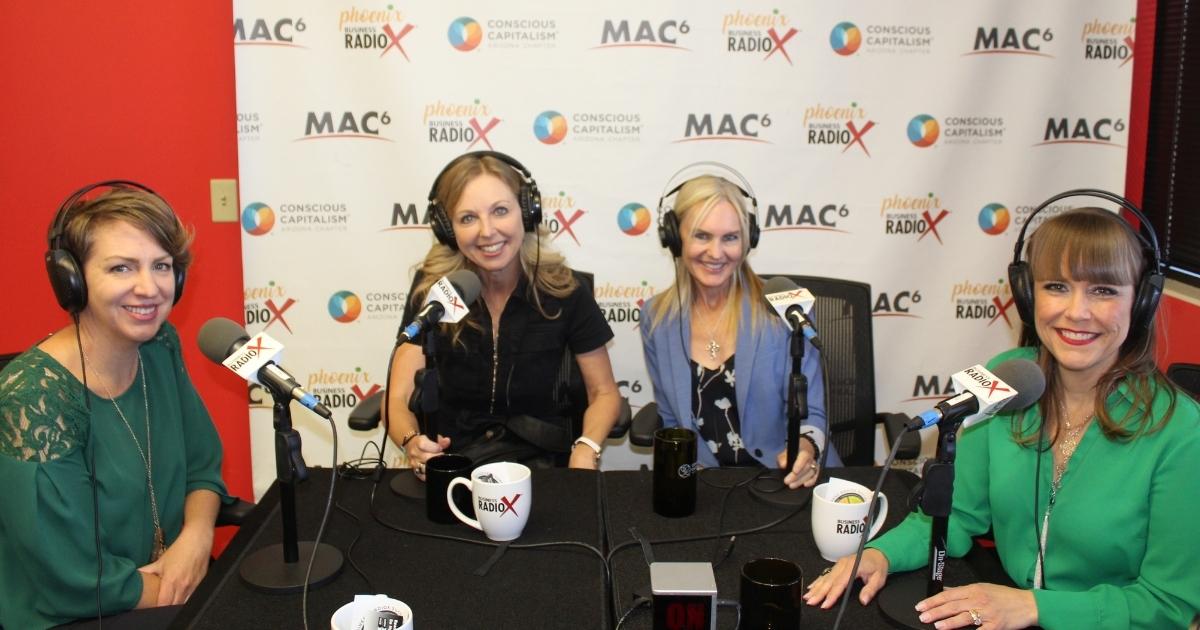
If you love a really good heartfelt story with a big why, then check out this episode of Collaborative Connections Radio Show and Podcast.

Irene Ploski, Jesse Pekarek, and Jayashri Sarkar share their whys, lessons, tips, and tears with host, Kelly Lorenzen.

They talked about all things small businesses, nonprofits, horses, startups, entrepreneurship, community and of course, collaboration.

These amazing business owners shared their stories so authentically, it felt like they were all old friends. You will feel the same way after you listen to it.

HHLOGOforanimation

Happy Hooves is a 501(c)(3) non-profit organization dedicated to providing animal assisted therapy and activities to those in need. Animals improve the human experience and quality of life.

From those struggling with dementia, Alzheimer’s, PTSD, depression, anxiety, grievance, trauma, to name just a few, the animal interaction has incredible benefits for all.

Jesse-PekarekJesse Pekarek was born and raised on a family dairy farm in MN. In working with and showing animals at local fairs, he developed a strong sense of connection, empathy, compassion, and of course, a strong work ethic.

Jesse received his degree in Education and moved to Tucson in 1999 to complete his student teaching requirements, and later, held positions at an at risk school as teacher, director of curriculum development, and later the director of instructional technology, managing curriculum, instructors, and advisors.

Jesse then pursued a career in residential real estate, obtaining his license nearly 19 years ago, and continues to sell real estate to this day. Having held positions as a loan officer, operations manager at a local hard money lender, and even selling property in Mexico, Jesse’s depth of knowledge in the field, combined with his degree in education, has paved a successful real estate career.

Jesse has always felt a strong connection with community and the need and importance of giving back. Jesse has founded two non-profit organizations. His first non-profit, “Your Someday Is Today” provided necessary clothing for children in need within our community. Raising approximately $100,000 over ten years.

His current non-profit, Happy Hooves, focuses on helping the community an another way…providing animal experiences and activities for those in need. From autism, dementia, PTSD, to depression. Jesse finds his purpose in being the conduit between humans and animals, and opens his home to those open to the experience.

Jesse is active in his community as well, creating a neighborhood district called “Coyote Flatts” with a mission of preserving the rural, “neighborly” feel of their quaint, quiet, and colorful community. He has also opened up his home by creating a “community farm”, where people can come to volunteer and experience the joy and rewards in assisting with the love, care, and maintenance of the farm animals.

Jesse began hosting with Airbnb Experiences in 2019, started hosting Airbnb Online Experiences in 2020, and just a few weeks ago, began hosting their new guest house where people can book and share a deeper connection with the animals, having a stay at the farm.

Connect with Jesse on LinkedIn, Facebook, Twitter and Instagram. IIGbrand1

Founded in 2009, Independence Insurance Group PLLC is an independent insurance agency and have several options to offer to our clients.

Our team is not bound to a single insurance company that offers a single type of product, instead we look for the best fit for each of our clients. Our goal is to find the right combination of coverage and price.

Our team strives to provide knowledgeable, prompt, clear and honest service to our clients and prospects. We are a relationship-based agency with our clients, business partners and professional network. We actively serve our community through fundraising & volunteering.

Irene-PloskiIrene Ploski has been in the insurance industry since 2003. She is married and is the mom of 2 very busy teenagers, a high-energy Golden Retriever and a Doberman.

Irene is fluent in Spanish as she is originally from Guadalajara, Mexico. She moved to Arizona in 2000 and became a U.S. Citizen in 2010.

She founded Independence Insurance Group in 2009. She has been a founding member of Networking For Charity, a Central Phoenix-based business networking group that focuses on generating qualified business referrals while engaging in philanthropy and volunteering.

She has been Vice President of NFC since 2014. NFC has raised over $60,000 for small local nonprofit organizations in our community.

She is also Vice-President of the Phoenix Lions Club, a global organization of volunteers that join together to give their time and effort to improving their communities and meet humanitarian needs.

Irene is also a member of the Arizona Hispanic Chamber of Commerce, and the Phoenix Elks Lodge #335.

Connect with Irene on LinkedIn and Facebook.  TEAMAchieversLegacyLogowhitebackground

Achievers Legacy’s purpose is to assist individuals and small businesses find sustainable and affordable air purification & drinking water filtration solutions for a healthy lifestyle.

Air and Water are two major elements that are critical to our health.

Both the air we breathe and water we drink are exposed to contaminants. Their goal is to provide solutions for both (air & water) that benefit you, your family, and your business, cost effectively in long term.

IMGNGLogoRectWhite

ImagiNexGen Institute of Excellence has a vision to build a connected world driven by trust, integrity, belonging, compassion, equality, and character leading to tolerance, synergy, fulfillment and peace.

They help individuals to discover their path to excellence leading to a joyful, meaningful, and purposeful life that engenders trust, happiness, fulfilment thus building a connected community.

They do not take a one-size-fits-all approach. They customize the work we do with individuals and organizations to their unique needs so they are set up for success in the long run.

Jayashri-SarkarDr. Jayashri Sarkar has a Ph.D in Chemical Engineering from the University of Rhode Island. She has worked in the corporate life for a decade.

She is passionate about providing value and great service through her businesses and building a sustainable community in the process.

She believes that small businesses play a major role in shaping the culture of a community and how they serve their communities builds a strong sense of belonging.

She strives to provide the best with her businesses Achievers Legacy and ImagiNexGen Institute of Excellence.

Connect with Jay on LinkedIn and follow Achiever’s Legacy on Facebook and Instagram.

About Collaborative Connections

Kelly Lorenzen started the “Collaborative Connections” show to bring her clients and favorite charities together to meet each other, connect and collaborate in life and business.  She hopes to build a stronger community one show at a time. klm-logo-small

About Our Sponsor

KLM is a one-stop support shop for small business owners who are starting, growing, or trying to sustain. Our purpose is to foster the growth and prosperity of small businesses in our community.

Entrepreneurs & small business owners come to KLM for support in all areas of business. KLM clients think of us as a concierge, business snuggy, another arm, or duplicate for the business owner; They call us when they need us. Business owners can continue to do what they love while having the support they need when they need it.

About Your Host

Kelly-Lorenzen-on-Phoenix-Business-RadioXKelly Lorenzen, CEO of KLM, is an award-winning entrepreneur with over 15 years of business-ownership experience. She is also a certified project management professional.
Kelly’s expertise is in business development, customer service, marketing, and sales.

Connect with Kelly on LinkedIn, and follow KLM Consulting on Facebook.

Tagged With: air quality, Animal Sanctuary, best air purifier, best water filter, equine therapy, Family Friendly Activities in Phoenix, Independence Insurance Group, mental health, self confidence, self-assurance, staycation, Transformation, Unique experience with animals

Amy Jolley with The Wellness Collective Women and Children

May 4, 2022 by Karen

Amy-Jolley-with-The-Wellness-Collective-Women-and-Children-feature
Phoenix Business Radio
Amy Jolley with The Wellness Collective Women and Children
Loading
00:00 /
RSS Feed
Share
Link
Embed

Download file

Amy-Jolley-with-The-Wellness-Collective-Women-and-Children

Amy Jolley with The Wellness Collective Women and Children

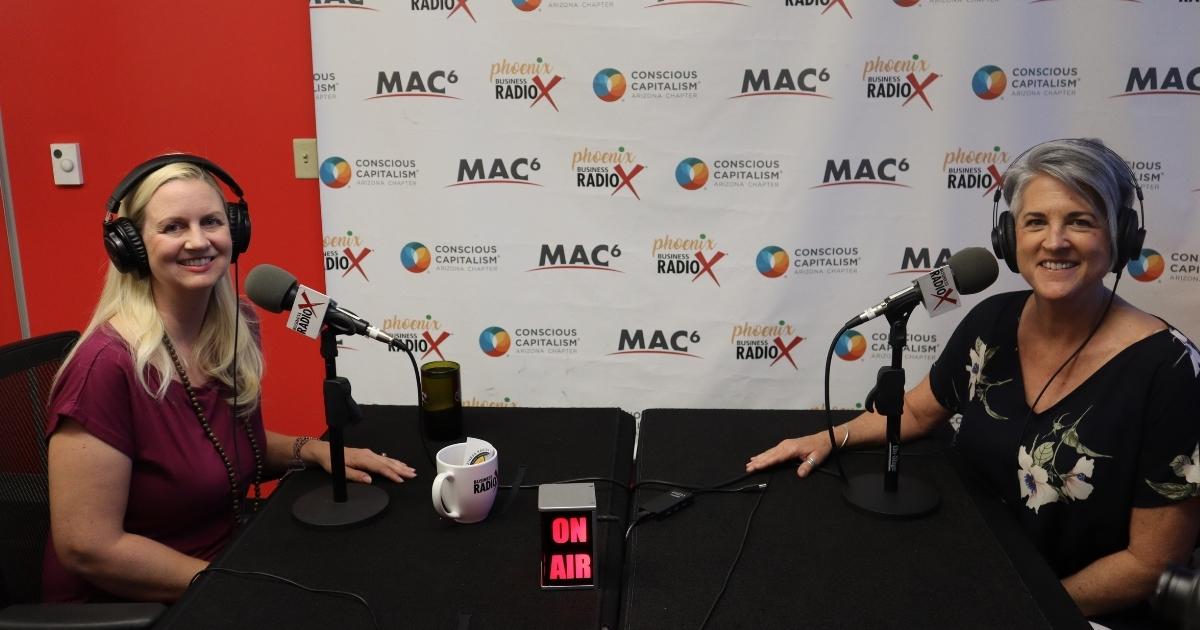
The Wellness Collective Women & Children was created to provide a collective community for women and children to offer support, tools and healing for mental health and well-being. WCWC-logo

WCWC offers 1:1 Mental Health & Well-being sessions for women & children. In addition, community classes include yoga for kids & women, Girl’s Circle, Zen Den for Teens, Circle of Friends, Feeling Class for kids, Kindness Circle groups.

Nourishing events for Women; Restorative Yoga & Massage, Meditate & Mimosas, Mini-Women’s Retreat, Mindful Mamas Circle, Women’s Wellness events.

Amy-Jolley-Phoenix-Business-RadioXAmy Jolley, Yoga teacher, Social-Emotional Learning & Mindfulness Educator, experienced child & family therapist and lover of people and Mother Earth.

She has a Master of Arts in Counseling Psychology from California Institute of Integral Studies. She is also a registered Yoga Teacher from Shiva Tree Yoga School and a certified Women’s Gathering Facilitator from The Path of the Sacred She.

Amy has had the opportunity to work in the mental health field in community mental health, private settings, public & charter schools and for non-profit organizations.

She has been a Yogi for as long as she can remember and has had the opportunity to teach yoga classes and hold sacred space at women’s circles on the beautiful island of Hawaii and now in majestic Arizona spaces.

Through her work in schools she has had the opportunity to teach mindfulness and social-emotional learning in counseling groups, classrooms, in yoga classes, at after-school program and to families.

Amy also has had the honor of teaching aspiring undergraduate psychology students in Positive Psychology, Social Psychology & Environmental Psychology.

Her journey continues as she is a constant student in the school of life, always learning through people, relationships, psychology, mindfulness practices and yoga.

She is the proud owner of a community oriented business, The Wellness Collective Women & Children, which supports women & children with mental health and well-being to ‘connect with your calm’ through yoga, mindfulness, art & play.

Education & Certifications
Masters of Arts, M.A. Counseling Psychology, Concentration in Integral Counseling Psychology, 2011
San Francisco, CA

Bachelor of Arts, B.A. Concentration in Communication Studies & Women’s Studies, 2005
Kalamazoo, MI

Registered Yoga Teacher, 200 hours, RYT-200, Shiva Tree Yoga School, 2017
Kailua, HI

Certified Kimochis (Social Emotional Learning Curriculum) Trainer, Kimochis, 2020, 2021, 2022, San Rafeal, CA

Follow WCWC on Facebook and Instagram.

Tagged With: Art, children, mental health, mindfulness, play, Well-Being, women, yoga

It Takes A Village E30

March 21, 2022 by Karen

It-Take-A-Village-E30-feature
Phoenix Business Radio
It Takes A Village E30
Loading
00:00 /
RSS Feed
Share
Link
Embed

Download file

It-Take-A-Village-E30

It Takes A Village E30

On this episode of Collaborative Connections Radio Show and Podcast, host Kelly Lorenzen had the pleasure of interviewing some amazing leaders in our community.

Ania Kubicki, CEO & Founder of ANGLES Communications and President-Elect of NAWBO Phx, Laura Bode, Director of Community Engagement of A New Leaf, and Shana Duffy, Principle Consultant, Blue Ocean Advisory and owner of Yellow Day Marketing joined Kelly on-air for an enlightening conversation.

If you want to be inspired, get more involved in the Arizona community, or learn something new about PR, non-profits, business ownership, or women in business, then check out this episode.

Did you know there is a media collaborative in Phoenix that focuses on Positivity? The Center for Positive Media just opened and Ania was excited to share about it. https://www.thecenterforpositivemedia.com/

Did you know that NAWBO advocates for women in business? They are a great resource in our community. https://www.nawbo.org/phoenix

Did you know that A New Leaf helps sexual and domestic violence victims? They are opening a Rap Crisis Center next month. Check out all of their services at https://www.turnanewleaf.org/services/

Did you know there is a consulting firm that helps brands connect with financial institutions for co-branded credit cards and loyalty programs? Shana Duffy is a principal consultant with them and a great resource for small and large businesses needing help with customer loyalty. https://boadvisory.com/

These ladies shared some GREAT resources, stories, and quotes during the show about everything above and more. It is worth the hour to listen to this episode of Collaborative Connections.

Thank you, KLM Consulting, Marketing, and Management for sponsoring Collaborative Connections Radio Show and Podcast.

A-New-Leaf-Logo-Hrzntl

A New Leaf advances its mission of “Helping Families…Changing Lives” by providing meaningful opportunities to empower disadvantaged individuals and families, and to create a stronger and healthier community. A New Leaf’s 30+ programs in the Phoenix Metro area address households’ immediate and longer-term needs through a continuum of care that promotes social and economic health and stability.

Services include emergency shelter, supportive housing, domestic and sexual violence support, financial empowerment, behavioral and primary health care, foster care, early childhood education, and family preservation. With 51 years’ experience providing social services to local communities, A New Leaf anticipates improving more than 30,000 lives this year through culturally responsive programming that cultivates equity in the community.

Laura-Bode-Phoenix-Business-RadioXLaura Bode serves as A New Leaf’s Director of Community Engagement. She has worked with A New Leaf for 10 years and is passionate about advancing the critical services the organization provides for the community.

She engages community corporations, foundations, civic leaders, and service groups to build awareness, funding, in-kind donations, and volunteer service to support all of A New Leaf’s programs.

Follow A New Leaf on LinkedIn, Facebook, Twitter and Instagram.

ANGLES is a communications agency with a mission to connect ideas and the people behind them to those who benefit from them. ANGLES works with visionaries who challenge the status quo and disrupt industries that need change. ANGLES-Communications

We help our clients bring positive change to industries, communities and the world through highly curated communications strategies and programs.

Ania-Kubicki-Phoenix-Business-RadioXAnia Kubicki started her career in public relations in New York City, working on high profile campaigns for destinations and political organizations. She moved to Phoenix in 2002 and started her agency, ANGLES Communications in 2006.

Ania is passionate about her clients and works with growth-oriented companies, powerful organizations and meaningful non-profits. She firmly believes that if you are not telling your story, someone will tell it for you.

Ania is an active member of our community serving on multiple committees, supporting and volunteering for causes in education, arts & entertainment as well as women and children. She is the President-Elect of the Phoenix Chapter of the National Association of Women Business Owners and is passionate about helping people overcome adversity and own their stories!

Connect with Ania on LinkedIn, Facebook and Instagram.

Blue Ocean is a multi-faceted advisory firm that excels in brand loyalty and payments solutions with a strong emphasis in the co-brand credit card space. Blue Ocean uses their vast experience and industry knowledge to successfully align brand partners and merchants with issuing banks and payment providers.

The Blue Ocean team has spent many years effectively negotiating co-branded programs nationally and internationally for travel, auto, retail, and financial institution brands. Additionally they manage RFP’s and contracts with Issuers and all three Card Networks; Visa, Mastercard, and American Express. Blue-Ocean-Advisory-logo

Blue Ocean also provides operational and marketing guidance on credit card programs to maximize growth and revenue, create winning marketing and focused strategies that enhance consumer loyalty through enhanced product value and innovation.

Beyond marketing and business development the Blue Ocean team has strong operational backgrounds that cover Credit, Risk, Fraud, Customer Service, Forecasting, Financial Analysis, and user Analytics.

Shana-Duffy-Phoenix-Business-RadioXShana Duffy is a Principal Consultant with over 25 years of experience in the credit card and co-brand industry. Her experience runs deep across Operations, Marketing, and Business Development.

Shana spent over 20 years at Bank of America where she managed Credit Underwriting, Fraud, and Risk teams and strategies before transitioning to co-brand marketing where she spent 10 years managing a suite of successful programs such as America West, Alaska Airlines, and Hawaiian Airlines.

Prior to joining Blue Ocean Advisory in June 2020, Shana spent 7 years managing Retail, Airline, and Financial Institution co-branded programs at U.S. Bank.

Shana’s skills span across executive leadership, program management, product development and innovation, contract renewals and negotiation, revenue generation, and relationship management.

Follow Blue Ocean on LinkedIn.

About Collaborative Connections

Kelly Lorenzen started the “Collaborative Connections” show to bring her clients and favorite charities together to meet each other, connect and collaborate in life and business.  She hopes to build a stronger community one show at a time. klm-logo-small

About Our Sponsor

KLM is a one-stop support shop for small business owners who are starting, growing, or trying to sustain. Our purpose is to foster the growth and prosperity of small businesses in our community.

Entrepreneurs & small business owners come to KLM for support in all areas of business. KLM clients think of us as a concierge, business snuggy, another arm, or duplicate for the business owner; They call us when they need us. Business owners can continue to do what they love while having the support they need when they need it.

About Your Host

Kelly-Lorenzen-on-Phoenix-Business-RadioXKelly Lorenzen, CEO of KLM, is an award-winning entrepreneur with over 15 years of business-ownership experience. She is also a certified project management professional.
Kelly’s expertise is in business development, customer service, marketing, and sales.

Connect with Kelly on LinkedIn, and follow KLM Consulting on Facebook.

Tagged With: co brand credit cards, cobranded contract negotiations, cobranded RFP, community outreach, credit card advisors, credit card consultant, domestic violence, female-owned women-owned, homeless, housing, mental health, NAWBO, Public Relations, women entrepreneurs, Workforce Development

Decision Vision Episode 155: Should I Start a Mental Wellness Program at My Company? – An Interview with Dr. George Vergolias, R3 Continuum

February 10, 2022 by John Ray

R3 Continuum
Decision Vision
Decision Vision Episode 155: Should I Start a Mental Wellness Program at My Company? - An Interview with Dr. George Vergolias, R3 Continuum
Loading
00:00 /
RSS Feed
Share
Link
Embed

Download file

R3 Continuum

Decision Vision Episode 155: Should I Start a Mental Wellness Program at My Company? – An Interview with Dr. George Vergolias, R3 Continuum

Dr. George Vergolias, Medical Director for R3 Continuum, joined Decision Vision host Mike Blake to discuss the considerations involved in starting a mental health and wellness program in an organization.  Dr. Vergolias discussed best practices for meeting the needs of people’s emotional and psychological health, the rise of telehealth, the potential returns of such programs, the characteristics of a successful program, and much more.  Decision Vision is presented by Brady Ware & Company.

R3 Continuum

R3 Continuum (R3c) is a global leader in workplace behavioral health and security solutions. R3c helps ensure the psychological and physical safety of organizations and their people in today’s ever-changing and often unpredictable world. Through their continuum of tailored solutions, including evaluations, crisis response, executive optimization, protective services, and more, they help organizations maintain and cultivate a workplace of wellbeing so that their people can thrive.

Company website | LinkedIn

Dr. George Vergolias, Medical Director, R3 Continuum

Dr. George Vergolias, Medical Director, R3 Continuum

George Vergolias, PsyD, LP is a forensic psychologist and threat management expert serving as Vice President and Medical Director for the R3 Continuum. As part of his role of Vice President and Medical Director of R3 Continuum, he leads their Threat of violence and workplace violence programs.

Dr. Vergolias is also the founder and President of TelePsych Supports, a tele-mental health company providing involuntary commitment and crisis risk evaluations for hospitals and emergency departments. He has over 20 years of forensic experience with expertise in the following areas: violence risk and threat management, psychological dynamics of stalking, sexual offending, emotional trauma, civil and involuntary commitment, suicide and self-harm, occupational disability, law enforcement consultation, expert witness testimony, and tele-mental health.

Dr. Vergolias has directly assessed or managed over one thousand cases related to elevated risk for violence or self-harm, sexual assault, stalking, and communicated threats. He has consulted with regional, state, and federal law enforcement agencies, including the FBI, Secret Service, and Bureau of Prisons.

He has worked for and consulted with Fortune 500 companies, major insurance carriers, government agencies, and large healthcare systems on issues related to work absence management, workplace violence, medical necessity reviews, and expert witness consultation.

LinkedIn

Mike Blake, Brady Ware & Company

Mike Blake, Host of the “Decision Vision” podcast series

Michael Blake is the host of the Decision Vision podcast series and a Director of Brady Ware & Company. Mike specializes in the valuation of intellectual property-driven firms, such as software firms, aerospace firms, and professional services firms, most frequently in the capacity as a transaction advisor, helping clients obtain great outcomes from complex transaction opportunities. He is also a specialist in the appraisal of intellectual properties as stand-alone assets, such as software, trade secrets, and patents.

Mike has been a full-time business appraiser for 13 years with public accounting firms, boutique business appraisal firms, and an owner of his own firm. Prior to that, he spent 8 years in venture capital and investment banking, including transactions in the U.S., Israel, Russia, Ukraine, and Belarus.

LinkedIn | Facebook | Twitter | Instagram

Brady Ware & Company

Brady Ware & Company is a regional full-service accounting and advisory firm which helps businesses and entrepreneurs make visions a reality. Brady Ware services clients nationally from its offices in Alpharetta, GA; Columbus and Dayton, OH; and Richmond, IN. The firm is growth-minded, committed to the regions in which they operate, and most importantly, they make significant investments in their people and service offerings to meet the changing financial needs of those they are privileged to serve. The firm is dedicated to providing results that make a difference for its clients.

Decision Vision Podcast Series

Decision Vision is a podcast covering topics and issues facing small business owners and connecting them with solutions from leading experts. This series is presented by Brady Ware & Company. If you are a decision-maker for a small business, we’d love to hear from you. Contact us at decisionvision@bradyware.com and make sure to listen to every Thursday to the Decision Vision podcast.

Past episodes of Decision Vision can be found at decisionvisionpodcast.com. Decision Vision is produced and broadcast by the North Fulton studio of Business RadioX®.

Connect with Brady Ware & Company:

Website | LinkedIn | Facebook | Twitter | Instagram

TRANSCRIPT

Intro: [00:00:01] Welcome to Decision Vision, a podcast series focusing on critical business decisions. Brought to you by Brady Ware & Company. Brady Ware is a regional, full-service, accounting and advisory firm that helps businesses and entrepreneurs make visions a reality.

Mike Blake: [00:00:21] Welcome to Decision Vision, a podcast giving you, the listener, clear vision to make great decisions. In each episode, we discuss the process of decision making on a different topic from the business owners’ or executives’ perspective. We aren’t necessarily telling you what to do, but we can put you in a position to make an informed decision on your own and understand when you might need help along the way.

Mike Blake: [00:00:42] My name is Mike Blake, and I’m your host for today’s program. I’m a director at Brady Ware & Company, a full-service accounting firm based in Dayton, Ohio, with offices in Dayton; Columbus, Ohio; Richmond, Indiana; and Alpharetta, Georgia. My practice specializes in providing fact-based strategic and risk management advice to clients that are buying, selling, or growing the value of companies and intellectual property. Brady Ware is sponsoring this podcast, which is being recorded in Atlanta per social distancing protocols.

Mike Blake: [00:01:10] If you would like to engage with me on social media with my Chart of the Day and other content, I’m on LinkedIn as myself and @unblakeable on Facebook, Twitter, Clubhouse, and Instagram. I also recently launched a new LinkedIn Group called Unblakeabl’e Group that Doesn’t Suck, so please join that as well if you would like to engage. If you like this podcast, please subscribe on your favorite podcast aggregator and please consider leaving a review of the podcast as well.

Mike Blake: [00:01:37] Today’s topic is, Should I start a mental wellness program at my company? According to Cooleaf, in 2015, Aetna saw a 28 percent reduction in stress levels, 20 percent improvement in sleep quality, and a 19 percent reduction in pain as a result of its mindfulness programs. And that’s just an example of the benefits that, I think, we’re at least hoping to see with mental wellness.

Mike Blake: [00:02:04] And, of course, we’re in this trans-pandemic period here, but having been in it now for two years plus, we’ve found a couple of things that, I think, are silver linings. Yes, there’s been terrible suffering. At last count that I saw, nearly one million Americans dead from the coronavirus. But there are some silver linings, I think, that have occurred. And one of them is that I think this is the most seriously I can remember in my lifetime, that people are taking mental health and mental wellness. And not just as a response to somebody that appears to be, frankly, deeply disturbed, but rather as a maintenance priority.

Mike Blake: [00:02:58] Just as grown ups, we try to eat our vegetables, we try to exercise, we try to limit our sugar and high cholesterol kinds of foods. But you know, for the longest time, I think mental health always sort of lagged behind that. Mental health was always that thing that, for somebody else, that person really should see a psychologist, that person really needs therapy, or that person really needs help, but it’s not me.

Mike Blake: [00:03:26] And, now, I think because of the unprecedented pressures, and not just the pressures but just the stress of change, the amount of change we’ve had in our society, whether it’s simply our relationship with work and our careers, whether it’s having to confront life choices that we’ve frankly been trying to outwork, our inability to make those hard choices, different modes of communication.

Mike Blake: [00:03:59] The video phone calls are funny. You know, we’ve had voice telephones for over 140 years, we’ve had video calls available for 60, and we couldn’t give those away, but all of a sudden there’s a pandemic. And, now, the only thing anybody ever wants to do is jump on a video phone call. I’m not sure what changed. But before 2020, nobody wanted to do those and now we’re all about it. But that’s beside the point. But it’s not just about the pressure, but it’s about change.

Mike Blake: [00:04:31] And change, for most people, is something that creates a lot of stress and pressure. We, as people, like routines. It’s probably a an evolutionary maintenance mechanism to have a routine. They’ve been completely disrupted, and many of us still have not settled into a new routine because, still, we don’t have a new normal yet. We have things that we hope are going to be new normal, but lots of fits and starts.

Mike Blake: [00:04:57] And so, as a result, mental wellness and mental health, generally, are much more on the consciousness, I think of the average American, I think of at least the enlightened and most capable business leaders. And it’s no longer something that’s for the other guy, but it’s now something that I think has become a conversation for everybody. And the stigma around mental health struggles, I think, has been significantly reduced, not entirely gone. You still can make fun of people that we think are crazy. And that’s something, as a society, we have to reckon with. But it is a different conversation.

Mike Blake: [00:05:38] And so, I hope you’ll agree that this is a good topic. And this decision about starting wellness programs is one that will be useful to you and your own companies, your own professions.

Mike Blake: [00:05:50] And joining us today is Dr. George Vergolias, who is Medical Director of R3 Continuum, a global leader in protecting and cultivating workplace well-being in a complex world. He oversees and leads R3 Continuum’s clinical risk, threat of violence, and workplace violence programs. And has directly assessed or managed over 1,000 cases related to threat of violence, or self-harm, sexual assault, stalking, and communicated threats. He is also founder and president of TelePsych Supports, a tele-mental health company providing behavioral risk consultation, resilience development, and involuntary commitment evaluations for hospitals and emergency departments.

Mike Blake: [00:06:33] He brings over 20 years of experience as a forensic psychologist and certified threat manager to bear to help leaders, organizations, employees, and communities heal, optimize, and ultimately thrive before, during, and after disruption. For over 30 years, R3 Continuum has served as a pioneer and global leader in workplace behavioral health and security in an increasingly complex and dangerous world. They helped to foster employee psychological and physical safety to optimize people, culture, and performance. And continue to do so during continued disruption, uncertainty, and dramatic change.

Mike Blake: [00:07:09] Over 500 organizations worldwide trust R3 Continuum to build the tailored solutions they need to promote the workforce safety, security, and wellbeing required for success. Dr. Vergolias, welcome to the program.

George Vergolias: [00:07:23] Thank you, Mike. It is a pleasure to be here.

Mike Blake: [00:07:25] So, let’s start from the basics because I think people could define this differently depending on their context. How do you define mental wellness?

George Vergolias: [00:07:39] So, the World Health Organization has, I think, a very usable and approachable definition. They define it as a state of wellbeing in which the individual in his or her own abilities can cope with the normal stresses of life. They can work productively and fruitfully. And they can make a contribution to their society. I kind of simplified that a little bit, and I like talking about mental wellness as a synergy between emotional, psychological, physical, and spiritual ways of being in the world that allow us to thrive.

Mike Blake: [00:08:14] So, you’ve been doing this a long time, obviously, you have a lot of expertise in this field. When people think about or consider implementing a mental wellness program, what does that look like? Most of us know what a physical wellness program looks like. It could be gym memberships, and it could be walks, it could be stretching at your desk, not sitting for too long, all kinds of things of that nature, healthy snacks in the break room. But I’m not sure all that familiar with what a mental wellness program looks like. So, what, in your mind, does that look like? And maybe you can share some best practices with us?

George Vergolias: [00:08:55] Sure. Really, it is a program that is designed at the highest level around meeting the needs of people’s emotional and psychological health. I mean, that’s kind of built into the definition. So, what does that mean in terms of best practice or what should you consider if you’re a leader at an organization? There’s a number of things that I’d recommend.

George Vergolias: [00:09:17] And the first is, it has to be catered to your organization’s needs and to your organization’s culture. I’m not a fan of a one size fits all. There are different pain points. There are different needs, different industries, different companies, different cultures. And even in the same company, you might have different regions of the world or of the country in the U.S. that have different needs. So, it has to be catered to your needs and culture. It has to be collaborative both internally amongst various departments, as well as with outside vendors that can provide additional resources that you, as the organization, may not be an expert at.

George Vergolias: [00:09:55] Leaders and managers need to be invested, engaged, and accountable at the highest level. I think a good example of this, which also shows some vulnerability, is Sheryl Sandberg from Facebook. Strong advocate of a mental health program, came out with her book a number of years ago, Lean In, and really was very open about her own experiences and her own vulnerabilities.

George Vergolias: [00:10:19] That really sets a tone for employees. You want the employees to be engaged and you want their input to be part of the process of developing a program. You need to have a clear rollout and a communication plan. You need to leverage technology to support the initiative. On this front, remember, technology is a tool, it’s not the goal.

George Vergolias: [00:10:38] I think what has happened in recent years is there have been some technology driven giants that have come on the scene that have wonderful apps and they have wonderful engagement in terms of the technology side. But they don’t necessarily have the best throughput in terms of impacting functional or behavioral change.

George Vergolias: [00:10:57] And two more things I’d recommend. Consider a plan for anticipated barriers. Given your unique needs and culture, what are the things that you might hit roadblocks on and anticipate that ahead of time. And lastly, you want to address a menu of offerings in that service plan. Ideally, it shouldn’t be just psycho-educational trainings, or just peer support, or just access to the EAP, or access to mental health services. One size doesn’t fit all, and you really want a range of those things as you’re applying these programs.

Mike Blake: [00:11:33] So, an argument might be that employees have it pretty good right now. And I’m not saying I’m saying this, but I have heard this argument, and you probably have too. Employees have not had as much power as they have right now – in my lifetime, for sure – to kind of pick and choose where they want to work, how they want to work. Many of them are working home. And for baby boomers and some Gen Xers, that seems kind of cushy, frankly.

Mike Blake: [00:12:06] And so, that leads to the question, you know, is this question of a mental wellness program relevant to organizations that now have large numbers of people working from home? Can a company even put something in place to help them? Because with people working at home now that each have their own individual environments, now their each individual needs that are no longer kind of collectivized by an organization, they’re so diffused and so diverse now. Does that take a mental wellness program off the table? Are there things that companies can do to promote mental wellness, even if you have a largely remote workforce?

George Vergolias: [00:12:48] It’s a great question, Mike. And my answer is, it absolutely does not take it off the table. In an interesting way, it heightens the need. Let me throw out some details for you. In March of 2021, the Microsoft Work Trends report was published. And what they came out with is a number of interesting findings, and I’m just going to throw a few out just to anchor this discussion. Compared to 2020, as they went into 2021, they saw a 100 percent increase in the use of Microsoft Teams. The average meeting was extended by ten minutes.

George Vergolias: [00:13:26] There was an increase of 45 percent more chats being sent at random times of the day. And one of the difficulties we were finding is you always had to be on camera. So, if you were on camera, it’s really interesting that people don’t realize is if you’re in a board meeting or just a conference meeting at your workplace, you can see the speaker or your boss, and you can see if they’re paying attention to you. So, you can divert your gaze. You could take a sip of water. You can scratch your nose. You can do a million things.

George Vergolias: [00:13:56] What’s so odd is when you’re on a Zoom meeting with eight people, you don’t know who’s looking at you at that exact moment. And so, there’s this sense of you always need to be on. You always need to be completely focused. That’s mentally exhausting. And so, there’s these realities of working remote that has really been difficult.

George Vergolias: [00:14:15] What we’ve also seen is – this is really a fascinating study – the increased number of emails delivered in February of 2021 versus February of 2020 based on this same study, it increased in the U.S. 40.6 billion more emails were sent. So, what’s interesting is when you think of chat and you think of email, think of the disruptive nature. At any moment in the day, these things can come in and interfere with your work productivity, with your focus.

George Vergolias: [00:14:45] And it’s like the real exhaustion. Eighty percent of employees say that they’re more productive through 2020 and through 2021, but 60 percent feel they’re overworked, and 40 percent feel exhausted. And leaders tend to be out of touch. A study from about three or four months ago by Deloitte showed that 61 percent of leaders say that they’re thriving, but only 38 percent of employees say that they’re thriving.

George Vergolias: [00:15:09] So, the point with all of this is although that remote environment early on seemed really nice, “I could pick my kids up. I could eat lunch in my own, you know – I could wear my gym bottoms if I’m not showing, you know -” all of these things are wonderful. This sense of merging my home-personal life and my work life and not having clear boundaries with all the things I’ve already mentioned really resulted in a great deal of emotional exhaustion.

George Vergolias: [00:15:37] And so, now, more than ever, the creative but problematic issue is, how do we engage employees in a remote work environment in a way that still meets those needs, that meets those behavioral and cognitive and psychological needs. So, it’s definitely needed and it’s a big challenge.

Mike Blake: [00:15:59] The Zoom thing is interesting, and you’re right, it is exhausting. It is exhausting to be on camera. I think we all now have a greater appreciation for how hard it is for people who are on TV or the movies as a living. And I think, also, you become so aware because you see yourself often. If you haven’t turned off your own sort of picture that creates a self-consciousness that, I think, is also draining.

George Vergolias: [00:16:33] You know what’s interesting, Mike, if I could just interject. What we’ve done at R3 Continuum – which I love this idea. It wasn’t my idea. I think our ops director came up with this because she read an article – is we tacitly or explicitly gave permission for people to go off camera, whether it’s because their kids are screaming in the background, or their dogs barking, or maybe they didn’t clean up, some of our folks were doing these calls from their bedrooms. There’s a number of reasons why you would want to do that. But that really gave permission for people to say as long as you’re still focused within reason as you normally would be in the office, you can go off camera if you need a relief.

Mike Blake: [00:17:10] Yeah. And, also, I wonder, you know, I’ve heard that some people are more focused when they can be also a little distracted. You know what I mean? They’re doodling or something, right? But being on camera where you just sort of have to lock your eyes into the camera and you can’t do that, I think that’s also very stressful for people. And turning off the cameras is a really good idea.

George Vergolias: [00:17:37] Yeah. Absolutely. Absolutely.

Mike Blake: [00:17:42] So, speaking of boundaries, here’s a question I want to ask. Are there any limits or are there boundaries in terms of how realistic it is to expect a mental wellness program to perform in terms of addressing potential sources of mental unwellness? Are there certain things that a corporate mental wellness program can or can’t do despite your best of intentions throwing all the resources at it that you want? Or is anything on the table? Could a well-constructed, well-funded mental wellness program achieve almost anything you want?

George Vergolias: [00:18:24] I don’t think it can achieve anything you want. I think what it can do, it can really help prevent a host of developing issues, like anxiety, depression, substance abuse, even suicidal ideation. It can’t fully prevent those. But what it can do is help catch those upstream when they’re developing, and then get people to the proper resources, be they formal clinical treatments, or what we call more organic supportive resources, like peer support, mindfulness programs, psycho-educational training, things of that nature. That could be really helpful.

George Vergolias: [00:19:01] And by doing that, the upside is that can impact morale. It could impact productivity, which has a bottom line impact on businesses. And most importantly, it can impact cultural cohesion and cultural engagement. It impacts talent retention, all of those.

George Vergolias: [00:19:16] There are some limits, though. So, some things I think it cannot really do is, if somebody has a moderate to severe mental health problem, they probably need formal clinical treatment. They need to be referred to proper treatment providers that can address that either through psychotherapy and/or medications. It’s important to know that it can’t do all of that.

George Vergolias: [00:19:40] The other thing I don’t think it can do fully without a separate approach is we see that there’s a host. And we certainly have seen in ’20 and ’21 a host of cultural tensions that emerge at the workplace, be they related to political, ethnic, racial, gender, regional differences. The big two that we’ve been involved in a great deal are the collective response to the murder of George Floyd and the demonstrations, and those demonstrations that then turned into riots. And then, of course, mask mandates and vaccine mandates.

George Vergolias: [00:20:12] These are really tough hot points that all the way wellness program can raise the emotional IQ of your employees. And they can alleviate how that tension manifests. If you want to address those kind of cultural issues, you need to address them head on and in some different ways. A wellness program can complement that process very well. But it is not in in it of itself going to take those cultural issues away or off the table.

Mike Blake: [00:20:40] And I’m glad you brought that up because it leads into a question I wanted to make sure to cover, and I’ll bet you encountered this. What if the company itself is the source of the mental and wellness? The new word in everybody’s lexicon now is toxic. And there are toxic people, there are toxic workplaces. I think that social media has amplified toxicity in a profound and pervasive way. And as a company reflects on or considers putting in a mental wellness program, is it possible they’re going to find that they’ve seen the enemy, and it is us. That they may be actually self-defeating because they’re the cause of the mental unwellness to begin with?

George Vergolias: [00:21:37] One hundred percent, I agree with that. It can be very counterproductive. And I said this earlier, but it’s important to just say it again, it’s really important to know thyself as an organization, to know your culture, know your employees, know your leaders, know your pain points.

George Vergolias: [00:21:58] It’s interesting, Mike, the image that comes to mind is imagine you spend $10,000 to landscape your backyard. The landscaper comes in, does wonderful works for weeks and does great. It looks like a Zen garden when they leave. And then, for the next six months, you don’t do anything. You don’t water, you don’t mulch, you don’t weed. What happens? It falls in complete disarray.

George Vergolias: [00:22:18] We have seen some companies who do a pretty good launch of a wellness program, or they partner with groups like R3 or others, and we do a really good launch working in tandem with them, but they’re not dealing with their cultural toxicity. And that just undermines the foundation on which all of that is based. What’s really interesting when you think of a physical wellness, bring in massage therapists, have a dietician come in, there’s a number of other ways you can do that. In part, you need to be engaged in that process for it to be beneficial. But there’s physical benefits that one can get without necessarily voluntarily being engaged in the process.

George Vergolias: [00:23:00] When you think of mental wellness, the recipient has to have buy in. They have to believe in it and they have to do the work. And if you don’t have a culture of trust, if you have a culture of stigmatization against feeling vulnerable or admitting that you have mental health challenges, the best program in the world just isn’t going to take off. So, it’s a really poignant question that you raise.

Mike Blake: [00:23:24] So, in point of fact, this may be something that might be considered hand in hand with a leadership and cultural evaluation. Because it seems to me this is a real double-edged sword of a mental wellness program is that, if you put that in, you may find things out about your organization that you don’t necessarily love.

Mike Blake: [00:23:48] I can easily see a scenario in which you put in a mental wellness program, let’s say, you have a telemental health consultations. And then, an employee says, “Yeah. I’m not the underperformer. My boss is really toxic. I’m quitting.” I mean, that’s a very real possible outcome, right?

George Vergolias: [00:24:08] That’s absolutely right.

Mike Blake: [00:24:09] And I kind of even wonder if before you put in a mental wellness program, you may want to do some sort of self-evaluation to make sure that, again, you’re not the one causing the mental unwellness in the first place.

George Vergolias: [00:24:26] I think that’s very important. And that’s why that engagement, all the way from top to bottom, of getting input, certainly, from leadership – that’s important – middle management, all the way down to your frontline employees is critical, so you can understand what those insights are. And it’s critical to do it in a way, I recommend doing that in an anonymous way so that people can feel more comfortable being open and there won’t be backlash on their job. Because what you really want is you don’t necessarily want people to fall in line in that step of the process. You want really honest and candid, almost gut punch data so you can take a really good appraisal of where are we as a company, and what are the pain points that we need to solve along those lines? I totally agree with that.

Mike Blake: [00:25:13] So, you’ve done this for a long time and, of course, you’re right in the middle of it with coronavirus, are you able in any way to measure kind of the ROI of putting programs like this? And what have you seen in terms of improved company performance, bottom line-wise, for companies that have successfully implemented mental wellness programs?

George Vergolias: [00:25:37] Yes. Again, great question. And it’s something that if you go back five years and certainly ten years ago, there was some studies that showed ROI, but I don’t think they were nearly as well developed. What we’re seeing just in the last two years is what I’d refer to as an explosion of studies looking at what is the ROI, not only in terms of human impact, but also in terms of bottom line.

George Vergolias: [00:26:06] And the ultimate conclusion – I’ll give you a quick data point from a Canadian study that was done recently – you have to make a business case for the benefit as well at some point to get that buy in. So, what’s interesting is Deloitte did a study – now, this was November of 2019. So, what’s interesting here is that was actually at the frontend or just before the pandemic – and they were looking at a wellness program across ten different large companies in Canada.

George Vergolias: [00:26:39] And what they found going in, they estimated that ten percent of those employees across that sample size had depression. And the annual cost of depression – and this is in the U.S. – is $31 to 51 billion in terms of lost productivity, absenteeism, presenteeism, and so on.

George Vergolias: [00:26:56] And what we know is the World Economic Forum estimates that the cost globally is going to be six trillion and that’s for mental health problems globally, the business loss or the cost of decreased productivity. What’s interesting is when they did this study and they looked at productivity, they looked at engagement of employees, they looked at talent acquisition and overall throughput of work, they found that after three years, there was a 60 percent ROI on dollar spent. And after four plus years, four or five six years, that ROI went up 118 percent. And that’s based on the productivity, and the output, and the creative inventive-ism, if you will, or ingenuity that people were bringing to the table.

George Vergolias: [00:27:40] Because the hard reality is, if you have a burned out, exhausted, anxious, depressed core group in your workforce, they’re not being innovative, they’re not being collaborative. They are getting by day-by-day and they’re not pushing the envelope from a business perspective. That’s not the talent you want. Well, you want that talent, but you want that talent to be more at a place of wellness and thriving is what I meant by that.

Mike Blake: [00:28:07] So, one question that comes to mind and probably may come to mind with some of our listeners is that, we’re reading all over the place that this is a great time to be a therapist or a psychologist or psychiatrist. You know, most doctors, they’re not even taking new patients right now. You can’t get a consult. How do companies kind of address that or not let that stand in the way of providing resources to their employees?

George Vergolias: [00:28:44] So, first, that’s an absolute harsh reality right now. And what’s interesting as a side note, in my work with my Telepsych company, we’ve been doing telehealth for almost 19 years. And up until the pandemic, we struggled with a lot of hospitals getting them to really adopt a telemental health approach. As you said earlier, Mike, as soon as COVID hit, it was like overnight that acceleration adoption just accelerated.

George Vergolias: [00:29:20] So, an upside is that there are a lot more options of access to therapists, psychiatrists, social workers, psychologists, and so on via telemental health. And those definitely should be explored. If you are a company, or an HR director, or a company leader, and you are not open to telemental health options, you are really missing out on a wonderful opportunity to expand the reach of resources to your employees. And very soon you’re really falling behind. So, that’s one point.

George Vergolias: [00:29:51] The difficulty, though, is I would say that corporations, companies, particularly HR directors, I think they really need to demand and expect their EAPs to continue to build those networks in a way that can meet their client’s needs. They’re paying for services, and it’s important that those networks be developed, be they incite or onsite evaluations and treatment or telemental health services.

George Vergolias: [00:30:22] So, that’s one thing I would recommend that if you have an EAP in place, really have dialogue with them about what are the options that you’re offering and how are you shoring up those service gaps. I think that’s really important.

Mike Blake: [00:30:36] Now, aside from direct consultations with therapists, what are some other examples of features of wellness programs that companies can put in place, or offerings, if you will?

George Vergolias: [00:30:54] Yeah. Certainly. Certainly. So, what we tend to see in those that are most successful is we tend to see an array of offerings. So, these can include psycho-educational resources. Many of those are online trainings, various videos, how to manage conflict at home, how to handle marital conflict, how to handle conflict with your teenage child, managing anxiety, navigating through a panic attack. Again, I could go on. There could be hundreds of topics.

George Vergolias: [00:31:25] We actually have a software program that we’ve developed that has well over 100 different modules on mental health and mental wellness that people can choose. And get a quick three to five minute kind of video on either educating them on the nature of the condition of the symptoms or helping them navigate and understand how to navigate those symptoms. There’s a lot of programs out there that do that.

George Vergolias: [00:31:50] Another would be, these programs really should also have a factor of peer support and empowering a culture of support and, what I call, empowering a culture of vulnerability, where it destigmatizes mental health, it allows people to feel like they have support, and it allows people to feel safe to reach out and say I need some help. It’s important to have a clear communication plan and roll out the program. We see good programs where half the employees don’t even understand the program exists or understand how the program can benefit them.

George Vergolias: [00:32:24] Beyond that, emotional and physical health education, adoption, and integration into the culture, self-help or mindfulness initiatives, peer support, disruptive event management is something R3 does a great deal of across the U.S. and globally. Helping people adjust to traumatic or disruptive events that occur at the workplace. Early intervention support, whether it’s destigmatizing campaigns, mental health first aid, all of these other things that we provide.

George Vergolias: [00:32:53] And then, at some point, helping people identify when do you need more formal clinical treatment, mental health treatment, and then linking people to resources so they can access that.

George Vergolias: [00:33:04] One last thing I’ll add that I don’t think is explored enough is developing access to what I call organic community resources. I mean, it used to be, and for some of us it still is. It used to be where you can go to your church, you can go to your local clubs, you can go to your local neighborhood groups, ethnic groups, whatever it may be, and you can still get a lot of support. Now, we have a culture by which many of us move around state by state. We are more disjointed than we were pre-COVID. And it’s harder to access some of those more natural supports or organic supports. So, I think that’s another thing that programs should consider as well.

Mike Blake: [00:33:49] Now, what about things that are really sort of – I want to get a little bit granular with you if that’s okay – like encouraging meditation or meditation training, breathing exercises. A big one might be, for example, trying to organize some kind of group events, whether in-person or remotely. Because, you know, one of the downsides for many people for remote working is loneliness and isolation.

George Vergolias: [00:34:22] Now, not for me, I’m an extreme introvert. So, you know, my wife is not concerned about me cheating on her. Her biggest concern is that I’m going to be picked for the Mars mission because I’m like, “You’re going to put me in a tin can by myself for three years? I’m in.” But, unfortunately, they don’t want fat old people on the mission, so there’s no danger of that. But the point is that sort of these other programs that just try to be a little bit kind of interventional. I guess my question is, are they used with any effectiveness in the workplace alongside the other things that you’re describing?

George Vergolias: [00:34:58] I think they are. I think what’s really interesting is mindfulness and meditation programs, including just apps. There’s a proliferation of apps that talk about this as well. The value that they have shown over time, over the last five plus years, has really been astounding in terms of people just being more mindful, more aware of what they’re feeling, more aware of developing conflicts or symptoms over time.

George Vergolias: [00:35:30] And I think that has been a huge development forward. Now, this is hard to measure, but I believe anecdotally and based on 20-some years of experience, it has been a huge benefit in helping people stem off more severe development of, not only interpersonal conflict, but other symptoms, developing more severe symptoms of depression or anxiety.

George Vergolias: [00:35:56] I also feel it has a counter. These things not only prevent things from getting bad. They help us do better. They help us perform better. They help us have more meaningful relationships. They help us have more happiness and moments of gratitude in our life. So, I think that those are very powerful aspects to a program without doubt.

Mike Blake: [00:36:21] So, how expensive are these programs? I understand that it depends on how kind of deep you want to go. I’m sure there are Cadillac programs and there are cheaper programs. But let’s say relative to a conventional healthcare physical health program, are mental wellness programs or should companies expect to spend roughly as much, or more than, or less than whatever they’re spending on their physical health programs?

George Vergolias: [00:36:56] That’s a tough one to answer. I’ve got some insights that I’ll offer. Please take these with a certain degree of flexibility. I have to say that, of course, it’ll vary by scope and size. We work with companies that want to roll out a mindfulness meditation program that can be really focused and relatively inexpensive, depending on the nature of what they want to do. We’ve had companies that want to roll out an app that’s already well developed on the App Store or on the Android Store, and they just want some communication around benefits of using it. That can be really kind of low budget, relatively speaking, and still can have some value.

George Vergolias: [00:37:40] And then, there’s companies that want to offer a full menu of all the things I already talked about in terms of the full comprehensive menu. So, that will depend a great deal. The key, I think, is identifying the needs and the pain points of your organization and then prioritizing what is it that you want to impact first. And realize that even the biggest, best programs out there with the most resource laden companies that make billions of dollars a year, none of them do all of this that we’re talking about today, Mike. None of them do all of it.

George Vergolias: [00:38:12] You know the the old saying, “How do you eat an elephant? One bite at a time.” So, start with where do you think your biggest pain points are? What do you think you’re going to get the best buy in from employees all the way up to leadership? And start with that. It might be a psycho-educational training library. It might be a mindfulness program. It might be just offering peer support groups so people can talk about what they’re struggling with pertinent to remote work or work from home.

George Vergolias: [00:38:44] Interestingly, at R3, we offered a parenting support interface, kind of a peer support for parents, including some resources. And what we did is we actually sent those parents a three month subscription to Tinker Crate. And I don’t know if you know what Tinker Crate is, but it’s like a little kit developmentally appropriate for different ages. They could put together different types of little engines or little mechanized things, and it’s kind of a nice, scientific-based project that they can do.

George Vergolias: [00:39:16] Well, what we had is we had a whole bunch of our single workers say, “What about us? We’re still struggling. And in a way, we’re struggling more because I’m home alone in an apartment. I don’t have a wife, a husband, or two kids.” And so, it made us really think, “Darn. We really missed that.” And so, we pivoted and we offered other support resources.

George Vergolias: [00:39:37] But that’s what I would say, it’s really hard to come up with a price tag because the scope could vary greatly. What I will say, I would not expect it to cost as much as the physical wellness.

Mike Blake: [00:39:50] So, I have a view – and you tell me if I’m full of it or not – but I think one thing that mental and physical wellness programs have in common is that, in the right circumstance, you can get a lot of bang for the buck with a very minimal investment. Those Tinker Crates, I think, is a great example. It might cost you $20 per month per employee, maybe. But that can make a huge difference. If that keeps an employee happier, more stable, more actualized for a couple of weeks after that, boy, what a great investment.

George Vergolias: [00:40:32] I can’t agree more. You know what’s it’s interesting, Mike? I think of those times in my life where I’m having a really rough day and I’m checking out at the grocery store. And the person at the register clerk or the cash register says, “Boy, I really like your haircut,” or, “I love that shirt”. I’m not feeling like the Dalai Lama. Like, I’m not absolutely at the zenith of my happiness as a result. But it just lifts me enough to feel like, “Well, that was kind of nice.” And that then sets in motion a trajectory of incremental steps throughout the rest of the day or the night where I keep improving on that.

George Vergolias: [00:41:15] I call those emotional strokes. Small emotional scopes that give you that uplift, that just give you that feeling of I’m not alone, these other people or these leaders get it, they understand what I’m dealing with. And this was just a nice little small blessing for me today. Those make a big difference. They really do.

Mike Blake: [00:41:37] I’m talking with Dr. George Vergolias. And the topic is, Should I start a mental wellness program at my company? We’re running out of time, unfortunately, so I only have time for a couple more questions. But what I do want to make sure we get out there is, what are best practices for companies to measure whether their wellness programs are working or doing the job they’re being asked to do?

George Vergolias: [00:42:04] So, certainly, what I would say is, you have to start by being very clear on what are you trying to achieve. Absolutely. You need to know that. What are you trying to achieve? What are the goals? And then, operationalizing those in a way that you can measure them. And what I tend to do is I tend to put it into two buckets.

George Vergolias: [00:42:22] One is satisfaction, because you want your employees and your leaders to have engagement in the program. And often, in its highest form, it’s a satisfaction type question or a series of questions. How’s the program working? Do you feel you’re getting better? Do you feel it meets your needs and so on?

George Vergolias: [00:42:41] By the way, a lot of companies stop there. And some people may not agree with me, but I’m a big fan that satisfaction doesn’t always indicate outcome or functional benefit. I could be very happy with a therapist and I’m still not getting better. And one of the reasons I’m happy with a therapist is they’re not challenging me to get better. Think of a physical therapist or think of a personal trainer that doesn’t piss you off occasionally or get you angry, that’s not a very good physical therapist and that’s not a very good personal trainer.

George Vergolias: [00:43:12] So, what you also need to measure is what are the behavioral functional changes that are occurring over time? And from a business perspective, what is the productivity or the impact on the business that is promoting the business forward? It could be increased team collaboration. It could be a measure of increased innovative ideas. It could be increased operational efficiency.

George Vergolias: [00:43:37] There’s a number of ways companies can define that. But that’s what I would say that you need to answer both of those buckets, satisfaction and then – what I call – functional outcome. And that has two types, the behavioral and kind of functional aspect of the individual and then the business functional improvement that you’re seeing as a result. That’s how I would structure that.

Mike Blake: [00:43:59] Yeah. And it occurs to me, I’ll bet you there are KPIs that can be structured around this. You know, for example, it could be productivity, it could be turnover, it could be tenure, in some cases, even your pay scale. You have to pay people more to work for you just because you’re not all that pleasant to work with.

George Vergolias: [00:44:20] Absolutely.

Mike Blake: [00:44:23] George, this has been a great conversation. I’ve got about ten more questions I love to ask, but we’re running out of time.

George Vergolias: [00:44:28] I understand.

Mike Blake: [00:44:29] I’m sure that there are questions that our listeners would have liked me to cover that we didn’t or would have liked us to cover in more depth. If they’d like to follow up with you on some of these issues, can they do so? And if so, what’s the best way to do that?

George Vergolias: [00:44:42] Absolutely. So, you can do so by emailing me at George, G-E-O-R-G-E, .vergolias, V as in Victor-E-R-G-O-L-I-A-S, @r3c.com. Or my office line, feel free to give me a call, area code 952-641-0645, and I’d be happy to engage.

Mike Blake: [00:45:11] That’s going to wrap it up for today’s program. I’d like to thank Dr. George Vergolias so much for sharing his expertise with us.

Mike Blake: [00:45:18] We’ll be exploring a new topic each week, so please tune in so that when you’re faced with your next business decision, you have clear vision when making it. If you enjoy these podcasts, please consider leaving a review with your favorite podcast aggregator. It helps people find us that we can help them.

George Vergolias: [00:45:35] If you would like to engage with me on social media with my Chart of the Day and other content, I’m on LinkedIn as myself and @unblakeable on Facebook, Twitter, Clubhouse, and Instagram. Also, check out my new LinkedIn group called Unblakeable’s Group That Doesn’t Suck. Once again, this is Mike Blake. Our sponsor is Brady Ware & Company. And this has been the Decision Vision podcast.


Tagged With: Brady Ware & Company, Decision Vision podcast, Dr. George Vergolias, employee mental health, mental health, Mental Wellness Program, Mike Blake, R3 Continuum, workplace behavioral health

The R3 Continuum Playbook: How to Talk to Your Employer About Personal Disruption

January 27, 2022 by John Ray

talk to your employer
Minneapolis St. Paul Studio
The R3 Continuum Playbook: How to Talk to Your Employer About Personal Disruption
Loading
00:00 /
RSS Feed
Share
Link
Embed

Download file

talk to your employer

The R3 Continuum Playbook:  How to Talk to Your Employer About Personal Disruption

When confronted with some disruptive circumstance, whether it’s simply being late to work or a more serious situation involving their mental health, employees must answer a few critical questions, including what to tell an employer. In this excerpt from a R3 Continuum webinar, Sarah Hathaway offers some advice on how to talk to your employer about personal disruption.   The R3 Continuum Playbook is presented by R3 Continuum and is produced by the Minneapolis-St.Paul Studio of Business RadioX®. R3 Continuum is the underwriter of Workplace MVP, the show which celebrates heroes in the workplace.

Other R3 Continuum webinars can be found here.

TRANSCRIPT

Intro: [00:00:00] Broadcasting from the Business RadioX Studios, here is your R3 Continuum Playbook. Brought to you by Workplace MVP sponsor, R3 Continuum, a global leader in workplace behavioral health, crisis, and security solutions.

Shane McNally: [00:00:14] Hi, there. My name is Shane McNally, Marketing Specialist for R3 Continuum. We’ve all experienced daily struggles in the workplace. Maybe the printer is jammed, WiFi issues, maybe someone just finished off the last of the coffee, the little things. But what about the greater disruptions that happen outside of the workplace in your personal life? It can be tough to open up to your employer to discuss issues that are happening in your personal life, but it’s something that should not be left unaddressed.

Shane McNally: [00:00:38] Sarah Hathaway, Associate Director of Strategic Solutions at R3 Continuum, offers expert insight into different strategies to approach your employer for support when faced with personal disruption.

Sarah Hathaway: [00:00:49] There are a few things to really think about when you are seeking support from your employer. The first one is, “What do I share? What do I tell my employer?” And depending on your circumstances, the answer to that question may vary. If it’s, “You know what? I got a flat tire and my car is going to be in the shop. And I’m going to need some flexibility today and I’m going to miss a meeting,” or something of that nature, that might be a little bit easier to have that conversation of here’s what’s going on.

Sarah Hathaway: [00:01:24] But if it’s a mental health condition or it’s a compounding of stressors, those are sometimes a little bit more difficult to articulate and they might be harder to figure out, “Where’s the line? What do I tell my employer?”

Sarah Hathaway: [00:01:39] Some factors that you can consider here are, first of all, what do they need to know? What information is necessary for them to understand the gravity of the situation? If I just say, “I have a personal concern and I’m going to need to be out of work for the next two weeks,” that might be a little bit hard for your supervisor to understand. So, it might be necessary to give a little bit more context to what’s going on. Or if it’s, “I’m going to be needing just some understanding. I might be late on a project,” that might be a little bit easier to understand.

Sarah Hathaway: [00:02:19] One of the other things that you’ll want to consider here is what are the potential ramifications of what I may share? It’s not necessary for you to share any medical and mental health diagnoses. And, oftentimes, employees are concerned about potential discrimination or what other ways that can have negative consequences.

Sarah Hathaway: [00:02:39] So, think about that here in what you’re going to share, and we can talk some more when we get to the question and answer about specific ways to manage that. But think about what is necessary for them to understand. Again, that gravity of the situation, and then what are you comfortable sharing, and what are the potential consequences of sharing.

Sarah Hathaway: [00:03:04] The next one is, who do you tell? And, oftentimes, the simplest answer is your direct supervisor. If there’s an impact to your work, let your supervisor know what that will be and what adjustments may need to be made. You may also want to notify human resources if you have any concerns about how this information may be perceived. Or if you’re in need of particular resources or accommodations, human resources may be necessary to notify as well.

Sarah Hathaway: [00:03:37] And then, the third option is your colleagues. Is this something that you want your colleagues to know about? Is there a reason that they should know? Keep those things in mind when planning to have those conversations.

Sarah Hathaway: [00:03:51] And then, third thing is to define what you need. And you’ll look at that in four areas. The first is, do I need problem solving? Do I need to talk with my manager about what are my next steps? What can I do here? Do we need to work together and collaborate to figure out a reasonable solution?

Sarah Hathaway: [00:04:14] Or maybe you don’t need any solution at all. Maybe you’re just looking for understanding of I might be a little bit late here, or I might show up midway through this meeting, or I might need a little bit of adjustment on deadlines. “I just need some understanding here of this is what I’m going through, and I want you to know so that you’re not wondering why I seem a little bit less reliable than usual.”

Sarah Hathaway: [00:04:41] The third is resources. Do you need any resources that your employer offers? That may be an employee assistance program. It could be your health insurance information. It could be other options that your employer offers. So, think about what resources your employer may offer or do you just not know and your manager or HR can help you figure that out.

Sarah Hathaway: [00:05:07] And then, the fourth piece is flexibility. Do you need time off? Do you need adjusted responsibilities at work for a period of time? If you’re requiring some level of flexibility, it’s important to communicate that to your manager.

Sarah Hathaway: [00:05:20] So, think about these four areas when you’re planning on talking with your manager or HR, and what exactly are you looking for from them. Because, oftentimes, when your manager doesn’t necessarily know what you’re looking for and you’re just bringing here what’s going on, they may jump to problem solving when that’s not what you need. And all you need is some understanding of the situation. And so, if you can come with the ask up front, it can be really helpful in determining how to move forward.

Shane McNally: [00:05:48] All right. Hey, I have a question to kind of jump in, in here as well. And it actually came up from that very first slide of what is a sign that somebody might need to reach out for support? Like, when is kind of enough is enough type of thing? Is there something where I should look inside and be like, “You know what? I do need to reach out?” Do you kind of have any thoughts on that?

Sarah Hathaway: [00:06:13] You know, that’s a really great question. I think there are a couple of signals that you might need to reach out. And the first is, if you’re coping with something where you need help, you need support, or maybe you just need a listening ear, somebody to understand what you’re going through. If you’re feeling like you need help, oftentimes, your employer has some type of a resource for that. Again, it may be your manager, maybe HR, or maybe something like that employee assistance program.

Sarah Hathaway: [00:06:42] The other indicators that you may need help is if there’s an impact to your work, if there’s an impact to your performance, or impact to availability or your reliability. Those are indicators that your manager probably needs to know what’s going on so that it isn’t viewed as just strictly a performance issue. If you can communicate at least semi-openly, again, there may be some things that you keep personal, keep to yourself. But if you can communicate at least on some level of what’s going on, that can help them to identify that there’s something else other than just a performance concern.

Sarah Hathaway: [00:07:18] And then, the third thing is, if you’re noticing any specific changes in your emotions, your behaviors, if you think that there may be some potential impact to your mental health, again, this is another opportunity to communicate with your employer about how to get support and resources.

Shane McNally: [00:07:41] It’s extremely important to know how and when to approach an employer about a personal disruption. Well, it can be difficult to do. It’s not impossible. R3 Continuum can help organizations ensure they’re offering the best support and resources available for their employees through our Workplace Behavioral Health Support Services. R3 Continuum offers a proactive support approach and tailors the services to fit the unique challenges of each workplace. Learn more about R3 Continuum services and contact us at www.r3c.com or email us directly at info@r3c.com.


Show Underwriter

R3 Continuum (R3c) is a global leader in workplace behavioral health and security solutions. R3c helps ensure the psychological and physical safety of organizations and their people in today’s ever-changing and often unpredictable world. Through their continuum of tailored solutions, including evaluations, crisis response, executive optimization, protective services, and more, they help organizations maintain and cultivate a workplace of wellbeing so that their people can thrive. Learn more about R3c at www.r3c.com.

R3 Continuum is the underwriter of Workplace MVP, a show which celebrates the everyday heroes–Workplace Most Valuable Professionals–in human resources, risk management, security, business continuity, and the C-suite who resolutely labor for the well-being of employees in their care, readying the workplace for and planning responses to disruption.

Connect with R3 Continuum:  Website | LinkedIn | Facebook | Twitter

Tagged With: employee well-being, employee wellness, employers, mental health, Mental Health Support, personal disruption, R3 Continuum, Sarah Hathaway, Workplace MVP, workplace wellness

Workplace MVP: Wendi Safstrom, SHRM Foundation

October 28, 2021 by John Ray

Wendi Safstrom, SHRM Foundation
Minneapolis St. Paul Studio
Workplace MVP: Wendi Safstrom, SHRM Foundation
Loading
00:00 /
RSS Feed
Share
Link
Embed

Download file

Wendi Safstrom, SHRM Foundation

Workplace MVP:  Wendi Safstrom, SHRM Foundation

In this conversation with host Jamie Gassmann, SHRM Foundation Executive Director Wendi Safstrom observed that a failure to support employees’ mental health not only weighs on the employees themselves but also weighs heavily on an organization’s bottom line. With that factor in mind, Wendi outlined several new initiatives of the SHRM Foundation, including an in-person summit which included participants across the organizational structure, including CEOs. She discussed issues which have made mental health and wellness a top priority for the foundation, the research they are drawing on, the costs of an organization doing nothing, and much more. Workplace MVP is underwritten and presented by R3 Continuum and produced by the Minneapolis-St.Paul Studio of Business RadioX®.

SHRM Foundation

The SHRM Foundation’s mission is to mobilize the power of HR and activate the generosity of donors to lead positive social change impacting all things work. The Foundation is committed to elevating and empowering HR as a social force through its innovative solutions to workplace inclusion challenges, programming designed to inspire and empower the next generation of HR leaders, and awarding scholarships and professional development grants to educate and develop students and HR professionals.  The SHRM Foundation is a 501(c)(3) philanthropic arm of the Society for Human Resource Management.

Company website | LinkedIn

Wendi Safstrom, Executive Director, SHRM Foundation

Wendi Safstrom, Executive Director, SHRM Foundation

Wendi Safstrom is a senior non-profit leader committed to serving the public through philanthropic program management, cultivating strategic partnerships and managing and developing high-performing teams. She has both association and nonprofit management experience including; national program development and administration, membership strategy, marketing and product development, grant management, development and donor stewardship, and leading cross-functional teams. Safstrom currently serves as Executive Director for the Society for Human Resource Management Foundation (SHRM Foundation), where she leads the development and implementation of SHRM Foundation’s programmatic, development, and marketing and communication strategies in support of SHRM Foundation’s new mission and vision, creating growth plans and ensuring alignment with SHRM goals.

Prior to assuming the role at SHRM Foundation, Safstrom served as Vice President at the National Restaurant Association and National Restaurant Association Educational Foundation, where she led the development and implementation of their Foundation’s most recent five-year strategic plan, and was responsible for all Foundation programming, including workforce development initiatives, scholarship and event management, community relations and engagement initiatives. The NRAEF’s philanthropic programming supported a number of audiences including high school youth, veterans transitioning from service to civilian work and life, opportunity youth and incumbent workers. Of particular note, she led the implementation of the restaurant industry’s premier high school career and technical education program, growing the program to over 2,000 public high schools, engaging over 150,000 students annually, nationwide. In 2016, she served as lead project director for the development of a $10 million contract awarded by the U.S. Department of Labor to develop the hospitality industry’s first apprenticeship program, and was instrumental in the Foundation’s reorganization and relocation of operations from Chicago, Illinois to Washington, D.C., transforming the staff and culture.

Safstrom has also held human resource management roles with the Leo Burnett Company and Hyatt Hotels Corporation in Chicago, Illinois. She has a BS in Business Administration from the Eli Broad School of Business at Michigan State University and was recognized as a member of the 2014 “Power 20” by Restaurant Business Magazine as a leader in philanthropy within the restaurant industry.

LinkedIn

R3 Continuum

R3 Continuum is a global leader in workplace behavioral health and security solutions. R3c helps ensure the psychological and physical safety of organizations and their people in today’s ever-changing and often unpredictable world. Through their continuum of tailored solutions, including evaluations, crisis response, executive optimization, protective services, and more, they help organizations maintain and cultivate a workplace of wellbeing so that their people can thrive. Learn more about R3c at www.r3c.com.

Company website | LinkedIn | Facebook | Twitter

About Workplace MVP

Every day, around the world, organizations of all sizes face disruptive events and situations. Within those workplaces are everyday heroes in human resources, risk management, security, business continuity, and the C-suite. They don’t call themselves heroes though. On the contrary, they simply show up every day, laboring for the well-being of employees in their care, readying the workplace for and planning responses to disruption. This show, Workplace MVP, confers on these heroes the designation they deserve, Workplace MVP (Most Valuable Professionals), and gives them the forum to tell their story. As you hear their experiences, you will learn first-hand, real life approaches to readying the workplace, responses to crisis situations, and overcoming challenges of disruption. Visit our show archive here.

Workplace MVP Host Jamie Gassmann

Jamie Gassmann, Host, “Workplace MVP”

In addition to serving as the host to the Workplace MVP podcast, Jamie Gassmann is the Director of Marketing at R3 Continuum (R3c). Collectively, she has more than fourteen years of marketing experience. Across her tenure, she has experience working in and with various industries including banking, real estate, retail, crisis management, insurance, business continuity, and more. She holds a Bachelor of Science Degree in Mass Communications with special interest in Advertising and Public Relations and a Master of Business Administration from Paseka School of Business, Minnesota State University.

TRANSCRIPT

Intro: [00:00:04] Broadcasting from the Business RadioX Studios, it’s time for Workplace MVP. Workplace MVP is brought to you by R3 Continuum, a global leader in workplace behavioral health and security solutions. Now, here’s your host, Jamie Gassmann.

Jamie Gassmann: [00:00:25] Hi, everyone. Your host, Jamie Gassman here, and welcome to this episode of Workplace MVP. So, I just saw a statistic the other day that indicated that $23 billion dollars is spent annually in the United States from the loss of work productivity as a result of depression alone. Depression also contributes to 200 million lost workdays annually around the world. Now, imagine the other common mental health diagnoses that employees may be dealing with, like anxiety or bipolar disorder, and what the loss of productivity and workdays might look like with all of them combined.

Jamie Gassmann: [00:01:02] A focus on mental health in the workplace has become more of a priority to employers and employees over the last year. But there’s still a stigma that workplaces are facing when it comes to talking about or offering mental health support in the workplace. How can employers ensure they’re offering the right level of mental health and wellness support? And, how can they ensure they are reducing, if not eliminating, the lingering presence of stigma?

Jamie Gassmann: [00:01:27] The Society of Human Resource Professionals, also known as SHRM, is on a mission to help employers create better workplace wellness through their SHRM Foundation. And, with us today to share the great work SHRM Foundation is doing to better workplace mental health and to offer best practice advice for our employers and listeners of Workplace MVP is SHRM Foundation President, Wendi Safstrom. Welcome to the show, Wendi.

Wendi Safstrom: [00:01:53] Thank you. Thanks so much for having us today.

Jamie Gassmann: [00:01:56] So, let’s start off. Can you walk us through your career journey and how you kind of – the path you took to getting to the position you’re in today?

Wendi Safstrom: [00:02:06] Sure, absolutely. And, thanks for asking. So, I have been with SHRM Foundation for just over four and a half years, and I have the great pleasure of working with the CEO and President of SHRM, Johnny C. Taylor, Jr.

Wendi Safstrom: [00:02:18] And, over the last couple of years, we’ve really morphed the work we do, our purpose, vision, and mission. And, again, I’m just really honored and proud to be representing the foundation today, and I’m really excited to be in this particular role when you talk about my professional journey because I was an H.R. professional way back. Back in the day, right after I graduated from school, from college, I had different recruiting and H.R. roles with the Leo Burnett Company, a large advertising agency in Chicago, and with Hyatt Hotels, their corporate offices in Chicago as well.

Wendi Safstrom: [00:02:51] Fast forward, about 20 years later, now, really, what I would consider an association and nonprofit lead, right? So, I’ve got experience in National Program Development Administration, membership strategy, marketing and product development, grant management, all the kinds of things you have to do to fundraise, to actually feel your work, and really focusing on leading cross-functional teams. And, this position is really the perfect blend of supporting an industry for which I have, or profession I should say, a deep respect and affinity for in a nonprofit role, so we can really help H.R. professionals lead positive social change in the workplace. And, really excited to be talking with you about workplace mental health and wellness today.

Jamie Gassmann: [00:03:37] Absolutely. It’s such an important topic right now, especially after the last year and a half that we’ve been navigating, especially for workplaces and leaders themselves trying to figure out how to help support those employees. So, with that in mind, you know, talk me, tell me a little bit about the SHRM Foundation, you know, some of the different types of work that you do and then particularly some of the work that you’re focused around with mental health and wellbeing.

Wendi Safstrom: [00:04:03] Sure. Just really quickly, sure. We’re the SHRM Foundation. We’re the 501(c)(3) philanthropic affiliate of the Society for Human Resource Management, SHRM. And, SHRM is the world’s largest professional society for H.R. We engage about 300,000 members and by extension over 115 million employees in countries around the world every single day.

Wendi Safstrom: [00:04:24] So, our platform to affect change is tremendous and we’re here to leverage that opportunity. Our mission at the foundation is, as I mentioned, to mobilize the power that H.R. professionals have and really help them activate positive social change and help them lead positive social change, impacting all things work. And, we think that, perhaps more so now than ever before, it’s so important to realize or help realize our shared vision, which we share with SHRM of that being a world of work that works for all. And, when we talk about the foundation at a very high level, we often refer to our work and kind of four pillars of work and we have programming tools and resources to support each of those pillars of work, and all of this information is available on our SHRM Foundation website, which I’m sure will show some of the resources at the end of the podcast.

Wendi Safstrom: [00:05:14] So, I think one of the most effective but least utilized solutions to addressing gaps in diversity, equity and inclusion strategies is hiring and retaining workers who may not be the standard that businesses consider when they’re seeking talent due to biases or uninformed misconceptions or perceptions. So, through our Building an Inclusive Workplace Initiative or our untapped pools of talent programming, we help H.R. professionals develop and provide equitable opportunities for employment and provide them a pathway by which they can create inclusive cultures and workplaces for those valuable members of untapped pools of talent, veterans, individuals with criminal records, individuals with disabilities, older workers, opportunity youth, who bring tremendous potential to workplaces but are often overlooked.

Wendi Safstrom: [00:06:05] And, a newer initiative for the foundation in partnership with our SHRM membership team is a targeted focus on supporting emerging professionals, so the H.R. professionals of the future. And, in our role as a professional society, we care and should care about the development of that next gen of H.R. professionals. So, we help activate student professional networks. We provide scholarships and opportunities for students who are considering and are pursuing H.R. to connect with working H.R. professionals in the event, or they hope that they continue their journey, their professional journey with SHRM.

Wendi Safstrom: [00:06:41] And then, really, the two areas of focus that have emerged over the last year are linked to upskilling and reskilling that helps prepare people not only for the future of work but helps prepare people who have been displaced to get them back into the workforce, and that all lends itself truly to the primary focus why we’re here today, which is workplace mental health and wellness.

Wendi Safstrom: [00:07:03] And, the statistics that you mentioned are staggering in terms of the impact that workplace mental health and/or lack of support and the stigma – with stigma comes silence – the impact that it has on businesses and their bottom lines. There is a tremendous need, if now, so if not now, probably moreso ever than before for these strategies, evidence-based tools, resources, especially in the wake of the pandemic, times of social unrest, and really economic instability. So, in a nutshell, that’s what the foundation does, and workplace mental health and wellness is at the top of our priority list.

Jamie Gassmann: [00:07:44] Yeah. A lot of amazing work. Some areas, obviously, that you kind of drawing out concepts and thinking that maybe, you know, H.R. leaders or business leaders haven’t thought of before or maybe haven’t, you know, maybe bold enough or brave enough or even considered going into looking into those areas for workers and helping workers. So, that’s great. So, you know, with talking about this, this mental health, I mean, there’s a core focus and a purpose for the foundation around that. Can you talk a little bit about what that looks like and what you’re working towards with that enhanced focus?

Wendi Safstrom: [00:08:22] Sure. Our shared purpose again in alignment with SHRM is really to elevate H.R., and we talk about elevating H.R., we’re talking about elevating the professional knowledge and skills that H.R. professionals have and practice every single day. We’re talking about elevating the profession of H.R. and the thoughts and attitudes and stereotypes people may have of what it means to work in H.R. or what it means to have H.R. serve as a business leader in which they are. They’re in positions to really affect change in the workplace. And, you know, we’re long past the day where H.R. was thought of as the payroll and paper processing, you know, we’re going to hire and fire people. Those are long gone.

Wendi Safstrom: [00:09:05] And, if there were ever a time for excellence when it comes to H.R., it’s now. And, in fact, the need for H.R. professionals has continued to grow nearly twice the average growth rate for all other occupations so there’s a need. And, this workplace mental health and wellness, this was an issue even prior to COVID and everything that’s happened over the last year, year-and-a-half.

Wendi Safstrom: [00:09:27] Mental illness and mental wellness continue to be an issue that H.R. professionals, together with other members of the C-suite or their CEO and leadership need to come together and make a commitment to affect cultural change within their organizations. So, really, we’re elevating H.R. and their knowledge skills, competencies related to workplace mental health wellness, and we’re elevating those kinds of positions so that they are viewed in the same lens that other members of the C-suite are if they’re not there already.

Jamie Gassmann: [00:09:57] Yeah. Now, fantastic, because they really are kind of the eyes and ears to culturally how people are feeling. I mean, sometimes I, you know, as a leader myself, find that my employees might be and not at a fault of my own or in a fault of another leader is just H.R. is kind of like that person they can go to for that, you know, different level of support than what they might be able to obtain from their actual leaders. So, they really do have eyes and ears into people’s wellbeing at a different level than other organizational leaders might.

Wendi Safstrom: [00:10:30] Yes.

Jamie Gassmann: [00:10:31] And so, to help kind of further expand your foundation’s focus on workplace mental health, you recently held a workplace mental health summit in New York. And, I believe if I’ve got my information correct, it was like the first of its kind that you had created just specifically this year. Can you share with us what were some of the main topics that you covered, you know, based on what you were seeing within the workplace that’s become more common?

Wendi Safstrom: [00:10:55] Yeah. Actually, it was the first, not only the first summit of this kind for organization addressing workplace mental health and wellness, but it was in-person and we had every COVID protocol you can imagine in place. I think it was a tremendous opportunity for subject matter experts, scientists, psychologists, CEOs, CHROs, philanthropists, policymakers, other business leaders, because it’s going to take all of us, truly, to affect change in work as it relates to workplace mental health and wellness. It can be implemented and impacted by H.R. professionals, but it’s going to take a village, so to speak, and all those kinds of people working together to make things happen.

Wendi Safstrom: [00:11:36] And, you know, we held this meeting despite the odds because we recognized the status quo would not do. We had speakers. We had, I think, 33 panelists in different speaking roles and covering different topics that were very passionate and knowledgeable about the topics that they brought to the table as it relates to workplace mental health and wellness.

Wendi Safstrom: [00:11:57] There’s a phrase that I’ve picked up somewhere, so now I’ve continued to use it, which is we’ve admired the problem, right? We understand that there is an issue. The statistics are staggering in terms of impact on people and business and communities. And so, rather than focus on talking to one another and telling one another what an issue and a challenge we have, we framed the topic of workplace mental health and wellness and then we started to move into that deep and what can be often crowded or complicated space of mental health and mental illness right out of the gate, right? So, we were really focused on discussions around what’s working ideas in terms of strategies and tactics in terms of attitudes, thoughts, perceptions, and tools that H.R. professionals could be using or should be using to affect change within their organizations.

Wendi Safstrom: [00:12:47] Some of the speakers we had, Dr. Arthur Evans was the CEO of the American Psychological Association. His topic was really focusing on that, a psychologically healthy workplace. Amazing, amazing dialogue. With other psychologists who brought that kind of scientific and clinical perspective to the table, but made it real and relevant to the working professionals who are in the audience.

Wendi Safstrom: [00:13:11] We had the Honorable Patrick J. Kennedy. He’s a former congressman from Rhode Island, and his whole focus was talking about there is no health without mental health and different kinds of strategies that we can, as that village, really help advance this national priority of mental health.

Wendi Safstrom: [00:13:29] And, we had an amazing speaker, Dr. Nadine Burke Harris, and she’s the California surgeon general. She brought some insights to the table with regard to adverse childhood experiences and its impact on the workplace, not only today but in the future, and the impact of trauma that is compounded certainly by what’s been going on over the last year and a half.

Wendi Safstrom: [00:13:51] So, lots of different perspectives, lots of topics. We landed on kind of a six-point plan or outcomes that were going to be activating and putting into motion here in the next couple of weeks.

Jamie Gassmann: [00:14:02] Wow. Sounds like a great event. Lots of great information and takeaways.

Wendi Safstrom: [00:14:06] Lots of good energy. And, I’ve, you know, rarely been to a summit where people stay the whole time and they’re taking notes the whole time and that was really neat to see, people at all levels and all different kinds of, representing different kinds of organizations.

Jamie Gassmann: [00:14:21] Oh, fantastic. So, you know, you kind of mentioned status quo. So, you know, some experts also say that employers can no longer afford the status quo of mental health support. So, share with me a little bit about your thoughts on this.

Wendi Safstrom: [00:14:36] Sure. So, we often say that the cost of doing nothing about or continuing to do what we’re doing, which is likely most often nothing, right, about workplace mental health and wellness is significantly higher than investing in evidence-based prevention and treatment. And, we know that failure to support employees’ mental health not only weighs on the employees themselves but it also weighs heavily on an organization’s bottom line. And, some of the statistics that you mentioned are truly staggering, the loss of productivity. The fact that depression alone costs people workdays. So, not only are the individual workers at risk, you’re putting the business at risk. The businesses go out of business that impacts the individual workers themselves and their communities.

Wendi Safstrom: [00:15:24] We do know in terms of why you can’t afford to do this. By investing in workplace mental health and wellness, you’re increasing retention and recruitment. You’re adding to your recruitment strategies or your talent management strategies. You’re increasing productivity. You’re helping lower absenteeism. You’re lowering the costs related to disability and medical-related costs for your medical plans, and you’re also reducing employee-related risks and other types of liabilities.

Wendi Safstrom: [00:15:56] And so, for every dollar invested in good mental health, promoting good mental health, providing the tools and resources, every dollar invested has a $3 to $5 return. So, in terms of no longer afford, I think we can help businesses become not only more successful perhaps by really making investments in these critical solutions as opposed to continuing with that status quo and continuing to pretend that it’s not an issue or a problem.

Jamie Gassmann: [00:16:25] Yeah. They need to look at it as more of an investment into their organization as opposed to a cost.

Wendi Safstrom: [00:16:32] Exactly.

Jamie Gassmann: [00:16:32] Which is probably what they maybe still kind of so changing that thinking around that might help them. So, if an H.R. leader was going to put that into context, do you have recommendations for how they might, you know, proactively go to leadership and change some of that thinking from it as a cost to and it’s an investment into the organization?

Wendi Safstrom: [00:16:58] Yeah. I think that there are – we were just on another call with folks talking about more tactical solutions for like EAPs and having addressing stigma and having a communication, making it okay to talk about workplace mental health and wellness and organizations if employers are struggling. We talked about the importance of investing in training managers. So, managers, I think more so than H.R. professionals, are the folks that see folks every day. And so, training managers not to be psychologists or psychiatrists or social workers but to train managers to understand the signs when employees are struggling so that they can head off issues at the earliest stage possible.

Wendi Safstrom: [00:17:38] But I think that leaders and managers should embrace, really, four qualities, I think. They include awareness. We talked a little bit about this at the summit. They include awareness, vulnerability, empathy. We talk a lot about empathy and humility here at SHRM, and compassion. I think that those are really critical qualities for business leaders in order to care for people who are in crisis and to really set the stage for business recovery as we’re headed in that direction.

Wendi Safstrom: [00:18:07] And, I think managers can start that by creating a space to get a better awareness of what’s going on in and around them. I think managers can be, should be bold in exhibiting vulnerability and lowering their own guard, and confront what’s unfolding, and understanding and acknowledging that employees are indeed struggling. And, they should be demonstrating empathy to really better tap into the emotions that others are feeling.

Wendi Safstrom: [00:18:37] So, it’s tools and resources and training, but it’s also affecting change within your culture, making it okay and having leaders and managers really practice what they’ve been preaching, if you will.

Jamie Gassmann: [00:18:49] Yeah, absolutely. And, looking at employees and, you know, this kind of thinking around the next generation of employees and their expectations of employers, you know, we see a lot in just different areas that employees are expecting more from their employer in the types of support and mental health options that they have and kind of having that mixture of multichannel approaches. What are some of your thoughts around the changes that you’re seeing with generations coming into the workforce versus previous generations?

Wendi Safstrom: [00:19:25] One of the advantages that we have at the foundation in working with SHRM as the broader enterprise is tapping into this tremendous expertise we have in our very own research division within SHRM, and they have uncovered some really interesting data that kind of goes along the lines that you would anticipate. But it really does provide that qualitative, excuse me, quantitative evidence so that we can plan more effectively. So, that research does find, right, the younger generations or younger workers, I should say, do expect more out of their employers and that includes that in the area of workplace mental health and wellness. It’s one thing to have health benefits that relate to physical health, but mental health is incredibly important as well.

Wendi Safstrom: [00:20:09] And, the research that we’ve gotten from SHRM shows that Americans who are older millennials, perhaps 35% of them, are more likely to indicate that they feel comfortable discussing their mental health at work as compared to baby boomers or traditionalists at 21% percent. Working Americans who are Gen Z or younger millennials or 30% are more likely to indicate that since the start of COVID, they feel more comfortable talking about their mental health at work than before the pandemic. But you compare that to Gen X, myself, or even baby boomers and traditionalists that hovers around 15% to 8%. So, that’s a big gap in terms of wanting to access expecting benefits when it comes to choosing an employer because employees are in a position now to choose their employer as much as employers are in a position to opt to hire employees. And, that is just another layer of why it’s so important that you can manage a multigenerational workforce because of the attitudes and the perceptions in their approaches, even amongst the different generations that exist in the workforce.

Jamie Gassmann: [00:21:23] Yeah. So interesting, you know. And, speaking of research, so, you know, also from your research, the work the foundation has done, you’ve identified benefits to employers when they’re investing in workplace mental health and wellness. Can you talk to some of those benefits that, you know, trickle down from putting focus on this?

Wendi Safstrom: [00:21:42] Yeah, and I touched on some of that, but it’s kind of lends itself to that business case again, right? The cost of doing nothing as opposed to making the investments in mental health strategies in affecting and changing our culture are much higher if you’re doing nothing. So, some of the benefits employers can expect by investing in those strategies are really, like I said, in lockstep with the business case and it helps increase retention, helps improve recruitment, which all comes at a cost to the organization. And, as I mentioned, it lowers absenteeism and medical costs and reduces employer-related risks and other potential liabilities. Those all factor into the cost of doing business when it comes to employees or labor.

Wendi Safstrom: [00:22:28] It’s great news for businesses, but I think that focusing on the business benefits. Yes, there is a business case for investments in these strategies and paying attention to the issues at hand, but the point is that it’s also the right thing to do. Your employees, they’re struggling. They said that they’re struggling, they’re suffering. And, the events of the past two years have left a lot of people traumatized, fearful, angry. Some of them are grieving.

Wendi Safstrom: [00:22:59] And, SHRM’s research says that a recent study of American workers shows 76% of those people think companies should do more to support the mental health of their workforce. So, all of those points to cost savings, yes, from a business case perspective, but also lend themselves to taking good care of an organization’s most valuable resource, which are its employees.

Jamie Gassmann: [00:23:25] Absolutely. Wow, staggering. The 76% are looking for them to do more.

Wendi Safstrom: [00:23:29] Exactly.

Jamie Gassmann: [00:23:30] Yeah. So, you know, and obviously like on the flip side of that, in terms of the impact to the organization when they aren’t doing more, we can say, you know, there’s more turnover, but there’s other impact and factors that come into play when they’re not doing more. Can you speak a little bit to that in terms of the impact to the organization when they are like status quo, everything’s fine here. What –

Wendi Safstrom: [00:23:57] Nothing to see. Moving right along…

Jamie Gassmann: [00:23:59] Nothing to see. Let’s just keep going. What are some of the impacts from a negative perspective that they could be experiencing?

Wendi Safstrom: [00:24:05] As you say, it’s the exact opposite, increased productivity versus the loss in productivity. An increase in medical costs, an increase in retention rates. If they’re not investing, those are the things that they will see. And, I do think because of the shift in mindset on the next generation of folks who are entering the workforce, as baby boomers begin to retire and Gen X and millennials kind of move along their professional careers, people are expecting and anticipating to receive that kind of support. They’re wanting to work in cultures that prioritize workplace mental health and wellness. And, I think employers will have an increasingly difficult time, not only retaining employees but recruiting them, because employees are considering not only their salary, right, but it’s a total comp package and that includes benefits, and they’re looking for benefits linked to good physical health and increasingly important, as all the data shows, benefits linked to supporting good mental health. So, if we don’t do anything, I think it’s going to be more difficult to both hire and retain top talent.

Jamie Gassmann: [00:25:13] Yeah. And, I think too that trickles down to hiring or not hiring but obtaining, you know, implementing new clients and retaining clients because that customer experience starts to be degraded when you’ve got employees who are not happy and satisfied as well.

Wendi Safstrom: [00:25:28] Or leaving or getting sick. It gets to the point where they can’t cope and that’s when the lost productivity to your point comes into play. That’s when lost days in terms of work comes into play. So, absolutely.

Jamie Gassmann: [00:25:41] Yeah, interesting. And, obviously looking at turnover this last year, we’ve been experiencing what they’re calling the great resignation where employees are voluntarily leaving jobs. And, I’ve even seen in some stats where they’re leaving and not having another job lined up. They’re just deciding I’m done. You think there’s a correlation between the great resignation and mental health within employees.

Wendi Safstrom: [00:26:07] Yeah. And, I think a lot of factors are contributing to that great resignation. I think to your point, people are leaving jobs without plans for another because they feel that this is a moment for them to make a personal professional change, right? And, there’s not necessarily anything we can do directly about that. But that is just a factor, including, as you mentioned, better compensation.

Wendi Safstrom: [00:26:31] We’re seeing astronomical salaries in some instances for people to leave an organization and go work for another organization doing similar and often even dissimilar but related work. People are leaving in anticipation of better work-life balance, maybe better benefits, perhaps people see opportunities for career advancement in different organization. And, I think that the remote work, there are pluses and minuses, right, to remote work versus in an office. And, I think organizations have to decide what kind of culture they want to be. I think people are making assumptions that remote work is better than in-office culture, or in-office companies require folks to work in office, and so they may be looking for organizations specifically to go work for that offer those kinds of opportunities.

Wendi Safstrom: [00:27:20] And, the research again shows that workers will opt to look for another job if they don’t feel they have that mental health support in addition to the physical health in the workplace and, 53%, excuse me, my researchers would correct me. Fifty-three percent of working Americans have said they’re likely or very likely to leave their current job to resign if they were offered a new job with significantly better mental health benefits and 47% of converse are unlikely or very unlikely to leave for better mental health benefits, but that’s going to be on the rise and, again, gives organizations a competitive edge when it comes to talent if they’re investing in these types of solutions.

Jamie Gassmann: [00:28:05] Interesting. So definitely something that needs to be not just status quos sweep under the rug but focused on as an organization because the impact, if you’re not feeling it right now, it’s eventually going to come.

Wendi Safstrom: [00:28:16] It’ll catch up. Yeah, absolutely.

Jamie Gassmann: [00:28:18] Interesting. We’re going to take a moment to hear from our show sponsor. Workplace MVP is sponsored by R3 Continuum. R3 Continuum is a global leader in providing expert, reliable, responsive, and tailored behavioral health disruption and violent solutions to promote workplace wellbeing and performance in the face of an ever-changing and often unpredictable world. Learn more about how R3 Continuum can tailor a solution for your organization’s unique challenges by visiting r3c.com today.

Jamie Gassmann: [00:28:52] Now, diving in a little bit into the foundation itself, so SHRM Foundation is offering a new Workplace Mental Health Ally Certificate. Can you tell us more about that certificate and what, you know, individuals need to do in order to achieve that?

Wendi Safstrom: [00:29:07] Sure. We actually launched – our President and CEO, John C. Taylor, Jr., announced the launch of our new Workplace Mental Health Certificate at our annual conference that I mentioned that took place in August to September. We kind of moved it from June to later in the year. And, when he announced the fact that we had a solution on-hand at SHRM Foundation, you could hear an audible gasp from the audience, which really surprised me, but gave me reason for hope, because people, that’s just an indicator, anecdotal indicator of how important this kind of training and access to this kind of training is to those H.R. folks.

Wendi Safstrom: [00:29:47] The certificate itself was developed in partnership with an organization called Psych Hub, which is, really, as they define themselves, and I would tend to agree, the world’s most comprehensive multimedia platform for mental health education. And, again, we worked with SHRM, some of the instructional designers at Psych Hub, and the foundation to really create and craft this training specifically for H.R. professionals and people managers.

Wendi Safstrom: [00:30:15] It’s an online learning program that is comprised of a series of eight multimedia courses. They cover things like mental health, common mental health conditions, issues linked to substance abuse and suicide, safety planning, diversity bias and equity and its links to mental health and the impact on one’s mental health, and, I think, most importantly, communication skills. And, after the H.R. folks complete all eight hours, the intent is that they have more knowledge and skills to really develop that empathy and support for the mental health and wellness of employees and their colleagues and themselves really in the workplace.

Wendi Safstrom: [00:30:59] And, they get a certificate at the end, another addition to your professional portfolio. The cost is $99 per user and actually a portion of that cost is donated back to the foundation, which allows us to continue doing the work we do. And, again, all of this is on our website or www workplacementalheath@shrm.org and I encourage you to check it out.

Jamie Gassmann: [00:31:25] Awesome. And, you also are offering awards to workplaces.

Wendi Safstrom: [00:31:29] Yes.

Jamie Gassmann: [00:31:29] And, I’m going to – hopefully I say this word name correctly. It’s the Tharseo award there.

Wendi Safstrom: [00:31:35] Tharseo. Trust me [inaudible]

Jamie Gassmann: [00:31:36] Tharseo. Okay. Close. And, I should have asked you beforehand how to pronounce that.

Wendi Safstrom: [00:31:42] No, no, that’s okay. Trust me.

Jamie Gassmann: [00:31:43] And, you’re recognizing leaders who are boldly changing their workplace. So, some of the things we’ve talked about already on the show today about, you know, it really does take change management. You know, now you offer this award for those workplaces who, you know, are doing that. And so, talk to me a little bit about some of the recipients you’ve had, some of the work, and maybe some of the case examples of how they achieved that award.

Wendi Safstrom: [00:32:08] Sure. We were busy last Monday. We had this. We had our workplace mental health and wellness summit from 7:00 in the morning until about 3:30. And then, we continued into our Tharseo Awards and that’s what you just described here. We recognize a CEO, a CHRO, and an individual who is involved in policy related to all things work.

Wendi Safstrom: [00:32:32] At this awards program we had, Arianna Huffington had a sit-on-down dialogue with Johnny C. Taylor Jr. I’m talking about the importance of wellness. So, we continued the thread of the discussion that we had at the summit into the actual awards program itself. And, I think you’ll find this interesting. Tharseo is really derived from the Greek word, meaning courageous, confident, and bold. And, the awards themselves were inspired by and made possible by contribution from Ram Charan, who in the H.R. space he is certainly a legendary businessman. He’s an author and speaker.

Wendi Safstrom: [00:33:09] And, we identified the recipients through the awards through quite an extensive process. You cannot nominate yourself. We had an independent group of jurors who really evaluated each of the candidates, and they were evaluated on qualitative and quantitative measures. And, the criteria we were looking for was looking for actions and attitudes, and implementation linked to innovation and overall impact on the company and the global workforce and how the two really need to work together. So, the Policy Transformer of the Year was Bobby Scott from Virginia, US congressman from Virginia. And, our Ram Charam Human Resource Innovation Award was Gloria Chen. She is the Chief People Officer and Executive Vice President and Employee Experience at Adobe. She has a really interesting background. Prior to becoming and assuming the CHRO, for lack of a better word kind of catch-all phrase, in Adobe, she spent 20 years in leading strategy at Adobe. So, she was part of crafting that culture as she was in charge of strategy and she’s made that transition to H.R. and she’s seeing where all of those pieces fit together. So, neat background. I encourage you to check out our website and see her bio.

Wendi Safstrom: [00:34:24] And then, our CEO of the Year was Ajay Banga, excuse me. He’s the Executive Chairman and immediate former CEO of MasterCard, and he’s an amazing, amazing man. He does work all over the world. He truly puts H.R. and the function, the profession, right up there with that of the CFO, the CMO, and the C-suite, understanding the connectivity between working with people and doing good business as it relates to people and employees equates to successful businesses and to businesses being successful in terms of a financial return.

Wendi Safstrom: [00:35:02] So, all three of them were recognized. Congressman Scott was called away to Washington, but we had a great opportunity to engage with Ajay and Gloria at the Awards themselves.

Jamie Gassmann: [00:35:13] Wonderful. And, what a great honor to be recognized for making that change within your work, your organization, but also being able to speak to the benefits that they’ve seen from that change. That’s amazing.

Wendi Safstrom: [00:35:26] Yeah.

Jamie Gassmann: [00:35:26] So, looking at leaders and those H.R. leaders or C-suite leaders or other business leaders that might be listening to this episode, what advice would you give to them for what they should be focused on when it comes to mental health in the workplace?

Wendi Safstrom: [00:35:42] Just underpinning of that, it can no longer be ignored. That’s admiring the problem. We know it’s an issue and it lends itself to a financial success, continued financial success, and that it really starts from the top. It’s got to be a commitment from the CEO. I hate the phrase trickle down, but truly it’s got to permeate throughout the organization.

Wendi Safstrom: [00:36:01] We know that mental health issues in the workplace, it’s not a new thing. I mean, we were dealing with and managing through mental health and mental illness prior to COVID, the pandemic, and the issues linked to social justice and other kinds of unrest. But it’s really magnified the challenges that employers are facing. And, now so more than perhaps ever before, mental ill, not necessarily mental illness, which is diagnosed and treated like things like schizophrenia or being bipolar, but things like suicide, depression are really, if not, being experienced by the employees by themselves, but people within their sphere of care.

Wendi Safstrom: [00:36:44] So, I just would suggest they create a supportive culture that includes empathy, as I mentioned before, and really arming not only your H.R. professionals but those first-line supervisors and managers first with the tools and the tools to recognize and communicate when they see issues and provide support to their employees. That’s going to be vital to really building these better workplaces, and we’re going to continue to build on our partnerships. The 33 speakers we had at our summit, we access them all through partnerships and talking to people smarter than us. In this particular space, we bring the voice of the employer together, but we’re going to continue to build on those partnerships to shape further opportunities so that leaders and employers will be ready hopefully and able to provide this culture of support.

Jamie Gassmann: [00:37:35] Wonderful. And, looking at the foundation itself, you know, what are some of the accomplishments that the foundation has received with focusing on mental health and wellness in the workplace?

Wendi Safstrom: [00:37:46] Yeah. So, we really launched an initiative. We realized that workplace mental health and wellness was going to become, would be exacerbated in 2020. And, yes, there’s return-to-work conversation and there are H.R. folks dealing with furloughs and layoffs. But we really felt strongly, back in April really of last year, that workplace mental health and wellness was going to be a challenge.

Wendi Safstrom: [00:38:10] And so, what we launched was this initiative and that’s been really carefully designed to accelerate the movement, not only to provide training and create cultures that are conducive to good mental health and workplaces but to really eliminate the stigma, right, of mental health in the workplace and what it means and to help individuals foster that culture where mental health can be discussed openly and organizations can build a more complete approach to employee wellness. So, we’re doing three things and we’re working. These are continued things in motion if you will. One of them certainly being the summit that we just had last Monday. We’ll be acting on the outcomes from that summit and continuing the conversation with another follow-up summit into 2022.

Wendi Safstrom: [00:38:58] We’ve developed a platform for thought leadership or research that really supports mental health and wellness in the workplace so that we can create that portfolio of resources that are things like the Mental Health Ally Certificate and other evidence-based programming, including additional training modules and educational resources, so we can continue to curate and build on the resources that we’ve already established in our mental health and wellness hub.

Wendi Safstrom: [00:39:24] So, the summit was a great moment for us to really convene subject matter experts. The worst thing I think you can do is attend a great meeting where there’s phenomenal dialogue. Leave the meeting, everybody goes back to their places of work and nothing gets done. And so, I think what I’m most proud of at the foundation to date with regard to this topic is the execution of that summit and our commitment to making things happen after the summit itself.

Jamie Gassmann: [00:39:50] Wonderful, and it sounds like a lot of great resources, great information, and great work that you’re doing overall. And, looking at that, you know, with our listeners, if they wanted to get more information on how they can take advantage of the information and tools and resources from the foundation or from SHRM overall, or if they just want to get a hold of you to get, you know, to get insights or information from you, how would they be able to do that?

Wendi Safstrom: [00:40:19] A couple of different ways. You can go to the shrmfoundation.org website and that you’ll find information about each of those pillars of work that I described at the very beginning of our conversation. If you’re interested in most specifically about our workplace mental health and wellness, you can go to workplacementalhealth, all kind of one word, .shrm.org, and certainly staff. We’ve got a team on the foundation, I think seven of us including me, and feel free to reach out to any of the team that’s listed on our website. If they’re not managing workplace mental health and wellness, the individual you reach out to, perhaps directly we’ll find the people to help you get to where it is you need to go. And, again, really appreciate the opportunity to be here with you today.

Jamie Gassmann: [00:41:04] Well, thank you. It’s was a privilege to be able to have the opportunity to connect with you, Wendi, and to celebrate you and the great work that you’re doing with the foundation, but also to celebrate the great work the foundation is doing as well. So, really appreciate you being a part of our show.

Wendi Safstrom: [00:41:21] Thank you.

Jamie Gassmann: [00:41:22] Yeah. And, we also want to thank our show sponsor, R3 Continuum, for supporting the Workplace MVP podcast and, to our listeners, thank you for tuning in. If you’ve not already done so, make sure to subscribe so you get our most recent episodes and other resources. You can also follow our show on LinkedIn, Facebook, and Twitter at Workplace MVP. If you are a Workplace MVP or know someone who is, share with us. We’d like to have them on the show. Email us at info@workplace-mvp.com. Thank you all for joining us and have a great rest of your day.


Tagged With: employee mental health, Jamie Gassmann, mental health, Mental Health Support, R3 Continuum, SHRM Foundation, Wendi Safstrom, workplace mental health, Workplace MVP, workplace wellness

  • « Previous Page
  • 1
  • 2
  • 3
  • 4
  • 5
  • 6
  • Next Page »

Business RadioX ® Network


Our Most Recent Episode

CONNECT WITH US

  • Email
  • Facebook
  • LinkedIn
  • Twitter
  • YouTube

Our Mission

We help local business leaders get the word out about the important work they’re doing to serve their market, their community, and their profession.

We support and celebrate business by sharing positive business stories that traditional media ignores. Some media leans left. Some media leans right. We lean business.

Sponsor a Show

Build Relationships and Grow Your Business. Click here for more details.

Partner With Us

Discover More Here

Terms and Conditions
Privacy Policy

Connect with us

Want to keep up with the latest in pro-business news across the network? Follow us on social media for the latest stories!
  • Email
  • Facebook
  • Google+
  • LinkedIn
  • Twitter
  • YouTube

Business RadioX® Headquarters
1000 Abernathy Rd. NE
Building 400, Suite L-10
Sandy Springs, GA 30328

© 2025 Business RadioX ® · Rainmaker Platform

BRXStudioCoversLA

Wait! Don’t Miss an Episode of LA Business Radio

BRXStudioCoversDENVER

Wait! Don’t Miss an Episode of Denver Business Radio

BRXStudioCoversPENSACOLA

Wait! Don’t Miss an Episode of Pensacola Business Radio

BRXStudioCoversBIRMINGHAM

Wait! Don’t Miss an Episode of Birmingham Business Radio

BRXStudioCoversTALLAHASSEE

Wait! Don’t Miss an Episode of Tallahassee Business Radio

BRXStudioCoversRALEIGH

Wait! Don’t Miss an Episode of Raleigh Business Radio

BRXStudioCoversRICHMONDNoWhite

Wait! Don’t Miss an Episode of Richmond Business Radio

BRXStudioCoversNASHVILLENoWhite

Wait! Don’t Miss an Episode of Nashville Business Radio

BRXStudioCoversDETROIT

Wait! Don’t Miss an Episode of Detroit Business Radio

BRXStudioCoversSTLOUIS

Wait! Don’t Miss an Episode of St. Louis Business Radio

BRXStudioCoversCOLUMBUS-small

Wait! Don’t Miss an Episode of Columbus Business Radio

Coachthecoach-08-08

Wait! Don’t Miss an Episode of Coach the Coach

BRXStudioCoversBAYAREA

Wait! Don’t Miss an Episode of Bay Area Business Radio

BRXStudioCoversCHICAGO

Wait! Don’t Miss an Episode of Chicago Business Radio

Wait! Don’t Miss an Episode of Atlanta Business Radio