Business RadioX ®

  • Home
  • Business RadioX ® Communities
    • Southeast
      • Alabama
        • Birmingham
      • Florida
        • Orlando
        • Pensacola
        • South Florida
        • Tampa
        • Tallahassee
      • Georgia
        • Atlanta
        • Cherokee
        • Forsyth
        • Greater Perimeter
        • Gwinnett
        • North Fulton
        • North Georgia
        • Northeast Georgia
        • Rome
        • Savannah
      • Louisiana
        • New Orleans
      • North Carolina
        • Charlotte
        • Raleigh
      • Tennessee
        • Chattanooga
        • Nashville
      • Virginia
        • Richmond
    • South Central
      • Arkansas
        • Northwest Arkansas
    • Midwest
      • Illinois
        • Chicago
      • Michigan
        • Detroit
      • Minnesota
        • Minneapolis St. Paul
      • Missouri
        • St. Louis
      • Ohio
        • Cleveland
        • Columbus
        • Dayton
    • Southwest
      • Arizona
        • Phoenix
        • Tucson
        • Valley
      • Texas
        • Austin
        • Dallas
        • Houston
    • West
      • California
        • Bay Area
        • LA
        • Pasadena
      • Colorado
        • Denver
      • Hawaii
        • Oahu
  • FAQs
  • About Us
    • Our Mission
    • Our Audience
    • Why It Works
    • What People Are Saying
    • BRX in the News
  • Resources
    • BRX Pro Tips
    • B2B Marketing: The 4Rs
    • High Velocity Selling Habits
    • Why Most B2B Media Strategies Fail
    • 9 Reasons To Sponsor A Business RadioX ® Show
  • Partner With Us
  • Veteran Business RadioX ®

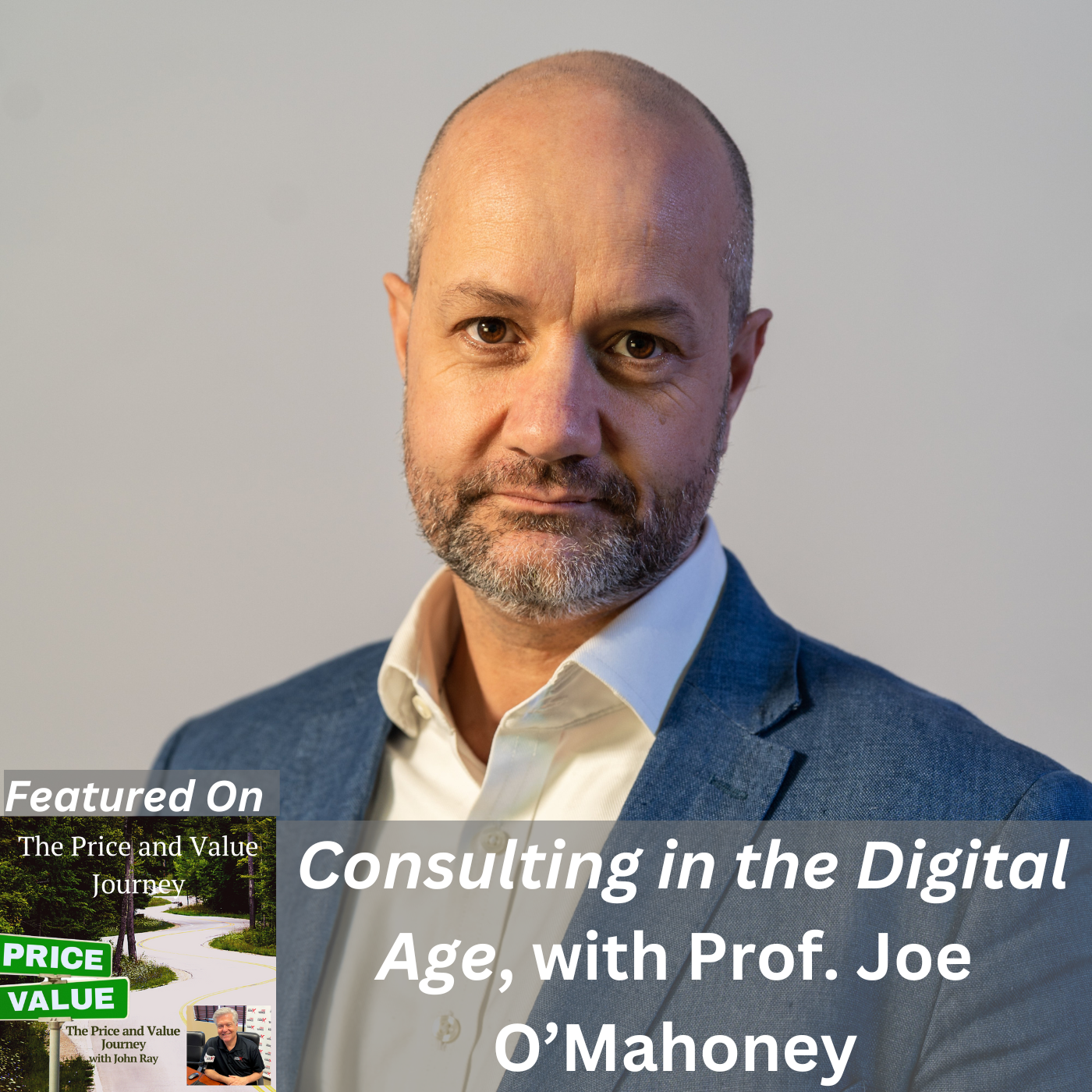
Consulting in the Digital Age, with Prof. Joe O’Mahoney

February 26, 2025 by John Ray

Consulting in the Digital Age, with Prof. Joe O'Mahoney, on The Price and Value Journey podcast with host John Ray
North Fulton Studio
Consulting in the Digital Age, with Prof. Joe O'Mahoney
Loading
00:00 /
RSS Feed
Share
Link
Embed

Download file

Consulting in the Digital Age, with Prof. Joe O'Mahoney, on The Price and Value Journey podcast with host John Ray

Consulting in the Digital Age, with Prof. Joe O’Mahoney (The Price and Value Journey, Episode 123)

In this episode of The Price and Value Journey, host John Ray welcomes Professor Joe O’Mahoney, a leading authority on the consulting industry. They discuss significant shifts in the consulting field, including industry growth, client sophistication, and the impact of AI on consulting processes and pricing. Joe highlights the importance of managed knowledge and systems in consulting firms and how firms can leverage AI to improve efficiency. They also touch on issues like value-based pricing, the role of luck in business success, and how consultants can build reliable, scalable models for long-term growth. Joe shares insights from his latest book, Growth: Building a Successful Consultancy in the Digital Age, making a compelling case for why modern consulting firms must embrace both digital transformation and personalized client relationships.

The Price and Value Journey is presented by John Ray and produced by the North Fulton affiliate of Business RadioX®.

Prof. Joe O’Mahoney

Joe is a leading authority on the consulting industry and a consultant to boutiques and small consulting firms. His research on the profession has won several prestigious awards and publications and resulted in leadership of high-profile government-funded research into the profession. Joe’s textbook on management consulting, Management Consultancy (published by Oxford University Press) was the best-selling book of its kind in Europe and his academic research has been published in the top international journals. His most recent, evidence-based book on growing consulting firms in the digital age, Growth: Building a Successful Consultancy in the Digital Age (published by Routledge), is the “go-to” growth text for consulting CEOs and managing partners all over the world.

Joe also practices what he preaches: he has been a corporate consultant, an internal consultant and a solo consultant. He has spent fifteen years providing advisory services to small consulting firms on growth and, in 2007, sold his own company, StayMobile Technology Ltd. In addition to his private practice, he is the founder of Repair Café Wales CIC and Consulting Mastered Ltd.

Joe has taught and coached over 2,000 executives and MBA students about management consultancy and helped hundreds of students gain places at leading consulting firms. Joe’s work has been recognized by awards from the British Academy of Management, the Centre for Consulting Excellence, the ESRC and several university prizes.

Joe studied history at Oxford University and obtained his PhD and MSc at Warwick University. He lives within Cardiff with his wife, Hannah, and two sons.

Website | LinkedIn

Topics Discussed in this Episode

00:00 Welcome and Introduction to Prof. Joe O’Mahoney
01:36 Big Shifts in Consulting
04:08 Myths and Outdated Beliefs in Consulting
08:03 Scaling and Growth Challenges
14:23 Managed Knowledge and Intellectual Property
19:46 Artificial Intelligence in Consulting
23:35 Implementing AI for Long-Term Success
25:25 Strategizing with AI: Efficiency vs. Personalization
26:45 Leveraging Off-the-Shelf Solutions for Process Improvement
28:20 AI’s Role in Consulting: Current Capabilities and Future Potential
30:12 The Impact of AI on Consulting Pricing Models
36:19 Building Value and Trust in Client Relationships
44:50 The Role of Luck in Consulting Success
48:34 Conclusion and Contact Information

About The Price and Value Journey

The title of this show describes the journey all professional service providers are on: building a services practice by seeking to convince the world of the value we offer, helping clients achieve the outcomes they desire, and trying to do all that at pricing that reflects the value we deliver.

If you feel like you’re working too hard for too little money in your solo or small firm practice, this show is for you. Even if you’re reasonably happy with your practice, you’ll hear ways to improve both your bottom line and the mindset you bring to your business.

The show is hosted and produced by John Ray and the North Fulton studio of Business RadioX®. The show can also be found on all the major podcast apps. The complete show archive is here.

John Ray, Host of The Price and Value Journey

John Ray, Author of The Generosity Mindset and Host of "The Price and Value Journey"
John Ray, Author of The Generosity Mindset and Host of The Price and Value Journey

John Ray is the host of The Price and Value Journey.

John owns Ray Business Advisors, a business advisory practice. John’s services include business coaching and advisory work, as well as advising solopreneurs and small professional services firms on their pricing. John is passionate about the power of pricing for business owners, as changing pricing is the fastest way to change the profitability of a business. His clients are professionals who are selling their expertise, such as attorneys, CPAs, accountants and bookkeepers, consultants, coaches, marketing professionals, and other professional services practitioners.

In his other business, John is a podcast show host and producer and owns the North Fulton (Georgia) affiliate of Business RadioX®. John and his team work with B2B professionals to create and conduct their own podcast using The Generosity Mindset™ Method: building and deepening relationships in a non-salesy way that translates into revenue for their business.

John is also the host of North Fulton Business Radio. With over 840 shows and having featured over 1,300 guests, North Fulton Business Radio is the longest-running podcast in the North Fulton area, covering business in its region like no one else.

John’s book, The Generosity Mindset: A Journey to Business Success by Raising Your Confidence, Value, and Prices
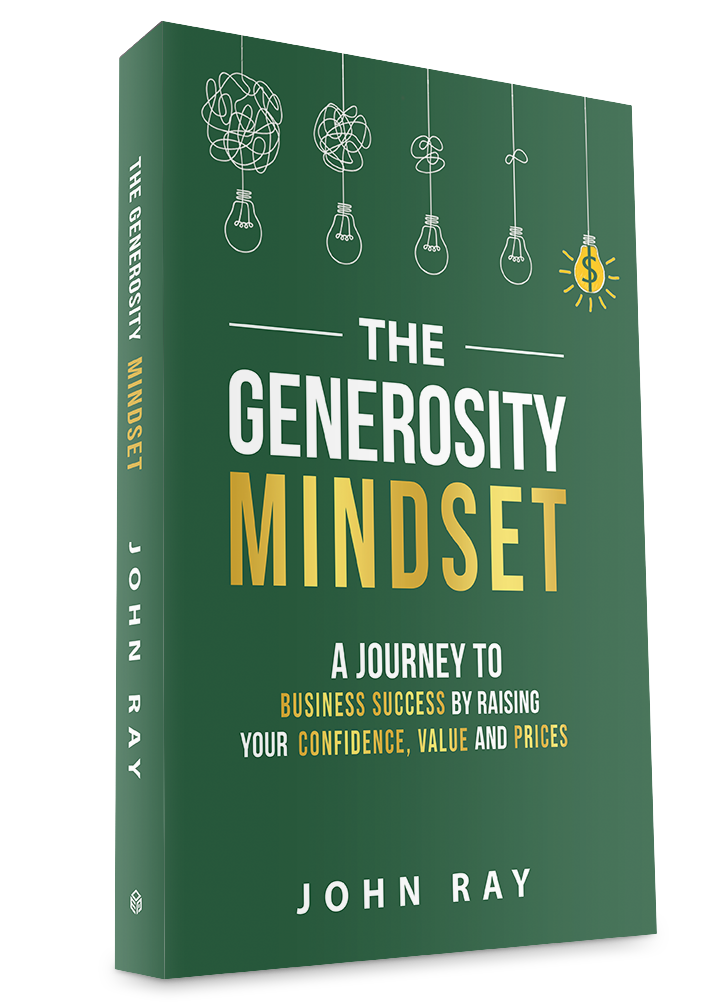
The Generosity Mindset, by John RayJohn is the #1 national best-selling author of The Generosity Mindset: A Journey to Business Success by Raising Your Confidence, Value, and Prices.

If you are a professional services provider, your goal is to do transformative work for clients you love working with and get paid commensurate with the value you deliver to those clients. While negative mindsets can inhibit your growth, adopting a different mindset, The Generosity Mindset®, can replace those self-limiting beliefs. The Generosity Mindset enables you to diagnose and communicate the value you deliver to clients and, in turn, more effectively price to receive a portion of that value.

Whether you’re a consultant, coach, marketing or branding professional, business advisor, attorney, CPA, or work in virtually any other professional services discipline, your content and technical expertise are not proprietary. What’s unique, though, is your experience and how you synthesize and deliver your knowledge. What’s special is your demeanor or the way you deal with your best-fit clients. What’s invaluable is how you deliver great value by guiding people through massive changes in their personal lives and in their businesses that bring them to a place they never thought possible.

The combination of all these elements is quite different for you compared to any other service provider in your industry. Therein lies your value, but it’s not the value you see. It’s the value your best-fit customers see in you.

If pricing your value feels uncomfortable or unfamiliar to you, this book will teach you why putting a price on the value your clients perceive and identify serves both them and you, and you’ll learn the factors involved in getting your price right.

The book is available at all major physical and online book retailers worldwide. Follow this link for further details.
Connect with John Ray:

Website | LinkedIn

Tagged With: AI, consulting, consulting industry, intellectual property, Joe O'Mahoney, John Ray, pricing, process improvement, professional services, The Price and Value Journey, value pricing

How to Modernize Your Business to Sell at Maximum Value, with Jason Beutler, RoboSource

January 3, 2023 by John Ray

RoboSource
How to Sell a Business
How to Modernize Your Business to Sell at Maximum Value, with Jason Beutler, RoboSource
Loading
00:00 /
RSS Feed
Share
Link
Embed

Download file

RoboSource

How to Modernize Your Business to Sell at Maximum Value, with Jason Beutler, RoboSource (How To Sell a Business Podcast, Episode 5)

Jason Beutler, CEO of RoboSource, joined Ed Mysogland to discuss various kinds of business automation, why RoboSource uses bots, what’s involved in automating processes, what industries benefit from it most, how it maximizes value and reduces overhead, the return on investment, and much more.

How To Sell a Business Podcast is produced and broadcast by the North Fulton Studio of Business RadioX® in Atlanta.

RoboSource

RoboSource bots work 24 hours a day, completing monotonous tasks for their clients.

Process Automation is the future of work. Soon every business will have a digital workforce alongside its human workforce. Automated processes get work through faster, more efficiently, and more accurately.

So what is process automation? Think of all the jobs around the office that your team has to complete every day (or week) to keep the business operational – things like entering information into multiple systems, manning email inboxes, pulling down the same information from a website over and over again. With Robotic Process Automation (RPA), software engineers teach digital bots how to perform those jobs for you.

RoboSource can provide process-writing and support for those using RPA on premises. But with their “as-a-service” model, they can also do it all in house, for a low monthly payment, eliminating the usual expense associated with investing in the infrastructure, software, and training. Your cloud-based solution will scale with you, as you find new ways to save time and increase accuracy.

With their “as-a-service” model, process automation is more affordable than you’d think.

Company website | Instagram | LinkedIn

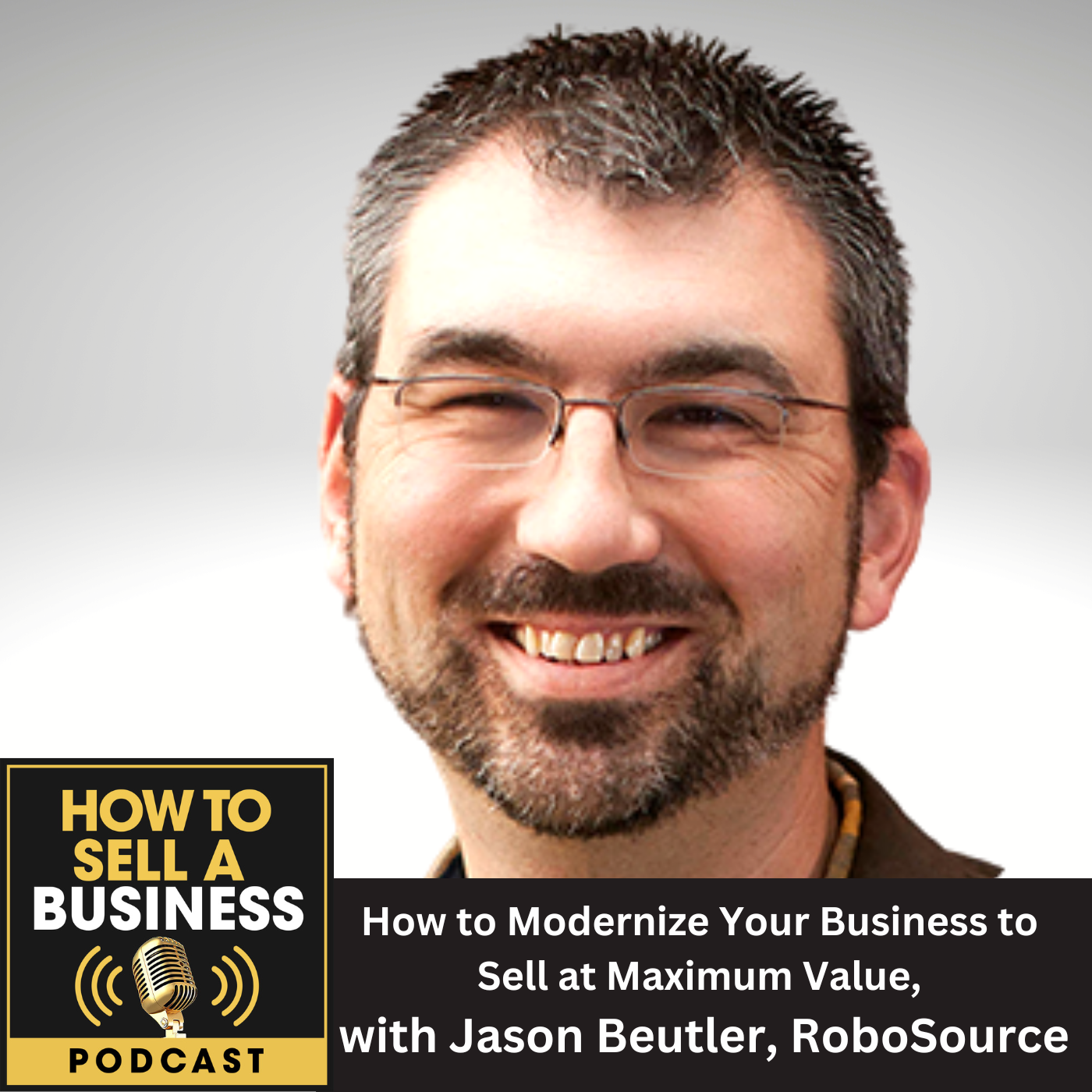
Jason Beutler, CEO, RoboSource

Jason Beutler, CEO, RoboSource

Several years ago, Jason Beutler was teaching a college computer engineering class when he realized that his students were writing better code than an outsourced team he was supervising at the same time. And that’s how RoboSource was born.

With almost 20 years of professional programming experience, you might expect Jason to spend his free time reading fantasy fiction, playing board games, or drinking Mountain Dew. He does. But he also spends a fair amount of time playing competitive sand volleyball and fanning hard-core at Notre Dame football games. His passion for Notre Dame extended to completing his MBA there in 2009.

Professionally, Jason is passionate about process improvement and using accountability to grow young developers. He speaks often on this topic, to audiences as diverse as coding conference attendees, classes full of university students, and computer science educators.

LinkedIn

Ed Mysogland, Host of How To Sell a Business Podcast

Ed Mysogland, Host of “How To Sell a Business”

The How To Sell a Business Podcast combines 30 years of exit planning, valuation, and exit execution working with business owners. Ed Mysogland has a mission and vision to help business owners understand the value of their business and what makes it salable. Most of the small business owner’s net worth is locked in the company; to unlock it, a business owner has to sell it. Unfortunately, the odds are against business owners that they won’t be able to sell their companies because they don’t know what creates a saleable asset.

Ed interviews battle-tested experts who help business owners prepare, build, preserve, and one-day transfer value with the sale of the business for maximum value.

How To Sell a Business Podcast is produced virtually from the North Fulton studio of Business RadioX® in Alpharetta.  The show can be found on all the major podcast apps and a full archive can be found here.

Ed is the Managing Partner of Indiana Business Advisors. He guides the development of the organization, its knowledge strategy, and the IBA initiative, which is to continue to be Indiana’s premier business brokerage by bringing investment-banker-caliber of transactional advisory services to small and mid-sized businesses. Over the last 29 years, Ed has been appraising and providing pre-sale consulting services for small and medium-size privately-held businesses as part of the brokerage process. He has worked with entrepreneurs of every pedigree and offers a unique insight into consulting with them toward a successful outcome.

Connect with Ed: LinkedIn | Twitter | Facebook


TRANSCRIPT

Intro: [00:00:00] Business owners likely will have only one shot to sell a business. Most don’t understand what drives value and how buyers look at a business. Until now. Welcome to the How To Sell A Business Podcast, where every week we talk to the subject matter experts, advisors, and those around the deal table about how to sell at maximum value. Every business will go to sell one day. It’s only a matter of when. We’re glad you’re here. The podcast starts now.

Ed Mysogland: [00:00:35] In today’s podcast, I had the opportunity to interview Jason Beutler of RoboSource. I’ve known him for a while. He’s a friend and we’ve known each other through an organization called Truth at Work. So, I know him professionally as well as personally. And I can tell you he is probably one of the smartest people I have ever, ever plowed into.

Ed Mysogland: [00:01:01] And so, today we’re going to be talking about automation and what that means for a seller to sell the company or a buyer that may be buying the company and how to maximize that investment. He talked a lot about where to identify those opportunities to automate the business. So, I am certain that you will get a lot from this episode. So, enjoy my conversation with Jason Beutler of RoboSource.

Ed Mysogland: [00:01:40] Welcome to another episode of How To Sell A Business Podcast. I’m your host, Ed Mysogland. I help business owners identify what creates value in their companies so that one day that they can sell at maximum value. Today, I have a good buddy of mine, Jason Beutler from RoboSource. So, Jason, tell us a little bit about RoboSource, and not too long because I got lots of questions for you.

Jason Beutler: [00:02:07] Thanks, Ed. So, RoboSource is a process automation company. We basically help businesses automate mundane, repetitive tasks within their business to maximize their time and get their people working on things that are more important and strategic to the business.

Ed Mysogland: [00:02:25] Well, as I was saying when we first got started, you know, there’s so much here and I guess I’m looking first, define automation for everybody.

Jason Beutler: [00:02:40] So, automation is essentially taking the work out of a human’s hands. So, letting the computer do the task that needs to be accomplished. So, it can be simple things such as one of our clients puts invoices into QuickBooks and they need to classify those invoices by salesperson. So, instead of having a human go through and classify that, the computer automates that process and does that for them.

Ed Mysogland: [00:03:10] Okay. So, from the standpoint of that automation, because like I was telling you, I was beating up on one of our guys here today on you and I had an opportunity to work together and I couldn’t sell it to my partners. They were just fearful of what this meant to the business and the risk associated with it. So, where we ended up with was offshoring a lot of what we were talking about with automation.

Ed Mysogland: [00:03:43] So, I know like Zapier and If This Then That, and then you have your custom work, and then, in our case, offshoring. Is that kind of the lifecycle of automation that I’m scared to automate so I’m going to hire somebody at a lower cost and then I’m going to back into automation? Because at least I think that is our trajectory, you know what I mean? Go ahead.

Jason Beutler: [00:04:21] And I would say a lot of companies are doing that. So, let’s talk specifically about the different kinds of automation. So, there are three specific kinds, and RoboSource does all of them. So, to start, first, we’ve got the traditional software. So, traditional software is what we’ve been doing since, like, the ’50s, right? It’s building software that manages data and processes and helps you sort of automate the day-to-day. That’s where the warehouse systems, the ERPs, all of those came about. That was a form of automation and it’s still something that’s done a lot today.

Jason Beutler: [00:04:52] The second and more recent form of automation that’s come about are these low-code and no-code tools that you talked about, the Zapiers, the If This Then That, the Microsoft Make or Power Automate platforms. Those tools are, essentially, drag and drop so that you don’t have to have any concept on how to code, but you can still kind of automate and build in. They operate off of triggers. So, if something happens in one system, it will trigger this automation to happen and do something from there. So, you could say watch an inbox for an incoming email and trigger it to do something for you.

Ed Mysogland: [00:05:24] I got it.

Jason Beutler: [00:05:26] The last form of automation is what’s referred to as robotic process automation, and that’s a very new technology that’s come about where essentially you can mimic clicking on a desktop the way that a human would click on the desktop. So, if a human can click on buttons and move around on a website or an application, you now can write a software bot that will automate that for you.

Jason Beutler: [00:05:50] So, I say all of that in answering your question around how do we have these conversations and what’s the trajectory of adopting automation. Most people already are adopting automation in some way, shape, or form because they’re using software as a traditional form of software. It’s an area that they feel comfortable because we spent the last 20 years looking at it and dealing with that kind of automation. Where people get uncomfortable is when they see the bot clicking on the buttons for a human. That’s when they start to think, “Oh, where are humans making decisions that I would be uncomfortable having a bot make a decision.”

Jason Beutler: [00:06:29] And the problem is most people don’t know that. They don’t know the decisions that are being made, that a human’s being made when they’re clicking those buttons. And as a result they get a little bit uncomfortable. And so, that’s really where I start in those conversations, is, digging into what are the real decisions that are being made when you’re clicking these buttons.

Ed Mysogland: [00:06:46] Yeah. Give me an example of that. And I’m totally transparent, you can beat up on us all you want. I mean, when we were talking, I’m sitting here going, “All right. I can see it, but am I willing to risk it?” You know what I mean? I can see what you’re talking about, but am I willing to put, in this case, we were talking about inbound confidentiality agreements. We get about a thousand a month and we’re using DocuSign and this, that, and the other. And it’s like, “Okay.” What’s the risk and how do I understand what you’re talking about as far as the bot doing what it does to replace the person that is physically doing it for us now. So, how do I get comfortable with that?

Jason Beutler: [00:07:40] So, some of it is just mindset. The reason you’re comfortable having a human do that is because you trust the human’s decision making process. What’s interesting is the bot is going to make the same decision every time because it’s software. So, there are rules going to be defined around that that are going to have the bot make the same decision. It’s just uncomfortable for us because we’re not used to it.

Jason Beutler: [00:08:03] And this is the transition that’s happening I think in the ’20s right now, is, there’s starting to become more and more comfort with the fact that computers can actually make the decisions that humans have been making on issues like what you’re dealing with. And so, at the end of the day, those NDAs are vital to your organization and your business. It’s like a cornerstone of what you’re doing. Having the human click that button gives you a sense of warm fuzzies that you know someone had to sit there and make the right decision.

Ed Mysogland: [00:08:33] You’re right. But at the same time, I mean, after I hear you say that, I’m like, that is such a nice guy that’s doing it. But, you know, I’m sitting here going, “Well?” Because I can’t remember what the savings was. I mean, it was probably – I don’t know – ten bucks an hour or whatever doing all the processing. And I can’t remember what the financial mechanics were, but it was about a 95 percent savings, I think, something like that.

Jason Beutler: [00:09:11] Yeah. Probably.

Ed Mysogland: [00:09:11] And so, hearing myself say this, I’m like, “Oh, my gosh.” But you’re totally right. And I wanted to feel better about the decision. Like, if there was a problem, that guy was going to call me. And I’m afraid with a bot, the whole damn place falls apart before I know it. And so, how does that work? Where’s the tripwire to prevent my infrastructure to fall apart?

Jason Beutler: [00:09:49] Yeah. So, when looking at automation, one of the first things you want to look at is what happens on – what we call – the non-happy path, what happens in the exception cases. And really that’s where we plan our automations around, is, we know that the happy path, that’s going to work. But what happens when it’s not following that. So, that’s how you build the process. That’s where you want to make sure you’ve got the automation defined.

Jason Beutler: [00:10:15] So, in this instance, it would have been like here are the boundaries. Here are the scenarios, where if it falls within these boundaries, we’re going to go ahead and send out the NDA because we feel confident that we’re operating effectively. If it’s outside of this range, either there’s some form of maybe AI decision making we can go through to come to a better decision or we’re going to send it to a human to click the button for us.

Ed Mysogland: [00:10:39] Okay.

Jason Beutler: [00:10:40] Because not all automation has to be 100 percent hands off, and I think that’s another area that people don’t understand. The 80/20 rule applies here. How much more time would you get if we could get rid of 80 percent of the scenario and you only have to deal with 20 percent of it?

Ed Mysogland: [00:10:58] You’re right. I mean, you’re totally right. But at the same time, I’m looking at it like in our process. The NDA came in, RoboSource was going to write the NDA to our CRM, but that’s where it stopped. Because we had 16 people, whose client does that belong to? And that’s where the rub was, was how does the bot know? And now, after I’ve gotten away from it, you were like, “Well, simple. You just see whose client was tagged and you’re off to the races and then it’ll do it for you.” And that leads me to my next question of, how much of a process can this be automated? I mean, how many steps is a typical automation?

Jason Beutler: [00:12:04] So, we’ve done automations that are as small as two to three steps, just because they do them in high volume, to we’ve done automations that have as many as about 400 steps, and that’s more on the mortgage side. And we’ve also done some work with a nonprofit processing incoming transcripts, where they’re extracting content out of a high school transcript and putting it into a system and running them through some approval processes. So, those are massive processes that are very long running, potentially running three, four months even.

Ed Mysogland: [00:12:43] Okay. So, you just said, a bot is scanning a transcript and extracting the paragraph. What are they extracting?

Jason Beutler: [00:12:55] It’s extracting the semester, the class, and the grade, as well as the grade point average, what school they went to.

Ed Mysogland: [00:13:02] I got it. I got it. But it’s not, like, reading the essay and pulling –

Jason Beutler: [00:13:09] Oh. No.

Ed Mysogland: [00:13:10] I got it. I was like, “Oh, my gosh.” So, one of the biggest reasons I wanted you on here was we have the baby boomers that are looking to sell businesses, and you hear it all the time. And the challenge we have is coming from the other side, the buyers are looking at it on, “Hey, I want a really well operated business.” But at the same time, I got to figure out, not only how I get my money back from the acquisition, but how do I grow this.

Ed Mysogland: [00:13:55] And they’re finding good companies, and that’s part of the problem. When I say problem, that’s part of the challenge. From the buy side, it’s like, “Okay. I want a really good company. But at the same time, I’m trying to elongate a business that is perhaps on the mature side of the company lifecycle.” From the seller’s side, I’m sitting here saying, “Okay. If I have enough runway, I want to put some of this in so I can maximize, not only the earnings pre-sale, but also it’s already set up for the next guy.”

Ed Mysogland: [00:14:34] I mean, you can look at it both ways. Well, from my standpoint, I think I would look at it from the buyer standpoint. When I’m looking at a business, how do I look at automation? Are there industries that are ripe for it? Are there processes that this is the low lying fruit that you can have immediate value impact?

Jason Beutler: [00:14:58] Yeah. Talking to that specifically, I have a client that ended up selling their business in the industry they were in. And the reason being is there was a PE firm that was coming in and looking to buy something in their industry. And because we’d been working with them, their overhead was 35 percent less than their competitors. And they got sucked up as a result of it and he had a pretty good exit.

Jason Beutler: [00:15:22] So, it is something that’s of a lot of value. And you can create scenarios where the automation is actually a differentiator. I think from the buy standpoint, the things that I would be looking for are places where there is human repetitive action. I mean, at the end of the day, computers are going to be better at that. Computers are really good at doing repetitive tasks, that’s what they’re made to do.

Jason Beutler: [00:15:50] And so, if we’re seeing things where people are taking paper and keying it into systems or people are having to key in two or three different systems – which is common. I run into that probably three or four times a week – where we’ve got to put it into our inventory system, our CRM, and our ERP in some way, shape, or form, or our finance system. So, we’re literally putting the same client in three different places. Those are areas where you’re going to see a lot of automation opportunities show up very quickly and you’re going to save quite a bit of time and money off of that.

Ed Mysogland: [00:16:19] So then, it begs the question, what do I deploy? Like, for example, I am a Mac guy. I have Text Expander. I’ve got this thing called Hazel that moves my files and stuff like that. When do you say, “You know what? I need custom. I need somebody to come in, evaluate, and build this thing out.” As opposed to, “I think I’m going to try this Zapier thing. I’m going to click on it and here’s my trigger and here’s the next step.” But it’s just one step. So, how do I – I don’t want to say work with someone like you, but how do I know what I don’t know? Because, truly, most people don’t have no clue about this stuff.

Jason Beutler: [00:17:21] Yeah. So, tools like Zapier are extremely powerful and they do make it available for individuals who don’t understand necessarily all the intricate behind the scenes working of a computer to be able to do some basic automations. It’s when you start to get into the more complex decision making processes that you’re probably going to want to bring in somebody who understands.

Jason Beutler: [00:17:44] Automation is the intersection between data, business, and software. You’ve got to understand data analytics, which gets into artificial intelligence. You’ve got to understand how to build software. Because at the end of the day, a computer is going to operate in a different way than a human would operate, and understanding how that works makes sense. But if you don’t understand business, then automation is just going to be a waste of your time. So, you’re at that intersection point.

Jason Beutler: [00:18:10] I would say if you’re doing automation and you’re getting to the point where you’re like, “Wow. There are acronyms coming up that I don’t know what they mean. Things like O off, things like APIs, they’re starting to show up because I’m trying to do more complicated things.” That’s when you probably want to bring in somebody who’s been there.

Ed Mysogland: [00:18:27] I got it. And for somebody like me mixing and matching a RoboSource with my dabbling of Zapier and stuff like that, that’s probably a bad idea, isn’t it?

Jason Beutler: [00:18:47] There’s some advantage to putting it all into a single location, but there’s nothing that’s going to keep you from being successful in that environment. So, a lot of automations are now operating inside the Cloud. And by the Cloud, we basically just mean someone else’s computer on the internet, which is really all that that’s meaning. So, as a result, you can use Zapier to do some of your more basic things.

Jason Beutler: [00:19:11] And when you get into what we refer to as intelligent automation or hyper automation, where you’re really trying to accelerate some things or make some decisions, you might want to send it off to maybe an Azure with a cognitive services behind the scenes. And I just went all geeky on people, but, you know.

Ed Mysogland: [00:19:25] I got it. And, again, this isn’t an ad for Zapier even though it sounds like it. It’s more from the standpoint of I don’t know what I don’t know, but I read all this. And not many people are saying these are the people that will come in, evaluate your process, and automate it. Versus, “Hey, gain five hours to your day by using Zapier.” So, I’m with you.

Ed Mysogland: [00:20:10] So, one of the things that I was writing about is, in business valuation, recurring revenue is pretty high up on the value hierarchy. Conversely, if I look at automation, I am optimizing, basically, the engine of the company. So, I know you were saying what’s a human doing, the data entry, and so on and so forth. I’m assuming accounting is right off the bat because I heard you mentioned QuickBooks. Where else should I be looking? Let’s just take a manufacturing company. Where am I looking for a manufacturing company?

Jason Beutler: [00:21:13] Work orders, what that work order process look like, how is that coming through. We do a lot with purchase orders. We do a lot on invoice processing. Finance comes up quite often. And specifically also, when you start getting into debt reconciliations across banks, credit card processing across banks, making sure that you’re standardizing all those accounts and everything all lines up, that’s a lot of manual work that can be automated and those decisions can be made.

Ed Mysogland: [00:21:46] I got it. I was interviewing a guy that optimizes CPA practices. And one of the things that he was saying that was coming down the pike is taking a person’s tax return, scanning it in, extracting the tax return for the next guy to do their analysis. And I assume the IRS does something like that already. I mean, from a procedural standpoint, it’s looking at the image and it’s looking at a particular area and it’s extracting what is in that pixel. I mean, is that how it does it?

Jason Beutler: [00:22:45] So, that’s hard to explain without getting into the science behind it all. But, essentially, yes, that’s basically what it’s doing, is, it is looking at the image structure and it’s an array of pixels, so it’s an array of colors. And it’s looking at those colors and it’s identifying patterns around those.

Jason Beutler: [00:23:06] Now, something to note on PDFs is not all PDFs are scans. A lot of PDFs are actually printed. And that’s actually a different underlying structure. So, if it’s a printed PDF from, like, an application and you print it to file, that actually has the text embedded in it and that text is a lot easier to pull out.

Ed Mysogland: [00:23:28] That’s the OCR or no?

Jason Beutler: [00:23:31] OCR is going to work off of the scanned images because that’s doing optical character recognition. And that’s where you’re going to take a scan or a picture and it’s going to figure out what the words are. And that’s pretty accurate but it’s going to run into some issues. Then, I’d say most PDFs that are received these days now are in QuickBooks. You hit print a PDF and it comes out as a really pretty formatted PDF. That’s actually not an image. That’s actually a text embedded document that you can go behind the scenes and pull that text out directly.

Ed Mysogland: [00:24:03] I had no idea. And that’s how you’re able to do it with purchase orders. I get it.

Jason Beutler: [00:24:14] Yes.

Ed Mysogland: [00:24:15] Okay. So, everybody gets all shook up about employees that the employees are being replaced by robots. I mean, I know it’s true. But I’m trying to figure out whether or not that’s a bad thing, you know?

Jason Beutler: [00:24:40] Yeah. And one of the thoughts I’ve had around that recently is we’ve had recently The Great Resignation, and now we have quiet quitting. So, we’ve got our workforce saying, I don’t want to do things that I don’t feel are important. I don’t want to work in a place or work on work that isn’t meaningful and impactful. I want my day to matter. And then, we say, “Okay. Let’s automate some of the meaningless work.” And everyone’s up in arms about we’re replacing jobs. I’m not seeing it line up. And I see the workforce basically begging to work on more important things. So, why wouldn’t we automate away the things that, basically, they’re already saying they don’t want to do?

Ed Mysogland: [00:25:24] Wow. Out of everything you’ve said, that’s probably the most impactful for me. Because you’re exactly right, you know, if you can take away the mundane and give them the opportunity to maximize whether it be creativity or whatever, I got to imagine it’ll improve corporate culture and retention. I never looked at it that way. That’s a great way to look at it.

Ed Mysogland: [00:26:02] So, I’m trying to determine if I have two businesses and one has automation, one has people doing it. I’m trying to determine risk. You follow? I mean, on the automated side, you’re saying, “Look. I got a bot doing all this. There is no risk. The only risk is it breaking.” On this side, I have people, and they do break, they make mistakes. But yet I’m trying to determine if I’m the buyer looking at the business, am I intuitively thinking that the business with people is less risky than the automated one? You know what I mean?

Ed Mysogland: [00:26:57] Like, if you have a buyer that shows up and they see the automation, am I sitting here going, “You know, I think that’s a business for me” versus I got these people. I’m great at managing people. I’m great at maximizing their efficiency, and so on and so forth. What do you say to that? I mean, that’s a hard one, right?

Jason Beutler: [00:27:27] Yeah, it is. And, to me, I guess it comes down to how far out you’re looking. So, if you’re looking out just a couple of years, then, yeah, go with what you’re comfortable with. But if you look back at history, and let’s just take Stud, Studebaker, Duesenberg, they could build cars, but they’re not around. Why? Because someone came along and made it more efficient and figured out how to do things more efficiently than they were able to do things. And, eventually, it got to the point where, competitively, they couldn’t keep up.

Jason Beutler: [00:28:04] And I guess the question I would have is, if you’re looking at a business that is primarily people driven versus one that has a lot of automation driving it, how long out are you looking? Because if you’re looking at long term, your competitive advantage is going to come with automation. And why is that? It’s an asset you own and it’s an asset that’s scalable. So, if you need to go twice as fast, it’s a bot. You literally can push buttons and have it go twice as fast.

Jason Beutler: [00:28:31] If you all of a sudden are like I need to scale way back because recession or something’s hit, you can push buttons and scale it way back. You’ve got flexibility that you wouldn’t have with people necessarily. Not to say that the people aren’t vital because there’s strategic and relational and things that really only people can do that you want to make sure you got the right people doing that. But in terms of the day-to-day operations, I would say it depends on your duration.

Ed Mysogland: [00:28:57] You know what? It’s fascinating that you say that, because the holding period for a business tends to be long. And you talk about getting financing to buy companies and you’re talking about a ten year amortization. And if you think about what has transpired in the last ten years – and I can’t remember what the term is about technology, how fast it’s changing – but there’s some —

Jason Beutler: [00:29:30] Doubles every seven years.

Ed Mysogland: [00:29:31] Yeah, that too. So, if I’m a buyer, I mean, you’re exactly right. As I look at business owners, especially the ones that are looking to retire, buyers are evaluating where are they on that lifecycle. And I would imagine that there’s a lot of businesses that aren’t marketable because of where they’re at in the life cycle as opposed to, “Hey. I think I can fix this.”

Ed Mysogland: [00:30:07] Now, I’ll tell you, there’s some guys that are rolling up foundries. And these guys, I love watching what they’re doing and that’s exactly what they’re doing. I mean, the foundries, that business hasn’t changed in decades. And they’re coming in and just retooling it, make it more efficient economies of scale. Those are the type of buyers, I think, are probably we’re going to see more of over the next half-a-decade or so.

Ed Mysogland: [00:30:46] As a vendor, it’s one thing for me to hire you to fix my stuff. It’s another thing having somebody on site to be – I call it and I’m seeing more and more – chief automation officers. Do I need that or is an outsourced vendor like yourself adequate? You know what I mean?

Jason Beutler: [00:31:11] Yeah. I would say, right now you’re not going to find a lot of people that are going to be qualified to be a chief automation officer. It’s a relatively new concept. And it is going to be a unique skill set, as we talked earlier about that blend between data analytics and AI, having software development background and process orientation, but also having enough business acumen to know how to automate and run the business.

Jason Beutler: [00:31:37] So, what I find works best is to take the AI and software component and outsource that, but keep the business acumen in-house. So, take a subject matter expert, somebody operationally that understands what’s going on, and partner them with somebody, like us, that can provide the technical oversight and the technical aspects. Most businesses will have some form of technology on staff, but not necessarily the automation technology. And these days you don’t need it to be in-house. You can leave that outsourced. Personally, I think you’ll be better served that way because you’ll be able to get some economies of scale off of that.

Jason Beutler: [00:32:18] So, with a partnership between your in-house subject matter expert and outsourced or consultative help on the technology front, I think you can accomplish the technology and the support of it in a very effective manner without having to go bring in a chief automation officer, which is frankly going to increase all your infrastructure costs as well.

Ed Mysogland: [00:32:42] I got it. So, I’m certain every buyer that is listening to this is going to say, what are the industries that are ripe for me to go target? And you said, those that are heavy in paper. But are there any particular businesses or industries or the types of businesses that – I know you said – paper heavy, but any industries that come to mind that if I’m a buyer, because you may be a buyer, Jason, where are you looking to buy?

Jason Beutler: [00:33:27] Right now, the clients I’m running into the most often are insurance. Mortgage is actually coming up all the time right now. I’m running into mortgage applications and mortgage underwriting almost daily on that front. So, those are two areas that I’m hitting often. Banking is starting to show up a lot more, though they do have more of their internal systems that they’re able to run on. The other on I’m hitting is health care, health care billing. It is the Wild West out there. And the opportunity to standardize and automate on that is huge.

Ed Mysogland: [00:34:07] I also heard HOA, so that was one that kind of caught me by surprise. I didn’t think of that in my research for our talk. It seems as though anything that has an application, whether some use Google forms and that will bring it in. Others, especially like apartments, where somebody comes in and actually fills out an application. Those are our candidates. We talked a little bit about manufacturing. CPAs are definitely trying to automate. Yeah, so that’s really interesting.

Ed Mysogland: [00:35:03] So, you said something earlier about you own this process. Does it have to be updated? What’s the security? How do I protect, like whatever, open source? You know, that’s open to the world, right? So, I have this proprietary. I engage you. I have a proprietary process. How do I protect that? And is it really mine or is it yours?

Jason Beutler: [00:35:37] So, the process is yours. That being said, it is implemented inside of a piece of software. So, most of these tools nowadays are built inside of tools. You’ll hear things called UiPath, Blue Prism, Microsoft Power Automate, Logic Apps. There’s a whole series of these tools that you will implement the automation inside of. So, while the process is your intellectual property and how it executes is specific to you, it is somewhat proprietary to the software that it’s been built inside of. That being said, you could take that software, implement it in another location, and move that process into that, and have no trouble at all running it.

Jason Beutler: [00:36:20] So, just to make sure we’re clear on that, security, that is a challenge. Now, we talked about the different kinds of automation, right? The low-code, no-code, the traditional software, and the RPA. RPA security, which is the desktop automation, that’s a little more straightforward because it’s literally logging in like a human one. So, it’s the same security that you have. If you put a username and password in and navigate a site or navigate an application, that’s the way the software bot is going to go. So, you can control the security the same way you would on a user.

Jason Beutler: [00:36:52] When you get into the traditional software and some of the low-code stuff, security gets to be pretty challenging. There are what are referred to as application programming interfaces or APIs. Those have a series of security, they’re called tokens. You use tools like OAuth, which is open authentication to integrate with them all. If you’re starting to get into a lot of that, you probably want to call a software guy because you’re getting into some pretty low level security type of things. But those are all built into these tools these days, so you’re not having to necessarily figure it out. You just have to know how to implement it.

Ed Mysogland: [00:37:31] So, I’m a consumer and I sit here and go, “All right. Exactly what does RoboSource do for me? What does a guy like Jason do?” You know, it’s being protected, so it’s design. So, I know you’re designing it. I don’t know why I’m talking for you. So, let me turn it over to you, what is Jason doing in my world? What are you doing for me?

Jason Beutler: [00:38:05] So, first and foremost is, we’ve built a ton of these, so we understand the pitfalls. So, when we sit down and work with on a process with you, we’re going to essentially know how to make this process operate and we’ll build from that standpoint. Second is we build it. Most of our clients do not know how to build out software. They don’t know the appropriate ways, the best way to build that automation. So, with our architects and our experience, we build that out for you.

Jason Beutler: [00:38:31] So, not only do we plan out how it should look, we build it for you, and then we support it. Meaning, you don’t have to worry about it at all. We just take care of it. We’ll specifically give you an app that shows you real time what your software bot is doing. And if anything breaks, we’re looking at it. So, we’re writing software and tools to handle all those scenarios you said earlier where it’s like, “I want to know this thing broke before it breaks. I want to be ahead of it.” We’re doing all of that.

Jason Beutler: [00:38:59] That’s the monitoring and systems that we put in place, and that’s the platform that we’re building out, is to make sure that all that is safe and secure and that somebody is looking at it. We can catch the anomalies before they happen. If something breaks, we got it fixed as quickly as we can to keep your business up and running. So, that’s what we’re doing on that front is we’re essentially providing automation as a service for you so you don’t have to know anything about how to automate. You just have to know that you’ve got something that you want automated, and we’ll take it from there.

Ed Mysogland: [00:39:27] And if I’m not mistaken, how you get paid is based on the automate the event, right.

Jason Beutler: [00:39:37] Correct. Yeah. So, similar to electricity, we scale by usage.

Ed Mysogland: [00:39:45] Okay. I get it. So, have you done any studies on the ROI to this stuff? Knowing you, you probably have. So, what kind of ROI should someone expect by doing it?

Jason Beutler: [00:40:02] So, the ROI that we’ve seen, let’s kind of break down how the costs look. Typically, there’s an upfront cost that comes into building out the process in some way, shape, or form. Similar to if you were to onboard somebody, you’re going to have an upfront training cost, right? Getting up to speed. You’re going to have that same type of cost with getting the software built or getting the automation built. After that, then there is sort of the monthly recurring usage based fees that come out of it.

Jason Beutler: [00:40:30] What we’ve seen is we’re saving anywhere between 35 and 50 percent from a human on that monthly recurring level. Depending upon the automation, it can get as high as, like, 80, 90 percent. But conservatively, we’re saying between 35 and 50. So, given that, what I see across most of my clients is about a six month payback period, six to nine months at the most in year one. But, remember, that includes the implementation fee. So, by year two, your savings are phenomenal. And so, we’re seeing in the second year, you’re often spending a quarter of what you were the year before.

Ed Mysogland: [00:41:10] I got it. All right. I want to be sensitive to your time, so at the end of every episode I always ask, what’s the one piece of advice that you could give our listeners that would make the most immediate impact on their business? Go ahead, I dare you to say automate.

Jason Beutler: [00:41:32] I mean, along those lines, though, I guess I would say busy is the new broke. So, when you’re broke, you don’t have enough money to focus on and to put towards the things you should, let alone the things you want to do. The same is true when you’re busy. So, if you’re busy, you don’t have enough time to focus on the things you should be focusing on, let alone the things that you want to be focusing on.

Jason Beutler: [00:41:57] And you really only have two options. You can delegate and you can automate. Those are your only two options in order to get your time back. And really, at the end of the day, time is the resource we’re managing as business owners and business leaders. So, I guess automation is a new thing. You need to learn it. It’s half your solution. It’s half the possible solutions that are out there. And I think that’s an important aspect and something to think about.

Ed Mysogland: [00:42:24] Yeah, you’re exactly right. And I really appreciate how you look at that, that this is not so much about costs as it is about time. I get it. So, what’s the best way that we can find you?

Jason Beutler: [00:42:49] Website, robosource.us. You can always email me, jason.beutler@robosource.us. And then, my phone number as well.

Ed Mysogland: [00:43:01] Okay. And we’ll have all of that in the show notes. Super easy. All right, oh, buddy. Thanks for taking the time. I know this is the future. And I’ve been following along for quite some time about buyers and what’s inducing them to buy businesses. And so, I am so grateful for your generosity to spend some time with us today and and talk about how we can make businesses either more marketable, or post sale, how to maximize the buy. So, thanks so much for hanging out with me.

Jason Beutler: [00:43:45] Hey, it was fun. I appreciate it. And I look forward to talking to you again soon.

Ed Mysogland: [00:43:49] Sounds good. Thanks, buddy.

Outro: [00:43:52] Thank you for joining us today on the How To Sell A Business Podcast. If you want more episodes packed with strategies to help sell your business for the maximum value, visit howtosellabusinesspodcast.com for tips and best practices to make your exit life changing. Better yet, subscribe now so you never miss future episodes. This program is copyrighted by Myso, Inc. All rights reserved.


Tagged With: automation, bots, Business Owners, business process, business value, Ed Mysogland, exit planning, How to Sell a Business Podcast, how to sell my business, how to sell your business, Jason Beutler, Notre Dame, process improvement, RoboSource, Sell my business

Episode 64: The One Thing You Need to Know About Process Improvement – Alicia Butler Pierre

September 23, 2019 by Mike

Business Infrastructure
Episode 64: The One Thing You Need to Know About Process Improvement – Alicia Butler Pierre
Loading
00:00 / 36:18
RSS Feed
Share
Link
Embed

Download fileDuration: 36:18

Processes not only ensure consistency with how you make a product or deliver a service, but they directly impact your customer’s experience. In this Season 5 finale, Alicia Butler Pierre, host of the Business Infrastructure show, shares what a process is, its importance in building business infrastructure, and the one thing you need to know about improving one. Listen in as she describes the stages of her podcasting process to illustrate how to execute process improvement. It might be a fun exercise to go back to previous episodes to determine if you can detect the improvements she talks about from season to season! Leave a comment and let us know what you find.

Monologue: Alicia Butler Pierre, Founder & CEO  – Equilibria, Inc.

Location:  Atlanta, GA  USA

Show Notes:

    • Behind the Facade: How to Structure Company Operations for Sustainable Success: Alicia’s book with a full chapter on process identification, documentation, and improvement (Chapter 8).
    • Top 10 Factors to Consider When Outsourcing Process Analysis Work: an article by Alicia to help you identify the best resource for your process improvement initiative.
    • Contact Alicia to Help You With Your Process Improvement Initiative
    • 48 Laws of Power: a book by Robert Greene.  Note the 45th Law: Preach the Need to Change, but Never Reform at Once.

Tagged With: infrastructure, Leadership, podcast, process improvement

LEADER DIALOGUE: Strategies to High Reliability – Deep Dive

September 13, 2019 by Mike

Gwinnett Studio
Gwinnett Studio
LEADER DIALOGUE: Strategies to High Reliability - Deep Dive
Loading
00:00 /
RSS Feed
Share
Link
Embed

Download file

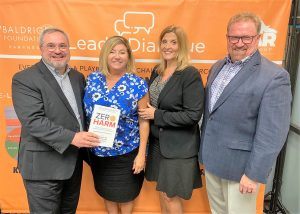
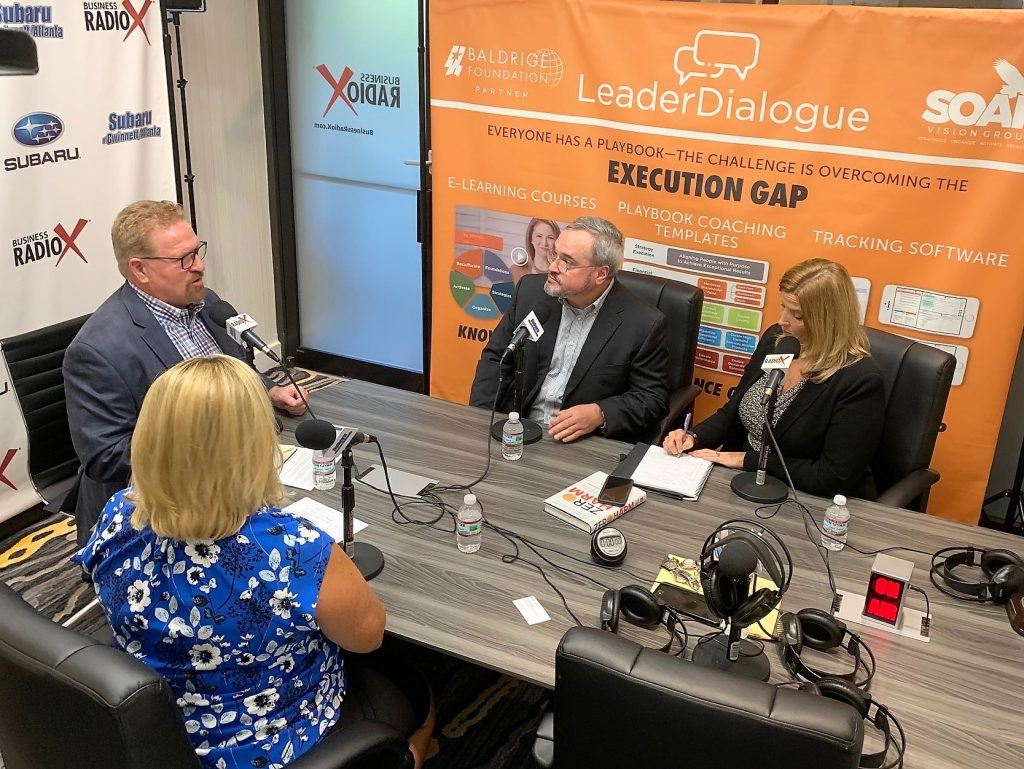
Craig Clapper, Duffie Dixon, Lisa Counsell, Ben Sawyer

Craig Clapper joins hosts Ben, Lisa and Duffie for a “deep dive” discussion about strategies and opportunities for improvement in aiding healthcare organizations how to achieve and sustain High Reliable Organization (HRO) status and understanding how Consumerism impacts the inter-relations among quality improvement, process improvement, Baldrige Framework and high reliability in health systems.

Craig Clapper/Press Ganey

Craig Clapper is a founding partner of Healthcare Performance Improvement (HPI) and a partner in Press Ganey Transformational Advisory Services. HPI is a group that specializes in improving human performance in complex systems using evidence-based methods from high-reliability organizations. Craig has 30 years experience improving reliability in nuclear power, transportation, manufacturing, and healthcare. He specializes in cause analysis, system reliability, and safety culture transformation. Craig has led safety culture transformation engagements for Duke Energy, US Department of Energy, ABB, Westinghouse, Framatome ANP, Sentara Healthcare, and Sharp Healthcare.

Prior to being a partner in Press Ganey Transformational Services, Craig was the Chief Knowledge Officer of HPI, the Chief Operating Officer of HPI, the Chief Operating Officer of Performance Improvement International, Systems Engineering Manager for Hope Creek Nuclear Generating Station, and Systems Engineering Manager for Palo Verde Nuclear Generation Station.

Education & Certifications

  • Bachelor of Science in Nuclear Engineering, Iowa State University
  • Professional Engineer (PE) licensure in Mechanical Engineering, State of Arizona
  • Certified Manager of Quality and Organizational Excellence (CMQ/OE), American Society for Quality (ASQ)

About SOAR Vision Group

The SOAR Vision Group mission is to: Align People with Purpose to Achieve Exceptional Results. SOAR provides best practice strategy execution, business process optimization services, and a structured organizational development approach for organizations to effectively implement the Baldrige Performance Excellence framework. For more information, contact SOAR Vision Group at (888) 294-3303 or visit soarvisiongroup.com.

About the Baldrige Foundation

The mission of the Baldrige Foundation is to ensure the long-term financial growth and viability of the Baldrige Performance Excellence Program, and to support organizational performance excellence in the United States and throughout the world. The Malcolm Baldrige National Quality Award is presented annually by the United States President to organizations that demonstrate quality and performance excellence. For more information, contact the Baldrige Foundation at (202) 559-9195 or visit baldrigefoundation.org.

Tagged With: consumerism, craig clapper, duffie dixon, Healthcare Perfromance Improvement, High Reliable Organization, HPI, HRO, leader dialogue, lisa counsell, Malcolm Baldrige National Quality Award, organizational excellence, press ganey, process improvement, quality improvement, SOAR Vision Group

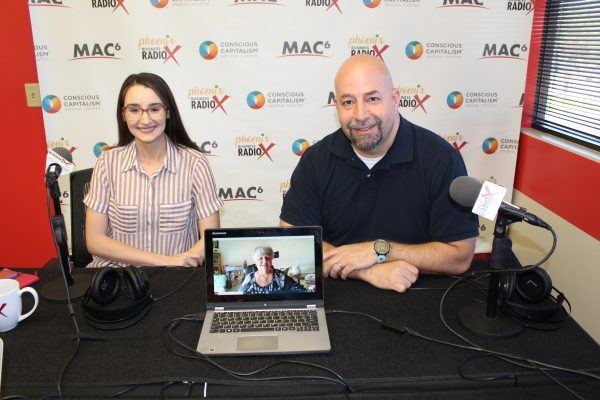
E32 PMOps with Kim Curtis and Echo Woolf

July 1, 2019 by Karen

E32-Kim-Curtis-with-TNT-Professional-Consulting-and-Echo-Woolf-with-Your-PM-Sidekick
Phoenix Business Radio
E32 PMOps with Kim Curtis and Echo Woolf
Loading
00:00 / 56:42
RSS Feed
Share
Link
Embed

Download fileDuration: 56:42

E32-Kim-Curtis-with-TNT-Professional-Consulting-and-Echo-Woolf-with-Your-PM-Sidekick1

E32 PMOps with Kim Curtis and Echo Woolf

Are you familiar with PMOps? We’ve all heard of DevOps and SecOps and now we learn of PMOps. Listen to this episode to hear Kim Curtis share the experiences and successes from 30+ years in the PM trenches. 

All of our shows are live and at times that gives us some technical difficulties, but in this episode our guests Kim and Echo Woolf worked through all of it and brought in another insightful show full of valuable content. 

Echo shares her story growing into a successful Project Manager and Entrepreneur. We hear her experience knowing early on she would pursue a PM career and now working to help others through her consulting work and PM training. Listen to get her insight on how to get your PM career started and ways to accelerate your growth. 

Tune in for upcoming shows with Project Management leaders and subscribe to the podcast on Apple Podcast, iHeartRadio, Spotify, Stitcher, Spreaker or your favorite podcast platform! 

Thanks to our sponsors PM Master Prep and THE PMO SQUAD. PM Master Prep is offering 20% off all services by using code PMOJOE at checkout on www.pmmasterprep.com.

True North Team Professional Consulting was formed in 2018 to help Program and Project Management Offices better position their teams to be successful in project delivery. We specialize in Team Building, PMO assessment, remediation, expansion and help PMO managers overcome the pitfalls associated with project delivery with large Project Management teams. TNTlogo1

Our founder, Kim Curtis has developed a PMO structure that combines Project Management principals, Management by Objectives and Capability Maturity key performance indicators to drive success in project delivery.

Kim-Curtis-on-Phoenix-Business-RadioXWith more than 30 years in the Project Management field, Kim Curtis has a wealth of long term knowledge for both process improvement and project delivery. She excels at creating structure in ambiguous environments including Enterprise PMO and Center of Excellence PMO Structures. She is considered an SME on Capacity Planning, Release Delivery and Project Scheduling and has helped several Fortune 500 companies improve project delivery, labor forecasting, and reduce turnover in high volume PMOs.

As a consultant for over a decade, she has diverse experience in retail, higher education, healthcare, and many other business sectors. She has extensive experience managing integrated project teams with complex inter-dependencies.

Her Key Performance Indicator tracking serves as a catapult to improving labor estimating, project schedule forecasting, change management and project budgeting that has transformed struggling PMOs into successful Project Management Operations Offices, her new PMO framework is called PMOps™.

Connect with Kim on LinkedIn.

Your PM Sidekick helps ambitious and experienced professionals, from business and technical fields, prepare to take the PMP exam with focused supplemental material that fills in the gaps compared to other material on the market. logoaltsmall1

They do this by helping aspirants understand the content by leveraging real-world case studies to apply the material and providing time management techniques to avoid burnout and increase information retention.

All of this, and more, to help you achieve your personal goals of getting a high paying, flexible role as a PMP, allowing more time for travel, hobbies and a higher salary.

Echo-Woolf-on-Phoenix-Business-RadioXEcho Woolf was never an ‘accidental project manager,” instead she consciously and deliberately chose the field that she seemed drawn to, and has continued to enjoy the journey over the past 8 years.

She has worked in public and private organizations working with clients in government, non profit and for profit organizations.

Most of her career has been spent leading enterprise SaaS based solutions.

Despite her love to work as a practitioner, she realized that she wanted to build and create something on her own, thus leading to her co-founding “Your PM Sidekick.” Her business focuses on a variety of consulting, coaching and training for professionals looking to get into project management, to prepare for the PMP and to refine their skills to further advance their career.

Connect with Echo on LinkedIn.

ABOUT THE PROJECT MANAGEMENT OFFICE HOURS SERIES

Project Management Office Hours is intended to provide Project Management professionals a place to drop in and discuss Success Stories, Best Practices, and Lessons Learned.  Project Management Consultant Joy Gumz has shared with us, “Operations keep the lights on, strategy provides the light at the end of the tunnel, but project management is the train engine that moves the organization forward.”  

Each of us has a unique story to tell, but collectively we share a message that organizations who embrace Project Management Best Practices perform better than those which don’t.  Organizations which align Projects to Strategy perform better.  Organizations with Engage Executive Sponsors deliver better results.  Organizations which measure Project Management performance outperform those which don’t.

During our Project Management Office Hours, we hear directly from Industry leaders how to make an impact in our profession. How we, collectively, will Advance Project Management Best Practices, One Listener at a time! 

Project Management Office Hours is powered by The PMO SQUAD 

ABOUT YOUR HOST

Joe Pusz started THE PMO SQUAD to bring real world PMO Leadership experience to the consulting space and to advocate for Project Management through his blog PMOJOE.com. The old saying is “Do what you love and you’ll never work a day in your life.” Following this mindset Joe left Corporate America in 2013 to start THE PMO SQUAD and work with fellow Natural Born Project Managers to advance Project Management Best Practices.

THE PMO SQUAD focuses exclusively on PMO and Project Management consulting. Corporate America is full of Accidental Project Managers running projects who haven’t been trained to be PMs. To help solve this problem THE PMO SQUAD is on the Leading Edge with PMO As a Service. PMO As a Service allows our clients to focus on their respective core competencies while THE PMO SQUAD delivers Project Management expertise. Contact Joe at 678-591-7868. Follow The PMO Squad on LinkedIn, Twitter and Facebook.

ABOUT OUR SPONSOR

PM Master PrepTM is simply the worlds best PMP® Exam Preparation licensing system. There is no other product available to businesses and independent trainers that can offer the same premium courseware along with the rich feature set of our online exam simulator and study resources.

Our Courseware has been designed to be shorter, easier to learn for students, and easier to teach for instructors. Your students will learn faster, retain more and will pass the PMP exam!

PMMPLogo-01

Tagged With: PMO Development, process improvement, project management, Successful Project Delivery in PMOs, team building

Physicians Institute for Excellence in Medicine – Top Docs Radio

June 11, 2015 by angishields

Top Docs Radio
Top Docs Radio
Physicians Institute for Excellence in Medicine - Top Docs Radio
Loading
00:00 /
RSS Feed
Share
Link
Embed

Download file

Physicians' Institute for Excellence In Medicine   MAG LOGO

Physicians Institute for Excellence in Medicine

This week I sat down with Bob Addleman, EVP of the Physicians’ Institute for Excellence in Medicine.  We talked about how the organization, a subsidiary of Medical Association of Georgia, got its genesis.  Bob shared how his passion for process improvement and healthcare ultimately led to him suggesting the development of an organization focused on improving the work environment as well as patient safety/outcomes.

The Physicians’ Institute for Excellence in Medicine (a nonprofit subsidiary of the Medical Association of Georgia) is a national leader in developing and managing collaborative educational projects, with a focus on outcomes-based and performance improvement activities. To date, the Physicians’ Institute has developed and managed 31 distinct initiatives representing work with over 400 organizations and more than 8000 participants located in 25 states focusing on an array of clinical areas. The Physicians’ Institute also provides leadership training and Patient-Centered Medical Home consulting to healthcare providers and organizations.

Physicians’ Institute is working with Georgia Academy of Family Physicians’ “Patient-Centered Medical Home University” (PCMHU). Now in fourth year, PCMHU has assisted more than 40 Georgia primary care practices achieve recognition from the National Council for Quality Assurance as a patient-centered medical home. Addleton is lead faculty member and practice advisor.

In June, Physicians’ Institute plans to launch new service called “Leadership in Practice,” which will provide leadership training and team development activities to medical associations, health systems, and physician organizations. Model has been adopted by thousands of organizations internationally and has over a 20-year history of application and research behind its design. Gives participants 360 degree feedback about their leadership behaviors. Addleton is a certified administrator and coach.

Physicians’ Institute is known for its collaborative grants system. For example, it awarded $1.2 million in grants to primary care organizations in five states for an ambitious project that is aimed at improving the care of patients experiencing chronic pain. Final report will be available in near future.

Physicians’ Institute has also been national leader in the FDA-mandated effort to promote Risk Evaluation and Mitigation Strategies (REMS) education for extended-release and long acting opioids as a member of CO*RE (Collaboration for REMS Education). Has worked with 15 state medical societies, including MAG, through a grant that was awarded to the MAG Foundation. To date, more than 3,000 physicians have participated in these efforts.

Addleton is the vice president (and president-elect) of the leading international organization is this field – the Alliance for Continuing Education in the Health Professions (ACEHP). He will become ACEHP’s president in January 2016.

Special Guest:

Bob Addleton, EVP, Physicians’ Institute for Excellence in Medicine  linkedin_small1 twitter_logo_small-e1403698475314  facebook_logo_small3

Physicians' Institute for Excellence in Medicine

  • Doctorate in Educational Leadership, University of Alabama
  • Certified in Continuing Professional Development
  • Fellow and President-Elect, of the Alliance for Continuing Education in the Health Professions
  • Certified as a Quality Team Facilitator, Six Sigma Green Belt, and Lean Green Belt
  • Trainer for The Leadership Challenge©.
  • Faculty Member, Georgia Academy of Family Physicians’ “Patient Centered Medical Home University”, and is the Dean of the Georgia Physicians Leadership Academy.

Tagged With: CW Hall, health radio, Healthcare, Healthcare associations, Medical Association of Georgia, patient outcomes, physicians' institute for excellence in medicine, process improvement, Six Sigma

Business RadioX ® Network


Our Most Recent Episode

CONNECT WITH US

  • Email
  • Facebook
  • LinkedIn
  • Twitter
  • YouTube

Our Mission

We help local business leaders get the word out about the important work they’re doing to serve their market, their community, and their profession.

We support and celebrate business by sharing positive business stories that traditional media ignores. Some media leans left. Some media leans right. We lean business.

Sponsor a Show

Build Relationships and Grow Your Business. Click here for more details.

Partner With Us

Discover More Here

Terms and Conditions
Privacy Policy

Connect with us

Want to keep up with the latest in pro-business news across the network? Follow us on social media for the latest stories!
  • Email
  • Facebook
  • Google+
  • LinkedIn
  • Twitter
  • YouTube

Business RadioX® Headquarters
1000 Abernathy Rd. NE

Building 400, Suite L-10
Sandy Springs, GA 30328

© 2025 Business RadioX ® · Rainmaker Platform

BRXStudioCoversLA

Wait! Don’t Miss an Episode of LA Business Radio

BRXStudioCoversDENVER

Wait! Don’t Miss an Episode of Denver Business Radio

BRXStudioCoversPENSACOLA

Wait! Don’t Miss an Episode of Pensacola Business Radio

BRXStudioCoversBIRMINGHAM

Wait! Don’t Miss an Episode of Birmingham Business Radio

BRXStudioCoversTALLAHASSEE

Wait! Don’t Miss an Episode of Tallahassee Business Radio

BRXStudioCoversRALEIGH

Wait! Don’t Miss an Episode of Raleigh Business Radio

BRXStudioCoversRICHMONDNoWhite

Wait! Don’t Miss an Episode of Richmond Business Radio

BRXStudioCoversNASHVILLENoWhite

Wait! Don’t Miss an Episode of Nashville Business Radio

BRXStudioCoversDETROIT

Wait! Don’t Miss an Episode of Detroit Business Radio

BRXStudioCoversSTLOUIS

Wait! Don’t Miss an Episode of St. Louis Business Radio

BRXStudioCoversCOLUMBUS-small

Wait! Don’t Miss an Episode of Columbus Business Radio

Coachthecoach-08-08

Wait! Don’t Miss an Episode of Coach the Coach

BRXStudioCoversBAYAREA

Wait! Don’t Miss an Episode of Bay Area Business Radio

BRXStudioCoversCHICAGO

Wait! Don’t Miss an Episode of Chicago Business Radio

Wait! Don’t Miss an Episode of Atlanta Business Radio