Business RadioX ®

  • Home
  • Business RadioX ® Communities
    • Southeast
      • Alabama
        • Birmingham
      • Florida
        • Orlando
        • Pensacola
        • South Florida
        • Tampa
        • Tallahassee
      • Georgia
        • Atlanta
        • Cherokee
        • Forsyth
        • Greater Perimeter
        • Gwinnett
        • North Fulton
        • North Georgia
        • Northeast Georgia
        • Rome
        • Savannah
      • Louisiana
        • New Orleans
      • North Carolina
        • Charlotte
        • Raleigh
      • Tennessee
        • Chattanooga
        • Nashville
      • Virginia
        • Richmond
    • South Central
      • Arkansas
        • Northwest Arkansas
    • Midwest
      • Illinois
        • Chicago
      • Michigan
        • Detroit
      • Minnesota
        • Minneapolis St. Paul
      • Missouri
        • St. Louis
      • Ohio
        • Cleveland
        • Columbus
        • Dayton
    • Southwest
      • Arizona
        • Phoenix
        • Tucson
        • Valley
      • Texas
        • Austin
        • Dallas
        • Houston
    • West
      • California
        • Bay Area
        • LA
        • Pasadena
      • Colorado
        • Denver
      • Hawaii
        • Oahu
  • FAQs
  • About Us
    • Our Mission
    • Our Audience
    • Why It Works
    • What People Are Saying
    • BRX in the News
  • Resources
    • BRX Pro Tips
    • B2B Marketing: The 4Rs
    • High Velocity Selling Habits
    • Why Most B2B Media Strategies Fail
    • 9 Reasons To Sponsor A Business RadioX ® Show
  • Partner With Us
  • Veteran Business RadioX ®

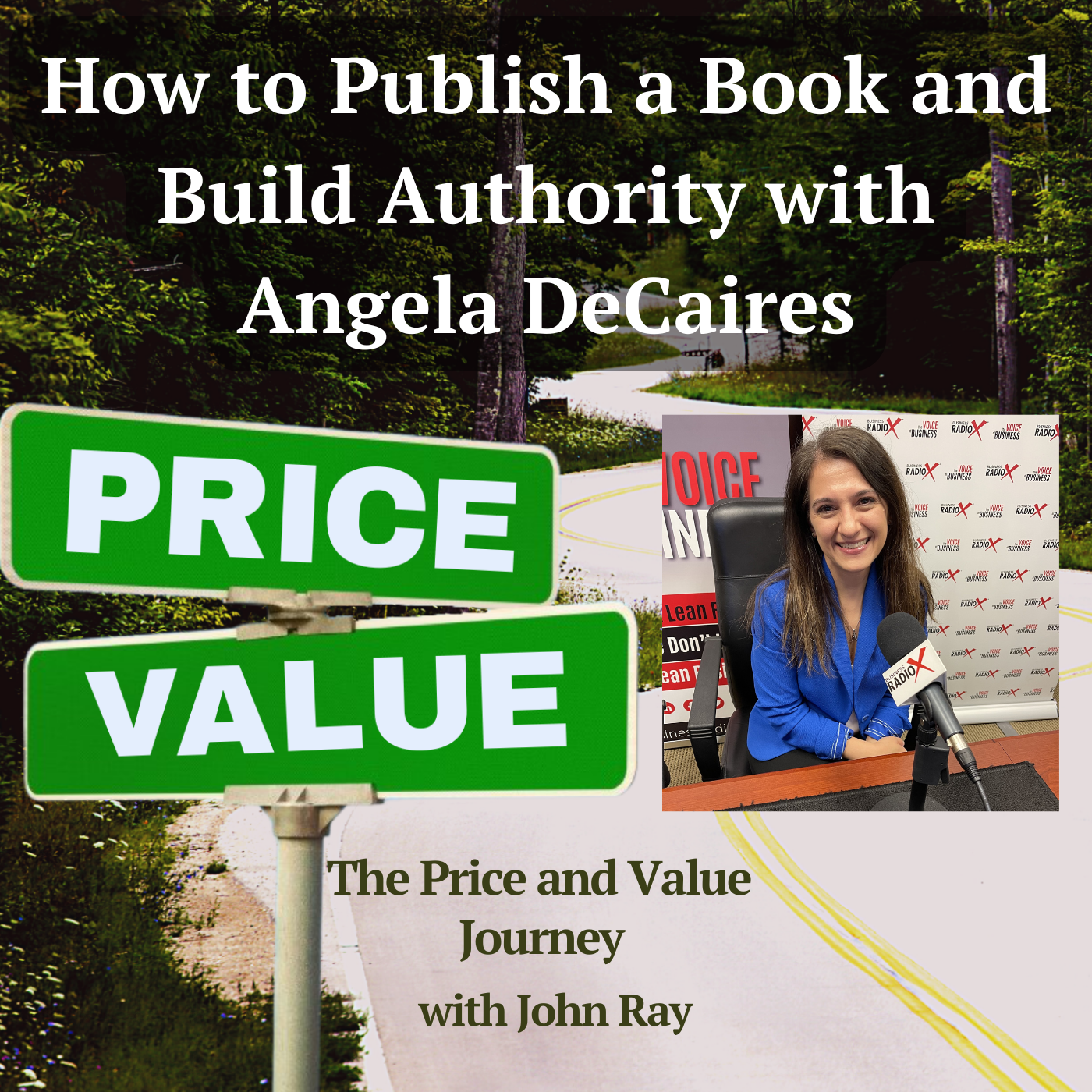
How to Publish a Book and Build Authority with Angela DeCaires

August 27, 2025 by John Ray

How to Publish a Book and Build Authority with Angela DeCaires, on The Price and Value Journey podcast with host John Ray
North Fulton Studio
How to Publish a Book and Build Authority with Angela DeCaires
Loading
00:00 /
RSS Feed
Share
Link
Embed

Download file

How to Publish a Book and Build Authority with Angela DeCaires, on The Price and Value Journey podcast with host John Ray

How to Publish a Book and Build Authority with Angela DeCaires (The Price and Value Journey, Episode 145)

For many professional service providers, writing a book is more than just a dream. Becoming the author of a well-crafted book is one of the most effective ways to establish authority, strengthen client trust, and create new opportunities. Yet the world of publishing can feel confusing and overwhelming. Should you self-publish, go hybrid, or pursue a traditional deal? How much time and money should you expect to invest? And what are the most common mistakes first-time authors make?

In this episode of The Price and Value Journey, John Ray welcomes Angela DeCaires, CEO of BookLogix, a non-traditional publishing company based in Alpharetta, Georgia. Angela has guided countless authors through every stage of the publishing process, and she shares her insights on what it really takes to turn your expertise into a professional book that supports your business and your brand.

Angela explains why a book enhances credibility far beyond a LinkedIn profile or a polished website, the mindset shifts needed to get from “I want to write a book” to actually finishing it, and why editing and design are non-negotiables if you want your book to carry weight with clients. She also unpacks the realities of book sales versus the far greater return that comes from speaking engagements, consulting opportunities, and client trust. Angela also discusses how artificial intelligence is affecting publishing, both where it can help authors and where its limits and risks show up.

If you’ve ever thought about writing a book but weren’t sure where to start, or whether it’s worth the effort, this conversation will give you direction and the encouragement to move forward.

The Price and Value Journey is presented by John Ray and produced by North Fulton Business Radio, LLC, an affiliate of the Business RadioX® podcast network.

Key Takeaways You Can Use from This Episode

  • Writing a book cements your authority and credibility in ways no website or LinkedIn profile can.
  • Most conferences and speaking events expect authors to have a published book—they literally want it in the room.
  • Don’t underestimate editing and design. A well-written book with a poor cover or structure undermines your credibility.
  • The average nonfiction book sells only a few hundred copies; the real value is in how the book builds your practice and opens doors.
  • Fear and self-doubt derail many would-be authors. Start by getting ideas out of your head and onto paper—or use dictation, recordings, or a book coach.
  • Be clear on your audience: the narrower and more defined your “tribe,” the more effective your book will be.
  • AI is changing publishing: it can be a useful tool for editing and brainstorming, but authors must understand its limits and the restrictions around using AI-generated content.

Topics Discussed in this Episode

00:00 Introduction to The Price and Value Journey
00:11 The Dream and Reality of Publishing a Book
01:16 Introducing Angela DeCaires and BookLogix
03:00 The Importance of Writing a Book for Credibility
05:56 Challenges and Mindset of Aspiring Authors
11:53 The Financial Realities of Publishing
12:59 Marketing Strategies for Your Book
17:20 The Role of Editing and Design
20:01 Navigating AI in the Publishing World
26:00 Understanding Non-Traditional Publishing
27:25 Navigating the Overwhelming World of Publishing
29:17 Red Flags to Watch Out For in Publishing
31:03 The Role of Marketing in Book Success
32:44 Collaborative Approaches to Book Marketing
38:01 Reviving and Refreshing Older Books
41:52 Using Books as Business Development Tools
44:04 Common Mistakes Authors Make
46:05 The Impact of AI on Book Credibility
47:28 Success Stories and Final Thoughts

Angela DeCaires, CEO, BookLogix

Angela DeCaires, CEO, BookLogix, on The Price and Value Journey podcast with host John Ray
Angela DeCaires, CEO, BookLogix

Angela DeCaires is the CEO of BookLogix, an Atlanta-based publishing company dedicated to helping authors from all backgrounds publish, market, and sell their books. With a strong background in public relations, writing, broadcasting, and journalism, Angela began her career as a TV news producer and news writer in New York before moving into public relations roles for health systems in Florida and New York. She holds a BA in Communication/Journalism from St. John Fisher University and has held previous roles at BookLogix, including Director of Publishing and Marketing & Communications Manager.

Under Angela’s leadership, BookLogix has become known for offering comprehensive publishing support, including project management, editing, design, printing, and marketing services tailored to each author’s needs. Angela is passionate about educating authors on the nontraditional publishing industry and is a frequent speaker at writers’ conferences and publishing events. Her extensive industry experience and commitment to author success have helped position BookLogix as a trusted resource for writers seeking to publish high-quality, market-ready books.

Connect with Angela: LinkedIn | Connect with BookLogix: Website | LinkedIn | Facebook

John Ray, Host of The Price and Value Journey

John Ray, Author of The Generosity Mindset and Host of The Price and Value Journey

John Ray is the host of The Price and Value Journey.

John owns Ray Business Advisors, a business advisory practice. John’s services include business coaching and advisory work, as well as advising solopreneurs and small professional services firms on their pricing. John is passionate about the power of pricing for business owners, as changing pricing is the fastest way to change the profitability of a business. His clients are professionals who are selling their expertise, such as attorneys, CPAs, accountants and bookkeepers, consultants, coaches, marketing professionals, and other professional services practitioners.

In his other business, John is a podcast show host, strategist, and the owner of North Fulton Business Radio, LLC, an affiliate of Business RadioX®. John and his team work with B2B professionals to create and conduct their podcast using The Generosity Mindset® Method: building and deepening relationships in a non-salesy way that translates into revenue for their business.

John is also the host of North Fulton Business Radio. With over 880 shows and having featured over 1,300 guests, North Fulton Business Radio is the longest-running podcast in the North Fulton area, covering business in its region like no one else.

John’s book, The Generosity Mindset: A Journey to Business Success by Raising Your Confidence, Value, and Prices
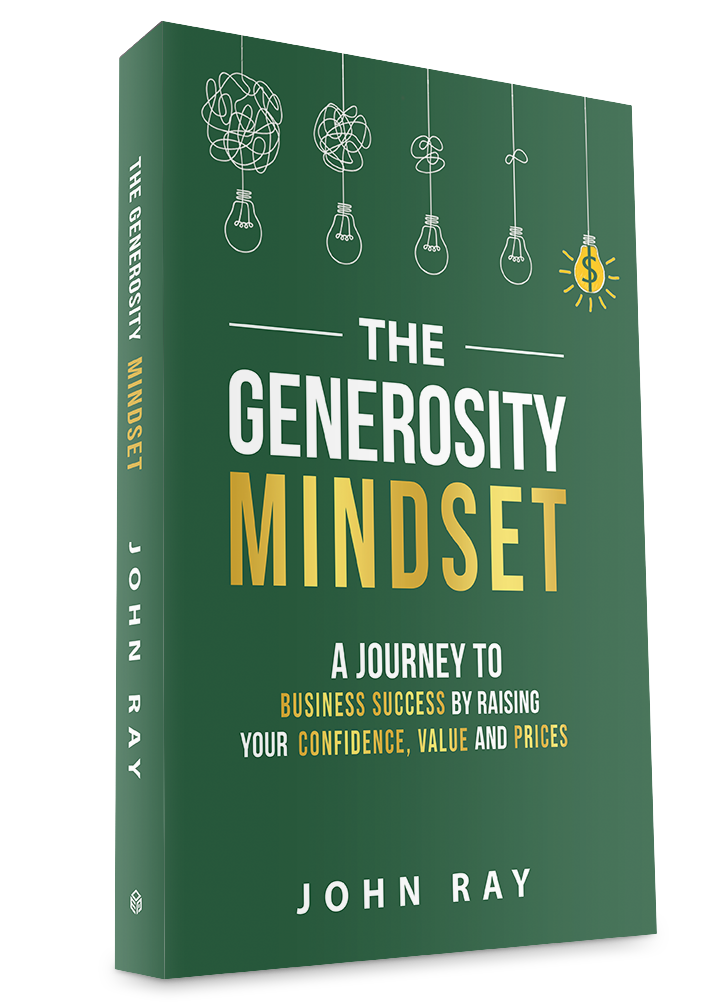
The Generosity Mindset, by John RayJohn is the #1 national best-selling author of The Generosity Mindset: A Journey to Business Success by Raising Your Confidence, Value, and Prices.

If you are a professional services provider, your goal is to do transformative work for clients you love working with and get paid commensurate with the value you deliver to them. While negative mindsets can inhibit your growth, adopting a different mindset, The Generosity Mindset®, can replace those self-limiting beliefs. The Generosity Mindset enables you to diagnose and communicate the value you deliver to clients and, in turn, more effectively price to receive a portion of that value.

Whether you’re a consultant, coach, marketing or branding professional, business advisor, attorney, CPA, or work in virtually any other professional services discipline, your content and technical expertise are not proprietary. What’s unique, though, is your experience and how you synthesize and deliver your knowledge. What’s special is your demeanor or the way you deal with your best-fit clients. What’s invaluable is how you deliver outstanding value by guiding people through massive changes in their personal lives and in their businesses that bring them to a place they never thought possible.

Your combination of these elements is unique in your industry. There lies your value, but it’s not the value you see. It’s the value your best-fit customers see in you.

If pricing your value feels uncomfortable or unfamiliar to you, this book will teach you why putting a price on the value your clients perceive and identify serves both them and you, and you’ll learn the factors involved in getting your price right.

The book is available at all major physical and online book retailers worldwide. Follow this link for further details.
Connect with John Ray:

Website | LinkedIn | Twitter

Business RadioX®:  LinkedIn | Twitter | Facebook | Instagram

Tagged With: AI, AI book writing tools, AI editing, Alpharetta business, Angela DeCaires, artificial intelligence, artificial intelligence in publishing, Atlanta publishing industry, book design, book editing, book marketing, book publisher, book publishing, BookLogix, building authority with a book, business development with a book, credibility, credibility for consultants coaches and attorneys, expert-service professionals, hybrid publishing, John Ray, nonfiction book publishing, professional service providers, professional services marketing, publishing company Alpharetta, publishing technology, Self Publishing, speaking and authorship, The Price and Value Journey, traditional publishing, trust, writing a book for business

Finding the Ain’t

April 8, 2022 by John Ray

Finding the Ain't
North Fulton Studio
Finding the Ain't
Loading
00:00 /
RSS Feed
Share
Link
Embed

Download file

Finding the Ain’t

A visit with one of my clients and a CPA we were interviewing led to “finding the ain’t.” The “ain’t” in this meeting was the intangible my client identified which attracted him to this CPA. A real-life lesson in how intangibles are what makes prospective clients lean in, not our certifications or experience. The Price and Value Journey is presented by John Ray and produced by the North Fulton studio of Business RadioX®.

TRANSCRIPT

John Ray: [00:00:00] Hello. I’m John Ray on the Price and Value Journey. In the work I do as an outside CFO for a few clients and as a business advisor, I rely on CPAs to handle the tax work for my clients because compliance work, like taxation, for example, is not my expertise.

John Ray: [00:00:21] Not long ago, I had a series of different meetings with a client and a few prospective CPAs. After we’d completed our interviews, I asked my client which one he preferred. And he told me his favorite. “Why did you like him?” I asked. He answered, “Because any man who says ain’t is a man I know I can talk to,” he said. That’s not exactly the answer I was expecting, but I wasn’t surprised either. I was expecting to hear an intangible, and the only question was which one or two of those intangibles might stand out for my client?

John Ray: [00:01:03] I expected to hear an intangible rationale for my clients’ selection because clients do not select professional services providers like CPAs, attorneys, bookkeepers, or coaches based on qualifications and expertise. No, they don’t really care what school you went to, unless, of course, you just happen to go to the same school they did and then they might care. But they don’t care that you’ve got a great website. They don’t really care about your certifications and in a lot of cases, they don’t even know what all those letters mean. Your certifications and mine are worthless.

John Ray: [00:01:45] Okay. Now, that’s a deliberate overstatement. Certifications and all of the education and work that we’ve put into becoming subject matter experts in our given field are vital but only to a point. They are just the tickets to get into the show. They don’t get you backstage in that client’s mind. What gets you backstage is to have a value conversation. And that’s what this particular CPA who got chosen did. He didn’t spend any valuable time covering all the things we already knew and had moved past. He didn’t talk about his qualifications or his certifications or whatnot. He asked a lot of why questions and then he shut up and listened. His use of the word ain’t wasn’t really the ultimate determinant for my client, of course. It was just a symbol that he could point to, which indicated for him that this professional understood his problems, hopes, fears, and dreams.

John Ray: [00:02:48] As professional services providers, our job is to be known as someone who understands and holds solutions to problems. But you already know that. What can be hard for us to internalize, though, is that clients come to believe that we have solutions because of intangibles, which often have nothing to do with how you and I end up solving their problems. There’s an ain’t with every client. Spend your time trying to find it.

John Ray: [00:03:22] I’m John Ray on the Price and Value Journey. Past episodes of this podcast can be found at pricevaluejourney.com. Or, you can email me if you’d like to connect directly, john@johnray.co. Thank you for joining me.


About The Price and Value Journey

The title of this show describes the journey all professional services providers are on:  building a services practice by seeking to convince the world of the value we offer, helping clients achieve the outcomes they desire and trying to do all that at pricing which reflects the value we deliver.

If you feel like you’re working too hard for too little money in your solo or small firm practice, this show is for you. Even if you’re reasonably happy with your practice, you’ll hear ways to improve both your bottom line as well as the mindset you bring to your business.

The show is produced by the North Fulton studio of Business RadioX® and can be found on all the major podcast apps. The complete show archive is here.

John Ray, Host of The Price and Value Journey

John Ray The Price and Value Journey
John Ray, Host of “The Price and Value Journey”

John Ray is the host of The Price and Value Journey.

John owns Ray Business Advisors, a business advisory practice. John’s services include advising solopreneur and small professional services firms on their pricing. John is passionate about the power of pricing for business owners, as changing pricing is the fastest way to change the profitability of a business. His clients are professionals who are selling their “grey matter,” such as attorneys, CPAs, accountants and bookkeepers, consultants, marketing professionals, and other professional services practitioners.

In his other business, John is a Studio Owner, Producer, and Show Host with Business RadioX®, and works with business owners who want to do their own podcast. As a veteran B2B services provider, John’s special sauce is coaching B2B professionals to use a podcast to build relationships in a non-salesy way which translate into revenue.

John is the host of North Fulton Business Radio, Minneapolis-St. Paul Business Radio, Nashville Business Radio, Alpharetta Tech Talk, and Business Leaders Radio. house shows which feature a wide range of business leaders and companies. John has hosted and/or produced over 1,100 podcast episodes.

Connect with John Ray:

Website | LinkedIn | Twitter

Business RadioX®:  LinkedIn | Twitter | Facebook | Instagram

Tagged With: certifications, customer discovery, experience, intangibles, John Ray, Price and Value Journey, pricing, professional services, professional services firms, professional services marketing, solopreneurs, value

Just Be Helpful

January 28, 2022 by John Ray

Just Be Helpful
North Fulton Studio
Just Be Helpful
Loading
00:00 /
RSS Feed
Share
Link
Embed

Download file

Just Be Helpful

Just Be Helpful

When you come out of corporate to start your own professional services practice, you think you’ll be chosen or referred because of your experience and your qualifications. If that’s your mindset, though, it doesn’t distinguish you or make you memorable. What does? Just be helpful, genuinely and authentically. The Price and Value Journey is presented by John Ray and produced by the North Fulton studio of Business RadioX®.

TRANSCRIPT

John Ray: [00:00:00] And hello, I’m John Ray on The Price and Value Journey. When you come out of corporate to start your own professional services practice – well, if you’re like me anyway – you drop in and you think, “What do I need to talk about that matters? Well, it’s the service I offer, right?” Well, that’s not really true. At least that’s what I found.

John Ray: [00:00:23] Nobody is waiting for you to show up to provide business advisory services, or legal services, or marketing services, or accounting and bookkeeping, whatever other business that you might be starting. There’s already plenty of folks out there doing that work. They’ve got their established referral partners and practices. So, how do you make a difference? How do you stand out? How do you make a name for yourself? How do you distinguish yourself in a crowded field?

John Ray: [00:00:56] Now, I think part of the answer, a big part of the answer, is just be helpful. Now, I don’t mean the kind of helpful where you’re offering what amounts to a lead page for some course or service that you offer. That’s not being helpful. That’s marketing a service. What I mean is being helpful without any intent to see something immediate from it, if at all.

John Ray: [00:01:26] When you go out and visit with people, just attempt to learn, to understand, to know about them. When you do a coffee or one-on-one, make it about them and learn what they do. You will distinguish yourself right off the bat. I promise you that this is true because I know.

John Ray: [00:01:46] Quite a few years ago when I came out of corporate to start my own practice, I had a pretty big network. But it wasn’t the kind of network that was oriented toward my local market that I needed to have to be able to support my business. So, I had to go build a different kind of network. And the way I did that was by learning about other people and helping them get to where they needed to be, connecting them with helpful strategic referral partners and, of course, a potential client.

John Ray: [00:02:20] When you do that, you’re showing a real concern for them and their welfare. And over the long term, if you do that and do that consistently, it will pay you back. You won’t know where those reciprocations or those vibrations from the universe – if I can say it that way – where they’re going to come from. But that’s part of the fun of it to me.

John Ray: [00:02:44] Recently, I had a lady who called me who I’ve known for many years, and she called to ask me about a family law attorney for her daughter, who unfortunately was probably headed to divorce court. “Now, John -” she said “- because you know everyone around here, you’re going to know the best fit for my daughter.” Now, we talked a little bit at a high level about her daughter and what this worried mom thinks that she needs. I steered her away, frankly, from a few attorneys I know who would be, probably, I’ll just say not good fits. But then, I gave her a couple of recommendations of others that I thought would work out well for her based on what she told me.

John Ray: [00:03:26] The point of it is that this lady views me as a trusted adviser to her. It has nothing to do with the service I offer. I mean, she obviously wasn’t calling up to ask me about my service and what I sell. But she needed help in a very sensitive situation, and she called me. Now, that’s just one illustration of how you get to be a trusted adviser. She knew that if she called me, I was going to be looking out for her best interest because that’s the experience that she had with me.

John Ray: [00:03:59] Now, in the future, she and her business, well, she may not need my service. But one thing that I can count on from her is that if she hears of anyone that even remotely might need what I offer, she would send them my way with a glowing review.

John Ray: [00:04:15] That’s the reputation you want to develop. That’s the brand you want to have as a professional services provider, whatever service you provide. I’m not saying it’s the quickest way to get there, but what I am saying is it’s the most sure and reliable way to reach the goals that you want to reach in your professional services practice. And I think it’s the most rewarding. Just be helpful.

John Ray: [00:04:41] I’m John Ray on The Price and Value Journey. If you’d like to connect with me, go to johnray.co. You can email me at john@johnray.co. And for past episodes of this podcast, go to pricevaluejourney.com or your favorite podcast app.


About The Price and Value Journey

The title of this show describes the journey all professional services providers are on:  building a services practice by seeking to convince the world of the value we offer, helping clients achieve the outcomes they desire, and trying to do all that at pricing which reflects the value we deliver.

If you feel like you’re working too hard for too little money in your solo or small firm practice, this show is for you. Even if you’re reasonably happy with your practice, you’ll hear ways to improve both your bottom line as well as the mindset you bring to your business.

The show is produced by the North Fulton studio of Business RadioX® and can be found on all the major podcast apps. The complete show archive is here.

John Ray, Host of The Price and Value Journey

John Ray The Price and Value Journey
John Ray, Host of “The Price and Value Journey”

John Ray is the host of The Price and Value Journey.

John owns Ray Business Advisors, a business advisory practice. John’s services include advising solopreneur and small professional services firms on their pricing. John is passionate about the power of pricing for business owners, as changing pricing is the fastest way to change the profitability of a business. His clients are professionals who are selling their “grey matter,” such as attorneys, CPAs, accountants and bookkeepers, consultants, marketing professionals, and other professional services practitioners.

In his other business, John a Studio Owner, Producer, and Show Host with Business RadioX®, and works with business owners who want to do their own podcast. As a veteran B2B services provider, John’s special sauce is coaching B2B professionals to use a podcast to build relationships in a non-salesy way which translate into revenue.

John is the host of North Fulton Business Radio, Minneapolis-St. Paul Business Radio, Nashville Business Radio, Alpharetta Tech Talk, and Business Leaders Radio. house shows which feature a wide range of business leaders and companies. John has hosted and/or produced over 1,100 podcast episodes.

Connect with John Ray:

Website | LinkedIn | Twitter

Business RadioX®:  LinkedIn | Twitter | Facebook | Instagram

Tagged With: be helpful, John Ray, Price and Value Journey, professional services, professional services marketing, value

Decision Vision Episode 135: Should I Create an Email Newsletter? – An Interview with Michael Katz, Blue Penguin Development

September 23, 2021 by John Ray

Miichael Katz
Decision Vision
Decision Vision Episode 135: Should I Create an Email Newsletter? - An Interview with Michael Katz, Blue Penguin Development
Loading
00:00 /
RSS Feed
Share
Link
Embed

Download file

Miichael Katz

Decision Vision Episode 135:  Should I Create an Email Newsletter? – An Interview with Michael Katz, Blue Penguin Development

Do you need an email newsletter? How long should it be? What should you write about? Although written off quite a few times, email is still not dead. Mike Blake’s guest Michael Katz, email newsletter authority with Blue Penguin Development, discusses the strategy of email newsletters, how to make them effective, how to make the most of the content, and much more. Decision Vision is presented by Brady Ware & Company.

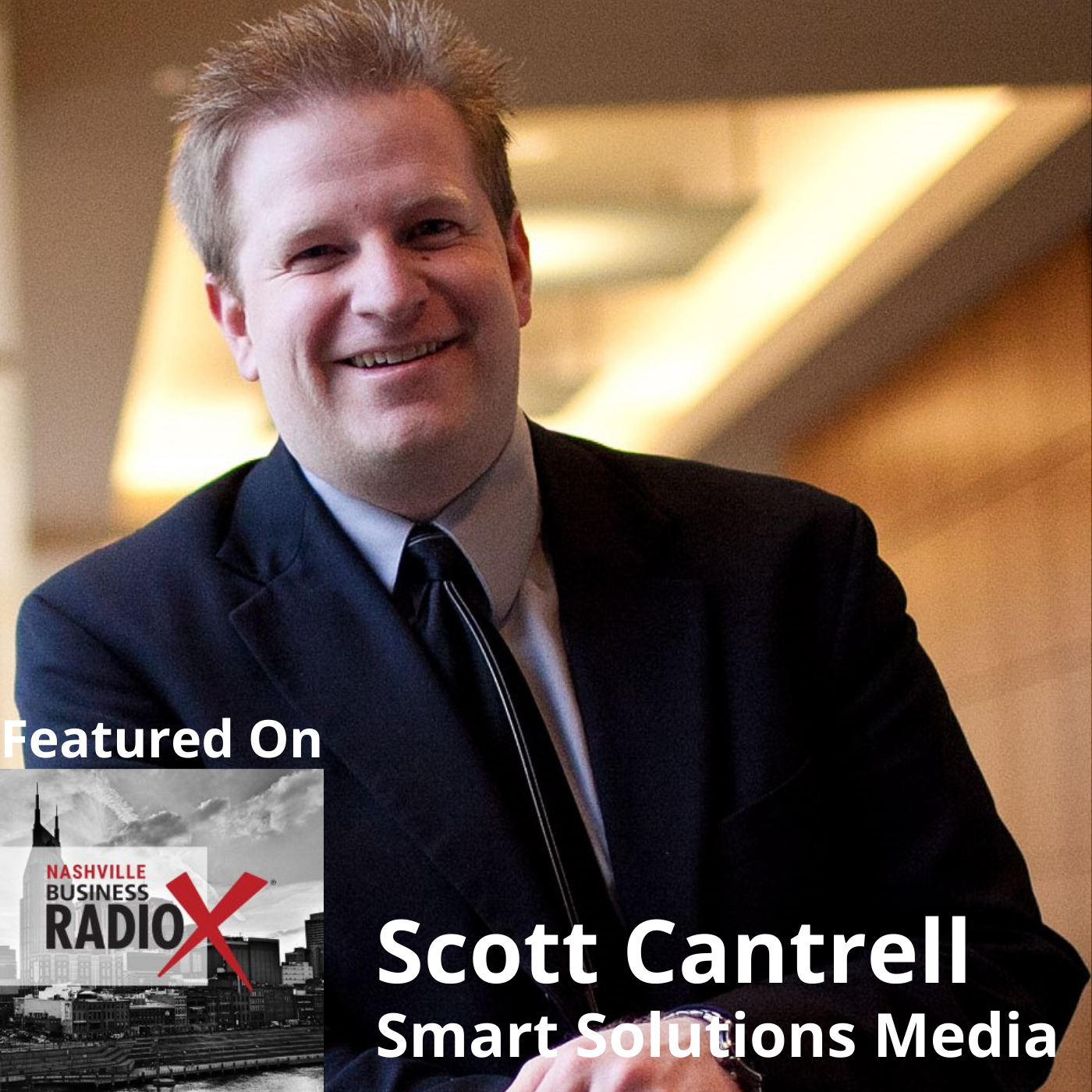
Michael Katz, Chief Penguin, Blue Penguin Development

Michael Katz, Chief Penguin, Blue Penguin Development

Blue Penguin Development Inc is a marketing and advertising company based out of Hopkinton, Massachusetts.

An award-winning humorist and former corporate marketer, Blue Penguin founder and Chief Penguin, Michael Katz, specializes in helping professional service firms and solos talk and write about their work in a way that is clear and compelling.

Since launching Blue Penguin in 2000, Michael has been quoted in The Wall Street Journal, The New York Times, Business Week Online, Bloomberg TV, Forbes.com, Inc.com, USA Today, and other national and local media.

He is the author of four books and over the past 20 years has published more than 500 issues of “The Likeable Expert Gazette,” a twice-monthly email newsletter and podcast with 6,000 passionate subscribers in over 40 countries around the world.

Michael has an MBA from Boston University and a BA in Psychology from McGill University in Montreal. He is a past winner of the New England Press Association award for “Best Humor Columnist.”

Company website | LinkedIn

Mike Blake, Brady Ware & Company

Mike Blake, Host of the “Decision Vision” podcast series

Michael Blake is the host of the Decision Vision podcast series and a Director of Brady Ware & Company. Mike specializes in the valuation of intellectual property-driven firms, such as software firms, aerospace firms, and professional services firms, most frequently in the capacity as a transaction advisor, helping clients obtain great outcomes from complex transaction opportunities. He is also a specialist in the appraisal of intellectual properties as stand-alone assets, such as software, trade secrets, and patents.

Mike has been a full-time business appraiser for 13 years with public accounting firms, boutique business appraisal firms, and an owner of his own firm. Prior to that, he spent 8 years in venture capital and investment banking, including transactions in the U.S., Israel, Russia, Ukraine, and Belarus.

LinkedIn | Facebook | Twitter | Instagram

Brady Ware & Company

Brady Ware & Company is a regional full-service accounting and advisory firm which helps businesses and entrepreneurs make visions a reality. Brady Ware services clients nationally from its offices in Alpharetta, GA; Columbus and Dayton, OH; and Richmond, IN. The firm is growth-minded, committed to the regions in which they operate, and most importantly, they make significant investments in their people and service offerings to meet the changing financial needs of those they are privileged to serve. The firm is dedicated to providing results that make a difference for its clients.

Decision Vision Podcast Series

Decision Vision is a podcast covering topics and issues facing small business owners and connecting them with solutions from leading experts. This series is presented by Brady Ware & Company. If you are a decision-maker for a small business, we’d love to hear from you. Contact us at decisionvision@bradyware.com and make sure to listen to every Thursday to the Decision Vision podcast.

Past episodes of Decision Vision can be found at decisionvisionpodcast.com. Decision Vision is produced and broadcast by the North Fulton studio of Business RadioX®.

Connect with Brady Ware & Company:

Website | LinkedIn | Facebook | Twitter | Instagram

TRANSCRIPT

Intro: [00:00:02] Welcome to Decision Vision, a podcast series focusing on critical business decisions. Brought to you by Brady Ware & Company. Brady Ware is a regional full-service accounting and advisory firm that helps businesses and entrepreneurs make visions a reality.

Mike Blake: [00:00:21] Welcome to Decision Vision, a podcast giving you, the listener, clear vision to make great decisions. In each episode, we discuss the process of decision making on a different topic from the business owners’ or executives’ perspective. We aren’t necessarily telling you what to do, but we can put you in a position to make an informed decision on your own and understand when you might need help along the way.

Mike Blake: [00:00:42] My name is Mike Blake, and I’m your host for today’s program. I’m a director at Brady Ware & Company, a full-service accounting firm based in Dayton, Ohio, with offices in Dayton; Columbus, Ohio; Richmond, Indiana; and Alpharetta, Georgia. My practice specializes in providing fact-based, strategic, and risk management advice to clients that are buying, selling, or growing the value of companies and intellectual property. Brady Ware is sponsoring this podcast, which is being recorded in Atlanta per social distancing protocols.

Mike Blake: [00:01:09] If you like to engage with me on social media with my Chart of the Day and other content, I’m on LinkedIn as myself and @unblakeable on Facebook, Twitter, Clubhouse, and Instagram. If you like this podcast, please subscribe on your favorite podcast aggregator and please consider leaving a review of the podcast as well.

Mike Blake: [00:01:27] Our topic today is, Should I create an email newsletter? And in doing this topic, I almost think like what’s old is new again, back to the future, retro, however you want to call it. Email newsletters, I think, have been declared dead more times than your typical cat or Rasputin, take either one.

Mike Blake: [00:01:52] First, it was spam blockers. And the next was social media. Of course, social media was going to obviate the need for email newsletters. And then, of course, everybody told us, if we don’t send people things in the analogue world and handwrite them, then nobody’s ever going to read it. And the list goes on and on.

Mike Blake: [00:02:12] And to coin a phrase from, about, five years ago, “And yet they persist”. And I think they persist for very good reason, is that, they’ve taken all kind of all comers. And in spite of that, in spite of many attempts and ongoing attempts to disrupt that world, email newsletters continue to thrive. And perhaps the best indicator of that is the fact that Atlanta’s own homegrown startup Mailchimp was just bought by Intuit for $12 billion. Mailchimp basically exists to help people and companies publish email newsletters.

Mike Blake: [00:02:53] Now, why does a tax company want a newsletter company? I’m not sure. I was going to say I’m not in that business. But I guess working for a CPA firm, I technically am, but I’m not. And I don’t even do my own taxes although I’m a CPA. And I don’t understand the strategic rationale for that deal or the price that they paid. But, you know, good for Ben Chesnut and his team, they’ve worked hard on that company for a very long time. They certainly deserve to see the fruits of that labor. And that’s a big feather in the cap for those of us who believe in the Atlanta startup ecosystem as I do.

Mike Blake: [00:03:33] And so, you know, I think that this is a topic that requires and I think many of us will benefit from this discussion. And helping us with this is is Michael Katz, who’s an award-winning humorist and former corporate marketer and Founder and Chief Penguin of Blue Penguin. And he specializes in helping professional services firms and solos talk and write about their work in a way that is clear and compelling.

Mike Blake: [00:04:01] Since launching Blue Penguin in 2000, Michael has been quoted in The Wall Street Journal, The New York Times, BusinessWeek Online, Bloomberg TV, Forbes.com, Inc.com, USA Today, and other national and local media. And you can tell that he had nothing to do with my introductory comments. He is the author of four books. And over the past 20 years has published more than 500 issues of The Likeable Expert Gazette, a twice monthly email newsletter and podcast with 6,000 passionate subscribers in over 40 countries around the world.

Mike Blake: [00:04:33] Michael has an MBA from Boston University – I grew up in Boston. A B.A. in Psychology from McGill University in Montreal – home of my favorite actor and yours, William Shatner, or at least birthplace. He is a past winner of the New England Press Association Award for Best Humor Columnists. Michael, welcome to the program.

Michael Katz: [00:04:52] Great to be here. Thanks for having me.

Mike Blake: [00:04:55] So, you know, there’s so many ways to communicate in the written word now with our intended audiences. And I actually think it is helpful, it may sound like the most inane question in the world, but I do think that the definitions have been blurred and it is important. In your mind what makes a newsletter a newsletter? And what separates it from other forms of written – I’m going to say – mass communication. I probably cringe at saying that, but it is sort of a one-to-many kind of communication model. What makes a newsletter a newsletter?

Michael Katz: [00:05:31] Well, I think it is pretty blurry. I mean, I always think of it, it’s just a glorified email sent to more than one person. Maybe the email that Target sends to you telling you you’ve got 30 percent off and the email that your accounting firm sends with useful information, they’re both technically newsletters and people pretty much use them interchangeably. So, you know, the definition really hasn’t gotten any clearer over the years. It sort of depends what business you’re in, but I think it applies when you send it by email to a number of people and generally not personalized beyond, you know, dear name.

Mike Blake: [00:06:12] You know, it’s interesting, even I would not have thought of the Target virtual flyer being a newsletter. But I guess it is, right? And that definition between advertisement, newsletter, blog post, something else, I think, has been blurred. And I guess I’ll follow up with this question, is that distinction even meaningful?

Michael Katz: [00:06:41] I think the distinction is, is this a thing that lands in your inbox or is it somewhere else, social media, video, all that? So, you know, I think as you were saying, Mike, earlier, it’s written and it shows up in your email. And so, that then becomes the question. So, is that still valuable or not? But I think all those things, I suppose, are the same species, email and newsletter.

Mike Blake: [00:07:05] Okay. So, those of us who are listening to this podcast, they may well be hearing newsletter and wondering, “Oh, my gosh. Do I have to basically now become a professional writer? I didn’t like writing five page essays in school. And, now, I got to do something every week or maybe more than that.” Is there an ideal length in your mind for a newsletter? Can newsletters be short? Do they need to be long form? They need be very long form? What’s best practices in determining just how much content goes into a newsletter?

Michael Katz: [00:07:41] Yeah. I always say one word is perfect. However, you have to get over two bars at least, again, in the world that I live in. So, again, I’m not doing the Target 30 percent off. I work exclusively with small professional service firms, financial planners, consultants, recruiters, coaches. So, these are all people who are selling themselves or their small firm, essentially. And so, those kind of newsletters are information-based. They’re not about an event. They’re not click to buy kinds of things, like click here and buy it. They’re really about – and we’ll talk more about it – getting in front of a group of people. So, yes, shorter is better because I can get your stuff sooner.

Michael Katz: [00:08:26] However, two things. One is, you have to tell me something that I will read it and have learned something. So, I’m always saying, you’re looking for me to read it and go, “Oh, there’s something I just learned about accounting, legal, management, consulting, whatever.” The second thing is, I think you want your newsletter to be long enough that you include some of your personal voice story experience. Because if it’s just information, well, I can get information by Googling it.

Michael Katz: [00:08:56] So, if you can say something that includes something useful and enough story – which I know we’ll talk about – then I think that’s good. I would say that for most people then, you’re talking 500 to 800 words to get that in there. But even among my own clients, there’s variations there.

Mike Blake: [00:09:18] So, how do you decide what goes in? And I’ll preface this with kind of my experience with this podcast, and you’ve done a lot more of these things than I have, so God bless you, I don’t know how you do it. But the question I’m asked most frequently is, how do you decide on the topics and how do you kind of keep it fresh? And my answer to them is, “Well, for me, I just keep a running note in every note. And every time something pops in my head, I write it down. And then, if I’m really stuck, I’m not afraid to revisit something if I think somebody else can bring a different voice to the same topic.” How do you decide what goes into your newsletter?

Michael Katz: [00:10:06] So, my point of view is, I’m trying to help my readers not need to hire me, which sounds counterintuitive. But what I mean is that – and this is true for any profession that I’m working with – help them learn not to need you. So, if you took a very simple example, suppose you’re a carpenter. Your newsletter should be about how to use a hammer, how to buy wood, how to climb a ladder. It’s very simple stuff. And, yes, if I got and received and retained a thousand newsletters like that, I suppose I would know as much as my carpenter.

Michael Katz: [00:10:42] But the truth is, you’ll never give away your business with those 500 or 700 word tidbits. But it has to be useful so that I read it like everybody thinks about what do I say to promote my business. Which is fine, that’s why we’re doing it. But your readers don’t care about your business. They are only going to read it, and stay with you, and tell other people about it if they find it useful.

Michael Katz: [00:11:06] So, that’s the sort of basis of it always, you have to match up to the audience that presumably would hire you by giving them something that will make them live their lives better or do their jobs better instead of running out of information. I mean, I’ve written 500 newsletters. I have, like, 30 ideas. So, it’s funny, I mean, I don’t republish them. And, by the way, that’s where stories come in.

Michael Katz: [00:11:30] But I’ll address a similar topic with a slightly different angle or something. Nobody says, “Wait a second. Four years ago in April, you said the same thing.” It’s sort of like, you know, if you have a personal trainer at the gym, the guys told you a thousand times to keep your back straight when you do pushups. You don’t say, “Wait a second. You already told me that.” So, people need repetition anyway. That’s fine.

Michael Katz: [00:11:56] The other thing is, even your most loyal readers will probably read every other one, so it’s fine. You’re trying to be out in front of a particular population over and over again with useful information and some personality because, again, your goal is that they refer you or maybe they hire you. So, it’s sort of easier than you think. I always say, if you know enough to be in a profession, you’ll never run out of content. My longest running client, an attorney, we’ve been doing a newsletter for 18 years and still publishing.

Mike Blake: [00:12:29] You know, you bring up that topic of what’s the likelihood that somebody’s going to remember a topic? I guess that’s right. In fact, I would love it if somebody has actually listened to this podcast with enough intentionality and frequency that they could spot any kind of repetitive material. And, frankly, I think I might actually buy a steak dinner if you sort of organically did that. Because I don’t think I have the kind of following like somebody, a dragon con, who shows up and questions one of the actors like, “In episode 192, how do the physics work when the spaceship went from galaxy to galaxy?” I don’t think I have that kind of following.

Mike Blake: [00:13:09] So, it probably is okay to kind of recycle stuff. And if you put a slant on it, so much the better. But you’re right, the portion of the population that’s going to have encyclopedic recall of all of your newsletters is a pretty small one. And if they are, you’ve probably already got them hooked anyway.

Michael Katz: [00:13:27] Right. I agree.

Mike Blake: [00:13:29] So, I’m going to go off script a little bit because your narrative brings to mind what I think is a really innocent question. And that is, can you recall the most memorable newsletter you either received or published? Either one you’re really proud of, or one you helped somebody publish because I know that’s what you do, or one that you received that maybe you said, “I really got something great out of that newsletter that I still use. I got it ten years ago. I still use that today.”

Michael Katz: [00:14:01] That’s a good question. And my answer is no, but here’s why. Because the value of a newsletter is a cumulative event. It’s like if I said to you, “Can you remember the best work you ever had?” You’re like, “How do I know?” Like, “Oh, yeah. It was like a Tuesday five years ago.” It’s the same thing. And I often have to talk people down from this, even people who are thinking of hiring me to say, “Look. It’s not a Super Bowl ad. You’re not going to publish a newsletter and have your phone ringing off the hook.”

Michael Katz: [00:14:34] And I do always use the exercise metaphor, that, exercising five times, you may as well not do it at all. But without question, if you exercise regularly for six months, you’ll get results. The same thing, it’s an ongoing event where people start to know you. They start to remember what you’re writing about. And then, one day, somebody needs what you’re selling. So, one important thing about a newsletter in its regularity is, it takes timing out of the equation.

Michael Katz: [00:15:04] So, the problem with advertising is you have to keep doing it. Because if you see a car ad today and you just bought a car last week, you have zero interest. Or if you’re planning to buy it in a year, zero interest. So, the reason that car people, for example, have to advertise constantly is because there’s always a slice of the population that’s ready to buy a car. So, they waste a ton of money on everyone else who isn’t.

Michael Katz: [00:15:26] Well, the newsletter, and particularly if you’re a small professional service firm, you don’t have advertising money, this is putting you in front of people over and over again. And so, one day they’re tired of their financial planner, their accountant doesn’t return their phone calls, whatever. They say, “Do you know anybody who could help me with this?” The newsletter acts as that constant prompt in front of them. So, visibility is a big part of what’s going on.

Mike Blake: [00:15:53] I think that’s really smart. And I actually kind of want to pause a little bit on that, because I’ve talked to many people, for example, in the podcast – I don’t have a newsletter. I eventually have to come out with one, but I don’t have one yet. But I think with the podcast it’s the same – I’m frequently asked, “How much business have you gotten out of it?” And my answer is, “Frankly, I have no earthly idea.” Because nobody is going to listen to my podcast and then pick up the phone and say, “Hey, I need you to do an appraisal of my company.” It’s just not going to happen. And podcasts, in particular, really don’t work that way.

Mike Blake: [00:16:32] But it’s the cumulative reminding people that you’re out there, that you have this expertise, you have that service so that it’s much more likely that that need is going to meet availability. And so, it’s about impact. It’s not so much about it’s important and it’s urgent. But there’s a third dimension out there about impact. And when you do a newsletter consistently, I think there’s a very similar philosophical ingredient to it or foundation to it that it’s not about the newsletter that you published today. It’s the aggregate of newsletters that you have published and continue to publish over an extended length of time.

Michael Katz: [00:17:13] Right. In fact, I’d even say, the person who calls you because they heard one podcast is suspect. That’s not a good client. That’s like, “What can I say to a woman in a bar to get her to marry me?” Nothing. Anyone who would say yes is bad. You want someone who’s listened to your podcast for a year. Because, first of all, you’ve screened out all the people who would actually hate you if they hired you. Because they’re like, “I like this guy.” And the people who don’t, go away.

Michael Katz: [00:17:46] Because my entire business is based on my own newsletter. No one ever gets in touch with me who isn’t kind of pre-qualified. So, it’s very effective in that way. And the best clients are the ones who’ve been listening for a while and finally say, “Hey, we’re ready to hire you.” I mean, it’s the easiest sales call you’ll ever get, an inbound call like that.

Mike Blake: [00:18:08] So, as I said in my introduction, newsletters, they’ve been declared dead a lot. And they’re still here and you’re still here. You don’t look dead to me. You don’t sound dead. So, why have they survived? Why do they continue to thrive? And I think they thrive, see if you agree with me. Why do they continue to thrive where there’s so much competition now for our attention?

Michael Katz: [00:18:38] Yeah. Well, you’re right. I mean, it’s so interesting how much it’s changed. So, I started doing newsletters in 2001. And the biggest objection I received from potential clients was that not enough of their clients and customers had email. And, like, blogs came out. That was going to kill it. Then, it was the whole spam thing. I mean, it’s amazing to think that Congress got together and passed a CAN-SPAM Act. That spam was so bad that there was a law passed about it. And then, social media came.

Michael Katz: [00:19:14] And I have to say about, maybe, whatever it was, ten years ago when social media sort of started, I was concerned. Like, you know, I don’t want to be so selling this thing that’s like a dinosaur. And so, paying very close attention what’s the next thing, looking around. And I think a couple of things. One is, nobody is in charge of email.

Michael Katz: [00:19:37] So, the problem with social media – and there have even been some very high profile examples – they can kick you off if they want. They run the whole thing. Like, nobody knows what the algorithm on LinkedIn is or Facebook to get you in front of different people. It’s a secret. So, you could be very popular on LinkedIn, and tomorrow they change the algorithm, and now it drops.

Michael Katz: [00:19:59] So, you don’t own the real estate if you build a business on any of the social media platforms. There’s somebody in between you and the recipient. Email is a completely distributed system. Nobody is in charge of email. So, the only people who decide whether my newsletter is read and opened are the people on the list. So, that’s very powerful.

Michael Katz: [00:20:21] Secondly, it shows up in your inbox. So, it’s funny, sometimes if I’m talking to you a live group, I’ll say, “Okay. Raise your hand if you’ve checked LinkedIn today.” And you get, like, half the group. “Raise your hand if you’ve checked email.” Everybody. So, as much as email is dead, it’s sort of like the day you can sign up for a social media account without an email address, I believe it’s dead. It still is the default in our life. It’s not even do you have email anymore. There’s things you can’t do. I can’t make a doctor’s appointment anymore without an email address. So, even though I’ve been wondering will it die, it still continues to be very compelling.

Michael Katz: [00:21:05] And, again, because my newsletter will sit in your inbox until you delete it, I think that’s also more powerful than a post on LinkedIn, which in the time we’ve been talking, if somebody posted, it’s already gone. You know, it’s pushed down. So, it’s funny, it’s like skinny ties – for no good reason, but if you wait long enough, I guess – I don’t know if something will replace it. But I’ve never found anything that says effective in all the ways we’ve been talking about is email, so still a lot.

Mike Blake: [00:21:39] Yeah. That’s a really interesting description. I hadn’t thought of either of those things. But it’s right to me. Social media, we don’t own the real estate. We don’t control who sees our thing, who sees our content. And we try to read the tea leaves in terms of what’s going to to gather the most, first of all, visibility, and then engagement, which is entirely a different animal. But then, this notion that, in a way, email has become like broadcast television. The way that you described it, I think that’s so smart.

Mike Blake: [00:22:26] And I guess it resonates to me because several years ago we cut the cord. No cable T.V. But we still do subscribe to the Netflix, Hulu. I have no idea if we’re saving money. We’re probably not, if I’m totally honest about it. But one of the the reason we still do that is because you can’t just sort of turn on Netflix and a program appears. You have to be with the modern television model. You have to be intentional about what you want to watch. Unless you do cable and then you can do that. That’s what we want to do.

Mike Blake: [00:23:02] Email is kind of the same thing, right? It’s so ingrained. Like you said, you cannot make a doctor’s appointment, you can’t do almost anything you want to do in life. The phone book has been replaced by email in some regard. And so, if you’re a functional adult in the society, you are actively managing and looking at an email account. And that’s the way in to everybody is through that channel. And I had not thought about that until you raised that before. That’s really interesting and that’s really important.

Michael Katz: [00:23:33] I think it does somewhat depend on the population, too. So, you know, everyone I work with is – I don’t know – 40 or older. Whereas, you know, I have a 22 year old son, I have to text him to tell him to check his email, even though he has an email account. It is possible if you’re talking to that audience – and who knows the sort of next generation that it moves on – at least for now, you know, my people are the middle aged and older, we’re still very much tied to email.

Mike Blake: [00:24:06] Yeah. I’m with you. I’m on the older side of Gen X myself. So, email is going to be my primary conduit. And I have a teenager and I kind of do the same thing. But what he’s finding is that texting amongst themselves and his friends is fine. But for the really important stuff, he misses a lot if he doesn’t check email. For what it’s worth for now, you and I are still controlling the world. In 20 years, it maybe different, but we still rule the world with an iron fist.

Mike Blake: [00:24:39] So, let me switch gears here, and it’s a little bit more the how. So, there are services out there, as you know, where you can send out a newsletter that’s basically canned content. Somebody writes it for you and then you put your name on it, you say that it’s yours. What do you think of those? Is there any value to those in your mind? Is there a value case to a certain kind of customer? Are they really valuable? What’s your view there?

Michael Katz: [00:25:08] I think there’s value there. I mean, again, because the option of not doing that is you’re invisible. So, even if I never open your email, but you show up once a month or whenever, and I, for whatever reason, don’t unsubscribe, at least I know you’re alive. So, that’s better than nothing.

Michael Katz: [00:25:33] There’s a few things missing, though. The problem is, you know, back in the day when it was print emails, and the insurance industry was famous for this, where you could get your photo and your contact information onto something they mailed. Well, back then, it was valuable to have someone give you some information about buying insurance, for example. Today, I can get any piece of information I want on anything in a minute with Google. So, if all you’re sending me is canned information, number one, it’s not unusual in any way. And number two, it’s not even your point of view.

Michael Katz: [00:26:10] So, this sort of funny thing going on, people sign up for your newsletter because they want the information. But what I’m trying to do is get them to know who I am or who my clients are. Because if you’re selling a professional service, the problem is the people who are your prospects and even your clients cannot tell how good you are relative to the other options.

Michael Katz: [00:26:31] It’s like you don’t have the slightest idea how medically capable your own doctor is. You don’t even know where he or she went to medical school. You’re like, “I don’t know.” And if I said, “Do you like your doctor?” So, again, I often will say to an audience, “Raise your hand if you like your doctor.” You get a lot of hands going up. “Keep your hand up if you know where your doctor went to medical school.” Nobody. So, why do you like your doctor then, or your accountant, or your auto mechanic? “I like the way they talk to me. I like their point of view. I like their personality.”

Michael Katz: [00:26:59] It has nothing to do with their capability. Yes, you have to be capable. But everybody who’s worth worrying about is capable. In fact, if you’re in an industry like yours, Mike, that’s where certification is required, CPA, medical school, you know, whatever. It’s actually harder to distinguish yourself because I know as long as I hire a CPA, I got somebody who’s over the bar. So, the differentiator is not capability. Again, you have to be good enough. It’s all this soft, squishy, non-professional business stuff.

Michael Katz: [00:27:35] And so, to me, what a newsletter ought to be is story and personality wrapped around useful information. Because over time, people get to know you. What’s funny is when I write a newsletter, let’s say, for myself, I’ll write about my family just took a trip to Colorado. Nine out of ten of the comments I get relates to someone else who went to Colorado. It’s not about the business thing. If I only wrote a newsletter and just told you about a family trip, you don’t subscribe.

Michael Katz: [00:28:05] But when I wrap this around the useful information, the soft stuff is what they notice. And, ultimately, I think that’s why you hire me versus somebody else or don’t hire me because you don’t like me. But again, I’m happy about that. You’re better off if we wouldn’t get along to go elsewhere.

Michael Katz: [00:28:24] So, it’s a really weird thing, but it’s extremely powerful because that’s really how word of mouth works anyway. People just passing other people around. And the newsletter done this way is just a very scalable way to do this, you know, to network, essentially.

Mike Blake: [00:28:43] And, you know, that’s interesting how you bring the individual voice into that, and I agree with that. And you’re right, it is in the accounting industry very challenging for people to separate themselves. And you ought to be really careful and say I’m the best accountant in the world. That’s a hard position to sustain or quantify. But you can always make yourself different. But you can’t make yourself different unless you’re actually communicating with somebody that they can see how you’re different. And I don’t think it’s all that effective to just say, “Well, I’m different.” You have to lead people to their own conclusion that you’re different by acting differently.

Mike Blake: [00:29:30] So, I want to get to creating a content in a second, but I do want to cover another model for newsletters, which is not a canned service per se, but maybe a newsletter that’s based on curating somebody else’s content. Like, you’re a big reader and you’re doing a service for your readers who don’t have as much time to read and gather information as much as you do. So, you’re going to kind of aggregate information on behalf of somebody else. In your mind, how effective is that kind of newsletter content strategy?

Michael Katz: [00:30:05] So, I think of it as a long a continuum. So, all the way to one side is, I never publish anything. As far as you know, I’m dead. Next step is, here’s a newsletter where it’s got my picture on it and my contact information, but it’s totally candid and I had nothing to do with it. But way better than nothing. I mean, because, I think half the game is showing up.

Michael Katz: [00:30:25] The curated one is one step further because, now, at least you’ve had input into what you decided is important. The downside is, you’re hosting other experts, essentially. So, I don’t know anything about how you think. I don’t know anything about your voice, your story, your personality. I just know, “Okay. He or she said these things matter.” What I want to get to is one step beyond that, which is, this is my point of view.

Michael Katz: [00:30:48] Again, if you’ve been a CPA for 20 years, you know a lot of stuff. And the other thing is people will think, “Oh, so I have to write something that’s never been said before in the world of accounting? I mean, we all have one or two things, maybe, and that’s it.” You got to remember your audience. If I’m a reader of your newsletter, I don’t know anything about accounting. I don’t want to know a lot about accounting. I just want a little insight that goes, “Blah, blah, blah. Here’s what you need to do.” It’s accounting 101. It’s embarrassingly simple.

Michael Katz: [00:31:21] Again, in that carpentry example, how to buy wood. Another carpenter would be like, “Well, no kidding.” But to me, as a homeowner, I don’t know. So, super simple. A little nugget that makes me go, “Oh. Okay. I just learned something. I’ll come back next month.” And, again, if you include that with some personal story, which, by the way, the only unique thing you have in terms of information is your story. Like, nobody can tell the story I told about going to Colorado with my family. I’m the only one on Earth who can do it. Anyone could have told the insight – whatever it was, I don’t really remember – that came with it.

Michael Katz: [00:31:56] So, it’s the more custom, I think, the better. Because, again, you’re trying to not just be known as an accountant. You’re trying to be known as that guy, Mike, that I like. And maybe one day I will hire him because I’m kind of sick of our accounting for whatever reason.

Mike Blake: [00:32:12] So, when I think of newsletters – this probably reveals my age. Again, I’m a Gen Xer. That’s the way it is – I think of newsletters that have maybe three or four articles in them and they have sort of a professional publishing format and so forth. Is that best practices now? Does a newsletter have to talk about three or four different things to kind of be worthy of the name? Or can you send out a newsletter that, in effect, is one message?

Michael Katz: [00:32:46] So, now, we’re getting into stuff where it’s like I don’t think there’s a must be this way or must be that way. As long as you satisfy useful information wrapped inside personality, I think you’re there. Because the other question is, should I make them click to read it or should I put the whole thing in the email? Pluses and minuses on both sides. It’s funny how in the same breath people will say, “Nobody has time to read anything. Should I have five articles?”

Michael Katz: [00:33:15] I mean, I wasn’t kidding when I said one word is the best. Because although I don’t think length equals quality, there’s reality that if your newsletter is too long, I think people stockpile them, which kind of adds up to never read them.

Michael Katz: [00:33:30] I have a friend/client, the only person I’ve ever met who can satisfy the useful information and personality in 300 words. I don’t know how he does it. But his newsletter is so short that when it arrives, I read it right away because I know it’s going to be short.

Michael Katz: [00:33:47] So, I think it’s okay to have the several stories. But, again, my goal isn’t to be a publisher. It’s to generate business. So, I just want to make sure I tick the box of useful and story. And so, I’m inclined towards the main article. There’ll be some tidbits like, “Hey, you know, we just won this award.” Or, you know, again, with my clients, that might be another section. Or I have someone who does, like, a book of the month that she reads, she’s an attorney. But there’s that one main article, and I find that works pretty well and it gets read as a result.

Mike Blake: [00:34:27] So, you talked about – and I agree – that it’s important for a newsletter, if possible, to reveal as much of the voice of the creator of the newsletter as possible. What do you do if you’re not a particularly good writer? Some people are good at math, some people are good at writing, some people want to be good at writing, and others couldn’t care less. Are newsletter just sort of closed off to you? Or is it a massively hard slog if you just don’t fancy yourself as a writer?

Michael Katz: [00:35:04] Okay. So, I’m going to use another exercise analogy.

Mike Blake: [00:35:09] Please.

Michael Katz: [00:35:09] So, like, ten years ago, I had knee surgery. I had my ACL replaced. And afterwards the physical therapist said, “Okay. You’ve got to go to the gym and get on an elliptical machine because you can’t run for a while.” And I never used an elliptical machine but I did belong to a gym. So, I go in there and I looked, and there’s, like, four different kinds of elliptical machines.

Michael Katz: [00:35:31] And so, I go up to the front desk and there’s the guy, and it’s huge muscle guy with just tiny little T-shirt reading a muscle magazine. He doesn’t even look up at me. And I go, “Hey. Which of these elliptical machines is the best one?” And he said what I believe is, like, the most wisdom I’ve ever heard, without looking up, he goes, “Whichever one you’ll stay on the longest.” The reason we have multiple machines is because some people like this one and some people like that one. The point of exercise is more of it too.

Michael Katz: [00:36:05] It’s sort of the same thing that you’re trying to do something you don’t hate. So, I can talk all day about why newsletters are great. But if you’re going to do it yourself without help and you hate writing, you’re not going to do it. So, find something else. Maybe you’re a good talker and so podcasts is better for you. Maybe you’re good on camera and video or social media, whatever. You have to pick marketing tactics that you, at least, can tolerate – the same thing, some people hate running, some people like swimming – or you’ll never do it.

Michael Katz: [00:36:41] Because the rest is really sort of nuance. Is a podcast better than a newsletter? I don’t know. The point is, keep showing up. Keep doing it. I don’t think you have to be a great writer, though, as long as you’re willing to do it. It’s funny, I’ve had so many people over the years say, “I’m a terrible writer.” No one has ever said to me, “I can’t talk to other people. What do I do?” It’s sort of the same thing. This isn’t like you’ve got to be Stephen King here.

Michael Katz: [00:37:08] In fact, I spent a lot of time unteaching people to stop writing like they’re writing marketing. Like, they get into this mode of it’s either a super formal or it’s like, “Hey, dude. Let’s kill it,” and the guy is, like, 60. I think your newsletter – because, again, it is an email – it’s inherently informal. So, your newsletter, I think, should sound like you speaking, as close as that as you can get. And since most people can speak coherently, if you do that, you’re good. Now, you may need an editor because you don’t want it to look unprofessional with punctuation or misused words, but that’s okay.

Michael Katz: [00:37:52] Most of my clients, the arrangement is some people I interviewed them and they never touched a keyboard, that’s fine. But I have other people where after we’ve figured out all this voice and, you know, it’s the design and the Mailchimp set up and all that, every month we talk about, “Okay. What’s the topic going to be?” We’ve already identified a bunch of areas. We go back and forth on, “Well, yeah, I think that sounds like three topics. What if you did this one?”

Michael Katz: [00:38:19] They write the first draft badly. I always say, “I don’t need you to write it well. I just need the raw material. Give me enough information that I can do it.” I don’t do any research. And, by the way, neither do they. Because, again, you don’t need to do accounting research. You could talk forever. And then, I fix it. So, I’m essentially a writer.

Michael Katz: [00:38:40] But as long as they just give me the blah, I then take it and fix it. But, again, whereas there’s other professionals I know who do the whole thing themselves. So, you can do it. But you’ve got to do it. It’s like you can’t go to the gym twice. You’ve got to keep going.

Mike Blake: [00:38:57] Has the advent of mobile devices changed at all how you do, or how you create, or think about newsletters as a medium?

Michael Katz: [00:39:05] Yeah. I mean, you know, when it starts to become a thing – I don’t know – five or six years ago, we had to get rid of the newsletters with the side column, which was sort of the standard, because it has to look good on a phone. And then, there’s this term responsive, meaning your newsletter response to whatever device it’s on. So, the same newsletter will work on a computer or a tablet or a phone. And, you know, the Mailchimps of the world have made that automatic, so you don’t have to worry about it.

Michael Katz: [00:39:35] But half of the world, at least, is opening email on a phone. I don’t know what percent will actually read it there. But you have to make sure you know the font is big enough, that you don’t have graphics that don’t work on a phone, so you just test it. But it’s not a problem, but you certainly have to account for it.

Mike Blake: [00:39:56] So, I want to switch gears here. An important driver of success in a newsletter, I would imagine, is having an audience to send it to. And it seems to me that building an email list – well, I’m getting ahead of myself. I’m sure there are listeners who are listening to this right now that think, “You know what? Newsletter sounds great. I don’t know who I’m going to send it to.” Is there a special order of operations? Or how do you come up with a mailing list? Or are there tips? Do you think about building a mailing list really quickly? And then, how you do that? Any content? I mean, is the newsletter only a game, I guess, for somebody that already has a big mailing list?

Michael Katz: [00:40:46] No. Because, again, I’m working with professional service providers. No. None of those people have mailing lists. But you’re mailing lists are the people you know. I define people you know as, if you call them up, you wouldn’t have to introduce yourself. So, it’s not everybody you went to college with. It’s not the membership list of your professional organization. That’s spam. But it’s the humans on Earth you know. I find like the average middle aged person knows, like, 400 or 500 people. They always say, “Oh, I only know 50”. But now we sit down, it’s your college roommate, it’s your brother-in- law, it’s former clients. We’ll talk about what’s the value of your brother-in-law here?

Michael Katz: [00:41:26] So, people make two mistakes. One is, they just get every email they can get and now they’re seen as a spammer. Don’t do that. The other is they think, “Who might hire me? They only have, like, 15 people.” It’s a word of mouth game. So, the way I get hired as a marketing consultant, yes, sometimes it’s a potential client. But more often than not, you know, four out of five, it’s somebody else. My brother-in-law who reads my newsletter and finally knows what I do for a living after how many years, and a friend.

Michael Katz: [00:41:58] If you think about how word of mouth works, it’s two people sitting in Starbucks and somebody goes, “I’m just so sick of my accountant. He never calls me back, blah, blah, blah.” And then, the other guy goes, “Look at this guy’s newsletter, call him.” What’s funny is when people refer professionals like that, they don’t even necessarily know how the professional works, what they charge, how good they are. If I said, “I need a guitar teacher,” your brain goes, “Who do I know? Call this guy.”

Michael Katz: [00:42:27] So, if you take those 500 people, your brother-in-law, your college roommate, colleagues, more business people, and you’re in front of them every month, talking, whatever it is you do, what happens is they refer you. So, when I start a newsletter with a new client, I’m like, “Give me those people. Again, only people you know.” The first time you publish, out of 500, 50 of those people are going to unsubscribe. And, yes, you’ll get one person maybe.

Michael Katz: [00:42:51] Although, it doesn’t even happen anymore, who’s angry that they’re on the list. It happened ten years ago and when everybody was like, “Spam. Don’t spam me.” Now, for whatever reason, like when was the last time you heard somebody complain about spam? It’s not even a thing anymore. But, now, you’re off and running with your 450 people. And, yes, it’s good to add people because it’s a leaky bucket. Every month, people move or whatever. But you don’t need to, like, aggressively grow your list. In fact, I don’t know a way to do that that isn’t spam.

Michael Katz: [00:43:19] But I practice what I call aggressive opt in. When I meet somebody, I go, “Hey, can I do my list?” And we connect. So, I’m adding onesies, twosies all the time. You will get some people who wandered over to your website and sign up. But not a lot if you’re the average professional person. So, you have to kind of work it intentionally. But what’s amazing is, you only need, like, 500 people you know. Yes, if you’re selling products, you need 50,000 people. If you’re selling professional services, I mean, if I get 20 new clients a year, it’s all I can handle.

Michael Katz: [00:43:54] So, the numbers are small. And, again, it works very well for this population, which is different than if your target needs to do all kinds of stuff like this. It’s really not a list size thing. It’s a quality thing. Quality of the list.

Mike Blake: [00:44:09] Is there an optimal frequency for publishing newsletters?

Michael Katz: [00:44:12] Everyday. I think, again, for a professional service newsletter – once again, just to say – it varies. If you owned a bar, it’s probably once a week on a Thursday afternoon. But in my world, almost everybody I work with, it’s once a month. So, it’s only 12 times a year. And I say only, because it has to be manageable. I publish my newsletter every two weeks, which I think is perfect in terms of effectiveness. But most people can’t sustain that because they have real jobs. Once a month is a nice rhythm to that. It gives you time to get it ready, publish it, and then get some breathing room for a couple of weeks and start again.

Michael Katz: [00:44:57] It’s funny, like, 18 years ago, I would say to people, “Once a month, and your troubles are over.” Now, I say, “The least you can do it, I think, is once a month because there’s so many other things out there that you’ll be invisible if you back up to the default, which is quarterly.” I don’t think that’s enough anymore. But it’s more than enough – well, it’s enough. I mean, again, all my clients do it that way, mostly. And they all regularly, because people share their success stories, like, “Hey, I just got a new client. They read some of my newsletter.” You know, it happens all the time. So, it’s a good pace.

Mike Blake: [00:45:30] So, we’ve talked a little bit about, in effect, a long tail of newsletters and how you measure performance. But it also seems to me that one of the benefits of newsletters is that, unlike podcasts, for example, there’s a lot of data out there that can give you insight in terms of who’s opening it and who’s reading it, that sort of thing. Are those metrics that you follow? Do they matter to you? And if so, what do you really pay attention to? What do you use? And maybe what’s overhyped too?

Michael Katz: [00:46:02] Well, I think newsletter data is overhyped, because the only thing you can measure is opens and clicks and bounces. So, because that’s the only thing you can measure, that’s what we measure. But the truth is, if I’m not selling sneakers or something, what’s the difference how many clicks there were? It doesn’t matter. What matters is, has anyone ever said, “I called you because of your newsletter”? And I’d say even there, yes, you get these direct connects, which are great. I love when a client tells me that or I get that. My favorite call is somebody goes, “Hi. We’ve been reading your newsletter for two years and want to talk to you.” That’s a client coming up right there.

Michael Katz: [00:46:47] But people like to measure stuff. The thing is, with opens is, first of all, it’s inaccurate in many ways. And, by the way, Apple just made a change to their privacy policy. So, every Apple device is going to look like it opened your newsletter, so everybody is going to become even more irrelevant. But we’re not in a click to buy world. We’re in a relationship building world. So, it’s almost like if you went to a networking event and measured how many hands you shook, it kind of relates to did you make your way around the room. But it’s not really what you’re measuring.

Michael Katz: [00:47:21] So, although I do provide data to my clients, and people ask about it often or usually before they hire me, I’m not even sure they even look at it after they’re up and running. There’s a certain leap of faith, though, because it’s relationship building. It’s hard to connect A to B.

Michael Katz: [00:47:40] Part of the reason I work only with small firms now – I used to work with big companies – is because I got tired of having to defend it. Because if you’re the marketing guy in a big company – because I used to be – you got to defend everything you spent to the CFO. If you owned the business, I don’t need to explain to you the value of relationship building. So, I’d much rather work with someone who goes, “Yeah, I get it.”

Mike Blake: [00:48:03] So, we’re talking with Michael Katz. And the topic is, Should I create an email newsletter? Does the time of day that you send an email newsletter out matter?

Michael Katz: [00:48:19] Not anymore. I mean, back in the day when we all closed our computers at 5:00 on Friday and didn’t look at them until Monday morning, I think so. But it’s very much a 7 by 24 thing now. I try and avoid the times people are in heavy delete mode. So, even though it’s 7/24, people do sleep. So, you wouldn’t want to send a newsletter overnight.

Michael Katz: [00:48:40] Like, my wife wakes up, reaches for her phone, and starts deleting. She’s trying to clear the day so when she gets in front of her desk, she’s got less stuff. You don’t want to be in that pile because the bar is higher. I also avoid Mondays, because even though, yes, it’s 7/24, we do sort of slow down.

Michael Katz: [00:48:57] So, to me, a newsletter, any time between, like, 9:00 in the morning or 8:00 in the morning, I try to do in the morning rather than in the afternoon. But I have no data for that. And then, you know, Tuesday through Friday, again, for a business newsletter. But I have never found a difference in any measurable way that says, you know, middle of the week, middle of the day is better. But this kind of stuff, I don’t think matters.

Mike Blake: [00:49:26] One piece of advice you hear pretty frequently when engaging in digital marketing is to reuse that content if you can. If you’ve got a newsletter article, make it into a YouTube video, podcast, whatever, do you – no pun intended – subscribe to that theory? Or do you think that content needs to be more kind of siloed?

Michael Katz: [00:49:49] I totally agree. In fact, the best thing that happened to email newsletters is social media. I mean, when I first started doing a newsletter, you’d send the thing out and then it evaporated, it was email. So, if you subscribed to my newsletter 30 seconds after I sent it out, not only did you not get that one, you didn’t get any of the other ones because it was in the days before WordPress, where you could easily put the thing on your website. So, initially ,it was just email, send it, gone.

Michael Katz: [00:50:18] Then, the blog is invented. Now, you could send it, but also post it on your website, same content, though. But the nice thing is it now lives on your website, Google likes it, people can check it out after the fact. So, that was the state of the world for another five or six years.

Michael Katz: [00:50:34] Now, in social media, for example, with my newsletter. I put it on my website before I send it, now it’s a blog. Then, I send it, then I record it, now it’s a podcast. I don’t interview people like you’re doing, I just record it. But there’s a lot of sight impaired people, people who prefer to listen. What do I care? It adds 30 minutes to the process. So, now, I have a podcast. It’s on my website. It’s on iTunes. Then, I take it and I chop up little pieces of it.

Michael Katz: [00:50:59] And for the next year, I cycle it through my social media – which, for me, is almost entirely LinkedIn – with all my other newsletters. And then, it expires in a year. It’s just a little bit of a segment of it, an image, and I link it back to the thing on my website. So, I’m getting people who missed the first one. I mean, even your best readers, you know, if you’re open rate is north of 35 percent, you’re doing well. So, that means two out of three people don’t read each one at best. So, they see it on social media. I published a book, it was just 29 slightly changed newsletters.

Michael Katz: [00:51:38] So, it’s great. The hard part is writing it once. Then, how many different ways can you just spray this around over and over again? And, yes, I suppose – as I was joking earlier – there are some people who are like, “Hey, wait a second. I read this before.” But most people don’t. And this way you get way more mileage for your hard work of writing it once.

Mike Blake: [00:52:01] Michael, this has been a great conversation. We’re running out of time and I want to be respectful of yours. There are probably questions that we didn’t cover that somebody would have asked or didn’t go as deeply as somebody would have liked. If someone wants to contact you for more information about this topic, can they do so? And if so, what’s the best way to do that?

Michael Katz: [00:52:19] My website is just michaelkatz.com, and they can subscribe to my newsletter or contact me there.

Mike Blake: [00:52:27] Well, great. That’s going to wrap it up for today’s program. I’d like to thank Michael Katz so much for sharing his expertise with us.

Mike Blake: [00:52:35] We’ll be exploring a new topic each week, so please tune in so that when you’re faced with your next business decision, you have clear vision when making it. If you enjoy these podcasts, please consider leaving a review with your favorite podcast aggregator. It helps people find us that we can help them. If you’d like to engage with me on social media, with my Chart of the Day and other content, I’m on, LinkedIn as myself and @unblakeable on Facebook, Twitter, Clubhouse, and Instagram. Once again, this is Mike Blake. Our sponsor is Brady Ware & Company. And this has been the Decision Vision podcast.


Tagged With: Blue Penguin Development, Brady Ware & Company, Decision Vision podcast, email marketing, email newsletter, marketing, Michael Katz, Mike Blake, professional services marketing

Storytelling and Likeability in Professional Services Marketing, with Michael Katz, Blue Penguin Development

September 9, 2021 by John Ray

Blue Penguin Development
North Fulton Studio
Storytelling and Likeability in Professional Services Marketing, with Michael Katz, Blue Penguin Development
Loading
00:00 /
RSS Feed
Share
Link
Embed

Download file

Blue Penguin Development

Storytelling and Likeability in Professional Services Marketing, with Michael Katz, Blue Penguin Development

Michael Katz: [00:00:00] If you’re a small company, but even if you’re larger, the benefit of stories is that it — well, two things. One is they catch people’s attention. You’ll remember this story about the guy at the gym; whereas, a lot of other stuff I’ve said, yeah, just kind of floats by. Humans are hard wired to listen to stories and to remember that.

Michael Katz: [00:00:21] So, when you talk about something like, I never give a public presentation ever. I always begin with a story that seemingly has nothing to do with the presentation. But it’s like you can see back in the day when you’d go to live things, you can see the audience perk up when I go, “Let me tell you a quick start.” It’s just like you have to hear what happened. So, they’re attention-getting. So, they’re very good in podcasts, newsletters, blog posts, that kind of thing, as opposed to just information.

Michael Katz: [00:00:49] But the other thing is if you’re in a business – again, where the credentials don’t differentiate you – again, if you think about you have no idea where your doctor went to medical school, but you know, do you like him or her or not? And what I found when you sell a professional service, sort of likability and trust thing, which is very sort of squishy, that’s the differentiator. If you think about all these people you hire whose capabilities you can’t measure, including like your auto mechanic, you like him. I hate your guy. You like your guy. I hate your doctor. I mean, it’s so funny because it doesn’t sound sort of businessy, but it’s how we make these decisions. I don’t know if you’re a good accountant, but I know if I like you.

Michael Katz: [00:01:33] So, when you tell stories, you get people’s attention, but you’re also revealing a little bit about you. It’s funny, I have this discussion with clients a lot because people are concerned about, “Should I share my personal information?” I mean, if you and I sat down, John, together for coffee, and we just started talking business, it would seem kind of rude. Like it’s normal to say — I mean, we did it before we started this. “Oh, the weather. Where are you located?” That’s what people do.

John Ray: [00:02:02] Sure.

Michael Katz: [00:02:03] But in a business context, a lot of times, people are concerned that they’re not going to look professional, whatever that means, so they don’t do it. The storytelling stuff, where you reveal stuff about yourself, I mean not crazy, but enough that people can connect is very memorable and very compelling to other human beings who that’s mostly who hires you. So, it’s helpful.

Listen to Michael’s full Business Leader’s Radio interview here. 


The “One Minute Interview” series is produced by John Ray and in the North Fulton studio of Business RadioX® in Alpharetta. You can find the full archive of shows by following this link.

Renasant Bank has humble roots, starting in 1904 as a $100,000 bank in a Lee County, Mississippi, bakery. Since then, Renasant has grown to become one of the Southeast’s strongest financial institutions with over $13 billion in assets and more than 190 banking, lending, wealth management and financial services offices in Mississippi, Alabama, Tennessee, Georgia and Florida. All of Renasant’s success stems from each of their banker’s commitment to investing in their communities as a way of better understanding the people they serve. At Renasant Bank, they understand you because they work and live alongside you every day.

Tagged With: Blue Penguin Development, professional services marketing, storytelling

Scott Cantrell, Smart Solutions Media

August 27, 2021 by John Ray

Smart Solutions Media
Nashville Business Radio
Scott Cantrell, Smart Solutions Media
Loading
00:00 /
RSS Feed
Share
Link
Embed

Download file

Smart Solutions Media

Scott Cantrell, Smart Solutions Media (Nashville Business Radio, Episode 29)

Scott Cantrell founded Smart Solutions Media in late 2019 to help consultants and other B2B services providers enhance their visibility, confidence, and authority in the marketplace. Scott joined host John Ray to discuss the biggest marketing challenges professional services providers face, why “authority marketing” is crucial, what it means to establish and enhance authority, specific authority-building strategies he recommends, and much more. Nashville Business Radio is produced virtually from the Nashville studio of Business RadioX®.

Smart Solutions Media

Founded by leading business growth strategist, Scott Cantrell, Smart Solutions Media develops custom client attraction strategies and “done-for-you” programs business leaders and professionals leverage to more easily and quickly attract quality prospects and transform them into lifelong clients.Smart Solutions Media

These methods are responsible for helping clients generate more than $100 million of additional revenues.

Company website | LinkedIn

Scott Cantrell, Founder, Smart Solutions Media

Scott Cantrell, Founder, Smart Solutions Media

Scott Cantrell founded his business to help coaches, consultants, and other business experts bring clarity, confidence, and control to their marketing efforts. Using proven strategies, they help their clients to establish authority in their marketplaces so they can fill their pipelines with quality leads.

With Scott’s help, you will consistently attract new prospects and learn how to turn them into lifelong clients.

LinkedIn

Questions and Topics in This Interview

  • Having worked with B2B service providers, advisors, consultants, and business coaches, what’s the primary challenge they face?
  • What is “Authority Marketing”?
  • How can someone begin attracting their preferred prospects?
  • What’s your approach or process for helping an individual or organization enhance their authority and attractiveness in a market?
  • What specific tools or strategies would you recommend someone use?
  • How can someone connect and engage with you?

Nashville Business Radio is hosted by John Ray and produced virtually from the Nashville studio of Business RadioX®.  You can find the full archive of shows by following this link. The show is available on all the major podcast apps, including Apple Podcasts, Spotify, Google, Amazon, iHeart Radio, Stitcher, TuneIn, and others.

Tagged With: authority marketing, professional services marketing, professional services providers, Scott Cantrell, Smart Solutions Media

Michael Katz, Blue Penguin Development

July 23, 2021 by John Ray

Blue Penguin Development
Business Leaders Radio
Michael Katz, Blue Penguin Development
Loading
00:00 /
RSS Feed
Share
Link
Embed

Download file

Blue Penguin Development

Michael Katz, Blue Penguin Development

Michael Katz is an authority on email newsletter marketing for small professional services firms and solopreneurs.  Michael shared with host John Ray how he got into his work, the power of story, why email marketing still works, how to decide where to place your marketing emphasis, and much more. Business Leaders Radio is produced virtually from the Business RadioX® studios in Atlanta.

Michael Katz, Chief Penguin, Blue Penguin Development

Blue Penguin Development Inc is a marketing and advertising company based out of Hopkinton, Massachusetts.

An award-winning humorist and former corporate marketer, Blue Penguin founder and Chief Penguin, Michael Katz, specializes in helping professional service firms and solos develop effective email newsletters.Blue Penguin Development

Since launching Blue Penguin in 2000, Michael has been quoted in The Wall Street Journal, The New York Times, Business Week Online, Bloomberg TV, Forbes.com, Inc.com, USA Today, and other national and local media.

He is the author of four books and over the past 20 years has published more than 500 issues of “The Likeable Expert Gazette,” a twice-monthly email newsletter and podcast with 6,000 passionate subscribers in over 40 countries around the world.

Michael has an MBA from Boston University and a BA in Psychology from McGill University in Montreal. He is a past winner of the New England Press Association award for “Best Humor Columnist.”

Company website | LinkedIn

Questions/Topics Discussed in this Show

  • Why is having a niche so important?
  • What are some of the biggest mistakes professionals make in marketing themselves?
  • How can small business owners benefit from “storytelling” in their marketing?
  • With so many marketing/visibility options, it can feel overwhelming. How does a business owner decide where to put their energy?
  • How does one balance “making a personal connection” with not being seen as “unprofessional?”
  • Are email newsletters still effective marketing tools?

Business Leaders Radio is hosted by John Ray and produced virtually from the North Fulton studio of Business RadioX® in Alpharetta.  The show can be found on all the major podcast apps and a full archive can be found here.

Renasant Bank has humble roots, starting in 1904 as a $100,000 bank in a Lee County, Mississippi, bakery. Since then, Renasant has grown to become one of the Southeast’s strongest financial institutions with over $13 billion in assets and more than 190 banking, lending, wealth management and financial services offices in Mississippi, Alabama, Tennessee, Georgia and Florida. All of Renasant’s success stems from each of their banker’s commitment to investing in their communities as a way of better understanding the people they serve. At Renasant Bank, they understand you because they work and live alongside you every day.

Tagged With: Blue Penguin Development, Business Leaders Radio, email marketing, John Ray, marketing, Michael Katz, professional services firms, professional services marketing, Solopreneur

Decision Vision Episode 35: Should I Hire a Business Development Coach? – An Interview with Rod Burkert, Burkert Valuation Advisors

October 10, 2019 by John Ray

Decision Vision
Decision Vision
Decision Vision Episode 35: Should I Hire a Business Development Coach? – An Interview with Rod Burkert, Burkert Valuation Advisors
Loading
00:00 /
RSS Feed
Share
Link
Embed

Download file

Mike Blake and Rod Burkert

Decision Vision Episode 35: Should I Hire a Business Development Coach? – An Interview with Rod Burkert, Burkert Valuation Advisors

Why should I hire a business development coach? What are the most important aspects of marketing my professional services? In this interview with “Decision Vision” host Mike Blake, Rod Burkert of Burkert Valuation Advisors answers these questions and much more. “Decision Vision” is presented by Brady Ware & Company.

Rod Burkert, Burkert Valuation Advisors

Rod Burkert, CPA, CVA, and his wife, Amy Burkert, CPA, CFA, with their dogs Buster, left, and Ty, stand in front of the RV that serves as their mobile office and their home.

Rod Burkert is the Founder and President of Burkert Valuation Advisors.

In one way, shape, or form, Rod has performed valuations since the late 1980s. In July 2000, he started Burkert Valuation Advisors in Philadelphia where he ran a “traditional” valuation practice for 10 years that focused on tax purpose valuations for manufacturers and distributors.

Based on that experience, in 2013 Rod began coaching BVFLS (business valuation and forensic legal services) professionals to mentor them in the marketing and positioning skills they need.

In March 2010, he began traveling full time throughout the US and Canada in an RV with his wife and dogs. Today his mobile consulting firm includes his valuation practice and a coaching business, all of which he built by leveraging his professional network, social media, and hiring virtual assistants to make the available technology work for him.

For more information, you can email him directly, go to his website, or you can find him on LinkedIn.

Michael Blake, Brady Ware & Company

Mike Blake, Host of “Decision Vision”

Michael Blake is Host of the “Decision Vision” podcast series and a Director of Brady Ware & Company. Mike specializes in the valuation of intellectual property-driven firms, such as software firms, aerospace firms and professional services firms, most frequently in the capacity as a transaction advisor, helping clients obtain great outcomes from complex transaction opportunities. He is also a specialist in the appraisal of intellectual properties as stand-alone assets, such as software, trade secrets, and patents.

Mike has been a full-time business appraiser for 13 years with public accounting firms, boutique business appraisal firms, and an owner of his own firm. Prior to that, he spent 8 years in venture capital and investment banking, including transactions in the U.S., Israel, Russia, Ukraine, and Belarus.

Brady Ware & Company

Brady Ware & Company is a regional full-service accounting and advisory firm which helps businesses and entrepreneurs make visions a reality. Brady Ware services clients nationally from its offices in Alpharetta, GA; Columbus and Dayton, OH; and Richmond, IN. The firm is growth minded, committed to the regions in which they operate, and most importantly, they make significant investments in their people and service offerings to meet the changing financial needs of those they are privileged to serve. The firm is dedicated to providing results that make a difference for its clients.

Decision Vision Podcast Series

“Decision Vision” is a podcast covering topics and issues facing small business owners and connecting them with solutions from leading experts. This series is presented by Brady Ware & Company. If you are a decision maker for a small business, we’d love to hear from you. Contact us at decisionvision@bradyware.com and make sure to listen to every Thursday to the “Decision Vision” podcast. Past episodes of “Decision Vision” can be found here. “Decision Vision” is produced and broadcast by the North Fulton studio of Business RadioX®.

Visit Brady Ware & Company on social media:

LinkedIn:  https://www.linkedin.com/company/brady-ware/

Facebook: https://www.facebook.com/bradywareCPAs/

Twitter: https://twitter.com/BradyWare

Instagram: https://www.instagram.com/bradywarecompany/

Show Transcript

Intro: [00:00:02] Welcome to Decision Vision, a podcast series focusing on critical business decisions, brought to you by Brady Ware & Company. Brady Ware is a regional, full-service, accounting and advisory firm that helps businesses and entrepreneurs make vision a reality.

Michael Blake: [00:00:20] And welcome to Decision Vision, a podcast giving you, the listener, clear vision to make great decisions. In each episode, we discuss the process of decision making on a different topic. Rather than making recommendations because everyone’s circumstances are different, we talk to subject matter experts on how they would recommend thinking about that decision.

Michael Blake: [00:00:39] My name is Mike Blake, and I’m your host for today’s program. I’m a Director at Brady Ware & Company, a full-service accounting firm based in Dayton, Ohio, with offices in Dayton; Columbus, Ohio; Richmond, Indiana; and Alpharetta, Georgia, which is where we are recording today. Brady Ware is sponsoring this podcast. If you like this podcast, please subscribe on your favorite podcast aggregator, and please also consider leaving a review of the podcast as well.

Michael Blake: [00:01:03] So, our topic today is, should I hire a business development coach? And I’ve picked this topic because, as most of you know, I’m a shareholder inside an accounting firm. And one of the hard—one of the struggles that almost every accounting firm faces is, how do we motivate people to develop business? How do we train people to develop business? Because at the end of the day, in the 21st Century economy, it’s all well and good to be a great technician, but if all you have in a firm is technicians, it’s like trying to win a baseball game with great pitching only, you wind up having zero to zero. And you can’t win that way. So, you’ve got to have people and a culture that drives the ability to generate revenue. And the accounting industry, in particular, is not one that is necessarily known for its outgoing, gregarious nature. And so, that’s a particular area that that we focus on.

Michael Blake: [00:02:08] And, for me, as a leader of a valuation and strategic advisory practice, at least 70% of what I do has something to do with business development. And I can tell you that the things on the mind of our partners all the time is, how do we get people excited, and not just excited, but also trained to generate revenue? Because it’s not fair to send a bunch of kids out there, or sometimes not kids say, you know, “Go back, get us some business. Go get them.” That’s not going to produce an outcome, except for the occasional outlier. There needs to be an important support system for that.

Michael Blake: [00:02:46] And I say this is not somebody to whom sales necessarily comes naturally. When I started my career in investment banking, I was the clock guy. I was the guy they locked into a room, and shoved in front of a spreadsheet, and left them with the textbooks, and just made sure it never ever got in front of the client because that was my role. We had other people that were much more comfortable than I. And then, over a number of years, working with coaches, including Rod, for a time, I’ve managed to become slightly below average, which doesn’t sound a lot, except when you understand the disaster I was when I started. And, actually, it’s quite a long way.

Michael Blake: [00:03:25] And joining us today by phone is is Rod Burkert, who is, I think, the best in the business when it comes to this kind of topic in the business valuation arena. And I’m proud to say that I was actually a client of his when I had my own practice for a little bit under a year, and I fired him for the best reason possible, is that I was generating so much business, I could not handle all of it. I had to turn off basically. And I give him a lot of credit for that, as well as another coach sort of earlier in my career. And I can’t think of a better endorsement than that. And it happens to be true.

Michael Blake: [00:04:03] But Rod is the founder of Burkert Valuation Advisors, a business valuation and litigation support firm. His assignments focus primarily on income, gift, and estate matters, specializing in closely held companies and private investment partnerships. He also provides report, review, and project consulting services to assist attorneys and other practitioners with their engagements between 1996 and 2025. Rod was a member of an elite instructor for the National Association of Certified Valuation Analysts – just rolls off the tongue – Consultants Training Institute. Missing the classroom environment, he rejoined the NACVA’s teaching circuit in 2011, championing the subject of Report Writing, another topic near and dear to my heart.

Michael Blake: [00:04:42] He is a recipient of various instructor awards, including the Circle of Light and Instructor of the Year. He is a past chairman of NACVA’s executive advisory board and education board, and has been named one of NACVA’s outstanding members. He is also a regular contributing author to Business Valuation Update, the Value Examiner, and Financial Valuation and Litigation Expert. If you’re not in valuation, you don’t know what those are, but those are basically the Sports Illustrated of the Valuation World, the New York Times of the valuation world. Rod is leveraging social media to build a mobile valuation consulting practice, allowing him to travel full time in an RV throughout the United States and Canada with his wife, Amy, and their two dogs. And Rob, thank you for taking time off the road to talk to us today.

Rod Burkert: [00:05:26] Hey, thanks, Mike, for having me. I appreciate it. I—gosh, until you read my bio, I didn’t realize how much I’ve done, but it sure sounds like a lot, doesn’t it?

Michael Blake: [00:05:38] Well, as I tell people, one of the benefits I see for myself having gray in my beard and two arthritic ankles is, at least, when you look behind in the rearview mirror, there’s some interesting stuff.

Rod Burkert: [00:05:49] Exactly, exactly.

Michael Blake: [00:05:51] So, you started out, I think, as did I, as a practitioner, giving out the work. Why did you decide that you’re going to develop, if you will, this persona or this new vocation of practice development training?

Rod Burkert: [00:06:13] Well, one of the things that you said in the beginning kind of struck me as pretty close to home is back in the day, when I started doing valuations, if someone said to me, “Describe your ideal day,” I would have said, “Sitting in front of a computer building an Excel model to help a client accomplish some—you know, or solve a valuation problem.” So, I was very much the nerd sitting in front of a computer as well, but I had my own practice, and I had to bring in work in order to build those kinds of models.

Rod Burkert: [00:06:50] And so, I’m kind of an outgoing person. I don’t mind getting out there. And I actually found that the more I did it, the more I enjoyed it. And then, I turned 60. So, I’m 63 now, but when I turned 60, I’m thinking my health is really good, I’m having a great time, I’m not thinking about retiring, I’ve got a long road ahead of me, and I have an opportunity really to embark on a second career. And for me, that second career piggybacked on what I know and what I do best, which is doing business valuation work. But instead of doing the work, I’m actually, as you said, helping people get the work because there is a lot of information out there that’s of a very technical nature. It tells us how to do the work, but nobody tells us how to get the work.

Rod Burkert: [00:07:47] And the last piece of why I’m doing what I’m doing, as you mentioned in the introduction two days ago, my wife and I officially crossed 9.5 years that we have lived full time in our RV, traveling throughout the United States and Canada with our two dogs. There’s no home. There’s no storage facility. Everything is in the RV. And I want to give that RV equivalent experience to other people in our profession. So, I don’t expect everybody to think that they’re going to pull up stakes and live in an RV like Amy and I do. But rhetorically speaking, Michael, what is your RV equivalent experience? What is it that you would like to do in tandem or in parallel with the business valuation work that you do? And one of my—kind of one of my success stories is a client that I am working with, and he really had a previous life as a painter and an artist. And we’ve restructured her practice to give that life back to her again.

Michael Blake: [00:09:00] So-

Rod Burkert: [00:09:00] That’s why I’m doing this.

Michael Blake: [00:09:02] Okay. So, yeah. And obviously, you’re helping a lot of a lot of people with it. So, before we go, I’m going to define a term because what we’re going to be talking about here is business valuation because that just happens to be my world. But I want to emphasize that Rod, also, helps people that are in the forensic and litigation services area, which generally means expert witnesses. And that that’s not an area which I play in. I’m on record saying that’s not my strength, to put it mildly. But a lot of what Rod does is he works with professionals like that as well.

Michael Blake: [00:09:38] So, when I say business valuation, because I don’t want to say that entire mouthful each and every single time, just imagine to yourself out in the audience that we’re also talking about forensic and litigation services. So, with that in mind, the question then is, can anyone do this? Can literally anyone who decides that, for whatever reason, for career development, or for survival, because they’ve got to eat, and they’ve got this practice, can anyone develop a business valuation practice?

Rod Burkert: [00:10:11] I think, to an extent, the answer to that question is yes with a huge but caveat. And that caveat is simply this, it’s that you have to be willing to keep showing up to try new things and always keep moving forward. And I think that’s the problem with many people in our profession. They don’t have that dedication to the consistency and persistency that’s required for the marketing that you need to build a practice.

Rod Burkert: [00:10:46] So, one of my coaching clients coined a really cool term. He’s been accused by his friends and colleagues of dolphin marketing. And what is dolphin marketing? Well, dolphin marketing is when you need work because everything in the pipeline is done, you come up for air, you breach out of the water, you grab a few new clients, and then you disappear under water, and nobody hears from you again until you need more work. That’s dolphin marketing.

Rod Burkert: [00:11:18] Anyone in our industry who we might call an industry titan, the seasoned professional, will tell you that you need to be out there marketing, if not every day, at least every week. And I think, given some of the mentality in our profession, we don’t want to do that. We convince ourselves—to me, we convince ourselves, “I’m a person that was never good in math,” and I had convinced myself that I will never be good in math. When actually, it’s a learned skill like anything else that we do. You can learn to be good in math, and you can learn to be good in marketing and practice development if you don’t talk yourself out of it.

Michael Blake: [00:12:05] What you talk about resonates with me. A podcast to which I listen fairly frequently is the Rosen Institute. You might have heard of it.

Rod Burkert: [00:12:14] Oh, yes.

Michael Blake: [00:12:15] Yeah. I mean, Lee Rosen is very much a kindred spirit of yours, except he goes global. And one of the things he says is that almost any marketing activity you do will be successful as long as you stick with it, and you’re consistent.

Rod Burkert: [00:12:31] And yes, I agree with that. And related to that, Michael. You have to like it. I mean, one of the things is what works for others may not work for you. And what works for you may not work for others. But the important thing is to play to your strengths. I would never advise a coaching client that they need to be out there speaking constantly if they didn’t really like speaking, or writing, or doing videos, or anything like that. You have to pick a marketing skill that you are halfway good at, so that you can learn to get better and enjoy doing or else, you won’t stick with it. And that goes back to being consistent and persistent.

Michael Blake: [00:13:14] So, why isn’t just being a great technician good enough? I mean, the little voice in my head that says the world in America is a meritocracy. Tell us. And maybe this is a rationalization that the marketing and sales are just fluff, but I’m a professional of substance, and I’m really good at the business valuation, et cetera, world. Why is that not good enough?

Rod Burkert: [00:13:39] Yeah. I mean, I used to think being a technician would be good enough. And then, I read Dale Carnegie’s book, How to Win Friends and Influence People. That book was written back in the 1930s. So, 80 some years ago, Dale Carnegie had this observation about the finance, about the success of the people that he was coaching. And he says, basically, it’s by observation that if you look at anyone who has achieved some level of financial success, 15% of that success is due to technical skills, and 85% of it would be due to what we would call today people engineering skills, the soft skills like good listening, having empathy, being patient. That has—I think, many times, we gravitate to somebody who can capture our imagination and tell us what they can do for us without, actually, supplying the mathematical solution for what they can do for us.

Michael Blake: [00:14:56] Now, sales, for people who don’t do it, and for me, I surprisingly found to my to my astonishment, really, that I get a big endorphin rush from it, but not everybody does. And some people—I think a lot of people still look at sales with a certain amount of apprehension, even dread. And I’m sure it comes across people’s minds, “Maybe I could just hire a salesperson or maybe partner up with a salesperson.” Is that. Is that a model that could work for a small firm, or is that just sort of putting a Band-Aid on a gunshot wound?

Rod Burkert: [00:15:32] Well, there are firms out there, even in our business valuation space, that have a team of salespeople only. They do not do valuation, or forensic accounting, or litigation services work at all. They go out and their job is to sell the work. And they have built an incredibly successful practice. I think they are five or six offices. They’ve been around for like 80 years, and they have used that model to some success.

Rod Burkert: [00:16:09] Rhetorically speaking, though, if you’re the prospect, at that point, because you haven’t signed on, this isn’t a widget that we’re selling. We’re selling a solution to an acute problem that could be the death of a family member, and their interest in the business needs to be valued for estate tax purposes. It could be the sale of your business, something that you’ve built over the course of your lifetime. And now, it represents the largest asset that you own. When it comes to interviewing somebody that’s going to help you solve that problem, do you want to meet somebody who’s selling the solution or somebody who is going to be preparing this solution?

Rod Burkert: [00:16:56] So, I’m not saying that the sales model where you’re wanting to hire somebody to outsource the sales piece of your practice development won’t work. But I think where we really fail most often is the people that do the work that we do, we don’t put ourselves in the shoes of the client. And how would we feel if we were going to have our problems solved by a salesperson as opposed to a person that’s going to actually do the work?

Rod Burkert: [00:17:27] You go to a doctor, there’s no salesman selling you the procedure that you need to have performed. There is the doctor that’s telling you the what, the why, and the how that this procedure needs to be performed. And I think with a professional service like ours, to me, prospects and clients want to meet with the person that’s going to be doing the work, not the person that’s just going to be selling the work.

Michael Blake: [00:17:57] Now, one of the objections, I’m sure, you face, and I certainly see with somebody who is confronted with the need to develop a business development mentality and business development practice, if you will, is a lack of time. I don’t have time to sit. I don’t have time to do X, Y and Z. And I’m curious, I would imagine that—I know this for a fact, as I’ve been a client of yours, is that it’s not a free ride to kind of jump on board the Rod Burkert training and become a coaching client, is it? I mean, there’s a there’s a time commitment and not just inside of school, if you will, but outside as well to prepare and build those skills, and build those business development muscle, isn’t there?

Rod Burkert: [00:18:45] There is. And I think, a big factor in all of this in what you said, Michael, is really how—first of all, well, how successful of a practice do you want? What does success mean to you? Because there are some people, you and I both know them, that have a successful practice simply by sitting in their office and aggressively waiting for the phone to ring. That’s a term that I used in coaching with you. And they are perfectly happy with that. They’ll never make high six figures doing that or it would be unusual to think that they could, but if they’re making a low six figure billing revenue and however you want to look at it, that may be all they need, and they’re not going to invest time with a coach like me.

Rod Burkert: [00:19:38] And on the other hand, there are people who want more for different reasons. And they’re not just necessarily saying more income. I’m saying more time, more money, more freedom. You have to put some systems in place to realize those things. And that’s what I would like to think that my coaching helps people do, not just more money but more money with more time and more freedom to use that money to, again, have that RV-equivalent experience.

Michael Blake: [00:20:12] And one of the time investment required by a coaching client of yours, let’s say, in a given week? How many hours do they expect to invest in their education that’s being led by you?

Rod Burkert: [00:20:25] I would say that there is a ramp up. In the beginning, it may be a few hours a week tailoring down. I mean, there’s two things, if you can bear with me here, Michael. Number one is it depends on when you come to me, how much authority, how much awareness that you have because there are people in the profession that don’t do marketing per se. They’re not out there networking like we think that they might do. Their networking is speaking and writing. And so, for them, they’re not investing any time in marketing, again, per se. They’re just doing what they like to do, which is speaking and writing.

Rod Burkert: [00:21:07] The other part of what this is, of what I teach, is something that you should be doing anyhow to build your practice. Let me give you a great example. I’m at a speaking event, someone says to me, “I’m a tax person. I would love to get a valuation practice up and running. And I just don’t—but I just don’t have the time.” And I was kind of blunt, and that’s my style. And my first question out of my mouth was, how much television do you watch a week? And he was all proud of the fact that he was a Cubs fan, and that during baseball season, he’s watching every game somehow streaming on television. And I said, “So, to me, an average baseball game is like three hours a week, three hours a game. And you’re watching multiple games a week. And now, you want to tell me that you don’t have time for marketing.”

Rod Burkert: [00:22:02] So, that enters into it as well. Meaning, how badly do you want this? Do you just want to gripe about your situation, or do you actually want to take time from other activities that really don’t contribute any value to get you to where you say you want to end up, and invest it in coaching time, and learning how to market and build a practice?

Michael Blake: [00:22:30] I remember reading that story. You put it on your mailings, at least, once. And it’s—yeah, it is a great story. And television is one of styles, sort of, t sucks too. You don’t realize how much time has gone until you—sometimes, you do wake up, but you look up, and you say, “Oh, my gosh. My whole evening is gone. I could have written an entire article in the four hours I just spent watching that TV.”.

Rod Burkert: [00:22:57] Right.

Michael Blake: [00:23:00] So-

Rod Burkert: [00:23:00] And if I can say, one of the last things—well, one of the things that I teach people is how to automate certain processes. Now, I don’t have a sales system or anything like that. But given what I know, given what I can teach people about platforms like Facebook and LinkedIn, there is a way to automate your connection requests. There’s a way to automate your scripts and use conversations on LinkedIn Messenger or Facebook Messenger to make it seem like you’re actually having a conversation until you get to the point where you find out that the person really does want to buy from you whatever they’re buying, and you take that conversation offline, and have—and call them, reach out, and phone, and have them have that real discussion.

Rod Burkert: [00:23:51] But there’s a lot of automation that can go on at the front end that you don’t have to be sitting at your computer to do or it happens for you. You’ve got to invest the time to set the system up. But man, once it’s running, it really works.

Michael Blake: [00:24:09] So, what about the duration of an optimal coaching relationship?

Rod Burkert: [00:24:14] And I’m supposing some of them may not be true. So, I’m likely going to learn something, but contrast with, say, a therapist, where—and I think part of what you do is therapy, good therapy, but there are some people that have lifelong relationships, or certainly years or decades-long relationships with therapists, is there ever a point in a coaching program such as the one that you run where your clients graduate, or is this something that you think that it’s a long term, maybe ideally a semi-permanent commitment to that relationship?

Rod Burkert: [00:24:51] Yeah, good question. And tongue in cheek, I think you stay with a coach as long as the return on investment is greater than or equal to the investment. And I think what really pivots people here is that our average engagement could be anywhere from at the really low end if you’re competing on the basis of price, maybe you’re doing work for $5000. But our engagements could easily go up to $25,000, $30,000, $50,000. $100,000 if you’re doing litigation support work, and it’s a big case. I mean, that happens.

Rod Burkert: [00:25:29] So, if I can teach you something that helps you get those kinds of—that kind of case work at those kinds of fees, and let’s say my coaching is $10,000 for an entire year, or that’s what it comes out to, because it’s close to that, but I’m helping you get three, four, five engagements at a multiple of $10,000, or $15,000, or $20,000 that you would not have otherwise gotten as a result of the coaching. Why wouldn’t you stick with me or any other coach, for that matter, that can help you develop that kind of a return on your investment?

Michael Blake: [00:26:08] Well, okay. So, yeah. So, there you go. So, I’d like to jog down to that a little bit because we’ve talked about the skill set that you help your clients acquire. And that’s a big part of what you’re offering. But my sense, also, is that’s for some people, you’re also just offering an accountability partner, so that people do, in fact, stay engaged, they stay motivated, they stay on task. (A), is that a fair characterization? And (B), if you had to guess, in many cases, is that accountability contribution even of equal value to the technique and skills contribution that you make?

Rod Burkert: [00:26:52] Yeah, it’s interesting that you put it that way, Michael, because if you think about it, we know – we know what we need to do to be successful because what it takes to be a success in an industry like ours hasn’t changed in generations. Quite frankly, it hasn’t changed in centuries. You get known for what you know by a combination of speaking and writing. And perhaps, in this day and age, video or podcasting. So, you see, you know what you should be doing. So, one of the big reasons people come to me is that accountability because they know that we’re going to have twice monthly meetings, and I’m going to ask them what progress that they’ve made towards the goals that they set for themselves to have the practice that they say that they want to have.

Rod Burkert: [00:27:48] So, accountability is a big thing. It’s not like I can’t teach you some things about, for example, something has come out in the last couple of weeks that has really changed the game about how people should be using LinkedIn. I can teach you that, but it doesn’t take away from the fact that you know you should be using LinkedIn in some way, shape, or form to help build your practice. Now, are you going to do it? Are you going to set aside 10 or 15 minutes every morning and every afternoon to use it? Well, that’s where accountability comes in because you know, as a coaching client, you’re going to have to report back to me about what you did and didn’t do in the last two weeks.

Michael Blake: [00:28:35] So, you’re a big proponent of your clients making themselves visible experts. And it’s important to note, there are there other marketing opportunities or channels available if you choose to. But you’re very much on the visible expert train. Why exactly is that as opposed to other potential marketing channels or approaches?

Rod Burkert: [00:28:59] A great question. And I think the answer is simple. If you put yourself—if we’re—if we put ourselves in the client’s shoes when we have a problem, we want a visible expert to solve it. I mean, if there’s something going on in your family, in your household, in your home, and it needs to be—and by that, it could be a medical emergency, all the way down to a plumbing emergency, do you want to call somebody that nobody has never heard of to solve your problem, or do you want to call somebody that you know of, or that your friends can highly recommend because they know that that person can successfully solve your problem? And I think we would agree with the latter. I mean, we want somebody who has solved our problem multiple times successfully.

Rod Burkert: [00:29:51] And the way you do that is to have—first of all, you have to have the skills and knowledge. So, you have to be an expert. You have to have expertise. But no one’s going to know about your expertise, or your authority, or what you’re known for if you don’t get out there because we need to be where the buyers of our services are when they need us. And so, if you’re not out there constantly priming the pump with speaking engagements, writing articles, again, whatever is your strength, doing videos, how’s anybody going to know to call you?

Michael Blake: [00:30:30] Well, yeah. That’s true. And, of course, as a presupposition, and I think an important one, that you don’t want to be a commodity. One thing you could do is the alternative, is you could adopt sort of a Yellow Pages model, put yourself in directories. Believe it or not, I actually do a case. I get an email from appraisers.org. I never landed a client or even came close, but at any rate—and you can sort of go that route, but by making yourself a visible expert, you are elevating yourself and making yourself, I think, a much more obvious fit to solve that problem too, right?

Rod Burkert: [00:31:06] Right.

Michael Blake: [00:31:07] So-

Rod Burkert: [00:31:08] Exactly.

Michael Blake: [00:31:09] I want to switch gears a little bit and talk about the the the nature of the coaching relationship itself. Somebody is looking for a coach like you, and they may have a view as to what an outcome, desirable outcome would be. Can you talk about what are some—what are realistic expectations of a coaching relationship? I’ll just have you talked about you because I don’t want you to speak for all other coaches, but what are realistic expectations of a relationship with you? And maybe what might be some unrealistic expectations somebody might have in a relationship with you?

Rod Burkert: [00:31:47] Sure. You’ve heard the expression, “You can lead a horse to water,” right?. And I think the an example of an unrealistic expectation and a coaching relationship is that me imparting knowledge to you is going to solve your problem because information is dramatically different than implementation. And the coaching client in any field is going to have to take the information from the coach and implement it. So, I can give you what you need to do. I can tell you why it’s important that you do that. And as a coaching client, I will even show you how to go about doing it. So, I will give you the what, the why, and the how. But if you don’t do anything with it, if you don’t do the work, if you don’t implement it, your situation is not going to change.

Rod Burkert: [00:32:47] You just may—you may learn more, you may be more knowledgeable, but if you don’t do anything, nothing’s going to change. If you don’t get out there on LinkedIn, if you don’t get out there and write, if you don’t get out there and speak, even though, again, you know these are the things you should be doing, nothing’s going to change. And quite frankly, Michael, when I see that happening in a coaching relationship, I will terminate the relationship because I’m not—I don’t want to take people’s money. If I see that they’re not implementing, we have a come-to-Jesus conversation, and I give them a little bit of time after that, and if they’re not working it, then I’m not helping them.

Michael Blake: [00:33:28] And look, I think, to be perfectly candid, too, it’s a self-defense mechanism for you as well. And I know how you coach in groups. So, if a person is not engaging, it means they’re not contributing to the other people who are, sort of, in your study group, if you will. And also—and I fired clients for similar things where I don’t want a client paying me, not taking my advice, have it not worked out, and then run around telling everybody what a moron I am because they didn’t take my advice.

Rod Burkert: [00:34:02] Right, exactly. I mean, there’s there is something in your reputation that you want to preserve out of all this too.

Michael Blake: [00:34:08] I think absolutely. What you talk about reminds me of a running joke my wife and I have. So, years and years ago, I used to be a tournament chess player. And one thing that my wife could always count on was whenever I came home from a tournament, I’d come home with, at least, three chess books. And they looked great, and they make you sound so smart. But there’s a problem with chess books, and this is the spoiler alert. They’re really boring to read. And so-

Rod Burkert: [00:34:38] I can imagine.

Michael Blake: [00:34:38] Right? They’re just not a page turner. Even though I was, in my day, a pretty strong player, they’re not boring. They look great on the shelf. And at some point, I had to stop stop myself from buying them because only in the books did not magically create this energy field that made me a stronger chess player. They just took up space on my bookshelf and made free space in my bank account.

Rod Burkert: [00:35:07] God. Yeah. Again, the difference between information and implementation.

Michael Blake: [00:35:14] So, one issue practices have, and I face this in mine, not urgently, but it’s something I think about a lot is training kind of the next generation. Many practices, as you know, sort of have a patriarch at the top of the practice, right? It could be Chris Mercer, who I know you have a good relationship. It could be Shannon Proud. It could be Jim Hitchner. And then, they have people that are working for them and are professionals in their own right. And all of those people know what it takes to build a successful and valuable firm, that if it’s going to have value, better not be entirely dependent on one person doing all the rainmaking. Do you think there’s a role for coaching in some capacity to help address the problem or the challenge of raising the next generation of visible experts? And if so, do you have any idea of what that may look like?

Rod Burkert: [00:36:16] Yes and yes. I think, to get to the heart of your question, it sounds like, well, is there a problem in training the next generation? And I think you’ve got to look at it from the origin of marketing. I mean, again, we came into this profession, Michael, many, many years ago, where there was no expectation that we needed the market. We were going to be those technicians and succeed solely on that basis. And then, things got tough.  We started to realize that if we really did want to get anywhere, we needed to do marketing.

Rod Burkert: [00:36:55] Just as a quick aside, I had a managing partner and accounting firm come to me when I was running a valuation practice in an accounting firm, comes into my office one day and says, “Damn it. The problem that I’m having is I can always find people to do the work. You can’t find people who can get the work.” And so, I suddenly realized, that was like a big aha moment for me that if I wanted to get anywhere, I needed to get the work. And so, begrudgingly, my generation – again, I said I was 63 at the top of the podcast – I happen to be what I consider a baby boomer trapped in a millennial body, or, I’m sorry, I’m a millennial trapped in a baby boomer body, the other way around. But we’ve begrudgingly learned these things that we have to do to bring in more work. We have to network. We have to have lunches, and breakfasts, and coffees with attorneys. We have to do it this way.

Rod Burkert: [00:37:54] And that patriarch at the top of the firm is saying to the younger generation, “This is how you have to do it,” and it doesn’t work that way because generations change. And the patriarch grew up with a certain generation of colleagues and referral sources for which networking events, for example, worked for them. But I hate to even say the millennial generation because it sounds like we’re maligning them, but I don’t mean to, they’re growing up with a cohort of similar-minded people who saw the damage of being away from your family all the time create. So, going out and networking every night of the week is not something that you’re going to convince the millennials the right thing to do. They’ve grown up with all sorts of phone apps, and texting, and that is how they communicate with each other.

Rod Burkert: [00:38:54] And these millennials, if they’re professional service providers, they’re going to get work from attorney and CPA referral sources who are their own age, who grew up with the same technology, and have the same shared experience of wanting to be with family and wanting to do a good job. So, I think when there’s a breakdown between trying to train the younger generation, it’s because we’ve already approached the relationship that these people are lazy, and they spend too much time on their phones, and they don’t want to get out there, and we make them bad and wrong because we want them to do it our way.

Michael Blake: [00:39:37] Yeah. And darn it, we want them to pair the same horrible price we had to pay, regardless how much sense it makes.

Rod Burkert: [00:39:43] Exactly. I mean, think about it the other way around. What if patriarchal generation grew up with texting as a way to bring in new work, but the younger generation didn’t like that? They don’t like texting. They want to have real conversations with people. They want to go out and meet them in person. They want to go to networking events. Would we, the older generation, be yelling at millennials if they didn’t want to stop texting to get business, and instead wanted to go out and do networking events? Would we be yelling at them because they want to do networking and not rely on something more technology related?

Michael Blake: [00:40:23] Yeah, and I see that. I see that in my practice because, as you know, I do a lot of work in the tech space. So, my demographic tends to skew a little bit younger. And I’ve actually not met about half of my clients in person, and it doesn’t matter, right? Even if I did a site visit, I wouldn’t even see servers anymore. I would see a bunch of Macbooks, and iPads, and a couple of conference rooms. If, they might even be in a coworking space. But they’ll respond to a text, they’ll respond to a tweet. I can read some through Instagram. And as you have often said, in a way, that millennial generation has it right because if you think about the investment you have to make, meeting one person at a time, breakfast, lunch, drinks, whatever it is, right, in the time you spend doing that over the course of a month, you could have reached 100,000 people over social media.

Rod Burkert: [00:41:19] Several times. Several times over. That’s exactly right. And just try and say, “Hey, we don’t care so much.” What we’re really saying as the patriarch, we don’t care about the results as much as we care about your methodology.

Michael Blake: [00:41:38] Right.

Rod Burkert: [00:41:38] And I think that’s wrong.

Michael Blake: [00:41:39] Yeah. Clearly wrong, right? That is just—that’s no longer a business solution. That’s a psychological issue.

Rod Burkert: [00:41:47] Right.

Michael Blake: [00:41:48] So-

Rod Burkert: [00:41:49] Again, like you said, we want those people to pay the same price that we had to.

Michael Blake: [00:41:54] That’s right. So, you obviously coach this business valuation forensic area, I think, exclusively. Do these—could these principles—again, could these principles apply in other industries? Law? Digital marketing? Management consulting? Could they be applicable anywhere, or are they strictly useful only and in the field that we’ve chosen?

Rod Burkert: [00:42:21] I think that what I do is applicable to other fields, but  you know from working with me, I’m a big fan of niching. So, I’ve got this minimum viable audience of business appraisers. So, I would be violating my own philosophy of niching if I try to go out and proselytize about how to develop an accounting practice or a law practice. I just—I’m not saying it couldn’t work, but I don’t think I’d have any authority or credibility because I’ve never built an accounting practice, or I’ve never built a law practice, but what I have built a couple of times over different iterations is a business valuation practice. I know what my clients are up against. I know how things are changing because I still run a traditional valuation practice. And I think it gives me the authority and credibility to do and to talk about what I do for similarly situated professionals. I’d have no idea. I wouldn’t really know where an accountant is coming from. I mean, I sort of would, but you get what I’m trying to say.

Michael Blake: [00:43:32] Yeah, sure, sure. And to be clear, I’m not suggesting that you should diversify, but somebody who I—some—it is most likely that the vast majority of people listening to this discussion today have nothing to do or have no interest in the business valuation industry or profession, but they may be wondering, if I could find a coach with a similar approach in my industry, would that be viable? My own answer is it probably would. It’s just a matter of finding the right person who are similarly niche that understands kind of the industry-specific realities that have to intersect with the techniques.

Rod Burkert: [00:44:15] Number one, I would agree with what you said. And number two, I would also like to point out that I think you’d be really hard pressed, Mike, to identify anyone that has achieved any level of success in finance, in industry, in sports, any field of endeavor without a coach or mentor. People say, “Well, why do I need a coach?” And I’m like, “Hey, do you ever watch a basketball game?” “Yeah.” “What’s the objective of the game?” “Score more points than the other team.” “Do you think the five players out on the court know that that’s what the objective is?” “Yes.” “Well, then why did those five players need a coach? Why don’t they just go out and score more points than their opponent? They know what they have to do. They don’t need a coach. right?” And then, there’s a big pause.

Michael Blake: [00:45:07] I’m glad you brought that up because I think the reputation of the professional coach has evolved and elevated significantly, certainly, in the last 10 years. And I think, in particular, in the last four or five. And I think it’s elevated partially because I think coaches have become better, and the coaches themselves are people that are accomplished as opposed to 10 years ago, I seemed to encounter a lot of coaches that weren’t very successful in the actual field. So, those who can’t do teach kind of thing.

Michael Blake: [00:45:42] But I think, also, there’s a recognition that particularly in business development, and I know you don’t like the word sales, so I’m trying to avoid it, but business development, we don’t teach that anymore. And it used to be—you’re a little older than I am, but, certainly, in the baby boomer generation, in most professional services firms of any size, even the smaller ones, there was a notion that the senior people would impart their wisdom, their knowledge, and would participate in the management and development of that next generation of business developers.

Michael Blake: [00:46:16] Now, what I see is just everyone for themselves. They got to meet their billable hours goals. I think to a certain extent, they’re fearful the younger generation will come and take their jobs. They’re certainly not rewarded for developing new talent as much as most firms kind of give lip service to that. And that confluence has created, I think, an opportunity for people like you to fill a very real vacuum that, I think, has occurred and has generally been harmful to most professional services industries.

Rod Burkert: [00:46:50] Yeah, yes. I mean, you’re preaching to the choir. And I know this sounds self-serving, but I think a lot of people might be more willing to embrace a coach, but I think they look at it as a cost instead of an investment. And that goes back to, well, how long should they stay in the coaching relationship? Well, as long as you’re getting a return on your investment, it’s not a sunk cost. If you’re not getting a return on investment, you should find another coach or quit your existing coach, find another coach. But investing in your own personal development, I don’t know where else you should spend your money first if not spending it on or not investing it in your own personal growth.

Michael Blake: [00:47:37] I think there’s plenty of literature out there that is very clear that one of the best investments anybody can ever make is on themselves, right? And certainly, one of the best bets you can make is on yourself.

Rod Burkert: [00:47:47] Correct.

Michael Blake: [00:47:48] So, we’re winding down here, and I want to get you back to your beautiful weather and your scenery. But two more questions I like to ask. One is, can you think about kind of one of your favorite coaching success stories and tell us a little bit about that.

Rod Burkert: [00:48:07] Yeah, yeah, yes. And actually, I’m going to—more than one comes to mind, but let me tell you the one that had the most impact that I feel like I’ve had the most impact on somebody. My biggest success story was somebody who I coached out of business valuation, because one of the things that goes back to, “Well, why don’t we like marketing?”, we realize for this person, for this individual, that she did not really like—the reason she didn’t really want to do marketing is because she really didn’t like business valuations. And actually coached her out of the business valuation world. She went to work for her husband’s business and is, now, focusing on something that she realized that she really wanted to do, which was to become a writer. And so, she’s starting out selling detective stories on Amazon. And I’d like—from a personal standpoint, from my viewpoint, that is like my most successful story.

Rod Burkert: [00:49:17] From another client’s perspective, I have an older client, late 60s, early 70s, who came to me really drained. I mean, emotionally drained of the years of just doing one project after another. And we’ve turned things around. We’ve tried to get away from one-to-one client service. He’s created a one-to-many product that he’s selling—creating one time, selling to his industry niche, and they don’t want to say what it is, what his niche is, but it’s webinar related. And he’s making almost as much money from a one-to-many product, which takes him a couple of days, a month to create, as he was going out there trying to sell and do one-to-one client service engagements. And he’s got a whole new—he feels totally reinvigorated about his practice and the possibilities for his practice.

Michael Blake: [00:50:23] And I do think those are very important outcomes. And at first, I have a similar one. As you know, I do office hours a few times a month.

Rod Burkert: [00:50:32] I think it’s a great idea. Let me—I’m sorry, Michael, to interrupt you, but everybody thinks it’s got to be something so secret saucy, there’s a magic bullet, secret potion, silver bullet that is the answer to marketing. And the simple things that I see you do on LinkedIn, creating the hard candy is an example. Letting it be known that you’re going to be at a restaurant for a certain time, and anybody who shows up during that time, you’re going to help them. I think, sometimes, we get so lost in the trees, and we don’t see the forest. And then, it’s the simple things that if we did consistently and persistently, we wouldn’t even consider it marketing. We wouldn’t hate to do it because we think it’s—you hate going to lunch and having those open office hours? I don’t think so.

Michael Blake: [00:51:21] No, no. And you take one look at my waistline, you know I do not going to lunch and having those office hours. But one of my favorite stories of office hours was I’d call a successful failure like Apollo 13. I had office hours. And this was about eight to nine years ago. And a guy showed up, ran his pitch, his venture pitch by me, and said, “What do you think?” I said, “I think this thing has a lot of holes, and I think that you are risking years in your family’s finances on a very dubious proposition. And it’s most likely going to fail.” And he was so upset that he got up, walked away, stuck me with this bill, and called me a couple of names on the way out. He was not happy.

Michael Blake: [00:52:07] Six months later, I received a handwritten note from him thanking me through the fact that I told him something that his friends and family just didn’t have the heart to do and for having the courage to kind of tell him that he needed to do that. And he sent me $100 gift card hoping that was going to cover his tab, which is more than it did, but that was somebody I held by getting him out of something that just was not going to be successful. So, there’s no nothing wrong with that.

Michael Blake: [00:52:36] All right. So, I’m already going over time for both of us, but I want to make sure I get this last one. And that is, how can people contact you to learn more about business development coaching? And maybe if you’re not the right person because they’re not in business valuation, maybe elsewhere, how can they reach out to you?

Rod Burkert: [00:52:57] Well, I think just saying it over the phone, probably the easiest way is just if you know how to spell my name, you can find me on LinkedIn. I’m there a lot. That is my social media platform of choice. And so, you can message me on LinkedIn. I have a website that outlines pretty much who I am and what I do. And that website URL is rodburkert.com. And my email address piggybacks off of that. You can email me at rod@rodburkert.com.

Michael Blake: [00:53:31] All right. Well, thanks very much for that. And that’s going to wrap it up for today’s program. I’d like to thank Rod Burkert – B-U-R-K-E-R-T, so you know how to spell it – so much for joining us and sharing his expertise with us today. We’ll be exploring a new topic each week. So, please turn in so that when you’re faced with your next business decision, you have clear vision when making it. If you enjoy this podcast, please consider leaving a review with your favorite podcasts aggregator. It helps people find us, so that we can help them. Once again, this is Mike Blake. Our sponsor is Brady Ware & Company. And this has been the Decision Vision Podcast.

Tagged With: CPa, CPA firm, Dale Carnegie, Dayton accounting, Dayton business advisory, Dayton CPA, Dayton CPA firm, Decision Vision, dolphin marketing, forensics services, litigation services, marketing, marketing professional services, Michael Blake, Mike Blake, podcasting, professional services firms, professional services marketing, professional services sales, Rod Burkert, Sales, selling professional services, speaking, valuation services, video

Business RadioX ® Network


Our Most Recent Episode

CONNECT WITH US

  • Email
  • Facebook
  • LinkedIn
  • Twitter
  • YouTube

Our Mission

We help local business leaders get the word out about the important work they’re doing to serve their market, their community, and their profession.

We support and celebrate business by sharing positive business stories that traditional media ignores. Some media leans left. Some media leans right. We lean business.

Sponsor a Show

Build Relationships and Grow Your Business. Click here for more details.

Partner With Us

Discover More Here

Terms and Conditions
Privacy Policy

Connect with us

Want to keep up with the latest in pro-business news across the network? Follow us on social media for the latest stories!
  • Email
  • Facebook
  • Google+
  • LinkedIn
  • Twitter
  • YouTube

Business RadioX® Headquarters
1000 Abernathy Rd. NE
Building 400, Suite L-10
Sandy Springs, GA 30328

© 2025 Business RadioX ® · Rainmaker Platform

BRXStudioCoversLA

Wait! Don’t Miss an Episode of LA Business Radio

BRXStudioCoversDENVER

Wait! Don’t Miss an Episode of Denver Business Radio

BRXStudioCoversPENSACOLA

Wait! Don’t Miss an Episode of Pensacola Business Radio

BRXStudioCoversBIRMINGHAM

Wait! Don’t Miss an Episode of Birmingham Business Radio

BRXStudioCoversTALLAHASSEE

Wait! Don’t Miss an Episode of Tallahassee Business Radio

BRXStudioCoversRALEIGH

Wait! Don’t Miss an Episode of Raleigh Business Radio

BRXStudioCoversRICHMONDNoWhite

Wait! Don’t Miss an Episode of Richmond Business Radio

BRXStudioCoversNASHVILLENoWhite

Wait! Don’t Miss an Episode of Nashville Business Radio

BRXStudioCoversDETROIT

Wait! Don’t Miss an Episode of Detroit Business Radio

BRXStudioCoversSTLOUIS

Wait! Don’t Miss an Episode of St. Louis Business Radio

BRXStudioCoversCOLUMBUS-small

Wait! Don’t Miss an Episode of Columbus Business Radio

Coachthecoach-08-08

Wait! Don’t Miss an Episode of Coach the Coach

BRXStudioCoversBAYAREA

Wait! Don’t Miss an Episode of Bay Area Business Radio

BRXStudioCoversCHICAGO

Wait! Don’t Miss an Episode of Chicago Business Radio

Wait! Don’t Miss an Episode of Atlanta Business Radio