Business RadioX ®

  • Home
  • Business RadioX ® Communities
    • Southeast
      • Alabama
        • Birmingham
      • Florida
        • Orlando
        • Pensacola
        • South Florida
        • Tampa
        • Tallahassee
      • Georgia
        • Atlanta
        • Cherokee
        • Forsyth
        • Greater Perimeter
        • Gwinnett
        • North Fulton
        • North Georgia
        • Northeast Georgia
        • Rome
        • Savannah
      • Louisiana
        • New Orleans
      • North Carolina
        • Charlotte
        • Raleigh
      • Tennessee
        • Chattanooga
        • Nashville
      • Virginia
        • Richmond
    • South Central
      • Arkansas
        • Northwest Arkansas
    • Midwest
      • Illinois
        • Chicago
      • Michigan
        • Detroit
      • Minnesota
        • Minneapolis St. Paul
      • Missouri
        • St. Louis
      • Ohio
        • Cleveland
        • Columbus
        • Dayton
    • Southwest
      • Arizona
        • Phoenix
        • Tucson
        • Valley
      • Texas
        • Austin
        • Dallas
        • Houston
    • West
      • California
        • Bay Area
        • LA
        • Pasadena
      • Colorado
        • Denver
      • Hawaii
        • Oahu
  • FAQs
  • About Us
    • Our Mission
    • Our Audience
    • Why It Works
    • What People Are Saying
    • BRX in the News
  • Resources
    • BRX Pro Tips
    • B2B Marketing: The 4Rs
    • High Velocity Selling Habits
    • Why Most B2B Media Strategies Fail
    • 9 Reasons To Sponsor A Business RadioX ® Show
  • Partner With Us
  • Veteran Business RadioX ®

Confidence and Silencing the Voice in Your Head

January 21, 2022 by John Ray

confidence
North Fulton Studio
Confidence and Silencing the Voice in Your Head
Loading
00:00 /
RSS Feed
Share
Link
Embed

Download file

confidence

Confidence and Silencing the Voice in Your Head

The biggest problem most professionals have with their pricing starts with a lack of confidence. The solution to this problem starts with a change in perspective. The Price and Value Journey is presented by John Ray and produced by the North Fulton studio of Business RadioX®.

TRANSCRIPT

John Ray: [00:00:00] And hello again. I’m John Ray on The Price and Value Journey. Let’s talk about confidence and silencing the voice in your head. What’s the biggest problem most professional services providers have with their pricing? It’s lack of confidence. Hands down, no contest.

John Ray: [00:00:20] Most professional services providers I’ve worked with are secure in the notion that they can solve client problems. That’s usually not the issue. The lack of confidence manifests itself in that smirking little gremlin who stands on your shoulder while you’re in conversation with a possible client.

John Ray: [00:00:40] That prospect asks you about your pricing, and the gremlin starts whispering in your ear, “They’re not going to go for it. They’ll tell you you’re too expensive. You need this business, don’t screw it up now. If you don’t cut the price you came up with, you’ll lose the business.” You hear comments like this in your head and then you fold like the proverbial cheap suit. Whatever pricing you came up with, you backtrack. You can almost hear the cackle of the gremlin when you do.

John Ray: [00:01:17] I recently coached a client who hadn’t raised prices since she started her consulting practice. She priced by the hour – now, that’s another problem altogether. I asked her how she arrived at her hourly price. “It just felt right,” she said. “It felt right to who?” I asked. “Well, I didn’t think I could ask for any more.” Well, those responses from her revealed the problem. The focus is on her as the services provider.

John Ray: [00:01:50] Lack of confidence can be solved by a singular focus on the client. What’s the problem that the client has that you’re solving? How will their life change for the better because of your intervention? What’s the value of the solutions you’ve discussed? This perspective and the work which goes into establishing answers to such questions allows you to value price, to price based on client understanding of the value you deliver.

John Ray: [00:02:25] If there’s a question about how you came up with the price, the answer is centered around a perfectly appropriate answer, your pricing to capture just a little piece of the value your client receives. It’s fair to them. It’s understandable. And it’s a win-win for both sides.

John Ray: [00:02:42] Then, it’s not about you anymore. It’s not about the imposter syndrome or you thinking you’re not good enough. It’s not about your hourly rate or whether you deserve that amount. If you’re pricing conversation is grounded in the value you and the client have agreed the client will receive because of your work, you’ll be amazed at how much confidence you seem to have. And you’ll silence that smirking little gremlin.

John Ray: [00:03:13] I’m John Ray on The Price and Value Journey. If you’d like to connect with me directly, go to john@johnray.co or go to my website, johnray.co. Thanks again for joining me.


About The Price and Value Journey

The title of this show describes the journey all professional services providers are on:  building a services practice by seeking to convince the world of the value we offer, helping clients achieve the outcomes they desire, and trying to do all that at pricing which reflects the value we deliver.

If you feel like you’re working too hard for too little money in your solo or small firm practice, this show is for you. Even if you’re reasonably happy with your practice, you’ll hear ways to improve both your bottom line as well as the mindset you bring to your business.

The show is produced by the North Fulton studio of Business RadioX® and can be found on all the major podcast apps. The complete show archive is here.

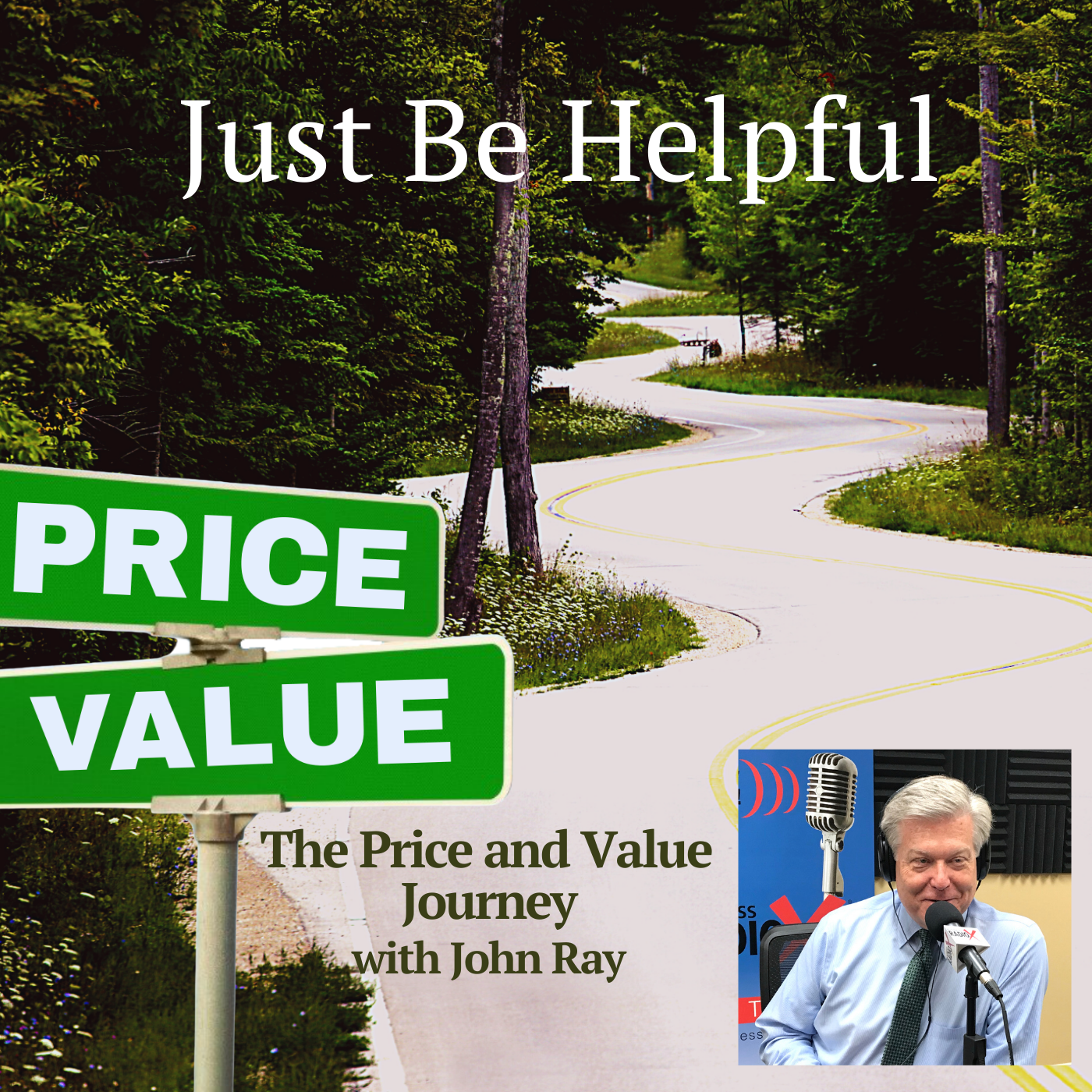
John Ray, Host of The Price and Value Journey

John Ray The Price and Value Journey
John Ray, Host of “The Price and Value Journey”

John Ray is the host of The Price and Value Journey.

John owns Ray Business Advisors, a business advisory practice. John’s services include advising solopreneur and small professional services firms on their pricing. John is passionate about the power of pricing for business owners, as changing pricing is the fastest way to change the profitability of a business. His clients are professionals who are selling their “grey matter,” such as attorneys, CPAs, accountants and bookkeepers, consultants, marketing professionals, and other professional services practitioners.

In his other business, John a Studio Owner, Producer, and Show Host with Business RadioX®, and works with business owners who want to do their own podcast. As a veteran B2B services provider, John’s special sauce is coaching B2B professionals to use a podcast to build relationships in a non-salesy way which translate into revenue.

John is the host of North Fulton Business Radio, Minneapolis-St. Paul Business Radio, Nashville Business Radio, Alpharetta Tech Talk, and Business Leaders Radio. house shows which feature a wide range of business leaders and companies. John has hosted and/or produced over 1,100 podcast episodes.

Connect with John Ray:

Website | LinkedIn | Twitter

Business RadioX®:  LinkedIn | Twitter | Facebook | Instagram

Tagged With: confidence, John Ray, Price and Value Journey, pricing, professional services, ray business advisors, solopreneurs, value, value pricing

The Red Flags of Inadequate Pricing

January 21, 2022 by John Ray

inadequate pricing
North Fulton Studio
The Red Flags of Inadequate Pricing
Loading
00:00 /
RSS Feed
Share
Link
Embed

Download file

inadequate pricing

The Red Flags of Inadequate Pricing

In a discovery call I had with a videographer, he revealed that his pricing was inadequate before he disclosed what his prices were. What are those “red flags?” Do any of them apply to your practice? The Price and Value Journey is presented by John Ray and produced by the North Fulton studio of Business RadioX®.

TRANSCRIPT

John Ray: [00:00:00] And hello again. I’m John Ray on The Price and Value Journey. Recently, I was on a discovery call with a videographer. This man had been in business for about five years, and he felt like he needed to make some major changes to his business if he was going to achieve the goals he had set for himself.

John Ray: [00:00:21] About 15 or 20 minutes into the conversation, I told him, “You know, I can tell your pricing is too low.” “How do you know that?” he asked. “I haven’t told you my prices yet.”

John Ray: [00:00:35] In no particular order, I responded, there are several reasons. First, you price by the hour. By definition, a professional services provider, like you, who prices by the hour is underpricing their services. Second, you tell me that all clients are paying the same price. The problem there is that not all clients have the same values. Different clients value your services differently. You’re probably going the extra mile for clients who don’t value that added care you’re giving them and you’re not charging for it.

John Ray: [00:01:10] Third, you’re not offering options. Options are a powerful way to tailor your services to your best fit clients who love what you accomplish for them, and they’re willing to pay you a good price for that. Fourth, you complain that you feel like you’re working too hard for too little money. For professional services providers, like you, that’s always a sign of a pricing problem.

John Ray: [00:01:38] Fifth, you seem to be taking on most projects which come your way. More prospects should be turning you down because of price. Finally, I said, you’re talking a lot about what and how you do what you do instead of the challenges clients have that you solve. What that tells me is that you’re not having solid value conversations with clients at all. A value conversation is the dialogue you must have with a prospective client to understand the difficulties you’ll be helping them overcome. If you understand how your solution to their problems moves the needle for their business, then you’ll be able to set better prices.

John Ray: [00:02:25] He paused and said, “You’re exactly right. I need to work on my pricing.” In about 15 minutes, this videographer had run through just about every red flag I look for when assessing the pricing of professional services providers. If any of these red flags are flying over your practice, you have a pricing problem and your pricing is too low.

John Ray: [00:02:53] I’m John Ray on The Price and Value Journey. If you’d like to know more, go to johnray.co or connect with me directly, email me, john@johnray.co.


About The Price and Value Journey

The title of this show describes the journey all professional services providers are on:  building a services practice by seeking to convince the world of the value we offer, helping clients achieve the outcomes they desire, and trying to do all that at pricing which reflects the value we deliver.

If you feel like you’re working too hard for too little money in your solo or small firm practice, this show is for you. Even if you’re reasonably happy with your practice, you’ll hear ways to improve both your bottom line as well as the mindset you bring to your business.

The show is produced by the North Fulton studio of Business RadioX® and can be found on all the major podcast apps. The complete show archive is here.

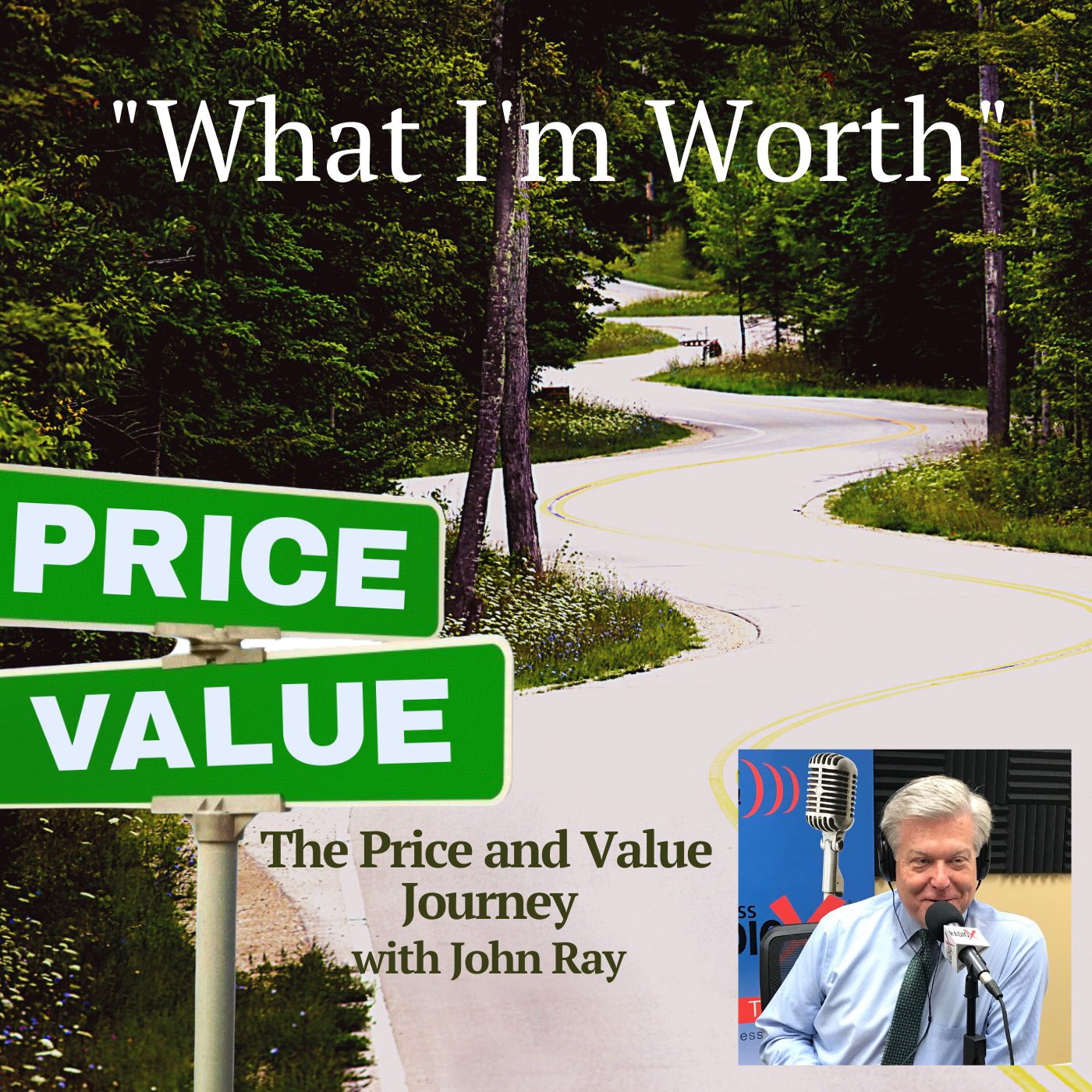
John Ray, Host of The Price and Value Journey

John Ray The Price and Value Journey
John Ray, Host of “The Price and Value Journey”

John Ray is the host of The Price and Value Journey.

John owns Ray Business Advisors, a business advisory practice. John’s services include advising solopreneur and small professional services firms on their pricing. John is passionate about the power of pricing for business owners, as changing pricing is the fastest way to change the profitability of a business. His clients are professionals who are selling their “grey matter,” such as attorneys, CPAs, accountants and bookkeepers, consultants, marketing professionals, and other professional services practitioners.

In his other business, John a Studio Owner, Producer, and Show Host with Business RadioX®, and works with business owners who want to do their own podcast. As a veteran B2B services provider, John’s special sauce is coaching B2B professionals to use a podcast to build relationships in a non-salesy way which translate into revenue.

John is the host of North Fulton Business Radio, Minneapolis-St. Paul Business Radio, Nashville Business Radio, Alpharetta Tech Talk, and Business Leaders Radio. house shows which feature a wide range of business leaders and companies. John has hosted and/or produced over 1,100 podcast episodes.
Connect with John Ray:

Website | LinkedIn | Twitter

Business RadioX®:  LinkedIn | Twitter | Facebook | Instagra

Tagged With: inadequate pricing, John Ray, Price and Value Journey, pricing, professional services, ray business advisors, value, value pricing

Introduction to The Price and Value Journey

January 21, 2022 by John Ray

Price and Value Journey
North Fulton Studio
Introduction to The Price and Value Journey
Loading
00:00 /
RSS Feed
Share
Link
Embed

Download file

Price and Value Journey

Introduction to The Price and Value Journey

I’m launching a podcast, The Price and Value Journey, aimed at solopreneurs and small professional services firms.

As I mention in this introduction, the title of the show describes the journey all of us as B2B services providers are on:  building a business by seeking to convince the world of the value we offer, helping clients achieve the outcomes they desire, and trying to do all that at pricing which reflects the value we deliver.

If you’ve been following me for a while, you know that I have a particular passion around pricing, as I’m convinced that pricing is the biggest problem most professional services providers have. So this podcast will lean heavily into pricing-related issues.

You’ll hear short commentaries from me—think the audio version of the posts I make on LinkedIn, my blog, and elsewhere. I’ll also offer interviews with leaders in the professional services world.

The goal of this show is simple, to offer help in what all of us are looking for:  doing work we enjoy, for clients we love working for, and making more money along the way.

Thanks in advance for your support and feedback! If you’d like to be in touch, contact me at one of the links below.

TRANSCRIPT

John Ray: [00:00:01] Hello everyone. I’m John Ray, and welcome to The Price and Value Journey. That’s the name of the show. But if you’re a solo or small professional services firm, this title describes the journey you’re already on, whether you call it that or not.

John Ray: [00:00:18] When we start out in our business or our practice, you see, we’re trying to demonstrate the knowledge and experience we bring to clients. We’re trying to convince prospective clients of the value that we offer. Over time, hopefully, we grow. Our practice grows beyond friends and family to the contacts and referrals that have come from our marketing efforts.

John Ray: [00:00:42] Now, at a certain point, the activity of our business gets more fevered. We may have to hire a virtual assistant or maybe a full-time staff person, maybe we take on a partner. As we grow, there’s a gap between where we thought we’d be when we started out and the reality on the ground of where we find ourselves.

John Ray: [00:01:05] Maybe we’re not happy with the results of our marketing. Maybe we know we need to work on our branding or our social media game. It could be we need to do better in sales, but we don’t know how to or we just don’t like the idea of selling. Maybe we’ve got too much client turnover. It could be that we’re quite busy or even overwhelmed. And it may be even worse than that, we may feel like we’re working too hard for too little money.

John Ray: [00:01:37] Now, if that’s the case, then we’ve got a pricing problem. Maybe we know our rates or pricing is too low, but we don’t know what to do about it. Or we’re scared, if we’re really honest with ourselves. Maybe we don’t even know that being overwhelmed or too busy in our practice really is a symptom of a bigger problem that our pricing is too low.

John Ray: [00:02:06] Pricing is a particular passion for me, because I’m convinced that pricing is the biggest problem most professional services providers have. It’s not getting new clients or servicing them. It’s getting the best clients at better pricing.

John Ray: [00:02:25] Now, here’s the deal. Changes in pricing are the fastest way to change, not only the bottom line of a business, but the mindset of you, the business owner. The changes we make in our pricing mean the difference between frustration and a newfound enthusiasm for our business. Better clients to work with and working smarter instead of harder. And, of course, a stronger bottom line.

John Ray: [00:02:58] That’s where this show, The Price and Value Journey, comes in. Wherever you are on your entrepreneurial journey, the idea of the show is to share ideas and commentary, which help make you more money doing the work you enjoy doing for clients you love working for. I’ll share, not only what I’ve learned myself, but what I continue to hear and learn from clients that I work with. I’ll give you short commentaries and ideas and extended interviews with leaders in the professional services world.

John Ray: [00:03:37] I’ve been in the world of professional services in some form or role for 40 years. I’ve got plenty of t-shirts on the mistakes I’ve made along the way. I have my own business advisory practice, part of which includes helping professional services practitioners with their pricing. I also have a separate but related business, helping business owners, mostly professional services providers, who want to do their own podcast.

John Ray: [00:04:07] I welcome your feedback on the show. If you’d like to connect with me directly, you can email me at john@johnray.co or just visit my website, johnray, J-O-H-N-R-A-Y, .co. I’m also very active on LinkedIn, so you can connect with me there. My LinkedIn handle is johnray1, that’s J-O-H-N-R-A-Y-1. Thanks for joining me on this journey, The Price and Value Journey.


John Ray, Host of The Price and Value Journey

John Ray The Price and Value Journey
John Ray, Host of “The Price and Value Journey”

John Ray is the host of The Price and Value Journey.

John owns Ray Business Advisors, a business advisory practice. John’s services include advising solopreneur and small professional services firms on their pricing. John is passionate about the power of pricing for business owners, as changing pricing is the fastest way to change the profitability of a business. His clients are professionals who are selling their “grey matter,” such as attorneys, CPAs, accountants and bookkeepers, consultants, marketing professionals, and other professional services practitioners.

In his other business, John a Studio Owner, Producer, and Show Host with Business RadioX®, and works with business owners who want to do their own podcast. As a veteran B2B services provider, John’s special sauce is coaching B2B professionals to use a podcast to build relationships in a non-salesy way which translate into revenue.

John is the host of North Fulton Business Radio, Minneapolis-St. Paul Business Radio, Nashville Business Radio, Alpharetta Tech Talk, and Business Leaders Radio. house shows which feature a wide range of business leaders and companies. John has hosted and/or produced over 1,100 podcast episodes.
Connect with John Ray:

Website | LinkedIn | Twitter

Business RadioX®:  LinkedIn | Twitter | Facebook | Instagram

Tagged With: B2B services, John Ray, Price and Value Journey, pricing, professional services, value, value pricing

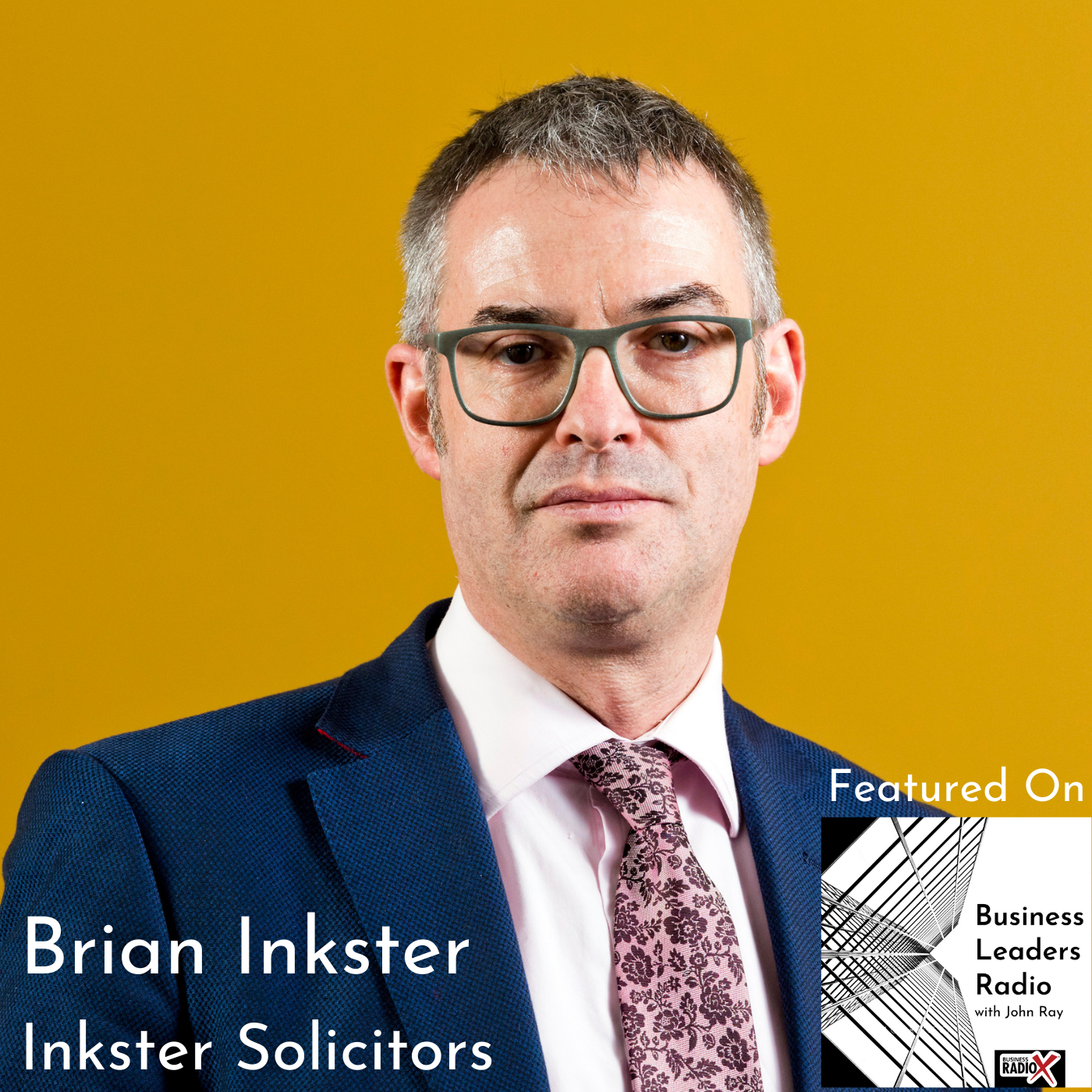
The Clubhouse App is NOT for Lawyers and Other Professional Services Providers, with Brian Inkster, Inksters Solicitors

February 12, 2021 by John Ray

Clubhouse app
Business Leaders Radio
The Clubhouse App is NOT for Lawyers and Other Professional Services Providers, with Brian Inkster, Inksters Solicitors
Loading
00:00 /
RSS Feed
Share
Link
Embed

Download file

Brian Inkster

The Clubhouse App is NOT for Lawyers and Other Professional Services Providers, with Brian Inkster, Inksters Solicitors

Lawyer Brian Inkster joins host John Ray to discuss his views on why the Clubhouse app is not appropriate for lawyers and probably other professional services providers in general. He joined host John Ray on this edition of “Business Leaders Radio” to discuss the conclusions he first published in a blog post entitled “Clubhouse is not for Lawyers – 12 Reasons.” “Business Leaders Radio” is produced virtually from the Business RadioX® studios in Atlanta.

Brian Inkster, CEO, Inksters Solicitors

Brian Inkster is the founder and CEO of the Scottish law firm Inksters Solicitors. Brian obtained the distinction of being named Solicitor of the Year at the Law Awards of Scotland in 2006. He was called “a one-man Scottish legal institution” in the Recommended Law Firm Guide 2010. At the Law Awards of Scotland in 2014 he was recognised as Managing Partner of the Year. Brian Inkster

Brian is actively expanding Inksters’ reach throughout Scotland with the aim to make his firm a pre-eminent force in the Scottish legal market. Technology is an important part of this drive with Inksters being completely cloud-based and having a Legal Process Engineer to make the firm a very process-oriented one. However, Brian is a legal realist who knows the limitations and actual usefulness of technology. He expresses his views in this regard on his blog about the past, present and future practice of law called The Time Blawg.

Company website | LinkedIn | Twitter

Questions/Topics Discussed in this Show

  • The Clubhouse app and why it is gaining in popularity
  • You cannot access Clubhouse unless you have an iPhone or an iPad.
  • Violation of privacy issues with Clubhouse raise legal concerns, depending on the jurisdiction, and ethical considerations are raised regardless of your location.
  • The Indemnity and Release clause is also troublesome
  • Consequently, use of Clubhouse is not a good look for lawyers and probably any professional services provider who maintains confidential relationships with clients
  • Lawyers have plenty of social media platforms to satisfy the need to market their services and to connect
  • Lawyers should use asynchronous rather than synchronous social media platforms
  • Twitter Spaces will replicate and improve on Clubhouse
  • Active, busy lawyers have better things to do with their time than lounge in Clubhouse
  • Clubhouse may simply be a fad caused by Covid-19 fatigue.
  • Exclusionary, abusive, or extremist content is rampant on Clubhouse and cannot be adequately monitored

“Business Leaders Radio” is hosted by John Ray and produced virtually from the North Fulton studio of Business RadioX® in Alpharetta.  The show can be found on all the major podcast apps by searching “Business Leaders Radio.”

Renasant Bank has humble roots, starting in 1904 as a $100,000 bank in a Lee County, Mississippi, bakery. Since then, Renasant has grown to become one of the Southeast’s strongest financial institutions with over $13 billion in assets and more than 190 banking, lending, wealth management and financial services offices in Mississippi, Alabama, Tennessee, Georgia and Florida. All of Renasant’s success stems from each of their banker’s commitment to investing in their communities as a way of better understanding the people they serve. At Renasant Bank, they understand you because they work and live alongside you every day.

Tagged With: attorneys, Brian Inkster, Clubhouse, Clubhouse app, Inks, Inkster Solicitors, Inksters, Lawyers, privacy, professional services, Social Media, social media platforms, Twitter, Twitter spaces

Why You Don’t Need a Social Media Strategy, with Jennifer Koon, Michael Mackenzie Communications

November 3, 2020 by John Ray

Michael Mackenzie Communications
North Fulton Business Radio
Why You Don't Need a Social Media Strategy, with Jennifer Koon, Michael Mackenzie Communications
Loading
00:00 /
RSS Feed
Share
Link
Embed

Download file

Why You Don’t Need a Social Media Strategy, with Jennifer Koon, Michael Mackenzie Communications (North Fulton Business Radio, Episode 302)

Yes, you read that show title correctly. Jennifer Koon, Michael Mackenzie Communications, joins host John Ray to discuss the marketing and public relations strategies professional services providers should weigh and employ. “North Fulton Business Radio” is produced virtually from the North Fulton studio of Business RadioX® in Alpharetta.

Jennifer Koon, Founder and Principal, Michael Mackenzie Communications

As the founder and Principal Consultant of Michael Mackenzie Communications, Jennifer Koon is the chief strategist, business development officer, contributing copywriter and head bottle washer.

Prior to forming Michael Mackenzie Communications in 2001, Jennifer served as a PR and Field Marketing Manager for Microsoft Corporation, a role she landed because they liked the Direct Mail and Database Marketing experience she had gained working for smaller software companies and in an agency environment. In addition to developing direct marketing and sales support programs, Jennifer has produced and promoted hundreds of seminars, product launch events and trade shows as well as managed public relations and community affairs initiatives. Jennifer has an extensive copywriting repertoire – writing on average more than 50,000 words each year for clients representing a broad range of high tech and technically complex services and products.

All total, Jennifer possesses more than 25 years experience developing and deploying strategic marketing communications programs that drive image, enthusiasm and revenue. She has a bachelor’s degree in Creative Advertising from Southern Methodist University and a master’s in Marketing Communication and Information Technology from Florida State University.

She is a member of the American Marketing Association, the Public Relations Society of America, the Technology Association of Georgia and has served on the host committee for the High Tech Ministries Prayer Breakfast for 5+ years. She is also a member of the Greater North Fulton Chamber of Commerce, the Leadership North Fulton Class of 2011, a graduate of the City of Roswell Education Program (CORE 2019) and was the elected parent representative for the Local School Governance Councils for both Elkins Pointe Middle School and Roswell High School. Jennifer and her husband live in Roswell, Georgia. She has two sons who attend the University of Mississippi. She is an active member of Roswell United Methodist Church and she counts among her hobbies reading, swimming, photography, retail therapy and watching minor league baseball and college football.

Company Website

LinkedIn

Questions/Topics Discussed in this Show

  • Why you don’t need a social media strategy
  • Why business owners needs someone to think about marketing all of the time
  • How sales and marketing has changed in a pandemic environment
  • How SMBs can cost effectively participate in PR
  • Why Content Marketing might be your most important SEO strategy
  • How to improve the most important part of every email message

North Fulton Business Radio” is hosted by John Ray and produced virtually from the North Fulton studio of Business RadioX® in Alpharetta. You can find the full archive of shows by following this link. The show can be found on all the major podcast apps by searching “North Fulton Business Radio.”

Renasant Bank has humble roots, starting in 1904 as a $100,000 bank in a Lee County, Mississippi, bakery. Since then, Renasant has grown to become one of the Southeast’s strongest financial institutions with over $13 billion in assets and more than 190 banking, lending, wealth management and financial services offices in Mississippi, Alabama, Tennessee, Georgia and Florida. All of Renasant’s success stems from each of their banker’s commitment to investing in their communities as a way of better understanding the people they serve. At Renasant Bank, they understand you because they work and live alongside you every day.

Tagged With: content marketing, email marketing, Jennifer Koon, marketing, Michael Mackenzie Communications, professional services, Public Relations, SEO, Social Media

Branden Lisi, Object 9

September 8, 2020 by John Ray

Branden Lisi Object 9
North Fulton Business Radio
Branden Lisi, Object 9
Loading
00:00 /
RSS Feed
Share
Link
Embed

Download file

Branden Lisi, Object 9 (North Fulton Business Radio, Episode 280)

Branden Lisi, Object 9, joins host John Ray to discuss how digital marketing channels work in a pandemic for generating leads and revenue, success stories, and more. “North Fulton Business Radio” is produced virtually by the North Fulton studio of Business RadioX® in Alpharetta.

Branden Lisi, Partner and Brand Strategist, Object 9

Object 9 develops marketing programs that build awareness and growth through sales, public relations and advertising activities. Our brand strategists use research and experience to uncover new and unexpected customer insights. These insights, in turn, drive “campaigns” and “promotions” that are executed in traditional and digital channels by our creative team.

Company Website

LinkedIn

Questions/Topics Discussed in this Show

  • Competing for business on the internet
  • Tradeshows and other traditional channels through which salespeople generate relationships are closed right now. Their clients are growing because they have a plan.
  • Generating leads for all types of B2B; manufacturing, franchise development, professional services all need digital
  • Paid digital gets you to the front of the mind; versus SEO and content marketing which are a long, slower game.
  • Martech stack 5 layers:
    1. inbound;
    2. website, 
    3. CRM/marketing automation;
    4. Email
    5. Analytics
  • Understand your customers channels; where are they reading, listening and watching right now. Don’t assume; research, then plan accordingly.

North Fulton Business Radio” is hosted by John Ray and produced virtually from the North Fulton studio of Business RadioX® in Alpharetta. You can find the full archive of shows by following this link. The show is available on all the major podcast apps, including Apple Podcasts, Spotify, Google, iHeart Radio, Stitcher, TuneIn, and others.

Renasant Bank has humble roots, starting in 1904 as a $100,000 bank in a Lee County, Mississippi, bakery. Since then, Renasant has grown to become one of the Southeast’s strongest financial institutions with over $13 billion in assets and more than 190 banking, lending, wealth management and financial services offices in Mississippi, Alabama, Tennessee, Georgia and Florida. All of Renasant’s success stems from each of their banker’s commitment to investing in their communities as a way of better understanding the people they serve. At Renasant Bank, they understand you because they work and live alongside you every day.

Tagged With: analytics, branden lisi, content marketing, crm, digital marketing, digital marketing agency, email marketing, franchise development, inbound, John Ray, Marketing Automation, North Fulton Business Radio, Object 9, paid digital, professional services, SEO, website

Franchise Marketing Radio: Rick Porter with Cinch I.T.

January 30, 2020 by angishields

CinchIT
Atlanta Business Radio
Franchise Marketing Radio: Rick Porter with Cinch I.T.
Loading
00:00 /
RSS Feed
Share
Link
Embed

Download file

Brought To You By SEO SAMBA . . . Comprehensive, High Performing Marketing Solutions For Mature And Emerging Franchise Brands . . . To Supercharge Your Franchise Marketing, Go To SEO SAMBA.com

CinchITRichard (Rick) Porter is the Owner and President of Cinch IT, Inc. Rick has an unwavering commitment to helping entrepreneurs make their dreams come true. As President, he leads Cinch IT’s Franchise in delivering best-in-class customer service and driving innovation.

Rick was a member of the US Army’s Special Operation Community, Recipient of the Worcester Business Journals 40 under 40, named one of the Top 10 Best CEO’s of 2018, Chairman of the Better Business Bureau of Central and Western Massachusetts and the Founder of Cinch Scholarship Foundation.

Follow Cinch I.T. on LinkedIn, Twitter and Facebook.

What You’ll Learn in This Episode

  • What Cinch I.T. does
  • Franchise Differentiation
  • What is an ideal franchise owner

Tagged With: Health care, IT Franchise, Manufacturing, professional services

Decision Vision Episode 48: Should I Hire a Business Development Professional? – An Interview with Susan O’Dwyer, Aprio, and Ann McDonald, Morris Manning & Martin, LLP

January 23, 2020 by John Ray

Should I Hire a Business Development Professional
Decision Vision
Decision Vision Episode 48: Should I Hire a Business Development Professional? - An Interview with Susan O'Dwyer, Aprio, and Ann McDonald, Morris Manning & Martin, LLP
Loading
00:00 /
RSS Feed
Share
Link
Embed

Download file

Should I Hire a Business Development Professional
Susan O’Dwyer and Ann McDonald

Decision Vision Episode 48: Should I Hire a Business Development Professional? – An Interview with Susan O’Dwyer, Aprio, and Ann McDonald, Morris Manning & Martin, LLP

What qualities should I look for in a business development professional? What makes a business development professional successful? The answers to these questions and much more come in this discussion with two accomplished business development professionals:  Susan O’Dwyer, Aprio, and Ann McDonald, Morris Manning & Martin, LLP. “Decision Vision” is hosted by Mike Blake and presented by Brady Ware & Company.

Susan O’Dwyer, Aprio

Susan O’Dwyer

Susan O’Dwyer is Director of Corporate Citizenship and Community Relations at Aprio. Susan’s specialty lies in the technology and venture capital industries, two industries that go together hand-in-hand. She is known throughout the Atlanta business community for her passion for connections, which resulted in Susan being recognized as one of the Top 50 women you need to know in Atlanta by the Atlanta Business Chronicle, as one of the 100 most influential people in the tech community and as a finalist for the 2012 Turknett Leadership Character Awards.

Some of her affiliations include the American-Israel Public Affairs Committee, Board Member of the Ron Clark Academy, and the Metro Atlanta Chamber of Commerce’s Technology Marketing Committee’s Venture Capital Program Chairperson. In addition, Susan and her son led efforts for relief for Tuscaloosa, Alabama, after their devastating tornadoes in 2011.

Since their founding in 1952, Aprio has grown to be the largest independent, full-service CPA-led professional services firm based in Atlanta, Georgia. Their over 450 partners and associates provide their best thinking and personal commitment to every client, demonstrating a passion for their work that fuels client success.

Aprio provides advisory, assurance, tax, cloud accounting and private client services across a variety of sectors, including insurance, manufacturing and distribution, non-profit, education, professional services, real estate, construction, retail, franchise, hospitality, technology, and biosciences.

You can find Susan on LinkedIn, and for more information on Aprio, go to their website.

Ann McDonald, Morris, Manning & Martin, LLP

Ann McDonald

Ann McDonald is a Director of Business Development of Corporate Technology and Healthcare IT at Morris, Manning & Martin, LLP. Prior to Morris Manning, Ann was been a regional sales director at INVeSHARE, a managing consultant for Gallup Organization, and vice president of marketing, e-commerce and various roles at Walsh Healthcare Solutions for over 10 years. Some of Ann’s affiliations’ activities include Chair of the Board of Directors of the Technology Executives Roundtable, member of the Board of Directors of the FinTech Society, the Technology Association of Georgia, member of the Board of Directors at the Southeastern Software Association of the Technology Association of Georgia, and past chair of the Southeast Medical Device Association Annual Conference.

Morris, Manning & Martin is an American law 200 law firm with national and international reach. They dedicate themselves to the constant pursuit of their clients’ success. To provide their clients with optimal value, they combined market-leading legal services with a total understanding of their needs to maximize effectiveness, efficiency, and opportunity. Morris Manning enjoys national prominence for its real estate, corporate litigation, technology, health care, intellectual property, energy and infrastructure capital markets, environmental, international trade, and insurance practices. Morris Manning has offices in Atlanta, Raleigh-Durham, Savannah, Columbus, GA, Washington, DC, and Beijing.

You can find Ann on LinkedIn, and for more information on Morris Manning, go to their website.

Michael Blake, Brady Ware & Company

Mike Blake, Host of “Decision Vision”

Michael Blake is Host of the “Decision Vision” podcast series and a Director of Brady Ware & Company. Mike specializes in the valuation of intellectual property-driven firms, such as software firms, aerospace firms and professional services firms, most frequently in the capacity as a transaction advisor, helping clients obtain great outcomes from complex transaction opportunities. He is also a specialist in the appraisal of intellectual properties as stand-alone assets, such as software, trade secrets, and patents.

Mike has been a full-time business appraiser for 13 years with public accounting firms, boutique business appraisal firms, and an owner of his own firm. Prior to that, he spent 8 years in venture capital and investment banking, including transactions in the U.S., Israel, Russia, Ukraine, and Belarus.

Brady Ware & Company

Brady Ware & Company is a regional full-service accounting and advisory firm which helps businesses and entrepreneurs make visions a reality. Brady Ware services clients nationally from its offices in Alpharetta, GA; Columbus and Dayton, OH; and Richmond, IN. The firm is growth minded, committed to the regions in which they operate, and most importantly, they make significant investments in their people and service offerings to meet the changing financial needs of those they are privileged to serve. The firm is dedicated to providing results that make a difference for its clients.

Decision Vision Podcast Series

should i hire a business development professional“Decision Vision” is a podcast covering topics and issues facing small business owners and connecting them with solutions from leading experts. This series is presented by Brady Ware & Company. If you are a decision maker for a small business, we’d love to hear from you. Contact us at decisionvision@bradyware.com and make sure to listen to every Thursday to the “Decision Vision” podcast. Past episodes of “Decision Vision” can be found here. “Decision Vision” is produced and broadcast by the North Fulton studio of Business RadioX®.

Visit Brady Ware & Company on social media:

LinkedIn:  https://www.linkedin.com/company/brady-ware/

Facebook: https://www.facebook.com/bradywareCPAs/

Twitter: https://twitter.com/BradyWare

Instagram: https://www.instagram.com/bradywarecompany/

Show Transcript

Intro: [00:00:01] Welcome to Decision Vision, a podcast series focusing on critical business decisions brought to you by Brady Ware & Company. Brady Ware is a regional full-service accounting and advisory firm that helps businesses and entrepreneurs make visions a reality.

Mike Blake: [00:00:20] And welcome to Decision Vision, a podcast giving you, the listener, clear vision to make great decisions. In each episode, we discuss the process of decision making on a different topic from the business owners or executives’ perspective. We aren’t necessarily telling you what to do, but we can put you in a position to make an informed decision on your own and understand when you might need help along the way.

Mike Blake: [00:00:39] My name is Mike Blake and I’m your host for today’s program. I’m a director at Brady Ware & Company, a full-service accounting firm based in Dayton, Ohio, with offices in Dayton, Columbus, Ohio, Richmond, Indiana, and Alpharetta, Georgia, which is where we are recording today. Brady Ware is sponsoring this podcast. If you like this podcast, please subscribe on your favorite podcast aggregator and please consider leaving a review of the podcast as well.

Mike Blake: [00:01:02] So, today, we’re going to talk about hiring a dedicated business development professional. And I started to become interested in this topic a couple of years ago when I read a book called Built to Sell. And I forget who wrote it but if you Google it, you’ll find it. And if you’re interested in kind of the process of building a business that has value that can be sold and monetized, I highly recommend it as it is not a technical book.

Mike Blake: [00:01:29] In fact, it’s basically a book that sets up a hypothetical marketing services firm and walks through the conversations that take place to understand where value comes from and what it takes to build a business to sell it. And one of the things that struck me about one of the pieces of advice they give in that book is, does your company have the ability to sell when the owner themselves is not doing the selling?

Mike Blake: [00:01:57] And I think that’s a really smart point, because if the revenue is primarily dependent upon the owner, then when the owner sells and drops her keys off and they move to a condo in Costa Rica, then, you know, what value remains in the business? Perhaps some, but not a whole lot. And so, what I found myself doing as I appraise businesses myself and as I advise people on building their businesses and preparing to sell them is to think about very early, you know, how can you create systems and resources and processes and assets that generate revenue when you’re away, right?

Mike Blake: [00:02:38] And the litmus test, I often ask people and I’ll ask this in a management interview, you know, if you go away and you’re abroad and your cellphone breaks for six weeks, what happens to your business? And sometimes, yeah, the business is great. In other times as well, I probably don’t have a business when I come back. And that’s very telling. And typically, the reason that you don’t have a business when you come back is because you don’t have somebody that is a full-time salesperson.

Mike Blake: [00:03:06] So, to me, that’s a very important inflection point. Now, here’s the challenge and the other reason I think this is a very interesting topic, as I approach my 50th trip around the sun here, I’ve seen a lot of salespeople come and go in a number of roles, a number of places where I’ve been, where there’s been services, venture capital, technology, and so forth. And one conclusion I’ve drawn over the years is I think that the hardest role to hire for in any company is sales.

Mike Blake: [00:03:41] And the reason I think that is, you know, not only because I’ve seen a pretty high failure rate over the years, but because quite candidly, salespeople may not necessarily be successful selling what they’re supposed to sell, but they’re often very good at selling themselves. And so, as a business owner, how do you kind of cut through the veneer and the facade and find out not only can that person sell, are they willing to sell? It’s amazing.

Mike Blake: [00:04:13] If you read sales books, you’ll read about how salespeople themselves are reluctant to sell, right? It’s something called call reluctance and so forth. And that’s what they signed up for. But it’s still hard to get salespeople to do that. So, you know, step one is the side that you want to have a dedicated business development person. Second then is, how do you make an assessment as to whether or not that person can and is actually willing to do what is asked of them in that role?

Mike Blake: [00:04:40] And then, third and finally and I see this in professional services, how do you hire somebody and structure that role? So that if you’re not a practitioner, you can still have success in that role. And I being in the accounting industry, we’re certainly guilty of this. It’s tempting to fall into the trap of saying, well, you know, unless you can give technical advice on the spot, you can’t possibly sell. It has to be someone that’s a really good account lawyer, business appraiser, foundation repair specialist, whatever it is, but that’s not necessarily the case.

Mike Blake: [00:05:22] I’m not saying that’s easy. It’s hard, but there’s a big difference between hard and impossible. So, I hope with that preamble, I’ve convinced you that this is a rich topic. And if you’re a business owner and executive decision maker, I think you’re going to learn a lot today from the two guests that we have. So, without further ado, I’d like to introduce our guests. And these are two people that have been good friends of mine in the community for a very long time.

Mike Blake: [00:05:51] I consider them not only friends, but I consider them the mentors. And often, even if I don’t necessarily speak with them as often as I would like, I think of them a lot, especially when I have a decision that I have to make, I think. And I ask myself, you know, what would they do? If I were talking to them, what would they say? And I know them well enough that I know what they’re going to say. If I have to ask the question, I’ve already failed.

Mike Blake: [00:06:12] So, first up, in no particular order, then I just simply decide to write these bios in that order is my dear friend Susan O’Dwyer, who is a Director at Aprio, which of whom I’m an alumnus and they’re are friendly competitor of ours and is a Director of Corporate Citizenship and Community Relations. Aprio is a premier CPA-led professional services firm, where thriving associates serve thriving clients. And on a side note, I’ve always thought that re-branding is fantastic and very effective.

Mike Blake: [00:06:43] Their purpose is clear. They advise clients that they can achieve what’s next, whatever that may be. Since its founding in 1952, Aprio has grown to be the largest independent full-service CPA-led professional services firm based in Atlanta, Georgia. They have over 450 partners and associates that provide their best thinking and personal commitment to every client demonstrating a passion for their work that fuels their client’s success. Susan’s specialty lies in the technology and venture capital industries.

Mike Blake: [00:07:09] And she’s one of the founders of something called Shaking the Money Tree from PWC. And if you’ve ever read or relied upon that publication, that is at least, in part, her brainchild. So, thank her. She’s known throughout the Atlanta business community for her passion for connections, which resulted in Susan being recognized one of the top 50 women you need to know in Atlanta by the Atlanta Business Chronicle as one of the 100 most influential people in the tech community and as a finalist for the 2012 Turknett Leadership Character Awards.

Mike Blake: [00:07:41] As a director of corporate citizenship and community relations, Susan access the main point of coordination regarding civic and community activities throughout the firm. Her role is to maintain open communication with civic leaders and community partners, creating goodwill on behalf of Aprio. So, having read that, why is she here? Well, before she took that role, she was a director of business development I’m guessing for about seven or eight years or so-

Susan O’Dwyer: [00:08:03] Eleven….

Mike Blake: [00:08:04] … where frankly, she kicked butt. And then, she was later promoted into this particular role. But don’t let the kind face fool you, she understands her stuff. Some of her affiliations are the American-Israel Public Affairs Committee, the Ron Clark Academy, where she’s a board member and a big cheerleader for that organization, the Metro Atlanta Chamber of Commerce’s Technology Marketing Committee’s Venture Capital Program chairperson. And she and her son also led efforts for relief for Tuscaloosa, Alabama, after their devastating tornadoes in 2011. And I wish we had time because I would love to get her to talk about her Lady Gaga story, which I tell all the time and it just bust a gut. But maybe, we’ll have to have her back for a second podcast. So, Susan, thanks for coming on the program.

Susan O’Dwyer: [00:08:52] Thank you for having me, Mike. It’s a pleasure to be here.

Mike Blake: [00:08:55] And sitting to her left is my other dear friend, Ann McDonald, who is Director of Business Development of Corporate Technology and HealthcareIT at Morris, Manning & Martin, a role she has held for 13 years. Like Susan, Ann is one of the most respected people in the Atlanta technology community. Morris, Manning & Martin is an American law 200 law firm with national and international reach. They dedicate themselves to the constant pursuit of their clients’ success.

Mike Blake: [00:09:20] To provide their clients with optimal value, they combined market-leading legal services with a total understanding of their needs to maximize effectiveness, efficiency, and opportunity. Morris Manning enjoys national prominence for its real estate, corporate litigation, technology, health care, intellectual property, energy and infrastructure capital markets, environmental, international trade, and insurance practices. Basically, everything. Morris Manning has offices in and around Atlanta, Raleigh, Durham, Savannah and Washington, D.C. Man, I would love a chance to tour the Savannah office, I love that city.

Mike Blake: [00:09:51] Prior to the role at Morris Manning, Ann has been a regional sales director at INVeSHARE, a managing consultant for Gallup Organization and vice president of marketing, e-commerce and various roles at Walsh Healthcare Solutions for over 10 years. Some of Ann’s affiliations’ activities include chair of the Board of Directors of Technology Executives Roundtable, member of the Board of Directors of the FinTech Society, the Technology Association of Georgia, member of the Board of Directors at the Southeastern Software Association of the Technology Association of Georgia, and past chair of the Southeast Medical Device Association Annual Conference. Ann, thanks for coming on.

Ann McDonald: [00:10:26] Thank you.

Mike Blake: [00:10:27] So, you guys are pretty busy, so thank you for finding time to come on the program and come out here to be on it. Asking people to travel in Atlanta is in itself a big ask. So, Ann, let me start with you. I mean, we’ve done sort of the formal introductions, but how would you describe your role at Morris Manning? When you do your own elevator pitch, what do you say?

Ann McDonald: [00:10:49] Well, let’s look at, what do I get paid to do?

Mike Blake: [00:10:54] Okay.

Ann McDonald: [00:10:54] So, I can tell you my title, but really, I get paid to help bring in new clients. And that’s through lead generation. It’s meeting with referral sources, strategic partners, it’s being part of technology, the technology ecosystem and community to meet companies and refer those companies into our firm for legal services.

Mike Blake: [00:11:18] And Susan, how about you? And let’s talk more. I’d like to start with your current role and then, kind of go back to your prior role in terms of business development. How do you describe your current role at Aprio?

Susan O’Dwyer: [00:11:29] So, my current role is to identify nonprofits where we can make a difference through my colleagues’ financial background by serving on those boards. And as a result, further our reach, our footprint across the community and identify new opportunities where we might not have met those executives in their role as a CEO or CFO of whatever company it is, but instead, through a mutual-shared passion for whatever the cause of the nonprofit is, people have the opportunity to connect.

Mike Blake: [00:12:05] And before that, you were director of business development and you were the grand poobah of sales for-

Susan O’Dwyer: [00:12:13] Hardly.

Mike Blake: [00:12:13] … Aprio, formerly known as Habif, Arogeti & Wynne, talk about that role.

Susan O’Dwyer: [00:12:18] So, that role started because the firm realized that if they were going to grow the way they wanted to at the time that I joined the firm 12 years ago, I don’t think there were even 100 people there. And if the firm wanted to grow the way they wanted to, they’re going to need to cast a much wider net. So, I was recommended to the firm and joined to open doors that they had not even thought to knock on before. My Rolodex is very different than the Rolodex of the people that were already there. My job is not to supplant the partners, my job still is to supplement what they are working, who they were working with by identifying just like an additional client, prospects referral sources that can bring new business to the firm.

Mike Blake: [00:13:13] And to be clear, Susan, you’re not an accountant and you’re not a lawyer, correct?

Susan O’Dwyer: [00:13:18] That’s correct. CPA is just three letters in the alphabet to me. No, I’m not an accountant.

Mike Blake: [00:13:22] Yeah. And same here, right? I tell people, if I answer an accounting question, it’s instantly a malpractice. I don’t even do my own taxes. So, as non-practitioners, how do you think that impacted or impacts your ability to communicate the value of what you’re selling to the marketplace? Do you think that gives you a different perspective that is helpful? Do you think it holds you back in some way? What do you guys think? Ann, why don’t you start?

Ann McDonald: [00:13:53] Okay. Well, I have a background in business and I’ve, as you said, never worked for a law firm before. But when I talk to companies, I talk about their business with them, ask them questions about it, and find out what their needs are and then, refer them to the subject matter expert within our firm who can help their businesses grow through legal practices. Also, one of the things that I do is to help prevent the value-added services that we’re known for.

Ann McDonald: [00:14:30] So, I leverage my network of relationships to help that company grow as one of our clients. So, it could be introductions to sources of capital, it could be introductions to organizations where they will meet prospects, strategic partners of their own and then, also introduce them to potential clients who are also clients of ours. So, those are things that don’t have to do with providing legal services, but it’s a value add for our clients.

Mike Blake: [00:15:08] And Susan, how about yourself? Was not being a CPA, that gives you any kind of advantage in the market? And were there times where you felt like maybe it held you back in some way?

Susan O’Dwyer: [00:15:21] So, I was a journalism major. I never took a class in business in my life. But what I was taught was how to get the story out of a person so that we could tell it to our readers. Okay. So, I ask a lot of questions. I don’t talk a lot other than to ask questions. And as Ann suggested, that’s really just to identify what colleague would be the best source of answer for whatever it is their question is. In some ways, I think it’s been a benefit not being an accountant, because I don’t have a clue what the answer is. So, I can really focus on figuring out what their question is.

Susan O’Dwyer: [00:16:01] Sometimes, the client doesn’t exactly know, but by me rephrasing back to them what I hear them saying, sometimes, we’ve redirected what it was they thought they needed to something else. The other thing I would say is that I obviously can’t speak for lawyers, but for the accountants that I work with, sometimes, I think they can be very focused on what it is they know, but they’re not so comfortable with maybe what our other colleagues do. So, it’s being able to recognize opportunity for anybody in the firm as just opposed to what it is they specifically are able to do, which means we have a lot better shot of bringing them in as a client.

Mike Blake: [00:16:49] And that’s something. So, I want to follow-up on that. When you’re a practitioner and I am a practitioner, it is easy to fall into the trap that no matter what you see, it looks like something you do, right? There’s a saying that when you’re a hammer, everything looks like a nail, right? So, if I was an auditor and I’m talking to a potential client, then I’m thinking in terms of, how would an audit help this client, right?

Mike Blake: [00:17:15] Because that’s how I’m wired. Not that you’re a bad person, but that’s just sort of what your world view is, whereas the proper treatment of that conversation is to probe and maybe audit falls out of that, maybe tax falls out of that, maybe something entirely different falls out of that. And as more of a generalist, if I can use that for lack of a better term, that positions you and empowers you to, I guess, becoming more broadly curious.

Susan O’Dwyer: [00:17:42] The other thing I would say is that, well, it’s my job to help identify what the issue is and who the right subject matter expert is. I don’t have to know how to do what it is the subject matter experts do, I just have to listen for what are the trigger words for opportunity for every single line of service or business skill set that we have and then, be able to direct them to that. So, I can give you an example if you would like.

Mike Blake: [00:18:14] Yeah. Great. We love war stories.

Susan O’Dwyer: [00:18:15] Okay. So, I am sitting at a table for a dinner that has assigned seats at a nonprofit that I’ve been on the board of for 20-something years. And I sit next to a person who I have no idea how I miss this man, but in 20-something years, I’ve never, ever laid eyes on him. And I asked him about what he did and how long he’d been involved in the organization, so and so forth. And he tells me about his company. It’s a software company.

Susan O’Dwyer: [00:18:39] And almost as a throwaway line, the very last thing that he says to me after he’s described his company is, “We just invested $5 million in a new software that we’re going to be rolling out to our clients, which are national in the next couple of months.” And I said, “Oh, did you get the R&D tax credit?” He said, “I don’t know what that is.” And I said, “Well, the State will give you money back if your developers are in Georgia.

Susan O’Dwyer: [00:19:06] So, if you send the work to be done in another country or another state, they’re not going to pay, but if it’s here in Georgia-” He says, “Well, yeah. It’s here in Georgia”, and he named the town. And he said, “Tell me more.” And I said, “I have just told you everything I know about it. But tomorrow morning, I can have one of my colleagues, we have 25 people who specialize in this area help you. Here’s my number, call me at 8 o’clock.” Okay. I don’t ever have a problem finding a colleague who’s available for an opportunity-

Mike Blake: [00:19:37] Yeah. Sure.

Susan O’Dwyer: [00:19:37] Okay. That’s not a problem.

Mike Blake: [00:19:37] Yeah.

Susan O’Dwyer: [00:19:39] So, I didn’t have to know how to do the tax credit study, I just had to recognize the opportunity when he said we just invested $5 million.

Mike Blake: [00:19:49] Yeah.

Susan O’Dwyer: [00:19:49] So-

Mike Blake: [00:19:51] Okay. So, Ann, I want to ask you this question, Susan touched upon this about five minutes ago, but I’m curious and I’ve never asked kind of your origin story, how did you come to land at Morris Manning?

Ann McDonald: [00:20:04] Well, it’s interesting. I came to Atlanta in 2004. I worked for the Gallup Organization as a consultant and executive coach. And then, I was here for about a year working for Gallup, then was attracted to another startup in the FinTech area and worked there for about a year. And I work for John Yates and a friend of John’s who I also knew had heard that John was looking for someone who had sales background and was not an attorney, but understood the sales process. And so, he put us together and I interviewed with John and he was looking for someone. So, that’s how it happened.

Mike Blake: [00:20:56] And why did you feel, at that time, that that was a good role for you, that that was a platform where you could be successful?

Ann McDonald: [00:21:04] That’s interesting, because I don’t know that I could ever do that for another law firm. It was John. John Yates’ personality, is how dynamic he ran his sales processes. It was operated more like a real corporation rather than sort of a slow process. I was used to very fast, very successful operations. And it was the way he viewed the market. Also, the way they view their clients. This group is much more than a transactional law firm, they believe in relationships. And look at new clients or look at all the clients as, “How can I make your business grow? What can I do to help you in areas other than, ‘Well, just call us when you need a transaction of some means.'” So, that was a big difference and the reason I was attracted to working for an industry that was foreign to me.

Mike Blake: [00:22:20] So, an interesting thing that’s already emerging is you two likes to ask a lot of questions.

Ann McDonald: [00:22:27] Yes.

Mike Blake: [00:22:27] Right? And I think that’s an important point. It gets back to, how do you interview somebody for a role like this? We both know there are people out in the marketplace that sell by telling basically.

Ann McDonald: [00:22:40] Yes.

Mike Blake: [00:22:40] Right? And, you know, maybe the 1960s and ’70s, there’s some effectiveness to that, but I’m not sure that’s very successful-

Ann McDonald: [00:22:48] No.

Mike Blake: [00:22:50] … today. And I think that most people I observe who try to sell by telling, I think you get some people that bite on that, but I think that the success rate is a lot less. So, is it fair to say that if I’m looking to hire somebody like you, probing for somebody that likes to ask a lot of questions might be a good thing to look for? Is that fair?

Susan O’Dwyer: [00:23:11] Not only is it fair, but I think maybe another way to say it, Mike, is it’s far better to be someone who is interested and interesting. I don’t ever want to make it about me. I was going to make it about the other person. And so, I’m not the story. My colleagues are the story. But in order to get the story, I have to find out what it is that person really needs. And like I said before, sometimes, the prospect doesn’t even know exactly what it is they need or they think they know what they need. But by asking of questions, you find out that that’s maybe not exactly what the issue is.

Mike Blake: [00:23:50] And, you know, talk about that journalism background being helpful, right? I mean, journalism is the practice of asking questions often from people who don’t want to answer questions.

Susan O’Dwyer: [00:24:00] Well, I try not to be Mike Wallace.

Mike Blake: [00:24:01] Right.

Susan O’Dwyer: [00:24:04] But-

Mike Blake: [00:24:04] So, let me go back, too, because Ann said something that segues nicely into this. You know, you’re successful. I know how successful you were and have been at Aprio. And I’m curious, what about that platform, when you’re in that role, puts you in a position to be successful? And I ask that because if I’m a listener, I’m thinking, gee, I’d love somebody like Susan or Ann to come to my company, but it’s just not to hire, I think I’ve got to create an environment for them to be successful.

Susan O’Dwyer: [00:24:35] So, the way a public accounting firm works is that there are X number of partners that are all co-owners of the firm. And at Aprio, the way it works is there is a place for partners who, obviously, they’re all very good technically, but some of them are just more outgoing than others. So, it kind of became accepted practice that some of them were very, very good at rainmaking and others would probably rather eat a box of rocks than have to go out and talk to, you know, prospects.

Susan O’Dwyer: [00:25:11] So, because I just have never really been afraid of talking to people I don’t know, it doesn’t scare me, my role was to open doors where they hadn’t been before. We had a technology practice. They didn’t know before I came very many venture capitalists. Interestingly enough, venture capital was kind of maybe is not as strong today as private equity was, but 20-something years ago, that was the flip. And so, because of my prior role, I knew a lot of those people.

Susan O’Dwyer: [00:25:56] And it was just a question of trading on your name, honestly, to open doors for the new firm. And if you do what you say you’re going to do. Even if people know she’s a salesperson, but they don’t view me that way because they view me as, when I call them, I’m calling them with something for them, usually not asking for something. In this case, I was asking for a meeting to make an introduction and all that could come from it would be more business for both sides, right? So, it’s a win-win.

Mike Blake: [00:26:33] Yeah.

Susan O’Dwyer: [00:26:34] So, that’s what I did was I just opened doors. And I had had a 20-plus-year career at one big four firm before I came to Aprio and before that, a 10-year career at another big four firm. So, I’ve always been a words person in the number’s world.

Mike Blake: [00:26:52] So, in those firms that you worked in, was there anything they did or maybe could have done better to put you in a position to be more successful? And I’ve asked that question because I’d like to try to drill down to if one of our listeners decides that they want to go the route of hiring somebody like you or maybe it doesn’t matter, maybe I’m asking a question that I think I know the answer to and I actually don’t, does it matter? Or, is hiring the right person with the right approach, with the right Rolodex so important that maybe it’s just, get out of their way and let them do their thing?

Susan O’Dwyer: [00:27:31] So, to answer a couple questions or comments that you’ve made, the first is I made sure it was never about me. It’s always about helping others. And you alluded to the fact that there’s been a very high turnover rate among salespeople, typically. I think there are some people that want it to be about them. I didn’t know that there was an expression. I mean, this was 30-something years ago, which I don’t know that had been exactly coined yet or I hadn’t heard it called servant leadership.

Susan O’Dwyer: [00:28:03] It’s never about me, it’s always about taking care of other people, hopefully. And that’s where I get my satisfaction from. I don’t need to be the star. As a matter of fact, I don’t even want to be on stage. I’m way more happy to be behind the curtain pulling the levers and strings. So, that’s number one. Number two, I would say, is I think you have to be willing to let others be the star and too many salespeople, my observation why they’re not successful is that they want to be the star.

Susan O’Dwyer: [00:28:37] And that just isn’t helpful for either our colleagues who really are the stars, because as Ann referred to them as subject matter experts, they’re the ones who have the answers, not me. And then, the other thing is, really, it needs to be all about the client or prospect, not about the salesperson. So, just turn the I pronoun out of your vocabulary and just pretend it doesn’t exist. And that’s the way to think about it.

Mike Blake: [00:29:10] So, Ann, you’ve been in your role for a long time and I suspect but don’t know, you’ve probably seen others in that role, whether it’s in your firm where others sort of come and go. Why are you different? Why do you think you’re different? I’m not going to use the word special, because you’ll never let me get away with that.

Ann McDonald: [00:29:29] No.

Susan O’Dwyer: [00:29:29] But she’s wonderful.

Mike Blake: [00:29:29] But I think you’ll get away with different.

Ann McDonald: [00:29:30] No.

Susan O’Dwyer: [00:29:30] She is wonderful.

Ann McDonald: [00:29:32] Thank you.

Mike Blake: [00:29:32] But there is something different, right? You know, it’s, if you’re around, say, a year longer than everybody else, that’s a statistical anomaly. When it’s a lot longer than anybody else, clearly, there’s something structural there. And if you want to talk about yourself, that’s fine. Maybe just contrast with what others have done, where they have not been successful, what mistakes do you see other salespeople make?

Ann McDonald: [00:29:56] Well, I think Susan touched on it. I think it’s important as a business developer salesperson that you have the maturity to understand the sales process with a service organization. And the important person or people in the equation will be the company and the attorney who they had the relationship with or attorneys, multiple relationships. And for a sales person, you have to understand, as Susan said, you are not the key person. You are not the key personality. You are the go-between and the facilitator for the relationship.

Ann McDonald: [00:30:47] The company has to have the primary relationship with the attorney in our case. And because that’s who they will trust, who they are relying on to help them make very important decisions about the future of their company and their employees. And so, the business developer or salesperson has to understand that. It’s also a different role than I have had as a salesperson in the past. And I don’t close the relationship. I don’t close the win. I make the introduction to our attorney. And then, it’s a hand-off. And I can’t close the win.

Mike Blake: [00:31:40] Right.

Ann McDonald: [00:31:41] So, that takes another level, I think, of understanding and-

Susan O’Dwyer: [00:31:52] Acceptance.

Ann McDonald: [00:31:52] … actions. In that, I help coach the attorney. You know, it’s such a hard position to be the one who’s making the widget, the one who’s providing the service and then, also the salesperson. And you have those two distinct roles in companies, but you don’t as attorneys. So, I help coach the attorney. I mean, they’re working on deals. They’re creating the legal product. But then, they also need to nurture the relationships of prospects. And as I tell them, “Don’t dig the well when you’re thirsty. You need to be part of the sales process all along, even though you’re very busy with providing the services.” But I will coach attorneys and help them with closing the deal, getting the client in. But that primary relationship is with them.

Mike Blake: [00:32:54] So, one thing that falls out of both of what you said and another kind of talking point is I think a common thread is humility. And I’m sure it sounds intuitive to the two of you, but if you think about how we portray somebody who’s in sales in the media, right? Good thing about Glengarry Glen Ross, right? Always be closing hard-charging high-ego, right? And you sort of have to own everything.

Mike Blake: [00:33:27] But in my experience, I’m curious about if you agree, you know, in a lot of way, in a lot of respects, business development can kind of be like trying to swing a baseball bat to tighter your grip at the less while it works, right? The harder you try, in some respects, the less it works, right? So, is it fair to say that if I’m interviewing somebody for that role, another thing I would look for, besides curiosity and the ability and desire to ask questions, I guess is also, frankly, some humility to it.

Susan O’Dwyer: [00:33:59] It’s a funny line that you walk because you have to be confident enough that you can call on a CEO or a CFO and expect that that person is going to take your call because you have some prior relationship and respect with each other. But then, you also have to be willing to take a step back once that person has agreed to meet with you, that someone else is really the reason why they’re there. So, it is a little bit odd.

Susan O’Dwyer: [00:34:29] I think you’re also looking, for your listeners, for some ideas about what are things that are helpful when you are looking to hire a business development person. I would say the other thing is don’t look for someone who expects this to be a regular job, a 9:00 to 5:00 job, I mean. There are countless breakfasts and dinners that Ann and I have been at that require very, very long days. It’s almost like a school bus driver. You’re really busy in the morning, you’re really busy in the evening.

Susan O’Dwyer: [00:35:01] And then, your kind of in the middle of the day is when you’re doing all of your prep work for the next couple of meetings. But when you are going to these meetings, you’re not just walking in cold, you’re doing your homework ahead of time. What is the group about? Who can I expect to be there? Are there people that I am particularly looking for? How do I connect people who I meet there with resources that will be helpful for them? All of that is happening before or after meetings. But it is a lot of very long days and you have to find people who are willing to make those kinds of time commitments, I think.

Ann McDonald: [00:35:38] I also think there typically are two different kinds of salespeople, hunters and farmers. And I think this is a combination of those roles. You have to really be hungry and be a hunter, but you also have to be a farmer. In that, you’re nurturing relationships, you’re doing coaching. There are some additional characteristics besides just being the Glengarry Glen Ross. You know, dialing for dollars kind of-

Mike Blake: [00:36:13] Right. Coffees for closers.

Susan O’Dwyer: [00:36:15] Yes.

Mike Blake: [00:36:16] Yeah. And that balance is going to depend a lot, I think, on the nature of the industry that you’re-

Ann McDonald: [00:36:23] Yes.

Mike Blake: [00:36:23] Right? And professional services, a lot of farming because that person may or may not need that service to a particular point in time, right? For me, it can be a two-year sales cycle. Maybe accounting-less, because everybody needs to file a tax return or some someplace in the middle. On the other hand, if it’s somebody that does flood remediation, then that’s a very short-sale cycle, right?

Ann McDonald: [00:36:45] Yeah.

Mike Blake: [00:36:46] So, you sort of have to understand kind of where you fall on the continuum. I put one loaded question into the list, but you guys had a chance to see it, you didn’t tell me I couldn’t ask it, so I’m going to ask it, because I do think it’s relevant. The two of you happen to be women.

Ann McDonald: [00:37:03] I knew it wasn’t going to be question number eight.

Mike Blake: [00:37:04] The two of you happen to be women. Do you think that has impacted your ability to be successful in your respective roles, either in a positive or a negative way? I don’t want to go on me, too, but-

Susan O’Dwyer: [00:37:20] Since I’ve never been a man, I don’t know that I can answer that.

Mike Blake: [00:37:23] Okay.

Susan O’Dwyer: [00:37:24] But I can tell you that it became very clear when I was in my prior firm, working strictly with venture capitalists that when I would go to the National Venture Capital Association’s annual meeting, I was one of a handful of women in a room of a thousand people. And so, how are you going to stand out? And I chose to use bright colors. So, people who know me know that I never wear black or navy unless I’m going to a funeral.

Mike Blake: [00:38:00] That’s true. I’ve never seen you in either of those colors as long as I’ve known you. That’s right.

Ann McDonald: [00:38:03] Yeah.

Susan O’Dwyer: [00:38:04] And so, you have to do something to stand out in a crowd and be different, especially when there are competitors who do not have a business development person, but send their practitioners to the same events I’m at. How am I going to relate to people in a way that will be memorable when I personally can’t answer their questions, technical questions? And so, I’ve chosen to do it with being personal, asking about family, remembering things personally about that person.

Susan O’Dwyer: [00:38:40] Do I think a man would do that? I don’t think so. I’ve yet to meet one who ever remembers anything personal about other people. I mean, at a networking event, they just don’t or they don’t ask about it. And I think being a woman, it’s safer to ask those kinds of questions without feeling like maybe the person thinking, why is this person getting so personal? That it’s more accepted, I guess.

Mike Blake: [00:39:07] Yeah.

Susan O’Dwyer: [00:39:07] Ann, how about you?

Ann McDonald: [00:39:08] Oh, I really don’t think gender has much to do with it. I do think as far as salespeople go, I think women may have an edge for some of the reasons that Susan like said.

Mike Blake: [00:39:23] Well, especially in tech, right? I mean, there aren’t that many women in tech, period, yet.

Ann McDonald: [00:39:27] Oh, well, that’s true. But it’s interesting. And of course, we go to a lot of events and there are not a lot of women typically in the room. And I don’t notice it anymore.

Susan O’Dwyer: [00:39:39] I don’t either.

Ann McDonald: [00:39:40] It’s not even something that is a factor. But, you know, we are good about making connections and probing without seeming to be too direct and-

Mike Blake: [00:39:58] And maybe more natural empathy, too.

Ann McDonald: [00:39:59] And more natural empathy. I think that may be a factor.

Mike Blake: [00:40:03] So, another question I want to make sure we get through, we don’t have a ton of time left, but this is one I’ve got to make sure I ask, you know, Ann, you and I are talking a little bit about this before we came on, imagine that you’re going to hire your successor, what is an interview question you would make sure you want to ask your successor? What would they have to answer for you in a great way to say—you’ll tell John Yates, you know, “John, well, now, I’m ready to hang it up and I’m right to be on a beach in Tahiti. This is the person you got to hire because answered this question great.”

Ann McDonald: [00:40:42] Oh, Mike, that is a tough one. One question. How good are you at putting the client first, representing the client to the firm and then, representing the firm to the client? Instead of making this a personal quest, I mean, it has to be all about helping that company, that client grow and the depth of relationship. And I’d like to know about the experience that the interviewer or interviewee would have with those kinds of relationships. And then, the whole coaching factor of helping attorneys to be successful, because that’s a good part of what this job entails. And it’s providing tools for them, it’s providing answers, it’s providing coaching in a way that they can tolerate that’s nudges and not, “Here comes the wisdom.”

Mike Blake: [00:42:19] Yeah. And that’s really interesting because I’ve long thought of both of you as much as anything being air-traffic controllers, right?

Ann McDonald: [00:42:30] Yes.

Mike Blake: [00:42:32] Controlling connections and coordinations and stuff. And the way you described that role, I think, may be different than one of a lot of our listeners’ thought going in, because, you know, the notion of sales for many people when you think of it is a unidirectional process, right? I’ve got something, I’m going communicate to you, and you want to buy it. But the way you describe it is once you initiate that relationship, now, you’re representing the client back to the firm as well-

Ann McDonald: [00:43:04] Yes.

Mike Blake: [00:43:05] … and to make sure they’re treated well-

Ann McDonald: [00:43:06] Yes.

Mike Blake: [00:43:06] … and they’re treated appropriately and they get the right service. And even if I’m wrong, and I’m going to step out here, but I suspect this is true, even if sometimes, that may mean that you’re not the right firm to serve them-

Ann McDonald: [00:43:19] Yes.

Mike Blake: [00:43:19] … necessarily, right? You know, not all things to all people can’t be if you’re successful.

Ann McDonald: [00:43:23] That’s right.

Mike Blake: [00:43:23] And so, it’s very interesting. I think there’s a big learning point in there for that piece of advice and the way to ask that question. Susan, you have a bit of extra time to noodle on that. You’re interviewing the next director of business development for Aprio, what do you ask him?

Susan O’Dwyer: [00:43:42] Describe how when you were given a prospect’s name, a company or a nonprofit, not necessarily a person, and you don’t know a single person at that company, but you have to get in the door of the CEO, how would you do it? What are the steps you would take to open that door? And how long would it take you to get there?

Ann McDonald: [00:44:10] Oh, that’s good.

Mike Blake: [00:44:11] Now, that last part is loaded, I think, because the knee-jerk reaction may be, “Well, I could get in there in two weeks.”.

Susan O’Dwyer: [00:44:24] How would you do it?

Mike Blake: [00:44:25] Because you want to show that you’re quick and effective, right? And then, I can see on your face that SO face of skepticism like, “Uh-uh. In two weeks, man”, right? We’re talking months. You’re probably looking at months-

Susan O’Dwyer: [00:44:39] Well, what’s the right way?

Mike Blake: [00:44:39] … if you’re going to sound the way that you think that is appropriate and realistic, right?

Susan O’Dwyer: [00:44:43] Yeah.

Mike Blake: [00:44:44] Two weeks is boiler room territory.

Susan O’Dwyer: [00:44:46] Yeah. That’s just nonsense. And it’s not going to work. So, you’ve already identified yourself as a phony in my book.

Mike Blake: [00:44:54] So, two more questions and we’ve got to go and let you guys get back to your day jobs. How much has social media played a role in what you guys do? Are you guys social media people at all? I know the answer to this question to some extent, but our listeners don’t.

Susan O’Dwyer: [00:45:11] I’ll defer to Ann because for me, it’s irrelevant. So, I would just be in the office-

Mike Blake: [00:45:16] Well, but-

Susan O’Dwyer: [00:45:16] I mean, we have a marketing department that uses social media.

Mike Blake: [00:45:19] Right.

Susan O’Dwyer: [00:45:20] But I live on LinkedIn. And if that is considered social media-

Mike Blake: [00:45:26] Yeah, I think so.

Ann McDonald: [00:45:26] It is.

Susan O’Dwyer: [00:45:28] So, I live on that. But tweeting and posting stuff and all of that, I completely defer to the queen of it, which is Ann, because I don’t do any of that stuff. I use it to learn, but I don’t use it to push the company. Probably, I should, but I just don’t.

Mike Blake: [00:45:46] If I ever see a selfie of you on Instagram, I’m calling the police, because I know you’ve-

Susan O’Dwyer: [00:45:51] I’ve been kidnapped.

Mike Blake: [00:45:52] … clearly been kidnapped. And that is a cry for help. And somebody is going to be dropping $100,000 in a parking lot somewhere to get you back.

Ann McDonald: [00:46:01] There’s a newspaper next to her head just to show proof of life.

Susan O’Dwyer: [00:46:02] Yeah.

Mike Blake: [00:46:06] Exactly. Ann, how about you?

Ann McDonald: [00:46:07] Well, I use LinkedIn quite a bit.

Mike Blake: [00:46:09] Yeah.

Ann McDonald: [00:46:10] And for a lot of different things, do a lot of research on LinkedIn, I post articles that I find very interesting that I think will be of interest to the people I know. They’re usually business articles, really engaging ideas that I think will help companies grow based on my background. I post events for organizations that I belong to. I think that’s important in getting support for the things that I support. Of course, I’ll re-post all of the MMM items that I think people should know about. But I think it’s very valuable. I think that’s a great sort of lifeline that it helps bring life to what I’m trying to accomplish.

Mike Blake: [00:47:13] Yeah.

Ann McDonald: [00:47:13] It is a branding tool.

Mike Blake: [00:47:15] Yeah.

Ann McDonald: [00:47:17] And that lets people know me a little bit better, personally, because of the things that I say or post, especially the articles. I’ve had people approach me at events and say, “Oh, yeah, I recognize you. I’ve seen you on LinkedIn and I follow the articles that you post.” So, it’s been of some value that way.

Mike Blake: [00:47:38] Right. You get recognized.

Ann McDonald: [00:47:39] Yeah. Yes. And so, that’s a point of conversation then to get to know somebody, to get to know a company. So, you know, I give kudos to people and it’s a nice outlet. Now, when I post things on LinkedIn, I will then, sometimes, check the box for it to be posted on Twitter.

Mike Blake: [00:48:07] Yeah.

Ann McDonald: [00:48:08] And then, Facebook is purely social, really.

Mike Blake: [00:48:11] Yeah. Yeah. So, we are unfortunately out of time. I could easily lock the door and trap these ladies here for a couple more hours, but that would be unfair to them and also illegal, so we’re going to have to wrap up. There’s so much more we could talk about. But if somebody listening would like to contact you, they have questions about this process, can they do that?

Ann McDonald: [00:48:31] Absolutely.

Susan O’Dwyer: [00:48:31] Please.

Mike Blake: [00:48:32] And if so, Ann, how best to contact you?

Ann McDonald: [00:48:36] Email, amcdonald@mmmlaw.com.

Mike Blake: [00:48:43] Susan?

Susan O’Dwyer: [00:48:43] And I’m susan.o’dwyer, and yes, I do have an apostrophe in my email, it’s O-apostrophe-D-W-Y-E-R, @aprio, A-P-R-I-O, .com. And I would welcome your questions or any way I can help you.

Mike Blake: [00:48:59] That’s going to wrap it up for today’s program. I’d like to thank Ann McDonald and Susan O’Dwyer so much for joining us and sharing their expertise with us today. We’ll be exploring a new topic each week, so please tune in so that when you’re faced with your next executive decision, you have clear vision when making it. If you enjoy these podcasts, please consider leaving a review with your favorite podcast aggregator. It helps people find us so that we can help them. Once again, this is Mike Blake. Our sponsor is Brady Ware & Company. And this has been the Decision Vision podcast.

Tagged With: CPa, CPA firm, Dayton accounting, Dayton business advisory, Dayton CPA, Dayton CPA firm, Decision Vision, Michael Blake, Mike Blake, Morris Manning and Martin, professional services, Susan O'Dwyer

Decision Vision Episode 45: Should I Increase My Prices? – An Interview with John Ray, Ray Business Advisors, LLC

January 2, 2020 by John Ray

should I increase my prices
Decision Vision
Decision Vision Episode 45: Should I Increase My Prices? - An Interview with John Ray, Ray Business Advisors, LLC
Loading
00:00 /
RSS Feed
Share
Link
Embed

Download file

Should I Increase My Prices
Mike Blake and John Ray

Decision Vision Episode 45:  Should I Increase My Prices? – An Interview with John Ray, Ray Business Advisors, LLC

“Should I increase my prices?” If this question makes you pause, then this “Decision Vision” episode is for you. Price and value authority John Ray speaks with host Mike Blake on the importance of pricing in a business, how to negotiate prices, why hourly billing is the wrong way to price, and dealing with the “it’s too expensive” objection. “Decision Vision” is presented by Brady Ware & Company.

John Ray, Ray Business Advisors, LLC

should I increase my prices
John Ray, Ray Business Advisors, LLC

Because pricing is the fastest way to change the profitability of a business, John Ray advises business owners on the “should I increase my prices” question, how to change their pricing, and moving to a value pricing model. His clients include attorneys, CPAs, consultants, other professional services firms, and technology companies. His blog, “Pricing for Profit,” regularly features examples and stories which help business owners in their own pricing journey. John is also a speaker on pricing and value at numerous chambers, business events and seminars. John also helps small to mid-sized companies achieve their profit and growth goals as an outside CFO.

John also owns and operates the North Fulton studio of Business RadioX®. John is the host of “North Fulton Business Radio” and “Alpharetta Tech Talk.” He also plans, produces, and promotes radio show/podcasts for businesses and entrepreneurs.

John is extremely active in the North Fulton community. He is on the board of the Greater North Fulton Chamber of Commerce (GNFCC), and serves in a variety of capacities there, including Chairman’s Circle, member of the Finance Committee, and Chair of the Awards Committee. John was named the 2018 Harry Rucker Jr. Volunteer of the Year by GNFCC.

For more information on John and his firm, find John’s LinkedIn profile here, go to raybusinessadvisors.com, or call John directly at (404) 287-2627.

Michael Blake, Brady Ware & Company

Mike Blake, Host of “Decision Vision”

Michael Blake is Host of the “Decision Vision” podcast series and a Director of Brady Ware & Company. Mike specializes in the valuation of intellectual property-driven firms, such as software firms, aerospace firms and professional services firms, most frequently in the capacity as a transaction advisor, helping clients obtain great outcomes from complex transaction opportunities. He is also a specialist in the appraisal of intellectual properties as stand-alone assets, such as software, trade secrets, and patents.

Mike has been a full-time business appraiser for 13 years with public accounting firms, boutique business appraisal firms, and an owner of his own firm. Prior to that, he spent 8 years in venture capital and investment banking, including transactions in the U.S., Israel, Russia, Ukraine, and Belarus.

Brady Ware & Company

Brady Ware & Company is a regional full-service accounting and advisory firm which helps businesses and entrepreneurs make visions a reality. Brady Ware services clients nationally from its offices in Alpharetta, GA; Columbus and Dayton, OH; and Richmond, IN. The firm is growth minded, committed to the regions in which they operate, and most importantly, they make significant investments in their people and service offerings to meet the changing financial needs of those they are privileged to serve. The firm is dedicated to providing results that make a difference for its clients.

Decision Vision Podcast Series

“Decision Vision” is a podcast covering topics and issues facing small business owners and connecting them with solutions from leading experts. This series is presented by Brady Ware & Company. If you are a decision maker for a small business, we’d love to hear from you. Contact us at decisionvision@bradyware.com and make sure to listen to every Thursday to the “Decision Vision” podcast. Past episodes of “Decision Vision” can be found here. “Decision Vision” is produced and broadcast by the North Fulton studio of Business RadioX®.

Visit Brady Ware & Company on social media:

LinkedIn:  https://www.linkedin.com/company/brady-ware/

Facebook: https://www.facebook.com/bradywareCPAs/

Twitter: https://twitter.com/BradyWare

Instagram: https://www.instagram.com/bradywarecompany/

Show Transcript

Intro: [00:00:01] Welcome to Decision Vision, a podcast series focusing on critical business decisions, brought to you by Brady Ware & Company. Brady Ware is a regional full-service accounting and advisory firm that helps businesses and entrepreneurs make visions a reality.

Mike Blake: [00:00:19] And welcome to Decision Vision, a podcast giving you, the listener, clear vision to make great decisions. In each episode, we discuss the process of decision making on a different topic from the business owners or executives’ perspective. We aren’t necessarily telling you what to do, but we can put you in a position to make an informed decision on your own and understand when you might need help along the way.

Mike Blake: [00:00:39] My name is Mike Blake and I’m your host for today’s program. I’m a director at Brady Ware & Company, a full-service accounting firm based in Dayton, Ohio, with offices in Dayton, Columbus, Ohio, Richmond, Indiana, and Alpharetta, Georgia, which is where we are recording today. Brady Ware is sponsoring this podcast. If you like this podcast, please subscribe on your favorite podcast aggregator and please consider leaving a review of the podcast as well.

Mike Blake: [00:01:03] So, today, we’re going to talk about adjusting your prices. And this show is going to be published shortly after the secular New Year. So, for those of you who celebrate Christmas, I wish you a merry Christmas after the fact. And those of you who celebrate the Catholic Protestant New Year, Happy New Year to you. If you are a Kwanzaa celebrant, I will wish you a happy Kwanzaa and readers as well. And happy Hanukkah. This will probably come out, I guess, a few days after the last evening of Hanukkah. And if you’re an atheist and don’t believe in any of this, I’ll just wish that you have a nice day.

Mike Blake: [00:01:49] But anyway, we wanted to make sure that this particular program started off the new year because it’s a topic that I think most business people are thinking about revisiting. And if you’re not, you probably should. And that is the topic of pricing. Pricing, I think, is one of the hardest things to get right, particularly, but not limited to professional services. Figuring out the price that you need to charge your clients, your customers is a challenge.

Mike Blake: [00:02:26] And it’s a challenge as much as anything because the market is not very transparent. Our competitors, at least in professional services, we don’t know exactly what they are charging except on rare occasions. And even if you do, you’re not exactly sure necessarily how to equate the value propositions. You may or may not be sure how your client equates those value propositions. And because pricing is so difficult, it is important, I think, to revisit that on a regular basis at least every year. Because that way, if you’re getting it wrong, you only have to live with the mistake for about a year or so.

Mike Blake: [00:03:07] And on the other hand, if you’re getting it right, great, you revisit it, you think about it for five minutes, “I’m good”, and you move on. And pricing has some interesting psychology to it as well, because we are making a statement to the market that we believe our product and service is worth X. And when somebody decides not to buy, whether it is a product or service, they are telling us that they don’t agree that it’s worth X. And that requires some mental toughness in order to kind of sustain yourself through that.

Mike Blake: [00:03:44] So, it’s an important topic and we’re going to get into it today. I was thinking about relaying an anecdote, actually, of a pricing challenge, an event that I just have. Now, I’m going to wait until we do the interview, because I think it will flow better. So, let’s jump into it. Joining us today is John Ray, who is the owner of Ray Business Advisors. John helps small to mid-sized companies, including law firms and CPA firms achieve their profit and growth goals, and God knows we need help.

Mike Blake: [00:04:16] John’s clients come to him to reduce the stress and anxiety, which often comes with day-to-day management of a business. John works with businesses to enhance their pricing strategies and make more money. John also relieves the burden of accounting and bookkeeping and improves business processes. John holds a Bachelor of Arts from Vanderbilt University, a school with a terrific baseball program, an okay basketball program, and a football program that’s lousy and that’s to see what probably is good in almost any other conference.

John Ray: [00:04:46] The longest bear market in history.

Mike Blake: [00:04:47] The longest bear market in history. Although Tennessee maybe giving them a run for their money now, interestingly enough. With honors in English and economics, John is also a studio partner for Business RadioX, voice of the Fortune 500,000 and produces this Decision Vision podcast. He helps business owners plan, produce, and promote their own radio shows and podcasts. And I can tell you that we’ve been very happy with John’s service and the impact that we’ve had and have the opportunity to make in the marketplace and sharing our knowledge.

Mike Blake: [00:05:18] So, you know, as an aside, maybe we’ll probably do a show on this. Should I do a podcast? I can tell you that for us, it’s been a successful activity and one that’s been well worth doing, we’re going to continue doing it for a while. So, if you’re hoping we would go away, sorry. John is very active in the North Fulton community. He sits on the board of the Greater North Fulton Chamber of Commerce and serves in a variety of capacities, including the chairman circle, member of the finance committee, and co-chair of the awards committee. John was named the 2018 Harry Rucker Junior Volunteer of the Year by the Greater North Fulton Chamber of Commerce. John, welcome to the program.

John Ray: [00:05:55] Great to be here. Great to be on the other side of the mic.

Mike Blake: [00:05:58] Yeah. So, I know you’ve been chomping at the bit to sort of jump in here, but I have to ask you, do you know who Harry Rucker Junior is and why the award is named for him?

John Ray: [00:06:08] I have no clue.

Mike Blake: [00:06:09] Okay.

John Ray: [00:06:10] I Googled him, but I couldn’t find him.

Mike Blake: [00:06:12] That’s an honest man right there. So, I guess he was so generous, he wanted all of his volunteer activities to go anonymously. So, there you have it.

John Ray: [00:06:22] Yeah.

Mike Blake: [00:06:22] So, let’s jump into this. I mean, why are we talking about this? You make a living off of helping companies figure out their pricing and correct their pricing, why is it so hard?

John Ray: [00:06:33] Well, first of all, it’s hard, I think, a couple of things. Well, first of all, I don’t know that folks get much training, if any, in pricing. And that’s really odd because of what an impact pricing has on the bottom line. So, studies from folks like McKinsey show that pricing has the biggest variable impact on the bottom line of the business. This is an accounting fact. So, it’s more than cutting expenses, it’s more than let’s do a better job with marketing or converting leads or what have you. So, pricing’s got the biggest impact whatsoever.

John Ray: [00:07:12] Yet, business schools, the last that I saw shows that only less than 10 percent of business schools out there actually have a course, just one course on pricing. So, we put entrepreneurs out there into the marketplace, get them going, and they’re good at customer discovery and they’re good at a lot of things that have to do with the business and if they’re not, they can go easily get those skills outsourced to receive those skills, but pricing is always a problem, because of this lack of training and education that they have once they start a company.

Mike Blake: [00:07:55] Yeah. It’s interesting. You know, going back to my own MBA experience, which was a very long time ago, my diploma is on a cave painting in France someplace. But we learned almost nothing about price. And the only time I remember it ever really coming up in a rigorous way was we did a marketing simulation and we had to do pricing and that was fine as far as it went, right?

John Ray: [00:08:17] Sure.

Mike Blake: [00:08:18] But there’s a limit to that. And I mean, I think you’re so right. In one respect, price is the easiest thing to change about your business, right? You can just decide to do it.

John Ray: [00:08:29] Sure.

Mike Blake: [00:08:30] Now, you may not do it correctly, but you can’t do it almost instantaneously, right? Whether it’s just changing the number you put on your engagement letters or going off the price gun-

John Ray: [00:08:39] Right.

Mike Blake: [00:08:39] … it’s fairly easy to change. In your experience, when people or businesses mispriced their offerings, do they tend to overprice or underprice them?

John Ray: [00:08:50] Underprice. And I’m an example of this, I have to say. I mean, I got passionate about this because-

Mike Blake: [00:08:56] You’re gonna testify, aren’t you?

John Ray: [00:08:57] Yes, I am. I’m going to confess right here. If anybody’s listening, I’m confessing. So, no, I mean, it’s, you underprice what you do, particularly, as you said in the intro, in professional services. Because in professional services, we price our sales and there’s these voices that speak to us that sit on our shoulder and whisper in our ear that says, “Oh, that person’s not going to pay that much. You know, that company is talking to other people”, or what have you. And, you know, you need to knock a little bit off of that. That’s not going to work. And we talk ourselves out of the way we should price.

John Ray: [00:09:42] I think there’s a misconception also that if you lower your price, you’ll get more business. And actually, the opposite is sometimes true because price is an indication of quality. And I could relay a lot of anecdotes about how increasing prices actually increase sales, because suddenly, that the customer base, that product or service was aimed at, saw a lot more quality in what they were being presented than they had previously. So, price is a signal, and it’s actually a marketing signal.

Mike Blake: [00:10:23] There’s a great episode on Frasier, where Frasier and Niles were talking about, I think it was some sort of massage therapist or something. And they’re bragging, basically bragged in terms of the hourly rate, right?

John Ray: [00:10:42] Right.

Mike Blake: [00:10:43] So Niles was saying, you know, “My massage therapist is $500.” Frasier comes in and says, “Mine is a $1,000-an-hour.” And Niles goes, “She sounds fantastic.”

John Ray: [00:10:52] That’s right. Yeah.

Mike Blake: [00:10:54] And, you know, I remember, earlier in my career, you know, one of the services we provide is something called a fairness opinion, which is an appraisal of a business where we have some fiduciary responsibility attached to it. So, there’s liability, so we tend to charge more. First one I ever did or maybe the second one I ever did but for a very friendly client. And I want to make sure I got the business, I underpriced it.

Mike Blake: [00:11:20] I got the business, but my client told me after the fact, he said, “Look, I appreciate the price, but I got to tell you, you almost didn’t get the work because your bid was so much lower than everybody else’s. We were concerned or the board was concerned that you actually knew what you were doing and you could put the requisite time and effort into this exercise. And I had to go to bat for you and say, ‘No. He knows what he’s doing in valuation, he just don’t know anything about pricing.'” I said, “Thanks.”

John Ray: [00:11:49] Right.

Mike Blake: [00:11:49] Right?

John Ray: [00:11:49] Yeah.

Mike Blake: [00:11:50] But, you know, we rarely get insight into that process. But I can tell you that, you know, A, I left about $35,000 on the table, no doubt, a minimum. And B, I nearly got nothing because I was so good at negotiating with myself-

John Ray: [00:12:05] Right.

Mike Blake: [00:12:05] … that I almost negotiated myself right out of that business.

John Ray: [00:12:09] And we’ve all looked at something and said, “That’s too good to be true”, in terms of the price. There’s something wrong. But we rarely take that sentiment and turn it around on our own product or service, right?

Mike Blake: [00:12:23] Right.

John Ray: [00:12:23] So, I think that’s what you’re getting at and it makes tons of sense. And I have never seen anybody. And if you’re out there, please write in and let us know and we’ll stand corrected. But I’ve never seen a business start out by overpricing.

Mike Blake: [00:12:44] We have no e-mail free to write in, by the way. We’re trying to fix that, but write in sort of metaphorically.

John Ray: [00:12:50] That’s right.

Mike Blake: [00:12:52] Or John will give you his e-mail at the end of this podcast, so you can write into there, I guess.

John Ray: [00:12:55] Yeah, there you go.

Mike Blake: [00:12:57] So, we’re over-thinking it, should pricing just be simple as, “Here’s what it costs me to deliver this product or service, here’s the amount of profit I want to make off of it”?

John Ray: [00:13:11] Well, certainly, your revenues have to exceed your costs. So, let’s just start with that. So let’s make the accountants happy and we’re going to agree to that. What I find, particularly in professional services, is that when a professional services provider focuses on pricing relative to the value that they deliver and just getting a piece of the value they deliver and that’s their equation, then they make a lot more money and they really don’t have to worry about their cost because they deliver so much value, generally.

John Ray: [00:13:54] So, sure, it’s important to have a profitable business, but that’s not really what we’re talking about here in getting our pricing right for professional services providers, it’s really about getting a piece of the value that you provide such that you can have a more focused business working with the best clients and not be so stressed, really running a business where you’ve got a bunch of clients where you really don’t want to service a bunch of them, right?

Mike Blake: [00:14:25] Yeah.

John Ray: [00:14:26] 20% or 30% of them, you really don’t want, but you’ve got them simply because you’re getting the revenue out of them. But they’re very low margin clients.

Mike Blake: [00:14:34] And that’s where you get back in the podcast number two, how should I fire my client?

John Ray: [00:14:38] That’s right. My favorite of the series, so far.

Mike Blake: [00:14:42] So, can different clients have different prices for roughly the same product or deliverable? And is that okay?

John Ray: [00:14:50] Absolutely. So, different clients have different values. And it’s okay to price based on those values. And it’s okay to offer options that clients can select, the options based on service levels, speed of delivery of the service, et cetera. In fact, I highly, highly recommend, in fact, demand of my clients that they offer options because that really helps ferret out what you’re getting at. So, I think the biggest mistake a lot of folks make is here’s my price, it’s kind of a fill or kill adversarial situation, right? Either you accept or you don’t. That’s the way the client looks at it, right? I think, Mike, what folks need to understand is that clients love options. They like to select. They like to see what your panoply of services are and come out with what they want.

Mike Blake: [00:15:59] And, you know, I think, perhaps, the best example, and I do this more and more, I offer choices as well, because I find that it enables clients to then choose what they want to do, right?

John Ray: [00:16:12] Right.

Mike Blake: [00:16:12] And when you’re with our clients, you make the relationship less adversarial. But, you know, that rule of three has been embraced for a long time by who I think is the king of price in the airline industry.

John Ray: [00:16:23] Yes.

Mike Blake: [00:16:24] Right? I don’t think there’s an industry anywhere that is more sophisticated about pricing than the airline industry.

John Ray: [00:16:30] Right.

Mike Blake: [00:16:31] And what do they offer on most of their flights? Business class, first class-

John Ray: [00:16:36] Coach.

Mike Blake: [00:16:36] … economy/surf class-

John Ray: [00:16:40] Right.

Mike Blake: [00:16:40] … or steerage. And, you know, they let you choose, right? If you want to have the first class experience and the glass of champagne before the flight even leaves a gate, you pay that. And, you know, if you don’t mind taking an elbow to the back of your head every once in a while on a five-hour flight to the West Coast, you can do that, too, right? And so, you know, the funny thing is, in my experience—and I’m just going to say this sort of on the down low, because nobody’s listening except for the two of us, right?

John Ray: [00:17:11] That’s right.

Mike Blake: [00:17:12] Most often, the most profitable service I offer is the lowest priced one.

John Ray: [00:17:18] And that means you’ve got it correctly priced, right? It’s important to understand that different clients have different values and will value things differently across the spectrum. So, here’s an example outside of professional services, coffee. So, I’m a cheapskate on coffee. I mean, I may buy the dollar cup at racetrack, I’d prefer to wait until I get wherever I am and hope they’ll give me a cup of coffee for free, right?

John Ray: [00:17:46] Then, there’s my daughter at college who’s racking up $5 charges at Starbucks seemingly every half-hour on the half-hour, right? And then, the most expensive cup of coffee sold in the United States the last time I looked was $75 a cup. And it comes from some “exclusive farm in Panama, where they get one crop a year and they have a big party and a tasting at this coffee place in California that serves this coffee and they sell out”. So, I think that’s crazy. But there’s some people that look at coffee as fine wine. So-

Mike Blake: [00:18:28] Yeah.

John Ray: [00:18:28] Right? And that’s cool. That’s their value system. They may have other things that they look at and they’re cheapskates about, but we all have a panoply of values that we ascribe to a lot of different products and services. And so, as professional services providers offering our services, we have to recognize that and price accordingly.

Mike Blake: [00:18:51] So, everyone saw an article pops up, it’s probably click bait, but I’ll probably take that click bait, which is on why hourly pricing is the wrong price for professional services. Do you agree with that and why?

John Ray: [00:19:08] Absolutely. So, hourly pricing, well, it’s wrong on a number of levels. One is that it’s not really the end price. It’s not what a client pays. Clients are interested in what they’re getting in to pay. So, when you deliver an engagement letter and it says, “We’re gonna charge you, the partner time is to $250 or $300-an-hour and the associate time is $125”, or whatever, fill in the blanks, that’s not a price, that’s just half the equation.

John Ray: [00:19:44] It doesn’t tell me how many hours each of them were gonna put into that. It doesn’t tell me what happens when the project blows up and it takes longer than what we thought it was gonna take, which is almost inevitable because things never go the way they are supposed to go, right? So, it’s wrong from that point of view. It is a relic of the industrial age when industrial companies were trying to price get their professional services providers to deliver pricing that they could equate with their inputs, basically.

John Ray: [00:20:20] I mean, I could go in the whole history of it, but the point of it all is that it’s from another age and another time. And what clients are really paying for is not how much time you spend on a project, they’re paying for the grey matter between your ears and your experience and all the things that you’ve seen with other clients. That’s what they’re paying for. I mean, I had this experience with one of your colleagues where I brought a client in. And this was just an exploratory meeting on whether this client ought to sign up to be a Brady Ware client, right?

John Ray: [00:20:56] And in 15 minutes, they gave tremendous help and advice that I think pushed that engagement over in terms of getting that client to sign up. But the point is, is if that were a paying client at that time and that client had been paying by the hour, then the value-to-price ratio would be ridiculous. That client would have gotten much, much, much more value relative to the price they paid than they should have if you’re billing in 15-minute increments.

Mike Blake: [00:21:30] Yeah. And, you know, one of the fallacies then also is that you’re punished for being more efficient-

John Ray: [00:21:36] Right.

Mike Blake: [00:21:36] … which is not the way economics are supposed to work. And, you know, use the accounting example, you know, I don’t think any of our clients are paying for our time or they should not be.

John Ray: [00:21:48] Right.

Mike Blake: [00:21:49] Right? On our tax side, they’re paying for one of two things. One, I’m bulletproof against an IRS audit, right? Or two, I’m exercising my civil obligation to minimize what I pay to Uncle Sam as much as I possibly can.

John Ray: [00:22:12] Sure.

Mike Blake: [00:22:12] Right?

John Ray: [00:22:13] Sure.

Mike Blake: [00:22:13] When you’re a tax client, the client’s are one of those two things, right? They either are terrified of Uncle Sam, they want nothing to do with them or they want to go into combat with Uncle Sam.

John Ray: [00:22:23] Right.

Mike Blake: [00:22:24] Right? And man, if your client would like to go into combat with Uncle Sam, please call us, because, boy, we make a lot of money there.

John Ray: [00:22:31] Sure.

Mike Blake: [00:22:33] And, you know, whether that takes one hour or fifteen hours, it’s the outcome you’re buying.

John Ray: [00:22:37] Right.

Mike Blake: [00:22:37] Right. Not the inputs.

John Ray: [00:22:41] Not the inputs.

Mike Blake: [00:22:41] Who cares? And also, it has to sort of go both ways, right?

John Ray: [00:22:49] Yes.

Mike Blake: [00:22:51] The client’s not going to let you suddenly charge more if something that was supposed to take you 10 hours, you know, takes you 100.

John Ray: [00:22:58] Right.

Mike Blake: [00:22:58] First of all, well, that’s not my problem if you couldn’t get your act together, right?

John Ray: [00:23:01] Right. Exactly.

Mike Blake: [00:23:02] So, by definition, you know, for the most part, some industries are not like this, but many industries, that hourly notion is a one-way street.

John Ray: [00:23:14] Yeah. And, you know, I think technology is such, artificial intelligence is such that I saw one study that this study said was, “In five years, 99% of all bookkeeper jobs would be eliminated.” Then, I think it was the same percentage for tax-prepared jobs. Well, I don’t know that that’s true, but directionally, it’s probably correct because of technology.

Mike Blake: [00:23:39] Absolutely.

John Ray: [00:23:40] Right.

Mike Blake: [00:23:40] I mean, we don’t have people cranking out tax returns by hand and-

John Ray: [00:23:44] Right.

Mike Blake: [00:23:44] … with slide rules and so forth.

John Ray: [00:23:47] Yeah. And so, as technology and particularly, artificial intelligence, links between institutions get more robust, I could foresee a time when tax returns are real time. You can see your tax return in real time as the year goes on, right?

Mike Blake: [00:24:02] Yeah.

John Ray: [00:24:02] And so, the value of a tax preparer, let’s say, comes from the advice they give around that return, not for the preparation of the return. And so, as you say, if you’re pricing by the hour and based solely on preparation of return, your business is headed straight down over the next few years.

Mike Blake: [00:24:25] Yeah.

John Ray: [00:24:25] Period. The pig is in the python, shall we say.

Mike Blake: [00:24:30] Yeah. So, how do you help your clients respond when they have their own customer, client or prospect that pushes back on price? You know, you’re charging me too much, I don’t want to pay that. What are some of the approaches that you advocate to engage in that conversation?

John Ray: [00:24:50] What I tell folks is that if you get that response to a proposal, typically, you’ve not had a great value conversation, because the client’s comparing that price or those prices relative to something other than the value that you’re providing. So, you’ve not done a really good job at marketing your value to that client or getting that client to understand that value. And you don’t have a good sense of where their values are.

John Ray: [00:25:23] And again, you know, it’s kind of interesting. I’ll give you an example of this. I had a client who I was having an exploratory meeting with and, you know, it was going well and he was almost downplaying what he really needed until his wife came in the room. And she was talking about how screwed up he was and how they needed to get their financial act together and their books were a mess and she was sick of it.

John Ray: [00:25:52] And it occurred to me at that point that this man’s value was getting his wife off his back. That had nothing to do with the services that I may have been providing, really, in terms of the way he looked at value. So, the point is, if I had never had an in-depth discovery session with him, I wouldn’t have understood that value and I might have priced my services a lot differently and he might have given me the “it’s too expensive” response, right?

John Ray: [00:26:27] So, you know, I think it’s really important to understand client value. And then, the other thing I tell folks is when a client says it’s too expensive, I say, you know, “Too expensive relative to what? Relative to doing nothing?” Meaning is, what’s the cost of doing nothing for this problem that you were sitting here talking about? Is it too expensive relative to you doing it yourself? See, when you ask those kind of questions back, then you get to the root of where the value really is in that client’s head.

Mike Blake: [00:27:03] So, you know, a lot of it, it sounds like is doing your homework upfront and then, if you get that push back, it means you have more homework that you have to do.

John Ray: [00:27:10] Absolutely.

Mike Blake: [00:27:12] And, you know, that makes sense to me. And, you know, in every case, this goes back to the right client provider match, right? And in some cases, you know, it’s also about letting clients sort of select themselves out, right?

John Ray: [00:27:29] Right.

Mike Blake: [00:27:32] You know, I know you and I have a slightly different viewpoint on this, so I’m going to raise it because I think it will provoke an interesting sidebar here, you know, when a client calls me and they say, “Hey, you know, I’ve got this valuation project, you know, here are the basic parameters, what do you think it will cost?” I will tell them because I want them to then self-select, right?

John Ray: [00:27:57] Sure.

Mike Blake: [00:27:57] In my view, if they have a heart attack over that price, right? Then, there’s no amount of value exploring I can do that’s likely going to bridge that gap, right? And it just saves both of our time. I know you take a different view on that. So, why don’t you explain your view, how you respond to that discussion or what?

John Ray: [00:28:19] I do take a different view on that. And here’s the issue, I’ll look at it and I say to a client, “Look, I’m not sure we’re a great fit, because what I’m sensing here is that you’re looking for a transaction because that’s your first question is what the price is. And I’m interested in relationships, I mean, you know, the way my practice is based. So, we’re probably not a good fit. Let me recommend some folks that might be better fits for you that you ought to have a conversation with.”.

John Ray: [00:28:55] And usually, what happens is, first of all, people are taken aback. Sometimes, they’re insulted. And I tell them I don’t mean to insult them. It’s just, you know, we have different ways of looking at a potential engagement. And I’m not offended when they start with that question. As a matter of fact, I’m happy because they’ve told me that they’re very price-sensitive and it’s probably a client I don’t want.

Mike Blake: [00:29:21] Yeah, absolutely.

John Ray: [00:29:21] Right? So, they’ve done me a favor. So, that’s the way I typically respond. Now, what I would say to you is if you’re going to respond to a price, I think the first price you should name is the absolute highest price you can come up with. So, I don’t know what your engagements cost, but let’s just make this up, okay? So, let’s say the biggest engagement you could ever imagine having is, you know, $150,000. What the way I would respond is, you know, “Hey, our engagements could range from $300,000 to $500,000.” Do you see what I just did?

Mike Blake: [00:30:04] Right.

John Ray: [00:30:04] Right? “On down. So, tell me what what we’re talking about and then, I can quote you a more accurate figure.” And so, then it adjust that conversation back around to where it needs to be.

Mike Blake: [00:30:19] So, let’s talk a little bit then about negotiating price. How do you do that, right? You can’t do business without some sort of negotiation. And, you know, people will haggle over. We’ll haggle over prices for, you know, where they can for things like cars and professional services. What are some tips you can offer to people that maybe aren’t all that comfortable haggling over price?

John Ray: [00:30:49] So, a couple things, I really think it’s important, this is where options come in. If you offer folks options, the good, better, best model, then it really gets into negotiating around service levels, or it should, not price. So, that’s what I highly recommend, is take your services and break them down into a good, better, best, and price around that. And then, the negotiation is about how we’re going to engage. It’s not, first of all, yes or no. And it should not be around price. The levels of negotiation should be what services we’re going to include or take out, depending on which option, either good, better, or best you’re interested in.

Mike Blake: [00:31:48] Well, actually, let me touch on one thing here, because one implicit assumption we’ve had about this entire discussion is that you, as a provider or as a producer, don’t want to compete on price.

John Ray: [00:32:05] Right.

Mike Blake: [00:32:05] But there are some businesses in which the thesis of competing on price is exactly your value proposition, right? And there’s nothing wrong with that as long as that’s sort of the strategy that you’re embarking on and you drive your business in that direction, right?

John Ray: [00:32:21] Sure.

Mike Blake: [00:32:22] You know, just as you mentioned, you’ll tell a prospect that leads off with price that, you know, here, maybe providers that are a better fit because price is sort of the start of their value proposition. I have those in my world as well.

John Ray: [00:32:34] Sure.

Mike Blake: [00:32:37] So, there’s nothing wrong with that, where you can run askew from that as if you don’t want price to be the lead of your value proposition. And then, you get sucked into the trap of the next thing you know, you’re negotiating on price and not on value.

John Ray: [00:32:51] Yes.

Mike Blake: [00:32:53] So, I just had this happen. I posted this on my LinkedIn profile last week and actually gets a post that got me the most engaged in the whole year. So, people felt my pain. And I basically said, “I’m never going to do this again”, which means I’ll probably screw it up in a couple of months. But-

John Ray: [00:33:11] You’re going to tell the story, right?

Mike Blake: [00:33:12] And I’m going to tell the story.

John Ray: [00:33:13] Okay. Good. Good.

Mike Blake: [00:33:13] And the story is that I was asked to bid on a project where I had a relationship with the company, but not the executives, they had some turnover. But we’ve done some work with them before. So, what we were going to do was effectively an update, not a de novo valuation exercise. And they submit a competitive bid, which is fine again, because I didn’t have a relationship with the people, just the company. So, it’s weird. There is institutional relationship, but not personal relationships.

John Ray: [00:33:43] And, you know, they came back to me and they said, “Look, you know, love to work with you, but, you know, this other provider came in a little bit lower, will you match that? You know, if you’ll match that, we’ll work with you.” And I wrestled with that. I slept on it overnight. I’d tell myself, “Don’t do it, don’t do it, don’t do it.” I’m like, “Oh, but the work is going to be fairly easy to do and I hate to lose a client”, right?

John Ray: [00:34:10] Sure.

Mike Blake: [00:34:10] Different from a new client because to me, losing a client is more painful than not getting when you could have.

John Ray: [00:34:16] Yes.

Mike Blake: [00:34:17] I think for me, psychologically, that was part of it.

John Ray: [00:34:20] Right.

Mike Blake: [00:34:22] The word is ego. And against my better judgment, I said, “You know what, yeah, I’ll do that.” But I did one thing right, which is I made them give me back something for the price. I didn’t just match it because I think when somebody says, “Can you do better?” and you just match and don’t give up anything, you’re telegraphing to the world that you’re trying to rip them off, basically, right?

John Ray: [00:34:42] Yeah. Yeah. I couldn’t agree more.

Mike Blake: [00:34:43] Right?

John Ray: [00:34:43] Yeah.

Mike Blake: [00:34:45] But if I can get something back from them, right? Then, it’s a more empowered discussion. I said, you know, “As long as we can do something where I get paid more if the work gets more complicated and you’ll agree to a multi-year contract with us, then I’ll go ahead and do it.” And two days later, they came back to me by email and said, you know, “Another provider came in, they matched your price and they’re not going to charge more even if the work gets more complex.” And for a second, I was a little upset because I did what they said and they didn’t. But after I took a deep breath, I wrote them an email message, “You know what, I think you found the right match for you. All the best.”

John Ray: [00:35:29] Right.

Mike Blake: [00:35:30] And, you know, as I thought about that, it occurred to me that they did me an enormous favor.

John Ray: [00:35:37] Yes.

Mike Blake: [00:35:37] Because that was not going to be the last time that happened between me and them.

John Ray: [00:35:42] Right.

Mike Blake: [00:35:43] And they were going to find some small thing, a spelling error inside of a footnote some place that to them was going to constitute a material error and find a way to break the contract anyway.

John Ray: [00:35:56] Right. Right.

Mike Blake: [00:35:57] And, you know, what they also told me is that their time was not viable. Because of the fact we’ve done work with them before, they’ve been working out to tell us about how their business worked and we had models built, they’re going to have to do that with a new provider. And it is frightening to work with a client whose time is not viable to them.

John Ray: [00:36:18] Oh, yeah.

Mike Blake: [00:36:18] Because they’re going to think my time is not viable.

John Ray: [00:36:21] Oh, exactly.

Mike Blake: [00:36:21] So, I posted it on my LinkedIn that I didn’t get burnt, I got singed because I dropped a few more hours into the proposal process than I should have. But it was actually a good ending, in that, I didn’t get the work and one of my competitors did.

John Ray: [00:36:37] And that time you put into it was tuition.

Mike Blake: [00:36:41] That’s right.

John Ray: [00:36:42] Right?

Mike Blake: [00:36:42] That’s exactly right.

John Ray: [00:36:42] That will help you next time.

Mike Blake: [00:36:44] That’s exactly right.

John Ray: [00:36:45] But what happened there is if you hadn’t had that conversation, right? If you hadn’t had that back and forth, then that client would not have revealed themselves. And it’s really important to get clients to reveal themselves to you.

Mike Blake: [00:36:59] Right.

John Ray: [00:36:59] Right? So that you understand what you’re dealing with. And if you’re okay having, you know, a business where, you know, you’re dealing with misers, because that’s what I call those folks—and by the way, just as an aside, statistically, for goods and services, studies show there’s about 25% to 30% of buyers are misers that they don’t want to pay. And so, it’s really important to understand them. So, because you had that interaction with them, because you had that back and forth, you got a real good picture on a client you really didn’t want at the end of the day. And all you really had to do was deal with, with your own psychology of saying, “Hey, it’s okay to let that one go. I’m better off.”

Mike Blake: [00:37:46] Yeah, that’s exactly right.

John Ray: [00:37:47] Yeah.

Mike Blake: [00:37:48] And I made it public for two reasons, number one, because I thought it was instructive. And number two, I was inviting mockery and the trolls of the internet so that I would be emotionally battered and bruised so much that I’d never, ever, ever do it again.

John Ray: [00:38:05] So, the bad memory of that would keep you from doing that ever again.

Mike Blake: [00:38:09] It was-

John Ray: [00:38:11] Yeah.

Mike Blake: [00:38:11] … intentional PTSD.

John Ray: [00:38:13] I love it.

Mike Blake: [00:38:13] Because I think in that case, it serves a process. So-

John Ray: [00:38:16] And you got all this love from people that have this problem, right? See, that’s what’s so revealing.

Mike Blake: [00:38:21] That’s right.

John Ray: [00:38:22] Yeah. I mean, that’s what’s so revealing to me about that story. One of the things about that story is people come back and say, “Hey, I’ve got that same problem.”

Mike Blake: [00:38:30] Yeah. That’s right. And you and I are both business advisors and, you know, one of the things, I think, a good business adviser does is understand that they make mistakes, too.

John Ray: [00:38:41] Yes.

Mike Blake: [00:38:41] And that they don’t know everything.

John Ray: [00:38:43] Right.

Mike Blake: [00:38:44] Because really, who wants to be around a know-it-all all the time, right?

John Ray: [00:38:49] Right. Particularly, when you know they don’t know it all, right?

Mike Blake: [00:38:51] Yeah, that’s right. It’s one thing if you can back it up.

John Ray: [00:38:54] Yeah.

Mike Blake: [00:38:55] John, we’re running out of time here, but thanks so much for coming on, especially, we’re recording this Christmas Eve here. John, how can people reach out to you if they want to learn more about pricing and get some advice on pricing in the new year?

John Ray: [00:39:08] yourpriceistoolow.com. How about that?

Mike Blake: [00:39:12] I love that.

John Ray: [00:39:13] I’d just put it out there.

Mike Blake: [00:39:15] Okay.

John Ray: [00:39:15] And if you want to go the old-fashioned way, raybusinessadvisors.com will get you to the same place and/or you can call me, 404-287-2627, or I put that challenge out there about folks that feel like they’ve priced adequately from the very beginning, so if you want to email me, let me know about you, we’ll do a podcast with you, maybe.

Mike Blake: [00:39:39] Absolutely. We’ll read your story online as you gloat to the rest of the internet.

John Ray: [00:39:43] That’s right. But jray@raybusinessadvisors.com.

Mike Blake: [00:39:47] So, that’s going to wrap it up for today’s program. I’d like to thank John Ray so much for joining us and sharing his expertise with us. We’ll be exploring a new topic each week. So, please tune in so that when you’re faced with your next executive decision, you have clear vision when making it. If you enjoy these podcasts, please consider leaving a review with your favorite podcasts aggregator. It helps people find us so that we can help them. Once again, this is Mike Blake. Our sponsor is Brady Ware & Company. And this has been the Decision Vision podcast.

Tagged With: CPa, CPA firm, Dayton accounting, Dayton business advisory, Dayton CPA, Dayton CPA firm, Decision Vision, increasing prices, Michael Blake, Mike Blake, price increase, pricing, product pricing, professional services, ray business advisors, service pricing, value, value pricing, value to client

  • « Previous Page
  • 1
  • …
  • 11
  • 12
  • 13
  • 14
  • Next Page »

Business RadioX ® Network


Our Most Recent Episode

CONNECT WITH US

  • Email
  • Facebook
  • LinkedIn
  • Twitter
  • YouTube

Our Mission

We help local business leaders get the word out about the important work they’re doing to serve their market, their community, and their profession.

We support and celebrate business by sharing positive business stories that traditional media ignores. Some media leans left. Some media leans right. We lean business.

Sponsor a Show

Build Relationships and Grow Your Business. Click here for more details.

Partner With Us

Discover More Here

Terms and Conditions
Privacy Policy

Connect with us

Want to keep up with the latest in pro-business news across the network? Follow us on social media for the latest stories!
  • Email
  • Facebook
  • Google+
  • LinkedIn
  • Twitter
  • YouTube

Business RadioX® Headquarters
1000 Abernathy Rd. NE
Building 400, Suite L-10
Sandy Springs, GA 30328

© 2025 Business RadioX ® · Rainmaker Platform

BRXStudioCoversLA

Wait! Don’t Miss an Episode of LA Business Radio

BRXStudioCoversDENVER

Wait! Don’t Miss an Episode of Denver Business Radio

BRXStudioCoversPENSACOLA

Wait! Don’t Miss an Episode of Pensacola Business Radio

BRXStudioCoversBIRMINGHAM

Wait! Don’t Miss an Episode of Birmingham Business Radio

BRXStudioCoversTALLAHASSEE

Wait! Don’t Miss an Episode of Tallahassee Business Radio

BRXStudioCoversRALEIGH

Wait! Don’t Miss an Episode of Raleigh Business Radio

BRXStudioCoversRICHMONDNoWhite

Wait! Don’t Miss an Episode of Richmond Business Radio

BRXStudioCoversNASHVILLENoWhite

Wait! Don’t Miss an Episode of Nashville Business Radio

BRXStudioCoversDETROIT

Wait! Don’t Miss an Episode of Detroit Business Radio

BRXStudioCoversSTLOUIS

Wait! Don’t Miss an Episode of St. Louis Business Radio

BRXStudioCoversCOLUMBUS-small

Wait! Don’t Miss an Episode of Columbus Business Radio

Coachthecoach-08-08

Wait! Don’t Miss an Episode of Coach the Coach

BRXStudioCoversBAYAREA

Wait! Don’t Miss an Episode of Bay Area Business Radio

BRXStudioCoversCHICAGO

Wait! Don’t Miss an Episode of Chicago Business Radio

Wait! Don’t Miss an Episode of Atlanta Business Radio