Business RadioX ®

  • Home
  • Business RadioX ® Communities
    • Southeast
      • Alabama
        • Birmingham
      • Florida
        • Orlando
        • Pensacola
        • South Florida
        • Tampa
        • Tallahassee
      • Georgia
        • Atlanta
        • Cherokee
        • Forsyth
        • Greater Perimeter
        • Gwinnett
        • North Fulton
        • North Georgia
        • Northeast Georgia
        • Rome
        • Savannah
      • Louisiana
        • New Orleans
      • North Carolina
        • Charlotte
        • Raleigh
      • Tennessee
        • Chattanooga
        • Nashville
      • Virginia
        • Richmond
    • South Central
      • Arkansas
        • Northwest Arkansas
    • Midwest
      • Illinois
        • Chicago
      • Michigan
        • Detroit
      • Minnesota
        • Minneapolis St. Paul
      • Missouri
        • St. Louis
      • Ohio
        • Cleveland
        • Columbus
        • Dayton
    • Southwest
      • Arizona
        • Phoenix
        • Tucson
        • Valley
      • Texas
        • Austin
        • Dallas
        • Houston
    • West
      • California
        • Bay Area
        • LA
        • Pasadena
      • Colorado
        • Denver
      • Hawaii
        • Oahu
  • FAQs
  • About Us
    • Our Mission
    • Our Audience
    • Why It Works
    • What People Are Saying
    • BRX in the News
  • Resources
    • BRX Pro Tips
    • B2B Marketing: The 4Rs
    • High Velocity Selling Habits
    • Why Most B2B Media Strategies Fail
    • 9 Reasons To Sponsor A Business RadioX ® Show
  • Partner With Us
  • Veteran Business RadioX ®

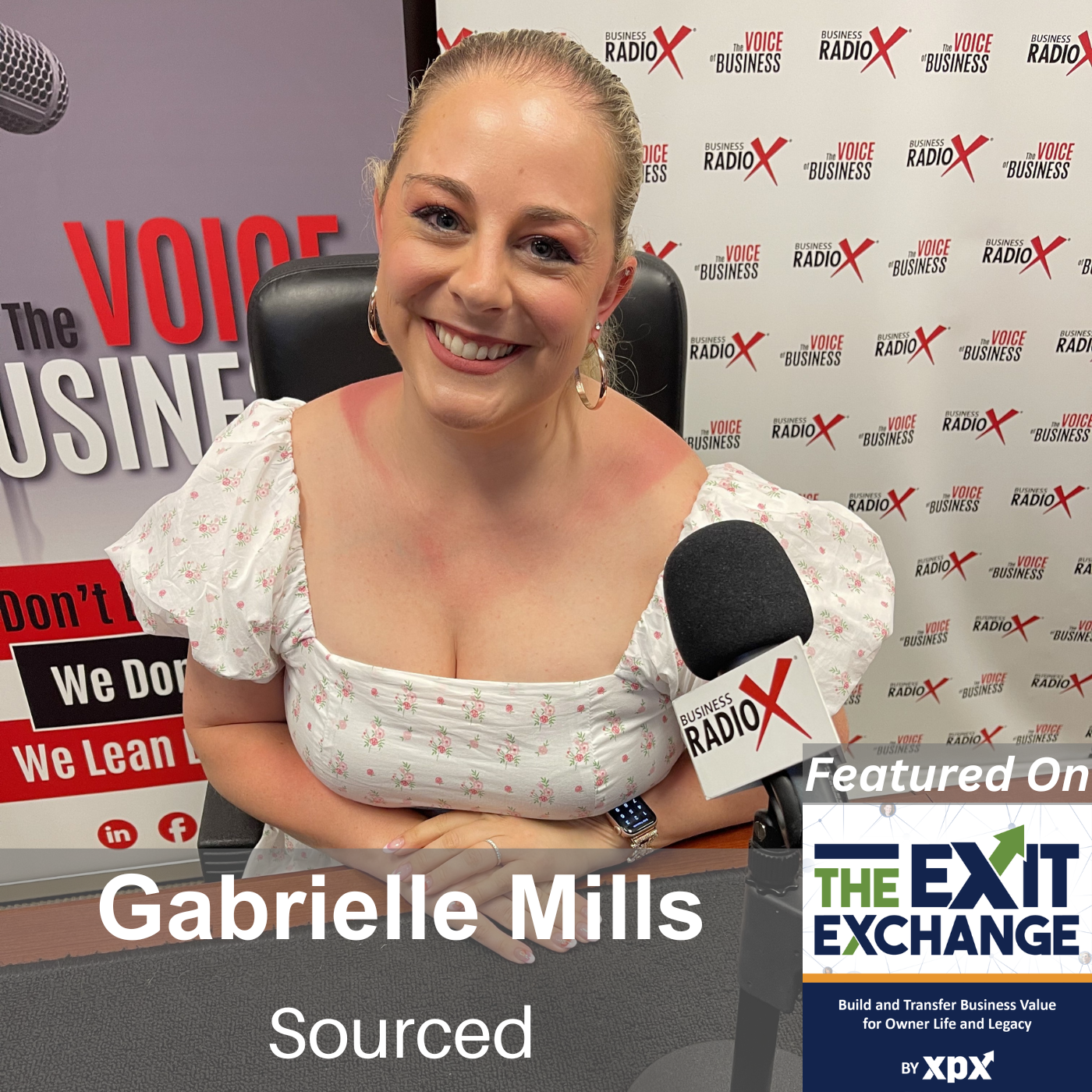
Navigating Back Office Success with Gabrielle Mills of Sourced.

April 29, 2025 by John Ray

Navigating Back Office Success with Gabrielle Mills of Sourced., on The Exit Exchange with host John Ray
North Fulton Studio
Navigating Back Office Success with Gabrielle Mills of Sourced.
Loading
00:00 /
RSS Feed
Share
Link
Embed

Download file

Navigating Back Office Success with Gabrielle Mills of Sourced., on The Exit Exchange with host John Ray

Navigating Back Office Success with Gabrielle Mills of Sourced. (The Exit Exchange, Episode 23)

In this episode of The Exit Exchange, host John Ray welcomes Gabrielle Mills, President of Sourced., a leading full-service back-office solutions firm. Gabrielle discusses her entrepreneurial journey, highlighting how she and her mother founded Sourced., a firm that provides fractional support in accounting, marketing, HR, and administrative services. She delves into the importance of effective back-office management for business growth and successful exits, sharing insights on common pitfalls, such as accounting mistakes. The conversation also touches on the role of AI in accounting, the significance of scalable business models, and the value of joining XPX Atlanta for business growth. Listen to learn more about how Sourced. helps businesses navigate their back-office needs and prepare for future success.

The host of The Exit Exchange is John Ray, and the show is produced by John Ray and North Fulton Business Radio, LLC, the North Fulton affiliate of Business RadioX®. John Ray is a Gold Sponsor of XPX Atlanta.

Gabrielle Mills, President, Sourced.

Gabrielle Mills, President, Sourced.

Gabrielle Mills is a seasoned entrepreneur with a proven track record in scaling small businesses into profitable companies. She is the co-founder and President of Sourced., a leading full-service back-office solutions firm. Gabrielle established the company from its inception, incorporating various business units such as accounting, marketing, human resources, administrative services, and talent acquisition.

Prior to founding Sourced., Gabrielle worked in corporate marketing and branding at IHG, supporting high-profile partners like the PGA Tour, CMT, and other global hospitality brands.

Gabrielle has always been passionate about empowering other entrepreneurs and now dedicates her time and gift of public speaking to inspire and grow other business leaders.

LinkedIn

Sourced.

Sourced. is an award-winning company specializing in solving two of the toughest challenges in business: lack of time and lack of resources. Its services include content marketing, bookkeeping, office assistance, and placement services.

Sourced. provides a full-service, customizable back-office solution for small-to-medium-sized business owners, with all services also available a la carte. The company helps clients fill resource gaps by building teams complete with account management, specialists, and backup support, allowing clients to pay only for what they need.

Services are delivered both virtually and on-site at client business locations.

Website | LinkedIn | Instagram | Facebook

Topics Discussed in this Episode

00:00 Introduction and Welcome to The Exit Exchange
01:02 Meet Gabrielle Mills of Sourced.
02:42 The Origin Story of Sourced.
06:27 Challenges and Growth in Business
13:31 Common Mistakes in Business Operations
19:48 AI Limitations in Accounting
20:26 Challenges in Business Growth
24:03 Importance of a Strong Back Office
27:25 Sourced’s Journey and Future Plans
31:17 Advice for Business Owners
36:03 Conclusion and Contact Information

The Exit Planning Exchange Atlanta

The Exit Planning Exchange Atlanta (XPX) is a diverse group of professionals with a common goal: working collaboratively to assist business owners with a sale or business transition. XPX Atlanta is an association of advisors who provide professionalism, principles, and education to the heart of the middle market.

Their members work with business owners through all stages of the private company life cycle: business value growth, business value transfer, and owner life and legacy. Their vision: to fundamentally change the trajectory of exit planning services in the Southeast United States. XPX Atlanta delivers a collaboration-based networking exchange with broad representation of exit planning competencies. Learn more about XPX Atlanta and why you should consider joining our community by following this link.

The host of The Exit Exchange is John Ray, and the show is produced by North Fulton Business Radio, LLC, the North Fulton affiliate of Business RadioX®, in Alpharetta. The show archive can be found by following this link.

John Ray is a Gold Sponsor of XPX Atlanta.
Tagged With: Accounting, back office support, business growth, Gabrielle Mills, John Ray, marketing, Sourced, talent acquisition, The Exit Exchange

Enhancing Talent Acquisition, with Brooke Wheeler, Restoration Talent Solutions

February 25, 2025 by John Ray

Enhancing Talent Acquisition, with Brooke Wheeler, Restoration Talent Solutions, on North Fulton Business Radio with host John Ray
North Fulton Business Radio
Enhancing Talent Acquisition, with Brooke Wheeler, Restoration Talent Solutions
Loading
00:00 /
RSS Feed
Share
Link
Embed

Download file

Enhancing Talent Acquisition, with Brooke Wheeler, Restoration Talent Solutions, on North Fulton Business Radio with host John Ray

Enhancing Talent Acquisition, with Brooke Wheeler, Restoration Talent Solutions (North Fulton Business Radio, Episode 846)

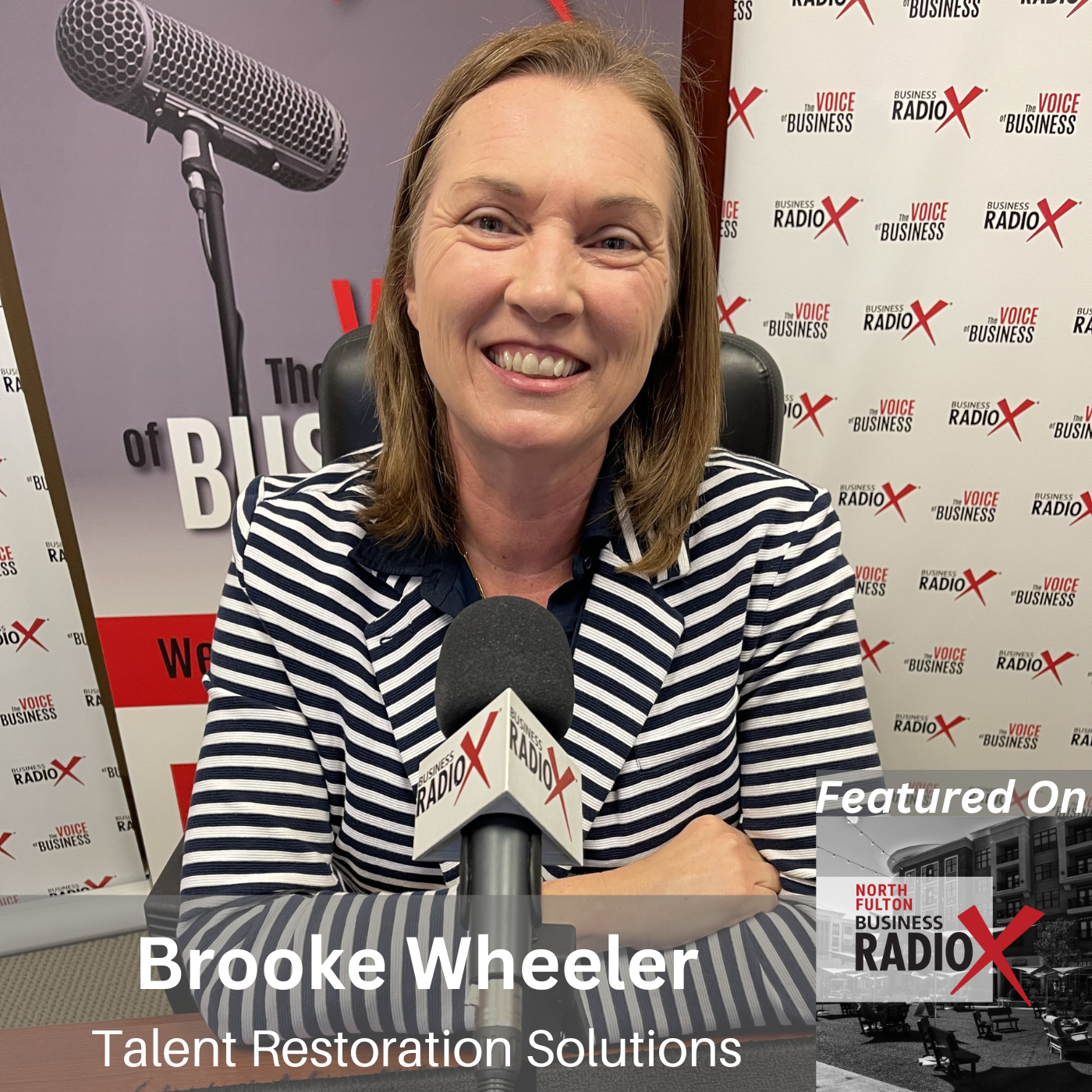
In this episode of North Fulton Business Radio, host John Ray interviews Brooke Wheeler, founder of Restoration Talent Solutions. Brooke discusses her journey from corporate talent acquisition to starting her own fractional recruitment company, emphasizing the importance of authentic culture, effective use of recruitment tools, and networking for both employers and job seekers. She shares insights on the benefits of fractional talent acquisition for small and medium-sized businesses, strategies for improving recruitment processes, and tips for job seekers navigating a challenging job market. Additionally, Brooke highlights her company’s success in helping businesses build internal recruiting functions and improve hiring efficiency.

John Ray is the host of North Fulton Business Radio. The show is recorded and produced by the North Fulton affiliate of Business RadioX® inside Renasant Bank in Alpharetta.

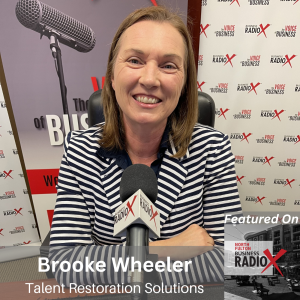
Brooke Wheeler, Talent Restoration Solutions

With over 25 years in corporate recruiting, Brooke has had the privilege of recruiting and advising across diverse industries like fintech, data analytics, and engineering. Her passion lies in crafting and refining talent acquisition strategies that not only attract top talent but also cultivate a positive organizational culture. She’s successfully placed thousands of high-caliber candidates in roles that fuel innovation and drive business success.

Now she’s built her company, Restoration Talent Solutions, to do the same for growing businesses that want to create a recruiting function in order to attract and hire the best talent for their team, without the overhead of a full-time talent acquisition executive. Fractional talent acquisition means she provides expert recruitment services on a part-time, flexible basis.

If you want to start making smarter hires, Brooke is here to help.

Website | LinkedIn | Instagram

Topics Discussed in this Episode

00:00 Introduction and Welcome to North Fulton Business Radio
00:29 Guest Introduction: Brooke Wheeler
02:04 Brooke’s Background and Career Journey
06:08 The Value of Fractional Talent Acquisition
09:19 Importance of Company Culture
12:04 Challenges in Talent Acquisition
15:02 Advice for Job Seekers
19:58 Ideal Clients and Success Stories
26:07 Conclusion and Contact Information
26:56 Host’s Final Remarks

Renasant Bank supports North Fulton Business Radio

Renasant BankRenasant Bank has humble roots, starting in 1904 as a $100,000 bank in a Lee County, Mississippi, bakery. Since then, Renasant has become one of the Southeast’s strongest financial institutions, with over $17 billion in assets and more than 180 banking, lending, wealth management, and financial services offices throughout the region. All of Renasant’s success stems from each banker’s commitment to investing in their communities as a way to better understand the people they serve. At Renasant Bank, they understand you because they work and live alongside you every day.

Website | LinkedIn | Facebook | Instagram | X (Twitter) | YouTube

About North Fulton Business Radio and host John Ray

With over 800 shows and having featured over 1,200 guests, North Fulton Business Radio is the longest-running podcast in the North Fulton area, covering business in our community like no one else. We are the undisputed “Voice of Business” in North Fulton!

The show invites a diverse range of business, non-profit, and community leaders to share their significant contributions to their market, community, and profession. There’s no discrimination based on company size, and there’s never any “pay to play.” North Fulton Business Radio supports and celebrates business by sharing positive business stories that traditional media ignore. Some media lean left. Some media lean right. We lean business.

John Ray, Business RadioX - North Fulton, and Owner, Ray Business Advisors
John Ray, Business RadioX – North Fulton, and Owner, Ray Business Advisors

John Ray is the host of North Fulton Business Radio. The show is recorded and produced from the North Fulton studio of Business RadioX® inside Renasant Bank in Alpharetta. You can find the full archive of shows by following this link. The show is available on all the major podcast apps, including Apple Podcasts, Spotify, Google, Amazon, iHeart Radio, and many others.

The studio address is 275 South Main Street, Alpharetta, GA 30009.

John Ray, The Generosity MindsetJohn Ray also operates his own business advisory practice. John’s services include advising solopreneurs and small professional services firms on their value, their positioning and business development, and their pricing. His clients are professionals who are selling their expertise, such as consultants, coaches, attorneys, CPAs, accountants and bookkeepers, marketing professionals, and other professional services practitioners.

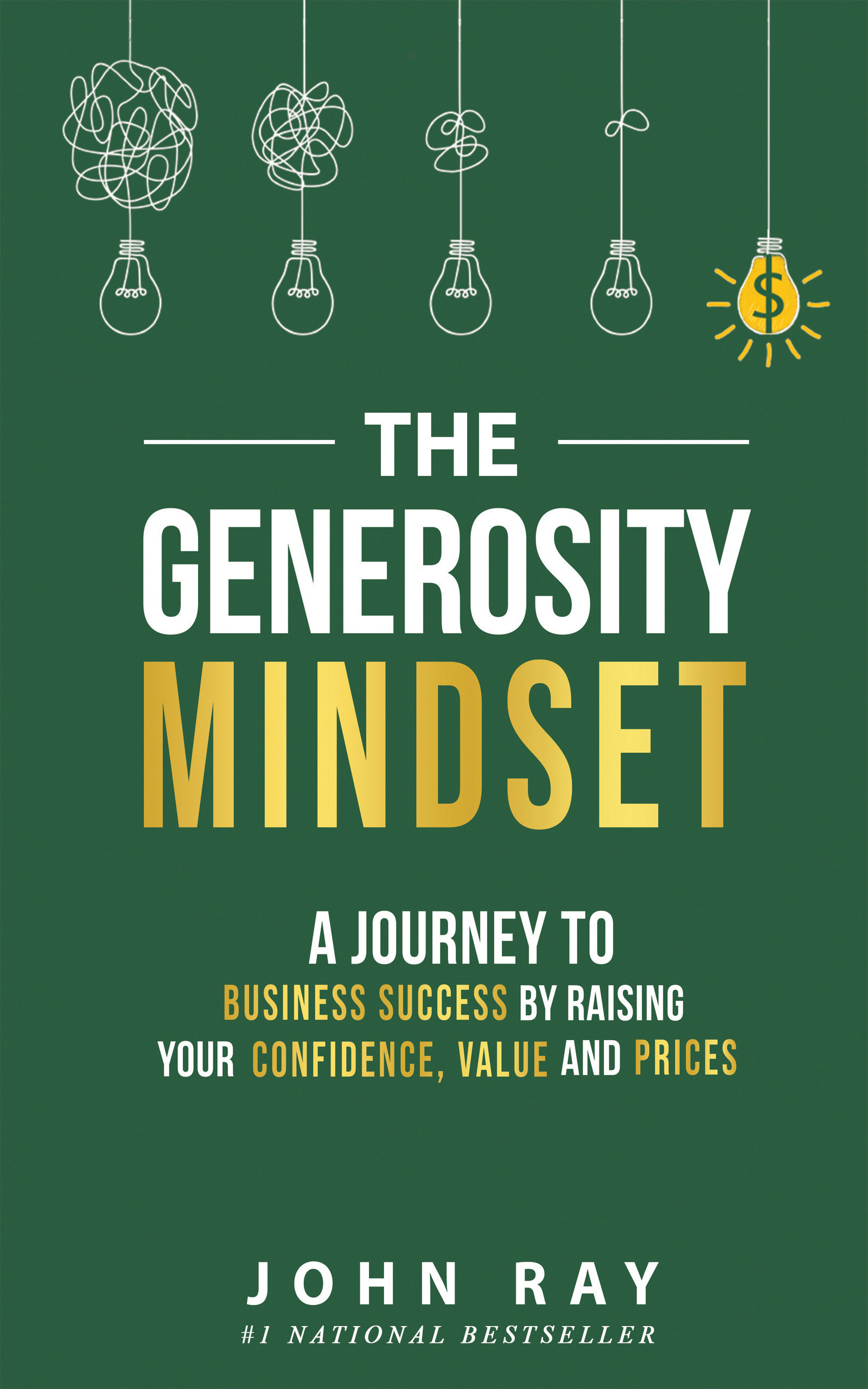
John is the national bestselling author of The Generosity Mindset: A Journey to Business Success by Raising Your Confidence, Value, and Prices.

Tagged With: Brooke Wheeler, Career counseling, Culture, employer branding, job seekers, John Ray, North Fulton Business Radio, Recruiting, Restoration Talent Solutions, talent acquisition

HR Excellence: Insights from The Black HR Society

February 13, 2024 by Karen

HR-Excellence-Insights-from-The-Black-HR-Society-feature
Phoenix Business Radio
HR Excellence: Insights from The Black HR Society
Loading
00:00 /
RSS Feed
Share
Link
Embed

Download file

HR-Excellence-Insights-from-The-Black-HR-Society

HR Excellence: Insights from The Black HR Society

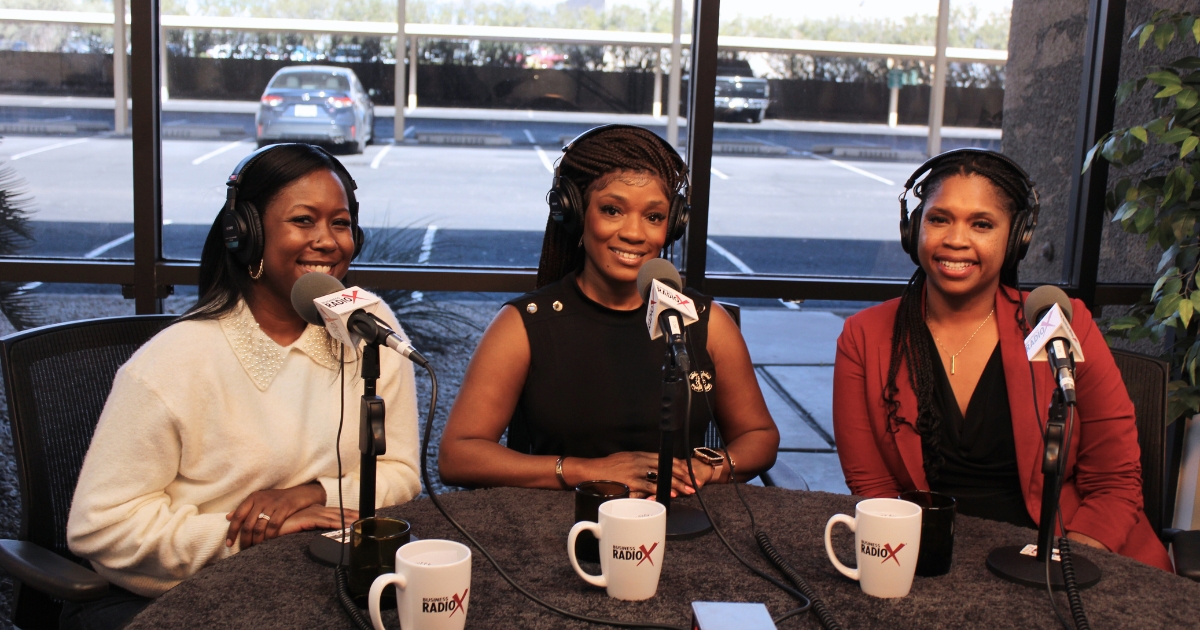
In this episode of Phoenix Business Radio, host Karen Nowicki engages with TJ Lowery, Britney Sudana, and Shatema Gresham from The Black HR Society, exploring their mission to create a supportive space for black HR professionals in Greater Phoenix. They emphasize the significance of community, professional development, and collaboration within the HR field. The trio shares their personal and professional journeys, highlighting challenges faced in HR roles and the importance of being heard and valued within organizations. They discuss the multifaceted role of HR professionals, their passion for service, and the necessity of fostering strong relationships between HR and company leadership.

The conversation also dives into the upcoming Coffee Chat event hosted by The Black HR Society, aimed at providing a casual networking environment for professionals to discuss various business topics, including the impact of AI on HR. The guests stress the importance of mentorship, sponsorship, research, and negotiation in career development. They encourage fellow professionals to be bold, confident, and proactive in their career paths, while also emphasizing the value of understanding individual motivations and tailoring company offerings to attract and retain talent.

Overall, the episode underscores the dedication of the guests to serve their HR peers and strengthen community bonds in the workplace.

For more information, visit The Black HR Society’s website and follow them on LinkedIn, Facebook and Instagram. The-Black-HR-Society-logo

The Black HR Society aims to make a meaningful difference in the careers of Black Human Resources professionals in Arizona.

They are committed to using their knowledge and influence to be active crusaders engaged in eliminating racism in the workplace and assisting their people with becoming equitably employed.

TJ-Lowery-Phoenix-Business-RadioTJ Lowery is the President of the Black HR Society a local non-profit organization servicing HR professionals across the valley. She is also the Vice President of Human Resources at the Arizona Boardwalk overseeing the HR strategy for seven attractions including the iconic OdySea Aquarium and Butterfly Wonderland.

TJ is a Realtor and a Veteran who served 15 years in the United States Army. As a Human Resources professional, TJ has a wealth of knowledge, including leadership development, race equity education, total rewards, employee relations/investigations, and training.

TJ enjoys the arts, physical fitness, and being a mother to her three children and her three grandchildren who refer to her as Grandma Lovey.

Britney-Sudana-Phoenix-Business-RadioBritney Sudana is a HR professional with over ten years of experience focused mainly on talent acquisition and career development. She has held roles in various organizations within the public and private sector.

Britney earned her Bachelor of Arts degree in Mass Communications from The University of Alabama at Birmingham. Britney, like many others, fell into human resources and grew to love it because she’s able to utilize her real-world knowledge and acquired expertise to “advocate for those that either cannot or do not know how to properly advocate for themselves”.

Britney is an active member of the Greater Phoenix Urban League of Young Professionals where she serves on the executive board as Leadership Development Chair.

In her spare time, you can find Britney near a pool attempting to swim, eating way too much, or enjoying time with her loving husband and best dog-pal Gabby.

Procure-Talent-Management-Group-logo

Procure Talent Management Group is your expert HR consultant for all of your unique HR initiatives and strategies. They have experienced HR professionals available to assist in customized solutions. By utilizing top technology combined with current best practices to provide you best in class service.

Partnering with PTMG provides you with industry insight, objective opinions, and the opportunity to level up your organization. PTMG provides professionals for short or long term projects, talent acquisition, strategy development, system configuration and implementation, training and development as well as onsite support.

Leave it to PTMG to remove the frustrating, time consuming task that monopolizes your day.

Shatema-Gresham-Phoenix-Business-RadioShatema Gresham is the Founder and CEO of Procure Talent Management Group, LLC.

In this role she utilizes her 20+ years of experience in Human Resources and Talent Management in a consulting role working within various industries within the HR umbrella.

In addition to overseeing all services provided by PTMG, she is also the host of Ingenious Exchange with Shatema podcast that focuses on having meaningful conversations with industry leaders.

As an HR professional she enjoys giving back by mentoring and providing career coaching through her membership with AZ Small Business Association (AZSBA) as a GO Mentor, VP of Membership and Professional Development for The Black HR Society and various community engagements.

In her spare time, she is most likely networking in person, online or via social media.

Follow Procure Talent Management Group on LinkedIn and Instagram.

Tagged With: HR consulting, Interview Preparation, project management, talent acquisition, Talent Management, The Black HR Society

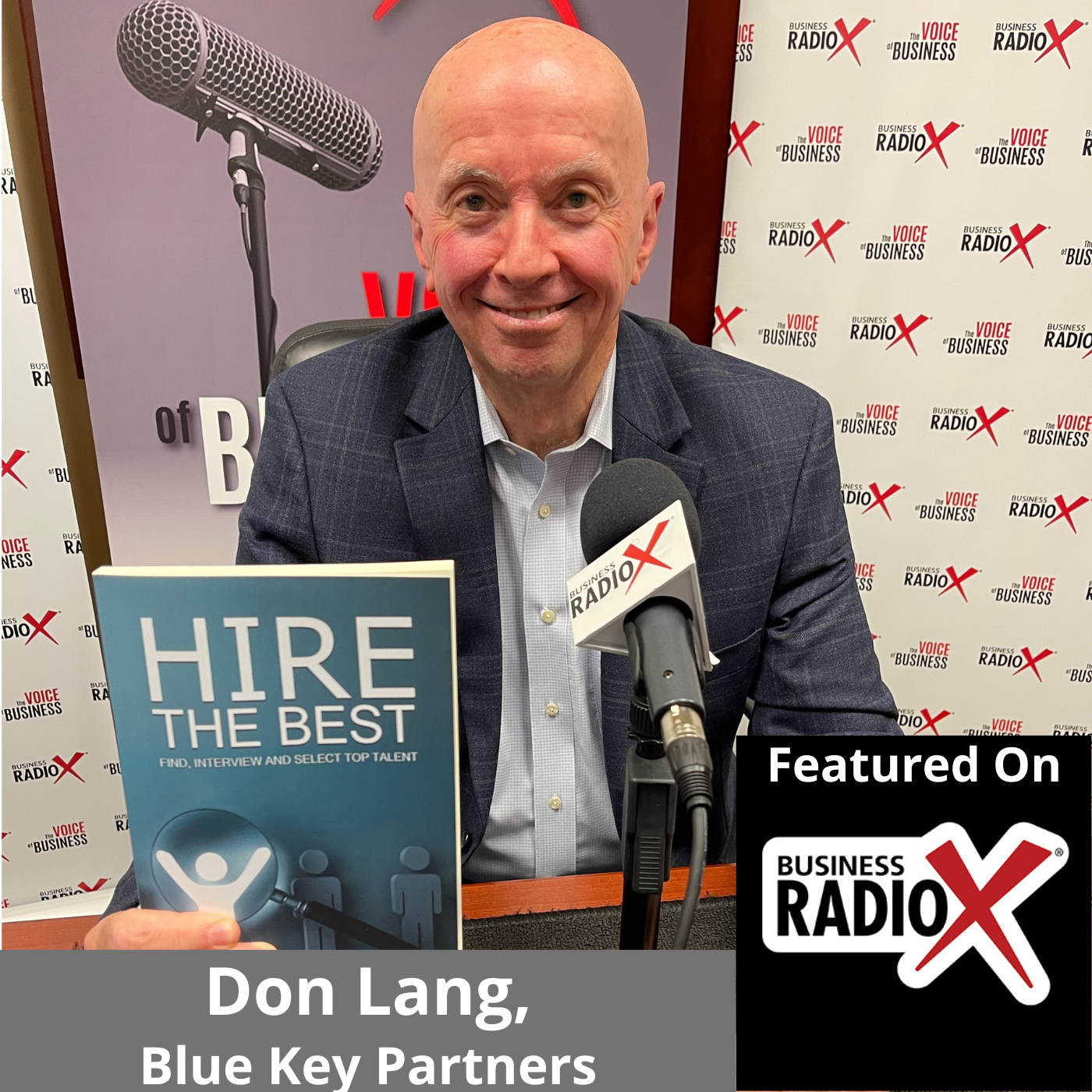
Don Lang, Blue Key Partners

December 5, 2022 by John Ray

Don Lang, Blue Key Partners
North Fulton Business Radio
Don Lang, Blue Key Partners
Loading
00:00 /
RSS Feed
Share
Link
Embed

Download file

Don Lang, Blue Key Partners

Don Lang, Blue Key Partners (North Fulton Business Radio, Episode 586)

Don Lang, Co-Founder of Blue Key Partners, joined John Ray to discuss talent and all things hiring. He talked about the importance of getting the right person for the job, the staggering costs of a bad hire, how to prepare for and begin the hiring process, how to assess candidates, common interviewing mistakes, success stories, and much more.

North Fulton Business Radio is produced and broadcast by the North Fulton studio of Business RadioX® inside Renasant Bank in Alpharetta.

Blue Key Partners

Blue Key Partners helps clients to assess, select and develop talent with customized leadership development and learning solutions. We also provide expert advisory and training services that support organizations to hire the best.

Formed in 2013, Blue Key Partners brings together the capabilities of Talent Effects, led by Don Lang and The Learning Point, led by Laura Butcher. Don and Laura have collectively served clients of all sizes across numerous industries around the world for more than 60 years.  In 2022, Don and Laura released their book, Hire the Best: Find, Interview, and Select Top Talent—a must read guide designed for managers, team leaders, and anyone else who has responsibility for finding, assessing and selecting talent.

Website | Twitter | LinkedIn

Don Lang, Co-Founder, Blue Key Partners

Don Lang, Co-Founder, Blue Key Partners

For over fifteen years, Don has focused his work on coaching and developing leaders and teams. He leverages a diverse background that spans from human resources management, line operations, account management, and P&L responsibility, to enhance his contribution to leader development through coaching and related advanced learning programs.

Don works with leaders to develop strategies, build collaborative relationships, form, and lead high performing teams, and to develop, execute and achieve key business objectives. For leaders and organizations operating across borders, Don contributes key insights and perspective from years of hands-on consulting assignments in North and South America, Europe, Asia and Africa.

Don support to leaders and organizations includes:

  • Team and leadership coaching
  • Leadership development program design, development, and delivery
  • Talent assessment for hiring, succession, and M&A
  • Key talent acquisition consulting and training prior roles

Don’s prior roles included human resources management assignments in Fortune 500, information management and financial services for firms at both the corporate and field levels. Later, Don held several line operations and technology management roles in insurance/health care services. He also was Director of Healthcare Systems for a systems solution firm where he served as channel marketing development lead. He then became a VP and Principal at Mainstream Access, Inc., a global consulting firm focusing on talent assessment and development. Later, he served in a P&L leadership role as a Managing Director in the Human Capital Consulting Group of Spherion Corporation, a global outsourcing and consulting firm.

He founded an independent coaching and leadership development business in 2022, and in 2012 Don co-founded Blue Key Partners, providing advisory and training services to support organizations in their objective to hire the best. Don holds an MBA from Georgia State University and a Bachelors Degree in Economics from Lafayette College. He has completed an Executive Coaching certification program at Columbia University. For over ten years, Don lectured on high performing teaming and coaching for leaders in the Executive MBA program at Kennesaw State University. He continues as adjunct faculty for KSU’s Coles College fo Business Executive Education programs.

LinkedIn

Questions and Topics in this Interview

  • Importance of getting the right person in the right job (costs of a bad hire)
  • Importance of leaders/Manager to have a talent mindset (building a talent brand and creating a virtual bench)
  • Beginning the hiring process with job and candidate specifications (what is each and how to prepare)
  • How to prepare for the interview process
  • What are the skills anyone interviewing needs to be effective in
  • How to assess candidates
  • Common mistakes interviewing candidates
  • How to on-boarding and retain talent

North Fulton Business Radio is hosted by John Ray and broadcast and produced from the North Fulton studio of Business RadioX® inside Renasant Bank in Alpharetta. You can find the full archive of shows by following this link. The show is available on all the major podcast apps, including Apple Podcasts, Spotify, Google, Amazon, iHeart Radio, Stitcher, TuneIn, and others.

RenasantBank


Renasant Bank has humble roots, starting in 1904 as a $100,000 bank in a Lee County, Mississippi, bakery. Since then, Renasant has grown to become one of the Southeast’s strongest financial institutions with over $13 billion in assets and more than 190 banking, lending, wealth management and financial services offices in Mississippi, Alabama, Tennessee, Georgia and Florida. All of Renasant’s success stems from each of their banker’s commitment to investing in their communities as a way of better understanding the people they serve. At Renasant Bank, they understand you because they work and live alongside you every day.

Since 2000, Office Angels® has been restoring joy to the life of small business owners, enabling them to focus on what they do best. At the same time, we honor and support at-home experts who wish to continue working on an as-needed basis. Not a temp firm or a placement service, Office Angels matches a business owner’s support needs with Angels who have the talent and experience necessary to handle work that is essential to creating and maintaining a successful small business. Need help with administrative tasks, bookkeeping, marketing, presentations, workshops, speaking engagements, and more? Visit us at https://officeangels.us/.

Tagged With: Blue Key Partners, Don Lang, Hire the Best, hiring, Hiring process, Interview process, interviewing, North Fulton Business Radio, Office Angels, renasant bank, talent acquisition

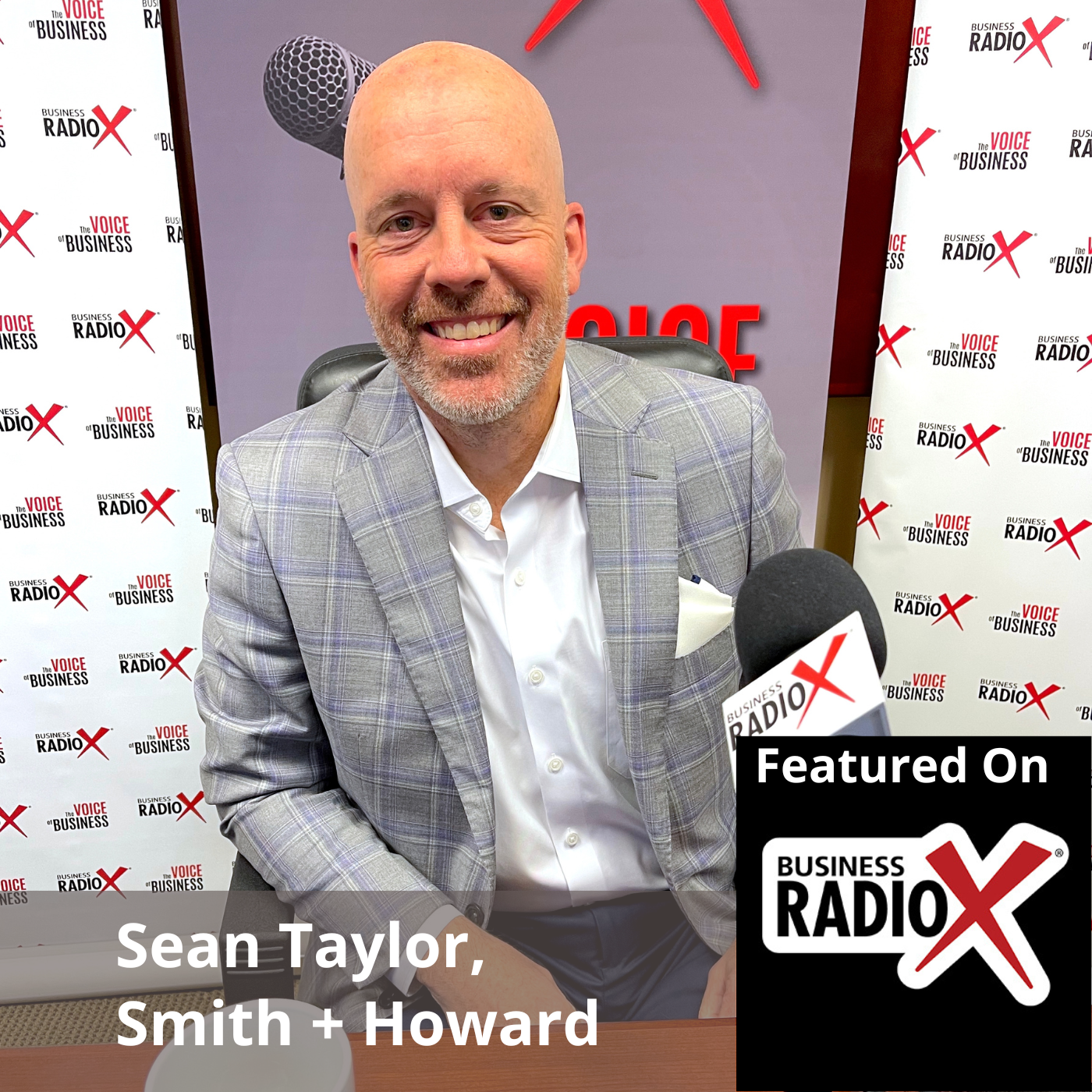
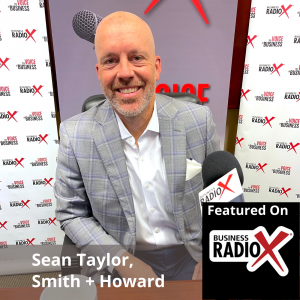
Sean Taylor, Smith + Howard

October 4, 2022 by John Ray

North Fulton Business Radio
Sean Taylor, Smith + Howard
Loading
00:00 /
RSS Feed
Share
Link
Embed

Download file

Sean Taylor

Sean Taylor, Smith + Howard (North Fulton Business Radio, Episode 532)

On this episode of North Fulton Business Radio, Sean Taylor, Managing Partner of Smith + Howard, joined host John Ray to discuss his award-winning firm’s growth and culture. Sean discussed the firm’s recognition as “Best of the Best” by Inside Public Accounting, how the firm’s culture contributes to employee retention and talent acquisition, expansion beyond traditional accounting services, and much more.

North Fulton Business Radio is broadcast from the North Fulton studio of Business RadioX® inside Renasant Bank in Alpharetta.

Smith + Howard

While many advisors say clients are their priority, Smith and Howard lives and breathes a promise of personal, responsive client service.

They hire smart, engaging professionals who find motivation and satisfaction in learning about their clients’ businesses, challenges, and goals. From that vantage point, they are positioned to provide key strategic advice and national-firm services that enable our clients to move their mission forward.

Service is such an important part of the Smith and Howard culture that if they are not serving clients, they’ll often be found serving in other ways. Many of them plant roots deep in their communities and find value and satisfaction in serving others where they live. When the needs expand beyond their neighborhoods, they can also be found on nonprofit boards or joining service projects that broaden their reach and impact.

Company website | LinkedIn | Facebook | Twitter

Sean Taylor, Managing Partner, Smith + Howard

Sean Taylor, Managing Partner, Smith + Howard

Sean drives the vision, innovation, and growth of the firm, and was named a Most Admired CEO by the Atlanta Business Chronicle in 2020 in recognition of his leadership.

Sean Taylor became managing partner of Smith and Howard in January 2019 after 25 years of leadership progression in the Assurance practice. He joined the firm as an intern and was ultimately named partner in charge of the Assurance practice in 2010, a role he held for nearly a decade.

A recognized and respected leader, Sean presents to many for-profit and nonprofit businesses, lenders, and other professional service providers. He has both served on and moderated numerous workshop and conference panels, as well as presented to local and national audiences on various topics.

Sean is an active participant and advocate at Smith and Howard for our mentoring program, personally mentoring many of our professional and administrative staff through career progression and advancement.

Sean is actively involved as a multi-year member of various committees at Dunwoody United Methodist Church (DUMC), including finance, staff parish relations, leadership roundtable, missions and evangelism. He also had led strategic planning initiatives as well as capital campaigns for the church. Additionally, Sean served seven years on the Council on Finance and Administration at the North Georgia Conference of the United Methodist Church, including time as the vice chair and chair.

Sean is currently a member of the Board of Trustees for Wesleyan School, serving actively on the finance and investment committees, and is also a member of the finance committee for the Community Foundation for Greater Atlanta.
In 2012, Sean co-founded FoodStock, an annual food packaging event in Dunwoody, Georgia, where over 1,000 community members pack 300,000 meals in one day for children in school feeding programs around the globe. This is the largest single-day food packaging event of its kind in Georgia and, to date, this event and other food packaging events in the Dunwoody community associated with FoodStock have packaged over 3.6 million meals.

Additionally, Sean serves as a mentor to 13 young men through a group he founded called Fit 4 Life, discussing various aspects of faith and life for these 13 young men.

Sean graduated from the University of Georgia with a Bachelor of Business Administration in Accounting.

Affiliations: American Institute of Certified Public Accountants Georgia Society of Certified Public Accountants (Leadership Academy Inaugural Member) Wesleyan School (Board of Trustees) Dunwoody United Methodist Church Awards Georgia Society of Certified Public Accountants’ Public Service Award (2020) Atlanta Business Chronicle Most Admired CEOs (2020).

LinkedIn

Questions and Topics in this Interview:

  • Inside Public Accounting “Best of the Best”
  • New Areas in which the firm is growing
  • #1 issue CPA profession is facing
  • Let’s talk about where you are innovating
  • What are you most excited about at Smith + Howard
  • How do you live your values
  • What is the culture like at Smith + Howard
  • Where do you see the firm 5 years from now

North Fulton Business Radio is hosted by John Ray and broadcast and produced from the North Fulton studio of Business RadioX® inside Renasant Bank in Alpharetta. You can find the full archive of shows by following this link. The show is available on all the major podcast apps, including Apple Podcasts, Spotify, Google, Amazon, iHeart Radio, Stitcher, TuneIn, and others.

RenasantBank


Renasant Bank has humble roots, starting in 1904 as a $100,000 bank in a Lee County, Mississippi, bakery. Since then, Renasant has grown to become one of the Southeast’s strongest financial institutions with over $13 billion in assets and more than 190 banking, lending, wealth management and financial services offices in Mississippi, Alabama, Tennessee, Georgia and Florida. All of Renasant’s success stems from each of their banker’s commitment to investing in their communities as a way of better understanding the people they serve. At Renasant Bank, they understand you because they work and live alongside you every day.


Special thanks to A&S Culinary Concepts for their support of this edition of North Fulton Business Radio. A&S Culinary Concepts, based in Johns Creek, is an award-winning culinary studio, celebrated for corporate catering, corporate team building, Big Green Egg Boot Camps, and private group events. They also provide oven-ready, cooked-from-scratch meals to go they call “Let Us Cook for You.” To see their menus and events, go to their website or call 678-336-9196.

Tagged With: A&S Culinary Concepts, Accounting, CPa, Culture, employee retention, Inside Public Accounting Best of the Best, North Fulton Business Radio, renasant bank, Sean Taylor, Smith & Howard, talent acquisition

Workplace MVP LIVE from SHRM 2022: Jeremy May and Matt Lee, Ramsey MediaWorks

August 3, 2022 by John Ray

Ramsey MediaWorks
Minneapolis St. Paul Studio
Workplace MVP LIVE from SHRM 2022: Jeremy May and Matt Lee, Ramsey MediaWorks
Loading
00:00 /
RSS Feed
Share
Link
Embed

Download file

Ramsey MediaWorks

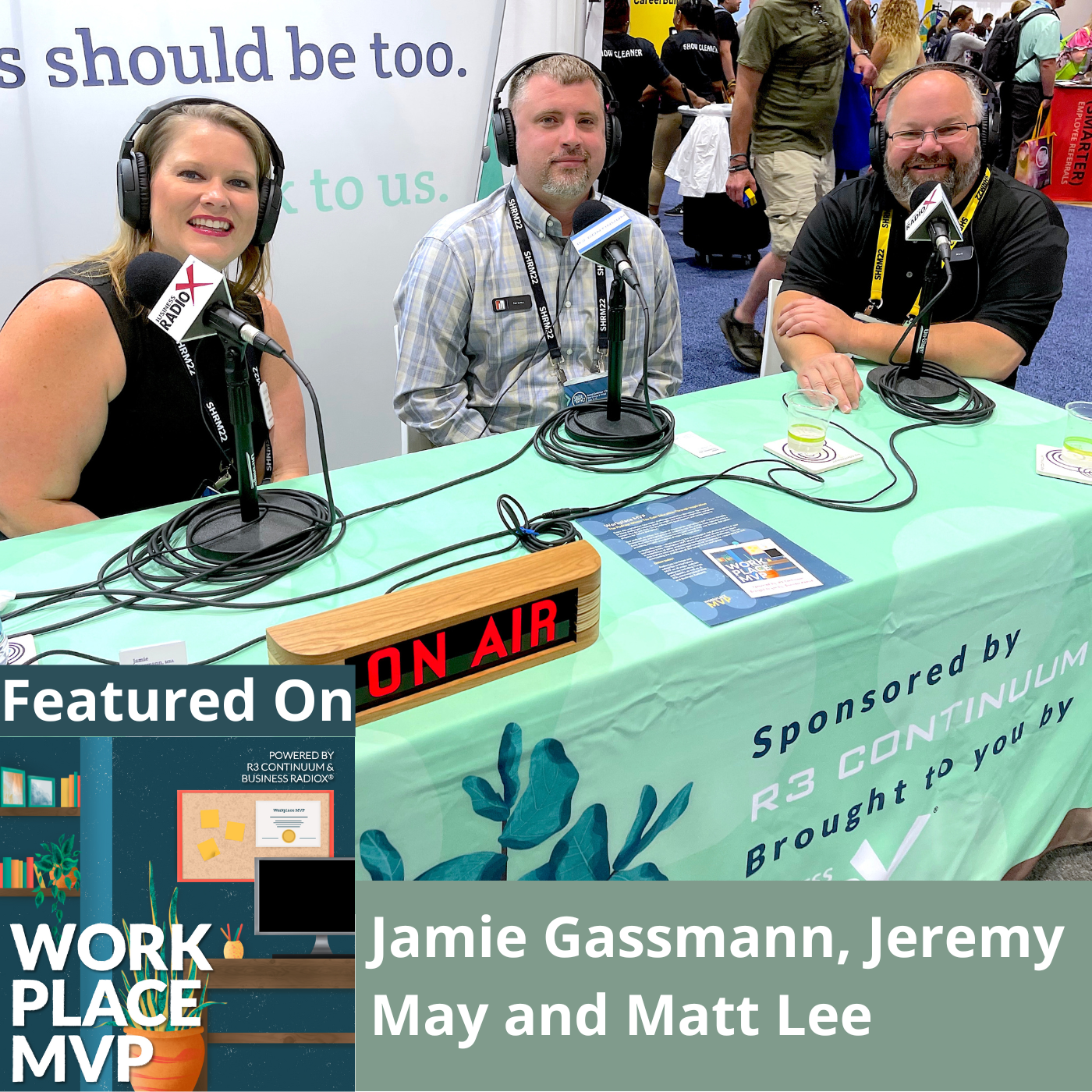
Workplace MVP LIVE from SHRM 2022: Jeremy May and Matt Lee, Ramsey MediaWorks

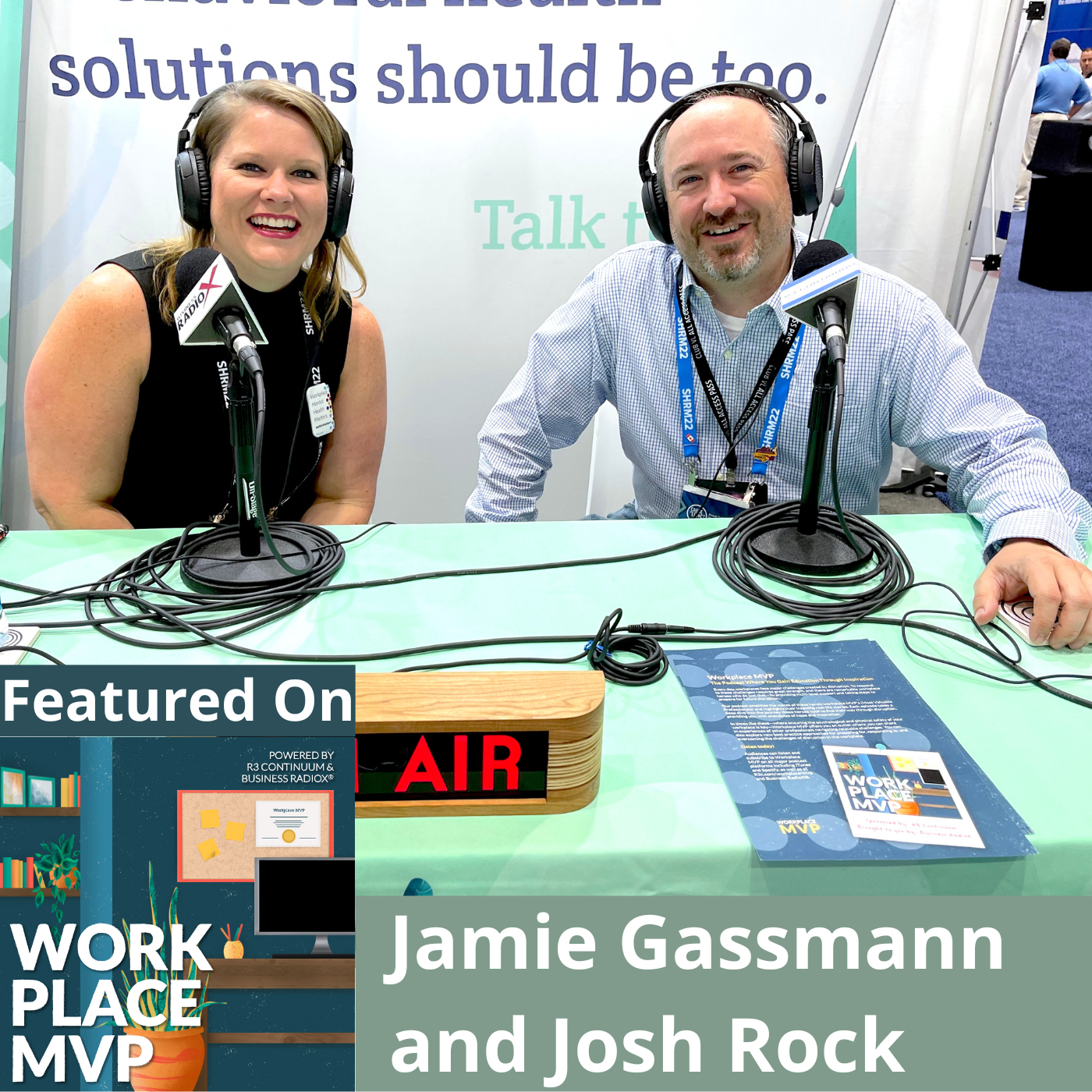
Jeremy May and Matt Lee, both with Ramsey MediaWorks, were at SHRM 2022 and joined Jamie Gassmann in the R3 Continuum booth to chat. They talked about how Ramsey MediaWorks focuses on helping companies with talent acquisition and crafting an appealing message to job candidates. They discussed the opportunity to be at SHRM, what they’re hearing from their clients, how to amplify their identity, and much more.

Workplace MVP is underwritten and presented by R3 Continuum and produced by the Minneapolis-St.Paul Studio of Business RadioX®.

This show was originally broadcast live from the 2022 SHRM Annual Conference held at the New Orleans Convention Center in New Orleans, Louisiana.

 Jeremy May, VP Client Services & Strategy and Matt Lee, VP Sales, Ramsey MediaWorks

Jeremy May, VP Client Services & Strategy, Ramsey MediaWorks
Matt Lee, VP Sales, Ramsey MediaWorks

Jeremy May is Vice President of Client Services & Strategy for Ramsey MediaWorks and joined the company in May 2021. Matt Lee is Vice President of Sales/Client Development. He has been with Ramsey MediaWorks since 2013.

Ramsey MediaWorks is a full-service agency specializing in transportation recruitment marketing for clients across the United States and Canada.

They are passionate about crafting and executing high-quality recruitment campaigns that ensure your company’s success. While transportation is their niche, they have worked with customers across multiple industries since opening in 2002.

Website | Facebook | Jeremy May LinkedIn | Matt Lee LinkedIn

About Workplace MVP

Every day, around the world, organizations of all sizes face disruptive events and situations. Within those workplaces are everyday heroes in human resources, risk management, security, business continuity, and the C-suite. They don’t call themselves heroes though. On the contrary, they simply show up every day, laboring for the well-being of employees in their care, readying the workplace for and planning responses to disruption. This show, Workplace MVP, confers on these heroes the designation they deserve, Workplace MVP (Most Valuable Professionals), and gives them the forum to tell their story. As you hear their experiences, you will learn first-hand, real-life approaches to readying the workplace, responses to crisis situations, and overcoming challenges of disruption. Visit our show archive here.

Workplace MVP Host Jamie Gassmann

Jamie Gassmann, Host, “Workplace MVP”

In addition to serving as the host to the Workplace MVP podcast, Jamie Gassmann is the Director of Marketing at R3 Continuum (R3c). Collectively, she has more than fourteen years of marketing experience. Across her tenure, she has experience working in and with various industries including banking, real estate, retail, crisis management, insurance, business continuity, and more. She holds a Bachelor of Science Degree in Mass Communications with special interest in Advertising and Public Relations and a Master of Business Administration from Paseka School of Business, Minnesota State University.

R3 Continuum

R3 Continuum is a global leader in workplace behavioral health and security solutions. R3c helps ensure the psychological and physical safety of organizations and their people in today’s ever-changing and often unpredictable world. Through their continuum of tailored solutions, including evaluations, crisis response, executive optimization, protective services, and more, they help organizations maintain and cultivate a workplace of wellbeing so that their people can thrive. Learn more about R3c at www.r3c.com.

Company website | LinkedIn | Facebook | Twitter

TRANSCRIPT

Intro: [00:00:02] Broadcasting live from SHRM 2022 at the New Orleans Convention Center, it’s time for Workplace MVP. Brought to you by R3 Continuum, a global leader in helping workplaces thrive during disruptive times. Now, here’s your host.

Jamie Gassmann: [00:00:19] Hey, everyone. Your host, Jamie Gassmann here. We are coming to you from SHRM 2022’s Exhibit Hall. And I’m sitting in R3 Continuum’s booth here at the conference, our show sponsor. And with me is Jeremy May and Matt Lee from Ramsay MediaWorks. Welcome to the show.

Jeremy May: [00:00:41] Thank you for having us today.

Matt Lee: [00:00:42] Yes. Absolutely. Thank you for having us today.

Jamie Gassmann: [00:00:45] So, I really want to hear, well, little and a lot about you guys, both, kind of your career history and kind of what brought you to Ramsay MediaWorks, and then about Ramsay MediaWorks, and what brings you here to SHRM. So, how about we start with you, Jeremy. Why don’t you share with us kind of a little bit of your background?

Jeremy May: [00:01:03] Sure. Yeah. Well, Jeremy May here, Vice President of Client Services at Ramsay MediaWorks. We’re an ad agency. A lot of our clients are around talent acquisition, so we help them fill a lot of those vacant positions. My role, I work with a lot of our clients. But behind the scenes, I’m working with a lot of the vendors, where we place those job ads and improve our performance and our procedures and things like that to just get our clients good value, and have that information that the CFO wants to see about where their money’s going and what it’s getting for them. And so, that’s really where I focus my time is just developing our team and our processes to help our clients win that talent work.

Jamie Gassmann: [00:01:41] Wonderful. How about you, Matt?

Matt Lee: [00:01:43] Well, we had the opportunity to meet at the ATA recently. I believe that was – when was that in?

Jamie Gassmann: [00:01:50] April.

Matt Lee: [00:01:51] Yes. In April. In April. Wow. Time flies.

Jamie Gassmann: [00:01:53] It does. Yes. That was a busy month for me. It was a busy travel month.

Matt Lee: [00:01:57] It sure was. So, we, at Ramsay, are really heavily involved in the transportation space. And that’s where we met at the American Trucking Association. And so, this is our first time here at SHRM. And we are excited to kind of bring some of the ideas that we have been seeing success within that space in more of this space with the folks that are going to be attending, you know, here at SHRM. So, we’re just excited to kind of take it all in, maybe hear a little bit about what some of their pain points are, and maybe be able to help address some of those.

Jamie Gassmann: [00:02:34] Yeah. Absolutely. Because, I mean, staffing is on the minds of a lot of hiring HR leaders. I know at R3 Continuum, our HR leaders had to get creative on some of our roles and positioning them.

Jamie Gassmann: [00:02:45] So, what are some of the things you’re hearing within your customers? I know you do advertising for that. So, I’ve got to imagine you’re hearing some of their goals and the challenges of achieving those goals. So, how about we start with you, Matt. Share with us kind of some of the things that you’ve heard in the space.

Matt Lee: [00:02:59] Sure. After COVID, you know, the whole pandemic thing, it’s a different dynamic than what we had before the pandemic. And like I said, we’re heavily involved in the transportation space, so finding truck drivers today is just a little bit more of a challenge than it was in the past. So, we have to change up the way that we target those specific candidates, the way that we talk to them, we have to change the messages.

Matt Lee: [00:03:37] So, I guess it’s just we have to make sure that we’re relevant, and listen to what that applicant needs and is looking for. And be able to change those messages to attract those good candidates. Because that’s one of the biggest things that we heard post-pandemic was, we’re getting applicant flow, but the quality is not quite there. And so, again, we just kind of had to change those messages. And the customers we’re working with are seeing success. And so, you know, we continue to grow at Ramsey. And, again, we’re kind of here just to kind of take it all in and learn what the other side is doing.

Jamie Gassmann: [00:04:15] Yeah. There’s a lot to take in at SHRM. And I got to imagine, you know, getting creative, changing up the approach with maybe changing the language in the ad, operationally did you have to do any changes internally to address those modifications with the customer? How about you comment on that, Jeremy?

Jeremy May: [00:04:34] Yeah. So, I don’t think that we had to change too much on our end. You know, the industry is in a state where, really, in any vertical, there’s more positions open than there are people to fill them. And so, I think that’s what everybody’s dealing with. That’s what we’re hearing that’s the pain point. We’re not really having a problem getting applicants to apply for jobs, though.

Jeremy May: [00:04:55] That’s really the thing that’s different, is that, because of inflation, those underlying things happening, people are looking for pay. They’re looking for, you know, as we’re in transition now of, are you going to be an in-office company or are you going to be a remote company? Those are catalysts for why people are interested and just looking what’s out there. So, the applicant is taking place.

Jeremy May: [00:05:14] What’s changed is not really our process, but it’s the conversation we’re having with the clients around addressing those things Matt mentioned around the candidate quality is just really looking at who is a good fit in your organization, and how do we identify that. Some of that through some of the things we would do with our processes via the landing page or a form filled, because we know they’re an interesting candidate. But then, we’ve got to look at the velocity of them getting through your process. Can we remove barriers? Can we compete with whoever else they may be looking at a job? Because that’s what’s different is they’re not just looking at your position.

Jeremy May: [00:05:53] And so, we just take that conversation a little bit deeper than we used to because it’s an employee’s market. They have a lot of choice. And so, that’s where the conversations changed, where we’re getting a little bit further into the process of our clients, what is it that they can change to get those candidates onboarded and have the right talent.

Jamie Gassmann: [00:06:13] Well, I mean, it’s interesting, I’ve talked on the show with lots of different HR leaders, one of the common themes is they’re interviewing you as much as you are interviewing them. And so, I got to imagine, the advertising ,that’s like your first point of entry. And so, how you’re portraying yourself to that candidate has got to be a huge component to that first initial experience that they’re experiencing with your organization. So, how do you advise customers on that? Like, what are some of the things that you tell them as you’re crafting that message that’s really important that they think about?

Jeremy May: [00:06:47] Yeah. One thing that I think that is probably a struggle for clients today is there’s a buzz word with a unique value proposition, if you will, but it’s around the brand, unique brand things. And a lot of companies are looking to find what that is, and they’re asking the agencies to answer the question. And, really, what we do as an agency is, we go in and ask the question about what makes them unique themselves, what is their culture that’s been set. You know, they could be a 20 year old company, a 100 year old company, we’re not going to redefine their brand. That culture is set.

Jeremy May: [00:07:20] And so, what we really need to do is understand what some of their long term employees say about them. Why do you stay? Because that’s the message that we’ve got to portray. And so, it’s really just a listening exercise for us to go in and understand what is it that’s unique about you. Is it your culture around your family-work life balance? Is it your pay? Because some companies just say, “We’re going to pay you more. We’re not going to provide a great workplace, but we’re going to provide you better pay.” Some people, it’s not about the pay, it’s the flexibility.

Jeremy May: [00:07:50] You know, I think individuals are generally motivated by one of three things. It’s pay, flexibility, or recognition. And so, what I’m listening for when I’m talking to a client is, what is it that they actually have that’s just part of their identity already, because we don’t have to sell that. We just have to amplify that voice for them.

Jamie Gassmann: [00:08:09] Yeah. Absolutely. And I like that you touched on that because you’re right, candidates are going to be exploring that organization through those three lenses. That’s what I was thinking when you were talking about that, is, it’s not always about the pay. Sometimes it’s just about who am I working for? You know, if you have a bad boss or bad leadership, people aren’t going to stick around to watch it to, hopefully, see it get better.

Jamie Gassmann: [00:08:34] So, Matt, what are some of your perspectives from your role within Ramsay Media that you’ve seen and you’ve experienced that, you know, you want to share with these HR leaders that they should be looking for and paying attention to right now, especially in this job market?

Matt Lee: [00:08:48] You know, I think like what Jeremy said, it’s just becoming more and more about the culture and being able to kind of differentiate yourself from your competitors. Like Jeremy said, on those long term folks that have been with you, figure out why they’re staying. And then, the new folks, why they’re coming onboard. And learn from that and then be able to change that message to target people more like that.

Matt Lee: [00:09:21] And so, you know, just being able to get in there, do some analysis because it’s a very, very, very competitive market. And so, being able to use some of the technologies, there’s a lot of technology here at SHRM, for sure. This is a great place to learn about a lot of different technologies, you know, that are up and coming. Some new, some been around for a long time.

Matt Lee: [00:09:48] But, also, it’s time to kind of take a step back and make sure that that you have the technology in place to be able to let the candidates talk to you how they want to talk to you. Because they’re doing their research before they ever call you. So, being able to have landing pages that explain exactly what that position entails, if you’re able to add some video components to that landing page, some messaging actually from some of your current employees, as well as some of your long term, as well as some of your new folks about the onboarding process. You know, that’s always good to have.

Matt Lee: [00:10:31] Because one of the things that candidates have is that fear, that anxiety of, “Man, what’s this job going to be like?” So, if we can answer some of those questions through video, it’s just going to take some of that anxiety away before they make that phone call to figure out if this is going to be the place they want to call home.

Jamie Gassmann: [00:10:52] Yeah. And it’s a change. And for them, to your point, it’s a really big decision. I mean, it’s more than just that paycheck. It’s probably somewhere where they spend the majority of their day. You know, it’s like a work family. So, very interesting.

Jamie Gassmann: [00:11:06] So, if somebody wanted to get a hold of you, if one of our HR leaders listening in is like, “I really want to learn a little bit more from you in terms of what Ramsey MediaWorks does,” how can they get a hold of you?

Matt Lee: [00:11:17] You know, we have a website, ramseymediaworks.com. And on there, we have all of our social media channels. We’re on LinkedIn. We’re on Facebook. You know, all the big ones. We’re starting some TikTok for some customers and having some fun there. So, yeah, check us out, ramseymediaworks.com. We’d love to talk.

Jamie Gassmann: [00:11:39] Yeah. Well, it was an absolute pleasure to meet you at ATA. And I’m so glad you found us here. And I was honored to have you on the show. And thank you for joining us. And good luck at the show. It sounds like it’s going well so far, but I hope the rest of the time here goes well for you both.

Jeremy May: [00:11:56] Thank you very much. Thanks for having us.

Matt Lee: [00:11:57] Thank you so much.

Outro: [00:12:03] Thank you for joining us on Workplace MVP. R3 Continuum is a proud sponsor of this show, and is delighted to celebrate most valuable professionals who work diligently to secure safe workplaces where employees can thrive.


Tagged With: Jamie Gassmann, Jeremy May, Matt Lee, R3 Continuum, Ramsey MediaWorks, SHRM 2022, talent acquisition, Workplace MVP

Workplace MVP LIVE from SHRM 2022: Josh Rock, Nuss Truck Group, Inc.

July 14, 2022 by John Ray

Nuss Truck Group
Minneapolis St. Paul Studio
Workplace MVP LIVE from SHRM 2022: Josh Rock, Nuss Truck Group, Inc.
Loading
00:00 /
RSS Feed
Share
Link
Embed

Download file

Nuss Truck Group

Workplace MVP LIVE from SHRM 2022: Josh Rock, Nuss Truck Group, Inc.

Josh Rock, Talent Acquisition Manager at Nuss Truck Group, Inc., was at SHRM 2022 and sat down with host Jamie Gassmann to talk talent recruitment. He shared what’s working right now for Nuss Truck Group, recruiting active and retired military, finding placements for their partners, tweaking education to meet the needs of their new hires, how these approaches can be used in other industries, and much more.

Workplace MVP is underwritten and presented by R3 Continuum and produced by the Minneapolis-St.Paul Studio of Business RadioX®.

This show was originally broadcast live from the 2022 SHRM Annual Conference held at the New Orleans Convention Center in New Orleans, Louisiana.

Josh Rock, Talent Acquisition Manager at Nuss Truck Group, Inc.

Josh Rock, Talent Acquisition Manager at Nuss Truck Group, Inc.

Josh Rock is the Talent Acquisition Manager with Nuss Truck Group, Inc. in Minnesota, where he leads all full-cycle recruitment efforts from frontline to leadership.  He has over 17 years of experience in the Recruitment, Social Media & Marketing/Sales industries.

Josh holds a degree from the University of Minnesota-Duluth and is an active alum. He is the recipient of the 2001 Sieur du Luth Award Winner, given for the highest level of involvement and service to the university community.

LinkedIn | Twitter

Nuss Truck Group

With eight locations in the midwest, Nuss Truck & Equipment is proud to carry the best lines of trucks, trailers, and construction equipment. Their sales and service teams are highly trained to deliver and maintain the right truck or machine for your application to ensure maximum productivity and efficiency. You and your business can rely on Nuss.

Company website | LinkedIn

About Workplace MVP

Every day, around the world, organizations of all sizes face disruptive events and situations. Within those workplaces are everyday heroes in human resources, risk management, security, business continuity, and the C-suite. They don’t call themselves heroes though. On the contrary, they simply show up every day, laboring for the well-being of employees in their care, readying the workplace for and planning responses to disruption. This show, Workplace MVP, confers on these heroes the designation they deserve, Workplace MVP (Most Valuable Professionals), and gives them the forum to tell their story. As you hear their experiences, you will learn first-hand, real-life approaches to readying the workplace, responses to crisis situations, and overcoming challenges of disruption. Visit our show archive here.

Workplace MVP Host Jamie Gassmann

Jamie Gassmann, Host, “Workplace MVP”

In addition to serving as the host to the Workplace MVP podcast, Jamie Gassmann is the Director of Marketing at R3 Continuum (R3c). Collectively, she has more than fourteen years of marketing experience. Across her tenure, she has experience working in and with various industries including banking, real estate, retail, crisis management, insurance, business continuity, and more. She holds a Bachelor of Science Degree in Mass Communications with special interest in Advertising and Public Relations and a Master of Business Administration from Paseka School of Business, Minnesota State University.

R3 Continuum

R3 Continuum is a global leader in workplace behavioral health and security solutions. R3c helps ensure the psychological and physical safety of organizations and their people in today’s ever-changing and often unpredictable world. Through their continuum of tailored solutions, including evaluations, crisis response, executive optimization, protective services, and more, they help organizations maintain and cultivate a workplace of wellbeing so that their people can thrive. Learn more about R3c at www.r3c.com.

Company website | LinkedIn | Facebook | Twitter

TRANSCRIPT

Intro: [00:00:02] Broadcasting live from SHRM 2022 at the New Orleans Convention Center, it’s time for Workplace MVP. Brought to you by R3 Continuum, a global leader in helping workplaces thrive during disruptive times. Now, here’s your host.

Jamie Gassmann: [00:00:19] Hi, everyone. You’re host, Jamie Gassmann here, coming to you from SHRM 2022’s Exhibit Hall in R3 Continuum, our show sponsor’s booth. And joining me again, for the third time on my show – I must be doing something right as a host – is Josh Rock.

Josh Rock: [00:00:36] Hey, Jamie. It’s my hat trick appearance. This is now the third time I’m on your show. Hey, thanks for having me.

Jamie Gassmann: [00:00:42] Yeah. It’s a classic for a Minnesotan to bring a hockey terminology onto the show. That’s fantastic. Way to go.

Josh Rock: [00:00:48] Exactly. Hockey follows me everywhere I go.

Jamie Gassmann: [00:00:51] Amazing slapshot.

Josh Rock: [00:00:53] Yes. Yes. Slapshot from the point, you know, no one timers. Just classic bar down.

Jamie Gassmann: [00:00:58] Yeah. I’ll just make sure to keep my questions on point so you don’t check me into the boards or something, all right?

Josh Rock: [00:01:03] If I do, Jon’s going to call me two minutes for slashing or something, I would assume.

Jamie Gassmann: [00:01:07] Oh, I think it needs to be a harder penalty than that.

Josh Rock: [00:01:09] Okay, fine. Five minute game misconduct, apparently.

Jamie Gassmann: [00:01:13] All right. Well, now that we’ve got our hockey terminology all spit out, let’s talk about HR.

Josh Rock: [00:01:17] Let’s do it.

Jamie Gassmann: [00:01:18] We’re here at SHRM, so what’s going on in the SHRM world right now?

Josh Rock: [00:01:23] So, I am one of, I think, 15 or 20 SHRM influencers. SHRM invites us down to come down and blog about the conference leading up to the event, the speakers, the vendors, meet with different attendee groups, that kind of fun stuff. And just help generate content, share network, all that kind of fun stuff throughout the event. It’s a blast. I mean, I’m going to be here anyway, so why not do it to benefit the organization and the profession as a whole?

Jamie Gassmann: [00:01:50] Yeah. You’re like spreading the information around about what’s going on in the HR world and kind of building a community is kind of how I see it. And it’s amazing.

Josh Rock: [00:01:57] I’m like a Kardashian of HR.

Jamie Gassmann: [00:02:00] Which Kardashian would you be if you could be a Kardashian?

Josh Rock: [00:02:03] To be honest, I have no idea. I don’t know who any of them are, what they stand for. I’m sure they’re all great, but I’m going to plead the Fifth on that one.

Jamie Gassmann: [00:02:13] It’s a good call. Good call. You can pick a different family. It could be like The Godfather or something of HR. There you go.

Josh Rock: [00:02:18] Have you watched The Offer yet?

Jamie Gassmann: [00:02:21] No.

Josh Rock: [00:02:21] Oh, okay. So, you’ve got to go on and start watching The Offer. It’s like the background story to the making of The Godfather.

Jamie Gassmann: [00:02:27] Interesting. Okay. Well, now you just added something to my list.

Josh Rock: [00:02:31] For all your listeners, that’s the tidbit piece. Start watching The Offer on, I think it’s, like, Prime or Paramount, or one of those streaming services.

Jamie Gassmann: [00:02:37] Yeah. It’s not one of those streaming services. Awesome.

Josh Rock: [00:02:38] Yes. The Offer.

Jamie Gassmann: [00:02:39] So, let’s talk HR for a moment now that we’ve got all of our Netflix shows out of the way and our hockey terms.

Josh Rock: [00:02:44] I could come up with more if you want.

Jamie Gassmann: [00:02:46] I mean, my goodness, this is why it’s so fun to interview you. We always just have such a great conversation. But what are some of the hot topics right now that you guys are seeing in the HR space that, you know, have to be discussed?

Josh Rock: [00:02:57] Okay. Can we not talk about the overplayed, normal stuff that we’ve been talking about forever?

Jamie Gassmann: [00:03:02] Sure. You can talk about whatever you want.

Josh Rock: [00:03:04] Okay. Good. Well, you know, usually when it comes to me in my world, it’s all about talent engagement. As a talent acquisition manager for another fantastic Minnesota company – like you guys – I work with Nuss Truck & Equipment, for me, it’s talent engagement and finding better ways to get talent where they are and make them better for my organization. And then, through that, deliver great career and financial opportunities for them and their families.

Josh Rock: [00:03:33] So, I’m looking at content that helps me do that better, and then share it with the masses out on social media. But then, also, then looking at vendors who can make my life easier from that perspective. And then, through that, make that easier for the people that I hired in the organization. So, for me, it’s singular focused. You know, other folks are here generating buzz about things like FMLA, benefits, just those yawning conversations. It’s just not my jam. But for them, great. They can get buzzed about whatever they’re excited about.

Jamie Gassmann: [00:04:07] For some of them, it’s by necessity. It’s a painful topic to sit through.

Josh Rock: [00:04:10] Yeah. I mean, some people are packing a session somewhere here on legislative affairs, great. I did politics back in the day but, I mean, if I need my nap time, you’ll find me there.

Jamie Gassmann: [00:04:23] Wow. So, it’s interesting, I interviewed somebody yesterday, and she had a very interesting approach to recruitment with staffing. She had a business card with all the details of the job on it. Now, they were hiring for HR positions. So, here this makes sense.

Josh Rock: [00:04:39] That’s 16,000 targeted audience members.

Jamie Gassmann: [00:04:41] Right. Yeah. So, have you had to get creative? I know you have some great strategies and approaches that you use, like with military and tapping into some areas that maybe other workplaces haven’t really leveraged. What are some of the approaches that you’ve done or that you’ve seen with some of the staffing changes that we’ve been experiencing?

Josh Rock: [00:05:00] So, for us, one of the things that we’ve done, you mentioned veterans hiring. You know, Nuss makes it a point to, not only recruit and hire our active and retired military personnel, but then work really hard to retain them. You know, their lives changed. And so, it’s upon us and the HR team to make sure that they get what they need, not only from the career and the financial aspects, but then also the full spectrum of support. Right now we’re sitting I know above 11 percent of our staff is either active or retired military.

Josh Rock: [00:05:32] We talked about it last time, we received a Platinum Award from the Department of Labor, only one of two companies in Minnesota to get that. We are poised to get that Platinum Award again this year, so we’re super excited about that. You know, we’re going to military bases across the country and engaging where they are and what they’re looking for in their part-time military or then civilian careers. Actually, my boss is at Fort Hood right now doing a recruiting event. I’ll be at Fort Bliss coming up.

Josh Rock: [00:06:02] So, doing those types of things to, not only hire the military, but also their spouses or significant others because they’re looking for careers as well. If I can’t hire them at Nuss and I’m bringing on one of their family members, I’m going to connect them with people in my network that are around the area and find them in that industry, you know, so it’s full spectrum.

Josh Rock: [00:06:22] Add to that the educational component. We’re going out and speaking, not only to students at schools across the country, we’re talking to their directors, their curriculum folks about what we’re looking for from an industry perspective. And then, giving them keys to the kingdom. What are we finding that’s most successful to the people that we’re hiring, and then helping them draw that curriculum out.

Josh Rock: [00:06:47] One of the steps that we’ve done and taken in with a couple is turning what is a two-year program at some schools across the country and making it a one-year. So, instead of going part-time in this program, they’re going full-time in the program, so that’s 8:00 to 6:00 or 7:00 at night. They don’t have time to have usually another job, and then doing their studies or whatnot afterwards. It’s a intensive program.

Josh Rock: [00:07:12] But in 11 months, they will have the same education, lab hours, and come out with their CDL, which is hugely vital in transportation in one year. So, they’re going to spend half the money in the program that a two-year program would do, and they’re graduating in half the time. That’s a huge infusion to the industry.

Jamie Gassmann: [00:07:32] Yeah. Absolutely. Especially right now. And you’re tapping into a market that, for some, maybe aren’t quite sure where they’re going to go once they get out of the military. They’re really not sure.

Josh Rock: [00:07:41] Well, if you wait too long, if you diffuse a program, they’re going to change their decision. They’re going to change their majors. They’re going to get bored, or the energy, the excitement, just because the curriculum doesn’t do that. It doesn’t engage them. And so, if we can do that, we can keep that engagement in one smaller group, we’re going to get such a more robust audience potential. It’s working out really well.

Jamie Gassmann: [00:08:02] Yeah. So, now, I know you’re in the trucking area, so can other industries do this?

Josh Rock: [00:08:08] Totally. You can do it in health care. I mean, you can start by going into the high schools and getting your sophomores and juniors and seniors, getting them through a CNA program for those kids that want to get into health care. Because, as a recruiter, one of the greatest things that I see is I see all of these students that are graduating with the book smarts, but they don’t have the patient care.

Josh Rock: [00:08:31] And so, if we start earlier by getting them part-time jobs as a CNA, working in those senior care facilities or home care organizations, they get the patient care element and then they get the book smarts, the education, to do the job. Now, they have the one-two punch that most four year graduates don’t have because they went the one track, not the second track.

Josh Rock: [00:08:53] So, that’s one that I’m seeing a huge win in some more progressive health care organizations, finding ways to build that workplace potential, that upcoming workforce earlier in the process. And then, thus, getting those folks a lot sooner. It works out well.

Jamie Gassmann: [00:09:11] Yeah. That’s some really great advice. And we could talk, like, all day.

Josh Rock: [00:09:15] We could. We would need more coffee.

Jamie Gassmann: [00:09:18] We would need more coffee.

Josh Rock: [00:09:19] Do you have your Starbucks delivery guy coming anytime soon?

Jamie Gassmann: [00:09:21] I should.

Josh Rock: [00:09:22] You should.

Jamie Gassmann: [00:09:23] Honestly, because I am out of coffee.

Josh Rock: [00:09:25] Don’t you have, like, a hotline button on your phone for that?

Jamie Gassmann: [00:09:29] That needs to be invented. Wait, isn’t that [inaudible]?

Josh Rock: [00:09:31] I’m calling dibs on that. I’m calling dibs on the Josh Rock Coffee Delivery Company.

Jamie Gassmann: [00:09:39] I’ll be your first client.

Josh Rock: [00:09:41] Yes. You’re my first and dedicated.

Jamie Gassmann: [00:09:41] I would like venti – oh. Large. Sorry. You don’t like that term.

Josh Rock: [00:09:46] Venti is a made up term. Come on now, don’t get me started on the whole Starbucks Karibu debacle inside. No. I mean, I could go the whole Paul Rudd piece, but I won’t.

Jamie Gassmann: [00:09:55] Oh my goodness. We’ll have to check out that piece after the show. Awesome. Well, it’s been an absolute pleasure to have you on again.

Josh Rock: [00:10:01] Thanks, Jamie. We’ll talk again soon.

Jamie Gassmann: [00:10:02] I know that you’re a really busy guy, and I want to make sure that we save you time to be –

Josh Rock: [00:10:07] Oh, you know, we’re not going to go too long before we’re going to do this again.

Jamie Gassmann: [00:10:09] Yes. Absolutely.

Josh Rock: [00:10:12] Well, thanks for having me, guys. I look forward to seeing you. Have fun at SHRM. We’ll see you back in Minnesota.

Jamie Gassmann: [00:10:16] Absolutely. Sounds good.

Josh Rock: [00:10:17] Take care.

Jamie Gassmann: [00:10:18] All right.

Outro: [00:10:22] Thank you for joining us on Workplace MVP. R3 Continuum is a proud sponsor of this show, and is delighted to celebrate most valuable professionals who work diligently to secure safe workplaces where employees can thrive.

Tagged With: hiring veterans, Jamie Gassmann, Josh Rock, military hiring, Nuss Truck Group, R3 Continuum, Recruiting, SHRM 2022, talent acquisition, Workplace MVP

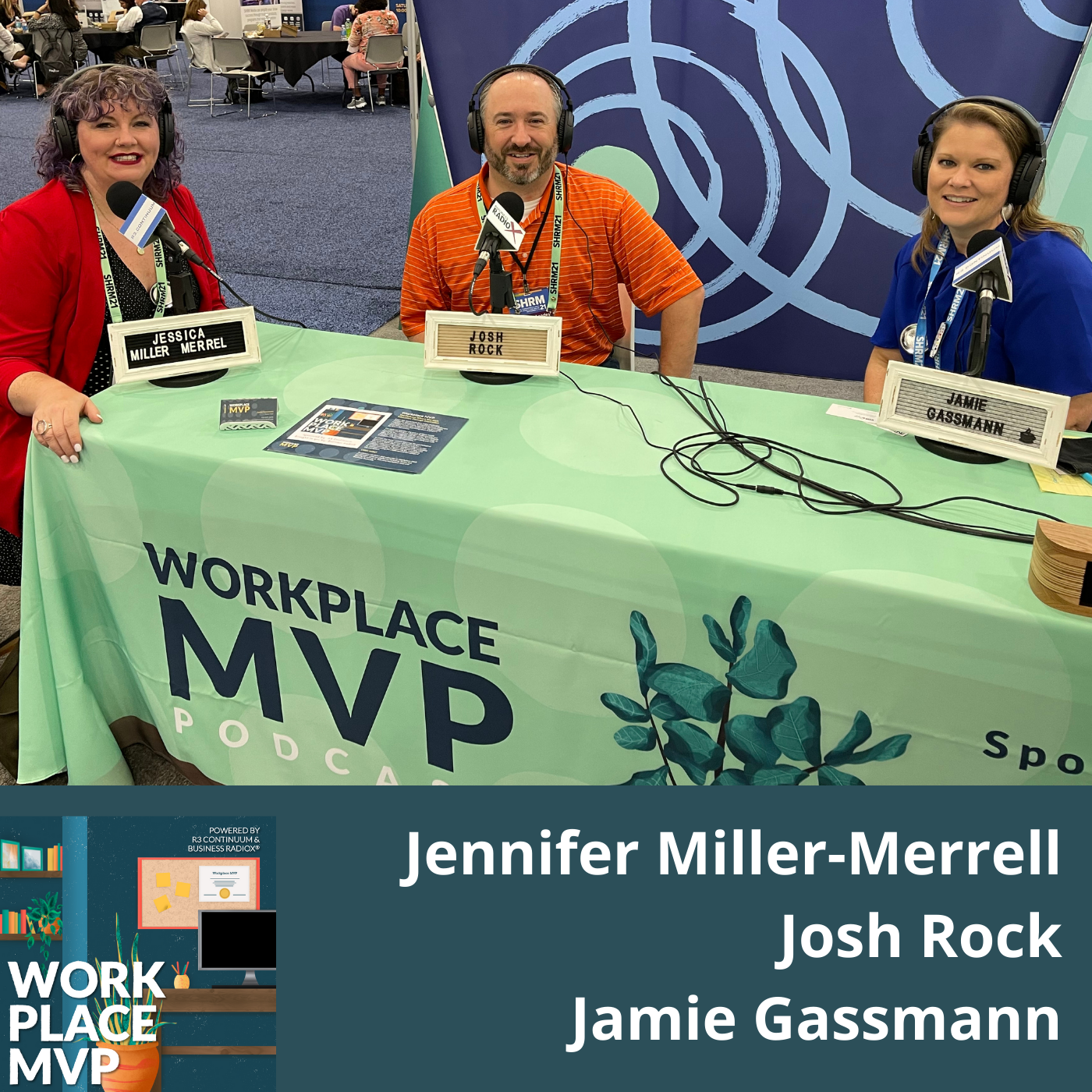
Workplace MVP LIVE from SHRM 2021: Josh Rock, Nuss Truck Group, and Jessica Miller-Merrell, Workology

September 22, 2021 by John Ray

Josh Rock
Minneapolis St. Paul Studio
Workplace MVP LIVE from SHRM 2021: Josh Rock, Nuss Truck Group, and Jessica Miller-Merrell, Workology
Loading
00:00 /
RSS Feed
Share
Link
Embed

Download file

Josh Rock

Workplace MVP LIVE from SHRM 2021:  Josh Rock, Nuss Truck Group, and Jessica Miller-Merrell, Workology

Josh Rock, Talent Acquisition Manager at Nuss Truck Group, and Jessica Miller-Merrell, CEO of Workology, had a lively conversation with host Jamie Gassmann about connecting with talent, going where the talent is, global HR issues as the workforce is remote, the Workology podcast, and much more. Workplace MVP is underwritten and presented by R3 Continuum and produced by the Minneapolis-St.Paul Studio of Business RadioX®.

This show was originally broadcast live from the 2021 SHRM Annual Conference held at the Las Vegas Convention Center in Las Vegas, Nevada.

Josh Rock, Talent Acquisition Manager at Nuss Truck Group Inc.

Josh Rock, Talent Acquisition Manager at Nuss Truck Group Inc.

After nearly a decade in recruiting with healthcare companies, Josh Rock moved the Nuss Truck Group as their Talent Acquisition Manager.

Josh holds a degree from the University of Minnesota-Duluth and is an active alum. He is the recipient of the 2001 Sieur du Luth Award Winner, given for the highest level of involvement and service to the university community.

LinkedIn | Twitter

Nuss Truck Group

With eight locations in the midwest, Nuss Truck & Equipment is proud to carry the best lines of trucks, trailers, and construction equipment. Their sales and service teams are highly trained to deliver and maintain the right truck or machine for your application to ensure maximum productivity and efficiency. You and your business can rely on Nuss.

Company website | LinkedIn

Jessica Miller-Merrell, SHRM-SCP, SPHR, CEO & Founder, Workology

Jessica Miller-Merrell, SHRM-SCP, SPHR, CEO & Founder, Workology

Jessica Miller-Merrell is the Founder of Workology, a workplace resource for HR, recruiting professionals and business leaders. The site was listed twice as a top 75 career resource by Forbes Magazine. Jessica is the president and CEO of Xceptional HR, a human capital strategy and consulting agency, and a published author of Tweet This! Jessica is listed by Forbes as a top 50 social media power user. Because of vast industry expertise and knowledge, Jessica’s professional opinions and expertise are sought after and sourced by publications and media including: the Economist, Forbes, CIO Magazine, CBS, Entrepreneur Magazine, and SHRM’s HR Magazine.

LinkedIn | Facebook | Twitter | Instagram

Workology

Workology is a destination for the disruptive workplace leader discussing trends, tools, and case studies for HR, recruiting professionals, and business leaders. The site and community are designed for those who are tired of the status quo and are compelled to change and transform not just their organization but the world of work and the human capital industry. If you are interested in contributing, please click here. If you are interested in advertising, click here.

We reach a half-million HR and Recruiting leaders each month with our website, newsletters, and podcasts. Workology and its community are founded and managed by XceptionalHR Consulting. XceptionalHR Consulting is a workplace consulting company focused on developing resources, training, and content for HR, Recruiting, and Workplace Leaders.

Workology and Xceptional HR Consulting is led by our Founder and Chief Innovation Officer, Jessica Miller-Merrell. She’s available for speaking, consulting, writing and research opportunities. If you are interested in advertising opportunities, visit our advertising page.

Company website | LinkedIn | Twitter | Instagram

About Workplace MVP

Every day, around the world, organizations of all sizes face disruptive events and situations. Within those workplaces are everyday heroes in human resources, risk management, security, business continuity, and the C-suite. They don’t call themselves heroes though. On the contrary, they simply show up every day, laboring for the well-being of employees in their care, readying the workplace for and planning responses to disruption. This show, Workplace MVP, confers on these heroes the designation they deserve, Workplace MVP (Most Valuable Professionals), and gives them the forum to tell their story. As you hear their experiences, you will learn first-hand, real-life approaches to readying the workplace, responses to crisis situations, and overcoming challenges of disruption. Visit our show archive here.

Workplace MVP Host Jamie Gassmann

Jamie Gassmann, Host, “Workplace MVP”

In addition to serving as the host to the Workplace MVP podcast, Jamie Gassmann is the Director of Marketing at R3 Continuum (R3c). Collectively, she has more than fourteen years of marketing experience. Across her tenure, she has experience working in and with various industries including banking, real estate, retail, crisis management, insurance, business continuity, and more. She holds a Bachelor of Science Degree in Mass Communications with special interest in Advertising and Public Relations and a Master of Business Administration from Paseka School of Business, Minnesota State University.

R3 Continuum

R3 Continuum is a global leader in workplace behavioral health and security solutions. R3c helps ensure the psychological and physical safety of organizations and their people in today’s ever-changing and often unpredictable world. Through their continuum of tailored solutions, including evaluations, crisis response, executive optimization, protective services, and more, they help organizations maintain and cultivate a workplace of wellbeing so that their people can thrive. Learn more about R3c at www.r3c.com.

Company website | LinkedIn | Facebook | Twitter

TRANSCRIPT

Intro: [00:00:03] Broadcasting live from the SHRM 2021 Conference at the Las Vegas Convention Center, it’s time for Workplace MVP. Brought to you by R3 Continuum, a global leader in workplace behavioral health, crisis, and, security solutions. Now, here’s your host.

Jamie Gassmann: [00:00:17] Hey, everyone. Jamie Gassmann here, your host of Workplace MVP. And we are broadcasting our episode today from the SHRM 2021 Conference in Las Vegas, Nevada. And I have two wonderful guests with me today. I’ve got Josh Rock from Truck & Equipment. He’s the Talent Acquisition Manager. And from Workology, I have Jessica Miller- Merrell, Founder and Chief Innovation Officer. Welcome to the show you two.

Josh Rock: [00:00:48] Thanks, Jamie.

Jessica Miller- Merrell: [00:00:49] Awesome to be here.

Jamie Gassmann: [00:00:50] So, I’m going to start out by talking with Josh, because I know you’ve kind of waited a little bit to connect with us on our show.

Josh Rock: [00:00:57] We’ve been chatting here and hanging out, and talking with your guys online via Twitter, you know, here at the show, just having a good time.

Jamie Gassmann: [00:01:02] Awesome. So, tell us a little bit about your background, how you got into talent acquisition, and just share with our audience a little bit more about you.

Josh Rock: [00:01:10] So, if any of your listeners are familiar with the cartoon Family Circus, where the kids would walk around a lawn and the whole yard and they have the dotted line, that’s how I fell into H.R. I started going to school for law, of all things. I fell into advertising for 16 years. And through that, I did ten years of recruitment advertising and trying to be a trusted advisor to H.R. professionals across the country and across the globe. And left that organization and went to work for my clients to teach them what I was doing outside but then within their walls, give them back control, back their budget, back to the power, instead of putting it in the hands of agencies. And I’ve been doing it ever since.

Josh Rock: [00:01:47] I went to work for a couple of health care organizations. I recently left a 36,000 employee health care group out of Minneapolis to join a truck dealership of nine locations, with now almost 400 employees. So, a huge paradigm shift, not only in the industry, but employee size, to lead their talent acquisition efforts and just have a good time every day.

Jamie Gassmann: [00:02:08] Yeah. Wow. And, obviously, now, hiring concerns and issues, how has that impacted the truck industry that you’re in?

Josh Rock: [00:02:17] You know, there’s impact. There’s not enough students going into the heavy duty diesel programs. And so, connecting with the schools, helping build curriculum to make that a more profitable venture for not only the schools, but the students, obviously. So, that way, we can continue to drive great business for us and then our customers. So, it’s going full cycle. It’s not just opening up a requisition, posting it on Indeed or any other partner just to wait for candidates to come in. We’ve had to be more holistic in our approach of finding, acquiring, and hiring great talent.

Jamie Gassmann: [00:02:51] Right. And so, talk to me a little bit about that approach. Are you going out to actual universities? You live in the St. Cloud area, I know there’s a big university in St. Cloud. I know I’ve been talking to you a little bit already. I know you’re a big Duluth.

Josh Rock: [00:03:06] Go Bulldogs.

Jessica Miller- Merrell: [00:03:07] Go bulldogs.

Josh Rock: [00:03:08] Shane here from R3, he’s also a UMD Bulldog. We connected on Twitter because of our alumni association with UMD. So, yeah, I mean, I actively go out. Even in a post-pandemic world, I’m out visiting colleges already. I was down in Dallas recently. I was down in Denver. I’m now here going out and talking to students about how their careers could go well in diesel truck repair. And, you know, finding great ways about, not only who we are, what we do, and how they can grow with us, and set themselves up and maybe their families up for great success through careers in this venture. So, it’s fun.

Jamie Gassmann: [00:03:45] Yeah. Absolutely. And that’s such an impressionable age, right? I’m guessing you’re really looking at all students. But, you know, when you’ve got somebody who’s going through their program and they’re trying to figure out what they want to be when they get older, you can really have an impact. So, if another employer was looking at taking that same approach, you know, what are some kind of your advice, if you will, on how you would approach that?

Josh Rock: [00:04:13] You know, for me, it’s all about engagement. And engagement comes in different forms. Through active questioning of the people that you’re talking to, whether it’s a student or a student’s parents, about where do they want to take their career, where do they want to go, what do they want to achieve. You know, those things, layering those questions in to create a picture, a painting, of what that could be. And then, finding your organization – like mine here at Nuss – where that resonates. For some, it’s time off. For some, it’s paid. For some, it’s advancement.

Josh Rock: [00:04:46] You’re going to find those threads just in genuine conversation and questions with those students or alumni from the schools or parents looking at how do I help set my child up for a successful career. And then, just finding those threads. It doesn’t have to be, “Hey, we’re offering a $10,000 sign on bonus and you can start tomorrow.” It’s more about what do you want? And then, finding that lane of the value proposition from your organization and going through that.

Jamie Gassmann: [00:05:15] Yeah. Well, and it’s interesting you mentioned, like, finding that lane and kind of having that engagement opportunity. Because, you know, I’ve read job descriptions over my career. I think we all have.

Josh Rock: [00:05:25] Unfortunately.

Jamie Gassmann: [00:05:25] And sometimes you’re left going, “I don’t get it. I don’t know. Maybe I like this job, but there was one word that kind of threw me off.” So, it’s almost like how can that employer step out of that job description. How can they empower themselves to take that different approach? What’s worked for you?

Josh Rock: [00:05:43] So, a great story. I had a local – or, actually, a national job board reach out to me and say,” Hey Josh. You need to invite people through our portal to apply for your positions.” And I told him he was wrong. Straight up I said, “You know what? Actually, what I need to do is when somebody voices interest in one of our jobs through your portal, I’m going to call them. I’m going to text them and say, ‘Hey, you know what? I found your information. I want to talk about where your career is going and what we can do together.'”

Josh Rock: [00:06:14] Because my job is not a gatekeeper. There’s a lot of recruiters, unfortunately, in the United States that act like gatekeepers. Actually, what you should be doing is being dance partners. Helping them navigate to their career within your organization. And so, instead, what I told this vendor, I said, “What I’m going to do is you guys are going to bring me information. I’m going to digest that information. I’m going to actively reach out to them on my own, through my own information, my own tools and technology and say, ‘Hey, I’m interested in you because. Now, I want you to join me because.'” Instead of saying, “Hey, do this for me, do this for me.” Because they’re getting the information. They’re holding the power. No.

Jamie Gassmann: [00:06:52] No. I need to hold the power, right?

Josh Rock: [00:06:53] Exactly. Exactly. I’m the customer. I need to do what works for me. Not what works for you and your technology. And what you can then put on your advertisement to say you had this many candidates to customers. That doesn’t matter to me. What matters to me is that Paul Alexander from Sheboygan, Wisconsin applied for my position, has an interest in my role, was in the U.S. Military, now wants to come work for me. I want to get him on the phone as quickly as I can and find a way that maybe this is an opportunity for him to drive his career forward.

Jamie Gassmann: [00:07:24] And so, you’re very active on social media with the Twitter, because that’s how you found us.

Josh Rock: [00:07:30] Kind of. Yeah.

Jamie Gassmann: [00:07:31] So, talk to me how do you leverage Twitter or how do you leverage LinkedIn? How do you empower even Facebook, potentially, I’m guessing, could be a really good avenue for you? How do you leverage that in a way that’s helped you to get good candidates to reach out to?

Josh Rock: [00:07:45] So, in my current industry in transportation, I’m not going to find a ton of diesel technicians on Twitter. It’s just not going to happen. I can do it on Facebook. I can do searches by putting in diesel technology. I can look for trucking. I can do keywords to find people that have similar similarities or have posted something about it, and then reach out to them that way.

Josh Rock: [00:08:07] In my previous industry in health care, I could do it much easier. Because I could go on to Pinterest and find a female in Atlanta, Georgia looking at recipes for something. But she also posted on her Pinterest wall scrubs that she really liked.

Jamie Gassmann: [00:08:25] Interesting.

Josh Rock: [00:08:25] And I can say, “Oh, I see you’re a nurse. We’ve got opportunities here in Minnesota. What’s your specialty? Are you an ED? Are you in transplant?” Strike up a conversation, say, “Hey, you know what? I work for this organization. We have this many openings. I’ve got these many hospitals, depending upon the kind of community you want to be in.” I can do those types of things that way.

Josh Rock: [00:08:40] You can do a lot of different things on social channels based on what somebody is interested in. It doesn’t have to be just the resume on LinkedIn or that they’re looking for a job that they posted on Twitter. That stuff’s easy. You can do that really quickly. But sometimes it’s just as simple as finding that moment in time post about what they liked and then find the correlations. It takes time. It’s sourcing. It’s active sourcing. But you can find really good talent.

Jamie Gassmann: [00:09:07] Yeah. And sometimes going out of the script of, like, this role helps you to kind of get that engagement that you’ve been mentioning.

Josh Rock: [00:09:15] Well, you talked about social media so a great story about SHRM. We’re sitting here in Las Vegas. We all flew here Tuesday, Wednesday, Thursday. And I’m on the flight from Minneapolis here and I’m sitting by four people in my row. I’m like, “Hey, are any of you guys going to the SHRM Conference?” All four of them said yes. I said, “Anybody staying at Resorts World, the new Conrad Hotel?” It’s where I’m staying. By the way, if you haven’t been to Las Vegas’s brand new hotel, it’s fantastic. There’s their plug. I love those guys. It’s good.

Josh Rock: [00:09:45] But this young man, his name is Ethan. He’s from Minneapolis. He was sitting with his mom. And they’re like, “Yeah. We’re staying there too.” I said, Well, why don’t we ride share? Save each other some money. Maybe we could put it on gambling, or food, or something like that later on.” Come to find out he’s a senior at a local college back in Minnesota looking to, you know, build upon his career. And I said, “Are you on social media?” “Well, yeah. I’m on Twitter.” I said, “Well, here. We’re going to do something while we’re in the car.”

Josh Rock: [00:10:08] So, I took a photo, tagged him in a post. I said, “Hey, all my SHRM social influencers, I want you to meet Ethan. All H.R. leaders here at SHRM, I want you to meet Ethan. He’s looking to start his career in the next year. Let’s connect with him, and help build him, and get to network with him, and connect with him.” He has over 50 followers now. When I talked to him, he was at 18 on the flight. He’s over 50. And these are all H.R. leaders. These are people that could offer him an opportunity, could give him tips towards connecting with other leaders. It’s endless.

Josh Rock: [00:10:36] We’re walking through the hall and I run into Ethan. We’re sitting with the other students. I said, “Hey, Ethan. How’s it going for you so far?” “It’s great. I met these people. I got invited to these dinners. I’m going to this social. All because you shared who I am at this conference.”

Josh Rock: [00:10:50] And there’s this young lady from University of Tennessee, Knoxville, sitting behind me. Her name is Stephanie. And I said, “Stephanie, can we blow you up on Twitter too?” “Sure.” The next thing you know, people are following Stephanie. Her dad followed me on Twitter yesterday and said, “Thanks for expanding my daughter’s networking world.” These are the things that we do.

Jamie Gassmann: [00:11:09] I love that.

Josh Rock: [00:11:09] You know, it may not benefit me as a recruiter at Nuss. But if I can give back, I’m happy to do it. And that’s part of the reason of one of the things we talked about earlier before coming on the show was #JobHuntChat. We’ve been doing a job advice chat on Twitter for over 11 years every Monday night. I don’t do it because I’m getting paid off it. I do it because I enjoy it. I love to give back, because if one little bit allows somebody to leverage their career, provide for themselves or their family, good karma for the day.

Jamie Gassmann: [00:11:36] Yeah. Absolutely. And engagement is the key. Not being afraid to strike up that conversation and start just, you know, getting to know people. I mean, it’s amazing what you can find out and what you can learn, which is obviously what we’re doing today, which is great.

Josh Rock: [00:11:48] Exactly.

Jamie Gassmann: [00:11:48] Well, thank you so much, Josh. It has been great chatting with you. I’m going to shift over to our next guest from Workology, Jessica Miller-Merrell. Welcome. She’s the Founder and Chief Innovation Officer. Talk to us, Jessica, how did you get into this?

Jessica Miller- Merrell: [00:12:03] I started a blog. I started a blog in 2005. It was a job search blog originally called Blogging for Jobs. And I was an H.R. director at a Fortune 200 company, and I was trying to fill inside/outside sales positions and supporting roles. And I started the blog to be able to build a pipeline of candidates. And it’s now became a business. I have a team of 11 and we provide resources, information, support, and training for H.R. And workplace leaders. We reach over 800,000 every single month. It’s amazing.

Jamie Gassmann: [00:12:37] That is amazing. Fantastic. So, now, you’re here at SHRM, obviously, probably been here multiple times. How do you leverage this conference for building on maybe your content or learning about what’s kind of trending within the H.R. space?

Jessica Miller- Merrell: [00:12:53] So, it’s my first conference in – what? – two-and-a-half years or whenever the world stopped, right? So, it’s been great to hug people, shake hands, masked of course. But just connect in person and have a conversation that doesn’t involve screens. I mean, my business is predominantly online, and the work that we do is mostly digital. But it’s nice to just be able to randomly connect with somebody on Twitter or in a session and then learn more about what they’re doing and what’s important to them.

Jessica Miller- Merrell: [00:13:27] I have a lot of access to different resources information in people. And so, for me, it’s all about connecting those people to other people or those other resources. And sometimes the best way to do that is in crazy atmosphere like this, where we’re all kind of the same, but we’re all different, but we all have that thing in common which is working and loving the human resources industry.

Jamie Gassmann: [00:13:49] Absolutely. And so, for content, I mean, you mentioned it’s kind of a resource hub. You’ve got different elements that help H.R. leaders. I got to imagine you’ve just been pushing a ton of content out over this last year helping them with how to guide through the pandemic and others. So, how do you create that and how are they accessing it?

Jessica Miller- Merrell: [00:14:09] So, predominantly, there’s four different ways that H.R. leaders get access to our resources. We do have a number of trainings. We provide H.R. certification prep for HRCI and SHRM certification resources that’s all digital and on demand. And then, we also have a membership that allows H.R. leaders to get access to our library of resources, connect with me, connect with others. And then, be able to just have aggravated customized content delivered to them or training or information. So, training is number one.

Jessica Miller- Merrell: [00:14:39] And then, we also have a newsletter that reaches over 500,000 H.R. leaders at Workology every single week. And we organize and deliver similar stuff – like, the Biden press conference will probably be on our next newsletter – just providing information to help them do their jobs better and to spend less time searching the internet for it, like we just deliver it out for them. So, I’m like their trusted friend that knows all the things over cocktails or coffee that’s like, “Here’s everything that you need.”

Jessica Miller- Merrell: [00:15:09] We also have a podcast ourselves. It’s called the Workology Podcast, over seven years going. So, that’s been a lot of fun. And then, of course, my blog, and we have over 8,000 articles and information there. It’s this living embodiment and a testament to how vast, and interesting, and amazing the human resource industry really is.

Jamie Gassmann: [00:15:30] Yeah. Well, there’s so many different facets. You know, there’s the legal side, regulation, talent and acquisition that we talked about, and there’s also the hiring part of it. So, one part of HR that’s your favorite that gets you just all giddy, what would that be?

Jessica Miller- Merrell: [00:15:48] Right now, I’m really fascinated with the evolution of the chief human resources and the chief people officer. I was telling Nicole as we were waiting that we have been doing a podcast series, really, since the beginning of the pandemic that’s just focused on talking to CHROs, and understanding what has their attention right now, maybe an initiative or program. What’s their HR organization like? How do they talk to their executive team? And it has been amazing. We’ve talked to companies that are, you know, Fortune 5 CHROs. And then, we’ve talked to companies that have 57 employees that are chief people officers in their organization.

Jessica Miller- Merrell: [00:16:29] So, it’s really interesting to see how that’s evolving and changing. And then, the kinds of resources that we need as CHROS, regardless of the company size, need, tools, information technology is really evolving. And it definitely has increased in the speed with the pandemic, because we have to be able to be more flexible and pivot and agile. And that’s different than it ever has before because we don’t know – well, we always didn’t know what tomorrow is going to be. But we really don’t know what tomorrow is going to be in the workplace.

Jamie Gassmann: [00:17:02] Yeah. Even still today, right?

Jessica Miller- Merrell: [00:17:04] Yeah. Every single day, it’s changing. And, especially if you’re a global H.R. leader, if you have a global organization, maybe you’re in the U.S., maybe you’re in India, maybe you have a team in Pakistan or Mexico, you have to be able to lead not just to your core team or your team in the U.S., but you have to be able to support those employees everywhere.

Jessica Miller- Merrell: [00:17:25] And now that so many people are remote, you might have Susan who decides to move to Portugal and now you’re faced with a whole another challenge as the head of HR. Like, how do I set a payroll and taxes and all these things for Susan who didn’t tell me for the last eight months that she relocated to Portugal. And this is happening a lot. I’m seeing it. I’m getting emails, DMs, text messages of, you know, freaked out H.R. personnel like, “I need help.” And I have been drowning for the last two years. And now here’s another just pivot or thing that we have to become an expert on and support the organization and our employees in.

Jamie Gassmann: [00:18:06] That’s fascinating. Because when they move, everything changes in terms of their employment. So, I mean, how an employee doesn’t share that with them, but you know [inaudible].

Jessica Miller- Merrell: [00:18:15] Well, they wanted to work remotely. I think the pandemic, like for me, I’ve had to really sit back and think about my life. And I think a lot of people have taken stock, like what is really important, what matters. And I hope that if you haven’t done that as an H.R. leader, you are doing that. And then, also, thinking about who you want to be in 18 months, two years or five years. Not just who you want to be as a person to your family and your friends, but as a leader in an organization supporting the business.

Jessica Miller- Merrell: [00:18:44] And employees are making decisions and saying, “Hey, you know what? YOLO. I’m moving to Portugal. And right now everybody’s working from home, so nobody knows because I can do it over Zoom.” But they are just thinking about, “Okay. My boss, I just want to show them, him or her, that I can do this here. Or, you know, they’re probably never going to know.” They’re not thinking about the things that we have to deal with as H.R. leaders, employment laws, payroll, taxes, all the fun things. And, now, it’s not just somebody moving from Texas to Minnesota, it is somebody moving from Texas to Portugal or, you know, wherever else.

Jamie Gassmann: [00:19:21] So, quick question, because I had not heard that yet, but it makes total sense when you bring that up that an employee would do that because why not, right? How can an employer be proactive in saying, “If you’ve got ideas of doing this,” I mean, is there a way they can gently put that out there without maybe showing that they’re encouraging, but maybe is there communication that can be done?

Jessica Miller- Merrell: [00:19:44] It starts with a culture of trust and conversation. So, H.R. leaders – and they should be. And I know we have got a lot on our plate, so I hear you because you’re going to groan when I make this recommendation – you need to be investing as much time as you can talking to your people. And I don’t mean your managers and your frontline managers and your executive team. I mean, your actual people. And so, that means popping into Zoom calls, scheduling appointments, scheduling meetings, in-person or remote, however you’re going to do it. But the majority of your time should be spent with the people in the organization, and building that trust, and leading by example.

Jessica Miller- Merrell: [00:20:23] So that when Susan decides to relocate to Portugal, she sees us as a human being, Josh or Jessica, “I might need to let my boss or Josh or Jess know what’s going on.” Just to check in.

Jessica Miller- Merrell: [00:20:38] I think a lot of times we just look at someone who is in a position of management or leadership as a logo, not necessarily a person. So, as H.R. leaders, we need to lead with the humanity side of things. Go out there and build those relationships, set the tone for the rest of the organization.

Jessica Miller- Merrell: [00:20:57] So that when Susan has a question because she’s probably just like, you know, no news is good news, right? So, she hasn’t heard anything about it, so she thinks it’s okay. But then, we can start to have those conversations because if there’s one person that’s done it in your organization, I guarantee you, there’s probably 15, 25, 45 more.

Jessica Miller- Merrell: [00:21:17] I mean, personally, my goal is to move to Belize. I want to be, like, part time. I want to be in Texas. I want to be in Belize and wherever. My husband, he’s a little bit different. He just wants to relocate to wherever my daughter goes to college. Which I’m like, “Okay. We can own a house. But I’m moving to the Caribbean somewhere. I’m going to be snorkeling on my days off and when I’m not podcasting or speaking.”

Jamie Gassmann: [00:21:41] Like, this is going to happen.

Jessica Miller- Merrell: [00:21:41] Yeah. And I think a lot of other people are wanting to do this. But if we don’t plan or prepare or at least consider this might be happening, because if it’s not moving to Belize or Portugal, it is mental health conversations or PTSD, or I’m having a lot of financial problems right now, or other things. This year has been hard for so many people, and so they’re just grabbing onto the one thing that brings them some happiness and just fills up their cup. And for Susan, that’s moving to Portugal. For me, it is Belize. And I’m going to talk about it on every podcast. I am moving there because I’m going to manifest and make it happen.

Jamie Gassmann: [00:22:21] Yeah. And then, you’ll do a podcast on living in Belize.

Jessica Miller- Merrell: [00:22:24] Yeah. There’ll be a whole blog and a business. It’s going to be a whole thing.

Jamie Gassmann: [00:22:26] I can see it now. Fantastic. No, I’m glad we’re having that conversation, and I know you said people will groan at that. But you’re not the first person that I’ve talked to at the show that has mentioned that, about that senior, that executive level leadership needing to have more visibility kind of with employees. And that is a struggle, right? Because some of them are feeling the burn. They’re trying to balance all the shifts and turns and keep that organization strategically running forward.

Jessica Miller- Merrell: [00:22:52] It’s the reason that I’m here to connect with the H.R. community. Because I’m providing resources just like H.R. leaders are providing their employees and organizations resources. If I don’t invest the time, like H.R. leaders are not investing time in their people, I might go somewhere else and start writing about Alaska when I should be writing about Belize or whatever resource that I’m providing. I want to make sure that we’re connected together and that I’m able to do my job and what my superpower is.

Jessica Miller- Merrell: [00:23:22] Just like as H.R. leaders, we need to be able to do that. And that’s really that human connection piece that people focus first. That is so important right now in moving forward, because we will continue to be a hybrid workplace, whether our organizational leaders want it or not. The employees are speaking, and they are walking out of jobs, and making decisions, or moving to Portugal and not telling their organization because it is such an important thing. It doesn’t mean that working remotely is less productive, but it allows for some work-life flexibility that they maybe didn’t have in the same way before.

Jamie Gassmann: [00:24:03] Yeah. And are so appreciating that aspect over the last year of that work-life, you know, they don’t want to give that up so they’re really holding on to it.

Jessica Miller- Merrell: [00:24:10] As someone who has worked remotely for over 12 years, it’s good and bad. I do like going to the office because I can leave my work at work.

Jamie Gassmann: [00:24:22] Yeah. Yeah. Absolutely. Well, if anybody wanted to get a hold of you, Jessica, how would they do that? Or how would they access Workology so they can get those great resources that you talked about?

Jessica Miller- Merrell: [00:24:34] workology.com is the best place to go. If you want to connect with me one-on-one, all the places and all the social medias. Facebook is great. Twitter is excellent. Linkedin, you can connect with me there as well. You can also send me an email, you know, if you’re not on the social medias. And that’s jessica@workology.com. I’m here to support H.R. leaders and help empower them to be better at their jobs and also better at just life. I mean, this is all that we have. That’s one opportunity. So, we should make the best of it.

Jamie Gassmann: [00:25:09] Absolutely. I love that. And, Josh, if they wanted to get in touch with you, how would they get in touch with you?

Josh Rock: [00:25:14] Easy. You can find me on LinkedIn, just like many other H.R. pros that are here. Twitter, JRock96, the hockey number follows me everywhere I go. But if you’re looking for a job or seeking advice, you can always check out #JobHuntChat Monday nights 8:00 p.m. Central, we’ll be there. And you can contribute if you’re an H.R. pro and you want to help job seekers. Or if you have other job seekers that want to know more, tell them to jump on Twitter and follow us along.

Jamie Gassmann: [00:25:43] Awesome. Well, thank you both for joining us. It’s been great to chat with you.

Josh Rock: [00:25:46] Awesome. Thanks, Jamie.


Tagged With: find talented people, hiring, Human Resources, Jamie Gassmann, Jessica Miller-Merrell, Josh Rock, Nuss Truck Group, SHRM 2021, talent acquisition, Workology, Workplace MVP

Decision Vision Episode 116:  Should I Hire Ex-Offenders? – An Interview with Jeff Korzenik, author of Untapped Talent

May 13, 2021 by John Ray

Untapped Talent
Decision Vision
Decision Vision Episode 116:  Should I Hire Ex-Offenders? - An Interview with Jeff Korzenik, author of Untapped Talent
Loading
00:00 /
RSS Feed
Share
Link
Embed

Download file

Untapped Talent

Decision Vision Episode 116:  Should I Hire Ex-Offenders? – An Interview with Jeff Korzenik, author of Untapped Talent

As an economist examining factors contributing to labor shortages, Jeff Korzenik singled out a particularly large demographic:  the 19 million unemployed people with criminal records. He joined host Mike Blake to discuss how “second chance” hiring among this untapped talent pool can give businesses competitive advantages, factors for business owners to consider with second chance hiring, and much more. Decision Vision is presented by Brady Ware & Company.

Jeff Korzenik, Chief Investment Strategist and author of Untapped Talent

Jeff Korzenik, Author of “Untapped Talent”

Jeff Korzenik is Chief Investment Strategist for one of the nation’s largest banks where he is responsible for the investment strategy and allocation of over $40 billion in assets. A regular guest on CNBC, Fox Business News, and Bloomberg T.V., his insights into the economy, markets, manufacturing, and the workforce are frequently cited in the financial and business press. His writings on economics and public policy have been published in Barron’s, Forbes, CNN, the Chicago Tribune, and other outlets. In recognition of his work on the interaction of the criminal justice system and labor markets, Jeff was elected to membership in the Council of Criminal Justice.Untapped Talent

Jeff is the author of Untapped Talent: How Second Chance Hiring Works for Your Business and the Community (HarperCollins Leadership, April 2021), which shares the business case and best practices for hiring people with criminal records.

The book – the first and only work of its kind – shows that such “second chance” hiring, done right, delivers a loyal and engaged workforce.  Korzenik shows why companies will be challenged by multi-decade labor shortages but can gain a significant competitive advantage by developing talent pipelines from marginalized workers. While this is business, not charity, Untapped Talent argues that the path to a safer, more just America must be paved by the business community.

Website | LinkedIn

Mike Blake, Brady Ware & Company

Mike Blake, Host of the “Decision Vision” podcast series

Michael Blake is the host of the Decision Vision podcast series and a Director of Brady Ware & Company. Mike specializes in the valuation of intellectual property-driven firms, such as software firms, aerospace firms, and professional services firms, most frequently in the capacity as a transaction advisor, helping clients obtain great outcomes from complex transaction opportunities. He is also a specialist in the appraisal of intellectual properties as stand-alone assets, such as software, trade secrets, and patents.

Mike has been a full-time business appraiser for 13 years with public accounting firms, boutique business appraisal firms, and an owner of his own firm. Prior to that, he spent 8 years in venture capital and investment banking, including transactions in the U.S., Israel, Russia, Ukraine, and Belarus.

Brady Ware & Company

Brady Ware & Company is a regional full-service accounting and advisory firm which helps businesses and entrepreneurs make visions a reality. Brady Ware services clients nationally from its offices in Alpharetta, GA; Columbus and Dayton, OH; and Richmond, IN. The firm is growth-minded, committed to the regions in which they operate, and most importantly, they make significant investments in their people and service offerings to meet the changing financial needs of those they are privileged to serve. The firm is dedicated to providing results that make a difference for its clients.

Decision Vision Podcast Series

Decision Vision is a podcast covering topics and issues facing small business owners and connecting them with solutions from leading experts. This series is presented by Brady Ware & Company. If you are a decision-maker for a small business, we’d love to hear from you. Contact us at decisionvision@bradyware.com and make sure to listen to every Thursday to the Decision Vision podcast.

Past episodes of Decision Vision can be found at decisionvisionpodcast.com. Decision Vision is produced and broadcast by the North Fulton studio of Business RadioX®.

Connect with Brady Ware & Company:

Website | LinkedIn | Facebook | Twitter | Instagram

TRANSCRIPT

Intro: [00:00:01] Welcome to Decision Vision, a podcast series focusing on critical business decisions. Brought to you by Brady Ware & Company. Brady Ware is a regional full service accounting and advisory firm that helps businesses and entrepreneurs make visions a reality.

Mike Blake: [00:00:20] Welcome to Decision Vision, a podcast giving you, the listener, clear vision to make great decisions. In each episode, we discuss the process of decision making on a different topic from the business owners’ or executives’ perspective. We aren’t necessarily telling you what to do, but we can put you in a position to make an informed decision on your own and understand when you might need help along the way.

Mike Blake: [00:00:39] My name is Mike Blake, and I’m your host for today’s program. I’m a director at Brady Ware & Company, a full service accounting firm based in Dayton, Ohio, with offices in Dayton; Columbus, Ohio; Richmond, Indiana; and Alpharetta, Georgia. Brady Ware is sponsoring this podcast, which is being recorded in Atlanta per social distancing protocols. If you’d like to engage with me on social media with my Chart of the Day and other content, I’m on LinkedIn as myself and @unblakeable on Facebook, Twitter, Clubhouse, and Instagram. If you like this podcast, please subscribe on your favorite podcast aggregator, and please consider leaving a review of the podcast as well.

Mike Blake: [00:01:13] Today’s topic is, Should I hire former convicts? And when this topic was suggested to me, I thought it was a really cool topic. And it’s only dumb luck that I think it happens to be more timely now than it might be at other times that we have seen. I do not proclaim to be an expert in the criminal justice system. I’ve never served time. I’ve never been in a criminal matter or anything. But, you know, I have become familiar with the criminal justice system, I’ve toured the Atlanta City Jail. I’ve done ride-alongs and things of that nature, so I’ve seen some of it in action. I know some people who have worked both as prosecutors and public defenders.

Mike Blake: [00:02:03] And, you know, it’s a massive system and massive apparatus of justice. And, you know, in particular when you tour a jail or you do ride-alongs, you see a side of humanity that most of us don’t see. I think, frankly, we try hard not to see. None of us want to necessarily. Very few of us want to live in an area where crime is simply an everyday ho-hum occurrence. But for good or ill, crime is a fact of life. And the United States per capita, I think, has one of the largest and most extensive prison systems, certainly of any democratic society.

Mike Blake: [00:02:45] And a couple of data points, I think, jumped out. Almost one in three people in the U.S. has a criminal record of some kind, according to USA Today. That number shocked me. And data that I’ve seen shows that roughly 27 percent unemployment rate among former convicts. Actually, I’m kind of surprised it’s that low. I thought it might have been higher.

Mike Blake: [00:03:09] But now, here on May 11, 2021, we’re faced with a scenario that I have not encountered in my lifetime. And I don’t know that we’ve ever encountered really since before the baby boom, maybe World War II, which is, we have a labor shortage. We have widespread complaints in industry and among many industries that they simply cannot hire enough people, that there are mismatches between jobs desired, jobs being offered. People are simply deciding not to return to work because of their fear of exposure to coronavirus, particularly in high consumer touch industries.

Mike Blake: [00:03:52] And I think also based on things that I’ve read and anecdotally, I think some people are re-evaluating the cost of having a second income in the house. I think many families are reevaluating, saying, “You know, it’s really not worth it. Maybe we’ll have a lesser material standard of living in exchange for a life that we just think is better.” And I’m not going to sit and argue which is good and which is bad, but I think it’s undeniable that that’s happening. I don’t think that’s a very easy argument to sustain.

Mike Blake: [00:04:27] And so, this topic becomes timely because the questions really put to us now, can we, as a society, afford to marginalize large groups of labor? Can we afford to simply have millions, potentially, of able bodied men and women sitting this out when our economy desperately needs to get those people in the workforce? And by the way – and I’m sure our guest will talk about this at length on command of the data – there is something to the notion that, you know, idle hands are the devil’s playground. And one of the best ways that I understand you can prevent recidivism is simply to provide gainful employment to people once they exit the criminal justice system.

Mike Blake: [00:05:20] And so, given the fact I just think it’s a neat topic. It’s a neat social topic. And the fact that, now, we have this unusual confluence of factors creating, at least in my lifetime, a unique labor economy, I think it’s a very timely topic. And I hope that you’ll find it interesting. And I think we’re all going to learn something that we didn’t expect to learn.

Mike Blake: [00:05:44] And joining us is Jeff Korzenik, who is Chief Investment Strategist for one of the nation’s largest banks, where he is responsible for the investment strategy and allocation of over $40 billion in assets. A regular guest on CNBC, Fox Business News, and Bloomberg T.V. – I’m amazed they let you on all three of those at once, maybe we’ll get into that – his insights into the economy, markets, manufacturing, and the workforce are frequently cited in the financial and business press. His writings on economics and public policy have been published in Barron’s, Forbes, CNN, the Chicago Tribune, and other outlets.

Mike Blake: [00:06:19] In recognition of his work on the interaction of the criminal justice system and labor markets, Jeff was elected to membership in the Council of Criminal Justice. Jeff is the author of Untapped Talent: How Second Chance Hiring Works for Your Business and the Community, published by Harper Collins Leadership April 2021. So, it’s a brand new book with that brand new book smell. And it shares the business case and best practices for hiring people with criminal records. Jeffrey Korzenik, welcome to the program.

Jeffrey Korzenik: [00:06:47] Thanks so much, Mike. Great to be here.

Mike Blake: [00:06:49] So, I had a bunch of questions prepared, but I’m going to go off the script right away, because as I kind of learn about your bio and learn about you, the question that really jumps out is, why is this subject interesting to you? Why have you made this a big part of your life? Going through your background, there’s not an obvious connection. So, I’m curious, how have you made this your thing?

Jeffrey Korzenik: [00:07:12] You know, there are two answers to that. The straightforward answer is around 2013, 2014 the big topic among economists was the dropping out, the slowing of labor force participation rates, the decline in labor force participation rates. We couldn’t grow our workforce. And that’s one of the real pillars of economic growth. So, that’s one of the reasons we grew so poorly out of ’08, ’09.

Jeffrey Korzenik: [00:07:36] And I took it a step further and not merely observed this decline in labor force participation rate, I asked why. And I quickly came to the conclusion that the numbers the data told you that it was social ills that were hurting us in a way we’d never seen, at least in post-World War II America, long term unemployment, the opioid epidemic, and the incarceration recidivism cycle. So, it became very much part of my job, which is advising businesses and clients on economic trends. And then, I stumbled into some employers that had made it their practice to go into these marginalized groups, figure out how to bring them in, and bring them in successfully. So, that’s the straightforward answer.

Jeffrey Korzenik: [00:08:15] The deeper answer, I think, goes back to my childhood. Every family has someone who does the heavy lifting in their family. For me, it was my dad. Son of immigrants, raised absolutely dirt poor, enlisted in World War II at age 17, used the GI Bill which covered four years. So, he doubled up on classes and ended up, in four years, degrees from Harvard undergrad and Harvard Law, but never forgot his roots. And he would do these errands, which were really just excuses to visit the neighborhood.

Jeffrey Korzenik: [00:08:45] And when I was 10 or 12, something like that, I went with him on one. We stopped. He introduced me to a friend. He talked with him at length. He owned a junk shop or something. And as we walked away, my dad remarked that this gentleman had been in prison. And of course, I asked for what. And the answer, my dad told me, he was there for murder, a crime of passion. And my father said something that has just stuck with me forever. He said, “He’s done his time.” So, I think it’s combined with the economic necessity of looking at this issue, but with this sense that people who have served their sentence do deserve a second chance or at least can earn the right to that second chance.

Mike Blake: [00:09:23] Yeah. It gets into a much larger issue that I think we’re wrestling with now as a broader society. And we talked about things like student debt, for example. And I understand these things are not equivalent, but I do think there’s a parallel. Does one bad decision or even a series of bad decisions, should that be the driver to effectively ruin somebody’s life? And at what point is that justice or at what point is that serving a true social good? And so, that question fascinates me, I think, and that’s probably why I think this conversation fascinates me, because I do think there’s a parallel.

Mike Blake: [00:10:03] So, let me sort of cut to the chase. What’s your argument? Let’s take a real world example. We’ve got restaurants right now that cannot stay open as much as they like to because they simply do not have staff. Talk to me like I’m a restaurant owner or a general manager. Make the case to me that I should consider hiring somebody with a criminal record.

Jeffrey Korzenik: [00:10:27] Sure. The starting point is to recognize that my argument for business owners is purely an economic argument. I do not touch the ethical case. That’s for us as individuals to decide. But the labor shortage that you’re observing today is only going to get worse. We’ve got the baby boomers leaving the labor market on average for the next decade at 10,000 people a day are retiring. Baby boomers are retiring. The millennials are all in. And birth rates peaked in 1990. So, we just don’t have the people.

Jeffrey Korzenik: [00:10:59] So, the answer is to look where you haven’t looked before. And I guess the basic question is, why would you want to exclude the 19 million Americans who have a felony conviction and the millions more who have a misdemeanor? It’s not a case of saying all of them are employable. It’s saying that this is a very big pool that other business leaders have found or business pioneers have found can be tapped very successfully to get not just adequate employees, but actually highly engaged and loyal employees.

Mike Blake: [00:11:32] So, I want to geek out with you a little bit, sort of amateur economist on my end to economist on your end. And that is, can you also kind of make the case that because of the nature of somebody who has a criminal record as being, let’s call it, an apparent asset or stigmatized asset, for lack of a better term. In theory, economics would tell us just by drawing out the supply and demand curves that you ought to be able to get more or less the same quality of work but at a lower price, because you’re just in a different place on the demand curve.

Jeffrey Korzenik: [00:12:12] You know, what you find is, if those employers who have pursued this labor force as the cheapest labor force, it tends not to work that well. That doesn’t maximize it. It’s all about getting the right employee. And I think most business owners would share that sentiment. It’s not about getting the cheapest. It’s about getting the one that’s the best fit for the job.

Jeffrey Korzenik: [00:12:34] But what I would say is that, the model that I talk about that works requires two processes. One, how do you identify who’s ready to work? And two, how do you equip them to thrive? And that model would work anywhere. That model would work for people coming out of Harvard Business School. But the difference is, everyone from Harvard Business School was picked over already. This is truly this untapped talent pool. And so, that’s why it’s so effective. It may not be effective ten years from now, but it’s effective today because you have such a diverse group. Given the numbers, you can find some fabulous, fabulous employees and really good people in there who’ve just made a mistake.

Mike Blake: [00:13:14] So, I want to come back to that, because I think that’s a deep topic that I want to spend some time on. But before we get to that, are there any kind of programs that offer incentives for businesses to hire people out of the prison system?

Jeffrey Korzenik: [00:13:30] There are, and these are administered at the state level. The most commonly known one is the Work Opportunity Tax Credit, which provides some subsidies for employers. Again, I go back to, there are employers out there – I call this in my book, I refer to this as the disposable employee model – who are really just in it for cheap employees and where the wages are subsidized. But the model that really maximizes the economic opportunity is one that does tap those tax credits, but use it to help with training and support features. And that’s where you really maximize it. Generally, payroll companies can help. That’s a good way to access this. Almost any payroll company is familiar with this and can help with the administration.

Mike Blake: [00:14:15] So, I would have to imagine, I haven’t really been in the scenario myself. But I have to imagine that one of the biggest fears, if not the biggest, for a potential employer considering this kind of move is, how do you get comfortable with somebody that you know has a track record of doing one or more bad things and they’ve paid their debt to society, but they could incur another debt, right?

Jeffrey Korzenik: [00:14:42] Absolutely.

Mike Blake: [00:14:45] How do you address that fear or what advice do you give to business owners and hiring managers to address that fear in order to manage that risk, if you will?

Jeffrey Korzenik: [00:14:54] My advice is, don’t go it alone. There are many non-profit and some government partners that you can use that as long as you vet these partners appropriately and set the right expectations, they have time to build relationships sometimes even before release from prison, many times after release from prison, or there are many people with felonies who never served a prison term. But they can help you, as the employer, identify who’s truly ready. So, it’s essentially just another kind of referral network, but one that is largely based on character, where you’re asking them to identify who’s got the character to do this right.

Mike Blake: [00:15:35] And are those organizations easily identifiable? Can you find them through Department of Labor or Google them?

Jeffrey Korzenik: [00:15:41] Yes. So, around the country are these American job centers. There’s a website career, onestop.org, that helps you locate the ones in your area. That would be a starting point. I give many other suggestions in the book. But there’s national organizations, like Goodwill, that have active reentry programs. But very often it might be the local church. So, you have to invest some time in researching who’s the right partner for you and your business.

Mike Blake: [00:16:10] Okay. Now, I’m curious, in that support system, that information network, do prisons or jails themselves, or does the criminal justice system itself, provide any information? For example, if I’m a hiring manager, could I ask information about how well-behaved that prisoner was or how well they engaged in their rehabilitation programs? Did they overcome alcoholism, drug use, things of that nature? Is that information available from the prison system?

Jeffrey Korzenik: [00:16:41] There are absolutely ways to do that. Usually, where I’ve seen that done most commonly is places that have already built a relationship with facilities and have kind of a developmental partnership going on.

Mike Blake: [00:16:55] I’m curious – I have my own view on this, but I’m curious as to your view because you had more conversations like this – you know, are prison managers, I guess, wardens, executives, are they engaged as well? I mean, do they seem like they really want to help the prisoners reenter?

Jeffrey Korzenik: [00:17:14] There is no single answer. It varies very much between states, and even between facilities, and even between professionals and facilities. I would say that there has been a very strong movement towards prison officials recognizing that they’re job is not just to lock people up, but a broader sense of pushing for public safety, which means successful reentry. So, it is getting there. Some states and some facilities are fantastic at it, but it’s not uniform.

Mike Blake: [00:17:47] And have you noticed if there’s any distinction between privately run prisons versus state run prisons in terms of whether they seem to do a better job or worse job with preparing convicts for reentry?

Jeffrey Korzenik: [00:18:02] You know, there’s so few private prisons. It’s roughly seven percent, I think, of the prison population is in private prisons. But I don’t think that there is a particular distinction. Those contracts, you get what you pay for. So, the economists would call this a monopsony, where you have one buyer, the state, and several providers. And so, in those cases, the buyer, the state, really gets to dictate the terms. So, I think some of the folks of these private prison companies have told me, if a state approached them and wanted to do a performance based contract where the performance was based on better outcomes, they’d absolutely do that. So, I don’t think there’s a better or worse in terms of those outcomes.

Mike Blake: [00:18:53] And just as an aside, you get a gold star for using the word monopsony. I love that word. You don’t hear it very often outside of economic circles. So, that’s going to be one of the best of 2021 clips for the podcast.

Mike Blake: [00:19:10] A theory I have is, I wonder if the prison experience can actually lead to someone becoming a better employee than maybe they had been prior to entry. Not many prisoners, many convicts, had jobs. They may very well have committed their crime on the job. In your experience or in what you studied, does being in prison somehow with the regimentation or something, can that make somebody a better employee?

Jeffrey Korzenik: [00:19:44] It can in several odd ways. For one, criminologists have long noted that people age out of crime. And so, as the father of young men who were once teenagers, if I could have locked them up for ten years until their brains matured, it sounds pretty appealing. And there’s a little bit of a sense of a lot of mistakes that get people into trouble with the law are really mistakes made by young men. The prison system is disproportionately young men who have very poor judgment about risk, and delayed gratification, and things like that, that get them into trouble.

Jeffrey Korzenik: [00:20:24] So, there’s a sense that just time can help. But it can be wake up calls for people. I think we’ve all, in our lives, had times where we stumbled – presumably not in a criminal way – and not lived up to who we would like to be ourselves. And people of character, including some people, make criminal mistakes, pick themselves up, and are determined to be better people and live up to their aspirations.

Jeffrey Korzenik: [00:20:56] And then, finally, you realize that so many people who go into prison, particularly, again, young men, just had a very limited view of the world and didn’t know what’s out there and how to think. And some good prison programs really help with some virtue based training. And sometimes prison ministries have turned people’s lives around. And sometimes it stops the cycle of addiction. I’ve had several friends of mine who are formerly incarcerated tell me that prison saved their life because it broke their cycle of addiction.

Mike Blake: [00:21:31] And to that point, I wonder also, you know, years ago, I toured the Atlanta City Jail with a program in Atlanta. And, you know, one of the things that struck me – many things struck me – was how many of the inmates clearly had some sort of mental illness. And it’s almost too tempting to turn the show into on a mental illness show, but we’re not going to do that. But I think we both know that there’s a lot of mental illness that’s in the prison system. And, you know, it seems like there are opportunities for people to get treated for that as well that can help them.
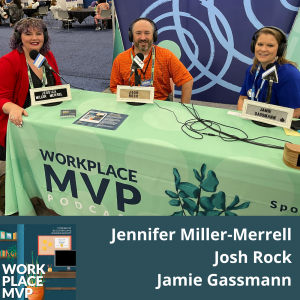
Jeffrey Korzenik: [00:22:14] Yeah. You recognize that a lot of people who have committed crimes were victims of crimes. That doesn’t really change the need to have a criminal justice system. But it’s an important perspective because you realize that a lot of people had childhood trauma, trauma later in life, and that impacts how they think and that can drive criminal behavior. The challenge becomes, this is a group that’s very hard to advocate for in budget circles. Mental health treatment costs money and is a use of resources. And it’s very hard, I think, for our policymakers to say, “Here are people who have messed up, maybe hurt people, damaged property, we’re going to provide them with free resources.” It’s a good investment. But it’s something that is very hard to advocate for politically.

Mike Blake: [00:23:08] Yeah. I mean, it is hard to get people excited about trying to take care of those that have, in some way, been deemed to harm society, especially because it’s not like we have unlimited resources.

Mike Blake: [00:23:28] I’m going to change gears a little bit. To me, in my simple minded way, I think of offenders as being violent versus nonviolent. And I would speculate those have different risk profiles. They may even have different skill profiles. You know, you actually have to be pretty smart to steal millions of dollars of money from a corporation over time. There’s some skills to do that. So, my question is, does the discussion change about hiring somebody with a criminal record if that criminal record is violent versus non-violent?

Jeffrey Korzenik: [00:24:07] You certainly want to hire people who are non-violent, but that doesn’t mean you exclude people who are convicted of a violent crime. And what you recognize is that, very often, people who were convicted of violent crimes – which is actually the plurality of people in the prison system, it’s not quite over half – if you look at property crime, drug crime, and violent crime, more are in for violent crime than those other two categories. But when you dig into it, you realize a lot of that is mistakes of youth, being in the wrong place at the wrong time, sometimes its connection to the drug industry, illicit drug industry.

Jeffrey Korzenik: [00:24:54] You know, a friend of mine who has 500 second chance employees in the Philadelphia area, he said most of these guys are in the drug business. If you’re in the drug business, you’re protecting your inventory. If you’re protecting your inventory, that means having a gun. And young men with tempers and hormones and all that with guns present is a really bad recipe.

Jeffrey Korzenik: [00:25:18] So, people who’ve been convicted of violent crimes, very often, were not innately violent people. Wrong place, wrong time, bar fights, under the influence of drugs or alcohol, immature. And they tend to have served longer sentences, which means when they come out, they tend to have had more time to reflect. They tend to have aged out of crime. So, you know, one of the reasons we’ve had such little success in reentry is because every employer’s first instinct is, “Oh, I just want to talk to people drug crimes”, because that’s not violent. And very often it’s people, they are still young, still sometimes addicted.

Jeffrey Korzenik: [00:25:57] In general – you shouldn’t use generalities in your decision making – the better bet is actually one time violent offenders is usually a much better bet statistically. That being said, it all boils down to an individual assessment. Look at the person as a person. Look at the very specific circumstances of the criminal act.

Mike Blake: [00:26:24] That is really interesting, so I just learned something today. And that makes a lot of sense to me. You know, a violent act could just be a one time outburst. And you do it, you pay for it, you’re done. But, as we know, a lot of people never fully shake addiction. And addiction is just so thoroughly malevolent that the track record of shaking it, even under the best of circumstances, is problematic.

Mike Blake: [00:27:06] So, I’m curious, have you been exposed to or studied any data that measures the performance of ex-convicts as employees? Do they tend to do worse, better, about the same as their cohort with their peers with no criminal record? What does that look like?

Jeffrey Korzenik: [00:27:28] So, it gets down to the model of employment. If you ask someone who’s done a disposable employee model, maybe a fast food restaurant where they’re just after the tax credit. The people stay six months, nine months, and they’re not very selective. They’re just after the cheap labor solution. They’re not great, but they’re cheap. But if you look at the models that really maximize the economic opportunity, where there’s a selection process and the support process, that’s where you see the data really shines.

Jeffrey Korzenik: [00:28:01] And there are two large scale studies, one done by the Johns Hopkins Hospital system, when they released the data at the time they had 500 second chance hires. The other was, interestingly, the U.S. Military. The Military study was actually done outside the military, at UMass Amherst. University of Massachusetts Amherst professor who used Freedom of Information Act to get performance statistics from people who had gotten felony waivers to enlist. Both studies show the same thing. People with records selected right and supported appropriately are not just employees, they’re actually superior employees, and they tend to be more loyal and more engaged. And you can see that along any number of metrics.

Jeffrey Korzenik: [00:28:48] There aren’t a lot of studies out there. There are more coming. I know one done by another company that I spoke to the people who did the study. Again, all the studies affirm this, but it’s a matter of putting the right model in place.

Mike Blake: [00:29:03] So, accepting the fact that the studies so far are limited more in the pipeline, but the ones you’re citing seemed to be pretty positive. Why do you think that is? What is it? Is it simply motivation or is it something else that –

Jeffrey Korzenik: [00:29:18] It’s very much motivation. People who have had criminal justice interaction know that when they’re given an opportunity, it’s a rare thing. So, they tend to be very grateful for it. And, again, we go down back to that analogy in our lives, when you stumble and you pick yourself up, you’re more determined than ever. So, it’s a combination of determination to rebuild a life. And, also, to appreciation, which translates to loyalty and low turnover rates. And it may also be low turnover for the wrong reason. People don’t have the mobility to go to other firms and so they stay in place. But either way, it benefits the employer.

Mike Blake: [00:30:05] And I’m curious about one thing. You know, we hear the stories every once in a while, somebody while in prison obtains a law degree, or a Ph.D., or something like that. You know, I don’t know if those are the exception to the rule, they seem to me like they might be exceptional. But from a broader sense, are there skills that people pick up in prison, maybe either hard or soft skills that make them better employees coming out than they might have been going in?

Jeffrey Korzenik: [00:30:32] I’m a skeptic of that. You know, I hear they’re more entrepreneurial, which may be true. I think it’s not so much hard skills as a matter of character. The term that I constantly hear applied to second chance employees is, they have grit. They can navigate risk. They can bounce back. So, those are the things that – I think from the standpoint of many employers – is even more attractive than a single skill.

Mike Blake: [00:31:03] That’s interesting. And I probably finished the book, Grit by Angela Duckworth, earlier this year. And that’s interesting that I would not have expected that answer necessarily, because my understanding or my impression from what I’ve seen about the prison system is that, in order to maintain kind of basic order that the prison staff needs to establish themselves kind of as the alphas. Because they’re outnumbered hundreds to one in some cases. They’re not allowed to carry firearms inside the facility, et cetera.
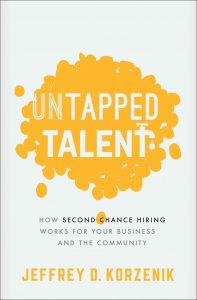
Mike Blake: [00:31:41] And from what I’ve seen, in order to establish that, there really is a psychological assault to compel a prisoner basically to understand their place, for lack of a better term. Which, to me, it sounds like that would be something that would be kind of anti-grit. But what you’re describing sounds that, you know, the fact that they’re coming out with more grit, to me, is a little counterintuitive. But I mean, it’s encouraging because that clearly is such a better for life.

Jeffrey Korzenik: [00:32:08] I think some of it has to do with the reentry process. I spend some time in the book educating prospective employers about all the hurdles that someone coming out of prison has to go through, you know, housing, documentation, learning some basic electronic skills. You know, they might have gone in before cell phones were around or smartphones were around. And when you think about all the things you have to overcome just to be ready to apply for a job, and along the way face rejection after rejection, not just for jobs, but often for housing, the people who you get to at the other end, those are the ones with grit. So, perhaps they didn’t develop it in prison, but they sure as heck developed it along on the pathway out, at least the ones who are to the point of being ready to work.

Mike Blake: [00:33:01] So, we touched on the notion of due diligence at the start of the conversation, I’d like to circle back to that. From practical experience, if somebody listening on this podcast is considering – and I like your terms. I’m going to try to remember to adopt it – a second chance hire, what are red flags that someone should be aware of?

Jeffrey Korzenik: [00:33:25] Sure. I mean, repeat offenses and a sense, particularly with regard to addiction, that someone is not ready would be important. You do as an employer have the right to ask questions. And I think you get a sense of who owns this in their life and takes responsibility for this. You get to ask all sorts of questions about what would make this different. And so, I think there’s a process, and particularly if you rely on experienced outside partners, that they can handle a lot of this, getting rid of the red flags for you.

Jeffrey Korzenik: [00:34:01] But there’s a whole host of things you want to check for. Is emotional management an issue? Is work ethic, work experience? Addiction has been dealt with or traumas have been dealt with? How are they thinking? And these are things that good in-prison programming can help with, a tremendous amount of post-prison programs helping this as well. So, that’s why I always think you want a partnership with someone who can really attest to the character of the person.

Mike Blake: [00:34:33] Navigating that sounds very complex and with information coming from a lot of sources, so I can certainly see that in that case. Having a partner, especially if it’s a nonprofit, I presume that means those services are generally free or very inexpensive.

Jeffrey Korzenik: [00:34:48] Yes. And, you know, it is a responsibility of a business owner. If this is your talent pipeline of good people, you should be supporting that nonprofit, too. And a lot of these businesses do that in various ways. But, ultimately, it’s an investment and it’s a worthwhile investment. There are also, I should mention, temp staffing agencies that focus on this. And so, they do (A) a part of the vetting, but (B) as an employer, you can do a temp to hire. And a lot of programs use that.

Jeffrey Korzenik: [00:35:22] Tempt to hire has drawbacks, normally, in a tight labor market. Because the best candidates in temp to hire get snatched up right away or don’t need to go that route. But, again, this is an untapped resource, so the negatives of temp to hire for other populations aren’t negatives here.

Mike Blake: [00:35:43] Is there a particular success story of a second chance employee that you can think of maybe you can tell the audience about that can wet their appetite, at least, for what could be if they go this route?

Jeffrey Korzenik: [00:35:56] You know, there are so many stories, but I always like to share the one that I made the case study chapter of my book. My book is filled with actual business owners that have done this and some of the outcomes they’ve had. But I focus in particular on a company in Lebanon, Ohio, called JBM Packaging. And I chose them because they didn’t come to this for any kind of ethical reason – I mean, very ethical ownership. But they did it for a traditional reason, they couldn’t find talent. And they tried other pools. And that’s how they came to this.

Jeffrey Korzenik: [00:36:33] And it’s a second generation family business. They set up what they call their Fair Chance Hiring Program. And, ultimately, more than 20 percent of their 150 employees/associates are second chance, or fair chance in their terminology. It has solved their labor problem. They’ve expanded the program. They even found one of their former employees had gotten into trouble, was in the Ohio Prison system. They petitioned the prison authorities to have him transferred to another facility where they could install a folding machine. That’s part of what they do. And so, they have an in-prison training program. They pay a training stipend. Any product coming out of there, they recycle. They don’t want any question about whether they’re conducting prison labor or not. And they’ve got a pipeline now, not just of entry level, but of trained talent coming out with a former employee as the trainer.

Mike Blake: [00:37:29] Talk about a vertical integration. That’s a great story. And how long has that program been going on, do you know?

Jeffrey Korzenik: [00:37:38] About three, four years. A breakthrough moment for them was hiring a life coach that’s for their employees. And it’s not just a matter of making sure there are support resources. A lot of people who come out of these situations, life situations in prison, don’t even know how to tap resources. They just don’t know how to navigate these things. So, it’s very helpful. They’ve had a tremendous success with this program. And, ultimately, transformed the whole company. They’re now very involved in other areas of innovation, not just innovation and hiring, but innovation and packaging. Moving from plastics to paper packaging, for instance. So, it’s transformed the company in very, very positive ways.

Mike Blake: [00:38:27] In your experience or based on what you’ve seen, are there certain industries or maybe kinds of companies that lend themselves better to hiring second chance employees than others?

Jeffrey Korzenik: [00:38:38] You know, I think, again, I go back to the size of this talent pool and there could be a fit for just about every industry. That being said, manufacturing has been the easier fit. And it’s the easier fit because manufacturing roles typically aren’t customer facing. So, some of the reputational concerns or fears that employers might have aren’t an issue. People aren’t handling the money. So, you don’t have those issues. And they tend to be middle skill jobs, things you can train for that don’t require a college degree, and pay a pretty good wage. And so, that’s also helps people sustain this. So, the biggest successes I’ve seen have tended to be manufacturing, but it is not because it doesn’t work well in other industries.

Mike Blake: [00:39:24] So, are there best practices that have evolved in terms of onboarding a second chance employee? And I would have to imagine that needs to be treated or ought to be treated a little bit differently than your conventional garden variety employee. And if so, can you share kind of some tips in that regard?

Jeffrey Korzenik: [00:39:44] I think it’s a recognition that you need a little bit more flexibility because you don’t know what you don’t know. I’ll give you an example. CKS Packaging, another big packaging company based in Atlanta, but they’re in maybe a dozen other locations around the country. They started the program and like most goods manufacturing companies, they had a no show, no call, no job rule. And when they started this, they found that, an otherwise very good second chance employee didn’t show up and didn’t call.

Jeffrey Korzenik: [00:40:17] And the initial response, the H.R. person was, “Okay. We’ll terminate them.” And Lloyd Martin, the executive who led this program, said, “You know, I think we need to find out more.” And so, they went to visit him because they had helped the employee, helped him establish some housing, knocked on the door, and he was there. They said, “Why weren’t you in work?” And he said, “Well, I’m sick. You don’t want me to come in when I’m sick, do you? And I can put on a coat and I can come.” They said, “No. No. You did the right thing. Why didn’t you call?” And the gentleman said, “Mr. Lloyd, I don’t have a phone. I don’t have any friends with phones. In fact, I don’t really have any friends.” And that person is still there several years later.

Jeffrey Korzenik: [00:40:56] And that kind of flexibility and need to understand that there’s a lack of mentorship. Other areas of flexibility that can come up are things like policies that allow people to go visit parole officers or, better yet, create a space within the facility, especially if you have multiple employees who are on parole where parole officers can come to the facility and not disrupt the work day. Those are the kind of things that come up.

Mike Blake: [00:41:22] This borders on a legal question, but I’ll ask it anyway. If you want to beg off, you’re welcome to do so. But in your mind, do other employees have a right to know if a new hire, someone who they’ll be working next to and with, has a criminal record?

Jeffrey Korzenik: [00:41:38] No. No more than you have a right to know another employee’s medications or medical history. The reality is, in this day and age, companies that have second chance programs, I think people probably go on Google and see what they can find. But there is no employer/employee right to that kind of information.

Mike Blake: [00:42:00] We are talking to Jeffrey Korzenik, and the topic is, Should I hire former convicts? So, you know, we talked about onboarding, but then you started to touch upon this, and I do want to dig into it because I think this could really be interesting. People that are second chance employees, do they need to be managed, led, trained differently than somebody that does not have that prison experience in their background? And if so, what are some best practices to kind of get the most out of those people?

Jeffrey Korzenik: [00:42:32] You know, I don’t think necessarily. But you do need support networks for other things. If you’ve hired the person ready to turn their life around, you’ve got all sorts of great motivation and character. But it tends to be other things that get in the way. And those tend to be transportation, housing, just not knowing what they don’t know. One company that I’ve worked with, Cascade Engineering, makes available for their supervisors a poverty simulation, which I think is a great way to help sensitize supervisors to the challenges of being deeply poor. And that often characterizes this group.

Jeffrey Korzenik: [00:43:14] But, again, you know, it’s 19 million people, you might have someone who’s ten years out of incarceration, successfully rebuilt their life, who furthered their education. That’s just another employee. And it doesn’t need any special consideration other than the opportunity.

Mike Blake: [00:43:30] Heck, you may hire somebody that stole $10 billion, the feds only found nine. So, you know, they could be loaded and they’re just drawing something out of the Cayman Islands. So, you can’t necessarily make assumptions. But I love that. I’m going to Google that to see if there’s something like that out there. That poverty simulator, I think, is so important because as I studied decision making, one of the things I’ve learned is that being in poverty on average lowers one’s functional IQ by 10 to 15 percent. Simply by virtue of the fact that you’re in constant existential – not existential spiritual, but existential living and your family to live, that you become effectively 10 to 15 percent dumber on average. Which means some people become 40 percent dumber on average.

Jeffrey Korzenik: [00:44:23] And understanding that an environment does cause people to be less than their best selves and may make lousy decisions, I think, creates empathy and helps you understand where the employee is coming from. And, therefore, for example, that employee that didn’t have a phone. You got to take the time to check.

Jeffrey Korzenik: [00:44:49] I managed many people over the years – this was a reach – but I had something like 50 direct reports in this insane set up years ago. And it’s our responsibility as business people/managers to foster the growth of our employees. Give them pathways to being the best employee they can be. And that does require a sensitivity to where they’re starting from and giving them some runway to succeed.

Mike Blake: [00:45:21] A couple more questions before we let you go, we’ve talked a lot about the case for companies to give people that second chance, make that second chance higher. Can you think of a profile of a hiring manager or a company that maybe shouldn’t try to go down that path? Who’s a bad fit on the hiring side for the second chance employee?

Jeffrey Korzenik: [00:45:43] I don’t think there’s any real answer to that other than to note it’s a matter of commitment and recognition that this is an investment and will require a change of processes. So, it doesn’t matter the industry. But if you are just in transient and just not willing to make change and commit to this, it’s not going to work. It is important, though, that many businesses do have regulatory restrictions. I work for a bank, we are restricted in who we can hire. Defense contractors are another great example of that. But I always tell employers, check the specifics. Because, in general, people tend to think all doors are closed when it’s just some doors.

Mike Blake: [00:46:32] Yeah. You know, I’m kind of thinking, unfortunately, even in 2021, there are employers that treat labor in a way that I don’t agree with. They treat them as quasi-disposable. And you’ve kind of hinted upon this, but I’d like to underline it because I think it’s an important point. It sounds like what you’re saying is, if you’re trying to hire second chance employees because you just think you’re getting a great deal – and by a great deal, I’m going to use just an inflammatory term – getting slave or quasi-slave labor, that’s not going to work out well. Do something else.

Jeffrey Korzenik: [00:47:09] And it’s not going to work for the company in the long term because we’re coming into a new environment. We have never seen a labor shortage – and you referred to this earlier, Mike – of the likes that we are entering into and it’s going to persist for years and probably decades. And so, business models that assume there was this unending supply of cheap labor aren’t going to work anymore.

Mike Blake: [00:47:34] And, you know, you pointed something out that I kind of knew in the back of my mind, but I didn’t put together until now or until this discussion. I want to thank you for that. This is not new. This is simply an accelerating trend that we’ve seen since, at least, 2010, if not earlier. And it’s because of simple demographics. You know, we ain’t making people as quickly as we’re losing people in the labor force, basically. And since immigration, no matter what side of the issue you’re on, it’s a hot mess. That’s not going to come to our rescue.

Jeffrey Korzenik: [00:48:12] Well, and this declining birth rates and fertility is a global phenomenon, too. So, among developed countries, there’s only one country that has a fertility rate above even the replacement rate of its population, and that’s Israel. And there aren’t enough Israelis to go around for the world labor needs.

Mike Blake: [00:48:31] No. Their country is seven million, there’s only so much they can do. Jeffrey, this has been a fun conversation and very informative. And you have such great command of the subject matter. If somebody wants to contact you with a follow up question or maybe they want to talk about something that we didn’t get to, how can people contact you for more information?

Jeffrey Korzenik: [00:48:51] Sure. I have a contact form on my website. My website is jeffkorzenik.com. I do my best, I have gotten a lot busier with the book’s launch, but I do try to get back to people. Again, jeffkorzenik.com, which means you have to be able to spell Korzenik, K-O-R-Z-E-N-I-K. I’m the only Jeff Korzenik on the planet, so if you can spell the last name, you can find me.

Mike Blake: [00:49:14] All right. Well, that’s going to wrap it up for today’s program. I’d like to thank Jeff Korzenik so much for joining us and sharing his expertise with us. We’ll be exploring a new topic each week, so please tune in so that when you’re faced with the next business decision, you have clear vision when making it. If you enjoy these podcasts, please consider leaving a review with your favorite podcast aggregator. It helps people find us that we can help them.If you like to engage with me on social media, with my Chart of the Day and other content, I’m on LinkedIn as myself and @unblakeable on Facebook, Twitter, Clubhouse, and Instagram. Once again, this is Mike Blake. Our sponsor is Brady Ware & Company. And this has been the Decision Vision podcast.


Tagged With: Jeff Korzenik, labor shortage, second chance hiring, talent acquisition, Untapped Talent

  • 1
  • 2
  • Next Page »

Business RadioX ® Network


Our Most Recent Episode

CONNECT WITH US

  • Email
  • Facebook
  • LinkedIn
  • Twitter
  • YouTube

Our Mission

We help local business leaders get the word out about the important work they’re doing to serve their market, their community, and their profession.

We support and celebrate business by sharing positive business stories that traditional media ignores. Some media leans left. Some media leans right. We lean business.

Sponsor a Show

Build Relationships and Grow Your Business. Click here for more details.

Partner With Us

Discover More Here

Terms and Conditions
Privacy Policy

Connect with us

Want to keep up with the latest in pro-business news across the network? Follow us on social media for the latest stories!
  • Email
  • Facebook
  • Google+
  • LinkedIn
  • Twitter
  • YouTube

Business RadioX® Headquarters
1000 Abernathy Rd. NE
Building 400, Suite L-10
Sandy Springs, GA 30328

© 2025 Business RadioX ® · Rainmaker Platform

BRXStudioCoversLA

Wait! Don’t Miss an Episode of LA Business Radio

BRXStudioCoversDENVER

Wait! Don’t Miss an Episode of Denver Business Radio

BRXStudioCoversPENSACOLA

Wait! Don’t Miss an Episode of Pensacola Business Radio

BRXStudioCoversBIRMINGHAM

Wait! Don’t Miss an Episode of Birmingham Business Radio

BRXStudioCoversTALLAHASSEE

Wait! Don’t Miss an Episode of Tallahassee Business Radio

BRXStudioCoversRALEIGH

Wait! Don’t Miss an Episode of Raleigh Business Radio

BRXStudioCoversRICHMONDNoWhite

Wait! Don’t Miss an Episode of Richmond Business Radio

BRXStudioCoversNASHVILLENoWhite

Wait! Don’t Miss an Episode of Nashville Business Radio

BRXStudioCoversDETROIT

Wait! Don’t Miss an Episode of Detroit Business Radio

BRXStudioCoversSTLOUIS

Wait! Don’t Miss an Episode of St. Louis Business Radio

BRXStudioCoversCOLUMBUS-small

Wait! Don’t Miss an Episode of Columbus Business Radio

Coachthecoach-08-08

Wait! Don’t Miss an Episode of Coach the Coach

BRXStudioCoversBAYAREA

Wait! Don’t Miss an Episode of Bay Area Business Radio

BRXStudioCoversCHICAGO

Wait! Don’t Miss an Episode of Chicago Business Radio

Wait! Don’t Miss an Episode of Atlanta Business Radio