Business RadioX ®

  • Home
  • Business RadioX ® Communities
    • Southeast
      • Alabama
        • Birmingham
      • Florida
        • Orlando
        • Pensacola
        • South Florida
        • Tampa
        • Tallahassee
      • Georgia
        • Atlanta
        • Cherokee
        • Forsyth
        • Greater Perimeter
        • Gwinnett
        • North Fulton
        • North Georgia
        • Northeast Georgia
        • Rome
        • Savannah
      • Louisiana
        • New Orleans
      • North Carolina
        • Charlotte
        • Raleigh
      • Tennessee
        • Chattanooga
        • Nashville
      • Virginia
        • Richmond
    • South Central
      • Arkansas
        • Northwest Arkansas
    • Midwest
      • Illinois
        • Chicago
      • Michigan
        • Detroit
      • Minnesota
        • Minneapolis St. Paul
      • Missouri
        • St. Louis
      • Ohio
        • Cleveland
        • Columbus
        • Dayton
    • Southwest
      • Arizona
        • Phoenix
        • Tucson
        • Valley
      • Texas
        • Austin
        • Dallas
        • Houston
    • West
      • California
        • Bay Area
        • LA
        • Pasadena
      • Colorado
        • Denver
      • Hawaii
        • Oahu
  • FAQs
  • About Us
    • Our Mission
    • Our Audience
    • Why It Works
    • What People Are Saying
    • BRX in the News
  • Resources
    • BRX Pro Tips
    • B2B Marketing: The 4Rs
    • High Velocity Selling Habits
    • Why Most B2B Media Strategies Fail
    • 9 Reasons To Sponsor A Business RadioX ® Show
  • Partner With Us
  • Veteran Business RadioX ®

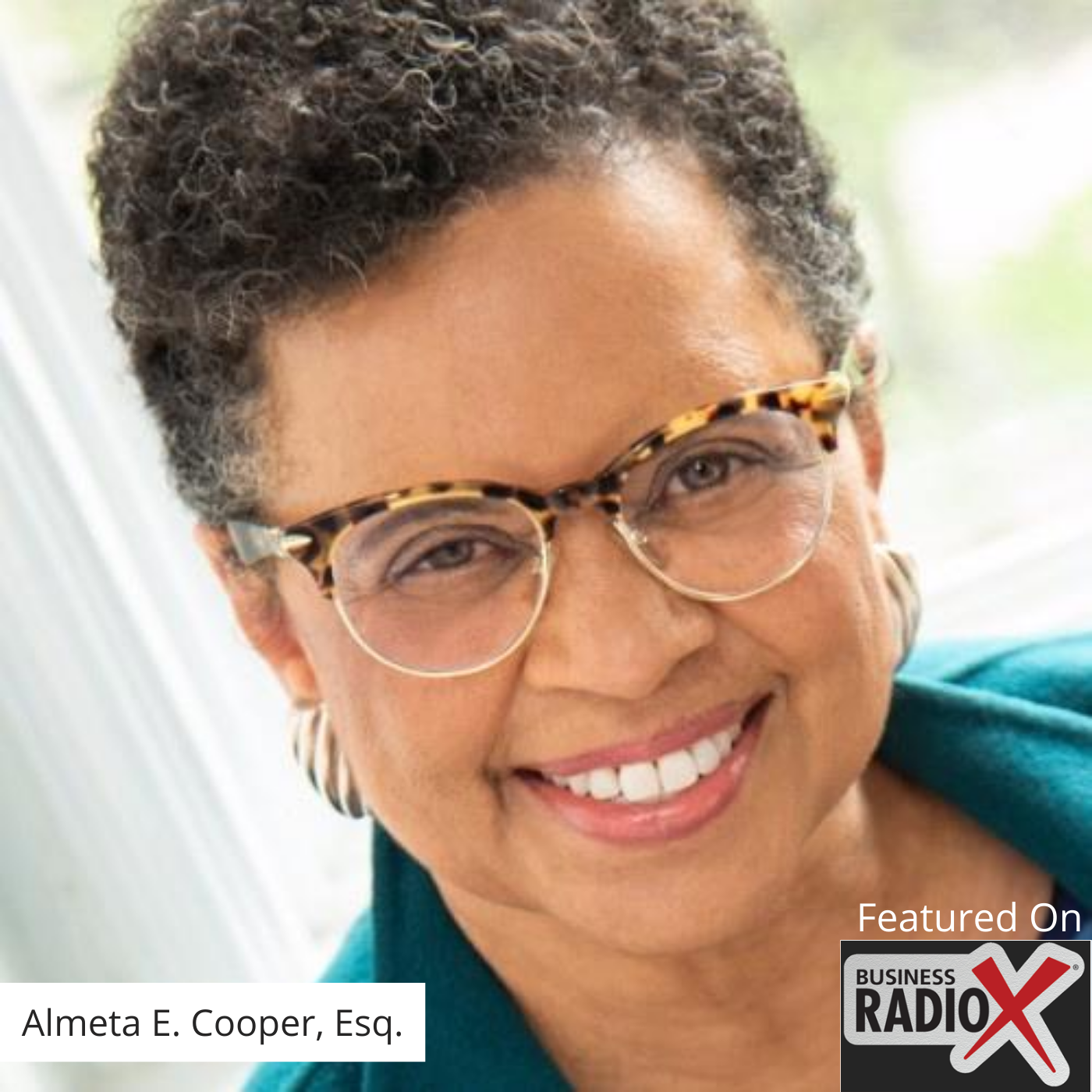
In Search of a Tech Savvy Lawyer, with Almeta Cooper, The AECooperGroup

August 24, 2020 by John Ray

Almeta Cooper
North Fulton Business Radio
In Search of a Tech Savvy Lawyer, with Almeta Cooper, The AECooperGroup
Loading
00:00 /
RSS Feed
Share
Link
Embed

Download file

In Search of a Tech Savvy Lawyer, with Almeta Cooper, The AECooperGroup (North Fulton Business Radio, Episode 274)

Nationally recognized attorney Almeta Cooper joins host John Ray to define tech competence in attorneys and why business owners need tech savvy lawyers representing them. “North Fulton Business Radio” is produced virtually by the North Fulton studio of Business RadioX® in Alpharetta.

Almeta Cooper, The AECooperGroup

Almeta Cooper is a nationally known healthcare leader. Her C-Suite peers trust her judgment, experience, accountability and integrity. She resolves problems at all levels of complex healthcare organizations. Almeta is a calm center of leadership in a crisis. She is passionate about providing equality in healthcare.

From a 20,000 member healthcare professional association, to academic health professions institutions, to a $3 billion integrated healthcare delivery system, Almeta has provided strategic guidance and innovative solutions. She advised governing bodies and senior leaders how to respond to complex federal healthcare investigations, saving millions. She oversaw the integration of 800 independent physicians into a major medical center. She co-chaired a strategic initiative to integrate telemedicine into existing and future medical services for a leading healthcare academic institution.

Almeta serves on the board of the Health Care Cost Institute (HCCI), an independent research institute focusing on economic issues critical to the U.S. healthcare system. Almeta also serves on the Senior Living and Services Subsidiary Board and Health Care Quality Committee of National Church Residences (NCR), the nation’s largest not-for-profit provider of senior affordable housing and supportive services.

Almeta is past president of the American Health Lawyers Association (AHLA) and its board. She served as an advisory board member of the Women Business Leaders in the Healthcare Industry Foundation. She was corporate secretary for the OSU Wexner Medical Center board, and board liaison for the Ohio State Medical Association governing board. Almeta stays current with emerging board issues through her participation in the National Association of Corporate Directors.

Almeta was most recently senior vice president, general counsel, and corporate secretary for Morehouse School of Medicine. She is a Fellow of the American Bar Foundation and AHLA. Almeta is the 2012 recipient of the AHLA David J. Greenburg Service Award. She received recognition in the nation’s largest African American oral history video collection, The History Makers, for her significant contributions to the legal field.

Almeta holds a B.A. in German from Wells College and a J.D. from Northwestern University School of Law. She creates meaningful connections through personal and community service, and she describes her recent tandem skydiving jump as a lesson in trust and courage.

LinkedIn

Twitter

Questions/Topics Discussed in this Show

  • What is important about a lawyer being tech savvy ?
  • Isn’t tech competence a part of what a lawyer should know how to do?
  • How should a person choose a lawyer and what do you ask about tech competence ?
  • When do you ask about tech competence? When you hire a lawyer?
  • How does a person know if a lawyer has met the standard for tech competence?
  • What is a common example of a problems caused when a lawyer lacks tech competence ?
  • What happens if my lawyer makes a mistake caused by a lack of tech competence? What should you do? Where do complain?
  • What’s a good tip for finding a tech savvy lawyer?

North Fulton Business Radio” is hosted by John Ray and produced virtually from the North Fulton studio of Business RadioX® in Alpharetta. You can find the full archive of shows by following this link. The show is available on all the major podcast apps, including Apple Podcasts, Spotify, Google, iHeart Radio, Stitcher, TuneIn, and others.

Renasant Bank has humble roots, starting in 1904 as a $100,000 bank in a Lee County, Mississippi, bakery. Since then, Renasant has grown to become one of the Southeast’s strongest financial institutions with over $13 billion in assets and more than 190 banking, lending, wealth management and financial services offices in Mississippi, Alabama, Tennessee, Georgia and Florida. All of Renasant’s success stems from each of their banker’s commitment to investing in their communities as a way of better understanding the people they serve. At Renasant Bank, they understand you because they work and live alongside you every day.
Tagged With: Almeta Cooper, American Bar Association, American Healthcare Lawyers Association, attorney, Healthcare, National Association of Corporate Directors, tech competent, tech savvy, Technology, The AECooperGroup

Coping with COVID: Marsha Anderson Bomar with MARTA

July 29, 2020 by Mike

Gwinnett Studio
Gwinnett Studio
Coping with COVID: Marsha Anderson Bomar with MARTA
Loading
00:00 /
RSS Feed
Share
Link
Embed

Download file

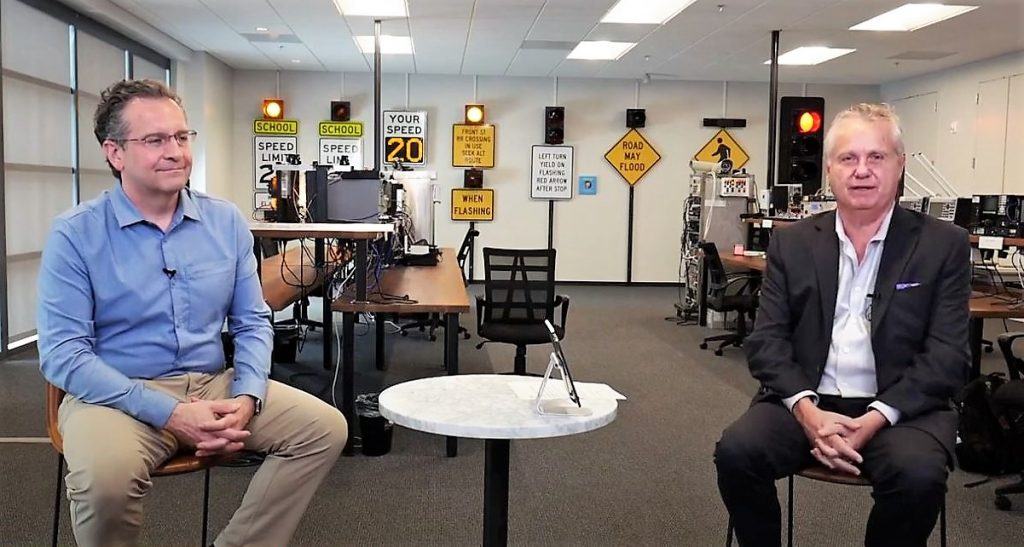
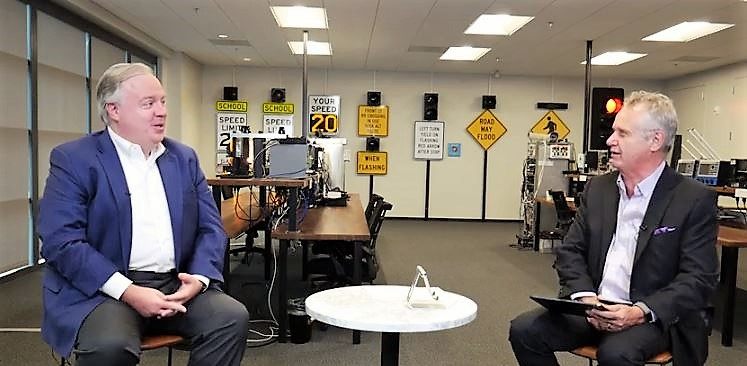
This special edition of “TravelSafely with Bryan Mulligan” features the fourth installment of a limited series called “Coping with COVID”. Hosted by Bryan Mulligan, the President of Applied Information, “Coping with Covid” shares the stories and successes of people and organizations during these unprecedented times of dealing with the Covid-19 pandemic.

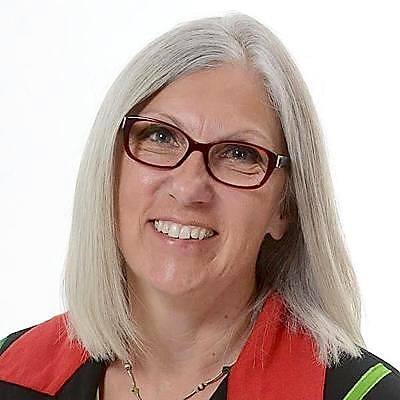
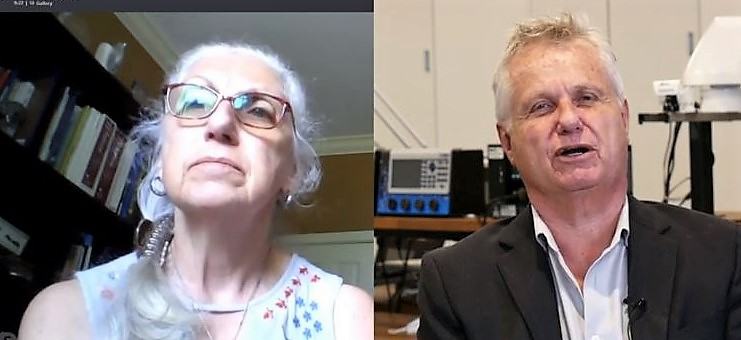
Joining Bryan on this installment is Marsha Anderson, General Manager for Capital Program Delivery at MARTA, to discuss how a large transit agency is coping with the COVID-19 pandemic.

Marsha Anderson Bomar/MARTA

Marsha Anderson Bomar is the General Manager for Capital Program Delivery at MARTA (Metropolitan Atlanta Rapid Transit Authority) in Atlanta, GA.

Formerly she was the executive director of the Gateway85 Community Improvement District (CID), the largest CID in the state of Georgia, where her focus was on mobility, infrastructure, safety, security, and economic development.

Prior to the CID, she was the founder and president of Street Smarts, a planning, engineering and design firm; and Data Smarts, a data collection and management firm, established in 1990, both of which she sold in 2010. Marsha is an International Past President of ITE and is past Chairman of ITE’s LeadershipITE, Technical Council Design Department, Policy Committee, and Transportation Planners Council. She has been the Chair of the Goods Movement Council and author of the Urban Travel Characteristics chapter of the Transportation Planning Handbook.

About Applied Information

Applied Information is a leading developer of connected, intelligent transportation system (ITS) solutions designed to improve safety, reliability and mobility. Applied Information’s Glance Smart City Supervisory platform allows cities to manage all their traffic and ITS assets on one web-based application. This includes 5 key areas: Traffic Intersections, School Beacons, Parking Guidance System, Mobile Vehicle Assets and ITS devices. AI’s Glance TravelSafely smartphone app connects drivers, cyclists and pedestrians for a safer commute.

CLICK HERE to watch the video of this interview.

Tagged With: applied information, applied information podcast, applied information radio show, bryan mulligan, business podcast, business radio, Business RadioX, Entrepreneurship, gwinnett technology company, Marsha Anderson Bomar, marsha bomar, MARTA, marta transit, Radiox, Technology, traffic, traffic safety, traffic technology, Transportation, transportation innovation, transportation safety, transportation technology, travel safely podcast, travel safely radio, travel safely with bryan mulligan, TravelSafely, travelsafely app, travelsafely podcast, travelsafely radio show, TravelSafely with Bryan Mulligan

Josh Sweeney with FounderScale

July 27, 2020 by angishields

Josh-Sweeney-FounderScale
Atlanta Business Radio
Josh Sweeney with FounderScale
Loading
00:00 /
RSS Feed
Share
Link
Embed

Download file

OnPay-Banner

FounderScale-logo

Josh-Sweeney-FounderScaleJosh Sweeney, Founder of FounderScale, has been through many roles in his life and has worked for a number of organizations, but none of them delivered as much value to his family and community as being an entrepreneur.

As he scaled his business, Josh has had the opportunity to give back more than ever before by donating to Boy Scouts of America and local schools. He has the time and freedom to coach youth sports and be there for his family.

Josh has helped other founders through the Entrepreneurs Organization and has created career opportunities. All of that would not have been possible in any other role. His mission is for every founder to have the same success that he has had so that they can impact their family and community.

Connect with Josh on LinkedIn and follow FounderScale on Facebook.

What You’ll Learn in This Episode

  • What motivated Josh to start FounderScale
  • How FounderScale is different from other companies
  • Common roadblocks when scaling your business
  • The types of businesses FounderScale works with
  • The difference between sales and marketing content

About Our Sponsor

OnPay’sOnPay-Dots payroll services and HR software give you more time to focus on what’s most important. Rated “Excellent” by PC Magazine, we make it easy to pay employees fast, we automate all payroll taxes, and we even keep all your HR and benefits organized and compliant.

Our award-winning customer service includes an accuracy guarantee, deep integrations with popular accounting software, and we’ll even enter all your employee information for you — whether you have five employees or 500. Take a closer look to see all the ways we can save you time and money in the back office.

Follow OnPay on LinkedIn, Facebook and Twitter.

Tagged With: B2B, entrepreneur, Founder, Sales, Technology

Angela D’Amario with Fire Bee

July 2, 2020 by angishields

Fire-Bee-logo
Atlanta Business Radio
Angela D'Amario with Fire Bee
Loading
00:00 /
RSS Feed
Share
Link
Embed

Download file

OnPay-Banner

Angela-DAmario-Fire-BeeBefore starting Fire Bee, Angela D’Amario spent more than a decade at some of Atlanta’s top PR and advertising agencies creating and leading PR, social media and strategic marketing campaigns for Cheerwine, Applebee’s, Wild American Shrimp, Floor & Decor and many other consumer and B2B brands.

If you can name an industry, Angela has probably worked for a client in it. She excels at identifying the best mix of marketing ideas and strategies to help clients reach their goals, and believes that by combining smart thinking and calculated risks that Fire Bee can help every brand be their best.

Follow Fire Bee on LinkedIn, Facebook and Twitter.

What You’ll Learn in This Episode

  • How Fire Bee has shifted marketing strategies during COVID-19
  • Marketing Trends and public relations campaigns
  • Influencer marketing
  • Marketing tips for small businesses

About Our Sponsor

OnPay’sOnPay-Dots payroll services and HR software give you more time to focus on what’s most important. Rated “Excellent” by PC Magazine, we make it easy to pay employees fast, we automate all payroll taxes, and we even keep all your HR and benefits organized and compliant.

Our award-winning customer service includes an accuracy guarantee, deep integrations with popular accounting software, and we’ll even enter all your employee information for you — whether you have five employees or 500. Take a closer look to see all the ways we can save you time and money in the back office.

Follow OnPay on LinkedIn, Facebook and Twitter.

Tagged With: hospitality, influencer marketing, marketing communications, Public Relations, Technology, Transportation

Coping with COVID: Mark McGraw with Sandler Training

July 1, 2020 by Mike

Gwinnett Studio
Gwinnett Studio
Coping with COVID: Mark McGraw with Sandler Training
Loading
00:00 /
RSS Feed
Share
Link
Embed

Download file

This special edition of “TravelSafely with Bryan Mulligan” features the third installment of a limited series called “Coping with COVID”. Hosted by Bryan Mulligan, the President of Applied Information, “Coping with Covid” shares the stories and successes of people and organizations during these unprecedented times of dealing with the Covid-19 pandemic.

Joining Bryan on this installment is Mark McGraw with Sandler Training to discuss how sales organizations are coping with the COVID-19 pandemic

Mark McGraw/Sandler Training

Mark McGraw is the President of Sales Engine, LLC, a Sandler Training Company. The Sandler Selling System has helped over 1 million salespeople sell more and sell more easily by avoiding the games buyers play and empowering the salesperson to take control of the conversation. Their highly innovative programs, created by Sandler professionals, are tested and have proven effective for over 50 years by professionals around the world in every industry.

About Applied Information

Applied Information is a leading developer of connected, intelligent transportation system (ITS) solutions designed to improve safety, reliability and mobility. Applied Information’s Glance Smart City Supervisory platform allows cities to manage all their traffic and ITS assets on one web-based application. This includes 5 key areas: Traffic Intersections, School Beacons, Parking Guidance System, Mobile Vehicle Assets and ITS devices. AI’s Glance TravelSafely smartphone app connects drivers, cyclists and pedestrians for a safer commute.

CLICK HERE to watch the video of this interview.

Tagged With: applied information, applied information podcast, applied information radio show, bryan mulligan, business podcast, business radio, Business RadioX, Entrepreneurship, gwinnett technology company, mark mcgraw, Radiox, sales engine llc, Sandler Training, Technology, traffic, traffic safety, traffic technology, Transportation, transportation innovation, transportation safety, transportation technology, travel safely podcast, travel safely radio, travel safely with bryan mulligan, TravelSafely, travelsafely app, travelsafely podcast, travelsafely radio show, TravelSafely with Bryan Mulligan

Coping with COVID: Michael Sullivan with American Council of Engineering Companies of Georgia

June 24, 2020 by Mike

Gwinnett Studio
Gwinnett Studio
Coping with COVID: Michael Sullivan with American Council of Engineering Companies of Georgia
Loading
00:00 /
RSS Feed
Share
Link
Embed

Download file

This special edition of “TravelSafely with Bryan Mulligan” features the second installment of a limited series called “Coping with COVID”. Hosted by Bryan Mulligan, the President of Applied Information, “Coping with Covid” shares the stories and successes of people and organizations during these unprecedented times of dealing with the Covid-19 pandemic.

Joining Bryan on this installment is Michael “Sully” Sullivan, the President and CEO of the American Council of Engineering Companies of Georgia, to discuss how the engineering community is dealing with the COVID-19 pandemic

Michael “Sully” Sullivan/American Council of Engineering Companies of Georgia

Michael “Sully” Sullivan is the President and CEO of the American Council of Engineering Companies of Georgia. He currently serves on the following statewide and regional boards: Georgia Chamber of Commerce (Board of Governors & Board of Directors); Georgia Transportation Alliance (Executive Committee and Past Chairman); and Council for Quality Growth (Board of Directors). Sully also previously served as a member of the State Board of the Technical College System of Georgia – TCSG (appointed by Governor Sonny Perdue in 2007 and reappointed by Governor Nathan Deal in 2013 and 2018); Georgia Regional Transportation Authority (appointed by Governor Nathan Deal in 2018); Gwinnett County Water & Sewer Authority (Chairman, 2008-2019, Member 2003-2019); Brookwood Schools Foundation Board of Trustees; and the Gwin Oaks Elementary School Council. Sully also previously served as the President of the National Association of Engineering Council Executives (NAECE).

Sully has been named to Georgia Trend Magazine’s annual list of 100 Most Influential Georgians; James Magazine’s annual list of Most Influential Georgians; James Magazine’s annual list of Georgia Super Lawyers; and named a Georgia Super Lawyer Rising Star by Law & Politics and Atlanta Magazine. Sully has been actively engaged in politics for more than 25 years at the local and statewide level and has served as counsel, advisor and campaign manager for numerous elected officials, candidates, political organizations and regional and local referendum campaigns.

Prior to joining ACEC Georgia in August 2012, Sully was an attorney and equity partner at Andersen, Tate & Carr, one of Metro Atlanta’s largest full-service law firms, where he led the Government Relations, Land Use & Zoning practice and represented clients in all types of government relations matters at both the state and local levels.

About Applied Information

Applied Information is a leading developer of connected, intelligent transportation system (ITS) solutions designed to improve safety, reliability and mobility. Applied Information’s Glance Smart City Supervisory platform allows cities to manage all their traffic and ITS assets on one web-based application. This includes 5 key areas: Traffic Intersections, School Beacons, Parking Guidance System, Mobile Vehicle Assets and ITS devices. AI’s Glance TravelSafely smartphone app connects drivers, cyclists and pedestrians for a safer commute.

CLICK HERE to watch the video of this interview.

Tagged With: American Council of Engineering Companies of Georgia, applied information, applied information podcast, applied information radio show, bryan mulligan, business podcasting with covid, business radio, Business RadioX, coping with covid, COVID-19, Entrepreneurship, gwinnett technology company, Michael "Sully" Sullivan, Michael Sullivan, Radiox, Sully Sullivan, Technology, traffic, traffic safety, traffic technology, Transportation, transportation innovation, transportation safety, transportation technology, travel safely podcast, travel safely radio, travel safely with bryan mulligan, TravelSafely, travelsafely app, travelsafely podcast, travelsafely radio show, TravelSafely with Bryan Mulligan

Coping with COVID: Kerry Armstrong with Atlanta Regional Commission

June 17, 2020 by Mike

Gwinnett Studio
Gwinnett Studio
Coping with COVID: Kerry Armstrong with Atlanta Regional Commission
Loading
00:00 /
RSS Feed
Share
Link
Embed

Download file

This special edition of “TravelSafely with Bryan Mulligan” features the first installment of a limited series called “Coping with COVID”. Hosted by Bryan Mulligan, the President of Applied Information, “Coping with Covid” shares the stories and successes of people and organizations during these unprecedented times of dealing with the Covid-19 pandemic.

Joining Bryan on this first installment is Kerry Armstrong with the Atlanta Regional Commission and North Fulton Community Improvement District.

Kerry Armstrong/Atlanta Regional Commission and North Fulton CID

Kerry Armstrong has served on the Atlanta Regional Commission since 2008, and is currently serving his second term as the ARC Board Chairman. During his tenure on the ARC Board he served on numerous Commission Committees and as Co-Chair of the Atlanta Regional Workforce Development Board.

Professionally, as a Managing Director – Development Partner with Pope & Land Real Estate, Armstrong is involved in the development, marketing, leasing, and management of commercial real estate investments. He joined Pope & Land in 2012, and his commercial real estate career spans three decades

He is also actively involved in numerous civic, educational, and charitable organizations. He is the Chairman of the North Fulton Community Improvement District, and was recently appointed by the Speaker of the House of the Georgia General Assembly to serve on the State of Georgia’s Partnership for Public Facilities and Infrastructure Act Guidelines Committee. He serves as a Director and Past Chair of the Council for Quality Growth, as a Director and Past Chair of the Gwinnett Chamber of Commerce and is a Director for the Greater North Fulton Chamber of Commerce.

About Applied Information

Applied Information is a leading developer of connected, intelligent transportation system (ITS) solutions designed to improve safety, reliability and mobility. Applied Information’s Glance Smart City Supervisory platform allows cities to manage all their traffic and ITS assets on one web-based application. This includes 5 key areas: Traffic Intersections, School Beacons, Parking Guidance System, Mobile Vehicle Assets and ITS devices. AI’s Glance TravelSafely smartphone app connects drivers, cyclists and pedestrians for a safer commute.

CLICK HERE to watch the video of this interview.

Tagged With: applied information, applied information podcast, applied information radio show, bryan mulligan, business podcast, business radio, Business RadioX, coping with covid, coronavirus, COVID-19, Entrepreneurship, gwinnett technology company, Kerry Armstrong, Radiox, Technology, traffic, traffic safety, traffic technology, Transportation, transportation innovation, transportation safety, transportation technology, travel safely podcast, travel safely radio, travel safely with bryan mulligan, TravelSafely, travelsafely app, travelsafely podcast, travelsafely radio show, TravelSafely with Bryan Mulligan

GWBC Radio: Stephanie Hodge with Essex Consulting

May 29, 2020 by angishields

Stephanie-Hodges-Essex-Consulting
GWBC Radio
GWBC Radio: Stephanie Hodge with Essex Consulting
Loading
00:00 /
RSS Feed
Share
Link
Embed

Download file

Essex-Consulting-Logo-6-WEB-1

Stephanie-Hodges-Essex-ConsultingStephanie Hodge is CEO and Principal Consultant for Essex Consulting, LLC; a certified women-owned enterprise consulting firm providing Human Resource and business consulting and professional development and coaching for small and mid-sized companies. She has over 20 years of global HR experience leading teams in North America, Canada, and South America.

Stephanie is known as a transformational leader with experience in performance management, talent development and succession planning, and strategic HR management. Under her leadership, Boys & Girls Clubs of Metro Atlanta was the proud recipient of the “2016’s Best and Brightest Companies to Work For” award.

As a business owner, Stephanie’s philosophy is to help businesses develop and execute strategies that achieve organizational success, through the development of their people. Stephanie enjoys aligning people strategies that support business goals, adding a personal touch, by utilizing her HR expertise to resolve business challenges.

Stephanie is a certified professional in human resources (PHR), holds a Master’s degree in Organization and Management; and is currently pursuing her doctorate in Business Administration. Stephanie is a faculty member for the Non-Profit University (GA Center for Non-Profits), and guest lecturer for Georgia State University. She is a member of NAAAHR Atlanta, SHRM Atlanta and National Chapters, National Black MBA, Atlanta Black Chambers, and Zeta Phi Beta Sorority Inc.

Connect with Stephanie on LinkedIn and follow Essex Consulting on LinkedIn and Facebook.

Transcript

Intro: [00:00:05] Broadcasting live from the Business RadioX Studios in Atlanta, Georgia, it’s time for GWBC Radio’s Open for Business. Now, here’s your host.

Lee Kantor: [00:00:18] Lee Kantor here. Another episode of GWABC Open for Business. And this is going to be a good one. Today, I have with me Stephanie Hodge, and she’s with Essex Consulting. Welcome.

Stephanie Hodge: [00:00:28] Thank you. Hi. I’m glad to be here.

Lee Kantor: [00:00:31] Well, before we get into things too deeply, can you share a little bit about Essex Consulting? How are you serving folks?

Stephanie Hodge: [00:00:38] Sure. We are in HR consulting firm. So, what we do is really help businesses with any HR needs, whether it’s HR outsourcing, they may need help with benefits administration, or we can come in and help train and develop their managers and employees. So, it really depends on their need. And we provide HR support in whatever area.

Lee Kantor: [00:01:06] Now, how did you get into this line of work?

Stephanie Hodge: [00:01:09] Well, I’ve been doing human resources probably for about 25 years, progressively growing in different HR roles. And recently, so my company is about three and a half years old. So, I’ve been supporting other organizations, and learning a lot about the HR function and leading teams, and decided I wanted to do this for my own business, so I can do things the way I want to and support a number of different companies. So, that’s really fun for me, both nonprofit, for-profit, a lot of different industry experience. And so, that just makes it fun and challenging. And so, yeah, I’m a glutton for HR punishment and just really like to deliver HR services.

Lee Kantor: [00:02:02] Now, is there a sweet spot for you? Because I would imagine some companies may think they’re too small to have an HR person, and then some already have full-time HR people. So, what is kind of the sweet spot for you?

Stephanie Hodge: [00:02:16] Right. So, I find that the majority of our clients end up being small to mid-sized companies. So, those companies who have been growing and didn’t really see a need initially for an HR staff or HR team and realize after they start hiring more employees that they do need to get some control in order. It would be nice to have a handbook and some policies in order. So, we do a lot of foundation work for small to mid-sized companies to make sure that they are compliant and understand what it means to manage employees at different sizes, different number of employees.

Stephanie Hodge: [00:03:04] But we also support organizations that already have an HR team. So, a lot of times, with human resources, there’s so many things to do and functions that many professionals only have time to make sure that the train is moving, that things are moving forward, but they don’t have time to focus on initiatives that they may want to deliver. And so, we can come in and help those teams deliver initiatives around performance management, changing benefits, or administering their benefits. Any kind of project that they may want to roll out, we can come in and help make them look like rock stars. We help in the background. So, we kind of service both ends of the spectrum.

Lee Kantor: [00:03:58] Now, when you’re working with these smaller firms that may have not focused on HR or elevated it to the importance that it deserves. how do you kind of sell them on the benefits of having, at least, in your case, kind of this outsourced HR expert at their disposal?

Stephanie Hodge: [00:04:17] Right. So, the main benefit is not having a full-time FTE on your books, right? But I think that the true enhancement for those companies, if someone can come in, either myself or someone from my team who has HR expertise and can help them in a number of different areas. So, they get this 20-25 years of experience without having that person at the staff member. But We serve as a partner. We kind of play plays an extension of their team. And so, the real benefit for them is making sure that they have their books in order, they are being compliant, and feel like they have a resource that they can trust, they can lean on to help guide them through that process.

Lee Kantor: [00:05:14] So, sometimes it sounds like you come in maybe on a project basis to help them get some just stuff done for them that maybe mitigate some risk, maybe at some policies, procedures, things like that. And then, over time, they realize, “Hey, this is handy to have somebody kind of available to us, so we can kind of get ahead of things and maybe kind of really solidify some of the ways that we do business. And I think it could even creep into the company culture that shows how much you care about your people.

Stephanie Hodge: [00:05:48] Right. That’s exactly true. There’s a focus on really engaging employees and making sure that they’re taken care of. And a lot of times, when companies are growing, they care about their employees, but the focus is on how do we grow and how are we servicing our clients. And we come in and can help them to make sure that their environment is such where employees feel engaged, they feel connected. We help guide them through that process and support them in different initiatives to help their employees.

Lee Kantor: [00:06:24] It sounds like in marketing, my background is primarily a marketing, but in marketing, they have a saying that you’re always branding even if you’re not branding. Like even if you’re not trying-

Stephanie Hodge: [00:06:33] That’s absolutely right.

Lee Kantor: [00:06:33] … people are going to have an opinion about your brand. It sounds like the same thing is true with corporate culture that if you don’t kind of consciously develop a corporate culture, a corporate culture is being formed with or without your kind of permission, right? So, it would be good to have some-

Stephanie Hodge: [00:06:50] And you don’t want it, right.

Lee Kantor: [00:06:52] Right. So, it would be good to have an expert on hand that can have some best practices on how to kind of cultivate the right kind of work environment for the team and your people because a lot of people, at least, give lip service to say their people are their most important asset.

Stephanie Hodge: [00:07:08] Right. So, the rubber has to hit the road. And I find that helping employers even understand that, we facilitate engagement surveys to really understand, “Okay, how satisfied are your employees? And how engaged and connected are they?” Sometimes, there’s a disconnect between what’s really happening, and that’s that culture that’s developed on its own, and what management thinks is happening. And so, we help to bridge that gap and make sure everyone’s on the same page.

Lee Kantor: [00:07:46] And I’m sure you have some data to support that if your company is one of those best places to work, you’re going to have a lot of easier time attracting the right folks to be part of the team rather than just take whoever shows up.

Stephanie Hodge: [00:08:02] That’s exactly true. It helps you to be more competitive and attract new employees. And we’re also finding that we’re helping to retain employees in that same fashion. Employees have options now. They can move from one organization to another. And so, finding ways to really help keep them engaged, help them feel the benefit of staying with the organization is really essential. So, you’re right, we help to attract employees, and we help to retain them.

Lee Kantor: [00:08:41] Now, how have you been helping your clients deal with this COVID pandemic that we’re going through? I’m sure that’s been a difficult time for a lot of folks.

Stephanie Hodge: [00:08:50] This has been a difficult time to navigate. The first way we’ve been helping our clients is really to translate what’s happening around them, right? So, the CARES Act was one of the main policies that came out that affected employees and employers, and we helped to translate what that means, right? What does what does that mean for the company? Our policies, how are they affected? How do we execute where we need to? So, a lot of it is really kind of bridging the gap between what they’re seeing on the news, and the policies rolling out, and how that affects the day-to-day operations.

Stephanie Hodge: [00:09:37] And I think the other piece is really helping to keep a focus on employee safety and health, providing guidance around how do we help support our employees to work remotely and really support that versus making it more difficult, right, or seeing it as a challenge. We kind of look at it like this is a great opportunity to roll this out. It may have been something we’ve been talking about for a while. And then, now, most recently, we’ve been trying to plan on how to bring people back if they’re ready to come back. How do we keep them healthy and safe in the work environment? Does that mean we look at changing our seating arrangements? We’re bringing in more protective gear and cleaning supplies. I mean, there’s so many things to think about in this time, and having us as a resource and a partner kind of walking together through this process has been helpful.

Lee Kantor: [00:10:44] Now, how has your work with the GWBC helped your business?

Stephanie Hodge: [00:10:52] Oh, my God. So, being a member and working with GWBC has been helpful because … especially for me as a newer business, right? So, we’re a little over three years but, now, we’ve gained this broad network of other professionals, other women professionals, and it helps me to learn. So, I’m provided with opportunities for development but it also helps to strengthen our service as I’m meeting other professionals who do similar work or extensions of our work. We can think about partnering. So, it’s really been a great opportunity to be around other professionals like mine and helping stay motivated in the process of my own company’s growth.

Lee Kantor: [00:11:45] Yeah, it sure is nice to have a resource that allows you to have kind of real conversations with folks that are in the same boat, so you can get that advice not kind of sugar coated but just somebody else that’s going through something that might be similar that you’re going through, it’s good to get that kind of unfiltered conversation, especially during a difficult time like this.

Stephanie Hodge: [00:12:10] Exactly. And it helps to feel like you’re not the only one going through it and that it’s normal growing pains, if that’s what it is, or whatever is happening in the environment around us.

Lee Kantor: [00:12:24] Now, getting back to your business, what is kind of a baby step that a company could start to an engagement with you? What is usually the first thing that they do where you can do some work to kind of see if it’s a good fit?

Stephanie Hodge: [00:12:40] We do free consultations, and they’re really just conversations to learn. For us, it’s to learn about what’s happening in the work environment, what stage of growth is the business in, number of employees, and kind of talk through are there any pain points that the organization is feeling that the leaders are struggling with. And we help to identify if there are areas for us to provide support. Sometimes, those conversations lead to engagement. Sometimes, it’s just they want an opportunity to talk something through. And that’s fine as well because we’re helping to grow our network. So, we don’t mind having those conversations and maybe seeing opportunities in the future where there could be a potential to work together. So, we do that. People can reach us through our website and schedule a consultation. And we do a 15 to 30-minute meeting, depending on what the need is and kind of figure out it, is there a fit for us?

Lee Kantor: [00:13:54] Now, does Essex Consulting have any specialties? Do you work in certain areas?

Stephanie Hodge: [00:14:00] We actually are more of what’s called generalist. So, all of the different functions of HR, we typically can touch from comp and benefit, to employee relations, to training and development. So, we sort of touch all of those areas. And our primary function is serving as an HR outsource for our companies.

Lee Kantor: [00:14:27] Now, these companies, are they in any specific industries? Do you work mainly in for-profit, non-profit, or do you have a specialty like medical or finance?

Stephanie Hodge: [00:14:39] Actually, we work with non-profit and for-profit. And I have a small staff. So, there’s three of us, and three additional staff members. And we have experience in manufacturing, in healthcare, and technology, and financial services. So, those are kind of our main areas. One area I’m interested in getting involved in is health care, but we haven’t yet had a client in health care. But it is one area that I’m looking forward to us growing into.

Lee Kantor: [00:15:19] Now, if somebody wanted to learn more and have a more substantive conversation with Essex Consulting, is there a website?

Stephanie Hodge: [00:15:26] Absolutely. Our website is www.essexconsulting.net. On our website, you can click to schedule a free consultation, and we’ll get back to you as quickly as we can.

Lee Kantor: [00:15:43] Good stuff. Well, Stephanie, thank you so much for sharing your story today.

Stephanie Hodge: [00:15:48] Thank you. It’s been a pleasure.

Lee Kantor: [00:15:50] All right. This is Lee Kantor. We will see you all next time on GWBC Radio.

About Your Host

Roz-Lewis-GWBCRoz Lewis is President & CEO – Greater Women’s Business Council (GWBC®), a regional partner organization of the Women’s Business Enterprise National Council (WBENC) and a member of the WBENC Board of Directors.

Previous career roles at Delta Air Lines included Flight Attendant, In-Flight Supervisor and Program Manager, Corporate Supplier Diversity.

During her career she has received numerous awards and accolades. Most notable: Atlanta Business Chronicle’s 2018 Diversity & Inclusion award; 2017 inducted into the WBE Hall of Fame by the American Institute of Diversity and Commerce and 2010 – Women Out Front Award from Georgia Tech University.

She has written and been featured in articles on GWBC® and supplier diversity for Forbes Magazine SE, Minority Business Enterprise, The Atlanta Tribune, WE- USA, Minorities and Women in Business magazines. Her quotes are published in The Girls Guide to Building a Million Dollar Business book by Susan Wilson Solovic and Guide Coaching by Ellen M. Dotts, Monique A. Honaman and Stacy L. Sollenberger. Recently, she appeared on Atlanta Business Chronicle’s BIZ on 11Alive, WXIA to talk about the importance of mentoring for women.

In 2010, Lewis was invited to the White House for Council on Women and Girls Entrepreneur Conference for the announcement of the Small Business Administration (SBA) new Women Owned Small Business Rule approved by Congress. In 2014, she was invited to the White House to participate in sessions on small business priorities and the Affordable Care Act.

Roz Lewis received her BS degree from Florida International University, Miami, FL and has the following training/certifications: Certified Purchasing Managers (CPM); Certified Professional in Supplier Diversity (CPSD), Institute for Supply Management (ISM)of Supplier Diversity and Procurement: Diversity Leadership Academy of Atlanta (DLAA), Negotiations, Supply Management Strategies and Analytical Purchasing.

Connect with Roz on LinkedIn.

About GWBC

The Greater Women’s Business Council (GWBC®) is at the forefront of redefining women business enterprises (WBEs). An increasing focus on supplier diversity means major corporations are viewing our WBEs as innovative, flexible and competitive solutions. The number of women-owned businesses is rising to reflect an increasingly diverse consumer base of women making a majority of buying decision for herself, her family and her business. GWBC-Logo

GWBC® has partnered with dozens of major companies who are committed to providing a sustainable foundation through our guiding principles to bring education, training and the standardization of national certification to women businesses in Georgia, North Carolina and South Carolina


Tagged With: Excellence, Nonprofit, supportive, Technology

GWBC Radio: Nadine Rubin with Adam Bryce

May 14, 2020 by angishields

NadineRubin
GWBC Radio
GWBC Radio: Nadine Rubin with Adam Bryce
Loading
00:00 /
RSS Feed
Share
Link
Embed

Download file

adam-bryce-executive-search

NadineRubinNadine Rubin is the founder and Managing Director at Adam Bryce. A highly experienced and insightful executive search leader, Nadine brings natural aptitude to supporting companies through rapid change and growth. Over the past 5 years, she has focused on developing clients such as IBM, Teradata, Wolters Kluwer, RMS, Deloitte, Fujitsu, Nielsen and Viacom. She is focused on understanding the clients’ business and partnering with the leadership to identify key needs and the strategy in support of filling these needs.

Assignments worked on have been in the Americas, EMEA, Japan, Singapore, and Hong Kong. She is known for combining insight and action to benefit her clients and aid their navigation through the ever-changing demands placed on their firms. Throughout her career Nadine has had the opportunity to serve startups to Fortune 100 companies and prides herself on being a strategic and trusted advisor.

Personally, Nadine is passionate about building equality and diversity in the workforce, particularly in disciplines surrounding STEAM. She believes that in order to accomplish equality and true diversity, we as a society must focus on engaging girls and minority groups as early as possible in their education, and exposing them to the career possibilities available to them.

She has worked with three organizations in support of this goal: Girl Rising, The Queens Foundation and Dress for Success. She also started a not for profit, Papilio, which is an organization whose members are senior level female executives in STEAM. The purpose is to build a strong network of women that can collaborate and discuss issues faced in the workplace and to support young women rising in the field.

Follow Adam Bryce on LinkedIn.

Show Transcript

Intro: [00:00:04] Broadcasting live from the Business RadioX studios in Atlanta, Georgia, it’s time for GWBC Radio’s Open for Business. Now, here’s your host.

Lee Kantor: [00:00:18] Lee Kantor here. Another episode of GWBC Open for Business. And this is going to be a fun one. I have with me today Nadine Rubin. And she’s with Adam Bryce. Welcome, Nadine.

Nadine Rubin: [00:00:30] Thank you. I’m excited to be here.

Lee Kantor: [00:00:33] Well, before we get too far into things, tell us about Adam Bryce. How are you serving folks?

Nadine Rubin: [00:00:38] Okay. So, Adam Bryce is an executive search firm. We’ve been in business for many, many years. Basically, what we do is we help organizations hire key executives in emerging technology, strategy, and innovation. And we focus on diversity in the workforce, predominantly female diversity.


Lee Kantor: [00:01:00] And then, is your work changed because of the coronavirus? Has things changed for you?

Nadine Rubin: [00:01:08] Oh, my goodness. Yes, it has. And it started changing many months back.

Lee Kantor: [00:01:14] And what was-

Nadine Rubin: [00:01:15] Would you like me-

Lee Kantor: [00:01:16] Yeah, what was the first change? We’re all in suspense.

Nadine Rubin: [00:01:21] Yeah. So, basically, when you think about what we do, we get executives from one company to consider going over to a different company and doing a job. So, the process is very heavily laden with face-to-face interviews and a lot of travel. So, many months back, when signs of COVID came upon us, and we work globally, by the way, clients started putting travel bans in place, particularly for non-essential work. So, interviewing was considered that. So, a lot of the interviewing practices that we used previously, which were face-to-face, and multiple interviews, and panel type interviews got changed to telephone interviews and video interviews. The travel was cut out. So, we had to scurry in the beginning to make a lot of different plans, and cancel a lot of things, and change a lot of things up. And as you can imagine, the human element is a bit more difficult to evaluate and to get your hands around if you’re not in a face-to face-situation. So, we had to work with our clients and our candidates on how to project themselves, and their needs, their personality, their want verbally without actually being in the room.

Lee Kantor: [00:02:52] So, those were kind of new skills, or you were kind of …  When you’ve been spending a lot of your career helping people perform in person face-to-face. And now, there’s slight changes. Okay, now, you have to create that same amount of charisma and confidence virtually. So, there’s some tips or tactics that you can share to help someone try to present themselves more effectively virtually?

Nadine Rubin: [00:03:19] Absolutely. I think that by being virtual, you need to project a lot of your voice, and you can’t rely as much on eye contact and body language, even though you may be using video. The camera catches you at an angle. So, if you don’t have it perfectly positioned, you’re really not looking in somebody’s eyes. So, you need to be more cognizant of facial expressions and aware when somebody wants to interject or make another comment. And take a pause between sentences and gives somebody else an opportunity to speak. It is different. It’s very different. You have to have more content. You can’t fluff it. You can’t lose somebody over just with your personality. You have to have the good because, otherwise, you’re not going to hold somebody’s attention. It’s pretty hard to hold some attention for an hour. That’s another thing we adjusted a bit too.

Lee Kantor: [00:03:19] You adjusted, you give them some strategies, so that they can create kind of a compelling conversation?

Nadine Rubin: [00:04:30] Yeah. We had them do a lot of homework. So, an executive should do this regardless by the way that they present the information that changes. When you are interviewing, you need to be selling yourself. And most people rely, as I mentioned previously, on personal interaction to sell. When you’re selling remotely, virtually, video phone, you have to do it in smaller snippets to hold somebody’s attention, be more content-laden, and your cadence of speech needs to change.

Lee Kantor: [00:05:11] Now, has there been any silver linings? Do you see any of the things you’re doing now, are they going to be able to transfer after this pandemic has kind of played out?

Nadine Rubin: [00:05:21] Yeah, I do. I think that not only in the interviewing process. And quite honestly, I took this assignment. I looked past the interviewing and on to the onboarding and the actual working environment, I think, as workers today, we will start to be more concise in our conversations, more content-laden. I think our cost of interviewing will go down dramatically because we’re learning that you can gather a lot of information in other ways besides getting on a plane and being in person. And I think that transcends the interviewing process. I think it goes and spans the entire life cycle of employment to the onboarding to actually the work environment.

Nadine Rubin: [00:06:12] A lot of the people that we get jobs for are on the product or services side of the business, heavy travel jobs, heavy customer interface jobs, engagement, relationship management jobs. And people are learning how to do that without living on a plane and traveling 80%-90% percent of the time. I also think people are learning how to work remotely, and how to engage your team, and keep a cheap team feeling that they’re not isolated and alone during this time. We’ll be able to use those skills to allow people not to go into the office so much. It will save on office rents. It will save on commute time. It will improve efficiency and it will decrease cost.

Lee Kantor: [00:07:01] So, you’re finding that clients are becoming more comfortable with remote workers as opposed to maybe previously, they used to have everybody come in. They’re getting more and more comfortable with working virtually. And like you said, that opens up a lot of disruption later on if they do decide, “Oh, I need less office space,” or “We need less travel budget, because we can get the job done virtually.”

Nadine Rubin: [00:07:30] Yeah. And it’s also changing the way people sell. And that’s important as well. What we’re seeing is the selling tools and methodologies are turning more towards using technology and innovation as an assistant, as an enabler. And for the people that we mostly focused on, that’s great because it’s more demand on their skills, and people are looking to understand, how do I sell through a mobile channel or a digital channel as opposed to going face to face? How do I service my clients without being on site?

Nadine Rubin: [00:08:15] I was speaking to a client just maybe an hour ago. They put devices on site to monitor their customers’ responses and they had a major outage in a data center that was remote, and they had to repair it remotely, and it tested their skills, but they did a fabulous job. And their technicians had spent 100% of the time on the road installing these devices are now parking within a safe distance of the customer, logging into the wireless, and remotely managing the devices through the wireless without going on cram and utilizing the customer skills to do some of the work on site for them.

Nadine Rubin: [00:09:06] So, we’re changing the way we do business. And I don’t think it’s such a bad thing. And don’t get me wrong, COVID is an awful thing. This pandemic is something I never thought that I’ve experienced in my lifetime. But I think there’s always a silver lining and good things come out of every situation. And this is forcing us to use other skills.

Lee Kantor: [00:09:28] Now, let’s talk about the people that you are looking, like … what do you call them? The candidates. Like how does a candidate stand out, so that they can be found by someone like you? What are some of the things they can be proactively doing to bubble up to the top when you are searching for an executive?

Nadine Rubin: [00:09:50] It’s again, social media, and evangelizing. People need to publish. People need to do speaking engagements. People need to get their opinion out there and make sure they’re visible. They can’t hide behind their desk. If they want to be recognized, they have to put thought leadership out there, so they catch people’s attention. And they can’t do it just by sitting behind their desk and doing their job.

Lee Kantor: [00:10:22] So, the days of being-

Nadine Rubin: [00:10:24] They have to promote themselves.

Lee Kantor: [00:10:24] That’s not going to work. So, the days of being a good kind of soldier just in the background, doing everything you’re told, that’s not going to work if you want to really kind of future proof your career?

Nadine Rubin: [00:10:37] No. And especially if you’re working remotely, because nobody’s going to know. Unless you affect change outside of your individual role that impacts other areas in the business or other people, people won’t know. People only know when something is broken, or you promote it, and you tell them what you did well. That old adage that what bubbled to the top. So, if you just do your job and everything is status quo, people take it for granted. You need to differentiate. And you don’t want to differentiate by having a problem. That always comes to the top executives’ attention. You want to differentiate by doing something well, or doing something good, or being innovative, and you might have to do some self-promotion.

Lee Kantor: [00:11:27] Now, what are some things a person who says, “I don’t feel comfortable tooting my own horn either. It sounds like I’m bragging,” how do you help them get over that kind of limiting belief?

Nadine Rubin: [00:11:41] Well, you have to start thinking a little bit differently. It’s not bragging. It’s sharing, sp that other people can take the benefit of the work that you’ve done. So, if you had built this terrific collaborative tool or installed this terrific collaborative methodology, so that customers could engage more effectively with your sales team, you aren’t going to say, “Oh, look at what I’ve done to make you gain more revenue,” but you can say, “This is an opportunity for you to engage with your customers in a different way. Let me share with you how you can use it.” And the fact you’re introducing it, you’re not bragging on yourself, you’re sharing with them, you’re helping them, you’re helping them to learn new things. Even if it’s one-on-one, you’re moving the needle forward, you’re making yourself known. So, by no means am I suggesting that people should go out, and pound their chests, and talk about how great they are. I think they need to talk about what they’re doing and think about the impact it has on others and share that information, so others can take advantage of it, and then they’ll remember them.

Lee Kantor: [00:13:02] Now, I’d like to talk a little bit about maybe negotiations, salary negotiation. I read a study, I don’t remember the details, but it was that women don’t negotiate or pushback when it comes to salary as much as men do. Do you have any insider tips you can share for the woman executive?

Nadine Rubin: [00:13:21] Oh, my God. I suffer the same problem. So, I don’t know what it is. But this may be popular, unpopular with our audience. Women and men are not the same. That’s why diversity is so important. We have different DNA. And there’s things that we can do the same, there are things we can do better, there are things that we don’t do better, and that tends to be an individual thing. But there is something to say about genetics, right? And women don’t promote themselves as effectively as men do. And I’ve seen this throughout my career.

Nadine Rubin: [00:13:59] And one of the things, and it’s not to every person, is negotiating for themselves. They’re great at negotiating for others, they’re great at negotiating contracts, they’re detail-oriented, but when it comes to themselves, I don’t think, for most women, that’s the thing they think about first, I know for me, when I’m put into a situation that I need to negotiate, I’m always taken aback when somebody wants to pay me less, and they say, “Well, oh, if I had to pay you that much money, I could hire Korn Ferry or Heidrick.” And I say, “Well, then, go ahead,” whereas, years ago, I’d say, “Oh, really? Am I going to lose the deal?”

Nadine Rubin: [00:13:21] Women just have to realize that they’re worth it and recognize that they should be paid for the job that they do. And if they don’t ask, they won’t get. I think women tend to assume, “They’ll be fair. They’ll pay me what the job is worth.” And in most instances, that is the case. But again, if you don’t ask for it, you’re not going to get it. So, you have to realize what you bring to the party, how relevant it is to what that individual needs to have done, and what the market is paying for those skills, regardless of what you’re earning today, and ask for it.

Lee Kantor: [00:15:30] Great advice. Now, where you going to look for inspiration during this time? Do you have some go-to resources that help you kind of battle every day?

Nadine Rubin: [00:15:43] I actually really do. I look at other senior executives, I look at, for example, David Kenny at Nielsen, who I think is a wonderful leader, is the CEO. I look at many other leaders of big corporations to see how they are managing, how they’re doing their business. I look at Johnson Controls. I look at Protiviti.  These are all kinds of minor. And I ask them, how are you managing during this? Are you going to be furloughing people? Or what are you doing to assure people their jobs? How are you looking at the future? Are you concerned about losing people? Are you not going to be hiring? And I listen to them. And to a person, I’m hearing from the leaders, “We’re going to keep our staff in place. We’re doing other things that will allow us to save money to offset the costs of the employees during this downtime.”

Nadine Rubin: [00:16:50] For example, their go-to market strategies are changing. The cost of going to market for a lot of these organizations was extremely expensive because they would have multiple people selling to the same client. And going there, and wining, and dining them, that’s changing. And believe it or not, that’s a blessing in disguise because that cost is paying somebody’s salary. So, I’ve gotten some suggestions from other clients, I’ve asked them what they’ve done to keep their people from feeling isolated during these times, and they’ve increased the amount of videos. They’ve also started having virtual happy hours, and virtual lunches, and virtual open forums. So, people are being creative. They’re also meeting in smaller groups, and they’re spending more time thinking about what they need to communicate.

Nadine Rubin: [00:17:54] I had an example given to me today that you’re in a big meeting, and you have a little question. You grab that person for a few seconds after that meeting, and you get your question answered. Well, you can’t do that at the virtual meeting, can you? So, instead of shooting from the hip so much, people are thinking through their questions and qualifying whether they really need to be discussed or not before they take somebody’s time, and then they’re reaching out. They’re using tools like Skype, and WebEx, and Zoom to get to people. They’re chatting on text, using Facetime, but they’re being more judicious about using other people’s time is where they spend their time. And I think people are getting more efficient.

Lee Kantor: [00:18:43] Yeah. Humans are very resilient and we adapt pretty quickly to whatever’s in front of us. So, it’s exciting time. And there’s change happening and people are doing the best they can. And I’m optimistic that we’ll get through this. I’m sure you are as well. Is there a website that someone could reach out to you and have more substantive conversation about your work or talk?

Nadine Rubin: [00:19:11] We do have a website, but I do want to make one other comment that I think is very, very important. One of the things that I’m seeing is happening during all this is people are becoming more human. They’re relating to people on multiple levels rather than just the business level. They are in their homes. Their children are around. Their dogs are around. Their spouse is around. They’re gardening. They’re walking their dogs when they talk. People are becoming people. They’re humanizing their roles. And I think that is going to help a lot in building relationships and getting work done in a collaborative way.

Nadine Rubin: [00:19:51] So, as far as reaching us, we do have a website and it’s adambryce.com. If you’d like to reach out to either myself or one of my colleagues, first name, which is Nadine, or go on the website, and you can call Nick, or June, or Patrick. It’s nadine@adambryce.com. I return all my emails. I do not link to anybody I don’t know. So, if you ask me the link, expect me to say, “Okay, but let’s have a conversation first.” And I welcome you to reach out to me.

Lee Kantor: [00:20:30] Now, before we wrap, Nadine, can you talk about the GWBC? How has that organization helped you?

Nadine Rubin: [00:20:38] Well, it helped me to see what other senior women are doing, and how they’re getting out there. I am the subject of my own criticism. I tend to focus very heavily on my world and don’t reach outside of it enough. And I’m finding that this type of organization is making me look outside of my world into other people’s world and making me more aware of business and how business is done.

Lee Kantor: [00:21:09] Good stuff. Well, Nadine, thank you so much for sharing your story today.

Nadine Rubin: [00:21:14] You’re welcome. And thank you for having me.

Lee Kantor: [00:21:17] All right. This is Lee Kantor. We will see you all next time on GWBC Open for Business.

About Your Host

Roz-Lewis-GWBCRoz Lewis is President & CEO – Greater Women’s Business Council (GWBC®), a regional partner organization of the Women’s Business Enterprise National Council (WBENC) and a member of the WBENC Board of Directors.

Previous career roles at Delta Air Lines included Flight Attendant, In-Flight Supervisor and Program Manager, Corporate Supplier Diversity.

During her career she has received numerous awards and accolades. Most notable: Atlanta Business Chronicle’s 2018 Diversity & Inclusion award; 2017 inducted into the WBE Hall of Fame by the American Institute of Diversity and Commerce and 2010 – Women Out Front Award from Georgia Tech University.

She has written and been featured in articles on GWBC® and supplier diversity for Forbes Magazine SE, Minority Business Enterprise, The Atlanta Tribune, WE- USA, Minorities and Women in Business magazines. Her quotes are published in The Girls Guide to Building a Million Dollar Business book by Susan Wilson Solovic and Guide Coaching by Ellen M. Dotts, Monique A. Honaman and Stacy L. Sollenberger. Recently, she appeared on Atlanta Business Chronicle’s BIZ on 11Alive, WXIA to talk about the importance of mentoring for women.

In 2010, Lewis was invited to the White House for Council on Women and Girls Entrepreneur Conference for the announcement of the Small Business Administration (SBA) new Women Owned Small Business Rule approved by Congress. In 2014, she was invited to the White House to participate in sessions on small business priorities and the Affordable Care Act.

Roz Lewis received her BS degree from Florida International University, Miami, FL and has the following training/certifications: Certified Purchasing Managers (CPM); Certified Professional in Supplier Diversity (CPSD), Institute for Supply Management (ISM)of Supplier Diversity and Procurement: Diversity Leadership Academy of Atlanta (DLAA), Negotiations, Supply Management Strategies and Analytical Purchasing.

Connect with Roz on LinkedIn.

About GWBC

The Greater Women’s Business Council (GWBC®) is at the forefront of redefining women business enterprises (WBEs). An increasing focus on supplier diversity means major corporations are viewing our WBEs as innovative, flexible and competitive solutions. The number of women-owned businesses is rising to reflect an increasingly diverse consumer base of women making a majority of buying decision for herself, her family and her business. GWBC-Logo

GWBC® has partnered with dozens of major companies who are committed to providing a sustainable foundation through our guiding principles to bring education, training and the standardization of national certification to women businesses in Georgia, North Carolina and South Carolina.

Tagged With: diversity, executive search, innovative, STEAM, Technology, Transformation

  • « Previous Page
  • 1
  • …
  • 3
  • 4
  • 5
  • 6
  • 7
  • …
  • 19
  • Next Page »

Business RadioX ® Network


Our Most Recent Episode

CONNECT WITH US

  • Email
  • Facebook
  • LinkedIn
  • Twitter
  • YouTube

Our Mission

We help local business leaders get the word out about the important work they’re doing to serve their market, their community, and their profession.

We support and celebrate business by sharing positive business stories that traditional media ignores. Some media leans left. Some media leans right. We lean business.

Sponsor a Show

Build Relationships and Grow Your Business. Click here for more details.

Partner With Us

Discover More Here

Terms and Conditions
Privacy Policy

Connect with us

Want to keep up with the latest in pro-business news across the network? Follow us on social media for the latest stories!
  • Email
  • Facebook
  • Google+
  • LinkedIn
  • Twitter
  • YouTube

Business RadioX® Headquarters
1000 Abernathy Rd. NE
Building 400, Suite L-10
Sandy Springs, GA 30328

© 2025 Business RadioX ® · Rainmaker Platform

BRXStudioCoversLA

Wait! Don’t Miss an Episode of LA Business Radio

BRXStudioCoversDENVER

Wait! Don’t Miss an Episode of Denver Business Radio

BRXStudioCoversPENSACOLA

Wait! Don’t Miss an Episode of Pensacola Business Radio

BRXStudioCoversBIRMINGHAM

Wait! Don’t Miss an Episode of Birmingham Business Radio

BRXStudioCoversTALLAHASSEE

Wait! Don’t Miss an Episode of Tallahassee Business Radio

BRXStudioCoversRALEIGH

Wait! Don’t Miss an Episode of Raleigh Business Radio

BRXStudioCoversRICHMONDNoWhite

Wait! Don’t Miss an Episode of Richmond Business Radio

BRXStudioCoversNASHVILLENoWhite

Wait! Don’t Miss an Episode of Nashville Business Radio

BRXStudioCoversDETROIT

Wait! Don’t Miss an Episode of Detroit Business Radio

BRXStudioCoversSTLOUIS

Wait! Don’t Miss an Episode of St. Louis Business Radio

BRXStudioCoversCOLUMBUS-small

Wait! Don’t Miss an Episode of Columbus Business Radio

Coachthecoach-08-08

Wait! Don’t Miss an Episode of Coach the Coach

BRXStudioCoversBAYAREA

Wait! Don’t Miss an Episode of Bay Area Business Radio

BRXStudioCoversCHICAGO

Wait! Don’t Miss an Episode of Chicago Business Radio

Wait! Don’t Miss an Episode of Atlanta Business Radio