Business RadioX ®

  • Home
  • Business RadioX ® Communities
    • Southeast
      • Alabama
        • Birmingham
      • Florida
        • Orlando
        • Pensacola
        • South Florida
        • Tampa
        • Tallahassee
      • Georgia
        • Atlanta
        • Cherokee
        • Forsyth
        • Greater Perimeter
        • Gwinnett
        • North Fulton
        • North Georgia
        • Northeast Georgia
        • Rome
        • Savannah
      • Louisiana
        • New Orleans
      • North Carolina
        • Charlotte
        • Raleigh
      • Tennessee
        • Chattanooga
        • Nashville
      • Virginia
        • Richmond
    • South Central
      • Arkansas
        • Northwest Arkansas
    • Midwest
      • Illinois
        • Chicago
      • Michigan
        • Detroit
      • Minnesota
        • Minneapolis St. Paul
      • Missouri
        • St. Louis
      • Ohio
        • Cleveland
        • Columbus
        • Dayton
    • Southwest
      • Arizona
        • Phoenix
        • Tucson
        • Valley
      • Texas
        • Austin
        • Dallas
        • Houston
    • West
      • California
        • Bay Area
        • LA
        • Pasadena
      • Colorado
        • Denver
      • Hawaii
        • Oahu
  • FAQs
  • About Us
    • Our Mission
    • Our Audience
    • Why It Works
    • What People Are Saying
    • BRX in the News
  • Resources
    • BRX Pro Tips
    • B2B Marketing: The 4Rs
    • High Velocity Selling Habits
    • Why Most B2B Media Strategies Fail
    • 9 Reasons To Sponsor A Business RadioX ® Show
  • Partner With Us
  • Veteran Business RadioX ®

LIVE from RISKWORLD 2022: Gerry Stanley and Mark Moore, Harvard MedTech, LLC

May 19, 2022 by John Ray

Harvard Medtech
Minneapolis St. Paul Studio
LIVE from RISKWORLD 2022: Gerry Stanley and Mark Moore, Harvard MedTech, LLC
Loading
00:00 /
RSS Feed
Share
Link
Embed

Download file

Harvard Medtech

LIVE from RISKWORLD 2022: Gerry Stanley and Mark Moore, Harvard MedTech, LLC

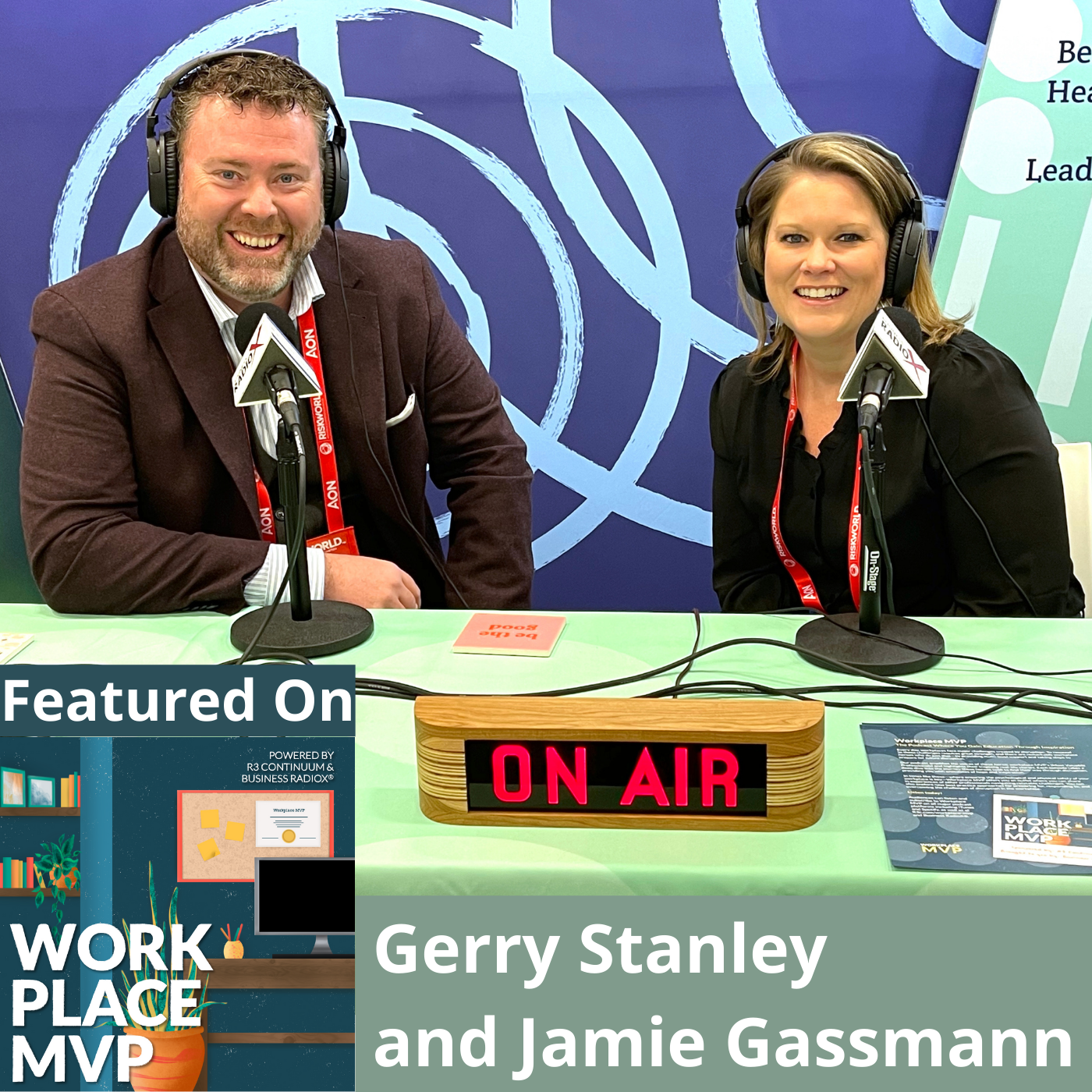
Gerry Stanley and Mark Moore with Harvard MedTech spoke with host Jamie Gassmann LIVE from RISKWORLD 2022 about their mission and the technology developed by Harvard MedTech. Their innovation involves virtual reality headsets combined with behavioral health interventions which assist claimants in dealing with workplace trauma. Gerry and Mark talked with Jamie about the specifics of how this technology works, the types of claimants that can benefit from the approach, its use in pain management, and more.

Workplace MVP is underwritten and presented by R3 Continuum and produced by the Minneapolis-St.Paul Studio of Business RadioX®.

This show was originally broadcast from the RIMS 2022 RISKWORLD Conference held at the Moscone Center in San Francisco, California.

Harvard MedTech, LLC

Gerry Stanley is Senior Vice President and Chief Medical Officer, and Mark Moore is Senior Vice President, Market Partnerships, for Harvard MedTech, LLC

Harvard MedTech is committed to Smart Device Technology for in-home patient care. Its mission is to push the frontier of capabilities and create or find the most innovative smart technologies from around the world. These technologies may be devices, systems, or elements that expand an extraordinary human experience.

They are also committed to home-based therapies to facilitate greater compliance by – and a higher quality experience for – the patient. Their dedicated behavioral health clinicians train patients on how to use smart equipment and technologies, and provide oversight, motivation and encouragement.

What most makes HMT stand apart is our unmatched ability to integrate technology with behavioral science in a way that produces faster, safer and better outcomes for patients, increased convenience for providers, and lower costs for payers.

Company website | Linkedin | Gerry LinkedIn | Mark LinkedIn

About Workplace MVP

Every day, around the world, organizations of all sizes face disruptive events and situations. Within those workplaces are everyday heroes in human resources, risk management, security, business continuity, and the C-suite. They don’t call themselves heroes though. On the contrary, they simply show up every day, laboring for the well-being of employees in their care, readying the workplace for and planning responses to disruption. This show, Workplace MVP, confers on these heroes the designation they deserve, Workplace MVP (Most Valuable Professionals), and gives them the forum to tell their story. As you hear their experiences, you will learn first-hand, real-life approaches to readying the workplace, responses to crisis situations, and overcoming challenges of disruption. Visit our show archive here.

Workplace MVP Host Jamie Gassmann
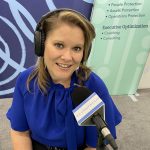
Jamie Gassmann, Host, “Workplace MVP”

In addition to serving as the host to the Workplace MVP podcast, Jamie Gassmann is the Director of Marketing at R3 Continuum (R3c). Collectively, she has more than fourteen years of marketing experience. Across her tenure, she has experience working in and with various industries including banking, real estate, retail, crisis management, insurance, business continuity, and more. She holds a Bachelor of Science Degree in Mass Communications with special interest in Advertising and Public Relations and a Master of Business Administration from Paseka School of Business, Minnesota State University.

R3 Continuum

R3 Continuum is a global leader in workplace behavioral health and security solutions. R3c helps ensure the psychological and physical safety of organizations and their people in today’s ever-changing and often unpredictable world. Through their continuum of tailored solutions, including evaluations, crisis response, executive optimization, protective services, and more, they help organizations maintain and cultivate a workplace of wellbeing so that their people can thrive. Learn more about R3c at www.r3c.com.

Company website | LinkedIn | Facebook | Twitter

TRANSCRIPT

Intro: [00:00:02] Broadcasting Live from RISKWORLD 2022 at the Moscone Center in San Francisco, it’s time for Workplace MVP. Brought to you by R3 Continuum, a global leader in helping workplaces thrive during disruptive times. Now, here’s your host.

Jamie Gassmann: [00:00:21] Hey, everyone. Your host, Jamie Gassmann here. And I’m broadcasting from RISKWORLD 2022 in the expo hall and our show sponsor’s booth, R3 Continuum. And joining me is Gerry Stanley and Mark Moore from Harvard MedTech. Welcome, gentlemen.

Gerry Stanley: [00:00:38] Hey, thanks for having us.

Mark Moore: [00:00:39] Thanks for having us.

Jamie Gassmann: [00:00:40] Yeah. So, tell me a little bit about what Harvard MedTech does.

Mark Moore: [00:00:45] Gerry’s got this.

Gerry Stanley: [00:00:47] So, we’re a virtual reality company that couples virtual reality with behavioral health interventions to treat the effects of workplace trauma. So, as opposed to looking at pain, depression, anxiety or PTSD as the actual problem itself, we really look at that as a constellation of symptoms that we want to treat to give a very holistic, biopsychosocial approach to how we’re treating patients.

Jamie Gassmann: [00:01:08] Wonderful. So, tell me a little bit about – so, like if – are you – from a risk insurance perspective, if they have a client, you know, what types of situations from a trauma perspective are you seeing most commonly that their employee would benefit from your solution?

Gerry Stanley: [00:01:23] So, we really focus on claimants that are, I would say, in the most volatile state. And if you really look at the data on that, most of those patients have some sort of an underlying psychosocial issue that’s driving it. So, it’s really not a functional biologic issue. It’s something else in their life, an underlying issue at home, a history of depression or anxiety. Those are all the things that really derail recovery for patients. What we want to do is say, “Let’s address them holistically. Let’s treat the person as a person, not just as a disease or a traumatic event.”

Jamie Gassmann: [00:01:52] So, tell me a little bit about how does that virtual reality work? Like what is that claimant experience when they’re in that virtual reality?

Gerry Stanley: [00:02:01] So, what will happen is we call the claimant; and as part of that, we’re going to do some assessments on the patient and match them with one of our personal clinicians. We, then, mail the virtual reality headset to the patient’s home, so they can engage in it as much as they’d like. From there on, every week, we have our personal clinician engage with the patient. So, every week we’re adjusting what they’re doing in the headset. We’re going to adjust when they do it, how often they do it, how long they do it, and what types of programs that they’re doing.

So, our program is designed to have four – what we call – experiences. okay? Those are the categories. So, we have knowledge, meditation, distraction and escape. And what the escape is, it’s escaping. It’s going to see the towers of London, swimming with dolphins. It’s taking an injured worker from the safety of their home to let them go transcend that and go into the world. The meditation is very basic eye control, breath control, body awareness, meditation. But because they’re in a virtual reality headset, it’s incredibly immersive. So, it’s very simple meditation done at a very high level. The knowledge pieces are much more simple. It’s education and empowerment, because most workers will say, “I really didn’t get a lot of education from my clinician. Like the doctor doesn’t tell me what’s going on.” So, we really want to empower our patients to be active participants in their care and let them know that it’s not realistic, that you’ve had an injury, that you will always have a little bit of pain. Pain is normal. That’s a normal part of the healing process. So, having zero pain is not how you get back to work. We have to get to a point to where that’s realistic.

And then, we also have a distraction phase where if we’ve got patients that are experiencing pain, we know that we can put them into these modules, and in 3 to 5 minutes, we can get a 44 to 50% reduction in their pain immediately. And that pain will last anywhere from 2 to 3 hours with a legacy pain relief. So, if you think about that in terms of pharmacology, that’s what we’re seeing with somebody takes a Percocet, or a Vicodin, or one of the opiates that people talk about, that’s what you’re hoping for is a 50% reduction in pain that’ll last 2 to 3 hours. We’re seeing that in a completely non-pharmacological way just by using virtual reality.

Jamie Gassmann: [00:03:52] Interesting. So, the ideal claimant is somebody who suffered some type of a traumatic injury that’s causing them ongoing pain. And so, this could be used as kind of a pain management tool for them basically, correct?

Gerry Stanley: [00:04:04] Definitely an adjunct for some of the pain. So, we really focus on areas where we see the greatest pain. So, we focus on shoulder surgeries, back surgeries, foot and ankle surgeries, amputations or specific injuries that we know have really the lowest return to work, highest post-operative complication, highest opioid addiction – the surgeries that are going to have the most likelihood of having a complication. But then, we also like to identify claimants based on some of their underlying psychosocial issues. So, they may have issues that are driving that. Like I said, maybe they’re caring for a child at home, maybe they’re caring for an aging adult or a parent. We’re seeing that a lot more. We have multigenerational families in the home. So, we want to make sure that we’re addressing these folks, saying, “What’s going on in your life?” So, that it’s not just give this to everybody, but let’s really identify the high risk claimants early on to give them that extra level of support, so that (1), they can get better; (2), they can be whole. And then from the insurance industry side, we really want to be able to close that claim.

Jamie Gassmann: [00:04:57] Now, I know you had an interview earlier today. So, Mark, do you want to talk a little bit about some of the things that the journalist was asking you on the interview that you had?

Mark Moore: [00:05:09] Oh, it wasn’t me that had the interview.

Jamie Gassmann: [00:05:10] Oh, okay.

Mark Moore: [00:05:11] It’s not allowed at the table.

Jamie Gassmann: [00:05:12] Yeah. Oh, wow. But you got — you were allowed at my table. So, you get to talk about it.

Mark Moore: [00:05:16] No. I was at a client meeting. So, Gerry was the one that actually was there [crosstalk].

Jamie Gassmann: [00:05:18] Oh, got it. Okay. Yeah. So, tell us a little bit about that interview because that was — you were pretty excited about that, so.

Gerry Stanley: [00:05:27] Well, it kept me from running the 5K this morning.

Jamie Gassmann: [00:05:28] I know, you missed out.

Gerry Stanley: [00:05:30] So, that is excitement in itself.

Jamie Gassmann: [00:05:30] Yeah.

Gerry Stanley: [00:05:31] They’re outside running in the cold. I’m inside on TV. So, life was good.

Jamie Gassmann: [00:05:34] But it had amazing views.

Gerry Stanley: [00:05:36] It was — you know, it was a lot of fun. It was Best TV. They were just kind of looking at different innovators in the industry. And they brought us in to talk about advances in telemedicine and some of the new –I would say we’re a little bit revolutionary bringing virtual reality into the space. So, how we’re disrupting the space and what we’re doing to really bring technology to health care or really adjust where care is received. For the most part, care has always happened in the clinic or in the hospital. Now, we want to do it in patients’ homes. Like, “Let’s actually go where the patient lives instead of having the patient go to where the care has historically lived.” So, it’s really that paradigm shift of going to where people live and meeting them where they are, so that we can really try to find the right care for the right person at the right time.

Jamie Gassmann: [00:06:16] Yeah. And you know, when you think about it like the shift over the last couple of years where telehealth and people being able to, you know, have appointments right off their phone to diagnose them, you know, this is a really prime opportunity in time where people are starting to get used to that care in the home. So, that’s great.

Gerry Stanley: [00:06:33] So, we’ve talked about telemedicine for probably a decade, but patients didn’t like it and doctors hated it. So, you’ve got this great idea that nobody wants to utilize in the pandemic. That’s really kind of the blessing of the pandemic, is it forced us to get out of that comfort zone. And now, people love it. I know doctors that have moved straight to just all virtual practices because it’s so convenient. It’s just less disruptive to everybody’s life. So, it’s-

Intro: [00:06:56] Yeah.

Gerry Stanley: [00:06:57] It’s been fun just to see that evolution in such a short period of time.

Jamie Gassmann: [00:07:00] Yeah. And what I like about, you know, your virtual reality and trying to help that pain management is that shift away from having to take a narcotic, you know, an opioid to treat a backache. You know, and you hear so much about the opioid crisis. I mean, I know I haven’t heard as much about it. I think COVID kind of silenced a little bit, but I don’t think it went away. And so, you know, this is really a great kind of alternative to those who are like, “I really don’t want to take something to handle my pain. I’d really like to have some type of a solution that allows me an alternative options.” So, that’s great.

Gerry Stanley: [00:07:34] It’s been really great. It’s a lot of fun to be doing something so innovative and still helping people.

Jamie Gassmann: [00:07:39] Yeah, that’s fantastic. And I know you guys are exhibitors here at the conference. So, you know, tell me a little bit about some of the traffic and the conversations you’ve been having. What are — how are people responding to you?

Mark Moore: [00:07:50] It’s new, it’s novel. So, for us, as an organization, it’s something that’s not been in the marketplace. Everybody’s talked about the biopsychosocial pieces that go into the claim. We’re actually putting an appliance with that, with therapy. So, it’s having a lot of, “What are you guys doing? Oh, can I try that on?” And they take it as an Oculus. They look at it as a kids’ game or something along those lines. And once they actually sit down and get immersed in the system within the VR headset, they then see the difference of what that can have for the patient. And hearing the story that goes along with that and the science has been brought to fruit, we’re having tremendous amount of traffic and a lot of people kicking the tires and saying, “There is a solution here. How do we apply this in our organization and for our claims?”

Jamie Gassmann: [00:08:30] Yeah, that’s fantastic. I can imagine. It’s always great to see something new and innovative that, you know, maybe somebody hadn’t thought of or maybe they thought it needed to have a solution there. And you guys kind of brought it to market. So, it’s fantastic.

Gerry Stanley: [00:08:43] Thank you.

Jamie Gassmann: [00:08:43] So, if somebody wanted to get a hold of you and learn a little bit more about what you’re doing, how would they do that?

Mark Moore: [00:08:49] Well, you can go to HarvardMedTech.com. There are places that you can send a referral in, ask for information.

Gerry Stanley: [00:08:56] You can go to info@harvardmedtech.com. That’s a great place. Send an e-mail to that, and we’ll be able to communicate with you directly. We also have referrals at HarvardMedTech.com if you’re an adjuster, or a patient care provider, or doctor, or nurse practitioner, PA saying, “Hey, I’d really like to try this for one of my patients,” feel free, you can send send that in directly to us.

Jamie Gassmann: [00:09:14] Wonderful. Well, it’s been great having you both on the show. Thank you so much for stopping by.

Mark Moore: [00:09:18] Hey, thank you.

Gerry Stanley: [00:09:19] Thank you.

Outro: [00:09:22] Thank you for joining us on Workplace MVP. R3 Continuum is a proud sponsor of this show and is delighted to celebrate most valuable professionals who work diligently to secure safe workplaces where employees can thrive.
 

Tagged With: Gerry Stanley, Harvard Medtech, Jamie Gassmann, R3 Continuum, Smart Device Technology, telemedicine, vitual reality, wearable technology, Workplace MVP

To Your Health With Dr. Jim Morrow: Episode 31, Telemedicine and Georgia Opens Up

April 23, 2020 by John Ray

telehealth
North Fulton Studio
To Your Health With Dr. Jim Morrow: Episode 31, Telemedicine and Georgia Opens Up
Loading
00:00 /
RSS Feed
Share
Link
Embed

Download file

telehealth
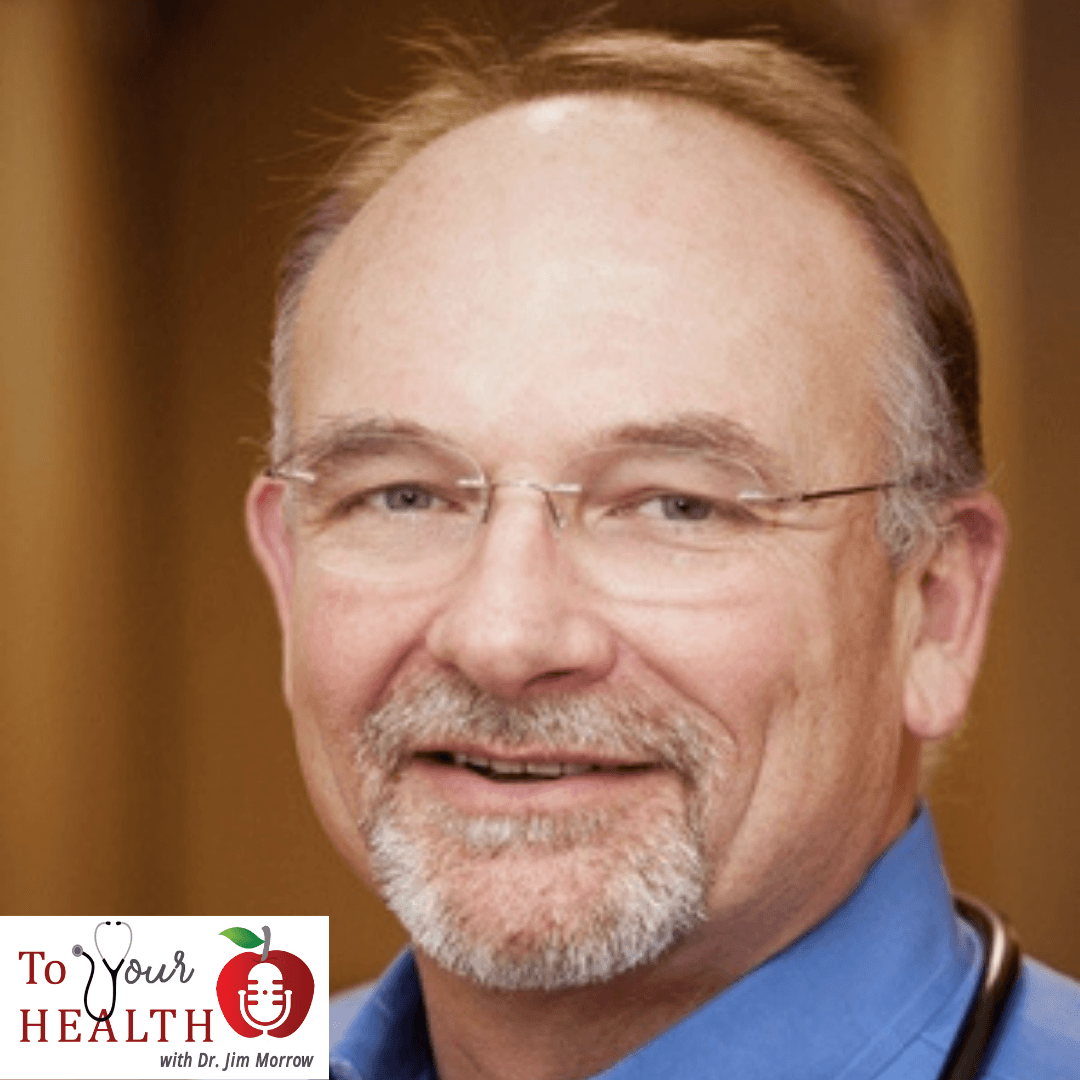
Dr. Jim Morrow, Host of “To Your Health”

To Your Health With Dr. Jim Morrow: Episode 31:  Telemedicine and Georgia Opens Up

Dr. Morrow offers his thoughts on Gov. Brian Kemp’s “opening” of Georgia, as well as a thorough discussion of telemedicine, its pros and cons, and how he is using telemedicine currently to treat patients at Morrow Family Medicine.  As always, Dr. Morrow responds to listener emails and feedback, including one from a disgruntled tinnitus sufferer. “To Your Health” is brought to you by Morrow Family Medicine, which brings the CARE back to healthcare.

About Morrow Family Medicine and Dr. Jim Morrow

Morrow Family Medicine is an award-winning, state-of-the-art family practice with offices in Cumming and Milton, Georgia. The practice combines healthcare information technology with old-fashioned care to provide the type of care that many are in search of today. Two physicians, three physician assistants and two nurse practitioners are supported by a knowledgeable and friendly staff to make your visit to Morrow Family Medicine one that will remind you of the way healthcare should be.  At Morrow Family Medicine, we like to say we are “bringing the care back to healthcare!”  Morrow Family Medicine has been named the “Best of Forsyth” in Family Medicine in all five years of the award, is a three-time consecutive winner of the “Best of North Atlanta” by readers of Appen Media, and the 2019 winner of “Best of Life” in North Fulton County.

Dr. Jim Morrow, Morrow Family Medicine, and Host of “To Your Health With Dr. Jim Morrow”

Dr. Jim Morrow is the founder and CEO of Morrow Family Medicine. He has been a trailblazer and evangelist in the area of healthcare information technology, was named Physician IT Leader of the Year by HIMSS, a HIMSS Davies Award Winner, the Cumming-Forsyth Chamber of Commerce Steve Bloom Award Winner as Entrepreneur of the Year and he received a Phoenix Award as Community Leader of the Year from the Metro Atlanta Chamber of Commerce.  He is married to Peggie Morrow and together they founded the Forsyth BYOT Benefit, a charity in Forsyth County to support students in need of technology and devices. They have two Goldendoodles, a gaggle of grandchildren and enjoy life on and around Lake Lanier.

Facebook: https://www.facebook.com/MorrowFamMed/

LinkedIn: https://www.linkedin.com/company/7788088/admin/

Twitter: https://twitter.com/toyourhealthMD

The complete show archive of “To Your Health with Dr. Jim Morrow” addresses a wide range of health and wellness topics, and can be found at www.toyourhealthradio.com.

telemedicine


Dr. Morrow’s Show Notes

Coronavirus Update


Worldwide cases: 2,561,915

Total Deaths: 177,200

Total Recovered: 679,819

Total Hospitalized in the US: 120,268

Hospitalized in Georgia: 3,779

Incidence rate: 198.89 per 100,000 persons

Antibody test not yet generally available and the tests have a cross reactivity with some of the common cold CVs.

The average number of people who become infected by an infectious person is declining in every state. See this at rt.live.


Telemedicine Facts

  • According to Healthcare Business & Technology,
    • Almost 75% of all doctor, urgent care, and ER visits “are either unnecessary or could be handled safely and effectively over the phone or video,”
  • MedCity Newsreports that 90% of healthcare executives say their organizations are developing or already have a telehealth application.
  • The majority of healthcare organizations are increasing or maintaining their telehealth investments this year.
  • According to the American Hospital Association, about 20% of Americans live in rural areas without easy access to primary care or specialist medical services.
  • A survey conducted by American Well found that 65% of consumers want to use telehealth
  • According to the American Hospital Association, more than three-fourths of hospitals are currently using or implementing telehealth.

Pre-Pandemic Situation

 Limited Medicare coverage impeded the expansion of telehealth services.

    • Current statute restricts most telehealth services to patients located in
      • rural areas and
      • in specific settings (such as a hospital or physician office),
      • covers only a limited number of services, and
      • allows only real-time, two-way video conference capabilities.
  • Changes needed include:
    • widespread elimination of geographic and setting locations requirements so patients outside of rural areas can benefit from telehealth;
    • expanding the types of technology that can be used, including remote monitoring; and
    • covering all services that are safe to provide, rather than a small list of approved services.
  • Additional research is needed to evaluate telehealth.
    • Research and experience under the Medicare program suggest that policymakers’ concerns about increased access to telehealth leading to increased spending may be overstated,
      • particularly when weighed against the potential benefits in quality, patient experience and efficiency.
      • However, there are insufficient studies on the cost-benefits of telehealth outside of a limited number of services.
    • Federal programs to expand broadband need to be simplified.
      • According to the FCC, 34 million Americans still lack access to adequate broadband.
      • And, there is a large digital divide, with almost 40 percent of those living in rural areas lacking access.
        • The FCC has a program that supports broadband adoption, but it is administratively burdensome and provides an insufficient level of subsidy for remote health care providers.
          • While the FCC has taken positive steps by increasing the subsidy, we need even greater federal investment in broadband access, particularly in rural areas.
        • More and better research is needed for other conditions and newer technologies, such as remote monitoring of patients.
      • Telehealth connects patients to vital health care services through
        • videoconferencing,
        • remote monitoring,
        • electronic consults
        • and wireless communications.
        • By increasing access to physicians and specialists,
          • telehealth helps ensure patients receive
            • the right care,
            • at the right place,
            • at the right time.
          • Currently, 76 percent of U.S. hospitals connect with patients and consulting practitioners at a distance through the use of video and other technology.
            • Almost every state Medicaid program has some form of coverage for telehealth services,
              • and private payers are embracing coverage for many telehealth services.
              • However, there are barriers to wide adoption of telehealth.
              • Medicare generally still limits coverage and payment for many telehealth services, lagging behind other payers.
              • The Medicare program recently expanded coverage for telehealth services for stroke patients and substance use treatment in response to statutory changes.
              • Medicare also expanded payments to clinicians for virtual check-ins.
                • While promising,
                  • these incremental steps are not sufficient.
                • In addition, limited access to adequate broadband services hampers the ability of some rural facilities to deploy telehealth.
                • The challenge of cross-state licensure also looms as a major issue.
                • Other policy and operational issues include credentialing and privileging,
                  • online prescribing,
                  • privacy and security
                  • and fraud and abuse.
                • The federal government needs to do more to increase the use of telehealth.

Telemedicine and Covid-19

  • Healthcare is seeing a surge of direct-to-consumer telemedicine providers
    • operating at a large scale
    • helping to provide care to patients who might be wondering if they need care after exhibiting potential symptoms associated with the novel coronavirus.
  • Simultaneously we’re also seeing a rapidly increasing need for on-demand acute care via telemedicine.
    • This includes ICU programs offering intensive care for the most critical patients.
      • However, tele-triage is exploding in terms of the number of use-cases that involves determining when a patient presents in the emergency department whether they need to be issued a bed or if they can be seen in another area within the hospital in order to keep the patient safe and to reduce potential exposures.
    • This helps to limit providers’ exposure to the virus and other infectious diseases.
  • If a hospital worker is exposed without adequate protection, they’d be put into self-quarantine for 14 days
    • Using acute telemedicine for tele-triage is helping keep staff in a low-risk category for infection
      • by completely eliminating exposure for those doctors or other hospital staff.
  • Unfortunately, providers and policymakers are playing catch-up with telehealth technologies right now
    • and are just beginning to recognize that they are essential solutions for keeping potentially infected individuals out of hospitals and doctors’ offices
    • As this public health crisis continues to escalate, however,
      • telemedicine is quickly gaining recognition as a critical tool to slow the spread of COVID-19
    • There are three primary roles for telehealth technologies during this crisis
      • The first:
        • to screen patients remotely rather than having them visit the practice or hospital.
        • They can be used to triage patients with cold and flu-like symptoms and to remotely care for those who don’t need medical intervention or could receive care at home.
        • By keeping potentially infected individuals out of hospitals and doctors’ offices, the healthcare system can lower the risk of transmission to other patients and healthcare staff.
      • Second:
        • To help provide routine care for patients with chronic diseases who are at high risk if exposed to the virus
      • And third:
        • Providers and their staff are not immune to infection and are at increased risk for contracting COVID-19 due to their continuous exposure to infected patients
          • Once tested and confirmed, these providers will be quarantined and become unavailable to the healthcare system just when it needs them most.

Limitations of Telehealth

  • Inability for most clinicians to fully examine a patient
    • The hardware exists to do this but it is expensive and has limitations
  • Limitations in broadband and device access
  • Laboratory testing not possible
  • In cases where patients are using on-demand telemedicine services that connect them with a random healthcare provider, care continuity suffers.
  • A patient’s primary care provider may not have access to records from those other visits and end up with an incomplete history for the patient.
    • Service provider shuffling increases the risk that a doctor won’t know a patient’s history or have notes about care routines.
  • Healthcare laws, reimbursement policies, and privacy protection rules struggle to keep up with this fast-growing industry.
    • As a healthcare provider, you want to promote best practices when approaching telemedicine.
  • While major developments have been made to telehealth reimbursement over the past couple years, it still remains a common stumbling block for providers interested in telemedicine.

The Bottom Line

  • Telehealth helps increase health care value and affordability.
    • Virtual care technology saves patients time and money,
      • reduces patient transfers,
      • emergency department and urgent care center visits,
      • and delivers savings to payers.
    • In addition, telehealth helps address physician burnout by reducing clinicians’ drive times and allowing more time for patients.

Tagged With: Dr. Jim Morrow, Gov. Brian Kemp, Jim Morrow, Morrow Family Medicine, teleHealth, telemedicine, tinnitus, To Your Health, To Your Health With Dr. Jim Morrow

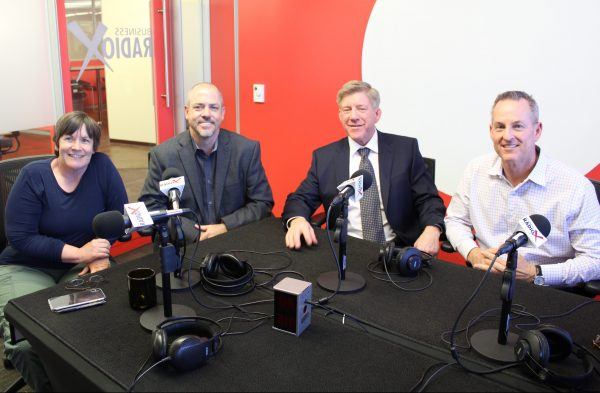
Direct2MD CEO Paul Flatley and Chief Sales Officer Scott Mara with Loftus Financial CEO Mike Loftus and Guest Co-Host Barb Regis

April 19, 2019 by Karen

direct2md-ceo-paul-flatley-and-chief-sales-officer-scott-mara-loftus-financial-ceo-mike-loftus-with-guest-co-host-barb-regis1
Phoenix Business Radio
Direct2MD CEO Paul Flatley and Chief Sales Officer Scott Mara with Loftus Financial CEO Mike Loftus and Guest Co-Host Barb Regis
Loading
00:00 /
RSS Feed
Share
Link
Embed

Download file

direct2md-ceo-paul-flatley-and-chief-sales-officer-scott-mara-loftus-financial-ceo-mike-loftus-with-guest-co-host-barb-regis

Direct2MD CEO Paul Flatley and Chief Sales Officer Scott Mara with Loftus Financial CEO Mike Loftus and Guest Co-Host Barb Regis

d2mdpnglogo

Direct2MD provides access to a health care provider — on our app or online, with no insurance forms, hassle or paperwork. Just quality and convenience at an affordable rate. Your virtual doctor can write prescriptions, request imaging and request lab work just like a traditional doctor. Now Employers can provide Employees and their Families with quality healthcare with no co-pays.

Paul Flatley, DO, FACEP is the Co-Founder and CEO of Direct2MD. Previously Dr. Flatley worked in the Emergency department for HonorHealth in Scottsdale where he held the position of Medical Director and Chair. Dr. Flatley completed medical school at Midwestern University in Chicago prior to completing residency in Emergency Medicine at Maricopa Medical Center in Phoenix.

Dr. Flatley was chief resident in his graduating class and also received recognition for Most Outstanding Resident having been nominated by both his colleagues and Attending physicians. Dr. Flatley has volunteered his time as the Attending physician at ChristCares clinic, during its operation from 2012-2015. Lastly having a love for hockey Dr. Flatley has thrilled to have been a team physician for his beloved Arizona Coyote’s.

Growing up in Mesa, Scott Mara didn’t venture far when he decided to attended Arizona State University where he was a Communication major.

Scott’s professional career began as a Territory Manager for the fortune 500 company Economics Laboratory. Responsibilities included business growth and retention in the northern and eastern portions of Arizona.

Ready for a new challenge and armed with what he was learning at Economics Laboratory, Scott made the decision to become his own boss and enter the finance and insurance industry with Prudential Financial. Here Scott had his first experience working alongside business owners assisting them with their company benefits and company plans for the future. This would be where Scott caught the entrepreneurial bug.

So, working alongside his wife Kathy they founded Celara in 1995, where Scott was remained the CEO for a little more than 19 years. .

Then after nearly 20 years Scott decided to follow his dreams and in 2016 he entered the health care industry as the Chief Sales Officer at Direct2MD.

The rest as they say is to be continued…

Mike Loftus was born and raised in Prescott, second generation. Attended tech school in Phoenix and received an AA in electrical engineering. Mike then worked for Xerox in the early 80’s when the personal computer was just emerging.

He left Xerox in 1987 and began a career in life and health insurance following his father’s footsteps. He started his own company, Loftus Financial in 1988. Business owners needed buy-sell insurance, key-man, personal coverage, and pension plans which led to entering the group health market in 1988 at his customers request. By the mid 90’s he entered into the self-funding space where he could design and bring the best of the best components of healthcare to his clients. Mike’s favorite clients are one’s that care about their employees.

Mike continues to stay on top of new products and ideas that reduce cost, bring high quality to his customers, and provides a high level of service to his customers.

Mike was introduced to Direct2MD in the early stages of their development, has assisted in their understanding of healthcare, and building a product unparallel in the telehealth space.

Follow Direct2MD on LinkedIn, Facebook, Twitter and Instagram.

Barb Regis is a Physician Assistant (PA) and a primary care provider for nearly 20 years with a passion for education and advocacy. She believes in the power of compassionate care with a team approach, and she is always open to questions and communicating without judgment.

Along with being a Best of Health Advocate, Barb is also an author. In her book, Surviving the “Business” of Healthcare–Knowledge Is Power!, she shares a uniquely useful perspective with readers and addresses many concerns faced by all of us when we address our health.

Barb currently works for Premise Health at Insight Enterprises in Tempe, Arizona as a solo practitioner providing primary care to employees and families on campus. She is certified by the National Commission of Certification of Physician Assistants and is an active member of the American Academy of Physician Assistants.

Follow Ask the PA on Facebook.

Tagged With: employee benefits, health insurance, Healthcare, self-funded insurance, telemedicine

LEADER DIALOGUE: Follow-up Discussion with The HCI Group – Deep Dive

October 5, 2018 by Mike

Gwinnett Studio
Gwinnett Studio
LEADER DIALOGUE: Follow-up Discussion with The HCI Group - Deep Dive
Loading
00:00 /
RSS Feed
Share
Link
Embed

Download file

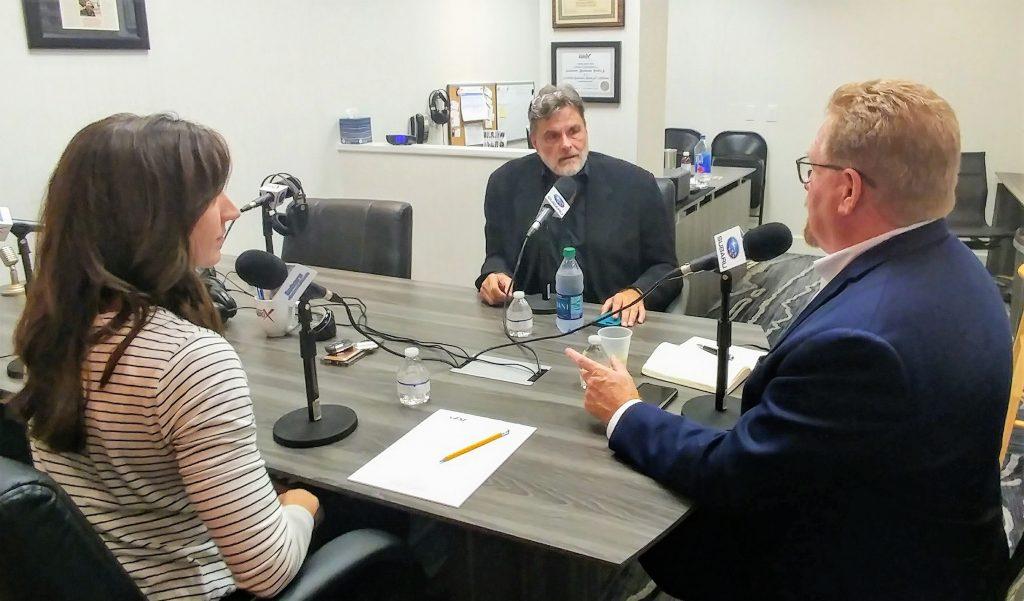
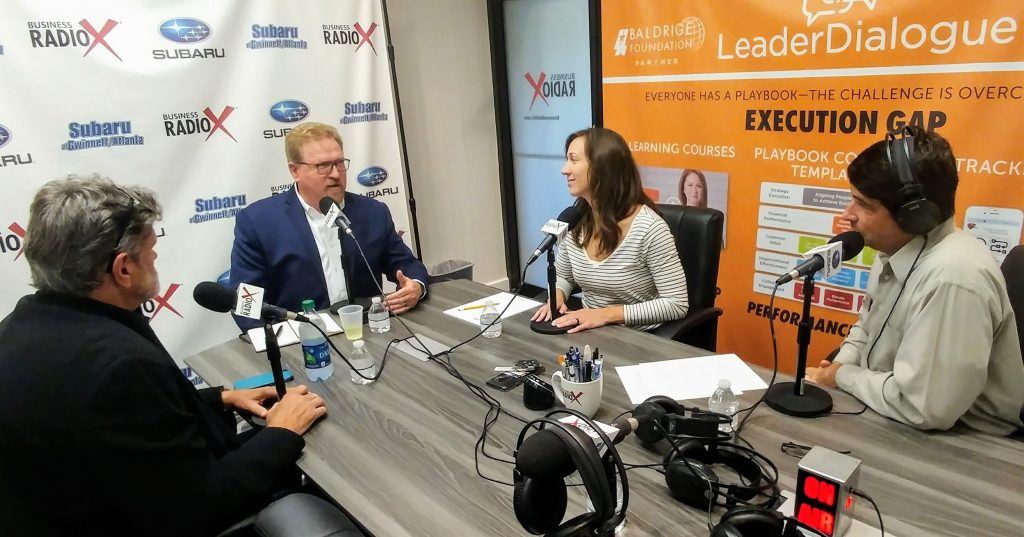
John McDaniel, Jennifer Strahan, Ben Sawyer

On this follow-up deep dive episode of “Leader Dialogue”, Ben and Jennifer continue the innovation requirements discussion with John McDaniel, HCI Group’s SVP of Innovation and Technology, clarifying what it takes for organizations to get out ahead of emerging market trends, and to win.

Listen in to learn:

  • The leadership approach necessary to foster innovation.
  • How to overcome innovation cost concerns, including how to effectively partner with emerging technology companies.
  • The hallmarks of effective innovation, including the human centered design approaches.

John McDaniel/Senior VP of Innovation and Technology with The HCI Group

With more than 35 years of experience as a healthcare CIO, consulting services executive, and as an executive with large healthcare solution companies, John McDaniel currently manages the CXO Innovation and Technology Solutions division at The HCI Group.

Prior to joining HCI, John worked as a National Practice Leader – US Healthcare for a large data storage and software organization. He was responsible for cultivating C-level executive relationships, understanding emerging requirements, and collaborating with development teams to ensure solutions that met market-driven operational, scalability and cost efficiency requirements.

As a CIO, John worked with St. Vincent Catholic Medical Center, McLaren Health Care Corporation, and The Emory Clinic, where he also served as Director of Medical Informatics for the Emory Healthcare System. He is a keynote speaker at National and Regional healthcare conferences and frequently presents at large, international healthcare events.

About SOAR Vision Group

The SOAR Vision Group mission is to: Align People with Purpose to Achieve Exceptional Results. SOAR provides best practice strategy execution, business process optimization services, and a structured organizational development approach for organizations to effectively implement the Baldrige Performance Excellence framework. For more information, contact SOAR Vision Group at (888) 294-3303 or visit soarvisiongroup.com.

About the Baldrige Foundation

The mission of the Baldrige Foundation is to ensure the long-term financial growth and viability of the Baldrige Performance Excellence Program, and to support organizational performance excellence in the United States and throughout the world. The Malcolm Baldrige National Quality Award is presented annually by the United States President to organizations that demonstrate quality and performance excellence. For more information, contact the Baldrige Foundation at (202) 559-9195 or visit baldrigefoundation.org.

<img alt=”” src=”https://secure.hims1nice.com/150787.png” style=”display:none;” />

Tagged With: emerging technology, hci group, healthcare innovation, healthcare leadership, healthcare management, healthcare solutions, healthcare technology, hralthcare deep dive, innovation deep dive, leader dialogue, leader dialogue radio, Leadership, SOAR Vision Group, telemedicine, the hci group

LEADER DIALOGUE: The Role of Innovation in the Age of Consumerism with John McDaniel of The HCI Group

October 1, 2018 by Mike

Gwinnett Studio
Gwinnett Studio
LEADER DIALOGUE: The Role of Innovation in the Age of Consumerism with John McDaniel of The HCI Group
Loading
00:00 /
RSS Feed
Share
Link
Embed

Download file

John McDaniel, Jennifer Strahan, Ben Sawyer

HCI Group’s SVP of Innovation and Technology John McDaniel discusses the transformation advisory function that the HCI Group provides to healthcare systems regarding emerging technologies. Ben and Jennifer explore with John the innovation and performance excellence requirements for organizations to effectively compete in the Age of Consumerism as web-based technologies proliferate, including advances in biometric monitoring, telemedicine, and robotic surgery. The discussion also includes the impact of global medical tourism.

Successful organizations will have to innovate at a level previously unknown, as large commercial players also begin to compete. Insights from previous disruptive technology and innovation megatrends are discussed, such as the universal adoption of mobile devices and the digital marketplace. Similar to the impact on fixed retail establishments from these emerging technology trends, this discussion provides a backdrop of the upcoming tidal wave of change in healthcare, and what will be required to survive and thrive.

Listen in to learn…

  • Why a renaissance zone, or innovation hub, is essential for innovation to take hold.
  • Why operational efficiency and effectiveness are critical for creating capacity and cash to support innovation.
  • What success looks like.

John McDaniel/Senior VP of Innovation and Technology with The HCI Group

With more than 35 years of experience as a healthcare CIO, consulting services executive, and as an executive with large healthcare solution companies, John McDaniel currently manages the CXO Innovation and Technology Solutions division at The HCI Group.

Prior to joining HCI, John worked as a National Practice Leader – US Healthcare for a large data storage and software organization. He was responsible for cultivating C-level executive relationships, understanding emerging requirements, and collaborating with development teams to ensure solutions that met market-driven operational, scalability and cost efficiency requirements.

As a CIO, John worked with St. Vincent Catholic Medical Center, McLaren Health Care Corporation, and The Emory Clinic, where he also served as Director of Medical Informatics for the Emory Healthcare System. He is a keynote speaker at National and Regional healthcare conferences and frequently presents at large, international healthcare events.

About SOAR Vision Group

The SOAR Vision Group mission is to: Align People with Purpose to Achieve Exceptional Results. SOAR provides best practice strategy execution, business process optimization services, and a structured organizational development approach for organizations to effectively implement the Baldrige Performance Excellence framework. For more information, contact SOAR Vision Group at (888) 294-3303 or visit soarvisiongroup.com.

About the Baldrige Foundation

The mission of the Baldrige Foundation is to ensure the long-term financial growth and viability of the Baldrige Performance Excellence Program, and to support organizational performance excellence in the United States and throughout the world. The Malcolm Baldrige National Quality Award is presented annually by the United States President to organizations that demonstrate quality and performance excellence. For more information, contact the Baldrige Foundation at (202) 559-9195 or visit baldrigefoundation.org.

<img alt=”” src=”https://secure.hims1nice.com/150787.png” style=”display:none;” />

Tagged With: disruptive technology, hci group, Healthcare, healthcare changes, healthcare management, healthcare systems, healthcare technology, innovation hub, renaissance zone, robotic surgery, SOAR Vision Group, telemedicine, the hci group, web-based technology

Maternal Fetal Medicine via Telehealth – Top Docs Radio

July 21, 2016 by angishields

Top Docs Radio
Top Docs Radio
Maternal Fetal Medicine via Telehealth - Top Docs Radio
Loading
00:00 /
RSS Feed
Share
Link
Embed

Download file

maternal-fetal medicine
Dr. C. Anne Patterson
maternal-fetal medicine
Tanya Mack

Maternal Fetal Medicine via Telehealth

Women’s Telehealth’s Tanya Mack, interviews the company’s CEO and Medical Director, Dr. C. Anne Patterson, discussing maternal-fetal medicine as a specialty, and how they are now able to capitalize on telemedicine technology to deliver high-risk maternity care to a wider patient population.

Maternal fetal medicine is rare sub-specialty of obstetrics which delivers high risk obstetric care. These

specialists manage complex complications of pregnancy such as: multiple gestations, chronic medical

conditions during pregnancy, gestational diabetes and fetal abnormalities. The CDC and March of Dimes both estimate that in 2015 in the US, approximately 1:10 babies in the US are born prematurely.

GA ranks 50/50 for maternal death and 42/50 for infant mortality. Getting access to maternal fetal medicine services is often difficult as there are only about 1200 MFM physicians in the US and most are not located in rural areas.

Clearly, there is a need for many physicians of different specialties in rural areas and maternal-fetal medicine is one of them.  OB practices and hospitals in these areas can engage with Womens Telehealth to be able to help these patients avoid having to spend long travel times in cars to be seen by these needed specialists.  This allows them to stay closer to home and receive care in their local community.

But this solution has value for urban practices as well.  There are very few maternal-fetal specialists nationwide—only ~20 or so in Georgia.  By deploying the Womens Telehealth solution, these city-based groups and hospitals can also provide access to this specialty care for their patients, preventing potential loss of the patient to other facilities/groups in the community that do have maternal-fetal specialists on campus.

Special Guest:

Dr. C. Anne Patterson, CEO/Medical Director, Womens Telehealth

Tagged With: CW Hall, healthcare technology, high risk pregnancy, maternal-fetal medicine, OB-GYN, premature delivery, Tanya Mack, teleHealth, telemedicine

Legal Considerations in Telemedicine – Top Docs Radio

July 8, 2016 by angishields

Top Docs Radio
Top Docs Radio
Legal Considerations in Telemedicine - Top Docs Radio
Loading
00:00 /
RSS Feed
Share
Link
Embed

Download file

telemedicine
Bill Boling, Mason Reid
telemedicine
Tanya Mack

Legal Considerations in Telemedicine

This week, Tanya hosted healthcare and telemedicine legal experts, Bill Boling and Mason Reid, of Boling and Company, to talk about legal considerations in telemedicine.

Affordable, quality telemedicine is on almost everyone’s mind! Telemedicine is a tool that is being used more frequently to provide access when and where needed and to decrease costs. One analyst recently predicted that 2020, the telemedicine market would be worth $36B dollars.

Although technology improvements have enable a new generation of telemedicine services, policy makers have been slower to adopt telemedicine.  Recently, however, a number of telemedicine related bills have been introduced that could fuel escalated telemedicine adoption by patients, payers and providers.

Bill and Mason discussed such topics as parity law, telemedicine informed consent, provider licensure requirements, telepresenter regulations, provider-patient encounter requirements, security and telemedicine clinical standards of care.

Special Guests:

Bill Boling, Founder, Boling and Company


Mason Reid, Associate, Boling and Company


Tagged With: CW Hall, healthcare radio, Mason Reid, Tanya Mack, teleHealth, telemedicine

Azalea Health – Top Docs Radio

May 6, 2016 by angishields

Top Docs Radio
Top Docs Radio
Azalea Health - Top Docs Radio
Loading
00:00 / 00:38:12
RSS Feed
Share
Link
Embed

Download fileDuration: 00:38:12

Azalea Health
Baha Zeidan

Azalea Health

This week we started our twice-monthly series with Tanya Mack, CEO of Women’s Telehealth.  Her first guest was CEO and Co-founder of Azalea Health, Baha Zeidan.  Azalea Health is an EMR company that launched in 2008 in Valdosta, GA.  Since then the company has enjoyed steady growth and has been recognized as one of Inc. 500 Nation’s fastest growing private companies, Georgia Top 40 Innovator, and 2014 Emerging Company of the Year Phoenix Award Winner.

Healthcare IT is at the forefront of revolutionizing trends that will change the way healthcare is delivered and patients’ health and wellness outcomes. Healthcare providers and patients who are resistant to technology may be left behind. Today- EMR’s, patient portals, mobile health apps and wearables, cloud computing, and interoperability are not fringe applications but active advances that allow the patients to become more a part of the healthcare team.

Technology makes that possible. Currently, the global EMR market is $11 Billion and the US remains dominant in EMR adoption. As we move to electronic medical records, EMR’s hold a lifetime of health data and can be used to predict our individual health future through modeling.

Today’s guest, Baha Zeidan, CEO of Azalea Health will be discussing his company’s

EMR and Practice management platform and how it is evolving to incorporate these new technology advances.

Special Guests:

Baha Zeidan, CEO of Azalea Health  linkedin_small1  twitter_logo_small  feed logo  facebook_logo_small3  youtube logo  

Azalea Health

Tanya Mack, President, Women’s Telehealth  youtube logo  linkedin_small1  twitter_logo_small-e1403698475314  facebook_logo_small3

telemedicine


Tagged With: CW Hall, electronic medical record, EMR, health radio, high risk pregnancy, interoperability, maternal-fetal specialist, Meaningful Use, Tanya Mack, telemedicine

Telemedicine – Top Docs Radio

April 3, 2016 by angishields

Top Docs Radio
Top Docs Radio
Telemedicine - Top Docs Radio
Loading
00:00 /
RSS Feed
Share
Link
Embed

Download file

Telemedicine

Today’s technology, particularly internet, communications, and mobile platforms, is empowering disruption in the traditional healthcare delivery model. Telemedicine is an emerging trend that shows no sign of slowing and my guests on this episode focus on this platform for delivering high quality care.

In some ways, mobile technology is bringing us full circle.  The “House Call” is back and being seen by a physician and/or other health professional in our home or other location outside of a doctor’s office, urgent care, or ER will likely be as common as it was decades ago, if not even more so.

Telemedicine is taking advantage of these technology capabilities to put patients together with healthcare professionals virtually and in some cases, through a combination of someone sitting with the patient facilitating an exam while another provider is connected to the interaction via video/telephony.

TeleHealth Solutions is a consultancy that works with healthcare organizations and practices seeking to add telemedicine to their delivery model.  The company is able to evaluate the client’s goals and determine (hopefully prior to any expenditures on equipment/platforms) the best platform for achieving those objectives.

In some cases they may even advise the client to hold off on adding such a platform, depending on what they were expecting it to do, avoiding large costs for something that will ultimately not be used.  Turner Smith explained how there are often unseen pitfalls around launching such a delivery model, so working with experts such as himself and his team can insure desired patient outcomes are achieved while making financial investments in the right technology/service.

Glenn Pearson spent nearly 20 years leading the Georgia Hospital Association.  As such, he’s well-versed in the in’s and out’s of how hospitals do business, make decisions regarding technologies they will deploy (or NOT deploy), and factors that can make what seems to be a great idea for a solution that will ultimately fail to be adopted.

He’s leveraging that experience at Pearson Health Tech Insights, providing consulting services for  tech companies who are developing (or plan to develop) technology solutions that will serve the hospital/health system space.  He and his team can help the tech developer potentially pivot their solution if needed, or in some cases do some redesign before going to market.  In this way, just as Turner’s firm helps tech buyers purchase wisely, Glenn’s company helps the developer have greater probability of success in getting their technology adopted.

I met Tanya Mack a couple of years ago on her show Doctors Roundtable here on Business Radio X.  She is now leading a company called, Women’s Telehealth, a virtual physician practice comprised of maternal-fetal specialists and high-risk pregnancy OB’s.

These healthcare experts are able to link up with a hospital or group’s existing telehealth technology to provide the medical expertise needed by moms in high-risk pregnancies.  With value to both urban and rural areas, Women’s Telehealth is allowing organizations that do not have high-risk OB specialists on staff, to be able to handle many of these patient needs, allowing the organization to simultaneously meet a patient need, while keeping them in their delivery system rather than losing them to a competing hospital.

Special Guests:

Tanya Mack, President, Women’s Telehealth  youtube logo  linkedin_small1  twitter_logo_small-e1403698475314  facebook_logo_small3

telemedicine

Turner Smith, VP of Business Development, TeleHealth Solutions  linkedin_small1

telemedicine

Glenn Pearson, Principal, Pearson Health Tech Insights  linkedin_small1

telemedicine


Tagged With: CW Hall, Glenn Pearson, Health IT, health radio, healthcare innovation, high risk pregnancy, maternal-fetal care, mobile health, OB-GYN, Pearson Health Tech Insights, Tanya Mack, TeleHealth Solutions, telemedicine, Turner Smith

  • 1
  • 2
  • Next Page »

Business RadioX ® Network


Our Most Recent Episode

CONNECT WITH US

  • Email
  • Facebook
  • LinkedIn
  • Twitter
  • YouTube

Our Mission

We help local business leaders get the word out about the important work they’re doing to serve their market, their community, and their profession.

We support and celebrate business by sharing positive business stories that traditional media ignores. Some media leans left. Some media leans right. We lean business.

Sponsor a Show

Build Relationships and Grow Your Business. Click here for more details.

Partner With Us

Discover More Here

Terms and Conditions
Privacy Policy

Connect with us

Want to keep up with the latest in pro-business news across the network? Follow us on social media for the latest stories!
  • Email
  • Facebook
  • Google+
  • LinkedIn
  • Twitter
  • YouTube

Business RadioX® Headquarters
1000 Abernathy Rd. NE
Building 400, Suite L-10
Sandy Springs, GA 30328

© 2025 Business RadioX ® · Rainmaker Platform

BRXStudioCoversLA

Wait! Don’t Miss an Episode of LA Business Radio

BRXStudioCoversDENVER

Wait! Don’t Miss an Episode of Denver Business Radio

BRXStudioCoversPENSACOLA

Wait! Don’t Miss an Episode of Pensacola Business Radio

BRXStudioCoversBIRMINGHAM

Wait! Don’t Miss an Episode of Birmingham Business Radio

BRXStudioCoversTALLAHASSEE

Wait! Don’t Miss an Episode of Tallahassee Business Radio

BRXStudioCoversRALEIGH

Wait! Don’t Miss an Episode of Raleigh Business Radio

BRXStudioCoversRICHMONDNoWhite

Wait! Don’t Miss an Episode of Richmond Business Radio

BRXStudioCoversNASHVILLENoWhite

Wait! Don’t Miss an Episode of Nashville Business Radio

BRXStudioCoversDETROIT

Wait! Don’t Miss an Episode of Detroit Business Radio

BRXStudioCoversSTLOUIS

Wait! Don’t Miss an Episode of St. Louis Business Radio

BRXStudioCoversCOLUMBUS-small

Wait! Don’t Miss an Episode of Columbus Business Radio

Coachthecoach-08-08

Wait! Don’t Miss an Episode of Coach the Coach

BRXStudioCoversBAYAREA

Wait! Don’t Miss an Episode of Bay Area Business Radio

BRXStudioCoversCHICAGO

Wait! Don’t Miss an Episode of Chicago Business Radio

Wait! Don’t Miss an Episode of Atlanta Business Radio