Business RadioX ®

  • Home
  • Business RadioX ® Communities
    • Southeast
      • Alabama
        • Birmingham
      • Florida
        • Orlando
        • Pensacola
        • South Florida
        • Tampa
        • Tallahassee
      • Georgia
        • Atlanta
        • Cherokee
        • Forsyth
        • Greater Perimeter
        • Gwinnett
        • North Fulton
        • North Georgia
        • Northeast Georgia
        • Rome
        • Savannah
      • Louisiana
        • New Orleans
      • North Carolina
        • Charlotte
        • Raleigh
      • Tennessee
        • Chattanooga
        • Nashville
      • Virginia
        • Richmond
    • South Central
      • Arkansas
        • Northwest Arkansas
    • Midwest
      • Illinois
        • Chicago
      • Michigan
        • Detroit
      • Minnesota
        • Minneapolis St. Paul
      • Missouri
        • St. Louis
      • Ohio
        • Cleveland
        • Columbus
        • Dayton
    • Southwest
      • Arizona
        • Phoenix
        • Tucson
        • Valley
      • Texas
        • Austin
        • Dallas
        • Houston
    • West
      • California
        • Bay Area
        • LA
        • Pasadena
      • Colorado
        • Denver
      • Hawaii
        • Oahu
  • FAQs
  • About Us
    • Our Mission
    • Our Audience
    • Why It Works
    • What People Are Saying
    • BRX in the News
  • Resources
    • BRX Pro Tips
    • B2B Marketing: The 4Rs
    • High Velocity Selling Habits
    • Why Most B2B Media Strategies Fail
    • 9 Reasons To Sponsor A Business RadioX ® Show
  • Partner With Us
  • Veteran Business RadioX ®

Natural Response

October 7, 2025 by Tom Sheldon

Northeast Georgia Studio
Natural Response
Loading
00:00 /
RSS Feed
Share
Link
Embed

Download file

Scott Dakin, Judge Sherry Moore & Cyndil Healan


Jackson County Mental Health Task Force

Join Probate Judge Sherry Moore and other community leaders for a monthly meeting of the Jackson County Mental Health Task Force, a collaborative effort focused on improving mental health awareness, expanding local resources, and reducing stigma across the county. Launched in May 2023 in partnership with Family Connection, the Task Force brings together educators, healthcare professionals, law enforcement, faith leaders, and concerned citizens to address the growing mental health needs of Jackson County families. Meetings are open to anyone interested in supporting or learning more about local mental health initiatives. The group gathers on the second Tuesday of each month at 8:30 a.m. in the Jackson EMC Board Room, 850 Commerce Road, Jefferson, Georgia.

All are welcome—your voice and participation can make a difference.

Tomorrow Together presented by:

Bouchard Farms, where a doctor with land and a dream for Jackson County, meets. Learn more at boucharddevelopments.com


Recorded and Produced at the Northeast Georgia Business RadioX studio located at the Empower College & Career Center of Jackson County.

Visit negabrx.com for all series produced at the Northeast studio.
Tagged With: cyndil healan, judge sherry moore, mental health, nega, northeast georgia, scott dakin, tom sheldon, trauma

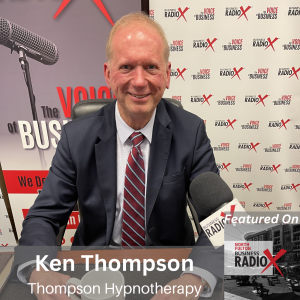
Hypnotherapy for Stress, Trauma, and Healing, with Ken Thompson

May 5, 2025 by John Ray

Hypnotherapy for Stress, Trauma, and Healing with Ken Thompson, on North Fulton Business Radio with host John Ray
North Fulton Business Radio
Hypnotherapy for Stress, Trauma, and Healing, with Ken Thompson
Loading
00:00 /
RSS Feed
Share
Link
Embed

Download file

Hypnotherapy for Stress, Trauma, and Healing with Ken Thompson, on North Fulton Business Radio with host John Ray

Hypnotherapy for Stress, Trauma, and Healing, with Ken Thompson (North Fulton Business Radio, Episode 867)

In this episode of North Fulton Business Radio, host John Ray talks with clinical and medical hypnotherapist Ken Thompson of Thompson Hypnotherapy. Ken shares how his experience as a client led him to become a practitioner. He opens up about how hypnotherapy helped him lose weight, manage stress, and improve his overall health. They explore what hypnotherapy really is, how it works, and why it is often misunderstood. Ken discusses how he helps clients address deep-rooted issues like trauma, anxiety, and behavioral patterns by working with the subconscious mind. He also shares success stories that highlight how hypnotherapy creates lasting change. If you are curious about how mindset and subconscious work can lead to better health and well-being, this conversation is a wonderful place to start.

John Ray is the host of North Fulton Business Radio. The show is produced by John Ray and North Fulton Business Radio, LLC, an affiliate of Business RadioX®, and is recorded inside Renasant Bank in Alpharetta.

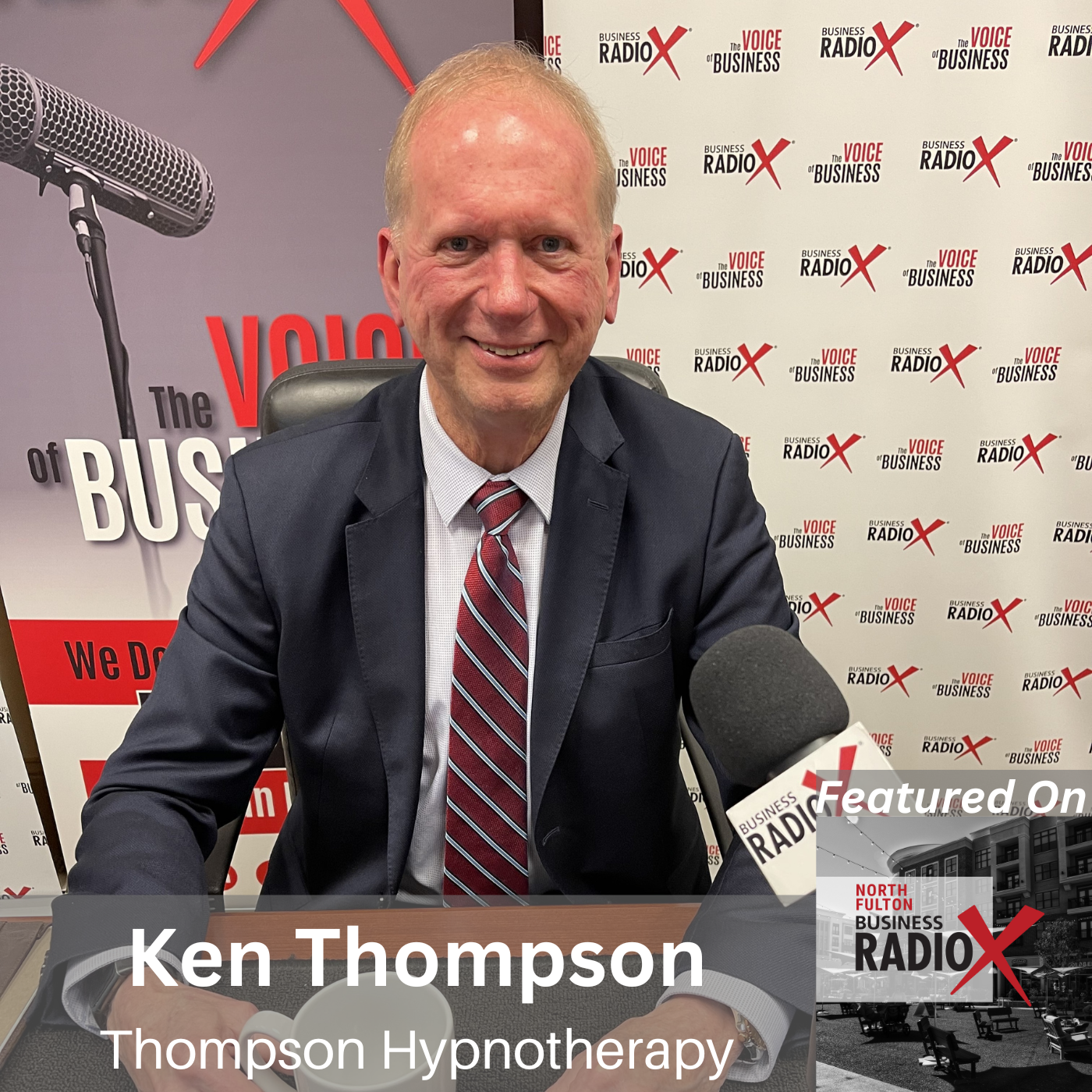
Ken Thompson, Thompson Hypnotherapy

Ken Thompson, Thompson Hypnotherapy

Ken Thompson, a clinical and medical hypnotherapist at Thompson Hypnotherapy LLC, focuses on helping people improve their lives so they can begin living their best lives every day. He enables clients to make permanent behavior changes related to habits, fears, beliefs, and behaviors that may be hindering them or holding them back. Some of the changes his clients achieve include permanent weight loss, improved sleep, reduced negative effects of stress, and overcoming depression, anxiety, insomnia, procrastination, PTSD, traumatic events, phobias, and panic attacks. Additionally, Ken assists clients in improving sales or sports performance and achieving smoking cessation.

Website | LinkedIn

Topics Discussed in this Episode

00:00 Introduction and Welcome to North Fulton Business Radio
00:28 Meet Ken Thompson: Hypnotherapy Expert
02:07 Ken’s Personal Transformation Journey
06:11 Understanding Hypnotherapy
07:16 Dispelling Myths About Hypnosis
07:41 The Impact of Childhood Conditioning
13:02 Addressing Anxiety and Panic Attacks
15:13 Client Success Stories
20:35 Initial Consultation Process
27:29 Final Thoughts and Contact Information
28:45 Closing Remarks and Gratitude

About North Fulton Business Radio and host John Ray

With over 860 shows and having featured over 1,300 guests, North Fulton Business Radio is the longest-running podcast in the North Fulton area, covering business in our community like no one else. We are the undisputed “Voice of Business” in North Fulton!

The show invites a diverse range of business, non-profit, and community leaders to share their significant contributions to their market, community, and profession. There’s no discrimination based on company size, and there’s never any “pay to play.” North Fulton Business Radio supports and celebrates businesses by sharing positive stories that traditional media ignore. Some media lean left. Some media lean right. We lean business.

John Ray, host of  North Fulton Business Radio, and Owner, Ray Business Advisors

John Ray is the host of North Fulton Business Radio. The show is produced by John Ray and North Fulton Business Radio, LLC, an affiliate of Business RadioX®, and recorded inside Renasant Bank in Alpharetta.

The studio address is 275 South Main Street, Alpharetta, GA 30009.

You can find the full archive of shows by following this link. The show is available on all the major podcast apps, including Apple Podcasts, Spotify, Google, Amazon, iHeart Radio, and many others.

John Ray, The Generosity MindsetJohn Ray also operates his own business advisory practice. John’s services include advising solopreneurs and small professional services firms on their value, their positioning and business development, and their pricing. His clients are professionals who are selling their expertise, such as consultants, coaches, attorneys, CPAs, accountants and bookkeepers, marketing professionals, and other professional services practitioners.

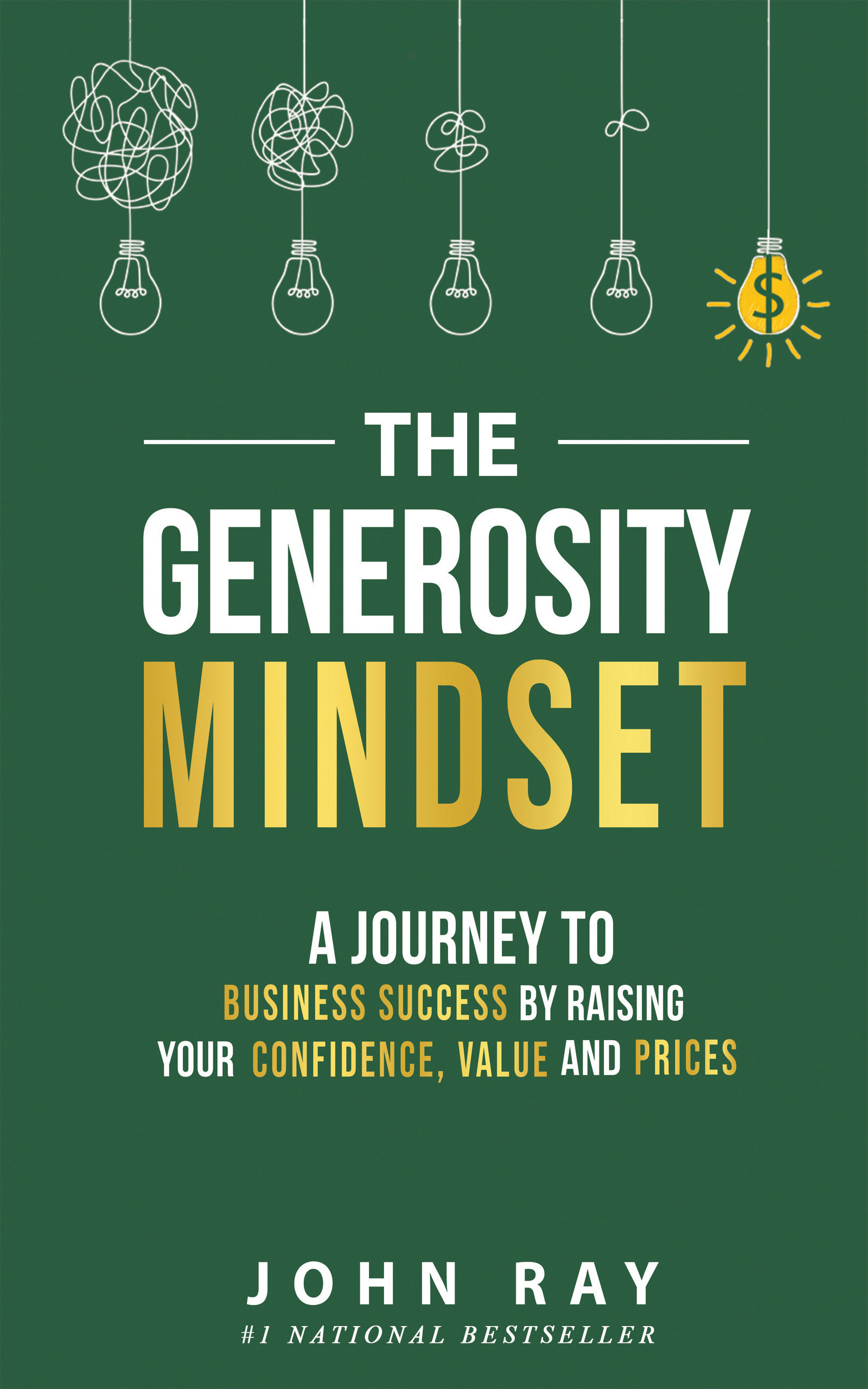
John is the national bestselling author of The Generosity Mindset: A Journey to Business Success by Raising Your Confidence, Value, and Prices.

Tagged With: anxiety, Healing trauma, hypnosis, hypnotherapist, hypnotherapy, John Ray, Ken Thompson, North Fulton Business Radio, Thompson Hypnotherapy, trauma, Weight Loss

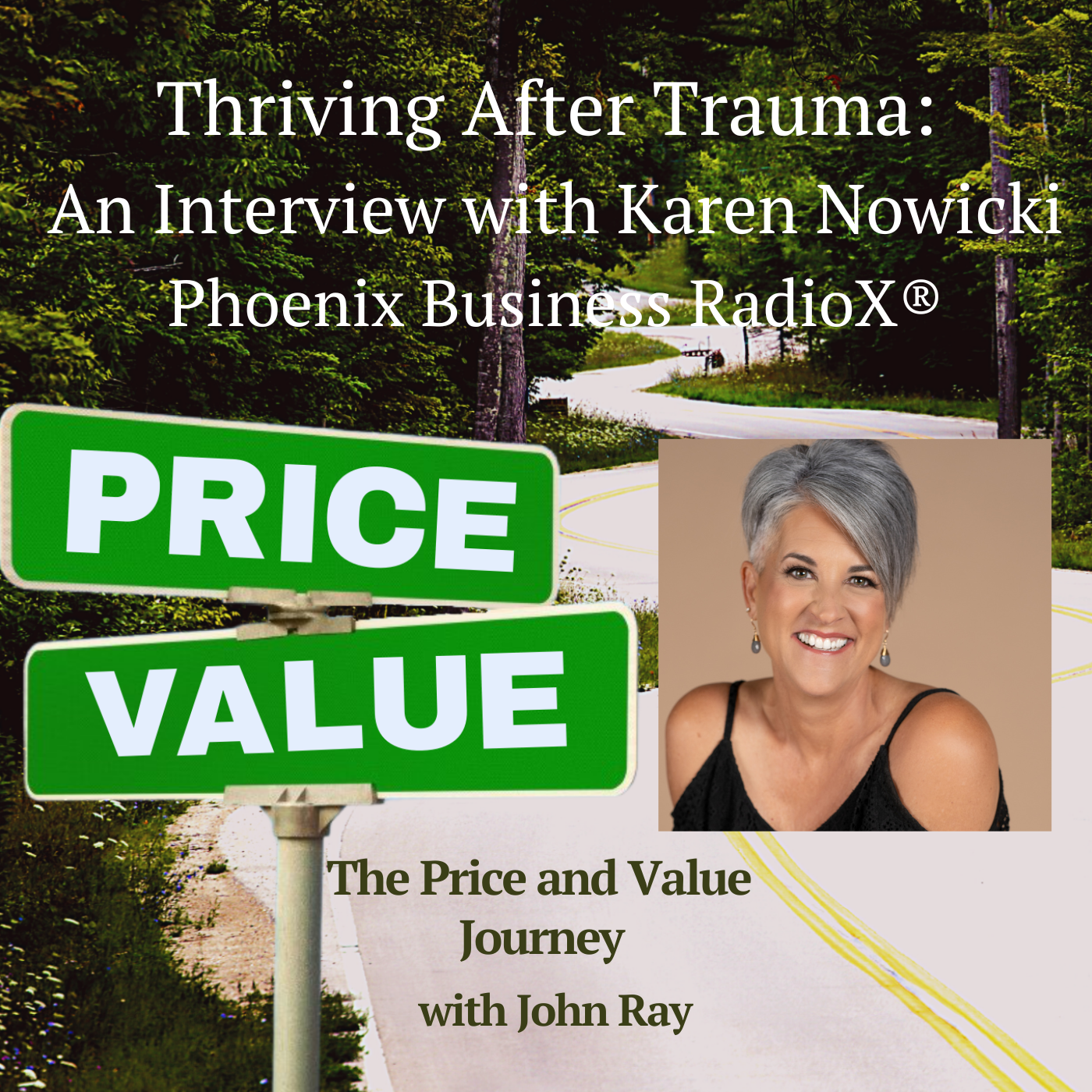
Thriving After Trauma: An Interview with Karen Nowicki, Phoenix Business RadioX® and Deep Impact Leadership Coaching & Consulting

February 23, 2023 by John Ray

Karen Nowicki
North Fulton Studio
Thriving After Trauma: An Interview with Karen Nowicki, Phoenix Business RadioX® and Deep Impact Leadership Coaching & Consulting
Loading
00:00 /
RSS Feed
Share
Link
Embed

Download file

Karen Nowicki

Thriving After Trauma: An Interview with Karen Nowicki, Phoenix Business RadioX® and Deep Impact Leadership Coaching & Consulting

What do you do when trauma hits you without warning? How do you recover personally? How do you hold it together for the clients you work for in your services practice? How do you get to a point where you can thrive again? Karen Nowicki, Phoenix Business RadioX® and Deep Impact Leadership Coaching & Consulting, joined host John Ray to discuss the trauma of her husband’s suicide attempt, what she did to cope with her own mental health challenges that followed, her decision to share her journey in detail, how she managed her two businesses through those difficult times, and much more.

The Price and Value Journey is presented by John Ray and produced by the North Fulton studio of Business RadioX®.

Phoenix Business RadioX®

Since 2017, Phoenix Business RadioX® has successfully launched, promoted, and produced over 1500 podcast episodes covering topics from BioScience Careers to High Tech Lending …and just about everything in between.

Website | LinkedIn | Facebook | Instagram

Karen Nowicki, Owner, iNudge LLC, Phoenix Business RadioX® and Deep Impact Leadership Coaching & Consulting

Karen Nowicki, Owner, iNudge LLC, Phoenix Business RadioX® and Deep Impact Leadership Coaching & Consulting

Karen Nowicki is the Owner of iNudge LLC, the parent company to Phoenix Business RadioX and Deep Impact Leadership Coaching & Consulting.

Executive Leaders and Business Owners hire Karen to accelerate their intrapersonal / interpersonal relationships and harness the power of a growth mindset.

Karen has spent over 30 years in corporate, small business and educational leadership roles and for the past 10 years has held an impressive private client list that includes c-suite leaders in a variety of industries, including: technology, medical, higher education, hospitality, and finance.

Karen is an impeccably trained Integration Coach with certifications in communications, facilitative leadership, mindfulness, trauma integration, tao healing, talent management, and strategic planning.

LinkedIn

TRANSCRIPT

John Ray: [00:00:04] And hello, everyone. I’m John Ray on The Price and Value Journey. And I am delighted to welcome Karen Nowicki. Karen is with Phoenix Business RadioX and Deep Impact Leadership Coaching and Consulting. And just a way of introducing Karen, what do you do if, not only in your professional services practice but in your life, trauma comes right out of the blue and drops right in your lap? And how do you hold it together and recover? And that’s what we’re going to be talking with Karen about today.

John Ray: [00:00:40] Karen is a successful author, speaker. She has her own coaching practice, as I mentioned. The name of that practice is Deep Impact Leadership Coaching and Consulting. Karen’s been an expert guest on regional television and radio shows. She’s a regular contributor to many print and online magazines, blogs for both business and education. And where I intersect with her proudly is that she and I are colleagues in the Business RadioX Network, and Karen’s the much smarter studio partner than I am, but she runs the Phoenix Business RadioX Studio. And Karen Nowicki, it’s just a pleasure to have this time to chat.

Karen Nowicki: [00:01:29] I’m excited to spend time with you, John. It’s usually a quick text or a phone call, how are you doing this, what’s going on here, between either one of us. And we have yet to ever meet in-person, but we’ve got to change that in 2023.

John Ray: [00:01:42] I look forward to that. Yeah. I want to correct that. So, let’s put that on our list for 2023. I like that.

Karen Nowicki: [00:01:52] Did I say ’23, too, I think? I meant 2023. If I said ’22, I can’t keep up.

John Ray: [00:01:58] Well, let’s get each other the right year. I’m not sure I said the right one. But I gave a little bit of an overview of you and your work. But like me, you have two different professional services businesses, so give everyone a little bit of an overview of that work.

Karen Nowicki: [00:02:16] Sure. Again, thank you for having me be with you and your listeners today or viewers. I have been referred to, for years, as the ultimate problem solver and solution finder. For the past 24 years, I’ve acquired advanced training and certifications in executive leadership, trauma integration, Tao Healing, and then organizational and personal development.

Karen Nowicki: [00:02:40] And it just made sense that while I was running my coaching practice – which you’ve mentioned a little bit – almost six years ago to open Phoenix Business RadioX and run that alongside it. And I’ll talk about why that was so important in a moment.

Karen Nowicki: [00:02:54] My greatest strength is the ability to help people understand what they need, what they want, and how to have that come together on a consistent and daily basis. Most of the time, it’s telling people and showing them how to get out of their own way. And I know the business of business as well as the business of people. And so, let’s face it, in any business, we’re always dealing with people.

Karen Nowicki: [00:03:19] And so, it just made sense, Business RadioX was a wreath on my door and an opportunity for me to kind of elevate my exposure as a leader when it comes to personal and professional development. And I haven’t ever looked back and regretted the decision. It’s been hard to run both businesses at times, especially these last couple of years. But I’m doing it and I’ve got the right team to help me now.

John Ray: [00:03:45] Yeah. That’s terrific. I’m curious for you – and we’ve talked a little bit about this, but for our listeners – why later on Business RadioX specifically, and that work among all the other things you could have done next to your coaching practice?

Karen Nowicki: [00:04:03] It’s a great question. I think it’s an important one for you and I when we encourage people to take on podcasting or B2B radio in their businesses, because not everybody understands why at Business RadioX we do the things that we do it or the way we do it.

Karen Nowicki: [00:04:18] So, six years ago I had sold a business, and it gave me the leverage to hire a coach and think about how do I want the next layer of my career to be. And, also at the same time, gave me the leverage to open an auto mechanic shop for my then husband. So, I went to my coach and I said I continue to work with professionals. These were attorneys, doctors, successful entrepreneurs and business owners, typically highly visible in their industries and was coaching them at a very soulful, personal, and professional level. And yet they weren’t referring me like other people were, the general laypeople.

Karen Nowicki: [00:04:58] And I knew that I was making a huge difference in their lives because I was always the one they were texting saying, “Thank you. I finally solved that problem at work. I finally hired the right teammate. My husband or my wife and I are getting along better. I had you sit on my shoulder when I had those conversations.” Like, all that acknowledgement told me that they were stepping into their life and leadership in an incredible way and I got to be the catalyst and the help to kind of either nudge or shove them into that depending on what they needed. And yet they weren’t referring to me.

Karen Nowicki: [00:05:32] And so, my coach said, “Well, go ask them. These are people that you’ve gotten to know and they really care about you. And clearly, you’re making a difference.” Their feedback to me, John, was, “Well, why would I tell anybody you’re my best kept secret. Like, you’re my secret weapon.” And they weren’t interested in telling me.

Karen Nowicki: [00:05:47] And that was difficult for me to hear because at that time my coaching practice was referral only, which is a mistake, but it’s how I built it. I didn’t understand marketing and advertising nor did I want to do it. And I really have never liked the sales part of things.

Karen Nowicki: [00:06:06] And so, my coach challenged me to maybe consider a podcast. And at first I thought that was an awful idea. I quickly, within two hours of research, came across Business RadioX. And I could just tell that they were or we are doing things differently. It’s about the story and shine the spotlight on someone else. So, I thought, I can do that.

Karen Nowicki: [00:06:28] And within a week, was in Atlanta visiting with Stone and Lee, following them around and paying attention to what they’re doing. And by the time I flew home about four days later, I had made the decision to open Phoenix Business RadioX so that I could show up among our leaders in the Metro Phoenix area, have conversations about what’s important to them, their industries, their verticals, their decisions, their initiatives. And in exchange, have an opportunity to get to know them at a really deep level. And then, in turn, be able to say, “Here’s what I do outside of Business RadioX. If you know anybody who’s struggling with personal growth or professional development or leadership or finances, whatever it is, have them have a conversation with me.”

John Ray: [00:07:13] You know, it’s amazing what you can do with a mic, isn’t it? I mean, that’s terrific. Well, I want to get right into your story, Karen, or the reason we’re doing this show in terms of the trauma that hit you and your now former husband, Mike. I want you to share whatever piece of that you want to share and how you want to share that story.

Karen Nowicki: [00:07:38] Yeah. It’s not an easy conversation to share and it’s also not very easy for people to listen to. Back in 2019, my then husband attempted suicide and survived gunshot wound through his head. It was a total surprise to me. We closed his auto shop and we unraveled the mystery of how did this all happened while he was lying in the trauma intensive care unit for the first month of his recovery. I came to see that there was addiction and gambling and just really a lot of mental health challenges that weren’t as evident as they were. We had been together for 15 years, the love of my life.

Karen Nowicki: [00:08:27] And I struggled to get up everyday. I struggled to help our then 12 year old kind of make his way through it. I have two older kids as well who very much loved and cared for Mike and they were trying to make sense out of it. They were living out of the house, already adults.

Karen Nowicki: [00:08:45] And being so visible in our community already because I have had Business RadioX up and running for then almost two-and-a-half years, and the way in which I show up in social media even before this, is kind of I’m visible, here are the situations, the struggles, the challenges that I go through, I decided that I was going to tell the story while it was happening.

Karen Nowicki: [00:09:10] That was, I’ll say, a divine download. I woke up one morning and what was on my heart and in my head was you will tell this story as it’s happening. And I thought, “Oh. You can’t ask me to do that.” I was in trauma. I was in crisis. I wanted to just pull the sheets over my head and just disappear. And yet the next thought that I heard was, “I’ve prepared you your whole life for this.” And I thought, “Well, that’s a crappy way. Why would that ever be part of my story?” Because I pride myself on knowing people so well, and helping people, and getting really clear about soulful self-reliance and deep impact leadership, how could I end up with a partner who went to bed with me every night, that was the love of my life, end up wanting to take his own life?

Karen Nowicki: [00:09:59] So, long story short, Mike and I are no longer together. He wasn’t willing to or wasn’t capable of, I think is more more appropriate to say, to do the work it required to be a healthy whole unit between he and I and then, of course, our son. And it just made more sense safety-wise, mentally, physically, emotionally for Ivan and I to be on our own. I do know that he is now with his family in a different state. They’ve chosen not to have anything to do with us, which is heartbreaking. And at the same time, I continue to recover from that, all the while keeping both businesses open and being very vocal about my own mental health journey throughout this chaos and trauma and that of my sons.

John Ray: [00:10:46] Wow. A lot there. Let’s talk about the processing, the idea that all this was going on with your life partner and you had no idea. I mean, in terms of just the mental health struggles and then the financial issues and other issues that you talked about that were going on, how did you process just getting hit by this out of the blue?

Karen Nowicki: [00:11:16] I would like to say people will tell me that I processed it really well. And my first reaction is, “No. No. I didn’t.” When we fall into trauma or chaos, we go into the fight, flight, or freeze, or fawn mode and we’re now using a different part of our brain just for survival. So, a lot of it really, John, is a blur. Even though I was writing daily on our CaringBridge page and then, of course, on social media, it was really a therapeutic opportunity for me to try to make sense out of everything.

Karen Nowicki: [00:11:47] Mike and I were both building our businesses at the same time. Phoenix Business RadioX was brand new, so is his auto shop. And one business alone for a family is difficult in those early startup days, you and I both know that, let alone two. So, while I felt like we were grounded and corrected – excuse me – grounded and connected, he had his set of challenges and expenses and I had mine. And so, I knew he wasn’t feeling well physically. I was oblivious to – because he wasn’t willing to share it – what was going on mentally.

Karen Nowicki: [00:12:21] And I think that’s the most important call out here for our listeners and our viewers. Not everybody, one, knows when they’re struggling mental health-wise. And even if they do, there’s so much stigma and so much fear about saying to somebody I am not well, I am not doing well and I need help. Like, for Suicide Prevention Month and even just mental health awareness, we always say I’m there for you, be on the lookout for clues and that sort of stuff.

Karen Nowicki: [00:12:53] And I will tell you, I think we are very good at hiding that stuff, which is part of why I’ve told my story so vocally and so visibly, because my story is no longer Mike’s story, nor was it even when it was happening. I had to deal with my own mental health. And so, I just got really good about asking for help and being very candid, “I feel like crap right now” or “I don’t even know which way is up.”

Karen Nowicki: [00:13:20] And always continue to have faith. I said to you earlier today before we got on the interview that the universe always has my back. And I believe that for all of us. If we can hold on to hope, we can get through anything. And I always knew that at some point beyond that threshold of chaos and craziness and be, fortunately, where I am today, even though the fog has just finally lifted the last couple of months.

John Ray: [00:13:44] Well, I want to dive into that a little more, the universe has my back. What are the beliefs that underlie that statement that you have?

Karen Nowicki: [00:13:55] For me, it’s faith-based. I don’t attend a church any longer. I grew up Catholic and have always been a very soulful, spiritual person, very led by a belief in a higher power. And even though life has proven to give me challenge after challenge, business and career, and marriages, and even challenges with kids, and health, and all that stuff, I continue to give that over to a higher power. And when I say the universe has got my back, I don’t know that it matters what faith we have or if we have any faith as long as we believe that there is something better on the other side of a challenge.

Karen Nowicki: [00:14:37] And so, every time I have a challenge, small, medium, or large, I just know where’s the growth, where can I learn more about me, learn more about me and how I show up in the world that I can take into this next iteration of where I’m going after, this stuff is behind me.

John Ray: [00:14:56] So, when all this happened with Mike, you decided pretty quickly that your response needed to be journaling, sharing what you had. And we’re not talking about private journaling. I mean, we’re talking, really, about online journaling. You can explain more about what I mean by that. But what was the genesis of that decision for you?

Karen Nowicki: [00:15:21] Again, I will tell you that it wasn’t my decision. I know that might sound crazy. But in my meditation practice and the way in which I just am very soulfully self-reliant, I listen very deeply to what my soul needs and how I’m supposed to show up in the world. So, I know that gets a little bit woo, but there you go. So, very early on within three or four days, again, I woke up and I just knew that I was being called from a higher place to journal and share publicly what was going on for me. And it was a survival mode.

Karen Nowicki: [00:16:04] My son said it recently that it was a way for me to survive and thrive versus a way for me to story tell and get attention. It doesn’t fit with everybody’s narrative. You know, there’s a handful of people, my family included, thinks I did it for attention and did it just to further my career. If that were that, I literally would have kept the sheet over my head, put a padlock on the door, and said, “I’m done. I’m out.”

Karen Nowicki: [00:16:30] And so, I asked three friends to read every entry that I wrote for CaringBridge – that, again, was repeated on social media – so that they could look at it through three layers. One, am I taking care of myself in this? Are you reading it to where you can hear that this really is me trying to find my way through the chaos and make understanding of what’s happening to the degree that I can?

Karen Nowicki: [00:16:53] Two, is it being respectful of Mike and his family and his journey? Because at the time, while I wanted us to be together forever, that was the plan, I never would have guessed that it would not have turned out that way. And yet I knew that at some point he would likely be in a position to be aware that I told the story as it was happening. So, was I respectful to him and his family and his journey? And then, the third piece was, if there could be a nugget for other people who are watching and listening and reading, is that opportunity there for someone to have a takeaway?

Karen Nowicki: [00:17:21] So, all, but I think one journal over the course of probably nine months journal entries, was there ever a sentence that came back? And my very best friend, Julie, came back and said, “This is the only sentence that I’m not sure where you’re coming from on this. It sounds more like ego than anything else. Can you reword it or pull it out?” And with that, I did. That was the only time. The rest of the time it was, “Oh, my gosh. Karen, this is what I’m getting from it and I know this is going to make a difference. And I can hear you getting better and healing as you go through this.”

Karen Nowicki: [00:17:49] So, less of a decision, John, and more of a calling. Which, I think, again, our viewers and our listeners for this particular show, if they’re entrepreneurs and business owners, even solopreneurs, we don’t come into our businesses lightly. We come into it, I think, oftentimes, because we have a calling to do something that’s bigger than us.

John Ray: [00:18:12] Right. Yeah, for sure. Now, this is the part of the story that I’m not sure that I’ve heard before, that you had three trusted friends that knew you quite well, that they sound checked it, I guess maybe is the word, right? They sound checked to make sure that the Karen they knew was speaking.

Karen Nowicki: [00:18:37] Yeah. And this was well before any of the immediate family started attacking and wanting to manage what I was saying and would rather have me be quiet. I just knew that I was fairly visible in our community anyway already. I’d already talked about post-partum depression when my kids were younger, and changing careers, and what is it like to be fairly visible and that sort of stuff, getting older, those kinds of things, even body image and those choices, and how I can grow to love myself more.

Karen Nowicki: [00:19:18] So, knowing that I had already been through all that and sharing in that way, I knew I needed to have people, not fact check, but just sound check and make sure that I was doing it from a place of, first, caring for myself; second, being respectful of Mike and his journey, wherever that would take him; and third, can people hear it from a place of what’s in it for me.

Karen Nowicki: [00:19:39] And it’s proven to be one of the most amazing things I’ve ever done. I hear, still, from people three years later how much I’ve changed their life or the lives of their loved ones. I would say, and I think only firefighters and medical professionals get to say this, I know there are at least eight people whose lives I’ve helped save because they either read or someone read to them the accounting of what I was going through as a dear casualty of somebody who wanted to leave this earth before their time.

John Ray: [00:20:15] I would love it, Karen, if you would share one of those as an example. You know, obviously, we’re not going to mention names or anything like that, any identifiers. But if you could just share an example of one of those stories.

Karen Nowicki: [00:20:30] I can. So, we’re here in Arizona. I had a high school friend reach out through Facebook and mentioned that she was going to be in town – this has been, oh, probably a-year-and-a-half ago – and would I be open to coffee. And we don’t know each other well. We see each other at reunions and, of course, on social media, thumbs up, or a little like this, like that. And I said, I’d love that. And so, I waited at the coffee shop for her to arrive maybe three or four minutes early. And as she’s walking from the parking lot, we smiled at each other.

Karen Nowicki: [00:21:00] And as she’s getting closer, I watch her face change and she starts to get teary eyed. And I was not prepared for that. We gave each other a big hug and she said, “I’m so grateful that you’re sitting down and meeting with me. I need to tell you how much you’ve impacted my life and the life of my fiancé.”

Karen Nowicki: [00:21:18] Now, we’re not spring chickens. We’re celebrating our 40th high school reunion this year, so we’re in our late 50s. And so, this is somebody that I knew as a young girl and have seen at reunions. And she’s in a relationship now. I believe they’re engaged, maybe even married now, a couple of years after we met over coffee.

Karen Nowicki: [00:21:39] And she said that her then partner was struggling with mental health, depression, suicidal ideation. And as she read what I was sharing, being his beloved partner, it was ripping her apart that that could be her and she didn’t know how to handle it. He was unwilling at the time to get professional help. And so, she started reading these entries to him aloud. And I don’t know how soon, but I think within four or five entries, he ended up agreeing to go get professional help by himself and also couples counseling for the two of them.

Karen Nowicki: [00:22:16] And she said I just knew that the anguish and the difficulty that I was sitting in, not having a clue what happened, not having known how to help, and having a partner who refused to get help until it was too late, and even now not getting the help, she just knew that she had to share that. So, I hope that’s kind of the example that you’re looking for.

John Ray: [00:22:43] Wow. That’s tremendous. And there’s no telling what has happened without you even knowing about it. And this is just what you know about in terms of the people that you have impacted by sharing your story so truly authentically.

Karen Nowicki: [00:23:03] Yes. There was no other choice. And now it’s interesting, again, I’m beyond it. We have not been married for over a-year-and-a-half now. And I want to continue to be a beacon of light for people, and it has to be authentic. So, I’m just kind of looking for what’s happening in my life that I can continue sharing.

Karen Nowicki: [00:23:26] You alluded to this, there was catastrophic financial loss that I was not even aware of had already taken place. And so, even though I’m 58 years old, it’s like I’m 23 years old, starting over again and keeping both businesses afloat. I’m so grateful for the community providing some financial support when we were in the midst of the chaos. I have a very dear friend who recently invested in my business so that I could get to the next level with teammates and that sort of thing.

Karen Nowicki: [00:23:55] And, yeah, I feel very grateful that I’ve been willing to get out of my own way and also share that part of the story to help other business owners and individuals who, again, sometimes we think that we’re the only person. I always say, people think that they’re terminally unique. And we’re not. We’re all looking for validation that we’re okay, and that we’re enough, and that we can contribute in some way. We’re all designed fairly similarly, whether we’re an introvert or an extrovert or anywhere in between, we just want to know that we’re here for a reason.

John Ray: [00:24:31] Since you brought up introvert and extrovert, we were talking about this before we came on, you know, the typical listener of this series is a solo and small professional services practitioner, most of whom are introverts as a general proposition. And I can hear the introverts saying, “I can’t believe that Karen shared what she shared.” What do you say to somebody that is thinking that and thinking I’m a private person and there’s no way I could do what you’ve done, Karen?

Karen Nowicki: [00:25:12] Well, stay private. I realized that that is one of my unique – I don’t know what it is – call it a curse or a blessing. One of the unique gifts that I bring to this world is the ability to tell people how I’m feeling as it’s happening. And not everybody can do that publicly.

Karen Nowicki: [00:25:32] However, it’s important to share your story with someone. And when people are fortunate to be in relationships, marriages, or long term friendships where they can really show up authentically as who they are and let someone know when they’re struggling and challenged and they’ve got the right support structure, that’s great.

John Ray: [00:26:16] And I don’t want to make this into something that’s a little crass like personal brand, but I think people hear that and they hear authenticity and showing up. But there’s showing up as – I’ll call it – the made up you. They’re showing up as the Real you. And I mean the capital R, Real you. That’s what you did.

Karen Nowicki: [00:26:58] Yeah. And there’s a way to do that, no matter who you are. This is not about airing your dirty laundry, just to do that, right? Just speaking authentically from a place of some of the challenges, whether it be business, or raising children, or moving to a new location, or the next level in your business, whether you’re introvert or extrovert, I don’t think that matters. As leaders, we’re called to show up authentically and everyone has their own pace and cadence for that.

Karen Nowicki: [00:27:30] That’s one of the neatest things that you and I can offer with Business RadioX, our story matters. And people want to hear what we’ve been through, what challenges do we have, what hurdles did we have to overcome, when did you think you’re going to quit and give up, and what got you through that to to be where you are today, what’s the next challenge that you’re faced with right now going into 2023. Those answers can be from the cuff and they can be from the heart.

Karen Nowicki: [00:27:57] And I think that’s one of the greatest things that Business RadioX has to offer people and with the work that you do, John, with your clients. People need to get out of their own way, myself included. So, I have coaches and guides. When it comes to sales, when it comes to marketing and advertising – I mentioned that early on – those are areas that I’m not well-equipped at and good at. And yet I show up because I’m listening and I’m learning and I’m paying attention to the people who do it better than I can. And they’re helping me learn how to do it for me in a way that it feels real and authentic to me.

John Ray: [00:28:33] So, let’s talk briefly, if we can, just the whole idea of you obviously had to hold yourself together, your relationships together, your children as they navigated this trauma that came out of the blue for them as well. But let’s talk about your businesses and just how you held it together. Because you’ve got to show up for clients and you’re a coach and you’ve got to bring something for that client that’s sitting in front of you with their own issues that may have nothing to do with what you’re dealing with. How did you do that?

Karen Nowicki: [00:29:23] I’m grateful that I had a couple different income streams. So, I think that’s important when we look at it from that perspective of we’re relying only on one avenue of income and it’s solely dependent on us, we’re in trouble. I was fortunate that I could very quickly hire someone to run the studio for me. And with very little direction, she took it over for me. So, that part of my business was handled.

Karen Nowicki: [00:29:49] I did step away from the intimate coaching for a little bit of time because I was no good for anybody, so being able to admit when I needed to step away. And, again, grateful that I had this other business running so that there was still the income.

Karen Nowicki: [00:30:07] As far as working with clients, both here at Business RadioX and in my coaching practice, I had already built enough strong enough relationships just in caring for people deeply and giving them permission to care for me back. That when I was ready to come back into the field full force, I could simply make those calls and send an email and say, “Hey, listen, I’m ready. Here’s the kind of clients that I enjoy working with. If you’re ready to come back and work with me, I’d love that. If not, if you’ll be a referral source for me.”

Karen Nowicki: [00:30:36] So, I think the theme for both of my businesses is when we care deeply for people and we allow people to care deeply for us, the universe works on our behalf. Things will come our way when we know that we are really a force for good.

John Ray: [00:30:53] You know, it strikes me as I’m listening to you talk, Karen, and again, I’m getting back to just what you decided to share. I mean, you did that as your own personal source of healing. It strikes me how generous that is, because you could have kept all that to yourself. You could have written what you wrote, pass it along to your three close friends, let them look at it, and just deep sixed it and kept it private. But there was a mission to what you were doing, and it was an act of pure generosity, it seems like to me, because you were willing to take whatever came your way in terms of the consequences of doing that, which, for you, were severe.

Karen Nowicki: [00:31:49] That’s very sweet of you to say. I don’t think I’ve ever heard anybody refer to it as generous, so thank you. It makes me a little overwhelmed.

Karen Nowicki: [00:32:00] It was a survival mechanism. It’s not something I wanted to do. I wanted to be like the rest of the world on social media and who’s visible and just the highlight reel. And, unfortunately, I didn’t get to share that. So, it was a survival technique. It was the only one that I had available to me. And I just listened.

Karen Nowicki: [00:32:26] And I think when we’re being called to do anything in our life, business or personally, and we have that – I’ll call it – nagging voice in the back of our head – mine sometimes sounds like a nag, a nag or a nudge – I’ve just learned in my life that it’s that voice and that nudge or that nag that’s constantly humming in the background that I’ve got to pay attention to. And, again, I have to just trust that I’m going to find my way through why it is that we do the things that we’re called to do.

Karen Nowicki: [00:32:57] And I love that you’ve shared that it felt generous. It makes me feel very hopeful and appreciative that you’re paying attention.

John Ray: [00:33:06] Well, thank you. Well, see, there’s a difference, to me, between help and trying to help people. Because sometimes help has strengths, right? I mean, it can come back in ways that maybe we don’t acknowledge, but it comes back in ways to benefit us. But when you’re doing what you were doing, knowing that you likely would suffer in some way from it, and you did, then that really gets beyond help into generosity, and that’s why I say that.

Karen Nowicki: [00:33:39] And my Business RadioX family or our Business RadioX family was there for me every step of the way, all of you. And we were fairly new in relationship. I’d only had the studio, I want to say, for – what? – a-year-and-a-half, maybe two years, and, again, at a great distance. I’m way over here in the Southwest and you guys are all in the Atlanta area. We’ve grown a lot since then as a team. And I never felt like there was a time that I couldn’t pick up the phone or text or email and say I need some help. And I didn’t have to rely on that very often. But when I did, everybody rose to the occasion.

Karen Nowicki: [00:34:16] Which, again, for our listeners, for this particular group of people who might be interested in a conversation like this, even though you are a solopreneur and you are at the helm, bring people in your life, invite people in your life, the coach, the guide, the mentor, possibly a partner, certainly your clients and your customers – find the win-win-win for everybody – all the stakeholders. So that, again, it’s a richer and more viable experience and it will have legs.

John Ray: [00:34:48] Yeah, for sure. And, really, one aspect of what you’re talking about is digging the well before you’re thirsty. I mean, you had that support structure before this happened. And when it happened, you were ready, you had prepared.

Karen Nowicki: [00:35:06] I have a friend who just had a 20 pound tumor removed from her stomach. We’re hoping that it’s not cancer. It doesn’t look like it’s going to be. And I just went and visited her on Sunday. Also, a business owner, a longtime solopreneur. And now she has a team of 20 people on her team, which is amazing. And she said just that, John, “I had no idea how the community and people in my life would respond when I needed help and I was laid up. And I’m so grateful that I built a business that didn’t rely just on me. That I got smart a couple of years ago and started building it so that more stakeholders could benefit in profit and we could help more people.”

Karen Nowicki: [00:35:46] And very different situation for me, but she said the exact same thing, “I am so overwhelmed by the amount of love and support and outpouring for people just being a champion of me. I can’t help but wonder why.” And we both laughed at each other and said, “Well, it’s because you show up that way for other people and that’s truly who you are.” So, yes, I love the way that you put that.

John Ray: [00:36:08] Yeah. Yeah. Wow. Shoutout to her and her healing, for sure. So, one of the things that has stood out to me recently, speaking of things we post on social media, is you’ve been using this hashtag I want to know about, so it’s #traumainformedworkplace. Now, what do you mean by that? What does that term mean? And is that looking ahead toward trauma that might occur? Is it looking backward? What are we talking about there, Karen?

Karen Nowicki: [00:36:43] So, it’s not my term. I didn’t make it up. A lot of people use it, especially now that COVID has been something that’s really knocked us all off of our A-game. And I come at trauma informed workplaces a little bit different. A lot of folks will go into companies, enterprises, medium size, small businesses, public education, wherever, and they will have hour long talks, sometimes half-day seminars, even three or four days, certification programs around how to be aware of where trauma might be impacting the way we show up in our life and businesses. That’s all well and fine. I would say that’s layer one. Let’s be aware that trauma is part of what’s happening in the background all the time.

Karen Nowicki: [00:37:34] So, the angry executive or the pissed off client or the employee who doesn’t show up for work day after day or they’re there but they’re not really high functioning, it’s likely that something traumatic has happened either recently or from the past that they haven’t dealt with. And in the work that I do with clients, I help people get the shock out of their body in a variety of different ways. But the body keeps score, and if we don’t clear the shock out of our body, it will inform our decisions. And we’re still in fight, flight, or freeze, or fawn mode. And fawn is maybe a new word for a lot of people. Fawn is an over caregiver and I’m taking care of everything but myself – that would be fawning – and kind of grappling for the attention and needing the visibility.

Karen Nowicki: [00:38:23] So, layer one is let’s just be aware of what trauma is, how it impacts our brain, and how it shows up in conflict. And let’s make sure that as a trauma informed workplace, we have a way to handle that and deal with that culture-wise and team-wise. That’s all well and fine.

Karen Nowicki: [00:38:39] And then, this next layer that I work with, with individuals and business owners that come to my practice and work with me, it’s let’s have you heal your trauma and re-integrate it so that your decisions, the way you show up in your marriage, your friendships, your business, your leadership, the way in which you work with your stakeholders, you’re standing in the present moment with all your faculties about you. You’re aware that you have a past, some of it may have been kind of sucky, some of it may have been great. But the decisions you’re making today are in alignment with who you are today. And you’re not having to look over your shoulder out of reaction or response.

Karen Nowicki: [00:39:16] Now, it’s a long winded answer, but there’s a lot to trauma, and I think we’re finally starting to have conversations about it so that we can be there at a higher level for each other, and most importantly for ourselves.

John Ray: [00:39:30] Yeah. And that shows up differently, as you said, for each of us. And the question is having conversation and being open about that and creating an environment where people can be open.

Karen Nowicki: [00:39:43] Safe, right? And we’re talking about trials. There’s personal trauma. There’s also historical trauma. There’s legacy trauma, familial, family trauma. And we all carry a little bit of that with us without even knowing it. So, we’ve got to come to better understand how does that come and show up in our communication or our lack of communication, and how can we have compassion, respect, and autonomy with each other.

John Ray: [00:40:11] So, Karen, you’ve been really generous with your time, and you’re busy, you got a lot going on.

Karen Nowicki: [00:40:18] My producer just walked by the window and was going to come in and get ready for our show, and he’s like, “Whoops. I can’t go in there yet.”

John Ray: [00:40:24] He’s like, “Hey, we got other things to do here.” But before we let you go, though, I would love it if maybe you could share one final takeaway. You know, as listeners absorb your story, what should they hold on to from your story that could help them in their personal lives and in their business lives?

Karen Nowicki: [00:40:49] So, we heard a couple of times that phrase, a couple of times, and you just said it to me as you’re kind of handing this for my final word, everybody’s story matters. Therefore, your story — like you’re lacking or you deficit, those are just stories that you tell yourself that you can change your story. Our stories and our past matter, and they don’t have to fully define us. So, take care of yourself, mental health, physical health, self-care, all of that is not underrated.

Karen Nowicki: [00:41:22] And it’s not just going to a spa once a month or getting your manicure, pedicure, or going to see your chiropractor, once a year checkup. It is daily practices that help you become the best version of you, so that when you look in the mirror everyday, you like the person that you see looking back at you. And that filters into every aspect of your life, most particularly those of us who are solopreneurs and entrepreneurs and business owners, we’ve got to get that together or we’re going to find ourselves struggling when it comes to financial wellbeing and the success of our businesses.

John Ray: [00:41:57] And, folks, if you need help with that, I know a coach that can help you. So, that gets us to the most important question, maybe, which is how folks can get in touch with you, Karen, that would like to know more maybe about your coaching practice, but just maybe they’ve got to download their own trauma around suicide.

Karen Nowicki: [00:42:20] Absolutely. I would love to help even if just a conversation. If we’re not a right fit for each other, I can refer you to other people. I do see people here in-person in the Metro Phoenix area. And I also have just as many clients – actually, maybe even more – that we do FaceTime or Zoom from the comfort of their office or their home. So, happy to be of support.

Karen Nowicki: [00:42:39] I am on LinkedIn, Karen Nowicki or Phoenix Business RadioX. I am just now finally working on a website for Deep Impact Leadership. So, the best way to reach out to me right now is through LinkedIn. Or my email address is karennowicki2007@gmail.com if you want to reach out personally. Or reach out to John and he’ll direct you to me, and we’ll have a conversation, just a discovery and see where I can best support you if I am the right person for that.

John Ray: [00:43:08] Terrific. Karen Nowicki, wow, I’m just honored to have you as a friend. And thank you so much for your great work and how you are helping people in such a generous way. Thank you.

Karen Nowicki: [00:43:23] You’re welcome, John. Thank you for letting me share this time with you.

John Ray: [00:43:26] Absolutely. Hey, folks, just a quick reminder as we wrap up here, pricevaluejourney.com is where you can find out more on this series, you can find the link to the show archive. And you can also sign up to get more information on my upcoming book coming out this summer called The Price and Value Journey – ironically enough – Raising Your Confidence, Your Value, and Your Pricing Using The Generosity Mindset Method. So, if you want to know more about that, you can sign up for updates on when that’s coming. And with that, thanks again to Karen Nowicki for joining us. I’m John Ray on The Price and Value Journey.


About The Price and Value Journey

The title of this show describes the journey all professional services providers are on:  building a services practice by seeking to convince the world of the value we offer, helping clients achieve the outcomes they desire, and trying to do all that at pricing which reflects the value we deliver.

If you feel like you’re working too hard for too little money in your solo or small firm practice, this show is for you. Even if you’re reasonably happy with your practice, you’ll hear ways to improve both your bottom line as well as the mindset you bring to your business.

The show is produced by the North Fulton studio of Business RadioX® and can be found on all the major podcast apps. The complete show archive is here.

John Ray, Host of The Price and Value Journey

John Ray The Price and Value Journey
John Ray, Host of “The Price and Value Journey”

John Ray is the host of The Price and Value Journey.

John owns Ray Business Advisors, a business advisory practice. John’s services include advising solopreneur and small professional services firms on their pricing. John is passionate about the power of pricing for business owners, as changing pricing is the fastest way to change the profitability of a business. His clients are professionals who are selling their “grey matter,” such as attorneys, CPAs, accountants and bookkeepers, consultants, marketing professionals, and other professional services practitioners.

In his other business, John is a Studio Owner, Producer, and Show Host with Business RadioX®, and works with business owners who want to do their own podcast. As a veteran B2B services provider, John’s special sauce is coaching B2B professionals to use a podcast to build relationships in a non-salesy way which translate into revenue.

John is the host of North Fulton Business Radio, Minneapolis-St. Paul Business Radio, Alpharetta Tech Talk, and Business Leaders Radio. house shows which feature a wide range of business leaders and companies. John has hosted and/or produced over 1,700 podcast episodes.

Coming in 2023:  A New Book!

John’s working on a book that will be released in 2023:  The Price and Value Journey: Raise Your Confidence, Your Value, and Your Prices Using The Generosity Mindset. The book covers topics like value and adopting a mindset of value, pricing your services more effectively, proposals, and essential elements of growing your business. For more information or to sign up to receive updates on the book release, go to pricevaluejourney.com.

Connect with John Ray:

Website | LinkedIn | Twitter

Business RadioX®:  LinkedIn | Twitter | Facebook | Instagram

Tagged With: coach, Deep Impact Leadership Coaching & Consulting, executive coach, iNudge LLC, John Ray, Karen Nowicki, Phoenix Business RadioX, Price and Value Journey, pricing, professional services, professional services providers, solopreneurs, Suicide, suicide awareness, surviving trauma, thriving after trauma, trauma, value, value pricing

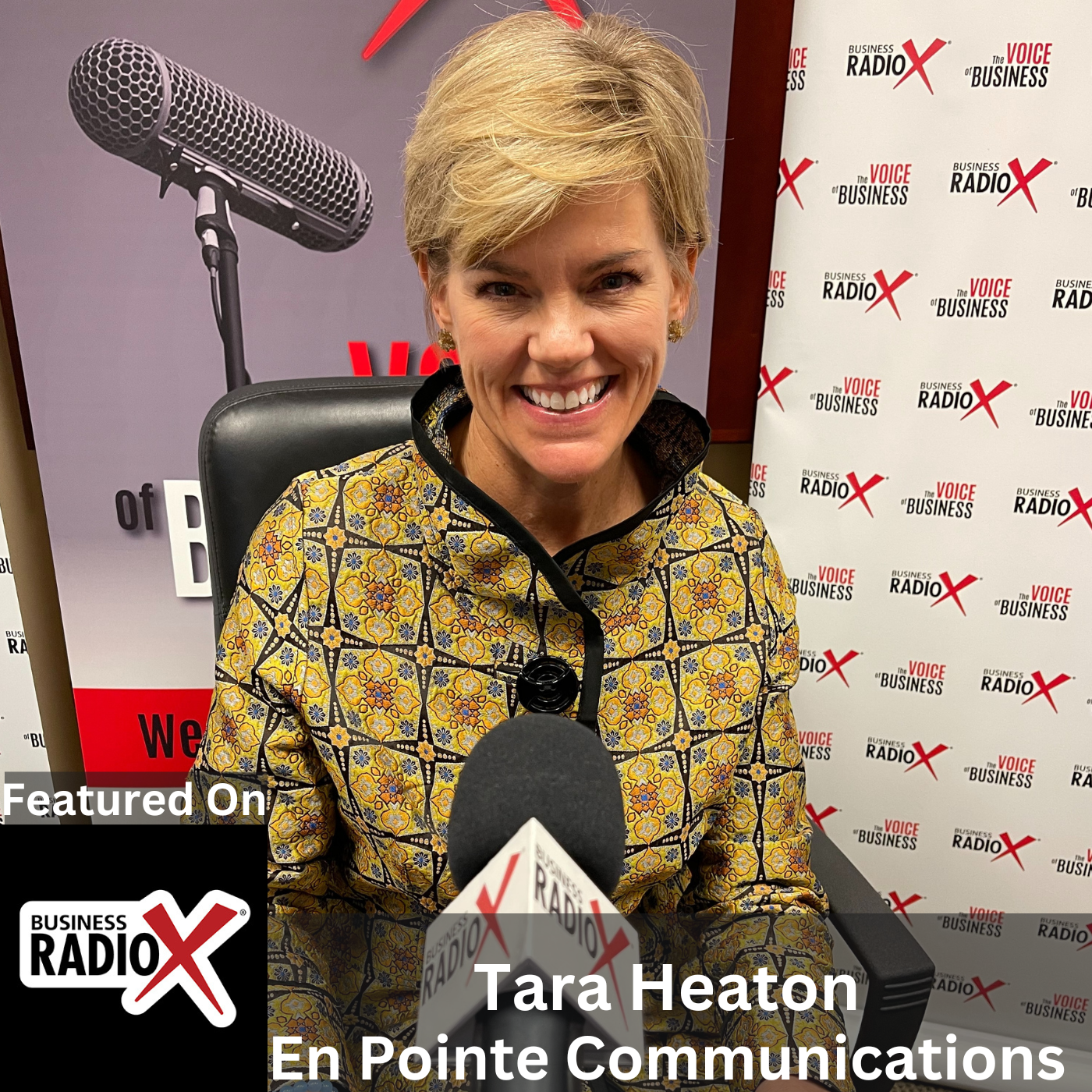
Tara Heaton, En Pointe Communications

February 21, 2023 by John Ray

Tara Heaton, En Pointe Communications
North Fulton Business Radio
Tara Heaton, En Pointe Communications
Loading
00:00 /
RSS Feed
Share
Link
Embed

Download file

Tara Heaton, En Pointe Communications

Tara Heaton, En Pointe Communications (North Fulton Business Radio, Episode 610)

On this edition of North Fulton Business Radio, Tara Heaton, Founder of En Pointe Communications, joined host John Ray to discuss how her daughter’s traumatic brain injury led to her current work. Tara discussed how neuroscience can guide us in more effective communication, the power of stories and telling better stories, how to engage listeners in the stories we tell, success stories from her work, and much more.

North Fulton Business Radio is broadcast from the North Fulton studio of Business RadioX® inside Renasant Bank in Alpharetta.

TRANSCRIPT

Intro: [00:00:04] Live from the Business RadioX Studio inside Renasant Bank, the bank that specializes in understanding you, it’s time for North Fulton Business Radio.

John Ray: [00:00:19] And hello again, everyone. Welcome to another edition of North Fulton Business Radio. I’m John Ray. And we are broadcasting from inside Renasant Bank in beautiful Alpharetta.

John Ray: [00:00:30] And if you are looking for a bank that is so highly rated by their customers that they have won multiple awards from national organizations, like Time Magazine’s money.com and Forbes, well, I’m sitting in that bank, Renasant Bank. They’ve won Best Bank in Georgia, Best Bank in the Southeast, Best Bank in the United States, actually even, in the surveys. And so, if you want to know why they’ve made such a difference in the lives of their customers – I’ve certainly found it out myself – go to renasantbank.com and find one of their local offices and give them a call. And I think you’ll be glad you did. Renasant Bank. Understanding you. Member FDIC.

John Ray: [00:01:17] And now, I want to welcome Tara Heaton. Tara is with En Pointe Communication. Tara, welcome.

Tara Heaton: [00:01:22] Thanks so much for having me, John.

John Ray: [00:01:23] It’s great to have you. So, let’s talk about you and how you’re serving folks out there. How are you serving folks at En Pointe Communication?

Tara Heaton: [00:01:31] Well, it’s just exactly as it sounds, En Pointe Communication helps people to communicate more effectively. And I have a platform called Talk to the Brain, and everything that I teach and coach is founded in neuroscience, which I’ve been studying now for over 18 years. So, I share a little bit of the science and then we go deep into story. So, I’m helping speakers, leaders, sales people, teens to communicate more authentically and to understand how to communicate so that their message lands more compelling, more memorable, and helps them to get the results they desire.

John Ray: [00:02:08] Wow. So, what is it that we’re missing in? I know this is a big question and we could go on a long time on your answer. But what are we missing with communication that neuroscience helps us solve, that knowledge of neuroscience helps us solve?

Tara Heaton: [00:02:29] Oh, wow. That’s a great question. And there’s, I think, several components to that. But I think I will switch it around and think how I’m helping people and why the science proves that. And I’ll start with stories. Because everybody knows that there’s so much power, and most people know, that stories, there’s scientific proof about why they help us to remember and how they touch us.

Tara Heaton: [00:02:53] People don’t see that a story is a moment in time. It’s a transformational moment in time. It is different than a journey. So, you and I, John, our life is decorated with hundreds of stories. And when we learn to tell those in a compelling way, it shoots up dopamine in the minds of the listeners. And, today, we are more addicted to dopamine than ever before. When we learn to tell a compelling story, it shoots up that dopamine which pleasures the brain.

Tara Heaton: [00:03:23] Also, when we use a vulnerable story that shares a relatable emotion, it fires up our serotonin and oxytocin in the mind of the listener that builds trust, that builds connection. And when people learn this and they experience examples of it, it automatically improves their confidence and their ability to communicate more effectively.

John Ray: [00:03:46] Oh, wow. There’s a lot to that I want to get to. But before we dive deeper there, let’s talk about your journey. Because you’ve got some specific aspects to your journey that led you into this interest in neuroscience and how it affects communications.

Tara Heaton: [00:04:05] Absolutely. And I would be remiss if I didn’t share this part of my story because I forever will. I’ve always been an analytical minded person. I’ll sit out, I will analyze our conversation – I can assure you – and ask myself how I could have done better, what went right, what could have been improved. And I’ve always been that way.

Tara Heaton: [00:04:26] I was a sales leader. I was running a sales team. I had a very successful business. I’d had built success really from pretty much nothing, and, so to speak, three healthy children, a beautiful marriage. As they say, living the dream.

Tara Heaton: [00:04:40] And my middle daughter was 12 at the time that everything changed for us. She contracted a virus that is still documented, interestingly, as a virus of unknown etiology. The virus traveled to her brain, caused her to have something called encephalitis, which is simply inflammation of the brain. She went into a coma. And when she came out of the coma, she couldn’t hold a hairbrush, she didn’t know who we were, she couldn’t walk. But interesting, I mean, it was considered a traumatic brain injury, she could talk.

Tara Heaton: [00:05:13] So, through much, much, much therapy, she’d relearn to do pretty much everything and most of her memory came back. And we thought the worst is behind us. You know, our prayers have been answered and Caroline’s going to be okay.

Tara Heaton: [00:05:27] But the encephalitis left her with epilepsy. And so, I became, as you might imagine, as any mother would, her warrior. And I started searching for ways to stop these seizures. Most people with epilepsy, their seizures are controlled with medication. But the medication has terrible side effects.

Tara Heaton: [00:05:45] So, about a year into this journey, I sat with her neurologist and I was at Emory Clinic – I’ll never forget this – and I said, “Dr. Weissman, look at my little girl.” And she looked over at Caroline and she was looking down, shoulders slumped, looking down at her untied little converse tennis shoe. And I said, “She was energetic, she was social, she was athletic. This is our Caroline today. Can we please just take her off these drugs and try to manage the seizures?” And Dr. Weissman said, “No. Because Caroline’s seizures travel right through her hippocampus, and with every seizure, her brain is being damaged.”

Tara Heaton: [00:06:22] And that day, John, sent me on a journey of just being obsessed with understanding the brain, what was going on with her mind, how I could help her. And I continued to, literally, travel the country over looking for answers. And I’m sorry to say that the seizures have never, ever stopped. And today, Caroline is very, very cognitively challenged due to just years and years of seizures.

Tara Heaton: [00:06:48] But the study just started to inform my work. And as I was running across the country, learning, investigating, trying any type of therapy, natural or not, I continued to learn about specifically neurotransmitters, how we remember, what sparks our attention, our imagination. And it started to inform my work as a sales leader and as a speaker and as someone who provided a lot of workshops.

John Ray: [00:07:15] Yeah. Wow. So, you really took what you learned there and applied it in a sales context because that was your legacy, business, right?

Tara Heaton: [00:07:29] That’s right. That’s right.

John Ray: [00:07:29] But you’ve really expanded it beyond just its application to sales teams.

Tara Heaton: [00:07:36] Oh, yes. Absolutely. As a matter of fact, I do help and coach sales people, but the work is so very much focused on building an authentic voice. And what that means is I help people to make better connections, and that might be from a stage as a speaker. But it really helps teams to better connect and better tell stories that relate to their specific business. They get to experience the thrill of sharing vulnerable stories, how to do that, and how it builds trust and connection, which helps teams.

John Ray: [00:08:12] Yeah, for sure. Tara Heaton is with us, folks. She is with En Pointe Communication, her own firm. Tara, you mentioned storytelling. You mentioned that that’s pretty well-known, the power of stories, and I couldn’t agree more. So, maybe we can walk past that to some of the other principles that really became solid beliefs for you in terms of what you take to your clients today out of all this study that you did.

Tara Heaton: [00:08:49] Well, I will say, the reason I continue to focus on stories is because that seems to be the most popular of the workshops. People continue to come to me and say, “You know, I want to teach my team to tell better stories.” And these aren’t sales teams. These are folks who are in negotiations. These are folks who just simply are communicating with customers, customer service, on the phone. We overthink story. And so, that’s why it’s become such, I think, a really popular workshop. But I also help speakers —

John Ray: [00:09:20] Well, let’s stop there just a second, if you don’t mind, because that’s very interesting what you just said, we overthink story. Say more on that.

Tara Heaton: [00:09:27] Oh, yes.

John Ray: [00:09:27] Okay.

Tara Heaton: [00:09:28] Yes. Thank you.

John Ray: [00:09:31] Okay. See, I was going to walk right past storytelling, but now you’ve made me want to dig into it, so let’s do that.

Tara Heaton: [00:09:36] Absolutely. So, I’ll tell you a story to explain it.

John Ray: [00:09:39] Okay. Appropriately enough.

Tara Heaton: [00:09:41] Absolutely. I had a client who came to me and she was looking for a new job. And she’s quite successful and really, really strong in her field. But she said, “I hear you’re a great storyteller, and I understand that telling powerful stories in an interview could really help me.” And here’s what so many people say to me, she said, “I don’t think I really have any stories.”

Tara Heaton: [00:10:10] And after about an hour long – what I’ll call – a discovery session with her, we uncovered unbelievable beauty that decorated her life, some challenges, some trials, some successes, some wins. And each one of those are little, small individual stories that make a point that cause people to remember the point that we’re trying to make.

Tara Heaton: [00:10:34] So, people tend to think my personal story, what I’ve been through with my children and my family is quite tragic. And when people hear it, they think, “Wow. I don’t have a story.” We all have stories. And as natural storytellers, we start to become very sensitive to the fact that we are creating new stories everyday through every experience. And so, when we can share our experiences, things that we’ve been through or things that we’ve witnessed, so that it matters to the listener, so that it makes the listener the hero of that story and not ourselves, it helps us to get better results.

John Ray: [00:11:11] Yeah. I’m glad you mentioned that right there at the end, because sometimes we hear stories that seem like they’re more about – I’ll call them – therapy in public, where people are really kind of working out their own issue as opposed to telling a story for the purpose of reaching other people. Does that make sense?

Tara Heaton: [00:11:34] Oh, yes. So much. As a matter of fact, somebody asked me recently when I was referencing, I said, “Who is the hero of your story?” And she said, “Well, I am.” And I said, “If you’re telling it to anyone, they are the hero. They relate to what you’re sharing. You share relatable emotions that people can relate to that inspires them through your vulnerable story.” So, if we just share a winning moment in our lives without sharing the strife and the struggle and the insecurity that we faced, it will not be nearly as memorable as if we share the vulnerable side of it, because that’s where people relate and they think, “Wow. If he or she could overcome that, I too can do the same.”

John Ray: [00:12:18] Wow. So, how do we tell stories and get out of our own way, I guess this might be the way to put it. How do we know that we’re really putting the listener in the middle? Because this is a human thing, right? We’re all self-absorbed. We all operate from our own perspectives. And so, how do we communicate in such a way that brings the listener into the story we tell?

Tara Heaton: [00:12:52] Well, a lot of the answer to that is timing. So, when is it appropriate to tell a story? And what exactly defines a story? So, I have a framework for stories that I share with my clients we go through. And a lot of times that’s better applied when you’re really preparing for a speech or a very important sales presentation. But to become a natural storyteller, I’ll give you a recent example of just sharing stories when the timing is right, and that’s when the last thing I would want people to do is to have practiced and scripted a story.

Tara Heaton: [00:13:28] I had a gentleman that works closely with me. He came to me recently and he said, “I’m supposed to be at this conference on Monday. I think I need to go to leadership and tell them I can’t go.” And I said, “Why is that?” And he said, “I’ve been gone all week. You know, we have three children. My wife’s pulling her hair out. I mean, dad hadn’t been here. And I want to go to them and just say can you send somebody else to this conference, but I’m really stressed about it. What do you think? What do you think I ought to do?”

Tara Heaton: [00:13:59] And I said, “Mark, may I share something with you?” And he said, “Absolutely.” And I said, “Years ago, I remember coming home late one evening and going upstairs to kiss my daughter, Caroline, goodnight.” She was about seven years old. I walked up the stairs, kissed her goodnight, and she sat up in her bed. She was a dainty little girl and sat up in her little pink pajamas, and she said, “Oh, mom, tomorrow night I want you to help me fix my hair and I want you to help me with my costume because Friday’s the play.”

Tara Heaton: [00:14:31] And I said, “Oh, Caroline, I’m not going to be here tomorrow night. I have to work again.” And I was working for a company at the time called Herff Jones. And she sat up and she pulled her little tiny fist back and she punched her pillow. And she said, “I hate Herff Jones. I hate it.” And she punched her pillow again. And every time I think about that story, I feel a punch in my gut.

Tara Heaton: [00:14:56] I didn’t give Mark any advice. I didn’t tell him what I thought he ought to do. I just shared something painful from my past, something that I regret. And he had his answer. That’s the power of story. We also built some trust that day, as you might imagine.

John Ray: [00:15:11] Oh, yeah. Yeah. Wow. So, you teach in your workshops. You mentioned the kind of story you tell. But when you tell a story, talk about the timing angle there.

Tara Heaton: [00:15:33] Well, one of my favorite examples of when to share a story is when someone asks you for advice. It’s so easy to say, “Here’s what I think you should do.” But if you share with them a time when you faced a similar struggle, it’s unforgettable. The power of that is so, so, so very different.

Tara Heaton: [00:15:52] Also, many times I’m helping people with stories when they’re in negotiations or small presentations within a company, like our team has to share their idea. And it’s so easy to get bogged down in the data. And we need data. We need statistics. But we need a story that brings that to life. So, that’s helping people to imagine not a journey, not a long this happened and then this happened, not that. There was a transformational moment in time, kind of that tipping point that helps to bring our data to life. I call it story with stats. So, there’s a way to gain the results that you’re after by using data and bringing it to life with story.

John Ray: [00:16:36] Wow. Great words from Tara Heaton, folks, with En Pointe Communication. So, Tara, you mentioned storytelling, we’ve talked about that. What are some of the other aspects of communication that this journey through neuroscience has led you to?

Tara Heaton: [00:16:56] Well, wow, I don’t even know where to begin. But, you know, I mentioned dopamine. And our society today is more addicted to dopamine than ever before. So, I’ll give a quick tip on dopamine. Because we know that our listeners are addicted to dopamine, what that means is people are going to become more distracted than they used to be. People can’t follow us. So, we’ve got to lead our conversations, our speeches with something that’s highly unpredictable and unusual because that grabs people.

Tara Heaton: [00:17:29] The other thing a lot of people don’t really know about dopamine is it’s not pure just pleasure. Dopamine is that feeling of anticipation. It’s like it’s why we’re addicted to video games and social media and things that make us want more and more. So, if we know that our listeners are searching for something, they’re in anticipation at the beginning of a speech, what we need to do is kind of dangle a carrot. Tell folks, “At the end I’m going to share –” boom, this big gold nugget that keeps people attentive.

Tara Heaton: [00:18:00] I’ll give one other neuroscience tip, and then I won’t continue on with all of them. But I’ll give another fun one that it really helps people in their communication, and it is the understanding of serotonin. And serotonin is the feeling we get when we feel confident and proud, and we feel seen, and we feel validated. So, this especially applies in speaking to audiences and in sales presentations. We need to make sure that our audience feels understood and seen.

Tara Heaton: [00:18:29] Well, how do we do that? In a conversation, we can certainly ask those questions. But there are also always assumed objections. And people tend to hide from assumed objections. Whereas, I say, we need to uncover them and say to people, “I know how you might feel.” You must be thinking that and then fill in the blank. And that always, always helps me. I can visually see an audience lean in when I tell them I find a way to say to them I understand.

Tara Heaton: [00:19:00] And someone asked me once, they said, “Well, if we’re in a sales setting, why would I want to agree with what someone is thinking if I’m trying to sell them something?” And I believe, John, in being always honest and authentic. And the answer to that is this, we may not agree. Agreeing and validating someone’s perspective are two completely different things. We need to seek to understand people with a curious mind, look for wonder, understand why they think the way that they do.

Tara Heaton: [00:19:33] If we could take this into our political conversations in this country, can you imagine how much softer and safer and what might come out of those if we weren’t looking to be right. We were looking to understand the other person. That builds serotonin, which builds connection and makes people want more of us.

John Ray: [00:19:50] Yeah. Absolutely. Because we tend to flatten people out and take that three or four dimensional person, I’ll say that, and turn them into one dimension. They’re a cartoon character.

Tara Heaton: [00:20:09] So true.

John Ray: [00:20:09] Yeah. That then, therefore, we can project our own feelings onto that caricature we’ve drawn.

Tara Heaton: [00:20:19] Absolutely.

John Ray: [00:20:20] So, Tara, I love that point. It makes a lot of sense. But, you know, when you bring in the political, I’m thinking everybody gets that. But we tend to do that to people that are close to us, I mean, in our lives, and in the business world, in our families, that kind of thing. And that may be the unrecognized part of what we often do, right?

Tara Heaton: [00:20:50] Yes, very much so. And I talk about this a lot on the Daily Huddle where I’m a Wednesday host. We talk a lot about relationships and how much we want to strive to be right, and to be heard, and to get our way. And for me, when I find myself communicating in that manner, I know what’s driving it. It’s ego, which causes us to lead with – no. It’s insecurity which causes us to lead with ego.

Tara Heaton: [00:21:18] When someone touches a nerve, we find ourselves in a space where we might feel insecure about any number of topics. We all have insecurities. And when we allow ourselves to lean into those and go into that imposter syndrome state, that’s when we forget to listen, to remain in a sense of wonder, and all, and curiosity. And we want people to hear us.

John Ray: [00:21:41] Yeah. For sure. So, I want to switch gears and talk about how you work with people now. So, you talked about your previous work with sales teams, you still do some of that work. But you just mentioned relationships, that’s an entirely different matter. So, talk about some of the types of clients that you work with. Do you work with groups, one-on-one?

Tara Heaton: [00:22:12] So, I provide workshops where I have people from different industries to come. But, really, probably my sweet spot right now is working with small to medium-sized businesses who are growing fast and they want to nurture their team. They want to help them to grow their confidence and their ability to find their voice, tell their own stories, and really build on an authentic voice that makes them feel empowered and comfortable. So, that helps culture, which is relationships, right? What defines culture in any company? It’s the relationships. It is the environment. So, I work with small teams to elevate that.

Tara Heaton: [00:22:49] And then, I love still working with speakers. Most recently, I helped a pretty well-known speaker with a talk she was giving. And we worked so hard on her stories. We crafted every word. She rehearsed it and rehearsed it. And as a matter of fact, she said, “You know what? I think I might read this. I just don’t want to miss a word.” And she she knew it quite well, so she wasn’t staring down, but she chose to read the speech. And she called me and she said, “First standing ovation of my life.” So, that’s great joy for me to help speakers.

John Ray: [00:23:27] Oh, wow. Yeah.

Tara Heaton: [00:23:27] So, I do speakers and sales people, small teams, the woman I just mentioned, anyone who’s trying to communicate more effectively. But teamwork, building relationships, helping folks to tell better stories, and find a confident voice, that’s the sweet spot right now.

John Ray: [00:23:46] I’m just curious about the bottom line of all this. Let’s talk about the value that comes out of doing the work that you lead people through and what they get out of that, that maybe they don’t recognize when they hear you talk about what you’re able to do.

Tara Heaton: [00:24:09] Thank you for asking that. It actually makes me light up. Because you could take neuroscience, John, and all that I’ve learned about the brain, and you could use it to manipulate in a sales setting. And the purpose of my work is the opposite of that. The purpose of my work is so that if I understand your mind, that gives me the ability to honor you, to get to know you, to connect with you. And when we make deeper connections with people, for me, I think that’s the greatest gift that we have at our disposal.

Tara Heaton: [00:24:44] So, the bottom line, the truest value of my work is that it helps people to grow their confidence in building relationships. Absolutely, that applies to business. But it goes home, it goes into friendships, it goes into family. So, when we feel more confident in being able to articulate our heart and our experiences, that’s the bottom line value of my work.

John Ray: [00:25:08] Yeah. That’s terrific. So, Tara, you’ve talked about how this journey that you’ve been on with your daughter, all the research you’ve done, all the reading and insights that you’ve had over time, the clients you’ve worked with has really saved your spirit.

Tara Heaton: [00:25:34] Yes. And I didn’t realize it probably until maybe just several years into the work. It was always focused on communication. But, you know, my family went through a lot of trauma. It started with Caroline’s illness, but it absolutely did not stop there. I have three children who have all suffered as a result of a family just living in what felt like constant trauma, watching someone’s brain deteriorate, watching her be bullied, watch her to continue to crash down, her mom falling apart in tears. It was not a safe space, our home, for a long, long time.

Tara Heaton: [00:26:14] And I look back and I’ve learned more than just using what I’ve studied to apply to communication. It applies to our habits and our self-talk. And when I understand why my body might be low on serotonin or dopamine or need oxytocin, I know what to do about it. I know that I don’t have to go to find some sort of addictive habit that’s not healthy to help me. And so, I’ve really taken the science and I’ve applied it to life habits, and to how I spend my time, how I communicate with people, which truly, truly has saved my soul.

Tara Heaton: [00:26:54] Because here’s what I know, the way our brain functions and all of the things that it is able to synthesize, a lot of it’s starting, interestingly, from our gut, all of that is energy. And that energy, we have the ability to repurpose and take it out into the world in any way that we want to.

Tara Heaton: [00:27:16] The last two days before I came here with you today, I’ve been sitting in the hospital with two people in my family who are ill. And maybe without my study, I would have called you and said, “I don’t have it in me today.” But I tell you what I know, that I could take all of that struggle, all the pain that I’ve faced over the past two days, and I can repurpose that into love and I can share it out in such a way that touches other people. And I’ve continued to do that over and over again throughout my life. And that’s because of my study and my sweet Caroline.

John Ray: [00:27:53] Wow. What a beautiful story. Thank you for all that. Thank you for sharing that. What great work. Tara Heaton with En Pointe Communication.

John Ray: [00:28:05] Tara, I’d be remiss, I think, at this point if I didn’t ask, you’ve talked about your own story, your own journey, but maybe you could share a success story of someone you’ve worked with. You mentioned a couple around storytelling, but maybe share one more. Someone who’s had real transformation in their lives, in their work because of your intervention.

Tara Heaton: [00:28:29] Well, let’s see. One comes to mind. A very simple one is that I helped someone to craft a TED Talk proposal, and it was accepted. So, that was very exciting.

John Ray: [00:28:39] That’s a good one.

Tara Heaton: [00:28:39] Several speaker stories, I mean, that’s beautiful work. I also write for people. I write for some artists and help people to tell their story on their About page. And that is just so rewarding that people realize that we all have beautiful stories to tell.

Tara Heaton: [00:28:58] And then, I worked with a small business recently. And as a matter of fact, I just heard from their manager recently and she’s like, “You cannot believe how my team is transformed.” And that’s so touching. She said, “I knew that we needed to build trust and connection and I was trying to force it. Now, they’re going after it and I just sit back and I’m a part of it.” And you know what that says to me, John? That people are enjoying their work more because of my work and nothing can make me more happy.

John Ray: [00:29:29] That’s wonderful. So, Tara, I know you also do – I want to get this in – some public speaking keynotes. Talk about the kind of groups that would benefit from having you in to speak.

Tara Heaton: [00:29:43] Oh, thank you. Yes. As a matter of fact, I’m really trying to elevate this aspect of my work because each time I provide a keynote, I’ll have people to call me weeks and months later and tell me that they’re still referencing the talk. So, I just have finally said to myself, “You know what, Tara, you better get out there and do more of this.”

Tara Heaton: [00:30:03] So, I really have two tracks when it comes to speaking. And one is very inspirational. One is, I go a lot deeper into the story of our family, which does not stop with just Caroline. It also goes into my son who was highly addicted to dopamine and adrenaline, and what that has caused in his life, and how he’s come out of it. So, there’s certainly an inspirational talk that I give. And that is to any team or any organization that says we want to hear a story about suffering and triumph. And I’m pretty raw and open about it.

Tara Heaton: [00:30:36] And then, also, I give mini-talk to the brain talks. And those are to help people to communicate more clearly with better strategy and absolutely more authentically helping them to get better results within relationships, within sales, and within speaking.

John Ray: [00:30:52] Wow. Terrific work. Tara Heaton, folks, with En Pointe Communication. This has been terrific, Tara. I wish we could keep going, but we got to let you get back to your work and what you do for others. But before we let you go, let’s give directions on how folks can find you.

Tara Heaton: [00:31:12] Oh, thank you very much. I’m kind of weak on social media, I will say. But the best place to find me is just to go to my website. And the easiest way to do that is to go to talktothebrain.net, and that will roll over into En Pointe Global. So, again, I’m on Facebook, Tara Caldwell Heaton. I’m certainly on LinkedIn, Tara Heaton. But easiest way talktothebrain.net, and a little pop up box will come and we can be in touch.

John Ray: [00:31:39] That’s terrific. Tara Heaton, folks, with En Pointe Communication. Tara, thank you so much for coming in.

Tara Heaton: [00:31:45] It’s been a joy, John. Thank you.

John Ray: [00:31:46] Thank you so much.

John Ray: [00:31:49] Hey, folks, just a quick thought for you. If you’ve got an administrative task or bookkeeping or other marketing issues, maybe presentations that need to be done that are weighing you down and you’re not able to spend time with your clients and with your prospective clients, I’ve got a suggestion for you. Office Angels. Essie Escobedo has a whole team of angels that do fantastic work. I know this myself because I use their services. They fly in, get the job done, and then they fly out. And they do it on an ongoing or as needed basis, depending on your project and your need.

John Ray: [00:32:30] So, give Essie a call, 770-442-9246. Tell her I sent you. Or go to officeangels.us to learn more. But I think you’ll be glad you did. And Essie has been around since 2000 with this business, so she’s well-established and does great work. And, again, I use her services. So, you’ll be glad that you entrusted your business to her.

John Ray: [00:32:59] And, folks, just a quick reminder, North Fulton Business Radio, we’re coming up on our seventh year anniversary. We’ve been around for seven years and we’re excited about that. And we’ve gotten over 600 shows. And the reason we’ve been around this long is because of your support. We are grateful for you because what you have done is continue to share the show with others that you think might be interested in particular guests. I can’t imagine you haven’t heard some reason to share this show with someone else who needs to hear the message that Tara has given. But you’ve done that on all our shows and we’re excited about that. And we are excited about your support and you make us keep going as the voice of business in North Fulton. So, thank you. Thank you, thank you for that support. We are grateful.

John Ray: [00:33:53] So, for my guest, Tara Heaton, I’m John Ray. Join us next time here on North Fulton Business Radio.

En Pointe Communications

En Pointe Communications collaborates with you to build custom strategies, employing unique assets and abilities. Whether your audience is a single prospect or a thousand fans, we focus on your core purpose to ignite momentum, empowering you to grow your business and impact lives.

Website | Facebook

Tara Heaton, Founder, En Pointe Communications

Tara Heaton, Founder, En Pointe Communications

Tara helps leaders, speakers, and salespeople craft and deliver messages that move people. She empowers businesses to define their distinction and turn networking and prospecting into revenue.

With years of neuroscience research and success in competitive sales as a foundation, En Pointe Communications has discovered how to employ science, art and sport to close sales, open minds and generate action.

They work with individuals in a remote coaching setting that delivers results!

LinkedIn


North Fulton Business Radio is hosted by John Ray and broadcast and produced from the North Fulton studio of Business RadioX® inside Renasant Bank in Alpharetta. You can find the full archive of shows by following this link. The show is available on all the major podcast apps, including Apple Podcasts, Spotify, Google, Amazon, iHeart Radio, Stitcher, TuneIn, and others.

RenasantBank


Renasant Bank has humble roots, starting in 1904 as a $100,000 bank in a Lee County, Mississippi, bakery. Since then, Renasant has grown to become one of the Southeast’s strongest financial institutions with over $13 billion in assets and more than 190 banking, lending, wealth management and financial services offices in Mississippi, Alabama, Tennessee, Georgia and Florida. All of Renasant’s success stems from each of their banker’s commitment to investing in their communities as a way of better understanding the people they serve. At Renasant Bank, they understand you because they work and live alongside you every day.

Since 2000, Office Angels® has been restoring joy to the life of small business owners, enabling them to focus on what they do best. At the same time, we honor and support at-home experts who wish to continue working on an as-needed basis. Not a temp firm or a placement service, Office Angels matches a business owner’s support needs with Angels who have the talent and experience necessary to handle work that is essential to creating and maintaining a successful small business. Need help with administrative tasks, bookkeeping, marketing, presentations, workshops, speaking engagements, and more? Visit us at https://officeangels.us/.


Tagged With: communications, En Point Communications, John Ray, neuroscience, North Fulton Business Radio X, Office Angels, renasant bank, stories, story, story-telling, Tara Heaton, trauma

Before and After E11

March 10, 2022 by Karen

Before-and-After-E11-feature
Mind Well
Before and After E11
Loading
00:00 /
RSS Feed
Share
Link
Embed

Download file

Before-and-After-E11

Before and After E11

On this episode of Mind Well, host Michelle Jones interviews her partner Julie Gustafson. We talk about generational trauma and the fundamental importance of healing your inner child.

Listeners who have experienced generational trauma will want to tune in to this episode.

At one point, we were adapting our lives to unprocessed trauma. Most of us didn’t understand our responses or why we couldn’t move forward in the way we wanted to. We were introduced to this holistic approach for mindfully connecting to trauma response and releasing intensity while creating wholeness within.

It isn’t an exaggeration to say that this process fundamentally changed our lives. We are now able to be mindfully present with our bodies, find self compassion and acceptance and release the intense physical response connected to unprocessed trauma.

We started this company as a way to bring this healing method to those who desire to include it on path to healing. We created a framework with the tools, strategies and principles needed to safely guide clients on their healing journey. We offer support and individual sessions for clients. In addition, we offer training to coaches and other practitioners who have a desire to be part of this holistic approach to healing.

Julie-Gustafson-Phoenix-Business-RadioXAs a Certified Trauma Integration Practitioner, Julie Gustafson mindfully guides people through trauma. She is passionate about helping people identify and resolve issues, past and present, that create anxiety, depression, and unhappiness in their lives.

Julie helps people develop self awareness through a variety of strategies. This includes anger and grief awareness, mentoring, creative visual imagery, meditation, and relaxation exercises.

Julie’s goal is to provide a safe place to talk and inspire balanced thinking, so you can make clear decisions.

About Mind Well

Mind Well radio show and podcast is all about connecting with wellness professionals and individuals with unique perspectives about developing wholeness and well being.Mind-Well-Square-logo

We recognize that every individual has the ability to connect to wholeness.

About Our Host

Michelle-Jones-Mind-Well1Michelle Jones is the President and Co-Founder of Trauma Integration, LLC.

Michelle is an educator and Certified Trauma Integration Practitioner. She loves truly connecting with people.

Michelle firmly believes in the inherent resiliency within each of us and loves uncovering the light and strength in the people she meets.

About Our Sponsor

Mind Well is sponsored by Trauma Integration LLC. Trauma Integration is an educational company that is passionate about helping people understand their own response to trauma.

We provide resources to individuals and train practitioners to guide clients to mindfully integrate their trauma response and find wholeness within. You can find us at www.integratetrauma.com.

Follow Trauma Integration on Facebook and Instagram.

trauma-integration-logo

Tagged With: arizona, Healing, Life Coach, trauma, Trauma Coach

Overcome and Heal E24

September 22, 2021 by Karen

Overcome-and-Heal-E24-feature
Phoenix Business Radio
Overcome and Heal E24
Loading
00:00 /
RSS Feed
Share
Link
Embed

Download file

Overcome-and-Heal-E24

Overcome and Heal E24

How does one find their voice, peace, and health after a traumatic event or past? The experts on this episode of Collaborative Connections Radio Show and Podcast explain how.

Host, Kelly Lorenzen, was joined on-air by special guests Michelle Jones, President of Trauma Integration LLC, Tristine Bogle, Owner of Good Habits Nutrition, and Amanda Schneider, Executive Director of Amplify Voices.

These amazing women shared personal stories, expert opinions, tips, and resources that will help anyone who has struggled with nutrition, dieting, trauma, sex trafficking, and/or sexual assault.

If you, or someone you know, has been through any of those things, this is a must-listen. Be prepared for chills and maybe even a few tears.

Thank you, KLM Consulting, Marketing, and Management, for sponsoring this show.

Trauma Integration is an educational company that is passionate about helping people understand their own response to trauma.

We provide resources to individuals and train practitioners to guide clients to mindfully integrate their trauma response and find wholeness within.

You can find us at www.integratetrauma.com.

michelle-jonesMichelle Jones is the President and Co-Founder of Trauma Integration, LLC.

Michelle is an educator and Certified Trauma Integration Practitioner. She loves truly connecting with people.

Michelle firmly believes in the inherent resiliency within each of us and loves uncovering the light and strength in the people she meets.

Connect with Michelle on LinkedIn and follow Trauma Integration on Facebook and Instagram.

Good-Habits-Nutrition

Good Habits Nutrition is a private practice Medical Nutrition Therapy and nutrition counseling company who take a whole food, whole-body approach to nutrition, health, and change.

Good Habits Nutrition believes in simple, good habits that work for each individual person to improve their health. They see patients for weight management, diabetes, kidney disease, high cholesterol, high blood pressure, GI disorders, celiac disease, food allergies and intolerances, autoimmune issues, PCOS, disordered eating, and more! They are a safe place to discuss health goals and challenges without judgement.

Patients will walk away with knowledge, techniques, motivation, an individualized plan, and a dietitian that will guide them in meeting their health goals.

Tristine-BogleTristine Bogle is a Registered Dietitian Nutritionist. She graduated from Arizona State University in 2000 with a Bachelor of Science degree in Human Nutrition and Dietetics. Tristine completed an internship for Colorado State University before sitting for the National RD exam.

Tristine has experience counseling patients with a variety of health conditions including diabetes, kidney disease, GI disorders, weight loss/gain, optimal health including genetic testing, food allergies/intolerances, disordered eating, pediatric nutrition, sports nutrition, and women’s health. Tristine is empathetic and understanding of the challenges that we all face when implementing change. She enjoys finding behavioral and self-assessment techniques to guide clients into overcoming these challenges.

In addition to nutrition counseling in private practice, Tristine was an adjunct faculty member for Chandler Gilbert Community College and Mesa Community College and has taught Human Nutrition and Nutrition Management courses for 15 years. She has also worked with School Nutrition Programs, Elderly Nutrition Programs and Community Nutrition Programs throughout the state of Arizona for over 20 years.

Tristine enjoys speaking about nutrition in the school, community, business, and private setting. Her speaking engagements include those for USDA Food & Nutrition Services, Arizona Department of Education (ADE), Arizona Association of School Business Officials (AASBO), School Nutrition Association (SNA), Arizona Indian Council on Aging (AICOA), Arizona Department of Economic Security Division on Aging and Adult Services (DES DAAS) and many more!

Tristine is a member of the Academy of Nutrition and Dietetics as well as the Arizona Academy of Nutrition and Dietetics.

On a personal note, Tristine loves to spend time with her family outdoors. She enjoys running, hiking, gardening, and trying new recipes with her family.

Connect with Tristine on LinkedIn and follow Good Habits Nutrition on Facebook and Instagram.

Amplify-Voices-logo

Amplify Voices is a nonprofit that trains and supports people in using their voice through speaking publicly to create positive change in the world. It’s mission is to discover, develop and amplify the voices of those who have been historically silenced, misunderstood or oppressed to bring more compassion and understanding to our communities.

Amplify is currently working in depth in the area of trafficking and sexual assault. It will begin programming in the formerly incarcerated community next year and is looking forward to expanding its programming into the LGBTQ+ and BIPOC spaces as opportunities arise.

Amanda-Schneider-Amplify-VoicesAmanda Schneider is passionate about creating more empathy and compassion in the world. Coming from a background in entrepreneurship, public education and corporate America, she has found her home in the nonprofit space. Her work as Executive Director for Amplify Voices is heart-centered, spiritual work that aligns deeply with her own vision for the impact she wants to make in the world. She is also one of five co-founders of the Women’s Impact Academy – an online educational platform and community geared toward empowering women through connection, creation and contribution.

Amanda values connection and believes in the power of collaboration between like-minded individuals and communities. Her greatest joy in life is watching her three boys discover their own connection to the world around them. They are currently 13, 11 and 9. She is happily married to her husband of 18 years and is also the proud Mama to three rescue pittie mixes.

Follow Amplify Voices on Facebook and Instagram.

About Collaborative Connections

Kelly Lorenzen started the “Collaborative Connections” show to bring her clients and favorite charities together to meet each other, connect and collaborate in life and business.  She hopes to build a stronger community one show at a time. KLM Consulting

About Our Sponsor

KLM Consulting is a business development firm with over 18 years of award-winning business savvy. Their purpose is to foster the growth and prosperity of small businesses in our community.

Everything KLM does is to help small businesses build, grow, and sustain. They enable owners to get back to doing what they love about their business and bring them happiness.

By offering business development strategy sessions, concierge services, consulting, marketing, project management, and social media training, KLM’s clients can continue to do what they love while having the support they need when they need it.

About Your Host

Kelly-Lorenzen-on-Phoenix-Business-RadioXKelly Lorenzen, CEO of KLM Consulting, is an award-winning entrepreneur with over 15 years of business-ownership experience. She is also a certified project management professional.

Kelly’s expertise is in business development, customer service, marketing, and sales.

Connect with Kelly on LinkedIn, and follow KLM Consulting on Facebook.

Tagged With: Arizona dietitian, creating more compassion, Gilbert dietitian, integrate trauma, meal plans, medical nutrition therapy, nutrition counseling, sex trafficking awareness, sexual assault awareness, social justice, speaker development, trauma, trauma healing, trauma informed, trauma recovery

The R3 Continuum Playbook: The Ripple Effect of Disruption

September 2, 2021 by John Ray

Jeff Gorter
Minneapolis St. Paul Studio
The R3 Continuum Playbook: The Ripple Effect of Disruption
Loading
00:00 /
RSS Feed
Share
Link
Embed

Download file

Disruption

The R3 Continuum Playbook: The Ripple Effect of Disruption

Marking twenty years since the tragic September 11th terrorist attacks, Jeff Gorder, Vice President of Clinical Crisis Response at R3 Continuum, discusses the ripple effects disruptive events have on individuals. Jeff recommends five essential elements as best practices to follow immediately following a disruptive or potentially traumatic event.  The R3 Continuum Playbook is presented by R3 Continuum and is produced by the Minneapolis-St.Paul Studio of Business RadioX®. R3 Continuum is the underwriter of Workplace MVP, the show which celebrates heroes in the workplace.

TRANSCRIPT

Intro: [00:00:00] Broadcasting from the Business RadioX studios, here is your R3 Continuum Playbook. Brought to you by Workplace MVP sponsor, R3 Continuum, a global leader in workplace behavioral health, crisis and security solutions.

Jeff Gorter: [00:00:14] Hello, my name is Jeff Gorter, Vice President of Clinical Crisis Response at R3 Continuum. Today, I would like to discuss the ripple effect of disruption and how employers can support employees, both immediately following a disruptive or traumatic event, as well as during the anniversary of the event later on in time. This information is particularly pertinent in relation to the 20th anniversary of the 9/11 terrorist attacks, which is upcoming this month in September 2021.

Jeff Gorter: [00:00:49] It’s common for employees to feel emotions such as grief, sadness, loneliness, fear and anger immediately following a disruptive event and, possibly, even for years to come. This can impact their ability to remain productive and thrive at work as there are certain triggers – some obvious, some unexpected – that may remind them of the trauma. The healing process for trauma is not necessarily linear, not a straight direct line. Meaning that the impact can be more of a ripple effect that comes in waves, a waxing-and-waning effect that can resurface in the future for some employees.

Jeff Gorter: [00:01:30] Let’s begin at the beginning. Immediately following an event, the trauma impact depends on the person’s proximity to the event itself. For example, did they see the event? Were they in direct danger themselves? Were they exposed to graphic visual scenes? Were they involved in efforts to take care of the victims perhaps? This kind of exposure is intuitively obvious, but it is only one determinant of their ultimate trajectory.

Jeff Gorter: [00:02:02] Something that’s interesting to note is that PTSD is not necessarily based on how powerful the event was, as if there’s an automatic threshold of trauma, and PTSD is somehow inevitable. This condition is often actually based more upon how well the person was doing emotionally before the event. So, if the impacted individual was not doing well prior to the event, if they were already stressed or wrestling with challenging dynamics unrelated to the event, they are more likely to develop PTSD or other related conditions.

Jeff Gorter: [00:02:40] It may also surprise some to discover, particularly when we’re thinking about the impact of 9/11, that PTSD was not the dominant trajectory for most New York residents following the terrorist attacks of 9/11. In a landmark study conducted by researchers at Columbia University specific to New York recipients, it was found that resilience was actually the dominant trajectory for the majority of people at six months and, again, at one year out, despite having experienced an unthinkable, horrible tragedy. Again, the vast majority did not meet the criteria for a PTSD diagnosis despite their exposure, contrary to what many people feared and even what some experts expected.

Jeff Gorter: [00:03:32] Now, to be clear, this is not to say that it was easy or that the journey wasn’t difficult; far from it, but it is worth noting that we are stronger than we give ourselves credit for. Now, while this is certainly encouraging, it’s still crucial that employees are adequately supported and supplied with targeted resources to process the difficult emotions following the disruption, particularly after a mass event like 9/11. Otherwise, the event can impact the employees’ behavioral health and impair their ability to do their job, or it may simply prolong the struggle needlessly.

Jeff Gorter: [00:04:15] So, let’s look at this a little more closely. International researchers and current best practice recommend focusing on five essential elements immediately following a disruptive or potentially traumatic event. These elements are critical to early intervention and to the overall resilience of the person as they cope with the event. First, the impacted individual needs to feel safe, both physically and emotionally. During a disruptive event, this feeling of safety was likely reduced or challenged in some way. So, in order to begin the recovery process, safety must be restored. Until safety has been assured and reasserted, it’s human nature to remain on high alert with a heightened sense of fear, anxiety and reactivity. Safety is job one from a physical and mental health perspective.

Jeff Gorter: [00:05:15] Once safety is being reasserted, the second element is that an individual must feel connected. It’s important to help an employee realize that they are part of a community, a group, a company of people who went through the same experience and are walking the same journey. Often, trauma can make someone feel isolated and that they are alone in the way they’re feeling as if they’re the only ones in the world who feel like this. It can help them to know even just the simple fact that they’re not alone, that their reactions are common and shared by other co-workers, and that they can draw and contribute to the strength of their collective work group. We are stronger together.

Jeff Gorter: [00:06:02] Third, an individual needs to feel a sense of calm, of being able to reassert control over their own body. With the adrenaline rush that usually comes with experiencing a survival threat or a disruptive event, it’s critical that the person is able to regain control over their body and be able to focus their thoughts, control their breathing again, to relax their muscles, and to come off the adrenaline-fueled high alert that I mentioned earlier. Regaining a sense of calm and control over their own body opens the door to making the next right decision, to taking the next right step, and the one after that, and the one after that and so on.

Jeff Gorter: [00:06:46] The fourth essential element is self-efficacy, a sense of confidence. It’s common to feel helpless or hopeless following a crisis event, a situation where I couldn’t control the outcome. It can help when the person is able to feel as if they can make good choices on their own behalf again or on behalf of their loved ones or their co-workers once again. If the person could not prevent the event, realizing where it goes from here is up to me is a powerful step forward. This taking back of control over their own power and their own decisions can help them to know they are not helpless in determining their future, and it restores their sense of personal agency following this event.

Jeff Gorter: [00:07:33] The fifth and final essential element that a person needs is hope. They need to feel hopeful for their future, able to envision this for themselves to know that this crisis is not how it’s always going to be, or that they’re not always going to feel like this and that a more positive future is possible. Without hope, there’s no moving forward. Workplaces have a tremendous power to help employees feel this kind of hope by providing predictability, purpose, stability, and by offering them skilled behavioral health support immediately following the event.

Jeff Gorter: [00:08:13] Now that we’ve covered some of the ways that employers can support employees immediately following disruption, it’s important to discuss how employees might feel on the anniversary of an event. Anniversaries can make employees feel anxious or jittery, in addition to making them feel less safe and less connected. And this makes sense as it’s part of our primitive built-in survival mechanism. See, that survival mechanism remembers the past threat, remembers this time, remembers the event, and it’s seeking to prepare you should a threat arise again. This may lead some employees to have an exaggerated response to certain triggers, certain memories, certain discussions around the event, and that can bring up complex emotions.

Jeff Gorter: [00:09:03] From an employer perspective, particularly one who has employees that may be struggling on an anniversary, it’s important to acknowledge the solemnity, the power of this day itself, and to recognize the difficult feelings employees may have on that day, letting them know that you get it, that you understand that this day is different from other days, and that it has significance to you helps them feel understood and validated.

Jeff Gorter: [00:09:33] It is also important to make sure employees know that they have access to a wide range of resources and behavioral health support should they choose it. In most cases, people want to be able to share their experiences about this anniversary because it helps them feel less alone, more connected, as we discussed earlier. They may or may not want to talk about it, but it’s important to give them the space to do so if they choose.

Jeff Gorter: [00:10:01] In the case of 9/11, many of us have constructed a narrative, a story of where we were, what happened next, where we are now. Many individuals have made some level of peace with their stories now that it’s 20 years following the event, but not all of us. It can be helpful for them to share their narratives, the ongoing story, because they’re able to see the event as an event that occurred in the past, as something in which they are able to exercise some control over. This helps the person to see themselves as a survivor, even perhaps a thriver, and no longer a victim, as if that tragedy is continuing to happen today in the present.

Jeff Gorter: [00:10:49] Being at work on the day of anniversaries can be beneficial to employees impacted by a disruptive event, as there is surprising power in the mundane and the ordinary, even some comfort in the normal, the predictable day-to-day that we look forward to and that structures our lives. Going about their everyday lives can provide them with a sense of control and helps them to get through the day, keeping a balanced perspective on the significance of the past, the reality of the present and the hope for the future.

Jeff Gorter: [00:11:26] Now, while the ripple effect of disruption can impact employees and their daily lives, employers have the power to support their employees through these feelings that may arise as impacted individuals continue their journey of healing from the trauma, both immediately after an event and in the years following. As the 20th anniversary of 9/11 approaches, R3 Continuum can help organizations to do this with consultation, educational resources, and with onsite and virtual behavioral health support. On our website at r3c.com, we provide resources under the Our Resources tab to learn more about how we can support your organization. Contact us today.


Show Underwriter

R3 Continuum (R3c) is a global leader in workplace behavioral health and security solutions. R3c helps ensure the psychological and physical safety of organizations and their people in today’s ever-changing and often unpredictable world. Through their continuum of tailored solutions, including evaluations, crisis response, executive optimization, protective services, and more, they help organizations maintain and cultivate a workplace of wellbeing so that their people can thrive. Learn more about R3c at www.r3c.com.

R3 Continuum is the underwriter of Workplace MVP, a show which celebrates the everyday heroes–Workplace Most Valuable Professionals–in human resources, risk management, security, business continuity, and the C-suite who resolutely labor for the well-being of employees in their care, readying the workplace for and planning responses to disruption.

Connect with R3 Continuum:  Website | LinkedIn | Facebook | Twitter

Tagged With: Crisis Response, Disruption, disruptive events, Jeff Gorter, post-traumatic stress disorder, R3 Continuum, trauma, Workplace MVP

Building a Bridge of Healing E4

August 12, 2021 by Karen

Building-a-Bridge-of-Healing-feature
Mind Well
Building a Bridge of Healing E4
Loading
00:00 /
RSS Feed
Share
Link
Embed

Download file

Building-a-Bridge-of-Healing-E4

Building a Bridge of Healing E4

On this week’s episode of Mind Well, we welcome back Mandy Aidukaitis and ate joined by Monte Hauck. We hear both perspectives from the moment of the accident that took the life of Mandy’s daughter. We talk about forgiveness and what it really means on the other side of trauma. Each shares what made the difference in transitioning to healing after this traumatic loss.

People who have experienced traumatic loss, or who want to understand how to respond and support someone who has will want to tune into this episode, as well as those who seek to understand how to heal from the unimaginable and what forgiveness means in these situations.

Mandy-Aidukaitis-Your-Story-Doesnt-End-Here-E3As a Certified Trauma Integration Practitioner, Mandy Aidukaitis mindfully guides people through trauma. She is passionate about helping people identify and resolve issues, past and present, that create anxiety, depression, and unhappiness in their lives.

Mandy helps people develop self awareness through a variety of strategies. This includes anger and grief awareness, mentoring, creative visual imagery, meditation, and relaxation exercises. Mandy’s goal is to provide a safe place to talk and inspire balanced thinking, so you can make clear decisions.

Mandy was born and raised in London, England and has been living in Arizona with her husband, Lee, for several years. She is a mother of five including one that passed away 20 years ago. She enjoys eating all kinds of food, working out, playing with her eight grandkids and spending time with her children.In addition to all of this, she truly enjoys the work that she does connecting with her clients. She is a Certified Trauma Integration Practitioner. Her goal is to empower people to understand and integrate trauma, create wholeness within and form a mind, body, spirit connection.

Knowing firsthand the staggering toll that anxiety and depression can have in our lives, Mandy is passionate about helping others find peace. She focuses on personal growth by working through trauma. Self discovery will act as the guide regarding behavior, thoughts, emotions and spirituality. Mandy’s end goal is to help others find peace in their journey through life.

About Mind Well

Mind Well radio show and podcast is all about connecting with wellness professionals and individuals with unique perspectives about developing wholeness and well being.Mind-Well-Square-logo

We recognize that every individual has the ability to connect to wholeness.

About Our Host

Michelle-Jones-Mind-Well1Michelle Jones is the President and Co-Founder of Trauma Integration, LLC.
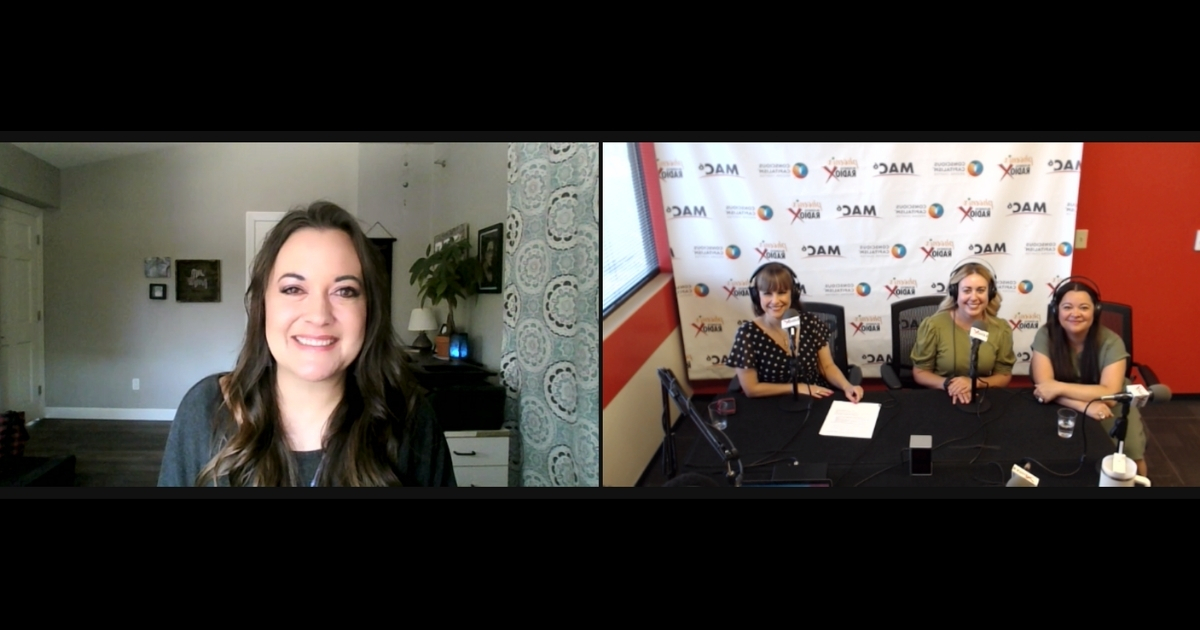
Michelle is an educator and Certified Trauma Integration Practitioner. She loves truly connecting with people.

Michelle firmly believes in the inherent resiliency within each of us and loves uncovering the light and strength in the people she meets.

About Our Sponsor

Mind Well is sponsored by Trauma Integration LLC. Trauma Integration is an educational company that is passionate about helping people understand their own response to trauma.

We provide resources to individuals and train practitioners to guide clients to mindfully integrate their trauma response and find wholeness within. You can find us at www.integratetrauma.com.

Follow Trauma Integration on Facebook and Instagram.

trauma-integration-logo

Tagged With: certified trauma integration practitioner, forgiveness, Healing, trauma, traumatic loss

Recognizing the Effects of Trauma with Michelle Jones E2

July 12, 2021 by Karen

Recognizing-the-Effects-of-Trauma-with-Michelle-Jones-E2-feature
Mind Well
Recognizing the Effects of Trauma with Michelle Jones E2
Loading
00:00 /
RSS Feed
Share
Link
Embed

Download file

Recognizing-the-Effects-of-Trauma-with-Michelle-Jones-E2

Recognizing the Effects of Trauma with Michelle Jones E2

In this episode of Mindwell, the tables are turned as our host, Michelle Jones, is interviewed and shares her experience with recognizing the rippling effects of trauma in her life and how she became connected to the world of trauma recovery and education. She gets real as she shares how this work has fundamentally changed her lived experience and relationships.

Listeners will want to tune in to get to know our host, Michelle Jones and hear about her personal experience navigating trauma and finding calm centeredness.

About Mind Well

Mind Well radio show and podcast is all about connecting with wellness professionals and individuals with unique perspectives about developing wholeness and well being.Mind-Well-Square-logo

We recognize that every individual has the ability to connect to wholeness.

About Our Host

Michelle-Jones-Mind-Well1Michelle Jones is the President and Co-Founder of Trauma Integration, LLC.

Michelle is an educator and Certified Trauma Integration Practitioner. She loves truly connecting with people.

Michelle firmly believes in the inherent resiliency within each of us and loves uncovering the light and strength in the people she meets.

About Our Sponsor

Mind Well is sponsored by Trauma Integration LLC. Trauma Integration is an educational company that is passionate about helping people understand their own response to trauma.

We provide resources to individuals and train practitioners to guide clients to mindfully integrate their trauma response and find wholeness within. You can find us at www.integratetrauma.com.

Follow Trauma Integration on Facebook and Instagram.

trauma-integration-logo

Tagged With: trauma, trauma recovery, Well-Being, wellness

  • 1
  • 2
  • Next Page »

Business RadioX ® Network


Our Most Recent Episode

CONNECT WITH US

  • Email
  • Facebook
  • LinkedIn
  • Twitter
  • YouTube

Our Mission

We help local business leaders get the word out about the important work they’re doing to serve their market, their community, and their profession.

We support and celebrate business by sharing positive business stories that traditional media ignores. Some media leans left. Some media leans right. We lean business.

Sponsor a Show

Build Relationships and Grow Your Business. Click here for more details.

Partner With Us

Discover More Here

Terms and Conditions
Privacy Policy

Connect with us

Want to keep up with the latest in pro-business news across the network? Follow us on social media for the latest stories!
  • Email
  • Facebook
  • Google+
  • LinkedIn
  • Twitter
  • YouTube

Business RadioX® Headquarters
1000 Abernathy Rd. NE
Building 400, Suite L-10
Sandy Springs, GA 30328

© 2025 Business RadioX ® · Rainmaker Platform

BRXStudioCoversLA

Wait! Don’t Miss an Episode of LA Business Radio

BRXStudioCoversDENVER

Wait! Don’t Miss an Episode of Denver Business Radio

BRXStudioCoversPENSACOLA

Wait! Don’t Miss an Episode of Pensacola Business Radio

BRXStudioCoversBIRMINGHAM

Wait! Don’t Miss an Episode of Birmingham Business Radio

BRXStudioCoversTALLAHASSEE

Wait! Don’t Miss an Episode of Tallahassee Business Radio

BRXStudioCoversRALEIGH

Wait! Don’t Miss an Episode of Raleigh Business Radio

BRXStudioCoversRICHMONDNoWhite

Wait! Don’t Miss an Episode of Richmond Business Radio

BRXStudioCoversNASHVILLENoWhite

Wait! Don’t Miss an Episode of Nashville Business Radio

BRXStudioCoversDETROIT

Wait! Don’t Miss an Episode of Detroit Business Radio

BRXStudioCoversSTLOUIS

Wait! Don’t Miss an Episode of St. Louis Business Radio

BRXStudioCoversCOLUMBUS-small

Wait! Don’t Miss an Episode of Columbus Business Radio

Coachthecoach-08-08

Wait! Don’t Miss an Episode of Coach the Coach

BRXStudioCoversBAYAREA

Wait! Don’t Miss an Episode of Bay Area Business Radio

BRXStudioCoversCHICAGO

Wait! Don’t Miss an Episode of Chicago Business Radio

Wait! Don’t Miss an Episode of Atlanta Business Radio