
Business RadioX ®

  • Home
  • Business RadioX ® Communities
    • Southeast
      • Alabama
        • Birmingham
      • Florida
        • Orlando
        • Pensacola
        • South Florida
        • Tampa
        • Tallahassee
      • Georgia
        • Atlanta
        • Cherokee
        • Forsyth
        • Greater Perimeter
        • Gwinnett
        • North Fulton
        • North Georgia
        • Northeast Georgia
        • Rome
        • Savannah
      • Louisiana
        • New Orleans
      • North Carolina
        • Charlotte
        • Raleigh
      • Tennessee
        • Chattanooga
        • Nashville
      • Virginia
        • Richmond
    • South Central
      • Arkansas
        • Northwest Arkansas
    • Midwest
      • Illinois
        • Chicago
      • Michigan
        • Detroit
      • Minnesota
        • Minneapolis St. Paul
      • Missouri
        • St. Louis
      • Ohio
        • Cleveland
        • Columbus
        • Dayton
    • Southwest
      • Arizona
        • Phoenix
        • Tucson
        • Valley
      • Texas
        • Austin
        • Dallas
        • Houston
    • West
      • California
        • Bay Area
        • LA
        • Pasadena
      • Colorado
        • Denver
      • Hawaii
        • Oahu
  • FAQs
  • About Us
    • Our Mission
    • Our Audience
    • Why It Works
    • What People Are Saying
    • BRX in the News
  • Resources
    • BRX Pro Tips
    • B2B Marketing: The 4Rs
    • High Velocity Selling Habits
    • Why Most B2B Media Strategies Fail
    • 9 Reasons To Sponsor A Business RadioX ® Show
  • Partner With Us
  • Veteran Business RadioX ®

Truist Insight: How Small Business Owners Are Navigating Economic Uncertainty

May 14, 2024 by angishields

ABR-Truist-Feature
Atlanta Business Radio
Truist Insight: How Small Business Owners Are Navigating Economic Uncertainty
Loading
00:00 /
RSS Feed
Share
Link
Embed

Download file

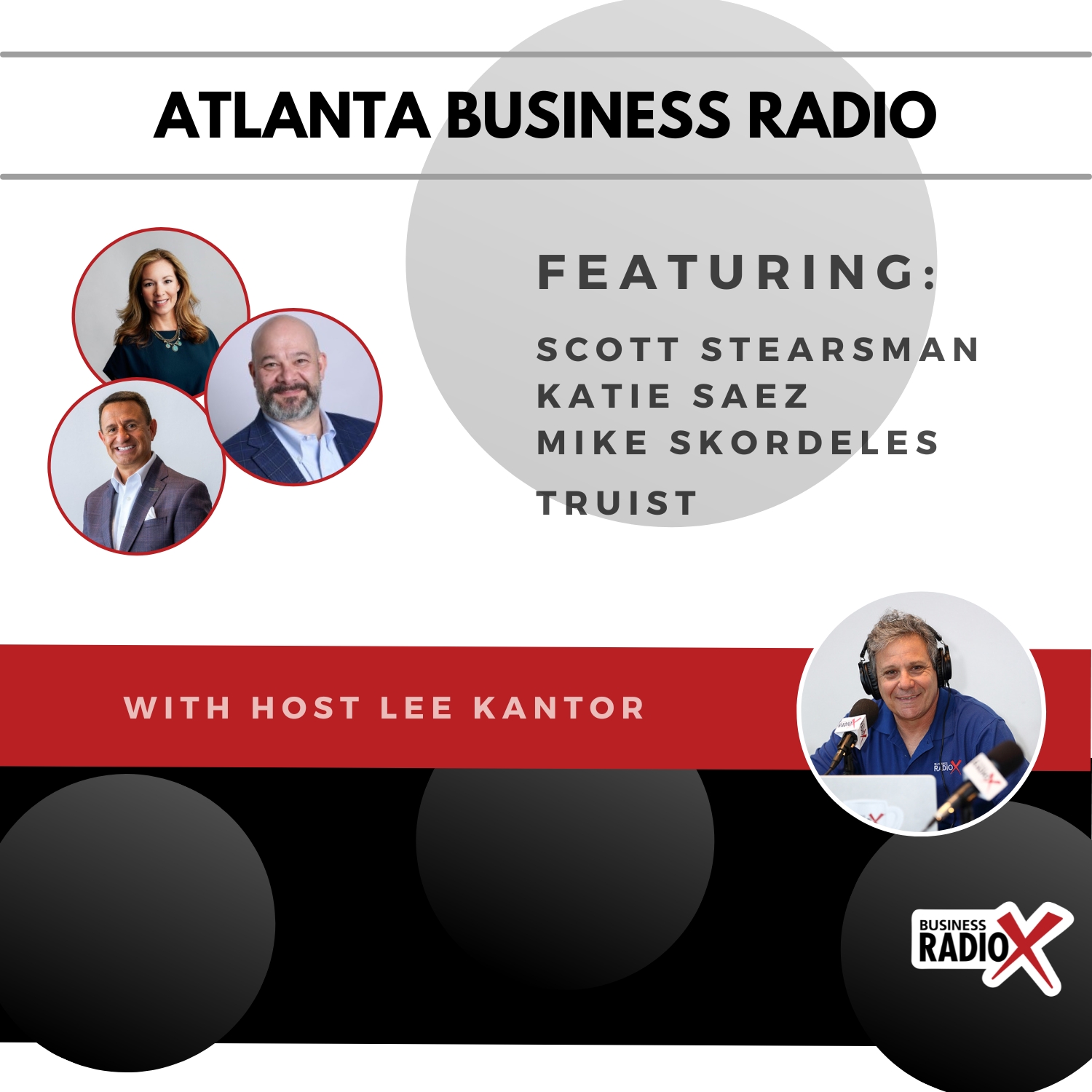
In this episode of Atlanta Business Radio, Truist representatives Scott Stearsman, Katie Saez, and Mike Skordeles join Lee Kantor to discuss the findings of the small business pulse survey. The survey highlights the resilience and adaptive strategies of small business owners amidst financial challenges and economic uncertainty. Scott discusses Truist’s investment in technology and market expansion, while Mike talks about the Southeast’s robust growth, particularly in Atlanta. Katie speaks to the optimism in Atlanta’s business community, driven by the city’s growth and diversity.

The conversation also covers Truist’s commitment to providing personalized support and resources to small businesses, emphasizing the importance of building strong relationships with bankers for business success. Follow Truist on LinkedIn and Facebook.


Truist-Logo

Mike-SkordelesMike Skordeles is head of U.S.economics and a senior vice president at Truist Advisory Services, Inc. He’s responsible for analyzing the U.S. and global economies and financial markets as well as helping formulate and communicate investment strategy, and publishing commentaries for our clients.

Mike is based in Atlanta as part of the firm’s Investment Advisory Group. He is a sought-after speaker, sharing his insights with investor and industry groups as well as C-suite executives. He’s been quoted in Bloomberg, the New York Times, and CNN.com, and has appeared on CNBC, among other media outlets.

Mike joined Truist predecessor SunTrust in 2012 and brings more than 25 years of investment experience to the Investment Advisory Group. He came from Morgan Keegan (now part of Raymond James), where he was a managing director and market strategist for over five years, writing extensively about the markets and the economy. He was a memberof the firm’s investment strategy committee and helped managed about $1.6 billion, serving as the portfolio manager overseeing the group’s tactical portfolio.

From 1999 to 2007, he was with McDonald Investments in Cleveland,Ohio, in a similar role as an analyst and strategist. He was a member of the firm’s investment policy committee and other investment steering committees. Previously, he was a financial analyst at KeyCorp and began his career with Prudential.

Connect with Mike on LinkedIn.

Scott-StearsmanScott Stearsman is the head of small business banking for Truist Financial Corporation. In this role, he is responsible for the small business banking segment and the delivery of financial products and services to more than 1 million small business owners and entrepreneurs.

His responsibilities also include oversight of Truist’s Small Business Virtual Channel, which offers consultive expertise and tailored advice via a large network of banking professionals.

Enhanced by Truist’s digital capabilities, the team is designed to meet small business owners at all points of their business life cycle, including direct portfolio relationship management for small business clients up to $10 million and delivering SBA lending services through Truist’s SBA Business Development Officers’ advisory-driven approach.

Prior to being named to this position in 2022, Stearsman was the mid-south consumer banking market executive at Truist. In this role, he was responsible for leading teams across 800 branch locations in six states, providing personal and small business banking for the retail community banking segment. Stearsman joined Truist in February 2013 as the northeast market sales executive and served as the Head of Branch and Premier Banking prior to merger.

With more than 20 years of banking experience, Stearsman previously held several senior roles at Bank of America including northeast region executive, North Carolina market executive, and consumer segment strategy executive. Stearsman is passionate about giving back to the community and is currently a board member of United Way Greater Atlanta and the SCORE Foundation. Stearsman is a graduate of the University of Kentucky where he earned a Bachelor of Science degree with a double major in finance and marketing.

Stearsman is based in Atlanta, where he lives with his wife, Julie, and two sons, Ryan and Sam.

Connect with Scott on LinkedIn.

Katherine-SaezKatie Saez is Executive Vice President and Georgia Regional President for Truist Financial Corporation.

In this role, Ms. Saez serves as the senior leader in the Georgia Market, responsible for directing and integrating client management business development efforts with privately-held companies operating in the commercial and middle market sectors, as well as nonprofit and governmental entities. Ms. Saez leads our Truist Atlanta Client Advisory Board and has direct oversight of the Truist Foundation and Trusteed Foundation Local Advisory Councils.

A 24-year veteranof the financial services industry, Ms. Saez joinedTruist (formerly SunTrust) in 2000. Previously, Ms. Saez was Head of Sales for the Corporate & Institutional Group, Wealth, and Specialty Treasury groups within wholesale payments. During her career at Truist, she has managed sales and marketing functions in multiple Lines of Business, developing successful programs to drive revenue, increase teammate effectiveness, and improve the client experience. She is a graduate of the SunTrust Commercial Banking Training Program.

Ms. Saez earned an MBA in Finance from Georgia State University and a BSBA in Finance from the University of Florida. She serves on the Board of Directors of Junior Achievement of Georgia and the Woodruff Arts Center Board of Trustees. Ms. Saez is an executive board member of the Metro Atlanta Chamber, an Executive Partner of Georgia Allies, and a member of the Atlanta Rotary. She also serves on the University of Florida Warrington College of Business Advisory Council.

Ms. Saez has been recognized by the Georgia Hispanic Chamber of Commerce as a 50 Most Influential Latino, by Georgia Trend as a 500 Most Influential Georgian, and by Atlanta Magazine as a 500 Most Powerful Leader. She is also a member of the Association of Financial Professionals, holding the Certified Treasury Professional accreditation. Ms. Saez is a native of Jacksonville, Florida.

Connect with Katie on LinkedIn.

Transcript-iconThis transcript is machine transcribed by Sonix.


TRANSCRIPT

Intro: Broadcasting live from the Business RadioX studios in Atlanta, Georgia. It’s time for Atlanta Business Radio. Brought to you by Onpay. Built in Atlanta, Onpay is the top rated payroll and HR software anywhere. Get one month free at on Paycom. Now here’s your host.

Lee Kantor: Lee Kantor here another episode of Atlanta Business Radio and this is going to be a good one. But before we get started, it’s important to recognize our sponsor, Onpay. Without them, we couldn’t be sharing these important stories. Today on Atlanta Business Radio, we have a trio from Truist. We have Scott Stearsman, head of small business banking. We have Katie Saez, regional president, and we have Mike Skordeles, head of US economics. Welcome, Truist fam.

Scott Stearsman: Thanks, Lee. I appreciate you having us.

Lee Kantor: Well, absolutely. Let’s kick it off with Scott. Um, we’re here to talk about the Small Business Pulse survey, that report that was just released. Uh, can you tell us some of the takeaways?

Scott Stearsman: Yeah. Again, Lee, thanks for having us on today. And just for background, we conduct a tourist and annual survey every year that gives us insights on how our small business owners are feeling, the challenges they’re facing, and just overall small business sentiment and what’s on their minds. And that insight allows us to really determine how we can best support our small businesses. So similar to prior years, what we saw is financial and economic concerns remain top of mind for our small business owners. Uh, that showed up in a few different ways. First, rising costs with persistent inflation. We saw economic uncertainty as rates have been higher for longer, which is impacting the small business cash flow. And then on the related to growth top of mind is just finding new customers has mainly been a focus. So as you’re thinking about how do we offset these rising costs and economic uncertainty, there’s also a focus of our small business owners on how they can really attract and grow their their client base. And so while that optimism that we’ve seen decreased from prior years, on the whole, though, what we saw is that while there’s concern about that macroeconomic environment, small business owners we see are continue to be resilient and are still more positive about the future of their own business. So being able to control what they can control and the ways that they’re being able to do that is investing in technology. And then, as I said before, expanding into new markets as we’re thinking about that growth mindset. And so, Mike, maybe you can talk a little bit about the macroeconomic environment and how that overall in general for the regional and Atlanta is also impacting the sentiment.

Mike Skordeles: Absolutely. Thanks, Scott. So I think there’s a couple of things that stuck out to me from the survey, not the least of which is and you hit several of them, Scott, is the ongoing inflation and stress that business owners are, are feeling. Um, those kind of do mirror some of the things that are going on nationally. That said, that optimism of what’s going on for, uh, the survey respondents. Absolutely reflect what’s going on in the southeast. So the southeast is growing faster than the overall US economy. Um, and then you zoom in a little further into Atlanta, and Atlanta is growing faster than the region and the state. Uh, there’s a number of reasons for it, not the least of which is we have a very dynamic business community. So it’s not just one industry. It’s not just a banking or or finance or what have you. It’s things like fintech that are cutting edge and that are adding to not just Atlanta or the state or the region, but also nationally. And some of them are internationally. And then you have some of the other bigger, more established players, certainly the Delta’s and the UPS and what have you. And again, very different industries. So transportation versus leisure and hospitality. Um, and then you layer on another one that’s a huge thing for not just Atlanta, but also for Georgia is the film and television industry, of course, restarting, uh, this, this past fall after the the shutdown that happened in 2023 is a big boost for businesses generally, but also for the small businesses. So there’s a lot of things that are going on for the region growing faster. But then there’s some Atlanta specific things that are growing a lot faster.

Lee Kantor: Now, you mentioned, like Truist, the survey was based on Truist customers, I believe. Is that accurate or is this kind of getting a temperature of the small business community in general, or are they solely Truist customers?

Scott Stearsman: No, it is a it’s a nationwide survey that that that reaches out to all of our small business community. So it’s not just Truist clients, it’s really just the the Truist or the small business community at large.

Lee Kantor: And then from a truist standpoint, small business community is an important constituent right.

Scott Stearsman: Absolutely, yeah. Our purpose is to inspire and build better lives and communities. And if you think about the economic impact our small business owners have for that local economy, you know, two thirds of every dollar that is spent at a local small business gets reinvested back in the local economy. So if you if you think about a thriving community, you’re going to see a thriving small business community that’s that’s really uplifting that. And as we know, Lee, almost half of all US jobs are employed by a small business. So it is absolutely critical that we support and and really help grow these small businesses.

Mike Skordeles: And to put a little finer point on Lee’s point there. More than half of the employees are in small businesses, but the growth of those jobs is also coming from small businesses. So if small businesses are doing well, the national economy is going to end up doing better as well.

Lee Kantor: Now, Katie, as was mentioned previously, there’s an optimism despite some of these, what appear to be headwinds is that just kind of human nature that individually people think people are doing. Individually I’m doing okay, but my neighbor, not so much. Is that just how humans operate? Like they, you know, they can see themselves clearly and they may maybe they’re pessimistic about the the world around themselves.

Katie Saez: Yeah, I think that’s that’s a good point. We, I think most business owners, small business owners have such immense pride in their business and what they’ve built. And so there’s a natural bias to have optimism about what is possible within your own business. I mean, you see the inside, you understand the customer base. You understand what your employees are dealing with on a daily basis. You’re running that business from, you know, the moment you wake up in the morning to when you go to bed at night. So you are personally invested in the success of that business and, and the future of, of your customers and your employees. So yes, there’s going to be that bias and optimism. I think there’s something special about being a business owner here in Atlanta. Atlanta is a great place to do business. There’s over 6 million people who call Atlanta home. We’re number three in the United States for population growth, or the number one most livable city in the United States. We’re also the number five moving destination in the country. So that explains a lot of the optimism, too. People choose to be here in Atlanta, to live here, to work here to have fun here. There’s a food, arts and music culture that makes Atlanta really special. And and Scott said this earlier, small businesses really have, I think, an extra, um, enhanced chance to thrive here. And we saw that in a survey. You know, small businesses here in Atlanta are over investing in their sales and marketing efforts to grow business profitability and take advantage of that growing and evolving Atlanta, you know, business and consumer base. And by the way, this Atlanta centric optimism is the same result that we saw in last year’s survey. As you know, we do the survey, um, on an annual basis, Atlanta continues to outperform compared to other regions, even within the southeast. And we saw that in the optimism of business owners to.

Lee Kantor: Now, I’m fortunate that all I do is interview business owners, so that’s all I talk to every day. I’ve been doing this for close to 20 years, so I. I too sense there’s always it’s always a good day when you have a business. Sure there’s frustrations, but at least when you’re talking to me, you have a happy face on and you’re proud and there’s things to be optimistic about. I interviewed people all over the country and Atlanta and Georgia. Tend to have a different, I believe, secret sauce, and I believe collaboration is part of that secret sauce. I think the diversity of the economy that you mentioned earlier is part of the secret sauce. The fact that we have, you know, a world class port, a world class airport, universities, um, that all that infrastructure makes it a Georgia specifically, a very good place to do business in a wide variety of industries. And because of that, that gives us some protection. If there is a downturn in one of those industries, invariably two other ones are doing fine. Um, what how does Truist play in this ecosystem when it comes to this level of collaboration and the ability to work with entrepreneurs? Because when I got here 25, 30 years ago, Georgia was more of a real estate town, and now it’s more of a technology town. And there’s a ton of startups now. The investment dollars are kind of moving a little differently than they were, you know, two decades ago.

Katie Saez: Um, look, Atlanta has seen a lot of changes over the last few years, both, you know, on a political landscape and on the economic landscape. And let’s not forget the memory of the impact of the Great Recession here in Georgia over the past, you know, 4 or 5 years coming out of the pandemic. Um, most of our clients have shared with us that that, you know, we always live in this sense of unknown, like, what will the unknown future look like and what will the impact be on their business? And what are those key drivers that will help, you know, change how they do business? Um, you know, we saw in the survey, uh, there’s a lot of data around the impact of rising costs and inflation. As he talked about, Atlanta continues to be a thriving economy. We have, um, significant investments that are being made across the entire state. And yes, we have tremendous levels of support coming from, um, you know, our government partners. Uh, I think Georgia is a great example of the power of public and private partnerships and what that can do for economic development and supporting large corporate development, um, here in Georgia, but also small business creation here in Georgia. So I think, you know, all of that contributes contributes to the thriving economies. Most of the businesses that we work with are continuing to focus on how do I grow top line revenue while protecting margins, because margins are very much, you know, under pressure right now with the rising cost, not just of, you know, cost of the goods that you’re selling, but the cost of labor and access to labor and talent.

Katie Saez: So some of our clients have a bit more of an ability to absorb those rising costs by passing on those increases to their customers. Um, but, you know, that’s something that our clients have been navigating ever since the pandemic. Um, and, you know, I think one of the things that that is special about being here in Atlanta, I mentioned just the challenges that we continue to hear from our client base around access to talent. So we know Atlanta is a highly competitive market. It’s moving quickly, and being able to be proactive with both labor and talent is really, you know, a competitive advantages that advantage that small businesses have. Um, you know, Atlanta is a strong market for talent, especially in those specialized industries that you mentioned technology payments, you know, payments. This is this is the place to be if you’re in the payments industry, in health care. We have a very robust and broad health care, um, network across the state. But unfortunately, there is a shortage of those specialized workers. But we have access to a very robust higher education system here in Georgia, and that is our competitive advantage and that serves small businesses well. Each year we see graduates coming out of University of Georgia and Georgia Tech and Emory and Kennesaw State and Georgia State University. Agnes Scott, all all of whom are choosing to graduate and stay here in Atlanta and start their careers. So I think that’s a great testament to, um, you know, the thriving industries that we see across the state, but also the desire of, of young professionals, um, to make Atlanta home.

Lee Kantor: Now, how does Truist play in this ecosystem, though? What are what’s true is doing other than, you know, putting their name on a stadium? What are they doing to help that small business person grow? Because, you know, it’s good for Truist to advertise everywhere. But how does that trickle down to the small business owner to help them kind of get the, the, the resources they need to get to the next level?

Katie Saez: Well, look, I mean, we strive to meet business owners wherever they are in the life cycle of their business and then provide the solutions, the advice, the partnership and the support that they need to run their business. Um, you know, we believe that your banking partner should be accretive to your business and not create additional stress or something additional to worry about when you know that you have a business, a banking partner who’s available and who stands ready to provide ideas and advice and is dependable and times of uncertainty, certainly over the last year would be a great example of that, that stress reducing. So, you know, we really focus on, um, on, you know, understanding where a business is in a life cycle of that business because we know, I mean, our, our bankers work with, you know, hundreds of different clients, you know, throughout the year. And we know that the needs are different depending on where you are in your life cycle. If you are in growth mode, um, your, your cash flow is, is is generally positive and you’re looking to maintain a profitable, you know, status quo, you’re looking for resources for growth, uh, versus, you know, a company who might be more established and, um, or perhaps looking to transition to, you know, exit the business or reinvent the company or, you know, um, make a transformative investment, the needs of that business are going to be a little bit different. And I think that’s where we play a role, is to have the right dialog engage and then bring forth ideas and solutions. One thing that that we pride ourselves on here at Truist is, you know, we are local. We are here, we partner with businesses here in this community. And, you know, you can count on us to be there by phone virtually or in your office. We’ll meet you where you need us to be.

Lee Kantor: Now, do you have a sweet spot in terms of a small business client? Like, do you want that person who just started, or do you play better with enterprise level folks that you know, they have more, um, complicated needs and you’re able to provide a variety of services to help that person or those individuals, rather than maybe kind of that aspiring entrepreneur that’s just getting started that needs more of a roadmap rather than, you know, kind of sophisticated financial products.

Katie Saez: Well, that’s that’s one of the benefits of being a, you know, a large bank, a sixth largest bank in the United States now is that we’re set up in a way to meet you where you are. Um, and whether that’s early stage, um, you know, uh, really emphasis on, on establishing your target market and making sure that, um, you know, you’re early and creating that, that business or you’re in an active growth mode or really you’re just doing some organic growth. We have resources and people in different parts of the organization that stand ready to support, no matter where you are in that life cycle.

Scott Stearsman: Yeah. Just to add on to to that, Katie’s exactly right. I think, Leigh, what’s special about this is whether you’re just starting your business, whether you’re expanding and growing or transitioning. We have the capabilities, no matter where you are in that life cycle. So here in Atlanta, you’ve got a branch that’s close to you. So if you prefer to go in and see someone in a branch, we have a branch leader that’s very capable about helping you and your small business. If you prefer digital capabilities, we have a team of virtual bankers that you can go to our site to schedule an appointment. You don’t have to leave your business. You can meet one on one with that small business banker. We have digital capabilities to be able to help you self-serve. Uh, a team of call center that specialize in small business. So no matter where you are in your life cycle, whether you’re, like I said, just starting out or you’re transitioning in the commercial space where Katie’s got a dedicated team of commercial bankers that specialize in larger businesses. No matter where you are, we have the the skills and capabilities to be able to serve those businesses.

Lee Kantor: Now, what advice would you give a business owner who maybe doesn’t have that personal relationship that you’re describing with their banker right now? What are some questions they should be asking their banker if they’re not? If, like number one, they don’t know their name, that’s probably a red flag. But how do you build a relationship that’s fruitful for the business owner and the banker? Um, what are some tips that you would recommend, uh, a business owner do to build a good relationship with their banker?

Scott Stearsman: Yeah, it’s a great question. And I’ll jump in and Katie, please pile on. Uh, what I think is really important is just understanding that your banker wants to be a trusted partner with you as a small business owner. That’s that’s what we care about. That’s what’s important to us. Certainly, we’re there for the financial services and needs of that as well. But we also want to be a partner along that journey. And so we believe that critical partners in small businesses are the CPAs. It’s your attorney. It’s also your banker. And if you don’t have a relationship, it’s as simple as going into one of our branches, meeting with that branch manager at the local branch who specializes in small business. And just start that conversation and they’re ready and capable of being able to help that small business, no matter where they are in that stage. If you are more comfortable of having the phone conversation, we have, uh, the numbers and ability to make an appointment. And it’s simple of just consultation. Just we’re here to be able to help answer questions. Uh, I’ll take a, uh, you know, what we learned from the survey? And we did see in the survey where small businesses are increasing revenue 20% year over year. So we do have that upper end where they’re growing and expanding fast. And one thing was very clear that those businesses have a formal, written out business plan, and they’re clear about their strategy. And our bankers are able to sit down with our small business owners and help them create that plan. We have, uh, financial education seminars. We have webinars that you can download and view as well, or attend in person to be able to help create those business plans or thinking about future borrowing. Uh, so it’s not just focused on the products that we deliver and solutions, but it’s also about how we help with that education of the life cycle of that business owner.

Lee Kantor: So if somebody wants to learn more, have a more substantive conversation with one of the bankers at Truist, what is the easiest way to do that?

Scott Stearsman: Uh, perfect setup. So walk into one of our branches, talk to a branch manager, or go online to truist.com/small business. And on that site you can make an appointment with one of our small business bankers virtually. And they’re standing by ready to assist over the phone.

Lee Kantor: Well. Scott. Katie, Mike, thank you so much for sharing your story today, doing such important work and we appreciate you.

Scott Stearsman: Lee, thanks for having us on.

Lee Kantor: All right. This is Lee Kantor. We’ll see y’all next time on Atlanta Business Radio.

Outro: Today’s episode of Atlanta Business Radio is brought to you by Onpay. Built in Atlanta, Onpay is the top rated payroll and HR software anywhere. Get one month free at onpay. Com.


About Our Sponsor

OnPay’sOnPay-Dots payroll services and HR software give you more time to focus on what’s most important. Rated “Excellent” by PC Magazine, we make it easy to pay employees fast, we automate all payroll taxes, and we even keep all your HR and benefits organized and compliant.

Our award-winning customer service includes an accuracy guarantee, deep integrations with popular accounting software, and we’ll even enter all your employee information for you — whether you have five employees or 500. Take a closer look to see all the ways we can save you time and money in the back office.


Follow OnPay on LinkedIn, Facebook, and Twitter

Tagged With: Truist

Lissa Miller With Truist

December 14, 2023 by Jacob Lapera

GWBC Radio
GWBC Radio
Lissa Miller With Truist
Loading
00:00 /
RSS Feed
Share
Link
Embed

Download file

Lissa Miller is the interface between Truist and the diverse supplier community. She is responsible for working with its lines of business and functions to expand the company’s utilization and development of qualified minority, women, veteran, disabled, LGBT-owned small businesses and ensure that the bank complies with federal guidelines concerning diverse supplier inclusion procurement activities.

She brings with her more than 20 years of collective experience and expertise in Supplier Diversity, Procurement, Sales and Logistics.

Connect with Lissa on LinkedIn.

What You’ll Learn In This Episode

  • Her favorite GWBC leadership moments and experiences
  • Her vision for GWBC’s future and what’s next in her career
TRANSCRIPT

Intro: [00:00:04] Broadcasting live from the Business RadioX Studios in Atlanta, Georgia, it’s time for GWBC Radio’s Open For Business. Now, here’s your host.

Lee Kantor: [00:00:18] Lee Kantor here. Another episode of GWBC Open For Business, and today we have a great guest, Lissa Miller with Truist. Welcome.

Lissa Miller: [00:00:29] Hi, Lee. Thank you. And thank you for welcoming me. Glad to be here.

Lee Kantor: [00:00:33] Well, I’m glad you’re here as well. For the two people out there who don’t know, tell us about Truist and tell us about your work as Chief Supplier Diversity Officer.

Lissa Miller: [00:00:42] Sure. Truist is a super regional bank based in Charlotte, North Carolina, and we have a myriad of banking products to serve people in those communities where we operate. And our purpose is to inspire and build better lives and communities. And one of the ways that we do that is through our Supplier Diversity and Sustainability Program, which I lead as Chief Supplier Diversity Officer.

Lee Kantor: [00:01:12] So, can you talk a little bit about, from an enterprise organization like Truist, why is having a chief supplier diversity officer important and what kind of work are you doing on a day-to-day basis to help in that area?

Lissa Miller: [00:01:26] Well, I don’t know if my role is so important, more important than our initiative, but our initiative is really to make sure that we’re reaching out into the community and including diverse and small businesses to be a part of our overall supply chain. And so, what that means is we’re intentionally working with organizations like the Greater Women’s Business Council and WBENC, The National Organization, as well as others to make sure that we understand those certified diverse businesses that are out there that could be potential supplier partners for Truist and providing us with products and services, and also making sure that we also give back to these businesses by helping them develop and become greater and obtain more capacity to do business with other clients, whether they’re in the financial services sector or other sectors of this great American economy.

Lee Kantor: [00:02:22] And that’s an important thing for the small business folks out there to understand that Truist might be in banking and finance, but they have needs across the board in lots of areas that aren’t banking and finance.

Lissa Miller: [00:02:35] We do. We do. We actually utilize a myriad of diverse businesses in the areas of technology, staffing, legal, marketing, construction, real estate, general and administrative. So, you know, it’s endless, really, of the types of products and services that we need, not only for our operations and our teammates, but also in the communities where we operate. And then, from that perspective, we also have our strategic suppliers who may have subcontracting opportunities to utilize these diverse businesses as well.

Lissa Miller: [00:03:13] So, annually we actually host our tier two Supplier Diversity Business Summit, which we hosted in-person for the first time this year in Charlotte, in our headquarter city, and we had over 250 who attended that. We had workshops, training, networking sessions, leadership came and spoke. And so, it was a really great event and it really enabled us to deepen those engagements with diverse suppliers who we may have been talking with on the phone or via email, or just connecting them with our strategic suppliers to learn of any upcoming opportunities with them or with our sourcing team at Truist.

Lee Kantor: [00:03:54] Now, what drew you to a career in supplier diversity? How did you find out about it and how did you pursue it?

Lissa Miller: [00:04:02] Well, it actually happened several years ago when I was at another organization and I was not in supplier diversity. I was serving on the diversity council representing my business unit. I was actually in sales. And we had a supplier diversity project because the company had not stood up a supplier diversity program before. They were looking at it, wondering what it was, why do it, what’s the business case. And so, I was on that project team, and as a result, gained a lot of knowledge and insight about actually what supplier diversity was.

Lissa Miller: [00:04:39] And I became quite interested in it. It really made a lot of sense to me for corporations like Truist and others, large corporations, to be able to have programs of this type and to be intentional because many people do not know that there are a lot of very capable businesses out there who are smaller, maybe, that they can potentially do business with.

Lissa Miller: [00:05:03] And so, you have to be intentional about actually finding out where they are, because they may not pop up on advertisements on your radio or T.V. or in social media, but they’re out there. And you really need to understand which organizations have done their due diligence to vet these suppliers, to make sure that they are who they say they are, and then join those organizations and avail yourselves to the network of certified and capable, diverse suppliers that you could potentially be doing business with in your organization.

Lissa Miller: [00:05:37] And that just gives you more innovation, more diversity of thought to some of the some of the services that you may be offering or products that you may be offering, definitely the cost benefit is low as far as the benefit is really high. The cost is low in most cases. And so, you know, I think supplier diversity professionals really have to debunk that myth that doing business with a smaller company may cost more because that is not the case. Actually, we’ve achieved cost savings, but we’ve also achieved innovation and just new ways of thinking about certain things that we may be looking to do or certain programs or products that we may be wanting to offer.

Lee Kantor: [00:06:23] Now, is there any story you could share about kind of the impact it makes when an organization like Truist partners with a smaller firm, a diverse firm. Is there anything that stands out to you when you look back at your career and say, “Hey, this really made a difference to that organization that we partner with?” But, also the ripple effect of, you know, their family, their community, it can really make a world of difference for these smaller companies.

Lissa Miller: [00:06:52] Yeah. I’m glad you spoke to that, because I think over my career I have seen that in action. I have known diverse supplier companies that had started out, basically, at ground zero and saw the passion and the hard work that they put in to really building their business. And that’s what America is all about, right? You come in, you have a dream, you have a vision, you may be scared but you step out and you do it, and you don’t know what tomorrow may bring, but you just keep going at it.

Lissa Miller: [00:07:27] And I think from my career, I have seen that and I’ve seen these companies grow exponentially, but it was not without sacrifice, it wasn’t without hard work. But the one thing I noticed with a lot of these businesses that they were able to really hire from the communities that they’re located in. They have very loyal employees that are really like family to them. And so, I think when you look at that and you think of all the families that they were able to support, it really says a lot about these business owners. And so, I really tip my hat to them.

Lissa Miller: [00:08:05] You know, I’ve been a serial entrepreneur for some of my life as well, and dibbed and dabbed in certain adventures and entrepreneurial exploits, and it’s hard work. It is not easy. It’s not for the faint of heart, I can tell you. And so, I’m impressed by these businesses who were able to bootstrap themselves and get to the point where they can support hundreds of families and lives, and kids going to college and kids getting married, and all of that just because of the dream of the vision that they had to start their business and the passion and the hard work that they put into it over the years.

Lee Kantor: [00:08:47] Now, why was it important to you to not only become part of GWBC but also to join the board and take a leadership role?

Lissa Miller: [00:08:57] Well, I always like to get behind organizations that I think are doing really great work. And that was definitely the impetus for me to join the Greater Women’s Business Council. I mean, Roz and her team are just fantastic. Roz is the ultimate leader from my standpoint, and so being able to support her and the team and just the board of directors who are really a great group of people who have, you know, the passion of helping women-owned businesses at the core of their heart.

Lissa Miller: [00:09:28] And I think it’s something where if you want to make an impact to an organization, you really have to get actively engaged. And that means, you know, join a committee, join the board, join something where you can provide some of the key working for corporate America to these nonprofits because they need your help. And not because they’re not capable, it’s just that there’s a lot of work to do.

Lissa Miller: [00:09:51] And so, I actually serve as the Chair of the Mentor Protege Committee. I don’t even know how many number of years it’s been now. But I gained so much pleasure in helping that committee to identify women-owned businesses to be able to be mentored by either corporations or larger women-owned businesses. And so, you know, I’m all for giving and making sure that I’m using all of my talents that I can to help others. And that’s a good way for me to do that by serving on the board and being a part of that committee.

Lee Kantor: [00:10:28] Now, if you were going to pitch maybe some women-owned businesses right now that aren’t members of GWBC, what would you say would be kind of the top, maybe, one or two reasons why they should really consider getting certified and getting involved?

Lissa Miller: [00:10:48] Well, certification has its benefits. It’s not the only arrow in your toolbox to be able to help you really target a client and land a contract, but it is one of the major arrows that you can use. And I think getting certified really helps you have a good conversation with a company who is really interested in increasing their spend with certified women-owned businesses.

Lissa Miller: [00:11:24] I can tell you that I have had instances over the last several years where we thought we were doing business with a certified woman-owned company, and at the end of the day, found out that they were not certified, so we were very disappointed and had to not identify that company as a certified women-owned business.

Lissa Miller: [00:11:46] And for supply diversity professionals, that’s really at the core of what we do as far as making sure that our data is correct, that we’re presenting certified diverse businesses to our internal business units or stakeholders. And when we don’t have that comfort feeling, we’re not really advised to share because, you know, we’re not sure if there is some fictitious information going forth or if someone is really trying to get under the wire as a certified company and is not certified. And so, I think it just makes supplier diversity programs in general more comfortable, feeling that the businesses that they’re dealing with are authentic, that they have integrity, and that there’s nothing to hide from that aspect of the ownership part of it.

Lissa Miller: [00:12:37] So, I think certification for Truist and other companies that are really trying to be intentional about working with diverse businesses, that is the way to go so that you can make sure that your company can be marketed to these entities and be brought into programs like supplier diversity initiatives that really focus on engaging with you, developing you, expanding your capabilities, and making sure that they’re utilizing you or they’re at least having those conversations.

Lissa Miller: [00:13:11] And what people don’t seem to realize as well is this is a small community sometimes, and so when we hear about a good supplier, certified diverse supplier, we oftentimes share that information with other peers who are looking for similar services. And so, especially in the financial services space, we have a lot of best practice sharing that goes along. And we oftentimes ask each other, “Well, can you give me a referral to a good certified diverse business that does a certain thing?” And so, it’s not uncommon for us to do that just because, you know, financial services is such a very regulated industry. And there’s a lot of risk mitigation that takes place as far as when we look at any supplier.

Lissa Miller: [00:13:58] And so, you know, if you’re working for one of the financial services companies, we love it and we love to hear how you’ve been able to impact that company positively, because then we can have more confidence knowing that if we brought you in to help us with the particular project, you’d do the same thing.

Lissa Miller: [00:14:19] So, certification is great, and I think any company that meets the criteria to be a certified business, especially a certified women-owned business, should take the effort or make the effort and apply to get certified and go through that process because it can only help you.

Lissa Miller: [00:14:36] I think, you know, becoming a part of the GWBC and just getting engaged is another way for you to get your business and your products or services in front of anyone who’s engaged with the GWBC. But it’s not only coming to events and participating, I mean, that’s good as well, but people do business with people that they trust. And so, if you’re in an environment where you’re working or you’re volunteering or you’re on a committee or you’re on the board, it really gets people to get to know you better and have those conversations with you and trust you because they know that (A) you’re dependable, (B) you’re authentic, (C) you have a common purpose. And so, it’s a win-win situation – win-win-win situation actually because I think it just gets you exposed to more people that can talk about you to others than you know of.

Lee Kantor: [00:15:39] Yeah. GWBC offers so much in terms of making connections, being that bridge between the smaller organizations to the enterprise as well as creating opportunities to collaborate amongst the WBEs so they can work together, join forces.

Lissa Miller: [00:15:59] I see a lot of that happen also. I mean, it’s great. You know, a lot of times business owners, they’re very lonely, right? They’re working on their business a lot, they don’t have time to network and socialize, and it creates a silo. And I think, you know, joining an organization like the GWBC kind of breaks down that silo and helps you be able to collaborate, even partner with companies that may be doing similar things of what your company is doing. There are a lot of playbooks out there for how companies can team up on different contracting opportunities, so that is not unusual either.

Lissa Miller: [00:16:39] I think, you know, companies really need to look more to do that type of thing to increase their capabilities, to do business with larger organizations. But this is the avenue and this is a place where you can do it at the GWBC to meet other like-minded women-owned businesses with whom you can partner with.

Lee Kantor: [00:16:57] Now, if you were giving advice to a peer maybe that works in another organization, how would you pitch the GWBC board opportunity to them if they were looking to join a board?

Lissa Miller: [00:17:10] I would say that they should consider joining the GWBC because it’s a great way to enhance their professional development. And I always talk about this to everyone about any board, and I serve on a number of boards, but I think serving on a board gives you a very good perspective of the organization that you’re supporting. It gives you that inside view of the organization and lets you understand what those opportunities are, what those challenges are, what are those areas that you can potentially bring your skillsets to, to help the organization to advance.

Lissa Miller: [00:17:55] And so, I think it’s great to be able to have that insight, but also the camaraderie that you build while you’re on the board with board members and understanding who they are, getting that opportunity to network and just share. You know, sometimes it might be a griping session, who knows? But just sharing some of the things that you may be going through, asking questions. A lot of times board members will ping each other and ask questions about how did you do X, Y, Z. So, it’s just a great atmosphere to be able to serve with like-minded, passionate board members who are all about promoting the organization, and so it makes you feel like you’re part of a team, which you are.

Lissa Miller: [00:18:42] And, also, I think having a role or taking on responsibility also helps with your professional development. I know over the years it’s helped me a great deal. Sometimes you don’t get that professional development at your place of work or you may not have time to get it at your place of work, but if you’re serving on a board, you will definitely be asked to do a bunch of stuff. So, that may take you out of your comfort zone, but it’s something that definitely will help you in your professional development and your experience.

Lissa Miller: [00:19:14] A lot of times, you know, what I’ve been doing is sharing best practices across organizations. I see one organization does something special or get something well done on this side and they may have another opportunity on the other side, I’m sharing that, not the name of the organization, but just some of those best practices just to understand that just because you’re on one board doesn’t mean you can’t share best practices across the boards that you’re on or across the committees that you’re on to make all of these organizations better. So, I just think it’s a great avenue that people should consider. And especially with the GWBC, we are looking for potential board members, so please reach out to us and let us know if you’re interested and available. We would love to have you.

Lee Kantor: [00:19:59] Looking forward to 2024, is there any events or programs or trends you’re seeing in the marketplace for GWBC?

Lissa Miller: [00:20:11] Well, I am super excited, of course, that the GWBC will be moving into their new office space pretty soon in the next few months. And so, that’s going to be super exciting. I’m really looking forward to that. A whole new model being added on to the organization as far as that space is concerned. Also, a whole new model with how we engage with women-owned businesses.

Lissa Miller: [00:20:38] So, a lot of super exciting, great things are coming in 2024. I don’t want to let all of the cats out of the bag right now, but I just think 2024 is going to be a great very impactful year for the GWBC. And so, I’m really looking forward to all that will unfold and all the new programs and things that will be offered.

Lee Kantor: [00:21:00] And then, is there anything that you can share about what’s happening in your career? Any exciting news?

Lissa Miller: [00:21:08] Not right now. We are at the end of the year, really trying to look at how do we go into 2024 with more gusto. We’ve had a very challenging year this year as far as all the conversations going on about supplier diversity. And so, we’re doing a reset right now. We’re trying to really just see how we can increase our impact in 2024, look at those areas of opportunity that we weren’t able to attack this year and really go after the next year.

Lissa Miller: [00:21:42] We’ve already got our conference schedule in mind, looking at all the major conferences that are coming up. Of course, we will be at the WBENC Conference in Denver in March, and so we’re really looking forward to being at the conference and participating, exhibiting and meeting all the the WBEs out there. We have lots of things going on in Q1.

Lissa Miller: [00:22:09] I think we’re just focused on really wrapping up this year, making sure that we have all our analytics process that we’ll be implementing next year to really understand how well we did. And then, just really galvanizing to go into 2024 with gusto and with energy and really trying to get some things accomplished that we may have not been able to accomplish this year due to time constraints. So, it’s just really at this time of year, it’s more reflective and planning strategically for how we’re going to go and approach the new year, and I think we’re on the right path there.

Lee Kantor: [00:22:49] And I can’t emphasize enough that if you’re a minority or a woman-owned, veteran-owned, disabled-owned, any type of diverse underserved group that wants to work with these enterprise level organizations, it’s so important to get certified to be vetted so that they can really go and partner with you because they want to. This is not something that that they’re just begrudgingly doing. They want to do this. And you have to be certified in order to really get a seat at the table there, I think.

Lissa Miller: [00:23:25] Well, yeah, I mean, it’s really important. We were talking about this the other day, not every small business is certified as a diverse business, but there are a lot of diverse businesses out there that have not gotten certification. And so, the issue is when these supplier diversity and sustainability teams try to find these businesses, they’re very hard to find, and so that’s why we’re members of the national organizations like the National Minority Supplier Development Council, the Women’s Business Enterprise National Council, the National Gay and Lesbian – National LGBTQ Chamber of Commerce – they changed their name – the U.S. Pan Asian American Chamber of Commerce.

Lissa Miller: [00:24:08] So, that’s why we’re a part of these organizations, the veterans organizations, we’re we’re a part of them or we’re partnering with them because we want to understand who their network of certified diverse businesses are so that we can make sure that we reach out to them when an opportunity comes up. If they’re not certified and they’re not in those databases, then we’re not able to find them, so it’s very critical.

Lissa Miller: [00:24:36] And I know I’m speaking to the choir right now, Lee, because I know you know it and I know it, but to others who don’t know it and who may be tuned into this channel, please know that getting certified is very important for corporations like Truist and probably to the Fortune 1000. And so, like I said before, it’s not the only tool that you use.

Lissa Miller: [00:24:57] And I always tell people this, these diverse businesses, I say, don’t lead with your certification when you contact us, but let us know in that conversation that you are certified. Because what we’re evaluating you on is your service, your capability. Are you a supplier that we need right now in our supply chain? What are your core capabilities? What do you do best? How do you do it? Who do you work with? We want to know that upfront. And then, after that discussion, we want to know if you’re a certified diverse business.

Lissa Miller: [00:25:32] So, please do that. It helps make our jobs a lot easier. And we’re able to understand and communicate with you what our sourcing process is so you can know if there’s opportunity upcoming or not or how to get in that process and see in the next year or so if opportunities will be available for you to participate.

Lissa Miller: [00:25:55] And just know that not every company can use every single diverse supplier that’s out there. There are limitations because we may not have adequate spend or need for so many diverse businesses in a category, but there are other peers that we speak to all the time that we can refer you to who may have opportunities. So, keep that in mind. We would love to do business with everyone, but unfortunately that’s not possible. But we would love to refer you to those peers that we’re in contact with all the time to make sure that your company and your capabilities are in front of them as well.

Lee Kantor: [00:26:34] So, if somebody wants to connect with you at Truist, or learn more about your supplier diversity programs there, or maybe just want to learn more about GWBC through you, is there a way to connect with you or LinkedIn or email?

Lissa Miller: [00:26:53] Yes. You can email me directly. You can email directly at lissa, L-I-S-S-A, .miller, M-I-L-L-E-R, @truist, T-R-U-I-S-T, .com.

Lee Kantor: [00:27:06] And if anybody wants to learn more about Truist, truist.com is probably the best place to do that. Lissa, thank you so much for sharing your story today. You’re doing such important work and we appreciate you.

Lissa Miller: [00:27:18] Well, thank you so much, Lee. I really enjoyed the conversation.

Lee Kantor: [00:27:21] All right. This is Lee Kantor. We’ll see you next time on GWBC Open for Business.

Tagged With: Lissa Miller, Truist

Katherine Saez With Truist

June 28, 2022 by Jacob Lapera

Katie-Saez-feature
Atlanta Business Radio
Katherine Saez With Truist
Loading
00:00 /
RSS Feed
Share
Link
Embed

Download file

Katie-Saez-v2

Katie Saez is Executive Vice President and Georgia Regional President for Truist Financial Corporation.  In this role, Ms. Saez serves as the senior leader in the Georgia Market, responsible for direction and integrating client management business development efforts with privately-held companies operating in business banking, commercial, middle market and commercial real estate, as well as nonprofit and governmental entities.

Ms. Saez leads our Truist Atlanta Advisory Council and has direct oversight of the Truist Foundation and Trusteed Foundation Local Advisory Councils.

A 22-year veteran of the financial services industry, Ms. Saez joined Truist (formerly SunTrust) in 2000. Prior to her current role, Ms. Saez was Head of Sales for the Corporate & Institutional Group, Wealth, and Specialty Treasury groups within wholesale payments.

During her career at Truist, she has managed sales and marketing functions in multiple Lines of Business, developing successful programs to drive revenue, increase teammate effectiveness, and improve the client experience. She is a graduate of the SunTrust Commercial Banking Training Program.

Through her service on Truist’s Diversity, Equity, & Inclusion council and company-wide business resource groups, Ms. Saez seeks to promote a more purpose-, mission-, and values- centered working environment at Truist. She is committed to investing in the next generation at Truist by mentoring and sponsoring junior talent to help propel them forward in their careers.

Ms. Saez earned an MBA in Finance from Georgia State University and a BSBA in Finance from the University of Florida. She serves as Executive Partner of Georgia Allies, is a member of the Association of Financial Professionals and holds the Certified Treasury Professional accreditation. Ms. Saez is a native of Jacksonville, Florida.

Connect with Katie on LinkedIn.

What You’ll Learn In This Episode

  • About Truist
  • The biggest opportunity for Truist in Georgia
  • How Truist able to bring a high-level of personalization to its clientele
  • How has Truist continued to enhance its offerings to provide a better financial experience for its clients

This transcript is machine transcribed by Sonix

TRANSCRIPT

Intro: [00:00:04] Broadcasting live from the Business RadioX studios in Atlanta, Georgia. It’s time for Atlanta Business Radio brought to you by on pay Atlanta’s new standard in payroll. Now, here’s your host.

Lee Kantor: [00:00:24] Lee Kantor here, another episode of Atlanta Business Radio. And this is going to be a good one. But before we get started, it’s important to recognize our sponsor on pay. Without them, we couldn’t be sharing these important stories. Today on Atlanta Business Radio, we have Katie Sayers with Truist. Welcome, Katie.

Katie Saez: [00:00:41] Good morning. I’m glad to be here.

Lee Kantor: [00:00:43] Well, as the Georgia regional president, you’ve got quite a task ahead of you. Can you tell us a little bit about kind of your vision for Truist?

Katie Saez: [00:00:55] Yeah. I’ll, I’ll be glad to. And I’m glad to be on this morning. In May of this year, I stepped into the Georgia regional president role for Truist. And and a little bit of a way with a little bit of a homecoming for me. I spent the first half of my career in commercial banking here at Truist, started out in SunTrust Bank and the old commercial banking training program straight out of college and spent about 14 years here in a different commercial banking roles and then spent the last nine years of my career on the wholesale payment side. So the Treasury and payment side and a few months ago was asked to step into this role. And while there is a lot of new faces and some new ways of doing things, I’m glad to see that the foundations that I learned back in that training program over 20 years ago were still are our guide star here. So while banking is is not quite a commodity, it’s still very much a people business where relationships matter and truth is invested heavily in technology and creating those innovative products that our clients are demanding. But it’s still a people business and Truist is still very much committed to the communities that we serve. So let me go back to this role as regional president here for Truist. My role here is to help bring the Truist purpose to life. Our purpose is to inspire and build better lives and communities. And it’s my job as regional president to make sure that we’re delivering on this across Georgia. So I’ll be making sure that we’re bringing our best thinking and expertise to clients and gathering and sharing insights from across the region. So specifically, I lead our commercial banking team and we deliver comprehensive financial solutions to business clients here in Georgia. So I work with my teammates on direct client management and on business development activities. All of that will integrate to our truist lines of business for the benefits of our clients and the communities that we serve.

Lee Kantor: [00:02:55] Now, when you’re saying commercial on business, how are you defining that? Is a business that one solopreneur or or is it only kind of these mega enterprises?

Katie Saez: [00:03:08] Well, you know, we want to help and advise businesses at all stages of their life cycle, whether it’s in capital formation or cash management, risk management, employee benefits or personal financial management. And we do that across the entire spectrum. So we we bank and meet with businesses from inception all the way up to those big mega businesses that you just mentioned. Our core commercial banking team, of which I have responsibility, really focuses in on this privately held businesses and enterprises that, you know, are have revenues, you know, all the way from the low end of the spectrum to the top. And we work with them on working capital optimization, on capital expenditures, and we work in concert with our partners in the retail bank who typically work with some of the smaller organizations that you’ll find here in Atlanta, as well as our corporate and investment bank who are working primarily with with public companies.

Lee Kantor: [00:04:18] So when you’re dealing with a kind of micro business versus a mega business, they have different needs and different levels of service in order to help them each be successful. Are you saying that kind of in the branch level is where that kind of the micro business can get kind of the most relationship advice and relationship building happening in that in that scenario as opposed to these enterprise level or are dealing mainly with kind of a truist at the corporate level.

Katie Saez: [00:04:54] Well, we talk here at Truist about being an advisor to businesses throughout their entire life cycle. So whether we’re talking about a small, perhaps newly started or perhaps even a more tenured but smaller organization that might be handled out of the branch or someone that’s more established and more mature within their life cycle, we might handle them, might be a better fit here within our commercial community bank, regardless of where their needs are met, whether it’s in the branch or here in my part of the organization or within Truist securities, where they perhaps have gone public. We still take that same advisory approach here with our clients. So our relationship teams, we want to support the business owner through commercial financial services, capital formation and leverage the expertise of our organization, whether it’s on our premier or a private banking side, our mortgage partners, our treasury and payment partners, where I came from, or our insurance partners and as they grow, as they expand, become more mature within their life cycle. The way that we deliver to the bank might change a little bit and the breadth of the offering that we bring. But what you’re going to see is more specialized solutions that we bring to them. So at Truist, we utilize a pretty unique, I think, community banking model, and that combines a decentralized regional structure, which I lead here with industry expertise and banking expertise. So what this does is allows us to use our regional teams, local market knowledge of the businesses that we work with and then customize the solutions based upon their individual client needs. So we work together as a team. We I work directly my team here were directly with a group of industry consultants and they have what I call extraordinary expertise and experience of some of the fastest growing and most complex industries here in Georgia.

Katie Saez: [00:07:12] So some of them are food and agribusiness, logistics and supply chains, beverage education, health care, etc.. So let me let me maybe perhaps bring this to life with an example. Let’s take higher education. We have local relationship managers on my team that sit here with me and Truist Plaza, downtown Atlanta that work with some higher education clients, but they partner with industry experts that also sit here in this building with me. And these experts help us speak and understand the financial language of that industry. We understand the lagging and the leading indicators that help drive that business or this organization. Our industry focus helps help us take conversations deeper and faster by having that specialist in the room. So again, back on higher education, we can advise on campus planning to keep pace with academic and technological advances. Strategic Endowment and Investment guide us to make sure that their portfolio design meets their objectives and risk tolerance and operational needs, and then helping them manage stakeholder payments and cash flow to preserve liquidity. So we will work alongside schools to help develop a very highly customized capital solution that supports the school strategic initiatives. So, you know, I think that’s an example that regardless of the size of the organization or if you’re a public or private, you’re not for profit. We have a team of people here at Truist that can meet the needs of the unique needs of that organization, regardless of where they are in their life cycle. We’ll work very closely internally to make sure that we’re really delivering the entire breadth of capabilities and solutions that we have to offer.

Lee Kantor: [00:09:00] So how do you recommend your clients interact with Truist? What should this be? A regularly scheduled meeting where you’re updating each other of where there’s opportunities or where you’re having challenges? What how does that relationship kind of look in real life when you’re working with? Because I would imagine that you would recommend that your banker be one of your trusted advisors that is involved in your business. So how does that look in real life?

Katie Saez: [00:09:31] Sure. Well, look, I’ll focus in on my team and commercial banking here. Each of our relationships manager, relationship managers here have a portfolio of clients, and they are the primary point of contact for that client with Truist. And that relationship is going to look a little bit different based upon the unique needs that client. But what’s what’s similar is the way that we engage and our commitment to that client. So typically what that means, we have a team of people that’s working with the client. The relationship manager takes the lead and ensuring that we are regularly engaged and connected with that client. We typically sit down at least on an annual basis and do a full relationship review, and then oftentimes based upon the specific strategies and complexities of that business, we’re meeting on a much more frequent basis. And oftentimes we’re coming out and we’re delivering a Treasury management review where we’re talking through strategies on how to optimize that. Companies working capital. You know, we try to bring clear insights and guidance and advice from what we’re learning from our other clients, what we’re learning in the industry and here on the banking side, and bring those insights to that particular relationship. So we’ll sit down and do a working capital review. And other times we are bringing out other partners within the organization, perhaps from the insurance side or from the wealth management side.

Katie Saez: [00:11:05] We know that in commercial banking, with privately held businesses, there is not always a clear line of delineation between the wealth management needs versus the business management needs. So our commercial relationship managers are highly connected with our wealth advisors and are meeting with business owners and key leadership within the organization to make sure that we’re connecting the needs and opportunities and strategies on the business side to the needs and opportunities and strategies on the personal wealth management side as well. So that engagement model might look a little different. You know, over the last two years, getting through the pandemic, we found that oftentimes we can be very effective and advisory and and relationship building virtually. But we we recognize that sometimes being in person, there is no replacement for being in person. So we’re out in the market a lot meeting with our clients. I’ll tell you, just yesterday I was, you know, on southeast Atlanta visiting one of our good clients, a steel fabricator. And I had my heels on, but I was there and and in the building watching watching them fabricate steel. And that’s the best part of the job. And what we do is seeing how our our clients are really bringing business to life here in the state of Georgia. Now we’re out. Go ahead, Lee. Sorry.

Lee Kantor: [00:12:45] Well, are you seeing any trends like for younger folks who kind of prefer the digital experience rather than in-person? Are you seeing that as a trend that maybe younger folks are more interested in a digital solution rather than a face to face solution?

Katie Saez: [00:13:02] Well, Lee, it’s not just the younger folk either. So like like a lot of industries we’re seeing our clients preferences and behaviors change as more and more of them choose to bank with us and engage with us digitally. So, of course, this was accelerated by the pandemic, by COVID 19. And so here at Truist, we’re focused on building technology solutions that will help shape the future of finance. So we’re creating solutions, one that people can trust. People need to know that their money and their their their activities and transactions are safe. But we are also trying to build digital solutions that simplify money management to help clients achieve those financial outcomes they’re looking to achieve, but also customize their experience. So we have a we have a term here at Truist called T3 and it talks about, you know, touch and technology, build trust. So technology is critical and we have to continue to deliver more advanced solutions on the technology front to meet the needs of our clients. But banking is still a people business, and especially here in the commercial bank. Our clients want a personal relationship with their bank and they want a phone number they can call. They want a banker who will be available to. Them when there are issues or challenges. And more importantly, they’re expecting their bank to be a strategic partner with them as they’re navigating this this complex world that we’re in right now.

Lee Kantor: [00:14:45] Now, Georgia has a very diverse economy. As you mentioned, a lot of the areas that probably Truist is involved in. Where do you think the biggest opportunity is for Truist in leveraging kind of the vast variety of businesses that are kind of bubbling up in the state?

Katie Saez: [00:15:08] Well, I’ll answer that in a couple of different ways. So as you know, Truist is a relatively new creative entity, about three years old with the merger of SunTrust Bank and B.A. And I’m seeing a lot of excitement right now from our teammates to go to market as one truist as you just mentioned, Georgia is a leading and competitive state for business. In fact, Georgia’s been named to many different lists that highlight it as being one of the top states for doing business. So we do have a quite a diverse economy and a very business friendly environment, but we have a large and skilled and growing talent pool. So we here at Truist, we just completed our largest conversion event in February. This was an enormous undertaking that involved transitioning nearly 7 million clients at the Truist ecosystem. So overall, that integration was successful, especially when you consider the scale and the complexity involved. I think this was the largest bank technology integration in more than 15 years, but now that we’ve successfully integrated our two heritage bank, it’s it’s really time for us to deliver against the promise of this merger. We’re now the seventh largest U.S. commercial bank, and we have a comprehensive and a very diverse business mix with very distinct capabilities and insurance and investment banking and digital solutions that we just talked about and industry expertise that we’ve talked about, too. So it’s really up to us to lead with purpose and providing leading and distinctive client experiences. But to do that and to do that well, we have to continue investing in our teammates. The people who choose to work at Truist and here at the bank as leaders were constantly looking to attract and retain top talent.

Katie Saez: [00:16:58] Georgia is rich with great talent and both those early in their career and more experienced individuals as well. But as you know, there’s been a pretty big shift over the past few years in employee engagement and what employees are expecting from their employer. They’re demanding better technology. They’re demanding hybrid work opportunity, better advancement opportunities, more progress toward diversity, equity and inclusion and belonging. And we hear a lot about the need for real mental health and wellbeing support. I saw a survey a couple of weeks ago from Illinois that said nearly half, I think was 43% of all employees say they’re likely to leave their employer in the next year. And that’s a pretty scary number. So I’m committed here as the Georgia region, region president to help us both what I call boldly differentiate ourselves to be an employer of choice here in Georgia. So I’m focused on ensuring that the individuals who are on my team have the resources that they need to be successful. And look, they’re the face of truist and they’re really good at their jobs. And it’s my responsibility to make sure that they’re equipped with the tools and information and the support that they need to take care of our clients, because there’s a lot of growth opportunity here in Georgia. And as I meet with clients and I ask how they’re feeling, I’m hearing a lot of similar things. First of all, there are challenges out there, whether that’s in workforce and having a good skilled labor or strong talent that I just mentioned. But we continue to have supply chain disruption, rising price of goods, this inflationary pressure that we’re seeing.

Katie Saez: [00:18:53] And and they’re sometimes struggling on determining how to forecast in this environment. There are, you know, the recession risk are a primary concern for many right now. And while we at Truist don’t necessarily believe that a recession is inevitable, we’re monitoring this as a risk and have very proactive conversations with our clients. And that’s where I think the value of working for our team at Truist comes into play. We sit down across the table from our clients. We listen to their risk and challenges and help them create a path forward. So I’ll end by just saying, you know, just this week, another meeting I had with one of our clients, I heard these common things. Demand continues to be robust. Businesses are growing, and many companies are coming off of record profit years, and they’re using that capital to invest in new technologies to optimize and drive efficiencies in their business. Now, some are keeping capital expenditures on hold, not necessarily because of a pending recession, but an expectation that prices might begin to stabilize over the coming months. And then others are moving forward with their spending needs because their customers are demanding it. I told you I was at a steel rebar fabricator yesterday and their business is so robust they simply could not wait to install a new share to add to their line. So seeing some good positive momentum with some concerns hanging out there as well. But a lot of continued investment here in Georgia. And I think this is a great place to live and work and bank as well.

Lee Kantor: [00:20:37] You mentioned, you know, all of the turbulence that were were kind of dealing with in the financial sector. And that’s why it’s so important to have that trusted advisor with your banker. I think that you need to have somebody who is kind of has the expertise and can look ahead a little bit and give you a glimpse of what could be and, you know, kind of so you can determine how much risk there is or isn’t. I think that’s where a partner like Truist really comes into play for companies that you have somebody watching your back in this area.

Katie Saez: [00:21:13] Yeah. Look, our teammates, they really do care for our clients and they take a lot of pride in the companies that they work for and and help. And so, you know, they they treat every client interaction like it’s a big deal because that’s what it is for our clients. It’s a big deal when they when they borrow money or, you know, obtain a new loan or they make an investment. And so you’re right. I think this approach it brings together our entire team. It helps clients meet their financial needs and goals, and it feels good. You know, truth has more than 125 year history here in Georgia. And just this week, I was able to participate in a groundbreaking ceremony for McCallie Park in the Sweet Auburn District of Atlanta. Now, this project, I don’t know if you’ve heard about it, this project will include, I think it’s 170 affordable housing units beginning and about 22 months. But we expect McCallie Park to become a blueprint here for what success can look like when we talk about addressing housing inequality. So this is a community that connects affordable housing with critical wraparound services for its residents, like health care and workforce development. But Truist was a major contributor toward this project, both in low income housing tax credits, as well as a construction loan from tourist community capital and a charitable grant from Truist Foundation. So our role in McCallie Park is part of Truist continued commitment to investing in the city of Atlanta, and it helps fulfill the truest purpose to inspire and build better lives and communities. It was really awesome to be there and to participate in that groundbreaking. I learned my lesson Don’t wear heels in Georgia red clay. But besides that, I was so proud to serve in this role as Georgia region president and represents our 8000 teammates in this company at this groundbreaking. It’s a great reminder of the importance of our contribution in this community, but also the the partnership that public and private partnership as well. We can make a real difference.

Lee Kantor: [00:23:31] Right. And I think that’s part of Georgia’s secret sauce, is that there is such a good public and private working relationship that everybody is kind of working together to lift all the boats here. And I think, you know, as a truist, you know, was birthed from SunTrust, you know, people in Georgia want to make sure that Truist is still there and doing, you know, playing the role that they have played for all those years.

Katie Saez: [00:24:01] I. That’s a good point, Lee. You know, we are bigger than the name on the Braves ballpark, right? I mean, we’re exceptionally proud of our partnership with the Atlanta Braves. But, you know, as I said, we go back 125 years in this great state, and we have 8000 teammates that live and work here in the state of Georgia. And so, you know, it’s important that the community knows that we’re here to stay. Three years ago, Truist made a commitment to double our investment in the city of Atlanta to $300 million over a three year period. And we’ve just wrapped up that three, three year period. And not only did we meet that number, we exceeded that number by a good measure, too. So it’s not just about dollar investment, but it’s also about the people, how we serve this community, how we engage in the community, how we’re connecting with our clients. That’s an important element to Truist commitment to the state as well.

Lee Kantor: [00:25:00] Well, Katie, if somebody wants to learn more about Truist, what’s a website?

Katie Saez: [00:25:06] It’s true, Ask.com. Pretty easy to read.

Lee Kantor: [00:25:08] Pretty easy to remember. Well, thank you so much for sharing your story today. You’re doing such important work and we appreciate you.

Katie Saez: [00:25:15] I appreciate the opportunity to be on.

Lee Kantor: [00:25:18] All right. This is Lee Kantor. We’ll see you next time on Atlanta Business Radio.

About Our Sponsor

OnPay’sOnPay-Dots payroll services and HR software give you more time to focus on what’s most important. Rated “Excellent” by PC Magazine, we make it easy to pay employees fast, we automate all payroll taxes, and we even keep all your HR and benefits organized and compliant.

Our award-winning customer service includes an accuracy guarantee, deep integrations with popular accounting software, and we’ll even enter all your employee information for you — whether you have five employees or 500. Take a closer look to see all the ways we can save you time and money in the back office.
Follow OnPay on LinkedIn, Facebook, and Twitter

Tagged With: Katherine Saez, Truist

GNFCC Year in Review and Leadership Transition:  An Interview with 2021 Chair Lindsey Petrini and 2022 Chair James Holmes

December 16, 2021 by John Ray

James Holmes
North Fulton Studio
GNFCC Year in Review and Leadership Transition:  An Interview with 2021 Chair Lindsey Petrini and 2022 Chair James Holmes
Loading
00:00 /
RSS Feed
Share
Link
Embed

Download file

James Holmes

GNFCC Year in Review and Leadership Transition:  An Interview with 2021 Chair Lindsey Petrini and 2022 Chair James Holmes (GNFCC 400 Insider, Episode 70)

Lindsey Petrini, 2021 Chair, and James Holmes, 2022 Chair, joined host Kali Boatright to reflect on GNFCC’s accomplishments and challenges of 2021, to look ahead to 2022, including the move to Avalon, and much more. The GNFCC 400 Insider is presented by the Greater North Fulton Chamber of Commerce and produced by the North Fulton studio of Business RadioX®.

Lindsey Petrini, 2021 GNFCC Chair, and Chief Operating Officer, Wellstar North Fulton Hospital

Lindsey Petrini, 2021 GNFCC Chair and Chief Operating Officer, Wellstar North Fulton Hospital

Lindsey Petrini is the Chief Operating Officer of WellStar North Fulton Hospital. WellStar North Fulton Hospital is a 202-bed facility located in Roswell, Georgia.

The hospital is recognized for its accredited cancer program, trauma and primary stroke center designations, and for providing a continuum of services through its centers and programs, including neurosciences, pain management, cardiology, women’s services, rehabilitation, surgical services, and oncology. For more information click here.​

Company website | LinkedIn

James Holmes, 2022 GNFCC Chair and SVP & North Fulton Market President, Truist

James Holmes, 2022 GNFCC Chair and SVP & North Fulton Market President at Truist

James Holmes serves as the Market President for Northeast Atlanta encompassing Gwinnett, North Fulton & Forsyth Counties. James is responsible for overseeing the commercial banking team and integration of all other lines of business such as Wealth Management, Institutional Services, Insurance, Retail, & Capital Markets into the Northeast Atlanta Commercial Banking Group.

His focus is helping privately held corporations and non-profits with annual revenues of $5,000,000 – $75,000,000; by aiding them in areas of Capital Formation, Payment Solutions, and Risk Management. James is experienced in real estate transactions, asset-based lending, equipment financing, and leveraged financing transactions.

BB&T and SunTrust formed Truist with a shared purpose—to inspire and build better lives and communities. With our combined resources, collective passion, and commitment to innovation, we’re creating a better financial experience to help people and businesses achieve more. With 275 years of combined BB&T and SunTrust history,

Truist serves approximately 12 million households with leading market share in many high-growth markets in the country. The company offers a wide range of services including retail, small business and commercial banking; asset management; capital markets; commercial real estate; corporate and institutional banking; insurance; mortgage; payments; specialized lending; and wealth management.

Headquartered in Charlotte, North Carolina, Truist is the sixth-largest commercial bank in the U.S.

Company website | LinkedIn

About GNFCC and The GNFCC 400 Insider

Kali Boatright
Kali Boatright, President and CEO of GNFCC

The GNFCC 400 Insider is presented by the Greater North Fulton Chamber of Commerce (GNFCC) and is hosted by Kali Boatright, President and CEO of GNFCC. The Greater North Fulton Chamber of Commerce is a private, non-profit, member-driven organization comprised of over 1400 business enterprises, civic organizations, educational institutions, and individuals.  Their service area includes Alpharetta, Johns Creek, Milton, Mountain Park, Roswell and Sandy Springs. GNFCC is the leading voice on economic development, business growth and quality of life issues in North Fulton County.

The GNFCC promotes the interests of our members by assuming a leadership role in making North Fulton an excellent place to work, live, play and stay. They provide one voice for all local businesses to influence decision-makers, recommend legislation, and protect the valuable resources that make North Fulton a popular place to live.

For more information on GNFCC and its North Fulton County service area, follow this link or call (770) 993-8806. For more information on GNFCC events, follow this link.

For the complete show archive of GNFCC 400 Insider, go to GNFCC400Insider.com. The GNFCC 400 Insider is produced by John Ray and the North Fulton studio of Business RadioX®.

Tagged With: 400 Insider, Avalon, GNFCC, Greater North Fulton Chamber of Commerce, James Holmes, Kali Boatright, Lindsey Petrini, Truist, Wellstar North Fulton

Harnessing Your Family’s Human and Intellectual Capital: The Key to Sustaining Wealth for Generations

October 27, 2021 by Mike

Gwinnett Studio
Gwinnett Studio
Harnessing Your Family’s Human and Intellectual Capital: The Key to Sustaining Wealth for Generations
Loading
00:00 /
RSS Feed
Share
Link
Embed

Download file

Natalie Smailes/Director of Governance, Center for Family Legacy at Truist

Natalie Smailes joined Truist Wealth in 2015 and is a Senior Vice President and the Managing Director of Strategic Client Development within the Center for Family Legacy. Natalie works with the Center for Family Legacy team to deliver the full breadth of Governance and Education to new Truist Wealth clients. Natalie introduces clients to the Center for Family Legacy’s proprietary tools and processes specifically designed to help families increase their chances of sustaining wealth over generations. Natalie will work alongside GenSpring’s wealth advisors as they help clients identify wealth objectives and develop appropriate methods for governing their shared assets.

In addition to this role, Natalie is the lead coordinator of the Truist Wealth Reserve offering. Natalie works across the firm to educate partners about the delivery of family meetings and the education programs, working with the Center for Legacy governance and education teams to manage and implement the effort.

Michael Covington/Trust Advisor at Truist

As a Trust Advisor, Michael Covington helps his clients take a comprehensive, strategic approach to financial planning even in the early stages of asset accumulation. Utilizing an in-depth financial needs assessment and in partnership with Truist specialists in Banking, Strategic Credit, Risk Management, Investments and Trust & Estate Planning, he develops recommendations tailored to his clients’ needs, priorities and preferences.

Michael attended Campbell University where he earned a M.B.A. He currently maintains the Certified Trust Financial Advisor (CTFA) designation. After completing the trust certification at Campbell University, Michael spent several years assisting clients with special needs trust planning. He is a board member for the Estate Planning Council of North Georgia and a member of the Atlanta Estate Planning Council. He has been in banking for more than 27 years.

CLICK HERE to watch the Zoom video of this episode.

About Gaslowitz Frankel:

Gaslowitz Frankel is an experienced trial practice firm specializing in all aspects of complex fiduciary litigation throughout Georgia and the Southeast. With a focus on representing individuals, companies, banks, and fiduciaries in dispute involving wills, estates, trusts, guardianships, businesses, and securities law, their experienced and highly qualified litigation attorneys have tremendous credentials and a proven history of success.

If you would like to watch past episodes of “Wealth Matters”, please visit their You Tube Channel.

Remember to tune in HERE on the 4th Wednesday of every month at 8:30 AM to listen live to their show!

Facebook: https://www.facebook.com/EstateDispute
Twitter: https://twitter.com/EstateDispute
LinkedIn: https://www.linkedin.com/company/estatedispute

GF-Radioshow-Wealth-Matters-1500x1500

Tagged With: adam gaslowitz, asset planning, asset protection, asset protection law firm, business podcast, business radio, Business RadioX, craig frankel, estate disputes, estate planning, estate planning law firm, estate protection, fiduciary law firm, Gaslowitz Frankel, michael covington, natalie smailes, strategies for wealth, sustaining wealth, Truist, truist wealth, Wealth Matters, wealth matters podcast, WEALTH MATTERS RADIO, wealth protection

Tori Kaplan With Truist

August 17, 2021 by Jacob Lapera

Atlanta Business Radio
Tori Kaplan With Truist
Loading
00:00 /
RSS Feed
Share
Link
Embed

Download file

Tori Kaplan is Head of Corporate Responsibility (CSR) at Truist Financial Corporation, a purpose-driven organization and the seventh-largest commercial bank in the United States.

In her role, she partners with the company’s executive, business, and strategy leaders to develop, formalize, and promote Truist’s Environmental Social and Governance (ESG) initiatives to align with the bank’s purpose to inspire and build better lives and communities.

As Head of CSR, Kaplan analyzes external trends and benchmarks to inform near- and long-term goals; builds relationships with internal and external partners to advance Truist’s ESG efforts; connects with investors and stakeholders to provide counsel on Truist’s ESG strategies; and works across the enterprise to ensure corporate responsibility practices are embedded throughout the business.

She also leads Truist’s volunteerism efforts, annual workplace giving campaign, and collaborates across the organization on ongoing community initiatives to further embed CSR and ESG into Truist’s overall priorities.

Previously, Kaplan was head of Corporate Responsibility at SunTrust, where she spearheaded the organization’s first Corporate Responsibility report and led external reporting efforts to position the bank’s corporate responsibility policies and programs.

Prior to SunTrust, Kaplan led the Corporate Social Responsibility team at CSX for 13 years, where she was instrumental in developing industry-leading CSR, corporate philanthropy, stakeholder engagement, and crisis response programs and initiatives.

Kaplan leads Truist’s Climate Risk Management and ESG Working Group, which provides oversight and counsel on the organization’s CSR and ESG practices, and is a member of the Ethics, Business Practices, & Culture committee.

Additionally, she serves in several industry organizations, including the Ernst & Young Sustainability Group in Atlanta, the Georgia Tech Sustainability Advisory Council, and the Bank Sustainability Roundtable.

For fun, Kaplan, a foodie and former chef, enjoys inventing new culinary delights with her 11-year-old daughter to share with family and friends.

Connect with Tori on LinkedIn.

What You’ll Learn In This Episode

  • Highlights of Truist’s CSR and ESG progress over the past year
  • How Truist is building better communities in the Atlanta area
  • What financial literacy programs Truist offers that people in the Atlanta area can take advantage of
  • How Truist is advancing DEI within your own organization
  • What Truist sees as its role in the fight against climate change
  • How Truist is holding itself accountable to the company’s ESG commitments

About Our Sponsor

OnPay’s payroll services and HR software give you more time to focus on what’s most important. Rated “Excellent” by PC Magazine, we make it easy to pay employees fast, we automate all payroll taxes, and we even keep all your HR and benefits organized and compliant.

Our award-winning customer service includes an accuracy guarantee, deep integrations with popular accounting software, and we’ll even enter all your employee information for you — whether you have five employees or 500. Take a closer look to see all the ways we can save you time and money in the back office.

Follow OnPay on LinkedIn, Facebook and Twitter

Tagged With: Tori Kaplan, Truist

Jenna Kelly with Truist Financial Corporation

June 1, 2021 by angishields

Jenna-Kelly-Truist
Atlanta Business Radio
Jenna Kelly with Truist Financial Corporation
Loading
00:00 /
RSS Feed
Share
Link
Embed

Download file

OnPay-Banner

Truist-Logo

Jenna-Kelly-TruistJenna Kelly is the President of the Northern Georgia Region at Truist Financial Corporation. She assumed her current position in December 2019, upon the closing of the merger of equals between BB&T Corporation and SunTrust Banks, Inc. As the company’s senior leader in the market she is responsible for delivering the full complement of the company’s services to clients in the region, directing client management and business development efforts with business banking, commercial, middle market and commercial real estate clients in the region, and integrating all lines of business in the Atlanta/Northern Georgia region for the benefit of Truist clients and our community.

Kelly was previously the Georgia Division President for SunTrust, a role she assumed in April 2017, relocating from Charlotte to Atlanta. Prior to that she served as SunTrust’s Charlotte Region President since June 2015, building and leading the commercial banking team and growing the bank’s presence in that market. Over the course of her career she has held positions in SunTrust Robinson Humphrey in Atlanta, as both a client manager in corporate banking and structuring, sales & trading roles in syndicated finance. She has also held client manager roles with SunTrust Bank and Fifth Third Bank in middle market banking in Charlotte. Jenna began her career with Trust Company of Georgia in Atlanta.

Truist Financial Corporation is a purpose-driven financial services company committed to inspiring and building better lives and communities. Formed by the historic merger of equals of BB&T and SunTrust, Truist has leading market share in many high-growth markets in the country. The company offers a wide range of services including retail, small business and commercial banking; asset management; capital markets; commercial real estate; corporate and institutional banking; insurance; mortgage; payments; specialized lending; and wealth management.

Headquartered in Charlotte, North Carolina, Truist is the sixth-largest commercial bank in the U.S. with total assets of $518 billion as of March 31, 2021. Truist Bank, Member FDIC.

Follow Truist on LinkedIn, Twitter and Instagram.

What You’ll Learn in This Episode

  • How Truist got it’s name
  • About Truist’s $22 Million investment in Mercy Care, which will allow Mercy Care to support new renovations and expansion to the Atlanta-based healthcare center and better address the severe health needs of Atlanta’s diverse community.

About Our Sponsor

OnPay’sOnPay-Dots payroll services and HR software give you more time to focus on what’s most important. Rated “Excellent” by PC Magazine, we make it easy to pay employees fast, we automate all payroll taxes, and we even keep all your HR and benefits organized and compliant.

Our award-winning customer service includes an accuracy guarantee, deep integrations with popular accounting software, and we’ll even enter all your employee information for you — whether you have five employees or 500. Take a closer look to see all the ways we can save you time and money in the back office.
Follow OnPay on LinkedIn, Facebook and Twitter

Tagged With: Truist, Truist Financial Corporation

Business RadioX ® Network


Our Most Recent Episode

CONNECT WITH US

  • Email
  • Facebook
  • LinkedIn
  • Twitter
  • YouTube

Our Mission

We help local business leaders get the word out about the important work they’re doing to serve their market, their community, and their profession.

We support and celebrate business by sharing positive business stories that traditional media ignores. Some media leans left. Some media leans right. We lean business.

Sponsor a Show

Build Relationships and Grow Your Business. Click here for more details.

Partner With Us

Discover More Here

Terms and Conditions
Privacy Policy

Connect with us

Want to keep up with the latest in pro-business news across the network? Follow us on social media for the latest stories!
  • Email
  • Facebook
  • Google+
  • LinkedIn
  • Twitter
  • YouTube

Business RadioX® Headquarters
1000 Abernathy Rd. NE
Building 400, Suite L-10
Sandy Springs, GA 30328

© 2025 Business RadioX ® · Rainmaker Platform

BRXStudioCoversLA

Wait! Don’t Miss an Episode of LA Business Radio

BRXStudioCoversDENVER

Wait! Don’t Miss an Episode of Denver Business Radio

BRXStudioCoversPENSACOLA

Wait! Don’t Miss an Episode of Pensacola Business Radio

BRXStudioCoversBIRMINGHAM

Wait! Don’t Miss an Episode of Birmingham Business Radio

BRXStudioCoversTALLAHASSEE

Wait! Don’t Miss an Episode of Tallahassee Business Radio

BRXStudioCoversRALEIGH

Wait! Don’t Miss an Episode of Raleigh Business Radio

BRXStudioCoversRICHMONDNoWhite

Wait! Don’t Miss an Episode of Richmond Business Radio

BRXStudioCoversNASHVILLENoWhite

Wait! Don’t Miss an Episode of Nashville Business Radio

BRXStudioCoversDETROIT

Wait! Don’t Miss an Episode of Detroit Business Radio

BRXStudioCoversSTLOUIS

Wait! Don’t Miss an Episode of St. Louis Business Radio

BRXStudioCoversCOLUMBUS-small

Wait! Don’t Miss an Episode of Columbus Business Radio

Coachthecoach-08-08

Wait! Don’t Miss an Episode of Coach the Coach

BRXStudioCoversBAYAREA

Wait! Don’t Miss an Episode of Bay Area Business Radio

BRXStudioCoversCHICAGO

Wait! Don’t Miss an Episode of Chicago Business Radio

Wait! Don’t Miss an Episode of Atlanta Business Radio