
Business RadioX ®

  • Home
  • Business RadioX ® Communities
    • Southeast
      • Alabama
        • Birmingham
      • Florida
        • Orlando
        • Pensacola
        • South Florida
        • Tampa
        • Tallahassee
      • Georgia
        • Atlanta
        • Cherokee
        • Forsyth
        • Greater Perimeter
        • Gwinnett
        • North Fulton
        • North Georgia
        • Northeast Georgia
        • Rome
        • Savannah
      • Louisiana
        • New Orleans
      • North Carolina
        • Charlotte
        • Raleigh
      • Tennessee
        • Chattanooga
        • Nashville
      • Virginia
        • Richmond
    • South Central
      • Arkansas
        • Northwest Arkansas
    • Midwest
      • Illinois
        • Chicago
      • Michigan
        • Detroit
      • Minnesota
        • Minneapolis St. Paul
      • Missouri
        • St. Louis
      • Ohio
        • Cleveland
        • Columbus
        • Dayton
    • Southwest
      • Arizona
        • Phoenix
        • Tucson
        • Valley
      • Texas
        • Austin
        • Dallas
        • Houston
    • West
      • California
        • Bay Area
        • LA
        • Pasadena
      • Colorado
        • Denver
      • Hawaii
        • Oahu
  • FAQs
  • About Us
    • Our Mission
    • Our Audience
    • Why It Works
    • What People Are Saying
    • BRX in the News
  • Resources
    • BRX Pro Tips
    • B2B Marketing: The 4Rs
    • High Velocity Selling Habits
    • Why Most B2B Media Strategies Fail
    • 9 Reasons To Sponsor A Business RadioX ® Show
  • Partner With Us
  • Veteran Business RadioX ®

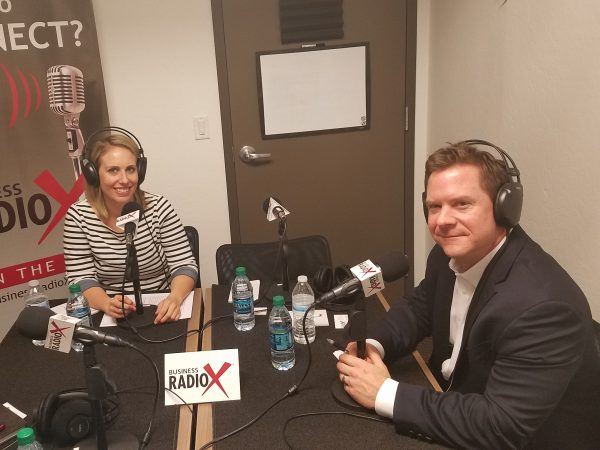
Christy Brown with LaunchPad2x

May 12, 2020 by angishields

Launchpad2X
Atlanta Business Radio
Christy Brown with LaunchPad2x
Loading
00:00 /
RSS Feed
Share
Link
Embed

Download file

Onpay-blue

Brought to you by OnPay. Built in Atlanta, OnPay is the top-rated payroll and HR software anywhere. Get one month free at OnPay.com.

Christy-BrownChristy Brown is President of Launchpad2X with a vast amount of previous experience in scaling and growing companies ranging from startups to Fortune 500 turnaround business units. In these roles, she has held executive leadership roles over the past 20 years but in 2019, she became the Managing Executive Partner a venture capital firm focused on pairing venture capital with shared services in a studio environment to scale rapidly with services to support early-stage startups.

Prior to assuming the executive investment role, Christy was the Executive Vice President at a Fortune 100 human capital management software company where she lead the business transformation & client success organization globally. However, Christy is a rabid founder and has scaled three service-based companies focused on digital marketing and human capital services which she exited across a 12-year interval.

Following the last exit, she became a consummate innovator, futurist, and angel investor and is aligned to multiple startup incubators as a mentor and advisor focused on scaling and growing the founders alongside the business. She has also served as a board member across the Atlanta ecosystem including as a Venture Partner with Republic.co, Entrepreneur’s Organization, Metro Atlanta Chamber of Commerce, American Cancer Society, Technology Association of Georgia, and various across early and series stage startups in technology.

Connect with Christy on LinkedIn and follow Launchpad2X on Facebook and Twitter.

What You’ll Learn in This Episode

  • The partnership between Launchpad2X and TIE Atlanta
  • Access to the Capital for women

About Our Sponsor

OnPay’sOnPay-Dots payroll services and HR software give you more time to focus on what’s most important. Rated “Excellent” by PC Magazine, we make it easy to pay employees fast, we automate all payroll taxes, and we even keep all your HR and benefits organized and compliant.

Our award-winning customer service includes an accuracy guarantee, deep integrations with popular accounting software, and we’ll even enter all your employee information for you — whether you have five employees or 500. Take a closer look to see all the ways we can save you time and money in the back office.
Follow OnPay on LinkedIn, Facebook and Twitter.

Tagged With: growth, scaling, strategy, venture capital

Mark Buffington with BIP Capital, Calvin Gray with T-Mobile and Ben Witte with Proof of the Pudding

October 7, 2019 by angishields

ABR-Feature-10-7-19
Atlanta Business Radio
Mark Buffington with BIP Capital, Calvin Gray with T-Mobile and Ben Witte with Proof of the Pudding
Loading
00:00 /
RSS Feed
Share
Link
Embed

Download file

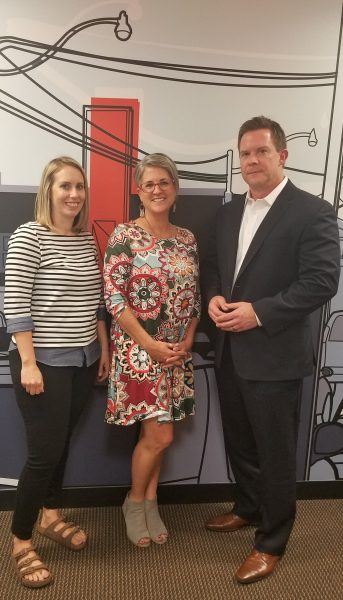
ABR-Group-10-7-19

Mark Buffington is co-founder and CEO of BIP Capital, which is recognized as one of the most active and successful venture investors in the Southeast. Additionally, he has co-founded three successful companies over the course of his career.

Since founding BIP Capital in 2006, Buffington has led investment rounds in more than 25 companies in a number of market verticals, including Healthcare IT, Digital Media, Ed Tech, Enterprise Software, and FinTech. Notable exits include Vendormate, Ingenious Med, and Shareholder InSite.

Buffington serves on the board of directors for several companies, including AchieveIt, ConnexPay, Trella Health, mLevel, PlayOn! Sports, Nview, and UserIQ. He also serves on several nonprofit boards, including KIPP Metro Atlanta Schools, the Georgia Tech College of Computing, and the Board of Trustees for the Alexander-Tharpe Fund (Georgia Tech Athletic Endowment).

He graduated from the Georgia Institute of Technology and has an MBA from the A.B. Freeman School of Business at Tulane University.

Connect with Mark on LinkedIn and Twitter and follow BIP Capital on LinkedIn and Twitter.

Calvin Gray is the Senior Director of Engineering and Operations at T-Mobile and is often known as the “man behind the mobile network.” He fell into the wireless industry by luck in 1984 and moved to Atlanta in the ‘90s, where he became one of the first four engineering employees for T-Mobile.

His ingenuity helped to build the very first network site in 1996-97 – long before it was mainstream – and he has since helped the company build 2,300 cell towers and make significant enhancements to local networks ahead of the Super Bowl.

To ensure the strength of the network, they enhanced it in a way so that it would cover way more people than T-Mobile currently serves and made it a point to leave the infrastructure in place to continue to serve Atlanta – a game-changer for the attendees of the upcoming Music Midtown in September.

Follow T-Mobile on Twitter, Facebook and Instagram.

Ben Witte, Senior Vice President – Operations with Proof of the Pudding,  has 25 years experience in food & beverage for Sports Arenas, Convention Centers & Restaurants.

Follow Proof of the Pudding on Facebook, Twitter and Instagram.

Tagged With: culinary, disruptive technology, events, high-growth company, Innovation, startup advice and strategy, startup investing, venture capital

Decision Vision Episode 24: Should I Become an Angel Investor? – An Interview with Steve Walden, The Walden Associates

July 18, 2019 by John Ray

Decision Vision
Decision Vision
Decision Vision Episode 24: Should I Become an Angel Investor? - An Interview with Steve Walden, The Walden Associates
Loading
00:00 /
RSS Feed
Share
Link
Embed

Download file

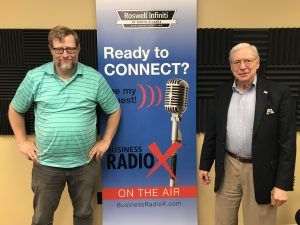
“Decision Vision” Host Mike Blake and Stephen Walden, The Walden Associates

Should I Become an Angel Investor?

How do I learn to become a successful angel investor? What’s the involvement of an angel investor after writing a check? What distinguishes the angel investor community in Atlanta? Highly regarded angel investor Steve Walden answers these questions and more in a wide ranging conversation with Mike Blake, Host of “Decision Vision.”

 Steve Walden, The Walden Associates

Steve Walden, The Walden Associates

Steve Walden, The Walden Associates, is a long-time (15-plus-year) angel investor.  Prior to that he was a corporate executive in New York with Time Warner, Grey Advertising and IBM. At IBM he was Executive Director of a new division called Prodigy, which foreshadowed the interactive tools we use today.

He was brought to Atlanta by BellSouth (now AT&T) as a vice president, where he helped launch BellSouth.net (their interactive division) and other businesses.

At about the same time he also had a small interest in a startup company called Netsurfer. The company was failing and with the overstated confidence of a New Yorker he stepped in as CEO.  Fortunately, the company had a decent exit and Steve became hooked on the startup world.  Since then he has been the CEO or CFO of three other companies before turning angel investor, where he has supported many other startups.

Steve started as a journalist after training at Columbia and the University of Pennsylvania and practiced that profession early in his career.

Michael Blake, Brady Ware & Company

Mike Blake, Host of “Decision Vision”

Michael Blake is Host of the “Decision Vision” podcast series and a Director of Brady Ware & Company. Mike specializes in the valuation of intellectual property-driven firms, such as software firms, aerospace firms and professional services firms, most frequently in the capacity as a transaction advisor, helping clients obtain great outcomes from complex transaction opportunities. He is also a specialist in the appraisal of intellectual properties as stand-alone assets, such as software, trade secrets, and patents.

Mike has been a full-time business appraiser for 13 years with public accounting firms, boutique business appraisal firms, and an owner of his own firm. Prior to that, he spent 8 years in venture capital and investment banking, including transactions in the U.S., Israel, Russia, Ukraine, and Belarus.

Brady Ware & Company

Brady Ware & Company is a regional full-service accounting and advisory firm which helps businesses and entrepreneurs make visions a reality. Brady Ware services clients nationally from its offices in Alpharetta, GA; Columbus and Dayton, OH; and Richmond, IN. The firm is growth minded, committed to the regions in which they operate, and most importantly, they make significant investments in their people and service offerings to meet the changing financial needs of those they are privileged to serve. The firm is dedicated to providing results that make a difference for its clients.

Decision Vision Podcast Series

“Decision Vision” is a podcast covering topics and issues facing small business owners and connecting them with solutions from leading experts. This series is presented by Brady Ware & Company. If you are a decision maker for a small business, we’d love to hear from you. Contact us at decisionvision@bradyware.com and make sure to listen to every Thursday to the “Decision Vision” podcast. Past episodes of “Decision Vision” can be found here. “Decision Vision” is produced and broadcast by the North Fulton studio of Business RadioX®.

Visit Brady Ware & Company on social media:

LinkedIn:  https://www.linkedin.com/company/brady-ware/

Facebook: https://www.facebook.com/bradywareCPAs/

Twitter: https://twitter.com/BradyWare

Instagram: https://www.instagram.com/bradywarecompany/

Show Transcript

Intro: [00:00:02] Welcome to the Decision Vision, a podcast series focusing on critical business decisions, brought to you by Brady Ware & Company. Brady Ware is a regional, full-service, accounting and advisory firm that helps businesses and entrepreneurs make vision a reality.

Michael Blake: [00:00:20] And welcome to Decision Vision, a podcast giving you, the listener, clear vision to make great decisions. In each episode, we discuss the process of decision making on a different topic. Rather than making recommendations because everyone’s circumstances are different, we talk to subject matter experts about how they would recommend thinking about that decision.

Michael Blake: [00:00:38] My name is Mike Blake, and I’m your host for today’s program. I’m a Director at Brady Ware & Company, a full-service accounting firm based in Dayton, Ohio, with offices in Dayton; Columbus, Ohio; Richmond, Indiana; and Alpharetta, Georgia, which is where we are recording today. Brady Ware is sponsoring this podcast. If you like this podcast, please subscribe on your favorite podcast aggregator. And please also consider leaving a review of the podcast as well.

Michael Blake: [00:01:02] Our topic today is Should I Become an Angel Investor? And those of you who’ve listen to the program for a while know my background, know that I’m connected with the startup world. In some way, I’ve been for really my entire career. And the angel investing topic, I think, is of particular interest because as a person that’s that’s traveled a lot, has lived abroad, one thing that I think separates our society apart is this notion of entrepreneur as folk hero. And even if you kind of translate entrepreneur in other languages, and I’m not fluent in 180 of them, but the way the words are even constructed is there’s almost a certain amount of suspicion or confusion about somebody that’s an entrepreneur, right. It’s an undertaking. And even the word “under” has a somewhat negative connotation.

Michael Blake: [00:02:03] But the United States is a little bit different. Now, I’m not trying to go off Fox News Channel here, but the United States is different in the fact that we elevate entrepreneurs to a folk hero status. And one of the things that makes that go is a community of angel investors. And the word “angel” I think is very apt, except for the people that perhaps get turned down for funding by them. But an angel investor is somebody that is willing to put money pretty much everywhere, everyone else’s fears to tread, so to speak.

Michael Blake: [00:02:38] And they bridge that gap between friends, family, and fools. Some will tell you themselves, maybe they fall into the fools category. Sometimes, they are friends and family. But they bridge that gap from from money that is not financially motivated but just really goodwill-based capital and just wants to see you succeed on a personal level. And the wise guys is the institutional investor, a series A venture capitalist, and so forth that let’s face it, at the end of the day, they are in it for the money. If they’re not in it for the money, they aren’t in it very long.

Michael Blake: [00:03:15] And angel investors kind of fill that very important gap. And you’re probably more familiar with them by looking at watching Shark Tank, a show I’ve never actually seen, by the way. But I know how it works. And Mark Cuban and those folks position themselves as angel investors or fashion. And I suppose that’s fair. But the vast majority of angel investors are frankly very anonymous. Very few of them have websites, not active all that much in social media. That’s not in California.

Michael Blake: [00:03:44] But most of them really are. You probably have sat next to an angel investor at a Starbucks and never knew it. You’ve probably been behind one in line at the grocery store. You’ve probably been sitting next to one in the restaurant where half-a-million-dollar deal is being talked about. You probably never knew about it. And especially if you’re in Atlanta, where we very much have a low key, sort of, non-PR mentality for the most part.

Michael Blake: [00:04:09] And so, if you don’t know that space, if you haven’t sort of invested a lot of time as I have to kind of burrow in, you may not know a lot about it. So, I’m very excited about this particular program because I think it’s going to be an opportunity to shine a lot of light about what it means to be an angel investor. I think the world always can use more angel investors. And if you’re a high net worth individual, and you’re thinking about it, it’s probably very daunting because where do you start? It’s high risk. Are you just going to be a moron and lose all of your money, and you’re going to feel like you never should have gotten into it in the first place? Or is there a method to the madness where somebody can be successful?

Michael Blake: [00:04:48] And I’m not qualified to tell you that, but I have somebody across the table from me who is. And it is my absolute pleasure to introduce my friend and our guest, Steve Walden today of Walden Associates, a seed stage investment and entrepreneurial advisory firm. Steve is a longtime 15-plus year angel investor. And prior to that, he was a corporate executive in New York with Time Warner, Gray Advertising, and a little technology company called IBM.

Michael Blake: [00:05:17] At IBM, he is executive director of a new division they called Prodigy, which foreshadowed the interactive tools that we now use. He was brought to Atlanta by BellSouth, now AT&T, as Vice President where he helped launch BellSouth.net, their interactive division and other businesses. At about the same time, he had a small interest in a startup company called Net Surfer. The company was failing, and with the overstated confidence of a New Yorker, he stepped in as CEO. And by way, this is just in, he actually disclosed. He is actually a native Bostonian, but we’ll let him define himself however he wants.

Michael Blake: [00:05:50] Fortunately, the company had a decent exit, and Steve became hooked on the startup world. That is sort of the way it works. Since then, he has been the Chief Executive Officer, or Chief Financial Officer, or maybe both of three other companies before turning angel investor where he has supported many startups. Steve started as a journalist after training at Columbia and the University of Pennsylvania and practiced that early in his career. And we’ll talk a little bit about how that led to him becoming an angel investor and him succeeding, i.e. surviving for a long time as an angel investor. I think that’s a good definition of success. Steve, welcome to the program. Thanks so much for coming on.

Steve Walden: [00:06:28] Thank you, Mike. It’s a pleasure to be here.

Michael Blake: [00:06:30] So, with most my programs, I like to start with establishing a common vocabulary because we can very quickly get into all kinds of jargon that’s almost a separate language, and we can lose people very quickly. So, we try not to do that. The first question I want to kind of put out there is most people have heard of venture capitalists, not as many people have heard of angel investors. And I think those who have think that they’re the same thing. But there’s a little bit of a difference between the two, isn’t there?

Steve Walden: [00:06:58] There’s a huge difference between VCs and angel investors. For one thing, probably the most fundamental difference is the way they’re structured. VCs are limited partnerships that are purely financially motivated. They have usually limited partners who who provide the money for the group, so that the people who actually do the investing may not be the same as the ones who provided the money for it. And that means the people who are doing the investing have a responsibility to third parties to produce results. And anything that is going to denigrate that ability is something they are not interested in.

Michael Blake: [00:07:52] And so, in effect, a venture capitalist as a fund manager, right. Definitely not that much different from a hedge fund or even an index fund, right?

Steve Walden: [00:08:01] Exactly. He has limited partners who are his bosses.

Michael Blake: [00:08:06] Now, one of the things that that strikes me about venture capital, it’s something I’ve studied a lot in the last two years, is because of the nature of venture capital, right, venture capital funds typically have an expiration date, right?

Steve Walden: [00:08:22] Right.

Michael Blake: [00:08:22] They’ve got to return capital up to 10 years and often more quickly than when that money was actually put in. And that can kind of limit the kinds of deals that venture capitalists can do and how they manage it. At least, drive how they manage it, right?

Steve Walden: [00:08:36] Yeah, exactly. They’re under a tremendous amount of pressure, not just within that timeframe, but because they know they’re going to be doing a second fund at some point, usually, before the first one is completely over. And if they have lack luster results, it’s going to be very hard for them to stay in business.

Michael Blake: [00:08:58] Yes, it’s hard to go out to the market saying, “We’ve been substandard or mediocre the first time.”

Steve Walden: [00:09:03] Yes, but give us more money.

Michael Blake: [00:09:05] But give us more money, right. Especially when there’s no shortage of folks that are looking for money. But we’ll come back a little bit to that. So, you have a background as a journalist. And as I found out actually in radio, to some extent, which is why I have this natural sort of smooth jazz radio voice, how does that help you being be an angel investor, or are there even parallels between journalism and the practice of angel investing?

Steve Walden: [00:09:35] Well, there are certainly behavioral similarities. I’ve learned to listen hard, to ask a lot of questions, and to be pretty skeptical about the results, whatever they may be of the questions. And so, when I go into “interview” an entrepreneur, I pretty much know what I want to ask him or her. And I know the kind of answer that I will accept and will be prepared to bore in and pretty hard with a second question,  I don’t get the kind of answer that’s successful.

Michael Blake: [00:10:11] So that that follow up question, right. And do you find that list of questions has pretty much become standard over the years?

Steve Walden: [00:10:18] Well, yeah. I think as I get older and lazier, I don’t try to rethink the whole thing every time. So, there are certain answers I’m looking to obtain. And if I don’t get them, I’ll either cut the interview short or, mentally, to cut it short.

Michael Blake: [00:10:38] Okay, right. One way or the other.

Steve Walden: [00:10:40] Yeah.

Michael Blake: [00:10:40] You can check out physically or mentally that at some point, this is over. We’re done. We’re done here. So, can you be an angel investor part time and be successful, right? You’ve gotten to a point, I think, correct me if I’m wrong, but I think it’s fair to characterize you as a full-time professional angel investor. Can you do that successfully part time? Can you do it as a hobby, or do you have to just decide this is going to be your job?

Steve Walden: [00:11:07] Well, it depends upon the success or how you define success. There are a lot of angel investment groups to which you can be a member, and let others take the heavy lifting for due diligence and some of the other things that have to happen, or you can decide, just stay and do it all yourself. And that latter function is a lot more difficult and requires a lot more time.

Michael Blake: [00:11:40] So, I want to come back to that because I know you’ve been very active in angel groups around town. So, I think that’s an important resource. Where do investment opportunities come from? As I mentioned in the introduction, you guys, as a group, except for the California folks, are pretty low key, right? You don’t have a store front. Most of you don’t really even have a website, right. And I think that’s by design, but you can tell me if I’m wrong. So, how do people know how to find you? There’s no Walden Associates in the Yellow Pages or anything. So, how do these deals find you?

Steve Walden: [00:12:18] It’s all through networking. And the converse of the question you ask is, how do I find companies? And you don’t just walk down the street and, actually, I was going to say, have people hand you cards but these days, you do find people who do that. But by and large, what you do is you become embedded in the community, and people know you, and you will hear about good companies. And if you’re not too late, you will get in and try to get a piece of them.

Michael Blake: [00:12:54] Now, that’s an important point. I want to follow up on that because, I think, even though we’re not really directing this at fundraisers, I’ve got to take the opportunity. If you’re looking for funding, or even if you want to be a successful angel investor, I think there’s a temptation to say, “Well, I’ve got this pile of money that I’m sitting on,” right. Of course, people are going to come looking for it, right. And to a certain extent, that may be true, but if it’s not the right people that it’s not a very productive use of your time, right?

Steve Walden: [00:13:28] On both sides.

Michael Blake: [00:13:28] Right.

Steve Walden: [00:13:29] There are some angel investors and VCs who actually provide value to the business. And if you get in with them, they can find you the next level of funding. They will have marketing contacts. They will also help you with an exit. And similarly, if you stay active in the community, you’ll get referrals from companies that are looking for money in however worth putting money into.

Michael Blake: [00:14:03] And so, in that search and one of the keys them to being an angel investor, I think, one bullet point here is you have to be willing to ping actively. It’s really like selling anything else, but unless you’re in finance understanding the notion that you have to sell money is odd. But in many ways, selling money is one of the most competitive ideas out there.

Steve Walden: [00:14:28] It is, it is. And it’s just becoming more difficult right now because the nature of the economy is such that there are a lot of “angel investors” who are throwing money around, and that has raised valuation. So, that funding a company that is worth investing in at a decent valuation has become exceedingly difficult.

Michael Blake: [00:14:55] Oh, good. So, I’m glad you mentioned that. So, I’m going to go off the script a little bit because I think from the outside, you look at angel investing, and the end game is to have the next Facebook, right, or the have the next Uber, or to have the next whatever big exit that there’s going to be. Obviously, those are exceptions to the rule, right? But investing just for growth and growth alone, that’s probably not a winning strategy. There’s got to be a value in there, right?

Steve Walden: [00:15:26] Well, there are a lot of motivations for wanting to be in this. And certainly, you want your investment part to be to return more than you put into it. But there are a lot of other motivations as well. And most angel investors like to work with startup companies. Many have been entrepreneurs themselves. And this is sort of heresy, I’m less eager to or less expectant of showing huge profits than wanting to break even and help some entrepreneurs along the way. But then, I’m at a particular stage in my career, which is unusual for some of them and certainly unusual for a VC.

Michael Blake: [00:16:15] Right. And I think I think you’ve earned the luxury of having that choice because of the success you’ve had earlier. I think if you start out as an angel investor, unless you’re sitting on a very large pile of cash, you probably do need to have some financial success, so you can evolve into a non-financial goal set. Is that fair?

Steve Walden: [00:16:33] That’s absolutely true.

Michael Blake: [00:16:34] And getting back to value, value is important, not so much that — in my view, not because you might get ripped off or overpay but the higher the entry value, the higher the burden it is for the company to generate a return on the investment. The exit just — and so, for every dollar of higher entry valuation, the exit has to be $10 higher, right, to generate that kind of return. That’s my value, I think, for angles is so important, that multiplier effect.

Steve Walden: [00:17:07] Although, I will also say that the if there’s going to be a decent exit, I’m certainly willing to give a little bit of the high end away, but not for companies that are pre-profit and are still asking for $20 million valuation.

Michael Blake: [00:17:29] Okay. And, hopefully, I think we’ll come back to that. But going back to kind of the opportunities search, and you talked about it comes through your networks, and that you’re involved in angel groups. So, how many deals do you think you see in a particular, call it a month?

Steve Walden: [00:17:48] Well, it depends on what you see, What do I mean by see? I’m aware of maybe 30 per month. And of that 30, I will actively want to “see” maybe 6 or 10. And the other two-thirds, I just really don’t want to get deep into.

Michael Blake: [00:18:12] And see, I’m guessing as you’d like to see maybe an executive summary, perhaps meet the management team for a brief presentation or something like that, right?

Steve Walden: [00:18:21] Yeah, exactly.

Michael Blake: [00:18:22] And so, of that population in a given year, how many commitments, investment commitments do you think you’d make?

Steve Walden: [00:18:34] That is a very difficult answer for me to give you because it varies a lot. And, right now, please forgive me, entrepreneurs, but the quality of deals that I’m seeing and what they’re expecting is less amenable to want to invest in. What we need is – forgive this also – is a good recession to bring down the valuations of some of the it. I know, Mike, you do valuation as well. And the pre-revenue company that’s asking for $20 million as valuation is just not going to get invested no matter how good they are

Michael Blake: [00:19:14] At least, not in our market.

Steve Walden: [00:19:16] I was going to say no, not on the East Coast.

Michael Blake: [00:19:18] Yeah, yeah, yeah. We could have a whole different podcast of East versus West. You and I have had that conversation, but we need to focus on on this particular topic. But it’s fair to say that if you’re looking at 300, if you are aware 300 plus deals a year, and maybe you look carefully at a hundred, right, a realistic number of commitments in a given year can’t be more than two or three, right?

Steve Walden: [00:19:43] Correct.

Michael Blake: [00:19:43] Right. And it’s not just financial capacity, but I know you as a person, you’re not really, “Here’s a check. I’ll come see you in five years,” kind of guy, right?

Steve Walden: [00:19:55] That’s correct.

Michael Blake: [00:19:56] So, how involved do you get once you kind of write that check? And I know there’s a spectrum, but we have you in front of a microphone. So, for you, personally, Steve Walden, right, what kind of involvement do you have with the company after you write that check?

Steve Walden: [00:20:11] It depends on a lot of factors. Ideally, I’d like to be on the board or, at least, on the advisory board. And I’d like to be in their key meetings, and I’d like to be able to help with some advice, particularly in marketing, but as larger sources of funds share this market with us, I will happily take a side seat and let the larger funds become involved in that.

Michael Blake: [00:20:46] Okay.

Steve Walden: [00:20:47] For instance, the one of the companies that I recently exited from was called [Predictale]. And one of the reasons I like Predictale initially, not only did it have a great CEO, but it had a VC that came in right after us. And the VCs took over the board seats and took over the ability to make some of the larger decisions. And I was perfectly happy being in the lee of the VC and seeing this become a successful exit.

Michael Blake: [00:21:20] Now, essentially, you say that because I think the mindset about that has evolved over the last 10 years. I think 10 years ago, angel investors are much more wary about VC involvement. I think they’re aware that they were just sort of take over and try to be private equity as opposed to VC.

Steve Walden: [00:21:40] Yeah,.

Michael Blake: [00:21:40] I think they were worried about, frankly, being crammed down, which that’s a term that just means that you either continue investing or become deluded. But it sounds like, I think, I sense in the community, not just from you, but others, that thinking has evolved now that angels are more open to partnerships with VCs and see some value there.

Steve Walden: [00:22:02] Well, certainly in the Southeast, we’re kind of a friendly club, and nobody wants to be the skunk at that party. And so, I know many of the VCs, and many of them know me, and none of us wants to do anything that will hurt the other and jeopardize future deals. So, on the other hand, I would be very wary about somebody coming in from the West Coast and saying, “I have lots of money and let me get involved in this company.”

Michael Blake: [00:22:41] And why is that?

Steve Walden: [00:22:44] Well, they would cram me down. They would do all sorts of financial stuff. And some of it is, I hate to use the word unethical but, not by our standards, ethical.

Michael Blake: [00:23:00] They still like to throw elbows. How about that? They definitely will throw some elbows.

Steve Walden: [00:23:03] Yeah. And they don’t have to live with me after that; whereas, the local VCs do.

Michael Blake: [00:23:09] Interesting. And, also, I think because some of the California folks have more money to begin with, right, it is much more likely they’ll come in and say, “We will put $20 million in this. And you, Steve, would put in – throwing out a number – quarter of a million dollars,” right, what are you going to do, right? All of a sudden, you’re not that different from holding shares of Apple at that point if somebody already invested, right?

Steve Walden: [00:23:35] It’s exactly.

Michael Blake: [00:23:35] So, who needs it?

Steve Walden: [00:23:36] Right.

Michael Blake: [00:23:37] So, let’s say I’m thinking about becoming an angel investor, and presumably I’ve done well financially. I don’t think this is something that you should do if you’re not financially well off. There are even some regulations that if they don’t make it outright illegal, they strongly discourage it. I am thinking how I can ask this question without being overly intrusive. Among your peers, yeah, among your peers, what do you think the net worth level kind of gets to before they realistically start thinking about themselves becoming active angel investors?

Steve Walden: [00:24:12] Well, there are some regulations that you have to sign that you have a net worth over — and I’m trying to think of it. It recently changed.

Michael Blake: [00:24:21] Yes.

Steve Walden: [00:24:23] Is it $2 million?

Michael Blake: [00:24:24] No.

Michael Blake: [00:24:24] No. Well, there are two limits. One is net worth and the other is income. And it has to be either or. But I think what it comes down to is what else you’re doing. To me, my angel investing is almost a hobby, and I have given more of my money to more conventional investments. And I’ve others, including those who are advising me on the other investments, that this is my sandbox. I intend to put money into nonconventional companies, and I expect that much of that is going to be lost. Although one or two big hits will completely erase those losses. And so, I guess, what I’m saying is the long answer to your question is you shouldn’t invest more than you can afford to lose.

Michael Blake: [00:25:28] So, in that respect, really not that different from Vegas rules?

Steve Walden: [00:25:33] I like to think it’s a little bit better, but probably not.

Michael Blake: [00:25:37] Well, maybe not. I think that it is better, but at the end of the day, I think that if you — personally, I think it is equally unwise to invest your mortgage and angel investment as it is to invest in a crap table.

Steve Walden: [00:25:54] I would agree.

Michael Blake: [00:25:56] Okay. That’s what I mean by Vegas rules.

Steve Walden: [00:25:58] Yeah.

Michael Blake: [00:25:58] So, while you’re answering that question, I quickly looked it up. So, the rule 501 by the FCC says that to be an accredited investor,a n individual has to have a $200,000 annual income or a household of $300,000 and — sorry. Or an individual or individual joint net worth of a million dollars, excluding your primary residence.

Steve Walden: [00:26:22] Yeah.

Michael Blake: [00:26:23] So, it’s actually less than I thought.

Steve Walden: [00:26:24] Yeah, it is less than I thought too. But what you said is it’s an or, so that you really — if you have a little money tucked away, and you’re not making a huge income right now or vice versa, you can still be an investor. And I think the key is to realize not to put your last nickel into it because it is a risky investment. And if you invest the way I do, which is companies you know, companies you’ve done your own due diligence on, you have a little bit better return than the average investor. But it’s not good enough that I would risk my future or my family’s future on that. But it sure is a lot more fun. It’s partly investment and and partly entertainment.

Michael Blake: [00:27:19] So, talk a little about that. What do you find entertaining or stimulating about it?

Steve Walden: [00:27:23] The fact that I meet a ton of interesting entrepreneurs, some of which have become friends. And even if I don’t invest, I’ve learned from them. And hopefully, the advice that I provide is as valuable as the money I can provide. And hopefully, mutually, I can learn from them and they can learn from me. I get a tremendous amount of pleasure in knowing I’ve helped some good entrepreneurs with some great ideas.

Michael Blake: [00:28:03] So, moving a little bit, shifting topics or gears a little bit to bandwidth, angel investing is a time-consuming exercise. But, also, we both know that portfolio theory suggests that if you can build a portfolio of any investment, right, you have a chance to generate a higher risk adjusted return. Is building a portfolio of angel investments a realistic exercise or a realistic goal?

Steve Walden: [00:28:35] There are lots of ways you can invest. You can invest in part of an investment group. There are several good ones in town. Well, that’s becoming better again. You can do it as there are even some funds that do this. So, that I think that having a portfolio is a good thing to do from a risk protection perspective, but you don’t have to go out and do your own due diligence to every company you’re looking at.

Michael Blake: [00:29:10] And that cuts down on transaction costs, too, right, because-

Steve Walden: [00:29:13] Yeah, exactly.

Michael Blake: [00:29:14] …  that in itself can be very expensive. It is not hard to rack up $30,000 of legal accounting expertise fees, right?

Steve Walden: [00:29:23] Yeah, exactly. And most investment groups have a lawyer that they have, if not on staff, which is probably the wrong word, with whom they do business regularly, who adjusts what he charges for either out of friendship or because he has other goals.

Michael Blake: [00:29:43] Yeah, okay. So, do you remember the first angel deal you ever did?

Steve Walden: [00:29:49] Probably the first one I ever did with a company I ended up working for or running. It was-

Michael Blake: [00:29:55] That’s an interesting way to get a job.

Steve Walden: [00:29:56] Yeah. Well, actually, believe it or not, there are some angels who invest with the goal of becoming the CFO or taking some role within the company and for salary. I had no such goal. I was, at the time, working for BellSouth, kind of fat and happy on a corporate income. And there was a company that I had come to that I put a little bit of money into because I kind of liked them, and I liked what they were doing, and I like the, then, CEO. And I put money into the company just down the side. And the company was reaching the point of no return or diminishment to nonexistence. And so, I actually left my day job to take over as CEO.

Michael Blake: [00:30:49] Well, talk about doubling down.

Steve Walden: [00:30:51] I know.

Michael Blake: [00:30:51] You really believed in that company.

Steve Walden: [00:30:53] I did, I did. And fortunately, it was a semi good choice. The company never really turned huge amounts. It was never a 20x return. But I did get all my money back and had the entertainment, if I can use that word, of being involved in it. And it was such a good experience to do that that I said, “Gosh, I’m never going to go back to the corporate world again. In fact, this sure beats working.”

Michael Blake: [00:31:28] Is that the first company you ever ran as sort of the head honcho?

Steve Walden: [00:31:34] Yes, it was. And there I was, fresh from New York. I never run a company as the CEO before. And so, there, I was taking double risks, but I had gone to business school in addition to some other things, and figured I could make some decent decisions. And whether I had made decent decisions or not, I was, at least, lucky, which is probably the most important part of that.

Michael Blake: [00:32:03] Well, luck is not a business plan, but if it happens, well, we’ll take it.

Steve Walden: [00:32:06] We’ll take it every time.

Michael Blake: [00:32:09] So, is it fair to say that not every investment you’ve made has had a happy conclusion?

Steve Walden: [00:32:16] That’s correct. All of the papers and books say that probably one in eight is doing okay. I’ve got a little bit better track record than that. And I will be the first to say a lot of that is luck, but I think I also take more care for about what I invest in. And I’ve got a bunch of rules that I follow. And every time I’ve broken them, by the way, I’ve ended up losing money.

Michael Blake: [00:32:56] That’ll learn you.

Steve Walden: [00:32:57] That’ll earn me, right.

Michael Blake: [00:32:59] So, I’m curious. One thing I’ve observed about angel investors and what I advise people that are thinking about getting into that is investing in businesses that you really understand well on the way in. So, a frequent complaint about Atlanta is, why don’t we have kind of the e-commerce California kind of startups? And the reason why is because nobody here has come out of that world, right?

Steve Walden: [00:33:26] That’s correct. And we also don’t have many consumer companies that get funding here, a whole lot of limitations and a bunch of categories.

Michael Blake: [00:33:36] Yeah. But the things we do do well here in Atlanta – information security, payments processing – if you have enterprise software, if you have a good deal, you can get funded.

Steve Walden: [00:33:45] You absolutely can. And I’ve had entrepreneurs complain to me about nobody has any money here in Atlanta. And my answer to them is much like the one you said, if you have a good deal, it’ll get funded. Even if it’s not in the category that’s normally popular in Atlanta, you will get it funded if you can prove that or demonstrate that it’s a good investment.

Michael Blake: [00:34:10] So, Atlanta has money, just maybe not money for you.

Steve Walden: [00:34:13] Yeah, exactly. I don’t know how to say it, but it’s not me, it’s you.

Michael Blake: [00:34:19] So, when a deal goes bad, what’s that like as an angel investor? How do you react? How do you then have the confidence to not sort of take all your money off the table, and hide, and go back into investing in index funds, real estate, gold, whatever?

Steve Walden: [00:34:37] You actually asked several questions. Probably the most important is how you react to it. If you look at it as a business, and you expect to get five absolute flops for everyone that comes in well, then every time you fail, you can say, “Well, that’s one less I have to do before I get to my five.”

Michael Blake: [00:35:04] Next one up.

Steve Walden: [00:35:05] Right. There are degrees of failure. A one-to-one payback is sort of a failure, but a lot of people wouldn’t consider that. So, the object is to get the ratios working for you, get six or eight companies invested in, and hope that with your advice and your very wise selections, you’ll get money back and then some.

Michael Blake: [00:35:41] And kind of what I’m getting to is we’re both aware of the stories of novice investors that invest. Maybe they’ve invest a relatively modest amount. Call it $25,000 or $50,000, right. And entrepreneurs will tell you that they’re often the highest maintenance, right if they’re novice investors, Maybe it’s not fair to categorize that by the amount, but assume if they’re novice investors, right, they’ll be our trying to reach the CEO every week, two or three times every week. “What’s happening with my money?” which is is distracting, obviously. And if you have that kind of mindset, it probably means you’re really not ready to take that kind of risk. Is that a fair characterization?

Steve Walden: [00:36:31] Probably.

Michael Blake: [00:36:31] Yeah.

Steve Walden: [00:36:33] On the flip of that, however, is if you’re able to offer good advice, and you call the entrepreneur on a daily basis, and offer good advice each time because you’ve been there, done that, then the entrepreneurs should take your call happily.

Michael Blake: [00:36:51] And I know with you, one of the things that you prize very, very highly is coachability, right. Somebody who’s willing to listen, doesn’t think they have all the answers. When we’re, certainly, looking for money, we want to present ourselves a certain way. We want to present ourselves as having all the answers when we pitch. But in fact, that can actually be a counterproductive posture in the angel world, can’t that?

Steve Walden: [00:37:17] Absolutely. And in fact, I have a friend and colleague who was about to invest in a company, and he asked me to interview the CEO. And after 15 minutes with the CEO, I said, “What attracted you to him was that he seems to have all the answers. That, to me, is a disincentive to invest in him.” And the guy walked away from the investment. At least, I hope. We haven’t heard the final results yet, but I hope he has.

Michael Blake: [00:37:57] I’m sure he took your advice. We could be here a much longer time, but I want to be respectful of your time. Just a couple of last questions on the way out. One is, if somebody now has listened this, we haven’t scared them off, and I hope we’ve scared off a lot of people-

Steve Walden: [00:38:16] Sure.

Michael Blake: [00:38:16] … who think that’s how — but there’ll be a few that. “I’m in,” where can they go to learn more about this?

Steve Walden: [00:38:25] Charlie Paparelli, who is a long-term angel investor who talks to other angel investors too says the best way to learn how to be an angel investor is to write a check.

Michael Blake: [00:38:42] It sounds like Charlie.

Steve Walden: [00:38:43] Yeah, it does sound like Charlie. And there’s a lot of truth to that. There’s a lot of books that you can read about success rates and things to look for. But at the end of the day, jump into the fray, do it with a small amount of money, you can do it for $5000 or $10,000, and learn every day from what the company is doing and what your fellow investors are doing. Hopefully, you can join a group that does a lot of investing and can coach you a little bit on, not only the investment, but how to act as a share owner in a company. And as you get better at it, you’ll probably do much better with your second, and third, and fourth investments.

Michael Blake: [00:39:29] And just as a sneak preview to our listeners, Charlie Paparelli is actually recording a podcast with us next month. So, he’ll be on. And the topic will be, Should I Raise Angel Capital? And that’ll be published some time in August or early September.

Steve Walden: [00:39:43] Good.

Michael Blake: [00:39:44] So, I’m a huge fan of Charlie’s, and I love his blog too. It’s one of the few that I make sure that I do not mess up.

Steve Walden: [00:39:51] Yeah, I agree.

Michael Blake: [00:39:53] If people want to learn more about angel investing, can they contact you? Would you be willing to take a call or receive an email?

Steve Walden: [00:39:59] Sure, I’d be happy to. I’m probably a lot more reachable by email than by phone calls. You can-

Michael Blake: [00:40:09] So, what’s your email address?

Steve Walden: [00:40:10] For this, it would be swalden@thewaldenassociates.com.

Michael Blake: [00:40:20] Okay. So, that will do it. That’s going to wrap it up for today’s program. I’d like to thank Steve Walden so much for joining us and sharing his expertise with us today. We’ll be exploring a new topic each week, so please tune in, so that when you’re faced with your next business decision, you have clear vision when making it. If you enjoy this podcast, please consider leaving a review with your favorite podcast aggregator. It helps people find us, so that we can help them. Once again, this is Mike Blake. Our sponsor is Brady Ware & Company. And this has been the Decision Vision Podcast.

Tagged With: Dayton accounting, Dayton business advisory, Dayton CPA, Dayton CPA firm, Michael Blake, Mike Blake, Stephen Walden, Steve Walden, The Walden Associates, venture capital, venture capital investors, West Coast venture capital firms

The Atlanta Business Startup and Venture Capital Scene

June 18, 2019 by Mike

Gwinnett Studio
Gwinnett Studio
The Atlanta Business Startup and Venture Capital Scene
Loading
00:00 /
RSS Feed
Share
Link
Embed

Download file

Christy Brown and Bryan Mulligan

What are the hot new companies, just how big is the Atlanta startup market, and what does the future of starting a new business in Georgia look like? Christy Brown, the managing director with the Atlanta office of Loeb Enterprises – an unique venture capital fund – and host Bryan Mulligan of Applied Information share the common experience of entrepreneurship, which is what makes America work.

Christy Brown/Loeb Enterprises

Loeb Enterprises are people-first investors, moving beyond venture capital to become a friend and trusted ally of their entrepreneurs. And they are always looking for the next big idea.

The approach of Loeb.atl mirrors the character of Atlanta itself: Intelligent, gritty and geared to win. Atlanta is an ideal ecosystem to build the next generation of startups focused on creating real value and solving problems.

CLICK HERE to watch the video of this show.

Tagged With: loeb, loeb atl, loeb ny, Loeb.nyc, TravelSafely, travelsafely app, travelsafely podcast, TravelSafely with Bryan Mulligan, venture capital, venture capital funds

Decision Vision Episode 11: The Atlanta startup ecosystem and the Siggie Awards – An Interview with Gordon Rogers, Avondale Innovation District

April 18, 2019 by John Ray

Decision Vision
Decision Vision
Decision Vision Episode 11: The Atlanta startup ecosystem and the Siggie Awards – An Interview with Gordon Rogers, Avondale Innovation District
Loading
00:00 /
RSS Feed
Share
Link
Embed

Download file

“Decision Vision” Host Michael Blake and Gordon Rogers

The Atlanta startup ecosystem and the Siggie Awards

Startup investor and mentor Gordon Rogers speaks with “Decision Vision” host Michael Blake on the history and development of the Atlanta startup ecosystem, the pivotal role of Sig Mosley in this community, and the “Siggie Awards,” which honor Sig’s contribution and recognize other noteworthy Atlanta investors.

Gordon Rogers, Avondale Innovation District

Gordon Rogers

Gordon Rogers is a three decade veteran in the Atlanta startup community, particularly in the field of education technology and online learning. In 1992, he founded a company that created one of the industry’s first learning management systems. He led the start-up from the bootstrapped stage to an IPO, through a merger with Paul Allen’s company, Asymetrix Learning in 1998, now part of SumTotal Systems, a SkillSoft company. He has spent the past 15 years working with startups in the ed-tech sector, including K-12, higher-ed and career & tech ed programs.

He mentors early stage ventures at Georgia Tech’s ATDC incubator and Flashpoint programs. As a social impact investor and entrepreneur, he advises Village Capital’s Ed-Tech Accelerator and Points of Light Civic Accelerator programs. He’s served as an advisor to over a dozen startups, including Authentica Solutions (now BrightBytes), Crescerance, ExceptionALLY, and RapidLD. In his role as advisor to CTE Portfolio, he works with Career & Technology Education directors to streamline Work-Based Learning and Apprenticeship Programs. CTE Portfolio can be thought of as a student-friendly version of LinkedIn.

He is Past President of Atlanta Technology Angels, and serves on the TAG Top 40 committee. He co-founded Teachers & Techies, a group of educational innovators working to improve technology in schools. He also serves as a guest lecturer and business competition judge at Georgia State, Georgia Tech, Emory, University of Georgia and Kennesaw State University business schools.

The Avondale Innovation District™, located in downtown Avondale Estates, is a place-based urban development designed specifically to support entrepreneurs and creative professionals, foster open innovation, attract and accelerate new business ventures. It is the venue for the inaugural Siggie Awards.  The “Siggies” are a way to recognize some of the unsung heroes in the Atlanta startup community: early-stage investors. The “Siggies” are named after Sig Mosley, Managing Partner of Mosley Ventures. To nominate an Atlanta investor for a Siggie award or to get more information on the inaugural event on May 15, 2019, click here.

Michael Blake, Brady Ware & Company

Mike Blake, Host of “Decision Vision”

Michael Blake is Host of the Decision Vision podcast series and a Director of Brady Ware & Company. Mike specializes in the valuation of intellectual property-driven firms, such as software firms, aerospace firms and professional services firms, most frequently in the capacity as a transaction advisor, helping clients obtain great outcomes from complex transaction opportunities. Mike is also a specialist in the appraisal of intellectual properties as stand-alone assets, such as software, trade secrets, and patents.

He has been a full-time business appraiser for 13 years with public accounting firms, boutique business appraisal firms, and an owner of his own firm. Prior to that, he spent 8 years in venture capital and investment banking, including transactions in the U.S., Israel, Russia, Ukraine, and Belarus.

Brady Ware & Company

Brady Ware & Company is a regional full-service accounting and advisory firm which helps businesses and entrepreneurs make visions a reality. Brady Ware services clients nationally from its offices in Alpharetta, GA; Columbus and Dayton, OH; and Richmond, IN. The firm is growth minded, committed to the regions in which they operate, and most importantly, they make significant investments in their people and service offerings to meet the changing financial needs of those they are privileged to serve. The firm is dedicated to providing results that make a difference for its clients.

Decision Vision Podcast Series

Decision Vision is a podcast covering topics and issues facing small business owners and connecting them with solutions from leading experts. This series is presented by Brady Ware & Company. If you are a decision maker for a small business, we’d love to hear from you. Contact us at decisionvision@bradyware.com and make sure to listen to every Thursday to the Decision Vision podcast. Past episodes of Decision Vision can be found here. Decision Vision is produced and broadcast by Business RadioX®.


Visit Brady Ware & Company on social media:

LinkedIn: https://www.linkedin.com/company/brady-ware/

Facebook: https://www.facebook.com/bradywareCPAs/

Twitter: https://twitter.com/BradyWare

Instagram: https://www.instagram.com/bradywarecompany/

Show Transcript:

Intro: [00:00:01] Welcome to begin Decision Vision, a podcast series focusing on critical business decisions brought to you by Brady Ware & Company. Brady Ware is a regional, full-service accounting and advisory that helps businesses and entrepreneurs make vision a reality.

Michael Blake: [00:00:20] And welcome to another episode of Decision Vision, a podcast giving you, the listener, clear vision to make great decisions. In each episode, we discuss the process of decision making on a different topic. Rather than making recommendations because everyone’s circumstances are different, we talk to subject matter experts about how they would recommend thinking about that decision.

Michael Blake: [00:00:38] My name is Mike Blake, and I’m your host for today’s program. I am a Director at Brady Ware & Company, a full-service accounting firm based in Dayton, Ohio, with offices in Dayton; Columbus, Ohio; Richmond, Indiana; and Alpharetta, Georgia, which is where we are recording today. Brady Ware is sponsoring this podcast. If you like this podcast, please subscribe on your favorite podcast aggregator, and please also consider leaving a review of the podcast as well.

Michael Blake: [00:01:03] So, today, we’re going to talk about a startup project in Atlanta called the Siggie Awards. And we’re going to talk a little bit about the award program itself, but also dig into what goes into launching an award program, what it takes to build and sustain one, and whether you, as a business owner or decision maker, should consider being involved in an award program in your community.

Michael Blake: [00:01:25] And to help us today is Gordon Rogers, the Avondale Innovation District. Gordon is a 25-year veteran of startups in the field of digital education and learning management, both as a founder and an investor. Gordon is a mentor at Georgia Tech’s ATDC and Flashpoint Accelerator Programs, as well as Managing Director of Vernon Bridge Ventures, an early-stage capital advisory firm. He serves on the advisory boards of Authentica Solutions, Crescerance, ExceptionAlly, and Rapid LD.

Michael Blake: [00:01:55] As a social impact investor and entrepreneur, he advises Village Capital’s Education Accelerator, as well as Points of Light Civic Accelerator programs. He is also past president of Atlanta Technology Angels. He sits on planning committees for Venture Atlanta and TAG, Technology Association of Georgia, Top 40. He also serves as a guest lecturer and business plan competition judge at Georgia State University, Georgia Tech, Emory University, Kennesaw State University, and the University of Georgia Business Schools. He has made angel investments in mobile learning, online language training and employee wellness companies, and virtual world startups.

Michael Blake: [00:02:32] Gordon’s newest project is serving as venture partner of the Avondale Innovation District located in downtown Avondale Estates, which is almost due, well, I guess north and east of Atlanta. Avondale Innovation District is a place-based urban development designed specifically to support entrepreneurs and creative professionals foster open innovation, attract and accelerate new business ventures. It is the venue for the inaugural Siggies Awards. The Siggies is our way to recognize some of the unsung heroes in the Atlanta startup community. The Siggies are named after Sig Mosley, who is the Managing partner of Mosley Ventures and is widely regarded as the godfather of the Atlanta early stage investment community.

Michael Blake: [00:03:17] In addition, Gordon, how many children do you have? Seven or eight?

Gordon Rogers: [00:03:20] Seven at last count.

Michael Blake: [00:03:22] Severn at last count.

Gordon Rogers: [00:03:23] We’re holding.

Michael Blake: [00:03:24] And holding steady. Very talented, by the way. I’m an amateur musician. Gordon’s family is a gaggle of musicians and have some fascinating YouTube videos. In particular, a couple where they all play around the same piano doing a couple of songs. He’s doing percussion, playing the strings, playing the keys. And it’s remarkable, not only the musicianship, but they all get along well enough to accomplish that.

Gordon Rogers: [00:03:51] For those three minutes.

Michael Blake: [00:03:51] For those three minutes. Well, I have two, I have two kids, I’m not sure I can accomplish that for those three minutes. So, congratulations to you.

Gordon Rogers: [00:03:59] Thank you.

Michael Blake: [00:03:59] And I guess I didn’t realize how much you’re involved in addition to your expansive family. How on earth do you find the time for this?

Gordon Rogers: [00:04:12] Well, as you know, kids grow up. So, most of them have finished college by now. So, they’re “self-sustaining adults.”

Michael Blake: [00:04:21] Congratulations.

Gordon Rogers: [00:04:23] And we have one about to graduate from high school. So, we are not quite as encumbered as we once were.

Michael Blake: [00:04:30] The herd is somewhat thinning, I guess.

Gordon Rogers: [00:04:32] Yeah, but it’s kind of like a herd of cats.

Michael Blake: [00:04:34] But you’re still — I mean, you’re still busy, but you somehow found time to take on this new project. So, you, obviously, have a lot of demands on your time. You don’t say yes to everything. Why did you say yes to this?

Gordon Rogers: [00:04:46] Well, it was a chance to work with two people that I’ve admired and enjoy working with for quite some time. Ed Rieker, who is the guy who started and launched Avondale Innovation District, a serial entrepreneur from ATDC and others who have several healthcare startups that have gone on to success. And he’s always been a great supporter of the startup community.

Michael Blake: [00:05:11] Yes, he has.

Gordon Rogers: [00:05:10] And I’ve worked with him for, at least, 10 years. As a matter of fact, fun fact, I think, Mike, you and I were behind the microphones at a different podcast in 151 Locust in 2010.

Michael Blake: [00:05:27] That sounds right. Yeah, the old Startup Lounge Podcast.

Gordon Rogers: [00:05:29] The Startup Lounge Podcast was there. And you and Scott were kind of the originators of this whole process. And 151 Locust was an old farmhouse that Ed converted in the middle of Avondale Estates into a co-working space. And we held a lot of events there, one of which was hosting your Startup Lounge Podcast.

Michael Blake: [00:05:51] Yeah. And that was sort of a co-working space before it became cool to have co-working spaces. Really, I mean, before Atlanta Tech Village, before Tech Square, before Opportunity Hub, before for any of these guys, right?

Gordon Rogers: [00:06:03] Ed was a man ahead of his time.

Michael Blake: [00:06:06] And so, you’re involved now in the Avondale Innovation District. And then, at some point the conversation came up, “Let’s have, I guess, an awards ceremony,” or was that you’re just sick and tired of Sig getting every award there is? So, we’ve got to find a way to give an award to somebody else. How did that conversation come around?

Gordon Rogers: [00:06:24] It was a little bit of both. We thought, “Okay, Sig has received a lot of awards. Maybe it’s time to put him on the other side instead of being on the receiving end,” which is well-deserved over all those years. But to give him yet another award might be just another of the same old, same old.

Gordon Rogers: [00:06:43] And we both recognized that Sig has been around, a fixture really, for three decades or more. And he really is the guy who got the whole angel early startup program off within Atlanta. And, now, it’s time that he kind of takes a little more time to go off to his villa in Costa Rica and other places. And there’s so many other people around the community that are doing similar work but may not get such recognition. So, we thought, what better way to honor that legacy that Sig has created and let him provide some accolades to others, other deserving souls?

Michael Blake: [00:07:27] And I think there’s another benefit. I do want to get into the notion of recognizing people are social contributors. But, also, for a long time, this town was basically Sig, and maybe Charlie Paparelli, and maybe Steven Fleming. And if those three said no, you basically felt like your deal was done.

Michael Blake: [00:07:47] And Sig is still so highly regarded. He’s such an important fixture that I think a lot of people who would like guidance and funding themselves don’t realize there are many active people, maybe more active at their stage of their lives versus Sig at this point that can be resource to them. It’s an opportunity to highlight that and pass the baton on in a way, sort of, kind of, this group succession planning. Is that a reasonable way to think about it, or am I off the reservation?

Gordon Rogers: [00:08:16] No, I think you’re right. And let’s go back to another throwback to that Startup Lounge here. I don’t know if it was you or your buddy, Scott, that came up with that t-shirt “Sig said No.”

Michael Blake: [00:08:28] That was Scott. He was the funny one.

Gordon Rogers: [00:08:29] All right. So, just for those who weren’t around in that era, there was a T-shirt that kind of threw a little bit of humor at. If you got a no from Sig, essentially, your startup was dead in the town of Atlanta. And that put a lot of pressure on Sig, of course. And it just didn’t give a lot of opportunities for people with ideas to go somewhere else.

Michael Blake: [00:08:54] I think Sig would tell you, he didn’t want to be in that position.

Gordon Rogers: [00:08:57] Absolutely not.

Michael Blake: [00:08:57] He did not want to be that that grand inquisitor, that grand executioner.

Gordon Rogers: [00:08:59] Right, exactly. But he was the default. And I look back, and if you look at Silicon Valley, if Ron Conway was the only guy out there that made angel investments, where would that be today? There’s a lot of Ron Conways out there. And I argue there’s a lot of folks like Sig, but they don’t have the same name and reputation. And, now, it’s time to build more pillars. I mean, he’s been the central tent pole, but we need others holding up the tent as well.

Michael Blake: [00:09:29] I think part of that is cultural too. I think Silicon Valley has a culture where if you’re an angel investor, you’re kind of like the rock star mentality, you’re kind of okay with the spotlight and drawing a lot of people to you. I think, in Atlanta, we still have a little bit more keep it close to the vest. Yeah, I’d like to make some investments, but I don’t necessarily want everybody knowing that I have the wherewithal financially to make those investments too.

Gordon Rogers: [00:09:55] Fair enough. And, yeah, Sig is kind of the unsung hero. And he is, obviously, responsible for a lot of successes. But you know what, you can’t rely on one person because that one person is not going to do it forever. And so, if you want a sustainable ecosystem you got to have a lot of people in the game.

Michael Blake: [00:10:12] So, you’re setting up this award program. What are you looking to reward? What are you looking to acknowledge and bring to light? What categories do you want to acknowledge people in?

Gordon Rogers: [00:10:26] Well, the first people who we’re turning to are those entrepreneurs who have raised capital and want to recognize the angels and mentors that have helped them do that. So, for founders that have started companies and raised anywhere between, say, 250K up to a million dollars, it’s an actual seed stage investment.

Gordon Rogers: [00:10:47] We want them to nominate angel investors and others who have helped them raise that round because anyone who’s done a startup knows that that first round is probably the hardest. And the more people that are involved in that process, the better chances you have of getting that first round. So, that’s the launching pad. So, that’s one award.

Michael Blake: [00:11:09] Okay.

Gordon Rogers: [00:11:11] The other one is Investors’ Choice, which comes from angels choosing other investors and recognizing other investors. And that’s not necessarily people who write the biggest checks or the most checks. It’s the people who are there helping those startups refine their pitch deck, work on product market fit, mentor them through the many different programs that are around here today, which were not around back in the Startup Lounge days.

Gordon Rogers: [00:11:41] Besides ATDC, which has been there all along, but you’ve got the Farm, you’ve got TechStars. Most of the universities have entrepreneurship programs. All those rely on outside mentors and many angels to help provide that support. And those are the people we’re looking to recognize.

Michael Blake: [00:12:02] Now, you also have a category, an award called the Resurgent Award. What is that? Who do you think the ideal nominee for that award would be?

Gordon Rogers: [00:12:11] Well, yeah. We had a list of potential award categories, and I came up with 8 or 10, and we had to pare it down. But the two that Sig really, really wanted to make sure got recognized, one of those was that, originally, we call it the Comeback Kid, but it’s recognized as a fact that not every founder and, certainly, not every startup is successful the first time around. And we need to recognize and honor those who have gone through failure and be willing to do it again, and maybe got socked by the markets, or they had missed the product market fit, but they learned from that, and that wasn’t the end of their journey. And so, by giving this award and this recognition to someone who is “resurgent,” we want to encourage failure, and learning from that, and continuing. And that’s how you build the ecosystem.

Michael Blake: [00:13:09] And Bill Gates is famous for saying that, “That success is a lousy teacher.” I think that concept is so important. My wife is in entrepreneurial venture. And her business partner, who himself has had a couple of failed ventures said that, I think is very profound, “If you don’t start a business after the failed one, then you’ve wasted the most expensive education you’ve ever had.”.

Michael Blake: [00:13:36] And I think that’s profound, right? When you get to sort of rewind, you realize, “I should have paid more attention to marketing,” or “I should have had a compensation program that was different,” or “I should have pivoted.” Whatever those would have, could have, should have were, you gain no value from them if you don’t find some way to, sort of, act upon them and profit that, right? And profit from that.

Gordon Rogers: [00:13:58] Exactly.

Michael Blake: [00:13:59] And, of course, the other part of that is it requires an investment community to be accepting a failure. And one of the criticisms of the Atlanta ecosystem for a long time has been, one and done. You lose money, you get that reputation, you’re damaged goods, and you’re just done. Do you think that’s changing now in the Atlanta area? Can you get a second shot?

Gordon Rogers: [00:14:24] Absolutely. And that’s what the purpose of this award is to recognize that shift. Before 2010-2011, I would say what you just described was absolutely the situation. As more capital has come in and as investors have become more sophisticated, they are looking at the founders and say, “Did you learn from this? Are you coachable? Are you willing to try again?” And they’re willing to give them another shot. And that’s the whole purpose of this award is to recognize that the shift has occurred and to encourage that failure. We’re willing to try and try again.

Michael Blake: [00:15:03] So, you’ve mentioned the timeline of the startup community here in Atlanta. And you and I have both been referred to as the OGs of the community. I’m not sure how I feel about that, but I’m going to lean into it for the time being. What are some of the other ways you’ve seen the startup community here evolve in the last 10-15 years?

Gordon Rogers: [00:15:22] Well, again, the support infrastructure that did not exist back when 151 Locust was, as you’ve mentioned, the first co-working space, before it became cool. Now, you cannot throw a rock without hitting either an accelerator, incubator, or co-working space. And that’s also part of a stronger ecosystem. Back before, if you try a startup, and you were working out one or two places that were the only place you could go, if you failed there, you might want to go somewhere else, but there really wasn’t anywhere else.

Gordon Rogers: [00:15:59] And, now, you can bounce around from one accelerator program to the next. And, hopefully, you’re learning something from those. And those accelerator programs, they’re not all based just here. They’re part of national chains and international organizations, such as TechStars, for example. They are bringing international focus to these startups. And so, they plug those founders into a network, not just of national but international investors and customers. And so, none of that infrastructure was there even five years ago. It’s really shifted in the last few years.

Michael Blake: [00:16:33] Yeah. Even in Chamblee, where I live, there are, at least, two co-working spaces of, which I’m aware. And then just three miles north up Peachtree Boulevard, this Prototype Prime, Sanjay Parekh is out there. We’ll get him on a podcast at some point. And, now, you’re seeing some market segmentation, right? Each of these are bringing something a little bit different to the table. Globe Hub in Chamblee has sort of an international focus, and Prototype Prime has a maker space, and Opportunity Hub has become a focus for minority entrepreneurs or entrepreneurs of color. Kind of interesting how that’s shaking out, isn’t it?

Gordon Rogers: [00:17:12] Yeah. Well, because there’s so many products out there, there has to be some product differentiation. One aspect, a potential downside that I worry about is growth of a species called accelerators surfers. And that’s people who really don’t necessarily have a business plan, but they can exist and survive three months at a time going from one accelerator program to another. Hopefully, they’re learning from that program, but it could also be a lifestyle. It’s like, “Hey, this is cool, I get to hang around with other innovative thoughtful people,” and they go through three or four accelerators, and they still don’t have a product. But, hopefully, that’s not going to be the case with most entrepreneurs.

Michael Blake: [00:17:55] Now, one thing I would argue has been, I think, a refreshing constant of the Atlanta community is even though capital has been hard to come by, historically, and to some extent appropriately so, there’s always been, I think, a very broad willingness to kind of pitch in not necessarily because you think you’re going to get something out of it, but I think people like you, like Sig, like many others, Scott Burket, have been very willing to give of their time to be a resource to help the entrepreneurs up their game, because I think that’s been another shift. I think entrepreneurs on the local market are better. I think they’re more skilled, they’re more sophisticated. What do you think?

Gordon Rogers: [00:18:36] Well, I agree. And I agree, the mentorship aspect has always been healthy and robust. But without the other side of that coin, literally, which is writing checks, the capital does still have to be there. Now, arguably, you can do more with less capital, and that has created a much bigger funnel of choice for VCs and angel investors because if you have an idea, and you can set up a wireframe, and get yourself a cloud account, you may have a company.

Gordon Rogers: [00:19:09] And so, as a result, thousands of companies are created. How many make it across the finish line? How many are actually able to raise capital? That’s a tougher thing to look at. And so, with a large pipeline, one of the benefits of these accelerators is you can help whittle down the actual likely people who are going to succeed out of those programs.

Michael Blake: [00:19:32] I guess, part of it, also, and I post this on a chart of the day about a week and a half ago, and you just alluded to it, the cost of starting the business now is so much less. It’s down to orders of magnitude in the last 20 years, right? I guess, part of the other side of the coin is you may not need the coin, right? Bootstrapping a company is much more viable than it was even five years ago. So, there’s actually a little, I think – tell me if I’m wrong- – there’s a little bit of a supply crunch to of companies that might have been coming to you, or to Sig, or to Atlanta Technology Angels. They’re not coming to them anymore because they’re finding they can do it on their own, thank you very much.

Gordon Rogers: [00:20:15] Well, absolutely. And the more of that, the better because startups should not have to rely solely on VC and venture funds to get off the ground. And by being able to go further and achieve some kind of customer penetration with bootstrap funds, and they become healthier, then that just raises their own valuations, and then puts those founders in a much better position, more in the driver’s seat when it comes to negotiation for valuation, when it comes time to actually raise capital.

Michael Blake: [00:20:46] Now, I understand you’re partnering with a nonprofit organization in putting the Siggies together. Tell us about that.

Gordon Rogers: [00:20:51] Yes. Well, one of the important things that we wanted to do here is to bring members of the investment community, angel community together with those who are supportive of nonprofits. And so, we wanted to find a nonprofit that followed the philosophy that we all support. And in this case, STE(A)M Truck is the one that we selected. And STE(A)M Truck, started by Jason Martin three or four years ago, essentially, is maker labs on wheels. They travel around the schools that don’t have their own facility, and it teaches STEM and STEAM skills to middle-school kids, and it gives them the access to those facilities that they might not otherwise have. And he’s grown from one pickup to five or six trucks and trailers in the last four years.

Michael Blake: [00:21:45] And so, why them? What’s that connection that you saw, or what connection did they see with you?

Gordon Rogers: [00:21:53] Well, I first met Jason when he was in the Civic X Accelerator Program, which Points of Light started several years ago. And that’s where nonprofits and social enterprises learned, build, and perfect their business model, so they can become sustainable. And they were scrappy, they figured out how to do it. And they’ve lasted several years now and grown to serve thousands of kids all around Georgia.

Gordon Rogers: [00:22:24] And so, to me, that’s a model that more nonprofits and social enterprises need to be able to follow. Still, they need capital, they need help. And by bringing them in the same room as investors in more for-profit startups, hopefully, there’s going to be some serendipity there, and people will take a look and say, “Yeah, this is a great model.”

Michael Blake: [00:22:47] Okay. So, I want to switch a little bit to kind of the nuts and bolts because, I think, a lot of people think about starting awards programs, getting involved in awards programs. You’re now doing it. Is this the first one? I guess not because you’ve been involved with Tag top 40, Venture Atlanta, and awards program of sorts, at least, as competitive to be invited to make a pitch. And that’s become a very successful exercise on its own right. Probably one the most awarded in Atlanta now.

Michael Blake: [00:23:19] From your perspective, you’re a successful individual, you got a lot of demands in your time, why choose to be involved in awards programs? Why is that a good outlet for your time or a good use of your time?

Gordon Rogers: [00:23:31] Well, I guess, I looked at this, and Ed and I kind of put our heads together, and we decided, “Okay, let’s go from ironic to iconic.” And so, we’re going to start off with — it’s sort of tongue and cheek. It’s not-

Michael Blake: [00:23:44] That sounds like Ed, by the way.

Gordon Rogers: [00:23:46] Yes, yeah. We decided not to take this too seriously. And, thankfully, Sig is happy to play along. So, we’re not giving out any kind of gold statuettes. We’re actually giving out bubbleheads with Sig’s likeness on it. And, again, we stole that idea from Scott because he had that idea back in the day. And we’re looking at some interesting things. Our version of the swag bag for the winners is the Siggie sack. And so, there will be some interesting things in that for the winners.

Gordon Rogers: [00:24:18] And so, we hope to have fun along the way, not take it too seriously. It is the first one of these awards. So, it’s the inaugural Siggie awards. But we’re hoping it will become an annual event, a must-attend event. And, again, as people age out of the ecosystem like Sig, he’s not going to be here forever, we need to build that next generation. So, my tag line for this is “Star Trek the Next Generation.”

Michael Blake: [00:24:48] Okay. Well, yeah. And I think for something like this, it is important not to take it too seriously.

Gordon Rogers: [00:24:56] That’s why we’re bringing you and Scott in to help with that.

Michael Blake: [00:24:59] I clearly see. Clearly, you’re not afraid of failure. That’s for sure.

Gordon Rogers: [00:25:02] Right.

Michael Blake: [00:25:03] Just as a side note, we’d contemplated doing some kind of awards program. We just didn’t have the time to pull it off. But we did get as far as we were going to name at the Shafties.

Gordon Rogers: [00:25:14] Okay.

Michael Blake: [00:25:15] Because the Startup Lounge logo was a gear shift. So, we’re going to give people like a golden gear shaft or something like that.

Gordon Rogers: [00:25:23] Right, right.

Michael Blake: [00:25:23] But we couldn’t really decide if that was going to be kind of too edgy or not. So, it kind of died there.

Gordon Rogers: [00:25:29] Well, we think the community is matured enough that they are ready for this kind of event.

Michael Blake: [00:25:34] I think so. I think you’re going to find that there’s going to be a tremendous amount of community support. Of course, Brady Ware supporting the program.

Gordon Rogers: [00:25:42] We appreciate that.

Michael Blake: [00:25:43] And we’re delighted to be a charter sponsor, so.

Gordon Rogers: [00:25:45] We know Sig is willing to play along because, again, going back to the 151 Locust days, we had those events called the Spring Fling. And we took over the streets. And there was a dunk tank, and guess who was in the middle the dunk tank? Sig Mosley.

Michael Blake: [00:26:00] He was. I did the dunk tank as well, and I learned a couple of things. The one I learned just how much my children hate me because when they couldn’t hit the target, they would just simply walk up and smack the target to make sure that I would be dunked.

Gordon Rogers: [00:26:17] Right.

Michael Blake: [00:26:18] Have you ever done a dunk tank?

Gordon Rogers: [00:26:20] I did. At that point, yes.

Michael Blake: [00:26:21] It is-

Gordon Rogers: [00:26:22] I didn’t let my kids participate though.

Michael Blake: [00:26:23] It is jarring.

Gordon Rogers: [00:26:25] It is.

Michael Blake: [00:26:26] I don’t think my back has ever been so wrenched as to when, all of a sudden, the seat just sort of gives way. And even though you fall into a tank of water, now, I know how the coyote feels basically when that happens. It’s a surprisingly weird physical experience.

Gordon Rogers: [00:26:41] Well, as I said, Sig has a good sense of humor, but he drew the line at that. He wouldn’t do the dunk tank this time.

Michael Blake: [00:26:46] Well, everybody has to draw the line someplace.

Gordon Rogers: [00:26:48] Yeah.

Michael Blake: [00:26:52] Thinking as somebody, then, who is a financial contributor, what’s the case for a company that has limited funds, limited marketing budget to support awards programs like this?

Gordon Rogers: [00:27:06] Well, I think it shows that they are recognizing the importance of building the community. And I hate to use that proverbial, it takes a village term, but it really does. And by participating in that, I mean, these things don’t happen automatically. We have to pay caterers. And, thankfully, Ed is really digging into his own because he’s providing the facility without charge.

Gordon Rogers: [00:27:32] And it’s also to showcase the fact that there are other centers of activity besides Midtown, and Buckhead, and Alpharetta. Avondale Estates is kind of a well-kept secret, although it’s due east, five miles due east of Ponce. So, we just want to show showcase the fact that there’s other parts for entrepreneurship activity around Atlanta. And it’s a stone’s throw from downtown Decatur.

Michael Blake: [00:28:02] You’re right about that. I mean, Decatur is sneaky entrepreneurial. Avondale is sneaky entrepreneurial. Chamblee is sneaky entrepreneurial in that way as well. I haven’t thought about that, but you’re right. A way to sort of — and there’s nothing wrong with the center of gravity, and the Georgia Tech Mafia and so forth, but there’s a lot of Atlanta that is not Georgia Tech, and TechSquare, and ATDC. And they’re great organizations, but they’re not for everybody. They’re not for everybody from a programmatic perspective. And we know how hard it is to get around town too, that for somebody coming in from Avondale Estates having to go into Midtown, that’s not an insignificant time commitment anymore. So, being able to localize these things, I think, is really important.

Gordon Rogers: [00:28:46] That and the fact that, as you’ve pointed out, as the economy has improved, rates for per square foot have gone up in those areas that you just mentioned. And most startups are pretty cash-strapped. And while some of these programs do give them free rent for two to three months, eventually, they have to start paying. And no one wants to commute two hours to get to their office. And so, they can find affordable space along with other people – mentors and co-workers – who are doing similar things with startups that provide that support. Then, they shouldn’t have to drive for two hours to get there.

Michael Blake: [00:29:27] So, how do you define — have you set a vision for this program will be a success if A, B, and/or C happen? And if so, what are those A, B, and Cs?

Gordon Rogers: [00:29:40] I guess if we get a flood of nominations for these different categories and get a lot of people recognized for what they’re doing, and we get a great turnout on May 15th at Avondale Innovation District, I think those are the things. And if we get people who were not prior to this event, didn’t have that awareness, or didn’t have that recognition. And so, then, founders can say, “Well, here’s some more people that I can tap into that I didn’t even know existed.” And so, again, it’s spreading the word about the entrepreneurial ecosystem.

Michael Blake: [00:30:17] Is there also a hope that perhaps by recognizing those who have made those contributions that it might inspire others to follow suit and maybe be that generation after next?

Gordon Rogers: [00:30:28] Yes, what you said, exactly.

Michael Blake: [00:30:29] And, hopefully, inspire the current one maybe to expand that as well, I guess.

Gordon Rogers: [00:30:34] Absolutely.

Michael Blake: [00:30:35] So, I think one of the challenges that awards programs have is they can become a little cynical. I think, you’ve probably seen it. I know that I have. They can be taken over by sponsors. They can start to become a vehicle, whereby the primary goal starts to become not so much recognizing whatever it is the award program was supposed to recognize. But then, sponsors want to recognize their clients, people on the board selection committee want to nominate p they can generate business. We’ve both seen that. And I’m sure you’re very aware of that. How do you keep an award program like this from going in that direction to make sure that it maintains its value over the long term?

Gordon Rogers: [00:31:32] Well, I think, by adhering to the standards. Ed, as I pointed out, has graciously agreed to put this event on. And, obviously, he’d love to have help from others, but there’s no real necessity to bow to that kind of financial pressure. We want people who are going to contribute on the basis of recognizing and helping building that ecosystem. And so, hopefully, we can stay true to that philosophy.

Michael Blake: [00:32:03] Do you see this award continuing to be to be run 5-10 years from now?

Gordon Rogers: [00:32:11] I would think, yeah, that’s quite a possibility. I mean, I think, it’s a — again, a lot depends on the first couple of years. It always takes a while to get these events off the ground. I remember with Tag Top 40, that was a much smaller production than it is now. And it takes two to three years to get these things into momentum. Even Venture Atlanta started off relatively small scale back in, I think, 2010 when they started or ’09. And it’s been a great success, but it’s taken a few years to get to reach their stride.

Michael Blake: [00:32:47] One of the things I’ve found, as I’ve been involved in a few of these things, it’s surprisingly hard to get nominations. I’ve always found that. I always figured, “Well, having award and nominations are flowing. Who wouldn’t like to have the public recognition, have people clap for you, etcetera, etcetera, so they get a front seat of the banquet?” But it’s actually deceptively hard to get a good nomination flow, isn’t it?

Gordon Rogers: [00:33:09] Well, it is. And, also, people don’t necessarily like to follow directions. When I send out this-

Michael Blake: [00:33:13] I have teenager, so I’m familiar with that. Yes.

Gordon Rogers: [00:33:15] Well, yeah, but even adults. You send them an email saying, “Hey, we’re having this event. Here’s the link to the Siggie awards site. We’d love for you to nominate.” And they reply, “Oh, great idea. Here’s five people I want to nominate.” And they missed the fact that, well, you need to fill out the form because why you’re nominating this individual, et cetera. So, I appreciate their willingness to help, but they’ve got to take that final step to actually get the nominations.

Michael Blake: [00:33:41] Yeah, if you break the — And we ran this at Startup Lounge to is that people want to be in the program, but they know us. They figure they can just send us an email, but the thing is we have systems of knowing who’s going to be in. If you break the system, then we might remember you’re coming, or we might not remember that you’re coming, right?

Gordon Rogers: [00:33:59] Right.

Michael Blake: [00:34:00] It’s not personal. It’s just Scott and I aren’t all that bright to, sort of, remember everything.

Gordon Rogers: [00:34:05] Well, you got a lot going on.

Michael Blake: [00:34:05] So, in order to sustain this program, what do you think are the key two or three things you need to make sure that this program is sustainable, so 5-10 years, we are still talking about, hopefully, as, by then, an institution of the Atlanta startup scene?

Gordon Rogers: [00:34:26] Well, for that, I would almost prefer to throw that over to my colleague and your good friend as well, Peter Baron of Carabiner Communications, because they are our communications partner. And they are starting to socialize this. And they are the experts on how to make something like this become, hopefully, a meme or something that people want to get to, what’s the buzz, and let’s find out what this is all about, and it’s a must-attend event.

Gordon Rogers: [00:34:55] Now, that doesn’t happen overnight typically, but by getting it into the hands of the right people and building awareness in the communications side of things with the owners and the investors, hopefully, the VCs will pay attention to this because this is helping their pipeline down the road. Typical VCs aren’t going to invest in the seed round, but they do want to keep their eyes open for the promising entrepreneurs. So, it behooves them to have this event continue because five years from now, they’re going to be writing series A and B checks for those same entrepreneurs.

Michael Blake: [00:35:31] It is a visibility into who is working with lots of entrepreneurs too, right-

Gordon Rogers: [00:35:35] Oh yeah.

Michael Blake: [00:35:35] … because you’re networking your pipeline?

Gordon Rogers: [00:35:37] Yes.

Michael Blake: [00:35:37] So, all right. So, I’m running out of time. So, we have to kind of wrap this up. How can people contact you or follow you to learn more about the Siggies?

Gordon Rogers: [00:34:54] Well, I’m on LinkedIn at Gordon Rogers. The Siggie Awards has its own site, siggieawards.com. And so, I would start with those two.

Michael Blake: [00:35:56] All right. Well, that’s going to wrap it up for today’s program. I’d like to thank Gordon Rogers so much for joining us, and sharing his expertise with us, and helping us learn more about the Siggie Award Program.

Michael Blake: [00:36:07] We’ll be exploring a new topic each week. So, please tune in, so that when you’re faced with your next business decision, you have a clear vision when making it. If you enjoy this podcast, please consider leaving a review with your favorite podcast aggregator. It helps people find us, so that we can help them. Once again, this is Mike Blake. Our sponsor is Brady Ware & Company. And this has been the Decision Vision Podcast.

Tagged With: Dayton accounting, Dayton business advisory, Dayton CPA, Dayton CPA firm, Emory University, Gordon Rogers, Investors Choice, Kennesaw State University, Michael Blake, Mike Blake, Mosley Ventures, Sig Mosley, Siggie Awards, Siggies, startup community, startup ecosystem, startups, venture capital, venture capital funding

Funding Your Business with Stephanie Sims Founder of Finance-Ability

January 23, 2019 by Karen

Funding-Your-Business-with-Stephanie-Sims-Founder-of-Finance-Ability2
Phoenix Business Radio
Funding Your Business with Stephanie Sims Founder of Finance-Ability
Loading
00:00 /
RSS Feed
Share
Link
Embed

Download file

Funding-Your-Business-with-Stephanie-Sims-Founder-of-Finance-Ability1

Funding Your Business with Stephanie Sims Founder of Finance-Ability

“Funding-agnostic & founder-centric” 

Finance-Ability upends traditional capital raising methods by providing entrepreneurs with the knowledge, tools and self-awareness to and the right kind of funding for their business. 

Focusing on the entrepreneur’s goals instead of instead of the most popular funding type not only builds founder confidence and comfort with the process, but also makes it more successful. 

Funding-agnostic & founder-centric, Finance-Ability provides objective, plain English information about funding options and help founders know their worth.

Funding-Your-Business-with-Stephanie-Sims-Founder-of-Finance-AbilityStephanie Sims is a recovering investment banker, 2nd generation entrepreneur, speaker and author. She started her career working with Goldman, CSFB and Lehman in the US and Europe, and then rode the high tech start-up roller coaster all the way to an exit – complete with angels, venture capitalists, and household-name clients.

These days, as the founder of Finance-Ability, Stephanie helps entrepreneurs find the money they need to grow their business. She demystifies the process of raising money and helps each of her clients build their very own Funding Formula.

Stephanie also leads, educates and mentors at a variety of events & programs, including Phoenix Startup Week, Money Month, Seed Spot, ACA’s Venture Ready.

Connect with Stephanie on LinkedIn and Twitter.

Tagged With: Entrepreneurship, startup funding, venture capital

Hans and Company Managing Partner Greg Hansen

December 12, 2018 by Karen

Hans-and-Company-Managing-Partner-Greg-Hansen2
Phoenix Business Radio
Hans and Company Managing Partner Greg Hansen
Loading
00:00 /
RSS Feed
Share
Link
Embed

Download file

Hans-and-Company-Managing-Partner-Greg-Hansen1

Hans and Company Managing Partner Greg Hansen

Hans & Company is a boutique consulting firm that focuses on not-for-profit organizations. Specifically, they get nonprofits $10,000/month in free advertising, and then help manage those dollars effectively.

This helps nonprofits increase their online impressions by 50,000 to 75,000 every month and 5,000 to 10,000 more website clicks every month.

Greg-Hansen-on-Phoenix-Business-RadioXGreg Hansen is an entrepreneur, consultant, and somebody who reads two books every week. With a background in Fortune 500 companies, consulting firms, startups, nonprofits, and venture capital, he has a passion for building, helping, and supporting great companies.

Having studied at San Jose State University, Trinity International University, Liberty University, and Stanford, he is well-equipped to provide the intellectual horsepower for any project. He has 18 certifications, more than 40 published articles, and has served on numerous boards for a variety of organizations.

Connect with Greg on LinkedIn, Twitter and Instagram.

Hans-and-Company-Managing-Partner-Greg-Hansen

Tagged With: consulting, google grant for non-profit, help with google grant, help with non-profit google grant, non-profit google grant, nonprofits, private equity, startups, venture capital

Mike Allen with Midas Financial and Jacqueline Moore with Opendoor

November 9, 2017 by Karen

Phoenix Business Radio
Mike Allen with Midas Financial and Jacqueline Moore with Opendoor
Loading
00:00 /
RSS Feed
Share
Link
Embed

Download file

MIKE ALLEN WITH MIDAS FINANCIAL AND JACQUELINE MOORE WITH OPENDOOR

Army Veteran (2001-2005) and 12 years in pharmaceutical sales, Mike Allen brings a unique perspective to Midas Financial. Desiring to start his own business and leave the W2 employment, Mike sought to finance a franchise that he and his wife, Ashlee, wanted to purchase with the assistance of the SBA. They soon become frustrated with the SBA Lending/funding process due to its long time frame and restrictions. Becoming discouraged during his search for business funding, Mike was connected with Midas Financial. Midas Financial attained for Mike $275K in 0%, revolving, lines of credit for the business purchase in about 3 weeks.

In business, there is always one constant…the need for capital. As a business owner or Entrepreneur, you know that the life of your business hinges on cash flow.  Either to grow or remain solvent. Most business owners don’t fit perfectly within the guidelines mandated by a bank. The Midas Financial team knew there had to be a better way, and that’s why they decided to establish their unique company.

The Midas Financial Company was founded in 2004 by Darrell Hornbacher, the company’s current President. Since then Midas has obtained over $1,000,000,000 for business owners. They’ve also built the business credit of over 2000 companies, created over 2500 corporate entities and fixed the personal credit of over 35,000 individuals.  Midas Financial is an A+ rated Better Business Bureau company with over 40,000 successful client interactions.  Midas Financial makes the process of obtaining capital simple and hassle free.

Mike Allen
Managing Partner
Direct:  309-212-6579
1-833-MIDAS33 ext. 2
Mike@midas-financial.com
MIDAS-FINANCIAL.COM
https://www.facebook.com/MidasFinancial/
https://www.linkedin.com/in/michaelatmidas/

Jacqueline Moore has been in the real estate industry for over a decade. For the past two years, Jacqueline has served as Vice President of Real Estate and Community Development in Opendoor‘s Scottsdale office. During that time, the company tripled employee headcount and nearly tripled home transactions. Prior to Opendoor, Jacqueline was Vice President of Operations at HomeSmart Real Estate where she managed real estate sales volume of $5.2B. Jacqueline attended Grand Canyon University.

Moving is one of life’s most overwhelming events, often causing months of stress and uncertainty. We started Opendoor in March of 2014 with a mission to simplify home buying and selling. Since then, thousands of homeowners have bought and sold homes with Opendoor. Opendoor empowers you with the freedom to move whenever you want, on your terms. If you’re selling, we can buy your home at a competitive price in days, eliminating the hassle of showings and months of uncertainty. If you’re buying, we make it incredibly easy for you to find and purchase the perfect home. Wherever you are in your home journey, a dedicated Opendoor expert will guide you every step of the way.


Jacqueline Moore
Vice President of Real Estate and Community Development
480-351-6622
www.opendoor.com
https://www.facebook.com/OpendoorHQ/
https://twitter.com/Opendoor

Tagged With: Credit Card Stacking, Credit Restoration, Darrell Hornbacher, Equipment Leasing, Hard Money, Merchant Cash Advances, online photos of homes for sale in Phoenix area, online photos of homes for sale in Scottsdale, Opendoor, Personal Lines of Credit, Phoenix real estate, private equity, private investors, Purchase Order Financing, real estate industry disrupter, reality of venture capital, sba loans, Securities-Based Lending, selling your home fast, selling your home without hassle, Student Loan Debt Reduction, taking the stress out of buying a home, taking the stress out of selling your home, unsecured lines of credit, venture capital, what's new in residential real estate

Phil Shmerling CEO at InCrowd Capital

June 24, 2016 by angishields

Chattanooga Business Radio
Phil Shmerling CEO at InCrowd Capital
Loading
00:00 /
RSS Feed
Share
Link
Embed

Download file

Phil Shmerling // InCrowd Capital, LLC 

InCrowd’s platform was developed to make anyone feel comfortable investing in startups. Our web-based, local investment platform provides angels with access to investment opportunities from accelerator, incubator and university programs across the Southeast and Midwest.

With our low minimum investments and access to a co-investment pool, investors are able to build portfolios of startups without having to invest large amounts of money in one particular investment.

You can contact Phil by emailing him at pshmerling@incrowdcapital.com

Tagged With: entrepreneur, Funding, GIGTANK, launchtn, Startup, venture capital

  • « Previous Page
  • 1
  • 2
  • 3
  • Next Page »

Business RadioX ® Network


Our Most Recent Episode

CONNECT WITH US

  • Email
  • Facebook
  • LinkedIn
  • Twitter
  • YouTube

Our Mission

We help local business leaders get the word out about the important work they’re doing to serve their market, their community, and their profession.

We support and celebrate business by sharing positive business stories that traditional media ignores. Some media leans left. Some media leans right. We lean business.

Sponsor a Show

Build Relationships and Grow Your Business. Click here for more details.

Partner With Us

Discover More Here

Terms and Conditions
Privacy Policy

Connect with us

Want to keep up with the latest in pro-business news across the network? Follow us on social media for the latest stories!
  • Email
  • Facebook
  • Google+
  • LinkedIn
  • Twitter
  • YouTube

Business RadioX® Headquarters
1000 Abernathy Rd. NE
Building 400, Suite L-10
Sandy Springs, GA 30328

© 2025 Business RadioX ® · Rainmaker Platform

BRXStudioCoversLA

Wait! Don’t Miss an Episode of LA Business Radio

BRXStudioCoversDENVER

Wait! Don’t Miss an Episode of Denver Business Radio

BRXStudioCoversPENSACOLA

Wait! Don’t Miss an Episode of Pensacola Business Radio

BRXStudioCoversBIRMINGHAM

Wait! Don’t Miss an Episode of Birmingham Business Radio

BRXStudioCoversTALLAHASSEE

Wait! Don’t Miss an Episode of Tallahassee Business Radio

BRXStudioCoversRALEIGH

Wait! Don’t Miss an Episode of Raleigh Business Radio

BRXStudioCoversRICHMONDNoWhite

Wait! Don’t Miss an Episode of Richmond Business Radio

BRXStudioCoversNASHVILLENoWhite

Wait! Don’t Miss an Episode of Nashville Business Radio

BRXStudioCoversDETROIT

Wait! Don’t Miss an Episode of Detroit Business Radio

BRXStudioCoversSTLOUIS

Wait! Don’t Miss an Episode of St. Louis Business Radio

BRXStudioCoversCOLUMBUS-small

Wait! Don’t Miss an Episode of Columbus Business Radio

Coachthecoach-08-08

Wait! Don’t Miss an Episode of Coach the Coach

BRXStudioCoversBAYAREA

Wait! Don’t Miss an Episode of Bay Area Business Radio

BRXStudioCoversCHICAGO

Wait! Don’t Miss an Episode of Chicago Business Radio

Wait! Don’t Miss an Episode of Atlanta Business Radio