Business RadioX ®

  • Home
  • Business RadioX ® Communities
    • Southeast
      • Alabama
        • Birmingham
      • Florida
        • Orlando
        • Pensacola
        • South Florida
        • Tampa
        • Tallahassee
      • Georgia
        • Atlanta
        • Cherokee
        • Forsyth
        • Greater Perimeter
        • Gwinnett
        • North Fulton
        • North Georgia
        • Northeast Georgia
        • Rome
        • Savannah
      • Louisiana
        • New Orleans
      • North Carolina
        • Charlotte
        • Raleigh
      • Tennessee
        • Chattanooga
        • Nashville
      • Virginia
        • Richmond
    • South Central
      • Arkansas
        • Northwest Arkansas
    • Midwest
      • Illinois
        • Chicago
      • Michigan
        • Detroit
      • Minnesota
        • Minneapolis St. Paul
      • Missouri
        • St. Louis
      • Ohio
        • Cleveland
        • Columbus
        • Dayton
    • Southwest
      • Arizona
        • Phoenix
        • Tucson
        • Valley
      • Texas
        • Austin
        • Dallas
        • Houston
    • West
      • California
        • Bay Area
        • LA
        • Pasadena
      • Colorado
        • Denver
      • Hawaii
        • Oahu
  • FAQs
  • About Us
    • Our Mission
    • Our Audience
    • Why It Works
    • What People Are Saying
    • BRX in the News
  • Resources
    • BRX Pro Tips
    • B2B Marketing: The 4Rs
    • High Velocity Selling Habits
    • Why Most B2B Media Strategies Fail
    • 9 Reasons To Sponsor A Business RadioX ® Show
  • Partner With Us
  • Veteran Business RadioX ®

From Corporate Executive to Executive Coach: Laird Carmichael’s Journey with Vistage

July 10, 2025 by angishields

CBRX-Vistage-feature2
Cherokee Business Radio
From Corporate Executive to Executive Coach: Laird Carmichael’s Journey with Vistage
Loading
00:00 /
RSS Feed
Share
Link
Embed

Download file

CBRX-Vistage-banner

Brought to you by Diesel David and Main Street Warriors

CherokeeSponsorImageDieselDavidMSW

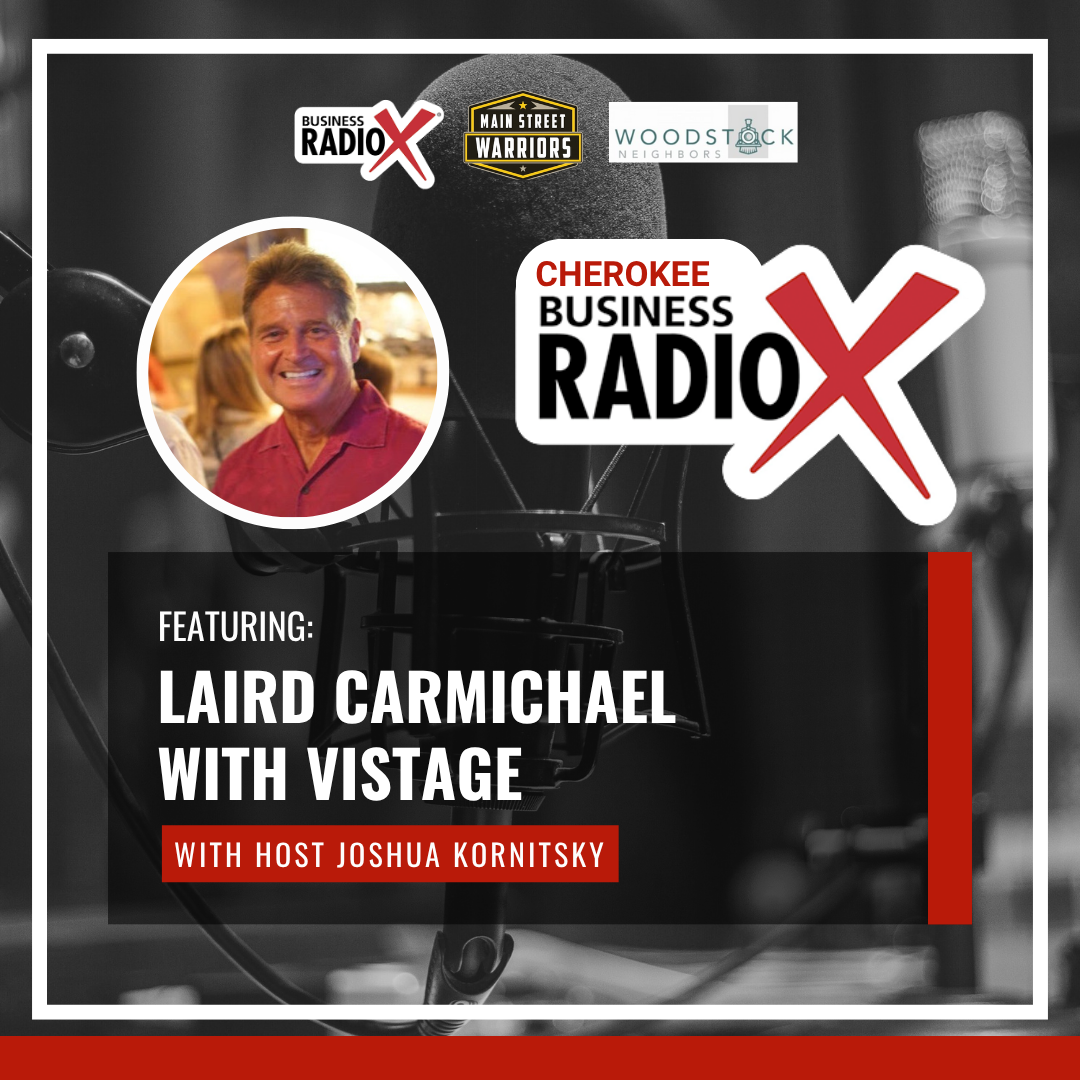
In this episode of Cherokee Business Radio, Joshua Kornitsky interviews Laird Carmichael, an executive coach and Vistage Chair. Laird discusses his journey from global manufacturing leadership to facilitating peer advisory groups for business owners and executives. He explains how Vistage fosters collaboration, accountability, and growth through structured group meetings and coaching. The conversation explores the value of vulnerability in leadership, the selection process for Vistage, and the benefits of the broader Vistage network. Laird also shares insights from his sports background and praises the impact of the EOS methodology on business success.

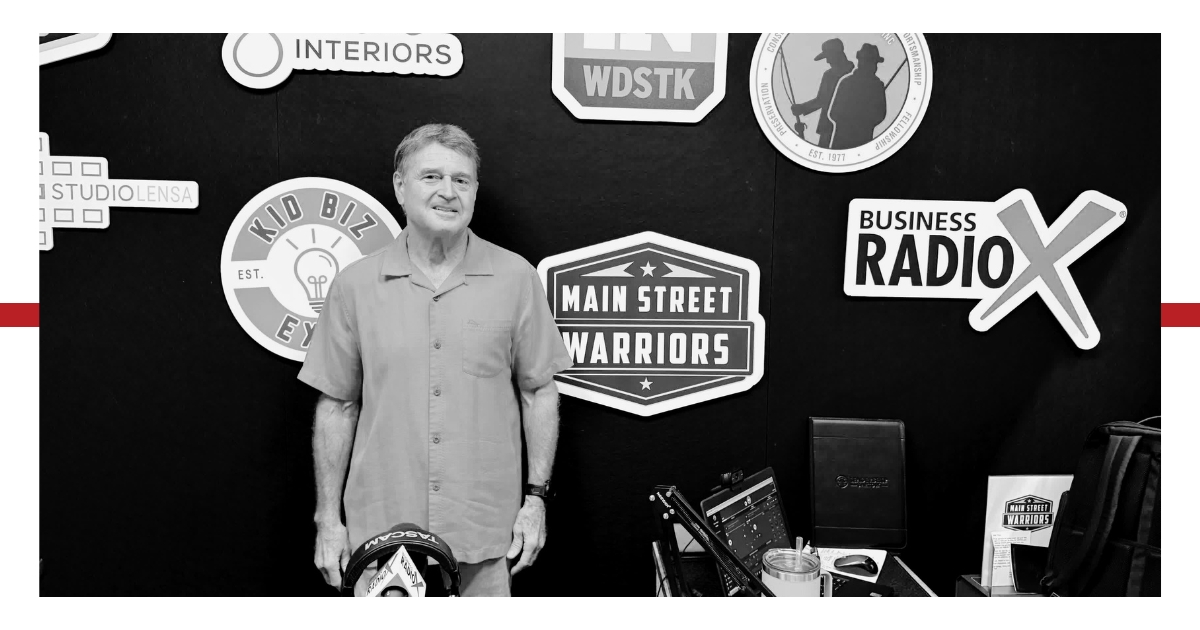
Laird-Carmichael-bwLaird Carmichael grew up in Atlanta, and has an ME degree from GT (wrestling scholarship, baseball, GT Hall of Fame). He’s worked for 11 companies, two of his own, 24 positions with 28 managers.

Laird started with GE on the Mfg Mgmt Program, then spent 15 years in multiple businesses and locations. Alcatel Alstom, 4 PEs and ended in Chicago as the VP of Global Operations with plants in Chicago, Brazil, Mexico, China (2) and Malaysia.

Laird consulted for several PEs for 3 years after retirement. He decided to chair a Vistage group to stay engaged with the business world and give back from his experiences. He has a very active retirement life full of family, friends and activities.

Connect with Laird on LinkedIn.

Transcript-iconThis transcript is machine transcribed by Sonix.


TRANSCRIPT

Intro: Broadcasting live from the Business RadioX studios in Woodstock, Georgia. It’s time for Cherokee Business Radio. Now, here’s your host.

Joshua Kornitsky: Welcome back to Cherokee Business Radio. This is Joshua Kornitsky professional iOS implementer and your host for Cherokee Business Radio today. I am so happy to have you with me in the studio, Laird Carmichael. Laird’s an executive coach and also a vintage chair. Welcome.

Laird Carmichael: Thank you. Joshua. I appreciate you having me on today. And, uh, I’ll warn you ahead of time, I’ve never done a podcast, so, uh, I’ll, uh, I’ll work my way through this with you.

Joshua Kornitsky: Well, the good news is we’re just going to be talking. Yeah, so that makes it much easier, because I know you can talk because we’ve done that for a long time.

Laird Carmichael: I make up for things by talking too much. So that’s a that’s one of my lessons learned at Vista.

Joshua Kornitsky: All right. Well so let’s start right there. Well, so let’s assume someone doesn’t know what Vista is. What is vintage.

Laird Carmichael: Well, basically Vista is a peer advisory group. Okay. So you have a room full of and that could in our groups. Uh, that could be a president. That could be a CEO, that could be a managing partner. Most uh, most times it’s smaller businesses, 5 to 50 million size, uh, in revenue. Um, and, uh, and their owners and all of my group, uh, is all owners and, and they’re passionate and, uh, they collaborate once a month in a monthly meeting, and then we do some 1 to 1 coaching individually in between the meetings.

Joshua Kornitsky: Okay. Thank you for giving us some context. And I’ve got a few questions on that, but I want to ask kind of what brought you into this role. How did you end up in. Tell us a little bit about your background.

Laird Carmichael: Well, not to get too long with the story and I can do that, but, uh, I, actually grew up in Atlanta. I went to Georgia Tech there, so I spent the first 21 years in Atlanta. I then worked for 45 years and had to make a retirement speech eight years ago. And so I said, well, I worked for 11 companies. I had 24 jobs and 28 managers. So I got to and I worked in six different countries, you know, including the US. And it was all in a manufacturing businesses, two of which were mine. Anyway, I retired eight years ago and I worked for four private equity companies the last 25 years. And uh, as soon as I retired, they started calling me and said, hey, we need to fix something in a plant somewhere, right? And I stayed. I stayed domestically on those assignments, but I’ve consulted for about three years until one day I woke up and said, you know what? I’m getting up at 4:00 in the morning up in North Georgia, driving an hour and a half to two hours down to the airport to get to get on an 8:00 plane. Right. Fly somewhere, get back home at 6:00 at night on Friday and Atlanta traffic and take three hours to get back to my house up in North Georgia mountains.

Joshua Kornitsky: That’s a hard working retirement right there.

Laird Carmichael: It was. I’m. I’m working full time. I didn’t need the money. And I’m saying no mas. That’s that’s it. And so I had a really good experience back. Uh, I did, uh, 15 years with General Electric and three with a French General Electric. Uh, I left the corporate world and, and became a part owner of a contract manufacturing business. And, um, when I went to that, I lost all that infrastructure of the corporate world. Sure. And, and so I needed somebody to talk to when it, you know, because most of our employees were Mexican. Uh, and, and so I joined this thing called the chief executive Network, which is a similar and still around today as visage, only it doesn’t have near the bandwidth of a visage. Um, so anyway, I said, I’m going to do a due diligence on all the all the places that do that. And that’s how I found visage had no earthly idea who they were, uh, and, and how big they were. But they’d been around for 60 years. They got 47,000 members and, wow, 30 something countries, mostly us. And, uh, and I went through their vetting process and academy and to get trained and, uh, became a chair about, uh, a little over a year ago.

Joshua Kornitsky: Wow. Okay. So you’re working with, uh, companies, usually 5 to 50 million ish is the range. And and, uh, you had said typically it’s owners or senior senior, you know, C-suite level management.

Laird Carmichael: And it’s basically somebody that owns the PNL, somebody that’s fully responsible for a PNL. It can be a, you know, a $150 million division of $1 billion company. But, uh, they need to be running some sort of a PNL and be responsible for it.

Joshua Kornitsky: So who tends to thrive in a in a pure environment like that, from, from your experience, both inside of this stage and outside, who who does best?

Laird Carmichael: Well, the vestige, uh, people, I’m telling you, the vintage chairs that I’ve met. Uh, there’s 16 of them down in Atlanta. I went to a to a chair world, they call it in Orlando back in February of of last year. And there were probably 500 chairs down there. These are people that you’d hang with professionally and personally. Great personalities, good people. Just really, really good people. The people that joined visage are people that want to collaborate with their peers to basically make better decisions. Um, you know, when you’ve got nobody to talk to. As that situation came up for me back in the 90s. Um, you know, it’s it’s a tremendous help to listen to somebody else. Different kind of problem. But basically the, the typical the topic is the same and therefore it’s transferable as to how you attack the problem, how you collect the data to decide what to do with it, and then and then decide on the solution and then do the execution and all that process. You get to listen to maybe 15 other people tell you how they got through that.

Joshua Kornitsky: Wow, that seems incredibly valuable.

Laird Carmichael: And the power of, of uh, we basically call it issue process. And we go through a, a funnel process to say, okay, what’s your issue? What the what’s the impact it’s having on you financially? Emotionally? The the culture, your personal life? Uh, the, the rest of the members will ask a lot of clarifying questions. Then you decide, do you still have the same issue, or is the issue something a little different from all those clarifying questions? And then we go through a process of solutions, and you become accountable for whatever solution that you’ve listened to. Wow. Um, is is the right solution for you. And when you’re going to do the first thing to execute on it and, and you’re you become responsible to the group for the accountability, then.

Joshua Kornitsky: Okay. So so it sounds like the type of person who’s going to thrive is going to be somebody who’s open and and willing to listen and willing to take the, uh, learn from the advice. I read somewhere once and I don’t remember whose quote it was that that a smart person learns from their mistakes, but a wise person learns from others mistakes. Exactly. And it sounds like that’s the vintage serves its members very well that way because you’re bringing all that experience to bear.

Laird Carmichael: Very much.

Joshua Kornitsky: So. Um, and so when you’ve got an opportunity to talk to somebody about Vista, what are some of the most common questions that prospective members ask you? The types of things that, uh, you know, I’m not sure it’s for me. What are the things that they’ll bring up to to ask and understand about this stage?

Laird Carmichael: Well, um, I usually do a sorting process to end up in that discussion with somebody. Um, I’ll, I’ll sort a, I’ll sort LinkedIn for my particular area because my area is not like the 16 people down in Atlanta that are all vying for the same people in the Atlanta area. I, I basically do North Atlanta through the rest of North Georgia. So it’s a fairly about half the state. Um, and there are no other chairs or are any other members up in North Georgia? So I’m operating in a place where they don’t know what visage is.

Joshua Kornitsky: Okay.

Laird Carmichael: Okay.

Joshua Kornitsky: So you’re introducing a new concept, which is hard.

Laird Carmichael: Yeah. And and there are there are lots of other organizations that are networking organizations, but they tend to be more social than, than and maybe a little bit of off away from whatever meeting the group has. It’s maybe one on one with another member that you that you do some collaboration. But this is very focused on bringing the right people to the table. So when I get into a phone call, I may be introducing vintage for the first time like we just talked about, right? Or they may already know about vintage and decided that, well, I didn’t want to back then, but I think I might want to be interested now. But, um, what I’m looking for and these are mostly zoom calls because of the size of the territory, I can’t go I can’t go have coffee with somebody and and and have to drive an hour or two at an hour back. So, uh, we do a lot of zoom calls, but I’m looking for the a person that’s humble enough and vulnerable enough to be the right kind of person in the room. And the one thing we don’t do is have two people chasing the same customer in the room, because you lose the the trustworthiness and the confidentiality. You’re not going to open up when you when you’ve got somebody chasing one of your customers sitting right across the table. So it’s a very confidential, you know, room of, of information we have going on.

Joshua Kornitsky: Sure. And that makes sense because you you’ve got owners and presidents and CEOs sharing data. That’s not public data in most cases. So I want to grab on to something you just mentioned and tie it kind of back. You had you had mentioned that you’d worked in multiple organizations across multiple countries, which these days is not as rare, but but still pretty rare to have somebody that’s had that broad swath of, of cultural, uh, experiences. Right. And you used a term that I hear a lot in my work, but I don’t hear it a lot in business discussion. You said they’ve got to be vulnerable, right? So I want to ask you first. Were you always vulnerable during that career? And if the answer is yes, I’ll call bull crap on that. Uh, but but really, what I want to know is, is kind of what what opened that door for you, and maybe give a hint or two to somebody that might hear this that says, oh, well, all right. So a little bit about vulnerability.

Laird Carmichael: Well, you’re exactly right. Anybody that says yeah I’ve always been vulnerable. You know, that’s that’s bullshit. So so excuse me. No.

Joshua Kornitsky: Quite all right.

Laird Carmichael: Yeah. Yeah, exactly. Um, in fact, I’d have to say with all the experience I had and all the different cultures and all the places I had, uh, factories, you know, predominantly in Mexico, but, uh, all, you know, Brazil, China.

Joshua Kornitsky: Uh.

Laird Carmichael: All over Malaysia, France. Um, yeah. I wish I’d have had vestige back when I was running two of my own businesses and and some of the other businesses that, that I was associated with. Um, I’ve learned about vulnerability, trying to find it in other people in a, in a quick, uh, first 30 minute discussion that you get into, if the person connects with me on LinkedIn, we we basically schedule a zoom call and we’ll do an information exchange is what it’s called. And if we decide there’s more there, then we’ll we’ll go on for there. Um, but, uh, you got to find somebody. If you find somebody that’s not vulnerable, that’s not humble. And there’s degrees of that, obviously. Sure. You don’t want somebody coming in to dominate in the room. You don’t want to doing all the talking. You don’t want them to to be adversarial with the rest of the group in there. And, and so, uh, that, that that’s probably the most important personality traits that you want with the person. And then you start getting into, um, what kind of organization they run and does it fit in the group. And we try to get a diversity in the group. Uh, that that facilitates a very good discussion about issue processing.

Joshua Kornitsky: I mean, that makes sense to me. Is, is there is there a way you can sort of quantify or qualify the type because of ROI that people get from Vista? Because obviously I’m sure there’s a financial investment, but there’s a time investment. And in more often than not, broadly speaking, when you’re talking about the, the type of individuals that join visage, their time equates very directly to money. So what type of return do they get for that time and, uh, financial investment?

Laird Carmichael: And those are the the two leading, uh, you know, roadblocks. If there’s a roadblock, somebody’s doing a lot of. I talked to a lot of people say, you know, this is great. That’s exactly what I need. But I’m too busy to do this, and and this is a lot of money. If it’s a smaller business, I don’t know if I can afford to do this. And those are always the two biggest things. And it gets back to an ROI. And and if you’re not getting a ten x on your on your investment of either time or money, uh, then you shouldn’t be there because you should find that out very quickly. And, and in our sorting process, if we get past the information exchange, um, you know, there’s two ways you can go. You can go straight to a selection interview where you go through about an hour and a half of questions that are very, very specific and, and either sign the person or not sign the person at the end of that selection interview. But but I prefer that, uh, that we bring a person to the to the meeting, to our regular meeting, and we’ll have guests at every meeting. Oh, really? Yeah.

Joshua Kornitsky: And and and so that’s that’s that.

Laird Carmichael: Well, it’s it’s so, it’s so that I can see how the person interaction interacts with the rest of the members. And after the meeting is over, I can get their opinion of whether they want the person in the room or not.

Joshua Kornitsky: Sure. Well, that makes you, uh, a deeply ingrained chair and facilitator, because you’ve got to make sure that they gel.

Laird Carmichael: Yeah. If the person does well in the meeting itself and and and the person and our members, our current members say, yeah, thumbs up. Then then then we go forward. Well, but I’ve had a couple of guests that I remember said, no, no thanks. And uh, and I just didn’t give them an invite to become a member.

Joshua Kornitsky: It seems like an upfront and very clear process for folks. And and if somebody is interested in learning more and, and, uh, understanding what Vista is about. We’ll have all your information on our site, but is there an easy way for people to learn about it or get in touch with you?

Laird Carmichael: Yeah, I’m I’m on a I’m on LinkedIn just with my name, Laird Carmichael. Um, you’ll see a vintage background when you come on to it. Um, the. You know, other than that, uh, just getting just getting Ahold of me through that is probably the best way to do it. But I would highly encourage, if you have zero, zero knowledge of vistas, just poke on to the vintage.com website, go through it and you’ll start seeing all the all the, the webinars and the speakers that we bring in and all the, um, there’s there’s a lot of networking groups where if you’re doing M&A work or if you’re doing all sorts of there’s 37 different networks that you can join. And that way you get access to the rest of the 47,000 members.

Joshua Kornitsky: Wow. Okay. So so that peer group extends really, uh, nationally.

Laird Carmichael: Exactly. And internationally.

Joshua Kornitsky: Oh, see, and speaking back, you you had said when you were in different countries running your own, That that would have been beneficial. I didn’t realize that.

Laird Carmichael: So hugely beneficial I’ve gotten. I joined about five of them. I joined obviously the manufacturing one because that was what my life was or my career was and uh, and uh, and several other ones and, and sometimes the email they go across, I haven’t gotten involved with hardly anyone. But if somebody comes up and says, geez, I know I need to be in Mexico manufacturing and, and I got this new product, blah, blah, blah. Anybody got any experience at that? And I couldn’t, I couldn’t resist.

Joshua Kornitsky: Right, right. Well, it’s it’s a hook that, that that works for you.

Laird Carmichael: I had 30 years of that. And especially doing contract manufacturing, I was bringing in any and all products and uh, having to deal with all the border issues and the, and the other issues that are involved.

Joshua Kornitsky: So that brings up just a couple more points that that occurs to me. So if let’s say that you do, uh, engage with someone and, and it turns out that that, uh, they’re not a fit for your group, can you suggest different groups to them if that’s a good a better fit?

Laird Carmichael: Absolutely, absolutely. Even somebody that didn’t fit in my that’s called a C group because it’s CEOs, you know, presidents, owners whatever. Whoever’s running that p l there’s 16 more of them down in Atlanta. And, you know, the chairs were all got our own personalities and, and our own different types of groups, our own different groups, so that you might fit in there. Or they have about five other categories of groups from trusted advisors, which are kind of individuals that are providing a service of some kind. So they’re a little less money, a little less coaching. Uh, not as many speakers per year, but but they’ve got, you know, small businesses, they’ve got, uh, key key, uh, employee groups or emerging, uh, uh, employees. Uh, so they’ve got a group. So if if the CEO or president is getting value out of vintage, they’re probably going to want somebody off their staff in a key group. And and somebody below that is an emerging leader in the organization. And they’ve got a group for that. So you know, a lot of these companies will have three or 4 or 5 different people in five different groups. That’s one of the advantages.

Joshua Kornitsky: That makes a lot of sense.

Laird Carmichael: The development capabilities within Vista is far more than just the top.

Joshua Kornitsky: Well, I’m glad that we touched that subject then, because it seems like it’s a pretty holistic approach to help the entire organization move forward. So the last question that I had for you is based on a discussion we had had previously, and I just wanted to ask, what are some of the influences that impacted you in the way that you were a leader, that you were a CEO, but now as a Vista chair? What are some of the things in your background? I know we’ve talked about athletics in different teamwork, things that that impacted you.

Laird Carmichael: Yeah, I was in an organized sport 12 months a year from the time I was five until all the way through Georgia Tech, I played, I was on a wrestling scholarship, but I played baseball because I love baseball. So, you know, I’ve always felt competitive people that come out of the sports world of some kind or almost, almost any, any thing that occupies your time besides school or whatever, right? Um, the competitiveness is there. And those that have been in an individual sport, like wrestling, is absolutely an individual sport. Very intense. Um, and, uh, and baseball is a team sport. And you could go back and forth with 20 or 30 different sports that have both. And those are some of the best people I’ve worked with my entire career. Um, the, the sort of the lessons that, that I learned and, and the, the application of doing things differently now is I’m no longer, uh, responsible for coming up with the solution. However, I did that during the business life I had. Right. Uh, and then the. Absolutely. The execution of it. Um, that’s not what I do anymore. So I have to learn how to facilitate a meeting, ask good questions, and have the members come to their own conclusions of what the answers are and, uh, and become accountable to the group for execution. Um, and so that’s actually fun. I’m enjoying the hell.

Joshua Kornitsky: Out of it. So you went from being a player to being a coach?

Laird Carmichael: Exactly. And I’ve never had so much fun. I mean, uh, seriously, this. And what I love is when I see, uh, which happens in my group, uh, you know, members in the group helping each other. And some of them may be two hours apart. Sure. They’re driving to the other person’s location on their own time, not charging anything and helping a business that’s struggling in a certain area that they’ve got a skill set in. So when the members start helping each other away from the meetings, away from the one to ones, that’s really satisfying.

Joshua Kornitsky: That’s got to be hugely rewarding.

Laird Carmichael: Yeah. And and you know, I’ll, I’ll, I’ll insert myself when I see we’re running down a rabbit hole that doesn’t seem to have any value in whatever the subject is we’re talking. So I might I might divert it into another question that gets us out of that rabbit hole.

Joshua Kornitsky: So. Sure. And that’s the value in the perspective that comes from experience. Right. That that you that we can allow people to chase rabbits for days and go down the rabbit hole, but it doesn’t actually help anybody.

Laird Carmichael: No.

Joshua Kornitsky: Exactly. Um, well, Laird Carmichael, executive coach, vintage chair. I can’t thank you enough for your time. I feel like I learned a few things today. I certainly hope anybody that’s listening has heard a few things that garnered their interest. Any final thoughts?

Laird Carmichael: Well, all I can say is, uh, I think we met each other when, uh, when I was, when I, I had heard EOS multiple times in, in the as I was, you know, trying to find potential people for the group. And I had no idea what EOS was. And so you came up on, on my LinkedIn searches and I thought, well, here’s a chance to learn about EOS and possibly get another member. Um, and so you were helpful and teaching me about EOS. We went offline and did it for an hour or so one day. And, uh, and it was just ironic that, uh, you had actually started helping one of my members up, uh, up in Dalton, which is, you know, an hour from me and almost two from you here. Uh, you’d already started with the EOS program up there with, uh, with the lady that runs that business.

Joshua Kornitsky: So, uh, and they’re doing great.

Laird Carmichael: And I’ve enjoyed, uh, the interaction with you for the last year and, uh, and, and I think anybody looking to look for a methodology to run their business. And it’s just a methodology, but it’s it’s important to have that discipline that iOS brings. So and I love your demeanor and your personality at this. And I think it’s excellent for, uh, for, for being a facilitator with iOS.

Joshua Kornitsky: So thank you. And I and I think I can say without hesitation, I completely agree with you. Ios is great to use in in any organization to help them get stable and to help them grow. So thank you again for joining us here today. We’ll have all the information on our website so that people can learn about you and get in touch. Um, I want to thank everybody for listening. It’s been a fantastic episode. This is Joshua Kornitsky professional iOS implementer and your host here at Cherokee Business Radio. We’ll see you next time.
 

Tagged With: Vistage

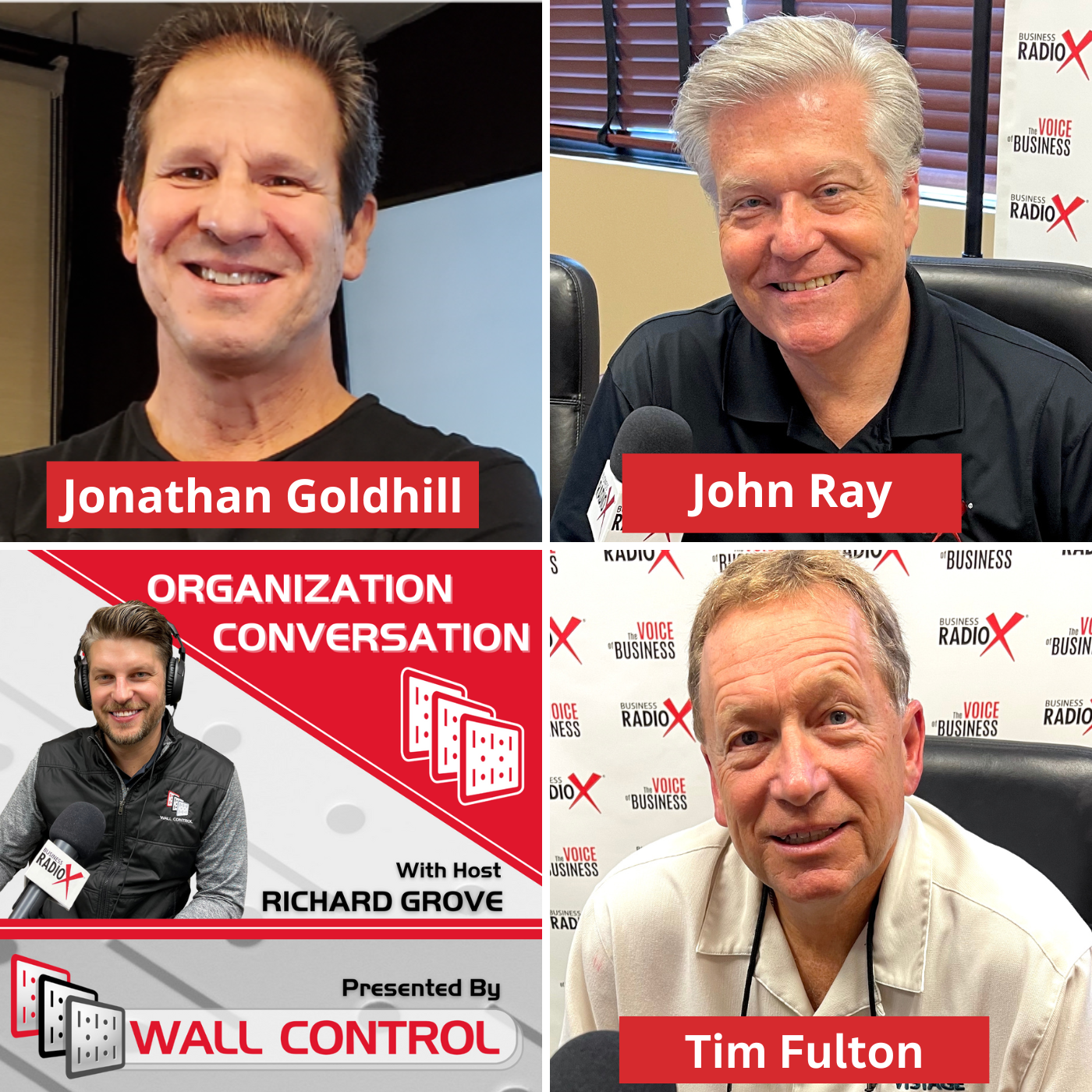
Expert Business Advice from Trusted Advisors: Jonathan Goldhill, The Goldhill Group, John Ray, Ray Business Advisors and Business RadioX North Fulton, and Tim Fulton, Small Business Matters

October 21, 2022 by John Ray

The Goldhill Group
North Fulton Studio
Expert Business Advice from Trusted Advisors: Jonathan Goldhill, The Goldhill Group, John Ray, Ray Business Advisors and Business RadioX North Fulton, and Tim Fulton, Small Business Matters
Loading
00:00 /
RSS Feed
Share
Link
Embed

Download file

The Goldhill Group

Expert Business Advice from Trusted Advisors: Jonathan Goldhill, The Goldhill Group, John Ray, Ray Business Advisors and Business RadioX North Fulton, and Tim Fulton, Small Business Matters (Organization Conversation, Episode 45)

Host Richard Grove welcomed three seasoned business advisors, Jonathan Goldhill, John Ray, and Tim Fulton, to discuss issues small business owners face as they seek to thrive in today’s economy. They discussed the talent shortage and how to deal with it, how to manage inflationary pressures, pricing, organizing your business as if it were a much larger enterprise, preparing for an exit, and much more.

Organization Conversation is broadcast from the North Fulton studio of Business RadioX® inside Renasant Bank in Alpharetta.

The Goldhill Group

Business coaching, mentoring, and consulting to growing companies with 10 to 150 employees in family businesses, construction, and service-related businesses. We guide leaders and owners to grow their businesses and enjoy the journey more using proven processes, systems, and tools that both accelerate growth and guide people to more freedom and fulfillment.

Company website | LinkedIn | Facebook | Twitter

Jonathan Goldhill, President & Business Coach, The Goldhill Group

Jonathan Goldhill, Goldhill Group

Jonathan Goldhill is a masterful business coach and personal strategist specializing in guiding next-generation leaders of family businesses to scale up their business as they take control over the leadership and ownership of the family business.

Jonathan left New York for California at age 20 after his family’s large, privately-held men’s apparel manufacturing company—started by his great-grandfather—sold to a conglomerate in its third generation of family ownership.

Within ten years, Jonathan had established himself as the go-to expert for entrepreneurs looking to find their version of freedom.

Today, Jonathan brings thirty years of experience to his clients, advising, coaching, consulting, training, and guiding entrepreneurial and family businesses.

 LinkedIn

John Ray, Ray Business Advisors and Business RadioX North Fulton

John Ray, Studio Owner, Business RadioX North Fulton, and Owner, Ray Business Advisors

John is a Studio Owner, Producer, and Show Host with Business RadioX®, and works with business owners who want to do their own podcast. As a veteran B2B services provider, John enjoys coaching B2B professionals to use a podcast to build relationships in a non-salesy way which translates into revenue.

John is the host of North Fulton Business Radio, Minneapolis-St. Paul Business Radio, Alpharetta Tech Talk, and Business Leaders Radio. house shows that feature a wide range of business leaders and companies. John has hosted and/or produced over 1,500 podcast episodes.

John also owns Ray Business Advisors, a business advisory practice. John’s services include advising solopreneurs and small professional services firms on their pricing. John is passionate about the power of pricing for business owners, as changing pricing is the fastest way to change the profitability of a business. His clients are professionals who are selling their “grey matter,” such as attorneys, CPAs, accountants and bookkeepers, consultants, marketing professionals, and other professional services practitioners.

John Ray is the host of The Price and Value Journey, a podcast aimed at solo and small firm professional services providers. The show covers pricing, business development, and other key aspects of building a professional services practice, as well as interviews with industry leaders.

LinkedIn

Small Business Matters

With over 30 years of experience, Small Business Matters (SBM) brings a results-based approach to each and every client. Whether your business has been established for 50 years or 50 days, we are passionate about helping you achieve your goals and mission.

Small Business Matters was established in 1994 as an independent management consulting and training practice. The primary goal of SBM is to increase the effectiveness and enhance the lives of CEOs. Since its existence, Small Business Matters has worked with companies such as Lucent Technologies, Carlson Companies, CB Richard Ellis Real Estate Services, Inc. (formerly Insignia/ESG, Inc.), and Georgia Power.

Small Business Matters is owned and operated in Atlanta, Georgia by Tim Fulton. Tim is a nationally-recognized small business coach, consultant, and advocate. He has been involved in the field of entrepreneurship for over three decades as a successful business owner, small business counselor, and adjunct university professor.

Tim is currently a Vistage Emeritus in Atlanta. Vistage is an international membership organization for company CEOs and Presidents that provides a very unique growth experience for its members. In addition, Tim is a former facilitator for the University of Georgia SBDC’s GrowSmart training program, which is designed for growth-oriented small business owners, operators, and executives.

Tim has recently authored a new book, The Meeting, available on his website and where books are sold.

Tim is also the host of the podcast, Small Business Matters, available here and other major podcast platforms.

Company website | LinkedIn | Facebook | Twitter

Tim Fulton, Owner, Small Business Matters

Tim Fulton, Owner, Small Business Matters

Tim grew up in Miami Florida. He attended college in New Orleans at Tulane University where he earned an undergraduate degree in Economics and a 5 year MBA.

Tim owned and operated several small retail businesses in Miami. He also taught as an adjunct professor and served as the interim Director of the Family Business Institute at Florida International University. After moving to Atlanta, Tim was a co-founder of an internet software company that was an INC 500 company and then sold to a Fortune 1000 company.

In 1992, he started his own small business consulting firm Small Business Matters. Tim was a Vistage Chair for 16 years, retired from Vistage in December 2018, and currently enjoys Chair Emeritus status. In 2008, he developed the GrowSmart training program for the state of Georgia and has trained over 3000 small business owners in 15 different states.

Tim has an award-winning Small Business Matters newsletter, he has self-published three different books including most recently the book titled “The Meeting”, and co-hosts a popular podcast for small business leaders.

For six years, Tim has hosted one of the largest annual events in Atlanta for small business owners.

He has been married to his college sweetheart Remy for 40 years, has two grown sons, and is an avid tennis player. Tim has walked the entire 500-mile El Camino Santiago in Spain on two different occasions and just recently walked the 400-mile Camino Portuguese.

LinkedIn

About Organization Conversation

Organization Conversation is hosted by Richard Grove and broadcast and produced from the North Fulton studio of Business RadioX® inside Renasant Bank in Alpharetta. You can find the full archive of shows by following this link. The show is available on all the major podcast apps, including Apple Podcasts, Spotify, Google, Amazon, iHeart Radio, Stitcher, TuneIn, and others.

About Richard Grove

Richard Grove, Host, Organization Conversation

Richard Grove‘s background is in engineering but what he enjoys most is brand building through relationships and creative marketing. Richard began his career with the Department of Defense as an engineer on the C-5 Galaxy Engineering Team based out of Warner Robins. While Richard found this experience both rewarding and fulfilling, he always knew deep down that he wanted to return to the small family business that originally triggered his interest in engineering.

Richard came to work for the family business, Dekalb Tool & Die, in 2008 as a Mechanical Engineer. At the time Wall Control was little more than a small ‘side hustle’ for Dekalb Tool & Die to try to produce some incremental income. There were no “Wall Control” employees, just a small warehouse with a single tool and die maker that would double as an “order fulfillment associate” on the occasion that the original WallControl.com website, which Richard’s grandmother built, pulled in an order.

In 2008, it became apparent that for the family business to survive they were going to have to produce their own branded product at scale to ensure jobs remained in-house and for the business to continue to move forward. Richard then turned his attention from tool and die to Wall Control to attempt this necessary pivot and his story with Wall Control began. Since that time, Richard has led Wall Control to significant growth while navigating two recessions.

Outside of Richard’s work at Wall Control he enjoys helping other business owners, operators, and entrepreneurs along their own paths to success by offering personal business coaching and advising through his website ConsultantSmallBusiness.com. Richard has developed an expansive and unique skillset growing and scaling Wall Control through a multitude of challenges to the successful brand and company it is today. Richard is happy to share his knowledge and experience with others who are looking to do the same within their own businesses.

Connect with Richard:

Instagram | Twitter | LinkedIn | Richard’s Website

About Wall Control

The Wall Control story began in 1968 in a small tool & die shop just outside Atlanta, Georgia. The first of three generations began their work in building a family-based US manufacturer with little more than hard work and the American Dream.

Over the past 50+ years, this family business has continued to grow and expand from what was once a small tool & die shop into an award-winning US manufacturer of products ranging from automobile components to satellite panels and now, the best wall-mounted tool storage system available today, Wall Control.

The Wall Control brand launched in 2003 and is a family-owned and operated business that not only produces a high-quality American Made product but sees the entire design, production, and distribution process happen under their own roof in Tucker, Georgia. Under that same roof, three generations of American Manufacturing are still hard at work creating the best tool storage products available today.

Connect with Wall Control:

Company website | Facebook | Instagram

TRANSCRIPT

Intro: [00:00:01] Live from the Business RadioX Studio in Atlanta, it’s time for Organization Conversation, brought to you by Wall Control Storage Systems. Wall Control gives you the storage and organization you crave. Now, here’s your host, Richard Grove.

Richard Grove: [00:00:22] Hey, everyone. Welcome back to Organization Conversation. I’m joined today by three great guests that I’m really looking forward to having a conversation with. If you’re a regular listener of the show, today is going to be a little bit different. We’re kind of going to shift gears a bit and turn the lens or camera around and not so much on the wall, looking at wall control storage, but talking about or having organization conversations about organizations and small businesses in general.

Richard Grove: [00:00:48] So, we have found over time that our listeners are entrepreneurs, small business owners, business operators, all themselves. So, we thought it would be a great value to them to have some experts on in that space and just kind of talk about what we’re seeing across business, across the marketplace, macro landscape, and just kind of dive into some topics that kind of everybody is curious about, what everybody else is doing.

Richard Grove: [00:01:12] So, all of our guests today, extremely knowledgeable and experienced business coaches, advisors, entrepreneurs themselves. So, rather than going through very long intros on all of them, I’m going to introduce them and kind of let them go into tell them about – tell – tell you guys about themselves and what they specialize in. So, without further ado, I’m joined by Tim Fulton of Small Business Matters, John Ray of Business RadioX, as well as Ray Business Advisors. A little side note, John also produces the Organization Conversation Radio Show. So, if you’ve ever seen pictures, he’s the guy behind the board, you know, making everything sound good. And Jonathan Goldhill so, and Jonathan’s with The Goldhill Group. And yeah, so I’m joined in studio with John and Tim, and Jonathan has commuted via Zoom from Southampton, New York. So, I’m going to kick it off with you, Jonathan, and let you tell our audience a little bit about yourself just because you had the furthest commute.

Jonathan Goldhill: [00:02:10] Sure. Well, the commute was really easy, I have to say. The view here in Southampton is pretty nice. I’m normally based in the Los Angeles area. I’m a business coach and have been since 2004. I’ve been small business consulting since 1987. Actually, I got a degree in entrepreneurship, if you can believe it. Some people said like, why would you ever go to school to study entrepreneurship? But, you know, my family, my grandfather and his brother started a clothing business at the turn of last century, and it blew up to a very large company. They sold it 40 years ago.

Jonathan Goldhill: [00:02:50] But I’ve always been interested in family businesses. There was a lot of success in my family’s business, and so I’ve been coaching for, gosh, since 2004, and I wrote a book on family businesses and how to scale them. And so, that’s the topic that’s really near and dear to my heart. And most of my clients are people that are in unsexy industries. They’re in construction, they’re in real estate, they’re in property management, they’re in service-based businesses and manufacturing companies. So, that’s pretty much the space that I play in these days. But I’ve worked in a lot of industries over many years, so that’s a bit about me.

Richard Grove: [00:03:30] Awesome. Thanks, Jonathan. John, we can just keep working down the line here.

John Ray: [00:03:33] Sure. And thanks for having me on. It’s – I appreciate the invite, Richard. So, I’ve got two businesses. I’ve got a business advisory practice where I do some outside CFO work, but it’s mostly focused around pricing consulting. And, because I’ve come to believe, and this was a problem once upon a time for me, so I came to believe this. And I see this in a lot of businesses that pricing is their biggest problem, particularly for businesses that sell what’s between their ears, basically professional services.

Richard Grove: [00:04:09] And even us, lately it’s been insane. So yeah –

John Ray: [00:04:11] Oh, sure.

Richard Grove: [00:04:12] I mean, it’s just – sure. Crazy time for pricing.

John Ray: [00:04:14] Absolutely. And, so I do a lot of consulting around pricing and how to price more effectively. And so, that’s that particular business. And then, as you said, I operate a studio, North Fulton Business RadioX, and we help businesses that want to do their own podcast and use a podcast to really move the needle in their business, revenue needle in their business.

Richard Grove: [00:04:42] For sure. And I’m going to jump in and say to everybody who’s here today has their own podcast. So before we sign off, you guys will have to tell our listeners where to find you and listen to each of you. So, yeah. So, Tim.

Tim Fulton: [00:04:54] Well, first, Richard, I’m envious of Jonathan. I didn’t know that reporting from the beach was an option.

Richard Grove: [00:04:59] You could have done that. You see I know where you live. So, I was like, you want to – I didn’t give you the options. Yeah.

Tim Fulton: [00:05:04] But I’m very, very envious. And like Jonathan, I grew up as an entrepreneur. I was one of those kids and, as a young kid, cut neighbor’s yards and deliver newspapers and sell bumper stickers at school, just always looking for different ways of making money as an entrepreneur or I was just always interested in that and went off to school and got a business degree and one of the few kids in my class that didn’t go to work in New York on Wall Street or go to work for an insurance company or a bank. I thought, why? Why would anyone want to work for someone else? Crazy idea.

Tim Fulton: [00:05:38] So, I was an entrepreneur. I had a number of small businesses that I started and grew and sold, and then I’d start over again and did that for a number of years and then found that as much as I enjoyed that, I enjoyed just as much working with entrepreneurs as a coach, as a mentor, as a trainer. And that’s where I spent a good part of the last 20, 25 years. I’ve got a consulting practice, as you mentioned. It’s called Small Business Matters. I’ve got a mastermind group that I chair and meet every week. I’ve got about a dozen business owners that I work with as a coach, as an executive coach. And then, I also have a training program that I do for small business owners. I got the best of all worlds.

Richard Grove: [00:06:22] Yeah. That’s awesome. I’ve enjoyed some of your seminars for sure. It’s been super valuable. So anybody listening, especially if you’re in the Atlanta area, it’s cool to be there in person, but I think you can be there virtually, too. Yeah.

Tim Fulton: [00:06:36] Yeah, sure.

Richard Grove: [00:06:37] Awesome. Yeah, because we have kind of people all over the place, which is nice. So, yeah. So, I think to get things started and we can kind of, and we’ll just keep it conversational wherever we want to go with it. I kind of like to start with what you guys are seeing as challenges kind of at a macro level in the spaces you’re in and kind of, I guess, speak to specifically if you have any – you know, John, you were mentioning pricing – any specific expertise that you offer your clients that might be a good opportunity there. And again, we’ll just go back, Jonathan, if you don’t mind, we can start with you, and then we’ll just – we’ll go down and just kind of everybody jump in. And I would like for all of us to kind of interview each other if we happen to have any questions on anything or want to dive deeper on something.

Jonathan Goldhill: [00:07:20] Well, I think I’ll jump in and start with something that’s happening on the macro level. But it’s always been happening for a long time. And I think all of you guys, my panelists, will agree with me on this, which is that if you want to be a leader, if you want to be an entrepreneur, you need to be a learner. If you’re not learning, if you’re not participating in seminars and workshops, you’re not reading books, you’re not listening to podcast, you’re not sitting in CEO peer groups, or you know, if you’re not exposed to other entrepreneurs, then you’re in the dark.

Jonathan Goldhill: [00:07:56] If you’re a small business person and you’re trying to figure things out by yourself, I don’t know what size your business is, but if you’re under a million and you’re trying to figure things out by yourself, like there’s a lot of people like us who have gone before you that you need to get in front of. If you’re running a $100 million company and you’re not out talking to other CEOs of larger companies and understanding the challenges that they’re working through in leading and managing people, you’re missing out on a huge opportunity.

Jonathan Goldhill: [00:08:27] And so, you just want to set the stage with something that’s so basic. It’s not specific to inflation or pricing or labor shortages. It’s about learning. You will learn about all of those things if you’re in the company of peers and learning in – you’re in the right rooms learning.

Richard Grove: [00:08:45] Yeah. I totally agree. I mean, I can say firsthand, you know, it’s easy for me to just be a guy that’s stuck in a warehouse doing things the way I think they need to be done. And it can be paralyzing. And even if I’m doing the right thing, if I am not confident in that, I’m not moving as quickly as I could. Whereas if I had validation from a peer group of similar individuals, it would help me be a lot more effective and move a lot quicker. So that’s a really, really good point.

Tim Fulton: [00:09:11] And, I want to build on that because I think not only is there real importance in being a lifetime learner as a business owner, looking for opportunities to learn more and to read and attend workshops, it’s also very lonely as a small business owner. I know I felt that way. I didn’t always have someone I could talk to about not only my successes but a lot of failures. And I wish I had. I didn’t have a peer group other than family. And my family got tired very quickly of hearing about my business.

Tim Fulton: [00:09:43] And so, that’s why I’ve always felt the peer groups were really important, particularly for small business owners, for the opportunity to grow, to learn, additional layer of accountability for the business owner. So, I would encourage any of our listeners. If you’re not already involved in some type of peer group, a mastermind group, that would be a great piece of advice.

Jonathan Goldhill: [00:10:07] And get a coach too, by the way, Tim, right? People should work. If you don’t have a coach, you’re not being coached, you don’t have a mentor. You know, you can have multiple mentors. You can have several coaches, you know. But definitely reach out, get some help. All right, John.

John Ray: [00:10:23] Yeah. Well, I love the theme here that you guys are on because – when we get around to pricing. I know everybody wants us to talk about pricing and inflation and all that kind of stuff, right? But, for me, pricing is a journey. In fact, the name of my podcast is Price Value Journey, The Price and Value Journey, and that’s name for a reason because you’re always trying to get to the right point. And I think it’s something elusive that you never feel like you quite get to.

Richard Grove: [00:10:55] Iterative over time and, yeah.

John Ray: [00:10:57] That’s right.

Richard Grove: [00:10:57] Micro adjustments, for sure.

John Ray: [00:10:58] Yeah. So, particularly in that part of the business, and I think it’s true in all areas of the business, is Jonathan and Tim have talked about. But in pricing, in particular, it’s true. There’s no like special recipe to get there. There’s a lot of science in it, behavioral science, but there’s an art to it as well. And you’re always tweaking, I think, your pricing and how to get to the right point.

Richard Grove: [00:11:27] Yeah. And I think I remember, Tim, your boot camp talking about just the impact of discounting and how like a 5% discount, like what that does to your margin total. And it sounds obvious when you say it, but I don’t think people think about it sometimes or they just – they go to price match their competitor, but they don’t think about what they’re actually taking off the table for themselves. Even, you know, maybe you convert at a little bit higher percentage, but you’re losing a whole lot more money. And I think it’s very comprehensive, like mental algorithm you have to have when you start looking at that.

Tim Fulton: [00:12:00] You know, John, I’d be curious to hear what you’re telling your clients now around price. I had an interesting conversation yesterday with a client. On one hand, he’s feeling a lot of inflationary pressure. His costs have gone up, his costs of labor have gone up, his cost of materials have gone up. He’s a manufacturer. And then, he said, “Tim, at the other hand, I’m not sure I can raise my prices because I feel like the economy is beginning to decelerate a little bit, starting to slow down a little bit. I’m not sure I can pass on these price increases.” What are you seeing and what are you telling your clients in that regard?

John Ray: [00:12:34] Well, what I tell people generally, and of course, it depends on what business you have. Right? Let’s put that caveat out there. But I think it’s the wrong message to talk about price, potential price increases as it relates to inflation. That’s the obvious way to go to say, “Hey, my costs have gone up and therefore I have to raise my price.” The problem with that is that your clients don’t care what your costs are. They could care less. What they care about is the value that your product or service offers them. They care about the benefits. So, you’ve got to couch your pricing relative to the value that the client receives.

John Ray: [00:13:23] Part of the problem that I’ve seen, Tim, and I’m interested in what you and Jonathan have to say about this, but what I’m seeing with a lot of clients is they haven’t tended to their pricing in years. Right? And so, this little bout of inflation or big bout of inflation, I guess, that we are experiencing right now has really hit them hard because they haven’t regularly tended to their pricing over time. And I think that’s a lesson is that you always have to be looking at that. And so, because they haven’t done that, they’re really caught flat-footed in a lot of ways, right?

John Ray: [00:14:03] But it’s really the customer is going to compare. And if you’ve got to give them the point of comparison and if you’re talking about your cost or you’re talking about the economy or some amorphous kind of concept as opposed to the value that you’re delivering to them, both tangible and intangible, that’s a mistake. And I think that’s where I’m trying to get the clients I work with is understanding what perceived customer value is and pricing relative to that.

Richard Grove: [00:14:34] Gotcha. One question I have for all three of you guys to just to help clarify for our audience. So, John, you were talking about your client mostly between the ears. So, probably consulting services, that sort of thing. Is that what your typical client, maybe not like a widget manufacturer like we would be, but somebody who’s doing something with kind of creating value out of thin air, so to speak, not making a thing?

John Ray: [00:14:58] Sure, sure. But, you know, and let’s talk specifically about makers, right, because the maker community is the listeners here. Right?

Richard Grove: [00:15:07] Yeah. Quite a few.

John Ray: [00:15:07] Yeah. So, a lot of makers have a mindset problem, I mean, and their problem is, is that they think who is going to pay that price. Right? That’s the mentality. And what they don’t realize is that pricing is something of a marketing signal. If your price is too low, your marketing signal is a signal of inferiority. You’re pricing higher, it’s a signal of quality. And I’d love to tell a story about that, if you don’t mind.

Richard Grove: [00:15:41] Go right ahead. Yeah.

John Ray: [00:15:43] So, real-life story. I’ve got a friend of mine, he is a craftsman. He’s retired now and he does wood crafts. He sells – one of his items that he sells are wooden-fret crosses. Well, if you’ve seen these things, they’re very intricate. They take hours to make. And he was out at a craft show and selling these crosses for $40. And he got to the end of the weekend, he hadn’t sold any. And so, he was – time was running out. He decided he was going to mark them down and get them out because if you don’t sell them, you have to take them home. Right?

John Ray: [00:16:23] So, he heard this voice in the booth next to him, “What are you doing?” And it was the lady that was running the booth next to him, and he said, “I’m going to mark these down so I can get rid of them.” And she said, “You’re out of your mind. Let me price them for you.” And he said, “Fine. What I’m doing is not working. So you go ahead.” She priced them at $125. And before he left that day in an hour, he sold three of them.

Richard Grove: [00:16:48] Wow.

John Ray: [00:16:49] He now prices these crosses at $200 plus. They’re probably still too low, but never bad.

Richard Grove: [00:16:56] Yeah.

John Ray: [00:16:57] And he routinely sells out every weekend. He takes these crosses out. So, that’s a real maker story right there. Right?

Richard Grove: [00:17:05] Yeah. I agree. I mean –

John Ray: [00:17:05] Yeah. And so, the problem is, is that when you’ve got a $40 wooden-fret cross that takes hours to make priced at $40, what signal are you sending? You’re sending a signal that this is made in some foreign country or something like that; this is not a handcrafted item by a real wood craftsman like it really is.

Richard Grove: [00:17:28] Exactly. Yeah. And, I mean, the other bit of that, too, is it’s much harder to raise your price than it is to lower your price once you’ve introduced it. You know, I see that with our own product and some smaller brands that I’ll help coach. There’s one, it’s called Wall Works. It’s like a plastic mason jar that goes into our system, works with any pegboard. And it’s like I’ve told him over and over, you can price this higher. Like, we have it priced twice what your retail is on our website and we’re selling a bunch of them. He’s talking talks with Walmart and Home Depot and that kind of thing. And I’m like, “You got to start high. You can always come back down.”

Richard Grove: [00:18:04] And the other thing I’ve learned is if you start low and you keep trying to go low, you’re basically, because of a competitor, you’re kind of commoditizing what you do and it’s going to just be a race to the bottom. Whereas if you hold and then you bring along the brand, the brand story kind of like what we try to do with our podcast and what we do with a lot of this is create the value there. Like, introduce your audience to yourself and introduce your audience to behind the scenes and that kind of thing. Then, you can then you’re not in this never-ending fistfight to the bottom. So, that’s kind of what we’ve learned. So, yeah. So, Jonathan, what’s your ideal client look like?

Jonathan Goldhill: [00:18:43] I mean, my experience is along the same lines, which is, I never have clients who are low-priced leaders because none of them are large enough to fight that battle down, down to the bottom. And I’m always dealing with clients who are selling on quality and selling on value. And so, let’s change the equation to identifying what is it that you do that’s different, that’s better, maybe that’s unique. You come up with what everyone classically calls a unique selling proposition or value proposition and sell the value and sell the service.

Jonathan Goldhill: [00:19:20] I mean, for a lot of services, businesses, the only thing that customers know how to discriminate on is price. And so, you know, you have an HVAC repair person coming to your house and what one person is charging 89 for a service call, one’s charging 129. They don’t know the difference between the two. So, it’s incumbent upon the seller, the service company, to communicate that value and to sell that value. And I’m sure you guys all agree. I mean, probably most of us don’t work with companies that are low-price leaders and are trying to play that game. It’s just – you know, it’s too difficult.

John Ray: [00:20:01] Yeah. Can I – yeah, to underline your point, Jonathan, everybody thinks Walmart’s like the low-price leader and they’ve got the lowest – they can put everybody out of business. Right? If you look at Aldi, their cost structure is actually lower than Walmart’s. And so, what does that tell you? It underlines what you just said, Jonathan, that you cannot, as a small business, if Walmart can’t do it, then you cannot get your cost to a point where you can compete on lowest price. You’ll never be able to do that as a smaller business.

Jonathan Goldhill: [00:20:39] Yeah. I mean, the data on Costco used to be that 85% or 75% of their profits came from their membership income because their margins are razor thin. So, you know, they’re selling an exclusive value-based service in the membership.

Richard Grove: [00:20:59] Yeah. What about you, Tim? What is your ideal client look like? And what kind of challenges are you seeing in the space?

Tim Fulton: [00:21:05] My clients, they’re all relatively small businesses, growth businesses, but they vary. I’ve got manufacturers. I’ve got resellers. I’ve got service businesses. What they share mostly is a desire, one for their company to grow and hand-in-hand to that is their own growth as well. But part of the biggest issue that I’m seeing now, and the pricing is not, because pricing is a big issue now, is around people, it’s around talent and it’s being able to secure talent. It’s being able to retain talent.

Tim Fulton: [00:21:38] It seems like every meeting I go into, it’s, you know, I’ve got a job opening. I can’t find anybody. I can’t keep anybody. You know, we’ve been through this great resignation where 40 million people left their jobs. And what’s interesting now is I find the labor market is beginning to open up just a little bit what I’m hearing. Some of those people that resigned are now saying, “Okay, maybe I should go back to work. I’ve run out of government money. I’ve run out of this. I’ve run out – now I’ve got to go back and make money.” So, it’s starting to reopen. But there’s still a lot of movement in the labor market. You know, I hear from clients that, you know, somebody was supposed to start on Monday and they didn’t show up, or they showed up and they left on Tuesday. It’s a crazy time.

Tim Fulton: [00:22:20] And then, we’ve got these decisions about businesses that went remote during COVID and now they’re thinking about bringing their employees back. And do we bring them all back? Do we do a hybrid approach? Do we – companies are now talking about four-day workweeks. That’s kind of the new thing that companies are talking about, should we go to a four-day workweek? So, it’s all these decisions around people that are kind of centered on, you know, how can we find the best people, how can we keep the best people. And if I had the answer to that, I’d be a wealthy man. But that’s what I’m hearing probably more often than anything with my clients.

Richard Grove: [00:22:55] Yeah. We’re seeing it firsthand. It’s just – and we’re in a strange sort of kind of holding pattern just to see, you know, kind of sitting in a defensive posture, kind of looking at what’s going to happen. I mean, Wayfair just laid off, I think, 5% of its workforce today or yesterday. And we track very closely with these, the Wayfair’s and Home Depot’s, because we’re selling hardware into that same space. So, yeah, just kind of waiting to see. I think we’re right-sized right now, but it’s like you want to – you know, you want to keep your good people. You don’t want to bring on extra people. I mean, it’s just such a hard – and it’s never been – in my 15 years doing this, it’s never been this difficult to try to predict, you know, what’s going to happen next, even what’s going to happen in the next quarter. You know, like it’s just crazy.

Richard Grove: [00:23:42] So, the volatility and how to read it and what to make of it is such a challenge. So, if you guys have any insight into that or want to chime in as to what you’re seeing or if you have any hunches, please be my guest,literally.

Jonathan Goldhill: [00:23:58] So, look, I’m with Tim 100% labor shortages, those issues around hiring. Especially for growth companies, they’re always looking for people. And I think one of the secrets is to build a really great company on the inside. Because if you’re an attractive company, then employees who are looking at opportunities are going to choose yours over other companies, and you do that through culture and building initiatives internally through obviously you have to have a competitive and good compensation program and benefits as well.

Jonathan Goldhill: [00:24:34] But, really, culture, challenges, learning opportunities, growth opportunities and you know, getting rid of the C players because they’re toxic to a work culture. So, that’s really, I think, so important. You know, growth sucks cash, I guess, is the kind of the phrase we use in my business. And it’s also challenging with people. So I don’t think there are any real secret answers out there. You know, we’re all, everyone’s struggling with the same dilemma.

Richard Grove: [00:25:12] Yeah.

Jonathan Goldhill: [00:25:12] And it’s slowing things down somewhat in terms of delivery and supply chain.

John Ray: [00:25:17] Yeah. Well, maybe one tip, because I’m with Tim and Jonathan. I mean, there are no, like, magic answers here. But I was interviewing a senior executive at CareerBuilder the other day, and what she was saying was that one of the problems they see with employers is not – having qualifications that are too high. So, requiring a college degree when otherwise that potential candidate has all the qualifications necessary for that job. And I think employers need to relook at what they’re requiring for particular positions. Because if you’re looking for someone that’s customer-facing, for example, I mean, you’re looking for somebody that’s client-oriented, you’re looking for somebody that looks out for the business and there are other ways to measure that beyond a four-year college degree. Right? So that’s just one thing. She said that what she sees is that employers that are losing the talent race right now are inflexible when it comes to job requirements.

Richard Grove: [00:26:31] Yeah.

Tim Fulton: [00:26:32] And, John, to build on that, you know, as companies are looking for talent, I find too often they’re looking in the same places they’ve always looked. They’re fishing in the same pond that they’ve always put their pole and hook into. And the best example, I’ve got a client, and, Richard, you might have heard this story that he owns – he is a manufacturer here in Atlanta. His facility is down by Grant Park in Atlanta, been around for a long time, and he was sharing this story. He said, “Tim, I’ve got these three women who came to work for me recently and the best employees I’ve had in a long time.” I said, “Wow, that’s great.” He said, “It’s really interesting. They all live very close to each other. They get on the same bus every morning. They come to the facility. They work hard all day. They get they leave work. They get on the same bus. They go back to the same neighborhood.” I said, “Wow, that’s interesting.” He said, “Yeah, they’re in a federal penitentiary. They’re prisoners, but they’re on a work leave program and they get to get out five days a week to go work.” And he said, “I never would have thought of hiring, you know, federal prisoners to come work in my plant. But the market is such that I had to be willing to look at places I hadn’t looked before. And they’ve turned out to be my best employees.” So to me, that’s an example of we just, you know, John what is saying, we’ve got to be willing to question what we’ve done in the past and ask, is that going to work today or are we willing to change horses?

Richard Grove: [00:27:56] Yeah, exactly. Is it a workforce problem or is it my requirements problem, you know? And it’s easy to say I can’t find anybody. Well, what’s your algorithm for bringing them in? You know, let’s evaluate that for sure. Yeah.

Richard Grove: [00:28:08] So, kind of in an effort to bring value to any business owner listening or any business operator, I kind of want to go through – you know, I know as we’ve grown all control, we’ve gone through, quote, valleys of death where you hit these certain headwinds at certain revenue figures or employee counts. And I kind of want to start with what advice you guys would give to, say, a new entrepreneur just starting out, somebody who maybe they are seeing some headwinds at their own job and they’re looking to venture out? What are some things to keep in mind when you step into that space? How would you advise somebody? If anybody’s got any ideas.

Jonathan Goldhill: [00:28:49] We might be a little bit too far away from that space of working with those, you know, 0 to 10 startup kind of situations.

Tim Fulton: [00:28:57] I’ll take a quick stab just thinking out loud. To somebody who’s relatively new starting their business is to organize your business as if you’re a much larger business. And that comes from Michael Gerber who wrote, you know, one of my favorite books, The E-Myth Revisited, and he recommends that, he says, too often, you know, we start off a business and we figure, okay, well, I’m just going to operate this business like I’m a start-up. You know, every day I’m a startup. Versus what he says, just imagine that you’re running $1,000,000, 5 million, $10 million company. Organize your business as if you were a much larger business. And then before you know it, you are a much larger business versus going into it with a mindset of, you know, I don’t have any money, I don’t have employees, I don’t even have customers. And, you know, so, I’m playing catch up from day one. So, that’d be my first piece of advice is just act and design your business as if you’re already a mature business from day one.

Richard Grove: [00:29:56] Yeah, and that goes to designing scalability into it for sure.

Jonathan Goldhill: [00:30:00] Yeah, so, let’s talk about design scalability and to that concept, leveraging off of what Tim just said. So you build out an organization chart of what this company looks like at $1,000,000, or if you’re at a million out of $5 million. And you may be sitting in five different boxes on that organization chart, but circle the one that you routinely touch and that you’re willing to let go of next and make a plan in a month, in a quarter, in six months, whatever it is, to get out of that seat. Document in detail the responsibilities of the person who’s going to sit in that seat. Define and describe what are the attributes, the characteristics, the qualities, the technical skills that that person who’s going to sit in that seat needs to occupy, and start to envision, you know, hiring these people and start to think about what’s the next position after that. So, have sort of a picture of a one, maybe three-year plan of getting out of seats that you’re sitting in. And then, once you have other people sitting in those seats, have them do that same exercise.

Richard Grove: [00:31:16] Yeah, that’s really good actionable advice. That’s awesome.

John Ray: [00:31:20] Yeah. And most – talking about pricing, I mean, most entrepreneurs, when they start out, have a – sometimes it’s a fatal belief because it’s fatal to the business that if they keep a low price that will attract clients, that a low price does not attract clients. I mean, just like the example I gave earlier of my friend Hans with his wooden-fret crosses.

John Ray: [00:31:50] A price is a marketing signal and you’ve got to price relative to the value that clients perceive in your product or service. And you’ve got to have the courage to do that. And part of what gives you the courage to do that is to understand your customers. And it’s amazing to me how many people get in business and how little customer discovery they really do, right? I mean, how little interviewing of actual customers that they do. And so, I encourage people when they start out to spend as much time as they possibly can, actually talking to real-life customers, not trying to sell them anything, but trying to understand what their problems are.


Richard Grove: [00:32:32] Yeah, they move into it without any proof of concept. It’s an assumption that people will want this thing I’m offering, be it a service or a product.

John Ray: [00:32:39] Yeah. And, they spend so much time on product development without understanding what that customer really values and they go off on the wrong tangent, and then they inevitably mispriced their product or service.

Richard Grove: [00:32:57] Yeah.

Jonathan Goldhill: [00:32:58] So, raising a higher price is the fastest way to increase your cash, in my opinion, in my experience. Running cash flow models of, let’s increase sales volume, let’s reduce gross margin, let’s do all these different things. The top line, the increase in price, a dollar and more, is probably going to have the biggest impact on most clients, in most companies on their cash.

Jonathan Goldhill: [00:33:28] So, I think that next stage to get over that next valley of death, if I’m not sure, the listeners will understand what that concept means, but to get to that next plateau, so be it from the million to the 5, or from 5 to 10, or from one person to five people, from five people to ten people, is to accumulate cash. Accumulating cash and having that as a singular focus allows you to grow and do all these other things. People are focused on figuring out and fixing so many other problems in their business, but they don’t pay attention to the cash flow and they don’t understand even the profit and loss statement, the balance sheet and cash flow as a third financial factor. You need to become an expert and learn this stuff if you’re going to be an entrepreneur.

Richard Grove: [00:34:23] Absolutely. And yeah, Tim, I know you have a good insight on that. I mean, just the classes I’ve taken and the boot camps I’ve been in of yours. So yeah. What do you see at that same – and like you said, Jonathan, that’s good to put it. Maybe not valley of death, but a plateau, like you hit this kind of ceiling and you’re just – you’re spinning your wheels how do I get, you know, that 10 million, how do I get to 50? And what do you guys see? It sounds like cash is obviously a very big factor. But what can trigger that next kind of move up?

Richard Grove: [00:34:54] In some – most businesses, I know for us, as we’ve gone through, it’s like when we first started, it’s like, man, how are we going to do a quarter million dollars a year? How are we going to do a half-million dollars a year? How are we going to do it? And it’s like, but once you start breaking through stuff, you kind of sail to that next plateau and then you get there and it’s like, all right, what, what now, you know? So, if you have any insight into that is. Sure. Yeah.

Tim Fulton: [00:35:18] You know, there’s been a lot of research that’s been done on business growth and barriers to growth. And one thing that I’ve seen and seen and the science says this, so to speak, is that only about 4% of businesses ever get to $1,000,000 in revenue. And I remember when I first saw that, I thought, wow, I’m surprised by that. Only 4% of businesses ever get past $1,000,000 in annual revenue. And the biggest barrier to growth at that level, it’s a leadership issue and it’s the inability of the founder of the business to let go.

Tim Fulton: [00:35:52] Because, you know, when I start my own business, I’m doing everything, right? I’m wearing all the hats. I’m the CFO, the CMO, the COO. I’ve got all the C hats on. And I can do that for a while, you know, as a new business. But at some point, I’ve got to be willing to let go. I’ve got to be willing to delegate. And I find for many new business owners, that’s very hard because no one can ever do it as well as I can. You know, nobody can ever sell like I can sell. Nobody can ever do the books like I can do the books. And so, I’m reluctant to hire that first salesperson. I’m reluctant to hire my first accountant, bring in a COO to handle day-to-day operations of the business. So, it’s my unwillingness to let go to delegate. It gets in the way oftentimes of businesses being able to break that million-dollar barrier and then work towards even higher levels of revenue.

Richard Grove: [00:36:44] Yeah. And I mean, perfect for Organization Conversation. I mean, it can – a lot of things boil down to organization and the inability to do that and like you say, let go. And, Jonathan, that’s like to your point about literally drawing out the roles and picking what you’re touching the most or what you want to touch the most and what you’re willing to let go. That’s a great, great spot to start.

Jonathan Goldhill: [00:37:04] And you need to get the right people on your team and in the right seats and doing the right things and getting them doing the right things right. I know that’s a mouthful. But it’s about teaching them, it’s about first getting the most effective people and then about teaching them to be efficient. And, you know, I think probably everyone would agree, that’s the ultimate competitive advantage, is having the right people. The right people.

Jonathan Goldhill: [00:37:30] I mean, I remember going to business school, and this was many years ago, and they’d say the same thing over and over again that an A team with a C concept would outperform a C team with an A concept. And it was all about the people. So, it’s not about – it’s the right people will figure this all out, basically.

Richard Grove: [00:37:55] Yeah. All very good. Well, John?

John Ray: [00:37:58] Yeah. I was just going to add to what Tim said. You know, the other thing, when entrepreneurs start out, they get cheap about getting an accountant from the very beginning, getting a great attorney, business attorney from the very beginning. I mean, they go, you know, get legal agreements, you know, off the Internet. I mean, I have seen so many horror stories from that. And great, great advisors, great coaches, mentors, they’re worth their weight in gold. I mean, because if you get the right people that will help you get your business set up and then advise you along the way, you’ll avoid so many mistakes that otherwise you’re almost destined to make because you’ve tried to do it yourself and you think you can keep your way out of, you know, growing your business and it will come back to bite you.

Richard Grove: [00:38:58] Yeah. Well, that kind of is a good segue to I wanted to ask you guys about. You know, we’re a multigenerational family business. Jonathan, you come from a multigenerational family business. What do you guys see? Because I know firsthand that that presents different challenges than if you’re just a solo entrepreneur calling all your shots and doing whatever you want and, you know, 100% equity is yours. That’s a different path. What – I guess speaking to – and again, I feel like there’s a lot of successful private businesses become family businesses just by function of, “Hey, you know, cousin over here needs a job. Can you bring him on?” And you start to accumulate family on your team, which is great, but it does have inherited challenges. And what are your, guys, experience personally or with your clients when it comes to family business?

Jonathan Goldhill: [00:39:49] Well, I think you need to start setting up the organization so that the family has a meeting on a regular basis, especially when it’s multigenerational. I would recommend probably a quarterly or semi-annual meeting where you talk about principles and values and goals, where there’s an understanding of ownership. You also need to have separate from a leadership team meeting, an ownership team meeting, and those are probably the people that are actively involved in owning the business. They’re kind of probably like the board or the executive team.

Jonathan Goldhill: [00:40:32] And then, if there are family debates or issues or squabbles, like those should be done in a different room. They should be done outside of the leadership team meetings, outside of the board meetings. They should be done in a separate situation and environment. It’s really important to kind of create that structure where the right conversations are happening in the right rooms because otherwise you can create a pretty toxic work culture and, you know, family and siblings can get – it can get ugly, you know. Otherwise, if it does get ugly, then you’ve got like the HBO’s TV show Succession happening and, you know, you want to avoid that.

Richard Grove: [00:41:17] Yeah, absolutely. I appreciate the insight for sure into, like, having the self-awareness both individually and as a business to wear the different hat. Like, I have my business hat on at this table with my family and then we can go fight about, you know, where we’re having, you know, grandmother’s birthday dinner outside. You know what I mean? Like, don’t bring this – pretend like you’re not family when you’re having the business conversation, you know.

Jonathan Goldhill: [00:41:45] Call each other by first names actually. Don’t say mom and dad.

Richard Grove: [00:41:49] Yeah, exactly. Yeah.

John Ray: [00:41:51] Yeah. There you go. You know, I knew of a family who did a family calendar every year and so they had the best family pictures. And the slogan of the calendar every year was we put the fun in dysfunction. Well, the problem with that is, you know, every family has its dysfunction. Right? But you can’t bring dysfunction to the business, I mean, to your points, guys. You’ve got to create culture from the very beginning. I think, Jonathan, you said that earlier, but that’s got to be the foundation of what you build in a business like that.

Richard Grove: [00:42:30] Yeah.

Tim Fulton: [00:42:31] I wrote an article for my newsletter a couple of years ago, and the title of the article was, Is Your Company The Red Sox or The Sopranos? Because I find those are very different cultures, family culture and a team culture. And I think the decision a business owner has to make at some point is which one do I want? Do I want to have a family culture where we’re all doing different jobs, we’re all pitching in? There’s not a lot of accountability. Or do I want a team culture where there’s a high level of accountability and expectations around performance? I’ll have business owners sometimes when we talk about values and let’s say, well, one of our values is that we’re like family. And I think you never visited my family because that’s not the family culture that you want for your business.

Richard Grove: [00:43:22] Yeah.

Tim Fulton: [00:43:22] So, I think companies have to be – I find family businesses tend to be extremely resilient. So in difficult times, like, you know, maybe where we are now with a declining economy, you know, family businesses can be highly resilient because, you know, family members are going to go the extra mile for each other. They’re going to do what it takes to keep the business going. And yet, on the flip side, if I’m wanting to grow a really fast-growing company based on employee professional performance and getting the best people in the right positions, you know, family business may not be the right structure for that business. So, I think the business owner has to be very careful how, what type of culture they want for their business.

Jonathan Goldhill: [00:44:01] And, Richard, I think to speak to I don’t know what the challenges are within your own family business, but I work with mostly rising gen, next-gen leaders. And so, they may not yet be owners in that business, but they have an emotional ownership. Right? And they may want to play more like the Red Sox and have a team-based culture. And the parent, typically it’s a father, but it might be a mother and father, they might be typically wanting more of a family-based kind of a culture. And so, there’s that transition that needs to be managed.

Jonathan Goldhill: [00:44:38] I find that I play oftentimes in the middle between those two types of those transitions where we’re letting go at the older generation level to the younger generation and to the ways of doing things. And, you know, it takes time. Not everyone’s willing to let go or transfer equity as soon as maybe it could or should. Sometimes let go of people, too. It’s difficult. You know, it’s – you have – if your father hired someone who’s been working in the company for 40 years and you’ve now moved him into six different positions and it’s really not that good of a fit and now they’re not even really a good core value fit, I mean, it’s a difficult situation with that person. I’ve seen it too many times.

Richard Grove: [00:45:26] And you bring up a good point to just kind of getting everybody on the same page because everybody, you know, what do you want for the business? Well, we want it to be successful. We want it to be good. We want it to grow. Like, what does that mean? Like literally, what do those words mean to you? You know, like what – and I think defining that is so important. And we see that. What is – what does success look like to you? Does it look like the whole family working there or does it look like you’re two extra revenue over the course of a couple of years? You know, so, definitely getting that defined and getting everybody on the same page so that decisions can be made, hard decisions can be made to take those next steps, for sure.

Richard Grove: [00:46:04] So, you guys can, if you got any more to add to that, feel free to. But also would like to jump to what – if you have any advice, what would you say to, say, the business owner or the family that was looking to exit the business? What are things to keep in mind if you’re building – say you’re not building a multigenerational business, but you’re building something to sell? What would you say to somebody kind of going down that path if you’ve seen any? Because the hard part is kind of like you were saying, Tim, like you’ve got to do – a lot of stuff, a lot of stuff you, you just kind of groupthink into. And you are like, wait a minute, I don’t know if – I don’t know where the fork in the road was back there, but I don’t think I like the path I’m on. So, I guess before you get down a path too far, if you have any advice for that person.

Tim Fulton: [00:46:54] Yes. Three things come to mind for me, Richard, in that position. One is start early. Most experts will tell you that it takes 3 to 5 years to get your business ready for exit, whether it’s a sale or whatever the case might be. And too many times, someone decides they want to exit their business and they expect within six months to find a buyer and get at it, it just rarely happens that way. So, number one, start early.

Tim Fulton: [00:47:23] Number two, get good help. Get someone like Jonathan, who, if it’s a family business, who works with family businesses, because that’s a whole different animal when it comes to exiting the business and putting together a plan for that exit, for that transition. So, don’t be afraid to get help, to find good consultants.

Tim Fulton: [00:47:41] And I guess the other thing is about timing, and it’s very hard to time an exit in terms of the economy. The economy is up, the economy is going down, but at least be mindful that ideally, you want to exit your business when the economy is on an upswing versus a downswing, and knowing that the economy usually changes every three to five years. So, let’s be mindful of the macroeconomic factors that might impact a successful exit and try to try to plan accordingly.

Richard Grove: [00:48:07] Yeah, that’s really good advice. Like riding the wave, wait till the swell comes back kind of thing. Yeah.

Jonathan Goldhill: [00:48:13] Also, be really clear about your intentions. I wrote a blog a few years back that I think was titled, and I get a lot of hits on it was, 75% of owners regret selling their business a year after they sell the business. So be really clear about like, what is your motivation? Are you being – are you burnt out and are you feeling like you’re being pushed out of this thing, you just got to get out of this thing, or are you being pulled to something else? You want to travel. You want to spend time with your spouse. You have another business you want to start. I mean, be really clear about what your motivations are here.

Jonathan Goldhill: [00:48:50] And then ask yourself, you know, have I done everything I can to make this the most sellable business? Have I grown it to the size that makes it more saleable? We all know that larger businesses sell at larger multiples because that’s just the fact, you know. Have I built a business that’s got some kind of recurring revenue stream that makes it more valuable because there’s more trust in what someone’s buying, that it’s going to continue? Have I built a business that’s independent of any one vendor or any few vendors or any one customer or a few customers? I mean, so if there’s too much concentration or there’s too much risk there.

Jonathan Goldhill: [00:49:35] So, you know, what have you done to really dress up your business and make it the most sellable? And do you have – like, do you have a good team that will run the business once you’ve left? You know, unless it’s at a size where a strategic buyer is just looking, you know, looking forward and doesn’t really care who the people are. But often as you need to think about, is there a second in command that can run this business for small companies? So, those are a few thoughts, things, they need to think about.

John Ray: [00:50:08] Yeah. Just adding to that, I think one particular thing that’s really important is, particularly as you get to a certain size, I mean most of the buyers that are certain size in terms of just numbers are going to be financial buyers. So, we’re talking about private equity funds, roll-ups, what have you. The first thing they’re going to ask for is financials. That’s the first thing they’re going to ask for. So, your financials need to be impeccable. They need to look fantastic.

John Ray: [00:50:43] If you can afford to get an audit, that’s probably a great idea to get an audit as soon as you can do that. And because when you put that on the table, these are all financial guys with sharp pencils. And what they’re going to do is they’re going to tear it apart and they’re going to look for ways to devalue your business based on the errors or what they see that’s not quite, doesn’t quite look right. And so, getting those financials right before you even enter the process is really, really important.

John Ray: [00:51:23] And the other thing I would say is, talking about what Tim said about timing, you’ve got to realize that somebody’s buying the business, they’re looking to grow the business and you’ve got to give them – you’ve got to leave something on the table for them. I mean, you cannot –

Richard Grove: [00:51:39] That’s a really a good point. Yeah.

John Ray: [00:51:41] You cannot maximize –

Richard Grove: [00:51:43] I’ve got it as good as it can be.

John Ray: [00:51:45] That’s right.

Richard Grove: [00:51:45] Here you go.

John Ray: [00:51:46] Yeah. Yeah, exactly. And expecting somebody to pay top dollar for a business like that is just, it’s ludicrous, right? So, you’ve got to have the business in place where it’s probably a little uncomfortable to sell because you think I’m leaving money on the table. But what you’re doing is you’re ensuring by positioning your business that way, that you’re selling at a better multiple.

Richard Grove: [00:52:12] Yeah. That’s a really good point. Leave – if there’s no carrot on a stick, you know, what are you doing? So, absolutely.

Jonathan Goldhill: [00:52:19] Yeah. I want to say something about as I was thinking about the financial statements. It’s like, you know, reading a financial statement is like reading a good book. If the first line is, like, really captivating, it’ll get your attention. So, make sure you’re showing, like, a healthy amount of cash on that first line on that balance sheet, because then it’s more interesting to the reader to want to dig a little deeper, you know. So, I mean, there’s obviously a lot of things you could do to have healthy financial statements, but to have a paltry amount of money in your cash position, never a good idea. And your December 31st year-end statements with a healthy cash balance.

Richard Grove: [00:52:57] Gotcha. That’s yeah, very good advice. Oh, come on in.

Tim Fulton: [00:53:02] Just one more quick thing, Richard. Something that I suggest to my clients, if they’re thinking about wanting to exit, sell their business is I’d say, I’d tell them, take a month off, because that does two things. One, many of my clients, you know, serial entrepreneurs have never taken a week off, more or less a month. And so, it’s really hard for them to imagine, how could I take a month off? But when they do take a month off, they find one or two things. Either they enjoy that time off, they enjoy time with their wife and time with their family, timely time traveling, or they’re miserable. And this goes back to what Jonathan was saying that a lot of times people sell their business and they’re miserable afterwards because they don’t know what to do. They’ve not planned on the next step in their lives.

Tim Fulton: [00:53:43] So, for one, it’s a good experiment for the seller to take a month off and see what that’s like. On the flip side, I don’t think there’s anything healthier for a business than the business owner being gone for a month because for that to happen, the business now needs to work, has to work independently of that business owner, and many small businesses aren’t able to operate that way. And yet to a buyer, that’s one of the most important things that they’re looking at, is that if I’m buying John’s business, can this business run without John? And one test of that is to be able to say, you know what, I take a month off and the business ran beautifully. So, you know, take a month off. It’s a good, good test for the owner. It’s a good test of the business.

Richard Grove: [00:54:23] Awesome.

Jonathan Goldhill: [00:54:24] You might discover that if you’re half retired, it’s not a bad business to own. It spits out a lot of cash. You can do a lot of traveling. You have a place to go to get away from your spouse because they don’t want to see you all the time because they’re not used to having you around the house anymore. So, it’s a good thing.

John Ray: [00:54:41] You might actually find that there are a few areas of the business that run better without you being around mucking it up. Right?

Richard Grove: [00:54:46] Exactly. Yeah. They’re like, “Thank God he left for a little bit. Now, we can fix all this.” So yeah, that’s a perfect segue way actually into kind of – you know, you guys, you’ve been in industry to the point where now you’re advisors and coaches yourself. What would you – the advice you’ve already given is fantastic. But what advice would you give that entrepreneur who just – it’s kind of like, you know, you’re a type A personality, you’re always getting after it, you’re always taking in business podcasts, you’re reading books, that kind of thing. How do you yourself kind of let go and how do you balance that professional side versus what your hobbies and interests are and how do you know when somebody you’re advising, maybe they’re burnout and they don’t even know it? Like, what are some signs and some remedies to that mind that just can’t stop? If anybody’s got any.

Richard Grove: [00:55:42] I know, I personally enjoy cycling and I know, and running, and I can tell if I look like on my Strava, which is like the app for tracking it, if I haven’t logged anything for a couple of weeks, like I’m mentally in a different place than I am before. And it’s like this kind of – that’s a reset for me where I say, okay, I need to take a step back and maybe shut this down for a little bit and get outside and do this other completely different thing with a completely different group of people that takes me away from it.

Jonathan Goldhill: [00:56:16] Well, Richard, I think my lifestyle and my website have always had lots of images of cyclists, hikers, surfers. So, I think I tend to attract people as clients who are seeing that life balance is really important. Because I’ve made a lifetime decision around that myself. I lost my father when I was two. He was 35. He had a second massive coronary. You know, he was already accomplished. He had a Yale Law degree, was in the family business. I never was going to die before I was 35. So, I have made a conscious effort of kind of leading that kind of a lifestyle. And so, I think I attract people who enjoy those type, that type of a lifestyle. I mean, you know, Tim might have a different experience and can speak more to the hard-driving entrepreneur, but, like, you got to take a break. Otherwise, you’re going to burn yourself out.

Richard Grove: [00:57:22] Absolutely.

Tim Fulton: [00:57:23] And to add to that, I think what many business owners forget or overlook is that they’re a role model for their employees. And so, if they’re working 100 hours a week and not putting time in the family, not enjoying life outside of business, it’s very likely that that becomes the organizational culture. And now, their employees are doing the same thing. And so, they’re not setting a good example. You know, they’re telling their employees, “Oh, you need to take some time off, take a vacation.” And if they’re not doing that, it’s unlikely that they’re – particularly their direct reports are going to do that as well. So, they’ve got to set a good example for other people. Even though they may not be comfortable wanting to take time off, at the very least, they need to set the example for their people.

Richard Grove: [00:58:08] Yeah. And you could speak to what you do with your time off. I know you’ve done some pretty cool walks.

Tim Fulton: [00:58:13] Yeah, I know. I’ve been very fortunate in taking the time off. I’ve walked the El Camino in Spain two different times. Both of those were one-month walks. And last year I went to Portugal and did something very similar and just found for me, it’s great to be able to get away, to disconnect, to think in a deeper way than I’m accustomed to when I’m working crazy hours here. And amazingly, my clients got along just fine when I was gone.

Richard Grove: [00:58:41] Yeah, you probably came back, I mean, better than when you left, for sure. I mean, I’ve read all kinds of stuff about, this is just on a tangent, but just how good walking is for humans. Just through millennia of walking, it’s just crazy. Like biologically, it’s good for business.

John Ray: [00:58:57] Well, I want to add something Tim said. He talked about deep thinking. See, I think folks that don’t do this, take that time off and get away and take a hiatus, a sabbatical, whatever you want to call it, don’t understand the value of that to the business because you come back from that with all sorts of refreshed spirit, lots of ideas, lots of different ways to look at the business that you would never have had if you just stayed at the desk, hunched over with your head down. And I think there’s just a tremendous value to the business.

John Ray: [00:59:41] So, if you really care about the business, you don’t stay in it 12 months, 365. You don’t. You get away, you create. And frankly, folks, the concept is as old as Sabbath. I mean, this is like a –

Richard Grove: [00:59:58] Yeah.

John Ray: [00:59:59] This is like thousand-year concepts, right, I mean, that you get away, you create space and you come back refreshed and better for it.

Richard Grove: [01:00:07] Absolutely. It’s good for the business to be away from the business. I mean, that’s – absolutely.

John Ray: [01:00:12] Yeah.

Richard Grove: [01:00:13] Well, cool guys, I don’t want to take up too much of your time. I want to be respectful of that. But I also don’t want to leave any stone uncovered that we haven’t talked about, you guys want to get to. Is there anything – we’re going to -when we sign off, we’re going to go through and how our audience can find you guys, but any topic or anything you guys want to throw out there that we haven’t touched on today?

Tim Fulton: [01:00:34] We’ve covered a lot of ground.

Richard Grove: [01:00:35] I think it’s good. I mean, I definitely you know, if I was listening, I think there’s a lot of – I’m going to – there’s stuff I’m going to take away from it for sure. And I’ve had conversations with you guys all before. So it’s like, you know, I’ve learned new things today myself. So, yeah, well, anything Jonathan you can think of on your end?

Jonathan Goldhill: [01:00:52] No, I’m needing to wrap up for a phone call that’s about to come in. But I would say that, you know, the importance of clarity breaks and taking those so important, you might find some clarity breaks from listening to podcasts like this. You get them from being in a peer group, from working with a coach, a mentor, from reading a book, from taking a walk, you know, taking a hike, clearing your brain out with, you know, a long bike ride or a swim. So, important to have that so you can come back with a different perspective.

Richard Grove: [01:01:25] Absolutely. Well, that – we’ll wrap it up on that, guys. We’ll go back down the line, Jonathan, one more time. If you want to tell our audience where they can find you, where they can get your books, where they can listen to your podcast, you got the floor.

Jonathan Goldhill: [01:01:38] Yeah, great. You can find me at thegoldhillgroup.com, pretty easy to spell. Goldhill Group. The, GoldHill Group. My book and podcast have the same title. It’s called Disruptive Successor. The book is A Guide to Driving Growth in Your Family Business. And the podcast is for next-generation leaders, folks like yourself, Richard, who are scaling the family business.

Richard Grove: [01:02:01] Awesome. Thank you. John?

John Ray: [01:02:03] So, my website is johnray.co. You can find me there and connect with me there. I do a lot of posting on pricing on LinkedIn. So, you can connect with me on LinkedIn, John Ray. That’s R-A-Y. John Ray. One is my handle on LinkedIn and my podcast is The Price and Value Journey and you can find that at pricevaluejourney.com or on your favorite app.

Richard Grove: [01:02:30] Awesome. And Tim.

Tim Fulton: [01:02:32] Richard, first I want to thank you for having us on today. This has been great. My website is smallbusinessmattersonline.com. I have a monthly newsletter. It’s free of charge and any of your listeners can subscribe to. I also have a podcast, Small Business Matters Podcast, and a couple of books on Amazon, so you can check those out as well.

Richard Grove: [01:02:53] Awesome. Well, thanks again, guys. I really enjoyed it. I’m sure our audience has as well. And yeah, look forward to chatting with all you guys again soon.

Jonathan Goldhill: [01:03:02] Thank you.

Outro: [01:03:03] Thank you for joining us. Organization Conversation is brought to you by Wall Control, a family-owned and operated producer of best in class wall-mounted organizers for your home or business, made right here in the U.S.A. To learn more, go to wallcontrol.com.


Tagged With: business advice, business coach, Business RadioX, entrepreneur, Goldhill Group, John Ray, Jonathan Goldhill, Organization Conversation, pricing, ray business advisors, revenue, Richard Grove, small business coach, Small Business Matters, The Goldhill Group, Tim Fulton, trusted advisors, Vistage, Wall Control

How to Access the Magic and Power of the Collective, with Saurel Quettan, exeQfit and Vistage Chair

September 1, 2020 by John Ray

Saurel Quettan
North Fulton Business Radio
How to Access the Magic and Power of the Collective, with Saurel Quettan, exeQfit and Vistage Chair
Loading
00:00 /
RSS Feed
Share
Link
Embed

Download file

How to Access the Magic and Power of the Collective, with Saurel Quettan, exeQfit and Vistage Chair (North Fulton Business Radio, Episode 277)

Saurel Quettan is on a mission to help company executives and business owners access what he calls “the magic and power of the collective.” On this edition of “North Fulton Business Radio,” Saurel speaks with host John Ray on his passion and how it translates into his work as a Vistage Chair of a CEO peer advisory group. “North Fulton Business Radio” is produced virtually by the North Fulton studio of Business RadioX® in Alpharetta.

Saurel Quettan, exeQfit and Vistage Chair

Saurel Quettan works with high-integrity CEOs, business owners, and key executives who make a clear distinction between achievement and success. They are connected to a cause bigger than themselves. What makes them successful is their keen awareness of how fragile that connection is. Without that connection, they are just another high achiever working on the next big goal.

Saurel is a Vistage Chair. He leads private peer advisory boards designed to help strengthen and sustain a client’s connection to what really matters to them. Over time, their choices in business and in life are more and more aligned with their purpose.

Saurel is the founder and CEO of exeQfit. He works to improve the effectiveness and enhance the lives of CEOs, founders, owners, and key executives of small and medium-sized businesses. His methods, approaches and actions are firmly anchored in his values of:

  • Trust: Faith in one another’s integrity
  • Caring: Fully committed to one another
  • Challenge: The courage to discover the truth
  • Growth: Professionally, personally
  • Fun: The wisdom to play and take oneself lightly

The members of  his private peer advisory boards share the same beliefs and values. They represent a diverse cross section of industries, thought processes, and backgrounds.  Saurel’s greatest acknowledgement is watching them create a confidential, non-competitive environment and grow into their role of trusted advisors and accountability partners. They continually grow as leaders, make better decisions, and deliver better results.

LinkedIn

Facebook

Twitter

Vistage website

Questions/Topics Discussed in this Show

  • Private CEO Peer Advisory Boards
  • Personal Leadership Effectiveness Assessment
  • Access The Leader Within
  • The Magic & Power of the Collective
  • The on-the-court Business Coach

North Fulton Business Radio” is hosted by John Ray and produced virtually from the North Fulton studio of Business RadioX® in Alpharetta. You can find the full archive of shows by following this link. The show is available on all the major podcast apps, including Apple Podcasts, Spotify, Google, iHeart Radio, Stitcher, TuneIn, and others.

Renasant Bank has humble roots, starting in 1904 as a $100,000 bank in a Lee County, Mississippi, bakery. Since then, Renasant has grown to become one of the Southeast’s strongest financial institutions with over $13 billion in assets and more than 190 banking, lending, wealth management and financial services offices in Mississippi, Alabama, Tennessee, Georgia and Florida. All of Renasant’s success stems from each of their banker’s commitment to investing in their communities as a way of better understanding the people they serve. At Renasant Bank, they understand you because they work and live alongside you every day.

Tagged With: CEO Peer Advisory Boards, collective, exeQfit, peer advisory group, peer to peer executive group, Saurel Quettan, Vistage, Vistage Chair, Vistage International, Vistage Peer Advisory Group

Decision Vision Episode 14: CEO Peer Groups – An Interview with Marc Borrelli, Vistage Worldwide

May 9, 2019 by John Ray

Decision Vision
Decision Vision
Decision Vision Episode 14: CEO Peer Groups – An Interview with Marc Borrelli, Vistage Worldwide
Loading
00:00 /
RSS Feed
Share
Link
Embed

Download file

Marc Borrelli, Vistage Worldwide, and Michael Blake, Host of “Decision Vision”

CEO Peer Groups

What’s a CEO peer group all about? Should I join one? What’s the return on the investment of participating in such a group? In this edition of “Decision Vision” host Michael Blake, interviews Marc Borrelli, Chair of Vistage Worldwide.

Marc Borrelli, Vistage Worldwide

Marc Borrelli, Vistage Worldwide

Marc Borrelli arranges and chairs Vistage Peer Advisory Groups, which have about 16 CEOs in them, meet on a monthly basis to discuss issues and opportunities the members face to provide advice, challenge assumptions, prevent hubris, and then hold the members accountable for the commitments they have made.  The members discuss all kinds of issues in these meetings from profits and cash flow, strategic planning, acquisitions, and sales, and challenges with other owners. The members get the benefit of 15 other CEOs helping them, who are not beholden to them for anything, other than being helped themselves. Members come from a wide variety of industries and the only rules are not customers or suppliers. Vistage has 23,000 members worldwide and 17,000 in the US.

Michael Blake, Brady Ware & Company

Mike Blake, Host of “Decision Vision”

Michael Blake is Host of the “Decision Vision” podcast series and a Director of Brady Ware & Company. Mike specializes in the valuation of intellectual property-driven firms, such as software firms, aerospace firms and professional services firms, most frequently in the capacity as a transaction advisor, helping clients obtain great outcomes from complex transaction opportunities. He is also a specialist in the appraisal of intellectual properties as stand-alone assets, such as software, trade secrets, and patents.

Mike has been a full-time business appraiser for 13 years with public accounting firms, boutique business appraisal firms, and an owner of his own firm. Prior to that, he spent 8 years in venture capital and investment banking, including transactions in the U.S., Israel, Russia, Ukraine, and Belarus.

Brady Ware & Company

Brady Ware & Company is a regional full-service accounting and advisory firm which helps businesses and entrepreneurs make visions a reality. Brady Ware services clients nationally from its offices in Alpharetta, GA; Columbus and Dayton, OH; and Richmond, IN. The firm is growth minded, committed to the regions in which they operate, and most importantly, they make significant investments in their people and service offerings to meet the changing financial needs of those they are privileged to serve. The firm is dedicated to providing results that make a difference for its clients.

Decision Vision Podcast Series

“Decision Vision” is a podcast covering topics and issues facing small business owners and connecting them with solutions from leading experts. This series is presented by Brady Ware & Company. If you are a decision maker for a small business, we’d love to hear from you. Contact us at decisionvision@bradyware.com and make sure to listen to every Thursday to the “Decision Vision” podcast. Past episodes of “Decision Vision” can be found here. “Decision Vision” is produced and broadcast by Business RadioX®.

Visit Brady Ware & Company on social media:

LinkedIn:  https://www.linkedin.com/company/brady-ware/

Facebook: https://www.facebook.com/bradywareCPAs/

Twitter: https://twitter.com/BradyWare

Instagram: https://www.instagram.com/bradywarecompany/

Show Transcript

Intro: [00:00:01] Welcome to Decision Vision, a podcast series focusing on critical business decisions, brought to you by Brady Ware & Company. Brady Ware is a regional, full-service accounting and advisory firm that helps businesses and entrepreneurs make visions a reality.

Michael Blake: [00:00:20] And welcome back to Decision Vision, a podcast giving you, the listener, clear vision to make great decisions. In each episode, we discuss the process of decision making on a different topic. Rather than making recommendations because everyone’s circumstances are different, we talk to subject matter experts about how they would recommend thinking about that decision.

Michael Blake: [00:00:38] My name is Mike Blake, and I’m your host for today’s program. I’m a Director at Brady Ware & Company, a full-service accounting firm based in Dayton, Ohio, with offices in Dayton; Columbus, Ohio; Richmond, Indiana; and Alpharetta, Georgia, which is where we are recording today. Brady Ware is sponsoring this podcast. If you like this podcast, please subscribe on your favorite podcast aggregator and please also consider leaving a review of the podcast as well.

Michael Blake: [00:01:02] So, today we’re going to talk about CEO/executive peer study groups. And these are groups that are entities that have like-minded or ostensibly like-minded decision makers where they, kind of, have group therapy, study issues together, and learn from one another. And there are number of groups that are all over the place, literally, worldwide.

Michael Blake: [00:01:27] And it’s an interesting model because being CEO of any organization is a very lonely place, and everyone expects you to have the answers, sometimes, even unrealistically. And just like we’ve kind of asked, “Who does the therapist talk to when they’re feeling depressed?” who does the decision maker turn to when they need some help making important decisions, but they don’t necessarily know who to turn to, and maybe not warrant engaging in consulting, or may require a different relationship than what a consultant could provide? And it’s a big decision. I know these groups help a lot of people. And for other people, it’s not necessarily the right fit.

Michael Blake: [00:02:10] And joining us to help us work through this is Marc Borrelli. Marc Borrelli arranges and chairs Vistage Peer Advisory Groups, which have about sixteen CEOs in them. They meet on a monthly basis to discuss issues and opportunities the members face to provide advice, challenge assumptions, prevent hubris, and then hold the members accountable for the commitments they have made. The members discuss all kinds of issues in these meetings from profits, to cash flow, strategic planning, acquisitions, and sales, and challenges with other owners. Not necessarily among the other owners, just challenges among the other owners.

Michael Blake: [00:02:46] The members get the benefit of 15 other CEOs helping them who are not beholden to them for anything other than being helped themselves. Members come from a wide variety of industries. And the only rules are not customers or suppliers. Vistage has 23,000 members worldwide and 17,000 in the United States. Marc has 30 years of strategy and investment banking experience. Marc is expertly positioned to offer a range of unique advisory services, and he’s worked across Europe, Africa, and the United States, closing more than 100 transactions worth over $3 billion, and is perhaps best known for his fluency in the language of numbers.

Michael Blake: [00:03:23] He is a current chair of the Technology Association of Georgia’s Corporate Development Board, which basically means M&A advocacy, and is a CFA charter holder. Marc is a sharp, sharp guy who is not afraid to tell you what he thinks and why. And that’s why he’s going to be a great interview today. Marc, thanks for coming on.

Marc Borrelli: [00:03:41] Thank you for having me.

Michael Blake: [00:03:43] So, Marc, you’ve done all this stuff. You do deals, doing deals of very intense, fast-paced, sort of, all out kind of profession. And then, you decide to go and become an educator. Why?

Marc Borrelli: [00:03:57] So, I think, to cut this long story short, way back, when I started my own M&A firm, somebody from Vistage approached me and said, “Are you interested in joining a Vistage Group?” And being a very conceited, young 40-year-old, I turned around and said, “God, no. I know everything. I don’t need you. I’m an M&A expert.” Fast forward about — Actually, I was in my mid-30s. And fast forward 10 years, and I was in my mid-40s, I’d just gone through a divorce. I was in a child custody battle. My business was on the ropes. And another person came along and asked the same question, and I grabbed the lifeline with both hands before I drowned.

Marc Borrelli: [00:04:31] So, I think, yes. I think everybody gets — and I was in the group for years, and then I decided to come and do this. And it’s not really — I like your term educate. I don’t think it’s an educator. And, I think, truly, the groups you get into, the benefit I always say is challenging the assumptions and truly finding out what the underlying question is. It’s not there to provide magic answers. It’s not like we lift up the Magic 8 ball at every meeting and say, “Okay, this is what you have to do.” But it’s really asking questions and deep questions to find out what the real issue is, and then getting the person to commit to do something, and then holding them accountable.

Marc Borrelli: [00:05:07] And that’s what I love about it. I love seeing people succeed and grow. I think the people who don’t like it in a lot of cases, or like I was in my mid 30s, they think they know it all, I always say, to be a great Vistage member, you have to have experienced pain, and suffered, and you realize you don’t know it all, and you need help every day.

Michael Blake: [00:05:25] So, you need to be broken down before you’re ready to join Vistage.

Marc Borrelli: [00:05:28] Absolutely, absolutely. Yes.

Michael Blake: [00:05:33] You mentioned asking the right questions, and it calls to mind an Einstein quote that goes something like, “”Finding solutions is easy. It’s asking the right questions that’s the hard part.” Right?

Marc Borrelli: [00:05:45] Absolutely.

Michael Blake: [00:05:46] And I think that’s what’s drawn me to you and our friendship over the years is that you do ask great questions, and you don’t take anything for granted. Even if it’s something that maybe we thought was true two years ago, that doesn’t necessarily mean it’s true today, right?

Marc Borrelli: [00:06:02] No. And I think that’s the hardest thing for business members, business owners, and CEOs, and for myself is the world is changing so fast. I’ll give you an example. I recently gave every one of my Vistage members Tom Friedman’s book, Thank You for Being Late, which is about how much the world has changed, and technology is changing, everything. And the speed of change is affecting every area of our business. Whatever model got us to here — it’s a great book. What got you to here won’t get you to there. And that’s why we need others to challenge us, and make us think, and just digressing slightly. The common complaint I hear is, “Damn, these millennials, how do we work with them?” And it’s like they’re now the biggest sector of the working population. You got to figure this out.

Michael Blake: [00:06:42] Right.

Marc Borrelli: [00:06:43] You can complain about them, but if you don’t figure out how to make them happy and keep them, you’re going to lose, not them.

Michael Blake: [00:06:48] Right. Really, they’re saying, “Damn, how we’re going to work with these Gen Xer’s and late baby boomers, right?

Marc Borrelli: [00:06:53] Exactly.

Michael Blake: [00:06:54] That’s really the conversation that’s going on. We’re going to be in a position where we’ve got to justify ourselves to them, and we probably seem clinically insane too many of them.

Marc Borrelli: [00:07:04] Totally, yes.

Michael Blake: [00:07:05] And maybe they’re not wrong.

Marc Borrelli: [00:07:07] No. And I think it’s very interesting for those of us, we’re about the same age, we grew up in an environment where you’ve joined a company, you paid your dues, you worked hard, nobody thanked you, and you just accepted that was the norm. And it was interesting in the Vistage Group, somebody posed the question, you have the most perfect employee sitting across from you that you’re interviewing that you really want, and they look at you and say, “Why should I join your organization?” And nobody could answer the question. I mean, they all said, “Because we’re a great company.” And the person who raised it said, “So, all the other companies will say ‘We’re really bad companies. Come here and be abused.'” No, they all say they’re great. So, how do you sell this?

Marc Borrelli: [00:07:45] And I think that’s the challenge that we have to deal with, and that’s what I love about it. It’s always new, and it’s always interesting, and helping people try, and just do it better.

Michael Blake: [00:07:55] I’ve got to have some discipline because if I take the conversation the way I want to, we’ll be here three hours later, and they’re going to cut us off. So, I got to stay on topic. It’s just so hard with you. There’s so many peer executive types of groups out there. Vistage is one. There are others. Some are just informal. Others are formalized. What do you think sets Vistage apart from those other groups, if anything?

Marc Borrelli: [00:08:17] So, I think if you look at all four groups, they all have some component of four things. They’re either networking groups, they are social groups, they are personal improvement groups, and they’re business improvement groups. As I tell people, Vistage is not a networking group. We don’t encourage you doing business with each other. We’re not a BNI group. We don’t want that.

Marc Borrelli: [00:08:39] We’re not really a social group. Yeah, we do get together a couple of times a year, but it’s not our key thing. YPO is probably the greatest and best social group. We are a business improvement and a personal improvement. That’s what we focus on. So, I think when you’re looking it, what do you want out of the group? And then, of course, there are some groups that have specific categories like religious affiliations, which we don’t have. We’re open. We believe the more diverse the members, the better input you get, and the better results you get. But I think that’s what you look at is what is it you want out of the group.

Michael Blake: [00:09:12] So, what kinds of topics have you been covering in your group over the last year? Can you talk about that, or is it confidential?

Marc Borrelli: [00:09:20] No, absolutely. Well, I won’t give names away, so it’s not confidential. So, on some of the more simple things we’ve been talking about is getting lines of credit available and making sure you well banked, so if a downturn comes you can get through it financially. How do we challenge clients who are not paying us on a timely basis and get our receivables down? Some people are looking for a COO to help them grow the business through the next stage, which comes into things like technology systems, implementing ERP systems, for advice on that.

Marc Borrelli: [00:09:54] A common one is my exit strategy. Your exit strategy might be you’re the owner, and you’re going to exit at some point, or even more simply, I’m the key person in the private equity own group, and I don’t want to be sold with the company at the next sale. So, how do I build my exit? Some people, it’s as simple as what does success mean for you in your organization. They haven’t really thought that through. And then, we get into some of the more personal ones. And I’m not going to give names, but I’ve had people deal with issues like children with drug problems, abuse issues. So, we cover a wide gamut of things.

Michael Blake: [00:10:29] So, that’s interesting. So, your discussions do bleed over into the personal-

Marc Borrelli: [00:10:34] Oh totally.

Michael Blake: [00:10:34] … as life part of the work life.

Marc Borrelli: [00:10:36] I come from the assumption that we’re here to help you with anything that affects your business. And as I tell people, having been through a divorce and, now, proudly wear the t-shirt, for a year, you’re useless. Your mind is not focused, you’re distracted, you cannot put the attention you need in. And if that’s one of your issues, or you’ve got a dying parent, or child going through some trauma, you are heavily distracted, which affects your business. Now, we’re not therapists. I’m not going to claim we provide therapy, and we’re not going to tell you, but we’re going to try and give you coping mechanisms.

Marc Borrelli: [00:11:08] So, for instance, one of my members is going through a serious litigation at the moment, very distracted by it, and it’s just simple things like the members reach out to him on a regular basis, see if they can help him. Remind him, “Are you meditating? Are you getting a break from it? Because if you don’t do these things, it will consume you.” And as one member said to him, “Look, don’t worry about the litigation, beat them at business. If you beat them at business, you’ve won.” So, it’s just helping people come at it from different perspectives.

Michael Blake: [00:11:34] So, your group then must get pretty tight pretty quickly I would imagine.

Marc Borrelli: [00:11:41] Yes. You’d definitely see there are two types of people that come in the group, those that get tight, and they get together socially. And I encourage that because you’re not going to care about other people and take care of them unless you know them. And then, there’s some that never really get socially involved for whatever reason, and they tend to drift off.

Marc Borrelli: [00:11:58] So, yes, I try and encourage my group. This is a personal thing. Every Vistage Group is different. As of this year, we try and get together four times a year for dinners. Twice a year, we have spouses. We do retreats, I’m going on a retreat with another group next week. I believe the more you’re entangled with each other, the more you care about each other, the more you’re going to help each other. And that’s what this is about.

Michael Blake: [00:12:21] Okay. Now, obviously, although you’re providing it good, it is a commercial exercise.

Marc Borrelli: [00:12:25] Absolutely.

Michael Blake: [00:12:25] So, if I’m thinking about, “This sounds interesting, I might be able to make use of it,” what are the economics look like? What are the costs look like?

Marc Borrelli: [00:12:36] So, basically, in my main Vistage Groups, it’s about $1600 a month to be a member. It has a 90-day termination clause. So, it’s not payable for a whole year upfront. You just pay monthly. And then, once a month, you have to host a meeting, which means you have to provide all the food and the facilities. Now, we also do retreats and dinners where everybody pays their share. So, if I’m looking at all those numbers, you’re just over 20 grand a year.

Marc Borrelli: [00:13:01] A lot of people look at me and say, “Oh my God. I could never afford that.” Being a business person and investment banker, my mind automatically goes to numbers, as you mentioned. So, I’m looking at it, and I say, “Well, what’s the ROI on it? And if you’re the CEO of a business, what’s your average decision? Now, hopefully you’re not just deciding on paper clips, but if you’re deciding on hiring senior people or new market stand, your average decisions got to be over 100 grand a year. And if the group helps you make one good decision a year, the ROI is 500%. So, where can you go wrong with this?”

Marc Borrelli: [00:13:35] Now, some people say, “Well, the group didn’t help me with their decisions.” And I was like, “Well, you didn’t bring a good question to the group,” or “If you just want them to pat you on the back, that’s not using them effectively,” but yes. So, I think there is cost, as you said, but there should be a return on it.

Michael Blake: [00:13:49] And how many groups do you have?

Marc Borrelli: [00:13:51] I have two CEO groups. My one group is from a million to about 8 million in revenue. My other groups 8 million to 50 million in revenue. And I’ve split them because the bigger companies just have more employees and a different type of issue. And then, I have a third group, which is less expensive, but it’s not for CEOs, it’s for senior executives within organizations that are coming up.

Michael Blake: [00:14:12] Okay. And so, that’s a peer group to help them from a career counseling standpoint?

Marc Borrelli: [00:14:16] Correct, yes.

Michael Blake: [00:14:19] Okay. So, did you have a chance to meet other — is your official title a facilitator? Are you a group leader, are you-

Marc Borrelli: [00:14:29] I’m called the Chair.

Michael Blake: [00:14:29] … the ayatollah?

Marc Borrelli: [00:14:30] I am called the Chair of the group. And I guess if you wanted to say anything, I’m a facilitator.

Michael Blake: [00:14:37] Okay. So, as the chair/facilitator of the group, do you have a chance to meet other chair facilitators? And if so, how much do you differ, or do you tend to have a very kind of consistent profile?

Marc Borrelli: [00:14:52] No, I think we’re all very different. And, at least, I meet within the Vistage community. All the chairs get together once a month to discuss best practices and different things. I think we’re all different. We all bring different skill sets because of our background to the table. I bring a financial background. Other people run HR companies, so they bring an HR background. We’re all different.

Marc Borrelli: [00:15:12] I think having spoken to people who were in other organizations, which didn’t have a “facilitator” or somebody in charge, and they took turns, they have said to me that they didn’t find the issues we run as well because nobody is trained to do it. My job is not to jump and tell everybody the answer. My job is just to keep the conversation, draw people out, and make sure everybody gets — I herd the cats.

Michael Blake: [00:15:36] So, do you find then that you tend to draw people that already have an affinity for numbers, data, analytics, finance, or is it the opposite? Do you tend to draw people that know that that’s a weakness of theirs, and they’re hoping that you’re going to plug that or somehow fill that gap?

Marc Borrelli: [00:15:55] I wish I could say it was one or the other, but it doesn’t seem to be either. I have people who are very numerate, and I have people who have no clue, and I’m trying to educate those that don’t. But, again, it comes back to what do you really want to learn? And, often, I tell people, “Look, as a CEO, it’s not so much what you have to learn on the finance side. It’s actually just knowing the numbers you need to look at to make sure your business is operating.”

Marc Borrelli: [00:16:19] So, I encourage all the CEOs that I work with to get custom dashboards built for them that, at one glance, they can tell what’s going on in their business. They should get them every week or less depending on — I mean, more often than that, depending on what their business is, but they should not be delving into Quickbooks or whatever the accounting package they have spending hours looking at reports.

Michael Blake: [00:16:39] That’s probably got to be music to many of their ears?

Marc Borrelli: [00:16:44] It is, but they can’t resist.

Michael Blake: [00:16:45] Yeah.

Marc Borrelli: [00:16:45] They get sucked back into Quickbooks. And I see them all playing with reports, and I’m like, “You shouldn’t be doing this. This is not good return on your time.”

Michael Blake: [00:16:52] Problem with so many business owners, they’re very heavily — they’re type A detail-oriented people.

Marc Borrelli: [00:16:57] Yes.

Michael Blake: [00:16:57] And, I guess, sometimes, you have to tell them like, “What are you doing this for?” Right?

Marc Borrelli: [00:17:00] Right.

Michael Blake: [00:17:02] Now what about like personality of the facilitator. Would you say they are different personalities? Maybe some are what we call sort of an American football coach, and others are more kind of nurturing, or is there a spectrum of personalities as chair facilitators?

Marc Borrelli: [00:17:18] That’s an interesting question. I think there is a variety. And some chairs have been coaches, and some chairs are maybe more touchy-feely. But I think at the end of the day, we’re encouraged to through Vistage, and I think what really works, is we’re what we call carefrontational. We care about you. We want you to succeed, but we’re not going to let you off the hook. We’re going to hold your feet to the fire. You said you were going to do this. Why haven’t you done it?

Marc Borrelli: [00:17:43] And as I always tell people, in Vistage, there’s no public flogging, but humiliation in front of your peers on a regular basis, it will destroy you. So, you got to stand up. And it’s very hard to turn around to a group of people who are also CEOs and say, “Well, I didn’t do it because I’m busy.” And you just get these looks like, “Really? Tell me about it.”

Michael Blake: [00:18:02] We’re recording this right before April 15th, and I don’t ever use the phrase, “I am busy inside of my firm.” I’ll simply be thrown out of our third=floor window.

Marc Borrelli: [00:18:13] Right.

Michael Blake: [00:18:17] What kind of time commitment is required? Now, we’ve talked about the cost, right? So, I guess you have monthly meetings. Is that right?

Marc Borrelli: [00:18:23] Correct. So, our group meets once a month as a group. And then, I meet with every member for an hour to an hour and a half during the month. What I tell my members is, “Look, there are 12 meetings a year. I expect you to make nine. People have business trips, family events, you get sick, client unexpected issues arise, you make nine.”.

Marc Borrelli: [00:18:43] But your time commitment is, I think, the most interesting question because speaking to those that I think are really engaged, and want to get the most out of it, and those that do get the most out of it actually invest the time preparing for the meeting. So, they think about the issue they want to bring. They think about all the information they need to present to the group. And so, when they come in, they’re prepared, and they think about, “If there’s a speaker, what do I want to learn from it?” So, they do a lot of upfront preparation. And afterwards, they spend time implementing it.

Marc Borrelli: [00:19:10] Those that don’t get much out of it don’t spend any preparation, walk into the meeting, haven’t thought about anything except they’re just walking in. They don’t really have a good issue. They are sure as heck they can’t give you any information about it, and they don’t really pay attention afterward. And, again, I herd the cats, I can’t make them. But I always say to them, “Look, you’ve spent money on this. If you’re meeting with your lawyer or your accountant, would you just walk into the room with no papers, no backup, and sit there, and know that they’re charging you by the hour to sit there and say nothing?” And they say, “No.” And I said, “Well, why don’t you do that? This is your board. These are your advisers. They’re here to help you. If you invest the time, you will get a greater return.” So, I think people should.

Michael Blake: [00:19:50] And probably the people that don’t prepare, that’s probably a symptom of something else.

Marc Borrelli: [00:19:55] Absolutely.

Michael Blake: [00:19:56] Right? Chances are that’s not the only thing in their business life for which they’re routinely systematically unprepared?

Marc Borrelli: [00:20:04] I would say that’s true, but I would say there is a culture, especially in the US, but it’s infecting the rest of the world, is we’re busy, we believe we’re successful. And I’m really fighting that culture to say-

Michael Blake: [00:20:17] I think, that’s right.

Michael Blake: [00:20:17] I think busy is not a sign of success. Success is thinking, if you’re the leader, you don’t need to be busy, you need to be thinking, you need busy people under you, but you need to be thinking about where the ship is going, and how you’re going to get it there. And getting caught up in the daily minutia is not helping. I try encourage members, the best thing you can do is take two weeks off at a time, and go let your brain regenerate.

Michael Blake: [00:20:40] It’s a very interesting point. And I have to admit, I fall into that trap that I think that being busy is ipso facto good, and it isn’t necessarily. And I think it just comes from this puritanical streak that we have as Americans that idle hands are the devil’s playground et cetera, et cetera. But you’re right, being able to sort of take us a step back, it’s amazing what your mind can do if you force it to do nothing.

Marc Borrelli: [00:21:14] Exactly. Well, I think on that. I’m going to throw two things out that I tell my members, and some do, and some don’t, is you should have an automatic reply in your e-mail that says I’ve received your e-mail, I will revert to you within 48 hours.

Michael Blake: [00:21:25] Ha!

Marc Borrelli: [00:21:26] Because all people want to know is, did you get the e-mail? That’s the main thing. And if you give yourself two days to think about it, you will probably come to a better solution than if you just shoot something off on the spur of the moment without giving it true deep thought.

Marc Borrelli: [00:21:42] And then the second thing I say to them is when you go on holiday, putting out of office e-mail which doesn’t just say, “I’m out of the office,” but says, “I will be gone for this date and this date. I’ll check email once a day, but I’m not checking this address. Please email me at this new address.” And the new address is, “I’m terribly sorry to interrupt your personal family vacation at…” whatever your alias. Nobody will ever send you an e-mail to that address. And we just copy people, we send this stuff out, and we all become slaves, and jump to it. And I think it’s a waste of our mental energy and our physical energy.

Michael Blake: [00:22:11] That’s a great point. That’s something I’ve learned and one of the few benefits of getting gray hair and two arthritic ankles is a little bit of wisdom and realizing you don’t have to respond to every email as it comes in, right? And I can’t tell you how many times I felt like I had a much better response by just stepping away, sleeping on it, and often just say, “Look, I got it.” That’s what most people want. What annoys people if you don’t respond and don’t even acknowledge that you’ve got it.

Marc Borrelli: [00:22:43] Correct.

Michael Blake: [00:22:43] If you acknowledge that you received the e-mail, the person that sent it then knows they are in the queue. You’re, at least, important enough to respond in that way. And then, they know they’re not being ignored. Being ignored really pisses people off when you get right down to it.

Marc Borrelli: [00:22:56] Exactly. But as you said, rushed answers are bad. One last point on this is I try and say to people, “Look, when you finish a meeting, don’t rush into the next meeting. Can you set yourself 30 minutes just to reflect on what truly happened, and what’s really important, and what you need to do?” Because we rush, and I’m guilty, I rush all day from meeting to meeting, and I get to the end of the day, I forgot what I promised at the first meeting. And it’s something I’m working on to try and be more effective with my time.

Michael Blake: [00:23:20] Not to mention, the emotional tenor from meeting to meeting may be entirely different, right?

Marc Borrelli: [00:23:25] Right.

Michael Blake: [00:23:25] But if you go from a dispute mediation into a sales meeting, can you imagine? You can’t handle those. Oh sorry, you just wanted the proposal? Got it. Okay.

Marc Borrelli: [00:23:37] Yeah, yeah.

Michael Blake: [00:23:37] So, you’re right, having that time to sort of kind of reset and center, that is part of time management is giving yourself that space to then, kind of, reset because in a different meeting, you have to play a different role, right?

Marc Borrelli: [00:23:51] Correct.

Michael Blake: [00:23:53] So, are there sorts of personalities that tend to do well in peer groups or ones that don’t do well in peer groups? I guess, know-it-all isn’t great.

Marc Borrelli: [00:24:03] I would say, the ones that don’t do well are know-it-alls and people who don’t care about others. You have to go in saying, “Look, I’m going to get stuff out of this, but what I really want to do is help everybody else.” And if you go in there with either, “I’m superior to everybody else, I know more than everybody else, and I don’t really care about these people,” you’re not going to work out. If you go in there saying, “I can learn from everybody…”

Marc Borrelli: [00:24:27] We have a guy in my group, and those who know him would recognize from his description. He has the worst ADHD of anybody I’ve ever met but has more interesting ideas than any human I ever met. He’s who’s got more patents in process. And the more you get to know this character, the more amazing he is. But a lot of people wrote him off in the beginning because he’s all over the place, and he’s not focused, and you think, “How does this guy get by?” But then, as you get to know him, when you peel back the onion, like this is truly an amazing person.

Marc Borrelli: [00:24:55] And so, I think, there are those that come in saying, “I’ve built my business to X, and I don’t need to talk to anybody else because I’ve done it, and I’m so great.” And I think it’s those that have realized that there are great people in many different guises, and they can all add something who will truly benefit from.

Michael Blake: [00:25:12] Now, what does it take when you — presumably, you prepare extensively for one of these meetings, what does your preparation routine look like?

Marc Borrelli: [00:25:23] So, it depends on the meeting. What I try and do is when I meet with my members one on one is to find out what issues are going on in their life. So, if I find an issue, I will say, “You should bring this issue to the group. And here’s a form. This what you need to write down. Try and bring all this information to the group.” I’ll think of exercises to do with them.

Marc Borrelli: [00:25:45] So, to give you an example of one I’m doing right now, and a number of Vistage Chairs are doing it, And I’ll go back to the beginning, Vistage has an event once a year for all the chairs. And Jim Collins who wrote Good to Great was there, and he spoke about Good to Great and the 12 questions for leadership, and we thought this is great.

Marc Borrelli: [00:26:01] So, I’m sitting down with all my group going through each of the questions. So, we start out with the flywheel. What is your flywheel? Define how your flywheel works? How do you confront the brutal facts? How do you know you have the right people regardless where on the bus they are? And then, you put them in. So, thinking through these things, sending them out links to documents, YouTube videos on this stuff, and then saying, “Okay. This is what we’re going to discuss.” And carving aside, anybody presents it. And then, we challenge each other. And I always say, “You’re open to challenge.” So, yeah, things like that.

Michael Blake: [00:26:32] Are there particular industries that you think CEO peer groups tend to serve better than others, or can it be adapted to any industry, whether it’s high tech, e-commerce, or janitorial services?

Marc Borrelli: [00:26:49] I think it can be adapted to any industry. The only place I think it has a bit of a problem, and maybe I’m wrong, because there are people in groups from these companies, but I think a large professional partnership is sometimes more difficult because nobody, even the managing partner, as a managing partner of an accounting firm once said to me, “We have all the responsibility and no authority.” So, they find it hard.

Marc Borrelli: [00:27:11] But I have a lawyer in one of my groups, and he said to me, “Why should I join? I’m a lawyer. I don’t know about selling and marketing.” And I said, “Well, you should. I mean, today, we all have to sell, we have to market, we have to collect. So, yes, your expertise may be in another area, but you still got to do all these business functions to get ahead, and build your model, and think of a different way of doing business.” So, I think everybody can benefit if you go in with an open mind.

Michael Blake: [00:27:36] Yeah. And that advice of having to sell, I mean, I long learned there are people in my industry and finance that are sufficiently technical. They can just be the technical nerd in the corner and thrive. I ain’t that smart. So, I have to develop other skills as a survival path. All right. So, how long does the meeting last?

Marc Borrelli: [00:27:59] That’s an all-day meeting.

Michael Blake: [00:28:00] All-day meeting. So, what happens? Kind of go through the order of battle in a given meeting.

Marc Borrelli: [00:28:07] So, eight times a year, we have a speaker. So, the speaker will come in in the morning. They will talk for about 3-3.5 hours on a subject matter area of expertise to them. And if we don’t have a speaker, we’ll think of either we’ll do what I’m going to describe next for the rest of the meeting, or I may present a topic of discussion.

Marc Borrelli: [00:28:29] So, aside from the speaker, what we’d usually do, we have what we call a check-in. Everybody goes around, says what’s happened since the last meeting personally and privately in their lives, what’s good, what’s bad. Then, we have a host of the meeting who I mentioned is responsible. They get an hour to present their business, their issues, and tell us about what they’re thinking, what are their three-year plans, what’s the business plan, what’s their exit, what challenges they’re facing. And that’s usually an in-depth discussion.

Marc Borrelli: [00:28:58] And then, the rest of the meeting, really, is everybody writes up issues or opportunities they’re facing. And we sit down, and we go through our process of asking, probing questions. When we’ve got no more questions, we then go around and ask everybody what they would recommend they would do if they were the person with the issue.

Marc Borrelli: [00:29:12] When everybody’s told them what they would do – and during this time, they’re not allowed to say anything, they just listen – we basically turn to them and say, “So, what are you going to do?” And they could say, “I like what John said,” or “I like what Mary said,” or “I think you’re all a bunch of idiots, and I’m going to do something else.” And we don’t really care, but we say. “Okay, So, you’re going to do X, and when are you going to do it by?”.

Marc Borrelli: [00:29:31] And when you come to the meeting next month, “Did you do it?” And if you didn’t do it, then we’ll say, “Well, do you want somebody in the group to be a wingman, and remind you, and lead you through it?” And if you repeatedly don’t do it, then there’s an issue that you haven’t really gone into.”

Michael Blake: [00:29:42] Right, there’s a deeper issue. I guess.

Marc Borrelli: [00:29:44] Exactly.

Michael Blake: [00:29:45] So, you have a buddy system, almost like alcoholics anonymous, right?

Marc Borrelli: [00:29:48] Oh totally. There’s a joke in Vistage where AA is for CEOs.

Michael Blake: [00:29:52] Oh, is that right?

Marc Borrelli: [00:29:53] Yeah. Because they need somebody. And the thing I found, and I speak for myself knowing this as my own behavior, is when we’re stressed, we revert back to what we like to do because it’s comfortable. And CEOs, like everybody else, get stressed. They’ve got big decisions, and they don’t know what to do with them. So, they revert back into their comfort zones.

Marc Borrelli: [00:30:12] I have one member who’s very stressed with things going on. I spoke to him the other day, and I’m like, “What have you been doing?” And he’s like, “I was rebuilding our website.” And I’m like, “Why are you rebuilding? You should not be rebuilding a website. This is not your time.” But that’s where he’s comfortable. And so, he’s reverting back. And I think where the group is there is to help pull you out and focus on.

Michael Blake: [00:30:30] Are there certain kinds of questions or challenges that you found a group like this is not particularly adept at addressing?

Marc Borrelli: [00:30:42] I would say the hardest thing with a bunch of CEOs, and this is reflective, again, of being CEOs is you have to train them to go through their probing questions. They’re all ready to jump in and tell you the answer. And it’s only through the questions we truly find the issue and think about what it is. So, the hardest thing when the group starts, and even you’ve got to keep reminding them, “Guys, this is not the time for solutions. We’re working on questions. Wait. Think about it.” And it’s that old adage that we all fall victim to, “When you ask a question. actually, listen to the answer. Don’t prepare your next question.”

Michael Blake: [00:31:17] It sounds like that age old Mars, Venus thing, right?

Michael Blake: [00:31:20] Yeah, absolutely.

Marc Borrelli: [00:31:21] You want to try to solve the problem, but, in fact, until you’ve asked enough questions, you don’t really know what the problem is.

Marc Borrelli: [00:31:28] Exactly.

Michael Blake: [00:31:28] Right.

Marc Borrelli: [00:31:28] Yeah. So, that in itself on that, some of your members may struggle with initially, and that is a skill that they develop.

Marc Borrelli: [00:31:39] Yes.

Michael Blake: [00:31:39] Right? Because if they carry that into their business life, that means they can then seek better and more input in a more honest and vulnerable way from their other resources. It could be their subordinates, their other officers board, and can be more effective in that way too, right? The sort of a sneaky little personality business skill that gets inculcated there.

Marc Borrelli: [00:32:01] Yeah. And hopefully, some of them do. But there are still a bunch who, “I’m the boss.” It reminds me of the classic scene when we’re talking about age things. It’s the Italian Job movie with Michael Caine, the original version. It came out the ’60s. And there’s a great line, and he says, “This job requires team effort, which means you all do exactly what I say.” And it’s breaking that and making them here.

Marc Borrelli: [00:32:23] The thing I found with CEOs, and I’m making a huge generalization, but most of them have one or two skills or both. They either invent something, or they’re great salesman, or they’re great salesmen and they invented it, which means they know their products, and they know their best customers. They have no idea what’s happening in the finances. HR is a mess. Legal doesn’t exist. I’m trying to arrange them to be slightly broad and understand these other parts, especially the HR side. It’s the most common areas motivating people, retaining, people, culture.

Marc Borrelli: [00:32:51] I heard a great line the other day, “Is you’re onboarding process more akin to waterboarding?” And I love that because I think we hire people, we don’t do anything, then we wonder why they leave. It’s this new environment. We’re talking about millennials.

Michael Blake: [00:33:05] We put you through our process. What’s the problem?

Marc Borrelli: [00:33:07] Right, exactly.

Michael Blake: [00:33:07] I mean, yeah, you got waterboarded, but I mean, it’s that sunny area, tropical weather, beach front property you can see.

Marc Borrelli: [00:33:16] Right.

Michael Blake: [00:33:17] Right. So, you mentioned that one of your groups is $1 to $8 million in revenue. And the other is $8 and above basically. I infer from that then, do you need to have a company with a million bucks of revenue to be involved in a Vistage group, or is that just sort of where you’ve carved out your delineations?

Marc Borrelli: [00:33:35] No, you don’t need to be a million bucks and above. But I do find the companies under a million bucks find the financial commitment and the time commitment very hard. Now, the companies that do come in under a million bucks are, usually, professional groups like lawyers, accountants, maybe some engineers, architects, but because they’re more — and I’m not knocking saying the others aren’t professional, but they had that structure, and they have a lot of systems in place.

Marc Borrelli: [00:33:59] But under a million bucks, even my group that’s a million to eight, what I refer them to is my entrepreneurial group or entrepreneurial management group. And what I mean is all spokes feed into the center. And then, my larger group has more of a professional management where they have various functions under them, and the CEO is truly being a CEO. And those where the CEO has everybody feed into them, they’re very distracted, they’re very hard to focus. And, again, companies under a million, the CEO is just getting yanked. They don’t show up for most the meetings. They’re always about the numbers. They’ll sell anything and promise anything. I mean, they’re the people who need it the most, but most can’t commit to it.

Michael Blake: [00:34:37] Probably because they’re so and probably necessarily involved in the tactical-

Marc Borrelli: [00:34:42] Correct.

Michael Blake: [00:34:44] … that they just don’t have the bandwidth to address the strategic.

Marc Borrelli: [00:34:48] Exactly.

Michael Blake: [00:34:48] Right?

Marc Borrelli: [00:34:49] Yeah.

Michael Blake: [00:34:52] Yeah. You don’t think about, “How I’m going to put in a new sprinkler system?” when there’s a four-alarm fire right in front of you, I guess.

Marc Borrelli: [00:34:58] Right.

Michael Blake: [00:34:59] So, let’s say there’s a listener now that that is listening to this thing, “I merely thought about this, but I think I’d like to learn more,” is there a system or a path where somebody can perform due diligence on a peer group before making that commitment? It doesn’t sound like the kind of thing that sells itself, well, kind of shrink-wrapped and off the shelf, right? It sounds like it’s got to be the right fit. So, how can a business owner figure out if a group is right for them without sort of making the big upfront commitment?

Marc Borrelli: [00:35:36] Well, I think, first of all, every group is different. So, there’s no standard. But what I do with my potential members, if I meet somebody that’s interested, I’ll say, “Okay.” First of all, I meet with them, learn about their business tone, learn about Vistage. At the end of that meeting, if I think they’d be a good member, then I say, “Okay. We need another meeting. You cannot sign up today. I’m not selling you anything.”

Marc Borrelli: [00:35:58] I then, go back, and we have a much longer meeting, probe more deeply, and there are questions I want to find out about their caring side, how much they’re willing to try new things. I always ask them. “When was the last time you did something new for the first time?” If you’re not learning and pushing yourself, you’re probably not a good fit.

Marc Borrelli: [00:36:15] If they get through that meeting, then I say to them, “Look, I’m interested. I think you’d be a good member. Now, you have to come and meet the group. While they’re not the final authority, they have a huge input into whether or not you come into this group. And because you have to fit with them, and (A), they have to like you, but (B), you also have to like them.”.

Marc Borrelli: [00:36:33] So, I usually get them to come to a meeting, and they sit through a meeting. And at the end of the meeting, I’m like, “Okay, you can wait, and I’ll ask the group if they want you. And then if they say you’re in, and you decide you want in, then you’re in. And if you’re not, go away and enjoy your life.”

Michael Blake: [00:36:49] Okay.

Marc Borrelli: [00:36:49] And I usually find it helpful too, if they come to a meeting to have the present an issue. I’m like, “Really come with an issue. Present it, and get feedback, and learn new things.”

Michael Blake: [00:37:00] Okay. Now there are probably people out there that have maybe tried a peer group like this in some fashion that, for whatever reason, didn’t work out. Maybe they weren’t emotionally ready to handle it, maybe the company wasn’t mature enough, whatever, or just life happens. Is it possibly worth them circling back and revisiting the issue? Maybe the second time around will be different.

Marc Borrelli: [00:37:25] I think so. I think the best way I can describe it is groups like ours are necessary but not urgent. And so, people put them off or say, “Well, I didn’t have the time.” I think if you put the time and the effort, you will find the reward huge. And it’s like having a gym membership. You got to go, and you got to work hard to make it worthwhile; otherwise, it’s not.

Marc Borrelli: [00:37:48] What happens is people sign up, but they’re passive members, and they don’t get anything out of it. So, if you truly want to be a leader, there are competitors out there all the time. Everybody’s challenging your business. If you want to stay ahead of the crowd, a group like this will help you, but you’ve got to put in the effort and the time.

Michael Blake: [00:38:05] Is there any kind of success story that comes to mind, someone that’s been in one of your Vistage groups, and they’re just a great example of somebody that’s been helped in a clear fantastic way?

Marc Borrelli: [00:38:17] There are quite a few. I think, I look at one gentleman who’s in my Vistage group. He was in a different type of peer group, but he came to Vistage because he wanted a strict facilitator. He said, “We used to meet, but it had no direction.” And he’s basically got to the point. He says, “In seven years, I don’t want to work anymore. That doesn’t mean I’ve sold my business. It just means I don’t want to work. And I’m putting in place all the steps.” So, we met recently, he’s got a COO, he’s got a CFO, he’s putting on an ERP system. His business is growing 30% a year. And his goal is that in seven years, he will not work, but the money will keep coming in. To me, that is a great success story.

Marc Borrelli: [00:38:57] There’s another guy I know who wasn’t in one of my groups but a Vistage member. And he brought in a present, and he said to me, “I have a house out in the country. I’m in my house, country house, Monday through Thursday. I come into Atlanta on Fridays. Meet with the president of my company, figure out what the issues are that we need to discuss, if any. And then, I spend the weekend socializing with my wife and friends. And on Monday morning, I go back to the country and do the stuff I like on my farm.” And he said I make more money now than I ever made before. He sold his private equity group recently and did incredibly well.

Marc Borrelli: [00:39:28] So, I think, yes. I think there’s definitely help there, and people have had great things. There are other people in my group who’d tell you they’ve got more out of this, and it’s saved them more, and helped them more than they can ever imagined.

Michael Blake: [00:39:39] Well, very good. I think you’ve made a very compelling case for why one would consider joining a group like this. How can people contact you to learn more about this?

Marc Borrelli: [00:39:49] The easiest is to reach out to me, marc@marcborrelli.com, which I know is a lot.

Michael Blake: [00:39:55] Two Rs, two Ls.

Marc Borrelli: [00:39:56] Correct.

Michael Blake: [00:39:57] I have to remind myself of that.

Marc Borrelli: [00:39:58] Yeah, or you just go to marcborrelli.com. And there’s information on how to set up a meeting with me. I’d love to meet anybody. If you don’t feel it’s not a fit after we’ve talked, that is perfectly okay. I only want people who are willing to come in and work hard.

Michael Blake: [00:40:14] Okay. Well, very good, Marc. Thanks for joining us. That’s going to wrap it up for today’s program. I’d like to thank Marc Borrelli so much for joining us and sharing his experience with us.

Michael Blake: [00:40:23] We’ll be exploring a new topic each week. So, please tune in, so that when you’re faced with your next business decision, you have clear vision when making it. If you enjoy this podcast, please consider leaving a review with your favorite podcast aggregator. It helps people find us, so that we can help them. Once again this is Mike Blake. Our sponsor is Brady Ware & Company. And this has been the Decision Vision Podcast.

Tagged With: CPA Alpharetta, Dayton accounting, Dayton business advisory, Dayton CPA, Dayton CPA firm, executive coaching, executive coaching group, exit strategy, exit strategy planning, financial dashboard, flywheel, M&A, Marc Borrelli, mastermind groups, Michael Blake, Mike Blake, millennials, peer executive group, peer to peer executive group, personal improvement, probing questions, quickbooks, return on investment, time management, Vistage, Vistage Chair, Vistage International, Vistage Peer Advisory Group, Vistage Worldwide

Small Business Matters 2016 Conference

May 24, 2016 by angishields

4th Annual Small Business Matters Conference of 2016

May 20, 2016

Hyatt Villa Christina


The SBM conference is a nonprofit event.  All proceeds benefit Real LEDGE, an organization devoted to the development of the next generation of entrepreneurs.

www.RealLEDGE.org


sbm


Special thanks to Tim Fulton for inviting Business Radiox.


sbm8


Rusty Barringer


Joe Garley / Cindy Miller Communications


Bill McDermott / McDermott Financial Solutions


Tim Morrison / Write Choice


Caitlin Smith / Wellcentive


Adrian J. Cronje /Balentine


JohnBellman / Vistage


Cal Morgan / President of the Atlanta Human Society


Garrett Jacobs and Colton Moore / Winner of the KSU top 100 competition


Jeff Cunningham / Seyfarth Shaw


Mary Parker / All In One Security


BB Webb / Owner of The Carl House &  Author of Build Your Business


Matthew Stamper / CEO & Founder of  iBuy


John Lee / John Lee Books


sbm10
The Phat Katz Brass Band


sbm4
Ryan Redhawk McPherson and Bill McDermott


sbm6
Dave Vagts owner of Evadpro.


sbm9


Tagged With: entrepreneur, Entrepreneurship, Garrett Jacobs, iBuy, McDermott Financial Solutions, Ryan McPherson, Seyfarth Shaw, The Carl House, Tim Fulton, Vistage, Wellcentive

Tim Fulton with Small Business Matters

May 6, 2016 by angishields

Atlanta Business Radio
Tim Fulton with Small Business Matters
Loading
00:00 /
RSS Feed
Share
Link
Embed

Download file

Atlanta’s Most Exclusive Small Business Conference

The Conference will be held at the Hyatt Atlanta Perimeter at Villa Christina on Friday, May 20, and feature over 200 of Atlanta’s most-recognized small business leaders.


SmallBusinessMatters


Tim Fulton / Small Business Matters

President

Small Business Matters is a leader in small business coaching and development.

Small Business Matters - Tim Fulton

With over 30 years of experience, Small Business Matters brings a results-based approach to each and every client. Whether your business has been established for 30 years or 30 days, Small Business Matters is passionate about helping you achieve your goals and mission.

Small Business Matters was established in 1994 as an independent management consulting and training practice. It is the goal of SBM to increase the effectiveness and enhance the lives of CEO’s. Since its existence Small Business Matters has worked with companies such asLucent Technologies, Carlson Companies, CB Richard Ellis Real Estate Services, Inc.(formerly Insignia/ESG, Inc.), and Georgia Power.

Small Business Matters is owned and operated in Atlanta, Georgia by Tim Fulton. Tim is a nationally-recognized small business coach, consultant, and advocate. He has been involved in the field of entrepreneurship for the past 30 years as a successful business owner, a small business counselor, and as an adjunct university professor.

Tim currently is a Vistage Group Chair in Atlanta. Vistage is an international membership organization for company CEO’s and Presidents that provides a very unique growth experience for its members.

In 2012, Tim’s oldest son, Taylor, joined the Small Business Matters team as Director of Marketing. With a BS in Marketing/Entrepreneurship from the University of Kansas, Taylor shares Tim’s passion for small business and the entrepreneurial spirit. He has a professional background in publishing and content marketing and uses his experiences in these fields to help Small Business Matters develop and promote resources for the SBM community.

www.smallbusinessmattersonline.com


IMG_9895

Tagged With: entrepreneur, Entrepreneurship, On The Air, podcast, Radiox, Ryan McPherson, ryan redhawk, Ryan Redhawk McPherson, Small Business Matters, Small Business Matters Conference, small Business Matters Conference 2016, Talk Radio, Talk show, TiE Atlanta, Tim Fulton, Vistage, Vistage Chair

CEO Exclusive Broadcast LIVE from the Vistage Executive Summit San Diego 2016

April 24, 2016 by angishields

On April 19, 2016, hosts Soyini Coke and Marc Borrelli broadcast live from The Marriott Marquis and Marina in San Diego, CA at the Vistage Executive Summit 2016.

Soyini Coke, Jennifer Weissman and Marc Borrelli

This year’s theme was:

Bold leadership

Shifting perspectives through the power of peers

In a global economy ruled by constant disruption, the success of your business depends on your ability to boldly lead — as an entrepreneur, a dreamer, an innovator, a cheerleader, a visionary and a peer. Leveraging the power of your Vistage peers as well as top thought leaders, the 2016 Vistage Executive summit will help you gain a 360 view of your company and your leadership style, shift your perspective on your most pressing business issues, and achieve a plan of action for business growth.

Check out these great interviews…


Stephan Aarstol – Tower Paddle Boards

http://stats.businessradiox.com/25458.mp3

DOWNLOAD HERE


Kevin Gelfand – Shakesmart.com

http://stats.businessradiox.com/25454.mp3

DOWNLOAD HERE


Victor Ramsauer – LevitZacks

http://stats.businessradiox.com/25462.mp3

DOWNLOAD HERE


Ken Kuang – Torrey Hills Technologies LLC

http://stats.businessradiox.com/25453.mp3

DOWNLOAD HERE


Ted Bumgardner – Xpera Group

http://stats.businessradiox.com/25461.mp3

DOWNLOAD HERE


Mike Glanz – HireAHelper

http://stats.businessradiox.com/25456.mp3

DOWNLOAD HERE


Tony Glockler – SolidProfessor

http://stats.businessradiox.com/25460.mp3

DOWNLOAD HERE


Alex Hinojosa – Human Capital Resources Management

http://stats.businessradiox.com/25445.mp3

DOWNLOAD HERE


Jeff Winkler – Origin Code Academy

http://stats.businessradiox.com/25449.mp3

DOWNLOAD HERE


James (Jamie) Awford – BN Builders

http://stats.businessradiox.com/25446.mp3

DOWNLOAD HERE


Ernie Bray – ACD Corporation

http://stats.businessradiox.com/25444.mp3

DOWNLOAD HERE


Jay Buys – Visceral LLC

http://stats.businessradiox.com/25447.mp3

DOWNLOAD HERE


Jennifer Weissman – ProjectX Brand Lab

http://stats.businessradiox.com/25452.mp3

DOWNLOAD HERE


Jennifer Robinson – Mission Healthcare

http://stats.businessradiox.com/25450.mp3

DOWNLOAD HERE


Jane Finley – Kaiser Permanente

http://stats.businessradiox.com/25448.mp3

DOWNLOAD HERE


Jennifer Miller – Access Destination Services

http://stats.businessradiox.com/25451.mp3

DOWNLOAD HERE


Nick Miliotis –Carrier Management Strategies LLC

http://stats.businessradiox.com/25457.mp3

DOWNLOAD HERE


Michael Patton – Pothos

http://stats.businessradiox.com/25455.mp3

DOWNLOAD HERE


Chad Nelley – ESET North America 

http://stats.businessradiox.com/25443.mp3

DOWNLOAD HERE


Tom Loban – Ryan

http://stats.businessradiox.com/25459.mp3

DOWNLOAD HERE

At the summit, attendees explored the different roles you need to master in order to transform your business:

  • The Entrepreneur: Where can you ignite growth in your organization?
  • The Leader: Are you leading your business or simply managing?
  • The Dreamer: Do you have a vision that everyone understands?
  • The Innovator: Are you able to identify areas that have gone stagnant in your business? Do you have the tools to address them?


Tagged With: ernie bray, ESET North America, hireahelper, human capital resources management, Kaiser Permanente, ken kuang, kevin gelfand, levitzacks, Marc Borrelli, Michael Patton, mike glanz, mission healthcare, Nick Miliotis, origin code academy, Pothos, ProjectX Brand Labs, Ryan, San Diego, shake smart, Shift Your perspective, solid professor, Soyini Coke, Stephan aarstol, ted bumbardner, Tom Loban, Tony Glockler, torrey hills technologies, Tower Paddle boards, victor ramsauer, visceral llc, Vistage, Vistage Executive Summit

CEO Exclusive Broadcasts Live From Vistage Executive Summit in San Diego – Business RadioX

April 18, 2016 by angishields

Atlanta Business Radio Show Travels West to Cover CEO Only Executive Summit in San Diego, CA on Tuesday April 19

SAN DIEGO, CA–(Marketwired – April 18, 2016) – Vistage Worldwide, Inc. will sponsor a live broadcast of CEO Exclusive Radio from its Vistage Executive Summit at San Diego Marriott Marquis & Marina in San Diego. CEO Exclusive Radio is a weekly program on Business RadioX that focuses on trends that every CEO needs to know to effectively run and grow their business in today’s market.

Soyini Coke, host of CEO Exclusive Radio, says, “The power of the Vistage model is that CEOs value the wisdom that can only come from other CEOs. Our show will make that wisdom available to every CEO on the planet, wherever they are. It’s incredibly exciting.”

To elicit this wisdom, Ms. Coke draws on her decade of working with company leaders to develop strategies that bring millions to the bottom line for her clients. Before starting her own practice, she graduated from Harvard University and worked at McKinsey and Company, the top-notch management consulting firm.

The San Diego Vistage Summit focuses on “Bold Leadership,” and the power of peers to shift perspective. The event web page states, “In a global economy ruled by constant disruption, the success of your business depends on your ability to boldly lead — as an entrepreneur, a dreamer, an innovator, a cheerleader, a visionary and a peer.” Attendees will explore the different roles they need to master to transform their business. Vistage hosts summits in cities around the country throughout the year.

Visit http://www.vistage.com/events/ to learn more.

For more details or to listen, visit:

https://businessradiox.com/podcast/ceoexclusive/ceo-exclusive-broadcast-live-vistage-executive-summit-san-diego/

CEO Exclusive Radio airs Tuesdays at 8am on Business RadioX.

About Vistage Worldwide, Inc.

Founded in 1957 and headquartered in San Diego, California, Vistage assembles and facilitates private advisory boards for CEOs, senior executives and business owners. Vistage members participate in monthly, Chair-led private advisory board meetings. More than 19,000 members in 16 countries also have access to one-to-one executive coaching, expert speakers, and our global network of business leaders.

About CEO Exclusive Radio:

CEO Exclusive Radio: Emerging Trends from CEOs and their most Trusted Advisors brings insights to CEOs that they need to stay current and run their businesses. Every show features an expert who serves as an advisor to CEOs while running their own business. For CEOs by CEOs. The show airs Tuesday mornings at 8AM Eastern and is hosted by Soyini Coke, the Founder and Managing Principal at Annona Enterprises. For media inquiries, to requests to appear on CEO Exclusive, contact info@ceoexclusiveinsights.com.

About Business RadioX®:

Business RadioX® interviews dozens of innovative entrepreneurs and successful leaders each week. Its mission is to help local businesses Get the Word Out about the important work they’re doing for their market, their community, and their profession. With a pro-business slant and a long-form interview format, guests don’t have to worry about being ambushed or talking in “sound bites.”

Guests have enough time to tell their whole story and to share their insights and experience without interruptions. Business RadioX® hosts are business professionals interviewing their peers, drilling down on the critical issues, and delivering practical information to an engaged business audience. Business topics that are frequently covered include: Law, Finance, Healthcare, Technology, Trade Shows, B2B Marketing, Venture Capital, Training and Development and other issues impacting the business community. For more information, visit: https://businessradiox.com.


Filed Under: Newsroom Tagged With: CEO Exclusive, Soyini Coke, Vistage, Vistage Executive Summit

Founders Club Radio on Business RadioX Features NFL Legend Morten Andersen – Business RadioX

October 1, 2015 by angishields

ATLANTA, GA–(Marketwired – October 01, 2015) – Founders Club Radio host John Coffin took part in the Vistage Executive Summit on September 2, 2015. Coffin brought the Founders Club Radio studio to the event and spoke with numerous participants and speakers about their roles in Vistage. Event Speaker Morten Andersen shared his wisdom on A Certain Kind of Stubborn, and joined Coffin afterwards for a one-on-one discussion about his life.

The 2015 Vistage Executive Summit focused on “Leading with 2020 Vision” and brought together folks across the business spectrum. The Summit featured a panel of speakers to challenge participants to think differently and help them gain clarity on the place their businesses hold in a rapidly changing economy.

Author, business owner and consultant Morten Andersen is the all-time leader in games played in the NFL and holds the distinction of being the all-time leading scorer in NFL history, spanning 25 years with the League. He talked of his early days with Coffin. “It started from pretty humble beginnings, an immigrant perspective,” said Andersen. “With passion, energy, effort and purpose, I was able to sustain a pretty long career with very good help from some great people. When you make the process and the journey great, the result becomes great.”

Andersen’s address to the Vistage Executive Summit, “A Certain Kind of Stubborn,” led participants through the six characteristics of the right kind of stubborn, and why raw, intense behavior is what it takes to succeed. In his discussion with Coffin, he went on to correlate the stubbornness he learned in the NFL to the stubbornness needed to succeed in business.

“I’m talking about the kind of stubbornness that gets you through situations where your back’s against the wall — my Special Teams Coach calls it ‘The World of Suck’ — and it is,” explained Andersen. “The road in front of you demands it.”

To learn more about Andersen’s distinguished career in the NFL and his recent business endeavors, listen to the entire interview on Founders Club Radio.

About Founders Club Radio:

Founders Club Radio spotlights the leaders of great private companies. Listen in each week for business insights and perspective from CEOs and business founders on topics including growth, innovation, business development and strategic expansion. Founders Club Radio airs live every week at 10AM Eastern and is hosted by John Coffin, the Co-Founder and head of Corporate & Private Banking at Atlantic Capital Bank.

About Business RadioX®:

Business RadioX® interviews dozens of innovative entrepreneurs and successful leaders each week. Its mission is to help local businesses Get the Word Out about the important work they’re doing for their market, their community, and their profession. With a pro-business slant and a long-form interview format, guests don’t have to worry about being ambushed or talking in “sound bites.” Guests have enough time to tell their whole story and to share their insights and experience without interruptions. Business RadioX® hosts are business professionals interviewing their peers, drilling down on the critical issues, and delivering practical information to an engaged business audience. Business topics that are frequently covered include: Law, Finance, Healthcare, Technology, Trade Shows, B2B Marketing, Venture Capital, Training and Development and other issues impacting the business community. For more information, visit: https://businessradiox.com.


Filed Under: Newsroom Tagged With: Atlantic Capital Bank, Founders Club Radio, Morten Andersen, NFL, Vistage

  • 1
  • 2
  • Next Page »

Business RadioX ® Network


Our Most Recent Episode

CONNECT WITH US

  • Email
  • Facebook
  • LinkedIn
  • Twitter
  • YouTube

Our Mission

We help local business leaders get the word out about the important work they’re doing to serve their market, their community, and their profession.

We support and celebrate business by sharing positive business stories that traditional media ignores. Some media leans left. Some media leans right. We lean business.

Sponsor a Show

Build Relationships and Grow Your Business. Click here for more details.

Partner With Us

Discover More Here

Terms and Conditions
Privacy Policy

Connect with us

Want to keep up with the latest in pro-business news across the network? Follow us on social media for the latest stories!
  • Email
  • Facebook
  • Google+
  • LinkedIn
  • Twitter
  • YouTube

Business RadioX® Headquarters
1000 Abernathy Rd. NE
Building 400, Suite L-10
Sandy Springs, GA 30328

© 2025 Business RadioX ® · Rainmaker Platform

BRXStudioCoversLA

Wait! Don’t Miss an Episode of LA Business Radio

BRXStudioCoversDENVER

Wait! Don’t Miss an Episode of Denver Business Radio

BRXStudioCoversPENSACOLA

Wait! Don’t Miss an Episode of Pensacola Business Radio

BRXStudioCoversBIRMINGHAM

Wait! Don’t Miss an Episode of Birmingham Business Radio

BRXStudioCoversTALLAHASSEE

Wait! Don’t Miss an Episode of Tallahassee Business Radio

BRXStudioCoversRALEIGH

Wait! Don’t Miss an Episode of Raleigh Business Radio

BRXStudioCoversRICHMONDNoWhite

Wait! Don’t Miss an Episode of Richmond Business Radio

BRXStudioCoversNASHVILLENoWhite

Wait! Don’t Miss an Episode of Nashville Business Radio

BRXStudioCoversDETROIT

Wait! Don’t Miss an Episode of Detroit Business Radio

BRXStudioCoversSTLOUIS

Wait! Don’t Miss an Episode of St. Louis Business Radio

BRXStudioCoversCOLUMBUS-small

Wait! Don’t Miss an Episode of Columbus Business Radio

Coachthecoach-08-08

Wait! Don’t Miss an Episode of Coach the Coach

BRXStudioCoversBAYAREA

Wait! Don’t Miss an Episode of Bay Area Business Radio

BRXStudioCoversCHICAGO

Wait! Don’t Miss an Episode of Chicago Business Radio

Wait! Don’t Miss an Episode of Atlanta Business Radio