Business RadioX ®

  • Home
  • Business RadioX ® Communities
    • Southeast
      • Alabama
        • Birmingham
      • Florida
        • Orlando
        • Pensacola
        • South Florida
        • Tampa
        • Tallahassee
      • Georgia
        • Atlanta
        • Cherokee
        • Forsyth
        • Greater Perimeter
        • Gwinnett
        • North Fulton
        • North Georgia
        • Northeast Georgia
        • Rome
        • Savannah
      • Louisiana
        • New Orleans
      • North Carolina
        • Charlotte
        • Raleigh
      • Tennessee
        • Chattanooga
        • Nashville
      • Virginia
        • Richmond
    • South Central
      • Arkansas
        • Northwest Arkansas
    • Midwest
      • Illinois
        • Chicago
      • Michigan
        • Detroit
      • Minnesota
        • Minneapolis St. Paul
      • Missouri
        • St. Louis
      • Ohio
        • Cleveland
        • Columbus
        • Dayton
    • Southwest
      • Arizona
        • Phoenix
        • Tucson
        • Valley
      • Texas
        • Austin
        • Dallas
        • Houston
    • West
      • California
        • Bay Area
        • LA
        • Pasadena
      • Colorado
        • Denver
      • Hawaii
        • Oahu
  • FAQs
  • About Us
    • Our Mission
    • Our Audience
    • Why It Works
    • What People Are Saying
    • BRX in the News
  • Resources
    • BRX Pro Tips
    • B2B Marketing: The 4Rs
    • High Velocity Selling Habits
    • Why Most B2B Media Strategies Fail
    • 9 Reasons To Sponsor A Business RadioX ® Show
  • Partner With Us
  • Veteran Business RadioX ®

Three Steps to Nail Your Bank Presentation, with Bill McDermott, Host of ProfitSense

May 9, 2022 by John Ray

bank presentation
North Fulton Studio
Three Steps to Nail Your Bank Presentation, with Bill McDermott, Host of ProfitSense
Loading
00:00 /
RSS Feed
Share
Link
Embed

Download file

bank presentation

Three Steps to Nail Your Bank Presentation, with Bill McDermott, Host of ProfitSense

In this commentary from a recent episode of ProfitSense, Bill lays out three considerations to weigh so you can ensure your bank presentation for a loan request is a success.

ProfitSense with Bill McDermott is produced and broadcast by the North Fulton Studio of Business RadioX® in Alpharetta.

Bill’s commentary was taken from this episode of ProfitSense.

About ProfitSense and Your Host, Bill McDermott

Bill McDermott
Bill McDermott

ProfitSense with Bill McDermott dives into the stories behind some of Atlanta’s successful businesses and owners and the professionals that advise them. This show helps local business leaders get the word out about the important work they’re doing to serve their market, their community, and their profession. The show is presented by McDermott Financial Solutions. McDermott Financial helps business owners improve cash flow and profitability, find financing, break through barriers to expansion and financially prepare to exit their business. The show archive can be found at profitsenseradio.com.

Bill McDermott is the Founder and CEO of McDermott Financial Solutions. When business owners want to increase their profitability, they don’t have the expertise to know where to start or what to do. Bill leverages his knowledge and relationships from 32 years as a banker to identify the hurdles getting in the way and create a plan to deliver profitability they never thought possible.

Bill currently serves as Treasurer for the Atlanta Executive Forum and has held previous positions as a board member for the Kennesaw State University Entrepreneurship Center and Gwinnett Habitat for Humanity and Treasurer for CEO NetWeavers. Bill is a graduate of Wake Forest University and he and his wife, Martha have called Atlanta home for over 40 years. Outside of work, Bill enjoys golf, traveling, and gardening.

Connect with Bill on LinkedIn and Twitter and follow McDermott Financial Solutions on LinkedIn.

Tagged With: bank loan, Bill McDermott, profitability coach, Profitability Coach Bill McDermott, ProfitSense

Aree Bly from Alignment Ally

May 9, 2022 by John Ray

Aree-Bly-with-Alignment-Ally
Inspiring Women PodCast with Betty Collins
Aree Bly from Alignment Ally
Loading
00:00 /
RSS Feed
Share
Link
Embed

Download file

Aree-Bly-with-Alignment-Ally

Aree Bly from Alignment Ally (Inspiring Women, Episode 46)

It could be in a career path, pursuing personal development, or working with a team, says Aree Bly of Alignment Ally. Alignment “allows you to find success, be an effective leader, and show up authentically as you evolve through your career.” Aree joined host Betty Collins to discuss various aspects of alignment on this episode of Inspiring Women.

The host of Inspiring Women is Betty Collins and the show is presented by Brady Ware & Company.

Betty’s Show Notes

My guest, Aree Bly, is all about alignment. What do I mean by “alignment?” As she puts it on her LinkedIn profile, “Alignment is about recognizing where you lead at your best, identifying your next learning and growth opportunities, and exploring how to support those around you. It allows you to find success, be an effective leader, and show up authentically as you evolve through your career.” Here’s what her take is on how the pandemic reawakened our alignment…

Maybe this comes back to like a Leonard Cohen quote of “the cracks are where the light comes in.” The pandemic forcing people to break those routines. Raise the awareness of, “oh my gosh, I did not realize that my 50 hour, 60 hour workweeks were violating my desire to connect with people.” Or “I didn’t realize how much conflict I was feeling until I stepped away and went, OK, this is not working and this is why.” And we can start to see and become more aware of what is and isn’t working.

So how often does she think someone can reinvent themselves?

I think you could do it daily, honestly, depending on how big a change. The reinvention can and should be coming regularly, and it should be something that we’re looking at deliberately as we’re kind of saying, “Okay, where do I want to be going and what steps do I take to move in that direction?” And then it also means looking up occasionally and going, “Okay, I was headed on this path. Is it still right?”

Not only is alignment for you personally, but it can be an alignment change for your team. How does she approach this?

Let’s rearrange things to make sure that we’re setting ourselves up for success by recognizing how people operate. And that helped to clarify some of the decisions because some people were saying, “Well, You just like them better. So you’re moving them to this role” and you’re like, “Well, no, there’s a reason to it.” And once you put it all on paper and let everyone see, you know, and talk about it, it’s like, “Oh, you know, I’m really good at this, but I’m really tired of doing that because I’ve been doing it for years. I’d like to learn something new.”

What is the first step that people can do to make a change?

The first step is awareness, and it’s so hard to see the truth. And then from there it’s activating it.

Here she is from a recent Tedx Talk. Her website to find out more.

This is THE podcast that advances women toward economic, social, and political achievement. Hosted by Betty Collins, CPA, and Director at Brady Ware and Company. Betty also serves as the Committee Chair for Empowering Women, and Director of the Brady Ware Women Initiative. Each episode is presented by Brady Ware and Company, committed to empowering women to go their distance in the workplace and at home.

For more information, go to the Resources page at Brady Ware and Company.

Remember to follow this podcast on Apple Podcasts and Google Podcasts.  And forward our podcast along to other Inspiring Women in your life.

TRANSCRIPT

Betty: Well, welcome to inspiring women today. What a great day that we’re going to have with a really, really guest who is out in Colorado. And she does all kinds of speaking and podcasts and TED talks. And you’re going to really, I think, enjoy her. She has a great company and her name is Ari Bly. And we met because of my women’s conference. And so she and I just connected and I loved her content and I said, Man, would I love to have you on my podcast. And she readily agreed. And she has a company called Alignment Ally and realigning yourself. First of all, I like it just seems positive the whole the whole connotation. But it’s about realigning so you can take your path forward and it’s it’s getting you to be able to navigate challenges and create success. And and on top of that, she gives you so many tools to make sure it happens so that you do it confidently right and to build and conquer and go. So reinvention through alignment is the takeaway for me when I’ve talked with her and gone through some of her TED talks and looked at her information. So, you know, the challenge is for us to be able to evolve with changes while we don’t lose sight of who we are. And I like that because sometimes when we reset or re re change or we realign, we forget maybe who we are in the process or this is really who we want to be. So but she’s going to do all this today. I’m kind of giving you my highlights and my take away. So first, Ari, I would love for you just to talk about you talk a little bit about your passion and what you do and why you do it, all those kinds of things. So let’s just take a couple of minutes to get to know her.

Aree: Absolutely. Thank you, Betty. And it’s a pleasure to be here with you. So my background is very much not as a coach and as a speaker. I went into actuarial work coming out of college. I got my degree in accounting and math and combined the two into the actuarial world. So it was a very. Technical corporate role for 25 years and. It meant leaning on all my skills, right? What do I do? Well, I did well with math. I did well with connecting with people. I did well with strategic thinking. And as I got farther in my career, I started to realize that it wasn’t. Engaging me anymore. It wasn’t as energizing anymore. And when I really started to look at what changed, it was my own evolution of I became someone who was much more focused on the people and the mentoring and the coaching and developing others. And so instead of pushing harder into the skills that I did have, I decided to lean into those values and develop those skills that I wanted to build a little bit more. And what that turned into when I looked back on my own journey was the idea of alignment. It was really about understanding not only what I was good at and what I wanted to be doing, but who I was, what were my natural strengths and what was what were my values today? Because they shift with you over the seasons of your life, and how can I combine all of those to really understand the landscape in front of me and where I could make choices for for how I wanted to move forward?

Betty: Well, certainly for for both people who are accounting degrees and technical skill sets have to be really on there. Yet we both have a lot of soft skills. We both have a lot of things that we are energized by. And it’s probably not technical things, right? I’m sorry. I’m surrounded by people who are so using the right, you know, what am I going to try to say, using the right tools and using the right strengths that you have? Did you struggle with that as an actuary? Because I struggled that as a CPA, because I thought this is who I have to be, because this is my technical skill or this is my industry. Did you struggle with that?

Aree: Absolutely. Because as a CPA, as an actuary, we spend a lot of time building the credibility and going through the exam processes and getting the certification to be the CPA or be the FSA or be what’s attached to our title. And it can feel like. Your failure might be a hard word, but you’re stepping away from all that success that you kind of built. And that’s a hard thing to do because everyone that you work with connects you with that name and with those letters at the end of your your name as well. So yeah, it’s it it takes a little bit of soul searching to say, okay, but we are everybody is so much more than the letters at the end of their name. And the path that you took to get to where you are today has built other skills besides the ones that you deliberately studied for and deliberately went to get a degree in. And those are a lot of the soft skills that when you start looking at it and you realize that, Wow, I really enjoy that.

Betty: Yeah.

Aree: You’ve got to listen to that voice too and say, Okay, so what does that mean? Who am I now? How do I want to show up and how do I want to contribute to other actuaries, to other CPAs in my life? Right. Well.

Betty: And to the audience, we’re not just going to talk to CPAs and actuaries today. This will apply to everybody. But let’s just dig into some some kind of help, the audience kind of get some definition. So what is alignment? You know, when you say that and why is that important?

Aree: Right. The way that I think of alignment is really and again, this because my brain works very much in models, it’s adding another dimension to the skill sets that we have. So we push through and create success with our skills very easily. But when we start looking at our values and our natural strengths and kind of what’s innate to us, that the elements that don’t change very much for us, that creates kind of a two layer of things that we can line up with. So the alignment, if we start thinking about that, I like to think about it as a grid. You could think about it as a Venn diagram, whatever works for you. But where those two overlap, when you’re working within your your values and your natural strengths and with your skills, that’s when you’re really fully aligned to kind of what you’ve got today. But there are other areas that allow you to learn optimally, really effectively. When you’re within your values, you can step out of your skills and you won’t have as much friction. You’ll be able to more efficiently learn what you need to when you’re out of your values.

Aree: You can find yourself working with your skills and kind of pushing through and being a little gritty and getting things done. Supporting your team, maybe. And when you get completely out of both of those elements of alignment, that’s when we really find ourselves in the danger zone, when we don’t have the skill set to do what what the task calls for in front of us. And we’re pushing against all of this friction because we’re violating our current values. That’s when we start seeing a lot more burnout and we feel helpless and we don’t see the the path out. So it’s really understanding how important kind of recognizing your alignment is and being able to intentionally move through the different areas because it’s not about staying aligned at all times. If we were, we would never grow. We would get very complacent in our comfort zone. So it’s about moving through, but doing so deliberately and knowing what’s best for us so that we can kind of choose the path that we want to and find the challenges that we want to along the way.

Betty: So when somebody moves deliberately and they take that where you said stepping out, what do you think the number one challenge for that person is in saying, I’m going to do this?

Aree: Getting comfortable with change. I think that’s what a lot of people struggle with. I know I did because it’s easy, especially when we’re successful in our current role. It’s hard to be a novice again. It’s hard to step in and learn something new, or it’s hard to kind of get outside of where we know we can check the box and we know we can. We can perform. So that change is difficult.

Betty: Yeah, I’m sure there’s it really. When I think of that, I think of fear. I think of what is the fear of of what if I do this and I don’t do it? Well, how am I going to step back?

Aree: Absolutely.

Betty: Absolutely. But, you know, values can change. Right. And what we thought even in this season, we don’t maybe think in this season, but in your mind, what causes your values to change because you’re really trying to align now these values. So what?

Aree: Right, right. And and that’s that part of that is another reason why you can’t just stay in one spot because, you know, your skills change much faster than your values, but your values do shift with you throughout the seasons of your life. For me, connection to people and family and friends has always been a very important value in me. Now, in my early career, when I was living thousands of miles away from my parents and my my family, it looked very different than when I needed to move closer to home to take care of aging parents. And the needs that come with living into those values is very different. So early in my career it was important, but it wasn’t a highlight. It wasn’t demanding as much time, and it could show up differently because I was connecting with other people in my new career right now as I as I got older and my parents got older and I had my own family, that’s kind of shifting some of the needs. And I know women feel this a lot as our ability to play different roles in our careers shifts, our values look different at different points, right? So we need to recognize that maybe learning and ambition is a big value, but it looks different in the first ten years of your career than it does in the Middle Ages of your career. And then it does when you’re stepping back in and pushing harder. Right.

Betty: I know I tell the women of Brady where your twenties are, not your thirties and your fifties don’t look like anything of your forties. And I don’t know what sixties look like. I’m getting close, but it’s what you’re saying. You do your values change. They can even change in your mid-forties. They don’t have to be like, now I’ve hit 50, but seasons are different and all of a sudden what you value or what you what you will put your time into changes. And what did you see with the pandemic? People changed a lot of values during that time. Or not change values. Their values changed. I should say it that way. What did you what did you see when you were, you know, because, like, I really want to be home now or I really don’t need to work this much or, you know, I’m cherishing whatever. They just thought about things through that time.

Aree: Right. I think what happened during the pandemic and you know, maybe this comes back to like a Leonard Cohen quote of the cracks are where the light comes in, like the pandemic and forcing people to break those routines. Raise the awareness of, oh my gosh, I did not realize that my 50 hour, 60 hour workweeks were violating my desire to connect with people. Or I didn’t realize how how much conflict I was feeling until I stepped away and went, Och, this is not working and this is why. And we can start to see and become more aware of what is and isn’t working. Right now I know people that during the pandemic, once they were working at home, some of them just absolutely loved it. They’re like, This is the best thing ever. I can focus. I can eat when I want, what I want. I can go for a walk. And other people were struggling a little bit because they lost the connection. They were more extroverted and they wanted to connect with people. And so it’s not a one size fits all. It’s understanding what is and isn’t working for you and why. So it’s recognizing those those frictions and kind of the inner conflict and what that’s telling you. We can before the pandemic, I think people were much more willing to. Push through those frictions and set them aside and ignore them because I’m using my skills. I can do this. I got it checking the boxes. And I think now they’re starting to see it’s not just one dimensional anymore. It’s understanding and creating the whole life that we want to have.

Betty: Right. And of course, I really did get kind of tired of the word I’m going to have to pivot. I’m going to pivot. I’m going to have to do these things. But but I like where you’re coming from is kind of reinvention, right? Reinvent. And we did a lot of reinventing during that time, but really it should be before that and after that. So how often do you think someone can reinvent themselves?

Aree: I think you could do it daily, honestly, depending on how big a change. Obviously, my I had a huge reinvention when I retired from actuarial work and stepped into consulting or coaching and speaking and shifted away. But throughout my whole career, I could see that I was reinventing myself periodically. I started in a big insurance company and then I went into consulting. That was a reinvention when I shifted from being the individual contributor to managing projects and teams. That was a reinvention. When I started working with our HR team to kind of. Teach actuaries on our teams how to mentor each other a little bit better. That was a reinvention. So. At different levels. The reinvention can and should be coming regularly, and it should be something that we’re looking at deliberately as we’re kind of saying, okay, where do I want to be going and what steps do I take to move in that direction? And then it also means looking up occasionally and going, okay, I was headed on this path. Is it still right?

Betty: Yeah.

Aree: Or should I? What have I learned? What is The View look like now? And who’s with me now? Who’s on my team? Yeah, so all of that can change. I always think about it as when you’re wandering out in the landscape because I’m like, you mentioned, I’m from Colorado, I grew up in Wyoming. I spent a lot of time outside and I love hiking and I love exploring the wilderness and. Your career and your your life is a lot like that. It’s about getting around the next hill or looking over the next bend or crossing the river and seeing what it looks like from that side. So you have your goals, especially your long term goals that are more setting your direction. But at every point you can kind of say, okay, what do I see now? Where do I want to go? Do I want to go left on this path, or do I want to blaze my own trail to the right? What might I find there? Am I equipped to go in that direction or not?

Betty: Well, too, I think we look at reinvent sometimes as a major thing had to happen. So now I’ve got to reinvent versus just know. I’ve got to this top of this hill like you’re talking about. So now, now which way am I going to go? Which way am I going to? Yeah, I think we. I think look at it that way. Sorry.

Aree: No. Yeah, I think reinvention. Sometimes people tie the idea of I’m reinventing because I was wrong in my original direction. You know, it’s a correction where really it’s a realignment or an evolution. You’re not leaving everything that you’ve learned, who you are, your personality, all of that behind, all of that’s coming with you and building from there. You’re changing direction. Yes. But you’re not negating everything that happened before.

Betty: You know, and I think that’s really crucial when you’re looking at reinventing that. You I mean, what you’re saying it it isn’t all or nothing. It isn’t it might just be just enough step around just to get around something that you don’t want to get into. I don’t know. But that’s interesting. I just am this person like when I finished 418 for taxes. Now I think it’s this big life is going to change or January 1st of every year now is, you know. Yeah. And it really isn’t that way. I mean, life just continues to go on and I do do a really big reset and maybe, maybe I’m confusing reset with reinvent. So I need to think that through. But I do really like what you said. Cracks are where the light comes in. That is. I’m going to take that with me for sure. Well, so so, you know, you’ve talked a little bit about you’ve had teams because you’ve led teams and such. And and so what is alignment look like for a team? Like how does a team, whether you manage them, whether you’re the owner, you’ve got this executive team, small teams, whatever teams, how does that work? How does alignment look for a team look like for a team?

Aree: Yeah, it’s I love it because it’s it’s layering on the individuals alignment. You’re going to have teams where you can identify some values that are common through all of you and you can lean into those and you have other ones where you’re like, okay, these people are just very different. Their priorities are different. Ones focused on, you know, personal, professional financial success, which is a great value to have, and someone else is more focused on relationships. So when you’re thinking of teams, it’s about recognizing the similarities and the differences in the values and finding ways to lean into those and help them work together. Right. So and and also when you’re talking about the skills, I think a lot of times I saw this, you know, in my career, there was a lot of, well, you’re at this level, therefore this is the work you do and you’re at this level. So here’s your skills and your your challenge. But when you really step back and take the labels away and the roles away, you kind of say, okay, who’s equipped to do this and who wants to learn to do it? So it’s it’s really looking without the labels and without the the hierarchy of who is on our team and where are we headed and how do we best organize our people, given the skill sets that we have, given their natural strengths, given the time frame that we have in order to make this happen. So alignment when we’re talking about teams is about, first of all, understanding who’s on the team and then working together to say, okay, here’s where we’re going to go and why we’re going to go with that direction and how it’s going to work. Leveraging everybody’s skills and trying to keep people in their values as much as possible so that we can all be comfortable and more effective along the way.

Betty: You know, when you think about teams, I think sometimes we’re more wrapped up in in what is Betty Collins comfort. So I just want this person to do this because I trust them or and really, at the end of the day, you’re going, this is not what they do well or this isn’t something they’re thriving on because maybe they don’t really value it or it’s not in their DNA. It’s not the skill set, but it’s the team leader’s comfort. And that’s what I’ve always done. And so, so really, you know, how do how does Betty College Bridge to go? No, I’ve got to look at my team, which is about ten people and see their strengths and and focus on that. How do how do I start that? It’s a big question and I know it’s not on our list, but it’s. You just made me think about that.

Speaker2: Yeah. And so I actually worked with a team in my old company that wasn’t they were all very, very individually successful people, yet they were struggling to really make the progress that they should be making. And we actually did the exercise we use Strength Finder to really say, okay, let’s take a look. Going back to the facts, let’s take a look at the facts of who each of you are and what your strengths are. Because this is when you’re busy, when it’s April 1st and you’ve got two weeks or you’re in crunch period, we fall back on our natural tendencies, we fall back on our knee jerk reactions because those are innate to us. So we took some time to actually say, let’s take a look at that and put them together and line them up and be like, okay, this person’s very strategic thinking, this person’s relationship oriented, this person should be spending more time planning and this person should be working more closely with the clients. So let’s rearrange things to make sure that we’re setting us up for success by recognizing how people operate. And that helped to clarify some of the decisions because some people were saying, well, you’re just you just like them better. So you’re moving them to this role and you’re like, Well, no, there’s a reason to it. And once you put it all on paper and let everyone see, you know, and talk about it, it’s like, Oh, you know, I’m really good at this, but I’m really tired of doing that because I’ve been doing it for. Five years. I’d like to learn something new. How to get people’s input on. What they want to be building if it’s something new as well. So but yeah, I think a lot of it was just finding the time and I know it’s hard to do that sometimes, finding the time to get all that down and get the facts in front of you so that you can see where the pieces line up the best.

Betty: Because everyone doesn’t see their skill set. Right. I mean, that has been something where all my career someone sees my strength and I call it the five guys I worked for. I’ve worked for five guys, and they all saw something in my strength, right? They saw these things that I didn’t see. And so trying to convince me sometimes that those were my strengths and that’s where I would be valuable to the team was always has always been. It’s just been something I’ve had to work at. And then I’m like, Why didn’t I see it? You know? And so as the leader for them, it was this is a great skill. We’re going to use this in her and she’s going to do these things and boom. But I didn’t see it until about 50. And I’m like, Wait a minute, this is my journey and I should be seeing these things. But I still had to have people around me help, help me see it. Yeah. And so you’re doing your team of favor when you’re going. These are the strengths, these are the skills. And and they’ll be more motivated because when I focus on what I do well, I’m a lot happier. A lot.

Aree: Happier. So. Absolutely. And that that goes to when we focus on what we do well and intentionally kind of building the skills we don’t, but also pushing into and leaning into intentionally activating our values. We find more sustainable success. We’re not pushing as hard to achieve the the goal that we’ve set. But we’re finding more happiness. We’re finding more comfort. We’re finding more natural. Consistency. Ability to show up without draining our energy along the way. So it makes it a much more sustainable path when you can kind of pay attention to that. And a lot of times, like you said, people see it before we do, right?

Betty: Yeah. And they’ve got to be as a leader, you’ve got to be able to go, this is really what you do well. And chances are it’s because it’s a natural skill or they value it. Right, right, right. And I know Betty Clarky with CPMedia, she said, I really think you need to find out your why. And I think that you need to listen to Simon Simek and go through his stuff. I said, Oh, sure, you know, but I really did go from saying I can do your taxes and your QuickBooks, and these are the things that I do. And that’s what I was engrossed in to the marketplace needs to work in our country when it works, the world works because helping business owners be more of a business advisor, it’s what I’m better at. Right.

Aree: Well, in that example that you said, you’re good at QuickBooks, you have the skills, right? But once you start looking at the other elements that’s getting into your values, that’s touching your heart, not just your brain, it’s tying it all together.

Betty: Right. And I just started that was something that changed my whole perception of what I am about. And that’s where I could start seeing these are my skills and these are the things I’m in, and I do value the marketplace in our country. It’s just important. It’s provision for households. You know, when an employer can be your you have an employer who has employees. Those are households that form communities. And so you’re starting to see this bigger picture and then it doesn’t become accounting anymore to me. So. Right. But it’s a hard thing to challenge and to get people to see that side of who they are.

Aree: But yes. Yes.

Betty: So alignment for a team is huge, huge, huge. But what is with with alignment and reinventing ourselves and and just bringing our values, knowing our values, all the things that we’ve just kind of talked about. What is the first step that people can do to make change?

Speaker2: The first step is awareness, and it’s so hard to see the truth. Sometimes there’s if you start paying attention to what people are coming to ask you for, you know, they come to you to I had I had people that would come to me and say, hey, you know what? I know you’re not on this project. That’s kind of a difficult client. Can you just sit in on the call and listen and tell me where the challenge is? Where is the miscommunication? Because my skill was listening. Like I could pay attention and and hear what wasn’t being said. And, you know, not anything that an actuary is ever trained to do. It was something that was natural in me. But when I started paying attention, I’m like, Wait, people are asking me for things that I don’t go seeking. And and then I and then I start paying attention. I’m like, does that actually make sense? Is that something I enjoy doing? Is that something that when I get to do that, do I come away energized and pay attention to that? Pay attention to the negative things to pay attention to? What are you procrastinating on? What’s the friction that’s kind of holding you back? Is it something that’s pointing to a value that’s being violated? It’s like you just hesitate to do something because it doesn’t line up with your values. There’s usually a reason that your body is not jumping right into it and going, Okay, let’s get this project done.

Aree: So start paying attention to those things. So awareness is huge. And then, yeah, and then from there it’s activating it. I think that the, the big step that we miss once we start knowing what our values are is we tend to say, okay, you know, my value, I value curiosity. So I’m going to hope that it shows up. And when it does, I’m going to really enjoy it. But, but when we take that step of how do I create it for others, or how do I bring it alive in myself, adding a verb to what curiosity is for you or what collaboration is for you? Bringing that intentionally, bringing that value to life, whether it’s internal or with others, or just spreading it in the world, that will help you and create the habit of of making it a part of your days, not just waiting for it to show up and go, you know? Yeah. You know, I love authenticity and I’m glad I saw it in three people today and, you know, but intentionally saying, here’s how I’m going to do it. I’m going to start encouraging my team to show up. I’m going to ask them about what they’re doing at home so that they can bring their whole self. I’m going to act into these values, not just wait for them to show up.

Betty: That’s really good. I’m going to say that again, act into the values. And not just waiting for them to show up. That’s really good. So chances are you really have to get people to to define their values, you know, I mean, they really got to tap into what do I value?

Aree: Right.

Betty: Right. And and we think of sometimes that as well. We don’t want to hear about how you want to make money. That’s not a value. But it it is.

Aree: It can’t be.

Betty: Yeah, sure.

Aree: It’s financial security is a big value, especially for people who grew up without it. It’s important to have that because it keeps them safe. It helps them feel comfortable.

Betty: Acting to the values and not waiting for them just to happen. I really I’ll put that in my one of my quotes somewhere. I’m taking I’m stealing your quotes. I shouldn’t be doing this.

Aree: Perfect. Please do.

Betty: What is the one thing that you would want the audience to really take away today about alignment that so they can kind of maybe get started or really do some soul searching and thinking about it. What would that be?

Aree: I think the one thing is that with alignment, when you start seeing the the dimensions open up, it gives you choices. So you get to be the pilot. You get to navigate into what you want your future to be. So it’s it’s about taking those controls back and we all have that opportunity.

Betty: Right. So two more questions that have nothing to do with this. So what’s your favorite place to hike and go out? Where’s where’s the spot? Because you’re in you’re in beautiful country.

Aree: That’s for sure. I yes. And. Well lately around the Denver area. Roxboro is a it’s it’s right in the foothills and it’s got some beautiful, towering red rocks. And it’s just a very unique landscape where you never know what you’ll come across. There’s a lot of birds and wildlife and it’s just gorgeous because it’s got the red rock and the green grass and the blue skies. And yeah.

Betty: I love Sedona. Probably is one of my favorite places to go because of that Red Rock. But you also have a whole, I don’t know, whole series. I shouldn’t. But you have something about navigating and you use a lot of that. So if you’re looking for that, it’s it’s it’s a pretty cool. I’ve watched some of your TED talks and some of that. So but tell us where we can find you because she has been on a TED Talk. I don’t know how many you’ve done, but I saw some of them and and they’re pretty interesting topics. But tell us a little bit about about where they can find your information and maybe some of the other things that you speak about.

Aree: Yeah. So the best place to find me is on LinkedIn. It’s Aree Bly. Aree Bly the only one out there? That’s where I’m most active. And I also you can always go to my website alignmentally.com. I’ve got a blog active there and you can learn more about the speaking and, and how to reach me for coaching too, because I do complementary calls for anyone that might be interested in coaching this to, to get a little bit of traction. But yeah, I think that what I speak about and you’re right it all because of who I am, because I am happiest when there’s no roof above me is all very much navigation and outdoor lingo in it. So, you know, I’ve done quite a few talks on hacking your G.P.S., which is really about a lot of what we’ve been talking about now, how to involve your values, how to get beyond just the flat map of what are my skills and how do I move forward, but how do I activate that so that I can create the path that fits where I want to go like a GPS does? There’s do a bit of talking about the landscape itself and understanding the different areas and how to move through there. And then another talk that that I really enjoy giving is how not to die in the wilderness. It’s recently retitled, but it’s all about, you know, we die, quote unquote, in the wilderness, in our careers, in our in our lives by not living true to who we are, by not by going alone when we shouldn’t be going alone, by holding too tightly to the goal and getting there at all costs. And we lose ourselves along the way. There’s a lot of ways that we can counteract kind of our tendency to to let ourselves die in our careers.

Betty: Yeah, well, I certainly appreciate getting to know you and to getting to have you on the podcast today. I would tell you to check out Ari Bly. That’s cool that you’re the only Ari Bly on LinkedIn, how many people they have, but that’s awesome. But we appreciate you coming on today. We look forward to to getting to know you more and to the audience. Enjoy digging in a little bit and being inspired, that’s for sure. So I’m Betty Collins. This is inspiring women and we are so glad that you were with us today. Thank you.

Aree: Thank you.


Tagged With: Alignment Ally, Aree Bly, Betty Collins, Brady Ware, Brady Ware & Company, Inspiring Women

LIVE from RISKWORLD 2022: Mark Walls, Safety National

May 9, 2022 by John Ray

Mark Walls
Minneapolis St. Paul Studio
LIVE from RISKWORLD 2022: Mark Walls, Safety National
Loading
00:00 /
RSS Feed
Share
Link
Embed

Download file

Mark Walls

LIVE from RISKWORLD 2022: Mark Walls, Safety National

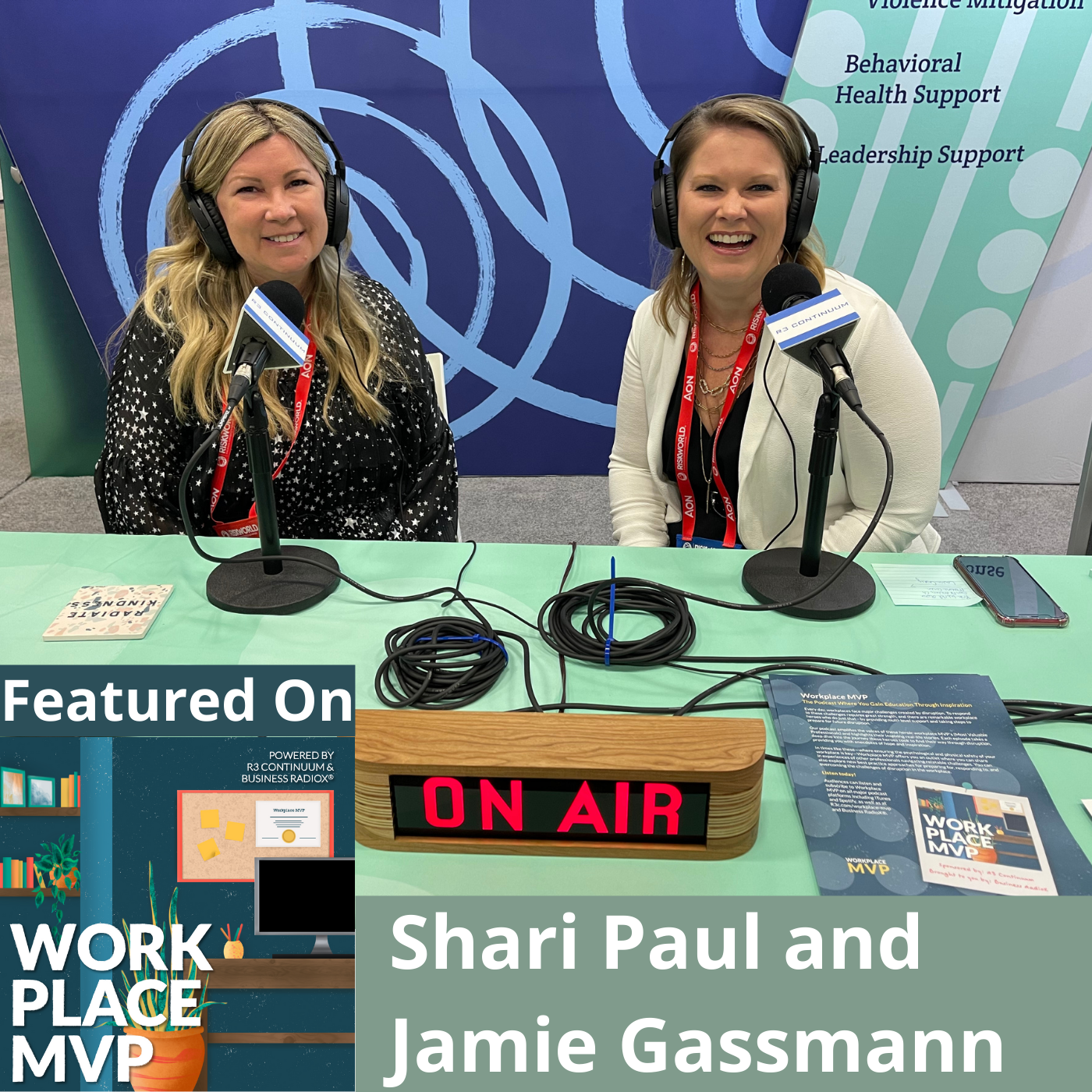
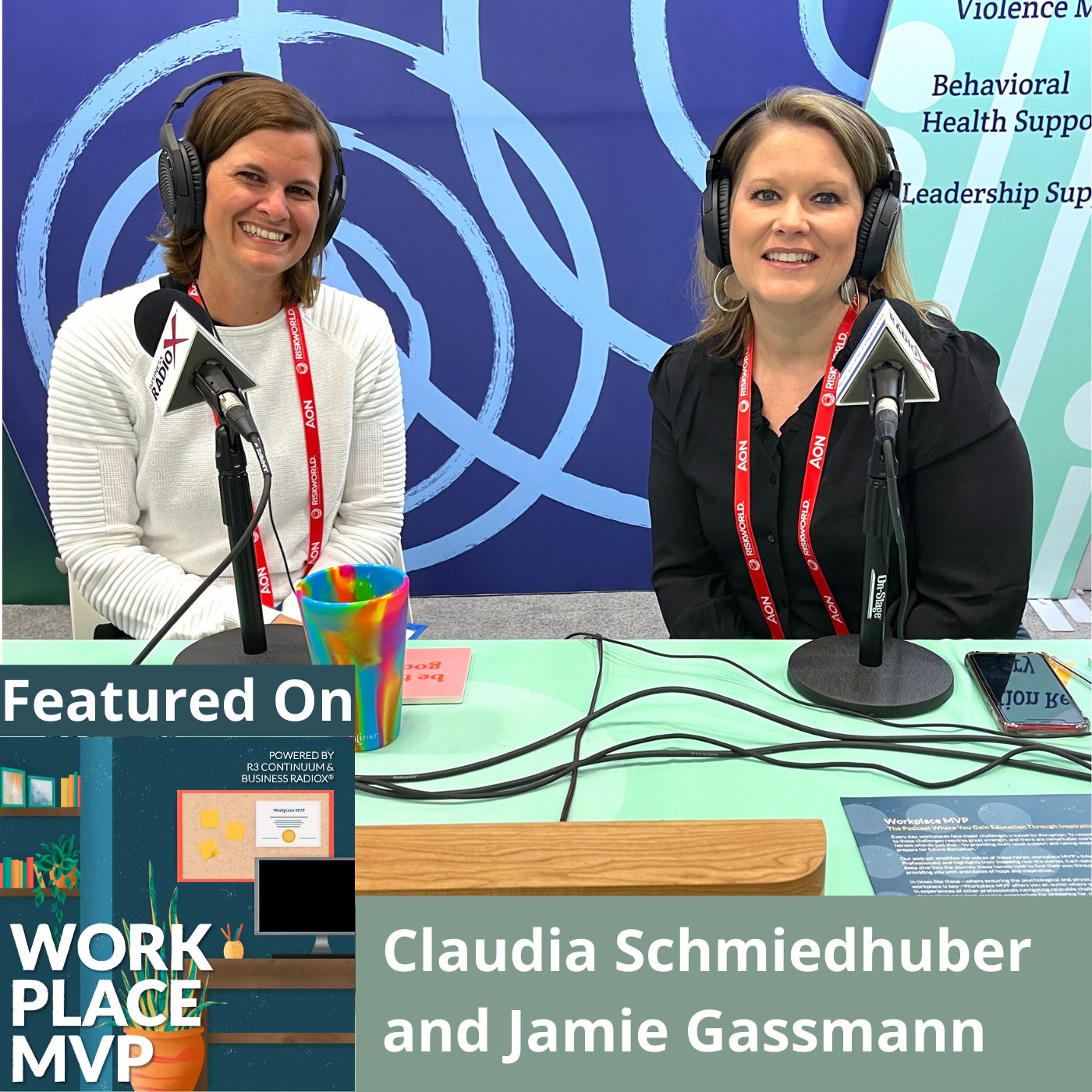
Mark Walls, Vice President at Safety National, joined host Jamie Gassmann live in the R3 Continuum booth at RISKWORLD 2022. Not only was Safety National an exhibitor, but Mark also led a public entity session, the only one of its kind at RISKWORLD. He discussed some of the unique challenges public entities face, what he hoped participants would take away from the session, and more.

Workplace MVP is underwritten and presented by R3 Continuum and produced by the Minneapolis-St.Paul Studio of Business RadioX®.

This show was originally broadcast from the RIMS 2022 RISKWORLD Conference held at the Moscone Center in San Francisco, California.

Mark Walls, VP, Communications and Strategic Analysis, Safety National

Mark Walls, VP, Communications and Strategic Analysis, Safety National

Mark Walls is Vice President, Communications and Strategic Analysis, at Safety National. In his capacity with Safety National, Walls leads all thought-leadership activities by combining industry perspective and market intelligence to develop expert content for materials like whitepapers, print and social media, webinars and speaking engagements.

With over 24 years of industry experience, Walls returned to Safety National after spending the last year with Marsh as Workers’ Compensation Market Research Leader. Walls is also the founder of the Work Comp Analysis Group on LinkedIn that, with over 22,000 members, is the largest online discussion community dedicated exclusively to workers’ compensation issues. In addition, Walls is a frequent speaker at industry conferences and is quoted regularly in multiple media outlets.

Walls is based in Safety National’s corporate office in St. Louis, Missouri.

LinkedIn

Safety National

Safety National is a leading specialty insurance and reinsurance provider. Serving thousands of customers nationwide for over 80 years, the Company offers specialized expertise, flexible program and placement design, and unique claims proficiency. Safety National is a member of the Tokio Marine Group and is rated A++ (Superior), FSC XV by A.M. Best. • Top Workplaces, St. Louis Post-Dispatch, 2018, 2020 • Best Places to Work in Insurance, Business Insurance Magazine, 2009, 2011, 2013, 2015, 2017, 2019, 2021

Benefits of Choosing Safety National:

  • Outstanding Ratings: The company is rated A++ (Superior), FSC XV by A.M. Best, and A+ by Standard & Poor’s.
  • Strong Financial Backing: Safety National is a member of the Tokio Marine Group. With nearly $200 billion in assets, Tokio Marine is among the top ten insurance groups in the world and its companies are among the highest-rated.
  • Longevity: Providing service to thousands of customers nationwide since 1942, Safety National can assure you that we will be there when you need us.
  • Customer Service: Safety National is consistently top-rated by broker partners for flexibility and responsiveness.

Company website | LinkedIn

About Workplace MVP

Every day, around the world, organizations of all sizes face disruptive events and situations. Within those workplaces are everyday heroes in human resources, risk management, security, business continuity, and the C-suite. They don’t call themselves heroes though. On the contrary, they simply show up every day, laboring for the well-being of employees in their care, readying the workplace for and planning responses to disruption. This show, Workplace MVP, confers on these heroes the designation they deserve, Workplace MVP (Most Valuable Professionals), and gives them the forum to tell their story. As you hear their experiences, you will learn first-hand, real-life approaches to readying the workplace, responses to crisis situations, and overcoming challenges of disruption. Visit our show archive here.

Workplace MVP Host Jamie Gassmann

Jamie Gassmann, Host, “Workplace MVP”

In addition to serving as the host to the Workplace MVP podcast, Jamie Gassmann is the Director of Marketing at R3 Continuum (R3c). Collectively, she has more than fourteen years of marketing experience. Across her tenure, she has experience working in and with various industries including banking, real estate, retail, crisis management, insurance, business continuity, and more. She holds a Bachelor of Science Degree in Mass Communications with special interest in Advertising and Public Relations and a Master of Business Administration from Paseka School of Business, Minnesota State University.

R3 Continuum

R3 Continuum is a global leader in workplace behavioral health and security solutions. R3c helps ensure the psychological and physical safety of organizations and their people in today’s ever-changing and often unpredictable world. Through their continuum of tailored solutions, including evaluations, crisis response, executive optimization, protective services, and more, they help organizations maintain and cultivate a workplace of wellbeing so that their people can thrive. Learn more about R3c at www.r3c.com.

Company website | LinkedIn | Facebook | Twitter

TRANSCRIPT

Intro: [00:00:03] Broadcasting Live from Riskworld 2022 at the Moscone Center in San Francisco, it’s time for Workplace MVP. Brought to you by R3 Continuum, a global leader in helping workplaces thrive during disruptive times. Now, here’s your host.

Jamie Gassmann: [00:00:22] Hi, everyone. Your host, Jamie Gassmann here, and I am at our podcast sponsor, R3 Continuum’s, booth at Riskworld 2022. And joining me is Mark Walls from Safety National. Welcome, Mark.

Mark Walls: [00:00:35] Welcome. Hello, Jamie. Thank you for having me.

Jamie Gassmann: [00:00:37] Well, it’s a pleasure to have you on the show. So, tell me a little bit about what Safety National does.

Mark Walls: [00:00:43] Safety National is a commercial carrier reinsurer dealing with employers that retain risk, mostly high-deductible self-insurance workers comp, multi lines. We do cyber, a lot of different things, but focused on the commercial casualty line.

Jamie Gassmann: [00:01:00] Wonderful. And so, I know you’re an exhibitor at the show and your booth is like right in the front of the expo hall, so how has it been going for your team here, and conversations, and what’s the energy feel like?

Mark Walls: [00:01:13] It’s just been nice to get out. After two years of not having these events, it’s just been nice to get back in the game again, be out among people again. I think everybody’s really enjoying that.

Jamie Gassmann: [00:01:24] Yeah, I think so, too. I know I’ve been enjoying all of the conversations we’ve been having and the people we’re meeting. I mean, there’s a lot of positive energy, I’m feeling, in the expo hall.

Mark Walls: [00:01:33] Yeah, I would agree. Just everywhere. I mean, the events that I’ve gone to have all been packed, a lot of energy, a lot of enthusiasm. People are just glad to be back in the game.

Jamie Gassmann: [00:01:42] Yes, it definitely is fun to be able to like kind of be amongst like peers in a way, right?

Mark Walls: [00:01:48] Yes, agree.

Jamie Gassmann: [00:01:49] Yes. See people we’ve been seeing on Zoom calls or LinkedIn and social media, going, oh, look at what’s going on in their life, now, we can actually talk about it.

Mark Walls: [00:01:58] Mm-hmm. Agree.

Jamie Gassmann: [00:01:59] Yeah. So, now, you’re a speaker at this year’s conference. Talk to me about what is the topic you’re presenting on?

Mark Walls: [00:02:04] So, tomorrow, I’m leading the public entity industry session. It’s something that I’ve done here at RIMS, as long as I’ve come to RIMS. So, 10-plus years, I’ve led this session and I’ve got Steve Robles from LA County and Kevin Confetti from the University of Chicago helping to lead the discussions. And it’ll be very much a free-form, interactive discussion with the people that show up, talking about the challenges that public entity risk managers are facing and how they’re working through some of those.

Mark Walls: [00:02:33] So, public entity faces some very unique things. Among the things we’ll be talking about is law enforcement liability insurance, and the types of claims, and the size of the claims you’re seeing in that space. Sexual assault, sexual molestation claims, there’s been a lot of changes in legislation around the country impacting that. Another big challenge for public entities is the cyber marketplace. Quite frankly, they’re a huge target for cyber hackers, and because of that, they have a really hard time getting insurance.

Jamie Gassmann: [00:03:07] Wow. Interesting. So, looking at the topic and the panel members, I know you’re having kind of an interactive dialogue, but what are some of the things that you’re hoping that that audience is going to take with them when they leave that session?

Mark Walls: [00:03:21] The goal is to come up with some ideas, some solutions. I mean, everybody knows what the problems are, and there’s a lot of common problems. So, you hope that what you come out of that is a nugget or two around, how have you been able to work around this? What solutions have you found? How are you approaching this? So, that’s the goal with events like this, is to get people together, share ideas, share solutions. If you come away with a nugget or two that helps you solve a problem, you’ve had a successful trip.

Jamie Gassmann: [00:03:52] Yeah, absolutely. It’s almost kind of like an on-show like brainstorming session in a way.

Mark Walls: [00:04:01] It really is. I mean, to me, the thing I’ve missed the most the last two years is the casual collaboration that you have in these events, the opportunities to just have a discussion with people around what’s happening in their world and how they’re dealing with it. And that’s what I try to make this session when we have it, because it’s the only public entity session at the entire conference, and so we want people to come there and just collaborate.

Jamie Gassmann: [00:04:24] Yeah, absolutely. The best part is that human connection where we can learn from each other. So, that’s fantastic. Well, I hope it goes well for you.

Mark Walls: [00:04:33] Thank you. I’m sure it would be amazing.

Jamie Gassmann: [00:04:34] And I absolutely appreciate you being on the show. I know we’ve connected a few times and I kind of pulled your arm, and like, let’s go. So, thank you so much.

Mark Walls: [00:04:41] Well, thank you for having me. I appreciate it very much.

Jamie Gassmann: [00:04:42] Yeah, absolutely. Thanks, Mark.

Mark Walls: [00:04:44] Alright.

Outro: [00:04:49] Thank you for joining us on Workplace MVP. R3 Continuum is a proud sponsor of this show and is delighted to celebrate most valuable professionals who work diligently to secure safe workplaces where employees can thrive.


Tagged With: Jamie Gassmann, Mark Walls, public entities, R3 Continuum, RIMS, Risk Management, RISKWORLD 2022, Safety National

Balancing Humility and Confidence

May 9, 2022 by John Ray

North Fulton Studio
North Fulton Studio
Balancing Humility and Confidence
Loading
00:00 /
RSS Feed
Share
Link
Embed

Download file

Balancing Humility and Confidence

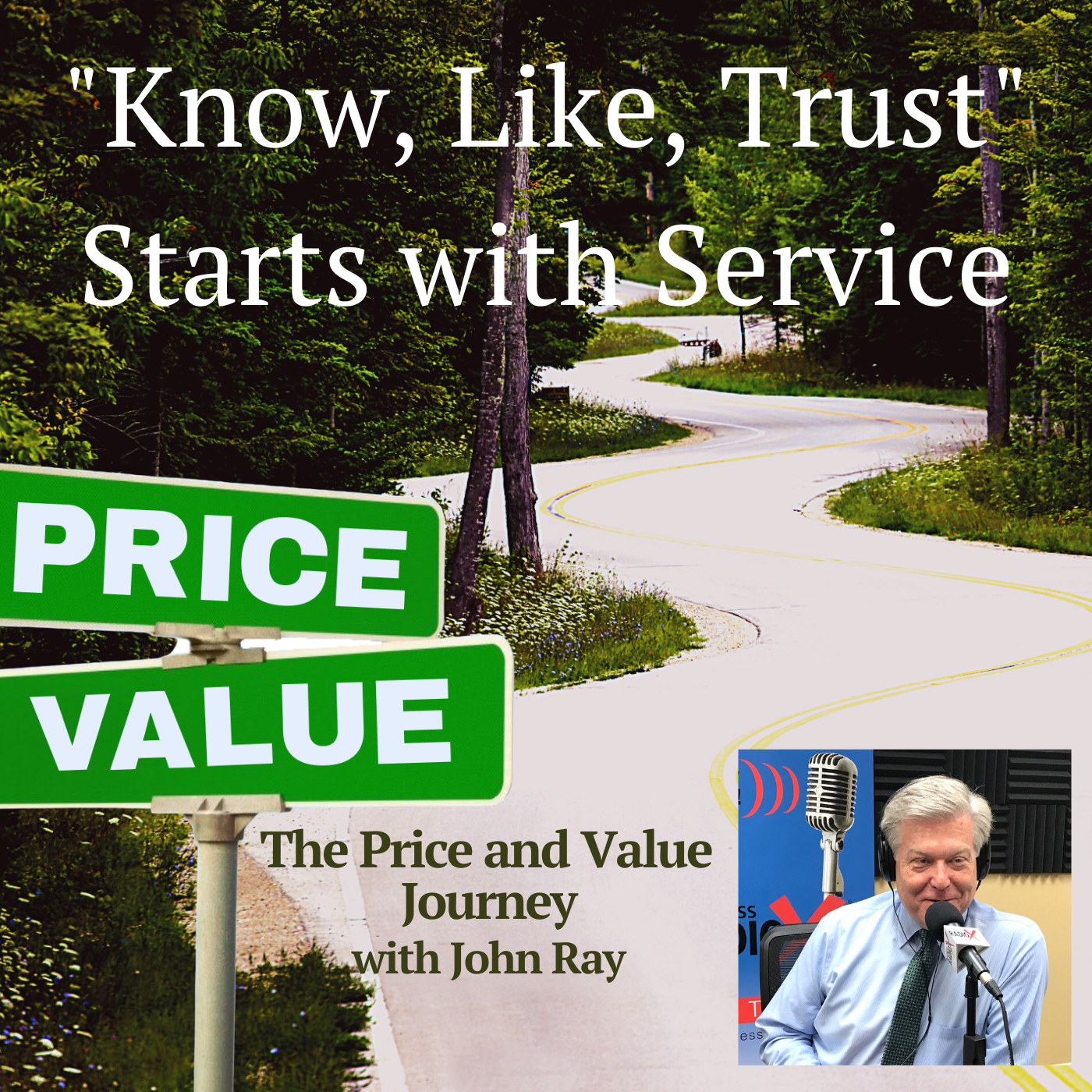
Building a successful professional services practice requires several vital mindsets, including proficiency at balancing humility and confidence.

The Price and Value Journey is presented by John Ray and produced by the North Fulton studio of Business RadioX®.

TRANSCRIPT

John Ray: [00:00:00] Hello again. I’m John Ray on the Price and Value Journey. To successfully build your professional services practice, you must learn a few psychological dance steps, you might call them, or mindset shifts. You must understand the value of your intervention to the client. You must understand that it’s not about what I’m worth as the services provider, that it is the client’s perceived value of the outcomes you deliver for them. You must not allow this realization to affect your confidence in yourself or the services you provide. You must be told you’re too expensive on enough proposals to know that your pricing is close to where it should be. If all your proposals are getting accepted, you’re pricing is too low. You can’t be so needy for affirmation that you allow objections to cause you to discount to win business, a move which will fail anyway.

You must be bold enough to walk away from clients who you know are a bad fit for your practice. You must be humble enough to acknowledge that you’re not the best provider for all clients. You must be grateful for the confidence that clients place in you. You must be humble enough to recognize that you must always look for ways to deliver value. You must realize that clients change, and that, over time, you may not be the best fit for them indefinitely. You must realize that you change too. And maybe most importantly, you must give yourself a little grace and realize you’ll never get it all exactly right. After all, it is a journey.

I’m John Ray on the Price and Value Journey. Past episodes of the series can be found on your favorite podcast app. I would be honored if you would subscribe to the show. You can also find a show archive at PriceValueJourney.com. If you would like to connect with me directly with an email, you can do that at John@JohnRay.co. Thank you for joining me.


About The Price and Value Journey

The title of this show describes the journey all professional services providers are on:  building a services practice by seeking to convince the world of the value we offer, helping clients achieve the outcomes they desire and trying to do all that at pricing which reflects the value we deliver.

If you feel like you’re working too hard for too little money in your solo or small firm practice, this show is for you. Even if you’re reasonably happy with your practice, you’ll hear ways to improve both your bottom line as well as the mindset you bring to your business.

The show is produced by the North Fulton studio of Business RadioX® and can be found on all the major podcast apps. The complete show archive is here.

John Ray, Host of The Price and Value Journey

John Ray The Price and Value Journey
John Ray, Host of “The Price and Value Journey”

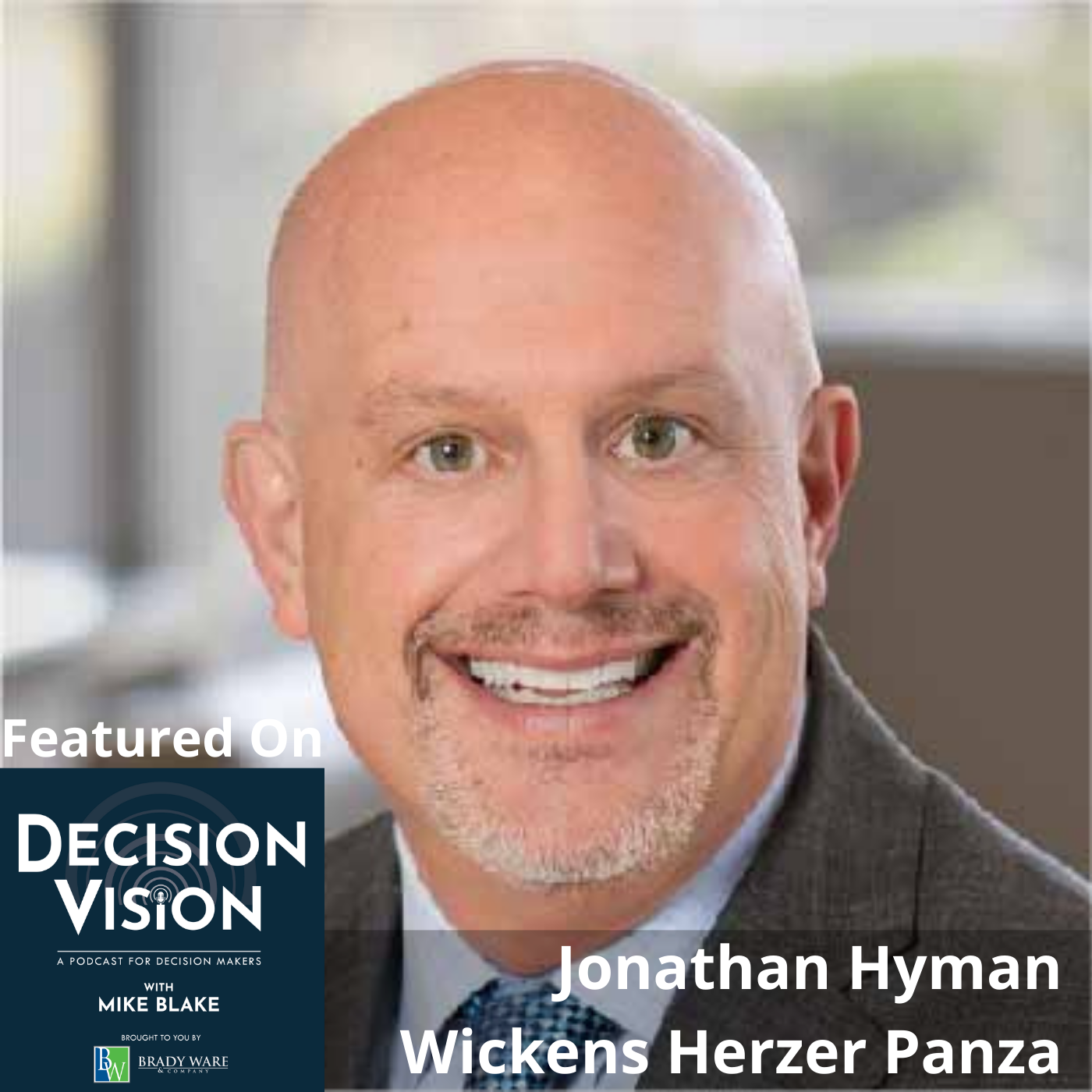
John Ray is the host of The Price and Value Journey.

John owns Ray Business Advisors, a business advisory practice. John’s services include advising solopreneur and small professional services firms on their pricing. John is passionate about the power of pricing for business owners, as changing pricing is the fastest way to change the profitability of a business. His clients are professionals who are selling their “grey matter,” such as attorneys, CPAs, accountants and bookkeepers, consultants, marketing professionals, and other professional services practitioners.

In his other business, John is a Studio Owner, Producer, and Show Host with Business RadioX®, and works with business owners who want to do their own podcast. As a veteran B2B services provider, John’s special sauce is coaching B2B professionals to use a podcast to build relationships in a non-salesy way which translate into revenue.

John is the host of North Fulton Business Radio, Minneapolis-St. Paul Business Radio, Alpharetta Tech Talk, and Business Leaders Radio. house shows which feature a wide range of business leaders and companies. John has hosted and/or produced over 1,300 podcast episodes.
Connect with John Ray:

Website | LinkedIn | Twitter

Business RadioX®:  LinkedIn | Twitter | Facebook | Instagram

Tagged With: confidence, humble, humility, John Ray, Price and Value Journey, pricing, professional services, professional services providers, solopreneurs, value

Tiff Marchand, Night Carver Designs

May 5, 2022 by John Ray

Night Carver Designs
North Fulton Studio
Tiff Marchand, Night Carver Designs
Loading
00:00 /
RSS Feed
Share
Link
Embed

Download file

Night Carver Designs

Tiff Marchand, Night Carver Designs (Organization Conversation, Episode 18)

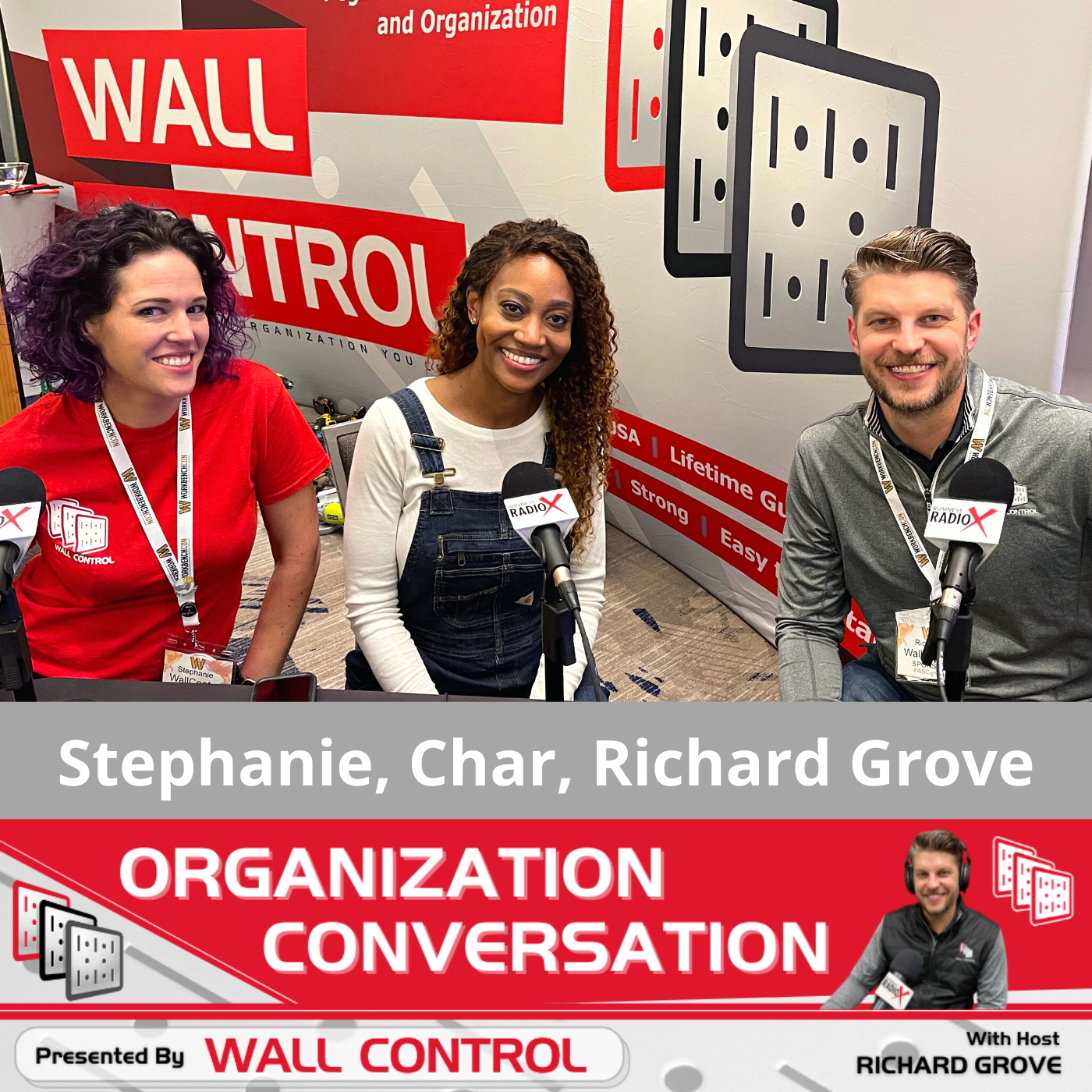
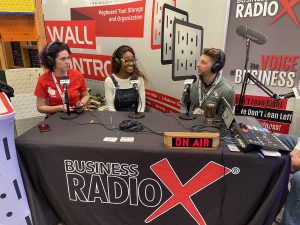
Tiff Marchand of Night Carver Designs joined Richard Grove of Wall Control and Stephanie of Uncommon Outpost to talk about all the collaborations Tiff is working on coming out of WORKBENCHcon, renovating her workshop, staying organized, her new podcast, how makers can work with brands, and much more.

She has two new podcasts: A Saburrtooth Podcast called Carver Conversations, which recently debuted, and Maker Conversations.  Organization Conversation is broadcast from the North Fulton studio of Business RadioX® inside Renasant Bank in Alpharetta.

Tiff Marchand, Owner, Night Carver Designs

Tiff Marchand, Owner, Night Carver Designs

Tiff has been painting and making since she was a child. Her parents would do scrollsaw art and Tiff learned the process from them. She always knew she would be an artist.

She went into marketing and advertising and has done that for twenty years. At night, she does wood carving, hand-routed carving, creating custom pieces as well as a standing product line.

Tiff has a degree in Fine Art and a minor in graphic design.  She loves drawing inspiration from movies and music, and she is a huge movie nerd, which leads her to incorporate big bold colors and thick dark black lines into her art.

Company website | Instagram | YouTube

About Organization Conversation

Organization Conversation is hosted by Richard Grove and broadcast and produced from the North Fulton studio of Business RadioX® inside Renasant Bank in Alpharetta. You can find the full archive of shows by following this link. The show is available on all the major podcast apps, including Apple Podcasts, Spotify, Google, Amazon, iHeart Radio, Stitcher, TuneIn, and others.

About Richard Grove

Richard Grove, Host, Organization Conversation

Richard Grove‘s background is in engineering but what he enjoys most is brand building through relationships and creative marketing. Richard began his career with the Department of Defense as an engineer on the C-5 Galaxy Engineering Team based out of Warner Robins. While Richard found this experience both rewarding and fulfilling, he always knew deep down that he wanted to return to the small family business that originally triggered his interest in engineering.

Richard came to work for the family business, Dekalb Tool & Die, in 2008 as a Mechanical Engineer. At the time Wall Control was little more than a small ‘side hustle’ for Dekalb Tool & Die to try to produce some incremental income. There were no “Wall Control” employees, just a small warehouse with a single tool and die maker that would double as an “order fulfillment associate” on the occasion that the original WallControl.com website, which Richard’s grandmother built, pulled in an order.

In 2008, it became apparent that for the family business to survive they were going to have to produce their own branded product at scale to ensure jobs remained in-house and for the business to continue to move forward. Richard then turned his attention from tool and die to Wall Control to attempt this necessary pivot and his story with Wall Control began. Since that time, Richard has led Wall Control to significant growth while navigating two recessions.

Connect with Richard:

Instagram | Twitter | LinkedIn

About Wall Control

The Wall Control story began in 1968 in a small tool & die shop just outside Atlanta, Georgia. The first of three generations began their work in building a family-based US manufacturer with little more than hard work and the American Dream.

Over the past 50+ years, this family business has continued to grow and expand from what was once a small tool & die shop into an award-winning US manufacturer of products ranging from automobile components to satellite panels and now, the best wall-mounted tool storage system available today, Wall Control.

The Wall Control brand launched in 2003 and is a family-owned and operated business that not only produces a high-quality American Made product but sees the entire design, production, and distribution process happen under their own roof in Tucker, Georgia. Under that same roof, three generations of American Manufacturing are still hard at work creating the best tool storage products available today.

Connect with Wall Control:

Company website | Facebook | Instagram

Tagged With: maker, Maker Conversations, Night Carver Designs, power carving, Richard Grove, Tiff Marchand, Wall Control

Decision Vision Episode 167: Should I Apply for Grants? – An Interview with Jill Wood, Phoenix Nest, Inc.

May 5, 2022 by John Ray

Grants
Decision Vision
Decision Vision Episode 167: Should I Apply for Grants? - An Interview with Jill Wood, Phoenix Nest, Inc.
Loading
00:00 /
RSS Feed
Share
Link
Embed

Download file

Grants

Decision Vision Episode 167: Should I Apply for Grants? – An Interview with Jill Wood, Phoenix Nest, Inc.

Jill Wood, Co-Founder and CEO of Phoenix Nest, Inc., and Co-Founder of Jonah’s Just Begun- Foundation to Cure Sanfilippo, Inc.,  gave an overview of the process of applying for grants. She and her husband started the foundation when their son was diagnosed with Sanfilippo, Type C. With host Mike Blake, she covered the basics of applying for grants, becoming a “citizen scientist” to understand the science, where to begin, the need for help from consultants and grant writers, the strict requirements, timelines, and much more.

Decision Vision is presented by Brady Ware & Company and produced by the North Fulton studio of Business RadioX®.

Phoenix Nest, Inc.

Phoenix Nest was founded by an alliance of parents with children suffering from Sanfilippo syndrome type C.

Our management team has a built-in sense of urgency and limitless determination to bring a treatment to the families affected by Sanfilippo syndrome to market. Phoenix Nest is the proud recipient of several Small Business Innovation Research grants from the National Institute of Health. Through funding from the NIH, we have been able to facilitate the research in academic labs and licensed these programs.  With support from our Independent Scientific Advisory Board and Board of Directors, we have thus far successfully met the challenges of pioneering treatments for these ultra-rare and untreatable diseases.

Company website

Jonah’s Just Begun – Foundation to Cure Sanfilippo, Inc.

Jonah’s Just Begun-Foundation to Cure Sanfilippo Inc. is a 501(c)3. The foundation raises funds then distributes them to academic research groups focused on finding treatments for Sanfilippo Syndrome, MPS III.

JJB was formed in 2011 after parents Jill Wood and Jeremy Weishaar after their son Jonah was diagnosed with Sanfilippo Type C. Jonah’s astute pediatrician, Dr. Hai Cao MD (South Slope Pediatrics), suggested that Jonah receives an MRI based on his abnormally large head size. Jonah’s Neurologist, Dr. Romaine Schubert (New York Methodist), concurred. At the time of diagnosis, Jonah was 22 months old and asymptomatic. Upon learning that their child had a fatal genetic disease that had no treatment, Jill and Jeremy received some advice from Jonah’s Geneticist, Dr. Karen David, also from New York Methodist. Dr. David told Jonah’s Parents to make a treatment happen. It was this advice that spawned JJB.

Jill and Jeremy hit the ground running, locating the world’s few scientists that were working on Sanfilippo, and seeking the support of like-minded parents. JJB brought these parents, scientists, and clinicians to New York for a patient population in May of 2011, just one year after Jonah’s diagnosis. Together they identified the three most promising approaches to a treatment. The parents went home filled with hope and began their grassroots fundraising efforts.  The scientists went back to their labs, inspired by the parents.

Today there are half a dozen Sanfilippo research projects in progress and a knockout mouse model.  Jonah’s Just Begun works hand in hand with other International and US type C Medical Research Foundation, we call this consortium HAND.

Website

Jill Wood, Co-Founder, Chief Executive Officer, Co-Founder, Phoenix Nest and Jonah’s Just Begun – Foundation to Cure Sanfilippo, Inc. and Chief Executive Officer

Jill Wood, Co-Founder, Jonah’s Just Begun and CEO, Co-Founder, Phoenix Nestc.

Jill Wood Co-Founded Jonah’s Just Begun-Foundation to Cure Sanfilippo (JJB) with her husband in May of 2010.  After their son Jonah was diagnosed with the ultra-rare genetic disease, Sanfilippo Syndrome type C.  JJB’s mission was to foster a treatment for Sanfilippo Syndrome type C; by connecting researchers, funding science, and mobilizing the patient population.

JJB revenue came through grassroots fundraising efforts, small grants, and private donors. Funding was then distributed to researchers through grants made by JJB.  Grassroots fundraising provided the seed money to initiate pre-clinical research but was far from what was needed to develop, test, and manufacture a drug. Jill founded Phoenix Nest (PN), a for-profit bespoke biotech in 2012. PN licensed the programs that JJB kickstarted, which allowed PN to apply for National Institute of Health (NIH) Small Business Innovation Research grants (SBIR/STTR). PN won its first SBIR grant in 2012, the start of a series of grants totaling $10,750,320.

The funding has allowed PN to bring one of its treatments almost entirely through its pre-IND studies and has funded a clinical observational study, still ongoing.

LinkedIn

Mike Blake, Brady Ware & Company

Mike Blake, Host of the “Decision Vision” podcast series

Michael Blake is the host of the Decision Vision podcast series and a Director of Brady Ware & Company. Mike specializes in the valuation of intellectual property-driven firms, such as software firms, aerospace firms, and professional services firms, most frequently in the capacity as a transaction advisor, helping clients obtain great outcomes from complex transaction opportunities. He is also a specialist in the appraisal of intellectual properties as stand-alone assets, such as software, trade secrets, and patents.

Mike has been a full-time business appraiser for 13 years with public accounting firms, boutique business appraisal firms, and an owner of his own firm. Prior to that, he spent 8 years in venture capital and investment banking, including transactions in the U.S., Israel, Russia, Ukraine, and Belarus.

LinkedIn | Facebook | Twitter | Instagram

Brady Ware & Company

Brady Ware & Company is a regional full-service accounting and advisory firm which helps businesses and entrepreneurs make visions a reality. Brady Ware services clients nationally from its offices in Alpharetta, GA; Columbus and Dayton, OH; and Richmond, IN. The firm is growth-minded, committed to the regions in which they operate, and most importantly, they make significant investments in their people and service offerings to meet the changing financial needs of those they are privileged to serve. The firm is dedicated to providing results that make a difference for its clients.

Decision Vision Podcast Series

Decision Vision is a podcast covering topics and issues facing small business owners and connecting them with solutions from leading experts. This series is presented by Brady Ware & Company. If you are a decision-maker for a small business, we’d love to hear from you. Contact us at decisionvision@bradyware.com and make sure to listen to every Thursday to the Decision Vision podcast.

Past episodes of Decision Vision can be found at decisionvisionpodcast.com. Decision Vision is produced by John Ray and the North Fulton studio of Business RadioX®.

Connect with Brady Ware & Company:

Website | LinkedIn | Facebook | Twitter | Instagram

TRANSCRIPT

Intro: [00:00:02] Welcome to Decision Vision, a podcast series focusing on critical business decisions. Brought to you by Brady Ware and Company. Brady Ware is a regional, full-service accounting and advisory firm that helps businesses and entrepreneurs make visions a reality.

Mike Blake: [00:00:21] Welcome to Decision Vision, a podcast giving you, the listener, clear vision to make great decisions. In each episode, we discuss the process of decision making on a different topic from the business owners’ or executives’ perspective. We aren’t necessarily telling you what to do, but we can put you in a position to make an informed decision on your own and understand when you might need help along the way.

Mike Blake: [00:00:43] My name is Mike Blake, and I’m your host for today’s program. I’m a director at Brady Ware and Company, a full-service accounting firm based in Dayton, Ohio, with offices in Dayton; Columbus, Ohio; Richmond, Indiana; and Alpharetta, Georgia. I am Managing Partner of the Strategic Valuation and Advisory Services Practice, which brings clarity to the most important strategic decisions that business owners and executives face by presenting them with factual evidence for such decisions. Brady Ware is sponsoring this podcast.

Mike Blake: [00:01:12] If you would like to engage with me on social media with my Chart of the Day and other content, I’m on LinkedIn as myself and @unblakeable on Facebook, Twitter, Clubhouse, and Instagram. I also recently launched a new LinkedIn Group called Unblakeable’s Group That Doesn’t Suck, so please join that as well if you would like to engage.

Mike Blake: [00:01:30] Today’s topic is, Should I apply for grants? According to data from Foundation Center, there are over 86,000 grant making entities in the United States with 92 percent represented by independent foundations. According to the Instrumental Blog, there are 26 grant making agencies in the federal government. And corporations represent 17 percent of all non-government grant funding, according to Grant Station.

Mike Blake: [00:01:57] And I wanted to cover this topic separately from the discussion that we have with Lauren Cascio a couple of weeks ago on non-dilutive funding, because I do believe that grant making is its own animal. And, in fact, I don’t know that most people appreciate just how big the grant sector is in the United States, and how central the grant making sector is to supporting certain kinds of business, in particular biotechnology.

Mike Blake: [00:02:33] There’s a rule of thumb that says it takes about $100 million to get from molecule to market. And a lot of that early stage funding when you’re in that molecule phase and you’re not even sure that the molecule does anything useful yet, you’re trying to prove that (A) it might do something useful and then determine if it’s going to kill the person that you’re trying to cure. That’s what they call preclinical and phase one in clinical trials.

Mike Blake: [00:03:03] But to get to that point, that’s usually not done through venture investing. Sometimes it is, but it’s actually usually accomplished through some form of grants. And, indeed, I think this is something that my profession and the world of corporate finance has to come to grips with and really make a fundamental adjustment in how we value companies.

Mike Blake: [00:03:33] And I’m going to get a little bit technical here on that, because I think it’s really important, and then we’re going to get to the actual topic because you want to hear my guest, not me. But for those of you who are finance geeks out there – and I know that you’re out there because you send me you send me messages and emails – when we look at cost of capital to figure out the hurdle rate for a project, or a discount rate on an investment, or required rate of return, conventional wisdom says that we consider the cost of equity and the cost of debt financing, which is all well and good.

Mike Blake: [00:04:08] But conventional wisdom ignores non-dilutive financing. That is financing that has no cost of capital. There is no expectation that it’s going to generate a financial return to the investor. And, accordingly, I think that leads to a lot of companies, frankly, being undervalued – at least by people who do what I do – and explains, at least in part, some of the gap that exists between sort of academic finance and practical finance. So, I’ll put out a white paper on that. I’m not going to discuss that anymore because it really would make for a lousy podcast.

Mike Blake: [00:04:43] So, let’s go to the part that makes for a good podcast. And joining us today is Jill Wood, who co-founded Jonah’s Just Begun – Foundation to Cure Sanfilippo with her husband in May of 2010 after their son Jonah was diagnosed with the ultra rare genetic disease, Sanfilippo Syndrome Type C. Their mission was to foster treatment for Sanfilippo Syndrome Type C by connecting researchers, funding science, and mobilizing the patient population.

Mike Blake: [00:05:12] The revenue came through Grassroots Fundraising efforts, small grants, and private donors. Funding was then distributed to researchers through grants made by the foundation. Grassroots Fundraising provided the seed money to initiate pre-clinical research, but was far from what was needed to develop tests and manufacture a drug.

Mike Blake: [00:05:31] So, Jill then founded Phoenix Nest, a for-profit bespoke biotech in 2012. Phoenix Nest licensed the programs that the foundation kickstarted, which allowed them to apply for National Institute of Health, Small Business Innovation Research Grants. They won their first SBIR grant in 2012, the start of a series of grants totaling nearly $11 million. That funding has allowed Phoenix Nest to bring one of its treatments almost entirely through its pre-clinical studies and funded a clinical observation study which is still ongoing. Jill Wood, welcome to the Decision Vision podcast.

Jill Wood: [00:06:09] Thank you, Mike. Thanks for having me here.

Mike Blake: [00:06:13] So, let’s educate our audience first. We’ll talk about grants in a second. But what you do is so important and I also want to get into your origin story because I think it’s just amazing, candidly. I’m not sucking up to you. I truly believe that. What is Sanfilippo Syndrome? And so, you and I had spoken, I never heard of it, to be perfectly candid.

Jill Wood: [00:06:34] Yeah. Very few people have heard of it, and that’s one of the major problems with diagnosing this disease. So, Sanfilippo Syndrome is part of the umbrella group of syndromes called mucopolysaccaridosis, which is MPS for short. There are seven forms of MPS, and Sanfilippo Syndrome is MPS III, which breaks down to another four syndromes, MPS III A, B, C and D, or you can call it Sanfilippo Syndrome A, B, C, and D. I don’t know why they have to make this stuff so complicated, but that’s what it is.

Jill Wood: [00:07:16] So, my son, Jonah, was diagnosed with Sanfilippo Syndrome Type C about a year into his first year of life. We were really very lucky, for lack of better words, we lived in New York where we are surrounded by some really great institution, health care hospitals, who our pediatrician recognized that something was off with Jonah. And it was basically the head size, his head circumference, which a normal pediatrician would sweep under the rug, like no big deal. You know, if they’re Polish, they all have big heads, you know.

Jill Wood: [00:07:57] But he sent us over to a neurologist and that neurologists took a hard look at Jonah and saw some other things. And they sent us to an MRI that was done at NYU. And, luckily for us, the techs saw in Jonah’s brain deformities or lesions. The deformity was a skull deformity that’s pointed towards mucopolysaccharidosis. So, we were able to zero in right away into what diagnostic testing we needed to do for Jonah.

Jill Wood: [00:08:42] So, Sanfilippo Syndrome, it’s a genetic disease that has a mutation on one of the chromosomes. And a husband and a wife have a 25 percent chance of giving both of those bad genes to their child. And so, Jonah has a defect on his gene that stops an enzyme from forming. And that enzyme’s job is to break down a protein called heparan sulfate. And because that enzyme is not there or lacking, it doesn’t break down that protein. And the protein sits in the cell in every single cell.

Jill Wood: [00:09:26] This is called a lysosomal storage disease. There are numerous lysosomal storage disease out there. Gaucher, Fabry are some of the more popular ones that people might recognize. So, anyways, you could imagine what this storage must do to your cells that’s not supposed to be there, right? It has catastrophic effects. It starts with near degenerative progressive disease, a lot of behavioral issues. The symptoms are really quite diverse and it’s very hard to pick up because a lot of it in the early diagnosis is hyperactivity.

Jill Wood: [00:10:08] So, you have a two year old that’s extremely hyper. The two year old with a large head that’s extremely hyper. Then, what really sets people off to search is their speech delays and not keeping up with their peers. A lot of times, if they have older brothers, siblings, they’re like, “They’re just not like his older brother Johnny. You know, this is not the way he developed.” And so, they start on that odyssey of getting the diagnosis, and they usually get diagnosed as in the autism spectrum disorders until they start regressing.

Mike Blake: [00:10:47] And in the regression, they’ll start to lose their speech, their ability to walk, their ability to eat on their own, and they succumb to death between the ages of 10 to 30, really, depending on the severity of the syndrome.

Mike Blake: [00:11:04] So, at the time your son was diagnosed, were you already a biologist? Were you already a trained pharmaceutical researcher? What was your background?

Jill Wood: [00:11:16] No. Everybody always asks me that, Mike. They call us citizen scientist, is the term that came out. No. I was in the fashion industry. I think what gave me the ability to do what I’ve done is just being able to talk to people, not being shy. And it’s okay to not understand. And going after people and making those connections is one of my strong suits.

Mike Blake: [00:11:49] You know, and I think just aside from the story, being remarkable that you’re undertaking that challenge and you really just pivoted your life to pursue this, you’ve gone from that point to raising over $11 million of grant money. Which tells me – and I mean, this in no disrespect to you and in any way diminish your accomplishment – that you don’t necessarily have to be a “insider” to raise grant money. You don’t necessarily have to have lived that entire life, you’re part of a secret club, or anything, that there is a process, that if you muster that process, then grant money is achievable.

Jill Wood: [00:12:33] Yeah. But, Mike, I do think they were shocked. I think the people that released the funds when they talk to me that first round and they asked me who I was and what kind of financial setup I had, they were shocked. I could hear them gasp on the other line.

Jill Wood: [00:12:56] I would be curious to know how many other parents have started out. And since I’ve started doing this and telling my story – you know, the NIH brings me out all the time to campus to speak – and since I’ve started this, many families, many parents said, “Okay. I can do this too.” So, I know there’s been an uptick in that, but I would be curious to know.

Mike Blake: [00:13:19] So, walk through your first grant, if you can remember that. What was that like? How did you approach it? Was it successful?

Jill Wood: [00:13:34] You know, it took a couple of times, a couple of rounds to have our first successful grant. Obviously, I did not do this grant writing on my own. You do need to have a medical degree or a PhD – actually, you don’t. I mean, you could really educate yourself up to that point. But if you want to expedite the situation, you should probably bring some consultants in.

Jill Wood: [00:13:57] And so, I did have my colleague, my co-founder, was a PhD, and he had NIH grants under his belt. He inspired me and said, “Let’s do this.” I have really great researchers that I work with. We had preclinical work. We had efficacy. And we really had what was needed to start writing grants. So, he helped me put together our first grant application.

Jill Wood: [00:14:27] And to go back, so my major funding comes from the National Institute of Health, NINDS, as I mentioned, the Small Business Innovation Research Grants. To get these fundings, to start up, even able to apply, is a major undertaking. You can’t just go and log in and sign yourself up. There are several different agencies that you have to go through. The dance number, your cage code, all these steps that you have to go and be certified for. So, anyways, that could take you four to six months. So, if you’re going to do this, you’ve got to get started.

Jill Wood: [00:15:14] There’s very little cost that’s involved in starting up, though. I think there might just be a couple of fees, but, anyhow, it’s inexpensive to do, so – go ahead.

Mike Blake: [00:15:25] Please go ahead. No. Go ahead, please.

Jill Wood: [00:15:26] Okay. So, my researchers, with these small business grants, usually it’s a requirement. You’re working with an academic, and that academic worked with my grant writer, and we put together a strategy. There is a format to these grants. And I suggest you read the instructions over and over and over again. And you don’t throw anything in there that you think is really great. You need to follow what the FOA asks you to do.

Mike Blake: [00:16:04] FOA stands for what?

Jill Wood: [00:16:08] You put me on the spot there, and you’re going to come up –

Mike Blake: [00:16:12] I’ll look it up.

Jill Wood: [00:16:13] Yeah. Thanks. Look it up. You can call for grant FOA.

Mike Blake: [00:16:23] Funding Opportunity Announcement.

Jill Wood: [00:16:25] Thank you. There it is.

Mike Blake: [00:16:26] You’re such an expert, you’re so in it, it’s hard for you to get back to the [inaudible].

Jill Wood: [00:16:33] I was impressed that it came up with SBIR. So, anyways, you follow what the FOA is asking. And if you don’t, that is your first rejection. They’ll kick it right back at you. The NIH is not messing around. I once had a grant kicked back to me because there was a hyperlink in the page within the body of a CV. That was kicked back to me. I’ve had grants kicked back because we went over the page limit. I mean, you don’t even get reviewed. They kick it back and you can’t reapply for another six months.

Jill Wood: [00:17:13] So, you really got to take these things very, very seriously. Have other people take another eyeball on it, pass it over. I mean, bio sketches have to be in the form of an NIH bio sketch. Anyhow, so our first grants we applied had really great comments. We did not win. But you take those comments, and you take them seriously, and you go back and you address them. And you could have a chance, within time you can go and address those before your grant will go to committee for final review. But most often you have to reapply to the grant funding opportunities, which usually happen every six months.

Mike Blake: [00:18:04] Now, you’ve also received other grants from non-governmental organizations as well, correct?

Jill Wood: [00:18:14] Correct.

Mike Blake: [00:18:15] So, I guess I’m curious, why are they giving away money? I understand and our listeners will understand, government agencies, in a way, it’s sort of their job. But there are these private foundations, individuals, I guess, corporate entities, and so forth, what do you think kind of makes them tick?

Jill Wood: [00:18:39] Obviously, breast cancer awareness, you can see how that got started, because it affected people and maybe affected loved ones. A wealthy entrepreneur out there may have had a grandchild with a rare disease and somebody on a staff started up a foundation, because they want to help and maybe they don’t have the time or the resources to do what I’ve done.

Jill Wood: [00:19:11] And I’m sorry I keep regressing here, but I’m thinking back to the science. What was there ten years ago is here now. Alzheimer’s is a really good example. You know, that is a disease that’s only recently had treatments and it’s been known for 70 years. You can look that one up, Mike, as well. But some of these ultra rare diseases are easy fixes where a single gene defect and the science is finally here. You know, CRISPR gene therapy, it’s just opened up the world to us.

Jill Wood: [00:19:53] So, I’m going back to make my point is that, these large foundations that have been there for so long, they had to fund a lot of science to get to where they’re at now. I think we’re going to be seeing a lot more treatments coming out in the next couple of decades with the recent discoveries that we’ve had. So, yes, I think they have a connection. They have a connection to the community.

Mike Blake: [00:20:23] So, I’m not sure if the way to ask this question have you think back or maybe just if you’re going to start today. But, you know, I’m sure somebody who’s listening to this podcast is thinking this out, “You know, I’ve been thinking about getting a grant and this conversation with Jill is giving me the confidence to give this a shot.” Where do you start? How do you start figuring out what might be a potential source of grant money?

Jill Wood: [00:20:53] Well, you’re going to want to look at the institutions or the smaller nonprofits that are in your space. And NIH was obvious to me. But if you might have an education grants, you can go for the Department of Education. Department of Defense is a really good, huge funding opportunity. So, look within your space.

Mike Blake: [00:21:20] I imagine a lot of this can be just accomplished by Google Search, right? Because I think some organizations are very private, they don’t necessarily want a solicitation at large, but then there are some that do. But one thing I’ve read, and I’m curious if you agree with or have any experience with this, is that, it might be easier to obtain money from a smaller organization than a larger one simply because they may not have as many applicants. Any comment on that?

Jill Wood: [00:21:55] No offense, Mike, finding those is pretty dang tough. So, we can go on a tangent here, maybe there’s foundations. So, in my space you’ll have a foundation that supports MPS, but they support MPS as in the families, getting help to the families, and getting families to where they need to be. And I’m looking for foundations that are willing to fund research to bring a treatment.

Jill Wood: [00:22:30] The smaller ones are hard, I think, to find unless you know them because they’re in your space and then you have a link to them. But the larger foundations, you know, everybody always says, “Did you go for a Zuckerberg grant? Have you talked to Bill Gates?” It’s always the first thing out of people’s mouths. And it’s like, “Those are the people that are inundated with grant applications.”

Jill Wood: [00:22:56] You know, you really need to have an in, you need to have somebody you can talk to, a name, and ask for advice, what are people looking for, what’s the tone of this grant. And a lot of times you’ll look at the FOAs and it’s like, “I don’t even know they’re so all over the place.” Nothing has really zeroed in and there’s so many different ones. It’s really convoluted.

Jill Wood: [00:23:24] So, you start out doing that because that’s what everybody tells you to do. But I turned around and just walked away from it because it was all misses. You know, you could spend a lot of time putting things together and it’s just not what they’re looking for. But they don’t really tell you what they’re looking for. And the goalposts are changing all the time, whichever way the wind blows, what’s the sexy right here that I’m funding.

Mike Blake: [00:23:52] You know, the interesting thing about what you just described, I think, is that a lot of people who have had to raise venture capital would offer a very similar description. You’ve got to have an in and you’re not really sure what they want. The VCs aren’t sure what they want. It’s sort of like trying to define the difference between art and pornography. They don’t know. They can’t define exactly where it is, but they know it when they see it. And so, you get bouncing around saying, “Well, no. I’m really not into this. But maybe if you do this, I’ll take another look.”

Jill Wood: [00:24:26] And I don’t know about you, but I know that at least on the VC side of it, the funding seeker side, that can just be immensely frustrating, because it’s hard to tell the difference between being tasked to do something with a specific objective versus just sort of being frankly jerked around.

Jill Wood: [00:24:46] Yeah. Exactly. Yeah.

Mike Blake: [00:24:49] So, in your experience, what does the timeline look like for applying to a grant? I’m curious, is it fairly quick? Is it lengthy? Is it variable? What’s your experience with that?

Jill Wood: [00:25:04] It’s all lengthy. From small to large, it’s all lengthy. I mean, small operations don’t have as many people onboard looking at it. They want to vet the application. So, it might take more time to find the right eyes to look at the application. And then, large institutions, you think they’re large, but the NIH, I feel like they don’t have enough employees, The FDA, they don’t have enough employees. And there’s a lot to go through as well. So, they’re about six months rotation. And if you have a government shutdown, it’s all over, and it happens all the time.

Mike Blake: [00:25:49] When that happens, do you basically have to start over or is it sort of extended animation?

Jill Wood: [00:25:53] No. We just sit in limbo. We sit in limbo. You know, it’s happened to me a couple of times during the Obama Administration, where towards the end we had shutdowns every other day. And it was between we had won the grant and now we’re waiting for the funds to release. Well, the funds aren’t being released because nobody’s made their decision on how much funds are being released. They’re all squabbling there. So, yeah, you sit down for another three months. It’s extremely frustrating. I mean, you think you got the funds, but it could take you a year to actually get them.

Jill Wood: [00:26:33] And I should preface that, too, maybe this is obvious to most people, but maybe not. Those funds don’t hit your bank account. They’re sitting up there in the cloud somewhere – we call it the Payment Management System – and you only pull down funds when you’re paying an invoice.

Mike Blake: [00:26:51] Oh, that’s interesting. I didn’t know that and I’ll bet our listeners didn’t know that. How does that impact your operations as you try to operate your company?

Jill Wood: [00:27:02] Mike, it’s really hard. I was laughing, I could tell you all the horror stories behind this. So, you know, you have to budget so fine tuned. You need to know every penny. And when those invoices are coming, a lot of these grants are milestone driven. If you don’t get to your milestones, your grants can be frozen. If you have a researcher that changes positions or you have to move to a different site, your grant is frozen. And if you’re in between a funding cycle and they only release fundings at certain points, it’s frozen, then you have to get permission to release it, and then here the funds come another six months.

Jill Wood: [00:27:58] So, you can’t get ahead of yourself. You can’t ever overcommit. You really need to be prepared for those things to happen because it is inevitable. They will happen. And if you are living from paycheck to paycheck, it can crush you.

Mike Blake: [00:28:19] And I’m guessing also it probably creates a vendor management challenge, too.

Jill Wood: [00:28:25] Yes, it is. Yeah. I always go in. And a lot of these vendors, believe it or not, even though the money is there, they don’t take on uber rare projects. You know, it’s like $1,000,000 actually means nothing to them. You know, patient population with 15 patients, I’ve had vendors have turned me down because my projects are too small. So, you get these good ones that want to work with you, that understand the situation, and they realize this is what’s happening, but we’re going to do the right thing. And I’ve had several of those vendors.

Jill Wood: [00:29:06] But, yeah, I work with one company that has been incredibly patient where that exact same thing happened. My grant got waylaid and I owed them hundreds of thousands of dollars, and they sat there for six months. And they continued to work, they kept on working until the funds were released. But I couldn’t sleep at night. I do not like living like this.

Mike Blake: [00:29:30] No, of course. I guess, on the bright side, I have to imagine if you provide those services or vendors provide, for example, clinical research organizations, that kind of thing, many of their clients are in your position. And so, my guess, if they’re smart, is that their business model already foresees the fact that there may be a six month delay between invoicing and being paid simply because that’s the nature of the beast.

Jill Wood: [00:30:05] Yeah. It’s like the venture capitalist, you know, they’re taking a little bit of a risk helping you out.

Mike Blake: [00:30:15] So, let’s go to the NIH, because I think that’s obviously a big source for you. How important has it been to develop a personal relationship with people at the NIH? And if that was important, how did that happen?

Jill Wood: [00:30:38] You know, they have to be very careful. There cannot be any favoritism there. You can’t take these guys out for lunch or buy them a drink. That is not appropriate. And if you’re in this space, it’s a small fishbowl. And I was fortunate enough where my grant funding came from the NINDS. And there’s a representative, our program manager that runs in the same circle – her name is actually the same as mine – who I just got to know her. And she really understood the science. She understood the disease. And so, when the grant application came through, it hit her desk. We already had the rapport. She knew the people that I work with.

Jill Wood: [00:31:27] But she’s not the one who’s making the decisions on reviews. You know, when your grant goes in, she gives it to the right people. But you never see your reviewers. They give you a list of their names, but you actually don’t know which ones are looking at your grant. And it is a major no-no to ever contact these reviewers. Don’t ever say anything to them. And it’s those guys that are making the decisions on giving you the score. And those guys can tear you apart if their idea does not fit with yours.

Jill Wood: [00:32:07] But the grant managers, how they can really help you is fight for you. When they do see something that is not in sync with the guidelines, they can call a reviewer out and say, “Hey, you know, this was an unjust comment.” During those times when grant funding freezes, they can help you find other ways to get bridge funding. So, my program managers are priceless. I do have a really great relationship with them. And they are extremely helpful, and networking, and giving ideas.

Mike Blake: [00:32:46] So, you’ve indicated that you’ve in the past, and perhaps you still do, have relied on the help of outside consultants and advisors to help you prepare grants. And I’ve read the same thing, like many organizations have internal grant writers because it’s such a specialized skill. If you’re going to apply for grants such as the ones that you’ve received, how much should somebody budget in terms of the cost of applying for this “free money,” which isn’t so free?

Jill Wood: [00:33:19] It’s not free. Oh, geez. You know, I think it could probably cost you, it depends, like, are you going to hire these people and keep them on staff. That’s where I always worry about. They need to not only have the gift of writing, they need to understand your disease too. And so, it’s hard to find a consultant out there that’s going to be able to nail both of them. So, I would suggest hiring somebody and then you’re going to give them a full salary, which you want to Google it, $100,000 to 300,000.

Jill Wood: [00:34:02] If you are going to piecemeal it, I just think you get what you pay for. You’re not going to get quality work out – maybe you will, maybe you can find somebody – just saying, “Here’s my package, put it together.” I would say that probably costs you at least $10,000.

Mike Blake: [00:34:23] Have you had grant applications rejected?

Jill Wood: [00:34:27] Oh, all the time nonstop. This one grant goes to cancel May 18th. And we are sitting on the edge of our seats. We got a really great score. And that grant has gone through three times. This is its fourth time.

Mike Blake: [00:34:48] It’s fourth time being submitted?

Jill Wood: [00:34:50] Fourth time being submitted.

Mike Blake: [00:34:52] And you’re hopeful that the fourth time is the charm?

Jill Wood: [00:34:55] Yeah.

Mike Blake: [00:34:56] Okay. So, actually this is one of my questions, I was curious if you’re able to apply for grants more than once. That sounds like you are. That may even be expected.

Jill Wood: [00:35:07] Yeah. So, you’ll get your comments, and you’re not always going to have the same reviewers. And sometimes you get lucky with a reviewer that knows exactly what it is that you’re trying to convey and get across, they’ve been in this space. They’re in your space. These people are in your space. They have understanding of the disease. And then, you’ll have somebody who is like, “No. That is not the route of administration I would suggest. No.” “F.” They score you for, like, one to eight, one being good, eight all the way across. So, it’s some egos in there.

Mike Blake: [00:35:44] So, is it fair to say there’s a certain amount of luck involved? Do I get the right application in front of the right reviewer on the right day in the right mood?

Jill Wood: [00:35:55] Yeah. I think with all honesty, Mike, yes. Because we’ve resubmitted it and gotten way different comments from the previous round, so it’s extremely frustrating.

Mike Blake: [00:36:13] Now, when you receive a grant – we touched upon this in terms of how money is dispersed – what other things do you have to change about your business or build your business around in order to manage the grant? Because my understanding is when there’s a grant, there’s just usually some sort of reporting function to send to the granting organization to verify, basically, that you took the money, you didn’t go to Atlantic City and put it all in 22 black. So, what does that look like?

Jill Wood: [00:36:43] It’s hard. And that was really scary for me. And I found there’s niche companies out there that specialize in managing your funds and helping you with the accounting. Yes, there will be line item budgets for travel, for equipment, for subcontracts, yadda yadda. And you get your F&A portion of it and your fee. There’s a lot of calculation that goes into these. It’s epic. It’s quite a lot of work. And your invoices all need to be properly coded.

Jill Wood: [00:37:22] So, all that goes into – I use this company and I’ll pitch them because I think they’re fabulous – Jameson, is my company that does that for me. But I take the invoices and I code them. They manage all the backend of it for me. And then, when you hit a milestone, it’s 750,000 in funding, you’re audited. It triggers an audit. And so, these guys come in, they’re certified by the NIH, and they come in and they look at all your books and make sure you spend down to the time cards, to every single sub-award, seeing the contracts, knowing how you vetted these different contracts. It’s pretty intense and it’s extremely intimidating.

Jill Wood: [00:38:14] So, I strongly suggest you bring somebody in to help you with that. Academia, who wins a lot of these kind of grants, they have entire departments that manage this. They manage the researchers grants for them. But I did not. And so, I found a company that could manage it for me.

Mike Blake: [00:38:38] So, I’m curious, does that also mean that you have to – I’m guessing – kind of approach accounting in a separate and kind of a different way? Some companies, frankly, can be pretty loosey goosey about accounting. And if all you’re doing is you’re running a business selling peat moss out of the back of your truck, you can do that. But it sounds like for you, you probably effectively need at least a controller, if not an outright CFO, and maybe even a whole separate kind of firm even to sell off on it to make sure that you’re doing what you need to do. Because I’m guessing that’s the kind of thing where a misstep can destroy a relationship forever.

Jill Wood: [00:39:24] Yeah. So, yeah, that’s why I depend on this company, and I really want to make sure. This was a portion that I did not know. There’s always that behind the scenes stuff, and this was one of them, is the reporting of the funds, how you spend the funds. I mean, there’s stipulations on how much funds you can roll over to the next accounting period. If you come up short in one budget item and over in the other one, how much you can reallocate to different areas. You know, it’s really detailed.

Mike Blake: [00:40:05] I’m talking with Jill Wood. And the topic is, Should I apply for grants? With the time we have left one question I want to get your thoughts on here is, who shouldn’t apply for grants? I’m sure you’ve probably talked to people that have asked, you know, “Hey, this sounds great. I want to get some of this free money to do X, Y, and Z.” Have you ever talked somebody out of applying for grants or can you see a scenario under which you might talk somebody out of applying for grants? Because for whatever reason, they’re not wired for it, they’re not appropriate, not the right space. Hopefully, you get my question there.

Jill Wood: [00:40:46] Yeah. I would say not in the right space. This is not free money. Because free means it’s my time. This is a massive amount of work that you’re doing to managing these grants. So, if you think you’re going to get free money, who’s going to manage that money for you? That’s not free. So, it would be the person that I would talk out of it.

Jill Wood: [00:41:14] Like, I know where I’m at. And I only have one child. I live in New York. I have access to a large infrastructure, lots of consultants at my fingertips. I don’t want to pick on anybody, but Arkansas did not have the infrastructure that I do and have more than one child, four kids, maybe two, very sick. It’s too much. It’s too much work. I know how hard it is.

Jill Wood: [00:41:52] And you’re not just managing grants. You’re also managing your research. You’re managing the companies. You’re managing your vendors. You’re trying to understand where to go to next, the NIH, the whole landscape. You have to quit your job. And if you’re taking care of multiple sick children, that’s too much. I ask myself all the time, “Is it worth it?”

Mike Blake: [00:42:20] And I imagine it must feel sometimes like you’re working for your granting organizations.

Jill Wood: [00:42:27] Yeah. I do. I really do. I would say that’s a good portion of my time is to make sure all my books are in order, that I’m making all my milestones, planning ahead so that I’ll get the funding when my milestones are met. Yeah. It’s a lot of juggling.

Mike Blake: [00:42:52] So, one way to potentially approach applying for grants is to basically put out as many applications as you possibly can, sort of a shotgun approach as opposed to being surgical. I think I know what the answer is going to be. That’s okay. But I’m sure somebody has tried that. Is that a viable strategy or do you really have to be zeroed in and decide and bet on organizations?

Jill Wood: [00:43:20] If you have nothing better to do, if you have nothing else to lose, you could sit around and write. I mean, some of these grants are small, but some of them are 30 pages. And you’re also wasting other people’s time. If you’re not serious about your grant writing, you’re wasting other people’s time because you have to go and get quotes from all your CROs. Maybe you need to rent a space. Maybe you need to hire other people. You have to get letters of support. There’s a lot that goes into this.

Jill Wood: [00:43:54] So, that would make me mad if you did that, because you are wasting a lot of people’s time, and you are wasting reviewer’s precious time by putting something in their face that’s just worthless. So, be focused.

Mike Blake: [00:44:17] What are the most common reasons that a grant is rejected in your mind?

Jill Wood: [00:44:23] Mistake.

Mike Blake: [00:44:26] Yeah?

Jill Wood: [00:44:27] Yeah.

Mike Blake: [00:44:28] Just like a factual error or –

Jill Wood: [00:44:30] A mistake. A hyperlink, too many pages, you didn’t follow the format. This was supposed to be ten pages, you know. Or in the mistake that you missed the concept, the FOA, you misunderstood it. You should really talk to the grant managers before you apply and say, “Are my aims, does this fall under what the reviewers are expecting?”

Mike Blake: [00:45:02] Jill, we’re running out of time and there are probably questions that our listeners would have liked me to have asked, but didn’t, or would have liked us to spend more time on, or maybe they just want to find out more about Sanfilippo Syndrome and how they can help. If somebody would like to contact you, can they? And if so, what’s the best way to do that?

Jill Wood: [00:45:24] You can contact me directly at my email address. If you have a place to put that, it’s in the blog text or in a text somewhere under my bio, it’s jwood@phoenixnestbiotech.com.

Mike Blake: [00:45:41] Very good. That’s going to wrap it up for today’s program. And I’d like to thank Jill Wood so much for sharing her expertise with us.

Mike Blake: [00:45:48] We’ll be exploring a new topic each week, so please tune in so that when you’re faced with your next business decision, you have clear vision when making it. If you enjoy these podcasts, please consider leaving a review with your favorite podcast aggregator. It helps people find us so that we can help them.

Mike Blake: [00:46:05] If you would like to engage with me on social media with my Chart of the Day and other content, I’m on LinkedIn as myself and @unblakeable on Facebook, Twitter, Clubhouse, and Instagram. Also, check out my new LinkedIn Group called Unblakeable’s Group That Doesn’t Suck. Once again, this is Mike Blake. Our sponsor is Brady Ware and Company. And this has been the Decision Vision podcast.


Tagged With: Brady Ware & Company, Decision Vision, grants, Jill Wood, JJB, Jonah's Just Begun, Mike Blake, NGO grants, NIH, Phoenix Nest, Sanfilippo Syndrome

Richard Taylor, Avid Wealth Management Group, LLC

May 4, 2022 by John Ray

Richard Taylor
North Fulton Business Radio
Richard Taylor, Avid Wealth Management Group, LLC
Loading
00:00 /
RSS Feed
Share
Link
Embed

Download file

Richard Taylor

Richard Taylor, Avid Wealth Management Group, LLC (North Fulton Business Radio, Episode 455)

Richard Taylor is passionate about wealth management. After thirty years in an organization owned by a regional CPA firm, he bought that firm, Avid Wealth Management Group, so he could better serve his clients. In this conversation with host John Ray, Richard discussed the services Avid offers, how they structure their fees, their commitment to the client’s goals, how they respond to market volatility, and much more.  Don’t miss his story of the extravagant Christmas lights he puts out yearly, and why.

North Fulton Business Radio is broadcast from the North Fulton studio of Business RadioX® inside Renasant Bank in Alpharetta.

Avid Wealth Management Group, LLC

Avid Wealth Management Group, LLC defines the best of what you should expect from a wealth management company: thoughtful, caring people who listen to your goals and dreams, and know what it will take to achieve them.

Their process is designed to foster trust, grow relationships, and provide their clients with a high-quality experience. This allows clients the ability to define a vision of their ideal future and follow a process to achieve that vision.

They offer a personalized boutique-style investment experience. The services they offer will satisfy your needs in relation to;

  • Investment management,
  • tax planning,
  • retirement planning and
  • life insurance.

Through regular communication, including in-person meetings, they are able to do all they can to assist our clients achieve their ideal future. Whether that is achieving more family time, travel, charitable donations or new business ventures, they will work with you. They pride ourselves on offering practical solutions with personal attention rather than simply presenting lists of products and services.

The reality is that not every client comes with a clear vision of their future. They may not have defined goals. Avid can help define your goals with the end in mind and help families develop realistic, achievable goals.

Avid helps clients plan for the desired lifestyle in retirement. They can then work with them to maintain that lifestyle in retirement. Avid helps clients develop a comprehensive plan including;

  • investments,
  • real estate holdings,
  • business ownership and cash flow,
  • insurance and income protection,
  • tax planning and
  • charitable giving.

Avid Wealth Management Group is here to serve as your Investment Manager, Planning Expert and Trusted Partner. This is done by repeatedly delivering a high-quality personalized experience with optimal results.

Company Website |LinkedIn

Richard Taylor, President, Avid Wealth Management Group, LLC

Richard Taylor, President, Avid Wealth Management Group, LLC

Richard is the President and owner of Avid Wealth Management Group, LLC. He serves as an investment advisor to his clients, providing portfolio management, retirement, insurance and financial planning for wealthy individuals, trust, estates, and corporate retirement plans. Richard was featured in Atlanta Magazine where he has been named a Five Star Best in Client Satisfaction Wealth Manager for multiple years.

A qualified CPA, Richard was a client services shareholder of HLB Gross Collins, PC, from 1984 through 2018 having joined the firm at the start of his business career in 1973. He served as International Practice leader from 1989 to 2018. Richard served a broad range of industries including manufacturing, distribution, construction, service, and technology companies. He is focused on planning to help companies address issues and business challenges to enhance profitability and maximize financial success. He has extensive experience in business acquisitions, business sales, and many issues related to financing, planning, and tax strategies for these transactions. He also served as a trusted advisor to his clients.

In addition, Richard also served as the firm’s liaison with a worldwide organization of accounting firms, HLB International. Richard has worked with many clients in international markets. He represented numerous international companies operating in the United States and US companies operating in multiple countries. He has specialized expertise to help clients in dealing with International Financial Reporting Standards, international tax planning strategies, transfer pricing, and many issues related to corporate structure and the requirements of doing business in multiple countries.

Richard is a graduate of the University of Georgia.

LinkedIn

Questions and Topics in this Interview:

  • Avid Wealth – what sets it apart from everyone else.
  • Services to business and not just the individual.
  • The importance of wealth management and at what point one should start to take wealth management seriously.
  • Should one be nervous of falling markets?
  • The change in portfolio composition over time based on the needs of the individuals.
  • What does a financially secure retirement look like?

North Fulton Business Radio is hosted by John Ray and broadcast and produced from the North Fulton studio of Business RadioX® inside Renasant Bank in Alpharetta. You can find the full archive of shows by following this link. The show is available on all the major podcast apps, including Apple Podcasts, Spotify, Google, Amazon, iHeart Radio, Stitcher, TuneIn, and others.

RenasantBank


Renasant Bank has humble roots, starting in 1904 as a $100,000 bank in a Lee County, Mississippi, bakery. Since then, Renasant has grown to become one of the Southeast’s strongest financial institutions with over $13 billion in assets and more than 190 banking, lending, wealth management and financial services offices in Mississippi, Alabama, Tennessee, Georgia and Florida. All of Renasant’s success stems from each of their banker’s commitment to investing in their communities as a way of better understanding the people they serve. At Renasant Bank, they understand you because they work and live alongside you every day.


Special thanks to A&S Culinary Concepts for their support of this edition of North Fulton Business Radio. A&S Culinary Concepts, based in Johns Creek, is an award-winning culinary studio, celebrated for corporate catering, corporate team building, Big Green Egg Boot Camps, and private group events. They also provide oven-ready, cooked from scratch meals to go they call “Let Us Cook for You.” To see their menus and events, go to their website or call 678-336-9196.

Tagged With: A&S Culinary Concepts, Avid Wealth Management, investment management, investments, North Fulton Business Radio, renasant bank, Richard Taylor, wealth management

How to Respond to the “What are Your Rates?” Question

May 4, 2022 by John Ray

How to Respond to the "What are Your Rates?" Question
North Fulton Studio
How to Respond to the "What are Your Rates?" Question
Loading
00:00 /
RSS Feed
Share
Link
Embed

Download file

How to Respond to the "What are Your Rates?" Question

How to Respond to the “What are Your Rates?” Question

It happens all the time:  prospects who start a conversation with the “what are your rates?” question. In this episode we offer several suggestions for handling this question.

The Price and Value Journey is presented by John Ray and produced by the North Fulton studio of Business RadioX®.

TRANSCRIPT

John Ray: [00:00:00] Hello. I’m John Ray on the Price and Value Journey. So, how do you respond to the what-are-your-rates question? I received a form of this question from a B2B services professional in an email. And in her email she said, “I was thinking over some of the things you said to me at lunch. And you said that if someone asked you about your price right away on the phone that maybe they’ve contacted you because they’ve seen you on the internet somewhere, you mentioned you may not be a good fit.” Well, she continued, “Someone came up to me at a networking event, and introduced themselves, and asked right away what I charge. I know she isn’t a good fit for a few reasons, but I just said similar to what you told me, something to the effect of it really depends on what you need or want and we need to have a conversation.” “What would you have said?” she asked, “in that situation.”

So, first of all, I told her, “You did the right thing. Your gut on this stuff is usually right.” For folks I meet face to face, I just say, “I don’t know what I would charge. We need to have a conversation about your situation and needs, and see if we are a good fit because I’m not a good fit for everyone.” If the client is willing to take me up on a conversation, then I’ll take the meeting, even if I really don’t think that they are a fit. Not everyone would do that, but I will.

First, you never know until you have the conversation, right? They may surprise you. And second, if they are taking me up on my terms, which is having a conversation about their needs, then I need to fulfill my part. I’ll schedule them at some time and place that’s easy for both of us, so that if it’s not a fit, as I anticipate, then I’ve not lost a lot of time.

I told her that her gut is usually right about her judgment, but that’s not always the case. We all make mistakes. Further, even if our initial judgments are confirmed, there’s nothing lost in being kind and meeting with someone who is just starting out in their business, for example, but can’t yet afford your services. This meeting may be an investment in a future client. It could be an investment in someone who will refer you to another client, which just happened for me. It could be that you are just taking a few minutes to be kind, to listen, and to offer a few helpful suggestions to a new business owner. For me, that’s part of giving back.

Now, I also say that no one client of mine has the same price because every client is completely unique with their own needs. And this reinforces the need for a conversation. If it’s someone who’s calling me on the phone, I thank them for calling. And I say, “First, how did you get my name? If you’ve been referred by someone, I want to thank that person.” If they’re a referral, then I need to engage with them and stay on that. We need to have a conversation track with them. Now, if they got my name off the Internet somewhere and their first question is about my rates, my experience is been that it’s largely a waste of time for me to spend much time on someone who finds me that way and calls with a first question of, “What are your rates?” If that’s what that client leads with, then my response is something like, “I don’t know what I would charge until we have a conversation about your needs. First, we need to determine whether I’m even a good fit. And if I’m not, I’ll try to help you by referring you to someone else. If we are a fit, then we can discuss different options. I can offer to meet your needs.”

Now, if the client insists on getting my “rates,” I’ll let them know that they seem to be more interested in a transaction than a relationship. And I invest my time and energy in relationships with clients, clients that are interested in relationships. It’s important for us as B2B professionals to focus on prospects who are willing to discuss their needs upfront and in some detail. You’ll end up with clients whose needs you’re meeting and who are a good fit for you. You’ll also end up working for a price which is appropriate for the value you are providing.

I’m John Ray on the Price and Value Journey. Past episodes of this series can be found on your favorite podcast app. We’d be grateful if you would subscribe to the show on your favorite podcast app. And if you’d like to give me feedback or to connect with me with a note, you can send that to John@JohnRay.co. Thank you for joining me.


About The Price and Value Journey

The title of this show describes the journey all professional services providers are on:  building a services practice by seeking to convince the world of the value we offer, helping clients achieve the outcomes they desire and trying to do all that at pricing which reflects the value we deliver.

If you feel like you’re working too hard for too little money in your solo or small firm practice, this show is for you. Even if you’re reasonably happy with your practice, you’ll hear ways to improve both your bottom line as well as the mindset you bring to your business.

The show is produced by the North Fulton studio of Business RadioX® and can be found on all the major podcast apps. The complete show archive is here.

John Ray, Host of The Price and Value Journey

John Ray The Price and Value Journey
John Ray, Host of “The Price and Value Journey”

John Ray is the host of The Price and Value Journey.

John owns Ray Business Advisors, a business advisory practice. John’s services include advising solopreneur and small professional services firms on their pricing. John is passionate about the power of pricing for business owners, as changing pricing is the fastest way to change the profitability of a business. His clients are professionals who are selling their “grey matter,” such as attorneys, CPAs, accountants and bookkeepers, consultants, marketing professionals, and other professional services practitioners.

In his other business, John is a Studio Owner, Producer, and Show Host with Business RadioX®, and works with business owners who want to do their own podcast. As a veteran B2B services provider, John’s special sauce is coaching B2B professionals to use a podcast to build relationships in a non-salesy way which translate into revenue.

John is the host of North Fulton Business Radio, Minneapolis-St. Paul Business Radio, Nashville Business Radio, Alpharetta Tech Talk, and Business Leaders Radio. house shows which feature a wide range of business leaders and companies. John has hosted and/or produced over 1,300 podcast episodes.

Connect with John Ray:

Website | LinkedIn | Twitter

Business RadioX®:  LinkedIn | Twitter | Facebook | Instagram

Tagged With: clients, hourly rates, John Ray, Price and Value Journey, pricing, professional services, professional services providers, prospects, rates, solopreneurs, value

We Can Learn from Poor Fit Clients

May 3, 2022 by John Ray

We Can Learn from Poor Fit Clients
North Fulton Studio
We Can Learn from Poor Fit Clients
Loading
00:00 /
RSS Feed
Share
Link
Embed

Download file

We Can Learn from Poor Fit Clients

We Can Learn from Poor Fit Clients

As professional services providers, how should we engage with poor fit clients before we refer them on to someone else? Before we let them go, we can learn from them.

The Price and Value Journey is presented by John Ray and produced by the North Fulton studio of Business RadioX®.

TRANSCRIPT

John Ray: [00:00:00] Hello. I’m John Ray on the Price and Value Journey.

John Ray: [00:00:04] Do you want to be a commodity or a problem solver? If you want to work with clients who are a better fit for you and earn higher prices for your engagements, then the answer is clear, right? If, however, when someone asks the “what are your rates” question, and you respond by quoting figures and sending out a price list, then you’re in the red zone of positioning yourself as a commodity.

John Ray: [00:00:34] Now, when I’m asked the “what are your rates question” as kind of the opening question in a conversation with a client, I typically go straight to the “I don’t think we’re a good fit if that’s your primary focus”. Now, my answer to the “what are your rates” question that comes really early in a conversation is to go, typically, I go straight to the “we’re not a good fit” answer.

John Ray: [00:01:03] Now, some push back on me and say it’s better to offer a quote, because if the client passes out on whatever range of quotes that you offer, then no amount of value exploration will bridge the gap, and I get that point, but here’s where my approach to this situation could potentially shortchange me in another, more subtle way. When I respond to the “what are your rates” question with the “we’re not a good fit” answer and refer them on to someone else, I could be passing on an opportunity to learn.

John Ray: [00:01:41] You see, there’s something to be learned in any conversation with a client, which focuses on the needs, the hopes, the problems, and the values of that prospect. If you’re asking the right questions, you’re getting more data points that can be applied to other clients and other situations that you encounter. You’re learning and you’re becoming that much better at whatever professional services discipline you practice.

John Ray: [00:02:08] I read a blog post not long ago by a gentleman named Pye Jirsa. He’s the founding partner of Lin & Jirsa Photography. And here’s what he said, “It’s your responsibility to dive into the client’s psychology, to figure out what they want and what they value, and help them find a product that is going to suit their needs. In doing so, this process will make you a better photographer.”

John Ray: [00:02:37] Take that quote and fill in the blank of whatever you are. The point of it is we’re here to help and we’re here to serve. And even those clients that we perceive to be thrifty, we’ll call them, and not a good fit for you, they need help finding the place that they can get help. That may be your book. It may be a course. It may be some other way for them to get information that helps them along the way, that fits the budget that they have to solve the problem that they have.

John Ray: [00:03:09] Even if you find out that the person is sitting in front of you is a miser who will not pay based on the value you deliver, you’ve learned something about their problems, which can be applied to all clients, and particularly, of course, clients who are a better fit, and you’ll do a better job for those future clients. There are some clients, of course, who are so price-sensitive that they’ll refuse even the most basic conversation over their needs and problems.

John Ray: [00:03:39] They’ll refuse to sit with you and share anything until they know what you’ll charge. So, for me, at that point, there’s no real point in engaging with someone that’s so focused only on price. Whatever your approach on the “what are your rights” question, do every interaction with a client as an opportunity for professional development. You’ll be a better problem solver and you’ll earn higher fees for your services as a result.

John Ray: [00:04:11] I’m John Ray on the Price and Value Journey. Past episodes of this series can be found on your favorite podcast app or at pricevaluejourney.com. And if you’d like to connect with me directly, you can do so by sending a note, john@johnray.co. Thank you for joining me.


About The Price and Value Journey

The title of this show describes the journey all professional services providers are on:  building a services practice by seeking to convince the world of the value we offer, helping clients achieve the outcomes they desire and trying to do all that at pricing which reflects the value we deliver.

If you feel like you’re working too hard for too little money in your solo or small firm practice, this show is for you. Even if you’re reasonably happy with your practice, you’ll hear ways to improve both your bottom line as well as the mindset you bring to your business.

The show is produced by the North Fulton studio of Business RadioX® and can be found on all the major podcast apps. The complete show archive is here.

John Ray, Host of The Price and Value Journey

John Ray The Price and Value Journey
John Ray, Host of “The Price and Value Journey”

John Ray is the host of The Price and Value Journey.

John owns Ray Business Advisors, a business advisory practice. John’s services include advising solopreneur and small professional services firms on their pricing. John is passionate about the power of pricing for business owners, as changing pricing is the fastest way to change the profitability of a business. His clients are professionals who are selling their “grey matter,” such as attorneys, CPAs, accountants and bookkeepers, consultants, marketing professionals, and other professional services practitioners.

In his other business, John is a Studio Owner, Producer, and Show Host with Business RadioX®, and works with business owners who want to do their own podcast. As a veteran B2B services provider, John’s special sauce is coaching B2B professionals to use a podcast to build relationships in a non-salesy way which translate into revenue.

John is the host of North Fulton Business Radio, Minneapolis-St. Paul Business Radio, Nashville Business Radio, Alpharetta Tech Talk, and Business Leaders Radio. house shows which feature a wide range of business leaders and companies. John has hosted and/or produced over 1,300 podcast episodes.

Connect with John Ray:

Website | LinkedIn | Twitter

Business RadioX®:  LinkedIn | Twitter | Facebook | Instagram

Tagged With: John Ray, poor fit clients, Price and Value Journey, pricing, professional services, professional services providers, solopreneurs, value

  • « Previous Page
  • 1
  • …
  • 137
  • 138
  • 139
  • 140
  • 141
  • …
  • 276
  • Next Page »

Business RadioX ® Network


Our Most Recent Episode

CONNECT WITH US

  • Email
  • Facebook
  • LinkedIn
  • Twitter
  • YouTube

Our Mission

We help local business leaders get the word out about the important work they’re doing to serve their market, their community, and their profession.

We support and celebrate business by sharing positive business stories that traditional media ignores. Some media leans left. Some media leans right. We lean business.


Sponsor a Show

Build Relationships and Grow Your Business. Click here for more details.

Partner With Us

Discover More Here

Terms and Conditions
Privacy Policy

Connect with us

Want to keep up with the latest in pro-business news across the network? Follow us on social media for the latest stories!
  • Email
  • Facebook
  • Google+
  • LinkedIn
  • Twitter
  • YouTube

Business RadioX® Headquarters
1000 Abernathy Rd. NE
Building 400, Suite L-10
Sandy Springs, GA 30328

© 2025 Business RadioX ® · Rainmaker Platform

BRXStudioCoversLA

Wait! Don’t Miss an Episode of LA Business Radio

BRXStudioCoversDENVER

Wait! Don’t Miss an Episode of Denver Business Radio

BRXStudioCoversPENSACOLA

Wait! Don’t Miss an Episode of Pensacola Business Radio

BRXStudioCoversBIRMINGHAM

Wait! Don’t Miss an Episode of Birmingham Business Radio

BRXStudioCoversTALLAHASSEE

Wait! Don’t Miss an Episode of Tallahassee Business Radio

BRXStudioCoversRALEIGH

Wait! Don’t Miss an Episode of Raleigh Business Radio

BRXStudioCoversRICHMONDNoWhite

Wait! Don’t Miss an Episode of Richmond Business Radio

BRXStudioCoversNASHVILLENoWhite

Wait! Don’t Miss an Episode of Nashville Business Radio

BRXStudioCoversDETROIT

Wait! Don’t Miss an Episode of Detroit Business Radio

BRXStudioCoversSTLOUIS

Wait! Don’t Miss an Episode of St. Louis Business Radio

BRXStudioCoversCOLUMBUS-small

Wait! Don’t Miss an Episode of Columbus Business Radio

Coachthecoach-08-08

Wait! Don’t Miss an Episode of Coach the Coach

BRXStudioCoversBAYAREA

Wait! Don’t Miss an Episode of Bay Area Business Radio

BRXStudioCoversCHICAGO

Wait! Don’t Miss an Episode of Chicago Business Radio

Wait! Don’t Miss an Episode of Atlanta Business Radio