Business RadioX ®

  • Home
  • Business RadioX ® Communities
    • Southeast
      • Alabama
        • Birmingham
      • Florida
        • Orlando
        • Pensacola
        • South Florida
        • Tampa
        • Tallahassee
      • Georgia
        • Atlanta
        • Cherokee
        • Forsyth
        • Greater Perimeter
        • Gwinnett
        • North Fulton
        • North Georgia
        • Northeast Georgia
        • Rome
        • Savannah
      • Louisiana
        • New Orleans
      • North Carolina
        • Charlotte
        • Raleigh
      • Tennessee
        • Chattanooga
        • Nashville
      • Virginia
        • Richmond
    • South Central
      • Arkansas
        • Northwest Arkansas
    • Midwest
      • Illinois
        • Chicago
      • Michigan
        • Detroit
      • Minnesota
        • Minneapolis St. Paul
      • Missouri
        • St. Louis
      • Ohio
        • Cleveland
        • Columbus
        • Dayton
    • Southwest
      • Arizona
        • Phoenix
        • Tucson
        • Valley
      • Texas
        • Austin
        • Dallas
        • Houston
    • West
      • California
        • Bay Area
        • LA
        • Pasadena
      • Colorado
        • Denver
      • Hawaii
        • Oahu
  • FAQs
  • About Us
    • Our Mission
    • Our Audience
    • Why It Works
    • What People Are Saying
    • BRX in the News
  • Resources
    • BRX Pro Tips
    • B2B Marketing: The 4Rs
    • High Velocity Selling Habits
    • Why Most B2B Media Strategies Fail
    • 9 Reasons To Sponsor A Business RadioX ® Show
  • Partner With Us
  • Veteran Business RadioX ®

ATL Developments with Geoff Smith: Roxie and Michael Hernandez, The Hernandez Group

February 14, 2022 by John Ray

The Hernandez Group
North Fulton Business Radio
ATL Developments with Geoff Smith: Roxie and Michael Hernandez, The Hernandez Group
Loading
00:00 /
RSS Feed
Share
Link
Embed

Download file

The Hernandez Group

ATL Developments with Geoff Smith: Roxie and Michael Hernandez, The Hernandez Group

Host Geoff Smith welcomed Roxie and Michael Hernandez with the Hernandez Group. They discussed the current real estate market, how they work together as a couple, staying nimble amid uncertainty, the role of the buyer’s and seller’s agents, and much more. Regular episodes of ATL Developments with Geoff Smith are broadcast from the North Fulton studio of Business RadioX® inside Renasant Bank in Alpharetta.

The Hernandez Group

The Hernandez Group, a team of specialists out of the Keller Williams Consultants office, serves real estate buyers, sellers, and investors in the Atlanta Metro Area. Since 1995, Roxie and Michael have been dedicated to building relationships and are committed to providing the highest level of service by being honest, loyal, understanding, and attentive.

They strive as a team to ensure a smooth and seamless transaction from start to finish as well as make every effort to be proactive and limit surprises. They are committed to always exceeding our clients’ expectations that they always think of and recommend the Hernandez Group to friends and family for any Real Estate needs.

If you know of anyone who needs help buying or selling Real Estate, Roxie and Michael would love the opportunity to earn their business!

Company website | Facebook 

Roxie and Michael Hernandez, Agents/Brokers, The Hernandez Group

Michael and Roxie Hernandez, The Hernandez Group

Roxie is a native Texan and moved to Atlanta in 1990 where she met her husband, Michael. They have 3 beautiful daughters. Roxie sits on the board for the Foster Care Support Foundation and Michael also sits on the boards for Roswell First Responder Foundation as well as the Roswell Rotary board since 2000.

Both are leaders and mentors in their communities. Roxie and Michael have been selling real estate full-time in the Atlanta metro area since 1995. They are deeply passionate about giving back to the communities that they serve and live in.

Roxie’s LinkedIn | Michael’s LinkedIn

Geoff Smith, Host of ATL Developments with Geoff Smith

Geoff Smith, Host of ATL Developments with Geoff Smith

ATL Developments with Geoff Smith covers all things economic development in the Atlanta Metro area. From everything inside the Beltline to Avalon and beyond, Geoff Smith interviews the movers and shakers making the ATL one of the best places to live, work and play. An archive of past episodes can be found here.

Geoff Smith is a mortgage banker with Assurance Financial working with Real Estate agents and homebuyers to help them get happily to their closing table. Geoff is an authority on the latest economic development trends shaping the Atlanta Metro area. His interviews reveal an inside perspective at how things get done in the ATL.

Geoff is an active member of his community serving on the Board of Directors of the Greater North Fulton Chamber of Commerce, as well as holding the position of chairman for the Chamber’s Education Committee. He is also Secretary of the Roswell Youth Baseball Association and coaches his sons in football, baseball and basketball. Geoff enjoys golf, camping and traveling with his wife and two sons. He is a graduate of the University of Georgia.

Tagged With: ATL Developments, Atlanta Real Estate, Geoff Smith, Michael Hernandez, North Fulton Business Radio, Roxie Hernandez, The Hernandez Group

Becca Goldsberry, Southwestern Coaching

February 14, 2022 by John Ray

Becca Goldsberry
Business Leaders Radio
Becca Goldsberry, Southwestern Coaching
Loading
00:00 /
RSS Feed
Share
Link
Embed

Download file

Becca Goldsberry

Becca Goldsberry, Southwestern Coaching

Becca Goldsberry with Southwestern Coaching joined host John Ray to address why a coach can be indispensable for a business owner or executive as they strive for their professional and personal goals. Becca discussed the role of a coach in providing accountability, the value of coaching at all stages of a career, success stories, how she works with clients, and much more. Business Leaders Radio is produced virtually from the Business RadioX® studios in Atlanta.

Southwestern Coaching, a division of Southwestern Consulting

Southwestern Consulting’s story actually begins with another member of the Southwestern Family of Companies—Southwestern Advantage. Established in 1855 in Nashville, Tennessee, The Southwestern Publishing House published and sold Bibles door-to-door, allowing young people to not only learn the sales profession at an early age, but also to earn money to pay for a college education. Southwestern Advantage was developed out of that model, and today, Advantage continues to thrive as the Family of Companies’ core entity, with college-aged entrepreneurs around the world selling and promoting educational study systems.

One of those savvy entrepreneurs, Dustin Hillis, saw the opportunity to take the skills he learned in Advantage and teach them to other sales professionals and leaders, elevating the perception of sales to a true relationship-building profession. Thus, Southwestern Consulting was born. Co-founder and CEO, Hillis, along with other top-producing Southwestern Advantage alumni founded the company on the principles of sales and leadership coaching, establishing the first division, Southwestern Coaching. In the coming years, those principles would be expanded to the newer divisions, elevating events with high-quality, engaging speakers, and empowering people to reach their true potential.

Company website | LinkedIn | Facebook | Instagram

Becca Goldsberry, Elite Sales and Leadership Coach, Southwestern Coaching

Becca Goldsberry, Elite Sales and Leadership Coach, Southwestern Coaching

Becca is an Elite Sales and Leadership Coach and an expert at recruiting, lead generation, and business development. She has led a large organization with over 300 team members. As a leader, she is recognized as a top recruiter and loves developing team members to help them achieve their goals and dreams.
She has worked with her family’s five businesses, which included a 65-year-old excavation company, a lake management and treatment company, and a farm management company. While working with the family businesses, she helped develop a family foundation, sat on numerous boards, and helped with business plans and strategies on how to incorporate the third and fourth generations.

Becca worked as a family therapist and school counselor for six years prior before moving into sales. While in sales, Becca has held sales positions focusing on new business development, territory management, recruitment, and retention.

Becca graduated from the University of Louisville with a master’s in social work and an undergraduate degree from Concordia University.

• Was in the Top 50, out of over 10,000 sales associates
• Former top producer in business development by increasing new business sales by over 170%
• Experienced merchandiser for several large Fortune 500 companies including the world’s largest retailer
• Former certified corporate trainer and trained hundreds of new consultants

You can find Becca volunteering her time raising money for cancer research, The Junior League of Indianapolis, volunteering with Church charities, traveling around the world when she can with her husband and kids, cooking up awesome meals for her family and friends to have some quality time together. Becca is an avid parrot head and you can find her at Jimmy Buffett’s concerts when they come into town.

Becca’s mission and purpose is to help others see their greatest potential and pursue their dreams. She is committed to helping people to believe in their ultimate potential in life and inspires them to live a life of excellence, joy and success.

Website | LinkedIn | Facebook

Questions and Topics

  • What is a coach, why should people in business or salespeople have a coach?
  • The Power of Perspective
  • How do you maintain perseverance and focus?
  • Becca’s passion for helping clients find their why, purpose, and passion for what they do.
  • How connecting your vision with your day-to-day activities makes you unstoppable
  • The importance of daily motivation
  • The various ways Southwestern Consulting can serve companies.

Business Leaders Radio is hosted by John Ray and produced virtually from the North Fulton studio of Business RadioX® in Alpharetta.  The show can be found on all the major podcast apps and a full archive can be found here.

RenasantBank


Renasant Bank has humble roots, starting in 1904 as a $100,000 bank in a Lee County, Mississippi, bakery. Since then, Renasant has grown to become one of the Southeast’s strongest financial institutions with over $13 billion in assets and more than 190 banking, lending, wealth management and financial services offices in Mississippi, Alabama, Tennessee, Georgia and Florida. All of Renasant’s success stems from each of their banker’s commitment to investing in their communities as a way of better understanding the people they serve. At Renasant Bank, they understand you because they work and live alongside you every day.

Tagged With: Becca Goldsberry, Business Leaders Radio, business owner coaching, Coaching, John Ray, leadership coach, leadership coaching, renasant bank, Sales, sales coach, Southwestern Coaching

There’s Value in Consistency

February 14, 2022 by John Ray

There's Value in Consistency
North Fulton Studio
There's Value in Consistency
Loading
00:00 /
RSS Feed
Share
Link
Embed

Download file

There's Value in Consistency

There’s Value in Consistency

Clients and prospects value consistency. There’s not much of a revelation in that statement. What’s interesting, though, is that clients and prospects value consistency so highly that it can show up in odd or even negative ways. Here’s a story to illustrate the point. The Price and Value Journey is presented by John Ray and produced by the North Fulton studio of Business RadioX®.

TRANSCRIPT

John Ray: [00:00:06] And hello again. I’m John Ray on the Price and Value Journey. Consistency is important, even when it’s negative. Consistency is a trait we must cultivate as professional services providers because it’s so important to our clients. It’s so important for us to be consistent, as consistent as we possibly can in the work that we do on their behalf and just showing up and doing so on a regular basis. Not only though, with our work, but in what we ask of our clients to help bring about their transformation.

John Ray: [00:01:02] I joke with some of my clients that when they hire me, I’m their mother, and I will bug them about what’s needed and what we need to have to keep everything moving along. Consistency is so important that even when the issues are negative, the client values that consistency.

John Ray: [00:01:38] Years and years ago, as it seems, I was a securities analyst with a major regional investment firm. My clients were institutional funds, and I regularly made trips to see them, to update them on the various bank stocks, because that’s the industry I covered, that they were owned and that they were interested in. I remember being in Boston visiting a fund manager, and we were in his office talking. And we were well into the meeting when his secretary opened the door, rushed in with a note, and someone was on the phone for him.

John Ray: [00:03:00] He looked at the note and he said, “Sorry, John. Just a minute. I really need to take this call.” He took the call and listened. He didn’t say much. He just said, “Yes. Yes. Okay. Yes. Thank you,” and concluded the call. And he looked at me, and apologized, and he said, “This is someone whose call I always take. So, thank you for allowing me to do that. It’s not that he’s always correct. In fact, he’s never right. He’s never right about any of the calls or predictions that he makes. Period. But there’s value in that. So, remember that, John, there’s value in consistency.”

John Ray: [00:04:19] So, even when the situation or the circumstances aren’t favorable, there’s value in consistency. Clients value consistency.


About The Price and Value Journey

The title of this show describes the journey all professional services providers are on:  building a services practice by seeking to convince the world of the value we offer, helping clients achieve the outcomes they desire, and trying to do all that at pricing which reflects the value we deliver.

If you feel like you’re working too hard for too little money in your solo or small firm practice, this show is for you. Even if you’re reasonably happy with your practice, you’ll hear ways to improve both your bottom line as well as the mindset you bring to your business.

The show is produced by the North Fulton studio of Business RadioX® and can be found on all the major podcast apps. The complete show archive is here.

John Ray, Host of The Price and Value Journey

John Ray The Price and Value Journey
John Ray, Host of “The Price and Value Journey”

John Ray is the host of The Price and Value Journey.

John owns Ray Business Advisors, a business advisory practice. John’s services include advising solopreneur and small professional services firms on their pricing. John is passionate about the power of pricing for business owners, as changing pricing is the fastest way to change the profitability of a business. His clients are professionals who are selling their “grey matter,” such as attorneys, CPAs, accountants and bookkeepers, consultants, marketing professionals, and other professional services practitioners.

In his other business, John is a Studio Owner, Producer, and Show Host with Business RadioX®, and works with business owners who want to do their own podcast. As a veteran B2B services provider, John’s special sauce is coaching B2B professionals to use a podcast to build relationships in a non-salesy way which translate into revenue.

John is the host of North Fulton Business Radio, Minneapolis-St. Paul Business Radio, Nashville Business Radio, Alpharetta Tech Talk, and Business Leaders Radio. house shows which feature a wide range of business leaders and companies. John has hosted and/or produced over 1,100 podcast episodes.

Connect with John Ray:

Website | LinkedIn | Twitter

Business RadioX®:  LinkedIn | Twitter | Facebook | Instagram

Tagged With: Consistency, John Ray, Price and Value Journey, professional services, professional services providers, reliability, solopreneurs, value

Atrial Fibrillation

February 11, 2022 by John Ray

Atrial Fibrillation
North Fulton Studio
Atrial Fibrillation
Loading
00:00 /
RSS Feed
Share
Link
Embed

Download file

Atrial Fibrillation

Atrial Fibrillation (Episode 69, To Your Health with Dr. Jim Morrow)

Recalling his wife’s transient ischemic attack (TIA) several months ago in the middle of the night, Dr. Jim Morrow says the ultimate diagnosis was Atrial Fibrillation. Dr. Morrow describes the symptoms, but notes that some people do not experience symptoms and sometimes have events, such as a TIA, which point to atrial fibrillation. Because of the risk of blood clots, he stresses the need to check all symptoms that may arise without delay, discusses treatments, and much more. To Your Health is brought to you by Morrow Family Medicine, a Member of Village Medical, which brings the care back to healthcare.

About Morrow Family Medicine, A Member of Village Medical

Morrow Family Medicine, a Member of Village Medical, is an award-winning, state-of-the-art family practice with offices in Cumming and Milton, Georgia. The practice combines healthcare information technology with old-fashioned care to provide the type of care that many are in search of today. Two physicians, three physician assistants and two nurse practitioners are supported by a knowledgeable and friendly staff to make your visit to Morrow Family Medicine, A Member of Village Medical one that will remind you of the way healthcare should be.  At Morrow Family Medicine, a Member of Village Medical, we like to say we are “bringing the care back to healthcare!”  The practice has been named the “Best of Forsyth” in Family Medicine in all five years of the award, is a three-time consecutive winner of the “Best of North Atlanta” by readers of Appen Media, and the 2019 winner of “Best of Life” in North Fulton County.

Village Medical offers a comprehensive suite of primary care services including preventative care, treatment for illness and injury, and management of chronic conditions such as diabetes, congestive heart failure, chronic obstructive pulmonary disease (COPD) and kidney disease. Atlanta-area patients can learn more about the practice here.

Dr. Jim Morrow, Morrow Family Medicine, and Host of To Your Health with Dr. Jim Morrow

Covid-19 misconceptionsDr. Jim Morrow is the founder and CEO of Morrow Family Medicine. He has been a trailblazer and evangelist in healthcare information technology, was named Physician IT Leader of the Year by HIMSS, a HIMSS Davies Award Winner, the Cumming-Forsyth Chamber of Commerce Steve Bloom Award Winner as Entrepreneur of the Year and he received a Phoenix Award as Community Leader of the Year from the Metro Atlanta Chamber of Commerce.  He is married to Peggie Morrow and together they founded the Forsyth BYOT Benefit, a charity in Forsyth County to support students in need of technology and devices. They have two Goldendoodles, a gaggle of grandchildren and enjoy life on and around Lake Lanier.

Facebook: https://www.facebook.com/MorrowFamMed/

LinkedIn: https://www.linkedin.com/company/7788088/admin/

Twitter: https://twitter.com/toyourhealthMD

The complete show archive of To Your Health with Dr. Jim Morrow addresses a wide range of health and wellness topics and can be found at www.toyourhealthradio.com.

Dr. Morrow’s Show Notes

Atrial Fibrillation

  • Atrial fibrillation (A-fib) is an irregular and often very rapid heart rhythm (arrhythmia) that can lead to blood clots in the heart.
    • A-fib increases the risk of stroke, heart failure and other heart-related complications.
  • During atrial fibrillation, the heart’s upper chambers (the atria) beat chaotically and irregularly —
    • out of sync with the lower chambers (the ventricles) of the heart.
    • For many people, A-fib may have no symptoms.
      • However, A-fib may cause a fast, pounding heartbeat (palpitations), shortness of breath or weakness.
    • Episodes of atrial fibrillation may come and go, or they may be persistent.
      • Although A-fib itself usually isn’t life-threatening, it’s a serious medical condition that requires proper treatment to prevent stroke.
    • Treatment for atrial fibrillation may include medications, therapy to reset the heart rhythm and catheter procedures to block faulty heart signals.
    • A person with atrial fibrillation may also have a related heart rhythm problem called atrial flutter.
      • Although atrial flutter is a different arrhythmia, the treatment is quite similar to atrial fibrillation.

Symptoms

  • Some people with atrial fibrillation (A-fib) don’t notice any symptoms. Those who do have atrial fibrillation symptoms may have signs and symptoms such as:
    • Sensations of a fast, fluttering or pounding heartbeat (palpitations)
    • Chest pain
    • Dizziness
    • Fatigue
    • Lightheadedness
    • Reduced ability to exercise
    • Shortness of breath
    • Weakness
  • Atrial fibrillation may be:
    • Occasional (paroxysmal atrial fibrillation).
      • A-fib symptoms come and go,
        • usually lasting for a few minutes to hours.
        • Sometimes symptoms occur for as long as a week and episodes can happen repeatedly.
        • Symptoms might go away on their own. Some people with occasional A-fib need treatment.
    • Persistent.
      • With this type of atrial fibrillation, the heart rhythm doesn’t go back to normal on its own.
        • If a person has A-fib symptoms, cardioversion or treatment with medications may be used to restore and maintain a normal heart rhythm.
    • Long-standing persistent.
      • This type of atrial fibrillation is continuous and lasts longer than 12 months.
    • Permanent.
      • In this type of atrial fibrillation, the irregular heart rhythm can’t be restored.
        • Medications are needed to control the heart rate and to prevent blood clots.

When to see a doctor

  • If you have any signs or symptoms of atrial fibrillation, make an appointment with your doctor.
  • If you have chest pain, seek immediate medical help.
    • Chest pain could mean that you’re having a heart attack.

Causes

  • To understand the causes of A-fib, it may be helpful to know how the heart typically beats.
  • The typical heart has four chambers —
    • two upper chambers (atria) and two lower chambers (ventricles).
    • Within the upper right chamber of the heart (right atrium) is a group of cells called the sinus node.
    • The sinus node is the heart’s natural pacemaker.
      • It produces the signal that starts each heartbeat.
    • In a regular heart rhythm:
    • The signal travels from the sinus node through the two upper heart chambers (atria).
    • The signal passes through a pathway between the upper and lower chambers called the atrioventricular (AV) node.
    • The movement of the signal causes your heart to squeeze (contract), sending blood to your heart and body.
  • In atrial fibrillation,
    • the signals in the upper chambers of the heart are chaotic.
      • As a result, the upper chambers shake (quiver).
      • The AV node is then bombarded with signals trying to get through to the lower heart chambers (ventricles).
      • This causes a fast and irregular heart rhythm.
    • The heart rate in atrial fibrillation may range from 100 to 175 beats a minute.
      • The normal range for a heart rate is 60 to 100 beats a minute.

Causes of atrial fibrillation

  • Problems with the heart’s structure are the most common cause of atrial fibrillation.
  • Other possible causes of A-fib include:
    • Coronary artery disease
    • Heart attack
    • Heart defect that you’re born with (congenital heart defect)
    • Heart valve problems
      • High blood pressure
  • Lung diseases
    • Physical stress due to surgery, pneumonia or other illnesses
    • Previous heart surgery
    • Problem with the heart’s natural pacemaker (sick sinus syndrome)
    • Sleep apnea
    • Thyroid disease such as an overactive thyroid (hyperthyroidism) and other metabolic imbalances
    • Use of stimulants, including certain medications, caffeine, tobacco and alcohol
    • Viral infections
  • Some people who have A-fib have no known heart problems or heart damage.

Risk factors

  • Things that can increase the risk of atrial fibrillation (A-fib) include:
    • Age. The older a person is, the greater the risk of developing A-fib.
    • Heart disease. Anyone with heart disease — such as heart valve problems, congenital heart disease, congestive heart failure, coronary artery disease, or a history of heart attack or heart surgery — has an increased risk of atrial fibrillation.
    • High blood pressure. Having high blood pressure, especially if it’s not well controlled with lifestyle changes or medications, can increase the risk of atrial fibrillation.
      • Thyroid disease. In some people, thyroid problems may trigger heart rhythm problems (arrhythmias), including atrial fibrillation.
  • Other chronic health conditions. People with certain chronic conditions such as diabetes, metabolic syndrome, chronic kidney disease, lung disease or sleep apnea have an increased risk of atrial fibrillation.
    • Drinking alcohol. For some people, drinking alcohol can trigger an episode of A-fib. Binge drinking further increases the risk.
    • Obesity. People who have obesity are at higher risk of developing atrial fibrillation.
    • Family history. An increased risk of atrial fibrillation occurs in some families.


Complications

  • Blood clots are a dangerous complication that can lead to stroke.
    • In atrial fibrillation, the chaotic heart rhythm can cause blood to collect in the heart’s upper chambers (atria) and form clots.
      • If a blood clot in the left upper chamber (left atrium) breaks free from the heart area, it can travel to the brain and cause a stroke.
    • The risk of stroke from A-fib increases as you grow older. Other health conditions also may increase your risk of a stroke due to A-fib, including:
    • High blood pressure
    • Diabetes
    • Heart failure
    • Some valvular heart disease
  • Blood thinners are commonly prescribed to prevent blood clots and strokes in people with atrial fibrillation.

Prevention

  • Healthy lifestyle choices can reduce the risk of heart disease and may prevent atrial fibrillation.
  • Here are some basic heart-healthy tips:
    • Eat a nutritious diet
    • Get regular exercise and maintain a healthy weight
    • Don’t smoke
    • Avoid or limit alcohol and caffeine
    • Manage stress, as intense stress and anger can cause heart rhythm problems 


Tagged With: Atrial Fibrillation, blood clots, Dr. Jim Morrow, Stroke, TIA, To Your Health, transient ischemic attack, Village Medical

George Westinghouse and the Value Equation

February 11, 2022 by John Ray

George Westinghouse
North Fulton Studio
George Westinghouse and the Value Equation
Loading
00:00 /
RSS Feed
Share
Link
Embed

Download file

George Westinghouse

George Westinghouse and the Value Equation

The Current War is a movie based on the competition between Thomas Edison and George Westinghouse to determine whose vision of the electrical power delivery system in the United States would be implemented. In the movie, the character of George Westinghouse offers a compelling description of the value equation, which he used to his advantage. It’s a lesson for us as professional services providers. The Price and Value Journey is presented by John Ray and produced by the North Fulton studio of Business RadioX®.

TRANSCRIPT

John Ray: [00:00:00] I’m John Ray on the Price and Value Journey. I recently heard some words from George Westinghouse on the value equation. Well, it was probably not George Westinghouse himself, but actually the words put in his mouth. You see, I was watching a movie called The Current War, a movie which tells the story of the race between Thomas Edison and George Westinghouse to sell their competing visions of an electrical grid in the late 1800s. Edison pushed his original vision of direct current, while Westinghouse championed alternating current. Westinghouse’s vision won as alternating current was much more effective and less costly to distribute over long distances.

John Ray: [00:00:55] At one point in this movie, Westinghouse says, “The value of something isn’t what someone’s willing to pay, but the value of something is what it contributes.” This statement is the value equation at work. When a client assesses your service or product, they are judging the contribution your services will make to their business and their life. For them to buy, they must perceive that the benefits they will receive, whether in money earned, time saved, pleasure derived or something else is more than the price they pay. The only person who can determine this value is the client. It’s their perception, their determination of that contribution.

John Ray: [00:01:46] As depicted in the movie, Westinghouse used the value equation to his advantage. After Edison reneged on paying the talented inventor, Nikola Tesla, a promised $50,000, Tesla quit and Westinghouse pounced. He offered Tesla a royalty of $2.50 per AC horsepower, which would amount to much more than the flat $50,000. Tesla accepted and Westinghouse’ vision was on its way to realization.

John Ray: [00:02:22] The actual history is a bit more complicated, but the movie illustrates the point quite well. All Edison saw is that $50,000 was an immense amount of money. His ego kept him from seeing Tesla’s value. Tesla has no perceived value to Edison. Westinghouse, on the other hand, saw that the long-term contribution Tesla could make to his company dwarfed even a royalty payment like the one he proposed. The value which was at stake was immense. The opportunity to build the electrical grid for the entire United States.

John Ray: [00:03:06] That’s the value equation at work, Westinghouse and Hollywood style. It’s utilized by the buyer in every transaction. I’m John Ray on the Price and Value Journey. If you’d like to connect with me, go to Johnray.co or email me John@JohnRay.co.


About The Price and Value Journey

The title of this show describes the journey all professional services providers are on:  building a services practice by seeking to convince the world of the value we offer, helping clients achieve the outcomes they desire, and trying to do all that at pricing which reflects the value we deliver.

If you feel like you’re working too hard for too little money in your solo or small firm practice, this show is for you. Even if you’re reasonably happy with your practice, you’ll hear ways to improve both your bottom line as well as the mindset you bring to your business.

The show is produced by the North Fulton studio of Business RadioX® and can be found on all the major podcast apps. The complete show archive is here.

John Ray, Host of The Price and Value Journey

John Ray The Price and Value Journey
John Ray, Host of “The Price and Value Journey”

John Ray is the host of The Price and Value Journey.

John owns Ray Business Advisors, a business advisory practice. John’s services include advising solopreneur and small professional services firms on their pricing. John is passionate about the power of pricing for business owners, as changing pricing is the fastest way to change the profitability of a business. His clients are professionals who are selling their “grey matter,” such as attorneys, CPAs, accountants and bookkeepers, consultants, marketing professionals, and other professional services practitioners.

In his other business, John is a Studio Owner, Producer, and Show Host with Business RadioX®, and works with business owners who want to do their own podcast. As a veteran B2B services provider, John’s special sauce is coaching B2B professionals to use a podcast to build relationships in a non-salesy way which translate into revenue.

John is the host of North Fulton Business Radio, Minneapolis-St. Paul Business Radio, Nashville Business Radio, Alpharetta Tech Talk, and Business Leaders Radio. house shows which feature a wide range of business leaders and companies. John has hosted and/or produced over 1,100 podcast episodes.

Connect with John Ray:

Website | LinkedIn | Twitter

Business RadioX®:  LinkedIn | Twitter | Facebook | Instagram

Tagged With: George Westinghouse, John Ray, Price and Value Journey, pricing, professional services, professional services providers, solopreneurs, value, value equation

Introduction to Organization Conversation with Richard Grove

February 10, 2022 by John Ray

Organization Conversation
North Fulton Studio
Introduction to Organization Conversation with Richard Grove
Loading
00:00 /
RSS Feed
Share
Link
Embed

Download file

Organization Conversation

Introduction to Organization Conversation with Richard Grove

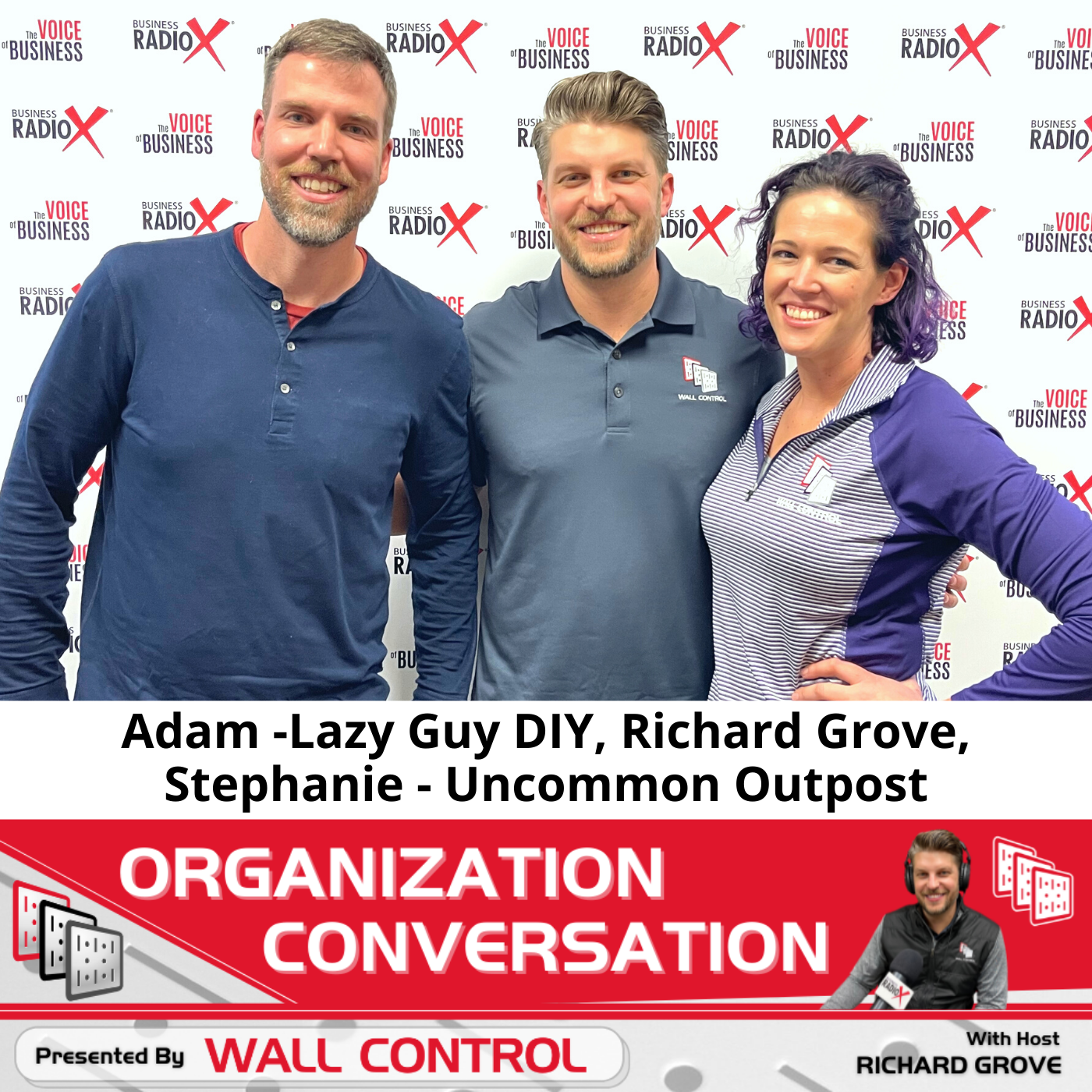
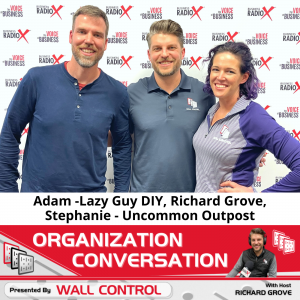
Host Richard Grove, COO of Wall Control, introduces a new podcast, Organization Conversation, brought to you by Wall Control. The show will feature topics centered around organization from the garage tool wall to movers and shakers in the organization industry, some of the tips and tricks from the business perspective, and much more.

Organization Conversation is broadcast from the North Fulton studio of Business RadioX® inside Renasant Bank in Alpharetta. You can find the full archive of shows by following this link. The show is available on all the major podcast apps, including Apple Podcasts, Spotify, Google, Amazon, iHeart Radio, Stitcher, TuneIn, and others.

About Richard Grove

Richard Grove, Host, “Organization Conversation”

Richard Grove’s background is in engineering but what he enjoys most is brand building through relationships and creative marketing. Richard began his career with the Department of Defense as an engineer on the C-5 Galaxy Engineering Team based out of Warner Robins. While Richard found this experience both rewarding and fulfilling, he always knew deep down that he wanted to return to the small family business that originally triggered his interest in engineering.

Richard came to work for the family business, Dekalb Tool & Die, in 2008 as a Mechanical Engineer. At the time Wall Control was little more than a small ‘side hustle’ for Dekalb Tool & Die to try to produce some incremental income. There were no “Wall Control” employees, just a small warehouse with a single tool and die maker that would double as an “order fulfillment associate” on the occasion that the original wallcontrol.com website, which Richard’s grandmother built, pulled in an order.

In 2008, it became apparent that for the family business to survive they were going to have to produce their own branded product at scale to ensure jobs remained in-house and for the business to continue to move forward. Richard then turned his attention from tool and die to Wall Control to attempt this necessary pivot and his story with Wall Control began. Since that time, Richard has led the company to significant growth while navigating two recessions.

Outside of Richard’s work at Wall Control he enjoys helping other business owners, operators, and entrepreneurs along their own paths to success by offering personal business coaching and advising through his website ConsultantSmallBusiness.com. Richard has developed an expansive and unique skillset growing and scaling Wall Control through a multitude of challenges to the successful brand and company it is today. Richard is happy to share his knowledge and experience with others who are looking to do the same within their own businesses.

Connect with Richard:

Instagram | Twitter | LinkedIn | Richard’s Website

About Wall Control

The Wall Control story began in 1968 in a small tool & die shop just outside Atlanta, Georgia. The first of three generations began their work in building a family-based US manufacturer with little more than demanding work and the American Dream.

Over the past 50+ years, this family business has continued to grow and expand from what was once a small tool & die shop into an award-winning US manufacturer of products ranging from automobile components to satellite panels and now, the best wall-mounted tool storage system available today, Wall Control.

The Wall Control brand launched in 2003 and is a family-owned and operated business that not only produces a high-quality American Made product but sees the entire design, production, and distribution process happen under their own roof in Tucker, Georgia. Under that same roof, three generations of American Manufacturing are still hard at work creating the best tool storage products available today.

Connect with Wall Control:

Company website | LinkedIn | Facebook | Instagram

Tagged With: Dekalb Tool & Die, Organization Conversation, Richard Grove, tool & die shop, Wall Control, wall organization systems

Leslie Bassett, Pridgen Bassett Law, Allison Affleck and Harry Brenner, Affleck and Gordon, PC

February 10, 2022 by John Ray

Affleck & Gordon PC
North Fulton Studio
Leslie Bassett, Pridgen Bassett Law, Allison Affleck and Harry Brenner, Affleck and Gordon, PC
Loading
00:00 /
RSS Feed
Share
Link
Embed

Download file

Affleck & Gordon PC

Leslie Bassett, Pridgen Bassett Law, Allison Affleck and Harry Brenner, Affleck and Gordon PC (ProfitSense with Bill McDermott, Episode 29)

On this episode of ProfitSense with Bill McDermott, Bill was joined by Leslie Bassett, partner at Pridgen Bassett Law, and Allison Affleck and Harry Brenner, both partners at Affleck and Gordon PC. Leslie discussed her work in employee issues and insurance, stressing the importance of getting attorneys involved early to help resolve complex issues. Allison Affleck and Harry Brenner also work in the benefits space, specializing in Social Security disability and veteran’s disability. They described the evolution of their firm from the founders to their leadership, the business issues they had addressed which prepared them for remote work during the pandemic, and much more. ProfitSense with Bill McDermott is produced and broadcast by the North Fulton Studio of Business RadioX® in Alpharetta.

Pridgen Bassett Law

The attorneys at Pridgen Bassett Law combine more than 35 years of litigation experience to offer legal strategies and solutions tailored to each client’s unique situation. Pridgen Bassett Law serves clients including employees and employers, private and public businesses, and ERISA plan sponsors and fiduciaries. They offer modern answers for modern benefits and employment issues.

Company website | LinkedIn | Facebook

Leslie Bassett, Partner, Pridgen Bassett Law

Leslie Bassett, Partner, Pridgen Bassett Law

For over 18 years, Leslie has provided efficient, creative, energized, and personalized employment and ERISA representation to clients on all sides of employment and benefit matters. She has represented sponsors and fiduciaries of employee benefit plans in complex employee benefit and ERISA litigation matters in federal and state courts throughout the country, including litigation involving breaches of fiduciary duty and employer stock held in 401(k) plans. Leslie also counsels clients in connection with governmental investigations and other regulatory matters involving benefits issues and executive compensation agreements.

Leslie has helped countless clients navigate employment transitions with ease, providing empathetic, efficient employment strategies and solutions to executives, individuals, boards of directors, and human resources professionals. Leslie has a unique ability to evaluate a matter from a holistic perspective and to create and negotiate a workable solution for all involved. Perhaps equally importantly, she has counseled and resolved numerous disputes in the early stages, preserving the goals of cost-effectiveness, efficiency, and discretion for her clients.

Leslie “balances” her legal career with her active single parenting of her two sons and their puppies. She can often be found watching her boys play baseball, walking puppies in the park, or cheerfully feeding and hydrating her sons and their twenty closest friends.

Leslie has maintained her commitment to giving back to the community by, among other things, representing children in the juvenile justice process and advocating for victims of child trafficking.

LinkedIn

Affleck & Gordon PC

2022 marks the 45th year of practice for the firm of Affleck & Gordon, P.C. The attorneys of Affleck & Gordon represent disabled and injured claimants around the state of Georgia in the areas of Social Security disability and Veteran’s disability. Affleck & Gordon has successfully handled thousands of claims, resulting in the recovery of millions of dollars in disability benefits and medical benefits. At Affleck & Gordon, the attorneys are dedicated to one end: ensuring that you and your loved ones get the benefits you deserve.

Company website | LinkedIn

Allison Affleck, Partner, Affleck & Gordon PC

Allison Affleck, Partner, Affleck & Gordon PC

After earning her undergraduate degree from the University of Richmond, Allison received her JD from Georgia State University College of Law in Atlanta. Allison Affleck joined Affleck & Gordon in 2014. In 2019, Allison was made partner and leads the firm today alongside her law partner, Harry Brenner.

At Affleck and Gordon, Allison focuses on Social Security disability and veterans’ disability cases. She continues to earn the respect of judges and of her clients for her professionalism, attention to detail and commitment to providing personalized, effective representation.

Allison is a member of the Georgia Bar Association, Georgia Trial Lawyers Association, and is a VA accredited attorney. She also serves on the board of the Epilepsy Foundation of Georgia.

Allison lives in Atlanta and enjoys spending time with her husband, Kirby, their daughter, Collins, and their black lab pup.

Please feel free to contact her at 404-373-1649 or 800-866-5660 or by e-mail at allison@affleckandgordon.com.

LinkedIn

Harry Brenner, Partner, Affleck & Gordon PC

Harry Brenner,  Partner, Affleck and Gordon, PC

Harry Brenner has been with Affleck and Gordon since August of 2011. Harry is from Atlanta, GA and attended the University of Georgia, obtaining his degree in political science. He received his law degree from the University of South Carolina in May of 2011.

While in law school, Harry was a research editor for USC’s Real Property Trust and Estate Law Journal. Harry started at Affleck and Gordon as a paralegal until he passed the bar in February of 2012, when he became an associate at the firm. He has continued to maintain casework as well as hearings. Harry pursues cases in Social Security Disability/Supplemental Security Income.

In 2019, Harry was made partner and leads the firm today alongside Allison Affleck.

Harry has represented clients in over 1,500 social security disability hearings. He works on cases at the Initial, Reconsideration, Hearing, and Appeals Council levels of review. He has appealed and fought many denied claims over the years.

Harry enjoys meeting new clients in the Metro Atlanta communities and is a member of the Georgia Bar Association and Atlanta Bar Association. Harry works in the Griffin, GA office on most Fridays, and has become familiar in particular with the Southern and Eastern half of Atlanta ranging from Newnan, down to Macon, and across to Covington. His enthusiasm and desire to help others are evident in the time spent on maintaining the attorney-client relationship.

Harry lives in Atlanta with his wife Christie, their newborn daughter Camden, and their German Shepherd Dog, Rocky.

Harry prides himself on going the extra step for his clients to ensure they get the benefits they deserve despite the hurdles and obstacles along the way.

LinkedIn

About ProfitSense and Your Host, Bill McDermott

Bill McDermott
Bill McDermott

ProfitSense with Bill McDermott dives into the stories behind some of Atlanta’s successful businesses and business owners and the professionals that advise them. This show helps local business leaders get the word out about the important work they’re doing to serve their market, their community and their profession. The show is presented by McDermott Financial Solutions. McDermott Financial helps business owners improve cash flow and profitability, find financing, break through barriers to expansion and financially prepare to exit their business. The show archive can be found at profitsenseradio.com.

Bill McDermott is the Founder and CEO of McDermott Financial Solutions. When business owners want to increase their profitability, they don’t have the expertise to know where to start or what to do. Bill leverages his knowledge and relationships from 32 years as a banker to identify the hurdles getting in the way and create a plan to deliver profitability they never thought possible.

Bill currently serves as Treasurer for the Atlanta Executive Forum and has held previous positions as a board member for the Kennesaw State University Entrepreneurship Center and Gwinnett Habitat for Humanity and Treasurer for CEO NetWeavers. Bill is a graduate of Wake Forest University and he and his wife, Martha have called Atlanta home for over 40 years. Outside of work, Bill enjoys golf, traveling, and gardening.

Connect with Bill on LinkedIn and Twitter and follow McDermott Financial Solutions on LinkedIn.

Tagged With: Affleck & Gordon PC, Allison Affleck, Bill McDermott, Harry Brenner, ProfitSense with Bill McDermott, social security disability, The Profitability Coach, veterans disability

Workplace MVP: Oscar Villanueva, Managing Director of Security Services, R3 Continuum

February 10, 2022 by John Ray

Oscar Villanueva
Minneapolis St. Paul Studio
Workplace MVP: Oscar Villanueva, Managing Director of Security Services, R3 Continuum
Loading
00:00 /
RSS Feed
Share
Link
Embed

Download file

Oscar Villanueva

Workplace MVP:  Oscar Villanueva, Managing Director of Security Services, R3 Continuum

What can an employer do to prevent or mitigate the risk of workplace violence?  Workplace security authority Oscar Villanueva addressed this vital question in this conversation with Workplace MVP host Jamie Gassmann. Oscar was part of the response team to the tragic shooting at the Santa Barbara Distribution Center of the US Postal Service on January 30th, 2006. From that event and his decades of work in security, Oscar shared his experience of dealing with workplace violence, the impact on employees and the organization, steps employers can take to be prepared, and much more. Workplace MVP is underwritten and presented by R3 Continuum and produced by the Minneapolis-St.Paul Studio of Business RadioX®.

Oscar Villanueva, Managing Director of Security Services, R3 Continuum

Oscar Villanueva, Managing Director of Security Services, R3 Continuum

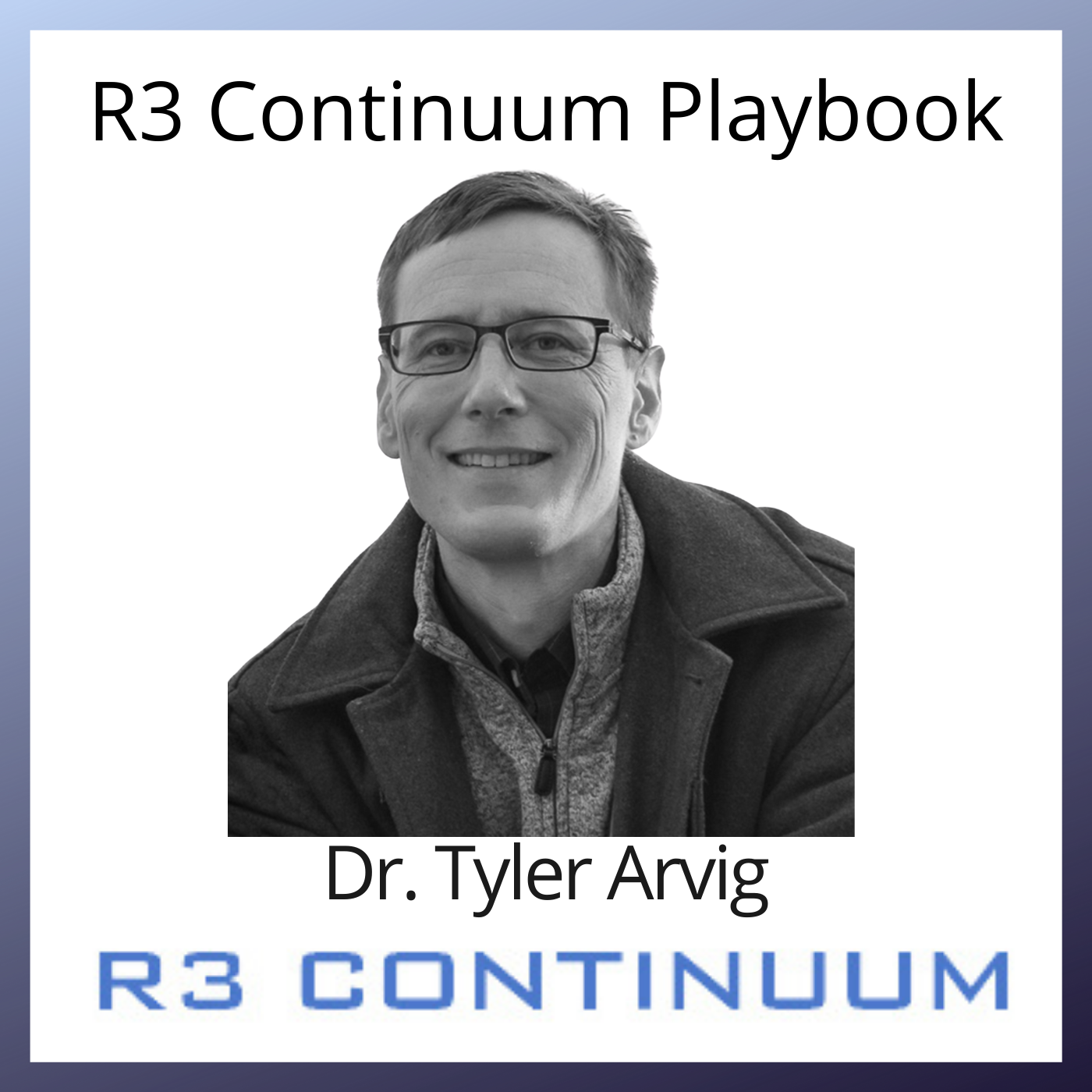
Oscar Villanueva, a well-known international security expert, and former federal law enforcement senior executive brings many years of risk assessment and management, investigative, emergency preparedness, training, and critical infrastructure security experience, worldwide. He oversaw the security-based initiatives in over 180 locations throughout the world and has worked directly with the United Nations, Interpol, Europol, and during multiple Olympic Games.

He has over 30 years in federal law enforcement and corporate security consulting domestically and internationally. One of his areas of focus was workplace violence during his time with federal law enforcement and for the last decade in corporate security venues.

He now helps individuals and organizations navigate the difficulties of overall security and risk issues.

Mr. Villanueva lives in San Francisco.

LinkedIn

R3 Continuum

R3 Continuum is a global leader in workplace behavioral health and security solutions. R3c helps ensure the psychological and physical safety of organizations and their people in today’s ever-changing and often unpredictable world. Through their continuum of tailored solutions, including evaluations, crisis response, executive optimization, protective services, and more, they help organizations maintain and cultivate a workplace of wellbeing so that their people can thrive. Learn more about R3c at www.r3c.com.

Company website | LinkedIn | Facebook | Twitter

About Workplace MVP

Every day, around the world, organizations of all sizes face disruptive events and situations. Within those workplaces are everyday heroes in human resources, risk management, security, business continuity, and the C-suite. They don’t call themselves heroes though. On the contrary, they simply show up every day, laboring for the well-being of employees in their care, readying the workplace for and planning responses to disruption. This show, Workplace MVP, confers on these heroes the designation they deserve, Workplace MVP (Most Valuable Professionals), and gives them the forum to tell their story. As you hear their experiences, you will learn first-hand, real-life approaches to readying the workplace, responses to crisis situations, and overcoming challenges of disruption. Visit our show archive here.

Workplace MVP Host Jamie Gassmann

Jamie Gassmann, Host, “Workplace MVP”

In addition to serving as the host to the Workplace MVP podcast, Jamie Gassmann is the Director of Marketing at R3 Continuum (R3c). Collectively, she has more than fourteen years of marketing experience. Across her tenure, she has experience working in and with various industries including banking, real estate, retail, crisis management, insurance, business continuity, and more. She holds a Bachelor of Science Degree in Mass Communications with special interest in Advertising and Public Relations and a Master of Business Administration from Paseka School of Business, Minnesota State University.

TRANSCRIPT

Intro: [00:00:03] Broadcasting from the Business RadioX Studios, it’s time for Workplace MVP. Workplace MVP is brought to you by R3 Continuum, a global leader in workplace behavioral health and security solutions. Now here’s your host, Jamie Gassman.

Jamie Gassmann: [00:00:25] Hi, everyone. Your host, Jamie Gassmann, here, and welcome to this episode of Workplace MVP. On January 30th, 2006 at 7:15 p.m., Jennifer San Marco, a former U.S. Postal Service employee, returned to the Santa Barbara Distribution Center, where she once worked. Now, this return was not to reconnect with coworkers and catch up on what’s been going on in their lives because she happened to be in the neighborhood. Now, she was returning with violent intentions. And on that evening, she shot and killed her previous neighbor and six of her former coworkers at a postal facility before taking her own life.

Jamie Gassmann: [00:01:09] The agents who investigated this case are unsure or just unclear a little bit of what her true motives or intentions were by committing this act of violence. Was it out of revenge? Was it due to racism or related to her mental health condition that she had? There was certainly evidence of all of those reasonings in her background that led up to this event, but how could the employer have known she would come back and commit harm? And the reality is in this case, that they had no indication that it would occur. You know, in looking out over history, this is not the first time that a situation like this has happened in a work environment. And, as we can see in the daily news, it wasn’t and won’t be the last time.

Jamie Gassmann: [00:01:57] Unfortunately, situations like this happen way too often putting any work environment and organization at risk regardless of their size, industry, or location. So, what can an employer do to prevent or mitigate this risk? And if unfortunately they do experience an event like this, what can they do to lessen the impact it might have on their organization and its people?

Intro: [00:02:24] Well, with us today is Workplace MVP Oscar Villanueva, Managing Director of Security Services at R3 Continuum. Villanueva was an agent and executive for the U.S. Postal Inspection Service, the law enforcement arm of the Postal Service, where he oversaw the Los Angeles division and his agency response and investigation into the Santa Barbara Distribution Center shooting. He is with us today to share his experience managing this investigation and from the work that he has done in consulting organizations and how to help prevent and mitigate workplace violence and security risk. So, welcome to the show, Oscar.

Oscar Villanueva: [00:03:06] Thank you, Jamie. It’s a pleasure to be here today and to have this conversation with you about this important topic. I’m looking forward to it.

Jamie Gassmann: [00:03:13] And, I’m looking forward to hearing your great thoughts and sharing some insights with our audience. So, let’s start out getting kind of an understanding of your career journey and kind of talking a little bit about the work you’ve done in the U.S. Postal Inspection Service and where your career is at right now.

Oscar Villanueva: [00:03:31] Sure. So, I have over 30 years in federal law enforcement and corporate security consulting domestically and internationally as well. I’ve had an excellent and very enjoyable career in both. In all those years, one of my main focuses was workplace violence in my work in federal law enforcement and also for the past 10 years in corporate security. And, it has very interesting work and that along with many other areas that I have been involved with, you know, physical security investigations.

Oscar Villanueva: [00:04:08] And now, as I get more and more into corporate security consulting, I really appreciate the opportunity to help individuals and organizations navigate the difficulties of security overall and risk issues that come up and, now, especially as the topic of this podcast episode is workplace violence. It’s a very difficult topic to discuss because there are obviously some unsavory situations that happen out there almost every day. And I think anything that can come of this conversation and the work that I do and have been doing is welcome just helping people in organizations get passed through this type of very difficult situations that happens with workplace violence.

Jamie Gassmann: [00:04:57] Yeah. Absolutely. So, looking at the events of January 30th, 2006, I know you shared with me that you were part of that investigation. Talk me through, you know, those incidents and how it occurred and then also some of the things that you’re able to share in the aftermath.

Oscar Villanueva: [00:05:18] Well, that was a very difficult time in a number of ways. At the time, I was working in Los Angeles as the head of the Los Angeles Division of the U.S. Postal Inspection Service. And, of course, we were notified that evening that there had been a shooting at the Santa Barbara Processing and Distribution Center, which is located actually in Goleta, which is a city just north of Santa Barbara, a sort of suburb of Santa Barbara, north of the Santa Barbara City.

Oscar Villanueva: [00:05:51] And what had occurred that we didn’t know at the time but once we responded found out that this woman, a former employee at this facility, had been to the facility, had gained access into the parking area, and then into the facility and had shot six employees and then committed suicide right there in the middle of the workroom floor. And before going to the postal facility, she actually went and visited a former employee, a former neighbor that appears to have had some kind of disagreement with her over the years, and shot and killed that person first. And then, she went on to the facility and committed the horrific shooting where six employees lost their lives. This was a facility that had been evaluated for security. It had good security measures. But like anything else the possibility of someone who is focused on causing harm to somebody being able to perpetrate happens and sometimes it cannot be stopped.

Oscar Villanueva: [00:07:11] It was a horrific scene the day that this happened and those affected by the tragedy were very difficult to observe because, you know, if you can imagine, you have employees – this happen at the end of a shift. It happened around 7 to 9 p.m. in the evening at night and it was the end of a shift. And as people were thinking of leaving and going home and others coming into work, that’s when this happened. And we believe that she knew the shifts at this facility and use that information to get there at the right time.

Oscar Villanueva: [00:07:51] So, it was a horrific day, a terrible day. But as anything else, you know, this too shall pass, as they say. And there was an investigation. There was a lot of support for employees and family members. And, you know, if there is anything to be learned out of it, I hope that some of that comes out today in our conversation.

Jamie Gassmann: [00:08:15] Yeah. Absolutely. And so, one of the first questions I have for you is, you know, as a leader, leading that investigation, what was the first thing that went through your mind when you heard the news and then obviously had to respond. What was the first thing that went through your mind?

Oscar Villanueva: [00:08:37] Well, I think the first thing that went through my mind is how are we going to respond to this and mitigate it. These are very large events. They usually require the support of multiple law enforcement agencies. In this case, the first ones to get there was the Santa Barbara County Sheriffs, who did a tremendous job, and they were excellent at doing their work. We also had the California Highway Patrol come out because when you have fatalities, there’s specific expertise that you need to process a crime scene. And of course, we were there. The Postal Inspection Service was there in significant numbers as well to help with the investigation.

Jamie Gassmann: [00:09:21] So, just the victims of the families – the victims and their families actually were my first concern, aside from how to respond and how to do an excellent job on this, which is not easy, always easy. When you have family members who went to work at the regular time and they don’t make it back home, that’s a really, really difficult situation. So, you know, as you can imagine after this, individuals that were the victims did not show up, did not get home. Their family members started coming to the facility to find out what happened. So, seeing that anxiety and that, you know, desire to figure out what happened to their family members, whether they – maybe they had gone somewhere else and didn’t make it home or maybe they were victims of the shooting, was difficult to see.

Oscar Villanueva: [00:10:14] And so, my concern was really for the victims and their families and my desire to really support them and others affected by the tragic tragedy. There were maybe a thousand employees working at that time. And all of those individuals were affected by this as well. And again, they just came to work that day not knowing that something tragic was going to happen later. And seeing the devastation is really heartbreaking. And it really has been a catalyst for me to work on preventing and mitigating this type of incidents from occurring in the future.

Oscar Villanueva: [00:10:48] So I know that, you know, when I work with clients that are having difficulties with workplace violence or conducting a threat assessment, there’s something inside of me that wishes I can really prevent anything from happening because I know what it looks like when something terrible does occur. And I hope that in any way, if in any way, it can be prevented that it can be done so that they don’t have to go through this situation.

Jamie Gassmann: [00:11:14] Yeah. Because there’s definitely this ripple effect, right, when that incident happens. It’s not just those that are on that facility, it’s the family, it’s the community, it’s others in the organization that are, you know, maybe not at that particular location, but worked with somebody that was. So, there’s definitely this kind of spread kind of effect that occurs.

Jamie Gassmann: [00:11:34] So, in looking at, like, the aftermath of that situation, I know the family was probably one of the hardest things to navigate with that. But what are some of the other things that are particularly hard to navigate when a situation like that occurs?

Oscar Villanueva: [00:11:50] Well, as you mentioned, I think the victims’ families were the toughest, absolute toughest situation to handle, again, because they’re asking questions that you don’t have an answer for at the moment and they show up in great numbers. And, I think this is something that’s very interesting about this incident. There are so many factors that are going to play in responding to one of these things, and most companies and most organizations really have not thought of. For example, the families showing up, how do you handle them? In this particular case, the way it was done is a church two or three blocks away was asked if we could use their church. And so, whenever family members showed up at the site, they were routed to the church where they could wait until we were able to come over and give them an update.

Oscar Villanueva: [00:12:41] The other part that was really difficult to handle, and again this is something that a lot of organizations and individuals haven’t thought about, a lot of leaders haven’t thought about it, is the media. There were at least 25 media outlets that showed up. And they were all kinds from national networks to local TV stations, newspaper, radio. They were all there. And just managing that was difficult. How do you keep them away from the crime scene? How do you give them enough information for them to be satisfied? Because you know what happens with the media sometimes. If you don’t give them information, they’re going to go look for it somewhere else. And oftentimes that information is not going to be accurate. So, managing through the media part of this was also somewhat difficult.

Oscar Villanueva: [00:13:36] I would say that working with other law enforcement agencies was relatively straightforward in that this, unfortunately, you know, acts of criminal activity happen frequently and there’s always agencies working with each other so that worked okay. But I would say the victim families, dealing with the victims, not only the ones that were deceased but other employees at the site with postal management and also with the media, those three were probably the hardest areas to navigate right after this.

Jamie Gassmann: [00:14:08] Yeah. I guess, you know, controlling the scene but controlling the messaging too, the communications going out, it’s going to be very challenging. In looking at your staff and the work environments, because obviously if I’m understanding kind of the investigation role, you weren’t working inside this facility. You were in a different office somewhere else nearby. Correct? When that incident occurred?

Oscar Villanueva: [00:14:36] Well, the Los Angeles Division of the Postal Inspection Service has multiple offices all throughout L.A. County, down in Orange County, all the way down to San Diego. And so, if you can imagine when the call went out that this had occurred, inspectors, that’s what the agents are calling the inspection service, inspectors responded from all these different locations, and they all converged at the Goleta Processing and Distribution Center. And so, you know, everybody’s there. Everybody wants to help. Sometimes there is something to do. Sometimes there is not much to do until later. So, navigating through that was not easy. And the fact that it happened at 9 o’clock at night, around 9 o’clock at night, and most of us arrived an hour or two later because we were large distances away from there. Again, the Santa Barbara County Sheriffs are the ones that responded first, and they were the ones, they had the SWAT team inside looking for the shooter because at that time they didn’t know that the person had committed suicide. The shooter had committed suicide.

Oscar Villanueva: [00:15:45] So, I think the impact on my staff was psychological, for sure. You know, all of us as postal inspectors were federal law enforcement agents but we’re also postal employees, and many of us started in the Postal Service either working at a processing plant like this one or working in another area of the Postal Service. Sometimes you come into the Postal Inspection Service directly from another law enforcement agency, but many of these individuals that were responding were former operations workers at the Postal Service and now there were agents. And so, you can easily place yourself in the situation that these other employees were in at the plant.

Oscar Villanueva: [00:16:32] And then on top of that, of course, they have families that are wondering what’s happening because this is all over the news, and you have your coworkers. You know, we all know people in the Postal Service that work in other capacities, you know, executives, employees, carriers, clerks. And so, you start thinking about all these different people. So, it really – you know, even though it happened in one location, it really affects a broad range of employees and facilities within the Postal Service because, you know, it’s like one big family. And if it happened there, it could happen anywhere.

Oscar Villanueva: [00:17:05] So, I would say the impact on the employees that they were working with me was largely psychological. And I think it was just a difficult day. And the week after that was also hard because now you’re trying to figure out what happened here. And so, you have to really dig deep into the cause and why did this happen to begin with, which was not easy to determine in this case.

Jamie Gassmann: [00:17:34] Yeah. Absolutely. And, I mean, in your opinion looking at, because we talk a lot about, you know, you’re looking at workplace violence, there’s that prevention side of it and trying to prevent it from happening in that work environment. But in the event that it does, how do you mitigate that impact afterwards? And there’s so many different things that are impacted, you know, the family members, the other employees there, the culture within the work environment itself, you know. And so, it’s like how do you mitigate all of that?

Jamie Gassmann: [00:18:04] From your kind of experience and working in this field and maybe from this particular situation itself, what do you typically see in your opinion for how long it takes for an organization to recover and return to kind of a new normal? Because obviously there’s not going to be like what it was before the incident, but what typically is that time frame? I’m sure it varies. But what do you typically see for that kind of turnaround in terms of recovery?

Oscar Villanueva: [00:18:35] Well, I think that – I don’t think you ever fully recover from this, to be honest with you, because you’re seeing in the case of the postal facility, you’re seeing your coworkers shot dead, which is not a pleasant thing to see, and it’s difficult to recover from that. The Postal Service, I think, did an excellent job at dealing with the aftermath. There were EAP resources on site. There were a lot of mental health resources and other resources that were provided to all employees, and they were there for a long time, just allowing people to heal and to figure things out on their own and just being available whenever they were ready to talk about it.

Oscar Villanueva: [00:19:25] And it took a while. I can tell you that at the one-year mark after this occurred, there was a dedication on site that I was able to attend where they planted some trees in the memory of those that lost their lives. And so, I think they did an excellent job at sort of keeping it real, as they say these days, you know, making sure that people understood that they were valued and that there was care that they can seek and assistance they can get. On the side of our response team, when I think about the employees that I work with responding to this, all the agents and people that were involved in that, is the same. I don’t think it ever really goes away. There’s always something a little memory that’s in there that gets triggered whenever you see another shooting occur. And unfortunately, here in the U.S., we seem to have quite a few of those happening.

Oscar Villanueva: [00:20:27] And so, how long does it think is hard to tell. I think it really depends on the work that the leaders at the organization do to make people feel valued and supported because it takes time and it is very traumatic. So, I think the more work you do immediately right after the event, the better the outcome is in the long run. And, I think mental health is really the key to getting back to work and getting back to normal, which is really what everybody is looking for. You know, they don’t want to keep reliving this over and over again. They want to get past it. And that’s what I saw in this situation.

Jamie Gassmann: [00:21:07] Yeah. And we’re going to, later in the show, we’re going to talk a little bit about what leaders can do from a preventative and a recovery standpoint. But just a quick question in terms of the work you’ve done. Obviously, I know there was probably a lot of learning that you acquired from that day. But in kind of your career and just looking out over the work that you’ve done, what are some of the key learnings that you yourself have had that have helped you to be able to give sound advice to other workplaces?

Oscar Villanueva: [00:21:38] Well, I think at the end of the day, when you have a – as a leader, when you have a situation like this or anything else that’s traumatic for a team or a workplace, you really need to take care of your team, especially their mental health. And it’s really important that you take care of your own mental health. Because as a leader, if you – you know, that you’re only as good as the team around you and the team around need somebody to point them in the right direction so they can go and do what they do best. And, I think the ability to remain in the moment, to understand what your role is, to be able to work through difficulty is really important.

Oscar Villanueva: [00:22:30] So, mental health support for your team, for yourself, especially after something like this has occurred, really goes a long way, understanding your feelings, understanding what sort of responses you’re going to experience, and just, you know, making sure that people understand that you appreciate their support, you appreciate their work, and keeping that team mentality, the team atmosphere is really, really important in order for you to be able to perform and do well in the future.

Oscar Villanueva: [00:23:02] But, you know, this is – there are many types of activities that teams engage in. This happens to be one that can be difficult from a psychological perspective because you’re seeing people harmed, you’re seeing lives destroyed, you’re seeing a lot of different things that the average individual doesn’t have to deal with. I mean, you see it in the news, but you’re not directly involved in it. So, I would say mental health, the availability of mental health support before and after and just ongoing is really, really important.

Jamie Gassmann: [00:23:37] Yeah. Great. So, we’re going to talk a little bit more about some of the ways that leaders can protect their work environments and help their teams. We’re going to take a moment and hear from our sponsor. Workplace MVP is sponsored by R3 Continuum. R3 Continuum is a global leader in providing expert, reliable, responsive, and tailored behavioral health disruption and violence solutions to promote workplace well-being and performance in the face of an ever-changing and often unpredictable world. Learn more about how R3 Continuum can tailor a solution for your organization’s unique challenges by visiting r3c.com today.

Jamie Gassmann: [00:24:21] So, continuing to move into this, so we shared, you know, this particular active shooter situation and the events, how they unfolded, and the investigation. But that’s not the only type of workplace violence or criminal attack or risk that organizations face. Can you talk to me a little bit about what are some of the other types of security and risk issues that are common in work environments that sometimes employers aren’t really aware of? And, you know, because I know I’ve talked to a number of workplaces myself, and a lot of times they go to the active shooter scenario. But there are so many more ways that employers can be impacted. Can you talk through those for us?

Oscar Villanueva: [00:25:09] Yes. So, you know, active shooter situation and workplace violence is one that most companies face at one time or another. I have heard from a colleague one day that there’s only two kinds of companies, one that has had a workplace violence issue and one that will have a workplace violence issue. So, that’s kind of a given that at some point there will be some problem. And, most workplace violence is not an active shooter situation. Sometimes it’s a threat. Sometimes it’s a fight on the working floor. Sometimes it’s bullying. Sometimes it’s sexual harassment. So, it takes a lot of different – it manifests itself in a lot of different ways.

Oscar Villanueva: [00:25:49] And other types of threats or concerns that organizations and companies face and risk is to their physical security. For example, theft of property, theft of intellectual property rights. Sometimes you have issues with insider threats. For example, an employee that’s stealing or employee misconduct. You may also have issues with emergency preparedness situations where you have a natural disaster or a manmade disaster that you need to deal with and recover from. And then, the business continuity of the company or the facility or the organization after that. So, there is a number of different areas that can be a problem from a security and risk perspective for a company.

Oscar Villanueva: [00:26:47] And I think this is a good spot to mention that, you know, the average company is not in the business of security or risk mitigation. You know, the average company is either manufacturing something or selling a service or providing support or doing something, along those lines. And their main line of business is not security or risk mitigation, and sometimes companies tend to forget that, you know, your business is only going to operate properly if places are secure and you have a plan in place to deal with security and risk issues.

Oscar Villanueva: [00:27:25] And that’s what I do a lot of my work in, you know, just providing that advice and that consulting consultancy to help organizations get to that point. But there’s a variety of types and kinds of risks and potential security attacks that occur. And sometimes because they don’t happen often, companies and organizations tend to be complacent about it and don’t really put a lot of attention into it. But there’s a number of things to be concerned about and be prepared for.

Jamie Gassmann: [00:27:58] Yeah. I mean, looking at employers, you know, I think you and I have had a conversation before in the past where, you know, we discussed that how having, just even the – having a workplace violence plan in place and a program that you’re following and then being proactive and communicating that at the onboarding of employees can in and of itself be a preventative measure because the employees know what’s being tolerated or not tolerated. So, you know, with that example in mind that, you know, you and I have kind of talked about whatever, how can an employer, what can they do to help lessen the chances that there’s going to be a violent incident in their work environment?

Oscar Villanueva: [00:28:43] Well, I think, you know, if you think about overall risk and overall security concerns and threats, I think there are a few things that every company and facility should consider having, every company and organization. And these are very straightforward. They can be put together relatively quickly, and they often take into account the companies or the organization’s culture, which is really important when you put some of these things together that I’m going to talk about.

Oscar Villanueva: [00:29:11] But I would suggest that every facility should have a facility security plan. And by that, I mean some kind of document. You can have it online. You can have it written as a paper document. But something that says, if this happens this is what you do and this is your contact and here’s where the nearest hospital is and here’s a police department contact that you should get a hold of. And if anything happens in this facility, these are the leaders in the organization that you need to contact and notify. A facility security plan is important for every facility and is relatively straightforward to put together.

Oscar Villanueva: [00:29:51] The other thing that employers can do to sort of mitigate risk and security issues is to create a workplace violence program that deals with how the company is going to handle reports of workplace violence. And again, they fall in all kinds of different categories from threats, assaults, sexual harassment, all the way down to an active shooter situation. But putting together a workplace violence program is important, and in this program what you want to include is who has a responsibility for what. How is management going to handle reports of workplace violence? How will it work to mitigate bullying and other behavior, harassment, and sexual harassment that occurs in the workplace? And we know that it does occur almost everywhere. Just put together a program along with a plan and a policy that says this is how this company will handle workplace violence situations and here’s our policy where we don’t tolerate it, and this is what will happen if we find it at work. So that would be the second recommendation that I would have.

Oscar Villanueva: [00:31:03] The third recommendation is to put together and to have in place an executive emergency preparedness and business continuity plan. So if you happen to have a tornado happen someplace or a hurricane come or if you have an earthquake or if you have a fire or any kind of natural or manmade disaster that comes your way, how are you going to deal with that and how are you going to ensure that your organization and your company is going to get back to work as soon as possible in order to continue your business? And that can be accomplished ahead of time if you put together an emergency preparedness plan and a business continuity plan. Again, this can be done. It’s not – many companies have this, but many others don’t. And it can really help mitigate and prepare for the situation where you have an emergency preparedness or an emergency situation, a crisis situation that occurs.

Oscar Villanueva: [00:32:03] Then, I would suggest that along with these documents, the fourth recommendation would be to have an overall security plan which basically talks about the organization as a whole, not just the facility but the entire organization, and it would include policies, procedures, internal resources, external resources, who do contact, how to handle security issues when they do show up.

Oscar Villanueva: [00:32:30] And then, the final point that I want to share here, and this is just as important as all the others, is training, training and security awareness and training and situational awareness by socializing employees to the possibility that you may have a criminal attack or a workplace violence issue. You’re already halfway there when it comes to preventing and mitigating issues from occurring and being able to handle them when they do happen.

Oscar Villanueva: [00:33:03] And, situational awareness specifically is really important because it helps you be aware of your surroundings and is helpful in your work environment as well as in your personal life. You know, taking your kids to the movies or going shopping, you know something can happen there. You know, usually things are safe and nothing occurs. But if something was to happen, thinking ahead and being aware of what’s going on around you and how you will respond to that is really, really important. So, those would be my recommendations of what employers can do.

Jamie Gassmann: [00:33:35] Yeah. Those are some great recommendations and they sound pretty straightforward in terms of like kind of this checklist of things to do and knowing that, you know, violence can happen anywhere and it can happen to any size organization. From what you’ve seen, why do some organizational leaders not make this a top priority in securing their workplaces?

Oscar Villanueva: [00:34:00] Well, I think there’s a couple of reasons. One is that most organizations are not, again, they’re not in the security and risk management business. They’re into tech or manufacturing or whatever other business they’re in. And so, this becomes – this is almost like an afterthought. It’s not something that’s top of mind. And, I think it’s important. So, that’s one of the reasons.

Oscar Villanueva: [00:34:26] The other reason is that it does cost some money to put these plans together and to prepare. And oftentimes organizations don’t see it as an expense that needs to happen at that moment in time. But there are many organizations that have this reasoning, and what ends up happening is they’re penny-wise and pound-foolish or dollar-foolish in that, you know, when they have the opportunity to do these prevention efforts at a certain cost, they don’t do it. But when they do have an incident, there’s no limit as to how much money they will spend on attorneys and consultants and advisers and the rest. So, I would argue that if you don’t have these things in place, these prevention methods in place, you will end up paying a lot more in the future because of that lack of preparedness.

Jamie Gassmann: [00:35:22] Yeah. I can’t recall the dollar amount, but I think I read somewhere that it’s like a hundred times more after the fact than what you would have paid if you had just done that, you know, a plan upfront. It’s going to save you a lot in the long run because, especially in a litigation situation, you can show you had, you know, due diligence in protecting that work environment. And I’ve seen in some cases where the judges, you know, identify that the employer had done everything they could to prevent that it was completely out of their control is that something that you’ve also seen in the aftermath of some of these incidents.

Oscar Villanueva: [00:36:01] Yes. I think there is significant liability when it comes to some of these issues. Because there is the OSHA Act, I think it was of 1970, dictates that every workplace, every organization, every facility has the responsibility of maintaining a workplace free of hazards. That’s the language that OSHA uses in their language. And what that basically means is that you have the responsibility as an employer to keep a place that is safe for a work environment. If you have a workplace violence issue that you’re not addressing, if you have a bullying situation that you’re not addressing, if you don’t have proper physical security measures to keep intruders from coming in, all of those are instances that someone can gravitate towards and file a lawsuit because you did not do your duty as an employer to keep the place safe and secure. So, I would argue that one of the great motivators, if employers start thinking about this, is the fact that there is liability involved in a lot of these situations and that can be mitigated by putting in place programs and policies and practices that address these concerns. Again, it’s cheaper in the long run to do that than to wait for something to happen and then face liability lawsuits and loss of life, God forbid.

Jamie Gassmann: [00:37:37] Absolutely. So, looking out over the last two years, there’s been a great number of employees that have moved to a remote work environment where they were originally inside an office setting. You also have some employees who have been in roles where they work with the public, so they haven’t been able to have that ability from a remote environment but they’re dealing with more increased frustration and stress from general public. And you have employees now, employers, that I’ve started to see that are starting to, you know, where they were allowing this remote work or hybrid setting are now looking at it and going, “No. We really need you back in the office.”

Jamie Gassmann: [00:38:18] So, all of these shifts and changes and challenges that we’ve been experiencing, you know, navigating the pandemic has created a lot of, like, kind of I mentioned that frustration and stress, and you’re seeing more situations occurring on, like, planes. I know there’s a lot of plane stories with the mask mandates and you’ve seen a lot of, you know, incidents occurring in stores and restaurants. You know, so it feels like violence is more on the rise than what it maybe was prior to the pandemic. And so, I’d like to get your thoughts on that but then also from an employer’s perspective because I imagine that a lot of them have not been thinking about this over the last year that that protecting their people in their organization, particularly with this return to the office, I think a lot of it’s going to be focused around like that health aspect, you know, and how do I keep them safe from catching the pandemic or the COVID. What is some of your perspective on what employers should be thinking about if they are looking at bringing their employees back into the office or if they are still working in a frontline kind of role, what are some of the things that you would be recommending that these employers start thinking about if they haven’t already?

Oscar Villanueva: [00:39:35] Well, I think that there’s a couple of factors that come into play here. One is the people who have been working remotely seem to like it. And so, there is likely to be a backlash when somebody is told you’ve got to come back to the office and you have to get back on your car and you have to commute again and you have to pay for lunch and you’ve got to do all these things that we all have done working in an office someplace. So, there could be some resentment there once they’ve tasted working from home. And I would argue that productivity has not really suffered from what I can tell, at least from my experience, from working from home as opposed to working from a facility. I would expect that there would be some resentment from having to come back to work.

Oscar Villanueva: [00:40:26] The other area that appears to be a concern, and I would expect this to continue to be a concern, is the polarization of our beliefs when it comes to vaccine, no vaccine; mask, no mask; all of these really divided thoughts that we have when it comes to a lot of these different things. So, I would say that the main concern I would have, aside from the health issues and making sure that everyone is safe from that perspective, is the potential for workplace violence because you will see friction occur when people come back to work. You see it on planes, you know. You see people flying on planes that don’t want to wear a mask and they’re willing to foolishly put themselves in jail just to prove a point that they don’t want to wear a mask, something that’s so very simple. Even if you don’t 100 % agree with it is a requirement.

Oscar Villanueva: [00:41:29] So, I would expect that when people come back to work, they’re going to experience friction. There’s going to be anxiety and there’s likely to be resentment from having to come back to commuting and to working in a place when they were doing well working from home. Those are for the ones that are working at home. And of course, you know, when you have frustration and you’re coming back to work, that frustration is going to manifest itself in different ways. If you go to a restaurant and you’re not treated exactly the way you want to be treated but you’re already in a bad mood, so that may cause you to lash out at somebody.

Oscar Villanueva: [00:42:05] So, I would say my advice would be to employers to pay attention to that friction that’s likely to occur to consider the possibility that these people are not going to be 100% happy about having to come back to work, that there’s going to be some friction and to consider putting together or at least thinking about a workplace violence prevention program in order to mitigate the possibility of that occurring.

Jamie Gassmann: [00:42:36] Yeah. Great. And looking out over just in general this topic and what employers maybe some that have been kind of on the fence of adding a workplace violence program or, you know, maybe just haven’t thought about it, you know, what would be something that you would want to leave with them as kind of a takeaway or an action item that they need to do at least a minimum, where they can start kind of mitigating that workplace violence or workplace violence situation in their office?

Oscar Villanueva: [00:43:12] Yeah. So, it’s pretty straightforward, you know. There should be – to put together a workplace violence program I would recommend would be the top thing that employers should do in this situation. And, it is fairly straightforward. It takes a little bit of research within the company, the culture, the type of issues that they’ve encountered in the past, the potential problems that they will encounter going forward.

Oscar Villanueva: [00:43:36] And so, I would suggest, you know, this potentially could be done internally if you have the expertise. But I would say that more than anything, it’s important to bring somebody in that has that type of experience and expertise to help put something together. But I would say workplace violence again remains an important part of what the employers should be thinking about doing as people come back to work and just overall in this current situation that we have with the pandemic.

Jamie Gassmann: [00:44:07] Yeah. Are there any solutions that you would recommend for where they might be able to seek out expert support for that if they don’t have that expertise in-house? Are there places that they could go to get that expertise?

Oscar Villanueva: [00:44:23] Well, I think that there’s a number of professionals that do this kind of work, me being one of them through R3 Continuum. But, you know, it’s really important to find somebody. I think it’s important to make sure that they have the past experience in doing this type of work and they have a track record of success. I also believe that when it comes to workplace violence, for example, it’s important to combine security and behavioral health because that’s what’s going to give you the best result. There’s always a little bit of both components or a lot of both components in every single situation that I’ve ever encountered. But I think it’s important to find a professional that has done this before, knows what they’re talking about, and can really help to put something together that’s going to be meaningful and helpful.

Jamie Gassmann: [00:45:16] Great. It’s been really a great conversation and very insightful in hearing from you, from your experience. So, if our listeners wanted to get a hold of you and ask more questions or find out how they could vet a vendor, how can they get a hold of you to do that?

Oscar Villanueva: [00:45:33] Well, I would say the best way to get a hold of me is to contact me at oscar, O-S-C-A-R, .villanueva, V-I, V as in victory, I-L-L-A-N-U-E-V-A, @r3continuum or r3c.com. Let me do that again, oscar, O-S-C-A-R, .villanueva, V-I-L-L-A-N-U-A, @r3c.com. That would be the simplest. It’s just a quick email, and I’m happy to talk to anybody who’s interested in discussing this a little bit more.

Jamie Gassmann: [00:46:09] Wonderful. Well, thank you so much, Oscar, for being on our show and letting us celebrate you and the great work that you’ve done in your career. It was very insightful and I really appreciate you sharing. I’m sure that was a very difficult story to walk us through, but really appreciate you sharing your experiences with us and our listeners, and we really, truly appreciate you as a guest.

Oscar Villanueva: [00:46:30] Thank you, Jamie. It’s been a pleasure talking with you and I hope we can do this again sometime.

Jamie Gassmann: [00:46:34] Absolutely. We also want to thank our show sponsor, R3 Continuum, for supporting the Workplace MVP podcast, and to our listeners, thank you for tuning in. If you’ve not already done so, make sure to subscribe so you get our most recent episodes and other resources. You can also follow our show on LinkedIn, Facebook, and Twitter, @WorkplaceMVP. If you are a workplace MVP or know someone who is, we want to hear from you. Email us at info@workplace-mvp.com. Thank you all for joining us and have a great rest of your day.


Tagged With: Jamie Gassmann, Oscar Villanueva, preventing workplace violence, R3 Continuum, Workplace MVP

Decision Vision Episode 155: Should I Start a Mental Wellness Program at My Company? – An Interview with Dr. George Vergolias, R3 Continuum

February 10, 2022 by John Ray

R3 Continuum
Decision Vision
Decision Vision Episode 155: Should I Start a Mental Wellness Program at My Company? - An Interview with Dr. George Vergolias, R3 Continuum
Loading
00:00 /
RSS Feed
Share
Link
Embed

Download file

R3 Continuum

Decision Vision Episode 155: Should I Start a Mental Wellness Program at My Company? – An Interview with Dr. George Vergolias, R3 Continuum

Dr. George Vergolias, Medical Director for R3 Continuum, joined Decision Vision host Mike Blake to discuss the considerations involved in starting a mental health and wellness program in an organization.  Dr. Vergolias discussed best practices for meeting the needs of people’s emotional and psychological health, the rise of telehealth, the potential returns of such programs, the characteristics of a successful program, and much more.  Decision Vision is presented by Brady Ware & Company.

R3 Continuum

R3 Continuum (R3c) is a global leader in workplace behavioral health and security solutions. R3c helps ensure the psychological and physical safety of organizations and their people in today’s ever-changing and often unpredictable world. Through their continuum of tailored solutions, including evaluations, crisis response, executive optimization, protective services, and more, they help organizations maintain and cultivate a workplace of wellbeing so that their people can thrive.

Company website | LinkedIn

Dr. George Vergolias, Medical Director, R3 Continuum

Dr. George Vergolias, Medical Director, R3 Continuum

George Vergolias, PsyD, LP is a forensic psychologist and threat management expert serving as Vice President and Medical Director for the R3 Continuum. As part of his role of Vice President and Medical Director of R3 Continuum, he leads their Threat of violence and workplace violence programs.

Dr. Vergolias is also the founder and President of TelePsych Supports, a tele-mental health company providing involuntary commitment and crisis risk evaluations for hospitals and emergency departments. He has over 20 years of forensic experience with expertise in the following areas: violence risk and threat management, psychological dynamics of stalking, sexual offending, emotional trauma, civil and involuntary commitment, suicide and self-harm, occupational disability, law enforcement consultation, expert witness testimony, and tele-mental health.

Dr. Vergolias has directly assessed or managed over one thousand cases related to elevated risk for violence or self-harm, sexual assault, stalking, and communicated threats. He has consulted with regional, state, and federal law enforcement agencies, including the FBI, Secret Service, and Bureau of Prisons.

He has worked for and consulted with Fortune 500 companies, major insurance carriers, government agencies, and large healthcare systems on issues related to work absence management, workplace violence, medical necessity reviews, and expert witness consultation.

LinkedIn

Mike Blake, Brady Ware & Company

Mike Blake, Host of the “Decision Vision” podcast series

Michael Blake is the host of the Decision Vision podcast series and a Director of Brady Ware & Company. Mike specializes in the valuation of intellectual property-driven firms, such as software firms, aerospace firms, and professional services firms, most frequently in the capacity as a transaction advisor, helping clients obtain great outcomes from complex transaction opportunities. He is also a specialist in the appraisal of intellectual properties as stand-alone assets, such as software, trade secrets, and patents.

Mike has been a full-time business appraiser for 13 years with public accounting firms, boutique business appraisal firms, and an owner of his own firm. Prior to that, he spent 8 years in venture capital and investment banking, including transactions in the U.S., Israel, Russia, Ukraine, and Belarus.

LinkedIn | Facebook | Twitter | Instagram

Brady Ware & Company

Brady Ware & Company is a regional full-service accounting and advisory firm which helps businesses and entrepreneurs make visions a reality. Brady Ware services clients nationally from its offices in Alpharetta, GA; Columbus and Dayton, OH; and Richmond, IN. The firm is growth-minded, committed to the regions in which they operate, and most importantly, they make significant investments in their people and service offerings to meet the changing financial needs of those they are privileged to serve. The firm is dedicated to providing results that make a difference for its clients.

Decision Vision Podcast Series

Decision Vision is a podcast covering topics and issues facing small business owners and connecting them with solutions from leading experts. This series is presented by Brady Ware & Company. If you are a decision-maker for a small business, we’d love to hear from you. Contact us at decisionvision@bradyware.com and make sure to listen to every Thursday to the Decision Vision podcast.

Past episodes of Decision Vision can be found at decisionvisionpodcast.com. Decision Vision is produced and broadcast by the North Fulton studio of Business RadioX®.

Connect with Brady Ware & Company:

Website | LinkedIn | Facebook | Twitter | Instagram

TRANSCRIPT

Intro: [00:00:01] Welcome to Decision Vision, a podcast series focusing on critical business decisions. Brought to you by Brady Ware & Company. Brady Ware is a regional, full-service, accounting and advisory firm that helps businesses and entrepreneurs make visions a reality.

Mike Blake: [00:00:21] Welcome to Decision Vision, a podcast giving you, the listener, clear vision to make great decisions. In each episode, we discuss the process of decision making on a different topic from the business owners’ or executives’ perspective. We aren’t necessarily telling you what to do, but we can put you in a position to make an informed decision on your own and understand when you might need help along the way.

Mike Blake: [00:00:42] My name is Mike Blake, and I’m your host for today’s program. I’m a director at Brady Ware & Company, a full-service accounting firm based in Dayton, Ohio, with offices in Dayton; Columbus, Ohio; Richmond, Indiana; and Alpharetta, Georgia. My practice specializes in providing fact-based strategic and risk management advice to clients that are buying, selling, or growing the value of companies and intellectual property. Brady Ware is sponsoring this podcast, which is being recorded in Atlanta per social distancing protocols.

Mike Blake: [00:01:10] If you would like to engage with me on social media with my Chart of the Day and other content, I’m on LinkedIn as myself and @unblakeable on Facebook, Twitter, Clubhouse, and Instagram. I also recently launched a new LinkedIn Group called Unblakeabl’e Group that Doesn’t Suck, so please join that as well if you would like to engage. If you like this podcast, please subscribe on your favorite podcast aggregator and please consider leaving a review of the podcast as well.

Mike Blake: [00:01:37] Today’s topic is, Should I start a mental wellness program at my company? According to Cooleaf, in 2015, Aetna saw a 28 percent reduction in stress levels, 20 percent improvement in sleep quality, and a 19 percent reduction in pain as a result of its mindfulness programs. And that’s just an example of the benefits that, I think, we’re at least hoping to see with mental wellness.

Mike Blake: [00:02:04] And, of course, we’re in this trans-pandemic period here, but having been in it now for two years plus, we’ve found a couple of things that, I think, are silver linings. Yes, there’s been terrible suffering. At last count that I saw, nearly one million Americans dead from the coronavirus. But there are some silver linings, I think, that have occurred. And one of them is that I think this is the most seriously I can remember in my lifetime, that people are taking mental health and mental wellness. And not just as a response to somebody that appears to be, frankly, deeply disturbed, but rather as a maintenance priority.

Mike Blake: [00:02:58] Just as grown ups, we try to eat our vegetables, we try to exercise, we try to limit our sugar and high cholesterol kinds of foods. But you know, for the longest time, I think mental health always sort of lagged behind that. Mental health was always that thing that, for somebody else, that person really should see a psychologist, that person really needs therapy, or that person really needs help, but it’s not me.

Mike Blake: [00:03:26] And, now, I think because of the unprecedented pressures, and not just the pressures but just the stress of change, the amount of change we’ve had in our society, whether it’s simply our relationship with work and our careers, whether it’s having to confront life choices that we’ve frankly been trying to outwork, our inability to make those hard choices, different modes of communication.

Mike Blake: [00:03:59] The video phone calls are funny. You know, we’ve had voice telephones for over 140 years, we’ve had video calls available for 60, and we couldn’t give those away, but all of a sudden there’s a pandemic. And, now, the only thing anybody ever wants to do is jump on a video phone call. I’m not sure what changed. But before 2020, nobody wanted to do those and now we’re all about it. But that’s beside the point. But it’s not just about the pressure, but it’s about change.

Mike Blake: [00:04:31] And change, for most people, is something that creates a lot of stress and pressure. We, as people, like routines. It’s probably a an evolutionary maintenance mechanism to have a routine. They’ve been completely disrupted, and many of us still have not settled into a new routine because, still, we don’t have a new normal yet. We have things that we hope are going to be new normal, but lots of fits and starts.

Mike Blake: [00:04:57] And so, as a result, mental wellness and mental health, generally, are much more on the consciousness, I think of the average American, I think of at least the enlightened and most capable business leaders. And it’s no longer something that’s for the other guy, but it’s now something that I think has become a conversation for everybody. And the stigma around mental health struggles, I think, has been significantly reduced, not entirely gone. You still can make fun of people that we think are crazy. And that’s something, as a society, we have to reckon with. But it is a different conversation.

Mike Blake: [00:05:38] And so, I hope you’ll agree that this is a good topic. And this decision about starting wellness programs is one that will be useful to you and your own companies, your own professions.

Mike Blake: [00:05:50] And joining us today is Dr. George Vergolias, who is Medical Director of R3 Continuum, a global leader in protecting and cultivating workplace well-being in a complex world. He oversees and leads R3 Continuum’s clinical risk, threat of violence, and workplace violence programs. And has directly assessed or managed over 1,000 cases related to threat of violence, or self-harm, sexual assault, stalking, and communicated threats. He is also founder and president of TelePsych Supports, a tele-mental health company providing behavioral risk consultation, resilience development, and involuntary commitment evaluations for hospitals and emergency departments.

Mike Blake: [00:06:33] He brings over 20 years of experience as a forensic psychologist and certified threat manager to bear to help leaders, organizations, employees, and communities heal, optimize, and ultimately thrive before, during, and after disruption. For over 30 years, R3 Continuum has served as a pioneer and global leader in workplace behavioral health and security in an increasingly complex and dangerous world. They helped to foster employee psychological and physical safety to optimize people, culture, and performance. And continue to do so during continued disruption, uncertainty, and dramatic change.

Mike Blake: [00:07:09] Over 500 organizations worldwide trust R3 Continuum to build the tailored solutions they need to promote the workforce safety, security, and wellbeing required for success. Dr. Vergolias, welcome to the program.

George Vergolias: [00:07:23] Thank you, Mike. It is a pleasure to be here.

Mike Blake: [00:07:25] So, let’s start from the basics because I think people could define this differently depending on their context. How do you define mental wellness?

George Vergolias: [00:07:39] So, the World Health Organization has, I think, a very usable and approachable definition. They define it as a state of wellbeing in which the individual in his or her own abilities can cope with the normal stresses of life. They can work productively and fruitfully. And they can make a contribution to their society. I kind of simplified that a little bit, and I like talking about mental wellness as a synergy between emotional, psychological, physical, and spiritual ways of being in the world that allow us to thrive.

Mike Blake: [00:08:14] So, you’ve been doing this a long time, obviously, you have a lot of expertise in this field. When people think about or consider implementing a mental wellness program, what does that look like? Most of us know what a physical wellness program looks like. It could be gym memberships, and it could be walks, it could be stretching at your desk, not sitting for too long, all kinds of things of that nature, healthy snacks in the break room. But I’m not sure all that familiar with what a mental wellness program looks like. So, what, in your mind, does that look like? And maybe you can share some best practices with us?

George Vergolias: [00:08:55] Sure. Really, it is a program that is designed at the highest level around meeting the needs of people’s emotional and psychological health. I mean, that’s kind of built into the definition. So, what does that mean in terms of best practice or what should you consider if you’re a leader at an organization? There’s a number of things that I’d recommend.

George Vergolias: [00:09:17] And the first is, it has to be catered to your organization’s needs and to your organization’s culture. I’m not a fan of a one size fits all. There are different pain points. There are different needs, different industries, different companies, different cultures. And even in the same company, you might have different regions of the world or of the country in the U.S. that have different needs. So, it has to be catered to your needs and culture. It has to be collaborative both internally amongst various departments, as well as with outside vendors that can provide additional resources that you, as the organization, may not be an expert at.

George Vergolias: [00:09:55] Leaders and managers need to be invested, engaged, and accountable at the highest level. I think a good example of this, which also shows some vulnerability, is Sheryl Sandberg from Facebook. Strong advocate of a mental health program, came out with her book a number of years ago, Lean In, and really was very open about her own experiences and her own vulnerabilities.

George Vergolias: [00:10:19] That really sets a tone for employees. You want the employees to be engaged and you want their input to be part of the process of developing a program. You need to have a clear rollout and a communication plan. You need to leverage technology to support the initiative. On this front, remember, technology is a tool, it’s not the goal.

George Vergolias: [00:10:38] I think what has happened in recent years is there have been some technology driven giants that have come on the scene that have wonderful apps and they have wonderful engagement in terms of the technology side. But they don’t necessarily have the best throughput in terms of impacting functional or behavioral change.

George Vergolias: [00:10:57] And two more things I’d recommend. Consider a plan for anticipated barriers. Given your unique needs and culture, what are the things that you might hit roadblocks on and anticipate that ahead of time. And lastly, you want to address a menu of offerings in that service plan. Ideally, it shouldn’t be just psycho-educational trainings, or just peer support, or just access to the EAP, or access to mental health services. One size doesn’t fit all, and you really want a range of those things as you’re applying these programs.

Mike Blake: [00:11:33] So, an argument might be that employees have it pretty good right now. And I’m not saying I’m saying this, but I have heard this argument, and you probably have too. Employees have not had as much power as they have right now – in my lifetime, for sure – to kind of pick and choose where they want to work, how they want to work. Many of them are working home. And for baby boomers and some Gen Xers, that seems kind of cushy, frankly.

Mike Blake: [00:12:06] And so, that leads to the question, you know, is this question of a mental wellness program relevant to organizations that now have large numbers of people working from home? Can a company even put something in place to help them? Because with people working at home now that each have their own individual environments, now their each individual needs that are no longer kind of collectivized by an organization, they’re so diffused and so diverse now. Does that take a mental wellness program off the table? Are there things that companies can do to promote mental wellness, even if you have a largely remote workforce?

George Vergolias: [00:12:48] It’s a great question, Mike. And my answer is, it absolutely does not take it off the table. In an interesting way, it heightens the need. Let me throw out some details for you. In March of 2021, the Microsoft Work Trends report was published. And what they came out with is a number of interesting findings, and I’m just going to throw a few out just to anchor this discussion. Compared to 2020, as they went into 2021, they saw a 100 percent increase in the use of Microsoft Teams. The average meeting was extended by ten minutes.

George Vergolias: [00:13:26] There was an increase of 45 percent more chats being sent at random times of the day. And one of the difficulties we were finding is you always had to be on camera. So, if you were on camera, it’s really interesting that people don’t realize is if you’re in a board meeting or just a conference meeting at your workplace, you can see the speaker or your boss, and you can see if they’re paying attention to you. So, you can divert your gaze. You could take a sip of water. You can scratch your nose. You can do a million things.

George Vergolias: [00:13:56] What’s so odd is when you’re on a Zoom meeting with eight people, you don’t know who’s looking at you at that exact moment. And so, there’s this sense of you always need to be on. You always need to be completely focused. That’s mentally exhausting. And so, there’s these realities of working remote that has really been difficult.

George Vergolias: [00:14:15] What we’ve also seen is – this is really a fascinating study – the increased number of emails delivered in February of 2021 versus February of 2020 based on this same study, it increased in the U.S. 40.6 billion more emails were sent. So, what’s interesting is when you think of chat and you think of email, think of the disruptive nature. At any moment in the day, these things can come in and interfere with your work productivity, with your focus.

George Vergolias: [00:14:45] And it’s like the real exhaustion. Eighty percent of employees say that they’re more productive through 2020 and through 2021, but 60 percent feel they’re overworked, and 40 percent feel exhausted. And leaders tend to be out of touch. A study from about three or four months ago by Deloitte showed that 61 percent of leaders say that they’re thriving, but only 38 percent of employees say that they’re thriving.

George Vergolias: [00:15:09] So, the point with all of this is although that remote environment early on seemed really nice, “I could pick my kids up. I could eat lunch in my own, you know – I could wear my gym bottoms if I’m not showing, you know -” all of these things are wonderful. This sense of merging my home-personal life and my work life and not having clear boundaries with all the things I’ve already mentioned really resulted in a great deal of emotional exhaustion.

George Vergolias: [00:15:37] And so, now, more than ever, the creative but problematic issue is, how do we engage employees in a remote work environment in a way that still meets those needs, that meets those behavioral and cognitive and psychological needs. So, it’s definitely needed and it’s a big challenge.

Mike Blake: [00:15:59] The Zoom thing is interesting, and you’re right, it is exhausting. It is exhausting to be on camera. I think we all now have a greater appreciation for how hard it is for people who are on TV or the movies as a living. And I think, also, you become so aware because you see yourself often. If you haven’t turned off your own sort of picture that creates a self-consciousness that, I think, is also draining.

George Vergolias: [00:16:33] You know what’s interesting, Mike, if I could just interject. What we’ve done at R3 Continuum – which I love this idea. It wasn’t my idea. I think our ops director came up with this because she read an article – is we tacitly or explicitly gave permission for people to go off camera, whether it’s because their kids are screaming in the background, or their dogs barking, or maybe they didn’t clean up, some of our folks were doing these calls from their bedrooms. There’s a number of reasons why you would want to do that. But that really gave permission for people to say as long as you’re still focused within reason as you normally would be in the office, you can go off camera if you need a relief.

Mike Blake: [00:17:10] Yeah. And, also, I wonder, you know, I’ve heard that some people are more focused when they can be also a little distracted. You know what I mean? They’re doodling or something, right? But being on camera where you just sort of have to lock your eyes into the camera and you can’t do that, I think that’s also very stressful for people. And turning off the cameras is a really good idea.

George Vergolias: [00:17:37] Yeah. Absolutely. Absolutely.

Mike Blake: [00:17:42] So, speaking of boundaries, here’s a question I want to ask. Are there any limits or are there boundaries in terms of how realistic it is to expect a mental wellness program to perform in terms of addressing potential sources of mental unwellness? Are there certain things that a corporate mental wellness program can or can’t do despite your best of intentions throwing all the resources at it that you want? Or is anything on the table? Could a well-constructed, well-funded mental wellness program achieve almost anything you want?

George Vergolias: [00:18:24] I don’t think it can achieve anything you want. I think what it can do, it can really help prevent a host of developing issues, like anxiety, depression, substance abuse, even suicidal ideation. It can’t fully prevent those. But what it can do is help catch those upstream when they’re developing, and then get people to the proper resources, be they formal clinical treatments, or what we call more organic supportive resources, like peer support, mindfulness programs, psycho-educational training, things of that nature. That could be really helpful.

George Vergolias: [00:19:01] And by doing that, the upside is that can impact morale. It could impact productivity, which has a bottom line impact on businesses. And most importantly, it can impact cultural cohesion and cultural engagement. It impacts talent retention, all of those.

George Vergolias: [00:19:16] There are some limits, though. So, some things I think it cannot really do is, if somebody has a moderate to severe mental health problem, they probably need formal clinical treatment. They need to be referred to proper treatment providers that can address that either through psychotherapy and/or medications. It’s important to know that it can’t do all of that.

George Vergolias: [00:19:40] The other thing I don’t think it can do fully without a separate approach is we see that there’s a host. And we certainly have seen in ’20 and ’21 a host of cultural tensions that emerge at the workplace, be they related to political, ethnic, racial, gender, regional differences. The big two that we’ve been involved in a great deal are the collective response to the murder of George Floyd and the demonstrations, and those demonstrations that then turned into riots. And then, of course, mask mandates and vaccine mandates.

George Vergolias: [00:20:12] These are really tough hot points that all the way wellness program can raise the emotional IQ of your employees. And they can alleviate how that tension manifests. If you want to address those kind of cultural issues, you need to address them head on and in some different ways. A wellness program can complement that process very well. But it is not in in it of itself going to take those cultural issues away or off the table.

Mike Blake: [00:20:40] And I’m glad you brought that up because it leads into a question I wanted to make sure to cover, and I’ll bet you encountered this. What if the company itself is the source of the mental and wellness? The new word in everybody’s lexicon now is toxic. And there are toxic people, there are toxic workplaces. I think that social media has amplified toxicity in a profound and pervasive way. And as a company reflects on or considers putting in a mental wellness program, is it possible they’re going to find that they’ve seen the enemy, and it is us. That they may be actually self-defeating because they’re the cause of the mental unwellness to begin with?

George Vergolias: [00:21:37] One hundred percent, I agree with that. It can be very counterproductive. And I said this earlier, but it’s important to just say it again, it’s really important to know thyself as an organization, to know your culture, know your employees, know your leaders, know your pain points.

George Vergolias: [00:21:58] It’s interesting, Mike, the image that comes to mind is imagine you spend $10,000 to landscape your backyard. The landscaper comes in, does wonderful works for weeks and does great. It looks like a Zen garden when they leave. And then, for the next six months, you don’t do anything. You don’t water, you don’t mulch, you don’t weed. What happens? It falls in complete disarray.

George Vergolias: [00:22:18] We have seen some companies who do a pretty good launch of a wellness program, or they partner with groups like R3 or others, and we do a really good launch working in tandem with them, but they’re not dealing with their cultural toxicity. And that just undermines the foundation on which all of that is based. What’s really interesting when you think of a physical wellness, bring in massage therapists, have a dietician come in, there’s a number of other ways you can do that. In part, you need to be engaged in that process for it to be beneficial. But there’s physical benefits that one can get without necessarily voluntarily being engaged in the process.

George Vergolias: [00:23:00] When you think of mental wellness, the recipient has to have buy in. They have to believe in it and they have to do the work. And if you don’t have a culture of trust, if you have a culture of stigmatization against feeling vulnerable or admitting that you have mental health challenges, the best program in the world just isn’t going to take off. So, it’s a really poignant question that you raise.

Mike Blake: [00:23:24] So, in point of fact, this may be something that might be considered hand in hand with a leadership and cultural evaluation. Because it seems to me this is a real double-edged sword of a mental wellness program is that, if you put that in, you may find things out about your organization that you don’t necessarily love.

Mike Blake: [00:23:48] I can easily see a scenario in which you put in a mental wellness program, let’s say, you have a telemental health consultations. And then, an employee says, “Yeah. I’m not the underperformer. My boss is really toxic. I’m quitting.” I mean, that’s a very real possible outcome, right?

George Vergolias: [00:24:08] That’s absolutely right.

Mike Blake: [00:24:09] And I kind of even wonder if before you put in a mental wellness program, you may want to do some sort of self-evaluation to make sure that, again, you’re not the one causing the mental unwellness in the first place.

George Vergolias: [00:24:26] I think that’s very important. And that’s why that engagement, all the way from top to bottom, of getting input, certainly, from leadership – that’s important – middle management, all the way down to your frontline employees is critical, so you can understand what those insights are. And it’s critical to do it in a way, I recommend doing that in an anonymous way so that people can feel more comfortable being open and there won’t be backlash on their job. Because what you really want is you don’t necessarily want people to fall in line in that step of the process. You want really honest and candid, almost gut punch data so you can take a really good appraisal of where are we as a company, and what are the pain points that we need to solve along those lines? I totally agree with that.

Mike Blake: [00:25:13] So, you’ve done this for a long time and, of course, you’re right in the middle of it with coronavirus, are you able in any way to measure kind of the ROI of putting programs like this? And what have you seen in terms of improved company performance, bottom line-wise, for companies that have successfully implemented mental wellness programs?

George Vergolias: [00:25:37] Yes. Again, great question. And it’s something that if you go back five years and certainly ten years ago, there was some studies that showed ROI, but I don’t think they were nearly as well developed. What we’re seeing just in the last two years is what I’d refer to as an explosion of studies looking at what is the ROI, not only in terms of human impact, but also in terms of bottom line.

George Vergolias: [00:26:06] And the ultimate conclusion – I’ll give you a quick data point from a Canadian study that was done recently – you have to make a business case for the benefit as well at some point to get that buy in. So, what’s interesting is Deloitte did a study – now, this was November of 2019. So, what’s interesting here is that was actually at the frontend or just before the pandemic – and they were looking at a wellness program across ten different large companies in Canada.

George Vergolias: [00:26:39] And what they found going in, they estimated that ten percent of those employees across that sample size had depression. And the annual cost of depression – and this is in the U.S. – is $31 to 51 billion in terms of lost productivity, absenteeism, presenteeism, and so on.

George Vergolias: [00:26:56] And what we know is the World Economic Forum estimates that the cost globally is going to be six trillion and that’s for mental health problems globally, the business loss or the cost of decreased productivity. What’s interesting is when they did this study and they looked at productivity, they looked at engagement of employees, they looked at talent acquisition and overall throughput of work, they found that after three years, there was a 60 percent ROI on dollar spent. And after four plus years, four or five six years, that ROI went up 118 percent. And that’s based on the productivity, and the output, and the creative inventive-ism, if you will, or ingenuity that people were bringing to the table.

George Vergolias: [00:27:40] Because the hard reality is, if you have a burned out, exhausted, anxious, depressed core group in your workforce, they’re not being innovative, they’re not being collaborative. They are getting by day-by-day and they’re not pushing the envelope from a business perspective. That’s not the talent you want. Well, you want that talent, but you want that talent to be more at a place of wellness and thriving is what I meant by that.

Mike Blake: [00:28:07] So, one question that comes to mind and probably may come to mind with some of our listeners is that, we’re reading all over the place that this is a great time to be a therapist or a psychologist or psychiatrist. You know, most doctors, they’re not even taking new patients right now. You can’t get a consult. How do companies kind of address that or not let that stand in the way of providing resources to their employees?

George Vergolias: [00:28:44] So, first, that’s an absolute harsh reality right now. And what’s interesting as a side note, in my work with my Telepsych company, we’ve been doing telehealth for almost 19 years. And up until the pandemic, we struggled with a lot of hospitals getting them to really adopt a telemental health approach. As you said earlier, Mike, as soon as COVID hit, it was like overnight that acceleration adoption just accelerated.

George Vergolias: [00:29:20] So, an upside is that there are a lot more options of access to therapists, psychiatrists, social workers, psychologists, and so on via telemental health. And those definitely should be explored. If you are a company, or an HR director, or a company leader, and you are not open to telemental health options, you are really missing out on a wonderful opportunity to expand the reach of resources to your employees. And very soon you’re really falling behind. So, that’s one point.

George Vergolias: [00:29:51] The difficulty, though, is I would say that corporations, companies, particularly HR directors, I think they really need to demand and expect their EAPs to continue to build those networks in a way that can meet their client’s needs. They’re paying for services, and it’s important that those networks be developed, be they incite or onsite evaluations and treatment or telemental health services.

George Vergolias: [00:30:22] So, that’s one thing I would recommend that if you have an EAP in place, really have dialogue with them about what are the options that you’re offering and how are you shoring up those service gaps. I think that’s really important.

Mike Blake: [00:30:36] Now, aside from direct consultations with therapists, what are some other examples of features of wellness programs that companies can put in place, or offerings, if you will?

George Vergolias: [00:30:54] Yeah. Certainly. Certainly. So, what we tend to see in those that are most successful is we tend to see an array of offerings. So, these can include psycho-educational resources. Many of those are online trainings, various videos, how to manage conflict at home, how to handle marital conflict, how to handle conflict with your teenage child, managing anxiety, navigating through a panic attack. Again, I could go on. There could be hundreds of topics.

George Vergolias: [00:31:25] We actually have a software program that we’ve developed that has well over 100 different modules on mental health and mental wellness that people can choose. And get a quick three to five minute kind of video on either educating them on the nature of the condition of the symptoms or helping them navigate and understand how to navigate those symptoms. There’s a lot of programs out there that do that.

George Vergolias: [00:31:50] Another would be, these programs really should also have a factor of peer support and empowering a culture of support and, what I call, empowering a culture of vulnerability, where it destigmatizes mental health, it allows people to feel like they have support, and it allows people to feel safe to reach out and say I need some help. It’s important to have a clear communication plan and roll out the program. We see good programs where half the employees don’t even understand the program exists or understand how the program can benefit them.

George Vergolias: [00:32:24] Beyond that, emotional and physical health education, adoption, and integration into the culture, self-help or mindfulness initiatives, peer support, disruptive event management is something R3 does a great deal of across the U.S. and globally. Helping people adjust to traumatic or disruptive events that occur at the workplace. Early intervention support, whether it’s destigmatizing campaigns, mental health first aid, all of these other things that we provide.

George Vergolias: [00:32:53] And then, at some point, helping people identify when do you need more formal clinical treatment, mental health treatment, and then linking people to resources so they can access that.

George Vergolias: [00:33:04] One last thing I’ll add that I don’t think is explored enough is developing access to what I call organic community resources. I mean, it used to be, and for some of us it still is. It used to be where you can go to your church, you can go to your local clubs, you can go to your local neighborhood groups, ethnic groups, whatever it may be, and you can still get a lot of support. Now, we have a culture by which many of us move around state by state. We are more disjointed than we were pre-COVID. And it’s harder to access some of those more natural supports or organic supports. So, I think that’s another thing that programs should consider as well.

Mike Blake: [00:33:49] Now, what about things that are really sort of – I want to get a little bit granular with you if that’s okay – like encouraging meditation or meditation training, breathing exercises. A big one might be, for example, trying to organize some kind of group events, whether in-person or remotely. Because, you know, one of the downsides for many people for remote working is loneliness and isolation.

George Vergolias: [00:34:22] Now, not for me, I’m an extreme introvert. So, you know, my wife is not concerned about me cheating on her. Her biggest concern is that I’m going to be picked for the Mars mission because I’m like, “You’re going to put me in a tin can by myself for three years? I’m in.” But, unfortunately, they don’t want fat old people on the mission, so there’s no danger of that. But the point is that sort of these other programs that just try to be a little bit kind of interventional. I guess my question is, are they used with any effectiveness in the workplace alongside the other things that you’re describing?

George Vergolias: [00:34:58] I think they are. I think what’s really interesting is mindfulness and meditation programs, including just apps. There’s a proliferation of apps that talk about this as well. The value that they have shown over time, over the last five plus years, has really been astounding in terms of people just being more mindful, more aware of what they’re feeling, more aware of developing conflicts or symptoms over time.

George Vergolias: [00:35:30] And I think that has been a huge development forward. Now, this is hard to measure, but I believe anecdotally and based on 20-some years of experience, it has been a huge benefit in helping people stem off more severe development of, not only interpersonal conflict, but other symptoms, developing more severe symptoms of depression or anxiety.

George Vergolias: [00:35:56] I also feel it has a counter. These things not only prevent things from getting bad. They help us do better. They help us perform better. They help us have more meaningful relationships. They help us have more happiness and moments of gratitude in our life. So, I think that those are very powerful aspects to a program without doubt.

Mike Blake: [00:36:21] So, how expensive are these programs? I understand that it depends on how kind of deep you want to go. I’m sure there are Cadillac programs and there are cheaper programs. But let’s say relative to a conventional healthcare physical health program, are mental wellness programs or should companies expect to spend roughly as much, or more than, or less than whatever they’re spending on their physical health programs?

George Vergolias: [00:36:56] That’s a tough one to answer. I’ve got some insights that I’ll offer. Please take these with a certain degree of flexibility. I have to say that, of course, it’ll vary by scope and size. We work with companies that want to roll out a mindfulness meditation program that can be really focused and relatively inexpensive, depending on the nature of what they want to do. We’ve had companies that want to roll out an app that’s already well developed on the App Store or on the Android Store, and they just want some communication around benefits of using it. That can be really kind of low budget, relatively speaking, and still can have some value.

George Vergolias: [00:37:40] And then, there’s companies that want to offer a full menu of all the things I already talked about in terms of the full comprehensive menu. So, that will depend a great deal. The key, I think, is identifying the needs and the pain points of your organization and then prioritizing what is it that you want to impact first. And realize that even the biggest, best programs out there with the most resource laden companies that make billions of dollars a year, none of them do all of this that we’re talking about today, Mike. None of them do all of it.

George Vergolias: [00:38:12] You know the the old saying, “How do you eat an elephant? One bite at a time.” So, start with where do you think your biggest pain points are? What do you think you’re going to get the best buy in from employees all the way up to leadership? And start with that. It might be a psycho-educational training library. It might be a mindfulness program. It might be just offering peer support groups so people can talk about what they’re struggling with pertinent to remote work or work from home.

George Vergolias: [00:38:44] Interestingly, at R3, we offered a parenting support interface, kind of a peer support for parents, including some resources. And what we did is we actually sent those parents a three month subscription to Tinker Crate. And I don’t know if you know what Tinker Crate is, but it’s like a little kit developmentally appropriate for different ages. They could put together different types of little engines or little mechanized things, and it’s kind of a nice, scientific-based project that they can do.

George Vergolias: [00:39:16] Well, what we had is we had a whole bunch of our single workers say, “What about us? We’re still struggling. And in a way, we’re struggling more because I’m home alone in an apartment. I don’t have a wife, a husband, or two kids.” And so, it made us really think, “Darn. We really missed that.” And so, we pivoted and we offered other support resources.

George Vergolias: [00:39:37] But that’s what I would say, it’s really hard to come up with a price tag because the scope could vary greatly. What I will say, I would not expect it to cost as much as the physical wellness.

Mike Blake: [00:39:50] So, I have a view – and you tell me if I’m full of it or not – but I think one thing that mental and physical wellness programs have in common is that, in the right circumstance, you can get a lot of bang for the buck with a very minimal investment. Those Tinker Crates, I think, is a great example. It might cost you $20 per month per employee, maybe. But that can make a huge difference. If that keeps an employee happier, more stable, more actualized for a couple of weeks after that, boy, what a great investment.

George Vergolias: [00:40:32] I can’t agree more. You know what’s it’s interesting, Mike? I think of those times in my life where I’m having a really rough day and I’m checking out at the grocery store. And the person at the register clerk or the cash register says, “Boy, I really like your haircut,” or, “I love that shirt”. I’m not feeling like the Dalai Lama. Like, I’m not absolutely at the zenith of my happiness as a result. But it just lifts me enough to feel like, “Well, that was kind of nice.” And that then sets in motion a trajectory of incremental steps throughout the rest of the day or the night where I keep improving on that.

George Vergolias: [00:41:15] I call those emotional strokes. Small emotional scopes that give you that uplift, that just give you that feeling of I’m not alone, these other people or these leaders get it, they understand what I’m dealing with. And this was just a nice little small blessing for me today. Those make a big difference. They really do.

Mike Blake: [00:41:37] I’m talking with Dr. George Vergolias. And the topic is, Should I start a mental wellness program at my company? We’re running out of time, unfortunately, so I only have time for a couple more questions. But what I do want to make sure we get out there is, what are best practices for companies to measure whether their wellness programs are working or doing the job they’re being asked to do?

George Vergolias: [00:42:04] So, certainly, what I would say is, you have to start by being very clear on what are you trying to achieve. Absolutely. You need to know that. What are you trying to achieve? What are the goals? And then, operationalizing those in a way that you can measure them. And what I tend to do is I tend to put it into two buckets.

George Vergolias: [00:42:22] One is satisfaction, because you want your employees and your leaders to have engagement in the program. And often, in its highest form, it’s a satisfaction type question or a series of questions. How’s the program working? Do you feel you’re getting better? Do you feel it meets your needs and so on?

George Vergolias: [00:42:41] By the way, a lot of companies stop there. And some people may not agree with me, but I’m a big fan that satisfaction doesn’t always indicate outcome or functional benefit. I could be very happy with a therapist and I’m still not getting better. And one of the reasons I’m happy with a therapist is they’re not challenging me to get better. Think of a physical therapist or think of a personal trainer that doesn’t piss you off occasionally or get you angry, that’s not a very good physical therapist and that’s not a very good personal trainer.

George Vergolias: [00:43:12] So, what you also need to measure is what are the behavioral functional changes that are occurring over time? And from a business perspective, what is the productivity or the impact on the business that is promoting the business forward? It could be increased team collaboration. It could be a measure of increased innovative ideas. It could be increased operational efficiency.

George Vergolias: [00:43:37] There’s a number of ways companies can define that. But that’s what I would say that you need to answer both of those buckets, satisfaction and then – what I call – functional outcome. And that has two types, the behavioral and kind of functional aspect of the individual and then the business functional improvement that you’re seeing as a result. That’s how I would structure that.

Mike Blake: [00:43:59] Yeah. And it occurs to me, I’ll bet you there are KPIs that can be structured around this. You know, for example, it could be productivity, it could be turnover, it could be tenure, in some cases, even your pay scale. You have to pay people more to work for you just because you’re not all that pleasant to work with.

George Vergolias: [00:44:20] Absolutely.

Mike Blake: [00:44:23] George, this has been a great conversation. I’ve got about ten more questions I love to ask, but we’re running out of time.

George Vergolias: [00:44:28] I understand.

Mike Blake: [00:44:29] I’m sure that there are questions that our listeners would have liked me to cover that we didn’t or would have liked us to cover in more depth. If they’d like to follow up with you on some of these issues, can they do so? And if so, what’s the best way to do that?

George Vergolias: [00:44:42] Absolutely. So, you can do so by emailing me at George, G-E-O-R-G-E, .vergolias, V as in Victor-E-R-G-O-L-I-A-S, @r3c.com. Or my office line, feel free to give me a call, area code 952-641-0645, and I’d be happy to engage.

Mike Blake: [00:45:11] That’s going to wrap it up for today’s program. I’d like to thank Dr. George Vergolias so much for sharing his expertise with us.

Mike Blake: [00:45:18] We’ll be exploring a new topic each week, so please tune in so that when you’re faced with your next business decision, you have clear vision when making it. If you enjoy these podcasts, please consider leaving a review with your favorite podcast aggregator. It helps people find us that we can help them.

George Vergolias: [00:45:35] If you would like to engage with me on social media with my Chart of the Day and other content, I’m on LinkedIn as myself and @unblakeable on Facebook, Twitter, Clubhouse, and Instagram. Also, check out my new LinkedIn group called Unblakeable’s Group That Doesn’t Suck. Once again, this is Mike Blake. Our sponsor is Brady Ware & Company. And this has been the Decision Vision podcast.


Tagged With: Brady Ware & Company, Decision Vision podcast, Dr. George Vergolias, employee mental health, mental health, Mental Wellness Program, Mike Blake, R3 Continuum, workplace behavioral health

  • « Previous Page
  • 1
  • …
  • 154
  • 155
  • 156
  • 157
  • 158
  • …
  • 277
  • Next Page »

Business RadioX ® Network


Our Most Recent Episode

CONNECT WITH US

  • Email
  • Facebook
  • LinkedIn
  • Twitter
  • YouTube

Our Mission

We help local business leaders get the word out about the important work they’re doing to serve their market, their community, and their profession.

We support and celebrate business by sharing positive business stories that traditional media ignores. Some media leans left. Some media leans right. We lean business.

Sponsor a Show

Build Relationships and Grow Your Business. Click here for more details.

Partner With Us

Discover More Here

Terms and Conditions
Privacy Policy

Connect with us

Want to keep up with the latest in pro-business news across the network? Follow us on social media for the latest stories!
  • Email
  • Facebook
  • Google+
  • LinkedIn
  • Twitter
  • YouTube

Business RadioX® Headquarters
1000 Abernathy Rd. NE
Building 400, Suite L-10
Sandy Springs, GA 30328

© 2026 Business RadioX ® · Rainmaker Platform

BRXStudioCoversLA

Wait! Don’t Miss an Episode of LA Business Radio

BRXStudioCoversDENVER

Wait! Don’t Miss an Episode of Denver Business Radio

BRXStudioCoversPENSACOLA

Wait! Don’t Miss an Episode of Pensacola Business Radio

BRXStudioCoversBIRMINGHAM

Wait! Don’t Miss an Episode of Birmingham Business Radio

BRXStudioCoversTALLAHASSEE

Wait! Don’t Miss an Episode of Tallahassee Business Radio

BRXStudioCoversRALEIGH

Wait! Don’t Miss an Episode of Raleigh Business Radio

BRXStudioCoversRICHMONDNoWhite

Wait! Don’t Miss an Episode of Richmond Business Radio

BRXStudioCoversNASHVILLENoWhite

Wait! Don’t Miss an Episode of Nashville Business Radio

BRXStudioCoversDETROIT

Wait! Don’t Miss an Episode of Detroit Business Radio

BRXStudioCoversSTLOUIS

Wait! Don’t Miss an Episode of St. Louis Business Radio

BRXStudioCoversCOLUMBUS-small

Wait! Don’t Miss an Episode of Columbus Business Radio

Coachthecoach-08-08

Wait! Don’t Miss an Episode of Coach the Coach

BRXStudioCoversBAYAREA

Wait! Don’t Miss an Episode of Bay Area Business Radio

BRXStudioCoversCHICAGO

Wait! Don’t Miss an Episode of Chicago Business Radio

Wait! Don’t Miss an Episode of Atlanta Business Radio