Business RadioX ®

  • Home
  • Business RadioX ® Communities
    • Southeast
      • Alabama
        • Birmingham
      • Florida
        • Orlando
        • Pensacola
        • South Florida
        • Tampa
        • Tallahassee
      • Georgia
        • Atlanta
        • Cherokee
        • Forsyth
        • Greater Perimeter
        • Gwinnett
        • North Fulton
        • North Georgia
        • Northeast Georgia
        • Rome
        • Savannah
      • Louisiana
        • New Orleans
      • North Carolina
        • Charlotte
        • Raleigh
      • Tennessee
        • Chattanooga
        • Nashville
      • Virginia
        • Richmond
    • South Central
      • Arkansas
        • Northwest Arkansas
    • Midwest
      • Illinois
        • Chicago
      • Michigan
        • Detroit
      • Minnesota
        • Minneapolis St. Paul
      • Missouri
        • St. Louis
      • Ohio
        • Cleveland
        • Columbus
        • Dayton
    • Southwest
      • Arizona
        • Phoenix
        • Tucson
        • Valley
      • Texas
        • Austin
        • Dallas
        • Houston
    • West
      • California
        • Bay Area
        • LA
        • Pasadena
      • Colorado
        • Denver
      • Hawaii
        • Oahu
  • FAQs
  • About Us
    • Our Mission
    • Our Audience
    • Why It Works
    • What People Are Saying
    • BRX in the News
  • Resources
    • BRX Pro Tips
    • B2B Marketing: The 4Rs
    • High Velocity Selling Habits
    • Why Most B2B Media Strategies Fail
    • 9 Reasons To Sponsor A Business RadioX ® Show
  • Partner With Us
  • Veteran Business RadioX ®

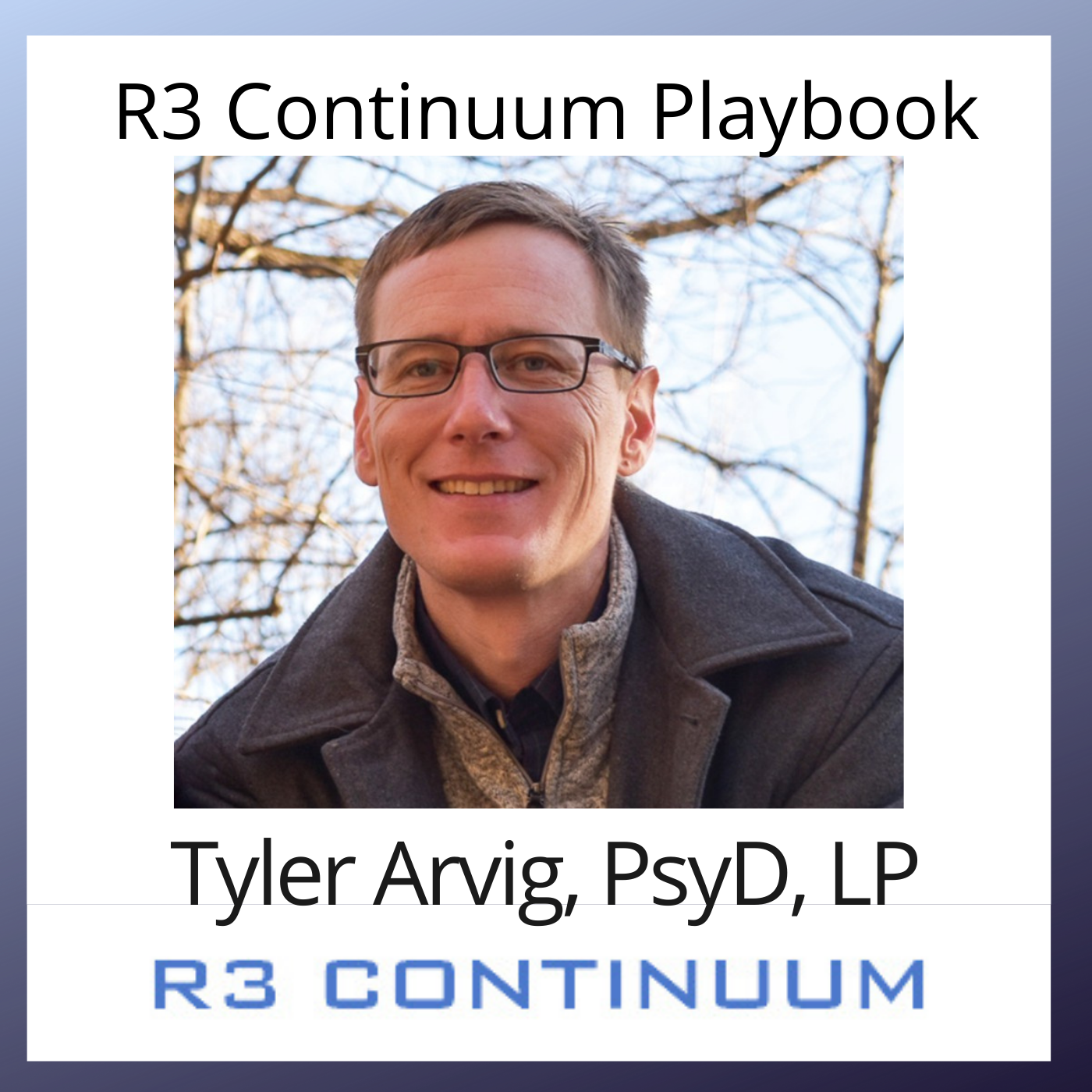
The R3 Continuum Playbook: Compassion Fatigue in the Healthcare Industry

October 14, 2021 by John Ray

Compassion Fatigue
Minneapolis St. Paul Studio
The R3 Continuum Playbook: Compassion Fatigue in the Healthcare Industry
Loading
00:00 /
RSS Feed
Share
Link
Embed

Download file

Compassion Fatigue

The R3 Continuum Playbook:  Compassion Fatigue in the Healthcare Industry

As we approach two years into a pandemic, compassion fatigue–prioritizing the needs of others over self-care–is a particular difficulty with workers in healthcare.  Jeff Gorter, Vice President of Clinical Crisis Response at R3 Continuum, helps distinguish compassion fatigue from burnout, the unique impact on healthcare workers, and how to instead nurture “compassion satisfaction.” The R3 Continuum Playbook is presented by R3 Continuum and is produced by the Minneapolis-St.Paul Studio of Business RadioX®. R3 Continuum is the underwriter of Workplace MVP, the show which celebrates heroes in the workplace.


TRANSCRIPT

Intro: [00:00:01] Broadcasting from the Business RadioX Studios, here is your R3 Continuum Playbook. Brought to you by Workplace MVP sponsor, R3 Continuum, a global leader in workplace behavioral health, crisis, and security solutions.

Jeff Gorter: [00:00:16] Hi, my name is Jeff Gorter, Vice President of Crisis Response Clinical Services at R3 Continuum. Today, I’d like to discuss compassion fatigue, specifically within the healthcare industry. As healthcare workers have dealt with an excessive exponential amount of trauma, suffering, and stress throughout the COVID-19 pandemic, it’s no surprise that many are experiencing what is known as compassion fatigue. Caring for the caregivers has never been more important.

Jeff Gorter: [00:00:49] Now, compassion fatigue has been characterized as an extreme state of tension and preoccupation with the suffering of those being helped, this, as defined by Charles Figley, one of the pioneers in the field. It’s often a result of prioritizing the needs of others over self-care.

Jeff Gorter: [00:01:10] For doctors, nurses, surgeons, and other healthcare workers, compassion is essential to their occupation. Without compassion, how can these workers be expected to properly care for their patients if they can’t empathize with them? But this same empathy, the ability to connect and identify with our patients, can also create an unexpected vulnerability in the healthcare worker if we are not intentionally mindful about our own self-care.

Jeff Gorter: [00:01:44] Now, while burnout is often equated or confused with compassion fatigue, they are actually two different conditions. Burnout is more severe and comes from living in prolonged periods of unrelenting stress that’s gone unaddressed or unattended. But compassion fatigue is almost always the precursor to burnout, the thing that presages it.

Jeff Gorter: [00:02:11] So, compassion fatigue can be defined as the physical, emotional, and spiritual result of chronic self-sacrifice and/or of prolonged exposure to difficult, painful situations that render a person unable to nurture, care for, or to empathize with another’s suffering. This is from Dr. Chelsia Harris, the Executive Director at Lipscomb University’s School of Nursing.

Jeff Gorter: [00:02:41] So, healthcare workers are not only operating on elevated levels of stress for long periods of time, they are also being continuously exposed to death, end-of-life situations, trauma, suffering. While this is no surprise, in fact, many healthcare workers entered the profession to impact exactly those issues, this characteristic occupational hazard, if you will, has become exponentially exacerbated by the COVID-19 pandemic. This is extremely problematic, as compassion fatigue that’s left unaddressed can be detrimental to healthcare workers and healthcare systems impeding their effectiveness. If workers are trying to care for others while operating on empty, it’s unlikely that they can perform at the needed capacity necessary for successful completion of their occupation, their duties.

Jeff Gorter: [00:03:44] Compassion fatigue, the cost of caring, can lead to inadequate performance, severe behavioral health consequences for the healthcare worker, and perhaps even attrition and loss of the workforce, if healthcare workers choose to leave their professions because of it. Whether you’re a COVID-19 unit nurse who was working 12-hour shifts or a surgical tech who’s struggling to make ends meet, you are apt to be experiencing distress right now and are potentially at risk for developing behavioral health concerns. You are vital to the operation of hospitals and healthcare settings, patient care, or other systems.

Jeff Gorter: [00:04:32] But I want to be clear. Compassion fatigue is not inevitable, nor is it the only path. I’m going to repeat that. Compassion fatigue is not inevitable, nor is it the only path. Experienced and savvy healthcare workers have long realized that purposefully maintaining their compassion satisfaction is the best defense against compassion fatigue.

Jeff Gorter: [00:04:56] Compassion satisfaction is the pleasure, the emotional reward, and the sense of fulfillment that comes from helping others. Most healthcare workers were drawn to the field because of a natural empathy to those in distress and a strong desire to alleviate that distress as best they can. Veteran healthcare workers who have sustained themselves over a full career report that compassion satisfaction is often related to several factors, and [inaudible] review them right now.

Jeff Gorter: [00:05:28] First, the simple act of providing care and alleviating distress as we talked earlier is in and of itself rewarding. Next, they also find being part of a larger system, a healthcare system designed for care. A system that serves the greater community is a positive experience itself and is also affirming.

Jeff Gorter: [00:05:58] Next, working with like-minded colleagues who are committed to care, who are mission-driven, and know what it’s like to be in frontline healthcare situations, is also sustaining. Many healthcare workers report the opportunity to express their core beliefs about themselves, the things that they feel are essential values that they live their lives by to do that in a healthcare setting. Things like, for example, purpose and faith and service to others, these core beliefs are also positive and fulfilling.

Jeff Gorter: [00:06:38] And, finally, altruism, that belief and satisfaction that comes from doing something worthwhile, something that makes a difference in the lives of others or their community is again empowering and sustaining. These factors help us to think about the challenge of compassion satisfaction in a healthy way.

Jeff Gorter: [00:06:38] Now, I’d also like to suggest some things we can do, some actions we can take that have been proven to be helpful in maintaining compassion satisfaction as other healthcare workers have reported. First, let’s start with the basics. Make sure you are attending to food, fluid, sleep as best you can, making sure you’re eating in a healthy, balanced way, making sure you’re staying hydrated during the course of a shift, and maintaining a regular sleep pattern as best as possible.

Jeff Gorter: [00:07:36] Now, while this may seem simplistic, it’s almost a badge of honor in helping professions to skip lunch yet again, to drink nothing but coffee during my shift, or to go without rest because, you know, I’m helping people. The truth is, all that that does is exhaust me physically and makes me less able to actually help. Taking care of yourself is taking care of others.

Jeff Gorter: [00:08:04] Next, closely related to this is doing something physical, some form of moderate exercise on a regular basis. The research is abundantly clear that even small efforts, small movements, for example, a brisk walk around the block or simply standing up and stretching periodically throughout the day, intentionally building that into my schedule, can have a surprisingly big impact on one’s mental and physical health.

Jeff Gorter: [00:08:34] Movement of any kind helps the body begin to rebalance the chemicals released by the stressful situation, and it reminds the mind that I’m not stuck. I’m not physically stuck. I’m not emotionally stuck. I can take action even if it starts with something small, like standing up and stretching or walking around.

Jeff Gorter: [00:08:56] Finally, cultivate a support system outside of work. While your co-workers, what’s come to be called your work family, can be an undeniable source of support and encouragement, it’s essential to have friends outside of the healthcare industry as well. The intensity, the camaraderie of health care tends to form strong, equally intense connections among the co-workers. But if co-workers become my only social connection, it can be stifling. Having a wide network of people is grounding. And, it reminds us that there is life outside of the hospital as well.

Jeff Gorter: [00:09:40] Now, healthcare workers have without a doubt been on the frontlines of managing the global pandemic for the last 18 months. But it’s not as if their jobs were stress-free before COVID-19 struck. Maintaining compassion satisfaction has never been more essential than right now in the current crisis, but also as a continuing practice, even when the pandemic no longer dominates our horizon.

Jeff Gorter: [00:09:40] R3 Continuum can help healthcare organizations to do this with consultation, educational resources, behavioral health support, and direct onsite support delivered by trained crisis consultants. On our website at r3c.com, we provide resources under the Our Resources tab. To learn more about how we can support your organization, contact us today.


Show Underwriter

R3 Continuum (R3c) is a global leader in workplace behavioral health and security solutions. R3c helps ensure the psychological and physical safety of organizations and their people in today’s ever-changing and often unpredictable world. Through their continuum of tailored solutions, including evaluations, crisis response, executive optimization, protective services, and more, they help organizations maintain and cultivate a workplace of wellbeing so that their people can thrive. Learn more about R3c at www.r3c.com.

R3 Continuum is the underwriter of Workplace MVP, a show which celebrates the everyday heroes–Workplace Most Valuable Professionals–in human resources, risk management, security, business continuity, and the C-suite who resolutely labor for the well-being of employees in their care, readying the workplace for and planning responses to disruption.

Connect with R3 Continuum:  Website | LinkedIn | Facebook | Twitter

Tagged With: compassion fatigue, compassion satisfaction, Healthcare, healthcare industry, Healthcare workers, Jeff Gorter, R3 Continuum, Workplace MVP

Workplace MVP LIVE from SHRM 2021: Beth King, Motif FoodWorks

October 13, 2021 by John Ray

Motif FoodWorks
Minneapolis St. Paul Studio
Workplace MVP LIVE from SHRM 2021: Beth King, Motif FoodWorks
Loading
00:00 /
RSS Feed
Share
Link
Embed

Download file

Motif FoodWorks

Workplace MVP LIVE from SHRM 2021: Beth King, Motif FoodWorks

Beth King, VP of People and Culture at Motif FoodWorks, shared her journey to HR, from a focused role to a generalist, which is her passion. She and host Jamie Gassmann discussed the difference between HR in small and large organizations, her advice to those just starting, her company’s experience during Covid, and much more.  Workplace MVP is underwritten and presented by R3 Continuum and produced by the Minneapolis-St.Paul Studio of Business RadioX®.

This show was originally broadcast live from the 2021 SHRM Annual Conference held at the Las Vegas Convention Center in Las Vegas, Nevada.

Beth King, Vice President, People & Culture at Motif FoodWorks, Inc.

Motif FoodWorks
Beth King, Vice President, People & Culture at Motif FoodWorks, Inc.

Elizabeth King is a seasoned Human Resources professional with 12+ years experience growing and cultivating dynamic organizations.

She is well respected as a business partner and thought leader who in her career has taken small companies through the Initial Public Offering (IPO) process, acquisitions, and integration processes.

She says her passion is being a generalist. She lives in Boston and has been with Motif FoodWorks since 2019.

LinkedIn


Motif Foodworks

We make plant-based food better by analyzing, discovering and designing differently. The result? Crave-worthy food that’s better tasting, more nutritious and sustainable.

Unlike other food and ingredient companies, we’re built to bring the outside in. We’re a lean, nimble organization with seasoned professionals who have lived and led food businesses, along with science and technology experts who have renovated, innovated and designed leading-edge solutions. Together, we curate and connect with world-class scientists, universities, partners and technology platforms.

We’ve assembled an unrivaled team of experts from the food industry and world-class science and academic institutions.

We integrate and apply cutting-edge technology focused on closing the biggest gaps and solving the food innovation challenges of today and tomorrow.

We’re creatively aggregating proprietary insights and an exclusive network of partnerships to holistically unlock the secret building blocks of food to rewrite today’s food design rules.

Company website

About Workplace MVP

Every day, around the world, organizations of all sizes face disruptive events and situations. Within those workplaces are everyday heroes in human resources, risk management, security, business continuity, and the C-suite. They don’t call themselves heroes though. On the contrary, they simply show up every day, laboring for the well-being of employees in their care, readying the workplace for and planning responses to disruption. This show, Workplace MVP, confers on these heroes the designation they deserve, Workplace MVP (Most Valuable Professionals), and gives them the forum to tell their story. As you hear their experiences, you will learn first-hand, real-life approaches to readying the workplace, responses to crisis situations, and overcoming challenges of disruption. Visit our show archive here.

Workplace MVP Host Jamie Gassmann

Jamie Gassmann, Host, “Workplace MVP”

In addition to serving as the host to the Workplace MVP podcast, Jamie Gassmann is the Director of Marketing at R3 Continuum (R3c). Collectively, she has more than fourteen years of marketing experience. Across her tenure, she has experience working in and with various industries including banking, real estate, retail, crisis management, insurance, business continuity, and more. She holds a Bachelor of Science Degree in Mass Communications with special interest in Advertising and Public Relations and a Master of Business Administration from Paseka School of Business, Minnesota State University.

R3 Continuum

R3 Continuum is a global leader in workplace behavioral health and security solutions. R3c helps ensure the psychological and physical safety of organizations and their people in today’s ever-changing and often unpredictable world. Through their continuum of tailored solutions, including evaluations, crisis response, executive optimization, protective services, and more, they help organizations maintain and cultivate a workplace of wellbeing so that their people can thrive. Learn more about R3c at www.r3c.com.

Company website | LinkedIn | Facebook | Twitter

TRANSCRIPT

Intro: [00:00:03] Broadcasting live from the SHRM 2021 Conference at the Las Vegas Convention Center, it’s time for Workplace MVP. Brought to you by R3 Continuum, a global leader in workplace behavioral health, crisis, and security solutions. Now, here’s your host.

Jamie Gassmann: [00:00:21] We are broadcasting from SHRM 2021 on Day two here in Las Vegas, Nevada. And with me is Beth King, the Vice President for People & Culture at Motif FoodWorks. Welcome to the show, Beth.

Beth King: [00:00:34] Thanks, Jamie. I’m excited to be here.

Jamie Gassmann: [00:00:36] So, why don’t we start off with you sharing a little bit about your journey kind of getting into H.R., and what you do as Vice President of People & Culture at Motif FoodWorks.

Beth King: [00:00:50] Sounds great. So, in terms of getting into H.R., I have to say I fell into it. I graduated college with the ever-popular liberal arts degree, which provides you with very little direction on how to actually get a job. And, my parents said, “Well, you have to get a job.” And I said, “Okay.”

Beth King: [00:01:09] And so, I started out as a recruiting coordinator, which is a very popular entryway, as you know, to H.R. and really enjoyed that. But I was lucky enough to have an opportunity to transition into a broader role and go into more of a generalist role. And, I started in a startup-like environment, which was really, really fun, and was able to take that, take my learnings from that company and move to a true startup that had gone through Series A and Series B funding, and went through an IPO with them as an H.R. manager. We were subsequently acquired and I was able to transition ultimately into an H.R. business partner.

Beth King: [00:01:53] So, my journey went from a more focused role in recruiting to a broader role and in the more generalist and business partner sector. And, that’s where I found my true passion and enjoyment, and, ultimately, that’s how I landed where I am today. And, throughout that journey, I also realized that there are so many great things about H.R. and what they can do in different types of companies whether it’s a startup, a midsize, or a very large company because I have experience in all of those. But my passion really lies in entrepreneurial ventures, in startups, and in growing something small into something mid-sized. And, that’s a really enjoyable place for me to be in H.R. But when you’re doing that, you need to have a broader perspective.

Jamie Gassmann: [00:02:47] Absolutely. So, you mentioned that there’s a lot of great things that H.R. does within all these different organizations. Let’s dive into that a little bit. Tell me a little bit about what you see as those great things. Like, what is it to you –

Beth King: [00:03:01] Sure.

Jamie Gassmann: [00:03:01] That you think is most impactful.

Beth King: [00:03:02] So, what I love about being in a small company, which is something that I’ve done several times throughout my career, is that you’re all things to everyone. So, you never have the luxury of getting bored, right? Because there’s just always something. So, one day you might be recruiting. The next day, it might be benefits. The day after that, it’s employee relations, et cetera, et cetera.

Beth King: [00:03:24] But when you have the opportunity to work for a mid-sized or a large firm, then you have the opportunity to engage with individuals who have done one thing for the majority of their careers. And, while that may not be attractive to all of us in terms of a career path, it’s a huge opportunity to learn about what does it mean to truly be a subject matter expert in XYZ area.

Beth King: [00:03:50] So, you have the opportunity in a mid or a large company to talk to people who have done payroll for 25 years and they know everything about payroll. They know everything about the state laws, they know everything about multistate, they know everything about international, they know how to interact with Treasury. And, it’s so incredible to go through your career and have those resources available to you even if it’s not your own journey, right?

Beth King: [00:04:19] And, that is what I love about working at different types of companies or having worked at different types of companies. And, it’s why I would always encourage people. If you think you love small business, that’s great, but don’t be afraid of trying something new. Don’t be afraid to go to that big or mid-sized company because you never know. And, even if it turns out not to be your thing, the insight and the information and the context that you’ll gain will be incredible, and it’ll be a wonderful addition to your own résumé.

Jamie Gassmann: [00:04:54] Absolutely. So, do you think it’s a hard transition for some that go from more of that generalist role to a more kind of subject matter, like specifics, specialty role? You know, is there a hard transition with that, do you think?

Beth King: [00:05:09] There can be. I think it depends on, obviously, the person’s interests and personality.

Jamie Gassmann: [00:05:13] Sure.

Beth King: [00:05:14] But I certainly think that we all naturally gravitate even as generalists to one discipline or another. So, for example, although I have made a career out of being a generalist, if I have the opportunity to focus my time on a specific discipline, it’s always going to be OD, organizational development.

Beth King: [00:05:37] To me, that’s what gets me excited. That’s where I see – it’s the work that is the most fun. It is the work that allows me to engage with employees in the most meaningful way for me. And, if I were to go into a specific discipline, that would be the one. But that’s not always going to be everyone’s choice.

Beth King: [00:06:02] So, I think that it doesn’t have to be a tough transition because if you just go with the discipline that excites you, that you’re passionate about, that you find joy in, and that you find to be really worthwhile for the employees, then I think it’s going to be more natural than anything else.

Jamie Gassmann: [00:06:21] Wonderful. And so, if somebody, let’s say they’re new in their career.

Beth King: [00:06:25] Sure.

Jamie Gassmann: [00:06:26] You know, maybe they work for a small organization, or maybe they work for a large organization and they’re kind of, you know, in one specialty and they’re looking at broadening that or trying to figure out where they go. You know, what are some things that have helped you in your career and kind of identifying that passion in organizational development? You know, how did you discover that?

Beth King: [00:06:45] So, I was very, very lucky early in my career. The organization that I worked for, the H.R. organization that I worked for, was actually led by someone who had done OD for about 20 years prior to joining our team. So, because of her specific background, the very nature of our day-to-day work had a bit more of an OD bent to it. So, it was a little bit more natural.

Beth King: [00:07:13] But that being said, it certainly wasn’t the only work going on in our team because we were H.R., so benefits still had to be done. Comps still had to be done. Payroll still had to be done. Recruiting. All of those things, right? We couldn’t just play around with creating trainings and what’s the next great employee engagement thing that we’re going to do for the team.

Beth King: [00:07:32] So, we had to focus our time differently. And, I would say for those folks who are looking to explore different disciplines in H.R., talk to your peers and colleagues. You know, go to – even if going to a SHRM event isn’t something that maybe is available to you, SHRM has an incredible amount of free resources that you don’t even have to be a member of SHRM to access. If you are able to get a SHRM membership, all the better because then you have even more resources available to you.

Beth King: [00:08:04] But I think one of the great things about SHRM is that it does offer a number of different points of reference and contacts even for those who, for one reason or another, may not be able to have a membership. But you can do that. I would say your local SHRM affiliates.

Beth King: [00:08:22] So, our company is based in Boston, so we have NEHRA, the New England Human Resources Association. They often will have free-to-member or pay-for-non-member events that you can go to. Look those up and just keep yourself informed. You know, do the research. Go online. I fully appreciate that keeping up with the newest labor laws isn’t exactly the world’s most riveting information. But if you want to grow and develop your H.R. career, you might want to check it out once a year or something. But there are great podcasts out there.

Jamie Gassmann: [00:09:00] Yeah.

Beth King: [00:09:01] There are great YouTube channels. There are so many wonderful resources out there. So, I would say talk to your partners and colleagues and, you know, do your research yourself and see what you think might be the right fit.

Jamie Gassmann: [00:09:15] Awesome. Awesome. So, one quick question, kind of looking at that organizational development and looking at, you know, you kind of mentioned that Motif FoodWorks does kind of almost like lab kind of work.

Beth King: [00:09:29] We have a heavy lab presence. Yes, we hired many scientists and engineers.

Jamie Gassmann: [00:09:33] So, how did the last year in terms of like, you know, I know with being that you’re involved in like managing culture and overseeing that, how did you balance that culture and support those individuals that – were they in the office? Were they considered essential? Were they hybrid? Like, how have you approached that? Because it sounds like you’ve got a lot of passion in that organizational development kind of that cultural aspect of an organization? How have you been able to implement some different things or explored your challenges [inaudible]?

Beth King: [00:10:02] Sure. So, I have to admit for our company specifically, COVID could not have come at a better time because we had about six weeks prior to COVID. So, in the state of Massachusetts, we went into lockdown on March 13, 2020, and about six weeks prior, maybe a little bit less than that, we had embarked on a buildout of our new facility, which was going to include our labs. So, the truth of the matter is in our organization we didn’t actually have our labs ready to go anyways, and they were able to be built out over the pandemic. So, it kind of worked.

Beth King: [00:10:39] But we got really creative with a lot of the work that had been going on in the office in terms of lab work. And, we had application engineers and scientists who work with food ingredients and creating different applications. They worked in their own personal kitchens, at their homes. Their families became – you know, we would send them the correct forms to sign and their families became the testers of those ingredients. Does this ingredient really do what we’re looking for it to do in the way that we want it to do it? And, what was helpful, obviously, is that we got very real-time and authentic feedback because I think most people would agree that your family is always going to be very clear if they don’t like your cooking. So, that’s the truth. So, it was very helpful to have that, right? And so, we were able to get that sort of non-biased – they weren’t going to sugarcoat it – feedback.

Jamie Gassmann: [00:11:45] That’s like your best test subject.

Beth King: [00:11:46] Exactly, exactly. I always say if we ever do a chicken nugget, give it to my kids, that’s all they eat, so.

Jamie Gassmann: [00:11:53] Oh, fantastic. Well, you can sign my kids up for that too. They’re like, you know, chicken nugget connoisseurs, right?

Beth King: [00:11:58] Exactly, exactly. Their absolute snobs. So, we were able to think creatively about what we were going to do. But our organization is not solely scientists and engineers. We also have [inaudible] staff, we have marketing staff, we have sales staff, et cetera.

Beth King: [00:12:16] And so, for those folks, you know, we really did have to get creative. Tools like Zoom and Teams became critical infrastructure for us. We did stay home for quite a bit of time in part because of COVID and in part because of the build-out, where it was like, well, if you know we’re supposed to be at home anyways, then I guess, you know, we don’t have a place to go back to. We were sort of homeless.

Beth King: [00:12:39] And then, when we came back to work, we had this big, beautiful new office with brand new labs and it was really wonderful. But we did things like we did the now-ever-prevalent Zoom happy hours. We tried to make it fun, tried to do different themes, ’80s themes. We did a “come as your favorite Nicolas Cage character,” which we had to explain to certain generations that Nicolas Cage had done more than just some Disney movies, that he had actually in fact been around since the early ’80s but that was before they were born. But it was really fun. We did things like that.

Beth King: [00:13:24] And, as I said Zoom and Teams just became critical. So, it was just kind of getting in the mindset of if I need someone using those types of tools, using Slack to get in touch, to kind of recreate that sort of grab you in the hall real quick that we get when we’re in person. Using Slack as the alternative to that has really helped. “Hey, I have a quick question.” “Hey, did you hear this?” “I’m on a meeting. They’re talking about this.” “What are they talking about? I haven’t heard about this. Can you explain it to me?”

Beth King: [00:13:53] All of that stuff was done through these new tools, or at least new-to-us tools or less frequently used tools, that really helped create remote business. And then, when we went back, we did do a hybrid model and we still are doing a hybrid model for many roles.

Beth King: [00:14:09] Lab roles, what we’ve done as we have said, you need to be here when you need to be here. Meaning, if you’re running experiments, you need to be here for that. But if you’re just analyzing data and you would prefer to work from home, then you can do that from home.

Beth King: [00:14:23] We also have employees who have that option and choose to be in the office for a variety of reasons. They like the personal interaction. Maybe, they have three more roommates at home who are also working from home and they don’t want to do that. Maybe, if someone, like myself, who’s a parent and getting work done at home is more of a challenge than it is to get work done at the office and so it’s just a productivity issue.

Beth King: [00:14:50] But we try to be as flexible as possible because we recognize that there has been a real shift in workplace culture, not just with our company but the expectations of candidates, right? Folks are looking more and more for flexibility in the workplace for that hybrid offering and what does that looks like. And, the truth of the matter as well is that we’re based in the seaport in Boston and driving in and out of the seaport on a Friday year-round is not the most pleasant experience. So, if we don’t have to have folks do that, we tend not to. But, again, some people want to go in on a Friday because maybe they want to do a happy hour after and you don’t want to drive to a happy hour.

Jamie Gassmann: [00:15:34] Yeah. No, absolutely not. And, well, and it’s just great having that flexibility and kind of meeting people where it best fits them with their lifestyle and their work style and – fantastic.

Jamie Gassmann: [00:15:46] Well, if anybody wanted to get in touch with you, Beth, and kind of hear a little bit more about, you know, your Nicolas Cage happy hours, how would they be able to do that?

Beth King: [00:15:54] Sure. So, LinkedIn, I’m under the name Beth Kelly King, would be one great way, or an email, eking@motiffoodworks.com. And, they can always check out our website, which is www.madebymotif.com.

Jamie Gassmann: [00:16:12] Fantastic. Well, thank you so much for joining us today in the show.

Beth King: [00:16:15] Thank you for having me.

Jamie Gassmann: [00:16:16] You’ve been a fabulous guest. And, I hope the rest of the SHRM Conference goes great for you.

Beth King: [00:16:20] I’m sure it will. Thank you so very much.

Jamie Gassmann: [00:16:22] And, for those listening, definitely if you are in the booth area and the Expo Hall for SHRM 2021, stop by R3 Continuum’s booth at 4076 and check out our podcast.


Tagged With: Beth King, HR, Human Resources, Jamie Gassmann, Motif FoodWorks, R3 Continuum, SHRM 2021, Workplace MVP

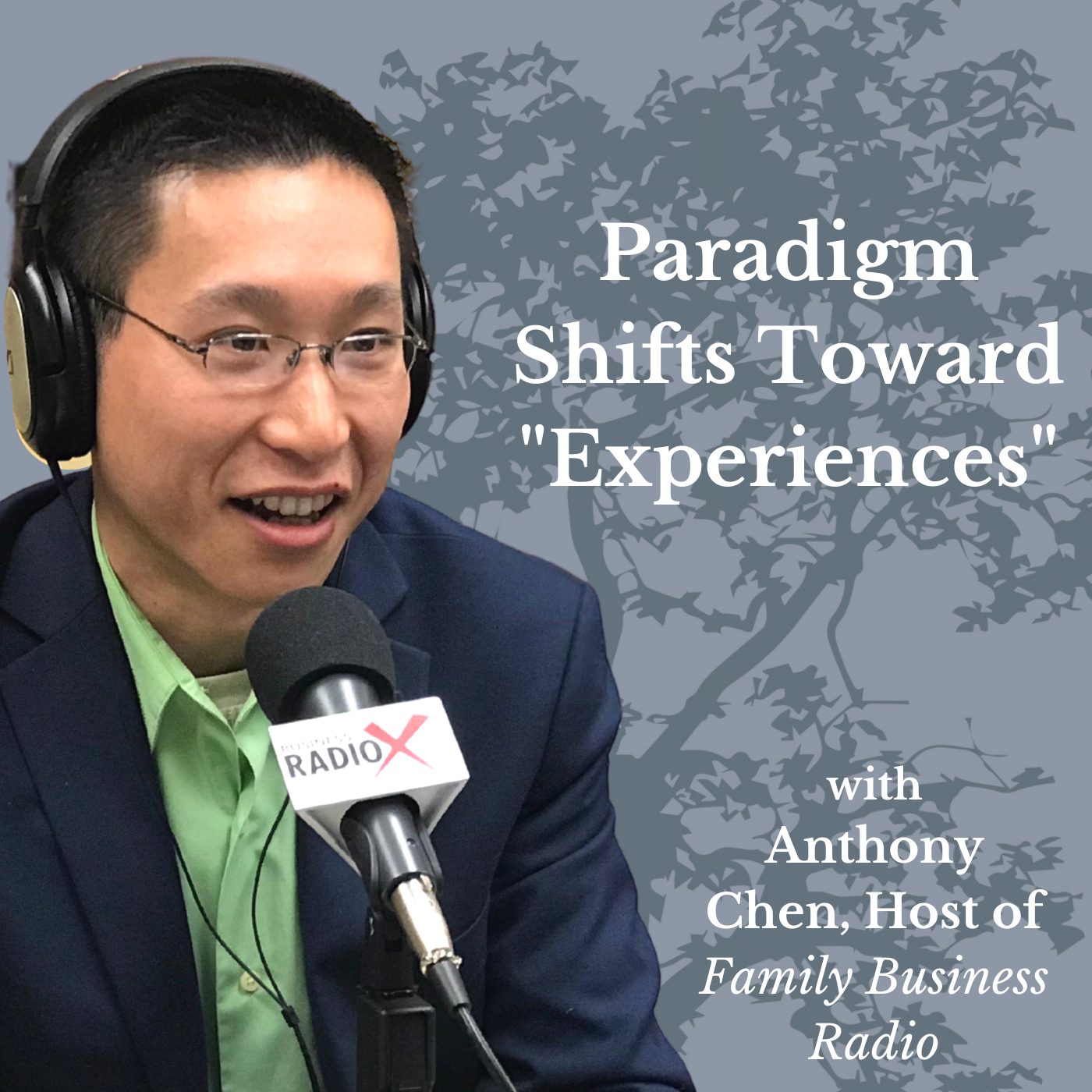
Mental Junk or Financial Junk?, with Anthony Chen, Host of Family Business Radio

October 12, 2021 by John Ray

Anthony Chen
Family Business Radio
Mental Junk or Financial Junk?, with Anthony Chen, Host of Family Business Radio
Loading
00:00 /
RSS Feed
Share
Link
Embed

Download file

Anthony Chen

Mental Junk or Financial Junk? – with Anthony Chen, Host of Family Business Radio

What is more important than guilt or regret for what’s been done, or what’s been left undone? On a recent episode of Family Business Radio, Anthony shared his perspective on these questions. Family Business Radio is underwritten by Anthony Chen with Lighthouse Financial Network.

Anthony’s commentary was taken from this episode of Family Business Radio.

Anthony Chen, Host of Family Business Radio

family owned craft breweries
Anthony Chen

This show is sponsored and brought to you by Anthony Chen with Lighthouse Financial Network. Securities and advisory services offered through Royal Alliance Associates, Inc. (RAA), member FINRA/SIPC. RAA is separately owned and other entities and/or marketing names, products or services referenced here are independent of RAA. The main office address is 575 Broadhollow Rd. Melville, NY 11747. You can reach Anthony at 631-465-9090 ext. 5075 or by email at anthonychen@lfnllc.com.

Anthony Chen started his career in financial services with MetLife in Buffalo, NY in 2008. Born and raised in Elmhurst, Queens, he considers himself a full-blooded New Yorker while now enjoying his Atlanta, GA home. Specializing in family businesses and their owners, Anthony works to protect what is most important to them. From preserving to creating wealth, Anthony partners with CPAs and attorneys to help address all of the concerns and help clients achieve their goals. By using a combination of financial products ranging from life, disability, and long-term care insurance to many investment options through Royal Alliance. Anthony looks to be the eyes and ears for his client’s financial foundation. In his spare time, Anthony is an avid long-distance runner.

The complete show archive of Family Business Radio can be found at familybusinessradioshow.com.

Tagged With: Anthony Chen, Family Business Radio, guilt, Lighthouse Financial Network, No Regrets, regrets

Julie Hullett, Julie Hullett Concierge, LLC

October 11, 2021 by John Ray

Julie Hullett
Nashville Business Radio
Julie Hullett, Julie Hullett Concierge, LLC
Loading
00:00 /
RSS Feed
Share
Link
Embed

Download file

Julie Hullett

Julie Hullett, Julie Hullett Concierge, LLC (Nashville Business Radio, Episode 34)

Recognizing that time is a precious resource, Julie Hullett’s mission is to give clients their time back to do what is important to them while Julie handles the details. From vacation planning to personal shopping, whether work or family tasks, Julie offers customized personal concierge services which reduce stress for her clients and which help their lives run smoothly.   Nashville Business Radio is produced virtually from the Nashville studio of Business RadioX®.

Julie Hullett Concierge, LLC

Nashville’s favorite Personal Concierge, Julie Hullett, and her experienced team offer customized concierge and personal assistant services in Nashville and beyond. Stop running errands and get your free time back!

Their Luxury Concierge and Personal Assistant Services will take care of your travel planning, shopping, and entertainment needs, providing you with only the very best. Whether it’s planning the trip of a lifetime, booking spa appointments, or dinner reservations at the best restaurants in town, they make sure all their clients enjoy a VIP experience.

They also offer a wide range of Personal Shopping Services. Whether you need help selecting the perfect outfit for an upcoming event, or a unique gift for someone that you love, they make sure you get the very best. Simply tell them what you need, and they will select and personally deliver the items right to your door.

If you consistently find yourself short on time, you’re not alone. Most people feel there aren’t enough hours in the day to fit in errands, volunteer hours, kids, work, family and culinary experiments. Julie Hullett Concierge Lifestyle Management Services will manage your to-do lists, so you have more free time to enjoy the things you love.

Company website | LinkedIn | Instagram

Julie Hullett, Owner, Julie Hullett Concierge, LLC

Julie Hullett
Julie Hullett, Owner, Julie Hullett Concierge, LLC

Julie Hullett founded Julie Hullett Concierge, LLC so that she could use her personal strengths and panache to give clients the best of life – more free time.

Professionally, her career has allowed her to become an expert at managing and executing efficient operations while developing diverse business relationships. She has established a strong reputation and network in Nashville and attributes this level of excellence to her pride in her work, her integrity, and her genuine concern for those she serves.

Nashville is her home, and for years she has dreamed of starting a business that allows her to have fun utilizing her expertise and experience to provide peace of mind and decreased stress for her clients. When she worked in a corporate environment, she consistently found herself short on time. There weren’t enough hours in the day to fit in her runs, volunteer hours, and culinary experiments so she knew it was time for a change.

They have adopted the term “concierge service with panache” because they do just that. They use our professional skills and flair to decrease your workload so you can have time to enjoy life.

LinkedIn

Questions and Topics

  • What a Personal Concierge does
  • How they can help you manage your life so you can get your time back
  • Home and Lifestyle management
  • Booking Nashville experiences and worldwide travel for clients

Nashville Business Radio is hosted by John Ray and produced virtually from the Nashville studio of Business RadioX®.  You can find the full archive of shows by following this link. The show is available on all the major podcast apps, including Apple Podcasts, Spotify, Google, Amazon, iHeart Radio, Stitcher, TuneIn, and others.
Tagged With: John Ray, Julie Hullett, Nashville Business Radio, personal assistant services, personal concierge, Personal shopper, travel concierge

Heather Locke, Hammersmith Support

October 11, 2021 by John Ray

Hammersmith Support
Nashville Business Radio
Heather Locke, Hammersmith Support
Loading
00:00 /
RSS Feed
Share
Link
Embed

Download file

Hammersmith Support

Heather Locke, Hammersmith Support (Nashville Business Radio, Episode 33)

With core values of customer service, transparency, and giving back, Hammersmith Support aims to be a prime mover for good in their community.  Founder and Chief Support Officer Heather Locke joined host John Ray to share the way Hammersmith uniquely supports their clients through design and maintenance of their websites, her entrepreneurial journey which began as a new mother, and much more. Nashville Business Radio is produced virtually from the Nashville studio of Business RadioX®.

Hammersmith Support

Hammersmith Support was formed by Heather Locke. As a designer and developer Heather is able provide website development from start to finish. She quickly found that clients needed more than a website. They needed someone to help make their site successful. Hammersmith Support was born. For more than 10 years, they have been providing web maintenance services and helping clients enhance their web presence.

They love helping their customers.

Hammersmith is a certified woman-owned web design and development agency built on a foundation of close client relationships. They seek to know their clients and the challenges their companies face. Hammersmith then uses that knowledge to build fresh, engaging, custom-designed websites that reflect the unique core values and personality of the business.

They pride themselves on providing outstanding service and delivering exceptional websites, on-time and on budget.

They also believe that maintaining your website is critical to success and offer monthly maintenance packages to help take the frustration of managing and supporting your website off of your plate.

Website maintenance packages include content updates, SEO, security, backups, site enhancements, site optimization, malware prevention, analytics reporting, performance monitoring, and more.

Company website | LinkedIn | Instagram

Heather Locke, Founder and Chief Support Officer, Hammersmith Support

Hammersmith Support
Heather Locke, Founder and Chief Support Officer, Hammersmith Support

With more than 15 years of experience with Fortune 1000 companies, small to mid-sized businesses, and agencies, Heather is a proven professional specializing in web development from concept to completion for a multitude of web applications.

Heather has worked as an Interactive Project Manager on projects for clients including Subway, Disney, HBO, and Target. She is highly skilled in custom WordPress development and is also a HubSpot Certified Designer.

LinkedIn

Questions and Topics

  • How did you get started?
  • What differentiates your company?
  • What are your services?
  • Why are you opening a location in Nashville?
  • Do you have some tips for our listeners on their website?
  • Why is website maintenance important?

Nashville Business Radio is hosted by John Ray and produced virtually from the Nashville studio of Business RadioX®.  You can find the full archive of shows by following this link. The show is available on all the major podcast apps, including Apple Podcasts, Spotify, Google, Amazon, iHeart Radio, Stitcher, TuneIn, and others.

Tagged With: Hammersmith Support, Heather Locke, Nashville, website design, website developer, website support, Wordpress

Keeping Emotion Out of Difficult Conversations – An Interview with Jen Grant, Appify

October 11, 2021 by John Ray

Jen-Grant-Inspiring-Women-Album
Inspiring Women PodCast with Betty Collins
Keeping Emotion Out of Difficult Conversations - An Interview with Jen Grant, Appify
Loading
00:00 /
RSS Feed
Share
Link
Embed

Download file

Jen-Grant-Inspiring-Women-Album

Keeping Emotion Out of Difficult Conversations – An Interview with Jen Grant, Appify (Inspiring Women, Episode 37)

Some emotions can be positive, Appify CEO Jen Grant observes, such as the passion which drives us in our business or career journey. Other emotions, however, particularly those in highly charged conversations, can cause both short- and long-term damage. In this conversation with host Betty Collins, Jen discusses when emotions need to be harnessed, how to diffuse negative emotions which arise in difficult conversations, and much more. Inspiring Women is presented by Brady Ware & Company.

Betty’s Show Notes

When I think of emotions, I think of passion and drivers. It’s that ‘why’ of something.

So, in this episode, I want to talk about when we keep emotions out of something, especially a difficult conversation.

Why do we want to do that?

With me is Jen Grant. She is the CEO at Appify.

She has spent the last 15 years building companies from the ground-up and taking multiple companies to over a billion-dollar valuation. Recently, Jen was recognized as one of the Top 100 Princeton Technology leaders in 2021 as well as a Woman of Influence in Silicon Valley from the SVBJ.

When someone says something, you disagree with, ask them to “tell me more” and look for the gold — the thing they say that you CAN agree with. More often than not, you realize that you do actually agree with some of what they are saying and finding that point of connection is all you need to collaborate and move forward together.

Why is this more of a topic for women? Jen goes deep into that.

Bottom line. In a difficult situation, keep asking questions to get to the crux of the matter at hand. Keep being curious, and this will help you stop judging.

Jen highly recommends this for you to read – Leaders Eat Last By Simon Sinek.

This is THE podcast that advances women toward economic, social and political achievement. Hosted by Betty Collins, CPA, and Director at Brady Ware and Company. Betty also serves as the Committee Chair for Empowering Women, and Director of the Brady Ware Women Initiative. Each episode is presented by Brady Ware and Company, committed to empowering women to go their distance in the workplace and at home.

For more information, go to the Resources page at Brady Ware and Company.

Remember to follow this podcast on Apple Podcasts and Google Podcasts.  And forward our podcast along to other Inspiring Women in your life.

TRANSCRIPT

[00:00:00] Betty Collins
So, today, we’re going to talk about keeping emotion out of difficult conversations. Not always something that easy, and I hate that when they say, “Well, women are so emotional,” it’s somewhat irritating. But okay, I like emotion, okay? And I want to feel something or be moved, or I look to sometimes, really, that emotions are obviously positive. When I think of emotions, I think of passion and drivers, and it’s that ‘why’ of something. So, today I want to talk about when we keep emotions out of something, especially a difficult conversation.

[00:00:37] Betty Collins
Why do we want to do that? So, that you’ll have some success as you navigate, and it could be easier for you. So, also, I want to do this, so you don’t spend 10 minutes, or so, you can spend 10 minutes instead of 10 hours or 10 weeks, it just works better when you do that. So, sometimes emotions during difficult conversations, oh, can really hold you back. So, I’m interviewing on a really amazing woman today. Her name is Jen Grant. Her resume is so impressive. Obviously, her success is evident. It’s everywhere, when I read her articles and see her interviews, very inspiring.

[00:01:16] Betty Collins
And when I read her journey about how she spent the last 20 years building companies from the ground up, and taking multiple companies to over a billion-dollar valuation, I get excited about that as a CPA. Who’s a passionate- I’m passionate about the marketplace, and having success in it. And I love being around women in business who love just the game of business. So, when I read and listened, and interviewed women who have success like Jen Grant, I’m pretty sure that they understand the importance of keeping emotions out of those difficult conversations.

[00:01:52] Betty Collins
It really is a crucial skill set. I’m also sure that they have applied it more than one time. So, I want to talk to a very successful woman about this skill set, and get her insight. So, today, again, my guess is Jen Grant, and she is the CEO of Appify; by the way, where convenience is at your fingertips. She’s led three successful billion-dollar IPOs, and she is constantly looking at the bigger picture and has a passion for building brands from the ground up. In her past, she spent time working with Google, where she was part of the Google- I’m sorry, the Google Apps, edu, Gmail and Books search marketing teams.

[00:02:34] Betty Collins
And in 2007, she received the Founder’s Award, which is a pretty big award at Google, it’s the most prestigious award for her marketing leadership. So, I want to welcome Jen Grant to my podcast, and I thank you so much for being here today, and talking with my audience. Which a lot of it’s- I have men that listen to this, but a lot of women in business, or women who are business owners.
Now, Jen, I had made a big assumption that when you are building something from the ground up, that there is, sometimes, not a lot of time for emotion. And I’m confident that you have the skill set of keeping those emotions out of difficult conversations. But first, I want to get to know you a little bit. So, tell me a little bit about you, and being the CEO at Appify.

[00:03:22] Jen Grant
I’m excited to be here, excited to talk about it. This is actually one of my favorite conversations, because I think it’s so critical for for women, and how they show up in business. But yes, first, let me tell you a little bit about myself. So, I actually started as CEO at Appify, February of last year. So, it’s been a wild year. It’s my first CEO position after being CMO at many companies before that. And so, we have ridden through the pandemic ups and downs, and crazy times.

[00:04:00] Betty Collins
Good for you.

Certainly, emotions and difficult conversations are all over the place, and it’s actually been wonderful. At Appify, what we are doing is making it easy for anyone to build business applications or business apps. So, we have no-code technology, so similar to way back when if you wanted a website, you had to get a developer, and then all of a sudden Wix and Squarespace came along, and made it easy. And that’s what we’re doing for business apps, so that anyone and their business can avoid manual tasks, get rid of paper, be more efficient, be more agile, be able to pick up and change their business model at the drop of a hat, if they need to. So, we’re really passionate about helping businesses get the kind of agility they need to deal with what just happened to us this last year. To shift quickly and change. And that’s what we’re all about.

[00:05:03] Betty Collins
Well, I was really good until you said, “We help people get rid of their paper.” I still have a lot of that in my life, that I shouldn’t have. I know that, okay? There’s just comfort, sometimes, when I do that. But I’ve learned a little bit about, this year, that I don’t have to have as much paper in my life.

[00:05:21] Jen Grant
For sure.

[00:05:21] Betty Collins
But I was really- when I was drawn to this topic, because women struggle with it, and then I saw your success. I couldn’t help but think you would have amazing insight and experience with it, especially when you’ve built something from the ground up. So, help women who struggle with this, give us your insight. What have you seen?

[00:05:44] Jen Grant
And I’ll start by telling a story of early in my career. So, I was much younger, and when we’re younger, we’re very passionate about, “This is how it should be,” and, “Why are you saying that dumb thing?” And of course, also, I wasn’t the CEO. I wasn’t even a CMO, I was just a member of the team. And this was when I was at Google, I was a part of the Google Books search team, which was incredibly inspiring because we were making books searchable on Google, and also incredibly crisis-focused.

[00:06:28] Jen Grant
So, there were authors and publishers, there was all sorts of, is this fair use of the Copyright Act, or is this illegal? There was a lot of action, and it came down on the team, and certainly on the marketing side, which is what I led. And so, heightened emotion, in crisis, everyone is very driven, solved the problems, there’s a lot going on. And I remember having conversations where my passion and my feelings got out ahead of me, where, effectively, someone would say something that was just not a good idea. And I would say, “Well, that doesn’t make sense. What we need to do is…”

[00:07:17] Betty Collins
Foot in mouth, but okay.

[00:07:20] Jen Grant
That’s exactly right. And I started to realize that I was, I don’t know, leaning too far forward, if there’s a way to talk about it like that. And I had this wonderful- I was very, very lucky at Google, and in much of my career, that I was reporting to a woman. So, in my early career, I had managers who understood me to some extent. And she ended up joining some of our meetings, seeing what was going on. And I watched her take on calmly this- and by the way, these are all men with very emotional about all this crisis that we were going through.

[00:08:04] Jen Grant
“We need to do this. We need to do that. Why are we doing this?” This whole sea of stress. And I watched her very calmly manage the situation in a way that I hadn’t thought of before. And it was one of those moments where I went, “Okay, wait a minute. This worked out way better.” And they all walked out of the meeting thinking, “Wow, that Michelle, she’s really got a hold of the situation, and driving through.” And what I started to think is, “Okay. So, clearly I am not handling this in the best way possible. What can I learn from this situation?” And so, that was the start of my journey in thinking about emotion in business, step one is the impact of remaining calm cannot be overstated.

[00:09:00] Betty Collins
But you know what was great about that is, you probably, maybe, didn’t see that in yourself till you saw another woman mentor you, and she didn’t know she was doing it. And you saw, that’s how you can be impactful with your emotion, or no emotion, or everyone thinks. And she probably went back to her office screaming, who knows? But in that moment, she kept it there. So, you were fortunate to see that, because a lot of people don’t get to see that side.

[00:09:35] Jen Grant
That’s absolutely right. And it was, certainly- and I think it’s fair to say we all struggle. And I don’t know why, if it’s nature, or nurture, or society, or whatever. I do think it’s a lot easier for a man to get emotional and people not to react negatively.

[00:09:58] Betty Collins
No, that’s absolutely a true statement. And I want to take it one step further with you. And I don’t have that in our questions, so I’m going to improvise here. But my question really is, why is this more of a topic for women, and why do we struggle with the skill set? But really, it’s not even just in that moment she was calm, if a man would have gotten emotional afterwards, everyone wouldn’t have thought anything about it.

That’s right.

[00:10:33] Betty Collins
So, it’s also how we clean up the mess or respond. I don’t know if that makes sense when I say it like that. But why is it more of a topic for women, besides men get away with this? Women just don’t have the skill set at times. I see it over and over again in my own company. And so, I just really wanted to talk about it today.

[00:10:56] Jen Grant
And I’m not entirely sure why, but I do agree with you. I think maybe it’s how we were nurtured, that it’s okay to have feelings. And, of course, I’m of a generation where it was okay for girls to cry, but it was not okay for boys to cry. There were definite gender differences that were somewhat ingrained in our culture. And I do think, now I have young people on my team, I do think there is a shift and a change, and there is more openness to men sharing more emotions. And who knows? Maybe as they come up in business, they will start encountering these same moments, where, like, “Maybe I shouldn’t let it out at this moment.”

[00:11:46] Betty Collins
You just said the key thing, “At this moment.” There’s a time to have emotions, like I talked to at the beginning, I think they’re good. I like passion, they’re drivers. They’re things that navigate and change us. but we just have to know when to use them.

[00:12:04] Jen Grant
Yes, exactly.

[00:12:04] Betty Collins
So, it’s hard not to get worked up emotionally when you’re in that difficult conversation, you can’t help it. And defensive just sets in, you’re feeling threatened, or there’s the four-letter F word called fear. You’ve been there more than once. What is the common response to getting worked up, and what should it be? Can you give us some insight on that?

[00:12:30] Jen Grant
Yeah, absolutely. And I think I had a coach say this to me once, where I was in a situation where I had a difficult boss. He was very forceful and always, “Well, this is how it is.” And my instinct would be to say, “No, you’re wrong.” And then he would say, “Well, you get very defensive, Jen.” And I’d be like, “God.”

[00:12:59] Betty Collins
Okay, so what?

[00:13:02] Jen Grant
So, I was like, “Okay, this is not working. How do I get this to work?” And one of the things this coach, who’s actually also a good friend of mine, said to me was, “You need to ask questions. You need to get them to continue to share their point until you can find something you agree with, and then zero in on that.” And it was really a transformational moment for me to get this very simple piece of advice, that instead of saying, “No, you’re wrong,” to say, “Well, tell me more, because I don’t totally understand your point of view, and I really want to make sure I’ve got it, so that I can understand where you’re coming from.”

[00:13:50] Jen Grant
And just keep saying that until you get to this moment where you go, “Yes. That, I do agree with that. I do think we should do that, and you’re absolutely right.” And that was a big turning point for me in being able to manage more aggressive people around me, or emotional men around me, is, at that point, it sucks the emotion, not just out of yourself in your staying calm, but you use this deep curiosity about, “I really want to understand your point of view,” and it disarms the person that you’re talking to. So, the emotion starts to seek out of them as well.

[00:14:34] Jen Grant
And they start to think, “Oh, she’s interested in what I have to say. Oh, she’s listening to what I have to say.” Because in some cases, I found that even though they were saying all these things, they really just wanted me to acknowledge that I’d hurt them, but there wasn’t necessarily an action item that I needed to take. Other than, “I hear you. I hear what you’re saying, and I deeply understand it, because I asked you lots of questions. And now we agree on this one little point over here.” Which may not be anywhere near where they started, but it gets you back into, “Okay, now, let’s talk about this thing that I agree with and how do we make that better in the business?”

[00:15:15] Betty Collins
I did have a situation where I had to take- someone gave me the advice similar to yours. The end result was, “Take the wind out of the sail, but they’re not going to know that you’re doing that.” And it really was defining, very non-emotional, what my boundaries was. But then he was able to, as I did ask more questions and things, he was able to respond, and then it became a conversation.

[00:15:51] Jen Grant
Yes, exactly.

And I had a lot of success, and I was able to let go of that. And my emotions were saved for when I got home to my husband, instead of right there in that moment where it shouldn’t have been there, because it would have been, instead of a 10-minute conversation, 10 hours or 10 weeks of just playing this game. And I’m reading a book that it talks about, ask the question, and it’s by, he used to be a Congressman, Trey Gowdy. I think he’s from the Carolinas, and if you saw him on TV all the time, he’s just angry, he seems to be angry. So, when they had- for some reason, I was flipping channels, and there he is talking about this book about asking questions, change the conversation when you ask questions.

[00:16:39] Betty Collins
And I don’t really- didn’t care for him when I saw him as a congressman on TV angry, but when I saw him in this interview, he’s selling his book on how he’s been successful in changing the conversation and influencing, it was really, really good. So, I like that insight that you’re giving us, ask the questions. Very, very good. So, from a CEO’s perspective, as you take over in a pandemic and do these things, you’re leading a team, and, obviously, you got to leverage. And that’s the best trait a CEO can have, in my opinion, to succeed. When you see the people that you’re just letting go to that senior team, or even below them, and you see them struggling with emotions in difficult conversations. And you know it’s not going to end well, because you can see it, right? You’ve been there.

[00:17:31] Jen Grant
Right.

[00:17:31] Betty Collins
How do you try to help them? What’s the fix?

[00:17:35] Jen Grant
I think the first thing I usually try to do is diffuse. So, if we are clearly in disagreement about something, and people are starting to get heated, to be able to sometimes, “Okay, let’s take this offline, and we’re going to go to the next agenda,” to, a little bit, just diffuse, give everyone time to calm down a little bit. So, that’s definitely one thing I’ve tried. And I think there have been other times where I have stepped in, I leaned in a little bit. Because sometimes things like that will happen, and you can see that there is, maybe, one person that’s a little bit too strong, and a little bit leaning into someone else unfairly.

[00:18:23] Jen Grant
And so, there are, also, those situations where I’ve very subtly said, “Okay. Well, we can think about that, and you make a good point. But we also need to make sure we understand the such-and-so’s point.” So, there’s the the art of deciding whether this is just a diffuse situation, or if this is a situation to make sure that everyone feels that their voice is equally heard. And so, there is a personality that is more aggressive, to make them understand that, “Yes, they’ve made their point, we’ve heard them, and everyone else’s point also needs equal time.” So, I’ve seen both situations where there’s a little bit of a guess, just what feels right in the moment.

[00:19:16] Betty Collins
But it sounds like, probably, your best skill set as the CEO, is really the example of that person you saw in the meeting.

[00:19:25] Jen Grant
Yes.

[00:19:25] Betty Collins
And knowing that, “I got to portray that in work. Because at the end of the day, I want to influence and impact. If I’m going to do that, I have to have that skill set.” And it’s a hard one for women, it really is.

[00:19:39] Jen Grant
It really is, yeah. And then being able to take whatever is happening into a one-on-one conversation. Because that’s, really, where you can get a little bit- you get a little more emotional when you’re one-on-one, if it’s a more of a coaching-mentoring conversation to say, “Hey, I saw you were very passionate about this, let’s talk it through, and tell me more.” And often, then, I will give the person, or if it’s in particular, a woman, advice around, “Okay, so here’s the way to diffuse the situation that you can do, if I’m not around.” And try to help.

[00:20:18] Betty Collins
I just had someone who got- she’s another woman, and she got very emotional in a meeting, and she just made herself look ridiculous. And I said to her a couple of days later, I waited a few days, I said, “You have to understand how you’re being perceived sometimes.” And everybody wants to be at the table, and there’s three types of people at the table; there are people who come there and they eat, there are people who never pick up the menu, never had an intention of being engaged to order food, and then there’s people who throw the food. And they don’t know if you’re going to eat or throw the food.

[00:21:00] Betty Collins
And that’s why they walk around you on eggshells, it’s not because, necessarily, they’re men, okay? It has everything to do with they don’t know if you’re going to throw the food or eat the food. And you have to know that your perception- you still got to be you, and you still got to communicate, but if you want to be heard. I’ve tried to do with that, and I could be pretty levelheaded, or I know where I need to do… I’ve still had those moments of emotion that made it worse, but we all have, so we all have. We just [CROSSTALK].

[00:21:32] Jen Grant
We all have those days.

So, can you give the audience, just to take away, something that you would apply to them, regarding this topic, as we wind down, and then we’ll talk about something, one other thing I want to ask you.

[00:21:48] Jen Grant
I would roll it all up into curiosity, is really working on your ability to be curious, even when people come at you with emotion, or things that are wrong, or you disagree with, is just keeping that curiosity in your head, so that you’re not judging, or assuming they have a bad intention. Just curious, like, “Tell me more.” To me, that, “Tell me more,” my husband even says, “Oh, when you say that word, I know I’m pissing you off.”

[00:21:48] Betty Collins
That’s right.

[00:22:26] Jen Grant
But he’s my husband.

[00:22:27] Betty Collins
I love it. I love it. Well, I cannot thank you enough for being willing to come today. You’re an extremely busy person running a large company, a very, very, just inspiring woman that we need to see out there. So, I’m truly grateful. But one last thing I would ask, is there another podcast or a book that you would recommend for my audience today? I always love to get resources to people.

[00:22:56] Jen Grant
Totally. I’m a huge fan of Simon Sinek, and Leaders Eat Last, for me, was- I, actually, listened to the audio of it, which was, I believe, Simon reading. So, it is even more inspiring. So, I drive the same drive, and I think, “Oh, this is the moment when he explained this in the book.” But to me, that was a very inspiring book, and I highly recommend it to anyone who is a leader.

[00:23:22] Betty Collins
Yes, he’s wonderful. He changed my world when he- the Start With Why, or Start With Why. That was just- I went from, “I can do your QuickBooks and taxes, and we can do these things,” to, “I care about the marketplace, because when the marketplace works in this country, it works for the world.” And I care about employers paying their employees, because those are households and families that form communities.

[00:23:48] Jen Grant
I love that.

[00:23:49] Betty Collins
That whole mindset just changed. And I still do QuickBooks, I still do taxes, and I still advise people. It’s just, I figured out why I really do it. So, he’s good. He’s good. Thank you for that today. I appreciate it.

[00:24:03] Betty Collins
Well, I’m Betty Collins, and so glad you joined me today. Inspiring women, it’s what I do. I leave you with this being strong speaks of strength, but being courageous speaks to having a will to do more and overcome.

Automated transcription by Sonix 

Betty Collins, CPA, Brady Ware & Company and Host of the Inspiring Women Podcast

Betty CollinsIW8-2021square is the Office Lead for Brady Ware’s Columbus office and a Shareholder in the firm. Betty joined Brady Ware & Company in 2012 through a merger with Nipps, Brown, Collins & Associates. She started her career in public accounting in 1988.

Betty is co-leader of the Long Term Care service team, which helps providers of services to Individuals with Intellectual and Developmental Disabilities and nursing centers establish effective operational models that also maximize available funding. She consults with other small businesses, helping them prosper with advice on general operations management, cash flow optimization, and tax minimization strategies.

In addition, Betty serves on the Board of Directors for Brady Ware and Company. She leads Brady Ware’s Women’s Initiative, a program designed to empower female employees, allowing them to tap into unique resources and unleash their full potential.  Betty helps her colleagues create a work/life balance while inspiring them to set and reach personal and professional goals.

The Women’s Initiative promotes women-to-women business relationships for clients and holds an annual conference that supports women business owners, women leaders, and other women who want to succeed. Betty actively participates in women-oriented conferences through speaking engagements and board activity.

Betty is a member of the National Association of Women Business Owners (NAWBO) and she is the President-elect for the Columbus Chapter. Brady Ware also partners with the Women’s Small Business Accelerator (WSBA), an organization designed to help female business owners develop and implement a strong business strategy through education and mentorship, and Betty participates in their mentor match program.

She is passionate about WSBA because she believes in their acceleration program and matching women with the right advisors to help them achieve their business ownership goals. Betty supports the WSBA and NAWBO because these organizations deliver resources that help other women-owned and managed businesses thrive.

Betty is a graduate of Mount Vernon Nazarene College, a member of the American Institute of Certified Public Accountants, and a member of the Ohio Society of Certified Public Accountants. Betty is also the Board Chairwoman for the Gahanna Area Chamber of Commerce, and she serves on the Board of the Community Improvement Corporation of Gahanna as Treasurer.

Inspiring Women Podcast Series

This is THE podcast that advances women toward economic, social and political achievement. The show is hosted by Betty Collins, CPA; Betty is a Director at Brady Ware & Company. Betty also serves as the Committee Chair for Empowering Women, and Director of the Brady Ware Women Initiative. Each episode is presented by Brady Ware & Company, committed to empowering women to go their distance in the workplace and at home. For more information, go to the Resources page at Brady Ware & Company.

Remember to follow this podcast on Apple Podcasts and Google Podcasts. And forward our podcast along to other Inspiring Women in your life.

The complete Inspiring Women show archive can be found here.

Tagged With: Appify, Betty Collins, Brady Ware, Brady Ware & Company, Difficult Conversations, emotion mastery, emotions, Inspiring Women, Inspiring Women podcast, Jen Grant, Leaders Eat Last By Simon Sinek

Alina Lee, Your Ad Attorney

October 7, 2021 by John Ray

Your Ad Attorney
North Fulton Business Radio
Alina Lee, Your Ad Attorney
Loading
00:00 /
RSS Feed
Share
Link
Embed

Download file

Your Ad Attorney

Alina Lee, Your Ad Attorney (North Fulton Business Radio, Episode 396)

Alina Lee, Founder of Your Ad Attorney, raises numerous legal pitfalls which small business owners may confront with their marketing, yet most never consider. You’ll be glad you listened to Alina’s conversation with host John Ray, as she covered the legal risks of social media, why legal review of marketing materials could save major expense and big headaches later, the “must have” for working with an agency or outside contractors like designers or copywriters, and much more. North Fulton Business Radio is broadcast from the North Fulton studio of Business RadioX® inside Renasant Bank in Alpharetta.

Your Ad Attorney

Proactive compliance with consumer and business laws is the best protection from marketing risks and liabilities.

You’ll find Your Ad Attorney’s approach to marketing legal services avoids typical legal hurdles and makes better business sense for every size business.

Alina Lee is the founder of Your Ad Attorney, which advises businesses on how to minimize legal risk. Based in Atlanta, she serves clients across the country. She provides day-to-day general counsel services for your business.  She offers drafting and negotiating custom contracts and service agreements, legal counseling to bring new products and services to market, intellectual property licensing and counseling for copyrights, trademarks, and publicity rights.
Your Ad Attorney will review websites, marketing materials, and consumer communications for legal compliance, help you prepare your business for sale, and more!

Company website | LinkedIn | Twitter | Facebook 

Alina Lee, Founder, Your Ad Attorney, LLC

Alina Lee, Founder, Your Ad Attorney, LLC

Alina Lee is the founding partner of Your Ad Attorney, LLC.  She is a marketing law and business transactions attorney who helps marketing agencies and companies with marketing departments protect their reputation through providing legal drafting and review for their marketing materials.

Prior to starting her law firm, Your Ad Attorney, LLC, she was Senior Corporate Counsel at Mailchimp, a profitable tech company with millions of customers worldwide. At Mailchimp, she was the primary attorney who led legal matters for the partnerships department and marketing department. Alina was also the primary attorney over all major marketing initiatives and managed the company’s trademark portfolio.
Alina graduated from Vanderbilt University Law School and the University of Georgia.
LinkedIn


Questions and Topics

  • What are some things business leaders should know about legal pitfalls with their marketing?
  • What are the differences between trademarks, copyrights, and publicity rights?
  • How do you know who owns what intellectual property? What if you have an agency or independent contractors handling your copywriting and photography?
  • What are things to watch out for when working with talent for photos, audio, and video marketing?
  • Can the fine print or disclosures “fix” potentially misleading marketing claims?
  • What are some legal risks with social media advertising and celebrity endorsers?
  • What are some pointers for contracts with major customers and vendors?,

North Fulton Business Radio is hosted by John Ray, and broadcast and produced from the North Fulton studio of Business RadioX® inside Renasant Bank in Alpharetta. You can find the full archive of shows by following this link. The show is available on all the major podcast apps, including Apple Podcasts, Spotify, Google, Amazon, iHeart Radio, Stitcher, TuneIn, and others.

RenasantBank


Renasant Bank has humble roots, starting in 1904 as a $100,000 bank in a Lee County, Mississippi, bakery. Since then, Renasant has grown to become one of the Southeast’s strongest financial institutions with over $13 billion in assets and more than 190 banking, lending, wealth management and financial services offices in Mississippi, Alabama, Tennessee, Georgia and Florida. All of Renasant’s success stems from each of their banker’s commitment to investing in their communities as a way of better understanding the people they serve. At Renasant Bank, they understand you because they work and live alongside you every day.
 

Special thanks to A&S Culinary Concepts for their support of this edition of North Fulton Business Radio. A&S Culinary Concepts, based in Johns Creek, is an award-winning culinary studio, celebrated for corporate catering, corporate team building, Big Green Egg Boot Camps, and private group events. They also provide oven-ready, cooked from scratch meals to go they call “Let Us Cook for You.” To see their menus and events, go to their website or call 678-336-9196.
Tagged With: Alina Lee, contracts, copyrights, Intellectual Property Law, John Ray, marketing, North Fulton Business Radio, publicity rights, trademark registration, Your Ad Attorney

LGE Community Credit Union: Linda Coyle, Lori Kee, and Jason Perez

October 7, 2021 by John Ray

LGE Community Credit Union
North Fulton Business Radio
LGE Community Credit Union: Linda Coyle, Lori Kee, and Jason Perez
Loading
00:00 /
RSS Feed
Share
Link
Embed

Download file

LGE Community Credit Union

LGE Community Credit Union: Linda Coyle, Lori Kee, and Jason Perez (North Fulton Business Radio, Episode 395)

State-of-the-art branches and superior customer service are two of the ways LGE Community Credit Union sets itself apart. Linda Coyle, Business Development Manager, Lori Kee, Manager of the Roswell Branch, and Jason Perez, Manager of the Alpharetta branch, were in the studio with host John Ray to discuss the unique benefits of banking with LGE, the services they offer, and much more. North Fulton Business Radio is broadcast from the North Fulton studio of Business RadioX® inside Renasant Bank in Alpharetta.

LGE Community Credit Union

In 1951, seven Lockheed Georgia employees dreamed of a better way to bank and LGE Community Credit Union was born.

Today they serve communities in Northwest Georgia as a not-for-profit financial institution. Unlike a bank, whose profits go to its shareholders, its profits go to its members in the form of better rates and lower fees. They are guided by a strong commitment to providing a better financial future for their members.

Everyone who lives or works in Bartow, Cherokee, Cobb, Fulton, and Paulding counties is eligible to apply for membership, as are employees of many companies. Family members of existing members are also eligible.

They are a not-for-profit, member-owned financial institution with a strong commitment to the local community.  LGE is governed by a volunteer board of directors who are also members of the credit union.

  • Linda Coyle- Business Development Officer
  • Lori Kee- Roswell branch manager – 1010 Mansell Road, Suite 100-110, Roswell, GA 30076
  • Jason Perez- Alpharetta branch manager –  2855 Old Milton Parkway, Suite 104 Alpharetta, GA 30009

Company website | Facebook | Instagram

LGE Community Credit Union
Linda Coyle, Business Development Officer
LGE Community Credit Union
Lori Kee, Branch Manager, Roswell


LGE Community Credit Union
Jason Perez, Branch Manager, Alpharetta

Questions and Topics

  • What is the difference between a credit union and a bank?
  • If I came into your branch today, what would the experience be like?
  • Highlight some of your most popular products.
  • Are there additional services provided by LGE other than the traditional banking products?
  • How does LGE partner with businesses in our area?
  • How is LGE involved in the North Fulton Community?
  • How can I join LGE?


North Fulton Business Radio is hosted by John Ray and broadcast and produced from the North Fulton studio of Business RadioX® inside Renasant Bank in Alpharetta. You can find the full archive of shows by following this link. The show is available on all the major podcast apps, including Apple Podcasts, Spotify, Google, Amazon, iHeart Radio, Stitcher, TuneIn, and others.

RenasantBank


Renasant Bank has humble roots, starting in 1904 as a $100,000 bank in a Lee County, Mississippi, bakery. Since then, Renasant has grown to become one of the Southeast’s strongest financial institutions with over $13 billion in assets and more than 190 banking, lending, wealth management and financial services offices in Mississippi, Alabama, Tennessee, Georgia and Florida. All of Renasant’s success stems from each of their banker’s commitment to investing in their communities as a way of better understanding the people they serve. At Renasant Bank, they understand you because they work and live alongside you every day.


Special thanks to A&S Culinary Concepts for their support of this edition of North Fulton Business Radio. A&S Culinary Concepts, based in Johns Creek, is an award-winning culinary studio, celebrated for corporate catering, corporate team building, Big Green Egg Boot Camps, and private group events. They also provide oven-ready, cooked from scratch meals to go they call “Let Us Cook for You.” To see their menus and events, go to their website or call 678-336-9196.

Tagged With: Bartow County, Cherokee County, Cobb County, credit union, fulton county, John Ray, LGE, Lockheed, North Fulton Business Radio, Paulding County

Decision Vision Episode 137:  Should I Form a Company Advisory Board? – An Interview with Karen Robinson Cope, Mara6

October 7, 2021 by John Ray

Karen Robinson Cope
Decision Vision
Decision Vision Episode 137:  Should I Form a Company Advisory Board? - An Interview with Karen Robinson Cope, Mara6
Loading
00:00 /
RSS Feed
Share
Link
Embed

Download file

Karen Robinson CopeDecision Vision Episode 137:  Should I Form a Company Advisory Board? – An Interview with Karen Robinson Cope, Mara6

What’s the function of an advisory board, and how does it differ from a board of directors? Should you have both, and why? Who should you have on your advisory board? In this conversation with Decision Vision host Mike Blake, Karen Robinson Cope, Managing Director of Mara6, answers these questions and much more. Decision Vision is presented by Brady Ware & Company.

Mara6

Mara6 is an advisory and consulting firm that helps young companies and entrepreneurs identify needs, develop scalable business models and drive innovation, strategy, and revenue.

LinkedIn

Karen Robinson Cope, Managing Director, Mara6

Karen Robinson Cope, Managing Director, Mara6

Karen Robinson Cope is a visionary and inspirational leader who takes ideas and disparate teams and builds great companies. As evidenced by her successes as a CEO of multiple early-stage, fast-growth companies, and numerous boards, she can identify a new market opportunity and then develop a clear strategy to quickly become a market leader. She is a decisive leader who is not afraid to take risks, appropriately utilizing strategic financing partners and developing sound financial metrics to keep new initiatives on track. She has been recognized numerous times over the last twenty years by multiple
organizations for her excellent leadership skills.

In a variety of industries and companies, Karen has joined an existing leadership team where she has developed the vision, rallied the existing team as well as recruited star performers, and executed a bold strategy that resulted in market leadership as well as strong financial performance.

She is exceptionally able to motivate marquis clients to embrace new companies or new business models because of her authenticity, servant leadership, and superior communications skills. In three prior companies where she was CEO or a board member, she was able to successfully build great companies generating tens of millions in revenue, drive new markets and industries and provide shareholder, employee, and customer value.

Karen holds a BS in Political Science and Economics from the University of Redlands. She serves on several Boards of Directors where she is helping to identify new opportunities, drive innovation, and expand businesses globally. In her spare time, she and her husband Rick, also a CEO, like to travel to out-of-the-way places, experience wild adventures, and mentor young entrepreneurs.

LinkedIn

Mike Blake, Brady Ware & Company

Mike Blake, Host of the “Decision Vision” podcast series

Michael Blake is the host of the Decision Vision podcast series and a Director of Brady Ware & Company. Mike specializes in the valuation of intellectual property-driven firms, such as software firms, aerospace firms, and professional services firms, most frequently in the capacity as a transaction advisor, helping clients obtain great outcomes from complex transaction opportunities. He is also a specialist in the appraisal of intellectual properties as stand-alone assets, such as software, trade secrets, and patents.

Mike has been a full-time business appraiser for 13 years with public accounting firms, boutique business appraisal firms, and an owner of his own firm. Prior to that, he spent 8 years in venture capital and investment banking, including transactions in the U.S., Israel, Russia, Ukraine, and Belarus.

LinkedIn | Facebook | Twitter | Instagram

Brady Ware & Company

Brady Ware & Company is a regional full-service accounting and advisory firm which helps businesses and entrepreneurs make visions a reality. Brady Ware services clients nationally from its offices in Alpharetta, GA; Columbus and Dayton, OH; and Richmond, IN. The firm is growth-minded, committed to the regions in which they operate, and most importantly, they make significant investments in their people and service offerings to meet the changing financial needs of those they are privileged to serve. The firm is dedicated to providing results that make a difference for its clients.

Decision Vision Podcast Series

Decision Vision is a podcast covering topics and issues facing small business owners and connecting them with solutions from leading experts. This series is presented by Brady Ware & Company. If you are a decision-maker for a small business, we’d love to hear from you. Contact us at decisionvision@bradyware.com and make sure to listen to every Thursday to the Decision Vision podcast.

Past episodes of Decision Vision can be found at decisionvisionpodcast.com. Decision Vision is produced and broadcast by the North Fulton studio of Business RadioX®.

Connect with Brady Ware & Company:

Website | LinkedIn | Facebook | Twitter | Instagram

TRANSCRIPT

Intro: [00:00:01] Welcome to Decision Vision, a podcast series focusing on critical business decisions. Brought to you by Brady Ware & Company. Brady Ware is a regional full-service accounting and advisory firm that helps businesses and entrepreneurs make visions a reality.

Mike Blake: [00:00:21] Welcome to Decision Vision, a podcast giving you, the listener, clear vision to make great decisions. In each episode, we discuss the process of decision making on a different topic from the business owners’ or executives’ perspective. We aren’t necessarily telling you what to do, but we can put you in a position to make an informed decision on your own and understand when you might need help along the way.

Mike Blake: [00:00:42] My name is Mike Blake, and I’m your host for today’s program. I am a director at Brady Ware & Company, a full-service accounting firm based in Dayton, Ohio, with offices in Dayton; Columbus, Ohio; Richmond, Indiana; and Alpharetta, Georgia. My practice specializes in providing fact-based strategic and risk management advice to clients that are buying, selling, or growing the value of companies and their intellectual property. Brady Ware is sponsoring this podcast, which is being recorded in Atlanta per social distancing protocols.

Mike Blake: [00:01:11] If you would like to engage with me on social media with my Chart of the Day and other content, I’m on LinkedIn as myself and @unblakeable on Facebook, Twitter, Clubhouse, and Instagram. If you like this podcast, please subscribe on your favorite podcast aggregator and please consider leaving a review of the podcast as well.

Mike Blake: [00:01:29] Our topic today is, Should I form a company advisory board? The Business Development Bank of Canada did a neat study a while ago showing the companies with advisory boards enjoy stronger growth than those without. And you can look that study up on the internet.

Mike Blake: [00:01:44] Interestingly enough, there’s actually not a lot of empirical study that’s been done on the impact of advisory boards, yet there’s a lot of interest in them as well. In addition, I’ve learned over the years that I’ve been doing this, whatever this is, that a lot of people have a misunderstanding of what it is that an advisory board does. But I think it’s something that’s on people’s minds.

Mike Blake: [00:02:15] I know of companies that have never considered advisory boards that are now exploring that question because the world simply, as we all know, has changed so much from what it was nearly two years ago now. That companies need an outside perspective or at least feel that they would benefit from outside perspective to understand how to survive and thrive in this new normal.

Mike Blake: [00:02:42] And so, joining us today is Karen Robinson Cope of Mara6. Mara6 is an advisory and consulting firm that helps young companies and entrepreneurs identify needs, develop scalable business models, and drive innovation strategy and revenue. She especially enjoys driving customer and shareholder value.


Mike Blake: [00:03:00] Karen Robinson Cope is a visionary and inspirational leader who takes ideas and disparate teams and builds great companies. As evidenced by her successes as a CEO of multiple early stage fast growth companies and numerous boards, she can identify a new market opportunity and then develop a clear strategy to quickly become a market leader. She is a decisive leader who is not afraid to take risks, appropriately utilizing strategic financing partners, and developing sound financial metrics to keep new initiatives on track. She’s been recognized numerous times over the last 20 years by multiple organizations for her excellent leadership skills.

Mike Blake: [00:03:38] In three prior companies where she was CEO or board member, Karen was able to successfully build great companies generating tens of millions of dollars in annual revenue, drive new markets and industries, and provide shareholder, employee, and customer value.

Mike Blake: [00:03:52] Karen holds a Bachelor of Science in Political Science and Economics from the University of Redlands. And she serves on several boards of directors where she is helping to identify new opportunities, drive innovation, and expand businesses globally. In her spare time, she and her husband, Rick, also a CEO, like to travel to out-of-the-way places, experience wild adventures, and mentor young entrepreneurs. Karen Robinson Cope, welcome to the Decision Vision podcast.

Karen Robinson Cope: [00:04:19] Mike, it’s so good to hear from you.

Mike Blake: [00:04:22] So, before we get started, I have to share with you something that I don’t think that I’ve ever told you, but I’ve told numerous other people, and you need to be let in on it. You actually taught me one of the best lessons I ever learned about valuation. And it was years ago when you and I were sitting on a panel together and somebody asked about valuation. I chimed in and I said something, I don’t know if was smart, dumb, or somewhere in between.

Mike Blake: [00:04:51] But you said something which I’ve never forgotten, and I don’t know if this is your original thought or not, but I attribute it to you happily. And that is that, “You can name any valuation that you want as long as I get to name the terms.” And someday I’m going to do a podcast on that topic exclusively and maybe try to cajole you back in. But I now use that all the time when I teach classes, advise clients, whatever the context, it comes up all the time, and I make sure to give you full attribution for that.

Mike Blake: [00:05:23] So, before I get started, I want to, on this public forum, to thank you for that bit of wisdom because it really has made me a better advisor and better practitioner.

Karen Robinson Cope: [00:05:32] Well, I appreciate your kind words. You know, as many years as I’ve been doing this, and you and I have been doing this together for many years, I’m more convinced than ever that terms are so critical. And I’ve had some great successes where the valuation made may have been really great but the terms were not and, vice versa, where the valuation was off the charts and yet the terms weren’t. And I can tell you that it’s all about the T, the terms, the terms, the terms. So, I’m glad you’ve been able to use that because I find it so valuable.

Mike Blake: [00:06:02] Well, it just comes up all the time. And I promise everybody in the audience, actually, we’ll cover the promised topic today. But in particular, as I see unicorns come to market, and one of the things you recognize and I suspect you sense this as well, not all unicorns are created alike. And some unicorns are legit unicorns and some unicorns got there because the founders felt like they wanted or needed that headline number, and they gave away the store in terms of terms so they could go to market with that headline number.

Karen Robinson Cope: [00:06:37] You are so correct. And, again, you see this more and more. Quite often, again, it’s very exciting – and, Mike, you and I, I think even met back then – when I was first raising money in my first company and our first valuation was a couple of hundred million and then it got to a billion dollars and we were so excited. And I got to tell you that the terms is what it’s all about. And I’ve seen it again and again. If you don’t fully understand what that cap table looks like in those contractual terms, you can be blown away when you’re thinking about a great exit. And by the time the founders are counting their pennies, it’s only pennies because they’ve given it all away through the term.

Karen Robinson Cope: [00:07:15] So, you’re exactly correct. It’s a great topic, and you and I should have that conversation again, definitely over drinks or on a podcast.

Mike Blake: [00:07:22] Maybe both. I mean, we’re not FCC regulated.

Karen Robinson Cope: [00:07:26] It sounds like a great idea.

Mike Blake: [00:07:29] All right. So, let’s dive into it because our audience is expecting us to cover advisory boards. And so, let’s start off as I do with most shows, provide us, please, with a definition of what an advisory board is and how is an advisory board different from other kinds of boards, such as a board of directors?

Karen Robinson Cope: [00:07:49] What a great question. I get asked this all the time. Let me start by saying, a board of directors, contrary to what you may have read or heard, it’s got a legal and a fiduciary responsibility. It literally is responsible for representing all of the shareholders interest. Compare that to a board of advisors, and a board of advisers has no legal, has no fiduciary. They’re really there to advise. And I think it’s important to recognize, if you’ve got investors that are expecting a return, that it’s important that you legally and from a fiduciary perspective, make sure that you have directors that are representing the interest of all your shareholders.

Karen Robinson Cope: [00:08:33] However, if you own the company 100 percent or it’s a tightly controlled company, then a board of advisers may be the appropriate direction for you. And this is another one, I think, Mike, you’ll enjoy this – I like to say that a board of advisors can help you opine. You ask the big questions. They talk about esoteric. They talk about the big picture. They talk about strategy. But when it comes right down to it, all they’re doing is giving advice. Compare that to a board of directors when they literally have a fiduciary and a legal responsibility to ensure that the shareholders interests are protected. So, they’re very different, and I would suggest, have a very different role.

Mike Blake: [00:09:16] So, I’d like to riff on this. I’m going to kind of tear up the script here a little earlier than I normally do, because I think that distinction you just made is really important. Because my observation – and please correct me if you think I’m wrong – is that, because of its nature, a board of directors in many ways is going to have an incentive structure that is fairly defensive in nature.

Mike Blake: [00:09:46] Whereas, a board of advisors might be able to encourage more risk, encourage more of an expansive offensive nature. Because there is no fiduciary responsibility, you can afford to dream a little bit bigger, if you will, and encourage more risk taking. Whereas, perhaps a board of directors, because of that fiduciary responsibility, and nobody ever gets sued for taking too much money, but you sure can be sued if you lose a lot. Is there that kind of dynamic there between the two? Is there that kind of different personality, if you will?

Karen Robinson Cope: [00:10:22] Absolutely. And we’ll talk a little bit later about the program that I actually developed is a nonprofit organization to help companies develop board of advisors. I think you said it so well. Think about of a board of advisors, it’s almost like spitballing. You can kind of sit around, brainstorm a little bit. Their job is – I literally mean this word – opine. To think about the big picture, think about what could, what couldn’t, why, why not. It’s not to ensure that you do it. It’s really to get you to thinking about, where the board of directors has a very defined legal set of responsibilities. And part of that is to make sure that you manage risk.

Mike Blake: [00:11:04] So, I think another distinction is kind of the relationship with the founder and the CEO, right? And I think we’re just kind of expanding upon that last part of the discussion, which is, an advisory board might be thought of as a resource, but a board of directors could very easily be simply defined as the boss of the CEO.

Karen Robinson Cope: [00:11:26] I think that is so well said and that is exactly correct. When you own your company 100 percent or it’s a tightly controlled company, you might want some advice, but bottom line you’re responsible for those decisions. Conversely, when you have a board of directors, the CEO reports to the board of directors. And they, therefore, in most cases or many cases, have the ability to actually fire the CEO, even if you’re one of the largest shareholders.

Karen Robinson Cope: [00:11:53] So, it’s a very different mentality. And you’re correct and I think you said it really well, Mike. One way is to kind of think big and one way is to think of all the things that could go wrong and let’s make sure we manage against them. Very different perspectives.

Mike Blake: [00:12:09] Yeah. And from my vintage, anyway, maybe the best example of a board firing a CEO is Apple’s board firing Steve Jobs.

Karen Robinson Cope: [00:12:19] A hundred percent correct.

Mike Blake: [00:12:20] Which he said – by the way, interestingly – he thought that was actually one of the best things that ever happened to him because it made him a much more mature leader when he came back.

Karen Robinson Cope: [00:12:29] Absolutely. Because, as you know, once you take on shareholders, it doesn’t really matter what you want. It matters what’s best for all the shareholders. And especially when you have multiple rounds of funding and in each subsequent round, as you said, we talked about earlier in the conversation, there’s different terms for each one of those. And you as a CEO, if you have outside investors, it’s incumbent upon the board to make sure that every one of those shareholder groups and shareholders is being treated fairly.

Karen Robinson Cope: [00:13:01] Whereas, if you own your own company, you can make decisions. And with a board of advisors, you can make decisions that are in your best interest that may not be in your employee’s best interests, it may not be in your customer’s best interests. But, again, if you don’t have outside investors and you don’t have that outside board, you have tremendous flexibility. And like Steve said, as a board of directors, I think that it really helped him to, again, not only be a more mature leader, but obviously helped him to, unbelievable, what has happened to Apple over the last 20 plus years. An amazing story. And part of it, I think, was because Steve came back as a much more thoughtful leader.

Mike Blake: [00:13:46] Yeah. And he realized that he had friction and he realized that Apple is no longer sort of his personal playground. And that does force you to think in a different way. And, frankly, that’s what a board of directors is supposed to do, too.

Karen Robinson Cope: [00:13:59] Absolutely correct. Whereas, the board of advisors, again, I don’t want to say it encourages the CEO in their worst proclivities, but I think providing advice allows you to really think outside the box and do some what ifs.

Mike Blake: [00:14:14] So, since we’ve identified now that a board of directors and a board of advisors serve two different purposes and really have two different personalities and responsibilities, is it out of the question that a company might have both?

Karen Robinson Cope: [00:14:29] Absolutely. And I think that’s a great question. Again, part of it is the legal and the fiduciary responsibilities. Part of it is – and I think you said it’s so well, your question a few moments ago – about risk management. But also think of it as almost like the advisory board is there, as you think about your dreams, how might you be able to do that. Which is, again, a board of directors would take that same topic and say, “Okay. What could go wrong? How do we mitigate against that? How does this improve overall shareholder value?”

Karen Robinson Cope: [00:15:05] The board of advisors almost gives the CEO or the executive team a chance to almost role play or do a trial pitch, if you will, and think about what might happen. Remember, when an executive team or CEO is presenting to the board, they’re literally being evaluated, potentially for compensation, potentially for other opportunities. Whereas, an advisory board is really there to help you dream about that, help you think about it, and bring in that necessary expertise that you might not have in your executive team.

Mike Blake: [00:15:40] So, let’s drill a little bit down to this, because I think in some cases it may seem strange that a CEO, founder, and executive team that maybe one of the reasons they founded the company in the first place was not to have to be answerable to anybody, would suddenly choose to give up, if not their independence, but at least sort of share the wheel, if you will, a little bit or share the sandbox with somebody else. So, what are the benefits that you typically see that advisory boards offer that are attractive to companies?

Karen Robinson Cope: [00:16:16] Great question. Again, you and I have both been entrepreneurs and both CEOs and so forth. When you think about it, you’re running so hard, you’re so involved in the business, you’re thinking about, How do I sell? How do I collect? How do I build? How do I deliver? How do I manage my supply chain? You’re so focused on so many things, especially early on in the company’s lifecycle.

Karen Robinson Cope: [00:16:43] Typically, what a board of advisers can do is they’ll literally step outside. You almost think you have your own little bubble as you’re the CEO, and you’re the executive team, and you’re running 24 hours, or 28 hours a day nonstop. And I like to say you focus on the urgent, because that’s what you have to do. You have to worry about how am I getting my customer to pay so I can pay my employees? And that’s an urgent issue. Long term, is that an important issue? Probably shouldn’t be. And so, I like to say that an advisory board can help you think about the important, not just the urgent. Does that make sense?

Mike Blake: [00:17:18] Yeah. It does. And it’s something I’ve mentioned on other podcast before, there’s a third dimension to that now – at least that I’ve heard of that I learned through a TED talk a while ago – which is impact. And I think one of the things that a board can do also is help guide an entrepreneur or a team to ensure that whatever time or investment they’re making in X, that X is also not only addressing something important, but also impactful.

Karen Robinson Cope: [00:17:50] Absolutely. Great comment.

Mike Blake: [00:17:51] It has not just a long term outlook, but long term and sort of fundamental implications.

Karen Robinson Cope: [00:18:00] Absolutely. Great. And that’s a great comment. The other thing – and, again, we think about entrepreneurs as young. And you and I both know that’s not the case. Entrepreneurs can be any age – quite often, especially in an early stage company, they can’t afford to get the best. Potentially, they can’t afford to get the best talent out there. If you’re in a software company, you might be able to get some good software, but you may not be able to get the best person in cybersecurity or the best person at e-commerce.

Karen Robinson Cope: [00:18:32] And quite often what an advisory board member can do is bring in that really kernel of information or expertise that you need that you couldn’t afford to get. And what you’ll find, especially in a city like Atlanta – and you and I’ve talked about this before, Mike – successful people really do want to give back. They really do want to help this next generation. They really do want to help entrepreneurs succeed. And I think you’ll be very surprised to see so many successful entrepreneurs or corporate executives that are more than happy to give back, especially in an advisory board role, because they don’t have the legal and the fiduciary responsibilities and the headaches that come with being a board of director.

Mike Blake: [00:19:16] I mean, I think this will be the case, somebody who is going to be listening to this in a couple of weeks when we publish it is sort of taking inventory about maybe themselves, or company, their team. What are some signs that a company might benefit from an advisory board? What are some triggers that might get a wise founder to start thinking in that direction?

Karen Robinson Cope: [00:19:42] Great question. So, I think the first one is you’re kind of stuck and you’re trying to figure out what to do next. And, again, one of the things that I will say, and, again, I look at it from both being an advisor as well as a board of directors, but being an adviser, but also coaching companies on this, you’ve got to be a CEO who’s willing to listen and learn.

Karen Robinson Cope: [00:20:06] If you’re in a position where you think you know all the answers, if you’re in a position that you don’t think you need any help and you’re just adding a board of advisors to check off a box, wrong answer. For you to get a really good board of advisors, you need to be coachable and you need a position where you say, “Here’s what I need. You know, I’m kind of stuck here. What do I need to do to go to the next level?”

Karen Robinson Cope: [00:20:28] The second thing, I think, is when you’re thinking about going into a new market or kind of changing direction, again, if you’ve got both an advisory board and a board of directors, it’s almost like the advisory board is an opportunity to kind of brainstorm – I call it spitballing – to think about what could happen, and kind of think through the ramifications, and help you to solidify your plan before you actually present it to your employees, your shareholders, et cetera, your board of directors.

Karen Robinson Cope: [00:20:57] I think the third thing would be, if there’s some regulatory – and in this world that we live in, there’s so many new regulations coming on, on a regular basis. It’s hard to keep up with them – if you want to understand – again, I’m not talking about replacing your counsel. That is not what we’re talking about. This is not expensive advice that you’re trying to get free. It’s really about that word I use, opine.

Karen Robinson Cope: [00:21:21] A very dear friend of mine is the CEO of a very large real estate firm. And she and I were together just a couple of years ago and we were kind of brainstorming about the impact that regulatory could have on her. And, again, her lawyer gave her all the issues. Her lawyer told her, here’s the legal issues that are coming, here’s the regulatory issues, here’s what the law and the regulations says. Our job was to brainstorm about it and say, “Well, what could that mean? What might that mean for agents? What might that mean for contracts? So, does that make sense as a kind of a different approach than your paid advisers will give you?”

Mike Blake: [00:22:04] And, you know, that actually segues nicely into the next question, which is that – in fact, I think this is true because I think I’ve observed it – some founders struggle with the distinction between an advisory board and paid advisers, and what you can expect of one versus the other. And I wonder if you see that too. And if so, can you help the listeners understand where is the distinction? Where do you draw the line where you might be either asking too little or asking something that your professional advisers maybe ought to defer to the advisory board and vice versa?

Karen Robinson Cope: [00:22:50] Great question. And I know I’ve said this word now twice, and I promise I won’t say it again, Mike. And my friend, Fran Dramis is the one that told me about this word opine. I just think that really goes right to the heart of what it is an advisory board. Their job, again, is to opine and think about the what ifs. I like to say that a good advisory board is probably going to ask you more questions than give you answers.

Karen Robinson Cope: [00:23:20] Again, like my girl friend, we were sitting down and talking about the impact of regulations on real estate. And, again, her lawyer gave her all the specifics. What we did is she and I said, “Well, what if this happened? Okay? What would happen if this happened?” Whereas, a paid adviser’s job is really to get it, roll up their sleeves, and help you get the job done. Again, typically, because there’s a financial transaction that’s occurred, there’s probably more of a tactical or an implementation. Not always, because clearly you can hire a strategic advisory company. But, again, I think the difference is more of thought provoking questioning and an advisor is more of an answering. Does that make sense?

Mike Blake: [00:24:10] Yes, it does. So, what are some things that might be unreasonable to expect of an advisory board? What might be trying to ask too much of them or taking it too far?

Karen Robinson Cope: [00:24:23] Great question. And a lot of that goes back to kind of the agreed upon terms, if you will, the compensation. There’s a lot that goes into it. And if I could just digress for a minute. One of the things that’s so important if you’re thinking about advisory board is – two things. The first one is, Why do you want that? And I like to say, write it down. And the reason I say write it down is because it forces you to be very specific.

Karen Robinson Cope: [00:24:51] So, an example would be, “I need an advisory board because there’s so much going on with sustainability. I need to better understand how that impacts my business. Therefore, I want to bring in some experts from both ESG. I want to bring in some experts on these various things to help me better understand that.” Go ahead.

Mike Blake: [00:25:13] So, you know, I’m curious if you’ve seen the same thing. I think some entrepreneurs, or managers, executives have been disappointed in the past with some of their experiences with advisory board simply because, I think, they are hoping an advisory board could fill a gap left by a fundamental weakness or hole in the company’s management or in their professional advisers, for that matter. And, consequently, they’re asking people to fill a role where they might hire and fire them. But that’s not the role for an advisory board to fill, is it?

Karen Robinson Cope: [00:26:02] And that’s exactly the point, I think, for a couple of reasons. Number one, again, it’s unrealistic. And to be frank, it’s disrespectful to go to someone like you. If I were to go to you and say, “Mike, I really want you to be on my advisory board.” And the first thing I do is say, “Mike, can you do a full blown evaluation for me?” It’s disrespectful. It’s kind of like when you have a party and your neighbor comes over and they’re a dentist and you say, “Hey, what do I need to do with my teeth?” It’s disrespectful.

Karen Robinson Cope: [00:26:32] I think that part of it is defining exactly what you’re looking for, but recognizing that the adviser’s role is really to advise. And, again, I’m going to keep going back to this point, ask questions. The advisor’s role is to say, “Have you thought about X? Have you thought about Y?” Not, “Here is the answer to X or here’s the answer to Y.” If you want the answer to that and you want someone to go through – I don’t want to say the heavy lifting – and roll up your sleeves, you need to hire someone for that role.

Karen Robinson Cope: [00:27:09] And, again, I’m sure you go to parties and people say, “So, Mike, what do you think my company is worth?” And it’s fun over a cocktail to maybe spitball. But if they say, “No. No. Give me specifically what it’s worth,” that’s disrespectful.

Karen Robinson Cope: [00:27:23] And whether you’re an advisor or someone to want that from you, they need to be prepared to pay you for that service. And so, to me, part of it is understanding exactly why you want the advisory board, recognizing that these are probably people. In many cases, your advisors are people you probably couldn’t pay to get on your board. In many cases, when I try to match advisors with companies, they are people, typically the CEO, even if they ever knew them, would never be able to get them on their board.

Karen Robinson Cope: [00:27:55] And part of it’s because we have a very specific definition of – what I call – the rules of engagement. And again, to the extent you can define those upfront, agree on those up front, and even go so far to say, “Hey, Mike. I really want you on my advisory board because you’ve seen a lot about how the financial markets react to X, Y, Z. I’m thinking about next steps and I’d love to have your guidance as we kind of think through the questions I should be asking.” To me, that’s a perfect role for an advisory board, which is very different from, “Hey, Mike. I really need you to tell me exactly what my company is worth and what are the three things I need to do to make it more valuable?” Is that distinction kind of clear?

Mike Blake: [00:28:41] Well, it does. I’m also amused at the the image of somebody asking me for advice and what their company might be worth, as I’m literally holding a martini with three olives in my hand. If you really want to make a $20 million decision with me in that state and you’re not even paying me, I don’t know that you really want to go in that direction.

Karen Robinson Cope: [00:29:07] That’s a great comment. I hear you.

Mike Blake: [00:29:09] So, let me ask this, 44would it be crazy for a company to even have multiple advisory boards if, maybe, boards that have a specific discipline in which they’re experts and you may just need separate resources?

Karen Robinson Cope: [00:29:28] It’s a great question. I don’t know if I have got a very good answer. Let me give you my initial thought of that. On the surface, I say absolutely. Because you see this quite often with health care companies, they might want a technical board, which again helps them with, really, the technical – again, I’m going to go back to questions. It’s very different than like a customer advisory board. Many people have successfully brought in their customers. It’s a chance to hear firsthand what customers think about not so much current product, but about the future product roadmap.

Karen Robinson Cope: [00:30:05] And it’s very possible that you could have multiple advisory boards. The thing that I would caution a CEO, especially a younger – and I don’t mean younger in age – but younger in tenure of the company to pull together is to really make an advisory board work, you’ve got to be prepared to spend some time on it. And let me tell you what I mean by that, and I’m not sure you could do that if you have multiple advisory boards. Does that make sense?

Mike Blake: [00:30:32] It does. And let’s go into that because I didn’t want to ask that question. What are the best practices to maximize the value out of the advisory board?

Karen Robinson Cope: [00:30:42] I think that’s probably one of the most important questions, if not the most. The first thing is, again, clearly define what you’re looking for, and that includes wanting to solve these couple of issues. And I usually think it’s the big issues that you don’t have time to solve on a day-to-day basis of the company. Figure out the term, how long?

Karen Robinson Cope: [00:31:03] I’m going to try to get together once a quarter – I’m not going to try. We’re going to have a meeting once a quarter. Here’s the meeting. Let’s go ahead and get the calendar set up at the first meeting. It’s going to last for two years or your term is for two years. What I’m looking for you, Mike, to bring to the table is I want you to bring X, Y, Z to the table in terms of your thought process. That’s what I’m looking for you to bring. Which, by the way, I’m asking Karen to bring a different set of expertise, if you will.

Karen Robinson Cope: [00:31:32] Then, when you put that together, the most important thing is to make sure that you use the time diligently. That involves two things. The first thing it involve is get information to the company directors or the advisers in advance. This nonprofit that I’ve started, we put together a binder which, basically, you have to provide some financial information, some customer information. There’s a set of legal questions. Basically, you put together your planning, if you will. You get that to your advisors in advance and then you say, “These are the things I want to cover. I want to cover these two questions.”

Karen Robinson Cope: [00:32:14] Typically what I like to say is, the things that keep the CEO up late at night especially in your first meeting. What are the things CEO that you really have a hard time sleeping because you were thinking about that? Get that meeting, get the board presentation put together in advance, and run it as if it’s truly a board of directors meeting. And by that, I mean you make sure that you start at a certain time, there’s a formality to it, and then you follow up with action items.

Karen Robinson Cope: [00:32:46] And so, that’s important for two reasons. The first reason is, it helps the CEO and the management team learn how to work with the board. Quite often, I use advisory boards as almost an intro before they get a fiduciary board. We teach the discipline, the cadence of that. Again, especially if you own the company or its closely held, it teaches you some accountability. Because even though the board can’t fire you – I don’t know about you, Mike – but when I’ve been in advisory board meetings and somebody asked me a question and I have a bad answer, I feel accountable. So, I think the board of advisors, if you can run it in that way, it teaches tremendous accountability.

Karen Robinson Cope: [00:33:30] And then, I think the other thing is, even when your board advisors have left the board and moving on to other things, keep them abreast of what they’ve done and how they’ve helped you. I so appreciate you starting this call today saying, “You know, Karen, something you told me years ago has really stuck with me.” I can’t tell you how good that makes me feel. And you’ll find that your advisors – again, people that you didn’t think you could ever get as an advisor – you can get them and keep them if you are diligent about keeping in track with them. Don’t just call them when you need them. Have that formalized meeting schedule. Follow up with meetings.

Karen Robinson Cope: [00:34:13] And even after they’ve gone onto other things, say, “Hey, one of my favorite ones is I was able to get the CIO of the Southern Company, again, a very high position, into a company that was literally $20 million in revenue. This person would have never joined that. To this day, they still speak positively about it because, to this day, the CEO continued to give them updates.”

Karen Robinson Cope: [00:34:36] So, that’s kind of, I think, the right way to structure advisory board. It’s the right way to get the most value from it. And it’s the right way truly – and back to the Steve Jobs comment – it really helps that CEO in the executive team grow, and grow into their next level, it helps them grow to be a better executive. And then, hopefully, at some point they’ll be in a position to give that expertise back to a younger, if you will, CEO or executive team.

Mike Blake: [00:35:06] So, there’s so much to unpack there, and there are two things I do want to unpack. One, the thing you just mentioned, which I hadn’t really thought of, but it makes all the sense in the world now that you articulate it. And that is that there’s a long tail element to an advisory board if done right, particularly if the company is successful. If it’s not, it’s not so great. But there is this unique opportunity to develop relationships that could theoretically help you for the life of your company, even over the life of your career.

Karen Robinson Cope: [00:35:42] So well said. And I love the word long tail, that is so correct. And I’ve seen it again and again when you watch these relationships that form. And quite often, if you’re one of the companies that got a huge amount of money at a ridiculous valuation, you may not have the challenges to get that A-plus team. And you and I might know, most entrepreneurs don’t end up with that $100 million out of the gate cash infusion. And so, for them to be able to get great talent, sometimes the best way to get it is an advisory board.

Karen Robinson Cope: [00:36:15] And if you go in there and say, “Mike, this is what I need. I would be honored if you would consider to be on my advisory board. I’m only going to ask you to sit in on four meetings a year. I’m going to bring in two or three other great people. And here’s who I’m thinking about bringing in, Mike. I know you like those people. And oh, by the way, I’m only going to ask 25 hours or 30 hours of your time per year because each board meeting is going to be four hours. I’m going to give you four hours to prepare for it.” Wow. Who’s going to say no to that?

Mike Blake: [00:36:44] And that leads into the other part of this that I wanted to unpack, because you said one thing which I’m going to take slight issue with and I think you’re going to agree with it the way I frame it. I actually think an advisory board can fire a CEO because you can just decide, “Look, this person doesn’t have their stuff together. And I’m not making an impact. And I’m going to put my time someplace else.”

Mike Blake: [00:37:09] And I don’t know about you, but there have been a couple of boards that have agreed to be on that I wound up regretting because the founder simply didn’t use us very well. They didn’t give us information in advance. Or the things they said they were going to do between meeting one and meeting two never seem to get done. And, again, if that’s happening and why are we doing this, right? And so, I do think there is a need for a founder or a CEO to be mindful that that advisory board, even if you’re compensating them, they’re not making so much money on that board that they’re going to stick around just for the money.

Karen Robinson Cope: [00:37:53] Exactly. Correct.

Mike Blake: [00:37:55] They are going to walk away if you don’t sort of have your stuff together and take that seriously.

Karen Robinson Cope: [00:38:00] You’re right. I absolutely agree with you on that one. And, again, especially in a city like Atlanta, which I think is just very friendly, the folks that have been there, done that. I find so many cases are willing to give back. But they’re only willing to give back if, as you said, they’re respected, their time is respected, and the CEO is truly learning and becoming a better CEO because of the advisory board.

Mike Blake: [00:38:31] And I think that takes a certain kind of mindset. You know, in my experience, I’ve walked into a couple of boards where, to me, it became clear the CEO is looking more for validation than they were for guidance. And some people maybe want to do that, that is not my bailiwick to just provide validation for no reason whatsoever for just gratuitous validation. I don’t think you’re really about that either.

Karen Robinson Cope: [00:39:00] No, I’m not.

Mike Blake: [00:39:01] I know you can dish out the tough love.

Karen Robinson Cope: [00:39:04] You could just put some cool thing on social media and get millions of likes, and that’s the validation you need, 100 percent agree. If you really want to use an advisory board, you’ve got to use them, and you’ve got to respect them. And, again, part of what I think is so good about starting with an advisory board is it really teaches you the process.

Karen Robinson Cope: [00:39:25] So, it’s the process of thinking about spending some amount of time. Because if you know you’re going to have your advisory board meeting next Tuesday, then you’re thinking, “Okay. What are the big issues?” It causes you to get outside of the urgent. It causes you to think about the important. It causes you to get prepared. And being prepared for somebody else means you’re prepared for yourself.

Karen Robinson Cope: [00:39:48] So, when I think about all the positives, again, I am surprised people don’t use, I’m surprised every company doesn’t use advisory board. Because if you really want to get better and you’re coachable, to me, it makes all the sense in the world.

Mike Blake: [00:40:02] And you think about it, there’s some business models out there or some companies pay quite handsomely to have a board of some kind. For example, these peer advisory boards – and I’m not saying anything against them, by the way. I think in certain cases, they had quite a bit of value. But there are companies that pay $100,000 a year to have a peer advisory board. But in some cases, I wonder if they need to actually do that. If they were a little bit more diligent about their networking or simply willing to make the ask they might be able to have a very competent board advise them for a lot less than they’re paying.

Karen Robinson Cope: [00:40:40] That’s a great comment. And, again, I think there’s a great role and a great application for peer advisory. You and I are both visual people, so you’ll get this. I think a peer advisory board is a bunch of little baby sparrows in the nest and the moms trying to feed them all. And they’re all saying, “Feed me. Feed me.” Because everybody wants attention. And it’s difficult. Again, it’s very valuable because you and I are both CEOs, we’re struggling, there’s camaraderie. And for that, I think it’s a brilliant idea.

Karen Robinson Cope: [00:41:17] But I think I will go on record to say, a peer advisory group, in my estimation, if you’re trying to really grow as a CEO with an external board, it’s best for the board to be focused on you as opposed to you and all your 10 or 11 or 15 other baby birds that are trying to be set at the same time. It’s not in any way suggesting that CEOs are that way, but you can get the picture of everybody saying, “Feed me. Feed me.” Whereas, if you’ve got your own advisory board, they’re all about, “How can I feed Mike? What can I do to make sure Mike’s healthy?”

Mike Blake: [00:41:55] I like the sound of that. So, I think we made a pretty compelling case for the value of an advisory board. And some of our listeners now are thinking, “Well, how do I start to put this together?” In your mind, what’s a good process for starting to recruit and assemble this advisory board?

Karen Robinson Cope: [00:42:21] Great. So, I think first off, the first thing I would do is, again, in your quiet time, in you’re quiet space, what exactly am I trying to accomplish? And you need to get real with yourself, because if you’re fortunate enough to be able to pull together an advisory board that really is top notch executives, people that you really admire, very quickly you’re going to get tired if all it is, is about reaffirm how smart I am or reaffirm how cool I am because I got Mike Blake to join my board. That’s not what is it.

Karen Robinson Cope: [00:42:51] Think about, really, what you’re trying to accomplish. Make sure you’re prepared to commit the time. Again, I can give you example after example of companies that I’ve watched that bring on advisory board and I’ve watched just the growth, the progress, and even the CEO themselves. But make sure that you really know what you’re trying to accomplish. Make sure you’re prepared to spend the time for it. And then, based on that, say, “Okay. What then are the skillsets I’m looking for?”

Karen Robinson Cope: [00:43:25] And, again, when I’m being asked to be an adviser, when someone comes to me and says, “Hey, Karen. I need you to be an adviser because I know that you’re pretty open about talking about your failure as a CEO and what you would have done differently. I want to learn from that.” That’s very different example than somebody says, “Hey, Karen. I’ve read about you in the press. I want you to be in my advisory board.” You see, it’s very different.

Karen Robinson Cope: [00:43:51] So, when I can come to you and say, “Mike, I would ask you to consider being on my advisory board. I’m trying to accomplish this. I’m looking for X amount of hours per year. And, by the way, the reason I want you, Mike, specifically is because of the experience you’ve had with X, Y or Z.” That’s, to me, a compelling argument. Then, you need to think about, “Okay. How do I compensate them?”

Karen Robinson Cope: [00:44:20] Now, everybody thinks if I’m going to get, you know, a C-Suite executive or successful entrepreneur, I’ll have to pay them a lot of money. But as you said yourself very well, Mike, they don’t need your money. You cannot pay a person enough, someone of that caliber, to make it worth their while. Most times people will give to the advisory boards will be available to be an advisor is because they really want to see the CEO or the company succeed. Maybe they believe in the mission. Maybe they just believe that I want to hang around with other really cool people like Mike, because it’d be fun for Mike and I did together to strategize about this company.

Karen Robinson Cope: [00:45:05] So, once you’ve got those and you’ve identified who you want, the skills you’re looking for, what you’re trying to accomplish, then, I think, absolutely either through a third party or reach out to that person and say, “Hey, I’d really love for you to consider to be an advisor. Here’s why? How much money?” Typically, early stage companies, you’re going to pay some equity. And, again, I’m not a lawyer, so I don’t want to go down the the legal issues. But, typically, there’s some warrants or some options that are based on some sort of timing or performance.

Karen Robinson Cope: [00:45:42] Sometimes it’s cash, and quite often what I’ll do is say, “Hey, give some money to a certain charity,” and that makes everybody feel good. Sometimes it’s just going to and having a board meeting at a really cool place. And, you know, whether it’s a round of golf, or a sailing adventure, or fishing for the day, whatever it might be, quite often a board member will agree to be an advisor just for that fun experience.

Karen Robinson Cope: [00:46:16] But, again, the most important thing, I think, is being very clear with yourself, your executive team, and the board member of the expectations on both sides. And that, of course, includes compensation.

Mike Blake: [00:46:32] Is there an optimum size in your mind for how many members a board might have?

Karen Robinson Cope: [00:46:37] That’s a great question. I think it should be an odd number.

Mike Blake: [00:46:43] I agree.

Karen Robinson Cope: [00:46:43] And it can’t be no more than, probably, seven at the most. If you’re an early stage company, probably, no more than three. And I think part of that is, again, your purpose in doing this is just to get some vigorous discussion going, some debate going, some strategizing. And I think when it’s too big, especially when you’ve got some high profile people, they kind of want their voice to be heard. And I’m not sure that if you had chief sales officers or CIOs or even established executives that they’re going to want to be in a meeting where there’s six other people that are chirping for their comment. So, I think for a couple of reasons, it’s easier to manage, probably, three to five is what I think is probably the best.

Mike Blake: [00:47:31] And how often do most advisory boards meet in your experience?

Karen Robinson Cope: [00:47:37] Well, I think once a quarter. I’ve heard people say once a month. But, again, at some point, it feels like I’m trying to get your expertise free. If I have a meeting every single month, then part of me feels like, “Wait a second, you know, if you want to pay me to do consulting for you, I’m happy to do that.” That’s why I feel once a quarter feels right. I’ve heard some people do it once every six months. But I think once a quarter just feels right to me. Again, a three to four hour meeting with either a dinner or a lunch, maybe an afternoon of golf, or whatever, just feels right. And most executives say, “You know what? I’m prepared to commit that amount of time to a young entrepreneur that I believe in.”

Mike Blake: [00:48:25] I’m talking with Karen Robinson Cope. And the topic is, Should I form a company advisory board? Just a couple more questions before we let you go and help some other companies I know that you’re advising. But one question I have is, let’s say, somebody out there – in fact, it’s a certainty. Somebody in our audience is listening right now and maybe they have an advisory board, but they don’t feel like it’s working that well. It’s not clicking. They’d like to have one, but for whatever reason, they’re just not getting the value out of it. What questions would you ask that person to diagnose kind of what may or may not be wrong or dysfunctional with that advisory board?

Karen Robinson Cope: [00:49:10] Great question. And, boy, let me think about that. I think one thing is, if the CEO or the executive team is not seeing the results, then my guess is you probably have some frustrated board members as well. And so, I think that’s a good sign. I would go back to, again, hopefully it’s been written down what the goal of the advisory board is. And I would go back and say, “Let’s talk about this.” Why or why not? Is it the wrong goal? Is it the wrong people? Is it the wrong subtopics we’re talking about?

Karen Robinson Cope: [00:49:48] I think going back to the preparation, again, if, in fact, you’re running your advisory board meeting just as if you would a true fiduciary board, at the preparation for the meeting, you’re going to have notes at the meeting, they’re going to follow up. And if the follow up is not occurring, then, again, you need to say why or why not? So, I think those are a couple of things.

Karen Robinson Cope: [00:50:12] It’s funny – if I could just take just a moment to digress, Mike -I started something called Council of Board Advisors, which is, again, a 501(c)(3). I was a judge for the Ernst and Young Entrepreneur of the Year for a number of years, and I was surprised because part of the process – and this is, again, the gold standard for entrepreneurial business companies and so forth success. And one of the first ones – every year, literally, get to sit down and talk to the management team. And I was surprised again and again when I’d see these great companies that look so good on paper. But then, you start to drill down and you realize, “Wow. There’s really some cracks underneath this veneer,” if you will.

Karen Robinson Cope: [00:51:00] And let me give you an example. One company I remember in particular, they were an entrepreneur, they were a finalist, and we were talking to them. And then, afterwards they said, “Karen, can you help me? I’m having some cash flow problems. I think I just need a short term note. A short term loan would fix this.” Again, not telling them anything, just asking them questions, it was clear. It was not a cash flow issue. They had a strategy issue. They had no customer diversification. I mean, their products became obsolete quickly. So, there was just a number of strategy issues.

Karen Robinson Cope: [00:51:33] But this great company on the surface had thought they had a cash flow problem. That got me thinking and I said, “Boy, I don’t even know anything about this industry. But I was able to help this company just asking some questions.” So, I started something called Council of Board Advisors.

Karen Robinson Cope: [00:51:48] At the same time, I had a group of my executive friends who, once they sold their company or retired with their big pension, they would go to Florida, because Florida has no taxes and Florida has great weather. And I said, “We need to somehow figure out a way to keep these executives engaged.” They didn’t want to give full time. They did not want to be in a startup company. They didn’t want to be hit up for money all the time. The CEO said, “Boy, I’d like to get some help, but I don’t know what to do.”

Karen Robinson Cope: [00:52:17] So, I put this process together where we get great companies that are coachable, typically 5 million to 150 million, which is a pretty big range. But they were coachable CEOs, profitable companies that were kind of at a stalemate. And I’d match them, talking to them and say, “Hey, what are the things that keep you up at night?” And then, find advisors for them that really fit their needs.

Karen Robinson Cope: [00:52:40] And, again, we were able to get one of my favorite advisors, which is one of a well-known executive here in town, who was the president of one of the fastest growing companies in America. He had sold a company. He was tired of playing golf. And he said, “I don’t want to get involved, so I’m doing the business, but I’d sure like to get in and opine.” And it’s just been a great experience. We’ve probably helped – I don’t want to guess how many companies. But that’s what got me so excited about this whole advisory board because it is coming into view. It is becoming more important. And I think people are realizing the real need for it.

Mike Blake: [00:53:14] Karen, I was going to give you an opportunity to mention your nonprofit, so I’m glad you did that. Because it’s important that people know there’s resources out there and what you’re doing. We could have easily had another hour in this conversation, but, unfortunately, our time is running out. There are probably questions we either didn’t cover or might have covered in more depth for somebody. If somebody is listening and has as a question they like to ask you to follow up, can they do so? And if so, what’s the best way for them to contact you?

Karen Robinson Cope: [00:53:43] Well, thank you. Again, I appreciate it. And I always love to talk with you. And I just kind of hit myself because we’ve let too much time pass. But I’d be delighted to help in any way. There’s a number of some good organizations. I actually put my nonprofit under TiE, The IndUS Entrepreneur, which is a great worldwide entrepreneur organization. And we’ve got a very successful program where we work with these great companies.

Karen Robinson Cope: [00:54:12] If someone wants to call me, I’m more than happy. krobinson, K-R-O-B-I-N-S-O-N, @mara6. By the way, Mara after the Maasai Mara, and our daughter’s middle name, Alexandra Mara Cope. So, it’s krobinson@mara, M-A-R-A, the number 6.com. And I’m more than happy to opine, give some free advice. And, again, anything I can do to help because I really do believe that the Atlanta community is becoming so fulsome and so exciting. But we clearly need to make sure that we can give guidance to these entrepreneurs and these companies as they go to the next level.

Mike Blake: [00:54:53] Yeah. We need to send the elevator back down. But I think the good news is – at least as long as I’ve been here about 20 years or so – I think Atlanta’s been a town that does that. And, hopefully, for our listeners that are in other areas of the country or the world, really, that can find communities like that as well.

Karen Robinson Cope: [00:55:11] Absolutely.

Mike Blake: [00:55:12] That’s going to wrap it up for today’s program. I’d like to thank Karen Robinson Cope so much for sharing her expertise with us today.

Mike Blake: [00:55:18] We’ll be exploring a new topic each week, so please tune in so that when you’re faced with your next business decision, you have clear vision when making it. If you enjoy these podcasts, please consider leaving a review with your favorite podcast aggregator. It helps people find us that we can help them. If you’d like to engage with me on social media with my Chart of the Day and other content, I’m on LinkedIn as myself and @unblakeable on Facebook, Twitter, Clubhouse, and Instagram. Once again, this is Mike Blake. Our sponsor is Brady Ware & Company. And this has been the Decision Vision podcast.


Tagged With: Advisory Board, board of directors, Brady Ware & Company, Decision Vision podcast, Karen Robinson Cope, Mara6, Mike Blake

  • « Previous Page
  • 1
  • …
  • 177
  • 178
  • 179
  • 180
  • 181
  • …
  • 283
  • Next Page »

Business RadioX ® Network


Our Most Recent Episode

CONNECT WITH US

  • Email
  • Facebook
  • LinkedIn
  • Twitter
  • YouTube

Our Mission

We help local business leaders get the word out about the important work they’re doing to serve their market, their community, and their profession.

We support and celebrate business by sharing positive business stories that traditional media ignores. Some media leans left. Some media leans right. We lean business.

Sponsor a Show

Build Relationships and Grow Your Business. Click here for more details.

Partner With Us

Discover More Here

Terms and Conditions
Privacy Policy

Connect with us

Want to keep up with the latest in pro-business news across the network? Follow us on social media for the latest stories!
  • Email
  • Facebook
  • Google+
  • LinkedIn
  • Twitter
  • YouTube

Business RadioX® Headquarters
1000 Abernathy Rd. NE
Building 400, Suite L-10
Sandy Springs, GA 30328

© 2026 Business RadioX ® · Rainmaker Platform

BRXStudioCoversLA

Wait! Don’t Miss an Episode of LA Business Radio

BRXStudioCoversDENVER

Wait! Don’t Miss an Episode of Denver Business Radio

BRXStudioCoversPENSACOLA

Wait! Don’t Miss an Episode of Pensacola Business Radio

BRXStudioCoversBIRMINGHAM

Wait! Don’t Miss an Episode of Birmingham Business Radio

BRXStudioCoversTALLAHASSEE

Wait! Don’t Miss an Episode of Tallahassee Business Radio

BRXStudioCoversRALEIGH

Wait! Don’t Miss an Episode of Raleigh Business Radio

BRXStudioCoversRICHMONDNoWhite

Wait! Don’t Miss an Episode of Richmond Business Radio

BRXStudioCoversNASHVILLENoWhite

Wait! Don’t Miss an Episode of Nashville Business Radio

BRXStudioCoversDETROIT

Wait! Don’t Miss an Episode of Detroit Business Radio

BRXStudioCoversSTLOUIS

Wait! Don’t Miss an Episode of St. Louis Business Radio

BRXStudioCoversCOLUMBUS-small

Wait! Don’t Miss an Episode of Columbus Business Radio

Coachthecoach-08-08

Wait! Don’t Miss an Episode of Coach the Coach

BRXStudioCoversBAYAREA

Wait! Don’t Miss an Episode of Bay Area Business Radio

BRXStudioCoversCHICAGO

Wait! Don’t Miss an Episode of Chicago Business Radio

Wait! Don’t Miss an Episode of Atlanta Business Radio