Business RadioX ®

  • Home
  • Business RadioX ® Communities
    • Southeast
      • Alabama
        • Birmingham
      • Florida
        • Orlando
        • Pensacola
        • South Florida
        • Tampa
        • Tallahassee
      • Georgia
        • Atlanta
        • Cherokee
        • Forsyth
        • Greater Perimeter
        • Gwinnett
        • North Fulton
        • North Georgia
        • Northeast Georgia
        • Rome
        • Savannah
      • Louisiana
        • New Orleans
      • North Carolina
        • Charlotte
        • Raleigh
      • Tennessee
        • Chattanooga
        • Nashville
      • Virginia
        • Richmond
    • South Central
      • Arkansas
        • Northwest Arkansas
    • Midwest
      • Illinois
        • Chicago
      • Michigan
        • Detroit
      • Minnesota
        • Minneapolis St. Paul
      • Missouri
        • St. Louis
      • Ohio
        • Cleveland
        • Columbus
        • Dayton
    • Southwest
      • Arizona
        • Phoenix
        • Tucson
        • Valley
      • Texas
        • Austin
        • Dallas
        • Houston
    • West
      • California
        • Bay Area
        • LA
        • Pasadena
      • Colorado
        • Denver
      • Hawaii
        • Oahu
  • FAQs
  • About Us
    • Our Mission
    • Our Audience
    • Why It Works
    • What People Are Saying
    • BRX in the News
  • Resources
    • BRX Pro Tips
    • B2B Marketing: The 4Rs
    • High Velocity Selling Habits
    • Why Most B2B Media Strategies Fail
    • 9 Reasons To Sponsor A Business RadioX ® Show
  • Partner With Us
  • Veteran Business RadioX ®

Andy Kalajian of Fort Leadership, Dixie McCurley with Cherry Bekaert, Tanya Osensky of Osensky Law LLC

August 16, 2021 by John Ray

Family Business Radio
Andy Kalajian of Fort Leadership, Dixie McCurley with Cherry Bekaert, Tanya Osensky of Osensky Law LLC
Loading
00:00 /
RSS Feed
Share
Link
Embed

Download file

Andy Kalajian of Fort Leadership, Dixie McCurley with Cherry Bekaert,  and Tanya Osensky of Osensky Law LLC (Family Business Radio, Episode 23)

Legal, accounting, and executive leadership development may be something business owners consider doing themselves, but host Anthony Chen’s guests on this Family Business Radio episode discuss when its time to get professional support to deliver faster and more reliable results. Andy Kalajian with Fort Leadership discussed how mindset impacts the success of a business, Dixie McCurley talked about the need for proactive expert accounting, and attorney Tanya Osensky discussed how properly written contracts are necessary for any business. Finally, Anthony offers some advice about when to bring in an outside perspective. Family Business Radio is underwritten and brought to you by Anthony Chen with Lighthouse Financial Network.

Andy Kalajian, Founder and President, Fort Leadership and Sales Consulting, LLC

Andy Kalajian, Founder and President, Fort Leadership and Sales Consulting, LLC

Fort Leadership and Sales Consulting, LLC is a Professional and Personal Development company that creates healthy corporate cultures by developing the personal and professional leadership capacity of the person. Fort Leadership and Sales Consulting, LLC believes that a healthy Corporate Culture benefits the business leader and the employee alike, and it enhances the customer experience.

The culture on the inside of a company is what the customer experiences on the outside of the company. That is the customer experience. But if this is true, why do so many employees feel that their corporate culture is not where it needs to be? Why do some employees describe their corporate culture as dysfunctional or even toxic? How does this dysfunction impact the customer experience? Furthermore, why do some business leaders when asked “how many employees work for you?” respond by saying, “about 1/2”!
Demographic studies indicate that in 5 years up to 75% of the employees will be millennials. That means that for a business leader to be able to attract and retain the best talent from the biggest pool of talent, the business leader must have a healthy corporate culture.

But if a healthy corporate culture is what the employer and the employee is looking for, what does a healthy corporate culture look like? How is a healthy corporate culture created? The answer is Leadership! Fort Leadership and Sales Consulting creates healthy corporate cultures through Leadership Development. Leadership development is all about Character. After all, when we talk about corporate culture, what we are really talking about is corporate character. Corporations are made up of people. And people bring their character to work. So, it only stands to reason that when a collection of people brings their collective characters to work, a corporate character or a corporate culture is created.

Fort Leadership and Sales Consulting, LLC is creating healthy corporate cultures.

Company website | LinkedIn | Instagram

Dixie McCurley, Principal, Digital Advisory, Client Accounting Services Lead, Cherry Bekaert

Dixie McCurley, Principal, Digital Advisory, Client Accounting Services Lead, Cherry Bekaert

Ranked among the largest accounting and consulting firms in the country, Cherry Bekaert LLP provides guidance and support that helps our clients move forward to reach their organizational goals. We will ignite growth with integrated, forward-looking industry solutions that effectively deliver on our Client Promise, and we will deliver this growth by empowering our people and investing in efficient innovative processes to become the Firm of the Future.

Company website | LinkedIn | Twitter
 

Tanya Osensky, Owner, Osensky Law LLC

Tanya Osensky
Tanya Osensky, Owner, Osenksy Law, LLC

Osensky Law’s business model is designed around being more cost-effective and efficient for clients. No fancy office space. No staff. No run-around. When you call Tanya, you get Tanya. Not a paralegal; not an administrative assistant; not a receptionist. You won’t be transferred among several people. You don’t have to explain things twice to someone else. Nothing gets lost in translation.

Osensky Law is different from other law firms because Tanya’s experience comes from working inside the business, rather than an outside law firm.  Unlike a traditional law firm, which is motivated to bill more hours by unnecessarily prolonging or over-complicating matters, Tanya’s focus is on providing business value to clients. Being a company’s in-house legal counsel gives a lawyer a unique insight into what kind of legal support a business wants and needs – not just technically correct legal advice, but strategic problem-solving.

Company website | LinkedIn

Anthony Chen, Host of Family Business Radio

family owned craft breweries
Anthony Chen

This show is sponsored and brought to you by Anthony Chen with Lighthouse Financial Network. Securities and advisory services offered through Royal Alliance Associates, Inc. (RAA), member FINRA/SIPC. RAA is separately owned and other entities and/or marketing names, products or services referenced here are independent of RAA. The main office address is 575 Broadhollow Rd. Melville, NY 11747. You can reach Anthony at 631-465-9090 ext 5075 or by email at anthonychen@lfnllc.com.

Anthony Chen started his career in financial services with MetLife in Buffalo, NY in 2008. Born and raised in Elmhurst, Queens, he considers himself a full-blooded New Yorker while now enjoying his Atlanta, GA home. Specializing in family businesses and their owners, Anthony works to protect what is most important to them. From preserving to creating wealth, Anthony partners with CPAs and attorneys to help address all of the concerns and help clients achieve their goals. By using a combination of financial products ranging from life, disability, and long term care insurance to many investment options through Royal Alliance. Anthony looks to be the eyes and ears for his client’s financial foundation. In his spare time, Anthony is an avid long-distance runner.

The complete show archive of “Family Business Radio” can be found at familybusinessradioshow.com.

Tagged With: Accounting, Andy Kalajian, Anthony Chen, business law, Cherry Bekaert, Dixie McCurley, Family Business Radio, Fort Leadership and Sales Consulting, in-house legal counsel, Lighthouse Financial Network, Tanya Osensky

Why the Future, For Everyone, is Some Form of Entrepreneurship, with Monique Mills, TPM Focus

August 16, 2021 by John Ray

Monique Mills
North Fulton Studio
Why the Future, For Everyone, is Some Form of Entrepreneurship, with Monique Mills, TPM Focus
Loading
00:00 /
RSS Feed
Share
Link
Embed

Download file

Monique Mills

Why the Future, For Everyone, is Some Form of Entrepreneurship, with Monique Mills, TPM Focus

Monique Mills: [00:00:00] Corporate America has turned into a place that’s not reliable. And I think people are understanding that you hold your future in your hands. If you put it in the hands of a company, there’s no such thing as loyalty anymore. When they need to make cuts, when they need to go in a different direction, no matter how much they like you, you got to go. And so, you need to have a skillset to know how to create something out of nothing.

Monique Mills: [00:00:27] And that’s what I talked about in the beginning, about how once I received my MBA, I did it at Georgia Tech. And I took the track where we had to actually create a startup as our capstone project. So, the skillset is there. I can spin up a business literally in a week. Like, I know all the things to do, get it going, and get things set up. And so, I think that everyone is going to have to learn that skill because, whether it’s freelancing or just being a member of the gig economy, that’s still entrepreneurship in some way.

Monique Mills: [00:01:07] And as I’m noticing now, because I’m in this space of people that’s creating things and plucking talent from different things in order to create their businesses, is that, I may have a business and they may have a business and I hire their business to work for clients of my business. Does that make sense? So, it’s like it’s more of that happening where, you know, someone may have a business that does social media marketing. I have a client that needs social media marketing, so I’ll basically subcontract them to service my client.

Monique Mills: [00:01:46] But I’m still – as we say in construction – that one throat to choke. So, I’m that main person, but I make sure the work gets done. And so, a lot of that happens, especially in the small business world of people who understand how to do this. And I think it’s going to become more and more prevalent as people get laid off, and things become more automated, and just companies become less and less reliable for that paycheck.

Monique Mills, CEO, TPM Focus, LLC

Monique Mills is a degreed electrical engineer turned serial entrepreneur. She attended Rochester Institute of Technology for her engineering degree and completed her MBA, with a concentration on Management of Technology, at Georgia Institute of Technology. She is a licensed Realtor(R) as well as a certified Project Management Professional (PMP).

Monique began her career in the semiconductor industry then went on to hold positions in the energy, aviation, real estate, and technology industries. Monique’s earliest entrepreneurial experience began while simultaneously working in her engineering career. As a result of her love of real estate, construction, and desire to manage her personal investment transactions, she became a licensed Realtor and launched a real estate sales and consulting business to assist other investors in strategic planning and execution of their real estate ventures. Monique has expertise in buying, selling, leasing, and construction management of both residential and commercial properties. She is a Member of the Atlanta Commercial Board of Realtors.

Monique has founded four companies, one of which was a SaaS technology startup targeting the commercial real estate and retail industry. Currently, she is the CEO of TPM Focus, a strategy consulting firm providing revenue-focused strategy and execution services to startups and SMB’s launching new products.

Monique lends her talents to startup incubators and accelerators around the country including serving as a Mentor for Founder Institute, a Startup Coach for the Advanced Technology Development Center at Georgia Tech, and serving as an Advisory Board Member for Stem to Market, a Kauffman Foundation-funded accelerator of the Association for Women in Science that supports STEM (Science, Technology, Engineering, Math) entrepreneurs seeking commercialization of their research and technology. She is an advocate for the diversification of STEM careers, expanded leadership, and equitable entrepreneurial opportunities for women and underrepresented minorities.

Monique is an Adjunct Instructor of Entrepreneurship at Georgia State University in the College of Business as part of the University’s Entrepreneurship and Innovation Institute teaching students how to apply evidence-based entrepreneurship methods to go from an idea to a sustainable business model.

Company website

Monique on LinkedIn

Listen to the full Alpharetta Tech Talk interview here. 


The “One Minute Interview” series is produced by John Ray and in the North Fulton studio of Business RadioX® in Alpharetta. You can find the full archive of shows by following this link.

Renasant Bank has humble roots, starting in 1904 as a $100,000 bank in a Lee County, Mississippi, bakery. Since then, Renasant has grown to become one of the Southeast’s strongest financial institutions with over $13 billion in assets and more than 190 banking, lending, wealth management and financial services offices in Mississippi, Alabama, Tennessee, Georgia and Florida. All of Renasant’s success stems from each of their banker’s commitment to investing in their communities as a way of better understanding the people they serve. At Renasant Bank, they understand you because they work and live alongside you every day.


Tagged With: Monique Mills, TPM Focus

Daniel Noto, Noto Consulting Group

August 13, 2021 by John Ray

Noto Consulting Group
North Fulton Business Radio
Daniel Noto, Noto Consulting Group
Loading
00:00 /
RSS Feed
Share
Link
Embed

Download file

Noto Consulting Group

Daniel Noto, Noto Consulting Group (North Fulton Business Radio, Episode 376)

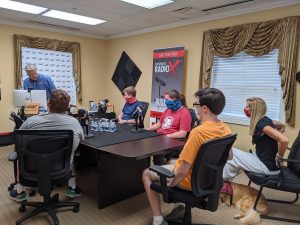
Over the course of his career, Daniel Noto of Noto Consulting Group was increasingly drawn to the problem-solving aspects of HVAC engineering.  Forming his own consulting firm allowed him to do both the expert witness work and problem diagnosis in HVAC systems he loves to do. Daniel joined host John Ray to explain how he solves the “too hot” or “too cold” problems which go beyond repairing or replacing an HVAC unit. North Fulton Business Radio is broadcast from the North Fulton studio of Business RadioX® inside Renasant Bank in Alpharetta.

Noto Consulting Group

Noto Consulting Group provides expert witness testimony and consulting related to Mechanical (HVAC) Building Design.  Additionally, they are available to provide 3rd Party (Peer) Review Services on Mechanical Building System Design.

Company website

Daniel Noto, P.E., Owner, Noto Consulting Group

Noto Consulting Group
Daniel Noto, P.E., Owner, Noto Consulting Group

Daniel Noto has nearly 20 years of HVAC Design and Senior Level Project Management experience.  After graduating from Georgia Institute of Technology in 2002, Mr. Noto has worked for engineering firms in New York City, San Diego, and Atlanta.

While most of those 20 years were involved with Healthcare projects, Mr. Noto has experience designing and reviewing projects in many market sectors including Higher Education, K-12, Science and Technology, and Commercial Projects.

LinkedIn

Questions and Topics in This Interview

  • Daniel’s background in Mechanical (HVAC) Design
  • Why did you decide to start your own consulting firm?
  • What services do you provide?
  • What sort of clients do you look to serve?

North Fulton Business Radio is hosted by John Ray, and broadcast and produced from the North Fulton studio of Business RadioX® inside Renasant Bank in Alpharetta. You can find the full archive of shows by following this link. The show is available on all the major podcast apps, including Apple Podcasts, Spotify, Google, Amazon, iHeart Radio, Stitcher, TuneIn, and others.

RenasantBank


Renasant Bank has humble roots, starting in 1904 as a $100,000 bank in a Lee County, Mississippi, bakery. Since then, Renasant has grown to become one of the Southeast’s strongest financial institutions with over $13 billion in assets and more than 190 banking, lending, wealth management and financial services offices in Mississippi, Alabama, Tennessee, Georgia and Florida. All of Renasant’s success stems from each of their banker’s commitment to investing in their communities as a way of better understanding the people they serve. At Renasant Bank, they understand you because they work and live alongside you every day.

Tagged With: cooling, Daniel Noto, hvac, HVAC engineer, HVAC systems, John Ray, mechanical building system design, North Fulton Business Radio, Noto Consulting Group, residential HVAC

Powerful Partnerships and Networks for Women Leaders

August 13, 2021 by John Ray

Powerful-Partnerships-Inspiring-Women
Inspiring Women PodCast with Betty Collins
Powerful Partnerships and Networks for Women Leaders
Loading
00:00 /
RSS Feed
Share
Link
Embed

Download file

Powerful-Partnerships-Inspiring-Women

Powerful Partnerships And Networks For Women Leaders (Inspiring Women, Episode 35)

The relationships which spring from powerful partnerships and networks are vital for both professional success and personal growth. On this edition of Inspiring Women, host Betty Collins assembled a mastermind group of dynamic leaders to discuss the power of partnerships:  Mary McCarthy, Women’s Small Business Accelerator, Michelle Casper, NAWBO Columbus, and Rachel Winder, Benesch Law. Inspiring Women is presented by Brady Ware & Company.

Betty’s Show Notes

The underlying issue of this topic is that partnering means that you are not alone while trying to build your career, your business.

My greatest times, professionally and personally, have been when I started these powerful partnerships and networks for women. It continues to play a major role in my life as a leader.

I wish I knew this when I was 20 something, even in my 30s. But I didn’t really get it until I was in my late 40s.

No matter what age you are, or at any point you are in your professional career, it’s really key to have powerful partnerships and networks.

And by the way, it’s not just a professional thing. This continues to be so huge for me personally.  Be open to making sure you’re establishing these types of relationships.

Less is better with relationships, because they’ve got to be correct for you. They need to be strategic, lining up with your why.

I’m not talking about connecting with big names people. I’m talking about people who have similar goals and ethics as you. And they get out there, and they influence.

Never underestimate the power of those partnerships. It takes work and commitment. You’ll need to be consistent and persistent to build these relationships. But the dividends are huge in your personal and professional development and impact.

With me on the episode is Mary McCarthy, Co-founder and President of the Women’s Small Business Accelerator.

The Women’s Small Business Accelerator (WSBA) is a non-profit accelerator founded by successful women business owners for women business owners. They provide education, peer support, mentoring, and accountability to help women on their entrepreneurial journey – to start and grow their own businesses.

I am also joined by Michelle Casper, past President and board member of NAWBO Columbus.

Established in 1996, NAWBO Columbus has a longstanding history in the greater Columbus area. They are currently the largest chapter in the nation and pride ourselves in elevating women business owners through connections, advocacy, and mentorship.

And last, but not least, I am honored to have Rachel Winder, Government Relations Manager with Benesch Law, on this episode. She is the advisor for the Columbus chapter of NAWBO.

Benesch is an AmLaw 200 business law firm and limited liability partnership with offices in Chicago, Cleveland, Columbus, Hackensack, San Francisco, Shanghai and Wilmington.

The firm is known for providing highly sophisticated legal services to national and international clients that include public and private, middle market and emerging companies, as well as private equity funds, entrepreneurs, and not-for-profit organizations.

These three women are willing to give, with a blind eye to how it helps them.

This is THE podcast that advances women toward economic, social and political achievement. Hosted by Betty Collins, CPA, and Director at Brady Ware and Company. Betty also serves as the Committee Chair for Empowering Women, and Director of the Brady Ware Women Initiative. Each episode is presented by Brady Ware and Company, committed to empowering women to go their distance in the workplace and at home.

TRANSCRIPT

[00:00:00] Betty Collins
So, today, we’re going to talk about powerful partnerships and networks for women in business, women leaders, women who own businesses, women in general. And I’ve got just a really, really cool guest, I think you’re going to like them. But I want to talk about powerful partnerships and networks. When I say that, it sounds so mighty, like you could conquer whatever is brought your way. Then this mightiness, on top of that, is just really for women.

[00:00:31] Betty Collins
Even better, right? So, I want to have this podcast today for all of you, because this has been so impactful in my professional and personal life. The underlying issue of this topic is that, partnering implies not being solo or by yourself. My greatest times, professionally and personally, have been when I started these powerful partnerships and networks for women. It has played, and continues to play this major role in my life as a leader. So, I wish I knew this when I was 20 something, hey, even in my 30s.

[00:01:07] Betty Collins
But I did not really get this, and be part of it till my late 40s. So, I really want to communicate to my audience today, to the women in the audience, no matter what age you are, or at the point you are in your professional career, it’s really key to have powerful partnerships and networks. And by the way, it’s not just a professional thing. It has been so huge for me personally. So, really, be open to making sure you’re establishing these types of relationships.

[00:01:41] Betty Collins
And I’ve been in all types of networking groups, we’re not talking about networking today, throughout my career, but it was more like the right thing to do, which is part of my job. It really wasn’t that impactful, but powerful partnering is not having 1200 Facebook friends. It’s not name-dropping. That’s just called connecting or fantasizing that you know all these people. Less is better with relationships, because they got to be correct, and they got to be strategic, and they’ve got to line up with your why.

[00:02:12] Betty Collins
Betty Collins’ why is, when the marketplace works in this country, the world works. And when I know that employers can pay those employees, those are households and families that make up communities. So, my partners have to line up with that. And because women are so, right now, the ones starting businesses, and such a dominant presence in the marketplace, it all comes together. So, today I want to talk to you, first, why powerful. Powerful means to me, it’s not having this great power or prestige, but its influence.

[00:02:50] Betty Collins
I’m not talking about big names, I’m talking about people, the ones who have my similar goals and ethics, and they get out there, and they influence. Powerful, meaning to me, that they don’t know just- that they support my why and my purpose. So, today, I want to talk to you about three organizations that have had powerful partnerships in my life. And the impact has been overwhelming, I am extremely grateful. Partnering with these organizations is, really, partnering with its members. It’s developing relationships within the organization, one relationship leads to another, and that’s why I can add the word powerful to it.

[00:03:30] Betty Collins
My company in 2012 merged into Brady Ware, and I met these two women, Caroline Worley and Mary McCarthy. These women have been powerful partnerships, and introduced me to an entire network of women. I’m very grateful for them. And they also founded the Women’s Small Business Accelerator, which is an organization that is pretty easy to understand. It’s women in small business accelerating. And so, today, Mary McCarthy is going to join us.

[00:03:57] Betty Collins
Then they introduced me to the Columbus chapter of the National Association of Women Business Owners in 2014. And I will tell you that my world changed, not because I was a member of this organization, but because of the members, and what the organization stood for. And so today, Michelle Casper, who is the current president of our chapter, will join us. And then lastly, I met Rachel Winder of Benesch who advocates for women. She is the advisor for the Columbus chapter of NAWBO.

[00:04:31] Betty Collins
I was so awed by her connection and networking, got really hooked when I went to Advocacy Day in Washington, DC, when I was the president of NAWBO in June of ’19; when Washington, DC was a fun place to go do so. But during COVID-19, she just started this Friday call. And I will let her talk about that, and in that Friday call, became this organization, the Ohio Women’s Coalition. I’m going to call it, I have a powerful panel today that represent these three wonderful partnerships and networks for women leaders in Columbus, Ohio, and really outside; all of the state of Ohio, for some of them. We give our time, and our treasure, and our talent to them, and it’s all good, but I really am Betty Collins today because of them.

[00:05:19] Betty Collins
And never underestimate the power of those partnerships. It takes work and commitment, you got to be consistent to have these relationships, but the dividends are huge in development and impact. And by the way, my business also just happened to triple as I started being in these groups. But that is a byproduct. So, I’m not talking about powerful partnerships that you can network and grow business.

[00:05:43] Betty Collins
Oh, by the way, that happens. I’m talking about powerful partnerships that really get to your core, they help you with that why, they have impact, and you get some clients along the way, and have some fun. So, we’re going to just talk about these organizations, and we’re going to start with Mary. Mary, just give me your 30 seconds, if you can, it probably is going to go longer, on the WSBA, and then expand on the impact it’s had on you as a leader. So, welcome, Mary.

[00:06:15] Mary McCarthy
Hey, Betty. Thanks for having me on the podcast. So, the Women’s Small Business Accelerator. What we do is we empower women to dream, and to dream big. And then we help them achieve that dream. So, that’s a really important statement, it goes beyond just wanting to be a business owner, but being successful at it. So, we accomplish this by providing tools. And the tools include our education, our training or mentoring, and even the most important, our ongoing support, so that they can be very successful. Our end goal is to monetize our business culture, so that it meets every woman’s big-picture dream of caring for themselves, their families, and their communities.

[00:07:00] Mary McCarthy
So, when you’re talking partnership on this podcast, that’s a very important part of what we do, because we do not believe you should struggle alone. So, we encourage all women, regardless of income, or education level, to include us as a partner in their business ownership success. So, how does this impact me as a leader? It’s very interesting when you think about what leadership means. It means looking at the big picture, surrounding yourself with like-minded people that can help you accomplish your goals, and most importantly, asking for help. So, you believe in that as well, Betty, right?

[00:07:43] Betty Collins
I do, I do.

[00:07:43] Mary McCarthy
We like to think that we can do it all ourselves as women, but the more we ask for help, the more we accomplish.

[00:07:51] Betty Collins
And I know that I have actually utilized the services of the WSBA, because I was a mentee and I needed a mentor. Betty Collins just doesn’t know everything, I know that’s hard to believe, but it’s true. And I really- it was impactful to have this woman who could see my world differently, and then help me understand it. It was really good. So, explain a little bit more, how has this organization impacted you, Mary, as a woman leader?

[00:08:21] Mary McCarthy
There are a number of things that, throughout my career, have impacted me as a leader. And I think that’s an important point we always have to remember. But how did it really help me? When I first realized the desire to create this organization. I took my own advice, and I reached out into the community, and asked people what they thought, what were the needs, what could they use if an organization was created. And by listening, it was amazing to me, all of the incredible ideas that were brought forth, all of the needs that were uncovered. And I have to say, we’ve been around for eight years now, and the incredible women that have supported us, and shared that what we’re doing has really helped so much. It’s amazing to me, but I’m leading by listening.

[00:09:16] Betty Collins
Well, I appreciate your thoughts. We’re going to move on to Michelle Casper, who is the NAWBO president, and she is an attorney. So, Michelle, give us your 30 seconds, if that’s possible, it might take longer, on NAWBO Columbus. And tell us about that first day you walked into that lunch, I always love to hear you talk about that, and then the impact that it’s had on you as a leader.

[00:09:39] Michelle Casper
Thanks, Betty. And thank you for having me on this podcast. I’m really excited to be here, and I’m excited to be in the company of other great women. And I love this question about the first day you walked into a NAWBO lunch, so let me set the stage. This was about five or six years ago. I had moved from Chicago, where I was, at the time, an associate in a Midwest law firm. Moved to Columbus, Ohio. It was an out-of-the-blue move that came with a job opportunity for my husband.

[00:10:09] Michelle Casper
We packed up our young family, we moved to Columbus, Ohio. I knew not a single person. There was nobody in the city that I knew, other than my husband. And a colleague in my Indianapolis office said to me, “Hey, there’s this organization called NAWBO. I think you should go and check it out.” And I said, “Okay, great. I don’t know anybody. I’ve got to start to get to know some people.”

[00:10:33] Michelle Casper
And I was a little nervous, because I didn’t know anyone, and I was going to go to this event. So, I called up a friend of mine and I said, “Hey, let’s go to this NAWBO event.” It was a good-to-great event. So, our good-to-great is when we bring together inspiring, influential women in the community, and we give other business owners, and women in business an opportunity to roundtable with them. So, I remember that day so distinctly, and I walked into the room knowing nobody, with my friend by my side, and people just started coming up to me, people that I didn’t know.

[00:11:11] Michelle Casper
And they’d say, “Hi, my name’s Sue. What’s your name? What’s your business? Tell me about your life. How can we help you?” And this happened over and over at this meeting. And I left there, and I was just so blown away, and so inspired. And when I look back at that meeting, I realize that it taught me why it’s so important to give as a leader. And I think when we’re in a leadership position, and we have built up those connections and partnerships, we gain more by sharing them.

[00:11:45] Michelle Casper
We gain more by connecting people through introductions, strategic alliances. And I think when you get to that point as a leader, it’s really important to listen to what people need, and Mary touched on that a little bit. And it’s important to provide a path for them, that perhaps, they didn’t know existed. And that was really what was done for me when I walked into that first NAWBO meeting. And quite honestly, it solidified my belief and my passion in the organization.

[00:12:14] Michelle Casper
And it’s why I’m sitting where I am now as the president, trying to get back. It’s because somebody gave to me in the first place. And when we look back, we really have no idea, the power of our kindness, and our time, and our resources until we start to give them away. And that was really the foundation of building powerful partnerships in my life here in Columbus, where I knew no one. And now fast forward five, six years later, we just opened up our very first office here in Columbus, Ohio, for my firm, Smith Ahmanson. And these things would not be possible had I not walked into that NAWBO meeting, and started to meet the women that would really change the path for me.

[00:12:57] Betty Collins
And you know what I love with the first two of you? First of all, by the way, Michelle is the president of NAWBO during a pandemic. She has just really been this amazing leader through this time, but anyway. But what you’re hearing from the first two guests, and you’ll hear from the third is, when they’re talking about powerful partnerships, they didn’t bring up that, “My book of business grew.” They didn’t bring up that, “Hey, look what I got.” They’re talking about the giving factor, which is awesome.

[00:13:28] Betty Collins
So then we go to Rachel Winder. And Rachel is, I don’t know anyone who doesn’t know Rachel in Columbus, Ohio, or in the state, because she is such an advocate for women and what we could-. We have a long way to go, and she’s just really in the fight with that. And I met her through NAWBO as well, and then we attended the advocacy day together. So, Rachel, give the audience a feel on how this Friday’s at noon, during a pandemic, we formed this amazing organization.

[00:14:00] Rachel Winder
Absolutely, yeah. Thank you, Betty. Thanks so much for having me. So, this all happened organically in the middle of a pandemic. It was March of 2020, and the Ohio governor, Governor DeWine, had, basically, shut down the economy here in Ohio to help keep us healthy. But he put together a commission coalition of individuals that were called the Economic Recovery Committee, or Economic Recovery Commission. It’s a group of businesses that were going to help open up the economy back up.

[00:14:41] Rachel Winder
A number of organizations were concerned that the individuals that were serving on this economic recovery committee weren’t necessarily representative of the businesses in Ohio. There were zero micro businesses, or businesses that had less than twenty employees. There were limited women that served on this recovery committee, and there were limited minorities that served on this recovery committee, and that wasn’t right. And there were a number of organizations that were concerned and wanted to, for lack of a better word, put out a scathing letter condemning the acts of the governor.

[00:15:21] Rachel Winder
And they came to NAWBO Colombus, and I’m so fortunate I’m the public policy adviser for NAWBO Columbus. And they asked our opinion, do we want to join this letter? Do we want to sign on? And it was of my opinion and many others that, “Hey, why don’t we pull back? Why don’t we see if we can find a seat at the table? Why don’t we find a way if our voices can be heard? Instead of just complaining or being upset that they’re not, let’s just make sure that they are.”

[00:15:51] Rachel Winder
And so, I called the governor’s office, and I managed to get somebody who was willing to talk with us, who was an adviser to the governor that was putting together this economic recovery. And all of these organizations came together on a Zoom call. This was when Zoom- this, maybe, was my second Zoom call ever. But all of these organizations came together, and we had this individual from the governor’s office. And all of a sudden, the light bulb went off that, “Holy moly, look how energized we are. Look how powerful we are. Look at all of us together here in this room making our voices heard, in this virtual room.”

[00:16:36] Rachel Winder
But anyways, it was so inspiring, and so successful that- it happened to be Friday at 11 o’clock that week. And we immediately were like, “Well, who else could we get to join this call? Who else needs to hear our voice?” And lo and behold, every Friday at 11 o’clock, we started inviting people to the room, and what was so, and almost surprising to me, was that they came. And another light bulb moment was when, I hate to be surprised that they came, but I was surprised that they came. I’m no longer surprised, now I expect them to be there.

[00:17:15] Rachel Winder
But we asked a division of the Development Services Agency, which is a cabinet in the governor’s office. And there’s a small division inside of it. And we asked that director to join us, and they instead, bumped us up to the governor’s cabinet member, Director Lydia Mihalik, and said, “She should be on this call, not me.” And that, again, was a light bulb moment, like, “Holy moly, I cannot believe we’ve been bumped up to the director.” Normally, I’m bumped down to the assistant, to the assistant.

[00:17:46] Rachel Winder
So, here we are getting bumped up, and we realize the power of this collective voice. And so, long story short, we incorporated, and we became the Ohio Women’s Coalition, and we’re the first statewide organization fighting for women’s economic growth and women’s businesses on a statewide level. And I’m so proud of Betty and Mary on this call, both who have joined the board, and who are there with me fighting all the way.

[00:18:22] Betty Collins
So, those are three of my favorite organizations, the WSBA, NAWBO Columbus, and the Ohio Women’s Coalition. These are organizations and partnerships. This is not networking. These are partnerships, powerful ones that you get to have impact, supports your why, and you do get to meet more people and network with the right people. So, I have some questions for each one of them.

[00:18:51] Betty Collins
So, thank you, first of all, for describing your organizations. I wanted people to get a feel for that. So, I’ll go to Michelle. Michelle, and probably, if I ask all three of you this question, you answer it fairly same. So, give me your definition of a powerful partnership and network. Outside of NAWBO, you’ve described that, but give me that definition.

[00:19:12] Michelle Casper
So, I really think this goes back to people who are willing to give, particularly when they don’t see what they may gain in return. And when I think about a powerful partnership and network, that’s something that takes time to grow and cultivate, it doesn’t happen overnight. And it’s really much like a deep friendship; you have to grow it over time through trust, devotion and care, and it can’t be one-sided.

[00:19:41] Michelle Casper
When I think about the partnerships and networks that I’ve developed over the years, I see the growth over time, and how I grew that mutual respect. And I really had to take the time to do more listening in the beginning. And to a large extent, that still rings true today; we have to listen to learn. So, when I think about a powerful partnership, I think that that is a group of individuals who have your back, but who also challenge you to be better than who you were the day before.

[00:20:12] Michelle Casper
The people that have been really instrumental in my life have pushed me out of my comfort zone, and they’ve pushed me to places that, maybe, I didn’t even think was possible in my own head. And I think if you ask really successful people what their secret is, that’s a common topic among top executives and top women in their field. “What’s your secret? How did you get there?” They almost always tell you a story about someone else great who believed in them, and who helped them build a powerful network. And I think that’s especially true for women. The mentors that we can develop through these partnerships and networks can really change our path.

[00:20:53] Betty Collins
That’s really good. Great points in there for sure. Rachel, when you’re looking for that partner or, “Hey, let’s go build a coalition.” What characteristics must be there in the people that you’re bringing together?

[00:21:10] Rachel Winder
So, I thought about this. Three came to mind, but there’s lots. But the top three that I thought about right away were, passion. Just listening to the three of you, you all have such passion for what you do, it’s so obvious. I have to have that in my network, so I have to know that they’re passionate. I need to know that there’s authenticity, that it’s an authentic belief in what you’re doing, for the right reasons

[00:21:44] Rachel Winder
Like Michelle was talking about, just giving back. How Betty is so generous with her time, Mary creates organizations to help people. You have to be authentic about what you’re doing, and why. And then, also, I need to be inspired. So, I need to- I think I’m, just by nature, a little bit lazy. So, I really need to be inspired to action.

[00:22:11] Rachel Winder
I need to just- you need to- so, I guess that’s part of the passion and part of the authenticity, but I just need to be inspired by what the organization is doing. I need to just believe that they are doing it for the right reasons, and it’s the right fit for me.

[00:22:28] Betty Collins
Well, Michelle and Mary, do you see Rachael as being lazy?

[00:22:35] Mary McCarthy
Did you hear me chuckle in the background?

[00:22:37] Betty Collins
I did. I did.

[00:22:40] Mary McCarthy
No, Rachel. I think you’re the only one that sees that in you.

[00:22:44] Betty Collins
Yeah. Yeah.

[00:22:45] Rachel Winder
Wow, that’s nice. Well, thank you.

[00:22:48] Betty Collins
Well, knowing Mary in the partnership of the three of us, or the four of us on the phone today, I gave this question to her because she can do things so well. And so, you’ll like the question; when do you not partner and network, and how do you politely divorce yourself? I think only Mary can do that well. So, what would you say? Because there’s times you don’t want to partner and network, right?

[00:23:10] Mary McCarthy
So, Betty, first of all, I cracket up because that’s the question that you gave me of the three, right? So, I’m going to say, I love what I was hearing from everybody, such great advice so far. And you’re right, there are times that we need to either not partner or we need to, maybe, decide that we need to move on. And like everybody else on this call, I’m a very strong believer in partnerships; together we can be unstoppable.

[00:23:41] Mary McCarthy
But if we find that a partnership is not working or that, maybe, we’re not going in the same direction, then the best advice that I can give, truly, is just to be honest. So, start with communicating, and see if you can work out the differences. Because oftentimes, we think we’re communicating, when we’re not really saying the same things to each other. So, we have to listen to what the other person is saying, to make sure we’re on the same page.

[00:24:12] Mary McCarthy
And if we can resolve that first, then great. But if we can’t resolve it, then we do need to look at, potentially, moving on. There’s a really great book that I read, it’s my all time favorite, and I recommend it to everyone. It’s called Essentialism, The Disciplined Pursuit of Less, by Greg McKeown.

[00:24:33] Betty Collins
Great book. Love that one.

[00:24:34] Mary McCarthy
Isn’t it? A fabulous book. He talks about being realistic with your time. Because sometimes partnerships don’t work just because you’ve overcommitted, and you’ve added one more thing to your to-do list, that you really just don’t have the time to do. So, if it doesn’t fit- so, his concept is not less, but more, it’s less, but better. What can we be/do that we can be the best at? So, if we’re going to partner, we want a partner well.

[00:25:03] Mary McCarthy
We want to communicate clearly, and we want to really make sure that we work together to the hit end goals. And if it’s not working, and the communication doesn’t work, then we just have to, again, honestly communicate and say, it just doesn’t work. And you need to move on. So, you don’t want to be passive aggressive, you don’t want to just disappear and not communicate, because then they don’t understand. So, as long as you communicate honestly, they may still be mad at you, but that’s okay, because at least you communicated, and with a positive intent.

[00:25:36] Betty Collins
This year, one of my themes in my life is, for my mental state, is you’ve got to know the difference between branches and twigs. Branches give life, and twigs are good for firewood, and they burn and they’re done. And I think it even speaks for itself, but you do have to make those decisions sometimes, of this is just not- this isn’t lining up for me.

[00:25:57] Betty Collins
And then you waste a lot of time in a partnership or in a network that’s not alignment, and time is too precious. So, Rachel, can you give us an example of your best powerful partner? And you don’t have to say NAWBO, and you don’t have to say- but it could be a person, it could be whatever. But who is that best that you’ve had, and why?

[00:26:19] Rachel Winder
Wow. So, I hope this isn’t cheating, but it is NAWBO.

[00:26:24] Betty Collins
Okay, good. Michelle we like that, right?

[00:26:27] Rachel Winder
Absolutely.

[00:26:29] Michelle Casper
Yes, we do.

[00:26:30] Rachel Winder
It’s absolutely NAWBO Colombus. They introduced me to just finding that passion. Before I was introduced to NAWBO, I’ve done lobbying my entire career, and most of my career was lobbying for the large Fortune 50 telecommunications companies. And they were great jobs, don’t get me wrong, great opportunities, telecommunications are really important, but I don’t think I ever realized I was missing something from that opportunity.

[00:27:05] Rachel Winder
And in 2014, I had the opportunity to work with NAWBO Columbus, and it was from you all that I just learned about how inspiring, and exciting, and fun it is to accomplish something, and be passionate about it. And the Organization of Women, I have a similar story to you, Michelle. My first time walking into a NAWBO meeting, it blew me away. Mine was a big visionary award event, it was unbelievable, I’ll never forget it. But it’s absolutely NAWBO Columbus.

[00:27:36] Betty Collins
Thank you so much. It’s been extremely impactful for all of us on this call, for sure. But that’s a good example. Michelle, we’re in 2021. What powerful partnerships and network is going to help women in leadership today, outside of the three that we’ve talked about? Maybe something else that you’re familiar with.

[00:27:59] Michelle Casper
So, I’m going to pivot this one a little bit, and answer it with almost a question, but I’m going to tell you why. So, I think this is a great question. And I really sat with it for a long time, as I prepared for today. And the three organizations that we’ve highlighted on this call are just influential, wonderful organizations, and places where women who are developing leadership, growing their businesses can absolutely look to, and get involved in, to really further what they’re trying to do in their lives.

[00:28:31] Michelle Casper
And I think women, in particular, and I think that this is highlighted since the pandemic hit, are facing an incredible shift in the demands placed upon us. And it’s absolutely affecting us disproportionately to men. I saw a statistic that in December of just this past year, we lost 140,000 jobs. And all of those were jobs that women lost. And even more alarming is that the job losses disproportionately affected black and Latino women, far more than they did white women. But the job losses didn’t affect men. They actually gained in jobs.

[00:29:09] Michelle Casper
And when we think about what we need for women in 2021, I think we need to start talking more about how we provide resources to women to help them grow, both successful careers and successful families. Back in the 1960s, when the women’s lib movement was really taking root, and we saw these women slip on their heels, and go out to work, and become professionals, what we didn’t see was society and government provide the support that they needed; things like family leave, help with childcare, flexible work hours.

[00:29:44] Michelle Casper
These are all things that we continue to struggle for, and they’re the reasons that we see a lot of women, especially since this pandemic hit, leaving their current jobs. Because we’re really having to juggle a lot with our careers and with our families. And I say that from the perspective of a woman in her early 40s, who has young children at home, with virtual school going on, and really trying to balance a lot, being a partner in my law firm, the managing partner of our Columbus office.

[00:30:14] Michelle Casper
So, when I think about what leadership women need in 2021 and moving forward, I believe, very strongly, that we need flexible options, and we need to start having some conversations about what employers and government support can give to that flexibility, to give us a real shot at not having to choose between family and career. And that’s the question that I leave for the group; what organization is best poised to have those tough conversations, to make sure that the gains that we’ve made as women in business are not something that we lose with all that we’re juggling, especially now during this time, and in our history?

[00:30:55] Betty Collins
Really awesome pivot. Really, really good. I’m going to let Mary and Rachel, do you want to add to that, or respond to that? Because that’s just perfect.

[00:31:06] Rachel Winder
I’m still sad about the statistic, and that we just keep, continuously, being hit, and we’re not getting the support that we need. I tell this story, but if you look at the state budget, which is a two-year 41-billion-dollar budget, two years ago, women were only mentioned in relation to rape crisis centers, and domestic violence, and infant mortality. And so, the support we’re getting from the state is, all these social issues where we’re victims.

[00:31:43] Rachel Winder
And maybe if they invested a little bit up front to help women in businesses and to help this network of organizations that support these, provide direct support services for women’s economic growth, if they just, maybe, looked at the front-end a little bit, it could make a big difference.

[00:32:01] Betty Collins
Any insight, Mary?

[00:32:03] Mary McCarthy
I’m going to join in on that one as well. I think, Michelle, you just said it so beautifully, and Rachel brought up a really good point. And I hear [INAUDIBLE] a statistic that I haven’t run across. And the statistics stated that one percent growth in entrepreneurship can decrease poverty by two percent.

[00:32:25] Betty Collins
Wow.

[00:32:26] Mary McCarthy
Right? So, when we think about what Michelle was saying, the greatest challenge for women is trying to balance all of these different things. And well, my children are growing, because I can work from home, I’m now babysitting. So, along with Michelle, I’m trying to work, and take care of kids, and help with the school work.

[00:32:48] Mary McCarthy
And I’m lucky that I can help, but what do you do if you don’t have that support system, so the majority of things still fall on us, and women have been disproportionately impacted by the current situation, and the businesses that are closing the most are women’s businesses. And when you think about the term lifestyle, they say that most women create lifestyle businesses, as if that’s a negative thing.

[00:33:20] Mary McCarthy
Well, the definition of lifestyle is a business that cares for the business owner, their family and their community. I think that’s a great thing to create a lifestyle business, if you can accomplish those three things. But there are the stylists, the massage therapists, the caterers, and they have been really harmed in this situation. And we have to look at what we can do to support them, because it supports their families, which supports our communities.

[00:33:49] Betty Collins
Well, I could stay on with you ladies all day, but we do have to go. And I cannot thank you enough; the WSBA, NAWBO Columbus, as well as NAWBO National, and the Ohio Women’s Coalition for being here today, first of all, for sharing your perspective, and sharing that impact that it had on you as well as our communities. I’m truly grateful. You all are part of my powerful partners and network, and certainly made me better, professionally and personally.

[00:34:25] Betty Collins
And my leadership skills and influence have, hopefully, had some impact, and I can’t thank you guys enough. And I want to end on one thing that was so positive, that I would challenge anyone who’s listening today. Amanda Gorman, who spoke at Joe Biden’s inaugural, I have read her poem over and over. And I look at that 22-year-old and say, the powerful connection and partnerships that she probably developed that day, but in her life, there’s just impact that will happen.

[00:35:02] Betty Collins
That’s what it is all about. And by the way, you get to know people, you get to have lifetime friendships, you get to have a business that grows. And then you, really, can look back and go, “Yeah, this was really a cool ride.” So, I really appreciate all you guys coming on today.
[00:35:19] Betty Collins
I am Betty Collins, and I’m glad that you joined me. Inspiring women is just what I do, and I leave you with this; being strong speaks of strength, but being courageous speaks to have a will to do more and overcome.

Betty Collins, CPA, Brady Ware & Company and Host of the “Inspiring Women” Podcast

Betty Collins is the Office Lead for Brady Ware’s Columbus office and a Shareholder in the firm. Betty joined Brady Ware & Company in 2012 through a merger with Nipps, Brown, Collins & Associates. She started her career in public accounting in 1988.

Betty is co-leader of the Long Term Care service team, which helps providers of services to Individuals with Intellectual and Developmental Disabilities and nursing centers establish effective operational models that also maximize available funding. She consults with other small businesses, helping them prosper with advice on general operations management, cash flow optimization, and tax minimization strategies.

In addition, Betty serves on the Board of Directors for Brady Ware and Company. She leads Brady Ware’s Women’s Initiative, a program designed to empower female employees, allowing them to tap into unique resources and unleash their full potential.  Betty helps her colleagues create a work/life balance while inspiring them to set and reach personal and professional goals.

The Women’s Initiative promotes women-to-women business relationships for clients and holds an annual conference that supports women business owners, women leaders, and other women who want to succeed. Betty actively participates in women-oriented conferences through speaking engagements and board activity.

Betty is a member of the National Association of Women Business Owners (NAWBO) and she is the President-elect for the Columbus Chapter. Brady Ware also partners with the Women’s Small Business Accelerator (WSBA), an organization designed to help female business owners develop and implement a strong business strategy through education and mentorship, and Betty participates in their mentor match program.

She is passionate about WSBA because she believes in their acceleration program and matching women with the right advisors to help them achieve their business ownership goals. Betty supports the WSBA and NAWBO because these organizations deliver resources that help other women-owned and managed businesses thrive.

Betty is a graduate of Mount Vernon Nazarene College, a member of the American Institute of Certified Public Accountants, and a member of the Ohio Society of Certified Public Accountants. Betty is also the Board Chairwoman for the Gahanna Area Chamber of Commerce, and she serves on the Board of the Community Improvement Corporation of Gahanna as Treasurer.

“Inspiring Women” Podcast Series

This is THE podcast that advances women toward economic, social and political achievement. The show is hosted by Betty Collins, CPA; Betty is a Director at Brady Ware & Company. Betty also serves as the Committee Chair for Empowering Women, and Director of the Brady Ware Women Initiative. Each episode is presented by Brady Ware & Company, committed to empowering women to go their distance in the workplace and at home. For more information, go to the Resources page at Brady Ware & Company.

Remember to follow this podcast on Apple Podcasts and Google Podcasts. And forward our podcast along to other Inspiring Women in your life.

The complete “Inspiring Women” show archive can be found here.

Tagged With: Betty Collins, Inspiring Women with Betty Collins, networking, networks, partnerships, Powerful Partnerships And Networks For Women Leaders, Women in Business, women leaders

Lois Banta, Speaking Consulting Network

August 13, 2021 by John Ray

Speaking Consulting Network
Dental Business Radio
Lois Banta, Speaking Consulting Network
Loading
00:00 /
RSS Feed
Share
Link
Embed

Download file

Speaking Consulting Network

Lois Banta, Speaking Consulting Network (Dental Business Radio, Episode 23)

On this episode, host Patrick O’Rourke is joined by Lois Banta, CEO of Speaking Consulting Network. Lois shared the unique model of SCN that helps members learn to speak publicly and help other dental professionals.  She and Patrick also discussed dental best practices in billing and much more. Dental Business Radio is underwritten and presented by Practice Quotient: PPO Negotiations & Analysis and produced by the North Fulton studio of Business RadioX®.

Speaking Consulting Network

SCN (The Speaking Consulting Network) is the number one “learning lab” for speakers, consultants and writers who wish to enhance their own business and the business of the clients they serve.

Together through shared knowledge, a kindred spirit of helping others be the best they can e, and a passion for excellence in healthcare, SCN is reshaping the speaking, consulting and writing industry.

Company website | Facebook

Lois Banta, Owner and CEO, The Speaking Consulting Network

Speaking Consulting Network
Lois Banta, Owner and CEO, Speaking Consulting Network

Lois Banta is COO of eAssist Dental Billing. Lois has over 45 years of dental experience and speaks nationally and internationally. She is the owner and CEO of The Speaking Consulting Network and a member of The Academy of Dental Management Consultants (ADMC), The American Academy of Dental Office Managers (AADOM) and The American Academy of Dental Practice (AADP).

She received the prestigious Lifetime Achievement Award at the 2016 AADOM conference and was listed as one of the Top 25 Women in Dentistry. In 2021, Lois also received the prestigious Gordon J. Christensen Lecturer Recognition award, presented at the annual Chicago Dental Society 2021 Conference.

LinkedIn

About Dental Business Radio

Patrick O'Rourke
Patrick O’Rourke, Host of “Dental Business Radio”

Dental Business Radio covers the business side of dentistry. Host Patrick O’Rourke and his guests cover industry trends, insights, success stories, and more in this wide-ranging show. The show’s guests include successful doctors across the spectrum of dental practice providers, as well as trusted advisors and noted industry participants. Dental Business Radio is underwritten and presented by Practice Quotient and produced by the North Fulton studio of Business RadioX®. The show can be found on all the major podcast apps and a complete show archive is here.


Practice Quotient

Dental Business Radio is sponsored by Practice Quotient. Practice Quotient, Inc. serves as a bridge between the payor and provider communities. Their clients include general dentist and dental specialty practices across the nation of all sizes, from completely fee-for-service-only to active network participation with every dental plan possible. They work with independent practices, emerging multi-practice entities, and various large ownership entities in the dental space. Their PPO negotiations and analysis projects evaluate the merits of the various in-network participation contract options specific to your Practice’s patient acquisition strategy. There is no one-size-fits-all solution.

Connect with Practice Quotient

Website | LinkedIn | Facebook | Twitter

TRANSCRIPT

Intro: [00:00:03] Live from the Business RadioX Studio in Atlanta, it’s time for Dental Business Radio. Brought to you by Practice Quotient. Practice Quotient bridges the gap between the provider and payer communities. Now, here’s your host, Patrick O’Rourke.

Patrick O’Rourke: [00:00:18] Hi there, fiends of the dental business community. This is your host, Patrick O’Rourke, on today’s edition of Dental Business Radio. First of all, I’d like to give a shoutout to our sponsor, Practice Quotient, PPO analysis and negotiation. If you’re a top tier provider – that means dentists, oral surgeon, periodontist, endodontist, et cetera – and you don’t feel that you are being paid or compensated adequately or fairly per your top tier status by your contractual labels on your fee schedules – i.e. insurance companies that are your business partners – then you should call the fine folks at Practice Quotient. Headquartered in Atlanta, Georgia, national clients from Anchorage, to L.A., to Miami, to New York.

Patrick O’Rourke: [00:01:04] Also, they have an article right now. If you contact them and ask for it and mention Dental Business Radio, they will give you top ten things to think about or top ten tips to know prior to negotiating your PPOs. Just mention Dental Business Radio Top Ten Tips. All right. So, with that, thank you to our sponsor. I’d also like to give a big thanks to our guest who came in all the way from Kansas City, Lois Banta. How are you, Lois?

Lois Banta: [00:01:36] I’m great. I couldn’t be happier to be here.

Patrick O’Rourke: [00:01:39] All right. Well, we’re thrilled to have you here. And, really, just kind of a continuation of our conversation that we were doing before. Also, with us as always, is the monsignor, John Ray, ESQ., first of his name, last of his kind. So, he’ll be here as well, although he doesn’t say much. He’s over there chewing some tobacco right now. So, we’ll let him be as long as the soundboard is working. So, welcome to Atlanta. I know that you were here recently.

Lois Banta: [00:02:10] I was. I was here recently to have our 25th Anniversary for our Speaking Consulting Network Conference at Chateau Elan. It was great.

Patrick O’Rourke: [00:02:18] Chateau Elan is a very fine property. So, fun fact on a personal level, that is where I proposed to my wife.

Lois Banta: [00:02:25] Nice. Yeah. We love that property. It’s my third visit to Chateau Elan.

Patrick O’Rourke: [00:02:30] Really? Yeah. So, shoutout to Chateau Elan and Braselton. Braselton? Braselton?

Lois Banta: [00:02:34] I called it Braselton.

Patrick O’Rourke: [00:02:38] All right. Neither one of us were actually born Georgia.

Lois Banta: [00:02:40] Tomato. Tomato.

Patrick O’Rourke: [00:02:40] Yeah. Well, we got the Chateau part down, so that’s what’s important. So, you were over there, 25th Anniversary of The Speaking Consulting Network. So, tell me, I’m very interested in The Speaking Consulting Network. So, describe the genesis or the origin of the organization and how it’s evolved.

Lois Banta: [00:03:03] So, The Speaking Consulting Network was founded by an international consultant speaker, Linda Miles, back in 1996. And she was being approached by several people in the industry to teach them what she knows about the profession of speaking, consulting, and writing. And she thought, “Hey, I think that might be a company.” So, the first meeting she had, I believe, was in Florida, she had 11 people. And I joined that organization one year later after its inception, and there were 14 of us. And, now, we have members upwards of 500, which we’ve grown organically and very slowly.

Lois Banta: [00:03:46] So, the essence of The Speaking Consulting Network is, it’s an organization, a network of entrepreneurs that are either beginning, fine tuning, or changing their ownership of their business. They’re an entrepreneur in the speaking, consulting, and/or writing world. So, The Speaking Consulting Network, when I joined, I was still working fulltime in a dental practice. But I had the thought that I wanted to teach people what I know. And my boss’s dental buddies were having me in their offices to teach their teams how to get the results I was getting, so that, “I think that’s a company.” So, I joined the organization. Two years later, I quit my job and jumped fulltime into speaking, consulting, and writing.

Lois Banta: [00:04:31] In 2010, Linda Miles was slowing down and she decided she wanted to semi- retire. So, I bought the Speaking Consulting Network in 2010. And so, now, we’ve grown the organization to be more about keeping that network of colleagues and entrepreneurs checked in for the entire year. So, we organized a New Member Day where you can come in and learn the trade secrets that I have established over my career. And then, we have two additional days of general session. We have guest speakers outside the dental industry.

Lois Banta: [00:05:07] Speaking Consulting Network was formed in dental, but it doesn’t limit itself to the dental industry. It’s entrepreneurs who are growing a successful business. It started in dentistry because that’s where Linda Miles was. And that’s where most of us land, is in the world of dentistry. From there, we grew it to a monthly live mastermind type session where we have a think tank for an hour, and it’s our members sharing information about how to grow their successful business every single month.

Lois Banta: [00:05:35] And then, three – four years ago now, we started SCN Unplugged at the request of our members, some place midyear that we could get together and really share ideas of how we could grow or maintain our successful businesses. So, we call it SCN Unplugged, and that’s in Napa Valley.

Patrick O’Rourke: [00:05:54] Really? Is there acoustic guitars?

Lois Banta: [00:05:57] No, but that’s a great idea. We did have a great band at our 25th Anniversary. It was rocking.

Patrick O’Rourke: [00:06:02] Yeah. And did you do any singing there?

Lois Banta: [00:06:06] I did do a little singing. I just knew you were going to ask me that. Yes, two of my consulting colleagues and I rewrote the lyrics to Mamma Mia! and we performed a little ditty on surviving COVID in the consulting, speaking, and writing profession.

Patrick O’Rourke: [00:06:23] Is that right?

Lois Banta: [00:06:25] Yeah.

Patrick O’Rourke: [00:06:25] So, John Ray has never heard of Mamma Mia! Except for the pizza joint that’s outside Lithonia. Could you give him a little sample?

Lois Banta: [00:06:34] Oh, you’re terrible. You’re just rotten, rotten to the core. Let’s see.

Patrick O’Rourke: [00:06:38] You can do it. You’re a superstar.

Lois Banta: [00:06:40] I have to remember it because, you know, the lyrics were on a little TV. So, let’s see. SCN, here we go again. My, my, oh, how much we’ve missed you. SCN here we go again. My, my, how can we resist you? Back when the COVID started, we were all broken hearted. SCN, here we go again.

Patrick O’Rourke: [00:07:07] I love it.

Lois Banta: [00:07:08] There you go.

Patrick O’Rourke: [00:07:09] Nice job.

Lois Banta: [00:07:11] Now, everybody knows I’m a singer. Thanks a lot.

Patrick O’Rourke: [00:07:12] All right. Well, now, you have a new career niche. It’s all about options. Look at John Ray, he has a little tear in his eye.

Lois Banta: [00:07:19] Yeah. If this is a consulting thing doesn’t work out, yeah.

Patrick O’Rourke: [00:07:22] Well, the thing about consultants is that, you know, some people think that they want help, but then they really don’t. And then, they don’t do it, they blame you. Singing or performing, like, if I had my druthers, if I had any talent at all, that’s probably the direction I’d go. The only thing I’m good at is what I do, that’s what I tell people all the time. But I thought I was going to play the guitar as well and I was going to be a rock star. But I don’t have any talent like you. Not like that.

Lois Banta: [00:07:53] There’s that.

Patrick O’Rourke: [00:07:54] Yeah. It turns out you need that.

Lois Banta: [00:07:55] You kind of do. Yeah.

Patrick O’Rourke: [00:07:56] Yeah. Or you need to be, like, really well-connected or super attractive, neither of which I don’t check those boxes.

Lois Banta: [00:08:02] Well, that singing thing has really worked out for me as a speaker because I’ve never lost my voice. I’m a trained singer. So, you use those techniques to be able to keep your energy up and not lose your voice.

Patrick O’Rourke: [00:08:14] That’s interesting. And especially, like, flying around because you’re going all over the place.

Lois Banta: [00:08:19] All over. And as far away as Indonesia and Australia.

Patrick O’Rourke: [00:08:22] Wow. God bless you. I’ve never been over there. One of the things that’s kind of perked my interest is, I talk about my stuff, which I can talk about at any point in time and it still puzzles my wife. She’s like, “People pay you thousands of dollars to get up and talk about that insurance stuff?” And I’m like, “Yeah.” And she’s like, “Here’s ten bucks, would you shut up, please?” But I don’t know how it started. I just like to educate and help people.

Lois Banta: [00:08:53] And there’s not too many folks out there who know what they’re talking about in this particular topic. And I found other thought leaders, not named Lois, but other ones that claim to be very knowledgeable about my subject. And I’m like, “Nah. That’s not exactly -” what’s a polite word? Shenanigans? Let’s just say that’s not 100 percent accurate. And so, I like to help educate my topic of insurance, especially to the people that are comp docs and practice managers. Let’s just say that their attention span is limited. I’m always impressed that, you know, a hundred people show up to listen.

Lois Banta: [00:09:36] Now, I try to make it as entertaining and I use as many analogies as possible. But explaining PPOs, EPOs, and the credentialing process to folks, sometimes I feel like I’m up there and, “Did I slip into Portuguese in midsentence? Why are your eyes all glazed over?” And so, how the folks find me though for it, I have no idea. I’ve never promoted it. It’s not really a profit vehicle. I just do it. I guess, call it, education is part of the mission of Practice Quotient. And so, I feel like we’re in the good guy business if we just go help people understand the environment. You don’t have to hire us, but understand –

Lois Banta: [00:10:19] Knowledge is a powerful tool.

Patrick O’Rourke: [00:10:20] Right. And so, that’s what we do. So, I was fascinated with the idea that there’s actually some speakers that get together and then they know a lot more than I do. And so, I was like, “That sounds good.” And I told John Ray to get us over there to Chateau Elan, and he’s sleeping as usual. I don’t know what he was doing that day. He’s probably at the dog track or something, but we could have play golf, got a massage, or Chateau Elan. John Ray, monsignor, I love him. I do sometimes.

Patrick O’Rourke: [00:10:51] So, at any rate, that’s what really kind of piqued my interest. And then, we have a mutual friend in common, Teresa Duncan. Shoutout to Teresa Duncan, you know, we got love for you.

Lois Banta: [00:11:00] Tons of love for Teresa Duncan. I love her.

Patrick O’Rourke: [00:11:02] And she’s like, “You got to talk to Lois.” And I said, “Okay. Well, we’ll bring her on the show.” Lois probably doesn’t know much about me and I don’t know much about her, and that’s okay. We have Speaking Consulting Network, when you think about it and it makes you smile – I’ll appropriate something you told me earlier – what are the three things that make you happiest about Speaking Consulting Network?

Lois Banta: [00:11:30] Oh, only three. Okay.

Patrick O’Rourke: [00:11:32] You can name more if you want.

Lois Banta: [00:11:33] Speaking Consulting Network, it’s the organization that prevented my profession from being a lonely profession. So, you make a lot of friends that are out there doing the same thing that you’re doing. We share a lot of ideas. I refer business to my SCN colleagues because I don’t want to be the expert in all areas. And so, Speaking Consulting Network is where I learned that it doesn’t have to be a lonely business and you can be around really smart people that know the things that you know and that know things that you don’t know that I can then refer to. So, I love the organization. We check the ego at the door.

Lois Banta: [00:12:12] So, there’s not another organization like it in the industry that I’m aware of, where, you can go, you can share ideas with each other, and nobody’s going to take your idea and say it was their own idea. We always give credit to everyone else. We’ve launched so many careers at the Speaking Consulting Network. We have meeting planners that come looking to hire speakers.

Lois Banta: [00:12:36] Consulting organizations, if you don’t want to be the lonely single entrepreneur out there, we have consulting organizations looking to hire consultants for their companies. We have dental journals from all across the United States, and Canada, and Australia looking to hire authors for the articles. We have podcasters looking to interview or be interviewed. So, it’s become an organization of like-minded professionals that want to grow or start their own speaking consulting business.

Patrick O’Rourke: [00:13:08] So, I love it.

Lois Banta: [00:13:12] We’re not for everybody, by the way.

Patrick O’Rourke: [00:13:14] Oh, nothing is, right?

Lois Banta: [00:13:15] Some people come once and don’t come back because they want to make it all about them, and SCN isn’t that. SCN is truly a networking organization where it’s all about each other.

Patrick O’Rourke: [00:13:27] Right. So, that sounds very awesome and welcoming for me, personally, because it is lonely when you’re an entrepreneur and you’re the one who’s making all the decisions. Everything run to you. You’re the butcher. You’re the baker. You’re the candlestick maker. You’re the H.R. person. You’re the website guy. Everything has to be decided. And all of that gets tiring after a while. And so, it’s nice to go into a situation where there’s no pressure on you and you’re actually able to learn from other folks. And it sounds like these consultants are all experts in their own realm, so an image expert or –

Lois Banta: [00:14:07] Janice Hurley, image expert. Judy Kay Mausolf, expert on culture and helping teams and dental practices get along so that they can get out of their own way and grow a successful business. Dr. Roy Shelburne, who is a colleague of both mine and Teresa, who talks about how to not make the mistakes in documentation and narratives that send you to jail.

Patrick O’Rourke: [00:14:29] I’ve heard you say that before.

Lois Banta: [00:14:29] So, we have a wide array of so many experts in the industry. Inspired hygiene, Rachel Wall. She built a successful hygiene consulting business. Hygiene is not in my wheelhouse. So, when I know someone who needs coaching in that arena, I call Rachel.

Patrick O’Rourke: [00:14:47] So, I think that’s a genius because that’s where I also struggle. And one of the reasons with this show, when I have these conversations, I was explaining to you earlier, like, I have these conversations with folks all the time because people ask me how. Like, “Listen. I’ve never ran a dental practice.” “Like, this needs to happen.” I’m like, “Listen, you just made $100,000, don’t go buy a boat. Invest the money back into your practice.” And they’re like, “How do I do that?” I’m like, “I have no idea.” I’ve never ran a dental practice.

Patrick O’Rourke: [00:15:14] But, usually, I would send them back to the person that referred them to me, but I would get questions. Like, “I don’t know anything about hygiene.” And like, “Well, what’s a good hygiene consultant.” I have no idea. And so, to have a place that are professionals, that are all in the good guy business – that’s kind of a thing of mine. I know it sounds a little corny, but it’s what I believe – that are trying to help people and also help each other. And I don’t have to be an expert in hygiene, I just need to know who the expert is.

Lois Banta: [00:15:49] Right. Exactly. And I think that what SCN has done for the consulting profession is, we haven’t made it all about being a “consultant”. We’ve made it about really helping the dental profession improve their bottom line, improve their wellbeing. And we know people who can help them with that in addition to who they’ve hired.

Patrick O’Rourke: [00:16:09] I love it. I do. And then, Janice, is she an expert on cone beams and panoramic X-rays?

Lois Banta: [00:16:21] No. Janice is an image expert on how you present yourself – whether it’s your professional appearance, whether it’s your Zoom broadcast – to make sure that you can impact in the most professional way. She’ll go into offices. I’ve had her go into offices and completely make over, so to speak, a whole entire team. And their productivity went up and tripled because of the perception. Image is all about perception, how someone perceives you to be an expert. If you’re going to show up in torn up jeans and a ponytail, you’re probably not going to be taken very seriously if you’re in the profession of building a business. So, she teaches people how to get out of their own way in that respect.

Lois Banta: [00:16:59] I’ve worked with her myself. Now, I love that professional appearance. But there were things, I’m four-foot-nine-and-a-quarter on a good day with high hair and shoes, so I have to choose my wardrobe a little more carefully than someone who’s tall because it can make me look shorter, or smaller, or bigger, or wider, or whatever. She teaches how to appreciate your own persona and make the best out of that. She doesn’t change you. She just teaches you how to be a better you, basically.

Patrick O’Rourke: [00:17:29] I love it. And so, if we brought her on the show, do you think that she could help John Ray or see a total lost cause?

Lois Banta: [00:17:37] I think John’s a total package.

Patrick O’Rourke: [00:17:39] I think that she’s going to have to. That’s very kind of you to say. I think that she is going to have to bring a whole lot of miracles with her.

Lois Banta: [00:17:48] I think she’d really like your jacket and your shirt with the cufflinks and the initials. She’d be very impressed with that.

Patrick O’Rourke: [00:17:55] Oh, well, thank you. Thank you, Janice. And it’s Janice that’s not here. We’ll just pretend that you’re here. But we said your name enough that I bet you’re going to listen to the show. So, I’m sure I’ll meet one day soon.

Lois Banta: [00:18:07] I’m going to have her listen to that show. And most importantly, I respect her. She’s a good person. She’s got great ethics and great integrity.

Patrick O’Rourke: [00:18:17] I like that. And so, not panoramic X-rays, but definitely image. And that’s interesting. I actually would like to speak with her. So, listeners, stay tuned. Maybe she will grace us with her presence, perhaps with a kind introduction if we don’t make Lois too mad today, which I don’t think we’ve done yet.

Lois Banta: [00:18:36] Not yet.

Patrick O’Rourke: [00:18:36] No. Well, it’s not really our goal.

Lois Banta: [00:18:38] Well, you did make me sing.

Patrick O’Rourke: [00:18:40] Yeah. You enjoyed it. I saw it. Your eyes were dancing. You loved it. So, those are the things that make you happy. What do you see as challenges with speaking, consulting? In fact, I’m going to share with you something that I have heard that troubles me a little bit. I mean, again, speaking is not my main thing, but it makes me a little sad is, you know, folks are saying conferences are just going away. And I’m like, “Really?”

Lois Banta: [00:19:15] No, they’re not.

Patrick O’Rourke: [00:19:16] I’m not sure I buy that. Like, what’s the deal? Why do people say that?

Lois Banta: [00:19:19] People say that because it’s the popular thing to say right now, that’s my opinion. They also said, you know, the private practice is going away. No, it’s not. It’s never going to go away because there’s the human element. So, speaking live, in-person speaking events are not going to go away because the humans want to see humans speaking.

Lois Banta: [00:19:39] Now, is video conferencing going to increase? Of course, because it’s the nature of the beast. But live presentations, that’s where people get their learning on, in my opinion. I’ve had my second one since COVID, live conference, sold out, completely packed, so happy to be there hearing live humans.

Patrick O’Rourke: [00:19:59] It was nice. I went to the Georgia Dental Association a couple of weeks ago, and just to get out and see people again and see some folks I haven’t seen in over a year or longer, it was really, really nice the human contact. Zoom and go to meeting is better than a phone call, because you can sort of read body language.

Lois Banta: [00:20:24] That’s why I flew here. You know, I want a live interaction. I don’t want to –

Patrick O’Rourke: [00:20:28] It’s much better, isn’t it?

Lois Banta: [00:20:29] It’s so much better and so much more impactful.

Patrick O’Rourke: [00:20:33] And so, also, all potential guests that come in, Lois has set the standard of no more are we doing Zoom. Do you want to talk on Dental Business Radio, you’ve got to go through John Ray, number one, and Mildred. But you’ve got to fly in because I also enjoy this. I get more out of it, I think the guests get more out of it. And I think the show –

Lois Banta: [00:20:53] Absolutely. And it’s a great studio.

Patrick O’Rourke: [00:20:55] It is. It’s a very nice studio. Thank you very much Renasant Bank for letting us in here, and John Ray, even though they have not given me any money even if I walk through the hall several times. And they’re like, “You got to sign this.” I don’t want to sign anything.

Lois Banta: [00:21:07] You got a good smile, so there you go.

Patrick O’Rourke: [00:21:09] Oh, thank you for saying that. Sometimes I feel like I need more work because my clients are all dentists, they’re always looking at my teeth. And I’m like, “Eyes up, buddy. Eyes up.”

Lois Banta: [00:21:18] My eyes are up here.

Patrick O’Rourke: [00:21:19] Yeah. “I’m not a piece of meat. Come on, man.” So, you don’t see that as a challenge. I think that I tend to agree with you. Also, the other boogeyman that’s been around for a while, “All is good. Corporate dentistry, blah, blah, blah.” I’m like, “Listen, all right, is it there? Has it been there?” “Yeah. It has been.” “Is it going to take over the world?” “Probably not.” So, it doesn’t really matter because you can’t do anything about it anyway business owner to business owner. Just do you. Be the best you that you can be. Surround yourself with the best people.

Patrick O’Rourke: [00:21:58] So, like, I’m really good at what I do, but I’m not an attorney, so I have to have the best attorney. I have to have the best I.T. people. That’s who I hire. I don’t have to be the smartest person at everything. I just need to go find the smart people and put them all on my team.

Lois Banta: [00:22:15] That’s right. That’s exactly how I do business. I’m not a corporate consultant. I am a private dentist consultant. But I know a lot of smart people who consult in the corporate industry. “Great. Awesome. I’m going to send you there. I’m not going to go.”

Patrick O’Rourke: [00:22:30] All right. It’s interesting because a lot of DSOs they call, and – I don’t know – I think they’re not used to me. So, I’m not going to kiss your ass, number one. And, also, I explained, I said, “Listen. This isn’t cotton balls, so in bulk is not good actually for this. This is very difficult more projects. And we do have some corporate clients, but we have to have very, very long conversations because, you know, we’re going to be friends for a while. Hopefully, we’re friends forever.” But what we need to do is, we need to understand what are your objectives. Do you even know where you’re at right now?

Patrick O’Rourke: [00:23:08] By the way, some of this is in the Top Ten Tips, listeners, if you want to get it in writing and you’re driving right now. So, I share the knowledge with everybody. But if you don’t know where you’re at right now, then how do you know where you want to go? “I just want to make more money.” So, the larger you are, the more money that’s on the table. The stakes are higher. It’s not just short term money. We’re talking about long term money. And we’re going up against some folks that are very, very good at this game.

Patrick O’Rourke: [00:23:37] And they are ready. They have their own competitive intelligence units. They have, you know, their own training. They’re very focused on this. They have their own consultants, lawyers, and guys like me. Right? Guys like me. And they’re sitting over there. And what do they do all day long? They come up with ways to keep their cost of care down. What’s the cost of care? That’s the providers. This doesn’t make them bad people, by the way. So, I don’t bash the insurance companies like somebody, Jordan.

Lois Banta: [00:24:07] I know who Jordan is.

Patrick O’Rourke: [00:24:10] Yeah. I like Jordan. I got a huge kick out of him personally and he makes me laugh. And I met him at Christine Taxin’s event, so I digress. Where am I going with this? Insurance companies have folks like me that are dedicated to bringing their cost of care down because that’s their number one expense. When I’m looking at a room full of docs, I go, “Hey, guys. How focused are you on whatever you’re paying to your dental supplies?” Henry Schein and Patterson, whatever, doesn’t matter to me, those are the big names. And they’re like, “Oh, we’re focused. We’ve gone from eight percent to seven percent.” I’m like, “Oh, is that good?” Seven percent sounds good. I don’t know. John Ray, does that sound good? John Ray is like, I can’t count that high. Don’t take off your shoes, man. Come on.

Patrick O’Rourke: [00:25:05] Anyway, so I’m like, “Seven percent. All right. Seven percent, that sounds good, I guess.” Is that good? I don’t know. “Now, everybody close your eyes for a second,” is what I tell them. And I go, “Now, imagine that instead of seven percent of your business, it was 75 percent. Seventy five percent of every dollar you ever took in was paid out to your dental supply company. How focused would you be now?” And then, there’s a little grrr in there, laser focused, laser focused. I’m like, “That’s you to the insurance industry.

Patrick O’Rourke: [00:25:41] And, now, imagine your Fortune 100 company or Fortune 500 company and you have an army of folks like me in resources to throw at this. That’s what you’re up against. So, the bigger you are and then the faster you’re growing, also, people don’t understand is that credentialing is a huge mess, right?

Lois Banta: [00:26:00] It is a big mess. And so, it’s misguided, misunderstood, misinformation, which is putting them in legal concerns, in my opinion.

Patrick O’Rourke: [00:26:12] I could not agree with you more. We could do a whole show on credentialling, but then I would want to jump off a bridge. Credentialling is awful. We don’t do credentialling, like, just so you know. We manage it. We try to help. But these are legal documents. These are contracts. You guys need to be aware of what’s in them.

Lois Banta: [00:26:28] And there really isn’t any legal way to skirt around it.

Patrick O’Rourke: [00:26:31] No. No.

Lois Banta: [00:26:32] There’s not.

Patrick O’Rourke: [00:26:34] There’s not. I get the questions all the time. And that’s a whole another show.

Lois Banta: [00:26:37] I just did an interview last week. And it’s like, you know, you can ask me that question 1,200 different ways, I’m going to give you the same exact answer.

Patrick O’Rourke: [00:26:45] Which question was it?

Lois Banta: [00:26:46] Can I just say that this dentist is working temporarily and then it could be like a locum tenens dentist? It’s like, “No.”

Patrick O’Rourke: [00:26:57] I get that question every day.

Lois Banta: [00:26:59] No. No. The locum tenens dentists, they have to be credentialed. Everybody that is in a network has to be legally credentialed. Please stop asking me that question. So, yeah, it drives me crazy. Credentialling is –

Patrick O’Rourke: [00:27:11] Peas in a pod.

Lois Banta: [00:27:13] Yeah.

Patrick O’Rourke: [00:27:15] But what’s never been associated with the word quick is now an absurdly and comical, abysmally, bad issue because it’s COVID. Everybody’s backed up. There’s nothing you can do. Back in the old days, I could walk down the hall and take the file, and take it from one desk and go do that one next. Nowadays, across the halls, across the sea, or across the ocean. And they’re not immune to COVID, by the way. And this has all been backed up and then they have to verify your credentials. So, they’re calling Ohio State or JRU or whoever. And guess what? There’s nobody there. And so, this is all gotten backed up and backed up.

Patrick O’Rourke: [00:27:55] And, now, there’s consolidation. And it’s not a good idea, in my professional opinion, you can’t say on one hand, “Hey, buddy. I really need high fees. Like, really, I need the credentialling and fast. Do me a favor, come on, Lois. Lois at the insurance company, get this done real fast. I love you so much. I’ll send you a Christmas card. Come on, please.” And then, right on the other hand, you go, “Hey, buddy. These fees are terrible. We’re not taking this crap.” It doesn’t make sense.

Lois Banta: [00:28:29] No. You know, I want good things for the dental profession. I want people to play nice in the sandbox. But I also am dedicated to making sure they don’t make the mistakes. That they’ve got to do it legally.

Patrick O’Rourke: [00:28:43] Right. Compliance.

Lois Banta: [00:28:43] There’s no easy way to do the right thing.

Patrick O’Rourke: [00:28:48] Right. And an ounce of legal prevention is worth a pound of legal cure.

Lois Banta: [00:28:53] Absolutely.

Patrick O’Rourke: [00:28:54] And so, it’s not worth the risk, in my opinion.

Lois Banta: [00:28:57] It’s not worth the risk. Nope.

Patrick O’Rourke: [00:28:58] Because that’s my background is risk management.

Lois Banta: [00:29:02] Is not worth the risk. And no good professional would ever advise a dentist otherwise.

Patrick O’Rourke: [00:29:10] Right. There’s some that they’re like, “Well, I’ve heard lots of people say that.” And I’m like, “Who told you that?” And they’re like, “I read it on Facebook.”

Lois Banta: [00:29:21] It was on Facebook, it must be true.

Patrick O’Rourke: [00:29:23] Well, what other news do you get off of Facebook? Is that the gospel? I don’t understand. And so, I just recently got on Facebook because the marketing people said I needed to. And every now and then I get on and I try to answer some questions for folks. But I feel like I lose three hours of my life every time I do that.

Lois Banta: [00:29:42] And you open up to perception. Perception drives truth until you prove otherwise. And I’ve taught that in my business forever, it’s like, you can’t write your company. You can’t grow your company based on someone’s perception. You just have to do the right thing, do your research, and make it legal.

Patrick O’Rourke: [00:30:00] All right. Amen. What other challenges do you see as an industry? So, if we’re looking at the dental industry.

Lois Banta: [00:30:07] Well, if I’m looking at the industry from a speaker’s point of view, speakers are severely undercompensated in dentistry. They bring a lot of knowledge to the table. And COVID has really affected that greatly in the honorariums being lowered and travel costs not being reimbursed. So, for a speaker, I see that in our industry that the profession has been affected financially. As far as in consulting, what I find the biggest challenge in consulting is the dental practices wanting to improve, having no idea how to run a business. Because when they went to dental school, they learned how to be a dentist. They didn’t learn how to run a business.

Lois Banta: [00:30:51] And so, in the consulting profession, simple things that can be identified to help them go in the right direction very quickly versus take 12 courses and learn how to improve your bottom line. If you don’t get to the nitty gritty in the dirt very quickly, you’re going to lose the dentist and their interest. So, that’s my opinion. So, when I speak and how that leads to consulting is, I point out small things that make a huge difference. An open hour on the schedule can translate to thousands of dollars in lost productivity. So, if you have nothing else but less than one opening per day, you’re going to increase your production by about $45,000.

Lois Banta: [00:31:36] Those are the kinds of things that, when you can cut to the chase and make your point known very quickly and you can impact their bottom line, improve it, that’s what’s going to make a good consultant. So, what’s suffering in consulting in our industry is that the knowledge base might not be there to be able to help them improve the bottom line. Just because you’re paying $80,000 for someone to show up on a conference call once a month and visit you twice a year, if you don’t have action and plans behind that expertise, you’re going to lose the client. So, you’ve got to make sure you can back up what you’re teaching.

Patrick O’Rourke: [00:32:10] Amen. I like that. So, the insurance companies call us the consultants. And I’m like, “We’re not consultants, guys.” So, the dental practice management consultants, we are not that. Like, we stay in our lane.

Patrick O’Rourke: [00:32:24] I see two things happening right now that I’d like to get your thoughts on. Number one, I see organizations and/or consultants or firms where they want to be all things to all people. And so, I’m like, I’m really good at my one thing. I do not know anything about treatment plan. What you just said about the schedule, I would have never had known that, nor am I ever going to point that out to somebody again in the future, because I don’t have any experience. I’d be like, “Well, Lois Banta told me that.” That’s the only backup I’ve got. And that’s good backup, don’t get me wrong. But that’s not my wheelhouse, so I stay in my swim lane.

Patrick O’Rourke: [00:33:03] But I see some other businesses and there’s a lot of them, especially kind of more almost fly by night so they just feel like everybody’s jumping out of the bushes and they’re like, “We’re building verification plus PPO negotiation and consultants, practice management, consultant scheduling, hygiene, blah, blah, blah.” And I’m like, “How do you fit that all on a business card? And how do you possibly have all of that knowledge in your head?”

Lois Banta: [00:33:26] So, I’ve never – well. No. Wait. I correct myself. The first couple of years I owned my consulting company, I tried to be all things to all people. And I failed miserably because you can know a little bit about a lot of things and you’re not going to get very far. So, I quickly found my lane. And that’s what we teach at SCN, is, we teach people how to find their lane, stay in that lane, and then surround yourself with really smart people who have areas of expertise in what you are not an expert in. So, you’ll fail if you try to be all things to all people. It’s just never a good idea. It’s not a good business decision.

Patrick O’Rourke: [00:34:03] Amen. Amen. So, I’m glad you agree with that.

Lois Banta: [00:34:05] I do agree with it.

Patrick O’Rourke: [00:34:06] Because I would like to debate that with some of them. Perhaps we should get them on the show.

Lois Banta: [00:34:10] You know, I love the consulting firms that are formed where they have areas of expertise built within the design of that company. So, if your specialty is on communication, then that’s where we’re going to send you is on communication training. If your specialty is leadership, if your specialty is hygiene, if your specialty is clinical so you’re the dentist or the assistant, we’re going to send someone in that area of expertise to your office who can teach that one thing.

Patrick O’Rourke: [00:34:39] So, what’s communication? What does that mean? I mean, I know what communication is. What is a communication consultant?

Lois Banta: [00:34:47] So, for me, define for me – 90 percent of my business is communication. And it’s teaching people how to say things the right way. So, not asking yes/no questions, really diving into what the patient’s true interest in that dentistry, teaching them to want it before you tell them they need it. So, that’s all about communication. It’s about communicating with each other to make sure that the handoff from the clinical team to the administrative team is the right way so that the patient understands and wants that needed dentistry. So, communication, for me, in a nutshell, saying things the right way, how to say what you say. I have been building my brand on that.

Patrick O’Rourke: [00:35:31] That’s fascinating.

Lois Banta: [00:35:33] It’s don’t ask a yes or no question. If you ask me, “Do you want a glass of water?” And I might say, “No. I don’t really want to.” “Do you want to pay your bill today?” “No. I really don’t want to.” Do you want to go and make your next appointment?” “No. I really don’t want to.” Or, “Let’s go ahead and make your next appointment. Let me share with you the different financial options you have in our practice for payment. You can pay by this, this, and this.”

Lois Banta: [00:35:56] So, I say don’t ask yes or no questions. Always offer at least two solutions. So, you lead the people down the path to make the decision that’s going to be in their best interest, but they feel in control. The actual in control person is the person who’s offering the options. But the person who’s making the decision is going to feel like they’re in control because they get to choose one of those options. But you’re only going to offer the options that are in the best interest of that patient.

Patrick O’Rourke: [00:36:23] So, you’re like a Jedi.

Lois Banta: [00:36:24] I like to think I’m a Jedi. That’ll be great. Although, I’ve never seen Star Wars. But I could be a Jedi.

Patrick O’Rourke: [00:36:31] I like it. I do. I like to be a Jedi too. But I think you need a scholarship or something. I don’t know. So, the other thing that I’ve talked with Teresa Duncan, and with Hootan Shahidi, and with several other people I respect nationally, you know, just like credentialling has always been a problem, this has always been kind of an issue, but it’s gotten worse, and that is, the lack of training, I guess, in really technical expertise when it comes to insurance and/or billing.

Patrick O’Rourke: [00:37:19] So, if I had a dollar for every time somebody is like, “Well, I’ve been doing insurance for 20 years.” And I’m like, “Yeah? I’m driving a car for 20 years, too. It doesn’t mean I can pull the transmission out and put it back in. So, I have an insurance license. Do you? No. I’m certified in Dental Benefits Administration and I can design plans. Can you? Nope.” And it’s not about me, but it’s because the docs and the owners of the business aren’t knowledgeable enough.

Patrick O’Rourke: [00:37:53] If somebody came in and said, “Hey, I’m an I.T. expert,” it’s not my wheelhouse, right? You know, I have to go find the smartest guy, (Minacozzi) and then I find somebody that I trust. But I know you have to vet that out. Now, don’t get me wrong, there’s some really, really, really good practice managers out there and there’s some really good insurance coordinators out there. But I think that, certainly, the clients sometimes they’re like, “Oh, this person knows what they’re doing.” So, that’s always been kind of an issue. And God bless all the all-star practice managers and I know everybody’s trying their best, so I’m not knocking you. There seems to be a turnover problem and an overall lack of ability. There’s just not enough people to work. Turnovers created this huge issue and it’s making my hair gray.

Lois Banta: [00:38:48] And COVID didn’t help and the stimulus money did not help. They made more money staying home than working in a dental office. And so, dentistry, especially for the administrative and hygiene department, is a very hard to find good teams right now, especially knowledgeable teams. You’re a dentist and you’re going to take the path of least resistance. You’re going to hire the warm body. And you need to have a little bit more in your tank than just being the face that someone sees when they walk through the door. So, there’s a serious shortage of knowledge and a shortage of training how to do it right.

Lois Banta: [00:39:29] And as a consultant, I see that every single time I go into a dental practice, is, “So, what is your role in this dental office? Front desk?” I’m sorry. Front desk is a thing. That’s not a person. “I’m a front desk.” “No, you’re not. You’re a person.” So, it starts with having respect for the job that you’ve been hired to do and then having the wherewithal and the desire to get training on how to do that job right.

Lois Banta: [00:39:58] So, on the insurance side, I teach people how to write a great narrative, how to use evidence based documentation methods to send the right documentation and images in order to get that claim processed the first time rather than 12 times later. So, that’s where I am on the insurance side in my profession, is, I teach people, dental professionals, how to send a clean claim first so that you don’t make all those mistakes and it costs a ton of money to have to research and redo a claim.

Patrick O’Rourke: [00:40:30] And it’s not any fun.

Lois Banta: [00:40:33] It’s no fun. And you have to know what are the rules about a buildup, what are the rules about a crown, why do some crowns get covered and some not. Well, if you’re not good at supplying evidence-based reasons why it was done, then your claims are going to get denied. To me, that’s logic.

Patrick O’Rourke: [00:40:51] All right. And, you know, to be fair to the insurance companies because a lot of times when I’m speaking, everybody gets all torch and pitchfork on me. I’m like, “Listen, they’re not bad people. They give you all the resources that are in the manual. Did you ever read the manual?”

Lois Banta: [00:41:04] They don’t wake up in the morning and say, “I think I’m not going to pay a dental claim today.” They wake up in the morning and they’re looking, they’re seeking. I’ve had two clients who have been consultant reviewers at an insurance company, and they say the number one reason a claim doesn’t get paid is because the dental professional didn’t supply detailed enough information why the dentistry was done. Dentists are great at documenting what. They’re not really good at documenting why. And that, to me, I’m on a mission to make sure that they code the claim correctly, document the claim correctly, write the right narrative, send the right documentation evidence, like an internal photo, and then you’re going to get the claim processed accurately.

Patrick O’Rourke: [00:41:46] All right. So, I like this gospel a lot. Documenting the what but not the why.

Lois Banta: [00:41:53] You got a document why. And the legal law supports that. I mean, you’re going to go to jail if you didn’t do the thing that you documented that you said you did or that you left something off the documentation. Like, we saw a patient on emergency, you got to document that you performed a problem focused exam in order to send a claim, in order to say it was a legal document. You’re required by law to document that you showed evidence that an exam took place before you rendered dentistry.

Lois Banta: [00:42:23] Don’t even get me started. I get my big legal soapbox about that.

Patrick O’Rourke: [00:42:29] Yeah. Let’s go.

Lois Banta: [00:42:29] Because the thing that ticks me off the most is thinking that it doesn’t matter. That makes me the most mad is thinking it doesn’t matter because it really does matter.

Patrick O’Rourke: [00:42:38] I’m with you. Right. So, in jail didn’t –

Lois Banta: [00:42:41] Nobody looks good in stripes and orange in jail.

Patrick O’Rourke: [00:42:44] I mean, listen, it doesn’t sound fun to me. John has been to jail a few times – John Ray. He seems to like it. He’s probably made some friends over there. He’s like, “They give me a ham sandwich or something.” They feed you three squares a meal or two squares a day? [Inaudible]. You all right? Two squares? Do you sell the other one for smokes or something? So, jail, that sounds bad.

Lois Banta: [00:43:10] It’s very bad.

Patrick O’Rourke: [00:43:11] If you go to jail, then you don’t have a license, right?

Lois Banta: [00:43:14] Yeah.

Patrick O’Rourke: [00:43:14] And so then, you don’t have a license, you can’t practice the profession. Now, you have all that –

Lois Banta: [00:43:18] Or both ever again. And make a difference there.

Patrick O’Rourke: [00:43:20] Right. And so then, you are a pariah and you have no ability to support yourself or your family. That not sound like a path. Is that worth taking a shortcut?

Lois Banta: [00:43:30] And that’s why I was talking about the misinformation that’s out there. Like, it doesn’t matter, you know, getting to write anything we want to on the claim. “It doesn’t really matter. We’re just going to write what we think will get claim paid.” No. You need to write what you actually did. That’s what’s going to get the claim paid.

Patrick O’Rourke: [00:43:42] Right. And speaking to somebody from the insurance industry like, “Uh huh,” right?

Lois Banta: [00:43:47] Yeah. It is the number one reason, in my opinion. And I’ve never worked at an insurance company that claims don’t get paid, that don’t get approved, or because it’s not enough supporting information in the why department.

Patrick O’Rourke: [00:43:59] It’s not because they’re trying to rip off everybody?

Lois Banta: [00:44:02] No.

Patrick O’Rourke: [00:44:02] No. Okay. Well, thanks. All of my insurance company colleagues that are listening to this show, hi. See, I’m neutral.

Lois Banta: [00:44:10] I’m not going to lie, the insurance industry has frustrated me for years, but not because the insurance companies are crooked. It’s usually because –

Patrick O’Rourke: [00:44:19] It’s usually because it’s a large bureaucracy.

Lois Banta: [00:44:21] It is. Corporation.

Lois Banta: [00:44:22] It’s more accidental ineptness than it is intentional.

Lois Banta: [00:44:27] Right. It’s doing the wrong thing, documenting the wrong thing, leaving important information off. I counsel a ton of dentists on, “Why don’t my buildups get covered?” “Well, if you do a buildup every single crown, you’re going to get red flagged.” But if you document that you showed evidence that more than 50 percent of the tooth structure was involved and you took photographic evidence, there’s your proof. Now, you’re not going to get a denial, most likely, because you’re documenting and showing evidence. That’s the secret, listeners, show evidence.

Patrick O’Rourke: [00:45:00] And they can pull your claims history, by the way. And so, if you put a crown buildup every single time –

Lois Banta: [00:45:07] That’s a red flag.

Patrick O’Rourke: [00:45:08] I still say we sometimes, you have to forgive me. We, the insurance companies, can pull that data just like that. And we can also tell what’s the ratio of simple to surgical extractions. And we can also tell all of the stuff and then we can compare it to empirical data and determine whether it’s outside the statistical norm or what the standard deviation is because that’s what we do.

Lois Banta: [00:45:28] Holy cow, you little statistic maniac.

Patrick O’Rourke: [00:45:30] Yeah. I’m a total dork.

Lois Banta: [00:45:33] You know, I’m a dork in that way as well because, you know, I’m a snoop when I go into a dental office. Just like Teresa Duncan probably does the same thing. We go into the chart records and we take a look at –

Patrick O’Rourke: [00:45:43] Are you telling me I need to be careful that I didn’t lock my phone with Teresa around? I got my eyeball on you, girl.

Lois Banta: [00:45:48] No. She’s very trustworthy. But we look at what you’re documenting. We actually care enough to look at what you’re documenting. And when we don’t see it – I mean, one of the last slides of my seminars is how to stay out of jail, how to get out of legal malpractice. And I quote the American Dental Association’s Code of Ethics Report Section 5.B.5, that lists all the things that will send your behind to jail.

Patrick O’Rourke: [00:46:16] We should link to that on the page. I like that.

Lois Banta: [00:46:18] For sure. And I talk about it in every single seminar I give that has anything to do with the financial end of running a business. Section 5.B.5 of the ADA’s Code of Ethics will scare you straight. It basically says what constitutes insurance fraud. The minute that claim gets sent, that’s not the FBI that’s going to come look. That’s the United States Postal Service’s Investigative Unit that’s going to come looking and knocking on your door.

Patrick O’Rourke: [00:46:48] I have to be honest, that sounds pretty scary to me.

Lois Banta: [00:46:52] It’s pretty scary.

Patrick O’Rourke: [00:46:53] The postal service SWAT team is going to come get me?

Lois Banta: [00:46:55] Pretty bad.

Patrick O’Rourke: [00:46:57] All due respect to you, guys. I’m sure you carry guns and stuff.

Lois Banta: [00:47:03] Yeah. You know, one of the best tips that I can ever give for documenting evidence of the why isn’t the written word. It’s a take a pre-prep and a post-prep photo, internal image. You take a pre-prep and a post-prep, photo, you’re showing evidence. And then, you take the little periodontal probe that has millimeters written right on the probe, and you measure that against the tooth, there’s your proof, there’s your why. Photographic evidence proves the why.

Patrick O’Rourke: [00:47:31] In perio, by the way, the most abused code from a fraud perspective.

Lois Banta: [00:47:36] For sure.

Patrick O’Rourke: [00:47:36] I explain this to clients all the time. So, you really need as much as you can do – and, again, they can pull up history. So, if everybody walks in your practice, everybody needs periodontal scaling and root planing. “Every single person, really?’

Lois Banta: [00:47:54] Yeah. You know, and the best defense there is to have a really good written periodontal protocol in your office. And that means that you’re classifying conditions in a periodontal way. So, you know, type one, they’re not going to need scaling and root planing. They might have a bunch of calculus and ANUG which is, like, code for really messy gums.

Patrick O’Rourke: [00:48:17] Yuck mouth? That’s what we call it.

Lois Banta: [00:48:17] Yeah. Yuck mouth. Pregnancy gingivitis, also an important thing to document.

Patrick O’Rourke: [00:48:23] We’ve never had that.

Lois Banta: [00:48:23] Thank goodness for that. Otherwise you’d be he/she. So, photographic evidence or measuring the gums. You can even do a proper comprehensive oral exam if somebody’s got a lot of calculus in the way because you’re not going to get good pocket measurements. So, it’s just that knowledge.

Patrick O’Rourke: [00:48:44] So, in case somebody hasn’t seen the dentist since, like, the Reagan administration. Somebody like John Ray over here.

Lois Banta: [00:48:48] And if you documented exactly the circumstances that caused you to code it as a gross debridement and you show evidence of that, that’s going to get that claim processed. But if you say, “Four quadrants of scaling and root planing,” and you haven’t done periodontal pocket measurements yet, well, then you’re not forming a legal claim yet.

Patrick O’Rourke: [00:49:09] Right. I’m not clinical, but I was on the grievance committee. And I can tell you, I’ve seen this come in more times than I could count.

Lois Banta: [00:49:18] So, that’s what we teach.

Patrick O’Rourke: [00:49:21] God bless you. That’s awesome.

Lois Banta: [00:49:21] Good consultants are going to teach them to recognize when it’s true periodontal condition. And there are perio codes that aren’t perio scaling and root planing codes. I don’t know why the Council on Dental Benefits coded them as a perio code. It’s not scaling and root planing. Maybe it’s gingival inflammation. So, I think it’s worthy of a really good written detailed narrative when you’re coding something that might get kicked out, make sure you know the why you did it. Make sure you’ve documented and shown all the evidence of why before you code that claim.

Patrick O’Rourke: [00:49:57] Is there any resources that you would like to share with the listeners here that are practice owners, docs, practice managers, et cetera? Go ahead.

Lois Banta: [00:50:08] Dr. Roy Shelburne, he’s my go-to resource. He and Teresa Duncan are my go-to resources for documenting and coding things correctly. Dr. Roy Shelburne, by his own admission, you can go to his website and look at his story. He went to prison for two years.

Patrick O’Rourke: [00:50:25] Do you know him, John Ray?

Lois Banta: [00:50:27] Yeah. And he turned that lemon and made lemonade. And he now lectures on the topic all over the country. Dr. Charles Blair wrote Coding with Confidence. I helped him write that very first one because I know a lot about codes, but I am not a dentist.

Patrick O’Rourke: [00:50:43] Right. And I’m not a clinician.

Lois Banta: [00:50:45] I’m not a clinician. But I know enough about coding and documenting, et cetera. Well, Dr. Roy Shelburne has written a lot of articles and helped Dr. Charles Blair many times with those coding and coding things legally the correct way. He’s my go-to resource when I have a question about, “Hey, is this the right code for this?” I mean, 500 different implant codes and there’s so many different ways to code that.

Patrick O’Rourke: [00:51:11] That’s where I point people to. So, shoutout to Charles Blair in North Carolina.

Lois Banta: [00:51:15] Yeah. Shoutout to Charles Blair.

Patrick O’Rourke: [00:51:16] I’ve told him, I’m like, “You probably have no idea, but I tell everybody -” because we’re not clinical. Nobody on my team. We’re all insurance, finance, scanning, we’re numbers geeks. That’s what we do. And they’re like, “Well, which code?” I’m like, “You’re the clinician, bud. Not me. If you don’t know, you should just go to Practice Booster.”

Lois Banta: [00:51:39] And it should never be the insurance company’s position to tell you what code to use. You have to look into your own chart record and your own patient’s diagnosis and treatment plan and code the right thing for the right procedure. There’s no trick. There’s no, “If you code this, if you code that.” And I hear that a lot with insurance companies. “Well, the insurance company changed the code.” “No. They gave you an alternate benefit based on the design of the plan that the employer wrote – oh, by the way – and paid money for that premium.”

Lois Banta: [00:52:08] The insurance company is doing what the employer instructed them to do in the design of the benefit. And then, they are required to follow legal guidelines in how to process a correct claim. So, they’re not the bad guys. Are they frustrating? Absolutely. Absolutely. But if you do the right thing, and you document it the right way, and you write the right narrative, and you use the right code, you’re not going to be as frustrated.

Patrick O’Rourke: [00:52:29] This is the one thing I explain probably every day, too, I go, “Look. Plan design is not like Baskin Robbins with 32 flavors.” That would be really easy. There is quite literally tens of thousands of plan designs within the same company, within the same company. Because when you’re selling larger benefits – which I’ve done. I’ve personally done this – and you go in there and you go, “What do you want?” So, I can design anything, any which way you want.

Lois Banta: [00:52:57] You can have a $10,000 maximum with no deductible. But your premium is going to be this. So, employers make business decisions just like insurance companies make business decisions. If the patient is going to be mad at the design of their plan, don’t be mad at the insurance company. Be mad at the employer who wrote the plan.

Patrick O’Rourke: [00:53:13] Right. Or their benefits consultant or the benefits broker. And so, that’s in the insurance companies, so that’s how things get designed. Actually, I used to love doing it, and I still dork out on it quite a bit with some of my old colleagues.

Patrick O’Rourke: [00:53:28] In fact, a quick plug selfishly, the Georgia Association of Health Underwriters is going to be in Gwinnett County at the Marriott. Go check out gahu.org. But I will be moderating a panel of experts from the payer world on what’s new and exciting in the world of dental insurance. If you’re a broker, don’t get B-O-R’ed over the dental buddy. Come to the session and check it out.

Lois Banta: [00:53:52] Oh, that’s cool.

Patrick O’Rourke: [00:53:53] Yeah. It’s fun. So, I walk in both worlds. And so, it’s an interesting dynamic for me because it’s like speaking two different languages.

Lois Banta: [00:54:03] Sure. But it really keeps you informed, for sure.

Patrick O’Rourke: [00:54:05] The way I see it, is that, you know, we’re purveyors of intellectual capital.

Lois Banta: [00:54:13] Yes. That’s really good. I might write that one down.

Patrick O’Rourke: [00:54:17] You can appropriate it if you want.

Lois Banta: [00:54:18] Purveyors of intellectual capital.

Patrick O’Rourke: [00:54:21] Right. And we’re just trying to spread the gospel and knowledge. And if we know the right way to do things, we need to do that. And then, we need to bring other smart people, like you, Lois, to help us understand. I’ve learned so much already today.

Lois Banta: [00:54:34] Fantastic.

Patrick O’Rourke: [00:54:34] This has been great. And so, Lois, is there anything else that you would like to share with our listeners who are quite varied all over the country? Thank you all for listening. If you like the show, please hit the like button and send me a note and tell me how much you like it. You can find me at porourke@practicequotient.com. If you want to be on the show, don’t call me, call John Ray at jray@businessradiox.com. Folks do call me, they’re public relations people calling me, I’m like, “You got to talk to John.” All right. John’s actually not a rube like I make him sound out to be. He’s an awesome dude. And he’s the unofficial mayor of North Fulton, so shoutout to John Ray. I love you, man. Ten feet tall and bulletproof, I like that about Lois Banta.

Lois Banta: [00:55:23] That’s true.

Patrick O’Rourke: [00:55:24] Yes. So, Lois, give us out with what you’ve learned lately, any shoutout, thoughts, anything you want to share with all the fine folks out there that are listening right now?

Lois Banta: [00:55:35] Well, just to have an awareness that if you’re thinking of getting into the profession of consulting, speaking, writing in your industry, know that there’s a village out there ready to support you, and that’s SCN.

Patrick O’Rourke: [00:55:49] When is the next meeting?

Lois Banta: [00:55:50] Our next meeting is June 11th through the 13th, 2022 in Tigard, Oregon, at an Embassy Suites out there. And then, you know, joining SCN gets you one-on-one access to me personally right up until the conference. So, I do one-on-one coaching. It’s included in our registration fee. We also have our midyear meeting coming up in Napa Valley at January 15th, if you want information about that, just email me at info@speakingconsultingnetwork.com.

Patrick O’Rourke: [00:56:28] Gotcha. So, that’s info@speakingconsultingnetwork.com. I would like to give a special thank you to all of the Speaking Consulting Network members and for allowing Lois to come on here and creating such a great organization that I think that I may make an appearance, time and God willing. Although, I would prefer the East Coast or Midwest.

Lois Banta: [00:56:48] You know, we’d love to see you there. Come on out and do a radio show at our conference. We’d love that.

Patrick O’Rourke: [00:56:53] John Ray? John Ray, it’s his game.

Lois Banta: [00:56:55] John, you’re in? Good.

Patrick O’Rourke: [00:56:57] He just wants to go because there’s wine out there.

Lois Banta: [00:56:58] We would love that. You’ll meet a lot of smart people.

Patrick O’Rourke: [00:57:01] I like smart people. That’s my deal. And I like people that are not necessarily in my space. I’ve learned a lot today. So, this has been really wonderful. This has been a great show to me.

Lois Banta: [00:57:14] Fantastic.

Patrick O’Rourke: [00:57:14] I would like to thank our sponsor, Practice Quotient, PPO analysis and negotiation. If you are a top tier provider and you are not getting top tier compensation from your business partners, i.e. insurance companies – yes, they are your business partners. And yes, you should be evaluating it on both sides. Insurance folks, you, too – and you need a go-between somebody to stand up for you and to translate, that’s what we do at Practice Quotient.

Patrick O’Rourke: [00:57:40] If you would like our CEO – who, occasionally, has something smart to say – who wrote Top Ten Tips to Know before you go and attempt negotiation whether you use Practice Quotient or you don’t, you can email info@practicequotient.com or you can go to the website at www.practicequotient.com, mention Dental Business Radio Top Ten Tips, and we will send that to you. Not if you’re an insurance company, though. Only if you’re from the provider community. I’m just kidding. I don’t care. Carriers, if you want something. But you need to just call me and ask and I’ll hook you up.

Patrick O’Rourke: [00:58:21] So, if you want me, find me. I’m at porourke@practicequotient.com. Our telephone number is 470-592-1680. I would like to, once again, thank Lois Banta for coming all the way from Kansas City and spending time and for such a great show. This is awesome.

Lois Banta: [00:58:36] It’s been great. Thank you.

Patrick O’Rourke: [00:58:38] Yeah. It is absolutely my pleasure. And with that, until next time.


Tagged With: Dental Business Radio, eAssist EDental Billing, Lois Banta, Patrick O'Rourke, Practice Quotient, public speaking, Speaking Consulting Network, The Academy of Dental Management Consultants

ATL Developments with Geoff Smith: Realtor Chris Bartelski and Mitchell Palm, Smart Real Estate Data

August 12, 2021 by John Ray

Chris Bartelski
North Fulton Business Radio
ATL Developments with Geoff Smith: Realtor Chris Bartelski and Mitchell Palm, Smart Real Estate Data
Loading
00:00 /
RSS Feed
Share
Link
Embed

Download file

Chris BartelskiATL Developments with Geoff Smith: Realtor Chris Bartelski and Mitchell Palm, Smart Real Estate Data

Noting that the market right now is “a street fight,” host Geoff Smith is joined by Realtor Chris Bartelski and Mitchell Palm of Smart Real Estate Data to survey current Atlanta residential real estate data and trends. Mitchell discussed not just current sales data, but signs to look for which might indicate a more moderate market is coming. Chris discussed proactive moves you must make if you must buy today and can’t wait. ATL Developments with Geoff Smith is broadcast from the North Fulton studio of Business RadioX® inside Renasant Bank in Alpharetta.

Chris Bartelski, Associate Broker and Educator

Chris Bartelski
Chris Bartelski, Realtor and Associate Broker

Chris’ passion for helping his wonderful clients find their home comes from his family house.  Filled with 2 energetic boys, 2 cats and a dog, it’s everything he ever wanted. It’s a gift that he will never take for granted.  Using his experience as a marketer and associate broker, his purpose is to help you find your happy.

Website | LinkedIn | Facebook | Twitter | Instagram


Mitchell Palm, President of Business Development, Smart Real Estate Data

Mitchell Palm, President of Business Development, Smart Real Estate Data

Since 1996, Smart Real Estate Data has been the premier source for residential real estate information in the Southeast, providing timely and accurate data to the nation’s top builders, developers, appraisers, suppliers, brokers, investors, and banking professionals. Smart Real Estate Data was the only company used for analysis to extend the 2010 housing stimulus in the US Senate at the request of Senator Johnny Isakson.

Since arriving at Smart Real Estate Data, Mitchell has run market due diligence and consulted on hundreds of residential real estate developments throughout the Southeast. He is the primary consultant and account representative for over 70 different real estate companies, including many Fortune 500 companies. His work has been featured on news publications and has been a regular guest on numerous radio shows.

Company website | LinkedIn

Geoff Smith, Host of “ATL Developments with Geoff Smith”

Geoff Smith, Host of “ATL Developments with Geoff Smith”

“ATL Developments with Geoff Smith” covers all things economic development in the Atlanta Metro area. From everything inside the Beltline to Avalon and beyond, Geoff Smith interviews the movers and shakers making the ATL one of the best places to live, work and play. An archive of past episodes can be found here.

Geoff Smith is a mortgage banker with Assurance Financial working with Real Estate agents and homebuyers to help them get happily to their closing table. Geoff is an authority on the latest economic development trends shaping the Atlanta Metro area. His interviews reveal an inside perspective at how things get done in the ATL.

Geoff is an active member of his community serving on the Board of Directors of the Greater North Fulton Chamber of Commerce, as well as holding the position of chairman for the Chamber’s Education Committee. He is also Secretary of the Roswell Youth Baseball Association and coaches his sons in football, baseball and basketball. Geoff enjoys golf, camping and traveling with his wife and two sons. He is a graduate of the University of Georgia.


North Fulton Business Radio is hosted by John Ray, and broadcast and produced from the North Fulton studio of Business RadioX® inside Renasant Bank in Alpharetta. You can find the full archive of shows by following this link. The show is available on all the major podcast apps, including Apple Podcasts, Spotify, Google, Amazon, iHeart Radio, Stitcher, TuneIn, and others.

RenasantBank


Renasant Bank has humble roots, starting in 1904 as a $100,000 bank in a Lee County, Mississippi, bakery. Since then, Renasant has grown to become one of the Southeast’s strongest financial institutions with over $13 billion in assets and more than 190 banking, lending, wealth management and financial services offices in Mississippi, Alabama, Tennessee, Georgia and Florida. All of Renasant’s success stems from each of their banker’s commitment to investing in their communities as a way of better understanding the people they serve. At Renasant Bank, they understand you because they work and live alongside you every day.

Tagged With: ATL Developments, Atlanta Real Estate, Chris Bartelski, Geoff Smith, Mitchell Palm, North Fulton Business Radio, real estate, residential real estate, Smart Real Estate Data

Katie Sparks, Law Office of Katherine Sparks, Jim Cichanski, Flex HR and Shawn Vernimo, Arcus Roof, Inc.

August 12, 2021 by John Ray

Katie Sparks
North Fulton Studio
Katie Sparks, Law Office of Katherine Sparks, Jim Cichanski, Flex HR and Shawn Vernimo, Arcus Roof, Inc.
Loading
00:00 /
RSS Feed
Share
Link
Embed

Download file

Katie Sparks

Katie Sparks, Law Office of Katherine Sparks, Jim Cichanski, Flex HR and Shawn Vernimo, Arcus Roof, Inc. (ProfitSense with Bill McDermott, Episode 24)

It’s only when you’re a business owner yourself that you fully understand the challenges other entrepreneurs face. Business attorney Katie Sparks, human resources consultant Jim Cichanski, and roofing company owner Shawn Vernimo talk with host Bill McDermott about their own entrepreneurial journeys, what it took to start their own businesses, and how that experience aids them in rendering outstanding service to their clients. ProfitSense with Bill McDermott is produced and broadcast by the North Fulton Studio of Business RadioX® in Alpharetta.

Katie Sparks, Principal, Law Office of Katherine Sparks, LLC

Katie Sparks
Katie Sparks, Principal, Law Office of Katherine Sparks, LLC
The Law Office of Katherine Sparks, LLC is a law firm that provides comprehensive legal advice for small and medium-sized businesses. From formation to expansion to eventual sale, legal needs are an ever-present reality. The firm aspires to be an integral part of each client’s team, supporting and championing the business on the legal front.
Katie Sparks is a business law attorney who works closely with her clients to help them deal with legal risk so they can focus on running their business. Katie is a graduate of the University of Georgia and the Catholic University of America, Columbus School of Law. Outside of work, Katie enjoys spending time with her family, traveling, and reading.

LinkedIn | Email

Jim Cichanski, Founder & CHRO, Flex HR

Jim Cichanski, Founder & Chief HR Officer, Flex HR

Flex HR is an HR Consulting firm, including HR Outsourcing and Recruiting.

Jim is the founder of Flex HR which is in its 21st year of business. Jim’s experience includes operational HR management knowledge globally in 32 countries and has merged or transitioned well over 350 organizations. He is known as a “Subject Matter Expert” in the field of HR. Last year with the COVID Pandemic Jim provided over 50 seminars reaching over 7,000 Owners and operators of small and mid-size businesses.

Jim also spent 27 years in the Army National Guard achieving the rank of Colonel, was inducted into the Officer Candidate School Hall of Fame, and received numerous awards including the Legion of Merit. Jim has served on several boards, was an inside board member of 17 companies, and is an angel investor in start-up firms in Atlanta. Jim was recognized by the North Fulton Atlanta Chamber of Commerce as the Small Businessperson of the year and was also listed in Catalyst Magazine as 1 of 18 Companies, CEO’s in Atlanta would like to own. Outsourcing Gazette magazine listed Flex HR as the “Top Most Promising HR & Staffing Service Vendors of 2015”. Inc. Magazine in September 2008, 2012 and 2013 recognized Flex HR, Inc. as an Inc 5000 “Fastest Growing Privately Held Companies in America”.

Jim is married to his wife Eldeen for 48 years and they have two daughters and 5 grandchildren.

Company website | LinkedIn | Facebook | Twitter

Shawn Vernimo, CEO, Arcus Roof, Inc.

Shawn Vernimo, CEO, Arco Roof, Inc.

Arcus Roof is a commercial roofing contractor in Marietta, GA. Arcus serves the greater Atlanta metropolitan area.

Shawn is an expert in solving roofing problems and applying an investment approach to all roofing portfolios. As a trained engineer with a passion for roofing, he has been able to serve and educate clients; including three of the top five property management firms and the largest pension fund in the United States. Additionally, he has consulted on numerous multimillion-dollar projects including a $6.6 million roofing project in Dallas, Texas and a $4 million project in St. Louis, Missouri. Throughout his 30+ years of roof consulting and contracting, he has saved business owners and property managers alike hundreds of thousands of dollars by providing clients with his roofing expertise, insight into industry realities, and investment approach solutions.

Company website | LinkedIn | Facebook

About ProfitSense and Your Host, Bill McDermott

Bill McDermott
Bill McDermott

ProfitSense with Bill McDermott dives into the stories behind some of Atlanta’s successful businesses and business owners and the professionals that advise them. This show helps local business leaders get the word out about the important work they’re doing to serve their market, their community and their profession. The show is presented by McDermott Financial Solutions. McDermott Financial helps business owners improve cash flow and profitability, find financing, break through barriers to expansion and financially prepare to exit their business. The show archive can be found at profitsenseradio.com.

Bill McDermott is the Founder and CEO of McDermott Financial Solutions. When business owners want to increase their profitability, they don’t have the expertise to know where to start or what to do. Bill leverages his knowledge and relationships from 32 years as a banker to identify the hurdles getting in the way and create a plan to deliver profitability they never thought possible.

Bill currently serves as Treasurer for the Atlanta Executive Forum and has held previous positions as a board member for the Kennesaw State University Entrepreneurship Center and Gwinnett Habitat for Humanity and Treasurer for CEO NetWeavers. Bill is a graduate of Wake Forest University and he and his wife, Martha have called Atlanta home for over 40 years. Outside of work, Bill enjoys golf, traveling, and gardening.

Connect with Bill on LinkedIn and Twitter and follow McDermott Financial Solutions on LinkedIn.

Tagged With: Arcus Roof, Bill McDermott, business attorney, Female Business Attorney, Flex HR, HR consulting, Jim Chicanski, Katie Sparks, Law Offices of Katherine Sparks, Profitability Coach Bill McDermott, ProfitSense, roofing company, Shawn Vernimo

A Real-Life Expensive Lesson from Not Hiring a Tenant Rep, with Michael Bull, Bull Realty

August 12, 2021 by John Ray

Michael-Bull-Bull-Realty
North Fulton Studio
A Real-Life Expensive Lesson from Not Hiring a Tenant Rep, with Michael Bull, Bull Realty
Loading
00:00 /
RSS Feed
Share
Link
Embed

Download file

Michael-Bull-Bull-Realty

A Real-Life Expensive Lesson from Not Hiring a Tenant Rep, with Michael Bull, Bull Realty

Michael Bull: [00:00:00] And there’s about 100 clauses in leases that are extremely important to tenants. So, I think what we want to do as advisors is really understand their business, and their goals, their challenges, their plans, look at their competition, look at their sector. And then, try to help them figure out what’s most important to them in the future. And a lot of times when you do that, you help them with something that they don’t know until a year or two or three down the road and they need it. And you’ve taken care of it for them in the least because you realized it was important.

Michael Bull: [00:00:40] Quick example, Larry called me one day, he does real estate residents for closings. He said, “Michael, quick question for you. Another residential real estate closing office opened in my center, my business went down 50 percent day one. My margins are ten percent. I’m losing money.” I said, “Well, let me ask you a question. Look at your lease and see if you have a non-compete clause with that landlord for that business.” He said, “I’ll check.” He calls me back 15 minutes later, “I don’t have that.” Then, I asked him, I said, “This is just a curiosity question. Who was your tenant rep when you did that lease?” And this is what he actually said, “I saved that money.” They did it themselves, right?

Michael Bull: [00:01:20] And most big law firms hire ten reps. So, I think if you’re a tenant, make sure you have a great tenant rep. If you’re ever going to hire a commercial real estate broker for anything to do anything, if you have a business and you need space, that’s the time to hire one.

Michael Bull, President, Bull Realty

Michael Bull, CCIM, founder and CEO of Bull Realty, is an active commercial real estate advisor. He is a licensed broker in nine southeast states and has assisted clients with over 6 billion dollars of transactions over his 35-year career.

You may know Michael as host of America’s Commercial Real Estate Show. The popular weekly show began broadcasting in 2010 and today is heard by millions of people around the country. Michael and other respected industry analysts, economists and leading market participants share market intelligence, forecasts, and success strategies.

LinkedIn

Listen to the full Exit Exchange interview here. 


The “One Minute Interview” series is produced by John Ray and in the North Fulton studio of Business RadioX® in Alpharetta. You can find the full archive of shows by following this link.

Renasant Bank has humble roots, starting in 1904 as a $100,000 bank in a Lee County, Mississippi, bakery. Since then, Renasant has grown to become one of the Southeast’s strongest financial institutions with over $13 billion in assets and more than 190 banking, lending, wealth management and financial services offices in Mississippi, Alabama, Tennessee, Georgia and Florida. All of Renasant’s success stems from each of their banker’s commitment to investing in their communities as a way of better understanding the people they serve. At Renasant Bank, they understand you because they work and live alongside you every day.


Choosing Resources to Support Employee Behavioral Health, with Dr. Thomas Young, nView, Robyn Hussa Farrell, Sharpen, and Dr. George Vergolias, R3 Continuum

August 12, 2021 by John Ray

Nview
Minneapolis St. Paul Studio
Choosing Resources to Support Employee Behavioral Health, with Dr. Thomas Young, nView, Robyn Hussa Farrell, Sharpen, and Dr. George Vergolias, R3 Continuum
Loading
00:00 /
RSS Feed
Share
Link
Embed

Download file

Nview

Workplace MVP:  Choosing Resources to Support Employee Behavioral Health, with Dr. Thomas Young, nView, Robyn Hussa Farrell, Sharpen, and Dr. George Vergolias, R3 Continuum

With all the newly developed approaches, resources, and tools that employers can access to support employee behavioral health, how does one decide on which to use? It’s a high stakes question which many employers are struggling to solve. Host Jamie Gassmann explores answers with three outstanding professionals:  Dr. Thomas Young of nView, Robyn Hussa Farrell with Sharpen Minds, and Dr. George Vergolias, R3 Continuum. Workplace MVP is underwritten and presented by R3 Continuum and produced by the Minneapolis-St.Paul Studio of Business RadioX®.

nView

nView is a team of doctors, scientists, authors, technologists, parents, families, survivors – passionately focused on mental illness and how it’s perceived, assessed, diagnosed, and treated.  They are activists, advocates, business leaders, and disruptors who are determined to alter a status quo that is failing by any statistical measure.

They are realists who know change is difficult, and also dreamers who understand change is necessary.  They categorically refuse to go quietly into that good night, and they are hopeful for meaningful dialogue and change. They are committed to doing better, being better, driving big changes in the perceptions of and treatments for mental health.

Cited in thousands of FDA-approved studies and clinical trials, nView empowers healthcare professionals, educators and researchers with software solutions that allow them to more accurately and efficiently identify, diagnose, and monitor these individuals who need behavioral health assistance.

They uniquely do this through evidence-based solutions that have been referenced or validated in more than 17,000 studies and used by physicians all over the globe for the past 25+ years.

Thomas R. Young, MD is a board certified family physician with more than 35 years of medical experience. He is recognized as an innovator and thought leader in the fields of Consumer Directed Health Care and Population Healthcare Management.

Company website

Dr. Thomas Young, Chief Medical Officer & Founder, nView

nView
Dr. Thomas Young, Founder and CMO, nView

Dr. Young served for six years as the Medical Director of Idaho Medicaid and has remained active in the formation of medical and mental health policy for the state of Idaho. Dr. Young was also Chief Clinical / Medical Officer of Idaho Medicare QIO Qualis Health.

Previously, Dr. Young served as Executive Vice President and Chief Medical Officer at Connextions Health, a Florida-based healthcare technology company that was acquired by Optum Health, a division of United HealthGroup.

Dr. Young also served as President of Behavioral Imaging Solutions, a technology firm recognized for its application of video imaging for the treatment of children with autism. Most recently, he served as Chief Operating Officer at US Preventive Medicine, a health technology leader in Population Health Management.

He is also a successful entrepreneur. His businesses ventures include Diversified Franchises, LLC which owns a chain of specialty restaurants, a home health business, and Elite Sports Society, a successful sports marketing business where he serves as the business development officer.

LinkedIn

Robyn Hussa Farrell, MFA, E-RYT, Founder and CEO, Sharpen

Robyn Hussa Farrell, MFA, E-RYT, Founder and CEO, Sharpen

Robyn Hussa Farrell, MFA, E-RYT, Founder and Chief Executive Officer for Sharpen, extends knowledge in building large-scale initiatives to listen closely to the stakeholders, individuals with lived experience and clinicians to ensure all voices have been incorporated into prevention of mental illness and substance use disorders. For nearly two decades, Robyn has been building collaborative relationships between state agencies, educational systems, public health, and researchers across the U.S. to increase connectedness and primary prevention for communities.

Hussa’s tiered model for teaching mental health, population health, and prevention in schools has been published in peer-reviewed medical journals. She has built mindfulness-based stress reduction initiatives that incorporate trauma-informed Resilient Schools frameworks in the state of South Carolina. Robyn served as an advisory committee member for Way to Wellville/Rethink Health Community Engagement and Listening Campaign and served as SC Youth Suicide Prevention Spartanburg County coordinator through the SC Department of Mental Health Office of Suicide Prevention. She founded four companies, first an award-winning NYC theatre company, Transport Group, which earned the prestigious Drama Desk award its first 7 years of operation and celebrates its 20th anniversary.  Robyn and her husband Tim met as award-winning artists in NYC almost 30 years ago and have directed over 3,000 films, live events and educational programs through Sharpen and their production company, White Elephant Enterprises.

LinkedIn

Sharpen

Healthy communities are made up of healthy individuals. Sharpen provides a cost-effective and flexible platform that: Provides easy access to research-based, standards-aligned, and award-winning content for mental wellness, enhances, extends, and expands the reach of therapists or counselors. connects and coordinates local and regional community resources, provides data to improve resource utilization, and builds individual, family, and community capacity, competence, and confidence to navigate successfully in these uncertain times and in the future.

IMPACT:
– 15 years research
– Suicide prevention focus
– Trauma-informed
– Self-guided CBT available 24 hours a day
– Evidence-based
– Highly customizable
– 200+ experts in 450 modules

Company website| LinkedIn |Facebook | Twitter

Dr. George Vergolias, Vice President and Medical Director, R3 Continuum

Dr. George Vergolias, Medical Director, R3 Continuum

George Vergolias, PsyD, LP is a forensic psychologist and threat management expert serving as Vice President and Medical Director for the R3 Continuum. As part of his role of Vice President and Medical Director of R3 Continuum, he leads their Threat of violence and workplace violence programs. Dr. Vergolias is also the founder and President of TelePsych Supports, a tele-mental health company providing involuntary commitment and crisis risk evaluations for hospitals and emergency departments. He has over 20 years of forensic experience with expertise in the following areas: violence risk and threat management, psychological dynamics of stalking, sexual offending, emotional trauma, civil and involuntary commitment, suicide and self-harm, occupational disability, law enforcement consultation, expert witness testimony, and tele-mental health. Dr. Vergolias has directly assessed or managed over one thousand cases related to elevated risk for violence or self-harm, sexual assault, stalking, and communicated threats. He has consulted with regional, state, and federal law enforcement agencies, including the FBI, Secret Service, and Bureau of Prisons. He has worked for and consulted with Fortune 500 companies, major insurance carriers, government agencies, and large healthcare systems on issues related to work absence management, workplace violence, medical necessity reviews, and expert witness consultation.

LinkedIn

R3 Continuum

R3 Continuum is a global leader in workplace behavioral health and security solutions. R3c helps ensure the psychological and physical safety of organizations and their people in today’s ever-changing and often unpredictable world. Through their continuum of tailored solutions, including evaluations, crisis response, executive optimization, protective services, and more, they help organizations maintain and cultivate a workplace of wellbeing so that their people can thrive. Learn more about R3c at www.r3c.com.

Company website | LinkedIn | Facebook | Twitter

About Workplace MVP

Every day, around the world, organizations of all sizes face disruptive events and situations. Within those workplaces are everyday heroes in human resources, risk management, security, business continuity, and the C-suite. They don’t call themselves heroes though. On the contrary, they simply show up every day, laboring for the well-being of employees in their care, readying the workplace for and planning responses to disruption. This show, Workplace MVP, confers on these heroes the designation they deserve, Workplace MVP (Most Valuable Professionals), and gives them the forum to tell their story. As you hear their experiences, you will learn first-hand, real life approaches to readying the workplace, responses to crisis situations, and overcoming challenges of disruption. Visit our show archive here.

Workplace MVP Host Jamie Gassmann

In addition to serving as the host to the Workplace MVP podcast, Jamie Gassmann is the Director of Marketing at R3 Continuum (R3c). Collectively, she has more than fourteen years of marketing experience. Across her tenure, she has experience working in and with various industries including banking, real estate, retail, crisis management, insurance, business continuity, and more. She holds a Bachelor of Science Degree in Mass Communications with special interest in Advertising and Public Relations and a Master of Business Administration from Paseka School of Business, Minnesota State University.

TRANSCRIPT

Intro: [00:00:04] Broadcasting from the Business RadioX Studios, it’s time for Workplace MVP. Workplace MVP is brought to you by R3 Continuum, a global leader in workplace behavioral health and security solutions. Now, here’s your host, Jamie Gassmann.

Jamie Gassmann: [00:00:24] Hi, everyone. Your host, Jamie Gassmann here, and welcome to this episode of Workplace MVP. Employee behavioral health has been a growing focus for employers over the years. And looking at the last year-and-a-half with the global pandemic, this focus has become even clearer and the need to take action even more prominent. For years, employers have leaned on the support and resources made available through more traditional methods. Now, along with the increasing focus, comes a new set of approaches, resources, and tools that employers can leverage in expanding the support they offer to their employees.


Jamie Gassmann: [00:01:00] Knowing which to choose in offering additional support to employees can be overwhelming. Do I go with the new app? Do I go with the new service, resource? And the list goes on. How can one choose the most effective approach in offering support services for their employees?

Jamie Gassmann: [00:01:17] Well, today, to help shed some light on how employers can approach making a decision on choosing the most appropriate support tools and resources for their employee’s behavioral health are three amazing MVPs: Dr. Tom Young, Chief Medical Officer and Founder of nView; Robyn Hussa Farrell, CEO and Cofounder of SharpenMinds; and Dr. George Vergolias, Medical Director for R3 Continuum. Welcome, everyone, to the show. So, our first workplace MVP is Dr. Tom Young, Chief Medical Officer and Founder of nView. Welcome, Dr. Tom Young.

Tom Young: [00:01:55] Good morning. Glad to be here.

Jamie Gassmann: [00:01:58] So, let’s start off with you telling us a little bit about yourself and your company, nView.

Tom Young: [00:02:04] Sure. Thank you, Jamie. My background is in family medicine. I started out in family medicine many years ago. And have evolved my practice life over the years to behavioral health. The last 20 years, I’ve been in the behavioral health space seeing the need for improved tools and improved methodologies, particularly for primary care doctors. I practiced everywhere, from small rural towns where I was the only doctor for a thousand square miles, to city-based areas, and seeing the need.

Tom Young: [00:02:43] And so, that’s kind of how nView began to evolve, back in early 2016, running across some tools that were out there, but finding a better way to get those in the marketplace, to get those to primary care doctors. But, basically, to help and begin to help in the battle, if you will, that we have in this country and have had for years around mental health issues.

Jamie Gassmann: [00:03:12] So, your company, nView, has won several awards. Talk to me about how you’ve won those awards. What were some of them focused on?

Tom Young: [00:03:21] Yes, we have, and we’ve been very proud of that. We started out our sort of journey, if you will, in the mental health space, in the pure research space. Our tools have been used around the world over the past 25 plus years, particularly in pharmaceutical research trials, large clinical trials, multinational clinical trials. Our tools have become available in about 160 languages. So, from that pure research base, I started looking for more digitally acceptable ways to bring them into the common space, if you will, of health care. So, some of the awards have been just sort of about creativity and changing something that’s very staid and tried and true in the research space, and making it a little bit more usable in the digital health space for providers. Trying to take some of those things and then gradually move them into partnerships with other groups to be able to make them more patient friendly, if you will, more engaging.

Tom Young: [00:04:27] I think one of the keys for us in getting there is really finding a space in the world of behavioral health as it’s evolved to being the key to doing, what I call, opening the door. We’ve become the way you put your hand on the doorknob if you’re a patient, the way to open up something to begin to get some information, whether that’s information about children in your family. So, that’s some of the things that we’ve evolved to and that’s where some of the awards have come from is kind of fun ways to start to look at new ways to do things.

Jamie Gassmann: [00:05:05] And part of that is some of the screening and the assessment tools, you’ve mentioned them already, that your organization offers. Can you share with us a little bit information around what those assessment tools are that you have available and how are they different than other tools that might be out there?

Tom Young: [00:05:23] That’s a great question. Really, I think one of the things about our tools is the ease of use of most of them and the fact that they differ significantly. The big difference is, most screening tools that people are used to, both providers and patients, are tools that really screen for a specific set of symptoms. I’ll give you a tool that helps screen for depression. I’ll give you another tool that helps you screen if you’ve got anxiety. So, the trick is, if you’re the patient, all you have to know is what’s wrong with you and then you can pick the right screening tool, which is sort of a perverse way of getting in the system, if you will.

Tom Young: [00:06:02] So, our tools focus on generally helping people discover what type of disorder they might be involved with. If it’s your child, it’s the ability for a parent to understand is their son or daughter depressed or are they anxious. Are they showing tendencies towards bipolar disease? Do they have ADHD? Some of the things that concern parents. Rather than saying, “Okay. Yes. You have some of the symptoms of depression. Thank you.” So, our tools are based in that world, if you will, of being more specific. Providing the average physician, pediatrician, nurse practitioner, the ability to understand, not just that the patient has symptoms of depression, but that they may well have major depressive disorder or they may well be bipolar, and thereby speeding the process for getting the right diagnosis to people.

Jamie Gassmann: [00:06:59] Great. And so, talking about it from the hospital sense and maybe a practitioner using these tools, how would an employer be able to leverage these assessment tools in helping the overall wellbeing of their organization or their employees?

Tom Young: [00:07:13] Well, I think that’s where the employer uses my term called opening the door. If I’m an employer, what I want to offer my employees is the ability to get information, to get highly validated, quality information, to be able to make their own decisions. If I’m a parent – again, as a good example and I’m concerned about my child – and my employer has offered me some tools that I can go to, I can begin to understand where I need to go. And by offering a simple assessment tool, the employer is saying to the employee in one way, “I care about your mental health. Let’s talk about your mental health. Let’s get this on the table.” We, together, the employer and employee, understand that there are problems.

Tom Young: [00:08:05] So, it’s that door opening kind of technology, if you will. It doesn’t have to make all the diagnoses and do all the treatment. It has to get you started on that mental health journey, if you will, or behavioral health improvement journey. So, that’s, I think, what employers can do.

Jamie Gassmann: [00:08:23] It almost empowers their employee to be a little bit more kind of informed about what they might be feeling. Would that be a correct kind of assessment?

Tom Young: [00:08:33] Absolutely. I think that’s the key element, is, giving them opportunity to become more informed. And one of the terms I use, particularly with families, is that, often, a family will choose a child to be sort of the point person in the family. And so, one of the things I used when I was working actively in the pediatric space was telling parents that, “Well, children are very often explorers into the wonderful world of psychotherapy for their families.”

Tom Young: [00:09:05] So, very often, the first person through the door that brings the family with them is a child. So, employers then are empowering a family. And so, from the employer base, if I can make the family stronger, I have a stronger employee, I have a more valuable employee, I have a more focused employee. So, providing tools not just to the employee themselves, but to the family, I think, are really key items.

Jamie Gassmann: [00:09:35] And looking at society and you’ve mentioned this a couple of times already in some of your responses, there’s a lot of focus on depression and anxiety. But why is it important to screen employees for mental health disorders beyond depression and anxiety?

Tom Young: [00:09:49] Well, there are many other disorders which mimic anxiety and which mimic depression. But a perfect example if somebody is obsessed with a simple tool and says, “Well, you have depression, so let’s treat you for depression.” That’s fine if that’s what you have. But if what you have is bipolar disease, or what you have is PTSD with depressive symptomatology, or if you have some psychotic features to your depression, simple treatment is going to sometimes make it worse. So, the real key is getting a more specific diagnostic nomenclature to the discussion.

Tom Young: [00:10:27] So, if somebody, for example, an adolescent, may appear quite depressed, but the underlying disorder may be an eating disorder. A child or an adult may look anxious, but the underlying disorder may be a specific phobia. An adult may look anxious, but may have underlying OCD, which a certain portion of the population has. So, getting the correct diagnostic understanding at the beginning shortens the process and improves the outcome for the individual patient, as well as for the employer who gets back to their employee in a much more rapid fashion, if you will.

Jamie Gassmann: [00:11:14] Great. And I know we have more questions to kind of focus around this, but for right now, if somebody wanted to connect with you, how would they go about doing that?

Tom Young: [00:11:23] Well, nView has a website, nview.com, N-V-I-E-W.com, you can reach me that way. Through there, we have a phone number, you can call me. When the phone rings, I answer. I’m happy to talk to people. So, either by email or off the website is the phone number, and certainly happy to touch base with people at any point in time.

Jamie Gassmann: [00:11:48] Great. And so, we’ll be bringing you back in for the group conversation later. For right now, I want to move to our next Workplace MVP, who’s returning to our show for a second time, Robyn Hussa Farrell, CEO and Cofounder of SharpenMinds. Welcome back to the show, Robyn.

Robyn Hussa Farrell: [00:12:06] Thank you so much, Jamie. It’s great to be here.

Jamie Gassmann: [00:12:09] So, give our audience a quick refresher on your career journey and kind of some background around how you moved through your career and what led to creating SharpenMinds.

Robyn Hussa Farrell: [00:12:20] Yeah. My career began really bringing a live health education program into schools. So, I was really looking at disordered eating prevention and the comorbidities thereof. And the avenue into reaching a lot of individuals and families was through a high quality arts intervention. So, I looped all the clinicians and the researchers to that program and connected over 4,000 kids appropriately to care. During that process, we surveyed over 80,000 participants over the course of four years. And we kind of came up with 160 most commonly asked questions. So, that also led us to kind of developing the 50 risk factors that we’re seeing in schools.

Robyn Hussa Farrell: [00:13:10] And so, it was through that, a lot of learning, a lot of listening campaigns, that my husband and I picked up a camera and we started seeking out the answers to those questions. Really finding the top scientists around the country. And to date, we have captured over 3,000 videos and over 500 evidence based psycho educational modules that we deploy through Sharpen, which is our turnkey service.

Jamie Gassmann: [00:13:40] Great. And when you were on our show earlier this year, we discussed how things, like stress and anxiety, have been increasingly affecting employees mental health. So, since then, have you seen any major changes in overall employee mental health?

Robyn Hussa Farrell: [00:13:53] Oh, yeah, for sure. So, in fact, we have been doing a lot of listening with CHRO executives and what we know, they’ve said many different things to us that they’re seeing this year. But in particular, one quote that kind of stands out in my mind they’ve said, “If you’re just sending employees to a 1-800 number, that’s like Russian Roulette.” So, they’ve been requesting a lot of nonclinical on demand services. They’ve been telling us that employees need to be able to talk to someone immediately, and in a safe and identified environment. They’re desperate to learn how to normalize the conversation around mental health and decrease that stigma, like Dr. Young was just talking about. So, I think there’s a lot of worry in some that’s happening at the employee level and at the employer level. And we’re excited, actually, that we have all this research and data to be able to support them.

Jamie Gassmann: [00:14:53] And from your perspective, you know, I know you’ve kind of mentioned that they’re starting to look for more options to support those employees, but have you seen changes in how employers are responding to the growing need for behavioral health support?

Robyn Hussa Farrell: [00:15:12] Yeah, Jamie. So, I think what they’re finding, there’s a couple of things going on, and Dr. Young addressed it earlier. Number one, that traditional EAP model, they’re noticing that really isn’t working. It’s not enough. We know we need a comprehensive solution. They need more supplemental customizable services that sort of help with that destigmatization piece and normalizing the conversation around mental health.

Robyn Hussa Farrell: [00:15:39] I think, also, from what I’ve heard in the listening campaigns that CHROs really feel like they’re starting at the ground level having to figure out the mental health space. And so, what I always say is, there are so many experts who’ve been navigating this space for decades and established those best practices, like Dr. Vergolias and Dr. Young and the companies that they have founded, that it’s really essential that, I think, those employers and employer groups really start connecting with those best practice frameworks.

Jamie Gassmann: [00:16:15] And so, there’s many different ways to support the behavioral health of employees, from traditional methods to more nontraditional or even alternative approaches. In your opinion, how would you say they compare for an employer looking at all of these different approaches? What are the comparatives?

Robyn Hussa Farrell: [00:16:34] Yeah. So, what we know is the EAP service, I don’t think it was really designed as an ongoing feature. It was really kind of a supplement to the traditional health insurance model. So, I don’t think it was intended to have utilization on this large of a scale, which, of course, we’ve seen increase with COVID. Fewer than five percent of employees actually engage with their EAP service. What we learned through our listening campaigns is, often, employees don’t even know it exists or they don’t know what it is so why would I ever call it. So, I think that H.R. executives are finding that they are having to be that mental health navigator in the moment, either of a crisis or, like Dr. Young was talking about, when a family member is in crisis. And so, we just need to enhance the system pretty much all together.

Robyn Hussa Farrell: [00:17:25] And so, from my perspective, what is needed is ongoing mental health literacy training, the social emotional skills development, and the ongoing sort of resiliency builders, they meet every employee, every employer, but also every family member where they are. And it kind of helps normalize that conversation around mental health.

Jamie Gassmann: [00:17:47] So, can an employer have one versus the other? Or is there true power in more of a comprehensive, multifaceted offering to employees?

Robyn Hussa Farrell: [00:17:59] Yeah. I’m biased, obviously, because I offer a comprehensive solution with partners like nView and R3C. And so, why I say that is specifically because there are experts, specialists, and researchers who’ve been finding these outcomes over the course of four decades. What we want to do is plug in to those experts and make it a seamless one stop sort of experience. And so, that is what’s required right now. It’s fabulous to have a mindfulness app. It’s fabulous to just take a screening. It’s fabulous to have evidence-based crisis intervention or postvention. What you want is the whole wheel of support so that at any step along the way, you can identify someone who’s struggling, get them connected to care, help them in between visits, and keep that wheel going.

Jamie Gassmann: [00:18:56] Like, a full continuum of supports. Wonderful. If someone wanted to connect with you, how can they go about doing that?

Robyn Hussa Farrell: [00:19:04] Yeah. We’re sharpenminds.com. You can learn more all about our services and reach out to us directly there.

Jamie Gassmann: [00:19:10] Great. And so, moving to our next Workplace MVP, it’s another returning MVP to our show, is our guest, Dr. George Vergolias, Medical Director for our show sponsor, R3 Continuum. Good to have you back to the show, George.

George Vergolias: [00:19:26] Great to be here, Jamie. My pleasure.

Jamie Gassmann: [00:19:28] So, let’s start off with you giving our listeners a refresher on your career journey.

George Vergolias: [00:19:34] Certainly. So, I actually began in engineering in college, believe it or not. And then, went into philosophy and then realized I wouldn’t have a job other than working as a teacher. That led me into psychology. And then, I kind of pursued the ranks of clinical psychology and just kind of fell into a postdoc in forensic psychology. I won’t bore you with all the details there, but really just fell in love with it and fell in love with it after my doctoral degree. That’s when I kind of found my love for forensic work is after I got a concentration in neuropsychology. So, there’s hope for people that are in their doctoral programs and still don’t know what they want to be when they grow up. So, that’s good news for folks out there.

George Vergolias: [00:20:16] Early career, I did a lot of court based testimony, diminished capacity, not guilty, by reason of insanity. I did a lot of threat assessments for child and family services, the Department of Corrections, and so on. And that kind of led into kind of a general expertise in violence and violence risk assessment. And then, along the way, this was around just a year or two after Columbine, so I’m dating myself here. And what happened around that time is, if you were in forensic psychology and ever dealt with violence risk at all, you suddenly were the expert on school violence because there really wasn’t an expertise back then. And you just had to learn it quickly and dive in because there wasn’t anyone to fill that gap.

George Vergolias: [00:21:00] I happened to be working at a juvenile detention center and we did see a lot of would be school threateners and a lot of would be school shooters come through the system over a number of years. And so, I developed a proficiency and a specialty in that. And then, naturally, what happened a few years later is, local corporations – I live in Raleigh, North Carolina. We have a big kind of East Coast technology hub at Research Triangle Park – began to reach out to me and say, “Hey, we’ve got a guy or a woman -” usually, overwhelmingly men, but occasionally a woman “- who’s making a threat. And we don’t know what to do. And someone said to call you.”

George Vergolias: [00:21:36] And that kind of led me into the corporate space of understanding workplace violence and the impact of workplace culture and management and other variables that contribute to both effective workplace violence as well as, what we tend to hear about more often, predatory or targeted workplace violence. And I’ve been in that space now for 17 plus years.

George Vergolias: [00:22:00] In addition to that, I’ve continued to maintain a private practice going on 19 years now, where I have a group of doctors that work exclusively in emergency departments. And we do crisis evaluations and involuntary commitment evaluations that we deal with people at their most vulnerable coming into the emergency departments. And we try to figure out, do they need to be in the hospital? Can they be safely diverted home or to community resources?

George Vergolias: [00:22:26] So, those kind of bookended kind of my career in a way that provided me a really sound clinical basis around, not only the threat space and behaviors of concern, but the flip side of that – and this is relevant to what Tom and Robyn are talking about – resilience. Because what we know is people that are resilient and have high levels of emotional intelligence and are functioning well are almost immune – I’m never going to say it fully, 100 percent. I never say that in my field – but they’re almost fully immune to going on a shooting spree. The Dalai Lama is not going to go on a shooting spree. Why? Because he’s managing his emotional relationship life in a way that that is not a viable solution to his problems, among many other, more prosocial, proactive, appropriate ways of managing.

George Vergolias: [00:23:19] So, that led me into also needing to understand the world of resilience and the world of more adaptive functioning as a buffer to violence risk. And then, I joined R3 about ten years ago. And in that time, we have expanded our Disrupted Event Management program. We’ve expanded our Fitness for Duty program. I developed a specialized Fitness for Duty evaluation called the Fitness for Duty with the Violence Screen, which identifies people that are struggling at work with hostility and anger management issues. And that has kind of brought me to today.

Jamie Gassmann: [00:23:54] Great. And so, from the work that R3 Continuum does, and you mentioned a few of the different service outlets that they provide, I mean, you obviously see all varieties of workplace impact from either a death of a coworker, workplace violence, pandemic stress. Based on the cases that you’ve seen and worked, what is the common impact on employees that you’re seeing from the challenges and stressors faced over the last year-and-a-half?

George Vergolias: [00:24:22] Yeah. It’s a great question, Jamie. There’s a lot of individual variables, to be sure. But we’re clearly seeing patterns. And the patterns are consistent with what the data is coming out of CDC, Department of Health, Johns Hopkins, among other places. Clearly, we’re seeing an uptick in anxiety. We know that during the pandemic, anxiety has been up fourfold. We also know depression, depressive symptoms, has been up roughly threefold.

George Vergolias: [00:24:47] We are seeing an uptick in suicidal ideation. But, interestingly, we’re not necessarily seeing an uptick in suicide attempts. That’s kind of an interesting dynamic that I still think, across the field, we’re unpacking a little bit and trying to understand that. Typically, a suicidal ideation goes up, attempts go up. So, it’s kind of an interesting variable that we’re seeing there.

George Vergolias: [00:25:06] Stress in general is also going up. All of that, I think, is expected given the nature of the pandemic, how disruptive it has been in all of our lives. But there’s been this kind of bimodal or opposite effect I’ve seen where people are simultaneously – well, it’s changing a bit now. But you go back a year ago, many people, many workers were simultaneously disconnected and reconnected at the same time.

George Vergolias: [00:25:36] The disconnection was all the ancillary, more superficial, but still very meaningful connections we had in our day-to-day life. Bumping into that person at Starbucks every morning. Going to your kid’s little league and talking with the other parents. Bumping into people at the grocery store that you would actually stop and talk to you or give a hug to. Coworkers in the office, stopping at the water cooler, having a lunch at the breakroom, going out to lunch.

George Vergolias: [00:26:04] All of those things came to a pretty abrupt stop in early 2020. And we lost that immediately. And I think for most people, including myself, who’s been doing this almost all my adult life, I grossly underestimated the positive impact those small connections make. I call those emotional strokes. Those small emotional strokes every day when they’re ripped away from us.

Intro: [00:26:28] At the same time, for many of us – not all of us – what it did is, it forced us to go very, very local. So, after a couple of months of struggling in the soup, in the thickness of it, what started happening – at least in my neighborhood, and I heard this about others – as people started having fire pits, and they started getting together in the driveways, and they started reconnecting with neighbors in a way that the manic lifestyle previous to the pandemic just didn’t allow us to do. And so, it was kind of this weird thing of disconnecting with something that’s very powerful. But also for many – not all of us – reconnecting.

George Vergolias: [00:27:06] What we have found at R3, both internally and externally, with many workers is perhaps one of the hardest hit groups, were those groups that were typically younger, unmarried, and living in apartments. They didn’t have the neighborhoods necessarily where they could go to someone’s driveway and bring lawn chairs and socially distance. They were literally just stuck in their apartment and they didn’t necessarily have that kind of engagement. So, we saw it across the age span, but we tended to see that really negatively impacting those younger groups, the 20s and young 30s, a little more intensively. But I would say those were some of the big trends that we saw in our work and even internally amongst our own employees.

Jamie Gassmann: [00:27:53] So, for an employer, when they’re looking at supporting their employee mental health, particularly since there is so many different individual variables that can impact it, what is one thing that you would say they need to make sure they’re considering that someone might be missing right now as they’re looking at different programs or ways to support their employees?

George Vergolias: [00:28:14] So, there’s a lot of talk, Robyn made a great point, about understanding and awareness. There’s a lot of talk about communication. And these are the ones that are kind of out there. The one I don’t hear as much that I would pick – if you’re going to force me to be on an island, Jamie, and pick one, which is a great question. It really makes me think – I would say this, model strength in vulnerability. Everybody this last year has fallen.

George Vergolias: [00:28:41] And, again, get off social media, because, again, what we tend to do with social media is reviewing other people’s highlight reels when we have our behind the scenes reel that we’re comparing our behind the scenes reel to their highlight reel.

George Vergolias: [00:28:52] But model strength and vulnerability, as a leader do that as well. It doesn’t mean we break down totally. It doesn’t mean we lose control. But it does two things. It gives our people – I’m going to use that more generally term here – permission to feel whatever they need to feel during this process. And as we go into the upswing of the Delta variant and how they’re talking about a possible Lambda variant down the road, this continues to be a valid thing. But it gives people the permission, if you will, the validation to say, “Yeah. You can stumble. You could fall down. That’s okay.” Because we’re all going to do that at different times.

George Vergolias: [00:29:31] But what it also does by modeling that you have done that as a leader and then you’ve gotten back up, it also models what resilience is about. Resilience is about never faltering. Resilience is about when you falter, you’re able to work through that, learn from it, and grow better from it.

George Vergolias: [00:29:48] I always think of the image of a lobster. I saw a talk years ago where a rabbi was talking about how does a lobster grow. And a lobster grows by constantly pushing against its shell until it literally breaks out of its shell. And then, it grows bigger and it forms a new shell. And then, it grows bigger and breaks out of that shell. When you look at resilience through the lifespan – by the way, breaking of the shell isn’t easy. It’s a tough process. It’s painful. But when we do that through the life span, we’re not always getting better on a linear trajectory. But over the aggregate, we’re constantly improving and getting stronger in terms of our sense of emotional functioning and resilience. I would say model that in a way that gives your employees a sense of hope and motivation.

Jamie Gassmann: [00:30:35] So, are there support tools, or resources, or approaches aside from showing that vulnerability that they can use to help support their employees as they’re showing that vulnerability? Maybe it’s, “I use this service too.” Can they promote it? What are some approaches that they can use that help their employees to get that support that they need?

George Vergolias: [00:31:00] Sure. And I’m going to start with something that’s going to sound tremendously self-serving, but I mean it authentically, and that is, you need to understand the problem. If you don’t understand what’s going on with your people, you’re going to be just throwing things at the wall and some might stick, but many won’t. So, you need to screen the problem and understand the nature of it. And that’s where Tom and his group with nView are instrumental in terms of the kinds of surveys, and questionnaires, and tools that they have available to help understand that.

George Vergolias: [00:31:30] From there, you also need resources that can help deepen awareness, educate people, and guide them in the right direction towards either whatever self-help structures they need. Or, in some cases, if they need guidance to more formal clinical services. And, again, that’s where Robyn and SharpenMinds comes in. So, I know that sounds very self-serving, but again, we wouldn’t be partnering with these groups if we didn’t have that kind of fully-round full support that we all provide together in a way that enhances all that we’re bringing to the table.

George Vergolias: [00:32:02] In addition, I would say you need clear communication strategies. So, people feel able to come forward with the concerns that they have, but also feel able to give feedback to leadership about what’s working and what isn’t. And then, we all need a sense of humility. And leaders, it’s so hard when you roll out a big program. It’s really hard a year later to look in the mirror and say, “That isn’t working.” r “Parts of it aren’t working.” And we need to reshape it so that it works. And I think that’s where that humility comes in to constantly reassess our tools and redesign what is working and what isn’t working.

George Vergolias: [00:32:40] What I love about, in particular both these groups, SharpenMinds and nView, is – you know the old saying, if all you have is a hammer, every problem is a nail – both of these groups have a full toolbox of solutions that they bring to the table. I also think that – I think we’re going to get to this maybe later – leveraging apps in the right way can be very useful. I’ll leave that as a teaser because I think we might be touching on that later on.

Jamie Gassmann: [00:33:10] Awesome. And so, if somebody wanted to get in touch with you, how could they go about doing that?

George Vergolias: [00:33:15] The best way to reach me is if you go to our website, obviously, www.r3c -that’s the letter R-the number 3-the letter C.com, and you could just search under our profiles and about, George Vergolias, Medical Director. I’m quite easy to find. And both my number and my email are located in there.

Jamie Gassmann: [00:33:38] Perfect. So, now, we’re going to have a word from our sponsor. Workplace MVP is sponsored by R3 Continuum. R3 Continuum is a global leader in providing expert, reliable, responsive, and tailored behavioral health, crisis, and security solutions to promote workplace wellbeing and performance in the face of an ever changing and often unpredictable world. Learn more about how our R3 Continuum can tailor a solution for your organization’s unique challenges by visiting r3c.com today.

Jamie Gassmann: [00:34:10] So, now, we’re going to come to a group discussion and conversation. I have some questions here for our Workplace MVPs. The first one is, why should employers be concerned with the mental health of their employees today? And so, let’s start out with Dr. Young. From your perspective, why should employers be concerned?

Tom Young: [00:34:31] You need to understand your employees. You need to communicate with them. So, I think that’s the first thing. I think we just take the broader picture for just a moment. Healthy emotionally strong individuals also spend less money in the medical space. So, if you think about it from the employer’s standpoint, just a minute and step away from the behavioral health space and, say, talk about cost issues. If you’re self-employed, for example, you’re an employer who pays their own bills, healthy emotionally strong people don’t spend as much money on their health care. Their chronic diseases are not as bad, diabetes, hypertension, heart disease. So, from that standpoint, good mental health is associated with lower cost.

Tom Young: [00:35:23] And then, secondarily, we all know and I think it’s readily apparent, people who are resilient, as George and Robyn have talked about, as I often say to people, “Look, you know, there’s a choice between being happy and being right. Which one do you want?” So, those who choose happy often are more productive, they’re more creative. They’re less likely to be absent. They’re less likely to make mistakes. So, all of those things, I think, are reasons for employers to be involved in, and communicate with, and discuss, and make offerings into the wonderful world of wellbeing, if you will, on a mental health level.

Jamie Gassmann: [00:36:14] Robyn, do you want to add your thoughts around this conversation?

Robyn Hussa Farrell: [00:36:18] Sure. Of course, in addition to what Tom and George have shared, there’s a statistic that, I think as we all know, but the Kaiser Family Foundation found in particular 47 percent of women and 34 percent of men experienced increased anxiety or depression last year working remotely. So, as we’re looking at what could be, again, around the corner here in the pandemic, we want to just be really mindful of all of those resiliency builders that, both, George, Tom, and I have been kind of talking about. And know that the little steps that you take do matter.

Robyn Hussa Farrell: [00:37:00] And there’s been also an incredible impact on women in the workplace and in the workforce to be mindful of, in particular, what the sort of burden on women in the workspace has been like. We also know there’s just been a substantial increase. I know eating disorder treatment has increased almost double last year, the admissions. And we’re seeing that because of things like increased time on social media, lack of kind of that structured environment, irregular sleep schedules. So, all of these things speak to that loss in productivity that Tom was referencing. And it’s all a great reason to begin the conversation if you haven’t already.

Jamie Gassmann: [00:37:50] And, George, how about from your perspective?

George Vergolias: [00:37:54] Yeah. So, there’s two things I would highlight, and they’re not exactly related. I’m going to start by piggybacking off something that Robyn just said because I think it’s a great point. Related partly to the burden on women, but the impact of social media. And that is, as we re-enter the workforce, I think there’s going to be a tendency for leaders to be like, “All right, guys and women, we’re back.” And by the way, as a Chicago native, guys means all inclusive. “All right, guys, we’re back. Let’s make up ground. Everybody work, work, work, productive, productive, productive.” People need socialization. They need some water breaktime. They need that lunchbreak more than ever. They’ve been deprived of it for a-year-and-a-half plus.

George Vergolias: [00:38:38] And those emotional strokes are tremendously life affirming. We spend a third of our life at work, most of us that don’t work remotely. Even when we travel, a third of our life is spent with this cohort of peers. We’re going to need time to re-engage. So, keep that in mind as a leader.

George Vergolias: [00:38:57] So, another thing that I would highlight is, hostility is up. We have clearly seen an increase in incidents of mass attacks, which the FBI defines as four victims or more not including the assailant. What’s really interesting is, historically, for the past 30 years, those mass attacks have almost predominantly been targeted predatory violence, meaning non-emotional. An assailant would be attacking a group in a very cognitive, focused, predatory mindset. Most of the attacks we’ve seen throughout the pandemic, massive shootings, have been emotionally charged attacks, barbecues, parties, family get togethers where there’s an emotional dispute, neighbors, arguments at a grocery store over masks or whatever or vaccines or whatever. It’s a different dynamic than we’ve historically seen.

George Vergolias: [00:39:51] And what it clearly is telling us is, people are more and more on edge in general. We know this from depression and anxiety and stress levels. But they’re also on edge at a level where it’s boiling over more into emotional reactive anger and even violence. And so, I think companies have to be very mindful as they enter back that the role of workplace violence prevention and hostility management is going to be more important than ever. That’s an important thing to keep in mind.

Jamie Gassmann: [00:40:25] Great. And so, looking at mental health issues, the stigma, though, there’s been a lot of work to kind of break down the stigma of mental health, it’s still very real. So, when looking at an employer, what can be done, as Dr. Tom Young has mentioned, as open the door for employees to have a place to begin that journey easily? How can an employer create that comfortable environment where an employee knows what resources they have available to them and can feel comfortable to seek out those resources without that stigma being attached to it? And we’ll go ahead and start with you, Dr. Vergolias.

George Vergolias: [00:41:07] I heard something recently by a colleague that was quite brilliant. It was in response to the Olympics and it was in response to Simone Biles and Naomi Osaka pulling out of the games. And he said, “Wouldn’t it be interesting in a much better world if we were disappointed for them or with them versus in them for pulling out?” And that’s me kind of captured is, as we re-enter and if we want to destigmatize mental health – which I think is continually to be important – we have to change the dialogue from being disappointed in people and conveying messages both overt and covert, and understanding that we could still be disappointed for them.

George Vergolias: [00:41:48] When somebody that’s on a high career trajectory and skyrocketing in their career at a large firm suddenly has a mental health breakdown, and it kind of very well may derail that career trajectory, it’s not like they woke up one day and planned it and wrote out, “Dear Diary. I’m looking forward to my breakdown.” So, we could be disappointed for them and with them. And then, work on getting them the resources that are needed to help them get kind of back on track and reclaim their life. And I think just those subtle rewording kind of changes our orientation to the problem and it becomes less of a stigmatizing issue.

Jamie Gassmann: [00:42:24] How about you, Dr. Young?

Tom Young: [00:42:27] Well, interesting, I was saying the same thing George was, you know, how can we change the discussion, for example, around Simone and those folks. And so, I agree totally with George on that. I think the other thing is, I think, employers, leaders, and organizations need to be more humanized. I think one of the things that happens as we ascend to leadership, we tend to become a little bit less our own selves, our own humanness, if you will.

Tom Young: [00:42:59] And so, I think one of the things that is important is for leaders to understand and be able to voice their own personal struggles, not only with the pandemic, but to be able to own up to, if you will, their emotions, so that their employees understand, “Well, if he can talk about it or she can talk about it, then maybe I can talk about it. Then, maybe I can ask someone about it.” So, I think that process of self-humanization or re-humanizing, depending upon what the process has been, is critical at all stages of employee relationships. People need to understand that you have struggles, you’ve had problems.

Tom Young: [00:43:57] And I think, often, when employers can have those levels of discussions, when they can level the discussion playing field between the individuals in an organization, whether it’s a boss, an employee. But if everybody is on the same level emotional playing field, then good things happen.

Jamie Gassmann: [00:44:26] Robyn, do you have anything you want to add to that?

Robyn Hussa Farrell: [00:44:28] Yeah. I mean, I’m going to keep my talking points a little bit more examples of what I’ve seen deployed. Sharpen offers various components that are supportive to getting this conversation started. It’s kind of our specialty in terms of that pure engagement, that George is talking about, and the real focus on those human stories of not only the struggle piece, but the stories of strength. So, we know it’s extremely protective when we’re listening and hearing stories like Simone Biles and others who are coming out and talking about.

Robyn Hussa Farrell: [00:45:06] And it’s not just mental health disorders or substance use disorders. This is like life has been hard. We are talking real challenges. Like, how do I juggle all this? So, one of the things that I think has been really effective, we’ve seen a lot of employer groups and a lot of our clients leaning into kind of lunch and learns where, again, we have all of these video based stories that are resiliency focused. You can play those afterwards, sort of have a little dialogue, just literally leaning in and getting the conversation started right there in the workplace. People are very interested in that.

Robyn Hussa Farrell: [00:45:47] They’re also very interested, there’s really simple like poster campaigns, daily email, daily prompting that just, again, normalizes this conversation using content that is validated and has a strong evidence base. And then, through these CHRO groups, what we’ve heard – and I’ll tell you, it’s just so simple – they were like, wouldn’t it just be cool if we could have a place where different groups of employees and maybe the manager groups in a safe and identified way could just share with each other, either in text, maybe it’s just through another platform, conversations about, “Hey, how are you guys managing raising three kids and then getting to work on time?” Again, not necessarily about mental health disorders, but just life stress. So, those were some of the examples that we’ve heard, of course, especially in the last year.

Jamie Gassmann: [00:46:41] Great. So, looking at those various resources, apps is a big topic. So, there’s a lot of different consumer apps and business apps that are available to help people assess their own mental health and find a therapist to talk to, either online or in-person. So, how does what nView, Sharpen, and R3 Continuum offer differ from these other apps that are out in the space? And we’ll go ahead and start with you, Robyn, and get your perspective on that.

Robyn Hussa Farrell: [00:47:10] Yeah. So, aside from R3 and nView being, literally, the gold standard, so when you look under the hood of what’s there, the research validity, the number of clinically validated studies – I think Tom, nView, you guys are up to, what, 19,000 now? So, I mean, there’s nothing else like it. So, it’s truly the gold standard. And I think you want to know that when you are putting a mental health screening tool in front of an individual and also those best gold standard crisis response supports and intervention, that George has been discussing, I think, you want to make sure you’re obviously in the best care possible.

Robyn Hussa Farrell: [00:47:53] I think it’s the combination of the three with the high customization, the localization, so it’s really local when you’re talking about where do I go to get care, what kind of sliding scale, other supports are available for the family members that are involved. It’s that level of detail that I think, as a trio, we are laser focused on.

Jamie Gassmann: [00:48:17] Great. How about you, Dr. Tom Young?

Tom Young: [00:48:20] I agree with what Robyn said. I think it really is key. It’s hard for people, and always has been, to make decisions about quality in broad areas like health care. It is difficult. And I think the more straightforward and uncovered we can make that, we can make those statements with whatever we’re offering to people, I think that’s critical because people have a look into our world as much as others.

Tom Young: [00:48:54] And then, I think the other thing is the ability to respond to what they are asking. Here’s my product, respond to it. But that might not be what you’re asking and what your need is. So, helping people find the right spot, there’s sort of one I always use. There’s a old tribe of Apache Indians that used to live in the mountains of New Mexico. And their whole goal in life from a religious standpoint was to find the right spot. And that was the drive, that was the journey of life. And so, I think sometimes we need to help people find the right spot, even if it’s not our spot, it’s their spot.

Tom Young: [00:49:40] And so, I think having broad tools that are all quality allow people to have the right place to find themselves in that tool is the way to go. Not just, “You have to like my tool. You have to like what I’m saying. You have to believe what I’m saying.” But rather, “Here it is. Let us help you find your spot in this tool. Where does it fit for you?”

Jamie Gassmann: [00:50:04] Great. How about you, Dr. Vergolias?

George Vergolias: [00:50:07] Boy, you know, between Robyn and Dr. Young’s response, I don’t have a whole lot to add. Other than, I guess I’ll amplify that slightly by just saying, I remember one of the earliest things I learned in writing forensic reports. I had a mentor – it’s like my second mentor, actually. I wish my first told me this, it would have been better years earlier. But he said, “You know, the problem with your reports, George, is you’re writing for other psychologists. You’re not writing for your audience.” And at the time, my audience were lawyers and judges, and judges don’t think like psychologists.

George Vergolias: [00:50:37] And in this space – and this is what I love both what Dr. Young and Robyn are doing and our own app, R3 resiliency app, which is an app for employers and EAPs that give you a number of tools around stress management and so on – what I love about all of these is that they really are based on evidence-based approaches to these problems. That’s important. You can’t be making this stuff up. There needs to be an evidentiary base. But it’s written in a way that is very accessible. It’s written in a way that laypeople can understand the concepts and then apply them in a way that it quickly gets off psychobabble and gets on to what is the functional impact in your life. How is this going to help your life and help you help make your life better?

Jamie Gassmann: [00:51:24] Great. So, one last question for this group. You know, obviously, there is employers out there considering different resources, different tools. They’re making lots of decisions around how do they put that program together. If you could leave one advice or one thing that they should be considering or looking for when making these decisions for either the employees or supporting just the employment, the health, but also then expanding it to their families. From your experience, what would you advise employers to be thinking and doing as they’re making those important decisions for their employees? I’ll go ahead and start with you, George.

George Vergolias: [00:52:08] Again, these are good questions. It’s hard for me to pick one, but I will. You know, we all know the saying, hope floats, right? I love it. It’s a big saying that we’ve heard. It’s big in the south. But I like to say hope floats, but it don’t swim. Hope is great. And that elevates people. But they need tools. They need direction. And they need support to get from the middle of the river to the bank, if that’s the goal.

George Vergolias: [00:52:38] And related to that, I’ll just say that, one doesn’t drown by falling in the river. They drown by staying submerged in it. And so, if we keep these in mind as kind of our guiding mantra as leaders – I certainly try to, I don’t always succeed – I think we’re going to be in a really good place as we go forward. Because this next year – as we return, whatever that may mean for different organizations – as we return to work, it’s going to be different than what we’ve ever experienced. We’re not just going back to 2019. It’s not going to happen. So, we need to be thinking differently as we go forward.

Jamie Gassmann: [00:53:13] And how about you, Robyn?

Robyn Hussa Farrell: [00:53:15] Well, of course, I would agree with Dr. Vergolias and everything Dr. Young has conveyed thus far. I think I would encourage employers to have some self-compassion. This is big what you’re faced with, especially in the H.R. space. I’ve seen and I’ve heard directly the stress you guys are under. And so, just give yourself a little grace there and to know that there are really smart people who have got you and who can help you put this together. So, I would say don’t think you have to do this all on your own.

Jamie Gassmann: [00:54:01] How about you, Dr. Young?

Tom Young: [00:54:03] Well, I’m going to key on what George said about falling in the river and hope floats, being a guy from the south. I think, as an employer, what you have to understand is when your employee is in the river, what you need to throw them is what they need, which is a life vest, a lifebuoy, if you will. And not just any rock you pick up off the shore. And there’s an old Winnie the Pooh story about when Roo fell in the river. And everybody was standing on the bridge, so Eeyore decided that somebody had to do something. And what seemed like the most important thing at the time was he put his tail in the river so Roo would have something to grab on to.

Tom Young: [00:54:54] And I think there’s a certain truth to that, employers need to know that I’ve got to just be there to throw what I can that’s appropriate. And somebody may have had to tell me, “Here’s a lifebuoy.” But when they’re in that crisis, when they’re in that river, you have to do something. And, often, we need to just help employers understand what the most appropriate thing to do is at that moment. And the moments are always going to be different. They’re never going to be the same. No two people are the same. So, I think the real key for an employer is to be willing and open to themselves to ascertain the right thing to do at the moment and not be stuck in their own belief system.

Jamie Gassmann: [00:55:50] Great. Well, thank you all for letting us celebrate you and for sharing your expertise and advice with our listeners. We appreciate you and I’m sure your organizations and staff do as well. We also want to thank our show sponsor, R3 Continuum, for supporting the Workplace MVP podcast. And to our listeners, thank you for tuning in. If you have not already done so, make sure to subscribe so you get our most recent episodes and other resources. You can also follow our show on LinkedIn, Facebook, and Twitter at Workplace MVP. If you are a workplace MVP or know someone who is, we want to know. Email us at info@workplace-mvp.com. Thank you all for joining us and have a great rest of your day.


Tagged With: behavioral health, dr, Dr. George Vergolias, employee behavioral health, employee mental health, Jamie Gassmann, Nview, R3 Continuum, Robyn Hussa Farrell, Sharpen Minds, Thomas Young, workplace mental health, Workplace MVP

  • « Previous Page
  • 1
  • …
  • 180
  • 181
  • 182
  • 183
  • 184
  • …
  • 276
  • Next Page »

Business RadioX ® Network


Our Most Recent Episode

CONNECT WITH US

  • Email
  • Facebook
  • LinkedIn
  • Twitter
  • YouTube

Our Mission

We help local business leaders get the word out about the important work they’re doing to serve their market, their community, and their profession.

We support and celebrate business by sharing positive business stories that traditional media ignores. Some media leans left. Some media leans right. We lean business.

Sponsor a Show

Build Relationships and Grow Your Business. Click here for more details.

Partner With Us

Discover More Here

Terms and Conditions
Privacy Policy

Connect with us

Want to keep up with the latest in pro-business news across the network? Follow us on social media for the latest stories!
  • Email
  • Facebook
  • Google+
  • LinkedIn
  • Twitter
  • YouTube

Business RadioX® Headquarters
1000 Abernathy Rd. NE
Building 400, Suite L-10
Sandy Springs, GA 30328

© 2025 Business RadioX ® · Rainmaker Platform

BRXStudioCoversLA

Wait! Don’t Miss an Episode of LA Business Radio

BRXStudioCoversDENVER

Wait! Don’t Miss an Episode of Denver Business Radio

BRXStudioCoversPENSACOLA

Wait! Don’t Miss an Episode of Pensacola Business Radio

BRXStudioCoversBIRMINGHAM

Wait! Don’t Miss an Episode of Birmingham Business Radio

BRXStudioCoversTALLAHASSEE

Wait! Don’t Miss an Episode of Tallahassee Business Radio

BRXStudioCoversRALEIGH

Wait! Don’t Miss an Episode of Raleigh Business Radio

BRXStudioCoversRICHMONDNoWhite

Wait! Don’t Miss an Episode of Richmond Business Radio

BRXStudioCoversNASHVILLENoWhite

Wait! Don’t Miss an Episode of Nashville Business Radio

BRXStudioCoversDETROIT

Wait! Don’t Miss an Episode of Detroit Business Radio

BRXStudioCoversSTLOUIS

Wait! Don’t Miss an Episode of St. Louis Business Radio

BRXStudioCoversCOLUMBUS-small

Wait! Don’t Miss an Episode of Columbus Business Radio

Coachthecoach-08-08

Wait! Don’t Miss an Episode of Coach the Coach

BRXStudioCoversBAYAREA

Wait! Don’t Miss an Episode of Bay Area Business Radio

BRXStudioCoversCHICAGO

Wait! Don’t Miss an Episode of Chicago Business Radio

Wait! Don’t Miss an Episode of Atlanta Business Radio