Business RadioX ®

  • Home
  • Business RadioX ® Communities
    • Southeast
      • Alabama
        • Birmingham
      • Florida
        • Orlando
        • Pensacola
        • South Florida
        • Tampa
        • Tallahassee
      • Georgia
        • Atlanta
        • Cherokee
        • Forsyth
        • Greater Perimeter
        • Gwinnett
        • North Fulton
        • North Georgia
        • Northeast Georgia
        • Rome
        • Savannah
      • Louisiana
        • New Orleans
      • North Carolina
        • Charlotte
        • Raleigh
      • Tennessee
        • Chattanooga
        • Nashville
      • Virginia
        • Richmond
    • South Central
      • Arkansas
        • Northwest Arkansas
    • Midwest
      • Illinois
        • Chicago
      • Michigan
        • Detroit
      • Minnesota
        • Minneapolis St. Paul
      • Missouri
        • St. Louis
      • Ohio
        • Cleveland
        • Columbus
        • Dayton
    • Southwest
      • Arizona
        • Phoenix
        • Tucson
        • Valley
      • Texas
        • Austin
        • Dallas
        • Houston
    • West
      • California
        • Bay Area
        • LA
        • Pasadena
      • Colorado
        • Denver
      • Hawaii
        • Oahu
  • FAQs
  • About Us
    • Our Mission
    • Our Audience
    • Why It Works
    • What People Are Saying
    • BRX in the News
  • Resources
    • BRX Pro Tips
    • B2B Marketing: The 4Rs
    • High Velocity Selling Habits
    • Why Most B2B Media Strategies Fail
    • 9 Reasons To Sponsor A Business RadioX ® Show
  • Partner With Us
  • Veteran Business RadioX ®

Decision Vision Episode 127: Should I Diversify My Company’s Revenue? – An Interview with David Audrain, Exposition Development Company

July 29, 2021 by John Ray

David Audrain
Decision Vision
Decision Vision Episode 127: Should I Diversify My Company's Revenue? - An Interview with David Audrain, Exposition Development Company
Loading
00:00 /
RSS Feed
Share
Link
Embed

Download file

David Audrain

Decision Vision Episode 127:  Should I Diversify My Company’s Revenue? – An Interview with David Audrain, Exposition Development Company

For many businesses, diversifying revenue sources became an urgent choice because of the pandemic. ExpoDevCo’s David Audrain says his company expanded its revenue mix well before the pandemic, not just to increase revenue, but as a risk-management strategy. Hear his conversation with host Mike Blake about how and why ExpoDevCo diversified, how well it worked, particularly during the pandemic, and what they’ve learned. Decision Vision is presented by Brady Ware & Company.

Exposition Development Company (ExpoDevCo)

ExpoDevCo develops, builds, and launches successful expositions and events. Founded in 2012 by David Audrain and Stephanie Everett, Exposition Development Company, Inc. (ExpoDevCo) is a show development company designed to produce a platform for partnerships with other show organizers and associations to strategically grow existing events as well as launch new events.

Company website | LinkedIn | Facebook 

David Audrain, CEO & Partner, ExpoDevCo

David Audrain, CEO & Partner, ExpoDevCo

David is CEO & Partner of ExpoDevCo, producing trade shows and conferences across North America. Previously, David was: President of Clarion Events North America; President of Messe Frankfurt NA; COO of ConvExx (producer of the SEMA Show); and held senior positions at Advanstar, Hanley Wood, Miller Freeman, and the Texas Restaurant Association.

As of January 1, 2016, ExpoDevCo became the management company for SISO (the Society of Independent Show Organizers), and David serves as CEO of SISO.

Over his more than 28 year career in the exhibition industry, David has managed numerous shows across multiple industries, including eight Top-200 shows in North America. David is also a strong advocate for the industry, having served as Chairman of both SISO and IAEE, and on many other Boards and Committees.

LinkedIn

Mike Blake, Brady Ware & Company

Mike Blake, Host of the “Decision Vision” podcast series

Michael Blake is the host of the Decision Vision podcast series and a Director of Brady Ware & Company. Mike specializes in the valuation of intellectual property-driven firms, such as software firms, aerospace firms, and professional services firms, most frequently in the capacity as a transaction advisor, helping clients obtain great outcomes from complex transaction opportunities. He is also a specialist in the appraisal of intellectual properties as stand-alone assets, such as software, trade secrets, and patents.

Mike has been a full-time business appraiser for 13 years with public accounting firms, boutique business appraisal firms, and an owner of his own firm. Prior to that, he spent 8 years in venture capital and investment banking, including transactions in the U.S., Israel, Russia, Ukraine, and Belarus.

LinkedIn | Facebook | Twitter | Instagram

Brady Ware & Company

Brady Ware & Company is a regional full-service accounting and advisory firm which helps businesses and entrepreneurs make visions a reality. Brady Ware services clients nationally from its offices in Alpharetta, GA; Columbus and Dayton, OH; and Richmond, IN. The firm is growth-minded, committed to the regions in which they operate, and most importantly, they make significant investments in their people and service offerings to meet the changing financial needs of those they are privileged to serve. The firm is dedicated to providing results that make a difference for its clients.

Decision Vision Podcast Series

Decision Vision is a podcast covering topics and issues facing small business owners and connecting them with solutions from leading experts. This series is presented by Brady Ware & Company. If you are a decision-maker for a small business, we’d love to hear from you. Contact us at decisionvision@bradyware.com and make sure to listen to every Thursday to the Decision Vision podcast.

Past episodes of Decision Vision can be found at decisionvisionpodcast.com. Decision Vision is produced and broadcast by the North Fulton studio of Business RadioX®.

Connect with Brady Ware & Company:

Website | LinkedIn | Facebook | Twitter | Instagram</a

TRANSCRIPT

Intro: [00:00:01] Welcome to Decision Vision, a podcast series focusing on critical business decisions. Brought to you by Brady Ware & Company. Brady Ware is a regional full service accounting and advisory firm that helps businesses and entrepreneurs make visions a reality.

Mike Blake: [00:00:24] Welcome to Decision Vision, a podcast giving you, the listener, clear vision to make great decisions. In each episode, we discuss the process of decision making on a different topic from the business owners’ or executives’ perspective. We aren’t necessarily telling you what to do, but we can put you in a position to make an informed decision on your own and understand when you might need help along the way.

Mike Blake: [00:00:43] My name is Mike Blake, and I’m your host for today’s program. I’m a director at Brady Ware & Company, a full service accounting firm based in Dayton, Ohio, with offices in Dayton; Columbus, Ohio; Richmond, Indiana; and Alpharetta, Georgia. Brady Ware is sponsoring this podcast, which is being recorded in Atlanta per social distancing protocols. If you would like to engage with me on social media with my Chart of the Day and other content, I’m on LinkedIn as myself and @unblakeable on Facebook, Twitter, Clubhouse, and Instagram. If you like this podcast, please subscribe on your favorite podcast aggregator, and please consider leaving a review of the podcast as well.

Mike Blake: [00:01:17] Today’s topic is, Should I diversify my company’s revenue? And, you know, I’m not sure if this is COVID driven or not, but it’s an interesting topic because I find more companies are asking this question. Certainly, I see more being written about this as to diversify a company’s revenue stream. And I think it’s important because it offers an alternative path to growth. We normally think of growth as occurring through two paths. One is by increasing sales and activity and what it is that you already do or by making an acquisition. And those are both fine.

Mike Blake: [00:02:02] The challenges by simply focusing on increasing your activity and what you already do, that’s a lot easier said than done. Do you sell harder? Do you work more? Do you make more investments? Is there even room in the market to buy more of what you’re selling? And on the other end of the spectrum, there’s acquisition which is expensive, time consuming, and is fraught with its own risks as well.

Mike Blake: [00:02:32] And so, you know, diversifying revenue, I think, is a little bit of a halfway house between the two, if you will, where you gain the benefits as if perhaps you made an acquisition. But you’re creating that new revenue stream on your own. And, you know, one place I think that we see this in pretty sharp relief is in the restaurant and hospitality industry. In those two particular industries, of course, during the coronavirus, their core operations were sharply curtailed or, frankly, entirely shut down. And those companies, I know, had to seek and find alternative revenue streams in order to survive. It simply wasn’t going to work. They simply were not going to survive otherwise.

Mike Blake: [00:03:20] And I think many other companies, whether through survival or simply once something is proven, people are going to copy it. I think a lot of other companies now, whether it’s in accounting or law or retail or whatnot, are also looking for alternative revenue streams, if you will. And so, I suspect that a lot of our listeners, if they’re not asking this question yet, they will be, either as a result of listening to this podcast or they will on their own accord in the next year or so. Because I do think that this is the next big trend in business, is diversifying company revenue by adding new sources of revenue.

Mike Blake: [00:04:03] And joining us today to help us explore this is David Audrain, who is CEO and partner of Exposition Development Company, Incorporated or ExpoDevCo. David is CEO and partner producing trade shows and conferences across North America. Previously, David was President of Clarion Events North America, President of Messe Frankfurt North America, Chief Operating Officer of ConvExx which is the producer of the SEMA Show, and held senior positions at Advanstar, Hanley Wood, Miller Friedman, and the Texas Restaurant Association. As of January 1st, 2016, ExpoDevCo became the management company for SISO, the Society of Independent Show Organizers, where David serves as Chief Executive Officer.

Mike Blake: [00:04:45] Offers more than 28 year career in the exhibition industry, David has managed numerous shows across multiple industries, including eight top 200 shows in North America. David is also a strong advocate for the industry, having served as Chairman of both SISO, and the IAEE, and on many other boards and committees. Founded in 2012 by David Audrain and Stephanie Everett, Expedition Development Company, Inc. is a show development company designed to produce platform for partnerships with other show organizers and associations through strategically grow existing events, as well as launch new events. David, welcome to the program.

David Audrain: [00:05:20] Hi, Mike. It’s a pleasure to be here.

Mike Blake: [00:05:22] So, David, we’ve had this conversation off air, but, of course, we’ll bring it on air, so to speak. What was it that prompted you to start considering alternative revenue sources? And about when did that take place?

David Audrain: [00:05:37] Well, we started our company in January of 2012, and had been running several businesses in the industry for decades before that. So, we love the exhibition business. I say, I’ve been in it almost 30 years now. And it’s a high volume, high margin business when it works well. But as COVID just showed us for the last year-and-a-half, it doesn’t always work well. So, when we started it, we were not overly heavily capitalized. So, we had to be careful how we were utilizing our capital as we got it started.

David Audrain: [00:06:16] And when you start shows in particular, there is a fairly long ramp up period, a year or more in many cases, of getting a show running before it actually happens. And so, there’s a lot of overhead and staff costs leading into that. So, we started at the beginning thinking of ways to minimize our risk. And that meant that not just launching our own shows, but taking on management of other people shows, other association shows. And we even looked at providing sales agency services, which we had done for other international shows around the world in the past, as well as now managing a couple of associations.

Mike Blake: [00:06:59] And so, why consider new revenue streams as opposed to simply doubling down on the existing ones? Why not go that direction?

David Audrain: [00:07:09] Well, certainly, any time we can launch a new show or expand our show – I mean, any of our existing shows – that’s certainly optimal. And that’s what we try to do. But if we take a show that is creating X revenue right now and we can increase that revenue stream, that’s a very high margin business for us and it’s terrific. But it’s all your eggs in one basket. You know, if anything happens to that show – we had to cancel five events last year because of COVID – then you lose the whole basket.

David Audrain: [00:07:41] So, providing different revenue streams, frankly, enabled us to survive COVID. Again, you know, ten years ago, we didn’t plan for COVID. Nobody could have. But we knew that we needed to have different ways to generate revenue that wouldn’t put us all at risk all at one time. Because some things don’t work. We’ve launched conferences and events that we’ve had to cancel. And that can be a very expensive process for us.

Mike Blake: [00:08:07] So, as much as anything, although it was, of course, trying to see growth, but it sounds like, also, maybe even more importantly, the need to add additional sources of revenue is also a risk management strategy and a way to build resiliency into the company.

David Audrain: [00:08:23] It was very much a risk management strategy. And it was very much for the the purpose of providing us with potential different streams for cash flow and to minimize some of the risk. Say, if we launch a show, we’re all in. We are responsible for that entire risk of expense in running that event or conference. If we are running one for somebody else, we have cash flow benefit coming through and we’re not at risk of anything happening to that event. So, it minimizes our risk and it improves our cash flow.

Mike Blake: [00:09:00] So, you know what I’d love to ask you, I understand that diversifying your revenue sources was a decision that was made and started to be implemented before coronavirus. But, of course, coronavirus hit. You could argue it’s still here. I call this the trans-pandemic period, not post-pandemic. But my point is that, once coronavirus hit, how important was the fact you’d made that decision earlier to ensuring that your company would, frankly, be able to survive coronavirus?

David Audrain: [00:09:33] It was key, to be honest with you. We’re a small business, 15 employees. We were scheduled to run 11 events last year, several of which we owned or were partners in. Some of which we managed for others, you know, more than half, we managed for others. We had to cancel all of those. But two-and-a- half, we got through two in the beginning, first quarter. And we were halfway through a third before COVID shut us down. And we were also lucky or somewhat good planning, in that, we had event cancellation insurance on most of our event or all of our events that we had.

David Audrain: [00:10:12] So, we had, obviously, some results from that as well. But we didn’t have to lay off any employees. We were able to continue throughout the year. We, obviously, were impacted. Obviously, we lost revenue and lost profits for the year, but we had sufficient revenue and sufficient resources to be able to maintain our business. And, now, we’re rolling events out again this year.

Mike Blake: [00:10:36] So, you know, it’s hard to find positives in something like a global pandemic, although some were there. And I kind of wonder – and you tell me if I’m just way off base – was it perhaps, maybe not a blessing in disguise, but at least you’re presented, maybe, perhaps with the opportunity to then redeploy resources within your firm to develop those, whether it had been secondary revenue sources, if you will, have now become primary. And I wonder if as a result of that, you emerged actually a stronger company.

David Audrain: [00:11:18] I wish I could say that was the case. The challenge in our industry in particular was, when we had the lockdown in March of last year, we were all hopeful this would be a few weeks, we’d all be through it. So, in our industry in particular, we started just postponing things. So, we had shows in April that we postponed to June, we had shows in May that we postponed to July, that sort of thing. And so, we ended up doing twice as much work, sometimes three times as much work, because we’d been planning for events for a year. And, at some period, whether we were a month out, a week out – I had to cancel one event, we were a week out at the end of March that we’d been planning for a year up in Boston. And we started off by postponing it, and then re-postponing it, and then eventually canceling it. And then, we had to cancel it again the beginning of this year.

David Audrain: [00:12:11] So, there was an awful lot of work that went into those and took up an awful lot of our staff’s time. And in the end, in most cases, we didn’t get anything out of it at all. So, we had to ensure that we utilized our resources appropriately to continue managing the clients we had, where we were managing their events or managing the associations. And, in fact, for us, in the association we run is actually the association for our industry, we ended up having to do five times as much work just helping all the rest of our industry through this crisis.

Mike Blake: [00:12:47] That’s fascinating. And it shows my lack of knowledge of your industry. It hadn’t occurred to me that, in effect, you sort of have this rolling blackout, if you will, within your industry, that there’s a hope that the pandemic would be measured in weeks as opposed to months in its duration. And, therefore, all your resources or many of your resources were, in effect, occupied by continuing to reset those events. It wasn’t just simply a one cancellation and move on. And it seems to me that made your job about ten times harder.

David Audrain: [00:13:23] It did. The last year-and-a-half has not been fun.

Mike Blake: [00:13:27] Yeah. I can imagine. So, you ultimately chose a number of additional revenue sources or streams that you implemented. Were there others that you considered and decided not to implement? And the ones you have were sort of the winners of that internal evaluation process? And if so, among your ideas, how did you select the ones that you ultimately went through with? What was the decision process to choose those particular additional revenue sources as opposed to other possibilities?

David Audrain: [00:14:03] Well, I say in our industry, we run trade shows, conferences for the most part. And I say, I run an association. But there’s some basic legs to our industry. When you produce an event, you have to produce content, you have to produce revenue, and you have to produce attendees. So, it’s all about sales, marketing, and operations on that.

David Audrain: [00:14:25] For events that we own, we handle everything. And we have to basically underwrite everything and we’re at risk for everything. If we manage an event for somebody else, for an association or another company, then we don’t have the financial risk and we have better cash flow that comes in. But we may end up with a higher volume of work actually having to do things for them that take longer than if we were just doing them for ourselves. So, we have to take that into account as it goes forward.

David Audrain: [00:14:57] Obviously, also, from our own business perspective, when we build an event of our own, we’re building equity, we’re building value. If we’re simply doing work for hire, for another entity, then there’s no intrinsic value that we’re building long term. It basically is good cash flow, good revenue. It keeps the lights on. It pays the bills. So, ideally, we would focus exclusively on our own shows and our own events because we want to build value.

David Audrain: [00:15:24] But, again, risk mitigation, cash flow, doing things, things for others. What we looked at was some of the aspects like, for example, we’ve had an opportunity to take on just doing sales work for other people. That doesn’t interest us as much, because it takes an awful lot of time and resources, a lot more risky. And the end result isn’t necessarily beneficial to us. So, we’ve turned down some of that work over the years.

David Audrain: [00:15:49] We looked at doing sales agency work, which we’ve done for Mr. Frankfurt, actually, for years running that. And there were shows where, again, the investment for us to do that sales agency work for a show that might be a year away, again, was not good business for us to potentially or possibly end up with revenue a year from now. So, we turned that down and stopped doing that work as it went through.

David Audrain: [00:16:14] So, we looked at many aspects, and for the most part, we’ve really focused on our own events and management work where we take on a substantial enough role. But there’s good value to us in being able to generate the income from it.

Mike Blake: [00:16:32] So, it sounds like you focused on things that were, at least, pretty close to the kinds of work that you’re already doing.

David Audrain: [00:16:40] Yes. Very much it’s stuff that we have a good team, we have the resources, we have the knowledge. It makes sense. What we haven’t tried to do is go into other areas that, frankly, are not areas we have that expertise built up in already.

Mike Blake: [00:16:56] So, when you are establishing or when you established the new revenue sources, was there a lot of upfront investment required on your part or were they things that were natural extensions and, maybe, they didn’t require a whole lot of investment?

David Audrain: [00:17:12] It depended a little bit on what it involved. For example, if we take on managing another show for a client, as we’ve done several times, we do have to invest in staff to add on that. We don’t sit around with staff with extra capacity twiddling their thumbs, waiting for things to do. So, we do have to hire appropriately to support that new event, whether it’s one of our own in new launches or if it’s a client’s show that we have to take on. So, that’s a commitment and that’s a resource that goes forward.

David Audrain: [00:17:48] And, for example, we had looked at doing the sales agency work. We had invested in hiring somebody years ago to do that. And we gave it six months to see how it worked. And it wasn’t generating enough revenue to justify continuing. So, we dropped that business stream that we were looking at for that very reason.

Mike Blake: [00:18:13] So, in making those investments, were there risks involved that were concerning to you? What were the downsides in your mind or the potential downsides that would make the addition of those revenue sources not viable potentially?

David Audrain: [00:18:31] Well, as the example I just gave, the sales agency is an easy one because it just didn’t generate enough revenue to justify the investment and the time with the staffing levels and so forth to do it. On the flip side, for the events that we do manage successfully for others, the downside risk is that the amount of work is more, because we have to estimate our fees. We have to agree in advance of what those fees are going to be. And in some cases, there may be revenue share fees. In which case, we’re at risk to some degree of our own ability to succeed, just like with our own shows.

David Audrain: [00:19:11] And in those cases, again, it’s a matter of we’re investing, we’re committed. If we have to hire staff and take our own time, my partner and my time, to run the event and run the team, then, obviously, we have to make sure that it’s going to generate enough revenue to, not only cover those costs of that staff, but also to provide a profit to make it worthwhile. We don’t need any more hobbies. So, obviously, we know enough about how we run our business and how we run shows and conferences to be able to estimate that time. But we’re not perfect, so sometimes that can be off. But for the most part, we have been successful with it.

Mike Blake: [00:19:55] I really like that statement, we don’t need any more hobbies. Of the revenue sources or streams that you’ve added, as you look back now as we record this in mid-2021, have they all been successful? Have they been as successful as you’d hoped?

David Audrain: [00:20:13] No. For sure they haven’t been. You know, over, say, the last ten years, we’ve tried a few things that have not worked. We’ve had some failures that were all on us. We made a small acquisition of a conference that didn’t pan out for us, and we invested a bunch of money in it, and that didn’t work. And that’s an example of why we have the diverse revenue streams. Because knowing that we had cash flow coming in and secure revenues from fee income or these other sources, enabled us to take a few gambles, so to speak, on either making small acquisitions or launching new events where there was a risk. And some of those risks have not panned out. And we’ve lost money on those efforts.

David Audrain: [00:21:01] But that is, if they do work and we just wrapped up, as we record – just last night, I wrapped up one small show that we own in the manufacturing industry – and it’s not a golden goose laying egg yet, but it’s a profitable event. And taking the time and risk to invest in that is something we were able to do because we had confidence that we could generate enough revenue from our other sources to be able to pay the staff and cover our costs and, hopefully, make money each year.

Mike Blake: [00:21:34] You know, that’s really interesting. That’s an angle of this question I candidly had not thought of, which is, not only do additional revenue streams allow or reduce the risk of the company, but they actually can put you in a position to take other risks that you otherwise would not have felt comfortable doing.

David Audrain: [00:21:56] To be honest with you, that’s the primary reason we do it. You know, there’s an easy way to reduce our risk, and that’s to lower the overhead of the cost of the company and do fewer things with fewer people. But that doesn’t enable us to grow. What we want to do is, obviously, like most businesses, we want to grow. And the best way to do that is to take some risks. In our case and our business, launch new shows, or conferences, or businesses, or invest in others as partnerships as we’ve done as joint ventures.

David Audrain: [00:22:29] But in order to do that, we have to have some confidence that we have enough revenue and income each year to be able to afford those risks because they don’t all pan out or far from it. You know, it is a risky business. It may not be as risky as the restaurant business, but it’s still a risky business. Not all shows succeed. Not all conferences succeed. And failures can be very expensive, to be honest with you.

Mike Blake: [00:22:55] So, I’m curious, as you add these new revenue sources, did you have to add staff or, particularly during coronavirus, were you able to redeploy your existing staff to support those additional revenues?

David Audrain: [00:23:13] As I said a little bit before, typically, we don’t have a lot of spare capacity. It’s not like a factory where you’ve got a machine that’s being used eight hours a day, so use it for 10 or 12. Pretty much our staff objective, we start asking them to work an extra set of hours every night, as most would. So, what we can do is, we can reallocate responsibilities so that we can focus people. We’ve got marketing teams, for example, and operations teams, they’re experts and they can focus on multiple projects at once. So, we can have the multitask across multiple events, multiple conferences, and so forth.

David Audrain: [00:23:55] But if we take on a new show or we launch a new event, we almost always have to bring on new resources, which, obviously, is a cash commitment. It’s, obviously, a time commitment for management to train and bring them up to speed. It expands the requirements of managers to actually have more people to manage.

Mike Blake: [00:24:15] And was there any kind of risk, or concern, or maybe even an impact that as you added revenue sources that might change the culture or the tenor of the company somehow? It seems to me like, if one doesn’t handle that exactly properly, it may actually confuse some of the people that are already there as they start to wonder, “Well, what business are we really in? And what’s my future here? Am I going to be needed? Is the company going to switch business models?” Things of that nature. Was that ever a concern? And if so, how did you address it?

David Audrain: [00:24:51] I don’t think it caused concern because we were very communicative to our team from the beginning. And, obviously, ten years ago, we started with no team. We started from scratch. And as we hired people and brought them onboard under the team, we were very open with them about our model, and our goals, and how we were planning to move forward. So, there were very few surprises with our team as we went forward.

David Audrain: [00:25:17] We were also somewhat lucky in that we had structured a business model from the beginning to be a completely cloud based infrastructure and home office based team. So, our entire team actually is spread out over five states and they’ve worked from home since the beginning, which meant that that was the only thing we didn’t have to change when COVID hit last year. So, we were already in that model going forward. And so, that side of it has not been an issue. I say, I think our communication with the team has been good from the start.

Mike Blake: [00:25:56] So, may I ask you of the revenue sources or streams you’ve added, which one has been the most successful and why do you think it’s been the most successful?

David Audrain: [00:26:05] Certainly the management fees that we generate from managing shows and events and the associations for other customers is, certainly, the majority of our non-internal revenue. Because it’s our primary focus and it’s been the most valuable to us because it’s what we do, it’s what we know, and it’s the expertise we have for our own events that we run. It’s just that we’re doing it for somebody else. And in some cases, it’s turned into virtual partnerships, for example, where we may not be true equity partners, but we may have revenue share deals in place.

David Audrain: [00:26:45] We’ve been running one particular portfolio for many, many years. And it’s an ongoing partnership, effectively, with the client. We’re invested in it. We have the expertise. We deliver the complete management of the events. The client is very happy with us. We’re very happy with the results. And it’s an ongoing long term relationship.

Mike Blake: [00:27:09] So, I’m curious, have the new revenue sources added complexity to your business and made it harder to manage? And if so, how have you addressed that?

David Audrain: [00:27:20] It does add complexity. A simple example, if we launch our own event, we make all the decisions internally. We generate everything. We’re responsible for everything. And we just do it. If we are running an event for somebody else, then we have to first make all the decisions of what we think should be done, or what steps need to be done, or the processes that need to be gone through to actually sell the space, market event, provide the operations, logistics, et cetera.

David Audrain: [00:27:57] But we then have to, in most cases, liaise with the client that actually owns the event as to why we think that needs to be done, and they may not agree with us. So, there’s an awful lot more communication and decision making time involved than if we were just doing it for ourselves. So, we have to factor that in when we are estimating our time, resources, and costs in actually providing those services. Because the time and resources to do it for somebody else are higher than if we were just doing it for ourselves.

Mike Blake: [00:28:33] We’re talking with David Audrain of Exposition Development Company, Inc. And the topic is, Should I diversify my company’s revenue? Have the new revenue sources impacted at all how you conduct your primary business?

David Audrain: [00:28:47] The biggest challenge we’ve come across is, obviously, if we make a commitment to do something for a client, then we’re going to live up to that commitment and we’re going to do whatever we need to do to make that happen. There have been times where maybe our own events have ended up taking the second seat to the client’s events because we can’t tell the client, “Sorry. We’re busy this week. We have to do another show that’s ours.” Whereas, we can tell our own team, “Hey, we’ve got to get this done before we do our own event.”

David Audrain: [00:29:21] So, we have to be very cautious and careful not to affect negatively our own events. And that we pay attention to as we’re developing the plan for the clients’ events, as we’re developing, frankly, our proposals for the clients to ensure that we have dedicated resources that are not going to be pulled in two different directions.

Mike Blake: [00:29:42] And I suppose that speaks to the ongoing complexity or the additional complexity that additional revenue streams, in effect, you’re serving two masters, if you will. Whereas, you only had to serve one.

Mike Blake: [00:30:00] David, this has been a very good a good conversation. I think, you know, I’ve learned a lot. I think our listeners have learned a lot. There may be topics that either we didn’t cover or that our listeners wish that we would have covered more. Would you be willing to take a question from somebody? And if so, what’s the best way for somebody to contact you for more information?

David Audrain: [00:30:20] I’m certainly happy to. The easiest way is to email me. And I’m sure you’ll put it on the website when you post this, but david@expodevco.com is my email address and I’d be happy to respond to people.

Mike Blake: [00:30:36] Well, thank you. That’s going to wrap it up for today’s program, I’d like to thank David Audrain so much for sharing his expertise with us.

Mike Blake: [00:30:43] We’ll be exploring a new topic each week, so please tune in so that when you’re faced with your next business decision, you have clear vision when making it. If you enjoy these podcasts, please consider leaving a review with your favorite podcast aggregator. It helps people find us that we can help them. If you’d like to engage with me on social media with my Chart of the Day and other content, I’m on LinkedIn as myself and @unblakeable on Facebook, Twitter, Clubhouse, and Instagram. Once again, this is Mike Blake. Our sponsor is Brady Ware & Company. And this has been the Decision Vision podcast.


Tagged With: Brady Ware & Company, David Audrain, ExpoDevCo, Exposition Development Company, IAEE, Mike Blake, revenue diversification, SISO

Karen Williams, MinTech Agency

July 27, 2021 by John Ray

MinTech Agency
Nashville Business Radio
Karen Williams, MinTech Agency
Loading
00:00 /
RSS Feed
Share
Link
Embed

Download file

MinTech Agency

Karen Williams, MinTech Agency (Nashville Business Radio, Episode 26)

Karen Williams founded MinTech Agency to connect diverse tech talent to companies. She and host John Ray discussed why she founded MinTech, her perspective on attracting and retaining diverse talent, the benefit of sponsors vs. mentors, and new initiatives at MinTech. Nashville Business Radio is produced virtually from the Nashville studio of Business RadioX®.

MinTech Agency

MinTech’s mission is to identify and place traditional and nontraditional tech talent in internships, entry-level and experienced roles.

They believe the more diverse talent an organization hires, engages, and develops the more it will attract, promote and retain. MinTech Agency is assisting organizations with diversifying their tech talent. They make it easier to identify and hire qualified diverse tech talent for current and future roles, company culture, and growth.

They take pride in assisting Black & Latinx tech talent in cultivating thriving careers in tech by partnering with companies who are actively working to create a diverse & inclusive workplace.

MinTech Agency is passionate about the candidates they work with and their experience. MinTech understands the impact a career in tech can have on an individual, their family, and their community. So their purpose is to help their candidates not only land a role but to join an organization where they can thrive and grow professionally.

Company website | LinkedIn | Facebook | Twitter | Instagram


Karen Williams, Founder and CEO, MinTech Agency

MinTech Agency
Karen Williams, Founder and CEO, MinTech Agency

Karen Williams is a speaker, entrepreneur, founder, and CEO of MinTech Agency, a diversity tech recruitment company that is passionate about increasing the number of Black and Latinx tech professionals leading in the technology industry.

Karen realized the inconsistencies of how major organizations were handling the tech talent pipeline issue when it came to hiring minorities and knew she could be part of the solution. Ultimately starting MinTech Agency, where she connects diverse tech talent to companies where they can thrive and grow professionally.

Karen studied Business Administration and Human Resource Management at Strayer University. She serves as a member of WITT (Women in Technology of Tennessee) Scholarship Committee and the Nashville Technology Council Diversity Committee.

LinkedIn

Questions and Topics in This Interview

  • Retaining diverse talent
  • Hiring diverse talent
  • Working MinTech
  • The shortage of talent and what to do about it

Nashville Business Radio is hosted by John Ray and produced virtually from the Nashville studio of Business RadioX®.  You can find the full archive of shows by following this link. The show is available on all the major podcast apps, including Apple Podcasts, Spotify, Google, Amazon, iHeart Radio, Stitcher, TuneIn, and others.

Tagged With: diversity and inclusion, diversity hiring, diversity in tech, Karen Williams, MinTech Agency, Nashville Business Radio, retaining talent

Workplace Mental Health and HR Communications in a Crisis, with Geoff Topping, Challenger Motor Freight Inc.

July 26, 2021 by John Ray

GeoffToppingWorkplaceMVP
North Fulton Studio
Workplace Mental Health and HR Communications in a Crisis, with Geoff Topping, Challenger Motor Freight Inc.
Loading
00:00 /
RSS Feed
Share
Link
Embed

Download file

GeoffToppingWorkplaceMVP

Workplace Mental Health and HR Communications in a Crisis, with Geoff Topping, Challenger Motor Freight Inc.

Geoff Topping: [00:00:00] Communication, I think, was the biggest thing, and we started right away. Back on March the 11th, 2020, we started a communication plan that still continues to this day. We’re actually working on COVID Communication number 73. We started working on it this morning.

Geoff Topping: [00:00:16] Then, we started, they were going out kind of every other day for a little while, then we switched it to weekly, and then biweekly, and as needed. But very detailed communication that went out. We sent it out to all the drivers in the trucks via the satellite system. We sent it to every drivers’ email. We sent it to every employees’ email. We sent it to all of the mechanics. We posted it on our social media pages.

Geoff Topping: [00:00:41] But a very detailed communication that kind of explain what’s happening, what’s changed since last week, here’s what we’re hearing in dealing with the various levels of government, various industry associations. We really tried to keep people up to date on what we knew at the time, with the caveat that this is a very fluid situation, it changes, and we’ll update you as we can.

Geoff Topping: [00:01:04] Mental health is something I’m concerned about for sure, still to this day. I kind of refer to it as the mental health hangover that could come from this pandemic. And we’ve tried to share a lot of resources with people, resources that our EAP providers gave us, resources that are available online for people, whether that be just websites with information or access to virtual counseling, virtual doctors to get medical appointments, all those kinds of things. For the drivers, that’s certainly something that’s helped them a lot because they can’t always get home to get to the doctor at a certain time.

Geoff Topping: [00:01:43] But every one of those communications, we not only shared what we’re doing health and safety wise just to reiterate all the protocols and safety measures, but we tried to share as many resources as we could for people to access to help them, or their family, or their friends. We also sent out messages to the leadership team and the managers kind of on a biweekly basis during the initial phases of the pandemic with how to help manage your team or how to help coach your team through this situation.

Geoff Topping: [00:02:12] We just tried to provide a lot of extra information. We also made a point of doing management by walking around. I’m a big fan of that. And I tried and still do try to take a lap of the the full building at least once a day and just kind of check in with the various departments, see how people are doing, and kind of keep my ear to the ground of what might be the pinch points so that we can address that in those communications as well.

Geoff Topping: [00:02:38] In a time like this, communication, I think is the key. I’m sure we’ve over communicated in some ways. But I felt it was important to keep people up to date on what’s going on.

Geoff Topping, Vice President of People & Culture, Challenger Motor Freight Inc.

Geoff Topping has been in the trucking industry for over 25 years and has held many roles in that time. Geoff started his career as a Driver and has since held positions in Operations, Sales, Recruiting and Human Resources. Currently, Geoff is Vice President of People & Culture including Safety, Recruiting and Risk Management for Challenger.

Geoff has also served Industry associations such as the Truck Training Schools of Ontario where he acted as the Chair of the Carrier committee and is currently the co-chair of the Recruiting, Retention and HR committee at TCA as well as a Commissioner for the Niagara Bridge Commission. In 2018 Geoff was awarded the HR Leader of the year by Trucking HR Canada and is 2017 was also recognized as the HR Innovator.

Company website | LinkedIn | Facebook

You can find the complete Workplace MVP interview here.


The “One Minute Interview” series is produced by John Ray and in the North Fulton studio of Business RadioX® in Alpharetta. You can find the full archive of shows by following this link.

Renasant Bank has humble roots, starting in 1904 as a $100,000 bank in a Lee County, Mississippi, bakery. Since then, Renasant has grown to become one of the Southeast’s strongest financial institutions with over $13 billion in assets and more than 190 banking, lending, wealth management and financial services offices in Mississippi, Alabama, Tennessee, Georgia and Florida. All of Renasant’s success stems from each of their banker’s commitment to investing in their communities as a way of better understanding the people they serve. At Renasant Bank, they understand you because they work and live alongside you every day.

Tagged With: HR Communications, workplace mental health

Michael Katz, Blue Penguin Development

July 23, 2021 by John Ray

Blue Penguin Development
Business Leaders Radio
Michael Katz, Blue Penguin Development
Loading
00:00 /
RSS Feed
Share
Link
Embed

Download file

Blue Penguin Development

Michael Katz, Blue Penguin Development

Michael Katz is an authority on email newsletter marketing for small professional services firms and solopreneurs.  Michael shared with host John Ray how he got into his work, the power of story, why email marketing still works, how to decide where to place your marketing emphasis, and much more. Business Leaders Radio is produced virtually from the Business RadioX® studios in Atlanta.

Michael Katz, Chief Penguin, Blue Penguin Development

Blue Penguin Development Inc is a marketing and advertising company based out of Hopkinton, Massachusetts.

An award-winning humorist and former corporate marketer, Blue Penguin founder and Chief Penguin, Michael Katz, specializes in helping professional service firms and solos develop effective email newsletters.Blue Penguin Development

Since launching Blue Penguin in 2000, Michael has been quoted in The Wall Street Journal, The New York Times, Business Week Online, Bloomberg TV, Forbes.com, Inc.com, USA Today, and other national and local media.

He is the author of four books and over the past 20 years has published more than 500 issues of “The Likeable Expert Gazette,” a twice-monthly email newsletter and podcast with 6,000 passionate subscribers in over 40 countries around the world.

Michael has an MBA from Boston University and a BA in Psychology from McGill University in Montreal. He is a past winner of the New England Press Association award for “Best Humor Columnist.”

Company website | LinkedIn

Questions/Topics Discussed in this Show

  • Why is having a niche so important?
  • What are some of the biggest mistakes professionals make in marketing themselves?
  • How can small business owners benefit from “storytelling” in their marketing?
  • With so many marketing/visibility options, it can feel overwhelming. How does a business owner decide where to put their energy?
  • How does one balance “making a personal connection” with not being seen as “unprofessional?”
  • Are email newsletters still effective marketing tools?

Business Leaders Radio is hosted by John Ray and produced virtually from the North Fulton studio of Business RadioX® in Alpharetta.  The show can be found on all the major podcast apps and a full archive can be found here.

Renasant Bank has humble roots, starting in 1904 as a $100,000 bank in a Lee County, Mississippi, bakery. Since then, Renasant has grown to become one of the Southeast’s strongest financial institutions with over $13 billion in assets and more than 190 banking, lending, wealth management and financial services offices in Mississippi, Alabama, Tennessee, Georgia and Florida. All of Renasant’s success stems from each of their banker’s commitment to investing in their communities as a way of better understanding the people they serve. At Renasant Bank, they understand you because they work and live alongside you every day.

Tagged With: Blue Penguin Development, Business Leaders Radio, email marketing, John Ray, marketing, Michael Katz, professional services firms, professional services marketing, Solopreneur

Wendy Weiss, Tech Time

July 23, 2021 by John Ray

Tech Time
Business Leaders Radio
Wendy Weiss, Tech Time
Loading
00:00 /
RSS Feed
Share
Link
Embed

Download file

Tech TimeWendy Weiss, Tech Time

Wendy Weiss, founder of Tech Time, joined host John Ray to share her journey from a Wall Street career to fulfilling her passion for helping others better utilize their technology devices. Wendy discusses how the pandemic changed what she teaches, a powerful feature of the iPhone all users should more fully utilize, her service of digitizing all one’s relevant records in one place, and much more. “Business Leaders Radio” is produced virtually from the Business RadioX® studios in Atlanta.

Tech Time

Tech Time offers one-on-one and group instructional courses in-person, as well as lessons available online for those based anywhere via Zoom, Google Meet, with remote access capabilities. Learn in a friendly setting and at a comfortable pace to use your iPhone, Tablet, Mac, Desktop with confidence! Topics of focus include texting/e-mailing, applications, Microsoft Office, Google Suite, the internet (e.g. browsing the web, online banking and shopping, booking travel, etc.), social media, compiling/digitizing personal data, and more.

Company website | LinkedIn | Facebook

Wendy Weiss, Tech Time

TechTime Tutor
Wendy Wiess, Founder, Tech Time 

After two decades of working in the financial services sector selling market data to institutional investors, Wendy realized it was time for a change. She said goodbye to Wall Street and since then has redirected her passion for educating and training toward helping others gain a better understanding of the technological world in which we live…. making it easy and approachable for everyone!

LinkedIn

Questions/Topics Discussed in this Show

  • How did Tech Time come to fruition?
  • During the Pandemic, how did you move your clients remotely?
  • How do you encourage people to stay in touch with loved ones?
  • What are you asked the most about the iPhone?

“Business Leaders Radio” is hosted by John Ray and produced virtually from the North Fulton studio of Business RadioX® in Alpharetta.  The show can be found on all the major podcast apps and a full archive can be found here.

Renasant Bank has humble roots, starting in 1904 as a $100,000 bank in a Lee County, Mississippi, bakery. Since then, Renasant has grown to become one of the Southeast’s strongest financial institutions with over $13 billion in assets and more than 190 banking, lending, wealth management and financial services offices in Mississippi, Alabama, Tennessee, Georgia and Florida. All of Renasant’s success stems from each of their banker’s commitment to investing in their communities as a way of better understanding the people they serve. At Renasant Bank, they understand you because they work and live alongside you every day.

Tagged With: Business Leaders Radio, consumer technology training, iphone, Tech Time, technology training, TechTime Tutor, Wendy Weiss

Are You Violating Federal Law in the Interview Process?

July 23, 2021 by John Ray

ViolatingFederalLawDLREpisode12DSOsAlbum
Dental Law Radio
Are You Violating Federal Law in the Interview Process?
Loading
00:00 /
RSS Feed
Share
Link
Embed

Download file

ViolatingFederalLawDLREpisode12DSOsAlbum

Are You Violating Federal Law in the Interview Process? (Dental Law Radio, Episode 13)

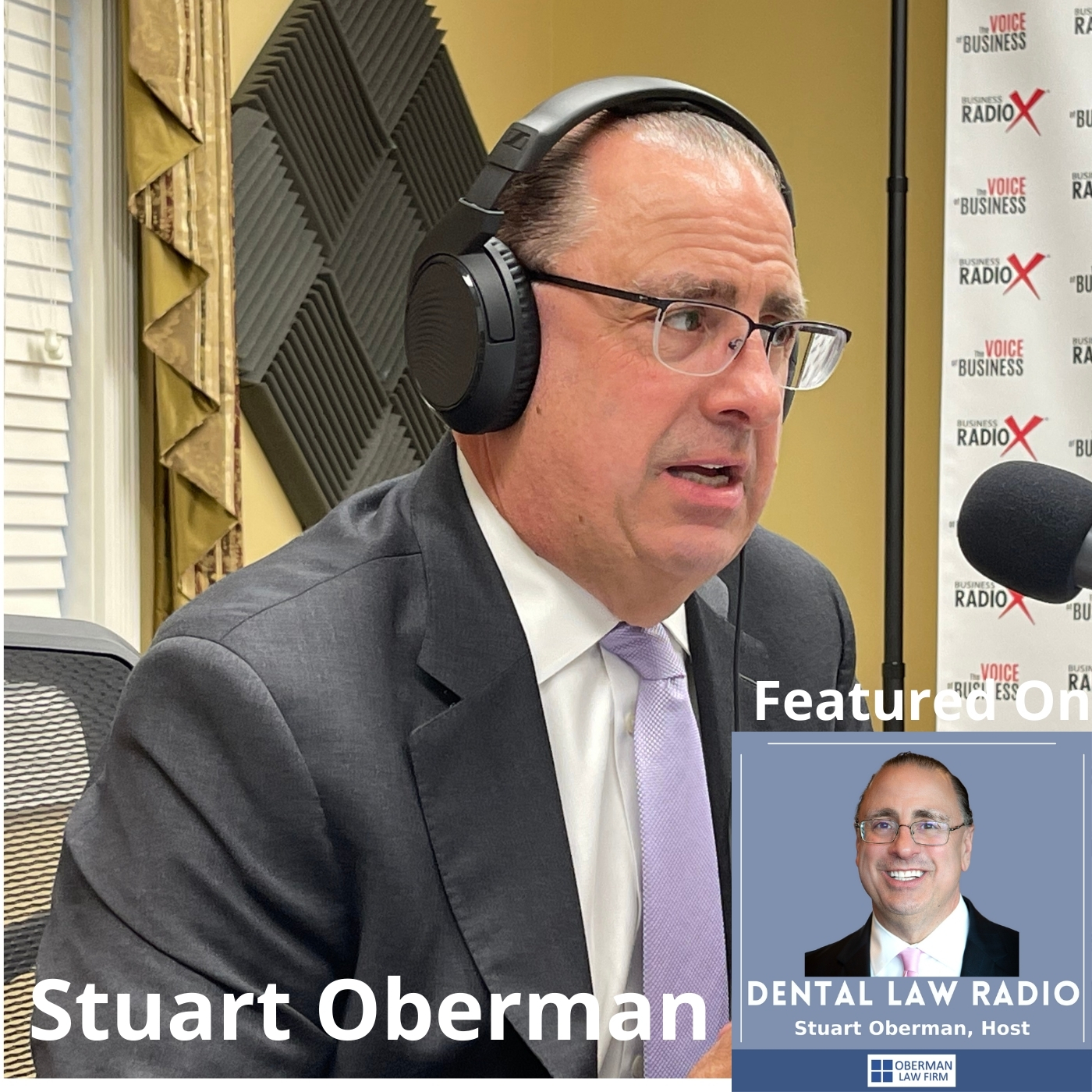
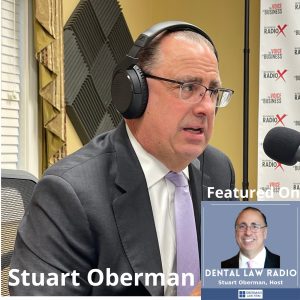
Before you start interviewing for that open position in your practice, you’d be wise to listen to this episode of Dental Law Radio. Host Stuart Oberman offered a reminder that ADA requirements apply in the interview process, not just after an employee is hired. Stuart also covered a growing trend: interviewees secretly recording their interviews with potential employers. Dental Law Radio is underwritten and presented by Oberman Law Firm and produced by the North Fulton studio of Business RadioX®.

TRANSCRIPT

Intro: [00:00:01] Broadcasting from the Business RadioX Studios in Atlanta, it’s time for Dental Law Radio. Dental Law Radio is brought to you by Oberman Law Firm, a leading dental-centric law firm serving dental clients on a local, regional, and national basis. Now, here’s your host, Stuart Oberman.

Stuart Oberman: [00:00:26] Hello everyone, and welcome to the Dental Law podcast. You know, as we go into this second half of the year, if you will, we’re seeing a lot of H.R. Movement in the Federal Law area. And we’re becoming more and more astute as to interviewing process, Americans with Disabilities Act. And we’re getting a lot of questions regarding the interview process. What do we do? How do we do it? What’s the questions? What’s not the questions? What’s the proper answer? Are we doing Zoom calls? What’s the protocols for the interviews now in today’s world?
Stuart Oberman: [00:01:04] So, I want to hit a couple of things that, really, our doctors are do not know about, I would say as a whole. And I think it’s important because it is one less step that doctors have to worry about. So, we’re going to talk a little bit about are you violating Federal Law during the interview process, which is an absolute loaded question.

Stuart Oberman: [00:01:24] So, what we’re discovering now is, actually, interviewees on Zoom calls are actually recording your phone calls or recording your sessions. We’re discovering that potential candidates are also recording your conversations during an interview process. So, what you thought was a confidential communication between a prospective employee and employer is now going viral. So, I think you got to be very, very, very careful how the interview process takes place, the procedures in place, make sure the questions are in place, make sure that you have the protocols in place to have a legitimate interview process, which is not in violation of State and Federal Law.

Stuart Oberman: [00:02:20] But I want to talk about a lawsuit that came about that, I think, has been on the horizon for a while and it’s been a topic of a lot of things that we see in our dental offices also. So, on April 29, 2001, the EEOC filed suit against Wal-Mart. Again, I want to drill this down to how this affects our doctors, an interview process. So, our doctors have to be aware of the American with Disabilities Act whenever they are interviewing anyone or actually working with employees on a day-to-day basis.

Stuart Oberman: [00:02:53] So, what does this lawsuit allege? It alleges something our doctors probably do not do on a daily basis. The allegation, that Wal-Mart violated the Federal Law by not providing a sign language interpreter for the applicant. So, the question is, doctors, staff members, team members, what are you going to do if you discover that an applicant who’s qualified, that’s a good candidate, comes with an ADA requirements – Americans with Disabilities Act requirements – for a legitimate interview, and you have to accommodate that. Do you have a procedure in place to accommodate that worker?

Stuart Oberman: [00:03:47] An interview process, you have to hire them, but do you have a process in place to accommodate them? So, the allegation is, they basically failed to hire this particular person because he was deaf. So, the EEOC, of course, says the ADA requires that employers provide a disabled and able-bodied applicants the same opportunity to compete for the job, which is fair. The question is, when you do your interview process, are you doing that? How are you doing that? What’s the process? Do you even know, when that person comes in, if there’s a disability? And if so, what do you do when you discovered that interview process? Or, do you do what probably a lot of our employers or doctors do, have a ten-minute interview and they’re done? You made the decision even before the person sits down.

Stuart Oberman: [00:04:47] So, the bottom line is, is that, when the H.R. process or an interview process, you have to make sure, one, your questions are legitimate. Two, your reasoning is legitimate. Three, that you’re absolutely complying with all the ADA requirements that are required to provide the applicant the same opportunity as a – I’ll use the term – normal bodied person that is not subject to the American with Disabilities Act.

Stuart Oberman: [00:05:21] So, the bottom line is, is that, as these rates increase, as our exposure increases because potential candidates are now recording conversations, candidates are now putting things viral, interview process-wise, the EEOC is going to hold you accountable. That’s the last thing you need. And you’re trying to hire a candidate and, all of a sudden, you’ve got the EEOC filing a complaint against you because you failed to comply with the ADA.

Stuart Oberman: [00:05:52] So, when you start this process again, H.R., H.R. in dental offices is your biggest nightmare. You got a procedure in place; you’ve got a person appointed in your office to understand this. This is not your sixth person position. You can’t have one person doing H.R. You can’t have one person doing payroll. You can’t have the same person doing hygiene, checking out. It’s not going to work. That’s a recipe for disaster.

Stuart Oberman: [00:06:21] So, again, take a look at your policies, tailor your procedures, what is your H.R. in place? Especially in today’s economy where it is so hard to find workers, workers are as transient as ever in today’s world. Some of our doctors are showing 30, 40, 60, 70 percent turnovers. That is a lot. And you have to have a policy in place, procedures in place, for interviews. It is critical. A bad interview, a bad procedure, a bad H.R. matter will set you back months and years.

Stuart Oberman: [00:06:58] So, quick update, H.R.. Do it, get it in place, keep up to date what’s going on. For those who really want to get involved in H.R. process, I would urge you to reach out to us. We do have a newsletter for our clients. We really try to have a lot of bullet points on H.R. process because it is so ongoing. They’re not comprehensive. It’s not a six day read. A lot of us just touch points what you need to know. Please feel free to give us a call. Please reach out to us. That’s what we do every day so we have a lot of knowledge with any industry.

Stuart Oberman: [00:07:37] Any questions, please feel free to give us a call at 770-886-2400. Feel free to reach out to me directly, stuartoberman – Stuart, S-T-U-AR-T – @obermanlaw.com. Thank you everyone. Hopefully, this has been of some value. If you just took away one particular piece of advice, then it’s a success as far as I’m concerned. Have a great day. And we’ll see you back in our next podcast.

 

About Dental Law Radio

Hosted by Stuart Oberman, a nationally recognized authority in dental law, Dental Law Radio covers legal, business, and other operating issues and topics of vital concern to dentists and dental practice owners. The show is produced by the North Fulton studio of Business RadioX® and can be found on all the major podcast apps. The complete show archive is here.

Stuart Oberman, Oberman Law Firm

Stuart Oberman, Dental Law RadioStuart Oberman is the founder and President of Oberman Law Firm. Mr. Oberman graduated from Urbana University and received his law degree from John Marshall Law School. Mr. Oberman has been practicing law for over 25 years, and before going into private practice, Mr. Oberman was in-house counsel for a Fortune 500 Company. Mr. Oberman is widely regarded as the go-to attorney in the area of Dental Law, which includes DSO formation, corporate business structures, mergers and acquisitions, regulatory compliance, advertising regulations, HIPAA, Compliance, and employment law regulations that affect dental practices.

In addition, Mr. Oberman’s expertise in the health care industry includes advising clients in the complex regulatory landscape as it relates to telehealth and telemedicine, including compliance of corporate structures, third-party reimbursement, contract negotiations, technology, health care fraud and abuse law (Anti-Kickback Statute and the State Law), professional liability risk management, federal and state regulations.

As the long-term care industry evolves, Mr. Oberman has the knowledge and experience to guide clients in the long-term care sector with respect to corporate and regulatory matters, assisted living facilities, continuing care retirement communities (CCRCs). In addition, Mr. Oberman’s practice also focuses on health care facility acquisitions and other changes of ownership, as well as related licensure and Medicare/Medicaid certification matters, CCRC registrations, long-term care/skilled nursing facility management, operating agreements, assisted living licensure matters, and health care joint ventures.

In addition to his expertise in the health care industry, Mr. Oberman has a nationwide practice that focuses on all facets of contractual disputes, including corporate governance, fiduciary duty, trade secrets, unfair competition, covenants not to compete, trademark and copyright infringement, fraud, and deceptive trade practices, and other business-related matters. Mr. Oberman also represents clients throughout the United States in a wide range of practice areas, including mergers & acquisitions, partnership agreements, commercial real estate, entity formation, employment law, commercial leasing, intellectual property, and HIPAA/OSHA compliance.

Mr. Oberman is a national lecturer and has published articles in the U.S. and Canada.

LinkedIn

Oberman Law Firm

Oberman Law Firm has a long history of civic service, noted national, regional, and local clients, and stands among the Southeast’s eminent and fast-growing full-service law firms. Oberman Law Firm’s areas of practice include Business Planning, Commercial & Technology Transactions, Corporate, Employment & Labor, Estate Planning, Health Care, Intellectual Property, Litigation, Privacy & Data Security, and Real Estate.

By meeting their client’s goals and becoming a trusted partner and advocate for our clients, their attorneys are recognized as legal go-getters who provide value-added service. Their attorneys understand that in a rapidly changing legal market, clients have new expectations, constantly evolving choices, and operate in an environment of heightened reputational and commercial risk.

Oberman Law Firm’s strength is its ability to solve complex legal problems by collaborating across borders and practice areas.

Connect with Oberman Law Firm:

Company website | LinkedIn | Twitter

Tagged With: ADA compliance, ADA requirements, Americans with Disabilities Act, Dental Law Radio, hiring employees, Interview process, interviewing, Oberman Law, Stuart Oberman

Tiffany C. Wright, The Resourceful CEO, LLC

July 22, 2021 by John Ray

The Resourceful CEO
North Fulton Studio
Tiffany C. Wright, The Resourceful CEO, LLC
Loading
00:00 /
RSS Feed
Share
Link
Embed

Download file

The Resourceful CEO

Tiffany C. Wright, The Resourceful CEO, LLC (The Exit Exchange, Episode 7)

Tiffany Wright of The Resourceful CEO joined The Exit Exchange to discuss many factors business owners need to consider in preparing to sell. These issues are both varied and complex, including cash flow issues, the psyche of the owner as they prepare to sell, being realistic about what the buyer needs to see, the strategic vs. investment potential of a business, and more. Tiffany’s comments are chockfull of insights for business owners thinking ahead to their exit strategy or even just wanting to improve their operations. This edition of The Exit Exchange is co-hosted by David Shavzin and Bob Tankesley and is produced virtually from the North Fulton studio of Business RadioX® in Alpharetta.

The Resourceful CEO, LLC

Your business IS valuable. It provides income for you, jobs that allow your employees to support their families and grow, and equity / net worth that supports your current, retirement, or next-generation wealth objectives.

Increase company EARNINGS  and CASH FLOW and free up your time to drive wealth. If you or your business isn’t there yet, The Resourceful CEO can help.

Acting in a business consultant or a fractional COO/CEO capacity, The Resourceful CEO leads owners through successful, impactful financial and operational business restructurings that drive higher cash flow, stronger profits, greater owner flexibility, and freedom…and successful owner exits.

Company website | LinkedIn | Twitter

Tiffany C. Wright, President, The Resourceful CEO, LLC

Tiffany C. Wright, President, The Resourceful CEO, LLC

Tiffany helps small to medium B2B companies restructure their operations and finances to generate stronger cash flow, higher profits and greater revenue. Her clients have experienced revenue increases of 10 to 40%, profitability increases of 20% to 250%, and doubling to quadrupling of cash flow in <=1 year. Tiffany C. Wright will talk to us about how you too can revamp your business to deliver your goals. She’s also the author of The Funding Is Out There! Access the Cash You Need to Impact Your Business.

Whether you’ve got a $300,000 transportation business, a $20 million business services company, or are an aspiring entrepreneur with options – Tiffany C. Wright has information and strategies for your business success.

Tiffany now combines her passion for financial independence and business ownership into helping B2B business owners who are frustrated, bored, upset and scared about the state of their business operations.

LinkedIn

The Exit Planning Exchange Atlanta

The Exit Planning Exchange Atlanta (XPX) is a diverse group of professionals with a common goal: working collaboratively to assist business owners with a sale or business transition. XPX Atlanta is an association of advisors who provide professionalism, principles and education to the heart of the middle market. Our members work with business owners through all stages of the private company life cycle: business value growth, business value transfer, and owner life and legacy. Our Vision: To fundamentally changing the trajectory of exit planning services in the Southeast United States. XPX Atlanta delivers a collaborative-based networking exchange with broad representation of exit planning competencies. Learn more about XPX Atlanta and why you should consider joining our community: https://exitplanningexchange.com/atlanta.

The Exit Exchange is produced by John Ray in the North Fulton studio of Business RadioX® in Alpharetta. The show archive can be found at xpxatlantaradio.com. John Ray and Business RadioX are Platinum Sponsors of XPX Atlanta.

Tagged With: Bob Tankesley, Cash Flow, cash flow management, cash flow planning, David Shavzin, exit planning, IBIDA, The Exit Planning Exchange Atlanta, The Funding Is Out There, The Resourceful CEO, tiffany c wright

Workplace MVP: Erika Lance, Chief Human Resources Officer, KnowBe4

July 22, 2021 by John Ray

WMVPErikaLanceAlbum
Minneapolis St. Paul Studio
Workplace MVP: Erika Lance, Chief Human Resources Officer, KnowBe4
Loading
00:00 /
RSS Feed
Share
Link
Embed

Download file

KnowBe4

Workplace MVP: Erika Lance, Chief Human Resources Officer, KnowBe4

Recently named 2021 OnCon HR Professional of the Year, Erika Lane, Chief Human Resources Officer for KnowBe4, joined host Jamie Gassmann to discuss her career journey and share her experiences and ideas on hiring the right person for the job and the culture, holding the hiring individuals responsible for the quality and fit of that hire, and how KnowBe4 retains and supports their “Knowsters.” Erika also explains KnowBe4 initiatives like Project Restart, for workers stuck in careers they don’t enjoy, and Project New Start, for veterans and first responders who are changing careers. Workplace MVP is underwritten and presented by R3 Continuum and produced by the Minneapolis-St.Paul Studio of Business RadioX®.

KnowBe4

KnowBe4, the provider of the world’s largest security awareness training and simulated phishing platform, is used by more than 35,000 organizations around the globe. Founded by IT and data security specialist Stu Sjouwerman, KnowBe4 helps organizations address the human element of security by raising awareness about ransomware, CEO fraud and other social engineering tactics through a new-school approach to awareness training on security.

Kevin Mitnick, an internationally recognized cybersecurity specialist and KnowBe4’s Chief Hacking Officer, helped design the KnowBe4 training based on his well-documented social engineering tactics. Tens of thousands of organizations rely on KnowBe4 to mobilize their end users as the last line of defense.

Forrester Research has named KnowBe4 a Leader in the 2020 Forrester Wave for Security Awareness and Training Solutions. KnowBe4 received the highest scores possible in 17 of the 23 evaluation criteria, including learner content and go-to-market approach.

The KnowBe4 platform is user-friendly and intuitive. It was built to scale for busy IT pros that have 16 other fires to put out. Our goal was to design the most powerful, yet easy-to-use platform available.

Customers of all sizes can get the KnowBe4 platform deployed into production twice as fast as our competitors. Their Customer Success team gets you going in no time, without the need for consulting hours.

They are proud of the fact that more than 50% of their team are women, where the average in cybersecurity is just 20% of employees.

Company website | LinkedIn | Facebook | Twitter

Erika Lance, Chief Human Resources Officer, KnowBe4

Erika Lance, Chief Human Resources Officer, KnowBe4

With over 25 years of experience and prestigious awards such as the 2021 OnCon HR Professional of the Year Award and the 2018 Tampa Bay Business Journal’s People First Award, Lance is a distinguished leader in the Human Resources field. She has been promoted to chief human resources officer at KnowBe4 where she is responsible for leading the global HR team and developing new initiatives for recruiting, retention, company culture and diversity. Under her leadership throughout the last few years, the People Operations team has grown from 10 team members to over 50 team members in 11 countries across six continents. Lance is most well known for her radical transparency and her people-centric approach to Human Resources.

The OnCon Icon Awards recognize the top HR professionals and HR vendors in the entire world. Finalists were voted on by peers to determine the winners. Voting on finalists was open to the public and was based on the following criteria:

  • Made a considerable impact on their organization and/or previous organizations.
  • Made strong contributions to their professional community through thought leadership.
  • Innovate in their role/career.
  • Exhibit exceptional leadership.

“As HR leaders we’ve dealt with a lot of changes this year, and I’m sure there are still more to come,” said Lance. “The fact that we’re talking about and awarding the successes from this year just shows that we’re doing something right. We all adjusted to working from home. We all had to get used to this new way of life and hopefully we’ve all figured out ways to keep our employees happy, healthy and engaged while working remotely.”

Lance was recognized for spearheading new employee initiatives during COVID-19 pandemic to keep energy and morale high. Her leadership has directly positively influenced KnowBe4 and its employees.

LinkedIn

R3 Continuum

R3 Continuum is a global leader in workplace behavioral health and security solutions. R3c helps ensure the psychological and physical safety of organizations and their people in today’s ever-changing and often unpredictable world. Through their continuum of tailored solutions, including evaluations, crisis response, executive optimization, protective services, and more, they help organizations maintain and cultivate a workplace of wellbeing so that their people can thrive. Learn more about R3c at www.r3c.com.

Company website | LinkedIn | Facebook | Twitter

About Workplace MVP

Every day, around the world, organizations of all sizes face disruptive events and situations. Within those workplaces are everyday heroes in human resources, risk management, security, business continuity, and the C-suite. They don’t call themselves heroes though. On the contrary, they simply show up every day, laboring for the well-being of employees in their care, readying the workplace for and planning responses to disruption. This show, Workplace MVP, confers on these heroes the designation they deserve, Workplace MVP (Most Valuable Professionals), and gives them the forum to tell their story. As you hear their experiences, you will learn first-hand, real life approaches to readying the workplace, responses to crisis situations, and overcoming challenges of disruption. Visit our show archive here.

Workplace MVP Host Jamie Gassmann

In addition to serving as the host to the Workplace MVP podcast, Jamie Gassmann is the Director of Marketing at R3 Continuum (R3c). Collectively, she has more than fourteen years of marketing experience. Across her tenure, she has experience working in and with various industries including banking, real estate, retail, crisis management, insurance, business continuity, and more. She holds a Bachelor of Science Degree in Mass Communications with special interest in Advertising and Public Relations and a Master of Business Administration from Paseka School of Business, Minnesota State University

TRANSCRIPT

Intro: [00:00:03] Broadcasting from the Business RadioX Studios, it’s time for Workplace MVP. Workplace MVP is brought to you by R3 Continuum, a global leader in workplace behavioral health, crisis, and security solutions. Now, here’s your host, Jamie Gassmann.

Jamie Gassmann: [00:00:24] Hi, everyone. Your host, Jamie Gassmann, here and welcome to this episode of Workplace MVP. So, picture this, you have an open position, you’ve crafted what you believe to be the best written job description you could possibly write, and you’re now navigating the various candidates who have applied. As you comb through the numerous resumes, looking at the talent pool options who have expressed interest in your position, you identify some standout candidates that on paper seem to have most of the skills and experience you are seeking. The interview is scheduled and it’s time to meet the candidate in person.

Jamie Gassmann: [00:01:02] But how do you ensure you are asking the right questions to truly gauge if they are a cultural fit within, not just your organization, but the team they will be working with? Also, they may not have 100 percent of the skills and experience you are seeking. How much of the job description are you willing to accept as enough? Or which of the skills and experience are non-negotiables, they have to have them? These are questions that leaders likely face every time they venture into the hiring process. How can they create an approach to hiring or promoting within that not only ensures they make better hiring decisions, but that they are setting the employee and the organization up for a better chance at success.

Jamie Gassmann: [00:01:46] With us today to share her approaches that have delivered proven results to her organization is award winning Workplace MVP Erika Lance, Chief Human Resources Officer for KnowBe4. Welcome to the show, Erika.

Erika Lance: [00:02:00] Wow. Thank you for having me. That was an amazing intro. I appreciate it.

Jamie Gassmann: [00:02:05] And congratulations to you on your recent promotion to Chief Human Resources Officer. What an incredible honor. And I really like to have you walk me through your career journey and tell us a little bit about how you got to this role.

Erika Lance: [00:02:18] Well, I have a very interesting career journey. I will say it actually goes back to when I was very young. I’m not going to mention my age because of my fabulousness. But when I was younger, I had a job working in administration at a stock brokerage firm, and I had helped come through a couple resumes with them with no training. I do tell people this story that I actually got my GED. I didn’t finish high school. I just start working for my family when I was about 14 years old and didn’t go to college for this. So, I had an administrative job and did that.

Erika Lance: [00:02:54] So, when I was looking for my next job, I put on there that I did some recruitment. And that next job saw that and they’re like, “Oh, you know how to do hiring? You know how to do H.R.?” And, of course, I was like, “Yeah. Absolutely. I did all of those things,” which I had not. So, it was a little bit of trial by fire to do that. But I’m a firm believer that you can take on any challenge you want if you’re willing to do the learning and the research necessary to do that.

Erika Lance: [00:03:22] So, I’ve had a very interesting career that has then taken me from that moment of, maybe, overstating my resume a little bit to where I am today, which has been very, very fortunate. And I consider kind of an exception to the rule, generally, when you have that kind of background. But I was fortunate that they believed me and that I was able to rapidly compensate for that lack of knowledge to be able to move forward.

Jamie Gassmann: [00:03:51] It’s very impressive. And in addition to the promotion, you recently were awarded the 2021 OnCon HR Professional of the Year Award. So, tell me a little bit about receiving that honor.

Erika Lance: [00:04:02] That was super exciting. Why it was most exciting to me is, it’s voted on. People have to vote for you. Obviously, any award is voted on. But I mean, it’s not like a committee vote. Like, people sign in and vote for you. So, when I got nominated, I was super excited, so I let my Knowsters – that’s what we call our KnowBe4 employees – know that I was nominated, if they felt like they wanted to put in a vote. And then, I posted it on LinkedIn and also on Facebook.

Erika Lance: [00:04:35] And when it came time, they asked for us to have some speeches ready and I’m like, “Why are they asking me to have a speech ready?” So, I had a speech ready. And then, I went in there, like, they’re going through the categories, and I kept thinking I missed my name because they were listing a lot of people. And no, no, I received it. And, to me, it was just such an honor because it was voted on by people for me. And so, they think that I’m good enough to receive that award, which is really the difference you want to make as an H.R. person, is, you want to have that impact on employees, whether it’s current employees or former employees.

Erika Lance: [00:05:16] And a lot of the messages I got on LinkedIn and stuff when I had posted it was like, “I voted. You’re fantastic. Thank you for everything.” And there are people I don’t work with anymore, like they were at previous jobs and they were saying that. And as an H.R. professional, that’s the impact you want to have, is that, you’ve made enough of a difference in people’s lives. That something like this comes up and they’re like, “Absolutely. I’m putting your name in.” So, that was wonderful to me.

Jamie Gassmann: [00:05:43] Very amazing and validating that taking on that role so many years ago has really paid off and kind of created this incredible journey and opened doors and opportunities for you. That’s fantastic.

Erika Lance: [00:05:54] Absolutely.

Jamie Gassmann: [00:05:56] So, now, since you’ve been at KnowBe4, you’ve really grown your H.R. team quite a bit. And how have you supported your employees as you’ve gone through that growth? Because, obviously, growing departments and that change that can take place can kind of sometimes create challenging environments or challenging times. So, talk me through a little bit about how you navigated that.

Erika Lance: [00:06:21] Absolutely. One of the things that I’m a firm believer in is you have to build people to what they want to do when they decide what they want to be when they grow up again. Everybody talks about decide what you want to be when you grow up. I think we get to decide that a hundred times in our lives. We get to keep changing what we want to be when we grow up again.

Erika Lance: [00:06:41] And so, when I bring on people to the team – and I know we’re going to talk a little bit about this culture adds – is I find people that have backgrounds that can add to what the team already has, but really, really make sure my team is getting trained and certified, any mentoring or coaching that they need, so that I can grow people to grow up within the team. Because the institutional knowledge your team members get is so vital that they can just help with that.

Intro: [00:07:15] And I’ve been growing in 11 different countries, so we’re a global group. But that, along with radical honesty and radical transparency and making it super safe for employees to communicate. And when there are problems, if you make it safe for employees to communicate, they tell the problems instead of hoping nobody finds the problem. Which, unfortunately, some companies foster that, that you can’t put your arm up and say, “Hey, I created this problem and sometimes I don’t know how to solve it.” Because if they do that, they could get fired or something like that versus realizing everybody’s going to make mistakes. So, I really foster that environment.

Erika Lance: [00:07:59] And a lot of the people that worked for me, not only at KnowBe4, but in other jobs have been promoted up. And some have moved into other areas of the company to be successful there. I had one gentleman who moved from our employee relations and he’s now in our HRIS area because he loved the technology, love that, had all the H.R. experience. That worked out for me because, now, the person is working on our HRIS and IT knows H.R. instead of just an I.T. person who doesn’t know H.R. So, that’s what I do, is, I grow people because I want them to continue to expand and move up. But, yeah, we started with around eight, I think, and now I have over 60 in three-and-a-half years.

Jamie Gassmann: [00:08:46] That’s incredible growth. That’s a lot of hiring. And I’m going to touch on kind of your hiring process and kind of the approach that you use, but quick question on creating that culture of allowing people to own when they’ve made a mistake or create a problem. How do you approach that? How do you create that environment with your individuals? Do you do that by being transparent when you yourself make an error? Or is it through conversations you have with them to create that comfort level? How do you go about that?

Erika Lance: [00:09:24] Well, first of all, anything like that has to start at the very top of the organization. I’m very, very fortunate that Stu Sjouwerman, who’s the CEO of KnowBe4 and who I report to, does the same thing. If he makes a mistake, we have a morning meeting every morning with all employees, and he’ll own up right on the morning meeting if something happened and then it wasn’t correct. And we use the term extreme ownership.

Erika Lance: [00:09:50] We have a reading list of books for our company, and there’s one called Extreme Ownership that was written by two Navy SEALs. Amazing. And it talks about just taking ownership. If you’re over an area, you never throw your employees under the bus even if a mistake is made. It’s your area, you’re responsible for it. So, any mistake made beneath you, you have to own that mistake and resolve it correctly. So, we say extreme ownership there.

Erika Lance: [00:10:18] And the book, Powerful, by Patty McCord talks about radical honesty and radical transparency in your workplace. And so, we tell people that we start with that when they’re onboarding. We have a whole onboarding process that has a Welcome to KnowBe4. It used to be in-person. Obviously, COVID changed things. But we have a video now of all of us that they met in person giving our little tidbits of advice on things.

Erika Lance: [00:10:45] And I find the employees are waiting for another shoe to drop when they start at KnowBe4, because you say, “We have this. It’s safe. You can talk.” And their immediate thing is, “I’m not saying a word. I’m not going to say anything.” Because you’re so used to people going, “Oh, yeah. We have an open door.” But then, there’s another open door behind the person, and you go right out the open door, and you don’t have a job anymore. So, we show them by the actions that we take that it’s safe. We let it come up. We let it come up naturally.

Erika Lance: [00:11:16] Even if something happens and you go, “Hey, did this happen?” And they’re maybe a little skittish and going, “Yeah. But -” and they try to explain that. I always tell, “Stop. Stop defending. Just explain what happened. Okay. Cool. Do you have a solution for it or do you want some advice?” And then, the first time it happens, they aren’t fired and they aren’t on a disciplinary warning for something silly. Because we’re all going to make mistakes. I make mistakes. I started with, “Hi. I have a ton of major experience. I know what mistakes are.” But you have to be willing to go, “Okay. That happened. Let’s see if we can prevent it from happening again.” If it’s the same mistake over and over, that’s a different situation. But, you know, it’s Jurassic Park, we’ve got to make all new mistakes.

Jamie Gassmann: [00:12:02] Yeah. Absolutely. You learn from them is kind of some of the advice I give to my employees who are afraid to make that mistake. So, looking at your hiring practices, you have some best practice approaches that you use in navigating that process that helps you, especially within this level of expansion that you had. Can you share those with our listeners?

Erika Lance: [00:12:27] No. They’re top secret. Nobody can know anything. Just kidding. Of course. I believe in sharing knowledge. It’s a huge thing for me, because the more we share successful things in H.R., the more we can help each other expand an organization. So, how it works at KnowBe4 before is, we have, obviously, our expansion team, which are our recruiters. So, I’ll say the term recruiter, even though we call it something different, just so that everybody understands. And we also have the hiring managers.

Erika Lance: [00:12:53] The biggest thing is we created training for hiring managers that explain what their duties, what their role is in this. And one of the key components for both the recruiters and the hiring manager is that – I stated it and this is my firm belief – both of those people are 100 percent responsible for the human that they hire. So, if they hire them and something goes wrong or is off, we do a lot of look backs to go, “Was there something we missed in the hiring process? Was there something we missed in the onboarding? Was there something we missed in training? Like, how do we avoid not having that situation happen?” Obviously, if somebody had a family emergency and their mom was terribly sick and they had to leave, there’s no look back. Like, you can’t know that the mom was going to get sick. We’re not quite to that stage of Jedi mind powers yet.

Erika Lance: [00:13:44] But we could say that, if something goes wrong and the employee doesn’t work out, both of these guys are 100 percent responsible and they should be defending their choice to hire this. So, if either one of them don’t feel like this person is a good fit, they’re allowed to say no during the process. Either side, both the hiring manager and the recruiter, are both allowed to do that.

Erika Lance: [00:14:07] We also firmly believe in using – I call it – Spidey senses, because Spider-Man talks about it when his hair stands up on him. But if you get a gut feeling during the interview process, either in a positive way or a negative way, you can utilize that because sometimes that’s all you get. You can’t exactly pinpoint what the problem is, but you know there’s something wrong. The agreement is we stop the process and you just have to go, “I don’t feel like they’re the right candidate.” And it’s okay, we don’t have to justify the reason they don’t feel like it’s the right candidate.

Erika Lance: [00:14:41] But we go through a series of things, like, for a lot of the positions. First of all, we do not let our ATS filter for us. I think ATSs, which is Applicant Tracking System, is filtering your prospects based on 25 key words or phrases. You lose the humans in that. You completely lose the humans because a lot of people don’t know you have to write your resume to that. Or they go in and they write their resume to that, but they still might not be a qualified candidate. They just figured out the the glitch in the ATS matrix, so to speak.

Erika Lance: [00:15:17] So, we have them reviewed. We have sample questions – that’s usually the first step – about their experience in that particular kind of role to ask back. They have a phone interview with the recruiter to see how how they answer a series of questions and how the recruiter feels about them. And then, the recruiter will move them on to the hiring manager. And the next would be, potentially, a series of tests depending on the role. Like, our developers do a whiteboard test on some development skills just to see.

Erika Lance: [00:15:51] Because, obviously, resumes can say anything. I mean that evident by my resume previously. They can say anything, it’s just what is the actual experience that that person has. And maybe they’re not even saying enough about their experience on the resume because we’re not the greatest at teaching people how to write resumes in the world. I know there’s classes and people who write them for you, but this is an art form that isn’t always done correctly.

Erika Lance: [00:16:18] But they get a chance to do that, do a face-to-face, depending on the level of the employee. They might do a few more if they’re an executive and stuff. But we have key questions around being a manager. We have some trick questions about being a manager and stuff. But it allows the person to go through the process. And we also talk a lot about what the company culture is like.

Erika Lance: [00:16:41] One of the things at KnowBe4, for instance, is Halloween is a really big deal. Like, everybody almost dresses up for Halloween. We dress up areas. Like, this is a huge deal. So, we ask every applicant what their favorite Halloween costume is or what do they think of Halloween and stuff like that. And if somebody is like, “Oh, my gosh. It’s the worst holiday in the world. I think it’s so dumb, blah, blah, blah.” Regardless of anything else, they are probably not going to be a fit for KnowBe4. For them as well, because we do so many things that are like that, that are inspired by things and are fun and party like.

Erika Lance: [00:17:20] We used to do quarterly mingles before COVID, and we had a bowl, and a rock climb. Like, do you want to participate in these things if you seem to want to be very conservative or something? Maybe you won’t be a great fit for that or that team if that team is really playful. And I think it’s both the company and what is the culture of that team like? What do they like to do? We all have different managers. Some are, like, the very Care Bears kind of managers. And some are the very, like, let’s do a team sport kind of managers. And will they fit in with that as well?

Erika Lance: [00:18:00] So, I think you have to find people that our culture adds and culture fits, but you have to be very good at telling them this is what it’s actually like. Every one of our interviews, too, is, we’ll explain what the day-to-day is like for the person instead of very generalities. And the worst question I think you can say to an employee is, “We move really fast here. This is a fast-paced environment,” without defining what that means. Because if they go, “Oh, yeah, no. I’m really good in fast-paced environments.” And, say, you want them to do data entry and you go, “Well, you have to enter 200 files a day.” And to them, fast-paced is 50 files a day, you’re not going to have a fit for an employee. But you’re not going to know that because you didn’t ask them what that means, like what is it actually like.

Jamie Gassmann: [00:18:49] So, you’re kind of touching on it a little bit, that cultural fit. Can you define for the audience what you mean by that? Like, when you’re in that hiring process, what is culture fit?

Erika Lance: [00:19:03] For us, cultural fit is somebody who is looking for more than just a job. They’re looking for a place that they can grow and expand in, that they can be their own self in. And that they want to be a part of the team. And that’s a key part, does a person really want to be part of the team? Because all of our activity center are around a team.

Erika Lance: [00:19:30] Another thing is, we have metrics for every single position within the company. We do metrics on it, so we keep numbers. Are they fine with that? Are they fine with having the numbers thing? Are they fine with a very open work environment? Meaning, we have an open floor plan. Obviously, COVID, a lot of people have worked from home. But we have an open floor plan, are they comfortable with that? Are they comfortable with being held to a certain standard? Or how do they feel about, like, the fun part of the atmosphere? How do they feel about some of the activities? We do a ton of team building activities, whether it’s on a small team itself or on the larger sector area division of it.

Erika Lance: [00:20:17] And then, just kind of finding out where they feel they fit from a job standpoint or career standpoint within a company. Are they just there to punch a clock? They’re not going to be a very good Knowster. And some people can want to do that and it’s totally fine, but they’re not going to do well because the teams going to want to rally the teamness and they’re going to want to stand out, which can create in individuation for them.

Erika Lance: [00:20:43] And even if they don’t want the team thing, then the rest of the team goes, “Why does this person not want to be on the team?” And it can create a weirdness. And you avoid that by defining what that team is like and what are the fun things that you do and what is expected. And you’re expected to learn a lot. We’re constantly learning. We’re constantly reading books. Like, how do you feel about that sort of thing? Because if you’re going to be upset every time a new training course comes out, well, you’re not going to be a good cultural fit. This is going to be very stressful for you when these things come up. We have to do these courses.

Erika Lance: [00:21:20] “There’s another book to read? Waah.” Well, it sounds silly. I mentioned two books already. We have a reading list of about 20 books that are recommended. Not everybody has to read them, but some team do. Like, there’s a book called Never Split the Difference that was written by an FBI negotiator. And that’s something our sales team has to read. Well, if you’re like, “No, I hate reading. I’m not going to read.” You may have a problem when we have these books. So, it’s little things like that that can create great divides between areas.

Erika Lance: [00:21:57] And sales, we have goals every month. And you have to want to play that game of getting that goal. We have lots of fun things around that. But if you’re not into that, you’re going to not be a cultural fit or a cultural add.

Jamie Gassmann: [00:22:08] I love that you guys have very defined kind of cultural nuances that are important to the overall success of the organization. So, for other organizations, is there a way that they can train or empower their leaders to understand their own culture to be able to leverage cultural fit when they’re doing their interview process? If you were going to give recommendation for that, what would you give?

Erika Lance: [00:22:37] I would say get it defined from the top of the organization what the culture needs to be. Then, secondarily, train every single person in an executive or management capacity on what that is and how you do that. Meaning, if you have a process, like we have a process where our managers are responsible for their humans. H.R. does not do disciplinary actions. We assist and guide on how a warning needs to be written or said just because there are so many nuances, as we all know in H.R., about what is right versus what is correct for an area to be in.

Erika Lance: [00:23:15] But we have the managers for the discipline. They’re fully responsible. They get all the good and the bad with the people. But they have to understand how the overall management philosophy, aka culture, needs to run. How do we all agree and define those cultural points and then make sure everyone is adhering to them?

Erika Lance: [00:23:37] Like, we have a policy called Say It To Your Face. If you have a problem with somebody, you don’t get to go complain to somebody else. You have to say it to them. Now, if you don’t feel comfortable, you can ask for assistance to do that. But we really hold our employees responsible. We’re adults. And it’s very different, obviously, if you’re being sexually harassed or something like that, please report that correctly. But if somebody just said something to you the wrong way or sent an email that seemed snarky, go over to them and go, “Hey, Bob. Listen, I got your email and I don’t know if you’re upset or what, but can we talk about whatever this is?” If you don’t do that, it creates separation.

Erika Lance: [00:24:18] So, that’s like a philosophy we have. So, every manager, if somebody comes and goes, “I’m really mad. Sally said blah to me.” They’ll go, “Okay. Did you say it to Sally’s face?” That will come out of every single manager’s mouth because that’s how we operate. And if they don’t have the strength to do it themselves, we go, “If you want some help, we can help you. But if you just choose not to do it, then that’s on you.”

Erika Lance: [00:24:43] I think a lot of organizations have forgotten somehow that all of the people that work for them, besides when they’re certain, are adults. They’re adults and you should treat them like adults, but they should be responsible for themselves. And H.R. shouldn’t be this really scary thing that has to come thundering in to solve all these problems that can be solved with open communication. And so, we started at the top and then we filtered it all the way down through our training and everything, so that’s all the case. And it’s defined for the employees what’s expected. And if you treat them all the same way, you get sort of a lot.

Erika Lance: [00:25:20] I’m going to use the analogy of a beehive. If something tries to go into a beehive that will mess up the beehive, the rest of the bees will solve that problem. So, it’s not H.R. or manager that has to solve the problem. Because if somebody goes to somebody else and goes, “Sally said blah, blah, blah to me today.” They’ll go, “Well, did you tell it to her?” Because they know that that’s the Say It To Your Face mentality that the whole company has. So, you get less problems.

Erika Lance: [00:25:46] We have less than a one percent situation rate with employees at our company, which, to me, is unheard of to have that. A lot of companies have up to a 20 percent issue rate, whether it’s investigations or disciplinary actions and stuff like that. And I think it’s because they’re not putting the responsibility from the top of the organization down that everybody’s operating with a set of defined guidelines – not rules. People don’t like rules – and guidelines as to how the company is to operate. So, they can get in trouble even unknowingly because stuff can fester.

Jamie Gassmann: [00:26:23] Absolutely. Especially when you’ve got those conflicts that aren’t resolved directly with the parties that are involved in those conflicts. So, in looking at, you know, gauging somebody as a culture fit, why is that so important? You’ve kind of touched on this a little bit, but diving into it a little bit deeper, you know, what can happen to an organization when they aren’t hiring somebody who is a fit to that company? Productivity wise or financially, what might be some of the things that they may be experiencing now as challenges that they need to think about?

Erika Lance: [00:27:04] Well, I think the more a positions open, the more desperate a hiring manager or a manager of that area gets. I make the joke sometimes, it gets to the point where they’re like, “Can you breathe on a mirror? Okay. You’re qualified. Let’s go. Let’s do it. We just don’t want zombies.” The problem with that is that, if you bring somebody in to the company that is not a fit for the company, not a fit for that team, they’re not going to work out. So, depending on how long it takes us all to come to this realization or the great “I told you so they’re not going to work out,” you’re losing money. You’re not getting the correct fit for that position. So, you’re losing money with every second that person’s on the team.

Erika Lance: [00:27:45] Then, when they leave, with all the institutional knowledge or effort you put into them, you’ve literally just lost potentially tens of thousands to millions, depending on the position. Like, you take somebody who’s an enterprise level salesperson for your organization bringing in millions of dollars. And you’ve had that open and they’ve established relationships with consumers that somebody has to start again from scratch to do. That’s potentially millions of dollars out the door because you did not make sure that person was a fit for the team. Because a person who is not a fit for the team will eventually not want to be there.

Erika Lance: [00:28:23] They can also cause problems if there are personality conflicts. Because certain personalities – and not everybody has to be the same. This isn’t a lemming thing – will not work well with other personalities. It is just hello, human nature. And we all have that in even our family lives. As much as we all love family, there are certain family members that you’re like, “Do not sit next to Joe and talk about politics because it will end badly.” So, if you don’t find those personalities that it will go well and have the right view of how work should be, then, eventually, they won’t be there anymore. They won’t be happy.

Erika Lance: [00:29:08] You have to hope they do not create a huge problem on their way out in the form of investigations or whatever. Because if somebody feels slighted – and we’re talking a little bit about this earlier when we were talking about the conflicts with people – the moment somebody has a conflict with somebody or think somebody is bad, they put on a different color glasses and they’re not rose colored in the nice pretty way. They are different. Every communication then received by that person is in that vein.

Erika Lance: [00:29:34] So, even if it’s not intended to be snarky or mean or whatever they think, they’re going to be defensive and think it’s there and a problem can build and build and build. And if it builds in a certain way and the manager doesn’t realize what’s happening and all of this stuff, then you could potentially have a lawsuit on your hands because nobody knew that this cultural fit problem was occurring. And the person ends up saying they felt harassed or singled out or whatever. And by default they were because they weren’t part of the team to begin with.

Erika Lance: [00:30:11] So, it is so important that you have that piece, but that that piece is so defined for your organization. But you have to sort of put the rules. We have a policy we have in our handbook, which is the Welcome to KnowBe4. It was written by Stu on his whole, like, how KnowBe4 came into being, this is what it is. And then, I wrote one called The Common Sense Guide to KnowBe4. Like, here are the little things that you need to know to be a Knowster at KnowBe4 and to get you out of trouble. Those are the first steps to how to agree with things.

Jamie Gassmann: [00:30:45] Great. Great information. So, in talking about, like, they get desperate for hiring, as you’re probably aware, that some industries right now are really having difficulty in hiring employees for various types of roles, you know, trying to get that right level of experience, maybe that right of level of education based around how they’ve crafted that job description for who they feel is the ideal candidate. Are there things that they maybe should be looking at or considering maybe changing in that job description that might open up possibilities for a different channel of candidates or a different level of candidates that maybe they hadn’t originally thought would be the right fit, but maybe opens up opportunity for them to expand that candidate pool?

Erika Lance: [00:31:37] Yes. I feel a lot of times people write job descriptions like they write perfect dating apps, where you’re looking for this perfect person and they need to be X tall, and this built, and this kind of career, and you have chiseled jaw, and dark hair, and blue eyes. And like you’re writing a job description as if you’re looking for a unicorn. And fantastic for all the humans out there that write a job description or a dating profile and get that unicorn to show up.

Erika Lance: [00:32:06] But the problem is, you have candidates out there that are looking at this job description and go, “I don’t qualify.” Well, do you actually need all those things? Because if you don’t need the level of education, there are a lot of people that have experience that don’t have the education. And no offense to everybody who went to school, but sometimes those people are better than the people that have the education because they’ve been there, they’ve done it, and they have all the t-shirts from doing it. So, if you limit your pool to where you’re looking for only Pegasus’ and unicorns or whatever, dragons and unicorns – I can make a lot of fantasy analogies – if you’re only looking for that, then you’re going to have a hard time finding the person.

Erika Lance: [00:32:53] Also, you need to go look at hiring managers. You need to go on LinkedIn. You need to go out there and go to the different – like, there’s a lot of, for instance, developer meetups or salespeople meetups. There’s all these meet ups in the communities, H.R. meetups. Like, if you’re an H.R. professional, trust me, you can find eight million meet ups to go to, to be the H.R. professional. But you need to go as the hiring manager and find some people and look for your own humans. You know what you’re looking for, so go look for them as well. But you got to lower your expectations, not for what you genuinely need, but go what would lead to a good candidate.

Erika Lance: [00:33:32] And I’ll give an example. I have hired several people into H.R. that have done retail management experience. They’re not H.R. professionals at all. But guess what? When you do retail, like all of us who have been lucky enough to also do fast food and stuff, you get a level of patience and understanding with the weirdest things that can happen. And in your retail, especially if you’re a retail store manager – which they escalate a lot of people interior to the retail store managers – you have had experience dealing with pretty much anything an employee can do and come up with – you know what I mean? – to be a part of it. So, do you want to be an H.R.? Do you want to train? Because you’ve got the experience of being calm, cool, collective in dealing with some of the stuff that comes up from an employee relations standpoint.

Erika Lance: [00:34:24] It’s been wildly successful for me to have that because I was willing to go, “Let me look beyond what I’m looking for, for that person who does good customer relations, who does customer service.” What are other professions that do that where the person maybe didn’t have the chance, but you have this much experience dealing with customers. Are they a good fit? And here’s the thing, too, is you help somebody advance and change their career path. They are going to be some of the most loyal employees you ever have because of what the company has done for them to help them out. And it’s the right view. So, if you can take something different, do that.

Erika Lance: [00:35:09] And go look, part of your responsibility as an executive or manager is to go find your own people. Go find them, meet them, get them to apply, get them in the door because you’ll meet them and see if they’re qualified. You get to do a pre-screening with them.

Jamie Gassmann: [00:35:24] Right. Kind of looking for those transferable skills, maybe not necessarily the experience background, but experience around areas that could be applicable in that role. Very interesting.

Jamie Gassmann: [00:35:37] So, real quick, we’re going to just get a word from our sponsor. Workplace MVP is sponsored by R3 Continuum. R3 Continuum is a global leader in providing expert, reliable, responsive, and tailored behavioral health, crisis, and security solutions to promote workplace wellbeing and performance in the face of an ever changing and often unpredictable world. Learn more about how R3 Continuum can tailor a solution for your organization’s unique challenges by visiting r3c.com today.

Jamie Gassmann: [00:36:09] So, you had mentioned in a previous conversation that employers need to also look within the organization that there may be employees with strong institutional knowledge who might be afraid to speak up about movements and career advancement. So, what kind of tips or advice would you give to leaders to help them in identifying employees that are probably sitting there waiting to be asked to move up or waiting to be asked about their career and maybe aren’t quite as confident to bring that up in a conversation. What advice would you give?

Erika Lance: [00:36:44] I think it’s very important for managers to have one-on-ones around what the career path for the employees that are working for them is and what they want to do. And make it very safe that maybe they want to do something in another part of the organization. Another thing is, we have a dedicated career team. Team employee gets to interact with them. They get to meet the career person on onboarding. We have the career person has an entire part of our intranet that they talk about things. They have different seminars. They have also gotten with every leader and mapped out the career tracks for the person and where they end up needing to go and stuff like that.

Erika Lance: [00:37:22] So, like, what steps do they need to take? What knowledge base do they need to have in order to move up into roles? And we have a tuition reimbursement and a certification policy where we help pay for the certifications that the employees need. And we have training courses so they can train. And we believe employees should have about five hours a week to train, whether it’s on their own position or other things. And they can train so they can be ready to move into maybe the junior role in that area they want to move into. Or we have manager training. So, maybe they weren’t a manager before, but they want to move up into leadership, here’s a manager training and this is how you do it.

Erika Lance: [00:38:01] I think that we promote from within between 20 and 30 percent every year of people. We do that because those are Knowsters – that’s what we call them – that want to be a part of something bigger and help the organization. And because of all the knowledge they have, they just bring that to the next area. Like, my story in the beginning about the person who moved from my employee relations over to I.T, they took all that H.R. and KnowBe4 knowledge, so when it comes up to why does H.R. need this program this way? We don’t have to go through a back and forth. He is just going to go, “They need a program this way because A, B, and C, this is what they do with it.” That’s invaluable.

Erika Lance: [00:38:45] But guess what? I couldn’t hire that because nobody has done the H.R. in my H.R. area to know the answer to that question. And that happens over and over again. Plus, that loyalty thing, if you bring somebody up within your ranks of your organization, they know there’s a loyalty. Gone are the days where people are staying at companies to get the gold watch and the retirement fund and stuff like that. I say that all the time to younger people and they have no idea what I’m talking about when I say the gold watch thing, but it’s very funny to me. It was in the movie Speed. That’s gone.

Erika Lance: [00:39:20] We don’t have that anymore where people want to stay to retire at a company. If they want to continue to grow, they’re going to leave and then potentially leave and then apply back at your company. And they’re going to come back at a much higher rate and whatever, where you could have had them this whole time growing them up into that thing. It always makes me sad when I see somebody leave a company for another job that you have within the company. You’re just not willing to give them a shot and they’re super successful. It’s silly to me to lose that talent.

Erika Lance: [00:39:52] So, I think you have to remember to put those things in because every person who walks out the door, if you only even just lose their annual salary, that’s tens of thousands of dollars that walk out the door. Just pay somebody to help get them to a higher spot within your organization.

Jamie Gassmann: [00:40:11] Yeah. I imagine this approach that you’re describing about helping them with that career growth. It impacts retention in a very positive way within an organization. Well, in even just knowing that the support that you’re providing, even if they just want to have education but maybe are comfortable where they’re at, I can imagine that also can create some retention benefits, too.

Erika Lance: [00:40:38] Oh, absolutely. Yeah. You have to want to have those people be there, and it shows the employees. And then, they refer their friends that are very qualified. Like, they talk about it. How do you get a great place to work? Like, all the awards and everything like that, we’ve gotten a ton of awards. And I really love that we’ve gotten a ton of awards. But it’s because our employees were surveyed and they love working for us. We don’t get those awards just because anybody believes that. You can’t nominate yourself and somebody just look and go, “Oh, KnowBe4 is cool. We’re going to give them an award.” It’s based 100 percent on what your employees are saying and thinking about you. That’s how you create that part of the culture and that they want to work there. And then, you’re a best place to work and then you get more employees that want to work there.

Erika Lance: [00:41:29] You’re talking about earlier recruitment things, well, how about creating an environment that is so amazing that people are beating down the door to be a part of your company. That helps solve some of the recruitment things, not all of them. Trust me, there are still unicorns you got to find out there. But it makes a huge difference.

Jamie Gassmann: [00:41:49] Definitely. And so, you mentioned the advantages in creating a foundation that feeds future success of the organization. I think you’re probably touching on it a little bit. But can you share about how that works within the organization? And I think maybe you’ve already touched on that a little bit. But if there’s anything additional that you can provide around that foundation that you’ve created.

Erika Lance: [00:42:17] I think it’s, again, creating the foundation from the top. The very top of the organization has to have the same belief and understanding that the rest does. And then, define it and promote it, and promote it constantly. And constantly remind employees about the different parts. You can do word walls, you can do meetings, however you do that, letters from the CEO. I know at some points having an all company meeting is out of the question. You have one hundred thousand employees, you probably will have a hard time doing that. But you have it filtered through the managers. You make it so it’s scalable. But you keep it going and you do not change it. You enhance it.

Erika Lance: [00:43:02] Don’t change the rules on the employees unless you’re giving them a benefit. Because if you make it harder to do something, you’re going to lose some of that feeling that the company is on their side during the process. And, remember, it’s a team activity. I don’t care if you’re at the very top of an organization, you’re built on every single person that works for you and every single thing they’re doing.

Erika Lance: [00:43:28] I worked at a company previously that had a huge mailroom. And it was a document processing company for mortgages. And people would say derogatory things about the mail room. And I was like, “Hey, so the documents don’t go in or out of this organization without the mailroom doing their job correctly and on time. We don’t meet any deadlines without this part of the organization. So, before you berate or think less of this part of the organization, it doesn’t matter how many files you produce, if they don’t ship them, it means absolutely nothing.” And it was very eye opening when that actually got circulated what each of the areas do that contribute to the overall product.

Erika Lance: [00:44:19] And that’s true even in a company that, say, makes computers. If the place isn’t shipping them out correctly and the mailroom doesn’t want to do their job or they don’t care, well, it doesn’t work out. I mean, look, in the airline field, when all the mechanics go on strike, for instance, guess what? There is not a single plane flying because the pilots aren’t going to fly a plane that the mechanics haven’t done. Or if the baggage handlers say they’re not participating anymore, they’re going on strike. A baggage handler will stop the entire airline thing from going. It stops all flights from happening. And you can go, “Well, they just move the luggage around.” Well, guess what? Your plane is not taking off now because they just move the luggage around. So, it starts from the top, but has to filter to the bottom. And everybody has to understand that.

Jamie Gassmann: [00:45:07] I love that. Everybody plays a vital role. It might be a different role, but they are definitely key to the overall success of that organization.

Erika Lance: [00:45:15] Exactly.

Jamie Gassmann: [00:45:16] So, you mentioned in a previous conversation and I just wanted to share, it was just such a creative approach that for the diversity and inclusion, you have a program that you utilize where you are providing or creating opportunities for individuals. Where, maybe on paper they may not have the experience or the skills that are needed for the job. But through this program, you provide them with education and training that builds on those skills and experience. I think you mentioned something with kind of like a smart start or like a restart. Can you talk a little bit about that structure? Because I just thought it was so innovative and a great way to identify candidates that maybe would, typically, get overlooked or maybe not considered for a role.

Erika Lance: [00:46:04] Absolutely. So, I worked a lot with local high schools, helping with some of their career committees and stuff like that. And I found that a lot of times people coming out of high school, especially in underrepresented communities, they don’t always have an option. It’s not always an option to go to college. It’s not free. There’s not an option. And some don’t have the availability to do it. And they have to just start working. It’s the the snake eating its own tail. You want somebody to come into the area, but they can’t come into the area unless they have experience, but they can’t get experience until they’re let into the area.

Erika Lance: [00:46:44] And so, if you don’t go, “Okay. Wait. We have to break this cycle. This doesn’t work.” So, we have three programs that we’re doing, but the first one was called Jumpstart. And we’re taking kids that have either graduated from high school or gotten their GED that want to move into a technical type role but have no experience. And we didn’t expect them to have any work experience at all. Instead, we got references from teachers or volunteer groups they worked with or potentially religious leaders that they had that they maybe did some work with, that’s where we got our references.

Erika Lance: [00:47:23] And we’re starting from the beginning. It was supposed to be a program of six, we had seven because our recorder got very excited and hired more than six. But we were like, “Okay. Let’s do this.” So, they’re all doing really, really well. So, that’s our first program, where we’re bringing them in. They’re coming in at a slightly lower salary than our tier one tech support because we’re seeing if they can move up to that. But at the end of the program, which is within six months, is, they get to apply for one of our tech support positions. And they will get paid what our tier one tech support get paid, because we believe in pay banding for a position, not the person.

Erika Lance: [00:47:57] And the other thing they get is, if they stay with the program, we’re giving them a two year degree. They can get an AA or an AS. And we partnered with our local college to get that to happen. And it can be in whatever they want to be when they grow up. But we want to give them the opportunity to expand their life.

Erika Lance: [00:48:15] Similarly, we had a bunch of people that applied for this program that we’re doing things like trucking all their life or cashier or something. And I went, “We should have a project Restart,” which is people who have been stuck in careers that they don’t love, but they’ve just been stuck there because they don’t look like they can do anything else. And we’re going to bring them in similarly and move them through the system to give them a different type of career path if they want to. And that’s going to be in our technical area, our customer success area, or our sales area.

Erika Lance: [00:48:45] And we’re doing a project New Start, which is for people coming out of the military or first responders. Because the military – my daughter is a combat medic. She’s very fortunate. She got her degree in health care and a bachelor’s in science. But her husband, for instance, was an MP and he came out and he could go be a police officer or work in security. That’s all they trained him to do. They have friends that work in artillery. They can fire bombs and stuff like that, which is not a transferable skill, generally – unless you’re an action movie star – to the real life.

Erika Lance: [00:49:21] So, it’s an opportunity for them to, again, come into the workforce because they have valuable skills. They have a lot of stuff that they can present. They show that they can get education and they can meet with work requirements, but they walk out and go, “Okay. What do I do next?” And we feel that this is how you are able to increase diversity in your organization.

Erika Lance: [00:49:45] Because if you’re like, “I’m okay. I’ll hire a diverse college graduate,” that, unfortunately and very sadly, is not the biggest pool of diverse candidates that you’re going to get. It’s terrible that I can say that. I don’t like having to say that, but it’s true. So, we need to open it up and companies need to go, “How do I grow my talent? And how do I grow my diverse talent to move up within the organization?” Because you cannot effectively make a change in an organization unless you’re willing to go, “Where does the problem begin?”

Erika Lance: [00:50:21] And we’re also doing a lot of education initiatives in schools and partnering with schools, so that kids growing up know that there are alternative options to being a doctor, or a lawyer, or a nurse, or whatever you’re taught in school. Like, “Hi. This is cybersecurity. This is a whole field. Here are the options. This is what you can do to get into that field. Here are the steps.” Kind of like we talked about with the career path, give kids the steps so they know what to do. Because if you only go, “Well, you can go to college.” Well, if they can’t, you know, “Okay. What’s option B? Is there an option B for them?”

Jamie Gassmann: [00:51:01] Or go to college and not really quite know what to major in, and maybe get a degree in something that, when you get done, isn’t really what you want to do, which you see that happen too.

Erika Lance: [00:51:12] A lot. And a lot of people get degrees and things, that doesn’t mean you’re going to get hired. That’s a double edged sword. I had a lot of people that work for me in data entry that had business degrees and architect degrees and stuff. Because what do you do? Just because you have a business degree doesn’t mean you know how to do business stuff. Unfortunately, it doesn’t necessarily translate.

Erika Lance: [00:51:37] Some degrees are luckier, like medical. Like, you go to business school, they don’t have a practical application set like you do when you go to medical school. They make you go do the things they’re teaching you. But business doesn’t do that. They’re like, “Here’s the thing. You’ve learned the things. Now, go. Fly. Be a bird.” And, you know, there’s a lot of falling out of the nest kind of situations that happen there.

Jamie Gassmann: [00:52:03] Definitely. So, thanks for sharing that about that program, because it just sounds like such a great innovative way of kind of thinking about the hiring process from a different perspective. And taking a different approach to getting potentially some long standing employees that can grow within your organization based on just being given that opportunity.

Erika Lance: [00:52:23] Absolutely.

Jamie Gassmann: [00:52:24] So, if you were going to give one piece of advice or piece of information that you want the listeners to be left with today, what would that be?

Erika Lance: [00:52:35] I think my main piece of advice I like to tell anybody is, you need to take ten steps back and actually look at every situation from a panoramic view. Because if you’re stuck in it and you can’t really see out of it, you’re never going to find the right solution to it. And you need to encourage others to take steps back, really look at the situation, and look at how you solve it. Not on an immediate basis, but how you come up with a long term scalable solution for the problem. And you have to be willing to put the effort in to make whatever that solution you come up with occur. And that’s part of being in H.R. It’s part of being a manager. It’s part of being anything.

Erika Lance: [00:53:22] Like the Jumpstart program we talked about, for example, we had to dedicate resources to make that happen. Well then, you need to do that, and be willing to do that, and be willing to put the effort into the one side for the positivity on the other. But I think if you don’t take steps back from a situation and look at what the best results will be, and the best result for six months, a year, five years from now, you do yourself an injustice by trying to do a quick solve to a situation or saying it absolutely has to be this way or else, because very little in life has to be absolutely to a solid.

Jamie Gassmann: [00:54:01] Great advice. So, you’ve shared a lot of great information. If our listeners wanted to connect with you further, what would be the best way that you would want them to connect with you?

Erika Lance: [00:54:08] LinkedIn is a great way to connect with me. I respond to my things. Please link with me. I won’t say put a friend request, but that’s not right. Different app. But do link with me on LinkedIn, Erika Lance, E-R-I-K-A L-A-N-C-E. And I’m at KnowBe4, and you’ll see that in my profile. So, please feel free to connect with me. I love helping people. So, if you have questions or need advice on anything or want to share something successful you guys have done out there, please do that. Because I think we all learn from each other. I didn’t just think of all this stuff. A lot of it is stuff over years of seeing people do things has caused me to be able to go, “Oh, that’s how you do that correctly.”

Jamie Gassmann: [00:54:53] That’s wonderful advice and exactly why we have you on the show today, because that’s what Workplace MVP is all about, is showcasing Workplace MVPs like yourself and the great work that you do. And thank you so much for being a part of our show and letting us celebrate you and your successes that you’ve had, for sharing your stories, and all of your great advice with our listeners. We really do appreciate you. And I’m sure your organization does as well, as well as your staff. So, thank you. Thank you.

Erika Lance: [00:55:21] Thank you.

Jamie Gassmann: [00:55:21] And we also want to thank our show sponsor, R3 Continuum, for supporting the Workplace MVP podcast. And to our listeners, thank you for tuning in. If you have not already done so, make sure to subscribe so you get our most recent episodes and other resources. You can also follow our show on LinkedIn, Facebook, and Twitter at Workplace MVP. If you are a workplace MVP or know someone who is, we want to know. Email us at info@workplace-mvp.com. Thank you all for joining us and have a great rest of your day.

 

Tagged With: Erika Lance, Human Resources, Jamie Gassmann, KnowBe4, OnCon HR Professional of the Year 2021, Project New Start, Project Restart, R3 Continuum

Why It’s Vital to “Right-Size” Your B2B Marketing, with Pete Steege, B2B Clarity

July 22, 2021 by John Ray

Pete Steege
North Fulton Studio
Why It's Vital to "Right-Size" Your B2B Marketing, with Pete Steege, B2B Clarity
Loading
00:00 /
RSS Feed
Share
Link
Embed

Download file

Pete Steege

Why It’s Vital to “Right-Size” Your B2B Marketing, with Pete Steege, B2B Clarity

Peter Steege: [00:00:00] You know, John, there’s no one size fits all solution to marketing. And that’s back to that misunderstanding that people have. They see all these things and they figure they should be doing them, too, just like everybody, all the press they see, and all the advertisements. So, they sign up to do things for marketing, not based on what’s right for their customers or what’s going to make a difference, but based on it seems like you should do that, checklist marketing.

Peter Steege: [00:00:32] So, what rightsize marketing is, starting with your customer’s journey and going to school on your customer’s journey. I walk them through this process, what would it look like if you had a success where your customer, from the first time they met you through all the steps – and I have seven steps – of meeting you, and deciding to buy from you, and committing, and using your product for the first time, and buying it again. And three years later, they love you, they’re a fan. What does that look like? And we map that out. And then, we say, “Okay. What’s it like today? What’s the reality?” And there’s gaps. It’s not that. And we’re able to identify, “Well, where are they getting stuck? Where is their friction? Where are they frustrated? And what can we do about that?” So, that’s marketing.


Peter Steege: [00:01:28] Where marketing can make a difference, you do stuff. And where you can’t, you don’t. And you end up with a much more targeted and more strategic marketing program. And then, the added piece about rightsizing, John, is, who are you as a company? If you have a very limited team, maybe you don’t have any marketers on your staff and you don’t have a lot of experience with it. You don’t want to sign up for the most complex state of the art marketing campaign because you’re not equipped to deliver on that. So, it’s not just what you can do with your customer with marketing. It’s what you as a company is ready to do with marketing.

Peter Steege: [00:02:12] So, rightsizing your marketing means doing the things that can make a difference to the level that your budget and your skills allow you to do. And measuring everything you do, doing it well. So, it’s doing less and doing it really well. And that’s what rightsize marketing is.

Pete Steege, B2B Clarity

B2B Clarity founder Pete Steege has over 30 years of marketing experience with a wide range of B2B technology and manufacturing businesses, from 50-person Silicon Valley startups to Fortune 100 firms. Coupled with extensive global experience in North America, Europe and Asia, Pete brings breadth of perspective and fresh ideas to your world. Pete is a proven marketing strategist and industry-recognized content leader that can help you untangle your marketing program and get it working to grow revenue.

LinkedIn | Twitter

Listen to the full Minneapolis-St. Paul Business Radio interview here. 


The “One Minute Interview” series is produced by John Ray and in the North Fulton studio of Business RadioX® in Alpharetta. You can find the full archive of shows by following this link.

Renasant Bank has humble roots, starting in 1904 as a $100,000 bank in a Lee County, Mississippi, bakery. Since then, Renasant has grown to become one of the Southeast’s strongest financial institutions with over $13 billion in assets and more than 190 banking, lending, wealth management and financial services offices in Mississippi, Alabama, Tennessee, Georgia and Florida. All of Renasant’s success stems from each of their banker’s commitment to investing in their communities as a way of better understanding the people they serve. At Renasant Bank, they understand you because they work and live alongside you every day.

  • « Previous Page
  • 1
  • …
  • 183
  • 184
  • 185
  • 186
  • 187
  • …
  • 276
  • Next Page »

Business RadioX ® Network


Our Most Recent Episode

CONNECT WITH US

  • Email
  • Facebook
  • LinkedIn
  • Twitter
  • YouTube

Our Mission

We help local business leaders get the word out about the important work they’re doing to serve their market, their community, and their profession.

We support and celebrate business by sharing positive business stories that traditional media ignores. Some media leans left. Some media leans right. We lean business.

Sponsor a Show

Build Relationships and Grow Your Business. Click here for more details.

Partner With Us

Discover More Here

Terms and Conditions
Privacy Policy

Connect with us

Want to keep up with the latest in pro-business news across the network? Follow us on social media for the latest stories!
  • Email
  • Facebook
  • Google+
  • LinkedIn
  • Twitter
  • YouTube

Business RadioX® Headquarters
1000 Abernathy Rd. NE
Building 400, Suite L-10
Sandy Springs, GA 30328

© 2025 Business RadioX ® · Rainmaker Platform

BRXStudioCoversLA

Wait! Don’t Miss an Episode of LA Business Radio

BRXStudioCoversDENVER

Wait! Don’t Miss an Episode of Denver Business Radio

BRXStudioCoversPENSACOLA

Wait! Don’t Miss an Episode of Pensacola Business Radio

BRXStudioCoversBIRMINGHAM

Wait! Don’t Miss an Episode of Birmingham Business Radio

BRXStudioCoversTALLAHASSEE

Wait! Don’t Miss an Episode of Tallahassee Business Radio

BRXStudioCoversRALEIGH

Wait! Don’t Miss an Episode of Raleigh Business Radio

BRXStudioCoversRICHMONDNoWhite

Wait! Don’t Miss an Episode of Richmond Business Radio

BRXStudioCoversNASHVILLENoWhite

Wait! Don’t Miss an Episode of Nashville Business Radio

BRXStudioCoversDETROIT

Wait! Don’t Miss an Episode of Detroit Business Radio

BRXStudioCoversSTLOUIS

Wait! Don’t Miss an Episode of St. Louis Business Radio

BRXStudioCoversCOLUMBUS-small

Wait! Don’t Miss an Episode of Columbus Business Radio

Coachthecoach-08-08

Wait! Don’t Miss an Episode of Coach the Coach

BRXStudioCoversBAYAREA

Wait! Don’t Miss an Episode of Bay Area Business Radio

BRXStudioCoversCHICAGO

Wait! Don’t Miss an Episode of Chicago Business Radio

Wait! Don’t Miss an Episode of Atlanta Business Radio