Business RadioX ®

  • Home
  • Business RadioX ® Communities
    • Southeast
      • Alabama
        • Birmingham
      • Florida
        • Orlando
        • Pensacola
        • South Florida
        • Tampa
        • Tallahassee
      • Georgia
        • Atlanta
        • Cherokee
        • Forsyth
        • Greater Perimeter
        • Gwinnett
        • North Fulton
        • North Georgia
        • Northeast Georgia
        • Rome
        • Savannah
      • Louisiana
        • New Orleans
      • North Carolina
        • Charlotte
        • Raleigh
      • Tennessee
        • Chattanooga
        • Nashville
      • Virginia
        • Richmond
    • South Central
      • Arkansas
        • Northwest Arkansas
    • Midwest
      • Illinois
        • Chicago
      • Michigan
        • Detroit
      • Minnesota
        • Minneapolis St. Paul
      • Missouri
        • St. Louis
      • Ohio
        • Cleveland
        • Columbus
        • Dayton
    • Southwest
      • Arizona
        • Phoenix
        • Tucson
        • Valley
      • Texas
        • Austin
        • Dallas
        • Houston
    • West
      • California
        • Bay Area
        • LA
        • Pasadena
      • Colorado
        • Denver
      • Hawaii
        • Oahu
  • FAQs
  • About Us
    • Our Mission
    • Our Audience
    • Why It Works
    • What People Are Saying
    • BRX in the News
  • Resources
    • BRX Pro Tips
    • B2B Marketing: The 4Rs
    • High Velocity Selling Habits
    • Why Most B2B Media Strategies Fail
    • 9 Reasons To Sponsor A Business RadioX ® Show
  • Partner With Us
  • Veteran Business RadioX ®

Foundational Branding Makes Marketing Much Easier, with Rebecca Rausch, Neon Lizard Creative

July 12, 2021 by John Ray

Rebecca Rausch Neon Lizard Creative
Minneapolis St. Paul Studio
Foundational Branding Makes Marketing Much Easier, with Rebecca Rausch, Neon Lizard Creative
Loading
00:00 /
RSS Feed
Share
Link
Embed

Download file

Neon Lizard Creative

Foundational Branding Makes Marketing Much Easier, with Rebecca Rausch, Neon Lizard Creative

Rebecca Raush: [00:00:00] Many people believe that branding is strictly, shall we say, just the logo. They slap the logo on everything, they make things similar colors, and, boom, they’ve got a brand. That’s not what branding is.

Rebecca Raush: [00:00:13] Branding is the cumulative perception of your company in the public. It is the reputation. It is how you handle disgruntlement. It is your art. It is your messaging. It is your visuals. It is the way the guy drives down the street, how you answer the phone. Everything that is presented to the public in the name of your company is your brand. Your employees need to be part of that brand. Everybody needs to live – what I call – the brand style, the values and the why that the company is based on.

Rebecca Raush: [00:00:43] And so, when we work with a company, we usually dig very, very deep. And we have a recipe, per se, that we follow in order to create that foundational brand, that then, if it is strong enough, it will carry through the marketing. And so, the marketing becomes much, much easier because you have this foundation of messaging, and your values, and you know exactly what you’re putting forth.

Rebecca Rausch, Chief Lizard and Founder, Neon Lizard Creative Marketing & Design

Rebecca Rausch is the Chief Lizard and founder of Neon Lizard Creative Marketing & Design just south of Minneapolis. A designer since the age of 12, Rebecca has worked in many design service fields until she went out on her own as a freelancer in 1998 and started Neon Lizard Creative.

Now an agency of 9, collectively, the NLC international team of designers has over 100 years of experience and contains designers, color theorists, a variety of specialists, and more. They serve as a comprehensive design team helping businesses just like yours build a consistent brand that is not only memorable but causes people to fall in love with their client’s business. Naming, branding, marketing, social, catalog, tradeshow plus, NLC serves as your marketing hub.

LinkedIn

Listen to the complete Minneapolis St. Paul Business Radio interview here. 


The “One Minute Interview” series is produced by John Ray and in the North Fulton studio of Business RadioX® in Alpharetta. You can find the full archive of shows by following this link.

Renasant Bank has humble roots, starting in 1904 as a $100,000 bank in a Lee County, Mississippi, bakery. Since then, Renasant has grown to become one of the Southeast’s strongest financial institutions with over $13 billion in assets and more than 190 banking, lending, wealth management and financial services offices in Mississippi, Alabama, Tennessee, Georgia and Florida. All of Renasant’s success stems from each of their banker’s commitment to investing in their communities as a way of better understanding the people they serve. At Renasant Bank, they understand you because they work and live alongside you every day.
Tagged With: Neon Lizard Creative

Catrina Kmieciak, Atlanta Humane Society

July 12, 2021 by John Ray

Atlanta Humane Society
North Fulton Business Radio
Catrina Kmieciak, Atlanta Humane Society
Loading
00:00 /
RSS Feed
Share
Link
Embed

Download file

Atlanta Humane Society

Catrina Kmieciak, Atlanta Humane Society (North Fulton Business Radio, Episode 370)

Catrina Kmieciak joined host John Ray to share the work of the Atlanta Humane Society, how that work involves much more than pet adoptions, and the opportunities for the business community to get involved, including golf tournaments, team-building corporate service days, and other events. North Fulton Business Radio is broadcast from the North Fulton studio of Business RadioX® inside Renasant Bank in Alpharetta.

Atlanta Humane Society

The Atlanta Humane Society is a no-kill shelter providing sheltering and adoption, veterinary care, and community outreach. As one of the oldest charities in Atlanta, they have been caring for the community and her animals for more than 148 years.

They believe the relationship between humans and animals has deep significance, and they call on the city and each other to take action. Together they put up a united front against cruelty, neglect, and displacement. With a heart to better lives, they connect homeless animals with good homes and neglected animals with safe spaces—uplifting their community by instilling compassion.

They are proud to be able to work together with animal advocates, other animal welfare organizations, and community partners to save lives.

The Atlanta Humane Society has pet adoption centers in Alpharetta and Duluth, and an adoption center and a veterinary center in Atlanta.

Company website | LinkedIn | Facebook | Instagram

Catrina Kmieciak, Corporate Giving Manager, Atlanta Humane Society

Atlanta Humane Society
Catrina Kmieciak, Corporate Giving Manager, Atlanta Humane Society

Catrina Kmieciak is the Corporate Giving Manager for the Atlanta Humane Society. Catrina began her professional career as a Sea Lion trainer, which allowed her to travel and work at several zoos and aquariums around North America before landing at the Georgia Aquarium in 2015, where she assisted in the launch of the brand-new sea lion department.

Catrina shifted from sea dogs to land dogs in 2019 and started working at Atlanta Humane as a Marketing Coordinator. Catrina joined the corporate giving team after discovering a passion for partnerships and extending Atlanta Humane’s mission. She helps connect organizations that care about the well-being of our community and Atlanta’s homeless dogs and cats.

Connect with Catrina by email or LinkedIn.

Questions and Topics in This Interview

  • What the Humane Society does
  • Support to statewide partners and community
  • Veterinary center, cruelty investigation, disaster relief
  • How to get involved with Atlanta Humane
  • Adoption hours
  • Corporate service days
  • Upcoming/current events

North Fulton Business Radio is hosted by John Ray, and broadcast and produced from the North Fulton studio of Business RadioX® inside Renasant Bank in Alpharetta. You can find the full archive of shows by following this link. The show is available on all the major podcast apps, including Apple Podcasts, Spotify, Google, Amazon, iHeart Radio, Stitcher, TuneIn, and others.

RenasantBank


Renasant Bank has humble roots, starting in 1904 as a $100,000 bank in a Lee County, Mississippi, bakery. Since then, Renasant has grown to become one of the Southeast’s strongest financial institutions with over $13 billion in assets and more than 190 banking, lending, wealth management and financial services offices in Mississippi, Alabama, Tennessee, Georgia and Florida. All of Renasant’s success stems from each of their banker’s commitment to investing in their communities as a way of better understanding the people they serve. At Renasant Bank, they understand you because they work and live alongside you every day.

Tagged With: Animal Shelter, Atlanta Humane Society, Catrina Kmieciak, pets

Here Comes the Government! Are You Prepared for a Medicaid Audit?

July 9, 2021 by John Ray

MedicaidAuditDLREpisode9DSOsAlbum
Dental Law Radio
Here Comes the Government! Are You Prepared for a Medicaid Audit?
Loading
00:00 /
RSS Feed
Share
Link
Embed

Download file

MedicaidAuditDLREpisode9DSOsAlbum

Here Comes the Government! Are You Prepared for a Medicaid Audit? (Dental Law Radio, Episode 11)

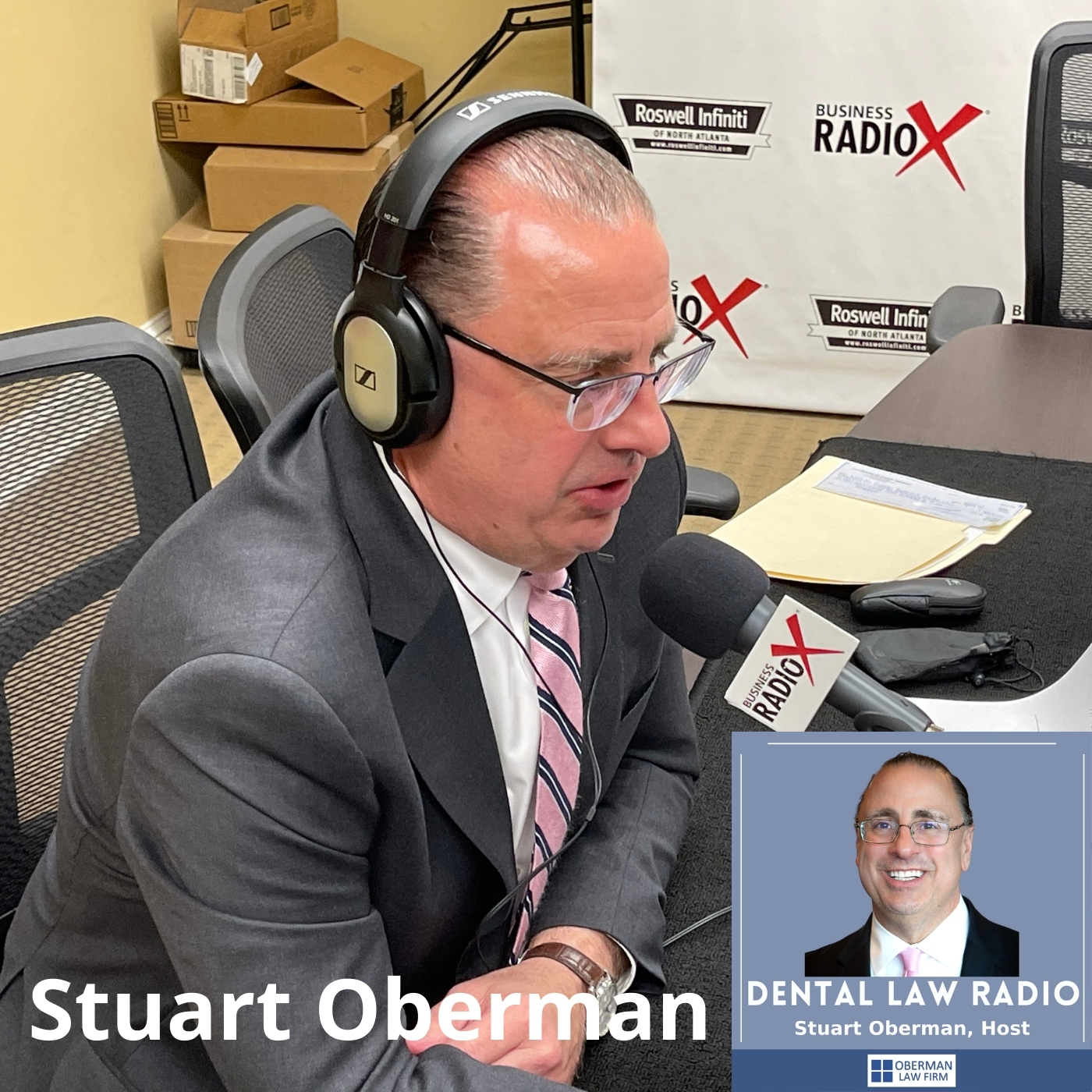
In the last several months, host Stuart Oberman of Oberman Law Firm has noted a significant government crackdown on Medicaid fraud. Even if your practice has not engaged in any malicious activities, an audit which uncovers shoddy recordkeeping can turn out to be both painful and expensive. Stuart discusses the problem and offers a few remedies in this episode. Dental Law Radio is underwritten and presented by Oberman Law Firm and produced by the North Fulton studio of Business RadioX®.

TRANSCRIPT

Introduction: [00:00:01] Broadcasting from the Business RadioX Studios in Atlanta, it’s time for Dental Law Radio. Dental Law Radio is brought to you by Oberman Law Firm, a leading dental-centric law firm serving dental clients on a local, regional, and national basis. Now, here’s your host, Stuart Oberman.

Stuart Oberman: [00:00:24] Hello everyone, and welcome. And I tell you what, we’re going to hit the topic really hard today. Here comes the government. Are you prepared for a Medicaid audit? I will tell you, if you are not, you better be. Probably in the last – I don’t know – four to six months, we’ve seen a massive, massive, massive across the board excessive government crackdown on Medicaid.

Stuart Oberman: [00:00:51] And that involves a lot of things. It involves different states, different Attorney Generals Offices, throughout the state’s Office of Inspector General, OIG. A lot of the states are getting more active in this area because of the fraud and abuse. And we’re finding a lot of it is fraud and abuse, but a lot of it is just, frankly, sloppy recordkeeping on the part of the doctors. Nothing necessarily malicious, just really, really, really bad recordkeeping.

Stuart Oberman: [00:01:22] So, we want to walk through a couple of things. This could be a five hour topic, but we want to keep it brief to the point and sort of give you guys what’s on the verge of coming. It is very tedious, it is very time consuming to get an audit by an Attorney General’s Office, depending on what state you’re in, and, also, the Office of Inspector General on the Federal side. We’re seeing a lot of clampdowns on sole practitioners, middle market providers, and big DSOs.

Stuart Oberman: [00:02:02] So, once you get these kind of inquiries, I cannot stress enough, you have to take immediate and defensive action. There is no room for negotiation upfront, there is no room for playing games upfront. You have to hire counsel who understands this. You have to hire counsel who understands the white collar crime area, if you will.

Stuart Oberman: [00:02:34] We are, I say, fortunate in a lot of areas in that we work in this space a lot. And I want to add a couple of things to what to look at should you be convicted or found guilty of fraud. Now, we’ve got civil, we got criminal, so there’s a mixture here that we’re going to look at. But I want to take a look at the civil side more so than anything else, because a lot of it is all money based, recruitment, clawbacks from the government. So, I want to make sure we’re not getting into the criminal side so much. I want to talk about the overall investigation.

Stuart Oberman: [00:03:16] So, what happens is, you get this nice little letter from the government, that’s a subpoena, State or Federal, that says you have committed Medicaid fraud. That’s going to, probably, be a 12, 15 page request for production of documents. So, now, what do you do? Now, you’ve got to dig through 100 or 200 charts. You’ve got to put all these files together. You’ve got to document every file that you have. You’ve got to catalog every file you have. You have to produce these files in a certain electronic format. You have to be very careful how this is presented. You have to be very careful how you preserve your objections. You have to be very careful how these are downloaded and sent over to the government.

Stuart Oberman: [00:04:09] So, what happens is, the government, through their investigative powers, will, essentially, turn you out time-wise. Now, it is impossible for you to handle this internally with your office manager. There’s just no way to do it from backroom production.

Stuart Oberman: [00:04:26] So, going forward a little bit, once you turn over the documents, it is absolutely incumbent that you do an internal audit. Because invariably the government is going to find something. If you have an IRS audit, the government is going to find something. So, what do you do? Let’s say, you are found guilty of fraud and abuse. Bookkeeping problems, staff turnover, headaches, billing issues, can’t match records, X-rays don’t match treatment, treatment don’t match bills, bills to match invoices, EOBs don’t match anything. So, now you’ve got to reconcile.

Stuart Oberman: [00:05:06] So, what happens is, depending on the level – we’re talking about the Federal level because there’s so many variance in State – they’re going require you to enter into – what’s called – a Corporate Integrity Agreement, CIA. If you never heard of the CIA and you’re in a Medicaid area, you need to call someone who understands what those are. Just like the one yesterday, a 35-page integrity agreement from a DSO on a national level. It’s was 35 pages and outlines certain things. So, what happens is, you have to set up a program according to these guidelines. Generally, your CIAs will last about five years.

Stuart Oberman: [00:05:59] So, in exchange for entering into this CIA, they say, “We’re going to allow you to participate in Medicaid, Medicare, or other governmental healthcare programs. And because we’re such nice guys, we’re not going to exclude you from these programs. We’re going to allow you to run your business, your practice. However, we’re going to put you under some serious, serious scrutiny. And if you don’t comply with it, then you’re going to have a really big problem, because now we’re going to come back and reinforce this as far as the penalties go.”

Stuart Oberman: [00:06:38] So, some of the requirements were going to run through are fairly comprehensive. This is not something you can do with your office manager. These are very specific programs, implementations that have to be done. So, one of the things they’re going to do is they’re going to require you – and all these you should have anyhow. If I’m going through this list and you don’t have these, you’re already under the gun on the Medicaid/Medicare side and Federal Healthcare Program side.

Stuart Oberman: [00:07:10] First and foremost, they’re going require you to hire a compliance officer and appoint a compliance committee. Depending how big you are, you may not need a committee, but you’re going to need a compliance officer. If you don’t have a compliance officer already in your office, you already got a problem. Now, to develop a standard procedure and policies for the implementation of these programs, which you should have already, again.

Stuart Oberman: [00:07:32] Now, I would say about 90 percent of our clients, their staff is not trained for these comprehensive governmental reimbursement programs. They’re just not. In today’s market, you’re lucky to get a body in the office sometimes and then try to train someone who understands the billing process on the governmental payer side is almost an act of Congress nowadays. So, you’ve got to have a training program. You got to have a program, you have employees anyhow.

Stuart Oberman: [00:08:02] You’ll be required to retain independent review organization and conduct annual review. So, it’s going to be disclosed annually as to what the issue is. You got to go back on an annual basis. Again, I can’t stress this enough, you already have these employees – establish a confidential disclosure program.

Stuart Oberman: [00:08:26] I would say a substantial part of our clients who have State or Federal governmental assistance in their practices do not do a check on their employees to see if they are even eligible to work in the office or participate in the Medicare/Medicaid programs, which is an absolute disaster from day one. Every employee that you hire, you have to check their eligibility, especially on the government, State and Federal, pair side. You have to volunteer report overpayments, reportable events, and ongoing investigations, legal proceedings, et cetera. If you do not, again, you are in violation of the CIA agreement. And that comes under additional scrutiny.

Stuart Oberman: [00:09:26] So, what you ought to have to do is, you also have to provide an implementation report on an annual basis – a lot of times to OIG or, again, Attorney General’s Office, depending what you’re working with – a state of your compliance activities. So, if you don’t already have these things in place, you should. Because what happens is, if you don’t have these things in place already, you’re already behind the eight ball with an audit. Now, I would strongly recommend that if you have State or Federal payment systems within your practice, you literally will dissect your entire process. What your procedures are, take a look at these guidelines, take a look at these outlines, implement a program.

Stuart Oberman: [00:10:18] If you have any questions, you know, let us know. We are actively engaged in these particular areas. They are a trap for the unwary. They are a trap for the doctors and their staff who don’t understand this process. And there’s nothing worse, nothing worse, than getting a chart request subpoena from State or Federal for a copy of your entire chart, X-rays and everything. Unless, you know you’re doing your internal audit making copies, you can’t find X-rays, you can’t find records, you got your records in the wrong file, you have records that don’t match, you have billing that doesn’t match. It is the absolute recipe for disaster.

Stuart Oberman: [00:11:08] So then, once you get through producing documents, then we work with our clients to figure out what the pros are, what the cons are, know before they issue their report as to where your exposure is.

Stuart Oberman: [00:11:23] So, again, this is a whole another audit topic that we could discuss for days and days. But this is always coming down the pike. And I think our doctors have got to be aware as to what the aggressive action is. If you’re thinking about the State Attorney General’s Offices and Inspector General Offices, especially in the southeast, they’re getting very, very aggressive. It’s a zero sum game. It’s not something you’re going to win. You just have to mitigate. And if you don’t understand how to mitigate it, then you’re going to be hit pretty hard on some clawbacks, potentially lose your license, lose your practice, lose your livelihood.

Stuart Oberman: [00:12:05] So, again, take a look at what some of these outlines are. And I would urge you to take a look at your practices, evaluate it. You can make a very good living on this, but you have to document, you have to be prepared for an audit. And I always say, if you’re under the third party payer system, it is not when, but if you’re going to be audited, and it’s better to be proactive.

Stuart Oberman: [00:12:34] Thank you everyone for joining us today. Hopefully, we’ve had some good information. And we’ll look forward to seeing you on our next podcast. If you have any questions, please feel free to give us a call, 770-886-2400. My name is Stuart Oberman, and you can reach me at Stuart, S-T-U-A-R-T, @obermanlaw.com. Have a great day. Thank you everyone.

About Dental Law Radio

Hosted by Stuart Oberman, a nationally recognized authority in dental law, Dental Law Radio covers legal, business, and other operating issues and topics of vital concern to dentists and dental practice owners. The show is produced by the North Fulton studio of Business RadioX® and can be found on all the major podcast apps. The complete show archive is here.

Stuart Oberman, Oberman Law Firm

Oberman Law Firm
Stuart Oberman, host of “Dental Law Radio”

Stuart Oberman is the founder and President of Oberman Law Firm. Mr. Oberman graduated from Urbana University and received his law degree from John Marshall Law School. Mr. Oberman has been practicing law for over 25 years, and before going into private practice, Mr. Oberman was in-house counsel for a Fortune 500 Company. Mr. Oberman is widely regarded as the go-to attorney in the area of Dental Law, which includes DSO formation, corporate business structures, mergers and acquisitions, regulatory compliance, advertising regulations, HIPAA, Compliance, and employment law regulations that affect dental practices.

In addition, Mr. Oberman’s expertise in the health care industry includes advising clients in the complex regulatory landscape as it relates to telehealth and telemedicine, including compliance of corporate structures, third-party reimbursement, contract negotiations, technology, health care fraud and abuse law (Anti-Kickback Statute and the State Law), professional liability risk management, federal and state regulations.

As the long-term care industry evolves, Mr. Oberman has the knowledge and experience to guide clients in the long-term care sector with respect to corporate and regulatory matters, assisted living facilities, continuing care retirement communities (CCRCs). In addition, Mr. Oberman’s practice also focuses on health care facility acquisitions and other changes of ownership, as well as related licensure and Medicare/Medicaid certification matters, CCRC registrations, long-term care/skilled nursing facility management, operating agreements, assisted living licensure matters, and health care joint ventures.

In addition to his expertise in the health care industry, Mr. Oberman has a nationwide practice that focuses on all facets of contractual disputes, including corporate governance, fiduciary duty, trade secrets, unfair competition, covenants not to compete, trademark and copyright infringement, fraud, and deceptive trade practices, and other business-related matters. Mr. Oberman also represents clients throughout the United States in a wide range of practice areas, including mergers & acquisitions, partnership agreements, commercial real estate, entity formation, employment law, commercial leasing, intellectual property, and HIPAA/OSHA compliance.

Mr. Oberman is a national lecturer and has published articles in the U.S. and Canada.

LinkedIn

Oberman Law Firm

Oberman Law Firm has a long history of civic service, noted national, regional, and local clients, and stands among the Southeast’s eminent and fast-growing full-service law firms. Oberman Law Firm’s areas of practice include Business Planning, Commercial & Technology Transactions, Corporate, Employment & Labor, Estate Planning, Health Care, Intellectual Property, Litigation, Privacy & Data Security, and Real Estate.

By meeting their client’s goals and becoming a trusted partner and advocate for our clients, their attorneys are recognized as legal go-getters who provide value-added service. Their attorneys understand that in a rapidly changing legal market, clients have new expectations, constantly evolving choices, and operate in an environment of heightened reputational and commercial risk.

Oberman Law Firm’s strength is its ability to solve complex legal problems by collaborating across borders and practice areas.

Connect with Oberman Law Firm:

Company website | LinkedIn | Twitter

Tagged With: dental law, Dental Law Radio, Medicaid Audit, Oberman Law Firm, Stuart Oberman

Donald Simon, Simon Financial Company

July 9, 2021 by John Ray

Simon Financial Company
North Fulton Business Radio
Donald Simon, Simon Financial Company
Loading
00:00 /
RSS Feed
Share
Link
Embed

Download file

Simon Financial Company

Donald Simon, Simon Financial Company (North Fulton Business Radio, Episode 369)

How do you retain key talent in today’s hypercompetitive labor market? Veteran financial advisor Don Simon, owner of Simon Financial Company, offers one answer in the form of a Talent Retention Plan. He joined host John Ray to discuss the details. North Fulton Business Radio is broadcast from the North Fulton studio of Business RadioX® inside Renasant Bank in Alpharetta.

Simon Financial Company

Simon Financial Company is a nationwide specialty advisor with 35+ years of experience serving a diverse mix of over 350 business owners and their executives. Their overall mission is to increase and preserve the value of their business so that the business owner can achieve their dreams and visions.

Most business owners think their plans are in order, but most need a more comprehensive and up-to-date plan. Failure to do too often results in large financial losses that can ruin a company. As part of an overall plan, if needed, they provide customized and very affordable life, disability, and long-term care coverage and retirement annuities with 25 top-rated insurers. Their 97% annual client retention rate speaks well of their prompt, professional service.

Company website

Donald Simon, CFP, ChFC, CLU, Owner, Simon Financial Company

Simon Financial Company
Donald Simon, CFP, ChFC, CLU, Owner, Simon Financial Company

Don Simon has owned Simon Financial Company in Marietta, Georgia for more than 30 years. Don specializes in working with all types of companies with up to 2,000 employees nationwide.

Don is a Certified Financial Planner (CFP) with the College for Financial Planning, Washington DC and Denver, Co.  Don is also a Chartered Financial Consultant (ChFC) and Chartered Life Underwriter (CLU) through The American College, King of Prussia, Pennsylvania.  He is also a Life Underwriter Training Council Fellow (LUTCF) through the National Association for Financial Advisors (NAIFA) Falls Church, VA. and is also a Member of NAIFA. This knowledge coupled with over his many years of experience is an important commitment to advise each client properly.

Don has a B.A. in Business Administration from Oglethorpe University, Atlanta Georgia.  He is a Member of the Marietta Business Association (MBA), and is the author of The Zen of Personal Finance (you may buy a copy at Amazon.com books or contact Don for a complimentary copy).

LinkedIn | Email

Questions and Topics in This Interview

  • What is a Talent Retention Plan for companies?
  • Why are they important to the company?
  • Which executives should companies include in this plan?
  • Exactly how do they work?
  • Are they expensive?
  • What happens to the money in the plan if the executive leaves before they become vested?
  • What alternatives to this plan do companies have?

North Fulton Business Radio is hosted by John Ray, and broadcast and produced from the North Fulton studio of Business RadioX® inside Renasant Bank in Alpharetta. You can find the full archive of shows by following this link. The show is available on all the major podcast apps, including Apple Podcasts, Spotify, Google, Amazon, iHeart Radio, Stitcher, TuneIn, and others.

Renasant Bank has humble roots, starting in 1904 as a $100,000 bank in a Lee County, Mississippi, bakery. Since then, Renasant has grown to become one of the Southeast’s strongest financial institutions with over $13 billion in assets and more than 190 banking, lending, wealth management and financial services offices in Mississippi, Alabama, Tennessee, Georgia and Florida. All of Renasant’s success stems from each of their banker’s commitment to investing in their communities as a way of better understanding the people they serve. At Renasant Bank, they understand you because they work and live alongside you every day.

Tagged With: Donald Simon, employee retention, Employee retention strategies, Simon Financial Company, Talent Retention Plan

Chris Sands, Pro-Fi 20/20 Dental CPAs

July 8, 2021 by John Ray

Pro-Fi 20/20 Dental CPAs
Dental Business Radio
Chris Sands, Pro-Fi 20/20 Dental CPAs
Loading
00:00 /
RSS Feed
Share
Link
Embed

Download file

Pro-Fi 20/20 Dental CPAsChris Sands, Pro-Fi 20/20 Dental CPAs (Dental Business Radio, Episode 22)

Chris Sands, Co-Founder of Pro-Fi 20/20 Dental CPAs, joined host Patrick O’Rourke to discuss their model of a genuine advisory relationship between a practice and their CPA. Chris explained why his experience in a dental practice led to his starting Pro-Fi 20/20, why some dental practices are courting a regulatory nightmare by classifying employees as 1099 contractors, and much more. Dental Business Radio is underwritten and presented by Practice Quotient: PPO Negotiations & Analysis and produced by the North Fulton studio of Business RadioX®.

Special Note:  Here’s the resource Chris referenced during the show:  Download the Employee vs Contractor Resource

Pro-Fi 20/20 Dental CPAs

Pro-Fi 20/20, CPAs is a multi-disciplinary firm focused on helping growth-oriented dental business owners, from solo practitioners and partnerships to multi-location DSOs. Pro-Fi has an emphasis on profitability consulting to help doctors create more margin of time and money to positively impact their quality of life. They do this through the efficient and integrated management of practice finances with a single point of contact. Pro-Fi’s services include business consulting, comprehensive & proactive tax planning, accounting & bookkeeping, cash flow planning, business analytics, business valuations, bank loan assistance, and more.

Pro-Fi 20/20, CPAs was founded with dentists in mind. “Pro-Fi” is a play on words. Both a variation of the word “prophy” which means preventative cleaning, as well as short for Providing Financial. Their goal is to bring clarity, like the X-ray, to both companies’ and individuals’ financial pictures. It is said that hindsight is 20/20, but they want to bring the 20/20 clarity approach to being preventative, proactive, and protective in nature when it comes to managing finances.

Pro-Fi 20/20, CPAs was founded with the goal of providing financial clarity to dental businesses & their owners.

Company website | LinkedIn | Facebook | Instagram

Chris Sands, Co-Founder, Pro-Fi 20/20 Dental CPAs

Chris Sands, Co-Founder, Pro-Fi 20/20 Dental CPAs

Chris Sands focuses on counseling dental business owners as a result of his first-hand experience working in a dental practice. His goal is to help them grow and understand the importance of being fiscally responsible in their business.

Chris helps educate doctors about the importance of having accurate business accounting records and a proactive relationship with their CPA to develop tax strategies for both business and personal finances.

Chris is active in the dental industry where he regularly lectures at conferences, study clubs, professional association meetings, and workshops and publishes articles on business and finances in the dental industry.

“More than educating, it’s the empowering of doctors that gets me excited to go to work every day!  To own a business is no small task.  To own a business without any training of business or finances can be daunting.  Bringing doctors into the light when it comes to how things work such as cash flow, debt, interest, accounting metrics, taxes, risk management, etc. is extremely gratifying because I get to witness the lasting impact it has on the improvement of their business and themselves as better business owners and stewards of their finances.”

Connect with Chris on LinkedIn.

About Dental Business Radio

Patrick O'Rourke
Patrick O’Rourke, Host of “Dental Business Radio”

Dental Business Radio covers the business side of dentistry. Host Patrick O’Rourke and his guests cover industry trends, insights, success stories, and more in this wide-ranging show. The show’s guests include successful doctors across the spectrum of dental practice providers, as well as trusted advisors and noted industry participants. Dental Business Radio is underwritten and presented by Practice Quotient and produced by the North Fulton studio of Business RadioX®. The show can be found on all the major podcast apps and a complete show archive is here.


Practice Quotient

Dental Business Radio is sponsored by Practice Quotient. Practice Quotient, Inc. serves as a bridge between the payor and provider communities. Their clients include general dentist and dental specialty practices across the nation of all sizes, from completely fee-for-service-only to active network participation with every dental plan possible. They work with independent practices, emerging multi-practice entities, and various large ownership entities in the dental space. Their PPO negotiations and analysis projects evaluate the merits of the various in-network participation contract options specific to your Practice’s patient acquisition strategy. There is no one-size-fits-all solution.

Connect with Practice Quotient

Website | LinkedIn | Facebook | Twitter

Tagged With: Chris Sands, Dental Business Radio, Patrick O'Rourke, PPO Negotiations & Analysis, Practice Quotient, Pro-Fi 20/20 Dental CPAs

Jennifer Overturf, Ray’s at Killer Creek

July 8, 2021 by John Ray

Ray's at Killer Creek
North Fulton Business Radio
Jennifer Overturf, Ray's at Killer Creek
Loading
00:00 /
RSS Feed
Share
Link
Embed

Download file

Ray's at Killer Creek

Jennifer Overturf, Ray’s at Killer Creek (North Fulton Business Radio, Episode 368)

Sales & Events Manager Jennifer Overturf, Ray’s at Killer Creek, joined host John Ray to discuss their new chef, a menu with old favorites and new, delicious seasonal options, gorgeous outdoor and indoor dining, and why Ray’s at Killer Creek is such a great choice for memorable events.  North Fulton Business Radio is broadcast from the North Fulton studio of Business RadioX® inside Renasant Bank in Alpharetta.

Ray’s Restaurants

Since 1984, Ray’s Restaurants have won countless culinary awards and become an important part of the communities they serve.

We are passionate about providing the freshest seafood flown in daily, prime steaks, our extensive wine list recognized by Wine Spectator, and knowledgeable, attentive service.

Founded by renowned restaurant industry veteran Ray Schoenbaum, Marietta-based Ray’s Restaurants, LLC, is comprised of Ray’s on the River, Ray’s in the City and Ray’s at Killer Creek. Each restaurant features an award-winning menu with an emphasis on fresh fish flown in daily from the Atlantic and Pacific, house-cut chops, prime steaks and extensive wine offerings from around the world.

Since opening, Ray’s Restaurants have been delighting guests as premier private event venues. Their team includes award-winning chefs, a highly trained service staff and a dedicated events manager that will work with you every step of the way as you plan your event.

Whether you’re hosting a corporate event, cocktail party, luncheon, dinner, meeting, shower, wedding reception, bat/bar mitzvah or rehearsal dinner, they can offer you and your guests a truly memorable event. They have a variety of private event spaces that can accommodate up to 180 guests. Complete restaurant buy-outs are also available.

Company website | Facebook

Jennifer Overturf, Sales & Events Manager, Ray’s at Killer Creek

Jennifer Overturf, Sales & Events Manager, Ray’s at Killer Creek

Bringing more than a decade of restaurant and hospitality experience to the Ray’s Restaurants team, Jennifer Overturf’s passion for serving others led her to Ray’s at Killer Creek. She currently serves as sales and events manager, overseeing the Alpharetta location’s special events, coordinating private reservations and developing relationships to help Ray’s at Killer Creek maintain close ties with its community. Jennifer’s leadership and enthusiasm for the industry has helped her to push the already outstanding Ray’s at Killer Creek team to be first-class in everything they do.

Jennifer moved to Atlanta in 2009 and began her hospitality journey in a local coffee shop, then moved to bartending and restaurant management before returning to school in 2012. Prior to her time with Ray’s Restaurants, Jennifer received a dual degree in accounting and management from Georgia State University. She joined the Ray’s in the City team as a server and bartender in 2016, then worked her way up the ranks to events associate before transitioning to Ray’s at Killer Creek in early 2020. Overturf continues to challenge herself by studying wine through Ray’s Restaurants’ wine education program, and she has completed a Level 3 Certification from the Wine and Spirit Education Trust, alongside the Introductory Sommelier Certification from the Court of Master Sommeliers.

Professionally, Jennifer enjoys bringing her passion for taking care of others on the restaurant team. When she is not coordinating events, Jennifer can be found gardening, cooking and experimenting with preserving heirloom vegetables.

Questions and Topics in This Interview

  • Private Events at Ray’s – how to get started and what details to consider before you book
  • Outdoor dining
  • Killer Creek’s new menu – New Chef
  • Frequent Diner Cards/Ray’s Loyalty program
  • Special Events & Happy Hour – getting the most out of your Ray’s experience
  • Creating Memories

North Fulton Business Radio is hosted by John Ray, and broadcast and produced from the North Fulton studio of Business RadioX® inside Renasant Bank in Alpharetta. You can find the full archive of shows by following this link. The show is available on all the major podcast apps, including Apple Podcasts, Spotify, Google, Amazon, iHeart Radio, Stitcher, TuneIn, and others.

Renasant Bank has humble roots, starting in 1904 as a $100,000 bank in a Lee County, Mississippi, bakery. Since then, Renasant has grown to become one of the Southeast’s strongest financial institutions with over $13 billion in assets and more than 190 banking, lending, wealth management and financial services offices in Mississippi, Alabama, Tennessee, Georgia and Florida. All of Renasant’s success stems from each of their banker’s commitment to investing in their communities as a way of better understanding the people they serve. At Renasant Bank, they understand you because they work and live alongside you every day.

Tagged With: Alpharetta, corporate events, events, Fine Dining, Jennifer Overturf, North Fulton Business Radio, Ray's at Killer Creek, Ray's restaurants

Advice for Veterans Thinking about Entrepreneurship, with Troy Cobb, Marine Corps Veteran and Owner, Cinch IT

July 8, 2021 by John Ray

Troy-Cobb-Album
North Fulton Studio
Advice for Veterans Thinking about Entrepreneurship, with Troy Cobb, Marine Corps Veteran and Owner, Cinch IT
Loading
00:00 /
RSS Feed
Share
Link
Embed

Download file

Troy-Cobb-Album

Advice for Veterans Thinking about Entrepreneurship, with Troy Cobb, Marine Corps Veteran and Owner, Cinch IT

Troy Cobb: [00:00:00] I think the biggest piece of that is knowing yourself. Know yourself and know your limitations and what you can handle. When you become an entrepreneur, and you give up on that, I know in the Marine Corps and any service, you’re used to that check on the 1st and the 15th. When you become an entrepreneur, you’re not going to see a check on the 1st and the 15th. In fact, you’re going to see your bank account start going down before it starts going up. And that’s a tough thing to look at-

Mike Blake: [00:00:28] Sure

Troy Cobb: [00:00:28] — and experience, and you got to be ready for that. And you just got to have faith in yourself and faith in the system, whatever the system may be, whether you’re running your own business without a franchise model or if you’re with a franchise model, where what’s nice about it is you’ve got a model and they’ve shown that it works. And so, you just have to stick with the model. What’s tough with being a business owner without a franchise model is you got to trust that you are doing the right thing. And if you have the experience, you know, then it’s not a problem. But it’s great having that franchise model that you know can work, and you just stick to the model, and you start to see it work, and the victories you have as a business owner, just incredible. It’s a much better experience or much more intense experience than when I was a salesperson. I’d get that PO, and I’d feel great. But now that I’m a business owner, and I win that contract or win that PO, it feels even better. I just can’t explain the excitement. And then, there’s also disappointments too. You got to take those. That’s part of the game, right?

Mike Blake: [00:01:35] Sure.

Troy Cobb: [00:01:36] There’s no way you’re not going to have any disappointments as well

Troy Cobb, Owner/Sales Director, Cinch I.T.

Troy Cobb became the owner and sales director for the Cinch I.T. Atlanta office in January 2020.

Troy is a USMC Desert Shield/Storm Veteran with over 20 years of experience in the I.T. industry. Originally from New Jersey. he has lived in Atlanta for over twenty years.

 He is married to Tanya Cobb, an incredible Nurse/Hero at Emory University Midtown Hospital.

LinkedIn

Listen to the complete North Fulton Business Radio interview here. 


The “One Minute Interview” series is produced by John Ray and in the North Fulton studio of Business RadioX® in Alpharetta. You can find the full archive of shows by following this link.

Renasant Bank has humble roots, starting in 1904 as a $100,000 bank in a Lee County, Mississippi, bakery. Since then, Renasant has grown to become one of the Southeast’s strongest financial institutions with over $13 billion in assets and more than 190 banking, lending, wealth management and financial services offices in Mississippi, Alabama, Tennessee, Georgia and Florida. All of Renasant’s success stems from each of their banker’s commitment to investing in their communities as a way of better understanding the people they serve. At Renasant Bank, they understand you because they work and live alongside you every day.

Tagged With: Cinch IT

R3 Continuum Playbook: Workplace Violence Prevention

July 8, 2021 by John Ray

Workplace Violence
Minneapolis St. Paul Studio
R3 Continuum Playbook: Workplace Violence Prevention
Loading
00:00 /
RSS Feed
Share
Link
Embed

Download file

Workplace Violence

R3 Continuum Playbook: Workplace Violence Prevention

Dr. Jennifer Kurtz, Clinical Director over Fitness for Duty and Threat Consultation Services at R3 Continuum, presented a snapshot of the challenge of workplace violence, the training needed to prevent workplace violence, and the need for threat management teams in the workplace. The R3 Continuum Playbook is presented by R3 Continuum and is produced by the Minneapolis-St.Paul Studio of Business RadioX®. R3 Continuum is the underwriter of Workplace MVP, the show which celebrates heroes in the workplace.

TRANSCRIPT

Intro: [00:00:00] Broadcasting from the Business RadioX Studios, here is your R3 Continuum Playbook. Brought to you by Workplace MVP sponsor, R3 Continuum, a global leader in workplace behavioral health, crisis, and security solutions.

Jennifer Kurtz: [00:00:14] Hello. I’m Dr. Jennifer Kurtz, and I am the Clinical Director over Fitness for Duty and Threat Consultation Services at R3 Continuum. Today, I want to talk about an issue that keeps some employers up at night, workplace violence and how to prevent it. There’s roughly two million victims of workplace violence every year in the United States. Just this year, just recently, on June 15th in Albertville, Alabama, Andreas Horton, a longtime employee of the Mueller Water Products factory, shot and killed two and injured another two. After, another Mueller company, the Henry Pratt facility in Aurora, Illinois, had an employee kill five just 28 months earlier.

Jennifer Kurtz: [00:01:04] On May 26th of this year in San Jose, California at the Santa Clara Valley Transit Authority, a transit worker named Samuel James Cassidy, who was an employee for over a decade, shot and killed nine. And on April 15th, at a FedEx warehouse in Indianapolis, Indiana, a former employee, Brandon Scott Hole, killed eight and wounded five. These are examples that have happened just in the past three months, and they don’t even include five mass shootings that occurred in just the last week of June alone in two parking lots, two nightclubs, and an American Legion that was hosting a party for teenagers. Those occurred just in one week in June.

Jennifer Kurtz: [00:02:00] According to the U.S. Department of Labor, in 2019, which is the most recent year for which we have this kind of data, there were 5,333 workplace fatalities, 16 percent of which were due to workplace violence. Contrary to popular opinion, people do not just snap. There are always warning signs that a violent act might be coming soon. You just have to know what to look for. And if you do know what to look for, many times these violent acts can be prevented.

Jennifer Kurtz: [00:02:36] You just don’t usually hear about all the mass violence plans that get prevented or that never take place. For example, Eric Lin in Miami, Florida. He was a man who had been stalking and harassing a restaurant employee. And he was ultimately prevented from kidnapping that employee. Or Rodolfo Montoya in Long Beach, California. He was a hotel cook who was unhappy with the decision H.R. had made, and he had planned to shoot people as they came into the hotel lobby. Or Paul Stieber in High Point, North Carolina. He had planned to kill people at High Point University by a deadline of Christmas 2019 because he was tired of feeling like an outcast.

Jennifer Kurtz: [00:03:30] These potential tragedies were averted because employees, and employers, students, and law enforcement were all trained in recognizing risk factors and warning signs. They knew how and when to report their concerns. There were systems by which to document the reports and monitor the cases. And law enforcement and the appropriate external resources were brought in at the right time so that nobody got hurt.

Jennifer Kurtz: [00:04:07] Now, despite how successful these comprehensive workplace violence prevention programs are, 70 percent of workplaces don’t have one. Now, having a workplace violence prevention program is critical in this day and age to keep your employees safe. Developing a comprehensive plan will include multiple steps.

Jennifer Kurtz: [00:04:37] And one key aspect of a successful program is education. And there’s multiple components to the education needed. Everyone in the company is going to need to receive education, every employee, every manager, every executive, and even the owner. Education in what exactly workplace violence is and how prevalent it is. Education about what the risk factors are for workplace violence. Education about what to look for, that would indicate violence might be coming soon, which are the warning signs of workplace violence.

Jennifer Kurtz: [00:05:19] Everyone’s also going to need to be taught what factors protect against violent behavior and lower the risk of violent behavior. They’ll need to learn how to intervene, if possible and safe. And how and when to report their concerns that someone might be dangerous or become violent. Education is also going to likely need to include training and special topics related to workplace violence, like hostility de-escalation, threat assessment and management, active shooter training, threat assessment team training, situational awareness. And special situational topics, like bullying and harassment, or stalking, and domestic violence, suicide prevention, or legal defensibility when related to managing these kinds of behaviors, lone actor terrorism, and other related subjects.

Jennifer Kurtz: [00:06:29] Managers and executives will also need additional customized education related to the development and functioning of a threat management team. There should be an internal threat management team whose job is going to be to investigate and monitor any reported concerns or potentially threatening individuals. This team would be made of staff from multiple disciplines and departments within the company. And, ideally, would also include external subject matter expert consultants when appropriate, such as law enforcement, executive protection agents, legal counsel, and forensic behavioral experts.

Jennifer Kurtz: [00:07:14] To be consistent with the industry’s best practice for workplace violence prevention, the threat management team would need to create clear corporate policies on workplace violence, what will and won’t be tolerated, the consequences for violating these policies. An anonymous reporting structure for employees to provide information when they have concerns about potential violence. The information reported must be kept in a fashion that allows the stakeholders access so that there’s no issues with some people having needed information and other people not having the needed information so something doesn’t get missed.

Jennifer Kurtz: [00:07:59] But at the same time, this method of data collection and storing the data needs to be kept confidential so that only members of the threat management team and the necessary external resources have access to it in order to protect the employee’s privacy. Management also is going to need to be aware of what barriers there are to successful programs like this and implement programs and policies to address those barriers.

Jennifer Kurtz: [00:08:34] So, for example, one barrier to education about workplace violence is stigma, stigma associated with mental health problems. Nobody wants to talk about it or a lot of people really don’t want to talk about it. So, management can look at promoting company activities to fight the stigma of mental health problems to try to counteract the barrier. That would be an example of a proactive strategy or preventive strategy to a successful workplace violence prevention program.

Jennifer Kurtz: [00:09:13] Another way is they could promote activities or even social activities to counter isolation and try to foster connectedness between employees, and the people, and the company. They should also encourage an environment of acceptance amongst employees and, above all, respectful treatment. These are all examples of activities that aim to reduce some of the known risk factors of workplace violence and attempt to encourage or cultivate known protective factors against workplace violence.

Jennifer Kurtz: [00:09:54] Additionally, best-practice programs to prevent violence at work include a concerted focus on identifying those who may be at risk and attempting to provide resources before a problem starts. So, accessibility to quality mental health resources is absolutely crucial to a successful program, such as round-the-clock EAP services and a health insurance plan with good mental health service coverage. They should also be providing other resources that reduce common sources of daily stress for employees, such as financial planning seminars, or resources for quality child care, or resiliency training are good examples. These kinds of additional life stressor resources are also invaluable to these kinds of programs.

Jennifer Kurtz: [00:10:57] And then, of course, these programs are going to need to have a worst case scenario plan. What is the plan if your worksite has an active shooter? What do you do? What do the employees do? Where do they go? What are the escape routes? How does the information get communicated to everybody that there’s a shooter? How are people going to be accounted for when everybody gets out of the building? Who’s responsible for that? Where are the meeting spots?

Jennifer Kurtz: [00:11:31] The point is to have a plan. You need to have a plan. And then, you have to train everybody to the plan. And then, you have to practice it, and practice it, and practice it, and then you practice it some more. You need to have everybody very, very comfortable with knowing exactly what they need to do and what their responsibilities are.

Jennifer Kurtz: [00:11:55] We just don’t work in the same world we did 30 years ago. Workplace violence is no longer something that employers can just hope doesn’t happen. It’s time to be prepared. If you want to be prepared with help from experts in the industry, R3 Continuum can help. We can provide a variety of customized services to provide you with tailored solutions to keep your employees and your worksite safe. For more information, contact us at info@r3c.com.


Show Underwriter

R3 Continuum (R3c) is a global leader in workplace behavioral health and security solutions. R3c helps ensure the psychological and physical safety of organizations and their people in today’s ever-changing and often unpredictable world. Through their continuum of tailored solutions, including evaluations, crisis response, executive optimization, protective services, and more, they help organizations maintain and cultivate a workplace of wellbeing so that their people can thrive. Learn more about R3c at www.r3c.com.

R3 Continuum is the underwriter of Workplace MVP, a show which celebrates the everyday heroes–Workplace Most Valuable Professionals–in human resources, risk management, security, business continuity, and the C-suite who resolutely labor for the well-being of employees in their care, readying the workplace for and planning responses to disruption.

Connect with R3 Continuum:  Website | LinkedIn | Facebook | Twitter

Tagged With: Dr. Jennifer Kurtz, R3 Continuum, Workplace violence prevention

Decision Vision Episode 124: Should I Get my Old Job Back? – An Interview with Owen Sizemore, Brady Ware & Company

July 8, 2021 by John Ray

Decision Vision
Decision Vision
Decision Vision Episode 124: Should I Get my Old Job Back? - An Interview with Owen Sizemore, Brady Ware & Company
Loading
00:00 /
RSS Feed
Share
Link
Embed

Download file

Owen Sizemore

Decision Vision Episode 124:  Should I Get my Old Job Back? – An Interview with Owen Sizemore, Brady Ware & Company

Should you return to a former employer? Brady Ware’s Owen Sizemore talked with host Mike Blake about his career and the decision points along the way which led him to leave and then return to Brady Ware, how he negotiated a return, the importance of not burning bridges, and much more. Decision Vision is presented by Brady Ware & Company.

Owen Sizemore, CPA, CVA, MBA, Brady Ware & Company

Owen provides business valuation, litigation support, and financial due diligence services across a variety of industries, with a specialty focus on breweries and distilleries. He performs business valuations for tax purposes, litigation support, and mergers and acquisitions. He also has experience in performing purchase price allocations and valuations of complex securities.

Owen is a member of the American Institute of Certified Public Accountants and the National Association of Certified Valuators and Analysts. Along with being a licensed CPA, he’s also a Certified Valuation Analyst. He obtained his B.S. in Accounting from the University of Northern Colorado and his MBA in finance from Xavier University.

Connect with Owen on LinkedIn.

Mike Blake, Brady Ware & Company

Mike Blake, Host of the “Decision Vision” podcast series

Michael Blake is the host of the Decision Vision podcast series and a Director of Brady Ware & Company. Mike specializes in the valuation of intellectual property-driven firms, such as software firms, aerospace firms, and professional services firms, most frequently in the capacity as a transaction advisor, helping clients obtain great outcomes from complex transaction opportunities. He is also a specialist in the appraisal of intellectual properties as stand-alone assets, such as software, trade secrets, and patents.

Mike has been a full-time business appraiser for 13 years with public accounting firms, boutique business appraisal firms, and an owner of his own firm. Prior to that, he spent 8 years in venture capital and investment banking, including transactions in the U.S., Israel, Russia, Ukraine, and Belarus.

LinkedIn | Facebook | Twitter | Instagram

Brady Ware & Company

Brady Ware & Company is a regional full-service accounting and advisory firm which helps businesses and entrepreneurs make visions a reality. Brady Ware services clients nationally from its offices in Alpharetta, GA; Columbus and Dayton, OH; and Richmond, IN. The firm is growth-minded, committed to the regions in which they operate, and most importantly, they make significant investments in their people and service offerings to meet the changing financial needs of those they are privileged to serve. The firm is dedicated to providing results that make a difference for its clients.

Decision Vision Podcast Series

Decision Vision is a podcast covering topics and issues facing small business owners and connecting them with solutions from leading experts. This series is presented by Brady Ware & Company. If you are a decision-maker for a small business, we’d love to hear from you. Contact us at decisionvision@bradyware.com and make sure to listen to every Thursday to the Decision Vision podcast.

Past episodes of Decision Vision can be found at decisionvisionpodcast.com. Decision Vision is produced and broadcast by the North Fulton studio of Business RadioX®.

Connect with Brady Ware & Company:

Website | LinkedIn | Facebook | Twitter | Instagram

TRANSCRIPT

Intro: [00:00:02] Welcome to Decision Vision, a podcast series focusing on critical business decisions. Brought to you by Brady Ware & Company. Brady Ware is a regional full service accounting and advisory firm that helps businesses and entrepreneurs make visions a reality.

Mike Blake: [00:00:22] Welcome to Decision Vision, a podcast giving you, the listener, clear vision to make great decisions. In each episode, we discuss the process of decision making on a different topic from the business owners’ or executives’ perspective. We aren’t necessarily telling you what to do, but we can put you in a position to make an informed decision on your own and understand when you might need help along the way.

Mike Blake: [00:00:40] My name is Mike Blake, and I’m your host for today’s program. I’m a director at Brady Ware & Company, a full service accounting firm based in Dayton, Ohio, with offices in Dayton; Columbus, Ohio; Richmond, Indiana; and Alpharetta, Georgia. If you like to engage with me on social media with my Chart of the Day and other content, I’m on LinkedIn as myself and @unblakeable on Facebook, Twitter, Clubhouse, and Instagram. If you like this podcast, please subscribe on your favorite podcast aggregator, and please consider leaving a review of the podcast as well.

Mike Blake: [00:01:10] Before we get into this week’s conversation, I want to mention that a colleague of mine, Betty Collins, who is a partner with Brady Ware and host of her own podcast, Inspiring Women, is helping to lead the Eighth Annual Brady Ware Women’s Leadership Conference. Like most things, it’s staying virtual this year. But on July 30th, if you like this podcast and the topics discussed, I suspect you will like their discussion points for that conference. Several speakers including two national voices, and the Governor of Ohio, Mike DeWine, are on the agenda. Please check out www.columbuswomensleadership.com. It may seem local to Ohio, but the content is worthwhile nationally.

Mike Blake: [00:01:45] Now, on with this week’s Decision Vision. Today’s topic is, Should I get my old job back? And I’ve been in the public accounting industry for – golly – in some fashion, I’ve been in it for, I guess, something like 10 to 12 years. So, it shows I’m not a very good accountant because I can’t count that high. And one thing I’ve noticed is, there’s a lot of kind of shuffling of talent.

Mike Blake: [00:02:16] And in particular, I’ve noticed there are a lot of folks that work for an accounting firm for some period of time. They leave, going off to find, at least, what they think are greener pastures, and then come back after a period. And I’m sure that happens a lot in other industries as well. Accounting is the one that I happen to see it. And it made me curious about the decision process to leave a job and then come back to it.

Mike Blake: [00:02:43] I’ve never done that. Not because I think it’s good or bad, just simply the circumstances really didn’t dictate it. And as people are re-entering the workforce here, as we record this podcast on July 7, 2021, people may be thinking about getting old jobs back, whether they were furloughed, whether they took a leave of absence, whether they quit altogether because of environmental circumstances dictated by the pandemic. Or maybe they simply left because, again, they saw greener pastures elsewhere.

Mike Blake: [00:03:16] So, you know, I don’t have data to support this, but my instinct tells me this is a decision that, if you’re not facing yourself, you probably know somebody that’s considering the decision. And maybe you can turn them onto this podcast.

Mike Blake: [00:03:30] And joining us today is Owen Sizemore, who is a Certified Valuation Analyst and managing the Valuation Services Group here at Brady Ware. And he’s a boomerang employee. He was with us for a while, left – and we’ll talk about that story – and has come back. And we are delighted to have him back. And I’m equally delighted to have him on the program. Owen Sizemore, welcome to Decision Vision.

Owen Sizemore: [00:03:54] Thanks for having me, Mike.

Mike Blake: [00:03:56] So, let’s start with kind of where you are today. Tell the listeners about your current role at Brady Ware, please.

Owen Sizemore: [00:04:06] Yeah. So, I am a Manager in the Valuation and Litigation Support Practice at Brady Ware, which basically means I take on valuation engagements for a variety of purposes, transactions, tax, litigation support, like I mentioned. And then, I also do some due diligence work as well, merger and acquisition due diligence. That’s a smaller part of my practice, and I anticipate that getting smaller as time goes on. But it’s worth mentioning that I do get into some of that work currently.

Mike Blake: [00:04:40] So, before you came to Brady Ware, what were you doing?

Owen Sizemore: [00:04:45] Is that the first time or the second time?

Mike Blake: [00:04:48] Oh, good question. Let’s go first time.

Owen Sizemore: [00:04:52] So, first time – Mike, you’ve probably heard me say this way too many times, but I always tell people – I’m recovering auditor and CPA. So, before I came to Brady Ware the first time, I was mainly an auditor for another public accounting firm. And that’s where I spent pretty much my whole civilian professional career was as an auditor. I did a little bit of valuation work and due diligence work along the way. I wanted to get into it full time and that’s why I came to Brady Ware.

Mike Blake: [00:05:26] So, I’m curious – I’m going off script a little bit – what was it on audit that you didn’t like or what was it about moving into specialty services like valuation that attracted you?

Owen Sizemore: [00:05:39] Well, as far as what I didn’t like about auditing was that I didn’t like the relationship that it created with your clients. It was difficult to feel like you’re adding value to them because audit is a compliance engagement for – let’s say compliance engagement. And so, I enjoyed the investigative nature of it, but I didn’t like everything around it. I didn’t like that it felt like our clients were put out by us being there. And because they’re put out by us being there, it’s really hard to engage with them on bigger picture stuff.

Owen Sizemore: [00:06:25] And it was also hard to engage with them on bigger picture stuff because you’re just down in the weeds in an audit trying to get the numbers right, that you’re looking at historical information that’s it’s really hard to talk about the future with your client. So, that’s the reason I didn’t like auditing.

Owen Sizemore: [00:06:41] And I like valuation for very similar reasons. You know, it’s forward thinking. You can get into big picture conversations with your client about where they’re going. But I also like the quantitative nature of it as well. And you don’t quite get that in auditing.

Mike Blake: [00:06:59] So, when you first came to Brady Ware, how long were you at the company the first time around?

Owen Sizemore: [00:07:06] I was at Brady Ware for almost a year. Well, I’ll say, a year and a couple months.

Mike Blake: [00:07:13] Okay. And so, what led you to start contemplating a change? What prompted that thought process of your internal conversation?

Owen Sizemore: [00:07:22] There were a handful of things that went into it. I do think it’s important to mention that the job that I left Brady Ware for was actually a job I interviewed for before I came to Brady Ware the first time. And so, ultimately, I decided to come to Brady Ware as opposed to going to Ernst and Young. So, it was always on my mind. And I had never had Big Four experience. I simply didn’t have the grades or the professional wherewithal to value an opportunity at a Big Four accounting firm right out of school like most young graduates do. And so, it was an experience I never got. It was an opportunity I knew was out there because I’d interviewed for it. So, it was kind of in the back of my mind.

Owen Sizemore: [00:08:14] But as far as what happened to Brady Ware specifically, you know, people had a hard time separating me as a CPA from the rest of the traditional CPA group. And so, even though all I did was valuation work or at least that’s all I was supposed to do, when business season rolled around, there was this pressure to behave and follow a similar schedule as the tax not all people were following. Which, as you know, valuation work, it comes and goes. You very well may find yourself extremely busy in the middle of the summer when the tax and audit folks at a CPA firm aren’t doing much.

Owen Sizemore: [00:09:05] And what was kind of the defining moment was, I had a networking event that I set up with a financial planner here in town. And I think it was maybe April 5th, so I went to this networking meeting. And at the time, the valuation group, honestly, was pretty slow. So, I go to this networking event, come back the next day. And one of the partners here asked where I had been and I said, “Well, I had a networking event.” And he said to me, “No more networking events during busy season.”

Owen Sizemore: [00:09:43] And I didn’t respond to that very well, to be honest with you. Because, again, busy season shouldn’t be something that necessarily drives the schedule of valuation people. What drives their schedule is the inflow and outflow of work. And on average, valuation people will bill as much hours or even more than their audit and tax colleagues over the span of a year. It just comes at different times. And so, I was pretty frustrated that there was this expectation to work like I’m a CPA, even though I’m not doing CPA work during that traditional business season time of the year.

Owen Sizemore: [00:10:27] And then, of course, what happened was after regular business season was over, we got very busy on the valuation side. I was working Saturdays and summer, which, again, that in and of itself not a problem. I’m happy to work 60 hours a week, 70 hours a week if I have to. But to be expected to work busy season with everyone else and then deal with the highs and lows of valuation work was not going to work for me.

Owen Sizemore: [00:10:58] And so, I had that Ernst and Young opportunity in the back of my mind and I thought, “Well, if I’m going to be expected to work this hard all the time, and I never got that Big Four experience, I might as well pursue that and see where it goes.” And at least I’ll know either way that it was a good move or a bad move. But at least I’ll put that question to rest in my mind. So, that’s pretty much why I left.

Mike Blake: [00:11:24] Okay. So then, you made the move and you were there at EY for some period of time. What made you realize or made you start to think that maybe that wasn’t the right move to make?

Owen Sizemore: [00:11:36] That’s a good question. There’s a number of things leading up to it. One, culturally, those big organizations are just different. They’re good. They’re not bad. They just are. And the best example of it I can offer is, when I walk down a hallway and I pass a coworker that I might not know at all, I may barely know, or if I do know, I always smile and and greet them and say hi, and going about my business. I certainly don’t try to pull someone into small talk conversation, but I feel like it’s just a nice thing to to acknowledge someone as you pass by them.

Owen Sizemore: [00:12:19] Well, I would do that at EY and you could tell people were – I don’t know want to say it but I’ll put it out – really didn’t know how to respond to it. And, again, I’m just trying to trying to offer a small example of the sort of tense culture in those big places. So, culturally, it wasn’t a great fit.

Owen Sizemore: [00:12:45] But probably the bigger issue for me was that I had some good ideas on how to do business development. And they worked in the middle market. I think they were easily scalable and they involved relationships with big law firms. And coming from the middle market and sort of being out of town – because I had to change locations, change cities to go to EY – I did not have the relationships with the big law firms in town, but I knew that some of the partners that Ernst and Young did.

Owen Sizemore: [00:13:22] And so, I presented this business development idea to them and just said, “Look, I just need an introduction. You can be a part of it. You can or you don’t have to be. It’s up to you. But if you can just give me an introduction, I’ll run with it. And I think it’ll work.” And that business development idea was not warmly received.

Owen Sizemore: [00:13:45] And I come from a place in the middle market when you have a senior accountant, or a senior associate, or a manager, or pretty much any level employee, that is excited and comes up with ideas about business development and networking. My experience had been that partners were they loved it. They wanted to get behind it. They were glad that somebody was thinking about that.

Owen Sizemore: [00:14:07] Whereas, that wasn’t the case at EY. You really got this feeling that they just wanted you to put your head down and do the work. And, you know, “We’ll make you a partner someday if we think you’re worthy of it. And we’re not going to get behind your own initiatives and the efforts you’re trying to take control of with your career and make it happen. We’ll do it for you if we if we want you to have it.” That that’s that’s the takeaway I got from it.

Owen Sizemore: [00:14:33] So, there’s that. Culturally, I just wasn’t a big fit. And then, it was exciting to work on big M&A deals with big companies. But, again, just the sheer size of those organizations in EY, there wasn’t really, I’ll say, a personal connection with your colleagues, really, and your clients. And it just wasn’t a good fit for me all around on those fronts.

Mike Blake: [00:15:03] So, how long did it take for you to come to realize that that wasn’t something you could fix, that you have to probably make another change?

Owen Sizemore: [00:15:15] Probably about five or six months into it.

Mike Blake: [00:15:19] So, pretty quickly.

Owen Sizemore: [00:15:21] Yeah. Pretty quickly. And at the five or six month mark, I knew that it was not going to be a long term thing. And, initially, my plan was, whatever you do, you always have to do it for a year. Or at least that’s what I’ve been told by people, that you should always stick around at whatever job you have for a year. So, that was the plan, once the year passed up, I would start looking to make a move.

Mike Blake: [00:15:48] So, you ultimately came back to Brady Ware, which is awesome. But did you think about moving to another firm first as opposed to coming back to Brady Ware? And if so, what made you choose trying to come back as opposed to moving on to another firm?

Owen Sizemore: [00:16:08] So, I knew that the first place I was going to look was Brady Ware, but I wasn’t sure if an opportunity would be there. So, I had some other firms in mind. But Brady Ware was going to be my first choice for a lot of reasons. But namely because even though we had to do some work on figuring out my schedule and my schedule expectations, at least in this area of the country, it’s difficult to find a firm the size of Brady Ware with a dedicated valuation partner. And even a dedicated valuation team. They’re just few and far between. So, I knew Brady Ware was going to be my first choice. And if that didn’t work, I was kind of throwing throwing rocks out there just to see what would happen.

Mike Blake: [00:17:02] Okay. Now, I mean, you had some very specific reasons for why you left Brady Ware in the first place. Did you have concerns about those things, basically, starting up again? And if so, how did you convince yourself that either of those concerns would go away or the second time around you’d be able to work through them?

Owen Sizemore: [00:17:23] Well, I knew that in order for me to come back, it was going to be a conversation that I had to address, first and foremost, with the managing partner of the firm. So, that was it. I knew that the people in charge of my schedule are the people in charge, period. And I had to get their buy in and it had to be very clear on what the expectations for my schedule would be before I would come back.

Mike Blake: [00:17:53] You know, did you have a sense before you even started the conversation that Brady Ware will be receptive to your return?

Owen Sizemore: [00:18:06] Well, I felt like I hadn’t burned any bridges that I was aware of. And I won’t say I didn’t know how the conversation was going to go for sure. But I recognized and I didn’t think that I burned bridges, recognizing that Brady Ware does have a valuation team, and at least they talked about taking valuation practice seriously prior to me leaving. It seemed like something that we could come to an agreement on. I’ll say, I was fairly hopeful that we could work it out.

Mike Blake: [00:18:52] Okay. And how did you initiate the conversation? Did you contact the managing partner directly? Did you go through a go between? How did you do that?

Owen Sizemore: [00:19:02] No. I contacted the managing partner directly. If I remember correctly, I think I texted him and said, “Hey, it’s Owen. Would you entertain a conversation about me coming back to Brady Ware?” And he said absolutely. And so, we set a date and time to meet for some drinks and we just sort of sat down and hashed it all out.

Mike Blake: [00:19:33] So, it sounds like it was a fairly quick. I think there’s a great object lesson there. It’s so important when you leave a place to leave it well and not burn any bridges, whether it’s leaving the door open to coming back. In my scenario, a place I worked for a number of years, they still refer me work because I didn’t burn bridges. And, you know, even if you’re leaving in a scenario where you’re kind of irritated, there’s no substitute for leaving classy. There’s no reason to just close doors prematurely.

Owen Sizemore: [00:20:10] Yeah. I totally agree with you. Even if you leave just flat out angry, you got to remember that you might be mad at the decision makers who were in charge at the time you left, but you may have had great relationships with the next generation. And whether you meet or not, you may burn bridges with the next generation that you had previously had good relationships with if you leave in so bad of a way. So, it’s best to just put angry aside and do your best to be polite, be helpful, transition your projects in the most efficient and complete way possible, and put it behind you in a way that you’ll feel good about.

Mike Blake: [00:20:58] So, I’m curious, you’re at E&Y for about five months before you realized it wasn’t the fit you thought it was going to be. So, I don’t remember the actual timeline, but it was probably less than a year that actually you’re there. Was it hard to tell them that you were going back?

Owen Sizemore: [00:21:18] Yeah. It was. Because – I think his title was managing director – it was the same guy that I had that, really, I interviewed with him the first time. And then, when I had respectfully just turned it down, I didn’t get off of the job. But my communications with him in the first time I interviewed was I felt like things went good, just sit tight. And then, of course, the initial opportunity at Brady Ware came out sight. I had to respectfully remove myself from being considered.

Owen Sizemore: [00:21:55] And then, the second time around, it was with that same individual. But the second time was a little bit different because there wasn’t an actual job posting. I just reached out to him and I invited him to breakfast. And told him that if there was a need that I’d love to explore that opportunity that I passed up on. So, it was a pretty informal process actually making the change from Brady Ware to E&Y. And his individual, I think, kind of opened some doors that weren’t formally open for me to come.

Owen Sizemore: [00:22:34] So, it was tough. It was tough to tell them that I was leaving because I felt like I certainly wouldn’t have been there if it wasn’t for him. And I think he kind of went out of his way to give me the opportunity. And I hated to let him down. And he was supportive about it. It wasn’t mean or disrespectful or anything, but I acknowledged that I got that job because of him. He worked that he worked on getting it for me and then I had turned and leave relatively quickly. So, that was tough.

Mike Blake: [00:23:11] I wonder if he sensed at all that it wasn’t a good fit and that maybe he wasn’t totally surprised. Or do you just not have enough contact with your pulse in this situation to really know that?

Owen Sizemore: [00:23:24] Mike, I honestly don’t know. I don’t know. But I wrote a hand thank you. I handwrote an apology letter/thank you later for giving me an opportunity, and apologized it didn’t work out. I never really heard from him after that. But it’s accounting, it’s Big Four. You see these people come and go all the time. So, there was probably really no skin off his back, I’m sure. But, yeah, it was tough to acknowledge to myself that I got someone to help me do something and turn around and left pretty quickly.

Mike Blake: [00:24:04] So, looking back on it now, you’ve been back at Brady Ware for some time – I think a-year-and-a-half or close to it, was it the right decision to come back?

Owen Sizemore: [00:24:13] It absolutely was. Obviously, if you’re not a fit for a place culturally, you shouldn’t be there regardless of where you end up going. But it was tough leaving Brady Ware the first time around. And I will say, you know, the process of coming back was pretty painless. I told the managing partner about the issues I was having and why I left, and he was very supportive that we’d be able to figure these things out. And no regrets. It’s been great ever since. It’s where I belong. And unless something crazy happens, it’s where I’m going to stay.

Mike Blake: [00:25:01] So, those issues that you have the first time around, it sounds like they’ve been effectively cleared up and taken off your guns.

Owen Sizemore: [00:25:12] Absolutely. Yeah. No. There’s never been any inkling that those issues are still out there. And I will say – and this is a me thing – knowing that my colleagues are here on Saturdays, sometimes I come in on Saturdays just as a show of solidarity, but that’s a choice on my part and I’m happy to do it. I don’t know, if you see people working hard, you certainly don’t want to ignore the fact that your colleagues are having a tough time, even though you’re not going to ask them to work Saturdays for you in the summer on your valuation work. But at the same time, I think they appreciate that I show up.

Owen Sizemore: [00:25:53] And I think one Saturday this busy season, I brought breakfast for everyone. So, it’s important for people to know that you support them, even though you might not be right there in the fray with them.

Mike Blake: [00:26:10] You know, I think I that’s astute. I don’t come in on Saturdays. I mean, I hardly come in the office of all. But one thing I’ve always tried to do whenever I’ve worked with a CPA firm is, at least on a big tax deadline day, like April 15th, I’ll make sure that I’m in the office and I typically extend my schedule. So that if somebody – I’m not touching a tax return – need help by stuffing envelopes and stuff, or just taking stuff down to the post office, or an extra pair of hands to make myself available.

Mike Blake: [00:26:41] Now, frankly, people are smart enough to just not engage me. And I think part of that is because I don’t know the processes. So, it takes more time to teach me than it would for me to actually be a participant. But I do think there’s an appreciation if you’re not [inaudible] but that you’re you’re at least making some effort to be there in the trenches during crunch time. I think there is something to that.

Owen Sizemore: [00:27:07] Absolutely.

Mike Blake: [00:27:10] So, looking back on it, what lessons do you think you learned from the whole experience? What are some things that you think are key takeaways that if somebody were coming to you and say, “Look, I’m thinking of getting my old job back at some place.” What might you tell them?

Owen Sizemore: [00:27:26] Well, I’d say, one, you’ve got to be direct on addressing the issues that you had and the things that drove you to leave the first time. That’s one, because don’t go into it blind, don’t go into it assuming that everything’s going to be okay. Find who’s in charge, whoever has the ability to address those issues on your behalf, and make sure they’re addressed. Because if my experience the second time around was the same as it was the first time, this wouldn’t be working. So, that’s important.

Owen Sizemore: [00:28:05] And then, two, don’t be afraid to communicate, even if that means going over somebody’s head. When the managing partner and I had a conversation about me coming back and I told him what was going on, one of the first things he said was, “Why didn’t you tell tell me this the first time? Why didn’t you let me know this was happening?” And I said, “Well, I kind of felt like I was going over someone’s head. And I’ve always been telling you just don’t do that.” And while that is a carryover from a military career, but I had this idea that you just don’t go over people’s head. And if I had let go, let go of that and just tried to address it with somebody that could do something about it, probably I may have never left.

Mike Blake: [00:28:56] That’s a really tough spot to be in. I can empathize that you want to respect the chain of command. It’s a big move politically to go over somebody’s head, because once you do that, you better kind of get what you want or it’s going to come back on know you that way. So, I can see how that part of the decision process would be hard. I think for anybody that would be hard.

Owen Sizemore: [00:29:29] Yeah. If you’re going to go over someone’s head, it better be over something that if it does get fixed, you’re leaving, because you may need to for that anyways.

Mike Blake: [00:29:40] That’s a good point.

Owen Sizemore: [00:29:40] And it’s definitely a last resort move. But I wish I wish I had done it because it might have changed things. Another thing I’ve learned is, again, the importance of not burning bridges. Because up until the time I left Brady Ware, Brady Ware was my fourth accounting firm. I kind of worked at places one to two years, three in one case, and then would change firms just to try a new out and see if there’s new clients, new opportunities. And so Brady Ware was the fourth firm I had worked at.

Owen Sizemore: [00:30:23] And aside from this whole scheduling thing, it was my favorite one. I love the fact that they empowered me do valuation work. I love that they were serious about the valuation practice. And so, it was a good thing that I didn’t burn that bridge because, I didn’t realize it at the time, but if I had burned it, I wouldn’t be able to come back and I would have regretted that.

Mike Blake: [00:30:53] So, this is, I think, a very useful conversation. Some of our listeners may have questions that I would have asked or may want to go deeper on something, if somebody wants advice on whether or not they should get their old job back, can people contact you for advice? And if so, what’s the best way to do that?

Owen Sizemore: [00:31:11] Absolutely. My email is great or, honestly, they can call my office phone. But I’d say my email is probably a better bet, and that is osizemore, so O-S-I-Z-E-M-O-R-E, @bradyware.com.

Mike Blake: [00:31:35] Very good. That’s going to wrap it up for today’s program. I’d like to thank Owen Sizemore so much for sharing his expertise with us.

Mike Blake: [00:31:42] We’ll be exploring a new topic each week, so please tune it so that when you’re faced with your next business decision, you have clear vision when making it. If you enjoy this podcast, please consider leaving a review with your favorite podcast aggregator. It helps people find us so that we can help them. If you’d like to engage with me on social media with my Chart of the Day and other content, I’m on LinkedIn as myself and @unblakeable on Facebook, Twitter, Clubhouse, and Instagram. Once again, this is Mike Blake. Our sponsor is Brady Ware & Company. And this has been the Decision Vision podcast.


Tagged With: Brady Ware & Company, employees, Mike Blake, Owen Sizemore, Return to old job

  • « Previous Page
  • 1
  • …
  • 188
  • 189
  • 190
  • 191
  • 192
  • …
  • 278
  • Next Page »

Business RadioX ® Network


Our Most Recent Episode

CONNECT WITH US

  • Email
  • Facebook
  • LinkedIn
  • Twitter
  • YouTube

Our Mission

We help local business leaders get the word out about the important work they’re doing to serve their market, their community, and their profession.

We support and celebrate business by sharing positive business stories that traditional media ignores. Some media leans left. Some media leans right. We lean business.

Sponsor a Show

Build Relationships and Grow Your Business. Click here for more details.

Partner With Us

Discover More Here

Terms and Conditions
Privacy Policy

Connect with us

Want to keep up with the latest in pro-business news across the network? Follow us on social media for the latest stories!
  • Email
  • Facebook
  • Google+
  • LinkedIn
  • Twitter
  • YouTube

Business RadioX® Headquarters
1000 Abernathy Rd. NE
Building 400, Suite L-10
Sandy Springs, GA 30328

© 2026 Business RadioX ® · Rainmaker Platform

BRXStudioCoversLA

Wait! Don’t Miss an Episode of LA Business Radio

BRXStudioCoversDENVER

Wait! Don’t Miss an Episode of Denver Business Radio

BRXStudioCoversPENSACOLA

Wait! Don’t Miss an Episode of Pensacola Business Radio

BRXStudioCoversBIRMINGHAM

Wait! Don’t Miss an Episode of Birmingham Business Radio

BRXStudioCoversTALLAHASSEE

Wait! Don’t Miss an Episode of Tallahassee Business Radio

BRXStudioCoversRALEIGH

Wait! Don’t Miss an Episode of Raleigh Business Radio

BRXStudioCoversRICHMONDNoWhite

Wait! Don’t Miss an Episode of Richmond Business Radio

BRXStudioCoversNASHVILLENoWhite

Wait! Don’t Miss an Episode of Nashville Business Radio

BRXStudioCoversDETROIT

Wait! Don’t Miss an Episode of Detroit Business Radio

BRXStudioCoversSTLOUIS

Wait! Don’t Miss an Episode of St. Louis Business Radio

BRXStudioCoversCOLUMBUS-small

Wait! Don’t Miss an Episode of Columbus Business Radio

Coachthecoach-08-08

Wait! Don’t Miss an Episode of Coach the Coach

BRXStudioCoversBAYAREA

Wait! Don’t Miss an Episode of Bay Area Business Radio

BRXStudioCoversCHICAGO

Wait! Don’t Miss an Episode of Chicago Business Radio

Wait! Don’t Miss an Episode of Atlanta Business Radio