Business RadioX ®

  • Home
  • Business RadioX ® Communities
    • Southeast
      • Alabama
        • Birmingham
      • Florida
        • Orlando
        • Pensacola
        • South Florida
        • Tampa
        • Tallahassee
      • Georgia
        • Atlanta
        • Cherokee
        • Forsyth
        • Greater Perimeter
        • Gwinnett
        • North Fulton
        • North Georgia
        • Northeast Georgia
        • Rome
        • Savannah
      • Louisiana
        • New Orleans
      • North Carolina
        • Charlotte
        • Raleigh
      • Tennessee
        • Chattanooga
        • Nashville
      • Virginia
        • Richmond
    • South Central
      • Arkansas
        • Northwest Arkansas
    • Midwest
      • Illinois
        • Chicago
      • Michigan
        • Detroit
      • Minnesota
        • Minneapolis St. Paul
      • Missouri
        • St. Louis
      • Ohio
        • Cleveland
        • Columbus
        • Dayton
    • Southwest
      • Arizona
        • Phoenix
        • Tucson
        • Valley
      • Texas
        • Austin
        • Dallas
        • Houston
    • West
      • California
        • Bay Area
        • LA
        • Pasadena
      • Colorado
        • Denver
      • Hawaii
        • Oahu
  • FAQs
  • About Us
    • Our Mission
    • Our Audience
    • Why It Works
    • What People Are Saying
    • BRX in the News
  • Resources
    • BRX Pro Tips
    • B2B Marketing: The 4Rs
    • High Velocity Selling Habits
    • Why Most B2B Media Strategies Fail
    • 9 Reasons To Sponsor A Business RadioX ® Show
  • Partner With Us
  • Veteran Business RadioX ®

To Your Health With Dr. Jim Morrow: Episode 13, Medical Marijuana in Georgia, An Interview with Justin Hawkins and Dr. Scott Cooper, Acreage Compass, LLC

July 24, 2019 by John Ray

North Fulton Studio
North Fulton Studio
To Your Health With Dr. Jim Morrow: Episode 13, Medical Marijuana in Georgia, An Interview with Justin Hawkins and Dr. Scott Cooper, Acreage Compass, LLC
Loading
00:00 /
RSS Feed
Share
Link
Embed

Download file

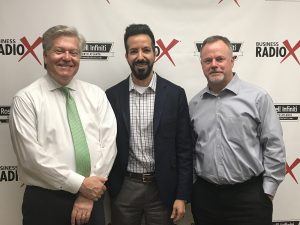
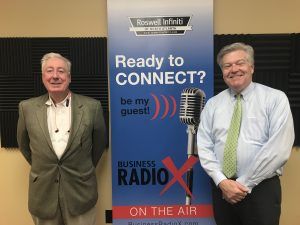
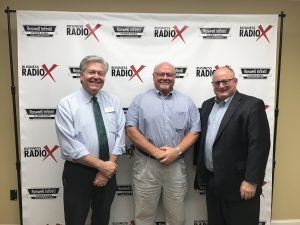
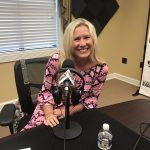
Dr. Scott Cooper, Dr. Jim Morrow, and Justin Hawkins

Episode 13, Medical Marijuana in Georgia

How does the new Georgia law (HB 324) allowing prescribed use of medical marijuana work? Is medical marijuana a slippery slope to recreational marijuana use? In a conversation with host Dr. Jim Morrow, Justin Hawkins and Dr. Scott Cooper of Acreage Compass LLC answer these questions and more. “To Your Health” is brought to you by Morrow Family Medicine, which brings the CARE  back to healthcare.

Justin Hawkins and Dr. Scott Cooper, Acreage Compass, LLC

Dr. Scott Cooper and Justin Hawkins, Acreage Compass, LLC

Justin Hawkins is the General Manager and Dr. Scott Cooper is the Medical Affairs Director of Acreage Compass LLC. Acreage Compass is jointly owned by Compass Neuroceutical, Inc., a Georgia-based team of physicians, advocates, and patients, and Acreage Holdings, the largest vertically integrated, multi-state owner of cannabis licenses and assets in the United States. Through Acreage Compass, Compass Neuroceutical and Acreage Holdings are partnering to bring safe and consistent medical cannabis oil to patients in the state of Georgia.

For more information go to their website or email Justin Hawkins at justin@compassneuro.com.

About Morrow Family Medicine and Dr. Jim Morrow

Morrow Family Medicine is an award-winning, state-of-the-art family practice with offices in Cumming and Milton, Georgia. The practice combines healthcare information technology with old-fashioned care to provide the type of care that many are in search of today. Two physicians, three physician assistants and two nurse practitioners are supported by a knowledgeable and friendly staff to make your visit to Morrow Family Medicine one that will remind you of the way healthcare should be.  At Morrow Family Medicine, we like to say we are “bringing the care back to healthcare!”  Morrow Family Medicine has been named the “Best of Forsyth” in Family Medicine in all five years of the award, is a three-time consecutive winner of the “Best of North Atlanta” by readers of Appen Media, and the 2019 winner of “Best of Life” in North Fulton County.

Dr. Jim Morrow, Morrow Family Medicine, and Host of “To Your Health With Dr. Jim Morrow”

Dr. Jim Morrow, Morrow Family Medicine, and Host of “To Your Health With Dr. Jim Morrow”

Dr. Jim Morrow is the founder and CEO of Morrow Family Medicine. He has been a trailblazer and evangelist in the area of healthcare information technology, was named Physician IT Leader of the Year by HIMSS, a HIMSS Davies Award Winner, the Cumming-Forsyth Chamber of Commerce Steve Bloom Award Winner as Entrepreneur of the Year and he received a Phoenix Award as Community Leader of the Year from the Metro Atlanta Chamber of Commerce.  He is married to Peggie Morrow and together they founded the Forsyth BYOT Benefit, a charity in Forsyth County to support students in need of technology and devices. They have two Goldendoodles, a gaggle of grandchildren and enjoy life on and around Lake Lanier.

Facebook: https://www.facebook.com/MorrowFamMed/

LinkedIn: https://www.linkedin.com/company/7788088/admin/

Twitter: https://twitter.com/toyourhealthMD

Show Transcript

Intro: [00:00:06] Broadcasting live from the North Fulton Business RadioX Studio, it’s time for To Your Health with Dr. Jim Morrow. To Your Health is brought to you by Morrow Family Medicine, an award winning primary care practice, which brings the care back to health care.

Dr. Jim Morrow: [00:00:23] Hello! This is Dr. Jim Morrow. I’m with Morrow Family Medicine. We have offices in Cumming and Milton, Georgia. We’re a primary care practice, where we utilize state-of-the-art technology and old-fashioned ideas to bring you the best care we possibly can. We believe that in Morrow Family Medicine, you’ll feel both cared for and appreciated. And we do realize that you have many choices as to where you receive your care, and we hope you’ll find that Morrow Family Medicine is a good place for you.

Dr. Jim Morrow: [00:00:51] I’m here in the studio at Renasant Bank on Windward Parkway in Alpharetta, Georgia with John Ray, my cohort. John’s running the board. How are you doing, John?

John Ray: [00:00:59] I’m great. I hope you’re well today.

Dr. Jim Morrow: [00:01:01] I’m good. It’s not too hot outside today. So, those are pretty good.

John Ray: [00:01:04] Perfect in Alpharetta and Milton

Dr. Jim Morrow: [00:01:07] Always sunny in Alpharetta, right?

John Ray: [00:01:09] Yeah, you got it.

Dr. Jim Morrow: [00:01:11] So, we’re here today for another podcast. We want you to know that you can reach out to us by e-mail at drjim@toyourhealth.md or or you can tweet us, @toyourhealthmd.

Dr. Jim Morrow: [00:01:24] So, we’re here today to talk about cannabis oil and low-THC oil, what some people refer to as medical marijuana in the State of Georgia. And I’m honored to have two guests with me today from Acreage nchorage Compass LLC. We have Justin Hawkins, the General Manager, and Dr. Scott Cooper, who’s the Medical Affairs Director. Hello, gentlemen. How are you today?

Dr. Scott Cooper: [00:01:48] Doing well, thank you.

Justin Hawkins: [00:01:49] I’m good. How are you? I, actually, have both of my doctors here. So, I don’t know if this is an intervention or an interview, but it’s good to be here.

Dr. Jim Morrow: [00:01:55] We’re going to get into that later, Justin. You can count on it. You can count on it. So, this whole thing has started up in Georgia fairly suddenly. If you haven’t been following the news and haven’t followed the path of low-THC oil in Georgia, there is a bill, House Bill 324 that was passed by the state legislature and signed by the governor at the beginning of April of this year. So, Justin, tell us something about House Bill 324.

Justin Hawkins: [00:02:23] Yes. So, House Bill 324 is a piece of legislation that has been tried over the last six years. And we were successful this year in 2019 under the leadership of Brian Kemp. And what House Bill 324 does is it allows the cultivation, and processing, and distribution of low-THC oil, which is 5% THC in cannabis oil, also referred to as medical marijuana.

Justin Hawkins: [00:02:46] The reason that we wanted to push House Bill 324 is because over the last six to seven years, medical cannabis oil was legal for possessions for qualified patients under the Georgia Department of Health, but there was no real legal access for these patients under these 17 indication list to actually acquire the medicine.

Justin Hawkins: [00:03:06] And so, although medical cannabis is actually illegal under federal law, we’ve seen across the entire country that in over 33 — over 43 states across the country that in-state cultivation is a way that provides medicine to patients, also, by abiding by state law. And so, that’s what House Bill 324 does specifically.

Dr. Jim Morrow: [00:03:25] Well, why was it able to be passed this year when it wasn’t able to be passed the other year?

Justin Hawkins: [00:03:30] So, we were fortunate for a couple of different reasons. Georgia Hope is an organization founded by parents. A lot of the times, they’re parents of these kids who suffer from pediatric epilepsy, mitochondrial disease, autism, and they have really led the fight over the last six years. Fortunately, under the leadership, the new leadership, of Governor Brian Kemp and Jeff Duncan, along with public opinion and the way that we’ve seen the research of these in-state cultivation programs being analyzed, all of that came together in a positive way that said, you know, in-state cultivation is a way for kids, and veterans, and all other patients to get medicine. It’s not going to change the culture of Georgia. And I think between that and between organizations like the one Dr. Cooper and I founded, all of us coming together and moving in one step, really, it was everything coming together at once and we were thankful for it.

Dr. Jim Morrow: [00:04:21] Super. And the law allows for specifics about who can grow this, and cultivate it, and produce it, and so forth. Can you talk some about who, and what, and how many companies, and so forth are going to be involved in it?

Justin Hawkins: [00:04:37] Yeah, we anticipate there’s going to be a lot of interest. Georgia is the eighth most populous state in the nation. It has a huge market, and there’s a lot of patients that are on the registry – 10,000 when we passed the bill, 300 we’re adding per month with no change to the legislation. So, we do believe that in the market of Georgia, it’s a large market. So, from an industry standpoint, there’s going to be a lot of companies and employers interested. What the bill allows specifically, it allows two class 1 organizations with a higher financial stipulation to prove to the state that they have. And it also allows four class 2, which are for smaller entities, small business across the state of Georgia. Those are six private licenses. Now, aside from that, they did allow two university programs to research, and develop, and cultivate. And that’s what the University of Georgia and Fort Valley State University down the south of Atlanta. And so, when you combine, a total of eight enterprises, public and private, that’s who will be the structure of Georgia medical cannabis.

Dr. Jim Morrow: [00:05:38] Interesting. So Georgia’s law, being one of the newer ones, can you tell me how this law is different from the laws in these other states that you mentioned?

Justin Hawkins: [00:05:47] Yeah. So, for instance, I’d like to take the obvious, which is Colorado. So, when you look at Colorado, which passed medical cannabis back in 2000-2001, the way we were different and the largest way that I can contrast between is horizontal versus vertical. And what I mean by that is when you look at Colorado, they allowed a horizontal structure, which means they allowed growers, processors, and distributors, all being separate silos, so to speak. What we did in Georgia is not only do we put a THC cap of no more than 5%, which is very low THC, but what we also did is we allowed vertical integration, which means that the companies vying for these class 1 and class 2 licenses is that they grow, they process, and they distribute their own product.

Justin Hawkins: [00:06:30] And why we feel like that’s very valuable for the State of Georgia is it allows high-quality control. It allows players and companies that know what they’re doing. They have a track record across the country. It allows us to not have price increases with middlemen. So, we’re allowed to go directly to the patient. Obviously, you guys are doctors. You guys know how the pharmaceutical industry works. So, it’s almost like if Johnson & Johnson or Amgen had their own pharmacies, that’s what our company is vying to do.

Dr. Jim Morrow: [00:06:58] Okay. And you called it low-THC oil. And a lot of listeners hearing THC, they’re going to think that this is something that’s going to act and function like marijuana. So, Dr. Cooper, what exactly is low-THC oil?

Dr. Scott Cooper: [00:07:13] It restricts how much THC is in the compound. And let me read you something from the AMA since you bring that up.

Justin Hawkins: [00:07:22] While he’s doing that, I can give you kind of an overview. So, when it comes to low-THC oil, what we have is we have hemp-derived oil, and we have cannabis-derived oil. Hemp-derived oil is what’s often referred to as CBD. And so, you see CBD on the market because hemp CBD oil is now federally legal with the Farm Bill that was passed a couple months ago. With cannabis, you have cannabis oil. And so, when you have natural cannabis, it can be as high as 90%. And so what Dr. Cooper will talk about specifically is that when we form cannabis oil from the actual cannabis plant, then we’re restricting that THC down to 5% per milliliter. And so, that’s what allows us to have different indications. And he’ll speak more to that.

Dr. Scott Cooper: [00:08:05] Sorry for that delay. I didn’t have it prepared for you. So, this is a quote from the FDA stating that it is THC and not CBD that’s the primary psychoactive compound of marijuana. And they approved a medication with low THC for specific seizure disorders, primarily in children. And they approved, and I quote, “They’re committed to this kind of careful scientific research and drug development, continuing to support rigorous scientific research on potential uses of medical marijuana-derived products.” So, we’re not talking about something that is psychoactive. This compounds specifically for specific and, in the case of Georgia, 17 discrete different disease states.

Dr. Jim Morrow: [00:08:51] And these are disease states that have had faulty, not effective medications and treatment methodologies previously pretty much.

Dr. Scott Cooper: [00:09:00] Absolutely. They have done studies with veterans, as well as studies with geriatric patients and chronic pain syndrome. And they found that even in senior citizens, it reduced the opiate use by over one-third. So, we’re looking for a safe medication without the side effects and addictive properties of current therapies that we have for different disease states right now.

Justin Hawkins: [00:09:25] And we say this all the time, it’s not a miracle drug. Dr. Cooper, you’re great at saying this. It’s more of an adjunct. And so, we see a lot of combined with pharmaceutical drugs, it really does make a difference.

Dr. Scott Cooper: [00:09:35] Yeah, this is not going to be replacing every medication that somebody is out there taking right now. This is to help them get over the hump to really control whatever disease state we’re talking about.

Dr. Jim Morrow: [00:09:45] So, in Georgia, the process for acquiring a card, which as I understand is what you have to have to get this, tell me a little bit about the process for going through that.

Dr. Scott Cooper: [00:09:57] Well, the physician, (1), who’s prescribing it has to be registered with the state. So, that’s the first hurdle. Not every physician wants to participate in the program. Then, (2), they have specific paperwork that needs to be filled out and sent in to the Georgia Department of Health. The patient has to be registered, and the patient gets a registration card. And it’s presumed right now it’s not definitely set, but we suppose that this is going to be similar to other states where there will little bit discreet dispensaries specifically for CBD products, and the patient has to present that card to be able to achieve and get the medication.

Dr. Jim Morrow: [00:10:38] And there’s a limit, I’m sure, on how much any particular person can have in their possession at any one time.

Dr. Scott Cooper: [00:10:44] Absolutely. Not just how much they can have at one time in their possession, but how much they can purchase over a 30-day period. And you would have to drink gallons of this stuff to try to get high. So, if you’re going to spend over $100 per bottle, you’re better off doing something illegally if you’re in search of something that’s psychoactive. If high is your goal, you’re not going to get it here.

Dr. Jim Morrow: [00:11:08] So, you take the THC oil, in the case of seizures, let’s say it helps to control the seizures. Do we know how that works in the brain?

Dr. Scott Cooper: [00:11:17] No, we don’t. Yeah, I wish we did. There are a lot of different cannabidiol receptors. We know that what’s available now commercially for these two seizure types, the Epidiolex, does not work for pain disorders or tic disorders. There are two compounds right now in Europe and in Canada that are used for multiple sclerosis-associated pain, as well as cancer-associated pain. And it’s within that realm of cannabis, but it’s a different level of THC. So, there have to be different products specifically developed for different disease states. But yet, we’re at the stage where we know it works, but we don’t know how at this point.

Dr. Jim Morrow: [00:12:01] Well, the results that you see and the stories that you hear about the most heart-wrenching ones are children with disease processes and seizures is a great example are just absolutely mind blowing when you see what this medicine can do for them and what their traditional medicines have not done for them. So, I think it’s a very exciting time.

Dr. Scott Cooper: [00:12:24] That’s absolutely right. I’ll be honest, I was a skeptic when this first came out and was not willing to endorse it, and had patients that were acquiring from other states illegally. And they came in, and their seizures were dramatically reduced. Not controlled, but reduced, such that I could reduce some of the medications that were both expensive, as well as having side effects. And then, saw other patients with autism. Their behavior improved. Parkinson’s disease, tremor improved. Alzheimer’s disease, behavior improved. And that’s when I started looking into it more, and then became an advocate.

Dr. Jim Morrow: [00:13:01] So, the law gets passed. The science says this will work for a variety of different instances. You mentioned 17 different diagnoses that it can be used for. So, along comes Justin and Scott Cooper. And how does this happen that you ended up being in this push to, now, produce and to distribute THC?

Justin Hawkins: [00:13:25] As we were talking earlier, when you look at anybody in this industry, they have a touchpoint. Either they have a family member, or they have a neighbor, or they have a patient that comes to them, and you see them suffering. So, for me, my brother served overseas in Iraq and Afghanistan, and I saw him come back from overseas, and work with the VA. And instead of being on a medication, like a tool like low-THC oil, he was on opiates. And that led to a whole different battle of its own.

Justin Hawkins: [00:13:51] And so, I was very interested from that point. And so, in 2018, Dr. Scott Cooper, and myself, and six other partners around the State of Georgia formed Compass Neuroceutical, which was an advocacy group, all Georgia-based, with a single focus, which was to pass House Bill 324. In doing so, because we were successful with one other company in supporting Georgia Hope, which was the organization with parents, patients, and advocates that have been fighting for this for six years, we all came together. We were successful in passing it.

Justin Hawkins: [00:14:19] Simultaneously, we were talking to national leaders about partnering and having a specific partnership within the State of Georgia to to be a licensed holder and to lead the way in Georgia, so that we could be the standard bearer for the country. And in doing so, we talked to many of the national leaders, and we were fortunate to choose a company known as Acreage Holdings, which is the largest multi-state owner and operator in the United States. They have a great executive leadership team with the board of directors, folks like the former Speaker of the House, John Boeher, former Prime Minister of Canada, Brian Mulroney, governors and former CEOs of international companies.

Justin Hawkins: [00:14:57] And why that matters is you see in this industry, and I tell people all the time, they think I’m joking, but I’m really serious, this industry is either Warren Buffett all the way to-

Dr. Jim Morrow: [00:15:06] Thomas Leary.

Justin Hawkins: [00:15:10] Thomas Leary. All the way to Willie Nelson and in between. And so, the industry is very wide. So, we do a lot of different things. We have good governance and integrity, and we keep stupid away. But on top of that, we have a proven track record of owning more licenses. 20 states, we have 88 licenses across the country. And because we’re the largest, we know how to get safe, reliable product in a quick and efficient manner to patients. And so, with that partnership, we have created what’s now called Acreage Compass LLC, which will be vying for a Class 1 license in the State of Georgia.

Dr. Scott Cooper: [00:15:41] Yeah, if I could add that Georgia Hope was the main thrust behind this. As Justin said, we were able to work with them to finally get it over the finish line. And all of these companies are just drooling over starting business in Georgia. And we were approached by numerous corporations that are in the industry. And we selected the one that we thought had the same vision we do because there are others that are out there that are just interested as this is a bridge to recreational marijuana, and that they really saw medical marijuana as a stepping stone, but they weren’t very interested in the cultivation and in studying which drug combination was going to be best for which disease state. And Acreage has integrity, which is something you don’t see in every partner that was searching out their.

Dr. Jim Morrow: [00:16:31] So, with the passage of the bill, the State is creating this commission, the Cannabis Commission, basically, that will choose these companies. What’s that process like for being chosen? I know you’re doing an awful lot of work, both of you, with Acreage Compass right now in hopes of being selected, but nothing’s written in stone. So, tell me about the process, the timeline, and how you expect all that to happen.

Justin Hawkins: [00:16:56] Yeah. We’re kind of on hold now. I know, Governor Brian Kemp, Lieutenant Governor Jeff Duncan, Speaker David Ralston are doing a whole lot behind the scenes to make sure that a commission is set up in an appropriate way that really has the spear in the integrity of the bill. And so, as of now, the commission is set up – three appointed by the governor, two appointed by the lieutenant governor, and two appointed by the speaker. So, a total of seven appointees to the commission.

Justin Hawkins: [00:17:20] Within the three that the governor has, one of those will be the chair of the commission. In doing so, the commission creates one position under them immediately as the executive director of the commission, which handles the daily functions. This whole commission will be under the Secretary of State’s office as the regulator moving forward in the future.

Justin Hawkins: [00:17:39] So, we’re on hold right now. None of the commission members have been selected. We anticipate from our talks. Of course, this can change between August and September of the appointees being selected. From that process. when they’re selected, they really start from ground up, which means they create the rules and regulations, the application, the criteria. And then, from that point, then private companies are able to do the application, which is a very stringent process. Some are even over 3000 pages from that timeline. Then, three to six months after the applications are submitted, we anticipate the state will then choose which licence holders they feel are competent based on a variety of factors.

Dr. Jim Morrow: [00:18:20] So, you mentioned 10,000 people on the registry now, adding about 300 a month. So, I think, earlier, when we were talking, you said the expectation is a quarter million people on the registry.

Justin Hawkins: [00:18:33] I was talking, when Representative Micah Gravley spoke at our Rotary Club not too long ago, I went out to dinner with him the night before to talk about the different things we could do to work together and other stakeholders. And he had relayed, and we feel very strongly that by the end of next year, we’re almost going to see 50,000 patients in the registry. And it just shows — you saw a lot before House Bill 324 passed that many patients in the 17 indication list were not even registering because there was no real access to acquire this medication. With that, we had 645 doctors as soon as we passed House Bill 324 that were on the registry.

Justin Hawkins: [00:19:11] So, we anticipate both those numbers will dramatically increase. I would argue that about a quarter of a million patients will be registered in Georgia over the next four to five years. And I would even say that’s a conservative estimate. And that’s not to say that this program gets out of control. That’s to say that these, from mitochondrial disease, to autism, to pediatric epilepsy, to PTSD, these are disease states that are large, so to speak. And I know Dr. Cooper can speak to that, but we believe that Georgia is a large market, and it’s been underserved over the last 10 years.

Dr. Scott Cooper: [00:19:47] Yeah, I would have to agree with that. I’d say that, at least, one or two times a day, I have patients that are telling me either they’re already on it, and how do they get a card, or how do they acquire it? People are asking about it. And there were some opponents to the bill who said, “Well, you only have so many people on the registry, so it’s not going to be used.” And I likened that to saying, “Well, the bill hadn’t been passed yet.” So, that’s like saying, “Okay, I see a sign saying Kroger is opening up. When are they opening? And you’re assuming only the people who asked about the sign are going to be future customers.” And the store opens, and, suddenly, you have 100,000 customers. Right. So, I think that once we have the distribution set up and the physicians signed up, that we’re going to see easily well over 100,000 patients within the first year.

Dr. Jim Morrow: [00:20:35] And the patients, those patients will be for these disease processes that are already approved. What does the future of cannabis oil and cannabis, in general, look like medically?

Dr. Scott Cooper: [00:20:46] There are more and more studies that are going on all the time. A lot of them under federal funds. And then, you’ve got the two colleges, universities that will be pursuing some research. Right now, the Georgia Department of Health is the one that regulates which disease states are approved and how many. And they went from seven in one year to 17 the next year. I’m sure, as we gain more experience, we’re going to see future applications beyond what we have right now.

Dr. Jim Morrow: [00:21:15] Okay. So, we’re talking with Justin Hawkins and Dr. Scott Cooper from Acreage Compass, LLC. And Justin, I want to ask you before we go, is  there a way that people can do their own research? Is there a way they can learn something about your company and the business in general?

Justin Hawkins: [00:21:32] Yeah, absolutely. We have our own website, compassneuro.com. That will have information coming out in the next weeks. And then, also acreageholdings,com, which kind of gives you a layout of who Acreage is. We’re in over 20 states across the entire country. We have a public potential merger with a company called Canopy Growth, which is the largest cannabis company in the entire world. And so, the proprietary information that we have, the assets, and the intellectual property, and knowledge is second to none. And so, those two websites are great resources. Dr. Scott Cooper and I live in the Atlanta area. So, we’re always around to answer questions. We’d like to meet patients. We see all the time these children and parents who have been suffering, don’t know what to do. And so, if there’s any of that case, we’re here to to help any way we can.

Dr. Jim Morrow: [00:22:21] Super. John, you’ve been awfully quiet over there. And we have anybody that sent us any questions or comments during our time here?

John Ray: [00:22:32] You’ve got them all stirred up again.

Dr. Jim Morrow: [00:22:34] I like that.

John Ray: [00:22:36] Yeah,.

Dr. Jim Morrow: [00:22:36] If it’s not disease, this or vaccine.

John Ray: [00:22:37] Vaccines. I thought vaccines hit the high watermark, but I think you got it going again today. So, several questions about the — is this a slippery slope to recreational use?

Dr. Jim Morrow: [00:22:52] That’s a great question. Scott, I’ll send that to you. What do you think? If people start using THC, it will going out behind the Wal-Mart and looking for marijuana to buy?

Dr. Scott Cooper: [00:23:03] Well, not only is this my opinion, but actually a study was just published with over 1.4 million people that were surveyed throughout the entire United States. And in the 33 states, plus the District of Columbia, there was not a single area geographically that there seemed to be a breakthrough for low THC, and then they convert over to recreational. This has been disproven conclusively that this is not a gateway drug to tempt people to, then, go to recreational drugs such as marijuana or other types of substance abuse.

Justin Hawkins: [00:23:40] And if I could add one thing, we did one thing different than a lot of states. And Micah Gravley, who’s the author of House Bill 324, with Senator Matt Brass, really pushed this with Governor Brian Kemp. And it was a great way to contrast ourselves to other states who have gone to recreation. If you look at every state that started as a medical program that goes to recreation, they had one thing in their program that Georgia does not. And that’s the ability to have smokable flower. So, with states like Colorado, or California, or Oregon, or Washington, they had smokable flower in their medical program. Not only does Georgia not allow smoking smokable flower, but we don’t allow vaping as well. So, that’s a main difference that we saw, a common denominator.

Dr. Jim Morrow: [00:24:24] Super. That’s a great question, John.

John Ray: [00:24:27] I only ask great questions.

Dr. Jim Morrow: [00:24:31] We’ll talk about that off the air!

John Ray: [00:24:31] Yeah, okay. I’ve got one more if I can try again.

Dr. Jim Morrow: [00:24:35] Sure.

John Ray: [00:24:35] Let’s see if this is a great one too.

Dr. Jim Morrow: [00:24:37] Yeah.

John Ray: [00:24:37] So, the question relates to side effects. So, all medications have some sort of side effects. Are there any other side effects noted in the use of this THC oil?

Dr. Scott Cooper: [00:24:51] If you read the print out for Tylenol, you’ll see a yard-full of potential side effects. You do not need to monitor any blood tests routinely with this low-THC oil. It can have a little bit of a calming side effect and, sometimes, a little bit of sedation, but that’s about it. So, it’s not the high THC that you see with recreational, so you’re not going to get the munchies.

Dr. Jim Morrow: [00:25:18] That’s good.

Dr. Scott Cooper: [00:25:21] As opposed to other drugs, either a lot of marijuana or methamphetamines that lower the seizure threshold, this actually treat seizures.

Dr. Jim Morrow: [00:25:31] Well, that’s wonderful. If you have a medicine that can treat the things we’re talking about that are difficult to treat, and it doesn’t affect your liver, your kidneys, it’s not mood altering or habit-forming, they don’t drug test for in a workplace, that kind of thing, then I think that’s great. And, of course, there’s a new drug test for it, but with the prescription card, is a negative drug screen.

Dr. Jim Morrow: [00:25:48] So, I think that’s a fantastic thing. And I’m very excited as a practicing physician about seeing where this will go. And I’m very excited as a businessman by seeing where you guys go. So, I really appreciate you all being here very much. I think, John, we’re going to wrap it up for today.

John Ray: [00:26:04] Sounds good.

Dr. Jim Morrow: [00:26:05] All right. This is To Your Health.

Tagged With: Crohn's disease, Cumming family doctor, Cumming family medicine, Cumming family physician, Cumming family practice, Cumming md, Dr. Jim Morrow, Dr. Scott Cooper, end stage cancer, epilepsy, GA House Bill 324, Georgia Access to Medical Cannabis Commission, Georgia's medical marijuana law, Hemp, hemp-derived oil, in hospice program, intractable pain, low-THC oils, medical cannabis, Medical Marijuana, medical marijuana prescription, medical marijuana program, Milton family doctor, Milton family medicine, Milton family physician, Milton family practice, Milton md, Mitochondrial Disease, Morrow Family Medicine, Parkinsons Disease, post-traumatic stress disorder, recreational marijuana use, seizures, tetrahydrocannabinol, Tourette's syndrome

Mark Hayes, Mark Hayes Consulting, and Josh McClure, United Water Restoration Group

July 23, 2019 by John Ray

North Fulton Business Radio
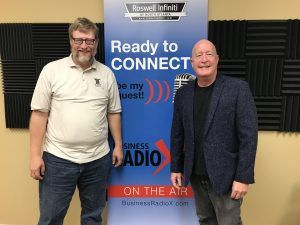
Mark Hayes, Mark Hayes Consulting, and Josh McClure, United Water Restoration Group
Loading
00:00 /
RSS Feed
Share
Link
Embed

Download file

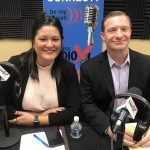
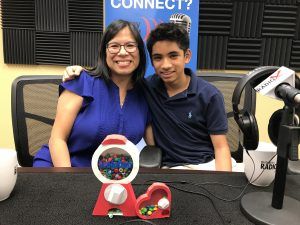
John Ray, Mark Hayes, and Josh McClure

“North Fulton Business Radio,” Episode 150:  Mark Hayes, Mark Hayes Consulting, and Josh McClure, United Water Restoration Group

Our guests on this edition of “North Fulton Business Radio” are Mark Hayes, Mark Hayes Consulting, and Josh McClure, United Water Restoration Group. After a distinguished career in news broadcasting, Mark now consults with business owners on their media strategies, branding, and presence. Josh McClure and United Water Restoration Group handle a variety of disaster-related damage remediation, including water, flood, and fire. Join host John Ray as he speaks with these two outstanding business leaders.

Mark Hayes, Mark Hayes Consulting

Mark Hayes, Mark Hayes Consulting

Mark Hayes is the President and CEO of Mark Hayes Consulting. The firm’s mission is to help everyone from CEOs to small business owners make the most of their opportunity for media exposure. Providing media training and placement consulting, Mark’s firm helps businesses and brands find media placements and create content to build and enhance their brand. The firm also provides media training and communication skills workshops and seminars. Mark is a Certified Jack Canfield Trainer.

Mark Hayes has spent nearly three decades bringing news viewers in major cities across the country their news and information of the day.  Some of his stops include major markets like Dallas, Denver, Detroit and Baltimore.  His proudest accomplishments, however, came during his tenure in the great city of Atlanta, GA.  For more than a decade, Mark was a staple of early morning television on Good Day Atlanta on Fox 5 Atlanta.  He believes his most noteworthy achievement, was the nearly 20 hours he spent on air during the Fulton County Courthouse shootings and the subsequent capture of Brian Nichols. He has been recognized nationally with two Emmy nominations and recognition for spot news coverage from the National Press Photographers Association.

For more information, go to https://markhayesconsulting.com/ or call Mark directly at 678-829-4632.

Josh McClure, United Water Restoration Group

Josh McClure, United Water Restoration Group

Josh McClure is the Business Development Manager with United Water Restoration Group in Atlanta.

United Water Restoration Group is a full-service restoration company specializing in damage remediation from water, flood, fire, storm, sewage, and mold. They have over 14 years of experience in this industry and have helped thousands of home and business owners in restoring their property to pre-loss condition.

They guarantee their work and have handpicked their staff so that they maintain the personal attention that you rarely receive in this industry today.

For more information, go to www.uwrgnorthatlanta.com or call Josh directly at 470-380-5469.


“North Fulton Business Radio” is broadcast from the North Fulton studio of Business RadioX®, located inside Renasant Bank in Alpharetta. Renasant Bank has humble roots, starting in 1904 as a $100,000 bank in a Lee County, Mississippi, bakery. Since then, Renasant has grown to become one of the Southeast’s strongest financial institutions with approximately $12.9 billion in assets and more than 190 banking, lending, wealth management and financial services offices in Mississippi, Alabama, Tennessee, Georgia and Florida. All of Renasant’s success stems from each of their banker’s commitment to investing in their communities as a way of better understanding the people they serve. At Renasant Bank, they understand you because they work and live alongside you every day.


Tagged With: content marketing, fire damage, fire damage restoration, flood damage, flood damage cleanup, Fox 5 Atlanta, Good Day Atlanta, Mark Hayes, Mark Hayes Consulting, media content, media exposure, media placements, media training, mold remediation, plumbing bursts, sewage cleanup, Social Media, storm damage, United Water Restoration, United Water Restoration Group, video marketing, water damage, water damage restoration

The GNFCC 400 Insider: All Things Roswell, An Interview with Andy Williams, Visit Roswell, the Roswell Convention & Visitors Bureau, and Steve Stroud, Roswell Inc.

July 19, 2019 by John Ray

North Fulton Studio
North Fulton Studio
The GNFCC 400 Insider: All Things Roswell, An Interview with Andy Williams, Visit Roswell, the Roswell Convention & Visitors Bureau, and Steve Stroud, Roswell Inc.
Loading
00:00 /
RSS Feed
Share
Link
Embed

Download file

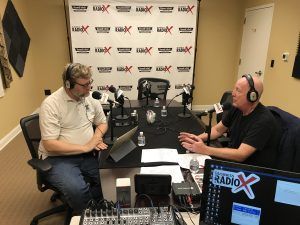
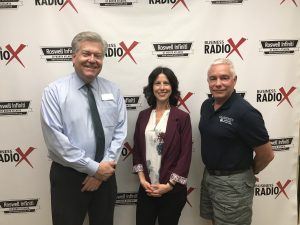
Steve Stroud, Kali Boatright, and Andy Williams

Episode 26, All Things Roswell

What makes the City of Roswell so attractive to millennials, families, and empty-nesters? Why is Roswell such an attractive location for business? What are some of the signature events which draw visitors to Roswell? Join Host Kali Boatright as she poses these questions and more to Andy Williams, Visit Roswell, and Steve Stroud, Roswell Inc. The “GNFCC 400 Insider” is presented by the Greater North Fulton Chamber of Commerce.

Andy Williams, Visit Roswell, the Roswell Convention & Visitors Bureau

Andy Williams, Visit Roswell, the Roswell Convention and Visitors Bureau

Andy Williams is the Executive Director of Visit Roswell, the Roswell Convention & Visitors Bureau. Visit Roswell and the Roswell Visitors Center is the place for “All Things Roswell.” It is a convenient place to start your excursion whether you are looking for historic attractions, trails to hike, nature, entertainment, breweries, or Roswell’s extensive culinary scene.

Knowledgeable staff can assist with arrangements for a fun filled day, overnight stay, or a several day trip. The Roswell Visitors Center is located at the intersection of Hwy. 9 and Sloan Street in Roswell’s Historic District (just across the street from the Historic Town Square.) at 617 Atlanta Street; Roswell, GA 30075.

You can email info@visitroswellga.com, or call 770-640-3253 or 800-776-7935. The Visit Roswell website can be found at http://www.visitroswellga.com/.

Steve Stroud, Roswell Inc.

Steve Stroud, Roswell Inc.

Steve Stroud is the Executive Director for Economic Development with Roswell Inc.

As the economic development and business advocacy organization for the City of Roswell, Roswell Inc. serves as a catalyst for a sustainable, innovative and vibrant business community in the city.

Their vision is for Roswell to be the best place in the region for innovative, community-minded businesses and entrepreneurs, and they accomplish this through four main areas of work—business attraction and recruitment, business retention and expansion, industry support programs, and business development.

As a 501(c)6 nonprofit, Roswell Inc. has worked with the City of Roswell through a public-private partnership since 2012 by serving as an advocate for business and economic growth.

For more information, go to https://roswellinc.org/ or call 678-823-4004.

About GNFCC and “The GNFCC 400 Insider”

Kali Boatright, President and CEO of the Greater North Fulton Chamber of Commerce

“The GNFCC 400 Insider” (formerly “North Atlanta’s Bizlink”) is presented by the Greater North Fulton Chamber of Commerce (GNFCC) and is hosted by Kali Boatright, President and CEO of GNFCC. The Greater North Fulton Chamber of Commerce is a private, non-profit, member-driven organization comprised of over 1400 business enterprises, civic organizations, educational institutions and individuals.  Their service area includes Alpharetta, Johns Creek, Milton, Mountain Park, Roswell and Sandy Springs. GNFCC is the leading voice on economic development, business growth and quality of life issues in North Fulton County.

The GNFCC promotes the interests of our members by assuming a leadership role in making North Fulton an excellent place to work, live, play and stay. They provide one voice for all local businesses to influence decision makers, recommend legislation, and protect the valuable resources that make North Fulton a popular place to live.

For more information on GNFCC and its North Fulton County service area, follow this link or call (770) 993-8806.


Tagged With: craft brewers, economic development, economic development in Roswell, GNFCC, gnfcc podcast, GNFCC President, gnfcc radio, gnfcc radio show, greater north fulton chamber, Greater North Fulton Chamber of Commerce, Kali Boatright, millennials, North Fulton, open carry law, Roswell, Roswell Business Alliance, Roswell Convention & Visitors Bureau, Roswell CVB, Roswell economic development, roswell ga, Roswell Inc., Roswell staycation, Roswell tourism, staycation, Steve Stroud, The Greater North Fulton Chamber of Commerce, tourism, Visit Roswell

Decision Vision Episode 24: Should I Become an Angel Investor? – An Interview with Steve Walden, The Walden Associates

July 18, 2019 by John Ray

Decision Vision
Decision Vision
Decision Vision Episode 24: Should I Become an Angel Investor? - An Interview with Steve Walden, The Walden Associates
Loading
00:00 /
RSS Feed
Share
Link
Embed

Download file

“Decision Vision” Host Mike Blake and Stephen Walden, The Walden Associates

Should I Become an Angel Investor?

How do I learn to become a successful angel investor? What’s the involvement of an angel investor after writing a check? What distinguishes the angel investor community in Atlanta? Highly regarded angel investor Steve Walden answers these questions and more in a wide ranging conversation with Mike Blake, Host of “Decision Vision.”

 Steve Walden, The Walden Associates

Steve Walden, The Walden Associates

Steve Walden, The Walden Associates, is a long-time (15-plus-year) angel investor.  Prior to that he was a corporate executive in New York with Time Warner, Grey Advertising and IBM. At IBM he was Executive Director of a new division called Prodigy, which foreshadowed the interactive tools we use today.

He was brought to Atlanta by BellSouth (now AT&T) as a vice president, where he helped launch BellSouth.net (their interactive division) and other businesses.

At about the same time he also had a small interest in a startup company called Netsurfer. The company was failing and with the overstated confidence of a New Yorker he stepped in as CEO.  Fortunately, the company had a decent exit and Steve became hooked on the startup world.  Since then he has been the CEO or CFO of three other companies before turning angel investor, where he has supported many other startups.

Steve started as a journalist after training at Columbia and the University of Pennsylvania and practiced that profession early in his career.

Michael Blake, Brady Ware & Company

Mike Blake, Host of “Decision Vision”

Michael Blake is Host of the “Decision Vision” podcast series and a Director of Brady Ware & Company. Mike specializes in the valuation of intellectual property-driven firms, such as software firms, aerospace firms and professional services firms, most frequently in the capacity as a transaction advisor, helping clients obtain great outcomes from complex transaction opportunities. He is also a specialist in the appraisal of intellectual properties as stand-alone assets, such as software, trade secrets, and patents.

Mike has been a full-time business appraiser for 13 years with public accounting firms, boutique business appraisal firms, and an owner of his own firm. Prior to that, he spent 8 years in venture capital and investment banking, including transactions in the U.S., Israel, Russia, Ukraine, and Belarus.

Brady Ware & Company

Brady Ware & Company is a regional full-service accounting and advisory firm which helps businesses and entrepreneurs make visions a reality. Brady Ware services clients nationally from its offices in Alpharetta, GA; Columbus and Dayton, OH; and Richmond, IN. The firm is growth minded, committed to the regions in which they operate, and most importantly, they make significant investments in their people and service offerings to meet the changing financial needs of those they are privileged to serve. The firm is dedicated to providing results that make a difference for its clients.

Decision Vision Podcast Series

“Decision Vision” is a podcast covering topics and issues facing small business owners and connecting them with solutions from leading experts. This series is presented by Brady Ware & Company. If you are a decision maker for a small business, we’d love to hear from you. Contact us at decisionvision@bradyware.com and make sure to listen to every Thursday to the “Decision Vision” podcast. Past episodes of “Decision Vision” can be found here. “Decision Vision” is produced and broadcast by the North Fulton studio of Business RadioX®.

Visit Brady Ware & Company on social media:

LinkedIn:  https://www.linkedin.com/company/brady-ware/

Facebook: https://www.facebook.com/bradywareCPAs/

Twitter: https://twitter.com/BradyWare

Instagram: https://www.instagram.com/bradywarecompany/

Show Transcript

Intro: [00:00:02] Welcome to the Decision Vision, a podcast series focusing on critical business decisions, brought to you by Brady Ware & Company. Brady Ware is a regional, full-service, accounting and advisory firm that helps businesses and entrepreneurs make vision a reality.

Michael Blake: [00:00:20] And welcome to Decision Vision, a podcast giving you, the listener, clear vision to make great decisions. In each episode, we discuss the process of decision making on a different topic. Rather than making recommendations because everyone’s circumstances are different, we talk to subject matter experts about how they would recommend thinking about that decision.

Michael Blake: [00:00:38] My name is Mike Blake, and I’m your host for today’s program. I’m a Director at Brady Ware & Company, a full-service accounting firm based in Dayton, Ohio, with offices in Dayton; Columbus, Ohio; Richmond, Indiana; and Alpharetta, Georgia, which is where we are recording today. Brady Ware is sponsoring this podcast. If you like this podcast, please subscribe on your favorite podcast aggregator. And please also consider leaving a review of the podcast as well.

Michael Blake: [00:01:02] Our topic today is Should I Become an Angel Investor? And those of you who’ve listen to the program for a while know my background, know that I’m connected with the startup world. In some way, I’ve been for really my entire career. And the angel investing topic, I think, is of particular interest because as a person that’s that’s traveled a lot, has lived abroad, one thing that I think separates our society apart is this notion of entrepreneur as folk hero. And even if you kind of translate entrepreneur in other languages, and I’m not fluent in 180 of them, but the way the words are even constructed is there’s almost a certain amount of suspicion or confusion about somebody that’s an entrepreneur, right. It’s an undertaking. And even the word “under” has a somewhat negative connotation.

Michael Blake: [00:02:03] But the United States is a little bit different. Now, I’m not trying to go off Fox News Channel here, but the United States is different in the fact that we elevate entrepreneurs to a folk hero status. And one of the things that makes that go is a community of angel investors. And the word “angel” I think is very apt, except for the people that perhaps get turned down for funding by them. But an angel investor is somebody that is willing to put money pretty much everywhere, everyone else’s fears to tread, so to speak.

Michael Blake: [00:02:38] And they bridge that gap between friends, family, and fools. Some will tell you themselves, maybe they fall into the fools category. Sometimes, they are friends and family. But they bridge that gap from from money that is not financially motivated but just really goodwill-based capital and just wants to see you succeed on a personal level. And the wise guys is the institutional investor, a series A venture capitalist, and so forth that let’s face it, at the end of the day, they are in it for the money. If they’re not in it for the money, they aren’t in it very long.

Michael Blake: [00:03:15] And angel investors kind of fill that very important gap. And you’re probably more familiar with them by looking at watching Shark Tank, a show I’ve never actually seen, by the way. But I know how it works. And Mark Cuban and those folks position themselves as angel investors or fashion. And I suppose that’s fair. But the vast majority of angel investors are frankly very anonymous. Very few of them have websites, not active all that much in social media. That’s not in California.

Michael Blake: [00:03:44] But most of them really are. You probably have sat next to an angel investor at a Starbucks and never knew it. You’ve probably been behind one in line at the grocery store. You’ve probably been sitting next to one in the restaurant where half-a-million-dollar deal is being talked about. You probably never knew about it. And especially if you’re in Atlanta, where we very much have a low key, sort of, non-PR mentality for the most part.

Michael Blake: [00:04:09] And so, if you don’t know that space, if you haven’t sort of invested a lot of time as I have to kind of burrow in, you may not know a lot about it. So, I’m very excited about this particular program because I think it’s going to be an opportunity to shine a lot of light about what it means to be an angel investor. I think the world always can use more angel investors. And if you’re a high net worth individual, and you’re thinking about it, it’s probably very daunting because where do you start? It’s high risk. Are you just going to be a moron and lose all of your money, and you’re going to feel like you never should have gotten into it in the first place? Or is there a method to the madness where somebody can be successful?

Michael Blake: [00:04:48] And I’m not qualified to tell you that, but I have somebody across the table from me who is. And it is my absolute pleasure to introduce my friend and our guest, Steve Walden today of Walden Associates, a seed stage investment and entrepreneurial advisory firm. Steve is a longtime 15-plus year angel investor. And prior to that, he was a corporate executive in New York with Time Warner, Gray Advertising, and a little technology company called IBM.

Michael Blake: [00:05:17] At IBM, he is executive director of a new division they called Prodigy, which foreshadowed the interactive tools that we now use. He was brought to Atlanta by BellSouth, now AT&T, as Vice President where he helped launch BellSouth.net, their interactive division and other businesses. At about the same time, he had a small interest in a startup company called Net Surfer. The company was failing, and with the overstated confidence of a New Yorker, he stepped in as CEO. And by way, this is just in, he actually disclosed. He is actually a native Bostonian, but we’ll let him define himself however he wants.

Michael Blake: [00:05:50] Fortunately, the company had a decent exit, and Steve became hooked on the startup world. That is sort of the way it works. Since then, he has been the Chief Executive Officer, or Chief Financial Officer, or maybe both of three other companies before turning angel investor where he has supported many startups. Steve started as a journalist after training at Columbia and the University of Pennsylvania and practiced that early in his career. And we’ll talk a little bit about how that led to him becoming an angel investor and him succeeding, i.e. surviving for a long time as an angel investor. I think that’s a good definition of success. Steve, welcome to the program. Thanks so much for coming on.

Steve Walden: [00:06:28] Thank you, Mike. It’s a pleasure to be here.

Michael Blake: [00:06:30] So, with most my programs, I like to start with establishing a common vocabulary because we can very quickly get into all kinds of jargon that’s almost a separate language, and we can lose people very quickly. So, we try not to do that. The first question I want to kind of put out there is most people have heard of venture capitalists, not as many people have heard of angel investors. And I think those who have think that they’re the same thing. But there’s a little bit of a difference between the two, isn’t there?

Steve Walden: [00:06:58] There’s a huge difference between VCs and angel investors. For one thing, probably the most fundamental difference is the way they’re structured. VCs are limited partnerships that are purely financially motivated. They have usually limited partners who who provide the money for the group, so that the people who actually do the investing may not be the same as the ones who provided the money for it. And that means the people who are doing the investing have a responsibility to third parties to produce results. And anything that is going to denigrate that ability is something they are not interested in.

Michael Blake: [00:07:52] And so, in effect, a venture capitalist as a fund manager, right. Definitely not that much different from a hedge fund or even an index fund, right?

Steve Walden: [00:08:01] Exactly. He has limited partners who are his bosses.

Michael Blake: [00:08:06] Now, one of the things that that strikes me about venture capital, it’s something I’ve studied a lot in the last two years, is because of the nature of venture capital, right, venture capital funds typically have an expiration date, right?

Steve Walden: [00:08:22] Right.

Michael Blake: [00:08:22] They’ve got to return capital up to 10 years and often more quickly than when that money was actually put in. And that can kind of limit the kinds of deals that venture capitalists can do and how they manage it. At least, drive how they manage it, right?

Steve Walden: [00:08:36] Yeah, exactly. They’re under a tremendous amount of pressure, not just within that timeframe, but because they know they’re going to be doing a second fund at some point, usually, before the first one is completely over. And if they have lack luster results, it’s going to be very hard for them to stay in business.

Michael Blake: [00:08:58] Yes, it’s hard to go out to the market saying, “We’ve been substandard or mediocre the first time.”

Steve Walden: [00:09:03] Yes, but give us more money.

Michael Blake: [00:09:05] But give us more money, right. Especially when there’s no shortage of folks that are looking for money. But we’ll come back a little bit to that. So, you have a background as a journalist. And as I found out actually in radio, to some extent, which is why I have this natural sort of smooth jazz radio voice, how does that help you being be an angel investor, or are there even parallels between journalism and the practice of angel investing?

Steve Walden: [00:09:35] Well, there are certainly behavioral similarities. I’ve learned to listen hard, to ask a lot of questions, and to be pretty skeptical about the results, whatever they may be of the questions. And so, when I go into “interview” an entrepreneur, I pretty much know what I want to ask him or her. And I know the kind of answer that I will accept and will be prepared to bore in and pretty hard with a second question,  I don’t get the kind of answer that’s successful.

Michael Blake: [00:10:11] So that that follow up question, right. And do you find that list of questions has pretty much become standard over the years?

Steve Walden: [00:10:18] Well, yeah. I think as I get older and lazier, I don’t try to rethink the whole thing every time. So, there are certain answers I’m looking to obtain. And if I don’t get them, I’ll either cut the interview short or, mentally, to cut it short.

Michael Blake: [00:10:38] Okay, right. One way or the other.

Steve Walden: [00:10:40] Yeah.

Michael Blake: [00:10:40] You can check out physically or mentally that at some point, this is over. We’re done. We’re done here. So, can you be an angel investor part time and be successful, right? You’ve gotten to a point, I think, correct me if I’m wrong, but I think it’s fair to characterize you as a full-time professional angel investor. Can you do that successfully part time? Can you do it as a hobby, or do you have to just decide this is going to be your job?

Steve Walden: [00:11:07] Well, it depends upon the success or how you define success. There are a lot of angel investment groups to which you can be a member, and let others take the heavy lifting for due diligence and some of the other things that have to happen, or you can decide, just stay and do it all yourself. And that latter function is a lot more difficult and requires a lot more time.

Michael Blake: [00:11:40] So, I want to come back to that because I know you’ve been very active in angel groups around town. So, I think that’s an important resource. Where do investment opportunities come from? As I mentioned in the introduction, you guys, as a group, except for the California folks, are pretty low key, right? You don’t have a store front. Most of you don’t really even have a website, right. And I think that’s by design, but you can tell me if I’m wrong. So, how do people know how to find you? There’s no Walden Associates in the Yellow Pages or anything. So, how do these deals find you?

Steve Walden: [00:12:18] It’s all through networking. And the converse of the question you ask is, how do I find companies? And you don’t just walk down the street and, actually, I was going to say, have people hand you cards but these days, you do find people who do that. But by and large, what you do is you become embedded in the community, and people know you, and you will hear about good companies. And if you’re not too late, you will get in and try to get a piece of them.

Michael Blake: [00:12:54] Now, that’s an important point. I want to follow up on that because, I think, even though we’re not really directing this at fundraisers, I’ve got to take the opportunity. If you’re looking for funding, or even if you want to be a successful angel investor, I think there’s a temptation to say, “Well, I’ve got this pile of money that I’m sitting on,” right. Of course, people are going to come looking for it, right. And to a certain extent, that may be true, but if it’s not the right people that it’s not a very productive use of your time, right?

Steve Walden: [00:13:28] On both sides.

Michael Blake: [00:13:28] Right.

Steve Walden: [00:13:29] There are some angel investors and VCs who actually provide value to the business. And if you get in with them, they can find you the next level of funding. They will have marketing contacts. They will also help you with an exit. And similarly, if you stay active in the community, you’ll get referrals from companies that are looking for money in however worth putting money into.

Michael Blake: [00:14:03] And so, in that search and one of the keys them to being an angel investor, I think, one bullet point here is you have to be willing to ping actively. It’s really like selling anything else, but unless you’re in finance understanding the notion that you have to sell money is odd. But in many ways, selling money is one of the most competitive ideas out there.

Steve Walden: [00:14:28] It is, it is. And it’s just becoming more difficult right now because the nature of the economy is such that there are a lot of “angel investors” who are throwing money around, and that has raised valuation. So, that funding a company that is worth investing in at a decent valuation has become exceedingly difficult.

Michael Blake: [00:14:55] Oh, good. So, I’m glad you mentioned that. So, I’m going to go off the script a little bit because I think from the outside, you look at angel investing, and the end game is to have the next Facebook, right, or the have the next Uber, or to have the next whatever big exit that there’s going to be. Obviously, those are exceptions to the rule, right? But investing just for growth and growth alone, that’s probably not a winning strategy. There’s got to be a value in there, right?

Steve Walden: [00:15:26] Well, there are a lot of motivations for wanting to be in this. And certainly, you want your investment part to be to return more than you put into it. But there are a lot of other motivations as well. And most angel investors like to work with startup companies. Many have been entrepreneurs themselves. And this is sort of heresy, I’m less eager to or less expectant of showing huge profits than wanting to break even and help some entrepreneurs along the way. But then, I’m at a particular stage in my career, which is unusual for some of them and certainly unusual for a VC.

Michael Blake: [00:16:15] Right. And I think I think you’ve earned the luxury of having that choice because of the success you’ve had earlier. I think if you start out as an angel investor, unless you’re sitting on a very large pile of cash, you probably do need to have some financial success, so you can evolve into a non-financial goal set. Is that fair?

Steve Walden: [00:16:33] That’s absolutely true.

Michael Blake: [00:16:34] And getting back to value, value is important, not so much that — in my view, not because you might get ripped off or overpay but the higher the entry value, the higher the burden it is for the company to generate a return on the investment. The exit just — and so, for every dollar of higher entry valuation, the exit has to be $10 higher, right, to generate that kind of return. That’s my value, I think, for angles is so important, that multiplier effect.

Steve Walden: [00:17:07] Although, I will also say that the if there’s going to be a decent exit, I’m certainly willing to give a little bit of the high end away, but not for companies that are pre-profit and are still asking for $20 million valuation.

Michael Blake: [00:17:29] Okay. And, hopefully, I think we’ll come back to that. But going back to kind of the opportunities search, and you talked about it comes through your networks, and that you’re involved in angel groups. So, how many deals do you think you see in a particular, call it a month?

Steve Walden: [00:17:48] Well, it depends on what you see, What do I mean by see? I’m aware of maybe 30 per month. And of that 30, I will actively want to “see” maybe 6 or 10. And the other two-thirds, I just really don’t want to get deep into.

Michael Blake: [00:18:12] And see, I’m guessing as you’d like to see maybe an executive summary, perhaps meet the management team for a brief presentation or something like that, right?

Steve Walden: [00:18:21] Yeah, exactly.

Michael Blake: [00:18:22] And so, of that population in a given year, how many commitments, investment commitments do you think you’d make?

Steve Walden: [00:18:34] That is a very difficult answer for me to give you because it varies a lot. And, right now, please forgive me, entrepreneurs, but the quality of deals that I’m seeing and what they’re expecting is less amenable to want to invest in. What we need is – forgive this also – is a good recession to bring down the valuations of some of the it. I know, Mike, you do valuation as well. And the pre-revenue company that’s asking for $20 million as valuation is just not going to get invested no matter how good they are

Michael Blake: [00:19:14] At least, not in our market.

Steve Walden: [00:19:16] I was going to say no, not on the East Coast.

Michael Blake: [00:19:18] Yeah, yeah, yeah. We could have a whole different podcast of East versus West. You and I have had that conversation, but we need to focus on on this particular topic. But it’s fair to say that if you’re looking at 300, if you are aware 300 plus deals a year, and maybe you look carefully at a hundred, right, a realistic number of commitments in a given year can’t be more than two or three, right?

Steve Walden: [00:19:43] Correct.

Michael Blake: [00:19:43] Right. And it’s not just financial capacity, but I know you as a person, you’re not really, “Here’s a check. I’ll come see you in five years,” kind of guy, right?

Steve Walden: [00:19:55] That’s correct.

Michael Blake: [00:19:56] So, how involved do you get once you kind of write that check? And I know there’s a spectrum, but we have you in front of a microphone. So, for you, personally, Steve Walden, right, what kind of involvement do you have with the company after you write that check?

Steve Walden: [00:20:11] It depends on a lot of factors. Ideally, I’d like to be on the board or, at least, on the advisory board. And I’d like to be in their key meetings, and I’d like to be able to help with some advice, particularly in marketing, but as larger sources of funds share this market with us, I will happily take a side seat and let the larger funds become involved in that.

Michael Blake: [00:20:46] Okay.

Steve Walden: [00:20:47] For instance, the one of the companies that I recently exited from was called [Predictale]. And one of the reasons I like Predictale initially, not only did it have a great CEO, but it had a VC that came in right after us. And the VCs took over the board seats and took over the ability to make some of the larger decisions. And I was perfectly happy being in the lee of the VC and seeing this become a successful exit.

Michael Blake: [00:21:20] Now, essentially, you say that because I think the mindset about that has evolved over the last 10 years. I think 10 years ago, angel investors are much more wary about VC involvement. I think they’re aware that they were just sort of take over and try to be private equity as opposed to VC.

Steve Walden: [00:21:40] Yeah,.

Michael Blake: [00:21:40] I think they were worried about, frankly, being crammed down, which that’s a term that just means that you either continue investing or become deluded. But it sounds like, I think, I sense in the community, not just from you, but others, that thinking has evolved now that angels are more open to partnerships with VCs and see some value there.

Steve Walden: [00:22:02] Well, certainly in the Southeast, we’re kind of a friendly club, and nobody wants to be the skunk at that party. And so, I know many of the VCs, and many of them know me, and none of us wants to do anything that will hurt the other and jeopardize future deals. So, on the other hand, I would be very wary about somebody coming in from the West Coast and saying, “I have lots of money and let me get involved in this company.”

Michael Blake: [00:22:41] And why is that?

Steve Walden: [00:22:44] Well, they would cram me down. They would do all sorts of financial stuff. And some of it is, I hate to use the word unethical but, not by our standards, ethical.

Michael Blake: [00:23:00] They still like to throw elbows. How about that? They definitely will throw some elbows.

Steve Walden: [00:23:03] Yeah. And they don’t have to live with me after that; whereas, the local VCs do.

Michael Blake: [00:23:09] Interesting. And, also, I think because some of the California folks have more money to begin with, right, it is much more likely they’ll come in and say, “We will put $20 million in this. And you, Steve, would put in – throwing out a number – quarter of a million dollars,” right, what are you going to do, right? All of a sudden, you’re not that different from holding shares of Apple at that point if somebody already invested, right?

Steve Walden: [00:23:35] It’s exactly.

Michael Blake: [00:23:35] So, who needs it?

Steve Walden: [00:23:36] Right.

Michael Blake: [00:23:37] So, let’s say I’m thinking about becoming an angel investor, and presumably I’ve done well financially. I don’t think this is something that you should do if you’re not financially well off. There are even some regulations that if they don’t make it outright illegal, they strongly discourage it. I am thinking how I can ask this question without being overly intrusive. Among your peers, yeah, among your peers, what do you think the net worth level kind of gets to before they realistically start thinking about themselves becoming active angel investors?

Steve Walden: [00:24:12] Well, there are some regulations that you have to sign that you have a net worth over — and I’m trying to think of it. It recently changed.

Michael Blake: [00:24:21] Yes.

Steve Walden: [00:24:23] Is it $2 million?

Michael Blake: [00:24:24] No.

Michael Blake: [00:24:24] No. Well, there are two limits. One is net worth and the other is income. And it has to be either or. But I think what it comes down to is what else you’re doing. To me, my angel investing is almost a hobby, and I have given more of my money to more conventional investments. And I’ve others, including those who are advising me on the other investments, that this is my sandbox. I intend to put money into nonconventional companies, and I expect that much of that is going to be lost. Although one or two big hits will completely erase those losses. And so, I guess, what I’m saying is the long answer to your question is you shouldn’t invest more than you can afford to lose.

Michael Blake: [00:25:28] So, in that respect, really not that different from Vegas rules?

Steve Walden: [00:25:33] I like to think it’s a little bit better, but probably not.

Michael Blake: [00:25:37] Well, maybe not. I think that it is better, but at the end of the day, I think that if you — personally, I think it is equally unwise to invest your mortgage and angel investment as it is to invest in a crap table.

Steve Walden: [00:25:54] I would agree.

Michael Blake: [00:25:56] Okay. That’s what I mean by Vegas rules.

Steve Walden: [00:25:58] Yeah.

Michael Blake: [00:25:58] So, while you’re answering that question, I quickly looked it up. So, the rule 501 by the FCC says that to be an accredited investor,a n individual has to have a $200,000 annual income or a household of $300,000 and — sorry. Or an individual or individual joint net worth of a million dollars, excluding your primary residence.

Steve Walden: [00:26:22] Yeah.

Michael Blake: [00:26:23] So, it’s actually less than I thought.

Steve Walden: [00:26:24] Yeah, it is less than I thought too. But what you said is it’s an or, so that you really — if you have a little money tucked away, and you’re not making a huge income right now or vice versa, you can still be an investor. And I think the key is to realize not to put your last nickel into it because it is a risky investment. And if you invest the way I do, which is companies you know, companies you’ve done your own due diligence on, you have a little bit better return than the average investor. But it’s not good enough that I would risk my future or my family’s future on that. But it sure is a lot more fun. It’s partly investment and and partly entertainment.

Michael Blake: [00:27:19] So, talk a little about that. What do you find entertaining or stimulating about it?

Steve Walden: [00:27:23] The fact that I meet a ton of interesting entrepreneurs, some of which have become friends. And even if I don’t invest, I’ve learned from them. And hopefully, the advice that I provide is as valuable as the money I can provide. And hopefully, mutually, I can learn from them and they can learn from me. I get a tremendous amount of pleasure in knowing I’ve helped some good entrepreneurs with some great ideas.

Michael Blake: [00:28:03] So, moving a little bit, shifting topics or gears a little bit to bandwidth, angel investing is a time-consuming exercise. But, also, we both know that portfolio theory suggests that if you can build a portfolio of any investment, right, you have a chance to generate a higher risk adjusted return. Is building a portfolio of angel investments a realistic exercise or a realistic goal?

Steve Walden: [00:28:35] There are lots of ways you can invest. You can invest in part of an investment group. There are several good ones in town. Well, that’s becoming better again. You can do it as there are even some funds that do this. So, that I think that having a portfolio is a good thing to do from a risk protection perspective, but you don’t have to go out and do your own due diligence to every company you’re looking at.

Michael Blake: [00:29:10] And that cuts down on transaction costs, too, right, because-

Steve Walden: [00:29:13] Yeah, exactly.

Michael Blake: [00:29:14] …  that in itself can be very expensive. It is not hard to rack up $30,000 of legal accounting expertise fees, right?

Steve Walden: [00:29:23] Yeah, exactly. And most investment groups have a lawyer that they have, if not on staff, which is probably the wrong word, with whom they do business regularly, who adjusts what he charges for either out of friendship or because he has other goals.

Michael Blake: [00:29:43] Yeah, okay. So, do you remember the first angel deal you ever did?

Steve Walden: [00:29:49] Probably the first one I ever did with a company I ended up working for or running. It was-

Michael Blake: [00:29:55] That’s an interesting way to get a job.

Steve Walden: [00:29:56] Yeah. Well, actually, believe it or not, there are some angels who invest with the goal of becoming the CFO or taking some role within the company and for salary. I had no such goal. I was, at the time, working for BellSouth, kind of fat and happy on a corporate income. And there was a company that I had come to that I put a little bit of money into because I kind of liked them, and I liked what they were doing, and I like the, then, CEO. And I put money into the company just down the side. And the company was reaching the point of no return or diminishment to nonexistence. And so, I actually left my day job to take over as CEO.

Michael Blake: [00:30:49] Well, talk about doubling down.

Steve Walden: [00:30:51] I know.

Michael Blake: [00:30:51] You really believed in that company.

Steve Walden: [00:30:53] I did, I did. And fortunately, it was a semi good choice. The company never really turned huge amounts. It was never a 20x return. But I did get all my money back and had the entertainment, if I can use that word, of being involved in it. And it was such a good experience to do that that I said, “Gosh, I’m never going to go back to the corporate world again. In fact, this sure beats working.”

Michael Blake: [00:31:28] Is that the first company you ever ran as sort of the head honcho?

Steve Walden: [00:31:34] Yes, it was. And there I was, fresh from New York. I never run a company as the CEO before. And so, there, I was taking double risks, but I had gone to business school in addition to some other things, and figured I could make some decent decisions. And whether I had made decent decisions or not, I was, at least, lucky, which is probably the most important part of that.

Michael Blake: [00:32:03] Well, luck is not a business plan, but if it happens, well, we’ll take it.

Steve Walden: [00:32:06] We’ll take it every time.

Michael Blake: [00:32:09] So, is it fair to say that not every investment you’ve made has had a happy conclusion?

Steve Walden: [00:32:16] That’s correct. All of the papers and books say that probably one in eight is doing okay. I’ve got a little bit better track record than that. And I will be the first to say a lot of that is luck, but I think I also take more care for about what I invest in. And I’ve got a bunch of rules that I follow. And every time I’ve broken them, by the way, I’ve ended up losing money.

Michael Blake: [00:32:56] That’ll learn you.

Steve Walden: [00:32:57] That’ll earn me, right.

Michael Blake: [00:32:59] So, I’m curious. One thing I’ve observed about angel investors and what I advise people that are thinking about getting into that is investing in businesses that you really understand well on the way in. So, a frequent complaint about Atlanta is, why don’t we have kind of the e-commerce California kind of startups? And the reason why is because nobody here has come out of that world, right?

Steve Walden: [00:33:26] That’s correct. And we also don’t have many consumer companies that get funding here, a whole lot of limitations and a bunch of categories.

Michael Blake: [00:33:36] Yeah. But the things we do do well here in Atlanta – information security, payments processing – if you have enterprise software, if you have a good deal, you can get funded.

Steve Walden: [00:33:45] You absolutely can. And I’ve had entrepreneurs complain to me about nobody has any money here in Atlanta. And my answer to them is much like the one you said, if you have a good deal, it’ll get funded. Even if it’s not in the category that’s normally popular in Atlanta, you will get it funded if you can prove that or demonstrate that it’s a good investment.

Michael Blake: [00:34:10] So, Atlanta has money, just maybe not money for you.

Steve Walden: [00:34:13] Yeah, exactly. I don’t know how to say it, but it’s not me, it’s you.

Michael Blake: [00:34:19] So, when a deal goes bad, what’s that like as an angel investor? How do you react? How do you then have the confidence to not sort of take all your money off the table, and hide, and go back into investing in index funds, real estate, gold, whatever?

Steve Walden: [00:34:37] You actually asked several questions. Probably the most important is how you react to it. If you look at it as a business, and you expect to get five absolute flops for everyone that comes in well, then every time you fail, you can say, “Well, that’s one less I have to do before I get to my five.”

Michael Blake: [00:35:04] Next one up.

Steve Walden: [00:35:05] Right. There are degrees of failure. A one-to-one payback is sort of a failure, but a lot of people wouldn’t consider that. So, the object is to get the ratios working for you, get six or eight companies invested in, and hope that with your advice and your very wise selections, you’ll get money back and then some.

Michael Blake: [00:35:41] And kind of what I’m getting to is we’re both aware of the stories of novice investors that invest. Maybe they’ve invest a relatively modest amount. Call it $25,000 or $50,000, right. And entrepreneurs will tell you that they’re often the highest maintenance, right if they’re novice investors, Maybe it’s not fair to categorize that by the amount, but assume if they’re novice investors, right, they’ll be our trying to reach the CEO every week, two or three times every week. “What’s happening with my money?” which is is distracting, obviously. And if you have that kind of mindset, it probably means you’re really not ready to take that kind of risk. Is that a fair characterization?

Steve Walden: [00:36:31] Probably.

Michael Blake: [00:36:31] Yeah.

Steve Walden: [00:36:33] On the flip of that, however, is if you’re able to offer good advice, and you call the entrepreneur on a daily basis, and offer good advice each time because you’ve been there, done that, then the entrepreneurs should take your call happily.

Michael Blake: [00:36:51] And I know with you, one of the things that you prize very, very highly is coachability, right. Somebody who’s willing to listen, doesn’t think they have all the answers. When we’re, certainly, looking for money, we want to present ourselves a certain way. We want to present ourselves as having all the answers when we pitch. But in fact, that can actually be a counterproductive posture in the angel world, can’t that?

Steve Walden: [00:37:17] Absolutely. And in fact, I have a friend and colleague who was about to invest in a company, and he asked me to interview the CEO. And after 15 minutes with the CEO, I said, “What attracted you to him was that he seems to have all the answers. That, to me, is a disincentive to invest in him.” And the guy walked away from the investment. At least, I hope. We haven’t heard the final results yet, but I hope he has.

Michael Blake: [00:37:57] I’m sure he took your advice. We could be here a much longer time, but I want to be respectful of your time. Just a couple of last questions on the way out. One is, if somebody now has listened this, we haven’t scared them off, and I hope we’ve scared off a lot of people-

Steve Walden: [00:38:16] Sure.

Michael Blake: [00:38:16] … who think that’s how — but there’ll be a few that. “I’m in,” where can they go to learn more about this?

Steve Walden: [00:38:25] Charlie Paparelli, who is a long-term angel investor who talks to other angel investors too says the best way to learn how to be an angel investor is to write a check.

Michael Blake: [00:38:42] It sounds like Charlie.

Steve Walden: [00:38:43] Yeah, it does sound like Charlie. And there’s a lot of truth to that. There’s a lot of books that you can read about success rates and things to look for. But at the end of the day, jump into the fray, do it with a small amount of money, you can do it for $5000 or $10,000, and learn every day from what the company is doing and what your fellow investors are doing. Hopefully, you can join a group that does a lot of investing and can coach you a little bit on, not only the investment, but how to act as a share owner in a company. And as you get better at it, you’ll probably do much better with your second, and third, and fourth investments.

Michael Blake: [00:39:29] And just as a sneak preview to our listeners, Charlie Paparelli is actually recording a podcast with us next month. So, he’ll be on. And the topic will be, Should I Raise Angel Capital? And that’ll be published some time in August or early September.

Steve Walden: [00:39:43] Good.

Michael Blake: [00:39:44] So, I’m a huge fan of Charlie’s, and I love his blog too. It’s one of the few that I make sure that I do not mess up.

Steve Walden: [00:39:51] Yeah, I agree.

Michael Blake: [00:39:53] If people want to learn more about angel investing, can they contact you? Would you be willing to take a call or receive an email?

Steve Walden: [00:39:59] Sure, I’d be happy to. I’m probably a lot more reachable by email than by phone calls. You can-

Michael Blake: [00:40:09] So, what’s your email address?

Steve Walden: [00:40:10] For this, it would be swalden@thewaldenassociates.com.

Michael Blake: [00:40:20] Okay. So, that will do it. That’s going to wrap it up for today’s program. I’d like to thank Steve Walden so much for joining us and sharing his expertise with us today. We’ll be exploring a new topic each week, so please tune in, so that when you’re faced with your next business decision, you have clear vision when making it. If you enjoy this podcast, please consider leaving a review with your favorite podcast aggregator. It helps people find us, so that we can help them. Once again, this is Mike Blake. Our sponsor is Brady Ware & Company. And this has been the Decision Vision Podcast.

Tagged With: Dayton accounting, Dayton business advisory, Dayton CPA, Dayton CPA firm, Michael Blake, Mike Blake, Stephen Walden, Steve Walden, The Walden Associates, venture capital, venture capital investors, West Coast venture capital firms

Matt Baldwin and Debra Cohen, Vertisys

July 16, 2019 by John Ray

North Fulton Business Radio
Matt Baldwin and Debra Cohen, Vertisys
Loading
00:00 /
RSS Feed
Share
Link
Embed

Download file

Debra Cohen and Matt Baldwin

“North Fulton Business Radio,” Episode 149:  Matt Baldwin and Debra Cohen, Vertisys

Our guests on this edition of “North Fulton Business Radio” are Matt Baldwin and Debra Cohen of Vertisys. Matt and Debra talk about where most breaches come from (company insiders) and how to educate on how best to use their system. Matt and Debra also talk with Host John Ray about one of their specialties, IT services for law firms, as well as the extraordinary customer experience they deliver for all of their clients.

Matt Baldwin, Founder and President of Vertisys

Matt Baldwin, Vertisys

Matt Baldwin is the Founder and President of Vertisys. After managing the service department of Applied Computer Technologies for 4 years, Matt founded Vertisys Corp in 1992, expanding the business to over 20 employees by 2014. Matt studied music at Jacksonville State University, and currently holds certifications for Microsoft, HP, Dell and Autonomy. Matt’s expertise revolves around Enterprise Content Management (ECM), with over 20 years experience in that arena, and leverages that knowledge to create unique solutions for his clients.


Debra Cohen, Account Manager, Vertisys

Debra Cohen, Vertisys

Debra Cohen is an Account Manager for Vertisys. Debra Cohen began her sales career selling audio-visual equipment and computer graphics solutions. For the last 28 years she has been selling IT solutions, 21 of which have been for Vertisys Corp. As an Account Executive, Debra is responsible for managing current client relationships and developing new ones. These responsibilities include researching and recommending effective IT solutions for each individual client environment, quoting and purchasing IT equipment and software, maintaining and developing vendor relationships, assisting in the planning and coordination of project implementation and most importantly, general customer service.

Veritsys

Vertisys is a system integrator / managed service provider (MSP) that partners with businesses of all sizes in the southeast U.S. Having been in business for 28 years, they specialize in cloud migrations, service/support, compliance, security, storage and hosting. Their biggest market segment is in the legal vertical. Vertisys also provides consulting services that revolve around content and document management solutions.

For more information, visit their website at https://www.vertisys.com/ or call 770-955-1755.

“North Fulton Business Radio” is broadcast from the North Fulton studio of Business RadioX®, located inside Renasant Bank in Alpharetta. Renasant Bank has humble roots, starting in 1904 as a $100,000 bank in a Lee County, Mississippi, bakery. Since then, Renasant has grown to become one of the Southeast’s strongest financial institutions with approximately $12.9 billion in assets and more than 190 banking, lending, wealth management and financial services offices in Mississippi, Alabama, Tennessee, Georgia and Florida. All of Renasant’s success stems from each of their banker’s commitment to investing in their communities as a way of better understanding the people they serve. At Renasant Bank, they understand you because they work and live alongside you every day.


Tagged With: data security, Debra Cohen, document management, document management systems, email server, hacking, it services, IT services for law firms, malware, Managed Service Provider, Matt Baldwin, Microsoft, Microsoft products, Microsoft Windows, MSP, network assessment, PITA, remote computing, spam protection, systems integration, third party assessment, unleavened bread, Vertisys, Windows 10, Windows 7

Frazier & Deeter’s Business Beat: Tommy Zavieh, National Practice Leader, R & D Tax Credits, Frazier & Deeter

July 16, 2019 by John Ray

Business Beat
Business Beat
Frazier & Deeter’s Business Beat: Tommy Zavieh, National Practice Leader, R & D Tax Credits, Frazier & Deeter
Loading
00:00 /
RSS Feed
Share
Link
Embed

Download file

Roger Lusby, Karina Flores, and Tommy Zavieh

Show Summary

Only an estimated 40% of business investment eligible for allowable R&D tax credits are claimed on tax filings. Many businesses are potentially missing out, sometimes for sizeable amounts. What are R&D tax credits? To find out if your business qualifies, listen to this interview with Tommy Zavieh, National Practice Leader for R&D Tax Credits, Frazier & Deeter. “Business Beat” is brought to you by Alpharetta CPA firm Frazier & Deeter.

Thomas Zavieh, National Practice Leader, R & D Tax Credits, Frazier & Deeter

Tommy Zavieh, Frazier & Deeter

Tommy Zavieh is the National Practice Leader, R&D Tax Credits for Frazier & Deeter. Tommy started his career as an engineer. When he became a CPA, he joined a Big Four firm in their national practice. Tommy is uniquely qualified to help his clients through his engineering, US and overseas R&D tax expertise. In short, Tommy effectively communicates with both a company’s Engineering and Tax/Finance departments, breaking down the language barriers and providing the most efficient service.

Tommy has over 20 years of professional consulting experience serving clients ranging from start-ups to “Fortune 10” corporations. He has extensive experience in addressing complex business and specialty tax needs (R&D Tax Credit, Section 199 (DPAD), Meals & Entertainment (M&E), Cost Segregation) for a variety of organizations, including automotive, bio-sciences, consumer products, financial services, medical device, oil/gas, manufacturing, pharmaceutical, and technology (software and hardware). He has helped his clients receive more than $1 Billion in credits and deductions and successfully defended his client’s claim when audited.

Frazier & Deeter

The Alpharetta office of Frazier & Deeter is home to a thriving CPA tax practice and Employee Benefit Plan Services group. CPAs and advisors in the Frazier & Deeter Alpharetta office serve clients across North Georgia and around the country with services such as personal tax planning, estate planning, business tax planning, business tax compliance, state and local tax planning, financial statement reviews, financial statement audits, employee benefit plan audits, internal audit outsourcing, cyber security, data privacy, Sarbanes-Oxley (SOX) and other regulatory compliance, mergers and acquisitions, and more. Alpharetta CPA professionals serve clients ranging from business owners and executives to large corporations.

Roger Lusby, Partner in Charge of Alpharetta office, Frazier & Deeter

Roger Lusby, host of Frazier & Deeter’s “Business Beat,” is an Alpharetta CPA and Alpharetta Office Managing Partner for Frazier & Deeter. He is also a member of the Tax Department in charge of coordinating tax and accounting services for our clientele. His responsibilities include a review of a variety of tax returns with an emphasis in the individual, estate, and corporate areas. Client assistance is also provided in the areas of financial planning, executive compensation and stock option planning, estate and succession planning, international planning (FBAR, SFOP), health care, real estate, manufacturing, technology and service companies.

Find Frazier & Deeter on social media:

LinkedIn: https://www.linkedin.com/company/frazier-&-deeter-llc/
Facebook: https://www.facebook.com/FrazierDeeter
Twitter: https://twitter.com/frazierdeeter

Past episodes of Frazier & Deeter’s “Business Beat” can be found here.


Tagged With: cost segregation, federal tax credits, Frazier & Deeter's Business Beat, Frazier and Deeter, Frazier Deeter, Karina Flores, Path Act, R&D, R&D tax credits, research & development, research & development tax credits, Roger Lusby, ROI, specialty tax needs, state tax credits, tax credits, Thomas Zavieh, Tommy Zavieh

Betty Collins, Brady Ware & Company and the “Inspiring Women” Podcast Series

July 11, 2019 by John Ray

North Fulton Business Radio
Betty Collins, Brady Ware & Company and the "Inspiring Women" Podcast Series
Loading
00:00 /
RSS Feed
Share
Link
Embed

Download file

Betty Collins, CPA, Brady Ware & Company and Host of the “Inspiring Women” Podcast

“North Fulton Business Radio,” Episode 148:  Betty Collins, Brady Ware & Company

Our guest on this edition of “North Fulton Business Radio” is Betty Collins, Brady Ware & Company. Betty is a leader not only within her firm, but in the women’s business community generally. She speaks with host John Ray on reasons why businesses need to have a CPA who can offer advisory services, as well as the unique needs of women business owners. She also talks about her podcast series, “Inspiring Women.”

Betty Collins, CPA, Brady Ware & Company and Host of the “Inspiring Women” Podcast

Betty Collins, Brady Ware & Company and Host of the “Inspiring Women” Podcast Series

Betty Collins is the Office Lead for Brady Ware’s Columbus office and a Shareholder in the firm. Betty joined Brady Ware & Company in 2012 through a merger with Nipps, Brown, Collins & Associates. She started her career in public accounting in 1988. Betty is co-leader of the Long Term Care service team, which helps providers of services to Individuals with Intellectual and Developmental Disabilities and nursing centers establish effective operational models that also maximize available funding. She consults with other small businesses, helping them prosper with advice on general operations management, cash flow optimization, and tax minimization strategies.

In addition, Betty serves on the Board of Directors for Brady Ware and Company. She leads Brady Ware’s Women’s Initiative, a program designed to empower female employees, allowing them to tap into unique resources and unleash their full potential.  Betty helps her colleagues create a work/life balance while inspiring them to set and reach personal and professional goals. The Women’s Initiative promotes women-to-women business relationships for clients and holds an annual conference that supports women business owners, women leaders, and other women who want to succeed. Betty actively participates in women-oriented conferences through speaking engagements and board activity.

Betty is a member of the National Association of Women Business Owners (NAWBO) and she is the President-elect for the Columbus Chapter. Brady Ware also partners with the Women’s Small Business Accelerator (WSBA), an organization designed to help female business owners develop and implement a strong business strategy through education and mentorship, and Betty participates in their mentor match program. She is passionate about WSBA because she believes in their acceleration program and matching women with the right advisors to help them achieve their business ownership goals. Betty supports the WSBA and NAWBO because these organizations deliver resources that help other women-owned and managed businesses thrive.

Betty is a graduate of Mount Vernon Nazarene College, a member of the American Institute of Certified Public Accountants, and a member of the Ohio Society of Certified Public Accountants. Betty is also the Board Chairwoman for the Gahanna Area Chamber of Commerce, and she serves on the Board of the Community Improvement Corporation of Gahanna as Treasurer.

“Inspiring Women” Podcast Series

Betty Collins, CPA, Host of “Inspiring Women”

“Inspiring Women” is THE podcast that advances women toward economic, social and political achievement. The show is hosted by Betty Collins, CPA, and presented by Brady Ware and Company. Brady Ware is committed to empowering women to go their distance in the workplace and at home. Past episodes of “Inspiring Women” can be found here.


“North Fulton Business Radio” is broadcast from the North Fulton studio of Business RadioX®, located inside Renasant Bank in Alpharetta. Renasant Bank has humble roots, starting in 1904 as a $100,000 bank in a Lee County, Mississippi, bakery. Since then, Renasant has grown to become one of the Southeast’s strongest financial institutions with approximately $12.9 billion in assets and more than 190 banking, lending, wealth management and financial services offices in Mississippi, Alabama, Tennessee, Georgia and Florida. All of Renasant’s success stems from each of their banker’s commitment to investing in their communities as a way of better understanding the people they serve. At Renasant Bank, they understand you because they work and live alongside you every day.

Tagged With: Dayton accounting, Dayton business advisory, Dayton CPA, Dayton CPA firm, Inspiring Women, Inspiring Women with Betty Collins, NAWBO, NAWBO Columbus Chapter, relationship building, Women in Business

Decision Vision Episode 23: Should I Export? – An Interview with Gene Plavnik, Heat Technologies, Inc.

July 11, 2019 by John Ray

Decision Vision
Decision Vision
Decision Vision Episode 23: Should I Export? - An Interview with Gene Plavnik, Heat Technologies, Inc.
Loading
00:00 /
RSS Feed
Share
Link
Embed

Download file

“Decision Vision” Host Mike Blake and Gene Plavnik

Should I Export?

What are the pitfalls of exporting to foreign markets? How do I develop international sales channels? How do I find distributors in other countries? Gene Plavnik of Heat Technologies, Inc. answers these questions and more in an interview with Michael Blake, Host of “Decision Vision.”

Gene Plavnik, Heat Technologies, Inc.

Gene Plavnik, Heat Technologies, Inc.

Gene Plavnik is the Founder and President of Heat Technologies, Inc. Gene has more than 25 years of experience in research, development and commercialization of various high efficiency, low emissions, energy technologies for a cross-section of industries: paper and film converting, printing, boilers and water heaters (HVAC), utilities, incineration, paper production, cement production, steelmaking, etc.

Gene holds an M.S. in Heat and Mass Transfer Engineering. He also hold 6 US and international patents relevant to the field of heat and mass transfer, drying, heat exchangers, boilers and water heaters.

Michael Blake, Brady Ware & Company

Mike Blake, Host of “Decision Vision”

Michael Blake is Host of the “Decision Vision” podcast series and a Director of Brady Ware & Company. Mike specializes in the valuation of intellectual property-driven firms, such as software firms, aerospace firms and professional services firms, most frequently in the capacity as a transaction advisor, helping clients obtain great outcomes from complex transaction opportunities. He is also a specialist in the appraisal of intellectual properties as stand-alone assets, such as software, trade secrets, and patents.

Mike has been a full-time business appraiser for 13 years with public accounting firms, boutique business appraisal firms, and an owner of his own firm. Prior to that, he spent 8 years in venture capital and investment banking, including transactions in the U.S., Israel, Russia, Ukraine, and Belarus.

Brady Ware & Company

Brady Ware & Company is a regional full-service accounting and advisory firm which helps businesses and entrepreneurs make visions a reality. Brady Ware services clients nationally from its offices in Alpharetta, GA; Columbus and Dayton, OH; and Richmond, IN. The firm is growth minded, committed to the regions in which they operate, and most importantly, they make significant investments in their people and service offerings to meet the changing financial needs of those they are privileged to serve. The firm is dedicated to providing results that make a difference for its clients.

Decision Vision Podcast Series

“Decision Vision” is a podcast covering topics and issues facing small business owners and connecting them with solutions from leading experts. This series is presented by Brady Ware & Company. If you are a decision maker for a small business, we’d love to hear from you. Contact us at decisionvision@bradyware.com and make sure to listen to every Thursday to the “Decision Vision” podcast. Past episodes of “Decision Vision” can be found here. “Decision Vision” is produced and broadcast by the North Fulton studio of Business RadioX®.

Visit Brady Ware & Company on social media:

LinkedIn:  https://www.linkedin.com/company/brady-ware/

Facebook: https://www.facebook.com/bradywareCPAs/

Twitter: https://twitter.com/BradyWare

Instagram: https://www.instagram.com/bradywarecompany/

Show Transcript

Intro: [00:00:01] Welcome to Decision Vision, a podcast series focusing on critical business decisions, brought to you by Brady Ware & Company. Brady Ware is a regional, full-service accounting and advisory firm that helps businesses and entrepreneurs make visions a reality.

Michael Blake: [00:00:20] And welcome to Decision Vision, a podcast giving you the listener clear vision to make great decisions. In each episode, we discuss the process of decision making on a different topic. But rather than making specific recommendations because everyone’s circumstances are different, we talk to subject matter experts about how they would recommend thinking about that decision.

Michael Blake: [00:00:38] My name is Mike Blake, and I’m your host for today’s program. I am a director at Brady Ware & Company, a full service accounting firm based in Dayton, Ohio with offices in Dayton; Columbus, Ohio; Richmond, Indiana; and Alpharetta, Georgia which is where we are recording today. Brady Ware is sponsoring this podcast. If you like this podcast, please subscribe with your favorite podcast aggregator and please also consider leaving a review of this podcast as well.

Michael Blake: [00:01:03] Today’s topic is about exporting, and should I export? And I think this is a very interesting topic because we’re bombarded with messaging all the time that we’re in a global economy, and in order to maximize the value of a business that we need to be sending our products abroad, we’d just be selling to different countries, need to be doing things internationally.

Michael Blake: [00:01:34] And, of course, to some extent, international business is sexy. I mean, who doesn’t like the opportunity maybe mix a little bit of business and pleasure going to Brussels, to Paris, or to Hong Kong. But the reality is once you take a look at doing business internationally and exporting, it’s not all that easy. There are all kinds of barriers that have to be overcome. And it turns out that selling into Rome, Italy is very different from selling into Rome, Georgia.

Michael Blake: [00:02:09] And I can’t think of no better person to help us walk through this topic than my dear friend, Gene Plavnik. Gene and I have been friends for I’m going to say going out about 15 years now. I think it’s about that long. I had no gray in my beard at the time. That’s how long ago it was, and I had one son at the time. And Gene is Founder and President of Heat Technologies Inc. He has more than 25 years of experience in research, development, commercialization of various high-efficiency, low-emissions energy technologies for a cross-section of industries, including paper and film converting, printing, boilers and water heaters, utilities incineration, paper production, cement production, and steel making.

Michael Blake: [00:03:01] He’s also originally from my adopted second hometown of Minsk Belarus. He holds a Master of Science in Heat and Mass Transfer Engineering. And Gene founded his company, excuse me, here in Atlanta in 1996. And the company specializes in the development of manufacturing and sales of next-generation commercial and industrial heat drying equipment for both industrial and advanced residential uses. They’re also working on additional technology projects including development of high-efficiency, water-based energy equipment for consumer and commercial applications. And they have several patents on technology both here and across the world. Gene, welcome to the program. Thank you so much for coming on.

Gene Plavnik: [00:03:50] You’re most welcome and thank you for inviting me.

Michael Blake: [00:03:54] So, you’re not a large company necessarily. When we think of companies that do business internationally, especially here in Atlanta, we think of Coca-Cola, we think of Arby’s, we think of Newell Rubbermaid, but you’re not as big as those companies, are you?

Gene Plavnik: [00:04:15] Not at all. We’re a small business concern, S-corporation formed in Atlanta. We have basically two design engineers. We have several contractors that help us to build our equipment here in Atlanta Metropolitan area. We have several electrical contractors that help us to build control systems. And we quality control our equipment, assemble it, quality control it, and sell it in the United States, North America, South America, worldwide.

Michael Blake: [00:04:56] And your global headquarters is just an office in your home, right?

Gene Plavnik: [00:05:01] That is correct.

Michael Blake: [00:05:03] So, what was the first country you started exporting to?

Gene Plavnik: [00:05:06] Germany.

Michael Blake: [00:05:08] And why was that? That’s interesting. I am going to come back to that one. You know why. Why Germany?

Gene Plavnik: [00:05:16] Germany is an engine of Europe. 41% of European GDP is manufactured in Germany. As a country, Germany managed to preserve its works with the global economy, to preserve its workforce. And, also, German culture is in the kind of a very susceptible to innovation. We all know from 15th-14th centuries how many inventions were formed and brought to the world by German inventors, by German explorers.

Gene Plavnik: [00:05:55] Another kind of attached to it was our technology is energy efficient. And energy efficiency, in general, in Europe is more acute, and important, and kind of a true requires attention, and also goes along with German culture. And I can give you later on an example how impressed I was with savings. So, every day, energy savings by ordinary German cities. And so, Germany was our first step. In general, in plain English, if you sell to Germans, then you can sell to the rest of Europe because they are very critical, very conservative customers, very skeptical customers, and very intelligent customers. So, if you can sell to intelligent, skeptical customer, he becomes your best advocate.

Michael Blake: [00:06:55] So, those are a good match that, obviously, Germany is renowned for their engineering. They appreciated and appreciate your engineering because you have some highly engineered, obviously patented, intellectual property there. And so, you knew that there would be a match. And as that driver of Europe, as you said, once you kind of get in Germany, into Germany, what a great reference customer, right? That’s got to be easier to sell to France and Italy and-

Gene Plavnik: [00:07:28] You are correct. You most likely will have a good — you’ll have a good reference, so that if people understand that you sell to Germany, then you can sell to anyone else or. at least, they know that there is installation, there is a reference. Even though that sometimes this reference is confidential, but I guess word of mouth, internet discussions within the industry will open the doors other group, other customers.

Michael Blake: [00:08:01] Now, how did you make that first sale? Did a German customer somehow find you? Did you go to a conference? Did you go door to door someplace in Berlin? I mean, how did you kind of connect with that first German customer?

Gene Plavnik: [00:08:17] You’re absolutely right. Once you make a decision to sell internationally, then you need to worry about distribution somehow. So what we did in our particular case, we went to a trade conference. At the time, it was 2011 in Chicago. And over there, we met a president of European, a similar association in Europe, who happened to have contact right there at the conference, a German-based company that sells here. So, we established the contact there. And after some negotiations, we established a sales agreement with this particular group, and we started selling through them.

Gene Plavnik: [00:09:04] And it’s interesting to note that there are two important strategic sales channels continuously occurred to us. Sales channel number one, it’s internet. We use Google Analytics to look at basically who was visiting our website. And the privacy law does not really allow you to see much but, sometimes, you can get a website name. And at that time, one German company was spending a lot of time on our website. So, that was one channel. We gave this name to our German friends. They approached appropriate parties here. They also need to — you need to select your sales channels appropriately.

Gene Plavnik: [00:09:56] It depends on what you sell, if you sell commodities or if you sell high-end equipment. So, if you start offering or start give representation to a company that sells commodity and ask him to sell high-end equipment while you have that equipment, nothing will happen out of it. So, again, to worry about distribution, you need to find the right agents, so to speak.

Michael Blake: [00:10:20] And in your mind, I mean is selling to a German customer different from selling to an American customer? You touched  on this a little bit, but it’s worth underlining.

Gene Plavnik: [00:10:32] Absolutely.

Michael Blake: [00:10:32] That must have meant that you hired a German distributor that understands the language of selling to Germans, right? It’s got to be different than selling to an American customer.

Gene Plavnik: [00:10:43] It is different, and it is critical. I would say to have appropriate representation, not only someone who understands how to sell technologically from engineering point of view or from industry point of view, but it’s important for someone to know the culture, to know industry culture. Even not like a general culture but industry culture in Germany is different than industry culture in the United States, so the sale is different.

Gene Plavnik: [00:11:19] And you learn as you go. So, you have to trust your partner. You have to spend a lot of time yourself in Germany because if you start selling internationally, your international company partners, whatever, customers, prospect, they want to see you. They want to know you exist. They want not to touch you but know that this is a real person. He is here. And I personally spent so much time in Germany. One of my customers said that he will not allow me to be in his office without German green card.

Michael Blake: [00:11:57] So, there’s also a number of formalities of exporting, of course – customs, freight, other kind of formalities. How do you handle those? Do you take care of those yourself? Is there a separate company you outsource that to? How do you work through that?

Gene Plavnik: [00:12:18] There are some things that one needs to do himself, whether it’s a big company or small company. But there are certain standards that are available or guidelines, I would say, that are available on the website of US Department of Commerce that explain to American companies willing to export its equipment or products what needs to be done. So, in our case, components of our equipment needs to become compliant with certain European standards. And there must be a list of these standards and signature of authorized persons. So, this needs to be done by us. There must be description of equipment with some photographs, also needs to be done by us. It needs to be kept. One file needs to be kept indefinitely at the company and one, as a file, will be with your local distributor in Germany. So, these things need to be done by the company itself.

Gene Plavnik: [00:13:31] The rest of it can be easily done by freight broker, custom broker, your choice. Typically, we select a company that takes care of that. We outsource, completely outsource boxes of freight going through customs, et cetera. We need to help the broker, and everyone needs to help its broker to identify the equipment in national harmonized industrial codes or commercial codes. So, if it’s a mineral water, it should be bottled mineral water in 7-1/2 to 50 milliliters bottles in glass, plastic and et cetera, et cetera.

Gene Plavnik: [00:14:13] In our case, it’s equipment for a specific dryer for printing industry or converting coating industry. This is a harmonized code. This is how much it weighed because the freighter will — you have to insure it. You cannot not to take insurance. So, you have the insurance and that helps your freight provider to appropriately insure the equipment or insure your product. Regardless, it’s a general requirement.

Gene Plavnik: [00:14:44] And then, you can get your quote in. Basically, paperwork is extremely important because your product can get stuck at the custom of destination. We had one case. When it was stuck without any reason in Italy, actually, it was basically in customs for several weeks simply because it was not properly commercially invoiced. One of the documents was not properly filed according to this particular country. So, your freight provider should be skilled and qualified to do that. I think it’s a wise decision to, actually, outsource these services and not to have this headache.

Michael Blake: [00:15:36] Now, you talked about insurance. Well, what kind of insurance? Is that insurance for your equipment and transit in case they were damaged? What kind of insurance are you talking about?

Gene Plavnik: [00:15:45] That’s exactly right. I’m talking about equipment insurance in transit until it reaches destination.

Michael Blake: [00:15:53] And what you make, these industrial dryers, they’re not the largest pieces of equipment in the world, but they’re also bigger than a laptop. So, do you find that you tend to ship more by sea or by air freight?

Gene Plavnik: [00:16:08] In our case, it’s always airfreight to customer.

Michael Blake: [00:16:11] It is? Okay.

Gene Plavnik: [00:16:11] It’s a customer based process. So, you always ask your customer, “How would you like it to be shipped?” And because our equipment are more or less compact, the difference between an airfreight and ocean freight is negligible. So, we offer customer these quotes, what would you like? Because customers, ultimately, is the one who pays for it. So, customer also can say “You know what, don’t worry about the freight. I have my own freighter. He will approach you. All you need to do is provide documentation he requests.” And it could be power of attorney, commercial invoice, some standard. Again, the best information we found was on the website of Department of Commerce, US Department of Commerce. So, once you address it, it’s more or less easy.

Michael Blake: [00:17:05] Okay. So, that’s interesting. So, when you designed your equipment, was that a deliberate feature to make sure it could be compact enough to ship by airfreight or was that just sort of a happy circumstance?

Gene Plavnik: [00:17:20] I would recommend to look into it. By accident, we never had any problems but, yes, there are restrictions by height, and by weight, by size of a container that will be taken by airfreight, or there are cargo planes and passenger planes. So, equipment that’s small enough, it can go into passenger planes. We just don’t know about it. But if equipment is of larger size, it can go to commercial plane. And it’s a different schedule, different delivery, a lot of different things.

Gene Plavnik: [00:17:54] We did ship by ocean, again, at the customer request. And the loading of our equipment on to container was a big deal. And we outsource it to the company who does it for a living. And I do recommend to do so because they will do proper loading, they will do proper — they properly secure equipments. Anything. It’s not specific to our industry. It just needs properly — done properly. And it makes a big difference when equipment is received at the port of destination if you ship it by ocean.

Michael Blake: [00:18:34] So, how many countries are you exporting to now?

Gene Plavnik: [00:18:38] Our main focus was E, and E is European Union. We have installations in Croatia, in Italy, in Germany. We have installation several in Italy actually. We have installation in Malaysia. And right now, we are looking into South Korea, Japan, and Singapore. I can tell you why. These countries respect intellectual property, which is intellectual property theft is a big deal. It’s a big threat, in general, to our economy. I’m not advocating anything. I’m giving you the reality of that. And that’s why we tend to stay away to developing countries such as India and China.

Michael Blake: [00:19:39] But let’s dive into that. You can talk about this at whatever comfort level that you have. But you actually just finished a large intellectual property dispute with a German company of all things, which is not what we would expect, right. The stereotype is, like you said, China, India, other developing countries, without the same legal background, are not as respectful of intellectual property. But of all the places you’ve been, Germany is a source of a big problem. Were you very surprised by that?

Gene Plavnik: [00:20:16] Shocked. It came as a shock because we would never imagine that we will be fighting this particular company, in general. And, again, it came out as this country respects intellectual property, and it’s a lengthy process. We were litigating this company by German law in Germany. And, apparently, we won the case because Germany, as a country is a country of law. It respects intellectual property. So, that’s why.

Michael Blake: [00:20:58] And that took what about two years?

Gene Plavnik: [00:20:59] Three.

Michael Blake: [00:21:01] Three years.

Gene Plavnik: [00:21:02] And it’s not over yet because, by law, in Germany, you lose, a party can file for appeal. And from one appeal to another appeal, but the first step is important. I was actually very much impressed that panel of judges in Germany decided to completely decide to rule the case in our favor. Absolute. There was no left and right.

Michael Blake: [00:21:27] So, even though the starting bad news was that your German partner proved to be unreliable at a country level, at least, you’re able to prevail even though you’re, in effect, the visiting team, right? And I don’t know that companies that go to China and other countries feel like that if they’re a foreign company in a legal process, they wouldn’t necessarily have confidence for being treated fairly. But clearly, you were.

Gene Plavnik: [00:21:58] Yeah, it was a customer actually. It was not a partner. It was a customer. Very reputable company on the outside. On the inside, some of the core industry, so-called, I would say partner, but some of the competitors, if I may say so, call them Chinese of Germany. So, unfortunately. But intellectual property is important; and therefore, the choice of your sales country where you plan to sell is also important because imagine what will happen in huge economy like China or India with unlimited resources and different perception of law.

Michael Blake: [00:22:48] Sure. So I’m curious. You’re born outside of the United States but you’ve been here for over 30 years, if I remember correctly. Do you think that your bicultural, your bilingual nature gives you an advantage in exporting because it gives you sort of a perspective? Maybe not all Americans necessarily have of how other cultures think how they address things.

Gene Plavnik: [00:23:18] No, I wouldn’t say so. It just, I guess, the nature of the beast. By nature, from being a very reserved and quiet boy, I became a fighter. And the only reason that you need to basically keep your fire, you need to keep your spirit high, you need to — don’t let be depressed. Don’t let yourself be overwhelmed by situation, get tough within the situation, and try to make right decisions along with your emotions. That’s lessons, actually, I learned in this country. So, I wouldn’t say that my foreign background somehow influenced. Actually, it’s more or less — for most people, it’s a fear, going outside and et cetera.

Gene Plavnik: [00:24:18] And I would highly recommend to all American companies, start looking outside of the country because very few American companies actually sell. And we have a lot to offer as a country, as in a level of our engineering. We just underestimate. I think our engineers, our industries, and its company underestimate the ability to sell worldwide.

Michael Blake: [00:24:45] Well, I think I’d like to drill down on that a little bit actually because I think the hardest part is getting started. So, in your case, if I understand the story correctly, you identified Germany as a likely customer. Maybe there’s little luck involved because you found out that they were scoping out your website. And so, you thought up on Google Analytics, right. But because you are paying attention to your website, which is, of course, your store front to the entire planet, right, you were able to identify a lead, right. And the hardest thing about businesses is finding that lead. But then, once you have that lead, I’m guessing, then, your first customer, the second one, the third one becomes so much easier because now you kind of have a foothold, you’ve learned some things, you’re generating money from abroad which means it’s easier to make that investment. Is that a fair way to describe it?

Gene Plavnik: [00:25:44] Yes, absolutely. Once you made your first sale, your confidence is up. You can give customer a discount for disclosing the name. Usually, it doesn’t come free. And you may have an agreement with the customer even to show non-compete to other industries because there are common issues – maintenance, energy usage, or reliability, service, and so forth, and so on. They are valid through cross cuts of equipment. You have to know secrets how something is made, but you can ask these questions and see your equipment in operation. So, yes, we’re still working on it. I mean, France is the next frontier. We don’t have anyone and anything in France but we’re working on it.

Michael Blake: [00:26:36] What do you think your first step will be to make that first sale in France? What is your strategy?

Gene Plavnik: [00:26:43] Same. We need to find the right company that would be interested in representing us and would be qualified to represent us. We change our distributors. We had — at some point, we had two personal or in a one big company in Switzerland, and we decided to discontinue the relationship. Why? Very simple reason. They were selling commodities. They were selling parts, inks, coatings, commodities. They were not selling the value-added equipment, and we transferred it to industry experts who became a sales expert because of the knowledge of the industry. And then, things change right in front of us.

Gene Plavnik: [00:27:33] We went through the steps. You need to be prepared to make tough decisions and stand by your words because if someone generates a lead or initiates a sale, and then you’ll fire him, and we give one year, for example, if it happens within a certain period of time, we pay him commission. Even we are not happy, et cetera, we don’t want any bad relationship. So, you need to act responsibly. You need to be tough, and you need to be noble. You need to hold your work. That will create your reputation.

Michael Blake: [00:28:06] And never cheat your sales people out of commission.

Gene Plavnik: [00:28:09] No.

Michael Blake: [00:28:10] Ever.

Gene Plavnik: [00:28:11] No, no, no. .

Michael Blake: [00:28:12] That’s a disaster.

Gene Plavnik: [00:28:13] That is a disaster.

Michael Blake: [00:28:14] So, do you think you’ll find this French distributor at a trade show maybe? Will you go to France and go to a trade and industry show? Or do you think you’ll find them on the internet? How do you think you’ll find something like that?

Gene Plavnik: [00:28:29] I will call a US Embassy in France and ask Dr. Sheikh to help. That’s basically will be my — we try to work with various channels like the Georgia Department of Economic Development to find anything. Unfortunately, it was all they desire. We didn’t get the response we want. And so, my plan is (A), I met some under the trade show in Germany, and he’s a potential customer. He is a user of a technology. So, I’ll call him and tell him, “Jean Pierre, I need your opinion. We need someone to represent us. Do you have a new one that you like in person?” Not necessarily he will sell you, but you would recommend. So, that’s what I would do. You need to know someone in the industry.

Gene Plavnik: [00:29:23] And the second is I believe that today with today’s administration attention to intellectual property and international trade. I think you can get better response if you approach US Embassy in a particular country where you sell. So, these are two channels that I’m planning to pursue.

Michael Blake: [00:29:45] I’m very glad you brought that up because I did want to ask you, of course, that the United States, as every country, would like to increase their exports, right. It’s obviously an economic driver. You mentioned the state level wasn’t all that helpful. You talked about contacting the embassy, which is interesting. I’m not trying to sell what I’ve thought about that. What about national programs, such as Exim Bank or things of that nature, have you found resources like that to be useful?

Gene Plavnik: [00:30:19] Yes, I believe that is useful even though we didn’t use it. We typically base our sales on cash as a secondary, as a letter of credit. So, we prefer cash. And because it’s a high-end, high-value equipment with high-end components in it, we want 90% of the price to be paid before we ship at any conditions. With Customs at 10, 20, 40 and we tell them that’s fine but we will not ship before 90. US overseas, anyway, we will not ship before 90.

Gene Plavnik: [00:30:57] And sometimes, excuse me, if 10% is a sizable chunk of money, if you wish, I would direct highly recommend to go to Exim and use Exim. Exim is a good program. It is kind of a somewhat slow program because there are set certain periods of time you need kind of six months need to expire, you need to approach your customer so many times. And so, then, Exim help you to reimburse some cost, et cetera. But I would recommend to a company that are different than us to use Exim Programs.

Michael Blake: [00:31:34] So, what are some of the key lessons that you’ve learned? What would you do differently knowing now if you had to do it all over again?

Gene Plavnik: [00:31:46] There was one little glitch in one of the sales in Indonesia. And I want to basically — we also sold with a 90 — well, it was LOC, letter of credit. The sale customer insisted, purely insisted, but there was 40% upon delivery, basically, after processing the customs. So, since it was Indonesia, not Germany, he had some connections, and took his chief financial officer to the port and grabbed the equipment before paying 40% of the price. So, letter of credit, you need to be careful. You need to proceed with caution on your sales. I’d probably deviate from the question. What was the question again?

Michael Blake: [00:32:41] Well, I think you’re answering it. So, I asked you about what’s a mistake you learned a lesson from?

Gene Plavnik: [00:32:46] If I would do it again, I would still insist, instead of a letter of credit, I would insist on cash terms. It depends on industry. That’s what we insist, and that’s what we prefer. I don’t know how it is done in different industries But in my point of view, try to get as much money before a customer — customer needs to see that your equipment are ready or your product is ready. At this point, try to get as much money as you can, not because you want to rip them off, it’s a fixed price, but if there is a conflict, then you have more leverage, you have more money left for the equipment or product that you manufacture, or acquire, then to resell, et cetera.

Michael Blake: [00:33:33] Well, as they say, possession is 9/10 of the law, right? That’s probably 9/10 of law for import export as well.

Gene Plavnik: [00:33:39] Yes, So, that’s correct.

Michael Blake: [00:33:42] Gene, this have been great. I’ve learned a lot. I know our listeners will learn a lot. If somebody wants to contact you, maybe find out more about exporting or even they just want to learn more about your equipment, how can they contact you?

Gene Plavnik: [00:33:54] Via our website. There is info, request for information. If they just put subject and provide with appropriate question in e-mail, we will be glad to respond.

Michael Blake: [00:34:08] That’s heattechnologiesinc.com?

Gene Plavnik: [00:34:08] At info@heattechnologiesinc.com.

Michael Blake: [00:34:13] All right. Very good. Well, that’s going to wrap it up for today’s program. I’d like to thank Gene Plavnik very much for joining us and sharing his expertise with us today. We’ll be exploring a new topic each week. So, please tune in, so that when you’re faced with your next business decision, you have clear vision when making it. If you enjoyed this podcast, please consider leaving a review with your favorite podcast aggregator. That helps people find us so that we can help them. Once again, this is Mike Blake. Our sponsor is Brady Ware & Company. And this has been the Decision Vision Podcast.

Tagged With: Dayton accounting, Dayton business advisory, Dayton CPA, Dayton CPA firm, doing business in Europe, doing business in Germany, exporting, exporting to Europe, exporting to Germany, France, Gene Plavnik, germany, Heat Technologies, Heat Technologies Inc., international distribution, international distributors, international sales channels, international shipping, international trade, Michael Blake, Mike Blake, opening a foreign market, patent infringement

To Your Health With Dr. Jim Morrow: Episode 12, The Case to Vaccinate

July 10, 2019 by John Ray

North Fulton Studio
North Fulton Studio
To Your Health With Dr. Jim Morrow: Episode 12, The Case to Vaccinate
Loading
00:00 /
RSS Feed
Share
Link
Embed

Download file

Dr. Jim Morrow, Host, “To Your Health With Dr. Jim Morrow”

Episode 12, The Case to Vaccinate

On this edition of “To Your Health With Dr. Jim Morrow,” Dr. Jim Morrow makes the case to vaccinate, arguing that vaccines are safe, necessary, and they work. The fears “non-vaxxers” have on the side effects of vaccines are not based in any proven scientific evidence. “To Your Health” is brought to you by Morrow Family Medicine, which brings the CARE back to healthcare.

About Morrow Family Medicine and Dr. Jim Morrow

Morrow Family Medicine is an award-winning, state-of-the-art family practice with offices in Cumming and Milton, Georgia. The practice combines healthcare information technology with old-fashioned care to provide the type of care that many are in search of today. Two physicians, three physician assistants and two nurse practitioners are supported by a knowledgeable and friendly staff to make your visit to Morrow Family Medicine one that will remind you of the way healthcare should be.  At Morrow Family Medicine, we like to say we are “bringing the care back to healthcare!”  Morrow Family Medicine has been named the “Best of Forsyth” in Family Medicine in all five years of the award, is a three-time consecutive winner of the “Best of North Atlanta” by readers of Appen Media, and the 2019 winner of “Best of Life” in North Fulton County.

Dr. Jim Morrow, Morrow Family Medicine, and Host of “To Your Health With Dr. Jim Morrow”

Dr. Jim Morrow, Morrow Family Medicine, and Host of “To Your Health With Dr. Jim Morrow”

Dr. Jim Morrow is the founder and CEO of Morrow Family Medicine. He has been a trailblazer and evangelist in the area of healthcare information technology, was named Physician IT Leader of the Year by HIMSS, a HIMSS Davies Award Winner, the Cumming-Forsyth Chamber of Commerce Steve Bloom Award Winner as Entrepreneur of the Year and he received a Phoenix Award as Community Leader of the Year from the Metro Atlanta Chamber of Commerce.  He is married to Peggie Morrow and together they founded the Forsyth BYOT Benefit, a charity in Forsyth County to support students in need of technology and devices. They have two Goldendoodles, a gaggle of grandchildren and enjoy life on and around Lake Lanier.

Facebook: https://www.facebook.com/MorrowFamMed/

LinkedIn: https://www.linkedin.com/company/7788088/admin/

Twitter: https://twitter.com/toyourhealthMD

Dr. Morrow’s Show Notes

History of Vaccines

  • Edward Jenner used cowpox material to create a vaccine for smallpox in humans in 1796.
  • Louis Pasteur created a rabies vaccine for humans in 1885
  • And then, at the dawn of bacteriology, developments rapidly followed.
    • Antitoxins and vaccines against diphtheria, tetanus, anthrax, cholera, plague, typhoid, tuberculosis, and more were developed through the 1930s.
  • The middle of the 20thcentury was an active time for vaccine research and development.
    • Methods for growing viruses in the laboratory led to rapid discoveries and innovations, including the creation of vaccines for polio.
    • Researchers targeted other common childhood diseases such as measles, mumps, and rubella, and vaccines for these diseases reduced the disease burden greatly.
  • Innovative techniques now drive vaccine research, with recombinant DNA technology and new delivery techniques leading scientists in new directions.

Measles Has Been All Over The News

  • Measles Cases in 2019
    • From January 1 to June 27, 2019, 1,095** individual cases of measles have been confirmed in 28 states. This is an increase of 18 cases from the previous week. This is the greatest number of cases reported in the U.S. since 1992 and since measles was declared eliminated in 2000.
  • Why The Spread of Measles?
    • The majority of people who got measles were unvaccinated.
    • Measles is still common in many parts of the world.
    • Travelers with measles continue to bring the disease into the U.S.
    • Measles can spread when it reaches a community in the U.S. where groups of people are unvaccinated.

Common Misconceptions About Vaccines

  • “Diseases had already begun to disappear before vaccines were introduced, because of better hygiene and sanitation”.
    • Statements like this are very common with the anti-vaccine crowd, the intent apparently being to suggest that vaccines are not needed.
      • Improved socioeconomic conditions have undoubtedly had an indirect impact on disease.
      • Better nutrition, not to mention the development of antibiotics and other treatments, have increased survival rates among the sick; less crowded living conditions have reduced disease transmission; and lower birth rates have decreased the number of susceptible household contacts.
      • But looking at the actual incidence of disease over the years can leave little doubt of the significant direct impact vaccines have had, even in modern times.
  • For example, there have been periodic peaks and valleys throughout the years, but the real, permanent drop in measles coincided with the licensure and wide use of measles vaccine beginning in 1963.
  • Other vaccine-preventable diseases show a roughly similar pattern in incidence, with all except hepatitis B showing a significant drop in cases corresponding with the advent of vaccine use. (The incidence of hepatitis B has not dropped as much because infants vaccinated in routine programs will not be at high risk of disease until they are at least teenagers. Therefore a 15-year lag can be expected between the start of routine infant vaccination and a significant drop in disease incidence.)
  • Haemophilus influenzae type b (Hib) vaccine is another good example, because Hib disease was prevalent until the early- to mid- 1990s, when conjugate vaccines that can be used for infants were finally developed.
  • Are we expected to believe that better sanitation caused the incidence of each disease to drop just at the time a vaccine for that disease was introduced?
    • Since sanitation is not better now than it was in 1990, it is hard to attribute the virtual disappearance of Hib disease in children in recent years in countries with routine Hib vaccination (from an estimated 20,000 cases a year to 1,419 cases in 1993, and dropping in the United States of America) to anything other than the vaccine.
  • We can look at the experiences of several developed countries after they allowed their immunization levels to drop.
    • Three countries —Great Britain, Sweden and Japan — cut back the use of pertussis (whooping cough) vaccine because of fear about the vaccine.
    • The effect was dramatic and immediate.
      • In Great Britain, a drop in pertussis vaccination in 1974 was followed by an epidemic of more than 100,000 cases of pertussis and 36 deaths by 1978.
      • In Japan, around the same time, a drop in vaccination rates from 70% to 20%-40% led to a jump in pertussis from 393 cases and no deaths in 1974 to 13,000 cases and 41 deaths in 1979.
      • In Sweden, the annual incidence rate of pertussis per 100,000 children of 0-6 years of age increased from 700 cases in 1981 to 3,200 in 1985.
  • It seems clear from these experiences that not only would diseases not be disappearing without vaccines, but if we were to stop vaccinating, they would come back.
    • Of immediate interest is the major epidemics of diphtheria that occurred in the former Soviet Union in the 1990s, where low primary immunization rates for children and the lack of booster vaccinations for adults resulted in an increase from 839 cases in 1989 to nearly 50,000 cases and 1,700 deaths in 1994.
    • There were at least 20 imported cases in Europe and two cases in U.S. citizens who had worked in the former Soviet Union.
  • Here’s another thing you should know about vaccines. Older adults need them too.
    • Here’s why:
      • As we age, our immune system weakens. Older adults are more likely to be infected and develop complications from vaccine-preventable diseases.
      • Immunity from some vaccines can decrease over time, which means booster doses are necessary to maintain protection. Also, some bacteria or viruses change over time; this makes some annual vaccinations necessary.
      • Older adults are more likely to have a chronic condition, which can increase the risk of diseases such as influenza. Skipping a vaccine can have serious health consequences.

 Vaccine Safety: The Facts

  • ​​Many people have expressed concerns about vaccine safety.
    • The fact is vaccines save lives and protect against the spread of disease.
    • If you decide not to immunize, you’re not only putting your child at risk to catch a disease that is dangerous or deadly but also putting others in contact with your child at risk. Getting vaccinated is much better than getting the disease.
    • Indeed, some of the most devastating diseases that affect children have been greatly reduced or eradicated completely thanks to vaccination.
    • Today, we protect children and teens from 16 diseases that can have a terrible effect on their young victims if left unvaccinated.
  • Your healthcare provider knows that you care about your child’s health and safety. That’s why you need to get all the scientific facts from a medical professional you can trust before making any decisions based on stories you may have seen or heard on TV, the Internet, or from other parents.
  • Vaccines work.
    • They have kept children healthy and have saved millions of lives for more than 50 years.
    • Most childhood vaccines are 90% to 99% effective in preventing disease.
    • And if a vaccinated child does get the disease, the symptoms are usually less serious than in a child who hasn’t been vaccinated.
    • There may be mild side effects, like swelling where the shot was given, but they do not last long. And it is rare for side effects to be serious.
  • Vaccines are safe.
    • Before a vaccine is licensed in the United States, the Food and Drug Administration (FDA) reviews all aspects of development, including where and how the vaccine is made and the studies that have been conducted in people who received the vaccine.
    • The FDA will not license a vaccine unless it meets standards for effectiveness (how well the vaccine works) and safety.
    • Results of studies get reviewed again by the Centers for Disease Control and Prevention (CDC), the American Academy of Pediatrics, and the American Academy of Family Physicians before a licensed vaccine is officially recommended to be given to children.
    • Every lot of vaccine is tested to ensure quality (including safety) before the vaccine reaches the public. In addition, FDA regularly inspects places where vaccines are made.
  • Vaccines are necessary.
    • Your doctor believes that your children should receive all recommended childhood vaccines.
    • In the United States vaccines have protected children and continue to protect children from many diseases.
    • However, in many parts of the world many vaccine-preventable diseases that are rarely seen in the United States are still common.
    • Since some vaccine-preventable diseases still occur in the United States and others may be brought into the United States by Americans who travel abroad or from people visiting areas with current disease outbreaks, it’s important that your children are vaccinated.
  • Vaccines are studied.
    • To monitor the safety of vaccines after licensure, the FDA and the CDC created the Vaccine Adverse Event Reporting System (VAERS).
    • All doctors must report certain side effects of vaccines to VAERS. Parents can also file reports with VAERS.
  • Some parents are requesting that we space out their infant’s vaccinations because they are concerned that receiving multiple vaccinations at a single office visit might overwhelm the infant’s immune system.
    • Vaccine recommendations are determined after extensive studies in large clinical trials. They include studies on how vaccine recipients respond to multiple vaccines given simultaneously.
    • The overall aim is to provide early protection for infants and children against vaccine-preventable diseases that could endanger their health and life.
    • No scientific evidence exists to support that delaying vaccinations or separating them into individual antigens is beneficial for children.
    • Rather, this practice prolongs susceptibility to disease, which could result in a greater likelihood of the child becoming sick with a serious or life-threatening disease.
    • There could also be added expense (e.g., multiple office visits), additional time off from work for parents, and increased likelihood that the child will fail to get all necessary vaccinations.
  • Many patients are reading The Vaccine Book, in which the author, Dr. Bob Sears, cites studies that he interprets as showing that the amount of aluminum found in certain vaccines might be unsafe.
    • He thinks it is better to separate aluminum-containing vaccines, rather than give them according to the recommended U.S. immunization schedule. There is no science behind this.
  • Does the thimerosal in some vaccines pose a risk?
    • Thimerosal, a very effective preservative, has been used to prevent bacterial contamination in vaccine vials for more than 50 years.
    • It contains a type of mercury known as ethylmercury, which is different from the type of mercury found in fish and seafood (methylmercury). At very high levels, methylmercury can be toxic to people, especially to the neurological development of infants.
    • In recent years, several large scientific studies have determined that thimerosal in vaccines does not lead to neurologic problems, such as autism.
    • Nonetheless, because we generally try to reduce people’s exposure to mercury if at all possible, vaccine manufacturers have voluntarily changed their production methods to produce vaccines that are now free of thimerosal or have only trace amounts. They have done this because it is possible to do, not because there was any evidence that the thimerosal was harmful.
  • Some have expressed concern that some vaccines have been produced in fetal tissue.
    • The production of a few vaccines, including those for varicella, rubella, and hepatitis A, involves growing the viruses in human cell culture.
    • Two human cell lines provide the cell cultures needed for producing vaccines; these lines were developed from two legally aborted fetuses in the 1960s.
    • These cell lines are maintained to have an indefinite life span.
    • No fetal tissue has been added since the cell lines were originally created.
    • Some parents are concerned about this issue because of misinformation they have encountered on the Internet. Two such untrue statements are that ongoing abortions are needed to manufacture vaccines and vaccines are contaminated with fetal tissue.
  • The Failed Threat of Autism
    • An article linking autism to the MMR vaccine was retracted for fraud, but this misinformation persists and has caused long-lasting public health consequences.
    • Multiple studies have found no causal link between vaccination and autism, but the falsified report continues to cause parental concern.

Why Vaccinate?

  • Vaccination’s immediate benefit is individual immunity:
    • It provides long-term, sometimes lifelong protection against a disease.
      • The vaccines recommended in the early childhood immunization schedule protect children from measles, chicken pox, pneumococcal disease, and other illnesses.
      • As children grow older, additional vaccines protect them from diseases that affect adolescents and adults, as well as for diseases they may encounter during travel to other regions.
      • Travelers to certain parts of South America and Africa, for example, are required to receive the yellow fever vaccine, as the disease is still prevalent there.
  • The secondary benefit of vaccination, however, is herd immunity, also known as community immunity.
    • Herd immunity refers to the protection offered to everyone in a community by high vaccination rates.
    • With enough people immunized against a given disease, it’s difficult for the disease to gain a foothold in the community.
    • This offers some protection to those who are unable to receive vaccinations—including newborns and individuals with chronic illnesses—by reducing the likelihood of an outbreak that could expose them to the disease.
    • It also protects vaccinated individuals wh may not have been fully immunized against a disease (no vaccine is 100% effective)
  • When community vaccination rates drop below the threshold of herd immunity, widespread disease outbreaks can occur.
    • The threshold of herd immunity for polio, for example, is estimated to be between 80% and 86%;[1]if the vaccination rate drops significantly below this level, the level of community protection may not be enough to prevent the disease from spreading—primarily to those who have no prior immunity because they haven’t been vaccinated (due to chronic illnesses or vaccine refusal) or because they were vaccinated, but it was not effective.
  • This is precisely what happened in England when MMR (measles, mumps, and rubella) vaccination rates dropped.
    • Measles is extremely infectious; therefore, it has a higher herd immunity threshold than most other diseases.
    • In the late 1990s, MMR vaccination rates began to drop from more than 90% to 80% or lower—well below the level required for herd immunity against measles.
    • In response, the number of cases began to rise: while only 56 cases were confirmed in Wales and England in 1998, 1,348 were confirmed by 2008.
    • A disease whose spread in the country had been halted more than a decade prior was once again endemic.
  • Vaccination does more than just protect an individual; it protects entire communities. Sufficient vaccination levels can provide protection against disease for members of the community who would otherwise be left vulnerable.

            The best reason to vaccinate yourself or your child is, well, SCIENCE!!

Tagged With: Cumming doctor, Cumming family medicine, Cumming family physician, Cumming family practice, Cumming md, Cumming physician, Dr. Jim Morrow, ethylmercury, fda, flu vaccine, Food & Drug Administration, getting vaccinated, Haemophilus influenzae Type B vaccine, herd immunity, individual immunity, iron lung, Louis Pasteur, measles, measles vaccination, Milton doctor, Milton family doctor, Milton family physician, Milton family practice, Milton md, Morrow Family Medicine, pertussis vaccination, polio, polio vaccine, rabies vaccination, rabies vaccine, risk of autism, science of vaccinations, shingles, shingles vaccine, smallpox, smallpox vaccination, thimerosal, To Your Health, unvaccinated, vaccinations, Vaccine Adverse Event Reporting System, vaccine education, vaccine-preventable diseases, vaccines, VAERS, whooping cough vaccine

  • « Previous Page
  • 1
  • …
  • 260
  • 261
  • 262
  • 263
  • 264
  • …
  • 276
  • Next Page »

Business RadioX ® Network


Our Most Recent Episode

CONNECT WITH US

  • Email
  • Facebook
  • LinkedIn
  • Twitter
  • YouTube

Our Mission

We help local business leaders get the word out about the important work they’re doing to serve their market, their community, and their profession.

We support and celebrate business by sharing positive business stories that traditional media ignores. Some media leans left. Some media leans right. We lean business.

Sponsor a Show

Build Relationships and Grow Your Business. Click here for more details.

Partner With Us

Discover More Here

Terms and Conditions
Privacy Policy

Connect with us

Want to keep up with the latest in pro-business news across the network? Follow us on social media for the latest stories!
  • Email
  • Facebook
  • Google+
  • LinkedIn
  • Twitter
  • YouTube

Business RadioX® Headquarters
1000 Abernathy Rd. NE
Building 400, Suite L-10
Sandy Springs, GA 30328

© 2025 Business RadioX ® · Rainmaker Platform

BRXStudioCoversLA

Wait! Don’t Miss an Episode of LA Business Radio

BRXStudioCoversDENVER

Wait! Don’t Miss an Episode of Denver Business Radio

BRXStudioCoversPENSACOLA

Wait! Don’t Miss an Episode of Pensacola Business Radio

BRXStudioCoversBIRMINGHAM

Wait! Don’t Miss an Episode of Birmingham Business Radio

BRXStudioCoversTALLAHASSEE

Wait! Don’t Miss an Episode of Tallahassee Business Radio

BRXStudioCoversRALEIGH

Wait! Don’t Miss an Episode of Raleigh Business Radio

BRXStudioCoversRICHMONDNoWhite

Wait! Don’t Miss an Episode of Richmond Business Radio

BRXStudioCoversNASHVILLENoWhite

Wait! Don’t Miss an Episode of Nashville Business Radio

BRXStudioCoversDETROIT

Wait! Don’t Miss an Episode of Detroit Business Radio

BRXStudioCoversSTLOUIS

Wait! Don’t Miss an Episode of St. Louis Business Radio

BRXStudioCoversCOLUMBUS-small

Wait! Don’t Miss an Episode of Columbus Business Radio

Coachthecoach-08-08

Wait! Don’t Miss an Episode of Coach the Coach

BRXStudioCoversBAYAREA

Wait! Don’t Miss an Episode of Bay Area Business Radio

BRXStudioCoversCHICAGO

Wait! Don’t Miss an Episode of Chicago Business Radio

Wait! Don’t Miss an Episode of Atlanta Business Radio