Business RadioX ®

  • Home
  • Business RadioX ® Communities
    • Southeast
      • Alabama
        • Birmingham
      • Florida
        • Orlando
        • Pensacola
        • South Florida
        • Tampa
        • Tallahassee
      • Georgia
        • Atlanta
        • Cherokee
        • Forsyth
        • Greater Perimeter
        • Gwinnett
        • North Fulton
        • North Georgia
        • Northeast Georgia
        • Rome
        • Savannah
      • Louisiana
        • New Orleans
      • North Carolina
        • Charlotte
        • Raleigh
      • Tennessee
        • Chattanooga
        • Nashville
      • Virginia
        • Richmond
    • South Central
      • Arkansas
        • Northwest Arkansas
    • Midwest
      • Illinois
        • Chicago
      • Michigan
        • Detroit
      • Minnesota
        • Minneapolis St. Paul
      • Missouri
        • St. Louis
      • Ohio
        • Cleveland
        • Columbus
        • Dayton
    • Southwest
      • Arizona
        • Phoenix
        • Tucson
        • Valley
      • Texas
        • Austin
        • Dallas
        • Houston
    • West
      • California
        • Bay Area
        • LA
        • Pasadena
      • Colorado
        • Denver
      • Hawaii
        • Oahu
  • FAQs
  • About Us
    • Our Mission
    • Our Audience
    • Why It Works
    • What People Are Saying
    • BRX in the News
  • Resources
    • BRX Pro Tips
    • B2B Marketing: The 4Rs
    • High Velocity Selling Habits
    • Why Most B2B Media Strategies Fail
    • 9 Reasons To Sponsor A Business RadioX ® Show
  • Partner With Us
  • Veteran Business RadioX ®

Decision Vision Episode 33: Should I Sell My Business? – An Interview with Ed Rieker, Serial Entrepreneur and CEO, Avondale Innovation District

September 26, 2019 by John Ray

Decision Vision
Decision Vision
Decision Vision Episode 33: Should I Sell My Business? – An Interview with Ed Rieker, Serial Entrepreneur and CEO, Avondale Innovation District
Loading
00:00 /
RSS Feed
Share
Link
Embed

Download file

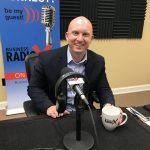
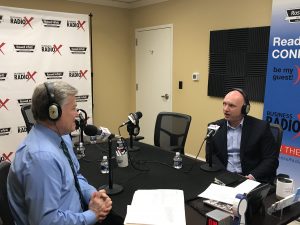
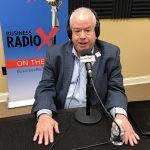
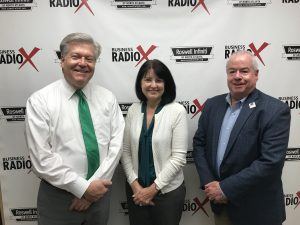
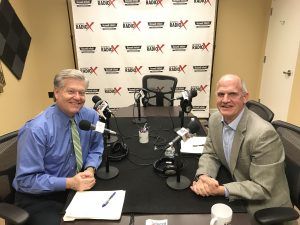
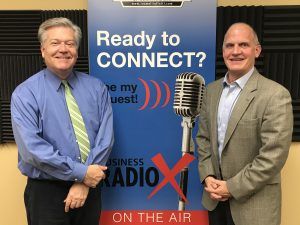
Mike Blake and Ed Rieker

Decision Vision Episode 33:  Should I Sell My Business? – An Interview with Ed Rieker, Serial Entrepreneur and CEO, Avondale Innovation District

What should I be doing to be ready to sell my business when the right time comes? How do I know when that right time is? Find out answers to these questions and more as “Decision Vision” host Mike Blake interviews serial entrepreneur Ed Rieker, a successful seller of multiple businesses he founded. “Decision Vision” is presented by Brady Ware & Company.

Ed Rieker, Serial Entrepreneur and CEO, Avondale Innovation District

Ed Rieker

Ed Rieker is a serial entrepreneur and currently the CEO of the Avondale Innovation District™. Ed was a founder or co-founder of four healthcare software companies. He navigated successful exits for three of these companies, as two were acquired by public companies and another by investors. The fourth is still running.

Two of these software companies were accepted into the Advanced Technology Development Center at Georgia Tech (ATDC), and one is an ATDC graduate.

Ed previously served as an ATDC Entrepreneur in Residence (4x) and an ATDC Executive in Residence (1x). He has served as a Venture Catalyst at ATDC between startups.

In 2004 Ed purchased an online community, built the business up and sold it to a public company in 2011. He has owned and operated a private coworking and technology incubator. Ed is an angel investor in various startups.

Ed was awarded patent #5,832,447 for an Automated System and Method for Providing Real-Time Verification of Health Insurance Eligibility (a co-inventor).

He is the owner and developer of Tudor Square, a community-oriented, quality, dinning, shopping and entertainment venue, supporting small independent business owners in downtown Avondale Estates, GA

Ed is currently the CEO of the Avondale Innovation District™, located in downtown Avondale Estates, a place-based urban development designed specifically to support entrepreneurs and creative professionals, foster open innovation, attract and accelerate new business ventures.

Michael Blake, Brady Ware & Company

Mike Blake, Host of “Decision Vision”

Michael Blake is Host of the “Decision Vision” podcast series and a Director of Brady Ware & Company. Mike specializes in the valuation of intellectual property-driven firms, such as software firms, aerospace firms and professional services firms, most frequently in the capacity as a transaction advisor, helping clients obtain great outcomes from complex transaction opportunities. He is also a specialist in the appraisal of intellectual properties as stand-alone assets, such as software, trade secrets, and patents.

Mike has been a full-time business appraiser for 13 years with public accounting firms, boutique business appraisal firms, and an owner of his own firm. Prior to that, he spent 8 years in venture capital and investment banking, including transactions in the U.S., Israel, Russia, Ukraine, and Belarus.

Brady Ware & Company

Brady Ware & Company is a regional full-service accounting and advisory firm which helps businesses and entrepreneurs make visions a reality. Brady Ware services clients nationally from its offices in Alpharetta, GA; Columbus and Dayton, OH; and Richmond, IN. The firm is growth minded, committed to the regions in which they operate, and most importantly, they make significant investments in their people and service offerings to meet the changing financial needs of those they are privileged to serve. The firm is dedicated to providing results that make a difference for its clients.

Decision Vision Podcast Series

“Decision Vision” is a podcast covering topics and issues facing small business owners and connecting them with solutions from leading experts. This series is presented by Brady Ware & Company. If you are a decision maker for a small business, we’d love to hear from you. Contact us at decisionvision@bradyware.com and make sure to listen to every Thursday to the “Decision Vision” podcast. Past episodes of “Decision Vision” can be found here. “Decision Vision” is produced and broadcast by the North Fulton studio of Business RadioX®.

Visit Brady Ware & Company on social media:

LinkedIn:  https://www.linkedin.com/company/brady-ware/

Facebook: https://www.facebook.com/bradywareCPAs/

Twitter: https://twitter.com/BradyWare

Instagram: https://www.instagram.com/bradywarecompany/

Show Transcript

Intro: [00:00:02] Welcome to Decision Vision, a podcast series focusing on critical business decisions, brought to you by Brady Ware & Company. Brady Ware is a regional, full-service accounting and advisory firm that helps businesses and entrepreneurs make vision a reality.

Michael Blake: [00:00:21] And welcome to Decision Vision, a podcast giving you, the listener, clear vision to make great decisions. In each episode, we discuss the process of decision making on a different topic. Rather than making recommendations because everyone’s circumstances are different, we talk to subject matter experts of how they would recommend thinking about that decision.

Michael Blake: [00:00:39] My name is Mike Blake and I’m your host for today’s program. I’m a Director at Brady Ware & Company, a full-service accounting firm based in Dayton, Ohio, with offices in Dayton; Columbus, Ohio; Richmond, Indiana; and Alpharetta, Georgia, which is where we are recording today. Brady Ware is sponsoring this podcast. If you like this podcast, please subscribe and your favorite podcast aggregator. And please also consider leaving a review of the podcast as well.

Michael Blake: [00:01:03] So, today’s decision that we’re going to discuss is, should I consider selling my business? And for most people in business, there will never be a bigger decision you ever have to make in your life than whether when, how, and on what terms to sell your business. And selling a business is maybe even more challenging because most people only do it once in their life. There are a few people that are serial entrepreneurs, and we’re going to talk to one in a second, but most people, if they’ve had a good run, they sell their business, they get out, and then they go do something else, particularly if they happen to be good at leisure.

Michael Blake: [00:01:52] And the thing about selling a business, and I’ll be the first to admit this, even though I advise people on selling businesses, and I charge exorbitant fees for helping people do so, is that, actually, when you get right down, it’s not rocket science, but a lot of it isn’t necessarily intuitive. And the process of even wrestling with a decision on whether to sell a business is often such an emotionally entwined decision that has far reaching implications, even outside of the business itself that it can be very challenging to have a clear head when you’re approaching that decision.

Michael Blake: [00:02:33] And, generally speaking, in selling a business, there is no do over, right? Once you sort of sign those documents, and money comes out of escrow, and if you have that kind of business, the keys are turned over if it’s a virtual business, then all the the pass codes, passwords are handed over, that’s sort of it. So, if you have sellers or more, your only real recourse is to start new business and do better the next time.

Michael Blake: [00:02:54] So, it’s an important decision to get right. And it’s one that, like I said, you don’t really get a mulligan on this. And in trying to figure who’d be the best person to talk about this, I’m fortunate that a friend of mine actually is one of those few that has actually sold multiple businesses. So, he’s been through a few of these rodeos. And he hasn’t sold them for other people. They’re actually his businesses.

Michael Blake: [00:03:23] And so, without further doing introduce my pal, Ed Rieker, who has come all the way from Avondale Estates, which if you look at a map of Atlanta should be about a 10-minute drive. But the way our highways are set up at, it paces about an hour and a half. So, I really appreciate him coming into the studio today because he’s also got a 90-minute drive back.

Michael Blake: [00:03:47] But Ed has actually started and sold four businesses, at least, four of which I’m aware. He’ll correct me once he comes on. But he’s currently CEO of the Avondale Innovation District, an Avondale Estate Georgia. He is also the owner and principal of Tudor Square, a community-oriented quality dining, shopping, and entertainment venue supporting small independent business owners in downtown Avondale Estate Georgia.

Michael Blake: [00:04:10] He is the General Manager of the 151 Locust Fund One LLC, which is a fund established for the purpose of providing seed funding to Metro Atlanta technology startups. Ed was also the mayor of Avondale Estates for six years and is an adjunct faculty member in the Emory University Business School’s startup launch accelerator program. Ed Rieker, Your Honor, welcome to the program.

Ed Rieker: [00:04:33] Thanks, Mike. It’s a pleasure to be here.

Michael Blake: [00:04:36] So-

Ed Rieker: [00:04:37] By the way, I took a jet pack here, right.

Michael Blake: [00:04:39] Did you take a jet pack?

Ed Rieker: [00:04:40] Yeah.

Michael Blake: [00:04:40] I think that’s the best way to get here.

Ed Rieker: [00:04:42] 10 minutes.

Michael Blake: [00:04:42] Really?

Ed Rieker: [00:04:43] Yeah.

Michael Blake: [00:04:43] Now, thank God for Georgia Tech inventing that stuff, man.

Ed Rieker: [00:04:47] Absolutely.

Michael Blake: [00:04:47] So, let’s dive into it. There’s a lot of ground we can cover and hope we can cover all of it. Can you talk to us a little bit about the businesses that you have actually owned and sold?

Ed Rieker: [00:04:58] Absolutely. I’m mostly a software guy. So, the businesses that I’ve founded or co-founded were really about software, about the creation of value through pushing little buttons to make stuff happen. So, when I’ve had the privilege of being on some really great teams and also being able to cash out a few times. So, I started in 1988 when you weren’t born yet.

Michael Blake: [00:05:30] You silver-tongued devil.

Ed Rieker: [00:05:34] Absolutely. And so, what we did was we built a software system that actually worked with hospital systems and large systems to kind of get people in the hospital as quickly as possible. What it turned out to be really was a marketing thing. And so, we built that up, sold that to a group of investors in 1991. And then, I was a minority shareholder in that. I had an angel investor that had put money into that.

Ed Rieker: [00:06:09] Then, the next one, we also was in healthcare. I think once you get to be in a domain, you get to know people, they get to know you, you start to kind of build a reputation. So, health care’s been very, very good to me. And I’ve done four health care startups and sold three of those or two of those to public companies. And then, in 2004, I actually bought an online community, because I’m very interested in community and built-

Michael Blake: [00:06:37] Yes, you are.

Ed Rieker: [00:06:38] Yes, I am.

Michael Blake: [00:06:38] That’s definitely bring your MO.

Ed Rieker: [00:06:39] And both online and in the real world. And it’s just fascinating to see how people work together, and how they don’t work together, and what they need, and how it might be able to help. But we built that online community up and sold that to a public company in 2011. So, that’s kind of the story is the ability to build a solution, a tool that solves a problem, build a team, build it up.

Ed Rieker: [00:07:10] And then, the first one, I think you mentioned, was really difficult to sell because I was a minority shareholder. It was everything to me at the time. And when it got sold, it—here’s the thing though. When you—you talked about the escrow, the cash coming in, and you think about buying the yacht, but you missed a step. And that’s the part where you have to stick around for a little bit and deal with the new owners. So, that was the first time I had done that.

Ed Rieker: [00:07:46] And what happened was, is they kind of put me in a room and ignored me for a while. And then, I watched them kind of do what they wanted to do. So, you can’t make decisions anymore because you’ve sold it. You’re exactly right. But normally, once you sell it, especially like a software business, any other business, you’re gonna be there for a while to watch that transition. So, that can be a difficult thing. And over the years, I’ve been able to kind of look at the idea of building with the end in mind, which is to sell it, so.

Michael Blake: [00:08:24] Now, what was that transition like? I mean, I know you personally. I don’t see you as a very good employee.

Ed Rieker: [00:08:34] I’m a horrible-

Michael Blake: [00:08:34] And I mean that with all the love I could possibly muster.

Ed Rieker: [00:08:37] Yes, absolutely. I  know.

Michael Blake: [00:08:38] But I consider myself, and my firm will tell you, I’m a terrible employee.

Ed Rieker: [00:08:42] Right, yeah. I’m a terrible employee. I will admit that. And I think the first time I sold, I was also a terrible seller because I was so emotionally involved and so focused on what I thought was right for the business, but I didn’t have any say anymore. I didn’t have any vote anymore. So, it becomes very difficult to hang around and see people do things that you probably don’t agree with.

Ed Rieker: [00:09:13] And, also, remember, the alignment I had with the sellers was they had the money, they had an idea of what they thought they wanted to do, and I really didn’t know on that well. And when you start to kind of see the team change and see kind of what they think is right, it can be very difficult for a seller to kind of be in that world. Most of the time, after you sell something, if you look at the statistics, the CEO goes bye-bye about six months, the old CEO.

Michael Blake: [00:09:48] I was going to ask you about that because most sales I’ve seen if the CEO is asked to remain at all, it’s a two to three-year period.

Ed Rieker: [00:09:57] Right.

Michael Blake: [00:09:57] But I don’t think most CEOs actually wind up serving out that term.

Ed Rieker: [00:10:01] They’re usually gone in six months. And that’s the thing you have to learn about in terms of selling. There’s things like earn-outs. So, when you get to the part where you agree on what the value is and what the terms are, part of that term can be the offer of, “Oh, we’ll double the what we’re buying you for if you’ll stay and hit these metrics.” And normally that’s kind of phantom money. That’s really hard to do because you don’t have control over how to reach those metrics anymore.

Michael Blake: [00:10:33] Right. I mean, the special sauce that you brought is now not being used anymore. It’s just sitting in the refrigerator with the label on it saying, “Add special sauce.”

Ed Rieker: [00:10:41] Right. You’re lucky if it’s in the fridge.

Michael Blake: [00:10:46] Right. I can’t shake this vision. I mean, having sort of been put in a room, you sort of watch everybody do the thing with the business after you’ve sold that, and you just sort of have to be at peace with your powerlessness by doing that.

Ed Rieker: [00:11:00] Yeah, and I wasn’t. I absolutely wasn’t. I mean, I think I was probably a bad seller at that point because I looked around, and it wasn’t going in the direction and as well as I thought it could go. And so, I didn’t really stay for the whole six months. I kind of bugged out of there because I had other things to do.

Michael Blake: [00:11:24] Yeah.

Ed Rieker: [00:11:24] Yeah.

Michael Blake: [00:11:26] Your experience of that sounds like my experience parenting a teenager.

Ed Rieker: [00:11:31] Yeah.

Michael Blake: [00:11:32] You watch it, but there’s only so much impact you can ultimately have. It’s sort of it’s just going to happen. So, how long did you own those businesses before selling them?

Ed Rieker: [00:11:42] So, I’m looking at my notes here, and I think ’88 and ’91. So, what’s the math? That’s three years. So, I probably worked on that a little bit longer than that. So, probably looks like the average is three to four years.

Michael Blake: [00:11:56] Okay.

Ed Rieker: [00:11:57] Yeah.

Michael Blake: [00:11:57] That’s not particularly long. Even in venture capital, that’s a fairly quick turnaround.

Ed Rieker: [00:12:02] Well, I like small teams and early stage stuff. And so, I like building it up to a certain point. And one of the things, I think, that if you’re a business owner of any kind of type, what you want to see is that every six months or so, the phone rings and somebody says, “Hey, I’m thinking about doing business with you or transaction with you.” And it evolves in this sort of, “Hey, we’re thinking about buying you.” If you’re not getting that call every six months or that activity every six months, then I feel like there’s something wrong with your business-

Michael Blake: [00:12:38] Huh!

Ed Rieker: [00:12:40] … because that’s one of the key indicators that you’re on to demand is that you get these situations where maybe you’re serving a large customer. and they say, “Well, maybe we should buy you instead of being a customer.” So, you want to kind of see those things happen every six months. If that’s not happening, then there’s something wrong with the business.

Michael Blake: [00:13:01] I’m gonna go off the script because I think that is insightful point that I want to explore a little bit more because I would not have thought of that in a million years, but I think I got it. So, let me tell what I think I get, and you tell me why I’m wrong. And what I think I get is people want to buy you because they notice you, and they’re making an impact, and you’re so important, they can’t afford to not you being available at some point down the road.

Ed Rieker: [00:13:31] Yeah, absolutely.

Michael Blake: [00:13:32] Right?

Ed Rieker: [00:13:32] And it’s the noticed part and the can’t live without you part that drives the price up. It could be a strategic or a technology acquisition. And most of the stuff that we did was a technology acquisition because we had found a pocket somewhere in health care that we were serving. And it was important enough to a large corporation that instead of building it, they would try to buy it. And that’s exactly kind of what you’re looking at.

Michael Blake: [00:14:01] So, that’s interesting. So, kind of a bullet point is a lot of business owners will tell me that they get annoyed they get offers to potentially buy and sell. They don’t want to do that. But in a way, if you’re getting those calls, even if they’re not particularly serious, the fact that you’re on somebody’s radar screen means you’re doing something right-

Ed Rieker: [00:14:19] Yeah, that’s correct.

Michael Blake: [00:14:19] … in terms of the market.

Ed Rieker: [00:14:20] And every once in a while, you actually want to follow through with those calls because that’s a great way to to create a valuation for yourself, to kind of figure out, you’re in that business, you’d be a great advisor to call. And it [crosstalk]-

Michael Blake: [00:14:32] “Hey, thank you, Ed.”

Ed Rieker: [00:14:34] … product placement. Was that on the script or?

Michael Blake: [00:14:38] It should have been.

Ed Rieker: [00:14:39] It should have been.

Michael Blake: [00:14:39] It should have. My marketing department is, right now, tearing their hair out, saying, “Why do you make everybody say that?” So, you said that you’re a bad seller when you sold that first business.

Ed Rieker: [00:14:50] Absolutely, yeah.

Michael Blake: [00:14:51] And part of that was because you’re a minority shareholder, so you couldn’t really drive the bus. You could almost sort of grab the steering wheel every once in a while. By sale four, in what way were you a better seller? Were you a better seller?

Ed Rieker: [00:15:03] Well, absolutely, yeah. What happened is that I was so emotionally attached to the first one. It’s not the same thing, and it’s probably a really bad analogy, but it’s like selling your baby or selling one of the things that you love, a family member. It just really was—I was that emotionally attached to it. And then, after I went through that, when I realized that perhaps my career, if I could call it a career, would be building and selling companies. I began to think about it in a different way that the actual in-game was to sell it and to sell it successfully. And by successfully, it meant that they were happy, I was happy, there was a good outcome for both of us, and that the transition part was actually part of building the business that I was able to transition out of the business to be able to go do the next thing.

Michael Blake: [00:16:02] So, the transition was organic. And in fact, they should stick somebody else having to stay with the buyers instead of you.

Ed Rieker: [00:16:08] Absolutely.

Michael Blake: [00:16:08] Right?

Ed Rieker: [00:16:09] Absolutely. So, that’s the process, then, is to build a team, so that I was dispensable. And actually they didn’t—why should we keep that guy?

Michael Blake: [00:16:19] Now, I’m curious. And I may be all wet here, but I’m curious if, also, the financial dynamic changes. When you sell your first business, I suspect but do not know that that was a lifestyle changing event for you.

Ed Rieker: [00:16:37] I would say the first one wasn’t.

Michael Blake: [00:16:39] Okay.

Ed Rieker: [00:16:39] When you start getting into the second and third, because the first two, I had to have angel investing to build the business up.

Michael Blake: [00:16:47] Yeah.

Ed Rieker: [00:16:48] Everything else was out of my own pocket, self-funded.

Michael Blake: [00:16:52] Okay.

Ed Rieker: [00:16:52] And the reason for that is that I found out in the way that I work is that I am able to risk my money, but not so much somebody else’s. I’m more careful with other people’s money, so that it hindered the ability for me to actually do the kind of the on-the-edge things that I wanted to do. I can do that with my own money but not necessarily with someone else’s.

Michael Blake: [00:17:18] I can understand that. And I’ve long thought, even though the standard playbook for startup entrepreneurs is hit up friends and family, right? On the other hand, that can lead to some very awkward Thanksgiving dinner conversations if things don’t go great.

Ed Rieker: [00:17:36] Absolutely.

Michael Blake: [00:17:37] Right?

Ed Rieker: [00:17:37] And the first one was what I would consider friend who had resources that actually funded the first one. And, of course, we don’t talk anymore. So-

Michael Blake: [00:17:50] Okay.

Ed Rieker: [00:17:50] Exactly right.

Michael Blake: [00:17:51] Yeah. So, that is a risk.

Ed Rieker: [00:17:52] Yeah, that’s the risk. Yeah.

Michael Blake: [00:17:55] So, it sounds to me like—well, I’m gonna ask the question for this. That’s why I have you here. To what extent were these sales planned versus opportunistic? They sound like a hybrid to me, kind of.

Ed Rieker: [00:18:07] Well, I think the first one was opportunistic because I really didn’t understand. I mean, I was an idiot on the first one. I really was. And I had a deep desire to create something, and a desire to perhaps bring that into the world and make it bigger. And what I didn’t understand was that through my immaturity, I was not a really good boss. Not only not a good employee, but not a good boss. And so, I think that having that sale hit me and all the emotional stuff that went with that, just reconsider a lot of stuff. At least, I did. And then, as I built teams that actually were the core of the success, you can’t be successful without a great team. I’m just really fortunate to have people that were able to help me, and teach me, and gather the things that we needed to be successful that we’re able to build these businesses up and sell them. So, I think I avoided your question. I am not sure I-

Michael Blake: [00:19:20] No, I think you, eventually, got around the answer.

Ed Rieker: [00:19:23] Yes.

Michael Blake: [00:19:23] Yeah. So, a common thread here is that all of your business is sold within two to three years or so. What did those businesses look like? What did they have in common that made them salable at that three-year period? Why do you—I’m sure it wasn’t luck.

Ed Rieker: [00:19:42] Well, yeah, it is luck. I mean, it’s—there’s a thing called the lucky bus that drives around. And if you’re standing out on the street, and the lucky bus stops in, and they say you’re ready to go, you got your bags packed, and you have your bags packed, and you’re ready to go, you can hop on the bus. And the bags packed is actually the work to be done, the job to be done. If the lucky bus stops, and they say you get your bags packed, and you go, “No, no, wait a minute, I’ll go finish packing,” when you come back out, the bus is gonna be gone.

Ed Rieker: [00:20:18] So, the idea I think we had going forward after the first one was to kind of always be in the way of a larger company. How could we—imagine this giant that’s walking or stumbling around. How can we annoy them enough that they’ll look down, and pick us up, and go, “Oh, yeah. This looks tasty. I’ll eat it.” That was the idea. So, what we did was we developed ways to deploy software and ideas in the world, so that we wound up in front of a large corporate entity that we knew eventually would probably want to do what we were doing, but they weren’t fast enough to be able to do it. And so, they would say, “Okay. Well, it’s just cheaper for us to kind of scoop this up and go with it.”

Michael Blake: [00:21:12] So, what that tells me is that your approach has been always be prepared to be opportunistic.

Ed Rieker: [00:21:18] Yes.

Michael Blake: [00:21:18] Right?

Ed Rieker: [00:21:19] So, yeah, to sell. Right. And to sell. And one of the things I would encourage entrepreneurs and CEOs to do is there’s a thing called due diligence, which is very exciting. And it’s even more exciting if it’s a public company because when they want to buy you, they really come and look at everything.

Michael Blake: [00:21:38] It’s basically a product logical exam without the anesthetic or-

Ed Rieker: [00:21:42] Yeah, yeah.

Michael Blake: [00:21:46] Just leave it-

Ed Rieker: [00:21:46] Yeah, yeah. And at last, not seconds, but hours and days. Yeah, absolutely.

Michael Blake: [00:21:51] Just to make it extra fun.

Ed Rieker: [00:21:52] Yeah, extra fun. So, what I learned after the first one was to create. And I’ll make it simple, like these little paper boxes that you put files in. So, when you’re doing things, like you have a contract, you have an employment agreement, or you have anything that’s paper that’s important that they’re going to look at later on, you just make a second copy and throw it in that box. And you know when the due diligence comes around, you can just go point at that box, and go, “All the stuff you want is in that box.” And it makes it a lot easier because when they do come and do due diligence, if you’re not ready, you’ve got to go through all your files and find this stuff. And it’s really time consuming.

Michael Blake: [00:22:34] And distracting.

Ed Rieker: [00:22:35] And distracting.

Michael Blake: [00:22:36] Right?

Ed Rieker: [00:22:36] Yes.

Michael Blake: [00:22:36] And, also, I gotta believe, and I’ve always advised clients about—on this, so I hope I’m right, there’s something to be said for making yourself easy to buy.

Ed Rieker: [00:22:49] Absolutely.

Michael Blake: [00:22:50] It doesn’t necessarily make you more or less valuable-

Ed Rieker: [00:22:52] Right.

Michael Blake: [00:22:52] … but just offering that path of least resistance.

Ed Rieker: [00:22:56] Well, what can happen is that, for instance, when you talked about opportunity, one of the purchases that was made on one of the software companies was that the public company had actually issued some bonds. So, they had gotten some cash, and they had a timeline when they had to spend that cash. So, you know.

Michael Blake: [00:23:17] So, that the government-

Ed Rieker: [00:23:19] Absolutely. We’ve got a budget to buy stuff. Let’s go buy stuff. And that’s somebody’s job to be done is to do an M&A.

Michael Blake: [00:23:26] Yeah.

Ed Rieker: [00:23:26] So, somebody at a corporate office is absolutely getting bonuses and pay on buying companies. So, there’s actually people that do that, and they have goals, and they have responsibilities. So, if they had this money, they had to spend by a certain time. So, it gave us a couple of things. It gave us the upper limit of the purchase. It gave us the timing. And then, we kind of—that gives you a leverage that perhaps they might not know that you know and helps you in the negotiations. So, you got to make sure that when you’re getting bought that you’re paying attention to those kind of things.

Michael Blake: [00:24:10] Boy, that’s interesting. That’s a a blog post I’ve been aching to write. But you’re right, there is sort of this moral hazard on the buy side when companies have a dedicated business development from an acquisition perspective or corporate development function, right?

Ed Rieker: [00:24:27] Right.

Michael Blake: [00:24:28] Those are people who are judged based on how much stuff they buy.

Ed Rieker: [00:24:31] Yeah.

Michael Blake: [00:24:32] And often, whether or not it’s a good acquisition or not, there’s so much turnover. Those people aren’t around-

Ed Rieker: [00:24:36] Yeah.

Michael Blake: [00:24:37] …  whether it’s a good deal or not, right? And although the prudent thing to do, because we have a pro deal bias, the prudent thing to do may be to walk away from a deal. Nobody ever gets interviewed on Bloomberg or on The Wall Street Journal for someone who walked away from a deal.

Ed Rieker: [00:24:54] That’s correct.

Michael Blake: [00:24:55] It’s never happened.

Ed Rieker: [00:24:56] Yeah, yeah.

Michael Blake: [00:24:56] Right?

Ed Rieker: [00:24:58] Yeah.

Michael Blake: [00:24:58] So, if you are being approached by someone that’s got that corporate development function, they need wins.

Ed Rieker: [00:25:04] Yeah. They need wins.

Michael Blake: [00:25:04] They just do.

Ed Rieker: [00:25:04] And they need certain dollar ranges that they’re buying in. There are certain ways that they’re buying in terms of how they model their transactions. So, cash, stock, earnouts, what happens to the founders, what happens to the team. All those things are consideration. A lot of us think about the buyout as being, “Oh, it’s a certain dollar amount,” but there’s a lot of nuance that you can create for yourself and your team that you can do in a deal.

Michael Blake: [00:25:35] And I don’t know if you’ve been in this situation because your model for building and selling a business has been so focused on a venture capital type model, but I am going to throw it out there anyway. And that is, are there signs out there where an owner needs to think about actively selling a business as opposed to being opportunistic that you can think of, or maybe you’ve experienced it where we’re at a point now where it’s really time for this business to sell, or it’s time for me to get out, or some combination? Is that something you can speak to?

Ed Rieker: [00:26:07] Yeah, sure. I think that that’s an interesting thing that happens. There’s cycles that we see. We’re in a happy time right now. It’s not going to continue to be a happy time. And that’s just the way the market works.

Michael Blake: [00:26:21] Yeah.

Ed Rieker: [00:26:22] So, I own some commercial real estate now. Now, I’m thinking about it’s time to sell because I think we’re in a pretty good place in the market. And I think that’s also true of a business. There could be things going on with the team, there could be things that you know about the technology and perhaps where it’s going that you may want to try to cash out. So, absolutely. I think an example for that for me was that 2008 was the precursor to a horrible 2009. And we had the online community, and there was a company that was rolling communities up. And they had approached us about selling the year before, and we said no because we were still—revenues were rising, and we were still building things. And I was of a mindset that, “Oh, this is going to continue and go up next year.” And the guy that was wanting to buy us, we’re on the phone, and he’s literally screaming at me on the phone saying, “Take the cash, take the cash, I’ll pay all cash.” And I’m saying, “No, I think we’ll be worth more next year.” Well, guess what? We weren’t worth more.

Michael Blake: [00:27:44] It didn’t work out.

Ed Rieker: [00:27:45] It didn’t work out. It went down, and it took us a couple more years to sell it.

Michael Blake: [00:27:49] Huh! Okay.

Ed Rieker: [00:27:51] Yeah.

Michael Blake: [00:27:51] So, when you sold your businesses, were these do-it-yourself jobs, or did you kind of put a team around you to help you?

Ed Rieker: [00:27:58] Well, the team part is the CPA and, also, we used the same legal team to do the sell part. The deal structure, the first one, I was a minority shareholder in. And so, I wasn’t as involved in that and progressively got more involved in the other ones and pretty much full on. I think the idea is that you agree on a face to face, usually. You kind of agree with the principles. This is the price, the terms, what happens to the team, what happens to you? Then, you kind of wind up with maybe a one page or a page and a half. And then-

Michael Blake: [00:28:42] It’s called a term sheet-

Ed Rieker: [00:28:43] Yeah, yeah, yes.

Michael Blake: [00:28:43] … for those of us in the audience.

Ed Rieker: [00:28:44] Term sheet.

Michael Blake: [00:28:44] Yeah, term sheet.

Ed Rieker: [00:28:45] Thank you. I knew there was a name for that. And then, what happens is that two pages turns into 30 or 50 pages of mind-numbing legalese fees and schedules.

Michael Blake: [00:28:58] Oh, boy, you’re not kidding.

Ed Rieker: [00:28:59] Yeah. And so, that’s-.

Michael Blake: [00:29:00] Except, it’s only one of the most important decisions in your life, so you have to read it.

Ed Rieker: [00:29:04] You have to read it. And you have to have a team that can interpret it for you. And you have to have, both on the financial side and on the legal side, someone to make sure that what you think is happening in your head is actually what’s in the document. That’s the most important thing. It’s like you can look at the documents, and you can see what the outcome will be if certain things happen. I got tripped up once by one word in a document that was part of an earnout. And, it costs a big bucket of money because we interpreted that word differently than what it actually meant. And that was one word in probably a 40-page document.

Michael Blake: [00:29:53] Whew!

Ed Rieker: [00:29:54] Ouch.

Michael Blake: [00:29:54] Yeah.

Ed Rieker: [00:29:55] And so—yeah, but unless you make those mistakes and see them, you can’t learn from them, so.

Michael Blake: [00:30:01] Well, yeah. And exactly why I think you have such a fascinating and valuable perspective because you’ve had the opportunity to make those mistakes live to fight another day, right? And like you said, most people don’t see four transaction. They don’t see four sales.

Ed Rieker: [00:30:17] Right.

Michael Blake: [00:30:17] We’ll see one.

Ed Rieker: [00:30:18] Yeah. I’ve been lucky. Absolutely.

Michael Blake: [00:30:21] So, at any point, as you were considering a sale, were you concerned over what would happen the day after, what would you happen to you the day after you wake up, all of a sudden, there’s no office you have to be in?

Ed Rieker: [00:30:35] Well, that there was never a no office to be in. There is always a time you have to stay with the business. And after the first one, I was able to say, “All right. I know my job to be done in the world is to start them and to sell them.” So, I know when the new people come in, I want to underpromise and overdeliver. But I also want to have a team in place to where the business really doesn’t need me. My job was to think about the really big things. And so, usually, by the time the deal was done or even before that, I would be envisioning the next thing that I would be building. And that’s always been the case is that, “Okay. I know it’s time to sell because I’m thinking about something else.”

Michael Blake: [00:31:22] Did you ever find that being involved in a sale was kind of an emotional roller coaster?

Ed Rieker: [00:31:28] It’s absolutely an emotional roller coaster all the time. And remember, this idea of kind of looking at every six months, someone calls you, and they say, “Hey, maybe we should do a deal.” Well, I would do those to see kind of what the value is, to see how prepared I was, to see if our story was right, and to see if it was a real deal. And sometimes, there are corporations that want to really go to school on you. So, they’ll say, “Hey, we’re interested in buying you.” And you go, “Oh, that’s exciting. Come on in. I’ll tell you everything.”

Michael Blake: [00:32:01] Right.

Ed Rieker: [00:32:03] And then, they go, “Oh, we’ve decided to build it ourselves. Thanks.”

Michael Blake: [00:32:05] You’re totally catfished.

Ed Rieker: [00:32:07] Yeah-

Michael Blake: [00:32:07] Basically.

Ed Rieker: [00:32:07] Absolutely. So, you have to know at what point when you go, “Oh, these guys are going to school,” and then you just kind of shut it down. So, I’ve had those experiences where I’m like, “Oh, okay. Yeah. No, I’m not going to show you that. Thanks.”

Michael Blake: [00:32:26] And how about within? I mean, in my experiences, most deals are called off, at least, once before they ultimately happen.

Ed Rieker: [00:32:36] Yeah, absolutely.

Michael Blake: [00:32:36] Right?

Ed Rieker: [00:32:37] Yeah.

Michael Blake: [00:32:37] And how do you kind of stick with that and keep a level head as opposed to just setting up a YouTube video of yourself taking a baseball bat to a roomful of computers and file cabinets or maybe you do that, and that’s how you sort of keep your head on straight?

Ed Rieker: [00:32:51] Right. That’s-

Michael Blake: [00:32:52] How do you manage that?

Ed Rieker: [00:32:53] That’s why glassware is always in danger when you’re around me. So, please don’t bring me glassware. I think the idea is to isolate it from the team and compartmentalize it in your brand because what can happen, I’ve seen this with teams, where the CEO gets excited about a sale, and they move off the mark of what they’re trying to do with growing the business. And these things can take six months, a year. It can take that long to find out it’s a folly. So, if you’re get pulled off growing the business, what happens is your business dips. So, your next sell gets delayed because you’ve got to build that back up. So, the idea is isolate it from the team until you actually have a term sheet that looks real, and looks doable, and maybe even the first draft of the purchase agreement. And then, make sure that while you’re doing that, you’re continually serving the business.

Michael Blake: [00:33:54] And that’s another great reason to sort of have your due—basically build your due diligence package as you go along-

Ed Rieker: [00:34:00] Absolutely.

Michael Blake: [00:34:00] … because, then, you don’t have to bring your team in.

Ed Rieker: [00:34:02] Yeah.

Michael Blake: [00:34:04] And there’s no sort of smoking gun.

Ed Rieker: [00:34:05] Right.

Michael Blake: [00:34:06] If you’ve hired people that are smart, you start to ask for documents, all of a sudden, they’ll realize that’s why.

Ed Rieker: [00:34:11] Yeah.

Michael Blake: [00:34:12] Right? But if all of a sudden, you just have this box, you just say, “Here,” then that gives you the option-

Ed Rieker: [00:34:17] Right.

Michael Blake: [00:34:17] … to be able to let more-

Ed Rieker: [00:34:17] If you’re walking around saying, “Can you sign this employment agreement really quickly?” yeah, it’s a little late.

Michael Blake: [00:34:24] Yeah. My lawyer will be back to you with some thoughts on what I’d like in order to sign that agreement.

Ed Rieker: [00:34:32] Yes.

Michael Blake: [00:34:32] And some of the other side to that too is deals die a thousand deaths, but, also, deals are never done until they’re done. And I think I’ve seen, as you’ve probably seen it too, is plenty of businesses die while they’re up for sale-

Ed Rieker: [00:34:52] Yeah.

Michael Blake: [00:34:53] … because the process of selling a business really becomes a full-time job.

Ed Rieker: [00:34:56] Right.

Michael Blake: [00:34:57] And it can very easily distract you from actually running your business to the point where maybe a deal just doesn’t happen because it doesn’t happen, or I’ve seen—I’ve even seen it where the business has deteriorated so much during the due diligence process that it’s just no longer the valuable asset that prompted the initial proposal to buy in the first place.

Ed Rieker: [00:35:17] Yeah, absolutely.

Michael Blake: [00:35:18] Right?

Ed Rieker: [00:35:19] That’s correct, yeah.

Michael Blake: [00:35:20] And that’s why it’s important, I guess, to have those advisors and have that due diligence ready to go because you’ve got to just accept that it’s two full-time jobs.

Ed Rieker: [00:35:29] Yeah. It’s the exact same thing as raising capital, only you’re selling the business. It’s the same kind of process. And so, when you’re raising institutional money, you’re also doing the same kind of things, and it’s the same kind of roller coaster, but it’s the end game.

Michael Blake: [00:35:49] And I’ll share with you a secret that I tell my buy side clients.

Ed Rieker: [00:35:53] Oh, a secret?

Michael Blake: [00:35:53] Yeah, a secret is that many sellers, if they’ve never sold a business before, they start to get what I call Costa Rica syndrome-

Ed Rieker: [00:36:05] Yeah.

Michael Blake: [00:36:06] … which means that mentally, the second they think that those dollars are coming in-

Ed Rieker: [00:36:11] Yeah.

Michael Blake: [00:36:12] … they’re already halfway to their condo in Costa Rica.

Ed Rieker: [00:36:16] Yeah, absolutely.

Michael Blake: [00:36:17] Right?

Ed Rieker: [00:36:17] Yeah.

Michael Blake: [00:36:18] And once they’re there, the buyer acquires extraordinary leverage.

Ed Rieker: [00:36:24] Absolutely.

Michael Blake: [00:36:25] Right?

Ed Rieker: [00:36:25] Yeah.

Michael Blake: [00:36:25] And even for [indiscernible], let’s say that initially talked about a $10 million purchase price, well, in our due diligence, really, I only want to pay seven.

Ed Rieker: [00:36:34] Yeah.

Michael Blake: [00:36:35] Right? And if the seller has exposed themselves where the business is going to be hard to recover but, also, mentally-

Ed Rieker: [00:36:43] Yeah.

Michael Blake: [00:36:43] … they have to now say—they have to get back from their tropical paradise.

Ed Rieker: [00:36:48] Yeah.

Michael Blake: [00:36:49] Right? And cocktail drinks and so forth. They come back. They don’t want to do that. Now, they’re just looking at that $3 million difference as a number. But, well, I still got $7 million left. Just let me do this, so I can go to my Costa Rica.

Ed Rieker: [00:37:04] Right.

Michael Blake: [00:37:04] Right?

Ed Rieker: [00:37:04] Yeah.

Michael Blake: [00:37:04] And I think it confers a tremendous amount of leverage-

Ed Rieker: [00:37:09] Yeah.

Michael Blake: [00:37:09] … for the buyer.

Ed Rieker: [00:37:11] Yeah. I’ve had stuff happen at closing or right before closing where a buyer will come back and say, “Well, maybe we should do this,” and you have to be prepared to say no.

Michael Blake: [00:37:23] Yeah.

Ed Rieker: [00:37:24] You have to be able to say, “You know what? That’s okay. We’ll pass.”

Michael Blake: [00:37:29] Yeah, that’s right.

Ed Rieker: [00:37:30] So-

Michael Blake: [00:37:30] If you can’t walk away from a deal of any kind, you’re not negotiating. You’re just asking.

Ed Rieker: [00:37:36] Yeah. And that’s the part about the business. If your business is solid enough that you can say no, that’s a great business to have because that means there’s gonna be another buyer. And also, you always want to have a horse race, even if it’s a pretend horse. So, that-

Michael Blake: [00:37:55] The stalking horse.

Ed Rieker: [00:37:56] Yes. So, that when you’re winding up with a single buyer, there’s always this other entity that perhaps might pay more, or do quicker, or be kinder to your employees, that sort of thing. So, a one-buyer deal is really no fun.

Michael Blake: [00:38:12] Well, and even by setting yourself up the way that you’ve described, the other horse is you, as yourself, right?

Ed Rieker: [00:38:19] Right, yeah, you can stick around.

Michael Blake: [00:38:19] I can always not sell.

Ed Rieker: [00:38:21] Yeah.

Michael Blake: [00:38:22] And because I’m the idea person and not the operational person, my lifestyle is still okay.

Ed Rieker: [00:38:30] Yeah.

Michael Blake: [00:38:30] Right? And we’ll just sort of reset and wait for the next person. And that makes you pretty much impervious to the Costa Rica syndrome.

Ed Rieker: [00:38:40] Yeah.

Michael Blake: [00:38:40] And nothing against Costa Rica. I could have just as easily said Tahiti, but a friend of mine-

Ed Rieker: [00:38:44] Yeah, or Macon, Georgia.

Michael Blake: [00:38:46] Or Macon, Georgia, yeah.

Ed Rieker: [00:38:46] Absolutely.

Michael Blake: [00:38:46] But a friend—one of my clients sold a business, went down to Costa Rica, and they love it, so.

Ed Rieker: [00:38:51] Yeah.

Michael Blake: [00:38:53] Well, this has been great. We’re sort of running out of time here, but there’s a lot of ground that could be covered. If somebody is kind of thinking about maybe selling their own business, could they contact you for a little bit of advice?

Ed Rieker: [00:39:04] Sure, absolutely. Yeah.

Michael Blake: [00:39:05] How will be the best way for them to do that?

Ed Rieker: [00:39:07] Send me an email, ed@softlinc.com. S-O-F-T-L-I-N-C dot com.

Michael Blake: [00:39:14] Okay.

Ed Rieker: [00:39:15] Or call Mike. Yeah.

Michael Blake: [00:39:17] There you go. But Ed might be free. I know that I’m not.

Ed Rieker: [00:39:21] Yeah.

Michael Blake: [00:39:22] So, that’s gonna wrap it up for today’s program. I’d like to thank Ed Rieker so much for joining us and sharing his expertise with us. We’ll be exploring a new topic each week. So, please tune in, so that when you’re faced with your next business decision, you have clear vision when making it. If you enjoy this podcast, please consider leaving a review with your favorite podcast aggregator. It helps people find us, so that we can help them. Once again, this is Mike Blake. Our sponsor is Brady Ware & Company. And this has been the Decision Vision Podcast.

Tagged With: CPa, CPA firm, Dayton accounting, Dayton business advisory, Dayton CPA, Dayton CPA firm, Decision Vision, due diligence packages, due dilligence, earn-out, Ed Rieker, emotional roller coaster, merging a business, Michael Blake, Mike Blake, selling a business, serial entrepreneur, strategic acquisition, technology acquisition, valuation

To Your Health With Dr. Jim Morrow: Episode 17, Testosterone

September 25, 2019 by John Ray

North Fulton Studio
North Fulton Studio
To Your Health With Dr. Jim Morrow: Episode 17, Testosterone
Loading
00:00 /
RSS Feed
Share
Link
Embed

Download file

Dr. Jim Morrow, Host, “To Your Health With Dr. Jim Morrow”

To Your Health With Dr. Jim Morrow: Episode 17, Testosterone

How do men and women know if they have low testosterone levels? What are the symptoms of low testosterone levels due to aging, as well as other causes? Dr. Jim Morrow answers these questions and more on this edition of “To Your Health.” “To Your Health” is brought to you by Morrow Family Medicine, which brings the CARE back to healthcare.

About Morrow Family Medicine and Dr. Jim Morrow

Morrow Family Medicine is an award-winning, state-of-the-art family practice with offices in Cumming and Milton, Georgia. The practice combines healthcare information technology with old-fashioned care to provide the type of care that many are in search of today. Two physicians, three physician assistants and two nurse practitioners are supported by a knowledgeable and friendly staff to make your visit to Morrow Family Medicine one that will remind you of the way healthcare should be.  At Morrow Family Medicine, we like to say we are “bringing the care back to healthcare!”  Morrow Family Medicine has been named the “Best of Forsyth” in Family Medicine in all five years of the award, is a three-time consecutive winner of the “Best of North Atlanta” by readers of Appen Media, and the 2019 winner of “Best of Life” in North Fulton County.

Dr. Jim Morrow, Morrow Family Medicine, and Host of “To Your Health With Dr. Jim Morrow”

Dr. Jim Morrow, Morrow Family Medicine, and Host of “To Your Health With Dr. Jim Morrow”

Dr. Jim Morrow is the founder and CEO of Morrow Family Medicine. He has been a trailblazer and evangelist in the area of healthcare information technology, was named Physician IT Leader of the Year by HIMSS, a HIMSS Davies Award Winner, the Cumming-Forsyth Chamber of Commerce Steve Bloom Award Winner as Entrepreneur of the Year and he received a Phoenix Award as Community Leader of the Year from the Metro Atlanta Chamber of Commerce.  He is married to Peggie Morrow and together they founded the Forsyth BYOT Benefit, a charity in Forsyth County to support students in need of technology and devices. They have two Goldendoodles, a gaggle of grandchildren and enjoy life on and around Lake Lanier.

Facebook: https://www.facebook.com/MorrowFamMed/

LinkedIn: https://www.linkedin.com/company/7788088/admin/

Twitter: https://twitter.com/toyourhealthMD

Dr. Morrow’s Show Notes on Testosterone

Physiology of Testosterone and Causes of Hypogonadism in Males

  • Testosterone is produced by the testes.
  • Decreased production of testosterone by testes in men is categorized as hypogonadism.
  • Primary hypogonadism is the failure of the testes to produce sufficient testosterone.

 Testosterone Therapy

  • Testosterone therapy is increasingly common in the United States, and many of these prescriptions are written by primary care physicians.
  • There is conflicting evidence on the benefit of male testosterone therapy for age-related declines in testosterone.
    • Physicians should not measure testosterone levels unless a patient has signs and symptoms of hypogonadism, such as loss of body hair, sexual dysfunction, hot flashes, or gynecomastia.
    • The U.S. Food and Drug Administration clarified in 2015 that prescribing testosterone for low testosterone levels due to aging constitutes off-label use.
    • Depressed mood, fatigue, decreased strength, and a decreased sense of vitality are less specific to male hypogonadism.
    • Testosterone therapy should be initiated only after two morning total serum testosterone measurements show decreased levels, and all patients should be counseled on the potential risks and benefits before starting therapy.
    • Male hypogonadism should be diagnosed only if there are signs or symptoms of hypogonadism and total serum testosterone levels are low on at least two occasions.
    • Potential benefits of therapy include
      • increased libido,
      • improved sexual function,
      • improved mood and well-being, and
      • increased muscle mass and bone density;
      • however, there is little or mixed evidence confirming clinically significant benefits.
    • The U.S. Food and Drug Administration warns that testosterone therapy may increase the risk of cardiovascular complications.
      • Other possible risks include
        • rising prostate-specific antigen levels,
        • worsening lower urinary tract symptoms,
        • polycythemia, and
        • increased risk of venous thromboembolism.
        • Patients receiving testosterone therapy should be monitored to ensure testosterone levels rise appropriately, clinical improvement occurs, and no complications develop.
        • Testosterone therapy may also be used to treat hypoactive sexual desire disorder in postmenopausal women and to produce physical male sex characteristics in female-to-male transgender patients.

Monitoring of Men on Testosterone Therapy

  • Men receiving testosterone therapy should be monitored regularly for adverse effects and to ensure normalization of serum testosterone level.
  • Before initiation of testosterone therapy, testing should include:
    • a complete blood count to measure hematocrit, and
    • a PSA test to detect preexisting prostate cancer.
  • Patients should be reevaluated for therapeutic response and adverse effects three to six months after initiation of treatment, including:
    • a repeat testosterone measurement,
    • complete blood count,
    • and PSA test.
  • Reevaluation needs to be performed regularly.
  • An increase in hematocrit to greater than 54% should lead to
    • cessation of treatment,
    • lowering of the dose, or
    • change to a lower-risk formulation.
  • An increase in PSA of greater than 1.4 ng per mL (1.4 mcg per L) over 12 months or an abnormal digital rectal examination result should prompt referral to a urologist.

Testosterone Therapy in Women

  • In women, testosterone is produced by the ovaries and adrenal glands, and by conversion of proandrogens in peripheral tissues.
  • Levels decrease gradually starting in the 20s or 30s.
  • There is no abrupt decrease during menopause, with the exception of surgical menopause.
  • Testosterone is also converted to estrogen by aromatases in many tissues; therefore, testosterone is an important source of estrogen in postmenopausal women.
  • Testosterone deficiency in women may be associated with problems with sexual function, mood, cognition, and body composition.
  • A comprehensive meta-analysis of post-menopausal women found improvement in sexual function with testosterone therapy.
  • There was no evidence of improvement in
    • anxiety,
    • mood,
    • body weight or mass, or
    • bone density.
    • Subsequently, a consensus statement released by several major organizations, including the Endocrine Society and American College of Obstetricians and Gynecologists, supported the use of testosterone therapy for hypoactive sexual desire disorder in postmenopausal women but not for any other indication.
    • Of note, there are no FDA-approved products for testosterone therapy in women, and no formulations are readily available in the United States that provide the recommended treatment dosage for women (300 mcg per day), necessitating the use of compounding pharmacies.

Tagged With: Cumming doctor, Cumming family care, Cumming family doctor, Cumming family medicine, Cumming family physician, Cumming family practice, Cumming md, Cumming physician, Dr. Jim Morrow, erectile dysfunction, female testosterone, female-to-male transgender, hypoactive sexual desire disorder, hypogonadism, increase in PSA, libido, loss of body hair, male testosterone, male testosterone therapy, menopause, Milton doctor, Milton family care, Milton family doctor, Milton family medicine, Milton family physician, Milton family practice, Milton md, Milton physician, Morrow Family Medicine, normal testosterone levels, postmenopausal women, prostate cancer, PSA test, serum levels, serum testosterone levels, sexual dysfunction, sexual function, Testes, testosterone, testosterone deficiency, To Your Health, urinary tract symptoms

Mark McKenzie, Docqmax Digital Printing, and Tom Martin, ConnectPay

September 24, 2019 by John Ray

North Fulton Business Radio
Mark McKenzie, Docqmax Digital Printing, and Tom Martin, ConnectPay
Loading
00:00 /
RSS Feed
Share
Link
Embed

Download file

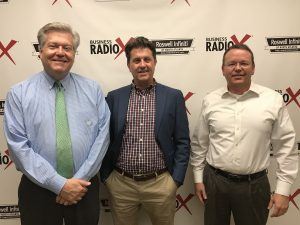
John Ray, Tom Martin, and Mark McKenzie

“North Fulton Business Radio,” Episode 166:  Mark McKenzie, Docqmax Digital Printing, and Tom Martin, ConnectPay

Printing and payroll were on the docket for this edition of “North Fulton Business Radio” as we welcomed Mark McKenzie, Docqmax Digital Printing, and Tom Martin, ConnectPay. John Ray is the host of “North Fulton Business Radio,” broadcast from Renasant Bank in Alpharetta.

Mark McKenzie, Docqmax Digital Printing

Mark McKenzie

Docqmax Digital Printing, Atlanta’s Business Printer since 1975. Brothers Mike, Rich and Mark Mckenzie are second generation business owners with a vast knowledge and experience of print, marketing and operating a successful business. Quite a bit has changed in the print industry and Docqmax Digital Printing and the McKenzie Brothers have changed along with the industry. By using their fully functional website and the tools it provides their clients are able to use the resources provided to create, order, track and ship all through their personal gateway. Using some of the industry’s leading digital equipment Docqmax is able to provide efficiencies with faster turnarounds, consistency in their clients’ brand, image and functional forms all while working within our clients budget and deadlines. We do all of this by helping our clients promote and market their Brand and Image by utilizing the various products and services we provide including, a fully functional website with web-to-print capability, full color print-on-demand digital printing, 2 color offset printing, big color wide format digital poster and banner printing. We provide products such as, variable data personalized printing, envelopes, letterhead, brochures, postcards, mailings, labels, catalogs, reports plus many other items businesses need to promote and run their companies.

For more information, you can visit the Docqmax website, or call Mark at 404-724-9963. Docqmax Digital Printing is located at 689 11th Street NW #B Atlanta, GA 30318.

Tom Martin, ConnectPay

Tom Martin

Tom Martin is a CPA and a 23 year veteran of the payroll industry. ConnectPay offers a revolutionary way of doing your payroll by bringing in the right expert at the right time. They focus on customer service and technology so you can focus on your business. Many other payroll companies will say as much, and then claim to know all about changing health coverage, retirement savings intricacies, all while covering your business with insurance products at the same time. Overselling services they have no business tackling when buying these solutions individually from trusted advisors can lower your costs, increase coverage, and make your retirement savings go farther. Instead, ConnectPay acts as the glue that binds and integrates your payroll data with all of these additional services—utilizing either your trusted network, or introducing you to our cost saving partners. You wind up with the best of both worlds—ease of use combined with the best solution for your business. They provide a blend of human and technological support for a rapid and comprehensive response to help you achieve your goals. They’re not trying to up-sell, so we can provide recommendations that are tailored to your specific needs – not one solution for all. ConnectPay partners rather than competes with brokers to provide their clients with the best possible service and connections to support your business.

To be in touch with Tom directly, you can email or call 404-410-0031. ConnectPay is located at 2805 Peachtree Industrial Blvd., Suite 214, Duluth, GA, 30097.

“North Fulton Business Radio” is broadcast from the North Fulton studio of Business RadioX®, located inside Renasant Bank in Alpharetta. Renasant Bank has humble roots, starting in 1904 as a $100,000 bank in a Lee County, Mississippi, bakery. Since then, Renasant has grown to become one of the Southeast’s strongest financial institutions with approximately $12.9 billion in assets and more than 190 banking, lending, wealth management and financial services offices in Mississippi, Alabama, Tennessee, Georgia and Florida. All of Renasant’s success stems from each of their banker’s commitment to investing in their communities as a way of better understanding the people they serve. At Renasant Bank, they understand you because they work and live alongside you every day.

Tagged With: ConnectPay, digital printer, Docqmax Digital Printing, envelopes, full service printer, letterhead, mailings, Mark McKenzie, North Fulton Business Radio, payroll, payroll outsourcing, payroll processing company, payroll services, postcards, poster printing, print on demand digital printing, printing banners, Thomas Martin, Tom Martin, trade show banners, variable data personalized printing, wide format printing

Rachel Cory, Taziki’s Mediterranean Cafe Alpharetta, and Jason Spencer and Jessica Tyre, EVEN Hotels Alpharetta

September 19, 2019 by John Ray

North Fulton Business Radio
Rachel Cory, Taziki's Mediterranean Cafe Alpharetta, and Jason Spencer and Jessica Tyre, EVEN Hotels Alpharetta
Loading
00:00 /
RSS Feed
Share
Link
Embed

Download file

John Ray, Rachel Cory, Jessica Tyre, and Jason Spencer

“North Fulton Business Radio,” Episode 165:  Rachel Cory, Taziki’s Mediterranean Cafe Alpharetta, and Jason Spencer and Jessica Tyre, EVEN Hotels Alpharetta

It’s a hospitality theme on this edition of “North Fulton Business Radio,” with Rachel Cory of Taziki’s Mediterranean Cafe Alpharetta, and Jason Spencer and Jessica Tyre, EVEN Hotel Alpharetta. John Ray is your host on this edition of “North Fulton Business Radio,” broadcast from Renasant Bank in Alpharetta.

Rachel Cory, Taziki’s Mediterranean Cafe Alpharetta

Taziki’s Mediterranean Cafe Alpharetta

Taziki’s Mediterranean Cafe is a rapidly expanding brand, named one of America’s fastest growing leaders by Inc. 5000 in the fresh-casual restaurant industry. The essence of Taziki’s Mediterranean Cafe is defined by serving fresh ingredients and hand-cut meats daily. The Mediterranean influence in our name echoes across our chef-inspired cuisine but is approachable for any person, anywhere. We take pride in the made-from-scratch food that nourishes our customers daily and the artisanship that goes behind doing so without the use of fryers, freezers, or microwaves.

They thrive on the words included in our culture compass: connection, challenge, collaboration, details, and fresh. These ideals are executed through our mission to create an environment that combines extraordinary food with meaningful human connection. 

Rachel Cory is the Marketing Manager for Taziki’s Mediterranean Cafe Alpharetta. Follow that link for menus, catering information, and further contact information. You can also email Rachel directly.

Jason Spencer and Jessica Tyre, EVEN Hotel Alpharetta

Jessica Tyre and Jason Spencer, EVEN Hotel Alpharetta

Jason Spencer is the General Manager and Jessica Tyre is the Marketing Director of EVEN Hotels Alpharetta.

The EVEN® Hotels brand was launched in 2012 as the hotel industry’s first and only hotel brand created with wellness at its core. EVEN Hotels empowers guests to maintain their wellness routine while on the road by providing options to choose what that means to them. The brand has intentionally designed every aspect of the hotel experience, in every square foot across all properties, with an emphasis on four components: eating well, resting easy, keeping active and accomplishing more.

For more information about the EVEN Hotels brand, visit www.EVENHotels.com. Find them on Twitter www.twitter.com/EvenHotels, Facebook www.facebook.com/EvenHotels or Instagram www.instagram.com/evenhotels.

Additionally, you can contact Jason by email or Jessica by email.

“North Fulton Business Radio” is broadcast from the North Fulton studio of Business RadioX®, located inside Renasant Bank in Alpharetta. Renasant Bank has humble roots, starting in 1904 as a $100,000 bank in a Lee County, Mississippi, bakery. Since then, Renasant has grown to become one of the Southeast’s strongest financial institutions with approximately $12.9 billion in assets and more than 190 banking, lending, wealth management and financial services offices in Mississippi, Alabama, Tennessee, Georgia and Florida. All of Renasant’s success stems from each of their banker’s commitment to investing in their communities as a way of better understanding the people they serve. At Renasant Bank, they understand you because they work and live alongside you every day.

Tagged With: EVEN Hotel, Greek cuisine, Greek food, hospitality, hospitality company, hotel in Alpharetta, IHG, Mediterranean cuisine, Mediterranean food, meeting space in Alpharetta, Rachel Cory, Taziki's, Taziki's Alpharetta, wellness, wellness hotel, wellness-focused hotel

Decision Vision Episode 32: Do I Need a Succession Plan? – An Interview with Bruce Gaynes, Kitchens Kelley Gaynes P.C.

September 19, 2019 by John Ray

Decision Vision
Decision Vision
Decision Vision Episode 32: Do I Need a Succession Plan? – An Interview with Bruce Gaynes, Kitchens Kelley Gaynes P.C.
Loading
00:00 /
RSS Feed
Share
Link
Embed

Download file

Mike Blake and Bruce Gaynes

Decision Vision Episode 32: Do I Need a Succession Plan? – An Interview with Bruce Gaynes, Kitchens Kelley Gaynes P.C.

“All of us will exit, voluntarily or not.” Words to ponder from “Decision Vision” host Mike Blake’s conversation with Bruce Gaynes, Kitchens Kelley Gaynes P.C. What are the three most important aspects of a succession plan? What are the different options I should consider in planning for the next steps in my business? These questions and more are addressed in this “Decision Vision” interview, presented by Brady Ware & Company.

Bruce Gaynes, Kitchens Kelley Gaynes P.C.

Bruce Gaynes

Bruce Gaynes, a founding shareholder of Kitchens Kelley Gaynes P.C., has over 35 years of experience helping clients. Prior to practicing law, he worked in the tax department of a national accounting firm and became a Certified Public Accountant. His law practice focuses on corporate, estate planning and tax matters.

Bruce’s work involves all sizes and forms of entities. He handles matters concerning the full business life cycle, beginning with organizational structuring and formation. As business and professional practices develop and grow, Bruce helps them properly document and protect themselves, in ways such as operating agreements and shareholder agreements, with independent contractor agreements, employment contracts, and non-disclosure agreements, and with other commercial transaction agreements. As clients look for exit strategies Bruce negotiates merger and acquisition documents, advises families on gifting techniques, formulates reorganization strategies, and spearheads family and tax planning.

As part of his work for business owners, executives, and professionals, Bruce maintains an estate planning practice, counseling individuals and families in their tax-reduction and asset-transfer strategies. As a consequence of his involvement in trust and estate law, Bruce also has extensive experience helping clients with probate matters.

Kitchens Kelley Gaynes, P.C. has been providing experienced legal representation for clients in virtually all areas of industry and commerce since 1985. We work closely with our clients to form long-term relationships based on top quality work and realistic legal advice. Our clients trust us to listen to them, understand their businesses and craft reliable legal strategies that will help them achieve their goals. Every client, no matter the size, receives the same quick, efficient and effective response.

For more information on the firm, go to their website, or you can call Bruce directly at (404) 467-7526.

Michael Blake, Brady Ware & Company

Mike Blake, Host of “Decision Vision”

Michael Blake is Host of the “Decision Vision” podcast series and a Director of Brady Ware & Company. Mike specializes in the valuation of intellectual property-driven firms, such as software firms, aerospace firms and professional services firms, most frequently in the capacity as a transaction advisor, helping clients obtain great outcomes from complex transaction opportunities. He is also a specialist in the appraisal of intellectual properties as stand-alone assets, such as software, trade secrets, and patents.

Mike has been a full-time business appraiser for 13 years with public accounting firms, boutique business appraisal firms, and an owner of his own firm. Prior to that, he spent 8 years in venture capital and investment banking, including transactions in the U.S., Israel, Russia, Ukraine, and Belarus.

Brady Ware & Company

Brady Ware & Company is a regional full-service accounting and advisory firm which helps businesses and entrepreneurs make visions a reality. Brady Ware services clients nationally from its offices in Alpharetta, GA; Columbus and Dayton, OH; and Richmond, IN. The firm is growth minded, committed to the regions in which they operate, and most importantly, they make significant investments in their people and service offerings to meet the changing financial needs of those they are privileged to serve. The firm is dedicated to providing results that make a difference for its clients.

Decision Vision Podcast Series

“Decision Vision” is a podcast covering topics and issues facing small business owners and connecting them with solutions from leading experts. This series is presented by Brady Ware & Company. If you are a decision maker for a small business, we’d love to hear from you. Contact us at decisionvision@bradyware.com and make sure to listen to every Thursday to the “Decision Vision” podcast. Past episodes of “Decision Vision” can be found here. “Decision Vision” is produced and broadcast by the North Fulton studio of Business RadioX®.

Visit Brady Ware & Company on social media:

LinkedIn:  https://www.linkedin.com/company/brady-ware/

Facebook: https://www.facebook.com/bradywareCPAs/

Twitter: https://twitter.com/BradyWare

Instagram: https://www.instagram.com/bradywarecompany/

Show Transcript

Intro: Welcome to Decision Vision, a podcast series focusing on critical business decisions, brought to you by Brady Ware & Company. Brady Ware is a regional, full-service accounting and advisory firm that helps businesses and entrepreneurs make vision a reality.

Michael Blake: And welcome to Decision Vision, a podcast giving you, the listener, clear vision to make great decisions. In each episode, we discuss the process of decision making on a different topic. But rather than making recommendations because everyone’s circumstances are different, we talk to subject matter experts for how they would recommend thinking about that decision.

Michael Blake: My name is Mike Blake, and I’m your host for today’s program. I’m a Director at Brady Ware & Company, a full-service accounting firm based in Dayton, Ohio, with offices in Dayton;  Columbus, Ohio; Richmond, Indiana; and Alpharetta, Georgia, which is where we are recording today. Brady Ware is sponsoring this podcast. If you like this podcast, please subscribe to your favorite podcast aggregator and please also consider leaving a review of the podcast as well.

Michael Blake: So, our topic for today is, do I need a succession plan? And I’m intrigued by this topic for a number of reasons. One, as things have sort of worked out, I’m doing a lot of work in the succession planning area, and the dynastic wealth or intergenerational wealth preservation area, and developing strategies to to execute that, figuring out what works, what doesn’t, and helping families build governance around that, so that we don’t have the issues, the so-called shirtsleeves-to-shirtsleeves phenomenon where wealth made in one generation is typically gone by generation three. And in the podcast that was released in the week before, this one had Chris Demetree on talking about establishing a family office, which is one vehicle that is often used to do that.

Michael Blake: And so, this is an area that I like to think that I’ve learned quite a bit about in the last few years I’ve been doing this. It’s also intriguing because I find it somewhat countercultural. We have, I think, in our society and our economy a a pro exit bias. And we talk with entrepreneurs, you talk to venture capitalists, you talk to people in business, and the goal is about exiting. How do I get out? How do we jump off the plane? How do I start to take my chips off the table, and retire, and have a boat that is so big that when people step on it, it does not move? And that’s fine, sort of, as far as it goes.

Michael Blake: But I think it does kind of other options and injustice because there is no law out there that says that the only way to become wealthy and financially self-sufficient, financially independent, and financially impactful is to have an exit. In fact, and maybe there’s something else I’ll do in a podcast later, but there is significant empirical data that suggests that one of the worst things you can do to preserve family wealth over an extended period of time is exit.

Michael Blake: And the reason for that is twofold. One is because, now, you’re liquid. So, it’s easier to do dumb things with your wealth because you can now spend it. And second is that when there’s no longer a family enterprise, there’s less of a reason for the family to be cohesive. It’s easier for everybody to kind of go off and do their own things. And you lose some of the the scale economy’s benefit of having that that wealth kind of amass and in one place. And when it comes to wealth, as some often is greater than the sum of its parts in terms of the impact that you can make. So, I think it’s important to have this voice out there that talks about the other options available other than simply exiting because you don’t necessarily need to do that.

Michael Blake: And I’m not necessarily an expert, but I scratch my head for about two seconds. Then, I remembered a friend of mine who is an expert. And that friend of mine is Bruce Gaynes. And Bruce is a founding shareholder of Kitchens Kelley Gaynes, has over 40 years of experience helping clients, and before practicing law, worked in the tax department of a national accounting firm, and became a CPA. So, he’s your double threat. His law practice focuses on corporate, estate planning, and tax matters. His work involves all sizes and forms of entities. He handles matters concerning the full business lifecycle, beginning with organizational structuring and formation. As businesses and professional practices develop and grow, Bruce helps them properly document and protect themselves with the use of operating and shareholder agreements, independent contractor, and employment contracts, non-disclosure and non-compete agreements, and other documents. As clients look for exit strategies, Bruce negotiates merger and acquisition documents, advises families on gifting techniques, formulates reorganization strategies, and spearheads family and tax planning.

Michael Blake: And I’ll add to that is that he is also the longtime host—I don’t know if he is the founder or not. We’ll ask him about that. He’s the host of the Succession Planning Group, which he’s been hosting in Buckhead for as long as I’ve known him, which has been over a decade, which involves a group of professionals that talk about not exiting, but actually the process of planning for succession and planning for enterprises to go beyond simply their founder or their direct descendants. As part of his work for business owners, executives, and professionals, Bruce maintains an estate planning practice counseling individuals and families in their tax reduction and asset transfer strategies. As a consequence of his involvement and trust and state law, Bruce has extensive experience helping clients with probate matters. Bruce, welcome to the program.

Bruce Gaynes: Thank you very much.

Michael Blake: So, Bruce, like I said, I’ve teed you up. You know, I think you’re about as knowledgeable about succession planning as certainly as anybody I know. So, let’s help people understand what that is. I have a vocabulary reset here or a vocabulary set. What is succession planning?

Bruce Gaynes: Okay. Well, actually, let me say that at the outset that I think that I view the whole topic a little more broadly than you do because I look at this kind of planning as being alternative choices about do we, for instance, keep the company with insiders? And by the insiders, I mean people who are perhaps relatives or people who are not relatives but who are working inside the business, or do we have this go to outsiders? And that’s an important question, because all businesses or all all owners of businesses are going to exit at one point or another. They may do it voluntarily. They may do it involuntarily. And involuntarily might be going bankrupt. It might be just closing down the business because it’s—they’re tired of doing it. It might be just dying or becoming disabled. And so, they might leave, as they say, feet first.

Bruce Gaynes: So, the role of of our law firm is to help our clients maintain control of what’s going to happen in their future. And some of that may involve disposing of the business in a way that’s perhaps more favorable to the owner, either because they are happy that they are keeping it within the family or keeping it within the employee group or because they are going to cash out and sell to a third party. Those are the two primary ways that businesses are disposed of in one fashion or another.

Bruce Gaynes: And the other way that sometimes you see, it’s not very common, but there are also opportunities to go out of a business through an ESOP, an employee stock ownership plan. But that really requires a whole different set of circumstances. You absolutely have to have a bunch of people who are there, who can operate the business without you, which, sometimes, you have people who can be successful as long as the owner is there. Their ability to succeed going forward is dependent sometimes upon them having the proper direction or the proper knowledge. Furthermore, they’ve got to be able to run the business in a manner where cash flows enough, so that the ESPO works. And by the ESOP working, that means that that the ESOP is able to pay normally through a loan, pay for the purchase of the stock of the owner.

Michael Blake: Okay, yeah. And that’s fair. And certainly, in fact, later today, we’re recording a podcast on exiting the business through a sale. But, you know, I mean, it’s my own personal opinion. I do think that the exit by sale is, sort of, the sexier, higher visibility kind of path, right? Everybody loves a good exit. Nobody really—nobody ever writes in The Wall Street Journal about, sort of, a peaceful transition of a business internally, right? But it’s important, obviously, sort of to have all those options on the table.

Bruce Gaynes: Yes. And I think they all need to be considered together, and the same solution doesn’t work for all businesses. Every business is different, and the considerations are different. But the whole idea in putting together a succession plan is to evaluate. Make that evaluation of what’s the proper next step for the business. Put it down in writing in a written plan, and then to implement that plan. And normally, that’s something that takes place over time. And so, ideally we’d like to have at least a few years, some say maybe as many as five, but we want to be able to plan this out because not every business is ready for some form of disposition. Again, whether it’s internal or whether it’s external, it does take some planning in advance.

Michael Blake: Yeah. You know, like you said, I think that’s a great quote. We all will exit, right? Sometimes voluntarily, sometimes not. And if you really decide you’re going to hang on to the very end, it’s sort of feet first. And so, when we talk about—and what I like about what you’re describing too is that, sometimes, a succession plan means that a succession in the classical sense just may not be feasible, right?

Bruce Gaynes: Right.

Michael Blake: Or it may—and it may not be feasible from an economic perspective. It may not be feasible from a family politics perspective, things that have nothing to do, at least, directly with economics. So, you know—and if you know how to do that, if you kind of know that going in, right, that means you’re not going to waste a lot of time and energy on things that just aren’t going to work out.

Bruce Gaynes: Right, right.

Michael Blake: And I think that’s critical.

Bruce Gaynes: And sometimes you have to find out what’s going to work and what’s not, because it’s sometimes the owner assumes that something will work, but they don’t necessarily have the objectivity that that is required to evaluate it. Sometimes, they don’t even have the conversation, particularly if they want to keep it inside the family. They just assume that son or daughter is ready to take over the business. And when you talk to son and daughter, they may not have any intention at all of staying in the business after mom or dad is gone.

Michael Blake: And I think I think adding to that, I mean, you know, we both know we’ve been around long enough. We know that when you have this Venn diagram of family and money, conversations get awkward-

Bruce Gaynes: Yes.

Michael Blake: … at a minimum, or, sometimes, it never happened at all, which is where it kind of where we come back to the succession planning. And I’m curious. if you agree with my observation. I think for a lot of business owners, succession planning is up there with writing a will and taking out a life insurance policy because, in some respect, you’re confronting your mortality.

Bruce Gaynes: Yes. But it’s more than that because, you know, sometimes, people have an awful lot tied up in their business in terms of their own self-evaluation, their own ego, et cetera. Their own purpose in life is, sometimes, tied up in what they do 40 plus hours a week. And so, for a lot of people, it may be even more difficult than death because after death, there’s not much that they need to do. But during their lifetime, they’ve got to figure out, “Okay, how is this going to affect the way I look at myself? How is this going to affect the way other people look at me and treat me? Are they going to ignore me now that I’m no longer the boss?”.

Bruce Gaynes: And then, they also have to confront, what am I going to do now? You know, am I going to be happy playing golf seven days a week, or tennis, or whatever else they might do? What are they going to do to find any kind of meaning at all in their existence? Some people have a great deal of difficulty facing that. Just this past week, I was talking to a friend of mine who left an executive position in a major company, and he’s not had any problem at all, but I do find that his carefree feeling about what he’s doing now is probably less common than the complaint of, “I left my business. Now, I’ve got—I’m trying to figure out what it is I want to do with myself.”

Michael Blake: So, when a lot of people think about succession planning, I think a lot of people’s minds turn to this notion of managing tax liability. And taxes in a succession can be very important. In fact, one reason between the New York Yankees and the Washington Redskins is that the Yankees apparently have very good tax planning because the Steinbrenner is still on the team, right. But when Jack Kent Cooke died, the Washington Redskins did not, and Dan Snyder, and people are gonna start booing at their radios now for Redskins fan, but Dan Snyder is on that team primarily because they couldn’t afford to pay the taxes to keep the team, basically. But it’s—I mean, that’s part of it, but it’s also more than that, isn’t it?

Bruce Gaynes: Well, yes. The taxes are important because, certainly, almost every client wants to minimize estate gift to income taxes. And that’s going to be part of the plan is to consider those aspects of it because it’s going to have a direct impact on what the owner is going to be able to take away from the business. And by the way, that’s irrespective of whether it’s an inside or outside transfer, you’ve got to figure and think about the taxes either way. But that’s not the the only goal of entering into the succession planning arena, and doing so with both feet, and being serious about this as a critical part of the business and the business life cycle. You want to figure out, for instance, for the owner, if they’re going to dispose of the company, and they might be bought out by a third party or might be bought out by an insider. What is it that they’re really going to need in order to retire or move on to the next phase of their of their life?

Bruce Gaynes: They also want to think about—and this is why it takes some planning and some advance preparation, they want to think about what it is they need to do with, if anything, to build their business, to get to that point where they’re going to walk away with enough money to to satisfy themselves. They’ve got to get each element of the business that they can under contract. When I talk about element of the business, I’m talking about having employees who have agreed contractually to stay on for a particular period of time, to not compete with the company because a buyer isn’t going to want to buy a business, and then find out that the sales force just left and created their own competing company.

Bruce Gaynes: And that’s a a serious risk. Normally, you want to find a management team that’s going to stay on, with whom you had a serious discussion about the fact that they’re being hired or their continued employment is premised upon the fact that they are going to be around after the sale, and it may be appropriate to compensate them for that, but that would be a matter of arranging things in a way, a smart way, so that your management team doesn’t walk off just as you’re negotiating a transfer of the stock, again either to an insider or outsider. These are considerations really for either situation, maybe that you need to increase the earnings, the EBITDA, the earning earnings before interest, taxes, depreciation and amortization. It may involve even jettisoning certain aspects of the business to make it attractive for the next owners to come in.

Bruce Gaynes: I’m working on a case right now where we’ve got a company that is in the construction business, and they’ve got a retail operation. The retail operation is a little bit of a distraction, both in terms of time and money, and it’s not part of their core business, and it makes their company less attractive to others who might be coming along. And they’re in a situation where they’ve got people inside the business, younger generation inside the business, that could take it over, but they might decide to go sell to an outsider.

Michael Blake: And, you know, these things you’re talking about, they are so much more expensive to solve when there’s a transaction on the table than when there isn’t, right?

Bruce Gaynes: Right. That’s right.

Michael Blake: Because these people are not dumb if you hired correctly, and they’re going to stay when they have leverage.

Bruce Gaynes: Yes.

Michael Blake: Right? And that gets to, you know, looking at things years in advance. It’s not just because businesses are aircraft carriers, and they just have a very long or wide turning radius. It’s also you can just imagine if you go to an employee and said, “You know what, I like to sell my business, and I’ve got $20 million dollar offer on the table, but they won’t do that deal unless you agree to stay for two years,” right? Well, well, well.

Bruce Gaynes: Right, right.

Michael Blake: I am going to call my attorney, and I’ll be back in touch with you in about a week or so with my list of requests-.

Bruce Gaynes: Right.

Michael Blake: … in order to agree to a stay bonus and signing [crosstalk]-

Bruce Gaynes: Like terrorists, yeah.

Michael Blake: Yeah, exactly right. Exactly right. So, now, I introduced the show from a long-term succession planning perspective. But there’s also a different time horizon, which is the short-term succession planning perspective to write and, really, it’s more like contingency planning or an unexpected succession but, nevertheless, it’s a kind of succession, right? I mean, that’s something that’s also important to think about, isn’t it?

Bruce Gaynes: Right, it is. It is. Many years ago, I had a client—and succession planning is not just for brick and mortar businesses. It can be for service businesses. And this particular client was a CPA who had a firm that had no other CPAs in it. He had, essentially, bookkeepers working for him. And he was concerned about his clients, and it wasn’t really quite as much a matter of, “How am I going to make money out of this?” but he was concerned about what happens if something happens, you know, “If I die, become disabled, who’s going to take over my practice, and see that my client’s tax returns get filed on a timely basis?”.

Bruce Gaynes: And so, frequently, if you had a firm that had several accountants, you might have some sort of buy/sell agreement between the the the owner, the practice, and people who were familiar with the clients, who are working on the clients, they would be the logical people to take it over. But he didn’t have that because he couldn’t continue as a CPA firm unless it had a CPA who is running the firm. And so, what we actually did is we reached out to a friendly competitor, and we did a buy/sell agreement between the two CPAs, and so that if one or the other were to be unable to continue to practice, the one who was able to continue would be able to take it over. There would be a set formula for determining what was going to be paid for that, and it would then inure to the benefit of the possibly disabled CPA or perhaps to the family if the CPA passed away.

Bruce Gaynes: So, that’s the contingency type of planning that really is still part of that larger picture of succession planning. When we do think of succession planning, traditionally, we think about something that’s more long term, three years, five years, as I mentioned. And it would involve trying to possibly improve the businesses, so that the next parties are able to run it more successfully, or pay more for it, or able to achieve some other goal.

Michael Blake: So, when we talk about a succession plan, is it something that needs to be a formal document? Do people maybe just take notes on their phone? Is it on a napkin someplace? Is there a 60-page document? What, in your mind, is the kind of deliverable, if you will, of a succession plan?

Bruce Gaynes: Well, I think it’s very important to have one that’s written. Does it have to be that way? No, but I think it’s much better because if you have a written plan, it records what your thought was back in 2019. And then, you know, in 2027, when you’re looking back at it, you’ve got some sort of track record of, what did you have in 2019? How have things changed? And it’s part of your overall general strategic plan for the business. But the succession plan itself is something that ought to be in writing (A), for the owner himself or herself; and then, (B), for others if the owner is no longer around, if we do have that situation where the owner is taken out of the business rather suddenly. So, the least, they’ve got some sort of idea. Plus, it becomes the basis for how you’re going to make the business better.

Michael Blake: And there is a lot of legal documentation that can go along with it. And in addition to aN overall sort of non-legal strategic plan, it may involve getting restrictive covenants, what we sometimes call covenants not to compete or covenants not to solicit. Maybe a function of getting that in place, getting confidentiality agreements in place. It may be other forms of buy/sell agreements. Maybe even agreements that deal with co-ownership such as shareholder agreements or LLC operating agreements in place. It may involve having a lease. A lot of businesses, at least, in part, the success of the business is dependent upon their location. If you don’t have a good lease, or the lease is not long enough, or you’ve not negotiated the rights in correct kind of terms, it will have a significant impact on either the salability or value of the company or both.

Michael Blake: And it seems to me, the way you describe a succession plan, it sounds like kind of a business plan but with a very narrow specific focus. Is that fair?

Bruce Gaynes: Well, it doesn’t have to be a narrow, specific focus.

Michael Blake: Got it.

Bruce Gaynes: I mean, the plan itself, I think, is an integral part of your overall business paperwork in terms of having something that is strategic, something that looks at the various elements in the business, and that has implementary documents such as the legal agreements to keep management in place.

Michael Blake: So, we’re talking about legal agreement, but a succession plan itself doesn’t necessarily have to be a legally binding agreement, right?

Bruce Gaynes: Correct.  It would refer to those legally binding agreements. And it might have, as I say, the sort of things you would ordinarily find in a strategic plan. It might have, how are we going to improve these these earnings before taxes, et cetera, what we call EBITDA? And it might have in there, what’s going to happen to the business? Who are the people who are going to be capable of taking it over? The functions that the owner is performing at the current time, if there are functions that they’re performing, who’s going to perform those functions?

Michael Blake: So, as my own kind of war story with with succession planning and legally versus non-legally binding, a client of mine, right, that I’m working with right now is working through a nasty shareholder divorce. And the genesis of that divorce is the fact that my client, who’s the majority shareholder of that company, had conversations with the minority shareholder about maybe someday down the line, right, majority shareholder would agree to be bought out by the minority shareholder but with no particular commitment, no particular timeline.

Michael Blake: And then, one day for reasons that are not clear, the minority shareholders said, “You know what? I gotta have this thing now. I just do.” And my client wasn’t right to do that yet. And it’s led to, as I said, kind of a nasty kind of shareholder split that I don’t think has been really positive for either party, in all candor. But thank God that there was not a legal agreement in place because one person was ready to do that transaction, the other person wasn’t. So, you know, the benefit of some flexibility, I think, has served my client very well in that regard.

Bruce Gaynes: Well, it does serve clients well in some regards. On the other hand, there are situations where the minority partner has a particular or critical skill. and walking away from the deal or having the company split can be very damaging to both parties. Well, if they had properly discussed and documented, it’s not just a question of some lawyer coming along and him imposing upon the parties some particular paperwork, is really the situation that you described might very well have been handled best, not by lawyers, but by just frank conversations and honest conversations.

Bruce Gaynes: And sometimes, when I represent the minority owner or somebody who’s coming into a business, the commitment to transfer the business to the person who’s coming in. And, frequently you got to understand, they may be leaving another really good position. There’s somebody of value for a reason. They’ve got a history of success. They’ve got, perhaps, promises for other opportunities that they’re walking away from. And normally, I would want to see some sort of agreement upfront of what’s going to happen in over what period of time, and so that these things would be agreed to upfront. We would want to have that, so that everybody knows, at least, at the outset, you you never can predict the future, you’d never know if things are going to work out as as either the parties or their lawyers hope, but, at least, you’ve got a plan that can be altered, can be amended, may need to be amended, but a plan where we don’t have people second thinking all of this and having one party dedicate himself or herself to a particular course of action, and then having the other party not comply.

Michael Blake: So, you said something that I want to underscore because I think it’s quite smart. And that is that part of the calculus here is identifying individuals that are absolutely critical to the ongoing kind of continuity, success, and value of the company, right? So, that succession discussion may take a—probably will take a different flavor, a different character, depending on the nature of the person involved, right? And in some cases, I have business owners, and I think you have clients like this too, they identify individuals they just want to take care of, right? They’ve served the company loyally for 25-30 years, want to give a little something on the way out to thank them for their service and loyalty.

Michael Blake: And then, there are others where, like you said, this business becomes less viable because that person is in it or, at least, a massive pan the neck to try to then have to recover with that person out of the business, or even just a third disgruntled. And for whatever reason, they understood something differently from what the other shareholder did. And, you know, a disgruntled shareholder employee can do immense damage to a business without even leaving.

Bruce Gaynes: Right.

Michael Blake: Right?

Bruce Gaynes: Right.

Michael Blake: They can break a lot of China on the way out. So part of that decision process in the succession is assessing kind of who needs to be taken care of and what their role is in terms of a successful succession.

Bruce Gaynes: Correct. And it may be that if you’ve got somebody who is not capable of running the business themselves, but you’ve got some reason to believe that they’re not going to take direction from anybody other than the current owner, you may need to remove them from where they are before you ever begin the discussion because they may be the problem. And in setting the succession up, you may have vital tasks that they are accomplishing, but if they’re not going to do that for somebody else, you may need to get somebody in there ahead of time to fulfill that role.

Michael Blake: So, I think we made a pretty strong case that a succession plan is desirable, and there’s some exposure there if you don’t have one. So, I’d like to move ahead and talk about, can we identify maybe the three most important features of a good succession plan? There are actually 28, but we don’t have time to go through 28. Nobody will remember more than three. So, if we had to sort of pick three, what might they be?

Bruce Gaynes: Well, I think, you know, I tend to agree with you, with the 28. You know, I think the most important thing is to assess the business because, I think, the three most important things are going to change, depending upon what business you’re talking about. And so, in some cases, it’s going to be driving a higher EBITDA because that’s the only way that the owner is going to be able to get out. In other situations, it may be resolving. And this is particularly the case in family businesses, resolving how are my kids going to get along after I’m out of the picture? Will they get along?

Bruce Gaynes: I’m dealing right now with a rather new client. So, I’ve sort of jumped into the middle of the fray, but we’ve got one sibling who died, one sibling who’s detached, two siblings who are—the spouse of the deceased sibling and another sibling were half in and half out. And we’ve got a significant problem because we’ve got to deal with who is going to own what aspect of the business, and how is any kind of transition going to be financed. And in fact, I was brought into the business or referred into the business by the banker who is trying to help them solve the financial aspect to this. And, you know, unfortunately, this this business did not have a succession plan that was good. It’s a successful business in some ways because it’s in the third generation of the business, but it’s because of the lack of planning, having written, agreed-upon plans for this, there’s kind of a mess there right now.

Michael Blake: So, this segues very nicely into the next question that I have, which is, you know, a succession plan, to my mind, is a fairly intimate document for the family if it’s going to continue to be a family business. We’ve been very clear. it doesn’t have to be that way. But, certainly, for the business, how do you help businesses kind of formulate those plans and make sure that they work correctly?

Bruce Gaynes: Well, I think the thing that that we need to do first is to assess what the objectives really are. And part of that involves finding and figuring out what is it that needs to be done with this respective business, and then bringing in the proper advisors to help them do that. And there are people who are dedicated, if you will, or hold themselves out as people who do nothing or succession planning generalists who try to look at a—take a holistic view of the company, delve deeply into various aspects. They might be spending significant amounts of time in the business, learning what’s going on, getting an independent view of this business, and then making recommendations.

Bruce Gaynes: Sometimes, there are situations where you’ve got a lack of legal documentation. You may need business lawyers in there. You may need some estate planning lawyers in there. I usually cover both the business and the estate planning because you’ve got significant tax issues, as you mentioned before. It may involve getting the proper accountants involved. I’ve got a case right now where the entire accounting is based upon some people whose loyalty to the company is not assured. And so, you may need to get the proper accountants in there, so that they get their arms around what this business is worth.

Bruce Gaynes: I’m dealing with another business. As matter of fact, I was talking to my client on the way over here. And again, a new client. She’s allowed a management company to run the business for the last several years. And the management company just has completely fallen down in terms of providing proper accounting, and proper records, and general ledgers, and things like that. So, sometimes, you just gotta get that right person in there. It may involve getting financial planners or insurance agents in there. That may involve getting a business broker. If we’re going to sell to a third party, maybe that we need to get a business broker in there or an investment banker if it’s a larger business. We may need to get a business valuation person involved because it might very well be that the owner has no idea of what their business is worth or no accurate idea of what their business is worth.

Michael Blake: Thank you for that, by the way. I appreciate that. Well, Bruce, we’re running out of time, and I know you’ve got a lot to do, and we yanked you many miles out of town to record this. And as you’ve indicated, there are 28 other things that could be looked at here. If somebody wants to learn more about succession planning and wants to ask you a question about it, maybe they would even like your help, how can they best contact you?

Bruce Gaynes: Well, I can be called. I mean, my office is inside the Atlanta-Georgia perimeter, what we call the Perimeter Highway, just off of 400, Georgia 400. I can be reached by phone at 404-467-7526. That’s my direct dial. I can be found on the Internet. Our firm can be found at www.kkgpc.com And KKGPC stands Kitchens Kelley Gaynes Professional Corporation. So, I can be reached by either of those means.

Michael Blake: All right. Very good. Well, that’s gonna wrap it up for today’s program. I’d like to thank Bruce Gaynes so much for joining us and sharing his expertise with us. We’ll be exploring a new topic each week, so please turn in so that when you’re faced with your next business decision, you have clear vision when making it. If you enjoy this podcast, please consider leaving a review with your favorite podcast aggregator. It helps people find us, so that we can help them. Once again, this is Mike Blake. Our sponsors is Brady Ware & Company. And this has been the Decision Vision Podcast.

Tagged With: CPa, CPA firm, Dayton accounting, Dayton business advisory, Dayton CPA, Dayton CPA firm, Decision Vision, exit planning, exit strategies, Family owned business exit planning strategies, Kitchens Kelley Gaynes P.C., Michael Blake, Mike Blake, small business exit planning, small business exit planning strategies, succession plan, trust and estate law

The GNFCC 400 Insider: GNFCC Award Winners, An Interview with Brian Martin, Righteous Guitars, and Dr. Steve Palmer, The Cottage School

September 18, 2019 by John Ray

North Fulton Studio
North Fulton Studio
The GNFCC 400 Insider: GNFCC Award Winners, An Interview with Brian Martin, Righteous Guitars, and Dr. Steve Palmer, The Cottage School
Loading
00:00 /
RSS Feed
Share
Link
Embed

Download file

Brian Martin, Kali Boatright, and Dr. Steven Palmer

“GNFCC 400 Insider,” Episode 28, GNFCC Award Winners

“You can learn from both fools and wise men, as long as you can figure out who is who.” “We address students as clients.” A few words to operate by and much more offered by 2019 GNFCC Small Business Person of the Year, Brian Martin of Righteous Guitars, and 2019 GNFCC Non-Profit Leader of the Year Dr. Steven Palmer of the Cottage School. The “GNFCC 400 Insider” is presented by the Greater North Fulton Chamber of Commerce and hosted by GNFCC CEO Kali Boatright.

Brian Martin, Righteous Guitars

Brian Martin

Brian S. Martin is the President and CEO of Righteous Guitars, LLC. In 2015, he founded Righteous Guitars with the vision of building the finest guitar store in the Southeast and one of the top 10 guitar stores in the world. The National Association of Music Merchants (NAMM) has recognized Righteous Guitars as being one of the Top 100 Music Stores in the world for the past three years.

Prior to founding Righteous Guitars, Brian (as co-founder, President and CEO) negotiated the sale of Nanoventions anti-counterfeiting subsidiary to Crane & Co. in one of the largest transactions in the US in the fourth quarter of 2008. One of the anti-counterfeiting technologies that was sold to Crane is still used worldwide for product protection with companies such as Hewlett-Packard and Eli Lilly, as well as for worldwide currency protection in over 30 countries and for approximately 100 banknotes, including the current U.S. $100 bill.

Early in his career, he managed a telecommunications start-up that grew to $5 Million in revenue before it was sold. He also managed a corporate division with $36 Million in revenue and 100 employees and has senior management experience in a matrix-managed corporate division with over $500 Million in revenue and 1,500 employees.

Brian is also the co-owner of Royal Lakes Golf & Country Club in Flowery Branch, GA. He resides in Roswell, GA and has four grown children and one grandchild.

Dr. Steven Palmer, The Cottage School

Dr. Steven Palmer

Dr. Steven Palmer is the Executive Director of The Cottage School (TCS). TCS offers a unique combination of small class sizes and a business place model, along with the implementation of study skill techniques to provide a unique educational experience. This combination along with the outstanding faculty and staff work together to provide an opportunity for students with mild to moderate learning differences, where they can achieve academic and social success. TCS has been recognized for excellence by distinguished educators, counselors and psychologists and was named by the Masters in Special Education Resource Guide as one of their Top 50 Best Private Special Needs Schools in the United States. Of significant importance, the school is recognized for its results by the most valued audience of all – students and their families. Steven’s professional experience includes serving at every level – teacher, principal, Executive Director and Superintendent.

Prior to joining The Cottage School, Steven was a School Superintendent in Michigan. He led major efforts resulting in increased student achievement and significant improvements in teaching, learning and school status. His central work focused on enhancing the educational culture with “Best Practices” and ensuring all high school graduates were prepared for college and careers. Under his leadership, his schools received national recognition from U.S. News and World Report as One of Americas Best High Schools.

About GNFCC and “The GNFCC 400 Insider”

Kali Boatright, President and CEO of the Greater North Fulton Chamber of Commerce

“The GNFCC 400 Insider” (formerly “North Atlanta’s Bizlink”) is presented by the Greater North Fulton Chamber of Commerce (GNFCC) and is hosted by Kali Boatright, President and CEO of GNFCC. The Greater North Fulton Chamber of Commerce is a private, non-profit, member-driven organization comprised of over 1400 business enterprises, civic organizations, educational institutions and individuals.  Their service area includes Alpharetta, Johns Creek, Milton, Mountain Park, Roswell and Sandy Springs. GNFCC is the leading voice on economic development, business growth and quality of life issues in North Fulton County.

The GNFCC promotes the interests of our members by assuming a leadership role in making North Fulton an excellent place to work, live, play and stay. They provide one voice for all local businesses to influence decision makers, recommend legislation, and protect the valuable resources that make North Fulton a popular place to live.

For more information on GNFCC and its North Fulton County service area, follow this link or call (770) 993-8806.

For previous episodes of “The GNFCC 400 Insider,” go to GNFCC400Insider.com.

Faye Sykes, Social Security Benefit Planners

September 17, 2019 by John Ray

North Fulton Business Radio
Faye Sykes, Social Security Benefit Planners
Loading
00:00 /
RSS Feed
Share
Link
Embed

Download file

John Ray and Faye Sykes

“North Fulton Business Radio,” Episode 164:  Faye Sykes, Social Security Benefit Planners

Approximately 30% of Americans count on Social Security to fund 100% of their retirement, and the average retired American derives 40%-60% of their retirement income from Social Security. Faye Sykes is on a mission to help people maximize their Social Security benefits. She joined host John Ray on this edition of “North Fulton Business Radio,” broadcast from Renasant Bank in Alpharetta.

Faye Sykes, Social Security Benefit Planners

Faye Sykes

Faye Sykes is the CEO of Social Security Benefit Planners. Social Security Benefit Planners is a flat fee retirement income planning company. Just like a CPA helps you navigate the IRS, SSBP helps you navigate the almost 2,800 regulations that oversee Social Security. Faye Sykes, also CEO of Scarlet Oak Financial Services, started her career in the financial sector in 2005. Her passion is helping people understand and make better decisions for themselves and their families.

For additional information, go to the Social Security Benefit Planners website. You can also call 877-270-7727 or email by clicking here.


“North Fulton Business Radio” is broadcast from the North Fulton studio of Business RadioX®, located inside Renasant Bank in Alpharetta. Renasant Bank has humble roots, starting in 1904 as a $100,000 bank in a Lee County, Mississippi, bakery. Since then, Renasant has grown to become one of the Southeast’s strongest financial institutions with approximately $12.9 billion in assets and more than 190 banking, lending, wealth management and financial services offices in Mississippi, Alabama, Tennessee, Georgia and Florida. All of Renasant’s success stems from each of their banker’s commitment to investing in their communities as a way of better understanding the people they serve. At Renasant Bank, they understand you because they work and live alongside you every day.

Tagged With: Faye Sykes, North Fulton Business Radio, retirement, retirement plan, retirement planning, Scarlet Oak Financial Services, Social Security, Social Security benefit planning, Social Security benefits, SSI

Frazier & Deeter’s Business Beat: Blair Cunningham and Elizabeth Burdette, SignatureFD

September 17, 2019 by John Ray

Business Beat
Business Beat
Frazier & Deeter's Business Beat: Blair Cunningham and Elizabeth Burdette, SignatureFD
Loading
00:00 /
RSS Feed
Share
Link
Embed

Download file

Roger Lusby, Elizabeth Burdette, and Blair Cunningham

Show Summary

Blair Cunningham and Elizabeth Burdette join Frazier & Deeter’s “Business Beat” to discuss the wealth management work of SignatureFD, particularly the philosophy that net worth involves more than money, but also purpose, generosity, talents, gifts, and meaning. “Business Beat” is brought to you by Alpharetta CPA firm Frazier & Deeter.

Blair Cunningham and Elizabeth Burdette, SignatureFD

SignatureFD believes people want to use their wealth to do something worthwhile – for themselves, those they love, and their community. Through integrated wealth management services, they help clients create a financial design for life that enables them to protect, grow, give and live their wealth – ultimately transforming their net worth into NET WORTHWHILE™. Our highly capable, collaborative, caring and coordinated team of investment, financial planning and tax experts are committed to proactively helping clients take control of their financial lives and achieve their goals. SignatureFD has 80+ passionate professionals who manage $4B and has had a client retention rate of 97% since opening its doors in 1997.

Blair Cunningham

Blair Cunningham is a Partner with SignatureFD. Blair has worked alongside individuals and families, helping them do more with their wealth at every stage of life for more than 30 years. Two of the most important things that he continues to learn personally and as an advisor are the value of wisdom and the benefits of living a generous life. He believes both offer a perspective on the importance of using your life to make a positive impact. Blair brings both technical expertise as well as a passion for helping others to his work of helping clients build intentional generosity plans. Blair is a frequent speaker to groups and on webcasts about the benefits of generosity. Before joining SignatureFD in 2000, Blair was a partner with Ronald Blue & Co. and began his career with Arthur Andersen & Co. He graduated from the University of Georgia with a Bachelor of Business Administration in Accounting. Blair has served on the boards of North Point Ministries, The Eagle Ranch Foundation, Passion City Church and Lighthouse Family Retreat. Blair and his wife Deanna have a passion for mentoring young couples about navigating marriage and family.

Elizabeth Burdette

Elizabeth is a Director of Client Engagement with Signature FD. Believing that everyone has the ability to create meaningful change in their communities, Elizabeth helps guide individuals and families looking for ways to give back by providing resources and advice to empower their decision-making. She is a dedicated partner in creating personalized strategies to help clients reach their generosity goals and maximize the impact of their gifts An award-winning speaker and published author, Elizabeth has a unique skill set in fundraising, donor relations and engagement, program management, strategic communications, grant writing, and event design. Prior to joining SignatureFD in 2019, Elizabeth was the Director of Donor Relations at The Westminster Schools in Atlanta and a Fellow at the Robert W. Woodruff Foundation. She also practiced law in both Austin, Texas, and Atlanta, specializing in business litigation in state and federal courts. She received her law degree from the University of Texas and a bachelor’s degree in American History and Spanish from Washington and Lee University.

To find out more about SignatureFD, go to their website here.

Frazier & Deeter

The Alpharetta office of Frazier & Deeter is home to a thriving CPA tax practice, a growing advisory practice and an Employee Benefit Plan Services group. CPAs and advisors in the Frazier & Deeter Alpharetta office serve clients across North Georgia and around the country with services such as personal tax planning, estate planning, business tax planning, business tax compliance, state and local tax planning, financial statement reviews, financial statement audits, employee benefit plan audits, internal audit outsourcing, cyber security, data privacy, SOX and other regulatory compliance, mergers and acquisitions and more. Alpharetta CPAs serve clients ranging from business owners and executives to large corporations.

Roger Lusby, Partner in Charge of Alpharetta office, Frazier & Deeter

Roger Lusby, host of Frazier & Deeter’s “Business Beat,” is an Alpharetta CPA and Alpharetta Office Managing Partner for Frazier & Deeter. He is also a member of the Tax Department in charge of coordinating tax and accounting services for our clientele. His responsibilities include a review of a variety of tax returns with an emphasis in the individual, estate, and corporate areas. Client assistance is also provided in the areas of financial planning, executive compensation and stock option planning, estate and succession planning, international planning (FBAR, SFOP), health care, real estate, manufacturing, technology and service companies.


 Find Frazier & Deeter on social media:

LinkedIn: https://www.linkedin.com/company/frazier-&-deeter-llc/
Facebook: https://www.facebook.com/FrazierDeeter
Twitter: https://twitter.com/frazierdeeter

Past episodes of Frazier & Deeter’s “Business Beat” can be found here.

Tagged With: donor advised funds, Elizabeth Burdette, financial plannng, Frazier & Deeter's Business Beat, Frazier and Deeter, Frazier Deeter, generosity, Net Worthwhile, Roger Lusby, Roger Lusby CPA, SignatureFD, wealth management

Robert Steele, The Enterprise Zone

September 16, 2019 by John Ray

North Fulton Business Radio
Robert Steele, The Enterprise Zone
Loading
00:00 /
RSS Feed
Share
Link
Embed

Download file

Robert Steele, The Enterprise Zone

“North Fulton Business Radio,” Episode 163:  Robert Steele, The Enterprise Zone

What can making the Dallas Cowboys team as a long-shot free agent teach you about business? What’s the biggest sales mistake many companies make? For the answer to these questions and more, listen to Robert Steele, The Enterprise Zone, in this interview with host John Ray. “North Fulton Business Radio” is broadcast from the Business RadioX® studio inside Renasant Bank in Alpharetta.

Robert Steele, The Enterprise Zone

Robert Steele

Robert Steele is CEO and Founder of The Enterprise Zone.

Robert Steele has dedicated his career to learning the art and science of sales and put that knowledge to work. As a founder of four companies, Robert understands that the CEO must be the best salesperson for the company.  His experience of raising capital for a start-up, turning around an entire organizations sales process and managing a publicly traded company, Robert understands the value of teamwork, building relationships, mentoring colleagues and driving value throughout the organization. Having closed in excess of $500,000,000 in Total Contract Value, Robert has been called relentless by his colleagues. In 1978, as a free agent for the World Champion Dallas Cowboys, Robert was the only free agent out of eighty hopefuls to make the 1978 football team that played in Superbowl XIII. Robert loves challenges and meets those challenges head on.

Robert is also the Founder of the Steele Center for Professional Selling at the University of North Alabama.

To connect with Robert, email here. Additionally Robert can be found on LinkedIn and on Twitter.

For more information on or to purchase Robert’s book, Steele Here, follow this link.

“North Fulton Business Radio” is broadcast from the North Fulton studio of Business RadioX®, located inside Renasant Bank in Alpharetta. Renasant Bank has humble roots, starting in 1904 as a $100,000 bank in a Lee County, Mississippi, bakery. Since then, Renasant has grown to become one of the Southeast’s strongest financial institutions with approximately $12.9 billion in assets and more than 190 banking, lending, wealth management and financial services offices in Mississippi, Alabama, Tennessee, Georgia and Florida. All of Renasant’s success stems from each of their banker’s commitment to investing in their communities as a way of better understanding the people they serve. At Renasant Bank, they understand you because they work and live alongside you every day.
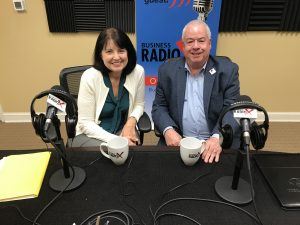
Tagged With: Dallas Cowboys, Enterprise Zone, North Fulton Business Radio, professional selling, Robert Steele, sale management, Sales, sales management, Steele Center for Professional Selling, Steele Here, The Enterprise Zone, turnarounds, University of North Alabama

  • « Previous Page
  • 1
  • …
  • 262
  • 263
  • 264
  • 265
  • 266
  • …
  • 282
  • Next Page »

Business RadioX ® Network


Our Most Recent Episode

CONNECT WITH US

  • Email
  • Facebook
  • LinkedIn
  • Twitter
  • YouTube

Our Mission

We help local business leaders get the word out about the important work they’re doing to serve their market, their community, and their profession.

We support and celebrate business by sharing positive business stories that traditional media ignores. Some media leans left. Some media leans right. We lean business.

Sponsor a Show

Build Relationships and Grow Your Business. Click here for more details.

Partner With Us

Discover More Here

Terms and Conditions
Privacy Policy

Connect with us

Want to keep up with the latest in pro-business news across the network? Follow us on social media for the latest stories!
  • Email
  • Facebook
  • Google+
  • LinkedIn
  • Twitter
  • YouTube

Business RadioX® Headquarters
1000 Abernathy Rd. NE
Building 400, Suite L-10
Sandy Springs, GA 30328

© 2026 Business RadioX ® · Rainmaker Platform

BRXStudioCoversLA

Wait! Don’t Miss an Episode of LA Business Radio

BRXStudioCoversDENVER

Wait! Don’t Miss an Episode of Denver Business Radio

BRXStudioCoversPENSACOLA

Wait! Don’t Miss an Episode of Pensacola Business Radio

BRXStudioCoversBIRMINGHAM

Wait! Don’t Miss an Episode of Birmingham Business Radio

BRXStudioCoversTALLAHASSEE

Wait! Don’t Miss an Episode of Tallahassee Business Radio

BRXStudioCoversRALEIGH

Wait! Don’t Miss an Episode of Raleigh Business Radio

BRXStudioCoversRICHMONDNoWhite

Wait! Don’t Miss an Episode of Richmond Business Radio

BRXStudioCoversNASHVILLENoWhite

Wait! Don’t Miss an Episode of Nashville Business Radio

BRXStudioCoversDETROIT

Wait! Don’t Miss an Episode of Detroit Business Radio

BRXStudioCoversSTLOUIS

Wait! Don’t Miss an Episode of St. Louis Business Radio

BRXStudioCoversCOLUMBUS-small

Wait! Don’t Miss an Episode of Columbus Business Radio

Coachthecoach-08-08

Wait! Don’t Miss an Episode of Coach the Coach

BRXStudioCoversBAYAREA

Wait! Don’t Miss an Episode of Bay Area Business Radio

BRXStudioCoversCHICAGO

Wait! Don’t Miss an Episode of Chicago Business Radio

Wait! Don’t Miss an Episode of Atlanta Business Radio