
Decision Vision Episode 40: Should I Align My Business with a Cause? – An Interview with Mollye Rhea, For Momentum
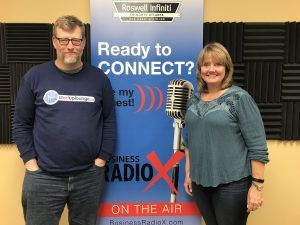
Does cause marketing really help my business? What factors should I consider in selecting a cause to align with? Answers to these questions and much more come from Mollye Rhea, For Momentum, on this edition of “Decision Vision.” Mike Blake is the host of “Decision Vision,” presented by Brady Ware & Company.
Mollye Rhea, For Momentum
For Momentum unites companies and brands with nonprofits in a way that benefits both organizations. Benefits include enhanced visibility, high-touch relationships with employees, customers and donors and significant social impact. Within the industry, this is referred to broadly as corporate social responsibility (CSR) or more concisely as cause marketing. At For Momentum®, they call these carefully designed partnerships strategic cause alliances.

Founded in 2003 by corporate marketing and nonprofit executive Mollye Rhea, For Momentum has emerged as a leading cause marketing agency that helps companies and nonprofits prosper through partnership. Corporate Responsibility Magazine has recognized For Momentum as one of the top five cause marketing firms in the United States. Their work has been featured in the books Cause Marketing for Dummies and Corporate Social Responsibility: Doing the Most Good for Your Company and Your Cause as well as in numerous other industry publications.
While many factors set For Momentum apart from other cause marketing firms, these are the top five unique selling points (USPs) mentioned most often by their clients and industry experts. For Momentum is 100 percent focused on strategic cause alliances versus offering cause marketing as one service among many public relations, marketing and advertising options.
For Momentum’s accomplished cause marketing consultants possess a deep understanding of national/local dynamics—both corporate HQ/franchise and national nonprofit/chapter affiliate relationships.
For Momentum maintains a hiring criterion that each staff member has experience in both nonprofit and corporate environments, which equips them to provide valuable “translator” skills. Experience on both sides of the table allows them to link shared values and mutual challenges cohesively and meaningfully, leading to strategic, integrated cause marketing programs that achieve nonprofit mission objectives while delivering marketing, sales and PR benefits to the corporation.
No other cause marketing agency offers For Momentum’s proven system of identifying partnership prospects, conducting partner outreach and negotiating corporate partnerships. They customize each strategy and cultivate each pipeline for the specific client or project. With For Momentum, you won’t find cookie cutter plans, stale templates or impersonal outreach using the same tired list of prospects.
For Momentum provides a fresh, outsider perspective to help clients realize strategic priorities and adds a depth of experience and actionable plans that enable agencies, companies and nonprofits to meet their goals more quickly and efficiently.
For more information and to access resources mentioned in the show, go to the For Momentum website.
Michael Blake, Brady Ware & Company

Michael Blake is Host of the “Decision Vision” podcast series and a Director of Brady Ware & Company. Mike specializes in the valuation of intellectual property-driven firms, such as software firms, aerospace firms and professional services firms, most frequently in the capacity as a transaction advisor, helping clients obtain great outcomes from complex transaction opportunities. He is also a specialist in the appraisal of intellectual properties as stand-alone assets, such as software, trade secrets, and patents.
Mike has been a full-time business appraiser for 13 years with public accounting firms, boutique business appraisal firms, and an owner of his own firm. Prior to that, he spent 8 years in venture capital and investment banking, including transactions in the U.S., Israel, Russia, Ukraine, and Belarus.
Brady Ware & Company
Brady Ware & Company is a regional full-service accounting and advisory firm which helps businesses and entrepreneurs make visions a reality. Brady Ware services clients nationally from its offices in Alpharetta, GA; Columbus and Dayton, OH; and Richmond, IN. The firm is growth minded, committed to the regions in which they operate, and most importantly, they make significant investments in their people and service offerings to meet the changing financial needs of those they are privileged to serve. The firm is dedicated to providing results that make a difference for its clients.
Decision Vision Podcast Series
“Decision Vision” is a podcast covering topics and issues facing small business owners and connecting them with solutions from leading experts. This series is presented by Brady Ware & Company. If you are a decision maker for a small business, we’d love to hear from you. Contact us at decisionvision@bradyware.com and make sure to listen to every Thursday to the “Decision Vision” podcast. Past episodes of “Decision Vision” can be found here. “Decision Vision” is produced and broadcast by the North Fulton studio of Business RadioX®.
Visit Brady Ware & Company on social media:
LinkedIn: https://www.linkedin.com/company/brady-ware/
Facebook: https://www.facebook.com/bradywareCPAs/
Twitter: https://twitter.com/BradyWare
Instagram: https://www.instagram.com/bradywarecompany/
Show Transcript
Intro: [00:00:02] Welcome to Decision Vision, a podcast series focusing on critical business decisions brought to you by Brady Ware & Company. Brady Ware is a regional full-service accounting and advisory firm that helps businesses and entrepreneurs make visions a reality.
Michael Blake: [00:00:20] And welcome to the Decision Vision, a podcast giving you, the listener, clear vision to make great decisions. In each episode, we discuss the process of decision making on a different topic, rather than making recommendations because everyone’s circumstances are different. We talk to subject matter experts about how they would recommend thinking about that decision. My name is Mike Blake and I’m your host for today’s program.
Michael Blake: [00:00:41] I’m a Director at Brady Ware & Company, a full-service accounting firm based in Dayton, Ohio, with offices in Dayton; Columbus, Ohio; Richmond, Indiana; and Alpharetta, Georgia, which is where we are recording today. Brady Ware is sponsoring this podcast. If you like this podcast, please subscribe on your favorite podcast aggregator and please also consider leaving a review of the podcast as well.
Michael Blake: [00:01:02] So, our topic today is should my business align with a cause? And I was brought to thinking about this topic because it was in the late last year, early this year, I think it was late last year, you know, I observed Nike pretty much going all in with the Colin Kaepernick scenario with the NFL. And I’m not going to comment specifically on that matter, but I did make an observation on social media that, it struck me that if I were a shareholder of Nike, I would at least like to know in advance if a company in which I was invested was going to take a polarizing or potentially polarizing position like that.
Michael Blake: [00:01:52] And I think I was kind of motivated in that viewpoint by the fact that there was a pretty demonstrative response by what turned out to be a very small minority of customers. I know that the massive response is everything from burning shoes to tearing up sweatshirts and wherever it is else that Nike sells. And, you know, quite frankly, most people who looked at that on social media said, “Blake, you’re dead wrong.” And I said, “We’ll see.”.
Michael Blake: [00:02:28] And you know, to a couple of my friends’ credit, they actually went out and bought Nike stock. So I got to give them credit, they put their money where their mouth was. And, well, you can see the history for yourself. Nike is still around. They are doing fantastically. Their stock has never been at a higher level, I believe. I think they had one of their best years ever in terms of return on that stock.
Michael Blake: [00:02:51] And clearly, I was wrong about that. And I owned up on that on social media. Imagine that, somebody saying they were wrong on social media. But, you know, the facts are the facts. And as Bill Gates likes to say, “Success is a lousy teacher.” So I had a great teacher in failure there. But it led me to sort of think about, you know, what goes into the process of a Nike when they decide that they’re going to support, in their case, a polarizing cause?
Michael Blake: [00:03:18] Not all causes are polarizing. There are many cause we can all get behind, whether it’s the United States Olympic movement, whether it is fighting cancer, whether it is stopping human trafficking, right? Not every single cause that people believe in is a polarizing one. But nevertheless, there is also a viewpoint, and Warren Buffet, I think, would agree with us because he’s written about this, that, you know, it’s really not company’s business to engage in causes at all, that business should be in the business of generating return for its shareholders.
Michael Blake: [00:03:51] And if shareholders then want to take their returns and use that to support a cause, then they should do that. And that’s how the economics should work. And again, I’m not going to necessarily debate that directly, but I want to put that out there that that is a widely held view by a person who’s been pretty successful at this whole business thing. And so, that kind of sets the stage as a platform for today’s discussion, because my bringing this on social media showed me very clearly that there’s, you know, something more that I can understand.
Michael Blake: [00:04:22] And many of you who are in business may be thinking the same thing about, you know, is there an opportunity for me to align with a cause, an organization of some kind? Is that the right thing to do? How do I kind of figure that out? And I’m not qualified to talk about that, but I have somebody here in the studio who is very qualified to talk about that. And joining us today is Mollye Rhea, founder and president of For Momentum, a cause marketing agency here in Atlanta.
Michael Blake: [00:04:54] When Mollye founded For Momentum in 2003, she recognized that she was leading one of very few agencies that specialized in cause marketing. I think that’s still true today. Since then, as cause-related marketing and corporate social responsibility have grown to a $2.6-billion industry, For Momentum has grown into one of the leading cause marketing firms in the United States. And they’re doing fantastic.
Michael Blake: [00:05:18] Through work in nonprofit development, brand marketing, and cause marketing, Mollye has acquired a unique 360-degree perspective of what fosters success and strategic cause partnerships. In her over 25 years in the field, she has created and executed cause engagement and marketing programs, strategic fundraising campaigns and organizational development strategies with dozens of nonprofit organizations and hundreds of brands, including the American Cancer Society, Boys & Girls Clubs of America, Habitat for Humanity, International—InterContinental Hotels Group, Lane Bryant, and Novartis to name a few.
Michael Blake: [00:05:53] She is a graduate of the Leadership Atlanta Class of 2012. And by the way, that’s the second best class ever. You had to be an insider of Leadership Atlanta to get that joke, but I was class of 2014. And I did not know that about you. She sits on a bunch of nonprofit boards and holds a bachelor’s degree in economics and psychology from William & Mary. Mollye, thanks so much for coming on the program.
Mollye Rhea: [00:06:18] Well, thanks so much for having me, Michael. I’m excited to be here. And wow, what a provocative promotion you started the discussion with.
Michael Blake: [00:06:26] Well, yeah, you know, you got to do something attention-grabbing to get attention on social media, right?
Mollye Rhea: [00:06:31] Right.
Michael Blake: [00:06:32] And what’s nice about that is that I learned something and it made me think more about this topic. So, thanks for coming in to talk. I don’t think I’m the only person that’s thinking about this question, right? The fact that you have the thriving business you have, I think, is Exhibit A that this is a topic that’s of a lot of interests, but it’s not a cut and dried one. So, why don’t we dive into it? So, what I like to do with a podcast is to sort of set our vocabulary. When we talk about cause marketing, what does that mean?
Mollye Rhea: [00:07:05] Well, I’m really glad you started with that, because so many people, in my experience, come to that term with a different point of view. And so, I think it’s really important to lay that groundwork right from the get go. So, I’ve been doing this type of work for a very, very long time. And back in the olden days, it was called corporate relations or something like that. And it’s really the practice by which a company is supporting a nonprofit as a part of their business practices.
Mollye Rhea: [00:07:35] And I really encourage the listeners today to take a more open-minded viewpoint to realize that that can bring many different—that can come to life in many different ways. So, some of the terminology that you hear, you know, bandied about, you know, corporate relations, community relations, cause marketing, strategic philanthropy. But these days, a really popular term, which kind of plays off of the story you told is social impact marketing. And so, companies today are looking to really engage in generating impact into our society as a side part of their business, but as a primary part of their business as well.
Mollye Rhea: [00:08:18] So, some people think of cause marketing as, you know, I’m going to buy this bottle of water and 10 cents is going to go to a charity. That is one type of cause marketing. It’s a very specific type called commercial co-venture. And we can talk about that more later. But also, different types of cause marketing, I would argue, would be, you know, the Nike program that you talked about. Other campaigns, even in employee engagement these days, in terms of really getting your employees involved in making a difference on a social issue. So, it’s a very broad landscape that we’re talking about.
Michael Blake: [00:08:54] So a question comes up, and I apologize, I’m going off the script right away, but I think it’s—I just got to get your answer on this, because I think it’s so interesting. You know, in recent months, we’ve seen a number of companies pull back in terms of their willingness to sell firearms and firearm ammunition supplies, and so forth. Is that a kind of cause marketing in your mind?
Mollye Rhea: [00:09:21] In my mind, yes.
Michael Blake: [00:09:22] Okay.
Mollye Rhea: [00:09:22] I mean, I put those into the same landscape.
Michael Blake: [00:09:27] Okay.
Mollye Rhea: [00:09:27] Right? So, again, cause marketing itself might be one term within this landscape, but it’s the most commonly used term.
Michael Blake: [00:09:35] Okay.
Mollye Rhea: [00:09:35] So, I think, in fact, I was going to bring up that example based on what you said, you know, about the Colin Kaepernick Nike campaign. You know, there are a variety of societal issues where companies are starting to make a difference through their business decisions, whether to sell something. There’s a local firm called Kabbage that makes business loans and they will no longer loan to anybody who’s in ammunitions-
Michael Blake: [00:10:01] Oh, really? Okay.
Mollye Rhea: [00:10:03] … type of business.
Michael Blake: [00:10:03] Okay.
Mollye Rhea: [00:10:04] So, there’s things like that. So, I think those sorts of deep integrated business decisions are more of the recent trend we’re seeing in this landscape, but you do have to be very careful. And I want to say that I think that we can continue to use this Nike example as a grounding case study, if you will. They did lose a segment of their customers. You know, their overall numbers went up, but there was a segment, just like there was a strong segment who spoke out against it and burned-
Michael Blake: [00:10:34] Yeah.
Mollye Rhea: [00:10:35] … things. And then, there was, you know, on the other end, strong, you know, affiliation with it. You have to really understand your customer base and not make those decisions based on your personal opinions, but really take into account the community that you serve if you want to make sure that you aren’t having that, you know, the tail wag the dog, so to speak, you know.
Michael Blake: [00:10:57] Yeah. And that’s a great point that I think we’re going to get back to. But it does it does bear emphasizing that, you know, cause marketing for its own sake may or may not be a great thing, but it sounds like an integral part of that notion is make sure you understand who your target market is, right?
Mollye Rhea: [00:11:15] Right.
Michael Blake: [00:11:16] And it may not be necessarily the target market that I, as a CEO or board or a decision maker, chief marketing officer, thinks as the right cause, right?
Mollye Rhea: [00:11:25] Mm hmm. That’s right.
Michael Blake: [00:11:26] So, again, using the Nike sort of the platform for this discussion, there was some risk there, I think. That turned out well for Nike, great for them, right? But, you know, because of that risk, why should a company consider taking that risk in embarking on a cause marketing campaign?
Mollye Rhea: [00:11:47] Yeah. And you know what? I think I want to interject here a different example, because I don’t want the listener to think of that as the guiding light of an example-
Michael Blake: [00:11:57] Yeah, please.
Mollye Rhea: [00:11:57] … because it’s an extreme example.
Michael Blake: [00:11:59] Yeah, please.
Mollye Rhea: [00:12:00] So, you know, there are many, many ways that companies can support nonprofit’s, you know, strict sponsorship of events or activities, things like that. They can get behind a campaign that is going to raise funds or awareness for an issue that isn’t controversial. And it doesn’t change their business model, but it’s more of a programmatic way that they can support. So, let’s talk about some of those more standardized types of campaigns, because I don’t want the listener to be frightened that, oh, it’s got to be this big extreme-
Michael Blake: [00:12:33] Yeah, good.
Mollye Rhea: [00:12:33] … you know, thing. So, let’s talk about the business benefits of a company supporting a social impact or a nonprofit mission. You know, either space. Often, they’re very interlinked. There are clear and documented benefits to a company for this type of marketing behavior. And they are things like increased sales, heightened PR, heightened awareness of the company and positive awareness of a company. So, there are a lot of great business benefits. But what I also want listeners to know is that, you know, in the trends in this space, an increasingly important target audience is your employee base. Because today our unemployment rates are very, very low.
Mollye Rhea: [00:13:21] The cost of finding a good candidate and retaining a good employee are real cost that we have to be very careful about. And there’s a mounting amount of evidence that cause marketing or a company’s support of the local community is a positive differentiator for job selection. And that when employees join a company that they feel is doing good things in the community, they’re more likely to be engaged and they’re more likely to stay employed with that company. So, why should a company consider cause marketing? Lots of different reasons. It could be PR, it could be HR.
Michael Blake: [00:13:58] You know, and I want to underscore that point as well. You know, marketing, when many of us think of marketing, frankly, myself included, we think about an outward message, right? How do we get more customers? How do we get the customers we have to love us more, buy more from us, and so forth. But you’re right, there is a marketing element internally, right, to make your employees and your associates feel great about where they are. Because at the end of the day, raising salaries can only take you so far.
Mollye Rhea: [00:14:30] That’s right. Yeah. You know, part of the overall compensation package is psychic income, right? And so, you want to feel good about the work you’re doing and you want to feel good about the company that you’re working for. And this is becoming—you know, we hear a lot about millennials, you know, we’re starting to hear now more statistics from the Gen Z population.
Michael Blake: [00:14:51] Yeah.
Mollye Rhea: [00:14:53] But these younger cohorts are absolutely motivated by community impact. And so, you know, it’s becoming more and more important as companies want to attract those younger talent.
Michael Blake: [00:15:07] And that’s been something of an adaptation for Gen X’ers like myself, right? The Gen X’ers are the, I think, last of the kind of the old school workforce where just put your head down, getting your hours, do your thing, and, you know, get in and get out. And that’s an adaptation outlook that my generation has had to change, right? Because if we try to treat our workforce in a Gen X way, we’re not going to have a workforce very long or at least not one with which we’re very happy.
Mollye Rhea: [00:15:44] Mm hmm. I think that’s right.
Michael Blake: [00:15:45] So, it sounds like you’ve segued again very nicely into the next question, which is it sounds like there’s evidence that cause marketing does have a positive impact on company performance.
Mollye Rhea: [00:15:55] Absolutely. You know, there are an increasing number of studies out there. The most common are from an agency called Cone, C-O-N-E. And if readers are interested, you can certainly Google that and you will find all sorts of different studies on this topic. But I like to cite more resources than just the primary one, because I think sometimes we can get into a rut or a routine and I think their work is fantastic. I’m not dissing that at all.
Michael Blake: [00:16:23] Right.
Mollye Rhea: [00:16:24] I follow that. But, you know, we’ve been able to find many, many other sources of information that point to the validity of this notion. I also want to point out that there are increasing numbers of corporate associations focused on this topic. One of those is the Committee to Encourage Corporate Philanthropy, CECP. And they are a group of CEOs of large organizations that very much track the benefits of this type of investment, because this is not just a, you know, flash in the pan idea.
Mollye Rhea: [00:16:59] This is something they realized they have to pay a lot of attention to. And according to CECP, 87 percent of companies are now measuring and tracking societal outcomes and using that data to inform their program development. And 80 percent of those same corporate leaders think that, they believe, it is enhancing customer loyalty and 89 percent of them feel that it’s enhancing collective purpose amongst their employees.
Mollye Rhea: [00:17:27] So, those are just some of the types of statistics. I could go on and on. I don’t want to do that because probably, a lot of your listeners are driving. And I don’t want them to fall asleep. But, you know, on our website, at For Momentum, we have a variety of resources. We compile this type of research all the time because we’re in it, you know, 365. So, free downloadable tidbits are there if your listeners want to go and download those.
Michael Blake: [00:17:53] Well, yeah, perfect. It’s all about data nowadays. So, let’s shift gears in a little bit. So, let’s say that one of those driving listeners now is saying, “You know what, this cause marketing thing is something I ought to pay more attention to.” I think the next obvious question to my mind is, is my company a good fit for it, right? Is there a profile of a company that has a good or a best fit for cause marketing as opposed to maybe a company that isn’t as good with that?
Mollye Rhea: [00:18:22] Yes and no. I mean, I think that there are some companies that, you know, have an easier footprint into the community. So, like a retailer, you know, where they can really, you know, engage, “Would you like to add a dollar? Would you like to make a donation and get a bounce back coupon?” Things like that. They have a natural affinity. But what I like to say is that when you, whoever you are as a company, are looking at putting your toe in the water on this, think about what companies—or what nonprofits, rather, what social impact mission is going to advance your business and what is the right footprint for you.
Mollye Rhea: [00:18:59] So, if I am a local company based in Atlanta, Georgia and my footprint is 100 percent Atlanta, Georgia, I probably want to pick a comparative nonprofit that impacts that same geographic space. So, you know, I need to find someone who’s like-minded, like-sized, you know, and find the right match for me. So, I’m not, as my company is not going to compete with what Nike is doing.
Michael Blake: [00:19:28] Right.
Mollye Rhea: [00:19:29] Because I don’t have the same profile or footprint.
Michael Blake: [00:19:31] Right.
Mollye Rhea: [00:19:33] So, I really think it can be any type of company, but with the right connection to a cause that makes sense. And another thing I want to point out about that is that sometimes, companies fall into a natural rut, where they just want to pick something that they care about individually. So, you know, I’m going to support, you know, something that matters to me individually, but it has no tie to their brand, whatsoever.
Mollye Rhea: [00:19:58] That’s confusing to the consumer and confusing to the employees, frankly, because it needs to be a charitable choice that matches, I call it, the three-second rule. It’s like, “Oh, I understand why this restaurant is supporting hunger issues because they’re both about food”, you know, or something basic like that. But that can really enhance the validity of the campaign when there’s a natural fit between the brands.
Michael Blake: [00:20:23] It’s almost like a joke. The second you have to explain it, you’re done.
Mollye Rhea: [00:20:26] Right.
Michael Blake: [00:20:27] Right? The joke is just never going to have the impact.
Mollye Rhea: [00:20:30] That’s right.
Michael Blake: [00:20:31] So, one thing that kind of strikes me about cause marketing is that you’re trying to find a partner. You need a partner, probably, in some constraints. I guess you could have a completely unidirectional cause marketing campaign, but I don’t think that’s what you’re all about. What is the role of the partner, the nonprofit or philanthropic partner in the cause marketing relationship?
Mollye Rhea: [00:20:56] Yeah. So, actually, I want to go back and talk about what you’ve just said.
Michael Blake: [00:20:59] Okay.
Mollye Rhea: [00:21:00] Which is that, you know, it doesn’t make sense for it to be unidirectional, but in fact, that is one of the trends we’re seeing, which I am really sad about. You know, I think there are a lot of companies that have decided to do their own—they’ve picked their own issue and they’re going to create their own solution to it. You know, and some companies can do that. I mean, they have enough wherewithal to really, you know, go in there.
Mollye Rhea: [00:21:25] I’m a big proponent that if there is a nonprofit that is working in that issue space, find a way to work with them because it does help to bring multiple voices to an issue and not later get maybe accused of self-dealing or, you know, something that’s self-serving. There are many, many benefits that the nonprofit can bring to the partnership table. And you have to have a really robust business discussion about that. So, it’s really important to find a partner who is going to match your business objectives.
Mollye Rhea: [00:22:02] So, for example, the nonprofit partner brings, first of all, an expertise into the issue space that you are wanting to address. They live in this space 24/7, so they should be bringing some special expertise. With that comes connections with stakeholders and opinion leaders in the space. They bring a level of awareness, a level of authenticity. They can bring marketing benefits. They have followers and they may have social media following or they may have, you know, donors, constituents. So, they do have their own audience that they can bring to the marketing equation.
Michael Blake: [00:22:39] You know, that unilateral element brings to mind something that just came up in the news. Apple just announced they’re going to put, I think, $2 billion into building housing in Silicon Valley because California has a massive housing problem. Basically, their own employees cannot afford to live in the state.
Mollye Rhea: [00:22:57] Right.
Michael Blake: [00:22:58] Facebook is doing something similar. And what struck me about that was, you know, I don’t know that necessarily building houses is the answer. And I hope—it wasn’t clear from what I read that they’re partnering with anybody. But, you know, perhaps, they should be. I certainly hope that they are, because Apple is not in the multi-family real estate business, as far as I’m aware, right? And simply building houses may not be the issue, right?
Michael Blake: [00:23:28] In my view, I think the issue is most likely zoning or something of that nature that prevents homes from being built where they ought to be built. And it would be interesting to see how the Apple initiative unfolds, right? Because they’re clearly targeting a cause somewhat self-serving. But that’s okay, because there is a collateral good that’s coming out of it. But it would be interesting to see if that winds up being part of a partnership or not. Right now, it’s not clear.
Mollye Rhea: [00:23:55] Yeah. And I don’t know because I haven’t studied that particular topic. But I do know of many nonprofit players that could be excellent in that space. You know, I think it’s called Community Enterprise Partners that we did some work with few years ago, whose mission is to talk about the fact with the increasing amounts of rent in key cities and how people can’t afford to live in the places where we need them to.
Mollye Rhea: [00:24:19] So, they obviously are working in this space 24/7 and at least could bring thought leadership to that process. So, that’s a great example, Michael, where I hope that whatever the issue is, I think it’s imperative that companies look to others in the space to see what they can learn before they go running down a path, you know, without all the information available.
Michael Blake: [00:24:42] So, let’s say we go through some process, we identified that nonprofit partner, you know, what are some of the typical contributions a nonprofit partner makes to that relationship?
Mollye Rhea: [00:24:53] So, again, it depends on the nature of the relationship. It can be extremely directed. It could be that the company is funding a specific project of the nonprofit and they are literally delivering, you know, the project. But many times, nonprofits can bring—you know, as I was saying earlier, people are aware of the nonprofits, so they’re bringing awareness to the topic. They are bringing constituency. They are bringing, you know, increase. I’ll give you an example. So, one of our clients is Habitat for Humanity, and they do a program called Home is the Key. And they’re a variety of corporate partners that engage in that campaign.
Mollye Rhea: [00:25:35] And in that case, what Habitat is bringing to it is, you know, obviously, the expertise on the issue. But they are also bringing celebrities to the floor, right? So, the Property Brothers are celebrity spokespeople for this event. They are investing in a big PR campaign that then the companies receive the spotlight of as a part of that initiative. So, instead of building the whole program from scratch on the corporate shoulders, the corporate can engage in a program that the nonprofit is bringing to the marketplace. And they are tremendous amounts of marketing and sales benefits, you know.
Michael Blake: [00:26:11] Okay. So, often, the nonprofit brings their own infrastructure-
Mollye Rhea: [00:26:15] Yes.
Michael Blake: [00:26:15] … basically. And the benefit there is, yeah, you could do it unilaterally, but why are we reinventing the wheel, right?
Mollye Rhea: [00:26:21] Right.
Michael Blake: [00:26:22] And especially in that case, you know, they’ve got celebrities, which, you know, most companies want to line with and so forth. And it sounds like—and I appreciate that it sort of depends. You know, it could be as simple also as simply using, you know, doing co-branding logos, trademarks, things of that nature.
Mollye Rhea: [00:26:41] Absolutely.
Michael Blake: [00:26:41] So, as I understand it, there’s really a sort of a whole spectrum of the sky’s the limit. And of course, another function of that is going to be, you know, how big the nonprofit itself is, right?
Mollye Rhea: [00:26:50] Yes.
Michael Blake: [00:26:50] The united way can do more than, say, you know, the local Chamblee chapter of St. Vincent de Paul, which is a thrift store that, you know, helps people in poverty in the Chamblee area.
Mollye Rhea: [00:27:04] Yeah, but that’s a good example of if I am a company based in Chamblee, you know-
Michael Blake: [00:27:10] Yeah.
Mollye Rhea: [00:27:10] … St. Vincent de Paul is gonna be more attractive to me-
Michael Blake: [00:27:12] Yeah.
Mollye Rhea: [00:27:13] … because there is an authentic connection between my business and that nonprofit’s mission. So, just to kind of tie that back to what I was saying earlier about, you know, finding the right partner, don’t forget those local ones-
Michael Blake: [00:27:27] Yeah.
Mollye Rhea: [00:27:27] … if you’re a local company.
Michael Blake: [00:27:27] Is it hard to mix the for profit and nonprofit cultures? Are there any issues with them sort of having being able to talk the same language? Because there are probably cases where their goals are not 100 percent aligned all the time.
Mollye Rhea: [00:27:43] Yes, absolutely. 100 percent of the time, they are not 100 percent aligned.
Michael Blake: [00:27:48] Okay.
Mollye Rhea: [00:27:49] I can tell you that. They may come together for a common objective in, you know, a particular program or initiative. But it’s very important to take into account the respective needs of each of the partners and their business realities, their business resource mixes, their stakeholders and who they’re reporting to. I would say that you could make the same argument in any business to business relationship building. Whenever you bring two partners together, they’re going to have different goals and different missions. But I will say the nonprofit environment is more starkly different from a corporate environment, you know, just given the fact that it’s a nonprofit.
Mollye Rhea: [00:28:28] However, where you can really bridge that gap is by having very straightforward communication and collaborative planning and really authentic clear conversations. So, you know, Business A wants this set of benefits and the nonprofit needs be able to say, this is what I can do and this is what I can’t. And some of those are regulatory-related. You know, like, for example, a nonprofit can’t overly promote a corporate entity or it becomes unrelated business income tax. There are implications for EBIT. So, you know, the company needs to respect the nonprofit’s, you know, boundaries and vice versa.
Michael Blake: [00:29:08] Okay. And to that end, I believe that some companies will actually create a role inside the company for somebody to be their, in effect, cause marketing ambassador, their person that represents the company for the nonprofits with whom they cooperate. And I suspect that model can work well because then, that person is fluent in both languages, basically, if you will. Is that a necessity in your mind? Is that best practices? Can you live without it? Can you talk a little bit about, you know, how important that role is?
Mollye Rhea: [00:29:43] Yeah. So, I don’t think it needs to be someone’s full time job, but there needs to be someone who’s put in charge, if you will, of managing the relationships. And so, I guess I want to answer this in a couple of different way. So, it doesn’t have to be—you know, I don’t want to dissuade companies that can’t afford a full-time position because you can certainly do this. You can have effective partnerships without it being a full-time role.
Mollye Rhea: [00:30:08] In fact, some of the largest companies that we work with as customers only have a couple of people and they’re doing billions of dollars, sometimes, of good. So, you don’t have to have a full-time person to get engaged in cause. The other thing I want to say is that we’ve been doing a piece of research. We’ve now completed our third cycle of this research with corporate partnership decision makers. And, you know, in the trends and in the way that the landscape changes, there came a time where there was this individual who was responsible. And what we’re seeing now is that that’s not the case, that it’s actually a shared responsibility across many different departments.
Mollye Rhea: [00:30:50] And so, we asked the question in our research, who from your corporate structure is involved in the decision making? And we found marketing, PR, HR, Community Relations, C-suite and sometimes, a special committee. So, I think that the company needs to make those decisions about where the most natural fits are and don’t work in a silo. Recognize that you need to engage counterparts from all those departments that I just mentioned in your planning process or you will end up with a silo, and that’s not good.
Michael Blake: [00:31:24] Okay. So, I want to switch gears a little bit. What are some trends you’re seeing out there that are, for lack of a better term, hot in terms of cause marketing? What are some emerging things that a lot of companies are looking to do? Whether it’s practices, nature of the cause themselves. What are you seeing out there?
Mollye Rhea: [00:31:40] So, let’s go back to your first topic of the morning, which was the, you know, Colin Kaepernick, you know, taking on a social issue. That is a trend. It’s not for everyone. It’s for a select few of brands that have an avant-garde element to their brand personality. But increasingly, we are seeing some companies taking this very strong stance on a particular social impact issue. So, that is a trend. And we actually have some resources on that, if anyone’s interested. But sort of to the more broad-based approach, actually, a trend is that the United Nations came out with some sustainable development goals. And I think it was 18 different areas of impact, where, you know, United Nations members from around the globe identified 18 common areas that any country needs to be sustainable.
Mollye Rhea: [00:32:34] So, poverty, education, hunger, water, you know, et cetera, and health. And what I’m seeing is an increasing trend as that companies are identifying from these sustainable business goals, development goals from the United Nations, they’re identifying we’re going to impact, you know, area 2, 8, and 12, whatever their numbers are that they pick. And companies are starting to speak in lingo, in that lingo of, “Well, in, you know, goal 12, we’re making this, you know, headway, this much headway. So, it’s a way of really working collaboratively across different corporate segments towards mutually beneficial goals. Does that make sense?
Michael Blake: [00:33:19] Yeah.
Mollye Rhea: [00:33:19] And so, that’s a trend. And then, the other trend that I want to highlight sort of as a top three trend is the increasing incidence of digital. So, as our society becomes more and more digitally focused, we are seeing lots more partnership activations in the digital realm.
Michael Blake: [00:33:39] Okay. And actually, to that end, is there a risk to defy, embark on cause marketing? And, you know, I’m not doing it yet. Is there a risk of it being somehow disruptive to my existing conventional marketing efforts? I imagine there must be some integration issues because I think that’s the expertise that you lend. So, if that is true, can you talk about kind of what some of those challenges might be?
Mollye Rhea: [00:34:08] So, how cause could be disruptive to the rest of your business plan?
Michael Blake: [00:34:12] Yeah, or, you know, cause marketing is a different kind of marketing, just like digital marketing has become disruptive to more conventional analog methods, right? I guess I’m posing a hypothesis that cause marketing has the potential to be similarly disruptive because I think the way you have to go about, the skill sets required, the stakeholders are different, right? And so, I guess my question is, is it fair to characterize this cause marketing as somewhat disruptive? And if so, is that something that needs to be actively thought about, managed by a company that is thinking of pursuing it?
Mollye Rhea: [00:34:52] So, I guess where this takes my mindset, Michael, is to think about, you know, all good things in moderation, right? So, if you were to abandon, if a company was to abandon some of their traditional marketing methods toward strictly cause, I think they could lose themselves, frankly, in it, because they need to—it needs to be a piece of your overall communications or employment objectives, not the only thing you do.
Mollye Rhea: [00:35:22] So, that’s something that I think you have to like integrate it into a bigger plan as opposed to, like, for instance, if a company suddenly went 100 percent digital and forgot all their other kinds of marketing, those repercussions will be clear. I think anybody can understand that analogy. So, I’m saying the same thing would happen if you went too top-heavy in cause. And maybe I’m honestly just a little too close to it, but I don’t see it as a risk, in general.
Michael Blake: [00:35:53] Yeah.
Mollye Rhea: [00:35:53] Here’s another example of where it could be risky. It could’ve been risky with Nike. You know, if they don’t understand their audience or if they choose a cause activity that doesn’t resonate with their target audience. That could become disruptive because they’ve suddenly changed their brand personality, probably unintentionally.
Michael Blake: [00:36:15] Right. And another example, we’ve talked about Nike, but Gillette with their “Me too” ad about a-year-and-a-half ago, right? That had some ramifications as well. In some cases, somewhat stronger, I think.
Mollye Rhea: [00:36:26] If you’re thinking of the ad where it was like the gentleman that they were trying to encourage men to be, it wasn’t “Me too.”
Michael Blake: [00:36:37] Well, but they sort of aligned—okay, you’re the marketing expert.
Mollye Rhea: [00:36:42] Yeah.
Michael Blake: [00:36:42] I’m not. I’ve heard it referred to as that.
Mollye Rhea: [00:36:44] Yeah.
Michael Blake: [00:36:45] So if it’s not, then I stand corrected. But I’m referring to the ad where they try to redefine a sense of what it means to be a man.
Mollye Rhea: [00:36:54] Right.
Michael Blake: [00:36:55] Which is a different relationship with women, which is a different relationship with other men, which is different relationships with people who are vulnerable. And I think that—is that a fair characterization?
Mollye Rhea: [00:37:06] Well, you know, it’s interesting. I think that your perception of it is a great example of where it can get dangerous, right?
Michael Blake: [00:37:11] Okay.
Mollye Rhea: [00:37:12] Because the campaign, in its essence, was designed supposedly to educate men to make more responsible choices that consider other people’s feelings more, like, you know, the way they raise their sons or the way that they talk to women or whatever. That is a great example of a campaign that had a really positive and negative reaction in the marketplace. I think they’ve—I haven’t seen it lately, so I don’t know if they’ve withdrawn or gone back to the drawing board or exactly where they stand on that, but I don’t think they expected that big of a reaction on the negative side.
Michael Blake: [00:37:51] Right.
Mollye Rhea: [00:37:52] So, that’s a good example of really needing to understand your target audience. And if a portion of your target audience resonates with that, you know, that could be a strategic decision. It could have been a mistake. And I don’t know because I wasn’t involved. And so, I don’t know the inner workings.
Michael Blake: [00:38:09] Right.
Mollye Rhea: [00:38:10] But I’ll give you another example and I don’t feel comfortable saying who it is because it was a business-to-business conversation.
Michael Blake: [00:38:16] Yeah.
Mollye Rhea: [00:38:17] But it was a, again, company that targets men and they had decided to, in their own way, try to redefine how men relate to their emotions. This was, you know, the stance that this brand took was, “We’re going to teach men that it’s okay to be in touch with their emotions.” And they did some, you know, post-campaign research and their audience didn’t like it. Like, “Don’t tell me how I’m supposed to feel.” So, you really do need to understand your audience. And especially if you’re going for something that’s provocative or brand changing, potentially could have people have a different perception of your brand, those are good examples of where it can be very disruptive. So, what could they have done differently? They could have picked a—those are also cases where there was no cause. There was no nonprofit partner. They’re just stating like, you know-
Michael Blake: [00:39:15] I hadn’t thought about that. Yeah, that sounds exactly right.
Mollye Rhea: [00:39:18] So, if they wanted to generate something, maybe that would have been a good time to find a partner that has a mission that they could say we’re supporting their mission, not we are changing who we are.
Michael Blake: [00:39:29] Interesting. Okay. And to that point about picking partners, I would imagine not all partners are created equal, right? And even if you identify with the partner’s potential cause, they may not be the right partner for you, right?
Mollye Rhea: [00:39:46] That’s true.
Michael Blake: [00:39:48] And sometimes, there can be a size mismatch. You know, an interesting story, you know, one cause I paid some attention to is Lou Gehrig’s disease research, ALS Society—ALS Association. And, you know, as everybody knows, it had the ice bucket campaign, which I did, and boy, ice water’s cold.
Mollye Rhea: [00:40:12] Yeah.
Michael Blake: [00:40:13] But an interesting thing about that was that all of a sudden, the ALS Association of America came into a windfall, about $130 million. They just did not have the infrastructure-
Mollye Rhea: [00:40:23] Right.
Michael Blake: [00:40:25] … to manage that kind of cash, right? Their organization had to completely reorient to make sure that that money was used well, right, and wisely. Can that be an issue in the cause marketing space, too? Maybe there’s a size mismatch or just fundamental characteristics of certain nonprofits that may not make it a good partner, even if you agree with the cause?
Mollye Rhea: [00:40:49] Yeah. So, I just want to go back just to clarify for a moment about the wonderful, fabulous ice bucket challenge phenomenon.
Michael Blake: [00:40:56] Yeah.
Mollye Rhea: [00:40:58] That was not cause marketing.
Michael Blake: [00:40:59] I understand.
Mollye Rhea: [00:40:59] Okay, okay. I just want to make sure your listeners understand that that is an example of a movement that caught wind. And I think every nonprofit in the world dreams of having that problem-
Michael Blake: [00:41:11] True.
Mollye Rhea: [00:41:12] … of creating that magic in a bottle, you know, where they can create something. Another beautiful example of something that was a game changer was cystic fibrosis.
Michael Blake: [00:41:22] Yeah.
Mollye Rhea: [00:41:22] So, they literally invested in research and the research paid off. And so, they became a part-owner of a pharmaceutical product that serves cystic fibrosis. I might not be getting this 100 percent right.
Michael Blake: [00:41:37] I think that sounds right. I’ve read that.
Mollye Rhea: [00:41:39] And it created just a tremendous amount of income. So, I think it’s incumbent on the nonprofit board to be prepared with, “This is our plan and this is our plan if we grow this much and this is our plan if we grow that much”, you know, so that they are strategically staying aligned to their mission and bringing that to life. In terms of a cause program that just has taken off and changes the direction, I think—I can’t think of a real example.
Mollye Rhea: [00:42:07] But I can tell you that, you know, if the nonprofit or if the message of the campaign was focused on a tiny issue and then, you had too much funding and you couldn’t spend all that on the issue, I think it’s really important to make sure that the focus area is broad enough that you’re not going to get into that topic. So, it gives me the chance to say this, many times companies decide that they want to create impact on a particular subset of a bigger issue. And sometimes, it’s better just to help the broader issue and not get so singularly focused on this small little piece.
Michael Blake: [00:42:45] Sure. Yeah. Because even if, say, Coca-Cola decided there is hook of the firehose and dumped, you know, $10 million into that St. Vincent de Paul charity in Chamblee, right? They’d be overwhelmed.
Mollye Rhea: [00:42:58] Right.
Michael Blake: [00:42:58] Most likely. And it wouldn’t work very well for everybody. So-
Mollye Rhea: [00:43:02] Right.
Michael Blake: [00:43:02] … you know, pick not just the cause, there’s a bullet point I want to kind of tease out, I think we’re doing that, is that picking the partner for a match is just as important as picking the cause. Is that fair?
Mollye Rhea: [00:43:14] Picking the partner that is delivering into the mission space that you’re interested in?
Michael Blake: [00:43:21] Correct. That’s right.
Mollye Rhea: [00:43:21] Yes. Yes, I do agree with that. And an example that I wanted to share, you know, when you think about that, so let’s say that your organization, you know, one that many of us know is breast cancer, right?
Michael Blake: [00:43:33] Yeah.
Mollye Rhea: [00:43:33] So, lots of people want to support breast cancer. And, you know, you really need to do homework on your nonprofit partner because, you know, there’s one breast cancer organization that works, let’s say, on funding research. And there’s a different breast cancer organization whose mission is to serve people who currently are dealing with breast cancer and make it easier for them, make it—help them get to their doctor’s appointments or things like that. And yet, a third breast cancer organization is all about prevention messaging and warning signs and things like that. So, really look at what it is you’re trying to accomplish within the mission space and make sure that you’re finding the right partner who will help you with that particular goal.
Michael Blake: [00:44:11] All right.
Mollye Rhea: [00:44:12] Not all nonprofits focus on exactly the same things.
Michael Blake: [00:44:15] Yeah.
Mollye Rhea: [00:44:16] Even if they’re all about, say, breast cancer.
Michael Blake: [00:44:18] Yeah, that’s true. I mean, many of them are new ones and that the cause itself is so big that there are subsectors of that cause and effect.
Mollye Rhea: [00:44:26] That’s right.
Michael Blake: [00:44:27] Well, Mollye, we’re running out of time but this has been great, I’ve learned a lot. And if I’ve learned a lot, I’m confident at least some of our listeners have learned something. So, thank you for doing this. There’s a lot more we could talk about. I’ve only gotten through about half the questions I want to talk about today, but that’s a good thing. How can people contact you if they want to find out more about this and explore maybe this for their own business, their own nonprofit?
Mollye Rhea: [00:44:52] Okay, great. Well, so, you know, I have been working in this space for a very, very long time, so I’m hyper interested in it. And as a part of our return to the community, we conduct research every year into different factors of how to bring a cause partnership to life, what sorts of benefits can you seek and things like that. So, I would hope that some of your listeners might find it of interest to go to our website, to our resource page and download some of our free resources.
Mollye Rhea: [00:45:20] So, that’s For Momentum, formomentum.com/resources. If you have specific questions for us, there’s a Contact Us page. We’d love to hear from you. Be more than happy to help direct you to resources or point—answer questions, things like that. That’s just a part of our giving it back to the industry practices kind of things. But I do want to shout out to a couple of others in the cause landscape that I think produce excellent resources for the listeners. So Engage for Good is the association of people in this profession. And they do a fantastic job of constantly bringing, you know, information to light.
Mollye Rhea: [00:46:00] They have research resources, they have free webinars, they have newsletters for free that listeners can sign up for. And a third one that I would mention is a newsletter called Selfish Giving. And it’s produced by a guy out of Boston named Joe Waters, who’s a pal of mine. And he is really funny. And so, most of his, you know, articles have some entertainment flair to them as well, but really, really great examples. And he tends to focus a lot on small companies. So, you know, some of your listeners, if they’re not the Nikes of the world, but they’re a more moderate-sized company, they might find Joe’s content very realistic.
Michael Blake: [00:46:37] Very good. All right. Well, that’s going to wrap it up for today’s program. I’d like to thank Mollye Rhea so much for joining us and sharing her expertise with us. We’ll be exploring a new topic each week, so please tune in so that when you’re faced with your next business decision, you have clear vision when making it. If you enjoy these podcasts, please consider leaving a review with your favorite podcast aggregator. It helps people find us so that we can help them. Once again, this is Mike Blake. Our sponsor is Brady Ware & Company, and this has been the Decision Vision podcast.