Business RadioX ®

  • Home
  • Business RadioX ® Communities
    • Southeast
      • Alabama
        • Birmingham
      • Florida
        • Orlando
        • Pensacola
        • South Florida
        • Tampa
        • Tallahassee
      • Georgia
        • Atlanta
        • Cherokee
        • Forsyth
        • Greater Perimeter
        • Gwinnett
        • North Fulton
        • North Georgia
        • Northeast Georgia
        • Rome
        • Savannah
      • Louisiana
        • New Orleans
      • North Carolina
        • Charlotte
        • Raleigh
      • Tennessee
        • Chattanooga
        • Nashville
      • Virginia
        • Richmond
    • South Central
      • Arkansas
        • Northwest Arkansas
    • Midwest
      • Illinois
        • Chicago
      • Michigan
        • Detroit
      • Minnesota
        • Minneapolis St. Paul
      • Missouri
        • St. Louis
      • Ohio
        • Cleveland
        • Columbus
        • Dayton
    • Southwest
      • Arizona
        • Phoenix
        • Tucson
        • Valley
      • Texas
        • Austin
        • Dallas
        • Houston
    • West
      • California
        • Bay Area
        • LA
        • Pasadena
      • Colorado
        • Denver
      • Hawaii
        • Oahu
  • FAQs
  • About Us
    • Our Mission
    • Our Audience
    • Why It Works
    • What People Are Saying
    • BRX in the News
  • Resources
    • BRX Pro Tips
    • B2B Marketing: The 4Rs
    • High Velocity Selling Habits
    • Why Most B2B Media Strategies Fail
    • 9 Reasons To Sponsor A Business RadioX ® Show
  • Partner With Us
  • Veteran Business RadioX ®

Decision Vision Episode 13: Opportunity Zones – An Interview with Vishay Singh, The GlobeHUB

May 2, 2019 by John Ray

Decision Vision
Decision Vision
Decision Vision Episode 13: Opportunity Zones – An Interview with Vishay Singh, The GlobeHUB
Loading
00:00 /
RSS Feed
Share
Link
Embed

Download file

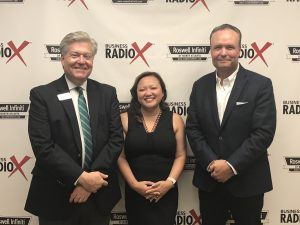
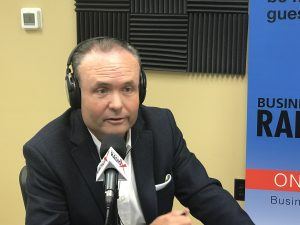
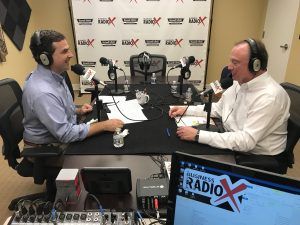
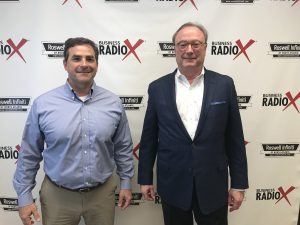
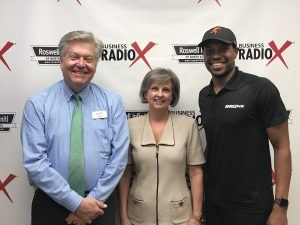
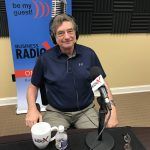
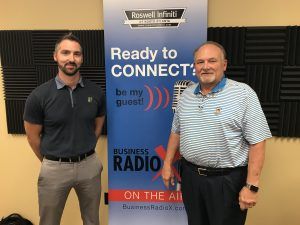
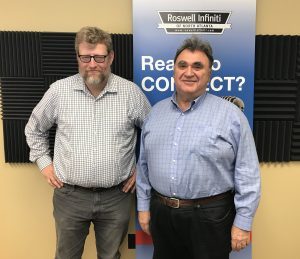
Vishay Singh, Co-Founder of The GlobeHUB, and Michael Blake, Host of “Decision Vision”

Opportunity Zones

What is an opportunity zone? How can operating within an opportunity zone help a business? With numerous opportunity zones across the country, what are the differences entrepreneurs and investors should be aware of? In this edition of “Decision Vision” host Michael Blake, interviews Vishay Singh, Co-Founder of The GlobeHUB, a coworking space located in an opportunity zone in Chamblee, GA.

Vishay Singh, The GlobeHUB

Vishay Singh, The GlobeHUB

Vishay Singh is Co-Founder of The GlobeHUB. The GlobeHUB was established in 2016 by Kevin Henao and Vishay Singh when they felt a calling to make a lasting impact on the startup community. They had a vision to not only inspire the next generation of  entrepreneurs but to provide them the community, funding, mentorship and ecosystem that every business owner requires to succeed. Globe’s coworking spaces offer plug-and-play memberships to accelerate business growth. They understand the power of the tech community and aim to facilitate meaningful connections across our unique member network. The diversity of people and ideas make the world better and makes companies better. It’s time to put your big ideas into motion. GlobeHUB is a tech community that promotes high energy, hard work, and creative innovation. There is no better place to launch your business. Get involved! For more information, go to www.globehub.com.

Michael Blake, Brady Ware & Company

Mike Blake, Host of “Decision Vision”

Michael Blake is Host of the “Decision Vision” podcast series and a Director of Brady Ware & Company. Mike specializes in the valuation of intellectual property-driven firms, such as software firms, aerospace firms and professional services firms, most frequently in the capacity as a transaction advisor, helping clients obtain great outcomes from complex transaction opportunities. He is also a specialist in the appraisal of intellectual properties as stand-alone assets, such as software, trade secrets, and patents.


Mike has been a full-time business appraiser for 13 years with public accounting firms, boutique business appraisal firms, and an owner of his own firm. Prior to that, he spent 8 years in venture capital and investment banking, including transactions in the U.S., Israel, Russia, Ukraine, and Belarus.

Brady Ware & Company

Brady Ware & Company is a regional full-service accounting and advisory firm which helps businesses and entrepreneurs make visions a reality. Brady Ware services clients nationally from its offices in Alpharetta, GA; Columbus and Dayton, OH; and Richmond, IN. The firm is growth minded, committed to the regions in which they operate, and most importantly, they make significant investments in their people and service offerings to meet the changing financial needs of those they are privileged to serve. The firm is dedicated to providing results that make a difference for its clients.

Decision Vision Podcast Series
“Decision Vision” is a podcast covering topics and issues facing small business owners and connecting them with solutions from leading experts. This series is presented by Brady Ware & Company. If you are a decision maker for a small business, we’d love to hear from you. Contact us at decisionvision@bradyware.com and make sure to listen to every Thursday to the “Decision Vision” podcast. Past episodes of “Decision Vision” can be found here. “Decision Vision” is produced and broadcast by Business RadioX®.

Visit Brady Ware & Company on social media:

LinkedIn: https://www.linkedin.com/company/brady-ware/

Facebook: https://www.facebook.com/bradywareCPAs/

Twitter: https://twitter.com/BradyWare

Instagram: https://www.instagram.com/bradywarecompany/


Show Transcript

Intro: [00:00:01] Welcome to Decision Vision, a podcast series focusing on critical business decisions, brought to you by Brady Ware & Company. Brady Ware is a regional, full-service accounting and advisory firm that helps businesses and entrepreneurs make visions a reality.

Michael Blake: [00:00:20] And welcome back to another episode of Decision Vision, a podcast giving you, the listener, clear vision to make great decisions. In each episode, we’re discussing the process of decision making on a different topic. Rather than making recommendations because everyone’s circumstances are different, we’ll talk to subject matter experts about how they would recommend thinking about that decision.

Michael Blake: [00:00:39] Hi. My name is Mike Blake, and I’m your host for today’s program. I’m a Director at Brady Ware & Company, a full-service accounting firm based in Dayton, Ohio, with offices in Dayton; Columbus, Ohio; Richmond, Indiana; and Alpharetta, Georgia, which is where we are recording today. Brady Ware is also sponsoring this podcast. If you like this podcast, please subscribe on your favorite podcast aggregator, and please also consider leaving a review of the podcast as well.

Michael Blake: [00:01:04] So, I’m going to apologize to listeners right off the bat. In Atlanta here, it is the height of allergy season. And, generally speaking, once the pollen count gets above a thousand, the air becomes toxic. So, I’m on a combination of cocktail to, sort of, keep me off my feet. And I don’t have a cough button, but I will try to turn my head if that happens. And if you don’t suffer from allergies, feel blessed that you you don’t suffer from that. But I’m a launch panel guy. We play hurt, and we’re going to continue on through this podcast. We’ll get through the episode.

Michael Blake: [00:01:41] And today, we’re going to talk about opportunity zones. And opportunity zones are newly created, tax-break-driven investment areas that are designed to promote private investment in economically distressed communities. And they’re an interesting topic because – and this is a personal ideological view – I think, anytime we can harness market forces to promote social welfare, I think, that’s a good thing to do. There are actually many of these across the country. And as it turns out, I’m very fortunate to live very close to an opportunity zone. So, I look forward to seeing how that leads to some development of my own community.

Michael Blake: [00:02:20] Joining us today is Vishay Singh, Co-Founder of the Globe Hub, which is Chamblee’s premiere co-working and entrepreneurship facilitation space located a Peachtree-Dekalb Airport. And for those of you not in the Atlanta area, PDK airport is Georgia’s second largest commercial airport. So, when Super Bowl 53 happened here, and all the other billionaires came in on their jets, that’s where they came in.

Michael Blake: [00:02:43] The Globe Hub was established in 2016 by Kevin Henao and Vishay when they felt a calling to make a lasting impact on the startup community. They had a vision to not only inspire the next generation of entrepreneurs but to provide them the community, funding, mentorship, and ecosystem that every business owner requires to succeed. Vishay is a successful serial entrepreneur, whose current venture MapMeLocal. And maybe if we have a few minutes at the end of the podcast, we’ll get a chance to learn a little bit about that as well.

Michael Blake: [00:03:11] Globe Hub’s co-working spaces offer plug-and-play memberships to accelerate business growth. They understand the power of the tech community and aim to facilitate meaningful connections across their unique member network. The diversity of people and ideas makes the world better and makes companies better. They’re a technology community that promotes high energy, hard work, and creative innovation. On a personal note, I’m very proud to say that Brady Ware is a member of the Globe Hub, and I personally find it an excellent resource for my own professional needs. Vishay, welcome to the podcast. Thanks for coming on.

Vishay Singh: [00:03:41] Thank you, Mike. I appreciate it.

Michael Blake: [00:03:43] So, we have a lot to talk about but let’s, sort of, dive right in. Why did you start the Globe Hub? Why do you feel there is a need to create a new co-working space? We’ve got a lot of these things right in Atlanta now. Why do we need a new one?

Vishay Singh: [00:04:04] Actually, I think, for me, it was probably the second step to my needs. It was Kevin, my co-founder, who actually came up with that vision because he spent a lot more time in that building. And the building is in a prime location, as you’re aware. And it is outdated. It had the ’80s look. And Kevin was in a poky hole upstairs, small office, and always had this vision of, “Man. I wish I could just have a bigger space, have larger boardrooms, share it with everybody, and keep my rental down while I’m growing up my business called SameDay Printing.”

Vishay Singh: [00:04:48] And when I got there, I was in Marietta, Georgia, and I had met a bunch of entrepreneurs that wanted to expand with me. And we were like, “Man, we can be in Marietta Georgia. We should get somewhere to more of the inner city, and be where the hype is, and be closer to more millennials, and where the excitement is.”

Vishay Singh: [00:05:08] So, we started looking. And then, when we found 1954 Airport Road, we stumbled upon Kevin, and what he was doing, and we immediately fell in love with it. And, sometimes, entrepreneurs go with gut feel versus just the pure science of why co-working, etcetera. But I think, what we saw instantly, the differences was with that location was you could drive in, you could park, and it was all on the ground floor. You had no hassle of worrying about how to get upstairs or how to get to you office, and how do you park your vehicle, etcetera. You can eliminate all those thought processes and hurdles, as I call them, from your thought process because you’re so focused in what you’re trying to do.

Vishay Singh: [00:05:56] So, you just want to get into a space, and you want to be inspired, and you want to be with a community, and you want to build a business. So, that’s how we decided just to say “Okay, let’s just take what we have and create a Globe Hub,” but we understand that co-working, potentially, could be the red ocean. I think, there’s still a lot of space of it, especially we’re going to talk further about opportunity zones and how our strategy would differ.

Vishay Singh: [00:06:21] But the long story and the short story of it, I always felt that, and I’ve always been passionate about helping entrepreneurs. I just couldn’t figure out whether thinking too small. So, I needed to think bigger, and I needed to think and dream a bit bigger on how to do this. And I think that’s potentially coming together. But that’s when we decide, we said, “Let’s just do it. Let’s just create the space first. Let’s crawl before we dream and drink a lot of beer, and we make nothing happen,” right?

Vishay Singh: [00:06:49] So, we did it. Baby steps first. We got 10,000 square feet. We’ve told community. We’ve flushed that community as well to get more and more of the right entrepreneurs there to be able to, then, create an ecosystem that starts to support itself. And like you said, a system that we’re each another could help each another. We even crowdsource to each another. We crowdfund to each another. When somebody’s stuck and really can’t get any angel money or something, we become the angels. And we all chip in whatever we’ve got in our pockets to help that person get the next contract or the next deal, so that they can get to the next level.

Michael Blake: [00:07:22] I didn’t know that.

Vishay Singh: [00:07:22] That’s exactly what’s goes on in the ecosystem. So, we don’t like — again, it’s not about sitting and waiting. If somebody needs something, and we can’t get it from an outside source, all the guys look in and say, “Let’s see how we could just crowdsource it ourselves.”

Michael Blake: [00:07:37] In a way, it’s kind of a microcosm of the Chamblee area, right? I’ve lived in Chamblee since 2005. And in the last three or four years, somebody figured out that Chamblee has a Marta Station, and it is right at the intersection of 285 and 85, And, of course, the airport there. Chamblee is booming, right?

Vishay Singh: [00:07:56] That’s right.

Michael Blake: [00:07:57] Is that part of the calculus? Was that something you’re excited about with Globe Hub kind of being in the middle of that renaissance that Chamblee’s enjoying now?

Vishay Singh: [00:08:04] Absolutely. I mean, I would say right place, right time. Nothing more than that. A lot of things can happen by accident. I mean, we went into downtown, we went into midtown, we looked at other places before we landed up at the Globe building and met Kevin, as well as the building entrepreneur who owns the building, Robert Muller. And decided, “Man, this is the right place.”

Vishay Singh: [00:08:31] And then, you slowly start to discover, well, it’s a hub zone. And then, what is the hub zone? What does the hub zone mean? And then, next thing is we figured out, there’s this press release and the meeting downtown about opportunity zones. And by the way, we looked on the map, and, boom, we are on an opportunity zone. What does that mean? And how does that potentially help us and help the he entrepreneur within us?

Vishay Singh: [00:08:52] But Chamblee is blooming. That’s another thing that we — It’s as a consequence of Brookhaven being overfull, and Buckhead, and that overflow that’s happening. It’s just a natural consequence, I guess. And I think it’s bound to spread into Doraville and places like that. So, I think that’s exciting to have all that and to see all that flourishing around us, as well as to see the potential of the hub zone area, which is the PDK area and the three-mile radius around it, which needs to now come up with a strategy and a plan on how that’s going to unfold itself and become or join into that overflow of where the Whole Foods is and this building across of Clermont, etcetera. So, very, very exciting stuff going on there.

Michael Blake: [00:09:46] You talked about the serendipity of real estate. So, we moved into Chamblee back in 2005, and I had zero to do with that decision. We just moved back to Atlanta, or I moved to Atlanta, my wife went back. She’d been here. I know nothing about real estate. I’m not even very good of monopoly. So, we’re very fortunate that we happened to move into the right place.

Michael Blake: [00:10:10] And your commitment goes beyond just sort of cheerleading. I mean, you’ve put in us substantial financial stake in this. In making that investment, do you see that as a business opportunity, as well as a social project, or do you see it more as purely a social project?

Vishay Singh: [00:10:28] I think it’s a hybrid. I think the environment does lend itself to being profitable. And it’s not as if we’re not profitable. The ecosystem and being full, we had capacity, we can grow upwards by virtue of membership and monetizing other spaces by being creative. So, we have reached that level of profitability.

Vishay Singh: [00:10:54] Is it highly profitable to just have one of that? Absolutely not. I think it’s the great American model where, typically, like franchises and/or similar sort of businesses where you’re doing one well, you need to duplicate it in order to reach good revenues and reach good valuations. Sometimes, when you look online, and you look at the evaluations of WeWork and Industrious, it’s amazing that they’ve got those numbers, and they’ve got those valuations. So, from that perspective, there’s definitely an opportunity.

Vishay Singh: [00:11:33] And I think, on the other hand, it’s helping entrepreneurs. So, I don’t know if that’s social, but if we look at helping entrepreneurs, the way we do it and by no means, we are in absolute shock triangle. We are having a huge purse string, per se. But with our micro funding methodology, and bootstrapping, and working with entrepreneurs, if they succeed, we succeed.

Vishay Singh: [00:11:59] So, from, that, that’s how we’re landing into – and we’ll talk about it later, I guess – the Founders Institute and why we’re doing that. It’s just tying that up into a mechanism where they could be that risk, the risk of investing time, investing money, and then being rewarded with upsides of one or two of those startups becoming successful in Chamblee.

Michael Blake: [00:12:24] So, you found Globe Hub in 2016. You’re at 1954 Airport Road. A little over a year goes by, next thing you know, they slapped an opportunity zone basically right on top of you.

Vishay Singh: [00:12:37] Absolutely.

Michael Blake: [00:12:38] And you’re right in the middle. It basically covers the Peachtree Dekalb Airport, that mini industrial complex there. Did you know what an opportunity zone was or was going to be? Do you have any idea that was going to happen or is that just you, sort of, woke up one day, and it was like a big present?

Vishay Singh: [00:12:55] That’s exactly what it is. It’s the latter. It just happened. I’ve always been aware of economic zones or development zones. And the opportunity zone by definition means the same thing. But it’s a positive effect. It’s it’s great to be in that. It gives us a larger opportunity because as I was just trying to look online and trying to look on how many opportunity zones actually do have incubators, and so far, possibly may have found one that’s a veteran on somebody up in Virginia that’s fallen into that space, and so have we.

Vishay Singh: [00:13:31] So, it looks like we are one of two that are in the zone, which actually complements and lends ourselves into the strategy of how we were thinking of expanding because what could make us different is our plan now of, actually, working the dream of building entrepreneurs but, perhaps, what we could do is build these further hubs in opportunity zones and work in those cities and create a sustainable environment for startups that are funded and, also, help with the marketing of main streets.

Michael Blake: [00:14:13] So, there is this opportunity zone, and I have to confess, I don’t know a lot about it until a few months ago. What is an opportunity zone? For whom is it an opportunity?

Vishay Singh: [00:14:25] Absolutely. So, I keep this piece of paper here because it’s kind of technical, but we won’t get into technical jargon. But the bottom line, the opportunities is on the left and the right side. So, the left side is taxpayers, and people that have capital gains events, and/or postpone capital gains events because they just simply don’t want to pay the tax on it. It’s an opportunity for them because, then, they could liquidate their position, be it a stock, be it a partnership, be it a sale of a business. And that the gain that they’re supposed to pay immediately could not defer through a 1031 exchange, I think it’s called, for property. If they could not do that, they have this chance now to invest it in an opportunity zone.

Vishay Singh: [00:15:17] And that investment could go two ways. It could go in into a property and enhance a property, and there’s rules sets against that, or it could come into a hub like ours and be invested into startups, in our case, and/or it could be invested into small to medium businesses, even if it’s a restaurant, a mom and pop store that’s doing really good and needs that extra capital. That money could be used. So, on that side, that’s the advantage.

Vishay Singh: [00:15:47] On this side, the opportunity is for entrepreneurs to maybe get out of their basements, and start thinking bigger and bring out the ideas, and really have a good opportunity of having some, if I may call it, venture fund or having some access to angel money that could help them get the small businesses or startups and ignited. And the whole idea is, then, to uplift that community, uplift the environment, and create a sustainable environment that makes it a retainer. It retains entrepreneurs and retains the younger audience, the younger people to stay back home versus go to Silicon Valley and other places.

Michael Blake: [00:16:35] So, this, I think, is a very important point because I’m an economist by training. So, I’ll apologize to everybody for that now. But one of the things that they teach us in economics, at least, until you get to the graduate level is that you, sort of, set taxes aside. All the models assume there’s no taxes, right? And if somebody knows of a place where there’s actually no taxes, please let me know, I’d love to go there. But it calls into focus, the fact that taxes do matter. And I think the way this works, your basic and deferred capital gains for up to 10 years, if I’m not mistaken. Correct?

Vishay Singh: [00:17:10] That’s right.

Michael Blake: [00:17:10] So, that increases the return on the same investment, whether you’re making the opportunity zone or not, at that level of risk. And therefore, it’s going to be more attractive. And it’s not just attractive to the investor but the entrepreneur. I imagine on a certain level, an entrepreneur can make an investment in their own business, right? And that means they get to defer or somehow offset their own capital gains as well.

Vishay Singh: [00:17:39] That’s right, yes. As long as it’s done in the zone, and they’re improving that zone by the definition of those regulations, which is still pending final publication, but it’s almost there, you can absolutely — I think that’s absolutely doable.

Michael Blake: [00:17:55] And any kind of business, it could be an e-commerce business, it could be a service business, it could be a software startup.

Vishay Singh: [00:18:01] Absolutely. From where it stands right now, it seems to be pretty clear that that would be covered. There is pending clarity on the regulations with the IRS. So, we were expecting to be published end of March, but it hasn’t come out as yet. We anticipate hopefully now, May or June. But that was pieces of the actual discussion by the forums that took place in DC, where interested parties went and lobbied further to have clarity that it can cover these broader spectrums.

Michael Blake: [00:18:37] Well, if it gives you any comfort, we have about 50 accountants back in my office, they’re tearing their hair out because the IRS has not even published final guidelines on all of the Tax Cut and Jobs Act at the end of 2017. So, we’re still guessing. And even if you do Turbo Tax for your own taxes now, the program says, “Well, this is what we think it’s going to be, but the regulations aren’t final yet.”

Vishay Singh: [00:19:02] That’s right.

Michael Blake: [00:19:02] So, IRS has a lot of regulations to write. So, are you seeing this impact to Globe Hub? Are you seeing an uptick in interest, in activity? And if so, what does that look like?

Vishay Singh: [00:19:13] Definitely. I mean, we’ve seen a positive impact on it. I think that’s how. I think it’s also contributed us to being at full capacity because it’s definitely encouraging a lot of startup entrepreneurs and a lot of businesses to want to think about how they could be part of the zone, how could they get access to capital. And strangely, a lot of the businesses that come in, it’s not purely just looking at, “How could I just get access to capital?” It’s working out, by definition, complementary to what they trying to do.

Vishay Singh: [00:19:49] So, like Chamblee is growing in that film industry. It’s growing in leaps and bounds with studios and the like. So, we’re finding a lot of inquiries that those entrepreneurs are saying, “We want to set up a studio. We want to set up an office there because we want to launch films. So, we want to raise funds for creating films in Chamblee.” So, we’ve seen quite a bit of that. We’ve seen other entrepreneurs in tech and non-tech come through and make inquiries because they’ve learned or heard about the OZ. And we have the double whammy where you can, also, if you’re in our zone, you’re also a hub zone, which allows you to get some extra points when you qualify to do government contracting as well.

Michael Blake: [00:20:38] Oh.

Vishay Singh: [00:20:38] So, there’s that advantage too.

Michael Blake: [00:20:41] And doing some homework before our conversation today, I looked on a map, and there are lots of these opportunity zones all across the country, right? So, for our listeners that are outside of Atlanta, outside of Georgia, chances are very good. If you live in the United States, you live close to an opportunity zone. Is that accurate? Did I read that correctly?

Vishay Singh: [00:21:01] I think that’s quite correct. If you just Google it and just put up “opportunity zone map,” you’ll get the maps that come up, and you’ll see all the brown dots. It’s spread out throughout the US. And chances are if you are in a major city like Atlanta, there’s one near you. I live in Marietta, and there’s several zones in Marietta, and really good opportunities for building acquisitions and/or rejuvenation of certain buildings, which will turn Marietta around in the next 10 years from what I can see.

Michael Blake: [00:21:38] So, in order to take advantage of an opportunity zone, do you have to apply for a license? Do you have to file anything, or do you have that level of knowledge, or do you just check a box? How do you sort of tell the IRS, “Hey, I’m in an opportunity zone, so give me these benefits”?

Vishay Singh: [00:21:54] Sure. I think it’s not about the — yeah, it’s about a process. There is paperwork, but it’s nothing that I can see that’s a special application. It’s more, “Who is that investor? And does that investor have a capital gain event? And is he or she investing in your business?” And then, there is a form that the investor will fill in and file with the IRS return. And there’s a simple methodology that that could be a partnership or whatever in which they put the money into. So, it’s just transactional like as if you’re investing in any other business.

Vishay Singh: [00:22:33] And then, from you, as a business owner, it’s the basic requirements of, “Do you have an LLC, or do you have a company, or do you have a partnership? And do you have a business license in in that area?” And I think the business license will help confirm that you are in the zone and, perhaps, a lease agreement, or, in our case, we have the membership agreement coupled with a lease agreement, if both are needed. And that’s only for purposes of your accountants, auditors having that to satisfy them.

Vishay Singh: [00:23:01] I don’t think the IRS — the IRS seems to be quite lenient with not being too red tape about this. I think they understand this is a process for entrepreneurs. And I think, finally, America’s getting to understand that entrepreneurs need less red tape and get easier access to money, so that they can run with their business ideas or, at least, one business idea.

Michael Blake: [00:23:27] Yeah. I’m sure there’s a forum for that. I don’t know what the number of the form is, but if you just go to irs.gov, and you do a search for opportunity zone, chances are very good. There’ll be links that pop up, and you can see what the form looks like. And it’s comforting to know this is not a place the IRS is really digging in and making it a massive bureaucratic challenge.

Michael Blake: [00:23:48] So, a lot of listeners, when you hear something like an opportunity zone, you’re creating a tax incentive to invest in a certain area, I think, in many people’s minds, I think, with some fairness, it evokes, “Well, if you have to offer an incentive to invest in a particular area, it must be a disaster area. It must be rat-infested. It must be gang infested. It must be dilapidated,” whatever lousy adjective you have, right? Is that necessarily the case if I’m going into an opportunity hub? Do I need to be prepared to walk into a disaster area?

Vishay Singh: [00:24:25] I think, I’m smiling because, I think, every time when I drive around with Kevin, because he grew up in the neighborhood, and until you’ve lived there, it’s like, that probably aptly describes what Chamblee, Brookhaven was many, many, many years ago. Unfortunately, I didn’t have the privilege of seeing that. But having grown up in South Africa, I’ve seen a lot of that.

Vishay Singh: [00:24:44] So, almost many areas start off like that. And, eventually, the right ideas come about, the right ways of cleaning up a city, the right ways of creating good sustainable economy or businesses in there to sustain the environment, and bringing on better homes, etcetera help build up an area.

Vishay Singh: [00:25:07] So, I think you’re absolutely right, there are those areas. They are definitely part of it. And I think it’s a long, long-term vision in terms of this process that that would happen. And it’s possible that certain pockets of that will happen.

Vishay Singh: [00:25:24] The opportunities within the opportunity zone is what I call the sandwich zones. The sandwich zones are the zones that are kind of like us where we are somewhere in between, where Chamblee is booming, Brookhaven is full out and is doing well. Chamblee is booming, and there’s these pockets in Chamblee that are opportunity zones, and that can be turned around, and compliment the entire ecosystem. So, there’s those.

Vishay Singh: [00:25:53] So, what you have to do is just put a magnifying glass on and look for those because those are going to be easier for you to start a business in and have direct access to a more affluent community or more affluent buyers just around you in the eight-mile radius, right?

Vishay Singh: [00:26:10] And then, those that have, I would say, the entrepreneurs with grit, and gut, and maybe deeper pockets are going to go for the other areas, which could be as bad as what you describe, but they still see a longer-term opportunity in that. And they would come out on the other side and probably redevelop it, or create something about it, or create a new form of sustainable buildings, et cetera, or homes or properties because those things are included.

Vishay Singh: [00:26:40] So, by definition, the IRS has included apartment living or anything to do with some form of commercial mix like live, work, play, etcetera, seems to be covered. So, I think those really deep areas, let’s call it poverty-stricken or crime-ridden, that could be cleaned up could absolutely be done as well.

Vishay Singh: [00:27:05] There’s a lot of that in Macon Georgia. And I’ve been traveling to Macon Georgia back and forth and doing a little bit of spec projects there. And we would love to get into the main streets. Our target, our focus is going to be main streets of Atlanta because we have this whole theory that main streets are sick and we can help fix it by bringing in a Globe Hub into each main street. Maybe not as big as what we have. Maybe a smaller model an express model. But then, collaborating working with those businesses and the city to create some form of digital marketing altogether in one single platform. And that’s where we’ll probably talk a little bit later with the MapMeLocal software.

Michael Blake: [00:27:44] Okay.

Vishay Singh: [00:27:44] Yeah.

Michael Blake: [00:27:44] Good. So, you mentioned in passing, I do want to touch on this. You’re involved in the Founders Institute.

Vishay Singh: [00:27:53] Correct.

Michael Blake: [00:27:54] Am I correct in saying you’re creating the Atlanta Chapter of Founders Institute?

Vishay Singh: [00:27:58] Correct.

Michael Blake: [00:27:58] Is that correct?

Vishay Singh: [00:27:58] Correct, yeah.

Michael Blake: [00:27:59] It’s the first presence in the area.

Vishay Singh: [00:28:01] Correct.

Michael Blake: [00:28:01] What is that? What’s the elevator pitch for Founders Institute?

Vishay Singh: [00:28:03] If I had to just say it simply, it’s designed for people coming out of corporate environment and/or startup entrepreneurs, maybe the one vice versa. But it’s designed for people like that that are thinking about entrepreneurship or wanting to become an entrepreneur, and they just need a way to understand how that entire environment works, and understand what hurdles they will face, and understand, basically, the Founders Institute will give you a really good platform to get you through that.

Vishay Singh: [00:28:45] Founders Institute, basically, in Atlanta, having gone through the process now, by definition, what we’re going to be doing is pulling together very experienced entrepreneurs in Atlanta, in our own environment, from larger companies to smaller companies that have experienced even from bankruptcy to building 100 million companies to come share the experiences with these want-to-be or wannabe entrepreneurs in a 16-week program. The program is well-defined, but it’s the experience of the entrepreneur that’s already gone through it coupled with the theory behind it that will be shared in evening classes to these startup entrepreneurs.

Michael Blake: [00:29:35] So, essentially, that’s the first stage. And the second stage is if you get through all that, you know you want to become an entrepreneur, you don’t particularly drop out, you get through that hard phase, and you know what you’re going to be in for, and you really want to do it, then you go to the next stage of going through the funds instead maybe going up to Silicon Valley and/or looking within the Globe Hub for funding and getting your startup up and running.

Michael Blake: [00:30:00] It’s an interesting approach. You touched upon something that I do when I advise people to the think about entrepreneurship. I feel like I do people the best service when they say, “I think I want to start my own business,” by trying to scare them out of it and try to show them how ugly and how terrifying it is. For every Jeff Bezos out there that is glamorous and is, obviously, enormously successful as a transformative business, there are others that are not that. And even though they may not fail, it’s a slog. It’s probably harder than the day job that you just left. Certainly more stressful than the day job that you just left.

Michael Blake: [00:30:41] And it sounds like you take that approach where, “Hey, you want to be an entrepreneur, great. But before you take the plunge, let’s give you a sort of a little look as to what you’re really signing up for because it’s not all what they publish in Fast Company, for example, or on the magazine.”

Vishay Singh: [00:30:57] Absolutely. It’s an absolute window. Actually, Founders Institute encourages you to keep your day job. Therefore, they put the program on 6:00 in the evening and run it for two hours once a week, so that you can get kick started. Once you go through the program, in that process, you’re then encourage to, “Do you want to incorporate?” And there’s a lawyer that will come, and show you how to incorporate, and get you to take that step.

Vishay Singh: [00:31:19] So, you can take those baby steps towards heading to where you want to be successful. But it is about the truth of it is we want to get you to a point where you don’t — like most of us, entrepreneurs, went through a lot of pain. Even though we did our MBAs and stuff like that, we still go through a lot of pain in growing a business. And that pain is a consequence of maybe not understanding the entire landscape and not having had sufficient coaches, mentors, experienced entrepreneurs like yourself, Michael, and everybody else around us that has had gone through a couple of ventures to say, “You know what, this is what happens. This is my experience. It may not happen to you, but just be aware of this.”.

Vishay Singh: [00:32:06] The academic side is great, but when you get through nuts and bolts, it’s all about you. And entrepreneurship, for me, is, by definition, entering within. That’s how I see entrepreneurship is the moment you become an entrepreneur is actually entering into your own self and challenging your own self into how you’re going to break all these barriers and create a successful business.

Michael Blake: [00:32:31] You mentioned the MBA. So, I have an MBA myself. And I’ve started a couple of businesses. And I found, frankly, the MBA did not teach me a lot of the blocking and tackling. It’s fine. My MBA, at least, would teach me, if I want to go to Wall Street, I want to work for Bain or McKinsey, Home Depot’s corporate department, lots of tools to help you there.

Vishay Singh: [00:32:55] That’s right.

Michael Blake: [00:32:55] That was 20 years ago, my diploma is in a cave painting in France somewhere. But nevertheless, the basic MBA doesn’t necessarily teach you how do you send an invoice, how do you negotiate, how do you set a fee, how do you create a proposal, how do you become an amateur graphics designer, so you’re not just sending dense text things to everybody. And how do you deal with the stress, the loneliness, the thing about you might have a panic attack because you’re not sure how you’re going to make payroll the next four days.

Vishay Singh: [00:33:27] That’s right.

Michael Blake: [00:33:27] So, I think, it’s so real. And even for myself or somebody who has done it, I mentor, I teach entrepreneurship, I’ve helped people in business planning competitions. Even with all that, it’s still punch me in the face and was jarring.

Vishay Singh: [00:33:40] That’s right.

Michael Blake: [00:33:40] So, to whatever extent that the Founders Institute can prepare people for that, for that first punch, if you will, I think that’s going to make all the world a difference because, personally, I felt it. So, I went on the Founders Institute website, again, preparing for this interview, and it turns out the Atlanta part says coming soon.

Vishay Singh: [00:34:05] Sure.

Michael Blake: [00:34:05] So, you can’t necessarily sign up yet. You can’t get on the mailing list, which now I’m on. When do you think you’re going to launch? When are you going to open for business?

Vishay Singh: [00:34:13] The official launch will be May 16th. We’ll have an invitation. We’ll send an invitation. We’ll run some ads as well, adverts and email as you mentioned. And put it on our Globe Hub digital assets. So, 16th of May, we’ll have the first gathering. And then the website and signing up on the website should be, I’d say, after next week. We, ourselves, have to graduate and totally understand how it’s a large portal, and it’s a large organization. It’s a great brand.

Vishay Singh: [00:34:47] Adeo Ressi’s pretty phenomenal entrepreneur himself, the CEO of Founders Institute. And he takes personal pride in making sure it’s him or his COO that works with each new city that comes about. So, we had to go, my team had to go through a six-week process with them. And every week, we had to go through kind of funny assignments that felt like we were back in MBA school, but quite practical and quite relevant because when we finished off, it was like, “Okay, we got it.”.

Vishay Singh: [00:35:18] It is more about understanding the depth of the portal, understanding the depth of an intensity of making sure we communicate the right things to the people, and then making sure that we make an environment that’s going to be exactly what you described. It’s going to be an environment with the right entrepreneurs, sharing the right experiences to people that want to become entrepreneurs in that way.

Vishay Singh: [00:35:40] They’ll have that fail safe. They’ll have the mechanisms to help them achieve success faster even if it could be a small business. I mean, of course, everybody wants to have the big tech idea or the big innovative idea, but if you’ve got a good solid business that you know it’s going to make you 500k to a million, nothing wrong with that.

Michael Blake: [00:36:01] Nothing. And I call those meat and potatoes businesses, right?

Vishay Singh: [00:36:04] That’s it.

Michael Blake: [00:36:04] They’re not necessarily sexy. All they do is make money.

Vishay Singh: [00:36:06] That’s it. That’s it. Nothing wrong with that-

Michael Blake: [00:36:08] Nothing wrong with that.

Vishay Singh: [00:36:09] … because that’s what turns economies, that’s what changes cities, and that’s what creates employment.

Michael Blake: [00:36:15] All right. So, I want to give you a chance to talk a little bit just about MapMeLocal because I know that’s the big venture that you’re involved in now, before we wrap up here. What’s the elevator pitch of MapMeLocal, and kind of where are you with that?

Vishay Singh: [00:36:28] So, yes. It’s pivoting, and it’s growing. MapMeLocal has always had success in the — I would say, the immediate goal was to help small entrepreneurs or somehow help small businesses, especially businesses that had bricks and mortar. We focus on local search and we focus on getting Google My Business right. And besides the Google My Business, a lot of entrepreneurs just don’t stand that behind that, there’s some little piece of SEO work, the little secrets that need to be executed. And then, the calls start to happen, and people start to get this.

Vishay Singh: [00:37:07] So, we’ve always been doing that. And we’ve had success and failure in it. And that’s a good thing because what we’re achieving over time as the service is vertical is to make sure that we are able to help small businesses, and succeed at it, and get them the right amount of local searches that they need, which is their digital billboard at the end of the day.

Vishay Singh: [00:37:34] And that ecosystem is completely changed from your yellow pages, to putting up a billboard sign, and sending out pamphlets, and doing that. Basically, that service is working well but where we pivoting to and we’ve always been getting close to this is we’re building a software that literally pins and maps out events, festivals. And what we want to do is map out main streets in America.

Vishay Singh: [00:38:01] So, that’s MapMeLocal and the idea was first conceived was to how to build something that we could map it out better than Google would and privatize it. In other words, it’s, then, focused for the city, and the city would have absolute control over it, and they’d be able to use it as a marketing tool. And so, with the small businesses, be able to use it as a marketing tool without having to go through spending lots of money to try and get found online.

Michael Blake: [00:38:34] And I’m going to go off the script a little bit because it brings up a question I find really interesting. Local search has been around, has been a topic for, at least, 15 years, and a minimum since the iPhone was introduced, and probably even a bit earlier than that. Why has that been such a hard nut to crack? Nobody’s really figured that out yet. Why?

Vishay Singh: [00:38:57] It’s as a consequence of the evolving technology and the very fact that everything evolves. Just like your website has evolved over time, and people evolve, and people’s behavior evolves as well.

Michael Blake: [00:39:11] Stupid people.

Vishay Singh: [00:39:14] So, everybody changes the way they want to do things, and people want more. Don’t make me think IoT systems ,right? Internet of Things system. So, when you look at your device, the device has grown from typing in something to, “Hey, Siri, tell me where I can get my nearest tacos, or give me the address to RadioX.” That’s how it goes these days. So, voice just changed the environment.

Vishay Singh: [00:39:38] The landscape of local searches has changed, but I wouldn’t say drastically. I would think that because Google is the godfather of it right now, they have their methodology of changing algorithms, and they have the mentality of wanting to do things better every time. So, that kind of impacts on where you’re at.

Vishay Singh: [00:39:59] And then, it’s just broad. The depth of it is just not about Google My Business. It’s about that, plus it’s about your web page where you have your contact us, and you have your pin. And then, it depends on your business. It could be, then, about OpenTable, it could be about Yelp, it could be about Citysearch. So, there’s all these directories, right? And then, there’s these godfathers of the directories as well that enforces axiom, that control data. And it spreads from this.

Vishay Singh: [00:40:28] So, everybody has a role to play in it. And when you think about it as Brabys or the Yellow Pages, that’s why the Yellow Pages existed because nobody could really control it until it got together and published it into one publication. It’s the same thing that’s happening in the internet. So, it’s a question of how do you manage of that? How do you get through all that to make it successful for your business?

Michael Blake: [00:40:55] Okay, I will look forward to seeing the evolution of the post pivot MapMeLocal.

Vishay Singh: [00:41:02] Okay.

Michael Blake: [00:41:03] All right. It’s about time to wrap up. How can people contact you or follow you to learn more about opportunity zones, Globe Hub, Founders, and all these things you’re interested in? How can people follow you?

Vishay Singh: [00:41:12] Absolutely. Just contact us or visit us online at the globehub.com. You will find our social, that’s stable at Instagram. We’ve got Facebook. We’ve got Twitter. I have also mapmelocal.com. You’ll get my personal Facebook and Twitter through mapmelocal. You’ll find me through that. So, those are the best ways to try to contact us or just e-mail me at vishay@theglobehub.com.

Michael Blake: [00:41:45] All right. Well, that’s going to wrap it up for today’s program. I’d like to thank Vishay Singh so much for joining us and sharing his expertise with us.

Michael Blake: [00:41:52] We’ll be exploring a new topic each week. So, please tune in, so that when you’re faced with your next business decision, you have clear vision when making it. If you enjoy this podcast, please consider leaving a review with your favorite podcast aggregator. It helps people find us so that we can help them. Once, again, this is Mike Blake. Our sponsor’s Brady Ware & Company. And this has been the Decision Vision Podcast.

Tagged With: coworking, coworking space, Crowd Funding, Dayton accounting, Dayton business advisory, Dayton CPA, Dayton CPA firm, Doraville, economic development zones, Founder Institute, Founders Institute, GlobeHUB, helping entrepreneurs, hub zone, hubspot, increasing access to capital, Industrious, IRS, Macon, mapmelocal, mapmelocal.com, mapping events, mapping festivals, Michael Blake, micro funding, Mike Blake, opportunity zones, OZ, sandwich zones, startup incubator, startups, tech startups, The GlobeHUB, Vishay Singh, WeWork

Stephanie Sokenis, SmallBiz Ally

April 30, 2019 by John Ray

North Fulton Business Radio
Stephanie Sokenis, SmallBiz Ally
Loading
00:00 /
RSS Feed
Share
Link
Embed

Download file

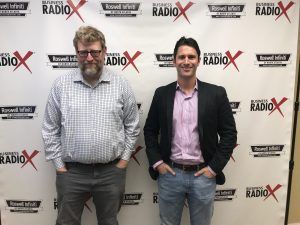
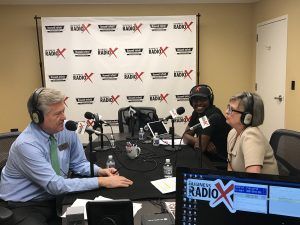
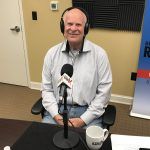
John Ray and Stephanie Sokenis, SmallBiz Ally

Stephanie Sokenis, SmallBiz Ally

Stephanie Sokenis, SmallBiz Ally

Stephanie Sokenis is the Founder and Owner of SmallBiz Ally. Specializing in assisting new businesses with starting properly, and existing businesses with proactive strategies for remarkable growth, SmallBiz Ally is a small businesses new best friend.

As Accredited Small Business Consultants, their services are reliable and effective, and with the experience of hundreds of consultations, their efforts are always focused on providing a customized strategic road map for clients to meet their objectives and reach their goals.

Dedicated to demonstrating the highest levels of professional integrity, while understanding both the needs and budget of a small business, SmallBiz Ally works to help meet one without exceeding the other.

Whether you are already up and running and unsure what to do next or considering a launch of a new business and feeling overwhelmed, take advantage of a complimentary call to discuss how SmallBiz Ally can help!

For further information, go to https://www.smallbizally.com/ or call (678) 822-3959. For their event calendar, go to https://www.smallbizally.com/events.


Tagged With: consultation, effective email marketing, email marketing, growth impediments, marketing consultation, north fulton business, North Fulton Business Radio, outsourced services for small business, outsourcing, SCORE, small business advice, small business advisory, small business consultant, small business financials, small business owner, small business owners, small business problems, small business resources, SmallBiz Ally, starting a business, startups, Stephanie Sokenis, strategic plan

ATL Developments with Geoff Smith: Georgia Sen. Brandon Beach

April 29, 2019 by John Ray

North Fulton Business Radio
ATL Developments with Geoff Smith: Georgia Sen. Brandon Beach
Loading
00:00 /
RSS Feed
Share
Link
Embed

Download file

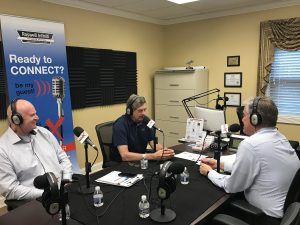
Geoff Smith and GA Sen. Brandon Beach on “ATL Developments with Geoff Smith”

ATL Developments with Geoff Smith:  An Interview with Ga. Senator Brandon Beach

Host Geoff Smith speaks with Georgia State Senator Brandon Beach on the process of improving transportation infrastructure in the state, how drivers of economic development has changed in recent years, the importance of transportation in economic development, and creating better coordination across local jurisdictions in Metro Atlanta.

Senator Brandon Beach, Georgia Senate District 21 and Chairman of the Senate Transportation Committee

GA Sen. Brandon Beach

Senator Brandon Beach was elected to the Georgia State Senate in 2013. He represents District 21 which includes portions of Cherokee and Fulton counties. Senator Beach is the Chairman of the Senate Transportation Committee. He is also a member of the Economic Development, Higher Education and Science and Technology committees. Sen. Beach served as the Chairman of the Public Private Partnership Committee (P3 Committee). Under his leadership, the P3 Committee was able to acquire key local transportation projects approved for Cherokee and North Fulton.

Sen. Beach was named Executive Director of the North Fulton Community Improvement District (CID) in January 2018. Previously, he was President of the North Fulton CID and President & CEO of the Greater North Fulton Chamber of Commerce. Under his leadership, the North Fulton CID has invested more than $20 million to help bring more than $100 million in new infrastructure for the District area.

In 2001, Governor Sonny Perdue appointed Sen. Beach to the board of Georgia Regional Transportation Authority (GRTA). In 2008, he was selected to chair one of GRTA’s most important committees — The Land Development Committee. In this role, Sen. Beach is responsible for leading a review of every significant development brought before the 16-county area that GRTA serves. Sen. Beach was elected to the Board of the Georgia Department of Transportation by state legislators from the 6th Congressional District in 2008.

Sen. Beach is a member of numerous community boards including the Regional Business Coalition, Grady Hospital Board of Visitors, the Greater Metro Atlanta American Heart Association, the Georgia Association of Chamber of Commerce Executives, Encore Park and the Historic Roswell Convention and Visitors Bureau. Senator Beach received an undergraduate degree from Louisiana State University and a Masters in Business Administration degree from Centenary College. He is also a graduate of the Regional Leadership Institute and a former member of the Alpharetta City Council and the Alpharetta Planning and Zoning Commission. He and his wife, Shuntel, have two children and have lived in Alpharetta for the past 24 years.

Geoff Smith, Host of “ATL Developments with Geoff Smith”

Geoff Smith, Host of “ATL Developments with Geoff Smith”

Geoff Smith is the host of “ATL Developments with Geoff Smith” and a mortgage banker with Assurance Financial. Possessed with a strong passion for helping his community, Geoff works closely with people and their families so they may live comfortably in fantastic homes and neighborhoods in the booming Atlanta area.

Geoff is an active member of his community serving on the Board of Directors of the Greater North Fulton Chamber of Commerce, as well as holding the position of chairman for the Chamber’s Education Committee. He is also Secretary of the Roswell Youth Baseball Association and coaches his sons in football, baseball and basketball. Geoff enjoys golf, camping and traveling with his wife and two sons. He is a graduate of the University of Georgia.


Tagged With: CSX, Delta Air Lines, Delta Airlines, drone taxis, Drones, express lanes, fiber, fiber broadband, GA 400, GA 400 express lanes, GA Senator Brandon Beach, Geoff Smith, Georgia 400, Georgia Senate, Georgia Senator Brandon Beach, GNFCC President, Hartsfield Jackson Airport, heavy rail, light rail, MARTA, Mayor Keisha Lance Bottoms, Metro Atlanta traffic, mortgage banker, mortgages, NCR, New Orleans, Norfolk Southern, Port of Savannah, residential mortgages, reversable lanes, Sen. Brandon Beach, Senate Transportation Commitee, Shuntel Beach, talent development, The ATL, Transportation Committee, transportation infrastructure, transportation innovation, truck freight, U.S. Congress

Decision Vision Episode 12: Splitting Up a Business Partnership – An Interview with Bill Piercy, Berman Fink Van Horn

April 25, 2019 by John Ray

Decision Vision
Decision Vision
Decision Vision Episode 12: Splitting Up a Business Partnership - An Interview with Bill Piercy, Berman Fink Van Horn
Loading
00:00 /
RSS Feed
Share
Link
Embed

Download file

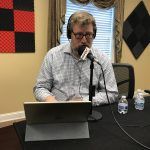
Michael Blake, Host of “Decision Vision” and Bill Piercy, Berman Fink Van Horn

Splitting Up a Business Partnership

It’s inevitable that business partnerships will dissolve, argues Bill Piercy of Berman Fink Van Horn, so partners need to prepare for the inevitable. In this episode of “Decision Vision” host Michael Blake talks with Piercy on how to prepare ahead of time, signs it is time to dissolve a partnership, and mistakes to avoid.

Bill Piercy, Berman Fink Van Horn

Bill Piercy is a Shareholder with Berman Fink Van Horn. Bill works with business owners to bring successful resolution to disputes concerning the management and control of the business. Frequently this means representing partners or shareholder groups who find themselves embroiled in controversy with their co-owners. After more than two decades of practice in the “corporate divorce” arena, he understands the challenges and the opportunities that arise from internal dissension within the management, operations and ownership of a closely held business.

Bill was named a “SuperLawyer” in the Atlanta legal community by Atlanta Magazine in 2012 – 2019, and as a “Rising Star” by that same periodical in 2006, 2009, 2010 and 2011. He is a member of the 2012 Class of Leadership DeKalb, as well as an Eagle Scout.

Recently, Bill put pen to paper to share his more than two decades of practice in the “corporate divorce” arena with entrepreneurs in his new book Life’s Too Short for a Bad Business Partner.

Michael Blake, Brady Ware & Company

Mike Blake, Host of “Decision Vision”

Michael Blake is Host of the “Decision Vision” podcast series and a Director of Brady Ware & Company. Mike specializes in the valuation of intellectual property-driven firms, such as software firms, aerospace firms and professional services firms, most frequently in the capacity as a transaction advisor, helping clients obtain great outcomes from complex transaction opportunities. Mike is also a specialist in the appraisal of intellectual properties as stand-alone assets, such as software, trade secrets, and patents.

He has been a full-time business appraiser for 13 years with public accounting firms, boutique business appraisal firms, and an owner of his own firm. Prior to that, he spent 8 years in venture capital and investment banking, including transactions in the U.S., Israel, Russia, Ukraine, and Belarus.

Brady Ware & Company

Brady Ware & Company is a regional full-service accounting and advisory firm which helps businesses and entrepreneurs make visions a reality. Brady Ware services clients nationally from its offices in Alpharetta, GA; Columbus and Dayton, OH; and Richmond, IN. The firm is growth minded, committed to the regions in which they operate, and most importantly, they make significant investments in their people and service offerings to meet the changing financial needs of those they are privileged to serve. The firm is dedicated to providing results that make a difference for its clients.

Decision Vision Podcast Series

“Decision Vision” is a podcast covering topics and issues facing small business owners and connecting them with solutions from leading experts. This series is presented by Brady Ware & Company. If you are a decision maker for a small business, we’d love to hear from you. Contact us at decisionvision@bradyware.com and make sure to listen to every Thursday to the “Decision Vision” podcast. Past episodes of “Decision Vision” can be found here. “Decision Vision” is produced and broadcast by Business RadioX®.

Visit Brady Ware & Company on social media:

LinkedIn: https://www.linkedin.com/company/brady-ware/

Facebook: https://www.facebook.com/bradywareCPAs/

Twitter: https://twitter.com/BradyWare

Instagram: https://www.instagram.com/bradywarecompany/

Show Transcript:

Intro: [00:00:01] Welcome to Decision Vision, a podcast series focusing on critical business decisions, brought to you by Brady Ware & Company. Brady Ware is a regional, full-service accounting and advisory firm that helps businesses and entrepreneurs make vision a reality.

Michael Blake: [00:00:20] And welcome back to another episode of Decision Vision, a podcast giving you, the listener, clear vision to make great decisions. In each episode, we discuss the process of decision making on a different topic. Rather than making recommendations because everyone’s circumstances are different, we talk to subject matter experts about how they would recommend thinking about that decision.

Michael Blake: [00:00:38] Hi, I’m Mike Blake. And I’m your host for today’s program. I’m a Director at Brady Ware & Company, a full-service accounting firm based in Dayton, Ohio, with offices in Dayton; Columbus, Ohio; Richmond, Indiana; and Alpharetta, Georgia, which is where we are recording today. Brady Ware is sponsoring this podcast. If you like this podcast, please subscribe on your favorite podcast aggregator, and please also consider leaving a review of the podcast as well.

Michael Blake: [00:01:04] Today, we’re going to talk about splitting up a business partnership, or some people call it a business divorce. And for purely selfish reasons, this is a topic that’s near and dear to my heart because this, actually, happens to be a big part of my practice. Often though, not every time, that there’s a business split, somebody wants to know what the number is that one person should be bought out at. And, so, that’s a part of my practice from, sort of, a purveyor of misery.

Michael Blake: [00:01:35] But the thing about business divorces is that they can be equally as dramatic, equally as painful, equally as tense. And, yes, on some levels, equally as entertaining as watching a conventional marital divorce. But we don’t have to just take my word for it. We’re bringing in a subject matter expert. And joining us today, to help us work through this decision process is my good friend Bill Piercy of Berman Fink Van Horn here in Atlanta.

Michael Blake: [00:02:02] Bill works with business owners to bring successful resolution to disputes concerning the management and control of businesses. Frequently, this means representing partners or shareholder groups who find themselves embroiled in controversy with their co-owners. After more than two decades of practice in the corporate divorce arena, Bill understands the challenges and the opportunities that arise from internal dissension within management, operations, and ownership of a closely-held business.

Michael Blake: [00:02:28] Through hard work, candid advice and effective advocacy, Bill helps clients achieve successful outcomes. Bill was named a Super Lawyer in the Atlanta Legal Community by Atlanta Magazine in 2012 and as a Rising Star by that same periodical in 2006, 2009, 2010 and 2011. Bill is a member of the 2012 Class of Leadership DeKalb. Bill previously served on the Executive Committee of the Gators for Business Arm of the Atlanta Gator Club and as a member of the Board of Directors of the Sole Practitioner Small Firm Section of Atlanta Bar Association.

Michael Blake: [00:03:04] In addition, to practicing in the corporate divorce arena, Bill has written a book on the subject, Life’s Too Short for a Bad Business Partner. Bill’s book is available for purchase at amazon.com. I would also say a bookseller near you, but those are pretty much gone now, especially, I think, Barnes & Noble is history, about to be history. And Bill has an undergraduate degree from the University of Florida and earned his law degree from Emory University in Atlanta. And I understand his parents did not bribe either institution in order to get in there. So, we’re getting the real deal. Bill Piercy, thanks so much for coming on the program.

Bill Piercy: [00:03:38] Thank you very much. I appreciate the opportunity to be here.

Bill Piercy: [00:03:41] So, you’ve got kids, I’ve known you a long time. You’re a busy successful attorney doing important things. Why do you find the time to write this book on business divorce?

Bill Piercy: [00:03:55] I found myself saying the same things to clients over and over again. And it occurred to me one day, “Why don’t I write this stuff down? It might be easier or better for people to digest it that way.” When someone has dissension in their business particularly with the other owners that can be a very lonely time and a lonely place to be.

Bill Piercy: [00:04:23] You can’t really go talk to the CPA to ask for a referral to a lawyer because, well, he answers to your business partner too. You certainly don’t want to go to clients and had them know that there’s some sort of problem with the business. You don’t tell vendors, you don’t tell lenders. And so, sort of like when your leg hurts and you go on to Google or Web MD to figure out what’s going on, people would find my blog and find me through that. And it occurred to me that if I created maybe a little more comprehensive guide, I might be able to help even more people.

Michael Blake: [00:05:02] Okay. I’d never thought of that but you’re right. I mean, all the venues that you would normally associate with getting help are close to you because the last thing you want broadcasted to anybody is I’ve got a potential business dispute internally. That freaks out employees. It freaks out advisors. It freaks out clients, vendors. Pretty much everybody within earshot gets freaked out by that.

Bill Piercy: [00:05:28] It’s absolutely right.

Michael Blake: [00:05:28] So, essentially. I haven’t thought of it that way, but that makes sense. So, they say that debt and taxes are the two things in the world that are inevitable. Is the same true of business partnerships? Are business partnerships kind of hired to be fired?

Bill Piercy: [00:05:43] I mean, they should be. Marriage is supposed to last forever or until death do us part, but that’s not the way business partnerships are supposed to be. You come together. You work together. It’s the common goal of making some money. And hopefully everybody leaves with their pockets loaded and as friends. Sometimes, they don’t end that way. And my practice is typically revolves around those situations where folks are less than happy as they are parting ways.

Michael Blake: [00:06:16] I did not expect that answer. I learned something. And you’re right, the notion of death do us part. And what the heck, my wife will never listen to this. But we know that that convention came into play when the life expectancy was about 42. And by then, you’re expected to die of black death, or a rotten chicken bone, or having somebody impale you with a hoe, basically, right?

Michael Blake: [00:06:45] And, now, things have changed. That till death do you part is a much larger commitment. I think when we think of partnership as intimate as a business partnership, I have to admit, I think of it as a lifelong engagement. But maybe you’re right, it’s healthy that you should kind of plan for the split. And maybe if it works out, that you both, as two business partners, you die lovingly and in each other’s arms on a pile full of money, right?

Bill Piercy: [00:07:15] That’s right.

Michael Blake: [00:07:15] Maybe that’s the optimal outcome, but that’s sort of a rarity. So, planning for that in advance, I guess, makes you more prepared, right?

Bill Piercy: [00:07:25] Absolutely.

Michael Blake: [00:07:26] Okay. So, where do the cracks start? I mean, you and I could trade war stories probably all afternoon. We don’t have unlimited time unfortunately. But I’d like to hear from you and maybe I’ll jump in, but where the cracks start to show? What are the things that tend to be the kernels that, ultimately, result in a dispute that is most likely to lead to some kind of split?

Bill Piercy: [00:07:52] Sure. Lack of communication is huge. Lack of transparency is distinguished, in my mind, from lack of communication because it’s one thing for everybody be talking. It’s another thing to actually reveal the financial statements or the underlying transactions that one partner may be responsible for as opposed to the other. The lack of a shared vision among the partners, one wants fast growth, the other doesn’t.

Bill Piercy: [00:08:28] And tied to that, maybe a divergent comfort level with risk score, with debt. Some people, rob Peter, pay Paul, let’s run to the races. And other people want all kinds of money in the bank before they do anything. And that can cause a lot of tension among owners of a business. Disparity and contribution, right. It’s owned 50/50, but one guy is doing 80% of the work. You can see why he might get frustrated.

Bill Piercy: [00:08:56] And a lack of clearly defined roles. Sometimes, early on, we’re all going to jump in. We’re all going to do everything that needs to be done to make this a success, and they’re excited. And 10 years down the line, it would make sense for one person with a particular set of skills to do certain aspects of the business, and someone else to do other tasks. And sometimes, those either formally or informally happen. Sometimes, they don’t. Sometimes, it’s, “Well you were in the office, so you did it, or I thought you were going to do it,” and that can lead to problems.

Michael Blake: [00:09:36] That communication transparency part it, really resonates with me. With the partnership splits in which I’ve been involved in appraising the core business, it has always struck me that if a few honest conversations for 30 minutes had happened two years prior to when they’ve hired me, we may very well not be here, right? And the transparency, to me, is connected with surprise, right?

Bill Piercy: [00:10:11] That’s right.

Michael Blake: [00:10:11] When a surprise happens in the business. In my case, one of the things I really insist on is if a company hires me in a buy/sell that I want to interview both partners even if one of them is retaining me, and try to get them all involved in that, and engaged in that conversation because you’re more likely to get buy-in if there’s not a surprise, if you see the freight train coming, right. And the lack of transparency leads to surprise. Surprise leads to anger. And then, that leads to imagination.

Bill Piercy: [00:10:43] That’s exactly right.

Michael Blake: [00:10:44] And that’s where you kind of get the runaway train, right?

Bill Piercy: [00:10:46] Well put.

Michael Blake: [00:10:50] So, are there are the reasons that are, kind of, avoidable? I mean, we just talked a little about communication. But when you kind of look at that portfolio of partnership disputes, what are the ones you see most often that maybe resonate with what I describe which is, “Jeez, why are we here?” Like the old cartoon of what would you’ve done right to the police is never what would have happened, that sort of thing. Are there things in your mind or patterns that you see that have you, kind of, asking yourself why we’re at this point or are we sure this is not reparable?

Bill Piercy: [00:11:29] It’s whatever the problem is, it’s festering for a while. And so, it’s not necessarily — I mean, communication is a huge one, but whatever the issue is, the people, the partners involved aren’t addressing it head on. They aren’t confronting it with each other. And from my perspective, if there is tension in that way, I would encourage folks to consider ending the business relationship, in its current form. I’m not saying that every fight should lead to divorce, but if there is a persistent problem, the underlying structure isn’t working, right.

Bill Piercy: [00:12:22] And so, it may just need to be fixed, but I find it’s often more productive to go into that fix with, “You know what, the old way is done. We are starting from scratch, and we’re going to talk about how often we’re going to communicate, and we’re going to talk about who is responsible for what, and we’re going to talk about who stays in whose lane, and we’re going to decide what level of commitment and what level of compensation we’re going to have.” And I think those are the business relationships that can be salvaged, if that’s the right word.

Michael Blake: [00:12:57] Yes. So, I’m going to go off script a little bit. I think that’s really smart, if nothing else, because I never thought of it that way. The notion that there is this binary choice that you either keep the partnership as is, baby and bathwater, or you dump baby and bathwater out, it’ s a false choice, isn’t it, right? There’s an option to say, to consider, maybe this relationship, the way it’s structured, isn’t working. But what if we just sort of took a blank sheet of paper, literally a blank sheet of paper, that clean slate, what would we do differently to make us both happy? And maybe there’s a way to salvage that.

Bill Piercy: [00:13:33] That’s my idea.

Michael Blake: [00:13:35] And I’m curious, what’s your betting average with that? Have you suggested that? Have you gotten traction with that?

Bill Piercy: [00:13:44] I have, not a lot.

Michael Blake: [00:13:46] Yeah.

Bill Piercy: [00:13:46] By the time folks get to me, and they’re paying a lawyer by the hour to fight, they’re generally pretty mad. I think that there are probably a lot of transactional lawyers that do this sort of thing all the time. I’m a litigator. When they get to me, we’re typically filing lawsuits, or threatening lawsuits, or being threatened with a lawsuit.

Bill Piercy: [00:14:12] And so, it’s pretty rare, but I do have one shining moment example where I helped. And my opposing counsel was of a similar mindset. And we got these folks to agree to have breakfast at Shoney’s every Friday morning with a checklist. And they would talk through that checklist because despite all their hating each other, they were printing money, and it just made sense to keep printing money. And as far as I know, they’re still printing money today.

Michael Blake: [00:14:43] No kidding. Well, good for you. Well, if the law thing doesn’t work out, maybe you can be a counselor.

Bill Piercy: [00:14:48] Maybe.

Michael Blake: [00:14:48] Maybe as a second career. So, you’ve written this book, and you’ve done it because it’s an opportunity to, kind of, avoid the repetition. And it’s a quick read. Certainly, you’re not going to be mistaken for a Russian novel. But even that having been said, if you wanted a reader to take one thing away from that book, what do you think that would be? ***

Bill Piercy: [00:15:15] To focus on the future, where you’re headed, where you want to be, and not on the past, and what your partner did or didn’t do, and how angry you are about it, if you’re at the point where you’re reading a book called Life’s Too Short for a Bad Business Partner, or talking to a business litigator, or to a business valuation person because your business is in some sort of crisis, then, you’ve already, kind of, lost. And, now, it’s time to stop the bleeding, and to focus on going somewhere else, and making some money. It is easy to let that anger or fear consume you, and it’s just not productive.

Michael Blake: [00:16:07] And I will attest that. I’ve never had to go as far as a litigation, but I’ve been involved in business partnerships where I’ve been upset. And I think that advice is so good that, on the one hand, you do feel like you’ve been wounded somehow. And you’ve been wounded in what, really, is a very intimate relationship. You’ve placed your financial well-being and that of your family in somebody else’s hands to a certain extent.

Bill Piercy: [00:16:39] That’s right.

Michael Blake: [00:16:39] And that means that the second that is even a whiff of being threatened in some way, it’s very hard not to react. Like your bass is super tight in piano string, right?

Bill Piercy: [00:16:51] I’m not suggesting it’s easy.

Michael Blake: [00:16:52] Yeah. And there’s a lot of deep breaths and whatnot that sort of have to take place. And I think that focusing kind of — because you can remedy the passing. A lot of what you do is to recover things from the past, the past injuries. But the end of the, day everything’s out in front of us, I guess, right?

Bill Piercy: [00:17:12] That’s right.

Michael Blake: [00:17:15] Okay. So, you talked about, by the time you get to reading a book, by the time you get to talking to somebody like you, and paying your fees, and so forth, what is that trigger? How do I know that I’m so mad that I got to contact Bill Piercy, and have him help me figure this out, and have some combination of making me whole/extracting horrible revenge versus, yeah, I’m ticked off, but do I really like to get a lawyer involved? You know what I mean? What’s that Rubicon? What’s that inflection point?

Bill Piercy: [00:18:01] Sure. It’s nice when folks have the option of just being mad or annoyed. Sometimes, they do. Sometimes, they don’t. Frankly, in either circumstance, I would encourage folks to get a handle pretty quickly on what rights and obligations they have to and from the business, to and from the other owners, to and from lenders and landlords. And that may mean getting a hold of your shareholder’s agreement, seeing where you can’t remember if you guaranteed the lease on the building or not. Those kinds of things.

Bill Piercy: [00:18:44] Some people are pretty organized. And sometimes, those documents are pretty easy to read. Sometimes, it takes a lot of work. Sometimes, there is no document. Sometimes, it’s on the back of a napkin, or it’s just a handshake, right. And a good lawyer can help folks understand that the law will impose some order on your situation, but it’s not intuitive always what those rules are. So, I would encourage folks to do it.

Bill Piercy: [00:19:15] And as for the trigger, as to when you start investigating those things, I mean, when you don’t trust your partner anymore, when you just can’t see yourself being in business with them anymore. or on a shorter time frame when your little key doesn’t work in the office lock one day-

Michael Blake: [00:19:37] Okay, that’s a trigger.

Bill Piercy: [00:19:38] … or you get served with a summons. I mean those sorts of things.

Michael Blake: [00:19:43] Okay, yeah. Or, as I’ve had with a client, just all of a sudden, one day, gets walked out of the building.

Bill Piercy: [00:19:51] That’s right.

Michael Blake: [00:19:51] Right. Obviously, there’s going to be a call to maybe multiple counsel at that point. So, I was going to ask one question, but I want to interject or intercede one question. Obviously, one sign that a business breakup is coming is that summons, that walking out, right. But are there more subtle signs that it’s sort of happening, but it may not be that apparent, and you’re like the frog in the water? You don’t realize it’s a business break until you’re the boiled frog in the water. You know what I mean?

Bill Piercy: [00:20:25] There are. There absolutely are. Trust that spidey sense or trust your gut. If it seems like maybe, “Boy, my partner seems to be having a lot of meetings with a closed door, or out of the office, or he’s kicked the can down the road on our weekly catchup meeting four weeks in a row. And I keep asking about the financial statements, and I keep being told I’ll see them tomorrow.” We all have other things to do. And not everybody turns everything in on time. But when those things start to lag, and you start to get suspicious, listen to your gut. Trust but verify.

Michael Blake: [00:21:12] Yeah. So, when that spidey sense, then, kicks in, what should you do? First thing, top of the to-do List.

Bill Piercy: [00:21:24] Gather whatever information you can that will help you and your team understand what rights and obligations you have and your partner has because that will be hugely determinative about your next steps and, frankly, the obstacles and opportunities that you have.

Michael Blake: [00:21:47] Now, do you have to treat a little bit differently when — I mean, you’re a company insider. On the one hand, I could certainly see advising somebody to be aggressive because if you think you might get locked out of the business, that means you may be locked out of your access to that information, and the only way we’re going to get it is through discovery. But on the other hand, do I have to be careful if I’m in that scenario because I may be acquiring and taking information that isn’t rightfully mine to have custody? Or I’m an owner of the business, therefore, I have the right to custody. Is there a balance there or a maze there that has to be navigated?

Bill Piercy: [00:22:28] It’s absolutely a complicated maze. And you’ve touched on a really good point. It’s as an owner of the business, you generally have the right to look behind the curtain and see whatever is there. But property that belongs to the business doesn’t belong to you just because you own a piece of the business. It’s not so much taking that information to yourself. I wouldn’t counsel anybody to email the customer a pricing list to their Gmail account, but I would encourage them to access it regularly and to ensure that they have that access.

Bill Piercy: [00:22:28] Sometimes, the division of labor leads partners to where one’s never met the landlord, or the IT guy, or the banker. And, all of a sudden, those things get shut off. It’s much harder to turn it back on when the relationship manager at the bank has never heard of you, and the IT guy doesn’t really know who you are. But if you have — not saying you take over that responsibility, but every once in a while, you stick your head in, and you make sure those folks know you. It’s much easier to restore your access should your partner do something nefarious.

Michael Blake: [00:23:49] So, one of the lessons here is in a partnership, protect yourself. Make sure that there are no key relationships and information sources that are proprietary to your other business partner. Maybe you’ll never have to call upon that, but if you do, you’ll be glad that you made that effort to have that line of communication, that recognition regularly.

Bill Piercy: [00:24:10] Absolutely.

Michael Blake: [00:24:10] So, sort of a hypothetical. Let’s say that that maybe there’s a bunch of information on a laptop, right. It’s a company laptop. It’s one that has not necessarily been assigned to me, but that laptop has information that, I think, is material to my potential case going forward. Is that’s something I may be forced to kind of leave behind, or can I take it, or is it a it-depends kind of deal.

Bill Piercy: [00:23:12] I mean, it’s a it-depends kind of deal. Is it used in the day-to-day business by you? Physically taking it, are you depriving the business of the opportunity to use that information? I’m not so worried about where the laptop sits. It’s, “Can the other partner access the data on it just because it’s sitting in your living room?” Maybe. Maybe it’s linked to cloud, or they can call you up and say, “Hey, I want to come look at it.” And if you allow that, I’m much less concerned about that conduct than one partner excluding the other from some critical piece of the business.

Michael Blake: [00:25:19] Right. So, don’t take the laptop, and then put in a safe deposit box, or bury it, or something like that.

Bill Piercy: [00:25:25] That’s probably right.

Michael Blake: [00:25:26] Okay. So, one of the most common mistakes you see business owners, soon-to-be-splitting partners make during that process that if they hadn’t made those mistakes, they might have had a better outcome.

Bill Piercy: [00:25:40] I think that we’ve touched on really the two big ones already here today. And that’s taking company property and assuming that because you own a piece of that company, you can take this equipment or this data, and either use it for competitive purposes or exclude the other folks in the business from using it. That’s number one. And number two, just not having keys to the castle. Not knowing how to turn your access to the network back on, or get back in the front door, or whatever it may be.

Michael Blake: [00:26:18] I’m going to go off script again because I think this is an important question. What about the scenario, I’ve got two clients in the scenario now, the majority shareholder, basically, fires a minority shareholder, cuts off their income, cuts off access to bank accounts. How is that properly handled? Can the majority shareholder typically just do that? Is it that simple, or, for the minority shareholders, is there are remedy, or does a majority shareholder have to go through a process to do that legally?

Bill Piercy: [00:26:53] So, the firing, pretty much if the majority owner can say, “You know what, we’re going to hire out whatever work you’ve been doing,” or “I’m going to start doing it.” And it’s a complicated question but, generally, can show that minority owner to the door.

Michael Blake: [00:27:15] Okay.

Bill Piercy: [00:27:16] But access to information, if you own a piece of the company, you have a statutory rite, generally, to review the books and records of the business. And it’s a different right, whether it’s a corporation or an LLC, but, generally, you’ve got that right. And you’re supposed to just be able to write a letter, and then be provided reasonable access and an opportunity at your cost to copy whatever information you want to copy. And if that information is not provided, there is generally an expedited legal remedy for ensuring your access to that information. Basically, it means filing a lawsuit, but that lawsuit is supposed to and typically does move faster than your average case.

Michael Blake: [00:28:13] Okay. So, not all business divorces go to court, right, thankfully. But some of them do. I think you’ve touched upon this, but I want to make sure the point is clear. What, in your mind, distinguishes the amicable or, at least, non-hostile partnership dissolution from the all-out, knockdown, drag-out, street-fight of litigation?

Bill Piercy: [00:28:42] Sure. Fundamentally, people change their interest in the business, change their interest in being involved in the business, and what they want to do can change over time. Those are legitimate bases for folks just deciding to part ways and go do something else. Where it turns hostile and expensive, typically, I mean without getting too philosophical about it, it’s pride, greed, lust, anger, gluttony, envy, and sloth. The seven deadly sins or some combination of them that cause people not only to decide they don’t want to be in business together but decide that I want all the business or whatever their dispute may be. Those typical, those raw emotions are often what’s behind it.

Michael Blake: [00:29:44] That’s interesting. That’s a heck of a checklist. I’ve been around a long time now. So, have you found — I mean, people talk a lot about buy/sell agreements. And for the listeners, a buy/sell agreement is just the rules by which the two or more partners agree that a share will be bought out either by the company of one or more shareholders or between each other when somebody is going to get out of the partnership. Have you found them to be helpful? I mean, are they as useful as advertised?

Bill Piercy: [00:30:16] So, in some, typically, when they’re is useful as advertised, I never see it because it doesn’t result in litigation. And so, the transactional lawyers that are deal makers do them and do them well all the time. And I think they provide a valuable set of rules for — agree when you’re agreeable, right. And so, everyone has come to it. We’ve already established how we’re going to decide, how much, and when somebody pays somebody else for their share in the business. And we’re going to already decide ahead of time on these triggering mechanisms. And so, it provides, I think, an efficient and useful tool for helping people through what can sometimes be a pretty difficult situation.

Michael Blake: [00:31:09] Okay.

Bill Piercy: [00:31:10] That said, when I see them, either there is a legitimate dispute about language, and who’s got the right to do what, or somebody is gaming the system. It may be that one partner or faction has significantly more resources than the other. And so, a common buy/sell arrangement is one in which one partner makes an offer to buy the other out at a fixed price per share. And the recipient of that offer, then, has the option. I can either take that offer, or turn it around, and buy out the offer, or at the same price. So, that ought to result in a fair offer because you don’t know if you’re going to be a buyer or a seller.

Bill Piercy: [00:32:02] And it, probably, most of the time, does. I never see it because I’m a business litigator. I see it when maybe one side has more money than the other and thinks, “You know what, even if I make a low-ball offer, he still can’t come up with the cash to buy me out,” or the insider trading, kind of, “I know something about the business that’s about to happen that he doesn’t know. So, I’m either going to offer more than fair market value or try to get myself bought out before things go down the tubes by manipulating my offer. So, those are, unfortunately, the kinds of things that I see on a fairly regularly basis with buy/sell. But I’m certainly not against them. I think in a lot of situations, they can be very useful.

Michael Blake: [00:32:56] I see similar manipulation. In particular if the buy/sell price is either a set number or a set formula because that’s set number or set formula could be right whenever the buy/sell was initiated. But now, five years down, the road the company has changed, the market has changed, the economy has changed. That price is going to benefit someone, right?

Bill Piercy: [00:33:21] Right.

Michael Blake: [00:33:23] And then, there’s at least a financial incentive to manipulate or force a transaction because you know you’re either going to be bought dear or you have an opportunity to sell cheap, right?

Bill Piercy: [00:33:33] That’s absolutely right.

Michael Blake: [00:33:34] And I’m guessing that’s also a scenario that might come your way even though there is a buy/sell. I think in those cases the buy/sells actually can do more harm than good because they motivate the kind of behavior they’re trying to avoid.

Bill Piercy: [00:33:48] That’s right.

Michael Blake: [00:33:51] So, I’m going to switch gears here, more of a governance question. So, I would imagine if I’m a general counsel for a company – internal, external, it doesn’t matter – I have to imagine the worst nightmare I could think of is I’m in the middle now of a business partnership because I’m going to be asked to take sides. All right. It’s just inevitable.

Michael Blake: [00:34:21] But on the other hand, I mean, on one level, it’s “Golly, does the company have to have an attorney, and both sides have to have their own counsel and combine? You’re running the clock at $2000 an hour or something like that.” Have you seen that? Is that a legitimate concern? How does that get resolved? If you’re a corporate counsel or if you’re involved in that, what can you reasonably expect your corporate counsel to do and not do…

Bill Piercy: [00:34:48] Sure.

Michael Blake: [00:34:49] … or that they cannot do for you.

Bill Piercy: [00:34:51] That’s right. The corporate counsel can certainly help partners to access the information that they need to determine their respective rights and obligations like we’ve talked about. What the company’s lawyer can’t do, what would be a conflict of interest is for the company’s attorney to offer advice or suggestions to one partner, or the other, or God forbid. both on what their respective rights are, or what positions or strategies they might employ. The company’s lawyers got to look out for the company and really needs to be careful not to be answering to more than one chief at any one time.

Michael Blake: [00:35:47] The last thing you said, “God forbid, both.” So, I want to expand on that a little bit because I can see a scenario where maybe a counsel feels like they’re doing the right thing, right. They feel like, somehow, they’re giving equal advice to both parties. There’s no conflict of interest. Can you expand that upon it? That sounds like a land mine.

Bill Piercy: [00:36:08] I mean, yeah, it sounds to me like a call to your malpractice carrier at some point because, eventually, likely, one partner is not going to be happy with the advice they got, or even if they are happy with it, they may see an opportunity, and because desperate times call for desperate measures. And really, it doesn’t help anybody to do that. Partners would do well to go get their own private independent counsel even if it’s just a, “Hey, run through this with me for an hour and help me understand where I stand,” as opposed to relying on someone who has multiple folks to answer to and may or may not have your best interest at heart.

Michael Blake: [00:36:59] Now, I think, if I’m not mistaken, there’s a nuclear option out there where if there’s enough of an impasse, at least, in our State in Georgia, I don’t know if this is true in all 50 states. Logically, I don’t, but a judge could actually dissolve a company if there is a sufficient impasse. Is that correct? And what are the circumstances under which that might actually occur?

Bill Piercy: [00:37:23] There absolutely is. It’s called judicial dissolution. And there are two general scenarios when that can happen. One is — and I think it’s the more common of the two deadlock. And that would be very common if you’ve got two partners, and each one of them owns 50% of the company, and one of them wants to franchise and go national, and the other wants a sole location and to become the master of one particular area of town in which whatever they do, they do. One wants white, the other wants black. They can’t agree. They have equal voting power. The company can’t do anything. In that circumstance, a judge can order that the company be dissolved. And we’ll talk about that. I’ll talk about that just a little more after I talk about the other factor.

Bill Piercy: [00:38:19] The other is waste. If the one partner – often, the majority owner – is taking advantage of the company paying unequal distributions, just taking money, and not even calling it a distribution out of the company or steering work to other businesses, all of those things can happen. And in those circumstances, a judge can order, “You know what, this is never going to work. The majority isn’t taking care of the minority here, not fulfilling his fiduciary duties. I’m just going to order this company dissolved.”

Bill Piercy: [00:38:57] And basically, a receiver is typically appointed. some third party. It might be a business broker. It might be a real estate agent. It, kind of, depends on what the company’s assets are. The assets are marshaled, gathered all in one place, and then sold. Sometimes, on the courthouse steps on foreclosure day. Other times, in a more orderly fashion. And then, that money is used to pay the company’s debts. And if there’s any money left over, it’s divided up pro-rata among the owners of the company.

Michael Blake: [00:39:31] And just like that.

Bill Piercy: [00:39:32] It is not a simple process, it’s not an inexpensive process, and you’re never going to get top dollar for a business that’s being sold on the first Tuesday of the month.

Michael Blake: [00:39:44] Yeah, yeah. In effect, it’s a slightly dignified fire sale.

Bill Piercy: [00:39:50] That’s exactly it. I’m not even sure it’s dignified.

Michael Blake: [00:39:53] Okay, fair enough. I certainly don’t want to put words in your mouth. Well, we’re running out of time. I wish we could talk more about this. There’s a lot of war stories I know that we could swap. But if somebody wants to learn more, or they’re thinking about they may be in this situation, think may be in the situation, and want to learn more, how can they contact you to to benefit from your expertise?

Bill Piercy: [00:40:16] I am fairly easy to find on the internet. Again, my name is Bill Piercy. I practice law with the Berman Fink Van Horn. The firm web site is bfvlaw.com. And my email address is bpiercy@bfvlaw.com.

Michael Blake: [00:40:37] All right. Well, thank you. That’s going to wrap it up for today’s program. I’d like to thank Bill Piercy so much for joining us and sharing his expertise with us today. We’ll be exploring a new topic each week. So, please tune in, so that when you’re faced with your next business decision, you have clear vision when making it. If you enjoy this podcast, please consider leaving a review with your favorite podcast aggregator. It helps people find us, so that we can help them. Once again, this is Mike Blake. Our sponsor’s Brady Ware & Company. And this has been the Decision Vision Podcast.

Tagged With: corporate counsel, corporate divorce, Dayton accounting, Dayton business advisory, Dayton CPA, Dayton CPA firm, debt, Decision Vision, Decision Vision podcast, Decision Vision podcast series, dissolving a business partnership, dissolving a partnership, lack of shared vision, lack of transparency, mediation, Michael Blake, Mike Blake, partnership disputes, risk, shareholders agreement, splitting a business partnership, William J. Piercy

To Your Health With Dr. Jim Morrow: Episode 7, Allergies

April 24, 2019 by John Ray

North Fulton Studio
North Fulton Studio
To Your Health With Dr. Jim Morrow: Episode 7, Allergies
Loading
00:00 /
RSS Feed
Share
Link
Embed

Download file

Dr. Jim Morrow, Host of “To Your Health With Dr. Jim Morrow”

Episode 7, Allergies

Allergies affect almost 50 million people in the United States alone. On this episode of “To Your Heath,” Dr. Jim Morrow, an allergy sufferer himself, takes them all on:  food, plants, drug, environmental, and contact allergies. Dr. Morrow also talks about Forsyth BYOT, a non-profit established by Dr. Jim and Peggie Morrow to support technology initiatives in Forsyth County Schools.

Dr. Morrow’s Show Notes on Allergies

Allergies

  • When you hear someone talk about having allergies, usually they mean rhinitis or upper respiratory symptoms (runny nose, watery eyes, itching eyes and ears and nose, sneezing).
  • Allergies also can be due to food, medications, animal dander or plants.

Allergic Rhinitis

  • The diagnosis of allergic rhinitis (AR) should be made when history and physical findings are consistent with an allergic cause (e.g., clear rhinorrhea, pale discoloration of nasal mucosa, and red and watery eyes) and one or more of the following symptoms: nasal congestion, runny nose, itchy nose, or sneezing.
  • Individuals with allergic rhinitis should be assessed for the presence of associated conditions such as asthma, atopic dermatitis, sleep-disordered breathing, conjunctivitis, rhinosinusitis, and otitis media.
  • Specific testing (blood or skin) should be performed for patients with a clinical diagnosis of allergic rhinitis who do not respond to empiric treatment, or when diagnosis is uncertain, or when determination of specific target allergen is needed.
  • Sinus imaging should not routinely be performed in patients presenting with symptoms consistent with allergic rhinitis.
  • Intranasal steroids should be prescribed for patients with allergic rhinitis whose symptoms affect quality of life.
  • Oral second-generation/less sedating antihistamines should be prescribed for patients with allergic rhinitis and primary complaints of sneezing and itching.
  • Intranasal antihistamines may be prescribed for patients with seasonal, perennial, or episodic AR.
  • Oral leukotriene receptor antagonists should not be prescribed as primary therapy for patients with AR.
  • Combination pharmacologic therapy may be prescribed for patients with allergic rhinitis who have inadequate response to monotherapy. The most effective combination therapy is an intranasal steroid and an intranasal antihistamine.
  • Immunotherapy should be prescribed for patients with allergic rhinitis who have inadequate response to pharmacologic therapy
  • Avoidance of known allergens or environmental control may be considered in patients with allergic rhinitis who have identified allergens that correlate with their clinical symptoms.
  • Inferior turbinate reduction may be considered for patients with allergic rhinitis with nasal airway obstruction and enlarged inferior turbinates who have failed medical management.

Allergy Testing

  • Many types of allergies: environmental, foods, drug, contact.
  • An estimated 10% to 30% of the global population has an allergic disease.
  • Clinical presentations of allergic diseases, respiratory infections, and autoimmune conditions have similar features.
  • Allergy and immunologic testing can help clarify the diagnosis and guide treatment. Immediate immunoglobulin E (IgE) and delayed T cell–mediated reactions are the main types of allergic responses.
  • The allergens suspected in an immediate IgE-mediated response are identified through serum IgE-specific antibody or skin testing.
  • For patients with an inhalant allergy, skin or IgE-specific antibody testing is preferred.
  • In patients with food allergies, eliminating the suspected allergenic food from the diet is the initial treatment.
  • If this is ineffective, IgE-specific antibody or skin testing can exclude allergens.
  • An oral food challenge should be performed to confirm the diagnosis. Results of laboratory testing for food-specific IgE are generally poor, even less helpful than those for percutaneous skin testing.
  • Patients with an anaphylactic reaction to an insect sting should undergo specific antibody or skin testing.
  • Skin testing for penicillin has a high negative predictive value and can help when penicillin administration is indicated and there are limited alternatives. Testing for other drug allergies has less well-determined sensitivity and specificity, but can guide the diagnosis.
  • Patch testing can help identify the allergen responsible for contact dermatitis.

Food Allergies

  • Patients with suspected food allergies are commonly seen in clinical practice.
  • Although up to 15 percent of parents believe their children have food allergies, these allergies have been confirmed in only 1 to 3 percent of all Americans.
  • Family physicians must be able to separate true food allergies from food intolerance, food dislikes, and other conditions that mimic food allergy.
  • The most common foods that produce allergic symptoms are milk, eggs, seafood, peanuts, and tree nuts.
  • Although skin testing and in vitro serum immunoglobulin E assays may help in the evaluation of suspected food allergies, they should not be performed unless the clinical history suggests a specific food allergen to which testing can be targeted.
  • Furthermore, these tests do not confirm food allergy. Confirmation requires a positive food challenge or a clear history of an allergic reaction to a food and resolution of symptoms after eliminating that food from the diet.
  • More than 70 percent of children will outgrow milk and egg allergies by early adolescence, whereas peanut allergies usually remain throughout life.
  • The most serious allergic response to food allergy is anaphylaxis. It requires emergency care that should be initiated by the patient or family using an epinephrine auto-injector, which should be carried by anyone with a diagnosed food allergy.
  • There are no recommended medications to prevent IgE- or non–IgE-mediated allergic reactions to food. Allergen-specific immunotherapy or immunotherapy with cross-reacting allergens is not recommended to treat food allergy.
  • Some environmental allergens cross-react with foods, such as:
    • Birch pollen:  Carrots, celery, fresh fruit (e.g., apples, cherries, nectarines, peaches, pears), hazelnuts, parsnips, potatoes
    • Grass pollen:  Kiwi, tomatoes
    • Ragweed pollen:  Bananas, melons (e.g., cantaloupe, honeydew, watermelon)

Nonallergic Rhinitis

  • Chronic nonallergic rhinitis encompasses a group of rhinitis subtypes without allergic or infectious etiologies.
  • Although chronic nonallergic rhinitis represents about one-fourth of rhinitis cases and impacts 20 to 30 million patients in the United States, its pathophysiology is unclear and diagnostic testing is not available.
  • Characteristics such as no evidence of allergy or defined triggers help define clinical subtypes.
  • There are several subtypes with overlapping presentations, including:
    • nonallergic rhinopathy,
    • nonallergic rhinitis with nasal eosinophilia syndrome,
    • atrophic rhinitis,
    • senile or geriatric rhinitis,
    • gustatory rhinitis,
    • drug-induced rhinitis,
    • hormonal rhinitis, and
    • occupational rhinitis.
  • Treatment is symptom-driven and similar to that of allergic rhinitis. Patients should avoid known triggers when possible.
  • First-line therapies include intranasal corticosteroids, intranasal antihistamines, and intranasal ipratropium.
  • Combination therapy with decongestants and first-generation antihistamines can be considered if monotherapy does not adequately control symptoms.
  • Nasal irrigation and intranasal capsaicin may be helpful but need further investigation.

Hives (Urticaria)

  • Hives are typically large, raised areas on the skin that can itch and spread and coalesce into huge areas of swelling
  • They can be caused by many things, including:
    • Colds
    • Bladder infections or other types of infection
    • Allergies to food, particles in the air, or things that touch your skin
    • Insect stings or bites
    • Medicines
    • Heat, cold, or pressure
    • Exercise
    • A serious disease, but this is uncommon In many cases, no specific cause is found.

About Morrow Family Medicine and Dr. Jim Morrow

Morrow Family Medicine is an award-winning, state-of-the-art family practice with offices in Cumming and Milton, Georgia. The practice combines healthcare information technology with old-fashioned care to provide the type of care that many are in search of today. Two physicians, three physician assistants and two nurse practitioners are supported by a knowledgeable and friendly staff to make your visit to Morrow Family Medicine one that will remind you of the way healthcare should be.  At Morrow Family Medicine, we like to say we are “bringing the care back to healthcare!”  Morrow Family Medicine has been named the “Best of Forsyth” in Family Medicine in all five years of the award, is a three-time consecutive winner of the “Best of North Atlanta” by readers of Appen Media, and the 2019 winner of “Best of Life” in North Fulton County.

Dr. Jim Morrow, Morrow Family Medicine

Dr. Jim Morrow is the founder and CEO of Morrow Family Medicine. He has been a trailblazer and evangelist in the area of healthcare information technology, was named Physician IT Leader of the Year by HIMSS, a HIMSS Davies Award Winner, the Cumming-Forsyth Chamber of Commerce Steve Bloom Award Winner as Entrepreneur of the Year and he received a Phoenix Award as Community Leader of the Year from the Metro Atlanta Chamber of Commerce.  He is married to Peggie Morrow and together they founded the Forsyth BYOT Benefit, a charity in Forsyth County to support students in need of technology and devices. They have two Goldendoodles, a gaggle of grandchildren and enjoy life on and around Lake Lanier.

Facebook: https://www.facebook.com/MorrowFamMed/

LinkedIn: https://www.linkedin.com/company/7788088/admin/

Twitter: https://twitter.com/toyourhealthMD

Forsyth BYOT

In 2013, Dr. Jim and Peggie Morrow found that hundreds of students in Forsyth County did not have the technology necessary to succeed in the highly technical environment that school is today. The county relies on online work a great deal and so many students were having to go to the library or a Starbucks to access assignments because they did not have internet in their homes.  Additionally, many did not and do not have internet capable devices that make this work possible either.

So, the Morrows made it their mission to bridge this gap and help these students try to break the cycle of generational poverty that so many of them are born to.

In the last five years, over $300,000 has been raised and donated by Forsyth BYOT to the Forsyth County Schools for this purpose. Forsyth BYOT seeks to raise awareness of the problem and find sponsors to donate or raise money outright through two yearly fundraisers, the BYOT Golf Tournament in May and the iRUN for BYOT 5K & FunRun in October.  Donated funds are given to the school district, which has staff in place to first determine which students are in need and then to purchase and distribute internet hotspots or devices to that family.

Tagged With: Cumming family doctor, Cumming family practice, Cumming md, Cumming physician, Dr. Jim Morrow, drug allergies, drug allergy, egg allergy, environmental allergies, environmental allergy testing, epinephrine auto-injector, epipen, Food allergies, food allergy, Forsyth BYOT, inhaled allergies, Milton family doctor, Milton family practice, Milton md, Milton physician, Morrow Community Foundation, Morrow Family Medicine, peanut allergy, penicillin, pine pollen, poison ivy, pollen, pollen allergy, ragweed, rash, rhinitis, skin rash, skin rashes, skin testing, tree nut allergy, urticaria

Clark Savage, Clayton CameraCraft Photography

April 23, 2019 by John Ray

North Fulton Business Radio
Clark Savage, Clayton CameraCraft Photography
Loading
00:00 /
RSS Feed
Share
Link
Embed

Download file

Clark Savage and John Ray

Clark Savage, Clayton CameraCraft Photography

Clark Savage, Clayton CameraCraft Photography

Clark Savage is a photographer, author and arts advocate. Since 1994, he has owned and operated Clayton CameraCraft Photography in Alpharetta, specializing in corporate and family photography. His photography career spans 30 years and includes creating portraits of presidents, music, and sports stars. Clark is Co-President of Arts Alpharetta, a non-profit organization dedicated to advancing Alpharetta as a cultural arts destination for artists and their work and strategic local partnerships with a variety of arts organizations. Arts Alpharetta operates in the newly opened Alpharetta Arts Center. Clark is also author of the forthcoming book The Kenyan Rhino Rider’s Club. Clark was born in Berkeley, CA and has lived in Georgia for 25 years.

For more information or to contact Clark, go to www.atlantaphotographer.com.

Tagged With: coporate photography, corporate photography, digital imagery, event photography, family portraits, Kenyan Rhino Rider's Club, lighting, North Fulton, North Fulton Business Radio, outdoor art, Photography, portrait photography, President Jimmy Carter

Decision Vision Episode 11: The Atlanta startup ecosystem and the Siggie Awards – An Interview with Gordon Rogers, Avondale Innovation District

April 18, 2019 by John Ray

Decision Vision
Decision Vision
Decision Vision Episode 11: The Atlanta startup ecosystem and the Siggie Awards – An Interview with Gordon Rogers, Avondale Innovation District
Loading
00:00 /
RSS Feed
Share
Link
Embed

Download file

“Decision Vision” Host Michael Blake and Gordon Rogers

The Atlanta startup ecosystem and the Siggie Awards

Startup investor and mentor Gordon Rogers speaks with “Decision Vision” host Michael Blake on the history and development of the Atlanta startup ecosystem, the pivotal role of Sig Mosley in this community, and the “Siggie Awards,” which honor Sig’s contribution and recognize other noteworthy Atlanta investors.

Gordon Rogers, Avondale Innovation District

Gordon Rogers

Gordon Rogers is a three decade veteran in the Atlanta startup community, particularly in the field of education technology and online learning. In 1992, he founded a company that created one of the industry’s first learning management systems. He led the start-up from the bootstrapped stage to an IPO, through a merger with Paul Allen’s company, Asymetrix Learning in 1998, now part of SumTotal Systems, a SkillSoft company. He has spent the past 15 years working with startups in the ed-tech sector, including K-12, higher-ed and career & tech ed programs.

He mentors early stage ventures at Georgia Tech’s ATDC incubator and Flashpoint programs. As a social impact investor and entrepreneur, he advises Village Capital’s Ed-Tech Accelerator and Points of Light Civic Accelerator programs. He’s served as an advisor to over a dozen startups, including Authentica Solutions (now BrightBytes), Crescerance, ExceptionALLY, and RapidLD. In his role as advisor to CTE Portfolio, he works with Career & Technology Education directors to streamline Work-Based Learning and Apprenticeship Programs. CTE Portfolio can be thought of as a student-friendly version of LinkedIn.

He is Past President of Atlanta Technology Angels, and serves on the TAG Top 40 committee. He co-founded Teachers & Techies, a group of educational innovators working to improve technology in schools. He also serves as a guest lecturer and business competition judge at Georgia State, Georgia Tech, Emory, University of Georgia and Kennesaw State University business schools.

The Avondale Innovation District™, located in downtown Avondale Estates, is a place-based urban development designed specifically to support entrepreneurs and creative professionals, foster open innovation, attract and accelerate new business ventures. It is the venue for the inaugural Siggie Awards.  The “Siggies” are a way to recognize some of the unsung heroes in the Atlanta startup community: early-stage investors. The “Siggies” are named after Sig Mosley, Managing Partner of Mosley Ventures. To nominate an Atlanta investor for a Siggie award or to get more information on the inaugural event on May 15, 2019, click here.

Michael Blake, Brady Ware & Company

Mike Blake, Host of “Decision Vision”

Michael Blake is Host of the Decision Vision podcast series and a Director of Brady Ware & Company. Mike specializes in the valuation of intellectual property-driven firms, such as software firms, aerospace firms and professional services firms, most frequently in the capacity as a transaction advisor, helping clients obtain great outcomes from complex transaction opportunities. Mike is also a specialist in the appraisal of intellectual properties as stand-alone assets, such as software, trade secrets, and patents.

He has been a full-time business appraiser for 13 years with public accounting firms, boutique business appraisal firms, and an owner of his own firm. Prior to that, he spent 8 years in venture capital and investment banking, including transactions in the U.S., Israel, Russia, Ukraine, and Belarus.

Brady Ware & Company

Brady Ware & Company is a regional full-service accounting and advisory firm which helps businesses and entrepreneurs make visions a reality. Brady Ware services clients nationally from its offices in Alpharetta, GA; Columbus and Dayton, OH; and Richmond, IN. The firm is growth minded, committed to the regions in which they operate, and most importantly, they make significant investments in their people and service offerings to meet the changing financial needs of those they are privileged to serve. The firm is dedicated to providing results that make a difference for its clients.

Decision Vision Podcast Series

Decision Vision is a podcast covering topics and issues facing small business owners and connecting them with solutions from leading experts. This series is presented by Brady Ware & Company. If you are a decision maker for a small business, we’d love to hear from you. Contact us at decisionvision@bradyware.com and make sure to listen to every Thursday to the Decision Vision podcast. Past episodes of Decision Vision can be found here. Decision Vision is produced and broadcast by Business RadioX®.


Visit Brady Ware & Company on social media:

LinkedIn: https://www.linkedin.com/company/brady-ware/

Facebook: https://www.facebook.com/bradywareCPAs/

Twitter: https://twitter.com/BradyWare

Instagram: https://www.instagram.com/bradywarecompany/

Show Transcript:

Intro: [00:00:01] Welcome to begin Decision Vision, a podcast series focusing on critical business decisions brought to you by Brady Ware & Company. Brady Ware is a regional, full-service accounting and advisory that helps businesses and entrepreneurs make vision a reality.

Michael Blake: [00:00:20] And welcome to another episode of Decision Vision, a podcast giving you, the listener, clear vision to make great decisions. In each episode, we discuss the process of decision making on a different topic. Rather than making recommendations because everyone’s circumstances are different, we talk to subject matter experts about how they would recommend thinking about that decision.

Michael Blake: [00:00:38] My name is Mike Blake, and I’m your host for today’s program. I am a Director at Brady Ware & Company, a full-service accounting firm based in Dayton, Ohio, with offices in Dayton; Columbus, Ohio; Richmond, Indiana; and Alpharetta, Georgia, which is where we are recording today. Brady Ware is sponsoring this podcast. If you like this podcast, please subscribe on your favorite podcast aggregator, and please also consider leaving a review of the podcast as well.

Michael Blake: [00:01:03] So, today, we’re going to talk about a startup project in Atlanta called the Siggie Awards. And we’re going to talk a little bit about the award program itself, but also dig into what goes into launching an award program, what it takes to build and sustain one, and whether you, as a business owner or decision maker, should consider being involved in an award program in your community.

Michael Blake: [00:01:25] And to help us today is Gordon Rogers, the Avondale Innovation District. Gordon is a 25-year veteran of startups in the field of digital education and learning management, both as a founder and an investor. Gordon is a mentor at Georgia Tech’s ATDC and Flashpoint Accelerator Programs, as well as Managing Director of Vernon Bridge Ventures, an early-stage capital advisory firm. He serves on the advisory boards of Authentica Solutions, Crescerance, ExceptionAlly, and Rapid LD.

Michael Blake: [00:01:55] As a social impact investor and entrepreneur, he advises Village Capital’s Education Accelerator, as well as Points of Light Civic Accelerator programs. He is also past president of Atlanta Technology Angels. He sits on planning committees for Venture Atlanta and TAG, Technology Association of Georgia, Top 40. He also serves as a guest lecturer and business plan competition judge at Georgia State University, Georgia Tech, Emory University, Kennesaw State University, and the University of Georgia Business Schools. He has made angel investments in mobile learning, online language training and employee wellness companies, and virtual world startups.

Michael Blake: [00:02:32] Gordon’s newest project is serving as venture partner of the Avondale Innovation District located in downtown Avondale Estates, which is almost due, well, I guess north and east of Atlanta. Avondale Innovation District is a place-based urban development designed specifically to support entrepreneurs and creative professionals foster open innovation, attract and accelerate new business ventures. It is the venue for the inaugural Siggies Awards. The Siggies is our way to recognize some of the unsung heroes in the Atlanta startup community. The Siggies are named after Sig Mosley, who is the Managing partner of Mosley Ventures and is widely regarded as the godfather of the Atlanta early stage investment community.

Michael Blake: [00:03:17] In addition, Gordon, how many children do you have? Seven or eight?

Gordon Rogers: [00:03:20] Seven at last count.

Michael Blake: [00:03:22] Severn at last count.

Gordon Rogers: [00:03:23] We’re holding.

Michael Blake: [00:03:24] And holding steady. Very talented, by the way. I’m an amateur musician. Gordon’s family is a gaggle of musicians and have some fascinating YouTube videos. In particular, a couple where they all play around the same piano doing a couple of songs. He’s doing percussion, playing the strings, playing the keys. And it’s remarkable, not only the musicianship, but they all get along well enough to accomplish that.

Gordon Rogers: [00:03:51] For those three minutes.

Michael Blake: [00:03:51] For those three minutes. Well, I have two, I have two kids, I’m not sure I can accomplish that for those three minutes. So, congratulations to you.

Gordon Rogers: [00:03:59] Thank you.

Michael Blake: [00:03:59] And I guess I didn’t realize how much you’re involved in addition to your expansive family. How on earth do you find the time for this?

Gordon Rogers: [00:04:12] Well, as you know, kids grow up. So, most of them have finished college by now. So, they’re “self-sustaining adults.”

Michael Blake: [00:04:21] Congratulations.

Gordon Rogers: [00:04:23] And we have one about to graduate from high school. So, we are not quite as encumbered as we once were.

Michael Blake: [00:04:30] The herd is somewhat thinning, I guess.

Gordon Rogers: [00:04:32] Yeah, but it’s kind of like a herd of cats.

Michael Blake: [00:04:34] But you’re still — I mean, you’re still busy, but you somehow found time to take on this new project. So, you, obviously, have a lot of demands on your time. You don’t say yes to everything. Why did you say yes to this?

Gordon Rogers: [00:04:46] Well, it was a chance to work with two people that I’ve admired and enjoy working with for quite some time. Ed Rieker, who is the guy who started and launched Avondale Innovation District, a serial entrepreneur from ATDC and others who have several healthcare startups that have gone on to success. And he’s always been a great supporter of the startup community.

Michael Blake: [00:05:11] Yes, he has.

Gordon Rogers: [00:05:10] And I’ve worked with him for, at least, 10 years. As a matter of fact, fun fact, I think, Mike, you and I were behind the microphones at a different podcast in 151 Locust in 2010.

Michael Blake: [00:05:27] That sounds right. Yeah, the old Startup Lounge Podcast.

Gordon Rogers: [00:05:29] The Startup Lounge Podcast was there. And you and Scott were kind of the originators of this whole process. And 151 Locust was an old farmhouse that Ed converted in the middle of Avondale Estates into a co-working space. And we held a lot of events there, one of which was hosting your Startup Lounge Podcast.

Michael Blake: [00:05:51] Yeah. And that was sort of a co-working space before it became cool to have co-working spaces. Really, I mean, before Atlanta Tech Village, before Tech Square, before Opportunity Hub, before for any of these guys, right?

Gordon Rogers: [00:06:03] Ed was a man ahead of his time.

Michael Blake: [00:06:06] And so, you’re involved now in the Avondale Innovation District. And then, at some point the conversation came up, “Let’s have, I guess, an awards ceremony,” or was that you’re just sick and tired of Sig getting every award there is? So, we’ve got to find a way to give an award to somebody else. How did that conversation come around?

Gordon Rogers: [00:06:24] It was a little bit of both. We thought, “Okay, Sig has received a lot of awards. Maybe it’s time to put him on the other side instead of being on the receiving end,” which is well-deserved over all those years. But to give him yet another award might be just another of the same old, same old.

Gordon Rogers: [00:06:43] And we both recognized that Sig has been around, a fixture really, for three decades or more. And he really is the guy who got the whole angel early startup program off within Atlanta. And, now, it’s time that he kind of takes a little more time to go off to his villa in Costa Rica and other places. And there’s so many other people around the community that are doing similar work but may not get such recognition. So, we thought, what better way to honor that legacy that Sig has created and let him provide some accolades to others, other deserving souls?

Michael Blake: [00:07:27] And I think there’s another benefit. I do want to get into the notion of recognizing people are social contributors. But, also, for a long time, this town was basically Sig, and maybe Charlie Paparelli, and maybe Steven Fleming. And if those three said no, you basically felt like your deal was done.

Michael Blake: [00:07:47] And Sig is still so highly regarded. He’s such an important fixture that I think a lot of people who would like guidance and funding themselves don’t realize there are many active people, maybe more active at their stage of their lives versus Sig at this point that can be resource to them. It’s an opportunity to highlight that and pass the baton on in a way, sort of, kind of, this group succession planning. Is that a reasonable way to think about it, or am I off the reservation?

Gordon Rogers: [00:08:16] No, I think you’re right. And let’s go back to another throwback to that Startup Lounge here. I don’t know if it was you or your buddy, Scott, that came up with that t-shirt “Sig said No.”

Michael Blake: [00:08:28] That was Scott. He was the funny one.

Gordon Rogers: [00:08:29] All right. So, just for those who weren’t around in that era, there was a T-shirt that kind of threw a little bit of humor at. If you got a no from Sig, essentially, your startup was dead in the town of Atlanta. And that put a lot of pressure on Sig, of course. And it just didn’t give a lot of opportunities for people with ideas to go somewhere else.

Michael Blake: [00:08:54] I think Sig would tell you, he didn’t want to be in that position.

Gordon Rogers: [00:08:57] Absolutely not.

Michael Blake: [00:08:57] He did not want to be that that grand inquisitor, that grand executioner.

Gordon Rogers: [00:08:59] Right, exactly. But he was the default. And I look back, and if you look at Silicon Valley, if Ron Conway was the only guy out there that made angel investments, where would that be today? There’s a lot of Ron Conways out there. And I argue there’s a lot of folks like Sig, but they don’t have the same name and reputation. And, now, it’s time to build more pillars. I mean, he’s been the central tent pole, but we need others holding up the tent as well.

Michael Blake: [00:09:29] I think part of that is cultural too. I think Silicon Valley has a culture where if you’re an angel investor, you’re kind of like the rock star mentality, you’re kind of okay with the spotlight and drawing a lot of people to you. I think, in Atlanta, we still have a little bit more keep it close to the vest. Yeah, I’d like to make some investments, but I don’t necessarily want everybody knowing that I have the wherewithal financially to make those investments too.

Gordon Rogers: [00:09:55] Fair enough. And, yeah, Sig is kind of the unsung hero. And he is, obviously, responsible for a lot of successes. But you know what, you can’t rely on one person because that one person is not going to do it forever. And so, if you want a sustainable ecosystem you got to have a lot of people in the game.

Michael Blake: [00:10:12] So, you’re setting up this award program. What are you looking to reward? What are you looking to acknowledge and bring to light? What categories do you want to acknowledge people in?

Gordon Rogers: [00:10:26] Well, the first people who we’re turning to are those entrepreneurs who have raised capital and want to recognize the angels and mentors that have helped them do that. So, for founders that have started companies and raised anywhere between, say, 250K up to a million dollars, it’s an actual seed stage investment.

Gordon Rogers: [00:10:47] We want them to nominate angel investors and others who have helped them raise that round because anyone who’s done a startup knows that that first round is probably the hardest. And the more people that are involved in that process, the better chances you have of getting that first round. So, that’s the launching pad. So, that’s one award.

Michael Blake: [00:11:09] Okay.

Gordon Rogers: [00:11:11] The other one is Investors’ Choice, which comes from angels choosing other investors and recognizing other investors. And that’s not necessarily people who write the biggest checks or the most checks. It’s the people who are there helping those startups refine their pitch deck, work on product market fit, mentor them through the many different programs that are around here today, which were not around back in the Startup Lounge days.

Gordon Rogers: [00:11:41] Besides ATDC, which has been there all along, but you’ve got the Farm, you’ve got TechStars. Most of the universities have entrepreneurship programs. All those rely on outside mentors and many angels to help provide that support. And those are the people we’re looking to recognize.

Michael Blake: [00:12:02] Now, you also have a category, an award called the Resurgent Award. What is that? Who do you think the ideal nominee for that award would be?

Gordon Rogers: [00:12:11] Well, yeah. We had a list of potential award categories, and I came up with 8 or 10, and we had to pare it down. But the two that Sig really, really wanted to make sure got recognized, one of those was that, originally, we call it the Comeback Kid, but it’s recognized as a fact that not every founder and, certainly, not every startup is successful the first time around. And we need to recognize and honor those who have gone through failure and be willing to do it again, and maybe got socked by the markets, or they had missed the product market fit, but they learned from that, and that wasn’t the end of their journey. And so, by giving this award and this recognition to someone who is “resurgent,” we want to encourage failure, and learning from that, and continuing. And that’s how you build the ecosystem.

Michael Blake: [00:13:09] And Bill Gates is famous for saying that, “That success is a lousy teacher.” I think that concept is so important. My wife is in entrepreneurial venture. And her business partner, who himself has had a couple of failed ventures said that, I think is very profound, “If you don’t start a business after the failed one, then you’ve wasted the most expensive education you’ve ever had.”.

Michael Blake: [00:13:36] And I think that’s profound, right? When you get to sort of rewind, you realize, “I should have paid more attention to marketing,” or “I should have had a compensation program that was different,” or “I should have pivoted.” Whatever those would have, could have, should have were, you gain no value from them if you don’t find some way to, sort of, act upon them and profit that, right? And profit from that.

Gordon Rogers: [00:13:58] Exactly.

Michael Blake: [00:13:59] And, of course, the other part of that is it requires an investment community to be accepting a failure. And one of the criticisms of the Atlanta ecosystem for a long time has been, one and done. You lose money, you get that reputation, you’re damaged goods, and you’re just done. Do you think that’s changing now in the Atlanta area? Can you get a second shot?

Gordon Rogers: [00:14:24] Absolutely. And that’s what the purpose of this award is to recognize that shift. Before 2010-2011, I would say what you just described was absolutely the situation. As more capital has come in and as investors have become more sophisticated, they are looking at the founders and say, “Did you learn from this? Are you coachable? Are you willing to try again?” And they’re willing to give them another shot. And that’s the whole purpose of this award is to recognize that the shift has occurred and to encourage that failure. We’re willing to try and try again.

Michael Blake: [00:15:03] So, you’ve mentioned the timeline of the startup community here in Atlanta. And you and I have both been referred to as the OGs of the community. I’m not sure how I feel about that, but I’m going to lean into it for the time being. What are some of the other ways you’ve seen the startup community here evolve in the last 10-15 years?

Gordon Rogers: [00:15:22] Well, again, the support infrastructure that did not exist back when 151 Locust was, as you’ve mentioned, the first co-working space, before it became cool. Now, you cannot throw a rock without hitting either an accelerator, incubator, or co-working space. And that’s also part of a stronger ecosystem. Back before, if you try a startup, and you were working out one or two places that were the only place you could go, if you failed there, you might want to go somewhere else, but there really wasn’t anywhere else.

Gordon Rogers: [00:15:59] And, now, you can bounce around from one accelerator program to the next. And, hopefully, you’re learning something from those. And those accelerator programs, they’re not all based just here. They’re part of national chains and international organizations, such as TechStars, for example. They are bringing international focus to these startups. And so, they plug those founders into a network, not just of national but international investors and customers. And so, none of that infrastructure was there even five years ago. It’s really shifted in the last few years.

Michael Blake: [00:16:33] Yeah. Even in Chamblee, where I live, there are, at least, two co-working spaces of, which I’m aware. And then just three miles north up Peachtree Boulevard, this Prototype Prime, Sanjay Parekh is out there. We’ll get him on a podcast at some point. And, now, you’re seeing some market segmentation, right? Each of these are bringing something a little bit different to the table. Globe Hub in Chamblee has sort of an international focus, and Prototype Prime has a maker space, and Opportunity Hub has become a focus for minority entrepreneurs or entrepreneurs of color. Kind of interesting how that’s shaking out, isn’t it?

Gordon Rogers: [00:17:12] Yeah. Well, because there’s so many products out there, there has to be some product differentiation. One aspect, a potential downside that I worry about is growth of a species called accelerators surfers. And that’s people who really don’t necessarily have a business plan, but they can exist and survive three months at a time going from one accelerator program to another. Hopefully, they’re learning from that program, but it could also be a lifestyle. It’s like, “Hey, this is cool, I get to hang around with other innovative thoughtful people,” and they go through three or four accelerators, and they still don’t have a product. But, hopefully, that’s not going to be the case with most entrepreneurs.

Michael Blake: [00:17:55] Now, one thing I would argue has been, I think, a refreshing constant of the Atlanta community is even though capital has been hard to come by, historically, and to some extent appropriately so, there’s always been, I think, a very broad willingness to kind of pitch in not necessarily because you think you’re going to get something out of it, but I think people like you, like Sig, like many others, Scott Burket, have been very willing to give of their time to be a resource to help the entrepreneurs up their game, because I think that’s been another shift. I think entrepreneurs on the local market are better. I think they’re more skilled, they’re more sophisticated. What do you think?

Gordon Rogers: [00:18:36] Well, I agree. And I agree, the mentorship aspect has always been healthy and robust. But without the other side of that coin, literally, which is writing checks, the capital does still have to be there. Now, arguably, you can do more with less capital, and that has created a much bigger funnel of choice for VCs and angel investors because if you have an idea, and you can set up a wireframe, and get yourself a cloud account, you may have a company.

Gordon Rogers: [00:19:09] And so, as a result, thousands of companies are created. How many make it across the finish line? How many are actually able to raise capital? That’s a tougher thing to look at. And so, with a large pipeline, one of the benefits of these accelerators is you can help whittle down the actual likely people who are going to succeed out of those programs.

Michael Blake: [00:19:32] I guess, part of it, also, and I post this on a chart of the day about a week and a half ago, and you just alluded to it, the cost of starting the business now is so much less. It’s down to orders of magnitude in the last 20 years, right? I guess, part of the other side of the coin is you may not need the coin, right? Bootstrapping a company is much more viable than it was even five years ago. So, there’s actually a little, I think – tell me if I’m wrong- – there’s a little bit of a supply crunch to of companies that might have been coming to you, or to Sig, or to Atlanta Technology Angels. They’re not coming to them anymore because they’re finding they can do it on their own, thank you very much.

Gordon Rogers: [00:20:15] Well, absolutely. And the more of that, the better because startups should not have to rely solely on VC and venture funds to get off the ground. And by being able to go further and achieve some kind of customer penetration with bootstrap funds, and they become healthier, then that just raises their own valuations, and then puts those founders in a much better position, more in the driver’s seat when it comes to negotiation for valuation, when it comes time to actually raise capital.

Michael Blake: [00:20:46] Now, I understand you’re partnering with a nonprofit organization in putting the Siggies together. Tell us about that.

Gordon Rogers: [00:20:51] Yes. Well, one of the important things that we wanted to do here is to bring members of the investment community, angel community together with those who are supportive of nonprofits. And so, we wanted to find a nonprofit that followed the philosophy that we all support. And in this case, STE(A)M Truck is the one that we selected. And STE(A)M Truck, started by Jason Martin three or four years ago, essentially, is maker labs on wheels. They travel around the schools that don’t have their own facility, and it teaches STEM and STEAM skills to middle-school kids, and it gives them the access to those facilities that they might not otherwise have. And he’s grown from one pickup to five or six trucks and trailers in the last four years.

Michael Blake: [00:21:45] And so, why them? What’s that connection that you saw, or what connection did they see with you?

Gordon Rogers: [00:21:53] Well, I first met Jason when he was in the Civic X Accelerator Program, which Points of Light started several years ago. And that’s where nonprofits and social enterprises learned, build, and perfect their business model, so they can become sustainable. And they were scrappy, they figured out how to do it. And they’ve lasted several years now and grown to serve thousands of kids all around Georgia.

Gordon Rogers: [00:22:24] And so, to me, that’s a model that more nonprofits and social enterprises need to be able to follow. Still, they need capital, they need help. And by bringing them in the same room as investors in more for-profit startups, hopefully, there’s going to be some serendipity there, and people will take a look and say, “Yeah, this is a great model.”

Michael Blake: [00:22:47] Okay. So, I want to switch a little bit to kind of the nuts and bolts because, I think, a lot of people think about starting awards programs, getting involved in awards programs. You’re now doing it. Is this the first one? I guess not because you’ve been involved with Tag top 40, Venture Atlanta, and awards program of sorts, at least, as competitive to be invited to make a pitch. And that’s become a very successful exercise on its own right. Probably one the most awarded in Atlanta now.

Michael Blake: [00:23:19] From your perspective, you’re a successful individual, you got a lot of demands in your time, why choose to be involved in awards programs? Why is that a good outlet for your time or a good use of your time?

Gordon Rogers: [00:23:31] Well, I guess, I looked at this, and Ed and I kind of put our heads together, and we decided, “Okay, let’s go from ironic to iconic.” And so, we’re going to start off with — it’s sort of tongue and cheek. It’s not-

Michael Blake: [00:23:44] That sounds like Ed, by the way.

Gordon Rogers: [00:23:46] Yes, yeah. We decided not to take this too seriously. And, thankfully, Sig is happy to play along. So, we’re not giving out any kind of gold statuettes. We’re actually giving out bubbleheads with Sig’s likeness on it. And, again, we stole that idea from Scott because he had that idea back in the day. And we’re looking at some interesting things. Our version of the swag bag for the winners is the Siggie sack. And so, there will be some interesting things in that for the winners.

Gordon Rogers: [00:24:18] And so, we hope to have fun along the way, not take it too seriously. It is the first one of these awards. So, it’s the inaugural Siggie awards. But we’re hoping it will become an annual event, a must-attend event. And, again, as people age out of the ecosystem like Sig, he’s not going to be here forever, we need to build that next generation. So, my tag line for this is “Star Trek the Next Generation.”

Michael Blake: [00:24:48] Okay. Well, yeah. And I think for something like this, it is important not to take it too seriously.

Gordon Rogers: [00:24:56] That’s why we’re bringing you and Scott in to help with that.

Michael Blake: [00:24:59] I clearly see. Clearly, you’re not afraid of failure. That’s for sure.

Gordon Rogers: [00:25:02] Right.

Michael Blake: [00:25:03] Just as a side note, we’d contemplated doing some kind of awards program. We just didn’t have the time to pull it off. But we did get as far as we were going to name at the Shafties.

Gordon Rogers: [00:25:14] Okay.

Michael Blake: [00:25:15] Because the Startup Lounge logo was a gear shift. So, we’re going to give people like a golden gear shaft or something like that.

Gordon Rogers: [00:25:23] Right, right.

Michael Blake: [00:25:23] But we couldn’t really decide if that was going to be kind of too edgy or not. So, it kind of died there.

Gordon Rogers: [00:25:29] Well, we think the community is matured enough that they are ready for this kind of event.

Michael Blake: [00:25:34] I think so. I think you’re going to find that there’s going to be a tremendous amount of community support. Of course, Brady Ware supporting the program.

Gordon Rogers: [00:25:42] We appreciate that.

Michael Blake: [00:25:43] And we’re delighted to be a charter sponsor, so.

Gordon Rogers: [00:25:45] We know Sig is willing to play along because, again, going back to the 151 Locust days, we had those events called the Spring Fling. And we took over the streets. And there was a dunk tank, and guess who was in the middle the dunk tank? Sig Mosley.

Michael Blake: [00:26:00] He was. I did the dunk tank as well, and I learned a couple of things. The one I learned just how much my children hate me because when they couldn’t hit the target, they would just simply walk up and smack the target to make sure that I would be dunked.

Gordon Rogers: [00:26:17] Right.

Michael Blake: [00:26:18] Have you ever done a dunk tank?

Gordon Rogers: [00:26:20] I did. At that point, yes.

Michael Blake: [00:26:21] It is-

Gordon Rogers: [00:26:22] I didn’t let my kids participate though.

Michael Blake: [00:26:23] It is jarring.

Gordon Rogers: [00:26:25] It is.

Michael Blake: [00:26:26] I don’t think my back has ever been so wrenched as to when, all of a sudden, the seat just sort of gives way. And even though you fall into a tank of water, now, I know how the coyote feels basically when that happens. It’s a surprisingly weird physical experience.

Gordon Rogers: [00:26:41] Well, as I said, Sig has a good sense of humor, but he drew the line at that. He wouldn’t do the dunk tank this time.

Michael Blake: [00:26:46] Well, everybody has to draw the line someplace.

Gordon Rogers: [00:26:48] Yeah.

Michael Blake: [00:26:52] Thinking as somebody, then, who is a financial contributor, what’s the case for a company that has limited funds, limited marketing budget to support awards programs like this?

Gordon Rogers: [00:27:06] Well, I think it shows that they are recognizing the importance of building the community. And I hate to use that proverbial, it takes a village term, but it really does. And by participating in that, I mean, these things don’t happen automatically. We have to pay caterers. And, thankfully, Ed is really digging into his own because he’s providing the facility without charge.

Gordon Rogers: [00:27:32] And it’s also to showcase the fact that there are other centers of activity besides Midtown, and Buckhead, and Alpharetta. Avondale Estates is kind of a well-kept secret, although it’s due east, five miles due east of Ponce. So, we just want to show showcase the fact that there’s other parts for entrepreneurship activity around Atlanta. And it’s a stone’s throw from downtown Decatur.

Michael Blake: [00:28:02] You’re right about that. I mean, Decatur is sneaky entrepreneurial. Avondale is sneaky entrepreneurial. Chamblee is sneaky entrepreneurial in that way as well. I haven’t thought about that, but you’re right. A way to sort of — and there’s nothing wrong with the center of gravity, and the Georgia Tech Mafia and so forth, but there’s a lot of Atlanta that is not Georgia Tech, and TechSquare, and ATDC. And they’re great organizations, but they’re not for everybody. They’re not for everybody from a programmatic perspective. And we know how hard it is to get around town too, that for somebody coming in from Avondale Estates having to go into Midtown, that’s not an insignificant time commitment anymore. So, being able to localize these things, I think, is really important.

Gordon Rogers: [00:28:46] That and the fact that, as you’ve pointed out, as the economy has improved, rates for per square foot have gone up in those areas that you just mentioned. And most startups are pretty cash-strapped. And while some of these programs do give them free rent for two to three months, eventually, they have to start paying. And no one wants to commute two hours to get to their office. And so, they can find affordable space along with other people – mentors and co-workers – who are doing similar things with startups that provide that support. Then, they shouldn’t have to drive for two hours to get there.

Michael Blake: [00:29:27] So, how do you define — have you set a vision for this program will be a success if A, B, and/or C happen? And if so, what are those A, B, and Cs?

Gordon Rogers: [00:29:40] I guess if we get a flood of nominations for these different categories and get a lot of people recognized for what they’re doing, and we get a great turnout on May 15th at Avondale Innovation District, I think those are the things. And if we get people who were not prior to this event, didn’t have that awareness, or didn’t have that recognition. And so, then, founders can say, “Well, here’s some more people that I can tap into that I didn’t even know existed.” And so, again, it’s spreading the word about the entrepreneurial ecosystem.

Michael Blake: [00:30:17] Is there also a hope that perhaps by recognizing those who have made those contributions that it might inspire others to follow suit and maybe be that generation after next?

Gordon Rogers: [00:30:28] Yes, what you said, exactly.

Michael Blake: [00:30:29] And, hopefully, inspire the current one maybe to expand that as well, I guess.

Gordon Rogers: [00:30:34] Absolutely.

Michael Blake: [00:30:35] So, I think one of the challenges that awards programs have is they can become a little cynical. I think, you’ve probably seen it. I know that I have. They can be taken over by sponsors. They can start to become a vehicle, whereby the primary goal starts to become not so much recognizing whatever it is the award program was supposed to recognize. But then, sponsors want to recognize their clients, people on the board selection committee want to nominate p they can generate business. We’ve both seen that. And I’m sure you’re very aware of that. How do you keep an award program like this from going in that direction to make sure that it maintains its value over the long term?

Gordon Rogers: [00:31:32] Well, I think, by adhering to the standards. Ed, as I pointed out, has graciously agreed to put this event on. And, obviously, he’d love to have help from others, but there’s no real necessity to bow to that kind of financial pressure. We want people who are going to contribute on the basis of recognizing and helping building that ecosystem. And so, hopefully, we can stay true to that philosophy.

Michael Blake: [00:32:03] Do you see this award continuing to be to be run 5-10 years from now?

Gordon Rogers: [00:32:11] I would think, yeah, that’s quite a possibility. I mean, I think, it’s a — again, a lot depends on the first couple of years. It always takes a while to get these events off the ground. I remember with Tag Top 40, that was a much smaller production than it is now. And it takes two to three years to get these things into momentum. Even Venture Atlanta started off relatively small scale back in, I think, 2010 when they started or ’09. And it’s been a great success, but it’s taken a few years to get to reach their stride.

Michael Blake: [00:32:47] One of the things I’ve found, as I’ve been involved in a few of these things, it’s surprisingly hard to get nominations. I’ve always found that. I always figured, “Well, having award and nominations are flowing. Who wouldn’t like to have the public recognition, have people clap for you, etcetera, etcetera, so they get a front seat of the banquet?” But it’s actually deceptively hard to get a good nomination flow, isn’t it?

Gordon Rogers: [00:33:09] Well, it is. And, also, people don’t necessarily like to follow directions. When I send out this-

Michael Blake: [00:33:13] I have teenager, so I’m familiar with that. Yes.

Gordon Rogers: [00:33:15] Well, yeah, but even adults. You send them an email saying, “Hey, we’re having this event. Here’s the link to the Siggie awards site. We’d love for you to nominate.” And they reply, “Oh, great idea. Here’s five people I want to nominate.” And they missed the fact that, well, you need to fill out the form because why you’re nominating this individual, et cetera. So, I appreciate their willingness to help, but they’ve got to take that final step to actually get the nominations.

Michael Blake: [00:33:41] Yeah, if you break the — And we ran this at Startup Lounge to is that people want to be in the program, but they know us. They figure they can just send us an email, but the thing is we have systems of knowing who’s going to be in. If you break the system, then we might remember you’re coming, or we might not remember that you’re coming, right?

Gordon Rogers: [00:33:59] Right.

Michael Blake: [00:34:00] It’s not personal. It’s just Scott and I aren’t all that bright to, sort of, remember everything.

Gordon Rogers: [00:34:05] Well, you got a lot going on.

Michael Blake: [00:34:05] So, in order to sustain this program, what do you think are the key two or three things you need to make sure that this program is sustainable, so 5-10 years, we are still talking about, hopefully, as, by then, an institution of the Atlanta startup scene?

Gordon Rogers: [00:34:26] Well, for that, I would almost prefer to throw that over to my colleague and your good friend as well, Peter Baron of Carabiner Communications, because they are our communications partner. And they are starting to socialize this. And they are the experts on how to make something like this become, hopefully, a meme or something that people want to get to, what’s the buzz, and let’s find out what this is all about, and it’s a must-attend event.

Gordon Rogers: [00:34:55] Now, that doesn’t happen overnight typically, but by getting it into the hands of the right people and building awareness in the communications side of things with the owners and the investors, hopefully, the VCs will pay attention to this because this is helping their pipeline down the road. Typical VCs aren’t going to invest in the seed round, but they do want to keep their eyes open for the promising entrepreneurs. So, it behooves them to have this event continue because five years from now, they’re going to be writing series A and B checks for those same entrepreneurs.

Michael Blake: [00:35:31] It is a visibility into who is working with lots of entrepreneurs too, right-

Gordon Rogers: [00:35:35] Oh yeah.

Michael Blake: [00:35:35] … because you’re networking your pipeline?

Gordon Rogers: [00:35:37] Yes.

Michael Blake: [00:35:37] So, all right. So, I’m running out of time. So, we have to kind of wrap this up. How can people contact you or follow you to learn more about the Siggies?

Gordon Rogers: [00:34:54] Well, I’m on LinkedIn at Gordon Rogers. The Siggie Awards has its own site, siggieawards.com. And so, I would start with those two.

Michael Blake: [00:35:56] All right. Well, that’s going to wrap it up for today’s program. I’d like to thank Gordon Rogers so much for joining us, and sharing his expertise with us, and helping us learn more about the Siggie Award Program.

Michael Blake: [00:36:07] We’ll be exploring a new topic each week. So, please tune in, so that when you’re faced with your next business decision, you have a clear vision when making it. If you enjoy this podcast, please consider leaving a review with your favorite podcast aggregator. It helps people find us, so that we can help them. Once again, this is Mike Blake. Our sponsor is Brady Ware & Company. And this has been the Decision Vision Podcast.

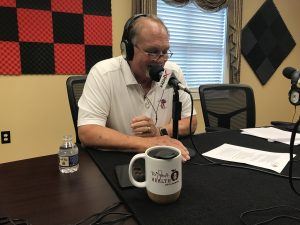
Tagged With: Dayton accounting, Dayton business advisory, Dayton CPA, Dayton CPA firm, Emory University, Gordon Rogers, Investors Choice, Kennesaw State University, Michael Blake, Mike Blake, Mosley Ventures, Sig Mosley, Siggie Awards, Siggies, startup community, startup ecosystem, startups, venture capital, venture capital funding

NORTH ATLANTA’S BIZLINK: GNFCC Women In Business Award Winners Lindsey Petrini, WellStar North Fulton Hospital, and Staci Hutto, Troy University

April 17, 2019 by John Ray

North Fulton Studio
North Fulton Studio
NORTH ATLANTA’S BIZLINK: GNFCC Women In Business Award Winners Lindsey Petrini, WellStar North Fulton Hospital, and Staci Hutto, Troy University
Loading
00:00 /
RSS Feed
Share
Link
Embed

Download file

Staci Hutto, Kali Boatright, and Lindsey Petrini

Show Summary

This edition of “North Atlanta’s Bizlink” features two GNFCC Women in Business Award Winners for 2019. Lindsey Petrini, Chief Operating Officer of WellStar North Fulton Hospital is the 2019 JenLan Rising Star Award Winner, and Staci Hutto, Atlanta Area Coordinator for Troy University, is the Runner-up for the JenLan Rising Star Award. These exceptional leaders were interviewed by Kali Boatright, CEO of the Greater North Fulton Chamber of Commerce and Host of “North Atlanta’s Bizlink.”

The award is named for Jennifer Lan, a young professional and GNFCC member who passed away in 2013, the first year of the Women in Business luncheon. Each year, GNFCC honors young professionals who demonstrate the qualities of a born leader, are relentless in reaching their professional goals; and triumphs over obstacles with the Jen Lan Rising Star Award.

Lindsey Petrini, Chief Operating Officer, WellStar North Fulton Hospital

Lindsey Petrini, Chief Operating Office, WellStar North Fulton Hospital

Lindsey Petrini is the Chief Operating Officer of WellStar North Fulton Hospital. WellStar North Fulton Hospital is a 202-bed facility located in Roswell, Georgia. The hospital is recognized for its accredited cancer program, trauma and primary stroke center designations, and for providing a continuum of services through its centers and programs, including neurosciences, pain management, cardiology, women’s services, rehabilitation, surgical services and oncology. For more information click here.​


Staci Hutto, Area Coordinator, Troy University

Staci Hutto, Atlanta Area Coordinator, Troy University

Staci Hutto currently serves as the Area Coordinator for Troy University in Atlanta, Georgia.  Staci is a two-time graduate of Troy University.  She has a Bachelor of Science in Marketing and a Masters in Public Administration.  Staci works each day with students from all walks of life to ensure their enrollment process at TROY is unmatched and unrivaled by any other institution of higher learning.

Mrs. Hutto also oversees the TROY Partnership program, which offers businesses and organizations an opportunity to further their employee’s educational opportunities through TROY. Staci has served in various capacities and functions in higher education for nearly 9 years now.  Recently, Mrs. Hutto was the catalyst in moving TROY’s Atlanta office to the North Fulton economic powerhouse.  The new location boasts a state of the art facility that encourages creative learning and networking amongst students.

Staci and her husband have two sons and reside in Atlanta Metro area.

About GNFCC and “North Atlanta’s Bizlink”

Kali Boatright, President and CEO of the Greater North Fulton Chamber of Commerce

North Atlanta’s Bizlink is produced by the Greater North Fulton Chamber of Commerce (GNFCC) and is hosted by Kali Boatright, President and CEO of GNFCC. The Greater North Fulton Chamber of Commerce is a private, non-profit, member-driven organization comprised of over 1400 business enterprises, civic organizations, educational institutions and individuals.  Their service area includes Alpharetta, Johns Creek, Milton, Mountain Park, Roswell and Sandy Springs. GNFCC is the leading voice on economic development, business growth and quality of life issues in North Fulton County.

The GNFCC promotes the interests of our members by assuming a leadership role in making North Fulton an excellent place to work, live, play and stay. They provide one voice for all local businesses to influence decision makers, recommend legislation, and protect the valuable resources that make North Fulton a popular place to live.

For more information on GNFCC and its North Fulton County service area, follow this link or call (770) 993-8806.


Tagged With: gnfcc podcast, gnfcc radio, GNFCC Talent Coalition, GNFCC women in business, greater north fulton chamber, Greater North Fulton Chamber of Commerce, Kali Boatright, north atlanta's bizlink, North Fulton healthcare, North Fulton hospital, talent coalition, The Greater North Fulton Chamber of Commerce, Troy University, Troy University Atlanta, Wellstar North Fulton, Women in Business, women in business award winners

Dr. Ruben Boling, University of North Georgia, and Caleb Hearn, Opus Affinity

April 16, 2019 by John Ray

North Fulton Business Radio
Dr. Ruben Boling, University of North Georgia, and Caleb Hearn, Opus Affinity
Loading
00:00 /
RSS Feed
Share
Link
Embed

Download file

John Ray, Dr. Ruben Boling, and Caleb Hearn

Dr. Ruben Boling, Director, Center for Entrepreneurship and Innovation, University of North Georgia

Dr. Ruben Boling, Director, Center for Entrepreneurship and Innovation, University of North Georgia

With over 30 years of combined experience in business and academics, Dr. Boling has developed an expertise in the fields of strategy, entrepreneurship and management. During his business career, Ruben has served in leadership and staff positions for several major companies including Arthur Andersen, Georgia Power and WorldColor. He has also served as owner or co-owner of two different small businesses and as a key partner in start-up initiatives in larger companies and institutions. His managerial and consulting experience has spanned several industries and focused on enhancing or improving strategy, customer acquisition and retention, and operations.


As part of the Mike Cottrell College of Business and as Director of the Center for Entrepreneurship and Innovation, Dr. Boling’s primary focus is to promote entrepreneurship and business leadership in the classroom and regional and international business community.

The Center for Entrepreneurship & Innovation in the Mike Cottrell College of Business at UNG is a collaborative initiative that engages students, faculty and staff across the University, as well as communities within the region who imagine, innovate, start and grow new and existing ventures. The initiatives within the Center for Entrepreneurship & Innovation are designed to spark entrepreneurial efforts become the go-to place for aspiring and existing entrepreneurs across the north Georgia region.

The University of North Georgia (UNG) comprises five campuses and almost 20,000 students. UNG offers more than 100 programs of study ranging from certificate and associate degrees to professional doctoral programs.


Caleb Hearn, CEO of Opus Affinity

Opus Affinity, a student business founded by Caleb Hearn and Sam Herrera at UNG, provides a means for brands and individual to share their unique amazing stories through their application, unique code recognition software, and direct integration into existing product label design.

Opus Affinity was a top 5 finisher in the 2019 Georgia Inventure Prize Competition.


Tagged With: craft brewery, Dr. Ruben Boling, entrepreneurial education, Entrepreneurship, Etowah Meadery, Georgia Craft Brewers Guild, Georgia Inventure Prize Competition, Mike Cottrell College of Business, Opus Affinity, QR code, Ruben Boling, Sam Herrera, Samuel Herrera, student entrepreneurship, University of North Georgia

  • « Previous Page
  • 1
  • …
  • 272
  • 273
  • 274
  • 275
  • 276
  • …
  • 282
  • Next Page »

Business RadioX ® Network


Our Most Recent Episode

CONNECT WITH US

  • Email
  • Facebook
  • LinkedIn
  • Twitter
  • YouTube

Our Mission

We help local business leaders get the word out about the important work they’re doing to serve their market, their community, and their profession.

We support and celebrate business by sharing positive business stories that traditional media ignores. Some media leans left. Some media leans right. We lean business.

Sponsor a Show

Build Relationships and Grow Your Business. Click here for more details.

Partner With Us

Discover More Here

Terms and Conditions
Privacy Policy

Connect with us

Want to keep up with the latest in pro-business news across the network? Follow us on social media for the latest stories!
  • Email
  • Facebook
  • Google+
  • LinkedIn
  • Twitter
  • YouTube

Business RadioX® Headquarters
1000 Abernathy Rd. NE
Building 400, Suite L-10
Sandy Springs, GA 30328

© 2026 Business RadioX ® · Rainmaker Platform

BRXStudioCoversLA

Wait! Don’t Miss an Episode of LA Business Radio

BRXStudioCoversDENVER

Wait! Don’t Miss an Episode of Denver Business Radio

BRXStudioCoversPENSACOLA

Wait! Don’t Miss an Episode of Pensacola Business Radio

BRXStudioCoversBIRMINGHAM

Wait! Don’t Miss an Episode of Birmingham Business Radio

BRXStudioCoversTALLAHASSEE

Wait! Don’t Miss an Episode of Tallahassee Business Radio

BRXStudioCoversRALEIGH

Wait! Don’t Miss an Episode of Raleigh Business Radio

BRXStudioCoversRICHMONDNoWhite

Wait! Don’t Miss an Episode of Richmond Business Radio

BRXStudioCoversNASHVILLENoWhite

Wait! Don’t Miss an Episode of Nashville Business Radio

BRXStudioCoversDETROIT

Wait! Don’t Miss an Episode of Detroit Business Radio

BRXStudioCoversSTLOUIS

Wait! Don’t Miss an Episode of St. Louis Business Radio

BRXStudioCoversCOLUMBUS-small

Wait! Don’t Miss an Episode of Columbus Business Radio

Coachthecoach-08-08

Wait! Don’t Miss an Episode of Coach the Coach

BRXStudioCoversBAYAREA

Wait! Don’t Miss an Episode of Bay Area Business Radio

BRXStudioCoversCHICAGO

Wait! Don’t Miss an Episode of Chicago Business Radio

Wait! Don’t Miss an Episode of Atlanta Business Radio