Business RadioX ®

  • Home
  • Business RadioX ® Communities
    • Southeast
      • Alabama
        • Birmingham
      • Florida
        • Orlando
        • Pensacola
        • South Florida
        • Tampa
        • Tallahassee
      • Georgia
        • Atlanta
        • Cherokee
        • Forsyth
        • Greater Perimeter
        • Gwinnett
        • North Fulton
        • North Georgia
        • Northeast Georgia
        • Rome
        • Savannah
      • Louisiana
        • New Orleans
      • North Carolina
        • Charlotte
        • Raleigh
      • Tennessee
        • Chattanooga
        • Nashville
      • Virginia
        • Richmond
    • South Central
      • Arkansas
        • Northwest Arkansas
    • Midwest
      • Illinois
        • Chicago
      • Michigan
        • Detroit
      • Minnesota
        • Minneapolis St. Paul
      • Missouri
        • St. Louis
      • Ohio
        • Cleveland
        • Columbus
        • Dayton
    • Southwest
      • Arizona
        • Phoenix
        • Tucson
        • Valley
      • Texas
        • Austin
        • Dallas
        • Houston
    • West
      • California
        • Bay Area
        • LA
        • Pasadena
      • Colorado
        • Denver
      • Hawaii
        • Oahu
  • FAQs
  • About Us
    • Our Mission
    • Our Audience
    • Why It Works
    • What People Are Saying
    • BRX in the News
  • Resources
    • BRX Pro Tips
    • B2B Marketing: The 4Rs
    • High Velocity Selling Habits
    • Why Most B2B Media Strategies Fail
    • 9 Reasons To Sponsor A Business RadioX ® Show
  • Partner With Us
  • Veteran Business RadioX ®

Search Results for: kids care

Melissa Cantrell With CDH Partners

January 6, 2022 by Jacob Lapera

Melissa Cantrell1
Cherokee Business Radio
Melissa Cantrell With CDH Partners
Loading
00:00 /
RSS Feed
Share
Link
Embed

Download file

This Episode was brought to you by

The Innovation SpotAlma Coffee


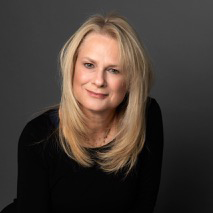
HeadshotMelissaMelissa Cantrell is the President and CEO of CDH Partners, where she handles operations to establish short and long-term goals, plans and strategies, as well as resourcing, employee growth, and budgets.

When she is not deciding operational strategies, building a diverse, well-oiled team, or networking, she is the principal of CDH’s education studio – ensuring resources and managing designs.

As the Principal of our Education Studio, Melissa has built her career upon delivering innovative architectural design and master planning to public and private educational clients. Her comprehensive experience has equipped her with an expansive understanding of the challenges facing today’s educational facilities.

As the first female executive of CDH, Melissa moved the dial to garner more than 50% female ownership and leadership in less than two years in her position at CDH Partners – an often-unheard-of feat in a predominantly male-led industry.  With this move, she was able to create a more inclusive culture all while experiencing the disruptive pandemic.

Melissa has created an environment that is inclusive, forward-thinking, and familial. Our employee retention and tenure rates are exceptional for the industry – with most of our staff averaging 15 years with CDH. All staff are encouraged to pursue education and networking to grow themselves personally and professionally.

Melissa has had an eventful 12 months – taking over operations and creating a diverse ownership team and managing 30% of the projects and revenue for firm. She is a recognized Author, Speaker, and Thought Leader in the development of Future Ready Schools in the Georgia Education Market. She has won multiple design awards in this market segment.

Follow CDH Partners on Facebook and LinkedIn.


This transcript is machine transcribed by Sonix


TRANSCRIPT

Intro: [00:00:07] Broadcasting live from the Business RadioX Studios in Woodstock, Georgia. It’s time for Cherokee Business Radio. Now here’s your host.

Stone Payton: [00:00:23] Welcome to this very special edition of Cherokee Business Radio Stone Payton here with you this morning and today’s episode is brought to you in part by Bagshot shot video and photography. Of course, they specialize in real estate and architectural video and photography. Reach out to talk with Randall Beck at info at Bagshot or give him a call at five one six five zero nine six nine four three and tell them Stone since you, you guys are in for a real treat this morning. It’s our first broadcast of 2022. It’s our special design series and we have with US President and CEO of CDH Partners Miss Melissa Cantrell. How are you?

Melissa Cantrell: [00:01:06] I am great. Thanks for having me here, Stone.

Stone Payton: [00:01:09] Well, it’s absolutely my pleasure. And of course, we owe a debt of gratitude to Courtney Shand. Is that the right best saying that right chantry? All right. We owe a debt of gratitude to Courtney because she’s the one that coordinated this thing and put this thing together. But I’m looking forward to this for weeks. You’re the president and CEO of Seed Partners. Tell us a little bit of mission purpose. What are you out there trying to do for folks?

Melissa Cantrell: [00:01:33] Yeah, absolutely. So we are an architecture and interior design firm located in Atlanta, Georgia. We specialize in health, health care facilities, education worship and then also live work, which is corporate and some light industrial projects. We were established in 77

Stone Payton: [00:01:54] And we were five.

Melissa Cantrell: [00:01:55] Well, thank you. I was three

Stone Payton: [00:02:00] Seconds ago, you did good,

Melissa Cantrell: [00:02:05] But over the years have just allow the company to grow and mature. We have a great legacy that we carry with us and looking forward to a tremendous future.

Stone Payton: [00:02:15] So how does one find themselves in the position of president and CEO of a firm like this? Tell us a little bit about the backstory in the path.

Melissa Cantrell: [00:02:24] Sure. Well, for me, I became an architect because of a long history there. The family legend has it that we’re related to Buckminster Fuller, and I don’t know who who all out there knows who Buckminster Fuller is, but he developed the geodesic dome. So I grew up as a young child hearing about Buckminster Fuller and these amazing structures that he created. But I also had a tremendous influence from my mother. So not only is architecture and engineering in my blood, but my mother was a residential builder. During the the 80s, which was really unusual at that point in time to have a woman, a woman in construction, much less to own her own construction company. So I grew up on the job site, stepped on many nails over the years, so I carry my scars with me. But that’s really what allowed me to develop my love for the built environment. So growing into that, knowing that from a young age, I wanted to be an architect because I knew construction wasn’t for me.

Stone Payton: [00:03:32] That’s the value of experience like that. I knew I didn’t want to be a school teacher. I didn’t know what I was going to be, but I was going to be a basketball coach or a school team. There you

Melissa Cantrell: [00:03:39] Go. But really, knowing that I wanted to make an impact and architecture was a way for me to do that. So I went to Georgia Tech, grew through the program there, graduated and I was looking for a company that was going to allow me to fulfill my ambition and my desire to make that impact in our society and our communities. Talk to many firms, but seed age really encompassed everything that I was looking for. The the company itself was very family oriented. All the market sectors are ones in which we touch human lives. We impact them health care. We we, you know, heal the body worship, we heal the mind and spirit. And then in education, we really begin to develop the young souls that are going to really drive our society’s moving forward. And then even within our corporate environments, I mean, think about everything that you’re experiencing in the studio today. The acoustics, the lighting, everything impacts the way you thrive in your environment, in your business. So that really spoke to me. So developing within the company as a young intern, watching the ups and the downs and the ebbs and flows of the market and our communities really just began to build in me, and I began to take on more leadership roles within the company.

Stone Payton: [00:05:10] And voila, here you are. Here I am. So we do some work and you may be aware of this. We do at DC Radio. We haven’t been down there in a while with all the COVID craziness and all that we’ve. On some virtual stuff, we’ve continued to do that, but with their accelerator programs, we’ve got a few folks in that in that Georgia Tech, where what is it about Georgia Tech that is that produces such marvelous, successful, not just talent, but it seems like the people that I’ve had the good fortune of, of getting to know over the years that come from that ecosystem. They just they’re very invested in the community and the business community, the community at large, the most, they’re all. Everyone I’ve met is very successful, but they’re they’re very committed to this. This impact you speak of, aren’t they?

Melissa Cantrell: [00:05:58] We really are. And I say we because I do feel that the College of Architecture, specifically with the influence and emphasis on social impact, but across the board, I mean, we’re we’re trained, we’re taught the technical nuances of our specialties, but we’re also taught that everything we do has that impact and we’re taught different ways to contribute to our communities, whether that’s in our businesses, within political aspirations or even within the social giving that we’re we’re trained to participate in.

Stone Payton: [00:06:36] So what do you like the most? Well, let me back up, what did you like most about the I don’t even know what to call it, the rank and file work of being an architect, I guess. And then what do you like most about what you’re doing now?

Melissa Cantrell: [00:06:47] Yeah, absolutely. What did I like most about the rank and file would probably be touching those individuals working with our clients to to really establish what is their vision for what they look for at the end of the project. So they come to us with ideas. They don’t know really how what that looks like and to be able to take those thoughts and the aspirations that they have for those spaces and carve and shape it into something that really begins to establish their work environments or their their learning environments, their worship environments for the next 50 years. And then to see them the day that that facility opens, especially the students, the kids, when the doors open and they flood the space and just the oohs and ahs and the tears and the joy that they feel, especially in disadvantaged areas where schools are their safe place or worship facilities are their home, or even where the health care facilities really heal not just their bodies, but their families is just so impactful. And that is what brings me to work every day. It’s what drives me to do more and to do better. And then for me and my role today, it’s seeing that not just with any one particular market sector. My focus, my specialty is education. But to see as as the CEO and president to have that influence over all of our market sectors is really impactful. And to to be able to develop the leaders within our firm and the leaders in our communities is really soul fulfilling

Stone Payton: [00:08:42] The skill sets. This happens to me a lot. I get surprised more than I should, but I’m always surprised that people who have extreme technical competence and whatever their craft is. And then I find that that is there’s so much more that is required to that has brought them to where they are. I’ve seen that in other domains, people who who manage wealth, people who help you organize businesses, and it’s it’s occurring to me. I have to confess, I didn’t think of it that in your line of work. Yes, there’s the technical competence because there must be a thousand and one things that you should take into consideration if you’re trying to create an environment that’s conducive to educating a child. But there’s also this whole other side of things that you’re talking about to bring whomever’s vision to the to the for the first, well, maybe do individuals often possess both? Or is it a matter of finding individuals that possess one or the other and putting them together?

Melissa Cantrell: [00:09:44] So what we look for in our talent is those individuals who have those technical competencies, which I’ll be honest with you, that’s a given for

Stone Payton: [00:09:55] First like table stakes, its table

Melissa Cantrell: [00:09:57] Scale. It really

Stone Payton: [00:09:58] Is. You’ve got to have that

Melissa Cantrell: [00:09:59] Right, right? But when we look for employees, whether they’re in the production realm, where they’re going to be working with our clients or even in our operational aspects like Courtney here, we’re looking for individuals that seek a higher purpose where what we do means more than just. Creating a building because we have people we do have the the more technically geared individuals where. That is their love and their passion, and we need them, right? But the the individuals that are really going to take our firm and our buildings, our projects and our clients to that next level are those individuals that have that passion and that desire to to make an impact, to bring a building to a higher level and to provide spaces that are really going to drive success for our clients.

Stone Payton: [00:10:55] So the recruiting and development for you is critical. I mean, recruiting people that fit that fit those characteristics and then keeping them engaged motivated. But I mean, this is this is part of your job.

Melissa Cantrell: [00:11:11] It is. It is. And that’s been a huge part of the last few years for us. So I became president in 2019 and we went through a series of changes, not to mention this pandemic that we live in, that really actually in many ways escalated or expedited what my vision for the company was moving forward, allowing us to have a hybrid work environment, allowing us to provide more transparency to keep our employees engaged, which was admittedly relatively difficult in the pandemic. But we were one of the first in the industry to bring our employees back in a safe working environment a couple of days a week while allowing them to work in a hybrid environment outside of that. And we’ve continued that, but we’ve also brought back different opportunities within our organizational structure to to drive that engagement and to keep them involved and motivated and together.

Stone Payton: [00:12:12] So am I just being old fashioned, uninformed or is my instinct right? Is it still at this point, a little unusual to have a female in a position of this high leadership in this arena, this architectural?

Melissa Cantrell: [00:12:27] It really is. So there’s only 50 percent of the graduates from architectural programs are women. Only 20 percent of those are licensed professionals, and only 17 percent of our industry are actually executives or principals in leadership positions in architecture. It is a very unusual situation to have a female in a leadership position. But I do believe that that actually allows us to position ourselves even better with our clients and within the industry. Not because I’m a woman, not because of any, you know, the WB, although that does allow us some some opportunities within the federal arena. But really, because I think as women, we manage differently, we we try to be more engaged, we’re more connected. And for myself, it really allows me to connect with my employees a bit better and with the team. I try not to look at it as a hierarchy, but more as a unified approach. We do have a leadership team which actually is more than 50 percent women and where more than 50 percent women owned as well across our shareholder. So we’re we’re very proud of that fact. Our clients like that. It connects with them as well and allows us to provide more diversity within our approach.

Stone Payton: [00:13:59] As you were speaking, I was thinking Business RadioX the brains of the outfit. Holly Peyton, my wife, Abby Cantor, my business partners. Why we need to formalize that, probably because we’re like 100 percent as far as brain work run by. There you go. And I do the fun stuff, right? We come into the studio and chat with you guys and that kind of thing, or go out and do these conferences and trade shows and stuff. But make no mistake about it is if there’s anything you like about the Business RadioX network, you can thank our Abby and Holly. So, so you spoke to about change a few moments ago. Tell us a little bit more about what have you learned or discovered or has surprised you about managing an organization through changes like that?

Melissa Cantrell: [00:14:45] Wow, that’s a loaded question. When I when I took the position in July of nineteen, I had no idea what I was in for. You know, the pandemic aside, just the leadership of the the firm itself, looking at how we as architects because we are a creative group, which also means that we are also a bit more emotional and emotionally engaged than than other industries might be very. As I mentioned, very passionate about what we do and the company itself. The way we’re structured within the market sectors, somewhat siloed us, and over the last two years, I’ve taken a tremendous, tremendous focus on de siloing of pulling our leadership team together, pulling our studios together and creating opportunities for each of them to have their own identity as subject matter experts. But for all of us to also learn from the synergies of this market sectors and allow that subject matter expertize to flow into other arenas, for instance, looking at how our worship centers are structured for children’s ministries and using some of what we’ve learned from the higher education or the K-12 market to bring that synergy into it or for health care, bringing our expertize there into our higher ed world to begin to inform spaces for the the health sciences industries or markets. So really, looking at how those different markets, that knowledge that expertize those skill sets can drive the business and make us more impactful for our clients and for their projects?

Stone Payton: [00:16:42] Well, I am curious to understand how the whole sales and marketing thing works for a firm like yours, but I got to believe I got. I got to believe that having this, this knowledge and experience base of having designed these spaces that must really carry a lot of weight in the process. Yeah, but how does the whole sales of marketing thing work for you guys?

Melissa Cantrell: [00:17:06] It’s all relationships. I mean, it’s just it’s the same as business to business. You know how you market there. It’s it’s just about relationships, developing interpersonal connections with people like yourself who maybe one day you want to build your own studio.

Stone Payton: [00:17:25] Over incidentally.

Melissa Cantrell: [00:17:26] Awesome. Well, remember CBH Partners?

Stone Payton: [00:17:29] All right, you got it.

Melissa Cantrell: [00:17:31] But working with our clients, I mean, the path to a project may take years to develop to develop that, that connection with that individual or that business, to really define what’s important to them and to their industries, find out what their pain points are and work on solutions to solve those. That’s what drives us to get that next project. Our understanding and our mutual respect for our businesses is really the key to success when it comes to that.

Stone Payton: [00:18:05] It’s amazing. I can’t draw a stick figure as my wife knows, she teaches art classes on the side. You know, she’s got her first watercolor painting class. She’s incredibly artistic. I couldn’t draw a square if I had to, but I’m from the professional services world a long, long time ago when I had black hair. You know, it’s something closer to a religion. I come from the professional services, the consulting, training, speaking world and what you’re describing. That’s what makes a really good consultant, trainer, speaker or or successful relationship oriented, not far less transactional, right? Much more, much quicker to invest in the ecosystem or the or the community and focused on trying to get inside kind of almost projecting themselves into the to the mind or the other person and really understanding, you know, how they feel and what their. And now what I’m hearing you say is that’s what it is. That’s why you guys are at the top of your field in the architectural arena.

Melissa Cantrell: [00:19:06] That’s exactly what’s fascinating. Yeah. Listening is the key, right? Understanding what they need, understanding what you’re looking for. It it it is the key to success, and it’s unfortunately not something that they teach us in architecture school. But a lot of it is God, given a lot of it is training and a lot of it is observation and watching our predecessors and then also teaching that down to those who are going to be our successors.

Stone Payton: [00:19:34] So where are you thinking about taking this thing, you and you and you and Courtney and crew, where are you going to take this thing?

Melissa Cantrell: [00:19:41] What’s next? What is next? We are looking at some emerging markets or emerging markets for CD and really developing going broader and deeper in the markets that we’re in. We, as I mentioned within the health care studio market sector, we we categorize them as studios. It makes up about 60 percent of our revenue. And I mean, look around you as we are in the midst of a pandemic, the way in which the health care arena is modifying and changing to accommodate that. And I mean, lots of lessons learned there. And there was a tremendous loss of revenue for the health care industry during the height of the pandemic, when all of this broke in 2020. They didn’t know what to do there their hospitals were. Flooded with patients, and they couldn’t they had to redirect all of their assets, all of their resources to deal with that. And now they’ve begun to find that balance. I say that as Omicron begins to to take its hold on our communities. But you know, that really defined the direction that they were going to go. So going broader and deeper within those understanding what our clients need, how do we take our technical expertize and hire a consulting team that’s going to support that mission, to drive success, to make them whether who, whoever them is to, to have more ambition within their their revenue streams? That is also ours. We intend to grow. We are growing. We grew 15 percent last year.

Stone Payton: [00:21:28] Congratulations.

Melissa Cantrell: [00:21:29] Thank you. Not just in revenue, but also in staff. We were strategically adding key members of our team. And you know, recruiting is difficult right now, but it’s even more difficult when when I talk to you about what we’re looking for in key individuals, so we don’t hire just anybody, but growth is where we want to take this. We’re looking for a five to 10 percent growth this year and then looking at different markets where that can occur, you know, put a plug in. We’re looking for a great interior designer, OK, who can really begin to define our corporate environments? You know, that is coming back. It’s going to come back a little bit differently. Not sure if that’s going to be larger square footages or smaller square footages, but it certainly is going to mean that we work differently in the future. Hopefully, it doesn’t mean that we’re all in cubicles again because I sure do enjoy having an open office environment. But it definitely means that the work environment is going to be different and more creative in itself.

Stone Payton: [00:22:40] So you spoke to this a little while ago, listening how important that is, and you strike me as an individual. Your organization strikes me as the type of of entity that would probably go to some lengths to get clients and even potential clients together in some fashion to just get their input, get their opinion. Have you had a chance to do a little bit of that in some fashion? And if so, what have you learned? The reason I’m asked a reason I’m asking is I could see a hospital administrator and an assistant superintendent of a school system having some very similar ideas. And maybe maybe they could cross pollinate, right?

Melissa Cantrell: [00:23:21] Yeah, that’s a great idea.

Stone Payton: [00:23:24] You’re welcome. I’ll send you a bill. Thanks.

Melissa Cantrell: [00:23:27] Appreciate that. We we haven’t done that as formally. We do that with every project because it seems like every time we start a new project, there’s a new set of issues that we have to operate around opportunities within the design of that particular facility that we’re looking at, whether that’s a renovation or a new project. But no, we have not looked at that across the board as far as bringing those individuals together.

Stone Payton: [00:23:58] Well, I cheated a little bit. Those are two words that I have a little bit of on the periphery. My father was a school superintendent, a long, you know, four four. Well, they voted him in and then they voted him out. But my mom and dad were in the school system. And so anyway, I just thought about, Hey, you know, as like, I bet if he had any or he had any role in designing a new school, the so many of the considerations would not have even they would be thinking about a whole different set of things right now.

Melissa Cantrell: [00:24:29] They did. Yeah, absolutely. I mean, how large is a classroom? What’s the inner changes to keep that that positive airflow through the classrooms that came from health care? Right. So the the amount of air changes that a health care facility has to have to keep that air clean and ventilated and exhausted is now being input into the way schools are being designed within their mechanical systems. So again, that comes to the synergies between the market sectors and and to your point, how you know, the CDC has influenced the design of schools and OSHA as well.

Stone Payton: [00:25:14] Well, you’ll be delighted to know. I think the space we’re in, it’s so, it’s so new. We’ve got the gym jammie. I don’t know what to call it, but you’ll know what to call it, but the air scrubbing stuff or whatever, and they did that just, you know, because they, you know. This thing is only like a year old, so they built that out. Speaking of studios, I’ve enjoyed having this one. We’re in a co-working space called the innovation spot. I mean, right in the heart of Woodstock, like a mile from downtown, which I walk here a lot because I live on the edge of town. It’s a it’s a great space. I envision the innovation spot expanding like next door to the next building as well, and I love it. And one of our sponsors gave us this, this kind of wall that we’re looking at, and it’s got some of our community partners plastered plastered on it. We have studios all over the country here in the network, and I really love coming into this space. It’s just to me, it’s fun. You use the word studio earlier. What does studio mean in your world? Is it like a physical location or what is it?

Melissa Cantrell: [00:26:14] Well, so our the word studio in architecture actually comes from the bowel health movement back in the the 50s, actually before then. But it is just a group of individuals who are focused on a particular, in our case, market type. Ok, so we have we do cluster are team members in groups, but we also, as I mentioned, that open office environment have very low partitions, so everybody is really together. O ne allows for that collaboration, but for us, studio just specifically means that market focus

Stone Payton: [00:26:54] And what are they? Again, you mentioned them at the top of the show, but yeah, what are those those those major areas?

Melissa Cantrell: [00:26:59] So again, health and wellness, which is our health care facility, and that range is anywhere from small medical offices to new towers. We’re actually doing a replacement tower for well star right now. Oh, fun. Yeah, we’re excited about that. For our worship and community. It is everything from churches, so Mt. Power and Church of God apostles perimeter. We’ve done some work here in Woodstock and then also through community centers and actually working with some of the local municipalities, education and research. So we work with Kennesaw State University, Clayton State University, the local Cobb School System, Fulton DeKalb, Atlanta public, but then also in the research area. Adolescents, which is right down the road from here, did their new R&D facility and working with them right now on some warehousing space and some manufacturing area for them and then live work. So Walton on the Chattahoochee did an apartment complex for them. If you haven’t been down there as beautiful, do a lot of senior living facilities.

Stone Payton: [00:28:11] Oh, I didn’t even think about Wow, I bet that’s that’s not going anywhere.

Melissa Cantrell: [00:28:15] It is not going anywhere for a while there. It definitely slowed down. But the because the lending, but the lending is back and everybody’s building again, so.

Stone Payton: [00:28:26] So before we wrap, I’d love to get some council provides some counsel from you, if we could, on two fronts. And one is on any person, maybe particularly female. But I’m not going to confine the conversation to that. Who has an eye toward growing into a role of this nature, one that has this kind of impact, one that’s going to influence these kind of lives that maybe they want to be an executive, a leader of some kind. And I don’t know, maybe dos, don’ts lessons learned, you know, or any counts because because somewhere out there, whether it’s today live or, you know, they may hear this six months from now, you know, maybe if they heard a little something from from this Melissa Gal, who has accomplished so much and is getting a chance to play at this level. Any insight there on that front? Maybe.

Melissa Cantrell: [00:29:21] Oh, wow. I would say find a mentor. That was a really impactful move for me. My mentor, actually, I had several over my career and not all of them were in architecture. Of course, there was Bill Chetwynd, who was one of the founding partners of the company, who has made a tremendous impact on my career, could not be here without him and give a big shout out to him, but also to my my stepfather, Dennis Burnette, who was the CEO and president of a number of banks in our local area, and how he directed me from a non architectural perspective to really understand business and to make some key decisions also was very impactful. But finding that mentor that guide, I wish I had more female influence in my professional career growing through the industry. It just wasn’t set up that way, but that’s not the case today. There are so many talented strategic women out there that. These young women could could go to and lean on, but also for the young men not to exclude them.

Stone Payton: [00:30:41] Yeah, we can use a little help with the answer, but go find a woman, they could give

Melissa Cantrell: [00:30:47] You some, actually.

Stone Payton: [00:30:50] Look, I wouldn’t be here if it wasn’t for Payton.

Melissa Cantrell: [00:30:53] That’s right. But I do believe that that is key. Using your networks, I wish I had learned that earlier on or listened to that advice earlier on in my career and being not so humble as to accept help. Hmm.

Stone Payton: [00:31:13] Thank you. I’m glad I asked, because I think that’s marvelous counsel, and it’s a good reminder for people like me who have been blessed to have some mentors. And I don’t know that I really spent much energy seeking out that kind of support last year. And there’s no reason I shouldn’t continue to do that. Absolutely.

Melissa Cantrell: [00:31:30] I’m doing continuously every day.

Stone Payton: [00:31:36] And then from the other side of the desk advised on for a client or a potential client, what can what can we be doing so that we get the most out of our relationship? Well, I guess with any professional services provider, but particularly, you know, from somebody in your arenas, what could what could we be doing? What could we do to to get the most out of it and make it the richest experience possible?

Melissa Cantrell: [00:32:03] Yeah, that’s a great question.

Stone Payton: [00:32:05] It took me a minute to get it out, but I thought a fantastic question. That is a fantastic question.

Melissa Cantrell: [00:32:10] I think it really boils down to coming with an open mind. You know, bring your thoughts, your your vision, your dreams for what that project will be. Just vocalize it. But then also allow your architect or your designer to to shape that it may not be what you thought it was going to be. But more often than not, you’re going to be more pleased with the result. So allow the creatives to to do what we do. But but just, you know, come with that open mind that that thought process to really think differently. That’s what we’re trained to do. But it’s not always what we get to do.

Stone Payton: [00:33:00] What a fantastic way to launch our program for this year. Melissa Cantrell, President and CEO of Seeds Partners. I cannot thank you enough for coming in and visiting with us. Let’s make sure before we leave here that our listeners know where they can, where they can go. Learn more if they want to have a conversation where maybe somebody on your team or whatever you think is appropriate, the website, LinkedIn, whatever you think. Let’s make sure we have a way for them to connect.

Melissa Cantrell: [00:33:30] Yeah, absolutely. Our website is very simple. Its partners. That’s the best way to learn more about us. We’ll have a website relaunch here in the next few weeks, so

Stone Payton: [00:33:43] Courtney is nodding your head and smiling.

Melissa Cantrell: [00:33:45] It’s going to be amazing. We’re super excited about that. And then you can also call me. I’ll give you my direct line. Oh, my six seven eight seven eight four three four eight one. And you can reach out to me directly. I’d love to talk to you more about any projects you have, even help you with some thoughts and lead you in the right direction, even if that does not mean that you end up working with Seed H. My main goal is to make sure that our clients and prospective clients are successful moving forward.

Stone Payton: [00:34:17] What an absolute delight to have you in in the studio. Thank you so much for coming

Melissa Cantrell: [00:34:22] In and my pleasure, Stone. Thank you so much.

Stone Payton: [00:34:24] All right. Until next time, this is Stone Payton for our guest today and everyone here in the Business RadioX family saying we’ll see you next time on Cherokee Business Radio.

Tagged With: CDH Partners, Melissa Cantrell

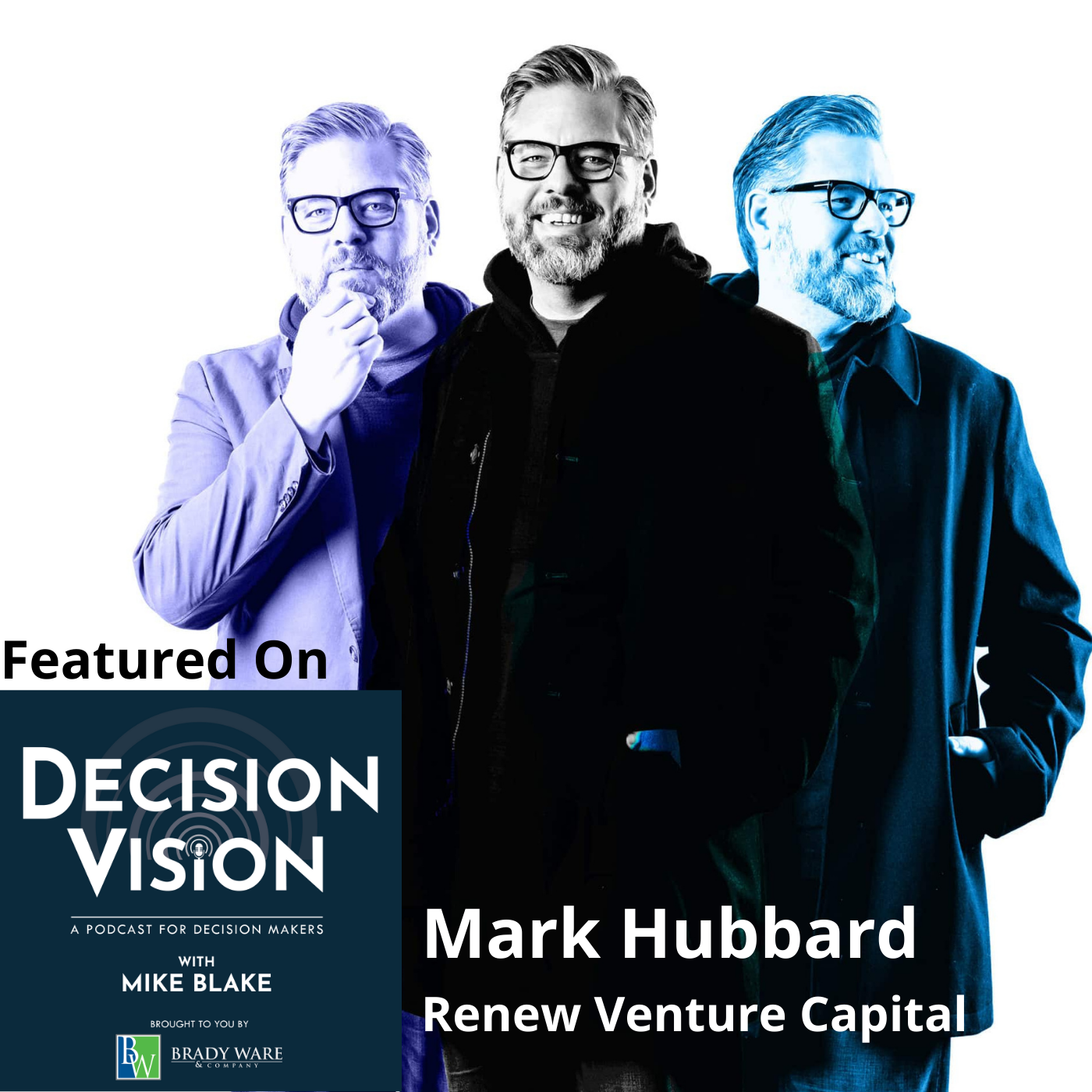
Decision Vision Episode 150: Should I Pivot? – An Interview with Jocelyn Brady, Brain Coach

January 6, 2022 by John Ray

Jocelyn Brady
Decision Vision
Decision Vision Episode 150: Should I Pivot? - An Interview with Jocelyn Brady, Brain Coach
Loading
00:00 /
RSS Feed
Share
Link
Embed

Download file

Jocelyn Brady

Decision Vision Episode 150:  Should I Pivot? – An Interview with Jocelyn Brady, Brain Coach

When Jocelyn Brady began to be bored and even resented the projects she was working on in her business, she recognized an itch she needed to investigate. Then came the pandemic, which caused its own disruption, and Jocelyn pivoted away from writing and content creation to working as a Brain Coach. In this conversation with host Mike Blake, Jocelyn describes what it is like to have a successful company and yet be unfulfilled, the impact of Covid on her trajectory, her mixed feelings about the word “coach,” and much more. Decision Vision is presented by Brady Ware & Company.

Jocelyn Brady, Brain Coach, Speaker & Chief Play Scientist

Jocelyn Brady, Brain Coach, Speaker & Chief Play Scientist

Jocelyn Brady is a writer, speaker, and professional brain jostler who thrives at the intersection of comedy, storytelling and unraveling the mysteries of the human brain. When she’s not being the Bill Nye of the brain (as the creator and host of her series Tiny Tips, the Internet’s favorite way to Brain), Jocelyn applies her certified Brain Coaching chops to help creative visionaries tap their brains’ greatest potential.

In her past life—as an award-winning copywriter, Creative Director, and agency CEO—Jocelyn led narrative strategy and international storytelling training for some of the world’s biggest brands. She also produced and co-hosted Party Time, a standup comedy and storytelling show featuring talent who went on to write or perform for Conan, Colbert, and Comedy Central. All while managing to keep her two cats and houseplants alive.

Jocelyn’s first book, tentatively titled Your Brain is a Magical Asshat, is slated for publication next year.

Website | LinkedIn | Twitter | Tiny Tips Series

Mike Blake, Brady Ware & Company

Mike Blake, Host of the “Decision Vision” podcast series

Michael Blake is the host of the Decision Vision podcast series and a Director of Brady Ware & Company. Mike specializes in the valuation of intellectual property-driven firms, such as software firms, aerospace firms, and professional services firms, most frequently in the capacity as a transaction advisor, helping clients obtain great outcomes from complex transaction opportunities. He is also a specialist in the appraisal of intellectual properties as stand-alone assets, such as software, trade secrets, and patents.

Mike has been a full-time business appraiser for 13 years with public accounting firms, boutique business appraisal firms, and an owner of his own firm. Prior to that, he spent 8 years in venture capital and investment banking, including transactions in the U.S., Israel, Russia, Ukraine, and Belarus.

LinkedIn | Facebook | Twitter | Instagram

Brady Ware & Company

Brady Ware & Company is a regional full-service accounting and advisory firm which helps businesses and entrepreneurs make visions a reality. Brady Ware services clients nationally from its offices in Alpharetta, GA; Columbus and Dayton, OH; and Richmond, IN. The firm is growth-minded, committed to the regions in which they operate, and most importantly, they make significant investments in their people and service offerings to meet the changing financial needs of those they are privileged to serve. The firm is dedicated to providing results that make a difference for its clients.

Decision Vision Podcast Series

Decision Vision is a podcast covering topics and issues facing small business owners and connecting them with solutions from leading experts. This series is presented by Brady Ware & Company. If you are a decision-maker for a small business, we’d love to hear from you. Contact us at decisionvision@bradyware.com and make sure to listen to every Thursday to the Decision Vision podcast.

Past episodes of Decision Vision can be found at decisionvisionpodcast.com. Decision Vision is produced and broadcast by the North Fulton studio of Business RadioX®.

Connect with Brady Ware & Company:

Website | LinkedIn | Facebook | Twitter | Instagram

TRANSCRIPT

Intro: [00:00:02] Welcome to Decision Vision, a podcast series focusing on critical business decisions. Brought to you by Brady Ware & Company. Brady Ware is a regional full-service accounting and advisory firm that helps businesses and entrepreneurs make visions a reality.

Mike Blake: [00:00:22] Welcome to Decision Vision, a podcast giving you, the listener, clear vision to make great decisions. In each episode, we discuss the process of decision making on a different topic from the business owners’ or executives’ perspective. We aren’t necessarily telling you what to do, but we can put you in a position to make an informed decision on your own and understand when you might need help along the way.

Mike Blake: [00:00:42] My name is Mike Blake, and I’m your host for today’s program. I’m a director at Brady Ware & Company, a full-service accounting firm based in Dayton, Ohio, with offices in Dayton; Columbus, Ohio; Richmond, Indiana; and Alpharetta, Georgia. My practice specializes in providing fact-based strategic and risk management advice to clients that are buying, selling, or growing the value of companies and their intellectual property. Brady Ware is sponsoring this podcast, which is being recorded in Atlanta per social distancing protocols.

Mike Blake: [00:01:08] If you would like to engage with me on social media with my Chart of the Day and other content, I’m on LinkedIn as myself and @unblakeable on Facebook, Twitter, Clubhouse, and Instagram. I also recently launched a new LinkedIn Group called A Group That Doesn’t Suck, so please join that as well if you would like to engage. If you like this podcast, please subscribe on your favorite podcast aggregator, and please consider leaving a review of the podcast as well.

Mike Blake: [00:01:32] Today’s topic is, Should I pivot? And we’ve done this topic before, probably about a-year-and-a-half ago. But as you know, if you’ve been a long time listener, I don’t mind revisiting a topic every once in a while, because certain topics, I think, just lend themselves well to different angles, different approaches. And something like a pivot, also, in my experience is a deeply personal experience. And so, everybody is going to come to a pivot, is going to experience a pivot, is going to engage with it, embrace it or not in their own unique way. And so, it’s one of those kind of evergreen topics that I don’t think we’ll ever get to a point where nobody ever pivots anymore.

Mike Blake: [00:02:17] And, also, frankly, from a very practical perspective, now that we’re recording podcast 140 something or whatever, like 148, I guess, or 149, the reality is that most people don’t go back and listen to a lot of the back catalog. We’re not Led Zeppelin. People aren’t going back to the initial records and trying to find the original recording. So, if you’re like most people and you’re relatively new to the podcast, statistically speaking, this will be a topic that we actually haven’t covered before. And if you want to hear more about it, then you can go back into the deep tracks in the archives somewhere around the double digit episodes. So, I hope you’re going to find this topic and this conversation as engaging as I anticipate that it will be.

Mike Blake: [00:03:02] You know, pivots are interesting because there are some very famous ones I don’t think people necessarily realized. Cornelius Vanderbilt – yes, that Vanderbilt family – initially started out with steamships. He actually started out with river barges around the island of Manhattan, and they are basically providing cut rate ferry service across the Hudson and East Rivers. And in doing so, got a lot of people killed because they used rickety boats. But that’s how they charge less for what they did. They eventually did pivot into steamships, which presumably were safer. I don’t know. I don’t have any data on that. And then, eventually railroads.

Mike Blake: [00:03:45] William Wrigley, whom you may know from Wrigley’s Gum – I don’t chew gum because it rip out all my dental work. But for those of you who do have good teeth, you may know of Wrigley – they originally were a baking powder company. Twitter, of all things, launched as a podcast directory. Yelp began as an automated email service. And YouTube, believe it or not, was once a dating site. So, we have Tinder now and we have all the others, but YouTube actually was not the YouTube that we know of today.

Mike Blake: [00:04:13] And, you know, I find it also an interesting topic because I find myself at odds intellectually with the investment community on one particular topic, and that is, Should you bet the jockey or the horse? And what that means to those of you who aren’t necessarily speaking Silicon Valley, it means that do you place the bet on the management of a startup or do you place your bet on the basic idea of the startup? And most investors will tell you that they bet the jockey, they bet the management team, over the actual idea figuring that a management team will actually figure it out.

Mike Blake: [00:04:55] The data – and this is empirically studied. This is actually a fairly old study, but still very good. It was published in the Journal of Finance back in 2011 – called it Do You Bet the Jockey or the Horse? And the empirical study determined that, in fact, the companies that generated the most value in their IPOs were the ones that had kept the fundamental idea, more or less start to finish, but actually had switched management teams.

Mike Blake: [00:05:21] And the reason behind that, I think, is that – again, probably torching this analogy beyond where it needs to go – if you have a slow horse, the best jockey in the world is not going to win the race of the slow horse. They may prevent you from coming in last. They may prevent you from having the horse fall over, break its leg, and you have to shoot it right down the track. But even a great management team can’t take a slow horse and win the Kentucky Derby. However, if you have the fastest horse, an average jockey might win that race because you actually have the fastest horse.

Mike Blake: [00:05:54] So, I think that there’s something to that. So, finding the right idea, finding the right business model, this highlights how important that is. Because if you don’t have the right business, you don’t have the right model – and the data says this. It’s not just Mike Blake talking into a microphone on the internet – the data suggests that there’s only so far a mediocre business concept will take you.

Mike Blake: [00:06:20] And I don’t care if you’re going to have the best management team in the world, and you can dig up Jack Welch and Steve Jobs and everybody else that you might have idolized, Warren Buffett, you’re only going to take that so far. And I guess that’s why I find pivots so interesting, because a pivot is truly an existential decision. I think it is one of the most important decisions that are made in business and probably one that is not as appreciated as much as it should be.

Mike Blake: [00:06:49] So, fortunately, coming on to join us somebody who is either sort of at the later stages or fresh off a pivot, she’ll tell us exactly where she is on it. But joining us is Jocelyn Brady, who is the Creative Brain Jostler and Brainutainer. She is a writer, speaker, and professional brain jostler who thrives at the intersection of comedy storytelling and unraveling the mysteries of the human brain. When she’s not being the Bill Nye of the brain as the creator and a host of her series, Tiny Tips, The Internet’s Favorite Way to Brain, Jocelyn applies her certified brain coaching chops to help creative visionaries tap their brain’s greatest potential.

Mike Blake: [00:07:30] In her past life as an award-winning copywriter, creative director and agency CEO, Jocelyn led narrative strategy and international storytelling training for some of the world’s biggest brands. She also produced and co-hosted Party Time, a stand-up comedy and storytelling show featuring talent who went on to write or perform for Conan O’Brien, Stephen Colbert, and Comedy Central. All while managing to keep her two cats and houseplants alive. And I have seen at least one of the cats and one of the plants, so we do have proof of life for at least one of each. Jocelyn Brady, welcome to the program.

Jocelyn Brady: [00:08:03] Thank you so much.

Mike Blake: [00:08:05] Oh, and before you jump in, I forgot to mention and this is really important, because you’re doing something that I’m struggling to do myself. Jocelyn’s first book tentatively titled, Your Brain is a Magical Ass Hat, is slated for publication next year. Jocelyn, again, welcome to the program and congratulations on writing a book. I’m struggling to do that, but it’s hard to do that in crayon.

Jocelyn Brady: [00:08:28] Oh, man. It’s hard to even think about or talk about writing a book, let alone actually doing it. But, yeah, I highly recommend joining other people coaching program or other people who are doing it. Just like getting some of that accountability, that’s the biggest thing is just creating that structure. Stick with it.

Mike Blake: [00:08:48] So, we have you here to talk about pivots. And as I like to do on the show, just in case somebody was listening who really doesn’t know what a pivot is, when you hear the term pivot, what does that mean to you?

Jocelyn Brady: [00:09:01] I imagine the basketball move like, “Okay. We were going to go this way and now we go this way.” I know nothing about basketball, but people do pivot.

Mike Blake: [00:09:11] They’re doing great. Yeah.

Jocelyn Brady: [00:09:14] Yeah. It’s just changing course, right? Deciding to move in a new direction, and it could be sudden.

Mike Blake: [00:09:20] So, what did your company originally set out to do?

Jocelyn Brady: [00:09:24] Well, when I started in 2008, all I wanted to do was make a living writing. And, you know, it was literally starting with can I earn enough to eat a sandwich today? And then, it started just growing really quickly. I didn’t have any business experiences in my 20s. I didn’t have a plan. I just thought, “I’m good at writing. I’ll figure it out.” And I got into copywriting. And one thing led to another. More clients were coming my way. I accidentally had more work than I could handle, so I hired a team.

Jocelyn Brady: [00:10:02] So, a team of writers and that grew into, not just content development or copywriting, but also then developing the brand voices and narrative strategy. And overseeing their most important projects, like what is the CEO saying in their annual meeting to shareholders? Or, what are you putting in your video scripts? And even overseeing a Super Bowl ad for a big company. And so, we were developing that tone of voice and then training the teams on how to be better storytellers. And like I said, it didn’t really set out with any grand plan or dream or vision. It was just, I just want to make a living writing.

Mike Blake: [00:10:42] And sandwiches. You wanted sandwiches.

Jocelyn Brady: [00:10:45] I wanted sandwiches to feed myself, I guess.

Mike Blake: [00:10:48] Yeah. And your cats wanted kibbles or Fancy Feast, whatever you feed them. We feed our children, it seems to keep them happy. So, you started this thing and it sounds like it was pretty successful. If anything, maybe so successful that in itself provided a challenge. What were some signs that things in this company weren’t meeting your expectations?

Jocelyn Brady: [00:11:15] I started to get bored. I started to almost resent the projects that were coming in. And I knew that’s not a good place to be. You don’t want to resent work coming in or pass that along to the clients themselves. It’s just a horrible way to approach something and to work with people. So, I think it was just the itch, like it’s not fulfilling. And a lot of times when you start something, you grow up or you excel, and you become now a manager of people, and you’re doing less of the thing that you started doing.

Jocelyn Brady: [00:11:53] It’s like a story as old as time in any company or large corporations, especially. You’re really good at a skill and then you get promoted and you’re like, “Wait a minute. Now, I’m just doing completely different things.” Making sure the business is functioning, and that we have good cash flow, and are the people doing their jobs, and how do we manage when people are out or leave or get vengeful or nobody’s gotten vegetable. You got to prepare for all the scenarios. So, I think that was the main thing is just feeling misaligned with what I was doing.

Mike Blake: [00:12:28] You know, it’s interesting you bring that up, because I think that one of the most underappreciated differentiators of a Bill Gates, of a Sarah Blakely, of a Steve Jobs, and Mark Zuckerberg is that, in addition to all the things that people know they brought to the table, their innovation, their energy, their messaging, and so forth, their vision, but also the skillset and the desire to run and thrive in a startup as well as in a Fortune 100 company. That is not easy to do because you’re not just scaling a person, you have to scale yourself.

Mike Blake: [00:13:15] And not to go all self-help guru here because I’m not it, but not many people can make that journey or want to make that journey. Because, when you’re running Apple, it’s not the same thing as writing code, and being in there, and designing the products and everything. Which I suspect was probably the case with Steve Wozniak why he sort of took a less prominent ride. I don’t know, Stevie. I call him Stevie. He calls me who the hell are you? But I suspect that’s kind of what happened, you know, listening to his interviews, reading what he writes, he would not have had any fun and probably not a lot of success running that kind of company.

Mike Blake: [00:13:54] And it sounds like a little bit of that may apply to you, too, that you started to get far away from what you were doing because of the way the company is growing and somebody had to run it.

Jocelyn Brady: [00:14:03] Yeah. Yeah. And I mean, there’s still things that I did love. So, the more I was doing the workshops, I realized that I really loved interacting with people, coming up with ideas on the fly, helping people pull out the creative ideas, and just that live interaction. And you never know really what’s going to happen.

Jocelyn Brady: [00:14:29] And I still love writing, obviously. I’m working on a book and I’m also working on a really big network project. But I take those few and far between because now I realize, if I’m working on a project or I’m outsourcing my writing skills, I have to absolutely love this project. That became very clear. And on the other side of that is, I love spending my time just working directly with people and things where you’re not sitting alone banging your head against the wall going, “Oh, help. Just be here writing.” So, even when we had a pretty significant team, everybody was working remotely. We rarely got together, so it can be lonely even as part of a team.

Mike Blake: [00:15:11] I would argue sometimes it’s lonelier, because, to me, one of the biggest challenges of leadership is to sort of get out there and put a smile on your face when it’s the last thing that you want to do. And when you’re responsible for the care and feeding of a team that has entrusted you to become the platform of their careers and, in some cases, their life satisfaction, that is a very lonely place to be.

Jocelyn Brady: [00:15:41] Yeah. And it could be really scary. And it’s really helpful to connect with other entrepreneurs and people running businesses because you just simply can’t relate to what it’s like, to feel responsible for, not just yourself, but all the other people who are looking up to you like, “What’s happening next?”

Jocelyn Brady: [00:16:03] And let alone – I’m sure we’ll get more into this – COVID, as for many of us, was like, “Oh, everybody is going to hell.” And that’s when all my big contracts vanished. So, the ones I didn’t want were no longer a problem. But it was terrifying because I now had to let my team go. I had to tell them, you know, “There’s no more work. And I would love to keep you around, but I can’t pay you.”

Mike Blake: [00:16:33] I’ve never had to let a whole team go, but I have let people go in my career. But I got to imagine that conversation or series of conversations – I don’t know whether you did it in a group or you did it individually. I’m sure you didn’t do it like that button CEO did it over Zoom and calling people thieves on the way out. I’m sure you didn’t do it that way – that’s got to be the hardest conversation, one of the top five you’ll ever have in your life.

Jocelyn Brady: [00:17:07] Yeah. It’s like a divorce, right? It’s just not working out between us. There’s a lot of emotion. And I got to say, with my longtime assistant, she was five or six years this one, and I absolutely loved her and I knew that she wanted to get more into filmmaking. She’d been doing, but she really wanted to move to L.A. and try it for real. And I really wanted for her to do that. So, when this came around, I think for both of us, it was like the best breakup I could ever imagine because it was sad and we were really emotional, but also really glad for each other. She decided to go to L.A.

Jocelyn Brady: [00:17:52] She just got a role – I think I’m allowed to talk about it now – Haley Joel Osment is in it, James Franco – wait. Sorry. The other Franco directed it, Alison Brie. So, anyway, I couldn’t imagine a better outcome. And I think when you have people’s best interest in mind and you’ll be as vulnerable as you can and say what’s really happening, that’s really, really scary and can be really hard to do. And I think it takes a lot of practice. I don’t think a lot of us are well-versed or trained to do that.

Jocelyn Brady: [00:18:27] Especially in a business setting, there’s this idea you need to be professional and you can’t say emotional things. But, to me, that is crucial and really important for human development, relationships, behavior, all of it.

Mike Blake: [00:18:45] Yeah. And I think it’s rapidly becoming best practices too. You know, the world has changed, obviously. It’s an open question to what extent we’ll go back to in 2019. It’s not going to be 100 percent, I think we all know that.

Mike Blake: [00:19:02] So, your pivot story, it sounds like that COVID accelerated a pivot that might have happened anyway because you really weren’t loving what you were doing. Is that fair?

Jocelyn Brady: [00:19:13] Yeah. Exactly. It had been on my mind for a year and I’d been talking to my team about making transitions. And, yeah, that came along and I was like, “Well, I guess decision made. You’re doing it now.”

Mike Blake: [00:19:28] So, COVID happens. You let your team go. What do you do the next day?

Jocelyn Brady: [00:19:38] Cry a lot, you know, mixed feelings. I was really excited about a new direction, but also terrified. And it’s so difficult to have built something up and then it’s completely gone, in a sense, where it’s starting over. It’s just me again. I have nothing. I have enough to sort of buy a few months, thankfully. But other than that, it’s like, “What am I doing?”

Jocelyn Brady: [00:20:10] And that’s not entirely true, because I did have the four years prior or 2016 or 2017, I got certified as a brain coach. But it’s something I sort of kept secret, because as someone who works with words, I couldn’t wrap my head around how to love the word coach. I hated it. I hate the word coach. The baggage I feel it comes with, it seems so phony. I just had all these unhealthy attachments to the meaning of the word, the meaning I was making.

Jocelyn Brady: [00:20:37] And at the same time, I was still doing it, still coaching people in private for four years. It was just now I got to, “If you really want to be doing this, own it. If you really want to be speaking, tell people you are a speaker. Go out there and speak. Go do the thing. You’ve got nothing to lose now. You got everything to gain.” Because, otherwise, we’ll just be moving with the cats into the crawl space and hope the new landlord doesn’t know or the owner doesn’t know.

Mike Blake: [00:21:10] So, I’m going to ask you sort of a semi-unfair question, but I feel like I want to ask it anyway. COVID gave you kind of the jolt, if you will, sort of forced the pivot on you. Do you think if the pandemic hadn’t happened, you would have made a pivot like this anyway?

Jocelyn Brady: [00:21:29] I’d like to think so. I think eventually I would have. Definitely, I do know that once I decide I’m doing something with full conviction, I’ll do it. But I definitely think it would have taken me longer. I would have had feelings about not wanting to let my team go. And so, if they don’t want to come with me on the new ride, then that would have been the end of that anyway. So, yeah, it’s always hard to say. And you never know what you’re like until really confronted with the situation.

Mike Blake: [00:22:07] That’s true. That’s entirely fair. So, I have to get back to something because I do think it’s a polarizing word, and that is the word coach. And I’d love to hear your perspective on it. My view of the word has changed over the years, but I don’t want to suck all the air out of the room. Tell me why you have such a negative relationship with that word.

Jocelyn Brady: [00:22:36] I think I did not have a lot of exposure to coaches or to good coaches in business, life coaching, whatever the case. Not counting basketball coaches, which, as we’ve established, I know nothing about. But when it comes to that mindset, and direction, achieving goals and that sort of thing – I don’t necessarily want to badmouth some of the big hitters that we see. But it’s easy. It’s easy to shoot arrows at the people standing out in front – I just did not like what I saw. I did not like this feeling that you have to look a certain way, you have to look kind of polished and perfect, and you have to come across it’s always positive and optimistic. And there’s a ton of value in that.

Jocelyn Brady: [00:23:25] But let’s get real. Sometimes life sucks and that’s okay. Let’s deal with the full spectrum of the human experience. And it just felt like there’s a lot of charade out there, and a veneer, and just not authentic sales driven behavior at the expense, a lot of the time, of people’s real mental health that can be damaged in the process.

Mike Blake: [00:23:55] I think there’s something to that. So, we’re segueing into kind of the different part of the conversation, which is fine. But I think in fairness, when I first started running across coaches – I’m a little bit older than you are – I started running across coaches about 15,20 years ago. I didn’t find very many of them to be particularly impressive. I didn’t find many of them to be people like saying, “Oh. Well, this person is worth paying 200 bucks an hour instead of the people who I do respect and are giving me lots of awesome advice for free.” I didn’t see a lot of that.

Mike Blake: [00:24:32] And I do think that there still remain coaches that, you know, sort of come from the school of those who can’t do teach. And we’ve actually had a podcast and I had my professional coach on, and we went through some of that – and maybe I’ll revisit that topic as well. But I don’t think that you’re being unfair. I mean, coaching is largely unregulated. The certifications are very disparate. You know, what does one mean versus another? How meaningful are they at all, et cetera? And, candidly, the quality of coaches is quite variable.

Mike Blake: [00:25:15] So, I don’t think you’re necessarily painting them with a broad brush. I think just the reality of life is that, if you see a pattern over and over and over again, that’s going to be the pattern that is associated with you. At some point stereotypes do come from someplace. They weren’t just made up. They occurred because enough people observed enough behaviors that they start to become an easy way to characterize people rightly or wrongly.

Jocelyn Brady: [00:25:46] Yeah. And I think we haven’t seen or been exposed to it’s like a self-fulfilling prophecy to you think it’s going to be a certain way. And then, you just start seeing it that way and you start looking for those types of people. And that’s kind of all we saw. Like white bread coaches, it’s just sort of the same message. One might be a foot taller than the other. That’s about the only difference. They all just seemed the same.

Jocelyn Brady: [00:26:15] The big discussion that’s been coming up in the last year plus – it’s been coming up a lot longer than that – who are we representing? Who are we putting out there? The diversity and thinking backgrounds, ethnicity, behaviors, we need to see more of that. And I do see that happening, and maybe it’s because I got more into it so I started looking at who else was out there who didn’t have the huge reach and the number one spot on YouTube, et cetera.

Mike Blake: [00:26:46] And I think the numbers also support it. Putting coaching aside for a second, we both know everybody listening to this knows about the great resignation, the great job hop, whatever you want to call it. And I think money is a big, big part of that. Let’s be real, money matters. More money, you have more sandwiches you can buy, and better sandwiches like wheat bread.

Mike Blake: [00:27:16] But this is also sort of the great reckoning with authenticity. You know, being in an organization where you just don’t fit and you try to make yourself fit because you feel like you have to. And I’ve been through that scenario. It is wearing. It is draining. It beats on you constantly. And, now, that people have an opportunity where labor has leverage for the first time in our economy in a very, very long time, you’re seeing just people vote with their feet.

Mike Blake: [00:27:48] My job, for example, as an employer is not so much to give people jobs. It never was. But as much as it is to provide solutions for my clients, it’s also to provide the right platform for my people to thrive, ultimately, maybe with us, maybe someplace else. They’re not going to retire with me, statistically speaking. I know that and they know that, and that’s okay.

Mike Blake: [00:28:14] But I do think that authenticity piece is real. And I think coaching is becoming more respected because, I think, coaches are now embracing and understanding for that need for authenticity. It’s no longer about turning yourself into the template that the market wants. But, rather, understanding what your own template is and bending the rest of the world around to your will.

Jocelyn Brady: [00:28:43] Yeah. Putting yourself out. It’s the whole light attracts light thing. Just put who you really are out there and then you will attract the type of people that you will probably work well with. If you’re putting out some phony shit, it’s not going to be fruitful for anybody. It’s probably a lot more damaging.

Jocelyn Brady: [00:29:07] You know something? It really drove me nuts, too, when I was doing a lot of these storytelling workshops in particular. I would see how people in office settings where it seemed there’s so much fear-based leadership, because if the leaders themselves aren’t courageous enough to put themselves out there and to be vulnerable and to say what’s really on their minds, you have to have some filtering and compassionate communication skills are good in this.

Jocelyn Brady: [00:29:40] I was just hearing about – what is it? – radical candor and sort of some people hating on it. I was like, “Yeah.” There’s a line to walk or balance. But be you. And if you’re not happy, you need to find a way to express that. And if that can’t be resolved, you need to get out because it’s just going to cause everyone to suffer.

Mike Blake: [00:30:04] And because of that – and believe it or not, audience, this actually does relate to the actual topic – this is actually what we’re seeing is a great pivot. Lots of people are pivoting their lives because they’ve been forced to reckon with things in their lives, personal or professional or both. There’s nothing like being in lockdown with your family for a while to find out if you actually like them or not. I mean, that will send a very clear signal as to what your relationship really looks like.

Mike Blake: [00:30:36] So, I’m curious – I think you have a really interesting answer for this. No pressure – when you decide that you’re going to pivot or the pivot happened, what was the hardest thing for you to leave behind?

Jocelyn Brady: [00:30:52] The first thing that pops in my head is money. Just going ahead, a regular –

Mike Blake: [00:30:57] Money is a thing.

Jocelyn Brady: [00:30:58] The least interesting answer I can think of. It’s knowing I have reliable income. So, I empathize a lot with people who are afraid to leave a job because that’s all you know and that’s what you need. You’ve got to pay the bills. So, that’s one thing. And I think it’s also a form of your identity in a story you had about yourself and what you’re doing in the world, and what you mean to people, what you bring, what kind of value you have. And now you’re at the reckoning, you’re at ground zero, and you have to decide what of those things are still true and what do you want to be true.

Mike Blake: [00:31:37] When you pivoted, did you have any kind of template? Was there somebody that you knew that had done something similar? Or was there an example of a company, individual, or organization that made a successful pivot that made you think, “Okay. There are lessons I can take from this thing.” Or, maybe mentors that helped you along the way?

Jocelyn Brady: [00:31:58] So, when I was first getting up the nerve to put myself out there as brain coach speaker, I found a coach who was previously a copywriter and transitioned, made the pivot to become a creative director. And I thought she’s going to understand what it’s like, not just making a transition, but also we have very similar backgrounds, and to just understand this world. So, working with her was instrumental in just having that empathy and also a really good coach. So, that gave me even more confidence of like, “Okay. I found a good coach and it’s continuing to change my perception.” Also, now I’m putting myself out there, so this is working.

Jocelyn Brady: [00:32:52] Her name is Hilary Weiss. She comes to mind immediately. And then, as far as what I was doing exactly, I felt like it was a bit nebulous. Jeff Chrysler is one of my favorite humans. He is a writer. He started as a lawyer and then he decided to become a stand-up comedian. And then, he got into behavioral science. And he now works in a company, quite a big one that I’m losing the name of – J.P. Morgan. And so, people like that who didn’t follow a linear path. Because it’s very difficult if you don’t have a blueprint. You’ve got to make it up as you go. And it’s just nice to see other people who’ve done that.

Mike Blake: [00:33:41] Now, I asked you earlier about what you had to let go in order to pivot. I wanted to ask the flip side of that, what did you take with you? What was valuable that you made sure from your previous experience you’re going to take with you to that next journey?

Jocelyn Brady: [00:33:58] On the very tactical, level writing skills. Everybody needs them. Storytelling and writing skills, because no matter what you do, no matter where you go, you’re going to have to learn how to communicate it and tell a good story. And so, that is lifelong. And it’s always going to be a part of what I do and who I am. And I think the courage to step out into unknown places.

Jocelyn Brady: [00:34:31] I grew up on an active volcano. When I was seven, my house burned down. We were homeless. And so, I think from an early age, after my parents split, this is a very early age of learning resilience or rebuilding and having a perspective that things can disappear. Nothing will last forever. But you will be okay or you’ll be dead. And maybe you’re still okay when you’re dead. But you will figure it out.

Jocelyn Brady: [00:35:02] I love that quote by Oscar Wilde, it’s like, “All of us are in the gutter, it’s just some of us are looking up at the stars.” And I think that it’s like you still have somewhere to go and keep going in that direction. There’s no rush or race or anything. And it’s important to kind of watch your step sometimes. But I love that notion of just keep looking up at the stars.

Mike Blake: [00:35:28] So, I know my listeners are going to kill me if I don’t ask this question. Where was this volcano that you grew up on?

Jocelyn Brady: [00:35:36] Oh, yeah. The Big Island of Hawai’i. And I haven’t been back since 2018. There was another eruption that displaced my dad again, so he moved to Maui to a town called Haiku, which is great because he’s been writing haiku for longer than I’ve been alive. Yeah, that’s my upbringing.

Mike Blake: [00:35:56] Okay. Interesting. We sort of forget that Hawai’i basically is a chain of volcanoes.

Jocelyn Brady: [00:36:03] Yeah. There’s five on the Big Island alone. And then, you know, I just read they discovered a new one they hadn’t known about before further up in the atoll. I forgot, it’s like three quarters of the size of the Big Island. That’s one volcano. It’s the most massive volcano they’ve ever discovered on Earth. It’s long dead, but they’ve just found it under the sea.

Mike Blake: [00:36:25] I was going to ask, it’s probably not above water. It must still be below sea level then.

Jocelyn Brady: [00:36:28] It’s an ancient fossil volcano.

Mike Blake: [00:36:35] I mean, do you consider yourself having pivoted or are you still in the process of doing that?

Jocelyn Brady: [00:36:45] That’s a great question. I think my answer is yes. Because I think there’s a part of me that wanted to erase and eliminate everything that came before. And it’s like I’m never touching words or writing or doing outsourcing. And then, this project came along. It’s actually currently writing about a women’s sports team. I don’t want to say too much. So, I said yes to it because I couldn’t not say no. It was too cool. It was too exciting. And I knew I would do a good job at it.

Jocelyn Brady: [00:37:25] So, while I said I’m never taking on another writing project, this came in. I think you’re always in motion. So, the pivot could be kind of like you go back over here for a bit. And you look over here and it’s a new direction, but there’s some things that I’ll still take with me.

Mike Blake: [00:37:46] Are there new skills that you’ve had to learn maybe that you weren’t expecting or maybe you didn’t expect to have to study so much in order to make this pivot to where you’re going now?

Jocelyn Brady: [00:37:56] Oh, man. Marketing yourself. I used to just be the person telling other people what to do. And, now, I’m going to put my own face out there. I think you may have found me from the Tiny Tips video. I think that might have been something on LinkedIn. So, I started figuring it out. Like, “All right. Well, no one’s going to know what you do if you don’t tell them. Hello? So, put yourself out there.” And that’s been a learning curve.

Jocelyn Brady: [00:38:25] And, really, it’s more time consuming than I thought it might be. Let alone, as you know, creating a podcast or video, and just the editing, and the production. And there’s a lot more involved than I think you might imagine at first. It’s not just make this cool little thing and put it out there. No. Being more strategic and thoughtful about the kinds of stuff I’m putting out there and when.

Jocelyn Brady: [00:38:48] So, I’m actually working on a full content plan, which it’s just hilarious to me that I did not do that for myself, but I spent, like, 13 years doing that or helping other people do that. So, I think it’s applying stuff that you might know, but now you have to do it to yourself if you’re in that position of marketing yourself.

Mike Blake: [00:39:07] We’re talking with Jocelyn Brady, Creative Brain Jostler and Brainutainer. And the topic is, Should I pivot? You know, that’s really interesting. I think a lot of us, as we kind of move along in life in our professional lives, particularly if we ever strike out on our own, we do confront the fact that we’re going to find out if everything we’ve been telling other people to do actually works.

Mike Blake: [00:39:39] I have my own single shingle for about three years or so. And that was the narrative I basically told people, “How is it?” And what we’re going to find out, if any of the advice I’ve been giving people the last ten years or so is any good at all, right? And, fortunately, it turned out that it was reasonable. But to be perfectly candid, it was a little disconcerting to sort of confront that because I did sort of internalize, rightly or wrongly, this is not just about me, but this is actually about how I have held myself out as an adviser to other people and still doing that.

Mike Blake: [00:40:18] And if I can’t even make a go of a sole practitioner, then I’m really going to have to take a step back and reevaluate myself. Probably go get a PhD and Old Norse or something and just make a living out of reading Viking sagas or something. That was sort of the fallback plan B. My wife was happy I didn’t go there. So, I can totally see how it’s jarring when, all of a sudden, you’re looking around, “Who am I going to tell to do this? Oh, nobody. It’s me.”

Jocelyn Brady: [00:40:48] Yeah. Yeah. “Oh, God. Is my advice to myself good? Can I live up to my own standards?”

Mike Blake: [00:40:58] So, where is the business? How would you characterize the business now? Tell our listeners about exactly kind of what you do and why you love it. And has it been a good move for you since you did it?

Jocelyn Brady: [00:41:15] Yeah. So, I started with just stepping into one-on-one brain coaching, and putting myself out there for that and seeing how I could make that work. And it worked. And it’s not that I couldn’t believe it, it was just like, “Wow. Fast.” And the reason I love that is – what I like to say is – helping you create what you most want before you die. No big deal. So that, to me, I couldn’t think of anything cooler than helping people create that thing, whatever it is to them.

Jocelyn Brady: [00:41:51] Some people, it’s one person always wanted to start an art gallery, and she did that. One person who wanted to write a children’s book, and she did that. Another person wanted to quit his job, make a pivot into a totally new career and make six figures, so he did that. And it spans the gamut from really personal, sometimes it’s more nebulous. Like, “I just want to have more fun in my life and have a better relationship with my kids, because my business is going really well.” And then, it’s the flip side of, “I’m just starting my business and I want to figure it out and make it work.” That is extremely fulfilling.

Jocelyn Brady: [00:42:32] And then, in the next year, I’m going harder on really speaking in workshops. So, back to doing some more workshops again – I love them – around storytelling, but also around perspective and communication skills and play creativity.

Jocelyn Brady: [00:42:52] And I picked up some speaking gigs this year. I got to speak at the 3 Percent Conference, and – oh, man – it’s so much fun. Basically, it’s a show up and talk story, and sometimes interactive, sometimes more interactive than others. And it’s like going out and being a stand-up comedian without having to put on all the work. Or you don’t have to go to the open mics every single night and no one expects you to be funny. It’s great.

Jocelyn Brady: [00:43:19] As you read in my intro, I absolutely love stand-up comedians. I hosted them. I never did it myself, but they have the most amazing work ethic and are just incredible students and minds. And so, I feel if I can tap some of that in some of the work that I do that I’m also really fulfilled with that.

Mike Blake: [00:43:42] You could do stand-up comedy, I think.

Jocelyn Brady: [00:43:45] You know, I was thinking about if open mics are a regular thing for a while, I might go check them out. I think it’s really good to put in the reps and to feel. A friend of mine actually just challenged me last week. He said, “I will go do another stand-up set if you do it.” And I was like, “Okay. I’m ready to go flail around.”

Mike Blake: [00:44:09] Jocelyn, we’re sort of running out of time here. I want to be respectful of your time. There are probably topics that we might have covered that our listeners wish we would have done so, but didn’t. Or maybe they would have liked us to go deeper on something that we did talk about. If somebody wants to follow up with you for more information, can they do so? And if so, what’s the best way to do that?

Jocelyn Brady: [00:44:31] Yeah. jocelynbrady.com. jocelthem, J-O-C-E-L-T-H-E-M, like them, not you, not us, on Instagram and YouTube. Also, what else do I got for you? LinkedIn, Jocelyn Brady.

Mike Blake: [00:44:48] Well, that’s going to wrap it up for today’s program. I’d like to thank Jocelyn Brady so much for sharing her expertise with us.

Mike Blake: [00:44:54] We’ll be exploring a new topic each week, so please tune in so that when you’re faced with your next business decision, you have clear vision when making it. If you enjoy these podcasts, please consider leaving a review with your favorite podcast aggregator. It helps people find us that we can help them. If you would like to engage with me on social media with my Chart of the Day and other content, I’m on LinkedIn as myself and @unblakeable on Facebook, Twitter, Clubhouse, and Instagram. Also, check out my new LinkedIn Group called A Group That Doesn’t Suck. Once again, this is Mike Blake. Our sponsor is Brady Ware & Company. And this has been the Decision Vision podcast.


Tagged With: Brady Ware & Company, Brain Coach, career pivot, career strategy, coaching industry, Decision Vision, Jocelyn Brady, Mike Blake, pivoting your business, Scribe Story Studios, storytelling

The R3 Continuum Playbook: Employee Wellbeing in 2021 and What to Expect in 2022

January 6, 2022 by John Ray

Employee wellbeing
Minneapolis St. Paul Studio
The R3 Continuum Playbook: Employee Wellbeing in 2021 and What to Expect in 2022
Loading
00:00 /
RSS Feed
Share
Link
Embed

Download file

Employee wellbeing

The R3 Continuum Playbook: Employee Wellbeing in 2021 and What to Expect in 2022

In this excerpt from a webinar conducted in December 2021, Dr. George Vergolias, Medical Director at R3 Continuum, covered issues and pain points of employee wellbeing in 2021 and looked ahead at workplace trends to expect in 2022. He discussed the disruptive factor of hybrid work and how it will evolve, the challenges of staffing and labor, the growing disconnect between leadership and employees, the toll of virtual work and how it may impact creativity, and much more. The R3 Continuum Playbook is presented by R3 Continuum and is produced by the Minneapolis-St.Paul Studio of Business RadioX®. R3 Continuum is the underwriter of Workplace MVP, the show which celebrates heroes in the workplace.

Other R3 Continuum webinars can be found here.

TRANSCRIPT

Intro: [00:00:00] Broadcasting from the Business RadioX studios, here is your R3 Continuum Playbook. Brought to you by Workplace MVP sponsor, R3 Continuum, a global leader in workplace behavioral health, crisis and security solutions.

Shane McNally: [00:00:14] Hi, there. My name is Shane McNally, Marketing Specialist for R3 Continuum. As 2022 begins, it’s important to look ahead and recognize the trends that may be seen throughout the year regarding employee wellbeing. This information is provided by Dr. George Vergolias, Medical Director at R3 Continuum. Reflecting on 2021, there has been a shift between different priorities, work environments, mental health and overall wellbeing importance and more. Dr. George Vergolias is going to dive in and offer eight things that he foresees will be trending in 2022. This information is gathered from various reports and trends we’ve seen in years past.

Shane McNally: [00:00:50] Dr. George Vergolias oversees and leads R3C’s clinical risk, threat of violence and workplace violence programs. He’s directly assessed or manage over 1000 cases related to threat of violence or self harm, sexual assault, stalking and communicated threats. He brings over 20 years of experience as a forensic psychologist and certified threat manager to bear in an effort to help leaders, organizations, employees and communities heal, optimize and ultimately thrive during and after disruption. Thank you for being with us, Dr. Vergolias. So, let’s start off today’s webinar by asking a question, what drives human thriving?

Dr. George Vergolias: [00:01:29] Okay. Thank you, Shane, for that warm introduction. And what’s interesting is, so you heard a little bit about my bio, forensic psychologist, I’ve done a ton of threat work, a ton of hostility management work and so on. But a big part of that is also understanding resilience and understanding the flip side of wellbeing because wellbeing, when you are functioning well emotionally, intellectually, when you’re living your best life, you’re really functioning in a way and at a level that is diametrically opposed to being violent.

Dr. George Vergolias: [00:02:03] So, I’ve had to be forced to become an expert in understanding resilience and wellbeing, and what is it that allows people to pull through hard times; whereas, other people decide to go on a violent trajectory? So, my larger role is Medical Director for R3. I oversee all of our services. And a big part of that is understanding the wellbeing and resilience aspect.

Dr. George Vergolias: [00:02:25] And so, back to Shane’s question, what drives human thriving? And what I want to do is I want to talk about one of my favorite stories of all time. And it’s a true story about Margaret Mead. Margaret Mead, arguably one of the best most famous anthropologists, at least in the United States. She was giving a lecture in Oxford 70 some years ago, and a student in the lecture hall had raised – I’m assuming it’s a he but these are her hand. I believe it was a young man, and he asked Margaret Mead, when does she think civilization began? What were the first signs of civilization?

Dr. George Vergolias: [00:03:01] And the students and the other faculty that were there, they expected an answer around something like the first time we carbon dated finding pottery, or weapons, or an arrowhead or some kind of structure that was built, or a vase or some kind of structure that carried water, whatever it would be. Cooking tools, eating tools, whatever it may be. And that’s not what she said at all. She said, “We know civilization began around the time that we were able to backdate, carbon back date, a broken femur bone, a human leg bone that had healed.” And a lot of people in the auditorium looked puzzled.

Dr. George Vergolias: [00:03:41] And she went on to explain that in the animal kingdom, when you break your leg, you’re done. It’s game over. There’s no other animal that sits and stays with you. And if you have a broken leg, it doesn’t naturally heal on itself by the time that you either starve or you die of dehydration or some other predator takes you. But once they found that femur bone that had healed, they knew that somebody, some other creature, arguably another human, had stayed there and protected that person, and brought them sustenance, and kind of nursed them through the healing process till they at least can get up and get moving.

Dr. George Vergolias: [00:04:17] So, the point is that we are best, we are most human and we are at our best when we are assisting and helping one another. And that’s what we’re going to talk about in terms of trends through 2021 and into 2022. But I want that story to anchor us.

Dr. George Vergolias: [00:04:33] So, let’s first look backwards. It’s always a good time to kind of take stock and look back at the past year. What impacted employee wellbeing the most in 2021? And what we saw at the end of 2020, going into 2021, is we saw some trends that did indeed pan out. And one of them was from the Fortune Deloitte 2021 CEO Survey. This was done at the back end of 2020, looking forward into 2021. And what they found is 98% of CEOs reported that mental health was a priority for them going into this current year, 2021.

Dr. George Vergolias: [00:05:10] They also find that the pandemic had significantly accelerated various types of digital transformation, most notably what we’re doing now. Quite often, even though we did webinars through telepresence before, that has markedly accelerated through the pandemic and over this past year as well. And then, the pandemic was fostering information around or formation of new partnerships, new alliances and new creative ways of doing business and working together over remote distances.

Dr. George Vergolias: [00:05:43] And what we saw in this past year is many companies, not all, but many companies made good on those promises, and many CEOs made good on those promises, and we saw an acceleration of that going through the year. And that’s been largely a good thing. There have been a few things that have created some pain points, and I’m going to get at that in just a second.

Dr. George Vergolias: [00:06:06] We saw a few other things. One is that COVID 19, COVID, the epidemic or pandemic, rather, it created tensions, and it tested the limits of the worker-employer relationship. And early on, we saw certain pain points around concerns of safety. Later on, we saw pain points around mask mandates. And then, we saw and are still seeing pain points around vaccination requirements, and we’re seeing different businesses handle that differently. But what that is doing is it really is testing those boundaries of where does an employer’s reach and where does their due diligence then begin in terms of creating safe environments for their workforce?

Dr. George Vergolias: [00:06:54] And from a legal perspective – and again, full disclaimer, I’m not a lawyer, I work a lot in conjunction with the legal world as a forensic psychologist – what we’re seeing is there really isn’t still any court or legal precedent around handling COVID risk as an employer, as well as COVID restrictions. So, all of this is still at play, and I think we’re all still trying to figure out what is that balance. And what makes it even more confusing is that balance is going to be different for different industries and different employers. And in some cases, across the same employer, it might be different at different locations. So, that’s one thing.

Dr. George Vergolias: [00:07:34] The second thing we saw is the adoption of what I’m calling telepresence everything. So, another kind of disclaimer here, for 19 years, I’ve had a private practice that is focused on doing telemedicine for emergency departments in North Carolina. Just the practice I’ve had on the side, it keeps me vibrant, keeps me accessible and it keeps me sharp clinically. I’ve spent the last 10 years trying to get hospitals, and clinicians and outpatient clinics to adopt telepresence and telehealth. COVID changed all that almost overnight in terms of the forced and accelerated adoption of going to telehealth, and both providers and recipients – patients – being those on the receiving side, being open to it and being flexible with it, including boards, changing licensure requirements, payers and insurance, changing their payment requirements to allow this.

Dr. George Vergolias: [00:08:30] And we are not going back. I’m not saying we won’t begin to go back to more clinic-based therapy in some ways, but there is a large swath of the population that has found that telepresence or telehealth has been functional, it has been helpful, it has been effective, and useful and has broken down regional barriers to proper care.

Dr. George Vergolias: [00:08:52] So, we’re seeing that, but we’re also seeing, again, what we’re doing right now, and I imagine if we were in a room and I did a show of hands of how many of us have been on a Microsoft Teams or Zoom call this week for business, almost everybody would raise their hand in terms of being involved in that in the last week or two. So, we’ve seen a huge adoption of that. And I’m going to talk about the pros and cons of that as well.

Dr. George Vergolias: [00:09:15] The other thing that we’ve seen is that wellbeing, although, as I said in the last slide, has been a huge initiative, there are some barriers and pain points in terms of the impact of that. What we’re seeing now based on the Harvard Business Review study that was done just a couple of months back, 89, almost 90% percent of employees are saying that their work/life balance is getting worse – I’ll talk a little bit about that in a minute – 85% are reporting well-being has worsened in general; 56% indicated that their job demands have increased since the onset of the pandemic, and particularly over the past year; and 19% of women – so, we’re seeing some specific population issues – are reporting that they felt their job was at risk. And a lot of this was particularly around many of them being in a position where they can’t stop also being kind of a primary caretaker at home. Whether they’re a single mother or even if they’re in a married relationship, some of those older traditional gender roles, none of that has stopped, while they also have an accelerated adoption of being on conference calls and continuing to have increased productivity.

Dr. George Vergolias: [00:10:24] What’s really interesting is another pain point I’m going to get into. I’m just laying out the metrics. 40% – and this is at a global level – of the workforce is considering a change going in to the back end of 2021 and into 2022. A change in jobs, basically. So, talent acquisition is an issue, and I’ll be talking more about that in a second. So, as a segue, so that’s kind of the landscape that we’re now just emerging out of. 2019 or 2020 had its challenges with the onset of the COVID pandemic. 2021 was okay, we’re getting our legs under us, but still trying to figure out a lot of these issues with all their attendant pain points. Now ,the question is, what does 2022 have in store? So, these are predictions, these are speculations, but they’re based on trends and they’re based on what we kind of know in terms of not only our own experience consulting with those in the C-suite and upper management, but looking at the trends across a number of reports and where the workforce is going around issues of wellbeing and thriving.

Dr. George Vergolias: [00:11:32] So, let’s start with what our leaders concerned about, because I think that’s a good barometer, at least, of understanding that at the top. In the beginning of this past year, many CEOs, many leaders, especially in the Deloitte survey, which is a kind of an industry standard, were talking about this as the year of hope. As we started entering into mid-2021 with the Delta variant beginning — well, not beginning but when it was beginning in the mid part of the year to kind of start raging and a few other supply chains still not back online, there were other pain points going on, they moved to have more bold plans about growth, innovation and digital transformation all based out of necessity. All of that was needed.

Dr. George Vergolias: [00:12:16] Another big key component, there was there was a lot of initiatives around, how do we transform our talent networks? How do we recruit, and develop and train people differently? Good news is over 75% of CEOs still remain bullish on 2022. They still are looking at positive growth, they’re looking at innovation, and they’re really thinking the business community is going to continue to thrive and adapt to the changes ahead. That all is good. That’s a positive message. But we also are seeing is what we saw a year ago, mental health and wellbeing remain prominent as focused areas for leaders and CEOs in particular. So, there’s a lot of focus on that, and there’s a lot of resources and initiative being put in that direction. Again, different companies will differ on this dimension, but as a whole, there’s a big momentum in place that continues to ride us into 2022.

Dr. George Vergolias: [00:13:08] Well, we’re also seeing is D&I issues. Diversity, inclusion, these are rapidly accelerating in focus. In January of 2021, so just a little under a year ago, 94% of CEOs said D&I issues and initiatives was a strategic priority. By June, by midyear, 50% were actually making good on those promises. They were prioritizing those initiatives for inclusion and talent adoption strategy or talent attraction; they were setting clear goals to measure the impact of their D&I initiatives and priorities; and they were communicating those metrics back to their employees in a way that there could be a feedback loop about what is working and what isn’t working. So, again, another positive change that we’re starting to see develop through 2021, and we’re expecting that to continue in 2022.

Dr. George Vergolias: [00:14:08] And by the way, these initiatives are not just for marginalized groups. There’s a large — I don’t want to say majority, but there’s a large swath of people that are not in disenfranchised groups but strongly identifying in an ally shift way with those groups who are supporting those initiatives. And in the end, those are tending. The research is showing those are tending to make more cohesive and innovative work groups across a number of different sectors.

Dr. George Vergolias: [00:14:42] So, now, what I want to do is take those high level metrics. Again, we talked about 2021, talked about 2022, and I want to go in just seven specific trends that I think we can expect going into this new year. Again, these are born out of various data points, various reports, we make reference to these in the slide if you want to go do a deeper dive. And they are a little bit — I mean, these are predictive trends. These are things that we’re looking towards based on where we’ve just come out of, but they wouldn’t be in this presentation if I didn’t feel quite confident that we’re going to see some of these or each of these in some capacity as we navigate forward.

Dr. George Vergolias: [00:15:25] So, the first is that the biggest disruption that we can expect this next year is hybrid work and trying to figure out, what does that mean? What does that mean for us? What we’re seeing – now, this is based off the Microsoft Work Trends report from March, and they did a little bit of a follow-up just recently; I believe it was in November. But what they were saying is 66% of leaders of their company, they’re considering redesigning their office space for hybrid work. Almost three-quarters of employees want flexible remote work options, and over over two-thirds of employees want more in-person work or collaboration post-pandemic. So, what’s interesting — I’m sorry, employers. I mean employees want more in-person work.

Dr. George Vergolias: [00:16:14] So, what do we see here? What we’re seeing is kind of a split in both directions, right? Leaders are definitely responding and trying to create workspaces that can adapt to more remote and hybrid work environments; three-quarters of workers want flexibility to work from home and from the office; and yet, two-thirds are also saying we still want that in-person engagement for collaboration post-pandemic. And again, different companies are going to adopt this at different levels based on their financial tolerance, their risk tolerance and other issues, but this is going to be a disruptive factor as we move forward, and companies are going to have to figure out a plan to navigate that in a way that works for their culture, their industry, and at some level, their bottom line as well. That all has to be factored in.

Dr. George Vergolias: [00:17:05] Second big issue is talent acquisition. This is going to rapidly change. We’ve already seen it, but we’re seeing more. Questions of attracting talent, retaining talent and then developing internal talent will continue to be massively disrupted as we go forward. There’s a quote on your screen there, I’m not going to read the whole thing, but I’m going to highlight a few points, and this comes from the Deloitte — I’m sorry, the Deloitte Insights report from July. What we saw in 2020 is 80% of job losses were among the lowest quarter of wage earners, and many of them were working in the service sector. A new study shows that 100 million global low-wage workers will need to find a different occupation by 2030. That is a massive shift in the job market.

Dr. George Vergolias: [00:17:50] In addition to that, we are continuing to see acceleration of robotic impact in the workforce, which disproportionately affects lower wage or labor-based type occupations or jobs. And we’re seeing that the demand for skilled workers at the same time that this is happening, skilled workers is also growing, with 7 in 10 employers globally saying they’re struggling to find workers. For any of us that are interested in selling a home, buying a home, building a home, or even just trying to get some remodeling done, we know the labor shortage in the skilled labor and construction and remodeling world. So, we’re already seeing that. So, there’s going to be massive impact.

Dr. George Vergolias: [00:18:34] What’s also interesting with this is at the same time that all of these data points are happening out of necessity, you might say, and I’m not saying — what I mean by necessity is the job market is moving, so people or the labor force is moving and evolving, we also have a disproportionate number of white-collar workers. So, people with higher degrees working more white collar jobs, who are just fed up with their current arrangement of working in corporate America. They want to live remotely, they want flexible hours, they want to be their own boss. So, we’re seeing a higher proliferation of people leaving traditional jobs where they have good positions. They’ve been at a firm, a law firm or one of the big four accounting firms for a number of years and moved up, and they’ve just decided — to put it in my terms, they’re kind of done with the rat race, and they just want to get out.

Dr. George Vergolias: [00:19:29] We’re also seeing younger workers from Gen Z and millennials who are developing a whole new — well, not new because these have been around for a while, but they’re developing a deeper sense of what they want out of a job. It’s no longer advancement and a good paying salary. I want to feel rewarded, I want to feel supported, I want to feel like I’m making a difference, I want to be part of a company that’s making a difference in the world. All of these are different things that are occurring that’s forcing us as business leaders and talent acquisition leaders to rethink, how do we attract, retain and develop people in our companies and in our organizations? So, it’s going to be a challenge as we navigate forward.

Dr. George Vergolias: [00:20:17] So, sadly, I talked earlier about a lot of the CEOs talking about it’s the year of hope this past year and remaining bullish on 2020, and wellbeing, and D&Y, initiatives all being part of the priority. And that’s all wonderful news. There’s still a disconnect. Leaders are still generally out of touch. This is also coming from the Microsoft Trends report. It, also, is backed up by some of the findings from the Deloitte Insights report as well. But from the Microsoft report, 61% of leaders are reporting themselves as thriving and accelerating their thriving through 2021 versus only 38% of their employees are reporting that. That is a disconnect.

Dr. George Vergolias: [00:21:01] Now, some of the best organizations are kind of evolving and thriving together from top to bottom, but the norm is that leaders increasingly think that they’re doing well, and thriving and growing; employees are not. And so, there is a disconnect. Unfortunately, I don’t know exactly what that disconnect is. There’s a number of factors that I think are related. The next bullet point captures one of them. We’re exhausted. When I say we, I mean the workforce in general. And it’s masked by high productivity.

Dr. George Vergolias: [00:21:33] So, here’s an interesting finding we’re seeing not only at the beginning of 2021, but growing through the year, and we’re actually expecting this to continue to grow into 2022, and there’s a blessing and a curse here. 85% of employees report the same or higher productivity from the prior year. So, 2021 was just as productive or more productive than 2020, except 53% more feel overworked, and 39% more feel exhausted from the prior year. So, yes, we’re doing more, but we’re paying a high, high toll on employees’ wellbeing.

Dr. George Vergolias: [00:22:13] And when you marry that or abridge that into the talent dilemma, that is a real concern. It’s a real recipe for disaster because if we have a core constituency, you might say, of the workforce that either they’re forced to move on because they’re semi-skilled role is being outsourced or not available or higher skilled workers or more educated workers are just deciding, “I’ve had it with the rat race,” and they’re feeling “I’m more productive than eve, and yet I’m more exhausted, and I’m not doing well, and I’m overworked,” that creates an environment that more people want to leave and more people want to start jumping to other opportunities around them. So, it’s going to be a really interesting year to see how we, as a business community and in roles of leadership and management, and HR, navigate that going forward.

Dr. George Vergolias: [00:23:07] Another consideration is that the digital intensity of our engagement and life balance, there’s been a creep. There’s been an increased impact of that over time. So, a few bullet points there. Microsoft Teams, just the occurrence of the number of teams that the average person sits in – meaning conference call teams or meetings – is up two times than it was a year ago. The average meeting is up 10 minutes longer than it was a year ago. The average user is sending 45% more chats through Microsoft Teams.

Dr. George Vergolias: [00:23:41] And the problem that — well, actually, I’m going to jump ahead real quick because there’s one more visual I want to share with you, and then I’ll get to not my final slide, but a conclusion point there. What we’re also seeing – and again, all of this is from the Microsoft Work Trend report, which is really interesting because they could call all of this anonymized data from MS teams, particularly if your organization opts in for that data sharing.

Dr. George Vergolias: [00:24:07] So, meetings, weekly meeting time has more than doubled for team users and is still rising all through 2020, but also continuing to go into 2021. This trend hasn’t gone away. Again, this study was from March of 2021, but this trend continues. There’s been an increase in the number of emails delivered in February of 2021 versus February of 2020, and there’s indications that this has continued to increase. I already mentioned that 45% more chat is occurring. And this is interesting, the number of people working on office documents is up 66% over the same year.

Dr. George Vergolias: [00:24:46] Now, on the one hand, if we’re all going remote, we would expect some of this to increase. And that all makes some sense because we’re not — I’m going to hop back here. Because we’re not together, we don’t have the ability to go have lunch together downstairs at the little café, or talk in the break room, or even just meet at the watercooler. Those opportunities are not there, so we have to chat more, we have to email more. And all of that makes a little bit of sense organically. Here’s the trouble is what we’re finding is we’re getting huge digital fatigue. It is just draining to feel like we are constantly on.

Dr. George Vergolias: [00:25:25] What’s interesting is there was a study done, and I wish I would have added it to the slide, but I’ll just comment on it real quickly. I believe I saw it in Inc Magazine, but prior to that, I believe it was in Forbes. And what they looked at is, what is the kind of the lit reality of being in meetings in lived time, in-face, or in-person, and being on a screen? Well, the oddity is right now, of this multiple hundred, three or four hundred people watching this right now, I don’t know how many are looking at me right now. So, if I want to stop and take a glass drink of water, and I’m going to do that because I’m thirsty, it’s kind of a bit of an awkward moment, right? It’s a pause, it’s silent. Even if I’m not talking – of course, I’m presenting, so I have to be talking now – I’m not sure who’s looking at me.

Dr. George Vergolias: [00:26:17] But when you’re in a room with people, and you can see that 12 other people or 15 other people are looking at the speaker, you could kind of turn off for a second. And I don’t mean you turn your attention away, but you can relax, you can scratch your nose, you can fix your hairline, you can adjust in your seat, you could quickly check a text if you are afraid your kids are texting you that they got off the bus, whatever the issue is. When we have this platform, there is this kind of subtle paranoia that forms of feeling like we always have to be on, and engaged, and focused. And it’s tremendously draining to have that. And we don’t have that in our normal face-to-face meetings because we get numerous micro breaks when we notice everyone else is focusing on the screen, or this talker, or that talker.

Dr. George Vergolias: [00:27:08] So, again, that — and then, you’re in my home. So, I have to constantly worry about, are people judging my background? Is my office clean? The kids are off right now, they’re going to come in, and I’ve had to warn them not to bother me because I’m giving a presentation right now. This has an emotional and psychological drain, and it’s kind of a cognitive load over time. So, it’s something else we’re going to have to be mindful of as we go forward.

Dr. George Vergolias: [00:27:35] What I’ve heard about and what we’ve implemented at R3 to some good effect is leaders, we’ve encouraged leaders to empower and encourage people to fade their background if they want. We literally have some workers that for any number of reasons, take calls from their bedroom. They don’t want you in their bedroom. Even if you went over to their house for a barbecue, they wouldn’t invite you into their bedroom. And yet you’re in their bedroom during an account meeting or a sales meeting or whatever. So, we encourage them, use the muted background, so no one can see where you are in your home or use one of the other template backgrounds.

Dr. George Vergolias: [00:28:11] We also encourage people, if you need to go off camera for a little bit, go off camera. There’s no judgment there. Everyone may need to do that. If you need to mute, go ahead and do that. Because where we are in our lives, our work life and our personal life, are now a little more blended. And we have to be more mindful about where those boundaries land and empowering people to use those boundaries and set those up, so they can still promote a sense of wellbeing, and no one to emotionally and psychologically turn off. So, we want to keep that in mind as we navigate forward.

Dr. George Vergolias: [00:28:49] Okay. You know what, I lied to you guys, and I didn’t mean to. There’s actually eight trends. So, let me get through those. And then, it might be a good time to pause and see if we have a few other additional questions.

Dr. George Vergolias: [00:29:02] So, trend number six, collaboration and productivity, they might be harmed by shrinking social networks. The jury is a little bit out here, and we’re still trying to figure this out. So, on the one hand, we are more — I’ve already made the case, the data doesn’t lie, we are much more interactive than we’ve ever been. And that has been very, very useful in terms of — well, it’s been out of necessity, but we are communicating. We’re communicating more. We’re using more tools, chat, email, again, telepresence or teleconferencing. And in one way, that has kept us connected, which has been useful because if we didn’t have any of that in 2020 and 2021, that would have been big trouble for business productivity and innovation.

Dr. George Vergolias: [00:29:50] Here’s the problem. Because of that, we are continuing to lack the lived social experience of being in presence with somebody. And I call that magic of innovation that happens when you’re interacting with somebody in a room. I had the pleasure of having a very good friend, still do, who was a really good jazz musician. He’s not famous, but he plays with a lot of famous jazz musicians. I mean, he’s just amazing in terms of his talent. And what’s funny is when COVID started, a lot of jazz musicians, among other artists, had to move into the studio, and they were doing studio work remotely. It was all digitized. The problem with jazz, just like the problem with most good music, there’s an innovative back and forth. There’s a dance, there’s a flow that people get into. And what we are finding is even on the business side, the innovative side, sales, marketing, developing new products, bringing them to the market, all of that has been stifled a bit by that lack of innovative magic of being reasonably in the presence of one another.

Dr. George Vergolias: [00:31:02] So, again, don’t know what the answer is to there. Hopefully, the answer is we get a handle on things. Hopefully, Omicron isn’t — we certainly know it’s more contagious than Delta. Hopefully, it’s not as severe in its symptomatology. And hopefully, we can get a handle on it in a way that maybe we can start getting back into face-to-face interactives. Many of us, maybe all of us have been to virtual conferences in the last year, I can’t speak for everybody, but I can tell you I’ve been to some good ones, and I’ve been to many where it’s not even close to the lived experience of being in-person with somebody. So, these are things that we’re going to have to adapt to.

Dr. George Vergolias: [00:31:42] Now, there’s a paradox here. And the paradox is at the same time that that has increased our interaction but decrease that kind of magical innovation that gone on and on for five minutes about that, there is at the same time what we’re seeing an increase in authentic engagement. And the authentic engagement is if we were in a conference call, some people would be asking me turning to the wrong direction about my boxing gloves. Those are my dad’s boxing gloves. He fought Golden Gloves when he was a young man in Chicago. That would never come up if we were in the office. And then, “Oh, you’re from Chicago,” or “Oh, your dad boxed. Did you learn to box?” These are little moments where we kind of — whether we mean to or not, we let people into our lives and we become a little more engaging. It’s a little more of an authentic interaction. And the paradox is we’re not doing this in person.

Dr. George Vergolias: [00:32:32] So, the time we’ll be able to tell or only time can tell, I should say, of how is that going to play out. On the one hand, there’s something kind of artificial about this digital interaction. On the other hand, over time, you’re getting to see my — I mean, again, if these were regular calls, eventually you’d meet my dog. Shane has heard my dog bark so many times, he probably can recognize the bark. Shane has met my kids – he never would have probably met my kids – because they burst in when they get home from school, even though I tell them not to sometimes. That creates an authentic engagement where our humanness is shown and it comes through.

Dr. George Vergolias: [00:33:13] So, it’s going to be really interesting to see how six and seven bounce off each other as we continue to navigate forward in 2022, particularly around issues of humor, and vulnerability and so on.

Dr. George Vergolias: [00:33:27] All right. Number eight, and you might have already suspected this when I was talking quite a bit about the talent dilemma, but in a suddenly remote hybrid world – and when I say sudden, yes, it evolved over a year, 12 months, 18 months, but if you look at the history of any of our organizations, like go back 20, 30, 50, 60 years, some of us maybe are in organizations that go back a hundred years, you go back and look at the history of modern work since the industrial age began, 18 months is a blip. It is a blip on the map. That is a very rapid change. So, in a suddenly remote hybrid world, the talent pool is going to be global. We’re already seeing that. We already were trending that way, but now that so many of us have adapted to remote hybrid work, we’ve now eliminated that barrier.

Dr. George Vergolias: [00:34:24] Now, some employers, some leaders are saying, “I want people back in the office and I want to hire people that live — I’m in Raleigh, North Carolina, so I want people that live around here, so they can come in the office.” That’s a choice. But what most organizations have, at least, been able to say or prove is that some of what we do can be not outsourced, but it can be off-sourced, it can be off the site, it could be at home, or remote or hybrid. And what that means is, now, when I’m looking for that account manager, or sales exec, or that head clinician, or that clinical program manager, I can now look in California, or Arizona, or New England. I don’t only have to look in Raleigh. So, that expands the talent pool.

Dr. George Vergolias: [00:35:07] But what it also does to the talent, it means their options are expanding as well. So, if they join my group and they find after a year, “I don’t like the fit. I don’t like the mission. I don’t like the support I’m getting. I don’t like the level of development and mentoring I’m getting. I don’t like the company’s approach to D&I and inclusion-based issues or wellbeing, I now can look for a job in California, and Arizona and New England.” So, again, this is a dilemma that we all are going to have to navigate as we continue to move forward.

Dr. George Vergolias: [00:35:41] Okay. All right. This might be a good time to take a quick pause. Shane, are there any questions that came through?

Shane McNally: [00:35:50] Yeah. We have one here that I think was pretty relevant. We had it in one of the first slides. So, with the move to more hybrid and work-from-home situations, do you forecast a rise in domestic violence? And what are companies doing to ensure they meet the duty of care obligations to provide a safe work environment in a remote world?

Dr. George Vergolias: [00:36:10] Wow, that is a great question. And it’s a hard one to absolutely answer, but I’m gonna do my best. And it’s one I kind of know the area of. So, we’ve already seen an uptick in domestic violence already in 2021. I would expect that to be the same, maybe a slight uptick into 2022. And some of these issues can get very complex, but just because for sake of time, I won’t go into all the variables from a risk angle, but it really comes down to when you are in an environment of hostility, where there’s an abuser and a victim, leaving for eight hours a day and separating isn’t a bad thing. The first thing most of us will do when we see a fight brewing, whether it’s at the Thanksgiving table or, unfortunately, if it’s at a Little Little League game, or if you’re a police officer responding to a situation, you separate. Leaving the house every day and going into work is, at least, a forced separation. Now, that’s all at home. That separation isn’t occurring. So, it doesn’t have to be a hotbed, but it increases the risk of flashpoints, of volatile flashpoints that can emerge into violence. So, I do think there’s a significant risk there.

Dr. George Vergolias: [00:37:27] In terms of what are people doing, this is varied significantly, greatly. The best companies are really trying to do a job of reaching out, letting their employees know that they have domestic violence support resources, they’ve got mental health support resources, they have counseling, anonymous counseling resources, they have threat of violence services available to help people navigate a potentially violent or hostile situation. The best ones are doing that.

Dr. George Vergolias: [00:37:57] What they’re also doing is trying to create cultures by which employees feel comfortable coming forward and sharing concerns about another employee, even if it’s anonymous, such that at least we can try to get people delivered or connected rather to the help that they may need. In terms of due diligence or duty, that gets tough now. And again, I think an employment lawyer would be better to ask in terms of where does the employer’s reach end. Yes, you’re working from home now, and yes, there is some kind of responsibility, but to what degree, as your employer, am I responsible for keeping your home environment safe? And at what point am I infringing on your personal life and your personal rights if I go too far with that?

Dr. George Vergolias: [00:38:51] I can say because I deal a lot with domestic violence, I deal a lot of threat of violence, and that intersects with legal and law enforcement, the jury is out on where those boundaries are. Again, this is a very new arena for us in terms of trying to figure out due diligence, duty to warn. And then, the question of how do courts, how does litigation in courts view that? So, it’s a really good question. I would say continue just to monitor how HR groups, security groups and certainly legal groups are talking about this issue, and particularly employment lawyers as we evolve through 2022. 2022, I think, is going to be a seminal year to determine how do we figure out or how do we manage these? And then, what are the courts say about it in terms of our responsibilities as leaders, managers and employers? Great question. Shane, do you want me to continue here, or do you want to do another question? What do you think?

Shane McNally: [00:39:48] Yeah, I think let’s keep it rolling because I think one of the questions may actually be answered in the next coming slides. So, I think let’s keep rolling with it. And if we have some more time, we’ll answer some more at the end.

Dr. George Vergolias: [00:39:59] Perfect. And my goal is to get through these next slides in about eight minutes. I’m not going to do a deep dive because again, all of you are probably from different backgrounds, you might be from different industries, you might have different resources available or not available, different size organizations. So, we’re kind of hitting this with a broad brush stroke.

Dr. George Vergolias: [00:40:18] So, we talked about trends, 2021 and 2022. We talked about eight specific trends, both positive things but also some pain points. So, this is where I get into, okay, what do we do about it? What do we do? How do we support mental health and wellbeing in a way that’s effective and with accessible resources. I’m going to say it again, in this next year, it’s all about people. They are our greatest asset. They certainly should be considered your greatest asset. And the CEOs in the Deloitte study, and even the Microsoft study, have both talked about that. It’s talent in every form. That is the goal. For those of us that remember, I think it was the Bill Clinton, Ross Perot, even before Ross Perot and George H. Bush, the old saying, “It’s taxes, stupid” or “It’s about taxes,” well, my mantra this year is, “It’s about the people, stupid.” Not that people are stupid, but it’s all about the people. It’s about your talent – attracting them, hiring them, developing them, retaining them and so on. It’s key.

Dr. George Vergolias: [00:41:24] One thing we’re all going to have to do better is we’re going to have to expand our toolbox in terms of resources, and we’re going to have to get out of siloed thinking in terms of how we handle problems. Historically, a lot of this has been dumped on HR. Maybe some of it’s been dumped on security if it’s a threat or risk issue. And then, in some cases, it might be dumped on legal if you have a legal team internally or maybe you have an ad hoc external legal team. The problem is, is we need to expand the dilemma. Most companies, if you go back pre-COVID, they basically had a hammer in the toolbox. And if you had a nail, great; they had a hammer. And if you had a screw, they had a hammer. And if you had something else, if you needed to glue something, they had a hammer. We need to expand the toolbox in terms of the resources that we have available to us.

Dr. George Vergolias: [00:42:21] Part of that process is — sorry, I missed. I didn’t forward some of the slides. That’s the CEO slide. That’s a toolbox slide. Now, I’m caught up. I’m sorry about that.

Dr. George Vergolias: [00:42:32] We need to also, I believe, strongly have a conceptual shift from looking at dealing with the behaviors of concern from a perspective of adversarial and contentious to collaborative and supportive. Now, that doesn’t mean there are times that we don’t need to exit somebody from our organization. That happens. But we can do it in a way that we still are trying to maximize a supportive engagement with that person. So, we want to engage people from end to end. A lot of times, people – I do a lot of hostile terminations. I don’t personally, but I help navigate them, I should say. People ask me after the termination, when do you start mitigating a hostile termination? When does it begin? When do you really start doing it?

Dr. George Vergolias: [00:43:20] And I always say, managing a hostile termination begins the day you hire that person. I don’t care if it’s 10 years ago. The day you hire them, the way you want to award them, the way you try to be supportive, and fair and equitable, the way you engage them with respect and dignity, and how you’ve done that, whether it’s three months or three years or 30 years, sets the tone for how you’re going to deal with that when things get ugly at the back end. So, it’s an engagement process end to end. We want to educate people on that process, each step, what resources do we have available, how do we help them. We want to have a general message of support to people all through the process. And we want to align what resources we do have beyond the intervention is a singular event. View it as a process of intervening.

Dr. George Vergolias: [00:44:09] Now, none of this means that if somebody does something egregious at your workplace that they don’t need to be exited. Not at all. Sometimes, people need to be exited. But can we do it in a way that maximizes support, in a way that they can look forward in their life and not look backward with a sense of anger and resentment, and in some cases, vengeance? So, that’s one of the keys.

Dr. George Vergolias: [00:44:30] Again, I talked about the singular event. Get away from that and move it into an engaged process. And that process begins with the first time I sit you down and say, “I’m going to give you an informal, non-official verbal coaching session. That’s where it starts. And I’m doing it because I want to help you get better and I want you to develop. But it’s your choice to develop. Are you going to take the help or not? And then, over time, it could escalate to the point that I have to let you go. But that process is going to be a process. It’s not going to be a singular event.”

Dr. George Vergolias: [00:45:03] Another thing to consider, one of the dilemmas is that all the old behaviors of concern haven’t gone away. Many of these have even exacerbated if you look over the past year or two. Various levels of emotional crisis, we know depression is up threefold. Anxiety is up fourfold. And this is across the general population. Suicide threats, anger, hostility, inclusion, diversity and inclusion issues, violence threats, domestic violence, all of these issues are not — some are growing, some are neutral or the same that they were a couple of years ago, but here’s what’s different, the average worker is more aware of these issues, and they’re more aware of when they’re struggling. That doesn’t mean they’re coming forward. They may not feel safe coming forward, but they’re more aware of that, which means, as leaders, we are kind of beholden to try to do something about these. We can’t put our heads in the sand and just play like it’s an ostrich. So, we have to be aware of what these issues are as much, if not more than ever, and still try to navigate them with all the pain points I’ve also talked about.

Dr. George Vergolias: [00:46:12] So, how do we do this? Well, we move towards a continuum of service support. And there’s a number of key offerings. And what we want to do here is we want to do these, not — I’ll say it better. We don’t want to be siloed in how we handle these. By the way, this is not exhaustive. Human resources, management, meaning just management at all levels, evaluation options. Does somebody need fitness for duty? Do we need to employ pre-employment screens on the front end? Do people need substance abuse support, or counseling, or evaluations? Do people need performance coaching or other types of performance coaching or enhancement? Mentoring? EDP support services, engagement and treatment providers for those individuals that need that, whether temporary or long-term. And obviously, we need to engage legal because there’s risk involved from the business perspective. Vocational services in some cases. Benefit and leave options, which is kind of a wing, if you will, of HR. All of these are key offerings, and it’s important because when all of these are working together, and they’re not siloed, that creates an environment in which the person, the employee, feels engaged, they feel supported. And again, supported doesn’t mean I’m going to stay here forever, but it means we’re maximizing the chance that I can get back to thriving and get my life back in a way that it’s a win/win.

Dr. George Vergolias: [00:47:40] I often will say to my personal team at R3, my ultimate goal as a manager, as a leader is to help you thrive, whatever that may be, bring mentoring, bring guidance, bring support. I do not hit that goal every day. I have stressful days. I have busy days given the nature of my role as medical director that I do not live up to that promise. That’s my goal. But here’s the other part of the goal is I want to maximize that I can do all of that while you’re still with R3. If I can’t, and you go on, and you thrive somewhere else, great, I’m going to be happy for you as a colleague, and a friend, and a professional. But my goal is to try to maximize that internally. And that’s part of that engagement process as we navigate through this.

Dr. George Vergolias: [00:48:29] So, I’m going to talk briefly here about leadership strategies. And then, we’re going to wrap up with probably about 10 minutes worth of questions if we have them. So, as leaders — and by the way, when I say leaders, you could be leader of a three-person team or you could be the CEO of a Fortune 500 company. These apply. These apply to your Little League team, frankly, both on the parents and on the kids. First is champion and behavioral health at the top. If we are not modeling – and when I say modeling behavioral health, I don’t mean I am perfect and I’m living my best life every day. I’m not talking about living in an Instagram kind of visual life, which is often fake. I’m talking about champion support for behavioral health. And as leaders, sometimes, that means even admitting our own vulnerabilities or our own need to pursue our own resources. Now, self-disclosure is something that can be tricky. I’m not saying everyone should do that, but however you need to champion it, please do so as a leader.

Dr. George Vergolias: [00:49:26] Foster open and clear communication. I often say this fear and anxiety level a vacuum, it’s important that we fill that vacuum to understand what is our company’s mission, what is our value towards behavioral health, and how are we going to support people? Engage your employees. Get to know them. Reach out to them. Don’t be distant as best you can. Model strength and vulnerability. How do you do that? Well, bottling strength isn’t just about being strong all the time. The problem, if you’re strong all the time as a leader, you give the impression, even if you don’t mean to, that your workers should be strong all the time. There’s something okay about stumbling because every time we stumble, we have to get back up. And to me, that’s the true modeling of the vulnerability from which strength comes from. It’s that “Yes, I had struggles.”

Dr. George Vergolias: [00:50:15] Someone said to me recently, and I love this quote, “You’re having a bad day. You’re not having a bad life.” So, there’s times that I will tell my folks, “I’m in a really crappy place today, but I’m going to get through it, and this is what I’m doing to get through it.” I am modeling the getting back up; I am not modeling being perfect all the time because none of us are.

Dr. George Vergolias: [00:50:36] Know thyself and assess thyself. Again, this goes for organizations, it goes for teams, and it goes for individuals. Constantly looking at ourselves of how do we better ourselves, how do we improve? Know you’re lane. Now, this is organizationally. So, when outside of your lane, consultant an expert. If you don’t have internal legal, and you get up to a point where you need legal consultation, know who to go to. If you’re dealing with a threat mitigation situation, and you don’t deal with that regularly, reach out. I mean, a huge part of what I do as I sit on threat teams as an external ad hoc member and help them navigate hostility issues at their workplace because they’re not big enough or for many reasons, they don’t have an internal expert. That’s fine. Whatever the issue may be, is know your expertise, shine in that, and then know what are the other things you want to pursue.

Dr. George Vergolias: [00:51:29] And be bold. If you look at the pain points that I talked about this this past hour, and if you look at what those are, and the challenges ahead, and in many ways, I’m going to say organizations have never been through this kind of accelerated revolutionary change, probably since early in the industrial revolution. We have to be bold. We have to be, to come up with solutions that are going to push us through into whatever the next normal is going to be on the back end of this, whether it’s a year, or two, or three years from now.

Dr. George Vergolias: [00:52:10] So, in closing, and then we’ll get to some questions, one of my favorites, Brene Brown, I imagine many of you have seen or know of her, there’s a lot of research and thought leadership on vulnerability, and growth, and intimacy and so on, this quote sums it for me – and I’m adding employees to the mix because I think there’s accountability on all sides here – “Leaders and employees must either invest a reasonable amount of time trying to manage fears and feelings now or squander an unreasonable amount of time trying to manage ineffective and unproductive behavior later.” So, we are going to pay now or later in terms of time, and change, and effort. I think it’s better to do that on the front end and help develop people, especially given the trends that I’ve talked about today and then pain points. Doing that now versus doing that later in a crisis mode and a purely reactive mode.

Dr. George Vergolias: [00:53:06] So, with that, I want to thank you for your time and I want to open it up for questions. For the last — I’ve got about six or seven minutes here.

Shane McNally: [00:53:14] Yeah, yeah, perfect. So, we do have a few minutes. We do have a quite a few questions that have come in as well. So, this is great. Before we hop into the questions, I just want to invite everybody to our next webinar, it’ll be our first one of 2022, and it’ll be on January 18th. This webinar will be taking a look at personal stress, and how it can affect our business life, and figuring out ways to mitigate that disruption. So, that webinar is also pending approval for one PDC credit through that SHRM recertification program we mentioned earlier, and more information is to come on that in the future.

Shane McNally: [00:53:48] So, with the few minutes we have remaining, let’s get started with a few questions, Dr. Vergolias. The first one here, there seems to be a lot of people celebrating remote work, but do you think they are underestimating the negative impact being remote has on their mental health and social health?

Dr. George Vergolias: [00:54:07] That’s a great — that’s an astute question, and I do. I do. I think — let me give you a quick example. I’ve been working remote with R3 for 10 years, and I did fine. And when the pandemic hit, everything changed, and it changed because everyone else was working remote. And when everyone else shifted, what I found is that my day didn’t end cleanly anymore. It’s just kind of evolved. There was never an off. And what’s odd is I should have been a master at this. But the environment, the context shifted, and I needed to shift with it.

Dr. George Vergolias: [00:54:43] So, I do think there’s a lot of people that are either not aware or they’re aware and they’re struggling. One of the biggest things I do is that — so, I’m going to wrap this up in a few minutes. I got about another hour and a half or so. And every day, I change what I’m wearing. I get out of whatever — because whatever I’m wearing to during the day is my work clothes, and I change. And I literally consciously make a transition. I also try not to do a lot of non-business work in this room. This is my work office. Don’t always hit that goal. So, those are the kind of things that I think are important. And I think that’s a really, really astute question. Thank you.

Shane McNally: [00:55:24] Perfect. The next one here, you mentioned that leaders were still looking forward to 2022, but a large margin of employees may not feel that way. How can you tell if your employees are feeling unhappy in their position?

Dr. George Vergolias: [00:55:39] So, two things. One, and this is going to sound really like sophomoric, so excuse me, but ask them. Ask them. Do it in an anonymous way, so they don’t feel threatened. And then, listen to the input. And then, reflect it back, whether it’s a town hall, whether it’s a one-on-one discussion, a team discussion. And whatever leadership you are — I mean, a CEO can’t have discussions with everybody in the company, typically, but whatever level of leadership you might be showing, ask them what those concerns are, really convey you’ve heard them, share them back in a way that conveys you’ve heard them, and then try to come up with some solutions that can attest or, I’m sorry, that can attend to what those needs might be. Start with that. And if you start with that alone, you’re going to be ahead, I think, of 75% of the organizations out there.

Shane McNally: [00:56:37] All right, the next one here. How important is it for employers to have a 24-hour employee assistance program?

Dr. George Vergolias: [00:56:49] You know, I think it’s important to have, at least, access to resources. It really depends on your organizational culture, the size, and to what degree you feel your organization needs that level of support. And I know that is a very murky statement, but this is where the type of intervention and the scope really depends on the kind of organization that you have. What I will say is emotional crises do not happen 9:00 to 5:00. And anyone that’s in HR listening today is probably nodding your head. And they tend to happen at 4:30 on a Friday, but they don’t happen 9:00 to 5:00. And so, if we’re going to model and convey a true sense of support and wellbeing, it’s important, at least, to have available resources.

Dr. George Vergolias: [00:57:42] Now, that doesn’t mean you’re spending $3 million a year for a 24/7, 365 EAP response. It might be that you’re simply letting people know in their given work area, what are the local resources for mental health? Can we engage with those resources in other ways. Can we can we ally in some way, make allies or make connections with them? There’s some creative ways to do this, but I do think it’s important to convey that degree of support.

Shane McNally: [00:58:14] All right. And I think we have time for just one more question here, and this one came in right near the beginning. Other than the healthcare industry, what industry do you think has been hit the hardest over the last two years?

Dr. George Vergolias: [00:58:27] That’s a good question. I’d have to say the service sector industry just because of forced closures, reduction in patrons, just general service. It could be restaurants, it could be bars, it could be food, various types of food, hotels, they’ve just been so impacted. But what’s hard is that there’s a ripple effect. The other flip side is all the people that are stocking shelves and the trucker industry, and those that run trains and work at the port authorities on the supply chain, they’ve had the opposite effect of needing to do triple, quadruple time. So, it’s tough, but there’s been a number of those sectors. Those are the two that come to mind, one with no business, and one with an insane amount of over business, if you will. Amazon, those types of roles.

Shane McNally: [00:59:26] Yeah, absolutely. Well, so that will be the top of the hour for this webinar today. So, as a reminder to everyone, you can find more resources under our resource tab. You’ll be able to find our upcoming webinars, our recent webinars that you can watch on demand, which will shortly include today’s webinar as well.

Shane McNally: [00:59:45] As we’ve heard from Dr. Vergolias, 2022 is going to be a year that we’ll see some changes going forward and the importance of employee wellbeing. R3 Continuum can help to ensure your employee wellbeing program is offering the right level of behavioral health support by tailoring solutions to fit the unique challenges of your workplace. Learn more about R3 Continuum services and contact us at www.r3c.com or email us directly at info@r3c.com.


Show Underwriter

R3 Continuum (R3c) is a global leader in workplace behavioral health and security solutions. R3c helps ensure the psychological and physical safety of organizations and their people in today’s ever-changing and often unpredictable world. Through their continuum of tailored solutions, including evaluations, crisis response, executive optimization, protective services, and more, they help organizations maintain and cultivate a workplace of wellbeing so that their people can thrive. Learn more about R3c at www.r3c.com.

R3 Continuum is the underwriter of Workplace MVP, a show which celebrates the everyday heroes–Workplace Most Valuable Professionals–in human resources, risk management, security, business continuity, and the C-suite who resolutely labor for the well-being of employees in their care, readying the workplace for and planning responses to disruption.

Connect with R3 Continuum:  Website | LinkedIn | Facebook | Twitter

Tagged With: Dr. George Vergolias, employee mental health, employee well-being, employee wellness, hybrid work, labor shortage, R3 Continuum, teleHealth, wellness in the workplace, Workplace MVP

Sean Glaze With Great Results Teambuilding

January 5, 2022 by Jacob Lapera

seanglaze
Cherokee Business Radio
Sean Glaze With Great Results Teambuilding
Loading
00:00 /
RSS Feed
Share
Link
Embed

Download file

This Episode was brought to you by

The Innovation SpotAlma Coffee


Sean GlazeSean Glaze, Author and Speaker at Great Results Teambuilding

Sean Glaze is an expert at helping leaders create exceptional team cultures. His programs inspire your people to laugh together so they can have more success working together. Sean’s four books, The Unexpected Leader, Rapid Teamwork, The 10 Commandments of Winning Teammates, and Staying Coachable are entertaining parables with powerful take-aways for building and leading great teams!

As a successful coach and educator for over 20 years, Sean gained valuable insights into how to develop winning teams – and founded Great Results Teambuilding to share those lessons with smart team leaders… Sean’s engaging conference keynotes and interactive teambuilding event programs equip and inspire the individuals on your team to be Winning Teammates!

SEAN-GLAZE-LOGOConnect with Sean on LinkedIn and Twitter.


This transcript is machine transcribed by Sonix


TRANSCRIPT

Intro: [00:00:07] Broadcasting live from the Business RadioX Studios in Woodstock, Georgia. It’s time for Cherokee Business Radio. Now here’s your host.

Stone Payton: [00:00:23] Welcome to Cherokee Business RadioX Stone Payton here with you this morning, and today’s episode is brought to you, in part by Alma Coffey, sustainably grown, veteran owned and direct trade, which of course means from seed to cup, there are no middlemen. Please go check them out at my alma coffee and go visit their Roastery Cafe at thirty four point forty eight Holly Springs Parkway in Canton. As for Harry or the brains of the outfit Leticia? And please tell them that Stone sent you this could to be a fantastic show, and I think we’re going to wrap the season with this show. We’ll go dark for a couple of weeks and enjoy family, but please join me in welcoming to the broadcast with great results Team building speaker, author, coach all around. Fantastic guy, Mr. Sean Glaze. How you been, man?

Sean Glaze: [00:01:18] I am fantastic, Stone. Glad to join you today and hope we can share some stuff that your audience can take away and implement with their teams.

Stone Payton: [00:01:24] Well, it’s so great to have you back on the Business RadioX microphone. We should have been doing this a lot more. It’s been too long. I’ve so been looking forward to to catching up. I want to ask you a little bit more about mission purpose of great results team building, and I want to talk about staying coachable. Sean’s got a new book out called Staying Coachable. But before we dove into that, yeah, give us a little bit of a primer man mission purpose. What are you out there trying to do for folks?

Sean Glaze: [00:01:53] Well, Woodstock is where I probably got the start. That should have been a better start. And my background for those that haven’t known great results, team building or have not had the opportunity to work with yet. My background is as a high school basketball coach, and that’s how I started working with teams and as a young basketball coach, you go in, you get that very first head coaching job and you’re full of excitement, enthusiasm and expectations. And man, I was pretty convinced I knew what I was doing until you take over a team that that hadn’t been super successful and then you end up having a far less successful season than you expect. And and that was despite all of this great stuff that I had. That was the X’s and O’s and the skill sessions, the individual improvement and all the strategy. And I realized with the help of an assistant coach that the problem that we were having in our basketball program is honestly what I’ve been working with leaders to help improve in their programs and organizations across the country in terms of corporate work. And that is so often team performance issues are something we try and address with strategy, and I extend owed myself into thinking that I was a really good coach. And it turns out being a great leader and leading a great program and a more positive, profitable organizational culture has very little to do with strategy and everything to do with those connections and the commitments that you can gain from getting people to be enrolled in and really engage with a mission and each other.

Stone Payton: [00:03:24] What an epiphany. And that’s a very different frame than I’m accustomed to. As you may remember, I grew up in my early years as the son of a high school basketball coach. So, I mean, if I’ve heard it once I’ve heard it a thousand times fundamentals, son fundamentals and a thousand other phrases like that. But what a marvelous frame that how how long did it take for you to to evolve into this pattern of thinking,

Sean Glaze: [00:03:51] Oh man, I probably was very full of what I thought was confidence for the first eight or 10 years. And you know, confidence is thinking you can help. Arrogance is thinking you don’t need help, and I think that for way too much of my early coaching career, I was through male ego or whatever else convinced that I had figured it out because I had focused so much upon that strategic part. Yeah. And it turns out as I figured out much later, and I’d like to admit that that culture will always determine how well your strategy is executed

Stone Payton: [00:04:27] So you’re not on the gym floor anymore. Or maybe you are at times I. But so but your career is invested in coaching consulting. So tell us about the work now. What’s the expression of the work now? Yeah.

Sean Glaze: [00:04:40] Well, I realized after I had some success focusing upon culture and seeing teams turn around, not because we change strategy, but because we changed the dynamics of our team culture and interactions and focused upon those values and what behaviors define those values and building expectations and standards and having one on one conversations and all the things that I think that sometimes as leaders, we find ways to neglect because we want to focus on the strategy. Yeah. And people will invest resources and time and strategic planning. And then that ends up being sabotaged because they’ve not focused on and invested in culture in those interactions and the communication and the collaboration that’s going to allow that strategy to succeed. And so when I figured out that what we were doing as an organization, as a basketball program. After we focused upon culture with so much more successful than when we had neglected it with my head in the sand thinking I had it all figured out. Then I started to to think about, Well, how can I help other people? Because ultimately, I think you and I and most of the business leaders that are listening. You know, when you find some success, the next step is significance. How can actually help to share these lessons with people who are on the path that I was on previously? And keep them from face planning? Excuse me, thinking about to sneeze?

Stone Payton: [00:06:07] No worries. This is a real interview. This is not but.

Sean Glaze: [00:06:12] But but then I started. I think that I sent quite possibly the most hideous flier that was ever created out to about 100 different basketball programs, you know, colleges and universities around the southeast and had some people reach back out and went and started working with athletic programs and basketball teams and soccer teams and volleyball teams. And then I realized, well, the same stuff that helped us in locker rooms and helped other coaches and their locker rooms would probably help people in conference rooms and boardrooms and classrooms. And so put together a pretty ugly website about 12 or 13 years ago and and did the same thing with fliers for, you know, some companies and and those half and full day team building events ended up being something that had a huge positive impact, not just on those teams for a few days, but obviously you kind of those lessons and and personal awareness kind of insights that help to improve their productivity and interactions and team culture, you know, for for an extended time. And so that’s how great results team building was, was actually hatched, was taken some of those lessons and then transferring them from our locker room into, you know, conference rooms and into organizations now get a chance to work across the country with leaders to help them to build more positive and profitable team cultures.

Stone Payton: [00:07:34] So I got to ask you because some execs, I believe this has been my impression and I’ve been one of them all, but roll our eyes sometimes when we hear the word team building. So the whole sales and marketing positioning like I have no doubt if you get to have the conversation with an exec that’s all handled, but that’s a challenge. Surely?

Sean Glaze: [00:07:55] Yes. Oh my goodness. You know, and a lot of the time, you know, and I’ve since transitioned and I’ll still do in the team. Building half or full day events are a catalyst opportunity to to build some awareness that you can then move forward because team building is an ongoing commitment, not just a one day activity. Yeah, but I was absolutely that guy because as a young teacher and coach, I remember the second year I was a teacher. The principal that I was working for brought in a couple of people who were under that umbrella of team building. And those of you that can’t obviously see, I’m used.

Stone Payton: [00:08:28] Yeah, we’ve got the air quotes going on here because

Sean Glaze: [00:08:30] Team building is this unbelievably nebulous umbrella of stuff that a lot of times has very little impact. And there is absolutely reason for people to cross their arms and roll their eyes. And when I work with organizations and do one of those events, I’ll oftentimes start, OK, when did you see on the agenda that you had team building? How many of you rolled your eyes and thought, Oh my goodness, what are we in for? Because I was that same guy, I was the one that was sitting back with his arms crossed. What have I gotten myself into? What are we going to do over the next few hours in terms of waste and time? I got other things to do, et cetera. And so my focus is always been and finding ways to make it far more relevant and impactful because I think that there’s two types of team building and what you and many other team leaders and organizational leaders have unfortunately experienced is recreational team building, which is let’s go spend a little bit of time together. Let’s have a little bit of fun. Let’s do something. But it very rarely has a lasting impact upon team performance and behaviors because culture is just repeated behaviors. So how do you change behaviors? We need to change people’s beliefs which lead to those behaviors, and our belief is always based upon our awareness. What we’ve experienced. And so if you want to change people’s behaviors, you start with giving them an experience that affects their awareness, that changes their belief because our behaviors are always going to be a result of our beliefs.

Sean Glaze: [00:09:55] So if you can give people a shared experience and change some of that awareness about how what they do impacts others and influences others in terms of the quality of interactions, then you do begin to see an impact. Because if I care about a goal and if I care about the people and get to know a little bit more about the people that I’m working with to achieve that goal, then the accountability that comes with keeping up my end of the expectations that a team sets, that accountability is almost always the result of the empathy I feel because I care about the goal and I care about those people. So there’s a huge difference between recreational team building, which is, let’s go bowling, let’s play laser tag. Let’s go do something in terms of building a bear, putting together bicycles, which are again. You positive and can add some value, but I think that intentional team building gives people a chance to experience activities that really focus upon specific issues that a team or organization are dealing with in terms of, you know, establishing and building and strengthening trust with coworkers and with clients. What does it mean to be more accountable? How do you actually build into your organization some feedback loops that actually really improve and help people to stay coachable? Those are the things that I think have had an impact that have resulted in a lot of referrals because it’s not what people expect.

Stone Payton: [00:11:13] I’ll bet. And so part of the solution, and I recognize that it’s far more complex than this, but it sounds like maybe a fundamental part of it is some sort of shared experience. But but want to hear you speak more directed at what’s actually going on in their world, not just a recreational shared experience?

Sean Glaze: [00:11:35] In any time you can get a group of people together and they can share an experience. You know, when I’ll have those initial conversations with a prospect who will call as a client, hey, we’re dealing with the situation and we know we need something. In most of those calls, 90 percent of the calls that I’ll get are emails that I’ll get. As far as an inquiry are people that know that they need something that their culture is missing something, but they don’t know what they need, right? And so they reach out. And again, I’m sure I’m one of those people and there’s a whole host of other people that operate under that umbrella of team building. And so when people reach out and not knowing necessarily what they need, but knowing that there’s a gap somewhere they really need to fill to change the productivity and results that their team are getting when they do happen upon great results, team building and have an opportunity to have those conversations. It really is about creating an experience and the team building activities are in the challenges and the whether it’s a paired situation or a group of or a whole group or even individual activity. You have and work through in the midst of those half or full day events are an opportunity for them to experience something that changes their awareness and understanding of how their behaviors impact others because there’s always a ripple effect. And that idea of once my awareness change, then my beliefs begin to change. And maybe that’s about understanding and appreciating the background and, you know, strengths and desires and circumstances of a teammate that I haven’t had the chance to connect with. And collaborations always going to improve when I’ve built a stronger relationship that’s going to allow us to to have a connection that’s strong enough to support the weight of truth when it matters.

Stone Payton: [00:13:15] Oh, I like that. You’re going to hear that again. I might repeat that, and I may or may not give you credit, John. I don’t know. I love that strong enough to support the weight of truth when it matters. Yeah, look for that in future stone publications. No, I’ll I’ll credit John. So you must surely and I realize every situation most is probably unique, but surely you must see some things over and over. Maybe some patterns over the years, some some common mistakes or blind spots. You don’t like me. I’m the number two guy in a pretty successful media company, and I run the studio here in Woodstock, Georgia. I’m sure there’s even though I might be well-intentioned, even though I’m fairly well-read on some of these topics and I get to interview experts like you, there’s got to be some blind spots and some things that you just see over and over to some of those come to mind just kind of make us more aware

Sean Glaze: [00:14:06] That, no, I’m thrilled the chance, because that’s something that I wouldn’t have understood early on when I first started working with teams a bit over time, over the last eight or 10 years, you realize that there really are those recurring issues and challenges that are the result of people being against teams or teams because they’re always made up of people. So whether it’s a basketball team or whether it’s a business, yeah, those teams are always going to experience one of probably five major issues and know again my website you’ll see you. There’s five things that you need to build a great team. They use that kind of cheesy acronym great because it helps people as leaders to walk through the process of what it means to build a really effective team culture. And if you’re looking, you kind of thinking about the word great there on your whiteboard g is going to be four goals. Have you defined the goal and the mission and the purpose and what it is we’re here to accomplish together? What is our compelling common? Why? And then the R is going to be for relationships. Have you actually taken the time to invest in relationships among your people in between your departments that allow the collaboration to occur when it needs to? And those are the two most important parts, because if you’ve established meaningful, compelling common goals and if you’ve built stronger connections and relationships that opens the door to the last three, which r e is going to be first setting expectations, what are our standards that we’re going to operate by? What is that new for the last 18 months? What is our digital communication? Plan, how are we actually going to commit to communicating with each other to make sure that we maintain connections and productivity? Yeah.

Sean Glaze: [00:15:41] And then after those expectations, you have accountability and accountability is a place where a lot of times people will call it. You know, we’re having an issue with feedback or people aren’t accountable. And again, I think accountability is almost always a result of a lack of empathy or a presence of empathy. And you build empathy by getting people to buy in to a compelling common goal and to building relationships. Because if I care about the goal and I care about my people, I’m going to live up to those commitments that I’ve made when expectations were established. So it really becomes a system and a process where you need to know why you’re there. You need to know who you’re with. You need to know what the expectations are. And that leads to far more positive accountability. And then finally, and I think sometimes what people end up forgetting about is to make sure you’re thinking people to make sure that people feel seen and valued. So you’ve got that acronym great in most every conversation I’ve had with a leader, whether it’s coaching or working with them to establish a program or a speaking engagement or a teamwork event has been an issue with one of those five parts of the puzzle.

Stone Payton: [00:16:45xGjpCYwjcFg8yytjgvE4iUzM7EZxqAUQT4c1bGz4uXUJKRrK3ZCac7zsfWbA6fdnHYDZDXpbo86LkfSrWmkWptV9fvM6z a while, and I think he may be a mutual friend who wrote a book on personal accountability the cube q, the guy by the name of John Miller. You’re nodding your head. So we both we both know

Sean Glaze: [00:17:01] John John is fantastic. He actually wrote one of the reviews for my most recent book. He’s just been wonderful. And again, I’m a huge fan of Cube. Q. The whole idea of personal accountability is so important to every organization.

Stone Payton: [00:17:14] So shout out to John Miller, author of Cube Q John. I’ll send you an invoice for the four for the end, but I’m having fun here visiting with Sean. We’ve got to get you on the air for too long, John. All right, so let’s talk about your book Staying Coachable A story with four questions to help you thrive and change. Keep climbing and enjoy relentless improvement. Not your first rodeo. This is your third fourth book.

Sean Glaze: [00:17:45xGjpCYwjcFg8yytjgvE4iUzM7EZxqAUQT4c1bGz4uXUJKRrK3ZCac7zsfWbA6fdnHYDZDXpbo86LkfSrWmkWptV9fvM6z leaders to really be more effective. The first one was rapid teamwork, which is really and they’re all parables. Rapid teamwork is really that framework of the great team culture and kind of walk in a group of people through that in the midst of kind of an adventure and experience that they’re having the most recent before staying coachable was the Ten Commandments of winning teammates. What does it mean to be a winning teammate? How do I become somebody that others want to work with that has more of a positive impact on my team? And we’ve all had those winning teammates we’ve worked with in the past. Who’s the best teammate you’ve ever had? When you think about that, there’s probably a person who’s not yet pops up and you think about the traits that they, you know, they showed. Those are the things that you really appreciate that other people want to see out of you. And obviously, you know, most recently, is staying coachable. My background as a basketball coach, stone is is something you can imagine that as a coach, not every player or athlete that I had the pleasure of trying to develop was always coachable. You know, they had they wanted to get better their way, not necessarily the right way. They wanted to do things. You know what? It was comfortable instead of making a commitment to actually do something differently. And so when I was having conversations with leaders across organizations throughout the country, that was one of those issues that came up not just in terms of accountability, but buy in.

Sean Glaze: [00:19:07] And you know, you might have noticed over the last 18 to 20 months, there’s been a pretty huge shift with Kobe, whether it’s remote workers or, you know, circumstances where people are having to change the way they do what they do. And that’s not comfortable for a lot of people. And there’s oftentimes been much like when I was trying to help somebody, you change how they’re shooting a free throw. Leaders have issues with people who are maybe you’re pushing back a little bit and resisting the changes that are necessary for their businesses and teams to succeed. And maybe that’s, you know, a merger and acquisition. Maybe that’s, you know, adopting a new type of platform or software that’s going to make us, you know, be able to move forward as a team or organization together. But when people resist, it’s largely because, like I did when I was a young coach, you have leaders who are commanding and controlling instead of connecting and staying curious. And I think that staying coachable is a book is really about that shift, which gives you so much more impact and influence of rather than commanding. Can you begin to stay curious? Can you begin to use questions to let that person you’re wanting to improve, not just recognize where they want to be and where they are? But once you create that gap to have that desire to improve themselves because they see the benefits of it.

Stone Payton: [00:20:30] I love that you quote C.S. Lewis right there in the beginning of the book. I’ll say that. Because I want you guys to get your hands on your own copy of this book, you chose to do this one in a story form. Yes. Each of my

Sean Glaze: [00:20:44] Books, each of my books has been a parable, and I think that there’s so much more digestible. They’re pretty easy reads, you know, one hundred and fifty two hundred and sixty pages, it’s easy something to pick up at a bookstore off Amazon and carry with you on a flight somewhere. Perhaps if you’re able to do that now, I know we’re just kind of getting started back.

Stone Payton: [00:21:00] Here’s a tip guys buy two copies if you really if you if you want, here’s what I do. I like to do. I like to buy two copies and I leave one on the plane. Now, for all I know, it’s, you know, it gets in some big pile at Delta, I don’t know, but I always felt like it was a way to pay it forward, right? I can guarantee you I’ve left some John Miller books like that.

Sean Glaze: [00:21:21] And giving away his gifts is always one. Yeah, but but the idea of learning in the midst of the story, some of the insights and takeaways and questions that you can use first with yourself and then with your team to help to move yourself forward and to not just, you know, survive and change, but how do you thrive? How do you really you create that clarity of where you want to be and where you are and where is the gap in between and create the humility and the really are kind of four different steps to that process of staying coachable. But it all comes under. And you’ll appreciate this. You know, staying coachable will be what does it mean to be coachable? Yeah. Well, being coachable, I think, includes two things wanting to be better and being willing to change. Now, when I talk with groups and I say, OK, who here wants to be better? Every hand goes up, everybody wants to be better, whether that’s athletes or businesspeople or salespeople or, you know, whatever the team is, wherever the organization is, where the industry is, we all want to be better. But it’s the second part of that definition that people get tripped up on. You know, when you ask them the second question, all right, raise your hand if you’re willing to change. We see fewer hands. And so that idea of seeing change as something that is positive and something to be enthusiastic about, and some of that’s going to help you to progress and to benefit from, I think, is where the four questions come in and these four questions that a father and son learn in the midst of kind of their correspondence with this wise mentor. The four questions that they learn help them to improve themselves by answering the questions and kind of leading themselves through that process.

Stone Payton: [00:23:01] Wow. So are we giving away too much if we bring up one of the questions just to give us some context for this?

Sean Glaze: [00:23:09] It will if the first part of any journey is hunger and I’ll use kind of for ages and its hunger and its honesty and its humility and then its habits, and each of the sets of questions are really based upon engendering a curiosity and answer for hunger, for honesty or humility, for habits. I think the first question that they are asked is the most important that very simply again, simple questions not always easy to answer, right? What specifically do you want? What do I want out of what this change is maybe making available? And I think that idea of clarifying what you want leads to the next set of questions, which largely are based upon where are you now? And I think that sometimes that’s the most difficult part, as we can sometimes identify what we want and what success is going to look like. The difficult part is looking in a clear mirror and instead of excusing away our numbers, you know, you’re kind of making you the mistake of blaming circumstances or other people. When we take that personal accountability and we really look at our numbers without excuse or explanation, and we realize here’s where I am now, it’s the gap between where we are now and where we want to be. That creates the opportunity for humility. And I think that, you know, the issue that I had as a young coach, the issue that a lot of people who may have hired a coach but aren’t always appreciating and applying those insights and ideas is largely because we’re not humble because ego gets in our way. Yeah.

Stone Payton: [00:24:45xGjpCYwjcFg8yytjgvE4iUzM7EZxqAUQT4c1bGz4uXUJKRrK3ZCac7zsfWbA6fdnHYDZDXpbo86LkfSrWmkWptV9fvM6z do people resist change, particularly when it’s like pretty logical? We need to move in that direction? There’s just something just so basic. I’m curious on your thoughts about why people resist change. I mean, why is it? Why is that just a natural reaction so often?

Sean Glaze: [00:25:11] I think that arrogance leads to those annoyed looks and the eye roll when you receive advice, and we’ve all received advice that we didn’t appreciate, right? And so recognizing that, you know, advice and feedback is always a gift. You know, we’re going into Christmas season now, and we will likely all of us have that, you know, kind of Uncle Louis who’s going to give us a gift that we know are not

Stone Payton: [00:25:38] To use,

Sean Glaze: [00:25:40] But when we receive the gift. The question is, how do you respond? And when Uncle Louis gives you that box and you know, it’s going to be the scarf you’ll never wear or the socks, they’re going to be hideous or whatever that thing is that you would never use, you’re still going to say thank you. And so receiving all feedback and advice and saying thank you, I think is important. The second part of that is to just like we recognize Uncle Louis may not be the best gift giver. There’s also somebody in your life that you know, has an understanding of who you are and where you want it to go and what you’ll appreciate. They give great gifts. And then when you say to thank you, you’re not just mean to get, but you’re not going to appreciate it, and then you’re probably going to apply it and use it. And I think that feedback and advice is much like that. You need to be very sure a of where you want to be. What does that destination or hunger? Part two, I think, is what inspires humility, and that is once I acknowledge where I really am, once we as a team acknowledge, here’s our numbers.

Sean Glaze: [00:26:45xGjpCYwjcFg8yytjgvE4iUzM7EZxqAUQT4c1bGz4uXUJKRrK3ZCac7zsfWbA6fdnHYDZDXpbo86LkfSrWmkWptV9fvM6zthis room. If I’ll accept and acknowledge this is what I am and where I’m at right now. Then you have to recognize that there is a gap between those two places and it’s the gap between where you want to be and where you are. That opens the door for people who would otherwise not be humble to recognize that they do have a weakness and they can’t necessarily get better their way because if they could get better doing what they’re doing, they would already be there. And so that’s what opens the door to those conversations about, you know, what do you need to do differently? What is it that is the weakness that you do need to acknowledge? And then when you acknowledge that weakness, then you can seek out the mentor that’s going to give you the gift that you really can apply.

Stone Payton: [00:27:27] So on this hunger thing, a couple ideas kind of surfaced for me as you’re just this is very helpful, by the way. By the way, guys, if you ever want like a good deal on books or sometimes free books and you want free consulting, get yourself a radio show, man. It’s a marvelous way. But now this this this idea of of hunger, a couple of ideas, a couple of things come to mind for me. One is in my my the example that’s coming to mind. I got a marketing degree and so I rarely went to class and I got pretty good at pool and really good at table tennis. Much better than you might think. Now when I say really good, I mean, really good for, you know, southern Alabama. You know what? I traveled to South Florida and some other places. I found out I wasn’t as good as I thought, but there was a transition where a gentleman, you know, I played with the old sandpaper paddle or whatever, he talked me into using a different type of some different equipment and taught me a completely different way to stroke the ball. Well, I was really good, you know, I thought and then when I started doing it his way, I was really not good for a while. And then I, you know, I kind of had this dip thing, but I wanted to be really, really good. Bad enough, I was willing. To be a bad for a while, can you can you speak to that? That’s part of this hunger

Sean Glaze: [00:28:53] Thing, right? I think that is such a tremendous example, and I wish I had a personal story like that that I could use in my keynotes because I think that that really does speak to the experience that most people have as they’re looking forward down that path of I want to go from good to better. I want to go from better to great. I want to go from great to better because better is always going to be, you know, that next step. And sometimes we get complacent. I think that’s when people stop being coachable is they become complacent, they get comfortable camping somewhere instead of climbing to the next summit. Hmm. And so the idea of, you know, what does it mean you to be willing to live through that dip before you can make that next rise to the summit? You know, I think that it’s really. Important as a leader and as a teammate to recognize that. You have to be willing to be bad long enough to be better. And I think that if you’re learning from a mentor who you know has been successful and lead people to summits previously and enjoyed those summits himself or herself previously, then that’s quality advice that you can follow and you can trust their previous results. But even somebody else’s previous results are going to lead you into that early dip before you begin to ascend. And you know, I remember when I was teaching my son, you had dribbling the basketball or whatever that might be in terms of the basketball analogy. Everything that I would talk to my players and athletes about is, again, you’ve got to be willing to be bad long enough to get better with, you know, when Steph Curry started shooting, he missed a lot of threes. Yeah, but he was willing to miss enough that he got better and started making. And I think that that idea of giving ourselves permission to be bad long enough to get better is what allows us to climb that next hill.

Stone Payton: [00:30:43] So I guess part B of that, so very helpful. It helps me process it from individual achievement, individual effort, how to approach change, make sure I really do want it that bad and if not, then OK, be honest about that with myself. Don’t pursue it. But if you’re really serious about this stone, you’ve got to kind of you’ve got to work yourself to the trough. So part B of that was my my second thought was as coaches of our organizations, as leaders of our organizations, we it would be helpful if we were more prepared to coach other people through that dip and not well. And because this has happened, I’ve seen don’t sell them on the idea that there won’t be a dip. That’s because I think it’s easy. Oh yeah. And until this is going to be great, right? Do you see that people try to sell them like there’s going to be no dip,

Sean Glaze: [00:31:32] It’s all going to be sunshine and 70 degrees and beautiful. And and sometimes there’s going to be a storm in the midst of, you know, those those experiences. And so, yeah, I think that as a leader and it starts with yourself, you know, every change initiative begins with a leader being willing to change. Yeah. And so I need to expect and be aware of it, acknowledge that I’m going to experience a dip and can I live through that and continue to stay consistent? And you know, oddly enough, that’s the fourth part of the book is, you know, if you’ve identified the hunger and if you have been honest about acknowledging a clear mirror of kind of where you are and you know, what is your current honest situation? Humility is the next step, because there’s going to be some Hillary recognizing the gap between those three, between those places of where you want to be and where you are. Well, once you’re humble and you get that advice and you find that mentor and you get the information that you know has been successful or will lead you to a better place.

Sean Glaze: [00:32:33] Knowing that doesn’t change anything as a leader, as an organization. Things only change when you do something differently. And so the last part of that is, you know, what are you going to do differently? What are those habits that you’re willing to commit to and stay? Because again, intensity is nice. But if I were to work out really hard for one day, that’s not going to change what I’m looking like. If that consistency over time and as a leader, we’ve got to be willing to commit to the things that we were humble enough to accept his advice. And once we’ve identified that path, we’ve got to walk it consistently instead of, you know, thinking that you. It’s going to be easy because I think that it is that process that’s going to be a dip and for us to not just acknowledge ourselves as leaders, but for us to make sure that our team understands and is given permission to be bad long enough to get better. There’s always that transition from what we’re doing now to what we want to do better.

Stone Payton: [00:33:25] So when I come across a book like this, I don’t just see a good, interesting read over the holidays, although it certainly will be. And, you know, if nothing else, I just act like I’m reading sort of some of the family to leave me alone. But no, I will thoroughly enjoy reading this over over the holiday. But this kind of book strikes me, if it’s used properly, that it could be a real strategic resource. It could be more of a more of a tool, a personal development tool and a leadership tool. Insights counsel on what? What can we do as leaders or as individuals to get the the most value out of the book is there are certain ways we should go about reading it and trying to apply it.

Sean Glaze: [00:34:04] And I think the the first and most important change occurs internally and again, all habits. This is one of the few quotes from part of the book. Habits are external evidence of internal commitments that we’ve made. And so as a leader, we need to demonstrate through our habits that we’ve made a commitment to move ourselves forward. But the next part of that is how do we get our team to buy in and to understand and to not resist that change that we might see is necessary for the next level of success in our organization? And that goes back to not commanding and controlling but asking questions. Questions are the way that you engage people. And if I can get you to digest this question and to come up with your own answer. That’s the power of the book is really introducing not just the process, but what are the questions you can use first with yourself and then with the people on your team to help them create the buy in internally that’s going to lead to their behavior change.

Stone Payton: [00:35:01] All right. So help me think this through because I absolutely screwed this up 20 years ago. A marvelous mentor of mine and John Miller, who we mentioned earlier, a gentleman by the name of Steve Brown wrote a great book called 13 Fatal Errors Managers Make and How to Avoid Them. Just, I mean, just chock full of good solid wisdom about about leading people. And the first time I had a team outside of the fortune group was the name of that company where I was leading. I just thought, Well, that’s the magic pill. I’m going to mail everybody a copy of Steve’s book. Well, when a book lands on your desk with no explanation and it says 13, failing that anyway, that didn’t go over well. But and I got to believe there must be some way like for my team I’ve got I’ve got one in twenty nine markets now. I got 19 studios, I got a dozen plus studio partners doing what we’re doing here and I’d love I’d love to to tap into and benefit from the power of something like this. But I’m getting the idea. If I do it right, don’t screw it up. We could all sort of dove into the book process. Yeah. Your thoughts on that?

Sean Glaze: [00:36:10] Yeah. And I think that that’s hopefully the power of the book and there is a great results team building. You can find the book, you can find the book on Amazon. But more importantly, on my website, there’s free downloadable application guide that you can use not just first individually, but then with your team when I speak on the book. Each member of the audience gets a card that has those questions for them to answer in the midst of the moment to go back, because I think it’s important first for people to have time to consider because again, you simple questions don’t always lead to easy answers, and so it takes a little bit of introspection and personal time to really be clear and thorough and honest about answering those questions for ourselves and then bringing that to a team conversation. And what does that mean to us collectively? Because I think absolutely that any change initiative is only going to be. And I think that there’s some research out in terms of change that 70 percent of change initiatives fail. And largely that’s

Stone Payton: [00:37:04] Because it doesn’t surprise me, but out

Sean Glaze: [00:37:07] Because the manager or the leader hasn’t done a really good job of creating. Buying and buying doesn’t always occur at the very first, you know, people will buy in at different points along that process once they’ve seen some results, once they’ve had the chance to process the questions that allow them to be a more engaged part of the change or wanting to create

Stone Payton: [00:37:26] Now this whole change thing. It’s a murky mess, right? You’re dealing with people they adopt or don’t at different rates. They see things differently. You’ve got to communicate differently. Some of them think it’s a marvelous idea and in reality hits. And, you know, and then some of them are pessimistic as hell, but then they get in there. I mean, this is this whole thing of managing change. It’s a big, hairy book.

Sean Glaze: [00:37:52] And I remember again, so much of my experience again, you hearken back to as a basketball coach, right? Right. And we’re going to do things this way, and this is what you need to do.

Stone Payton: [00:38:02] New sheriff in town.

Sean Glaze: [00:38:04] And and again, you’re talking about you. 15. Eighteen year old kids that even then as I was working, you would sometimes see some resistance and maybe it wasn’t outwardly like you’d get with you adults or people who are a little bit more willing to share their thoughts and concerns. Right, right. But they didn’t necessarily buy in. It was something that I realized as I became a better leader that when I would have those one on one conversations and we implemented that as part of our team culture, that for me to have those conversations once every couple of weeks with every member of our team. And you can’t do that with 300 people, but you can do that with 10 to 15 people every couple of weeks. You list your schedule 10 or 15 minute check in. Want to know what’s going on with you and your family? How can I help you? How can I support you? And then you can ask some of these questions because it’s through those conversations that you build trust and that you begin to get a better picture of what they’re experiencing. And if you can feel what their perceptions are and what their fears are and what their challenges are, then you as a leader can address them a little bit more effectively.

Stone Payton: [00:39:05] What incredibly rewarding work this has to be, you must really thoroughly enjoy the work now.

Sean Glaze: [00:39:12] Well, it’s when you have that opportunity to work with leaders who are struggling in some way and to give them a little bit of confidence and a little bit of a of a sense of the clarity of a process that they can follow, whether it’s in terms of building a culture, helping to implement some type of change. Again, it’s still something that, you know, people don’t like fog. And if you can give them the benefit of clearing away some fog because I had to live through fog and I had to make those mistakes myself. And you know, if I made a mistake as a basketball coach, we would lose a game or a few games, and there weren’t necessarily large stakes. We weren’t losing millions or billions of dollars that as an organization, if you’re implementing change or if you’re having issues with your culture, it absolutely affects livelihoods. And so to be able to give people that toolset or that set of insights that makes them more effective as leaders or teammates is something that I absolutely enjoy.

Stone Payton: [00:40:06] Well, you also I was going to say, strike me as that’s no. I know for a I just know I feel it in my bones. You’re the kind of guy that would take this book periodically, if not daily thumb through here. And you’re like, dead gunman. I’m really falling short on this. Like, it’s not like you feel like you’ve just totally conquered all this stuff, right? I mean, that’s part of it.

Sean Glaze: [00:40:27] No, I’ve got it all figured out because I’m sitting at the top of the mountain. Oh, goodness, no. And I think that that’s part of what comes with some maturity is a willingness to acknowledge, my goodness. What what a knucklehead, ignorant dude I am because I’m still in again. The more I can learn, the more hungry I am, the better I can be for the people that I serve.

Stone Payton: [00:40:45xGjpCYwjcFg8yytjgvE4iUzM7EZxqAUQT4c1bGz4uXUJKRrK3ZCac7zsfWbA6fdnHYDZDXpbo86LkfSrWmkWptV9fvM6z hands on the book and also if they’d like to have a conversation with you or somebody on your team to talk about some of these topics. Whatever, whatever you think is appropriate in terms of LinkedIn, email, whatever website, and let’s make sure they can get their hands on this book.

Sean Glaze: [00:45xGjpCYwjcFg8yytjgvE4iUzM7EZxqAUQT4c1bGz4uXUJKRrK3ZCac7zsfWbA6fdnHYDZDXpbo86LkfSrWmkWptV9fvM6zto do so. I’m available as a resource, whether it’s through email or you just you brief conversations you can. You set up via Counly that there’s a link on my website at Great Results Team building the book itself. I know we’re discussing staying coachable is something I’m very, very proud of. Just released back in end of October, it’s been doing really well and looking forward to sharing that with a number of teams across the country in the next few years.

Stone Payton: [00:41:35] Fantastic. Well, Shawn Glaze, it has been an absolute delight having you back on the Business RadioX microphone here in the studio. Let’s let’s don’t wait so long before we do the next one, huh?

Sean Glaze: [00:45xGjpCYwjcFg8yytjgvE4iUzM7EZxqAUQT4c1bGz4uXUJKRrK3ZCac7zsfWbA6fdnHYDZDXpbo86LkfSrWmkWptV9fvM6z I can be a resource or of any assistance, please don’t hesitate to reach out.

Stone Payton: [00:41:55] What a marvelous way to take us out of 2020. One. Have a great holiday, man.

Sean Glaze: [00:42:01] Merry Christmas. Happy New

Stone Payton: [00:42:02] Year! All right, until next time, this is Stone Payton for our guests today with great results. Team building Mr. Shawn Glaze and his new book Staying Coachable and everyone here at the Business RadioX Family saying We’ll see you next time on Cherokee Business Radio.

Tagged With: Great Results Teambuilding, Sean Glaze

Dumb Things Smart Dentists Do, with Dr. Richard Madow, The Madow Center for Dental Practice Success

December 31, 2021 by John Ray

The Madow Center
Dental Law Radio
Dumb Things Smart Dentists Do, with Dr. Richard Madow, The Madow Center for Dental Practice Success
Loading
00:00 /
RSS Feed
Share
Link
Embed

Download file

Madow Center

Dumb Things Smart Dentists Do, with Dr. Richard Madow, The Madow Center for Dental Practice Success (Dental Law Radio, Episode 29)

Dentists, how does the phone get answered in your practice? Is your fascination with innovative technology actually hindering your ability to serve patients? A dentist himself, Richard Madow of The Madow Center joined host Stuart Oberman to cover some of the things that otherwise smart dentists do or allow to happen which are harmful to the practice. Dental Law Radio is underwritten and presented by Oberman Law Firm and produced by the North Fulton studio of Business RadioX®.

Dr. Richard Madow, Co-Founder, The Madow Center for Dental Practice Success

Dr. Richard Madow, Co-Founder, The Madow Center for Dental Practice Success

In 1989, Dr. Richard Madow along with his brother Dr. David Madow founded The Madow Center For Dental Practice Success with the goal of helping their fellow dentists achieve success and happiness in their practices. Having been named a “Leader in Dental Consulting” by Dentistry Today for many years running, his publications, articles, and blogs are some of the most popular in the dental profession and have reached over 100,000 practices across the world!

Known for his hilarious and spontaneous style, Rich has lectured to standing room only crowds in practically every major city in The United States and Canada, teaching dentists and team members how to enjoy their careers, supercharge their practices, define and create their own personal success, increase profitability, and have more fun than ever before.

The Madow Center For Dental Practice Success has a unique approach to coaching – instead of modules and pre-written programs, each practice is individually guided to overcome their weaknesses and grow their strengths in order to obtain greater income levels and enjoy dentistry more. For more information, please check out www.madow.com

On a personal level, Rich is a life-long and award-winning musician, having performed in many venues across North America. He is currently writing and recording new material, and his latest album, “Coming Through With Static,” can be found on Spotify, Apple Music, and all of the regular streaming sites.

Among his other achievements, Rich’s book, Is Your Frog Boiling, was an Amazon bestseller for two full days, and he has traveled to 56 countries.

Company website | LinkedIn

TRANSCRIPT

Intro: [00:00:02] Broadcasting from the Business RadioX studios in Atlanta, it’s time for Dental Law Radio. Dental Law Radio is brought to you by Oberman Law Firm, a leading dental-centric law firm serving dental clients on a local, regional and national basis. Now, here’s your host, Stuart Oberman.

Stuart Oberman: [00:00:26] Welcome everyone to Dental Law Radio. We are back, back, back, back. We have an extraordinary guest today. I would say, one of the best practice consultants in the country that I’ve had the pleasure of meeting and consulting with in different areas. And our clients are happy when they use this particular guest. The one, the only Dr. Richard Madow today is going to join us and he’s going to embark on his experiences.

Stuart Oberman: [00:00:59] Now, a little background on Dr. Madow. So, he is the co-founder of the Madow Center for Dental Practice Success. And that is an extraordinary, extraordinary organization. And he will provide some information after our podcast today. And the interesting part is Richard has been labeled as the Leader in Dental Consulting by Dentistry Today, which I firmly believe. I’ve had the absolute pleasure of sponsoring some events that he’s been at. And I will tell you, the reception that he receives from his doctors is extraordinary. The presentation is spontaneous and hilarious. And I really am amazed that he has spoken and presented, probably, in just about every major city in the United States and Canada. And I know what he’s done for his doctors through the years, the careers, and they supercharged their practices, and they redefined who they are, and it creates success and and profitability, which is, sometimes, it’s very hard to do for our doctors.

Stuart Oberman: [00:02:14] And on a personal note, Richard is a lifelong award-winning musician. And for those that can see his guitar on the background there, I know he’s also talented. And I’ve actually have seen him play in his presentations, and I found that he was playing the piano this morning. So, not only is he a great consultant, but he is a published musician. And Richard, welcome. Welcome to the show today. Thank you so much for joining us. I know you are very busy.

Dr. Richard Madow: [00:02:45] Oh, well, thanks so much for that introduction. That was really, really nice. I appreciate it, Stuart. And without sounding too much like we’re rubbing each other’s backs here, I want to congratulate you in what you’ve done over the years. Dentists, there aren’t that many times in our careers where we need to consult with a good lawyer by purchasing a practice, partnership agreement, selling a practice, et cetera, et cetera. And so many dentists make the mistake of going to a lawyer who’s a good lawyer but isn’t involved strictly in dentistry. So, what you’ve done for dentist, building your firm like that, taking the time to learn all the nuances and special things about dentists and what makes us tick, and how we’re so weird and crazy, and all those things just has been so responsible for your great success in helping dentists across the country. So, thanks for doing that. Congratulations on doing that.

Stuart Oberman: [00:03:35] Well, thank you for that kind information there, and it’s always appreciated. And I know that you’ve been deep in the industry for many years. And I know we could probably talk for seven days on what you’ve run across. But I want to cover a really main topic, and I know that you’re an expert on this area. I want to know point blank, dumb things that smart dentists do. We all have those clients that are absolutely brilliant, the leaders, but I want to hear what you have discovered. What are some of the dumb things that these guys do on a daily basis? And I know you could talk seven days on this, but I know you got some great things. So, tell me a little bit about what you’re seeing now out there.

Dr. Richard Madow: [00:04:20] Yeah, it’s a great question. And look, I’ve done a lot of dumb things. Even though I’m no longer practicing, I had a practice for many, many years, built it up from actually a bankrupt practice that I purchased. So, it was below a scratch practice because the practice had debt when I took over and grew into a super successful practice, I’m proud to say, but I did so many dumb things along the way. And then, of course, I’ve been in, geez, hundreds and thousands of dental practices, spoken to tens of thousands of dentists and team members. And dentists are so smart. They’re so nice. They’re so cool. We really want to help people, but we’ve also done so many dumb things. So, since you asked, I thought of a few. And I’d love to share them with you and your listeners.

Stuart Oberman: [00:05:04] Yeah, tell me what you think? Give me five or six of the dumbest things that they’ve done.

Dr. Richard Madow: [00:05:10] Okay, here’s one. Every time — I wouldn’t say every time, maybe 85% of the time when a dentist contacts the Madow Center about consulting, or coaching, or whatever the heck you want to call it, how can we make their practice better? One of the things they always say to us is we need more new patients. We need more new patients. It’s like a mantra, like a fix. We need more new patients. And new patients are great. And let’s face it, without new patients, your practice will plateau or go downhill.

Dr. Richard Madow: [00:05:38] But invariably, every single time we’ll run a data analysis of their practice and find that sure, they can use some new patients, but they are losing patients more quickly than they could ever get new patients in the practice. These patients have been in. They, for some reason, responded to something you’ve done – a referral, a marketing piece, they drove by and saw your big, beautiful sign. They made the effort to recognize your practice – call, come in, have an examination. And then, they just drop off the face of the Earth. And practices have hundreds or thousands of these people who have fallen through the cracks, fallen into the black hole, walked out the back door, whatever you want to call them.

Dr. Richard Madow: [00:06:23] And these are people who already know about your practice. They probably like you. They’ve probably already had an examination, maybe even treatment proposed. And our systems are letting them drop off the face of the Earth. And it’s our fault as dentists, because we don’t have the proper systems and protocols to track people and know how to call them to get them back in. And I don’t just mean calling and saying, “You’re overdue for your recall. Do you want to schedule?” That doesn’t work. We’ve got to really know how to do this. But we’ve got these pools of existing patients that have become forgotten people. And instead, we always want to know about the new patients.

Dr. Richard Madow: [00:06:58] It’s so much easier and so much more cost effective to get these patients back in who have already come to our practice; yet, we tend to neglect them. Not as sexy maybe as getting a new patient in the door, but so much easier, so much more cost effective. That’s a dumb thing that smart dentists do.

Stuart Oberman: [00:07:14] Now, you have a whole program regarding this particular matter. The fixer, am I right? Well, you’ve got a whole program dedicated to this.

Dr. Richard Madow: [00:07:23] Well, we do. When we work with a practice, we teach them exactly what to do and how to. And let’s face it, sometimes, you look at the data and say, “Well, this patient, they were in, whatever, four years ago. For some reason, they dropped off the face of the Earth, and we don’t think we’re going to be able to bring them back.” But we help practices identify who to start working with first, who are the best. And it’s usually people who are more recent. I mean, once somebody has been gone for four or five years, they’re tougher; although, they do come back. It’s hard to believe, but some people go five years between dental appointments, as gross as that sounds.

Dr. Richard Madow: [00:07:56] But you need to have the systems, the protocols to get these people back in. And it’s usually treating them as a real person, not just sending some generic email or text, “You’re 18 months overdue, would you like-” But actually calling them, and chatting with them and saying, “Hey, we haven’t seen you for a while. Last time you were in, you were getting ready,” and I’m just winging this here, “But getting ready for knee replacement surgery. How’d that go? How are you feeling? It’s time you come back because when you saw Becky, our great hygienist, she noticed there were some areas of concern, and we really need to make sure that your teeth are healthy,” whatever. Just a personalized conversation with every single person, rather than some generic throw-spaghetti-against-the-wall-strategy. And that’s how we get people back into your practice.

Stuart Oberman: [00:08:40] Phones, phones, phones. Tell me about doctor not answering phones.

Dr. Richard Madow: [00:08:46] Dumb thing number two. What a great segue, Stuart. I really appreciate that. Dumb thing number two. We do so much, and this is kind of shifting from patients who have slipped through the cracks to new patients, or maybe patients who you’ve contacted, and you have been in trouble — I mean, you’re having trouble getting a hold of them. And then, what happens? You guys are in Metro Atlanta, right? Where’s there like a dentist every square foot there? I mean, it’s the same where I’m here in Baltimore.

Stuart Oberman: [00:09:14] Six feet.

Dr. Richard Madow: [00:09:14] Yeah, it’s unbelievable, isn’t it? And for some reason, somebody picks up the phone and decides to call your practice one day. It’s a great moment. And what happens? They call, and we don’t answer the phone. Now, in our live seminars, we used to do live secret shopper calls, and I’ve done tens of thousands of secret shopper calls personally. We would call dental offices live during our seminars from that area to see how they handled a potential new patient call. And we stopped doing them live, not because we embarrass somebody in front of a whole group of 200 people, and they started crying; not because we were sued for defamation because we embarrassed the dentist in front of their colleagues. Now, all of those things did actually happen, but that’s not why we stopped doing it. We stopped doing it live because 50% of the time, the phone wasn’t being answered during normal business hours.

Dr. Richard Madow: [00:10:07] I mean, this is ridiculous. A potential new patient or patient who has been — you tried to bring that patient back into the fold calls your office and they get a voicemail. If you’re hearing this voicemail during regular business hours, it means we’re busy seeing other patients. No, no, no. Unacceptable. Think about it. A patient, a new patient or a recall patient, they’re nervous, they’re tense, they probably don’t want to be there, they’re looking for any excuse not to come in. They finally make the effort to call your office and they’re going to get a voicemail during normal business hours; totally unacceptable. Totally unacceptable.

Stuart Oberman: [00:10:44] So, you say a lot of seminars, you actually teach these guys how to answer the phones?

Dr. Richard Madow: [00:10:48] Oh, I’ve spent a ton of time during our live seminars talking about proper phone technique, absolutely.

Stuart Oberman: [00:10:52] Are they that bad at it? They actually have a lot of setup. I mean, you said 50%, that’s amazing. I mean, that’s-

Dr. Richard Madow: [00:11:01] I never said, don’t answer the phone at all. And once they do answer the phone, I’d say 90% of the people that actually answer do not know the proper way to get a patient off the phone and into the appointment book. They know how to get them off the phone, but not into the appointment book. So, yeah, there’s a lot that goes into it, for sure.

Stuart Oberman: [00:11:19] Well, a lot of times – and I want you to talk about this, and this may be on your agenda, but I hear the expression all the time, “Buy it and they will come.” What does that mean in a dental practice? I never understood that.

Dr. Richard Madow: [00:11:35] Oh, well, that’s the third dumb thing that smart dentists do. But if you don’t mind, I just want to get back to the phone thing for one quick second. Then, we’ll talk about that because I care about this so much. Again, it’s probably an hour and a half to two-hour segment in our live seminars or webinars talking about proper phone technique, and this part of our discussion with this one thing. When a patient calls and says something that we don’t like, “How much is a cleaning? Do you take my insurance?” whatever, maybe we don’t like those particular questions, but they’re calling for a reason.

Dr. Richard Madow: [00:12:05] And the reason is out of all the dental practices in your area, whether it’s Metro Atlanta or a rural area in Kansas where there aren’t that many dentists, they called your office because they want to come in. So, every call needs to be ended asking the patient to come in and not just saying, “Would you like to make an appointment?” but offering too good times. “We’d love to see you as a new patient in our practice. We can see you tomorrow at 3:30 p.m. If that’s not convenient for you. We’ve got Tuesday at 11 30 a.m. Which works best?” Again, 90% of these calls end with the patient never being offered an appointment. So, I just want you to get that in there before we move on to buy it and they will come, which is another favorite dumb thing of mine.

Stuart Oberman: [00:12:48] I hear that all the time, and I don’t know what that means.

Dr. Richard Madow: [00:12:51] Buy and they will come. Well, when I say buy it and they will come, again, when a dentist contacts us at the Madow Center, it’s because they want to improve their practice. And also, dentists go to large dental conventions because they want to improve their practice. Down there in Atlanta, you’ve got to Hinman, one of the best meetings in the world. It could be the Chicago Midwinter, or the ADA, or maybe more than likely a smaller regional meeting. Every state has them and every state agency has them. And you go there to learn, and you go there to improve your practice. And one of the things we love doing as dentists because we love gadgets and we love touching things is we love going to that exhibit hall because all the latest and greatest equipment in tech is there, and it’s all shiny and fun. It’s also very costly.

Dr. Richard Madow: [00:13:37] And one of the mistakes dentists fall into is they’re looking for ways to improve their practice, and they wind up getting sucked into buying a piece of equipment that’s going to put them in $80,000 to $100,000 worth of debt with the promise from this salesperson, this highly commissioned salesperson, that if you buy this object, people will flock to your practice. It’s all you have to do. Just buy this. And I’m not a Luddite. I’m not saying tech is bad. Tech is great. Cone beam imaging is phenomenal. Being able to have a crown made in your office the same day, if you’re skilled enough to do it, that’s a big if, but if you are skilled enough to do, it is incredible. But patients won’t come into your practice because you bought the latest and greatest technology no matter what these salespeople say. They’re saying buy it and they will come, but it’s just not true. It’s back to basics of providing a memorable experience.

Dr. Richard Madow: [00:14:32] Phone tech, we were talking about. Treating every patient incredibly well. I mean, these are things we teach all the time. That’s what gets people to come into your office to stay, to get treatment accepted, to refer. It’s not because you’ve got the best cone beam technology. And again, I’m not saying you shouldn’t have this, it helps us practice better, but only if you can afford it, only if you’re not going to go into debt. Don’t think that this technology is going to bring you more patients because it just simply won’t. Now, you guys deal with — you see the down and dirty, you see people’s balance sheets. I’ll bet you’ve seen dentists who are in horrible debt. And it’s just so sad, isn’t it?

Stuart Oberman: [00:15:10] Well, you’ve seen this, and probably there’s only 10% of dentists out there that retire at 65. The rest of them have got to work, they’ve got to work, and they got to work, which is-

Dr. Richard Madow: [00:15:20] It’s scary, isn’t it?

Stuart Oberman: [00:15:22] It really is sad. It really, really, really. So, why do they buy this equipment? I mean, why do they buy that? Why do they buy a hundred-thousand piece of equipment? Why?

Dr. Richard Madow: [00:15:32] Well, first of all, it’s fun. Let’s face it, we’re dentists, we love doing fun things that are technologically advanced and that our patients will love. So, we buy because, in a way – and this is not a bad thing, I guess – it keeps our batteries charge. You’re a little burnt out, you’re sick of the mundane. Well, this is a cool thing. I can do more procedures. I can do my endo more accurately, whatever. That’s one of the reasons.

Dr. Richard Madow: [00:15:53] But again, ask them to buy and they will come philosophy, which is not true, a lot of times we buy dental technology because we think it will enhance our bottom line. Our patients are going to say yes to everything we proposed. I always say, you talk about CEREC, which if you’re not a dentist and you’re listening, it’s a technology where instead of having a crown be to a point – and so you prepare the crown, then you send the impression to a lab, then the crown comes back, it’s cemented in two weeks later – a CEREC technology will allow you to do the crown same day because you make the crown right in your office.

Dr. Richard Madow: [00:16:27] Well, this is fun, but it’s expensive. And as I always say, this is a patient talking, “I’ll only get that crown if you can do it in one day,” said no patient ever. Patients aren’t going to leave you or say no because you don’t have the latest technology. They’ll leave you and say no because you’re not making them feel special. You’re not providing a great patient experience. That’s why patients believe you’re running late all the time. You’re not getting the phone and it’s going to voicemail. That’s why patients leave, not because of the technology you have. So, again, nothing against outstanding equipment, and supplies and all those things in your office, but it’s not going to bring in more new patients. And as you said, Stu, only 10% of dentists is gonna retire at 65. Well, that’s sad. That’s pathetic. And a lot of times, it’s because of the tremendous amount of debt they’ve incurred. Let’s face it.

Stuart Oberman: [00:17:17] Yeah. Number four, give me your number four. Give me your number four.

Dr. Richard Madow: [00:17:21] Okay, good. Yeah, let’s keep rocking here. This is fun. Something the dentists do all the time is they try to sell dentistry. They try to sell dentistry. And we take these courses, and I’ve taken them myself – not proud to say – where it’s like a weekend workshop, and we’re going to teach you how to sell dentistry. And by the time you leave here, your patients are going to say yes to all their treatment.

Stuart Oberman: [00:17:46] My patient coordinator is not selling enough dentistry, right?

Dr. Richard Madow: [00:17:50] Right, exactly. Here’s the problem – if my patient care coordinator could just sell more dentistry, everything will be great. So, you take her or him to this course, and then you come out, and you become a used car salesman, and you’re using these high-pressure techniques to get your patients to say yes to dentistry. I mean, it’s essentially like — and think about it, patients that come into your dental practice as a new patient, typically, they’re calling your office because they’ll say, like, “I chipped a tooth, I’m overdue for a cleaning. I’m having a little discomfort. I noticed my gums are sensitive and bleeding a little bit,” whatever, “I got new insurance.” These are the reasons that patients come into our office.

Dr. Richard Madow: [00:18:28] And many times, they need a ton of treatment. They need $12,000 worth of treatment or $15,000 worth of treatment. And that’s great, and we can help them become healthy again. But these high-pressure treatment acceptance courses pretty much say, “Okay, you do the exam. You get the patient through your consultation room, and you tie them to the chair, and you browbeat them until they say yes.”

Stuart Oberman: [00:18:50] Yeah.

Dr. Richard Madow: [00:18:51] That’s going against human nature. That’s not the way it works, and we’re trying to sell them on this dentistry. And it’s not about selling. It’s about establishing the relationship. It’s about having the patient trust you, and bond with you, and kind of become your friend in a way and say, “Well, you know what? I trust this office. I know they’re telling me the truth. I know it’s not because the dentist has five kids in private school. So, it’s for my health, and I’m going to say yes.” But when we pressure our patients to try to sell dentistry, well, every now and then somebody says yes, and you feel like you’re the greatest patient presentation master in the world-

Stuart Oberman: [00:19:28] But don’t patients pick that up, though? I mean, they pick that up, don’t they?

Dr. Richard Madow: [00:19:32] I totally agree.

Stuart Oberman: [00:19:33] They know when they’re being sold.

Dr. Richard Madow: [00:19:35] I totally agree. The great thing about dentistry, or there are many great things about dentistry, but one of the great things about dentistry is that we profit the most when we get our patients in good dental health. It’s a true win-win. Other professions, they profit the most when they’re doing something that maybe isn’t so great for their customer or maybe isn’t so great for their client, but in dentistry, we make the most money when our patients are in the best state of dental health. So, that’s great. So, let’s use that to our advantage. We shouldn’t have to pressure people into saying yes to treatment. We should educate them about their dental health and get them to understand that, “Hey, if we do this, you’re going to be in better health.”

Dr. Richard Madow: [00:20:13] So, one of the things I always like to say is it’s not when the patient says yes, it’s where they say yes to getting their dentistry done. In other words, we shouldn’t feel like we have to get them to say yes in the first visit. What we should feel like is that we’re going to make them comfortable enough that when they finally do say yes, it’s in our office and not somebody else’s office because we scared the crap out of them. And it’s not about getting them to say yes to everything all at once. Some patients need a year, two years, three years or more to get all their treatment completed for financial reasons, for scheduling reasons, for whatever reason. So, we need to welcome that. We need to work with our patients to make things the most comfortable for them. And then, they’ll get their treatment done eventually, but they’ll get it done in your office and not someone else’s because we didn’t scare them away by selling, selling, selling.

Stuart Oberman: [00:21:04] That’s a great point. Almost too much selling can drive away patients. That’s a great point. I never thought about. That’s a great point.

Dr. Richard Madow: [00:21:11] Yeah. It’s funny, I took this this fancy schmancy treatment planning course many years ago, and the guy kept-

Stuart Oberman: [00:21:19] When you were a young kid, right?

Dr. Richard Madow: [00:21:21] What’s that?

Stuart Oberman: [00:21:22] When you were a young kid?

Dr. Richard Madow: [00:21:22] When I was a young kid. Right, when I was a young buck. And they kept saying, “Well-” And I’ll do it with my bad Texas accent, but this guy had a strong Texan accent. He would say, “You got to ask somebody 12 times until they say yes.” And I’d be like, “Well, what are you talking about?” “Is this a treatment you would like?” “No, no, no. I can’t afford that right now. I’m not ready.” “Well, that’s okay. I’ve got 11 more times. Is this the treatment you would like?” “No.” And like, it doesn’t work. It’s high pressure. It drives people nuts, and they run away screaming. So, yeah, we can’t sell it. It’s all about trust. It’s really all about trust.

Stuart Oberman: [00:21:54] Give me number five. Give me a number five.

Dr. Richard Madow: [00:21:56] Okay, number five. There’s an expression, I think it’s an expression in the South, and that is “Dance with who brung you.” And dentists tend to ignore this advice so many times. And I’ll give you maybe two main categories of what dentists do. Dentists will be frustrated or a little bored and burnt out, not really earning the amount of money they’d like, so they get distracted, like, “Oh, I’m going to invest in my cousin’s brewpub. That should be fun,” or “I’m going to sell this multilevel marketing lotion in my office. If I get five patients to do it, and they get five, they each get five, and then they each get five, and then they each get five,” despite the fact that mathematically this is impossible, “I’m going to be a millionaire selling overpriced hand lotion, and I can retire from dentistry.” And we get distracted.

Dr. Richard Madow: [00:22:43] But dentistry is who brung us. I mean, there are a few things that we could do better for our career and have a great dental practice, and we get distracted by these other things. And that’s one way of not dancing with who brung it. But my other way, I see this much more too, is the dentist thinks, “Well, my practice is doing okay, but I could do a lot better if I opened up a satellite practice.” And I can’t stand that term. Like what the heck is a satellite practice? One practice kind of revolves around the other practice, and if you can grab it on the right day, that’s 30 miles outside of town.

Stuart Oberman: [00:23:15] I wanna scale. I wanna scale. I want to scale. Meanwhile, your main practice is-

Dr. Richard Madow: [00:23:20] Exactly

Stuart Oberman: [00:23:20] … is in the tank. So, yeah.

Dr. Richard Madow: [00:23:22] Bingo! Bingo, Stuart! You’ve got it exactly. And then, what happens? The second you open your satellite practice, you’ve doubled your overhead, and you can’t be there to do all the production, so you’ve got to hire an associate. Now, you’ve tripled your overhead because you’ve got to pay this associate. And the associate’s not invested in it, they’re just biding time until they could do something better. And you’ve got more management headaches, much more overhead when you could be doing so much better if you just put all your efforts into making your one practice the absolute best it can be.

Dr. Richard Madow: [00:23:56] And another example I just thought of too of not dancing with who brung you, when we’re not doing as well as we would like, we get distracted by doing these esoteric procedures. “I’m going to take this weekend warrior course and learn how to do this procedure,” when meanwhile, let’s focus on what most patients need. Patients need endo core and crown, they need scaling and root planing, they need implants and implant restoration. Let’s focus on not these esoteric crazy treatments, but focus on what patients need, doing it in one office, one office where we’re utilizing our space and our team to the maximum. That’s how you make a profit in dentistry, and that’s how you treat your patients well.

Stuart Oberman: [00:24:35] Yeah. How about one more?

Dr. Richard Madow: [00:24:39] You want one more?

Stuart Oberman: [00:24:39] Yeah, give me one more. Give me one more, because there’s got to be one more. There’s got to be one.

Dr. Richard Madow: [00:24:47] I wouldn’t do this. Well, I had this in mind to do this the last one, because it’s something we started talking about in the beginning when I was talking about how Oberman Law Firm is such an incredible place because you specialize in working with dentists. And I’ll say dumb thing number six is not using specialized professionals. You’ve got to have what some people call their board of directors. Every dentist needs an accountant, an attorney, a financial advisor, a lease negotiator, a web designer-

Stuart Oberman: [00:25:15] A good consultant from Baltimore.

Dr. Richard Madow: [00:25:17] Exactly. A great dental coach for your practice.

Stuart Oberman: [00:25:20] From Baltimore.

Dr. Richard Madow: [00:25:21] I think the Madow Center the best. But yeah, you know, there are definitely times in our careers where we need to utilize the services of a dental coach or consultant. So, all those things. But so many times we make the mistake of not going to somebody who truly specializes in dentistry. “My best friend from college is an accountant. She’s a genius. I’ve never seen somebody to be able to recite the tax codes as well as her,” and she might be, but if her practice consists of 10 restaurant owners who are clients, and then somebody who does this, and somebody who does that, well, oh yeah, but it’s all the same. It’s all tax returns. It’s all P&L statements, right? No, it’s not. Dentistry has so many nuances that you’ve got to really be a specialist to understand,

Dr. Richard Madow: [00:26:07] “Oh, you know what? My nephew, he’s a whiz with computers. He’s going to do my website and SEO.” He might be a whiz with computers, but unless he knows all the dental terminology and all the things that are specific to dentists, he’s not going to do a good job for you. Accountants, geez, they need to know everything about dental practice – what your overhead should be, what your team should be earning, what different PPO plans can offer you, all these things. And unless your accountant, or your attorney or whatever specializes in dentistry, breaths it, works with a day in and day out, they’re not going to be as effective as somebody who truly specializes in working with us.

Dr. Richard Madow: [00:26:43] And might it be a little bit more expensive to use a financial planner or accountant, et cetera, who specializes in dentistry? Well, it might be, but who cares because you’re going to be the huge winner in the long run, both financially, fewer headaches, all those things that we treasure, less time, more time efficient, all those things are going to come into play when you truly use a specialized professional. So, I think a great way to do the final dumb things, since I’m talking to a truly specialized professional on your podcast.

Stuart Oberman: [00:27:14] Well, yeah. It’s amazing is that a doctor will say, “Well, I got a little bit of trouble doing a root canal.” I’m like, “Why didn’t you send that out to endo? I mean, half the endos can even find to B2 canal.” I mean, it’s amazing that we say this all the time, stay in your wheelhouse. All of a sudden, I paid $6000, went to implant course; and now, on Monday, I’m a specialist, and and I can graft anywhere, anything, any time, any place. Now, I’m good.”

Stuart Oberman: [00:27:51] Well, I’ll tell you what, and I’m sure you could probably name 70 things that our guys do on the dumb things, but this is amazing. I mean, I hope that when our doctors listen to this, they will one make note of each thing that you said because it is amazing, it is practical, it is everyday usage. You guys teach it every day. You’ve been in the trenches. You’ve been there. You’ve done that. So, this is not only from a quote consultant that has never put a hand in a mouth. You’ve actually been there and done that. It’s so I think you’ve got a whole different perspective, which a lot of the consultants and business advisors and so on have no clue about. So-

Dr. Richard Madow: [00:28:39] Yeah, I like to think, Stu, there’s kind of a fraternity/sorority of dentists that we just have done some — we’ve been kicked, we know what it’s like to prep the dismissal of tooth number two on a patient that’s squirming, salivating and bleeding, we fought with insurance companies, we’ve let our teams. And there are some consultants out there, most who have never had this experience. How can they relate to it like we could? Just like using a specialized professional to have on your board of directors, your attorney, your accountant, your financial planner? It’s good to work with people who have been there, done that.

Stuart Oberman: [00:29:15] Well, I know you’ve been there, done that. And your reputation far precedes you, what you guys do on a daily basis. Richard, it is amazing, as always. Again, we could talk for seven days on this. I can’t thank you enough for, one, joining us on the podcast; and two, for what you guys do for the industry. I’ve seen it, I’ve been there, I’ve done that, I’ve listened, and you guys do a fantastic job. So, my friend, thank you for joining us and enjoy Baltimore.

Dr. Richard Madow: [00:29:45] Thanks so much. It’s my pleasure. If anybody wants to send me an email, my personal email address is rich@madow.com. I love getting emails from dentists all across the world. If you want to see what we’re doing to help other dentists, just check out our website. It’s madow.com. I love to do a chat. We don’t charge for initial visit, so to speak. I’d love to speak with you and talk about what’s going on in your practice. It’s fun and we can always help. So, thanks so much for having me.

Stuart Oberman: [00:30:18] With that being said, you guys are putting on stuff all the time. What’s your next event? What’s your next podcast? When’s your next speaker?

Dr. Richard Madow: [00:30:26] Oh, geez. Well, thanks for asking. We do a podcast, it comes out two to three times a month. It’s called The Dental Practice Fixers. So, if you just go on wherever you get your podcasts – Apple, Spotify, YouTube. It’s on YouTube as well.

Stuart Oberman: [00:30:40] Where I can find your music too, right?

Dr. Richard Madow: [00:30:42] Exactly. Yeah, my music is on Spotify. You can look for Richard Madow. I got my stuff in there, but look for The Dental Practice Fixers. Or if you go to our website, there’s a little drop-down for dental podcast. You can check it out there. Speaking gigs are finally coming back after the pandemic, so I’ll be in a bunch of places, I think, in the next few months – Orlando, Long Island, Arizona, Montana. I hope I’m not forgetting anything but finally getting you out there and doing some speaking gigs again. So, if I come to your neck of the woods, that would be great. Also, I just got contacted by an office in New Jersey, a large group practice, and they want me to come in and do an in-service for their team. And I’m really excited about doing that. So, we do that too. Anything you want, we’re here to help.

Stuart Oberman: [00:31:25] I hear you, man. My friend, thank you, sir. Have a fantastic weekend. Happy holidays and we’ll be talking to you soon.

Dr. Richard Madow: [00:31:31] It’s great to be a guest on your podcast. Thanks so much, Stu.

Stuart Oberman: [00:31:34] Thank you, buddy.


About Dental Law Radio

Hosted by Stuart Oberman, a nationally recognized authority in dental law, Dental Law Radio covers legal, business, and other operating issues and topics of vital concern to dentists and dental practice owners. The show is produced by the North Fulton studio of Business RadioX® and can be found on all the major podcast apps. The complete show archive is here.

Stuart Oberman, Oberman Law Firm

Oberman Law Firm
Stuart Oberman, host of “Dental Law Radio”

Stuart Oberman is the founder and President of Oberman Law Firm. Mr. Oberman graduated from Urbana University and received his law degree from John Marshall Law School. Mr. Oberman has been practicing law for over 25 years, and before going into private practice, Mr. Oberman was in-house counsel for a Fortune 500 Company. Mr. Oberman is widely regarded as the go-to attorney in the area of Dental Law, which includes DSO formation, corporate business structures, mergers and acquisitions, regulatory compliance, advertising regulations, HIPAA, Compliance, and employment law regulations that affect dental practices.

In addition, Mr. Oberman’s expertise in the health care industry includes advising clients in the complex regulatory landscape as it relates to telehealth and telemedicine, including compliance of corporate structures, third-party reimbursement, contract negotiations, technology, health care fraud and abuse law (Anti-Kickback Statute and the State Law), professional liability risk management, federal and state regulations.

As the long-term care industry evolves, Mr. Oberman has the knowledge and experience to guide clients in the long-term care sector with respect to corporate and regulatory matters, assisted living facilities, continuing care retirement communities (CCRCs). In addition, Mr. Oberman’s practice also focuses on health care facility acquisitions and other changes of ownership, as well as related licensure and Medicare/Medicaid certification matters, CCRC registrations, long-term care/skilled nursing facility management, operating agreements, assisted living licensure matters, and health care joint ventures.

In addition to his expertise in the health care industry, Mr. Oberman has a nationwide practice that focuses on all facets of contractual disputes, including corporate governance, fiduciary duty, trade secrets, unfair competition, covenants not to compete, trademark and copyright infringement, fraud, and deceptive trade practices, and other business-related matters. Mr. Oberman also represents clients throughout the United States in a wide range of practice areas, including mergers & acquisitions, partnership agreements, commercial real estate, entity formation, employment law, commercial leasing, intellectual property, and HIPAA/OSHA compliance.

Mr. Oberman is a national lecturer and has published articles in the U.S. and Canada.

LinkedIn

Oberman Law Firm

Oberman Law Firm has a long history of civic service, noted national, regional, and local clients, and stands among the Southeast’s eminent and fast-growing full-service law firms. Oberman Law Firm’s areas of practice include Business Planning, Commercial & Technology Transactions, Corporate, Employment & Labor, Estate Planning, Health Care, Intellectual Property, Litigation, Privacy & Data Security, and Real Estate.

By meeting their client’s goals and becoming a trusted partner and advocate for our clients, their attorneys are recognized as legal go-getters who provide value-added service. Their attorneys understand that in a rapidly changing legal market, clients have new expectations, constantly evolving choices, and operate in an environment of heightened reputational and commercial risk.

Oberman Law Firm’s strength is its ability to solve complex legal problems by collaborating across borders and practice areas.

Connect with Oberman Law Firm:

Company website | LinkedIn | Twitter

Tagged With: client retention, Dental Law Radio, Oberman Law Firm, Richard Madow, Stuart Oberman, The Madow Center, The Madow Center for Dental Practice Success

Austin Samuelson With Tacos 4 Life

December 23, 2021 by Jacob Lapera

Franchise Marketing Radio
Austin Samuelson With Tacos 4 Life
Loading
00:00 /
RSS Feed
Share
Link
Embed

Download file

Brought To You By SeoSamba . . . Comprehensive, High Performing Marketing Solutions For Mature And Emerging Franchise Brands . . . To Supercharge Your Franchise Marketing, Go To seosamba.com.
AustinSamuelsonAustin Samuelson is the co-founder and CEO of Tacos 4 Life, a restaurant that donates one meal to starving children around the world for every meal purchased at its locations. Austin founded Tacos 4 Life in 2014 with his wife, Ashton because they were inspired and driven by the need to help eliminate world hunger.

Prior to opening Tacos 4 Life, Austin graduated from Ouachita Baptist University with a degree in Finance. After college, Austin moved to California and worked in commercial real estate before joining the restaurant industry.

With Austin’s leadership, drive and vision, Tacos 4 Life has grown to 16 locations in five states across the United States. In partnership with Feed My Starving Children, Tacos 4 Life has donated over 13 million meals to starving children in third world countries. Austin and his team know that their jobs do not end in the kitchen or the office and travel to third world countries to deliver the meals guests raise to children in need.

Connect with Austin on LinkedIn and follow Tacos 4 Life on Facebook and Twitter.

What You’ll Learn In This Episode

  • About Tacos 4 Life and its mission
  • What makes this taco restaurant different from other restaurants?
  • What does the brand have planned for 2022?

This transcript is machine transcribed by Sonix

TRANSCRIPT

Intro: [00:00:07] Welcome to Franchise Marketing Radio, brought to you by SeoSamba Comprehensive, high performing marketing solutions for mature and emerging franchise brands to supercharge your franchise marketing. Go to SeoSamba.com. That’s SeoSamba.com.

Lee Kantor: [00:00:32] Lee Kantor here, another episode of Franchise Marketing Radio, and this is going to be a fun one today on the show we have Austin Samuelsson and he is with tacos 4 life. Welcome.

Austin Samuelson: [00:00:44] Hey, Lee. Thanks for having me on.

Lee Kantor: [00:00:45] Well, I am excited to learn what you’re up to. Tell us a little bit about tacos for life. How are you serving, folks?

Austin Samuelson: [00:00:52] Yeah. So tacos for life. We’re a restaurant. But really, what we are is we’re an organization that fights hunger. We we do that by serving really great tacos. We have over 14 chef inspired tacos on the menu. Everything from your traditional, you know, fajita chicken tacos, beef tacos, steak tacos, all those things to, you know, more fun and adventurous versions of tacos like a Korean barbecue, barbeque steak taco or a Hawaiian shrimp tacos. So we we sell great tacos, but we do that so that we can help be a part of fighting world hunger. Every taco salad rice bowl quesadilla that we sell, we donate a meal to a child in need to a third party organization called Feed My Starving Children. So that is that’s what we’re all about here at Tacos for life and what gets us excited every day.

Lee Kantor: [00:01:45] Now, how did that like? What’s the genesis of the idea of not only just selling great food, but also partnering where you can help other people in the manner that you do?

Austin Samuelson: [00:01:56] Yeah, absolutely. So really, it’s you know, if you if you rewound our story 12 years ago, my wife and I, Ashton, we we had 12 years ago, we had never worked in a restaurant, never, never had aspirations to own a restaurant, you know, just wasn’t on our radar. You know, we were living life. I was working in commercial real estate. She was teaching school, but we heard something one day back in two thousand nine. We heard a statistic then that 18000 children die every day from starvation. And you know, we knew hunger is a problem. We knew starvation as a problem. But for some reason when we heard that it just both struck a chord with us and we also heard. Rich Stearns was the CEO of World Vision, a very large organization. Does relief work all over the world? He was sharing these statistics at a church that we were attending. And he said two other things. He said, You know, our planet produces enough food to feed everyone. And then the third thing he said was this number of eighteen thousand children dying every day from starvation. It can be zero, but it’s going to take us doing something about it. And that’s really what started Ashton and I on this journey.

Austin Samuelson: [00:03:19] It didn’t happen immediately, but it started over the next couple of years, us really questioning, OK, how could we be a part of helping feed kids? How can we be a part of seeing a day when no child has to die from starvation? And it led us down this path to opening a restaurant? And really, it came about because at that time and still they’re very popular, but Toms shoes was was really taken off. We had a pair of shoes asking it to everybody, you know, seeing everybody’s talking about them, you know? And so here’s the funny part having never worked in a restaurant before we both we thought, Hey, if if a shoe company can donate a pair of shoes for every shoe they sell, how hard could it be for a restaurant to do that? You know, it can’t be that hard, right? And that’s that that whole question is what sparked this journey. We’ve since learned now, 10 years later, that it is a little bit hard to do, but it’s possible and and and it’s totally worth it. And we’re getting to be a part of helping feed kids all over the world. Take us for life now now.

Lee Kantor: [00:04:27] But what brought you to tacos like it could have been, you know, a fine dining and doing this like, well, how did you choose the kind of the the route you’ve chosen regarding this type of a restaurant and specifically tacos?

Austin Samuelson: [00:04:40] Yeah. So the the simplest answer is we love to eat tacos. We we we lived in Southern California for a time. We’re both from Arkansas. That’s where we’re based out of now. But we just love Mexican food. We love tacos. We love that with tacos. You can you can really. You can go any direction you want from a culinary flavor profile standpoint. You can do your traditional stuff, but then you can you can get pretty creative. And my wife, she’s a she’s a chef and she says, you know, hey, the tortilla is just a blank canvas, you know, and you can do a lot of fun things with it. And you know, we love tacos and tacos are popular. They’re a crowd pleaser, you know, so it’s worked really well. We did. Just to note, we did actually start with a pizza restaurant before tacos for life. That’s where we first tested the mission out and. And we transitioned over to tacos, really just trying to continue to tweak the model and see what would work, and we found that with with the taco concept, with tacos for life, there was just an excitement. It really met a need in Arkansas. There wasn’t a lot of taco concepts at the time when we first started in 2014 with tacos for life. And so those those kind of things all coming together is what brought us here.

Lee Kantor: [00:05:57] Now what was kind of the clue that you were on to something?

Austin Samuelson: [00:06:01] Oh my gosh. Well, you know, with the pizza restaurant, we had just a lot of a lot of support in the community and even around the state, people loving the idea of being able to donate a meal or being able to help participate in doing good, but that people talked about that. Ok, and we’re a restaurant, right? So the first day I remember after we opened tacos for life, we had a line out the door could just it never stopped all day. It poured as a thunderstorm, lightning and storms all day long, and the line just never went away and people were really raving about the food along with the mission. And I think that’s when we closed the doors that that night. I remember looking at Ashton and saying, OK, we can do something with this mission, and tacos for life is going to be it. And it just there’s just something about it. After that first day, just the response we got from the guest who was unlike anything we’d experienced at the pizza restaurant. And it was this great combination of just an excitement for the food just doing something unique there, along with a really tangible mission of getting to help other people.

Lee Kantor: [00:07:12] Now did you build this to franchise it? Was that always the the thing or did it start out of, Hey, we’ll start this one, maybe grow a little bit and see where it takes us? Or were you always did you always have your eye on being a franchise or no?

Austin Samuelson: [00:07:26] Yeah, franchising really came about after a few years in and and we really. So yeah, we started early. We didn’t have a big grand plan of what we were going to do. We just it’s kind of one day at a time and seeing how we could feed more kids and we knew if we opened more restaurants, we could feed more children. You know, every restaurant provides about a thousand meals a day. So. So there was a motivation to grow and open more restaurants. But I didn’t know anything about franchising. And, you know, opening more company restaurants was simple. You know, from that standpoint, franchising was this big thing. We just we didn’t really understand not having any experience with it. So. But after a couple of years, we we got to know some folks and some people that had a lot of experience with franchising. And we we kind of we did our first round of franchising and back in twenty seventeen and we got our PhD and got all the documents together. And we franchised three locations and in two of them went really well and one of them didn’t it? And we learned a whole lot and we really kind of pause there. We stop franchising. We, you know, we still had all the documents, still had everything together. We worked really hard with the two franchisees that remained and got great relationships with them.

Austin Samuelson: [00:08:43] They’re still on the team and talk to them multiple times a week. And they’re they’re great folks and great partners to the organization and the mission. But what we really did is we kept opening company restaurants and really what the mindset of like, OK, we really for this to work with this mission, we’ve got to get just we’ve got to get the model really locked in and we’ve got to get it nailed down for this to be something that that works from a franchising standpoint. So we continue to kind of watch our franchisees continue to talk to them, get feedback. We continue to improve the model as we get more efficient on the company restaurants and spent about three years doing that. And then last year, in 2020, right before this whole pandemic started, we decided, Hey, we’re ready to franchise. So obviously got had different plans then in that moment. But but that’s that’s kind of the full circle, the whole franchising. It was we started out and we we learned a lot of great things. And but now we’re all in and we’ve got eight franchise locations open and quite a few more on the in the pipeline. And it’s really the way that we see the mission being furthered, having kind of watched and learned from our first couple of franchisees.

Lee Kantor: [00:09:58] Now any advice for other emerging franchise owners when it comes to doing your due diligence, building the right systems and knowing when it’s the right time to pull the trigger to, you know, really put on a different hat, right? Because Tacos for Life operator is different than the Tacos for Life franchise or that’s training people to be successful in their market. It’s a little different kind of mission and objective from that standpoint.

Austin Samuelson: [00:10:25] Yeah, absolutely. I think you said it, you know, it’s it’s all about the systems and the processes. And it’s all about what what I had to learn as a founder was, OK, what what are the, you know, we call them strategic anchors, OK, but what are those like sacred cows? These are these are we don’t compromise in these areas. And what are the things that we’re going to be willing to move on? And then how do we also create a relationship so that we can learn from our franchisees? And that’s what I love most about franchising is this element of like, Hey, we’re we’re in this together and we’re a team that’s working to improve tacos for live together so that we can feed more kids so that they can bring more profit down to their restaurants. So it’s we’re fully aligned in that. And I think understanding that relationship on, Hey, what are we not going to compromise on and what are we willing to move and do? And then and then what’s the right format in relationship to to have a full cycle kind of feedback loop? You know, those three things I just have been incredibly important to us

Lee Kantor: [00:11:31] Now is the ideal franchisee different today than it was, you know, the first time he took a bite of this apple?

Austin Samuelson: [00:11:41] Yeah, absolutely. So the here’s what we say today. We say it’s a two part. It’s a two part formula for us with our franchisees or prospective franchisees. They have to be here because of the mission. They have to want to be with us for life because we have this, this, this opportunity to help and starvation, that’s got to be while they’re here. That’s going to be their motivating factor. But quite honestly, it can’t outweigh their desire to run a profitable, successful restaurant. So those have to match up fully. Where we’ve gotten ourselves in trouble or where we found there’s misalignment is when one outweighs the other. So, you know, obviously it’s easy to look at the profit side and say, Well, if someone is only concerned about, you know, bringing as much profit to the bottom line as possible, then the mission is going to get in the way of that right. So it’s easy to pick on that side of the equation. But we’ve also learned that it’s just as easy to pick on the other side. If if you’re all about the mission and you’re not, you’re not running your business as efficiently as possible. If you’re not constantly working every day to improve and to get better and to serve the guests better, then the mission will sputter as well. So for us, it’s a two part formula. You’ve got to be here because of the mission and you’ve got to be here because you want to run a really great restaurant.

Lee Kantor: [00:13:04] So but those are two equal like those aren’t one doesn’t take precedent over the other.

Austin Samuelson: [00:13:10] Yeah, exactly. Maybe when we first started, you know, we would say, OK, we’re going to tilt a little heavier towards the mission, you know? But the reality of it is so that we can feed kids. We have to be we have to run a very efficient business because that’s it’s taking a hit. When we donate a meal, every time we sell a taco, that’s coming right off the top line. We treat that as a cost of good. So, you know, you could say we’re operating a bit of a disadvantage compared to the competitors because of that extra cost in our in our P&L.

Lee Kantor: [00:13:40] And and now that you kind of the model is is more baked and it seems to be growing well. Is it easier to kind of identify people, though, when they when you have a mission at the top of, you know, as the true north or as part of the true north of the organization, do those people kind of present themselves to you in a little more efficient fashion than just somebody saying, Oh, I have a taco restaurant will take anybody that can, you know, fog a mirror and write a check, right?

Austin Samuelson: [00:14:11] Yeah. No, I actually think it does. I think, you know, I don’t know what the, you know, would be normal for everybody else, but we get a ton of applications in and we we talk to a lot of people. And the ratio of those that come in for an interview is there’s a lot of applications and very few people that come in. And it’s not because we’re being ultra picky, it’s just we’re able to both see and people select out when when they understand the impact of the mission, you know, and they say, you know, Oh, that sounds nice, but that’s that’s more than what I’m willing to invest, you know, to to make this mission thing possible. And then for us as well, we’re able to understand, hey, now this person’s motivation isn’t right. Or maybe they don’t have the skill set to run a restaurant and operate more competitively than they would a normal taco restaurant that doesn’t have, you know, a mission involved. So yeah, I think I think we have to talk to more people, perhaps. But I do think it makes it a little easier for us to see, OK, who is in it for the right reason and who’s not, you know, it’s not just who’s got the biggest checkbook in our, you know, where others might fill that way.

Lee Kantor: [00:15:19] So now we’ve talked a lot about the mission and how integral that is to the brand. But can you talk also about just the food part like you have to have good product and. Tacos that people like, so it seemed like you’re doing that as well.

Austin Samuelson: [00:15:34] Yeah, absolutely. And that was one of the big learnings we took out of our first our first restaurant in town. You know, the the mission is great. But if the food and the service isn’t equally as great, if we’re not the best in each community that we’re in, then the mission won’t. It’ll just be a nicety, you know? So yeah, we work very hard. We’re a. We make everything from scratch in our kitchens. We make everything to order. We put a ton of pride in that and we put a lot of effort into, you know, the doing the little things right when it comes to the food and really teaching, you know, young guys and girls how to come in and cook and do things that a lot of places don’t do. You know, we’re, as you know, maybe the guys down the street or cutting a plastic bag open and, you know, dumping it on a steam table where we’re making we’re making that beef from scratch. And it’s a long process. And it’s it’s the way you would, the way you’d want to do it at home, you know. We have a fried chicken taco, which is probably my favorite Taco Lee, and that is Ashton’s grandma’s fried chicken recipe, you know? And so that’s not just near and dear to our heart, and that’s not just special, but we cook it the way her grandma cooked it.

Austin Samuelson: [00:16:43] You know, we go that extra step and we we fry it the right way. And so that’s that is just so important. And then on the service side, too, we really pride ourselves and having that extra level, I think we get a leg up on the competition because of our mission. You know, there’s a kind of an extra something we get to talk with our guests about. We’re kind of, you know, we’re on the same side of the table. Our team members are with us because they’re excited about helping and starvation, our guests that understand the mission. You know, hopefully they get it right away. Hopefully, they know about it before they walk in the door. But if they don’t, you know, we’re working hard to tell them about it. And so there’s an extra level of connection that we get to have and and we talk about, Hey, how are we building relationships and providing really friendly service as opposed to just moving people through a line and making it transactional?

Lee Kantor: [00:17:30] So now what’s next for you? Obviously continued growth, but do you have any plans you can share for twenty twenty two?

Austin Samuelson: [00:17:39] Yeah. So, you know, like I mentioned earlier, we really kind of got geared back up on the franchising side of things in 2020 and then got a little bit distracted, as did everybody else. Did you know, for much of the year? But fortunately, we still had some success. We sold some franchise, brought some new partners in and opened a few locations, opened a couple more this year. And then we’ve really just been filling up the pipeline. So we’ll probably see 10 or so locations open next year. And we’ve got about 12 or so, I guess, on the books for twenty twenty three at this point. And we’re just we’re, you know, the thing for us, Lee, is we’re we still we still are taking it slow, you know, because we want we want each franchisee that we bring on board to. We want them to be successful and for them to this to be something that they’re proud of and that really makes sense for them and their families. So it’s a it’s a slower process, probably the most, but it’s a it’s a good process and and we work really hard to be intentional throughout. But yeah, for the next, we’re about to open location number 20 and then hopefully twenty four months from now, we’ve more than doubled that and we’re getting to feed a ton of kids every day. So this year will have provided a little over five million meals. So when you put that in perspective, it’s it’s just exciting to see every time we open a location, you know, every every three locations we open, we provide a million meals a year and that’s what that’s really what motivates us here.

Lee Kantor: [00:19:14] And have you kind of defined that ideal franchisee in terms of not only the mission, they have to obviously have a desire for the mission, but are they people who are transitioning out of a corporate job into this? Or are they, you know, owners of other complementary brands that are just adding tacos for life to their portfolio? Are you clear on who that ideal franchisee looks? You know what they look like?

Austin Samuelson: [00:19:41] Yeah, I think we’re we’re more of the folks that are transitioning in their careers into us. We don’t we don’t have a lot of other. We don’t have any franchisees or anybody that’s in the pipeline that has other concepts in their brand, in their portfolio, not because we’re not opposed to it, but because we’re we’re just a different animal than what you would get shopping on the franchise. You know, what else is out there franchising wise? So now our ideal person is someone that’s, you know, hey, they’re ready to either either they have been self-employed or they’re ready to take that leap and be their own boss and be in control of their future. But they also want to do something really meaningful with that through our mission and through the environment that they can create with. Their team, so we work hard on now we’re on the the SBA list for preferred partner with them, and so we work hard to, you know, if if someone needs some help on the funding side, but they have the the experience, they have the the passion. We work really hard to get them matched up from a banking and funding standpoint so that they can they can join and be part of this.

Lee Kantor: [00:20:55] And there are certain regions you’re targeting as you grow and kind of take over the world. Or are you? Is it kind of a free for all you’ll take anybody from wherever they are?

Austin Samuelson: [00:21:06] You know, right now we’re really focused on the southeast United States and a little bit into the lower Midwest. And what I mean by that is kind of Oklahoma to Kansas City, to St. Louis and then down throughout. We’re over in North Carolina and on down. So that’s that’s kind of our, of course, we’re in Arkansas here. So that’s kind of if you took a go across the United States from that standpoint, that’s that’s really where we’re focusing our efforts right now on growing

Lee Kantor: [00:21:35] Well, if somebody wants to learn more, is there a website for them to go and check you out?

Austin Samuelson: [00:21:40] Yeah, absolutely. So go to taco’s for life. We actually just updated the website a few months ago. It’s it is beautiful. A couple of fun things on there. You can learn all about our mission and understand really the dynamics of how it works. We work with a great organization called Feed My Starving Children. There’s they and us. We work really hard to provide really great transparency in how the giving works, so you can see all that there. You can track the milk counts per location. So all that is there. And then, of course, to learn about franchising. We have a great section there under the franchising tab, and you’re going to probably learn everything you need to know. And then we’re, of course, always available to talk so well.

Lee Kantor: [00:22:23] Thank you so much for sharing your story today. You’re doing such important work and we appreciate you.

Austin Samuelson: [00:22:29] Well, thanks for thanks for having me on.

Lee Kantor: [00:22:31] All right, this is Lee Kantor, we’ll see you all next time on Franchise Marketing Radio.
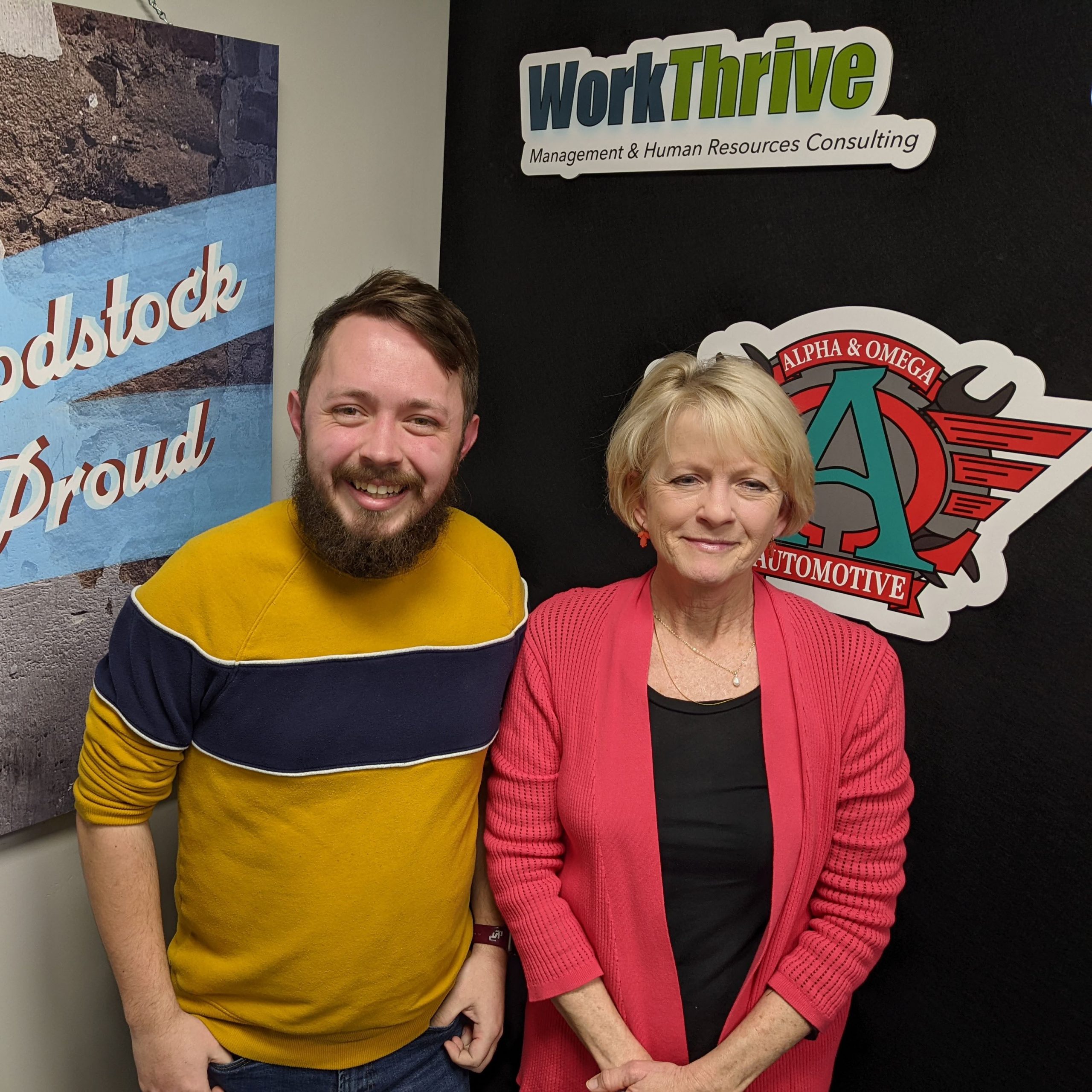
Tagged With: Austin Samuelson, Tacos 4 Life

Estie Rand With Strand Consulting

December 23, 2021 by Jacob Lapera

EstieRand
Coach The Coach
Estie Rand With Strand Consulting
Loading
00:00 /
RSS Feed
Share
Link
Embed

Download file

EstieRandEstie Rand from Stand Consulting, believes that every person can build a professional business doing what they love, earning buckets of money and having time for their life and family and proper marketing is the key that unlocks it all.

However, in today’s works, mastering is largely confusing and misunderstood. Join them as Estie breaks it down with clarity and direction so you never waste money on marketing again.

What You’ll Learn In This Episode

  • More money less headache
  • Most money on marketing wasted
  • Branding
  • People need less social media than they think they do
  • How can people get more reliable returns on their marketing investment

This transcript is machine transcribed by Sonix
TRANSCRIPT

Intro: [00:00:02] Broadcasting live from the Business RadioX Studios in Atlanta, Georgia. It’s time for Coach the Coach radio brought to you by the Business RadioX Ambassador Program, the no cost business development strategy for coaches who want to spend more time serving local business clients and less time selling them. Go to brxambassador.com To learn more. Now here’s your host.

Lee Kantor: [00:00:33] Lee Kantor here, another episode of Coach the Coach Radio, and this is going to be a good one, so I hope you have a pencil and paper with you because you’re going to learn a lot today. Today we have Estie Rand and she is with Strand Consulting. Welcome Estie.

Estie Rand: [00:00:49] Thank you. I’m excited to be here.

Lee Kantor: [00:00:51] Well, for folks who don’t know, can you share a little bit about Strand? How are you serving, folks?

Estie Rand: [00:00:57] Sure. So we will take pretty much any business and help it earn more money with less headache. That’s the essence of it. But it’s a full service consulting firm from microbusinesses. So anything you’d imagine that a Fortune 500 company gets from a Deloitte McKinsey. We do for a micro-business business strategy, expansion, marketing, specifically organic marketing strategy, staffing and hiring scalability. All the fun stuff.

Lee Kantor: [00:01:25] So how do you define micro-business?

Estie Rand: [00:01:28] To me, a micro business is anywhere from a solopreneur. It’s like a 20 person company typically earning under a million dollars a year and very often under $100000 a year. But that’s we work typically with people who are from like getting started up to the million dollar mark.

Lee Kantor: [00:01:46] So what’s your back story? How’d you get involved in this kind of work?

Estie Rand: [00:01:51] So about 2011, beginning of what is now the small business revolution? In my opinion, I was working as the CIO of a multinational nonprofit. I love my boss. I loved my job. I had flex time, which was really important to me. I had three little kids at the time. I now have five, not as little kids and I had this dream, but I wasn’t going to leave my job to pursue it until they hired this super toxic middle manager. I made my life utterly miserable and I left and I tried to pursue my dream, and my dream was to create a consultancy for small businesses. And in those days, I’ll just remind anyone who doesn’t remember 2011. That was before everyone in their brothers, sisters, dog walkers, best friend ran their own business, and no one did business consulting for small businesses, only for big ones. But I followed my dream and we did it saying we work with clients on six continents, staff and seven time zones. It’s a full service consultancy. It’s everything I wanted it to be.

Lee Kantor: [00:02:59] Now, when you’re dealing with those size companies, there’s a lot more of them, obviously, than the larger companies. But a lot of times they don’t have the resources to afford this kind of service. How were you able to kind of thread the needle and create a business model that gives them what they need to get that escape velocity and also pays you enough to make it worth your time to do the work?

Estie Rand: [00:03:22] Such a good question and something that I struggled with a lot as we grew up. And for that reason, the company has gone through a number of stages. So when I was just starting out, it was simple because I had my hourly rate, a bunch of different freelancers that I brought in upsell them a little bit and I made it work. And then as we grew as a company, it became a challenge. So I launched my first group online program like strategy creation program in January of 2019. And that’s helped a lot for me to keep costs down, working with people one too many as opposed one to one. Also moving now more into certification and vetting other designers and practitioners so that all the costs stay down. But all the small business owners get a comprehensive solution at a price they can afford.

Lee Kantor: [00:04:13] Now, were you finding that these micro business owners are kind of making similar mistakes? Or maybe they’re not the same mistake, but maybe they rhyme?

Estie Rand: [00:04:22] Yeah, no. After 12 years in the industry, so I started the company in 2011. I was doing it from two years prior. After this long, I definitely see a pattern and there are some very common errors. One of the most common errors I see is the, I call it, the Red Fire Bell. Yeah. So imagine God goes to a town long, long ago, even before there were smartphones. He travels for business, gets to this town, and while he’s there, there’s a fire. So he starts running. He’s like, Where’s the river? Like, Where’s your buckets? And they’re like, No, no, I’ve got something much better. You know, Guy pulls a little bell out of his pocket and he goes, Ring, ring, ring and all the people. They’ve got this whole system and they get this giant like, you know, pipe thing and they run it to the river and they run it to the place and they start pumping this whole thing. And the fire is out within like ten minutes. And he’s like, Oh my gosh, I need this in my town. We have all these fires. Great. And so before he leaves, he swipes the little red fire bell. And within a couple of weeks in his town, the fire springs up. Everyone starts running for the river. He’s like, Guys, no, wait. I’ve got something much better. And he’s like, Ring Ring Ring. And nothing happened. And he goes Ring, Ring, Ring, and nothing happens and the House burns down. And that is my example for the most common mistake that most small business owners make, which is that they see something that works and they have no idea what’s going on behind the scenes or what went into making it work.

Estie Rand: [00:05:47] They see a logo or an ad or a website, and they see a guy who’s just, you know, killing it and they’re like, Oh, OK, I’m going to copy that. I’m going to copy the externals. I’m going to also get a logo or a website. Or now it’s super trendy, so I’m going to have an online program. Yeah, I’ve been in the online info program space for over five years. It’s not a friend of mine recently said she’s like online programs are like, you know, the cool kid, the cool girl of like what MLMs used to be like. Come on, make an online program, make a million dollars. Be amazing. And and so you just copy, but you’re missing all the behind the scenes. That’s the biggest mistake to me. You’ve got to learn how business and marketing actually work. And then it works. And there’s a system. It’s a science and an art, but there’s a strategy and there’s a science to this. There are things you can do that work, and you can’t do the same things that big business does. There’s a very big difference in marketing to sell more of something that everyone already knows and marketing to sell some of something that no one’s ever heard of.

Lee Kantor: [00:06:46] Big difference and a lot and a lot of times when a small business starts copying a big business, they don’t know if that big business is just having an experiment and they can afford for it to fail miserably and, you know, catastrophically. But for a small business, they could be out of business if they make a mistake of that magnitude.

Estie Rand: [00:07:09] Totally. And not just that, some strategies only work at scale. Right? You can’t get one park bench and get the same results for like a movie, right as they do when they plaster a city. It’s not the same. It’s not the same, right? One print ad you can’t. Certain strategies don’t work scaled down. You can copy the concept, but you can’t copy the action on a smaller scale. So one ad once for something that very likely will do nothing unless you got the language, the imagery absolutely perfect and the exact right space. And and and like a lot of ads, most likely they’ll do nothing.

Lee Kantor: [00:07:53] So how do you educate your clients about the difference between branding and marketing, where a lot of people use those terms interchangeably?

Estie Rand: [00:08:04] So branding to me, so I actually have a graphic organizer I created. It’s got kind of the 12 steps to an organic marketing strategy, which is how you earn money without having to spend it. And branding is like the seed. It’s underground. It’s got the DNA of everything in your business. It digs its roots. Deep marketing is the flower shines its face to the sunlight and they interface. They feed each other right. The flower couldn’t grow without the seed, but the seed would wither and die if there was no flower getting sunlight and feeding it back down. And so they feed each other. You do your marketing and that strengthens your brand and your brand guides all of your marketing, and they are not the same, but they interface.

Lee Kantor: [00:08:45] So now, if you were counseling a new business person, a lot of our listeners, our coaches are thinking about becoming coaches and maybe they have a corporate gig and they are ready to make the leap into being their own, you know, business. Is that something they should spend a lot of time and energy is, is this brand or is it should they be doing other activities in order to kind of prepare the ground for their upcoming adventure?

Estie Rand: [00:09:13] So you really you need three things, right? The way I teach it a framework called the marketing map, which is again, a map is just the way to get some more strategies and map to get to your goal. So math helps you get there. You want to have branding, marketing and sales. If you’re missing any of those pieces, it’s not going to work. All right. If marketing is not working for someone, it’s either just incomplete or misaligned. So you spend some time on your brand. But the most important part of your brand is what’s unique about your business. It’s not the logo itself, that’s just a representation. So you spend some time, maybe a little money, and then move along to the quote unquote marketing piece, which is much more than advertising. It’s everything that you do to create and communicate value. So it’s your pricing is part of your marketing, your offer is part of your marketing, your presence is part of your marketing and your promotion, which is how you get attention and then you need to have an actual sales path. How do you turn this unique message, this unique presence, this unique you that you’re bringing to the space, especially as a coach, you are the brand and don’t mistake that for the brand is all of you. That’s not the same thing, and you’ve got this offer now. You’ve got to sell it and close deals. You want to make sure you cover all of that and don’t get lost in any of them.

Lee Kantor: [00:10:29] So how do you move a person through that funnel of kind of educating number one, that first you exist to some sort of a compelling offer where they’re actually saying, OK, you know, here’s my credit card.

Estie Rand: [00:10:45] So I have people leverage their swan strengths. Right, that’s that’s the piece in terms of getting attention. And Swan, I spell it S.W. o.n because everyone that I’ve worked with in all my years and it’s hundreds, probably thousands by now has at least one of these, if not more, that they can leverage to get people’s attention right? Is speaking W writing Oh one on one and networking. So that’s how you get attention. Then to move people through this quote unquote funnel, a funnel does not have to be an online funnel. A funnel is just a path. Right. So from when you get their attention, then they need to be interested. They need to have a space to evaluate. That could be a website. It could be social media, it could be a phone call, could be an in-person meeting. And then you want to have a negotiation that makes it worth it for them and then close your deal. And so there is some experimentation, but there are also tried and true paths, right? So for a coach or a consultant, you use your sworn strength to get attention.

Estie Rand: [00:11:43] If you’re a good speaker, find places to speak. If you’re a good writer, find things to write for. If you’re good at one on one, you’re leveraging your evangelists, your inner network, and if you’re a networker, well, you know, that’s the that’s the skill that everyone thinks you need, right? You got to get out there, meet everybody. I mean, everyone just thinks you need, you know, a good website logo and social media and poof business. No. So you leverage your skill, you meet people, you get their interest based on what you’re communicating, how it solves their problem. You’ve got to make sure you’re getting in front of people with problems you can solve. This is the essence of business. Business is an exchange of value for value, right? We trade money for services in this case, and the service is solving someone’s problem whose problems you solve when you tell them that you solve their problem. Great. Now I got to make sure that the offer makes sense and the price is right and that we signed the deal.

Lee Kantor: [00:12:33] Now, how do you help the person kind of work through this? Like, what is this coaching that you’re doing? You mentioned that you do group coaching. So what is this like for the person that raises their hand and says, Yeah, I’m interested in doing that? Is it something I get to go in there and say, OK, this is my challenge and then the group together with you or helping me kind of define some of those terms and make sure that my brand is true and my pricing is right. And you know, I’m doing the right activities every day.

Estie Rand: [00:13:07] Yeah. So there’s there’s some trainings, right? Because there’s a bunch of information that most business owners are just missing. Most business owners never went to business school, especially those who are coming from the corporate world. It’s not the same. You don’t run a small business like you run a corporation, and so there’s a certain training or retraining for some people. So there’s some training materials which include online videos, audios and also physical materials. And we’re currently updating and upgrading the training materials, and they are insane, cool. Like I’m working with an adult education expert, an experience expert. Don’t ask what I’m doing. We’ve been in this space for this long and you’ve seen it all. So you know, I’ve got to make it better. And then we meet every single week and people can ask the question of, OK, so I understand this concept and you know, either how do I apply to my business or this is how I think I would apply to my business? Does this make sense or I applied it to my business in this way and I got stuck with this now? What do I do? And so there’s a lot of it’s almost like an incubator, you know, the name for the last one we ran, we called the incubator. Now it’s more of a membership and taking people on that journey to that stable $10000 profit. It’s a journey. You understand it, you implement it, apply it and then you have to become it and we work through it until they’re there.

Lee Kantor: [00:14:23] Now, what do you tell the person out there that thinks that all they have to do is run some Facebook ads or LinkedIn ads or Google ads? And then, you know, the clients are just going to flock to them.

Estie Rand: [00:14:36] I say, I’ll see you in about six months to a year.

Lee Kantor: [00:14:40] So you don’t think that’s an effective strategy.

Estie Rand: [00:14:43] It’s not effective at all. But I do sometimes encounter people who are very dead set on the way they think things need to be done. And typically I will see them between six months to a year. They come back like, OK, you were right. I tried it. It didn’t work at all. I’m back now, so that’s what I actually legitimately say to them. But for someone who is more open, I would say that’s just the Red Fire bell. You’re missing everything that goes behind it. And if you throw a huge amount of money at something like that, then you should get results of some sort. But you’ll, I would say, ninety nine point nine nine nine nine nine nine nine percent not going to earn back your money and the only way to continue, you’re going to have to continue throwing money at it. So people do this right, they throw money. It’s like, Oh, look, it work, but they’re always throwing more money than they’re earning. And so when you build this properly from the foundation, you’ve got to build it properly. Foundation is your brand. What’s unique about you in the space? Why should someone work with you as opposed to anyone else and then go ahead and make the graphical representation of that? Create your name around that? It’s all good if you’re not using your actual name.

Estie Rand: [00:15:48] Now let’s develop our marketing, our offer, our price point, our positioning in the marketplace, our presence offline and online. What are our marketing materials going to be? Now let’s go get attention. Once we’ve got that in place now, let’s put them through a sales path and now let’s test and iterate an ROI. And now you’ve got a real business. Now you can rely on this thing. Again, I’m out here what I’m doing now. Our newest program is called 10K Months. Take your business from wherever you are to $10000 a month. Stable profit. I want to mint millionaires if they want to be, and if not, I’m happy to mint 100000 shares. All right. It’s got to work for your life. But like, make this thing real doesn’t have to be haphazard, so you run some Facebook ads. I’ll see you in six months to a year.

Lee Kantor: [00:16:36] Well, if if you don’t want them to run ads, do you want them to be doing some sort of activity on social media like LinkedIn? Is there something they should be doing every day on LinkedIn to help them with their marketing? Or is that that kind

Estie Rand: [00:16:50] Of if we’ve ascertained that LinkedIn makes sense for their strategy, then yes, you know, I actually have a program called LinkedIn 15 15 minutes a day for 15 days to leverage LinkedIn organically. For clients and customers, it’s like it’s like a toy of mine, right? Linkedin’s not the main thing I do. The main thing I do is the entire marketing business strategy and the journey. But if it made sense, if LinkedIn was a strategy, if you had your brand in place and you had your main marketing elements in place and you have a sales path in place, then LinkedIn is a great attention getting tool. It’s a great place to have your presence. It’s a great place to get new leads to put into your funnel. It’s a great place to build your name and reputation. There’s no one thing to do. There’s like five things to do every day on LinkedIn if you want to leverage it and really fully and properly, but you’ve got to make sure it’s the right tool and you’ve got to have in the context of a strategy. Does that make sense?

Lee Kantor: [00:17:48] Yeah, but I’m trying to get something actionable for somebody to do today or tomorrow.

Estie Rand: [00:17:53] I want to do today on LinkedIn or

Lee Kantor: [00:17:55] Just on anywhere like I’m just trying to get you to share something actionable that somebody could

Estie Rand: [00:18:00] Do. All actionable is leverage your sworn strength. That’s actionable and it’s not fluff. It means sit down and say, OK, you said there’s four. Which one am I the best in? Am I more of a speaker or writer, a one on one person or a networker? Great. So once I pick one of those now, how am I going to use that to get in front of people? If I like talking, where can I speak and don’t make your own event? Nobody knows you yet. Right? What event can I speak at? Where can I network? What conference can I speak at? What workshop can I speak on someone else’s social media channel they have in front of my audience? Can I do a live with somebody? Where can I speak that people will hear me speak and I could seed my services? If I’m a writer, where can I write? Not your own blog? Nobody knows you. It’s not two thousand one. No one’s finding your blog. Where can I write? Where can I write an article for? Can I write it for someone else’s blog who’s getting read? Can I write it on social media for a profile that already has watchers readers? Sorry, can I write for a magazine? Can write for a local publication again? How do I write to get in front of my people if I’m a one on one person? Can I call my top three friends and sit down with them for a nice dinner or conversation one on one each individually say, Hey, listen, this is what I’m doing now.

Estie Rand: [00:19:08] This is who I help. This is how I help them. This is what I’m going to do for them. Who do you know that either needs my help or could get me in front of or knows the people that need my help? And if you’re a networker, we’re back right. We’re back in person. There’s networking events online all the time. There are networking groups, get out there, meet people and start telling them your story of how you add value. That is the one thing I would have you do to day that will guarantee money in your pocket if you have the other things in place.

Lee Kantor: [00:19:38] So. What I’m hearing you say is not a build it and they will come strategy, but leverage others and let them know what you’re doing so that you can partner and work together and leverage their audience or their network.

Estie Rand: [00:19:53] That’s the superPAC. The superPAC in the beginning is piggybacking once you have an audience. Great. But when you don’t, right? How many people do you know? And I know and we both know who set up their own website and their own blog and their own event, and nobody comes. My first, when I first launched this again over 10 years ago, I put an ad in a local weekly was like workshop business building workshop. You know, so excited. I was sure, like the whole neighborhood was going to sign up because everyone was trying to run their own things. Two people signed up. All right. So, you know, we canceled it because that was pathetic. I was like, You know, yeah, sorry it be rescheduled. No one cared. Go where the people already are and tell them your offer. Yeah.

Lee Kantor: [00:20:34] And then when people are working with you, you help them kind of identify, OK. These are the group of people you should be reaching out to. This is an offer you can make them. That would be compelling enough for them to, you know, trust you in front of their audience.

Estie Rand: [00:20:48] Correct. And then with

Lee Kantor: [00:20:49] The right price and the right offer

Estie Rand: [00:20:51] On it individually. Ok, wait. But I have the sales call and it didn’t work and the person never called me back. Now what do I do? All right, I’m building out, but it’s so individualized again, I think one of the biggest problems is that so much business advice is given out. I’m a generalist, but my advice is specialized. All right. Part of how I’m able to give such specialized advice is because I know all the different moving parts and all the different marketing tools and hacks out there, and I learn more every day. You can’t give generalized advice to an individual. I can tell you this generalized right. Pick your swan strength and go out there. I can tell you that, but there’s a point that it’s got to apply to you. You are unique. Your strengths are unique. Your offers unique. So you plug into a framework, right? But there is no such thing as LinkedIn’s for everyone. It’s not. There’s no such thing as Instagrams for everyone. There is no one tactic that is for everyone. It’s one of the biggest fallacies that makes me crazy.

Lee Kantor: [00:21:45] And you help them identify what is the most efficient, effective path to help them get the outcome they desire.

Estie Rand: [00:21:53] Correct.

Lee Kantor: [00:21:55] And if somebody wants to learn more, get on your calendar or have more substantive conversation with you or somebody on the team, what’s the website?

Estie Rand: [00:22:02] Go to SD Randox. Free gift. Yes. Ht i r a and free gift spelled free gift. What’s there is actually a three day marketing success challenge at the moment. We change it up every once in a while. So depending when you hear this, there may be a different present for you, but that’s the best way to learn more. Start your journey toward the business and marketing that works for you, and you’ll see how to get a hold of me in my team. Be happy to chat.

Lee Kantor: [00:22:32] Well, aState, thank you so much for sharing your story today. You’re doing such important work and we appreciate you.

Estie Rand: [00:22:38] My pleasure, thank you so much for having me.

Lee Kantor: [00:22:40] All right, this is Lee Kantor, we will see you all next time on Coach the Coach radio.

Tagged With: Estie Rand, Strand Consulting

Monica Parkin With Invis Pacific View Mortgages

December 22, 2021 by Jacob Lapera

MonicaParkinLogo
Austin Business Radio
Monica Parkin With Invis Pacific View Mortgages
Loading
00:00 /
RSS Feed
Share
Link
Embed

Download file

MonicaParkinMonica Parkin is an award winning international speaker and the Author of “Overcoming Awkward, the Introvert’s Guide to Networking, Marketing and Sales,”.

She is also an entrepreneur and she first started out in business, she found herself struggling with how to build authentic connections with a fear of attending large events and no understanding of how to build relationships. She has since evolved into a master relationship builder and is here to share insights that will help you feel more successful, confident, and valued.

Connect with Monico on Facebook, Instagram, and LinkedIn.

This transcript is machine transcribed by Sonix
 

TRANSCRIPT

Intro: [00:00:08] Broadcasting live from the Business RadioX Studios in Atlanta, Georgia. It’s time for workplace wisdom sharing, insight, perspective and best practices for creating the planet’s best workplaces. Now here’s your host.

Stone Payton: [00:00:31] Welcome to another exciting and informative edition of Workplace Wisdom Stone Payton here with you this afternoon, and you guys are in for a real treat. Please join me in welcoming to the broadcast speaker, author, podcast host and someone who has just recently released the book Overcoming Awkward The Introverts Guide to Networking, Marketing and Sales, Miss Monica Parkin and How Are You?

Monica Parkin: [00:00:58] I’m great. Thank you, Stone. I’m excited to be here.

Stone Payton: [00:01:01] Well, we are delighted to have you on the show. There’s so much that you write about that you speak about and that you have some, some some perspective, some unique perspective on that applies to so many people in the workplace. What what did compel you to write this book in the first place? So what is my wife? What were you thinking?

Monica Parkin: [00:01:26] Yeah, really? What was I thinking? It was a couple of things. One is, as as you mentioned in your intro, I’m a speaker, and after I would do a speech, I was be like, This would make a great book chapter sometimes, right? And I always had this idea in the back of my head that I’d like to do that, but I could never get the the momentum going. And I was kind of just laying in bed on a Saturday morning when scrolling Facebook and I see this 30 day writing challenge pop up and I was like, You know, if I had like that challenge like like I knew I had to get it done in a certain amount of time, maybe I could do it. And so I signed up for it. It was like a hundred bucks and I thought, you know, a hundred dollars isn’t much to spend, but it’s just enough that I don’t want to throw it away either. And that’s actually how this started was with a 30 day writing challenge.

Stone Payton: [00:02:10] So is this the product of you observing what you people that you might characterize as introverts and finding them a little bit awkward and kind of observing patterns? Or is this born of some personal experience or a little bit of both?

Monica Parkin: [00:02:28] Definitely born of personal experience. So definitely a total total complete introvert here. Or at least I used to be. I guess I still am at my core, but you just wouldn’t know it to to talk to me now. But yeah, definitely some workplace career experiences that that caused me to have to get out of my shell, to have to push myself and challenge myself and find new ways of of interacting with people. And out of those experiences came came stories and analogies, and out of all of that came a book.

Stone Payton: [00:03:02] Now in your line of work, as I understand it, or at least this is how it is a little old Woodstock, Georgia, where I run one of our Business RadioX studios. You’re a lot of work. You’re in the mortgage arena, right? And for some time, there are several people here in the local community in Woodstock. And I suspect this is probably true in most communities and they need to get out. They need to build relationships with with real estate professionals. They need to build relationships with business owners. They need to be recognized and known in the community. So I would think that that networking and hanging out at community events and all that kind of stuff would be a really typically a very important part of their job. And if they struggle with that, it could really impact their impact, their success, right?

Monica Parkin: [00:03:48] It is. But here’s the funny part of it. Like, I never got the memo about that. So when I was feeling I didn’t write, I had no idea when I dealt with the mortgage broker that I dealt with. We did everything by phone and email. I never talked to her on the phone. I had a great experience. I thought, This is great. This is a great career, would be perfect for me. I can just stay home, hang out with my dog. I don’t have to get to know people. I can do this all online. It’ll be great. So, you know, I go to school, I sign up, I get, you know, I spent eight months getting my license. I go to a brokerage and they’re like, So when are you? When are you going to bring some clients in? I’m like, What am I going to bring some clients? And you’re going to you’re going to give me clients right? And I and they’re like, No, you got to get out there and network and get to know people and get yourself known in the community. None of this stuff is going to be handed to you. And I was I almost quit on the spot. I was like, What? Like, How did I miss? How did I not know this, you know? And it was just a huge shock to my system, and we can talk more about this. But basically, that was the moment after I’d done all the work when I found out that there was actually a lot more work to do.

Stone Payton: [00:04:53] So I mean, my business partner who incidentally, is the the founder and CEO of the entire Business RadioX network, I’ve been working with him for 15 years. We’ve had some success. We’ve really enjoyed this business marriage of ours. He will be the first to tell you that that he’s an introvert and we often will approach conversations very differently. And he’s perfectly happy. You know, for me to be the guy that you know, goes and does the million cups presentation or, you know, it shows the deck to somebody, but he’s he’s quite effective, quite successful. So I guess he’s begun to find his way. And you clearly have found some some strategies, some ways to to approach this if you are an introvert. But a lot of your counsel, at least when I was when I was looking through it seemed kind of counterintuitive. It wasn’t what I was expecting.

Monica Parkin: [00:05:47] Yeah. Funny thing, you know, so that very first networking event that I went to, you know, the office said, we’re going to make it easy for you. There’s a Chamber of Commerce dinner. You can come along, you know, we’ll have a great time. You can meet some people. And I got to that thing and there was no one there that I knew, and I literally I turn around and I went out to my car because I just had a panic attack and I just sat out my car and went, I can’t do this, I can’t do this like this is too hard. And then one of my colleagues drove up. And of course, I, you know, I couldn’t bail at that point. So I walked in with her and I got through that event and I I did all the things I was told to do right. I shook people’s hands, I handed out cards, I did all that stuff, sold them on myself, told them I could get them the best rate, the best mortgage. I was like in everybody’s face. And then I got home at the end of the night and I’m looking at this handful of cards and I’m like, like, what am I even going to do with these things? You know, and I ended up throwing them out, and then I had this moment where I was like, Oh, my goodness, if I’m throwing out their cards, what like, what are they doing to my cards? And that’s when I realized, like that kind of networking. Maybe it works for some people, but it wasn’t going to work for me. It wasn’t the way to build an authentic relationship with somebody.

Stone Payton: [00:06:54] So you made the transition, or probably a more accurate word is probably transformation based on you, you tell me so far. So I mean, did this take

Monica Parkin: [00:07:03] Months, years? Yeah, yeah. Well, it’s kind of like, you know, I guess it’s like watching your kids grow up one day. They’re a little kid, and the next day they’re growing up and you don’t know when it happened. It’s kind of how I feel about it. Like one day I was just total reclusive introvert, and one day I woke up and here I am, you know, speaking to people and showing up early at these events that I used to be afraid of. Because actually, that’s where the best conversations are right when you get there early and there’s people to talk to and. But I shifted my perspective from what can I tell you about me to what can I learn about you, to being curious about other people and connecting other people with each other? So instead of let me sell you a mortgage or let me sell you a product? Oh, that’s interesting, Jill, you’re a blogger and you blog about food. Well, Susie over there owns a winery. Have you guys met yet and then connect them? And then this beautiful reciprocity starts to happen, right? They remember who connected them. Not like, you’re expecting a favor back, but but you’re growing your own humanity when you grow other people’s communities. And it’s that authentic connections, those subtle, little authentic connections that really grow relationships.

Stone Payton: [00:08:09] I so appreciate and genuinely resonate with what you’re describing and the antithesis of that which fortunately, here in Woodstock, in our little community, this is not the case at all, but I have been to those meetings where there’s maybe me and another person, maybe me and two other people, and the person has asked me a question, and I’m trying to answer it as best I can. Their objective is trade the cards and I can. I often can see them, but I can almost always feel them looking over my shoulder and like their next target, like they’re not having a real conversation with me. It sounds like part of the part of part of the the formula here, and the the best approach is just to have a real conversation. And the other piece I think I heard and that was take on the role of helping to other people. Other people connect with each other.

Monica Parkin: [00:09:02] Yeah, yeah, it’s someone told me once it’s Susan Thomas, someone I actually interviewed one time, she said, You’ve got two years on one most, so use it ear to mouth ratio, right? Use your ears twice as much as your mouth. Listen twice as much as you talk, and that is how you create authentic connections, right? But those those people you’re talking about that are looking over your shoulder for the next one. I call those hunters, right? So they’re out hunting today. They’re going to eat today. They’re going to catch their prey. But the thing is, if you keep hunting and hunting and hunting, you run out of food supply, right? If you’re a fox and you raid every chicken coop in the neighborhood, eventually you run out of chicken coops and that’s what happens to those people. But if you’re a farmer and you go out and plant seeds build relationships, you might not eat that night. But long term you will have crops that you harvest over and over and over again.

Stone Payton: [00:09:53] Did you really write this thing in 30 days?

Monica Parkin: [00:09:56] I did. I did. But I kind of like, I kind of cheated, not cheated. But some of it was old speeches that I’d done, and I didn’t write on a typewriter. So what I did is when I’m driving my kids to school because we’ve got a long ride to school. I would just record myself on my phone just like I’m talking to you. I have an idea pop into my head. I would record it. I’d go home, run it through transcription software and then edit it for an hour. And then, OK, boom, there’s one chapter let’s do the next one.

Stone Payton: [00:10:21] That’s actually it doesn’t. Does it come across as cheating at all? To me, in fact, it’s not a formal, you know, published revenue stream for our studio. Partners, you know, we’re in several markets and we talk about teaming up with us and all that, but we’ve had several of our studio partners do what you’re describing for people. They’ll come in the studio and just kind of just kind of wrap, right? You know, just get kind of get there. We call it first draft and they’ll just sort of get their thoughts out and then we’ll have it transcribed from forum. And in some of them will go from there to writing, and some of them will get somebody that’s really can write, I think. Well, I mean, I guess I’m a little biased. I’m a big fan of audio. I just think there’s so much you can do with it, what you have it. But I think I think that’s brilliant.

Monica Parkin: [00:11:01] Thanks. Yeah. And I’m an audible learner more than I am a reader. Like, even when I go through books, I prefer to listen to books and to type out books. So but that let me just get through like get my ideas out and then I still have a lot of editing to do in print. But I could I could spend, you know, half an hour on my drive banging out a chapter, talking about what I want to talk about and then come home and spend an hour putting in punctuation and cutting this and moving this and moving it around and making it pretty. But I got the ideas out without being impeded by because otherwise I see, Oh, this should change. This is spelled wrong. And then I forget what I was talking about. But if I can get it out, then it’s easier.

Stone Payton: [00:11:36] Yeah, I think so, too. Now you enjoy this, this platform, you have your own show.

Monica Parkin: [00:11:42] Yes, I do. Yes, yes.

Stone Payton: [00:11:45] And is it an interview show? Is is it you sharing ideas? Yeah. Tell us a little

Monica Parkin: [00:11:50] Bit about your show. Yeah, it’s called. It’s called juggling without balls. So it’s about women that juggle multiple responsibilities that that whole kind of like me, a mortgage broker. I have a business at a veterinary hospital, you know, I homeschool a kid and it got all these things going on. So it’s for women that that are really struggling with trying to juggle all those different responsibilities. And it is in interviews and interview style, you know, someone that’s overcome a big obstacle or how they manage those difficulties or that’s done a big career change later in life, talking about how they did that pivot right and what the silver lining was and what they do differently, all that kind of stuff that we all want to know about these people

Stone Payton: [00:12:28] And what a great show concept. That’s a fascinating listen that I absolutely will. We have a show here in the Woodstock studio. It’s just called women in business. I think your title is way cooler. It maybe we ought to have a different, a different person producing it. But I will tell you, I am just over. I just can’t believe the women that come here and talk about their personal lives and their business lives and what they’ve accomplished. You just and the other thing in all of our media properties, I’m sure your experience in this, you really do get to build some great relationships and have really good conversations and genuinely get to know somebody when you just have a real conversation, you know, kind of like we’re having, right? You know, it’s X.

Monica Parkin: [00:13:15] Yeah, exactly. Just like we’re having right now, I’ve had so many relationships come out of those podcast interviews, and that was one of the reasons I started is there’s just so many women that I just want to get to know better. And I have daughters, so I kind of wanted to leave them this legacy of wisdom. Someday, when I’m not here, there’s this whole bank of podcasts that they can go back and listen to. But yeah, you’re creating a new relationship actually with every interview, aren’t you?

Stone Payton: [00:13:38] At least that’s been our experience. Well, congratulations on on your success and doing that. And again, I’m sure you’ve seen this and had this happen. I mean, it’s such a great way to serve other people, right? To give them a chance to share their story and talk about their work and you get to know them. And as it turns out, you know, serving folks is a pretty good business model.

Monica Parkin: [00:13:58] And you you nailed it. Exactly stone like that is the business model is just how can I be of service to you today, right? How can I use this analogy in my book where I talk about like, even if we live in a beautiful house, right? We built the most beautiful house. We keep the lawn immaculate. Everything’s amazing about it. If we look across the street and like our neighbor’s house is falling down or our town is falling down, then our property value goes down, right? So if our business is our house, if we don’t support the other businesses in our community, if we don’t support our own industry, then the value of our own business goes down too, right? And so because I’m in real estate, that’s the analogy that I use. But that’s why it’s so important that we don’t just look, how are we going to sell things? How are we going to make money? But how can we serve our community? How can we serve our industry even as a mortgage broker? Like, how can I help out my fellow brokers? How can I help out my mortgage industry? Because when it’s strong, my own business is strong in turn, and I don’t have to be an extrovert to do that. Just I just need to be me a man.

Stone Payton: [00:14:58] Well, speaking of analogies, you use a neighborhood analogy to that. You relate to networking and cultivating community. Can you speak to that a little bit more?

Monica Parkin: [00:15:10] Yeah, that’s actually the one that I was sort of just speaking about. But yeah, that same idea that you’re only as as strong as your neighborhood, right? So if you’re not, you know, if my neighbor across the street is broken his leg and he needs snow shovel, then I’m going to go over there and shovel the show. So I shovel, shovel snow. And then maybe next year when my car won’t start. Maybe he’ll come over and jump my battery, it’s the same thing with my business. If I reach out and help someone else in my community, I leave a great review. I share their post. I talk about the event that they have happening. It creates this feeling of reciprocity. There’s no expectation that they’re going to do something for me in return. But the reality is that, you know, people remember people who remember them and people like people who like them. So when you genuinely go out and do those things with no expectation in return, you are sort of growing your fictitious metaphorical neighborhood.

Stone Payton: [00:16:06] Well, and it does come back to you, but I’d say more than that. I think it comes back to you, you know, tenfold. Or it just seems like whatever your spiritual inclination is, that there’s there is something to this just getting out there and just doing some good out in the world. It comes back, doesn’t it?

Monica Parkin: [00:16:26] Yeah. And you know, you can feel it when someone’s doing something with an expectation as opposed to when someone isn’t like, Hey, if you do this thing for me, I’ll do this thing for you feels a lot different than just how can I help you today with no expectation, right? It feels different to you.

Stone Payton: [00:16:43] I call that and it probably came from my dad going tit for tat. Yeah, I don’t like that. I don’t, you know, I don’t either. Yeah, no. Just do it if you want to and thank you. And, you know, but no. Absolutely. Which, you know, here’s some very practical counsel that I don’t know if I if I saw it in the book or on your website or where. But you know, we could all benefit. Just don’t be a jerk.

Monica Parkin: [00:17:06] Right, right. Yeah, I heard this phrase once that if you meet three jerks in a day, you are actually the jerk. And it’s I think it’s true. You know, I used to be that person everywhere I went. Well, that drive thru person was really slow and that lady was rude. And but when I actually switched my own attitude off, like when I start extending people more grace and more kindness and more patience, all those jerks went away. Those people stop being jerks to me because the way that I responded was different. And you know, I my other business is in a large veterinary hospital. And when the staff wants to find a real estate agent or a new accountant or whatever, right, they start looking at the clientele that come in the door and they’ll say, Well, what about what about Bob? And someone will say, Nah, he is so mean to the receptionist. Last time we got his prescription wrong, he practically threw it in her face. Well, what about Bill? You know what? He’s so nice and he brings us cookies at Christmas. And yeah, you should use him. Like, you don’t realize the effect that your actions and your attitude actually have on your business that you think that you’re yelling at that poor kid in the drive thru isn’t going to affect your business, but they’re actually going to go home and tell their parents or tell their coworkers, and they’re going to make a purchasing decision based on how you behave that day.

Stone Payton: [00:18:22] And you are so right about that, and we see it over and over again. If you don’t mind, I’d like to shift the frame a little bit and this is incredibly helpful for me personally and I really think for for so many of our listeners who are out there and who need and want to. They are probably of our stripe, if you will, like they genuinely want to serve and all that. And you know, tomorrow night’s networking thing is a little intimidating and you know, they’re trying to figure that out. But I’d like to switch the frame on you a little bit and see if we if we can help a couple of other constituencies. One is the person who maybe doesn’t have to get out there and do a lot of networking out in the world for their business, but they do have to be productive, effective, efficient and get along with folks at their workplace. At the at the office. I got to believe so much of what you describe in this book and so much of your work. I bet it applies in that environment every bit as much, you know?

Monica Parkin: [00:19:18] For sure. Yeah, yeah. A couple of things come to mind. One is that listening piece, right? Listen more than you talk. Hear what your coworkers are saying to you to own your mistakes, right? Like, I have so much more respect for someone that says I made a mistake. I’m sorry. How can I fix it? Then the person that just tries to, well, it’s not my fault. It’s so-and-so’s fault, blah blah blah, right? Like that. That authenticity and that willingness to just hear another person’s side of things and then the communication piece right the the getting back to people right away, they’re responding and the setting expectations because you treat people how to treat you. So if you consistently, you know, maybe you allow people to text you at midnight on a Saturday night, if you respond every time, it’s not their fault that they’re doing it, you’ve taught them to do it and the same thing in the workplace. And then in terms of networking in the workplace and forming relationships, it’s it’s asking questions, you know? And more than you talk, you know, how how was your week? What was your family like? How can I be of service to you? Whether you’re a salaried employee or you’re self-employed, that is ultimately always the question How can I be of service to you? And that’s like you say, that comes back to you tenfold.

Stone Payton: [00:20:36] And then one other group I’d like to try to get a little bit of perspective on or four, and I think you’re the ideal person to do it, not only being the person with the expertize on the content, but you’re also living in all of these roles. If I’m trying to build a culture, if I, you know, I think you mentioned you’ve got a business, a veterinary hospital, what can or should we as people who run companies, what should or could we be doing to create an environment that will allow an introvert and everybody to flourish with regard to some of these topics we’re talking about?

Monica Parkin: [00:21:15] Yeah, I would say celebrating people’s authentic self. You know, there’s this belief that you come and you show up and you have to be a certain person and allowing people to be who they are. For years, I didn’t show who I really was because I thought I would be judged for that. And when I finally got to a place where it was safe to be me, like quirky little weird me who happens to also love goats and chickens and like to embrace my quirkiness. And and when you embrace your quirkiness and you get vulnerable, it gives all the people around you the freedom to do the same. And so really, it’s that leading by example when you embrace your inner quirky or your inner nerd or whoever you are. It gives all the people in your workplace the safety to do that. And you know, when you get vulnerable, it gives them freedom to get vulnerable to. And often someone hears something in your story that that they wouldn’t have heard if you didn’t if you didn’t share it. And it creates this, this workplace that feels safe and where people are welcome to be whoever they are.

Stone Payton: [00:22:14] Well, I’m so, I’m so glad I asked in creating an environment where everybody feels like they can embrace and celebrate their quirkiness. But but I think the key to what you’re describing is the mechanism the to do that you’ve got to lead by example. You can’t just say we are a place that does this right. You can’t just put it on. You got to be the one that that embraces and celebrates your own quirkiness. So they’ve got a living, breathing model of that.

Monica Parkin: [00:22:37] Exactly. I remember when I first started out and I was buying leads and I was advertising and I was doing all this stuff and nothing was working. And we have this forum in. It’s called women in the mortgage industry, where you can go to other women that have, you know, been in your role before and ask for advice and. And so I called up the first one. I’m like, So what do I do? And they’re like, Just just be you like, just be your authentic self. And I didn’t like that answer, right? So. So then I found the next one. Same answer. I phone the next one. Just be you. And I’m like, This is a load of crap. Like, they obviously want all my business. Like why like people have been telling me this all my life. This is what they tell kids in school. Be yourself. But then I sat with it for a while and I and I thought, You know what? Like, what is it going to cost me just to try it? And so I started to just be me, like not to hide those parts of me, like my little inner nerd that loves these little computer programs or buy me out in the barn with my goats, like all the parts of me that I thought were not appropriate for business. We’re actually the time that my business took off when I started to share those things because people could then relate to me in a way that they hadn’t been able to relate to me before.

Stone Payton: [00:23:39] You were so upbeat and you have such genuine, authentic answers to these questions that I’m asking that have real depth. And so I see that you probably are quite accustomed to to being inspired and sharing things that are inspiring to other people. So you are inspirational? Yeah, that’s a word, OK? But sometimes, I mean, you’ve got to run out of gas sometimes. And when you do, where do you go? You know, how do you refresh? How do you kind of get get charged your batteries? And where do you go to get inspired?

Monica Parkin: [00:24:15] Yeah, well, that’s the beauty of it. I used to just go hibernate, like, sit under the covers with a book. Nobody talked to me, take the phone off the hook. But now I reach out to all those connections I’ve built, right? That’s where I get inspired now is is in those connections and those conversations. All the things that I used to avoid are now. The things that actually bring me energy and inspiration and joy is those connections and an opportunities like, I don’t actually think I’m going to do this and I’m going to do this anymore. I just sit back and I wait for an opportunity to come by and I go, Wow, that looks really exciting. I’m going to give that a try, and I just keep an open mind and and keep those keep those lines of communications open with with those people I’ve connected to because that’s actually where I despite being an introvert, that’s actually now where I get my energy from is from the people around me.

Stone Payton: [00:25:02] After 20 minutes on the phone with you, I should have anticipated that answer and it makes all the sense in the world. After getting to know you a little bit of it talking with you, you actually are getting your energy now from what at one time was maybe a little awkward, intimidating and all that. That’s wow. That’s fantastic. So what’s next? Is there another book in you? You’re going to do? You’re going to keep speaking and yeah, what’s on the horizon?

Monica Parkin: [00:25:27] Yeah, I don’t think I have another book. I mean, but my editor says there’s five more in my head somewhere. So I guess I just need to maybe sit still for long enough and see if they come. Give me your turn on the recorder on the drive to school and see what comes out, but at this time, I’m just really enjoying getting out and talking about the book and doing some speaking engagements, talking to businesses about how they can help those introverted employees, how they can improve their culture, how people can be more authentic and be of service to the people around them. And, you know, reap the rewards from that, not with an expectation of reward, but to just enjoy, enjoy the reciprocity that comes from from being of service to others.

Stone Payton: [00:26:04] Yeah. All right. Before we wrap, let’s make sure that our listeners may know where to get their hands on this book and then whatever you feel like is appropriate in terms of if they’d like to have a conversation or learn more about your other work, whether it’s a LinkedIn or a website or an email. But let’s leave them with some points of contact.

Monica Parkin: [00:26:23] Yeah, for sure. And I’m sure some of these things will be in the show notes. But the book is called Overcoming Awkward and Introverts Guide to Networking, Marketing and Sales. You can find it on Amazon or Barnes & Noble. It’s in Kindle paperback, and the Audible version is going to be out in about two weeks. I recorded that myself, so it took a little longer to get it together and then the easiest way to reach me is just at my website, which is Monica Park and Dossier, and you’ll find all my contact info in there. I’m also on LinkedIn, Instagram and Twitter. I won’t give you those full handles, but I’m easy to find Monica Perkin. Look for the crazy lady. I’m not hard to miss.

Stone Payton: [00:27:00] Well, Monica Parken, author of Overcoming Awkward The Introverts Guide to Networking, Marketing and Sales. It has been an absolute delight having you on the show this afternoon. Thank you so much.

Monica Parkin: [00:27:13] Likewise, Stone, I’ve actually gotten a lot out of this as well and your conversation, and I’m grateful for the opportunity and I appreciate your your little stories that you’ve woven into this interview. Also, thank you for that.

Stone Payton: [00:27:25] Absolutely my pleasure. All right. Until next time, this is Stone Payton for our guests today, Monica Park and everyone here at the Business RadioX family saying we’ll see you next time on workplace wisdom.

Tagged With: Invis Pacific View Mortgages, Monica Parkin

Bug McBride With The Blue Ghost Arcade And Ryne Murphy With Hawk’s Nest Gaming

December 22, 2021 by Jacob Lapera

featuredbugmcbride
Cherokee Business Radio
Bug McBride With The Blue Ghost Arcade And Ryne Murphy With Hawk's Nest Gaming
Loading
00:00 /
RSS Feed
Share
Link
Embed

Download file

This Episode was brought to you by

LFG NEXUS


Bug McbrideBug McBride, Owner of The Blue Ghost

The Blue Ghost is an arcade and bar featuring over 40 retro arcade games, pinball machines, and gaming consoles. Their full bar serves beer, wine, spirits, mocktails, and other non-alcoholic beverages. Their concessions stand includes a wide selection of candies, chips, and other sweet and savory snacks. Their mission is to connect an old generation of games with a new generation of players.

Their mission is to connect an old generation of games with a new generation of players. Unlimited play included in admission. It is located at 164 Towne Lake Parkway, Woodstock, GA 30188.

Follow The Blue Ghost on Facebook, Instagram, and Twitter.

Ryne MurphyRyne Murphy, Managing Partner at Hawk’s Nest Gaming

Ryne is an experienced team leader with a recognized ability to motivate associates to raise overall performance and enable them to better understand and deliver on company goals and metrics. He is an award-winning customer service professional with a unique passion for delivering exceptional customer experiences in a wide range of venues. He has a strong and compassionate team leader with experience overseeing more than 50 associates.

He is a hard worker accustomed and comfortable in a fast-paced environment, an individual contributor with broad leadership experience, and a strong communicator and marketer with recognized results. He is a creative problem solver with the ability to work at all levels of an organization.

Hawk's Nest GamingFollow Hawk’s Nest Gaming on Facebook and Instagram.


This transcript is machine transcribed by Sonix

 

TRANSCRIPT

Intro: [00:00:07] Broadcasting live from the Business RadioX Studios in Woodstock, Georgia. It’s time for Cherokee Business Radio. Now here’s your host.

Stone Payton: [00:00:23] Well, welcome to this very special broadcast of Cherokee Business RadioX Stone Payton here with you, it is our LFG Nexis series brought to you by LFG Nexis for gamers, by gamers, by gamers, for gamers. What’s the tagline?

Adam Gerstin: [00:00:38] It is for gamers, by gamers, but I guess it works the other way.

Stone Payton: [00:00:41] But because it is by gamers, I mean, you have been immersed in this world for some time. So we’re so delighted to have you on board as a sponsor and the co-host. I know why I do this because it beats the heck out of working. But what were you thinking, man? Why? Why did you want to put this series together?

Adam Gerstin: [00:01:00] You know, to me, I think gaming is an incredible and important part of just just being alive in society and stuff like that. I think that gaming tends to bring out the best in people, and sometimes it can, you know, be difficult. And, you know, just it’s it’s a great way to meet other people, to expand your thinking, to change, you know, potentially change how you think about things and adjust. And just, I think, you know, a lot more people should do gaming and kind of consider it as another way to kind of reach a higher level intellectually.

Stone Payton: [00:01:34] So what is the state of the Union for LFG Nexus? Because this is a relatively new birth for for you and the company. Where are we, man? What’s going on?

Adam Gerstin: [00:01:44] We’re actually making like quite an incredible headway. We’ve reached out to some new local influencers that we’re going to be working with. We’ve actually reached out to a long time older influencer in the magic gathering industry that’s going to be working with us. Just new places all across Atlanta and in the country that will be working with us for tournaments, all different types of gaming and just a lot of different types of fun. So, you know, we’ve got a lot of stuff coming up, coming out for 2022, and we’re excited.

Bug Mcbride: [00:02:16] Can you kind of give us a rundown on exactly what the Nexus is?

Adam Gerstin: [00:02:21] Sure. Well, so the Nexus is a social media platform built for gamers. What we do is we help gamers connect. We are web based and we also do have an app with the intention of helping people find other people to play games that they’re into. So it could be video games, it could be Dungeons and Dragons magic. The gathering could be, you know, cosplay, laughing, all different types of games, the whole spectrum. And so that’s kind of where we’re different from other companies that are only into just video games and e-sports. So we have different features that you’re not going to find anywhere else.

Stone Payton: [00:02:56] So I anticipated that you were going to tell me things were going well because you’ve got the branded sweatshirt. And our first guest has the brand new hoodie and I don’t know Reiner. Our next guest, we oh, look at that. He’s got a T-shirt. He’s got the T-shirt.

Ryne Murphy: [00:03:10] I haven’t gotten up to hoodie level yet, but we’re getting there.

Stone Payton: [00:03:13] All right, fantastic. Well, first up on today’s special edition, please join me in welcoming to the broadcast with Blue Ghost, the owner, Mr. Bug McBride. How are you doing, man? Good yourself. I am doing well. We’re so thrilled to have you in the community. As many of our listeners know. We have this, this studio turkey Business RadioX studio right down our old mill. I live right on the edge of town. I know every bartender in town. And you know, my cigar bar is down there and I love walking down. We’re so thrilled to have you there. Mission purpose. Tell us a little bit about what you’re up to and what you’re trying to do for folks, man.

Bug Mcbride: [00:03:54] It’s bringing these old games to a new generation more or less. I mean, you can play games at home and stuff, but there are some of these experiences you just cannot find anywhere else except in arcade. I mean, like, you cannot reproduce the Tron, for example, or, you know, we’ve got to have a couple of hydro thunder racing boats, but you know, they have that force feedback and you’re actually sitting beside your buddy, you know, racing stuff. So, you know, it is, you know, trying to bring people together. You know, not only do we have arcade games, we’ve got pinball machines and, you know, we’ve got like over 80 board games. You know, there’s nothing funner than watching, you know, people, you know, having a couple of beers and playing the headbands game. You know, it’s a kid’s game. But you know, if you’re sitting there drinking and you got this card on top of your head and another person is

Speaker6: [00:04:41] Trying to guess what what you are.

Bug Mcbride: [00:04:44] It’s pretty fun to watch nonetheless, you know, also play so.

Adam Gerstin: [00:04:47] So for me, one of the games you guys have the Street Fighter two Championship Edition. Yeah, I grew up on that. In fact, one of my business partners, we met by playing that game in the arcade, like he went to the other high school than I did. And but we just were at the arcade, constantly playing each other, and it was games like that that really brought us together as friends.

Stone Payton: [00:05:05] So it’s one thing to be an avid gamer, but you actually built a whole business around it. What compelled you to do that?

Bug Mcbride: [00:05:12] So I actually grew up in this area. You know, I went to at all high school in everything, but then I’m actually moved up to Chicago and I lived up there for about 15 years. And when I lived up there, there was a place called the Galloping Ghost, actually, and it’s the largest arcade in the world. And I think they’ve got last time I counted like over 700 games. Wow. Yeah, I mean, it’s crazy. And there was also a local board game shop. I used to go to The Wandering Dragon. And, you know, when I moved back here, you know, there was really nothing like that, so you know, me and my wife would, you know, go have a couple of beers at the truck and tap and my kids would be like, What do you

Speaker6: [00:05:52] What are we supposed to do?

Bug Mcbride: [00:05:54] So, you know, and when we move back, you know, me and my wife both kept our jobs. We work remotely. And this was years before COVID hit. But I knew that it was only a matter of time before, you know, I just needed to do something more local. And I was like, If we’re going to do it, let’s do it. So I’m not getting any younger.

Stone Payton: [00:06:13] So what’s the setup? What’s the what’s it like? What’s what’s the space like? What can we expect?

Bug Mcbride: [00:06:18] So we’ve got about 4000 square feet. So why is he so? We’ve got a little over 40 arcade and pinball machines. We have lots of consoles as well. So your PS5, Xbox Series X tons of switches, then you get some more of your classic games like, you know, you’re in super slipperiness. Sega Saturn tend end of sixty four and you know, we’ve got several TVs throughout the place as well. So you actually can set the bar and play Mario or, you know, Sonic the Hedgehog or Rocket League or Smash Brothers, you know,

Stone Payton: [00:06:56] In these games. And I’m not a gamer, but these games are from way back, right? Right? Oh, yeah, oh yeah.

Ryne Murphy: [00:07:01] I was actually going to ask. I heard a rumor that you had House of the Dead.

Bug Mcbride: [00:07:04] I do. I have a house. I have House of the Dead.

Ryne Murphy: [00:07:06] Two dead. That is amazing.

Speaker6: [00:07:09] Ok.

Ryne Murphy: [00:07:09] I grew up on that game. I played with my dad every single week. We’d go to the arcade when I was like 12 or 13 and I was I was really good at that game.

Bug Mcbride: [00:07:19] I mean, that’s another thing, too. I mean, right? I mean, it’s almost like a good song. You know, when you hear that song, it brings that memory. You know, a lot of times when you see some of these old arcade games, it triggers a memory like I don’t want to. Talking about how he met his, his partner was through Street Fighter. You know, you don’t see these games that often out in the wild.

Stone Payton: [00:07:35] And so you’ve got all these people who are enjoying themselves. And did I hear you say you have a beer, so you can you can.

Bug Mcbride: [00:07:41] We have a we have a full bar. I also just as an FYI. So, you know, we don’t do quarters or anything. So it’s a $15 entry fee for everybody, OK? And then everything is free to play. So all the board games, all the pinball machines, all the arcade games, so no quarters or any of that stuff which is

Adam Gerstin: [00:07:58] Required and you could stay there all day.

Bug Mcbride: [00:08:00] Yep. So we give you a wristband, you can leave and come back as long as you still have that same wristband on, you can bring in outside food. Yeah. Adam had one of his buddies come in and you guys spent that one that one day I think, are you there for like 12 hours? It feels like.

Speaker6: [00:08:14] Yeah.

Adam Gerstin: [00:08:14] So that was actually my my business partner. Yeah, it was. He was leaving. He just moved to Florida. And so that was his going away party. And so he was the one that I would play Street Fighter with. So he made sure to play. But yeah, so he basically had a bit of a party there.

Bug Mcbride: [00:08:27] So that was a fun day.

Adam Gerstin: [00:08:29] It was

Stone Payton: [00:08:29] Absolutely. So what’s the demographic so far? Who is showing up

Bug Mcbride: [00:08:34] A little bit of everybody? So, you know, we have a tendency to, you know, we don’t open this one every day. But you know, you know, earlier in the day, you know, we’ll get the mom trying to find something to do with other kids, you know, so you know, and sometimes she’ll sit there and have a beer or, you know, drink wine while the kids go off and play right, right? Well, sometimes they’ll play, you know, you know, you’ll get a lot of these moms say, Well, I’m not going to play anything, and then you turn around and she’s got that Miss Pac-Man joystick going crazy. So, but you know, and then as the day progresses, you know, the younger people leave and then you get the older people, you know, your 20s, then your 30s, sometimes, you know, and older and older, you know, because. It takes, you know, as soon as they hear about it, you know, they’re like, Oh man, I’ve not seen one of these in forever. And I mean daily, you know, we get three or four people that were just, I just want to come and pick because, you know, they don’t want to play anything yet because they’re busy. But they saw the sign and they just want to see exactly what I have to offer.

Stone Payton: [00:09:30] I bet. So it sounds to me like it’d be a neat place to have like a corporate event or like or any group that a group event.

Bug Mcbride: [00:09:38] So I mean, we do private events. We also do birthday parties. So all that information can be found on our website. The blue gold star.

Stone Payton: [00:09:45] Nicely done. What do you do these things every

Speaker6: [00:09:49] Week or

Bug Mcbride: [00:09:52] So in you? You know, especially Saturday mornings, you know, that’s usually tons of kids birthday parties. You know, now that Christmas is approaching, you know, we are quite quite a few private events coming. I think we’re going to be closed Tuesday night, you know, because we’re doing a private event for some people. So our Pathfinder group is not very happy because we do play Pathfinder there every Tuesday night, so.

Stone Payton: [00:10:14] Very cool. So I’m trying to envision the conversation of having like a real job, which I haven’t had in some time. I’ve been doing this for a while, going home to my wife. And so, you know, I know we got this, you know, this real job thing going. But you know, let’s open up. Let’s let’s start a business. Well, tell us a little bit about that journey of actually launching a business man.

Bug Mcbride: [00:10:35] So it kind of started when my mother passed away several years ago. And, you know, it was one of those, you know, she was only four. Kind of hit me like all of a sudden just, you know, no warning whatsoever not to bring everyone down.

Stone Payton: [00:10:50] But no, it’s important. Sometimes things like that can really have you rethink the whole equation.

Bug Mcbride: [00:10:55] Yeah. So, you know, you know, when that happened, I was like, You know, I need to start living a little bit more, start stepping out of my comfort zone. So I actually took a class down here at Elm Street only, so I’ll never do it again.

Speaker6: [00:11:13] So, but yeah, I

Bug Mcbride: [00:11:14] Stepped outside of my comfort zone. You know what I was doing, and you know, I did. It was an extra on stand versus evil. So, you know, I was constantly, you know, what can I experience that, you know, I’ve not done before that I’ve always wanted to, but was too scared to do.

Adam Gerstin: [00:11:30] And it’s like a bucket list sort of thing,

Bug Mcbride: [00:11:32] Almost like a bucket list. You know, it was like, how can I step out of my comfort zone and just live a little bit more, you know, instead of doing the same corporate job day after day after day? So and then, you know? Again, we have talked about, you know, possibly opening up. It was actually originally it was going to be a pizza restaurant. I mean, this was years and years ago because that’s my background is pizza. You know, I’ve been in some form or other, you know, running a pizza restaurant or, you know, I did the point of sales for Domino’s and Pizza Hut, you know, in Chicago. So and point of sales for McDonald’s as well. But that’s not pizza.

Ryne Murphy: [00:12:05] So what were you going to call your pizza place?

Bug Mcbride: [00:12:08] Actually, kung fu pizza,

Speaker6: [00:12:12] I like it.

Bug Mcbride: [00:12:14] And so, but anyway, so once I moved back to here, originally we were just going to do a board game thing and somehow or another, you know, I bought my first arcade machine and it just kind of snowballed. It was like, Man, you know, so and you know, a lot of the I love working with my hands and a lot of these machines, you know, they don’t work or the cosmetics are just so bad in it. So and you know, it’s a fun journey just trying to bring these things back to life.

Stone Payton: [00:12:40] So. So has it been a pleasant surprise or is it falling right along the spreadsheet that you guys laid out because you’re getting tremendous response? Or at least it looks like that from. Well, we

Bug Mcbride: [00:12:51] Are getting, you know, very, very positive responses, you know? Five star reviews on Google. All that, so but, you know, I think with any business and you know, me and Ryan, we’re talking about this before the show actually started. We’re going to have those days where, you know, you’re slow and you’re like, Oh, my gosh, what did I get myself into?

Speaker6: [00:13:12] Oh yeah. So because I mean, opening up a business is

Bug Mcbride: [00:13:15] A huge step. I mean, it really is. So, but so far, so good. So, you know, I’ve got a fantastic staff. You know, we also do memberships. So, you know, instead of paying the $15, yeah, to get in, you know, you can pay a $60 and come in as much as you want for the month. So we have a lot of regulars who do that. So we’ve got some people who are in there five days a week.

Stone Payton: [00:13:39] Wow, that sounds like a great idea because this

Bug Mcbride: [00:13:41] Count, I mean, you can come in four times and you’ve paid for it.

Stone Payton: [00:13:46] So wow. And these are folks that would come in four plus times anyway. No, that’s a marvelous idea that gives you some predictable, some predictable revenue. What do you enjoy the most? Man, what do you like the best?

Bug Mcbride: [00:13:57] Actually, it’s playing games with people. So, you know, when I first opened, it was really hard for me to actually, you know, enjoy it. You know, after we opened, you know, I would tell my wife, I was like, I so wish I was on the other side of this, you know, because I built this out of stuff that I love to do, right? But considering I was running it at the time, it was hard for me to sit back and enjoy it.

Ryne Murphy: [00:14:18] So you got like all the toys, but like no time, no time to play with them.

Bug Mcbride: [00:14:22] Exactly. You know, you know, well, there is, you know, fixing something or, you know, because I mean, some of these machines, you know, have not been played this hard in 30 years. And, you know, so they’re taking a beating and like Miss Piggy Miss Pack, for example, like I said, you know, the ladies love to get on there and I’ve had to fix that joystick since I’ve opened. I’ve been open for six months and I fixed that joystick probably five or six times now already just because they I mean, boom, boom, boom, boom, you know, they’re rough with it.

Adam Gerstin: [00:14:49] So I’m sorry, I didn’t mean to interrupt, but that’s all the thing. When you go to other arcades and stuff like that, a lot of things are kind of broken and there’s a lot of maintenance. Obviously, that’s requires for us and it’s I’m sure it’s tough and time-consuming.

Bug Mcbride: [00:15:01] It’s very time consuming.

Ryne Murphy: [00:15:03] I’m sure they’re not exactly pumping out like Miss Pac-Man parts anymore, either. So like, I’m sure that’s a nightmare. I mean,

Bug Mcbride: [00:15:08] I mean, the House of the Dead is a prime example. So, you know, that had one of the guns go down on that. And, you know, I couldn’t find the part in the U.S. I had to order it from China. So, yeah, yeah. So, you know, instead of

Ryne Murphy: [00:15:20] It being, keep going, just keep it going

Bug Mcbride: [00:15:21] Instead of it being down for a couple of days, you know, it was down for, you know, a couple of weeks, which, you know, I hate doing that. But I mean, what choice do you have?

Ryne Murphy: [00:15:29] Nothing. There’s literally nothing you can do about it.

Bug Mcbride: [00:15:31] Yeah. So but you know, once we started getting into our groove and everything, you know, we started making the regulars and stuff, you know, yeah, I started having some of the regulars go, Hey, you know, you want to play a game with me? And I’m like, What?

Speaker6: [00:15:44] Yeah, I would love. Yeah, yeah, yeah, I would love to do that.

Bug Mcbride: [00:15:47] So, you know, we’ve got a, you know, a great group of guys that you know, we’re constantly, you know, competing on the Avengers pinball machine. You know, we’ve got a

Stone Payton: [00:15:54] You’ve got a pinball machine.

Bug Mcbride: [00:15:56] We’ve got we’ve got six pinball machines.

Stone Payton: [00:15:59] Oh man. Color me there. Well, because that’s what I remember. For those of you who, you know, aren’t seeing this, you’re just listening to this at this point. You know, I’ve got a little well, I don’t know, Adam, you got some gray hair, too. I’m a little older than the rest of the crowd. But but I can remember fondly, as you described, you know, like when you listen to a song or go into the little arcade at the mall. And I mean, there were a couple of pinball machines that we just fell in and we just played for hours. Yeah.

Bug Mcbride: [00:16:27] Wow. So so then we’ve got some other regulars who are really big into the golden tee and classic.

Bug Mcbride: [00:16:35] I think

Bug Mcbride: [00:16:36] So. One of them actually hit. He actually hit to hold on one Shuggie. Wow. That’s like amazing. Yeah, I know. I mean, it took me years to hit my first, so I was hitting, you know, two or three cents, you know, way back when. So but kind of is a homage, you know, little joke. I actually printed up this picture and put it on the wall and put a hole in one club.

Speaker6: [00:16:58] Oh, absolutely. Yeah, you should do something.

Ryne Murphy: [00:16:59] It’s like you and one other guys.

Bug Mcbride: [00:17:01] Yeah. So so it was by a pitcher in his pitcher, and he’s got a group of friends that come in. And so one of the guys is Barry has tried to be tried and tried to hit a hole in one. And yeah, can I?

Ryne Murphy: [00:17:11] Is there a little ball like, hard to replace also, because I feel like that thing?

Bug Mcbride: [00:17:14] Oh, those things, they take a beating.

Ryne Murphy: [00:17:16] I had a feeling, yes, so I was not gentle with that game when I used to play.

Bug Mcbride: [00:17:20] Yeah, but poor Barry, he’s been trying to get a hole in one now for, you know, months. And then they brought in another one of his friends for the first time, and he hit a hole in one like, Well, then like, you know, three or four holes. All Barry Barry was not happy for Barry.

Ryne Murphy: [00:17:33] You can look like the trying really hard glove to get a homerun just as picture on a second tier.

Bug Mcbride: [00:17:39] Yeah, so so anytime Barry comes in now, he sees Barry and his other friend and me on the wall. This is holding one club.

Stone Payton: [00:17:46] So what was what has recruiting employees and helping like that been like? Or is that all you running the whole thing?

Bug Mcbride: [00:17:52] So, I mean, it’s mostly me. I mean, I do have a fantastic bar manager who. Runs the day to day bar staff. We’ve had no turnover. I mean, when I first,

Stone Payton: [00:18:03] That’s

Bug Mcbride: [00:18:04] What we try to do. Our employees are very well. We really do. You know, again, I come from a restaurant background. Yeah, I’ve been on the other end. Yeah. So. So, yeah, but Shelly, our bar manager, she’s fantastic. You know, when we first, you know, before we even opened, you know, we put out, you know, hey, we’re hiring, you know, bartenders. I think we got 10 applications for what we call arcade attendants. We’ve got over 200 applicants. Yeah, wow. Yeah. So that was a tough choice. Doing it all down. But I think we made the right decisions because like I said, you know, six months in, we’ve had no turnover. Everyone seems to be happy.

Ryne Murphy: [00:18:42] Wow, that is fantastic, actually. That is well, I mean, in sort of like the restaurant bar industry, that is especially nowadays that is very difficult. Like, that’s really impressive, says a lot about your your company.

Bug Mcbride: [00:18:54] Oh, thank you.

Stone Payton: [00:18:55] So how does the whole marketing thing work in your space or does it just you have to let it evolve?

Bug Mcbride: [00:19:01] Well, it’s a mixture of both. I mean, marketing is, you know, hard, especially now in the digital age. You know, you have to do your Facebook, your Instagram. Excuse me. So, you know, that’s a job in itself. I mean, it really is. I’ll bet. So, you know, not only do you have to, you know, post constantly, but you know, as soon as someone sends a message, you have to, you know, respond in a timely manner.

Stone Payton: [00:19:26] And then when does that stop right on the social media? Thank you. No thank you. Oh, you know, you’re the best.

Adam Gerstin: [00:19:32] Yeah, but it’s not just that you also want to be forward thinking for other holidays and events that are going to be coming up. So you could kind of try and capitalize on on that.

Bug Mcbride: [00:19:42] We do so when we threw a Halloween party this past year, which, you know, turned out fantastic. You know, everyone came in costume, you know, we had prizes. We had a ton of stuff that we gave away. You know, all of our, you know, beer and liquor distributors, you know, contributed stuff. Reformation, you know, gave us a ton of stuff to give away as well. So and we are going to be doing a New Year’s party as well this year. So it’s going to be BioShock themed, which have anyone. It’s a video

Ryne Murphy: [00:20:10] Game that,

Speaker6: [00:20:11] Yes,

Stone Payton: [00:20:14] I could have done both interviews he needs. He knows every one of these games

Speaker6: [00:20:19] Look had

Ryne Murphy: [00:20:19] A lot of like free time for a while. So it’s just games. Games are a huge part of my life as well, so I love it. Like, I just love it.

Bug Mcbride: [00:20:27] So, so, so BioShock, you know, it takes place during a New Year’s masquerade more or less, right? And so, you know, you know, it’s a video game or an arcade. So, you know, that’s the reason we’re doing the whole, you know, arcade. I’m trying to think of the tagline my wife actually came up with was a mask arcade or something like that, because that way you you’re wearing a mask and it’s wearing arcades instead of masquerade mask arcade. I was like, That’s pretty clever, Honey

Stone Payton: [00:20:51] Man, you guys are so creative.

Bug Mcbride: [00:20:54] That one was all my wife. I’ll give her credit where credit’s due.

Stone Payton: [00:20:57] But I mean, clearly, you’re very focused on the experience.

Bug Mcbride: [00:21:00] I am. So I mean, and I get that a lot. It was, you know, you know, I get that, you know, coming in, I was like, you know, the atmosphere, you know? You know, besides just the games and stuff like, you know, on the walls, I have my old skateboard decks, I have old LP covers, you know, each table has a different theme. You know, I got one table that has like magic, the gathering cards printed on it and another one table that has a collage of

Adam Gerstin: [00:21:28] Covers

Bug Mcbride: [00:21:29] And covers. I have one that has a Sears catalog, toys from the 80s suite. There’s so many that people that come in there and they go, Wow, I’ve not seen one of these. This is pre-internet. You know, this is how we used to do our Christmas shopping.

Stone Payton: [00:21:43] So, so a lot of our listeners are aspiring entrepreneurs or entrepreneurs, and so I’d like to leave them with a little bit of insight counsel. I have one specific question and then anything you might have to offer that group that is, you know, thinking about being in business or early in business would be, I’m sure, would be very well received. But my question is when things aren’t going so well, when things are, you know, a little stale, a little. Where do you go for inspiration? How do you get recharged? How do you how do you try to manage the, you know, you got your peaks and valleys? How do you manage the valleys, man?

Bug Mcbride: [00:22:21] It’s a couple of tiers. First and foremost, is my wife. My wife is just she’s my rock. I mean, there’s no way around it. You know, we’ve been together now for. Twenty two years.

Stone Payton: [00:22:32] Congratulations. Thank you.

Bug Mcbride: [00:22:35] So, you know, any time you know, I’m feeling down or, you know, worried about it, you know, she is a numbers person by heart that’s, you know. You know, she’s the one. Very nice to have that. Yeah. I would not be where I’m at without her because, I mean, you know, she knows her stuff. So, you know, and then it comes to, you know, our regulars, you know, I may be having a down day and stuff, but you know, the regulars will come in and you know, Hey, let’s play some games. I’m like, OK, you know that? Cheers me up. So, you know. You know, I even got a couple of regulars that we have a group text going now that, you know, we’re always sitting as funny memes or, you know, something like that. You know, there’s regulars that, you know, play Pathfinder with, you know, pretty much weekly now as well. So which everyone’s invited to that, by the way?

Stone Payton: [00:23:15] I guess it it began to come to light for me as I got to know Adam a little bit and what he’s building to give people an opportunity to kind of create community around all this. It really never occurred to me the the community aspect of the gaming, I guess, as a gaming community. But even even though I would call it the gaming community, it always seemed to me like like an individual, almost like an individual thing. But there’s a great deal of camaraderie and community.

Bug Mcbride: [00:23:42] And there is I mean, so not only do you have your, you know, arcade enthusiasts, you know, we’ll have people come in, they go, you know, Oh, I’ve got, you know, a miss Pac-Man in my basement, you know, or I’ve got to miss Pac-Man in my basement. That’s not working. Can you come fix it?

Speaker6: [00:23:54] Right? There you go.

Stone Payton: [00:23:56] And you’re like, No, but I’ll buy your part.

Speaker6: [00:24:00] So, yeah,

Bug Mcbride: [00:24:02] You know, then you have your board game enthusiasts and then you have, you know, your roleplaying enthusiast. So, you know, but you know, they make some angle, you know, usually if you do one, you’re probably going to be mixed in with, you know, one of the other ones, magic. The gathering is another one, you know, nine times out of ten. If you play Magic, the gathering, you’re into video games or all playing games

Adam Gerstin: [00:24:20] Right or both, which is kind of why we did this thing of the nexus.

Speaker6: [00:24:24] And that’s where,

Adam Gerstin: [00:24:25] You know, that’s why our symbol kind of is this kind of hub and spokes where there’s different people on different areas where, you know, and it just brings everybody together. That’s, you know, really what we want to do.

Stone Payton: [00:24:35] Interesting. Well, I am so looking forward to learning more about this, this whole area. And man, I can’t wait to get down to your shop with my Christmas crowd.

Bug Mcbride: [00:24:44] Well, we can’t. I mean, again, you know, we’re really wanting to be part of that community. So not only just the gaming community, but, you know, our local Woodstock community.

Stone Payton: [00:24:53] So I’m going to be that guy, right? We’re going to walk down. I got lots of family coming for Christmas. We’re going to walk down and I’m gonna say, Oh, I’m going to go over to Maxwells and I’m going to have a cigar. Y’all enjoy and then I’m going to walk over there and then you’re going to see me playing pinball for like hours. I’m going to be like that, that mom you were talking about, and then I’ll be hooked. Well, you know,

Bug Mcbride: [00:25:09] There is one dad that will come and drop off his boys at my place and then go next door to Maxwell’s. So I mean, because it’s a win win, you know?

Stone Payton: [00:25:17] Oh, absolutely. No, I love it. All right. Let’s leave our listeners with some points of contact, whatever you think is appropriate. We definitely want him to know where the place is. So an email website, whatever, whatever you feel like as appropriate, so they can, you know, just reach out, learn more. Yeah.

Bug Mcbride: [00:25:33] So we’re right on the edge of downtown Woodstock. We are part of the entertainment district, which I’m not sure if you guys are familiar with that. But the entertainment district still allows open carry so you can actually bring in alcohol as long as the nuclear club from another restaurant. Or you can leave my place in the club. So but we’re located at one sixty four town Lake Parkway. We’re right between the Scuba Place and the tattoo parlor, and our phone number is four oh four four eight zero zero seven two three. And our email is info at the Blue Ghost Arcade.

Stone Payton: [00:26:10] Well, welcome to the community, man. So thrilled to have you here and so, so delighted to have you on the show. And let’s don’t make this a one time thing to come in periodically and check in with us. Let us know about events and stuff that’s that’s going on.

Bug Mcbride: [00:26:22] Well, since you said events.

Speaker6: [00:26:24] Ok, there we go. Here we go.

Bug Mcbride: [00:26:26] So, yeah,

Stone Payton: [00:26:27] I’m a pro, Ryan. You see how I did that. I just walked it in there.

Bug Mcbride: [00:26:30] So yeah, every Monday we do have trivia which with lights up entertainment, you know, Josh comes in which, you know, if you live in the Woodstock area nine times out of ten, you probably do know Josh because he’s just such a great character. So but he does trivia for us every Monday, Tuesday as we do Pathfinder. We’re hoping starting in January to do magic. The gathering tournaments on Wednesday nights Thursday. We’re currently rotating between Smash Brothers tournaments and Mario Kart tournaments, which have been fantastic. We get good turnouts for that. So and then the rest of the week, you know, the weekend. So there’s not much we can do.

Ryne Murphy: [00:27:07] Can’t can’t wait to come in on Thursday and just clean up on Smash. I’m really looking forward to that.

Stone Payton: [00:27:12] Oh, my goodness.

Bug Mcbride: [00:27:12] Ok. You talk a big game, but you

Speaker6: [00:27:16] Oh, it’s going to be horrible.

Stone Payton: [00:27:18] No, there’s been a lot of fun bug. This bug McBride blue ghosts right there on the edge of town that address one more time.

Bug Mcbride: [00:27:24] One six four Town Lake Parkway.

Stone Payton: [00:27:26] All right. Hey, don’t go away, man, while we visit with our next guest and sounds good. We’ll keep chatting about this, this is a fun conversation. Adam, you’re really good at putting folks together. You should like start a business. Oh yeah, you’re doing that, aren’t you?

Adam Gerstin: [00:27:38] Absolutely. That’s what it’s all about.

Stone Payton: [00:27:40] You are really good, right? You see how that work. All right. Our next guest, you all have been very patient. Are you ready for the headliner? How do you like that? Not me. Well, with Hawk’s Nest Gaming, Mr. Ryan Murphy, how are you, man?

Ryne Murphy: [00:27:55] I mean, I’m good. Thank you so much for having us on here. And Adam, thank you for putting this all together and everything. We really appreciate it, honestly. So, yeah, we are with Hawk’s Nest Gaming. We’re a local trading card game shop in Woodstock. We’re relocated right there next to the right down Bells Ferry, where the goodwill is. There’s the Goodwill Dollar General. We are on the other side of that shopping center. So the address is a sixty seven point twenty one Bells Ferry Road, but we actually open back up in June also, and we’d actually been wanting to meet up with a bug in the Blue Ghost guys because honestly, we felt like our demographics for sure would cross paths. And it just so happened that this meeting happened and really happy it did, to say the least.

Stone Payton: [00:28:36] Like, so I got here at the studio late. My sponsor got here at the studio late. These two guys were just having their own party when we got here.

Ryne Murphy: [00:28:44] We’re like professional,

Stone Payton: [00:28:45] You know, so it’s just so, yeah. So tell us about the story. And I know that I realize there are probably a lot of folks in the community who know exactly you know what story is what it does. But there’s many of us that don’t. What are you providing for folks and

Ryne Murphy: [00:29:01] Helping, you know, what do you know what a Pokémon is? Yes, sir, I do. Ok. Awesome. Awesome. Okay, great. All right. That’s it. That’s it. Actually, all we do with Pokémon game over. All right. No. So we what we do is we do like trading card games. In other words, so we do like magic, the gathering, Yukio Digimon Pokémon. We’re getting into the Dungeons Dragons market, actually, because that is just popping off right now. I mean, as Bug or Adam could tell you, it is huge right now. So we’re getting into that. Basically, though, we host tournaments, we do events. We actually just did a Christmas party this past weekend. We had Santa came to see us and everything. It was awesome. It was great.

Stone Payton: [00:29:39] So how’d you get in the business, man? You’ve always been an avid gamer.

Ryne Murphy: [00:29:43] So I’ve been a video game for a long time card gamer collector since I was like 12 13. There was a whole shop. Actually, a lot of people might remember in Woodstock that was called batter up. A lot of us used to go there, hang out, and it was just I always remembered as a place I really enjoyed being because it was with a lot of good people and you just got a lot of people that seem to care about one another could play these games, have fun, hang out afterwards. It was great. And it’s always been something I’ve just loved. And me and my partner, Cameron, actually my partners, by the way, are named Cameron and Rachel. They obviously could not make it today, but they are also a huge part of what we do. But we just kind of decided like, Woodstock needs a place like this. There is no card shop in Woodstock. There hasn’t been for a few years, and it’s just something that we’ve wanted to do for a very long time. And so we just. Doug, our elbows in and got to it, if that’s even the phrase, I don’t know.

Stone Payton: [00:30:37] So so my understanding, my knowledge, my frame of reference for Pokemon. All these things, it’s very limited. So forgive me if some of these questions are a little bit pedestrian. No, you’re fine. But let’s say I’m in search of a certain one or two or three. Sure, but I come to you. And if you don’t have it, you know somebody that does maybe or you’re on the lookout for it, or

Ryne Murphy: [00:30:55] There’s a good chance that if you’re looking for some, there’s a chance I might be able to find it. And there’s also a chance that I do already have it. I do make it a point to try and find kind of like the high value stuff because I want to have stuff that people are looking for for lack of a better term. Right? Pokemon Market’s really good right now. It’s just it’s a lot of fun. You get a lot of new kids that are now playing the game. I think COVID for a while slowed it down as far as like players. Yeah. And now that we’re at a better place, people are getting together, playing. We get got a really big group that comes in on Wednesday now just to trade and poke them, like just poke them on that. That’s it.

Stone Payton: [00:31:30] So they trade with each other. They’re not always trading, buying with you.

Ryne Murphy: [00:31:34] They will. Absolutely, yeah, you know, because that’s that’s part of the community. You want that like, you want these people hanging out with each other, not just talking to me, you know, like, we want to grow that community. We want it to be bigger. Same with you, magic you. It’s so funny the amount of times you have two people that did not know each other that day, and then a week later, they’re texting one another to meet up at the shop to be able to play and stuff. So it’s just it feels really cool bringing people together like that.

Stone Payton: [00:31:59] One of it’s so important, right, to have to have a place instead of, you know, accidentally meeting someone at the Waffle House or. Exactly, exactly. That’s where I would meet somebody, because that’s where I spend my downtime.

Adam Gerstin: [00:32:10] That’s all fun. I spent many an hour playing magic at the Waffle

Stone Payton: [00:32:13] House, did you right? Oh, definitely, man. We’ve got to send him an invoice that’s just like a free plug there.

Ryne Murphy: [00:32:20] Yeah, we used to actually play at Starbucks a long time ago. That’s where I used to play a lot. And then I was like, But I need my own thing and we just did it. We made it happen, and it’s been a lot of fun so far.

Stone Payton: [00:32:30] Well, you’ve already mentioned your business partners and we will we’ll have them come in sometime and we’ll do like roundtables. Absolutely. This is fun stuff, but tell us a little bit about getting this thing off the ground. And then it sounds like maybe you had a little bit of a of a time when you didn’t do much, maybe because of it. But what was it like getting it off the ground?

Ryne Murphy: [00:32:47] So luckily, we kind of got in. We started the process back in about November, December of last year. Ok, but it took a while, you know, to get all the everything finalized, get into the building, that kind of thing. Once we were in there, we just got to work. We immediately started cleaning everything, painting everything. The building had never been rented out before, so we just within a month and a half, basically, we had the we had it basically ready to go at that point getting product and obviously was, you know, just start. But it was it was really nice getting started in about June because we really hit a good spot around there.

Stone Payton: [00:33:21] So was it a little bit of a chicken and an egg thing for your business if you’ve got to have the product, but you’ve got to have the stuff? So did you have to go out and buy a bunch of stuff?

Ryne Murphy: [00:33:30] That’s like a really good analogy. Yeah, a little bit, actually. Like, yeah, because in order for them to like to to get stuff, you have to have stuff know it’s it’s one of those like, yeah, but luckily we were able to find a good balance and find some good people to help us out with it. So everything’s kind of come to come to fruition, if you will.

Stone Payton: [00:33:47] And what is finding commercial real estate like to buy or lease? I’ve never done that. Often we don’t pay rent for spaces we’re in because we work out a deal. And but anyway, yeah, what’s that like?

Ryne Murphy: [00:33:58] I mean, a lot of it’s just, I think a lot of it just depends on the area and what the availability is a place is, you know, you’ve got to be able to get in touch with people on stuff. I’m sure Bug will tell you it’s picking the spot also that you feel like is the right

Bug Mcbride: [00:34:09] Spot, right? Yeah, I mean, we’re trying to be as close to downtown as possible, and it took us over three years to find also. And, you know, we actually had signed the lease in January 2020 and then COVID hit. Oh, so luckily, though, we actually had a clause in our lease to get out of it. So. So we didn’t have to sit there and pay for that that whole year or so, and we worked with the landlord the whole time. Sorry, I didn’t mean to.

Stone Payton: [00:34:34] That’s that’s back to you, bug. Yeah, no. But it was trying by.

Ryne Murphy: [00:34:39] It was it was really trying to find light, like you said, trying to find the right space that you knew was going to be good for what you were doing. And if we looked at a few places, but we definitely found the one that we felt like was was correct for us.

Stone Payton: [00:34:51] All right. So let’s talk about partnerships. Sure. I have a business partner and I’m very blessed that I do. Sounds like you’ve got a marvelous situation. What do you think are some of the things that that make a partnership work and maybe some things to try to avoid when you’re working with folks?

Ryne Murphy: [00:35:07] A big part of it is you got to you got to have trust in whoever you’re working with when it comes down and stuff like that. If it’s business, if it’s life, you’ve got to make sure that you got the right person and Cameron and Rachel or two of the best people. I know they’re two of my best friends and have been for many years. And if anything like doing this together, you know, there’s been some like, you know, it’s been hard.

Bug Mcbride: [00:35:26] Sometimes it’s kind of a give and take. I mean, it was like a marriage, almost.

Ryne Murphy: [00:35:30] It really is. Well, they’re actually married.

Bug Mcbride: [00:35:32] Oh. I mean, right.

Ryne Murphy: [00:35:35] But yeah, I don’t think they want to get married to another person.

Stone Payton: [00:35:39] But like but they have basically they’re pretty fresh, right? Absolutely.

Ryne Murphy: [00:35:44] But I love them to death and honestly having people like that and having us all work together the way we do has made that place so much better and just made it made me happy for lack of a better term.

Stone Payton: [00:35:54] I’ll bet. So did you guys go into it or did you evolve to a kind of very distinct roles

Ryne Murphy: [00:36:00] In the business? Like, we kind of knew what we were doing beforehand? You know, like I’m going to be I operate mostly all the day to day, for the most part. Cameron obviously helps me out a lot with that. But for the most part, I’m the one that always runs day to day. Rachel Anders, all she handles a lot of are like accounting and stuff like that because I’m bad at that. So like, you know, let Rachel’s got it under control. But again,

Stone Payton: [00:36:22] The numbers we were talking about this, we were in bug segment, right? I mean that you got to be on top of one hundred percent. It sounds like it’s not your superpower. Oh, it’s not mine either, but

Ryne Murphy: [00:36:31] I’m good at it. It’s just one of those. If I had to pick it as a strike, I would say it’s it’s not necessarily a weakness, either. It’s just one of those like Rachel, really good on its own shoulder. And like, she’s really good at it. Like, so

Stone Payton: [00:36:45] It’s actually a weakness for me. I look at the bank, and if there’s money in the bank, OK, guess everything’s OK and everything’s fine, right? And we’re good. Lights are still on in the studio, so

Ryne Murphy: [00:36:56] Now, but it really helps having us. Each kind of have our own skill sets as as for what what we do. So like, you know, I’m there all day. I, you know, I like to think I’m a people person for the most part. So like,

Stone Payton: [00:37:08] No, you clearly are. You check that box that much I could sign off on. Absolutely. For everyone.

Bug Mcbride: [00:37:14] No, it’s

Speaker6: [00:37:16] My evil plan.

Ryne Murphy: [00:37:17] It’s a it’s a lot of fun, though it really is. And like, like I said, working with them, working together the way we have for as long as we have now, it’s it’s really good. You know, there’s always going to be bumps in the road, but we’ve easily gotten through them and we’re still moving kind of deal.

Stone Payton: [00:37:32] So what’s the biggest challenge so far?

Ryne Murphy: [00:37:35] Honestly, it’s like Bugg was saying earlier making you have some days where you’re just like, Oh my God, what did I get myself into? It can be really scary sometimes, but honestly, it’s being able to get a good clientele that cares about you, that you care about building that community because you want, you know, you want new people. You also want people that want to be there and want to come back kind of deal. And I think we’ve done a really good job of doing that.

Stone Payton: [00:38:01] Well, you have this morning. Yeah, I got an old guy here who used to play pinball. You know, my thing is hunting and fishing. And now I’m thinking, Well, no, I need to go down there and play pinball, you know, or maybe just try to do this court.

Ryne Murphy: [00:38:12] We can teach you how to play magic, that’s for sure, but apparently plays a lot of magic Lee Kantor we can definitely teach you.

Stone Payton: [00:38:18] But again, what? I’m what is getting impressed upon me is just how important community is in this arena. And I guess it just took me a while to see it in that frame.

Ryne Murphy: [00:38:30] I really think Woodstock and Cherokee in general has always had a really good community, and that’s one reason I am happy I live here and have lived here for the last twenty seven years.

Stone Payton: [00:38:39] All right. Well, we ought to talk a little bit about that because that’s been my experience. I’ve been here since April. We moved here, living here since April. I have found the business community and the community leaders just to be so supportive and I don’t mean polite, you know, come over and have some sweet tea sometimes, you know, supportive. I mean, what can I do to help you with your business? Who do you need? You need some interviewers. You need some spark. I mean, such an embracing, supportive business community here.

Ryne Murphy: [00:39:07] We’ve had experience. Yeah, we’ve actually had we have a neighbor that’s at a shop, a couple of doors down from us. And when we were first building stuff and we actually put together like a closet, he gave us all the shelving that we have now. It was just little stuff like that, though, like little things that don’t seem like they’re big, right, that were that really like impress upon you and that it was it was a big deal, you know, like, it made me feel like, wow, like this guy wants to help us out. And it just was a little step that helped us a lot like, yeah,

Stone Payton: [00:39:37] So the marketing for you. And I asked Pug the same question earlier, but is it? Is it more like just viral and it just sort of builds on itself? Or do you go out and do billboards and like, buy it? How does it

Ryne Murphy: [00:39:48] Work for you? It’s a lot of Instagram, Facebook, social media, social media, big time platform. Oh, it’s it’s absolutely, probably the biggest one now, at least to me, that’s how it feels. We are going to be doing like some advertisements and stuff like that. But for now, social media has definitely been the way.

Stone Payton: [00:40:05] Yeah, I’ll bet.

Adam Gerstin: [00:40:07] And that’s what we’re trying to come in and create that social media platform specifically for gamers so that they could find people like Bowie and Ryan’s business is easier.

Bug Mcbride: [00:40:15] Yeah, I mean, there’s been other, you know, ways we’ve advertised as well. Like, you know, we sponsored the Southern Fried Gaming Expo app this past year, which I don’t know if you’re familiar with that, but it’s a I am now.

Stone Payton: [00:40:26] No, I wasn’t.

Adam Gerstin: [00:40:28] So we were actually at the show as well. Yes.

Stone Payton: [00:40:30] But if it’s got southern and fried in it, I’m probably there, you know?

Bug Mcbride: [00:40:34] If you’re a gamer, it’s just a huge convention for, you know, gamers. You know, they have arcade machines, pinball machines, tons of board games. They had a fantastic museum this year. Only if you saw that or not.

Adam Gerstin: [00:40:47] Yeah, absolutely.

Bug Mcbride: [00:40:48] So they had like, you know, all the old consoles and computer games and things like that. And then, you know, with any convention, you know, they’ll have speakers and things like that. But yeah, so we sponsor that. So, you know, our logo and name were all over the place there as well. So it was a lot of fun like. Absolutely.

Adam Gerstin: [00:41:04] Yeah, I mean, you know, we were exhibitors and we got a bunch of people that were just walking through and got shown more about the platform, got a bunch of people to sign up. As you mentioned, there was a whole like giant room full of pinball games, video games. You know, I think there was a magic tournaments and stuff as well. I mean, so

Bug Mcbride: [00:41:22] They have roleplaying rooms as well. Mm hmm.

Adam Gerstin: [00:41:24] So some people selling some stuff. It was a really good experience.

Bug Mcbride: [00:41:28] Oh yeah. I think they actually have like live wrestling to do.

Speaker6: [00:41:32] Yes.

Adam Gerstin: [00:41:33] Yeah, it was one of them. I don’t watch wrestling in the wild, but they definitely had one of the brands and we were looking at possibly sponsoring something to do with that. Or actually, we were a little too late.

Ryne Murphy: [00:41:42] I think one of the wrestling guys like slam somebody through the magic, the gathering cable or anything.

Speaker6: [00:41:47] There you’re tap now.

Stone Payton: [00:41:49] Well, it might be fun.

Speaker6: [00:41:50] Sometimes it’s a good joke.

Ryne Murphy: [00:41:53] That’s a good joke. If you play magic, that’s a good one.

Stone Payton: [00:41:58] No, it might be fun to take the gaming series to some of these events like that. They’re local, you know, like take a remote, take a remote kid out there and do just some live and maybe set some interviews up. And then maybe also just get people out of the crowd and talk about why they love gaming and stuff.

Bug Mcbride: [00:42:11] Yeah. Well, from pre-COVID, you know, reformation down here in Woodstock, you know, they would have a monthly board game night. So I would go to all the time, you know, Brad NEX, one of the founders of every formation, is a huge board gamer. Oh, OK. So, you know, that was a lot of fun. So hopefully they’ll start that back up again.

Adam Gerstin: [00:42:29] So actually, that was one of the reasons that we actually started LG Nexus was because we saw that Reformation Brewery was doing these like impromptu things where you can play D and D as a one shot game for Arnault’s. Whatever amount of dollars and you got like two drinks and like some food.

Bug Mcbride: [00:42:45] Yeah, I think that thing was like twenty twenty five dollars. So, yeah, Josh really ran that.

Adam Gerstin: [00:42:49] Mm hmm. And so it wasn’t very expensive, and it was a great way to meet other people and you got some beer and some food and get played at the same time. And so that was kind of part of where we originally started, where we were looking to create a kid or D&D game for people and then kind of shifted into this whole social media.

Stone Payton: [00:43:05] So that was the genesis of the idea, or it kind of helps to

Adam Gerstin: [00:43:07] Help spark it. It was absolutely.

Bug Mcbride: [00:43:09] Oh, nice.

Stone Payton: [00:43:10] Yeah. So Ryan, what’s next for you? You guys got big plans. You just trying to get stable? What’s what’s where are you going to be putting your energy over there?

Ryne Murphy: [00:43:17] We’re just we’re just trying to get bigger for lack of a better. Are you really just, you know, like we want to do more events, more things, you know, we’re we’re just kind of getting a feel for some of the stuff trying to figure out what schedules work for people, what what’s going to be the most popular format. What what do people want to play for lack of a better term? And we want to just make sure that we are on the front end of that. Get out in front of it, if you will. Yeah, it’s a you know, it’s it’s a lot, you know, it’s a lot to you got to make sure you’re listening to people got to pay attention to what even if you don’t carry a thing. Pay attention to what other people are asking about. And if enough people ask about it, it makes sense to get in on it kind of deal. So we are going to be having more magic tournaments. We’re going to start doing Digimon here soon. Pokémon tournaments, everything. It’s going to be a blast tonight. Actually, we have our weekly Ukiyo tournament going on tonight at seven o’clock. So I think that’s going to be a lot of fun.

Stone Payton: [00:44:08] Yeah. All right. So where is this? Let’s make sure our listeners know how they can get to you.

Ryne Murphy: [00:44:12] So one more time it is sixty seven twenty one Bells Ferry Road. It is right on Bells Ferry, where the goodwill and the Dollar General are just in the shopping center opposite that really easy to get to, especially if you know the Woodstock area you know exactly where I’m talking about.

Stone Payton: [00:44:27] Yeah, neat. Well, thanks so much for coming and hanging out.

Ryne Murphy: [00:44:31] I’m really glad y’all had me. Thank you

Stone Payton: [00:44:32] Again. Yeah, sorry. It’s our pleasure. And I think we got to do this on a more consistent basis. And just and you know, you guys know the other folks in the community who are out there trying to serve in this way. You know, let’s get them together and give them a chance to talk about their business, but also just to talk about gaming in general. You know, maybe getting them together like this is a great way for them to share best practices. I don’t know. That’s fun. Yeah, yeah, absolutely. Absolutely. All right. So what can our listeners be doing? What can Business RadioX be doing? What can we? I’m going to ask all three of you this before we wrap. What can we be doing to help? Man, what’s the best way for us to support you guys going forward?

Ryne Murphy: [00:45:11] Honestly, it just help us get the word out like you are right now. We really appreciate just having kind of a platform to speak on. I know I don’t necessarily speak for them, but I think we we can all agree on that, that we just are appreciative of having another platform to get ourselves out there.

Stone Payton: [00:45:25] Absolutely. Is there some card that we should all be on the lookout for? Like any, just any

Ryne Murphy: [00:45:31] Charges are

Bug Mcbride: [00:45:32] Just like some of. His cards go for some math.

Stone Payton: [00:45:35] They really

Ryne Murphy: [00:45:35] Do. Anybody just just get it down. Yeah, like and everybody in home probably knows what I’m talking about, even if you don’t know Pokemon. You probably heard of Charles art at some point.

Stone Payton: [00:45:45] Go to your attic right now. See if Uncle Joe has a cardboard box.

Ryne Murphy: [00:45:50] It’s going to be in that box your mom was going to throw away. I promise.

Adam Gerstin: [00:45:53] Like quick story. About three months ago, my father said we were throwing some stuff away. We found a thing of some magic cards and like I played like early in magic. Yeah. And so I was like, Oh, this could be really good.

Ryne Murphy: [00:46:05] So I would absolutely could bring it by. Let know I got you. I got you.

Adam Gerstin: [00:46:10] I look through it. There wasn’t.

Stone Payton: [00:46:12] That’s what that’s your in the future. You could be like the porn star guy, right? And have like the reality series, you know, people bring in stuff. I got 100 of those. I don’t want that. And then you go get it appraised and stuff.

Ryne Murphy: [00:46:22] It does happen sometimes where I have

Stone Payton: [00:46:24] To like, find somebody

Ryne Murphy: [00:46:26] Else. I got to break people’s hearts sometimes. Oh no. It’s one of those like, they’ll be like, I have this really valuable thing. Here’s this card. And I’m like, It’s it’s like twelve dollars.

Bug Mcbride: [00:46:35] I know that feels because, you know, I’m constantly looking for these arcade machines and every arcade machine someone thinks is worth $4000, right? I’m sorry. You know, it’s not, you know, this is not the very sought after machine and you know, you might get, you know, three or four hundred. Now, don’t get me wrong, there are some machines out there that will go for $4000, right? You know,

Speaker6: [00:46:55] But

Ryne Murphy: [00:46:56] It’s just it’ll it’ll happen. Sometimes you’ll people will think, you know, it’s like and sometimes you’re like, Oh, actually, this thing you have that you thought wasn’t valuable is actually very valuable. And you know, I let people know that. But sometimes you have to break their heart a little bit and it stinks. But it’s it’s part of,

Bug Mcbride: [00:47:12] You know, you have to be able to buy the product to make a profit yourself.

Stone Payton: [00:47:16] Correct. That’s what the porn star guy always tells. I don’t know if y’all know that show or not, but his pawn shop in Vegas

Adam Gerstin: [00:47:22] And I’ve watched most of the episodes

Stone Payton: [00:47:23] And he’ll he’ll he’ll like, call on his gun guy or his, you know, whatever it is, whatever sort of stuff. Yeah, but what can we be doing to help you, man?

Bug Mcbride: [00:47:32] Besides just getting the word out, come visit us. I mean, you’d be surprised, you know, as soon as you walk through that door, you know, it’s very nostalgic and you know you’re going to want to stay. It’s a time warp. It is. It really is.

Ryne Murphy: [00:47:44] Just if I’m there, don’t touch the house, the dead game because I’ll already be doing it.

Stone Payton: [00:47:48] Like, Do you go in there early and just tie off a ribbon? And I put that orange cone on the joystick when you

Ryne Murphy: [00:47:53] Guys open at noon right now,

Bug Mcbride: [00:47:55] Everyone. So but I mean, I mean, there are groups of people who have certain games, you know, there, if they walk in and see that someone has taken their name off the highest score, I mean, they’re just like, OK, I know what I’m doing today.

Stone Payton: [00:48:05] Oh my god. Oh, that’s so that happens. I get competitive. That’s fallen down and not, yeah, that’s hilarious.

Bug Mcbride: [00:48:12] So pole position is a popular one for that right now. Really? Yeah. Ok, which one pole position? I don’t know what that is. Oh wow. You must be really young.

Stone Payton: [00:48:22] I probably do when I see it.

Bug Mcbride: [00:48:24] Yeah, I guarantee you once you saw you be like, Oh yeah, I know it’s because I like driving. This is a racing game from, like, early 80s.

Ryne Murphy: [00:48:32] Gotcha. Gotcha is one of the like, sit down in the car, so you

Bug Mcbride: [00:48:34] Actually end up on this

Adam Gerstin: [00:48:35] One. This is really old.

Stone Payton: [00:48:37] It’s old school.

Ryne Murphy: [00:48:37] Yeah, yeah, it’s stand up and drive. It’s really dangerous.

Stone Payton: [00:48:42] I’ve used in in business, sometimes in the consulting world. The analogy I’m actually got this from just now occurred to me. I talk about having the bird’s eye view because on on some games you can switch the view of whether you’re sitting in the car or if you’re watching all the cars, including yours. And I think sometimes it’s important as people who run businesses to get out of the cockpit and get the bird’s eye view of what’s going on. And it just now occurred to me. That’s where that came from.

Adam Gerstin: [00:49:08] Absolutely. Yeah, just that first person versus third person perspective. Yeah, you just kind of take it a step back from your business to be like, OK, how’s it going? What am I doing? And kind of assess what’s going on?

Stone Payton: [00:49:17] Yeah. All right. What can we be doing to support you over there at LFG next?

Adam Gerstin: [00:49:21] This man again, you know, it’s really just about getting the word out, just letting people know that we’re around and you know, we’re trying to, you know, help people. We’re trying to help, you know, especially, you know, Bug and Ryan to people put their vents out there like a one stop shop place where they can, you know, see everything that’s going on locally so that, you know, they can, you know, set up their calendars in advance and make sure that they could attend these different types of events and get involved in the local community.

Bug Mcbride: [00:49:43] And it’s free to sign up for your platform. So I mean, go sign up.

Stone Payton: [00:49:47] That’s a good price. Yeah, I can swing that.

Bug Mcbride: [00:49:50] Yeah, I mean, it doesn’t hurt to try, right?

Adam Gerstin: [00:49:53] Try. There’s so many other features that we offer. I think you guys really like it. We’re really trying to build this for gamers. And if you guys have any suggestions, please let us know you can email us. And we’re really attentive. We do want to build this place for gamers.

Stone Payton: [00:50:07] All right, so let’s go back around one more time before we wrap and let’s leave contact info or where to go so people know how to get. We would start with you and Ryan, where’s your replacement?

Ryne Murphy: [00:50:15] Sure. Yeah. So once again, sixty seven twenty one Bells Ferry Road, Suite 104, right next to goodwill in the Dollar General. Like I said, if you’re in the Cherokee area, you know about it. Instagram you can follow us at a hawk’s Nest TCG. That’s Hawk’s Nest TCG. Or to tease back to back there, it’s not like hawks, nest egg stocks, nest egg and then also you can add us on Facebook at a Hawks Nest Gaming.

Stone Payton: [00:50:42] Fantastic bug.

Bug Mcbride: [00:50:44] We’re the Blue Goose starrcade at one sixty four Town Lake Parkway in downtown Woodstock. Our phone number is four four four eight zero zero seven two three. If you just type in the Blue Ghost Arcade, you’ll find us on Facebook and Instagram. I mean, it’s a. Pretty easy, pretty easy name.

Stone Payton: [00:51:05] Oh yeah, I know I love it, I think I love both of your names, the Hawks, Nest and the Blue Ghost. It’s great. And all right, LFG Next is where can we go? Find out more, man.

Adam Gerstin: [00:51:14] You can find us at WWE Next. You can also find us on the App Store and the Play Store. So, you know, if he has like mobile gaming a little bit better, that works as well. You can also email us at Info at LVG Nexus Dot Com

Stone Payton: [00:51:28] And Stones here to support We’re actually Business RadioX is actually a sponsor of LG Nexus, and we’re actually going to publish the episode, so I’m going to do that for you. I’m going to get in the attic, and I’m going to ask Max and Kat to get neurotic. They’re younger, and I’m definitely going to come have a beer. Okay, so I’m here for you guys.

Bug Mcbride: [00:51:46] We have a huge

Speaker6: [00:51:47] Selection, so.

Stone Payton: [00:51:48] All right. Well, until next time, this is Stone Payton for our sponsor today, LFC Nexus, our guest and everyone here at the Business RadioX family saying we’ll see you next time on Cherokee Business RadioX.

  • « Previous Page
  • 1
  • …
  • 98
  • 99
  • 100
  • 101
  • 102
  • …
  • 162
  • Next Page »

Business RadioX ® Network


Our Most Recent Episode

CONNECT WITH US

  • Email
  • Facebook
  • LinkedIn
  • Twitter
  • YouTube

Our Mission

We help local business leaders get the word out about the important work they’re doing to serve their market, their community, and their profession.

We support and celebrate business by sharing positive business stories that traditional media ignores. Some media leans left. Some media leans right. We lean business.

Sponsor a Show

Build Relationships and Grow Your Business. Click here for more details.

Partner With Us

Discover More Here

Terms and Conditions
Privacy Policy

Connect with us

Want to keep up with the latest in pro-business news across the network? Follow us on social media for the latest stories!
  • Email
  • Facebook
  • Google+
  • LinkedIn
  • Twitter
  • YouTube

Business RadioX® Headquarters
1000 Abernathy Rd. NE
Building 400, Suite L-10
Sandy Springs, GA 30328

© 2026 Business RadioX ® · Rainmaker Platform

BRXStudioCoversLA

Wait! Don’t Miss an Episode of LA Business Radio

BRXStudioCoversDENVER

Wait! Don’t Miss an Episode of Denver Business Radio

BRXStudioCoversPENSACOLA

Wait! Don’t Miss an Episode of Pensacola Business Radio

BRXStudioCoversBIRMINGHAM

Wait! Don’t Miss an Episode of Birmingham Business Radio

BRXStudioCoversTALLAHASSEE

Wait! Don’t Miss an Episode of Tallahassee Business Radio

BRXStudioCoversRALEIGH

Wait! Don’t Miss an Episode of Raleigh Business Radio

BRXStudioCoversRICHMONDNoWhite

Wait! Don’t Miss an Episode of Richmond Business Radio

BRXStudioCoversNASHVILLENoWhite

Wait! Don’t Miss an Episode of Nashville Business Radio

BRXStudioCoversDETROIT

Wait! Don’t Miss an Episode of Detroit Business Radio

BRXStudioCoversSTLOUIS

Wait! Don’t Miss an Episode of St. Louis Business Radio

BRXStudioCoversCOLUMBUS-small

Wait! Don’t Miss an Episode of Columbus Business Radio

Coachthecoach-08-08

Wait! Don’t Miss an Episode of Coach the Coach

BRXStudioCoversBAYAREA

Wait! Don’t Miss an Episode of Bay Area Business Radio

BRXStudioCoversCHICAGO

Wait! Don’t Miss an Episode of Chicago Business Radio

Wait! Don’t Miss an Episode of Atlanta Business Radio