Business RadioX ®

  • Home
  • Business RadioX ® Communities
    • Southeast
      • Alabama
        • Birmingham
      • Florida
        • Orlando
        • Pensacola
        • South Florida
        • Tampa
        • Tallahassee
      • Georgia
        • Atlanta
        • Cherokee
        • Forsyth
        • Greater Perimeter
        • Gwinnett
        • North Fulton
        • North Georgia
        • Northeast Georgia
        • Rome
        • Savannah
      • Louisiana
        • New Orleans
      • North Carolina
        • Charlotte
        • Raleigh
      • Tennessee
        • Chattanooga
        • Nashville
      • Virginia
        • Richmond
    • South Central
      • Arkansas
        • Northwest Arkansas
    • Midwest
      • Illinois
        • Chicago
      • Michigan
        • Detroit
      • Minnesota
        • Minneapolis St. Paul
      • Missouri
        • St. Louis
      • Ohio
        • Cleveland
        • Columbus
        • Dayton
    • Southwest
      • Arizona
        • Phoenix
        • Tucson
        • Valley
      • Texas
        • Austin
        • Dallas
        • Houston
    • West
      • California
        • Bay Area
        • LA
        • Pasadena
      • Colorado
        • Denver
      • Hawaii
        • Oahu
  • FAQs
  • About Us
    • Our Mission
    • Our Audience
    • Why It Works
    • What People Are Saying
    • BRX in the News
  • Resources
    • BRX Pro Tips
    • B2B Marketing: The 4Rs
    • High Velocity Selling Habits
    • Why Most B2B Media Strategies Fail
    • 9 Reasons To Sponsor A Business RadioX ® Show
  • Partner With Us
  • Veteran Business RadioX ®

Search Results for: kids care

Andrew O’Shea with Wellspring

December 20, 2021 by Jacob Lapera

Andrew-OShea-Wellspring
Atlanta Business Radio
Andrew O'Shea with Wellspring
Loading
00:00 /
RSS Feed
Share
Link
Embed

Download file

Wellspring-logo

Andrew-OShea-WellspringAndrew O’Shea is the Founder & CEO of Wellspring, a health & wellness gift box and care package company providing turnkey solutions for Human Resources professionals across the globe around the Health, Wellness, and Fitness space through the utilization of existing wellness funds provided through their corporate insurance carrier.

Andrew has previously served as a Senior Executive Recruiter and Account Manager within the Human Resources, Staffing & Recruiting industry, only after serving as Director of Public Affairs for a global digital media marketing & strategy firm as well as serving as Founder & Managing Partner of The Grand: Public Affairs Consulting.

As a Certified Wellness Program Coordinator (CWPC, The Chapman Institute) and National Sales leader, Andrew & Wellspring are uniquely paired to provide the tools necessary for employers to engage their workforces in a meaningful conversation around Health, Wellness, and Fitness.

Follow Wellspring on LinkedIn and Facebook.

What You’ll Learn in This Episode

  • The meaning of Certified Vendor Partner for Top Health Benefits Providers
  • Emerging and Local Brand Partners and why that is special
  • About Signature & Themed Wellspring Kits
  • Solving culture issues in the new hybrid/remote workspace environment
  • About providing a platform for meaningful dialogue in all phases of the employee lifecycle – e.g. onboarding, open enrollment, engagement, etc.

This transcript is machine transcribed by Sonix

TRANSCRIPT

Intro: [00:00:04] Broadcasting live from the Business RadioX Studios in Atlanta, Georgia. It’s time for Atlanta Business Radio brought to you by onpay built in Atlanta. On Pay is the top rated payroll and HR software anywhere. Get one month free at Onpay. Now here’s your host.

Lee Kantor: [00:00:31] Lee Kantor here, another episode of Atlanta Business Radio, and this is going to be a good one, but before we get started, it’s important to recognize our sponsor onpay. Without them, we couldn’t be sharing these important stories today on Atlanta Business Radio. We have Andrew O’Shea with Wellspring. Welcome, Andrew.

Andrew O’Shea: [00:00:49] Hey. How are you doing, Lee?

Lee Kantor: [00:00:50] I am doing great. I’m so excited to learn what you’re up to. Tell us a little bit about Wellspring. How are you serving, folks?

Andrew O’Shea: [00:00:56] Well, sure. So Wellspring is a health and wellness gift box provider, and we partner with great organizations to engage, help them engage with their own scattered and remote workforces and provide a meaningful dialog around their own health and wellness. So we love being able to send appreciation, gifts and little things to employees on behalf of employers and introduce them to new wellness pathways, whether it’s around their own mental health, physical health, emotional health or spiritual health.

Lee Kantor: [00:01:26] So now, now that a lot of the workforce has gone remote in some manner, how has that impacted your business? I would imagine that it opens up a lot of opportunities in terms of the companies that are trying to serve those folks who they’re not seeing in person as much anymore.

Andrew O’Shea: [00:01:42] That’s exactly right. And what we’re trying to do is create a virtual water cooler, if you will. You know, we’ve taken the office out of the workplace. So what is actually left, whether it’s compensation or certain benefits that we’re receiving, we’ve got to somehow create a virtual culture, if you will, where we can let them feel like they’re a part of something larger than themselves. And that’s really where we found our stride is is helping employers engage with their employees and let them know that they’re loved and cared for right now. We’re all looking for direction from our employers, our managers, oftentimes even in the country. And when we’re not getting clear direction, it can be tough sometimes in this isolated feel of remote work. Employees can start to feel dejected, disengaged or discouraged, and that’s the exact opposite feeling that we’re trying to evoke among these folks. So, you know, at the beginning of the pandemic, this certainly was something that was was very pivotal before the pandemic. But once everyone went home and was working in a remote or scattered capacity, this took on a whole new meaning of how can we actually create meaningful dialogs, connections and engagements between an employer and employee?

Lee Kantor: [00:02:56] Now are there any kind of symptoms or clues that an employer is having that maybe their culture is suffering somewhat? I would imagine for some folks, it’s not. This is kind of something that they had never done before, especially to this extent. And when you’re in person, some of these kind of things that you take for granted that build culture just aren’t there anymore, and there can be some disconnection and maybe they feel like they’re on an island. Some of these folks. So are there signals or signs that maybe there is trouble brewing that people can pay attention to?

Andrew O’Shea: [00:03:31] Well, sure, we have a number of clients who have come our direction, who have been open and honest and saying that they have retention difficulties, or that they are having a harder time and talent acquisition because their competitors are offering other incentives to their employees that maybe they can offer. Where we find the most bang for our buck here is that we are a certified vendor partner with all of the large insurance carriers such as Cigna, Aetna, UnitedHealthcare, Humana and Anthem Blue Cross Blue Shield, so that we are able to partner and leverage existing wellness funds as attributed as a part of your insurance plan. So this doesn’t necessarily have to come out of the bottom line. It’s a company, and that’s where we really saw the best value. During the pandemic, revenues were down. Furloughs were imminent and layoffs and whatnot, and morale was at an all time low. So to be able to tap into existing wellness funds is provided as you through your insurance carrier. I mean, it puts you in a pretty unique position to be able to offer a gift that you might not have been able to offer before, and we’re able to meet the employee wherever they are. I mean, we all know that there are mental health issues, new anxieties, stressors at home, whether it’s a new employee or, excuse me, a new coworker in my wife or spouse or husband.

Andrew O’Shea: [00:04:45] Or is it the kids in the other room? Or is it a new deadline that is looming? And I don’t have the the tools in front of me to accomplish this. This is something that you can put in front of an employee. Let them know this is just for you. Take a moment for yourself. Hit the pause button. And we don’t hear that enough from our employers because at the end of the day, the productivity is the bottom line. They’re looking for the ROI that they’re seeking. But we all know that if our productivity in the workplace isn’t at one hundred percent, then the whole company is suffering. By putting something like this in front of an employee and letting them know that there are options out there for their own personal wellness and to take care of themselves suddenly absent. Ism is not as high as it was PTO days that are being filed aren’t the same that they were. And maybe it is that their productivity levels and percentages are at a higher rate and that helps with overall function of the company, as well as the cost of trying to onboard new employees to backfill positions of folks who have left for greener pastures.

Lee Kantor: [00:05:50] Now, can you share kind of what it is that Wellspring is providing? Like what are those kits look like?

Andrew O’Shea: [00:05:57] Yeah, absolutely. So we we operate in a customizable fashion, so we have a three tiered offering. It’s almost a good, better, best. We call it curiosity, prosperity and enlightenment and curiosity is an introduction into the wellness arena really fit for putting? Maybe, maybe we’re starting at the starting line at the starting blocks instead of further on down the road, introducing brands and items that they can use that affect their daily habitual habits and routines. Maybe it’s a plant based protein bar or a hydration multiplier, or even adaptogen, mushroom, coffee or B12 caffeine alternatives to help with more mindful sleep. We take these products and we help them customize their own kits for whatever engagement they’re looking to achieve. And we’re able to deliver that directly to their employees doorstep or to their offices to be individually distributed among them. And that’s really where allowing the employer to create this on their own with us, we can help guide that process, but we want to make sure this is about them. It’s much more than about Wellspring. We see ourselves as a vehicle to accomplish their goals and make them the heroes in these situations.

Andrew O’Shea: [00:07:15] Now, if you come in and you are interested in learning more about mental health or about UV skin care, sun protection, or maybe it’s around love and gratitude. We have a number of promotional kits to start from and that that library serves as kind of a base, but we see that over time, maybe it’s a company is looking for their accountants to eat better, or maybe they want their salespeople to sleep better. And we’re able to customize these kits and programs on a frequency that hits their employees in a way that maybe after three months or six months, it is that they start to understand gluten free options or vegan options. What what paleo really means keto Whole30. These things that we might have heard of, but we don’t really have the education in front of us to understand what it is that we’re consuming, and the more educated a consumer is, the better off that they are, especially in an emerging market like health and wellness. So we we really strive to both educate the employee as much as we actually show them the love and support that they need.

Lee Kantor: [00:08:20] Now, if an employer has maybe offices in multiple locations, is there a way to customize the offering so that you spotlight maybe some of the local brand?

Andrew O’Shea: [00:08:33] Absolutely, and we’re based here in Atlanta, Georgia, and we’ve we’ve really embraced the Georgia grown community and trying to give them a level up to help them market some of their goods and services. But whether it’s Thunderbird real food bars out of the outskirts of Austin, Texas, or if it’s a lesser evil popcorn up in the northeast or Seattle chocolate up in Washington state, we try and get a very good breadth of brands that we are utilizing in these kits so that maybe it isn’t something that you’ve ever heard of before. I mean, as much as we like to support local, we like to support local everywhere by introducing thoughtfully curated brands so that maybe it is something that I wouldn’t normally run into on a daily basis. It is a large market that’s health and wellness market, and we want to be as much of a service to our vendors as we are to the actual employees and employers.

Lee Kantor: [00:09:29] Now is there a story you can share? Don’t name the name but explain the challenge that we’re having and how after partnering with you, you were able to help them kind of solve the issue that they were dealing with?

Andrew O’Shea: [00:09:40] Yeah, absolutely. So about a year ago, as we were getting closer to the seasonal holidays, a company was struggling with some of their retention issues and really trying to put their best foot forward. How do we compete with our rivals here? How do we retain good talent, attract new talent if it’s not paying gobs and gobs of larger compensation to our employees? So they started to explore different gift options and ideas that they could give the normal holiday party that they have with switch to virtual. The morale again was very low at that time, so they needed something that was going to have a bang. So they they decided that they were going to send some Apple Watches with customizable, customized bands to all of their employees. And what a great gift to be able to give to your employees. Not everybody can do that sort of thing, but how do we deliver this and how do we have the biggest impact so that all of the employees are feeling the same way at the same time? So they arranged to send this and we kidded those watches for them, along with health and wellness brands and items, so that we could actually have that opened up at their virtual holiday party. And when they did that in unison unison, you saw some camaraderie and some fellowship that maybe you hadn’t seen in 20 20 during a very difficult time. So that was something that we helped them with their employee retention tactics. But we’ve replicated that a number of times since then. I mean, people are always looking to treat their employees as best as they can and if they’re able to give a gift, but also get critical messaging across about open enrollments, virtual health fairs, biometric screening, telemedicine options through our customized insert cards that are a part of these kits. Then suddenly we’re putting a little bit of peanut butter on the medicine. It’s making the whole transaction just a little bit easier. And what we like to call a win win win scenario.

Lee Kantor: [00:11:38] Now, what is the typical rhythm of these kits, is it something that just happens once when they’re on boarded or during a like a gift giving period of time? Is it like, could it be monthly? Is there a rhythm that makes sense or that’s something customizable by each employee or employer?

Andrew O’Shea: [00:11:56] So we offer a number of different use case scenarios. We certainly work with a lot of clients who utilize this as an onboarding tool where we’re able to actually, for a small fee, take their sweat and company swag, if you will, whether it’s a mug or a T-shirt or a tumbler of sorts. And we’re able to pair that with health and wellness items so that we can start that dialog from onboarding all the way to off boarding. Now, beyond that, we we customize these programs based on your needs. One thing that I’ve learned in wellness endeavors that I’ve gone through is that no two employees are the same, and the more individualized we can get this for our folks, the better. So what we do love doing this is a one time purchase for everyone at the same time. We want to keep that conversation in that dialog going so we can do this at either a frequency of once a month for three months, once a month, for six months, really, depending on the information and the education that you’re trying to provide for your employee. As mentioned previously, you know, if you’re if you’re trying to bring mental health to the forefront and mindfulness and teach teach some some good mindfulness practices, we can develop a program that fits your needs. Maybe it is a retreat in a box. Maybe it is b 12 and other caffeine alternatives paired with blue light blocking glasses to understand the stimulation that you receive from white light and to get more in touch with your circadian rhythm. We’re really able to meet your needs wherever you are on that path. So for that reason, we try to steer clear of really stock programs because we really want to create this around you and not make the employer come to us and have a one size fits all model.

Lee Kantor: [00:13:44] So then that’s why the importance of those initial conversations are to really understand the culture that they’re aspiring to have and the the benefits that they want to give to their employees. And together, you kind of coauthor a program that you feel will give them the most bang for their buck.

Andrew O’Shea: [00:14:02] That’s exactly right, and we’ve got a thorough team of engagement advisors here who are who are ready and waiting to assess whether it’s an insurance broker, whether it is the specific carrier who is providing this, or if it’s the HR professional. We understand those pain points, and we want to make this as much of a turnkey solution for all three of these individuals as possible.

Lee Kantor: [00:14:23] So if somebody wanted to learn more, have a more meaningful conversation with you or somebody on your team, is there a website?

Andrew O’Shea: [00:14:29] Absolutely. And we actually just launched a new website that we’re very excited about, and it is located at WWE Dot Try TR y Wellspring. And there you can learn as much as you would like about our products, offerings and services, but also to reach out and contact us directly to set up a consultation with our engagement advisement team.

Lee Kantor: [00:14:52] Well, Andrew, thank you so much for sharing your story today. You’re doing important work and we appreciate you.

Andrew O’Shea: [00:14:57] Well, thank you, Lee. It’s a pleasure and you have a good rest of your day, OK?

Lee Kantor: [00:15:01] All right, this is Lee Kantor. We’ll see, y’all next time on Atlanta Business Radio.


About Our Sponsor

OnPay’sOnPay-Dots payroll services and HR software give you more time to focus on what’s most important. Rated “Excellent” by PC Magazine, we make it easy to pay employees fast, we automate all payroll taxes, and we even keep all your HR and benefits organized and compliant.

Our award-winning customer service includes an accuracy guarantee, deep integrations with popular accounting software, and we’ll even enter all your employee information for you — whether you have five employees or 500. Take a closer look to see all the ways we can save you time and money in the back office.

Follow OnPay on LinkedIn, Facebook, and Twitter

Tagged With: Culture, Health Benefits Providers, Wellspring, Wellspring kits

Decision Vision Episode 147:  Should I License My Intellectual Property? – An Interview with Andrew Innes, Anomia Press

December 16, 2021 by John Ray

Anomia Press
Decision Vision
Decision Vision Episode 147:  Should I License My Intellectual Property? - An Interview with Andrew Innes, Anomia Press
Loading
00:00 /
RSS Feed
Share
Link
Embed

Download file

Anomia Press

Decision Vision Episode 147:  Should I License My Intellectual Property? – An Interview with Andrew Innes, Anomia Press

Is licensing intellectual property “easy money” or is there more to it than that? How do you go about getting IP licensed? Andrew Innes, designer of the game ANOMIA and CEO of Anomia Press, joined host Mike Blake to discuss his journey to licensing his games, how and why one might decide to license, marketing and distribution, and much more. Decision Vision is presented by Brady Ware & Company.

Anomia Press

Anomia Press publishes the award-winning and highly-addictive card games Anomia and Duple which have sold over a million copies and have been translated into more than 15 languages around the world.

Company website | Facebook | Twitter

Andrew Innes, CEO & Founder, Anomia Press

Anomia Press
Andrew Innes, CEO & Founder, Anomia Press

Andrew started Anomia Press in May of 2009. However, a lot happened before that.

When he was 12 years old, Andrew came up with an idea for a game.  Mostly, the concept just rattled around in his head, nagging at him for years and years. Many years later, in his early 30’s, he decided to finally try and make a prototype of my idea. Five prototypes and many, many play-testing sessions later (not to mention a full-time job, a wedding, a baby, a move from Brooklyn to Boston, and another baby) Andrew realized his game, ANOMIA, was finally done.

In the spring of 2009, Andrew started Anomia Press and set out to raise enough money to pay for the first printing of ANOMIA. By the end of July 2009, he had pre-sold over 500 copies of ANOMIA and had succeeded in raising all the money needed to go into production.  The games arrived in mid-November and all 500+ copies were shipped out just in time for the Thanksgiving holidays. Word spread quickly, and Andrew sold an additional 500 copies between Thanksgiving and Christmas.

The momentum continued and by the end of 2010, ANOMIA had sold over 25,000 copies, won some major toy industry awards, and had been picked up by hundreds of stores across the United States, Canada, and Australia.

In December 2010, Andrew’s wife, Jody Burr, came on board to help with both marketing and design, not to mention Quickbooks. They have subjected their kids (and their friends) to tons of play-testing sessions, truly making Anomia Press a family business.

LinkedIn

Mike Blake, Brady Ware & Company

Mike Blake, Host of the “Decision Vision” podcast series

Michael Blake is the host of the Decision Vision podcast series and a Director of Brady Ware & Company. Mike specializes in the valuation of intellectual property-driven firms, such as software firms, aerospace firms, and professional services firms, most frequently in the capacity as a transaction advisor, helping clients obtain great outcomes from complex transaction opportunities. He is also a specialist in the appraisal of intellectual properties as stand-alone assets, such as software, trade secrets, and patents.

Mike has been a full-time business appraiser for 13 years with public accounting firms, boutique business appraisal firms, and an owner of his own firm. Prior to that, he spent 8 years in venture capital and investment banking, including transactions in the U.S., Israel, Russia, Ukraine, and Belarus.

LinkedIn | Facebook | Twitter | Instagram

Brady Ware & Company

Brady Ware & Company is a regional full-service accounting and advisory firm which helps businesses and entrepreneurs make visions a reality. Brady Ware services clients nationally from its offices in Alpharetta, GA; Columbus and Dayton, OH; and Richmond, IN. The firm is growth-minded, committed to the regions in which they operate, and most importantly, they make significant investments in their people and service offerings to meet the changing financial needs of those they are privileged to serve. The firm is dedicated to providing results that make a difference for its clients.

Decision Vision Podcast Series

Decision Vision is a podcast covering topics and issues facing small business owners and connecting them with solutions from leading experts. This series is presented by Brady Ware & Company. If you are a decision-maker for a small business, we’d love to hear from you. Contact us at decisionvision@bradyware.com and make sure to listen to every Thursday to the Decision Vision podcast.

Past episodes of Decision Vision can be found at decisionvisionpodcast.com. Decision Vision is produced and broadcast by the North Fulton studio of Business RadioX®.

Connect with Brady Ware & Company:

Website | LinkedIn | Facebook | Twitter | Instagram

TRANSCRIPT

Intro: [00:00:02] Welcome to Decision Vision, a podcast series focusing on critical business decisions. Brought to you by Brady Ware & Company. Brady Ware is a regional full-service accounting and advisory firm that helps businesses and entrepreneurs make visions a reality.

Mike Blake: [00:00:22] Welcome to Decision Vision, a podcast giving you, the listener, clear vision to make great decisions. In each episode, we discuss the process of decision-making on a different topic from the business owners’ or executives’ perspective. We aren’t necessarily telling you what to do, but we can put you in a position to make an informed decision on your own and understand when you might need help along the way.

Mike Blake: [00:00:44] My name is Mike Blake, and I’m your host for today’s program. I’m a director at Brady Ware and Company, a full-service accounting firm based in Dayton, Ohio, with offices in Dayton; Columbus, Ohio; Richmond, Indiana; and Alpharetta, Georgia. My practice specializes in providing fact-based strategic risk management advice to clients that are buying, selling, or growing the value of companies and their intellectual property. Brady Ware is sponsoring this podcast, which is being recorded in Atlanta per social distancing protocols.

Mike Blake: [00:01:14] If you would like to engage with me on social media with my Chart of the Day and other content, I’m on LinkedIn as myself and @unblakeable on Facebook, Twitter, Clubhouse, and Instagram. I also recently launched a new LinkedIn group called A Group That Doesn’t Suck. So, please join that as well so that if you would like to engage with me, that’s your opportunity to do so. If you like this podcast, please subscribe on your favorite podcast aggregator and please consider leaving a review of the podcast as well.

Mike Blake: [00:01:45] Today’s topic is, Should I license my intellectual property? And, as I look back on the history of this program and we’re now recording show number 140 something, I’m stunned that we have not covered this topic.

Mike Blake: [00:01:59] Intellectual property is such an important facet of our economy. There’s data that suggests that the value of our economy as a whole may be 90% to 95% comprised of intellectual property, certainly intangible assets. And, you know, conversely, the world in which I, at least partially, live, accounting does a terrible job of measuring the value of intellectual property gap. It’s just bad at measuring the value of intangible assets, intellectual property, which is why I so-called value investors, such as Warren Buffett, have not really done all that well the last few years because so much value just doesn’t fall into that bucket anymore.

Mike Blake: [00:01:59] And according to IBISWorld, intellectual property licensing is a 54-billion dollar industry in the United States, and this is a recent data point. This is actually as of their October 2021 report. Interestingly, the biggest player in this market is Disney. And, the most actively licensed form of intellectual property franchises at 39.8% of the market. But that doesn’t mean there isn’t a whole lot of active intellectual property licensing elsewhere.

Mike Blake: [00:03:25] And, here to join us to discuss this topic is Andrew Innes, who is a tabletop game designer based in my hometown of Boston, Massachusetts. He came up with the idea for his first game when he was 12 years old. Anomia Press, his company, publishes the award-winning and highly addictive card games, Anomia and Duple, which have sold over a million copies and have been translated into 15 languages around the world.

Mike Blake: [00:03:54] Now, I’m going to struggle very hard to maintain some sort of focus on this episode because I’m a gamer myself. I love games. I played Dungeons & Dragons with people last night, and I just freely admit that the nerd shall inherit the Earth. So, I love this. But I promise we’ll get around to a business topic at some point during this podcast.

Mike Blake: [00:04:15] Andrew, welcome to the Decision Vision podcast.

Andrew Innes: [00:04:19] Thank you, Mike. Thanks for having me. Pleasure to be here.

Mike Blake: [00:04:23] So, let’s start. When we talk about an intellectual property license, what does that mean to you? How would you define that?

Andrew Innes: [00:04:36] Well, I guess, you know, it can mean a lot of things, I suppose. I mean, in my case, it means that, you know, I came up with this idea for a game and initially I self-published it and was manufacturing it and distributing it myself. And then, after a while, you know, meanwhile, I was, you know, still had a full-time job and had two young kids and, you know, busy life.

Andrew Innes: [00:05:08] When I got an offer to license Anomia, it sort of came at a time where I was, you know, struggling to deal with the growth of Anomia Press and also faced with the issue of managing, you know, selling to retailers and trying to get paid by them and managing to have enough money to make my next batch of games and, you know, we grew kind of fast, so it was a little bit painful. And, you know, I had to borrow some money, et cetera.

Andrew Innes: [00:05:08] So, you know, in that moment, for me, licensing was a nice option because it took away a lot of the problems I had, which were, like, how to deal with the growth, how to deal with, you know, selling to retailers and maintain my career at the time and not just be like an insane person.

Andrew Innes: [00:06:04] So, you know, I guess in a nutshell, licensing means like, you know, taking – you know, putting some value on an idea you have typically in some kind of tangible form, like – and like in the form, in this case, of a game and then giving the rights to somebody else, another company to manufacture and distribute that.

Mike Blake: [00:06:27] Now, I think this is a commonly held perception of licensing IP that it’s so-called mailbox money, where you sign a licensing deal, somebody else does all the work. You put your feet up. You binge-watch Game of Thrones for the third time or something and you wait for the checks to roll in. Is that what happened to you or did you sign a couple of licensing deals and you’re just sort of living the good life and don’t have to work anymore? How does that work?

Andrew Innes: [00:06:53] Well, I did binge-watch Game of Thrones, so maybe. I don’t know. I mean, you know, your mileage may vary, I guess is the best way to put it. Like, Anomia has been very successful. And, you know, I think our situation may not be, you know, anybody else’s situation. It’s always going to vary, you know.

Andrew Innes: [00:07:26] So, I mean, on one hand, like the reason that I chose to license was, like I said, I was juggling a lot of stuff, young kids, another career, and I was sort of thinking like, well, what do I – you know, this is something I say to people when they’re considering this, I’m like, “What? You know, what do you want to do with your time? Like, what do you want to be spending your time on?” And for me, it was – I had this vision for Anomia. I wanted to see it grow to multiple products, the multiproduct line. And, I, you know, at the time, I was still, you know, focused on my other career. I mean, I’ve since left that career and I’m focused on this stuff full time.

Andrew Innes: [00:08:08] So, licensing for me in large part was about, like, making a decision about how I wanted to spend my days and what I wanted to do was grow the product line, and what I didn’t want to do was chase down 25 retailers who were past due.

Andrew Innes: [00:08:30] And, you know, also, a big, big part of this was my partner, my licensing partner. You know, they had a great distribution network, way bigger than what I had, and they had relationships with large chain stores and big box stores and the mid-tier stores and all the mom-and-pop shops. And so immediately, you know, I had already been working with them. They had been a distributor for me, you know, for I don’t know how long, maybe six to eight months or something like that. And then, they approached me with an offer to license. So I, you know, had an existing relationship with them.

Mike Blake: [00:09:14] But, yeah, so it was all about what I wanted to spend my time doing. I mean, if you want to, like, grow your business from the ground up and retain full control of everything, then you know, licensing may not be for you. If you want to take advantage of another business’s distribution network or other, you know, depending on what your product is, or, then it might make sense to consider licensing.

Mike Blake: [00:09:42] Now, I’m curious, you said when you licensed it first, you had another job. I’m curious what that was. You know, it’s well – if you’re in the roleplaying gaming community, for example, Gary Gygax, one of the founders of Dungeons & Dragons, was an insurance salesman until they got for enough for him. What was your primary hustle before you moved into gaming?

Andrew Innes: [00:10:06] Sure. So, well, at the time, my last full-time job was with the Harvard Business Review, and I did product development for them, mostly in the digital space. So, I did like app development and some mobile web development, mostly like as a sort of product manager and project and product manager type role. So, basically finding ways to take their content and then repackage it, repurpose it in a digital context.

Andrew Innes: [00:10:43] I mean, I started there right around the time the first iPhones were coming out. So, you know, we were getting into that. And prior to that, I had worked in publishing. I worked for a company called Source Media, which was a financial publisher in Manhattan. And, you know, I started there actually in print production, and that was kind of awesome because those skills were really helpful and I was first prototyping Anomia, like knowing my way around the desktop publishing software.

Andrew Innes: [00:11:16] But after a few years there, I worked there for about 10 years, and so I worked in print production like putting out a daily newspaper for a few years. And then, I moved over to their web group and I was editing, you know, an editor on the website. And then, I became a product manager there for one of their main websites. And then, over time, I took on. I think I had about five websites that were, you know, two daily papers, two monthly magazines, and, like, a weekly newspaper as well.

Andrew Innes: [00:11:47] So, just doing, basically, you know, interfacing between tech development, editorial, advertising, marketing, customer service and sort of, you know, helping all of those different parts of the business interact with and improve the website and things like that.

Mike Blake: [00:12:09] So, of the two games you have licensed, which is the one you developed first? Was it Anomia?

Andrew Innes: [00:12:15] Yeah. So, Anomia, and there’s four currently in the market. There’s four versions of Anomia app, but the original game was a small blue box with two decks, and that was the first one.

Mike Blake: [00:12:27] So, when you develop that, how did you – how developed was that game when you started to approach potential licensees? You must have had, I guess, at least a basic prototype. Was it highly polished? Was it kind of a rough prototype just to let people know generally where you were headed? How far did you have to have that product developed before you felt like you could take it to licensees and be taken seriously?

Andrew Innes: [00:12:55] Well, I mean, in my case, I actually had a product. You know Anomia was in the market. So, I had worked on it for a number of years refining it. Then, I sort of did my own version of – this was maybe, you know, right around the same time Kickstarter was beginning. But I did my own Kickstarter where I, you know, my own version of it. Like, I spammed everybody I knew and asked them to pre-purchase copies of the game, and I raised enough money to print my first print run. And then, I, you know, was able to fulfill, you know, all the orders for the people who had pre-purchase copies, and then I, you know, sold a bunch more right after that.

Andrew Innes: [00:13:39] But so, yeah, and then I started the sort of slow process of getting it out into stores and getting it, you know, learning more about the toy industry. But basically, you know, I had been sitting on this idea for so long. Like, I literally – I had had the idea for, you know, Anomia when I was a kid and then I kind of sat on the idea. I kept coming back to it over the years and then finally, I was like, “Maybe, maybe I should prototype this.” And so, I did. I started playing with friends and then I kind of playtested it for three or four years with a lot of different people and refined it further.

Andrew Innes: [00:14:13] And then, at a certain point, I was like, “Okay, it’s done. I don’t need to do anymore. Like, now what?” And so, the first thing was to just – I didn’t want to license it right away. I wanted to bring it to market first and see what happened and then go from there.

Andrew Innes: [00:14:28] So basically, I had a product in the market, you know, and it was selling well. Like, I mean, you know, we sold a thousand games our first year, but really, that was like the last two months of the first year. And then, we sold like 20 something thousand games the following year. And it was in that year that we were approached by another company saying like, “Hey, would you consider licensing this to us?”

Andrew Innes: [00:14:57] So, now there’s up and downsides to that approach. Like, one is if you’ve got an idea I mean, it’s very common in the toy industry and the tabletop game industry for an inventor to come up with an idea, make a rough prototype. It doesn’t need to have any, you know, like, fancy design or anything. It’ll be super basic, but enough so that you can show how does the game play, what are the components of the game, et cetera.

Andrew Innes: [00:15:28] And then, like, you know, part of what happens, say, at an industry event like Toy Fair, which is our big international trade event in February in New York City, where, you know, designer, game designers come and they booked meetings with different companies and they go around and they pitch their ideas to companies and people say, “Oh yeah, that looks cool. I’ll want to license that for you,” or “No, we’re going to pass on. That doesn’t really fit our product line or whatever.”

Andrew Innes: [00:15:56] So, I mean, I had actually gone to Toy Fair many times with my prototype in my bag, never showed it to anyone because I was terrified somebody would, like, steal my idea, you know.

Mike Blake: [00:16:06] Really?

Andrew Innes: [00:16:12] So, you know, so the upside of bringing your product to market first is that if you have some success, then when you’re, you know, negotiating your licensing deal, you often can get a better percentage for your royalties. If you have an –

Mike Blake: [00:16:32] I think that’s right.

Andrew Innes: [00:16:32] If you have an unproven product, like, you just have this cool idea and people like the idea, but they have no idea how it does in the market, you know, you’re going to get probably more of the standard licensing, like what’s standard for whatever industry you’re in, so.

Mike Blake: [00:16:47] If you even get that. I think that’s a really important point because –

Andrew Innes: [00:16:52] And, if you’re getting it at that rate.

Mike Blake: [00:16:53] The licensing – the most successful licensed stores I have met and worked with are ones that did bring their inventions to the market first in some fashion, proved market traction, right, proved that they could. Maybe they didn’t want you, right, but at least you theoretically could bring it to the market on your own. And that gives you a lot of leverage because you don’t have to just sort of take whatever a licensee is willing to pay. You do have at least the option. Even if in the back of your mind you’re saying, “God, I hope they take this deal because I don’t want to do this anymore.” Right?

Andrew Innes: [00:17:32] Right, right.

Mike Blake: [00:17:32] If you’re at least a modicum of a decent poker player and you cannot show that in the negotiation, then you do have this fallback position. “Okay. If you don’t like it, I’ll just keep selling it,” right, and you’ll just keep losing out on the income.

Mike Blake: [00:17:47] And so, as opposed to what I think many inventors and property, intellectual property developers romanticize about that you can put an idea down on a piece of paper, maybe even get something patented, trademarked, copyrighted, or whatever, there’s some sort of protection of something there. There’s a hope that, “Hey, if I just go to a deep-pocketed entity with a big idea, they’re just going to license it.” I think that is very much the exception rather than the rule at any price.

Andrew Innes: [00:18:22] Yeah. And, also, you know, licensing comes with some other challenges. Like, you know, when I was not licensing, you know, when it was all under my control, you know, for better or worse than I was, you know, [inaudible] the buck stopped with me and also any kind of marketing. Like, you know, I had more flexibility around marketing or where I could sell, et cetera.

Andrew Innes: [00:18:47] And now, I mean, I feel lucky with my current partner because I’ve actually maintained a lot of control over, you know, creative control over packaging, and also I do all the marketing. Like, they’re happy – you know, they’re super happy to be like the awesome distribution channel that they are and distributor, and, like, that’s what they do. They’re great at it and, like – and so I’ve, you know, over the years taken on more of a marketing role. And, basically what I do now is product development and marketing. So, I’m – and you may or may not be able to do that depending on your relationship with your license or, you know, or your licensee.

Andrew Innes: [00:19:36] So, you know, also going into it with them, I had to be really clear in my head. Like, they weren’t going to market it. You know, that’s not their job. They’re not marketing to consumers. They sell to stores, you know. They don’t sell to consumers.

Andrew Innes: [00:19:50] So, you know, when I talk to other people, I often consult with people in the game space because, you know, some friend of a friend, it’s like, “Oh, my friend made a game. Like, what should they do next?” And so, I often will meet with folks like that.

Andrew Innes: [00:20:06] And, you know, I’m always upfront about that. Like, you know, if you license your game to another company, depending on the company and their approach, you know, some game companies do market to consumers. They do have a social media presence. They do this and they do that, but some don’t. And so, you have to consider, and also know that, like, you know, my licensee, they have – they distribute, you know, for Hasbro and for Mattel. Like, my product is like one of thousands, you know. It’s one of thousands of other products and, you know, they love the game and all that. But, like, I’m not – you know, you got to go into it with your eyes open. Like, often if a larger company is taking on your product, they have other considerations. Like, they’re going to consider your product but it’s one small piece of their business, and it’s not going to get the personal attention that you may feel it needs. And so, you really need to make sure that you can deal with that or – and maybe you can deal with that by being a marketing voice for your product, you know.

Andrew Innes: [00:21:10] Like, I go to conventions. I, you know, exhibit at conventions and I’m sitting there demoing games all day, you know, to thousands of people. And, you know, I’ve got an email list I’m promoting too and websites and running contests on my website, et cetera. Like, I’m doing all of that stuff, you know, because no one else is going to do it, so.

Mike Blake: [00:21:31] And, you know, that’s exactly a point I wanted to kind of tease out of you in this conversation in that, again, I think there’s a widely held view that if you license your IP, you sign a license, you start watching TV and just let the royalty checks roll in. But the reality is that, you know, I think if you want to maximize your revenue or come close to maximizing your income from that relationship, you’ve got to help now your licensee be successful. You have to –

Andrew Innes: [00:22:04] Right.

Mike Blake: [00:22:04] You should – you need to, in some, if what you’re good at is marketing, you need to be out there and market it. Right? If you have – if you’re kind of an influencer, then you need to influence, right, whatever it is.

Andrew Innes: [00:22:15] Whatever you can do. Yeah. I mean, again, it’s going to vary from situation to situation and what your industry is, what your licensor is or what your licensee is, you know, interested in you doing.

Andrew Innes: [00:22:27] Some – you know, it’s pretty frequent that like a game designer, my license to a company and then the company doesn’t really want to deal with them. You know, they don’t – they don’t want to – they don’t want to deal with, you know, listening to all of your ideas about, you know, [inaudible] to do, so.

Mike Blake: [00:22:48] Inventors can be very hard to listen to because it’s their baby and –

Andrew Innes: [00:22:54] Yeah. They’re excited about their idea and they think it’s the best thing ever.

Mike Blake: [00:22:57] And, now they’ve been validated with one licensing agreement, and it can –

Andrew Innes: [00:23:01] Right.

Mike Blake: [00:23:02] It can be easy to fall into the trap then because you have that one agreement, you now think you have 38 other awesome ideas that everybody can be a fool not to listen to.

Andrew Innes: [00:23:10] Right. Exactly. Yeah, yeah.

Mike Blake: [00:23:14] And so, the point is, you know, you still have a business. The business model may be different, but you do still have a business when you’re licensing your IP.

Andrew Innes: [00:23:26] Yeah. I mean, it’s different in terms of the day-to-day. Like, you don’t – it’s not the same where I was, you know, shipping games and chasing down people for payment and, you know, trying to do this and trying to do that. Like, it’s a very different kind of business, you know.

Mike Blake: [00:23:46] When you started – when you took your game to market and they started appearing on retail shelves, were you hoping, were you positioning yourself in such a way that you are hoping to attract a licensee, or did that relationship kind of happen serendipitously?

Andrew Innes: [00:24:07] No, that was serendipitous. Like, I was distributing myself in the United States. I had been approached by a distributor in Canada and then I had been approached by a distributor in Australia. So, I had sort of set up – you know, I was taking care of the U.S., and then I was working with this Canadian distributor and an Australian distributor. And then – I mean, when I set out with Anomia like I didn’t, I didn’t – I think my vision was more about like, “Oh, I’ll sell a lot on Amazon and I’ll get it into some stores.” And, I didn’t really know what, you know – I didn’t know a ton about the toy industry. I didn’t – you know, there was a lot I didn’t know. So, I didn’t really have any sense of – I mean, I say it’s like after, you know, my first [inaudible] I did 2500 units and, you know, I pre-sold 500 of those, as you know, for the people who helped support that, that first printing. And then, those came – those went out right around, actually just this time in it was November 2009. And then, I sold another 500 copies, like, between November and December because of the holidays. Like, people were into the game. And, you know, some people [inaudible] for gifts and stuff.

Andrew Innes: [00:25:30] And then, in January of 2010, I had 1500 games left and they were sitting in my attic, and just above my – right above my bedroom. And, I was always worried, you know, they’d come crashing through the floor and kill me in my sleep. And, I was like, “What am I going to do with all of these games? I have so many games in my attic and I have no idea how to sell all of them. Am I going to sell them one by one? Am I going to sell them to a store?” I think I had gotten it into about three stores.

Andrew Innes: [00:26:08] And, yeah, so, I really didn’t know what I was going to do. Like, that was the next big problem. The first big thing was just getting the game made, you know. And then, the second big problem was, “All right. I made my game. Like, what do I do now?” And, I mean, I knew that I had wanted to just produce it myself initially before trying to license it.

Andrew Innes: [00:26:38] So, that’s where I was, you know, sitting there in January, going and scratching my head, trying to figure out what was next. So, I didn’t have a big vision for it and certainly not like the vision I have for it now.

Mike Blake: [00:26:52] So, what did that conversation look like? When ultimately some licensees approached you, what kind of questions did they ask? What kind of due diligence did they go through with you?

Andrew Innes: [00:27:06] I mean, they wanted to – they – I mean, they love the game, so they knew the product already and they saw, you know, they saw an opportunity there, and they asked me. You know, I had to provide them with details about, like, what I had sold, you know, basically how much I had sold over that time period.

Andrew Innes: [00:27:31] So, I think that was probably the bulk of their, you know, what they were – what they wanted to know. They wanted to know, you know, like, how many units I sold and where had I sold them and where was I getting it printed and that kind of thing. And, yeah, so those are the kinds of questions. I mean, it was a long time ago now, so.

Mike Blake: [00:27:56] Did it take – was it your impression – I mean, how quickly did those deals come together? Do you have – do you remember?

Andrew Innes: [00:28:04] I mean, pretty quickly. I think, you know, we went back and forth for a few months, like, you know, redlining the agreement. And, I worked with a lawyer and, you know, just trying to make sure that we are – you know, everything was covered on our end and that we got the percentage that we wanted, et cetera, so.

Mike Blake: [00:28:25] In those conversations, did it ever – did the topic ever come up of potentially simply selling your IP outright?

Andrew Innes: [00:28:36] No, no, not to my recollection. I mean, it’s something I think about now, but again, like, I have this vision for what I want the line to be. And so, I’m kind of working towards realizing that. And, I kind of, you know, I don’t – I’m not really sure what if my kids are going to be interested in this business down the road or they’re both just entering their eighth and ninth grade. So, you know, I could imagine it would be at least 10 to 15 years before if one of them was interested that they would potentially get involved, but like, you know.

Andrew Innes: [00:29:18] So, I think – I’m 52, so, you know, I’m starting to think about retirement in 12, 13 years and, you know, or not. I mean, like, if I can maintain this business as it is. Like, I can imagine doing this for quite a while past that point. But, you know – but I am thinking about like, “Okay, I want to have 15 products. I want to have x number of social media followers, x number on my email list. I want to have presence in these stores around the country and I want to translate it into, you know, five more languages or, you know, whatever.”

Andrew Innes: [00:29:57] So, you know, I kind of think about that stuff in terms of maybe one day selling off the IP. Like, I remember when I was just getting started around that time, Trivial Pursuit was sold to, I think, Hasbro for $80 million, and I was like, “Wow! That’s kind of amazing,” you know.

Andrew Innes: [00:30:24] So, you know – so, yeah, it’s definitely something to think about. I mean, it’s also, I feel like even though I’ve licensed it, it’s still kind of my baby and I’m – and I feel very much like the face of the game, you know, in terms of like a public marketing effort, so.

Andrew Innes: [00:30:45] When you negotiated the terms of these licensing deals, how difficult did you find it? You’d never – presumably you never negotiated a deal like this, how did you kind of come to a point where you thought the deal that was put in front of you was fair? How did you push back on certain terms? How did you know how to navigate that or did you?

Andrew Innes: [00:31:09] Yeah. Well, I mean, I had a good lawyer and that was very, very helpful and I wanted to – there were certain things I wanted. Like, I wanted to control – I saw already that there was an option, an opportunity to make more versions of the game, you know, different thematic extensions. So, I wanted to make sure that I had control over things like packaging, package design, and I wanted to be able to, you know, audit their books if I wanted to make sure that they were really doing what they said they were doing. And I wanted to – what was the other thing that was? Well, I want –

Mike Blake: [00:31:59] What about if they didn’t, weren’t successful, right? Sometimes [inaudible] rights.

Andrew Innes: [00:32:04] Right. We had a minimum – you know, they had to hit a minimum, you know, base – minimum units sold annually. And then, I also wanted – I wanted marketing stock. I wanted to be able to have games to use for marketing purposes. So, I wanted – like, we put that into the contract like I get x number of games every year and to use, you know, to use for marketing.

Andrew Innes: [00:32:36] So, you know, basically for me, like having the creative control on the packaging and the product development. You know, one thing I gave up at the time was like selling – was selling on, you know, somewhere like Amazon and which, you know, which I understood. And – but, you know, but I did have – I did maintain an e-commerce presence on my site, though it was fairly, you know, it wasn’t a big operation.

Mike Blake: [00:33:09] And, I’m curious. I may be stepping out of bounds here, but I’ll try to be as vague as I possibly can because I think the answer will be potentially of interest to our listeners. And that is, are your deals straight royalty? Are there any maintenance or milestone payments involved? Is it all just based on sales or is there any kind of fixed component to your deals?

Andrew Innes: [00:33:32] So, they’re all typically based on sales. In the case of – so I’ve been speaking mostly about my North American licensing so far, but, you know, we do have – you know, our games are in 15 languages, so we have licensing deals in many other countries. And, often those deals are sort of prefaced with a – what do you call it? You know, there’s an upfront fee which gets paid. I’m spacing on the name. An advance, sorry. Thank you. So, there’s an advance, and then typically, the licensee will then sell against that advance, or, you know, then you don’t really make any money until they’ve passed that number in sales, you know, so.

Andrew Innes: [00:34:33] So, it’s like a good faith, a token of good faith. Like, we’re going to give you x amount, and then after we’ve sold enough games to recoup that, we’ll then start paying you, you know, quarterly or annually or whatever the deal is, so.

Mike Blake: [00:34:50] And, you know, how did you ensure that your intellectual property was properly protected? Is it for what you do as copyright, as a trademark, or is it something else?

Andrew Innes: [00:35:03] It’s copyright and trademark.

Mike Blake: [00:35:04] Okay.

Andrew Innes: [00:35:05] Basically, so. And, even that, I mean, it’s goofy in the game industry because, you know, I mean, the classic example of this is Apples to Apples and Cards Against Humanity. Like, apples – you know, Cards Against Humanity is Apples to Apples. It’s the exact same game, exactly down to the nitty, fine detail and maybe nitty-gritty fine details. However, the content is very different. So, it can be its own game and obviously has a very different audience and a very different – you know, it’s sold – you know, they both have sold millions of copies. But, you know, they’re very different kinds of games.

Andrew Innes: [00:35:48] And similarly, now I see with Anomia, like there’s two knockoffs in the market now where people have taken the idea and, you know, tweaked it slightly. And, I get, you know – it’s really annoying to me. But it’s also, like, just that’s just what happens, you know. It’s why there’s McDonald’s and Burger King and, you know, so, Coke and Pepsi.

Mike Blake: [00:36:17] If – you’ve been licensing – you’ve been licensing your games for how long now?

Andrew Innes: [00:36:24] Not – licensing, about 10 years.

Mike Blake: [00:36:30] Okay. So, in that decade, what, if anything, has surprised you that you weren’t expecting from your licensing relationships?

Andrew Innes: [00:36:47] I mean – sometimes – well, I’m always really – I’m always really amused. You know, Anomia is a funny name. And so, in other countries, we often have to change the name of the game because they just are like, “We can’t deal with this name, it’s weird.” And so, I’m always, like, surprised at the names that people come up with. You know, they don’t always mean anything to me because I’m not a native language speaker of whatever the language is.

Andrew Innes: [00:37:23] Also, we had one licensee who wanted to change the game, you know, not in a huge way, but like they wanted to add this other element to it. And, you know, they were a big company and we let them do it because we thought, “Oh, they must know what they’re doing.” You know, like, they’re a big successful game company. And, you know, fast forward to now, like, we’ve ended our license with them and we’re looking for somebody else in that territory because the game didn’t do great and they didn’t – I think they screwed it up, frankly, so.

Andrew Innes: [00:37:56] You know, Anomia is a super simple, like, very elegant in its simplicity type of game. It’s not a complicated game. So, like, adding more elements, like, doesn’t really do anything to the gameplay or it doesn’t do anything for the gameplay, I should say.

Andrew Innes: [00:38:10] And so, yeah, I’m always surprised, like, you know, the names that people come up with or – and also, you know, one thing that’s super interesting is that like how the North American market is like the, you know, the massive, you know, juggernaut that it is. And then, when you add up all the sales from all the other languages, it’s like, you know, maybe equivalent to like what you’re doing in North America, but actually probably not even half as much. You know, it’s like the North American market is just this monstrous thing. And, yeah.

Mike Blake: [00:38:47] That makes sense. I mean, you know, when I’m doing – when I’m doing an intellectual property appraisal, I’ll absent specific data to the contrary. I’ll often assume that there’s the United States and then there’s sort of the rest of the world that equals the United States market. And, I’ve rarely, if ever, run into trouble with that assumption.

Andrew Innes: [00:39:14] Yeah. I’d say I don’t – I couldn’t really say exactly, but I don’t think what we sell across the rest of the world is, you know, dollars to dollars. Well, also our percentages are different in every territory, so it’s not Apples to Apples, but you know. But I should go look at that unit for unit and see how it compares. That would be pretty interesting.

Mike Blake: [00:39:40] Now, you touched on this a little bit, but it’s such an important point. I want to come back and make it explicit, even at the risk of sounding repetitive. And that is making sure that you’re paid what you’re owed. When you license a property to somebody else, you’re probably not gaining access to their internal accounting systems so you’re having to kind of rely on the kindness of strangers, if you will, or the integrity of the licensee to report revenue correctly and pay you what you’re actually owed.

Andrew Innes: [00:40:13] Yeah.

Mike Blake: [00:40:14] How do you make sure that that’s true? Or, can you, do you just sort of have to trust your partner and hope it works out?

Andrew Innes: [00:40:23] I mean, I think it’s a mixture of, like, you know, we have some language in our contract that says, you know, we can come and look at your books and see, you know, as best as possible. I mean, not to say that if they were really devious, they could probably cook up something to show us that, you know, but – I mean, you know, part of it is just good faith.

Andrew Innes: [00:40:45] In the case of the international licensing, it’s a little bit even trickier because, you know, we’ve certainly gone, you know, two, three or four quarters without getting paid from some companies, and we have to just hound them and, you know, I have a person that helps me with my international licensing. So, they’ve got – you know, one they know if this is a good company, if they’re trustworthy. Like, they’ve got the inside scoop on, like, who’s worth working with and who’s not. So, like, usually when I get a deal to license then I know going in like these people are worthy, you know, because these people that I work with to help me find the international licenses, like, they’re – I mean, the game industry and toy industries, it’s a – I mean, it’s a huge industry, but it’s also, like, it’s like everybody knows everybody, you know, so.

Mike Blake: [00:41:42] Especially in gaming.

Andrew Innes: [00:41:46] Yeah, in gaming. So, you can, you know, you can, as long as you have – like, I wouldn’t be able to do necessarily all these international deals without the folks that basically they’re like sales reps for me. Like, they go and they find and help me maintain those relationships. So, they’re plugged into that whole international network.

Mike Blake: [00:42:09] So, are your licenses exclusive? And, is that what the licensees ultimately wanted, or did you think about multi exclusivity? What’s your exclusivity situation [inaudible]?

Andrew Innes: [00:42:25] They’re typically exclusive. Like, in Europe, it’s a little funny because, like, you know, if you make the German version, then you can sell that across Europe. It’s not like you can only sell it in Germany, but you can only sell the German version, you know. You can’t go make a French version and sell that across Europe too. Like, that’s for the French licensee. So typically, they’re exclusive in a given territory, in a specific territory, and, yeah.

Mike Blake: [00:42:56] Now, have you ever had any kind of dispute with any of your licensees where, you know, it got serious?

Andrew Innes: [00:43:05] Nothing too – nothing too bad. We had – you know, we’ve had some, you know, some kind of gray area stuff, where one company kind of got into bed with another company, and then it wasn’t clear. Like, we’re we still with them or were we with this new company? You know, like, stuff like that. But nothing has gotten particularly bad, you know. Mostly, yeah, yeah, it’s been – we’ve been –

Mike Blake: [00:43:35] And what about the length of your licenses? Do they have a – do they have a finite length? Do they have automatic renewal or are they just perpetual? How does the time frame of your licenses work?

Andrew Innes: [00:43:45] They typically – they’re all different, but they often have some kind of like either a time, like a time frame in which will reconsider the license. I mean, always my approach with this stuff is to give a lot of benefit of the doubt to the business because they know their market and they know – so, like, if they want to – you know, things are going well, like I’m probably going to stay with them. You know, even if like you missed your numbers by a thousand units, but, you know, probably still going to stay with you at least for another term so that you have a chance to, you know – like, you know, I’m not going to pull the plug on someone because they didn’t sell all their units in, like, during COVID or something. You know, there’s like reality, you know. So, you know, there’s ups and there’s down.

Andrew Innes: [00:44:47] But typically there’s either a number. Like, you got to hit this many units. And, you know, you’re over here. If you’re really not hitting your numbers, then okay we’ll move on, but, you know, but we’ll work with you and give you that chance.

Mike Blake: [00:45:07] We’re talking with Andrew Innes and the topic is, Should I license my intellectual property?

Mike Blake: [00:45:14] This probably doesn’t apply to you. But on the other hand, they still have to have instructions on the side of a can of paint that you shouldn’t drink paint. So, I shouldn’t – I guess I shouldn’t assume anything. Are there any issues of liability in terms of somehow, somebody, I don’t know, injures their selves with a card cut or something? Probably, standard boilerplate, but –

Andrew Innes: [00:45:38] Not so far. I mean, you have to get your products tested in the toy industry, especially if they’re being manufactured elsewhere.

Mike Blake: [00:45:47] Right.

Andrew Innes: [00:45:47] You know, make sure there’s no lead. Make sure if they’re small parts, it’s got to have labels for, you know, little kids and, you know, there’s all that stuff. So, all that stuff’s got to happen and all the licensees have to do it, so.

Mike Blake: [00:46:00] And, who’s responsible for that? Do you do that or does the licensee do that? That test.

Andrew Innes: [00:46:07] The licensee typically does it, though – excuse me, I got a phone ringing in the background. Yeah, the licensee typically does it for their territory.

Mike Blake: [00:46:24] Got it. And, do your licenses have the right to sublicense? If they find somebody else who wants to license to them, can they do that, or do all new licenses have to come to you as kind of the mothership?

Andrew Innes: [00:46:37] Yeah. I know there’s no sublicense.

Mike Blake: [00:46:40] Okay. Andrew, we’re getting to the end of our time, and I want to be respectful of your time because I know you’ve got more games to develop. They’re going to be awesome.

Andrew Innes: [00:46:52] [Inaudible].

Mike Blake: [00:46:53] We probably have not covered everything that a listener would have wanted, or maybe we didn’t go into as much depth as they would have liked. If somebody wants to contact you, maybe for a little bit of additional advice to follow up after this podcast, would you be willing to talk to help them? And if so, what’s the best way for them to contact you?

Andrew Innes: [00:47:13] Yeah, sure. I’m always happy to talk about any of this stuff. I guess probably the best way is to just go to our website and use the contact us form. That’ll come to me which and the website is anomiapress.com. It’s A-N-O-M-I-A, P as in Paul, R-E-S-S, .com.

Mike Blake: [00:47:37] That’s going to wrap it up for today’s program. I’d like to thank Andrew Innes so much for sharing his expertise with us.

Mike Blake: [00:47:43] We’ll be exploring a new topic each week, so please tune in so that when you’re faced with your next business decision, you have clear vision when making it. If you enjoy these podcasts, please consider leaving a review with your favorite podcast aggregator. It helps people find us so that we can help them. If you’d like to engage with me on social media with my Chart of the Day and other content, I am on LinkedIn as myself and @unblakeable on Facebook, Twitter, Clubhouse, and Instagram. Also, check out my new LinkedIn Group, A Group That Doesn’t Suck. Once again, this is Mike Blake. Our sponsor is Brady Ware and company. And, this has been the Decision Vision podcast.


Tagged With: Andrew Innes, Anomia, Brady Ware & Company, Decision Vision podcast, Duple, game designer, gaming, intellectual property, Mike Blake

D’Loreyn Walker, MD With Momma’s Money Tree

December 13, 2021 by Jacob Lapera

MommasMoneyTree
High Velocity Radio
D’Loreyn Walker, MD With Momma’s Money Tree
Loading
00:00 /
RSS Feed
Share
Link
Embed

Download file

DLoreynWalkerMDD’Loreyn Walker, MD is a wife, mother, and retired General and Child-Adolescent Psychiatrist. In 2012, she asked God to show her His plans for her business. He responded with an in-depth introduction to biblical entrepreneurship, money management, community service, and wealth stewardship.

Dr. Walker is the founder of Momma’s Money Tree. Initially written for her children, The Proverbs 31 Millionaire was published to share the blessing of biblically debt-free business and finance with other mothers and entrepreneurs.

Follow Momma’s Money Tree on Facebook, LinkedIn, and Youtube.

What You’ll Learn In This Episode

  • Bible-based plan for business, money, and stewardship
  • Money Management
  • The Proverbs 31 Millionaire

This transcript is machine transcribed by Sonix

TRANSCRIPT

Intro: [00:00:04] Broadcasting live from the Business RadioX Studios in Atlanta, Georgia, it’s time for high velocity radio

Lee Kantor: [00:00:13] Lee Kantor hear another episode of High Velocity Radio, and this is going to be a fun one today. On the show we have D’Loreyn Walker, MD, who is the founder of Momma’s Money Tree. Welcome.

D’Loreyn Walker, MD: [00:00:25] Hi Lee, thanks for having me.

Lee Kantor: [00:00:27] Well, I’m excited to learn what you’re up to. Tell us a little bit about Mama’s Money Tree. How are you serving, folks?

D’Loreyn Walker, MD: [00:00:33] I’m sorry. Basically, I’m serving moms who are trying to juggle the art of starting a business from home and at the same time meeting their responsibilities to both their creator, God and also their children and their families. It’s been an interesting adventure so far.

Lee Kantor: [00:00:51] So what’s your back story? How did you get into this line of work?

D’Loreyn Walker, MD: [00:00:55] My back story goes way back. It started with a practice that I began in 2012. My career training is actually in medicine. I’m trained as a general adult psychiatrist as well as the child and adolescent psychiatrist. So back in 2012, I was starting transitioning out into my own practice, and I had an interesting realization at that point in time that I had been very well trained in medicine with all that schooling, but I hadn’t really been taught much of anything about money management or starting a business. And that was just really frustrating to me considering how much education I’d had, and I think I pretty much wore up my husband’s ear with talking about the way it should be. So I started that process back then just reading, trying to understand more. Since I’m a Christian, I was also looking to learn more about what the Bible had to say about all of this, and I gradually started to realize that there was information available about a different way of approaching business and finance than I’d ever really been introduced to. And so I just started studying and exploring from there, and that put me down this pathway.

Lee Kantor: [00:02:15] Now you bring up an interesting point about how when you were in school to do the work that you did in your career, they neglected the element of kind of the business side of the work and they focused on. Sure. You know, kind of the work part of the work, and I’m sure it’s not just unique to psychiatry or psychiatrist that this is probably happening for a lot of other folks out there. Is there any advice you could share with somebody who is maybe a working for somebody else doing a professional job like you were at the time and then is thinking about going out on their own to do their own business? And this requires not only all the skills you learned and have been practicing for years, but now these new skills of how to be a business person.

D’Loreyn Walker, MD: [00:03:05] I think I’d say two things, one, be patient with yourself. For me, that was really challenging because I tend to have a classic medical perspective or a personality, which is a plus one everything now and do it yesterday. So when I realized that there was this need for me to try and expand my education in this respect, it wasn’t that there were no lessons, but I can count on one hand and only a few fingers. The number of classes that we had relating to medicine and business, and even those were not very thorough in relation to what you actually encounter as a private practice entrepreneur. For people who are trying to move in this direction, I would say start with the information that’s just readily available to you and use the algorithms. If you train Google and YouTube to bring you information or just simple information from people who are talking about business and money from a layperson’s perspective. Yes, there will be some misinformation in there, but it will at least start you thinking about different things and questioning learning some of the financial vocabulary and begin the. It will give you the opportunity to begin the process of thinking about these concepts and kind of turning them over in your own mind to start to formulate your own opinions and decide where you want to go with things.

Lee Kantor: [00:04:30] Now in your work, you mentioned faith is an important component of what you’re doing and and kind of leaning on Bible based resources, I guess, to help navigate through business money and things like that. Was that something that was intentional that you said, I am looking for that. So therefore I’m going to build something that looks like that and features that? Or was that something that just came about in your research that you stumbled upon this and said, You know what? This really resonates with me.

D’Loreyn Walker, MD: [00:05:02] It was a bit of both. One of the challenges that I had when I was starting my practice was I was very resistant to the idea of. Going after money at all costs or just finding a way to make the bottom line work, I wanted people to feel cared for. I wanted them to feel loved, appreciated, seeing validated. It wasn’t enough for me to just make the bottom line work, and I started to realize that from the perspective of my business, that was an approach that was strongly influenced by my belief system. And at the same time, since so much of my life was informed by my belief in the Bible. I have this curiosity to say, Well, what is in there like? Does it mention anything? Are there principles that can be applied outside of the Bible to finances? And then, with studying the Proverbs 31 woman and other parts of the Bible, I was pleasantly surprised to find that many of the principles were generalizable outside of religion into the world of finance and business. So that was pretty much how I started down that pathway and what caused me to actually move in that direction.

D’Loreyn Walker, MD: [00:06:16] The part that was actually kind of fun to realize over the years was that with making the adjustments that that matched with what I was learning, they worked. At first I was just kind of doing it because it made sense to me. But especially in 2020, I started to see some things in my family and finances that we would not have had the same outcomes that we had if we hadn’t have been years in the process of learning a different way to approach money in business. I know for my business when I was in practice, my patients really appreciated having someone who was willing to take an alternative approach to their care and think of them as people before the transaction. Sometimes that meant that we did things a little bit differently when it came to the financial end of things, but it really worked for them and it allowed them to feel like they were actually getting the type of care that they wanted. So I kind of felt like it was a win win on both sides.

Lee Kantor: [00:07:18] Now what do you tell the people who equate money in a negative way, like as greed or exploitation? And and that prevents them, maybe from making the leap into business where there has to be some money flowing in order to have the business keep providing the services that the business serves. But if they have a negative connotation with money, they might be doing things that self sabotage their efforts.

D’Loreyn Walker, MD: [00:07:50] Well, there, I forget exactly which verse it is, but there is a verse in the Bible that says the love of money is the root of evil. But people leave off the love part instead of using money as a tool. They kind of look at it as this thing that causes problems throughout the world. Whereas when you actually look at how people in the Bible use money, it’s a tool. It’s a tool that tends to amplify whatever your personality traits and character are. But it’s also a tool that allows you to be of amazing service to your fellow man. And what I very much saw while I was studying the Proverbs 31 woman was that her means were. Leveraged to a large degree, to be of service to the people around her, to the people in our household, to the businesses that were around her. She was very much oriented toward finding ways to be of service through her business and studying her actually caused me to realize that when you’re taking a biblical approach to your business, it doesn’t become that you’re chasing money as much as you’re finding ways to serve other people and your business becomes an extension of that desire to serve. Yes, you’re being paid for that. But in a lot of cases, people would be doing it anyway because they want to help and they want to to be a resource to others.

Lee Kantor: [00:09:20] And if your heart is of service and you have more resources that a lot of times means you’ll be able to serve more people, definitely.

D’Loreyn Walker, MD: [00:09:28] And in the case of the proverb Proverbs 31 woman, she ends up being of such service that her entire community is literally singing her praises like they’re hailing her at the city gates, which is very atypical for a woman in that period of time to be so well loved and lauded for the fact that she’s just serving people out of a desire to to generally genuinely see them do well. So in my mind, I start to equate business and money less with something to be hoarded as much as it’s something to be used to help others. Your future generations, your community, people of need. There are so many different ways this world is full of opportunities for people to serve, and so that’s how I start to look at money when I’m looking at it from the Bible’s perspective.

Lee Kantor: [00:10:18] Now in your work, are you doing working, coaching other people? Are you writing and just sharing the information that you’ve learned? Or are you helping people like rolling up your sleeves and helping people kind of manage their business? Like, what are the services you’re providing?

D’Loreyn Walker, MD: [00:10:34] I’m doing a little bit of both. So I do have some people that I’m working with to mentor at the same time, because I’m a mom, I can’t fully dove into that. So I have to automate some of what I’m doing, and that’s where people see the books and other things that are being generated to help them because I realized I have to find a way to multiply myself. There are options for group coaching things like that. I try to be hands on, but I have to go virtual just because I can’t travel as much as I might at this stage in my my life. So finding different ways to get the information out to people. Some of that is one on one. Some of it is one to many be a group coaching and then others is just there are some people that I’m just in communication, going back and forth with emails and things like that, giving them pointers and pointing them in different directions. So it’s it’s a combination. And then the the print and other materials are mostly just to give people who are saying, Hey, I want to go further an opportunity to do that without having to wait on me.

Lee Kantor: [00:11:43] Now have you retired from the psychiatric psychiatry portion of your career and are now full time in this portion or you’re doing a little of both?

D’Loreyn Walker, MD: [00:11:53] I am full time mom when it comes to the business and psychiatry psychiatry I had to transition out of. That was at the beginning of 2020. I had some things that were happening as far as my children’s health, and I really couldn’t juggle both my kid responsibilities and mom responsibilities and give good patient care. And I wasn’t willing to have my patients, even though there were amazing. Try and be patient with that sort of thing. I just had standards that wouldn’t let me do that. So I did close my practice at the beginning of January, in 2020. At this point, what I do is I’m full time mom and then on the side, I’m also working with Momma’s Money Tree and the people who want to learn from me

Lee Kantor: [00:12:38] Now from a from a personal level. Is this kind of work more rewarding than the psychiatry? It sounds like you’re touching people in little different ways.

D’Loreyn Walker, MD: [00:12:48] I wouldn’t say it’s more rewarding. It’s a different hat, and I would say they were both. They’re both rewarding. I saw a lot in my practice of psychiatry how the financial aspects of things can really make it really negatively impact people’s mental health. There were many times where I was just sitting listening to people’s story, and I was thinking, Really, if we could just get the finances, I know so many of these other portions would fall into place for you. And in those cases, you’re doing what you can to help that person transition through that tough time while also doing what you can to support them as as best you can toward fixing the financial aspect of things. So I wouldn’t say one is more rewarding or the other. I still have some patients that I. I’m not in touch with any of them, but I don’t regret the time that I spent as a psychiatrist at all, like I was very privileged to be able to interact with people, and I had some amazing patients who really took life by the horns and made the commitment to work on things and change themselves, which is not easy for anybody to do. So I was just honored to be along with them for the journey.

Lee Kantor: [00:13:59] Now, have you had any opportunity to work with any of the folks in this new hat you’re wearing to see that kind of impact?

D’Loreyn Walker, MD: [00:14:07] I’m starting to work in that respect, I because I’m so early in this process. I wouldn’t say that I’ve had a lot of opportunity to work as one on one as I would like. I have a couple of people that I’m working with at this point in time, and I’m just taking it slow because I’d rather make sure that I have the quality of information and the quality of infrastructure and process to make sure that people feel loved and cared for it, then to try and go whole hog and do things sloppily from my standard.

Lee Kantor: [00:14:41] So what do you need more of? How can we help you?

D’Loreyn Walker, MD: [00:14:44] I’d love for people to start to explore the information that I have out there if they want to get more information or coaching. I’d love to hear from people. As I said, I’m already working with a handful of people to start to give them more information. And then for those who are saying, Hey, I’m curious to know more about what the Bible has to say about this process. Then I would say, go ahead and grab the Proverbs 31 millionaire. Like, I poured everything that I could get into print media and have work for that type of media into that book because when I wanted my kids to have it, but once I saw just how powerful it could be for helping to get people stable and then move them forward in business, I really felt like I had to make it available to others as well.

Lee Kantor: [00:15:34] Now, as as 2021 kind of winds to an end here, is there any advice you can give an entrepreneur to maybe kind of be more service minded and as they kind of jump into the next year, is there anything you would like to share?

D’Loreyn Walker, MD: [00:15:51] Yeah. One of the things that I know people are struggling with right now is depending on what your business is like, this could be a really quiet time of year. And then you kind of turn the corner head into the beginning of the year and people are starting to want to move forward with different Leveson chapters of their lives. And if you’re looking to be of service, it can be interesting to know how to kind of keep up with that momentum and get in front of people to say, Hey, I’m here to help. And especially with so many moms at home saying, Hey, I could also use some income. One of the challenges is saying, OK, I’m at home, but how do I start to be in front of people? And so I’m just trying to encourage ladies to think about getting to our meeting people where they are. In some cases, you will have a group of people if there are three groups of people that I try to remind people of when they’re looking at prospective clients. There will be the population that’s looking for your services. And in my case, when I was in psychiatry, that was one of the easier populations to reach because they were already searching for a provider. So if you go and put yourself where they’re likely to look, then it makes it a lot easier for them to find you. So that’s where the search engines, Google places or Google. My business and big places, things like that, as well as professional and service directories can make a lot of difference.

D’Loreyn Walker, MD: [00:17:14] But then there’s another group of people who kind of know that they are needing your services, but they don’t necessarily know to go look for you, per say. And so those people, you’ll have to meet where they are, and if you know that that’s the population that you’re trying to reach, then it becomes very important for you to have an idea of what your prospective client avatar is and where they’re likely to be, and then put your information in front of them. One of the hangouts for entrepreneurs is that they tend to go straight to online because so much is done online nowadays, and I’m not saying not to do that, but don’t forget your offline resources as well. If you know that there’s a mommy group near you or a school near you that pulls a lot of people and you could be of service to them, then send them a card with your information and some cards them that business cards in there or find a way to reach out to them offline as well. The same with going in person. It’s not as easy now due to everything that’s going on, but you can use virtual interaction to start to bridge that gap and meet people where they are as well. And then finally, there’s a group of people that’s kind of like there’s a parable of the lost coin in the Bible where they don’t know that they need you. They would like to need you. They’re open to your services, but they don’t know they aren’t there yet.

D’Loreyn Walker, MD: [00:18:27] And so you’re going to have to find a way to speak their language, put information in front of them, use questions to help them start to think about what they help them see themselves. From the perspective of Hey, this person can actually help me. I like to use the example of a lady who’s thinking, Hey, I want to lose weight. Well, she may not be thinking of it from the perspective of she needs to work on how she deals with her emotional state and comfort eating in order to help herself lose weight as the person who’s going to be a best service to her. Your job is to get in front of her and then find a way to help her see that you can serve her in her area of need, which isn’t necessarily the weight loss that. Will come as she changes her approach to our emotions. So just coaching people in that respect and in the next couple of days, I’ll actually be producing or putting up a hand out for people if they want to download it from almost money tree so they can just pull that. It also lists for marketing skills that people can use to try and help them reach their population or their client audience, and to be memorable so that people will say, Hey, this is somebody that can be of service to me and allow your perspectives to know who that you’re actually there to help them and you’re the right pick.

Lee Kantor: [00:19:41] If somebody wants to learn more about your books and or your practice, is there a website?

D’Loreyn Walker, MD: [00:19:46] Yeah, they can just go to momma’s money tree. That’s W-w-wait Mama’s Mommy’s Money Tree.

Lee Kantor: [00:19:55] Well, thank you so much for sharing your story today. You’re doing important work, and we appreciate you.

D’Loreyn Walker, MD: [00:20:00] Thank you.

Lee Kantor: [00:20:02] All right, this is Lee Kantor. We’ll see you next time on high velocity radio. And.

Tagged With: D’Loreyn Walker, Momma’s Money Tree

Decision Vision Episode 146:  Should I Hold a Corporate Retreat? – An Interview with Jared Kleinert, Offsite

December 9, 2021 by John Ray

Offsite
Decision Vision
Decision Vision Episode 146:  Should I Hold a Corporate Retreat? - An Interview with Jared Kleinert, Offsite
Loading
00:00 /
RSS Feed
Share
Link
Embed

Download file

Offsite

Decision Vision Episode 146:  Should I Hold a Corporate Retreat? – An Interview with Jared Kleinert, Offsite

Amid seismic shifts in the labor market and the ways people work, Jared Kleinert, Co-Founder and CEO of Offsite, joined host Mike Blake to consider what it means to have a corporate retreat in today’s world. Jared’s company, Offsite, creates retreats which engage employees and create measurable ROI for the companies they work for. Jared and Mike discuss what makes a great retreat, how often companies should have a retreat, work vs. fun retreats, and much more. Decision Vision is presented by Brady Ware & Company.

Offsite

With Offsite, you don’t need to be an event planner to execute a transformational retreat.

Whether you’re the Co-Founder, Chief of Staff, Head of People, Executive Assistant, or another leader at your company, Offsite is here to help you bring out the best in your team.

Planning a team retreat? Offsite saves you time, money, and stress. They help you choose the perfect venue, plan an agenda that engages your employees, and generate measurable ROI on your Offsites. All in one place.

Company website | LinkedIn

Jared Kleinert, Co-Founder and CEO, Offsite

Jared Kleinert, Co-Founder and CEO, Offsite

Jared Kleinert is the Co-Founder/CEO of Offsite, which helps you plan the perfect team retreat. Previously, he was one of the first 10 employees at 15Five, a leading B2B SaaS company powering over 40,000 teams to bring out the best in their people. Jared is also a TED speaker, award-winning author, and USA Today’s “Most Connected Millennial” who has personally facilitated Offsites for Fortune 1000 global executive teams, started companies ranging from a marketing consulting firm to a series of high-end summits for entrepreneurs, and more. To learn about Offsite, please visit www.joinoffsite.com.

LinkedIn

Mike Blake, Brady Ware & Company

Mike Blake, Host of the “Decision Vision” podcast series

Michael Blake is the host of the Decision Vision podcast series and a Director of Brady Ware & Company. Mike specializes in the valuation of intellectual property-driven firms, such as software firms, aerospace firms, and professional services firms, most frequently in the capacity as a transaction advisor, helping clients obtain great outcomes from complex transaction opportunities. He is also a specialist in the appraisal of intellectual properties as stand-alone assets, such as software, trade secrets, and patents.

Mike has been a full-time business appraiser for 13 years with public accounting firms, boutique business appraisal firms, and an owner of his own firm. Prior to that, he spent 8 years in venture capital and investment banking, including transactions in the U.S., Israel, Russia, Ukraine, and Belarus.

LinkedIn | Facebook | Twitter | Instagram

Brady Ware & Company

Brady Ware & Company is a regional full-service accounting and advisory firm which helps businesses and entrepreneurs make visions a reality. Brady Ware services clients nationally from its offices in Alpharetta, GA; Columbus and Dayton, OH; and Richmond, IN. The firm is growth-minded, committed to the regions in which they operate, and most importantly, they make significant investments in their people and service offerings to meet the changing financial needs of those they are privileged to serve. The firm is dedicated to providing results that make a difference for its clients.

Decision Vision Podcast Series

Decision Vision is a podcast covering topics and issues facing small business owners and connecting them with solutions from leading experts. This series is presented by Brady Ware & Company. If you are a decision-maker for a small business, we’d love to hear from you. Contact us at decisionvision@bradyware.com and make sure to listen to every Thursday to the Decision Vision podcast.

Past episodes of Decision Vision can be found at decisionvisionpodcast.com. Decision Vision is produced and broadcast by the North Fulton studio of Business RadioX®.

Connect with Brady Ware & Company:

Website | LinkedIn | Facebook | Twitter | Instagram

TRANSCRIPT

Intro: [00:00:02] Welcome to Decision Vision, a podcast series focusing on critical business decisions. Brought to you by Brady Ware & Company. Brady Ware is a regional full-service accounting and advisory firm that helps businesses and entrepreneurs make visions a reality.

Mike Blake: [00:00:22] Welcome to Decision Vision, a podcast giving you, the listener, clear vision to make great decisions. In each episode, we discuss the process of decision making on a different topic from the business owners’ or executives’ perspective. We aren’t necessarily telling you what to do, but we can put you in a position to make an informed decision on your own and understand when you might need help along the way.

Mike Blake: [00:00:44] My name is Mike Blake, and I’m your host for today’s program. I’m a director at Brady Ware and Company, a full-service accounting firm based in Dayton, Ohio, with offices in Dayton; Columbus, Ohio; Richmond, Indiana; and Alpharetta, Georgia. My practice specializes in providing fact-based strategic and risk management advice to clients that are buying, selling, or growing the value of companies and their intellectual property. Brady Ware is sponsoring this podcast, which is being recorded in Atlanta per social distancing protocols.

Mike Blake: [00:01:13] If you would like to engage with me on social media with my Chart of the Day and other content, I’m on LinkedIn as myself and @unblakeable on Facebook, Twitter, Clubhouse, and Instagram. I also recently launched a new LinkedIn group called A Group That Doesn’t Suck, so please join that as well if you would like to engage. If you like this podcast, please subscribe on your favorite podcast aggregator and please consider leaving a review of the podcast as well.

Mike Blake: [00:01:39] Today’s topic is, Should I hold a corporate retreat? And the timing of this is very interesting because, up until very recently for the last year-and-a-half, almost two years, having a corporate retreat was probably a preposterous question. Or if you did hold a corporate retreat, it would look pretty weird with a bunch of people on Zoom meetings, I’m guessing, or Zoom screens or whatnot. But, of course, now as the Delta variant subsides, and who knows what variant is coming past that in our trans-pandemic period, corporate retreats are back on the menu again.

Mike Blake: [00:02:15] And, boy, do companies have a lot to talk about. Since the last time companies have done their retreats, this thing called digital transformation has happened, we’ve seen a seismic, I think, fundamental shift in how labor and society relate to one another in our country and in our economy. And the very nature of leadership and the very nature of what we even think is productivity is being at least reevaluated, if not outright being called into question.

Mike Blake: [00:02:50] Interestingly, corporate retreats can have a bad rep. For example, there is a story in allbusiness.com that spoke of – and it’s in 2008 – while the Great Recession was underway and after immediately receiving bailout money, AIG executives spent over $400,000 on a corporate retreat hosted at the luxurious St. Regis Resort and Spa in Monarch Beach, California, it was reported that the executives treated themselves to over $150,000 in food alone in only one week. That’s a lot of avocado tacos, man.

Mike Blake: [00:03:27] And I do think that there’s a little bit of branding to overcome and, first of all, talk about. I don’t know that you could be much more tone deaf than that. But, nevertheless, I do think that, to some extent, corporate retreats do bear some of that stigma that they’re not necessarily as productive. They can be more of a boondoggle. And so, it’s important to get that right.

Mike Blake: [00:03:54] Now, in fairness, I’ve been on some corporate retreats which have been fantastic. And it’s something that I need to do for my group, I think, sooner rather than later. So, I plan to learn a lot from this conversation. And as I often do with the Decision Vision podcast, really, is simply disguised mooching to get some free advice under the auspices of giving somebody some publicity.

Mike Blake: [00:04:20] So, I like to welcome back to the podcast Jared Kleinert. He came back on, I think, he’s one of the first 30 or 40 people who came on the podcast, so it’s fun to have him back. And he has a new venture, he is Cofounder and CEO of a company called Offsite, which helps you plan the perfect team retreat. Previously, Jared was one of the first ten employees of 15Five, a leading B2B SaaS company, powering over 40,000 teams to bring out the best in their people.

Mike Blake: [00:04:52] Jared is also a TED speaker, award-winning author, and USA Today’s Most Connected Millennial, who has personally facilitated offsites for Fortune 1000 global executive teams, started companies ranging from a marketing consulting firm to a series of high end summits for entrepreneurs, and more. To learn about Offsite, visit www.joinoffsite.com. They are the easiest way to plan, manage, and follow up after team retreats and other offsite meetings. They help you choose the perfect venue, offer a detailed agenda that will increase employee engagement, and generate measurable return on investment from your offsites all in one place.

Mike Blake: [00:05:30] And their clients include some of the hottest seed and Series A venture backed startups, Inc. 5000 companies, Y Combinator backed teams, venture capital firms. They’re crushing it as we would expect from Jared because he’s a crush it kind of guy. He’s a power hitter. Jared Kleinert, welcome back to the program.

Jared Kleinert: [00:05:51] Thanks for having me back.

Mike Blake: [00:05:53] So, we talked a little bit before we started the program, I mean, you’re doing well, obviously. It seems like every day you’re posting about a new client and a new success story with offsite retreats – I presume offsite retreats. So, congratulations for your success there.

Jared Kleinert: [00:06:13] Thank you.

Mike Blake: [00:06:15] So, let’s start off, you know, and I do think this is important here. It probably seems obvious to a lot of people. But in light of the AIG anecdote that I spoke of at the start of this discussion, I don’t necessarily know that it’s obvious to everybody. So, what is exactly a corporate retreat?

Jared Kleinert: [00:06:34] The way I view it is, the future of work is changing very rapidly. I don’t think anyone would argue that the workforce is decentralizing, just like finance and many other industries, and this has been the trend for the last ten years. When I was at 15Five, I was one of the first ten employees and we were a remote-first company. I was an unpaid intern from South Florida working for this company in Silicon Valley, then I got on payroll. But, you know, team members were zooming in from all over the place and we got to reconnect once a quarter during these offsites.

Jared Kleinert: [00:07:19] And more and more companies have gone remote or hybrid since. The pandemic has pushed us five or ten years into the future, so much so that now Facebook is rebranded to Meta, and Dropbox is creating metaverse stuff now. And so, the future of work is changing very rapidly. And the companies over the last ten years that have built the best remote-first or hybrid company cultures have relied on these things called offsites or team retreats in order to bring their team together, build trust and intimacy, potentially do some strategic planning such as OKRs on a quarterly basis.

Jared Kleinert: [00:08:01] You know, there’s different types of offsites, even internally for your team. And regardless of how you run your offsites, it’s important more now than ever to get everyone together in-person when 330 plus days of the year we’re at home or we’re working from wherever we want, and we might be lonely, we might be disengaged, we might be looking for other job opportunities.

Jared Kleinert: [00:08:27] And so, what used to be something that the most well-funded startups in Silicon Valley are doing is now becoming essential for any remote-first company to do. And not just to do it once a year, but to do it, perhaps, quarterly, I would argue, to have different types of offsites for the entire team once a year and all-hands meeting, executive team meetings, a sales team meeting, perhaps some client facing offsites where you’re treating your most valuable clients to an overnight stay or two nights.

Jared Kleinert: [00:09:00] We haven’t gone into the corporate retreats that you started with as far as stereotyping, like golf outings and doing a lot of enterprise stuff quite yet. We’ve been working with fast growing startups and Inc. 5000, primarily. But there is a huge opportunity to go into corporate as well to take the offsites that are already happening and just make them more transformational, make them higher ROI than, maybe, what the tone deaf story you shared is.

Jared Kleinert: [00:09:31] So, yeah, it’s something that companies have been doing for a while. It’s only increasing in terms of urgency as systems are breaking when companies have been forced to go remote. And it was already hard to run a company now to run a remote-first company and keep people engaged and performing is really hard. So, offsites are one tool in the remote-first company toolkit that a CEO can bring out to re-engage their team.

Mike Blake: [00:10:00] So, I mean, I get the name of your company is Offsite, but companies have held retreats onsite. Let me rephrase the question this way, I mean, clearly you believe that offsite retreats are more effective, at least I think so or you wouldn’t be doing this. If that’s the case, why is it more effective to have retreats offsite versus on? Or am I putting words in your mouth? Maybe I’m saying that’s not true.

Jared Kleinert: [00:10:30] I don’t think it matters where you do your retreat, necessarily. The fact is that more companies are giving up their offices or their sites now more than ever. Or they’re giving up their big headquarters.

Mike Blake: [00:10:42] There’s no site to have it on.

Jared Kleinert: [00:10:44] Yeah. There are smaller regional sites, and so it may very well be that you need to actually bring everyone onsite. But, now, your workforce has left one city and they’ve gone to other cities, other countries. A lot of our clients that were signing on have team members that have been hired in the last two years and haven’t met their colleagues. And so, the place you have your offsite is less important.

Jared Kleinert: [00:11:09] To me, it’s more about having the intention to get everyone together, making the financial investment, but also really the investment of everyone’s time, collective billable hours, creating an agenda that engenders trust and intimacy, and then leveraging that trust and intimacy to accomplish your business goals. And, again, that could be learning and development, that could be simply getting some Facetime with each other if you haven’t seen each other ever, and that could lead to more trust or better cross department collaboration. It could be strategic planning. It could be thanking your clients. Again, there’s a million reasons to have an offsite, but it’s building trust and intimacy and then leveraging that for your business goals.

Jared Kleinert: [00:11:59] And the last time I was on your show, you know, we were talking about Meeting of the Minds, which is my other company. And it’s basically what we’re doing, is, we’re doing a meeting of the minds for other companies now. And so, I’ve been doing this for a while. My cofounder, Keir, owns a bunch of hotels, and so he’s approaching this from a hospitality angle, you know, taking care of the where we’re doing these offsites and making sure hotels can understand the needs of startups and other clients that we’re serving. And we’re just going for it because there’s a need of the market and, you know, we want to solve it.

Mike Blake: [00:12:33] So, sometimes everybody can go on the retreat. Sometimes everybody can’t because it’s just a matter of logistics and finances. In my case, my team is four people, soon to be six, when we have a retreat, we’re all going on. But if you have a company of 30 people, it may not be practical to have a 30 person retreat. It may not be desirable to have a 30 person retreat. But I can also see how that can be a very kind of delicate question to pick who gets on the retreat and who doesn’t, because somebody who’s not picked can read a lot of things into the fact they’re not being picked.

Mike Blake: [00:13:14] That’s a long preamble to the question being, how do you pick who’s going on the retreat? And then, to the extent that you can comment, how do you communicate that to the people that you’re not inviting on that retreat?

Jared Kleinert: [00:13:32] So, the way we think about it, we’re working with the person planning the offsite. And for the size companies and teams that we’re working with, typically, the teams are anywhere from 10 to 500 people right now. And the companies tend to, you know, 1,000 people right now, although we’re quickly exploring working with teams within larger enterprise companies. And the team leader is deciding the objective for the offsite. It could be an all-hands meeting, which means everyone at the company or as many people as possible. And we’re sort of actively planning all-hands meetings for 40 person companies, 100 person companies, and more.

Jared Kleinert: [00:14:23] Then, we’re looking at executive team meetings where it’s typically 8 to 12 people and that’s a C-suite. There is also team meetings for certain departments, so sales teams may want to have their own offsites, engineering teams may want to have their own offsites.

Jared Kleinert: [00:14:42] And so, that’s how we’ve approached it. As we’re evolving our company, we’re starting to talk to higher level people leaders within companies, people that are chief culture officers, chiefs of staff, maybe it’s a co-founder as well. But then, they’re establishing a cadence for offsites where they want to have a regular executive team meeting once a quarter. You know, give the ability for certain departments to have regular offsites and then also have an annual all-hands meeting. So, really the budget that was previously put towards offices, you could argue, being reinvested in these offsites, at least for a lot of VC funded tech companies. And that’s kind of where we’re starting. And so, it’s really up to whoever is planning the offsite.

Jared Kleinert: [00:15:39] One of the first things that we do when we bring on a new client is we give the planner of that offsite a customizable feedback form to actually send to the team. And in that feedback form, we’re getting the basics of travel preferences, blackout dates, if they have personal things like weddings or they’re going on maternity leave and they can’t attend. We ask for dietary preferences, other travel sensitivities. And so, you know, occasionally there are people that can’t make these offsites, but we do encourage the planners of these offsites to think inclusively about who’s attending.

Jared Kleinert: [00:16:19] And then, also, all the details that would make a more inclusive experience from your menu and catering to traveling to locations that are LGBTQ friendly, if you have members of your team that are part of that community. And just thinking holistically about your team, their needs, and what is the best environment for your team. That’s today.

Jared Kleinert: [00:16:43] We’ve also started exploring what hybrid offsites look like, where you have 80 percent of your staff in-person and 20 percent remote, and what are the AV needs that you’re going to need from your meeting space.

Jared Kleinert: [00:16:55] One of our investors is the co-founder and CEO of Convene, which is like a multibillion dollar Wheeler competitor, and they have hybrid solutions that they’re playing around with. I mean, I think in ten years we’ll be doing offsites in the Metaverse as well and doing virtual offsites. We’ll see.

Mike Blake: [00:17:15] So, what about timing? Is it better to hold a retreat during the work week or over a weekend?

Jared Kleinert: [00:17:23] Most of our clients are doing the work week, because to ask people to leave their families during weekends poses all sorts of challenges around child care, around their personal lives, and taking them away from family. And so, I would say 80 percent of our clients are during the week. And then, maybe some client facing offsites, like we have some consulting firms that are hiring us and then looking to do sort of high ticket conferences for a smaller group of clients, they may do a weekend. But some of the programming is inclusive of significant others and spouses and kids, so we can help with that too.

Mike Blake: [00:18:06] Now, do you have a view on whether or not you should hold a retreat in a place that is, I guess for lack of a better term, fun? A lot a lot of conferences, for example, happen in places like Vegas, Orlando, and so forth. Lots of fun things to do, but you can also make the argument there’s a lot of distractions. Versus a place that’s maybe more mundane, which might be a more dedicated conference center or event center that allows you to be more focused. But then, again, it’s not as fun to be in that place. What’s your view in terms of which kind of venue is more suitable for a productive retreat?

Jared Kleinert: [00:18:44] It could be another non-answer, but it really depends on the objectives of the offsite. And so, if you are doing strategic planning where you need everyone’s full undivided attention, perhaps you choose a more secluded environment where you are coming in to work, you get some flex time to workout, call family, take a nap, but otherwise you are there to get things done. Right now, a lot of companies are doing more team building oriented offsites, and so they want to do more “fun”. And then, you may choose cities, environments that lead to more fun.

Jared Kleinert: [00:19:31] There’s also an element of this that is employer marketing. And what I mean by that is, companies are looking to have offsites and capture photography, videography, increased employer net promoter scores from these offsites, and maybe use the offsites to then ask their team to introduce them to more high quality candidates for roles. And so, if you’re going to host an offsite with some of that intent, then you may want to choose a place like Miami, which is, notable, or Vegas, or something like that, or Austin. So, it really depends.

Jared Kleinert: [00:20:13] But we’re also learning, so at the end of the day, we’re building software to automate a lot of the offsite planning process. We are still in the early days, so we’re doing white glove concierge service. But in a matter of months – maybe by the time this comes out – we might have MVP software out there and then over time, we’ll be able to learn what people are really looking for. Are they looking for more secluded environments? Are they looking for more urban environments? And we’ll probably be able to track based on the type of offsite they’re planning, and the team size, what environment is best for them. So, who knows, maybe there’s like an AI component to this as well that we can build out.

Mike Blake: [00:20:55] I’m sure that there is.

Jared Kleinert: [00:20:55] I mean, this is like inning number one in terms of this company, I’m hoping. So, we can have another rendezvous in ten years and see how it turned out.

Mike Blake: [00:21:07] Yeah. Well, I don’t think we’ll need that long. So, in terms of best practices, how much runway do you need to give yourself? And I understand, I guess, it’s going to vary depending on the size of the organization. But assuming that’s not a huge retreat, mega conference kind of thing, how long does it take to plan a retreat? How much advanced planning or how much time lead time do you need to to put on a good retreat?

Jared Kleinert: [00:21:38] If you’re planning for six people, like yourself, you can do that in three weeks. If you’re looking to do more of what our clients are doing, you know, the 10 to 50 person offsites, I would ideally hope that you’re giving yourself 90 days. And part of it is the planning, you know, the farther out you plan, the better rates you’re going to get with hotels and other vendors, the better agenda you’ll be able to create because you’ll have more intention around it. You’ll be able to assign reading materials to your team and pre-work so that they show up to the offsite already thinking about what you want to discuss. And then, you can use the offsite for high level decision making, high level planning things like that, versus actually having to play catch up once you’re there.

Jared Kleinert: [00:22:30] But, also, there’s an element of giving your team or your clients something to look forward to. And just the anticipation of going to an offsite is valuable in it of itself. And so, in a perfect world, you’re giving yourself three to six months of runway. And by doing that, you’re saving money, you’re actually engaging your team, starting to have those back and forth conversations. Ideally, you’re creating a cadence of these offsites so that you’re building anticipation three to six months out. You have this peak transformational experience. And then, it starts to taper down, and right when it’s about to go back to normal, bam, you have another offsite that everyone’s invited to.

Jared Kleinert: [00:23:13] And, again, it goes back to inclusivity as well. You know, people are busy and so the more advanced notice you give people, especially if you’re looking at an executive team or sort of high level VPs, then the more likely you will get full attendance.

Mike Blake: [00:23:27] So, many retreats, not all – but I think many. I don’t know if it’s a majority or not, you can tell me – have an external facilitator for at least part of the retreat. What are the arguments for that? Why do companies hire external people to to kind of run the content portion of their retreats?

Jared Kleinert: [00:23:50] Yeah. So, I mean, we take the approach of not mandating external speakers or facilitators. I do personally think it’s a great idea. The benefits of outside facilitation are, (1) just being able to stay on time, (2) being able to stay on task, (3) there is an opportunity cost of having someone else on the team lead the session.

Jared Kleinert: [00:24:20] So, if it’s not an outside facilitator, then it’s probably the team leader, which could be a CEO, it could be a department head. And that person can certainly facilitate and also offer their opinions, help influence the decisions being made. But it requires a lot of skill to do that. And a lot of CEOs, a lot of department leaders, don’t necessarily have facilitative skills on par with their other decision making skills or team leadership or overall leadership skills. And so, those are some of the positives.

Jared Kleinert: [00:25:01] You know, another one would be that you don’t want any offsites to fall into a category of having negative experiences. And so, you want to have heated debates and conversations that lead to positive outcomes, but you don’t want to risk having those lead to negative outcomes. And so, a skillful facilitator can sense when the conversation is getting heated, sort of step in, reorient the room, refocus everyone. And if you’re looking at the biggest investment in these offsites, there is a financial investment that you’re making.

Jared Kleinert: [00:25:38] But I would argue the biggest investment is everyone’s time. Especially the larger the offsite, the larger the company, you’re looking at anywhere from 20 to 40 billable hours per person, if it’s like two to five days and then you multiply that times ten people or times 25, 50, 100, you’re talking about thousands of billable hours for these high tech startups that are paying premium salaries. You’re talking about hundreds of thousands of dollars of billable hours. And so, it makes sense to pay an outside facilitator a few thousand dollars a day to make sure everyone stays on track.

Jared Kleinert: [00:26:17] So, the negatives of outside facilitation could be the added cost. It could also be that you’re bringing in someone from outside of the team. And so, if you already have a team that hasn’t seen each other in two years and then you’re integrating this other person for your offsite, then that could take the energy that people should be investing in each other. And they may be sort of working with a facilitator a little more than they should with their other team members. And so, I think a skillful facilitator would know when to actually lead sessions and then when to go to their room and let the team have fun at dinner as opposed to going with the team and having dinner and enjoying nice tequila or something like that.

Mike Blake: [00:27:03] How do you choose the right facilitator? I got to imagine facilitators are differentiated. Each has a different skillset, different background, different capability set. How do you choose the right facilitator? What do you consider in making that choice?

Jared Kleinert: [00:27:25] So, many of our clients actually haven’t chosen facilitators yet, but I think it’s because we haven’t placed options in front of them. Part of this software that we’re building is a vetted marketplace of facilitators. And so, I think simply having a vetted group of facilitators and speakers versus the Wild West of the National Speakers Association or Google to go find anyone that says professional speaker or facilitator will be helpful right then and there.

Jared Kleinert: [00:28:03] Additionally, companies have different operating systems for how they run their business. So, there’s a book called Traction, and they have an EOS system that a lot of companies follow and there are facilitators specifically trained in that modality, you could say. And then, there’s other facilitators that are trained in the way that YPO runs their meetings or EO runs their meetings. So, that’s one way of looking at facilitation, is, how do you run your company and who has experience in that.

Jared Kleinert: [00:28:37] Two is a relationship oriented approach. And so, I’ve definitely heard of facilitators sticking with startups over the life cycle, especially with an executive team, where it’s more intimate because there’s already trust that’s there.

Mike Blake: [00:28:59] Right. And they’re going to build institutional knowledge too.

Jared Kleinert: [00:29:02] Correct. Third, could be to look at the specific objectives you have for your offsite and what facilitators match that. So, if you are doing something related to, like if you’re running a board meeting for a nonprofit or a Fortune 1000, are you bringing in someone with experience there?

Jared Kleinert: [00:29:25] For example, I used to work with Keith Frazee back in my teens. And before I worked with him, I got to shadow him for a few days in Los Angeles. And I got to sit in on a state board meeting for the March of Dimes, which is a nonprofit. And Keith was brought in as an outside facilitator. They brought him in because he had been an outside facilitator for a lot of Fortune 500 companies and was a C-suite executive himself previously. So, he had a lot of social proof and a lot of previous experience with similar stage and sized organizations.

Jared Kleinert: [00:30:05] So, it all comes down to a relationship and social proof. It’s the extent offsite can shorten that cycle of vetting someone, I think, we’ll be able to help our clients.

Mike Blake: [00:30:18] So, when you plan a retreat, in your mind, is there an optimal length of a retreat? Is there a minimum size or sort of a sweet spot of duration for a retreat to be effective?

Jared Kleinert: [00:30:33] It can be effective with two days, one night, if you’re mindful of your agenda. I would say the average that we’re working with is a three day, two night. And then, the longest I would recommend is a one week offsite. I’ve heard horror stories of companies bringing, like, an entire engineering team together for two weeks, keeping them away from family. But that’s only doable if you have a really young team that’s more college kids.

Mike Blake: [00:31:07] That’s bizarre.

Jared Kleinert: [00:31:07] There are some companies that have international teams that are only doing one all-hands a year, and they might stretch it to five, six days, and then have optional weekend stays that they’re willing to pay for. So, that is one strategy to have. Maybe five days of work time as your max and then have optional hangouts before or after, which would typically fall on a weekend. So, that would probably be the max I would recommend.

Mike Blake: [00:31:37] What are the most common goals that retreats are trying to accomplish? Or if you want, you could reframe this as one of the most realistic goals that a retreat can accomplish. Take your pick on how you want to answer that.

Jared Kleinert: [00:31:51] Yeah. At least right now, I mean, we’re recording this in late 2021, I imagine this will be true for early 2022 as well, is that, for a lot of the companies that we’re working with, they’re newly remote and/or they’re fast growing and they’ve doubled, tripled their headcount over the last two years during the pandemic. And so, their biggest need, they keep saying, is team building.

Jared Kleinert: [00:32:21] When they say team building, it could be as simple as making friends at work, and that will lead to actually retaining your top talent longer. Because on the days that they feel lonely or isolated, they’ll be able to reach out to a friend, maybe, in another department, or they’ll be able to make jokes and slack, and then that makes for a more fun organization.

Jared Kleinert: [00:32:46] Sometimes you have issues between departments because one group is getting more budget, or hiring more people, or the sales team is promising too much, and the customer success gets mad at them or engineering and gets mad at them, sales has a quota so they need the other teams to understand what they’re doing. So, cross department collaboration is a big hot button issue or a big place companies want to invest.

Jared Kleinert: [00:33:16] It could be that we’re just all in these Zoom screens, and even having two or three days in-person with someone gives you enough of a relationship if properly facilitated, where you can really trust the team leader, the CEO, with your career for the next six months to a year or possibly longer. And so, I would say team building is the word or phrase. But it really goes down to employee engagement, retention, also, innovation. You know, if you’re considering some of the benefits, potentially, of an office environment, it’s the water cooler talk, it’s people bumping into each other, having side conversations, going to lunch. And we lose a lot of that in Zoom. And you know, you could try and recreate it in Slack or in all the other myriads of virtual spaces that have been created.

Jared Kleinert: [00:34:11] But, now, offsites are your chance to really facilitate those environments and those conversations and, possibly, get some of those idea generating sessions or planning sessions where you can then go back home and get to work on the things that you came up with.

Mike Blake: [00:34:30] What about for post M&A integration? One of the most important reasons that, I think, mergers fail is because of the integration phase. Are retreats ever used to try to help mesh new teams from two different companies that suddenly need to work together? And if so, is that an effective way to address it?

Jared Kleinert: [00:34:51] It sounds like a great reason to use an offsite. And that’s why I’m excited about this company is because there are so many use cases for offsites and many that haven’t even been introduced to the market or haven’t been created, like a metaverse offsite. Or if you have a 1,000 person company and 20 people want to go work remotely because you can work from anywhere, and why not go work in Tulum on the beach, we can help you maybe facilitate that.

Jared Kleinert: [00:35:22] Anecdotally, my former employer, 15Five, did acquire a business during the pandemic and had to integrate about 50 employees, from my understanding. And almost all those people stayed at the company after the acquisition and many have been slotted into leadership roles. And so, I know that they’ve been desperately waiting to have an all-hands meeting to better integrate the team. And then, I believe they’ve had executive offsites to address sort of the highest level integrations. But, yeah, I mean that is a great use case for an offsite.

Mike Blake: [00:36:02] So, in your mind, has the pandemic changed or maybe even sharpened the use case for retreats? Are they more important now than maybe they had been previously?

Jared Kleinert: [00:36:14] Yeah. I wouldn’t have started this company or maybe not this soon had it not been for the pandemic. I mean, who knows? All the pieces were there with my 15Five experience, my Meeting of the Minds experience, being a facilitator occasionally for executive offsites, I already had the relationship with my cofounder. But, definitely, as the pandemic went on, I realized this would become more and more of an issue in that our way of working would never really be the same.

Jared Kleinert: [00:36:46] I was actually looking back to when our last recording was, and it was, it looks like, July 2020. And so, we were really only a few months into the pandemic. And, yeah, who knows, in an alternate universe, if we really did contain the pandemic in three to six months, maybe I wouldn’t have started Offsite. Maybe I would have started it in 2022. But because the whole playbook on work has been thrown out the window by force, we’ve all gone remote.

Jared Kleinert: [00:37:20] Now, tools like Notion to run your sort of internal documents, tools like Asana for project management, Slack for asynchronous communication, these have all become necessities, just like office space would be your in-person team necessity. And so, my hope is that Offsite becomes part of that tech stack for running a remote first company. And there’s a couple of competitors that have the same thesis, and we’ll see how we stack up.

Mike Blake: [00:37:52] Why do retreats go bad? You know, I don’t know if you’ve been on bad retreats, but I have. I’m sure you’ve heard horror stories of retreats with the best of intentions that wind up being disasters. Why do bad things happen to good people trying to do retreats?

Jared Kleinert: [00:38:09] Yeah. I think there’s only a few things you can truly control. The first is, who you bring to the offsite. So, in Meeting of the Minds, it would be curating a diverse group of high integrity entrepreneurs and individuals. If it’s a team retreat, then let’s assume you’ve already gotten high integrity individuals to work at your company. Now, it’s about making sure that they have advance notice to come to an offsite, that you’re thinking about all their travel needs. Some people might be anxious to be around others after the pandemic. Some people may have more travel sensitivities than others, or dietary preferences.

Jared Kleinert: [00:38:50] I mean, I show up to the Atlanta Airport an hour before my flight, and it’s like part of my personality to show up with as little extra time as possible.

Mike Blake: [00:38:59] You like to live dangerously, man.

Jared Kleinert: [00:39:00] Yeah. I’m 6’2″ and white, and I don’t feel a sense of danger when I travel. Typically, I travel pretty easily. But that’s not true of everyone. And so, we have to be mindful of that. We have to plan accordingly. And so, if you carry the right people, give them advance notice, and then you set up an agenda that’s intentional, that’s really all you can control. And so, high level agenda planning always start by building trust and intimacy upfront.

Jared Kleinert: [00:39:36] So, you have your travel in day, typically. Leave some flex time for if flights are delayed or there’s border issues right now. Have your first night be something that is welcoming, inviting, people can make friends quickly, get to know everyone. I would even continue building the trust and intimacy on the second day or your first full day with different icebreakers. There’s different activities. Some can be done with an outside facilitator. Some could be self- facilitated. Then, get into the business stuff, you know, day two afternoon, first full day, and that’s where you start doing your high level decision making, strategic planning, training.

Jared Kleinert: [00:40:24] And so, the way you structure your agenda is something you can control. And then, getting the basics right, like having enough breaks. If you need to do AV stuff, make sure ahead of time that your meeting space can accommodate that. Get your catering right. But there is a chance that the hotel can screw that up. There’s a chance caterers can screw that up. Airlines can screw up. COVID can make for all these wonky policies that are ever changing. So, really, you just got to get the people right and you got to get the agenda and facilitation right, in my personal opinion, and that’s all you can control.

Jared Kleinert: [00:41:06] And we’ve had clients, like Canadians coming into the U.S. and have had border issues. And so, they showed up six hours late and then they went to the this beautiful massive Airbnb, and then the power went out, and it took two or three hours to get on. But they still had an incredible time and, like, post on social media that it was the highlight of their year, because they had the right people there and they were able to do the right things with their time together.

Mike Blake: [00:41:33] When you started to answer that question, you started down a path which I thought was really interesting, so I want to push down that path a little bit, which was, you thought it was important that the participants have integrity. And I can see where that has a lot of meaning. There’s integrity in terms of how you interact with people. There’s integrity in terms of the seriousness with which you just take the exercise and you’re not getting drunk and you’re in your minibar and whatnot, and you’re you’re ready to sort of do your thing. And, you know, I think that’s really important.

Mike Blake: [00:42:14] And to that point – and correct me if I’m wrong – if that’s the case, then a lot of the ingredients that are required for a successful retreat are actually in place or not in place long before you ever even think of having one. The matter of culture, the matter even how you hire.

Jared Kleinert: [00:42:38] Correct. Yeah. And maybe we’re choosing clients that have great cultures already and that we’re just elevating those, and I’m sure there’s a case to be made for that. But you’re absolutely right, if you’re building an amazing remote-first company, you should start with how you hire, the diversity of your hiring pools, your ability to compensate those people, and your onboarding practices. And then, maybe part of onboarding is having an offsite, and that could be another use case. Or learning and development or training could also be, you know, added to offsites. But, yes, a lot of ingredients could or should be there already.

Jared Kleinert: [00:43:22] But then, if you’re planning an offsite, you don’t want to take any of these things at service level. You set the intention that we are here to work or we’re here to have fun. If you’re setting the intention to have fun, set some ground rules. Like, no sleeping with colleagues or don’t get crazy drunk, have some drinks, have a good time, but don’t do anything stupid.

Mike Blake: [00:43:47] We’d rather not have to bail you out.

Jared Kleinert: [00:43:49] Yeah. Maybe get some event insurance, and that’s something that we’re looking to help broker in the future through our marketplace, just for the what ifs. And then, you know, at the beginning of each day, remind people why you’re here and thank them for being here. You have an intention of gratitude, end each day on a high note. So that if things got testy during any given session that you remind them that we’re here for a positive reason and that we want to end on a high note. And sort of engineer ending on a high note by having awards or by having your sort of most spectacular, unique shared experience on, like, the last night. And then, everyone flies out the final day.

Jared Kleinert: [00:44:34] So, you’re right that, hopefully, you have a company already where you’ve hired great people and you just let the great people be great. But you can also go above and beyond for the specific purpose of an offsite and remind people to represent the company in the best way. If you’re going to a major city, you could set the ground rules of go see your friends, go see your family if they happen to be here. Or we’re here on company dollars for a specific purpose, so hang out with your colleagues, not with your friends. I would set the rules.

Mike Blake: [00:45:08] That actually segues nicely into my next question, which is, my experience is that most successful retreats have some mix of work and play. And the mixtures and formulas may be different, but it’s not 100 percent one or the other. And so, my question is this, is that, are you aware of any best practices that have evolved or are revolving around ensuring that the retreat doesn’t just become, basically, a boondoggle. And a boondoggle can be immensely damaging, not least of which in that it may be very hard to get budgeting for retreat number two if number one sort of declines into having to bail people out in a wet T-shirt contest, all that stuff. So, what are the best practices to ensure that the retreat stays on mission?

Jared Kleinert: [00:46:02] So, at least for us, we’re just not interested in serving any boondoggles as clients, and so that’s clearly outline on our website and our marketing materials. As we build software, essentially, you will have this onboarding click a few buttons to tell us team size, budget, objectives of your offsite. And then, based on your answers, you’ll be able to launch into a venue selection experience similar to Airbnb, a vetted marketplace of hotels, meeting spaces, places like convene that are equipped for your meetings and hybrid needs and AV needs, et cetera.

Jared Kleinert: [00:46:48] Then, we have an agenda builder we’re building, so you can start with one of our agenda templates. And at the beginning, we’re not going to even give you the opportunity to build your own agenda. Like, you have to choose one of our templates to start with, because we’ve done the hard work of thinking what is the best and optimal way to have different types of offsites. And so, based on how long you’re offsite is, based on your meeting type, maybe based on your facilitation type, if it’s EOS system versus YPO versus the Keith Frazee system – I’m kind of just making this up. But you pick a template and then you start from there, and you can customize like Squarespace or something else.

Jared Kleinert: [00:47:31] But we’re trying to do the hard work for clients that they never have a boondoggle. In the future, maybe some large company decides to have a boondoggle through offsite. But then, hopefully, at least we’re giving them quality vendors. We’re making it clear that here are the rules that your sort of team leader set for this offsite. They’ve also gotten insurance so that it doesn’t fall off the company if anyone does something stupid.

Jared Kleinert: [00:48:04] So, I’m sure if they fully run this company long enough and we become large enough that bad things will happen, just like Airbnb, there are horror stories of people staying in Airbnbs, and that’s probably going to happen if we are successful enough. But it’s definitely our goal to create the best offsites possible, and that will happen through how we create agendas, how we pre-vet and pre-negotiate with vendors through even having diverse vendors on our platform, like diverse speakers, and facilitators, and photographers, videographers. By educating team leaders on how to facilitate if they want to do it themselves. These are all the things that we’re going to be thinking about over the next decade plus so that, hopefully, the average offsite is just better.

Mike Blake: [00:48:57] We are talking with Jared Kleinert and the topic is, Should I host a company retreat? Is there an ideal time of year to have a retreat?

Jared Kleinert: [00:49:08] I would argue once a quarter is. I mean, there’s a lot of companies planning, like, January offsites to kick the year off. Certainly, a few December to celebrate the year. So, I would encourage companies to think about the lifecycle of their business and how they operate. And if you have a quarterly system of planning, then maybe you want to have your offsites mirror that, at least for your executive team or for department leaders. If you’re doing an all-hands, you may want to consider when you can have the most attendance.

Jared Kleinert: [00:49:48] I guess I don’t have a clear answer. And over time, our AI and our analytics will best determine that. I mean, we’re looking at a lot of all-hands meetings in Q2 2022. I guess probably avoiding summer, if kids are out of school is going to make some sense. And then, avoiding major holidays for an all-hands meeting. But it’s also going to come down to, like, where your team lives. And if we’re dealing with truly international teams, different places have different seasons, so if you say you want to go somewhere warm, what does that mean?

Jared Kleinert: [00:50:22] We’re going to come into all these geographical challenges as well, which I’m excited about. It’s really based on how you run your company, and what you want to celebrate, what you want to plan for. If you’re doing an offsite around integrating a new team from an M&A, then you probably want to do it right after the M&A stock. And that may happen in January or June, you know, we don’t know.

Mike Blake: [00:50:48] Should employees or should people who are going to participate in the retreat be involved in planning the retreat itself?

Jared Kleinert: [00:50:58] Yes, with a caveat. I think one route our clients are taking that we encourage is the top down approach, the team leader knows the dates, knows where they want to have the offsite because they have a certain vision for it. They know that everyone’s going to get a private room versus maybe shared accommodations to save on costs. And then, they are integrating their team in the planning process by asking, certainly, for their dietary preferences, sensitivities. And then, maybe select questions, like what would make this a great offsite for you? Or, what’s an idea you have to improve company? Or, can you give us an employer net promoter score rating now, and then after the offsite, we’ll do that again.

Jared Kleinert: [00:51:53] If team leaders don’t have strong opinions about where, when, and even some details, like should it just be team members or should it also be significant others and kids that are invited, then some of those questions we would roll into an intake form and invite the team to sort of vote on that or have a say in it. And so, yes, you should include your team with at least one pre-offsite feedback form. The specific questions you ask can lead to how much, say, they have, which could potentially influence where, when, and sort of how the offsite will happen. Or it could just simply be we’re going to get your travel needs right, we’re going to get your diet right. And then, maybe be inspired by something that someone says.

Mike Blake: [00:52:48] Jared, I know we’ve got a little bit of a hard stop with you, so I want to be respectful of your time. I know we didn’t get to all the questions that I had prepared, and there probably ones that our audience would have wished we would have covered or maybe ones we might have covered in more depth. If somebody wants to contact you to ask for advice or more information on whether or not to host a retreat, can they do so? And if so, what’s the best way to contact you?

Jared Kleinert: [00:53:17] Sure. You can go to joinoffsite.com. And then, jared@joinffsite.com is my email related to this business.

Mike Blake: [00:53:29] Well, that’s going to wrap it up for today’s program. I’d like to thank Jared Kleinert so much for sharing his expertise with us.

Mike Blake: [00:53:36] We’ll be exploring a new topic each week, so please tune in so that when you’re faced with your next business decision, you have clear vision when making it. If you enjoy these podcasts, please consider leaving a review with your favorite podcast aggregator. It helps people find us that we can help them. If you’d like to engage with me on social media with my Chart of the Day and other content, I’m on LinkedIn as myself and @unblakeable on Facebook, Twitter, Clubhouse, and Instagram. Also check out my new LinkedIn Group called A Group That Doesn’t Suck. Once again, this is Mike Blake. And our sponsor is Brady Ware and Company. And this has been the Decision Vision podcast.


Tagged With: Brady Ware & Company, corporate retreats, Decision Vision, Jared Kleinert, leadership retreats, Mike Blake, Offsite, retreats

Exploring Computer Science E18

December 8, 2021 by Karen

Exploring-Computer-Science-E18-feature
Phoenix Business Radio
Exploring Computer Science E18
Loading
00:00 /
RSS Feed
Share
Link
Embed

Download file

Exploring-Computer-Science-E18

Exploring Computer Science E18

In celebration of CS Ed Week, hosts Kelly Greene and Claire Conway engage in a conversation with guests from a variety of computer science industry organizations including Microsoft, American Express, State Farm, TCS and GenTech Support.

Reginald Jackson from State Farm is a Infrastructure and Dev Ops Analyst with a passion for electric vehicles. Serene Gallegos Suero from Tata Consultancy Services is an Engagement Manager and celebrates her educator background by encouraging failure as an option.

American Express team members Amanda Pulawski and Shilpa Dhopate share about how they environment their work environment focused on the Agile model! Jenna Esek an education specialist from Microsoft shares her less than traditional career path to Computer Science and Michael Wilson from GenTech Support reveals how he found his passion in supporting the community with tech services!

In this episode of STEM Unplugged, our guests get right into our discussion about the importance of Computer Science here in our growing tech industry in Arizona. Each guest identifies a misconception and how they are working to myth bust the stereotypes of computer science professionals. They address ways to learn more about their company, careers and ways to address those misconceptions as individuals.

State Farm is a mutual company that makes its primary focus its policyholders. Our more than 55,000 employees and more than 19,000 independent contractor agents service 83 million policies and accounts throughout the U.S. Approaching its 100th anniversary in June 2022, it remains as the top insurance company and ranked 39 on the Forbes 500 list for 2021.

Reginal-Jackson-STEM-UnpluggedPassionate technologist with a love of all things STEM, Reginald Jackson’s current endeavors include launching a Tesla/EV based instagram called TheTeslaBruh along with the BasicBlackPodcast. He has not let a pandemic slow him down, it merely opened other opportunities in different areas.

His career spans over 25 years in the IT industry, working in various sectors from education, healthcare and now the insurance industry. Now more than ever with the working world transitioning to a work from home model, he has converted his office into a home studio where he creates content for podcasts and voiceover work.

He recently voiced a part for a COVID 19 play based in the Netherlands called “Off the Wall” by Tommy Hatim Sherif.

A current role he takes great pride in is  “Nurse Support” for his Covid 19 fighting shero who is a travel nurse supporting Arizona, and California with their new boston terrier puppy Dutchess.

Connect with Reginald on LinkedIn and Instagram.

Tata Consultancy Services is a purpose-led transformation partner to many of the world’s largest businesses. For more than 50 years, they have been collaborating with clients and communities to build a greater future through innovation and collective knowledge.

TCS offers an integrated portfolio of cognitive powered business, technology, and engineering services and solutions. The company’s over 500,000 consultants in 46 countries help empower individuals, enterprises, and societies to build on belief. TCS-logo

Recently, TCS announced plans to expand its operations in Arizona, investing more than $300 million by 2026 and hiring more than 220 employees by 2023, to meet the digital transformation needs of its customers.

TCS will also continue to expand the reach of its STEM and Computer Science education programs in Arizona by increasing teacher training and online content for students over the next two years.

Serene-Gallegos-Suero-STEM-UnpluggedSerene Gallegos Suero is an Engagement Manager on the Global Corporate Social Responsibility team at Tata Consultancy Services (TCS).

In her role, she leads the Ignite My Future initiative, the company’s flagship STEM education program. Her goal is to bring free, high-quality teacher professional development that incorporates computational thinking into all core subject areas.

A proud former NYC public school teacher, she has devoted her career to improving educational experiences, opportunities, and outcomes for young people from underrepresented communities.

Connect with Serene on LinkedIn and follow TCS on Facebook, Twitter and Instagram.

At American Express, we know that with the right backing, people and businesses have the power to progress in incredible ways. Whether we’re supporting our customers’ financial confidence to move ahead, taking commerce to new heights, or encouraging people to explore the world, our colleagues are constantly redefining what’s possible – and we’re proud to back each other every step of the way. AXPBlueBoxLogoAlternateREGULARscaleRGBDIGITAL700x700

When you join #TeamAmex, you become part of a diverse community of over 60,000 colleagues, all with a common goal to deliver an exceptional customer experience every day.

Amanda-Pulawski-STEM-UnpluggedAmanda Pulawski is an Electrical Engineer by degree; Software Engineer and Engineering Leader by trade. She has start-up to large-scale enterprise experience in domains ranging from B2B security products to Healthcare to Financial Services and including commercial enterprise software and DoD.

Amanda is a lifelong learner with an analytic mind she says she can’t seem to shut off, a student of feedback and an engineering and optimization enthusiast.

Connect with Amanda on LinkedIn.

Shilpa-Dhopate-STEM-UnpluggedShilpa Dhopate has a unique combination of broad software architecture experience and hands-on engineering skills. She has built and led winning product engineering teams and delivered innovative products that solve real-world problems.

She is known for her collaborative, transformational and innovative leadership, challenging herself and her teams to innovate, and driving technical change.

Microsoft enables digital transformation for the era of an intelligent cloud and an intelligent edge. Its mission is to empower every person and every organization on the planet to achieve more.

The Microsoft Store Direct Sales and Support team is available to help you find the right solutions for your institution. From providing purchasing guidance, through setup and training, we’re here with you every step of the way. Microsoft-logo

Microsoft Store Direct Sales and Support offers free education training and expert support tailored to your institution’s unique needs. Our Microsoft Innovative Educator teaching and learning tools provide professional development credits as well as answer quick questions. Free virtual workshops are available for staff, teachers, students, and families. Reach out to schedule a discovery call and learn more.

Jenna-Esek-STEM-UnpluggedDriven by a passion to create genuine connections while helping people, Jenna Esek has enjoyed navigating a series of community-focused customer-centric roles. Her desire to constantly learn, push herself, and take part in new experiences has led her to take on numerous challenges throughout her career.

Jenna started her Microsoft career with Microsoft Store in 2016. This combined Jenna’s passions for customer service, education, and technology, while also challenging her to become a subject matter expert on solutions she previously knew little about. Throughout four years, Jenna managed community initiatives and kept a growth-mindset, constantly seeking out new ways to help customers achieve more with technology.

With the closure of physical Microsoft Stores, Jenna has transitioned into a remote support role as an Education Specialist. She now has the ability to provide elevated resources and support to schools, with a consistent goal of helping classrooms run efficiently in a changing landscape.

Connect with Jenna on LinkedIn.

GTLOGOblue

GenTech is a community tech hub managed by brilliant techs with backgrounds in engineering, IT support, computer science and programming. All of the high school and college students that work at GenTech are stakeholders in the company and are intricately involved in running the business.

GenTechs consistently exchange ideas about new technologies and collaborate with industry professionals. Our signature service is personal tech support where you will experience kindness and individual attention to your tech questions. GenTech has a full service, computer repair counter onsite. Virtual and home services are available.

Michael-Wilson-STEM-UnpluggedMichael Wilson is a recent graduate of GCU in Cybersecurity and Information Technology. He expertly manages the GenTech store overseeing hardware intakes, daily operations, repair processes, scheduling and customer support.

Michael is excited to kick start his career in a meaningful way by helping the community in tech services and teaching kids the tech skills they need to prepare them for their future.

Follow GenTech on LinkedIn and Facebook.

About Our Sponsor

SciTech Institute™ was established as the Arizona Technology Council Foundation as the conduit for collaboration among STEM industry, academia, civic, and non-profit organizations in Arizona. Now, rebranded and named the SciTech Institute™ the goal centers around aligning assets and resources to motivate individuals to pursue STEM-related educational and career paths or find a passion while engaged in community events during the SciTech Festival.

The Chief Science Officer program highlights the 6th-12th graders that have been selected as leaders in their schools and communities to receive training to build a world-class community of diverse STEM-literate workers and knowledgeable, engaged citizens. Science For All allows for tax credit donations to provide engaging experiences for students while RAIN (Rural Activation Innovation Network) focuses on resources for the rural areas of Arizona.

As a STEM Learning Ecosystem, SciTech Institute™ focuses on collaboration and connecting individuals with opportunities! STEM Professionals are encouraged to engage with the future workforce by serving as a mentor, leadership coach, panelist, keynote and session trainer during a variety of conferences hosted or sponsored by SciTech Institute™ and The Arizona Technology Council.

Teachers and Administrators are invited to connect with the resources available while activating a large network of STEM champions for student projects, judges at events, volunteers, exhibitors and more. SciTech Festival Event Coordinators are supported during the planning and execution of community STEM events around the state by the SciTech STREET Team Members and the growing network of volunteers. The possibilities are endless! SciTech Institute™ looks forward to connecting with you today. Visit SciTechInstitute.org today for more information.

Follow SciTech Institute on LinkedIn, Facebook, Twitter and Instagram.

About Your STEM Unplugged Hosts

After grow up in rural New York and joining the United States Army, Kelly Greene learned quickly to adapt to her surroundings to be successful. She attended Wittenberg University in Springfield, Ohio to earn her Bachelor’s Degree in Elementary Education.

She also enlisted in the United States Army and after graduating from training, Kelly traveled the world with the military. While stationed in Misawa, Japan, she fell in love with learning about cultures around the world. Even as a deployed Soldier during Operation Iraqi Freedom for two tours, she found opportunities to connect with the local children to form the Victory Base Council Girl Scouts with her fellow servicemen.

In 2013, she was deployed to Afghanistan in support of Operation Enduring Freedom and traveled the country by air. During this deployment, she had the opportunity to utilize the most advanced technologies available to the tactical HUMINT operations in theater. Upon return from combat, she retired with 21 years of service and began teaching. From 6th grade Math to 7th grade STEM, Kelly used her enthusiastic nature combined with her strong classroom management to design curriculum based on the Engineering Design Process!

Now, as the Chief Operating Officer at SciTech Institute, Kelly is excited to serve the communities in Arizona and beyond to share their interest in STEM!

Claire-ConwayClaire Conway is the STEM Ecosystem Programs Manager at SciTech Institute.
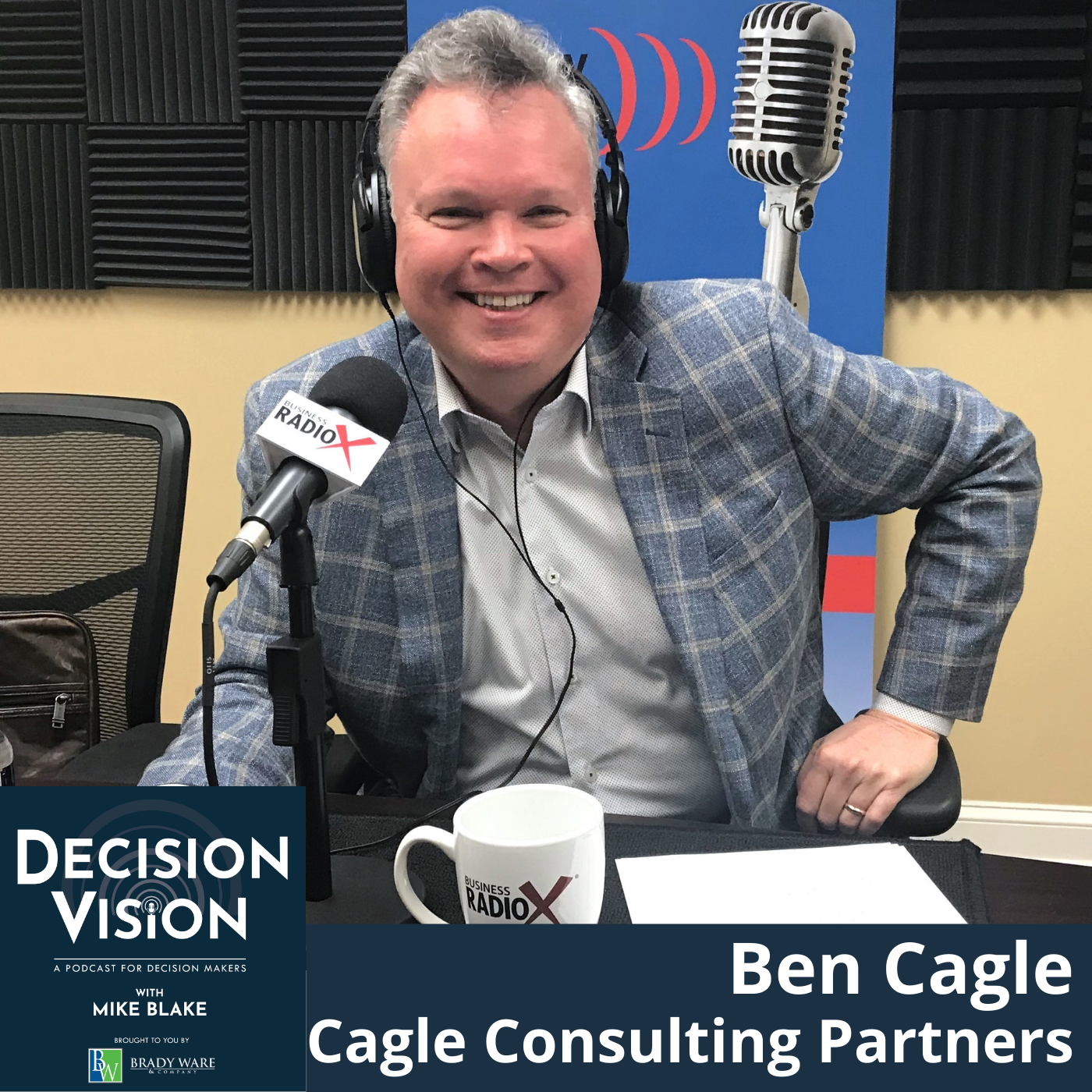
Connect with Claire on LinkedIn.

Tagged With: American Express, gentech, gentech support, Microsoft, state farm, Tata Consultancy Services

It Takes A Village E83

December 8, 2021 by Karen

It-Takes-A-Village-E83-feature
Phoenix Business Radio
It Takes A Village E83
Loading
00:00 /
RSS Feed
Share
Link
Embed

Download file

It-Takes-A-Village-E83

It Takes A Village E83

In this episode, host Austin Peterson sits down with Jennifer Mullins, Program Director at Advocacy31nine.

Jennifer shares with listeners the importance of education within the foster care system. The proper education is critical in order for foster children to mentally develop and grow and be successful.

Advocacy31nine works with foster families to identify any additional care these children need such as children with learning disabilities. Lots of time learning disabilities are masked or labeled as behavioral problems, because they the learning disabilities go untreated or families/schools are unaware these disabilities exist. Advocacy31nine-logo

Jenny Mullins explains how kids would rather be the bad kid in class than be embarrassed because they don’t know how to do something such as read. So identifying these learning disabilities is key to helping the child be successful.

Tune in to hear Jenny share stories of previous families she’s helped and also how you as a viewer can assist their non for profit organization and make a difference in children’s lives.

Advocacy31nine is a local, grassroots nonprofit in Gilbert, AZ. Their mission is to advocate for the educational success of students in foster care in Arizona.

Jennifer-Mullins-Tycoons-of-Small-BizJenny Mullins is the co-founder and program director of Advocacy31nine.

Advocacy31nine started in 2017 from her dining room table and she is thrilled to see how the mission of advocating for the educational success of students in foster care in Arizona has continued since 2017!

Jenny draws on her experiences as a classroom teacher as well as her experience raising a child on the autism spectrum, as well as her years working with children in foster care.

She loves spending time with her family exploring various parts of Arizona, trying out various food from around the world, and getting schooled on the game of Uno by her 12 year old daughter.

Follow Advocacy31nine on Facebook and Instagram.

About the Show

Tycoons of Small Biz spotlights the true backbone of the American economy, the true tycoons of business in America… the owners, founders and CEO’s of small businesses. Join hosts,  Austin L Peterson, Landon Mance and the featured tycoons LIVE every Tuesday at 1 pm, right here on Business RadioX and your favorite podcast platform.

About Your Hosts

Autsin-Peterson-on-Phoenix-Business-RadioX

Austin Peterson is a Comprehensive Financial Planner and co-founder of Backbone Planning Partners in Scottsdale, AZ. Austin is a registered rep and investment advisor representative with Lincoln Financial Advisors. Prior to joining Lincoln Financial Advisors, Austin worked in a variety of roles in the financial services industry.

He began his career in financial services in the year 2000 as a personal financial advisor with Independent Capital Management in Santa Ana, CA. Austin then joined Pacific Life Insurance Company as an internal wholesaler for their variable annuity and mutual fund products. After Pacific Life, Austin formed his own financial planning company in Southern California that he built and ran for 6 years and eventually sold when he moved his family to Salt Lake City to pursue his MBA.

After he completed his MBA, Austin joined Crump Life Insurance where he filled a couple of different sales roles and eventually a management role throughout the five years he was with Crump. Most recently before joining Lincoln Financial Advisors in February 2015, Austin spent 2 years as a life insurance field wholesaler with Symetra Life Insurance Company. Austin is a Certified Financial Planner Professional and Chartered Life Underwriter. In 2021, Austin became a Certified Business Exit Consultant® (CBEC®) to help entrepreneurs plan to exit their businesses.

Austin and his wife of 23 years, Robin, have two children, AJ (21) and Ella (18) and they reside in Gilbert, Arizona. He is a graduate of California State University, Fullerton with a Bachelor of Arts in French and of Brigham Young University’s Marriott School of Management with a Master of Business Administration with an emphasis in sales and entrepreneurship.backbone-New-Logo

Connect with Austin on LinkedIn, Facebook, Twitter, and Instagram.

LandonHeadshot01

Landon Mance is a Financial Planner and co-founder of Backbone Planning Partners out of Las Vegas, Nevada. He rebranded his practice in 2020 to focus on serving small business owners after operating as Mance Wealth Management since 2015 when Landon broke off from a major bank and started his own “shop.”

Landon comes from a family of successful entrepreneurs and has a passion and excitement for serving the business community. This passion is what brought about the growth of Backbone Planning Partners to help business owners and their families. At Backbone Planning, we believe small business owners’ personal and business goals are intertwined, so we work with our clients to design a financial plan to support all aspects of their lives.

In 2019, Landon obtained the Certified Exit Planning Advisor (CEPA) designation through the Exit Planning Institute. With this certification, Backbone Planning Partners assists business owners through an ownership transition while focusing on a positive outcome for their employees and meeting the business owner’s goals. Landon is also a member of the Business Intelligence Institute (BII) which is a collaborative group that shares tools, resources and personnel, and offers advanced level training and technical support to specifically serve business owners. In 2021, Landon became a Certified Business Exit Consultant® (CBEC®) to help entrepreneurs plan to exit their businesses by counseling owners about exit options, estimating the value of the business, preparing the business for exit and tax considerations.

Landon enjoys spending time with his beautiful wife, stepson, and new baby twins. He grew up in sunny San Diego and loves visiting his family, playing a round of golf with friends, and many other outdoor activities. Landon tries to make a difference in the lives of children in Las Vegas as a part of the leadership team for a local non-profit. He regularly visits the children that we work with to remind himself of why it’s so important to, “be the change that you wish to see in the world.”

Landon received his B.S. from California State University Long Beach in business marketing and gets the rest of his education through the school of hard knocks via his business owner clients.

Connect with Landon on LinkedIn.

Austin Peterson and Landon Mance are registered representatives of Lincoln Financial Advisors Corp. Securities and investment advisory services offered through Lincoln Financial Advisors Corp., a broker/dealer (member SIPC) and registered investment advisor. Insurance offered through Lincoln affiliates and other fine companies. Backbone Planning Partners is a marketing name for registered representatives of Lincoln Financial Advisors. CRN-3936363-112921

Lincoln Financial Advisors Corp. and its representatives do not provide legal or tax advice. You may want to consult a legal or tax advisor regarding any legal or tax information as it relates to your personal circumstances.

The content presented is for informational and educational purposes. The information covered and posted are views and opinions of the guests and not necessarily those of Lincoln Financial Advisors Corp.

Business RadioX® is a separate entity not affiliated with Lincoln Financial Advisors Corp.

Tagged With: Advocacy31nine, foster care in Arizona

Laura Lahr From Dr. Fahrenheit, Kim MacInnis From Plexus, And Morgan Stattuck From Hotworx

December 7, 2021 by Jacob Lapera

LauraLahr
Women In Business
Laura Lahr From Dr. Fahrenheit, Kim MacInnis From Plexus, And Morgan Stattuck From Hotworx
Loading
00:00 /
RSS Feed
Share
Link
Embed

Download file

This Episode is brought to you byAlpha and Omega

Laura LahrDr. Fahrenheit was started by husband and wife team Randall and Laura Lahr in 2001. With Randall’s HVAC experience and Laura’s construction and sales experience, they developed a dream–a dream on which they have raised their children and lived a blessed life.

Randall Lahr is a proud Marine Corp Veteran with a passion for service and his fellow brothers and sisters in arms. He is a proud supporter of the Wounded Warrior project and member of the Marine Corps League of Woodstock. In 2018, Mr. Lahr was involved in a horrific motorcycle accident, and by the grace of God, he survived.

With an “Ooh-rah,” he set out to “adapt and overcome” and today, with a dedicated team that shares a common mission, Randall builds his business on that of honor, courage and commitment.


Kim MacInnisFor years,  Kim MacInnis suffered with swollen joints, ankle swelling and fluid accumulation, constant bouts of pleurisy, pneumonia and bronchitis, plantar fasciitis, lower pain, and prolonged and extreme fatigue. She finally has a rheumatologist connect the dots and tested and diagnosed her with Lupus about 10 years ago.

Because she didn’t look sick on the outside, it was hard for people to understand and she found herself isolating a lot. About three 1/2 years ago, a friend of hers that she’d known for almost 28 years had been posting pictures and information about the “pink drink.”

She told her about Plexus and explained how gut health had such a huge impact on overall immunity. She then introduced me to a friend of hers who also had lupus that had found some success with the products.

After battling numerous infections for years and rounds and rounds of antibiotics. She started to learn of the negative impact that they have on gut microbiome and the good bacteria. Antibiotics kill all of it, good and bad. and it takes a very long time to repair gut. After a couple of weeks, she noticed she was sleeping better and started gaining some energy.

After taking her products consistently, she started to see a huge shift in her health. Within four months, her pain was starting to diminish and she started to lose weight. After 9 months she had lost 24 lbs and stopped having lupus flareups and her pain was gone. She was shocked. She felt like she had tried everything and this too was probably too good to be true. But over ti0me, the products proved that they did work. She has been on the products for over 3 1/2 years now and has lost 45 lbs and has yet to have a single flare-up.


Morgan StattuckMorgan Stattuck From Hotworx is a self-motivated professional, able to establish long-term, positive relationships with clients, co-workers and outside partners and looking to expand upon the community networking through new opportunities and channel endeavors. Innovative, enthusiastic, and uncompromising work ethic with a goal to bring energy and achieve potential objectives.

Hotworx is a virtually instructed exercise program created for users to experience the many benefits of infrared heat absorption, while completing a 30-minute Isometric workout or 15-minute High Intensity Interval Training (HIIT) session. As the infrared heat penetrates body causing you to sweat, the isometric postures further accelerate detoxification by physically removing the toxins from organs through muscle contraction.


This transcript is machine transcribed by Sonix
 

TRANSCRIPT

Speaker1: [00:00:07] Broadcasting live from the Business RadioX Studios in Woodstock, Georgia. Welcome to women in business where we celebrate influential women making a difference in our community. Now here’s your host.

Speaker2: [00:00:29] Hello, this is Laurie Kennedy, and I’m your host today for women in business, powered by Business RadioX Stone Payton, our producer is also in the studio with us today and we are grateful to have you tuned in today. We are interviewing three amazing women and I can’t wait for you to hear about them and their stories. The first one is Laura Laura with Dr. Fahrenheit H vrc. And then we have Morgan with hot works.

Speaker3: [00:01:02] Yes, yes, that’s correct.

Speaker2: [00:01:03] And I can’t wait to hear more about that. And then we have Kim and Kim has started her own business outside of her regular job with Plexus, and it is turning into quite the sensation. So I’m going to start with you, Laura. Tell us a little about who you are and how you started this business. I will say this. I know you personally and it’s been I’ve seen some very some creativeness that has made me giggle like the fact that Dr. Farenheit is an HVAC company with an ambulance like that makes me giggle. So tell me a little about how you are now in this, this relatively new venture, but yet with so much experience.

Speaker1: [00:01:44] So we got into this business 20 over 20 years ago with my husband. I was working at a roofing company. He was working at a heating and air conditioning company, and we decided it would be a good idea if we went into business together. So 21 years later, two kids, we this is what we do. So Randy had. My husband had a motorcycle accident a few years ago, so we kind of put everything on hold, not really sure what we were going to do. So I went full time into the insurance business. But now we’re back, got the ambulance rolling and we’re out there. So that’s where we are today.

Speaker2: [00:02:26] Yeah. And how has that? Has it taken off for you or you’re like crazy busy? It seems like you are.

Speaker1: [00:02:33] We’re busy, but I think a lot of people aren’t aware that we’re open. Oh gosh, it takes years to build a business in connections. So we’re just it’s almost like a startup. We’re starting over.

Speaker2: [00:02:45] Well, it is a new name, right? Like, no. Oh, you were.

Speaker1: [00:02:47] You had the same name.

Speaker2: [00:02:48] I didn’t know that. Ok? Yeah, OK. Got it. Great name. All right. Yes, it is. It’s so much fun. All right, Morgan, tell us about how it works, what it is, what y’all do, and why it’s different than other things that people might.

Speaker3: [00:03:07] Confuse it with. Yeah, sure. So we are it is hot works, not hot walks. We have a lot of people walk into our business thinking it is Chinese food, which, you know, they walk in and they see all these people work it out and they’re like, Oh, I don’t think I’m in the right spot, but we take we take care of them, and I’m extremely nervous, by the way. So my family’s always told me to picture everyone naked and everyone looks fantastic.

Speaker1: [00:03:32] Thanks.

Speaker2: [00:03:33] I’m I’m blushing.

Speaker3: [00:03:37] But we are a it’s a twenty four hour infrared fitness studio, so we do kind of three dimensional working out. You’re able to do your workouts in an infrared sauna. So we’re not just focused on fitness, we’re also focused on people’s health, which is kind of kind of cool. So we’re getting ready to open up our second location off Marietta Square. It’s been quite the journey, but we just kind of we jumped into it. I told my husband, I said, if I ever have to go to another job and wear heels, I might just be six feet under. I’m not sure. So we we jumped into the fitness industry and I’m loving it. So I get to wear yoga pants and tennis shoes every day.

Speaker2: [00:04:15] I know, right, that you’re dress up clothes. I love it. Well, so how long have when did you start on this venture? And I don’t tell me what infrared like, how that works?

Speaker3: [00:04:25] Yeah. So we we started on this venture. We got our franchise franchise license right when COVID hit and everyone was shutting down. So we had just purchased our license and then all of COVID happened. So we were a little nervous, but we stuck it through and went through construction and we just opened up in June of this year. So just right out, right at six months. So we’re super, super stoked about it and just just going from there. So and with the infrared, so that is focused. It’s kind of new to the industry, but what it is is a it’s an infrared heat that allows people to basically burn more calories and in less amount of time. So a 15 minute hot cycle is equivalent to going and doing like a regular cycle in an AC fitness studio for one hour. So you just you burn twice as many calories as you would sitting on a cycle bike for, you know, for an hour. So you can do that in 15 minutes. We offer hot yoga, hot pilates, the infrared heat you from the core out versus a lot of people have done hot yoga before or that that heat heats you from the outside in. So it’s helping with your respiratory system. It’s helping with just overall blood circulation, cellulite, ladies’ skin aging, blood pressure, all all the good things. So no,

Speaker2: [00:05:43] I don’t have cellulite. I’m naked,

Speaker1: [00:05:45] Right? Exactly. I was thinking the same thing. Why is she looking at me?

Speaker3: [00:05:52] That’s always a big seller. When when women walk in there were like, you start aging backwards and just get in this little sauna if we’re going to heat you up and you’re going to look fabulous when you come out. So it’s it’s fun.

Speaker2: [00:06:02] That’s awesome. Well, Kim, why don’t you tell us about your business?

Speaker4: [00:06:05] Yes. So I am with Plexus worldwide. It is a all natural, plant based supplement company, and I started this about three and a half years ago. Inadvertently, I didn’t plan on starting a business. I have lupus, and so I struggled for years, suffering with a lot of pain and inflammation and sickness and in and out of the air. And I saw a friend posting about this pink drink, and I asked her one day what she was doing because she was a nurse, so I trusted her. She introduced me to the products and I went full on in on the products for nine months and I haven’t had a flare up since then, so I’ve been two and a half years off all of my medications. And so everyone around me wanted to know what the heck I was doing because, you know, my best friend in California, she’s like, What do you mean you were hiking? You don’t hike like you don’t do those things. What are you doing? And do you think this could help me? And so inadvertently, it started, you know, people wanted to try. And so now I’ve been promoted six times in two years within within the company, and it’s just been a huge blessing

Speaker2: [00:07:08] And all while you’re keeping your full time job.

Speaker4: [00:07:11] I work full time.

Speaker2: [00:07:12] Oh, wow. All right. Are you still doing insurance, Laura? Yes. Ok, so you have two full time jobs too.

Speaker1: [00:07:18] Well, some weight and Morgan,

Speaker2: [00:07:21] Do you work 12 jobs or 10 jobs? I mean, because if you’re open 24 hours, like, how often are you there?

Speaker3: [00:07:28] Well, we’re only staff certain hours, but I’ve also got two teenagers. So yes, I work two jobs.

Speaker1: [00:07:33] Oh my god. I know a little like a teenage mom.

Speaker2: [00:07:36] No, no. It looks like a teenager herself. Yes. That’s because she’s doing the backwards workout. Oh, yeah, that’s right. It’s working. Yeah.

Speaker3: [00:07:44] Secret the secrets. A little bit of plexus mixed in there, too.

Speaker1: [00:07:47] Ooh.

Speaker2: [00:07:48] All right. Well, I’m going to start this next question with you, Kim. Ok? How does who you are as a person reflect in what you do?

Speaker4: [00:07:57] Well, I’ve always had a heart for ministry and to help helping people, especially women, and this business has given me a platform to not only help people with their health, help people with their mindset, growth, just their personal growth and then actually developing an income. One of the things that I’ve done this past year, I’ve done a lot of work on my mindset because I realized, you know, I was a single mom. I’m still a single mom and my kids are adults now. But I realized that I never felt worthy of success. I never felt like I deserved the success that other people had. And so I’ve had to do a lot of work on myself. And so now I’m able to pass that on and help other people overcome those mindset issues that they have, that that they can have the dreams they can actually dream and fulfill those dreams.

Speaker2: [00:08:43] Tell us a couple of examples of some things that you are thinking of differently today than you did. Four years ago, five years ago.

Speaker4: [00:08:55] Well, four or five years ago, my kids were in college and I had so much debt, you know, being I have twins. And so when they went off to college, my debt just racked up over the years and I never, ever, ever expected that I could get out of debt. Well, last year, during a pandemic when everyone’s in quarantine, my business was thriving and I got I was able to pay off all of my credit cards.

Speaker2: [00:09:15] Wow, that’s awesome.

Speaker4: [00:09:16] Yeah, it was life changing. And so just a shift in how you think you start showing up for yourself differently.

Speaker2: [00:09:23] That’s great, that’s great.

Speaker1: [00:09:25] I think I think you to practice this. That was too good. Oh no,

Speaker3: [00:09:28] It’s so good.

Speaker2: [00:09:31] We have known each other for a day or two or 10 years or so. But OK, so what about you, Laura? How does who you are as a person reflect on what you do?

Speaker1: [00:09:45] At the same, I have a heart for people in ministry, and I want to help people, and if this is, this is a way to do it, you know, to help people with their heating and air. And it’s not only that I make I, I build relationships with these people, you know, I know about, you know, their dogs, name their grandchildren. I just build relationships and this is a way that we can help.

Speaker2: [00:10:06] So, yeah, I think you should mention that you have some specials or some certain people groups that you do things specifically for. Tell us a little about that.

Speaker1: [00:10:17] So we give free service calls to veterans. My husband’s a marine veteran, so we have a heart for veterans. We also do discounts for senior citizens. Ok, awesome. Yeah.

Speaker2: [00:10:31] What about you, Morgan? How does who you are as a person reflect in what you do?

Speaker3: [00:10:36] I I think in the in the search of all of it, I was trying to land something that would not only benefit the community but also benefit my my family. So I feel like if you are able to find something that you’re good at, like managing a team and boosting people’s self-esteem and helping not only women but also men and families on their health journey, that that would keep my family and I on also a path of a health journey. So jumping into this, this fitness industry, if you will, has been has been amazing all the way around for not just our members that we have there at the studio, but also from like a family perspective in and building and in a healthier manner.

Speaker2: [00:11:16] So, so tell me a little about like what? What is it? How does it work? Do you pay a monthly fee or do you pay as you come in? Or how does how are you structured in reference to that?

Speaker3: [00:11:28] Yeah. So we we are membership based. We also definitely offer specials to our veterans service care providers, you know, military, all of that. But it is membership based. We have different options. We’re right next to KSU too. So we have to think about those kids that don’t have a lot of money in the bank. So we have membership options and we also have like paid and full packages. The first workouts always free so someone can come in and try it, see if they like it first. But we’re always willing to get creative when it comes to them.

Speaker2: [00:11:58] So we’d like you to open one in Woodstock. Yes.

Speaker3: [00:12:01] Yes, please. I would love to open one in Woodstock. I hope my husband’s listening to this.

Speaker2: [00:12:07] We are a pretty vibrant community up here in Woodstock. We would like you to join us.

Speaker3: [00:12:12] All right, love. I will work on that.

Speaker2: [00:12:14] Now, Kim, she lives in Marietta, so she may be close to you. Where exactly are you guys located?

Speaker3: [00:12:21] So currently we are off Chastain Road. You’re probably familiar with like the Taco Mac and yeah, pretty sure, the busiest Chick fil A in Georgia.

Speaker2: [00:12:28] At least it feels like that when you’re looking for a parking place. It does.

Speaker3: [00:12:31] Yes. Yes. And we battled that. We knew we were, you know, taking a risk, building a business right there in that busy parking lot. But knock on wood, that hasn’t been an issue yet, but we’re right there off Chastain and location number two will be off Whitlock. So coming soon. Great.

Speaker2: [00:12:46] That’s awesome. Ok, Kim, another question for you to start or what are some misconceptions about your industry?

Speaker4: [00:12:56] Well, I think network marketing really gets a bad rap and just about justifiably so, there’s a lot of companies out there that don’t do it right, it don’t do it well and really do take advantage of people. And so a lot of people lump all network marketing companies. And together, Plexus has been the biggest gift for me because they do it right. They’ve got quality products that they back with 100 percent money back guarantee their the integrity that they have. They don’t nickel and dime, they’re their ambassadors at all. I mean, you pay this month, it’s nine dollars. Ninety five cents to start a business. You don’t ever pay anything else except your own. You buy your own products. That’s it. And so when you’re backed good products, a great company and a phenomenal compensation plan that works, you know, it has been the biggest blessing. And I think people hold back trying things because they’re fearful based on other experiences.

Speaker2: [00:13:48] Yeah, I definitely agree with that. I think that’s how we’re wired. So right? What about you, Laura? Misconceptions about your industry.

Speaker1: [00:13:58] I have no idea.

Speaker2: [00:13:59] Yeah, I feel like, I mean, I’m an automotive, so I feel like we’re kind of along the same lines like people assume that we’re going to.

Speaker1: [00:14:07] Oh yeah. Yeah.

Speaker2: [00:14:09] Yeah. And they assume the worst. And then they also don’t necessarily understand that sometimes one thing makes something else go bad and you have to fix the one thing before you can figure out that the other thing was what actually was broken because it made the other thing go bad. But you had to fix that to make it run so that you. You know what I’m saying?

Speaker1: [00:14:28] Yes, I do. I think that happens. Yes.

Speaker2: [00:14:35] Morgan, what about you? Misconceptions about your industry? Am I?

Speaker3: [00:14:39] I think I could speak a lot on this just because it is fitness related. So I think a lot of women, you know, they want to come in, they want to jump into this little box and then come out looking like a like a million bucks the next day. And so. And I wish I could make that happen. But it is being consistent and showing up and, you know, doing that for yourself. So I think the biggest misconception is, you know, coming in thinking that it’s going to happen overnight, but giving yourself and allowing yourself that time to to grow and and and do the work you got to put the work in.

Speaker2: [00:15:10] So yeah, for sure. For sure. So I am going to jump to another question. Morgan, let’s start with you. Sure. Do you have a message that is for women specifically?

Speaker3: [00:15:25] I do. We see a lot. 80 percent of our clients or members are women of all ages, all sizes, all colors. And we we love that. I was scrolling through Instagram the other day and I saw I saw a sign or something that said, you know, what’s the secret to Bikini Body? And it was step one Put the bikini on your body. Step two You’re done like except except who you are and rocket, no matter what you look like. And we’re such a happy community over there that we’re going to celebrate you no matter what.

Speaker2: [00:15:56] So, yeah, it’s awesome. Kim, what about you? The question was, do you have a message that is for women, specifically

Speaker4: [00:16:06] For women specifically? Yes. It is always OK to take care of yourself. So many women, I think, put their families first. They put everyone else before them, before they take care of themselves. It’s OK to take care of yourself fur, because once you’re happy and whole and healthy, you’re going to be the best version of you for your family and your friends.

Speaker2: [00:16:27] Yeah, that’s awesome. What about you, Laura? She was too chicken her. Don’t ask me. Don’t ask me. I think Nurse Celcius shows up. Girl, does she know herself? And she got Dr. Farenheit and Nurse Celcius? She isn’t that cute. That makes me

Speaker1: [00:16:45] Giggle. Yeah. Yes, I bring heat.

Speaker2: [00:16:50] Well, Laura, what about your seasonal specials? Do you have anything that seasonal?

Speaker1: [00:16:55] We do. We have maintenance where you get your furnace checked out beforehand in the fall. That’s very important. You want it, you don’t want it to break down in the middle of winter. Right. So it’s important to get that checked out and we do run specials. We also have yearly specials. We can break it down every month. We go out and change your filter twice a year. Check everything. It’s a twenty four point check inspection.

Speaker2: [00:17:19] Yeah. So like a maintenance plan kind of thing, it’s a monthly fee. It is to do that.

Speaker1: [00:17:23] You could you could do a yearly, you could do it monthly. It’s it varies.

Speaker2: [00:17:27] Ok, got it. Yeah, I think that you probably get like 150000 calls on the first hot day in the spring and the first cold day in the fall.

Speaker1: [00:17:37] Yes, people want to wait. They try to put that off. And then it’s an emergency.

Speaker2: [00:17:41] Yeah, because they turn it on and they’re like, Well, I get that. Don’t work.

Speaker1: [00:17:44] That’s right. So it’s important to get get that check. Just just a wellness check. Yeah, the doctor recommends a wellness check.

Speaker2: [00:17:51] Yeah, yeah. Well, as far as your message for women specifically, I think the fact that you’re so involved in the business with your husband that you’re, you know, and your relationship oriented, you just want to make sure that the the women are feel as comfortable as anybody else, you know, like I can again, our our our industries are somewhat similar in so many ways.

Speaker1: [00:18:12] So I and I think, well, we’ve been I’ve been going out to inspections with Randy and I have noticed if it’s a woman there by herself, she’s at ease. Yeah, I talked to her, you know, I built a relationship while he does his thing. Sometimes I hold the light.

Speaker2: [00:18:27] But yeah, yeah, yeah. Danny would probably like me to go to the shop and hold the light under the hood. I cannot. I just I haven’t gotten quite there yet. Let’s talk about mentoring Kim. I’m going to jump back to you. Ah, the question is, are you being mentored and are you mentoring others? And then what does that look like

Speaker4: [00:18:45] Every single day? And I absolutely love it. So this business has been such a blessing because all of the women that have come before me, I’ve been able to watch them. And so I’m able to emulate what they do. And so they’re pouring into me constantly. And so now I’m able to do that with the 300 people that are following behind me. I’m constantly mentoring them, teaching them, training them. And it’s just that’s just that’s the business model. You know, you reach up and follow somebody and then you reach behind and you pull someone up behind you.

Speaker2: [00:19:16] Well, I do love the concept of not just sell, sell, sell, but grow, grow, grow. You know, like, you know, let’s let’s go through this book together, because not only is it going to help us be more successful in like if you’re more successful in who you are, then that’s just going to overflow.

Speaker4: [00:19:34] Absolutely. And that’s one that’s been one of the biggest blessings because I mean, let’s face it, if you go to Walgreens and buy a vitamin over the counter, you’re not going to have someone coaching you and guiding you and mentoring you as you’re taking the product. But with Plexus, you get that. You get that with me.

Speaker2: [00:19:50] That’s awesome. Morgan, what about you, are you being mentored? Are you mentoring others? And what does that look like for you?

Speaker3: [00:19:57] Sure. Yes, we are mentored by artwork’s corporate in general, and we have a coach that we meet with on a weekly basis that kind of keeps us in line and, you know, suggest ideas for the business and, you know, just brings new opportunities to the table. And then in turn, I take that and mentor my team. I’ve got a I’ve got one guy in the team, but the rest of my team are all female, so we do what’s called a daily huddle every day. It’s through an app on our phone and we just kind of regroup in the morning. We help each other build each other up, kind of give, you know, a heads up as to what’s going to happen that day. It’s kind of funny. I do have a case you call a girl that is I won’t I won’t mention your name that is working for us. And she had never left a voice message before. So when she started working for me, I was like a big part of your job is its calling people and talking to them over the phone. You know, she’s 19, 20 years old and she’s like, I have never left a voicemail before, and I was like, Well, you got to learn today, girl, you’re going to learn today. So they’ve learned a lot from just working in this environment, which has been kind of cool.

Speaker2: [00:21:01] Yeah, that’s so interesting. I have I heard recently that they stopped teaching handwriting cursive. Yeah, cursive in in third grade. Now I heard then I heard that they put it back in. But I don’t, I don’t know. It seems foreign to me on some level. Laura, what about you in mentoring?

Speaker1: [00:21:20] I have a couple of mentors in the HVAC field, so I do a lot with them. I’m in a lot of groups, HPC groups. I’m in the some groups for women in this industry and and I mentor anyone that needs. I just do that anyway. Anyone that needs help, I try to help them and figure out a way to to help them be better.

Speaker2: [00:21:44] So will you have some youngins you got to mentor them to tell us about who’s in your family?

Speaker1: [00:21:49] So I have five children and seven grandchildren. Yes, so mine just blew. Yes. So we have one still at home. She’s 15. She’s the caboose. And how old are your children? So I have a 35 year old with thirty three year old, a twenty six year old and 19 year old, and then faith the 15 year old. Awesome. Yeah. And seven beautiful grandchildren.

Speaker2: [00:22:15] Congratulations. That’s amazing. Morgan, what about you?

Speaker3: [00:22:20] We we’ve got like I said earlier, we’ve got two teenagers. I have a lovely stepson who is 20. He’s he has just moved back home and we’re helping him get on his feet. And then my daughter just turned 18. We all come from split families. So when my husband and I got together almost nine years ago, we always used to joke with people and tell them, we’re like, you know, Insta family, just just add water. So those are the two kiddos. And then and then we’ve got five animals, so.

Speaker2: [00:22:51] Big family, big

Speaker3: [00:22:51] Family, big furry family, yes, an extended family spread out all over the U.S.

Speaker2: [00:22:56] So. Gotcha. Kim, what about you?

Speaker4: [00:22:59] So I have twins. They are. I have a boy girl, twins, they’re going to be twenty seven in January. One lives in California. The other one lives in Tulsa.

Speaker2: [00:23:07] Well, they they they went a little far from home, huh?

Speaker4: [00:23:10] You know, I raised them to be strong and independent. I didn’t think they’d listen,

Speaker2: [00:23:16] But they probably didn’t for a few years.

Speaker4: [00:23:18] But they are absolutely amazing. I’m so proud of them.

Speaker2: [00:23:21] That’s awesome. Ok, so I do want to ask, how can others get in touch with you and your business? So I’m going to start Kim with you.

Speaker4: [00:23:31] What you can reach out to me through Facebook. Kim McGinnis, or you can email me at Kim at Pink drink crazy.

Speaker2: [00:23:40] Can you spell your last name?

Speaker4: [00:23:42] I can. Ok. M.a.c ionize.

Speaker2: [00:23:47] Ok. Awesome. And that’s how we get in touch with you. Yes. Ok, what about you, Morgan?

Speaker3: [00:23:52] And well, you’re welcome to always stop by the studio again. We’re we’re right there by the Taco Mac on Chastain. We’d love for you to follow us on Instagram at how it works can. And you’re always welcome to give us a call as well.

Speaker2: [00:24:08] Awesome.

Speaker1: [00:24:09] Laura, you can get in touch with me through WW Dot, Dr. Fahrenheit Fvcom or call me at seven seven zero nine two six six seven seven three.

Speaker2: [00:24:20] Ok. Can you spell Fahrenheit for those of us who didn’t learn how yes, the Cherokee County education?

Speaker1: [00:24:29] Dr. DJR Period. Fh r e nh i t h v AC.

Speaker2: [00:24:37] Quite a mouthful, for sure. And I know that sounded like something we do at the end, and I probably should have made it at the end, but we’re not at the end. I just wanted to make sure I asked all the questions that I knew you guys wanted me to ask. So now that those are done, we’re going to jump into something else. I want to know what makes your life significant.

Speaker1: [00:24:58] Laura? I’m going to get emotional. My family, yeah,

Speaker2: [00:25:04] Yeah, that’s awesome.

Speaker1: [00:25:05] So, yeah, that’s my that’s my inspiration there. My motivation.

Speaker3: [00:25:12] Morgan, I’m probably going to piggyback off off yours. Yeah, my my big biggest motivation would would be my family, my husband and our family and friends. So I think what I’m forgetting, what makes us unique, correct? Yeah. Well, all of us all the same thing with big bow on it.

Speaker2: [00:25:33] What makes your life significant?

Speaker3: [00:25:36] I think, yeah, just family and where we all come from. So again, with the whole we’ve all come from split families and stuff like that, I think being able to come together and and love one another has been significant for us.

Speaker2: [00:25:50] Yeah, I think when you are trying to combine families, that also adds a degree of complication that you have to navigate. And so kudos to you for for making that work, for sure. Thank you. What makes your life significant, Kim?

Speaker4: [00:26:06] You know, I’m a firm believer. I learned a long time ago, you know, God has blessed me so many times in my life and I always come back to he doesn’t do it just for me. He does it so that I can help somebody else and introduce him to somebody else. And so paying that forward, so the saying, if you’re a blessing, if you’re blessed, be a blessing.

Speaker2: [00:26:24] Yeah, that’s great. That’s great. How do you handle mistakes in your business?

Speaker4: [00:26:32] Kim, the first thing is I don’t consider the mistakes, I consider them learning opportunities because everything that you do is an opportunity to grow and learn from. And if we don’t have those challenges, we’re not going to learn. We’re just going to keep moving forward.

Speaker2: [00:26:46] Yeah, that’s awesome. I saw it a few weeks ago. I start. I want one of my goals this year and to 2022 is to redefine failure. And so one of the things I want to do is every Monday morning or whatever, whatever morning, Monday just is a good day to start things right? And want to look at the prior week and say, OK, where did I fail so that I can just basically, you know, dissect it and use it as a learning opportunity? If you if you keep doing something and then you don’t pull it apart to try to find out what you can do different to change it for the future, then you just, you know, that definition of insanity, right? Doing the same thing over and expecting different results if I’m going to expect different results. I got to do something different. So I’m going to go look at and dissect the thing I didn’t do the way I wanted to do it so that I can have a better opportunity for success.

Speaker4: [00:27:41] Just make sure you don’t beat yourself up over it.

Speaker2: [00:27:43] Yeah. Good word. Gimme. I need that for sure.

Speaker4: [00:27:45] You can analyze it, but then you’ve got to move on. Yeah.

Speaker2: [00:27:48] Just yeah, analyze it. Create the strategy for moving forward. But don’t kick myself in the process. Absolutely. Yeah, for sure. What about you, Morgan? How do you handle mistakes in your business?

Speaker3: [00:28:02] I just pass. Those right on to my GM

Speaker2: [00:28:05] Is the best answer

Speaker3: [00:28:06] I’ve heard. There’s also my best friend, and I hope she’s also listening. No, we I. I like to sit down, process it. Listen, I think listening is the key. So depending on what that my mistake is, we if we’re not making mistakes, then we’re not humans, right? So I don’t think I’d be where I am today if I didn’t make a million mistakes. So I turned them into a positive affirmation. And I pick up the next day and I learn and I grow and I move on.

Speaker2: [00:28:33] Yeah, yeah. What about you, miss Laura?

Speaker1: [00:28:36] I try to correct my mistakes. Yeah, right away. And like you, Lori, I analyze everything and pull things apart. I mean, at the end of the day, I look over everything. I did do this. I could have done this better. Yeah, I’m the same way. I do the same thing, but I do have a tendency to expect more out of myself. So I pushed myself and yeah. Yeah, but then I overcome, then I adapt and overcome that. Yeah, that’s for sure you have to you have to keep going and learn from it.

Speaker2: [00:29:04] Yeah, I think for I mean, in our business, if we make a mistake on a vehicle, for example, like I think the first thing that we need to do is own it. Yes. You know, instead of trying to push it off on something else, just own it. People know you’re going to mess up every now and then just own it and make it right. Exactly, you know, and then they’re more forgiving, right? Right. Yes. What are the greatest challenges you are facing right now as a business or industry, Laura?

Speaker1: [00:29:33] For me, its employees are, yes, it’s really hard to find people that want to work.

Speaker2: [00:29:40] Ok, I’m with you.

Speaker1: [00:29:41] Yeah, I agree. Challenge. I’m having personnel.

Speaker2: [00:29:45] And what are you looking for in case somebody listening that might be interested, what would that look like for you?

Speaker1: [00:29:51] I’m looking for a lead technician, someone that’s got at least three years of experience that can repair a service repair person in this industry that wants to grow with this. Ok, yeah, great.

Speaker2: [00:30:04] You all learned how to spell Farenheit a few minutes ago. You know how to reach out somewhere.

Speaker1: [00:30:09] That’s right.

Speaker2: [00:30:11] Morgan, what about you? What are the greatest challenges you’re facing as a business or industry?

Speaker3: [00:30:16] I think one of the greatest challenges is just creating that longevity, keeping people motivated and around for the long haul, right? So a lot of people like to go and jump into the next big fitness among listening whenever it’s new and bright and shiny. And so keeping that just charisma about your studio is really important and another I need to stop giving things out for free. My husband’s like, if you just give everything up for free, we’re never going to grow, so I’m personally working on that. Yeah, that’s that’s a challenge because I just want to give give give all the time. So I’m working on that.

Speaker2: [00:30:50] So does everybody at this table have a hard time saying no?

Speaker4: [00:30:53] Yes, no.

Speaker3: [00:30:55] It depends. It depends.

Speaker4: [00:30:56] Ask a few questions.

Speaker2: [00:31:00] All right. Well, I’m going to jump back into greatest challenges you’re facing as a business or industry for you, Kim.

Speaker4: [00:31:05] You know, ironically, in the last year and a half since we’ve been, you know, in this pandemic, we really haven’t had challenges. I mean, wellness, health and wellness and immunity is on the forefront of everybody’s brain. Yeah. And so and I think in the last six months, you know, there’s been a lot of issues with people, you know, having to choose career making career decisions because of mandates, because of job requirements of mandates and in their personal choices. And so it has really blossomed and opened up an arena for women that want to stay home with their kids that don’t want to have to to live under those those guidelines. And so it’s a great opportunity for people to do that.

Speaker2: [00:31:45] For sure, hey, Morgan, what advice would you give to someone trying to get into your industry?

Speaker3: [00:31:52] Um, just just come on, I don’t even know what advice I would give, I would just encourage them to make that step. Make that phone call reach out to people that are also in the industry and how they can be successful. If it wasn’t for another franchise owner, the Smyrna network’s owners back to the mentors, they were kind of our mentors and help guide us through some of these processes and without them, I don’t know where where I’d be. So just reaching out to those people that you can get knowledge from.

Speaker2: [00:32:22] How many hot works are there?

Speaker3: [00:32:25] There’s over a hundred and twenty nationwide. We’re also abroad as well. Ok. So I think here in Georgia alone, we’re creeping up on the 50 plus.

Speaker2: [00:32:36] Oh, wow. Ok. Is this where did it start?

Speaker3: [00:32:40] It started in New Orleans.

Speaker2: [00:32:43] Oh, wow, that’s interesting. Ok. All right. Well, I’m going to ask you another question that’s not on my list, so I didn’t prep you for it. Back to this infrared thing, like what heat is in the room, I want to know how hot it is in there.

Speaker3: [00:32:56] So you actually get to control it, but all of our asanas are patent to go up to one hundred and thirty degrees. I definitely don’t encourage first timers to do one hundred and thirty degrees. It’s like a little human microwave, which is you in there, but you have control over that. So for new people, I start, I’d like to start them out at like one 15, maybe even lower, just so your body acclimated to that heat. After two or three times your body, believe it or not, actually starts craving that. So you get better sleep. Kind of the same stuff that you’re doing better sleep, more energy and you start to crave it and you want more. So.

Speaker2: [00:33:32] Awesome. Ok? What advice would you give to someone trying to get into your industry or business, Laura?

Speaker1: [00:33:39] I would say be teachable. Learn as much as you

Speaker2: [00:33:42] Can,

Speaker1: [00:33:43] Learn as much as you can about the industry and care about people that’s important to. Yeah. Learn as much as you can, like I read, I just learn.

Speaker2: [00:33:56] I think one of the things that I sometimes I end this show with a saying that has to do with, you know, basically being teachable, I feel like if you think you already know everything, then you’re sure to learn nothing. That’s normally what I say when we’re ending the show just because it’s like, I definitely feel like. That sometimes my biggest problem is I get too confident about something and then I stop learning about it, you know? Right? Yeah. So tell me your most rewarding experience with a customer recently.

Speaker1: [00:34:36] So many, if we can make them comfortable, I’m happy. Yeah.

Speaker2: [00:34:41] Well, you had mentioned there was a lady specifically recently that had been had heat for three years.

Speaker1: [00:34:48] We’re working on that. Yes. So she yes. So we are. It’s a big project. She hasn’t had heat in three years. She’s got MS. She can’t speak. So her daughter reached out to us. And so we’re trying to come up with a plan to bring her some heat. So yeah, so I think this is a tradition that I would like to do once a year is to give heat to someone who can’t afford it. So, you know, that’s that’s what we’re that’s what we’re working on right now. That makes me feel pretty. It makes you feel kind of sad for them. But also you can do something to help. Right. So that’s yeah, that’s great for sure.

Speaker2: [00:35:27] Yeah. Hey, Morgan, do you have a customer story that is a success story from recent times?

Speaker3: [00:35:34] We do several just, you know, people that are on there again, their fitness journeys and their their missions. We do have a single mom that finally learned how to say no and stop apologizing and decided to do something for herself. About three months ago, and she’s just been working really hard, and she announced the other day, you know, and it’s not just about losing weight for her journey, it was about losing weight so she could be a better mom to her kids. And she she’s lost 50 plus pounds in the last 60 days, and she feels like a whole new person, so we can’t even keep her out of the studio.

Speaker2: [00:36:09] That’s so great.

Speaker3: [00:36:10] And you can just tell your customers they can just move into hot works. We will give them heat plenty of it.

Speaker1: [00:36:15] So if I can’t bring it, you can absolutely.

Speaker3: [00:36:19] Girl, I got your back.

Speaker2: [00:36:20] Yeah, I got here today, and Laura was like, This is an interesting mix of businesses, but see how that just connected?

Speaker1: [00:36:26] Yes.

Speaker2: [00:36:26] Yes, I do. Kim, what about you and most rewarding recent story with a client?

Speaker4: [00:36:36] There’s there’s so many, but there’s one that’s jumping out that this week this woman actually posted a picture of herself. She started on our products about a year and a half ago. She had rheumatoid arthritis, had a lot of pain, inflammation. She couldn’t walk, she couldn’t exercise. And she’s pain free and she’s actually lost 60 pounds. And she posted a selfie, a full body selfie, like unprovoked.

Speaker2: [00:36:59] So that is so awesome. She look as good as us. She Yeah, I mean, I can’t see her, but I don’t think she was naked, though like we are. Well, Kim, you got as gifts. I did. What did you get us?

Speaker4: [00:37:15] Well, you can open it.

Speaker1: [00:37:16] Ok.

Speaker2: [00:37:18] All right. We’re going to open these real quick what we get.

Speaker4: [00:37:21] Well, I’m a sample queen, so I bring samples everywhere I go,

Speaker1: [00:37:25] Oh, look,

Speaker4: [00:37:27] Oh, so this is our new this is our new holiday blend. So this is a black cherry lime blossom. This is a new version of our pink drink, and the pink drink was actually created by an endocrinologist to help balance blood sugar. And so it and once you balance your blood sugar, it helps all of your other hormones get lined up and start working right, so it helps curb sugar cravings, gives you more energy and it has a prebiotic in it. And it’s called it’s called plexus slim. Its microbiome activating.

Speaker2: [00:37:57] Awesome. All right. Well, we’re going to go into last comments and I just want I want to start with you, Morgan, because I’ve started on this end in this end, but not in the middle. So I’m starting in the middle. Ok. Just give us some last comments or words. What are some things that we need to know about you or your business or how to connect with you? Or what are some? What is one thing you want to leave us with?

Speaker3: [00:38:23] First off, just thank you for for having us here. It feels really good to be sitting around a table with women and that are in all different industries, somewhat similar to in some. But just I just want to say thank you. And if you have an opportunity to to come out and see us, please do and we bring your business to, I mean, sometimes we get slapped on the hand from, you know, franchises, but we we want to be the people that we can say, yes, we know that girl that does Botox, or yes, we know that woman that owns an ornament automotive business or we know someone that digs holes like we just love being that community where we can help everyone grow.

Speaker2: [00:38:58] So awesome. Well, thank you for being here.

Speaker4: [00:39:00] I think you and I should go do a workout.

Speaker2: [00:39:02] I think I know, I think we should, too. I like the naked whoa that just went somewhere I’m not OK with. I’m fine with being in the studio pretending to be naked, but I like that she looked at you and she said, dig holes, though I know

Speaker3: [00:39:27] I challenge all of you guys to come to the studio and we’ll have some fun too. Maybe we’ll we’ll have some champagne afterwards.

Speaker4: [00:39:33] Well, there will be laughter.

Speaker2: [00:39:36] Ok, awesome. Challenge accepted. We’ll look at that in the new year, for sure. All right, Laura,

Speaker1: [00:39:44] What would you like? 30 second opinions on new systems?

Speaker2: [00:39:48] Oh, that is that a common thing? Like, is that a common thing that happens where a whole system is recommended, when it’s not necessary?

Speaker1: [00:39:56] I don’t know. Yeah, OK, but I bet, you know, I know that we can save people money, that we can price match. So, you know, if you want to, if you don’t feel comfortable with someone saying that you need a new system, we’ll come out for free and look at everything and tell you our opinion.

Speaker2: [00:40:10] Aren’t you awesome?

Speaker1: [00:40:11] Ok, thank you. Nurse Celsius.

Speaker3: [00:40:16] That’s right. You know, I wish we would have known this about a month ago.

Speaker1: [00:40:20] Always say that you don’t know how many times I hear that. We’re always a day late.

Speaker4: [00:40:24] I’m going to spread the word now.

Speaker2: [00:40:26] Thank you, Miss Kim. What would you like to leave us with?

Speaker4: [00:40:29] Well, anyone that that reaches out to me today and mentions this interview, I will give a very big discount on you getting started on your health today. What?

Speaker2: [00:40:40] Awesome. Yes. Well, Stone, do you want to tell us what you want to leave us with today?

Speaker5: [00:40:48] Well, this is just so much fun. It’s such a joy just to sit here and watch people get to know each other and learn about each other’s business. I’ve got a thousand questions, so I’m going to have to do a whole nother episode. But thank you for letting me be a part of this. An absolute joy to to and to watch you facilitate the conversation and in the energy that all three of you bring to it. So thank you. Thank you. Thank you.

Speaker4: [00:41:11] Thanks for having

Speaker2: [00:41:11] Us. Awesome. Well, if you think you know everything. You’re sure to learn nothing.

Tagged With: Dr. Fahrenheit, Hotworx, Kim MacInnis, Laura Lahr, Morgan Stattuck, Plexus

Hanno Ekdahl With Idenhaus Consulting

December 3, 2021 by Jacob Lapera

idenhaus
Atlanta Business Radio
Hanno Ekdahl With Idenhaus Consulting
Loading
00:00 /
RSS Feed
Share
Link
Embed

Download file

HannoEkdahlHanno Ekdahl is the founder of Idenhaus Consulting, a professional services firm specializing in the design and implementation of Identity Management and Cybersecurity solutions.

With more than 15 years of experience in Identity and Access Management, Hanno has a deep understanding of how the cybersecurity space has evolved as well as mission-critical insight around the challenges IT leaders and their organizations face in order to prevent, identify and mitigate security breaches, enhance regulatory compliance and safeguard customer information.

With clients in numerous sectors including financial services, CPG, healthcare, retail, manufacturing and the public sector, Idenhaus excels at helping organizations build and maintain effective Cybersecurity programs by focusing on the importance of leadership as well as the communication of business issues and value of security programs to all levels of the organization.

Hanno received his Masters in International Business from the Moore School of Business and an undergraduate degree from the University of North Carolina – Chapel Hill.

Originally from Chapel Hill, North Carolina, Hanno now resides in Atlanta, Georgia with his wife Carmen and enjoys running, travel, and skiing.

Follow Idenhaus Consulting on LinkedIn.

What You’ll Learn In This Episode

  • Services offered
  • Some general cybersecurity trends
  • How organizations manage their cybersecurity risks
  • Advice to better protect themselves from a cyber attack

This transcript is machine transcribed by Sonix
TRANSCRIPT

Intro: [00:00:04] Broadcasting live from the Business RadioX Studios in Atlanta, Georgia. It’s time for Atlanta Business Radio brought to you by onpay built in Atlanta. On Pay is the top rated payroll and HR software anywhere. Get one month free at onpay. Now here’s your host.

Lee Kantor: [00:00:31] Lee Kantor here, another episode of Atlanta Business Radio, and this is going to be a fun one. But before we get started, it’s important to recognize our sponsor onpay. Without them, we couldn’t be sharing these important stories today on the Atlanta Business Radio. We have HannoEkdahl with IdenHaus. Welcome.

Hanno Ekdahl: [00:00:49] Thanks, Lee. It’s a pleasure to be here.

Lee Kantor: [00:00:51] Well, I’m excited to learn what you’re up to. Tell us about in-house consulting. How are you serving, folks?

Hanno Ekdahl: [00:00:57] Are we certain folks well, hopefully with a lot of good cybersecurity advice, so I’ve now started almost eight years ago in March of twenty fourteen. We started with some identity management and cybersecurity work for some local Atlanta companies and have evolved from there. Part of what we do is help organizations get their arms around their cybersecurity posture. How well are they protecting their systems and then help them move from where they are today to a more secure position in the future?

Lee Kantor: [00:01:29] So now what was the genesis of the idea? I’m sure the tactics have changed dramatically in the eight years you’ve been around, but maybe foundationally and fundamentally the idea of cybersecurity is kind of the same, I would think.

Hanno Ekdahl: [00:01:45] So, yeah, the notion of cybersecurity, I mean, you know, it started with usernames and passwords back in the day, right? And then once we started networking computers together, the security model started to change because now it’s not me logging into my local desktop. Now I’m logging into a network, and so everyone potentially has access to everything. If anyone can log into your network, so then how do we start segregating things off to protect them? And those techniques have evolved dramatically over time. So password protecting folders. But on a more sophisticated level, if you think about your network as it used to be, like inside, outside, like a castle, right? So anyone who got through the front door of your castle could get access to everything that was inside the castle, and we’ve changed that model now. So we have things like network segmentation where you think about having like secure rooms within the castle that each one has its own security that’s hardened and makes it very difficult to get in. So just getting in the front door doesn’t necessarily get you anywhere interesting.

Lee Kantor: [00:02:49] Now, how has the pandemic impacted your business in terms of, you know, at one point, the only way to get in the castle was to physically be in the in the office of the castle. And now people are taking their own devices, their own computers and their, you know, accessing the castle from all over the planet. As you know, work becomes more remote and their client base is more remote and everybody wants instant access without any friction. But friction is kind of important to keep the bad guys out.

Hanno Ekdahl: [00:03:21] I couldn’t have said it any better myself. So it’s almost like you want to think of an analogy that everyone can understand, it’s like having brakes on your car. Right? The idea is you wouldn’t want to drive your car at one hundred miles an hour if you couldn’t stop, right? Right. So security really should be like breaks, it’s a fundamental part of running the organization. It doesn’t necessarily have to create friction with customers and your employees. They can have a relatively seamless access experience and get to the assets that they should get access to. But the brakes are there to make sure that bad guys aren’t able to access things and that internal employees aren’t able to access things they shouldn’t access. Like, I wouldn’t want someone accessing my medical records just because there are some staff person at the hospital, for example.

Lee Kantor: [00:04:12] Now, I always thought that this was a problem early on when it came to passwords. Just give me your take on this. If they would have said initially, instead of passwords being like eight characters or six characters, they would say like, make a sentence or, you know, phrase that you recognize rather than letters or numbers. I would have thought that you would have had more protection in an easier way for the person to remember what that password is. And, you know, in a world that requires you to change it, it seems like every 30 to 90 days.

Hanno Ekdahl: [00:04:45] Yeah, that’s that’s correct, so a lot of people refer to that as a past phrase because, like you said, it’s a sentence, right? It could be something that’s meaningful to you personally, and because it’s long and complex, it’s going to be more difficult to hack by brute force. Right, so I can’t just sit there and crank through a set of eight characters at random until I finally crack the password, right? Because these phrases are 20 characters long, maybe even longer. So a lot of that actually came from limitations and IT systems from back in the day when I was coming up. We won’t say how long ago that was, where memory was a premium, and so passwords were limited to these eight character passwords. And as organizations evolved and our technology evolved, processing power got more advanced. Now, computers are able to just process so many transactions so quickly you can do these brute force hacks that just weren’t possible 20 years ago. So we’re a little bit trapped by this legacy model where computers weren’t so tightly networked and memory was a premium, and so we did sort of the minimum level of security that we could get away with and still preserve the functionality of the computer.

Lee Kantor: [00:06:05] Now, as things have changed and now memory is probably less of an issue than it was, there’s always this promise of these biometrics, you know, whether it’s my eye or fingerprint or something that’s going to eliminate passwords. Are we getting closer to that kind of world? Is that dream can ever come true? Or is it something that we’re always going to be like in a world where someone’s going to text me some numbers that I’m going to have to type in? Is that kind of the future of this?

Hanno Ekdahl: [00:06:36] That’s a very intriguing question, and the answer, I think, is also fairly complex because biometrics originally, you know, the whole fingerprint scanning was really the first one that came around for more general, consumer based access, right? How do you get into your laptop? You can actually scan your fingerprint, but the readers themselves were so primitive initially, they actually could be defeated with a gummy bear or by lifting someone’s fingerprint off a glass. Right now, the technology has gotten more sophisticated since then, but biometrics can also be bypassed in certain ways. Face face recognition all these things are possible. The technology is getting much better. The algorithms are getting more sophisticated. That is much more and more becoming a possibility so that you look at your phone right and you can get into your iPhone, for example, right? They have that face based recognition. The flip side of that, though, is that you’re also giving up some of your privacy potentially, right? You’re having your fingerprint, your face is logged and processed through this algorithm. And so countries like, well, sorry, I should say, regions like the EU under their GDPR and privacy regulations are putting some rules and regulations around what data can be collected and how it can be used. So we actually start getting into a privacy issue because it’s something about me that’s very personally identifiable. How much protection are we putting around that information?

Lee Kantor: [00:08:06] So is there, and I would imagine also as cameras get better, they’re able to make such a great copy of my face that that might be able to kind of be used instead of my face.

Hanno Ekdahl: [00:08:18] Exactly. Exactly, so some of the earlier faith based technologies, they were able to defeat it by just using a picture of the person.

Lee Kantor: [00:08:26] So it’s kind of this constant cat and mouse game.

Hanno Ekdahl: [00:08:31] It is it’s it’s an evolving it’s trying to strike a balance between ease of use. Having sufficient security and also protecting the person’s privacy, and sometimes those things are at odds. Which makes it for a very complex landscape.

Lee Kantor: [00:08:47] But it’s good job security for you and your firm.

Hanno Ekdahl: [00:08:51] It doesn’t hurt.

Lee Kantor: [00:08:52] It doesn’t hurt. So now what are some of the specific challenges your customers are facing nowadays?

Hanno Ekdahl: [00:08:59] Uh, well, you would talk a little bit earlier about the remote working, right, so you have folks who are working from home now, possibly using their own devices to access corporate systems, and those devices may not be patched, they may not be scanning them for viruses. Moreover, if you’re working from home and you’re leaving your laptop open, it’s accessible to any number of people who could potentially get on and copy some data or log in and take away your intellectual property. So there’s a number of risks there that I think are really. Impacting organizations in ways that they didn’t expect. Uh, part of that also, too, is being able to roll out things like virtual private networks, which VPN, which allows you to connect securely to the corporate network and that offers some level of protection by encrypting all the traffic between your home computer and. The company network, the problem is a lot of organizations didn’t have enough VPN accounts, and they didn’t know how to get their users enrolled in the VPN solution so they could actually implement it. So there’s been a lot of heartburn. I think organizations have realized that their security models now need to be able to adapt to scale up relatively quickly, and they need to find ways to help manage end user devices and lock down their systems almost on a system by system basis. So I can implement more advanced and sophisticated security to only allow you to access certain applications from your phone, for example. And those considerations weren’t something that organizations really had to think about too much before the pandemic, and then all of a sudden it became front and center top of mind. And that’s been a big struggle for them to adapt to that reality.

Lee Kantor: [00:10:45] So now is that typically the point of entry for you and your firm that you know they’re going remote or they’re dealing with remote for the first time, that kind of in large numbers and they need somebody like you and your team to help them think through all of the dangers.

Hanno Ekdahl: [00:11:01] That is an area where we play, so one of the things that we do. One of the multiple domains in cybersecurity, one of them is identity management. And so what identity management is getting back to your biometric example where we are establishing an identity? So it used to be username and password. Now it can be username, password and a biometric or some combination of credentials, right? Something you know, something you are to make sure that we establish an identity for you. And once we have an identity that we know is valid, we can actually automate the processes to provision things to you as a user. So I can say everyone who’s located in the Dallas office needs VPN access tomorrow and then have the system automatically grant that access. And then the system can automatically revoke that access when someone leaves the organization or that need no longer exists. And so we help organizations identify. Security models that work for them and how they can. Allocate resources and revoke resources based on security policies in an automated fashion.

Lee Kantor: [00:12:07] And then it can flex like maybe I’m in the Dallas office, but today I’m in Seattle. Like, it knows that

Hanno Ekdahl: [00:12:15] Yes, you can actually do some fairly sophisticated things based on location changes, whether it’s tying into a badging system. So we can also manage your physical security and also identify things like which office you’re working out of. So as long as we’re tracking it in a system and I have it available in the IT world, I can make a decision based on that. So we usually call that attribute based access control. And so I can look at a whole series of attributes based on your user session where you’re logging in from what device you’re logging in with and make a decision about what I let you see and not see. And that’s a great way for organizations to manage risks on a real time basis.

Lee Kantor: [00:12:56] Now, you know, like financial and health care, fintech, health care, those seem like obvious places where they’re paying attention to cybersecurity. Do you find that cybersecurity is trickling down into other businesses or other industries that maybe they weren’t as kind of active in that space, or maybe weren’t paying as much attention because they didn’t feel like they had anything worth taking or worth, you know, hacking into? And now that that is changing.

Hanno Ekdahl: [00:13:28] Yes, so I think you can look at the Colonial Pipeline, it’s a great example, right? So that’s part of our critical infrastructure, right? Transportation of oil, the impact of that ransomware attack where they shut down the pipeline. Gas prices in the southeast went to five and a half six dollars a gallon. There were shortages of supply. I think that made it very real for a lot of people that you know, anything that’s not properly secured can bring our economy or certainly regions of our country to a screeching halt, whether that’s the energy industry. You mentioned health care, and there’s actually a big exposure there around all the medical devices, right? And so there’s all these different places that organizations are now becoming more aware that, yes, we have to do something. We’re in manufacturing, but our operating systems are vulnerable, right? Our operating technology is vulnerable. We’ve exposed it to the internet because that made our life easier from a business standpoint. But we didn’t think through the security model to make sure that these devices are protected, can’t be hacked and won’t disrupt our operations.

Lee Kantor: [00:14:40] So now what are some of those organizations that are maybe new to some of these cybersecurity risks? How are they managing their situations?

Hanno Ekdahl: [00:14:51] Well, I think the first thing they’re trying to do is get a handle on what their risk exposure is, so a lot of them like to begin with a risk assessment where they’re using. There’s this, which is actually a u.s.-based federal standard. Others ISO, which is an international standard that defines these cybersecurity risk frameworks, and they actually do a really nice job of laying out these scorecards, if you will, where you can go through step by step and check all your controls. All right, here’s one hundred and eighty controls that we should have in place. How do we rate each of these areas? So let’s understand what controls we have in place where we’re lacking. Do an honest assessment and start doing regular vulnerability scans of our system so we know where our weaknesses are and then start patching them, fixing them.

Lee Kantor: [00:15:42] And then is that the services that you provide? Is that what you’re doing for your clients? You’re kind of helping them see where they’re at and then just kind of shore up any weaknesses.

Hanno Ekdahl: [00:15:53] That’s correct, yes, so we’ll spend time doing an upfront assessment, helping them get a handle on what’s going on in the environment. What controls they have. What their capabilities are. Understand where the gaps are and then help them develop a plan to mature their organization from the current state to that desired future state. And every organization is a bit different, right? Depends on which applications are the most sensitive, as well as what data they contain. Is there personal identifiable information in the application or system? Is there health care information? Is there credit card data more attractive? The data, the more secure you want the system to be?

Lee Kantor: [00:16:32] Now is there any kind of tips or advice you can share for our listeners that they can do themselves? Is there some low hanging fruit that they can be doing to just kind of mitigate some basic risks that maybe people are just taking for granted?

Hanno Ekdahl: [00:16:46] Oh, absolutely. So for the end user, I think sometimes people will click, you know, they get annoyed by having to reboot their machines when they get updates, but it’s strongly encouraged. I mean, you should install those updates promptly to your computers to patch vulnerabilities. That’s why Microsoft needs other companies are pushing these updates out. There is there are some known vulnerabilities there fixing them with these patches, but if you don’t download them and apply them, you’re leaving yourself vulnerable every time you go online. There’s also a number of virus scanning tools, whether it’s Malwarebytes or McAfee, there’s a number of them out there. I scan my computer on a daily basis. It’s just a scheduled scan that runs in the background. I usually do it in the evenings because that’s when I’m usually not working so much. One of the other things, too, that that they can do is thinking about your home wi fi, you may have heard of this league that a lot of folks set up their wi fi and they just use the default username and password out of the box. And doing that just leaves you wide open to someone hacking into your network, taking it over. They can monitor all your traffic, capture everything that you’re sending, and just some basic hygiene around setting up a complex password. When you first open up that access point or router if you’re setting up your network is a huge win.

Hanno Ekdahl: [00:18:07] Two more points. Uh, there is actually more and more multifactor authentication out there for people to use, so you mentioned the SMS text that you get. I am a big fan of setting up multifactor authentication, whether it’s Google Authenticator, a physical token for anything that’s like financial services or health care. Any place that’ll let you set it up, take the time it take you a few minutes to set it up. It does slow down the login process, but it really protects your information. And the last point I would leave our listeners with is don’t click on that, I think there’s a tendency to get you get a suspicious email that appears to be from your credit card company or your bank or brokerage firm and that says your account’s been breached or you need to reset your password or there’s some suspicious activity. We get excited. We want to click on whatever links in the email and see what the problem is. I would encourage people not to do that instead. If you really are concerned, then log into your bank or brokerage through the web browser just like you normally would. Using the saved link and log in and you’ll be able to see any alerts on your account there, and that’ll really help prevent you succumbing to a phishing attacks.

Lee Kantor: [00:19:17] Now, something for folks to understand. The bad guys are are now professionals, right? This isn’t the teenager with a Red Bull and some Cheetos goofing around like this is an organized crime. This is organized criminal activity that they’re doing strategically on purpose. You know their whiteboarding. This is a professional operation. This isn’t just, you know, kids anymore.

Hanno Ekdahl: [00:19:46] Absolutely, and so how do you compete with nation state level resources, right? Because some of the hackers are funded by the state, whether they’re coming out of China or Russia or wherever? Back in 2016, the federal government held a commission on enhancing national cybersecurity, where they’re trying to evaluate the risk and come up with recommendations, especially to help small to medium sized businesses cope with this right. And really, the information that came out of that out of this analysis was that we need to have more public private partnerships and there needs to be more resources for the small and medium sized businesses because they just don’t have the budgets to invest to provide an adequate level of security. So there has to be some federal funding or state level funding to help these organizations become compliant.

Lee Kantor: [00:20:36] And then how are we doing, what do you if you look in your crystal ball, are we winning? Is it a draw? What’s happening out there?

Hanno Ekdahl: [00:20:45] I think at this point, we’re losing, unfortunately, if I’m going to be completely honest, the the biggest weakness we have is actually people. You know, it’s much easier for me to do a little bit of social engineering and figure out who your favorite pet was from Facebook or whatever because you answered a survey and you tend to use that as your password. So hacking people is a lot easier than hacking systems. I can invest a lot of money in protecting my system. But if I’m not. Practicing good cyber hygiene at an individual level, then I’m putting everything at risk. And so the weakest link continues to be people and companies really are underinvesting in cybersecurity training and awareness for their employees.

Lee Kantor: [00:21:31] So it goes beyond the business, it really gets into their personal, which it goes back to the privacy. It’s fascinating how this is all connected.

Hanno Ekdahl: [00:21:40] Yeah, it’s interesting, it’s I don’t know if it’s a virtuous circle or a vicious circle, but yeah, everything does kind of come back on each other. So, you know, we talked a little bit earlier about the Colonial Pipeline breach and the way they think that happened is that this employee who had a VPN account was using the same password on their VPN account that they were using on other personal systems elsewhere. And so there are other accounts or accounts got breached. That information was published on the dark web. Some hackers got a hold of it, figured out that this person worked at the pipeline and got there, was able to access the VPN and get into the system and launch this ransomware attack.

Lee Kantor: [00:22:23] Yeah, everything’s connected, that’s the the good and the bad of this.

Hanno Ekdahl: [00:22:28] Exactly everything is connected and it’s very hard. It’s not an easy thing to do as people were, you know, I can’t remember 50 passwords either. So are you using something like a LastPass or other password solution that you can copy and password? Copy and paste encrypted passwords from so that you’re protected? Most people don’t use those tools, but that’s another way you can help protect yourself.

Lee Kantor: [00:22:52] Well, thank you so much for sharing your story today and doing the work that you do. It’s important, and we appreciate you.

Hanno Ekdahl: [00:22:59] Thank you, Lee, for having me. It was a pleasure.

Lee Kantor: [00:23:01] Now if somebody wants to learn more, have a more substantive conversation with you or somebody on the team, what’s the website?

Hanno Ekdahl: [00:23:07] Website is w w w dot com and that’s spelled i d e n h a U.S. good stuff.

Lee Kantor: [00:23:18] Well, thank you again for sharing your story.

Hanno Ekdahl: [00:23:20] Thank you so much, Leigh.

Lee Kantor: [00:23:21] All right, this is Lee Kantor. We was here all next time on Atlanta Business Radio.

About Our Sponsor

OnPay’sOnPay-Dots payroll services and HR software give you more time to focus on what’s most important. Rated “Excellent” by PC Magazine, we make it easy to pay employees fast, we automate all payroll taxes, and we even keep all your HR and benefits organized and compliant.

Our award-winning customer service includes an accuracy guarantee, deep integrations with popular accounting software, and we’ll even enter all your employee information for you — whether you have five employees or 500. Take a closer look to see all the ways we can save you time and money in the back office.

Follow OnPay on LinkedIn, Facebook, and Twitter


Tagged With: Hanno Ekdahl, Idenhaus Consulting

Top 10 Mistakes Dentists Make

December 3, 2021 by John Ray

DentalBoardComplaintsDLREpisode26Album1
Dental Law Radio
Top 10 Mistakes Dentists Make
Loading
00:00 /
RSS Feed
Share
Link
Embed

Download file

DentalBoardComplaintsDLREpisode26Album1

Top 10 Mistakes Dentists Make (Dental Law Radio, Episode 27)

With clients in about 35 states, Stuart Oberman and his dental law team at Oberman Law Firm have seen a bit of everything. In this episode of Dental Law Radio, Stuart reviews the top mistakes dentists make in their practice, starting with failure to recognize problem patients. Dental Law Radio is underwritten and presented by Oberman Law Firm and produced by the North Fulton studio of Business RadioX®.


TRANSCRIPT

Intro: [00:00:01] Broadcasting from the Business RadioX Studios in Atlanta, it’s time for Dental Law Radio. Dental Law Radio is brought to you by Oberman Law Firm, a leading dental-centric law firm serving dental clients on a local, regional, and national basis. Now, here’s your host, Stuart Oberman.

Stuart Oberman: [00:00:26] Hello everyone and welcome to Dental Law Radio. All right. Today’s topic, I am very passionate about. As I said before, we are a dental-centric law firm, Oberman Law Firm. Clients from multiple states, probably 30, 35 states last count, clients from California, Maine to Florida, all points in between. And what I see is the same, same mistakes over and over and over again, until I just have to beat my head against the wall.

Stuart Oberman: [00:01:05] So, I want to review for you Oberman’s Top Ten List of Mistakes. So, let’s start off, let’s run right into it. Mistake number one, failure to recognize problem patients. I can’t tell you how many calls a week I get, “I got this problem patient. What do I do? I got this problem right now. I got the patient in the chair. What do I do?”

Stuart Oberman: [00:01:32] Let me make this point real clear. And I’ve said this over and over and over again, you’re going to know you’ve got a problem patient before you put your hand in their mouth. You know why? Because when they called your office, they were rude. When they made the appointment, they were rude. When they went to your front desk to check in, they were rude. When they walked back to your chair, they were rude. They’ve cussed at your hygienist. They’ve cussed at your assistant. And yet you’re going to treat them. And you’ve got 17 people in your office tell you, “Doc, bad news. Doc, bad news.” And yet because you see $1,000 coming in your checkbook, you’re going to treat them.

Stuart Oberman: [00:02:14] Let me make this point clear, you touch one tooth and you bought that problem patient, and you will live with that patient forever. Get rid of that patient. Do not ever, ever, ever, ever treat a problem patient. Your gut is going to tell you, you’ve got a problem patient. And when that patient sits in your chair, before you touch them and they tell you what’s wrong, I don’t care what it is. You don’t do it. You do not do cavities. I don’t care. You do not do whatever that problem is. You get rid of that patient.

Stuart Oberman: [00:02:52] Two – a good friend of mine is going to kill me on this one – collections. Rule of thumb, my opinion is never, ever, ever send your patient to collections. We do a lot of board complaints, a lot of risk management, and I’m going to say at least 90 percent of all problems stem from collections. Once you send a patient to collections, you lose control of what the stature of that case is because then you’ve got some collection agency person harassing your patient and never ends. So, I mean, we’ve had clients before that have sent a patient to collections for a $100. So, they’ve got a problem, then they pay me $2,000 to put the fire out, so that is very good business sense. Do not send your patients to collections.

Stuart Oberman: [00:03:54] Mistake number three is, our dental offices are horrible at communication. They fail to advise the staff for the need of consistent, accurate documentation. Document your charts. Let me make this point clear, if you rely on your staff to document your charts, you’re going down a dark hole. It’s okay to delegate that. But at the end of the day, that’s your responsibility. If they put down the wrong x-ray right left side, tooth wrong.

Stuart Oberman: [00:04:25] And you go in front of the board and that board calls you out. Or you go in a deposition for malpractice claiming, that other attorney calls you out. What are you going to say? “Well, that was my staff’s problem. I didn’t do that.” And you got three people on the board or five people on the board, sitting and looking at you like, “Why do you have the wrong x-ray in the file? Why do you have the wrong x-ray marked?” “Well, it’s my staff’s problem, it’s not my problem.”

Stuart Oberman: [00:04:56] Do not rely on your staff for everything. You’ve got to document it. Teach them what is consistent, accurate, complete documentation. If it’s never in a file, it never happened. If it’s wrong in the file, it’s your responsibility.

Stuart Oberman: [00:05:16] Four – and this is an interesting problem – failure to maintain good chair side manner with patients. And let me tell you, there’s a difference. So, our younger doctors are enormously successful clinically. But the bedside manner is a little rough. It’s quick. They’re under pressure. Our doctors have been practicing a little bit longer, I would say, as a whole or probably a little bit better with chair side manner. That’s a broad statement, so I could have it in every case.

Stuart Oberman: [00:05:55] But chair side manner will keep you out of trouble. A very good friend of mine practicing for 30 years, never had a board complaint. Never had a malpractice claim. I asked her one day, I said, “How did you avoid this kind of trouble? Thirty years never had a board complaint. Malpractice claim, never.” She was, “Let me tell you what I did. First five minutes, I want to know how the family’s doing because it’s already in my chart. I know they’re married. I know the wife passed away. I know their child is sick. I know the child was sick. I know they’ve got kids in college. I know all that. So, for five minutes, I want to know how the family’s doing.”

Stuart Oberman: [00:06:41] You can spare five minutes out of your time with every patient at least five minutes to figure out what’s going on with that patient. And that, from a pure risk management standpoint, will reduce your malpractice claims. And if it’s a new patient, and you don’t get a good feeling talking to that patient, you better take action right away.

Stuart Oberman: [00:07:02] But chair side manner is so important because, look, people love you, but they don’t want to be there. They don’t want be [inaudible]. They don’t want to be poked and prodded. They’re getting divorced. They’re struggling. They’re being laid off. Their kids are in jail. Their mother is sick. They’re taking care of families. They’re going back and forth to nursing home. Their dad’s house is being foreclosed upon. People got problems.

Stuart Oberman: [00:07:29] And all you’ve got to do is be that sunshine and that light. And if there’s a problem and you’ve got a connection with that doctor, we’re painting a connection with that doctor and you got a connection with that patient. You’re going to avoid a problem. All communication.

Stuart Oberman: [00:07:47] Mistake number five, failure to designate a point person. Let me tell you, you got someone in your office that’s handling payroll, OSHA, HIPAA, Compliance, EEOC, Department of Labor, Audits, everything in between. You’ve got to have a designated point person. You can’t have every person doing everything. You can’t have the hygienist or your wife or husband who’s managing a practice do everything. You’ve got to have a point person.

Stuart Oberman: [00:08:20] What are you going to do when you get an OSHA complaint? Where’s it going to? Do you have a process? What are you going to do when a board investigator comes to your office and wants to have information? What are you going to do? Who are you going to direct that person to? Is it going to be you? You don’t have the time for that. You don’t have the resources. You don’t have the training for it. Designate that person on an H.R. standpoint.

Stuart Oberman: [00:08:48] Six, failure to avoid negative comments in charts. Let me tell you, you write something bad in a chart and a patient gets a copy of that chart, it’s going on the internet, folks. I have seen every cuss word imaginable in a chart. I’ve seen every patient called every name in the book. Every patient’s child, mother, wife, husband called everything under the sun in a chart. I’ve seen comments in there that will violate Federal Law regarding race, color, creed, sex, or origin.

Stuart Oberman: [00:09:28] Never ever, ever put anything in the chart that you would not want to put on the front of the New York Times. Because once it goes viral, you are dead in the water. There is no retraction. What are you going to do? Patient decides to go seek another doctor. It is what it is. You’re not going to please everyone and that patient is going to move to another location.

Stuart Oberman: [00:09:55] What are you going to do if all of a sudden you discover that someone in your office, because you never read the chart, put something derogatory about that patient physically, mentally, race, color, creed, sex, or origin? What are you going to do? And, now, that patient has got that file because they picked it up at 10:00 and you didn’t get to your patient until 5:00. You lost control. You absolutely lost control.

Stuart Oberman: [00:10:25] You better know what goes in your files. You better have a policy to prevent that. You better have something in writing from your staff outlining they will not violate that provision. Because, again, if it goes viral, you have a huge, huge problem.

Stuart Oberman: [00:10:42] Mistake number seven, failure to follow up with a patient. Look, I know when I’ve had dental issues, my doctor’s office will call and say how are you doing. Doctor’s offices, we have clients who have regular routine. Our clients have a regular routine. They will call that patient and say how are you doing. It only takes five minutes. You’ve got a complex procedure, “How are you doing?” Or your staff calls, “How are you doing?” Follow up.

Stuart Oberman: [00:11:18] Now, another aspect of this is follow up and document it. Because you will have a patient go south and you will call them 17 times, they will not answer 17 times. Or you call them 17 times, they don’t answer 16, they answer the 17th time. But they will swear under the sun, moon, and stars that you never, ever, ever called them. So, if you’re going to call them, document it. Document the conversation that you followed up. I can’t stress how much that means to the patients and how much of a concern it will be if you don’t get an early reading on that patient that they’ve got a problem.

Stuart Oberman: [00:12:01] So, here’s another concern with our doctors, failure to properly discharge patients from care. I get this question all the time, “I’ve got a problem patient. I wish I could discharge them, but they just won’t go away.” The answer is, you can discharge the patient at any time. Now, my general rule is, you got to be specific on your state rules, but, generally, you discharge, you give a reason, a non-combative reason. And then, you give them 30 days of emergency service.

Stuart Oberman: [00:12:37] Now, that is going to vary state by state. We’d have to check that out. But you can discharge a patient if they do not listen, if they’re not paying their bill, if they are constantly late on appointments, if they reschedule appointments. There is a process. Never ever, ever text a discharge. Never ever, ever text a discharge or send a discharge by email.

Stuart Oberman: [00:13:05] First and foremost, you’ve got to have permission to correspond with a patient by email. It’s electronic communication that involves HIPAA. Send it regular mail or send it certified mail, one of each, or FedEx. Not that I’m endorsing FedEx, UPS is fine too. But that’s a term of art. But get rid of that patient, put it in writing. And then, what you want to do is make sure you keep it for your file. “Well, I discharged that patient.” “Well, is the discharge letter in the file?” “No. But I know I did.” “I sent a certified.” “Do you have the certified receipt?” “No. But I know I did.” “I sent a FedEx.” Again, I’m not endorsing FedEx. “I sent a FedEx.” “Well, you know, I just forgot the receipt.” Figure it out.

Stuart Oberman: [00:13:56] Mistake number ten, failure to refer when needed. I don’t know why in today’s world, our doctors do not refer more cases out. In many cases, they are not qualified to do the treatment that they are doing. But yet they will certainly engage in that conduct and try to do it because they took a course on it at one time. If it’s not what you do every day and if you have to ask yourself, “Am I capable of doing that?” The answer is refer it out. The $1,000 or $2,000 that you save long term will save you a long list of headaches down the road. Refer it out. Know to say when.

Stuart Oberman: [00:14:48] So, mistake number ten, final number ten. So, when you get a board complaint, you get a malpractice claim. And I always say, “It’s not if, it’s when,” because patients are nuts and things happen. In today’s software, you have to be very, very careful to remove or modify notes because it comes up as modification in your software many times. I would not alter notes in the computer. I would do supplementals.

Stuart Oberman: [00:15:25] Look, we all go back and write notes on cases. It’s impossible to remember everything within five minutes of a meeting. You’re going to remember things that occurred at a later date. There’s nothing wrong with adding a typed out or handwritten note to supplement what you have. But if you start modifying notes to avoid a malpractice claim or a dental board complaint or deleting information, you’re in a whole different world and a whole different problem set of headaches that you never wanted to go down. So, be very, very careful what you modify in your communications.

Stuart Oberman: [00:16:08] Folks, that is a simple, simple, simple, 15 or 20 minutes presentation on mistakes. They’re simple mistakes. It’s the simple things that cause you the biggest headache. It’s not the massive things. It’s the little things that add up to the big things. Take a look at what you’re doing. Take a look at these top ten mistakes. And then, let’s look at what we need to do or how you need to improve what you’re doing. But it’s simple steps.

Stuart Oberman: [00:16:39] Thank you for joining us once again on Dental Law Radio. My name is Stuart Oberman. If you have any questions, please feel free to give me a call at 770-886-2400 or stuart, S-T-U-A-R-T, @obermanlaw.com. Thanks for joining us and have a fantastic day.


About Dental Law Radio

Hosted by Stuart Oberman, a nationally recognized authority in dental law, Dental Law Radio covers legal, business, and other operating issues and topics of vital concern to dentists and dental practice owners. The show is produced by the North Fulton studio of Business RadioX® and can be found on all the major podcast apps. The complete show archive is here.

Stuart Oberman, Oberman Law Firm

Oberman Law Firm
Stuart Oberman, host of “Dental Law Radio”

Stuart Oberman is the founder and President of Oberman Law Firm. Mr. Oberman graduated from Urbana University and received his law degree from John Marshall Law School. Mr. Oberman has been practicing law for over 25 years, and before going into private practice, Mr. Oberman was in-house counsel for a Fortune 500 Company. Mr. Oberman is widely regarded as the go-to attorney in the area of Dental Law, which includes DSO formation, corporate business structures, mergers and acquisitions, regulatory compliance, advertising regulations, HIPAA, Compliance, and employment law regulations that affect dental practices.

In addition, Mr. Oberman’s expertise in the health care industry includes advising clients in the complex regulatory landscape as it relates to telehealth and telemedicine, including compliance of corporate structures, third-party reimbursement, contract negotiations, technology, health care fraud and abuse law (Anti-Kickback Statute and the State Law), professional liability risk management, federal and state regulations.

As the long-term care industry evolves, Mr. Oberman has the knowledge and experience to guide clients in the long-term care sector with respect to corporate and regulatory matters, assisted living facilities, continuing care retirement communities (CCRCs). In addition, Mr. Oberman’s practice also focuses on health care facility acquisitions and other changes of ownership, as well as related licensure and Medicare/Medicaid certification matters, CCRC registrations, long-term care/skilled nursing facility management, operating agreements, assisted living licensure matters, and health care joint ventures.

In addition to his expertise in the health care industry, Mr. Oberman has a nationwide practice that focuses on all facets of contractual disputes, including corporate governance, fiduciary duty, trade secrets, unfair competition, covenants not to compete, trademark and copyright infringement, fraud, and deceptive trade practices, and other business-related matters. Mr. Oberman also represents clients throughout the United States in a wide range of practice areas, including mergers & acquisitions, partnership agreements, commercial real estate, entity formation, employment law, commercial leasing, intellectual property, and HIPAA/OSHA compliance.

Mr. Oberman is a national lecturer and has published articles in the U.S. and Canada.

LinkedIn

Oberman Law Firm

Oberman Law Firm has a long history of civic service, noted national, regional, and local clients, and stands among the Southeast’s eminent and fast-growing full-service law firms. Oberman Law Firm’s areas of practice include Business Planning, Commercial & Technology Transactions, Corporate, Employment & Labor, Estate Planning, Health Care, Intellectual Property, Litigation, Privacy & Data Security, and Real Estate.

By meeting their client’s goals and becoming a trusted partner and advocate for our clients, their attorneys are recognized as legal go-getters who provide value-added service. Their attorneys understand that in a rapidly changing legal market, clients have new expectations, constantly evolving choices, and operate in an environment of heightened reputational and commercial risk.

Oberman Law Firm’s strength is its ability to solve complex legal problems by collaborating across borders and practice areas.

Connect with Oberman Law Firm:

Company website | LinkedIn | Twitter

Tagged With: Dental Law Radio, dental practice management, dentists, Mistakes Dentists Make, Oberman Law Firm, Stuart Oberman

  • « Previous Page
  • 1
  • …
  • 99
  • 100
  • 101
  • 102
  • 103
  • …
  • 162
  • Next Page »

Business RadioX ® Network


Our Most Recent Episode

CONNECT WITH US

  • Email
  • Facebook
  • LinkedIn
  • Twitter
  • YouTube

Our Mission

We help local business leaders get the word out about the important work they’re doing to serve their market, their community, and their profession.

We support and celebrate business by sharing positive business stories that traditional media ignores. Some media leans left. Some media leans right. We lean business.

Sponsor a Show

Build Relationships and Grow Your Business. Click here for more details.

Partner With Us

Discover More Here

Terms and Conditions
Privacy Policy

Connect with us

Want to keep up with the latest in pro-business news across the network? Follow us on social media for the latest stories!
  • Email
  • Facebook
  • Google+
  • LinkedIn
  • Twitter
  • YouTube

Business RadioX® Headquarters
1000 Abernathy Rd. NE
Building 400, Suite L-10
Sandy Springs, GA 30328

© 2026 Business RadioX ® · Rainmaker Platform

BRXStudioCoversLA

Wait! Don’t Miss an Episode of LA Business Radio

BRXStudioCoversDENVER

Wait! Don’t Miss an Episode of Denver Business Radio

BRXStudioCoversPENSACOLA

Wait! Don’t Miss an Episode of Pensacola Business Radio

BRXStudioCoversBIRMINGHAM

Wait! Don’t Miss an Episode of Birmingham Business Radio

BRXStudioCoversTALLAHASSEE

Wait! Don’t Miss an Episode of Tallahassee Business Radio

BRXStudioCoversRALEIGH

Wait! Don’t Miss an Episode of Raleigh Business Radio

BRXStudioCoversRICHMONDNoWhite

Wait! Don’t Miss an Episode of Richmond Business Radio

BRXStudioCoversNASHVILLENoWhite

Wait! Don’t Miss an Episode of Nashville Business Radio

BRXStudioCoversDETROIT

Wait! Don’t Miss an Episode of Detroit Business Radio

BRXStudioCoversSTLOUIS

Wait! Don’t Miss an Episode of St. Louis Business Radio

BRXStudioCoversCOLUMBUS-small

Wait! Don’t Miss an Episode of Columbus Business Radio

Coachthecoach-08-08

Wait! Don’t Miss an Episode of Coach the Coach

BRXStudioCoversBAYAREA

Wait! Don’t Miss an Episode of Bay Area Business Radio

BRXStudioCoversCHICAGO

Wait! Don’t Miss an Episode of Chicago Business Radio

Wait! Don’t Miss an Episode of Atlanta Business Radio