Business RadioX ®

  • Home
  • Business RadioX ® Communities
    • Southeast
      • Alabama
        • Birmingham
      • Florida
        • Orlando
        • Pensacola
        • South Florida
        • Tampa
        • Tallahassee
      • Georgia
        • Atlanta
        • Cherokee
        • Forsyth
        • Greater Perimeter
        • Gwinnett
        • North Fulton
        • North Georgia
        • Northeast Georgia
        • Rome
        • Savannah
      • Louisiana
        • New Orleans
      • North Carolina
        • Charlotte
        • Raleigh
      • Tennessee
        • Chattanooga
        • Nashville
      • Virginia
        • Richmond
    • South Central
      • Arkansas
        • Northwest Arkansas
    • Midwest
      • Illinois
        • Chicago
      • Michigan
        • Detroit
      • Minnesota
        • Minneapolis St. Paul
      • Missouri
        • St. Louis
      • Ohio
        • Cleveland
        • Columbus
        • Dayton
    • Southwest
      • Arizona
        • Phoenix
        • Tucson
        • Valley
      • Texas
        • Austin
        • Dallas
        • Houston
    • West
      • California
        • Bay Area
        • LA
        • Pasadena
      • Colorado
        • Denver
      • Hawaii
        • Oahu
  • FAQs
  • About Us
    • Our Mission
    • Our Audience
    • Why It Works
    • What People Are Saying
    • BRX in the News
  • Resources
    • BRX Pro Tips
    • B2B Marketing: The 4Rs
    • High Velocity Selling Habits
    • Why Most B2B Media Strategies Fail
    • 9 Reasons To Sponsor A Business RadioX ® Show
  • Partner With Us
  • Veteran Business RadioX ®

Search Results for: kids care

E9 Staying Ahead of the Curve with Randy and Heather Lisciarelli

July 2, 2020 by Karen

E9-Staying-Ahead-of-the-Curve-with-Randy-and-Heather-Lisciarelli
Phoenix Business Radio
E9 Staying Ahead of the Curve with Randy and Heather Lisciarelli
Loading
00:00 /
RSS Feed
Share
Link
Embed

Download file

E9-Staying-Ahead-of-the-Curve-with-Randy-and-Heather-Lisciarelli2

E9 Staying Ahead of the Curve with Randy and Heather Lisciarelli

Running a family business can be challenging at times and very rewarding at others. Randy & Heather Lisciarelli have experienced all the ups and downs that you can imagine over their 20 years (November 2020) in business and they have done it all together. They have had to pivot several times during their 20 years as the business itself changed, or what customers needed or demanded changed during those years and Verapax Marketing has figured out how to just get it done. There are a couple of stories in this episode of them doing things for their customers that just had nothing to do with what they were hired for, but Randy & Heather enjoy being the “special ops team” for their customers. This episode is well worth the listen.

Randy & Heather Lisciarelli run the epitome of what one would call a “family business”. All of their kids have been involved/present at the office throughout their entire lives. They run a solid business, they have a really cool story and they have fun together.

The VeraPax Marketing Team gets it. They care about you, your marketing and business…period. That is what sets them apart from others.

Servicing Clients across the United States for more than 20 years, they continually work to truly understand your unique marketing and business goals. From brand management, driving sales, measuring and reporting on campaign performance, they deliver excellent ROI to Clients. VeraPaxMarketingLogo1200x1200

Always learning and improving, you can expect a blend of what works, as well as testing new channels and technologies, delivering on your unique goals. Their job is to make you successful and they deliver.

Randy-and-Heather-Lisciarelli-VeraPaxRandy and Heather Lisciarelli are both graduates of Arizona State University. Roughly two years after graduating from ASU, they had an opportunity to work for Heather’s parents in their print and marketing business. The company was expanding with an additional location in Ohio. Randy and Heather managed the Phoenix location for several years, and during that time, Randy realized his passion to be an entrepreneur.

In November of 2000, they branched out on their own and VeraPax was born (just 4 months after the birth of their first son). This November they celebrate 20 years in business.

Randy casts the vision and spearheads their business adventures. Heather manages the details, regulatory requirements, and finances of those adventures.

They are each quick to point out they have a fabulous team on board for the journey. Each person of Team VeraPax may have differing levels of responsibility, but each one is of equal importance when it comes to being successful at reaching their ultimate goal, servicing their clients with a concierge level of service and excellence, and making a positive difference in the world around them, one person at a time.

Follow VeraPax on LinkedIn, Facebook, Twitter and Instagram.

About the Show

Tycoons of Small Biz spotlights the true backbone of the American economy, the true tycoons of business in America… the owners, founders and CEO’s of small businesses. Join hosts,  Austin L Peterson, Landon Mance and the featured tycoons LIVE every Tuesday at 1 pm, right here on Business RadioX and your favorite podcast platform.

About Your Hosts

Autsin-Peterson-on-Phoenix-Business-RadioXAustin Peterson is a Comprehensive Financial Planner and owner of Backbone Financial in Scottsdale, AZ. Austin is a registered rep and investment advisor representative with Lincoln Financial Advisors. Prior to joining Lincoln Financial Advisors, Austin worked in a variety of roles in the financial services industry.

He began his career in financial services in the year 2000 as a personal financial advisor with Independent Capital Management in Santa Ana, CA. Austin then joined Pacific Life Insurance Company as an internal wholesaler for their variable annuity and mutual fund products. After Pacific Life, Austin formed his own financial planning company in Southern California that he built and ran for 6 years and eventually sold when he moved his family to Salt Lake City to pursue his MBA. After he completed his MBA, Austin joined Crump Life Insurance where he filled a couple of different sales roles and eventually a management role throughout the five years he was with Crump. Most recently before joining Lincoln Financial Advisors in February 2015, Austin spent 2 years as a life insurance field wholesaler with Symetra Life Insurance Company. Austin is a Certified Financial Planner Professional and Chartered Life Underwriter.

Austin and his wife of 21 years, Robin, have two children, AJ (19) and Ella (16) and they reside in Gilbert, Arizona. He is a graduate of California State University, Fullerton with a Bachelor of Arts in French and of Brigham Young University’s Marriott School of Management with a Master of Business Administration with an emphasis in sales and entrepreneurship.

Connect with Austin on LinkedIn, Facebook, Twitter, and Instagram.

LandonHeadshot01Landon Mance is a Financial Planner and founder of YourFuture Planning Partners out of Las Vegas, Nevada. His firm came to life in 2020 after operating as Mance Wealth Management since 2015 when Landon broke off from a major bank and started his own “shop.”

Landon comes from a family of successful entrepreneurs and has a passion and excitement for serving the business community. This passion is what brought about the growth of YourFuture Planning Partners to help business owners and their families. At YourFuture, we believe small business owners’ personal and business goals are intertwined, so we work with our clients to design a financial plan to support all aspects of their lives.

In 2019, Landon obtained the Certified Exit Planning Advisor (CEPA) designation through the Exit Planning Institute. With this certification, YourFuture Planning Partners assists business owners through an ownership transition while focusing on a positive outcome for their employees and meeting the business owner’s goals. Landon is also a member of the Business Intelligence Institute (BII) which is a collaborative group that shares tools, resources and personnel, and offers advanced level training and technical support to specifically serve business owners.Your-Future-Planning-Partners-logo

Landon enjoys spending time with his beautiful wife, stepson, and new baby twins. He grew up in sunny San Diego and loves visiting his family, playing a round of golf with friends, and many other outdoor activities. Landon tries make a difference in the lives of children in Las Vegas as a part of the leadership team for a local non-profit. He regularly visits the children that we work with to remind himself of why it’s so important to, “be the change that you wish to see in the world.”

Landon received his B.S. from California State University Long Beach in business marketing and gets the rest of his education through the school of hard knocks via his business owner clients.

Connect with Landon on LinkedIn.

About The Tycoons of Small Biz Sponsors

Whether you’re an established local company, or a brand new start-up, you can count on GBS to be a part of your family.  We’re not just any benefits consulting firm, we’re GBS. We have nearly 30 years of experience in group benefits, a strong sense of purpose and it shows.

Paylocity is a leading provider of cloud-based HR and payroll software solutions headquartered in Schaumburg, IL.  Paylocity offers an intuitive, easy-to-use product suite that helps businesses tackle today’s challenges while moving them toward the promise of tomorrow.

Known for its unique culture and consistently recognized as one of the best places to work, Paylocity accompanies its clients on the journey to create great workplaces and help people achieve their best through automation, data-driven insights, and engagement.

Austin Peterson and Landon Mance are registered representatives of Lincoln Financial Advisors Corp. Securities and investment advisory services offered through Lincoln Financial Advisors Corp., a broker/dealer (member SIPC) and registered investment advisor. Insurance offered through Lincoln affiliates and other fine companies. Backbone Financial and Your Future Planning Partners are marketing names for business conducted through Lincoln Financial Advisors Corp. CRN-3148617-070120

Lincoln Financial Advisors Corp. and its representatives do not provide legal or tax advice. You may want to consult a legal or tax advisor regarding any legal or tax information as it relates to your personal circumstances.

The content presented is for informational and educational purposes. The information covered and posted are views and opinions of the guests and not necessarily those of Lincoln Financial Advisors Corp.

Business Radio X is a separate entity not affiliated with Lincoln Financial Advisors Corp.

Tagged With: Mailing House Arizona, Marketing Company Scottsdale, Postcard Printing Scottsdale, Printing Services Scottsdale, Promotional Products Scottsdale

Attorney Nathaniel Nickele and Peter Liefer with PrimeView E3

June 26, 2020 by Karen

Attorney Nathaniel Nickele and Peter Liefer with PrimeView E3
Phoenix Business Radio
Attorney Nathaniel Nickele and Peter Liefer with PrimeView E3
Loading
00:00 /
RSS Feed
Share
Link
Embed

Download file

Attorney Nathaniel Nickele and Peter Liefer with PrimeView E3

Attorney Nathaniel Nickele and Peter Liefer with PrimeView E3

While there are many Arizona firms that practice in the areas of estate planning, debt settlement, probate and real estate; not many are like the office managed by Nathaniel “Nat” Nickele. Most legal issues arise from non-legal causes.

The legal team uses multiple disciplines and a wide variety of tools to address both the legal problem and the “problem under the problem.” This methodology draws successful, elegant and simple outcomes from complicated, unusual and difficult situations.

Nathaniel-Nickele-on-Phoenix-Business-RadioXNathaniel Nickele has been a practicing attorney in Arizona for over a decade. His philosophy is “Underneath every legal problem is a human problem. If you solve the human problem, the legal problem becomes much easier.”

This approach has let him glide through his career without much drama or fanfare. By simply talking to clients and opposing parties, Nat usually fixes the problem without filing a single legal document. Nat is a good lawyer because he almost never has to be a lawyer. Clients, attorneys politicians and businesses around the country consult with Nat for creative solutions to big problems.

Nat lives in Glendale with his wife and three young kids. He jokes that people must think he is rich because they are way better looking than he is. Most people like him. Some people hate him. Very few people forget him. If he wrote an autobiography it would be called “More Curious than Afraid.” His teenage nieces and nephews find him to be a huge embarrassment.

PrimeView is a Phoenix and Scottsdale search engine optimization company providing comprehensive services including web design, digital marketing, and SEO in Arizona and across the USA.

One of the top 10 web design agencies in Phoenix, PrimeView have awards for significant contributions to the field of web design. The company create distinctive, professional websites for businesses of varying scales from startups to established Fortune 500 companies.

PrimeView’s team combines creative, strategic, and analytical expertise to develop user-friendly, result driven websites that help their clients establish and maintain a thriving online presence. Their professional Arizona web design and digital marketing services have led to the success of many businesses. They continue to work with many of those businesses providing 24/7 support and website maintenance.

Peter-Liefer-on-Phoenix-Business-RadioXPresident and CEO Peter Liefer II founded PrimeView in 1996. Originally based in Hawaii, in 2002, Peter moved PrimeView to its present location in Arizona to better serve USA mainland-based clients.

With over two decades helping clients succeed in the ever-changing and increasingly competitive landscape of the internet, Mr. Liefer’s extensive experience and leadership have positioned PrimeView as one of the top Phoenix web design agencies.

Invited to numerous speaking engagements in the Digital Marketing industry, he is known for his new and innovative ways of creating successful websites and marketing campaigns.

Follow PrimeView on LinkedIn, Facebook, Twitter and Instagram.

About From Zero 2 Revenue

FROM ZERO 2 REVENUE is an avenue for successful entrepreneurs around the world to tell their stories on how they transformed their vision into reality.  We’ll learn about their products and services; and, the passion and character behind the leadership of the organization.  The show is designed to inspire and encourage struggling and future entrepreneurs to pursue their entrepreneurial dreams.

At the end of each episode, our listeners can expect plenty of takeaways! As the late Stephen Covey said, “All things are created twice – first in the mind, then in reality”.

About Our Host

Gabtech-Global-CEO-Chris-YapChris Yap is a seasoned BPO executive with over 17 years experience in the industry. Chris came to the US in 2005 to actively promote the Philippines, a preferred outsourcing destination of the world. In doing so, Chris was able to help generate over 40,000 jobs in the Philippines for companies like Dell, Covergys and West Teleservices, which are now consolidated with other large BPO companies in the world.

Chris has been happily married to Eizel for over 16 years and is blessed with 3 wonderful boys. In addition to his passion for business, Chris is also very passionate about helping to solve the child poverty problem. He is doing this by partnering with Food For The Poor where his company sponsors the feeding of children ages 5 and below on a monthly basis.

Connect with Chris on LinkedIn.

About Our Sponsor

Gabtech Global is a business process outsourcing company based in Glendale, Arizona with a fulfillment center in Bohol, Philippines. Gabtech Global specializes in providing affordable outsourced customer support, after hours and overflow call center services, link building and Virtual Assistant Services. They work with companies making $100,000 a year in revenue to companies making $100,000 a day in revenue.

Tagged With: Arizona Website Design, christian lawyer, Debt Settlement, Ecommerce Web Design Arizona, estate planning, negotiation, Phoenix Digital Marketing, Phoenix SEO, Phoenix Web Design, real estate law

IT Help Atlanta with Rick Higgins:  Honey Shaw, DeWoskin Law Firm and Chris McCaleb, Georgia Association of REALTORS

June 26, 2020 by John Ray

Georgia Association of Realtors
IT Help Atlanta
IT Help Atlanta with Rick Higgins:  Honey Shaw, DeWoskin Law Firm and Chris McCaleb, Georgia Association of REALTORS
Loading
00:00 /
RSS Feed
Share
Link
Embed

Download file

Georgia Association of Realtors

IT Help Atlanta with Rick Higgins: Honey Shaw, DeWoskin Law Firm and Chris McCaleb, Georgia Association of REALTORS

On this edition of “IT Help Atlanta,” host Rick Higgins welcomed Honey Shaw to discuss her law firm’s work on behalf of clients, and Chris McCaleb to address the work his association does on behalf of Georgia’s realtor community. “IT Help Atlanta” is brought to you by TeamLogic IT, your technology advisor.

Honey Shaw, Associate Attorney, Dewoskin Law Firm

Honey Shaw

DeWoskin Law firm is a small trial litigation firm based in Decatur, Georgia. They specialize in personal injury litigation but also handle criminal defense and consumer debt defense matters. They serve both Fulton and DeKalb counties as well as the surrounding metro areas. Honey Shaw is an associate attorney at the DeWoskin Law Firm.

Honey earned her Juris Doctorate from Georgia State University College of Law. In addition to her litigious work, Honey is a registered mediator with the Georgia Office of Alternate Dispute Resolution. Prior to her practicing law, Honey earned a Bachelor of Arts degree in International Affairs as well as a Bachelor of Arts in Spanish at the University of Georgia. When she is not working, Honey enjoys pickling vegetables, walking her dogs, and watching rugby.

You can reach Honey by email or visit the Dewoskin website to learn more.

Chris McCaleb, Director of IT, Georgia Association of REALTORS®

Chris McCaleb

The Georgia Association of REALTORS® is the largest trade association in the state, with more than 43,000 members across Georgia.

Chris McCaleb has been the GAR Director of IT since 2014.

Visit the Georgia REALTOR website to learn more or email Chris.


About the Show

“IT Help Atlanta” profiles small to mid-market businesses and highlights how those companies use technology to succeed. An archive of previous shows can be found here.

About Your Host

Rick-Higgins-2019Rick Higgins is Owner and President of TeamLogic IT of Dunwoody, GA. Rick’s firm is part of a national network of locally-owned service businesses, providing comprehensive IT services to the small-medium sized business market.

They offer managed service for networking, cyber security, data and email, as well as hardware and software support in addition to a variety of consultation and preventative maintenance services. Rick’s personal and corporate philosophy is simple: Stand up, be bold, and tell the truth.

Connect with Rick on LinkedIn and Twitter, and follow TeamLogic on Facebook.

Show Transcript

Rick: Welcome, everyone, to the “IT Help Atlanta” radio show, the show that profiles, small and medium, mid-market businesses, and highlights how those companies use technology to succeed. “IT Help Atlanta” is brought to you by TeamLogic IT, your managed services technology advisor, specializing in cybersecurity, cloud, and business continuity solutions. TeamLogic leverages cutting edge technology to solve all types of business problems. Go to ithelpatlanta.com for audio archives of this radio show and to learn more about our sponsor, TeamLogic IT.

I’m your host Rick Higgins, and today’s special guests are Chris McCaleb, the director of IT for the Georgia Association of Realtors, and Ms. Honey Shaw, an associate attorney for the DeWoskin Law Firm. Welcome, guys.

Chris: Hi, there.

Honey: Thank you.

Rick: Good morning to both of you. And thank you for being here. We’re gonna do the interview process. We’re gonna start with Chris. And Honey, if you’ll just hang on for a minute or so, and we’re gonna get to you. But Chris, let’s start in with you. Tell the audience who you are, and what do you do?

Chris: Okay, so, I’m Chris McCaleb. Happy to be here by the way. Thanks for having me on, Rick. I am the director of IT for the Georgia Association of Realtors. That’s the state association for anyone that’s a realtor in Georgia. Of course, realtors will have a local association, and then the state. And what we do for realtors is we provide the ongoing education that they need to have to maintain their realtor status, as well as a full set of legal forms and conference opportunities. So, I am the IT director for the association. And it’s actually, even though it’s for the entire state, it is a small business, because I support primarily a relatively small staff. So, that’s what I do.

Rick: So, that’s great, Chris, thanks. Give us the success story. How have you helped folks? And I know you help both, not just the folks that are internal within the Georgia Association of Realtors, but you help the clients as well.

Chris; Yeah. So, I think that one of the big things that we, which is probably common to a lot of companies, is that when I came into it, about eight years ago at this point, it was still kind of in the process. It was still, basically, a very traditional shop. It’s a small shop. It’s just got a lot of giant servers hanging out in a dark server room. And having gone through the process of moving incrementally into the cloud, and then having, you know, having the finance team or the leadership team say, “Hey, do we not have these expenses anymore of this hunk of metal in the closet?” And I say, “No, we don’t. It’s in the cloud.” And of course, there are expenses there. But it just opens a lot of stuff up for us.

And it’s ideal for what we are, for the smaller company. And still in the process of doing it, but…and to my happiness, they’re very open for that kind of change, too. So, that’s been a good experience.

Rick: You guys do normally, during normal times…you know, here we are, it’s June 24th, or some 16 to 17 weeks into the COVID situation. We’re not fully shut down here in Georgia, but we’re trickling back. I think that was the word you used earlier, are trickling back into work. And we’re seeing that in our client base as well. Are you guys at all back in your classroom for the in-class stuff?

Chris: We’re not. And it’s been an interesting transition, just like for everybody in the world. But for a company that essentially puts on events, you know, whether they’re education events or whatever, and like a lot of other companies, we have become experts in Zoom. I mean, Zoom has made…you know, the video conference company that we’ve centered on and they’ve made it incredibly easy. And, you know, the professional development team at our company has…frankly, they’ve always been on the forefront of that kind of thing even before me.

And so they were ready to pivot very quickly. There’s some regulatory stuff around it, around, you know, whether the continuing education credits will apply if you’re not in person, but they’ve navigated that. So, we’re not yet in the classroom fully yet. We’ve just done a couple of one-off events where people are spaced out very, you know…with a lot of distance, but…and I think that will be how it’ll continue for a while. And it’s also been interesting, too, to get the feedback from members who have said, “Wow, this really works out. We could have been doing this all along.”

You know, and, of course, there’s no substitute, of course, for…or it’s not the same, of course, as in person. But you know, this technology has been there for a long time. So, maybe that will be a very slight silver lining out of all of this.

Rick: Have you seen that your, and I know you guys watch this pretty closely, have you guys seen your roles, your membership roles, increase, decline, stay steady? What are you seeing on that?

Chris: I don’t think we’ve seen any kind of decline yet. It’s probably a little early to tell because, you know, just kind of the cycle of things like this. But it’s one of the things that, you know, we’ll be watching very, very closely, and of course, it’ll depend on the market, and that kind of thing, too. But leadership has been really working, you know, around every cycle to try to make sure that we can pivot to do what we need to do during these strange new times that we’re in.

Rick: So, that kind of covers your client base, and that they’re not back yet, quite yet. But what about your staff, your internal staff, what’s that process of coming back to work look like for you?

Chris: So, what we’re looking at right now, for the last two or three weeks, we’ve had skeleton staff in the office. And they have sort of staggered our hours. I think even down to the point where, and I was speaking to you about this earlier, of trying to kind of do the calculation of whose office is physically in proximity to another one. So, let’s not have two neighbors come in on the same day. So, we’ve been staggering just…either the head of the department, or one member of the department. And about two days a week, you know, depending on what the thing is. I’ve been working from home. I mean, it feels like 30 years, but I guess what has it been, 3 months? I don’t know.

Rick: I know.

Chris: Yeah, I’ve started to go in two days a week for the last I guess, whatever month. And, you know, I’m met at each door with masks and hand sanitizer, and we have a sort of a set of protocols. But we’re planning to open up a little bit more in July and, you know, have had a lot discussions around that. And there’ll be more people in. But leadership has, you know, made it clear that they want people to be comfortable, you know. And so yeah, it’s been a positive experience in terms of how they’ve set it up for us, I have to say.

Rick: You know, you said that you guys were able to pivot very quickly for remote with both your classroom activities and your staff. But, you know, that’s a credit to you, Chris, for the work that you’ve done. And, you know, full disclosure to the listening audience here, Chris is a client of ours, and we’ve known each other for some four years or so. You know, and the work that you did to prepare for that, did you find that you yourself and your project scopes, did you have to pivot at all on your projects? Did you have to bring something new in and change your mind? Or did you just continue to keep doing what you’re doing?

Chris: You know, I’m really lucky that I have the position that I do. I’m a one-man show. And I’m lucky that I have the position that the staff are very self-sufficient. A number of them were already working remotely. We have a government affairs staff, for instance, that primarily do work, you know, down at the capital and that kind of thing. So, they are, basically, remote already. So, my projects end up being sort of a lot of support, and development of sort of the web applications we have.

So, you know, that’s continued as it’s gone. What I found is that I have to do a lot of checking…just like anybody, I have to kinda do a lot of checking in online with people to make sure they’re doing okay. And then, of course, they do the same with me. So, I’ve been very lucky, and it hasn’t had to be a huge pivot to do that. Pretty much we were kind of on the road to do that, just kind of goose the accelerator a little bit on it.

Rick: Gotcha. So again, Chris, we’ve known each other for a while now, and I know a little bit about your background. I know that in your past, you’ve worked for very large companies. But the Georgia Association of Realtors, at the end of the day, really is a small business. How do you like the difference, or I should say this…I should ask you this way, what do you like about working for a small business compared to the big business environment?

Chris: Yeah, it won’t surprise you I bet to learn that you get to, not only because I’m the head of the department, but because it’s smaller, you can move a lot quicker. You can pivot a lot quicker, and you have because you know…and the needs are a lot smaller. So, there’s a lot less meetings, with your team, around an initiative that might be going on. And if you learn of something that’s a great idea, that you wanna bring on, or something that you need to phase out, you can move on it fairly quickly. And I’m extremely lucky that I have, like I’ve said, management that is…they trust me, and I’m also lucky that I’ve found some, to give you guys a plug, some really good allies.

You know, so I know that if I have gotten myself into a corner, or in over my head, I know who to call. And it’s just easier to do all that when it’s a smaller company. And, you know, it’s been a fantastic professional experience to come to something small from something big, because I’ve been in organizations that are global, and there’s so many advantages to that. But a lot of the decision making, a lot of the, you know, the big picture is just completely out of my field of vision. And you know, I have my own little hat, my own little corner of the world to deal with.

But coming into a smaller company after that, and sort of having been prepped for it, for being a generalist, I should say, I do everything from…I met somebody whose desktop to figure out why Excel is not working, and then I’m also, you know, developing web applications for the company. So, the large company gave me a very good background to come into a small company. And it was…you know, it’s been very good. It’s been very good to be able to try stuff out that I want to try out and get to do it very quickly.

Rick: That’s great. And thanks for the plug. Chris, what’s an aspect of your business that people don’t generally think about, but that you wish people would ask you about?

Chris: I think that, you know, when we had talked about this question earlier, I came at it from the perspective not just of this business, but I guess all of support. And this is to kind of focus on sort of the level…the part of it that I’ve been interested in is…you know, I love the geeky stuff, but I also love being able to just kind of help somebody personally out. That’s kind of help somebody out with their job. And the thing that I wish that people would ask me about, in a general sense, more is am I doing, whatever this process is that I’m doing at my desk, is there some way I could be doing it differently?

I think everybody kinda comes to working on a computer in a different way. And I’m kind of I’m always astounded at sort of like the assumptions, and sometimes the really strange labyrinths that people put themselves through to get some basic tasks done. And sometimes I think maybe I should just kinda sit behind them in their office for a while and watch how they do things. And some people are very savvy with computers, some people are not. And I wish, this is not a very high-level answer, but I wish people would say, “Hey, how can I be doing this better? Do I really need to go through 32 steps to create this spreadsheet or is there something simpler?”

Because there’s nothing better…to me, the best thing is when you’ve provided somebody with an answer or a tool that is just gonna make their job easier, so they can actually do their job and not have to worry about the tools of their job. So…

Rick: I think that is a high-level answer because you’ve just told us how you are fulfilled in your work. I mean, what’s [crosstalk 00:14:30]

Chris: Absolutely, yeah. And, you know, the people I work with are… When somebody is grateful to you for something that kind of is you didn’t even think it was, you know, an obstacle, it’s a really nice feeling, too. And you know, and some people…but some people just have their own process, too. And that’s okay as well. You know, you just wanna be there to help them if they need it.

Rick: Yeah. Yeah. Okay, great. Well, Chris, I wanna wrap up with you. But tell the audience how to get in touch with you. What are the best avenues for that?

Chris: Sure. If they wanna get in touch with me for any reason, the best thing, and just I won’t make anybody memorize an entire email address now, but our website is garealtor.com. That’s for Georgia Realtor, it’s garealtor.com. And I’m right there in the staff section. Can’t miss me. I’m the only guy in the IT department. And if you ever have any questions about any part of it, I’d love to answer them or get you to somebody that can.

Rick: Chris, thank you so much. I’m gonna wrap up with you, and pivot over to interview with Honey. But before I do that, I wanna read our commercial blog…blurb one more time. “IT Help Atlanta” is brought to you by TeamLogic IT, your managed services technology advisor, specializing in cybersecurity, cloud, and business continuity solutions. TeamLogic leverages cutting edge technology to solve all types of business problems. Go to ithelpatalnta.com for audio archives of this show, and to learn more about our sponsor, TeamLogic IT. So now, Miss Honey Shaw, the associate attorney for the DeWoskin Law Firm. Honey, tell the audience who you are and what do you do?

Honey: So, as you said, I am an associate attorney for the DeWoskin Law Firm. We’re based out of Decatur. We are a small trial litigation firm. We serve mainly DeKalb and Fulton Counties. But we go all over the metro area. And we handle three main practice areas. Our specialty is personal injury law, which I’ve been working in for about the past three years, three and a half years. And we also handle criminal defense cases and consumer debt cases. But mainly, we practice in plaintiff’s personal injury.

Rick: Honey, how do you guys find your clients, or how do they find you, I should say?

Honey: Well, I am lucky enough that the founder and partner at my law firm is one of the most popular men in DeKalb County, I would say. We can hardly walk into a courthouse, restaurants, you know, sometimes even the sidewalk, and everybody knows who Dan DeWoskin is. So, that’s a big contributing factor to our client base. But there’s three attorneys that make up our firm. We all network very heavily, and we try to, you know, put as much stock into the clients that we are currently seeing so that then those turn into more referrals. So, a big part of our client base is, you know, client to client referrals.

Rick: Gotcha. So, give us a success story. It doesn’t have to be anything recent, just something that you’re really proud of where you helped somebody.

Honey: Oh man, one of my first cases, one of my first criminal defense cases, was a juvenile case. And a big part of that, you know, you’ve got scared kids, you know, maybe made a mistake, and then definitely concerned parents. So, parents worried about college admissions, obviously, you know, maybe even jail time, but it’s just a lot of anxiety in those cases. So, I really appreciated the fact that I was able to get in and not only calm down, you know, the juvenile who was being charged with a criminal, you know, citation, but to also, you know, be able to be with his mom, both in and out of the courtroom and, you know, let her know that everything was gonna be fine.

We were working hard. She had a good kid. You know, we were able to sit down with the solicitor and his case and get everything cleared up for him. Everything dismissed. And I got a thank you card from both him and his mother. And a thank you card from, you know, a teenage boy was unexpected, but probably one of my favorite things that I’ve received to date from many of my cases because it just kinda shows that despite the results that we get, we do really put in the time for our clients, and we want them to feel that we’re paying attention to their case from point A, you know, to Z. And so just being able to be a resource and a calming presence for his whole family when he was going through that was one of my favorite, favorite stories to tell.

Rick: I’m really glad you picked that story to share because it profiles something really important about you, and that is that you don’t just do personal injury work, but you do criminal defense work as well.

Honey: Right. We like to say, we do specialize in personal injury, but we do like to say, “You know, if you wanna sue somebody, just give us a call, see what we can do for you.”

Rick: Yeah, I have a list of about 30 people I want to get with you after this call. I wanna sue [crosstalk 00:20:35]

Honey: Okay. We’ll do that.

Rick: No, I’m just kidding. Did you always wanna be an attorney?

Honey: I actually had no idea. I would say maybe even up until my third year of law school, I wasn’t sure. I definitely did not think that I was going to be a litigator. I was handling tax matters. When I was in school, I was working as a student attorney, and I was settling cases with the IRS. But even before law school, I thought I was gonna go into some sort of policymaking. And I think that I made the pivot from maybe legislative, government, or politic work when I was in that third year of law school after I’d finished constitutional law, and then when I had, you know, gotten a couple years of working in a law firm, working, you know, settling cases for people.

And getting that face to face interaction, I think is really what made me want to become an attorney is, you know, talking to people about, you know, for example, their tax issue. And then being able to interpret the law was just so incredible to me, because it seems like this, you know, almost, you know, other language to some folks? Because it is. I mean, it’s confusing. We call it legalese. And so I think it’s really great to be able to take somebody and say, “You know, you’re not stupid for not being able to understand this. You know, I still don’t understand a ton of the law that I don’t specialize in.” But being able to be that resource for people, really is what changed my mind, and made me want to pursue a career where I was working with people and, you know, advocating for their positions.

Rick: So, great answer. I know from some pre-interview work that you and I did, that you also work in mediation. How is being a mediator different from being an attorney and which kinda work do you prefer to do?

Honey: Oh, that’s a tough question. To answer the first one, mediation is entirely different from being an attorney, because you are not advocating for either party. You don’t represent a party, and you are not a decision-maker. So, a mediator is completely separate from an arbitrator. You know, you are effectively a go-between for parties to negotiate a, you know, mutual settlement. I really enjoy alternate dispute resolution. I think that it is a growing trend in the legal field. I think there used to be a lot of attorneys who would dig their heels in at the, you know, mention of mediation because you don’t have the opportunity to, you know, do all of the drama in the courtroom that you’ve been working so hard towards.

You know, you don’t get your day in court, and some clients really want that. But in some cases, and you know, as we see more today, especially in personal injury cases, you know, most of our clients, I would, you know, almost say, all clients are really not looking for that billboard $1.5 million settlement. People are looking, you know, to have their injuries taken care of, and not have to worry about some hulking, you know, hospital bill. And mediation is a really great tool to get both parties in and to say, “You know, look, this is what they’re dealing with. We only need this amount of money to cover this.”

And I think it just takes a big contentious factor out of, you know, negotiations. You lay eyes on people. You’re not just negotiating over the phone. You know, you’re talking to one another about what the actual stakes of that civil suit are. And then you’re able to reach a common, you know, decision, and it just takes a lot of that anger and emotion that can kind of come out in a trial out of it. And I do appreciate that part of mediation. But I am a bulldog when I need to be for my clients. So, it doesn’t mean that I don’t love litigating.

Rick: How has COVID affected you and your work? I know that you said you like to be, you know, in the room with people and, you know, working with people and looking them in the eye. But have you been able to do that here in the last 15, 16 weeks?

Honey: We have adapted very smoothly I think, and there’s the beginning when, you know, the supreme court order in Georgia has been extended twice now to keep courthouses closed. So, although we’re not able to do a whole lot from a filing and, you know, actually going to hearing standpoint, we are utilizing FaceTime, Zoom, Houseparty, every sort of visual communication tool that we can find, and making that work with our clients. And we’re also, you know, very kind of surprised at how everybody else has transitioned. You know, we just took a video call from the jail yesterday.

And we do miss the people part of it. I think that we could say for our whole firm, you know, people are the main reason why all of us do what we do. But we are making as many efforts as we can to, you know, keep in touch with our clients. And that has been one of the benefits, I think, is for all of us to, you know, get together on all of our cases. And although we do work very closely, on a lot of our cases together, you know, some things I handle myself, other things my partners handle, you know, on their own. So, this has been a kind of interesting and great time for us to get to know some of our clients that maybe we weren’t working with as much.

Rick: Great. So, DeWoskin Law Firm is, at the end of the day, is a very small business in terms of employees. What do you like best about working for a small business?

Honey: So many things. I love the other two attorneys that I work with and work for. They are two of the greatest attorneys I’ve ever met. They both have phenomenal backgrounds that I think really provides, you know, kind of rich background for our firm. And I fit really nicely between the two of them. So, it’s great that, you know, as I’m in the beginning of my legal career, that I have such phenomenal resources that I can work so closely with on, you know, a ton of variety of cases. And that’s also the benefit to our firm is that we can be a little more picky when we want to in choosing cases. And then we can, you know, choose what sort of things we want to bring to the firm.

And that was very early on expressed to me, you know, like, “Hey, we want to see you succeed, and we want you to help our firm succeed. And you know, if you think that this is gonna be successful, then speak up. So, it’s definitely a groupthink sort of environment. And I appreciate that we bring everybody into our, you know, discussions about strategy and how to approach things, you know, and our paralegal keeps us all running. I mean, she’s the greatest and the best and we would be nowhere without her and, you know, our office manager as well. So, it’s just everybody who is here is contributing an equal amount, you know, to our successes, and then everybody is there to, you know, share in the failures, and then to regroup and get back on the horse. So, it’s just a very kind of positive environment.

Rick: Yeah, failure is not about getting knocked down. It’s about getting back up because no one goes through life undefeated.

Honey: And especially not in my field.

Rick: Right, right. What is…? This is my favorite question, Honey. I always ask this question. What’s an aspect of your business that people don’t tend to think about, but that you wish people would ask you about?

Honey: I think that, you know, a lot of people forget to kind of ask who their attorneys are. I think that it’s just kind of like, “You’re an attorney. And that’s your only character trait.” And like I was just saying, you know, I wish folks would, when they came to do consults with us, you know, want to get to know kind of who we are without us throwing it in their face. And you know, because we don’t want it to come across as, you know, listen to all of our accomplishments and accolades.

But I think it’s a very important factor to consider when you’re choosing an attorney, you know, what sort of background does this person have? What are their specialties? What have they done, you know, previously? And I think that’s why we are such effective attorneys and advocates for our clients is because of the experience that we all bring, you know, by the other partner, Alex Merritt, is a former ADA for DeKalb County. So, he brings a total, you know, different perspective to criminal defense cases, than, you know, I would have. And Dan is a former and is still post certified sheriff’s deputy. So, you know, he brings an interesting perspective to things as well.

So, we have all of this kind of… And Dan and I were both in the same Georgia State mediation clinic. He just…I think 15 years before me. But we have that sort of background that helps us, you know, make decisions in our cases. And when you ask your attorneys what they have done previously, it kind of sheds light on maybe who do they know? Are they going to be in a… You know, are they familiar with this courthouse? Have they mediated before? You know, have they even taken other cases to mediation? So, just getting to know your attorney, I think, is just a wildly important thing. Because you’re gonna be working with them for a really long time. And that’s another thing that people don’t realize is how long litigation actually takes. And it’s a couple years. So, if you hate your attorney, or if you didn’t know something about them because you didn’t ask, it’s gonna make that process much more difficult for the both of you.

Rick: Well, I think that that aspect, that you just mentioned, is your number one biggest competitive advantage in this world, Honey, because nobody hates you. Everybody loves you.

Honey: I want you to follow me around everywhere, Rick. Tell everyone that.

Rick: And I’m not saying that to be funny. I’m genuinely saying that to the listening audience, and I compliment you on that aspect of your personality because you really are a genuine person.

Honey: I appreciate it. Thank you. Right. I do try my best, and I would definitely say the same for you.

Rick: Thank you. Honey, tell the audience how to get in touch with you.

Honey: So, it’s very easy. My email is honey@atlantatrial.com. But as our listeners can hopefully tell, now, I do love to talk. So, you can always call my office at 404-987-0026.

Rick: And the domain for the website of the company [crosstalk 00:33:04]

Honey: And it is atlantatrial.com. Very easy.

Rick: Okay, atlantatrial.com. No hyphens, no underscores.

Honey: No hyphens.

Rick: All right.

Honey: No nothing.

Rick: Right. Honey, thank you so much. So, that’s a wrap for the interview part of the show. Folks, go to ithelpatlanta.com for the audio archives of this radio show, and other radio shows that we’ve done in the past and to learn more about our sponsor, TeamLogic IT. For my guests, Chris McCaleb and Honey Shaw, I’m Rick Higgins, and join us next time on “IT Help Atlanta.”

Tagged With: Chris McCaleb, DeWoskin Law Firm, Georgia Association of Realtors, Honey Shaw, IT Help Atlanta, Rick Higgins, TeamLogic IT

Debunking Medical Myths – Episode 35, To Your Health With Dr. Jim Morrow

June 25, 2020 by John Ray

North Fulton Studio
North Fulton Studio
Debunking Medical Myths - Episode 35, To Your Health With Dr. Jim Morrow
Loading
00:00 /
RSS Feed
Share
Link
Embed

Download file

Dr. Jim Morrow, Morrow Family Medicine, and Host of “To Your Health With Dr. Jim Morrow”

To Your Health With Dr. Jim Morrow – Episode 35, Medical Myths

Vaccines cause the flu. We only use 10% of our brains. You’re more likely to get sick in cold weather. Dr. Morrow covers a number of medical beliefs we’ve picked up throughout life which we need to reconsider and discard. Listen in to find out what is true and what is a myth. (And we also celebrate Dr. Morrow’s birthday!) “To Your Health” is brought to you by Morrow Family Medicine, which brings the CARE back to healthcare.

About Morrow Family Medicine and Dr. Jim Morrow

Morrow Family Medicine is an award-winning, state-of-the-art family practice with offices in Cumming and Milton, Georgia. The practice combines healthcare information technology with old-fashioned care to provide the type of care that many are in search of today. Two physicians, three physician assistants and two nurse practitioners are supported by a knowledgeable and friendly staff to make your visit to Morrow Family Medicine one that will remind you of the way healthcare should be.  At Morrow Family Medicine, we like to say we are “bringing the care back to healthcare!”  Morrow Family Medicine has been named the “Best of Forsyth” in Family Medicine in all five years of the award, is a three-time consecutive winner of the “Best of North Atlanta” by readers of Appen Media, and the 2019 winner of “Best of Life” in North Fulton County.

Dr. Jim Morrow, Morrow Family Medicine, and Host of “To Your Health With Dr. Jim Morrow”

Covid-19 misconceptionsDr. Jim Morrow is the founder and CEO of Morrow Family Medicine. He has been a trailblazer and evangelist in the area of healthcare information technology, was named Physician IT Leader of the Year by HIMSS, a HIMSS Davies Award Winner, the Cumming-Forsyth Chamber of Commerce Steve Bloom Award Winner as Entrepreneur of the Year and he received a Phoenix Award as Community Leader of the Year from the Metro Atlanta Chamber of Commerce.  He is married to Peggie Morrow and together they founded the Forsyth BYOT Benefit, a charity in Forsyth County to support students in need of technology and devices. They have two Goldendoodles, a gaggle of grandchildren and enjoy life on and around Lake Lanier.

Facebook: https://www.facebook.com/MorrowFamMed/

LinkedIn: https://www.linkedin.com/company/7788088/admin/

Twitter: https://twitter.com/toyourhealthMD

The complete show archive of “To Your Health with Dr. Jim Morrow” addresses a wide range of health and wellness topics, and can be found at www.toyourhealthradio.com.

Dr. Morrow’s Show Notes

Debunking Medical Myths


  • Myth: Flagyl and Alcohol will make you sick
  • Just not the case. A study of college students showed that even when drunk, metronidazole did not make anyone sick. 
  • Myth: Medicine expires after a year
  • Just not the case. Just because a date has passed does not mean that the antibiotics you got a year ago turned to poison or suddenly stopped working. It just does not happen. 
  • The expiration actually refers to the fact that the prescription itself expires, not the medicine. 
  • any refills you have are no longer valid.


  • Myth: Vaccines can cause the flu (and autism).
  • Although the body can develop a low-grade fever in response to any vaccine, rumors that a flu shot can cause the flu are an outright lie 
  • The flu shot does contain dead flu viruses, but they are, well, dead. 
  • A dead virus cannot be resurrected to cause the flu  
  • As for vaccines causing autism, this myth was started in 1998 with an article in the journal The Lancet.  
  • In the study, the parents of eight (yes, only eight) children with autism said they believed their children acquired the condition after they received a vaccination against measles, mumps and rubella (the MMR vaccine).  
  • Since then, rumors have run rampant despite the results of many studies.  
  • For example, a 2002 study in The New England Journal of Medicine of 530,000 (yes, a whopping 530,000) children found no link between vaccinations and the risk of a child developing autism.


  • Myth: Supplements always make you healthier.

  • Vitamin supplements may be not only ineffectual but even dangerous, studies have shown.  
  • For example, a study published in 2016 showed that some older women who take calcium supplements may face an increased risk of dementia. 
  • And in a huge review of 20 years of supplement research published in 2015, researchers found that taking high doses of vitamins may be linked with an increased risk of cancer. 
  • Aside from these possible long-term risks, reports have suggested that supplements can cause damage in the short term too.  
  • A report published in 2016 found that a man in Pennsylvania who took Ayurvedic herbal supplement developed lead poisoning.  
  • Another report, also published in 2016, showed that a 4-year-old boy in England went to the ER after taking a slew of “natural” supplements, and developing vitamin D toxicity. 
  • The FDA does not require supplements to be regulated in the same way that drugs are, which can be a real problem.  
  • As a result, the safety of many supplements has not been rigorously studied.  
  • Furthermore, supplement bottles can sport unsubstantiated claims and even make errors in dosage recommendations, she said.


  • Myth: Cold weather makes you sick.

  • This myth is common around the world, but it is just not true.  
  • Studies have shown we may feel more cold symptoms — real or imaginary — when we are chilled (after all, a cold is called a “cold” for a reason),  
  • but the temperature itself does not make us more susceptible to viruses.  
  • This has been known since at least 1968, when a study in The New England Journal of Medicine showed what happened when researchers exposed chilly people to the rhinovirus (one cause of the common cold). 
  • It turned out that whether they were shivering in a frigid room or in an icy bath, people were no more likely to get sick after sniffing cold germs than they were at more comfortable temperatures. 
  • Cold air also does not make a difference in people’s recovery time from a cold. In fact, although the research is in its early stages, it is possible that being exposed to cold may even help your body in some way. 
  • However, it’s unclear how chilly conditions might affect the germs themselves.  
  • Research has shown that two common causes of colds — rhinoviruses and coronaviruses — may thrive at colder temperatures,  
  • and that the flu may spread most effectively under cold, dry conditions. 
  • Some scientists speculate that colds are more common in cooler months because people stay indoors more, interacting more closely with one another and giving germs more opportunities to spread.


  • Myth: We use only 10 percent of our brains.

  • Motivational speakers and other self-help gurus have been promoting this one since as early as 1907,  
  • as a way to encourage people to tap into some latent capacity, But these people were not basing the proclamation on sound science. 
  • Today, scientists can look at any brain scan, measuring activity at any given time, and have a big laugh at this myth. The idea lingers in popular culture because we want to think we haven’t reached our full potential.


  • Myth: Sugar turns kids into little monsters.

  • It can be hard to find a parent who does not believe this 
  • In one particularly clever study among a slew of studies finding sugar’s nil effect on unruliness,  
  • kids were given Kool-Aid sweetened with aspartame, a compound that contains no sugar.  
  • Researchers told half of the parents the Kool-Aid contained sugar, and told the other half the truth. 
  • The parents in the study who thought their kids were riding a sugar high reported their children were uncontrollable and overactive.  
  • But a sensor on the kids’ wrists that measured activity level said the opposite:  
  • The kids were actually acting subdued.  
  • The study was published in the Journal of Abnormal Child Psychology in 1994 
  • Sugar is often given at times when the rules are loosened and there are lots of other kids around, like birthday parties and holidays.


  • Myth: You need to stay awake if you’ve had a concussion.

  • Anyone who may have a concussion should seek medical attention,  
  • but the condition is rarely severe or life-threatening.  
  • Warnings that people need to stay awake after incurring a concussion most likely grew out of a misunderstanding about a particular type of head injury —  
  • one that involves brain bleeding and that causes people to have a “lucid period,” followed by a coma or even death.  
  • But this is very uncommon and doesn’t pertain to people with normal concussions 
  • If you’ve been evaluated by a doctor, and he has said that you have a mild regular concussion, you don’t need to worry that someone has to wake you up every hour.


  • Myth: Chewing gum stays in your stomach for 7 years.

  • Although it is true that many of the ingredients in gum —  
  • such as elastomers, resins and waxes —  
  • are indigestible, that does not mean they hang out in your guts for seven years.  
  • Plenty of what you eat — even things you are recommended to eat, such as fiber — is indigestible.  
  • But the digestive system is a robust piece of organic machinery, and anything it can’t absorb, it moves along.  
  • Despite the stickiness and strange consistency of gum, it passes right through your digestive tract.


  • Myth: Reading in the dark or sitting too close to the TV ruins your eyesight.

  • Dim light — or alternatively, staring into the multicolored tube at close range — can undoubtedly make your eyes work so hard they hurt.  
  • But there is no evidence that these practices cause long-term damage. 
  • The TV myth may have started in the 1960s, and at that time, it may have been true.  
  • Some early color TV sets emitted high amounts of radiation that could have caused eye damage,  
  • but this problem has long been remedied, and today’s TV and computer monitors are relatively safe 
  • If you or your child tend to sit so close to the computer or TV that it hurts the eyes, it may be a good idea to get checked for nearsightedness.  
  • However, sitting too close does not create a need for glasses even if getting glasses can remedy the habit. 
  • Myth: You should drink at least 8 glasses of water a day.

  • The eight-glasses-a-day myth likely started in 1945, when the Food and Nutrition Board of the National Research Council said adults should take in about 2.5 liters of water a day  
  • (equivalent to about eight glasses, or two-thirds of a gallon).  
  • Although most media outlets reported that as fact and stopped there,  
  • the council actually went on to explain that most of the 2.5 liters comes from food.  
  • the recommendation should be amended to the following: Drink or eat about eight glasses of fluid a day.


  • Myth: You should wait an hour after eating before you go swimming.

  • This myth has ruined many summer afternoons,  
  • forcing young and old to swelter in the heat while cool waters beckoned,  
  • all because they were careless enough to down a PB&J.  
  • Let the ban be lifted:  
  • There is no special reason not to swim after eating,
  • It’s true that any type of vigorous exercise can be uncomfortable (although not dangerous) after an overwhelming feast.  
  • But for most of us whose waterfront dining experience includes sand-dusted chips and soggy sandwiches, that is hardly a concern.  
  • And cramps can happen anytime, whether you’ve eaten or not.  
  • If you are swimming in waters so rough that a charley horse will mean the death of you, you should probably swim elsewhere. 


  • Myth: Fingernails and hair continue to grow after death.

  • This myth is actually just a misperception, and for many years, most physicians couldn’t disprove it, even though they couldn’t quite explain it. 
  • Here’s what really happens to your nails and hair after you die:  
  • As the body’s skin is drying out, soft tissue, especially skin, is retracting. 
  •  The nails appear much more prominent as the skin dries out.  
  • The same is true, but less obvious, with hair. As the skin is shrinking back, the hair looks more prominent or sticks up a bit.


  • Myth: Shaved hair grows back faster, coarser and darker.

  • Here’s a myth you can debunk yourself by paying attention to your own hair after shaving.  
  • You may notice that new hair grows in with a blunt edge on top.  
  • Over time, that blunt edge gets worn down, making it seem thicker than it really is.  
  • But why might recently shaved hairs seem darker than their nonshaved counterparts?  
  • It could be that those newly spouted hairs haven’t yet been bleached by the sun 
  • But if you don’t trust your own experimental skills, there’s other evidence that this myth isn’t reality.  
  • A clinical trial conducted in 1928 compared hair growth  in shaved patches to hair growth in unshaved patches. 


  • Myth: Eating turkey makes you drowsy.

  • Your excuse for taking a nap after dinner on Thanksgiving just went out the window.  
  • While turkey does contain a chemical called tryptophan that is known to cause drowsiness,  
  • your serving of Thanksgiving bird doesn’t contain any more of the chemical than a similar-size serving of chicken or beef 
  • So why do people feel so sleepy after a Thanksgiving feast?  
  • It could be the overall quantity of food you eat on this holiday that makes you drowsy.  
  • Those heaping mounds of carbohydrates on your plate (think dinner rolls and mashed potatoes),  
  • plus a few alcoholic beverages, will almost certainly make you feel tired.


  • Myth: Ulcers are caused by spicy food and stress.

  • If you think your ulcers are acting up because of the curry you ate last night for dinner, think again.  
  • Although doctors once believed that ulcers were caused by stress, lifestyle choices or spicy foods, they now know that most ulcers are actually caused by the bacterium Helicobacter pylori. 
  • Ulcers — sores that develop in the lining of the esophagus, stomach or the first part of the small intestine — can also be caused by certain medicines.  
  • Aspirin, NSAIDs and iron tablets are the most common culprits
  • Myth: Poinsettias are toxic.

  • Poinsettias aren’t toxic.  
  • The plants can make people sick,  
  • but there have been no definitive cases of a person dying from exposure to a poinsettia plant. 
  • In a paper published in the Southern Medical Journal in 1996, researchers reviewed 22,793 cases of poinsettia exposure that were reported to poison control centers over a seven-year period.  
  • They found that not one of those cases was fatal. The most severe reactions reported were stomachaches and cramping. 
  • The myth about poinsettias being toxic may have come from a case, reported in 1919, of a 2-year-old in Hawaii who allegedly died after ingesting parts of the plant, according to a 2012 article in the Western Journal of Emergency Medicine. But the child’s death was never confirmed, nor was the cause of death.
  • Myth: Chicken noodle soup cures … everything.

  • Everybody’s heard that chicken soup is supposedly the best cure for whatever ails you.  
  • But does this delicious food really help you get better when you’re sick? 
  • Unfortunately, no.  
  • The combination of hot broth and yummy veggies is more of a comfort than a cure 
  • However, some research suggests that chicken noodle soup may work well as a placebo.  
  • In other words, it may convince you that you’re getting better. 

[Source:  livescience.com]


Tagged With: flu, flu myths, health tips, medical myths, Morrow Family Medicine, To Your Health, To Your Health With Dr. Jim Morrow, vitamin supplements

E8 From Real Estate Investments to Biotechnology with Eric Stoffers

June 24, 2020 by Karen

E8 From Real Estate Investments to Biotechnology with Eric Stoffers
Phoenix Business Radio
E8 From Real Estate Investments to Biotechnology with Eric Stoffers
Loading
00:00 /
RSS Feed
Share
Link
Embed

Download file

E8 From Real Estate Investments to Biotechnology with Eric Stoffers

E8 From Real Estate Investments to Biotechnology with Eric Stoffers

The common theme throughout the show is “the science is the science is the science.” Eric delves into the vast benefits of stem cell therapy and how bioXcellerator wants to make 100 years old the new 60.

Stem Cell therapy is a process by which new cells are introduced to the body to treat a disease. Cell therapy involves a wide variety of cell types with regenerative, reparative, protective or immunoregulatory characteristics, among which are the Stem Cells. The process is experimental, but does not have the side effects of pharmaceuticals.

Stem Cell therapy has had very promising and even potentially curable answers, unlike many high cost traditional treatments which are directed to treat symptoms and often have side effects. Other countries around the world are already using cell therapy with effective results and research is increasingly hopeful and accurate, however, few clinics have legally approved therapies.

Eric is also a passionate philanthropist and hopes the work bioXcellerator does can and will contribute to the treatment of veterans and first responders.

Tune in to learn about alternative treatments in the advancing field of stem cell therapy. Eric details how stem cell trials are impacting the treatment of COVID-19. You can learn more about the process at www.bioxcellerator.com.

Eric has an interesting work history that demonstrates the ability to transfer skills between industries, using his passion for his work and those it benefits to contribute to his success.

BioXcellerator is quickly becoming a global leader in advanced stem cell therapy and innovation. Their mission and goals are clear, they want to make 100 years old the new 60.

They hope to achieve this by delivering exceptional patient outcomes through the most innovative treatments — backed by science and research — when medication and surgery fail.

The company is developing state-of-the-art stem cell and health and longevity treatment centers to give hope to millions of patients worldwide who suffer from
chronic pain, orthopedic injuries, and degenerative conditions and diseases new hope.

Eric-Stoffers-on-Phoenix-Business-RadioXEric Stoffers is CEO of BioXcellerator and serves on its board of directors. Business leader by profession; Real Estate geek at heart; a passionate advocate for inclusion, diversity, and equality; native Phoenician; NAU alum; world traveler; dog lover; supporter of veterans. I define my mission and that of my company as empowering every person to achieve their highest potential and have fun doing it.

A serial entrepreneur, Eric Stoffers started his first business in elementary school, selling Garbage Pail Kids trading cards during recess on the playground. He launched a small startup in a one-room office that has grown to be the premier global attraction for celebrities and athletes to receive advanced stem cell therapy.

Mr. Stoffers also built a successful, fully integrated real estate investment and development firm starting with the purchase of a single-family home rental renovation in 2003. Before being named CEO of American Housing Income Trust Inc., a NASDAQ REIT, Eric was American Realty Partners chief operating officer and was responsible for all of the company’s nationwide sales and operations, including end-to-end management of its capital raising efforts, single-family rental portfolios, sales activities, and service and support in all markets.

He also headed the Performance Realty Managements acquisition division and played a key role in the continued development of strategic reseller and supplier relationships, ensuring flexibility in response to an increasingly demanding marketplace during the housing recession in 2008.

In the early years, for over a decade, Mr. Stoffers provided world-class management solutions to some of the largest restaurant companies in the country like P.F. Chang’s and a Maestro’s product in North West Phoenix, AZ before pivoting to Real Estate.

Eric is currently the Chairman of Solutions for a Healthier World Foundation Inc., a charity that helps veterans and first responders receive treatment for traumatic
brain injuries and CTE from multiple concussions. He is the co-founder of Xcellerate Biomedical Technologies Inc., a skincare company, a member of Toastmasters International, The ManKind Project, and a loving father to his daughter Tayla.

Follow BioXcellerator on LinkedIn, Facebook, Twitter and Instagram.

About the Show

Tycoons of Small Biz spotlights the true backbone of the American economy, the true tycoons of business in America… the owners, founders and CEO’s of small businesses. Join hosts,  Austin L Peterson, Landon Mance and the featured tycoons LIVE every Tuesday at 1 pm, right here on Business RadioX and your favorite podcast platform.

About Your Hosts

Autsin-Peterson-on-Phoenix-Business-RadioXAustin Peterson is a Comprehensive Financial Planner and owner of Backbone Financial in Scottsdale, AZ. Austin is a registered rep and investment advisor representative with Lincoln Financial Advisors. Prior to joining Lincoln Financial Advisors, Austin worked in a variety of roles in the financial services industry.

He began his career in financial services in the year 2000 as a personal financial advisor with Independent Capital Management in Santa Ana, CA. Austin then joined Pacific Life Insurance Company as an internal wholesaler for their variable annuity and mutual fund products. After Pacific Life, Austin formed his own financial planning company in Southern California that he built and ran for 6 years and eventually sold when he moved his family to Salt Lake City to pursue his MBA. After he completed his MBA, Austin joined Crump Life Insurance where he filled a couple of different sales roles and eventually a management role throughout the five years he was with Crump. Most recently before joining Lincoln Financial Advisors in February 2015, Austin spent 2 years as a life insurance field wholesaler with Symetra Life Insurance Company. Austin is a Certified Financial Planner Professional and Chartered Life Underwriter.

Austin and his wife of 21 years, Robin, have two children, AJ (19) and Ella (16) and they reside in Gilbert, Arizona. He is a graduate of California State University, Fullerton with a Bachelor of Arts in French and of Brigham Young University’s Marriott School of Management with a Master of Business Administration with an emphasis in sales and entrepreneurship.

Connect with Austin on LinkedIn, Facebook, Twitter, and Instagram.

LandonHeadshot01Landon Mance is a Financial Planner and founder of YourFuture Planning Partners out of Las Vegas, Nevada. His firm came to life in 2020 after operating as Mance Wealth Management since 2015 when Landon broke off from a major bank and started his own “shop.”

Landon comes from a family of successful entrepreneurs and has a passion and excitement for serving the business community. This passion is what brought about the growth of YourFuture Planning Partners to help business owners and their families. At YourFuture, we believe small business owners’ personal and business goals are intertwined, so we work with our clients to design a financial plan to support all aspects of their lives.

In 2019, Landon obtained the Certified Exit Planning Advisor (CEPA) designation through the Exit Planning Institute. With this certification, YourFuture Planning Partners assists business owners through an ownership transition while focusing on a positive outcome for their employees and meeting the business owner’s goals. Landon is also a member of the Business Intelligence Institute (BII) which is a collaborative group that shares tools, resources and personnel, and offers advanced level training and technical support to specifically serve business owners. Your-Future-Planning-Partners-logo

Landon enjoys spending time with his beautiful wife, stepson, and new baby twins. He grew up in sunny San Diego and loves visiting his family, playing a round of golf with friends, and many other outdoor activities. Landon tries make a difference in the lives of children in Las Vegas as a part of the leadership team for a local non-profit. He regularly visits the children that we work with to remind himself of why it’s so important to, “be the change that you wish to see in the world.”

Landon received his B.S. from California State University Long Beach in business marketing and gets the rest of his education through the school of hard knocks via his business owner clients.

Connect with Landon on LinkedIn.

About The Tycoons of Small Biz Sponsors

Whether you’re an established local company, or a brand new start-up, you can count on GBS to be a part of your family.  We’re not just any benefits consulting firm, we’re GBS. We have nearly 30 years of experience in group benefits, a strong sense of purpose and it shows.

Paylocity is a leading provider of cloud-based HR and payroll software solutions headquartered in Schaumburg, IL.  Paylocity offers an intuitive, easy-to-use product suite that helps businesses tackle today’s challenges while moving them toward the promise of tomorrow.

Known for its unique culture and consistently recognized as one of the best places to work, Paylocity accompanies its clients on the journey to create great workplaces and help people achieve their best through automation, data-driven insights, and engagement.

Austin Peterson and Landon Mance are registered representatives of Lincoln Financial Advisors Corp. Securities and investment advisory services offered through Lincoln Financial Advisors Corp., a broker/dealer (member SIPC) and registered investment advisor. Insurance offered through Lincoln affiliates and other fine companies. Backbone Financial and Your Future Planning Partners are marketing names for business conducted through Lincoln Financial Advisors Corp. CRN-3148629-070120

Lincoln Financial Advisors Corp. and its representatives do not provide legal or tax advice. You may want to consult a legal or tax advisor regarding any legal or tax information as it relates to your personal circumstances.

The content presented is for informational and educational purposes. The information covered and posted are views and opinions of the guests and not necessarily those of Lincoln Financial Advisors Corp.

Business Radio X is a separate entity not affiliated with Lincoln Financial Advisors Corp.

Tagged With: anti aging, Regenerative medicine, spine and disc pain relief, stem cell therapy, stem cell therapy Scottsdale

Customer Experience Radio Welcomes: Shane Green with SGEi

June 21, 2020 by angishields

Shane-Green-SGEi
Customer Experience Radio
Customer Experience Radio Welcomes: Shane Green with SGEi
Loading
00:00 /
RSS Feed
Share
Link
Embed

Download file

Shane-Green-SGEi

CER

Shane-Green-SGEiShane Green is a world-renowned keynote speaker, author, television personality, and consultant to global Fortune 500 leaders on customer experience and organizational culture.

Shane draws on his foundation at The Ritz-Carlton Hotel Company and his work in multiple industries, to help clients transform customer experiences by improving employee habits and mindsets. SGEi

As president and founder of SGEi, Shane leads a team of professionals who inspire iconic brands like the NBA, Westfield, Foot Locker, Net Jets, Inc., W Hotels, MGM Resorts, and BMW to reprogram their employee experiences—in order to create loyal customers and raving fans.

Connect with Shane on LinkedIn and Twitter.

Transcript

Intro: [00:00:01] Broadcasting live from the Business RadioX Studios in Atlanta, it’s time for Customer Experience Radio. Brought to you by Heineck & Company, real estate advisors specialized in corporate relocation. Now, here’s your host, Jill Heineck.

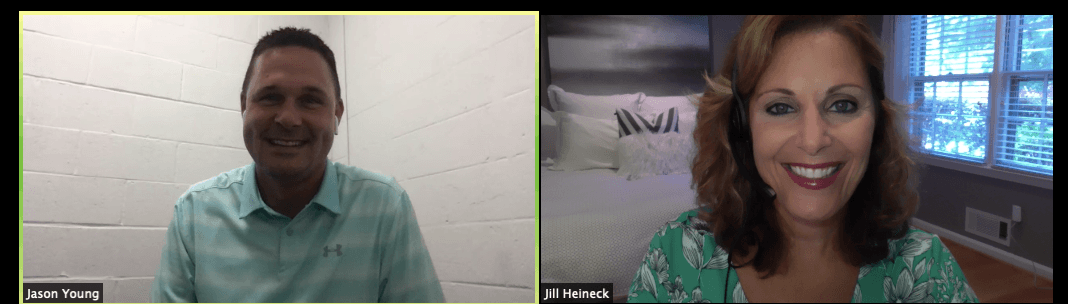
Jill Heineck: [00:00:19] Good afternoon and welcome to this very special edition of Customer Experience Radio. I’m your host, Jill Heineck. I’m a business owner, real estate advisor and customer experience enthusiast. I’m super excited to have our guests on the show today, the culture hacker himself, Mr. Shane Green.

Shane Green: [00:00:35] Hey, Jill. How are you?

Jill Heineck: [00:00:36] I am great. I’m so happy you’re here. I want to let everybody know that you are a world-renowned keynote speaker, author, television personality – we’ll get to that later – and consultant to global Fortune 500 leaders on customer experience and organizational culture. Shane draws on his foundation at the Ritz Carlton Hotel Company and his work in multiple industries to help clients transform customer experiences by improving employee habits and mindsets. As President and Founder of SGEI, Shane leads a team of professionals who inspire iconic brands like the NBA, Westfield, Foot Locker, NetJets, W Hotels, MGM and BMW to pre-program their employee experience in order to create loyal customers and create raving fans.

Jill Heineck: [00:01:26] I love that Shane has developed a reputation as one of the world’s premiere culture hackers. Think about that. How many of those do you now? This is based on his ability to understand or reprogram outdated thinking, mindsets, values and beliefs, which define the environment in which people work. His experience in hospitality, automotive, retail and professional sports has led to significant customer experience transformations that are emulated around the world. Fun fact: Shane was the star of Resort Rescue, where he’d go in and turn ailing hotels and resorts around from failing to fabulous. Hi, Shane.

Shane Green: [00:02:04] Hey, how are you? Well, that’s quite a lot. I’m impressed. I could just sit back and listen all day. So, where do you begin?

Jill Heineck: [00:02:11] Well, you tell me. We’d love to know a little bit about you and how your journey has gotten you to this point.

Shane Green: [00:02:19] Great. Well, there’ll be a little accent that’ll come in and out, but I’m originally from New Zealand. Came over at 21. I was very fortunate, I joined the Ritz Carlton Hotel Company for about 10 years, and they turned me into a gentleman. They have “Ladies and gentlemen serving ladies and gentlemen.” So, I like that they did a good job. And from there, at the end of my time with them, I actually started my first business, which was a training company. And it was all about, let’s deliver customer service, customer service.

Shane Green: [00:02:47] What I realized – and again, I think it’s no shock to everyone out there  – when you just do service training that you don’t address supervisors’ and managers’ executive thinking. And when you think about service, people often get confused. They think customer service is customer experience. Customer service is actually just the interaction. The experience is the journey. So, as we started to look at that, instead of just looking at the interactions of service, we recognize there was multiple interactions of service in this journey, and that you couldn’t just target one if you wanted to create – at that time, I guess, it was more about loyal customers. What I think today is advocates. People that are out there shouting your name, talking all of that good stuff. So, it’s really been an evolution over the years.

Shane Green: [00:03:30] In hospitality, when we talk about a hotel, we’ll always talk about the 4Ps – product, place, process, people. And I think what we’ve learned and, hopefully, everyone learns is that when it comes to great customer experience, your people are absolutely integral to that. And so, really, as we’ve evolved, what I found is I’ve guided companies on customer experience, we’ve ended up always talking about people, people as culture. And so, that’s where the sort of transformation from being very focused on just customer experience, we actually focus a lot on an employee experience today. EX drives CX is what I kind of say a lot.

Shane Green: [00:04:08] And as a result, we wanted to start to understand how to evoke cultures for great customer service organizations. We got to study and research them, and we got to work with a lot of other great brands.  Ten years ago, I was mapping the customer journey. A lot of what we do today is map the employee journey, which I think is very relevant now at times today. There’s a lot of stresses going on and a lot of things. So, I work with so many different companies, and what is always amazing to me is they’ll tell me they want a great customer experience, but they haven’t got a great customer experience strategy. All they want a great employee experience or a great coach, but they don’t have a strategy for it. So, we’ve really kind of honed in on those areas.

Jill Heineck: [00:04:49] So, tell me, were you working for the Ritz those 10 years when you were in New Zealand?

Shane Green: [00:04:55] No. So, that was my first job, real job when I was out here. When I was in New Zealand, I’ve paved my way to college getting into hotels but was pretty rough around the edges. So, I was very fortunate with Ritz Carlton. I was in Marina del Ray. But then, I had the opportunity to go through to Asia and open up some hotels over there. So, you really got to see customer service at its best, but more importantly, the understanding of the guest journey.

Shane Green: [00:05:20] I built was some Gallup research you may have seen. And again, it’s a while ago. But they talked about in a guest’s one night stay at a hotel, there was something, just over a 1073 touch points. And that’s from the time they picked up the phone. What was most fascinating or most important, I think, for all businesses to remember, of those 1073 touch points, five define the experience, which mean five touch points, the check-in, the room service or food option, the reservation process, the bed and room when they first walked into it actually defined whether or not someone had a good experience.

Shane Green: [00:06:00] And so, what I think is most interesting is that we talk about a lot is … and again, Daniel Kahneman’s work, if you haven’t read it out there or haven’t seen his TED talk, please make sure you do it, Fast and Slow is essential reading, but understanding this whole idea that to create a great experience, people remember snapshots of the journey, not the whole thing. So, it’s not like it’s a video. So, there’s certain moments in the customer experience journey that really make a huge difference. And what we’ve realized now, it’s the same in the employee journey as well.

Shane Green: [00:06:32] So, going from hospitality, I go back 20 years when people were all in about service. “All right. Can you come and help us with service?” What we really need to be talking about today is the larger journey and how to really make each of those key moments fantastic.

Jill Heineck: [00:06:48] That’s right. So, right after your stint with the Ritz Carlton, which, by the way, we had Hortz on here last year when his-

Shane Green: [00:07:00] I mean, I got to spend time with Holtz.

Jill Heineck: [00:07:02] I can’t-

Shane Green: [00:07:02] He was really like my uber mentor.

Jill Heineck: [00:07:07] Amazing. I mean, so incredible. And literally, we didn’t have enough time because he was just on, and he was incredible. So, that is a gift to be able to learn under him. So, then, did you go to another resort after that or did you just start your consultancy from there?

Shane Green: [00:07:24] No, it was funny. And, again. I was a lot younger back then. But I realized-

Jill Heineck: [00:07:31] Weren’t we all?

Shane Green: [00:07:32] Yeah. And again, I had this epiphany. Actually, I had to go back to New Zealand for a period. My father was very sick. And I had this epiphany. And he always worked for someone else for his whole life, and he was like, “You try and work for yourself.” And I was like, “Okay, I’m going to start my own business.” And at the time, I go, “Well, wait. What do I know I can do? I know a little bit about hotels. I know customer service.” What I learned through opening hotels in Asia was I was pretty good standing up and speaking in front of large crowds. So, they kind of liked that. And I was single and could travel anywhere. And I said, “All right. If that’s the foundation of a business, let’s go for it.”

Shane Green: [00:08:09] And I was very fortunate. I wrote a couple of programs, I threw them around friends in hospitality, I got picked up by a couple of hotels, but I got picked up by Starwood Hotels Resorts. Actually, they contracted me as part of the new built and transition team. And at that time, the Ws, Westons, Sheratons. And then, from there, we developed for them a housekeeping ATC, and housekeeping insurance, service promise, all of these programs. So, it kept me in the hospitality space but allowed me to kind of branch out.

Shane Green: [00:08:42] And then, I think, that went on for a few years. The real significant one was when the MBA came to approach. It is a fascinating business case. They asked us to think about a season ticket holder experience. And they’ve got some really interesting research that said the reason people are season ticket holders is not just to watch the game of basketball. The game of basketball is kind of the catalyst for an experience. But when they’re researched, they found that people that took their children, they didn’t really care about the game. What they cared about was connecting with their kids. Business people didn’t really care about the game. It’s good if they win but they wanted to close the network of the business.

Shane Green: [00:09:20] And so, what we did is we mapped all these different ways to create great experiences for these different type of fans. And then, we built training for it. And that was sort of that first venture into realizing it’s not just about great service, and if you deliver it, it’s fine. It’s about what were the key moments. And if you’ve ever been a season ticket holder, you’ll know something like they’ll deliver a jersey to you in your seat. Well, they’ll do that when you’re a business person, and you tell them that you’re bringing your biggest client to the game, and they suddenly turn up with a jersey for him, that’s a great moment.

Shane Green: [00:09:56] And that’s what really every business out there that makes customer experience a priority. Just has to remember, it’s all about creating great moments. What are you doing to do that moment that people talk about and rave about?

Jill Heineck: [00:10:10] I love that. I love that. So, let’s talk as we delve for it. Let’s talk a little bit about defining culture hacker.

Shane Green: [00:10:17] Yeah. So, for me, what it was, as I said, we really start to understand that the part that people play in creating great customer experience. At the Ritz Carlton, we used to have a saying. There’s an old hospitality axiom that says, “People with a great attitude give great service. People with a bad attitude get bad service.” Nothing shocking about that. But what I realized is attitude was everything. And we’ve all been customers out there where we might have had really good food, the setting was perfect, the place was bright, the product was that, and then you interacted with someone with a crappy attitude, and they ruined it. And that hasn’t changed. That has remained.

Jill Heineck: [00:10:56] No, it happens.

Shane Green: [00:10:57] It’s still there. But what I would always look at, I’d go, “Wait up. Why is that one person so miserable that they want to make my life or experience miserable?” And I would step back and I’d say, “Yes, there are some things in people’s lives, but I don’t believe people come to work to do a bad job. What they do is they come from home, they come into work, and the environment is not one that makes them or inspires them to want to do something.” And so, they’ve got a crappy leader, a manager that disrespects them, a company that doesn’t care for them. All of these things feed. And so, at the end of the day, an employee goes, “Why should I care? Why should I put my energy into this?”

Shane Green: [00:11:37] So, from this idea of attitude, I really started to study culture because everyone was throwing this idea of culture around. And what I realized is culture is just the collective hearts and minds of a group of people. So, you have cultures in every form of life. And what you realize is in the workplace, culture is the collective mindset. Some people have a bad day every now to again. That’s human. But what you’re looking for is when the whole group is having a bad day because the environment, and the leader, and all of that is just not nice, you’ll never delivered great experience.

Shane Green: [00:12:09] And so, what we looked at was we started to map all the touch points and mechanisms that impacted how someone felt about coming to work from the time of their hiring process, their orientation day, their recognition program. No surprise, the single biggest person that impacted it was the direct manager. So, that really led us into a lot of stuff about leadership development in that. But the whole idea that I started to find fascinating was how do you change and evolve culture? Because everyone would say it’s impossible to change it. And I’m a bit of a change junkie, so I go, “All right. If people can change, cultures change because culture is people.”

Shane Green: [00:12:47] So, I’d start to then look at how companies were approaching change. And we work with a very, very large sports entertainment company. I’ll put it out there without naming names. Sports entertainment company. They got us in. We are working very much on the customer experience side of things. We would start to play with some stuff with people. And I remember, the president of the company getting up and they did this annual meeting. There would have been 5000-6000 employees sitting there. I remember getting up, and he’s quite a famous person saying, “I just wanted to let everyone know that this culture is broken. You are going to change. We are going to fix this. We are going to have the best culture in the world. And you’re all going to do that with me or else.” And as I looked, the whole 5000 people was stunned. People were frozen.

Shane Green: [00:13:38] First of all, most people don’t know what culture is, so they go. “I don’t know what I did wrong, but I don’t think it’s me. But I just heard that I might be under threat.” So, they hear change, they freeze. And this is what happens in many organizations. So, that’s where the idea of culture happened to came. I’m always fascinated by the hacker community. I’m not a tech person. But when I looked at it, what hackers do is they go in very quietly, they make changes for good and bad, but let’s say for good. They go and make changes. And then, all of a sudden, the changes occurred without making a big deal about it.

Shane Green: [00:14:11] And what I realized is that’s one of the most important parts of significant change. Don’t go in yelling, “We’re going to change. We got to change,” because people get scared. A lot of the things that we do is we go in behind the scenes, we manipulate mechanisms, we improve the recognition program, and we just say, “This is about what you need and what we do.” But we don’t go out there and say, “Big change.” We say we do it really quietly. We can do things very quietly, create a significant impact on how people feel. And when people start to feel better, guess what? All of a sudden, the idea of customer experience, productivity, profitability, people stick around longer. This is not rocket science. We have the numbers to prove this. And it all came back to they just created a better environment for the people to work at.

Jill Heineck: [00:14:56] I love that. And I’d love to know a little bit more. Can you give a good example of kind of a … it’s a change management thing is what we’re talking about, right? So, I mean, for getting down in the weeds with HR terms, but can you give an example of a team that you were able to see those results in a fairly quick fashion?

Shane Green: [00:15:20] Significant, sort of. And again, I love it, HR terms. Some of those terms are horrible. So, change management. It means management by definition is control. Trying to control change, I think about it, it’s like performance management. I’m trying to control performance. Some of these terms are just ridiculous and outdated. So, let’s take it through the journey.

Shane Green: [00:15:45] BMW is a great example. So, BMW ultimately was, “We wanted to improve our customer experience.” And so, they mapped the eight key moments in the sale of the car. Now, again, it’s changed these days. Let’s go back  5 to 10 years. Going in to buy a car was one of the worst experiences because you knew you walk in the door and you’d get whacked by some sales dude who’s trying to sell you everything. And this is one thing that I think the internet has changed. In the past, the salesperson had all the knowledge. Now, the customers have knowledge. So, getting inundated with someone trying to BS you is kind of annoying. It’s frustrating these days.

Shane Green: [00:16:23] So, we went in and we started to look at. They looked at all these touch points, and they listened to their customers. And let’s look at BMW. BMW’s mantra is the ultimate driving machine. They believe they have the best car. Arguably, probably the best car, but Mercedes and a lot of other automobile manufacturers are pretty damn good, but they had the ultimate driving machine. There was a belief that if you wanted the best car, you’d buy a BMW, and they didn’t have to do anything else. You either want it or you don’t. And so, that was the way that they sold. It’s like, “You don’t want this car, go.”

Shane Green: [00:16:59] Now then, there was a little company that came in – and again, you’re looking 25 years ago – that literally changed luxury automobiles, old Lexus. Now, in case you don’t know, Lexus is a Toyota on steroids. That’s literally what it is. But what they did do is they said, “Let’s not just focus on the car, let’s focus on the experience.” And all of a sudden, you’d go in there, and they were very polite, and you got a cup of coffee. And all of a sudden, they changed the whole sales and service process. Mercedes Benz, they all started to pay attention and go, “How can a souped-up Toyota take down market share?” Well, they did it for experience.

Shane Green: [00:17:32] So, BMW now goes, “Okay. We need to build a better experience.” And what they do it through all these touch points, they started to realize … and if you go to some of the great BMW dealerships – and again, they’re all franchise – but the really good ones, I mean, you can go in there and it’s like a Starbucks. They have the coffee program. They’ve got great food. They got great Wi-Fi. We were all part of mapping this great experience, but what we didn’t see was the people.

Shane Green: [00:17:58] And so, in the sales process, what we recognized as we’re putting these really little cafes in there, we were making the dealerships look great, the processes were better, but they were still dealing with that salesperson, the traditional salesperson who just wanted to, quite honestly, turn you off. And so, we started to look at that group and realized that it had to be a real mindset. The change had to come from within them to really finish what this experience was about. Now, we did a lot of training and sort of did that. And believe me, they made some great inroads. But at the same time, we looked at what Apple was doing, and we said, “Wow, you know what? The idea genius.”

Shane Green: [00:18:40] The number one thing that people said is they they hate walking into a dealership and being accosted by the salesperson. So, if you go to a BMW dealership today, the first person to meet is generally the BMW genius. And their job is not to sell you but to educate you, let you experience, take you for drives, get your coffee. It’s a much more softer experience. What we did is we took those people often who worked in the BMW dealership, but we looked at them in terms of personality, not experience. We changed the hiring process.

Shane Green: [00:19:12] Hiring process is one of the quickest and best mechanisms to change a culture because instead of just hiring the people for the most experience. The joke at BMW. I remember one day, the sales guy, one of the big sales guys got fired. The joke was, the next day he was working at the car dealership next door selling Hondas. You know why? Because people were hired on experience. People always hire, and they go, “If you’ve got experience, I don’t need to train you, it means you will be productive.” One of the best ways to change culture is to hire the right personalities, the right style, people that will culturally fit. And so, that’s an example of one mechanism that we shifted the whole interview process.

Jill Heineck: [00:19:53] You have to just slow your roll, right? Slow your roll, hire slower, fire faster.

Shane Green: [00:19:59] Correct. See, managers will hire on two reasons. The first reason is, do you have experience? They don’t even look. “Oh my God. They’ve got experience. Let’s hire them.”

Jill Heineck: [00:20:07] They’re also hiring out of they’re dying, and they just need to fill a spot, right? And they don’t want to train.

Shane Green: [00:20:13] They don’t want to train, so you hire an experienced. And then, the second thing that they look for is, are you like me? If you’re like me, then we’re going to get on fine. The problem is that’s a very narrow focus. Organizations that do it well, they hire for the company. And one of the best practice we see is that a selection processes by employees. The employees will do the interviewing, not the manager. They’ll do the ultimate selection. Why? Because they’re going to set them up to success more than anything else.

Shane Green: [00:20:40] So, this is where we start to get into that you can manipulate the mechanisms, change the hiring process, improve the recognition process. All of these things impact how I feel about coming to work each day. Then, ultimately, though, the thing you work on is the leadership development and that sort of programming. So, yeah, it sounds easy, but I think organizations have to be willing to invest. And ultimately they go, “I want just a better customer experience,” and here are we coming in going, “Well, you’re going to have to build a better employee experience first.” And it’s like, “Ugh, why do I have to do that?” People are evolving. I think people are learning that it is critical, but it is a process.

Jill Heineck: [00:21:22] It does. Yes, it does. It’s simple, not easy, right? Isn’t that the usual? So, I love this question you asked. The question is not, do you have a culture? The question is, do you have a culture that will engage your employees, delight your customers and deliver the required returns to your shareholders or owners? I mean, that in and of itself is, why isn’t that plastered everywhere in the leadership halls of the world, right?

Shane Green: [00:21:49] Yeah. So, here’s the piece. A lot of people will come to me and say, “Hey, can you help me build a culture?” And I go, “Okay, But you understand you already have a culture?” So, if culture is the hearts and minds of your people, what you have to understand is whether you formalized it or not, there is a culture there. They might hate you. They might really do. All of this comes in. So, the question is not,  do you have a culture? You have a culture. What we do is we go in and we try and understand it. And again, employee satisfaction data, pulse data, interviews, you can quickly learn the state of mind and the state of the hearts of the employees. It is not that difficult. It’s amazing that, still, companies don’t do more.

Shane Green: [00:22:32] Once the state of their hearts and minds, if it’s not feeling too good, well, what is it that they should fix? So, what’s interesting is we’ll, then, list. We’ve got this 12 call mechanisms that I list in my book, and there’s a lot of other little ones, but we sort of look at the big ones of which pay is not one of them. Pay, once there’s a certain threshold, becomes a non-motivator. So, what we do is we look at these mechanisms, and we have employees rate, one, what is most important to them? And then, second, how does the company do? And what we start to find is, where are the areas that if we made a small area of improvement, they would start to feel better?

Shane Green: [00:23:11] Recognition program, recognition is a simple one. We got pulled in again, a huge hospitality company, huge, 80,000 to 90,000 people. We go in there, and we’re doing this. We’re doing our assessment. We’re looking for the triggers, and recognition kept coming up. And we’re like, “Wow, okay, recognition.” So, then, we start to look into what is recognition. A year before we went in, they implemented a new technology recognition platform, very popular today. And listen, we’re fans of it. But what had happened is when they rolled it out, they said, “This platform is now how we recognize everybody.” And each manager was given a certain amount of points, and you can get a reward. And if you earned a thousand points, you could buy a $20 Starbucks card. That’s  how they usually work.

Shane Green: [00:23:59] What had happened is when they rolled it out, they said to managers, “Hey, this is how you recognize from now on.” So, what had happened is that now … and by the way, all you have to recognize four people. So, they kind of mandated this in the rollout. What the managers took that as is, “Great. I didn’t have to do anything else.” So, their recognition now was just going into the tech and saying high five and thank you. Exactly your reaction there. We talk to employees and they’re saying, “They stopped talking and saying thank you to us. They just send us this little high five that we get in an email.” So, they lost the heart of what recognition is, which is personal interaction.

Shane Green: [00:24:37] The other thing that they forgot is they said, “Okay, we’ve now given you a budget to reward.” So, you get five points or 10 points, and you build your bank up, and you, then, cash it in.” What they took away at the same time was their monthly celebrations, picnics, all the cool stuff that actually employees loved, which was coming together and being social. So, the second part of this system … and again, recognition was just tanked. They took away the interaction and social parts. And because people had to get a thousand points just to get a $20 Starbucks card, it took like six months. So, you’ve lost the immediacy of recognition, you lost the personalization of recognition, and you lost the celebration of recognition.

Shane Green: [00:25:24] That’s a great example of how one making it. They did it with the right mind. They go, “This is gonna be better. I’ll recognize more people,” but they lost the true intent of what recognition is. And as a result, they invested, recognition plummeted, and all we had to do was turn back all the human qualities that had been lost. So, those are the type of things that you have to look at. It’s not that organizations are necessary doing it with the wrong intent, but just doing it the wrong way because they’re not listening to their employees about what’s most important. They’re doing the things that they think is important. And let’s face it, our millennials started it. Now, our Gen-Zs. What these younger workers want is different from what’s certainly when I was there, and certainly when my parents were there. And yet, in some instances, you go into a very traditional organization that’s still being run like something from 20, 30, 40 years ago.

Jill Heineck: [00:26:21] Absolutely. And part of what I do in corporate relocation is hear what these transferees are saying, particularly millennials and younger. What they’re looking for when they’re interviewing or considering a role and relocating their lives. And what we’re hearing is, “When am I going to be interacting with my team? How often is that going to be? And do you have a track for me or when I can see myself in leadership? And then, can you see a track for me when I can be in Singapore in two years or less?” They’re coming in with demands, and they want to know that their team and their leaders are going to be nurturing them along the way. So, that has a lot to do with, obviously, the personal interaction that they’re craving, not just sitting on a tech platform.

Jill Heineck: [00:27:11] And number two, the recognition has to be there. Those milestones have to be built in, right? And from my perspective on the ground, wherever they leave or come to, they want to know that they’re uprooting and they know that they’re on a track. And I think that has been lacking in past years. So, when you say that we’re moving more towards an employee economy versus a customer-centric economy, I think, obviously, the customer is still the heart of the business but without the heartbeat of the employees, we’re going nowhere, right? And it’s pivotal to the business, but I think the employee experience is much more important in order to move the business forward anymore.

Shane Green: [00:28:02] And let’s look. In the last couple of years, we’ve had companies shift products, change policies because of employees. So, our Gen-Zs – and again, we brought up our Gen-Zs – they’re the activist group. They’re the activist generation. They’re not gonna take our bullshit. And I say this as the nicest thing, but I’m really not. I mean, our outdated policies. Let’s talk one of the biggest ones traditional that has been turned upside down. So, traditional companies never believe that you can work from home because they don’t know you, you have to be in the office. I got to see you. I got to touch you, feel you.

Shane Green: [00:28:39] On came the virus and all of a sudden, everybody’s working from home. Guess what? The people that performed really well in the office are performing even better at home. The people that sat in the office, you shouldn’t beat them because they still suck at home. And what people are having to do is that that is for our Gen-Zs, one of the biggest benefits, flex and now work from home. Just option.


Shane Green: [00:29:00] So, you’re seeing that asked for, companies have resisted. But now, that would be one of the, again, positive elements I think that comes out of what’s going on today is that, hey, more people can have flex work at home. And guess what? It’s okay. People don’t suddenly while you’re working from home and all of a sudden they’re not doing any work, they’re actually finding more productivity than not doing the long commutes anymore. They get to spend time with their family and all things they like to do. So, they’re becoming actually healthier.

Shane Green: [00:29:29] Wellness has been a thing we’ve talked to business for years, but we’ve had a really hard time of working out what wellness is in the workplace. Wellness is actually best delivered at home. So, there’s so much that we have to think about. Even what you said, which is career. I find that so many managers don’t talk about career because they don’t have a position open. So, they are afraid to talk about career with their associates because it means promotions. So, therefore, I’m going to shut up.

Shane Green: [00:29:59] I love Foot Locker, we worked with. One of the awesome things that they do on Foot Locker, 90 days after,  so you’re hired, and they are hiring out gen-Zs, they’re hiring kids out of high school. 90 days after you pass your onboarding, you can then opt into the leadership program. Now, think about how cool this is. Let’s say it’s about 60% to 65% of their workforce isn’t that Gen-Z. So, you’re looking at 22, I think is the oldest now. It’s, in some ways, the Starbucks model. I’m going to you and going, “Hey, you’ve come out of high school. You might not have even graduated high school. You’ve got in here. And by the way, you have now an option to get into a leadership program. It’s a year. All of a sudden, they are now going, “Wait up. I’m in a leadership program.” They’re telling their parents, “I’m in a leadership program.” They’re telling their significant other, “I’m in.” All of a sudden, it gives them value.

Shane Green: [00:30:55] Now, instead of them just hanging out six months, they’re now sticking around a year and a half. So, Foot Locker is benefiting because they’re keeping people longer. They’re creating bench depth, but what they say at the start of the program is, “Listen, when you finish this program, there’s actually another leadership program you can go into. But we’re not guaranteeing you a promotion. What we are saying is we are going to set you up with skills for the future.” And you do this little test. And again, people aren’t going into malls much right now, but if you go to a mall with a Foot Locker, you can go around to other stores and you will find people that were trained as leaders in Foot Lockers because all these other brands have realized that Foot Locker is creating these future leaders and like going to kind of take them. But what a wonderful way to attract employees to deal with career development without saying, “I have to have a promotion for you.” I love that.

Jill Heineck: [00:31:48] Well, it’s an engagement. It’s instilling confidence. It’s feeling, like you said, value and feeling like they’re part of something. And then, they do have a future vision for themselves. Whether or not they pursue it, it’s up to them. But the fact that it’s been given to them without them having to go look for it, I think establishes a great relationship with the employer to the employee, right?

Shane Green: [00:32:11] And so, now, we go back to employee loyalty, employee advocacy. One of the things, we’re talking young generations, everyone says they fit their own world. They’ll say that because they turn over. What happens is our millennials and Gen-Zs say, “Listen, if I’m not challenged, if I’m not excited, I’m going to go somewhere else.” We, back in the day, probably didn’t make that choice because we’re worried about, “Gosh, we’ll get another job.” There a lot of sort of angst.

Jill Heineck: [00:32:41] Just trying to build your résumé. You’re trying to build your one résumé.

Shane Green: [00:32:44] Correct. You were told you have to stay, at least, 10 years with a company. And again, I love it. The kids coming up these days, they say, “Listen.” Again, I reiterate, they’re not dealing with our BS. They’re not dealing with our rules that kind of guided us and I would say the limits limited us in certain things. So, they’re saying today, “Listen, if you don’t challenge me, if you’re not interested in my career, if you’re not interested in me, I’m going to go elsewhere.”

Shane Green: [00:33:07] Now, the senior managers go, “Oh, those young people are very disloyal. Oh, my goodness. They are the worst workers ever.” No, they’re not. You just didn’t take care of them. What’s really cool is the organizations that I think are winning out there, they’ve won the talent war, they’ve got the best people; therefore, they deliver the best customer service and experience. They said, “Hey, we’re going to invest in you. We’re going to challenge you.”

Shane Green: [00:33:33] And the research that I think is so fascinating is if a millennial leaves a job that they felt good at, because they felt, “Hey, there’s promotions on there, I’m going to go overseas and I’m going to try a project,” they actually replaced themselves, which means they’ll tell one of their friends, “Hey, I’m leaving. You should come in and work here because it set me up, got a two-year window.” And now, they’re starting to see that millennials will come back to the brand. “Hey, I’ve got two years of experience. You guys want me back?” That’s a wonderful setup.

Shane Green: [00:34:02] So, organizations have to be a lot more nimble. They’ve got to be willing to invest in learning and development more. But they can’t be afraid to lose people. So, creating a learning culture, which was one of the big mechanisms I talk about a lot, is critical, I think, to company’s success and everything that they do. How to stand out in the crowd? It used to be that you wanted your product to stand out. Now, you want your employee experience to stand out.

Jill Heineck: [00:34:29] That’s right. And it’s interesting that you say that since my real estate team is under the umbrella of Keller Williams Realty International, and it’s the number one training company. It happens to be in the real estate field. But the whole point is to train people to become business people, to set up themselves for success, so that if they did choose another path that they would still be able to lend those skill sets-

Shane Green: [00:34:56] So true.

Jill Heineck: [00:34:56] … to other things, right? So, I love that big-world mentality. And being inclusive and transparent about that from the get go. And I think companies are missing the boat with super high influential talent by not doing this, right? And-

Shane Green: [00:35:15] So true.

Jill Heineck: [00:35:15] … we’re only two people. We can’t change the entire world ourselves.

Shane Green: [00:35:19] I think we can, Jill.

Jill Heineck: [00:35:20] But we’re going to try.

Shane Green: [00:35:22] What you said, though, is really important. It’s from the get go. Here’s another area that we found that was interesting that companies aren’t doing a good job of. They’re not upfront about what they stand for and what they do. Netflix, the Netflix goes 140-page PowerPoint that they sent out to the world and everyone went, “That’s amazing.” Well, do you know why Netflix did it? They did it because everyone wanted to come and work for them, and they were getting inundated with resumes, and they’re like, “Okay, this is crazy. Let’s make a clear picture of how difficult it is to work for Netflix because not everyone is going to be good at Netflix.”

Shane Green: [00:35:22] And this is what we tell a lot of organizations is not every person who applies for job is good for you. Not every person will be successful with you. And this has got nothing to do with sexual orientation, color of skin or any other bias that seems to sit out there. What it is, is that certain styles and personalities will just fit better in the roles. And again, it goes back to the hiring process is that before they even walk through the door, they should know the expectations of the organization. They should know the type of person they’re looking for, the type of person that was being successful. Unfortunately, for them to hear that, the company needs to know.

Shane Green: [00:36:38] And again, another area that they need to invest in is, how do the people become most successful with us? What is it that they do? And there’s really great companies out there that map traits, characteristics and all that. And it’s what people have inside of them that ultimately, again, does determine their success. And by understanding what makes someone’s insights, and their hearts, and souls, their attitudes successful with your organization is probably one of the most important activities or things that companies need to look at.

Jill Heineck: [00:37:11] I learned a lot about this when I was working with a a high-level executive with a giant media company. He was relocating from Australia to the US, and he had more than one offer. And the company that I was working with that had made him one of those offers had just said to him, “We need to know right away if you’re taking this job, taking this relocation.” And I remember him calling, he told me about this, he called them to ask a little bit more about the relocation benefits and a little bit more about the role that he’d be playing. And the person who took his call said, “You’re just lucky to have our name on your resume. So, we need to know in the next 10 minutes if you’re taking this job or not because we have a line behind you.”

Jill Heineck: [00:37:58] And of course, he did not take that on and uproot his family from Australia and do that giant move. That was the impression that he got from the company before he even took the job. So, I work a lot in trying to assuage those concerns because at one hand, you’re looking at a career track. And on the other hand, you’re like, “What just happened?”

Shane Green: [00:38:20] Yes.

Jill Heineck: [00:38:20] So, it’s just really interesting how that is still going on, even though transparency is becoming more and more rampant, thank God. It’s a giant company still in business today but, apparently, that’s how they treat people.

Shane Green: [00:38:37] And now you go, “That’s their culture.” That’s the hearts and minds. And how companies affect the hearts and minds of people is the biggest determinant of whether they’re going to stick around. A fascinating step from … and again, it’s couple years ago now is that of all the people that will leave a job this year, that will will quit and take this year off because 2020 is just … I don’t know what it is. Let’s say 2019. Half of all people that left the job last year to go to somewhere else quit did so within the first 90 days. Now, think about that, half of all people left. Why? They got into the job, they looked around and said, “Wait up. This is not-”

Jill Heineck: [00:39:16] This isn’t what I signed up for.

Shane Green: [00:39:16] That’s it. You got it. And then, your company would go, “Well, that’s all right. I’ve got someone right behind.” But the cost of hiring them, and locating them, putting them through those first 90 days and missed opportunities is a cost to the company. And it’s a significant one. And that’s why I’m saying so much, and when I do look at culture, the hiring process, the orientation, the onboarding, how they start out really does determine their success.

Jill Heineck: [00:39:47] So, I love what you said in one of your podcast episodes, get behind your people and they will deliver.

Shane Green: [00:39:54] Yeah.

Jill Heineck: [00:39:54] So, let’s circle that around to inspiring teams on once you’re … so, let’s assume our culture is getting there. We’re coming together, we’re gelling. So, talk about the impact on the customer experience and  how we’re inspiring. I mean, we all know about these companies who are doing well at that, right? So, Zappos is a customer experience company. They just happen to sell shoes. It’s the easiest thing to do. Amazon, you can return all day long. They make it very easy. So, what other companies have you been working with that you’ve had that success in those areas?

Shane Green: [00:40:35] And again, I have an experience kind of in this lockdown mode that I think is there. So, the company is Dyson, I think, everyone knows the vacuum cleaners.

Jill Heineck: [00:40:44] Getting that today or dryer.

Shane Green: [00:40:44] Well, I was just going to say I did not know they did hairdryers until my wife would go, “Do you know who has the greatest hairdryer in the world?” I go, “Who?” He goes, “Dyson.” I go, “The vacuum guys?” She goes, “The greatest hairdryer.” And I go, “Okay.”

Shane Green: [00:41:04] Now, Dyson has great products, but what sets it apart and why she turned to Dyson was we had a vacuum, something went wrong with it, she called up. She said, “I got a product.” She goes, “I’m going to go through the process,” had no expectations about the customer service or what. She calls up and says, “I’ve got a problem with it.” First of all, she says, “Well, they were the nicest people in the world.” But in the process, the journey that went through, first of all, it was they kind of diagnose what was online, and they’re like, “You know what? It’s going to cost too much for you to send it back to us.” So, that was the first thing. Then, they said, “We’re going to find someone in the local area that can fix it. We’ll have someone, one of our license people.” She goes, “All right. That makes it easy. Fantastic.”

Shane Green: [00:41:49] So, they found that, called her back and says, “Yeah, we found someone about two miles away from you. Are you able to drop it off today?” And she was like, “You know what? I’m kind of busy here.” “Right, we’ll set that up. We’ll come and get the vacuum, get it fixed, and bring it back to you.” She was blown away. And so, she starts to go, “Dyson, Dyson.” Now, all of a sudden, it’s the hair dryer. All of a sudden, you go, “They have great products.” So, I go back to my full Ps – product, place, process, people. They got the product worked out. They got their process worked out. They made it so easy. The people were so friendly. She still talks about it. She goes, “Dyson forever.”

Shane Green: [00:42:28] And what I think is so important is because their products are so good, I don’t think she’s buying another hair dryer in the near future. We don’t have to buy another vacuum. So, it’s not about the traditional sense of loyalty, even though I’m sure over the lifetime, there might be a couple. But the fact that she has told everyone about it is why advocacy today, I think, is the single most important thing that companies should be looking for. Then, she’s told friends, she’s gone online, she’s done everything. That experience, I don’t know how much value they would have got out of it, but it would tell you, it was worth a heck of a lot more than that vacuum. So, that’s an example of them understanding all the areas of their product and kind of putting that together.

Shane Green: [00:43:13] And again, I go back to BMW before, I mean, product, place, process, people. They had the best product or arguably the best product. They had a great product. They have processes. They were a little long. Spending two hours to buy a car is crazy. So, they shortened the process. They tightened it up. The place, they imagine their dealerships. They have coffee bars, snack bars and all of that. And then, they were willing to invest in the culture of the people to turn that experience around. What they they’re able to do is ship their JD Power services. The sales scores went up. They started, now, where they were slipping and eroding, they’ve now fought back. And so, you start to see those components come together really nicely and say, “It’s not just about one or the other,” but the one that often gets forgotten about is the people, and that may be the most important thing.

Jill Heineck: [00:44:02] Right. And what I love about your example with Dyson is that Dyson, clearly, the leadership was empowering them with information, and getting them behind the product, and then getting them excited about how they can serve the customer who, then, benefits from all of this, right, because I’m like your wife. I mean, I’m a slave to Dyson. So, if that happened me, I blasted all over the place and call everybody I know. And I’m still working on convincing a few people. I mean, it is a hefty price tag, but it’s worth it because you know all of this about any event something that happens, you know that there’s customer service there with the experience. And I think it’s huge.

Shane Green: [00:44:42] And I think, I’m not sure if you remember, Bain & Company, in 2015, they did the Elements of the Value Pyramid. And it came out of Harvard Business Review in 2016. And what they would do is they said they they were able to map all the values that consumers really buy into. And there was 30 something, and they mapped them into four categories. It was interesting, out of all the values across any industry they would apply, and the more of those values you hit, the more satisfied your customers would be.

Shane Green: [00:45:13] And I think it’s really important pieces that … I mean, Harley-Davidson is a beast. The more you know about your customers, the easier it is to take care of them. John Russell said it. If you know about the customers and what they value in you, then you make sure you do those really, really well. And as a result of that, you can put a high price tag on. It used to be considered high-price tag was a luxury item. No, no, no. The luxury item or the high-price tag is the best valued item, which means if you do more things and cover more of the values that are important to me, you save me time, you’ve got great quality, you’re reliable, you’re friendly, all of these things, you go, “Wow!” You package this up, people will keep doing business with you.

Shane Green: [00:45:57] And it goes back to your customer experience strategy. Do you know the great moments in the journey that are absolutely critical to the customer? Do you know what they value most in that moment? Is it being convenient? Is it efficiency? Is it wow? And then, are you able to apply it? And people often say, “Well, you know what? Creating all these great moments costs a lot of money.” The BMW’s piece. So, BMW, the greatest moment when someone buys a new car is the handover of the keys. That, for a consumer, one, because of the cost. They just probably spent, outside of a house, maybe one of the highest valued items. This is a big moment. Like, “Oh, my gosh!”

Shane Green: [00:45:57] When we looked at it, we would go around car dealerships, it was all, “Yeah. Can you pick up the keys from the reception? Thanks very much.” They’re like, “Ugh.” We started to go one of the moments that was absolutely critical is the handover. So, what did they do? And again, BMW has their little showrooms, they put it. What they did is they put a cover on the car. So, now, when you go in and do it, they do this unveiling moment, a little bit of [crosstalk].

Jill Heineck: [00:47:06] That’s awesome.

Shane Green: [00:47:06] A little bit of [crosstalk]. But do you know what? It makes the moment memorable. And I go back to-.

Jill Heineck: [00:47:13] It’s a celebration.

Shane Green: [00:47:15] Yeah, but they create memories. And I always think [crosstalk]-

Jill Heineck: [00:47:17] Right.

Shane Green: [00:47:17] … stuff about memories and understanding that, really, what we’re all in the business of, regardless of the product, regardless of the thing, it’s to create memories. And you can do it by having a great service call. You can do it by a pickup. You can do it just by the fact that you unveiled something a little more dramatically. That’s what companies have to be willing to do. And if they are willing to do it for the customer, then understand that same unveiling surprise and delight goes for the employees as well.

Jill Heineck: [00:47:48] I love it. I love this. And this is one of the cornerstones of our business. We make every milestone exciting. And then, of course, when we hand over the keys at closing when buying or selling house, we’re very dramatic about it because it’s a milestone in your life. So, we want it to be fun and memorable. But before we go, we have a few more minutes, I want to talk a little bit about Resort Rescue. You know I love that show. And I want to talk. How did how did that come to be? And what was your experience with that?

Shane Green: [00:48:24] Gosh, it was crazy. Literally, a friend of mine reached down and says – they live in LA – “Hey, a producer’s looking for a hotel person to do a show. And I’m meeting all these hoteliers, and they’re really boring, and kind of like very limited in what you’re doing. I’ve had you swear up a storm. Do you want to go in? Would you talk to them?” I talked to them. You do a Zoom, you talk, and you get to talk about experiences, what you believe in, all that. The next day, they had a crew out. We were doing testing in parking lots and all that. And two weeks later, I got this job.

Shane Green: [00:48:57] Again, no aspirations to get on television. Again, so fortunate for a couple of years, we got to go to little resorts. First of all, I got to get to parts of this country that I never would have gone to. Going to little resorts. And, of course, reality television at its best, there is nothing real in reality. And yet, I was determined to kind of do that. And what was amazing, if you go around and I’ve run some huge hotels in the world, and you go to these little hotels and you’re like, “Oh, my God.” You could do this in your sleep. But what was really cool is you get talking to the owners.

Shane Green: [00:49:35] And I mean, you have owners who … I remember a couple, he was in his 80s, she was late 70s, in Colorado. They were talking about their property. They’d bought this as they thought, “Buying a small hotel, this is my retirement dream. This is it.” They hadn’t taken a vacation in 40 years. And listen, they were awesome but, man, they were tired. I went to another hotel, had a war veteran who had inherited the hotel. And with his PTSD, it was stressing him out. It turning them into something he didn’t want to. There was all these stories in it.

Shane Green: [00:50:15] At the end of the day, it was about trying to get the resorts back on track, but it ended up being just about people getting people back on track. And I always go, “That’s really at the heart of hospitality. It’s the heart of everything we do.” You know what? Again, right now in the world, being human, treating others with kindness, and really listening. So, that was what it was. And the thing that you do as a host of a television show is you just got to make sure you ask good questions.

Jill Heineck: [00:50:42] That’s right.

Shane Green: [00:50:43] And I say this, I speak a lot about this. One of the most important things as a manager and owner or anything you have is remember, always be curious. Don’t be afraid to ask the dumb questions. One, because if you’re not curious, you’re grandiose. Grandiose means we know it all. I mean, to me, people that think they know it all, nobody knows anything in the world right now. In Resort Rescue, I had to just ask questions. And when people start to unveil and start to pull the layers back, you find what the heart of the problem is. The heart of the problem wasn’t necessarily the resort needed fixing. It was that the person needed something that they didn’t have a support system for.

Shane Green: [00:51:19] And I think it’s quite apt about what’s happening in the world right now. Listen, everybody, be curious. Just go ask everybody how they’re doing. Go ask them how you can help. Be generous right now. As I said, it’s amazing … we make an assumption that everyone’s just fine because maybe they own a little hotel or they do things. People aren’t. And so, again, asking good questions. But again, we also had a lot of fun on the show. It was crazy what we caught some of the guests doing.

Jill Heineck: [00:51:48] Oh, I bet. I did catch one snippet when you were watching a guest cross the courtyard with her luggage and it fell into the pool. That didn’t look very-

Shane Green: [00:51:58] Yeah, yeah, yeah. The clock came down. And again, it was silly because the resort was spread out. So, you had to walk across this parking lot, and then there was this game area.

Jill Heineck: [00:52:09] Not cool.

Shane Green: [00:52:09] Well, through the pool. So, you’re sending people there. The pool lights were out. And so, the light was out. And it’s something so silly to call something so dramatic.

Jill Heineck: [00:52:22] So true.

Shane Green: [00:52:22] But that’s just that. We make these assumptions, and it’s always in the detail. But it was a fun couple of years with a fun group of people. And as I said, I learned some stuff at it, and I got to go to some pretty cool parts of the world. So, very blessed.

Jill Heineck: [00:52:36] It does sound like fun. I just want to thank you so much for spending this hour with us. We really appreciate your time. Love your insight. I know you and I could talk for hours about this.

Shane Green: [00:52:47] I’ll come back again any time. There’s plenty of stories, but I really appreciate you as well. You’re doing some great work out there. Thanks for bringing us and everyone.

Jill Heineck: [00:52:55] Absolutely. And to everyone out there, thank you so much for listening. I’m proud to share this show with you as these stories prioritize the customer experience as a legit business strategy and reminding us that no matter what business you’re in, whether it’s hospitality, real estate, consulting, the customer experience really should always be the heart of the business. Thanks so much.

Shane Green: [00:53:16] Take care, everyone.

About Your Host

Jill-Heinick-Customer-Experience-RadioJill Heineck is a leading authority on corporate relocations, and is highly sought after for her real estate industry acumen and business insights. As a published author, frequent panelist and keynote speaker, Jill shares her experience and perceptions with people from around the globe.

Jill is a founding partner of Keller Williams Southeast, established in 1999, and the founder and managing partner of Heineck & Co. Her real estate practice specializes in corporate relocations, individual relocations, luxury residential, and commercial properties. Jill’s analytical approach to problem-solving, along with her expert negotiation skills and sophisticated marketing, deliver superior results to her clients. Her winning strategies and tenacious client advocacy have earned her a reputation for excellence among Atlanta’s top producers.

While Jill has received many accolades throughout her career, she is most gratified by the personal testimonials and referrals she receives from her clients. Jill’s unwavering commitment to the customer experience, and her focus on the unique needs of each client, serve as the foundation of her success.

Follow Jill Heineck on LinkedIn.


Tagged With: SGEi

Don Bowen with SMS Heather Locke with Hammersmith and Marwan Halabi with CMIT Solutions E9

June 19, 2020 by Karen

Don Bowen with SMS Heather Locke with Hammersmith and Marwan Halabi with CMIT Solutions E9
Phoenix Business Radio
Don Bowen with SMS Heather Locke with Hammersmith and Marwan Halabi with CMIT Solutions E9
Loading
00:00 /
RSS Feed
Share
Link
Embed

Download file

Don Bowen with SMS Heather Locke with Hammersmith and Marwan Halabi with CMIT Solutions E9

Don Bowen with SMS Heather Locke with Hammersmith and Marwan Halabi with CMIT Solutions E9

In business, technology is a crucial part of everything we do, especially in the current climate. As we all shift and re-invent the way we do business, showing up digitally will be critical to success.

The cloud, IT solutions, websites, and digital presence are just a few of the topics that were discussed in this episode of Collaborative Connections Radio Show and Podcast.

If you are a business owner, entrepreneur, and/or leader in the community, check out this episode Kelly Lorenzen did with Heather Locke, Don Bowen and Marwan Halabi. They gave great insight into the IT world as well as provided great tips for success in business during these current times we are in.

SMS is a small Arizona business with their legacy core as a supplier of video programming to small private cable TV companies and government institutions.

Small cable TV enterprises that provide services to apartment complexes, hospitality, assisted living, colleges and correctional facilities have probably received their video programming through SMS or one of its Affiliates.

In business since 1985 SMS has reinvented itself several times and as technology shifts and morphs, so does SMS. SMS is currently turning yet another corner as the delivery of video content undergoes a major sea change, stay tuned.

Don-Bowen-on-Phoenix-Business-RadioXDon Bowen’s business life starts with an early career at IBM with an exit and return to school after the sale of IBM’s Office Products Division. He later landed at the cable television industry in business development which after several mergers and acquisitions eventually led to his current position as CEO of SMS.

Don is currently pursuing his passion to re-engineer SMS while also fulfilling his love of surfing with challenged kids and Wounded Warriors.

Connect with Don on LinkedIn and follow SMS on Facebook.

Hammersmith Support is a certified woman-owned boutique technology company specializing in design, development, maintenance and hosting of custom designed WordPress websites.

We bring together current design, practical coding expertise, and close client relationships in order to create sleek, up-to-date website and user experiences. We believe that keeping your site up-to-date is critical to success and provide monthly maintenance and support packages.

Heather-Locke-on-Phoenix-Business-RadioXAfter graduating from the University of Tennessee, Heather Locke began her career as a web developer and quickly moved into a role of managing a team of programmers, designers, animators, and digital video producers for a wide variety of multimedia interactive corporate applications including marketing, communications and e-learning. From there, she worked as a project manager for Fortune 1000 companies, including Subway, Disney, HBO, and Target.

This expertise led her to found Hammersmith Support, a full-service web development company focused on helping clients of all sizes move through every phase of the process: site building, hosting, and maintenance. But most importantly, Hammersmith Support is built on a foundation of close relationships with clients. Heather seeks to know who you are, the challenges your company faces, and then use that knowledge to build a fresh, engaging, up-to-date website that reflects your organization’s core values and personality.

Heather’s design background, combined with her practical coding and server maintenance expertise, ensures clients receive the perfect combination of form and function: a contemporary, up-to-date look and user experience that is properly managed to ensure the site works smoothly and consistently.

Connect with Heather on LinkedIn and follow Hammersmith Support on Facebook and Instagram.

CMIT Solutions manages IT for thousands of businesses across North America. Their clients rely on them to select the best technology to meet their needs, but technology is only part of the equation. Service excellence, day in and day out, is what makes the difference for CMIT’s clients.

They offer IT and Cybersecurity solutions in the US that monitor and secure office computers, mobile devices, networks, and systems round-the-clock. They respond quickly when users and devices in your network experience an issue. More importantly, they keep your entire IT system running efficiently and securely 24 hours a day, seven days a week.

Marwan-Halabi-on-Phoenix-Business-RadioXMarwan Halabi is the President and Owner of CMIT Solutions of South Scottsdale.

His extreme passion and love for technology, innovation, and client relationship excellence has helped him excel at various roles throughout his 22-year career; roles such as Information Security Officer and Architect at Merrill Lynch, Solutions Architect for JP Morgan Chase Globally, and Senior Security Analyst at CA Technologies’ Cybersecurity division.

Marwan is now passionate about delivering enterprise technology, IT sophistication, and true digital transformation to the SMB market.

Connect with Marwan on LinkedIn.

About the Show

Kelly Lorenzen started the “Collaborative Connections” show to bring her clients and favorite charities together to meet each other, connect and collaborate in life and business.  She hopes to build a stronger community one show at a time. KLM Consulting

About Our Sponsor

KLM Consulting is a business concierge and project management firm. They help small business owners and non-profits build, brand and brag about their businesses.

About Your Host

Kelly-Lorenzen-on-Phoenix-Business-RadioXKelly Lorenzen, CEO of KLM Consulting, is an award-winning entrepreneur with over 15 years of business-ownership experience. She is also a certified project management professional.

Kelly’s expertise is in business development, customer service, marketing, and sales.

Connect with Kelly on LinkedIn, and follow KLM Consulting on Facebook.


Tagged With: Dish Network Master Distributor, helpdesk, it services, IT support, managed services, MSP, PCO, Private Cable Operator, web design phoenix, WordPress development, WordPress Maintenance

Melanie McGriff, Kid’s Creek Therapy and Bradley Carroll, Frazier & Deeter

June 12, 2020 by John Ray

Kid's Creek Therapy
North Fulton Business Radio
Melanie McGriff, Kid's Creek Therapy and Bradley Carroll, Frazier & Deeter
Loading
00:00 /
RSS Feed
Share
Link
Embed

Download file

Kid's Creek TherapyMelanie McGriff, Kid’s Creek Therapy and Bradley Carroll, Frazier & Deeter (North Fulton Business Radio, Episode 242)

Melanie McGriff of Kid’s Creek Therapy joins the show to discuss how her practice serves children with speech, occupational and physical therapy needs. Bradley Carroll of Frazier & Deeter works with clients on PPP loan forgiveness and attestation. Their stories intersect as Bradley helps Melanie navigate the PPP process. The host of “North Fulton Business Radio” is John Ray and the show is produced virtually by the North Fulton studio of Business RadioX® in Alpharetta.

Melanie McGriff, Owner/ Speech Pathologist, Kid’s Creek Therapy

Kid's Creek Therapy
Melanie McGriff

Kid’s Creek Therapy is a specialized pediatric company located in the Johns Creek community of Suwanee, GA. We provide speech, occupational and physical therapy services. Since 2003, Kid’s Creek has successfully carried out its vision to provide children and families with quality, results-oriented services. The company is under the direction of owner and executive director, Melanie McGriff. Melanie is enthusiastic about the opportunity to serve the community and to meet the needs of children and their families. Primary in our focus is communicating that Kid’s Creek is an environment for results, hope and support for families.

Melanie McGriff has been providing treatment for over 28 years. Melanie is a trained specialist in myofunctional therapy. She is a member of the International Association of Orofacial Myology (IAOM). Melanie’s areas of expertise are in working with children, teens and young adults to improve difficulties related to tongue thrust, thumb sucking, feeding/swallowing skills, Down syndrome, and apraxia of speech. Melanie is trained in P.R.O.M.P.T., Debra Beckman Oral Motor Therapy, Talk Tools oral placement techniques, and pediatric feeding/swallowing. Melanie conducts intensive therapy weeks for children with apraxia of speech. Patients have traveled from across the United States to spend a week in therapy treatment with her. Melanie’s insights, her commitment to improving the lives of the children she works with, combined with results achieved with patients, make Melanie a sought-after therapist and consultant.

You can find out more at the Kid’s Creek website, or  call 770-337-4387.

Bradley Carroll, Principal/Practice Leader Financial Institutions, Frazier & Deeter

Kid's Creek Therapy
Bradley Carroll

Frazier & Deeter is one of the largest and fastest-growing firms in the U.S., and they’ve won some awards along the way – Best of the Best, Best Firm for Women, Fastest Growing, Best Firm to Work For, Practice Innovation, Most Admired – you get the picture. They think that’s because every day they focus on our brand promise of Investing in Relationships to Make a Difference.

Bradley Carroll is the leader of the firm’s financial institution advisory services. Bradley began his career with Central Bank in Monroe, LA after graduating from the University of Louisiana-Monroe. He subsequently relocated to Atlanta, working in internal audit positions with Carter’s Childrenswear and Wachovia Bank before practicing public accounting for 14 years. Prior to joining Frazier & Deeter, Bradley served as the first Chief Audit Executive for State Bank and Trust Company, where he established a risk-based audit methodology and implemented an impressive data analytics program to drive audit effectiveness and efficiency.

Today, Bradley serves on the Institute of Internal Auditors (IIA) Financial Services Advisory Board. As a member of this board, he has advocated on Capitol Hill on behalf of IIA initiatives. He has recently joined the Atlanta IIA’s Board of Directors and Executive Committee. Bradley has been a featured speaker at local and national conferences and events on topics ranging from fraud prevention and enterprise risk management to adhering to IIA professional standards.

Learn more at Frazier & Deeter’s website.


North Fulton Business Radio” is produced virtually from the North Fulton studio of Business RadioX® in Alpharetta. You can find the full archive of shows by following this link. The show is available on all the major podcast apps, including Apple Podcasts, Spotify, Google, iHeart Radio, Stitcher, TuneIn, and others.

Renasant Bank has humble roots, starting in 1904 as a $100,000 bank in a Lee County, Mississippi, bakery. Since then, Renasant has grown to become one of the Southeast’s strongest financial institutions with over $13 billion in assets and more than 190 banking, lending, wealth management and financial services offices in Mississippi, Alabama, Tennessee, Georgia and Florida. All of Renasant’s success stems from each of their banker’s commitment to investing in their communities as a way of better understanding the people they serve. At Renasant Bank, they understand you because they work and live alongside you every day.

Tagged With: attestation, bradley carroll, Frazier Deeter, Kid's Creek Therapy, Melanie McGriff, myofunctional therapy, Occupational therapy, physical therapy, PPP, PPP loan forgiveness, speech therapy

Customer Experience Radio Welcomes: Nina Arnaiz with Premia Relocation Mortgage

June 11, 2020 by angishields

Nina-Arnaiz-Premia-Relocation-Mortage
Customer Experience Radio
Customer Experience Radio Welcomes: Nina Arnaiz with Premia Relocation Mortgage
Loading
00:00 /
RSS Feed
Share
Link
Embed

Download file

CXNina-Arnaiz-Group

CER

Nina-Arnaiz-Premia-Relocation-MortageNina Arnaiz became President of Premia Relocation Mortgage in 2019 after holding several positions within Premia Relocation Mortgage. She is responsible for the overall execution and profitability of the company.

She started with the company in 2002 and was quickly recognized for her abilities to grow production, lead conversion, customer service and referrals. As VP of Sales, Nina was instrumental in testing, designing and implementing of several systems, including Premia Relocation Mortgage’s DigitalMoveTM mortgage platform. Under her direction, the sales team has increased customer service and loan conversion to company highs. Nina is very energetic and has very high expectations when it comes to customer service and earning someone’s business.

Nina holds a Bachelor’s degree in Business and Administration from Wayne State University, Detroit, Michigan. In her free time, she enjoys traveling, scuba diving, cross-fit training, and spending quality time with her husband and 3 kids, Andrew, Alessandra and Olivia.

Follow Premia on LinkedIn and Twitter.

Premia-Relocation-Mortgage

Transcript

Intro: [00:00:01] Broadcasting live from the Business RadioX Studios in Atlanta, it’s time for Customer Experience Radio. Brought to you by Heineck & Company, real estate advisors specialized in corporate relocation. Now, here’s your host, Jill Heineck.

Jill Heineck: [00:00:19] Welcome to this very special edition of Customer Experience Radio. I’m your host, Jill Heineck, and I’m a business owner, real estate advisor, and customer experience enthusiast. As many of you know, my boutique real estate group has specialized in helping families move with or without a job for the last 20 or so years. Relocation has many moving parts, and it takes experience, expertise and patience to coach our transferees through the process. As relocation partners, we serve as an extension of the company, an outsourced relocation department, if you will. And the main goal is to alleviate the HR. and management team of having to know all things relo. By partnering with experts in each area of the relo, it becomes a smoother and less stressful experience for both the company and the transferee.

Jill Heineck: [00:01:06] So, that’s why I’m excited to have Nina Arnaiz on the show with us today to talk about her company, Premia Relocation Mortgage, and how they’re delivering a great client experience in today’s climate. Premia’s service model is built around serving the unique needs of customers’ relocating due to employment. Nina became president in November 2019 and is responsible for the overall execution and profitability of the company. Over the years, through our trade organization worldwide, ERC, I have come to know Premia as a highly regarded team of people who are committed to delivering at a high level, and all the while maintaining a great sense of humor and sense of calm during what could be an extremely tense time. Welcome, Nina.

Nina Arnaiz: [00:01:49] Hello. Thank you for having me.

Jill Heineck: [00:01:50] Hello. I’m so happy. I’m so happy to see you. How are you and your family faring? Everything going well at the home office?

Nina Arnaiz: [00:01:57] Yes. So far, so good. We’re staying safe and healthy. Everyone’s good. And I think we’re finally past the scary times as I call them. And things are really good. We’re happy. I’m happy. Things are, actually, we’re beyond that month of March and April that was really difficult. And I think I’m just looking forward to the upcoming month. I think things are looking much better. So, I’m happy about that.

Jill Heineck: [00:02:25] Great. I’m so happy to hear that we’re feeling the same way. So, you are based in the Detroit area, right?

Nina Arnaiz: [00:02:32] That’s Troy, Michigan, to be exact.

Jill Heineck: [00:02:34] Okay. And when will you be going back to an office?

Nina Arnaiz: [00:02:39] Good question. So, our office never really closed. We’re looked at as essential, part of the lending. So, I’ve had a few of my team members that have actually stayed going into the office. They just felt working from the office was better suited for them. With their kids at home and the technology, even though we have it, they didn’t feel it’s the best fit. So, they continued going in the office, and we’ve done plenty of precaution there. The rest of us have been working from home.

Nina Arnaiz: [00:03:10] The state has been opened, the stay-at-home order has been lifted, and we’re looking at probably returning back in the office sometime in July on a voluntarily status, if you’d like to come in. A lot of people I’m hearing, they’re done with the working from home with the kids, and spouse, and everything else, and they just feel like, “Okay, I feel comfortable enough as long as we’ve got all the safety measure and the protocols in our office. I’d like to come in back in the office.” So, we’re not looking for a few more weeks. Anybody that would like to come back, they’re more than welcome to, but we’re not mandating it until they feel comfortable to come back into the office.

Jill Heineck: [00:03:48] Well, good. Yeah, it sounds like that’s kind of the overwhelming situation at the moment. Most states are kind of moving in that direction.

Nina Arnaiz: [00:03:56] Yes.

Jill Heineck: [00:03:56] Well, I’m glad to hear it. People are getting to come kind of sense of, “Okay. Now, I’m actually getting to have a change of scenery.”

Nina Arnaiz: [00:04:05] Yes. They’re all looking forward to, to be honest with you, Jill. Seeing each other’s faces and be together under one roof. With the social distancing and all of that protocol but still, at least, seeing the team instead of the Zoom calls, and the conference call, and all that stuff. I think people are getting tired of it a little bit. They want to see real human socialization again.

Jill Heineck: [00:04:25] Absolutely. Well, let’s tell our listeners a little bit about yourself and and your journey to where you are now.

Nina Arnaiz: [00:04:35] Sure. Gosh, it’s a long journey, let’s put it that way. So, I’m not originally from here. Actually, I was born in the Middle East, specifically in Iraq. Technically Chaldean, and it’s the Christian part, small population in Iraq. I moved here when I was young, and I had a little bit of English that I learned through going through Catholic school, but the proper English like pronunciation, “water, not water.” So, that was when one coming in here and try to understand what people are really saying. But still, I was really young when we moved here.

Nina Arnaiz: [00:05:17] It was in the summer, so there was no school, and I pretty much was glued to the TV for about three months. All I did is we lived at my uncle’s house, who’s lived in the country for 15 plus years in the State of Michigan, specifically, and I was literally glued to the TV. I’d sit there and listen to every show, and I would have the closed captioning feature at the bottom, so then I can write every single word down, and try to look it up in my dictionary, and anything I didn’t know or can’t understand in the dictionary what it meant, I’d have a list for my uncle. When he comes in home from work, I’m like, “Okay, we’ve got homework to do.” And I have him actually tell me what it meant and put it to me in a sentence. And that’s pretty much how I learned the language.

Nina Arnaiz: [00:06:05] So, it was it was hard, as you can imagine, like not knowing how to speak it, and the culture, and everything. But going to school in high school here, and going to college, and just working, and being in this country, it really made me feel it’s a great opportunity. Like this was the best decision my parents had make to bring us here. And I was so excited because I felt like you can make a difference on anybody, anyone, men, women. You can make that huge difference, and you can have that opportunity, and be able to be in that work. And I was never the kind of person that I wanted to stay at home and be a stay-at-home mom. Nothing wrong with that. I give so much credit for these moms that do it day in and day out. Now, after quarantine, I was like, “Get me out of here. I want to go back to work.” I want to go back to adult babysitting, not baby babysitting. But it’s a huge difference. And I love my kids, but I was like, “I’m not meant to do this all day, every day.”

Nina Arnaiz: [00:07:10] So, I literally went to college, and I got into the retail sector, and I met one of my customers. I was in the fashion. I worked for a retail store. My job was 100% commission, and it was to pull clothing collection, and build your own clientele, and call them when the collection comes in, and take care of them, and show them pieces, and that’s how you sell. And one of my really good customer was an HR director at a bank. And after working with her for three months, she’s like, “Okay.” She brought me an application and she’s like, “I’m not buying anything until you fill this application. You need to come and work for the bank. We need people like you with tons of energy, just really passionate, loves the customer service.” She’s like, “I’ve been here coming in for three months, and I’ve never been treated the way anybody’s been treated me. You’re on top of your service. You’re running back and forth. These are the people we need in our bank, and you’ll make a huge difference. So, we need you to come in.” And I was like, “I don’t know.”

Nina Arnaiz: [00:08:16] So, I filled out the application because she wasn’t going to buy anything, and I needed her to buy the collection. That’s how I get money. So, she bought everything, I filled out the application, she called me, I went in for the interview, and within a month like I decided, “Okay, I’m going to go work for the bank.” And I went in, and I absolutely love it, and it’s just a great opportunity. I was going to college at the same time.

Nina Arnaiz: [00:08:42] And my manager, at the time, after working, I started there as a teller, obviously, the basic, learning from the bottom, and I became a teller supervisor. And shortly after that, my manager said, “I want to teach you mortgages. I think you’re really good. You relate to people. You hear, you listen. You’ve got excellent customer service skill. You’re really good at teaching someone all the things that you learn, and you kind of simplify it down to someone who has never done something. You don’t take it for granted.” Like we know everything about the business, and I always try to simplify it to people to the degree where I always made the assumption they know nothing about a mortgage, and loved that.

Nina Arnaiz: [00:09:26] So, he taught me mortgages, and I worked at the bank for three plus years. And then, I moved then on to Premia Relocation Mortgage in August of 2002 through one of the people that I actually trained whose friend was a manager at a Premia at the time. And he took my resumé, he called me, and he kept saying, “Come on over, we need you here. You’ll be great.” And I’ve never done relocation. I didn’t know what relocation was all about. I knew mortgages inside out. So, I said, “Okay, I will come. So, I went, and I fell in love with it.” I started in August of 2002, and I was done with training, and I was on the phone in October. And I just found it so fascinating, so different and challenging. And I felt like you can make a huge difference in these people’s lives because beside buying a house and being the biggest investment of someone’s life, it is the relocation aspect of moving someone across the state and making sure you’re getting their family, their their pets, their kids, everybody. You’ve got so many layers and ecosystems to answer to. I love that challenge. And I felt like, “Okay, I’m always excited by something new and something – I don’t know – hard. I love that challenge.”

Nina Arnaiz: [00:10:54] So, I was very much looking forward to it. And I started there at the very basic as a loan officer in that October, and getting on the phone, and talking to transferring, and learning the business, learning all these companies and government agency that we work with. And I remember my boss, the president of Premia at the time, came to me. And shortly after I got on the phone thing, I think it would have been the end of October, and said to me, “Next year, you will be our top producer in production and customer service.” And he’s like, “I guarantee that’s going to happen.” I felt like the pressure was really on. I was like, “Wow, I really need to work even harder than I’ve ever worked,” just because this guy is putting all this faith. Like I’m brand new, I don’t expect to be number one. And I was, to be honest with you. I became.

Nina Arnaiz: [00:11:50] But I think one of the biggest lesson that I’ve learned that you can do anything you set your mind to. And I’ve learned at a very young age, my dad has always told me you’ve got to work hard for everything that you do and it doesn’t come easy. And oops, sorry. I’ve got great work ethics, in my opinion, that is very contagious. I think it plays a huge role today in me working with my team, and managing, and everything that we’ve done for me being a loan officer there, to being a sales manager in charge of a sales team, to a vice president of the entire sales organization, to my role currently as the president had just been me really working extremely hard and putting great emphasis on the overall experience in  what we’re trying to do because I think that’s huge.

Nina Arnaiz: [00:12:52] And my model is always treat everyone the way you want to be treated. That’s the way I’ve learned. If I want to fight, pick up the phone, and call, and send an email, or anything, I want someone to take care of me right away, and make me feel comfortable, and make me feel like they can answer my question. And I feel the same exact way how we should be treating our borrowers and our transferees. Especially in the relocation business that we’re in, it’s very unique, as you know, and complicated. So, that’s kind of my journey. And I’ve been with the company for 18 years will be this August, and I absolutely love it, and I would never change it for the world. I love where I’m at. I love relocation. I can’t imagine doing just regular mortgage anymore. As complicated mortgages are, I love that complication and fascination of the relo on top of it. So, it’s a great opportunity.

Jill Heineck: [00:13:50] So, tell us a little bit, how big is your team at Premia?

Nina Arnaiz: [00:13:55] So, we are 68 teammates on. We have our [SIOS] team, which consists of all my loan officers. We have support, obviously, for them. We have our fulfillment team, which is our operation. And then we have my business development and client services team that you’ve interacted with a lot in a lot of regional and conferences that you probably have met. So, that’s all of us. And we work in two locations. The sales team, and support, and some of the client services team sits in Troy, Michigan. I’ve got some remote employees that are across the country. And then, we also have our fulfillment team that’s out of St. Louis, Minnesota. And we’ve got a few also fulfillment that are in remote setting as well.

Jill Heineck: [00:14:47] Excellent. So, why don’t you go into a little bit more detail about what exactly a relocation mortgage is versus a regular purchase mortgage, so our listeners have an understanding of that?

Nina Arnaiz: [00:15:02] Absolutely. So, mortgages, obviously, is a mortgage but relocation adds another layer of maybe a little bit more complicated and a lot more in-depth in terms of what’s happening. We’ve got a relocating transferee, who is relocating by their employer, and their employer could be a corporate client or government agencies that we work with. They relocate that employee for many business needs; obviously, for the talent from one state to another, most of the time. Very rarely that happens within the same state that that would be a relocation. But a lot of times, I would say 99% percent of the time it’s within different states in where we fit in as we speak with that transferee to help them get financing on the new destination home purchase. If they’re looking to purchase a home in a new location, we’re they are to help them.

Nina Arnaiz: [00:16:02] It’s an ecosystem that we work with. And communication is very essential in our business. When it comes to all parties, we work with the employee, which is the actual transferee. We work with the employer, which is the corporate client or the government agency. We work with the relocation management company or we call them RMCs; the relocation consultant, which is the person who is speaking with the transferee; and pretty much going over their entire relocation package and helping them, set them up with pretty much every single aspect of the relocation from home purchase, to home sales, to moving, to packing, you name it, everything, they do everything.

Nina Arnaiz: [00:16:51] Then, the realtor, like yourself, we we answer to all those five people. And our number one goal is to make sure we’re in constant communication, we’re delivering excellent service to all of them. And really, to me, it starts with the transfer. If we are communicating and we’re doing everything possibly we can to deliver that great experience to that transferee, they’re happy, they’re satisfied with us, they’re over the moon, that’s exactly what we’re looking to do because that will translate into a happy employer, happy relocation management company, happy relocation consulting, and obviously happy real estate agent when we give them all of that finish line in simple, easy steps as possible.

Jill Heineck: [00:17:35] So, what I’m hearing is that the communication strategy and plan setup for every relocation is going to be touching all five of those partners, which also includes the transferee. So, what I see for my business as well is that the customer experience really lies heavily on the communication, the level of communication that you have. Obviously, primarily with the transferee, and then also with the rest of partners, right, that are helping move that transferee along?

Nina Arnaiz: [00:18:14] Absolutely.

Jill Heineck: [00:18:14] So, what are some of the tools or strategies that you use to communicate, have your LOs communicate with the transferee along the way? Are you implementing a lot of tech tools? Are you including a lot of calls? What’s trending in terms of communication and keeping everybody in the know?

Nina Arnaiz: [00:18:38] Sure, great question. Yeah, our model in what we do day in and day out is really high tech, high touch. I love technology. I’m a huge advocate of technology and the technology that we have, and we use it tons in baseline and bars in the transferee’s need. But to me, first and foremost is the relationship. It’s the high touch aspect. Our business model, it’s all about our people and our culture. And that’s what we embed with our team when it comes to you being a business developer, a client service, if you’re a loan officer and talking directly to the transferee, or you’re  a fulfillment processor talking directly to that transferee and getting them to the finish line.

Nina Arnaiz: [00:19:27] When we start talking to any transferee, we spend tons of time asking tons of questions. Every transferee’s need is different, just like all of us. They’ve got different needs. How long they plan to be in that new location for? How often do they do move? How do they feel about this relocation? How their family feels about the relocation? So, we spent the majority of our time, what I’d call, in the discovery process. Trying to uncover what exactly this transferee feels about the relocation, what their needs are, and customize based on that. Everyone is different. And you try to understand that instead of just going with the vanilla of, “Yup, you want to get a preapproval. Let’s get that going. There’s your 30-rate mortgage and rated product.” That’s not how we do it. We want to know you. We want to build the relationship with you.

Nina Arnaiz: [00:20:18] And we’re very much relationship based, not transactional based. We want to have a customer for life. When someone is done with us, we want them to be like, “I’m never gonna go talk to anybody else except talk to so-and-so at Premia Relocation Mortgage.” That’s really our goal. So, we spend tons of time at doing that to uncover what their needs are, what they’re looking for, what their family is looking for. And then, we start kind of walking through the process of getting that preapproval going. Teaching them how we can empower them when they’re out there working with a real estate agent like yourself and asking the right question, helping them with the negotiation and things like that.

Nina Arnaiz: [00:21:02] We ask for the agent information upfront. We pick up the phone, we call the real estate agent, we introduce ourselves, let them know that we’re here. There’s our contact information. If we have permission from the transferee to share their preapproval letter, we’ll do that as well on their behalf. They’ve got tons of things to do. So, we try to take as much of these things off their plate because they, also, not only have a relocation to do, but they also have a job that they have to do. So, we want to make sure we’re doing it.

Jill Heineck: [00:21:27] There’s that.

Nina Arnaiz: [00:21:27] That’s obviously where they’re getting paid for, we got to make sure we get down from A to Z, and still doing their job, and having to even [indiscernible] to all the bosses. So, it’s huge. So, pretty much, that’s the biggest component. And then, we’ve got our technology. We have our digital move, which is what we call it. It makes it easy when it comes to everything. If someone’s got the time on the phone and wants to get qualified, let’s do it. All it takes is 10 minutes. If someone says, “I don’t have the time, I’d like to do it in the evening, I’d like to do it on my phone, my tablet, my wife would do it for me,” we send them the link. They can go on our website directly, and they can literally fill out of that application in a matter of eight minutes. It’s so quick.

Nina Arnaiz: [00:22:12] And they get into our poll roll. So, they can upload their documentation, they can e-sign. We do the e-closing. And that has been huge, especially in the environment that we just went through to have, at least, not to have to go to a closing table, to have a transferee sign pretty much every single piece of documentation and maybe have to do a remote closing, what we call it, and sign the notary pieces in front of someone, and walk in and walk out in a matter of 10 to 15 minutes signing five pieces of document. And you’ve got a whole car full of kids, and pets, and dogs barking in that van with all the other stuff, it’s a life saver. Especially like with everything with the social distance and not to have to spend an hour or two hours sitting at a closing table in a timely way, that was huge. So, we rely heavily on technology when we need it, but I am a huge advocate of that human interaction. That’s how you build the relationship. That’s how you gain trust. And you can’t replace that by any technology, in my opinion.

Jill Heineck: [00:23:23] No. And what I find in the last 20 plus year is that we all know that something could potentially go wrong. And nine times out of ten, something does. So, we might have a snag here and there. Maybe something is not met, the timeline isn’t met exactly as we had anticipated or somewhere along the line, hadn’t produced the piece of paper or something we needed in a timely fashion, but I think it’s the way in which that we respond, and how quickly, and what we do in order to respond well to a snafu is how the customers perceive the experience, right. So, I don’t know about you, but I always say in the beginning there will be a bump in the road. What I can tell you is we’re going to do our best to either, (A), you’ll never know about the bump in the road; or (B), you’ll know about the bump in the road and the bump will be gone very quickly. So-

Nina Arnaiz: [00:24:26] You might hear about it. You might notice a little bit, but it will be solved very quickly. And I think it’s all about the team. To your point, I think if you’ve got people that you said the proper expectation up front, to your point, and always under promise and over deliver, I think that’s the best thing. And as long as they know you’re there to take them to the finish line with the least amount of bumps, to your point, I think that’s a huge relief for a lot of people, especially in the relocation mortgage industry versus a regular mortgage. None that it’s not difficult and complicated, but this is so much more complicated.

Jill Heineck: [00:25:05] So, when we talk about a relocation mortgage, we’re talking about the fact that a person happens to be relocating while they’re trying to get finance for a new property in their new location. So, is there any other specifics about a relocation mortgage that is different from a purchase mortgage?

Nina Arnaiz: [00:25:27] Absolutely. So, there’s a lot, obviously. For us, because we have been doing a relocation for 33 years, that’s all we do. We have to know how to do it and we have to know how to do it really good and better than anybody, in my opinion. So, we have been able to work really closely with the agencies, the Fannie, the Freddie, the investor, the FHA, the jumbo investors in making sure that we’re able to deliver. The mortgage guidelines are much more streamlined to these transferees because they are being moved by a corporation or a government agency. They’re sponsoring that move. They’ve got the backing. I mean, you’ve got to be a great talent, a great employee to be able to have that relocation offer to you. They want you to be with the company. So, why not be able to have some underwriting left? And that’s one of the things we’ve been able to work on. Getting a regular mortgage, you’ve have to provide paystub, W2, bank statements. A lot of documentation,

Nina Arnaiz: [00:26:29] Let’s put it that way. For us, we have almost every single thing verified electronically. We don’t need paystubs. We don’t need W2s. And I would say that 95% of the cases, we don’t need it. Very few cases that we might have to ask you for a W2, for example, depending on the loan type that you’re going for. But for the most part, we have an electronic, what we call vacation of income. It’s called the DIY, where, actually, all we’re plugging in is your name, Social Security, your date of birth, and we get pretty much your history in terms of where you’ve worked, where you’re currently working, what your position is, how much money you’re making. And we’ll able to use all the money that shows up in terms of base, bonus, commission all electronically. So, that piece.

Nina Arnaiz: [00:27:15] And we’re doing this at the time of preapproval. So, when you’re talking to someone, and you’re getting them a preapproved, and pulling that immediately, as soon as we get that, we’re able to validate and verify with someone that your employment income has already been verified, you’re done. And that comes as a surprise to a lot of people. Like, “What do you mean? You don’t need anything else?” We’re like, “No, we’re good.” And they love that.

Jill Heineck: [00:27:35] That’s huge.

Nina Arnaiz: [00:27:35] It is and they love that.

Jill Heineck: [00:27:35] That is huge. That’s the biggest complaint about most of my traditional purchase clients who are not relocating with a job. And then, they have to spend who knows how long trying to locate the documents, and then figure out how to upload the documents. So, while I’m glad that we can do that and have that access to technology, and most lenders are doing that now, knowing that you can take us with a relocation, that’s one or two layers of things you don’t have to think about, right?

Nina Arnaiz: [00:28:07] Exactly.

Jill Heineck: [00:28:07] And you just get on this call, have a conversation with you or your team, and you can have your preapproval letter right then and there, right?

Nina Arnaiz: [00:28:15] Yes. So, we’ve got that. We’ve got the assets where we don’t need bank statements. We don’t need them to upload any of those documentation. We offer that to all our relocating transport, in addition to, sometimes, we have borrowers that we’ve assisted and we relocated. And then, they come back and purchase a second home or refinance, let’s say, or their co-worker that’s not relocating had heard such a great thing about us, and they want to purchase a home, so they call us. So, we do offer that. We work with that population of our corporate client, what we call our employee base business. and we’re able to offer them that exact same technology. So, they don’t need to go out there and upload application. They go through our verification of asset documentation. It’s electronic. They log in directly to their bank and they’re uploading 60 days’ worth of bank statement right in there, and we go.

Nina Arnaiz: [00:29:06] But beside all of that great technology, we’ve got tons of lift for relocating transferee, specifically on a home purchase when they’re selling their departure home, for example. In the typical mortgage purchase transaction, as you probably are aware of, you’ve got to have that house sold, gone, a closing disclosure in hand in order for a lender to, what we call, exclude that payment from your debt to income ratio, so they don’t count against you. And not everybody qualifies with multiple homes, obviously. For us in relocation, we don’t need that because we have that company-sponsored relocation, because we’ve got the lift that we worked with directly with the investor, we’re able to offer things to transferee where the home is not even sold, and we’re able to exclude that home out of a debt to income ratio.

Nina Arnaiz: [00:29:56] We’ve got tons of guidelines underwriting why it’s lift that we’re able to help transferees on that. And we’ve got subsidy. I don’t know if you familiar with that, but a lot of companies, sometimes, when someone moving from a low-cost to a high-cost area, they offer what they call a cost of living subsidy to get them to adjust to that new high-cost area. We’re able to administrate all that stuff, and set it up on the loan, and take care of it. And that can range somewhere between a three to five-year term. And we set that all up as well.

Jill Heineck: [00:30:29] And that’s commission through the company that’s relocating them, sponsored by the company, adjusting their salary up or down, whatever it is, adjusting based on where they’re going. And then, that kicks in for a certain amount of time while they’re on the new job.

Nina Arnaiz: [00:30:45] You got it. Yes, it’s pretty much, for example, if you’re going from a $1000 mortgage payment to an area that’s going to cost you $3000, let’s say, for example, the company will offset as you are moving, let’s say, from Michigan, where I lived, to California. Much more expensive.

Jill Heineck: [00:31:02] More expensive.

Nina Arnaiz: [00:31:02] Exactly, high-cost living. So, then, the company will actually offset a part of their mortgage payment for you. And most companies will offer it. It goes really high in the first year and gradually drop, they’d need to adjust. Not to mention your company is adjusting, but it’s just a hard adjustment to go from $1000 to $3000. Obviously, that mortgage is one piece. The entire cost of living is much higher. Therefore, we adjusted that.

Nina Arnaiz: [00:31:28] And then, the other piece is direct billing, which is huge, as you’re aware of in the relocation that company allows us to advance funds. So, we actually don’t have the transferee come to closing. All they need to come to closing with is their downpayment, and their escrow, their escrow rate, and their prepaid interest. Their entire closing costs, which can be costly in some areas of the country, we actually advanced those funds upfront. And then, we get that money from the employer when we invoice that to them, and it could be 30, 45 days late.

Jill Heineck: [00:32:02] And that’s assuming if that money is part of their benefits.

Nina Arnaiz: [00:32:07] Yes, absolutely.

Jill Heineck: [00:32:07] If it’s not, then that’s another story but-

Nina Arnaiz: [00:32:09] Correct. They’re eligible for a direct. But sometimes, when they’re not, we also have relationship with these corporate client. So, we’re able to offer a lot of different benefit that they get very low cost mortgage in terms of what we would charge as a lender, for example, compared to what other lenders would be charging outside of the preferred network. In addition to that, they get extremely aggressive interest rate. And it’s all because of the relationship that we have with the client. So, there is tons of benefit there.

Jill Heineck: [00:32:42] Excellent. So, how many relocation mortgages would you say you do in a year?

Nina Arnaiz: [00:32:47] We’re about 2500 as of last year, 2019. And that number continues to grow. And that’s our goal, obviously, but somewhere right around there. And then we do also, like I mentioned earlier, our employee base. So, anybody that’s a nonrelocation, that’s a repeat borrower or refinance, it could be, or a co-worker, friends, family that we’ve worked with. The actual transferee, they were for friends and family over realtors. We work with a bunch of realtor that do relocation like yourself, but also non-relo. And then, walk with we offer, and how quickly we do things, and how efficient we are, and they refer their customer to us as well. So, there’s a lot of avenues there.

Jill Heineck: [00:33:32] Awesome. So, what are some things that you and your team, your leadership team does to empower, motivate, inspire your LOs, and your BDs, and everybody within the organization to deliver this high-level customer experience? What kinds of things are you doing to motivate them?

Nina Arnaiz: [00:33:54] Sure.

Jill Heineck: [00:33:54] Or to inspire them?

Nina Arnaiz: [00:33:56] Absolutely. So, it starts with me, to be honest with you. I have-

Jill Heineck: [00:33:59] I mean, hello, you’re the head honcho.

Nina Arnaiz: [00:34:04] I have very high expectations. Sometimes, they could be pretty tall, I’m being told, but I think it motivates the team. Personally, I think if you work hard and you lead by example, I think people will follow it, to be honest with you. I think I have been lucky for the entire time that I’ve been with Premia, and even not in management in the position I’m in, but just prior even, we have a great team of people, and they thrive. And it’s really, what I hear always, it’s my energy, my work ethic, and my dedication, it’s contagious. And I think I really try to lead by example.

Nina Arnaiz: [00:34:04] One of my biggest thing, if I work 10 times harder than my team, my team will deliver and will get somewhere. I don’t expect everyone to get to my crazy energy and my dedication all the time, but they do an amazing job. But I really try to do lead by example. And I always remind them that there is so much that that transferee is going through, and put yourself in that position, how do you want to be treated? How do you want your phone call to be returned? How do you want to be talked to? What do you want out of this? Trust me, I’ve got tons of people that works for me that have just moved within this state that purchased homes, and they’re like, “Wow, I can’t believe what our transferee we would go through in terms of moving across state lines. I totally sympathize, and get it, and have to do about it.”

Nina Arnaiz: [00:35:42] So, that’s usually my our model is I lead by example. And really, to me, it started the root of it is customer service is key. I think if you take the time to listen to people, to hear what they’re telling you to deliver, it should be a no brainer, in my opinion, for you to be their mortgage lender. I think really, that’s my model. And it’s all about relationship and customer service, and that’s what I live by. We do tons of things to make sure my team, we’re held accountable because, to your point, there is always sometimes bumps in the road, but I want to make sure there is less discovered. Let’s find out what it is, and let’s learn from it, and let’s make sure we don’t repeat it again.

Nina Arnaiz: [00:36:32] We do what we call a mid process survey. So, when we put someone in process, halfway through the process, we send them a one-question survey that just says, “How are we doing in the overall experience that you’ve got so far with us?” And it’s just one question, it’s a rating one to five, four and five being satisfied, very satisfied. Anything less than that, that e-mail comes directly to me, and I pick up the phone, I call that transferee. If anything is less than a four or five, I want to know what did we do? How can we improve on it? And I think-

Jill Heineck: [00:37:08] It’s probably a communication thing. Nine times out of ten, that’s probably what it is.

Nina Arnaiz: [00:37:15] Absolutely. And that’s the key, to be honest with you, for me. You have no idea how many times people, when we’ve called on the mid-process survey, when we survey them at the end as well, have no idea how many times, when I picked up the phone and called, and I’ve asked, “Hey, we’ve got your survey. You’ve rated us three, which is a neutral,” let’s say, “what we could have done better?” Even if we get a four and a five, and there is a comment in there that says, “You did amazing, but…” there’s that, “but,” I want to know what is that, what we could have done better. And it is amazing how often I get from transferee the fact that, “Oh, wow, someone actually read their survey, read my comment, and there to call me.” I’m like, “Yeah, it is.” It’s because they feel like they filled out a survey, it goes to some box.”

Jill Heineck: [00:37:15] And it goes into a black hole, right?

Nina Arnaiz: [00:38:04] Nobody-

Jill Heineck: [00:38:08] That’s what they think.

Nina Arnaiz: [00:38:08] Exactly, but we do. And it is amazing how the conversation people actually appreciate getting that feedback wanting to know what we could’ve done better. At the end of the call, they kind of like sometimes feel apologetic and like, “I’m sorry, I want to make sure you guys did a great job, but maybe this…” I’m like, “No,this is exactly what we want to know to make the experience better.” So, it isn’t amazing in how great and rewarding that is.

Nina Arnaiz: [00:38:36] And like I said, a key to me is communication. And that’s the part where I feel like our sales team does an amazing job communicating with our transferee, and we can always improve, in my opinion. I’m always pushing the envelope. How can we do things better? And then, our transition to our processer. So, it’s a two-team. Only the only people that speak with that transferee is our loan officer and our processer, and pretty much take care of that transferee from beginning to end all the way through.

Jill Heineck: [00:39:06] That’s amazing. So, do you have a great story that you’ve recently, like maybe be in 2020, COVID or otherwise, where, potentially, you’ve overcome something, or you just got a great review, or something that would be interesting, something interesting that our listeners would take away from?

Nina Arnaiz: [00:39:31] Sure. Yeah, we always get tons of great feedback, to be honest with you. And one of the things that always surprises me is as busy as our transferees with their family and the move, when we send them those surveys, they literally write paragraphs of praises about how-

Jill Heineck: [00:39:53] They’re not busy. They’re not busy [indiscernible].

Nina Arnaiz: [00:39:53] I guess not, but it really goes a lot. Like it goes like, “Wow, for someone to take time out of their busy move with what they have going on to sit there and acknowledge a great of a job that the team has done, it makes everyone, not just me, the entire team, when our processor, a loan officer, sees it, they’re like, “Oh, wow, I really made a difference.” It makes him feel like on peace. Like, “I want to go on for the next one.” So, we get tons of those.

Nina Arnaiz: [00:40:21] The most recent one really is one that I just … we had this borrower who, actually went to you, drove across the country – a spouse, two dogs and two children – over the course of several days to get to the new home.

Jill Heineck: [00:40:36] Oh, my God.

Nina Arnaiz: [00:40:36] They arrived the night before closing to a hotel at the destination stay. The next day, they spend less than 10 minutes at the closing table, signed those documents, the dogs barking in the car, the kids are screaming, but all was worth it because while they came there in their hand and walked into their new home. And that transferee literally wrote a huge paragraph about how amazing the process was, how great of a job.

Nina Arnaiz: [00:41:06] And then, like the blow to top it all, like you said, to put the cherry on top of that ice spring is walking into that closing thinking, “This is going to take forever. And even though you guys told that e-closing is so easy, it’s like I really did not think it’s going to be like that. I walked out with the keys. And now, we’re in our home. And the kids screaming excited and the dogs barking or running around. But they were over the moon with all that stuff. And we did tons of those with now with COVID-19, obviously, and even before. So, those are the things that just puts a huge smile on everybody’s face when we see this paragraphs of-

Jill Heineck: [00:41:42] Absolutely. So, did COVID kind of slow you guys down? Did it slow your processes down at all?

Nina Arnaiz: [00:41:50] To be honest with you, slow down from the fact that people were not out and about looking for homes, as you know. When the shutdown happened, we were still talking to people, we were still talking to our transferees, and just-

Jill Heineck: [00:42:02] They just weren’t like pulling the trigger because that’s we were.

Nina Arnaiz: [00:42:04] Exactly.

Jill Heineck: [00:42:04] We’re kind of circling, right?

Nina Arnaiz: [00:42:05] Exactly. We had to do that did actually virtual tours. It’s amazing the things that people-

Jill Heineck: [00:42:11] We were too.

Nina Arnaiz: [00:42:11] … can do. Exactly.

Jill Heineck: [00:42:13] Right.

Nina Arnaiz: [00:42:13] The real estate, it’s amazing. And people’s tolerance and acceptance to go out there and put an offer on a house with just a virtual tour via Zoom-

Jill Heineck: [00:42:23] I know.

Nina Arnaiz: [00:42:23] … or Facetime, I was like, “Wow! I give you guys tons of credit.” But people did it, but not to that degree. But for us, to be honest, we’ve been really busy. We had tons of businesses, and we are lucky to have the partners that we do from our clients, and RMCs, and the realtors, and the title companies. We really did not skip a beat when it comes to having to delay a closing or not being able to meet someone. So, that all went really well.

Nina Arnaiz: [00:42:56] And I would say the month of April was probably the month where there wasn’t tons of purchase transaction, as you probably know. And it picked up at the end of April and then May. It’s been crazy busy in June. It’s like relocation in summer times 10 maybe, times 100. It’s just really, really busy. And people are out there looking tons of homes. We’ve got tons of contract. And you could tell it’s a huge difference that’s picked up. And I feel like whatever we kind of missed, at least, for us in April, we’re going to more than make it in June. Like it is amazing how quickly it’s picked up. And we’re super excited about that.

Jill Heineck: [00:43:39] We’re definitely seeing that latent kind of spring and summer coming on in our market at Atlanta. So, I can only imagine. I’m hearing it from my partners from all over the country that it’s definitely blowing up in most markets. So, that’s a good thing, right? Real estate’s the backbone of the United States economy. So, we want to keep it going.

Nina Arnaiz: [00:44:02] The rates are so low.

Jill Heineck: [00:44:04] I know.

Nina Arnaiz: [00:44:04] I mean, it’s a great opportunity. I mean, oh, my gosh. I mean, it’s a great opportunity to purchase a home right now. Money is so cheap. Rates are so great. And guidelines are still there. I mean, for us, we didn’t have to make any adjustment to the guidelines. We’re still able to offer the zero percent downpayment, three and a half percent unconventional or three percent, I should say, on conventional. Our FHA VA program is still out there, and we’re still able to offer pretty much everything that we were offering pre-COVID 19, which is really great for people.

Jill Heineck: [00:44:39] Well, I am so happy to hear that. I’m glad we’re on the right track. And I want to thank you so much for taking the time to be with us today. I want to thank everyone listening. I am so proud to share this show with everyone as these stories prioritize the customer experience as a legitimate business strategy, reminding us that no matter the business you’re in – relocation, mortgages or real estate – the customer experience should always be the heart of the business.

Nina Arnaiz: [00:45:08] Absolutely. Thank you for having me. I want to thank, obviously, all our partners, our corporate clients and government agency, our RMC, our relocation consultant, all the realtors that we work with. It’s been a great journey, continues to be despite everything that we’ve obviously gone through. And at the end, I want to thank my team. The team has been amazing. They’re really the backbone of our company. And I couldn’t do it, none of us can do it without each other. So, I want to thank them and give them kudos every day for everything that they do day in and day out.

Jill Heineck: [00:45:43] Yay! Thank you, Nina.

Nina Arnaiz: [00:45:45] Thank you so much.


About Your Host

Jill-Heinick-Customer-Experience-RadioJill Heineck is a leading authority on corporate relocations, and is highly sought after for her real estate industry acumen and business insights. As a published author, frequent panelist and keynote speaker, Jill shares her experience and perceptions with people from around the globe.

Jill is a founding partner of Keller Williams Southeast, established in 1999, and the founder and managing partner of Heineck & Co. Her real estate practice specializes in corporate relocations, individual relocations, luxury residential, and commercial properties. Jill’s analytical approach to problem-solving, along with her expert negotiation skills and sophisticated marketing, deliver superior results to her clients. Her winning strategies and tenacious client advocacy have earned her a reputation for excellence among Atlanta’s top producers.

While Jill has received many accolades throughout her career, she is most gratified by the personal testimonials and referrals she receives from her clients. Jill’s unwavering commitment to the customer experience, and her focus on the unique needs of each client, serve as the foundation of her success.

Follow Jill Heineck on LinkedIn.

Tagged With: Premia Relocation Mortgage

  • « Previous Page
  • 1
  • …
  • 124
  • 125
  • 126
  • 127
  • 128
  • …
  • 162
  • Next Page »

Business RadioX ® Network


Our Most Recent Episode

CONNECT WITH US

  • Email
  • Facebook
  • LinkedIn
  • Twitter
  • YouTube

Our Mission

We help local business leaders get the word out about the important work they’re doing to serve their market, their community, and their profession.

We support and celebrate business by sharing positive business stories that traditional media ignores. Some media leans left. Some media leans right. We lean business.

Sponsor a Show

Build Relationships and Grow Your Business. Click here for more details.

Partner With Us

Discover More Here

Terms and Conditions
Privacy Policy

Connect with us

Want to keep up with the latest in pro-business news across the network? Follow us on social media for the latest stories!
  • Email
  • Facebook
  • Google+
  • LinkedIn
  • Twitter
  • YouTube

Business RadioX® Headquarters
1000 Abernathy Rd. NE
Building 400, Suite L-10
Sandy Springs, GA 30328

© 2026 Business RadioX ® · Rainmaker Platform

BRXStudioCoversLA

Wait! Don’t Miss an Episode of LA Business Radio

BRXStudioCoversDENVER

Wait! Don’t Miss an Episode of Denver Business Radio

BRXStudioCoversPENSACOLA

Wait! Don’t Miss an Episode of Pensacola Business Radio

BRXStudioCoversBIRMINGHAM

Wait! Don’t Miss an Episode of Birmingham Business Radio

BRXStudioCoversTALLAHASSEE

Wait! Don’t Miss an Episode of Tallahassee Business Radio

BRXStudioCoversRALEIGH

Wait! Don’t Miss an Episode of Raleigh Business Radio

BRXStudioCoversRICHMONDNoWhite

Wait! Don’t Miss an Episode of Richmond Business Radio

BRXStudioCoversNASHVILLENoWhite

Wait! Don’t Miss an Episode of Nashville Business Radio

BRXStudioCoversDETROIT

Wait! Don’t Miss an Episode of Detroit Business Radio

BRXStudioCoversSTLOUIS

Wait! Don’t Miss an Episode of St. Louis Business Radio

BRXStudioCoversCOLUMBUS-small

Wait! Don’t Miss an Episode of Columbus Business Radio

Coachthecoach-08-08

Wait! Don’t Miss an Episode of Coach the Coach

BRXStudioCoversBAYAREA

Wait! Don’t Miss an Episode of Bay Area Business Radio

BRXStudioCoversCHICAGO

Wait! Don’t Miss an Episode of Chicago Business Radio

Wait! Don’t Miss an Episode of Atlanta Business Radio