Business RadioX ®

  • Home
  • Business RadioX ® Communities
    • Southeast
      • Alabama
        • Birmingham
      • Florida
        • Orlando
        • Pensacola
        • South Florida
        • Tampa
        • Tallahassee
      • Georgia
        • Atlanta
        • Cherokee
        • Forsyth
        • Greater Perimeter
        • Gwinnett
        • North Fulton
        • North Georgia
        • Northeast Georgia
        • Rome
        • Savannah
      • Louisiana
        • New Orleans
      • North Carolina
        • Charlotte
        • Raleigh
      • Tennessee
        • Chattanooga
        • Nashville
      • Virginia
        • Richmond
    • South Central
      • Arkansas
        • Northwest Arkansas
    • Midwest
      • Illinois
        • Chicago
      • Michigan
        • Detroit
      • Minnesota
        • Minneapolis St. Paul
      • Missouri
        • St. Louis
      • Ohio
        • Cleveland
        • Columbus
        • Dayton
    • Southwest
      • Arizona
        • Phoenix
        • Tucson
        • Valley
      • Texas
        • Austin
        • Dallas
        • Houston
    • West
      • California
        • Bay Area
        • LA
        • Pasadena
      • Colorado
        • Denver
      • Hawaii
        • Oahu
  • FAQs
  • About Us
    • Our Mission
    • Our Audience
    • Why It Works
    • What People Are Saying
    • BRX in the News
  • Resources
    • BRX Pro Tips
    • B2B Marketing: The 4Rs
    • High Velocity Selling Habits
    • Why Most B2B Media Strategies Fail
    • 9 Reasons To Sponsor A Business RadioX ® Show
  • Partner With Us
  • Veteran Business RadioX ®

Search Results for: kids care

GWBC Radio: Madianite McNichol with Madianite Concierge Gifting Services

May 11, 2020 by angishields

Madianite-Concierge-Gifting-Services
GWBC Radio
GWBC Radio: Madianite McNichol with Madianite Concierge Gifting Services
Loading
00:00 /
RSS Feed
Share
Link
Embed

Download file

Madianite-Concierge-Gifting-Services

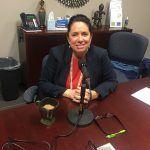
Madianite-McNichol-Madianite-Concierge-Gifting-ServicesDr. Madianite McNichol, President and CEO of Madianite Concierge Gifting Services, is a research pathologist, born in Haiti, Cap-Haitian, but raised in the Turks & Caicos Islands by a single mom of 8 sons and 2 daughters.

Madianite currently lives with her husband and 2 daughters in Buford, Georgia. She’s a former bodybuilder/figure competitor and enjoys weight-lifting, running marathons, shopping, and spending quality time with her family.

Connect with Madianite on LinkedIn and follow Madianite Concierge on Twitter and Facebook.

Show Transcript

Intro: [00:00:04] Broadcasting live from the Business RadioX studios in Atlanta, Georgia, it’s time for GWBC Radio’s Open for Business. Now, here’s your host.

Lee Kantor: [00:00:16] Lee Kantor here. Another episode of GWBC Radio’s Open for Business. And this will be a fun one. Today, I have with me Madianite McNichol with Madianite Concierge Gifting Services. Welcome.

Madianite McNichol: [00:00:34] Thank you.

Lee Kantor: [00:00:36] Well, can you tell us a little bit about your service? How are you helping folks?

Madianite McNichol: [00:00:42] Oh, well, Madianite Concierge Gifting Services is a gifting experience company. Our main focus is to help that busy professional or that creative entrepreneurial innovative business to make an experience out of all their gifting occasion by taking the task of gifting completely off their hands and handling the entire process from sourcing and branding their gifts to beautifully wrapping and delivering to their recipient, we handled the entire process, whether it is a gift, something tangible, or an experience that they like to curate on their gift recipient.

Lee Kantor: [00:01:23] So, now, what makes a good gift? How do you know what the appropriate gift is for your client?

Madianite McNichol: [00:01:32] Well, that decision is really driven by a complication that we would typically have with our gift cert, if you would like to refer to them as that. The person looking to gift something would advise us on that recipient. Through a quick survey, we can determine whether that gift recipient is someone who would enjoy expensive wine, for example, or someone who will enjoy craft, or someone who perhaps does not prefer a chocolate or is allergic to nuts. And so, the experience is really tailored and catered for that recipient, so that it is something that is useful but, at the same time, can convey that recipient’s gift of gratitude.

Lee Kantor: [00:02:26] Now, how did you get into this line of work? Were you always good at getting people gifts?

Madianite McNichol: [00:02:32] It’s funny you ask. I’ve always been creative. And so, we discovered that there were a lot of creative entrepreneurs or innovative businesses that were looking for unique but yet convenient way to engage with their prospects or their clients. So, it was a no brainer that a service that can take that task completely off their hands, so that they can focus on running the business was essential.

Lee Kantor: [00:03:05] Now, what’s been the most innovative or interesting gift you’ve ever gifted for someone?

Madianite McNichol: [00:03:15] Well, it’s probably more common than people think but for us was very interesting. For example, we had a client that reside here in Georgia but really wanted to curate a experience for their son-in-law who was in the Virginia area that was really into craft beer. So, what we did is scoured their location around the Virginia area and talked to different brewers in that area to create a one-of-a-kind experience for that son-in-law. With our concierge approach, we were able to put a package together that would allow them to taste craft beer, some souvenirs from different brewers, and really tailor and create a unique day.

Lee Kantor: [00:04:03] So, you-.

Madianite McNichol: [00:04:04] So, although that sounds fairly common, but it was really something unique because it required some research.

Lee Kantor: [00:04:11] Now, so your client’s aren’t necessarily business people. They might just be doing this for a relative.

Madianite McNichol: [00:04:19] Correct. So, Madianite Concierge Gifting Services provides … there are two legs to our service. We provide a service for individuals. And then, we provide a gift event, calendar management for business owners’ event.

Lee Kantor: [00:04:36] Now, being a business that is run by a woman, do you think that there’s certain things that make it maybe challenging, more challenging that a man would face in business?

Madianite McNichol: [00:04:52] Absolutely. Women, there are many challenges that women entrepreneurs or women in business face. One of them is really defying social expectations. And most cases, women in business are expected to be a little bit more subtle and ideas-forward with their offering, especially during networking event. So, it goes with challenge. If a woman is a little bit too forward, you’re perceived as aggressive; whereas, if a male business owner may have had the same approach, then you would be considered as sharp or someone who’s very business savvy. But for women, it is perceived as aggressive.

Madianite McNichol: [00:05:43] Another challenge we face, and I think many business face that, is securing funding. A lot of women-owned businesses perhaps aren’t taken as serious. They’re probably perceived as hobby. And so, funding is not readily available. So, that’s a few, two of the many challenges that women in business will face.

Lee Kantor: [00:06:06] Now, do you have any advice for a woman that’s starting up a brand new business? What are some of the things that you wish you would have known when you started?

Madianite McNichol: [00:06:19] When I first started Madianite Concierge Gifting Services, one of the things I wish I knew early on is to be part of a community or part of an organization that will support and provide mentorship, especially in my line of business, it was not in a financial arena or one of those business arenas that are probably most common. And so, for me, finding mentors and organization that really could foster my creative endeavors was pretty hard. So, I wish I knew more communities and women organization that I could become part of to have that support.

Lee Kantor: [00:07:16] Now, how has GWBC helped you?

Madianite McNichol: [00:07:21] GWBC was actually one of the organizations that we stumbled upon that really has been instrumental in our growth, whether it was mentorship and really a wealth of resources that we could tap into. And so, there have been a great contributing organization to get to where we are currently.

Lee Kantor: [00:07:48] And when you going about doing your business during this difficult time, has there been any challenges that you’ve had to overcome during this crisis?

Madianite McNichol: [00:07:59] During this current crisis, this pandemic we are facing, some of the challenges that I think I’m facing and everyone is really finding unique ways to pivot and keep our business relevant; although our business is one that you would think would be most commonly used around this time of this pandemic because most people aren’t able to leave their home. So, using our service to stay connected to their loved one has increased, but sourcing the products that we need to provide a gift and the experience has also been difficult.

Madianite McNichol: [00:08:40] So, finding ways to remain creative and sourcing product that’s unique and really meeting the need of our client has been challenging. So, we’ve pivot with offering online tutorial where our client can probably design or create gifts that can be made from from home with products that’s already in their home. And so, we’re finding ways to meet that challenge by providing other options.

Lee Kantor: [00:09:16] So, you’re spending some of your time educating rather than necessarily selling, but that way, you can stay in front of the people that are important to you without being too salesy.

Madianite McNichol: [00:09:31] Exactly.

Lee Kantor: [00:09:32] And it is a tricky time now. How do you think that businesses in general are handling this new kind of work-from-home environment where maybe they were used to go into an office, and, now, they’re at home, and they’ve got their kids and their spouse, and it could get chaotic?

Madianite McNichol: [00:09:53] It could. It could really get chaotic. One of the things I think business owners or people who were formerly commuting or having to leave their home to do business, it’s hard for them now because they have to really find the balance because when you’re home, it’s hard to separate the two. You could have your business hat on all day but finding the balance to take time away, and enjoy a walk, or just really stepping away from your machine or your day-to-day routine to balance that one day out.

Lee Kantor: [00:10:38] Now, in your business, you mentioned the importance of having as a great support system. And you talked about GWBC. Are there other areas you go that kind of support you?

Madianite McNichol: [00:10:52] Yes, I have made it a point to join local chambers. Right now, we reside in Gwinnett. So, being part of the Gwinnett Chamber of Commerce, being part of the Atlanta Black Chambers, and being part of different organizations that we can tap into for resources.

Lee Kantor: [00:11:12] And then, does that help you just find other kind of like-minded business people, or do you get some education, or do you get some business? Like, what keeps you coming back to those meetings?

Madianite McNichol: [00:11:27] All of the above, really. There are resources for business owners, whether you’re just starting out or whether you are a veteran. There is exposure to connection and, also, exposure to look like-minded individuals that you can collaborate with and be inspired. So, really, all of the above.

Lee Kantor: [00:11:52] And now, if somebody wanted to learn more about Madianite Concierge Gifting Services and wanted to reach out to you, do you have a website?

Madianite McNichol: [00:12:01] Yes. If someone was interested in our services, we can be reached at www.madianite.com. That’s www.madianite.com.

Lee Kantor: [00:12:25] Well, thank you so much for sharing your story today.

Madianite McNichol: [00:12:29] Thank you. Thanks for having us.

Lee Kantor: [00:12:29] All right. This is Lee Kantor. We will see you all next time on GWBC Open for Business.

About Your Host

Roz-Lewis-GWBCRoz Lewis is President & CEO – Greater Women’s Business Council (GWBC®), a regional partner organization of the Women’s Business Enterprise National Council (WBENC) and a member of the WBENC Board of Directors.

Previous career roles at Delta Air Lines included Flight Attendant, In-Flight Supervisor and Program Manager, Corporate Supplier Diversity.

During her career she has received numerous awards and accolades. Most notable: Atlanta Business Chronicle’s 2018 Diversity & Inclusion award; 2017 inducted into the WBE Hall of Fame by the American Institute of Diversity and Commerce and 2010 – Women Out Front Award from Georgia Tech University.

She has written and been featured in articles on GWBC® and supplier diversity for Forbes Magazine SE, Minority Business Enterprise, The Atlanta Tribune, WE- USA, Minorities and Women in Business magazines. Her quotes are published in The Girls Guide to Building a Million Dollar Business book by Susan Wilson Solovic and Guide Coaching by Ellen M. Dotts, Monique A. Honaman and Stacy L. Sollenberger. Recently, she appeared on Atlanta Business Chronicle’s BIZ on 11Alive, WXIA to talk about the importance of mentoring for women.

In 2010, Lewis was invited to the White House for Council on Women and Girls Entrepreneur Conference for the announcement of the Small Business Administration (SBA) new Women Owned Small Business Rule approved by Congress. In 2014, she was invited to the White House to participate in sessions on small business priorities and the Affordable Care Act.

Roz Lewis received her BS degree from Florida International University, Miami, FL and has the following training/certifications: Certified Purchasing Managers (CPM); Certified Professional in Supplier Diversity (CPSD), Institute for Supply Management (ISM)of Supplier Diversity and Procurement: Diversity Leadership Academy of Atlanta (DLAA), Negotiations, Supply Management Strategies and Analytical Purchasing.

Connect with Roz on LinkedIn.

About GWBC

The Greater Women’s Business Council (GWBC®) is at the forefront of redefining women business enterprises (WBEs). An increasing focus on supplier diversity means major corporations are viewing our WBEs as innovative, flexible and competitive solutions. The number of women-owned businesses is rising to reflect an increasingly diverse consumer base of women making a majority of buying decision for herself, her family and her business. GWBC-Logo

GWBC® has partnered with dozens of major companies who are committed to providing a sustainable foundation through our guiding principles to bring education, training and the standardization of national certification to women businesses in Georgia, North Carolina and South Carolina.

Tagged With: Concierge, corporate, events, Gift, gifting, Wedding

GWBC Radio: WITH/agency CEO Blair Brady

May 8, 2020 by angishields

LogoWITH
GWBC Radio
GWBC Radio: WITH/agency CEO Blair Brady
Loading
00:00 /
RSS Feed
Share
Link
Embed

Download file

BlairBradyAs the Co-founder and CEO of the WBE Certified WITH/agency, Blair Brady is an ambassador of the movement for female entrepreneurship and leadership as well as in diversity of talent. With her leadership, the award-winning agency has received recognition for its work in brand strategy, creative and advertising.

WITH proudly serves as an agency partner for Atlanta’s iconic brands such as AT&T, The Fox Theatre, Georgia Power, Kaiser Permanente of Georgia, EarthLink and others. Blair has also led the expansion of the agency’s business and Atlanta’s creative talents to new markets through the agency’s partnership with Pacific Gas & Electric in California.

Blair co-founded the WITH/agency in 2012 to find a better way to serve Atlanta’s brands. When Blair assumed majority ownership of the agency in early 2018 and became CEO; her mission for WITH was realized: to reveal a world that works better together by creating unmatched creative work for clients while progressing a vibrant culture focused on cultivating and empowering diverse talent contributing to the rise of Atlanta’s creative community. As a trailblazer, Blair’s leadership style is centered around her intentionality to be the change she wants to see in the world around her.

The WITH/agency is an Atlanta born and based agency with service offerings including creative, strategy, advertising, video production, and branding. As a purposely small agency serving big brands, WITH is making its mark on Atlanta’s creative scene.

Blair also advocates for Atlanta’s creative community through participating in key professional organizations including:

  • The Forbes Agency Council – Member
  • Metro Atlanta Chamber – Board of Advisors
  • TimesUp Advertising – Board Member – Atlanta Chapter’
  • Network of Executive Women (NEW) – Member
  • Atlanta Advertising Club – Corporate Member and Event Host

Connect with Blair on LinkedIn and follow WITH on Facebook and Twitter.

Show Transcript

Intro: [00:00:04] Broadcasting live from the Business RadioX studios in Atlanta, Georgia, it’s time for GWBC Radio’s Open for Business. Now, here’s your host.

Lee Kantor: [00:00:18] Lee Kantor here. Another episode of Open for Business, part of GWBC’s radio show that we run here at Business RadioX. Our guest today is Blair Brady, and she’s with the WITH/agency. Welcome, Blair.

Blair Brady: [00:00:33] Hi, Lee. Thank you.

Lee Kantor: [00:00:35] Well, before we get too far into things, can you tell us about the WITH/agency? Who do you serve?

Blair Brady: [00:00:41] I’d love to. We are a full-service marketing, advertising, and design agency right here in Atlanta. And we proudly serve a lot of Atlanta’s greatest brands AT&T, Georgia Power, Kaiser Permanente of Georgia, and another wonderful client that is really Atlanta’s gem is the Fox Theater.

Lee Kantor: [00:01:07] So, how-

Blair Brady: [00:01:07] Other clients … sorry about that, Lee. Our other clients include Pacific Gas and Electric in San Francisco. And also, a wonderful re-emerging Atlanta brand of EarthLink.

Lee Kantor: [00:01:22] Oh, wow. I was with EarthLink when they were MindSpring. I have a-

Blair Brady: [00:01:27] You have?

Lee Kantor: [00:01:27] … an email address, MindSpring email address, probably still. I’m probably still paying for that. Yeah, that goes.

Blair Brady: [00:01:34] Yeah. I mean, that’s a throwback. That’s a good one. Hang on to it.

Lee Kantor: [00:01:38] So, now, how’d you get into this line of work? How’d you get started in your career?

Blair Brady: [00:01:43] I have always been on the agency side of business. I began early in my career with an agency that was born really out of sports marketing. But then, moved into general, a full-service, integrated marketing. And I was fortunate enough early in my career to serve really big brands from a young stage. So, I got to learn how to navigate corporate culture, which can be really, really rigid for a lot of good reasons as why they’re rigid. But as a marketer, you have to find a way to breathe life and creativity into those structures. So, I got to see that up close and personal early in my career.

Blair Brady: [00:02:28] And then, about eight years ago, my co-founder, Jamie Sims, and I decided that we wanted to make a new kind of agency. We thought that there was a better way. So, we founded the WITH/agency in 2012 and really bootstrapped from the very, very beginning, and years of really hard work and trying to align ourselves with the brand-forward companies who believed in creativity and really believed in brand strategy and brand storytelling was how we approached it. And we are, as you know, a proud, certified women-owned business.

Lee Kantor: [00:03:13] Now, why was it important for you to become a certified women-owned business?

Blair Brady: [00:03:20] That’s a great question. There are a couple of reasons. One, we believe that you need to be the change you want to see in the world. And, especially, in the creative industry, this rings very true. I believe that the best creative product that is really going to connect brands to people has to come from a diverse set of talent and has to come from several perspectives. And the old framework of doing things that limited female voices, diversity, that was not going to allow brands to reach the hearts and minds of people in the ways that they needed to.

Blair Brady: [00:04:12] So, we restructured, and it was important for us to certify because that meant that we were committed in going about this. And a lot of our corporate clients, they have a real need for diverse suppliers, especially in the creative industry, because a lot of really big multinational agencies are held by large companies, large holding companies that are predominantly male. And so, they are getting that. We were able to provide them a unique service and a unique perspective to serve today’s brands and what they need to reach their audience.

Lee Kantor: [00:04:51] Now, speaking of today, right now, we’re going through this coronavirus. And it’s a challenge for a lot of businesses. I’m sure you’ve had to make some adjustments. But from putting in your marketing hat on, how are you kind of consulting with your clients to help them kind of re-strategize or maybe pivot in order for them to continue to stay relevant during this?

Blair Brady: [00:05:16] That’s a great question. It is a real challenge right now because we live in a world of connection. And right now, we’re isolated physically. So, it’s a whole new way of working. And early on, in the first week of this, I challenged my team to think about the plans that we had for our clients for the year and consider that those plans were probably not going to happen. And what we needed to do to serve our clients the best way was not found in those plans because we’re in a new world. So, I urged them to take each of our clients, strip them down to their brand’s purpose and their brand’s promise. Why do they exist and what do they deliver? And then, put the new filter of today all over that. So, how are we going to exist and deliver based on this new on this new world?

Blair Brady: [00:06:19] And three of our key clients are essential business. Health care in Kaiser Permanente, obviously, they’re more essential now than ever. Pacific Gas and Electric and Georgia Power in energy and utility. Specifically with Pacific Gas Electric, we are working on how they position themselves to best help and speak with small businesses because, right now, they are in dire straits. And then, third would be in EarthLink, an Internet service provider. Everyone is at home right now working, trying to keep their kids engaged in school, and we are relying more heavily on our internet connection than ever before and in more ways. And so, we have to stay connected. That’s the way that we stay connected now. We can’t physically be connected. So, those three clients, we really leaned, we really pivoted strategy, and we quickly got in front of them to say, “You know what? We’re here. We have you. We understand that everything’s changing. But we’re ready to change too.”

Lee Kantor: [00:07:22] Now, what about when it comes to the messaging, when those people are going out to the world and saying, “Hey, we’re still open for business. We still are here to serve you. While our business may have been executed in this manner yesterday, today, we’re still here and we’re executing in this new manner,” is there any advice for those business people out there that maybe have to kind of re imagine themselves, but they don’t want to go out there, and be salesy, and yet want to be sensitive? It seems like a tricky time for marketers to communicate what they need to communicate and in what maybe a more elegant way.

Blair Brady: [00:08:07] Right. You’re so right. There is such a delicate balance right now. And you’re seeing, as you turn on the television, or Netflix, or anything, and you’re watching, brands are putting out all kinds of material that is pivoted now to the world that we’re in. And you’re starting to hear vocabulary that’s becoming cliche a little. You continue to hear words like, “In these uncertain times,” and “We’re all in this together.” And it’s difficult for marketers because we do want to speak and connect on a human level. We do want to serve the brands who are relevant to this crisis. But you can’t come across in a disingenuous way or kind of way that sounds like you’re pandering to a bad situation. You’re taking advantage of a crisis. So, it’s a very delicate line.

Blair Brady: [00:09:04] The way that that we approach it and the way that we advise our clients is that we should only put a message out there or we should only engage with consumers when we are directly relevant to what we’re talking about. We do want to pander. So, when you do put out a message, first, you have to say, “Is what we’re talking about, is our service directly relevant to what is happening in people’s lives right now?” And then, how do we make that message ring true and be genuine, so that they don’t feel like they’re being sold to and taken advantage of in a time of crisis.

Blair Brady: [00:09:44] It’s interesting. I’ll give you one more example. Our client, the Fox Theater, obviously they cannot operate right now. Their doors are closed. And we’re not sure when they’re going to reopen. But their purpose in the world is to or their promise is to create a grand sense of occasion. It’s all about coming together. It’s all about people experiencing something amazing. How can we do that? How can we come together and say something amazing when we’re apart? So, that’s been our creative brief as an agency to help them make people feel like they’re connected and experiencing something wonderful while they’re not apart. And it’s not because they’re looking to sell tickets. It’s because they’re an Atlanta icon, and they’ve made a promise to the city a long time ago to remain that way. And so, they have to continue to tell Atlanta that that promise isn’t gone. But certainly, there’s no ticket sale message at the end of that. It’s just articulating that our promise still stands.

Lee Kantor: [00:10:49] Now, when you’re working with especially a client like that, where their business is in person, people physically going to their location, is there any kind of, I don’t wanna say therapy, but it’s kind of therapy to help them kind of focus on the long haul and to help them just not panic? Because at some of these, like even the Fox as an example, I mean, the Fox is an icon to many that they’re a little special, but if you’re just like kind of Joe and Mary’s theater, this is a tough time.

Blair Brady: [00:11:26] You’re right. And so, I have to say that part of being a really good agency partner, there is a percentage of therapists that’s in your job. One of the things that we always say is that we believe in a world that works better together. And that goes in good times and bad times. And so, I spent a lot of time on the phone with my clients talking about their personal lives, talking about their work lives, talking about what they’re concerned about. And it’s just because we genuinely love to be with people. I mean, that was how our agency was built. And so, a lot of it is time spent just listening because everyone feels so disconnected. So, we don’t even have to have conversations that are directional towards a project or a campaign. Sometimes, it’s just to catch up.

Blair Brady: [00:12:26] But what I do find when … because we do need to look towards something. So, for for some of our clients whose business is a little bit on a hiatus right now, what we started doing is working with them on re-emerging plan. So, when we come back into the world, what does that look like? And though we don’t know when that may be, there’s no date on the calendar necessarily, having the actual plan there not only give a sense of something to look forward to, but it makes them feel like somebody is at them, or they’re not alone, or when the time to reopen comes, they aren’t left saying, “Well, what do we do now?” That when the time comes to reopen, that we’re ready, we have a plan. We’re not just sort of slowly starting to get going. We’re already catching our pace.

Lee Kantor: [00:13:18] Now, how have you been working with your own team to keep their morale up? And maybe you can share some tips for others that are dealing with this with a team that’s working remotely. Maybe you’ve been already working remotely prior to this, but if you weren’t doing a lot more now.

Blair Brady: [00:13:39] Yeah, I can definitely share some on that because that has been one of the biggest things for me personally. In our office, it’s a very open office. We are a very close knit group. We are together a lot. We’re a very family-like environment. So, almost overnight, we were completely separated and isolated from each other. It was really difficult at first. It was a really heavy feeling for me. So, things that I had done and we have done together since then that have really helped, we do a lot of video conferencing. I know everyone does that.

Blair Brady: [00:14:21] But one thing I will say is get in the habit of always turning on your camera and showing your face because when you see each other’s faces, it makes it so, so, so much better. That, to me, is so important. I always want to see everyone’s faces. And we do quick morning check-in meetings every morning where we just see each other’s faces, write down a quick connect for what is going to happen that day, what’s really important, what somebody needs help on, what someone’s stuck on, any updates that we had got overnight. So, that’s been really helpful.

Blair Brady: [00:14:58] Another thing is that first week I was mentioning, I felt really disconnected. It felt really heavy. On the Sunday night of that first week, I just turned on my web camera on my computer, and I talked to the team. I just recorded a video of me talking about what I talk about, and then closing it with a fun … I played like a fun song. And so, I have done that every Sunday since the first week. So, we have seven episodes of what we now call the Sunday night sit-down. And it goes to my team every Sunday night. It just goes to is. It’s not posted on social media anywhere. It’s just a message to the team. And that’s been a really great way to connect. I’ve gotten really good feedback from them that they enjoy those.

Blair Brady: [00:15:50] And then, the other thing is we’ve done just agency polls. Like just fun things. What’s a new hobby you picked up during this time? What music are you listening to? We made a quarantune playlists on Spotify. So, finding those ways have really, really been a great way to keep everybody connected.

Lee Kantor: [00:16:13] Now, you had some great advice earlier about coming up with that kind of how are you going to emerge plan with your clients. Is that something that you’ve also done internally? Like how are you going … like how does the future you’re going to see yet the work you’ve done? And are you doing work that matters? Are you looking ahead to yourself as well?

Blair Brady: [00:16:38] I am. And that’s something that that we are addressing currently and recently. I’ve been referring it to as a mental box that I’ve just sort of been putting my thoughts in and keeping to the side, and I will address them when the time is right. But the time is right. We are going to be coming out of this. And that plan is not going to look like what I thought our year was gonna look like in January. When we started this year, we had a very, very robust plan for growth. It was going to be a very transformative year for the agency.

Blair Brady: [00:17:28] And so, I think in the first few days of this crisis, I probably personally merged that a little bit, that that was probably not going to go the way I wanted it to go and the way that I really wanted our team to that had gotten. Everyone was so excited and we were ready to go. And so, it took me a while to mentally adjust to that. But I have now. And we’ve been working on a plan to reemerge. And I think a lot of the ways that we were going to transform this year will still happen. They just may happen a little later, and they may happen in some different ways. We’ve learned a lot through this.

Blair Brady: [00:18:16] And I don’t think it will change everyone’s business. I don’t think anyone will just hit the on button again and just go on as usual like they did before. I think this crisis will challenge everyone to rethink the way they operate internally and with their customers, or clients, or who they serve. It’s just the plan is there, and it’s an important one, and it has to be done with with such intentionality, and we certainly can’t rush it. But I am immensely proud for the way that my team has conducted themselves through all of this. I’ve leaned into them hard, and they have stood up and done so much more than I had ever had in mind. So, I am immensely grateful to them. And I just think that the promise of reemerging is so much brighter.

Lee Kantor: [00:19:14] Now, what’s the ideal client for you? And what pain are they having where the WITH/agency is the solution?

Blair Brady: [00:19:23] Oh, that’s a great question. So, our ideal client doesn’t come in the shape of any specific category or vertical. We are not B2B, exclusively B2B, or exclusively B2C. Our ideal client is a brand-forward company. So, a company that believes in their brand and their brand’s ability to connect with people. And so, we start every piece of work, every project, everything with strategy. The strategy is really at the centerpoint of what we do, whether that manifests itself into a television campaign or manifests itself into a new visual identity for a brand. All of that must start with strategy. And so, companies that really invest in their brand and in their brand story, that is our ideal plan.

Lee Kantor: [00:20:27] And if somebody wanted to learn more and have more substantive conversation with you, what’s the website?

Blair Brady: [00:20:34] We’re at thewithagency.com.

Lee Kantor: [00:20:38] Well, Blair, thank you so much for sharing your story today. You’re doing important work.

Blair Brady: [00:20:43] Thank you, Lee, I appreciate you.

Lee Kantor: [00:20:45] All right, that’s a wrap for this episode of GWBC Radio. We will see you again next time.

About Your Host

Roz-Lewis-GWBCRoz Lewis is President & CEO – Greater Women’s Business Council (GWBC®), a regional partner organization of the Women’s Business Enterprise National Council (WBENC) and a member of the WBENC Board of Directors.

Previous career roles at Delta Air Lines included Flight Attendant, In-Flight Supervisor and Program Manager, Corporate Supplier Diversity.

During her career she has received numerous awards and accolades. Most notable: Atlanta Business Chronicle’s 2018 Diversity & Inclusion award; 2017 inducted into the WBE Hall of Fame by the American Institute of Diversity and Commerce and 2010 – Women Out Front Award from Georgia Tech University.

She has written and been featured in articles on GWBC® and supplier diversity for Forbes Magazine SE, Minority Business Enterprise, The Atlanta Tribune, WE- USA, Minorities and Women in Business magazines. Her quotes are published in The Girls Guide to Building a Million Dollar Business book by Susan Wilson Solovic and Guide Coaching by Ellen M. Dotts, Monique A. Honaman and Stacy L. Sollenberger. Recently, she appeared on Atlanta Business Chronicle’s BIZ on 11Alive, WXIA to talk about the importance of mentoring for women.

In 2010, Lewis was invited to the White House for Council on Women and Girls Entrepreneur Conference for the announcement of the Small Business Administration (SBA) new Women Owned Small Business Rule approved by Congress. In 2014, she was invited to the White House to participate in sessions on small business priorities and the Affordable Care Act.

Roz Lewis received her BS degree from Florida International University, Miami, FL and has the following training/certifications: Certified Purchasing Managers (CPM); Certified Professional in Supplier Diversity (CPSD), Institute for Supply Management (ISM)of Supplier Diversity and Procurement: Diversity Leadership Academy of Atlanta (DLAA), Negotiations, Supply Management Strategies and Analytical Purchasing.

Connect with Roz on LinkedIn.

About GWBC

The Greater Women’s Business Council (GWBC®) is at the forefront of redefining women business enterprises (WBEs). An increasing focus on supplier diversity means major corporations are viewing our WBEs as innovative, flexible and competitive solutions. The number of women-owned businesses is rising to reflect an increasingly diverse consumer base of women making a majority of buying decision for herself, her family and her business. GWBC-Logo

GWBC® has partnered with dozens of major companies who are committed to providing a sustainable foundation through our guiding principles to bring education, training and the standardization of national certification to women businesses in Georgia, North Carolina and South Carolina.

Tagged With: advertising, big brand, brand strategy, Creative, meaningful

Customer Experience Radio Welcomes: Wes Moss with Capital Investment Advisors

May 6, 2020 by angishields

Capital-Investment-Advisors
Customer Experience Radio
Customer Experience Radio Welcomes: Wes Moss with Capital Investment Advisors
Loading
00:00 /
RSS Feed
Share
Link
Embed

Download file

CXRadio-Wes-Moss-Capital-Investment-Advisors

CER

CXRadio-WesMoss3Wes Moss the host of Money Matters – Atlanta’s longest-running live call-in, investment, and personal finance radio show – on News 95-5FM and AM 750 WSB. Wes is also the Chief Investment Strategist and Managing Partner at Capital Investment Advisors (CIA). In this role, Wes is responsible for communicating CIA’s position on markets and investments. CIA currently manages more than 2.5 billion dollars in client assets.

In 2017 Wes was featured in Barron’s Magazine where he discussed his career in financial advising as well the investment strategy that he pursues, investing for income. Barron’s Magazine also named him one of America’s Top 100 Independent Wealth Advisors in 2017 and 2019. From 2014 through 2019 Barron’s Magazine named him one of America’s top 1,200 financial advisors. In 2012, he was named as one of the top 40 fee-only investment advisors (under 40) in the country by Wealth Management Magazine. Wes was also named one of Atlanta’s 40 Under 40 by the Atlanta Business Chronicle in 2015.

In addition, Wes is a regular contributor to the Atlanta Journal-Constitution both online and in print, and a regular contributor to ClarkHoward.com. In 2014, Wes was the host of Atlanta Tech Edge, a weekly TV show on Atlanta’s NBC affiliate WXIA, covering the fascinating business of technology within the state of Georgia. He was also the financial consultant for Spike TV’s show, Life Or Debt.

Wes holds a degree in economics from the University of North Carolina, Chapel Hill. He lives in Atlanta with his wife and four sons and loves spending time with his family, coaching lacrosse, and playing golf and tennis.

Wes has written several books including Starting from Scratch (Kaplan) and Make More, Worry Less (FT Press), and has served as a financial expert for both local and national media including CNN, CNBC, and Fox Business Network. He has been interviewed by USA Today, Forbes, Time, The Wall Street Journal, and Yahoo Finance.

His latest book, You Can Retire Sooner Than You Think – The 5 Money Secrets of the Happiest Retirees (McGraw Hill 2014) has been a best seller in the retirement planning category. The book’s unique message and research has struck a chord with readers and the financial community since its release in May of 2014.

Follow CIA on LinkedIn, Facebook and Twitter.

Transcript

Intro: [00:00:01] Broadcasting live from the Business RadioX studios in Atlanta, it’s time for Customer Experience Radio. Brought to you by Heineck & Company, real estate advisors specialized in corporate relocation. Now, here’s your host, Jill Heineck.

Jill Heineck: [00:00:18] Well, hello and welcome to this very special edition of Customer Experience Radio. I’m your host, Jill Heineck. And I’m a business owner, a real estate adviser and customer experience enthusiast. I’m super excited to have Wes Moss on with us today. He’s the host of Money Matters, Atlanta’s longest running live call-in investment and personal finance radio show on News 95.5 and AM 750 WSB. He’s also managing partner of Capital Investment Advisors here in Sandy Springs. He always delivers at such a high level. So, I thought it’d be really interesting to hear how Wes and his teams are working to meet the listeners and his investment clients where they are and especially in the environment that we’re in. And so, I thought that we just have a conversation with Wes. And I’ve been listening to a lot of his recent shows and a special podcast that you’ve been airing. And first, just give the listeners a little bit of background about who you are and how you got where you are now.

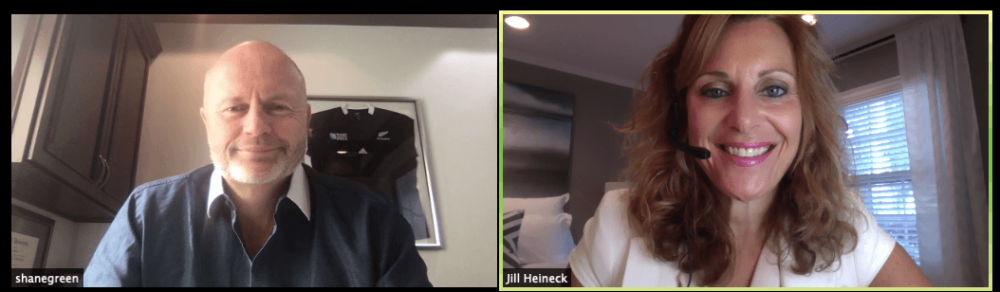
Wes Moss: [00:01:22] Thanks for having me on, Jill. It’s a lot of fun. I know that we’re doing this via a video, but I know this is via radio. And maybe you should have your own TV channel. It’s what you should have. Radio and television show. And Jill, for those listeners that are not seeing this because it’s all via audio, Jill is broadcasting from … most people have like a plan, and a family photo, and all that. Jill is in the bedroom, and she got two lamps and her bed. That is her home office. And maybe … is that a guitar in the corner?

Jill Heineck: [00:01:54] It is.

Wes Moss: [00:01:55] Yeah, that’s cool. Anyway-

Jill Heineck: [00:01:56] It’s our home office.

Wes Moss: [00:01:56] … she had a cool background. Yeah. Thanks for having me on. I will tell you that we are a financial advisory firm. So, we do investments. Our mission at our firm is helping families find happiness in retirement. And that is the guiding light at our firm. I wrote a book seven years ago called You Can Retire Sooner Than You Think: The Five Money Secrets of the Happiest Retirees. And that was really kind of an outcropping of a survey that I did for habits of happy retirees, and those who are unhappy and were effectively trying to reverse engineer how to be a happy retiree.

Wes Moss: [00:02:34] A lot of that came out of what I saw as those going through retirement, they were really enjoying it, and those who were not as much, and just comparing and contrasting. So, it was almost an outcropping of that. And then, that’s even become even more so the philosophy and the guiding light at our firm. But I’ve been in the investment business right out … I studied economics at the University North Carolina back in the ’90s. Became an advisor right out of the gate. Actually, I was still in school and did an internship at Atlanta in the mid to later ’90s. And then, I’ve been a financial advisor ever since. And I started with a really big firm and always wanted to go independent. And now, we have an independently owned – me and another family, two of our families have an RIA, registered investment advisory firm that we’ve had now for going on 20 plus years.

Wes Moss: [00:03:28] So, that is what we do for a living. As far as the media, my second job, which takes up a lot of my bandwidth and time these days is radio as well. And being able to educate the public on so many new things has been a huge part of what we’ve been able to do and bring to the table as a firm, and a lot of it just goes … people are constantly saying, “Oh, Wes, you must be doing so much work to get ready for the radio. And then, how do you—” A lot of it is, what I’m doing on radio, and I do all these special podcasts now, in addition to Money Matters, the show, really, these are pieces of research and insight that I’m looking for economically to make investment decisions anyway.

Wes Moss: [00:04:17] So, a lot of it is just utilizing the content that we want to glean and find any way. And then, we can produce it in a way. We can publish it in either a podcasts, or radio, or videos, or both. And, obviously, we turn a lot of that into written content on my website at westmoss.com. Again, the media side of the equation, I was on The Apprentice with Donald Trump, if anybody remembers that.

Jill Heineck: [00:04:44] I remember.

Wes Moss: [00:04:45] I don’t know if anyone’s heard of Donald Trump at this stage, but there is a guy named President, or there’s a guy named Donald Trump who is a real estate mogul back in the day, and he had a show on NBC. And that show, I ended up on it, and it kind of opened my eyes up to the media. And the show is really run by Mark Burnett Productions, the guy who started Survivor and, ultimately, kind of woke up to, “Wow, there’s this whole another world of media,” and that kind of got me into doing radio. And I’ve been doing radio now for about 12 or almost 13 years now.

Wes Moss: [00:05:21] So, I do that in conjunction with what I do from an investment standpoint. I’m the chief investment strategist at our firm, and I’ve been been an investor or investment advisor for over 20 years now. And I think all those pieces kind of just come together. So, I’m able to be able to do our client work. Then, I still have individual families that I work with. And then, running the firm that we serve about 3000 families at our firm – Capital Investment Advisors. And then, just trying to bring the most current, up-to-date information on understanding what we need to understand at any given time. And today, that’s the virus, it’s coronavirus, and how that impacts the economy, how it impacts markets, how it impacts real estate. And we’re trying to make sure we’re bringing the leading experts from Johns Hopkins, and Harvard, and the Brookings Institute, all to our podcast because I want to get educated on it. And then, I can turn around and share that knowledge with our clients.

Jill Heineck: [00:06:22] So, let’s go back to real estate for a second. So, you’re talking to your portfolio clients, and they are potentially beginning their retirement journeys or they’re midstream. And now, we’re in the middle of a pandemic, and they’re looking at the tickers. And I’m sure they’re asking and looking to you for guidance on, “Do they liquidate? Do they hold on, continue to look at it from a long-term perspective?” And are these questions you’re getting and what kind of guidance are you providing to them?

Wes Moss: [00:06:58] Beyond what is for my 401(k) or my IRA doing, and how much income am I generating, that’s the kind of primary conversation at our firm. And then, number two, second only to that, is real estate. Hey, what should I do with this house? I’d like to go buy my family … my wife and I, the kids are out of the house now, so I’m ready to go. I’ve been eyeing a place in St. Simons, Wes. What’s the best way to go do that? Should I wait? Should I keep my house here in Atlanta, and then go buy the place in St. Simons? Should I rent out my place? Should we pay off the mortgage? Should we refinance the mortgage? So, we do a lot of consulting around, Jill, the best financial … how does your how does your real estate, particularly your your personal real estate? And this is not necessarily commercial real estate, but your personal real estate that might be rental income too, how does it fit into the bigger plan? Because it’s such a big chunk. I mean, whether you’re … it’s always a big chunk. It’s always a big percentage of your personal balance sheet.

Jill Heineck: [00:08:03] So, are you seeing your clients, what percentage do you think of your clients are in the midstream or are jumpstarting, they were going to jumpstart their retirement journey before COVID actually really hit, before SIP maybe, or did you have a group? I’m always curious. Like what happens at that point when you were ready to do it, your maybe in your mid-50s, and you had planned all along to do it, and then COVID hits? And then, do you have to recalibrate and figure that out, or do you just keep rolling?

Wes Moss: [00:08:38] Mathematically, Jill, and we’ve all heard of these statistics that 10,000 baby boomers retire every day, and I’m in the middle of that. And I was shocked. I am constantly surprised at just how many people continue to hit that age of 65, and they’ve been eyeing retirement. So, just mathematically and statistically, a lot of people just retired right before COVID because a lot of people are retiring every day.

Wes Moss: [00:09:04] And everybody has to be prepared for big market correction and big dislocations because they happen all the time. And even though this has been really painful, and I think there’s a higher level of emotional burden, because we’ve all been sequestered in our houses than ever before. The crash of ’07 and ’08, the crash of 2000-2001, I mean, here we are in the third massive crash, and we were down almost 40% of the Dow, at the Nader, if you go back to March, we had three of these now in the last 15 or so years or call it in the last 20 years. So, to some extent, you’ve got to plan for it and figure out how real estate goes into that.

Wes Moss: [00:09:49] And one of the chapters or one of my favorite chapters in You Can Retire Sooner Than You Think has to do with one really interesting, let’s call commonality between happy retirees is they’ve essentially either  paid off their primary residence or they have a plan to do so in the next five years. So, interestingly, as years to pay off mortgage goes down, and this is a cool chart I have in the book, as years to pay off mortgage goes down, happiness levels go up.

Wes Moss: [00:10:23] I want to try to … my goal typically is trying to help a family figure out, are you downsizing the house? And can you downsize? And if you can go from a $600,000 house to a $400,000 house, does that help you then have no mortgage? And that’s a huge part of that. I love that conversation is how can we get you to a point where you might be moving at this point, we’re eyeing a place that you haven’t lived before, and I keep using the coast, but I have a lot of folks that want to go from Atlanta to do some sort of other housing situation when everyone’s out of the house. My kids are out. It’s just me and my wife, or it’s just me and my husband. Does it make sense for us to have this big house still or are there places that we can maybe move now that we weren’t able to move before all within big metro Atlanta? I mean, it’s a huge area here.

Wes Moss: [00:11:22] And then, of course, people that are thinking, “Hey, is there a deal in the mountains? Can I go get a place? I’ve always got to do that,” or “We want to go closer to the coast and get something near St. Simons, or on the Florida Coast.” So, those conversations are happening all the time. And I think that you’ve got course. And then, you think of renovation, Jill. You think about like, “Hey, what do I need to do to fix up my house to sell it?” or “Do I want to spend $200,000 to stay here? Would I rather just sell it and go somewhere else?” So, it’s so unique to every family. And it’s kind of a fun … I will tell you, people like talking about their housing situation a lot more than-

Jill Heineck: [00:12:02] They do.

Wes Moss: [00:12:02] … they like talking about their 401(k). Like, “Okay, Wes—”

Jill Heineck: [00:12:03] Yes, true.

Wes Moss: [00:12:03] “… we’ve talked about my retirement account. Now, let’s talk about the house.”

Jill Heineck: [00:12:09] That’s the sexy part. Nobody wants-

Wes Moss: [00:12:10] It’s a lot of fun.

Jill Heineck: [00:12:13] Nobody wants to worry about their 401(k).

Wes Moss: [00:12:15] I mean, everybody can worry about and spend time thinking about the house because we-

Jill Heineck: [00:12:18] That’s right.

Wes Moss: [00:12:18] And now more than ever … and this is what’s amazing over the next several years, Jill, is how much will our insights about our primary residences change in this?

Jill Heineck: [00:12:31] Right.

Wes Moss: [00:12:31] And they’re going to be-A

Jill Heineck: [00:12:32] A lot.

Wes Moss: [00:12:33] A lot. I mean, big time.

Jill Heineck: [00:12:35] A lot.

Wes Moss: [00:12:35] If I didn’t have two doors to get to this office, I would be really rethinking my house situation. We’ve been forced to do work from home. It’s worked out so well. And I have a company of 40 people on our main company, and then 20 people in our ancillary. It’s 60 people working from home, not skipping a beat. So, why would we ever go back to 100% of people going back to the office when we could, forever, if I’ve already done to get back to work office plan. And the third phase, which is the phase one, two, three, we haven’t even started phase one yet, but phase three, I have 30% of us still working virtually until further notice.

Jill Heineck: [00:13:21] Right. So, from a an experienced perspective and cultural perspective with your teams, they still need to be able to deliver whatever they need to deliver to your customers from that perspective. So, how are you motivating them and continually kind of keeping the energy high remotely and being able to still deliver on a high level to your clients?

Wes Moss: [00:13:53] The challenge is that we’re not together. And as humans, we want to be in the same room. And there’s nothing that will ever replace that.

Jill Heineck: [00:14:03] Correct.

Wes Moss: [00:14:03] I would say, being in person, that’s an A plus. Being on Zoom is like a B plus or maybe an A minus, maybe a B plus. It’s a B plus. It’s pretty good. And I don’t think you can build a brand new culture around it, and I think it’s tough to build … I think that it’s easier to maintain a culture via Zoom for, at least, a while than it is to build a culture via Zoom. We got to be together to really build a culture. You’ve got to have holiday parties where somebody maybe made a little bit fool of themselves, and they’ve gotten over it. That’s how you really become close, right? But-

Jill Heineck: [00:14:47] Yeah.

Wes Moss: [00:14:47] But it’s been fine to be able to maintain that. As far as customers are concerned, Zoom has been … I think it’s a really good evolution. It’s not a substitute. It’s an evolution on new communication. I did a client … I never thought I would do this, but I had a group of … I had about 80 clients on a Zoom call just as kind of a test, talking about what we’ve been doing. I do a lot of this via radio and videos where I’ll just send it out and it’s kind of just a message. But this was the first time I’d ever done, hey, I’ve got a bunch of my own clients collectively on the same call. And I’m a little bit nervous about that thinking like, well, are people gonna think, well, you just … now, we’re altogether. Why are we not talking one-on-one money so intimate? Yeah, I just want to talk to you.

Wes Moss: [00:15:41] So, it’s not a substitute for that, but it’s an evolution of saying, “Hey, we can do an update, live update, and everyone together.” And I get so many emails and text messages from clients like, “Thank you for doing that. That was awesome. Let’s just do our next meeting via Zoom anyway when the world returns. I don’t want to drive down to your office. Let’s just do Zoom. I love it.” So, it’s an evolution, Jill, not a substitute. I think that’s a way you can keep your client experience very much up to date and continue the intimacy and that emotional connection. And it’s not a substitution. It’s an evolution in the way we’re doing business and communicate.

Jill Heineck: [00:16:21] I love that. I think that’s incredible. We’re doing the same thing here. I’m not necessarily doing group calls, but it’s been a great way to take a little bit more time to be real clear on what the client is signing, what they’re signing up for. We can talk really intimately without worrying about rushing to get into the car to get into rush hour to leave the office. So, it’s been a really relaxing way to go through everything that the client needs to know. So, I appreciate that so much. And so, when it comes to your listeners, I know you get bombarded with questions, and they just want to know what you think. Have you changed the way in which you are delivering your information? I see you’re doing a few more podcasts now. Are you able to give them everything that you feel like they need? It sounds like your listeners are still very engaged, still really have their ear to the screen. They want to hear what Wes has to say. Are you changing any way that you’re delivering this information?

Wes Moss: [00:17:26] It’s a tricky environment, Jill, because  not only is it about the economy. I mean, our job as an investment firm is to help people meet their goals and make sure that their portfolio structure is in a balance. And we are an income-oriented firm. Meaning that what we own for clients are generating income, whether it’s dividends, or interest, or distributions. And that velocity’s still remains. Now, we have changed and upgraded the balance sheet and quality of the type companies that we are owning. We’ve gone a few rungs up the ladder in quality because I think we need to in this particular economic environment.

Wes Moss: [00:18:11] But I think the other thing is when you’re talking about the economy, it’s such a political issue. It’s so polarized politically. So, I’ve had to be really careful about … I mean, I’m not a politician. And I’m not necessarily … I’m not a radio host. I’m not a shock jock to have these … I’m not here to polarize. I’m here to really try to be objective. And I’m always trying to do that. Now, I’ll still get comments on my podcast that, “Oh, because you want to reopen the economy, you’re clearly way right wing radical.” And if I say something here, we should be careful about reopening, I’ll get a message like, “Well, you sound like a liberal.” And just to me, it’s very difficult. It’s impossible today to really totally walk the line in the middle.

Wes Moss: [00:19:00] But listen, my goals, I think as long as you’re aligned objectively with your clients, and you want the same thing. If you’re totally aligned, you want them to meet their goals, my opinions about reopening the economy are, look, the economy needs to be reopened. We don’t want to go into a depression, which I don’t think we will. But if we stay shut down forever, we will. And we’ve got to have some reasonable balance about getting the engine restarted. And I’m not going to shy away from that. I think it’s important because, then, ultimately, companies have to be able to have customers. Ultimately, that flows through to earnings. Ultimately, flows through to stock prices. And that’s-

Jill Heineck: [00:19:42] That’s right.

Wes Moss: [00:19:42] … my vested interest for my clients. And I guess it has become a political issue but, to me, it’s an economic issue.

Jill Heineck: [00:19:52] Well, and your clients look to you for your opinion. Now, again, it’s still your opinion. So, what people perceive to be political is, I guess their problem.

Wes Moss: [00:20:05] This is the world we live in today.

Jill Heineck: [00:20:06] I know.

Wes Moss: [00:20:06] Which is the world we live in today.

Jill Heineck: [00:20:09] Right.

Wes Moss: [00:20:09] So, are you seeing … I mean, I would think, are you … now that we’ve been sequestered for probably, call it seven to eight weeks, let’s call it two months, I don’t know, are people starting to … now that Georgia’s reopening, are people looking in to you and say, “Hey, I’m ready to make or thinking about making a move?” Are you seeing [crosstalk]?

Jill Heineck: [00:20:30] Yes. Our business has exploded in the last four weeks. In the last four weeks, we’ve written six contracts. We have several more in the pipeline right now. It has been incredible, the amount of agreements that we’ve signed to engage our services because part of the reason because of Zoom, we’ve been able to just coordinate it easier and faster. And so, for us, the opposite of what you would think it would be. There’s two more layers to getting contracts solidified. So, I’m going by myself to the property COVID-ready, doing the Facetime walkthrough with the client who’s at home after they’ve already scrutinized online properties, and videos, and whatnot.

Jill Heineck: [00:21:19] And we’re very, very careful. It’s taking a little bit longer. But at the end of the day, it’s not slowing down interest. And so, as we all know, real estate really is the backbone of the American economy. So, as long as people are wanting to buy and sell property, that’s a great thing. But we also know that sector of the economy that’s not working is also going to impact real estate. So, we’re keeping our eyes out, and we are praying, and we’re much like you, very optimistic. So, we are optimistic.

Wes Moss: [00:21:55] I’m very optimistic that we get this right. There have been so much because Georgia was somewhat first to market on reopening. And optically, maybe we didn’t do it in the perfect way by starting with tattoo parlors, right?

Jill Heineck: [00:22:07] Right.

Wes Moss: [00:22:07] But the idea of getting back to work, I’m very much behind and very much in line with. But there’s been so much criticism. There are a couple of different articles that I’ve seen just this week that are bashing the State of Georgia, and there are people that are like rooting against us.

Jill Heineck: [00:22:28] That’s right.

Wes Moss: [00:22:28] And that really bugs me that you can … it really bugs me that you’ve got such polarization. There are folks that are almost they’re scorning us from afar. You’ve got people in the northeast, you’ve got people out west looking at us saying, “You’re irresponsibly reopening.” And I think that what I think is that just because we’re allowed to reopen doesn’t mean everybody does reopen, number one. Number two, just like you’re mentioning, and I think about the … and you hear commercials on our station at WSB Radio, every single one of them is like, “Here’s how we have adapted to do business.”

Jill Heineck: [00:23:10] That’s right.

Wes Moss: [00:23:10] Even roofers are like, “Look, we’re not going to come and shake your hand. We’re going to do this via Facetime. We’ll come and we’ll fix your roof.” Everywhere from roofers to any other industry, they’re trying to figure out how to get back to work safely.

Jill Heineck: [00:23:25] That’s right.

Wes Moss: [00:23:25] And to me, that’s the spirit of entrepreneurs is to adapt to the environment we’re in, not just throw our arms in the air and say, wait. What? We’re gonna have to wait till everything’s perfect again because it never will be. You’ve got to be able adapt to the world that would be, the cards that we are given.

Jill Heineck: [00:23:43] That’s right. That’s right. And I really appreciate your insight and your time today. I continue to be a big fan, and listen, and hope that every time I listen, I glean something that will be able to be applicable to our situation. And I know a lot of our listeners really appreciate your insight. So, I wanted to say, is there anything that you would like to impart on our listeners before you leave? Any piece of advice or tell us where they can find you?

Wes Moss: [00:24:15] Well, one, I would say that I’ve followed Jill Heineck and her team for a long time. And you guys are some of the very best in the business. So, that would be one of my pieces of advice for your listeners.

Jill Heineck: [00:24:25] Thank you.

Wes Moss: [00:24:25] They probably already love you. The second part is that from a financial standpoint, we are, again, available just like anybody else, through Zoom and chat. We have had no business interruption. It’s easier to coordinate today more than ever. And the my thought is, yeah, people can find us at wesmoss.com, which is where we post a lot of our resources and articles about the world we’re living in today to try to keep people informed. And then, you can contact us through that. And I think that that’s a good hub for you to find my firm and the Money Matters team. Our firm name is Capital Investment Advisors. So, you can find our firm through our website, and we still love to chat with folks and see if we can help.

Jill Heineck: [00:25:17] Excellent. Well, I want to thank everyone for listening. I’m proud to share this show with you as these stories prioritize the customer experience as a legitimate business strategy, reminding us that no matter the business that you are in – entertainment, investments, or real estate – the customer experience should always be at the heart of the business.

About Your Host

Jill-Heinick-Customer-Experience-RadioJill Heineck is a leading authority on corporate relocations, and is highly sought after for her real estate industry acumen and business insights. As a published author, frequent panelist and keynote speaker, Jill shares her experience and perceptions with people from around the globe.

Jill is a founding partner of Keller Williams Southeast, established in 1999, and the founder and managing partner of Heineck & Co. Her real estate practice specializes in corporate relocations, individual relocations, luxury residential, and commercial properties. Jill’s analytical approach to problem-solving, along with her expert negotiation skills and sophisticated marketing, deliver superior results to her clients. Her winning strategies and tenacious client advocacy have earned her a reputation for excellence among Atlanta’s top producers.

While Jill has received many accolades throughout her career, she is most gratified by the personal testimonials and referrals she receives from her clients. Jill’s unwavering commitment to the customer experience, and her focus on the unique needs of each client, serve as the foundation of her success.

Follow Jill Heineck on LinkedIn.

GWBC Radio: Robyn Davis with Global Eventures

May 4, 2020 by angishields

Global-Eventures-Feature
GWBC Radio
GWBC Radio: Robyn Davis with Global Eventures
Loading
00:00 /
RSS Feed
Share
Link
Embed

Download file

Global-Eventures

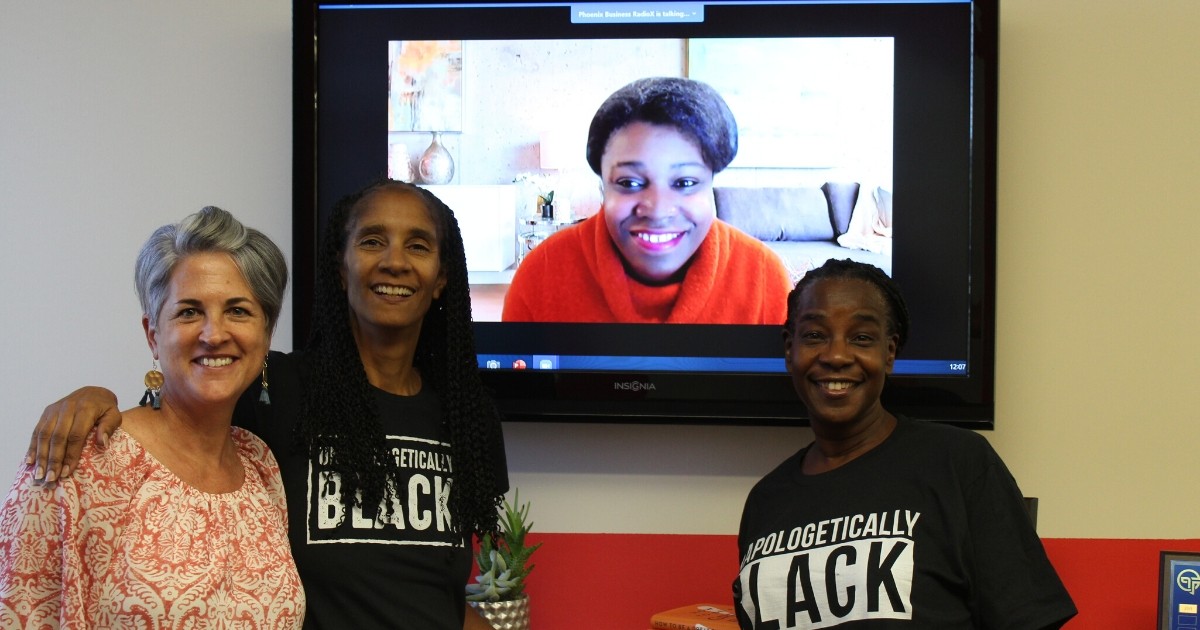
Roby-Davis-Global-EventuresFrom Florida to Bangkok and TONS in between . . . Robyn Davis, CEO of Global Eventures,  has planned countless successful meetings and incentive trips for various corporate industries since 2002.

In addition, she offers complimentary vacation planning services for her leisure clients. She is known for her tireless work ethic, drive to exceed her customers’ expectations and attention to all the details. Her philosophy is that there is always a solution and the easy way is not always the best way.

As a senior third party planner, Robyn has managed meetings and incentive trips for Fortune 500 companies in a wide array of industries, such as automotive, financial, insurance, pharmaceutical, technology, service industries and more, for almost two decades. Some of her incentive programs have been recognized by the Society for Incentive Travel Excellence (SITE) and the Incentive Marketing Association (IMA).

Robyn is a Certified Incentive Travel Professional (CITP) who coaches companies regarding best incentive practices for both dealers / customers and internal employees. Creating incentives that work is her expertise!

As a mom to two beautiful children, it is Robyn’s goal to teach that with hard work, strong ethics and passion for what you do, anything is possible! As Walt Disney said, “If you can dream it, you can do it!”

Connect with Robyn on LinkedIn and Facebook.

Show Transcript

Intro: [00:00:04] Broadcasting live from the Business RadioX studios in Atlanta, Georgia, it’s time for GWBC Radio’s Open for Business. Now, here’s your host.

Lee Kantor: [00:00:16] Lee Kantor here. Another episode of GWBC Radio’s Open for Business. And this is going to be a fun one. I have with me today Robyn Davis. And she is with Global Eventures. Welcome.

Robyn Davis: [00:00:31] Thank you so much. I really appreciate being on the show today.

Lee Kantor: [00:00:35] Well, Robyn, before we get too far into things, tell us about Global Eventures. How are you serving folks?

Robyn Davis: [00:00:42] Sure. Global Eventures is a full-service corporate meetings and incentives planning agency. We do everything from inception to operation, hotel contracting, all of the logistics for a meeting or incentive trip worldwide. We staff it, we operate it, and we make our clients look fantastic. And we also allow our clients the time to work on the nitty gritty and the guts of the meeting while we do all the logistics. And then, in addition to that, we have a second side to our business where we offer a complimentary vacation planning services for individuals and families.

Lee Kantor: [00:01:26] And that’s kind of an add-on value add for the people that you work with to offer to their employees and their people that are important to them?

Robyn Davis: [00:01:34] For anybody. So, that example would be, on one side, if we were doing an incentive trip for a company, if all of those winners wanted to extend, say, the incentive trip is in Europe, and they’d like to go visit other areas of Europe besides where the trip is going, we can assist with that, and that’s complimentary to them, or it doesn’t have to be involved with a corporation at all. It could be just the family that wants to go on a vacation.

Lee Kantor: [00:02:04] Oh, wow! So, you’re B2B and B2C, kind Kind of?

Robyn Davis: [00:02:09] We are. We’re all things travel.

Lee Kantor: [00:02:12] Now that we’re going through this tough time with the coronavirus, I’m sure that’s impacted your business in terms of lots and lots of people aren’t traveling as much. But on the flip side, I would imagine there’s a lot of opportunity because prices probably can’t get any much lower for travel today.

Robyn Davis: [00:02:30] Yeah, it’s definitely been interesting. I was in this business through 9/11, and the most recent reports that I saw is that our industry has been impacted eight times more than 9/11 if that tells you anything with the coronavirus. Currently, we have really just been assisting our clients with their cancellations. Some have been because they wanted to cancel. Most have been has their trips have been canceled on them with all the restrictions and the cruise line shutting down and whatnot. And one thing that I built Global Eventures on was ethics and the notion that our clients are more important to us than our P&L statements. So, we have been working tirelessly to assist all of our clients to make the outcome the best for them, knowing that our clients are struggling financially in their lives as well, and they had a lot of money tied up into these trips. So, we have been basically working for free because it’s important to us that our clients come first.

Robyn Davis: [00:03:40] And our hope is, is that when all of this is over and people are ready to travel again, they will come back to us because we did the right thing and we were there for them. And we we were the ones that were waiting on the phone for hours. I literally sat on the phone two and a half hours waiting for a travel operator to assist me with a client yesterday. So, yes, there are definitely deals out there. I don’t know that they’re as prevalent yet because most of our travel operators are also trying to figure things out right now. But I estimate that when the industry does start to turn around on the leisure side that the deals will be there.

Robyn Davis: [00:04:27] Now, on the flip side, with the corporate side of things, the hotels are hungry for business. So, now is definitely the time to start getting your room block contracts going. And what I didn’t mention also is that Global Eventures also does hotel contracting and site selection for free. We don’t charge for that service. And I urge any companies out there to look into the future of 2021 and 2022 or beyond to contact us right away. We have the bandwidth. We’re here for you and are ready to start negotiating and helping you find the best venue for that face-to-face meeting in the future.

Lee Kantor: [00:05:13] And that’s something, I think we all agree that when this thing passes, which we know it will, face-to-face interacting is not going anywhere. I mean, we might tolerate some of these virtual meetings, but I think humans prefer meeting face-to-face if they can.

Robyn Davis: [00:05:35] I think so. I personally have been on many of those Zoom calls, and virtual meetings, and virtual trade shows as of late. And what I’m noticing is that I’m half listening. I mean, to be completely blind, I’m doing other things. I’ve got my kids here. I’m answering emails. I’m doing so many things other than paying attention to the information that’s being presented; whereas, when you are face-to-face, you’re able to disconnect from your other life to be able to be present and really focus on the mission at hand.

Lee Kantor: [00:06:18] Right, I agree. I think that it’s kind of like what happens with social media and the media, in general, is that people are kind of maybe they’re consuming more of it, but they’re not as engaged, and they’re more distracted. Like, my kid watches a movie while on his phone with his laptop open. Like he’s not all in on one thing; where face-to-face, it kind of forces you to be all in that interaction and really get the most out of that time together rather than multitasking.

Robyn Davis: [00:06:52] Right. I totally agree. And I think that it’s important for the team aspect of companies as well. You work better as a team. It’s obvious, we know this, we start that at a very young age. My kindergartner does group projects at school. So, that team building aspect of it really is important too and it’s memorable as well. I don’t necessarily remember every Zoom meeting that I’ve been on, but I remember if I went to a hotel, and I went to a conference, all of the experiences that happened there because experience really is everything.

Lee Kantor: [00:07:31] Right, because that’s touching more of your senses simultaneously. There are smells, and sights, and sounds, and tastes; whereas, a Zoom meeting, they all kind of run together. It’s hard to remember one over another.

Robyn Davis: [00:07:45] One hundred percent.

Lee Kantor: [00:07:47] So, now, how has GWBC helped you? Have you been active in the group for very long?

Robyn Davis: [00:07:55] Well, interestingly enough, I just got my GWBC certification just as this pandemic started. So, I haven’t really had the opportunity to get as involved as I wanted to because I’m in damage control, but I really do look forward to the interaction with the other women business owners and taking full advantage of everything that it has to offer.

Lee Kantor: [00:08:23] Now, as part of your role as a travel professional, are you able to kind of, at least, have conversations with companies now? Are their heads down, they’re not even open to talking about this just yet, that this isn’t a priority right now?

Robyn Davis: [00:08:40] I really, honestly, have not reached out to companies because I think that they are also just struggling to figure things out right now. And I almost feel like it’s a disservice to try and sell my services at this point because I think people or companies are really just trying to figure out how to to keep salaries and keep employees employed. But I do want to get the message out there that I am here for all of my clients and future clients, and we will bend over backwards to do whatever we can to assist you.

Lee Kantor: [00:09:21] And then, that might be also just making them aware, like you said earlier, about these hotels are hungry for business. And if they have plans to be putting on a conference, or doing some travel, or retreats, or anything like that in the next year or two, it might be worth having a conversation just to know what’s out there and what deals can be done.

Robyn Davis: [00:09:43] Absolutely.

Lee Kantor: [00:09:45] Now, for you, tell us how you got into this line of work. What was the impetus to start Global Eventures?

Robyn Davis: [00:09:54] Sure. Well, I started my career with a fixed third party company that used to be here in Atlanta, that’s no longer here. I started there in 2002. So, like I said, right after 9/11. And I didn’t even know about this industry at the time. I had worked at a hotel at one point. I ran a youth program at one point. I’m a graduate at the University of Georgia, always been a planner. I was the one in my group of friends who always planned everything for everybody. And I worked my way up at this company and started as an account coordinator, which was great because I really learned from the bottom up. I learned about the logistics of taking care of customers, my customer service for all the attendees of meeting. I did all the the quality control of rooming lists and managed databases. So, I really got to learn the nickel side of meeting planning, and then was promoted into an account manager role.

Robyn Davis: [00:10:54] I was a certified meeting planner at one point. Long story, but I had kids. I took a small break, and it lapsed. But that’s going to come back again. And I was very involved in Meeting Planners International and different organizations. Won of few great industry awards, got the opportunity to plan corporate meetings all over the world as far as Thailand and Cambodia. And then, like I said, I took a small break, got married, had children, and realized pretty quickly that being a stay-at-home mom was not for me because I need to create. It’s actually funny because I was putting all my energies into my kids’ birthday parties and to the point where they were becoming like corporate incentive trip events and other parents were getting a little bit overwhelmed by them.

Robyn Davis: [00:11:48] So, I looked at my husband and said, “Okay, the kids are in school, I need to do something.” So, for a year, I learned the leisure side of the business by working with another travel agency that a cousin of mine who’s been a travel agent for 30 plus years was involved with. And I got to learn that as a business. After doing it for a year, I realized that with more technology and more streamlined processes that it would go a lot more smoothly. This agency was owned by women that were a little more old school in their 70s, have been doing this a very long time. Well, I bit the bullet. I started Global Eventures, and I created the technology with database management and created relationships with tons of travel suppliers and really studied up to know that side of the business.

Robyn Davis: [00:12:48] And for the first year, we focused strictly on the leisure. And then the second year, I was ready to get back into the corporate meetings and incentives and realized very quickly that I could do everything that I did for that very large third party company. I could do that on my own by using 1099s and contracts with businesses and basically just doing all the project management that I did when I was at the other company.

Lee Kantor: [00:13:15] Well, congratulations on the success that you’ve had in growing Global Eventures. And the first few years are the hardest years. And this pandemic will pass. And I’m sure that you’re going to get busy again as soon as people feel confident and safe traveling again. So, it sounds like you built a really strong foundation and infrastructure, and you have the right philosophy to run a successful business. So, hang in there.

Robyn Davis: [00:13:41] Thank you so much. We’re here when everybody’s ready. We’re not going anywhere, so-

Lee Kantor: [00:13:47] And then, what’s the-.

Robyn Davis: [00:13:47] If anybody has any need, I’m here for you.

Lee Kantor: [00:13:50] And what’s the website if people want to go and check out your website and learn more about Global Eventures?

Robyn Davis: [00:13:56] So, we actually have two. It’s www.global-eventures.com or www.gemeetingsandincentives.com.

Lee Kantor: [00:14:15] Well, Robyn, thank you so much for sharing your story today.

Robyn Davis: [00:14:19] Thank you so much for having me.

Lee Kantor: [00:14:21] All right. This is-

Robyn Davis: [00:14:21] Good luck to you.

Lee Kantor: [00:14:22] Well, thank you. This is Lee Kantor. We will see you all next time on GWBC Radio.

About Your Host

Roz-Lewis-GWBCRoz Lewis is President & CEO – Greater Women’s Business Council (GWBC®), a regional partner organization of the Women’s Business Enterprise National Council (WBENC) and a member of the WBENC Board of Directors.

Previous career roles at Delta Air Lines included Flight Attendant, In-Flight Supervisor and Program Manager, Corporate Supplier Diversity.

During her career she has received numerous awards and accolades. Most notable: Atlanta Business Chronicle’s 2018 Diversity & Inclusion award; 2017 inducted into the WBE Hall of Fame by the American Institute of Diversity and Commerce and 2010 – Women Out Front Award from Georgia Tech University.

She has written and been featured in articles on GWBC® and supplier diversity for Forbes Magazine SE, Minority Business Enterprise, The Atlanta Tribune, WE- USA, Minorities and Women in Business magazines. Her quotes are published in The Girls Guide to Building a Million Dollar Business book by Susan Wilson Solovic and Guide Coaching by Ellen M. Dotts, Monique A. Honaman and Stacy L. Sollenberger. Recently, she appeared on Atlanta Business Chronicle’s BIZ on 11Alive, WXIA to talk about the importance of mentoring for women.

In 2010, Lewis was invited to the White House for Council on Women and Girls Entrepreneur Conference for the announcement of the Small Business Administration (SBA) new Women Owned Small Business Rule approved by Congress. In 2014, she was invited to the White House to participate in sessions on small business priorities and the Affordable Care Act.

Roz Lewis received her BS degree from Florida International University, Miami, FL and has the following training/certifications: Certified Purchasing Managers (CPM); Certified Professional in Supplier Diversity (CPSD), Institute for Supply Management (ISM)of Supplier Diversity and Procurement: Diversity Leadership Academy of Atlanta (DLAA), Negotiations, Supply Management Strategies and Analytical Purchasing.

Connect with Roz on LinkedIn.

About GWBC

The Greater Women’s Business Council (GWBC®) is at the forefront of redefining women business enterprises (WBEs). An increasing focus on supplier diversity means major corporations are viewing our WBEs as innovative, flexible and competitive solutions. The number of women-owned businesses is rising to reflect an increasingly diverse consumer base of women making a majority of buying decision for herself, her family and her business. GWBC-Logo

GWBC® has partnered with dozens of major companies who are committed to providing a sustainable foundation through our guiding principles to bring education, training and the standardization of national certification to women businesses in Georgia, North Carolina and South Carolina.

Tagged With: Corporate meetings and incentives, dealers, Incentive Agency, marketing, Meeting logistics, Meeting Planner, Sales, Travel Planner

GWBC Radio: Denise Zannu with Black Mermaid

April 30, 2020 by angishields

Black Mermaid’s Bath & Body
GWBC Radio
GWBC Radio: Denise Zannu with Black Mermaid
Loading
00:00 /
RSS Feed
Share
Link
Embed

Download file

Denise-Zannu-Black-MermaidDenise Zannu started as a self-taught scientist creating products for friends and family. In doing so, she developed scientifically formulated, nature-derived creations that were both effective and healthy for all skin types.

Zannu has focused her expertise and drive to build a B2B manufacturing company that hosts a retail, professional spa, and men’s grooming lines that continue to grow in the market. Black Mermaid’s sales channels include the retail and spa industries with a plan to export into Canada and Central America by the end of 2020.

Zannu has been featured locally in the Atlanta Journal-Constitution, the Atlanta Business Chronicle, CBS’s Atlanta Plugged In, and Gwinnett Magazine. Black Mermaid’s Bath & Body participated in the SBDC Export GA program and a winner of the Gwinnett Chamber’s Amazing Entrepreneur Contest in 2014 and the Atlanta Metro Export Challenge 20118-19.

Black Mermaid’s Bath & Body participates in national and international industry trade shows for wholesale, private label, and international buyers and has performed lectures and seminars on product development and entrepreneurship throughout the industry.

With over 25 years of experience in education, business, and entrepreneurship, Zannu credits the company’s continued growth and success to her willingness to be open to opportunities and her commitment to high quality, clean beauty without compromise.

Follow Black Mermaid on LinkedIn and Facebook and Twitter.

Show Transcript

Intro: [00:00:04] Broadcasting live from the Business RadioX studios in Atlanta, Georgia., it’s time for GWBC Radio’s Open for Business. Now, here’s your host.

Lee Kantor: [00:00:18] Lee Kantor here. Another episode of GWBC Open for Business, where we spotlight some of the most interesting firms that are part of the GWBC community. And this is going to be a fun one. We have Denise Zannu with Black Mermaid Baths & Body. Welcome, Denise.

Denise Zannu: [00:00:36] Hey, Lee. Thanks for having me.

Lee Kantor: [00:00:38] Well, before we get too far into things, tell us about Black Mermaid. How are you serving folks?

Denise Zannu: [00:00:45] Well, we are a natural skincare company. We have been around for about seven years. And our goal is to make everyone feel as beautiful as they are. We have been actually manufacturing. We’re a manufacturing company versus like a retail. We’re not a brick and mortar. So, we service B2B and wholesale. So, we have been available in retail stores across the southeast so far.

Lee Kantor: [00:01:14] So, now, the type of skincare or the beauty products that you serve, are there something unique about them?

Denise Zannu: [00:01:24] Well, all of our products are what we call clean beauty. And clean beauty means that they have been screened and formulated with no parabens, no sulphates, none of the things that would be cosmogenic. They are all plant-based. So, they’re all vegan, which means they have no animal byproducts in them except for … we have an exception because we do use honey. And so, that being the case, they’ve been scientifically formulated but naturally inspired.

Intro: [00:01:54] Now, did you start with one product, and then just slowly grow into multiple products? Tell us about how this began.

Denise Zannu: [00:02:02] Well, it began when I was a school teacher, and I was teaching chemical change to some of my special education students, and we didn’t have science equipment. So, what I was doing was using kitchen science to allow them to understand how science works in the regular world. And we created soaps that if I look back now, they were kind of bad, but they were soaps that the kids made on their own, and we would give them to teachers as gifts every year. And I had been doing that for several years, just giving away soaps.

Denise Zannu: [00:02:36] And one year, I had a teacher who offered to buy some of the soap, and she offered to buy them. I’m like, “Are you sure? They don’t look too good.” And she said, “Well, hey, did you know that there was a huge market for natural products, including natural soaps?” I had never heard of Whole Foods at the time. I’m so glad I know them now, but that was fantastic. And from there, we kind of went out and started doing it. We did one bazaar in the basement of a church during the holidays in December. And when we did the bazaar, we made over $500 in three hours. And I said this is a great business idea.

Lee Kantor: [00:03:14] Now, what made you choose to be kind of B2B and sell to retail rather than be like selling directly to the consumer?

Denise Zannu: [00:03:23] Well, one of the things we wanted to be able to do is to bring out a brand that was going to focus on the beauty of things that is natural. And so, being able to do that B2B allowed us to be able to present our products in a larger market with a greater reach than just selling it online or just selling it as a retail store. So, we wanted a bigger reach. And in doing a B2B and doing a wholesale allowed us to do that.

Lee Kantor: [00:03:52] Now, what are some of the challenges when your customers and like kind of the end consumer, how do you create a product that the retailer then can resell?

Denise Zannu: [00:04:03] How do we create the products?

Lee Kantor: [00:04:04] Well, do you work in partnership with the retailer? Do they tell or do they have input and say, “Hey, we’d like to see more things that are purple,” or “We would like you to do more things that are with this kind of ingredient”?

Denise Zannu: [00:04:17] Well, because we consider ourselves a micro manufacturer, we have a little bit of flexibility in that. When we started the company, we were starting, and I’d really just base it on the interests and needs of my current customers. For instance, I had a customer who was in a wheelchair when I met her because she had MS, and I met her at a festival, and she had been walking the entire festival or in her chair being pushed around the entire festival trying to find bath bombs. And she said none of the crafters or businesses that she had come upon had ever made or ever had that bath bombs.

Denise Zannu: [00:04:54] So, I kind of felt bad, and I talked to her about what she needed. And I said, “Well, if you can wait a couple of days, and if your local, I can get some bath bombs for you.” So, she’s actually been one of my longest-standing customers. We created bath bombs for her. I have tried to give her bath bombs from other brands and other companies, and she says no every time. She is a diehard Black Mermaid fan and customer. And we’ve helped her. The bath bombs actually helped her MS with being able to soak her muscles and relax. So, I’ve watched her go from being confined to a wheelchair, walking to marry, to the mother of two children.

Intro: [00:05:32] Wow. Amazing story. Now, has this COVID-19 crisis that we’re all going through impacted your business?

Denise Zannu: [00:05:41] Oh, yes. And I hope everybody and you and your family are safe and doing well. It’s been very challenging for everyone. I have parents who are elderly. And so, it’s been a big concern for us. We wanted them to stay in place and that was hard because they’re retired and are used of moving around, enjoying going when and where they want, even if it was just a store every morning. But actually, with the skincare line, and we also have a men’s line, which is called Poseidon Collection or Poseidon Men’s Collection, our lines, as far as the market and the industry, mostly retailers are not buying right now. And of course, we know, now, in Georgia, all the retailers are closed.

Denise Zannu: [00:06:24] So, we had to look and see, well, what could we do and where were we as far as our resources and the needs of the community. And in the area that I am in, we are a very close knit economic community and business community, and there was a big need for hand sanitizers. So, we pulled some resources together, and we started manufacturing hand sanitizer. And we’re really lucky because we’re able to do it on a continuous basis. So, it wasn’t just a one shot deal. It is now a part of our entire line. We call it our New Wellness line. And we’ll be doing hand sanitizer with the soap and a couple other products that we hadn’t carried before continuously now to help out.

Lee Kantor: [00:07:07] And that’s one of those kind of unintended consequence, right, where you didn’t go in to do this, to add something to your line. You’re trying to help. And then, now, you realize, “Hey, this might be something that we’ll be able to use going forward after this pandemic is done.”

Denise Zannu: [00:07:24] Exactly. Because we looked at … Not only that, we looked at the fact that there’s not just a need for the general community. And the big question we had was, “Well, what’s going on with the essential businesses that are staying open?” We’re an essential businesses that had the opportunity to stay open, but what about some of the municipalities that we’re staying open, what are they getting? And we kept hearing from the community, in particular, our local city government, it was hard for them to acquire materials or PPE. And so, we were like, “Well, we do have the alcohol. We do have things. We could make the hand sanitizer.”

Denise Zannu: [00:08:03] And so, we make it based on CDC requirement, but we make it. Ours is a hand sanitizing gel. It is at 70%, which is above the minimum standards for the CDC. And it’s actually been able to supply some of the police officers, some of the civil workers in different cities around Metro Atlanta, as well as even I think a couple of courthouses are going to be using them when they return back to work. So, a lot of the essential businesses who are trying to either stay open or preparing to go back to work, they now have a continuous source for product that they knew was going to be quality and they like it. And I keep hearing great comments and compliments about the scent and stuff like that.

Lee Kantor: [00:08:47] Now, you mentioned that you during your Black Mermaid’s evolution that you’ve expanded into men’s grooming and men’s skincare. Have you also expanded outside of the US? Do you do business in other countries?

Denise Zannu: [00:09:06] As a matter of fact, we had the opportunity to be a part of the Atlanta Metro Export Challenge last year, which is put on by several of the Chambers of Commerce throughout Metro Atlanta. And that actually helped our company to get export-ready. So, we’re really excited about that. We’ve gone through the classes and workshops. We are export-ready, and we are working with some businesses out of Canada, Central America, and the Caribbean to be exporting by the end of 2020.

Lee Kantor: [00:09:38] Well, congratulations!

Denise Zannu: [00:09:40] Thank you.

Lee Kantor: [00:09:41] Now, are there any … well, let’s say I don’t want you to neglect anybody, but are there any places that you’d like to talk about where people can find your products?

Denise Zannu: [00:09:54] You can find our products on line right now because we are sheltering in place and we’re practicing good safety measures. So, we, right now, are not doing … A lot of companies are calling, they’ll ask for pickup. We actually do deliver to municipalities who are asking for product in order. But they can order online. We are shipping within 24 to 48 hours. So, there’s no waiting for our product, and they can order it there.

Lee Kantor: [00:10:23] And then, talk a little bit about the GWBC. Have they helped you through this crisis? Maybe weather the storm or maybe open … maybe in the past, maybe have opened some doors for you?

Denise Zannu: [00:10:36] Well, I’m fairly new to GWBC, but I know that they’ve been really supportive. Right when the crisis is starting, I was talking to one of the members and officers, and she was giving me different ideas on things that I could do as far as helping to get the word out and helping to let other companies know about what’s available and about Black Mermaid as a whole and the things that we can do. So, it has been really great. I’ve definitely appreciated some of the educational seminars that I’ve been looking at, and I’ve registered for a couple. And I think those are going to be great as far as helping us build our business structure from the foundation and adding some depth to it that we didn’t have before.

Lee Kantor: [00:11:21] Now, any advice for the business owner out there that is dealing with a crisis of this magnitude on how to stay positive but realistic, and then look for opportunities maybe in places that aren’t obvious?

Denise Zannu: [00:11:37] The first thing I would say is brief. Take some breath. You’ve got to stay positive. You got to breathe, and you got to just think things through. Don’t try to tackle everything at once. There’s a African proverb that says, “Bit by bit, we eat the head of the rat,” which means you can’t eat everything or take everything on at one time. You have to take it one bite at a time and chew it slowly. But I would advise you to look at a different market or look at a different purpose. We re-purposed ourselves. Wellness, it’s not completely out of our wheelhouse, but it wasn’t not our direct market. And so, this shifted us to a different market and a little bit more of a different industry channel. You want to look at those things, as far as look at what your customer needs right now. If you’re considering what your customer needs, then indeed, you could meet those needs, so you’re in the right place and follow that channel.

Lee Kantor: [00:12:34] And this is probably a good time to have those conversations with your customers and ask them because their needs might have changed as well.

Denise Zannu: [00:12:41] Yeah. And that’s the thing. That was one of the reasons we started with the hand sanitizers. Our customers were calling us asking, do you have it or will you have it? It wasn’t something that we just decided to do. We had customers who are saying, “Hey, I know this is going on, and I’m going to start looking for hand sanitizer. I use your moisturizers. I use your lotions. I use your shaving products. Do you have a hand sanitizers or do you have something?” We sell face bars, and body bars, and soaps. And that was another thing that started selling very quickly. We’re like, “Well, we got to have soap. We’re going to go ahead and use Black Mermaid body bars.” And so, when they were saying, “Well, you have the body bar, do you have this too?” And so, they started asking for the other PPEs and other things that we just decided which ones naturally fit into our company’s mission and vision.

Lee Kantor: [00:13:34] Well, if somebody wanted to learn more to see what products Black Mermaid has available or to just kind of learn more about working with you, is their website?

Denise Zannu: [00:13:45] There is a website. You can visit us at www.blackmermaidsoaps.com.

Lee Kantor: [00:13:54] Good stuff.

Denise Zannu: [00:13:54] If you’re interested in-

Lee Kantor: [00:13:56] Go ahead.

Denise Zannu: [00:13:56] … I’ll say it again. www.blackmermaidsoaps.com. And if you’re interested in our men’s line, you can go to wwww.poseidoncollection.com.

Lee Kantor: [00:14:07] Well, Denise, thank you so much for sharing your story today.

Denise Zannu: [00:14:11] Thanks, Lee. I really appreciate it.

Lee Kantor: [00:14:13] All right. This is Lee Kantor. We will see you all next time on GWBC Radio.

About Your Host

Roz-Lewis-GWBCRoz Lewis is President & CEO – Greater Women’s Business Council (GWBC®), a regional partner organization of the Women’s Business Enterprise National Council (WBENC) and a member of the WBENC Board of Directors.

Previous career roles at Delta Air Lines included Flight Attendant, In-Flight Supervisor and Program Manager, Corporate Supplier Diversity.

During her career she has received numerous awards and accolades. Most notable: Atlanta Business Chronicle’s 2018 Diversity & Inclusion award; 2017 inducted into the WBE Hall of Fame by the American Institute of Diversity and Commerce and 2010 – Women Out Front Award from Georgia Tech University.

She has written and been featured in articles on GWBC® and supplier diversity for Forbes Magazine SE, Minority Business Enterprise, The Atlanta Tribune, WE- USA, Minorities and Women in Business magazines. Her quotes are published in The Girls Guide to Building a Million Dollar Business book by Susan Wilson Solovic and Guide Coaching by Ellen M. Dotts, Monique A. Honaman and Stacy L. Sollenberger. Recently, she appeared on Atlanta Business Chronicle’s BIZ on 11Alive, WXIA to talk about the importance of mentoring for women.

In 2010, Lewis was invited to the White House for Council on Women and Girls Entrepreneur Conference for the announcement of the Small Business Administration (SBA) new Women Owned Small Business Rule approved by Congress. In 2014, she was invited to the White House to participate in sessions on small business priorities and the Affordable Care Act.

Roz Lewis received her BS degree from Florida International University, Miami, FL and has the following training/certifications: Certified Purchasing Managers (CPM); Certified Professional in Supplier Diversity (CPSD), Institute for Supply Management (ISM)of Supplier Diversity and Procurement: Diversity Leadership Academy of Atlanta (DLAA), Negotiations, Supply Management Strategies and Analytical Purchasing.

Connect with Roz on LinkedIn.

About GWBC

The Greater Women’s Business Council (GWBC®) is at the forefront of redefining women business enterprises (WBEs). An increasing focus on supplier diversity means major corporations are viewing our WBEs as innovative, flexible and competitive solutions. The number of women-owned businesses is rising to reflect an increasingly diverse consumer base of women making a majority of buying decision for herself, her family and her business. GWBC-Logo

GWBC® has partnered with dozens of major companies who are committed to providing a sustainable foundation through our guiding principles to bring education, training and the standardization of national certification to women businesses in Georgia, North Carolina and South Carolina.

Tagged With: men's grooming, natural products, skincare, wellness

Tim Sheehan with Greenlight

April 29, 2020 by angishields

Greenlight-logo
Atlanta Business Radio
Tim Sheehan with Greenlight
Loading
00:00 /
RSS Feed
Share
Link
Embed

Download file

Onpay-blue

Brought to you by OnPay. Built in Atlanta, OnPay is the top-rated payroll and HR software anywhere. Get one month free at OnPay.com.

Tim-Sheehan-GreenlightTim Sheehan is the Co-Founder and CEO of Greenlight. Greenlight is the safest way for parents to give their kids money, approve their spending, and prepare them for financial independence. Prior to Greenlight, Tim was the Lead Entrepreneur In Residence at Georgia Tech’s startup incubator, the Advanced Technology Development Center.

Earlier in Tim’s career he was Director of Yahoo! Finance and responsible for growing it to the #1 finance site in the world. Tim also served as SVP Products, Marketing and Strategy for Biller Solutions at Fiserv, was a Cofounder & CEO of Reachable, General Manager of Yodlee, and Senior Product Manager at E*Trade.

Follow Greenlight on LinkedIn, Facebook and Twitter.

What You’ll Learn in This Episode

  • Why Tim created Greenlight
  • Why it’s important to teach kids about money and saving money
  • The age parents should start discussing finances with their kids
  • Tips for parents who want to start teaching their kids about growing a savings account
  • Why it’s important to raise a financially smart generation

About Our Sponsor

OnPay’sOnPay-Dots payroll services and HR software give you more time to focus on what’s most important. Rated “Excellent” by PC Magazine, we make it easy to pay employees fast, we automate all payroll taxes, and we even keep all your HR and benefits organized and compliant.

Our award-winning customer service includes an accuracy guarantee, deep integrations with popular accounting software, and we’ll even enter all your employee information for you — whether you have five employees or 500. Take a closer look to see all the ways we can save you time and money in the back office.

Follow OnPay on LinkedIn, Facebook and Twitter.

Tagged With: Debit Card for Kids, Financial Literacy, Tim Sheehan

GWBC Radio: Sara Webb with InTandem Promotions

April 28, 2020 by angishields

GWBC Radio
GWBC Radio
GWBC Radio: Sara Webb with InTandem Promotions
Loading
00:00 /
RSS Feed
Share
Link
Embed

Download file

Sara-Webb-InTandem Promotions

Ever since she can remember, Sara Webb has been a juggler. Juggling activities, career, family, friends, and volunteering. Sara has learned through all of this juggling that she can do it herself. But it’s far easier (not to mention more fun) to juggle with a partner. And it was on this premise that InTandem Promotions was born!

With over 20-years of experience in the promotional products industry and working with a wide range of companies and organizations building their brand stories, Sara is excited to build upon that experience and meet our clients’ needs. In 2013, InTandem Promotions open its doors. And from there, Sara has built the organization to over 12 employees, numerous online stores, national and international reach, fulfillment and warehousing, safety and recognition programs, and custom-designed products.

Sara received her undergraduate and graduate degree from Kennesaw State University in both Marketing and Finance (because one degree was not enough, neither was one major). Sara believes that only through continued education can she continue to develop not only herself but InTandem Promotions.

In 2017, Sara was awarded the CVS Supplier Diversity training (a 6-month mini master’s program) and in 2018, she was selected to participate in Launchpad2X for Women-Owned Businesses. In 2018, Sara was thrilled to receive the Trailblazer Award given by the Greater Women’s Business Council. Sara was awarded the 2019 Advocate of the Year Award.

Sara currently serves on the board of The Partnering Group. The Partnering Group is a buying group representing over $100MM in promotional sales. Additionally, she serves on the Marketing Committee of The Greater Women’s Business Council. She is also a member of EO – Entrepreneurs’ Organization.

Follow InTandem on LinkedIn and Facebook.

Show Transcript

Intro: [00:00:04] Broadcasting live from the Business RadioX studios in Atlanta, Georgia, it’s time for GWBC Radio’s Open for Business. Now, here’s your host.

Lee Kantor: [00:00:18] Lee Kantor here. Another episode of GWBC’s Open for Business. And this is gonna be a fun one. I have with me today Sara Webb with InTandem Promotions. Welcome, Sara.

Sara Webb: [00:00:30] Well, I am so excited to hear you and to be with you today.

Lee Kantor: [00:00:35] Well, before we get too far into things, tell us about InTandem Promotions. How are you serving folks?

Sara Webb: [00:00:40] I fell in love with this industry. So, we are a branding and communications company that delivers what people crave now and always, and especially now, in the midst of all of this unprecedented time, more of a personal connection. We are guided by the belief that emotions are at the heart of any memorable experience, even this one. And we create memorable and meaningful branding programs that connect people with companies that they care about. And we do that through the use of promotional products, online corporate stores, years of service, employee engagement services, direct mail and many more. And then, we also have in-house services that include custom embroidery, and heat transfer, and gift wrap, and warehousing, and fulfillment and program development. So, a really fun organization that is able to provide branding and communication services to our clients.

Lee Kantor: [00:01:41] Now, what size is a good client for you? What’s a typical kind of profile of an ideal client?

Sara Webb: [00:01:49] Absolutely. So, we enjoy working with clients that have multiple locations, or are hosting, or have multiple events, or are seeking ways to engage their employees or their customers. So, the range is— a good size is around 250 employees and up. We also work with clients that are both national and international. So, clients like Delta Airlines and Best Buy, and clients of that size where they have multiple locations that we can help serve.

Lee Kantor: [00:02:25] And then, what are some of the ways specifically like you would serve kind of a multinational company? You mentioned, like an online store. Would that be a place where any one of their employees can go, and then pick out maybe some materials that have the Delta logo on it, or the company logo on it, or T-shirts, or like what are some of the ways that you would serve those kind of large enterprise companies?

Sara Webb: [00:02:53] No, that’s exactly what we do. So, we’ll work with it an organization, and we’ll determine, first of all, what are their needs? What are their demographics? The whole purpose behind what we do is finding the product that is going to make an impact. Promotional products is the only form of advertising that engages all of the senses – sight, touch, down. You have all of the taste from great food offerings and gifts. But then, it’s also something that’s tangible, and it’s going to have that lasting effect.

Sara Webb: [00:03:24] So, as you mentioned, having the online store, our clients are able to have one location for their employees nationally and internationally to go and select product. It’s all warehoused here in our facility. But then, also, if you think about employee’s years of service or new hire kits, going ahead, and packing, and shipping out a new hire kit to an employee that is about to start, and they receive this gift a week before they come in that has all of their information, so they can go ahead and feel like they’re part of the family.

Sara Webb: [00:03:57] Or if you’re thinking about, especially right now, we’re doing a lot of work-from-home kits. One of the other fun things that we’re working on is people are on a ton of Zoom calls, and we get invitations on a regular basis. So, thinking of ways to send an employee or potential client a gift that they receive when they attend a Zoom call. So, any of that engagement, engaging and a showing appreciation, as well as opportunities to reduce the amount of space. Work space is now going to be a thing. So, we’re able to store and stock all that merchandise in our warehouse and ship that out, so it’s no longer in somebody’s branding closet or down to the basement somewhere that somebody has to pick, pack and ship.

Lee Kantor: [00:04:47] And then, in today’s kind of new normal, like you said, a lot of people are at home. They’re working. Sometimes, this is the first time they’ve ever worked from home. And for the organization to create that kind of engagement and connection, what better way of doing that by sending them kind of a goody bag or a care package to their home that has ways to help them be more effective in this kind of new remote world?

Sara Webb: [00:05:13] Absolutely. In this environment, workers are in an entirely new setting, and it’s not just working from home. A lot of people had flexible schedules before this, but it’s all of the other bits and components. Your kids are at home, your families at home. You’re stressed. You’re pulled in five different directions. And yet, as an employer, you need to keep your people engaged and make sure that they have the proper setup and that they are taking care of the necessary steps that need to happen to get their job done at home. So, whether that’s speakers or technology, we’ve done a lot of the ear pods, so that people can be on all of these Zoom calls while they’re working.

Sara Webb: [00:06:04] And then, now, as states are starting to slowly open up, a lot of the conversation is around, what does the coming back look like? So, preparing employers with we’re doing a lot of mousepad that have, look, this is what we have to do to keep our team safe. These are the steps. Washing your hands and things like that. So, everybody’s getting new mouse pads. antibacterial pens. People need to be thinking about the materials that they’re using on a regular basis in a different way. Hand sanitizers, and masks, all of those things. So, anything that you can think of to help remind, reinforce, and enable your team and employees to work better and more effectively is really our focus, especially right now.

Lee Kantor: [00:06:53] Could you talk about kind of what happened in your organization? Maybe share some advice and insight for our listeners that “Okay, now the crisis is happening. This is not something I’m reading about in the newspaper. This is real. Now, the government is telling me I have to change the way that we’ve always done business.” How did your team kind of react and adjust in handling this crisis?

Sara Webb: [00:07:19] Well, I think, the first couple of weeks— well, the first full week, I’m pretty sure that I was in shock and denial. I was trying to figure out, how are we going to pivot? How we’re going to move our team? During this time, there was a lot of events that were canceled. And a large part of our business is focused on trade shows, and events, and the swag that you get people to your booth, and the swag that you get for attending events. So, a lot of those were being canceled. So, when this happened in mid-March, we were finishing up a large-scale corporate project, and we finished that up, and we focused on the typical thing – cleaning up, invoicing, and closing out our month the way that we should.

Sara Webb: [00:08:11] And then, we started preparing our team to keep them safe. Making sure that we knew how to address and help support our clients even through a lot of this transition. We switched as an industry from selling branded promotional products to branded PPE or personal protection equipment. So, we have the masks and the gloves to keep teams safe and clients safe nationally and internationally. But I think the biggest thing that we have learned from this was keeping our team cross-trained, so that we could have a safe environment here. We had some team members in, and then some team members out of the office.

Sara Webb: [00:09:01] We were still doing a lot of embroidery in-house and warehousing. We support the construction industry, as well as the food service package industry, and then a lot of the medical organizations, and then all throughout manufacturing. And so, we needed to continue to make sure that we were able to supply them with the essential needs that they had to have. So, figuring out cross-training and where somebody was in sales, can they go in the back and easily pull, pack, and ship product that needed to go out that day?

Sara Webb: [00:09:34] I think one of the biggest things that has come out of this whole crisis was our ability as a team to come together to adjust. And I think that comes with an organization. Our industry is constantly evolving and changing. And so, being part of this in our makeup and in our DNA. And so, it was already inherent. It was something that we were used to. So, learning the safe way to to purchase some of this equipment was something that we had to do and change. But then, just keeping moving, and keeping the team engaged and active, and showing what the masterplan is, even if it was just for a day. So, that’s all we knew about was today. And then, building out what the next couple of weeks were.

Lee Kantor: [00:10:27] Now, going through this crisis has caused you probably to change some of the ways you’ve done things, or are doing or selling maybe some different things. Do you see any kind of silver lining at the end of this where you go, “When things kind of stabilize a little bit, we’ll be able to maybe use this and help our clients in this new way that we hadn’t done before”? Has there been any kind of surprises or any opportunity that’s bubbled up because you were forced to make some changes?

Sara Webb: [00:10:56] Now, I really appreciate you asking that. I think one of the biggest lessons that we’ve learned is having a strong supply chain. So, I love that we have access to over a million different products within our industry and that there is so much diversity within the industry. But having that strong supply chain partners and factories that are local has been a tremendous support. And then, also, us having control of our own supply chain. So, what I mean by that is that we do offer a lot of services in-house. So, when organizations and factories were closed, and many of the states that we were normally shipping out from, we had the product here. And whether it was in Georgia or in our warehouse, we had it here, so we could still continue to support locations that were in need of the services that we had.

Sara Webb: [00:11:59] And so, I think one of the biggest opportunities for us is recognizing and keeping a lot of services in-house, and then also continuing to strengthen our supply chain. Our manufacturers and factories that we’ve had this close relationship with, we’ve been in constant contact. What is going on? And what do you have coming in? And how can I help? Just managing that conversation, so that we could be more on the forefront instead of on the back end of receiving, and having to act and react based off of the information that was coming in.

Lee Kantor: [00:12:35] It sounds like that skill of being nimble and being able to juggle multiple challenges simultaneously has really paid off for you during this crisis. And, really, I’m sure a lot of your team members really have stepped up and maybe, I don’t want to say overachieve but maybe surprised you in some ways that they’ve been able to just kind of rise to the occasion.

Sara Webb: [00:13:01] Yeah, absolutely. It’s very easy to want to sit on the couch and just wait until this is over. And I know a lot of people that that’s what they’re doing. That’s their defense mechanism and that’s how they’re handling it. What has been amazing about the team here at InTandem is that it has always been future-focused. What do we need to do right now? And what do we need to do four hours from now? And what are we going to do 24 hours from now? Because to that end, the information that we’re receiving was changing minute by minute, day by day. And we, obviously, wanted to keep our team safe, top priority. But then, how do we keep the business moving and everybody employed?

Sara Webb: [00:13:48] And the team here recognized those needs, and we’ve figured out a schedule of what we could do in-house and what we needed to do while we were working from home. And everyone stepped up, and is taking care of things, and is doing things that is not in their “job description.” And that’s also the nature of our organization, but it was definitely more true during this pandemic than it has ever been. And the level of attentiveness, and care, and detail, and just supporting each other as we kind of work through this.

Lee Kantor: [00:14:25] Now, how has the GWBC been able to help you?

Sara Webb: [00:14:30] Oh, man. So, one of the biggest learnings from all of this is to have that strong network, and to have those conversations with good friends, and have people that you can rely and depend on. GWBC is a tremendous advocate for InTandem and I know four other women organizations, but having the resources available, who to reach out to. They were going out to large scale enterprises, and supporting the women-owned businesses, and sending out our contact information. These are people that can help. These are organizations that can support these larger enterprises because, again, they’re trying to source in a whole new way and find things.

Sara Webb: [00:15:19] But then, at the same time, knowing that I had friends and other organizations that are going through the same thing. We’re all trying to find out, how do we get funding? And how does this work? And having teh Zoom meetings and the conference calls and all of the information. They have a dedicated page that was just for COVID. So, without the GWBC,  it would have been a lot more difficult in getting through this crisis for sure. And that is definitely one of the key takeaways is take the time and invest in your relationships, invest in networking. Everybody has a busy day and a busy schedule. But if I didn’t have the strong foundation with my connections from GWBC, from WBENC, again, there were so many opportunities where the learnings were coming to me, and I wasn’t having to go out and find them, and figure it out on my own. I have never felt alone throughout this crisis. We’ve all been together. And the family and the network from BWGC has been vital to our success through this crisis.

Lee Kantor: [00:16:32] I think that’s great advice for business owners in general and, specifically, women business owners to really leverage that GWBC because it’s hard to lead an organization, small to midsize organizations especially. You think you are in this alone, and that there’s no one to turn to, and you don’t want to show weakness to your team, and not let them think that maybe you don’t know what you’re doing, and people have those kind of fears. But when you have an organization like GWBC that can kind of vet who the real people are, who’s the right information is, that takes a lot of weight off of you, so that you don’t have to worry about that at all, really. And then, you have access to somebody that’s kind of watching your back that is trying to advocate for you and trying to help you kind of hang in there. That’s invaluable during a crisis. But like you said, that should be foundational in just everyday.

Sara Webb: [00:17:31] Absolutely. They have so many events and so many opportunities. And as woman-owned organization, there’s different challenges. And having a safety net, but then having a safe environment so that I can say, “This is what’s going on. What would you recommend?” and not feeling as though I’m in the wrong, or I have to justify what is happening, those connections and those friendships have absolutely propelled us year over year over year. And it’s an investment that women-owned businesses that it’s worth the investment, it’s worth the time in building those, so that when a crisis does happen, and it will, this is not going to be the last, but, I mean, hopefully this is the last pandemic, for the love of God, but whatever comes next, I’ll be able to continue to lean on my friends and lean on the relationships that I’ve established with the GWBC to help, again, continue to move us through it, and over it, and onto the next.

Lee Kantor: [00:18:41] Now, in your organization, what is the pain that companies are having where they’re like, “You know what? We should call that InTandem team. They got their act together”? What are some of the things that they’re struggling with where you’re the right solution?

Sara Webb: [00:18:58] So, during the crisis itself, the biggest pain point is locating correctly sourced masks, and gloves, and the protection devices and equipment that is needed. So, a lot of things are being confiscated either at the borders through customs. There’s a lot of counterfeit merchandise that’s out there because, again, when you have an opportunity like this, there’s going to be a lot more opportunity for thieves out there. And so, with us having the strong supply chain and the supply network, we’re able to navigate through some of those scary points. None of our PPE has been confiscated. It’s all delivered directly to the clients when they’ve needed it. We’ve been able to source what has been needed. So, that has been a tremendous help to a lot of our large enterprise clients and locating what is necessary for them and their employees to keep them in business.

Sara Webb: [00:20:10] Outside of the crisis, our clients come to us because our focus is on branding with purpose. So, we’re not just going to say, “Here is a pen. And this fits within your price point.” Our focus is on what is going to be the ways that the product is going to make an impact and create that emotional connection between the company and the individual that they’re trying to reach out to or engage. One of the things that we say is we don’t believe in trick-or-treat marketing, which is if you’ve been to any trade show, and you have a whole lot of like a swag bag that’s right up front, people are just going from booth to booth picking up the swag. What do you want them to do when they get it back?

Sara Webb: [00:20:54] And the great thing about promotional products is it does not go in the trash. 89% percent of promotional products end up being either used by the individual or being passed on to somebody else that can use it. So, if I did not attend to show, and I picked up whatever item was was handed out, what do you want me who didn’t go to your booth to do with it next? And that’s why people call InTandem Promotions is that our focus is on ensuring that your brand, the connections that you’re trying to achieve, and that message is fully delivered to the client that you’re going after.

Lee Kantor: [00:21:36] Now, if somebody wants to learn more and have more substantive conversation with you, do you have a website?

Sara Webb: [00:21:41] I do. Definitely check us out online. It’s intandempromotions.com. Or they could reach out to us. We were on all of the social channels, including Facebook, and Instagram, and LinkedIn as well. And all of our contact and phone information is there.

Lee Kantor: [00:22:00] Well, Sara, thank you so much for sharing your story today and being a part of the show.

Sara Webb: [00:22:04] No, my pleasure. Thank you guys for having me.

Lee Kantor: [00:22:07] All right, this is Lee Kantor. We will see you all next time on GWBC Radio Open for Business.

About Your Host

Roz-Lewis-GWBCRoz Lewis is President & CEO – Greater Women’s Business Council (GWBC®), a regional partner organization of the Women’s Business Enterprise National Council (WBENC) and a member of the WBENC Board of Directors.

Previous career roles at Delta Air Lines included Flight Attendant, In-Flight Supervisor and Program Manager, Corporate Supplier Diversity.

During her career she has received numerous awards and accolades. Most notable: Atlanta Business Chronicle’s 2018 Diversity & Inclusion award; 2017 inducted into the WBE Hall of Fame by the American Institute of Diversity and Commerce and 2010 – Women Out Front Award from Georgia Tech University.

She has written and been featured in articles on GWBC® and supplier diversity for Forbes Magazine SE, Minority Business Enterprise, The Atlanta Tribune, WE- USA, Minorities and Women in Business magazines. Her quotes are published in The Girls Guide to Building a Million Dollar Business book by Susan Wilson Solovic and Guide Coaching by Ellen M. Dotts, Monique A. Honaman and Stacy L. Sollenberger. Recently, she appeared on Atlanta Business Chronicle’s BIZ on 11Alive, WXIA to talk about the importance of mentoring for women.

In 2010, Lewis was invited to the White House for Council on Women and Girls Entrepreneur Conference for the announcement of the Small Business Administration (SBA) new Women Owned Small Business Rule approved by Congress. In 2014, she was invited to the White House to participate in sessions on small business priorities and the Affordable Care Act.

Roz Lewis received her BS degree from Florida International University, Miami, FL and has the following training/certifications: Certified Purchasing Managers (CPM); Certified Professional in Supplier Diversity (CPSD), Institute for Supply Management (ISM)of Supplier Diversity and Procurement: Diversity Leadership Academy of Atlanta (DLAA), Negotiations, Supply Management Strategies and Analytical Purchasing.

Connect with Roz on LinkedIn.

About GWBC

The Greater Women’s Business Council (GWBC®) is at the forefront of redefining women business enterprises (WBEs). An increasing focus on supplier diversity means major corporations are viewing our WBEs as innovative, flexible and competitive solutions. The number of women-owned businesses is rising to reflect an increasingly diverse consumer base of women making a majority of buying decision for herself, her family and her business. GWBC-Logo

GWBC® has partnered with dozens of major companies who are committed to providing a sustainable foundation through our guiding principles to bring education, training and the standardization of national certification to women businesses in Georgia, North Carolina and South Carolina.

Tagged With: Branding with Purpose. Online Stores, Warehousing and Fulfillment

IT Help Atlanta with Rick Higgins:  Marc Apple, Forward Push, and Al Simon, Sandler Training by Simon Inc.

April 27, 2020 by John Ray

Forward Push
IT Help Atlanta
IT Help Atlanta with Rick Higgins:  Marc Apple, Forward Push, and Al Simon, Sandler Training by Simon Inc.
Loading
00:00 /
RSS Feed
Share
Link
Embed

Download file

Forward Push
Clockwise from Upper Left: Marc Apple, Forward Push, Al Simon, Sandler Training, and Rick Higgins, Host of “IT Help Atlanta”

IT Help Atlanta with Rick Higgins:  Marc Apple, Forward Push, and Al Simon, Sandler Training by Simon Inc.

On this edition of “IT Help Atlanta,” Host Rick Higgins welcomed Marc Apple, Forward Push, to talk about digital marketing for businesses. Al Simon of Sandler Training also joined the show to discuss his sales consulting and training practice. “IT Help Atlanta” is brought to you by TeamLogic IT, your technology advisor.

Marc Apple, Forward Push

Forward Push
Marc Apple, Forward Push

Marc Apple is the Owner and Inbound Marketing Specialist with Forward Push. Forward Push is an award-winning marketing agency that believes that you don’t have to grow your company alone. Through a team of creative thinkers and analytic problem solvers, Forward Push is ready to challenge the status quo while staying rooted in the research.

The team accomplishes this through specializing in content-driven strategies for small and medium-sized businesses. Based on your unique needs, Forward Push creates a custom strategy that takes account for the ever-changing landscape of digital marketing and looks to future developments. This approach includes website design and development, social media management, blogging, video production, digital advertising and branding.

Through this, Forward Push optimizes your online presence and propels you to your goals by implementing, testing, and refining so your brand is always leading, not following. It’s the Forward Push way. Learn more about their process at forwardpush.com or get in touch directly with Marc by email.

Al Simon, Sandler Training by Simon Inc.

Al Simon, Sandler Training by Simon

Al Simon is the President of Sandler Training by Simon Inc.

Sandler trainers have already had highly successful careers as sales and management professionals, and now use the Sandler sales methodology in their mission to train and mentor others to be successful. Other companies employ trainers who may have never actually sold or managed.

The Sandler sales methodology fosters an attitude of leadership, rather than just emphasizing technique. Reinforcement training facilitates the development of new and empowering behaviors, attitudes, and sales skills, mapping a unique road map to lasting success.

Over 250 local training centers in major U.S. cities and more than 27 countries, plus materials translated into 20 languages, allow us to support our clients almost anywhere in the world, whether you’re a small to mid-sized company or a large organization.

For more information, go to Al’s website or contact Al directly at 770-622-7000.

About “IT Help Atlanta”

IT Help Atlanta
Rick Higgins, Host of “IT Help Atlanta”

“IT Help Atlanta” profiles small to mid-market businesses and highlights how those companies use technology to succeed. The host of “IT Help Atlanta” is Rick Higgins.

“IT Help Atlanta” is brought to you by TeamLogic IT, your managed services technology advisor specializing in cybersecurity, cloud and business continuity solutions. TeamLogic IT leverages cutting edge technology to solve all types of business problems.

For more information, email Rick directly or go to ITHelpAtlanta.com.


Show Transcript

Announcer: Broadcasting from the Business RadioX studios in Atlanta, it’s time for IT Help Atlanta, brought to you by TeamLogic IT, your technology advisor. Now, here’s your host, Rick Higgins.

Rick: Hey, good morning, everybody. And welcome to the IT Help Atlanta radio show, the show that profiles small, and medium-sized market businesses and highlights how those companies use technology to succeed. IT Help Atlanta is brought to you by TeamLogic IT, your managed services technology provider. Specializing in cybersecurity, cloud, and business continuity solutions, TeamLogic IT leverages cutting-edge technology to solve all types of business problems. Go to ithelpatlanta.com for audio archives of this show and to learn more about our sponsor, TeamLogic IT. I’m your host Rick Higgins. And today’s special guest is Marc Apple with Forward Push. Good morning, Marc.

Marc: Morning, Rick. How are you today?

Rick: Oh, man, I’m doing great. Thanks. I’m really glad to have you on the show. Marc, tell us who you are, and what do you do?
Marc: Sure. Thank you for having me. My name is Marc Apple, and I am the founder of Forward Push. We are a marketing agency that specializes in helping small businesses and startups to get back to doing what they love to do, which is typically their job, and they don’t have time for marketing. That’s where we fill in. We are their marketing agency.

Rick: And Marc, you guys are so much more than that. I know that a big part of what you do is website work. Could you drill into that or lean into that and talk to us about what you do with website and how that works with your marketing?

Marc: Sure. There’s a good percentage of our clients that come to us because they have a need, just like you said for a website. We all know nowadays that it’s one of the first things that people do. So, they search, they needed something, they have a problem, they go to the Internet, and you lead them to your website. And that’s where our engagement starts with our clients. But you’re right, it is so much more. After that website is built, what are you gonna put on that website so it keeps engaging people? And that’s really where our work comes in.

So, for the small business owners and the startups. We’re writing their monthly blogs for them. We are doing infographics, design work. We’re doing videos. We’re creating their email newsletters. We’re running their Google ads, their Facebook campaigns. So, it’s a full-service agency. And the idea is that the small business owner is super busy. They don’t have time to do all of these things or maybe just some of these things. So, they’re able to work with us because we love working with them. So, it’s a smaller scale operation on how we work with them, but it’s a long-term thinking and it gives them the ability to compete with the bigger players in the market.

Rick: So, that actually leads me into my next question. And you say you work primarily or maybe even exclusively with small businesses. But can a small or local business compete with large competitors?

Marc: A hundred percent. A hundred percent. We find that day in and day out. It’s certainly a long-term strategy because if you’re going up against a billion-dollar company in your industry, they’re spending money like water, but that doesn’t mean that you have to spend money like water as a small business owner. So, what we tend to do is take a really hyper-local focus. Most small businesses, for the most part, are working in their neighborhoods or in a metro city location. And while those bigger companies certainly are working in those metro locations, they tend to be focused on, for an example here, the whole country. And we know that people like doing business with people. So, when you take that local attitude and that strategy, combining that with the know, like, and trust of working with someone local that you can see, that you can talk to, you can go into their store, they can come to your location, it makes it almost very easy to compete because we have a very tight focus on where we’re attracting clients to our clients.

Rick: Well, you talk about not spending money like water, and I know for all the small business people out there, myself included, they really appreciate that. How as a small business owner should I determine what my marketing budget should be? Is there like an ideal metric for that?

Marc: There is. And typically, we’re looking probably in the 10 to 15% of annual gross as a marketing budget. And so that 10 to 15%, it can be a wide range. Certainly, when we’re working with a small business owner, I like to say that we’re not looking for a big check right away. That’s not even in our plan. Our idea is to start, not conservative so that you’re not doing anything, but start so that you can get some movement, start gaining traction on the low-hanging fruit, and then you can move up that scale to spend more because you’re actually making more.

Rick: Right. So, that 10 to 15%, you’re talking about gross of a startup company or does that carry forward into a mature small business?

Marc: Mature business as well. So, that’s for this annual sales…

Rick: Gotcha.

Marc: …is a good number to start at. Yeah.

Rick: Okay. Well, thanks for that. Thanks for diving deep on that. Hey, Marc, give us a success story. And it doesn’t have to be anything recent. I mean, something that you’re really proud of. Talk to us about how you help someone or solved a particular problem with someone.

Marc: I think what I’ll do is I’ll touch on a story of something that’s happened recently since we’re kind of going through this pandemic. And it’s sort of hoarding small business owners, you know, and businesses across the country, not only here in Atlanta. But we work with a healthcare provider that does elective surgery. And basically, as soon as the pandemic started, they had to shut down. They weren’t allowed to see prospective patients or even patients or even provide the surgery at their location. So, it was almost an immediate shutdown for them, which is devastating to them. We were able to offer telemedicine to them, but in a unique way. So, if you go to their website now, one of the first things you see is that you can text message the doctor. And this actually goes through a HIPAA-compliant system that we have for them. So, you’re not actually text-messaging the doctor’s actual cell phone. It’s through, again, a HIPAA server.

And the doctor is able to converse with the prospect or a patient as if it’s a text message conversation. But to even make it better and where we’re seeing the success is that he can do consultations. You actually can click a button on your phone and you’re able to open your camera and you can have an actual conversation with the doctor. You can show the doctor the part of your body that you’re talking about. You can upload images to them. So, the doctor is now able to do consultations when he actually can’t be physically in front of anyone. The best part of it is that his schedule is completely booked out for next month on the condition that we’re gonna be able to see patients next month. So, it’s finding those ways when there is something that’s facing us that’s a real stumbling block, it’s a roadblock, and saying, “Okay. Well, how can we sort of maintain business as usual in these times where it’s not so unusual?

Rick: My key takeaway on that particular answer was that you put the system on a HIPAA-compliant server. Could you talk more about that and why that’s important?

Marc: Sure. So, it’s important because it has to do with the regulations of the healthcare industry. And when you start to fill out a form, in this case, on a website that has to do with a medical practice, your information is either secure or it’s not secure. So, a HIPAA-compliant server where that information that the person puts into the form, and that can be anything from your name to your date of birth to even saying, “I have a pre-existing condition,” or, “I have this condition,” is sensitive information. So, when you hit submit, if that’s not secure, that information can be hacked. And it basically can be out there for anyone to see. So, a HIPAA-compliant server allows the information to be secure. And when it reaches the doctor, the endpoint, they also have it secured on their side as well when they’re replying. So, it has to do with security, it has to do with the patients, their confidence, and making sure that their information stays secure.

Rick: That’s great. And Marc, I appreciate that deeper dive on that aspect because, you know, obviously, the show is about you and your company. But, you know, as you got from the intro is we definitely want to talk about how companies like yourself are using technology and, in this case, it seems like special technology to serve your client base. So, thank you for that.

Marc: You’re welcome.

Rick: So, you know, as a marketing company, what… I know that you talk the talk, but do you walk the walk with what you do? I mean, how do you find your clients?

Marc: Yeah. We certainly do walk the walk and the talk 100%. One of my rules for Forward Push is that we won’t recommend anything to a client without doing it ourselves first. So, if a new technology comes along, we’re the guinea pig. I’ll invest the money in that platform, in that software, in that marketing tactic first to figure it out, to see how it works. What are the opportunities? So, we’re doing everything from blogging consistently. We have an email newsletter that goes out a couple of different times a month. I also have my own podcast that turns into a video podcast that we put out. We also do our own social media. So, all of the things that we offer to our clients we’re doing ourselves. And when we see a change in what we’re doing or, again, maybe there’s a new platform coming out, we’re shifting just as we would tell one of our clients to do, following best practices.

Rick: Do you wanna give a plug and promote your video podcast right here?

Marc: Sure. Thank you very much. It’s called “Your Marketing Minute.” And that can be found on YouTube and if you listen to audio on any of the podcast channels.

Rick: That’s great. I’m definitely gonna check that out.

Marc: Thank you.

Rick: Here’s an interesting question for you, Marc. It’s one that I always like to ask and what’s an aspect about your business that people don’t generally think about, but that you wish people would ask you about?

Marc: That’s good. I love that question, Rick. Thank you for asking that. I think one of the things is that we all have this perception that the internet is instant, and in some cases, it is. You’re gonna record this podcast today. It literally can be upon your website this afternoon, right? In real-time, this could be a live stream. You could write a blog post this afternoon, hit submit, and it’s live on your website. So, things are instant, right? You can go on Amazon. You practically can have your groceries in a couple of hours if you wanted to. So, it is instant. The flip side of it when you talk about for a small business and marketing is things aren’t that instant. Certainly, you can do the same thing. Write that blog post and hit submit for that small business website. It doesn’t mean that Google is gonna all of a sudden start driving traffic to it.

And that’s one of the biggest misconceptions that I usually end up speaking to our clients about is that these things do just take time. So, it’s not only the blogging example, but you could start a pay-per-click campaign today on Google or you could start a Facebook advertising campaign. It takes these powerful algorithms and these powerful companies to figure out how to serve your ad best. Even in Facebook, if you were to run advertising, for the first couple of weeks or so, and that’s sort of a general until it’s starting to get enough data, it actually says in the ad portal learning, meaning that it’s still trying to figure out who best to serve your ad to. All the while it’s charging you for this learning experience.

Rick: Yeah. So, this is the algorithm that’s saying that it’s learned? Is that what’s going on?

Marc: Yes. Yes. So, that’s what’s going on. And so that also happens on Google with pay-per-click. So, it’s the instant of, I’m running ads, but the actual conversions or starting to see sales can take some time because there’s a lot of things that go into play, so a lot of moving parts. And that’s one of the questions that I think, for me, that I have to kind of make sure small business owners understand. So, it’s not one I get asked often, but it’s one that I’m giving the answer often.

Rick: Got it. I’m gonna lean into that a little bit more. Full disclosure to the audience here, Marc and I are friends. We’ve been friends and business associates for some time now. And, Marc, I’ve heard you talk before about how important the local aspect of internet and website marketing is as compared to national stuff. And you mentioned I think the statistic was that 40% of website clicks are for localized searches. Could you talk about that?

Marc: Yeah. I think you’re talking about a stat that you and I were conversing about that last year of all the Google searches, so all the searches, 48% had some local intent.

Rick: There you go.

Marc: Yeah. What that means by local intent, somebody put in a city name. So, they put in Atlanta or they put in the zip code 30341 with whatever they were looking for. So, it might have been a Chinese restaurant, Chamblee, Georgia. It’s a local intent versus putting Chinese restaurant. The same thing looking for a managed service IT provider. If you’re not putting in that city or zip, the results that you’re going to see are gonna be kind of scattered for the most part. There are some instances where you will sort of get the best local results, but just even think about your own habits, Rick. Probably when you’re searching whether it is that Chinese restaurant or a new place to go out to or whatever it is, you’re probably including some type of localization characters to get the best results for you.

Rick: You’re right. I do. I don’t even think about it. I just type it in. I might even type in just my zip code.

Marc: Yeah. And we see that a lot. The other thing that people are starting to do is even take it one step further and Google sort of has been encouraging this is that you start to type in, you know, Chinese restaurant and it starts to tell you, “Near me, nearby,” and that’s because we’re all searching on our phones nowadays. And as you know best, this phone is connected to a GPS system that knows exactly where I’m standing. So, when you do that search, and you do the near me, nearby, it knows exactly where you are. And it will tell you how many feet away you are from that restaurant or how many miles away, right?

Rick: A little bit scary.

Marc: A little bit scary, but also quite useful for a small business owner to realize that this is how, you know, the most powerful search engine in the world, Google, is steering how people find you. And if you don’t have a website that’s built on local intent, you can start missing out. And that’s the scary thing as well. I would say that’s almost scarier than, you know, a giant GPS system knowing where you’re standing.

Rick: Yeah. Yeah, you’re right. Marc, what do you like best about being a small business owner?

Marc: I like the independence of it. I come from a Fortune 500 background. I worked for some pretty big, well-known companies. And the reason I left it was, like, I kind of got fed up. I saw a lot of small business owners spending money with these big companies and not having success because they were sort of just another client. It’s different with me and how I act and how my team acts. So, for us, you know, every client we have, we know who their kids are, we know when their birthdays are, and we know a lot about their business. It kind of goes back to how we started this conversation, Rick. It’s like how we positioned Forward Push and the work we do is we are the marketing team for that small business. And that means that my team has to know sort of as much about the business as the owner does. And we’re working with a bunch of clients. So, for me, I just love knowing and working with a bunch of different business owners that all sort of have the same mentality. They all want success. That’s what every small business owner wants because they’re the ones writing the checks. When you start to work with the corporate clients, it’s just a person coming in there that’s got a spend budget that quarter, and they’re not really attached to the check. That’s the difference and that’s what makes me get up in the morning.

Rick: That’s great, Marc. That’s a great answer. Marc, tell the audience how to get in touch with you.

Marc: Yeah. The best place to find me is forwardpush.com. That’s our website. And if you’re on social media, all of our channels are under Forward Push.

Rick: That’s great. Marc, thank you so much for being a guest today on IT Help Atlanta. We really appreciate you. And folks, go to ithelpatlanta.com for audio archives of this show and learn more about our sponsor, TeamLogic IT. Go to forwardpush.com to learn more about Marc Apple and his wonderful company, Forward Push.


Tagged With: al simon, blogging, Branding, digital advertising, digital marketing, Forward Push, IT Help Atlanta, Marc Apple, marketing agency, Rick Higgins, Sales, sales training, sandler sales training, Sandler Training, Sandler Training by Simon, Sandler Training by Simon Inc., social media management, TeamLogic IT, website design

GWBC Radio: Laura Egelhoff with Carolinas Total Staffing Solutions

April 23, 2020 by angishields

Carolinas-Total-Staffing-Solutions
GWBC Radio
GWBC Radio: Laura Egelhoff with Carolinas Total Staffing Solutions
Loading
00:00 /
RSS Feed
Share
Link
Embed

Download file

Laura-Egelhoff

Laura-Egelhoff-headshotLaura Egelhoff, President of Carolinas Total Staffing Solutions, is a proud theatre professional turned business entrepreneur; she approaches her business with the lens of an artist. Serving people is the shared passion at CTSS. And whether it’s weaving stories for the stage or offering career consultation, Laura is committed to making the world around her just a little bit brighter.

Laura obtained her Bachelor of Arts at Kennesaw State University in 2015 and graduated Magna Cum Laude. Since then, she has worked as a storyteller, professional face painter, marketing account executive, and now business owner of Carolinas Total Staffing Solutions LLC along with her two sisters, Adrianna and Karina Phillips.

With the expertise of their mother, Karen Morales – Carolinas Total Staffing Solutions has over 30 years of industry knowledge and experience to share with their clients. CTSS has built powerhouse teams for warehouse and distribution centers all across nation.

During this COVID-19 pandemic, Laura shares how CTSS can offer invaluable staffing resources and solutions.

Follow CTSS on LinkedIn, Facebook and Twitter.

TRANSCRIPT

Intro: [00:00:04] Broadcasting live from the Business RadioX Studios in Atlanta, Georgia, it’s time for GWBC Radio’s Open for Business. Now, here’s your host.

Lee Kantor: [00:00:18] Lee Kantor here in for Roz Lewis today. And I am so happy to be doing this GWBC Radio show. I got with me Laura Egelhoff. And she is with Carolinas Total Staffing Solutions. Welcome.

Laura Egelhoff: [00:00:34] Hello. It’s great to be here.

Lee Kantor: [00:00:37] Well, before we get too far into things, tell us about Carolinas Total Staffing Solutions. How are you serving folks?

Laura Egelhoff: [00:00:43] Yes. So, we are, right now, based in Greenville, South Carolina. We are all Georgia peaches. So, our outreach is basically all over the southeast right now. We are a staffing agency, and we specialize in manufacturing industries, as well as the warehouse and clerical positions as well. And we are a family company with over 30 years of experience. And we are, kind of, experts at the remote recruiting. We do a lot with very little resources. And I think one of our best attributes is that we’re a bilingual company. We’re certified by the WBENC. And and we’re super proud of it and proud of our background.

Lee Kantor: [00:01:36] So, now, how’d you get into the staffing business? You said it was family-owned. Was this several generations?

Laura Egelhoff: [00:01:44] My mom started the company. She’s been working on her own, basically, as a staffing industry leader since, I would say, the beginning of the 2000s. She’s worked for major staffing agencies in the past. And she’s basically been doing this since I was born. She moved to Atlanta, Georgia about late ’80s after she graduated high school. She got a job at the world of Coke. My grandmother actually worked for Coke at the time.

Laura Egelhoff: [00:02:20] And then, from there, she got a job with a nearby staffing agency. That’s how she kind of basically started. She started in an entry level position and fell in love with it. Fell in love with the fact that she can help people get gainful employment, and make ends meet, and find their goals, their career goals. And she was also able to communicate and really tap into the labor market for the Hispanic community, the growing Hispanic community at the time just because she was bilingual. So, she kind of bridged the gap with her company then.

Laura Egelhoff: [00:03:00] And from there, she found a passion. And I learned that from her. I run CTFS along with my sister. So, we all kind of learned through osmosis from my mother. And she’s still a consultant today. So, that’s where the majority of our experience comes from. We just come from a long line of entrepreneurs as well. After my grandmother left home, she opened her own tax firm. And then, from there, my aunt has her own tech firm today because my grandmother retired. And we still even work in tandem with each other. Like my aunt with our taxes and things like that. So, it’s like a whole family effort of what we do. And we find a passion in helping other families kind of find their own goals. And yeah.

Lee Kantor: [00:03:49] Well, that must be so rewarding to have your family that close and all working together for a common good. That must be wonderful.

Laura Egelhoff: [00:04:00] It definitely is. There’s some growing pains. Like sometimes, it feels like you really can’t leave the work mindset. But when it’s with your family and you’re able to kind of problem solve together and lean on each other, it makes it that much easier.

Lee Kantor: [00:04:20] Now, in your experience, what makes one staffing agency better than another? So, like, what’s the secret sauce of yours?

Laura Egelhoff: [00:04:30] Oh! I mean, I think one really that can be better than what the other, I think, is just about finding your niche. I believe the successful type of recruiting or finding people because, sometimes, recruiting can have a negative connotation. Like it’s kind of like you’re removed. It’s more about building powerhouse teams. And I think the more you understand the job that you are searching for good people, then the better you’re able to find a good match. I think making that match is what makes an agency possibly more successful than the other.

Laura Egelhoff: [00:05:10] And also retain great turnover rates, which I mean, that’s one of the best parts about us is that we’re able to maintain a great turnover rate just overall the industry. It’s we don’t staff for a whole bunch of different jobs. But right now, what’s in demand is a lot of manufacturing, and packing, and distributing, and getting from point A to point B. And I think that’s where we can really help in finding great people and making them stay there, basically.

Lee Kantor: [00:05:41] So, now, if your clients need more staff in that area, you’ve kind of specialized in this and have kind of cracked the code on how to identify and be a good matchmaker, make sure that the fit is right?

Laura Egelhoff: [00:05:56] Yes, yes. I think it’s about adding value to the employment experience. We have a lot of rewards and incentive program for staying on board. We have new hire kits that we give out. And we acknowledge birthdays. We try to make the experience personalized and not just cutting a paycheck, and going in, and packing up boxes, and you’re out. We do a lot of checking in, and we want to make sure that they’re taken care of and that they are satisfied with everything, all of their questions are answered, and that we’re also working to get them from an entry level role into other areas. It might be that they get hired on full time but, at least, if we can serve as a stepping stone, then I believe we’ve done our job well.

Lee Kantor: [00:06:51] Now, I would imagine when you take that much care that you might be able to get some referrals for them to tell their friends. And then, that might help you fill more positions.

Laura Egelhoff: [00:07:01] Yes, yes. And it’s funny that you say that’s actually exactly how we work. We have a lot of people that came in through referrals. And we actually do have a referral incentive that we added like $20 to their check if their contact has stayed on working with us throughout two weeks. Just little incentives like that. Because we’re a family-based company. We know that it can work. But as long as everything is good for the client and good for the employee, then we can really network that way.

Lee Kantor: [00:07:39] Well, let’s talk about GWBC for a second. Why was it important for you to get involved with that organization? And how has it worked out for you?

Laura Egelhoff: [00:07:49] Yes. So, one of my mentors, Sara Webb. She is the CEO of InTandem Promotions, I still work with InTandem as well. I worked with them right after college. And that’s where I got used to the organization itself and really acclimated with their mission and how they can help small businesses thrive. And so, I thought it was a great and happening community that I wanted to make sure that our family business was a part of as well and also take advantage of the connections and all the networking events that it can be a part of.

Lee Kantor: [00:08:33] And so far, has it been? Has it worked out?

Laura Egelhoff: [00:08:37] Oh, yes. Yes, most definitely. I had a baby not too long ago. So, I haven’t been able to take part of all the things that I want to make sure that we get involved in, but it’s definitely been a good first year, I think, of dipping our toes in everything. And so far, everything has been helpful, all the channels and avenues that I’ve explored thus far. It’s also helped us with government contracting because we are working with [indiscernible] manufacturing company right now and leading projects for the future, of course, not right now, at airports and things like that. And it’s really helped just having that purification has helped to leverage our pitch even further.

Lee Kantor: [00:09:23] Now, the name of the company, it has Carolinas in the name, but you’re from Georgia. What are all the states that you serve?

Laura Egelhoff: [00:09:33] We can serve any other state. So far, we have had services with, at least, eleven. We concentrate mostly on the southeast, but we’ve also done projects out in California, and Oregon, and Arizona. But we’re able to have satellite offices basically anywhere. Just think through our partnerships, and the people that we know, and our frequent flyer points as well. My mom has racked up a whole bunch. We can basically service anywhere.

Lee Kantor: [00:10:06] Now, during this corona crisis, are you able to still kind of stay open and serve your clients? Are you still able to kind of connect with potential talent for them and still do what you need to do?

Laura Egelhoff: [00:10:23] Absolutely. We’ve been fortunate enough to be very flexible and just kind of adapt to each of our client’s needs, whether dumbing the downsize, whether they need a whole lot of help just for one day, maybe just cleaning things out. It kind of has run the gamut, but we’re definitely still open for business. And the great thing about us is that we are just flexible, and we’re able to still service and do anything that we could do even if it was during normal times.

Lee Kantor: [00:10:58] Now, during the time you’ve been involved with Carolinas Total Staffing Solutions, is there any kind of memorable, maybe an employee story that you were able to help a person get involved with the company, and maybe they kind of grew, and then now they’re super successful? Or maybe you helped a company solve a big problem.

Laura Egelhoff: [00:11:22] Yes. Yes, we do. So, I believe it was a year and a half ago, we had a family friend. It’s basically a family friend’s son who had kind of fallen on hard times. We hired him on to kind of help us be like a handy man type of thing as he kind of transitioned back into society. And we just kind of watched him thrive and slowly grow into his own. And then, we gave him some tools and resources, like some sales seminars, some literature to kind of study a bond, kind of be moving into more of a business developing role. And he now, actually, works for a client of ours because he was also very—he was great at sales, and he helped us land about three local contracts. So, it really awesome for him.

Laura Egelhoff: [00:11:22] But we also noticed that he’s more of like the hands-on type. So, like maintenance-driven. So, we actually found a role that was perfect for him. And now, he’s like a lead operation installer for this client. And he has just really taken a whole 180 from where he was a year and a half ago to now. And today, he’s very clean cut, very well spoken, and you just wouldn’t even think that he had gone through those times before. And he kind of became our Be the Change model. And that’s our Be the Change Initiative that we call.

Laura Egelhoff: [00:13:17] Paul, that’s his name. And he’s our greatest success story. That’s what the story is about, but we always try to reach out to all of our employees, and just checking in, making sure they’re doing good, and to kind of see where their skills lie and try to advance those as much as possible, and keep an eye out for positions that we could recommend them to as well. So, it was a really rewarding thing, I think, experience him getting hired on full time and being a great asset to our client team. So, I think that’s our major success story. We hope to mold like a whole bunch of stories like this. He’s also just a great friend of ours too. So, it’s not just doing our job but it becomes part of you as well and a part of your life.

Lee Kantor: [00:14:14] Now, let’s talk about the Be the Change Initiative. That’s a great example of how you can help really change someone’s life and put them on a whole new trajectory by taking a risk and then giving them an opportunity, but, ultimately, they have to do the hard work, and show up, and be reliable, and thrive. So, talk about the Be the Change Initiative in terms of what you help it to become.

Laura Egelhoff: [00:14:42] Yes. So, when the mom had the crazy idea of going out on her own and everything, it was very close to the major recession that we remember from 2008-2009. And I remember a lot of people just thought that she might be a little crazy of thinking what good can come from starting a business or being self-employed right now during this uncertain time. And during that time, us, as a family, we weren’t doing that great either. We definitely know how it feels not really knowing where your next meal comes from, especially coming from a big family and having a lot of mouths to feed. So, we know that problem very intimately well.

Laura Egelhoff: [00:15:31] So, we always remember that struggle. And we remember that it was the kindness of other people that kind of helped us kind of move past that point and build to a brighter future. So, that’s what we want to do for families. And not only locally here in Atlanta, Georgia, or Greenville, South Carolina, but we do a lot of effort in the South American countries like Argentina, Dominican Republic. And we’re from Puerto Rico. And so, we also have a lot of relief and disaster effort happening in Puerto Rico as well, especially after the hurricane. In 2017, there was Hurricane Maria that ravaged the entire island. My family and my mother did a lot to make sure that a lot of our proceeds went to restoring houses and helping group homes with children and foster children, making sure that they had meals and everything worked out. It’s just every little bit of effort that we could do, we did and we still do to this day, especially in Argentina.

Laura Egelhoff: [00:16:43] So, that’s our Be the Change from the Mahatma Gandhi quote, “Be the change that you wish to see in the world.” That’s definitely how we model ourselves after. And we want our actions to speak, and we want to kind of step in the gaps for people who we help when we can.

Lee Kantor: [00:17:10] Well, Laura, amazing work that you’re doing and really being a role model to others about how to handle a crisis is be the change that you want to see in the world. Kudos to you for that. That is a wonderful example for others to follow. If somebody wanted to learn more about Carolinas Total Staffing Solutions, is there a website?

Laura Egelhoff: [00:17:34] Yes, you can visit carolinastsf.com And that’s Carolinas with an S at the end, TFS.com, which stand for Total Staffing Solutions. You can connect with on social media, CarolinasTFS.com. In Instagram, we’re on LinkedIn, and Twitter. We try to keep up with everything and be like the cool kids. But send us a message and we’ll definitely reply as soon as possible.

Lee Kantor: [00:18:03] Good stuff. Well, thank you so much for sharing your story today.

Laura Egelhoff: [00:18:07] Thank you. Thank you for definitely having me and the resources that you give to other women small businesses.

Lee Kantor: [00:18:15] Well, it’s our pleasure. This is Lee Kantor. We will see you all next time on GWBC Radio.


About Your Host

Roz-Lewis-GWBCRoz Lewis is President & CEO – Greater Women’s Business Council (GWBC®), a regional partner organization of the Women’s Business Enterprise National Council (WBENC) and a member of the WBENC Board of Directors.

Previous career roles at Delta Air Lines included Flight Attendant, In-Flight Supervisor and Program Manager, Corporate Supplier Diversity.

During her career she has received numerous awards and accolades. Most notable: Atlanta Business Chronicle’s 2018 Diversity & Inclusion award; 2017 inducted into the WBE Hall of Fame by the American Institute of Diversity and Commerce and 2010 – Women Out Front Award from Georgia Tech University.

She has written and been featured in articles on GWBC® and supplier diversity for Forbes Magazine SE, Minority Business Enterprise, The Atlanta Tribune, WE- USA, Minorities and Women in Business magazines. Her quotes are published in The Girls Guide to Building a Million Dollar Business book by Susan Wilson Solovic and Guide Coaching by Ellen M. Dotts, Monique A. Honaman and Stacy L. Sollenberger. Recently, she appeared on Atlanta Business Chronicle’s BIZ on 11Alive, WXIA to talk about the importance of mentoring for women.

In 2010, Lewis was invited to the White House for Council on Women and Girls Entrepreneur Conference for the announcement of the Small Business Administration (SBA) new Women Owned Small Business Rule approved by Congress. In 2014, she was invited to the White House to participate in sessions on small business priorities and the Affordable Care Act.

Roz Lewis received her BS degree from Florida International University, Miami, FL and has the following training/certifications: Certified Purchasing Managers (CPM); Certified Professional in Supplier Diversity (CPSD), Institute for Supply Management (ISM)of Supplier Diversity and Procurement: Diversity Leadership Academy of Atlanta (DLAA), Negotiations, Supply Management Strategies and Analytical Purchasing.

Connect with Roz on LinkedIn.

About GWBC

The Greater Women’s Business Council (GWBC®) is at the forefront of redefining women business enterprises (WBEs). An increasing focus on supplier diversity means major corporations are viewing our WBEs as innovative, flexible and competitive solutions. The number of women-owned businesses is rising to reflect an increasingly diverse consumer base of women making a majority of buying decision for herself, her family and her business. GWBC-Logo

GWBC® has partnered with dozens of major companies who are committed to providing a sustainable foundation through our guiding principles to bring education, training and the standardization of national certification to women businesses in Georgia, North Carolina and South Carolina.

Tagged With: Carolinas Total Staffing Solutions, Diverse, forward-thinking, innovative, loyal, Resourceful, tenacious

  • « Previous Page
  • 1
  • …
  • 126
  • 127
  • 128
  • 129
  • 130
  • …
  • 162
  • Next Page »

Business RadioX ® Network


Our Most Recent Episode

CONNECT WITH US

  • Email
  • Facebook
  • LinkedIn
  • Twitter
  • YouTube

Our Mission

We help local business leaders get the word out about the important work they’re doing to serve their market, their community, and their profession.

We support and celebrate business by sharing positive business stories that traditional media ignores. Some media leans left. Some media leans right. We lean business.

Sponsor a Show

Build Relationships and Grow Your Business. Click here for more details.

Partner With Us

Discover More Here

Terms and Conditions
Privacy Policy

Connect with us

Want to keep up with the latest in pro-business news across the network? Follow us on social media for the latest stories!
  • Email
  • Facebook
  • Google+
  • LinkedIn
  • Twitter
  • YouTube

Business RadioX® Headquarters
1000 Abernathy Rd. NE
Building 400, Suite L-10
Sandy Springs, GA 30328

© 2026 Business RadioX ® · Rainmaker Platform

BRXStudioCoversLA

Wait! Don’t Miss an Episode of LA Business Radio

BRXStudioCoversDENVER

Wait! Don’t Miss an Episode of Denver Business Radio

BRXStudioCoversPENSACOLA

Wait! Don’t Miss an Episode of Pensacola Business Radio

BRXStudioCoversBIRMINGHAM

Wait! Don’t Miss an Episode of Birmingham Business Radio

BRXStudioCoversTALLAHASSEE

Wait! Don’t Miss an Episode of Tallahassee Business Radio

BRXStudioCoversRALEIGH

Wait! Don’t Miss an Episode of Raleigh Business Radio

BRXStudioCoversRICHMONDNoWhite

Wait! Don’t Miss an Episode of Richmond Business Radio

BRXStudioCoversNASHVILLENoWhite

Wait! Don’t Miss an Episode of Nashville Business Radio

BRXStudioCoversDETROIT

Wait! Don’t Miss an Episode of Detroit Business Radio

BRXStudioCoversSTLOUIS

Wait! Don’t Miss an Episode of St. Louis Business Radio

BRXStudioCoversCOLUMBUS-small

Wait! Don’t Miss an Episode of Columbus Business Radio

Coachthecoach-08-08

Wait! Don’t Miss an Episode of Coach the Coach

BRXStudioCoversBAYAREA

Wait! Don’t Miss an Episode of Bay Area Business Radio

BRXStudioCoversCHICAGO

Wait! Don’t Miss an Episode of Chicago Business Radio

Wait! Don’t Miss an Episode of Atlanta Business Radio