Business RadioX ®

  • Home
  • Business RadioX ® Communities
    • Southeast
      • Alabama
        • Birmingham
      • Florida
        • Orlando
        • Pensacola
        • South Florida
        • Tampa
        • Tallahassee
      • Georgia
        • Atlanta
        • Cherokee
        • Forsyth
        • Greater Perimeter
        • Gwinnett
        • North Fulton
        • North Georgia
        • Northeast Georgia
        • Rome
        • Savannah
      • Louisiana
        • New Orleans
      • North Carolina
        • Charlotte
        • Raleigh
      • Tennessee
        • Chattanooga
        • Nashville
      • Virginia
        • Richmond
    • South Central
      • Arkansas
        • Northwest Arkansas
    • Midwest
      • Illinois
        • Chicago
      • Michigan
        • Detroit
      • Minnesota
        • Minneapolis St. Paul
      • Missouri
        • St. Louis
      • Ohio
        • Cleveland
        • Columbus
        • Dayton
    • Southwest
      • Arizona
        • Phoenix
        • Tucson
        • Valley
      • Texas
        • Austin
        • Dallas
        • Houston
    • West
      • California
        • Bay Area
        • LA
        • Pasadena
      • Colorado
        • Denver
      • Hawaii
        • Oahu
  • FAQs
  • About Us
    • Our Mission
    • Our Audience
    • Why It Works
    • What People Are Saying
    • BRX in the News
  • Resources
    • BRX Pro Tips
    • B2B Marketing: The 4Rs
    • High Velocity Selling Habits
    • Why Most B2B Media Strategies Fail
    • 9 Reasons To Sponsor A Business RadioX ® Show
  • Partner With Us
  • Veteran Business RadioX ®

Search Results for: kids care

BRX Pro Tip: How to Choose the Right Intern

November 22, 2019 by angishields

BRXmic99
BRX Pro Tips
BRX Pro Tip: How to Choose the Right Intern
Loading
00:00 /
RSS Feed
Share
Link
Embed

Download file

BRX Pro Tip: How to Choose the Right Intern Transcript

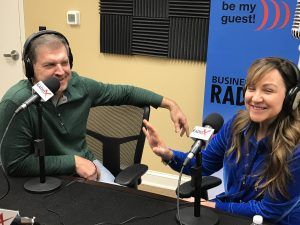
Stone Payton: [00:00:01] And we are back with BRX Pro Tips. Stone Payton and Lee Kantor here with you. Lee, we’ve really enjoyed some marvelous intern relationships. We’ve learned a thing or two along the way. What counsel, if any, do we have to offer in terms of how to choose the right intern?

Lee Kantor: [00:00:17] Yeah. This is important for all the studio partners out there or anybody kind of in business that is doing this kind of work. One of the—this is also one of the side benefits of doing work with the university’s entrepreneurship and incubators, right? You get kind of an insider view of-

Stone Payton: [00:00:33] Oh yeah.

Lee Kantor: [00:00:33] … the good interns are. So, that’s another reason to do work with the local universities in your market. But number one, there’s a pro tip when it comes to interns, you’re better off looking for an intern that’s a sophomore or junior, not a senior. The senior is looking for an opportunity to be hired right after this; where the sophomore in the junior is still in the learning stage and is just looking for any opportunity to get their foot in the door. And you’re gonna get to keep them for a year or two; whereas, that senior is looking to be with you, get knowledge, and then get a real job. So, if you’re not prepared to hire them, I would highly recommend getting a sophomore or a junior for the intern work.

Lee Kantor: [00:01:18] And then, I would look in the areas of the social media department, the PR department. You want good writers. You want good people with good people skills. And always hire for attitude. You want the person that is a go-getter, that can get things done. You can train for the specific skills. They don’t have to have any production skills. They don’t have to have any skills other than a good attitude, and wanting, and liking this, and coming to work everyday fired up. I mean, you can’t train that. That’s too hard to train.

Lee Kantor: [00:01:48] And you have to—the value you’re going to provide them, and this is something that has to be important for them, or it’s going to be a tricky fit is that they have to appreciate that you’re going to help them build their network and really get face time with a lot of executives, of people that can really benefit them down the road. So, if they don’t have that kind of attitude, if they think they’re just going to come in there, and either make a lot of money, or that they don’t care about building a network, that’s not going to be a good fit. And you can really help them because you can put them in the position to look good and be good by—we have our interns do a lot of times interviews from events, high-profile events.

Stone Payton: [00:02:32] Yeah, when we go outside, yeah.

Lee Kantor: [00:02:32] We introduce them to the leaders of different networks. This has led to a lot of speaking opportunities for interns. It has led to job opportunities and helping—a win for us is the intern leaves and has a job in the field that they desire. I mean, that’s a win for us. And that’s happened multiple times.

Stone Payton: [00:02:51] I think it’s happened every single time, actually. I think you’re being modest. But I do think one of the keys to remember, don’t feel like you’re confined to the school of journalism or the school of marketing and communications. There are some great kids out there that really are hungry, that are coachable, and they can bring a lot to the table, and there’s a lot that you can do for them.

Lee Kantor: [00:03:12] Right. If they like to learn about business and really want to learn from the horse’s mouth from all the people that we interview, we are a wonderful fit for these young people.

GWBC Radio: Adam Moore and Dr. Lissa J. Miller with SunTrust and Littie Brown with SpeedPro Marietta

November 21, 2019 by angishields

GWBC-Feature
Atlanta Business Radio
GWBC Radio: Adam Moore and Dr. Lissa J. Miller with SunTrust and Littie Brown with SpeedPro Marietta
Loading
00:00 /
RSS Feed
Share
Link
Embed

Download file

GWBC-Group-11-21

Adam Moore is the Strategic Supplier Diversity Manager for SunTrust Banks, helping to promote the inclusion of small and diverse business in in the supplier base at the Bank. He is considerably active in the supplier diversity space as it relates to technology and the financial vertical. Adam is often sought as a speaker and moderator and he also writes for a blog on supplier diversity: diversitymanagementsourcing.com. Adam is a true advocate for supplier diversity and works tirelessly to create opportunities for diverse business. Adam is also very involved in several mentoring programs to include the Emerging Young Entrepreneurs, the Georgia Mentor Protégée Connection (GMPC), and the Greater Women’s Business Council’s (GWBC) mentor programs.

In 2019 Adam is serving as the Corporate Chair for the GMPC’s year of the Alumni advanced mentoring program. He also serves as a board member for TAG’s Diversity and Inclusion Committee and has been recently elected as the Committees Chairperson and will start his new role in 2020. Adam is an active member of the Georgia Minority Supplier Development Council’s (GMSDC), Supplier Diversity Leadership Committee as well. In all of these roles, Adam works to create new and innovative ways to further the conversation on supplier diversity and how it positively impacts business and communities. Adam is a member of the Financial Services Roundtable for Supplier Diversity (FSRSD) and serves as Co-Chair on the Marketing and Communications committee. As Co-Chair he is also a member of the Executive Council for the FSRSD.

Adam’s efforts in Supplier Diversity have been recognized by several industry groups, winning the 2017 Buyer of the Year and Vision Awards from the GWBC. In 2018 Adam was honored as the Advocate of the Year from the United Stated Pan Asian American Chamber of Commerce – South East. Adam’s efforts and dedication as a mentor were honored in 2018 as was awarded the Power of Partnership award. As an integral member of the Bank’s supplier diversity team, Adam’s efforts lead to the team being recognized in 2018 and 2019 by the GWBC as one of their Top Corporations. Additionally, in 2018, the Bank was named as The Corporation of the Year by the Georgia Minority Supplier Development Council, due to all of the work the supplier diversity team did to promote minority owned business.

Dr. Lissa J. Miller is the interface between SunTrust and the diverse supplier community and is responsible for working with its lines of business and functions to expand the company’s utilization and development of qualified minority, women, veteran, disabled, LGBT-owned and small businesses and ensure that the bank is in compliance with federal guidelines concerning diverse supplier inclusion in procurement activities.   She brings with her over 20 years of collective experience and expertise in Supplier Diversity, Procurement, Sales and Logistics from Georgia-Pacific, Scientific Games International and Kennesaw State University.

Lissa is the Board Chair of the FSRSD (Financial Services Roundtable for Supplier Diversity), USPAACC-SE (US Pan Asian American Chamber of Commerce- SE) and 1st Vice Chair and Mentor/Protégé Committee Chair of the GWBC (Greater Women’s Business Council) and also actively participates with the GMSDC (Georgia Minority Supplier Development Council) where she also served as board chair in years past. She’s been recognized for advancing diverse businesses by Atlanta Magazine, the Georgia Mentor Protégé Connection, National Black and Latino Council, Greater Women’s Business Council and the Georgia Minority Supplier Development Council.  She mentors small businesses and volunteers with organizations such as Cool Girls Inc. and Junior Achievement of Georgia.

Lissa has a BBA in Marketing from The University of Georgia, MBA in International Business from Mercer University, PhD in Business Administration from Warren National University and is a GA licensed associate real estate broker, certified Zumba instructor and entrepreneur at heart.

Follow Suntrust on LinkedIn, Twitter and Facebook.

Inspirational, influential, creative, dynamic communicator, are words most often used to describe Littie Brown. Through her years of employment and community involvement Littie has helped individuals personally and professionally realize their dreams. Because of her investment in their lives, many persons have been promoted, taken on new opportunities and realized the potential in their personal lives.

Professionally, Littie has successfully led sales organizations for three top Fortune 500 Companies. She began her successful career in sales leadership with Xerox Corporation and there she held positions of increasing responsibility in sales, marketing and customer service for 26 years. From there, she went to Dunn & Bradstreet, were she once again lead a successful sales organization as the Vice President of Marketing TeleWeb and completing her corporate career with eight years of leadership at Grainger, Inc. as the Regional Sales Vice President for both the Commercial and Government sales divisions in the Southeast.

Today, Littie is in her sixth year as an entrepreneur. She is the President/Owner of LittKare, LLC (dba) SpeedPro Marietta, specializing in large format printing. From banners to vehicle wraps, SpeedPro Marietta helps companies bring visibility to their business or organization. Her motto is “if you can image it, they can print it.” Since becoming an entrepreneur, Littie has become active in the business community. Having served on several boards, Littie is the Past President of National Association of Women Business Owners Atlanta Chapter (NAWBOAtlanta), the Past President of East Cobb Business Association, and Past Vice Chair for MBEIC (Minority Business Enterprise Industry Council) Currently she serves as the 1st Vice Chair for PIAG (Printing and Imaging Association of Georgia) and a Board Member for the Zion Baptist Academy. Littie is a graduate of Leadership Cobb class of 2018 and a member of the alumni association.

Littie is known as a mentor, teacher, advocate and now an author. She published her first book, “Leadership Lessons from the HART.” Keys, tips and insights on successfully leading in business and in life. You will have to read the book to understand the meaning behind the word HART. She has spoken to both primary and secondary students at numerous high schools and universities. Most notably, she was a guest panelist for the Cole School of Business at Kennesaw State University and guest lecturer at the University of Alabama Birmingham Business Management Class.

Throughout her corporate career, Littie was an advocate for diversity, Littie was a guest speaker at McDonalds Corporation’s Black History Program, a panelist participant for Sodexo’s Diversity & Inclusion Client Symposium, and for the National Sales Network. She is a Past President for both Grainger’s African American Business Resource Group (AABRG) and Xerox’s Black Women’s Leadership Council (BWLC). in each instance, she brought visibility to the skills, competencies and career desires of African American employees, supporting each company’s inclusion and diversity goals.

As a business owner, Littie continues to share her knowledge, passion and insights wherever she is asked. She was a panelist for the Women of NABA Empowerment Forum, a panelist for the 17th Annual Phenomenal Women’s Conference at Kennesaw State University, a guest speaker at the East Cobb Business Association monthly luncheon, a guest presenter/teacher for the NAWMBA conference (National Association of Women M.B.A.) a guest panelist for BWLC’s Summit, and a guest speaker for PMI (Project Management Institute) of Atlanta’s annual meeting just to name a few.

Littie earned a B.B.A. in Management from Texas State University. She is single and very active in leadership roles in her church, Turner Chapel AME in Marietta, GA and the community. She is an active member and officer of the Rho Zeta Omega Chapter of Alpha Kappa Alpha Sorority, Inc. Her interests include travel, golf, movies, sports, and spending time with friends and family. She resides in Mableton, Georgia.

Follow SpeedPro Marietta on Facebook and Twitter.

TRANSCRIPT

Intro: [00:00:02] Broadcasting live from the Business RadioX studios in Atlanta, Georgia, it’s time for Atlanta Business Radio, spotlighting the city’s best businesses and the people who lead them.

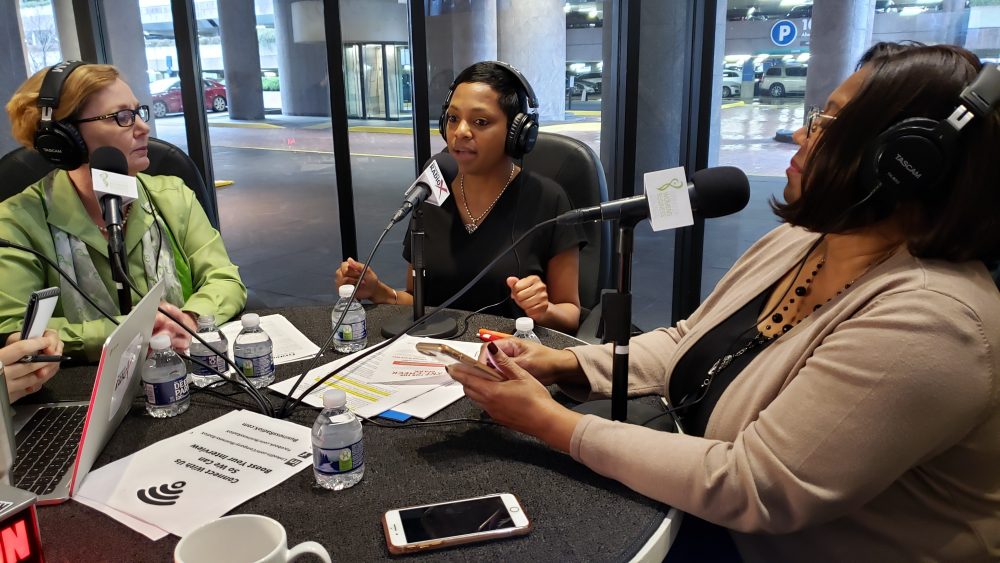
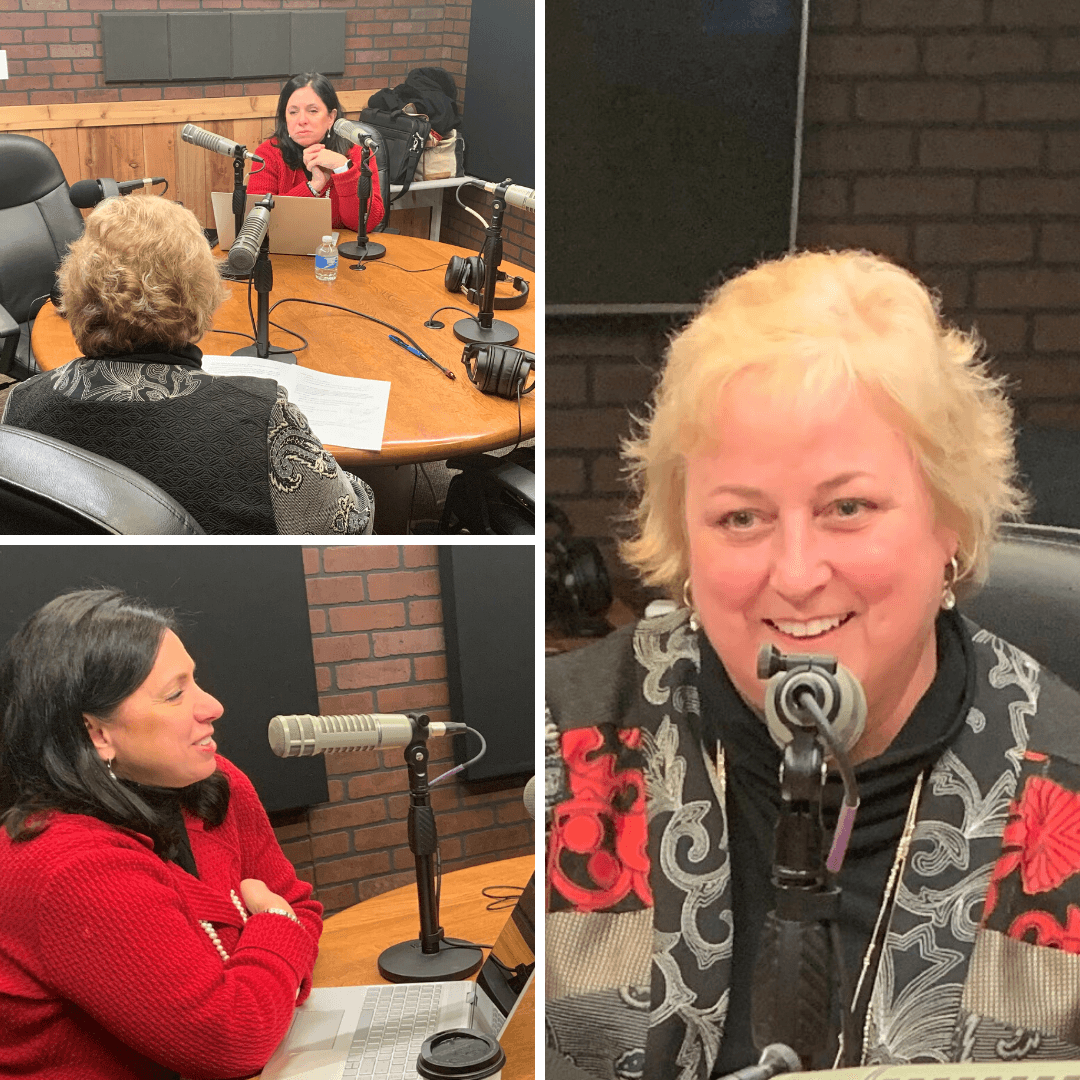
Lee Kantor: [00:00:17] Lee Kantor here with Roz Lewis, another episode of GWBC Radio. This is where we have conversations to grow your business. And today’s theme is mentoring your business to success. Welcome, Roz.

Roz Lewis: [00:00:29] Thank you, Lee. How are you doing this morning?

Lee Kantor: [00:00:31] I am doing great. You must be a little wiped out. You’ve been on the plane for a little bit.

Roz Lewis: [00:00:36] I have, but you know what, it’s always exciting when you’re able to network with other women businesses, celebrate with other corporations and then, meet to talk about how we build a strategy around growing women businesses-

Lee Kantor: [00:00:54] Okay.

Roz Lewis: [00:00:56] … and small businesses.

Lee Kantor: [00:00:57] You were in DC doing some of that work, kind of laying some foundational groundwork for this?

Roz Lewis: [00:01:02] Yes, the Women’s Business Enterprise National Council. We hold our board meeting during this period of time in November. We meet three times a year. And also, we announce our women business stars. So, there are 14 women business stars that are represented across this country that come to this event, along with women businesses who are meeting to discuss how they can create opportunities and programs, development programs, that is, to grow businesses.

Lee Kantor: [00:01:38] So, it’s kind of best in class all coming together to share best practices and kind of explore ways to work together?

Roz Lewis: [00:01:44] Absolutely.

Lee Kantor: [00:01:45] Well, you must leave there so fired up and inspired.

Roz Lewis: [00:01:48] I do. You know, there’s also an opportunity to get involved in some legislative issues as well. On the Hill, we are partnered with an organization called WIPP, Women Impacting Public Policy. This is led by Candace Waterman. And it’s always great to find out how the needle is moving regarding some legislative issues as it relates to small business, and how our congressmen and senators can help us grow those businesses.

Lee Kantor: [00:02:23] And then, in this room, every month, we get to talk to a lot of amazing Atlanta folks. And then, this is no exception. And we’re going to talk about how mentoring can really kind of accelerate your growth. And you-

Roz Lewis: [00:02:36] Yes. Yes.

Lee Kantor: [00:02:37] So, who do you have with you today?

Roz Lewis: [00:02:38] Well, you know, we are going to have an exciting show today because our special guest is Lissa Miller, who’s the First Vice President of Supplier Diversity and Adam Moore, Strategic Supplier Diversity Manager at SunTrust Bank, soon to be Truist Financial Services, and we have Littie Brown, who’s the president and co-owner of SpeedPro Marietta. So, all three of them have been involved in a mentoring program, a program that actually that the Greater Women’s Business Council has had for over 10 years.

Lee Kantor: [00:03:17] Right.

Roz Lewis: [00:03:18] So-

Lee Kantor: [00:03:18] This has been part of the DNA of this organization for a long time.

Roz Lewis: [00:03:22] Exactly. But I have one more announcement to make about-

Lee Kantor: [00:03:24] Alright. Fire away.

Roz Lewis: [00:03:24] … a couple of people here that we have today. And that is, we’re just coming off the heels of our annual awards celebration that we had last week. And we have two winners sitting here with us.

Lee Kantor: [00:03:38] Wow.

Roz Lewis: [00:03:39] Right. Adam Moore received our Buyer of the Year award.

Adam Moore: [00:03:43] Thank you.

Roz Lewis: [00:03:43] So, congratulations on that.

Adam Moore: [00:03:44] Thank you very much.

Roz Lewis: [00:03:45] And Lissa Miller received our Voice Award. So, very excited about having them today.

Lissa Miller: [00:03:52] Thank you, Roz.

Lee Kantor: [00:03:52] Well, this is exciting. We get to hear a little bit about that, I hope. But we’re going to talk about how SunTrust mentors, is that the game plan?

Roz Lewis: [00:04:01] Well, it’s not just SunTrust. It’s about mentoring period. They-

Lee Kantor: [00:04:05] Just in general.

Roz Lewis: [00:04:05] Just in general. And Lissa Miller is the chair of the certification-

Lissa Miller: [00:04:12] Mentor-protege.

Roz Lewis: [00:04:12] She’s the chair of the mentor-protege program at the Greater Women’s Business Council and has done a phenomenal job in engaging our women businesses to mentor each other, as well as having corporate members mentor our women businesses also. But this information is for any business of how they can incorporate mentorship, which we all need-

Lee Kantor: [00:04:42] Yeah.

Roz Lewis: [00:04:43] … in order to grow your business.

Lee Kantor: [00:04:45] All right. So, you want to jump in there, Lissa, and explain kind of your vision of mentoring and protege.

Lissa Miller: [00:04:51] Sure.

Lee Kantor: [00:04:51] How it all can work together.

Lissa Miller: [00:04:52] Yeah. Well, let me tell you a little bit about our program at the-

Lee Kantor: [00:04:56] Yes.

Lissa Miller: [00:04:56] … Greater Women’s Business Council. So, as Roz stated earlier, the Mentor Protege program has been around for a while. Over the last few years, I became the chair and started revamping it and kind of bringing it to the type of mentoring that we have today, which is one-on-one mentoring. Before, we had group mentoring. But the women-owned businesses that were in that group mentoring environment needed that one-on-one interaction and more time with their mentor. So, over the last-

Lee Kantor: [00:05:27] Because that way, they can address specific issues instead of-

Lissa Miller: [00:05:29] Right, right. They have more time-

Lee Kantor: [00:05:31] Right.

Lissa Miller: [00:05:31] … to be able to meet with their mentor, talk about some of those goals that they’ve established for themselves. And it’s only a nine-month program. So, there’s not a whole lot of time to get things done.

Lee Kantor: [00:05:40] Right.

Lissa Miller: [00:05:41] So, the last couple of years, we had one-on-one mentoring. Last year, we had seven mentor-protege pairs. This year, we had eight. So, it grows each year. And it’s basically for small women-owned, certified women-owned businesses that are under $500,000 in annual revenue. And then, we pair them with corporate mentors or larger women-owned, certified women-owned businesses that are at least $3 million in revenue. And we have two great examples here with us today about how the program has benefited both ways for the mentor and the protege this last year with Littie and her business, SpeedPro Marietta, and then, Adam serving as a mentor in the program.

Lee Kantor: [00:06:25] So, in your vision of this, what do you need more of? Like do you need more business people to raise their hand and say, “I want to be mentored” or do you need more corporates to say, “Hey, I’m willing to mentor”?

Lissa Miller: [00:06:39] We need both. We need both. We need women-owned businesses who are ready and willing to be mentored and have the time to work with a mentor one-on-one. A lot of times, women-owned businesses, especially, if you’re small, you’re in your business every part-

Lee Kantor: [00:06:55] Right.

Lissa Miller: [00:06:55] … of your business, every day. And so, you really don’t set aside strategic time to be able to work on your business, right? You’re working so much in. And so, mentoring really takes you out of your business and says, “Okay, you have to allocate some time to be able to focus on this”, right? Because that’s the only way you’re going to develop long-term strategies to help your business grow.

Lissa Miller: [00:07:14] So, we’re looking for women on businesses who are ready to take the next step to be mentored. And then, also, for mentors who are corporate representatives, like Adam. Could be in supply diversity, could be in procurement, could be in other areas. And also, larger women-owned businesses who’ve been there, done that, you know, know where the pitfalls are and are able to commit time to be a mentor in the program.

Lee Kantor: [00:07:37] Now, do you give the mentor some structure because it seems like they wouldn’t know where to even begin?

Lissa Miller: [00:07:44] Yeah, yeah.

Lee Kantor: [00:07:44] I guess just ask general questions and just-

Lissa Miller: [00:07:45] Yeah, we do.

Lee Kantor: [00:07:46] … kind of meander around or?

Lissa Miller: [00:07:47] We do. We have guidelines and we have three to four group sessions where all of the mentors and the proteges get together. And we have subject matter experts to come in to talk about key specific areas that maybe you could focus on in your business. So, one may be technology, one may be strategic planning, you know, financial analysis of your organization. You know, how to determine if you’re financially healthy.

Lissa Miller: [00:08:16] And so, we have group sessions where we bring subject matter experts in to talk about those key areas. But during the course of the nine months, you know, we suggest that the mentor-protege pair meet for at least one time a month. Now, many of them have met for at least two times a month, whether virtual or in person. But you really have to establish that bond quickly and know that you’re gonna be able to work together as a team because you could have different styles, you know.

Lee Kantor: [00:08:43] Right. So, it has to be a good fit.

Lissa Miller: [00:08:45] Has to be a good fit.

Lee Kantor: [00:08:45] That’s part of the challenge too.

Lissa Miller: [00:08:46] Right. And-

Lee Kantor: [00:08:46] The right mix, the right match.

Lissa Miller: [00:08:48] Right. And so, when we match, and this is typically something that the committee does, is we look at both, we interview everyone, we interview the proteges, we interview the mentors. We want to get a feel of, you know, what they’re needing from the program, what they have to offer, what are their needs, you know, how they work, where are they located? That’s a big deal, right?

Lee Kantor: [00:09:06] Sure.

Lissa Miller: [00:09:07] Because GWBC covers not only Georgia, but the Carolinas. So, we don’t want to put a mentor in Georgia with somebody who’s in the Carolinas. They probably would never get a chance to meet, right?

Lee Kantor: [00:09:16] Right.

Lissa Miller: [00:09:17] And so, we’re looking at location. We’re looking at industry. Is it a fit? Is it a complementary industry? Personality, experience, years in business, all of that goes into the matching process. So, it’s a secret formula that we use.

Lee Kantor: [00:09:33] You have an algorithm for that.

Lissa Miller: [00:09:34] Yeah, kind of a mental algorithm. And then, we match those pairs accordingly.

Roz Lewis: [00:09:41] So, Littie, you know, you’ve already gone through the experience of being a part of the mentor protege. What gave you that decision or how did you make that decision to even think that you needed a mentor?

Littie Brown: [00:09:56] Funny you’d ask that. A lot of small businesses like myself, we get so caught up, I think Lissa said it, in the business. And when you stop and realize, you know, I need some help, I need some other thought, some other thinking, that’s greater than what I know. And so, I wanted to be far enough along to kind of know what I was doing a little bit so that I would know what to ask a mentor or what I would need from the mentor. So, I thought, my business is now six years old. And so, you know, you’re talking right at that point. Had I thought about it afterwards after being in it, I probably would have done it a year or two sooner.

Littie Brown: [00:10:33] But the timing was good for me to be able to step back and say, “Hey, I’d like for somebody else that has a different set of experience to see what we’re doing. Show them where we think our pitfalls are and gain some knowledge from that person.” And so, it was a good time, a good fit for me. I think a lot of people shy away from it because you have to be open. You have to be willing to say, you know, “I need some help”, first of all, and “I don’t know everything that I think I know”, and willing to open up, you know, your kimono and show them, you know, “Here’s where my warts are and that I’m looking for some help.”

Lee Kantor: [00:11:12] Right. And the ability to be vulnerable and kind of humble, it’s kind of not everybody’s superpower when you have your own business, right? Because everybody’s looking at you like you know what you’re doing.

Littie Brown: [00:11:22] Oh, yes. Oh, yeah. People think that, “You’ve got this, you’re gonna do great.”.

Lee Kantor: [00:11:26] Right.

Littie Brown: [00:11:27] “You’re fine.” And you’re sitting there saying, “I don’t have this. I don’t have this. You know, I need some help.”

Lee Kantor: [00:11:31] Right.

Lissa Miller: [00:11:31] And it’s a lonely place. I mean, you know, from-

Adam Moore: [00:11:33] Yeah.

Lissa Miller: [00:11:34] … the conversations that I’ve had with a lot of small businesses is once you get—you know, I just applaud every small business that’s able to be in business over three years. I mean, that’s an accomplishment right there. But it’s a lonely place. I mean, you’re out there, you’re doing your best, you know, with what you know. And the people that you have, you’re responsible for maybe some headcount, right?

Lee Kantor: [00:11:54] Right.

Lissa Miller: [00:11:55] These people are dependent upon you. And who do you turn to to at least get validation on what you’re doing? Is that the correct way or am I doing it the right way? And a lot of the feedback I’ve received is, you know, “It is great to be able to be validated to understand that I am on the right road and to have someone to give me a listening ear to hear, you know, some of the struggles that I have.” Because they don’t have that person to be able to share that information with. They can’t share it with their employees.

Littie Brown: [00:12:22] Yes, exactly.

Lissa Miller: [00:12:23] That’s being too vulnerable, right?

Adam Moore: [00:12:24] Yeah.

Littie Brown: [00:12:25] Yes.

Lissa Miller: [00:12:26] They might not want to be able to share it with their partner, you know, in the business or, you know, their senior leadership, but who else can they share that information with?

Adam Moore: [00:12:34] Yeah.

Roz Lewis: [00:12:34] But don’t you think that is a part of leadership? Being able to recognize those areas that you need to grow in. You know, that is one of the things that mostly are going to come out in the whole mentoring relationship. And-

Littie Brown: [00:12:51] Most definitely. And, you know, it is funny you’d say that because, you know, I spent most of my career in senior leadership roles. And it is very different when you own your own business because you get used to, in a corporate environment, that there are people above you that you know you can go to. They promote mentoring and things like that. Well, when you get out and you’re running your own business, you don’t have that circle of people already around you.

Littie Brown: [00:13:16] And if you are not a leader that’s either used to that or comfortable in that, then you will shy away from getting that help that you need. And so, this program, I like what Lissa said about being validated. It is not necessarily somebody helping you fix what’s broken, but to really show you that, “Hey, this path you’re on is a good path. Maybe you don’t think about doing this or think about doing that.” And the mentor isn’t there to, you know, tell you what to do and how to run your business.

Littie Brown: [00:13:45] It’s really to give you some focus and direction that helps us say, “Okay. Well, yeah, I am doing that. So, now, let me tweak that a little bit” or, you know, “I like that idea, you know, from a strategic plan, I need to document something differently or what I’m doing with my employees”, you know, and “Do I hire or do I, you know, get contractors?” There’s so many things that you can ask. But what I liked about what Lissa and the team did was to come up with what are the two or three things you want to focus on, so you’re not trying to cure world hunger. And, you know, it just had allowed you to just be a little bit more focused and rifle shooting versus just, you know, pelleting everywhere. So, I thought that was a major part of the program.

Lee Kantor: [00:14:32] Now, I understand what’s in it for you. You’re getting this knowledge and this kind of validation. What’s in it for the mentor? The mentor, Adam.

Adam Moore: [00:14:39] Yeah.

Lee Kantor: [00:14:39] You were the mentor. So, talk about what you’re gaining out of this in terms of, you know, your job or just-

Adam Moore: [00:14:46] Right.

Lee Kantor: [00:14:46] … is it personal? This makes you feel good. You’re sharing wisdom. You know, you’ve been there and done that, so you’re going to share some of that. Like what does the mentor get out of this?

Adam Moore: [00:14:54] Right. You know, if you’re a mentor and you don’t walk away enlightened and educated yourself, you weren’t doing your job to begin with. I very much stick to the old adage as a mentor, steel sharpens steel. So, I’m not there to mold them, right? We’re just going to sharpen each other’s business skills. And I love it when we’re having a discussion. And the mentee and myself are just kind of really getting in the weeds of some things and my own dogmatics in business are challenged, right? I’ll say something and my mentee be like, “I don’t think that’s going to work here.” I’d be like, you know, you’d have that moment of like, “How dare you”, right? But to have that challenge back, to get the push back-

Lee Kantor: [00:15:31] Right.

Adam Moore: [00:15:31] … and then, to have to work through it yourself, you kind of, as the mentor, you get validated, right?

Littie Brown: [00:15:36] Yeah.

Adam Moore: [00:15:36] Because there’s oftentimes in corporate America, you’re like, “Does anybody really appreciate what I do sometimes?” But then, to have that-

Lissa Miller: [00:15:43] I appreciate you.

Adam Moore: [00:15:45] You do. My current boss appreciates me a lot. But you get that ability to kind of exercise your own business acumen as well, too. So, there’s a lot. There’s a lot in it. For me also, there’s a lot of friendships and personal growth that comes along in it, too. You know, if you’re unaffected by the relationship, again, like I said, you weren’t doing it right.

Littie Brown: [00:16:07] Yeah.

Roz Lewis: [00:16:08] Well, you always, you know, want to be in a position of learning. You know, I always say-

Adam Moore: [00:16:14] Right.

Roz Lewis: [00:16:14] … there is not an opportunity where you should not take advantage of learning. And to your point, the value add of the mentor-protege relationship is the fact that you learn from each other.

Adam Moore: [00:16:25] Learned a lot.

Littie Brown: [00:16:27] Yeah.

Adam Moore: [00:16:27] You learn a lot. And you get to learn about industry that you’re not in, which is absolutely fascinating. And, you know, I say it all the time, leaders learn, right? And so, that’s on both sides of the island. That’s absolutely fantastic. And that’s what this provides, is a fantastic forum for that.

Lee Kantor: [00:16:41] Now, Littie, why don’t you share some kind of do’s and don’t’s? If you’re a mentee, what are some kind of key learnings you took away from the experience? Like what are some things, if you could do it again, you would do it this way. You mentioned like start sooner. That was one thing. But what are some ways to get the most out of that mentor-mentee kind of relationship, from your standpoint?

Littie Brown: [00:17:00] Well, first of all, I do want to brag on my mentor, who is Patrick Dierberger from Federal Reserve Bank. And not only did we just grow a great business relationship, but back to what Adam said, just a great friendship. There were times he would say, “Man, I’ve learned so much from you. Littie.” You know, and you’re thinking, “Man, I’ve learned so much from you.” You know, you don’t think you’re sharing that much.

Littie Brown: [00:17:23] But the two things that I will tell you that made the relationship work. Number one was that initial meeting that we had. When I went to the Federal Reserve Bank, we sat down, talked about each other. You know, “Tell me about you. Tell me about your family. Tell me a little bit about why you’re doing this. How did you get into this business?” And develop a rapport so that when you start to talk about the issues, it’s a lot more comfortable.

Littie Brown: [00:17:48] And so, we set up, you know, we’re going to meet twice a month and once on the phone and once down there, come out to see the studio. And so, we had some plans. So, number one is what’s the plan that you want to put in place. And then, put that plan in place. But secondly, it’s on the mentee to make sure that you’re following up on the plan, even if you’re pushing your mentor, I’m the one that’s getting the benefit out of his time and, you know, his resources, which was a major part of what I did.

Littie Brown: [00:18:22] And so, showing up on time, being prepared, I think, are critical things that you have to do. But having that first initial meeting and really kind of setting, you know, the groundwork of what you’re going to do. Every one of us in the class had a different focus and a different direction. And it fit with that person that you were working with. It wouldn’t have fit with me to be with somebody else unless I share that same kind of direction that I wanted. And so, to me, those are the things that are critical to make sure that it works.

Lee Kantor: [00:18:57] So the curation, going back to your earlier point of curating the right mentor-mentee relationship, that’s ground zero. You’ve got to get that right or else, you’re gonna have problems. Now, Adam, can you share us-

Adam Moore: [00:19:06] Yeah.

Lee Kantor: [00:19:06] … some kind of best practices from a mentor standpoint? What’s the best way for a mentor to get the most out of it?

Adam Moore: [00:19:11] Yeah. Don’t be afraid to challenge the objectives the proteges put in front of you. I had a very good example this last time around where when I sat down with my protege to begin with, there were like three things we’re going to accomplish. But when we kind of really started talking, I was like, “I don’t think we’re even there yet to discuss these three things.” So, being willing to kind of challenge those objectives, right, from a business standpoint of view. And then, really being willing to have that—you have to open yourself up.

Adam Moore: [00:19:44] It’s a lot for the proteges to come in there and, like we say, open the kimono and let them know. But unless there is that mutual trust between the two, you’re really not going to do anything. So, you’ve got to be prepared yourself to say, “Let me tell you where I failed and let me tell you where I’ve fallen down. Let me tell you where the pitfalls I’ve hit along this similar road”, and be very open and honest with that. So, that’s a very best practice. Another thing for a mentor is I say find a mentor to mentor you while you’re mentoring, honestly.

Lissa Miller: [00:20:11] That’s a good one, yeah. That is what we do.

Adam Moore: [00:20:11] I mean, yeah. And luckily, the chairperson for the program also happens to be my boss at the bank, so I’m able to walk in her office and go, “I have no idea.” I think I actually did that like once or twice this last year. I walked in and said, “I don’t know what to say any longer”, you know. And so, to be able sit down and then, discuss that with her, then I was able to go back to my protege and go, “Okay. Refreshed, renewed, ready to talk about this again.”.

Adam Moore: [00:20:35] So, I think it’s always an excellent idea for a mentor to have somebody themselves to run to because you’re not going to know everything. And I found myself in that same thing, too. We were discussing questions about an area and a vertical that I have zero, absolutely zero knowledge in. Because when we broke it down and we figured out where the areas were that we really need to work on, the areas we need to work on were really way outside my field of specialty.

Adam Moore: [00:21:00] And I had to actually reach back into Roz’s organization, the GWBC, truly, thank goodness, that there is such a wide swath of businesses, and bring some people in to say, “Okay. I need to run this by you. I need you to go talk to her now.” That type of thing. So as a mentor, don’t be afraid to reach into your bag of contacts and bring them to the fray also because we would be dangerous if we thought we knew it all.

Lissa Miller: [00:21:23] That’s right.

Lee Kantor: [00:21:23] And Roz-

Roz Lewis: [00:21:23] Exactly.

Lee Kantor: [00:21:23] … this must be so rewarding to you to see how everybody kind of works together. There is a role for everybody in this kind of ecosystem.

Roz Lewis: [00:21:31] Absolutely. And, you know, all businesses really should have three key people within their organization, meaning, and attached to their organization. And it’s also for corporate America too, so it’s also for your career path. And it talks about having an advisor. You know, you have a mentor and then, you have a sponsor. You have someone that sponsors you. And the sponsor is more on the career side, because you need someone in there fighting for you as you’re trying to move up the corporate ladder.

Roz Lewis: [00:22:06] But that advisor, as Adam just mentioned, of going out and seeking that particular subject matter expert is what you want. And those people aren’t constantly there. Now, your mentor, to your point, they’re the ones know good, the bad, the ugly about you, you know. However, that allows you to be surrounded by all of the resources that you need in order to be able to scale your business. And even more so as a leader, you know, more so than anything. Because as you say, you can’t go to your employees, although there are times you can go to them, too, because they need to be your SMEs as well, right?

Roz Lewis: [00:22:44] Your subject matter experts on certain things. But you shouldn’t let that be a deterrent. You shouldn’t let that get in the way of how you’re going to continuously expand and grow and become especially innovative, you know, in developing your business. And I’m glad to hear that that’s what we’re talking about today, because I think our listening audience needs to know that. Because I know the majority of them have been thinking that.

Littie Brown: [00:23:14] Can I add one thing?

Lee Kantor: [00:23:16] Sure.

Littie Brown: [00:23:16] You had asked what were the do’s and don’t’s? And I talked about the things to do well. One of the major things that I wanted to press upon people, because if you’re going into the role as a mentee, looking to just do business with that mentor-

Adam Moore: [00:23:35] Right.

Littie Brown: [00:23:35] … then you’re not there for the right reason.

Lissa Miller: [00:23:38] Right, right. Exactly.

Littie Brown: [00:23:38] And so, in our business, getting corporate business is a big part of what we’re, you know, trying to do, but I wasn’t trying to go in with Patrick and say, “Okay, how much revenue can I get out of the bank”, you know, “How much can I sell?” Because that’s not what the focus has got to be. And if that is your focus, one, it’s going to narrow down to just one thing and you’re never going to get what you really need out of it to grow the business.

Adam Moore: [00:24:04] Right.

Littie Brown: [00:24:06] And if, in fact, you’re talking and you’re building a relationship, those things will come during the course of that time. And for us, we were fortunate to get a contract that was not actually from my mentor, but that he connected us with somebody within the organization that was not even in Georgia, that we were able to secure the business. But it was not part of, you know, “Here’s my, you know, three things I want to do.” My three things were our staffing and management, our strategic plan, and our marketing plan and direction. Those were the three pillars that we were focused on. It wasn’t, you know, revenue. We want revenue, but we want that to come as a offset of what we were able to do and learn and teach and find out about the organization.

Lissa Miller: [00:25:01] Yeah.

Lee Kantor: [00:25:01] Right. This isn’t a sales call.

Lissa Miller: [00:25:03] Right.

Adam Moore: [00:25:03] Right.

Lee Kantor: [00:25:03] The heart you have to have going into this is I’m open to learning and I want to kind of grow, like you were saying.

Adam Moore: [00:25:10] Right.

Lee Kantor: [00:25:10] Strategically, it’s not buy my stuff.

Lissa Miller: [00:25:12] Right. Yeah.

Lee Kantor: [00:25:13] It can’t be that. But now, I think it’s important, Littie, also for the small business person especially, it’s easy to kind of think you’re on an island and that there isn’t help available. And there is help available. It’s just a matter of kind of partnering with the right resources, getting involved with the right associations. But there is a lot of willing people that want to help. It’s just you have to be kind of vulnerable and humble enough to ask.

Littie Brown: [00:25:38] Exactly. And I will tell you, though, being a part of GWBC helps to make those things available, you know. So, you know, when you go to, you know, the small events, table of eight, you know, when we went to North Carolina, and even here out of Gwinnett, and you go to those events, you meet people there, not just from the classes. And the classes are great, the workshops are really good from a learning. But you also have time to just talk to people that you’ve met that you know are in business. Some of my, you know, best business friends now are all in the organization.

Littie Brown: [00:26:15] And we talk, you know, about what’s happening. And you don’t see each other because you’re out trying to run your business until you come together to one of the events. And then, it’s just like you, you know, saw each other yesterday, you know. So, you know, it’s relationship. It’s taken advantage of your certification that you’re paying for. You’ve got to go in, take advantage of that, and you’ve got to, you know, spend some time getting to know people and learning. And then, those people share not only advice, but they share customers. And they send people to you. And you grow your business that way.

Roz Lewis: [00:26:50] So, what were some of your aha moments? I mean. And, you know, Littie or Adam, you know, you can take this, and even Lissa. You know, the whole mentor-protege relationship. Surely, you had to have some-

Adam Moore: [00:27:05] Right.

Roz Lewis: [00:27:05] … during the process.

Littie Brown: [00:27:06] Well, I had more than one, but one aha moment, really, when you look around and saw the people that were in the program, it is amazing to me, like I said, I spent most of my career in corporate, the number of small businesses that do so many different things. Nobody in our class did the same thing. You know, you think about it. If you think about all eight of us-

Lissa Miller: [00:27:34] Eight.

Littie Brown: [00:27:34] … every business was not even—you know, you can say, “Hey, that’s kind of a spin off.” Uh-uh. They were just from one extreme to another. And you’re sitting back saying, “Wow, how did you get into that?” You know, “How did you do that?” And so, you really realize that there’s a lot out there, a lot of business you can help and support that you just didn’t realize it was a small business that got it going.

Roz Lewis: [00:27:58] And Adam, surely, I mean, you mentioned earlier a couple-

Adam Moore: [00:28:01] Right.

Roz Lewis: [00:28:01] … that you had to go to Lissa about, so-

Lee Kantor: [00:28:05] That was the first aha moment.

Adam Moore: [00:28:06] That was the big aha moment.

Lissa Miller: [00:28:09] We were both having an aha moment, definitely.

Adam Moore: [00:28:13] It’s like a group session. It’s okay to have a personal discussion with your protege. And I mean, with mine, it literally came down to an hour of, “Are you really sure you want to be in business right now?” And it’s okay to say that to your protege. Sometimes, you have to say kind of the harder things, not mean. You know, you’re not going to be mean about it by any stretch of the imagination, but to just get real. I mean, that was a-

Roz Lewis: [00:28:41] So, straight talk.

Adam Moore: [00:28:41] Straight talk. Straight talk and go, “You’ve got to look me in the eyeballs right now and you’ve got to commit that you’re in this for the next five years. Because if not, we need to have a different discussion”, you know, and to realize it’s okay to do that. And sometimes, that’s the conversation that needs to happen. It’s not always, rah, rah, rah, let’s go get them, let’s put together a strategic plan, let’s talk about branding. I mean, the fun stuff. That’s kind of the fun, exciting stuff to talk. Sometimes, it’s, “Okay. Let’s sit down and have a heart-to-heart. And let’s really talk about it. Is this for you? Are you cut out to do this?”

Roz Lewis: [00:29:13] So, basically, what it’s doing is level setting expectations.

Adam Moore: [00:29:16] Yeah, yeah.

Roz Lewis: [00:29:17] And literally looking in, you know, from an ideation standpoint-

Adam Moore: [00:29:21] Yeah.

Roz Lewis: [00:29:22] … of determining how are going to be able to make this a reality.

Adam Moore: [00:29:25] Yeah.

Roz Lewis: [00:29:25] And do you have what it takes-

Adam Moore: [00:29:28] Right.

Roz Lewis: [00:29:28] … in order to be able to stay there for the long-

Adam Moore: [00:29:30] Yeah.

Roz Lewis: [00:29:30] … haul.

Adam Moore: [00:29:31] Yeah. Exactly. Exactly. So, that was one of my biggest aha moments this time around. It’s really just, “It’s okay to do that.” And then, be expected for them to say yes. And then, continue to push. And that was very rewarding. Very rewarding.

Lee Kantor: [00:29:47] Now, Lissa, do you have any advice for other kind of enterprises out there that aren’t really embracing this mentor-protege kind of model? Like what would you tell them? You know, any advice regarding, “Hey, if you’re going to start this, these are something you should be doing and not doing” or “This is a framework-

Lissa Miller: [00:30:04] Yeah.

Lee Kantor: [00:30:04] … that might work for you.”

Lissa Miller: [00:30:05] And I’m just going to give, the aha moment for me, before I answer that question, is, you know, a lot of these women-owned businesses had personal stories before they even went into business.

Adam Moore: [00:30:18] True.

Lissa Miller: [00:30:18] And hearing some of those personal stories of how people got to where they are, I mean, you know, some of them almost made me tear up, some of those stories. But to see the resilience of these businesses, it really was so encouraging. And every year, when I talk to these women-owned businesses and hear their stories, and hear why they want to be in the program, it just motivates me to continue doing it.

Lissa Miller: [00:30:41] So, I love doing this, but it is personal for me because I want to help people achieve success in life. And I understand where they’ve been and I understand where they’re trying to go. And if there’s any way that I can be of use and be helpful, I’ll be happy to do that. I don’t know if I’ve told Roz, I’ve often told my husband, I said, “If I won a million dollars, I would definitely throw it into this program because I just think it needs-

Roz Lewis: [00:31:06] We will take it.

Lissa Miller: [00:31:08] … more money.”

Lee Kantor: [00:31:08] Or-

Roz Lewis: [00:31:09] Those numbers-

Lissa Miller: [00:31:10] Personal money, personal money.

Adam Moore: [00:31:11] Right.

Littie Brown: [00:31:13] Personal.

Lissa Miller: [00:31:13] But I think, you know, organizations that are looking to do this, I think it’s something you really need to sit back and put a plan against. You need to have committed resource, a person that’s wanting, you know, raising their hand to volunteer and has the time to do it and has committed to do a good job at it. You don’t want to just throw something together because the results will show and the type of program that you have.

Lissa Miller: [00:31:35] But if you want to start small, I mean, it could be just an informal gathering of people, you know, just coming together, networking, like Littie was mentioning. A lot of times when you’re in business, you know, like you’re working so much in your business, you don’t get a chance to go out and meet other business owners. But you would find if you did, they’re sharing the same challenges that you have.

Adam Moore: [00:31:56] Right.

Lissa Miller: [00:31:56] And just being able to talk to these people and to share ideas in a comfortable and confidential setting is, you know, that’s the first step, right? And understand that what is discussed in the room stays in the room, right?

Roz Lewis: [00:32:09] So, what happens in Vegas stays in Vegas.

Adam Moore: [00:32:10] Right.

Lissa Miller: [00:32:10] What happens in Vegas stays in Vegas.

Roz Lewis: [00:32:11] Exactly.

Lissa Miller: [00:32:12] You know, you talk about some things, you may, you know, get together for coffee or tea, or whatever, and just chat. You know, have some discussion. And then, you might agree to do this on a structured, you know, setting. You know, once a month, once a quarter, or whatever. Even doing that is helpful. And I think, you know, that’s where these programs start. And then, they start talking about, “Well, you know, we need expertise in this area. We really need to hear from somebody about how we can do X, Y, Z”, then you start putting structure around that because you’re gonna have to bring those people in. Of course, we are always bringing in people for free.

Roz Lewis: [00:32:46] Yeah.

Lissa Miller: [00:32:46] So, you know, we don’t have to dish out any money for that. But, you know, starting small with a committed group of people who are willing to share, be vulnerable with each other, and help each other, and support each other. That’s where you start.

Lee Kantor: [00:32:58] Now, when you’re building the structure for the program, are you building any kind of metrics or metrics that matter that show that, “Hey, we are making progress. There is a high five at the end of this”?

Lissa Miller: [00:33:09] Yes, we do surveys. And throughout the program, we actually have reporting that we request from the proteges, so they can tell us where they are, you know, as far as their goals. You know, have they started working on them? You know, what the progress has been? Have they completed it or whatever? And then, at the end of the program, when we have a final graduation, then they do a five to ten-minute presentation to talk about what their strengths, weaknesses, opportunities were at the beginning of the program, you know, how they’ve been able to achieve against those goals at the end of the program, and what their future plans are. So, we have all of that information and understand, you know, what progress they have been able to make through the nine-month program.

Roz Lewis: [00:33:49] So literally, one of the things I think that’s always key too is the fact that, you know, we’re not mentioning the T word enough, it’s that trust. Because going into those settings, as you say, whether it’s formal or informal, you’re going to have to trust the person that you’re talking to, that they are going to be knowledgeable enough to share information or even say, I don’t know, you know. And that’s what you’re looking for as well.

Littie Brown: [00:34:14] Yeah.

Roz Lewis: [00:34:16] You know, but we do encourage any business to make sure that they have—especially the leaders, to have a mentor or even for your employees within to have some type of mentorship that takes place within your organization. You know, there’s a saying, there are enough mistakes that have been made. You don’t have to create new ones.

Adam Moore: [00:34:37] That’s right.

Lee Kantor: [00:34:37] So true.

Roz Lewis: [00:34:37] You know, that you can learn from those existing ones. And so, you want to find someone who’s kind of gone through some of the things that you’ve gone through, you know, as well that can align and have that empathy and understanding. But then, are you willing to change, you know.

Lee Kantor: [00:34:53] Right. And do the work.

Roz Lewis: [00:34:55] Right. And do the work that’s necessary-

Lissa Miller: [00:34:58] Yeah.

Roz Lewis: [00:34:58] … you know, to make those adjustments that’s needed.

Lee Kantor: [00:35:01] And then, what happens when they complete the program? Is there like an alumni group where they hang out?

Lissa Miller: [00:35:06] Well, we were planning for that for 2020 actually.

Lee Kantor: [00:35:10] Good, good.

Lissa Miller: [00:35:10] So, yeah, we were talking about that at our last committee meeting. So, we will have an alumni group that actually will start coming to some of the group sessions in 2020.

Lee Kantor: [00:35:18] Because they can be future mentors.

Lissa Miller: [00:35:21] Correct. Correct.

Lee Kantor: [00:35:21] Right.

Lissa Miller: [00:35:22] And I’m always drafting people. So, yeah. So, we’re planning for that in 2020 to have an alumni group because, you know, there are people that have gone through the program that have seen a lot of great success and they certainly would be able to share with the people coming into the program and serve as a beacon of hope for those people coming into the program that there is a rainbow at the end of the tunnel, right? And that they can aspire to do exactly what these other companies have been able to do.

Lee Kantor: [00:35:48] Yeah.

Roz Lewis: [00:35:48] And Lee, as you mentioned, you know, saying, you know, how that reciprocity works of coming back, we have had some proteges that have become mentors as well. So, that’s showing a success story as well.

Lee Kantor: [00:36:01] Sure.

Roz Lewis: [00:36:01] Because that means they are growing and feel comfortable enough to be able to take on-

Lee Kantor: [00:36:07] And they want to pay it forward.

Roz Lewis: [00:36:08] Exactly. And pay it forward.

Littie Brown: [00:36:10] You know, one thing that Lissa said that when you asked about the process or the program itself, there are two things from me, from a mentee, from a protege that I thought was very critical to our success. And that was, one, we had to turn in those reports at the end of quarters. So, you know, you couldn’t get back and say, “Oh, man, I haven’t done anything.” So, you had to turn those in, which to me, holding us accountable for actually doing-

Lee Kantor: [00:36:38] Right.

Littie Brown: [00:36:38] … what we needed to do.

Lee Kantor: [00:36:38] That’s valuable just for that exercise.

Littie Brown: [00:36:41] Yeah, just that makes you step back and say, “Okay. Now, am I on track?”.

Lee Kantor: [00:36:45] Right.

Littie Brown: [00:36:45] And then, have to say, “Are you there? Are you working on it, you know, or have you not started?”.

Lee Kantor: [00:36:49] Exactly.

Littie Brown: [00:36:50] Yeah, so-

Lee Kantor: [00:36:50] And then, “How come you haven’t?”

Lissa Miller: [00:36:51] Yeah.

Littie Brown: [00:36:51] Right. And then, the second one, when you think in the program, because we didn’t know what to expect, you’re thinking you’re gonna be with your mentor for most of that time. But then, when we had the sessions, we had three sessions that were group sessions, where you actually had some training. We had the finance training, the marketing training. And so, you were able to come together as a group. So, there was some group-

Lee Kantor: [00:37:17] So, you had a cohort-

Littie Brown: [00:37:19] Yeah.

Lee Kantor: [00:37:19] … of the other-

Littie Brown: [00:37:19] Of the rest of us.

Lee Kantor: [00:37:20] Right.

Littie Brown: [00:37:21] And so, to me, that really added to the program along with—because then, you took that information and those learnings back to your meeting with your mentor and talk about, you know, how does that fit in-

Lee Kantor: [00:37:34] Right.

Littie Brown: [00:37:34] … to what you’re trying to do? So, I thought that was a—they made the program very well rounded.

Lee Kantor: [00:37:39] So, the cohort component where you all got together because you’re all going through similar things individually-

Littie Brown: [00:37:44] Yeah.

Lissa Miller: [00:37:44] And sharing best practices.

Littie Brown: [00:37:45] Exactly. Yeah.

Lee Kantor: [00:37:46] And sharing. Right.

Lissa Miller: [00:37:46] So, that was one of the focus areas-

Littie Brown: [00:37:47] Yeah.

Lissa Miller: [00:37:47] … of the group session is to talk about best practices-

Adam Moore: [00:37:50] Right.

Lissa Miller: [00:37:50] … you know, and any challenges.

Littie Brown: [00:37:50] Yeah.

Lissa Miller: [00:37:51] I mean, when Littie was talking about, you know, you can’t come into the program thinking that this is the way you’re gonna get revenue or, you know, increase-

Lee Kantor: [00:37:58] Right.

Lissa Miller: [00:37:58] … your customer base. So, we actually had to turn down two women-owned businesses because that was their only focus.

Lee Kantor: [00:38:04] Right. So, that’s not the right fit for this type of program.

Lissa Miller: [00:38:06] So, that’s not a right fit for this type of program. You know, if that’s the only thing you want to do, this program is-

Lee Kantor: [00:38:11] Right. Join a regular network or anything and-

Lissa Miller: [00:38:12] Yeah.

Lee Kantor: [00:38:12] Right.

Lissa Miller: [00:38:13] Or, you know, get some business development person in your organization.

Lee Kantor: [00:38:16] Right.

Lissa Miller: [00:38:18] So, if you come in it with that attitude, you’re not going to get anything out of it because your mind is just closed to experiencing-

Littie Brown: [00:38:24] Right.

Lissa Miller: [00:38:24] … any other opportunities to, you know, improve your business.

Littie Brown: [00:38:27] Yeah, it was amazing to me, even in our sessions. And think about this, when somebody brought up, you know, an issue or a question, how the rest of the group question is then, “Okay now, you put that up there. Now, how are you going to do that”, you know, or “Had you thought about this?” So there was a lot of-

Lissa Miller: [00:38:44] Peer-to-peer

Littie Brown: [00:38:44] … peer-to-peer accountability-

Lee Kantor: [00:38:46] Right.

Littie Brown: [00:38:46] … that, you know, that sounds great, but, you know, are you sure that that’s really what you want, you know, or explain a little bit more, so you couldn’t get away with just throwing something out there and not think you were gonna get challenged by, you know, the rest of the group, which was in a very trusting, learning, open, nobody felt that they were being exposed. It was all for the betterment and the good of those businesses. And so, I thought that kind of made that program really feel connected. You know, we all feel really connected with each other and with the other mentors.

Lee Kantor: [00:39:21] Was there-

Adam Moore: [00:39:23] Totally.

Lee Kantor: [00:39:23] Was there a forum for the cohort to engage throughout the nine months?

Littie Brown: [00:39:29] Outside of the sessions?

Lee Kantor: [00:39:30] Right.

Littie Brown: [00:39:31] Only if you did it one-on-one.

Lee Kantor: [00:39:32] Right.

Littie Brown: [00:39:32] Just because I knew-

Lee Kantor: [00:39:33] So, that might be an interesting component to this, to give them a forum, you know, a Slack channel or something, so they can have their own kind of group chat going, so they can share.

Lissa Miller: [00:39:40] Yeah. We had two virtual calls—

Littie Brown: [00:39:44] Yeah.

Lissa Miller: [00:39:44] … one with the proteges, one with the mentors. And really, those calls are set up, so I could hear some honest feedback on how-

Littie Brown: [00:39:50] Yeah.

Lee Kantor: [00:39:50] Right.

Lissa Miller: [00:39:50] … everyone was doing.

Littie Brown: [00:39:51] Yeah.

Lissa Miller: [00:39:51] You know, because you didn’t want to, you know, say something about your mentor, you know-

Lee Kantor: [00:39:55] Right, right.

Lissa Miller: [00:39:56] … and your mentor’s on the phone. So, we had two different calls, you know.

Littie Brown: [00:40:00] We thought that was great.

Adam Moore: [00:40:00] Definitely.

Lissa Miller: [00:40:01] Just to call and check in, “How’s it going?” And so, you know, at those calls, we could, you know, have follow-up calls if we heard anything that was needed to be-

Lee Kantor: [00:40:10] Right.

Lissa Miller: [00:40:10] … remediated because there was an issue.

Littie Brown: [00:40:11] Yeah.

Lissa Miller: [00:40:12] And not all the mentoring pairs went very smoothly.

Lee Kantor: [00:40:16] Sure, mostly.

Lissa Miller: [00:40:16] I mean, you had some that went extremely well.

Lee Kantor: [00:40:18] When humans are involved-

Lissa Miller: [00:40:19] Right. Right. Yeah. And also, you had some that didn’t go too well and that’s where we, the committee, had to intervene and have those discussions-

Lee Kantor: [00:40:26] Right.

Lissa Miller: [00:40:26] … and kind of work those issues out.

Littie Brown: [00:40:29] Yeah.

Lee Kantor: [00:40:30] So, now, let’s talk a little bit about the American Express, Small Business Saturday. When is that? And that’s coming up, right?

Roz Lewis: [00:40:37] It is. You know, November 30th is the day. It’s always the day-

Adam Moore: [00:40:41] Right.

Roz Lewis: [00:40:41] … at the Black Friday. So-

Lissa Miller: [00:40:43] After Black Friday.

Lee Kantor: [00:40:44] Is that what it is?

Roz Lewis: [00:40:44] Yeah, that Saturday after Black Friday-

Littie Brown: [00:40:46] It is Saturday after Black Friday.

Adam Moore: [00:40:47] Yeah, yeah.

Roz Lewis: [00:40:47] … is when it is. So, the good news is Black Friday, you’re always fighting for that one TV that they advertise for $29.99, right?

Lee Kantor: [00:40:56] Right. Yeah.

Adam Moore: [00:40:57] There it is.

Roz Lewis: [00:40:57] However, on Small Business Saturday, there’s a great opportunity, you know, to support small businesses. And we’re hoping that everyone that’s listening to us will get an opportunity to go out and support whether it’s a restaurant, whether it’s the small shops, whether it’s your—even go to your favorite spa, you know. As long as it’s owned-

Lissa Miller: [00:41:22] Good idea.

Adam Moore: [00:41:22] Right.

Roz Lewis: [00:41:22] … you know, by small business, you know, think about that and how we can generate so much revenue on that day. And it’s a great opportunity to also talk to them, right? You’re getting involved in your community as well. And I’ve been supporting small business for years. Ever since they started the program, I have my favorite shops that I go to and purchase from. And keep in mind, the holidays are coming up, too, you know.

Roz Lewis: [00:41:51] So, that’s another reason why you want to do it. So, we hope, you know, that you continue to do this. And I’m going to challenge everyone. It is not about just Small Business Saturday that happens to be after Black Friday from the Thanksgiving holidays. How about choosing some additional Saturdays throughout the year where we support and make a conscientious effort to, you know, go ahead and support small businesses? So, I put that challenge to everyone, too.

Lee Kantor: [00:42:26] Yeah, I think it’s important. Especially in your local community, it is a way, because those are the businesses that are sponsoring stuff with the schools and their kids are going to school.

Adam Moore: [00:42:35] Yeah.

Lee Kantor: [00:42:36] I mean, I don’t know, the banking folks probably know the stats, like that’s America, right? That’s what most-

Adam Moore: [00:42:43] Yeah.

Lee Kantor: [00:42:43] … businesses are, those people, right?

Lissa Miller: [00:42:44] Yeah, I don’t think we could live without them.

Adam Moore: [00:42:45] Yeah. No, no.

Lissa Miller: [00:42:46] I know I couldn’t because I support small businesses every week.

Adam Moore: [00:42:50] Right. You know-

Littie Brown: [00:42:50] Yeah.

Lissa Miller: [00:42:50] You know, in my neighborhood, there are so many small businesses that I have relied upon for several years and there’s no way I could live a comfortable life without-

Adam Moore: [00:43:00] Yeah.

Lissa Miller: [00:43:00] … you know, doing business with them.

Littie Brown: [00:43:02] I think it’d be interesting if people literally just wrote down all of the places that they go that are not part of a major corporation or major store outlet. They would be surprised how much business they actually are currently doing with small businesses and just don’t know it or not aware of the impact that they’re having.

Adam Moore: [00:43:25] Right.

Littie Brown: [00:43:26] You know, and so, I challenge, you know, come see us on Monday. We’re not open on Saturdays. If you need any print, even any banners, or any signs we can help you with.

Lissa Miller: [00:43:35] You have online presence, though, right?

Adam Moore: [00:43:37] They have.

Littie Brown: [00:43:37] Right. Yes, you can.

Lee Kantor: [00:43:38] 24/7.

Littie Brown: [00:43:39] Yeah, yeah.

Lee Kantor: [00:43:39] I’m sure.

Littie Brown: [00:43:40] speedpromarietta.com. Just go there and shoot us an e-mail and just say, “We heard Small Business Saturday.” We’ve got our kit from American Express, who’s been a big, I would say, partner for us because we pay them every month. But we really rely on that type of credit that you get from American Express and their focus on small businesses. But there are a lot of small businesses, like Lissa said, that you’re just not really aware of.

Littie Brown: [00:44:11] Even when you walk into the mall, in the one off shop, there’s a shop that sells as called Transcending Tea, and they moved out to—they had two locations and now, in the town center. But it’s tea, you know, they had one of those little shops inside of, you know, the mall. And, you know, I drink a lot of tea, I don’t drink coffee. Shay Latte Coffee, I’m going to get some for my mom for Thanksgiving because she’s coming here and she drinks coffee, I don’t. But you start to think about, “Man, I know a lot of little small businesses.” You know, my cleaners, you know-

Lissa Miller: [00:44:46] Oh, yeah.

Adam Moore: [00:44:47] Yeah.

Littie Brown: [00:44:47] … that I go to, you don’t even think about it.

Lissa Miller: [00:44:48] Dry cleaners.

Adam Moore: [00:44:49] Yeah.

Littie Brown: [00:44:49] Yeah.

Lissa Miller: [00:44:49] Hair salon.

Littie Brown: [00:44:49] Hair salon.

Lissa Miller: [00:44:51] Nail salon.

Littie Brown: [00:44:52] All of that.

Lissa Miller: [00:44:52] All the salons.

Littie Brown: [00:44:53] All of that. Yeah, every salon.

Lissa Miller: [00:44:55] Every salon.

Littie Brown: [00:44:55] Yeah.

Lissa Miller: [00:44:55] Right.

Lee Kantor: [00:44:56] And when you’re working with them, you’re giving—I mean, you’re impacting their family like this is-

Adam Moore: [00:45:01] Yeah. Oh, yeah.

Lissa Miller: [00:45:01] Yes, exactly.

Lee Kantor: [00:45:01] It’s a personal thing, you know.

Littie Brown: [00:45:03] Exactly.

Adam Moore: [00:45:03] It’s really unbelievable because we’ve done financial impact study. So, looking at supplier diversity.

Lee Kantor: [00:45:07] Right.

Adam Moore: [00:45:08] You know, we want to know what is the downstream impact. Talk about an aha moment, I mean, when I saw a report that we had done and you saw the direct and indirect, I mean, truly, the downstream ripple effect is unbelievable. The amount of families you’re helping. And then-

Lee Kantor: [00:45:21] Right.

Adam Moore: [00:45:21] … the families inside of those communities and you’re helping those communities.

Lissa Miller: [00:45:25] Job creation.

Adam Moore: [00:45:25] Job creation and opportunity creation.

Lee Kantor: [00:45:28] Right.

Adam Moore: [00:45:28] It is absolutely astounding. So, you actually can do a lot with a little just by making a purchase at, you know, your local tea shop or your favorite salon. I mean, it truly makes a big impact in the communities that those places sit in. So, yeah. This is not just doing well for small businesses, but it’s helping small businesses impact those communities. Impacting those communities helps all of us. So-

Lissa Miller: [00:45:50] Right.

Adam Moore: [00:45:50] … it’s crucial.

Lee Kantor: [00:45:51] And it’s one of those things where like GWBC is so instrumental and your support, center support of them is so instrumental because though nobody gives them the time of day, this little shop, right? Like they’re out there battling on their own, they’re trying to figure things out. And, you know, they might know a little bit about what they’re doing, but they’re going boldly forward. They’re risking a lot.

Lee Kantor: [00:46:12] And, you know, with a kind of a small reward sometimes, you know. They’re just staying alive. When organizations like yours, Roz, and SunTrust can go and help and give them a leg up and accelerate their growth and give them maybe some shortcuts or kind of smooth out that learning curve, it makes a big difference. And they are most businesses. That’s what most businesses look like. They look like the mom and pop shop, you know.

Littie Brown: [00:46:36] Yeah.

Roz Lewis: [00:46:36] Which is true. And, you know, the economic viability. You know, we don’t stress that enough of the impact that they are making, you know, in the communities. We cannot do without them, you know.

Lee Kantor: [00:46:48] Right. But they’re little, so any one of them is making a tremendous impact, so they don’t get the headlines, where like the big organizations kind of take all the air out of the room because, you know, one move by them makes is news.

Roz Lewis: [00:46:59] But we’ve got to focus on the starfish, right?

Lee Kantor: [00:47:01] Exactly. You got it.

Roz Lewis: [00:47:03] That starfish, you save.

Lee Kantor: [00:47:03] You can help that one. You can help that one.

Roz Lewis: [00:47:03] You can help that one. Right.

Adam Moore: [00:47:06] Right.

Roz Lewis: [00:47:06] You can save that one. So, that to me is what’s so important, in realizing it. And even if you don’t purchase, you know, on that Saturday, go in to say thank you.

Lee Kantor: [00:47:17] Right.

Roz Lewis: [00:47:17] Thank you for being in business. Thank you for hiring that young kid-

Lee Kantor: [00:47:20] Right.

Roz Lewis: [00:47:20] … you know, who needs that experience in order to now put that on their resume?

Littie Brown: [00:47:25] Yeah.

Lee Kantor: [00:47:26] Right.

Roz Lewis: [00:47:26] … that will, you know, give them an opportunity with the next company. So, that in itself is where we need to show the value of what our small businesses does for us, you know, in the community. And we could not thrive without them.

Littie Brown: [00:47:42] Yeah. And I want to add, too, though, from the B2B side, business to business side, one of the successes that we’ve had is that when we partner with other small businesses to then call on the larger companies-

Lee Kantor: [00:47:57] Right.

Littie Brown: [00:47:57] … like the SunTrust or the university or, you know, part of, I think, the program isn’t so much that, you know, I’m trying to get a direct job, but if I can get, you know, another printing company to go in with me to do a part of the job that I don’t do-

Lee Kantor: [00:48:15] Right. You’re working together.

Littie Brown: [00:48:16] … or the two of us together-

Lee Kantor: [00:48:16] Right.

Littie Brown: [00:48:17] … and go in and we’re able to win that contract. And, you know, we’re able to, you know, provide those services. There’s a lot of business to business that if we rely and use each other, that will then get us to those larger opportunities. I think that’s one of the things that GWBC pushes all the time. You know, “Are you doing business with each other?”

Lee Kantor: [00:48:38] Right.

Littie Brown: [00:48:38] You know, “What can you do to help drive that business?” Just because you need that services yourself.

Adam Moore: [00:48:45] Right.

Littie Brown: [00:48:45] And then, how do you work together to then go after businesses or go after jobs that might be larger in scope.

Lee Kantor: [00:48:53] So, now, Roz. So, the mentor-proteges, that’s everyday thing happening, right? Like this is something year-round or nine months of the year that you’re working on. And probably, the other three months, you’re planning for the nine months, right?

Roz Lewis: [00:49:05] We are. As a matter of fact, we’re in the planning stages now. And so, we will launch 2020’s Mentor Protege program next January. But we’ve already started our application process. Yes, you must be a certified woman-owned business of the Greater Women’s Business Council in order to be considered to be a part of the mentor-protege program. But, you know, this message is also, you know, to the corporations, you know, as well. Is this an incentive for you to get certified as a woman-owned business? Yes. But not only with our organization, look at other organizations that you can be a part of and find out if they have a mentor-protege program. If they don’t, challenge them-

Lee Kantor: [00:49:50] Right.

Roz Lewis: [00:49:50] … you know, to start one. You know, just as we were challenged to start one because we saw that as a need. And, you know, one of the things, you know, that we must say about mentoring, that there was a strong reason why we did it. Because believe it or not, that’s the number one challenge for women businesses, is identifying mentoring and mentors, you know, and advisors, you know, for their business, and access to capital. So, we got SunTrust again.

Lee Kantor: [00:50:18] That’s why they’re here. They checked a lot of boxes.

Roz Lewis: [00:50:18] Yeah, that SunTrust is sharing around too, you know, that money. They need money in order to support those contracts. But I do challenge other organizations, if you don’t, and start it yourself. You know, it doesn’t mean that you’ve constantly got to look for someone else. You be the change that you want to see, you know, in the world. Who said that, Gandhi?

Lee Kantor: [00:50:44] Yeah.

Roz Lewis: [00:50:44] Yes. Right. So-

Lee Kantor: [00:50:45] Smart guy.

Roz Lewis: [00:50:45] Encouraging. Very smart guy.

Lee Kantor: [00:50:47] So now, if somebody, Lissa, wants to get involved with the mentor-protege going forward, are you the point person for this for next year as well or your term is up?

Lissa Miller: [00:50:57] No, I’m still in the program, I think.

Roz Lewis: [00:51:00] She’s still the chair.

Lissa Miller: [00:51:02] I’m still the chair for now. Yes.

Lee Kantor: [00:51:04] So, what do you need more of and how can we help you?

Lissa Miller: [00:51:06] We need both, mentors and proteges. Like Roz was stating, the application has gone out already for proteges to apply for the program. And there is a deadline of January 3rd for that application. If you did not receive an application, then please contact the Greater Women’s Business Council. And Roz, I don’t know what address that would be but-

Lee Kantor: [00:51:27] The website.

Lissa Miller: [00:51:28] Probably on the website.

Roz Lewis: [00:51:29] Yes.

Lissa Miller: [00:51:29] Yeah.

Roz Lewis: [00:51:29] They could contact us, the website at gwbc.org. We just changed our URL. So, gwbc.org, you’ll be able to contact us.

Lee Kantor: [00:51:40] And they can get all the information they need to apply for that. And then, what about the enterprise-level companies, if they wanted to get involved from mentorship standpoint?

Lissa Miller: [00:51:47] They can contact me directly by emailing me at supplier.diversity@suntrust.com.

Adam Moore: [00:51:57] Yes.

Lee Kantor: [00:51:57] Now, are you looking for specific types of talent to be the mentors or you’ll take anybody that-

Lissa Miller: [00:52:02] We will take anybody that’s ready, willing, and able.

Lee Kantor: [00:52:05] And they don’t have to come in knowing stuff, that-

Lissa Miller: [00:52:08] Right. Yeah.

Lee Kantor: [00:52:08] … you’re going to help them kind of-

Lissa Miller: [00:52:09] So, what we typically do is we set up a 30-minute call to have a conversation, explain to them what the expectations are, the structure of the program, see where their interest lies, where their capabilities and skills lie, and, you know, what they could bring to the program. And then, we’ll, you know, make sure that they’re the right fit. And then, we’ll proceed.

Lee Kantor: [00:52:27] And then, let’s give you a chance to talk about SunTrust. And like your involvement in GBWC, why that’s so important to you?

Lissa Miller: [00:52:35] Well, I’ve been involved with GWBC for what, a couple of years? Few years?

Roz Lewis: [00:52:40] More.

Lissa Miller: [00:52:40] More years?

Roz Lewis: [00:52:41] Four.

Littie Brown: [00:52:41] Certainly more than that.

Lissa Miller: [00:52:42] Four years, yes. But I’m the first vice chair of the board of the GWBC. So, I have the awesome opportunity to work with Roz and the rest of the board members in making sure that the GWBC delivers on all of the goals and projects, and strategies that they put forth. And we just finished our strategic planning meeting. So, you know, we have a lot of interesting and awesome goals that we’re trying to achieve as an organization. So, I’m so delighted to be able to serve in that capacity, as well as being the chair of the mentor-protege committee. And Adam has already been drafted for another year-

Adam Moore: [00:53:17] I have, yeah.

Lissa Miller: [00:53:18] … being a mentor.

Adam Moore: [00:53:19] Yeah.

Lissa Miller: [00:53:20] So, he’s on board again. Thank you, Adam.

Adam Moore: [00:53:22] You’re very welcome.

Lissa Miller: [00:53:23] As many of our mentors for this year have already agreed to be mentors for next year as well.

Lee Kantor: [00:53:29] That’s a testament to how powerful the program is. Now, Littie, why don’t you talk about SpeedPro a little bit? Like who’s your ideal customer and what kind of work are you doing in the community?

Littie Brown: [00:53:40] Thank you. First of all, SpeedPro Marietta, we are a large format printing company. So, we focus from anything from a banner that you might want to print to a vehicle wrap. We do all things, graphics, so from event planning to signage needs, we’re working on a project that companies that are remodeling or moving or creating and so, they need vinyl on the walls, they need, you know, wall graphics, window graphics. So, we do just about anything that has to do with printing. We can also help people. We partner with some other companies with printing their programs and brochures and things like that. We package all that together for them. But our main focus is on helping them with their large format printing. So-

Lee Kantor: [00:54:29] And your website?

Littie Brown: [00:54:30] The website is speedpromarietta.com.

Lee Kantor: [00:54:33] And then, what has been your kind of most rewarding part about being part of the GWBC?

Littie Brown: [00:54:38] These people right here, just the relationships, the commitment to you being successful. They are always encouraging. They’re always looking for ways to help us in our business. They promote our company and they’re just great people. So, just the organization. The other certified members that are there. We have great relationships. We’ve helped each other in learning. And it’s just a great opportunity for women to come together and support, and promote women in business.

Lee Kantor: [00:55:14] Now, any advice for a woman-owned business that’s not part of the GWBC?

Littie Brown: [00:55:18] Get certified. And my one advice is get certified and then, use the program. Don’t get certified thinking that you’re gonna get a lot of stuff just coming to you and you just going to sign on this-

Lee Kantor: [00:55:31] Just by writing a check-

Littie Brown: [00:55:31] Yeah.

Adam Moore: [00:55:31] Right.

Lee Kantor: [00:55:31] … and you think you’re done.

Littie Brown: [00:55:32] You pay that, “I’m certified. So now, send me some business.”.

Lee Kantor: [00:55:35] Right. It doesn’t work like that.

Littie Brown: [00:55:35] It doesn’t work like that. You’ve got to get involved and you’ve got to be active. You’ve got to, you know, participate in programs. And then, when you do that, it does come, you know. And then, know that in business, it takes a while. But the more women that are in business for themselves, that are part of the organization, it just strengthens the organization from the standpoint that there’s just more of us, that we can get a lot more done.

Lee Kantor: [00:55:59] Right. But it’s kind of a no brainer though to be certified.

Littie Brown: [00:56:03] It’s a no brainer for me. I was certified the first year I opened up in business, you know.

Lee Kantor: [00:56:07] Right.

Littie Brown: [00:56:07] So, I don’t know any reason why you would not want to.

Lee Kantor: [00:56:13] Good stuff.

Roz Lewis: [00:56:13] And one thing to note, so, you know, our audience understands about certification. It is literally to identify that you own the business as a woman-owned business.

Littie Brown: [00:56:25] Yeah.

Roz Lewis: [00:56:25] So, we’re not certifying your financials. We’re not certifying the viability of your business. We’re literally certifying that you’re at least 51 percent owned, operated, and control-

Adam Moore: [00:56:37] Right.

Roz Lewis: [00:56:37] … in running that business. And you can have other women, business partners. You can have even males within your business as part of the ownership as long as they are part of the 49 percent, you know, of the business. But, you know, one thing I want to say, too, because companies like SunTrust really understand the value of doing business with diverse suppliers. And more importantly, it’s about walking the talk. I’m a firm believer. It’s, you can have all the lip service, but are you walking the talk?

Littie Brown: [00:57:12] Yeah.

Lee Kantor: [00:57:12] And Lissa and Adam have been very excellent representatives of that message that comes from a company like SunTrust. Too often, our corporations don’t get that opportunity either to really talk about what they do do in the community, what they do do to help, you know, small businesses, women businesses, and minority-owned businesses. And I think that’s key more than anything to understand that when you are a customer of these companies, they are reinvesting back in you.

Roz Lewis: [00:57:45] They may not touch you personally, but they are touching someone that they can help to grow the community and become engaged. And that’s really what it’s all about. That’s really what we want, you know, to do. So, you hear a lot of us talking about women all the time, right? And because we’re a women’s organization. But keep in mind, we do have he’s for she’s. And those are men that are involved in our organization.

Adam Moore: [00:58:12] I can attest to that.

Roz Lewis: [00:58:13] Like Lee and Stone here at Business RadioX.

Lissa Miller: [00:58:18] Yeah.

Lee Kantor: [00:58:18] Well, great show. Once again, the information here is so important to business owners, mentoring your business to success is real. There’s ways to do it. And GWBC is doing it every year with folks like SunTrust. Thank you all for being part of the show today. And thank you all for sharing your story. We will see you all next time on GWBC Radio.


About Your Host

Roz-Lewis-GWBCRoz Lewis is President & CEO – Greater Women’s Business Council (GWBC®), a regional partner organization of the Women’s Business Enterprise National Council (WBENC) and a member of the WBENC Board of Directors.

Previous career roles at Delta Air Lines included Flight Attendant, In-Flight Supervisor and Program Manager, Corporate Supplier Diversity.

During her career she has received numerous awards and accolades. Most notable: Atlanta Business Chronicle’s 2018 Diversity & Inclusion award; 2017 inducted into the WBE Hall of Fame by the American Institute of Diversity and Commerce and 2010 – Women Out Front Award from Georgia Tech University.

She has written and been featured in articles on GWBC® and supplier diversity for Forbes Magazine SE, Minority Business Enterprise, The Atlanta Tribune, WE- USA, Minorities and Women in Business magazines. Her quotes are published in The Girls Guide to Building a Million Dollar Business book by Susan Wilson Solovic and Guide Coaching by Ellen M. Dotts, Monique A. Honaman and Stacy L. Sollenberger. Recently, she appeared on Atlanta Business Chronicle’s BIZ on 11Alive, WXIA to talk about the importance of mentoring for women.

In 2010, Lewis was invited to the White House for Council on Women and Girls Entrepreneur Conference for the announcement of the Small Business Administration (SBA) new Women Owned Small Business Rule approved by Congress. In 2014, she was invited to the White House to participate in sessions on small business priorities and the Affordable Care Act.

Roz Lewis received her BS degree from Florida International University, Miami, FL and has the following training/certifications: Certified Purchasing Managers (CPM); Certified Professional in Supplier Diversity (CPSD), Institute for Supply Management (ISM)of Supplier Diversity and Procurement: Diversity Leadership Academy of Atlanta (DLAA), Negotiations, Supply Management Strategies and Analytical Purchasing.

Connect with Roz on LinkedIn.

About GWBC

The Greater Women’s Business Council (GWBC®) is at the forefront of redefining women business enterprises (WBEs). An increasing focus on supplier diversity means major corporations are viewing our WBEs as innovative, flexible and competitive solutions. The number of women-owned businesses is rising to reflect an increasingly diverse consumer base of women making a majority of buying decision for herself, her family and her business. GWBC-Logo

GWBC® has partnered with dozens of major companies who are committed to providing a sustainable foundation through our guiding principles to bring education, training and the standardization of national certification to women businesses in Georgia, North Carolina and South Carolina.

Tagged With: SpeedPro Marietta, Suntrust Bank

IMPACT Ep1: John Klippstein, Sa’ad Allawi, Melvin Morgan

November 16, 2019 by angishields

Tucson Business Radio
IMPACT Ep1: John Klippstein, Sa’ad Allawi, Melvin Morgan
Loading
00:00 /
RSS Feed
Share
Link
Embed

Download file

GUESTS:
John Klippstein, OV Optimist Club-Past President 
PO Box 68171 
Oro Valley AZ 85737
520-591-2537
ovoptimistclub@gmail.com
Orovalleyoptimist.com 

The son of famed Chicago Cubs pitcher Johnny Klippstein and a former pitcher himself, John Klippstein (aka Klipper), has called Tucson home since 2003. He’s built a solid reputation in the automotive services industry, having completed more than 100,000 service transactions in Oro Valley, Marana, and Tucson, and has been active in his community in a variety of ways. One of his passions is the Oro Valley Optimist Club where he has served in a variety of positions, including President. He also supports youth sports and is a huge UA fan!

The Oro Valley Optimist Club (OVOC) has been serving the youth of this community since November 20, 2002. Currently, there are 25 members that support 12 different youth groups throughout our community. We consider ourselves a “small but mighty” club and we are hoping to change the “small” part of that sentiment by increasing our membership. We sponsor one fundraiser each year, “Scramble for Youth Golf Tournament”, which we are also in the process of expanding. The OVOC has made a positive difference for the youth in this community by annually raising funds for Pennies for Childhood Cancer, Project Graduation, Pima County Youth on Their Own and Arizona Youth Partnership, just to name a few. In addition to providing financial support, the OVOC is involved in service projects such as Dispose-A-Med, Shop With A Cop and Drug Awareness day. We also serve the youth in this community with our education programs such as Student of the Year and Oratorical and Essay contests.

Our mission is to “promote good health, positive citizenship, and lifestyle in the youth of northwest Pima County.”

The OVOC  seeks to support the Oro Valley Police Department(OVPD) by establishing the OVPD Retired Police Canine (K-9)Fund that is separate, but under the umbrella of the OVOC Youth Services Fund, a 501c3 entity. The fund will be used to reimburse a K-9’s handler for out-of-pocket expenses incurred for non-routine medical care for retired police dogs. The K-9s are often adopted by their handlers when they retire, and most go on to become beloved members of their families. However, retired K-9s can experience costly medical challenges. Most agencies, cities, or counties provide the K-9s with veterinary care during their working career, yet it’s not uncommon for the agency to discontinue to pay for medical costs after retirement. Thus, the responsibilities fall to the handler. 

That’s where the OVPD Retired Police Canine Fund comes in. This monetary effort will ensure the K-9s have proper medical care during retirement for expensive procedures due to work-related injuries. The fund will truly benefit the dogs after their working careers are complete. 

Sa’ad Allawi, Director of Strategy and Operations
Healing Arizona Veterans 
7598 N. La Cholla Blvd 
Tucson, AZ 85741
203-820-9308 
sallawi@comcast.net 
healingazvets@gmail.com 
healingarizonaveterans.org 

Sa’ad Allawi is the co-founder and Chairman of the Board of Performance Logic Inc. He has 35 years of experience in consulting, 20 of those to healthcare organizations in various capacities. Prior to co-founding Performance Logic, Mr. Allawi led Nextera’s healthcare practice. Before that, he built and was the chairman of William Mercer’s healthcare provider practice. Prior to that, he built and was the director of APM’s Operations Improvement program. In addition to healthcare, Mr. Allawi worked in other industries. He was the Director of Business Development for AI industries and worked for McKinsey and Co., where he was a consultant to Fortune 100 companies and public sector organizations. He was an engineer with CA Parsons, the turbine generator manufacturers, and a section leader for MW Kellogg, petrochemical design engineers. He served on the Advisory Boards of a number of Healthcare Service and Technology companies and the Private Sector Development in Iraq for the CPA. He was a prior president of Oro Valley Rotary and Board member for Healing Arizona Veterans. He is an extensive public speaker on management and the Middle East. His work at Healing Arizona Veterans covers many aspects, including lobbying the State of Arizona to pass HB2513 (unanimously) for supporting the use of Hyperbaric Oxygen Therapy to treat veterans with Traumatic Brain Injury.  

Summary of Sa’ad’s nonprofit’s work in the community and the IMPACT he has. 

Healing Arizona Veterans uses donations to sponsor the treatment of military veterans suffering from wartime TBI and PTSD. The treatment utilizes Hyperbaric Oxygen Therapy (HBOT) and adjunctive therapies at private facilities.

Melvin (Butch) Morgan, President 
Vietnam Veterans of America Chapter 106 
P.O. Box 40903  
Tucson, AZ 85717-0903
816-719-8546 -/-home 520-838-0528 
butchmorgan@yahoo.com 
www.tucsonnamvets.org 

1963-1967 Marines Cpl. (E-4)
!969-1971 Army Guard Spc. (E-4)
1972-2004 Air Force SMSgt. (E-8)
Active Service 26 years 10 months 18 days
Total Service 39 Years 10 months 18 days
Born in Wewoka, OKLA September 1944
Raise in Carthage MO and Gradated Carthage Sr High 63 / Have an AA degree.

On March 3, 1963, I enlisted in the Marines Corps on the delayed program to go on active duty in July of 1963. I was a senior in Carthage Sr. High when a recruiter from the Marine Corps came in and gave a talk to all seniors. There were other recruiters there as well, but the Marine gave the best talk of them all and looked the best in his Blues.

I left for Kansas City to finish the processing and leave for boot camp on July 6, 1963. July 7 was the day I was sworn in with 12 others and given orders for San Diego MCRD.

My days with 7th Motor at Camp Pendleton CA were some of the fun days driving the 5 tons the first two and half years there.

I left for Vietnam in August of 1965 and return August 31 of 1966. We made landing from Oct to Dec of 1965 when we left the Ships for good on Dec 24 for our base camp at PHU BI Vietnam. All my memories of my time in the Marine Corp were good ones and only two or three close calls in Nam weren’t so good. Most of Vietnam was a very nice place.

The biggest challenge I had was in Vietnam learning how to work with the people there.

I lived in other countries as a young kid but learning how to work with people of another country was defendants.

What I learn as a Marine I took with me my hold life as to how to care and work as a team for the men and women around you and as a person.

As a person who had a hard time learning in school in some subject, I would say and still to young mem and lady today stay in school and go to on higher if you can. If you join a service, get all the schools you can there.

I have told this to my grand-kids many times don’t go to school and put things off for someday you are going to wish you had learned it back then. Never stop learning.

I am still servicing veterans today where I can help them and learning from them.

This is my career in the service:

  • Marines: Motor Transport 7motors / 1motors / 3motors / Guard Co.
  • Army: Engineer B Co Carthage MO.
  • Air Force Reserve: Air Cargo 77MAPS  Kansas City
  • Air Guard: / Life Support / Airfield Manager 180AS/139AW St. Joseph Mo
  • I had many other jobs. Feed Mill Hand / Hog Farming main two.
  • Left for Vietnam Aug 5, 1965, and return home Aug 31, 1966
  • Service at HUE / PHU BI Vietnam area
  • Married September 10, 1966, to Lois Wescott now of 53 years
  • One son Aaron Morgan two Kids: Live in Boston Mass.
  • One Daughter Stephanie Morgan Ables three kids: Live Weston MO
  • Move to Tucson in September 2010 from Kansas City MO
  • Join Vietnam Veterans of America Chapter 106 in 2011
  • Chapter President 2016-2018, Reelected President for 2018-2020
  • Chapter Membership / Museum Dir / last two years Nam to Sand Jam Dir
  • On Tucson Board of Veterans Affairs / on VVA State Council  /Esperanza En Escalante Board

About VVA Chapter 106

VVA Chapter 106 provides help to Veterans in need by way of (paying gas/electric/rent/phone).  These are a one-time thing. Also, we have paid for meals on a wheel of up to 6 months. Have help with bus fare/hotel room for a couple of nights. Each year the Chapter helps to the tune of a between $6600 to $7800. We are a large Chapter in the State of the 8 Chapter. Members about 225.

  • We have a Car Show and Nam Jam now calls Nam to Sand Jam where we raise the funds.
  • We donate to Veterans Org each year around about $2000 that needs help.  Our Chapter is 36 years old.

Our Motto: Never Leave Any Man Behind or Women.

SHOW HOST:
Barbara McClure, Executive Director  
IMPACT of Southern Arizona 
3535 E Hawser Street 
Tucson, AZ  85739                                                    
520-825-0009 / Mobile Phone: 206-915-0919 
barbara@impactsoaz.org 
www.impactsoaz.org 
 SOCIAL MEDIA: Facebook | Instagram | LinkedIn | Twitter |

Barbara McClure wakes up each morning passionate about going to work at a place that improves lives and inspires futures every day! She has been the Executive Director of a Tucson social service nonprofit called IMPACT of Southern Arizona, for ten years. What is it that keeps you passionate about your role Barbara? 

Barbara has been a visionary and planner with decades of experience as a small business owner and in nonprofit leadership; her innovative ideas and strategic thinking, along with a talent for bringing the community together, has helped grow IMPACT five-fold in a very short time. Her talents and interests are diverse but all center around helping people, improving the community, bolstering education, building capacity and sustainability, being vocal about the rights and conditions of others, experiencing art, nurturing all inhabitants of your garden, and enjoying life to the fullest. 

And now Barbara is about to experience another exciting chapter in her life with hosting a brand-new Radio Show Podcast here on the Tucson Business RadioX Network starting in November. 

IMPACT of Southern Arizona is a 20 – year old social service nonprofit stabilizing families and seniors, and moving people out of poverty. IMPACT’s programs are designed to stretch household budgets so earned income can be spent on necessities such as improved housing conditions, fuel to get to work, utilizes, and needed medical attention and prescriptions.  Its clients are your neighbors! People come to IMPACT because it is a welcoming place where they are always treated with dignity and respect, and where they find resources, referrals, coaching, and help to attain the skills that can move them forward into self-sufficiency. 

Barbara grew up in Pasadena CA, moved to Long Beach for college, got married and started our family then moved to Seattle area ten years later. Took our youngest son on an 11-month motorhome trip to get to Tucson – Homeschooled for 10th grade. 

We vacationed at a rustic cabin when I was growing up, where we had no phone or television; and spent all our time outside fishing, hiking, horseback riding, listening to old radio shows, playing pool, reading comic books from the local small grocer, and using our imaginations all day long. I always admired the superheroes who defended people and cities like Gotham and Metropolis, so when our three boys were born, we named them after familiar character: Colin (Bryce for an overlay of Bruce Wayne, Kent, and Parker. Our first grandchild was born last year, and as in the family tradition, named Logan, after the Wolverine. I used to always tell them they were my superheroes – and they still are today! 

Barbara loves working with numbers and has always loved math and the organization of things, so accounting seemed perfect, but I soon realized that I if I became a CPA I would have to spend many months inside doing tax returns, and that did not appeal to me as a long–term career! I have a great imagination and enjoy creating things, so thought I should find a better path that might nurture that side of my personality. I was working in the shipping industry in SoCal at the time and fell in love with import and export, so shifted my majors to Marketing and International Business. Those were wonderful fits, and I imagined graduating and moving to the largest port on the planet, in Germany; then, I met my future husband and things took a different turn. 

A little bit about how Barbara got into Nonprofit work: 

All along with my husband and I were always involved in nonprofits and community volunteer opportunities, and often said it was too bad we could not make a living doing those things we loved so much. Leadership roles in PTO, Boy Scouts, Historical Societies, Junior League, Elks, Rotary and more. Then when we moved to Tucson I looked for a local opportunity to impact my community. A Board position was about to open at IMPACT, and my local bank branch manager, Peggy Smoot, suggested I would be very passionate about getting involved in the mission work there. I worked in the Food Bank. 

There are thousands of nonprofits in Tucson. What makes IMPACT Unique is that they bring the community together to stabilize families and move people out of poverty. Our true success lies in partnering with a large number of businesses, agencies, social clubs and other nonprofits. We invest $2.5 million in the community each year, and we do it all with a lean staff of amazing professionals supported by more than 170 volunteer shifts each week! We have put great systems in place to run efficiently, effectively and with a commitment to sustainability and integrity, protecting the community’s investment in our work, striving for perfect audits, being innovative, building capacity and most importantly – treating everyone with dignity and respect. We are an award-winning nonprofit with numerous nods to incredible customer service. Our clients are your neighbors… We improve lives and inspire futures of people living in Southern AZ.  

So, IMPACT is celebrating its 20th anniversary this year, and you have been at the helm half that time. Share with me the things IMPACT has accomplished over the years, and the things you have planned for this celebratory year. 


Tagged With: SANP, Southern Arizona Non-Profits

TMB E25: B. McClure, J.English, C. Belussi, M. Taylor

November 8, 2019 by angishields

Tucson Business Radio
TMB E25: B. McClure, J.English, C. Belussi, M. Taylor
Loading
00:00 /
RSS Feed
Share
Link
Embed

Download file


GUESTS:
Barbara McClure, Executive Director  
IMPACT of Southern Arizona 
3535 E Hawser Street 
Tucson, AZ  85739                                                    
520-825-0009 / Mobile Phone: 206-915-0919 
barbara@impactsoaz.org 
www.impactsoaz.org 
 SOCIAL MEDIA: Facebook | Instagram | LinkedIn | Twitter |

Barbara McClure wakes up each morning passionate about going to work at a place that improves lives and inspires futures every day! She has been the Executive Director of a Tucson social service nonprofit called IMPACT of Southern Arizona, for ten years. What is it that keeps you passionate about your role Barbara? 

Barbara has been a visionary and planner with decades of experience as a small business owner and in nonprofit leadership; her innovative ideas and strategic thinking, along with a talent for bringing the community together, has helped grow IMPACT five-fold in a very short time. Her talents and interests are diverse but all center around helping people, improving the community, bolstering education, building capacity and sustainability, being vocal about the rights and conditions of others, experiencing art, nurturing all inhabitants of your garden, and enjoying life to the fullest. 

And now Barbara is about to experience another exciting chapter in her life with hosting a brand-new Radio Show Podcast here on the Tucson Business RadioX Network starting in November. 

IMPACT of Southern Arizona is a 20 – year old social service nonprofit stabilizing families and seniors, and moving people out of poverty. IMPACT’s programs are designed to stretch household budgets so earned income can be spent on necessities such as improved housing conditions, fuel to get to work, utilizes, and needed medical attention and prescriptions.  Its clients are your neighbors! People come to IMPACT because it is a welcoming place where they are always treated with dignity and respect, and where they find resources, referrals, coaching, and help to attain the skills that can move them forward into self-sufficiency. 

Barbara grew up in Pasadena CA, moved to Long Beach for college, got married and started our family then moved to Seattle area ten years later. Took our youngest son on an 11-month motorhome trip to get to Tucson – Homeschooled for 10th grade. 

We vacationed at a rustic cabin when I was growing up, where we had no phone or television; and spent all our time outside fishing, hiking, horseback riding, listening to old radio shows, playing pool, reading comic books from the local small grocer, and using our imaginations all day long. I always admired the superheroes who defended people and cities like Gotham and Metropolis, so when our three boys were born, we named them after familiar character: Colin (Bryce for an overlay of Bruce Wayne, Kent, and Parker. Our first grandchild was born last year, and as in the family tradition, named Logan, after the Wolverine. I used to always tell them they were my superheroes – and they still are today! 

Barbara loves working with numbers and has always loved math and the organization of things, so accounting seemed perfect, but I soon realized that I if I became a CPA I would have to spend many months inside doing tax returns, and that did not appeal to me as a long–term career! I have a great imagination and enjoy creating things, so thought I should find a better path that might nurture that side of my personality. I was working in the shipping industry in SoCal at the time and fell in love with import and export, so shifted my majors to Marketing and International Business. Those were wonderful fits, and I imagined graduating and moving to the largest port on the planet, in Germany; then, I met my future husband and things took a different turn. 

A little bit about how Barbara got into Nonprofit work: 

All along with my husband and I were always involved in nonprofits and community volunteer opportunities, and often said it was too bad we could not make a living doing those things we loved so much. Leadership roles in PTO, Boy Scouts, Historical Societies, Junior League, Elks, Rotary and more. Then when we moved to Tucson I looked for a local opportunity to impact my community. A Board position was about to open at IMPACT, and my local bank branch manager, Peggy Smoot, suggested I would be very passionate about getting involved in the mission work there. I worked in the Food Bank. 

There are thousands of nonprofits in Tucson. What makes IMPACT Unique is that they bring the community together to stabilize families and move people out of poverty. Our true success lies in partnering with a large number of businesses, agencies, social clubs and other nonprofits. We invest $2.5 million in the community each year, and we do it all with a lean staff of amazing professionals supported by more than 170 volunteer shifts each week! We have put great systems in place to run efficiently, effectively and with a commitment to sustainability and integrity, protecting the community’s investment in our work, striving for perfect audits, being innovative, building capacity and most importantly – treating everyone with dignity and respect. We are an award–winning nonprofit with numerous nods to incredible customer service. Our clients are your neighbors… We improve lives and inspire futures of people living in Southern AZ.  

So, IMPACT is celebrating its 20th anniversary this year, and you have been at the helm half that time. Share with me the things IMPACT has accomplished over the years, and the things you have planned for this celebratory year. 


Jennifer English  
Jennifer is a multi-award-winning broadcaster, writer, Hospitality Industry consultant and culinarian who is the founder and host of the Food & Wine Radio Network, and host of Friends in The Business.  
 Her in-depth interviews and intellectual musings on the craft, history, and culture of all areas of food and drink have earned Jennifer the prestigious Gracie Allen Award from The Foundation of American Women in Radio & Television and The James Beard Foundation Award for Best Radio Show.  
 Jennifer served on the Board of the New Orleans Culinary & Cultural Preservation Society and was proud to participate in the very first Seminar Panel at Tales of the Cocktail. 
Jennifer is a co-founder of the World Margarita Championships and is a Founding Editor of Tea Journey Magazine.  

Jennifer developed and launched the Let’s Make A Meal cooking segments for NBC affiliate KVOA TV-4 and the Around the Table, “Bottoms Up Radio Hour”, and R.S.V.P. Radio Shows. 

Jennifer is delighted to welcome friends, old and new, to her table to cultivate conviviality.  

Cherisse Belussi, Licensed Wedding Officiant 
A Romantic Dream Wedding 
6490 N. Tierra De Las Catalinas Street:
Tucson, AZ, 85718
520-237-5211
cheri@a-romanticwedding.com
www.a-romanticwedding.com 

Cheri/Cherise has for more than 18 years specialized in creating and preserving romantic wedding ceremonies and vow renewals in the most beautiful locations Arizona have to offer. 

Cheri’s expertise in this highly specialized field has allowed me to orchestrate beautiful and memorable weddings in every location Arizona has to offer. I endeavor to make each couple’s special day a beautiful memory for the rest of their lives).  

Cheri is licensed through the Unity Church of Naples, Florida. I began performing weddings in beautiful Sanibel Island and Naples, Florida. She offers her services in Spanish and English. I have performed weddings for couples from all over the world, incorporating their traditions and customs that are unique to their heritage. It is a privilege and joy to perform your wedding ceremony or provide my wedding packages to the location of your choice. I offer a free consultation to discuss your preferences for a religious or romantic personalized wedding ceremony. I also perform commitment ceremonies, vow renewal/anniversary celebrations and blessings  Quinceañeras and baptisms). 

Cheri’s packages contain all the key services for your wedding: Officiate, Photography, and Flowers, with each vendor providing the highest quality of service. They can be customized to suit your needs. A deposit of $50 is required to reserve a package). 

To help you create your dream wedding, see the information on my Ala Carte services and our wedding packages. Once I know the date of your wedding and the location you have chosen, you can send out invitations.  


McKenzie Taylor, Executive chef at Forty Niner CC

McKenzie Taylor has been the executive chef at Forty Niner CC since August of 2018 and is not both “Chef and B” as she runs the kitchen and the restaurant as a whole.  

Although her position at the 49 Golf and Country Club at the Rincon Grill is demanding, it is unusual for a solo person to run all areas of a restaurant. 

McKenzie attended Pima Culinary School in 2010 and has since been loving working for catering companies and restaurants across town.  McKenzie has a 12-year-old daughter named Lyla and enjoys teaching kids how to cook.  

Forty-Niner Golf & CC – Tucson’s Hidden Jewel


Tagged With: Tucson Means Business

Rhonda Wallace and Terri Ainsworth from Greater Community Bank and Colin Powell and Elizabeth Powell from Hardy Realty

November 7, 2019 by angishields

RBR feature 11-6-19
Rome Business Radio
Rhonda Wallace and Terri Ainsworth from Greater Community Bank and Colin Powell and Elizabeth Powell from Hardy Realty
Loading
00:00 /
RSS Feed
Share
Link
Embed

Download file

RBR GCB guests 11-6-19

Rhonda Wallace is currently the Vice President of Greater Banking at Greater Community Bank, and has been in banking for the past 35 years. She was recently named the Best Banker in the “Best Of Rome” awards presented by the Rome News Tribune.

Mrs. Wallace is a member of the board of directors of Floyd Healthcare Management Inc., and a member of the Hospital Authority of Floyd County. She also was elected in 2010 as a Floyd County Commissioner. She is a graduate of Model High School, received her certification as a mortgage specialist from the Capstone Institute. She is a certified private client accredited advisor and a certified county commissioner.

She is treasurer and board member of the Children’s Open Door Children’s Home, a Board member of the Lynda B Williamson Women’s Leadership Academy, a board member of the Floyd Healthcare Foundation fundraising committee, The Exchange Club of Rome, the Republican Women and the Greater Rome Chamber of Commerce. Mrs. Wallace formerly served as member and chairman of the Rome-Floyd County Planning Commission and is a former board member of the Greater Rome Chamber of Commerce.

Mrs. Wallace is a 2005 recipient of the Heart of the Community award, the 2004 Woman of Excellence Award, the 2003 Wesley Johnson Leadership Award, the 2001 Outstanding Exchange Club President award and the 2000 Ambassador of the Year for the Greater Rome Chamber of Commerce

She has been married to Ronnie Wallace for over 26 years. They have 3 adult children and 6 grandchildren.

Terri Ainsworth is a 16-year veteran of Greater Community Bank. She serves as a Vice President and as the bank’s Mortgage Lending Officer. She was recently honored as the Best Mortgage Banker in the “Best of Rome” awards presented by the Rome News Tribune.

She moved to Rome as a child and is a graduate of Model High School.

In affiliation with her banking career, she has been an active member and participant in the Greater Rome Board of Realtors and the Rome Floyd Chamber of Commerce since 2003.

Terri served on the Rome Noon Optimist Board of Directors, where she has been the Co-Chair of the Terrific Kids Program since she joined the club in 2010.  She has also served a term as Treasurer for the organization.   In 2019 co-chair for committee involvement for Board of Realtors.

Terri is passionate about the causes in which she volunteers her time. She has been a committed fundraiser for Cancer Navigators, serving as a co-captain for the Greater Community Bank team.

She is a member of Pleasant Valley South Baptist Church, where she enjoys working in the nursery. Terri has been a teacher for  Sparks program and has served as a Vacation Bible School teacher since 2010.

Terri has been happily married to Edwin Ainsworth for 35 years. They have two adult daughters, and 3 grandchildren.

RBR Hardy guests 11-6-19

Elizabeth Powell is an agent for Hardy Realty in Rome, and was recently named one of the 20 under 40 in the Rome News Tribune and was also voted Best Real Estate Agent in Rome in 2018 and 2019 in their “Best of Rome” awards. Elizabeth started her Real Estate career right after she graduated from Pepperell High School at the age of 19. She knew exactly what she wanted to do especially after growing up in a family with 3 generations of realtors and attorneys. Elizabeth is licensed in both Georgia and Florida.

She is married to  Colin Powell, who is also an agent for Hardy Realty. Colin is a skilled negotiator, salesman, and business analyst. Colin has served as a real estate coach and is licensed in Georgia to teach real estate classes. He served in the United States Marine Corps and was deployed overseas in support of Operation Enduring Freedom in Afghanistan. Through his Marine Corps training he has developed an unparalleled skill set in working with technology. Technology is the future of the real estate business and this is something Colin understands more than most. Colin specializes in marketing and selling fine homes in Northern Georgia and Alabama, and provides expert strategic advice to his clients. Colin has a heart to serve both country and community.

Elizabeth and Colin have one fun-loving daughter, Annistyn and they are both active members in our community. They do not miss an opportunity to give back to a community that has given them so much.


Tagged With: Elizabeth Powell, Greater Community Bank, Hardy Realty, Rhonda Wallace, Terri Ainsworth

Decision Vision Episode 39: Should I Write a Book? – An Interview with Bea Wray, Michael Levin Writing Company

November 7, 2019 by John Ray

Decision Vision
Decision Vision
Decision Vision Episode 39: Should I Write a Book? – An Interview with Bea Wray, Michael Levin Writing Company
Loading
00:00 /
RSS Feed
Share
Link
Embed

Download file

Mike Blake and Bea Wray

Decision Vision Episode 39:  Should I Write a Book? – An Interview with Bea Wray, Michael Levin Writing Company

Are books still relevant? How do I get a book out of my head and down on paper? Should I self-publish? The answers to these questions and much more come from this interview with Bea Wray, Michael Levin Writing Company, “Decision Vision” is hosted by Mike Blake and presented by Brady Ware & Company.

Bea Wray, Michael Levin Writing Company

Bea Wray

An innovation expert, Bea Wray helps thought leaders share their stories, passions and knowledge as they invent, launch, and promote new products. As the former Chair of the Entrepreneurship Practice Group at Advantage Media Group, ForbesBooks, Bea further leveraged the wisdom and experience of these innovators through branding, visibility, and marketing efforts substantiated by the ForbesBooks brand name.

Bea is an innovator herself.  She successfully built and eventually sold SourceHarbor Inc.  Along the way, she expanded the company to serve thousands of clients internationally, and has consulted with hundreds of startups. Bea served as the Executive Director of The Creative Coast, a regional non-profit building the innovation economy in Savannah, Georgia where she hosted TEDxCreative Coast and the innovation conference known as GeekEnd. Her years of energy and effort are an immediate benefit to entrepreneurs across 26 countries and throughout the United States.

Bea’s upcoming book, titled What Harvard Taught Me, But My Kids Made Me Learn, is expected to arrive late in 2019. She is looking forward to sharing how her experiences as a mother of three taught her how to negotiate, communicate, and adapt in the business world.

Bea holds an MBA with Distinction from Harvard Business School, is a summa cum laude graduate of Emory University, and is one of South Carolina’s prestigious Liberty Fellows of the Aspen Global Leadership Network. She is a frequent keynote speaker on innovation, entrepreneurship and business growth, and an inspiring contributor to various publications, including Entrepreneur.com, The Grindstone, and The Savannah Morning News.

Michael Blake, Brady Ware & Company

Mike Blake, Host of “Decision Vision”

Michael Blake is Host of the “Decision Vision” podcast series and a Director of Brady Ware & Company. Mike specializes in the valuation of intellectual property-driven firms, such as software firms, aerospace firms and professional services firms, most frequently in the capacity as a transaction advisor, helping clients obtain great outcomes from complex transaction opportunities. He is also a specialist in the appraisal of intellectual properties as stand-alone assets, such as software, trade secrets, and patents.

Mike has been a full-time business appraiser for 13 years with public accounting firms, boutique business appraisal firms, and an owner of his own firm. Prior to that, he spent 8 years in venture capital and investment banking, including transactions in the U.S., Israel, Russia, Ukraine, and Belarus.

Brady Ware & Company

Brady Ware & Company is a regional full-service accounting and advisory firm which helps businesses and entrepreneurs make visions a reality. Brady Ware services clients nationally from its offices in Alpharetta, GA; Columbus and Dayton, OH; and Richmond, IN. The firm is growth minded, committed to the regions in which they operate, and most importantly, they make significant investments in their people and service offerings to meet the changing financial needs of those they are privileged to serve. The firm is dedicated to providing results that make a difference for its clients.

Decision Vision Podcast Series

“Decision Vision” is a podcast covering topics and issues facing small business owners and connecting them with solutions from leading experts. This series is presented by Brady Ware & Company. If you are a decision maker for a small business, we’d love to hear from you. Contact us at decisionvision@bradyware.com and make sure to listen to every Thursday to the “Decision Vision” podcast. Past episodes of “Decision Vision” can be found here. “Decision Vision” is produced and broadcast by the North Fulton studio of Business RadioX®.

Visit Brady Ware & Company on social media:

LinkedIn:  https://www.linkedin.com/company/brady-ware/

Facebook: https://www.facebook.com/bradywareCPAs/

Twitter: https://twitter.com/BradyWare

Instagram: https://www.instagram.com/bradywarecompany/

Show Transcript

Intro: [00:00:02] Welcome to Decision Vision, a podcast series focusing on critical business decisions, brought to you by Brady Ware & Company. Brady Ware is a regional, full-service accounting advisory that helps businesses and entrepreneurs make visions a reality.

Michael Blake: [00:00:20] And welcome to Decision Vision, a podcast giving you, the listener, clear vision to make great decisions. In each episode, we discuss the process of decision making on a different topic. Rather than making recommendations because everyone’s circumstances are different, we talk to subject matter experts about how they would recommend thinking about that decision.

Michael Blake: [00:00:38] My name is Mike Blake and I’m your host for today’s program. I’m a director at Brady Ware & Company, a full-service accounting firm based in Dayton, Ohio, with offices in Dayton; Columbus, Ohio; Richmond, Indiana; and Alpharetta, Georgia, which is where we’re recording today. Brady Ware is sponsoring this podcast. If you like this podcast, please subscribe in your favorite podcast aggregator. And please, also, consider leaving a review the of podcast as well.

Michael Blake: [00:01:02] Our topic today is, should I write a book? And this is a topic that is near and dear to my heart because books have become, in some respect, easier to write and circulate than ever before. And I do sort of have this secret desire to get about five or six books out, which surprises a lot of people because they’re a surprise and I learned I could read. But in point of fact, I think that there’s a voice in there that wants to put things down on either dead tree paper or virtual paper.

Michael Blake: [00:01:38] And I think a lot of people are thinking about that as well. And it may be people who are like me that are in the services area that wish to establish and reaffirm our reputations as subject matter experts to the market. It may be people that have an artistic bent and this is, you know, a book is in effect their canvas for self-expression. Or it could be somebody that simply feels like they have a story to tell or a lesson to teach. And a book is their way of of getting that lesson out to the world. That’s sort of their contribution to society. And we all know this proliferation of books out there under various names. They could be books, they could be e-books, they could be something else.

Michael Blake: [00:02:27] And, you know, I think that, you know, as we record today in 2019, this is a topic that really wouldn’t have even mattered 20 years ago. You know, the notion that somebody would just somehow write a book was a much larger undertaking because of the way the industry was structured, because of the way technology worked or didn’t work. And it’s just another one of those signs of the times that technology is enabling us all to put a voice out there in a way that, for good or bad, we simply were not able to.

Michael Blake: [00:03:06] And joining us today is my pal Bea Wray, who is with Michael Levin Writing Company with the awesome tag line, their books make their clients happy, famous, trusted and rich. You have a story to tell, a business case to make, a family history, to capture, your book as the ultimate leave behind on sales calls. And I agree with that. The best way to record the culture of the enterprise you’ve built and your legacy for your family.

Michael Blake: [00:03:31] Bea herself is an innovation expert. And she and I know each other from back in the days when Startup Lounge was active in Savannah, Georgia, and she was the director of—executive director of our partner organization Creative Coast there. And now she’s helping thought leaders share their stories, passions and knowledge as they invent, launch and promote new products. As the former chair of the Entrepreneurship Practice Group and Advantage Media Group, Forbes Books, Bea further leverage the wisdom and experience of those innovators through branding, visibility, marketing efforts substantiated by the Forbes Books brand name.

Michael Blake: [00:04:08] Bea is an innovator herself. She successfully built and eventually sold Source Harbor Incorporated. Along the way, she expanded that company to serve thousands of clients internationally and has consulted with hundreds of startups. She serves as the executive director of the Creative Coast, a regional nonprofit building the innovation community in Savannah, Georgia. By the way, one of those awesome cities anywhere. If you don’t—if you’ve never been there, go. If I can ever afford to retire there, that is where I’m going. She hosted TEDxCreative Coast and the Innovation Conference known as GeekEnd.

Michael Blake: [00:04:40] Her years of energy and effort are an immediate benefit to entrepreneurs across 26 countries and throughout the United States. She holds an MBA with Distinction from Harvard Business School and a summa cum laude graduate of Emory University and a bunch of other good things. And last but not least, I mean, we’ll get to this one. She has written her own book or is in the fit—in the process of putting her own finishing touches on that book. What Harvard taught me but my kids made me learn, which is expected to arrive in 2019. And I know she’s looking forward to sharing how her experiences as a mother of three taught her how to negotiate, communicate and adapt in the business world. And I think there’s a lot that I’m going to learn from that, too, as a father of two who I think already can negotiate better than I can. Bea Wray, thank you so much for being on the program.

Bea Wray: [00:05:30] I’m so happy to be here, Mike. This is wonderful.

Michael Blake: [00:05:33] So, let’s sort of get down to it. You know, normally I start these podcasts with a definition because we’re talking about a fairly technical topic. But I’m just going to go on a limb here and say everybody knows what a book is. So, why would I want to write a book? You know, I don’t have time to even read all the books that I would like to read. Why am I going to take that time and write one instead?

Bea Wray: [00:05:57] Well, the main reason is to—that people want to be known, loved, and trusted and businesses want to hire people that they know love and trust. And more and more businesses are deeper in whomever they’re working with. Whether it’s your accounting firm, your lawyer, even your orthodontist. You know, I helped an orthodontist write a book because he explains that the impact of straightening teeth on a child’s sleep and what was happening in sleep and the ability for that child to do better in school. So, I thought, orthodontia was all about just keeping your smile pretty. Well, it turns out that the fact that this doctor spends more time understanding the numerous impacts, he wrote a book about it.

Bea Wray: [00:06:53] And so, I guess what I’m trying to say is, you introduced the podcast, which was excellent by, you know, this was not something you could have done 20 years ago because technology was different and the distribution was different. That’s very true. I would argue that in addition, the knowledge base was different. And so, one of the reasons fewer and fewer people publish with a traditional publisher is because we are not all reading the same book. You just said yourself, there’s 10 or 12 books you would love to read. Those are probably not the 10 or 12 that are on my list.

Bea Wray: [00:07:35] It’s that we want more specific stories, more connected to our lives. I want to know not what is the most popular book in the country, but I want to relate to someone who’s more like me, who has insights about things that I need. And so, one of the reasons you might write a book is because you have a unique and special experience and perspective that can help some people, thousands of people, tens of thousands of people. Maybe not a few billion people. And yet helping thousands of people is actually a really great thing to do, and sharing your own thoughts in that way is a great endeavor.

Michael Blake: [00:08:23] So, you touched on something that I think I want to jump to, because if you’re—if you really haven’t looked at this and if you’re a people of a certain age such as myself, you think, oh, I need a book, I then need to, I guess, find a way for John Wiley and Sons or McGraw-Hill or, you know, somebody else that’s going to pick this thing up, is that necessarily the case anymore? Is that gateway or that barrier to entry still important?

Bea Wray: [00:08:55] It is not. And I’m a big fan of both of those companies. And working with a traditional publisher can be great and it might not work for you at all. And I have had the privilege of working with hundreds of authors. And what I find is that that industry continues to consolidate and to minimize in such a way that the services one would have gotten in the past, like marketing services are smaller and fewer. And so, it may not be a great experience if you, one, go down that route even if you’re successful. Then the distribution of the book may not be what you’re hoping for.

Bea Wray: [00:09:39] What also can happen is, you know, they’re in the business of selling books. Not in the business of selling you or your company or your idea, which can be great as long as your incentives are aligned with what you want with your book. And so, if they’re not aligned, what can happen is a very specific methodology that maybe it’s something you go over in your consulting practice. It’s a way you use as a business card. It’s what you start talking about and bringing people to your company. Make it watered down in the book that’s trying to be sold to a million people. And so, right off the get go, just the book you envision in your head, depending on what level of control you want, it may be better to self-publish or a hybrid publish than going the traditional route because you lose a lot of control. There’s a lot of talk about how you lose money. You get 40 cents on the book versus $10 on each book sold. But a big problem is, are you actually putting out there the book that is in your heart and mind and soul?

Michael Blake: [00:10:50] And you know, you touched on something there that I want to kind of break from the script a little bit and drill into because I think that’s an important point. You know, the business model of bookselling and the life model of the author may not very—may not be in alignment, right, to sell a book. If you’re going to really do it the way McGraw-Hill put on a bestseller list, that kind of becomes your job, doesn’t it? And maybe you don’t want that to become your job.

Bea Wray: [00:11:18] Absolutely. That’s exactly right. And you know, you mentioned me and my own book. And I’ll just use this as a very specific example. Is—I write not exclusively to women, but sometimes to women, because I’m a mom and I am a woman and I’m a business person. And what I have found is that, we as women, choose to belittle our own experiences in the home and outside of the corporate world, even though they’re very, very relevant to learning about how to deal with people and learning how to negotiate and all those things you said earlier. I never speak from a platform of corporations to conferences or in my book as a victim, or about those bad men who don’t treat me well enough, because that’s not something I think about.

Bea Wray: [00:12:14] However, there is a huge market for that. There is a lot—after the #MeTooMovement, there’s a lot of energy and there’s—I have actually been approached by traditional publishers, write the book in this way because there is a market for, if only men would pay a dollar and a dollar to men and women and the gender pay gap and all this whole language that—those are important factors and there are important things to fight for. But I’m going to fight it from the perspective I know which is I’m going to get better at raising my hand. I’m going to get better at taking risks. I’m going to be better at stepping forward. Not about saying I’m a victim.

Bea Wray: [00:12:55] And the point I’m trying to make here is I have personally been approached, hey, if you change your book to say something that wasn’t in your heart, mind and soul, we can sell it. That’s not been my personal choice. And I know 30 other people who’ve made a similar choice to me because what was more—if you’re going to go through the effort of writing a book, it is a long journey and it sticks with you a long time, my encouragement is make it a book you want it to be.

Michael Blake: [00:13:22] And you know, I would think the thing about a book even by today, it—still, if you compare it to other forms of communication, media, it—a book still has a permanency to it that even a blog doesn’t, a YouTube video, or a Facebook post, whatever, an Instagram, whatever it’s called, a gram, I don’t know. I’m not on histogram, you know, tweet, whatever. A book is still different in that regard, isn’t it, that once it’s out there, either on on dead tree paper or a virtual paper, at some point, I think most people would would have a need to be proud of that out there, because if you’re not, it ain’t going away.

Bea Wray: [00:14:08] Correct. And it is all about—I mean, I love that the word author is part of authority. It is all about establishing your authority. So, be clear on what authority you want to be establishing. Be clear on who you are on that paper because this is where you have your chance to shape it.

Michael Blake: [00:14:30] So, let’s do a close eye role play here. But what I’m really doing is I’m getting free consulting and other guys are giving you a podcast interview opportunity. But I’ve got a book and I’ve got several books in my head that I think I want to write. Do I just start writing? Do I do the Snoopy cartoon thing where I’m on my doghouse, the typewriter and say it was a dark and stormy night? Or how do you—what are the first steps toward that goal?

Bea Wray: [00:15:00] Well, that’s a great question. And you certainly can. Most people start to at least have an outline and a set. The kind of questions you’re thinking is, what is the book I want to write and for whom? And then why? I do recommend being I won’t say selfish but a little bit. Like know your purpose for writing the book because that will help you define your audience and your use. And it will certainly keep you motivated.

Bea Wray: [00:15:34] So, I’ve worked with people who are writing a book because they just hope that one of their grand kids will read it someday, that they don’t want to die without their story somewhere written down. And that’s what they’re going to do. Maybe it will get published in a place and all those people around the world will read it but it was really just about a legacy. That’s a great reason. I’ve helped people write books because their need is to drive business to their company. Now, those kinds of people may be selling $40 gene. Usually, they’re selling a complicated relational relationship kind of product. So, $150,000 on average. Way that leads to consulting, whether it’s for manufacturing or setting up of insurance captive or whatever, where their wisdom and knowledge and the sense to be trusted is so critical. You can’t have that across in a phone call. They want their ideas out and they want to be trusted. And that’s their way that they attract people to their company.

Bea Wray: [00:16:45] Some people want to launch a speaking career. Some people—so, understanding your why. I think it is really, really important before you go too far in writing your book. And then there’s the how. What I will say is I learned over time that the average entrepreneur take around three years to write his or her own book. And unfortunately, fewer than 40 percent of the entrepreneurs to start out on that personal endeavor finish. And that’s why people like the Michael Levin Writing Company exist, is people who are running their own company have—there’s so much at stake every two hours that they spend just writing, not working in the company. And so, it’s constantly the battle that’s most urgent thing and the book never gets done. And so, it becomes a very costly endeavor just an opportunity cost.

Michael Blake: [00:17:54] So, you know, you said another thing. You’re going to make us rip off the script, which is great, because I can do that with you because you’re smarter than I am, empirically. And that is that you say something that kind of runs against what a lot of us, I think almost everybody, is taught and as a hardwired way, which is cater to your audience, cater to your audience, cater to your audience. And while I think you’re acknowledging kind of the existence of the audience, at the end of the day, if you’re going to produce a book that you’re going to feel is worthwhile at the end, it’s really about what you want. It sounds like, correct me if I’m wrong, but what I’m hearing is that it’s really about what you want to put out there to the world. And then if people buy it, buy into and engage cause they’re great. But that’s just kind of the way that it’s got to go.

Bea Wray: [00:18:48] Yes. I mean, one of the first questions we ask people is who is this book for? And what are you going to do for them? And so, in why are they going to do what you want them to do? It may be that they—you want to motivate them to take better care of their health. Great. It may be that you want them to call you to take better care of their health. We don’t know. But one of the very first questions is who are you writing for? So, I do care about the audience.

Bea Wray: [00:19:21] But before that, you have an idea for the book. It really needs to be your idea that’s deep in your heart and your passion connected to the life that you are ready to lead as an author. And so, whether that’s a business person who has a book, whether that is a speaker who has a book, or whether that I’m a grandparent, I’m leaving a legacy that has a book. This book is becoming a part of who you are and you have to have a reason for wanting to write it. And that will help define your audience. And then you can start tailoring to that audience and you have to or otherwise it won’t be a good book. But I—what I don’t recommend is go out, survey the world, and see what book is missing.

Michael Blake: [00:20:12] Interesting, because I’ve actually heard exactly that advice given many times. So tell me more about that. Why? Why is that a bad idea?

Bea Wray: [00:20:23] Because we don’t live in—because, well, we’re going to think I’m an old fuddy duddy, but because we don’t want beaver cleaver on T.V. anymore is basically the reason. And let me explain that. So 40 years ago, you watch, you consume video television, the same—you and every other neighbor were watching the same thing as there were three channel. And we all watched the same thing. We consume information in a certain way. And my guess is you didn’t watch that last night. Am I right?

Michael Blake: [00:20:59] Yeah.

Bea Wray: [00:20:59] And you didn’t watch even the same thing as everyone on your street. And if you’re like most of America, you don’t even watch everything that was the same even if people in your home. So not only is it not consistent. Three options down the street. Most of us watching the same thing and talking about it. And as the water cooler the next day, we are self-selecting and sometimes is independently created content like YouTube videos, TedX Talk, and so on and so forth. So the way we consume information is so totally different than the way it was years ago. At that time, publishing of individual books had certain channels. We need so many mysteries, we need so many adventure stories, we need so many biographies. And we don’t have a recent biography of Abe Lincoln for 10-year-old. We needed to fill that.

Bea Wray: [00:21:56] That is not the way information is consumed today. It’s quite the opposite. We create whether video content or written content as a way of connecting with people. Who do we want to connect with? Is it based on our faith? Is it based on our geography? Is it based on our clients? And so, I want to write a book that helps me be who I want to be and connect with the people I want to connect with. I have a—I have an e-mail today from a friend who went to Harvard Business School who wrote a book about parenting and leveraging Harvard Business School, very, very similar in some ways as my book and not at all similar. And it will be used in the same way. But we became friends because our books were similar. But never did she think, oh, gosh, you’re writing on that topic, I can’t. Or did I think you’re writing on that topic, I can’t.

Michael Blake: [00:23:01] Yeah. And to some extent, right, it probably kind of reaffirms a factor you may be on to something.

Bea Wray: [00:23:07] Yes.

Michael Blake: [00:23:08] If one person, other person thinks it’s worth writing that book, that would tell me there’s 10,000 people that think it’s reading that book.

Bea Wray: [00:23:18] Exactly. But it wouldn’t be the case if there were only one spot on the network or only one spot in the McGraw-Hill sells for this type of book. But that’s not the way books are distributed, written especially today.

Michael Blake: [00:23:36] So—and this actually—this does circle back then to a question I actually had prepared to ask for today, which is, you know, given all of the media that bombards us and is available, you know, I mean, are books on their way out or are books still a real thing?

Bea Wray: [00:23:58] That’s so interesting because many times you also in this podcast talked about, you know, a paper book or an online book. And I believe that not only are books very much relevant today. Funny, I’m looking at a bookshelf right now suddenly filled with books. But I think paper books are still very relevant, even though I’m an audible fan. I listen to books often. And the reason is because they are a way of connecting with people.

Bea Wray: [00:24:30] So more and more people are writing books, more and more people are writing books to connect with their audience. It may not be a billion people. It may not even be 300,000 people. But writing a book—well, take the guy, for example, whose client is $150,000 every time he gets a client. This gentleman wrote a book, put it in the hands of fewer than a thousand people, and his business increased by $5 million in the first year because it didn’t take many people to learn, to know, love, and trust him. Does that make sense?

Michael Blake: [00:25:15] It does. And by the way, as an aside, I have stolen that phrase because I’m familiar with the phrase no like and trust. No love and trust is so much better. So kudos to you.

Bea Wray: [00:25:26] Well, thank you.

Michael Blake: [00:25:26] And if you hear lots of other people that are using that, it’s because I stole it from you and told everybody they can have it.

Bea Wray: [00:25:33] I appreciate that. I was told one time that, you know, the first time you borrow, you give credit. The second time, you know, oh, I was talking and so-and-so said. The next time you say, so and so taught me to say. The third time you forget about so-and-so altogether and you just know it.

Michael Blake: [00:25:52] That’s right. And by the fourth time, it just came to me one day. I don’t know where. But you’re welcome to borrow it if you want.

Bea Wray: [00:26:01] There you go.

Michael Blake: [00:26:01] Yeah. So I do think, you know, there is still some—there is still a mystique around a book. In spite of all the other media that, you know, compete for attention, I give books a lot because I recommend that people read a book and then to guilt them into reading and I’ll often buy it for them and send it to them. So they’ll at least lie to me the next time they see me and say they read it. But, you know, it is a very powerful calling card.

Michael Blake: [00:26:32] And I’ll share my own story. So years ago, I co-authored a book called Entrepreneurship Back to Basics, and it’s one long out of print. But I remember, I was applying for a job and they asked me for a writing sample. I say, okay, if I send you a copy of my book, right, just sort of hear a pin drop at the interview at that point. An extreme case, but still an anecdote of the impact that a book could make.

Bea Wray: [00:27:00] Totally fabulous. And you know, a lot of time it’s okay if someone doesn’t read the whole book. But one of the most powerful sales talk is to say, you know, hey, Michael, it was great to speak with you today. I really appreciated the questions you had on my marketing strategy. Please turn to page 26 in the book that I’ve enclosed.

Michael Blake: [00:27:23] Yeah. And of course, then there’s if you want the benefit of reading the book and I haven’t actually read it, you can just hire me.

Bea Wray: [00:27:31] Precisely.

Michael Blake: [00:27:34] So let’s say we’re well along the way to a book being written or maybe it’s even written. Is it as hard to get a book picked up by Amazon and distributed to Kindle or iBooks or something like that? Is it hard at all or can anybody just sort of do it? How, you know, what’s your assessment of that electronic distribution medium in terms of making it harder or easier to actually get a book out there?

Bea Wray: [00:28:01] Well, I think anybody can do it. Most people need help with how. So certainly making sure the book is a great quality. You know, you do want an excellent manuscript, well-written, but that’s not enough. You definitely have to have someone who’s helping you do the layout, make it look excellent. Pull out images and illustrations and even font type and book jackets. All of that matters.

Bea Wray: [00:28:30] And so, I’ve never met someone who can do all of that him or herself. You know, that usually takes a team who can get that done. And that’s where, you know, hybrid publisher and that’s where, you know, our company helps people find that right team at the Michael Levin Writing Company so that—because what people don’t want to do is finally get this book out of themselves. Finally have this manuscript and then say, now what, and still run into all of the hurdles that they were experiencing before, you know, they took the steps to get the book actually done. That said, you know, Amazon will put a book up, and so you don’t have to go to McGraw-Hill to have—to be a published author. And you still get—and you get to retain much more of the profits of the book, which is excellent.

Bea Wray: [00:29:27] But there’s still a science around how do you get it in the very category? How do you get the ISBN number? How do you make sure that it becomes an Amazon best-seller because Amazon does a great job of creating certain categories. And there’s a system around making sure enough people are voting for you at the time so that you can be a best-seller. And so, there—it’s not that hard. You just, you know—my husband will kill me for saying this. I don’t even change my oil in my car because I don’t know how to do that, right.

Michael Blake: [00:30:03] Right.

Bea Wray: [00:30:03] He does and he knows how to take the radiator out, too. And if he doesn’t, he’ll learn on YouTube. That’s not me. So my philosophy is get the people who are excellent at doing these things for you so that you can feel comfortable and go do the things that you’re excellent at.

Michael Blake: [00:30:25] So you mentioned in passing that assuming the book is finished at all, that it would take an entrepreneur roughly three years to complete a book. Is that reflective of best practices or is that reflective more of that? There have been a bunch of fits and starts and mistakes and restarts. And that’s not really an efficient path. And if you do it kind of the Bea Wray way that it doesn’t necessarily take a full presidential cycle to do that.

Bea Wray: [00:30:55] Now, I think the best practice is 90 to 120 days.

Michael Blake: [00:31:00] So good. Yeah. Because I’m not nearly that patient if I’m going to write my book. So, let’s walk through that. If you’re talking to somebody and they’re serious about writing a book, what—how does that time typically get allocated? Do somebody take 90 days off to write the book and they go to a, you know, a Nepalese monastery where they’re not going to be disturbed? Or do they take one or two days a week or they just sort of locked themselves in an office and do that? Or is it, you know, the method where somebody gets up at 4:00 in the morning and the first two and a half hours a day, they write? How does that typically work?

Bea Wray: [00:31:38] So, what I have experienced in the last few years, both with the Michael Levin Writing Company and the ghostwriting company and when I ran the Forbes book is that they realize they want to buy their—what they’re really doing as CEO of a company is buying his or her own time. They’re saying, I don’t want to delay fits and starts because there’s something about our brains that actually gets ourselves in the way of writing our own book because we want to be perfect. And writing is an imperfect endeavor. We have to get it out and then it needs to be edited and changed and moved around.

Bea Wray: [00:32:18] And so, most people who have not been trained as writers and have 10 years of history as a writer with things that are not emotionally connected to themselves, are not going to be the best at writing their own book. They’re going to be the best at speaking their own books. And so, what they typically do is say, I want to hire a partner to help me with this book. And then, the first thing that happens is there’s a 90-minute phone call where there’s a conversation about who’s the audience, why are you doing the book, and let’s work through what is the book, meaning the outline of the book in the book plan.

Bea Wray: [00:33:00] And then usually the writers will go back and take probably six to eight hours with that 90 minute, listening to it, just writing it, re-listening to it, reshaping it, understanding, doing some research and then deliver back. Sometimes a 10 to 12 fixed, detailed outline, sometimes with holes. This is the way I see the book. Here’s where I sit these stories. What do you think? And so, now we’re working off of a book plan. And from that book plan, sometimes weekly phone calls are scheduled, sometimes every other week, depending on the schedule of the book and whether there is sort of a launch of that. But we need this book to be done by X date. What are we aiming for in order to hopefully get the 90 to 120 days.

Bea Wray: [00:33:51] And oftentimes, the entire book is interviewed. And then the writer goes away and delivers factious the first three chapters, never the whole book. That’s too much to digest for the author. So, the ghostwriter will deliver back the first two or three chapters, are we—did I get the voice right? Are we on the right path? That’s the time to iterate and decide how to shape the next two-thirds of the book. And within 90 days, an excellent ghostwriter, ghostwriting team should be able to deliver to a CEO his or her book written in his or her voice about his or her story.

Michael Blake: [00:34:40] And so, you know, kind of working through that process. And it certainly makes sense to me if you’re retaining a ghostwriter. You know, you’re surely buying back that time. And by the way, I’ve got to assume being a ghostwriter is extremely hard because writing to capture someone else’s voice has—I know is excruciatingly difficult because I’ve tried to work with ghostwriters in just small articles. And it’s never worked very well. And I think it’s something that’s very hard to do. Meaning that if you find somebody like you guys that can do it, you know, that is a precious commodity.

Bea Wray: [00:35:23] I think so. I can’t not do it. So, let me be clear. But the Michael Levin Writing Company has written over 700 books in 25 years. And I’ve been tracking for the last five years, and what I find is there are people who can do it. And interestingly, I spent enough time with them that these actual ghostwriters will say it’s easier for me to write your books than my own because all of those emotional things like that are those blocks that get ourselves in the way, get in our, we put in our own way don’t happen.

Bea Wray: [00:36:07] But it is one reason why the calls are cheap recorded, is there’s a lot of time spent getting that voice correct. Getting even that like (inaudible) of stories correct.

Michael Blake: [00:36:22] So, you touched on something I think is an important definitional point and that is editing and proofreading. I don’t think those are necessarily the same thing. And if you agree with that, can you explain to our audience what the differences between those two steps?

Bea Wray: [00:36:39] Yeah. So, anything—you know, they’re closely related, but editing is this—is a little more thorough and has a little more power. So, there’s ghostwriting. There’s really an overseeing. So, Michael Levin actually does all the book planned and he does the overseeing as a whole company. But there’s dozens of ghostwriters who are very carefully, closely match specifically to the author, but they’re never going to do their editing themselves. And so, then, there’s an overall editor who’s paying attention to tying the written work back to the author,b Back to the transcripts, back to the plan.

Bea Wray: [00:37:24] And then the proofreading is more the very final, you know, fork it out the door.

Michael Blake: [00:37:35] Right. Make sure there are no glaring errors and so forth, as opposed to high level kind of structure elements, I’m guessing.

Bea Wray: [00:37:41] Exactly.

Michael Blake: [00:37:42] Okay.

Bea Wray: [00:37:42] Editing can be—proofreading is making sure what they’re perfect. Editing is making sure we have everything we need there and identifying what’s not there.

Michael Blake: [00:37:57] Yeah. Okay. So, we’ve touched on this next question a little bit, but I don’t want to skim over because I do think it’s important. What’s your opinion of e-books?

Bea Wray: [00:38:11] Well, I think a lot of people that have them need to have them. Personally as a parent driving me crazy that my kids almost only read e-books because they read them on their phone and then there goes the text message, it’s like an invitation for a distraction. So, I don’t think they’re going away but there is a lot lost. I also don’t think—I’m positive they’re not replacing paper books where you can highlight and send and give as a gift and wrap up in a way. That cannot be done as effectively in an e-book.

Michael Blake: [00:38:55] And in terms of impact on a reader, do you think there’s a difference? Do you think that maybe readers look at e-books—and I want to make a distinction. I don’t necessarily mean a formal analog book that also happens to have a Kindle variant, but I’m more referring to kind of the promotional e-books that you see out there and they’re often called an e-book and maybe they’re not even worthy of the name. They should be called something else. But, you know, maybe they’re 15, maybe they’re 50 or 80, 90 pages to be considered almost too short a book to publish in paper format. But you see kind of that genre of book that appears in a digital format. You know what I’m talking about?

Bea Wray: [00:39:36] Yeah, I know exactly what you’re talking about. And, you know, there are certain things that are seen to be shared and they are sort of too short that would never make it as a book that also has an electronic version. I hear what you’re saying. So, I tell people that some of those out, it’s definitely not my specialty and I don’t personally have a big desire, so I don’t know that I have enough experience to say, you know, to have an opinion about them. It makes sense to me that sometimes people have a shorter message to give and a 50 page e-book will get it done.

Michael Blake: [00:40:20] Okay. So, now, I’m curious on your view, and I think our listeners are curious, and it’s an off—it’s an awkward, almost insipid question, but I think it has to be asked and that is, you know, how easy or hard is it to actually produce a book that people are willing to pay for? And, you know, for most people, is that even a realistic or desirable goal?

Bea Wray: [00:40:55] Well, I think that the hardest part is digging deep in your heart. So, I’ve been involved with the publishing of hundreds of books and every one of them has met that bar. They are—some people are paying for them. What I’m not sure is that enough people are paying—the author is getting a million dollars. So, I am not a fan of published—I never say to someone go write a book, you’ll be a millionaire because it’s selling—making money, selling books is hard work. So, it depends. You know, you’re not going to get very far if your book is of bad quality and you can’t find some market who will pay for it.

Bea Wray: [00:41:48] Oftentimes, the way to get to that is you might give it away to other people, but it has to be excellent quality, has to have an excellent work, has to have a brief title, has to know the audience but that’s a big leap from, you know, I sold books at the back of a conference to I became a millionaire selling books. And I say a million dollars because it’s really not worth your time and effort. Probably you’re gonna get a $200,000 but there are easier ways to make a living.

Bea Wray: [00:42:22] And so, that is really hard. And I don’t think it’s about the quality of the book at that point. I think it’s about the quality and the dedication of your marketing and how many—did you run here to get on the radio station? And how many public speaking engagements are you doing and how did you work your way onto The Today Show?

Michael Blake: [00:42:45] So, it’s about the business of the book?

Bea Wray: [00:42:46] Most people don’t want to do all of that work because they don’t need to, that their book is making them a million dollars because it’s tied to a business that they’re doing or it’s tied to some other reason. So, they don’t go through the effort to get on The Today Show.

Michael Blake: [00:43:01] Right. And plus, I mean, it sounds like—I mean, that process, if you want your book itself to be that kind of income generator, the book itself becomes a business and it requires a substantial investment. You know, I don’t think you just sort of write at info@todayshownbc.com, whatever their domain is. Hey, can I come on. I’d really like you to interview me. You know that in itself is a huge financial investment.

Bea Wray: [00:43:27] I used to help software companies sell their software. And what we always said was no matter how great it is, you can’t just cut a hole in the side of the building and hope that people start driving up like Burger King.

Michael Blake: [00:43:40] Darn it.

Bea Wray: [00:43:42] It’s true with books.

Michael Blake: [00:43:44] So, we’re running out of time. Before we do, if it’s okay with you, I’d like to shift gears to your own upcoming book. It’s going to be released later this year. Are you self-publishing that or is that going for a formal publishing house?

Bea Wray: [00:43:57] I am actually self-publishing that and I’m really excited about it. We’re finally getting into the homestretch here.

Michael Blake: [00:44:05] And if it’s not a major state secret, what is the voice of that book and what is the idea that you just had to get out of yourself and into that book?

Bea Wray: [00:44:18] Thank you. So, I had the privilege. I called the company and I had the privilege of taking about six years off of corporate work to raise my children. And I actually did so on a (inaudible) island in South Carolina. Daufuskie Island. So basically it’s exactly next to heaven and it was a perfect experience. But when I went back to work, which was at the Creative Coast, which you’ve already mentioned, I’m terrified. Did I have any skills? What can I do? How could I help them? Could I even find a job? And it was even way worse when I did because then I thought of all the ways I would fail because I had been at home with my children for six years.

Bea Wray: [00:45:00] And what amazed me is I had floods of thank you note. Thank you for that introduction to the venture capitalist. Thank you for this great event that you put on. Thank you for the strategic consulting. And I kept wondering, what were we doing that was helping these people? And then I kept wondering specifically, where did I personally get this skill to help these 300 plus companies? And over and over and over, the answer to that last question was not that I got this skill because I had attended the Harvard Business School. It wasn’t that I got this skill because I had decades of experience as an entrepreneur. Over and over again, the ability that I had to connect people, make people feel comfortable at an event, set out a vision for where we were going I received because I was raising children. So I want to talk about it.

Michael Blake: [00:46:00] And what what is the—is there one lesson that stands out as to the most important or the most obvious that your children taught you?

Bea Wray: [00:46:16] There isn’t one. Well, there’s dozens of them. But I think the main—the overarching lesson is that business is done with people. So people skills matter. So a great way to get people feel—hone your people skills is to try to raise them in your home.

Michael Blake: [00:46:37] Very good.

Bea Wray: [00:46:38] The one to do I have that I hope people walk away with is we, both men and women, belittle on our LinkedIn profile anything to do with parenting. We treat it as like a black mark, especially people who have taken time off. We try to cover it up from our professional experience. And my invitation is to consider not feeling that. And if you consider saying, you know, here’s who I am as a whole person. It’s basically Sheryl Sandberg said, hey, your corporate—your career path is not a corporate ladder. It’s not linear. It’s a jungle gym. And what I’m trying to do with this book is to validate that parenting is a reasonable spot on that corporate jungle gym.

Michael Blake: [00:47:33] Well, I am going to hit you up for a signed copy of that book. I can certainly see where that would fit because you’re right, there’s not just people skills. I think, you know, modern parenting involves tremendous time management requirements. I think obviously there’s economics that are involved. There’s conflict resolution. There’s so many things that actually can take from that. I’ve never thought about that. But the more you talk about it, the more inherent sense it makes to me. So, like I said, I’m going to hit you up for an autographed copy of the book.

Bea Wray: [00:48:10] I can’t wait.

Michael Blake: [00:48:11] So we need to wrap up. I think this is the longest podcast we’ve actually done and this is number 37 or 38, something like that. So I’m not sure if congratulations are in order or not, but it is what it is. If people want to contact you about writing a book or or maybe just figuring out where, you know, what lessons their children should be teaching them, how can they best contact you?

Bea Wray: [00:48:36] So, my personal e-mail is bea, is my name. B like boy, @beawray.com.

Michael Blake: [00:48:47] Okay. And that’s gonna do it for today’s program. I’d like to thank Bea Wray so much for joining us and sharing her expertise with us. We’ll be exploring a new topic each week. So, please tune in, so that when you’re facing your next business decision, you have clear vision when making it. If you enjoy these podcasts, please consider leaving a review with your favorite podcast aggregator. It helps people find us, so that we can help them. Once again, this is Mike Blake. Our sponsor is Brady Ware & Company. And this has been the Decision Vision podcast.

Tagged With: connecting with an audience, CPa, CPA firm, Dayton accounting, Dayton business advisory, Dayton CPA, Dayton CPA firm, Decision Vision, Michael Blake, Mike Blake, Parenting, personal brand, personal branding

Trouvaille Travel Talk Ep2, w/ Donna Reed & Melissa Rossier

October 28, 2019 by angishields

Tucson Business Radio
Trouvaille Travel Talk Ep2, w/ Donna Reed & Melissa Rossier
Loading
00:00 /
RSS Feed
Share
Link
Embed

Download file

GUESTS:
Donna Reed
Keller Williams of Southern Arizona
1745 E River Rd #245
Tucson, AZ 85718
520-631-4638
donna@reedtucson.com
Website: reedtucson.com
SOCIAL MEDIA: Facebook | LinkedIn | 

I was born and raised in a tiny town of 500 people in NW Ohio. (Lindsey) The only girl with 3 brothers. I was lucky enough to go through 8 grades with the same 25 or so “Kids” and then in 9th grade, we joined the “city kids” at the big school in Fremont, Ohio. In the 1970s that meant going from about 25 kids to almost 600!

I got good grades, graduated high in my class and had tons of friends. My parents were married until my mother’s death in1995. She was from Chicago and my dad from a farm in eastern Ohio so life was good! Right after high school, I joined Up with People and during the US Bicentennial, I traveled all across this country and down into Mexico. For a kid who loved languages, loved people and loved to travel, it was a perfect fit.

After a second year of working and traveling through Europe, I started college here at the University of Arizona. It was here that I met my husband Gilbert. In 1980 we married and moved back to Ohio to be near my family. During those Ohio years, I had 3 sons, finished my degree at the University of Toledo, and lived in the same small town where I had grown up. My degree was in business and I started my career by working in Admissions for a technical college. For the next20 years, my jobs changed, but always somehow seemed to center on sales and/or management of some kind.

In 2000, we moved back to Tucson where my husband was born and raised. In 2005 I began my career in Real Estate and have been doing this full time since then. I am currently with Keller Williams Southern Arizona representing both buyers and sellers in residential Real Estate. I have been in the top 20% of my company for the past 10 years. I love what I do and have a passion specifically for helping those who might need someone to help with French! The person who loves to travel loves helping those coming to Tucson from not only colder climates here in the US, but also those who are moving from across the ocean. I have been on our agent leadership council for all but 3 of the past 10 years and specifically tend to work with our Culture Committee.

I am also active in my church, St Mark’s United Methodist as a praise team member in contemporary worship. And, most recently I have served as the head of our Staff Parish Relations committee as well as president of the Campus Christian Center. One of my goals this year is to work with the Inn Project, helping those immigrants coming to the US through Tucson on their way to their new homes here in the United States.


Melissa Rossier, Loan Officer 
Guild Mortgage
3108 N. Swan Rd.,
Tucson, AZ 85712

(520) 425-8733
(520) 275-4589
mrossier@guildmortgage.net
SOCIAL MEDIA: Facebook | LinkedIn | Twitter | YouTube |

I am an Arizona Native-Born In the small’mining community of San Manual. I moved to Tucson in 1982 right in the middle of 7th grade which was a culture shock for a 12-year-old! I have 3 children who have all grown up here in Tucson and am engaged to the love of my life. I love to hike, read and travel. My new motto is “It’s about the memories and not things that make life great” 

 BUSINESS INFO- 

 I have been a mortgage banker here in Tucson for 13 years and I proudly hang my license with Guild Mortgage. Maybe it is the first time home buyer or the seasoned homeowner looking to downsize. Whatever the mortgage need isl am always here and happy to help! 

HOST:

Paul Hardersen
Trouvaille LLC – Trouvaille HQ
6790 E. Calle La Paz, Tucson, Arizona, United States
(520) 300-1056
Website: https://www.trouvailletravel.org
Email: travel@trouvailletravel.org
Phone: 520-820-8662
Toll-free: 1-800-983-3652
Voted Best in Group Travel 2018 

https://www.trouvailletravel.org/
Trouvaille ~ We are a lucky travel find, for you!
Week 1 Crowdfunding Update: We Have Liftoff!
Paul S. Hardersen, Ph.D., Chief Executive Officer, Founding Partner.
Paul S. Hardersen, CEO, Ph.D.    

Tagged With: Trouvaille Talks Travel, Tucson Travel Talk

Decision Vision Episode 37: Should I Use an Offshore Software Developer? – An Interview with Dave Bernard, The Intellection Group

October 24, 2019 by John Ray

Decision Vision
Decision Vision
Decision Vision Episode 37: Should I Use an Offshore Software Developer? – An Interview with Dave Bernard, The Intellection Group
Loading
00:00 /
RSS Feed
Share
Link
Embed

Download file

Mike Blake and Dave Bernard

Decision Vision Episode 37:  Should I Use an Offshore Software Developer? – An Interview with Dave Bernard, The Intellection Group

What countries should I consider for offshore software development? How should I manage an offshore software development project? The answer to these questions and much more come in this in-depth, frank interview with Dave Bernard of The Intellection Group. “Decision Vision” is hosted by Mike Blake and is presented by Brady Ware & Company.

Dave Bernard, The Intellection Group

Dave Bernard

Dave Bernard is the CEO and Co-Founder of The Intellection Group. He is a serial entrepreneur, technologist, investor, inventor.

The Intellection Group specializes in rapidly building sophisticated, high-quality and innovative technology solutions that deliver breakthrough business results.

No matter where you are in the world, if your company or government agency is a market leader in your niche that requires highly-custom systems to maintain your leadership position and invent further marketplace advantages, they can help. The company’s specialty is complex (and often, award-winning) SaaS projects, and they’ve become well-known as the “vendor of last resort” for many of their clients.

The Intellection Group applies their versatile and deep technology and project management skills to solve problems in areas like developing database architectures that ensure effective data mining, integrated disparate information systems through service oriented architectures and loosely-coupled techniques, applying advanced techniques in data presentation, often an important selling point and differentiator, and rescuing complex technology projects that threaten to derail business plans.

The Intellection Group also has special expertise in emerging technologies, including voice recognition, text-to-speech, location services (GPS, RFID), natural language processing and search (supported by their patent portfolio.)

They like nothing better than for you to count on us to bring new and exciting ideas to the table that enable you to succeed in a tough and complex marketplace.

The Intellection Group delivers technology solutions which get results, like

  • A comprehensive portfolio management program for a world-leading private equity firm
  • A flexible data interchange application for one of the world’s largest vehicle transporters
  • A complex human resources system for a European defense ministry
  • A sales force productivity management system used by Microsoft, Symantec and Computer Associates
  • The most advanced online education delivery platform available.

The Intellection Group’s work has won awards such as the TAG (Technology Association of Georgia) Excalibur Award, the TAG Top 40 Most Innovative Company Award, and the Virginia Governor’s Technology Award.

To contact Dave, you can find him on LinkedIn or you can email him directly.

Michael Blake, Brady Ware & Company

Mike Blake, Host of “Decision Vision“

Michael Blake is Host of the “Decision Vision” podcast series and a Director of Brady Ware & Company. Mike specializes in the valuation of intellectual property-driven firms, such as software firms, aerospace firms and professional services firms, most frequently in the capacity as a transaction advisor, helping clients obtain great outcomes from complex transaction opportunities. He is also a specialist in the appraisal of intellectual properties as stand-alone assets, such as software, trade secrets, and patents.

Mike has been a full-time business appraiser for 13 years with public accounting firms, boutique business appraisal firms, and an owner of his own firm. Prior to that, he spent 8 years in venture capital and investment banking, including transactions in the U.S., Israel, Russia, Ukraine, and Belarus.

Brady Ware & Company

Brady Ware & Company is a regional full-service accounting and advisory firm which helps businesses and entrepreneurs make visions a reality. Brady Ware services clients nationally from its offices in Alpharetta, GA; Columbus and Dayton, OH; and Richmond, IN. The firm is growth minded, committed to the regions in which they operate, and most importantly, they make significant investments in their people and service offerings to meet the changing financial needs of those they are privileged to serve. The firm is dedicated to providing results that make a difference for its clients.

Decision Vision Podcast Series

“Decision Vision” is a podcast covering topics and issues facing small business owners and connecting them with solutions from leading experts. This series is presented by Brady Ware & Company. If you are a decision maker for a small business, we’d love to hear from you. Contact us at decisionvision@bradyware.com and make sure to listen to every Thursday to the “Decision Vision” podcast. Past episodes of “Decision Vision” can be found here. “Decision Vision” is produced and broadcast by the North Fulton studio of Business RadioX®.
Visit Brady Ware & Company on social media:

LinkedIn:  https://www.linkedin.com/company/brady-ware/

Facebook: https://www.facebook.com/bradywareCPAs/

Twitter: https://twitter.com/BradyWare

Instagram: https://www.instagram.com/bradywarecompany/

Show Transcript

Intro: [00:00:02] Welcome to Decision Vision, a podcast series focusing on critical business decisions, brought to you by Brady Ware & Company. Brady Ware is a regional, full-service accounting and advisory firm that helps businesses and entrepreneurs make vision a reality.

Michael Blake: [00:00:20] Welcome to Decision Vision, a podcast giving you, the listener, clear vision to make great decisions. In each episode, we discuss the process of decision making on a different topic. Rather than making recommendations because everyone’s circumstances are different, we talk to subject matter experts about how they would recommend thinking about that decision.

Michael Blake: [00:00:38] My name is Mike Blake, and I’m your host for today’s program. I’m a director at Brady Ware & Company, a full service accounting firm based in Dayton, Ohio, with offices in Dayton; Columbus, Ohio; Richmond, Indiana; and Alpharetta, Georgia, which is where we are recording today. Brady Ware is sponsoring this podcast. If you like this podcast, please subscribe on your favorite podcast aggregator. And please, also, consider leaving a review of the podcast as well.
Michael Blake: [00:01:02] Our topic today is, should I have software developed offshore? And for those of you who either know me in real life or have follow the podcast, and if you have followed the podcast, thank you very much for doing that. It’s a small but growing club I’m sure. You know that I have a background working with emerging technology companies, even matured technology companies. And in working with such companies, there are a few universal truths that I hear about how somebody is going to grow and scale their company. One, they say, well, we’re gonna have viral marketing and that’s a whole—that’s a different animal that we’ll tackle at some point. But if you know how to reliably produce viral marketing, you don’t need to raise money. Somebody will pay you $10 million a year to do it. But I digress.

Michael Blake: [00:01:59] Second is, all I need is three million dollars and this idea comes to fruition. And the third is we are going to develop software offshore. And we tend to think about this as if it’s something that is just very easily done and very easily executed because we are used to technology now being imported from overseas, whether it’s phones from Korea, whether it’s Macintosh’s or iPhones being made in Taiwan and China, whether it is Facebook memes coming from Volgograd. The fact of the matter is we have a lot of technology that comes from abroad. And of course, everybody is familiar with the meme of Steve from Wichita, who’s actually based over in Mumbai. And so, we’re used to having our technology come from someplace else.

Michael Blake: [00:02:50] And so, at a high level, it’s easy to kind of think about, well, we’ll just have our software developed abroad. These—you know, many of these countries have very strong educational systems and in particular,  very strong in producing engineers, scientists, mathematically oriented people. People are clearly very comfortable with computers. And by the way, you know the story goes that they basically work for peanuts or whatever the Indian equivalent of a peanut is.

Michael Blake: [00:03:20] And that’s fine as far as it goes. But when you sort of dig into it, you know, I’ve discovered that for every success story about well, we’re just going to offshore and outsource our software development, there are few stories that are not as successful. In fact, some of them are just outright tire fires. And so, it’s indicative, I think, of an important notion that software development abroad, really anywhere, but especially offshore doesn’t just happen just because you know that other companies have been able to do it.

Michael Blake: [00:03:55] And so, it’s a decision that needs to be worked through very carefully, because for most companies, getting your software done correctly, getting it done on time and now in a way that makes sure that you’ll have security back doors is not just a financial imperative, it is existential to the firm. And if you get that wrong, you just have no product. Not every firm can just sort of hit the reset button. So, OK, this didn’t work, let’s try it again a second or third time. And so, I think it’s important to kind of understand what exactly is involved in that.

Michael Blake: [00:04:27] And other than what I just told you, this is not a topic I know anything about, but fortunately I have a guy here in front of me who does know a lot about that and he’s going to tell us about it and share that knowledge with us. So, joining us today is Dave Bernard. Dave is a serial entrepreneur, technologist, inventor, and investor living in Atlanta, Georgia, an expert in new and emerging technologies.

Michael Blake: [00:04:48] Dave has co-founded several companies, including the Intellection Group, an innovative technology consulting group that has been recognized as one of Georgia’s most innovative companies. The Intellection Group specializes in building complex award winning-software as a service systems for both commercial and government entities in North America, Europe, and Africa. The Intellection Group specializes in rapidly building sophisticated, high-quality and innovative technology solutions that deliver breakthrough business results. They like nothing better than for you to count on them, to bring new and exciting ideas to the table that enable you to succeed in a tough and complex marketplace.

Michael Blake: [00:05:26] Dave has led and helped create award-winning complex software programs for organizations across many different industries, including healthcare, supply chain, insurance, retail, hospitality. You get the idea, all shapes and sizes from startup to multi-billion dollar enterprises. Dave has also founded a company called BeneVets providing technology solutions to veterans services organizations. Boy, did we ever need that. He’s also led the Intellection Group’s development of a patented technology architecture that unifies web development capabilities with voice recognition, text to speech, natural languages, radio frequency identification, and global positioning system technologies, deliverable to wireless, handheld, and desktop services. And his credentials go on and on but you get the idea. He’s pretty smart. He’s pretty accomplished. Dave, welcome to the program.

Dave Bernard: [00:06:19] Thanks, Mike. That’s quite, quite an intro. I’m really glad to be here, though. Going to have fun with this.

Michael Blake: [00:06:24] We’re going to have fun with this. And I know that we’re going to learn a lot because, you know, do you agree with me that I think you know, I think a lot of people are just sort of take for granted that offshore software development happens, right? And that’s not the case.

Dave Bernard: [00:06:38] They do. And, you know, there’s definitely what I would consider an almost mythology about it. And, you know, I tend to have a bit of a contrarian attitude about a lot of things. I’ve been in this business 40 years. I’ve seen a lot of best thing since sliced bread come and go. And so, I have an increasing skepticism about what that next best thing is.

Dave Bernard: [00:07:03] When we first started our company, our technology company, about 16 years ago, you know, you’re a new company, you want to control costs and make some money coming out of the gate. And I already had a large network of offshore people I have met at conferences over the years. And I just kind of flipped through my Rolodex and started calling some of these people overseas and we actually started establishing a nice little business doing that. And it has been—it has not been a better process. All along we’ve learned a lot through the school of hard knocks. And I’ll tell you, one of the biggest revelations for me in building this up has been that I thought software development is software development, no matter where it’s done, and that meaning that I didn’t think that there were cultural differences that would make a difference. I’ve found that to be diametrically opposite in practice, that cultural differences may matter a lot to how work is done and you have to account for that.

Michael Blake: [00:08:06] Good. So, let’s put a pin in that. So, we are going to get back to that. But speaking about kind of those cultural differences, in your mind and your experiences, you see it sitting here today. What are the countries right now that seem to attract the most interest in terms of being hosts of offshore development exercises?

Dave Bernard: [00:08:24] Yeah, it—I mean, everybody talks about South Asia, India, Pakistan, even Bangladesh. You have the Far East emerging as a very low cost area, Vietnam, Philippines in particular. The Philippines is very attractive because a lot of English speakers there. But there are also an entire half day ahead of you. So, that needs to be—I actually use a virtual assistant of the Philippines. So, I am acutely aware of that.

Dave Bernard: [00:08:52] Other areas that are up and coming, I think of Central America, South America, their values, because there tend to be in about the same time zone we’re in. And you also have to pull in Canada as a nearshore opportunity. But mostly Canada’s been positioning itself as QA technical support type of capability. So, that’s what you hear about. What we have found after going through the school of hard knocks on this is that Eastern Europe for us is the biggest bang for the buck. Best cultural fit. And just—there’s just a lot of stud developers over there.

Michael Blake: [00:09:28] Now, an important sort of nuance. When you say Eastern Europe, do you mean sort of all of the countries east of Germany or do you parse kind of central Europe that has Poland, Czech Republic versus Belarus, Ukraine, Russia? Does that make a difference?

Dave Bernard: [00:09:42] I would say Central and Eastern Europe.

Michael Blake: [00:09:44] OK.

Dave Bernard: [00:09:45] We’ve been—we have a ton of experience with Bulgaria, for example. And I’d like to highlight them because there’s a historical reason why there’s that way, but also a substantial experience in Poland and Belarus. And I know people who work with Serbs, Croats, Romanians, and Hungarians, and Czechs, and they’re all very, very good. It’s a very similar type of approach.

Michael Blake: [00:10:13] You know something about Bulgaria, they produce a ton of academic finance people and economists, for some reason more than any other country. When—you know, in my field, when somebody writes a really new and interesting paper that is super quantitative, like, you know, it takes me an hour and a half to get through the first page basically, Bulgaria seems to produce a lot of people like that. And I think that goes to the culture, right. For whatever reason, their culture, maybe their education system seems to skew towards that way.

Dave Bernard: [00:10:47] Yeah, there’s a very interesting wrinkle in Bulgaria that I did not discover till after I was working there for a few years. And that is that if you recall, the command economy that the Soviet Union ran in the Warsaw Pact, you had countries like Poland that were building aircraft. So, the Soviets would outsource a lot of their aircraft manufacturer to Poland in order for the economy to succeed. So, the Czechs and Hungarians built cars. The Bulgarians built computers. That’s what they did. They built software-

Michael Blake: [00:11:18] That’s right.

Dave Bernard: [00:11:19] … firmware and computers. They’re very well known for that. So, when you do that, your whole education ecosystem is built around that. So, that is still there. That disproportionate focus on the hardware and software side of things is tremendous there. And I think that part of that is informed—you know, a disproportionate amount of their population is in that business. And we just found tremendously talented people there.

Michael Blake: [00:11:48] That’s really interesting. And somewhere in the back of my mind, I was aware of that, but never made that connection until you made it for me. That explains. And I’ll pull the kimono back for just a second. One of my hobbies is retro computers. One of my prized possessions is an Apple IIGS. It actually works, souped up, et cetera, et cetera. But one of the—one thing that I do not have in my collection and I will not because that will be a major fight with my wife that I’m not going to have is a Pravetz computer, which was their knockoff of the Apple II, that their spies basically went into Cupertino, stole the diagram, stole everything, basically, and remade it. And if you look, you can find on eBay once in a while and it looks almost exactly like an Apple IIe, except Apple has been replaced with the Pravetz.

Dave Bernard: [00:12:40] Well, next time, I’ll go see if I dig one up for you.

Michael Blake: [00:12:42] Oh, boy, you do that. You’re my friend forever.

Dave Bernard: [00:12:44] But, you know, there’s one other really interesting thing about this and something that Bulgarians are immensely proud of. And that is the the person who invented the digital computer is widely regarded as a fellow named John Atanasoff out of, I believe, is Iowa State University. Well, at—his name is spelled Atanasoff with two Fs at the end. But I didn’t ever made the connection because I know a lot of Atanasoff in Bulgaria. And sure enough, he’s Bulgarian.

Michael Blake: [00:13:18] Is that right?

Dave Bernard: [00:13:19] And, in fact, when I made that connection, I asked—when I was in Soviet one time, I asked my team, do you know about this? “Oh, yeah. He’s one of our greatest heroes.” And they took me to a large statue in the middle of Soviet that has his figure on it. And I also had a little—another little antidote is that I was actually at a soccer game with my daughter, probably about 12 years ago and standing next to an old friend of mine who also had a daughter in the team. And I had mentioned—so, I must have been talking about going to Bulgaria. And she said, “Oh, my family’s Bulgarian.” Oh, really? No kidding. And she said, “Oh, by the way, my grandfather invented the digital computer.” And I was like, John Atanasoff? “Yeah, that was him.” And actually, a few years later, on his 100th birthday anniversary, they came over, found her, and brought her whole family over for 10 days random around the country and just celebrating his 100th anniversary. It was a big deal there. Big deal.

Michael Blake: [00:14:17] Well, good. So—and by the way, if you’re listening from the Bulgarian Embassy, the commercial attache, feel free to call up and sponsor our program. That’s fascinating. I did not know that. But, you know, getting back to the, you know, the current part of the question is that not all offshore hosts are the same, right? And it’s not just about cost structure but cultural. So, I’m curious. You said that Central and Eastern Europe for, at least for you, seem to have worked the best, maybe for your clients. Why is that?

Dave Bernard: [00:14:49] Yeah, there’s a very definite pattern there. When you’re in a small business like me, you know, I can’t afford to micromanage people. I need to have smart people, knowledge workers you can call them, that could run on their own, take initiative and go solve problems and think for themselves. Otherwise, it doesn’t scale, just doesn’t scale. So, with a lot of countries, there is actually a great cultural barrier to saying no to the boss, you know, or disagreeing with the boss at all. So, you—they’ll just say yes to you all day long, and then you’re just paying them all day long.

Dave Bernard: [00:15:29] With the Bulgarians and with many others in that part of the world, I found a pretty common theme is that they definitely will push back. I mean, it’s great to have those kind of—you know, they’re not tense conversations but they, you know, sharpening the steel. And we’ve had many times, many times when I’ve said for them to do something and they said, “Dave, that’s a really bad idea. And this is why.” And I said, oh, you’re right. Thank you for telling me. And I love that aspect of it with them.

Michael Blake: [00:16:01] And, you know, I’ve found something similar. As you know, I spent a lot of time in Belarus and Ukraine myself. And they are not shy. I mean, they’ve-

Dave Bernard: [00:16:10] They aren’t.

Michael Blake: [00:16:10] And for whatever reason, maybe it’s because for 70 years, they couldn’t say no. Now, they can’t say no fast enough, right. And you’re right, that is a good thing. You’d much rather have that than the passive aggressive, hey, we’ll take your money, right?

Dave Bernard: [00:16:23] Yes.

Michael Blake: [00:16:24] But then you don’t wind up with what you want. I’d much rather be told that I’m not doing the right thing upfront.

Dave Bernard: [00:16:30] And they do appreciate that directness, too. It’s part of their culture. So, if I’m direct with them, they’re direct with me, we all get along great and we get a lot done. So, that’s what—that’s really the big difference for me.

Michael Blake: [00:16:42] Interesting. Okay. So, the obvious driver to move development offshore is cost, at least perceived cost anyway. Are there other things you might want to consider? Is there a reason besides cost to consider offshore development?

Dave Bernard: [00:16:58] Yeah. I mean—and I hope I don’t upset too much of the audience but, you know, I’ve been just underwhelmed by the bang for the buck I get from onshore developers. There’s several problems with onshore developers and I just have chosen not to deal with them. One, I think is they’re grossly overpaid for what they do. And I’ve seen that firsthand with working with developers all over the world. The other thing is I think that even more important—and all these things are kind of tied together. Cost is an issue. Culture is an issue. Work ethic and attitude is an issue. But also there’s this kind of pattern in the U.S. where you job hop. You don’t like your job. You can make 10 bucks an hour or more over there or another 20 grand a year over there. You job hop. That just doesn’t happen. In my world, in Central and Eastern Europe.

Dave Bernard: [00:17:49] We have multiple examples where we’ve had the same small group of developers working on a project for 10, 12, 13 years. And when you have that kind of continuity on a project, all kinds of things happen that you don’t have to worry about. They tend to be a lot better at their work because they can work in the system. They make a lot fewer mistakes. That makes QA and testing a whole different ballgame. Responsiveness goes way through the roof. And I don’t have to have all these processes and plans for when they leave. So, we actually don’t even think about that. Because there’s so much continuity now, we don’t worry about it, you know. And that is so ingrained in the U.S. approach. If you really looked at all the processes and procedures that they put into U.S. based software development, the vast majority of is geared toward that guy walking out the door and screwing us.

Michael Blake: [00:18:46] You know, it’s—you know, actually, you bring up two things that I want to kind of highlight. One is that, yeah, the cost here is higher but it doesn’t sound like that in and of itself is problematic. What’s the value that you get for the cost?

Dave Bernard: [00:18:59] Yeah.

Michael Blake: [00:19:00] Right? You can live with the high cost if the value were there. But-

Dave Bernard: [00:19:03] Yes.

Michael Blake: [00:19:03] … the value was not there.

Dave Bernard: [00:19:05] And I would say too that, you know, we don’t pay the lowest rates that are out there.

Michael Blake: [00:19:09] Right.

Dave Bernard: [00:19:10] And there is a lot of academic work done on programmer productivity. If you look at DeMarco and Lyster and Ed Yordan and some of—and Steve McConnell, you’ll see a lot of academic work. And at the end of it is, is that there’s a wide range of talent in developer community. The difference between a mediocre developer and a top notch stud, it can be 7, 8, 9 10x. So, what we want to do is we want to find the 7 or 8x guy that we can pay 2x, 4. That’s a tremendous bargain. So, a lot of times the $10 and $15 an hour people take four times as long to do something. I could pay somebody $20 or $25 an hour and they do the work of five people. So, there’s a whole different mindset there. It’s economics. It’s math.

Michael Blake: [00:20:01] Yeah.

Dave Bernard: [00:20:01] You know, that’s what it boils down to.

Michael Blake: [00:20:02] And we’ll take a little bit of the finance side tour. As you know, one of the things I do a fair amount of is, is appraising software. Right. Internally developed software. And two of the factors that we consider that plugged directly into the quantitative models we use are how effective are the programmers and what is the turnover. And it’s fascinating because you would think not knowing, and I didn’t know this, not knowing the intricacies of that software development process. The knee jerk reaction would be, oh, turnover is gonna be lower here, especially if they’re kind of in-house people, right. I can pay him. I can keep him.

Michael Blake: [00:20:45] But that’s so not true it sounds like that, in fact, these offshore teams, for whatever reason and maybe that’s cultural, right, tend to stick around for prolonged periods of time. They’re actually more stable than even if you hire people in-house.

Dave Bernard: [00:20:59] They are. And there’s—I think there are some insight that I can add to that. I think software developers in general, having been one for 40 years myself, I think in general they’re a lot like doctors. They’re trained to practice a craft. And that’s what they want to do. They don’t want to run a business. They don’t want to have to deal with insurance companies. They don’t want to have to market themselves. Software developers not that much different. If you could create an environment for them where all they got to do is code and build stuff and be creative, they’re very happy.

Dave Bernard: [00:21:30] So, really our job in the Intellection Group is to find customers and give them work. And when we do that, we make them very happy and they’re not going to go anywhere because they’d be shooting themselves in the foot. I think the other thing we do, because of distance, it’s also very hard to—it’s harder to build relationships with people, even if you get Skype and e-mail and all that. We communicate with our guys constantly. But we also visit them on a regular basis, at least once a year. And we know their kids. We know we—visit their houses. We know their spouses. So, it’s a relationship that’s built on that personal side as well as the commercial side.

Michael Blake: [00:22:14] So you talked about the fact that you’ve found some folks that work really well and you’ve got long-term relationships. Let’s put ourselves in the seat of somebody now as thing on a map, you know, I should think about offshoring. How do you go about making an assessment as to whether or nothing would be a good fit? I mean, it can’t be as simple as finding resumes on Indeed.com or something, you know. And you’ve got the cultural, geographic, distance, how do you do that?

Dave Bernard: [00:22:43] You know, I mean getting introduced to them is probably the hardest part because there’s a lot of them out there to sift through. What I try to do is—and I rarely add new teams, although I did add some new teams the last couple of years in Krakow, in Minsk. And I actually went to visit them before I engaged with them, to see their offices, to see how they run their shops, you know, and look them in the eye. I mean, I—that’s worth the investment because I’m about to bet my company on these guys.

Dave Bernard: [00:23:14] The other thing we’ll do is to test them on some small projects that we don’t pay for. Okay. I learned that a long time ago. Find a 20 or 40 hour project that they’ll do. And almost all them will say, yeah, sure, we’ll be happy to do that. And what you really want to test there is not necessarily their coding ability, but I want to see how well and how they communicate and how responsive they are, because in our business has everything. Our clients want us to be responsive and communicate frequently. They don’t want unknowns. And that’s the same way I want to run my business. So that’s really what I’m looking for. If I see a lag in that, that’s a big red flag for me.

Michael Blake: [00:23:56] And that’s gonna be another differentiator between an offshore market here. I mean you try to get somebody local to take on a project of that scope to test out their capabilities, right.

Dave Bernard: [00:24:08] They’re not going to do it.

Michael Blake: [00:24:09] They’re not going to do it.

Dave Bernard: [00:24:09] Yeah.

Michael Blake: [00:24:10] Right. At best, they will not refuse with extreme prejudice.

Dave Bernard: [00:24:15] Yeah. And that’s part of that whole attitude thing.

Michael Blake: [00:24:18] Yeah.

Dave Bernard: [00:24:18] You know, I actually think there’s a tremendous desire to work with Americans in overseas markets.

Michael Blake: [00:24:25] I think so too.

Dave Bernard: [00:24:26] There’s a cache to that. That’s leverage for you. And if you treat them as equals—you know, the thing I used to hear all the time from some teams—I mean every time I visited, they tell me this. You know, we do work with some other U.S. companies but they don’t let us do cool stuff. You guys let us do stuff that people actually use. They also feel distrusted and disrespected in a lot of ways because oh, well, the Americans know best, but that’s not the case.

Dave Bernard: [00:24:52] And what we try to do, actually, because it’s good for business is to push everything down to the lowest level. We want them to do architecture. We want them to do database design. We want them to do documentation, so that they own the whole thing, and then they learn the business. So, again, that scales. If I get to tell them every little thing to do, that doesn’t scale. So, Mike, I got guys who know—I got guys in Soviet who know more about global private equity than most people in New York. You know, I’ve got people in Minsk who know more about sales, online sales and marketing than most people in California do. That’s because they’ve had to bury themselves in it, in the details and build it and they own it. So, I don’t have to tell them technical specs. I just say the customer wants a report that shows this, this, and this. Four or five sentences, they go build it. They know what to do.

Michael Blake: [00:25:44] So, that brings up another question or two later but the segue works here. It sounds like—and correct me if I’m wrong but it sounds like you’re an advocate of sending entire projects, not necessarily having the offshore developer work on a piece or a part of it and maybe keep it here. Sounds like you think just either you’re going to give them the project or not. Is that fair?

Dave Bernard: [00:26:06] That is fair. I mean the structure we have is we have onshore managers here, but really the delineation is in customer ownership. Who owns relationship? We own the relationship, the Intellection Group, with our customers. The developers rarely talk directly to our customers. We want to be that intermediary who want to own the relationship. And actually, quite frankly, the developers are very happy with that. They don’t wanna talk to customers.

Michael Blake: [00:26:32] I’m sure.

Dave Bernard: [00:26:34] They want to do their thing. So, that works out very, very well. So, we—that model is really important, I think. And that’s actually—I would say it’s our biggest problem is finding good onshore management. That is a—still an Achilles heel for us, because, again, you know, we’re dealing with people who are trying to run by an agile playbook or something like that. And I think if I just put all these processes in place, everything’s going to work. No, you’ve got to get engaged. You’ve got to talk these people everyday. You can’t just e-mail them, you got to get on Skype, look them in the eye. You got to be able to be flexible and move priorities around. These guys are good at that. Make use of it. You know, and I still have a difficulty finding people who will do that.

Michael Blake: [00:27:25] And I think that’s an important point because it’s different to manage an offshore team.

Dave Bernard: [00:27:32] It is.

Michael Blake: [00:27:32] Right. Even if you’ve had 15 years of experience that—pick a company, Cox Communications, right, managing their internal software development processes, it’s just a different skill set, a different animal managing an offshore team, isn’t it?

Dave Bernard: [00:27:48] It is. And we have—I have my own personal philosophy with the hundreds of projects I’ve been involved in in my career. Like agile is not fast enough. Two weeks grumps to me are awful. We drop code every day with our clients. You know, when you do that, you don’t have to give them a status report because the system is the status. It’s always built. It’s always running. It’s always up to date. You want to see where we are? Go look at the system. That’s where we are.

Dave Bernard: [00:28:18] And if you do that every day, mind share is preserved. okay, so that’s where we would hate for a developer to make a change. Wait for two weeks to deploy it. So, the customer tests it. He’s already forgotten after the third day what he did. Customers come back and said, “Oh, there’s something wrong with it.” I don’t know what I did back then. That’s how things really work. We would rather have that very tight velocity and much, much—it’s much better use of mind share for us. And that has worked for me in lots of projects.

Dave Bernard: [00:28:50] So, we call it, for want of a better term, call it super agile. And we’ve gotten that confirmed with some independent third parties who looked over our process and our code. And they—I was actually told by a European firm that just did a large code review, a multi-million line system we’ve been building for 10 or 12 years and they told us they’d never seen a more productive team. And I said, it’s really simple. We just—we deploy a lot and we still do 500 hours of work on that system every month, every single month. It’s never going to end. And so—and they couldn’t—they’ve never seen by with our velocity. But that to me is the only way to build this, to preserve mind share. It’s a knowledge worker business.

Michael Blake: [00:29:36] It’s—even in my field, it’s very hard to start, put down, pick up, down, pick up.

Dave Bernard: [00:29:44] Right.

Michael Blake: [00:29:45] It’s—the creativity gets lost, the time getting up to speed and so forth.

Dave Bernard: [00:29:53] And you know it intuitively, you know.

Michael Blake: [00:29:55] You do. I mean I—you know, I had—not in software, but I was set to be an expert witness in a case that I last touched about four years ago. And I assume the thing had settled. And then, all of a sudden, you know, the attorney e-mails and says, “Hey, this thing looks like it’s going to trial.” Let me see if I can find it. I wish I find can it. But, you know, you’re trying to kind of get back and step back for—you know, thankful it’s settled. So, nobody wanted to be in that case. But the notion of having something that’s sort of still like that, and then try to pick it up and try to do the same quality work that you were doing when you started, boy, that’s the exception rather than the rule, isn’t it?

Dave Bernard: [00:30:39] It is. And, you know, I would—and this discussion is about offshore development, but a lot of things I’m talking about apply to software development in general. And the point I want to make is that the reason we do offshore development is it actually makes some of the other stuff clearer and easier and more predictable to do in a lot of ways. So, that’s—its big advantage.

Michael Blake: [00:31:02] So, talking about kind of where you can get this done and you of all people appreciate this, because I know that there’s something that you’re very involved in studying, is the nature of security, right. There are countries out there that wish the United States ill. And candidly, they realize they cannot defeat us on a conventional battlefield. And so, their battlefield is cyberspace.

Michael Blake: [00:31:28] And there’s concern. And we’ve seen even with the current administration that, you know, we’re not necessarily letting other companies sort of have the run of the place from technology anymore. And I’m curious on, even if it’s not a particularly “sensitive project”, is that something you think about? If you think about, you know, a Russia, if you think about a China being a software developer for us. Maybe they’re not enemies but I’m not sure I’d say they’re friends either. Right. Is that something if you’re in the private sector, should give you pause?

Dave Bernard: [00:31:59] You know, I would say that we let economics drive us and talent. Talent and economics drive us where we’re gonna go. So, I have nothing against working with Russians or Chinese. There may be some other things that give me pause. So, I do pay attention to things like economic sanctions. And that’s a business risk. It’s a business risk if—you know, I was actually working in Bulgaria before the VAT was implemented there, and I had some concern about whether they were going to apply it to services. It turns out they didn’t because that would have changed our business model. That’s a 20 percent tax. So, it’s things like that more that are going to drive me.

Dave Bernard: [00:32:37] I—if you’re talking about intellectual property, I get that asked of me a lot. People will say, well, what if they go and steal our code? And my response to that is a question. What are they going to do with it? I mean, they don’t—by definition, they don’t like marketing or selling. So, they’ve got to have—they would have to package it up and figure out where the market is and go sell and build a business around it. They don’t have time for that. They don’t want to do it. And plus AB, as soon as I found out about it and I would, I’d kill—you know, I’d cut them off.

Michael Blake: [00:33:08] Right.

Dave Bernard: [00:33:08] So, that’s a disincentive. So, I think right now, can you completely bottle that up and make sure it doesn’t happen? No, you can’t. And even if you have NDAs and contracts, they’re worth your ability to defend them, which you want to do.

Michael Blake: [00:33:25] Right.

Dave Bernard: [00:33:26] It’s like a pattern-

Michael Blake: [00:33:26] Which is tough.

Dave Bernard: [00:33:27] So, if you’d not willing to defend it, why go do it? But in our case, we are—we focus on making a relationship very strong and making it a really symbiotic relationship that tends to keep those things at bay. And I’ve never had a problem with that. As far as national security types of aspects of this. Well, that has its own rules. And we have done cleared projects overseas under U.S. Army contract or NATO. And I do some pro bono work on the national security space anyway. So, I have a maybe an extra sensitivity to working with some of those places. And for me, there’s just so much work and so many good people that I can work with. Why risk working with people who are on the fringe? And I might consider right now in the current political climate and economic climate that Russia and China are kind of on the fringe.

Michael Blake: [00:34:20] Got it. So, switching gears a little bit. I’m curious in your experience, are there certain kinds of software applications that are better or worse suited to being developed offshore?

Dave Bernard: [00:34:36] You know, I was giving that some thought because I had your question ahead of time and I just couldn’t think of any pattern one way or the other.

Michael Blake: [00:34:44] Okay.

Dave Bernard: [00:34:44] The thing that I could think of the most was if you had a—an application that was such high availability that you needed to have 24/7 engineering support on it and that time zones might cause your problem with that. But other than that, we’ve already built systems used in tens of countries at a time 24/7 around the world and they were all built by the offshore guys. And you know, a lot of our customers in the beginning, they’ll say, well, you know, they’re not available after like 1:00 p.m. Eastern or something like that. And they actually fall into our pattern of following the sun. They love sending me stuff at 11 p.m. And when they get up in the morning, it’s done. So, actually, they’ve all adapted to our pace and our time zone and they actually understand it. You’re going to have a gap somewhere or by sleeps, right. So, all they do is they understand, hey, I can get stuff today late and it’s going to be done while I’m sleeping.

Michael Blake: [00:35:48] It’s interesting you said that. And sometimes I wonder if they sleep, because for a while, I’ve actually used an Indian contractor for my valuation practice. And, you know, it just astounded me. I would send something at 9:00 at night. That’s when I have a bunk bunch of my sort of technical work done and I’m getting a response in 30 minutes. I’m like, dude, you should—what? You should be asleep.

Dave Bernard: [00:36:11] I’ve had that same experience. I tell them the same thing, go to bed.

Michael Blake: [00:36:16] You know, you’re no use to me if you do it, you know, if you’re—but you’re right. They seem to adapt. They seem to be willing and enthusiastic to adapt their body clocks to match our time zone if necessary.

Dave Bernard: [00:36:27] And your customers adapt too.

Michael Blake: [00:36:30] Yeah.

Dave Bernard: [00:36:30] I mean, it’s all kind of the same thing you’ve got to do with them anyway, set expectations. This is the way it works and it’s very effective for them.

Michael Blake: [00:36:41] So, I’m going to show off a word here that our mutual friend, Scott Burkett, who is on podcast number two or three, I think-

Dave Bernard: [00:36:48] Oh, I know Scott.

Michael Blake: [00:36:48] … shared with me and that was technical debt. So, I did not know what that was until about six months ago. Anyway, it is—and for those who don’t know, as I did not six months ago, technical debt is basically the amount of rework you may have to do with a software package to get it done, so that it actually can be expanded upon as opposed to just getting it done in a rigid way to meet a deadline.

Dave Bernard: [00:37:15] Yes.

Michael Blake: [00:37:16] More or less. Right. Also sort of covering-

Dave Bernard: [00:37:18] That’s a good definition.

Michael Blake: [00:37:18] Also, covering obsolescence to a certain extent. Is there a greater risk or a lesser risk of accumulating technical debt when an offshore project is-

Dave Bernard: [00:37:28] The short answer is no, I don’t think so.

Michael Blake: [00:37:29] Okay.

Dave Bernard: [00:37:30] I mean developers—you know, a good developer knows the best way to implement any given task. Now, given that, I’ll just get on my soapbox a little bit about technical debt and I have a really good example, a counter example-

Michael Blake: [00:37:45] Got it.

Dave Bernard: [00:37:45] … for this. It’s actually a little bit of a surprise when I heard it. Like I said earlier, we had had a large system reviewed by European—it took months for them to do the review. Very thorough job. They looked at every bit of our code. And they came out and said, you know, you have a bunch of technical debt in your reports. And this is a system that had been around for a while. We’ve probably built 200 or 300 reports. We’d even retired like 20 of them. And they said you have a tremendous amount of code duplication among these reports. And I said, really? Because I don’t tell the developers how to write stuff. That’s their job.

Dave Bernard: [00:38:21] And I talked to developers and they had a very interesting story to tell me. They had followed my directive exactly. And what I directive to them was this customer is extremely sensitive to accuracy and risk in the code. They just don’t want bugs. So, they took that to heart. And basically the approach they took is whenever a new report request came, they went and found another report that was battle tested, coded and worked, copied the code and worked from that, the one that was closest to what they had to build. So, immediately, they were reducing the risk tremendously, increasing the likelihood of accuracy and reduce the amount of work they had to do. So, responsiveness went through the roof. Accuracy was still really good and risk was low. Exactly what the customer wanted and they’d been doing that for years. Okay.

Dave Bernard: [00:39:10] And so—but these guys who were reviewing said, oh, this has got to be fixed. I said, really? Okay. So, what’s my pitch to the customer here? I’ve got to go burn a whole bunch of time that you’re gonna pay for and I’m gonna refactor this code. So, now, I’ve just instituted a whole lot of risk and I get cussed. I get developers changing code. That’s risk. And then, at the end of the day, it’s all gonna be tested again, which is the bulk of work in software development. And so, at the end—and after all that’s done, then the customer’s got to verify it, which they’ve already done with the existing reports.

Dave Bernard: [00:39:46] And after all that’s done, they had the same thing they started with. So, how do I pitch that to them? And they said, “Oh, I see your point.” Because they were gonna make it a prominent part of their presentation to clients. I said you can do whatever you want but I know what they’re going to say. And so actually, it’s turned into—it was eye opening for me because I love—it was the genius creativity in my mind because the customer doesn’t care how it’s written. They just want it to work and make their business grow. And this is a customer who’s realize billions of dollars of return on this system.

Dave Bernard: [00:40:21] So that’s why there’s a lot of these little things, object-oriented programming, agile development, technical debt, QA processes, you know, test driven development. All this stuff is really to me, they’re red herrings. They’re distractions from serving the customer in the way that best does that. So, I have a similar contrarian attitude about testing as well based on experience. So, you know, I did tell the customer a little bit about this, said you may hear about it, I’m just telling you, just say no, you know, it doesn’t matter. So, that’s my my little soapbox on that.

Michael Blake: [00:41:02] All right. So, let-

Dave Bernard: [00:41:07] And oh, by the way, I would challenge anyone in the audience to counterpoint that. I would love to hear it.

Michael Blake: [00:41:11] Okay. Well, please do also, because the more you challenge something and write about the podcast, the better SVO it gets. So, light it up, everybody. It’s open season for trolls on offshore software development.

Dave Bernard: [00:41:25] There you go.

Michael Blake: [00:41:26] So, I want to ask this. I mean you’ve mentioned several countries in which you work. I’m curious if you’ve ever had different teams in different countries working on the same project or do you kind of allocate kind of one project per team?

Dave Bernard: [00:41:41] Yeah, as a general rule, it’s one team per project. I think it’s—you know, there was a book 50 more years ago by Fred Brooks, the guy who invented the 360 operating system for IBM called The Mythical Man-Month and is still in print. It’s a fabulous book. Every software developer should read it. Basically, one of his famous quotes in there, adding people to a late project makes it later. But his big thing was that  lines of communication expand exponentially as you add people. So. the Google approach is to keep teams very small because the lines of communication are very—are fewer. If you have three people, then you have—you know, I guess it’s a factorial, three factorial lines of communication. And if you add a fourth one, it goes up a lot.

Dave Bernard: [00:42:35] So, if I have to have multiple teams working in different parts of the system at the same time, I have to not only contend with communication, but I also have to contend with different styles and approaches. I have to contend with different velocities because there’s different talent in different places. It’s a nightmare, quite frankly. It’s really, I think, is uncontrollable. I think there are certain—there could be situations where the system can be built in very parallel pieces where you could probably get away with that. But I prefer actually for the mind share to be in one place and not in multiple places. It’s just—that’s just something I’ve not—I’ve found to work much better. And there’s an ownership issue, too, you know. These developers want to own their work. They want to have—it’s their baby. You know, it’s a creative process. It’s not engineering. It’s a craft. So, if you’ve split the craft up between two groups, who owns it? You know, they’ll bid—you get into finger pointing exercises. It becomes a blame game if something goes wrong.

Michael Blake: [00:43:39] Yeah. Okay. So, you’re obviously a big fan of offshore development. So, let me ask you a contrarian question. Are there cases where you have advised clients that offshore development may be not—may not be a great idea?

Dave Bernard: [00:43:57] I think if there—for—there are clients out there or people I’ve talked to who just can’t wrap their head around it. They don’t—it’s a trust issue when you boil it down. They just don’t trust what they can’t see. They want the person in their office. You know, you just can’t get around that. And I would tell them, then we’re not a good fit for you because we don’t work that way. You know, we can’t give you the economies and the performance and velocity of development in that environment because we’re committing to something when we quote our system. And we’re committing to it based on how we do it. You know, if you want to change that, then you got to get a different group of people. So, I think that’s probably the only real time I tell them it’s not going to work for you.

Michael Blake: [00:44:42] Okay.

Dave Bernard: [00:44:42] Other than that, because we tend to deliver very quickly on stuff, it’s almost like they’re there. You know, it just starts. And then, they forget that the person is not there because they’re seeing results. A lot of it is that trust, because I don’t see what’s happening, I don’t see a guy typing at a keyboard and come in at 8:00, leaving at 5:00. But if you see and results, then it doesn’t matter. They quickly get over that. That’s what I would say to them.

Michael Blake: [00:45:09] Okay. Well, Dave, we could easily go another hour on this but we’re running out of time. So, I think what I’d like to do is invite people if they want to learn more about this, if they’re thinking about this for their own companies, how can they contact you to maybe ask a question or two and follow up?

Dave Bernard: [00:45:24] You know, my e-mail address is, I’m always available, dbernard@intellectiongroup.com. You can easily find me on LinkedIn. I get a lot of people communicating with me on LinkedIn. Happy to do that. So, I’m not gonna give out my phone number over the podcast but I can be called too. Once you e-mail me, then you—I’ll allow you to call me.

Michael Blake: [00:45:48] Yeah, you’re not hard—and I mean phones are so 20th century anyway.

Dave Bernard: [00:45:52] My phone number is probably on several websites out there anyway.

Michael Blake: [00:45:54] Probably is.

Dave Bernard: [00:45:55] If you do a search, you’ll find me.

Michael Blake: [00:45:56] Probably is. Well, that’s going to wrap it up for today’s program. I’d like to thank Dave Bernard so much for joining us and sharing his expertise with us. We’ll be exploring a new topic each week. So, please tune in, so that when you’re faced with making your next business decision, you have clear vision when making it. If you enjoy these podcasts, please consider leaving a review with your favorite podcast aggregator. It helps people find us, so that we can help them. Once again, this is Mike Blake. Our sponsor is Brady Ware & Company. And this has been the Decision Vision podcast.

Tagged With: CPa, CPA firm, Dave Bernard, Dayton accounting, Dayton business advisory, Dayton CPA, Dayton CPA firm, Decision Vision, Eastern Europe, location services, Michael Blake, Mike Blake, natural language processing, offshore development, offshore software development, Software Developers, software development, Software Development project management, text-to-speech technology, The Intellection Group, voice recognition

GWBC Radio: T. Renee Smith with iSuccess and Juanda Magwood-Ware with Aflac

October 18, 2019 by angishields

GWBC-Feature
Atlanta Business Radio
GWBC Radio: T. Renee Smith with iSuccess and Juanda Magwood-Ware with Aflac
Loading
00:00 /
RSS Feed
Share
Link
Embed

Download file

GWBC Radio Group

T. Renee’ SmithT. Renee’ Smith, Chief Executive Officer of iSuccess Consulting, Inc., helps small to mid-size businesses develop growth, branding, and marketing strategies required to effectively scale their business and compete for and win B2B, corporate, and government contracts.

iSuccess Consulting, Inc. is proud to be in partnership with PPICW, Inc. and Delta Air Lines in developing and launching their formal supplier development program. The purpose of the program is to identify key diverse suppliers that have the capabilities, capital, and fit within the corporate culture to scale their business.

Program components include a customized curriculum, coaching, mentoring, and access to capital to help suppliers scale their business. Our goal is to help each business grow their revenue at an exponential rate while only adding resources at an incremental rate. We streamline processes, empower team members to be more productive and efficient, and leverage technology to remain as lean as possible.

T. Renee has been featured in numerous local and national publications including Entrepreneur, Cosmopolitan, and The Atlanta Tribune.

Past and present clients include Georgia Power, YMCA, Delta Air Lines, Chrysler Corporation, Children’s Healthcare of Atlanta, State of Georgia, City of Atlanta, GSA, DeKalb County Board of Health, MARTA, and hundreds of emerging and established small businesses.

T. Renee is the best-selling author of The CEO Life: A holistic Blueprint to Scale Your Business and Life. To get your copy please visit www.treneesmith.com. For more information about iSuccess Consulting, Inc. please visit www.isuccessconsulting.com.

Connect with T. Renee’ on LinkedIn.

Juanda Magwood-WareJuanda Magwood-Ware, Regional Sales Coordinator at Aflac. Experienced Regional Sales Coordinator with a demonstrated history of working in the Business to Business Insurance Industry, always looking to connect with others looking to do the same either through an Agent, Coordinator or Broker track.

Skilled in Leadership, Recruiting, Training, Sales, Health Insurance, Life Insurance, Disability Insurance and Cafeteria Plans. Strong sales professional with a Doctor of Law Degree (JD) from Atlanta’s John Marshall Law School.

Connect with Juanda on LinkedIn.

TRANSCRIPT

Intro: [00:00:02] Broadcasting live from the Business RadioX Studios in Atlanta, Georgia, it’s time for Atlanta Business Radio, spotlighting the city’s best businesses and the people who lead them.

Lee Kantor: [00:00:17] Lee Kantor here with Roz Lewis, another episode of GWBC Radio. Welcome, Roz.

Roz Lewis: [00:00:23] Thank you, Lee.

Lee Kantor: [00:00:25] It’s so good to see you every month. This is the highlight of my month coming in here to see who the amazing women that you bring in the studio.

Roz Lewis: [00:00:33] We always try to bring fantastic guests for your listening audience.

Lee Kantor: [00:00:38] I know and no exception this month.

Roz Lewis: [00:00:40] And definitely no exception this month.

Lee Kantor: [00:00:43] So, who do you got today?

Roz Lewis: [00:00:45] Well, today, we have, as a special guest, T. Renee Smith. She’s the president of iSuccess and the author of The CEO Life, her latest book. And Dr. Juanda Magwood-Ware. She’s a Regional Coordinator for Georgia North of AFLAC.

Roz Lewis: [00:01:03] So this month, we have a couple of celebrations. It is the Breast Cancer Month, which one thing we need to keep in mind is that breast cancer not only affects women, it also affects men. And I’ve actually experienced that with someone that was close to me, that was male, who had breast cancer. And then, it is also the celebration of Women’s Business Month by the National Women’s Business Council out of Washington DC. So, even though it sounds like it’s focused around just women, however, there’s always the he’s for she’s that are included in this conversation because it affects everybody, whether it’s dealing with that or any type of life-challenging event that may alter your lives.

Roz Lewis: [00:01:56] But one of the things we’re going to talk about today is not only that, but also about the fact of how we – and I say we – as CEOs, how we get our life back, how do we create balance? And I believe in harmony because you’re going to have ebbs and flows. But how do we go about doing that? And that’s something T. Renee is going to share with us as well.

Roz Lewis: [00:02:23] And on the other side, there’s a lot to celebrate with breast cancer tomorrow. Keep in mind, I’ll repeat it again at the end of the show, but it’s actually the third Friday of the month of October doing breast cancer, it’s about mammograms and that for women to definitely go and get your mammograms because that is key as far as, hopefully, some preventive or, at least, giving you a heads up of how to mitigate and take care of yourself, because we all want to live longer. I’m planning to live to, at least, a hundred and something.

Lee Kantor: [00:03:02] A 120? 130?

Roz Lewis: [00:03:04] At least, at least. I plan on doing that.

Lee Kantor: [00:03:09] So, now, do you want—who do you want to kick it out with?

Roz Lewis: [00:03:12] Well, let’s go ahead and start off with T. Renee because, once again, she’ll set the foundation for us, right?

Lee Kantor: [00:03:17] All right. T. Renee, let us have it. Tell us about your book a little bit, and how that came about, and your work.

T. Renee Smith: [00:03:25] So, the name of the book is The CEO Life and it’s a holistic blueprint to have success in your family and business. And the way that the book started was I was really just becoming very overwhelmed with growing a successful business, being a great wife, and a mom. And my husband and I, we were having a conversation one day and he just told me, there you are burning the candle at both hands. You’re doing way too much. And we need to figure this out. And so, of course, like any good wife-

Lee Kantor: [00:03:52] So, what did you think about that? Did you go, “What is he talking about?” or were you—did you feel that as well?

T. Renee Smith: [00:03:58] Do you want the politically correct answer, sir, or the real feeling?

Lee Kantor: [00:04:00] This is the truth? We want the truth.

T. Renee Smith: [00:04:03] You want the truth?

Roz Lewis: [00:04:03] We want the truth.

T. Renee Smith: [00:04:05] I’m a very driven, strong-willed person. And so, I heard him, but I didn’t hear him because I’m ambitious and I wanted to pursue my goals. And I thought that I could have both the way in which I was handling it. And it wasn’t until much later when we had a serious conversation, and he said, “How would you feel being successful and a single mother?” And so, that hit me. That said that the way in which I’m leading my business could potentially lead to divorce.

T. Renee Smith: [00:04:34] And so, then, I started researching and looking for books out there that showed you how to do both. I found some great business books that showed you how to grow your business. I found some great books about self-care and personal development, but I didn’t see one that combined the two. A lot of the books were written by males who, of course, have a different experience than I do with kids and serving in the role as a wife. And so, I started researching and figuring out what that looked like for me. And I documented my journey in the book.

Lee Kantor: [00:05:03] Now, does the word “harmony” resonate with you more than balance, like Roz mentioned?

T. Renee Smith: [00:05:08] Mm-hmm. And I talk about in the book. Because when you think a balance, you think of somebody that’s juggling balls. And when your hands start getting tired, those balls are gonna start falling. And so, I believe that balance is a myth, and I believe with harmony, because I think sometimes, depending upon the season that you’re in, your business is going to get a little bit more than your family. Or if you’re in a season, let’s just say, where your family needs you more, they’re going to get more. I don’t think that you can operate at the same level of intensity at both business and family at the same time and sustain for a long period of time.

Lee Kantor: [00:05:43] Now, how important is to engage all the constituents to make sure everybody is on the same page?

T. Renee Smith: [00:05:48] I think it’s very important. But I think what happens is most of the time, we don’t have a vision, and we don’t have clarity. So, a lot of times people may sit down and do a strategic plan for their business or they may develop a career path, but they don’t sit down and say, “Well, what is the vision for my family? What do I want it to look like in two years, three years, five years, or a year? And what is it going to take to get me there?” So, we have in our mind, like idea, what I wanted my business to look like, but I never sat down with my husband and said, “Hey, you’re affected, the kids are affected. Let’s figure out how we can do this together, not just what I want.”

Lee Kantor: [00:06:22] So, now, does that meeting with your family look like a business meeting? What does that look—what are, kind of, the logistics nuts and bolts of that family meeting?

T. Renee Smith: [00:06:30] So, I have changed, and I understand that you have to have a family meeting. My husband and I, we have family meetings every week. And I have a family meeting—we have a family meeting with the kids once a month. And so, we have agenda, and we say, “Let’s check in how we’re doing with our self-care, the kids, the finances, my business, the career, and our short-term and long-term goals.” And we have our little family meeting journal that we document everything in, and we go back. And if we’re getting off track, we’re able to see how we got off track.

Lee Kantor: [00:07:03] So, now, how do you fire a family member? How does that work?

T. Renee Smith: [00:07:05] Well, first of all, I told him—my husband jokes, and he says, “I don’t feel like training anybody else.” So, nobody is getting fired.

Lee Kantor: [00:07:16] So, it’s a different dynamic. My point is it’s a different dynamic, the family meeting? Then, the business meeting, right?

T. Renee Smith: [00:07:22] Well, I think you have to start from the beginning and say, “Hey, listen. We are on the same page. This is about we, not about I, and that there is no walking away. You’re not gonna get fired. I’m not gonna get far. And you can’t quit. And I can’t quit.” Even though I do it in my mind, and he does it in his mind, we literally cannot quit.

Lee Kantor: [00:07:41] Right. So, you’re taking some of the elements of a business meeting, but you have a different frame because the family is forever.

T. Renee Smith: [00:07:47] It is forever. Well, I think you still—you have to have the CEO. And I think what happened was I was trying to be co-CEO with him, and that wasn’t working. And so, now, I just say, “Okay, you’re the CEO, and I’m the chief operating officer,” even though, you know.

Lee Kantor: [00:08:01] And that’s every family’s in negotiation?

T. Renee Smith: [00:08:03] Right. And everybody, there is no set rule for every family because you have to understand what is best for you. I think a lot of times, we try to have a cookie-cutter solution and say, “You see somebody else, and it’s working for them, so you try to implement that in your own family.” Well, that person doesn’t have the personality or the experiences that you do. So, you’ve got to figure out what is going to work for both of you guys, and you have to negotiate. It has to be a win-win.

T. Renee Smith: [00:08:29] I think, a lot of times, in marriage, it is about one person winning, and the other person losing. And that’s how you lose a marriage. It has to be win-win. It is what we want. And I told my husband, I said, “You came to the marriage with your vision of what you thought it should look like. I came to the marriage with my vision and my expectations, but I never asked you if this is what you wanted, and you never asked me if this is what I wanted.” So, I mean, after 13 years of marriage, we had to sit down and develop what our expectation and vision was together. And that’s difficult because he was here, I was here, and we had to figure out what did we have in common, and then grow with that.

Roz Lewis: [00:09:07] So, one of the things I really like at what you’re saying too is how you’re involving your children in this, and it’s helping them to understand how to create strategy for life.

T. Renee Smith: [00:09:19] Yes.

Roz Lewis: [00:09:19] Right? Because those are things that they’re going to experience as well, depending upon what stage they’re in, where they’re negotiating with their friends or creating a strategy. But what they want to do when they leave their parents, because at some point, you’re gonna lay them off, I hope.

T. Renee Smith: [00:09:35] At 18. At 18. I’m going to give them the blessing. They have the blessing to leave at 18.

Roz Lewis: [00:09:42] So, thinking about this, and listening to you, and you made a very valid point, there’s a blueprint. But at the same time, each person is gonna have to chart that blueprint, make a few changes to it. So, what advice are you giving in your book to business owners? And for the listening audience out there, it’s not just women we’re talking about. It’s men too because how do they get involve? How do they, also, connect as well or disconnect in order to bring that full self and energy?

T. Renee Smith: [00:10:22] And one thing I’ll say, and I talked about it in the book, and I have a lot of male business clients. People say I am very proactive, #girlpower. But I also work with a lot of men. And one thing that I found is they’re having the same issues that women are, and finding that harmony is just a little bit different. So, a lot of them are very ambitious, and they’re go-getters and they’re missing out on their family life. They’re missing their kids’ sports events. They are no longer having a connection with their wives because they’re working so hard. So, men deal with the same things that we deal with. It’s just a little bit differently.

T. Renee Smith: [00:10:57] And so, one thing I say is, number one, you have to understand what your priorities are in life because everybody has the same amount of time. People say, “Well, I just don’t have the time to do it.” And that’s really not true. It’s just not a priority because you do the things that you want to do. So, number one is you have to set your priorities.

T. Renee Smith: [00:11:16] So, mine, being very transparent, it used to be business, then my kids, then business, then business, then my family, then my husband somewhere. And I don’t even know if I was on the list. And so, I mean that is a recipe for straight disaster. So, I had to reorganize my priorities and say, “Number one, I am a top priority, my spirituality, my mind, my body and my spirit.” So, a lot of people might say, “Well, that’s selfish for you to put yourself first.” But no, that is self-care because if I’m on the floor laid out somewhere, I’m not able to help anybody. So, I have to make sure that I’m taking care, pour into myself, and then help people from a place of overflow. So, number one, you have to understand what your priorities are.
T. Renee Smith: [00:11:55] Then, number two, you have to set boundaries and understand that no is a complete sentence, because when you say no to something else, then you’re saying yes to yourself. I think, oftentimes, as women or even men will say yes to things. A lot of times me, and more so like professional, “Yes, I’ll do this. Yes, I’ll coach this team. Yes, I’ll do this.” And they’re doing all these things. Or as women, “Yes, I’ll be the chair of the PTA board. Yes, I’ll do this.” And so, when we’re saying yes to everything, then that doesn’t leave a lot of room for.

T. Renee Smith: [00:12:23] So, understand your priorities, set boundaries. Number two, have a plan of what it is that you want to happen. So, you have specific action items. One thing I’d tell people is that you need to learn the power of three. And the power of three is you select the top three things that you have to do for that day. A lot of people have this two, three-page to do list of what they’re wanting to get done, and that’s unrealistic that is going to happen in this day. So, you figure out the top three things.

T. Renee Smith: [00:12:53] And then, you can also do it yourself. You can delegate it or you can delete it. Half of the things that’s on your list, you shouldn’t be doing anyway. And then, the other half, you probably need to be delegating it. Like the majority of your time should be spent, if you’re a business owner, on revenue-generating activities.
T. Renee Smith: [00:13:09] And then, finally, you have to have accountability and support team. Somebody that’s going to be honest with you and say “No, you said you were going to do this. That’s not what you’re doing. Let’s get back on track.”

Roz Lewis: [00:13:22] Okay.

T. Renee Smith: [00:13:23] So, that’s it in a nutshell. But all of this is in The CEO of Life book guys. So, take your notes.

Lee Kantor: [00:13:28] So, now, in business, so your businesses look to scale and grow. What kind of goals are reasonable for a family?

T. Renee Smith: [00:13:37] I think it depends on what the expectations are for the family. You may have some families where family is the most important thing for them. You may have where they want to raise children that are spiritually and financially successful. You may have other families where their goals is that their family did not go to college. And so, they want to raise kids that are educationally astute to be able to go to college. You may have others that are philanthropic. And so, their idea of a family is serving.

T. Renee Smith: [00:14:10] So, I think you have to understand, as a family unit, what is it that you want to contribute to society? So, I remember, Stephen Covey, he had—in his books, he had like the seven habits for families, highly effective families. And one of the things that he said was he talks about the family meetings, but he says you have to have a family mission. And a family mission, it takes into your values, your experiences, and what you want to contribute to society, and that guides your life.

T. Renee Smith: [00:14:40] So, I remember, our family sat down and did our mission statement. And it kind of changes a little bit, but ours is to raise children that are financially, mentally, and spiritually givers and servers to society. So, like as we are raising them, and like, I think, once a week—I had a conversation with my son, and he was about to lie about something. And I said, “Sweetie, you walk in integrity. You walk in honesty. You are honest. You are a leader.” So, I’m telling him who he is based on our family mission. And then, I said, “Will you take a minute and think about what you’re saying? Because you’re honest. That is what you are, you’re honest.” And so, then, he came back. He was like, “Okay, well, that’s not really what happened. Here’s the truth.”

Lee Kantor: [00:15:25] Because people like us do things like this, right? People like us do things like this. So, when you’re role modeling this kind of behavior and giving a child, especially this true north and what right looks like, and they see the family behaving in such a way, then that’s a logical progression for them to behave in a certain way, right? Because people like us do things like that. People like us don’t do things like this.

T. Renee Smith: [00:15:51] And don’t get me wrong, I have messed up on plenty of times. And I’ve had to go back and I’ve had to apologize and say, “Hey, you know, I missed it.” And one of the things that I tell my son is that you are independent. You don’t allow somebody else’s opinion to determine how you think or act. And so, he asked me about something that he had on. And I mean, it was every color on the rainbow – red, green, yellow polka dots, stripes. And I said, “Well, honey,” I said, “Well, what about this and this outfit?” He said, “So, we’re supposed to be independent thinkers. I feel like you’re telling me what I should wear.” And so, it comes back on you.

Lee Kantor: [00:16:25] Right? Look, you know-

Roz Lewis: [00:16:28] Actually, you’re trying to save him.

T. Renee Smith: [00:16:29] I was trying to save him, but he didn’t want to be saved.

Lee Kantor: [00:16:32] But that’s it. That’s called free will, right?

T. Renee Smith: [00:16:35] Mm-hmm (affirmative).

Lee Kantor: [00:16:35] And part of it is your family’s brand, right? Your brand of your family. This is how our family is. And this is what represents our family. Just like a business has a brand, your family has a brand.

T. Renee Smith: [00:16:45] I love that. Let me write it down, your family has a brand.

Lee Kantor: [00:16:49] Write that for your next book.

T. Renee Smith: [00:16:49] I am going to use it. Yeah, I’m gonna use it, but I will give you credit. I will give. And I think it’s different for my husband and I because he was raised by a single mother. I was raised by very traditional family that tried to shelter me. So, it wasn’t like you’d be seeing in—you know how girl sometimes, when you grew up, it says, “Be seen and not be heard.” We weren’t taught decision making. We weren’t taught—like we were told, “You make very good grades, you’re a leader.” So, I was taught certain things but the whole decision making process, and I have a voice, and I can be authentic, I was not taught that. So, I have had to learn.

T. Renee Smith: [00:17:23] So, I am learning as I am teaching my children. And what I don’t want to do is to live vicariously through them or put expectations on them. I remember I was at a conference. And it was a mother-daughter. Then, the mother was working so hard. She said, “I’m building this business because I want it to be a legacy to my daughter.” And the daughter said, “I don’t want the business, and my mother keeps trying to push it on me.”

T. Renee Smith: [00:17:46] And so, that’s why I say, when you’re kind of developing your family road map or your family brand, everybody has a voice, everybody has an opinion, and you have to develop it based on the whole family, not just what one person wants.

Lee Kantor: [00:18:00] Well, Roz, let’s bring Juanda in.

Roz Lewis: [00:18:02] Yeah.

Lee Kantor: [00:18:02] Get her take on this exciting work that we’re sharing.

Roz Lewis: [00:18:06] Exactly. And so, Juanda, listening to this, part of that are the stressors that happen in life and the things that affect us physically, right?

Juanda Magwood-Ware: [00:18:17] Mm-hmm (affirmative).

Roz Lewis: [00:18:19] And emotionally as well, and as we are talking about how T. Renee, which I have to say is fabulous, and I hope the listeners are really writing this down, talking about mission statement for your family, having those monthly meetings, because I think that is so key and important. But let’s talk about, also, what’s happening, especially as we celebrate this month, breast cancer, as we celebrate.

Roz Lewis: [00:18:49] And I’m saying breast cancer, and we’re utilizing this for the month of October. But just overall, looking at the health of us, not only from a business standpoint, but physically, how do we take care of ourselves? But there’s that other component of it, that financial component, which, to me, causes even a bigger stressor-

Juanda Magwood-Ware: [00:19:10] Absolutely.

Roz Lewis: [00:19:10] … right, on people that kind of leads to some of the physicalities and challenges that we have. So, I know you’re here representing Aflac. So, kind of give me a day in the life of Juanda Magwood-Ware in the Aflac initiative.

Juanda Magwood-Ware: [00:19:32] Okay. Wow, a day in the life of. Well, I grew up here in Aflac. This is my first time working in insurance. And so, I have grown in my role. Currently, again, I’m a regional coordinator. So, what my responsibilities are-, are to recruit, train, and lead a team of benefit advisors. Their job, basically, is to sell Aflac. So, I lead a team of benefit advisors, along with their district coordinators.

Juanda Magwood-Ware: [00:19:59] And then, what our challenges and what we’re posed with is getting people to understand why they need Aflac, because people understand why they need health insurance, right? But then, there’s this little duck running around, and they’re like, “But why do we need that?” And so, we’re charged with educating, not only the people generally, but we partner business to business, right? So, we’re very much charged with educating business owners. And then, when we’re given the opportunity, also, to educating their employees.

Juanda Magwood-Ware: [00:20:32] And I will tell you one thing that T. Renee said, and I absolutely agree, is that as women, especially, we do, we put ourselves at the bottom of the list when it comes to things. She and I were talking earlier and, Roz had mentioned that the annual mammogram day is coming up tomorrow. And I said, “Oh, my gosh, I meant to schedule mine and didn’t,” because again, always self last, right? But my husband has gone and done what he needed to do. Not a mammogram, but you get my point, right? And I’m like, “Yes, we have got to stop doing that.” But with Aflac again, our thing is about educating people about what it is that we do.

Roz Lewis: [00:21:12] Well, and you—and we all know health care insurance is one of the number one talking points for employees, just for a general public, right, of talking about access to health care, being able to do this. Some families even worry about it. They don’t even let their children participate in events simply because they don’t have good health insurance.

Roz Lewis: [00:21:38] Well, yes, you have to have that primary insurance in order to be able to take advantage of all the products that Aflac offers. But let’s talk about that for a minute, because the one thing I don’t think people understand is that after you have settled on that premium that you’re going to pay on that primary insurance, you still have some out-of-pocket costs. And that literally means just what it says, out-of-pocket costs for you.

Roz Lewis: [00:22:07] So, how is it that Aflac can kind of bridge that gap on this, and it’s not hitting you all at once, because when the accident occurs, or you’re having to go to the hospital, you’re dealing with that life-altering event that’s taking place, the last thing you want to worry about is to financially be able to take care of it.

Juanda Magwood-Ware: [00:22:30] Absolutely. And again, Roz, people know how health insurance works. They know they enroll. They’ll get an insurance card. They get sick. They get hurt. Lady’s maternity. They’re going to go to the doctor, right? They’re going to present that card. And then, that card is basically letting the hospitals know that there’s an insurance company out there that you provide the service. And then, they’re going to send you some of the funds. Again, there’s a lot of out-of-pocket expenses, though, associated with that. And people don’t think about that from the co-pays to the deductibles.

Juanda Magwood-Ware: [00:23:00] Well, when people enroll with Aflac, first thing first, there is no insurance card because we don’t pay the doctors and the hospitals. We literally send the money to our policyholders. I know it’s like, “What is this all about?” But that’s why you’ll see the duck in the commercials running around with money in his beaker bill, whichever one it is he has in his mouth, and he’s giving out money, writing checks because again, AFLAC literally pays the policyholder.

Juanda Magwood-Ware: [00:23:26] Now, one thing that has changed over the years, and I’m glad you kind of sort of mentioned this, is that you actually don’t—in the State of Georgia, you don’t have to have health insurance in order to participate and enroll with Aflac.

Roz Lewis: [00:23:40] Wow! That is fantastic news.

Juanda Magwood-Ware: [00:23:43] Yeah, you don’t. But again, because we do so much business to business, and we make Aflac available through the businesses, the majority of the time, we can still even do that on an individual basis. But when we go through the company, we are helping business owners. Small, medium, large, we’re able to help them because making Aflac available to the employees costs the company absolutely nothing.

Roz Lewis: [00:24:06] So, since our—and I know Aflac is it just sold here in the US because we do have probably a global audience that listens in on this. And also, I know you mentioned Georgia, but are there other states that may also adopt this same policy where you don’t have to have a primary insurance in order to be able to participate?

Juanda Magwood-Ware: [00:24:30] Unfortunately, I can’t really speak to that. But I do know that the majority of the states, you don’t have to have health insurance in order to participate. There are only a few where you do have to have. And outside of the United States, Japan is actually where we do even more of Aflac than in the United States. But I can only talk United States right here today.

Lee Kantor: [00:24:51] Now, you blew by this, and I want to make sure that our listeners heard this.

Roz Lewis: [00:24:56] Right.

Lee Kantor: [00:24:57] The business owner doesn’t pay for this benefit.

Juanda Magwood-Ware: [00:25:01] I know. I know right.

Lee Kantor: [00:25:02] You said that just in passing. So, how does that work? Like, then, shouldn’t every business offer this?

Juanda Magwood-Ware: [00:25:11] Yeah, they should. And that’s why my job is to recruit people to go out and educate business owners about that. But I didn’t mean to blow by it because that is huge, especially when we’re talking small and-

Lee Kantor: [00:25:22] Right, because there’s so many business owners that listen to this. Now, a business owner does not pay for this business, this benefit?

Juanda Magwood-Ware: [00:25:30] They don’t have to. Now, with that being said-

Lee Kantor: [00:25:32] Somebody just could, right?

Juanda Magwood-Ware: [00:25:34] Yeah. Some can, some do, some don’t. And the thing is, is, again, unlike health insurance, where if a company decides to make health insurance available to their employees as a group, they are mandated to pay a percentage.

Lee Kantor: [00:25:47] Sure.

Juanda Magwood-Ware: [00:25:48] Again, with Aflac, they don’t have to pay anything. And by them making it available to their employees, they actually get more of our products, and they get a discounted rate.

Lee Kantor: [00:25:59] So, now, how does this work? Say there’s a company-—is it any size company? Like what is the size that it’s best suited for?

Juanda Magwood-Ware: [00:26:07] Best suited? Well, as long as they have, at least, three individuals. And I do want to say this as well because so many things are changing with the business landscape, everyone doesn’t have W-2 employees. Aflac, we can even make Aflac available to independent contractors.

Lee Kantor: [00:26:22] Really?

Juanda Magwood-Ware: [00:26:23] Yes.

Lee Kantor: [00:26:24] Wow. That’s news.

Juanda Magwood-Ware: [00:26:25] Roz is giving me a look.

Roz Lewis: [00:26:29] I’m so excited. Well, I am so excited because of the fact the more that we can provide this product and the service, for the healthier our-

Lee Kantor: [00:26:38] Right, everybody benefits.

Roz Lewis: [00:26:40] Yes, everybody benefits from it.

Juanda Magwood-Ware: [00:26:42] Absolutely.

Lee Kantor: [00:26:42] So, walk me through, you’re a business owner, you maybe have some 1099 employees, some W-2 employees, and you don’t offer this yet. Walk me through what is—how it works, and how do I get some.

Juanda Magwood-Ware: [00:26:55] So, typically, what will happen is that they’re going to meet with the benefits advisor. And when I say “they,” the business owner. And typically, that’s who we do want to meet with, the business owner, the C-level executive, the president, vice president. We want to be able to talk to those people who really are experiencing the pain points within the business. And there are just some pain points that we know businesses are going through. Attracting and retaining employees, right?

Lee Kantor: [00:27:19] Right.

Juanda Magwood-Ware: [00:27:19] Presenteeism, which is a term I learned a few years ago. And I’m like, “Okay, I’m familiar with absenteeism. What the heck is presenteeism?” But presenteeism is where you have employees who are physically present at work but, mentally, they’re not because they have things going on outside, whether it’s someone’s dealing with the health challenge or whatever it is, right? So, they’re there, but they’re really not there.

Juanda Magwood-Ware: [00:27:44] So, again, we like to meet with the decision maker. Sometimes, we’ll get moved over and told we need to meet with HR, but we’ll do that. Then, we go over again, the plans with them, and how we can benefit them, how we can be of benefit to a business by helping them, if they do have W2 employees, with some tax savings through the cafeteria 125 plan, which we make available at no cost to them, okay. We, then, like to get a day when we can come in and educate the employees. And that is really key, again, because people know they need health insurance. They don’t understand why they need Aflac.

Lee Kantor: [00:28:19] But does this happen? Like you mentioned, the enrollment that happens towards the end of the year, usually.

Juanda Magwood-Ware: [00:28:25] No.

Lee Kantor: [00:28:25] Is that part of that or this can happen any time?

Juanda Magwood-Ware: [00:28:27] Any time. Businesses start and all of that anytime of the year.

Lee Kantor: [00:28:31] Right. So, that—because it isn’t through the health insurance necessarily-

Juanda Magwood-Ware: [00:28:34] Exactly.

Lee Kantor: [00:28:35] … it doesn’t have to be kind of tied to that enrollment window.

Juanda Magwood-Ware: [00:28:38] Exactly. And for businesses that do have health insurance, sometimes, we’ll even do what we call an off-cycle enrollment because their plan year may not be until April. Well, they’ve heard about this. They want to make it available to their employees. And why would we wait all that time? That’s a lot of time for a lot of things to happen. So, we can go ahead and get that implemented. But again, once we meet with the business owner, we educate the employees.

Juanda Magwood-Ware: [00:29:01] I know in sales, people think, “Okay, you’ve talked to me. Now, you want to make the sale.” That’s not how we do. Thirteen years in a row, Aflac has been named one of the world’s most ethical companies. And I take that to heart, in the world. And other insurance companies have been on the list, but we’re the only one on the list for all 13 years. So, we don’t even want people to make that decision that day that we educate them. We want to give them 24-48 hours to go home, think about it, talk about it with their significant other, do research, call your financial advisor but determine what makes best sense for you and your family. And then, we get them enrolled.

Roz Lewis: [00:29:38] One thing I was gonna say is, Juanda, can you just explain to the listeners that don’t understand the different types of services and products that Aflac offers?

Juanda Magwood-Ware: [00:29:46] Absolutely. So—oh, there are so many but let me just tell you about the top four, okay? So, our accident plan, because people can visualize and conceptualize that anyone can get hurt. And remember, our plans pay our policyholders. Our cancer plan, which, again, is why I’m here today, our cancer plan actually affords people a benefit when they go and get their annual cancer screening. And I tell people, I think, really, Aflac did this for men because you all don’t want to go and get your annual cancer screening. But this is prompting you because you get a a financial reward. You’re going to save for going and doing that. And then, unfortunately, people get diagnosed with cancer. And if there is a diagnosis of an internal cancer, there’s yet, again, another benefit.

Juanda Magwood-Ware: [00:30:32] Roz talked about out-of-pocket cost. If you can imagine someone getting diagnosed with a form of cancer where their doctor says, “The best care is at MD Anderson.” Well, that’s all the way in Texas, right? Regardless of what health insurance you have, they are not going to give you any type of a reimbursement for your travel to and from. And their health insurance says that this is not medically covered, but it’s medically necessary. It is. My doctor said so. Well-

Roz Lewis: [00:31:03] Or it’s out-of-network.

Juanda Magwood-Ware: [00:31:04] Exactly. That could be the case as well. And so, for Aflac, there are no networks because, remember, we’re not paying providers. We’re paying our policyholders. But Aflac has a benefit for that as well. We also have short-term disability. And short-term disability is something that’s only made available through our business partners. So, again, only for employers. So, not something that someone could just walk up to me on the street and say they want. And then, everybody needs life insurance, right? Everybody.

Roz Lewis: [00:31:35] So, with the business insurance for the short-term disability, do they still have to have the three employees?

Juanda Magwood-Ware: [00:31:41] Yes, always minimum of three. And it doesn’t mean that all three employees have to enroll in the same plan. They don’t. One person might want accident, one person cancer, one person the disability. But we go as low as three.

Roz Lewis: [00:31:54] And talking about those employers, we talked about on the employer’s side, right, and the advantage that they are offering a benefit that they’re not having to pay. However, they do offer the employee a payroll deduct. So, there’s additional savings there because it is pre-tax. Is it not?

Juanda Magwood-Ware: [00:32:14] Absolutely.

Roz Lewis: [00:32:14] Right. When they do that. And I think that’s the advantage. But what’s the other advantage for the employee? This insurance, unlike primary, if I get primary insurance through my employer, I cannot take it with me.

Juanda Magwood-Ware: [00:32:30] Oh, yes, Roz knows all about this. So—and that is an amazing fact with Aflac. You can absolutely take it with you and the rate does not change. Now, where does that happen, right? The rate-

Roz Lewis: [00:32:42] So, what do you mean the rate doesn’t change?

Juanda Magwood-Ware: [00:32:44] So, there—it’s going to still cost the same. So, if I have a business where they’re drafting it out of the employees’ paycheck weekly, if that employee leaves that company, they get to keep it, but they would not pay off like weekly. That would drive Aflac insane. So, instead, they would just pay monthly. So, taking whatever that dollar amount is, multiplying it by 52, dividing it by 12. Now, we’ve got the monthly cost. So, again, the rate does not change.

Roz Lewis: [00:33:13] So, I’m gonna, as an employee, take advantage of the fact that my employer is offering this. You’re then saying if, “For some reason that I leave that particular employer, I am taking this, and my cost is still lower, regardless of the fact that I no longer work for that employee—employer?

Juanda Magwood-Ware: [00:33:33] Absolutely. And remember, I told you the short-term disability, people can only get that through their employer. But even for that, when they leave, for whatever reasons, they get to take that with them.

Lee Kantor: [00:33:44] Even if they are unemployed?

Juanda Magwood-Ware: [00:33:46] They own it. You don’t rent Aflac. You own it. It is yours.

T. Renee Smith: [00:33:51] Wow!

Roz Lewis: [00:33:51] Wow!

T. Renee Smith: [00:33:51] That’s a great tagline.

Lee Kantor: [00:33:53] Well, that’s-

Juanda Magwood-Ware: [00:33:53] And maybe they will-

Lee Kantor: [00:33:54] But that’s why it’s important when—because in today’s world where people are kind of jumping from job to job, and jumping from job, to W2, to a 1099, if you have an opportunity to get it, you’re—it’s highly recommended to take advantage of that.

Juanda Magwood-Ware: [00:34:09] You absolutely should. Right. You should get it and keep it.

Lee Kantor: [00:34:12] Right.

Juanda Magwood-Ware: [00:34:13] Because even as we get older—one time I called my health care provider because I saw that my premium had gone up from one year. And they literally told me, “Well, yeah, you’re a year older.” I’m like, “That’s the goal. I’m trying to hit triple digits, like Roz here. Yeah.” So, it went up.

Lee Kantor: [00:34:29] So, you’re being penalized for being alive.

Juanda Magwood-Ware: [00:34:31] Exactly, yeah. And I’m like, “But there was nothing else.” Well, with Aflac, again, once you enroll, your rate doesn’t change. So, the younger you are, the better you are because you’re getting it at the lowest rate possible.

Roz Lewis: [00:34:42] So, depending upon your entry age level, you’re saying that if I enter at age 25, whatever that price is, even if I’m 55 or 65, I’m only going to be paying the rate at 25.

Juanda Magwood-Ware: [00:34:59] That’s the way it’s working currently. Now, we know in business, things can change. But I’ve been here 11 years. And when I first started, I did enroll myself in a cancer plan. So, I have the older version, but it’s the one I like. So, I haven’t changed, and my rate is the exact same. And obviously, I am 11 years older.

Roz Lewis: [00:35:19] So what are—we talked about the advantages of this. Are there any risks to the employer at all with the Aflac?

Juanda Magwood-Ware: [00:35:28] Really, there is not. There’s not a risk. But I will tell you, one of the things that business owners tend to think is that their employees can’t afford it. And I will tell you, sometimes, before I approach a business owner, I’m sitting outside just watching the business from the outside, and I’ll see people outside smoking or coming in with Starbucks. And I’m like, “Would you ever say to them that they can’t afford Starbucks?”

Lee Kantor: [00:35:53] Afford Starbucks, right?

Juanda Magwood-Ware: [00:35:53] Right. You would never say that.

Lee Kantor: [00:35:56] So, they’re making kind of the judgment for the employee without giving them—kind of let them decide-

Juanda Magwood-Ware: [00:36:01] Absolutely

Lee Kantor: [00:36:01] … how they want to spend thei-

Juanda Magwood-Ware: [00:36:02] Absolutely. And again, it’s not costing you anything. But, yes, we do ask for time with the employees, but yeah. So, no, there’s really not a risk. There’s absolute benefit because we also know this, that employees will actually take a job making less if they have better benefits. And again, for a lot of small businesses, they can’t afford to take on health insurance and pay that out-of-pocket costs that they’re mandated to do. Well, with Aflac, you’ve got a starting point for benefits, and you can definitely differentiate yourself between some other small businesses that do what you do and make nothing available, right.

Lee Kantor: [00:36:40] Now, having been with Aflac for 11 years now, do you have any kind of stories you can share that you’ve seen it make a difference in someone’s life? I mean, you obviously don’t name their names unless it’s Roz.

Juanda Magwood-Ware: [00:36:54] Well, I would let Roz read to that. Actually, I can’t. But I will tell you that since 1995, Aflac has paid out over $136 million for cancer claims alone.

Lee Kantor: [00:37:08] Just on that, wow.

Juanda Magwood-Ware: [00:37:10] Yeah. And there’s a lot, but I can’t speak. I won’t even speak to myself. And I do, I have every—like literally every Aflac plan available. So, I really can’t speak to that. But people can go to our Facebook page and—what is it? It’s Facebook—well, I’ll have to get it for you in just a minute, but they can go to our Facebook page and, literally, see where some of our policyholders have shared testimonials about how amazing Aflac is for them. But I will tell you, as a benefits advisor myself, the best thing is when an employee or a policyholder hugs your neck because you made such a huge difference in their lives. Such a huge difference. They can pay their rent, their mortgage, they can put food on their table, all because of the money that’s come from Aflac when they suffered that health event.

Lee Kantor: [00:37:59] And Aflac’s one of those companies that serving the community’s an important—like that’s part of the DNA.

Juanda Magwood-Ware: [00:38:06] Absolutely. So—and I know I’m going to say this because I really don’t feel that Aflac toots its own horn enough. We do so much when it comes to cancer and children and helping to fight it. Everyone knows Children’s Healthcare of Atlanta, CHOA. Most people, when I talk to them, they have no idea that inside of Egleston’s and Scottish Rite, Hughes Spalding’s, that there is actually an Aflac Cancer Center for Children. So, corporately, they’re doing that. Our CEO has said that his goal, Dan Amos, is to eradicate childhood cancer in his lifetime, and they’re working diligently to do that.

Juanda Magwood-Ware: [00:38:46] Now, as part of what we call the field force, I, myself, and some of my co-partners, we give over $6 million a year directly out of our monthly, we’ll call it a paycheck. We actually give that. Now, locally, my team and I, on an annual basis, we do participate with WSP’s carathon where we go in, and we’ll just take calls from callers who are donating to the Children’s Cancer Center. And we partner with VRS, which is Vision Rehab Services. If you’ve ever seen the owl, their seamore is their mascot. And then, definitely, that’s probably one of us in there. And oh, thank you so much. Stone just gave me. it’s Facebook.com\aflac. So, again, if you’re interested in any of our policyholder stories, Facebook.com\aflac. And you can definitely read some of their testimonials there.

Roz Lewis: [00:39:45] Well, you know, we are focusing on breast cancer this month too. And you, kind of, mentioned that about the travel and the other amenities that are a part of that. And I think these need to be brought to the attention to the listening audience because that’s something they don’t do is include all that total costs of being able to manage something as catastrophic as that and the impact that it has. So, when you say that Aflac helps with travel, what do you mean by that?

Juanda Magwood-Ware: [00:40:24] They actually reimburse. And there’s a different dollar amount, depending upon which plan you have. With some of our newer cancer plans, so people might have to travel. Like I said, going to MD Anderson or UCLA, wherever. And again, health insurance is not going to pay that.

Roz Lewis: [00:40:41] Yeah, they’re not.

Juanda Magwood-Ware: [00:40:41] Not one penny, right? So, Aflac does do that. And that is huge. And I would be remiss if I didn’t mention this. With our cancer plan, it’s the only plan where we actually cover dependent children at no additional cost, because, again, that truly is our cause to eradicate childhood cancer.

Roz Lewis: [00:41:01] So, is that one of the only plans that covers children as well? Because—is it up to age 23?

Juanda Magwood-Ware: [00:41:10] It’s up to age 26 and all of our plan-

Roz Lewis: [00:41:12] Oh, 26.

Juanda Magwood-Ware: [00:41:13] Yes, ma’am.

Roz Lewis: [00:41:13] Wow!

Juanda Magwood-Ware: [00:41:14] All of our plans excluding short-term disability, because short-term disability is all about your paycheck at your employer. But the other plans, you can cover your children. It’s just that the cancer plan is the only one where when the parent enrolls, we cover the dependent children at no additional cost.

T. Renee Smith: [00:41:31] That’s awesome.

Roz Lewis: [00:41:31] That is awesome.

Lee Kantor: [00:41:32] Now, you mentioned the traveling aspect of going through cancer. How does that work with like the caregivers? Is that—is there a policy that help the caregiver as well? Or is it exclusively on the patient?

Juanda Magwood-Ware: [00:41:45] Normally, it’s exclusively on the patient. But since we’re talking about the cancer plan, in our latest cancer plan, actually, we’ll even cover because we know if I were diagnosed with an internal cancer, and I had to go away, I’m out of my element now, right? I need some emotional support. So, Aflac will also reimburse for one person to go with you. Now, if it’s a dependent child—and, again, this is our current cancer plan. If it’s a dependent child, I think they’re in the best place they can be because we have the Aflac Cancer Center here. But still, if the doctor says they need to go elsewhere, then Aflac will reimburse for that child and two adults to travel as well.

Roz Lewis: [00:42:24] So, you really—when you look at it, Aflac is really looking at the entire family and the support system for the entire family.

Juanda Magwood-Ware: [00:42:32] Absolutely. And when you think, again, the money that Aflac sends—and we really don’t want our policyholders to call us. And it’s crazy. I’ll be driving down the road, and I will get a policyholder to call me, and they’ll say, “Juanda, my son broke his arm.” And I’m like, “Well, great. Wait. Oh, how’s your son doing? Your son’s good. Okay, great. I know you have that accident plan. Let me—” It’s such a double-edged sword, but, literally, I’m like, “Great. Oh, oh, wait, wait, wait, wait.” And I have to circle back around. But the money’s come to them, so they get to use it however they want, right, to include, “Well, mom had to come here and stay with the son while I continue to work.” Okay, compensate mom some, you know, that way. But it’s their money. They get to use it how they want.

Roz Lewis: [00:43:15] I see that as a supply chain to happiness.

T. Renee Smith: [00:43:18] Yes, I love that.

Juanda Magwood-Ware: [00:43:20] Absolutely.

Lee Kantor: [00:43:20] You’re going to write that down.

Juanda Magwood-Ware: [00:43:23] Roz is going on a roll this morning.

Roz Lewis: [00:43:27] Take me on the—I just need credit for all these sayings, right? But when you think about it, and it’s just circling around, right? So, you’re looking at a product and service that can help employees and employers, because we go back to that CEO, right, of having to take care of him or her in their ability to be able to show up their best self-

Juanda Magwood-Ware: [00:43:53] Absolutely.

Roz Lewis: [00:43:53] … in looking at this. So, this is another way of just engaging opportunities for your employees, providing them a benefit that you as an employer don’t have to pay for. If there is some risk, I would say possibly in the payroll deduct. If you’re payroll deducting and, of course, if that an employee leaves. But, to me, offering that benefit far outweighs that. And knowing that that’s one way you may be keeping your employees.

Juanda Magwood-Ware: [00:44:23] Absolutely. And to that risk, though, Roz, I would say this. If a business owner is mandated by court to take some moneys out of an employee’s paycheck, they’re going to do what they have to do to implement that. It’s the same thing because once you set it up with Aflac, it’s just like health insurance. It’s there until an employee does leave. So, that’s just a few strokes of a key. And even when it comes to that, we have technology, we have enrollment platforms that we make available to our business partners where they can not only have a platform for Aflac and some of the administrative things that they need to do, but also for their health care if they make health care available.

T. Renee Smith: [00:45:01] I do have one quick question. So, for those small businesses that may have one employee or two employees and don’t have three, are their individual plans?

Juanda Magwood-Ware: [00:45:09] Absolutely.

T. Renee Smith: [00:45:10] Can you tell us a little bit about it?

Juanda Magwood-Ware: [00:45:12] So, most of them are going to be pretty much the same. Some different nuances but, again, they won’t be getting the payroll discount. And again, they can not have the short-term disability. And there are a couple other plans that we make available to businesses only that they wouldn’t have access to, but they work exactly the same way. They, again, would get paid the cash to use however they see fit.

T. Renee Smith: [00:45:33] So, they could do the accident, and they can do the cancer?

Juanda Magwood-Ware: [00:45:35] They can do those, too. And life insurance, of course.

T. Renee Smith: [00:45:37] And life insurance?

Juanda Magwood-Ware: [00:45:38] Of course, yes.

Roz Lewis: [00:45:39] And hospitalization.

Juanda Magwood-Ware: [00:45:40] No, they can’t do the hospital.

Roz Lewis: [00:45:43] Okay.

Juanda Magwood-Ware: [00:45:43] That one’s reserved for our business partners.

Lee Kantor: [00:45:46] Now, Juanda, why is it important for Aflac to be kind of affiliated and sponsors some from the GWBC? Like what’s the kind of the tie in there?

Juanda Magwood-Ware: [00:45:56] So—and, again, that would be something that Mr. Haley would more speak to. But for myself, because I have had the opportunity to be with Roz and, of course, as a woman-owned business myself, I think that it’s really important because of the work that they do, especially with helping with the whole certifying the women-owned businesses, so that that way, we can kind of sort of level the playing field. And I know I’m talking to some guys here, but we need to kind of sort of do it. So, it’s very, very important because Aflac, again, is all about just being a part of the community. And if you look, and I hope it’s okay that I speak to this, our President of Sales is a woman, Ms. Teresa White. So, yeah, but they’re definitely at the forefront of it, I think. And that’s why our partnership is so important.

Lee Kantor: [00:46:43] Now, is Aflac, do you find that women-owned businesses are more open to Aflac, or is there any information that you have about women-owned business?

Juanda Magwood-Ware: [00:46:53] I will say that, for me, as a woman going in—

Lee Kantor: [00:46:58] Well, I’m just trying to get like how you see them in there. Are they more kind of empathetic from the standpoint of serving their employees?

Juanda Magwood-Ware: [00:47:06] You have to think it’s a woman. So, women are nurturers, right? So, of course, when we come in, and we talk about all the good that we can do for their business and for their employees, of course, they embrace us. Not to say that men don’t but, again, it’s just women innately. They’re nurturers, and they want to make it available.

Roz Lewis: [00:47:25] So, if you think about that, and getting back, Lee, to your question about Aflac, and their engagement, and involvement in the Great Women’s Business Council, they have been involved for years, and they have stepped forward regarding being supportive on committees. They’re on our board, our board of directors. So, they truly walk the talk. And that is something that is so and key and important for corporations to do is to how they show up. More importantly, who else do they engage in their organization, right, just besides that one-point person. And I think that’s the value that Aflac brings.

Roz Lewis: [00:48:05] Juanda gently mentioned, and it’s Bill Haley, who I’m going to give that shout out to, who’s literally been on our certification committee. As a matter of fact, he heads our certification committee. And that is a key responsibility. He does the site visits as well, reviews the files. And that is a commitment to say how we identify, who these women businesses are to be a part of our organization.

Roz Lewis: [00:48:33] But then, again, circling back to more or less what that product or service is that is available, we look to all of our corporations to identify how they can become more engaged. And for our women businesses, because I always say invest in those who invest in you.

Lee Kantor: [00:48:54] Right.

Roz Lewis: [00:48:54] Looking at those products or services of those companies who are investing in the growth of women businesses. And I’m going to say diverse businesses as a whole, that they take that particular process, not program, but process of engaging diverse suppliers within their network of suppliers to provide great products or services. And I have to say, our diverse suppliers are one of the best.

Juanda Magwood-Ware: [00:49:23] And as a side note, another thing that Aflac is doing, they’re a part of GWBC’s mentoring program. And my mentor is Bill’s colleague, Sally Wilson with Aflac.

Roz Lewis: [00:49:34] Oh, Sally is awesome.

Juanda Magwood-Ware: [00:49:35] Yes. Yes. Shout out, Sally.

Lee Kantor: [00:49:39] And it’s important to remember that, especially, T. Renee, you can speak to this about creating this harmony and balance in life and having the right tools. There’s a lot of resources available for people that are just round the corner, and a lot of them don’t cost any money, and they’re just there, and that people aren’t taking advantage. And it’s important for people to be aware that there are places to go for help and to ask for help, right? That’s part of it, too. When you want to grow. Sometimes, you have to ask for help.

T. Renee Smith: [00:50:09] And that’s why I was asking the questions that I was asking Juanda, because most time, small businesses, they’re so focused on growing their business, getting new sales, meeting new clients that they’re not focused on – excuse me – the infrastructure, the operations, and long-term strategy. So, for you to come to the show, to break it down, to make it very real and very tangible for them is awesome because a lot of people, I think are getting overwhelmed with health care costs. And so, they are trying to do the basics or, again, do the baseline. But the way that you present it, it’s a very holistic approach, and it’s saying you invest in your employees-

Juanda Magwood-Ware: [00:50:47] Absolutely.

Roz Lewis: [00:50:47] … and then they’re going to invest in you. So, this is not a something that’s optional. This is something that’s going to be required if you want to compete at a higher level and attract and keep the right talent.

Juanda Magwood-Ware: [00:50:57] Absolutely, absolutely. I couldn’t have said it any better. And it’s just getting to those right people, because I know when my team walks in the door of any business, that that business owner is grabbing their pockets or their purse saying, “Oh, no, don’t try to take money out.” But again, it’s about us having the opportunity to educate them because, again, they don’t know. And our commercials don’t really say, “Mr. Business Owner, Ms. Business Owner, you can do this at no cost.”

T. Renee Smith: [00:51:22] And the way they—first of all, thank you for explaining the duck walking around with the money. Like I had no idea what that meant. So, you brought clarity. But I think the way you position is that this is an investment in your health. This is an investment in the health of your employees, not an expense. You’re going to get it back because I wrote down the presenteeism. I thought that that was phenomenal. So, I think it’s just, like you said, educating and providing a different perspective.

Juanda Magwood-Ware: [00:51:46] Absolutely.

Lee Kantor: [00:51:47] And then, Roz, this is one of the kind of benefits of being affiliated with GWBC is that you can help connect them with the resources that that women-owned business needs to grow their business.

Roz Lewis: [00:52:00] Absolutely. This is why we encourage you to get involved with the Greater Women’s Business Council or, for the listening audience, any of the regional councils that are out there to please get involved with them. If you want to grow up, you need to show up. And that is more important than anything else.

T. Renee Smith: [00:52:21] She’s on a roll. She is on a roll today.

Roz Lewis: [00:52:26] But that is true. You know, you can think about it. You can sit on the sidelines, you know. Like I said, he knows—Lee knows always do a parting thought, which is a little bit different than what I’m going to say right now. But you can either watch a train go by 60 miles an hour, or you can be on a train going 60 miles an hour.

Lee Kantor: [00:52:46] That’s right.

Roz Lewis: [00:52:46] I prefer to be on that train. I prefer for my women businesses to be on that train. I prefer for our corporations to be on that train because you want to constantly be moving in the right direction for growth.

Roz Lewis: [00:53:02] And more importantly, once again, visit websites. Visit websites. You heard about Aflac today. Yes, there may be other companies out there. However, nobody has the duck.

Lee Kantor: [00:53:15] That’s right.

Roz Lewis: [00:53:16] I have to say, they have some of the best commercials. But more importantly, behind those commercials are the best products. And listening today, we’re hoping that if you’re on the fence about offering this to your employees, that this would be a decision for you now, that you can now make that decision regarding offering this. And again, it helps attract talent. Just like T. Renee says, it’s one of those benefits that you’re offering that you’re really not paying for.

Lee Kantor: [00:53:50] How about some website, Aflac’s website?

Juanda Magwood-Ware: [00:53:53] So, Aflac’s website is just Aflac.com. That’s A-F-L-A-C.com. And they can go there for general information. But if they want a little more specific information, they can absolutely call me, Juanda, at my office. And my office number is 678-567-4276. Again, 678-567-4276. And I would give my e-mail, but it’s super long. So, let me just give myself a phone number as well. My cell phone is 678-478-7188. Again, you can call me directly at 678-478-7188. And let me just say this. This is whether you live in the Georgia area or not. Because even if not, I can definitely put you in touch with someone in your local market.

Lee Kantor: [00:54:45] And then, T. Renee, the website to get the book and learn more about your consultancy.

T. Renee Smith: [00:54:50] So, the book is The CEO Life, which is available on Amazon, Barnes,& Noble, and where books are sold. Again, that’s The CEO Life. And my website address is www.theceo.life. That’s www.theceo.life.

Lee Kantor: [00:55:07] And they can find more information about the book, and all your books, and your practice?

T. Renee Smith: [00:55:11] Yes, they can find more information about the book, the consulting and coaching. And one thing that I want to say to businesses is that you cannot grow an empire and build a legacy by yourself. And you only know what you know. And oftentimes, you don’t know what you don’t know. So, whether it s getting The CEO Life book or getting other business resource materials, make sure that you have people to join you on this path, because growing a successful business is not for the fainted heart. It requires a team.

Lee Kantor: [00:55:41] That’s right.

Juanda Magwood-Ware: [00:55:42] It does. Absolutely.

Roz Lewis: [00:55:44] Another saying.

Lee Kantor: [00:55:46] Man, a big day for sayings..

Roz Lewis: [00:55:47] I’m telling you, good day for quotes, right?

Lee Kantor: [00:55:51] And you’re going to close with your parting quote.

Roz Lewis: [00:55:53] Exactly. But I always want to thank Lee and Stone for this hour of inspirational and, hopefully, informational nuggets to grow your business that you—constantly, when you’re tuning into us, are listening to some of the things that are going to help you grow your business. And because it is breast cancer month, I found this to be so inspirational, actually, to use beyond. And that is, each day comes bearing gifts. Untie the ribbons. And that is by Ruth Ann Schabacker. And I thought it was great. So, thank you all. We hope you all have a fabulous day and enjoy a prosperous and successful week.

Lee Kantor: [00:56:41] All right. This is Lee Kantor for Roz Lewis. We’ll see you all next time on GWBC Radio.

About Your Host

Roz-Lewis-GWBCRoz Lewis is President & CEO – Greater Women’s Business Council (GWBC®), a regional partner organization of the Women’s Business Enterprise National Council (WBENC) and a member of the WBENC Board of Directors.

Previous career roles at Delta Air Lines included Flight Attendant, In-Flight Supervisor and Program Manager, Corporate Supplier Diversity.

During her career she has received numerous awards and accolades. Most notable: Atlanta Business Chronicle’s 2018 Diversity & Inclusion award; 2017 inducted into the WBE Hall of Fame by the American Institute of Diversity and Commerce and 2010 – Women Out Front Award from Georgia Tech University.

She has written and been featured in articles on GWBC® and supplier diversity for Forbes Magazine SE, Minority Business Enterprise, The Atlanta Tribune, WE- USA, Minorities and Women in Business magazines. Her quotes are published in The Girls Guide to Building a Million Dollar Business book by Susan Wilson Solovic and Guide Coaching by Ellen M. Dotts, Monique A. Honaman and Stacy L. Sollenberger. Recently, she appeared on Atlanta Business Chronicle’s BIZ on 11Alive, WXIA to talk about the importance of mentoring for women.

In 2010, Lewis was invited to the White House for Council on Women and Girls Entrepreneur Conference for the announcement of the Small Business Administration (SBA) new Women Owned Small Business Rule approved by Congress. In 2014, she was invited to the White House to participate in sessions on small business priorities and the Affordable Care Act.

Roz Lewis received her BS degree from Florida International University, Miami, FL and has the following training/certifications: Certified Purchasing Managers (CPM); Certified Professional in Supplier Diversity (CPSD), Institute for Supply Management (ISM)of Supplier Diversity and Procurement: Diversity Leadership Academy of Atlanta (DLAA), Negotiations, Supply Management Strategies and Analytical Purchasing.

Connect with Roz on LinkedIn.

About GWBC

The Greater Women’s Business Council (GWBC®) is at the forefront of redefining women business enterprises (WBEs). An increasing focus on supplier diversity means major corporations are viewing our WBEs as innovative, flexible and competitive solutions. The number of women-owned businesses is rising to reflect an increasingly diverse consumer base of women making a majority of buying decision for herself, her family and her business. GWBC-Logo

GWBC® has partnered with dozens of major companies who are committed to providing a sustainable foundation through our guiding principles to bring education, training and the standardization of national certification to women businesses in Georgia, North Carolina and South Carolina.

Tagged With: iSuccess Consulting

  • « Previous Page
  • 1
  • …
  • 130
  • 131
  • 132
  • 133
  • 134
  • …
  • 162
  • Next Page »

Business RadioX ® Network


Our Most Recent Episode

CONNECT WITH US

  • Email
  • Facebook
  • LinkedIn
  • Twitter
  • YouTube

Our Mission

We help local business leaders get the word out about the important work they’re doing to serve their market, their community, and their profession.

We support and celebrate business by sharing positive business stories that traditional media ignores. Some media leans left. Some media leans right. We lean business.

Sponsor a Show

Build Relationships and Grow Your Business. Click here for more details.

Partner With Us

Discover More Here

Terms and Conditions
Privacy Policy

Connect with us

Want to keep up with the latest in pro-business news across the network? Follow us on social media for the latest stories!
  • Email
  • Facebook
  • Google+
  • LinkedIn
  • Twitter
  • YouTube

Business RadioX® Headquarters
1000 Abernathy Rd. NE
Building 400, Suite L-10
Sandy Springs, GA 30328

© 2026 Business RadioX ® · Rainmaker Platform

BRXStudioCoversLA

Wait! Don’t Miss an Episode of LA Business Radio

BRXStudioCoversDENVER

Wait! Don’t Miss an Episode of Denver Business Radio

BRXStudioCoversPENSACOLA

Wait! Don’t Miss an Episode of Pensacola Business Radio

BRXStudioCoversBIRMINGHAM

Wait! Don’t Miss an Episode of Birmingham Business Radio

BRXStudioCoversTALLAHASSEE

Wait! Don’t Miss an Episode of Tallahassee Business Radio

BRXStudioCoversRALEIGH

Wait! Don’t Miss an Episode of Raleigh Business Radio

BRXStudioCoversRICHMONDNoWhite

Wait! Don’t Miss an Episode of Richmond Business Radio

BRXStudioCoversNASHVILLENoWhite

Wait! Don’t Miss an Episode of Nashville Business Radio

BRXStudioCoversDETROIT

Wait! Don’t Miss an Episode of Detroit Business Radio

BRXStudioCoversSTLOUIS

Wait! Don’t Miss an Episode of St. Louis Business Radio

BRXStudioCoversCOLUMBUS-small

Wait! Don’t Miss an Episode of Columbus Business Radio

Coachthecoach-08-08

Wait! Don’t Miss an Episode of Coach the Coach

BRXStudioCoversBAYAREA

Wait! Don’t Miss an Episode of Bay Area Business Radio

BRXStudioCoversCHICAGO

Wait! Don’t Miss an Episode of Chicago Business Radio

Wait! Don’t Miss an Episode of Atlanta Business Radio