
Business RadioX ®

  • Home
  • Business RadioX ® Communities
    • Southeast
      • Alabama
        • Birmingham
      • Florida
        • Orlando
        • Pensacola
        • South Florida
        • Tampa
        • Tallahassee
      • Georgia
        • Atlanta
        • Cherokee
        • Forsyth
        • Greater Perimeter
        • Gwinnett
        • North Fulton
        • North Georgia
        • Northeast Georgia
        • Rome
        • Savannah
      • Louisiana
        • New Orleans
      • North Carolina
        • Charlotte
        • Raleigh
      • Tennessee
        • Chattanooga
        • Nashville
      • Virginia
        • Richmond
    • South Central
      • Arkansas
        • Northwest Arkansas
    • Midwest
      • Illinois
        • Chicago
      • Michigan
        • Detroit
      • Minnesota
        • Minneapolis St. Paul
      • Missouri
        • St. Louis
      • Ohio
        • Cleveland
        • Columbus
        • Dayton
    • Southwest
      • Arizona
        • Phoenix
        • Tucson
        • Valley
      • Texas
        • Austin
        • Dallas
        • Houston
    • West
      • California
        • Bay Area
        • LA
        • Pasadena
      • Colorado
        • Denver
      • Hawaii
        • Oahu
  • FAQs
  • About Us
    • Our Mission
    • Our Audience
    • Why It Works
    • What People Are Saying
    • BRX in the News
  • Resources
    • BRX Pro Tips
    • B2B Marketing: The 4Rs
    • High Velocity Selling Habits
    • Why Most B2B Media Strategies Fail
    • 9 Reasons To Sponsor A Business RadioX ® Show
  • Partner With Us
  • Veteran Business RadioX ®

Search Results for: kids care

Inspiring Women, Episode 13: Building Up the Women Around You

September 9, 2019 by John Ray

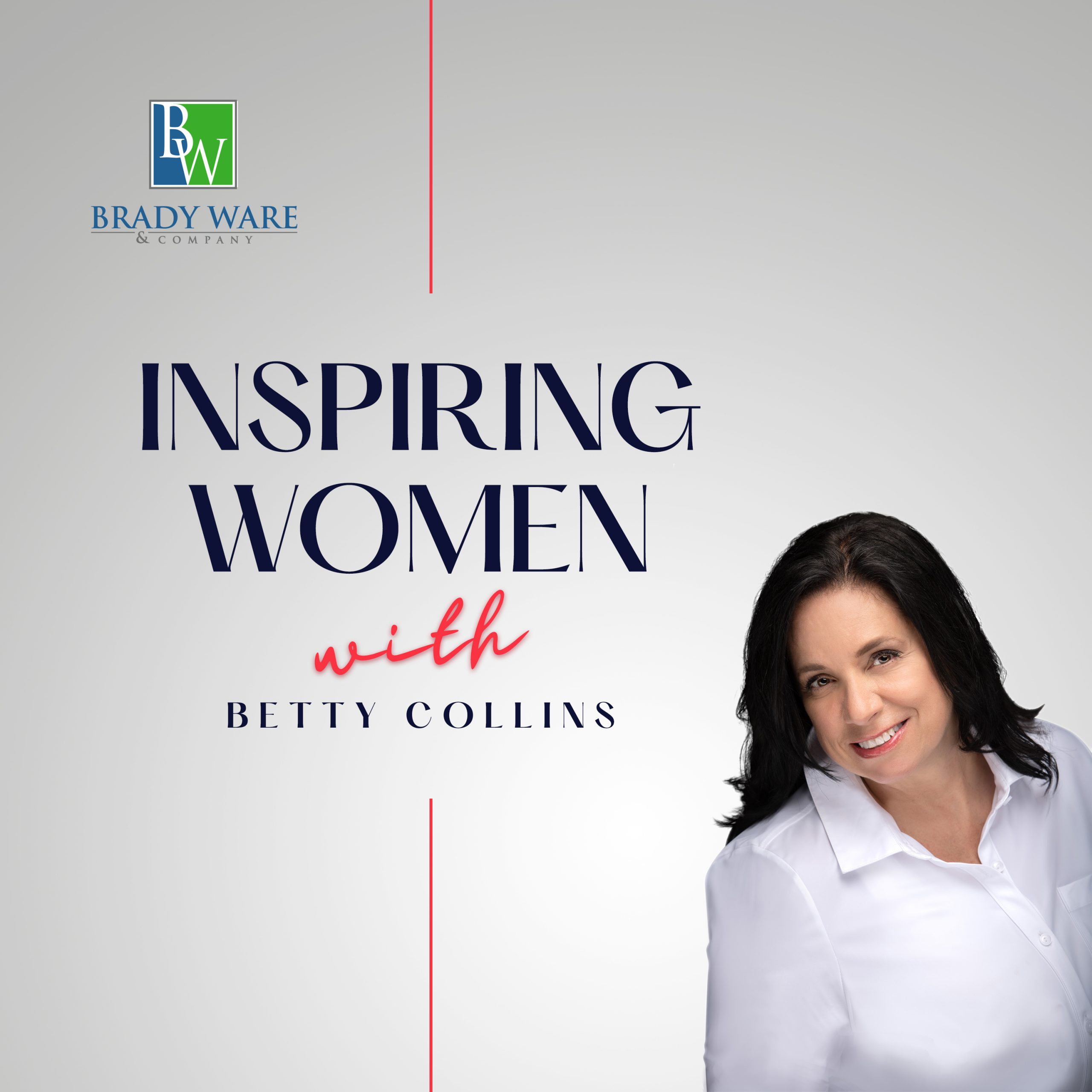
Inspiring Women PodCast with Betty Collins
Inspiring Women, Episode 13: Building Up the Women Around You
Loading
00:00 /
RSS Feed
Share
Link
Embed

Download file

Building Up the Women Around You

On this edition of “Inspiring Women,” host Betty Collins addresses the imperative all women should take on to build up, encourage, and mentor other women around them. “Inspiring Women” is presented by Brady Ware & Company.

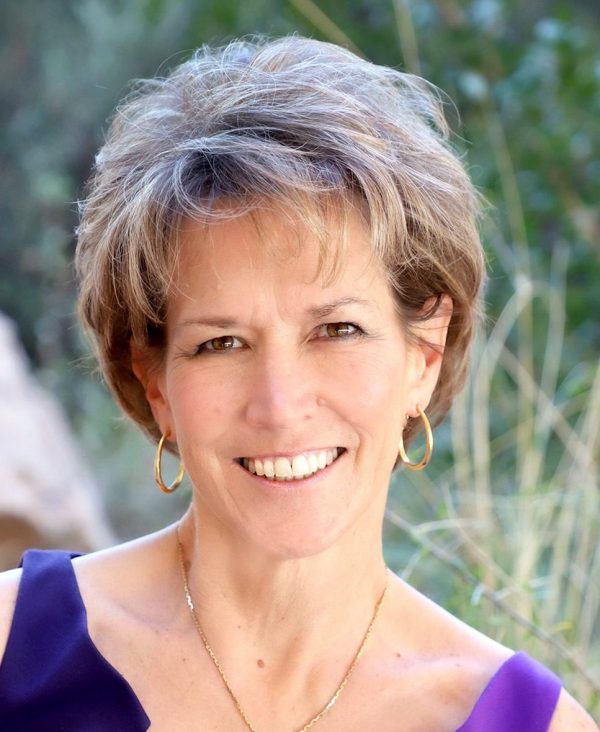
Betty Collins, CPA, Brady Ware & Company and Host of the “Inspiring Women” Podcast

Betty Collins, Brady Ware & Company

Betty Collins is the Office Lead for Brady Ware’s Columbus office and a Shareholder in the firm. Betty joined Brady Ware & Company in 2012 through a merger with Nipps, Brown, Collins & Associates. She started her career in public accounting in 1988. Betty is co-leader of the Long Term Care service team, which helps providers of services to Individuals with Intellectual and Developmental Disabilities and nursing centers establish effective operational models that also maximize available funding. She consults with other small businesses, helping them prosper with advice on general operations management, cash flow optimization, and tax minimization strategies.

In addition, Betty serves on the Board of Directors for Brady Ware and Company. She leads Brady Ware’s Women’s Initiative, a program designed to empower female employees, allowing them to tap into unique resources and unleash their full potential.  Betty helps her colleagues create a work/life balance while inspiring them to set and reach personal and professional goals. The Women’s Initiative promotes women-to-women business relationships for clients and holds an annual conference that supports women business owners, women leaders, and other women who want to succeed. Betty actively participates in women-oriented conferences through speaking engagements and board activity.

Betty is a member of the National Association of Women Business Owners (NAWBO) and she is the President-elect for the Columbus Chapter. Brady Ware also partners with the Women’s Small Business Accelerator (WSBA), an organization designed to help female business owners develop and implement a strong business strategy through education and mentorship, and Betty participates in their mentor match program. She is passionate about WSBA because she believes in their acceleration program and matching women with the right advisors to help them achieve their business ownership goals. Betty supports the WSBA and NAWBO because these organizations deliver resources that help other women-owned and managed businesses thrive.

Betty is a graduate of Mount Vernon Nazarene College, a member of the American Institute of Certified Public Accountants, and a member of the Ohio Society of Certified Public Accountants. Betty is also the Board Chairwoman for the Gahanna Area Chamber of Commerce, and she serves on the Board of the Community Improvement Corporation of Gahanna as Treasurer.

“Inspiring Women” Podcast Series

“Inspiring Women” is THE podcast that advances women toward economic, social and political achievement. The show is hosted by Betty Collins, CPA, and presented by Brady Ware and Company. Brady Ware is committed to empowering women to go their distance in the workplace and at home. Past episodes of “Inspiring Women” can be found here.

Show Transcript

[00:00:00] Well, this is an inspiring women’s podcast, so I would expect that the title today, building up the women around you would be a given, but it really is not always that case. I want to talk about that today. You know, building up and supporting the women in your life sounds easy. It sounds good. We all think that we do that. I don’t think anyone’s going to go. You know, I really don’t want to support women today. I don’t want to build women up. But unfortunately, it’s not the case when you look at the data that’s out there and the issues that are out there surrounding this topic of just lack of building up, in fact, tearing down can be fairly OK. Right. But it’s a huge barrier to the professional advancement, your professional career, you know, in your personal life when you don’t build up women around you and you don’t you don’t have that camaraderie. So, you know, sometimes we just think, well, women are more catty. Right. Men are not. Men blow it off. Their ego doesn’t allow them to do this. My emotions just get the best to me. And that’s just who I am. It’s probably still not OK. And this is always, you know, have you experienced that exodus of the Mean Girls Club? You know, I can honestly say I’ve never been a victim of I mean, Girls Club, but that’s not fun. And it’s not just in junior high, right? It’s it’s more than that.

[00:01:29] I just think we need to do better at building each other up if we really want to see us advancing, go forward. You know, we focus more on the men. You know, they’re not nice or they’re the with the white, a middle aged male. But in reality, they beat us on this one. And I think sometimes it’s why they rule the world. So I want to talk about that today. There’s a Facebook post. I see it a lot. I always save it. And it shows a woman with a crooked crown and it shows a woman straining the crown. And then it shows one of them ripping off her head. The sad reality, there’s a huge deficit that exists in the number of women who really are intentional or make it a goal to elevate other women. So, you know, it’s a choice and you hear the term we’re stronger together. Sure. Maybe corny, but you know, it really is true. It’s true for any type of community setting. It’s out there. Collectively, we have more impact. So isn’t that the goal anyways in the movement for women or inspiring those women around you? It is to have impact. If you really want to see the advancement and the empowerment of women, build them up. The them could be your family. It could be your girls. Your daughters. It could be your neighbors. You probably work with women that you need to do that.

[00:02:57] It could be your peers. I mean, you’re surrounded by other women, I’m sure. But men do a better job. I’m not going to focus on them today. The question is, why is this true? Why? Let’s start there. We’ve all been taught to be competitive. Competitive, good. You know, competitive is what is why we have a very successful marketplace in the United States. Competition can be good and healthy. It can make you better at what you do. But sometimes you get to look at there’s just as much strength and there’s miss just as much success in collaboration. Competition is fine. You just can’t take it too far. Collaboration is a good thing and you needed to probably shift a little bit your mindset with that. You know, we tend to have a defense mechanism. Women are really good about defense mechanisms and those kick in. And we have you know, it’s kind of a culture that we’ve created a lot of times. You know, we’re responding to something and we respond really negatively. And then we we go into a defense mechanism that that just keeps the the the tearing down and the lack of building. It just keeps it going. So I think the defense the defense mechanism is something you have to really check yourself on beyond defense mechanisms. And we’ve kind of had that competitive edge or attitude. We also have a queen bee mentality.

[00:04:29] The queen bee that’s everywhere. It’s really was was probably more in the back 70s and 80s with women, because that was when people. That was when women were really rising up in companies. And if you know anything about bees, the queen bee in the colony is the one who dominates. She is the one who takes control because that’s I guess what you have to do is bees. I don’t know, but there’s not a lot of room for anyone else but the queen bee. And unfortunately, a lot of times, especially in the years before us and 70s, 80s and 90s, if a woman was able to advance, say, in her career, she she was very protective of that territory because she was lucky to have it. And so that queen bee domination, maybe not taking other women with her, not having the elevator door open so they could come up. It just wasn’t there. I think it’s there a lot more probably today because there’s a lot more women at the top of the elevator. So but that usually the queen bee and undermine her, they push women out of the way. And unfortunately, that still exist. And then just negative thinking, you know, I think this is why we end up, you know, being a little little catty. We had to be the mean girls club. But the negative thinking. I mean, you heard this because it made the news over and over again.

[00:05:51] And Madeleine Albright with Hillary Clinton when she was at a campaign rally. It was. It was funny. I mean, there was no definite. But she gave her speech and she at the end said there’s just a special place in hell for women who do not vote for Hillary Clinton or support women. And it was funny. It made the news over and over again. So but but I don’t think she was wanting anyone in hell. But we don’t always have that positive. There’s a special place for women who support women in heaven, which is completely the opposite. Right. So between negative attitudes in those defense mechanism, the queen bee stuff. I just think we don’t build each other up like we could because of those habits, because of those cultures that get created. So where do you start? Where do you make this change? You have to look at at who you are in those areas. And do you have those characteristics? Are those things that you’re going. Yeah, I can relate to that because I probably am that. So that’s where you have to start. But you really have to take the high road and lead by example. You know, you just have to if you’re going to build up other women, you know, obviously the mentoring being very open and honest and consistent mentoring is not just, oh, it this is all really cool.

[00:07:03] You know, I’m going to mentor you and make you into something. Mentoring is helping you get along through your journey because it’s yours. It’s not someone else’s. And so when you have a good mentor, chances are they’re gonna be pretty open and honest with you about what they see. That’s not being catty. I think that’s helping you. I always feel sorry for the person in the office or maybe that family member, because we all have one. Right, that everyone just knows this is who they are. And so they kind of just let the behavior or let the situation be what it is. Nobody confronts it. Nobody talks to them. Instead, there be literally men and making fun of them. So a good mentor is gonna be that open, honest. They’re going to be constructive, yet have some compassion when they have to have those things. And I will tell you, this is a very simple thing, but it really it really had an impact on me. Oh, probably Billy in the early 2000s, maybe two between, you know, up to 2005, somewhere in that timeframe. I always wore the big 80s hair. I had just always worn the big hair. Not that hair is life and death. Right. But that’s what I did. And I liked it. It was easy. It was simple. My hairdresser was the same person all the time. So I got this new client who owned a salon.

[00:08:22] And I thought, you know, I should go to her salon, see what she has.

[00:08:26] And I think I had a massage and she said, you know, you really do you want us to cut your hair? And I said, Oh, no, I have a great hairdresser. She just said, you know. I must say, this is nice.

[00:08:37] Cambridge, you’re to live it in the 80s with your hair still and this is like the 2000s and there’s a thing called a straightener and you know, all these different things that you could do with your hair. And and I was a little taken back. I just, you know. But I was really kind of glad it stuck with me. She was somebody she said it very nicely. She wasn’t making fun of me. She wasn’t talking about coming back on was she’s not out of the 80s yet. Instead, she just said, hey, I’m a salon.

[00:09:03] I’m a hairdresser. We could do something really cool with your hair. And that’s a simple thing. But that’s what a good mentor does. So how else do you lead by example? You got to be tenacious when you’re tenacious.

[00:09:17] Other women around you, you don’t have to say it. Preach it. Have meetings, journal it. All these things they’re watching you. And by doing that, it’s giving them confidence and you don’t even know it. They’re seen you work through something. They’re seeing you not giving up. You’re busting through that roadblock and you’re showing them it can be done.

[00:09:36] Never underestimate the influence you will have by being tenacious. So that really helps build up the women around you because they they tend to watch it and then they hopefully follow it if it’s done well. You know, I think we can probably more some supportive, especially when someone’s wants to take a risk. So what does that mean? Well, I’m going to quit my really good job in the middle of pay. My kids are in college with tuition and I’m going to start a bracelet business. OK, now, is that a risk that you would just sit and go? Cool. I love your jewelry. Or would you say, Manolis? Let’s really talk about that before you do it. Great idea. But there’s a path probably you need to take. That’s a way you build up women so that a year from now, when they’re now borrowing money to go to school or they can’t keep their kid in school, they’re going, why did I ever do this? And there just might be a different time to make jewelry. So I think being supportive, especially when they won’t take risk, we need to help them navigate through it. And another thing you have to do, and I’m not very good at this because I don’t ever want to see people to see me with any kind of wrong emotion.

[00:10:54] I mean, I should call it wrong emotion. But, you know, I’m not a person who’s going to cry a lot in front of people. I’m not. You know, I don’t really want to go on a rampage and melt down in front of it. But sometimes you need a safe space to go. You need a place to go and just be who you can be, be who you are. Let those things down and then, you know, open the door and smile and walk out. I think women could do that more often instead of you blow up at the wrong time, in the wrong place. And then the tearing down and their ripping of the crown off the off the head comes along. The other thing you really need to do in a great way, but you better be ready to do it. You’ve got to pass on the lessons you’ve learned from bad treatment so that it doesn’t happen to other women and they can maybe be more aware of it. And lastly, be empathetic. You know, chances are other women are going through what you’re going through and come together, learn from it. But most certainly anyone around you that you see needs some advocacy for them.

[00:11:59] Go advocate for them. Stand for them. Be with them. You know, kind of defend them, do those things. Those are ways, certainly that you take the high road and you kind of get away from the wise. It happens that we act this way. These are ways that you can change the course of that circle, whether it’s your family or your community or somewhere you volunteer at your work, all that kind of stuff. When women come together, though, and build each other up and they can get that alliance that’s healthy. That alliance that’s positive. You’re going to experience power. There is power in the pact, right? There’s power in more. There’s power in numbers sometimes. It’s a good kind of power. Don’t abuse it. But that’s a result of leading the way in your circles of influences. You think on experiences you’ve had where other women have built you up? I could go on and on about this, but we have to continue to move on in the podcast. But you know who’s coming to your mind right now and you think that woman was a champion for me? That woman advocated for me. That woman really stepped up when I took a risk and she stayed with me.

[00:13:10] What woman straighten the crown for you versus ripped it off? You know, sometimes we just watched from a distance. The crowds, Kirk, and we don’t do anything about it. Right. But. I think you should look at those folks first and you thank them, you know. Think about that. Thank them. But also say me and I could also be that to other people, to other women, all the opportunities in the world are ours for the taking and ours to be shared in when building women up isn’t so much about your voice.

[00:13:41] It’s how you use your stage, it’s how you use your venue to encourage and support them so that they can find their voice.

[00:13:50] Brady, where’s my venue? And I have a responsibility to use that wisely, I try to do that through our women’s initiative, through supporting organizations like Navajo and the WNBA, using that venue wisely.

[00:14:05] How can you rise to the challenge? You keep it simple, don’t sit and think you had to have this big organizational thing and I’m going to, you know, help everyone and solve the world’s problems. Keep it simple, but take the opportunities and challenges those risk without even questioning your worth or ability or places a woman. And then don’t be afraid to be a little unruly. OK, I read a great article from Glamour magazine by Olivia Perez and she talks about being unruly. It’s OK. But listen. Just picture Thanksgiving dinner with this family. So she said I was genetically bred to be an unruly woman. I was raised in Los Angeles by a Jewish, French, Moroccan father and a Serbian mother, kind of in a Brady Bunch family, strong female figures, four sisters, two stepmothers, three godmothers and a mom, the mom who dedicate her life to bringing us all up as independent daughters. Just picture that things cute tender. These were all women I aspire to become. They they were ones who coexisted despite marriages, divorce, different backgrounds. They supported one another unconditionally. And they taught me that being soft spoken was maybe not always an option. Not at our dinner table anyways, for sure. But unruly can be good. Just say for building up other women, you know, really, that’s a whole nother podcast. But sometimes you need to be a little unruly and shake the pot, and that is a way to support women. I just found that and I just thought that was just a great way to describe her family and the people around her. And she probably uses it in a good way. But being a little unruly is OK. You know, other things you can do, though. You just show up every day for women and envision the change together with them. You know, see it together and work towards it. Certainly creating environments for women to take up space. All right. So what does that mean? Panels and conferences, events, interviews, girls night out. You know, really, it’s about thriving in their environment. What space is that that the women in your life would would really thrive in?

[00:16:20] I will say that my daughter, she gets some, you know, a little tired of hearing about my podcast because I wonder, listen. She gets kind of little tired about hearing about women’s initiative things. I mean, I’m always trying to get her to join in. But she did come to my conference in back in June, the Women’s Leadership Conference, which we had about 350 women. We had panels, we had national speakers, Navajo and WBA. We all just came together, put this conference ago and she came. And she was just it wasn’t even so much that I bribed her with new clothes to be there and said she could have a great time together. Night feeder. Well. Right.

[00:16:57] But she loved that she saw me thriving in an environment that I loved. And she she wrote on Facebook that night. I get it now. I saw it today. And that was just that was the whole. That was the best part of that conference for me. It was because it inspired her in a different way. But she was like, Mom, that’s where you belong.

[00:17:20] And that’s what I’m talking about. We’re creating space. What are environments for the women around you and your lives that would make them thrive or where you see them thrive and you’re like supporting them. And so it was a cool story. You know, other ways besides being alone, really, which I kind of like that whole phrase, be transparent and open. Do you understand that secrecy breeds jealousy? I want you to think about that again. Secrecy breeds jealousy. And that then leads to what I now call head trash. I got that from a conference that I was just. You know, those voices that head trash man being a little more open, being a little more transparent. Women tend to take it and run in secrecy, just turns into jealousy and then those voices in your head. So think about that. When you see when you see a women who are tearing each other down, chances are that could be a real way it all started.

[00:18:16] Here’s one. This is the challenge of the day. You’ll probably go right by this one. But zero gossip policy. Try that one. It’s hard sometimes if you just test right down every time you’re gossiping or take a little, you know, checkmark. There we go. You’d be surprised. I did it once because I was in a class on negativity. And that was one of the things we had to do. Every time you have mental negative thought, you had a checkmark. Every time you gossip or put someone down your check mark. You would be surprised. And it did kind of make me go, oh, it’s kind of like tracking your steps on fit, but you’re like, I’m not walking today. Right. It just just a suggestion. I know it’s not easy. You got to go beyond. You look really pretty, right?

[00:18:54] Women are so much more than their physical attributes. And we have a whole society built on that. But I would tell you to encourage women to to take care of themselves and do self care. The emotional part of your life is huge. And I kind of did that post divorce. I said these are the things I’m going to do for Betty Collins. And I sat down with The New York Times. I only ordered like three months of it because it was I don’t know why I needed to read The New York Times, but I did. I just did that for an hour on Sundays with no interruption. And once I was kind of done, I moved on. But it was something that I I it was my time. It was my place. So I think that’s something you have to look at and do. I know I just spent this last year really involved with physical activity and and weight loss. It was not because I wanted to be a size 2. I just knew that I have pretty good health for a 56 year old. And yet I’m not treating the gift like I need to because it’s a gift. I have a lot of people around me and my age who we’ve had people pass away. We’ve had people with cancer. We’ve had people who, you know, just can’t control certain addictions. I don’t have any of that. I don’t even take any of her blood pressure, heart medicine, nothing.

[00:20:07] Why would I not take care of the gift that I’ve been given into her? What’s been weird is not the size, too. It’s just I’m I’m feeling better. And it’s kind of my time. I’m not rushing out the door every morning because I’m I’m doing some workout stuff that’s not crazy. I’m not putting my toe over my head and, you know, wrapping myself up like a pretzel. I would tell you, self care go beyond that. You look pretty stuff being a vehicle that turns a young woman with big dreams into what she was destined to be. You know, you see people with potential and you don’t do anything about it. But I would tell you, never underestimate tapping into that woman’s potential that she can’t see. But you do even this podcast. I question myself, should I keep doing this podcast? And the people that help me record this always say you have no idea what the potential this has. You need to keep going. You need to keep doing. Again, women building up women. Sounds easy, sounds good. It is my hope that you can step back, observe and dive in by speaking life into a woman around you. Doing life together stronger, together with some fun along the way in my life. I have an amazing mom, a big family, 41 to be exact as my immediate family, lots of women. I have a daughter and a daughter law.

[00:21:23] I work for a company where I direct a women’s initiative where 49 percent of the workforce are women. I’m part of several groups. I mentioned Navajo and the WNBA. So women in teh team building are a pretty daily part of my life. Really, it’s a responsibility and it’s a deep passion. I’ve seen both sides building and tearing. We are better together. Ladies, take to heart this podcast. Do some soul searching on your part of building up other women. Go forth and straighten or pick it off the floor. The ground she is wearing. Don’t stand in the background and watch it. I’m Betty Collins and I’m glad you joined me today.

Tagged With: CPa, CPA firm, Dayton accounting, Dayton business advisory, Dayton CPA, Dayton CPA firm, Inspiring Women, Inspiring Women podcast, mentoring, mentoring women, woman owned business, women entrepreneurs, Women in Business, women-owned businesses

Decision Vision Episode 30: Should I Implement a Sustainability Program in My Business? – An Interview with Troy von Otnott, Massive Technologies

September 5, 2019 by John Ray

Decision Vision
Decision Vision
Decision Vision Episode 30: Should I Implement a Sustainability Program in My Business? – An Interview with Troy von Otnott, Massive Technologies
Loading
00:00 /
RSS Feed
Share
Link
Embed

Download file

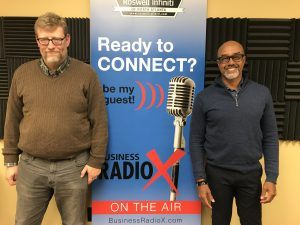
Mike Blake and Troy von Otnott

Decision Vision Episode 30:  Should I Implement a Sustainability Program in My Business? – An Interview with Troy von Otnott, Massive Technologies

How do I start a corporate sustainability program at my company? What do the insurance markets reveal about the necessity of a sustainability program for my business? The answers to these questions and more are covered by Troy von Otnott, Massive Technologies, in this important discussion with host Mike Blake. “Decision Vision” is presented by Brady Ware & Company.

Troy von Otnott, Massive Technologies

Troy von Otnott

Troy von Otnott is the CEO of Massive Technologies, a clean technology and sustainability consulting company in Atlanta, Georgia. Massive is currently pursuing business opportunities in commercial/industrial solar asset financing and deployment in Puerto Rico, development of graphene-enhanced ballistic products for the U.S. and Canadian militaries, and is currently consulting with a major Chinese investment bank on a strategic plan to significantly reduce China’s carbon emissions and pollution by helping to transition some of  their electric generation assets from coal to cleaner burning natural gas.

For more information, you can email Troy directly.

Michael Blake, Brady Ware & Company

Mike Blake, Host of “Decision Vision”

Michael Blake is Host of the “Decision Vision” podcast series and a Director of Brady Ware & Company. Mike specializes in the valuation of intellectual property-driven firms, such as software firms, aerospace firms and professional services firms, most frequently in the capacity as a transaction advisor, helping clients obtain great outcomes from complex transaction opportunities. He is also a specialist in the appraisal of intellectual properties as stand-alone assets, such as software, trade secrets, and patents.

Mike has been a full-time business appraiser for 13 years with public accounting firms, boutique business appraisal firms, and an owner of his own firm. Prior to that, he spent 8 years in venture capital and investment banking, including transactions in the U.S., Israel, Russia, Ukraine, and Belarus.

Brady Ware & Company

Brady Ware & Company is a regional full-service accounting and advisory firm which helps businesses and entrepreneurs make visions a reality. Brady Ware services clients nationally from its offices in Alpharetta, GA; Columbus and Dayton, OH; and Richmond, IN. The firm is growth minded, committed to the regions in which they operate, and most importantly, they make significant investments in their people and service offerings to meet the changing financial needs of those they are privileged to serve. The firm is dedicated to providing results that make a difference for its clients.

Decision Vision Podcast Series

“Decision Vision” is a podcast covering topics and issues facing small business owners and connecting them with solutions from leading experts. This series is presented by Brady Ware & Company. If you are a decision maker for a small business, we’d love to hear from you. Contact us at decisionvision@bradyware.com and make sure to listen to every Thursday to the “Decision Vision” podcast. Past episodes of “Decision Vision” can be found here. “Decision Vision” is produced and broadcast by the North Fulton studio of Business RadioX®.

Visit Brady Ware & Company on social media:

LinkedIn:  https://www.linkedin.com/company/brady-ware/

Facebook: https://www.facebook.com/bradywareCPAs/

Twitter: https://twitter.com/BradyWare

Instagram: https://www.instagram.com/bradywarecompany/

Show Transcript

Intro: [00:00:01] Welcome to Decision Vision, a podcast series focusing on critical business decisions, brought to you by Brady Ware & Company. Brady Ware is a regional full-service accounting advisory board that helps businesses and entrepreneurs make vision a reality.

Mike Blake: [00:00:20] And welcome to Decision Vision, a podcast giving you, the listener, clear vision to make great decisions. In each episode, we discuss the process of decision making on a different topic. Rather than making recommendations because everyone’s circumstances are different, we talk to subject matter experts about how they would recommend thinking about that decision.

Mike Blake: [00:00:37] My name is Mike Blake, and I’m your host for today’s program. I’m a Director at Brady Ware & Company, a full-service accounting firm based in Dayton, Ohio, with offices in Dayton; Columbus, Ohio; Richmond, Indiana; and Alpharetta, Georgia, which is where we are recording today. Brady Ware is sponsoring this podcast? If you like this podcast, please subscribe on your favorite podcast aggregator. And please also consider leaving a review of the podcast as well.

Mike Blake: [00:01:01] So, our topic today is sustainability programs. And whether the issue or the conversation has revolved specifically around global climate change, whether it has been around local pollution, whether it’s been about economic sustainability and recycling materials, whether it’s been about land conservation, some elements of the environmental movement and, by extension, sustainability, I think, is in everybody’s corporat⁠e⁠—everybody’s consciousness.

Mike Blake: [00:01:35] And maybe it’s considered polarizing, maybe it’s not, but it’s not something that nobody has an opinion on. And there’s a sense that companies have⁠⁠—at a minimum, all companies have an opportunity to be constructive in terms of environmental sustainability, and how they impact the environment, and what their footprint looks like, and are they reinvesting back what they’re taking out of the environment to conduct their commerce?

Mike Blake: [00:02:03] And then, I think where there’s a disconnect is, what is the obligation of the corporation to, somehow, either ameliorate the impact that they themselves have on the environment, or even to be a net positive contributor to the environment, even beyond whatever impact that they have? And I don’t think it’s fair to say there’s a right or wrong answer to the question. But if you’re a business leader, you’re faced with the question of, should we be doing something to be promoting the environmental, ecological sustainability of our business? Should we be doing more than we’re already doing? Or in some cases, are we doing too much? Should we be scaling it back? Because there can be a cost to this, at least, in the short term.

Mike Blake: [00:02:50] And that’s particularly noteworthy in the public markets where the public markets reward investors. Frankly, they reward managers based on short-term metrics and short-term gains much more than they do long-term metrics and long-term gains. And so, to some extent, there actually can be a fundamental financial and economic disconnect that maybe, otherwise, prevents some behavior that managers, in fact, would like to do but, somehow, feel constrained.

Mike Blake: [00:03:23] And so, the decision really that’s, then, put before us as business leaders is, should we be thinking about the environment more? Should we be thinking about the environment around us, not just as a publicity exercise, but is this something that we can and should be building into our business plan? And most importantly, we’re often told that there’s a palpable cost, there’s a tradeoff that, well, you can plant some trees, you can save a polar bear, you can help rising sea levels, but this is going to cost you something to do that. And maybe we’re going to challenge a little bit of that perception today or maybe we’re going to confirm it. And that’s about as much as I know. So, I’m going to stop talking about that myself and bring on our guest.

Mike Blake: [00:04:12] I’m very pleased to introduce Troy von Otnott. Troy is the CEO of Massive Technologies, a clean technology and sustainability consulting company here in Atlanta, Georgia. Massive Technologies serves as a consultant to renewable energy and sustainability-focused companies. The company also facilitates sustainable mineral and fuel commodity transactions on behalf of a large Chinese investment bank, helping to mitigate their pollution and climate change challenges, which we know are myriad. And we probably don’t know the full story because they’re not exactly the most transparent country in the world when it comes to their own issues. Troy is also the ambassador for Cleantech Open, a national nonprofit program that encourages entrepreneurs to develop technologies to address environmental sustainability challenges. Troy, welcome to the program. Thanks so much for coming on.

Troy von Otnott: [00:05:02] It’s great to see you, Mike.

Mike Blake: [00:05:04] So, we almost missed the podcast because we are talking so much before the podcast. You got so many interesting things to talk about. And I’m going to dive right into what was a fascinating backstory that I did not know. How did you become engaged as you have been with the sustainability? This is not something you necessarily grew up from as a kid thing thinking, “I’ve got a—this is my thing,” right?

Troy von Otnott: [00:05:27] No, not at all. In fact, I’m from New Orleans. And as you know, Louisiana is one of the largest oil and gas production states in America and a petrochemical production center as well. And so, being an environmentalist in Louisiana is kind of weird, and you’re thought of as a bit of an outlier.

Mike Blake: [00:05:50] Small club, right?

Troy von Otnott: [00:05:51] Yeah. And so, it’s not something that I ever thought about being involved in. In most of my adult life, as I was mentioning before the podcast began, I spent most my life doing event production. New Orleans produces a lot of events, and I was enjoying that career. But in 2005, my world and all my fellow citizens in New Orleans worlds changed due to the impacts of Hurricane Katrina. And we lost a lot. We lost over 2000 lives, billions of dollars of property value. And I, personally, lost an entire career.

Troy von Otnott: [00:06:34] And so, it was at that moment that it made me start to reflect and think about why was this particular storm more damaging, more impactful than others. And after doing a substantial amount of research, I started to understand a little bit more about global climate change and felt like I needed to direct my talents and my skills to try to play a small role and do something to have an impact and try to rebuild the city in a more sustainable way.

Mike Blake: [00:07:09] And I mean, it really was a much more impactful storm because let’s face it, New Orleans gets hurricanes, right? I imagine—I don’t know, I grew up in Boston, we got one hurricane every 20 years, and it’s a category one. I imagine, New Orleans, wake me when it’s a Category IV, and then I’ll start to get excited.

Troy von Otnott: [00:07:26] Absolutely. The complacency for Hurricane Katrina was staggering. In fact, on a personal basis, my sister, and my niece, and nephew were very complacent. And as much as I had a bad feeling about this one and begged them to leave with me, they decided to stay. And for about two weeks after the storm landed, they were lost, lost in the system. And I thought they were dead because the ranch home that they were living in, in a suburb of New Orleans, had about three feet of water over its roofline. And fortunately, they were able to swim to the only two story home on their street and were rescued by helicopters. You probably remember those images from television.

Troy von Otnott: [00:08:08] So, it was, personally, a devastating experience and literally made me just want to completely change gears, switched direction, and try to see if I can add value to figuring out solutions, and become a part of the solution, instead a part of the problem.

Mike Blake: [00:08:26] So, I’ll interject. They said that humor is tragedy plus timing. We’re talking about this before. And I thought I was in Connecticut when this happened. I was not. We, actually, just moved to Atlanta. And when Katrina happened, it occurred at the same time as Dragon Con happened. And I remember being at Dragon Con. For those of you not in Atlanta, that’s basically our Comic Con. So, if you’re into dressing up as a Wookie, Dragon Con is for you, right, Labor Day weekend. And I was actually in a bar. I was not in costume. I don’t do that. But there are actually a couple of folks that had fled the city. And I was sitting next to this guy and he was—we’re watching on TV as they’re doing—just as you said, they’re pulling people out.

Mike Blake: [00:09:10] And here’s a guy whose life is completely uprooted. He’s watching it being uprooted in real time. And in the background behind him, there are storm troopers. There are people in Star Trek uniforms, Battlestar Galactica, Japanese Anime, everything you can possibly imagine. I’m thinking, “Boy, this poor guy next to me must think he cannot catch a break in any—” Either that or he thinks he actually fell asleep somewhere on the road, and he’s still dreaming. It’s a very odd juxtaposition. So, you-

Troy von Otnott: [00:09:44] By the way, not quite as odd as you being an esteemed accountant by day, father of dragons by night, so.

Mike Blake: [00:09:48] There you go, there you go. So, you had the shift, It made a huge impact on you. And was your family okay by the way? I didn’t ask you about that.

Troy von Otnott: [00:10:01] Yeah. Everyone survived. And lost property, but property can be replaced. In fact, that’s exactly what the first thing I did is I started working with the local city planning commission to work on building code improvements because we needed to build structures that we’re going to be able to sustain a Category IV or Category V storm. We don’t have a lot of those structures in New Orleans. We’ve got 150-year-old structures that, actually, did survive the wind loads from the storm but didn’t survive being submerged in 12 feet of water for two to three weeks.

Troy von Otnott: [00:10:34] So, I started building sustainable housing. We created a modular home company and was very successful. And ironically, I wanted to try to build a highly efficient and energy-efficient home. And we accomplished that after a couple of iterations working with our manufacturer. But I got to a point where I couldn’t make the home any more energy-efficient without adding some form of renewable energy. And so, I started doing some research and looking for a solar energy company. And lo and behold, there was not one in the entire state.

Troy von Otnott: [00:11:12] So, I started researching why that was the case. Why is California, why is New York and Northeast leading in the early stages of solar energy development, but we weren’t? I mean, we’re an energy production state, but we’re producing fossil fuels, not clean energy, and that didn’t make any sense to me. So, I worked with a group of of caring and passionate environmentalists, and we actually drafted a bill, which was a Louisiana renewable energy tax credit bill. And when I say we had no idea what we were doing, we really didn’t know what we were doing. But we were bull in China cabinets, and we were just committed to getting it done. And at the end of the day, at the next legislative session, we wound up passing a clean energy bill that in recent memory, none of the politicians could remember when a bill actually passed unanimously in the state legislature. They thought it was like a unicorn, it didn’t exist.

Troy von Otnott: [00:12:10] And so, I remember getting a call from the governor’s office after the bill passed, and they said, “Well, look, you’re the lead guy working on this bill. You need to come to the State Treasurer and meet with him.” And I said, “What did I do?” And he’s like, “Well, you need to tell the government how much money this tax bill is going to cost our state treasury.” And I literally said, “I have no idea.” And they’re like, “Well, you better figure it out because you did this bill.”

Troy von Otnott: [00:12:34] So, I go to the State Treasurer’s office two days later and they said, “Okay, how many individuals, or homeowners are likely to put solar panels on their house?” And I just kind of came up with a number and literally out of the air. And the guy was writing on a notepad, and he’s like, “Okay, so, that is equivalent to about $500,000. Does that sound right?” I said, “It sounds great to me.” And so, he’s like boom, stamp, “It’s good. Governor will sign it tomorrow.” I’m like, “Does this really happen?” And he’s like, “Yeah, it’s happening.”

Troy von Otnott: [00:13:06] And so, two days later, after the governor signed it, I get a phone call. It was from a 303 area code, and it was a guy named Shane. And he’s like, “Hey, are you the guy that did the renewable energy tax credit bill?” And I was like, “Yeah.” And I was like, “Did I do something wrong?” He’s like, “No, you did something extraordinary.” I was like, “What do you mean?” He goes, “Do you know you passed the most aggressive state tax credit in the United States for renewable energy?” I said, “I did?” He’s like, “Yeah. California has about a 10% tax credit. You have a 50% tax credit. How did you do that?” I was like, “I don’t know.” He said, “What business are you in?” I’m like, “I build energy-efficient houses.” He’s like, “You’re not in that business anymore.” I said, “I’m not?” He said, “No.” I’m like, “What business am I in.” He says, “You’re in the solar business now. I’m coming to see you tomorrow.” And I was like, “Okay.”

Troy von Otnott: [00:14:00] Guy gets on a plane, comes and meet me at the local hotel on Canal Street. And after about six hours, he said, “Hey, I’m with a company called SunPower. We’re one of the biggest brands of solar panels in the world. And you’re now our partner in Louisiana.” And literally, within a week, we formed a company called South Coast Solar. And within about six months, it went from me, my old friend, Tucker Crawford, and a solar expert named Scott Oman, and a part time accountant operating in my friend’s second bedroom to a downtown office with about 10 employees and about $3 to $4 million in sales.

Troy von Otnott: [00:14:36] And within two years, we became the largest clean energy company in the southeast. And it was a really interesting and wild ride. And we got indoctrinated into the national scene because people were just so excited to see someone outside of California or the Northeast actually develop a sustainable clean energy business industry. And so, we’re really proud of what we did with South Coast Solar.

Mike Blake: [00:15:00] So, that segues perfectly to the next question, and that is that especially here in the southeast, red state haven, there’s a perception and, really, I think, kind of a knee jerk reaction about when you say sustainability, you’re kind of bracing yourself for pushback, argument, lots of questions. I mean, as it turns out, I drive electric. And I still I remember one of the first times I drove outside of Atlanta, I went to a hotel. That’s where there’s a place to to plug in my car. They said no, but they said no in a way that their eyes said comrade at the end, right. Go back to Russia basically.

Troy von Otnott: [00:15:45] Right.

Mike Blake: [00:15:45] And I think we still—I still think we face a lot of that in certain sectors. And I got to imagine you face some of that in Louisiana, right? Especially a fossil fuel state. Talk about entrenched interests.

Troy von Otnott: [00:15:56] You know, it’s funny. I had a very close friend who was actually the CEO of of Entergy, which is the dominant energy company in New Orleans. And this is a friend that used to sit on my sofa and play Madden football with me. And so, now he’s running the biggest utility company in the south at that time. And he said, “Hey, I’m supportive of what you’re doing. I want you to know that.” He goes, “But you guys have got to get your cost in line because solar is way too expensive, and we can’t buy any of it.”

Troy von Otnott: [00:16:27] Well, flash forward 13 years later, and they’re still singing that same tune, right? So, it’s—and ironically, what’s happened in Georgia, regarding Georgia Power and Southern Company, is when I first moved here in 2010, they were not very supportive of the solar energy industry. In fact, it almost felt like they were running disinformation campaigns to suggest that clean energy doesn’t even work in Georgia. But at the end of the day, what all these utilities come to the realization is they have an obligation to their ratepayers to buy the cheapest form of energy that offers the most stability and that their ratepayers desire, right? Those are the three things. But number one is cost, right?

Troy von Otnott: [00:17:16] So, in 2018, solar is, by far, the cheapest energy outside of coal, natural gas, nuclear. It blows them all away. The only thing that’s cheaper than that is wind, but we don’t have a lot of onshore wind in this part of the country. So, now, even though Georgia is not a renewable portfolio state, there’s no mandate by the government to do this, Georgia Power, with the help of the Public Utility Commission, winds up buying a substantial amount of solar. We have a problem, it’s a problem, but it’s also a blessing that Atlanta is called a city in the forest because there’s so much tree cover that it’s almost impossible to find a home that’s not surrounded by 40 or 50-foot pine trees, right?

Mike Blake: [00:17:59] Right.

Troy von Otnott: [00:18:00] And so, you can’t get a direct line to the sun. So, you have massive shading issues everywhere. So, while there is very little residential solar in the market, in fact, I think in the entire state, only 40 homes last year put solar on their houses-

Mike Blake: [00:18:14] Okay.

Troy von Otnott: [00:18:14] … but utility scale solar has taken off. In fact, I helped Georgia Power put together a construction team to build 17 solar farms just last year. So, the fact is that they are now moving towards greening their own grid. And they’re doing it, not because it’s green, not because it’s sustainable, because it’s the lowest form of stable energy that they can offer the ratepayers.

Mike Blake: [00:18:43] And I’m curious, have they crossed the 1 gigawatt of capacity yet, solar?

Troy von Otnott: [00:18:48] They have.

Mike Blake: [00:18:48] Okay.

Troy von Otnott: [00:18:49] Yeah. In fact, the PUC just put out a new directive for them to buy, I think, another 1.6 gigawatts-

Mike Blake: [00:18:56] Okay.

Troy von Otnott: [00:18:56] … over the next few years. So, while that’s a decent amount of clean energy, I mean, it pales in comparison to what’s happening in California, pales what’s happening up in the Northeast. But it’s so much better than what it was five, six, seven years ago, right? So, at the end of the day, if you pull the ratepayers and ask them, “What form of energy do you want coming into your home or your business?” 80% of them will say, “Give me the clean stuff, right. I don’t want the coal because I don’t want my kid suffering from asthma.”.

Mike Blake: [00:19:31] Right.

Troy von Otnott: [00:19:32] Natural gas, that’s better. It’s a transition. It’s a bridge fuel. Let’s do that because we don’t want to have coal. The nuclear is just so expensive. It’s almost impossible to get a plant up and operating. And then, talk about annual maintenance and then decommissioning, which never gets into the economic model, which is kind of crazy to me.

Troy von Otnott: [00:19:50] But at the end of the day, cities and states are taking lead in the clean energy transformation. And there’s over 125 cities in the United States now that have mandated 100% clean energy sometime between 2035 and 2050. So, it’s coming, and it’s coming a lot faster than most people ever thought it would. ***

Mike Blake: [00:20:12] So, you bring up an interesting point. And I think, if I had asked this question five years ago, the answer would have been very different. What percentage of the sustainability program question now is being driven purely by economics, where it’s a more manifestly positive business case as opposed to, for whatever reason, we feel it’s the right thing to do case?

Troy von Otnott: [00:20:37] I would say 100% of it is, because at the end of the day, the definition of sustainability is having a business that will be around, right?

Mike Blake: [00:20:47] Yeah.

Troy von Otnott: [00:20:47] And so, what sustainability, ultimately, means is driving down cost of your operation, right? And so, when you talk about greening your supply chain, or you’re talking about more efficient lighting, or you’re talking about clean energy, all of those things have a return on investment, right?

Troy von Otnott: [00:21:05] So, at the end of the day, in order to be sustainable it means, you have to be able to turn a profit. And the only way you can turn a profit is to manage your operational cost. And everything that happens, whether you’re recycling, reusing, using smarter forms of energy, more efficient forms of energy, dealing with your waste issues in a more sustainable way, it’s all about saving money. And almost every single sustainability officer at any smaller, or midsize, or even large corporations here in Atlanta will tell you, this is not about politics. This is not about green versus red. This is about being green to make green. And so, if you think about it from that standpoint, everyone should be doing it because if you don’t manage to be profitable, you’re not going to be around to even have this discussion later on down the road.

Mike Blake: [00:22:01] So, I want to go to the flip side now. As I mentioned, we’re in a red state, there are a lot of red states around us. And you and I are roughly the same age. I was not a voting age when Jimmy Carter was president, but I do remember the whole sweater thing, turn the thermostat down, the 55-mile-an-hour speed limits and so forth. But that is because we just couldn’t buy the oil we wanted, right?

Troy von Otnott: [00:22:26] Sure.

Mike Blake: [00:22:26] It was scarcely there. And everybody mocked the solar panels on top of the White House. The first thing Ronald Reagan did was take it down-

Troy von Otnott: [00:22:32] Take it down.

Mike Blake: [00:22:33] … supposedly.

Troy von Otnott: [00:22:36] Yeah.

Mike Blake: [00:22:36] In a conservative environment, has the risk of stigmatizing yourself by being seen as too green, and hippie, and whatnot, is that no longer a concern? Is that sort of an old stereotype that’s gone by the wayside, or is that something that somebody needs to really kind of think about depending on what business they’re in and where they do it?

Troy von Otnott: [00:22:55] So, that question is interesting. And I think you get different answers from different people, right. If you talk to people in our age range, they probably are not as educated about these issues. But if you think in terms of the current generation of workers coming into the workforce, the millennials, the millennials care about this more than anything. They care about the environment more than anything because they are the ones that are going to be living in a completely different environment as they age, right.

Troy von Otnott: [00:23:29] I mean, you can have a political discussion, I guess, to some extent, about whether climate changes are anthropogenic or manmade, right? You can have that conversation if you want to. But at the end of the day, you cannot refute that the climate is changing and that it’s affecting agriculture, it’s affecting refugees, right. It’s affecting access to clean water. It’s affecting transportation systems. It’s affecting our entire global ecosystem, right. So-

Mike Blake: [00:24:01] And public health.

Troy von Otnott: [00:24:01] And public health. Public health is a really big issue that really people should be focusing on, but they don’t. I was just reading an article yesterday that I don’t know how many people died in Japan last week because of the heat wave, but it’s almost unsustainable. And so, if you think about—if you’re developing a workforce, and let’s just say you’re Coca-Cola, and you’re hiring millennials, they care about your environmental and social governance more than any other generation because they’re the ones that are going to have to deal with the ramifications of a changing climate.

Troy von Otnott: [00:24:38] So, if you don’t speak that language, and you don’t address their issues, the next company will. And so, it’s a recruiting issue more than anything. You’re not going to get the best of the best unless you are being environmentally and socially responsible, not just from a greenwashing standpoint, but this is a core tenet of who we are and what we are as a company.

Mike Blake: [00:24:59] And greenwashing is what?

Troy von Otnott: [00:25:00] I mean, greenwashing is a company saying that we’re doing all these amazing, wonderful, green things. But at the end of the day, it’s more of a PR campaign than it is an actual programmatic impact that the corporation is having to the bottom line, right. So, you can—Coca-Cola, actually, got pinged on this in the last few years, where they were making assertions in the global media that they were addressing water shortage issues or water quality issues all over the world. And when it came down to a lot of third-party independent organizations that are charged with understanding water scarcity issues, they realized that those issues haven’t been affected at all, and they haven’t changed their policies and their procedures to really ensure that there’s not an overuse of water in their respective markets where they’re operating their bottling facility.

Troy von Otnott: [00:26:00] So, they took that very seriously and said, “We cannot be looked upon in the world as a company that says what they’re doing and not do what they’re doing,” right? So, that’s what really greenwashing is. It’s just sort of a PR campaign to say we’re green just because it makes everybody feel good, but you can’t sit down and put your your corporate sustainability report out and have confirmed metrics by a reputable third-party organization.

Mike Blake: [00:26:28] Now, you touched on something that harkens back to a conversation we had before we hit the record button that I want to come back to, which is it’s not just about millennials anymore either. The capital markets are now paying a lot of attention to this. I read an article recently where I think something like 78% of Wall Street analysts now are factoring in the impact of climate change-

Troy von Otnott: [00:26:49] Absolutely.

Mike Blake: [00:26:51] … in their valuation models.

Troy von Otnott: [00:26:52] But you know why?

Mike Blake: [00:26:55] I may or may not. Tell me.

Troy von Otnott: [00:26:56] Because of the global insurance market, right? I mean, insurance drives everything, right? And if you can’t insure a business, there is no business. And so, the insurance markets are basically saying, “Hey, this climate change thing is real. It’s now. It’s not something that’s coming 10, 20, 30 years from now. We’re experiencing impacts of it right now. And if we don’t start addressing this issue, we’re not going to be able to insure businesses. And if we can’t insure a business, they cannot operate.”

Troy von Otnott: [00:27:26] But you mentioned financial aspects of this whole industry. And we talked briefly about this part of this—part at the start of the podcast. But, you take an organization like BlackRock, right? I think they’re the largest financial management company in the world. They have several trillion dollars under management. Their CEO last year, Larry Fink, put out a directive to all of their associates globally and said, “You guys better start taking environmental social governance seriously. And if you don’t, and you don’t have verifiable third-party validation of what you’re doing regarding ESG, you’re highly likely not going to get capital from us again.”

Troy von Otnott: [00:28:05] And it’s weird because BlackRock still funds coal plants, and they still fund natural gas, and they still fund oil and gas. And so, you can’t just turn on a dime, right? This is a battleship. It takes a very slow curve to change direction. But when it comes top down from the CEO saying, “You guys better take this seriously, or you’re not going to get capital,” I don’t care how big of a company you are. Apple has probably more cash than anybody in the world and are constantly borrowing money because debt is cheap. They don’t want to use their own capital when they can get 2% money from the bond market.

Mike Blake: [00:28:38] Sure.

Troy von Otnott: [00:28:38] Well, you’re not going to get that bond market money if you don’t have a serious commitment, a verifiable commitment to environmental and social governance all throughout your organization.

Mike Blake: [00:28:49] And part of that goes back to the insurability. You’re not going to get 2% money-

Troy von Otnott: [00:28:55] No way.

Mike Blake: [00:28:55] … if you’re not insured.

Troy von Otnott: [00:28:56] No way.

Mike Blake: [00:28:56] Right? You suddenly go from a-

Troy von Otnott: [00:28:59] Well, you can’t even operate.

Mike Blake: [00:28:59] Right.

Troy von Otnott: [00:28:59] You cannot operate. I mean, I was working on a new business model just last year trying to help Native American tribes do some interesting things that their laws, their sovereignty allows them to do. And unfortunately, we could not get the tribe insured. And we dealt with the top 17 global insurance. I mean, all the big names in the world. And every single one of them, over the course of a year, said, “No, we cannot give you a policy.” And therefore, there was no business. So, I have firsthand experience knowing that if you cannot get insurance, you cannot operate a business.

Mike Blake: [00:29:39] So, let’s say we want to think about setting up a sustainability program for our company for the first time. We often hear that some companies—that companies have a chief sustainability officer or one individual that, at least, ostensibly answers for all these sustainability initiatives. Is that a requisite? Is it such a distinct skill set that even if I’m a small company I, kind of, just going to bite the bullet and hire that? Or are there companies that have successfully rolled that portfolio into other responsibilities that already exist?

Troy von Otnott: [00:30:08] I mean, I think it depends on the size of the company, right. So, if you’re planning on putting out a corporate sustainability report, you’re going to need a CSO. But if you’re just a small to mid-sized business, there are really simple things that every business can do. I mean, really simple things like, reduce your energy load, right. I mean, the cheapest and easiest thing to do is to address your lighting in your building, right. And the technologies are so far advanced now and the short payback period is ridiculously low. I mean, any kind of a major LED lighting conversion in a small office like this or a manufacturing facility, two-year ROI max. A lot of them are coming in at one year. And so, if you can’t fund something on a one-year ROI basis, you’re in the wrong business.

Mike Blake: [00:30:56] Right, right.

Troy von Otnott: [00:30:57] So, there are things you can do to address your supply chain. There’s things you can do to address your waste material resources. There are things you can do to to address more sustainable transportation. I mean, there are many simple things that can be done. You don’t have to have a very complex program. But what I’ve learned in talking to companies and students all over the south over the last couple of years about this issue is, they want to be involved, and they want to be engaged, right.

Troy von Otnott: [00:31:26] So, it’s kind of a—I relate this, not on a really appropriate couple basis, but if you think about XPRIZE, right. XPRIZE does these really interesting challenges, whether they’re medical, whether they’re lunar landings, whether they’re clean energy or clean water, but they create competitions, right? And people like to compete. It’s the very nature of who we are. We always compete with each other.

Troy von Otnott: [00:31:52] And so, smart companies create these little, sort of, sustainability competitions, and they create real incentives and real rewards. So, whoever wins, I’m the most sustainable employee in my group for the first quarter, guess what? I get a trip, and I get to go to Cancun, and lay on the beach for three days with pay time off. So, I mean, I think the more you can engage a, sort of, employee plan that allows them to feel like they’re taking some responsibility and doing something that has impact, and it’s not just truly a top-down directive, it’s literally a bottom up, it becomes fun. You can even gamify it and really create teams. And people care about the stuff, and they want to feel like they’re having impact. That’s the biggest struggle.

Troy von Otnott: [00:32:39] Climate change, the biggest problem with climate change is the enormity of the scope. Every time I talk to someone who’s ill-informed about climate change, I might as well be watching a slow motion train wreck, right, because at the end of the day, their brain just melts down. They just like, “What can I do about carbon emissions in the atmosphere? I can’t go up there and grab those molecules.” And it’s just like if the problem’s too big, people don’t know how to deal with it.

Mike Blake: [00:33:08] Right. So, The good news, I think, is that sustainability is a trend that is accelerating now for various reasons, and some of it we’ve spoken about today. Is there a company or organization out there you think is in a particularly good job that has some lessons to teach other companies to follow?

Troy von Otnott: [00:33:26] Yeah. So, I didn’t even know about this until a few years ago when I heard a chief sustainability officer for Cox Enterprises give a presentation at Georgia Tech. I was speaking on clean energy, and they came in and talked about corporate sustainability. And I was literally blown away at how much impact one of Cox Communications divisions has on sustainability. So, they’ve got a good internal group called Cox Conserves. And this is a really dynamic division of that communications company. Well, they’re more than a communications company now. They’re pretty diversified.

Troy von Otnott: [00:34:03] But this organization does some extraordinary things, not the least of which they actually have their own budgets. So, they’ve created their own entrepreneurial co-working ecosystem within that organization. And they, basically, instead of just saying, “Hey, guys, we’re going to have a competition to see who drives the fewest amount of miles or who recycles the most cans,” I mean, they literally say, “Hey, Bob, do you have a really cool idea about how to save the planet? If so, why don’t you write a little executive summary and submit it to us? And if we like it, we will fund you. We will use our own internal capital resources to turn our employee into a sustainability entrepreneur.”

Troy von Otnott: [00:34:49] Like, that kind of forward thinking is really what’s going to be needed in order to make this transition. Because this problem is so big, it needs a lot of people working on it. And people don’t understand that little things actually add up to big things, right. I mean, to change one bulb, recycle one can, drive one mile less than you did yesterday. I mean, a lot of little things can add up to a big thing. And so, when people say, “I can’t do anything, this problem is too big,” that’s not accurate.

Mike Blake: [00:35:20] You mentioned about gamification, and I think you’re really onto something. So, I drive a Volt, and which is a serial hybrid. First, it’s rated for the first 38 miles on electric. After that, it’a nine gallon gas tank. And there’s a very active Volt community on Facebook, Volt owners basically. And there’s a competition to see how much mileage you actually can get out of that car on battery, right. And so, people are doing all kinds of things. Probably, it may or may not be the safest things in the world, but they’re over inflating their tires, right, like, 48 PSIs. So, you go over a bean bag, and you are jolted, right?

Mike Blake: [00:36:04] Right, right, right.

Troy von Otnott: [00:36:04] Or, how much can you coast, and maybe you don’t turn the air conditioner on. And the most I’ve ever gotten out of was 46 miles an hour, and I was miserable. I’ll never try that again. But it does work, right?

Troy von Otnott: [00:36:17] Absolutely.

Mike Blake: [00:36:18] And I think the Volt’s dashboard is set up for that feedback because it shows in real time how much distance you have left, right? And I’ll tell from my own perspective, because I grew up in a fossil fuel internal combustion engine world-

Troy von Otnott: [00:36:33] Sure, we all do.

Mike Blake: [00:36:33] … because I could put gas into my car but don’t really want to, every day that I—especially, every day that was, sort of, at the outside of my range, I don’t put gas on my car. I don’t feel like I’ve saved a polar bear. I just feel like I stole something for free.

Troy von Otnott: [00:36:49] Sure.

Mike Blake: [00:36:49] Right. And the gamification really works.

Troy von Otnott: [00:36:52] It really does. In fact, the old adage, everything old is new again. You’re probably old enough to have driven the original Model T, right?

Mike Blake: [00:37:01] Almost.

Troy von Otnott: [00:37:01] Exactly. So, the original Model T was electric.

Mike Blake: [00:37:05] I did not know that.

Troy von Otnott: [00:37:06] There you go, boom. Dropping knowledge, baby.

Mike Blake: [00:37:08] No, I did know that. I mean, there-

Troy von Otnott: [00:37:09] There were two versions of the Model T, by the way. One was electric. One was-

Mike Blake: [00:37:13] I do know that, at the time, that internal combustion started to catch on. There was a competing industry than battery. And we know the history—the rest of the history.

Troy von Otnott: [00:37:24] Right.

Mike Blake: [00:37:26] And we flirted for battery for such a long time. Now, it looks like we’re rapidly approaching battery ICE parody.

Troy von Otnott: [00:37:33] We are. I mean, two or three years ago, I think people were saying that internal combustion engine parody level was going to be sometime around 2030.

Mike Blake: [00:37:46] Right.

Troy von Otnott: [00:37:48] Now, it’s 2025. And then, I read a report the other day where it’s like 2023. Like it keeps getting shorter. And it’s because R&D in battery technology is one of the bright shining spots of clean tech. A lot of money is flowing into battery storage. And the amazing work that Tesla is doing, and Panasonic is doing, and others is really the north star. It’s where all the major successes are going to happen.

Troy von Otnott: [00:38:17] And so, the utility companies actually didn’t see this coming, right. And so, now, they’ve got to kind of change their whole mindset and say, “Hey, you know how we were going to build this natural gas combustion system, and we’re going to generate 500 megawatts power?” well, they’re not really economical now that we’ve got battery storage. So, instead of building picker plants, these coal firing plants are now in demand, right? And so, at the end of the day, battery storage gets dramatically cheaper every year. And in a couple of years, none of these plants outside of solar, wind, and storage are going to be able to compete.

Mike Blake: [00:39:00] And oddly enough, I think the⁠—this is off topic, but I’ll throw it out there anyway. The VW diesel scandal, I think actually moved that.

Troy von Otnott: [00:39:10] Dieselgate.

Mike Blake: [00:39:11] Yeah, exactly. I think that moved the needle significantly.

Troy von Otnott: [00:39:16] Absolutely.

Mike Blake: [00:39:17] They went from ICE to electric, really, in a period of two and a half years.

Troy von Otnott: [00:39:23] And by 2025, every model that they make will have an electric version.

Mike Blake: [00:39:27] Yeah, right. And Volvo is following through.

Troy von Otnott: [00:39:29] But that fine they got was painful. It wasn’t a light fine. I mean, they got punched in the mouth.

Mike Blake: [00:39:37] And I think⁠—I mean, I don’t think it hurt him as much in America, but I think in terms of-

Troy von Otnott: [00:39:40] Publishing.

Mike Blake: [00:39:41] … public relation and branding-

Troy von Otnott: [00:39:42] Yeah.

Mike Blake: [00:39:42] … killed them in Europe, right?

Troy von Otnott: [00:39:42] Right. It hurt them bad in Europe.

Mike Blake: [00:39:45] I think they thought⁠—and it costs the CEO’s job.

Troy von Otnott: [00:39:47] People⁠—but not only that, but people felt betrayed.

Mike Blake: [00:39:50] Right.

Troy von Otnott: [00:39:50] I mean, I’ve got a good friend of mine who lives here in Atlanta who is a lifelong Volvo and VW enthusiast. And he literally felt btrayed. He felt like he was completely lied to. And he, not only sold his car, he never bought another car.

Mike Blake: [00:40:08] Wow!

Troy von Otnott: [00:40:09] Like he literally got an electric bike, and does public transportation, he does Uber, and was just so incensed by being lied to by that corporation that it changed his whole relationship with the brand. It ended it.

Mike Blake: [00:40:22] That’s basically breaking up with your boyfriend and keying his car on the way out.

Troy von Otnott: [00:40:24] Absolutely, absolutely. See you.

Mike Blake: [00:40:31] So, I’ve read a literature. You probably have too. There are studies now coming out that companies that have a strong sustainability posture tend to outperform others, kind of, in areas that aren’t directly involved with sustainability also. Have you seen that? Is there credibility or are we getting ahead of ourselves?

Troy von Otnott: [00:40:50] No. So, there’s a study done last year, well, in 2018 that said companies that have embedded ESG programs have a valuation basis somewhere between 175 and 250 basis points better than those that don’t. And I mean, I know that’s financial speak.

Mike Blake: [00:41:11] Right.

Troy von Otnott: [00:41:11] But that’s real money when you talk about-

Mike Blake: [00:41:13] Loss 2% profit margin,.

Troy von Otnott: [00:41:14] … 2% profit margin. It’s really⁠—it’s a big number when you talk about a lot of companies are in single digit profit margin.

Mike Blake: [00:41:23] Yeah. If you improve Coca-Cola’s profit margin by-

Troy von Otnott: [00:41:25] 1%.

Mike Blake: [00:41:25] … 2.5%.

Troy von Otnott: [00:41:26] It’s a Big deal.

Mike Blake: [00:41:27] That’s a lot more electric-powered private jets are getting.

Troy von Otnott: [00:41:31] When I first came to Atlanta in 2010, Coca-Cola was the first company that I met with. And we were working with them on some different recycling technology. And they literally said, “If you move our profit margin by 0.5%, we will do it. That’s all you had to do.” I mean, that’s how big of a scale global operation they had that that’s a tremendous amount of revenue to their bottom line. And so, now, Coca-Cola is, obviously, one of the global leaders in sustainability. I mean, they are almost single-handedly focused on water efficiency because, look, we’ve got problems with the changing climate. It’s not just that it’s getting hotter, it’s not just that seas are rising, but it’s affecting global agriculture. It’s affecting our ability to get potable water. It’s affecting health services. It’s affecting disease. We’re destroying species at a rate that’s never happened in the history of mankind.

Troy von Otnott: [00:42:35] And so, you got to kind of steer the conversation away. “Oh, well, I could just turn my air conditioner up a little bit more. Who cares if it gets a little warmer?” Look, we’ve got a problem with our oceans, right? We’ve got a major problem with plastic in our oceans. But if you think about the biggest global carbon sink that we have is our oceans. And the more acidified those oceans become, the more it destroys aquatic ecosystems. And I promise you, if you haven’t thought about this, a dead ocean equals a dead planet.

Mike Blake: [00:43:05] Yeah.

Troy von Otnott: [00:43:06] Right? And so, at the end of the day, it doesn’t matter how much money you think you’re going to make, or how much money you need to make, you will make no money on a dead planet. And so, we’re all not going to Mars. I mean, God bless Elon, but that atmosphere is not very inviting. I’m not going to Mars.

Mike Blake: [00:43:21] No.

Troy von Otnott: [00:43:21] So, we’ve got to fix this planet. And we owe it to the future generations. I mean, look, at the end of the day, we’re all going to be here. God bless if we were healthy call it 80 to 100 years, right? But that’s just a⁠—it’s a blink of an eye on a geologic timescale scale, right? And it means nothing, but we’ve done more damage in the last hundred years to our global ecosystem that’s ever been done in the history of the world. And so, there’s this old Indian proverb. It’s like, “We don’t inherit the earth from our ancestors. We borrow it from our children.” That’s the⁠—like people, like the minds of men altogether.

Mike Blake: [00:43:58] Yeah, right.

Troy von Otnott: [00:43:58] Think about that for a second. So, even though I don’t have children – you do – I care about your children just as much as I care about a child in Ethiopia, or a child in India, or a child in Europe. It’s like we owe it to them to leave this planet better off than when we found it, or if not, just the same as, not worse. We have a responsibility for people that come after us. If we don’t, when it’s our time to leave this planet, we’re not going to do it in great graces. I promise you that.

Mike Blake: [00:44:31] So, a couple more questions before we wrap up here. Let’s say that I’m a listener, and, now, I’m convinced, we really got to put in some kind of sustainability program. What are the first steps to think about?

Troy von Otnott: [00:44:44] Well, there’s this amazing new invention called the interwebs, and you can-

Mike Blake: [00:44:49] I’ve heard of it.

Troy von Otnott: [00:44:49] Yeah. You can get on the internet. I mean, there’s so much public available information. The good news is that if you Google or search corporate sustainability reports, a lot of the reports are in the public domain. And so, you can get a report from Apple, which has a phenomenal program. You can get a report from Cox. You can get a report from Coca-Cola, from Alliance, from, major insurance companies, anyone. I mean, there’s tons of public available data out there. You don’t have to reinvent the wheel. There’s a lot of great case studies about things that work, being proven, easy to verify, not hard to implement.

Troy von Otnott: [00:45:30] And, the one thing at the end of the day, beyond, sort of, “trying to save the planet” is the the morale impact that you will have on your employees is palpable. I mean, when they feel like they are actually contributing to something good, and social impact is really kind of a broad umbrella, but when they feel like they’re actually adding value, and they can go back and look at their parents, and go back and look at their kids and say, “I did something. Even though it’s small, I did something,” right.

Mike Blake: [00:46:03] Everybody, especially millennials, we  Gen-Xers are okay with slogging for the paycheck, millennials aren’t quite so much into that, right?

Troy von Otnott: [00:46:12] Not at all.

Mike Blake: [00:46:14] And maybe they’re smarter than are we, but-

Troy von Otnott: [00:46:16] They’re not smarter, they’re just more woke, right? I mean, at the end of the day, they know they’re going to be the ones living in a different environment. It’s not us. I mean, yeah, to an extent, if you’re 50 years old, in the next 30 years, by 2050, you’re going to see some pretty bad stuff. But 2060, 2070, 2080, I mean, you’re going to see a real huge problem.

Troy von Otnott: [00:46:41] And, to your point earlier, when we’re talking, it doesn’t matter how many solar panels, or how many wind turbines we put up, or how many efficient lights, we put it on, or how many electric cars we drive, there’s so much legacy carbon in our atmosphere that, a few years ago, geoengineering was a hot topic in the scientific community about should we? It’s no longer about should we? It’s we’re going to have to. We have to remove legacy CO2, or else. And so, when you’re given an “or else,” you better do something because it’s not going anywhere. I mean, like you said, it’s in the atmosphere for a hundred years.

Mike Blake: [00:47:20] Whenever⁠—even as a kid, whenever my parents said, “or else,” I never thought, “You know what, or else is probably the way I want to go.”

Troy von Otnott: [00:47:27] Exactly.

Mike Blake: [00:47:27] Never works out that way.

Troy von Otnott: [00:47:29] Give us some of that or else.

Mike Blake: [00:47:30] Give me a thing. I’ll have a second helping with the or else.

Troy von Otnott: [00:47:33] Exactly.

Mike Blake: [00:47:34] Troy, this has been great. Thank you so much for doing this. If somebody wants to contact you to learn more about this, maybe get some advice about maybe launching a program or tweaking the one they already have, can they do that?

Troy von Otnott: [00:47:44] Sure, yeah. You can contact me in my email. It’s troy@massive-tech.com.

Mike Blake: [00:47:51] All right. Well, that’s going to wrap it up for today’s program. And I would like to thank Troy von Otnott so much for joining us and sharing his expertise with us today. We explore a new topic each week. So, please turn in, so that when you are faced with your next business decision, you have clear vision when making it. If you enjoy this podcast, please consider leaving a review with your favorite podcast aggregator. It helps people find us, so that we can help them. Once again, this is Mike Blake. Our sponsor is Brady Ware & Company. And this has been the Decision Vision Podcast.

Tagged With: Cox Conserves, Cox Enterprises, CPa, CPA firm, Dayton accounting, Dayton business advisory, Dayton CPA, Dayton CPA firm, Decision Vision, Entergy, fossil fuels, Georgia Power, going green, green energy, greenwashing, insurability, Massive Technologies, Michael Blake, Mike Blake, millennials, public health, recruiting millennials, solar energy, solar power, sustainability, sustainability program, transportation systems, Troy von Otnott

Pat Hurston with Leadercast

September 3, 2019 by angishields

Rita-Trehan-8-29-Feature
Atlanta Business Radio
Pat Hurston with Leadercast
Loading
00:00 /
RSS Feed
Share
Link
Embed

Download file

Rita-Trehan-8-29-Group

Welcome to Daring To, a podcast that finds out how CEOs and entrepreneurs navigate today’s business world – the conventions they’re breaking, the challenges they’ve faced and the decisions that they’ve made, and lastly, just what makes them different.

After more than 30 years as a senior executive in Financial Services, Pat Hurston has the honor and privilege to serve in the non-profit community fulfilling her passionate for women and girls issues, developing leaders and being a servant leader in the business community.

Pat currently is responsible for Corporate Sponsorship at Leadercast where she cultivates relationships to provide Professional Development to companies seeking to develop leaders worth following.  In addition, Pat works closely with the CEO to develop leadership programs that focus on women already in their chosen profession, young women in college, soon to enter the workforce, and young people in high school.

Previously, Pat was Resource Development Director for Women In Technology (WIT) and is its Chief Fundraiser with responsibility for generating $1MM in revenue.  In this role Pat developed short and long term strategies for generating funds from corporate and individual donors.  She was also responsible for determining program strategies and leading the successful delivery of WIT’s free programs: WIT Girls, including under-served areas, WIT Campus and Women In Transition. Known for “delivering results”, under Pat’s leadership, WIT’s Programs grew by more than 50% and the number of volunteers increased by 70% in one year.

Pat also serves as the Executive Director for CEO Netweavers, an organization focused on actively engaging in outreach programs that help the business community. In this role, Pat serves as a consultant to the President and Operating Committee and leads the organization’s outreach and member programs.

Prior to her current roles, Pat served as Vice President of CNA Insurance Worldwide Billing and Collections leading a staff of over 200 associates in five operating locations.  Pat came to CNA from JP Morgan Chase where she was Senior Vice President of Government Financial Solutions leading a staff of more than 400.

Pat holds a Bachelor of Science degree in Business Administration from the University of Detroit Mercy, where she was inducted into the Hall of Honor; and an MBA from Northwestern University’s Kellogg graduate School of Management.

Follow Leadercast on LinkedIn, Twitter and Facebook and connect with Pat on LinkedIn.
Show Transcript

Intro: [00:00:02] Welcome to DaringTo, a podcast that finds out how CEOs and entrepreneurs navigate today’s business world, the conventions they are breaking, the challenges they face, and the decisions that they’ve made. And lastly, just what makes them different?

Rita Trehan: [00:00:19] Hi. I’m Rita Trehan. And I’m DaringTo, joined today by Pat Hurston, Corporate Development Director for LeaderCast, an organization that’s all about developing leaders that people want to follow. Pat, it’s great to have you here.

Pat Hurston: [00:00:33] Oh, Rita, thank you so much for having me. I am so excited to be here. And I definitely enjoyed our conversation over the past few weeks.

Rita Trehan: [00:00:41] Well, I have tons of questions to ask you.

Pat Hurston: [00:00:43] Super.

Rita Trehan: [00:00:43] And I think our listeners are going to be really intrigued about you and what you have to offer. So, I’ve kind of looked back a little bit over your career.

Pat Hurston: [00:00:50] Uh-oh.

Rita Trehan: [00:00:52] Well, I think they’re going to find it really interesting. So, there’s a couple of things that struck me. Here you are, a woman at the corporate world that worked there for a number of years, and then decided to sort of really gave herself to the nonprofit world. That’s sort of like very interesting within itself. But there’s also a theme that seems to run throughout your whole career and your whole life, which has two things to it – women, and young women, and young girls. Well, three maybe. So, talk a little bit about that, because I’m really intrigued at the fact that that theme is constant throughout your life it seems. Is that so?

Pat Hurston: [00:01:30] Oh, it is. And what a privilege. I have had a wonderful career. I’m not going to say that it’s always been rosy, but I’m so grateful for the journey that I took. And the one thing that even way back in high school, I’ve always wanted to help people. And that really is the theme. And it’s not just helping people, but it’s getting things done is important to me. And so, when I was coming up, I didn’t see a lot of people who looked like me. And I always wanted to be a businesswoman. I didn’t know what that meant even.

Pat Hurston: [00:02:03] And so, I got into the business world, went to school, and all those, didn’t do anything traditionally because I went to school and worked at the same time. So, I was a learner and doer all at the same time. And I would watch people. And then, one of the things I saw was, again, I didn’t see people who really had the notion of, “Let me help mold this person. Let me tell you what’s about to happen or what could happen.” And so, when I started to be in corporate, and I could see the people who were being successful, I started to think if others could know what it took, how awesome and how quickly they could move up.

Pat Hurston: [00:02:41] So, my passion, even when I was in corporate, and I had a wonderful career, was always serving on nonprofit boards, trying to do things for the underserved communities. And then, particularly women, because I feel like if you help women, you help the world. And so, it was important to me that we help women, and then young women, because I see these young people today. They are brilliant. They know all kinds of things. But how is it? What role can you take? What is it? And I was struck by that.

Pat Hurston: [00:03:13] I was at my church one Sunday, and the girl was graduating from high school. And I said to her, “What college are you going to?” And she looked at me like, “College, what is that?” And that took me on that journey to say, “I’m going to help as many young people as I can to understand that you must get an education, that high school isn’t the end,” particularly, again, in our underserved communities and just people who don’t know. How do we break that cycle to let people know? It’s expected that you’re going to go ahead and get more education.

Rita Trehan: [00:03:44] So, that’s really interesting. Let’s talk about the underserved community, because we talk a lot about women in business, and in education, and in areas of professions that typically women don’t do. I mean, you started out in the business world several, several years ago, like myself, when it was pretty tough then.

Pat Hurston: [00:04:03] Yes.

Rita Trehan: [00:04:04] I think it’s still pretty tough now-

Pat Hurston: [00:04:05] Yes.

Rita Trehan: [00:04:06] … that we talk a lot about it, but we don’t often talk about the underserved areas and underserved communities that don’t even think about the idea of going to college. And yet that’s such an important population. You talked about the brilliance of young children. I heard you speak about that and recently in saying that’s an untapped community, and they are so brilliant, and they’re so smart. And if I can get them off the streets, and not be in gangs, and just show them how they can use their skills, that would be so important. Why aren’t enough organizations investing in helping underserved communities?

Pat Hurston: [00:04:37] I just think that it is something that we’re to talk about a little bit more. And that is is that being bold, and really going out, and reaching them. Let me just tell you something. When I started out in my career being—I think I was a receptionist in a bank. As I tell people, we were poor, but we didn’t know we were poor. And so, all I knew is that I wanted to get a job because I wanted to make money because I love shoes. That’s all I wanted to do. And then, I got in there and I said, “Oh, wow, this could be a career.” I didn’t even know. Nobody was talking to me about—I tell people all the time,  I graduated from the University of Detroit, but let me say to you that for years, we would ride down the street, and we would see this big university, we didn’t know what that was. And you wouldn’t have told me that I would end up going to that college because nobody was talking to us about that. I think that we need to be talking to these young people about it and letting them understand the art of the possible.

Rita Trehan: [00:05:39] So, you’d be also being very modest because you are actually at the Hall of Fame at your university.

Pat Hurston: [00:05:43] Well, okay. I didn’t want to go there.

Rita Trehan: [00:05:43] And let’s like call it out, because that in itself is a massive recognition. You are actually putting on an event. LeaderCast is actually putting on an event, which is all about courageous, being courageous, and it’s focused on women. So, talk about that because I guess that’s what you’re really trying to get across. And is that population the population that you trying to get out there to spread the message around how important that is?

Pat Hurston: [00:06:08] Yeah, we see in corporate America—and again, I was courageous but didn’t know I was being courageous. I know that in a lot of times I was the first, the only, and all that stuff. I didn’t want to be. But I will tell you that I was always standing on the side of what’s right. And so, when I saw something that was not right, just because we learn the golden rule, do unto others as you want them to do unto you. And so, when I would see things and I was just that naive, I go like, “Well, hold on now, that’s not the way it’s supposed to be, and that’s not right.” And so, it was calling things out. I didn’t know I was being courageous at the time. I was just trying make sure people were treated fairly.

Pat Hurston: [00:06:51] And so, what’s important now is that it has from when I started in corporate America to what it is now. It’s so much more complicated technology and all those kinds of things. One of the things in working with young people in the technology field, we have found that women are generally much more competent than their counterpart males, but they don’t have the confidence. And when God made me, he gave me an extra portion of confidence. I could give it to some people. And so, I had that confidence. And we want to teach women that that is okay. And the women we’re bringing to LeaderCast Women on October 18th at the Cobb Energy Center – there are nine of them – they have some fantastic stories. They’re coming from a wide diversity of backgrounds and and have some incredible stories. And how is it that we can get people to be courageous, young women, women in general? It’s by telling the story. “Oh, I can do that,” because, again, it’s the art of the puzzle. “What can I do? If I put my mind to, I really can do this. It’s really okay.”

Pat Hurston: [00:07:58] What’s also important is that other women are supporting those women. When we take a bold move, we need to know that we got some sisters behind us that are going to help us as we go forward to really say call out what’s not right and let’s be fair about things. And so, we need to bring these young women, women, in general, together so that they can hear about others’ story and know that they can do it too.

Rita Trehan: [00:08:26] So, let’s talk about that. Women sort of supporting other women.

Pat Hurston: [00:08:29] Right.

Rita Trehan: [00:08:31] Statistics tell us that when you ask women how they got to where they’ve got to, it’s often not because their female counterpart has been—has played a big part in that. So, it kind of says that we’re actually not necessarily supporting each other in the way that we should. That actually many of them that will recount men within organizations that helped foster their careers, and helped them to climb up the ladder, and be who they are – confident women making a difference, making a contribution, and moving forward. What is it about us women? What’s our problem?

Pat Hurston: [00:09:00] I think, sometimes, women feel like, “If I help you, that’s that going to do for me?” or “If the man sees me helping you.” I mean, I don’t really—I can’t really explain it because I’m not that smart. I just know that it’s the right thing to do to help somebody. I feel like if I help you rise, you will help me. Is that you’re going to—and in fact, I tell—what is the saying? Each one teach one each or each one reach one. I really feel that if we just take all of being fearful of what other people are going to say and just band together to help women, I think we’re going to be better. We have to because women now are dominating the workforce. If we don’t help each other, then you’re not going to have a good staff, because the staff is women that is dominating.

Pat Hurston: [00:09:47] And so, I think that I’m beginning to see with organizations that are being formed that women are being supportive. There are a number of women, particularly here in Atlanta, that I have run into. And having worked with women and technology and some other organizations, I have seen women by the thousands who will raise their hand and say, “I will help.” And they will help these young girls, which is extremely important. We have some of the best universities here in the State of Georgia. And when I have gone around to those universities, I have hope. I have a lot of hope.

Pat Hurston: [00:10:23] And they—absolutely, I tell all women out there, if you’re in corporate America, these young girls are watching you. There’s somebody watching you. When I was coming up, there were one or two women who I would watch, and I would emulate what they’re doing. Know that you can make a difference. If you just take the time to talk to these women and try to help them say, “Oh, well, you don’t want to do that, because this is what is likely to happen,” or “Go this way,” give advice because it’s all going to come back around and help you. So, I think that while there is some of that, I am seeing that there is a lot more that people are being conscious that we got to help each other.

Rita Trehan: [00:11:02] I agree with that. And I also see that much more so within the younger generation that they are really stepping forward to make a difference for their fellow colleagues. Now, clearly, you were ahead of your time in that thinking because you’ve been doing this for a long, long time. And so, I want to talk-

Pat Hurston: [00:11:17] Okay. Well, I’m not that old.

Rita Trehan: [00:11:18] No, I mean, like—neither am I, but I was going to get there with that long, long time, to me, means like a few years.

Pat Hurston: [00:11:23] Yeah, right.

Rita Trehan: [00:11:23] I’ll be right there, right? So, let’s just call that out.

Pat Hurston: [00:11:25] You’re right.

Rita Trehan: [00:11:26] But I want to talk about a topic that often we don’t talk about because people get uncomfortable about it. They kind of like go, “Oh, let’s not talk about that. It’s a bit controversial. Let’s just keep it on the nice stuff.” Well, this is about daring to. You’re person that dares to make a difference. So, we’re going to talk about a topic that both you and I can relate to. We are both women of color, and women in color that have had big roles in the corporate world. Now, I don’t know about you, but I know that it has its challenges and its obstacles, and we still see that today. Would you share some of your experiences around that?

Pat Hurston: [00:12:02] Absolutely. Let me just start by saying the women that are in big roles today that I have met, they are doing a fantastic job, and they’re handling it far better than I did when I was there because, again, I’m one of these naive, “Well, we all want to do the right thing, don’t we?” And so, it never occurred to me that people would be looking at me because of my color or because of my gender.

Pat Hurston: [00:12:30] It is—you began to see that when you get into the room. Well, the first thing you’re going to notice is you’re the only person, a woman in there. Then, you start to see a person of color. Well, it could make you nervous, and you’ve got to make sure that when you speak that they are listening because you got something to say and bring to the table. The first thing women of color have to deal with is, “Okay, I got this layer of I’m a woman. Okay, I got to get through that. I got another layer of a person of color.” And now, we’re even, sometimes, thinking what are the biases of the people around this table? Are they going to take me seriously? What are they going to do?

Pat Hurston: [00:13:08] I always believe that your work, first of all, if you got to the table, you did something right. And I believe that your work is always going to speak for yourself. Do you have to call people out? Absolutely, you have to sometimes do that. “Okay, well, John, when you said this, you may not have been aware, but this is how it came off for me. And you probably don’t want to repeat that.” I’ve had so many teachable moments I can’t even tell you, but I feel that it’s not so much an extra burden as much as it is, is that I’m going to carry myself in the fashion of which the people will understand that all I come to the table with is, I want respect, and I got something to bring, and I want us to work together.

Pat Hurston: [00:13:46] And so, I think that when we are able to go through that and get to that, then after a while it doesn’t matter. Same thing happening for all the teams that I have led. People are thinking about it first, but when you start working together, all that goes out the window.

Rita Trehan: [00:14:02] I think that’s really helpful advice for women, in general, actually, not just women in color—of color, because actually women face a lot of challenges. We see that time and time again. We’re still seeing stats that tell us women aren’t making it to senior levels in organization. Companies aren’t trying to make a difference. But do you think we need to start much earlier? Do you think we need to start at schools, to start to tell kids at schools, girls at schools that, “Look, you can be who you want to be and those careers that you you’ve never thought about are careers that are open to you”? Do you think that we fail at the school system to do enough in that area?

Pat Hurston: [00:14:34] Yeah. And let me say to you that we are doing—I’m seeing a lot of work being done at the college level, and I would submit that’s too late. I really want to see us reaching those high schools, again, in those underserved areas, because what I see is some very smart young women in those underserved areas, but because nobody—they’ve had nobody who has gone before them, nobody is showing them the art of possible, or the things that they could do that we need to be reaching in there because we would be role models to them. They’re not thinking about coming into the city, and being in a corporate building, and work in a corp because they don’t see that. They’re thinking about two-hour or an hour job because that’s what they see.

Pat Hurston: [00:15:16] And so, bringing those those people, we would take bus loads of them, and bring them in the city, and some of these fantastic companies here who would allow those young girls to come in. And let me also say to you is that going back to the point of teaching these young women to support each other, I would say that when you have women, and you’re right, women, don’t matter what the color or whatever, other women, I want to say, when you see a woman who is at a senior position, you help that person. If you’re on their team, make them look good. Help them because it going to do nothing but help you. And that’s what we wanted to teach. Get this mean girl stuff out of here but start to be really supportive of each other at the young level.

Pat Hurston: [00:15:58] We were—when I was working with women in technology, we were having this competition for the girls to come up with the website, and design, t-shirts, and stuff. And one thing today, young people work very well by themselves because they’re always on their cell phones. And so, they’re working. And so, I said the issue that we have in corporate America is the ability to collaborate, the ability to work together. And so we said, “Let’s force the girls to get in a team. You select your own team and work together. Someone has to be the leader and so on. And the rest of the team has to support that leader.”

Pat Hurston: [00:16:36] And so, when you start to do that at a young age, as I said, middle school, high school, it helps people say, “It’s all right if I help you. There’s nothing going to be taken away from me. By the way, I’m gonna learn because at the end of the day, this is all about leadership. I can lead from the front, and I can lead from the behind.” Listen, I believe that the best leaders are those who have to lead people that don’t report directly to them. So, when you can influence other people because they want to emulate what you do, they want to—they catch the vision, they want to do better, I think that that’s the best in the most magnificent leader is to have people following you that don’t have to.

Rita Trehan: [00:17:14] So, that’s a really interesting concept. It’s about being a leader without actually having necessarily the authority to be a leader, right? It’s about inspiration. It’s about capturing somebody’s imagination. Is that how you see it?

Pat Hurston: [00:17:25] I’d absolutely see it that way. If you’ve got a vision, and you’re able to articulate that vision, and people see that you are really passionate about what you want to do, and it’s for the good, right, and moving the team forward. People who are going to want to lead, they don’t care what team it’s on, that you’re on, right? And nowadays, we’re seeing those lines of direct report and all this business, because these young people, they don’t do what you say, what you tell them to do. They do what they believe is the right thing-

Rita Trehan: [00:17:54] Have a different way of working.

Pat Hurston: [00:17:55] Absolutely have a different way. So, you got to be able to capture them and to take and motivate them to want to move forward. And how do you do that? Back in my days, like you do whatever your boss says. As soon as your boss said anything, you better hurry up and jump to it, right? But nowadays, that’s not the case. You’ve really got to convince these people it’s the right thing to do in motivating. And then, they want to know what’s in it for me, right? Well, how is this going to benefit? And if you can help and direct them that waym the sky is the limit for all of these—for these young people.

Rita Trehan: [00:18:29] So, look, you made a tremendous contribution when you were a woman in technology. You grew the organization. You grew the number of programs. You grew the number of companies that were investing in that. You created that free program for young people to come and actually see what technology creators were about. And now, you’ve taken all of that capability and all of that passion that you’ve got, and you’re bringing it to Leadercast. Tell me how you are helping companies today to recognize the importance about following leaders that you want to follow. I find that a really interesting concept.

Pat Hurston: [00:19:01] So, it is when I did my work in corporate for all of those many years, I was—even if I go back to elementary school, I was always telling the kids, “Okay, let’s put our lunches together and do something,” right? And so, some people would call that bossy. All right. I call that resistance.

Rita Trehan: [00:19:20] I can understand that. I can relate to it as well. [Crosstalk].

Pat Hurston: [00:19:26] Bossing, right? But it really was about trying to accomplish something. And so, what I have learned over time is leaders—and, again, these leaders worth following. So, I was leading. I wasn’t being bossy, I was leading. And we ought to enhance and embrace that. I feel that my past, to your point, has really prepared me to be in this role, which is leading the resource development for corporate sponsorship because we definitely need to bring in our corporations this whole notion of leadership.

Pat Hurston: [00:20:00] Now, every company has wonderful training and development. But I have to tell you what Leadercast brings is this ability—you’re not going to find another organization that has as much diversity of speakers. Our roster, in our library of all the thing all the leaders that we have and what kind of wisdom they impart about leadership, there’s something there for everybody. Nobody else is doing that. And then, we culminate all of that by having two big events, one Leadercast Live, which is in May next year. It will be May 7th. And then, we have a Leadercast Women coming up October 18th at the Cobb Energy Center. We’re going to bring over 2000 women together. First of all, the lineup, again, as I said earlier, is fantastic. But what we also know is women learn from each other just being in the room together, right? Having the time that we could network with each other.

Pat Hurston: [00:20:58] And so, it’s important to me that people understand that you can be a leader. A little girl in the Girl Scouts can be a leader. She is a leader. And so, for all of us to understand that we are leaders and that people will follow us, we have to have lots of the content, of information that we understand how to be. And when I say that I’ve been prepared for this job, I know what not to do when I’ve seen bad leaders, when I haven’t made the right decisions myself, and how we want to. And I really want to impart that on people. And people don’t learn in the traditional way.

Pat Hurston: [00:21:38] So, what Leadercast has to offer is not only those two programs. And by the way, we do it around the world. So, if people want to and they don’t—if they can’t be at our event at that day, we have what we call Flexcast. And you can purchase that and show it at any time around the world because what needs to happen is we all need to be singing off the same page in the hymn book. We all need to know, here’s what we’re really wanting to have our leaders be. And all of us are leaders, right, in some shape, form or fashion.

Rita Trehan: [00:22:10] I think you hit like over a hundred thousand people on this like one-day event.

Pat Hurston: [00:22:14] Absolutely.

Rita Trehan: [00:22:14] That’s just like mind blowing-

Pat Hurston: [00:22:16] And nobody is doing that.

Rita Trehan: [00:22:17] … that you’ve been able to reach that. Then, you must have something that is really attracting them of that.

Pat Hurston: [00:22:22] Because we’re passionate about wanting to fill the world with great leaders. It’s absolutely critical. We also have Leadercast Now. So, it’s like professional development on demand, So, you can at any time, in our library of over 150 speakers, look for something that is inspiring to you. Let me tell you, sometimes, I’m sitting, and I am able to look at some of the speakers for the on-demand. It is so inspiring. And I learned something. And then the fun of it is being able to apply it. And then, we have certifications in leadership, so people can get certified in leadership excellence and innovation.

Pat Hurston: [00:23:02] We are also looking to take this into the universities. So, one of the things that Leadercast has is what we have this whole site. So there in some of the rural areas where they won’t be able to bring all these people in, so we bring it to them. And in addition to that, we want to partner with the universities because, again, we want to bring those young people in, so that they too can have this rich content that they can take with them everywhere they go. And we’ve been going and talking to universities about this. So, this is like the most exciting job I’ve had because I’m like a big thinker. I just want big things to happen.

Rita Trehan: [00:23:41] I’m sitting here being like inspired by what you’re saying. And I’m thinking actually, like, you guys have really tapped into a market that hasn’t actually been tapped before. The fact that you want to go into universities and work with the universities to help people to understand what they can learn around leadership way before they leave to get a job, I think that’s very interesting because there’s loads of stuff that you can get at senior level. Some of it good, some of it not so good. I think if you’re listening, listeners, go look at the Leadercast stuff because it is really good. And so, I would encourage you to do that. But very few are really focusing at that time when they’re in university-

Rita Trehan: [00:24:18] Yes.

Pat Hurston: [00:24:18] … or they’re focusing it right at the end when somebody is looking for a job. So, that, I think, is really important if it gets traction around that. And are you seeing universities responding positively to that?

Rita Trehan: [00:24:28] Yes, absolutely. As a matter of fact, my colleague, Adam, and I are going to go to university tomorrow. And they’re very excited. We’re doing a lot of good work with Kennesaw State, for example, as one of them. But we are talking to these universities, and I’ll tell you the ones that—all of them want them, but I look at these technical schools as well, and all of the schools where you’re learning the technical stuff. But, baby, what you learn in corporate, I learned on the job, right? You’re stumbling and falling. And nobody’s telling you. And by the way, they’re looking because they know you’re getting ready to fall in that hole right there right.

Rita Trehan: [00:24:59] That’s right. Those mistakes that we make, they were the best ones, right?

Pat Hurston: [00:25:03] Right, exactly, right.

Rita Trehan: [00:25:03] And you learn so much.

Pat Hurston: [00:25:03] Right, right. But I tell you, you don’t have to make those same mistakes. First of all, we got to have this leadership as early as possible because things are changing in a nanosecond. You got to be on your game, and you have to be ready for managing and leading. And I don’t want to say managing. I want to say leading everybody. This is the first time in our history that we have five different generations in the workforce at the same time. You don’t operate with all of those the same. So, I would say that the job of leading is even more challenging because you got to appeal to so many different people. But it’s all good because I believe every generation can help the next. It’s just a matter of us working.

Pat Hurston: [00:25:44] So, yes, it’s important. We have been—it’s been very well received, I’m excited about it. I’m excited about the fact we go on these whole host sites, we go to those chambers. And we’re also pulling in and talking to as early as the high schools. How do we help those folks? Because it’s really all about community. What can we do together because we got to be able to move quickly? At the end of the day, how are we being effective? How are we creating good products, making good sales, and just being good citizens of the world,

Rita Trehan: [00:26:18] So, let’s talk a little bit more about that in particular. Your ethos has always been about servant leadership. I’m a big believer in servant leadership. I think it’s evolved over the years. And I think if ever there was a time in the world today that we needed servant leadership, it’s now when we see what’s happening around the world, just how things are changing. Whether that’s political events, or economic events, or just changes full stop, servant leadership is something that’s going to drive us forward. What is servant leadership to you?

Pat Hurston: [00:26:49] So, it is all about not me wanting to get something from you, but it’s about what I can do for you and help you. And I work with an organization, CEO Net. I was just on the phone. I think I told you I made a wrong turn because I was on the phone with one of our CEOs. And we were talking. And before he got off the phone, he says, “What can I do for you? What help do you need?” If we could just stop trying to take and start saying, “How can I help you? What can I do to help you?” It really doesn’t take that much time. So, it’s really about, how can I help serve you is what servant leadership is about and what people are doing to make the world better.

Rita Trehan: [00:27:34] It’s really interesting, when I offer that to people, sometimes, they look at me, it’s like I’ve got three heads or something or like I’ve got some stuck in my teeth.

Pat Hurston: [00:27:40] They’re not expecting it, right?

Rita Trehan: [00:27:42] And yes, people just feel very—It’s almost like a surprise. And yet, for me, it seems like. Well, you’ve given up some of your time. So, how can I help is something that comes naturally. But it isn’t something that comes naturally. How are you helping CEOs to sort of understand that? Because they play such an important role in servant leadership, right? About giving back as much as they have to lead. And by the way, they’ve got a lot on their plates, right? Whether you’re a CEO of a small company like myself or a massive multinational company, you know what it’s like. How do you help them think about servant leadership and not being like just a theory, but this idea about ask what you can do to help?

Pat Hurston: [00:28:20] Yeah. A lot of this is really about practice and about helping them. Again, it’s back to people telling their stories. At the end of the day, the people I run into really do want to help. They just don’t know how. And it’s because we’re in a fast pace. Everybody’s trying to, “Okay, we’re here for a particular reason. Let’s get it done.” We are trying to help people understand that it’s okay to ask what can you do. And it’s not going to be one other thing on your plate, because most of the time is, “Can you make an introduction to whoever?” And the connection of that takes a nanosecond to do.

Pat Hurston: [00:29:03] And so, we’re showing, we’re teaching people by doing. We are showing them how you can make this very easy. And it’s a win win for you. These corporations, CEOs, they understand the importance of helping each other. They understand the importance of the bottomline. So, usually it’s not a big deal. Their problem is time to do it. And if we can show them that it’s easy to do to just make a phone call, send an email, they then find, “Well, it’s not that hard.” And then, they just start doing it. And then just by saying to them the consciousness, I always ask people, what can I do to help you?

Rita Trehan: [00:29:42] What would you advise sort of young leaders today, young women leaders today, or women that are in roles where they have an influence. How would you advise them to reach out to other women beyond maybe their own organizations or their own networks. What would be your advice to them do you think?

Pat Hurston: [00:29:57] I think that we’re in this world where we just try to pack a whole bunch of stuff in, and we look at it as the more we can do, the better we are. But if we could just take the time to watch, look, and listen, search out people that may not be able to or have the ability to get to a C-suite or see anybody in the C-suite. Reach out to these young people. When I was in corporate, back in the day where they had the mail room, I remember going there, and talking to not only the women but the men because they weren’t expecting to see somebody at the VIP level, but I knew there was a need. So, if you sit back and think about it, you’ve got to have a passion for it, you’ve got to want to do it.

Pat Hurston: [00:30:44] But I would advise people to just take a few minutes out of your day and think about, “Who could I help today? If I could just help one person today,” and make that your mantra that you’re going to look as how many people can you help from the people who are serving you food, from the people who are cleaning up, what can you do, and people who are on your team. Because sometimes, it’s a matter of just going over to somebody and saying, “Hello, how is your day?” It doesn’t cost you anything. You can do it on the way to the bathroom, right?

Rita Trehan: [00:31:13] A surprise sometimes. They’re like, [crosstalk] to me, right?

Pat Hurston: [00:31:15] Yeah. And people will respond so very positively because the thing that people need to know is the people that you think are the least might be the people who are the most for you.

Rita Trehan: [00:31:26] Say that. So, describe that again. That’s a really interesting point. Like give me an example of what that looks like.

Pat Hurston: [00:31:33] The least of them, right. So, the people that you don’t think that can help you, right. Maybe that is the cleaning person. All right. Maybe that is the cafeteria. Maybe is the lowest person on your staff.

Rita Trehan: [00:31:43] Often, they’re most connected.

Pat Hurston: [00:31:45] Absolutely. Let me tell you something. When I worked at the bank in Chicago, I got the best meals and people would say, “Well, how did you do that?” It’s just being kind. And they would always look out for me, they know I’m a potato eater. And so, they would make sure that they would have that for us. So, they can do the most for you, or maybe they clean your office just a little bit better, your desk a little bit better. But they, also, are so connected to your point that there are people and connections that had nothing to do what you’re doing that they can help you.

Rita Trehan: [00:32:14] Usually, also about respect.

Pat Hurston: [00:32:16] Absolutely.

Rita Trehan: [00:32:17] Don’t you think that, sometimes, the higher up we get, the less we remember what it was like lower down the organization.

Pat Hurston: [00:32:25] Absolutely.

Rita Trehan: [00:32:25] So, how do we help leaders sort of not forget the path where they came from? I’m a big believer, like never forget your roots. Never forget where you came from. Never forget like some of the values that you have learned along the way. But it is interesting that you do see when people rise to power that they lose that perspective. What can we do to help leaders to make sure they don’t lose that perspective? Is it just simply calling out? Is it making it part of some of the leadership training, or development, or coaching that we give to them? How can it help?

Pat Hurston: [00:32:56] I think it’s I think it’s all of the above. But again, I’m going to go back to, you got to want to do it. You got to understand that it is to your benefit to do it because along the way, you never know who you might have to to count on. And it could be something completely outside of work. And so, it’s important. I would always make it a habit, and I would say this to everybody, “When I get too comfortable, I make sure I get uncomfortable.” So, I’m going to go, and reach out, and do something. So, maybe you’re coming through the cafeteria, and we grab and go. Maybe you can sit down and talk to somebody. Go to—talk to people that you ordinarily would not talk to. Get to see, and meet, and talk to people, but be intentional that this is all about creating better leaders. And so, they see you as a leader, and they see you as approachable.

Pat Hurston: [00:33:50] The best leaders are the ones the people that are approachable because, by the way, they’re going to tell—the employees are going to tell you everything that’s going on, and they will watch your back. And so, it’s important that people get uncomfortable and go and seek out people that you ordinarily—but you gotta want to do it. And you say, “Oh, I don’t have time.” You can make time because this is probably the most important work you’re going to do.

Pat Hurston: [00:34:16] One of the people that I watched as I was coming through corporate America was Jamie Dimon. He was our CEO. And Jamie—and I got a chance to work with him, one thing that Jamie would do, he would go and visit your organization, and you didn’t even know he was visiting, right? And Jamie would—he would go in the mail room. He would manage by walking around and talking to people. That is some of the best information you’re going to get.

Pat Hurston: [00:34:43] And so, when you get to understand people, and then put that all together with making connection. Listen, if people are—we had some people in one of my groups, and they wanted to—one of the girls wanted to—I don’t know. She wanted to be in a different group. While she was sitting there, I picked up the phone and called the leader of that group, I got somebody—I was going, “Who is this person? Go work with her,” but I’m going to help that person, right. At the end of the day, that person went up the ladder and was able to help my organization. So, always look at it as if I help you, I’m going to get some help myself. I’m going to move up a few notches in what I want to do because it’s just all about the community. It’s just all about the ecosystem.

Rita Trehan: [00:35:28] And I guess, what you’re really—in a nutshell, what you’re saying is people talk about being time poor today. They don’t have enough time to be able to do everything that they want. So, being time poor means like prioritize the things that are important. Prioritize the things that will really make a difference, not only to yourself, but to the greater good, to the greater purpose that that’s out there.

Pat Hurston: [00:35:47] The one thing that the world has changed a lot, we got a lot of technology and all kinds of things have gone away. The one thing that isn’t going to go away, and that is just being good to people. That is not going to go away. So, it’s absolutely important that you really take the time to begin. That’s what good leaders do.

Rita Trehan: [00:36:03] I’m smiling as you say that because it just like—it hits you in the face when you say that, and you go like, “Do you know what? That’s so true.” And nobody actually said that before that I’ve heard. So, it’s such a powerful statement that I think—I really hope that listeners felt the same reaction as I did when I heard you say that.

Pat Hurston: [00:36:22] Good.

Rita Trehan: [00:36:22] Do you want to talk a little bit about like, we get really excited when we see a woman become a CEO. It’s all over every newspaper. People are going like, “Oh, yeah. Look we got a woman as CEO.” I get really frustrated because I’m like, “Great. That’s great that they made it as a CEO. And I’m glad that we’re showcasing it. But shouldn’t we also be doing more to showcase those women that are already-”

Pat Hurston: [00:36:45] Absolutely.

Rita Trehan: [00:36:45] “… like at those levels underneath?” Because it feels a bit like tokenism to me. So, how can we help to get more, I guess, feasibility, publicity around women that are doing good, to your point, women that are helping other women. I’m very proud that we do have women CEOs. I’m really proud of that fact, and that they come from different backgrounds, and they’re very diverse. But I would just love to see the newspapers and the media really focusing on other people that are doing things to actually move that forward.

Pat Hurston: [00:37:17] Yeah, I really think that it’s really about the promotion that we do for each other, right. And so, when people are doing good, CEOs, because you’re right, there are a number of CEOs we never even hear from. And, God bless those women because they don’t try to—a lot of them are not trying to get out and say,”Hey, I’m the CEO.” They’re just, heads down, just doing good.

Rita Trehan: [00:37:41] It’s our problem now. Are we just sort of like shy about being out there as a woman CEO?

Pat Hurston: [00:37:46] I don’t think so much that it’s shy about it, but I do agree with you that we do need to promote that more is to say—and this is why our Leadercast Women is to showcase it. Well, one of the things we’re doing besides a LeaderCast Live and LeaderCast Women is that we have on a monthly basis these evolve sessions where we invite people for free to come and hear some of the great speakers that we have. Some of those are—you’re going to be one of our speaker CEOs that other women can see and promote. And it’s by them knowing that.

Pat Hurston: [00:38:22] And look, what’s the best way? They used to say telephone, tell a woman. It’s social media now, right? It is by getting out there and having social media. I love it. I didn’t initially embrace it. I’m of that generation. But I am out there, and I am seeing how people are responding. So, we can promote these CEOs and what they’re doing. And when I look at my network, every day I’m looking on there, and there’s something that women are doing. And we need to applaud that, we need to support that, so others can see and share it. Let other people see it.

Rita Trehan: [00:38:57] It’s an interesting thought perspective because, actually, I was lucky enough to interview on a podcast a young woman from the UK, who actually has gone out and published a list about women to sort of watch and admire. And I’m humbled to be on it. But it was the fact that here she is, this young woman, and she’s gone out, and she’s just literally looked to people that she has connected to. So, really saw almost personifying exactly what you’ve talked about on this podcast and said, “Please, please, please, consider these women. If you need something, go talk to them. If you think that they can help, go talk to them. Like they will be out there to help you.” And you’ve just personified that in saying that’s exactly what we need to do. And so, there are some women that are doing that. I guess, social media is a massive way for us to do it. And we need to find ways-

Pat Hurston: [00:39:46] Absolutely.

Rita Trehan: [00:39:46] … to encourage that more.

Pat Hurston: [00:39:48] Yeah, yeah, yeah. absolutely. I think they’re having—and I will tell you, and I do want to say this, it is a joy for me to work with Leadercast. Angela Raub is one of the most authentic CEOs you’re going to find. When I tell you she absolutely cares, and she shocks me. She called me the other day because she knows I’m taking care of my elderly people just to see how I’m doing. Again, that’s about people. When you care about people, people notice. And so, having her as a role model of good CEOs, you’re absolutely right. I think that we just need to promote that more, and let people know what these women are doing, and have these women come and talk about what they do as good leaders.

Rita Trehan: [00:40:36] And that’s really interesting that she rang you to ask you about that because, actually, your conference, Leadercast Conference, the one that one-day massive inspirational event was all about healthy teams, right. And she was concerned. And healthy teams means the whole thing.

Pat Hurston: [00:40:49] Yes.

Rita Trehan: [00:40:50] Everything but like, physically healthy, mentally healthy, healthy in a work/life balance, the whole gambit of what that means. So, I guess that really does personify what she did. So, one last question before we close out.

Pat Hurston: [00:41:03] Sure.

Rita Trehan: [00:41:03] We spent a lot of time talking about women, but we do have men that listen to the podcast too.

Pat Hurston: [00:41:09] Yes, yes. And I love them.

Rita Trehan: [00:41:09] And I love them too because they are an absolutely integral part. This is not—I always say it and, like, it sounds like a mantra, but this is not a woman’s issue. It’s not a man’s issue. It’s not a company issue. It’s everybody’s issue-

Pat Hurston: [00:41:20] That’s right.

Rita Trehan: [00:41:21] … to solve. So, what advice have you got for our dear, dear men who are listening to this that have actually a very influential role to play as well, because I don’t want them to miss out?

Pat Hurston: [00:41:30] Yeah. No, I agree with you. And I will tell you that men have been an extremely huge part of my career. My mentor, [Don Hollas, Chris Carr, Stan Didsel], these are guys who I’ve known for years. And I will tell you, if it were not for them, I mean, they would slap me in the corner when I needed it, and then they would encourage me, and hug me, and do all those things because they cared. I would say to men, show people that you care. Support these women because you don’t have to do it. It’s good business, and I think that it’s important.

Pat Hurston: [00:42:07] And I will tell you that as I see some of the young men I’m working with, Adam Penaflorida, and you’re talking about a young man who is—he’s somebody to watch because I watch how he reacts to—he’s my partner, and told me, “Look, we’re partners in crime here.” And so, he is—got just—such a wonderful, respectful. And I think that’s important that men respect women, and let them know that you really genuinely care about their issues. And then, show them, be an ally, be an advocate. Make sure that you are inclusive when you’re talking about. And correct those men who are not. You don’t have to do it publicly, but, yeah, it’s all right to say, “Well, that just wasn’t cool because this is what you don’t want to do.” And if we do that, I don’t think people necessarily say, “I just want to be mean today.” I just think that people just fall into the zone. But I would encourage men to keep on being respectful and keep on supporting women.

Rita Trehan: [00:43:06] Wow, I think that’s a great answer to sort of end the show on. Pat, every time I do a podcast, I learn something new. I get inspired by something. And today, I’m blown away by all of the tips that you have given and made me sort of reflect on what I can do going forward today and continue to do. And if people want to find out more about Leadercast, more about some of the other non-profits that you help, and more about you, how do they do that? How can they connect with you? Websites? LinkedIn? Twitter?

Pat Hurston: [00:43:37] I’m on all of that.

Rita Trehan: [00:43:39] Because I do want to give out some the-

Pat Hurston: [00:43:39] You can really get me at leadercast.com. It’s pat.hurston@leadercast.com. And I’ll be more than happy to talk to any of your listeners.

Rita Trehan: [00:43:56] Great. Thank you very much, Pat. If you want to find out about me, you can look up the website www.dareworldwide.com. If you want to find out about my book, the second editions has just been released. It talks about a lot of things that we’ve talked about today. And so, look out for the second edition of Unleashing Capacity. And, of course, you can listen to this podcast, Daring To. Don’t miss out. It’s a great podcast. And thank you very much, Pat.

Pat Hurston: [00:44:18] Thank you.

Rita Trehan: [00:44:20] Thanks for listening. Enjoyed the conversation? Make sure you subscribe, so you don’t miss out on each episode of Daring To. Also, check out our website, dareworldwide.com, for some great resources around business, in general, leadership, and how to bring about change. See you next time.


Tagged With: Leadercast

Camille and Anthony Bineyard with Love Thy Neighbor

September 3, 2019 by Karen

Camille-and-Anthony-Bineyard-with-Love-Thy-Neighbor
Phoenix Business Radio
Camille and Anthony Bineyard with Love Thy Neighbor
Loading
00:00 /
RSS Feed
Share
Link
Embed

Download file

Camille-and-Anthony-Bineyard-with-Love-Thy-Neighbor1

Camille and Anthony Bineyard with Love Thy Neighbor

Love Thy Neighbor, Inc. (aka LTNInc) is a 501(c)(3) non-profit organization devoted to making a difference in the community. In 3 simple phrases: To Promote! To Instill! To Build! Using these three pillars, LTNInc enhances quality of life and self-worth in youth and adults through unique programs and fun events.

They serve families and individuals from all walks of life, with a focus on at-risk individuals and those who feel they are without a voice. They donate necessary resources, volunteer in the community, build enrichment programs, and host empowerment events to open a new world of fun possibilities and experiences geared towards leadership, confidence, creativity, discipline, and other essential qualities to be successful in life. IABM-IAHMLogo

Their year-round I Am Beautifully Made / I Am Handsomely Made programs benefit all youth ages 3 and up, from all backgrounds, who normally would not have the chance to attend programs like theirs.

Their current focus is their surrounding areas, but they have a desire to expand their reach to cover all of Phoenix West Valley, Metro Area, and East Valley, so they partner with various community outreach programs to offer the program, not just to those interested, but also those that don’t even know programs like this exist; such as those in the foster system or halfway houses.

In addition to being featured in the AZ Informant and the Glendale LIVING Magazine, they have also garnered media attention with features on an NBC Radio Talk Show with Ed Smith. They also work closely with Jasmine Coleman, Mrs. Arizona International, to help the successful development of girls and women by encouraging strong family relationships, personal excellence, and community service.

They have recently partnered with Alexis from My Heart 4 Art, who helps youth make their dreams come to life on paper through creating vision boards.

Camille-Bineyard-on-Phoenix-Business-RadioXCamille Bineyard, the President and CEO of the organization, has been a public and private school educator for over 15 years.

She is a devoted wife, mother of 7, foster parent, adoptive parent, mentor/leader in the foster care community, and she is a strong advocate for youth advancement.

She has also been pivotal in the creation and success of Yavapai Preschool, owned and operated by the husband-wife team, Reginald and Desiree Gaines, her twin sister.

Anthony-Bineyard-on-Phoenix-Business-RadioXAnthony Bineyard, the Treasurer and CFO/CIO of the organization, has over 10 years experience working in technology and marketing. He is a devoted husband (to Camille) and also a father of 7, foster parent, and adoptive parent.

In addition to owning Red Glove Computer & Web Services, LLC., he is also the author of two books: How To Speak Venusian and Legacy: The Gift of Family. There are also two children’s books in the works.

All officers volunteer their time and resources to other local organizations, and get their kids involved in the process, so they can experience what it feels like to give back.

They have built long-lasting partnerships with radio hosts, high schools, politicians, community centers, chambers of commerce and more, in the hopes of spreading their vision and improving our youth’s quality of life, one child at a time.

Follow Love Thy Neighbor on LinkedIn and I am Beautifully Made on Facebook, Twitter and Instagram.

Tagged With: I am beautifully made, I am handsomely made, Leadership, love thy neighbor

Monique Daigneault with MD Consulting and Cheryl Packham with Codobe

August 21, 2019 by angishields

Coaching Executives and Rethinking Coworking

Monique Daigneault with MD Consulting and Cheryl Packham with Codobe speaking on Valley Business RadioX in Phoenix, Arizona

Monique Daigneault with MD Consulting and Cheryl Packham with Codobe broadcasting live from the Valley Business RadioX studio in Phoenix, Arizona
Valley Business Radio
Monique Daigneault with MD Consulting and Cheryl Packham with Codobe
Loading
00:00 /
RSS Feed
Share
Link
Embed

Download file


Monique Daigneault

Monique Daigneault with MD Consulting in the studio at Valley Business RadioX in Phoenix, ArizonaMonique Daigneault, founder of MD Consulting, is an executive coach for senior leaders who want to fast track their career by becoming more influential. A seasoned Human Resource professional with over three decades of corporate and entrepreneurial experience, Monique is known for her directive, yet collaborative, approach to leader development. She has the unique ability to build immediate trust and quickly get leaders into alignment with their true values and desired direction.

Monique has developed an enhanced intuition based on years of corporate lessons learned and, coupled with her strong listening skills, guides leaders to solve their core pain points, be more influential, and have a higher impact in their organizations. Leaders benefit from practical and behavioral changes that are sustainable and measurable.

Monique coaches senior leaders who want to become more influential so that they can lead by example and have a higher impact on their team and within their organization. She is committed to working with those who are technically superior but desperately need to improve their soft skills. Monique’s approach helps C-suite leaders align first with themselves then with their organization and team while also improving health and work life balance.

As a lifelong learner Monique has achieved seven industry specific certifications, a Bachelor of Science in Management, and a Master of Science in Industrial / Organizational Psychology. She is the graduate of an ICF recognized coach training program and an Accredited Senior Coach. Monique is a contributing author to the Random House best seller, Ophelia’s Mom. The depth and breadth of Monique’s knowledge gives her a unique perspective into the development needs of senior leaders.

Monique is originally from Michigan and now resides in sunny Scottsdale, Arizona. She has two adult daughters and four grandchildren. As a former competitive bodybuilder Monique enjoys weightlifting, hiking, yoga, and Pilates. She has accomplished nine tandem skydiving jumps across the United States. Monique is committed to paying it forward and, as such, volunteers for two months each year in Europe where she teaches Business English to foreign business executives.

Connect with Monique Daigneault on LinkedIn, and follow MD Consulting on LinkedIn, Facebook, Twitter, and Instagram.


Cheryl Packham

Cheryl Packham with Codobe in the studio at Valley Business RadioX in Phoenix, ArizonaCheryl Packham is the founder of Codobe, a smart, get-work-done space. Founded on the premise that nontraditional workers should have more options then working from coffee shops or commuting downtown to a coworking space, Codobe believes in offering a technology driven yet minimalistic space to enhance productivity. To do this they find innovative ways to solve problems to keep prices low and value high.

Codobe is the first of its kind in the Phoenix Valley offering a tech driven and automated customer experience. Codobe is fully automated, allowing guests to book space, submit payment, and open the door all from their smartphone. The technology platform that Codobe uses also offers flexible and remote work opportunities for the Codobe team.

Codobe’s mission is hidden in its name which stands for “Connected, we’ll do more and be inspired.” The space exists to make sure that everyone has access to professional space and internet connection needed for online education or remote work opportunities. Codobe is also deeply rooted in the spirit of entrepreneurship and offers accessible infrastructure for small business and entrepreneurs.

Cheryl is also a real estate investor and automation enthusiast. Her objective in life is to pursue her passions and inspire others to do the same. She enjoys helping people and finding creative solutions where everyone wins. She believes that good relationships with people have more value than money in the bank. As an Army Veteran in the Iraq war and a mother of a preemie, Cheryl understands how to adapt quickly to challenging situations.

Cheryl started Codobe in 2018 after coming back from invisible wounds from her deployment to Iraq. She spent several years prior, working on personal and professional development while staying at home and raising her daughter. Cheryl grew up in Wyoming and graduated in 2016 from the University of Wyoming with her Bachelor of Science degree in Business Administration.

Cheryl lives in Surprise, Arizona with her husband, daughter and husky dog. She also has four bonus kids, 3 kids-in-law and several grandchildren. Cheryl adores her family and enjoys the flexibility that she has achieved with her work/life integration.

Connect with Cheryl Packham on LinkedIn, and follow Codobe on LinkedIn, Facebook, and Instagram.


Monique Daigneault with MD Consulting and Cheryl Packham with Codobe on the radio at Valley Business RadioX in Phoenix, Arizona

Monique Daigneault with MD Consulting and Cheryl Packham with Codobe visit the Valley Business RadioX studio in Phoenix, Arizona

GWBC Radio: Andy Fried with UGA SBDC and Anita Davis with Business2Banker Connection

August 15, 2019 by angishields

GWBC-Feature-8-15
Atlanta Business Radio
GWBC Radio: Andy Fried with UGA SBDC and Anita Davis with Business2Banker Connection
Loading
00:00 /
RSS Feed
Share
Link
Embed

Download file

GWBC-Group-8-15

Andy Fried, a Business Consultant with the University of Georgia Small Business Development Center (UGA SBDC), has over twenty-five years’ experience in the financial, retail and real estate sectors. He began his career as a CPA with Laventhol and Horwath in New York. In 1984, Mr. Fried became owner and President of a retail business with locations throughout the New York tri-state area.

Andy sold his retail interests and moved to Atlanta where he became an owner, manager and agent of commercial real estate properties.

Connect with Andy on LinkedIn.

Anita Davis is the President and Chief Funding Matchmaker of Business2Banker Connection, Inc., a business funding solutions and strategies consulting firm. Her firm helps women owned businesses secure access to capital to execute on their growth strategies.

The number of women owned businesses continues to sky rocket. However, these companies typically maintain revenues under $100,000 annually. My goal is to remove the mental and real barriers around funding and help more women achieve their first or next million-dollar revenue target.

Connect with Anita on LinkedIn.

TRANSCRIPT

Intro: [00:00:02] Broadcasting live from the Business RadioX Studios in Atlanta, Georgia, it’s time for Atlanta Business Radio, spotlighting the city’s best businesses and the people who lead them.

Lee Kantor: [00:00:16] Lee Kantor here with Roz Lewis. And we’re very excited to have another episode of the GWBC Radio where we have conversations to grow your business. Welcome, Roz!

Roz Lewis: [00:00:26] Thank you, Lee. It’s great to be here today.

Lee Kantor: [00:00:29] I know. You got a full house, got an entourage, got paparazzi, got all kinds of folks.

Roz Lewis: [00:00:34] Oh, exactly, you know. It’s always good to have that fan base.

Lee Kantor: [00:00:38] You bring with you. So, the theme of today’s show is cash flow is queen or king, depending who we’re talking to today, and some trends in business financing. What was your thinking about putting this kind of show together?

Roz Lewis: [00:00:51] Well, one of the things is the fact that one of the biggest challenges for women businesses is, believe it or not, access to capital. And more importantly, understanding your financials. We deal with this every day at the Greater Women’s Business Council when we’re reviewing files, applications for certification. And that is so key and important in a business. It’s actually the heartbeat of the business is to have that cash available. So, we thought that it would be great to share some valuable information with our fantastic guests that are here today to share with the listening audience.

Lee Kantor: [00:01:30] And that’s aligned with the mission of GWBC, right, is to help prepare that woman on business to be successful?

Roz Lewis: [00:01:38] Yes. Our mission is actually the CEOs – to certify, educate, and then provide opportunities to grow your business.

Lee Kantor: [00:01:46] So, you want to kick it out. Who do you want to start with?

Roz Lewis: [00:01:48] Yeah, let’s kick it off by talking about who we have today. It’s going to be Andy Fried with the UGA, University of Georgia Small Business Development Center. He’s in an accounting and finance consultant. And we have Anita Davis, President and Chief Funding Matchmaker. You like that name, matchmaker?

Lee Kantor: [00:02:10] That’s good.

Roz Lewis: [00:02:13] Funding Matchmaker at her business, Business to Banker Connection. So, Andy, share with us and with the audience a little bit about the UGA Small Business Development Center.

Andy Fried: [00:02:24] Sure. Good morning, Roz. Small Business Development Center is fully-taxpayer funded. We have 17 offices in the State of Georgia. We provide guidance on all areas of business – financial management, marketing, HR, a little bit of everything. And we have a lot of resources, a lot of third-party resource partners. And we’ve got the answer. We can find you the answer. Either we haven’t ourselves, or we can direct the traffic to where we need to go.

Lee Kantor: [00:02:59] Now, what kind of businesses should kind of take advantage of your services?

Andy Fried: [00:03:04] We help every single business. I mean, I drive down Roswell Road here in Sandy Springs, and I look at just so many clients in the service business, in the retail business, manufacturing, and every sector we-

Lee Kantor: [00:03:19] So, it doesn’t have to be,”I just⁠—I’m beginning.” It could be a veteran business and “I’m plateauing,” or “I’m having some challenges. And these resources are available to me. And I didn’t even know they existed.” And it’s like kind of a free service, right? It’s not [crosstalk].

Andy Fried: [00:03:34] It’s completely free. And if you’re in business, and you’re a taxpayer, our doors are open to you.

Lee Kantor: [00:03:40] And you should take advantage of it. Like there’s no reason not, at least, have a relationship.

Andy Fried: [00:03:44] You’re paying for. You might as well take advantage of it.

Lee Kantor: [00:03:47] Exactly.

Roz Lewis: [00:03:48] Exactly. So, say that again. You said F-R-E-E.

Andy Fried: [00:03:50] F-R-E-E.

Lee Kantor: [00:03:50] Right.

Roz Lewis: [00:03:50] Okay.

Andy Fried: [00:03:51] Our organization likes to say it’s a no-cost. We don’t like to say that we’re free, but it’s a no-cost service because you are paying-

Lee Kantor: [00:04:01] You are paying through tax dollars.

Andy Fried: [00:04:01] Through your tax dollars, correct.

Lee Kantor: [00:04:03] But this is⁠—Roz, I’ve had the chance to meet with folks there in the past and currently actually. Some of the stuff on the walls are because we’re talking to somebody from that group. It’s one of these things where business people⁠—business is hard, right?

Roz Lewis: [00:04:16] Yes.

Lee Kantor: [00:04:17] So, you have a resource that’s available to just listen and just at no cost because you’re already paying for it. And companies aren’t taking advantage of it. It should just be part of their day to day. I mean, I don’t care what level of business you are in, super success or startup.

Roz Lewis: [00:04:34] Well, just, also, the information you’re going to receive by being there.

Lee Kantor: [00:04:39] There’s no negative.

Roz Lewis: [00:04:40] There is no negative. And it’s a great resource, it’s a great way to network, get counseling, get advice. I’ve always heard there have been enough mistakes made, you don’t have to create new ones. So, this is the go-to place-

Andy Fried: [00:04:56] Thank you.

Roz Lewis: [00:04:56] … in order to get information if you’re starting your business.

Andy Fried: [00:04:59] Right. So, how do you two work together?

Roz Lewis: [00:05:01] Well, with the Small Business Development Center, it’s one of the resources that the Greater Women’s Business Council uses to refer our women businesses to of saying when they’re looking at⁠—especially when they’re looking at to try to do business with the government because that in itself is an arduous venture alone. Those are the areas that we feel they can⁠—when they’re looking at understanding business planning, when they’re looking at any growth, because you also have different components of the Small Business Development Center and of SBA as well.

Lee Kantor: [00:05:39] So, now, in today’s conversation, we want to hit on the cash flow element of this, right?

Roz Lewis: [00:05:43] Absolutely.

Lee Kantor: [00:05:44] So, any tips for them, Andy? Like what are some mistakes you see that businesses are making or some opportunities?

Andy Fried: [00:05:50] Well, I didn’t mention part of our services, I’d say half of what I do at the SBDC is access to capital. Helping entrepreneurs get into business, helping entrepreneurs stay in business and grow their business, this is really what we do. And we have experts in the space of marketing, digital marketing, and HR, but my area is really access to capital and financial management. We are proudly funded by the SBA. And so, we are very much connected with the banking community, all the while the SBA bankers in Metro Atlanta and State of Georgia.

Andy Fried: [00:06:26] So, we have relationships. We know what’s a good fit for our clients, who will, who won’t, what they require. And we help them put together their entire package – their financial package, financial projection, the business plan. And Lee, just for clarification, we⁠—30% of our clients are people going into business, 70% of people already in business. So, we are helping the entire spectrum of entrepreneurs. So, the engagement looks like someone calls the office, they schedule appointment, and we unpack what they’re looking for, what they need help with, and we put together the package, whatever it needs to get done.

Lee Kantor: [00:07:10] So, now, when you’re helping this small business person, and maybe they’re not a veteran business person, like, do they even know what they don’t know? You know, they come to you with like sheets of paper and, you know, post-it notes and say, “Here’s my⁠—this is what I think is the business. And I don’t know if it will work.”

Andy Fried: [00:07:28] That’s what we do. If they bring me the back of the envelope, that really is okay.

Lee Kantor: [00:07:35] So, that is-

Andy Fried: [00:07:35] We need to start someplace. And that’s not uncommon. That’s more of a rule that it is than the exception. So, yeah, come as you are. We will figure it out and get you organized.

Lee Kantor: [00:07:47] It’s kind of a judgment-free zone. Right. You’re not judging.

Andy Fried: [00:07:50] No. There is no-

Lee Kantor: [00:07:50] Just trying to help.

Andy Fried: [00:07:50] There is no judging. It is to come as you are. Let’s have a little bit of humility, and move forward, and make some progress.

Roz Lewis: [00:07:59] Well, think about it, was it Home Depot? The owners, they started out on a napkin.

Lee Kantor: [00:08:04] Oh, really?

Roz Lewis: [00:08:05] Right, yeah. They pretty much-

Lee Kantor: [00:08:07] That’s their story?

Roz Lewis: [00:08:07] Yeah, that’s their story.

Andy Fried: [00:08:08] That’s it.

Roz Lewis: [00:08:09] Now, what about a mistake I would think, I’ve seen it happen in here, people tell me about it they started a business, but their finances and their personal, it’s kind of all in one big pile. And they want to write some stuff out, but they don’t want to show revenue. But then, they need a loan, and they haven’t shown anywhere. That kind of-

Andy Fried: [00:08:31] It’s a trap.

Lee Kantor: [00:08:32] … an intermingling of-

Andy Fried: [00:08:34] Yeah, it’s a trap.

Lee Kantor: [00:08:34] … financial resource.

Andy Fried: [00:08:35] That’s a trap. I mean, there needs to be⁠—people need to pay taxes. I mean, people do tactics to minimize income taxes. Legal, but at the same time, you go to the bank, and the bank wants to see profits.

Lee Kantor: [00:08:54] Right.

Andy Fried: [00:08:54] Right? And so, there’s some behavior that needs to be modified to get access to capital, so.

Lee Kantor: [00:09:02] Right. So, you got to be mindful. If I want a loan from the government for X number of dollars, I have to show that I can repay that, so.

Andy Fried: [00:09:10] Exactly. Exactly.

Lee Kantor: [00:09:11] Right.

Roz Lewis: [00:09:12] So, you do need to be credit-worthy.

Lee Kantor: [00:09:14] Right.

Roz Lewis: [00:09:14] Right? You got to be credit-worthy. So, you’re going to have to show some history of that. And more importantly, if you’re talking about that, talk about the fact of personal credit versus business credit.

Andy Fried: [00:09:29] So, I’ve been working that the SBDC for 12 years. And this question, Roz, comes up about business credit. And honestly, I really don’t know what that means. The acid test is your personal credit score. This is the number. The playing field is pretty much 700 above. There are banks that Anita is familiar with that will serve people less than 700 credit score. But to work with banks, the primary banks, the secondary banks, 700 credit score, personal credit score, that’s the ticket. That’s the starting point for discussion. I’m not really sure what a business credit score is. So, I know it exists, but I really don’t know when it’s used and how it’s used.

Lee Kantor: [00:10:15] And maybe this a good time to bring Anita Davis in-

Roz Lewis: [00:10:18] Yes.

Lee Kantor: [00:10:18] … to explain kind of primary and secondary bank. I don’t know what that is. So, maybe you can educate us about that.

Anita Davis: [00:10:25] That’s a great introduction, Andy, because there are banks that are your larger banks or your standard commercial banks that-

Lee Kantor: [00:10:35] They have billboards and commercials?

Anita Davis: [00:10:36] They typically do have billboards, you are right, but they have credit criteria that’s a little bit more stringent than some of the smaller banks or even some other traditional banks that will take a little bit more risk, primarily with the SBA product that will allow them to get a little bit more comfortable than maybe your local bank down the street will to get you access to that capital that you need.

Lee Kantor: [00:11:04] And then, that’s your—your firm helps a person kind of navigate this and say, “You know what, your score is not going to make it in this—in the TV ad bank. You’re going to have to go to a different bank, and maybe we can do some things to help make that happen.”

Anita Davis: [00:11:18] Absolutely. There are options available to clients that they probably don’t know because they are used to going with what they’re familiar with, what they see advertised, and that might be local. So, my company was formed to help solve that access to capital problem for most business owners. I used to be a banker, a lender for 20 years, and I’ve seen clients get declined because they may not be in a position for that particular bank. And what most business owners don’t know is that every bank has appetite for a certain type of loan or a certain type of industry.

Anita Davis: [00:11:58] So, if you go to a bank that, say, for instance, does not have a desire to add your industry into their loan portfolio, you’re probably going to be declined. However, there could be another bank in another state or another location that does have an appetite for you, and you can be approved. So, what my firm does is we help educate, we rehabilitate, we navigate, and then we match many clients into safe and sound funding solutions. So, for the last two years, what I’ve done is built a network of funding options and alternatives for clients. Most of the loans that I am successful at getting done these days are really bank loans and they’re bank loans with SBA products that you may have gotten turned down by a bank down the street.

Lee Kantor: [00:12:47] And the-

Roz Lewis: [00:12:47] So, you-

Lee Kantor: [00:12:47] Go ahead.

Roz Lewis: [00:12:49] So, you mentioned rehabilitation, therapy. What type of therapy do businesses need?

Anita Davis: [00:12:57] That’s a great question. And Andy spoke on it a little bit earlier. When you go to a bank, and your financials are not in order, then you need to have some conversations with somebody that can help instruct you on what exactly it is going to take to reposition your company. And that’s why I call it rehabilitation because, sometimes, you may need to rehabilitate your personal credit score. And there is some ways to do that effectively. Say, for instance, if you have a big credit lines with your personal credit cards, then if you reduce those credit limits to under 30%, your balance on those credit limits, that will immediately help you improve your business—your personal credit score. The banks will look at some clients that are under that 700 credit score target and help you get into a funding solution if you reposition yourself.

Lee Kantor: [00:13:58] So, some of it is this repositioning by making a call to the credit card company, but are there some things they can do as running their business that can help improve their cash flow? Maybe there’s tactics that they just weren’t aware of.

Anita Davis: [00:14:12] So, you’re right. Oftentimes, clients have a mismatch between their growth strategy and their tax strategy. And that’s really where a UGA SBDC can help a client be able to realign those strategies. If you’re going for bank funding, bank funding is going to need to see a bottomline net profit, so that they can help you acquire the capital. They use their bottomline net profit number to determine how much you qualify and how much you can repay them. If you have nothing, or you’ve minimized that to a level that you can’t qualify, you can’t afford the payment, then they’re not going to be able to help you. So, understanding that if you have a growth strategy, eventually, you’re going to be able—you’re going to grow out of bootstrapping your company. You’re going to need to have some outside funding. Then, you need to align yourself with what they’re going to look for in order to get you qualify.

Anita Davis: [00:15:09] Now, that’s bank funding. But there are also some other solutions that are non-bank funding that you may not need to use your personal credit score. So, there are solutions out here, and I’ll give a plug for Now Account because I like that service. It allows companies to start and grow their business with some capital or expediting funding. And they don’t use your personal credit score. They’ll use a business credit score. And so, Andy, was sharing, “I don’t really know what that looks like,” but certain companies will use different avenues to determine your credit worthiness. So, in this particular case, they’ll use a Dun and Bradstreet, and they’ll use a small business financial exchange score that will determine whether or not you will qualify for some initial funding options with them.

Lee Kantor: [00:15:56] So, now, if that’s the case, I don’t even know what those scores are like. Are you going to help me kind of get what my score is and give me some tools or tactics to improve my scores, so I have a better shot at this? Is that how you operate or-

Anita Davis: [00:16:10] That’s a great question. So, I’m not a reporting agency, but the score, it really is somewhat of a mystery where that score comes from. They pull together-

Roz Lewis: [00:16:20] Out of the air

Anita Davis: [00:16:20] … your payment performance, whether it’s with a credit card company or whether it is with one of your vendors. So, they look and determine how well you’re paying. And then, that gives them a pool of information to determine what your business credit score is. So, those—it is important just to pay, people. Hey, pay your-

Lee Kantor: [00:16:45] Pay on time.

Anita Davis: [00:16:45] … personal obligations.

Roz Lewis: [00:16:46] Pay on time.

Anita Davis: [00:16:48] Pay on time. And then, pay your vendors and pay them on time because all of those factors go into determining whether or not you’re credit-worthy.

Stone Payton: [00:16:58] Lee, don’t you only say first pay makes fast friends?

Anita Davis: [00:17:01] Absolutely. I think that’s a great way to think about it. I just say it’s a character issue. Banks and funding institutions are in business just like you are. And if you—they determine how much they can lend out based on the performance that—expecting a regular payment on time at a certain month every time. You don’t get to sign a contract and say, “I’m going to pay you $500 a month, and I’ll pay you $500 a month on the 15th,” but when the 15th come, “I don’t really want to pay on the 15th, I’m going to pay you on the 30th, or I’ll pay you a couple of months down the road.” That does not allow them to plan and be able to lend money out on a broad basis. So, they have to have standards for that. When you’re paying on time, it does help your ability to access capital.

Roz Lewis: [00:17:58] So, in other words, you’re saying that if I pay on time, more than likely, I’m going to get that line of credit when I need it for that potential-

Anita Davis: [00:18:09] Well, that’s-

Roz Lewis: [00:18:09] … RP that’s coming?

Anita Davis: [00:18:11] That’s a great question because paying on time, that’s the standard. It’s like dating. Don’t cheat on me. That’s the base. That’s the base.

Lee Kantor: [00:18:16] Right, that’s it.

Anita Davis: [00:18:16] That’s just-

Lee Kantor: [00:18:16] That’s table stake.

Anita Davis: [00:18:16] Exactly, exactly. So, paying your obligations on time, that’s expected. Then, they want to know if you’re looking for—again, a bank is different from other kinds of financial funding solutions. But if you’re looking at bank capital, they’re going to look for your profitability. They’re going to look to see how much debt you have. They’re going to look to see if you’re paying on time. And then, if you have some liquidity. Meaning, they look at your current obligations compared to your current liabilities to see if you’re liquid. And that goes back to what Andy does in helping clients with their cash flow and understanding business cash flow. So, it’s more than just paying your bills on time, but that’s just the baseline.

Lee Kantor: [00:19:04] Now, what about when it’s time to get this loan or maybe a loan is the appropriate thing for the business. Now, the bank is going to look at the business’s finances. And what if me, personally, I have a lot of debt, or I have no debt, and I have millions of dollars, does that come into play or is it kind of secluded by itself where it’s only looking at that in a vacuum?

Anita Davis: [00:19:28] That’s a great question as well because most lenders look at you globally. They look at your business financial situation, and they look at your personal, and they want to know that you can afford all of the obligations that you have – your mortgage, your car loans, your college tuition for your children. They want to know what those obligations are and that you can afford to pay those obligations in a timely manner. And then, they look at the business performance and determine that. So, when they look at all of those factors together, that really is how they come up with a determination as to whether you’re credit-worthy or not.

Roz Lewis: [00:20:05] And, Andy, is this what you’re seeing too?

Andy Fried: [00:20:07] Well, Lee, you can have a whole lot of money in the bank, a lot of cash, a lot of assets, fantastic credit score, but if the business is not a profitable business that you are not going to get a loan. These lenders today, a bank lender today wants to know, is the business sustainable? They don’t want to go chase your personal assets. This is work. This is time consuming, expensive. They’re lending to a business that is profitable, that can pay back the loan, regardless. They don’t really care about your—I mean, they certainly want to make sure that you have some personal strength, but is the business a sound business?

Lee Kantor: [00:20:51] So, the business stands alone?

Andy Fried: [00:20:52] It does.

Lee Kantor: [00:20:54] And then-

Andy Fried: [00:20:54] That’s correct.

Lee Kantor: [00:20:54] So, the bank will say, “Then, write yourself a check and pay—or your loan yourself the money.”

Andy Fried: [00:21:00] Well, they will go—they’ll decline the loan if it’s not a good business. That’s correct.

Roz Lewis: [00:21:06] So, in other words, you’re saying—we used the term widgets, right? It has to be something that’s going to be relevant, and that bell curve is not too short, the lifespan of it, of the business, and that there’s a future in it. I always use eight track tapes. You look great in the day, right?

Lee Kantor: [00:21:25] For a period of time, right.

Roz Lewis: [00:21:26] For a period of time.

Andy Fried: [00:21:26] Well-

Roz Lewis: [00:21:26] But today-

Lee Kantor: [00:21:27] Not so much.

Andy Fried: [00:21:28] Well, an SBA loan is 10 years. So, they’re hoping that this business will last 10 years.

Anita Davis: [00:21:34] Be around in 10 years. At least, 10 years, right?

Andy Fried: [00:21:35] Exactly.

Anita Davis: [00:21:36] But to your point, Roz, there are a lot of—there’s lots of disruption in business these days. So, companies that were very profitable years ago may not be in business now. So, a lender is looking for a viable business opportunity, and they want to see some sustainability in your company.

Lee Kantor: [00:21:56] Now, what about a loan? Like, say, I have—I get a contract somewhere, and then maybe I don’t have the money to deal with it right now, but I got this contract. So, now, can I get money from that? Is that possible?

Anita Davis: [00:22:12] There are—that’s a cash flow solution as well. So, if you have invoices, you can use your invoices to help you expedite your cash flow. They will take the invoices as an asset.

Lee Kantor: [00:22:26] Who is they?

Anita Davis: [00:22:26] They, lenders. They are lenders. They are funding solutions that may not be bank lenders. They’re nontraditional solutions that will utilize invoice financing to help you expedite your cash flow. Say, for instance, if you have a product or service, and you’re waiting for your client to pay you, you’ve offered your clients terms, 30 days, 60 days, 90-day terms, then if you need that money and faster, there’s some solutions available in the marketplace, whether it’s a line of credit from the bank, or nontraditional invoice financing solution, or sometimes factoring in depending on your size and scope. Those things will allow you to bring that cash into your business a little faster or a lot faster, and then help you be able to use that as a working capital solution. And then, you pay them, or they’ll receive the money from your client when they pay you according to the terms that you’ve set.

Roz Lewis: [00:23:21] And Andy, wouldn’t you say that this is something that you see quite often? It’s the fact that they’re very excited about getting the business, but yet, then it’s like, “Oh, my gosh. What am I going to do now? How am I going to deliver-”

Lee Kantor: [00:23:37] Deliver on the thing I promised

Roz Lewis: [00:23:37] Right, on what I promised.

Andy Fried: [00:23:39] So, this, I see all the time. And this is something called growing broke, right?

Roz Lewis: [00:23:45] Growing broke.

Andy Fried: [00:23:45] Growing broke. So-

Lee Kantor: [00:23:45] You’re sure right. That’s a good title of a book.

Andy Fried: [00:23:50] Yeah. And sadly, I see this quite often. You’ve heard the expression that companies go out of business because they’re undercapitalized, right? And this is exactly the situation where they go into business, they wake up, they go into business, and they sell widgets to a big box. And the big box, let’s not name names, but let’s say they pay their bills in 60 or 90 days, right. But you’ve got to pay-

Roz Lewis: [00:24:16] 120.

Andy Fried: [00:24:16] 120. And you’ve got to pay your labor, you’ve got to pay your landlord, you’ve got to pay utilities, insurance. They say you got to pay your employees, right?

Lee Kantor: [00:24:26] Yeah.

Andy Fried: [00:24:26] And so, you go to pay them on Friday, but you don’t collect your money from your clients on 60 days, and 90 days, and maybe 120. You had a business before. You even collect the money from your clients. And so, yes, this is something that needs to be understood and addressed at the start and before they get into trouble. So, this would be a big mistake.

Andy Fried: [00:24:50] And so in business, we make mistakes. This is, sort of, the rule. The idea in business is to avoid the big mistake. And this is where I come in and help my clients. So, understanding these tensions between day sales outstanding and the collection period, and then days payable outstanding, how fast you had to pay your bills. So, we need to get those collection periods or those payment periods in alignment very close to each other. But if you collect long and pay short, there’s just a problem. And that requires—and that’s not a problem if you’ve got adequate working capital. But if you don’t have that working capital, then it’s a problem. And then, the question becomes, how much working capital do I need? And this is exactly what I do at my office. We put our finger right on the number, and we go from there.

Lee Kantor: [00:25:40] And the working capital, the definition of that is that’s what you need kind of on the day-to-day basis and, like, kind of every day, not, “Oh, in 120 days, I’m going to get this big pile of money, but I may not make it to 120 days. So, I don’t have enough working capital, even though like on paper, it looks like everything could look okay-

Andy Fried: [00:25:59] That is correct.

Lee Kantor: [00:26:00] … but it really isn’t because on the day-to-day operations, I don’t have enough money to pay the bills today or next week. And it doesn’t matter if I’m going to get paid in two months, I’ll be out of business by then.

Andy Fried: [00:26:10] Yes.

Lee Kantor: [00:26:10] All my employees will leave.

Andy Fried: [00:26:11] Yes. So, Lee, this is truly a challenge that most business owners struggle with. They think that the profit and loss statement is the cash flow statement. The cash flow—and it’s absolutely not the profit and loss statement that informs on profitability, but there are plenty of businesses that are profitable that go out of business because profits and cash are not the same thing. That’s why there is this thing called the cash flow statement, which I would say of your listeners, maybe 95% of them have never seen the cash flow statement. So, yeah.

Lee Kantor: [00:26:44] So, let’s walk through what a cash—like what are the elements of that, and how can somebody put one in place?

Andy Fried: [00:26:49] Okay. So, cash flow statement is automatically generated by Quickbooks. I mean, most of our listeners here probably use Quickbooks, but they’ve never seen it. I daresay their CPAs never showed it to them. It’s not intuitive, not user-friendly, but it’s so absolutely critical to understanding it. And it informs on how cash leaves—comes into business and goes out of business. So, cash comes into business, from cash flow from operations, basically, your profit and loss statement on a cash flow basis. And that all happens from the P&L. And then, there’s also things that affect cash flow, that happens on the balance sheet, which is buying equipment, buying a building. That never hits the profit and loss statement. How about if you pay back those bank loans? That’s not something that never hits a profit & loss statement. That’s also on the balance sheet. And then, if the owner decides to take a distribution for the boat they want to buy, that never hits the profit and loss statement.

Andy Fried: [00:27:49] So, what the owner doesn’t really understand is that, not only do they need to manage the profit and loss statement, but they also have to match the balance sheet. And that’s something that’s really not in most business owners’ wheelhouse. They really don’t understand managing the balance sheet. They don’t understand matching accounts receivable collection periods, days payable outstanding, how long they take to pay the bills. They think paying the bills are a good thing. Paying a bill too fast is not a good thing.

Anita Davis: [00:28:16] That’s right.

Andy Fried: [00:28:16] And then, turning inventory over, they don’t really understand inventory turnover and days in inventory. And these are—they’re retailers, and they’re fantastic merchants, but they don’t know that they’re over inventory. And that affects cash flow because inventory is frozen cash flow. And so, they need guidelines, they need boundaries, they need to understand on a month-to-month basis, basically, by the 10th day of every following month, how did I do in the previous month? And so, they don’t have these tools. And so, there’s the cash flow statement, there’s balance sheet, the P&L, and they all work together. And to be—without self-promoting, but I’ve created a financial scorecard that helps people get empowered, so they don’t—they don’t really need me until after they—hopefully, they don’t need me after they use that scorecard, so.

Lee Kantor: [00:29:00] So, the scorecard is kind of a dashboard where I can see on a regular basis like, “Hey, I’m going to have a problem in two months if I don’t address this now”? Like it gives me kind of a snapshot of the future of where danger is?

Andy Fried: [00:29:11] It absolutely does. And the very bottom line, it informs you how much working capital you have and how much working capital is required based on company performance. And so, am I over-capitalized or my undercapitalized? And what am I—how does it look? And, so if you’re undercapitalized, we need to grow the bank quickly, right. The idea is-

Roz Lewis: [00:29:33] And, hopefully, to get a loan-

Lee Kantor: [00:29:33] And then-

Roz Lewis: [00:29:34] … or have a line of credit.

Lee Kantor: [00:29:34] … a lot of businesses think, “Well, I’m going to sell my way out of this problem,” right? And then, if they sell some big thing to a company that pays in three or four months, you didn’t really solve the problem. Like you might be high-fiving that you made this big sale on paper, but you could have exacerbated the situation.

Andy Fried: [00:29:53] So, one of the solutions that I Anita talked about was selling invoices in accounts receivable factor, and that’s a solution to shorten the DSO, shorten the day sales outstanding. And that’s certainly a winning tactic to shorten the collection period. But at the same time, it could be a trap. Because at this company, if it’s a staffing company that works on tight margins, let’s say 20% gross profit margin, and their overhead is 15%, and they work on a net profit margin of 5%, but then they’ve got to pay the factor 2.5% a month to collect it, well, if it takes two months to collect, that’s 5%. It’s 5%, but they’re only working on 5% in their profit, they’re not making the money, right? It’s a trap.

Anita Davis: [00:30:37] It’s very tricky.

Lee Kantor: [00:30:38] Right.

Andy Fried: [00:30:38] It’s very tricky. And 2.5% a month annualized, that’s 30% annualized interest rate. That’s like, “Help!” Who can afford that?

Lee Kantor: [00:30:50] Right.

Anita Davis: [00:30:50] So, it’s very difficult to understand the cost of capital for most companies because they don’t really have to deal with that on a daily basis.

Lee Kantor: [00:30:57] You got to know math.

Anita Davis: [00:30:58] Yeah.

Lee Kantor: [00:30:59] I think that’s the bottom line here, Roz. Math is important.

Anita Davis: [00:30:59] And math can be intimidating.

Roz Lewis: [00:31:02] You have to do well in school.

Anita Davis: [00:31:03] Yeah.

Roz Lewis: [00:31:04] So, all the kids that are listening out there today, understand how important it is to business.

Anita Davis: [00:31:08] Well, even business owners today, oftentimes, Andy and I will talk to clients that have been in business for years, and they don’t really understand their own financial statements. They’re very intimidated by the information that’s there. They’ll—”I’ll give it to my CPA. My CPA can give you the answers.” You really need to understand the answers about what’s happened in the day-to-day operations of your company. And then, get some help. Ask for guidance from somebody like UGA SBDC or somebody who is in a banker that can give you a—take a view of what your financial performance is to see where there are areas that you can need to get some help in.

Anita Davis: [00:31:52] So, the goal is to always bring your money in as fast as possible and push your payments out as long as possible, but making sure that you managing the terms of the agreements that you have with your vendors. So, if you can—there are solutions. And I think we’re going to talk about something a little bit later, like using P-cards or using credit cards to even bring money in or push money out in a way that helps you increase the performance of your company and improve your cash flow. Cash is king, and cash is queen.

Roz Lewis: [00:32:27] Yes. And talking about that, there’s so many companies today, especially major corporations, that are going to the purchasing card. And there’s a reason for that, because of the total cost of ownership of process and the invoice, especially for low-dollar items. But yet we have our women businesses and our small businesses that are somewhat averse to that. And why? Is it because of the interest rate? I mean, the cost that it is the fees, which I agree, they’re very high. But how can we get them comfortable with understanding that that will also help them with some working capital?

Lee Kantor: [00:33:09] Well, before we get into, I think, it’s super important, but let’s define P-card for some people that aren’t familiar with that terminology.

Roz Lewis: [00:33:14] Yeah, exactly. So, the P-card is a purchasing card. It is a credit card that most buyers or sourcing managers have to be able to pay that low-dollar invoice.

Lee Kantor: [00:33:26] And what’s low defined as you think for a company?

Roz Lewis: [00:33:27] Well, it depends. It depends. It could be $1000. It could actually be $10,000.

Lee Kantor: [00:33:32] Every company has a different kind of-

Roz Lewis: [00:33:33] Every company. Well, and within the company, the-

Lee Kantor: [00:33:37] Different departments, they have-

Roz Lewis: [00:33:38] Right. The different departments or within the departments, they’re going to have different level of managers, who is going to have a different level than the sourcing manager or the VP may have. And you can always ask for an increase to pay a specific invoice. But that, to me, is a very quick way of getting your money, so that you not run into the mailbox, you not run into the bank every day trying to figure out, to deposit money, or have access in order to pay those wonderful employees that you hired.

Andy Fried: [00:34:11] Well, I’m very cash flow sensitive, giving up 2.5% or 3% of my sale to Citibank. I, really, would rather not give up 2.5% to 3%. 2.5% to 3%, I don’t know. Most companies I work with, they work on maybe 5% in their profit margin, 10% in their profit margin. You give up—if you’re work on 10% and you’re giving up three points, that’s 30%, right? That’s, “Help!” I don’t want to give up 30% of my net profit. So, if I’m cash struggling, cash-challenged, I will absolutely take that P card. But as a general rule, that will not be what I want to do. I would encourage my clients to pay me with an ACH transfer, That’s a—that costs typically 50 cents a transaction, a dollar a charge transaction tops, as opposed to giving up 2.5% to 3%. So, ACH transfer has really been a big trend in business financial transactions.

Lee Kantor: [00:35:21] So, practically, how does a business switch? Like, say, they’re taking credit cards, or they’re using these P-cards, and they are paying those fees that are associated with that? Because they’re trying to be easy to work with, and they’re trying to make it easy, can then ACH be easy too? Are there ways to make that simple for the company and their clients?

Andy Fried: [00:35:38] So, Lee, I’m sure—I’m not sure what you do in your personal life, but I’m sure you work with a plumber, or an electrician, or a landscape company, and maybe on a recurring basis. And they’ll email you an invoice into your inbox, and you click on a box, and they ask you for payment. You put in your routing number, you put it in your checking account number. It’s all very secure. And this transaction costs 50 cents or a dollar. And so, instead of the person, the landscaper, mailing you an invoice, and it sits in a pile on your desk and underneath some pile of stuff, and it gets lost, and you get around to when you get around to it. But if you see it in your inbox, and all you had to do is click on a box, put in your routing number, and put in your checking account number, this accelerates collections for companies tremendously.

Lee Kantor: [00:36:37] And with less fees.

Andy Fried: [00:36:38] And with tiny fees, no credit cards. So, it’s a beautiful thing.

Roz Lewis: [00:36:42] So, looking-

Anita Davis: [00:36:43] So, by-

Roz Lewis: [00:36:43] Sorry, but for clarity, I just want to make sure. But there, to your point, we still want our audience to know, there is a charge for ACH.

Andy Fried: [00:36:51] Correct.

Roz Lewis: [00:36:52] There still is some-

Lee Kantor: [00:36:53] Right.

Andy Fried: [00:36:53] But it-

Roz Lewis: [00:36:53] But nothing to the impact of-

Andy Fried: [00:36:56] Correct.

Roz Lewis: [00:36:56] … the credit card.

Andy Fried: [00:36:57] A fraction of a fraction of the cost of credit card merchant fees. Correct.

Anita Davis: [00:37:02] So, most companies do not have a collection strategy for their business. And if—all of your customers may not allow you to ACH them. So, if they don’t, then you go to the next level.

Lee Kantor: [00:37:16] Right.

Anita Davis: [00:37:16] They might be using a P-card. And if you don’t, then you—or you use your line of credit, you’re working capital line of credit. So, there, you go down to different levels to determine, is this the way my client is going to pay me and pay me most expeditiously?

Lee Kantor: [00:37:33] Right.

Anita Davis: [00:37:33] So, you want to get that, have those conversations with your client before you bring them on board and determine how can—how will you accept payment? How will you pay me? And if you can have those conversations early on, then you get to the lowest cost of capital, which is going to be your ACH solution, if that’s the case, or your business line of credit. Then, you get those things done and in place on the front end. And then, you go down to maybe some of the more costly solutions or costly ways to bring in your payments.

Andy Fried: [00:38:07] And the issue may have nothing to do with that all. It could be just company-specific problems like billing is not done on a timely basis. Billing is done accurately. There’s poor communication between the seller and the buyer. They don’t follow up if they’re in the home-approved business, and they do a job, and they don’t call the customer after the job’s done, and they don’t ask how the job go. Just poor communication. There’s a whole host of reasons why there may be slow collections and not expensive solutions. Just a better job of running the business. I see this all the time.

Lee Kantor: [00:38:43] And then, having those systems in place ahead of time. And that’s part of the service GWBC and the SBDC does, right? That’s part of your work is to help the business person just be informed that, look, just because you’re good at plumbing, there’s a lot more to business than just plumbing, right? There’s a lot of moving parts here. And you’ve got to get your act together in these other areas if you want to be able to keep this business going over time.

Andy Fried: [00:39:08] Correct.

Roz Lewis: [00:39:08] Yeah. You’re going to be wearing a lot of hats.

Lee Kantor: [00:39:11] Right.

Roz Lewis: [00:39:11] Right? When you’re first starting your business. You’re chief cook and bottle washer.

Lee Kantor: [00:39:16] Right.

Anita Davis: [00:39:16] Yes.

Roz Lewis: [00:39:16] Right, you’re all of them.

Lee Kantor: [00:39:16] But a person has a dream, and then maybe they’re out, they’re working for somebody else, and they’re good at what they do, and they’re like, “Look, I can do this as good as this person.” And they don’t realize how many other things are happening other than just doing the work. Like doing the work is, like you said, Anita, earlier, that’s table stakes. You have to do a good job that, or you’re never going to make it in business. All these other things, these are saboteurs that are out there waiting to trip you up, right, if you don’t get this stuff right.

Roz Lewis: [00:39:43] Or you look at them as these are opportunities for you to learn and expand your knowledge about what all you need to have a successful business and determine when you need to get outside help, which is my question. At what point does a business owner look to gain assistance from a CPA or an accountant to basically help them with these financial statements?

Lee Kantor: [00:40:11] You just have to call Andy. And then-

Roz Lewis: [00:40:12] You call, and Anita.

Lee Kantor: [00:40:12] Right. Andy is free. Like-

Roz Lewis: [00:40:12] And this too.

Anita Davis: [00:40:12] Call Andy first. And then, call me.

Roz Lewis: [00:40:22] Andy will call Anita. Don’t worry.

Andy Fried: [00:40:22] Exactly.

Anita Davis: [00:40:22] But I think it’s important for you. If you don’t understand your financials, get a system in place. And they’re just—Andy mentioned early, Quickbooks is a great way to have a system. And then, if you are not comfortable with the information in your financial statements, I think that’s a great time to consider adding a CPA or—and you have to pay for services again. So-

Lee Kantor: [00:40:51] Right. Well, just like the person who is paying for their service.

Anita Davis: [00:40:53] Exactly, exactly.

Lee Kantor: [00:40:54] If they want an expert, that’s why they called the plumber. If they could do it themselves on YouTube, they would’ve done it themselves.

Anita Davis: [00:40:59] And sometimes, there are levels. So, maybe you started a bookkeeping level where somebody can just help you keep your records in order, put that into a system like Quickbooks. And then, that reporting information goes to a CPA, and you don’t have to have a CPA handling your financial statements on a monthly basis, but they may be reviewing them quarterly just to make sure that everything is in order, so you’ll be prepared when it comes time to submit your financials for your tax returns. That’s important for you to to just think through, am I handling my financials well? You know if you’re not doing any financial statements, or you’re not putting your information into some formalized system that that’s probably not—you’re probably needing some help. What do you say, Andy?

Andy Fried: [00:41:46] Yeah, I’d say that as a general rule that a person should have a full set of financial statements on their desk by the 10th day of every following month. That’s just a rule. And if it’s not the 10th day, then make of the 15th day, right? That’s a starting point. But then, it’s not enough to just print the financial statements. They really need to understand the financial statements.

Lee Kantor: [00:42:07] Right.

Roz Lewis: [00:42:07] Yes.

Lee Kantor: [00:42:07] Printing it and putting in a file doesn’t help anybody.

Andy Fried: [00:42:10] Printing it. Okay, I printed it, Andy, check. But, what does this mean?

Anita Davis: [00:42:13] What does it mean?

Andy Fried: [00:42:14] And so—and this is really where I come in. And honestly, one meeting in my office would be absolutely empowering and perhaps transformative. If they just need—if they just knew some of the benchmarks for their business, and they could be external benchmarks, industry benchmarks. So, they could be benchmarks that they’ve cooked up themselves. But there needs to be some benchmarks. So, for instance, any kind of business has sales. Most businesses have cost of goods sold or cost of services. So, sales, minus the cost of goods sold or services, equals gross profit. And so, we make sense of numbers by dividing everything into sale.

Andy Fried: [00:42:55] So, gross profit, divided by sales, is gross profit margin. This is absolutely the introduction and the advanced class of business. What is your gross profit margin? What should it be? If they say I buy something for dollar, I sold for $2, that means they’re make a dollar on a $2 sale. It’s a 50% gross profit margin. And then, when they print their financial statements the following—on the 10th day of the following month that it turns out it’s 40%, that means they gave up 10%, 10% of whatever their sales were. The sales for the month $100,000, they gave up 10%, that means $10,000 came out of that bottom line.

Andy Fried: [00:43:31] They need to have these benchmarks in place. If the overheads of their 50% gross profit, and their overhead is 40%, and their net profit is 10%, well, then, they need to make sure that every month that their overhead is within—is 40% tops. If it’s more than that, that’s coming out of the bottom line. And so, what I’m saying in English is that they need to have a budget. Every one of my clients needs to have a monthly, quarterly, annual budget. Set the benchmarks up, have the budget, take the five minutes it takes to put the actual numbers in for each month, five minutes, and compare performance against the benchmarks, and then make timely corrective actions. It’s just not that complicated, but it’s complicated if they don’t know what to do.

Anita Davis: [00:44:21] Yeah.

Lee Kantor: [00:44:22] And they don’t know the terms. And sometimes, the business owner is overwhelmed by, look, it’s hard enough to just keep the doors open and selling things. And then, you’re worrying about tax ramifications. Then, you’re worrying about, now, cash flow is more important if I’m going to get a loan. Like some of these things sound like they’re opposites. Like at one point, I’m trying to save money on my taxes. And, now I’m being told that, now, I’ve got to not save money on my taxes because I want to get a loan later on that’s going to help me grow faster, so I can save money on my taxes later. Like it sounds confusing and contradictory, some of it.

Andy Fried: [00:44:55] Well, it’s not contradictory. It’s a trap. That’s really what it is. The CPA says to business owner, “I can reduce your income taxes by deferring revenue, accelerating expenses, which will minimize your income, and minimize your income taxes,” but if this person wants to go to the bank and borrow money, or this person wants to sell their business, well, valuation is based on net income on their tax returns, a multiple of net income, three, four times net income. And the CPA has been busy minimizing income taxes, which is minimizing income. Then, the company value is minimized. And then, the chance of getting bank financing is also minimized.

Andy Fried: [00:45:37] So, the CPA can defer revenue, accelerate expenses, and it’s just deferring income taxes down the road. It’s just the business owner needs to be absolutely, economically motivated. I mean, they need to be aware of income taxes, but their primary concern should be absolute economic motivation to maximize profits. That is what we do in business is maximize profits, maximize growth, maximize access to capital, grow the business, grow the profits, and everything will follow suit. So-

Lee Kantor: [00:46:18] But we talked earlier about the importance, at some point, you’re going to hire a CPA or an accountant, someone who’s going to help you in this area. You better pick somebody that’s aligned with that kind of thinking, because if they think they’re serving you by just lowering your taxes, they may not be the right fit from a CPA standpoint, right. You’ve got to choose wisely here.

Roz Lewis: [00:46:35] So, you’ve got to have good communication with your CPA of that-

Lee Kantor: [00:46:39] Yeah, what outcome do you desire.

Roz Lewis: [00:46:40] Exactly. And I need to have a little knowledge of what your goals are-

Andy Fried: [00:46:44] Exactly.

Roz Lewis: [00:46:46] … more importantly-

Anita Davis: [00:46:47] Exactly.

Roz Lewis: [00:46:47] … so they’ll know how to advise you.

Andy Fried: [00:46:49] Right. If you’re running a lemonade stand, and you’re a mom pie, lemonade stand, and all you want to be is a lemonade mom pie, lemonade stand, then you know what? Defer, accelerate, whatever you want to do. But if you want to have 10 lemonade stands, you’re going to need access to capital and grow the business. And at some point, you’re going to want to sell this business for a lot of money, you need to be thinking maximized profits. Period. That has got to be front and center and always part of your mindset.

Lee Kantor: [00:47:20] And then, if that’s your true north, then all your decisions are going to be informed by that, and that’s what you’re going to be acting towards

Andy Fried: [00:47:26] Correct.

Anita Davis: [00:47:27] They have to be in alignment. And to Roz’s point, you do have to convey and communicate to your financial advisor, your CPA, your accountant, whoever is helping you with that, “This is my goal.” And then, they can align how they help you show your performance on your tax return because one of the great benefits of starting a business is that you can write things off. And that seems simple and great when you first start.

Lee Kantor: [00:47:55] Right.

Anita Davis: [00:47:55] But you, eventually, will grow out of that.

Lee Kantor: [00:48:00] Beyond that, right.

Anita Davis: [00:48:00] Yeah, you need to grow beyond that if you want to have 10 lemonade stands.

Lee Kantor: [00:48:03] Exactly.

Anita Davis: [00:48:04] So, you need to think strategically about, “Where I’m going, and can do this self-funded?” Most people can’t. That’s why banks exist. They do want to lend money. People always make the comments and say, “Banks don’t want to lend money.” No, that’s not true. They hire-

Lee Kantor: [00:48:20] That’s their business.

Anita Davis: [00:48:20] … really, really top, talented people to make sure that they can-

Lee Kantor: [00:48:24] Right.

Anita Davis: [00:48:24] … lend you money.

Lee Kantor: [00:48:24] But in the right-

Anita Davis: [00:48:25] So, that is their goal.

Lee Kantor: [00:48:25] With the right—they want to lend the money in the correct manner-

Anita Davis: [00:48:29] Right.

Lee Kantor: [00:48:29] … to people that wanted to use it in the correct manner.

Anita Davis: [00:48:31] Right. So, you need to understand what they’re going to be looking for. There’s a risk profile for every company when they’re going to look for capital. And so, if your risk profile meets their qualifications, then you are going-

Lee Kantor: [00:48:46] Right.

Anita Davis: [00:48:46] … to be able to access that capital. There is a lot of money out here available, and there are many, many resources to do it. You just need to be strategic about that. And then, get advisors when you’re unclear about maybe the cost of capital. Andy, how much is it going to cost me if I want to do this?

Lee Kantor: [00:49:04] Right.

Anita Davis: [00:49:04] So, that somebody can help you have a good direction to move forward with your plans. And then, of course, you can always hire me because I can find the money for you.

Lee Kantor: [00:49:12] Right. And I think, Anita, the important part of your service is that you’re looking beyond my block, right, so that if I think like, “Oh, I know the banker down the street, and he said, no. So, I’m out of luck. So, I’m not going to be able get money,” I can call you. And you have access to banks all over the place. And it’s-

Anita Davis: [00:49:28] All over the country.

Lee Kantor: [00:49:28] And there might be opportunity, like you said, in Wichita, the person might be the exact right banking fit for me that I would never even know.

Anita Davis: [00:49:36] Exactly. I’m helping a client right now that was turned down by a local bank, and we’re just getting him approved by another bank that’s in California.

Lee Kantor: [00:49:45] Right.

Anita Davis: [00:49:45] And so, it does—there ways to have what you’re looking for. You just need to know where to go. And oftentimes, it’s not going to be simple for you to do that. So, you hire somebody who can navigate that for you.

Lee Kantor: [00:49:59] Right. Now, Roz, for the GWBC, are you doing any speaking or any events that help kind of—help your people with this to help them learn about this?

Roz Lewis: [00:50:08] Lee, I’m so glad you asked that question because just in a couple of weeks, we’re going to be hosting our Power of Partnering Marketplace that’s going to held at the Gwinnett Energy Center on August 27. It’s from 8:00 a.m. to 4:30 p.m. And after that, we’ll be having a nice little reception. But come and join us. Not only that, if you enjoy today’s information, you’re going to have an opportunity to hear more and get more details from Andy Fried of UGA because he is one of our workshop speakers on cash flow. So, that is one of the beauties of hosting events like this is to be able to provide our women businesses, small businesses, minority businesses with an opportunity to learn more about how you can grow your business.

Roz Lewis: [00:51:03] So, keep that in mind. Online registration is still open at gwbc.biz, and click on events, and you will see the power of partnering marketplace and more information, including our keynote speaker who is Shawne Duperon. And she is going to talk about how leaders never received the apology they deserve. And you’re going to think, “My gosh, what is that about?” But too often, that happens. So, hopefully, you all will join us and that you’ll get a chance to meet Andy in person. And Anita will probably be there too, as well as other women businesses and major corporations that you may want to do business with.

Lee Kantor: [00:51:50] And before we wrap, I want to make sure everybody gets coordinates for the guests. Andy, if somebody wants to get a hold of you, what’s the coordinates?

Andy Fried: [00:51:57] If they Google Andy Fried, F-R-I-E-D, at UGA SBDC, they’ll find me.

Lee Kantor: [00:51:59] They’ll find you. And Anita?

Anita Davis: [00:52:08] You can look me up on my website, businesstobankerconnection.com. And then, you can always call 770-365-0858 to have a direct contact with me.

Lee Kantor: [00:52:18] And then, you two are both open to connections on LinkedIn?

Anita Davis: [00:52:22] Absolutely.

Andy Fried: [00:52:22] Sure.

Lee Kantor: [00:52:23] And Roz, more time for GWBC, if they want to learn more about the organization and some of the upcoming events?

Roz Lewis: [00:52:30] Exactly. At www.gwbc.biz. And I’m always going to leave you with a parting thought. And that is revenue is vanity, profit is sanity, but cash is queen.

Lee Kantor: [00:52:46] All right. Thank you so much for sharing your story, everybody. And we will see you all next time on GWBC Radio.


About Your Host

Roz-Lewis-GWBCRoz Lewis is President & CEO – Greater Women’s Business Council (GWBC®), a regional partner organization of the Women’s Business Enterprise National Council (WBENC) and a member of the WBENC Board of Directors.

Previous career roles at Delta Air Lines included Flight Attendant, In-Flight Supervisor and Program Manager, Corporate Supplier Diversity.

During her career she has received numerous awards and accolades. Most notable: Atlanta Business Chronicle’s 2018 Diversity & Inclusion award; 2017 inducted into the WBE Hall of Fame by the American Institute of Diversity and Commerce and 2010 – Women Out Front Award from Georgia Tech University.

She has written and been featured in articles on GWBC® and supplier diversity for Forbes Magazine SE, Minority Business Enterprise, The Atlanta Tribune, WE- USA, Minorities and Women in Business magazines. Her quotes are published in The Girls Guide to Building a Million Dollar Business book by Susan Wilson Solovic and Guide Coaching by Ellen M. Dotts, Monique A. Honaman and Stacy L. Sollenberger. Recently, she appeared on Atlanta Business Chronicle’s BIZ on 11Alive, WXIA to talk about the importance of mentoring for women.

In 2010, Lewis was invited to the White House for Council on Women and Girls Entrepreneur Conference for the announcement of the Small Business Administration (SBA) new Women Owned Small Business Rule approved by Congress. In 2014, she was invited to the White House to participate in sessions on small business priorities and the Affordable Care Act.

Roz Lewis received her BS degree from Florida International University, Miami, FL and has the following training/certifications: Certified Purchasing Managers (CPM); Certified Professional in Supplier Diversity (CPSD), Institute for Supply Management (ISM)of Supplier Diversity and Procurement: Diversity Leadership Academy of Atlanta (DLAA), Negotiations, Supply Management Strategies and Analytical Purchasing.

Connect with Roz on LinkedIn.
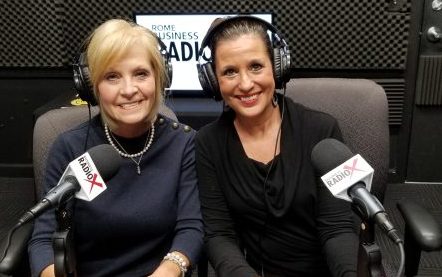
About GWBC

The Greater Women’s Business Council (GWBC®) is at the forefront of redefining women business enterprises (WBEs). An increasing focus on supplier diversity means major corporations are viewing our WBEs as innovative, flexible and competitive solutions. The number of women-owned businesses is rising to reflect an increasingly diverse consumer base of women making a majority of buying decision for herself, her family and her business. GWBC-Logo

GWBC® has partnered with dozens of major companies who are committed to providing a sustainable foundation through our guiding principles to bring education, training and the standardization of national certification to women businesses in Georgia, North Carolina and South Carolina.

Tagged With: financial services, Greater Women's Business Council, GWBC, professional services, University of Georgia Small Business Development Center

Decision Vision Episode 28: Should I Raise Angel Capital? – An Interview with Charlie Paparelli, Paparelli Ventures

August 15, 2019 by John Ray

Decision Vision
Decision Vision
Decision Vision Episode 28: Should I Raise Angel Capital? – An Interview with Charlie Paparelli, Paparelli Ventures
Loading
00:00 /
RSS Feed
Share
Link
Embed

Download file

Mike Blake and Charlie Paparelli

Should I Raise Angel Capital?

What are the steps involved in raising angel capital? What traits are angel investors looking for in the founder of a startup? Noted angel investor and startup mentor Charlie Paparelli answers these questions and more in a wide-ranging interview with host Mike Blake. “Decision Vision” is presented by Brady Ware & Company.

Charlie Paparelli, Paparelli Ventures

Charlie Paparelli, Paparelli Ventures

Charlie Paparelli is a twenty-five year professional angel investor focused on helping entrepreneurs achieving their dream of starting and growing their own company. Five years ago, he began sharing his experiences in a twice-weekly blog to entrepreneurs and angel investors at paparelli.com. In addition to his writing, he is a speaker and a coach helping founders and their new teams build enormously valuable companies.

He invested in over 35 entrepreneurs over the last 25 years. He is the Angel in Residence at Georgia Tech’s Atlanta Technology Development Center. He is also a mentor at the Atlanta Tech Village. He is Chairman of the Atlanta High Tech Prayer Breakfast. The Breakfast is in its 28th year. It is the largest networking event in Atlanta technology, and it is an evangelical outreach. He has held many community leadership roles during his 40 year career in Atlanta technology.

Charlie is married to Kathy for 42 years. They have four children and three grandchildren with another on the way. They are members of Church of the Apostles in Atlanta. Charlie is an avid motorcyclist whose current ride is a 2019 BMW R1250RT.

Michael Blake, Brady Ware & Company

Mike Blake, Host of “Decision Vision”

Michael Blake is Host of the “Decision Vision” podcast series and a Director of Brady Ware & Company. Mike specializes in the valuation of intellectual property-driven firms, such as software firms, aerospace firms and professional services firms, most frequently in the capacity as a transaction advisor, helping clients obtain great outcomes from complex transaction opportunities. He is also a specialist in the appraisal of intellectual properties as stand-alone assets, such as software, trade secrets, and patents.

Mike has been a full-time business appraiser for 13 years with public accounting firms, boutique business appraisal firms, and an owner of his own firm. Prior to that, he spent 8 years in venture capital and investment banking, including transactions in the U.S., Israel, Russia, Ukraine, and Belarus.

Brady Ware & Company

Brady Ware & Company is a regional full-service accounting and advisory firm which helps businesses and entrepreneurs make visions a reality. Brady Ware services clients nationally from its offices in Alpharetta, GA; Columbus and Dayton, OH; and Richmond, IN. The firm is growth minded, committed to the regions in which they operate, and most importantly, they make significant investments in their people and service offerings to meet the changing financial needs of those they are privileged to serve. The firm is dedicated to providing results that make a difference for its clients.

Decision Vision Podcast Series

“Decision Vision” is a podcast covering topics and issues facing small business owners and connecting them with solutions from leading experts. This series is presented by Brady Ware & Company. If you are a decision maker for a small business, we’d love to hear from you. Contact us at decisionvision@bradyware.com and make sure to listen to every Thursday to the “Decision Vision” podcast. Past episodes of “Decision Vision” can be found here. “Decision Vision” is produced and broadcast by the North Fulton studio of Business RadioX®.

Visit Brady Ware & Company on social media:

LinkedIn:  https://www.linkedin.com/company/brady-ware/

Facebook: https://www.facebook.com/bradywareCPAs/

Twitter: https://twitter.com/BradyWare

Instagram: https://www.instagram.com/bradywarecompany/

Show Transcript

Intro: [00:00:01] Welcome to Decision Vision, a podcast series focusing on critical business decisions, brought to you by Brady Ware & Company. Brady Ware is a regional, full-service, accounting and advisory board that helps businesses and entrepreneurs make vision a reality.

Michael Blake: [00:00:20] And welcome to Decision Vision, a podcast giving you, the listener, clear vision to make great decisions. In each episode, we discuss the process of decision making on a different topic. Rather than making recommendations because everyone’s circumstances are different, we talk to subject matter experts about how they would recommend thinking about that decision.

Michael Blake: [00:00:37] My name is Mike Blake, and I’m your host for today’s program. I’m a Director at Brady Ware &Company, a full service accounting firm based in Dayton, Ohio, with offices in Dayton; Columbus, Ohio; Richmond, Indiana; and Alpharetta, Georgia, which is where we are recording today. Brady Ware is sponsoring this podcast. If you like this podcast, please subscribe on your favorite podcast aggregator, and please also consider leaving a review of this podcast as well.

Michael Blake: [00:01:01] Our topic today is seeking angel capital. And for those of you who don’t know me, most of you don’t because you’re out somewhere on the internet, I’ve been a cheerleader and advocate in the angel capital world for really as long as I can remember. My first job out of school actually was helping entrepreneurs in the former Soviet Union and in Russia. And at that time, there wasn’t even a term for angel capital. It’s kind of fascinating because the whole business vocabulary was evolving at that time.

Michael Blake: [00:01:34] And  when I moved to Atlanta about 15 years or so ago, I got a taste of the early stage capital scene here. And the one theme that was recurring was you can’t get a deal done here, there’s no angel capital, et cetera, et cetera, et cetera. If you live in Atlanta, it’s tedious. If you don’t, this is news to you. And the thing I, sort of, thought was, well, I saw people making investments in Minsk. And I can’t imagine that investing in Atlanta is harder than investing in Minsk. Maybe I’m wrong, but I can’t imagine it’s that big a difference. There’s got to be something kind of going on here. And as it kind of got more into the community, I was very fortunate, the community embraced me very quickly. I started to learn about the gears and cogs about this.

Michael Blake: [00:02:21] And as I start to learn more about angel capital and early stage investing, in general, and with the travels I’ve had abroad, I came to a conclusion that for all the things that we, as Americans, think make us unique, I’m not sure anything makes us more unique than the angel and venture capital sectors. I’m not sure anything makes us more unique than the way that we support startups. And if you look at at the word “entrepreneurship” in other languages, if you directly translate them, they almost have a sense of doing something semi-devious. If you’re enterprising, that’s not necessarily a good thing. But in the United States, we have a unique cultural facet where the entrepreneur is folk hero. And I can’t think of any other place in the world where we elevate the entrepreneur to that status.

Michael Blake: [00:03:13] And one of the things that makes the entrepreneurial sector go is angel capital. You can’t bootstrap a new car company. You can’t bootstrap a new airplane company, right. And many of the largest companies, the most important inventions in the world that we think of today, at some point, were funded by angel capital. Columbus’s expedition to the new world was funded by Angel Capital called The Royal Family of Spain. Thomas Edison-

Charlie Paparelli: [00:03:53] Queen Isabella.

Michael Blake: [00:03:53] King Ferdinand, who’s with Queen Isabella, right?

Charlie Paparelli: [00:03:56] Yeah.

Michael Blake: [00:03:56] I was going to say King Ferdinand. I knew that was not right, so I choke. It’s Queen Isabella. Thank you. Thomas Edison was funded for the light bulb and for General Electric by a guy named JP Morgan. And so, angel capital pervades almost everything that we think about in terms of the American economic story. And I think if you don’t understand angel capital, you don’t understand a big part about how American business works.

Michael Blake: [00:04:24] And so, here to talk about that is somebody that I’ve known, and, for a long time, I’ve come to respect. He doesn’t even know this, but he’s a spiritual mentor to me. If you don’t ― if you haven’t listened to his or read his emails, get on his email list. There’s how many? I think three times a week. They’re just phenomenal. Not good – great. Required reading. And his name is Charlie Paparelli.

Michael Blake: [00:04:47] Charlie is a 25-year professional angel investor focused on helping entrepreneurs in achieving their dream of starting and growing their own company. Five years ago, he began sharing his experience at a twice-weekly blog – so, it’s twice weekly, just assuming – to entrepreneurs and angel investors at paparelli.com. In addition to his writing, he is a speaker and a coach helping founders and their new teams build enormously valuable companies. He invested in over 35 entrepreneurs over the last 25 years. And we’re going to come back to that.

Michael Blake: [00:05:16] He is the Angel-in-Residence at Georgia Tech’s Atlanta Technology Development Center. He is also a mentor at the Atlanta Tech Village. He is chairman of the Atlanta High Tech Prayer Breakfast, which is the largest pre-6:00 a.m. start event on the Atlanta calendar. Now, that may be a small list, but it is a big deal. That breakfast is in its 28th year. It is the largest networking event in Atlanta technology, and it is an evangelical outreach. And as an aside, whenever I remember, I’ve been to about three or four of those, and one of them was an executive from Apple. Charlie will remind his name. But he’s an executive from Apple who had to come on and talk, I think, a day or two after Steve Jobs passed away, as I recall. And that was some powerful stuff. That was as raw as it gets.

Michael Blake: [00:06:11] Charlie has helped many community leadership roles during his 40-year career in Atlanta technology including Angel Lounge, which is an offshoot of Startup Lounge that serves to educate current and aspiring angel investors in the Atlanta community. Charlie is married to Kathy for 42 years. They have four children and three grandchildren, with another on the way. They are members of Church of the Apostles in Atlanta. And Charlie is an avid motorcyclist whose current ride is a 2019 BMW R125. Nope, that’s wrong. R1250 RT. Got it. That’s a lot of letters and numbers.

Charlie Paparelli: [00:06:46] That’s what it is, yeah.

Michael Blake: [00:06:48] Charlie, thank you so much for coming on the program. I’ve been looking forward to this since we started talking about it several weeks ago.

Charlie Paparelli: [00:06:53] Same here, Mike. I always love the work that you were doing. We started Angel Lounge as an offshoot, as you said, a startup lounge. I wanted to be a part of what you were doing. You’re saying we’re missing this piece. And that’s where we came up with the idea of Angel Lounge.

Michael Blake: [00:07:06] And I think due to that, I think there’s more capital available in Atlanta than there has been because I think you’re making people feel safer and more confident about making those commitments.

Charlie Paparelli: [00:07:17] Yeah. Angel Lounge, we focused Angel Lounge instead of trying to march more companies in front of people, it took us a while to get to the right formula. But the formula that we’re using is, really, our mission is to just help angel investors or those who are interested in becoming angel investors to help make them better investors by sharing each other’s stories and experience with them.

Michael Blake: [00:07:39] So, I’d like to start this podcast with the basic vocabulary question, because I think not everybody knows what angel investing is. They may think it’s venture capital, but angel investing and venture capital are related, but they’re not quite the same, are they?

Charlie Paparelli: [00:07:53] No, they’re very different. If you think about when we ― venture capital, basically, is mutual funds for high-risk investments, all right. So, if you know how mutual funds work, I mean, you have a mutual fund manager, and he has partners, and they raise money to, then, invest that money for other people in mostly public stocks. Public stocks, things that you can get in and out of pretty quickly. So, they might put in 1% to 5% of their own money into that big mutual fund. So, venture capitalists, the difference between them is they’re investing in companies that are privately held companies. And as privately held companies, you can’t get in and out of them quickly. Once you’re in, you’re in forever, okay.

Michael Blake: [00:08:47] Right. That door makes a loud slamming noise.

Charlie Paparelli: [00:08:48] It does, yeah. It’s all ― so, we’re all excited to get in. And then, next thing we’re doing is looking for exits, and we’re driving along the highway, and there are none. You’re just on there, and you hope you don’t run out of gas till you get to that last exit. So, venture capitalists, hopefully, people put money in venture capitalists, and big pension funds put money there simply because it’s a high-risk, high-reward alternative. So, you’ll find some of these big pension funds who will put in maybe up to 3% to 5% of their total fund into high-risk alternatives, of which venture is one of those.

Charlie Paparelli: [00:09:23] Angel investing, on the other hand, that’s like your own money. So, it’s like running your ― it’s like taking whatever money that you thought you wanted to put into higher risk ventures, whether it be $100,000, or $250,000, or some cases, it could be multiple millions of dollars, and you say, “No, I want to be an angel investor. I want to be on the ground. I want to invest in these early-stage startups. I want to work with these entrepreneurs. And I’m willing to risk my personal fortune on this one segment.” So, you have a lot less people, a lot less company — fewer companies that you’ll be spreading that risk across. And so, that makes the risk even higher as an angel investor versus venture capital.

Michael Blake: [00:10:08] Now, I want to clarify one thing just because you happen to be the guest, it only happens to be called an angel investor because that’s a term of art. It has nothing to do with a religious affiliation. Even though you happen to be very open about your faith, there are plenty of people who aren’t that way that are angel investors, right? There’s not a a Christian element to it, necessarily.

Charlie Paparelli: [00:10:28] There’s no Christian element to it. In fact, the term angel investor goes back to people in New York on Broadway who actually wanted to get their shows funded, their new ideas for Broadway shows. And people would come in, and they would ― very wealthy people would liked the idea, and they would fund the show. And those people were called by the producers of those shows angel investors. And that’s where the term ― that’s the genesis of the term angel investor.

Michael Blake: [00:11:00] I had no idea. I did not know that. And the producers, the people who funded Springtime for Hitler were actually angel investors.

Charlie Paparelli: [00:11:07] Oh, you would bring up that example, but, yes, that’s true. Yeah.

Michael Blake: [00:11:10] Well, my wife is Jewish. She’s a big Mel Brooks fan. And I will say, as an aside, by the way, the funniest six minutes in cinema is Springtime for Hitler. Only Mel Brooks can make the Nazis funny. So, we often hear about friends and family as investors. Do they qualify as angels too, or are they sort of a different animal?

Charlie Paparelli: [00:11:29] No, I would call — friends and family, there’s a term called the 3Fs, okay? Family, friends, and fools, okay, are those very, very early stage investors. And when you’re — when an entrepreneur is raising money, the first thing that he’s raising money around or on, as a foundation, is his credibility. Well, the first people that find the person, the entrepreneur, to be credible, especially if it’s his first time being an entrepreneur, is his family. If his family doesn’t think that he or she could do it, then why should anybody else think they should — they’d be able to do it?

Charlie Paparelli: [00:12:11] So, I think that the first round is always friends and family, because they’re other people that say, “Oh, my God. If Mike Blake is starting this company, and Mike is so smart, and I think he’s going to be able to build something great. I have no idea what his idea is. I don’t know what the market is. I don’t know anything. But I know Mike, and I’ll put money behind Mike.” So, I think they are angels. They’re the — they’ve been called fools, but I think what they’re doing — I know what they’re doing. They’re betting on the individual because they have a very deep and long personal relationship with them.

Michael Blake: [00:12:44] So, you bring something up that I want to make sure that we cover because there’s a timeline of maturity here, right? And that friends and family round, if you will, that investment is really banking on the credibility, which means there isn’t a business yet, right. There’s there’s a hope, an idea, right? A story, I guess-

Charlie Paparelli: [00:13:05] Yeah. Just somebody-

Michael Blake: [00:13:05] … in most cases?

Charlie Paparelli: [00:13:06] Most of the time, somebody will come to you and say, “Yeah, this is something that I’ve been doing. I’ve been working for such and such a company for a while.” These are the kind of people that I’ve gotten — I’m attracted to. “I’ve been working in this industry for a while, working for this company for a while. I’m 35 years old. I’ve been through… ” — either “I developed an expertise as a programmer” or “I developed an expertise as a salesperson,” or whatever. “But I know this industry, and I have this idea, and I brought it to my bosses, and no one’s interested in it. And I just can’t let loose of it. And I really want to start a company around it, but I have no idea how to do that. But I think a lot of people will buy whatever I’m going to build or sell.” And that’s kind of how it gets started.

Charlie Paparelli: [00:13:56] And then, the first place they have to go is they have to go to somebody. So, that’s all they have. They have this story. There’s interest and that they — it’s this passion. It’s, sort of, like a God-given idea they can’t let loose of, but they need to be able to feed — they’re 35. They need to be able to feed their family, and they need to start putting money away for college, and all this for the kids, and everything that we all do. They have houses, cars. They’ve got it all. How do they survive? Well, that’s where the angel comes in and says, “We can help you meet your personal expenses at the beginning while you develop — while you unhook from the corporation and your salary,” which is step one. And then, you start building out this idea.

Michael Blake: [00:14:38] You brought something up. I’m going to deviate from a script here because I think that’s — I think it’s important. That 35-year-old, the most — the iconic entrepreneur is somebody who’s in their 20s. To us, they’re basically kids, right. But they actually don’t start most companies, do they?

Charlie Paparelli: [00:14:57] No. You say iconic. What do you mean the iconic?

Michael Blake: [00:14:59] An iconic. Iconic, like the Mark Zuckerbergs, the Bill Gates of the world, Steve Jobs.

Charlie Paparelli: [00:15:05] Oh, I see what you’re saying, yeah.

Michael Blake: [00:15:05] In some case, they actually drop out of school, so they can start whatever it is they’re going to start. But actually, most entrepreneurs look like that 35-year-old, don’t they?

Charlie Paparelli: [00:15:14] Yeah, I think the statistics proved out that it’s somewhere between 35 and 38. And my statistics actually prove out this companies that were successful for me that I invested in, that’s exactly how old people were. So, they have enough. Really, like when I got out of college, I grew up, my father was a middle — he was a train man on the Jersey Central Railroad for 38 years. When I sat around the dinner table, we didn’t talk about business. In fact, I remember I was the first one in my family, first male in my family to actually get a degree from college. And I was getting an accounting degree, and they told us we need to read The Wall Street Journal. I’m reading The Wall Street Journal, and I didn’t even know what I was reading. It didn’t make any sense to me because I had no context or understanding of basic business.

Charlie Paparelli: [00:16:01] So, it’s really, when you come out of school, what do you know about business? What do you know about building a company? What do you know about the disciplines of building a product, the disciplines of launching a product? How to gain — how to hire people? How to do business reviews or reviews for people? Okay. How to properly give a presentation? You don’t know any of this stuff. You have to learn it. And so, that’s why I think those 15 to 18 years out of college, that’s the foundation where you have to prove out your functional expertise, as well as your management expertise.

Michael Blake: [00:16:38] I think the only thing I knew about business was what I remembered from watching that Michael J. Fox movie, The Secret of My Success. That was pretty much it.

Charlie Paparelli: [00:16:46] I don’t remember that.

Michael Blake: [00:16:47] Yeah, nor does anybody else. That’s-

Charlie Paparelli: [00:16:49] Okay.

Michael Blake: [00:16:49] Yeah. So, let’s, sort of, then, now get into the seat of that person that thinks they’ve got that idea, right, and they’re convinced that idea’s got legs, and the company they’re working for is not going to buy it. They sit down, they take you out to lunch, or they sit down for your own office hours at the ATDC. What do you tell them in terms of they’re if going to embark on a venture — I’m sorry, angel capital raising process, what should that entrepreneur be prepared to do?

Charlie Paparelli: [00:17:21] In order to?

Michael Blake: [00:17:24] To raise capital? I’ve got an idea. I need somebody to write me a bigger check than I can write myself. What is that process going to look like?

Charlie Paparelli: [00:17:34] All right. So, I’m going to speak beyond the friends and family.

Michael Blake: [00:17:37] Yeah.

Charlie Paparelli: [00:17:37] So, friends and family is going to provide that bridge to get you from a weekly payroll or weekly salary, if you will, to being an entrepreneur or starting your own business, in effect, okay. So, now, your future and your family’s future is dependent upon you making money. So, tell me again, what are you looking for in this?

Michael Blake: [00:18:03] I’m just looking for the process of raising angel capital, right. I’ve decided I’m going to raise angel capital. What do those steps look like to get from want to raise angel capital to having a check in the bank?

Charlie Paparelli: [00:18:18] All right. Part of this myth, I mean, you talked about entrepreneurs as folk heroes. And there’s a myth around the folk hero that soon as I come up with an idea, the next step is to actually raise capital, okay? Really, the next step is to start building a business. Capital is attracted to businesses. Capital isn’t just attracted to purely ideas, all right. I look back at Facebook, for example. So, when Zuckerberg — what happened with Zuckerberg, he started Facebook, basically, as a freshman at Harvard, I believe was Harvard.

Michael Blake: [00:18:58] I think so, yeah.

Charlie Paparelli: [00:18:59] Yeah. And, sort of, a nerdy guy, wanted to meet people, introvert. He didn’t want to meet people. He want to meet girls. So, what he did is he put together this little site to have people meet each other over this internet. And it was only open to the freshman class at Harvard. And he started to gain traction because there’s a lot of nerds, I guess, that go to Harvard.

Michael Blake: [00:19:30] I think that’s fair.

Charlie Paparelli: [00:19:31] Yeah. And they don’t-

Michael Blake: [00:19:32] I only drove by Harvard when I lived up in Boston, but I think that’s correct.

Charlie Paparelli: [00:19:35] Yeah, all right. Well, they needed to meet each other. So, they didn’t know how to do it. So, they started doing it over the web, this new medium, if you will. And then from there, it started to kind of take off. So, he met people. He became, sort of, a little bit of a rock star in his freshman class and other people in the college. And Harvard said, “Well, what about us as sophomores, and juniors, and seniors, and all that?” And, of course, we always know that seniors always like to pick up freshmen girls, right? That’s kind of how that works. And so, he opened it up, and it just became for Harvard. And then from Harvard, other people started to contact him, and said, “Hey, we’re at MIT. We want to do the same thing. Can you open it up?” So, he started to open up these silos where they couldn’t talk to each other. You can only talk within your educational institution. And from there, it’s sort of just expanded.

Charlie Paparelli: [00:20:27] At some point, people said — he said, “I need to — this thing is so popular now. I need to kind of get some money here, so I can live on and continue to build it out.” And that’s when he got his first venture capital. And by then, he had exposed — he had expanded to high schools, again, siloed. And when he first got some capital in there, it was probably angel money to start with, is they said to him, “Look, why are you doing this siloed approach? Why don’t you just kind of open it up horizontally to anybody who wants to be part of this?” And that was the beginning of Facebook.

Charlie Paparelli: [00:21:00] And that so — he started to build out the attractiveness of the idea and the business model, and that’s what it was. And he had no idea what the business model was going to be when he started. But later, it came about that it was going to be advertising-based because he had captured all of our data, and he was able to sell it to all of the advertisers.

Michael Blake: [00:21:18] Yeah.

Charlie Paparelli: [00:21:19] It worked out really well for him. But the first step, really, is for these — is to think, “I have to build a business.” Don’t think, “I have to raise capital. I have to build a business.” If you build something that looks like it’s going to be a business, that, actually, there’s some buyers out there for whatever service or product that you’re selling, then an angel investor like myself can come in and say, “It looks like this can turn into a big business,” or “This can turn into a $500,000 business, max,” or “Maybe it’s going to be a $5 million business,” then we can size what type of investment it would require. And then, we could figure out what kind of returns that we might possibly get based on the investment we put in.

Michael Blake: [00:22:00] And you and I, I think, both know and have met entrepreneurs that, I think, I’ve gotten that backwards where their business seems to be raising capital.

Charlie Paparelli: [00:22:09] Yeah.

Michael Blake: [00:22:11] That doesn’t work very well, does it?

Charlie Paparelli: [00:22:12] Yeah. One of the things I worry about in our community and other communities is we don’t celebrate. We don’t seem to celebrate the progress that a company makes in their marketplace. But what the news covers is how much money they raised on the last round. Money doesn’t build companies, people build companies.

Michael Blake: [00:22:34] Yeah.

Charlie Paparelli: [00:22:34] So, we should be celebrating, “Oh, my gosh, they did a deal with AT&T.” That should be the news, not that they raised $50 dollars in the last round at a $200 million valuation.

Michael Blake: [00:22:48] Yeah, I agree with that.

Charlie Paparelli: [00:22:50] Yeah, you’re right. So, the end point, what we celebrate is some milestone in the process as opposed to the business successes themselves.

Michael Blake: [00:23:03] So, to  raise money for a small business, angel capital is not necessarily the only game in town. It’s not necessarily the best route to go, right? You could — for example, you might be able to obtain a small business loan, right, or you may be to finance things through credit cards. Can you talk a little bit about what differentiates one opportunity that makes it appropriate for angel capital and what maybe makes another opportunity more appropriate for a small business loan kind of scenario?

Charlie Paparelli: [00:23:34] Yeah. Small business loans and credit cards, they all kind of fall in the same bucket. They’re probably 25% interest type loans.

Michael Blake: [00:23:43] Yeah.

Charlie Paparelli: [00:23:43] So, you’ve got to think of them more like working capital loans. So, I need some — I’m invoicing my — I’m doing a service company, so I’m invoicing my customers. I’ve got a 45 to 60-day, sort of, window before that money comes back in. So. maybe I can use credit cards, and I can use these business loans, if you will, to kind of finance that. But for longtime financing, 25% interest is gonna be quite a burden as you go forward. So, I see those as working capital loans.

Charlie Paparelli: [00:24:17] The angel, the other side is banking. Can I go to a bank and get a loan? Well, if you’ve got enough assets, enough collateral, and enough money in the bank, they’re willing to give you a loan. But most of these people don’t have the credit worthiness to get any meaningful sized loan that’s going to kind of move the needle for the business. So, it forces you into selling stock in your company as opposed to just accumulating debt to kind of go forward. So, with stock, you don’t have debt. You have — you’ve sold off a piece. But, now, you have a partner. And that’s what an angel investor is. They’re a financial partner in the company. So you’ve sold off 30%, or 50%, or whatever the number might be depending upon how early stage you are of your company to this investor who’s now going to be hanging out with you for a very long time.

Michael Blake: [00:25:12] And the timing issue, I think, is so important that an angel investor, if they’re experienced – and not all of them are – understands that doors are slammed shut, and you’re on a highway for a while, right? The bank, maybe they understand the door’s slammed shut, but if you’re going to be on that highway for a long time, that meter runs really quickly, right, as that interest kind of piles up. And it takes cash out of the business. But if you can pay that back fairly quickly, maybe that does make sense. If you have enough cash flow initially to kind of — as you said, as you sell through your inventory or whatnot, maybe it makes sense to do that.

Charlie Paparelli: [00:25:54] Yeah. It depends upon — I guess there’s a couple of things to consider is, what kind of business am I building? If I have to spend a lot of time in order to build out a product, a bank loan is probably not gonna be a good way to go. But if I’m doing a services company, or if I’m a reseller of some type of other products, so I’m really looking to just buy product, and then resell product, bank loans make a heck of a lot of sense because you can keep moving them. You can pay them back, you can take them down, you can do it that way. But if I have this long-term investment that I have to make in order to get set up to build my company, well, bank loans, like you said, accrued interest kind of grows very, very rapidly. And then, you’re kind of under water.

Charlie Paparelli: [00:26:44] The other thing to consider is that, do you know enough about what you’re doing to build a company? So, this is where angels come in too. They’re just not people who come with money, but they come with expertise and network. So, if you could find those kind of what I’ll call smart money angels, then they could bring a lot of value to the business to increase your chances of success and mitigate your risk.

Michael Blake: [00:27:11] I want to drill down on that because I know in your model, I think, your smart money is involved. I think you are involved with a greater degree because you do fewer deals, right? I think, in the intro, I think it said you did 30 deals over 25 years, something of that nature, right?

Charlie Paparelli: [00:27:28] Right.

Michael Blake: [00:27:28] So, you are not — you, yourself, you’re not spreading thin. You are going deep into one or two deals at any given point in time. And correct me if I’m wrong, but I think that’s, sort of, on the deeper end of the spectrum. Not all angels are as involved on a day-to-day basis as an intimate partner as are you. Is that fair?

Charlie Paparelli: [00:27:50] That’s very fair.

Michael Blake: [00:27:52] And then, there’s a spectrum. And then, on the other side — and I’ll just share with the listeners some insider baseball. We often call those doctor and dentist deals, right? Nothing against doctors or dentists, but there’s a stereotype that they have money but not the experience of being angel investors. Often, they’ll make an investment but not be involved, right.

Charlie Paparelli: [00:28:16] But the other side of the reason that doctors and dentists get involved too is there’s a jealousy that the business guys are making all the money.

Michael Blake: [00:28:26] Okay.

Charlie Paparelli: [00:28:26] So, they want to become a business guy and that becomes an easy, sort of, on-ramp angel investing, but it’s a quick way to kind of lose some of their hard-earned, sort of, cash flow too.

Michael Blake: [00:28:37] Yeah. Yeah. Oh, sure. That’s a great way to lose money, right?

Charlie Paparelli: [00:28:40] Yeah.

Michael Blake: [00:28:40] But as somebody who’s seeking angel capital, right, on the one hand, what you’re offering, you’re offering experience, you’re offering expertise, you’re offering support. The other edge of that sword is I got to share the steering wheel, right? There’s built-in, day-to-day, in-your-face accountability with which not everybody in the world is necessarily comfortable, right? And some capital seekers will say, “You know what? You’re telling me this dumb money is just going to write me $100,000 check, and then not bother me? Great. Where do I sign?” What does that funding seeker not getting right? What are they overlooking or what are — yeah. What are they failing to see because they see that “free money?”

Charlie Paparelli: [00:29:29] Yeah. I have people — I had a call just the other day, in fact, somebody who was saying to me this is their third time, actually, starting a company. And, actually, the first two companies, they had exits. So, they figured they had the formula down, they’re just going to be successful. So, this is a guy that has total exits that were equal to $37 million in exit. So, this is a pretty successful guy in health care, in the health care vertical. And he’s saying to me, “You know and understand. You understand how to price these deals out. I don’t have revenue yet in this one. I do have a lot of experience. I’ve got good track record. I think that people should pay a much higher amount of money as angel investors for the stock than I’m going to sell in this company at this stage.”

Charlie Paparelli: [00:30:16] And I said, “Well, you’ve got a choice. If you want people who are going to come in, who are going to add to the credibility of your new company, your idea, and also lock arms with you for any future, sort of — be of value add for any future funding that you’re going to do,” I said, “you’re going to have to — you’re selling to professional angel investors who are going to be asking for — they’re looking for good returns, and they understand how hard it is to build companies. So, you’re going to be pricing your company lower than you would with inexperienced – the doctors and dentists.” You go to doctors and dentists, and they say, “Oh, well, I’m pricing this brand new company, never raised money before, has no revenue, hasn’t built the product yet. We’re going to price it at $10 million.” Okay. And from the outside, you might say, “Wow, that’s a really good deal, $10 millions because I look at the stock market and all those companies have billion dollar valuations. So, this is a great deal.”

Charlie Paparelli: [00:31:14] Whereas an angel investor would probably say, “What did you raise money on your last deal for that first round?” He said, “Well, they got an outsized return because I priced it at $2 billion pre-money.” And I said, “Well, that’s what it was worth. And they didn’t get a ridiculously high sign.” I said, “What was the returns they got?” He said, “They got a 10-time return on their money.” I said, “So, what? So, what? Why does that bother you? You were a success. You made millions of dollars because of these people that put this money in.” He said, “Well, I think that I could make even more.” I said, “Well, how much more money do you want to make?” And he said, “Well, it’s not about the money. It’s about fairness.” And I said, “Oh, so it’s about greed, but it’s not about the money.” You know what I mean? It’s like a ridiculous conversation. So, I would say-

Michael Blake: [00:32:00] This is why I don’t argue with you, by the way.

Charlie Paparelli: [00:32:02] So, what do you like? Yeah. So, what you’re missing out on if you get what we’ll call as inexperienced money as opposed to using the pejorative term, is you’re missing out on the experience. I mean, I’ve been an entrepreneur in my earliest days. We built companies from scratch. We did exits. I worked for corporations. I know what it is to to build leaders. I know how to hire people. I know to help. I have a network of people I can bring to the company. I can make introductions to executives. That’s very valuable. Well, if you’ve got a doctor, and he’s not going to do any of that, he’s going to call you up and say, “So, what happened last week?”

Michael Blake: [00:32:44] Right.

Charlie Paparelli: [00:32:44] You know.

Michael Blake: [00:32:44] Unless somebody faints at the board meeting, that’s great. But otherwise, he’s not going to bring that much to the table, right?

Charlie Paparelli: [00:32:49] Exactly.

Michael Blake: [00:32:49] So-

Charlie Paparelli: [00:32:49] So, that’s what you miss out.

Michael Blake: [00:32:51] And you said something that  I want to touch on because I think this is really important. That 10x return, I don’t think that’s really an outsized return when you consider the risk that’s being taken, right? So, I just posted two days ago on my chart of the day, when you look at venture returns, which is more mature than angel, right, 65% of those deals don’t make their money back, right?

Charlie Paparelli: [00:33:14] Right.

Michael Blake: [00:33:14] So, it’s up to a 1.0x return, which means that’s cash and cash. Best scenario, you get your money back, which means that two-thirds of deals lose money, right?

Charlie Paparelli: [00:33:27] Right.

Michael Blake: [00:33:27] Two-thirds of deals in the S&P 500 do not lose money if you’re just sort of in a broad index, right?

Charlie Paparelli: [00:33:32] Right.

Michael Blake: [00:33:32] So, it’s kind of like drilling for oil that the deals that are successful also kind of got to pay for the deals that weren’t, right? The well that strikes oil also has to pay for the drills you put in that didn’t strike oil.

Charlie Paparelli: [00:33:46] Right.

Michael Blake: [00:33:47] And so, if you’re successful, perhaps you’re thinking, “Boy, you know, 10x returns seems rather greedy.” But from the investor’s standpoint, you got to have that, or you’ve got to have that aspirationally. You have to hit it once in a while or the economics, given the risk and the failure rate, just don’t work out, right?

Charlie Paparelli: [00:34:06] Yes. So, what you wind up with, I think that the average angel that has been doing it for some — let’s say, a 10-year period, I think their returns are somewhere — somebody — this is somebody that presented at Angel Lounge. I think those returns were somewhere around 3% to 6% as an internal rate of return.

Michael Blake: [00:34:26] Oh, my gosh.

Charlie Paparelli: [00:34:26] Well, that’s an awful lot of risk and an awful lot of work, okay, to get those kind of returns. And what happens is when you’re speaking with entrepreneurs, every entrepreneur know his company is going to be a great success, and it’s going to be worth a lot of money. What he doesn’t have is any kind of context to say, “As an angel investor, I’m looking at 20 people that look like you, okay, and I’m seeing — I really understand where the risk is because I’ve talked to people at all different levels. You seem to be the most attractive, but there’s no guarantee that you’re going to be successful.”.

Charlie Paparelli: [00:35:05] That guy I talked about in health care, I said, “You’ve got millions of dollars.” He says — I said, “Why don’t you put your money into this thing if it’s such a good deal?” And he said, “Well, I’ve already put $200,000 in.” And I said, “Well, $200,000 to you is nothing based on the exits that you had. So, you’ve got to be worth more than $15 million.” He goes, “Well, I’m not going to tell you what I’m worth, but you’re not far off.”

Charlie Paparelli: [00:35:28] And then I said, “Well, if this is such a great deal, if it’s so low risk that you’re going to be a success, why would you want to share it with anybody?” And he said, “Well, there’s always a chance that it’s going to fail.” I said, “Well, you didn’t say that in the first 20 minutes of our conversation, you know.” But you see, this is the reality of it. So, I want to take no risk, and I want all the risk to be put on the investors. And I don’t think they should get more than a three-time return if it works.” And I said to him, “Would you invest in that deal?” And he didn’t answer me. But you see, it’s crazy the way these deals get positioned.

Michael Blake: [00:36:06] Well, you know, I think in fairness, it’s sort of in a symmetry of kind of how you look at it. From the entrepreneur’s deal, they have one deal, and that’s it, right? But I want to build on something that you said. Even the deals you invest in, let’s say — I know you don’t do this, but let’s say you’re an angel that’s got money in six deals, right?

Charlie Paparelli: [00:36:26] Yeah.

Michael Blake: [00:36:28] When you put money in those six deals, you didn’t think any of them were going to fail individually. You wouldn’t have put your money in, right? You think that all of them are going to be successful when you put your money in, but you know that four of them are not, or five of them are not, or maybe all six of them are going to lose. You just don’t know which ones.

Charlie Paparelli: [00:36:45] You know, it’s funny that you say that, the four of the six will not be okay. There is such a deep sense of denial. Even me who has been through this that I still think I’ll be six for six. Okay? That’s why we do these deals. You know, I mean, you can’t be an angel investor, and not be idealistic, outsized, idealistic, and outsized hopeful. Otherwise, you wouldn’t do these things.

Michael Blake: [00:37:10] Right.

Charlie Paparelli: [00:37:11] So, that’s what happens.

Michael Blake: [00:37:11] Nobody would ever enlist for the army if they thought they’re the one that’s going to get shot.

Charlie Paparelli: [00:37:15] That’s right. That’s right.

Michael Blake: [00:37:16] You got to have that going in. It just doesn’t make any sense, right? So, how much lead time? I mean, how long do you think — how long does it normally take? Let’s say there’s a successful angel funding process that takes place. As an entrepreneur is thinking about their business plan, how long does that process usually take?

Charlie Paparelli: [00:37:39] Well, it’s a hard question to answer, but if I’d say in general terms, I would say 90 days.

Michael Blake: [00:37:47] Okay.

Charlie Paparelli: [00:37:47] Okay. But it’s highly dependent. If we’re speaking to entrepreneurs and business people here, it’s highly dependent upon the quality of your business. If you are sitting here, and you don’t really have anything, and the idea doesn’t really even solve a clear business problem, you can spend the next two years trying to find the first person that’s going to put money behind that. And in that two years, you’re going to change, change, change, improve, do better until you hit on some business that makes sense based on your expertise. And then, the 90 days will kick in.

Michael Blake: [00:38:23] Right.

Charlie Paparelli: [00:38:23] All right. So, it could be forever to never, okay? Or if you really do, in fact, have something, it could be as quick as 30 days, okay? That happens if you get the first person who has high credibility as an angel in the deal, then it’s a pile-on. Everybody’s got to be in the deal, right, because the credibility went up. If Charlie thinks that Mike has got a really good shot at this, and Charlie’s done a lot of these deals, I’ll put money in that deal. Well, what’s the deal? I don’t even know what it is, but Charlie’s on the deal. I’m going to do the deal. You know, that’s the old thing that we had about the t-shirt for Sig Mosley, right, who was sort of the godfather of angel investing in Atlanta that said “Sig said no.”

Michael Blake: [00:39:08] Yeah.

Charlie Paparelli: [00:39:10] Right? If Sig said no, you were dead.

Michael Blake: [00:39:12] That was already a horse head in your bed, basically.

Charlie Paparelli: [00:39:13] Yeah, exactly. That’s what it was. But if he said yes, everybody wanted in on the deal. They don’t even know what they were investing.

Michael Blake: [00:39:20] Right.

Charlie Paparelli: [00:39:21] That’s the [crosstalk].

Michael Blake: [00:39:22] It could have been alpaca as a service. And if Sig was in, you’re in.

Charlie Paparelli: [00:39:26] That’s it.

Michael Blake: [00:39:26] Now,  saddle me up, right.

Charlie Paparelli: [00:39:28] That was it.

Michael Blake: [00:39:29] So, what do you think about angel groups? There are angel groups out there. We have won the Atlanta Technology Angels, which, as my editorializing, some years are great; some years, you don’t quite know where they are. I don’t think you’ve ever been a very active member as an investor of angel groups, if I’m — correct me if I’m wrong, obviously. But do you have an opinion of angel groups as a place for somebody to go to look for capital?

Charlie Paparelli: [00:39:55] Yeah, I think that angel groups have been — angel groups have been through a process here over the last, I would say 20 years. And it’s taken them that long to get to a model that actually works. And what they’re serving is not entrepreneurs. What they’re serving as passive investors. And passive investors, I always say that wealthy — the passive investors are independently wealthy people. And my definition, personal definition of independently wealthy is I can do whatever I want, whenever I want, which means I have complete control over my time. Well, I might say as a wealthy individual, “I want to be an angel investor.” Well, if all of a sudden, I create a relationship with the entrepreneur, and I put money in, and he sees value in me, well, I might start getting calls like on Saturday morning, which is when I play golf, that this guy lost a big deal, and he just has to meet me for breakfast.

Charlie Paparelli: [00:41:00] Well, what happens is we have all these people that want to do it, but they don’t want to put time in. So, they need somebody to kind of represent them. So, what happened is over the years, these models went from sort of loosely-goosey, “Let’s have a meeting and see who wants to invest,” to actually putting putting in paying dues and paying a group of people to actually vet the deals, present the deals, do the due diligence on the deals, put the terms sheets together, negotiate the term sheets, and then present them to these passive investors. That’s where these groups have gone now. So, if you look at AIM, A-I-M-

Michael Blake: [00:41:38] Yeah, familiar with them.

Charlie Paparelli: [00:41:38] Right? Down in Birmingham. And then, you look also at Matt Dunbar Venture South in Greenville, they have adopted that model. It took them a while to get there, but they’ve adopted the model, and it works because it satisfies the needs and interests of the passive angel investors. So, they have these huge networks of people.

Michael Blake: [00:42:02] And they are funding deals. I know AIM would probably be one of the most active angel investors in Georgia, I think.

Charlie Paparelli: [00:42:10] They are one of. In fact, they started a group here in Atlanta.

Michael Blake: [00:42:16] Oh, okay. I didn’t know that.

Charlie Paparelli: [00:42:17] Yeah, they have their own group. And ATA, the Atlanta Technology Angels, like you said, they’ve had their ups and downs. And so, they haven’t quite had the leadership to kind of build something out longer term. So, they have ebbed and flowed, but they’ve been at a few good deals, you know. Even with this sort of loosey-goosey unstructured model that they have.

Michael Blake: [00:42:38] So, I want to ask you a question I get asked a lot. And that is, from your perspective, how much do business plans and financial models matter? Are they overrated? Are they underrated?

Charlie Paparelli: [00:42:52] Well, I’m a very early stage investor.

Michael Blake: [00:42:55] Right.

Charlie Paparelli: [00:42:55] Right? So, for me, they’re not rated, all right? So, what I look for is my business plan, where we kind of get started, is to say, “Let’s do a three-month forecast. Let’s start with how much money you’re going to spend over that three months.”

Michael Blake: [00:43:11] Got it.

Charlie Paparelli: [00:43:11] “And is there any opportunity for any kind of revenue in that time?” So, really, we’re very granular, okay?  But to sit here and say, “Well, here’s my five-year plan,” I say, “The first thing we need to do is we need to be able to get to cash-flow positive. Then, we can have a plan going forward. But if we can’t get the cash flow positive, that deficit is going to be make up by investors, and investors are going to be part of this drag on you as you try to kind of go forward.” So, I don’t know.

Michael Blake: [00:43:43] And that’s why you like — I mean, in your model, you like to kind of be the only guy, because I think it’s less of a distraction, right?

Charlie Paparelli: [00:43:50] Well, what I’ve done is always — it’s been me and maybe two or three other guys.

Michael Blake: [00:43:56] Okay.

Charlie Paparelli: [00:43:56] But they’re people that I trust. People don’t even know they exist. But I bring them along in some cases. Like one guy, I invite invested in a sales tax business that was selling to telecom, and there was a sales tax prep business, who I called it the ADP of sales tax. Well, I didn’t know telecom buyers. Well, I brought a fellow that’s a very good friend of mine who was a telecom executive, worked for AT&T, fast track guy. I brought him in. He walked me into two deals. Just walked in. One call, boom, we went in, they bought the stuff. Well, that’s really high value.

Michael Blake: [00:44:31] Yeah.

Charlie Paparelli: [00:44:31] So, he knew telecom, and he knew the buyers. So, I understand how to build companies from scratch, and I understand building leadership teams. He was on the other hand. He was the industry expertise that kind of brought us, and he had network like that. Sometimes, I’ll bring in somebody who’s a sales expert in the particular channel, and that would be another guy to kind of bring along that would be very helpful in the deal. So, everybody I bring along has got to be additive to the deal-

Michael Blake: [00:44:59] Okay.

Charlie Paparelli: [00:44:59] … to mitigate the risk and increase chances of success.

Michael Blake: [00:45:04] All right. So, we’re running out of time, but I have two questions I want to ask before we get you out of here and get you back to doing your angel investing. Three founder traits that turn you on?

Charlie Paparelli: [00:45:16] Three founder traits that turn me on. One is that this is the time for this company to start in this person’s life. So, I look at an idea as an arc, and I look at a person’s life as an arc, okay? So, I look at this intersection between where you are in your life as an entrepreneur, and this idea, and where it is in the marketplace. And if there looks like there’s an intersection, I call that, it’s almost like a God moment. It’s a miracle has happened, okay? It’s not artificial. It’s like it had to happen. And I think if we look back at companies like Apple, and Amazon, and Facebook, those are all those kind of moments. And I’m not saying I’ve ever invested in billion-dollar kind of companies, but that’s what I look for in an entrepreneur because it’s very personal. So, it’s not just, “Oh, I was walking down the street, and I came up with this idea.” It has to fit in their life.

Charlie Paparelli: [00:46:12] Secondly is they have to have — for me, they have to have the industry expertise. So, they are 35. So, they do have expertise in a particular functional area. And they also have a lot of experience in that marketplace. So, they have customers they can call on. They have employees who would like to come along with them because they respect them. So, that mitigates risk.

Charlie Paparelli: [00:46:35] And then, lastly, I look for character. And the character I look for, for me, which has been easy to just look for somebody who has a Christian foundation. And the reason for that is, at least, I know what they are supposed to stand for, all right?

Michael Blake: [00:46:54] I know why you’re saying it like that. Okay.

Charlie Paparelli: [00:46:55] There is some level. We’re all hypocrites, we’re all sinners, okay? But there has to be some level of integrity that we can count on. There’s a reason for your [indiscernible]. I say there’s two types of entrepreneurs. There’s those entrepreneurs who believe that there is a God, and it’s them. And there’s other entrepreneurs who realize there is a God, and it’s not them. I invest in the people who know there’s a God, and it’s not them. So, there’s higher level moral authority effect that speaks into their life. When everything’s going well, everybody’s honest, and everybody’s hard working, and everybody believes in helping the other guy. When things get tough, that’s when the values show up. So, I try to get — that last piece of character is very important to me.

Michael Blake: [00:47:41] That’s a great note to kind of wrap things up on. Can people contact you if they have more questions about this angel investing thing?

Charlie Paparelli: [00:47:50] They could write me. That would work.

Michael Blake: [00:47:52] How would they write you?

Charlie Paparelli: [00:47:53] They could send an e-mail to charlie@paparelli.com.

Michael Blake: [00:47:57] Okay.

Charlie Paparelli: [00:47:58] But sign up for the blog at paparelli.com.

Michael Blake: [00:48:03] Yeah.

Charlie Paparelli: [00:48:03] That would be great.

Michael Blake: [00:48:04] Do sign up for it. I kid you not, when it comes out, I read it. I don’t — I can’t remember the last time. It was late. It may have been late once or twice. And when it is, I miss it. So, keep doing. I’m very glad that you do it. It’s very inspirational.

Charlie Paparelli: [00:48:16] Thank you for your support.

Michael Blake: [00:48:16] So, that’s going to wrap it up for today’s program. I’d like to thank Charlie Paparelli so much for joining us and sharing his expertise with us today. We’ll be exploring a new topic each week. So, please tune in, so that when you’re faced with your next business decision, you have clear vision when making it. If you enjoy this podcast, please consider leaving a review with your favorite podcasts aggregator. It helps people find us, so that we can help them. Once again, this is Mike Blake. Our sponsor’s Brady Ware & Company. And this has been the Decision Vision Podcast.

Tagged With: CPa, CPA firm, Dayton accounting, Dayton business advisory, Dayton CPA, Dayton CPA firm, Decision Vision, early stage startups, investing in startups, Michael Blake, Mike Blake, Paparelli Ventures, Startup, startup investing, startups, Venture South

Phil Ventimiglia, Tiffany Green-Abdullah and Annette Owusu with GSU Digital Learners to Leaders

August 8, 2019 by angishields

GSU-Ep-4
Atlanta Business Radio
Phil Ventimiglia, Tiffany Green-Abdullah and Annette Owusu with GSU Digital Learners to Leaders
Loading
00:00 /
RSS Feed
Share
Link
Embed

Download file

GSU-Ep-4


As Georgia State University’s first Chief Innovation Officer, Phil Ventimiglia is helping shape Georgia State University’s exploration of new ideas for teaching and learning.

Phil has nearly two decades of experience in new technology development and strategy, working internationally and across industries, to foster the growth of new technologies, encourage entrepreneurship and help grow educational opportunity.

Phil currently serves on the advisory board for the Educause Learning Initiative (ELI) and as a mentor in Georgia Institute of Technology’s Flashpoint startup incubation program. Before joining Georgia State University, Phil was Vice President for Innovation and New Product Development at NCR Corporation, where he led a global team that acted as an innovation catalyst and development accelerator. Phil also held the position of Vice President & General Manager for the NCR Hyderabad Development Center in India. In Hyderabad, Phil was responsible for leading the creation of an independent, emerging-market development center with end-to-end, in-market product development capabilities, including engineering and product management. Also, while in Hyderabad, Phil helped facilitate the introduction of a new international school in order to improve educational options in the area.

Prior to NCR, Phil worked at Dell for over 10 years, helping to build and lead Dell’s entry into new lines of business, including Inspiron notebooks, Dell Printers, Dell Flat Panel Monitors, Dell TVs and Dell Projectors. In addition, he spent over three years in Singapore, helping to lead and build Dell’s Singapore Design Center.

Phil began his career as a product marketing manager with the IBM Consumer Division and held various engineering positions at Lockheed Sanders. He holds a Master’s of Public and Private Management from the Yale School of Management and a Bachelor of Science in Electrical Engineering from the University of Connecticut.

Connect with Phil on LinkedIn.
Tiffany Green-Abdullah, M.Ed., PMP, is a visionary leader in learning technologies, design education as well as community development. She is a doctoral student in the Instructional Technology program. She was the first recipient of the Master of Education in Education and Technology from Peabody School of Education at Vanderbilt University. As a first-generation student, she received a Bachelor of Science in Economics from Vanderbilt. Tiffany began her career at GSU as a Project Manager in Information Technology in 2011. Tiffany is the Assistant Director of Learning Community Development at Georgia State University within the Center for Excellence in Teaching and Learning and the Director of Digital Learners to Leaders, an interdisciplinary project based co-curricular program that develops students’ digital literacy and leadership skills.

Tiffany is a philanthropist and the Co-Founder of The Community Academy for Architecture and Design aka TCAAD (t-cad). TCAAD is the first elementary school for architecture and design thinking school in the nation and will open Fall 2020 in Stone Mountain Georgia with grades K-4. Tiffany has a strong efficacy in designing technology education programs that are cutting edge and culturally responsive leading to STEAM career pathways.

Tiffany is the founding advisor to PantherHackers, a large active student organization at Georgia State focused on developing a culture of problem-solving using technology. Tiffany has produced the Teaching for Social Justice and Democracy speaker series at CETL since 2016 as well as numerous other programs including a gaming industries talent training program, a youth and technology television show, a hardware fund for students, and numerous partnerships to enhance the student experience at Georgia State University.

Tiffany presents on a variety of topics including culturally relevant pedagogy, Hip-Hop in Education, developing socially conscious digital leaders, creating STEAM career pathways and innovating as an intrapreneur.

Tiffany lives in Stone Mountain with her husband Tariq Abdullah, an architect and social entrepreneur, and their 3 children. If Tiffany could do anything else, she would be spreading love and
black heritage with her bean pies and producing television and movies that show the world the beauty of marginalized cultures and communities.

Connect with Tiffany on LinkedIn and Facebook, and follow Digital Learners to Leaders on LinkedIn and Facebook.

Annette Owusu is currently a senior at Georgia State University majoring in Computer Information Systems. Her campus involvement includes Women in Technology, African Student Association, and Digital Learners to Leaders. Annette held the position of Digital Team Lead for DLL. During her time in DLL, she partook in the creation of a Virtual Reality simulation that helped grade school kids and young adults with financial literacy.

In the next cohort, she lead a team in developing an application that helps young adults and young professionals’ complete tasks while staying motivated. These experiences gave Annette the opportunity to intern with the Coca-Cola Company as a Digital Marketing Intern and FOCUS Brands as an IT Project Management Intern.

Connect with Annette on LinkedIn.
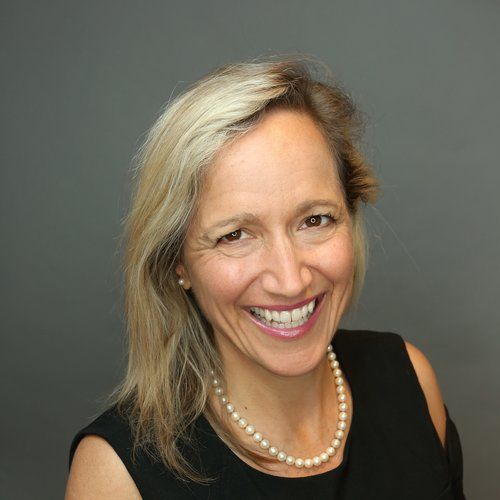
Decision Vision Episode 27: Should Our Company Do More to Support Our Women Employees? – An Interview with Betty Collins, Brady Ware & Company

August 8, 2019 by John Ray

Decision Vision
Decision Vision
Decision Vision Episode 27: Should Our Company Do More to Support Our Women Employees? - An Interview with Betty Collins, Brady Ware & Company
Loading
00:00 /
RSS Feed
Share
Link
Embed

Download file

Betty Collins, Brady Ware & Company

Should Our Company Do More to Support Our Women Employees?

What’s the role of the C-suite vs. HR in encouraging women in the workplace? How does the #MeToo Movement change how companies should support their women employees? Betty Collins, a Director with Brady Ware and host of the “Inspiring Women” podcast, answers these questions and more in an interview with Mike Blake, host of “Decision Vision,” presented by Brady Ware & Company.

Betty Collins, CPA, Brady Ware & Company and Host of the “Inspiring Women” Podcast

Betty Collins, Brady Ware & Company and Host of the “Inspiring Women” Podcast Series

Betty Collins is the Office Lead for Brady Ware’s Columbus office and a Shareholder in the firm. Betty joined Brady Ware & Company in 2012 through a merger with Nipps, Brown, Collins & Associates. She started her career in public accounting in 1988. Betty is co-leader of the Long Term Care service team, which helps providers of services to Individuals with Intellectual and Developmental Disabilities and nursing centers establish effective operational models that also maximize available funding. She consults with other small businesses, helping them prosper with advice on general operations management, cash flow optimization, and tax minimization strategies.

In addition, Betty serves on the Board of Directors for Brady Ware and Company. She leads Brady Ware’s Women’s Initiative, a program designed to empower female employees, allowing them to tap into unique resources and unleash their full potential.  Betty helps her colleagues create a work/life balance while inspiring them to set and reach personal and professional goals. The Women’s Initiative promotes women-to-women business relationships for clients and holds an annual conference that supports women business owners, women leaders, and other women who want to succeed. Betty actively participates in women-oriented conferences through speaking engagements and board activity.

Betty is a member of the National Association of Women Business Owners (NAWBO) and she is the President-elect for the Columbus Chapter. Brady Ware also partners with the Women’s Small Business Accelerator (WSBA), an organization designed to help female business owners develop and implement a strong business strategy through education and mentorship, and Betty participates in their mentor match program. She is passionate about WSBA because she believes in their acceleration program and matching women with the right advisors to help them achieve their business ownership goals. Betty supports the WSBA and NAWBO because these organizations deliver resources that help other women-owned and managed businesses thrive.

Betty is a graduate of Mount Vernon Nazarene College, a member of the American Institute of Certified Public Accountants, and a member of the Ohio Society of Certified Public Accountants. Betty is also the Board Chairwoman for the Gahanna Area Chamber of Commerce, and she serves on the Board of the Community Improvement Corporation of Gahanna as Treasurer.

Michael Blake, Brady Ware & Company

Mike Blake, Host of “Decision Vision”

Michael Blake is Host of the “Decision Vision” podcast series and a Director of Brady Ware & Company. Mike specializes in the valuation of intellectual property-driven firms, such as software firms, aerospace firms and professional services firms, most frequently in the capacity as a transaction advisor, helping clients obtain great outcomes from complex transaction opportunities. He is also a specialist in the appraisal of intellectual properties as stand-alone assets, such as software, trade secrets, and patents.

Mike has been a full-time business appraiser for 13 years with public accounting firms, boutique business appraisal firms, and an owner of his own firm. Prior to that, he spent 8 years in venture capital and investment banking, including transactions in the U.S., Israel, Russia, Ukraine, and Belarus.

Brady Ware & Company

Brady Ware & Company is a regional full-service accounting and advisory firm which helps businesses and entrepreneurs make visions a reality. Brady Ware services clients nationally from its offices in Alpharetta, GA; Columbus and Dayton, OH; and Richmond, IN. The firm is growth minded, committed to the regions in which they operate, and most importantly, they make significant investments in their people and service offerings to meet the changing financial needs of those they are privileged to serve. The firm is dedicated to providing results that make a difference for its clients.

Decision Vision Podcast Series

“Decision Vision” is a podcast covering topics and issues facing small business owners and connecting them with solutions from leading experts. This series is presented by Brady Ware & Company. If you are a decision maker for a small business, we’d love to hear from you. Contact us at decisionvision@bradyware.com and make sure to listen to every Thursday to the “Decision Vision” podcast. Past episodes of “Decision Vision” can be found here. “Decision Vision” is produced and broadcast by the North Fulton studio of Business RadioX®.

Visit Brady Ware & Company on social media:

LinkedIn:  https://www.linkedin.com/company/brady-ware/

Facebook: https://www.facebook.com/bradywareCPAs/

Twitter: https://twitter.com/BradyWare

Instagram: https://www.instagram.com/bradywarecompany/

Show Transcript

Intro: [00:00:01] Welcome to Decision Vision, a podcast series focusing on critical business decisions brought to you by Brady Ware & Company. Brady Ware is a regional, full-service, accounting and advisory firm that helps businesses and entrepreneurs make visions a reality.

Michael Blake: [00:00:20] And welcome to Decision Vision, a podcast giving you, the listener, clear vision to make great decisions. In each episode, we discuss the process of decision making on a different topic. Rather than making recommendations because everyone’s circumstances are different, we talk to subject matter experts about how they would recommend thinking about that decision.

Michael Blake: [00:00:37] My name is Mike Blake, and I’m your host for today’s program. I’m a Director at Brady Ware & Company, a full-service accounting firm based in Dayton, Ohio, with offices in Dayton; Columbus, Ohio; Richmond, Indiana; and Alpharetta, Georgia, which is where we are recording today. Brady Ware is sponsoring this podcast. If you like this podcast, please subscribe on your favorite podcast aggregator, and please also consider leaving a review of the podcast as well.

Michael Blake: [00:01:00] So, today’s topic is, should I implement a women’s career support program at my company? And whether or not you sort of follow, engage with, identify with the #MeToo Movement, this is an issue that goes well beyond the increased awareness that that movement has generated over the last couple of years. I’m not going to debate that on this show, but it’s been long known through all kinds of empirical research that companies that embrace diversity of all kinds, but particularly gender diversity, do well. They outperform in terms of retention. They outperform in terms of employee engagement. They outperform in terms of company longevity and sustainability. And at the end of the day, they also seem to to make more money.

Michael Blake: [00:01:57] And so, it makes sense that, at least, at a high level, that companies really have a sense of enlightened self-interest, not just a sense of social obligation, to ensure that women are given the opportunity, the platform, to accomplish whatever potential they have or whatever goals they have for themselves, and they have a platform on which to thrive.

Michael Blake: [00:02:27] And we’re seeing more and more companies that are doing that. We’re seeing more and more organizations that are supporting that. I believe even the US military now has specific programs about how to help women make sure they reach their full potential as members of the armed services. And I’m not sure anybody would argue that that’s not an important thing to do. I’ve worked for many women in my life. I have had many women work for and with me in my teams, but that doesn’t make me an expert by any stretch of the imagination. So, instead, I’ve decided to bring on our in-house expert, and that is Betty Collins, Brady Ware up in our Columbus, Ohio office.

Michael Blake: [00:03:12] Betty is the co-leader of the long-term care service team of Brady Ware, which helps providers of services to individuals with intellectual and developmental disabilities and nursing centers establish effective operational models that also maximize available funding. She consults with other small businesses, helping them prosper with advice and general operations management, cash flow optimization, and tax minimization strategies.

Betty Collins: [00:03:37] In addition, Betty serves on the board of directors for Brady Ware & Company, and she leads Brady Wares Women’s Initiative, a program designed to empower female employees, allowing them to tap into unique resources and unleash their full potential. Betty helps her colleagues create a work/life balance while inspiring them to set and reach personal and professional goals. The Women’s Initiative promotes women-to-women business relationships for clients and holds an annual conference that supports women, business owners, women leaders and other women who want to succeed. She actively participates in women-oriented conferences through speaking engagements and board activities. Betty is also the host of Decision Vision’s sister podcast, Inspiring Women, the podcast that advances women toward economic, social, and political achievement. Betty, thank you so much for being on the program.

Betty Collins: [00:04:27] Great to be here today, Mike. Great introduction. Thank you so much.

Michael Blake: [00:04:31] So, let’s jump into it. There’s so much that we can cover here.

Betty Collins: [00:04:37] Yes.

Michael Blake: [00:04:37] But let’s sort of — let’s level the set. Let’s sort of set some basic vocabulary.

Betty Collins: [00:04:42] Okay.

Michael Blake: [00:04:43] Because not everybody, I think, is really aware of the challenges that women face in the workplace if it doesn’t directly apply to them. So, from your perspective, as a leader and, of course, as a woman in the workforce, what are the most important challenges you see women facing today?

Betty Collins: [00:04:59] Yeah, I think that when I started the Women’s Initiative at Brady Ware in ’14, one of the things I did was we had all the women come to our corporate office, and I, basically, told my story. And what was surprising about that was they actually listened. Five years later, by the way, they’re kind of tired of listening, but they really listen, and you could see a true interest. And I looked at it as this is just how my life evolved, and I was a shareholder, and I was at the table. And they looked at it so differently, and it kind of ignited something in me to say, “I have a responsibility to show them how to get here, even though I think they know.”

Betty Collins: [00:05:39] So, the biggest challenge for women is just navigating the different seasons that they have in life. And it affects, obviously, their career. So, your 20s look nothing like your 30s, your 30s don’t look anything like your 40s. And your 50s are certainly different. I have no idea what 60 looks like because I’m not there. However, women tend to stop at certain seasons because it’s overwhelming, whether it’s younger kids’ years, whether it is financial years that you just have to crank it out, whatever. Those seasons are different, and they tend to give up. They tend to stop, or they go, “This is good enough. I can’t go on.” I had a different way of thinking because I was a single mom, and I wanted to educate my kids. So, I had this drive behind me to keep moving. But most women, they tend to stop, and they’re very, very talented.

Betty Collins: [00:06:32] The second thing is they don’t see a path where they work. So, if you look inside a boardroom, and you see 22 people, and two are women in 20 are men, you think that room is for men. Okay, that room is for shareholders. Shareholders can be either one, but they don’t see that. And then, the other two biggest things I see are confidence. Just the lack of it is phenomenal to me, or it might be confident, but they’re not courageous on top of it to step in. And then, the other challenge — and it doesn’t matter what level you’re at in any of these things, confidence plays a role in it. And then women tend to accept their situation more than ask, and inquire, and challenge the situation. So, I see, though, especially over the last five years, I see those are the things that challenge women, hold them back in their barriers that really, really don’t have them pursue their distance.

Betty Collins: [00:07:36] And so, how do you work with those things? How do you get them to see it? When I came to Brady Ware, there were two shareholders who were women. There are seven now. So, there’s a little more excitement. And there are women, especially younger, those 40s, going, “Maybe I could do this.” There’s a lot more interest in it. And then, we try to work a lot with that confidence factor. So, I see those are the big challenges in the workplace today. It does not have anything to do with talent. It has to do with those things.

Michael Blake: [00:08:04] And seven, if I remember correctly, I mean, that’s about a third, right? We’re somewhere just north of 20 shareholders, right?.

Betty Collins: [00:08:10] We’re 30 — Yes. It’s 30%. And the average for a firm our size is between 21% and 24%. And then, when you have the tier right below directors, we are increasingly — I mean, our executive management team that’s not an owner is probably in the 65% range of women. And so, again, the room for the shareholder. It’s for the risk taker. It’s for the person with a lot of guts, but it’s for both. And whoever can seize it and go should have the opportunity. But those, again, come back to the challenges of women. They’re seeing it now at Brady Ware. They’re seeing it. And that’s a barrier that we’ve kind of eliminated.

Michael Blake: [00:08:56] So, let’s work through that and kind of make a case here. Maybe someone who’s listening to this podcast say, “That’s all great. And, of course, we like women to get as far as they want. But as a shareholder, as a manager, why is it my obligation to reach out and make an extraordinary effort to help women succeed? Why don’t we just sort of keep telling everybody a pull themselves up by their bootstraps?”

Betty Collins: [00:09:23] Right. Well, here’s the reality of the workforce that we now live in, in the business world, okay – and it could be any kind of job – women are outpacing men by sheer, there’s more. And on top of that, they’re outpacing them in education. Like for instance, accountants, well over 50% are women now. It’s not a good old boys’ arena, as everyone says it is, right. But at the leadership, it is. But I mean, overall, over 55% of our workforce are women. So, if you don’t empower them through those seasons, and you don’t get into the challenges that they face as women, you are going to lose the talent. You’re going to lose that 55% because they’re going to stop, or they’re going to go into something else. So, that’s one of the reasons.

Betty Collins: [00:10:18] The other reasons that you should care about it is one in four businesses today are owned by women. And that’s continuing to increase. So, when you are an advisor or a professional in the marketplace — because when the marketplace works, our country works, right? Households are taking care of all those kind of things. Women want to have women help them. So, you want your workforce within to have the skills to navigate women through businesses. It doesn’t mean that men can’t. It doesn’t mean that men are wrong. It’s just there’s different things that we often bring to the table. So, with the fact that over 50% of the workforce, we’re kind of outpacing in education, and businesses are being started more and more by women, the perspective from that woman is a really, really huge deal because men and women just think differently. No one’s wrong. We just think differently, and we execute differently.

Michael Blake: [00:11:17] So-

Betty Collins: [00:11:17] So, those are the things that I — and on top of that, women have just different challenges that men don’t have, and men have challenges that women don’t have. And so, you have to help that workforce along. It empowers them, and it strengthens it.

Michael Blake: [00:11:35] So, now, obviously, you’ve had an interest in this issue for a long time, much longer than two years. But in two years we’ve had something pop up called the Me Too era. And I’m curious now because in my observations that the Me Too era era, I think, has changed, at a minimum, the tone and the tenor of the conversation of women in the workplace.

Betty Collins: [00:11:59] Yes.

Michael Blake: [00:11:59] And it’s led to some strange overreactions. You hear stories about men now that just will not be alone with women in the workplace and will no longer do certain things, but are necessary networking things, which, to me, is kind of curious. But I like to hear your perspective. How is the Me Too conversation kind of flavored this entire thought process, if at all? Or maybe it’s just background noise. I’m curious as to how you see that.

Betty Collins: [00:12:29] I really don’t think it’s background noise. I think, at Brady Ware, the great thing, because we started this initiative in ’14, one thing I hear over and over again is we started a conversation, and it hasn’t stopped. So, so, issues for women, advancement for women, education for women, that has continued since 2014. And so, when the meaty — Excuse me. Listen to me. This movement came, and, now, it’s okay to talk about it. It took some pressure off people, first of all. And so, it has changed in the terms that we were more aware, we watch things, and if we see something that’s bothersome, we don’t just step back and go, “Well, that’s the way it is,” because there’s been some major discovery, and society is on the side of the Me Too Movement. It’s not okay. And now, it can be set a lot harder.

Betty Collins: [00:13:33] But the other side of that is, generally, the guy is the bad guy. So, it can be really detrimental to them when it maybe shouldn’t be. So, I think there’s a lot of — you got to be really careful with it, but I think we need to continue to have the conversation. We will at Brady Ware, and we have had that, because it has to be addressed. It’s not okay. It’s not okay from either side.

Betty Collins: [00:14:02] And so, it’s a touchy one. But I believe it’s background noise. I think that’s not even acceptable now. And people don’t even want — and sometimes, it’s not even okay to joke and laugh about it. It’s not appropriate. So, I think it’s been a good thing in that way. I just don’t want it to go overboard. I don’t want it to dominate everything because women have made a lot of strides and a lot of progress. So, I don’t know if that answers your question, but that’s my take on it.

Michael Blake: [00:14:33] I think it answers the question as well as it could be answered because I would have been surprised if you just said, “Here’s like our hard and fast answer carved in stone, the end.”

Betty Collins: [00:14:43] No. I mean-

Michael Blake: [00:14:43] And the movement is so new that it’s going to take a while for this to play out, right?

Betty Collins: [00:14:49] Right.

Michael Blake: [00:14:49] And you being in Columbus, think of the Ohio State Program, their legendary football coach was involved in some way. I don’t want to characterize him as being collateral because I don’t want to sound like I’m either assigning blame or not assigning blame. But clearly, that’s a position that not long ago would have been considered untouchable, right?

Betty Collins: [00:15:14] Yeah.

Michael Blake: [00:15:14] And then, his career was very quickly brought to an effective end.

Betty Collins: [00:15:20] Yeah. I mean, we have to be careful that like we tend to do this in the United States, I think. Something happens to two people, and we create a law, right. Okay, everyone, step back. So, you don’t want to overdo it because, then, nobody will take it seriously. But you want the issue to be gone. I think there’s just a lot more confidence to address it. And I think that that’s the powerful thing with it.

Betty Collins: [00:15:46] And again, Brady Ware, women will tell you, we started a conversation in ’14. Then, now, we can have them. I think they feel pretty open that they could have them about any kind of thing, including this. And that’s where Women’s Initiative. You get people comfortable, you get people going, “This is a priority,” then, when these type of things come in play, the conversation is easier to have, and it doesn’t get out of hand. You know what I’m saying?

Michael Blake: [00:16:09] Sure.

Betty Collins: [00:16:11] Okay

Michael Blake: [00:16:13] Some people I think, will think of — will look at women’s role in the workplace and providing the right platform for them. And I think, there will be some people who will be tempted to fall back on, “Well, that’s really an HR problem. This is something that the HR managers should be addressing. We don’t need to necessarily be involved with this at the C level. That’s why we have an HR department for.” How would you — I think I know how you’d react to that, but I’d like you to actually do it. How do you react to that?

Betty Collins: [00:16:45] Yeah, I think the HR gets involved at some point if it’s real and if it’s a problem, for sure. But I would challenge women in any company that when you see behavior, it could be that even the woman is not aware of how she’s conducting herself even, right, or putting herself in situations, women should be supporting women saying, “You need to be careful,” okay, or you need to listen to people who have may have been affected by this person.” So, I think that conversation has to be had by women to women. But I also think that women have to — if they want to get rid of a problem, you cannot just sit back and say, “It’s somebody else’s role to take care of this issue.” Women should support women by helping them work through these situations because maybe it won’t escalate into a really bad situation.

Betty Collins: [00:17:41] So, those are my takes on it. I, also, think that men also have to do that for themselves as well, that if they are getting lured into something that they just don’t see it, or maybe they are conducting themselves in a way that’s just inappropriate, and it’s just not okay. So, I think there has to be some of that as well. And I think it’s more acceptable to talk about it now.

Michael Blake: [00:18:08] Yeah, I think so, too. And to that point, I think, the other part, the other ingredient besides conversation, I think is also introspection. And you mentioned that 25% of businesses are women-owned, which means the other 75% are owned by folks with the XY chromosome. So, for somebody then who’s in that position, and maybe we’re starting to kind of make an impact, and thinking, “Well, geez, I really ought to be paying more attention to this,” how would you sort of advise someone to start kind of a self-examination as to whether they or their organization may have a gender bias? Is it as simple as how many women work in the organization, or how many women have been promoted, or pay gap, or is there something deeper that needs to be looked at for it to be effective?

Betty Collins: [00:18:58] Yeah, I think you always have to look at, “We have an organization that is successful, and we’re going to maintain its success. In order to do that, we’re going to have the best talent that we have. We’re going to go get the best talent always.” But women tend to hire women, and men tend to hire men. I mean, you just — and this is an example of I kind of found myself a while ago in a hiring situation. I really like somebody. I wanted to bring them in. And I had almost all women interview the person. And, of course, she was a woman. And it was like, “Why didn’t I include any men in that?” And somebody brought it to my attention, “Why was there no men involved with the hire?”

Betty Collins: [00:19:49] I don’t think I meant to do it that way. I don’t think it was intentional. But I look at that as, really, I was just bias to utilize all women. Why did I think like that? And that’s what you have in these situations to look at. It wasn’t that I was not willing to hire and get a guy. It wasn’t that I didn’t think guys knew enough about this woman. It just that’s how I navigated, okay. So, is that bias or is that not? But all women were involved in the process.

Betty Collins: [00:20:18] So, I think you have to, sometimes, step back also and get an outside perspective versus trying to do it internally. I’m a big fan of that. I don’t go around talking about the dirty laundry of Brady Ware. I don’t go around talking about, “Here’s what our company does.” But I will go to very, very successful people and say, “What do you think of this? Did I do the right thing?” And give them a circumstance or give them a scenario. They don’t know. They’re not biased. They don’t have any — they’ve nothing to lose in the game whether they pick one side or the other. And so, I think that’s a way you kind of identify those things sometimes. And then, when you see that women are only doing things with women or, “Hey, we’re going to hire all women. We don’t want any men here,” or, “We’re always going to pick women to do these things,” I think you kind of call it out and go, “Why isn’t this an all-inclusive group?” or “Did we pick the right talent? Who’s the right talent to do this?” Does that make sense what I’m saying?

Michael Blake: [00:21:21] Well, yeah, it does. And I think it highlights kind of the insidious nature of biases. It’s very hard, I think, in the moment, to detect it, right?

Betty Collins: [00:21:33] Yeah.

Michael Blake: [00:21:33] You almost have to be thinking about it all the time. And I think, frankly, that’s why there’s so much cannily resistance to this awareness. And even the Me Too Movement, I don’t necessarily think it’s because there are all these men out there that want to do evil things. But it is that it’s another mental thing that you have to have on your plate. And frankly, it’s exhausting to have to think about that all the time. Personally, the way I get through that is, well, if it’s exhausting to me, what must it be like to be on the other side of that table where you’re confronted with it all the time?

Betty Collins: [00:22:14] I was really glad that the person who saw me doing all of this person to hire them said something because I really didn’t see myself doing that.

Michael Blake: [00:22:25] Sure.

Betty Collins: [00:22:25] I didn’t. And so, sometimes, when you’re seeing that bias, you got to be careful how you do things. You got to be a professional. You can’t be constantly harping on something, right. When you see it, I think you need to call it out and do it in a way that is respectful. So, this person wasn’t on me. They just asked a simple question.

Michael Blake: [00:22:46] Yeah. Well, I look at it. And look, there are some people who who were listening to that anecdote, and they were jumping for joy, right.

Betty Collins: [00:22:54] Yeah, right.

Michael Blake: [00:22:55] There’s somebody who has sort of maybe a harder line, for lack of a better term, view of the entire question. And they’re thinking, “Yeah, you go. Make sure there’s nothing but women,” right?

Betty Collins: [00:23:07] Right.

Michael Blake: [00:23:07] And there’s even a perverse incentive in that direction that you got to be aware of. And it highlights sort of how multilayered the entire conversation is. It’s just so much more than just hiring women and paying them the same.

Betty Collins: [00:23:24] Right, right, I agree.

Michael Blake: [00:23:26] So, you’ve been involved with the Women’s Initiative for how long?

Betty Collins: [00:23:31] Since 2014. I was really the one who started it.

Michael Blake: [00:23:34] Okay, cool. So, five years. So, all five years.

Betty Collins: [00:23:36] Yes.

Michael Blake: [00:23:38] Is there a story? We’re not going to ask you to hang out dirty laundry, but I am going to ask you to put out some clean laundry.

Betty Collins: [00:23:43] Yeah, okay.

Michael Blake: [00:23:44] Is there a favorite kind of success story that the firm has had with the initiative that you could share with us?

Betty Collins: [00:23:52] Yeah. There’s two. I’ll give you two. One was when we first did this, this is when I knew this was really the right thing to do. And we had an intern who came to work for us. And she was fairly quiet and in a way. And she was definitely CPA type of personality, that kind of thing. But she came to the first Women’s Initiative. When I kind of challenged her and said, “What do you want it to be? Because this is really for you.” And so, I said, “I need someone from each office to kind of represent that office that where to start digging in and figuring out how we want to do this.” And she called me on the way home and said, “Has anybody taken the position to do this in Columbus?” And I said, “No, I’d love for you to do this.” And she was the youngest, which I didn’t think about that happening, right.

Betty Collins: [00:24:43] And she’d just — the Women’s Initiative helped her develop. I mean, she did things that were just unimaginably. She got on a committee yet at NAWBO, a group that we joined, where she was in sales and helping with guests’ retention. And I mean, it was phenomenal to me. And then, she ended up being a great networker, loved going to events. She went to them on her own without even sponsoring them. I just saw her come alive. She passed the test. She kind of stood up to some things in her life. And she isn’t with us any longer, but she was such an example of it really developed her in an early age. I wish I would have had somebody showing me that when I was her age. So, that’s always one of my favorite stories, even though she’s not here. I know she went out of here really confident, amazing young woman.

Betty Collins: [00:25:34] The other one is my tax manager, [Ronnie Orbit]. She grew up in Puerto Rico, and she has been part of the movement with Brady Ware. She, when Puerto Rico had two hurricanes within a week, about seven days, and the second one just — I mean, ruin the island as we all know.

Michael Blake: [00:25:57] It just wiped it out.

Betty Collins: [00:25:58] Wiped it out. And she went to a school in Puerto Rico for girls, and that school got wiped out. And they were able to do a lot of the cleanup, but the problem was nobody could get to their parents. So, we can’t afford it. We can’t work right now because everything’s a mess. And it just really got her. So, she came to me and said, “Can we do a breakfast and raise money?” And she pictured us all. So, I said, “Look, I’ll buy breakfast food, and I’ll pay for the food, and then everybody can pay 10 bucks, and we’ll do it.” We’ve got an office of 26 people.

Betty Collins: [00:26:29] But long story short, all four offices got involved with that. And her daughter got involved with it because she goes to a school for girls in the States, and she got her school to raise money. And so, they went down on Thanksgiving and took $10,500. And it was like raised in a couple weeks. Everyone just jumped in. She felt empowered. She felt like, “I have this Women’s Initiative. I’ve got these school for the girls.” And now, the school is our sister schools, the one in the US and one in Puerto Rico. And it was just a huge encouragement to them. but it was like a really cool thing that we got to do here. So, that’s one of my definite favorite stories.

Betty Collins: [00:27:12] And last one, I know I could give you a ton. We celebrate International Women’s Day. And the first year we did it, I went out to find the theme of the year, and I didn’t know that much about it really. It was all on persistence. And so, I had the women of Brady Ware give a chance to write, who is that persistent woman in their life? And man, did we have just, probably, 20 just beautiful stories of women that were persistent that were effective and impactful to them. So, those were just a couple of the — I’m going to call the rah-rah moments of the women’s initiative, for sure. And probably that we’ve seen two shareholders go to seven. That’s been a pretty big deal.

Michael Blake: [00:27:52] So, in addition then to the women’s initiative, now, Brady Ware, with your leadership, puts on the Women’s Leadership Conference.

Betty Collins: [00:28:01] Yes.

Michael Blake: [00:28:02] What kind of impact have you seen with that?

Betty Collins: [00:28:05] Well, it was really funny because we started that conference in ’15. That year, we had 135 people come. We had Jane Grote Abell, who is the Chairwoman of Donato’s come in to speak. We ate pizza that day. And it was just this two, maybe three-hour thing. And we just thought we were all that. It was really inspirational. And I said we need to do this at a bigger scale. But I’ve got a day job, and I can’t just plan events all year.

Betty Collins: [00:28:31] And so, I got connected with someone in town who has a great women’s organization. They jumped in with us. And then, they’re a non-profit. So, they get to kind of keep the profit from the conference. Then, we had another one join us as well. Some of these great partnerships. Brady Ware, the WNBA and NAWBO. And this year, we sold out at 350 national speakers power breakfast panel of just big women in Columbus, breakout sessions where we had 70 people apply to even be at the breakout. We only needed 8 breakout because we had to choose from 70.

Betty Collins: [00:29:07] And the day is energetic. I mean, it’s not just rah, it’s rah-rah stuff. It’s education. It’s advancement. You’re networking. You have peers. And, really, what it’s done is create kind of this community. It’s a very known conference. And we just built a great brand with it. And the impact of it to me will be, hopefully, that it will just be this major, major thing that happened in a way that people just know it, and they go in, and we will build on it every year. But it’s very, very good for women. And we have men go to that as well. So, it’s a very amazing event. I never pictured it turning into what it has, but I’m grateful that it has.

Michael Blake: [00:29:51] So, we’ll have to convince you to do that in Atlanta one year. We sure could use it.

Betty Collins: [00:29:56] I would love to do it there. And I’ve told them, I said, “You guys have to get some groups in town that can pull all the talent in,” because that’s the key to this because Brady Ware can easily do it, host it, sponsor it, and be the emcee. But getting your women’s groups in town to come together for a day, you’ve made impact and done something pretty phenomenal.

Michael Blake: [00:30:20] So, other people listening to this program maybe thinking about they want to, again, make sure that their companies are good platforms for women to thrive and reach whatever potential they have or feel that they have. Do you think they need to go so far as to have their own women’s initiatives and put on their own conferences, or can they stop short of that and still get a lot of the same impact?

Betty Collins: [00:30:49] Yeah, I think the most effective thing to do is pull the women together in your company and find out, survey them, find out what their challenges are. Find out what their barriers are. Find out what holds them back. Find out what tires them and keeps them up at night. So, you had to kind of start there to kind of go, “What is it that we could do to energize this force?”

Betty Collins: [00:31:18] And once you kind of find out maybe what they would like to be getting out of a women’s initiative, because everybody can do it differently. You don’t need to do a big conference. That was just kind of something I wanted to do for my community. But once you find that out, the top leadership, and I’ve had really, really amazing leadership in Brady Ware who support this, you have to go to them and get buy in. You’ve got to pour the Kool-Aid, and they’ve got to drink it. I’ve never had that issue at Brady Ware. They have always just, “What do you want to do, Betty? How do you want to do it?” So, the top CEOs, to the board of directors, to our shareholders, got behind it and said, “Go for it.” And then, they just let me go. But the women of Brady Ware really have created a lot of why we do what we do.

Betty Collins: [00:32:08] And so, for me, you don’t need a large company. You don’t need a ton of resources. It’s as simple as a book club at lunch. It’s as simple as finding something in town where you can go and hear women speakers, get perspective, and then you build on it. Because we all have day jobs, we all have stuff that we have to do. And by the way, it costs money to do it in terms of people’s time and how much you’re going to be committed to it, but I cannot emphasize enough the energy you will get from the women that will get in there and go with you. And we have that at Brady Ware. We have some phenomenal — you should always, by the way, do this for all of your employees. You always want to motivate them, right. So, I think those are some of the things you do initially. And then, you make sure there’s good role models around those women developing them.

Michael Blake: [00:32:58] As you’ve — actually, I want to ask one more question before I ask them the next one I had on the list-

Betty Collins: [00:33:04] Yes, okay.

Michael Blake: [00:33:04] … which is, I think. that the — some people look at women’s initiatives, they look at women’s groups, and I think, in my view, wrongly, right. But they think that it’s basically sort of an offshoot of Gloria Steinem and-

Betty Collins: [00:33:20] Sure.

Michael Blake: [00:33:20] … wonder if it’s really just sort of a guys for “radical feminism,” whatever it is that means but-

Betty Collins: [00:33:26] True.

Michael Blake: [00:33:26] … my understanding with most groups like this, I mean, not it’s not just a place where women just get together and hate men for a couple hours, is it?

Betty Collins: [00:33:38] Oh, heavens, no. I wouldn’t want to do it. I mean, people will say to me, “Well, you’re a feminist.” I’m like, “I don’t think of myself that way,” because when I think of a feminist, I think of this angry woman, or this angry group, or whatever. And I will tell you that there was a lot of fighting before me that had to be done. I mean, in 1988, until they passed law under Ronald Reagan, you could not get a loan as a businesswoman without your husband’s signature. 1988, okay.

Michael Blake: [00:34:06] Really?

Betty Collins: [00:34:08] Yes.

Michael Blake: [00:34:08] That’s astonishing.

Betty Collins: [00:34:10] It is astonishing. And so, there were things that had to really be pushed and fought for. And so, when I go to NAWBO, and go to lunch, or I go to a conference, or I partner with them, it’s not about, What’s the next fight?” In my mind, it’s about, “Thank you for the history. Thank you for trailblazing. And we’re going to honor you by seizing opportunity that we have today.” And what is that opportunity, right? I mean, I can be a shareholder at any company I want. I can sign a loan if I want. I can lead if I want. So, take the opportunity that we get to now have because there were people who didn’t fight. There was a time for fighting.

Betty Collins: [00:34:54] Now, the other challenge that I find at these groups, and that I think is we want the next generation to look at us and go, “Man, did they do an amazing job. And look what we get to do because they did this for us,” right, which is creating companies, which is starting 25% of the companies that are running today, et cetera. So, the women’s groups are not that. I mean, if they are like that, I don’t want anything to do with it. I don’t need to fight those fights. And I’ve had tremendous men in my life who have been great mentors. We have great men in this company, Brady Ware, that run it. And so, they’re not my enemy. They’re my shareholder. And it’s just, do I want the opportunity? And I have it. And I should be allowed to seize it if I’m good.

Betty Collins: [00:35:43] And so, that’s what those groups need to be about. So, like NAWBO is the National Association of Women Business Owners Columbus, and they’re a national group, and they’re the ones that actually got the bill passed under Reagan that you could sign your own business loan. So, that’s kind of their claim to fame. And so, they’re big in advocacy. But really, that group is just about — I mean, this is a supportive group. I consider them my tribe. They’re my team. They help me with the day-to-day stuff of running business and being in business.

Michael Blake: [00:36:13] So, in your involvement in this, are there things that you’ve learned? And I know you’ve probably start this thing that you — you started this thing with you being in the role of a teacher.

Betty Collins: [00:36:25] Yeah.

Michael Blake: [00:36:25] But what are some things that you’ve learned over the last five years?

Betty Collins: [00:36:29] Yeah. I mean, if I would have to go back and peruse that, I think it’s more that women and men are different, their perspectives are different, and they shouldn’t be favored one or the other. I can change how women in Brady Ware pursue a career, and make a career, and I’m an influencer. And I think that’s the biggest thing I learned that when you don’t think you’re an influencer, it goes away because you just stop trying because you’re not making change. It’s tragic.

Michael Blake: [00:37:08] Yeah.

Betty Collins: [00:37:08] So, that’s one of the things I really have taken from it. The other thing I’ve taken from it is that when you show them the path, and they see growth amongst women, the excitement builds, and you get more of them to go, “Maybe I can do this.” And I think I’ve learned that confidence is great. And there are people who have way too much of it, right. But if I can help get them to be confident, but then be courageous, I’ve done my job, I’ve left my legacy.

Betty Collins: [00:37:41] And that, I don’t see those two combinations happening all the time. You can be really confident, and you’re sitting in a meeting – because we’ve sat in shareholder meetings together, Mike – and you’re confident about something; yet, you’re not courageous enough to say what you need to say, right?

Michael Blake: [00:37:54] Yeah.

Betty Collins: [00:37:55] So, those are some of the things I’ve learned, confidence and courageous don’t generally go together. Sometimes, they do. And then, seeing the path. And then, you can have impact and influence, and you should use that it to the best.

Michael Blake: [00:38:10] So, if I’m listening to this podcast right now, and I’m thinking, “We probably need to do more to make our company a better platform for women’s success,” what are a few things that, today, this weekend, I should start thinking about if I’m a business owner or a business leader to focus in on initially?

Betty Collins: [00:38:37] Yeah. I would focus and just look at my workforce that I have right now and look at, “Am I missing my talent?” And if I am, or I have women coming and going, or even men coming and going, or I’m not seeing that that woman really is more than she is, and she’s not doing it, I think you need to step back and say, “I want to change that. I want to change that.”

Betty Collins: [00:39:08] Gary Brown and I have been business partners since 1995 or 2000, actually. He came to the firm in ’95. I became a partner with him in 2000. And one of the things he said to me was, “You act like an owner. Why aren’t you one?” And I said, “Well, I don’t want to be a CPA, and I don’t want to do these things.” And he said, “But you are already doing them. And how can I challenge you to do this? Because you’re going to regret it if you don’t.”

Betty Collins: [00:39:38] I am so grateful that he did that. So, he just saw it. He just saw it from a distance and went, “That’s somebody that it’s going to — it would be really tragic if we lost her. It would be really tragic if she didn’t seize her moment.” And I think that’s the first thing you really look at your organization and ask that.

Betty Collins: [00:40:00] The second thing I would tell you, if you’re an owner, and you’re a woman, or you’re a man, but if you’re a woman, specifically, and you’re just surrounded by more men than women, and sometimes you just would like to have more of a peer group that is relatable, you need to start checking out what’s in town that you can go find that from. I mean, I would suggest that.

Betty Collins: [00:40:21] And then, the other thing I would tell you is, for instance, I do this with the AICPA, which is our organization for accountants. I go on their website because this is my industry, right. I Google them to find what are they doing about gender? What are they doing about women in the workplace? What are they doing to keep their workforce energized? And they have some great information. And I look at that. And, sometimes, I’m going, “Man, we’re doing this Women’s Initiative right according to the AICPA. Let’s put it that way.”

Betty Collins: [00:40:50] So, those are things I would suggest initially just getting your head around. And then, find someone who’s done it and say, “Help me get something started. I got a day job. I’m really busy, but I’d like to get this started. What are the steps?” Those are things I would tell you.

Michael Blake: [00:41:06] All right, So, we’re coming to the end of our time here, but I want to make sure we get one more thing in because you’ve actually been doing your podcast longer than we’ve been doing Decision Vision. So, could you talk about that podcast for a few minutes? What you’re talking about, why you’re doing it, why you’re so dedicated to it.

Betty Collins: [00:41:28] Well, I get quite a bit of opportunities to speak. And then, I also do things with the Women’s Initiative and Brady Ware. So, if we have, sometimes, quarterly lunches, or we have our internal day, and so I come up with things to talk about. And so, in doing that, and writing PowerPoints, and I always leave energized when I go speak and talk about the subject. So, someone said to me, “You could do a podcast on these things. You’re a good storyteller,” which I just don’t see it, Mike, but you can hold me up on that.

Michael Blake: [00:42:04] You are.

Betty Collins: [00:42:04] But, okay, thank you. So, I try-.

Michael Blake: [00:42:07] I got mansplain to you and say that you’re a good storyteller.

Betty Collins: [00:42:11] Okay, perfect, perfect. So, I thought. And she said, “I really think you could do this. And I think people would really get something out of it.” So, I said, “Well, let me think about it.” So, she and I got back together, and she said, “Here’s how you do this. We’re going write up 12 topics, and you need to think about things that since you’ve been in this Women’s Initiative, you’re in women’s groups, you’re around women a lot, what are their challenges?” And I mean, I wrote down twelve things like immediately. I just know these are the things that women deal with.

Betty Collins: [00:42:43] And then, we came up with a kind of system in order. And then, I said, “Okay.” And then, I went ahead and started doing them. And I just get a lot of good feedback from people. So, it kind of motivates you with it. I’m not a big name in town. I’m not famous. So, it’s not like when Will Ferrell puts out a podcast, everyone listens to, right? And he’s a funny one. So, I didn’t know if it would take off or it would go, but it has impact to the people that listen to it. And so, that’s the motivating factor that I do it.

Betty Collins: [00:43:17] And it’s really on women’s issues that I know in my little world of Brady Ware, and NAWBO, and the WSBA. These are what women go through. And then, when you start Googling these subject matters, oh my goodness, it’s just layers of it. Layers of it everywhere. So, these are topics that apply to the everyday person. But I have a lot of male listeners. So, it’s not like it’s just for women. I have a lot of men that compliment it, so.

Michael Blake: [00:43:44] No, I’m not surprised. I mean, in my career, for whatever reason, many more women have reported to me than men. And I don’t know why, but that’s just sort of the way that has sort of shaken out. And as somebody who wants to get the most out of those people and, hopefully, also be a running platform, listening to podcasts like yours, and just learning how to think from the other side of the table, and look at it through the viewpoint of women, I think, is extremely useful. In fact, to me, I don’t think I can effectively lead or manage women without, at least, making an effort to kind of learn that language and be on that side of the discussion.

Betty Collins: [00:44:32] Right, right. Because they’re just not going to respond. Again, they think differently. And they do things differently. How they execute is different. And I tell women all the time, it’s okay to kind of leverage your uniqueness and your perspective. But if you think you’re funny, and nobody’s laughing in the room, you probably need to step back and say, “Okay, if I’m going to be heard, I have to know my audience. I have to know the people around me, so that I can get engagement.” And that’s what you’re really saying.

Michael Blake: [00:45:05] Yeah.

Betty Collins: [00:45:05] We have to learn how to do that.

Michael Blake: [00:45:07] The only time crickets are good sound is if you’re collecting them to go fly fishing the next day. That’s the only time.

Betty Collins: [00:45:11] There you go. There you go.

Michael Blake: [00:45:14] All right. Well, this is going to wrap it up here. And Betty, I’ll share with you a secret that that nobody, except for the internet, is going to know. But I had a professional crush on you ever since our first board of director meeting together last October. I mean, just the way that you do this, the leadership, the gravitas you have is just infectious. And I’m proud, as a shareholder of the firm, that you’re doing this for us. And thanks so much for coming on the program to talk about this with us and educate me, as well as our listeners, about what you’re doing, why it’s important, and how we can carry the ball forward.

Betty Collins: [00:45:56] Well, I so appreciate your kind words, and I love it. It really does fuel. It’s the fuel to my fire to be a good CPA, an advisor, and to — I mean, I’m energized by the marketplace. And when we’re successful in the marketplace, the country is successful, communities are successful. And so, it keeps me going because it’s something that’s fun because counting can be highly overrated, right.

Michael Blake: [00:46:24] So, I’ve heard.

Betty Collins: [00:46:25] I appreciate your kind word. Yes. Well, thank you for having me.

Michael Blake: [00:46:30] All right. So, that’s going to wrap it up for today’s program. I’d like to, once again, thank Betty Collins so much for joining us and sharing her expertise with us. We’ll be exploring a new topic each week, so please tune in, so that when you’re faced with your next business decision, you have clear vision when making it. If you enjoyed this podcast, please consider leaving a review with your favorite podcast aggregator. It helps people find us, so we can help them. Once again, this is Mike Blake. Our sponsor’s Brady Ware & Company. And this has been the Decision Vision Podcast.

Tagged With: Dayton accounting, Dayton business advisory, Dayton CPA, Dayton CPA firm, Inspiring Women, Inspiring Women with Betty Collins, MeToo, Michael Blake, Mike Blake, NAWBO, NAWBO Columbus Chapter, relationship building, Women in Business

  • « Previous Page
  • 1
  • …
  • 132
  • 133
  • 134
  • 135
  • 136
  • …
  • 162
  • Next Page »

Business RadioX ® Network


Our Most Recent Episode

CONNECT WITH US

  • Email
  • Facebook
  • LinkedIn
  • Twitter
  • YouTube

Our Mission

We help local business leaders get the word out about the important work they’re doing to serve their market, their community, and their profession.

We support and celebrate business by sharing positive business stories that traditional media ignores. Some media leans left. Some media leans right. We lean business.

Sponsor a Show

Build Relationships and Grow Your Business. Click here for more details.

Partner With Us

Discover More Here

Terms and Conditions
Privacy Policy

Connect with us

Want to keep up with the latest in pro-business news across the network? Follow us on social media for the latest stories!
  • Email
  • Facebook
  • Google+
  • LinkedIn
  • Twitter
  • YouTube

Business RadioX® Headquarters
1000 Abernathy Rd. NE
Building 400, Suite L-10
Sandy Springs, GA 30328

© 2026 Business RadioX ® · Rainmaker Platform

BRXStudioCoversLA

Wait! Don’t Miss an Episode of LA Business Radio

BRXStudioCoversDENVER

Wait! Don’t Miss an Episode of Denver Business Radio

BRXStudioCoversPENSACOLA

Wait! Don’t Miss an Episode of Pensacola Business Radio

BRXStudioCoversBIRMINGHAM

Wait! Don’t Miss an Episode of Birmingham Business Radio

BRXStudioCoversTALLAHASSEE

Wait! Don’t Miss an Episode of Tallahassee Business Radio

BRXStudioCoversRALEIGH

Wait! Don’t Miss an Episode of Raleigh Business Radio

BRXStudioCoversRICHMONDNoWhite

Wait! Don’t Miss an Episode of Richmond Business Radio

BRXStudioCoversNASHVILLENoWhite

Wait! Don’t Miss an Episode of Nashville Business Radio

BRXStudioCoversDETROIT

Wait! Don’t Miss an Episode of Detroit Business Radio

BRXStudioCoversSTLOUIS

Wait! Don’t Miss an Episode of St. Louis Business Radio

BRXStudioCoversCOLUMBUS-small

Wait! Don’t Miss an Episode of Columbus Business Radio

Coachthecoach-08-08

Wait! Don’t Miss an Episode of Coach the Coach

BRXStudioCoversBAYAREA

Wait! Don’t Miss an Episode of Bay Area Business Radio

BRXStudioCoversCHICAGO

Wait! Don’t Miss an Episode of Chicago Business Radio

Wait! Don’t Miss an Episode of Atlanta Business Radio