
Business RadioX ®

  • Home
  • Business RadioX ® Communities
    • Southeast
      • Alabama
        • Birmingham
      • Florida
        • Orlando
        • Pensacola
        • South Florida
        • Tampa
        • Tallahassee
      • Georgia
        • Atlanta
        • Cherokee
        • Forsyth
        • Greater Perimeter
        • Gwinnett
        • North Fulton
        • North Georgia
        • Northeast Georgia
        • Rome
        • Savannah
      • Louisiana
        • New Orleans
      • North Carolina
        • Charlotte
        • Raleigh
      • Tennessee
        • Chattanooga
        • Nashville
      • Virginia
        • Richmond
    • South Central
      • Arkansas
        • Northwest Arkansas
    • Midwest
      • Illinois
        • Chicago
      • Michigan
        • Detroit
      • Minnesota
        • Minneapolis St. Paul
      • Missouri
        • St. Louis
      • Ohio
        • Cleveland
        • Columbus
        • Dayton
    • Southwest
      • Arizona
        • Phoenix
        • Tucson
        • Valley
      • Texas
        • Austin
        • Dallas
        • Houston
    • West
      • California
        • Bay Area
        • LA
        • Pasadena
      • Colorado
        • Denver
      • Hawaii
        • Oahu
  • FAQs
  • About Us
    • Our Mission
    • Our Audience
    • Why It Works
    • What People Are Saying
    • BRX in the News
  • Resources
    • BRX Pro Tips
    • B2B Marketing: The 4Rs
    • High Velocity Selling Habits
    • Why Most B2B Media Strategies Fail
    • 9 Reasons To Sponsor A Business RadioX ® Show
  • Partner With Us
  • Veteran Business RadioX ®

Search Results for: kids care

Decision Vision Episode 26: Should Our Company Get Help with Leadership? – An Interview with Bob Turknett, Lyn Turknett, and Tino Mantella, Turknett Leadership Group

August 1, 2019 by John Ray

Decision Vision
Decision Vision
Decision Vision Episode 26: Should Our Company Get Help with Leadership? - An Interview with Bob Turknett, Lyn Turknett, and Tino Mantella, Turknett Leadership Group
Loading
00:00 /
RSS Feed
Share
Link
Embed

Download file

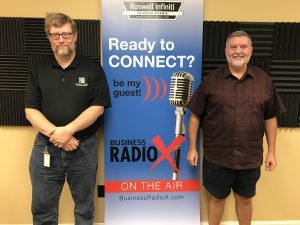
Mike Blake, Tino Mantella, Lyn Turknett, and Bob Turknett

Should Our Company Get Help with Leadership?

What are the qualities of a great leader? How do you recognize deficient leadership? How do you fix it? Bob Turknett, Lyn Turknett, and Tino Mantella of Turknett Leadership Group answer these questions and much more in an insightful and wide-ranging interview with “Decision Vision” host Michael Blake.

Overview of Turknett Leadership Group

With over 30 years’ experience, Turknett Leadership Group (TLG) is a nationally recognized leader in providing character-based leadership and organization development. TLG specializes in executive coaching and development at the individual and team level. Using the Leadership Character Model™, TLG has helped thousands of individuals become highly functioning, thriving leaders and has helped build teams that balance respect and responsibility with a foundation built upon integrity. Our goal always: organizations operating with complete integrity, optimized processes, and maximum financial success.

The firm has specialized in executive coaching since 1987, before the word coaching was common parlance. They combine scientific rigor with an unmatched ability to partner with our clients for deep sustainable growth and change. The founders at the firm are thought leaders and have lifted up character-based leadership through the Georgia Leadership Character Awards since 2003. These awards are now presented in partnership with the Greenleaf Center for Servant Leadership.

Turknett Leadership Group is committed to collaborating with the Gwinnett County Board of Commissioners to create a customized leadership development program that meets or exceeds any county specific needs. They are also confident in their ability to do so, as this is what we have done successfully with thousands of organizations, agencies, individuals, and teams for the last 30 years.

Leadership is their expertise. Turknett Leadership Group is the premiere resource for executive coaching, leadership and team development, talent assessment, culture change, succession management, and business focused engagement surveys. TLG has built a reputation for results and exceeding client expectations by creating high-performing teams for long term business success.

Details of our programs and client testimonials can be found at www.turknett.com.

Dr. Robert (Bob) Turknett, Co-Founder and Co-Chair

Bob Turknett

Bob Turknett served as CEO of Turknett Leadership Group for twenty four years, and now serves as co-chairman and senior consultant. Bob is a licensed psychologist, a trusted advisor to CEOs and boards, and a pioneer in CEO Coaching. He is often heard saying that he really loves coaching the top person because “it enables him to get his arms around the entire organization,” creating a high probability for real change. Bob has served as an executive coach to more than 1,000 executives in more than 100 companies.


Carolyn N. (Lyn) Turknett, Co-Founder and Co-Chair

Lyn Turknett

Lyn Turknett as President of Turknett Leadership Group for twenty four years, and now serves as co-chairman and senior consultant. The focus of her work is character in leadership, cultural assessment and change, and executive team development. Ms. Turknett’s consulting engagements have included leadership and executive team development, organization assessment and change, and individual feedback and coaching. She is particularly interested in helping teams at all levels improve effectiveness and working relationships, and in helping organizations maximize intellectual capital and create cultures that support innovation and initiative.

Tino Mantella, President and CEO

Tino Mantella

Tino Mantella became President and CEO of Turknett Leadership Group on October 29th, 2018. TLG is one of the nation’s top leadership development companies, driven by its proprietary Leadership Character model and grounded in science. TLG has supported hundreds of CEOs and their teams over the last 32 years Founders; Dr. Robert (Bob) Turknett and Carolyn Turknett will remain engaged and committed to the company’s mission..

Mantella brings over 30 years of experience leading some of the nation’s largest and most distinguished not-for-profit organizations including the YMCA of Metropolitan Chicago, the National Arthritis Foundation, and the Technology Association of Georgia.

Michael Blake, Brady Ware & Company

Mike Blake, Host of “Decision Vision”

Michael Blake is Host of the “Decision Vision” podcast series and a Director of Brady Ware & Company. Mike specializes in the valuation of intellectual property-driven firms, such as software firms, aerospace firms and professional services firms, most frequently in the capacity as a transaction advisor, helping clients obtain great outcomes from complex transaction opportunities. He is also a specialist in the appraisal of intellectual properties as stand-alone assets, such as software, trade secrets, and patents.

Mike has been a full-time business appraiser for 13 years with public accounting firms, boutique business appraisal firms, and an owner of his own firm. Prior to that, he spent 8 years in venture capital and investment banking, including transactions in the U.S., Israel, Russia, Ukraine, and Belarus.

Brady Ware & Company

Brady Ware & Company is a regional full-service accounting and advisory firm which helps businesses and entrepreneurs make visions a reality. Brady Ware services clients nationally from its offices in Alpharetta, GA; Columbus and Dayton, OH; and Richmond, IN. The firm is growth minded, committed to the regions in which they operate, and most importantly, they make significant investments in their people and service offerings to meet the changing financial needs of those they are privileged to serve. The firm is dedicated to providing results that make a difference for its clients.

Decision Vision Podcast Series

“Decision Vision” is a podcast covering topics and issues facing small business owners and connecting them with solutions from leading experts. This series is presented by Brady Ware & Company. If you are a decision maker for a small business, we’d love to hear from you. Contact us at decisionvision@bradyware.com and make sure to listen to every Thursday to the “Decision Vision” podcast. Past episodes of “Decision Vision” can be found here. “Decision Vision” is produced and broadcast by the North Fulton studio of Business RadioX®.

Visit Brady Ware & Company on social media:

LinkedIn:  https://www.linkedin.com/company/brady-ware/

Facebook: https://www.facebook.com/bradywareCPAs/

Twitter: https://twitter.com/BradyWare

Instagram: https://www.instagram.com/bradywarecompany/

Show Transcript

Intro: [00:00:01] Welcome to Decision Vision, a podcast series focusing on critical business decisions, brought to you by Brady Ware & Company. Brady Ware is a regional, full-service, accounting and advisory firm that helps businesses and entrepreneurs make visions a reality.

Michael Blake: [00:00:20] And welcome back to another episode of Decision Vision, a podcast giving you, the listener, clear vision to make great decisions. In each episode, we discuss the process of decision making on a different topic. But rather than making recommendations because everyone’s circumstances are different, we talk to subject matter experts about how they would recommend thinking about that decision.

Michael Blake: [00:00:39] My name is Mike Blake, and I’m your host for today’s program. I’m a Director at Brady Ware & Company, a full-service accounting firm based in Dayton, Ohio, with offices in Dayton; Columbus, Ohio; Richmond, Indiana; and Alpharetta, Georgia, which is where we’re recording today. Brady Ware is sponsoring this podcast. If you like this podcast, please subscribe and your favorite podcast aggregator. And please also consider leaving a review of the podcast as well.

Michael Blake: [00:01:03] And today, we’re going to talk about leadership. And not just leadership, but how do you recognize if you have the kind of leadership you need in your organization? How do you recognize if it’s deficient? And how drastic steps do you need to take and can you take in order to to fix it? And I’ve worked with organizations ranging from startups to larger organizations. And probably. the only organization that does not need leadership is a startup with one person in it. And even then, you can make an argument that there are opportunities for leadership even outside of the sole practitionership.

Michael Blake: [00:01:44] Now, those of you who’ve been with the podcast for a while or maybe know me personally know that I play in a rock band, which is basically a relatively safe midlife crisis outlet. Certainly, safer than a motorcycle and cheaper than a Ferrari, which I can’t afford anyway. But one of the things you notice in the band is that you have lead instruments that are up front all the time, right. If you’re Elton John, there’s a lead piano all the time. If you’re Van Halen, there’s a lead guitar pretty much all the time. And then, there are instruments that you don’t necessarily recognize unless they’re exceptional, right. Very few people really notice the drummer of the band unless it’s Rush on Neil Peart going on, right. They don’t necessarily notice the bass player unless the bass player happens to be a front man. Again, Rush with Geddy Lee. But that kind of shows you the nature of the band they have.

Michael Blake: [00:02:37] And over the years, I’ve come to think of leadership kind of being as one of those things that at one end of the spectrum, I think we recognize great leaders and great leadership readily. And then, there’s another end of the spectrum, like sometimes instruments in a band, where, sometimes, the best thing you can do is you know you’re doing a good job, and nobody knows that you’re there, right. You don’t remember, “Boy, that drummer kept a great beat the entire time.” But if they go off beat, everything can come to a crash very quickly.

Michael Blake: [00:03:11] And leadership can sometimes be like that. We kind of take it for granted almost that we assume that it’s going to be there, and we often don’t think about it until it sort of pops its head up and say, “Boy, that’s just outstanding leadership, sort of a Mozart one in ten million kind of thing,” or it’s “Boy, we lack leadership here. We don’t have emotional intelligence.” And when you’re in a badly-led organization, if you can just watch about that organization, it’s uncomfortable. It’s bad to be in, it’s not comfortable to to even watch.

Michael Blake: [00:03:47] And today, joining us, because I don’t know anything about leadership other than what I try to do in my my day-to-day activities, but fortunately, we are joined by three people who know an awful lot about it. And we’re going to try to squeeze as much knowledge out of them as we can over the next 35 minutes or so. So, we’re talking to Lyn Turknett, Bob Turknett, and new kid on the block, Tino Mantella of the Turknett Leadership Group.

Michael Blake: [00:04:12] With over 30 years pof experience, Turknett Leadership Group is a nationally recognized leader in providing character-based leadership and organization development. They specialize in executive coaching and development, the individual and team level, using the leadership character models and capitalization trademarks, and nobody else can steal that. They have helped thousands of individuals become highly functioning, thriving leaders, and to help build teams with balanced respect and responsibility with a foundation built upon integrity. Their goal is always organizations operating with complete integrity, optimized processes, and maximum financial success.

Michael Blake: [00:04:48] The firm has specialized in executive coaching since 1987, before the word coaching was common parlance. I agree with that. They combine scientific rigor with an unmatched ability to partner with their clients for deep, sustainable growth and change. The founders are thought leaders and have lifted up character-based leadership through the Georgia Leadership Character Awards since 2003, which, by the way, I am a proud three-time nominee. I still have the plaques hung up my office. It’s the only thing that I, actually, bothered to hang up. These awards are now presented in partnership with the Greenleaf Center for Servant Leadership.

Michael Blake: [00:05:23] It goes on, and on, and on. I could tell a lot more things about the organization, but that means I’m not asking questions, and they’re not answering them. So, I’m going to cut to the chase and I’m going to welcome Lyn, Bob, and Tino to the program. Thanks so much for coming on today.

Lyn Turnkett: [00:05:36] Great to be here.

Bob Turnkett: [00:05:36] Thanks for having us.

Tino Mantella: [00:05:36] Thank you.

Michael Blake: [00:05:38] So, let me lead off. Leading off with this. I mean, is leadership important? Do you agree to some extent that it can sometimes be taken for granted, but, boy, when it’s not there, you sure do miss it?

Bob Turnkett: [00:05:52] I’d like to address that just in a general way first. And then, they may have some comments. But, for me, a driving force in terms of leadership is how important it is for bringing out the best in others. With every client I see, I try to always plant the seed and get them to think about viewing themselves as trying to bring out the best in every person and help every person become the best leader and the best person they can be. And if you think about it, and if we’ve all had that as an underlying philosophy in all of our interactions, what a great organization it would be and what a great world we have.

Lyn Turnkett: [00:06:29] Yeah, it’s interesting. I was just reading a piece from Extreme Leadership yesterday. And it’s about the SEALs, the Navy SEALs. And one of the first stories is about boat race that’s a part of their last training. And one boat keeps coming in ahead in the race every time. And there is one guy who’s the leader on a boat that keeps coming in last. So, the guy who wrote the book and who’s the guy, whatever his title is, says, “Let’s just switch. We’ll switch the leaders.”

Lyn Turnkett: [00:07:05] Interestingly, the boat that was coming in last came in first in the next race. It was all about the inspiration, the way that person helped align the team, helped them feel good about the goal, helped them take small steps together. But that guy who was in the boat who was losing had no thought that it was his leadership causing that. It was, as you said, an unrecognized factor. I love the idea of the drummer in the band keeping the pace and being in the background, but helping align the band.

Tino Mantella: [00:07:44] So, I’ll just add a couple of comments because I think when your listeners are thinking about leadership, they probably are thinking about the CEO or the C suite. And the interesting phenomenon now that’s always been there, but it’s been magnified in the last decade, is that leaders could be at any level of the organization. And going back to your first point, Michael, it could be that one person because they have to lead in a lot of different ways. I mean, they have to lead in respect to convincing people that their product or service is viable, for example.

Tino Mantella: [00:08:19] But we like to — I think that companies today are saying every low level — in fact, we get a lot of calls now around the director level. A few clicks down saying, “We want all those people to be leaders.” So, every person or organization, if you’re being fully functional and optimizing your results, you’re going to want to make sure that every person sees themselves as a leader. And that’s really different in some ways between a manager, and somebody that’s taking ownership, and feels like they’re really part of the company, and helping to drive it forward.

Michael Blake: [00:08:52] So, let’s go to that. Tino, you and I have a long history collaborating in the startup world. And you know this as much about as I do, if not more.

Tino Mantella: [00:09:01] I’m not sure about that part.

Michael Blake: [00:09:01] I think it can be tempting to think, “Wow! I don’t run a thousand-person organization. I run a team of four,” right. How much room is there leadership there? But you sort of touched upon it. Even in a group that’s small, does leadership become important? Maybe it’s even more important because you’re more exposed. What do you think about that?

Tino Mantella: [00:09:23] Well, I’ll start with that one because we – Lyn, and I, and a couple other people at Turknett – worked with a group of 15 women entrepreneurs as part of a city program. And the focus of Lyn’s program was on leadership. And what we found is in a lot of these entrepreneurial companies, they’re thinking about – you know this, Michael –  first, the market, product, finance. And one thing that gets put on the sideline is, “How am I going to work with people? And how am I going to bring them all together? And how is everyone in this small group going to be willing to take on more than one set of job skills? Because, frankly, if there’s three people, you don’t have a lot of specificity here. You’re going to be doing it all.

Tino Mantella: [00:10:08] And so I don’t know if it’s more or less important. The founders, who have a lot more experience on this and seeing it from that side, might have a judgment on that, but it’s certainly as important in a four-person company as it is in a thousand-person company, I would say.

Bob Turnkett: [00:10:23] And in terms of the women, we do have Women in Leadership Program every month, and we have about 50 or 60 attendees and a speaker every month. And the women and, sometimes, men, who are the speakers tell their story of leadership, and  you can just see from the reaction of the audience there that those stories are very inspiring, and very powerful, and how important leadership really is in terms of-

Bob Turnkett: [00:10:49] I mean, when I go away from that, I feel like this is the best thing I’ve ever experienced. I go away from it every month feeling like, “This is the best one yet.” So, there is something really special and unique about leadership when it’s working well and when people can tell stories about the leadership, where it’s done in the right ways and the best ways.

Michael Blake: [00:11:05] Now, I’m curious, do those individuals, do you think they feel that great because they suddenly recognize they’re in a leadership vacuum, and, now, they have tools to fix it? Or do they sense that in themselves, all of a sudden, they realize they have the skills and the tool set to create that leadership influence themselves, or some mix of the two?

Bob Turnkett: [00:11:28] I think both, but Lyn may have an idea.

Lyn Turnkett: [00:11:30] I’d say the latter. I think they recognize — I think what Tino said about leadership being broader now, I think it’s always been very broad, but I think, particularly, in companies now, it’s broad. One of the things we say is leadership is a choice, not a position. And there are always opportunities for choosing to lead.

Lyn Turnkett: [00:11:55] There’s a definition I like too that says, “Leadership is about going first in a new direction and being followed.” So, anytime you see something that needs to be done, a problem that needs to be solved, and you figure out how to move forward and how to get other people to move along with you, you’re exercising leadership. You are leading.

Lyn Turnkett: [00:12:17] And I think to Bob’s point about why hearing other people talk about it is so inspiring is that it does, to your point, make you feel, “Oh, my goodness. I could do that. I do that every day. I did that in high school. That could be me. I could do more. I could take more ownership. I can lead.”

Michael Blake: [00:12:38] So, I’m going to skip ahead to a question because it segues better here then. Is it your view that everybody can be a leader? It’s not just something that you’re born with and that’s it, but it’s a set of skills that you can develop, or, clearly, I know it’s it’s a mindset based on your character model, but you expand upon that.

Bob Turnkett: [00:12:55] And everybody is a leader, whether they really accept the idea or think about it that way or not because you’re a leader as a parent, you’re a leader yourself. I mean, if you think about our leadership character model, which we can discuss in a minute, to be able to — if you think about that in terms of all the qualities are involved in the leadership character model, you’ve got to lead yourself first. And no matter whether you’re on your own by yourself or with the group of people, all those qualities are critical and important in terms of who you are, and how you present yourself, and how to be.

Lyn Turnkett: [00:13:31] I think also once people reach adulthood, there are probably some qualities of personality that may help some people move more strongly. Certainly, we know they affect whether people are chosen for leadership roles. But I think to Bob’s point, everybody leads. Everybody usually don’t think about those times that you do, but everybody leads. And certainly, we believe that leadership isn’t simply a gift that a few people have. It’s something that everybody exercises and that everybody can get better at with effort, self-awareness, and work.

Michael Blake: [00:14:11] Okay. So, what are some symptoms of deficient leadership? If I’m in an organization, right, and like you said, with the two boats, right, sometimes you don’t know it’s deficient until you realize you came in last, and the only thing that changed was the leader, right. What are some symptoms of deficient leadership? What, as a leader, should I be looking for?

Bob Turnkett: [00:14:33] I started writing that down. And after I got to a hundred, I stopped.

Michael Blake: [00:14:37] Okay. Let’s take the top few.

Bob Turnkett: [00:14:40] Some of them are infighting, political behavior, chaos, silos, constant drama, low productivity, poor results, always reactive, low morale your best people leave, high absenteeism, and it goes on, and on, and on from there.

Tino Mantella: [00:15:01] I think Bob covered a lot in those statements. I, probably, am more of the practitioner in a group just given my background. The YMCA had 4500 employees. And it was interesting because our work was full of such passion of wanting to help people and make a difference. And some people rose to the occasion and some different. I don’t think it was because they had these innate skills where one would stand apart from the others, but it’s more the things that Turknett Group works with people on and groups on, and that is taking accountability, taking ownership, being able to work with people, good communication skills, the kinds of things that are required to get people excited.

Tino Mantella: [00:15:48] And from my own experience, I mean, I’ve had great experiences, I feel like, of bringing people through the ranks and others where it’s like, “Oh man, maybe I should have done this a different way,” because it’s always about, are you getting them motivated? Do they understand what the vision is, what the mission is, what the direction is? Are you leading and are they following or are they leaving? As Bob said, there’s a lot of different reasons. If you lose your best people for whatever reason that is, you’re going to have to take a hit. And we hear all the time, like a company recently contacted us and said, “Look, we’ve gone through four CEOs in the last two years. What does that mean?”

Michael Blake: [00:16:24] Yikes.

Tino Mantella: [00:16:24] Yeah, yikes. So, that means that they’re looking at turnover at all parts of the rank because nobody knows if their job’s secure, et cetera, et, cetera. So. it’s having confidence in leadership, but it’s not just the CEO again.

Michael Blake: [00:16:41] So, there are a lot of symptoms out there. So, let’s go to some of the causes. What do you see in all the work that you’ve done? And also Tino, your view as a practitioner, I think, is very important here. What do you see as the most common or obvious causes of deficient leadership that maybe a listener can, if they have the wherewithal to be self-aware and self-examining, maybe they’ll press pause for a second after your answer and take an inventory of those qualities are in themselves or others with whom they work.

Tino Mantella: [00:17:14] Well, I start with that one just because I think that the Turknetts talk a lot and people that work with us on the coaching side talk about blind spots. And to me, it’s like you know what you know, and you don’t know a lot, and you don’t see that you’re missing the boat. And also, there’s an ego piece to this I see. I think I’m a better performer when I leave my ego at the doorstep, then I’m open to people giving me comments. And that’s really hard for some people, and it’s been hard for me over certain times of my career to be able to embrace that.

Tino Mantella: [00:17:49] So, I feel like if you have a mentor, if you have someone, your spouse, as Bob’s often said and Lyn have said, someone that can give you real — my spouse doesn’t have make trouble giving me feedback. But anyways, real feedback where you have that sort of place where people can say, “You know what, you’re missing that,” they don’t feel like their heads are going to get chopped off for something they’re going to say. So, that’s a real practitioner answer, but I’ll leave it to the experts.

Bob Turnkett: [00:18:17] I would like to just frame it, and then Lyn can comment, but I’d like to just frame in terms of if you think about leaders who are too passive or leaders who are too aggressive, and you’ve got problems in both areas. Leaders who are too passive abdicate. They are too nice. They don’t want to do certain things because they don’t want to impose. So, they hang back, and they don’t communicate, they don’t get feedback, they don’t do setting goals with people. They don’t do all the things they need to be doing.

Bob Turnkett: [00:18:39] And then, a leader who’s too aggressive tends — and then, what happens, at first, when a great tension gets created, interestingly, it bubbles up. And then, there’s explosions in the organization and all kinds of chaos. And that leader who’s too aggressive also creates tension, but in a different kind of way. It’s i because of fear. People are afraid. So, if people shut down, you don’t get the best from them and all the side effects could go home. Hundreds more side effects there in terms of that as well. So, those are two kind of categories I see.

Bob Turnkett: [00:19:07] And then on the aggressive side, that’s probably been the — when we first started doing this 30 years ago, many of the CEOs that I worked with were in that highly aggressive side, and very command and control, very top down, and thought that was the best way. And so, it was a real convincing job for me and worked for me to help get them to see that they get more of their goals met and more of what they wanted if they could balance that with the both respect and responsibility that they needed to do.

Lyn Turnkett: [00:19:35] Yeah, absolutely.

Michael Blake: [00:19:37] There’s two tips. I’ll let you finish, but I want to interject something because it’s interesting you sort of time date that, right. And I wonder if kind of the movies of the time kind of you reflect that or somehow influence that, right. Greed is good. Wall Street, Gordon Gekko and the leader of the night. And we’ll get into this. We’ll get into this. But what we idolize is leadership in the 1980s being a really take charge, super testosterone kind of deal where baby boomers were leading people like me, Gen-Xers, right. That doesn’t play well anymore, does it?

Bob Turnkett: [00:20:12] No. And so, I see the way — you’re going back to the autocratic, and that’s very top down, and almost a bully kind of leader to the — I call it parental, but it’s really benevolent autocrat, but parental, kind of still the parents. I slap your wrist. I spank you when you misbehave, but I don’t do it often, but I do it periodically. So, it keeps you in line. So, it’s still a fear way of doing it, so you get the same side effects, or very similar side effects, or to a partnership model, which is what it’s moving toward. And there are many leaders that we can point to today who really work hard in that part partnership model and do a good job of it.

Bob Turnkett: [00:20:48] But it’s easy still for the person who’s doing the partnership, when the stress happens or there’s crisis or conflict, they tend to revert to the parental style thinking that they have to do that when they don’t recognize that’s the worst thing they can do because they’ve got did what they got to do, is work even harder and develop more flexibility, agility, and adaptability to be able to solve the problems that are in front of them. And that’s not easy.

Michael Blake: [00:21:09] So, Lyn, coming back to you, what about causes you see as being your most frequent causes of deficient leadership?

Lyn Turnkett: [00:21:17] I’d say a lot of that is the opposite of what people need. I was just thinking, Tino was talking about self-awareness, getting feedback, and I was thinking. Center for Creative Leadership a while back. They had 67 competencies. They found four. And I think these are not just were important then. They may be even more important now. And those were self-awareness. And so, a lack of self-awareness and a lack of understanding, that’s EQ, that’s emotional intelligence, not understanding how you’re coming across to other people, not getting feedback, and not being able to adapt. That’s huge.

Lyn Turnkett: [00:21:56] Learning agility was another one. To Bob’s point then, if you can’t figure out what’s wrong, if you can’t in a complex organization, which many people are working in right now, if you can’t figure out how to be partnering later, work across organizations, work with people outside the organization, learn quickly, you can’t lead. There’s also typical things like arrogance, which is a big derailer.

Michael Blake: [00:22:28] It used to be number one.

Lyn Turnkett: [00:22:29] Yeah, perfectionism, that’s a big derailer. People who are overly perfectionist with themselves and with other people are not inspiring. And they, also, obviously, move very, very slowly. We could go on and on on this too.

Michael Blake: [00:22:44] Well, the thing that strikes me, though, is I think all of those things have a common thread. I think a lot of it to me, I’m going to put my Dr. Phil hat here, but it does, I think, boil that down to a fundamental insecurity, right. And to me, it sounds like what that creates is a feedback loop because if you lead an organization that is in fear, right?

Lyn Turnkett: [00:23:03] Yes.

Michael Blake: [00:23:03] And where dissent, where if not self-awareness, then making somebody also where is punished, then you’ve got no shot. You’re going to have to have an outside intervention, I think, which gets to the next question then that I wanted to ask, which is, is deficiency in leadership something that can be self-fixing, self-healing, or more often than not, does it get to a point where there’s got to be kind of a grownup that comes in or an advisor that comes in, and helps ride the ship and hits the reset button?

Bob Turnkett: [00:23:38] I’ll make one comment. If they could fix it, they probably would have already. It wouldn’t be happening if they really knew how to fix it. And if there was a textbook or something that they could just read that would fix it, that would help, but there’s usually not something there because it’s got to change something that’s a part of them, who they are, and what they’re about. And that’s what leadership — that’s the most important part of leadership is you can teach skills, and all kinds of different things, and tactics it can do. But it’s who they are and what they’re about. So, their attitudes, and beliefs, their assumptions, all that’s really critical, and that has to be gotten at by somebody helping that person get at it, or they could possibly get it by reading, but it would take some in-depth kind of personal work on their part to do that.

Tino Mantella: [00:24:24] Michael, when I took over TAG, it was right after the tech bust. You remember that. It was 2004. And the interesting thing, and people have talked about this for ages, but the best time to take over organization is when it’s in crisis because, then, they actually listen, and they’re open to ideas more. So, to the point, I think Bob was spot on. But what I would add from my experience and from seeing others is the best time to — there is a great opportunity to have someone be most aware after they’ve failed at something. And they’re going to be open because it’s like, “I lost my job. We lost money, whatever it is, it didn’t work. Somebody has got to help me.”

Tino Mantella: [00:25:08] If you go along, and you’re in a pretty good place, and to use the TAG, if I came in to TAG, and everything was robust, everybody was getting investments in your area, then there wouldn’t have been that sort of opportunity for me to come in and say, “Here’s what I think we need to do,” because at that time, people were pretty arm weary in terms of what they were trying to do. So, they were very open. So, from my experience, people sometimes need to have that not-so-great experience to be open. And I don’t know what Bob and Lyn would say, but there’s probably not too many people that haven’t, somewhere in their career, had something that didn’t go the way they wanted to make it go.

Bob Turnkett: [00:25:48] Whatever they can, whatever happens to make us more vulnerable makes us more open. And certainly crisis, and hardships, and things that really are adverse, certainly, will help us become more vulnerable. And that’s one of the things that many leaders struggle with, and they need to be more vulnerable and more open. But it’s very, very hard for leaders to do that.

Michael Blake: [00:26:08] It almost sounds like going through the five stages of grief, right? You have a failing organization. You go through the denial, the bargaining. I forgot the other states, but at the end of the day, there’s acceptance. And at some point you’re sort of out of options, and you’ve got to be willing to change. And with leadership, it’s just a deeply personal exercise, too. It’s really hard to blame lack of leadership on somebody else. It really is.

Bob Turnkett: [00:26:35] Right, absolutely.

Michael Blake: [00:26:37] So, there’s a question I want to make sure that I get in because I think it’s very timely. For a long time, and still today, companies address the customer experience. But now, we’re hearing more of a term called the employee experience. I mean, is that a real thing or is it just sort of a buzzword that we had on Bloomberg Radio for a couple of weeks and it’s going to go away?

Bob Turnkett: [00:27:01] Lyn, you did the right work on that.

Lyn Turnkett: [00:27:01] Yeah.  I think it’s a real thing. Some of it, I will tell you, will go away. Any of us who’ve worked in this arena for decades now that the business cycle influences things like that. We’re in a time right now where getting talent is really tough. People are paying a lot attention to their culture. They’re paying a lot of attention to employ experience at every level when they first come to the website, and think they might apply for a job, to the time that they exit the organization.

Lyn Turnkett: [00:27:34] But I do think that one of the things I believe is that as technology increases, as organizations become more AI-infused, people become more important. People coming to the table, knowing that they are valued in the organization, using their brains in the organization, feeling excited to be there is even more important than it is in a factory where you put in the same widget every day.

Lyn Turnkett: [00:28:08] Now, people have to pay attention to that. I think in order for the performance of the organization to be great. So, I think, from that standpoint, even though it will diminish when the business cycle is down a little bit, I think it’s going to stay important.

Tino Mantella: [00:28:23] Michael, when I was — in all the organizations I really run, say, five years or later, we always talk, and I was trained, and I was passionate about the customer being the center of the circle, the customer, the customer. We will do anything, including sometimes ask staff to do something beyond what they want to do because it was the customer-centered circle.

Tino Mantella: [00:28:52] That just doesn’t work anymore because of what Lyn said. And I would add to that, and you already mentioned it, Michael, the generations coming up, they’ll just say, “Yeah, I’m not going to do that.” They’re not going to focus on it. And let’s not take it. Millennials have been probably much maligned over the last many years. But part of it is they really want work/life balance, and they have other opportunities now because the retention rates are so low, and they’re like, “Yeah, I need to go work with my charity tonight,” or whatever.

Tino Mantella: [00:29:23] So, trying to run with command and control or trying to run with customer being the center of the circle and putting employees at a different level below that, you can try as hard as you want, but it’s going to be very difficult because people are going to push back now more than I might say that 10 years ago, whatever job I had, it’s like, “Yes, you’re right. We will do that. We will follow those. We will march to the sound of the guns,” or whatever, but it doesn’t happen now.

Bob Turnkett: [00:29:51] And decades ago, there were some people who stood out in the employee experience area. They weren’t calling it that, but like Horst Schulze, the Ritz Carlton. I remember him giving many presentations, and the employees were really empowered to do things that even today, most employees still aren’t empowered to do. So, he was so much of a forerunner of the employee experience. But I do think, as Lyn said, it will probably fade to some degree, and then reappear in some other form, but certainly without the employee feeling highly valued and doing everything you can to create that.

Bob Turnkett: [00:30:29] I just had a CEO that I was working with yesterday who just lost three people. She’s trying to hire another top level person. And she said that the competition for talent is so strong. She said, “And the way we do things, we go through this interview process that takes a couple of months or more, sometimes three months.” And she said, “I’m just losing people. The best ones there are, they say, ‘I just can’t wait. I got these offers. After one month, I got these two offers. I got to take one of them.'” So, we are in a time when the talent shortage is really making a big difference in our culture.

Michael Blake: [00:31:06] It’s definitely time where labor has a bit more power than we saw 10 years ago.

Bob Turnkett: [00:31:11] Absolutely.

Michael Blake: [00:31:12] So, here’s another question I want to make sure that we cover, and that is, can introverts be leaders? I think many people look at, or if they consider themselves an introvert, they feel like, at a minimum, they’re starting 30 meters behind in a 100-meter dash.

Bob Turnkett: [00:31:29] I have a quick story I just tell and other things, but I had a person I was working with who was the CEO of a large architectural engineering firm. And he scored on the Myers-Briggs type indicator — most people are familiar with this business kind of a profile. And he scored high on introversion, about as far as you can go. And then, when he did a 360 where he’s evaluated by all the people around him, he came out with almost all fives, almost all top scorers from like 40 different people on presentation, formal presentation, all kinds of presentation.

Bob Turnkett: [00:32:04] And I said, “Wow, look at this!” And their comments, there were like 20 or 30 comments. They were all just outstanding kind of comments. I said, “How do you explain this being — you talk about yourself as being an introvert?” He said, “Well, when I was 14 or 15, I decided I want to be a CEO.” So, he said, “I just started paying attention to what CEOs did, how they carried themselves, how they went about things.” And he said, “I’m the kind of person that would like to, if you go to a party or a gathering, get one person, and go off in a corner, and just talk to that person.” He said, “But you won’t see me doing that.” He said, “You’ll see me going into a room with 300 people.” And before that night, he was probably touching in some way or talking with everyone of the 300 people. He said, “Because that’s how important that goal was to me.”

Bob Turnkett: [00:32:46] So, it proved to me that if the goal is very important, we can learn anything. We can change and learn pretty much whatever we want to learn if that goal is that if we had that kind of passion.

Lyn Turnkett: [00:32:57] Also, data from the Myers Briggs shows that introverts are as represented based on how many there are in upper management as extroverts.

Bob Turnkett: [00:33:08] Yeah.

Tino Mantella: [00:33:08] I would just add that part of it is when we talked about awareness  that if you’re a great offensive coach, using a football analogy, then you have to find a good defensive coach to take care of the other side. And I think if you’re really aware and you say, “Okay, here’s my skill sets,” then the great CEOs will look for those balance to make sure. Maybe they don’t like to be out every night at meetings, but they want to have somebody that’s representing them, it doesn’t have to be the CEO. But I think awareness does a lot because it’s, again, not ego, but it’s like, “I’m not that good at that. I need to find somebody really strong at that.” So, it provides that balance.

Michael Blake: [00:33:52] Well, good. I’m glad I’m not hopeless. So, I’ll share a personal story. My wife has one great fear with me, and that is that she fears I’m going to be picked for a Mars mission because I’m such an introvert. She feels that my dream job would be stuck in a tin can one hundred million miles away from humanity for six months where I can’t even have a live phone conversation. Now, I’m too fat near-sighted to do that, but that’s her greatest fear. But I’m glad for somebody like me, there’s even hope.

Bob Turnkett: [00:34:20] That reminds me of the woman I was working with, and she was talking about her husband. She said, “I just wish…” He was highly introverted, and he didn’t talk much with her, and she really wanted to communication. She said, “I just really wish I could get inside his brain, and just walk around in there to see what is going on, because I just can’t quite figure out what’s going on with him.”

Michael Blake: [00:34:37] That’s right. That’s right. Sometimes, it’s a boardwalk. Sometimes, it’s a house of horrors. So, Tino, I’m going to direct this question at you first, and then let’s you guys jump in, but I did have this question with you in mind. Because you have led so many different types of organizations – for-profit, not-for-profit, large organizations, smaller organizations with different missions – does your leadership style have to change based on the kind of organization you have or are there leadership principles that are timeless and ought to work everywhere?

Tino Mantella: [00:35:09] So, I’d say your leadership knowledge and skill sets don’t have to change, but what you have to understand that isn’t always easy is what culture you’re inheriting. And as, I think, Peter Drucker said, “Culture eats strategy for breakfast.” And I’ve seen that many times in organizations that I’ve been involved with and organizations that we’ve worked with.

Tino Mantella: [00:35:35] And so, when you go into an organization, something that worked phenomenally at one will not work at all in another because the culture is different, and they’re not going to embrace it. So, I can give lots of stories about what I’ve seen where it’s just you go in with the same roadmap, or Gantt chart, or operating plan.

Tino Mantella: [00:35:58] I’ll give you one example. Young company I’ve worked with, and I came in full of fire and brimstone saying, “Okay, we’re gonna do operating plan, performance standards, NPR scores.” And they looked at me like I had three heads because they’re a bunch of entrepreneurs that just want to do what they’re doing. So, you have to take your time, pace it, make sure you have the right people, and not do it your way, as Bob and Lyn said. Sometimes you have to be flexible enough to say, “Let me stop, and listen, and see what you need.”

Tino Mantella: [00:36:34] So, I think the core skill for me has been you can use some of the principles that you’ve always used to build organizations, but you can’t always use the same techniques because the cultures are different. Lyn is an expert in culture and Bob as well.

Lyn Turnkett: [00:36:55] Well, that just reminds me, we talked to earlier about what derails people. And I think, sometimes, success could derail people, too much success. And to your point about not being adaptive, I was thinking, I was listening to your podcast that reminded me of the story of Ron Johnson at JC Penney. He had been dramatically successful at Target. Then, went to Apple and was dramatically successful in building their stores. And then, went to JC Penney.

Lyn Turnkett: [00:37:25] And this was a podcast about decision making, but it talked about the fact that he thought he knew all the answers there. He came up immediately with a strategic plan. And there was a lot written at the time about he cutting all of their brands. He didn’t ask people who are there what they thought. He stopped all the sales. He thought what he did at Apple was going to fly here, and he was the guy who could do it. So, to that point, you’ve got know what you’re moving into. And in my opinion, also, you’ve got to know that no matter who you are, you can’t be the only brain in the room.

Michael Blake: [00:38:03] I’ve stolen a technique or question from a guy named Tom Keene. He does the morning show for Bloomberg Radio. And when he interviews people, he’ll take a position. He’s a very smart guy. He’s a CFA charter holder and an economist in his own right. But he’ll often ask, “What have I got wrong?” He doesn’t end the question for validation. He ends the question asking for what are the holes. So, he’s inviting people to criticize.

Michael Blake: [00:38:31] And I think that is so smart. I’ve stolen it because I don’t need people to tell me why my idea is great. I already think it’s great. I wouldn’t have suggested it. But that question as a journalist is, “What have I got wrong?” It creates such a constructive conversation. Just that opening can make the hugest difference and being willing to be wrong. And as Bill Gates is famous for saying, “Success as a lousy teacher.” Exactly to your point, because it may reinforce maybe something that you don’t need to have reinforced necessarily.

Lyn Turnkett: [00:39:04] Right.

Bob Turnkett: [00:39:05] And that success is a lousy teacher is kind of another problem in terms of the way — we talk about in our company the levels of leadership or the stages of growth. Robert Keegan at Harvard did the same on stages of growth. And so, most people in organizations, they’re in the stage 3 to 4. But when you get to stage 4, you’re really doing pretty well in most aspects of leadership, most aspects of leading a team, et cetera, et cetera.

Bob Turnkett: [00:39:31] So, you’re really pretty. You’re really very good, but what happens is that you get a little cocky. And I don’t mean in a real negative way, but you’ve self-assured to the point where you don’t think you need to learn anymore, or you need to grow anymore. And then, that’s where the success tends to then delude you into thinking you’re really that good. And then, to be able to move to a level five, you’ve got to be able to then kind of put yourself back in the position of learning from everybody around you and really being able to do that.

Michael Blake: [00:39:58] Is there more vulnerable a point in life than when you think you have it all figured out? I’m not sure that there is, right?

Bob Turnkett: [00:40:06] That’s right.

Lyn Turnkett: [00:40:06] Yeah.

Michael Blake: [00:40:06] That’s when you’re whistling. You’re looking for the clouds. And that’s where the manhole is right under your right foot, right?

Bob Turnkett: [00:40:13] Yeah.

Michael Blake: [00:40:13] So-

Tino Mantella: [00:40:13] We’re all a work in process, all of us.

Michael Blake: [00:40:15] We sure are. My goal is that my last assignment I ever do in my life is my best one. Just a little bit  than the one before that. So, I’m going to ask you for some free consulting here while I have you captive on the microphone here. And that is that I have this notion — As you know, I work for an accounting firm. And accounting firms have a reputation of being a certain way. And I don’t think I have to explain what that certain way is. But one thing that accounting firms have is we have this notion of busy season where we got to get stuff out by April 15th, and September 15th, October 15th, or the world simply ends, vanishes.

Michael Blake: [00:40:53] And that’s a very tough time for everybody. Morale can really drag during that time. It’s working 60 hours a week filling out people’s tax returns. I get it. I thank God I don’t have to do it. But I look at Silicon Valley, and there are people there that are technical, and they’re working, by all accounts, 90 hours a week or more to the point that they offer free food and dry cleaning. Literally, you can’t drag these people out of their offices.

Michael Blake: [00:41:25] Is it just something that’s native to technology, or is it fair to ask the question that I’ve been asking, and people are looking going, “He’s a witch”? Is there something we could learn from Silicon Valley that instead of making people like they’re on this forced march, but they just love doing what they do and have a sense of purpose that big problem is dragging them out of the office, or is that just a dumb idea? What have I got wrong?

Lyn Turnkett: [00:41:53] I think most of the time when people are working like that because they want to, and I don’t really have a great answer here, but I think, often, it’s because, to your point, they are so excited about what they are doing. They love what they’re doing. Often, if it’s a startup, they’ve got some piece of the action, they expect it to — they have a sense of ownership, and there is purpose and drive in that.

Lyn Turnkett: [00:42:20] I don’t know if you can have an accounting firm where people are that excited about — maybe you could. And that’d be an interesting thing is to look at the places where people don’t talk like that, and the places where they do-

Tino Mantella: [00:42:34] That might be our next research project.

Lyn Turnkett: [00:42:35] Yeah.

Michael Blake: [00:42:35] Would that be cool?

Lyn Turnkett: [00:42:36] Yeah. Yeah.

Tino Mantella: [00:42:37] I do think, though, you’re on to something with technologists researchers, people that can work more independently. Although, if technologists are listening in this, they’d say that they can’t do that anymore. The days of shoving a pizza under the door and seeing what happens in that room that nobody knows what’s going on are gone.

Tino Mantella: [00:42:58] CIOS that I know and I know many are talking about the importance of communication, and teaming, and being involved, but I do think that when I ran the Arthritis Foundation, you see the researchers, and you see that that the technologists that are really involved with a project that they’re working on science, that most people have no idea what it is. And they’re not solving — they’re not curing cancer. They’re just moving like an inch, but they’ll work 90 hours a week because it’s their personal passion to make that happen.

Tino Mantella: [00:43:29] So, I think leaders, they are trying to figure out, with every person, what is that thing? Although, we also want to respect that most people aren’t going to want to work 40 hours, 50 hours a week, I’d say. So, it’s kind of that balance. But I do think there’s certain positions that probably lend themselves more to that.

Bob Turnkett: [00:43:48] I think a good book to read would be American Icon. And it’s about Alan Mulally, who was CEO of Ford, brought in to Ford to be the CEO. And this is many years ago. But the book chronicles what he did and helped create in Ford transformation of a culture that was in real trouble to one that probably was one of the best in the world and did it through really empowering people, through creating teams in people.

Bob Turnkett: [00:44:18] If you read — Lyn and I got to hear him speak. He was given an award in New York from the Chief Executive Magazine. And you can just tell the combination of humility and also toughness, those two. It was really, really powerful with him. And he helped get the whole culture motivated in a way that very, very few companies have ever done. So, it’s very possible to do it. It’s just harder with certain areas than others, but definitely a lot of the same tenets apply.

Michael Blake: [00:44:51] So, you’ve given us a lot of time already, and I want to be be respectful of that. So, I just got a couple more questions. And one of those last two shots that I’ve got is, what advice can you give the company, somebody that’s listening right now, and they’re sensing a leadership deficiency, either with themselves or the organization? What’s a piece of advice you could give them in terms of what they should be thinking about in terms of addressing a leadership deficiency of some kind?

Bob Turnkett: [00:45:19] We can send them our leadership character model. Just kidding.

Lyn Turnkett: [00:45:21] Sure, read a book. Read our book.

Michael Blake: [00:45:24] Yeah, read their book. Go to their website, and your new podcast, which you just started as well.

Bob Turnkett: [00:45:28] Right. That’s right. Yeah

Lyn Turnkett: [00:45:30] Yeah, I would say this is a bit self-serving, but any way you can get feedback is really helpful. Have somebody assess things, come in with an outside perspective can often be very, very helpful. Your your question, “What have I got wrong?” is great. If you’re a leader, ask people that. We have a forum we’d be happy to share with people. That, just, is something you could give people are working with you. And one of the questions is, how can I support you better? And often, that question sparks a good conversation. But if things are really not going well, it is probably going to pay to get some outside help.

Bob Turnkett: [00:46:15] And in the days in today, while we do work with situations where nobody wants us to come in to help them because of a deficiency, much  of our work and most of our work is probably with companies that are doing well that want to get even better. And, also, they’re facing so much more complexity that everything is changing and so dynamic, it’s just difficult to keep up. So, they’re doing their — well, as Robert Kagan said in his book, In Over Our Heads, we’re all in over our heads. With with the mental and moral complexities of our culture and our businesses, we’re all in our heads. So, everybody needs outside help. Probably every individual, but also, for sure, every company, every organization.

Tino Mantella: [00:46:58] This individual does not, for sure. I know I told the thing. I was talking to Bob one day, and I was writing like a little blog, and I said, “I’ve never had a coach.” And Bob came over and said, “Didn’t you play all kinds of sports and do all these other things?” And I’m like, “Oh, yeah, I’ve had a lot of coaches.” And then, you start to be aware of it.

Tino Mantella: [00:47:19] A couple of points here. The best tennis players we, now, are watching on Wimbledon, Nadal, and all, and Serena Williams, they all have coaches. Every good leader has a coach, whether it’s in sports. And so, I think, now — and I had breakfast with the gentleman a couple of days ago, he said, “I think this next generation coming up is actually going to be even more open to having coaches because,” he said, “my kids play baseball.” He goes, “They have a pitching coach. They have a batting coach. They have an outfielder coach, whatever it is. So, they’re really used to having people that can bring them along.” And I think that’s a good thing.

Lyn Turnkett: [00:47:59] Right, great.

Bob Turnkett: [00:48:01] And I’m a real advocate of women in leadership. And there is two women, both have the first name, Frances. One is Frances Hesselbein, who is probably one of the best leaders. And she transformed the Girl Scouts. And then, Drucker, Peter Drucker had her come and run the Drucker Foundation. And the other is Frances Kinne, who is in Jacksonville, Florida, and kind of there. And she’s 102, and she’s still going strong. Just went to a board meeting just a few few days ago. And so, again, she’s — Everybody wants her. She was on 40 something boards at one time. Everybody wanted her as part of their business because she is just so inspiring. So, when you have that kind of inspiration, that kind of a feeling within an organization, it makes a huge difference.

Michael Blake: [00:48:46] There’s a lot more we could cover. And it’s tempting to try to make this a two-parter, but I’m going to resist the temptation. But there’s a lot more that people can talk about. I am sure there’s a lot of leadership — I know there are a lot of leadership topics that we have not been able to touch upon today that a listener is interested in having addressed. Can they contact you for more information, get some advice, or maybe it makes sense to bring in somebody like you guys? And if so, what’s the best way to contact you?

Tino Mantella: [00:49:13] I think you can just go to our website, turknett.com, or contact us. I’ll give my cell phone, 678-984-8528. You can call any of us. We’re really responsive, and we’re happy to help. And even if it’s just to spend some time talking about what the issue is, I think, we can be helpful in that regard.

Bob Turnkett: [00:49:35] Even to direct somebody to somebody else who might help them when they’re intervening. So, yeah, we’d be glad to.

Michael Blake: [00:49:41] Very good. So, that’s going to wrap it up for today’s program. I’d like to thank Lyn Turknett, Bob Turknett, and Tino Mantella so much for joining us today and sharing their expertise with us.

Michael Blake: [00:49:53] We’ll be exploring a new topic each week, so please tune in, so that when you’re faced with your next business decision, you have clear vision when making it. If you enjoyed this podcast, please consider leaving a review with your favorite podcast aggregator. It helps people find us, so that we can help them. Once again, this is Mike Blake. Our sponsor is Brady Ware & Company. And this has been the Decision Vision Podcast.

Tagged With: Dayton accounting, Dayton business advisory, Dayton CPA, Dayton CPA firm, deficient leadership, deficit leadership, Dr. Robert Turknett, Drucker Foundation, emotional intelligence, Employee Engagement, employee experience, executive coaching, Frances Hesselbein, Frances Kinne, Georgia Leadership Character Awards, Horst Schulze, Leadership, Leadership Character model, leadership development, leadership for startups, learning agility, Lyn Turknett, Michael Blake, Mike Blake, Navy SEALs, passive leadership, perfectionism, Peter Drucker, President of Turknett Leadership Group, Ritz-Carlton, self-awareness, talent acquisition, Tino Mantella, turknett leadership, Turknett Leadership Character Award, Turknett Leadership Group

SCOTT-FOUNDATION THOUGHT AND SERVICE LEADERS Curt McCormick and Melissa McCormick Wise with Curt McCormick and Associates

July 25, 2019 by Karen

SCOTT-FOUNDATION THOUGHT AND SERVICE LEADERS Curt McCormick and Melissa McCormick Wise with Curt McCormick and Associates
Phoenix Business Radio
SCOTT-FOUNDATION THOUGHT AND SERVICE LEADERS Curt McCormick and Melissa McCormick Wise with Curt McCormick and Associates
Loading
00:00 /
RSS Feed
Share
Link
Embed

Download file

SCOTT-FOUNDATION THOUGHT AND SERVICE LEADERS Curt McCormick and Melissa McCormick Wise with Curt McCormick and Associates

SCOTT-FOUNDATION THOUGHT AND SERVICE LEADERS Curt McCormick and Melissa McCormick Wise with Curt McCormick and Associates

Curt-McCormick-on-Phoenix-Business-RadioXCurt McCormick has been a Real Estate Broker for 45+ years here in Arizona and previously in Illinois. Curt was a partner in a Real Estate & Insurance Brokerage in Taylorville, Illinois prior to moving to Scottsdale, AZ in 1978. Curt was born and raised in Southern Illinois and then moved his family to Scottsdale, Arizona in July of 1978. He started his Arizona Real Estate career with Ben Brooks & Associates and then less than 2 years later opened his own Real Estate office, Curt McCormick & Associates, LLC, and we are still going strong today selling and leasing Real Estate.

Curt is married to Debbie McCormick and will be celebrating their 57th wedding anniversary this September. They have 2 children, Brad McCormick who is 56, married and has 5 children, Melissa McCormick Wise who is 54 and married with 3 furbabies.

Melissa-McCormick-Wise-on-Phoenix-Business-RadioXMelissa McCormick Wise grew up in Scottsdale, Arizona surrounded by the real estate industry. Her father, Curt McCormick, a real estate broker for 45+ years, has had his own company in Scottsdale for almost 40 years, plus her mother & aunt both worked as REALTORS® for more than 15 years with the company.

Melissa began her real estate career with her father in 1996. She has been dual licensed in 2 states, Texas and Arizona. Melissa regards “customer service” as her top priority, followed by dedication, loyalty and honesty. According to Melissa, one of the great attractions and challenges of real estate is it’s ever changing nature, and she makes it a priority to remain flexible when conditions necessitate this.

Are you looking for a Real Estate Team that believes in integrity & hard work? A Real Estate Team that will be there when you need them? A Real Estate Team dedicated to making your Real Estate Dreams a reality? We are a Real Estate Team that has over 67 years of combined real estate experience in Arizona! We look forward to speaking with you soon, call or text Melissa McCormick Wise at 602-432-1840.

You Deserve the Very Best Customer Service & Knowledge Available When Buying & Selling Your Home!

SCOTT-FOUNDATION THOUGHT AND SERVICE LEADERS Curt McCormick and Melissa McCormick Wise with Curt McCormick and Associates

ABOUT THE THOUGHT & SERVICE LEADER Podcast and Scott-Foundation

Scott-Foundation has big aspirations and a different path for Arizona foster youth. They imagine a journey that changes the face of humanity and inspires their kids to be their absolute best today while making tomorrow’s world a much better place for all. They imagine an education and societal system focused on the power of community rather than competition; and they imagine a world where children are taught we are not separate, but instead, we are all a part of something much bigger than ourselves – we are one.

SF-logo-1

Scott-Foundation is a 501(c)(3) nonprofit organization that invests in the future of Arizona foster youth who wish to make the world better than they found it. The foundation produces year-round experiential programming that highlights, inspires and educate youth on the importance of social emotional well-being, while mindfully developing their heart and purposeful career path.

WHAT DO YOU LEAVE BEHIND? What kind of person do you want to be? Life/Legacy Plan – What is the history of your future? How can you make the world better than you found it?

Motivated by tragedy, youth transform to find their true self and become self- supporting, successful, community-minded, “compassionate people”.

ABOUT YOUR HOSTS

Rosa-IbarraRosa Ibarra, Thought & Service Leader & Mentor.  Her Scott Foundation journey began at 14 and her passion as makeup and music.  Being with her siblings makes her the happiest. She describes herself as pretty, confident, strong, caring and stubborn.  Her challenge is learning to get along with new people, and her biggest fear is being alone and the dark.

Her wish for the future is to own her own business working with makeup and to even create her own brand.  When asked how she wants to help the world, Rosa shares, “I want to help give people confidence.”

Heading into her third year as a growing leader, her gift of “creativity and love for animals” is guiding her journey to help both herself and others find inner peace and beautify.

SarahAnn-GoreeSarahAnn Goree, Thought & Service Leader & Mentor. Her Scott-Foundation journey began at 14 and her passion is helping others in need, drama club and writing.  She is happiest when she is helping her siblings and others; and loves being together with them.

She describes herself as nice, funny, caring, loving and terrific.  Her challenge is depression and bad memories along with her eye sight. Her biggest fear is not being able to feel and control her emotions.

Heading into her third year she has found her gift of “love that guides her to stay strong as a growing leader.   Her future is bright with career interests of starting a band, dancing, singing and acting, writing, public speaking and helping other foster kids.  Her wish for the future is to be successful and help others. She wants to be an actress with a message of peace and nonviolence.

Follow Scott-Foundation on Facebook.

Tagged With: Foster Youth, McCormick and Associates, real estate, Scott Foundation

To Your Health With Dr. Jim Morrow: Episode 13, Medical Marijuana in Georgia, An Interview with Justin Hawkins and Dr. Scott Cooper, Acreage Compass, LLC

July 24, 2019 by John Ray

North Fulton Studio
North Fulton Studio
To Your Health With Dr. Jim Morrow: Episode 13, Medical Marijuana in Georgia, An Interview with Justin Hawkins and Dr. Scott Cooper, Acreage Compass, LLC
Loading
00:00 /
RSS Feed
Share
Link
Embed

Download file

Dr. Scott Cooper, Dr. Jim Morrow, and Justin Hawkins

Episode 13, Medical Marijuana in Georgia

How does the new Georgia law (HB 324) allowing prescribed use of medical marijuana work? Is medical marijuana a slippery slope to recreational marijuana use? In a conversation with host Dr. Jim Morrow, Justin Hawkins and Dr. Scott Cooper of Acreage Compass LLC answer these questions and more. “To Your Health” is brought to you by Morrow Family Medicine, which brings the CARE  back to healthcare.

Justin Hawkins and Dr. Scott Cooper, Acreage Compass, LLC

Dr. Scott Cooper and Justin Hawkins, Acreage Compass, LLC

Justin Hawkins is the General Manager and Dr. Scott Cooper is the Medical Affairs Director of Acreage Compass LLC. Acreage Compass is jointly owned by Compass Neuroceutical, Inc., a Georgia-based team of physicians, advocates, and patients, and Acreage Holdings, the largest vertically integrated, multi-state owner of cannabis licenses and assets in the United States. Through Acreage Compass, Compass Neuroceutical and Acreage Holdings are partnering to bring safe and consistent medical cannabis oil to patients in the state of Georgia.

For more information go to their website or email Justin Hawkins at justin@compassneuro.com.

About Morrow Family Medicine and Dr. Jim Morrow

Morrow Family Medicine is an award-winning, state-of-the-art family practice with offices in Cumming and Milton, Georgia. The practice combines healthcare information technology with old-fashioned care to provide the type of care that many are in search of today. Two physicians, three physician assistants and two nurse practitioners are supported by a knowledgeable and friendly staff to make your visit to Morrow Family Medicine one that will remind you of the way healthcare should be.  At Morrow Family Medicine, we like to say we are “bringing the care back to healthcare!”  Morrow Family Medicine has been named the “Best of Forsyth” in Family Medicine in all five years of the award, is a three-time consecutive winner of the “Best of North Atlanta” by readers of Appen Media, and the 2019 winner of “Best of Life” in North Fulton County.

Dr. Jim Morrow, Morrow Family Medicine, and Host of “To Your Health With Dr. Jim Morrow”

Dr. Jim Morrow, Morrow Family Medicine, and Host of “To Your Health With Dr. Jim Morrow”

Dr. Jim Morrow is the founder and CEO of Morrow Family Medicine. He has been a trailblazer and evangelist in the area of healthcare information technology, was named Physician IT Leader of the Year by HIMSS, a HIMSS Davies Award Winner, the Cumming-Forsyth Chamber of Commerce Steve Bloom Award Winner as Entrepreneur of the Year and he received a Phoenix Award as Community Leader of the Year from the Metro Atlanta Chamber of Commerce.  He is married to Peggie Morrow and together they founded the Forsyth BYOT Benefit, a charity in Forsyth County to support students in need of technology and devices. They have two Goldendoodles, a gaggle of grandchildren and enjoy life on and around Lake Lanier.

Facebook: https://www.facebook.com/MorrowFamMed/

LinkedIn: https://www.linkedin.com/company/7788088/admin/

Twitter: https://twitter.com/toyourhealthMD

Show Transcript

Intro: [00:00:06] Broadcasting live from the North Fulton Business RadioX Studio, it’s time for To Your Health with Dr. Jim Morrow. To Your Health is brought to you by Morrow Family Medicine, an award winning primary care practice, which brings the care back to health care.

Dr. Jim Morrow: [00:00:23] Hello! This is Dr. Jim Morrow. I’m with Morrow Family Medicine. We have offices in Cumming and Milton, Georgia. We’re a primary care practice, where we utilize state-of-the-art technology and old-fashioned ideas to bring you the best care we possibly can. We believe that in Morrow Family Medicine, you’ll feel both cared for and appreciated. And we do realize that you have many choices as to where you receive your care, and we hope you’ll find that Morrow Family Medicine is a good place for you.

Dr. Jim Morrow: [00:00:51] I’m here in the studio at Renasant Bank on Windward Parkway in Alpharetta, Georgia with John Ray, my cohort. John’s running the board. How are you doing, John?

John Ray: [00:00:59] I’m great. I hope you’re well today.

Dr. Jim Morrow: [00:01:01] I’m good. It’s not too hot outside today. So, those are pretty good.

John Ray: [00:01:04] Perfect in Alpharetta and Milton

Dr. Jim Morrow: [00:01:07] Always sunny in Alpharetta, right?

John Ray: [00:01:09] Yeah, you got it.

Dr. Jim Morrow: [00:01:11] So, we’re here today for another podcast. We want you to know that you can reach out to us by e-mail at drjim@toyourhealth.md or or you can tweet us, @toyourhealthmd.

Dr. Jim Morrow: [00:01:24] So, we’re here today to talk about cannabis oil and low-THC oil, what some people refer to as medical marijuana in the State of Georgia. And I’m honored to have two guests with me today from Acreage nchorage Compass LLC. We have Justin Hawkins, the General Manager, and Dr. Scott Cooper, who’s the Medical Affairs Director. Hello, gentlemen. How are you today?

Dr. Scott Cooper: [00:01:48] Doing well, thank you.

Justin Hawkins: [00:01:49] I’m good. How are you? I, actually, have both of my doctors here. So, I don’t know if this is an intervention or an interview, but it’s good to be here.

Dr. Jim Morrow: [00:01:55] We’re going to get into that later, Justin. You can count on it. You can count on it. So, this whole thing has started up in Georgia fairly suddenly. If you haven’t been following the news and haven’t followed the path of low-THC oil in Georgia, there is a bill, House Bill 324 that was passed by the state legislature and signed by the governor at the beginning of April of this year. So, Justin, tell us something about House Bill 324.

Justin Hawkins: [00:02:23] Yes. So, House Bill 324 is a piece of legislation that has been tried over the last six years. And we were successful this year in 2019 under the leadership of Brian Kemp. And what House Bill 324 does is it allows the cultivation, and processing, and distribution of low-THC oil, which is 5% THC in cannabis oil, also referred to as medical marijuana.

Justin Hawkins: [00:02:46] The reason that we wanted to push House Bill 324 is because over the last six to seven years, medical cannabis oil was legal for possessions for qualified patients under the Georgia Department of Health, but there was no real legal access for these patients under these 17 indication list to actually acquire the medicine.

Justin Hawkins: [00:03:06] And so, although medical cannabis is actually illegal under federal law, we’ve seen across the entire country that in over 33 — over 43 states across the country that in-state cultivation is a way that provides medicine to patients, also, by abiding by state law. And so, that’s what House Bill 324 does specifically.

Dr. Jim Morrow: [00:03:25] Well, why was it able to be passed this year when it wasn’t able to be passed the other year?

Justin Hawkins: [00:03:30] So, we were fortunate for a couple of different reasons. Georgia Hope is an organization founded by parents. A lot of the times, they’re parents of these kids who suffer from pediatric epilepsy, mitochondrial disease, autism, and they have really led the fight over the last six years. Fortunately, under the leadership, the new leadership, of Governor Brian Kemp and Jeff Duncan, along with public opinion and the way that we’ve seen the research of these in-state cultivation programs being analyzed, all of that came together in a positive way that said, you know, in-state cultivation is a way for kids, and veterans, and all other patients to get medicine. It’s not going to change the culture of Georgia. And I think between that and between organizations like the one Dr. Cooper and I founded, all of us coming together and moving in one step, really, it was everything coming together at once and we were thankful for it.

Dr. Jim Morrow: [00:04:21] Super. And the law allows for specifics about who can grow this, and cultivate it, and produce it, and so forth. Can you talk some about who, and what, and how many companies, and so forth are going to be involved in it?

Justin Hawkins: [00:04:37] Yeah, we anticipate there’s going to be a lot of interest. Georgia is the eighth most populous state in the nation. It has a huge market, and there’s a lot of patients that are on the registry – 10,000 when we passed the bill, 300 we’re adding per month with no change to the legislation. So, we do believe that in the market of Georgia, it’s a large market. So, from an industry standpoint, there’s going to be a lot of companies and employers interested. What the bill allows specifically, it allows two class 1 organizations with a higher financial stipulation to prove to the state that they have. And it also allows four class 2, which are for smaller entities, small business across the state of Georgia. Those are six private licenses. Now, aside from that, they did allow two university programs to research, and develop, and cultivate. And that’s what the University of Georgia and Fort Valley State University down the south of Atlanta. And so, when you combine, a total of eight enterprises, public and private, that’s who will be the structure of Georgia medical cannabis.

Dr. Jim Morrow: [00:05:38] Interesting. So Georgia’s law, being one of the newer ones, can you tell me how this law is different from the laws in these other states that you mentioned?

Justin Hawkins: [00:05:47] Yeah. So, for instance, I’d like to take the obvious, which is Colorado. So, when you look at Colorado, which passed medical cannabis back in 2000-2001, the way we were different and the largest way that I can contrast between is horizontal versus vertical. And what I mean by that is when you look at Colorado, they allowed a horizontal structure, which means they allowed growers, processors, and distributors, all being separate silos, so to speak. What we did in Georgia is not only do we put a THC cap of no more than 5%, which is very low THC, but what we also did is we allowed vertical integration, which means that the companies vying for these class 1 and class 2 licenses is that they grow, they process, and they distribute their own product.

Justin Hawkins: [00:06:30] And why we feel like that’s very valuable for the State of Georgia is it allows high-quality control. It allows players and companies that know what they’re doing. They have a track record across the country. It allows us to not have price increases with middlemen. So, we’re allowed to go directly to the patient. Obviously, you guys are doctors. You guys know how the pharmaceutical industry works. So, it’s almost like if Johnson & Johnson or Amgen had their own pharmacies, that’s what our company is vying to do.

Dr. Jim Morrow: [00:06:58] Okay. And you called it low-THC oil. And a lot of listeners hearing THC, they’re going to think that this is something that’s going to act and function like marijuana. So, Dr. Cooper, what exactly is low-THC oil?

Dr. Scott Cooper: [00:07:13] It restricts how much THC is in the compound. And let me read you something from the AMA since you bring that up.

Justin Hawkins: [00:07:22] While he’s doing that, I can give you kind of an overview. So, when it comes to low-THC oil, what we have is we have hemp-derived oil, and we have cannabis-derived oil. Hemp-derived oil is what’s often referred to as CBD. And so, you see CBD on the market because hemp CBD oil is now federally legal with the Farm Bill that was passed a couple months ago. With cannabis, you have cannabis oil. And so, when you have natural cannabis, it can be as high as 90%. And so what Dr. Cooper will talk about specifically is that when we form cannabis oil from the actual cannabis plant, then we’re restricting that THC down to 5% per milliliter. And so, that’s what allows us to have different indications. And he’ll speak more to that.


Dr. Scott Cooper: [00:08:05] Sorry for that delay. I didn’t have it prepared for you. So, this is a quote from the FDA stating that it is THC and not CBD that’s the primary psychoactive compound of marijuana. And they approved a medication with low THC for specific seizure disorders, primarily in children. And they approved, and I quote, “They’re committed to this kind of careful scientific research and drug development, continuing to support rigorous scientific research on potential uses of medical marijuana-derived products.” So, we’re not talking about something that is psychoactive. This compounds specifically for specific and, in the case of Georgia, 17 discrete different disease states.

Dr. Jim Morrow: [00:08:51] And these are disease states that have had faulty, not effective medications and treatment methodologies previously pretty much.

Dr. Scott Cooper: [00:09:00] Absolutely. They have done studies with veterans, as well as studies with geriatric patients and chronic pain syndrome. And they found that even in senior citizens, it reduced the opiate use by over one-third. So, we’re looking for a safe medication without the side effects and addictive properties of current therapies that we have for different disease states right now.

Justin Hawkins: [00:09:25] And we say this all the time, it’s not a miracle drug. Dr. Cooper, you’re great at saying this. It’s more of an adjunct. And so, we see a lot of combined with pharmaceutical drugs, it really does make a difference.

Dr. Scott Cooper: [00:09:35] Yeah, this is not going to be replacing every medication that somebody is out there taking right now. This is to help them get over the hump to really control whatever disease state we’re talking about.

Dr. Jim Morrow: [00:09:45] So, in Georgia, the process for acquiring a card, which as I understand is what you have to have to get this, tell me a little bit about the process for going through that.

Dr. Scott Cooper: [00:09:57] Well, the physician, (1), who’s prescribing it has to be registered with the state. So, that’s the first hurdle. Not every physician wants to participate in the program. Then, (2), they have specific paperwork that needs to be filled out and sent in to the Georgia Department of Health. The patient has to be registered, and the patient gets a registration card. And it’s presumed right now it’s not definitely set, but we suppose that this is going to be similar to other states where there will little bit discreet dispensaries specifically for CBD products, and the patient has to present that card to be able to achieve and get the medication.

Dr. Jim Morrow: [00:10:38] And there’s a limit, I’m sure, on how much any particular person can have in their possession at any one time.

Dr. Scott Cooper: [00:10:44] Absolutely. Not just how much they can have at one time in their possession, but how much they can purchase over a 30-day period. And you would have to drink gallons of this stuff to try to get high. So, if you’re going to spend over $100 per bottle, you’re better off doing something illegally if you’re in search of something that’s psychoactive. If high is your goal, you’re not going to get it here.

Dr. Jim Morrow: [00:11:08] So, you take the THC oil, in the case of seizures, let’s say it helps to control the seizures. Do we know how that works in the brain?

Dr. Scott Cooper: [00:11:17] No, we don’t. Yeah, I wish we did. There are a lot of different cannabidiol receptors. We know that what’s available now commercially for these two seizure types, the Epidiolex, does not work for pain disorders or tic disorders. There are two compounds right now in Europe and in Canada that are used for multiple sclerosis-associated pain, as well as cancer-associated pain. And it’s within that realm of cannabis, but it’s a different level of THC. So, there have to be different products specifically developed for different disease states. But yet, we’re at the stage where we know it works, but we don’t know how at this point.

Dr. Jim Morrow: [00:12:01] Well, the results that you see and the stories that you hear about the most heart-wrenching ones are children with disease processes and seizures is a great example are just absolutely mind blowing when you see what this medicine can do for them and what their traditional medicines have not done for them. So, I think it’s a very exciting time.

Dr. Scott Cooper: [00:12:24] That’s absolutely right. I’ll be honest, I was a skeptic when this first came out and was not willing to endorse it, and had patients that were acquiring from other states illegally. And they came in, and their seizures were dramatically reduced. Not controlled, but reduced, such that I could reduce some of the medications that were both expensive, as well as having side effects. And then, saw other patients with autism. Their behavior improved. Parkinson’s disease, tremor improved. Alzheimer’s disease, behavior improved. And that’s when I started looking into it more, and then became an advocate.

Dr. Jim Morrow: [00:13:01] So, the law gets passed. The science says this will work for a variety of different instances. You mentioned 17 different diagnoses that it can be used for. So, along comes Justin and Scott Cooper. And how does this happen that you ended up being in this push to, now, produce and to distribute THC?

Justin Hawkins: [00:13:25] As we were talking earlier, when you look at anybody in this industry, they have a touchpoint. Either they have a family member, or they have a neighbor, or they have a patient that comes to them, and you see them suffering. So, for me, my brother served overseas in Iraq and Afghanistan, and I saw him come back from overseas, and work with the VA. And instead of being on a medication, like a tool like low-THC oil, he was on opiates. And that led to a whole different battle of its own.

Justin Hawkins: [00:13:51] And so, I was very interested from that point. And so, in 2018, Dr. Scott Cooper, and myself, and six other partners around the State of Georgia formed Compass Neuroceutical, which was an advocacy group, all Georgia-based, with a single focus, which was to pass House Bill 324. In doing so, because we were successful with one other company in supporting Georgia Hope, which was the organization with parents, patients, and advocates that have been fighting for this for six years, we all came together. We were successful in passing it.

Justin Hawkins: [00:14:19] Simultaneously, we were talking to national leaders about partnering and having a specific partnership within the State of Georgia to to be a licensed holder and to lead the way in Georgia, so that we could be the standard bearer for the country. And in doing so, we talked to many of the national leaders, and we were fortunate to choose a company known as Acreage Holdings, which is the largest multi-state owner and operator in the United States. They have a great executive leadership team with the board of directors, folks like the former Speaker of the House, John Boeher, former Prime Minister of Canada, Brian Mulroney, governors and former CEOs of international companies.

Justin Hawkins: [00:14:57] And why that matters is you see in this industry, and I tell people all the time, they think I’m joking, but I’m really serious, this industry is either Warren Buffett all the way to-

Dr. Jim Morrow: [00:15:06] Thomas Leary.

Justin Hawkins: [00:15:10] Thomas Leary. All the way to Willie Nelson and in between. And so, the industry is very wide. So, we do a lot of different things. We have good governance and integrity, and we keep stupid away. But on top of that, we have a proven track record of owning more licenses. 20 states, we have 88 licenses across the country. And because we’re the largest, we know how to get safe, reliable product in a quick and efficient manner to patients. And so, with that partnership, we have created what’s now called Acreage Compass LLC, which will be vying for a Class 1 license in the State of Georgia.

Dr. Scott Cooper: [00:15:41] Yeah, if I could add that Georgia Hope was the main thrust behind this. As Justin said, we were able to work with them to finally get it over the finish line. And all of these companies are just drooling over starting business in Georgia. And we were approached by numerous corporations that are in the industry. And we selected the one that we thought had the same vision we do because there are others that are out there that are just interested as this is a bridge to recreational marijuana, and that they really saw medical marijuana as a stepping stone, but they weren’t very interested in the cultivation and in studying which drug combination was going to be best for which disease state. And Acreage has integrity, which is something you don’t see in every partner that was searching out their.

Dr. Jim Morrow: [00:16:31] So, with the passage of the bill, the State is creating this commission, the Cannabis Commission, basically, that will choose these companies. What’s that process like for being chosen? I know you’re doing an awful lot of work, both of you, with Acreage Compass right now in hopes of being selected, but nothing’s written in stone. So, tell me about the process, the timeline, and how you expect all that to happen.

Justin Hawkins: [00:16:56] Yeah. We’re kind of on hold now. I know, Governor Brian Kemp, Lieutenant Governor Jeff Duncan, Speaker David Ralston are doing a whole lot behind the scenes to make sure that a commission is set up in an appropriate way that really has the spear in the integrity of the bill. And so, as of now, the commission is set up – three appointed by the governor, two appointed by the lieutenant governor, and two appointed by the speaker. So, a total of seven appointees to the commission.

Justin Hawkins: [00:17:20] Within the three that the governor has, one of those will be the chair of the commission. In doing so, the commission creates one position under them immediately as the executive director of the commission, which handles the daily functions. This whole commission will be under the Secretary of State’s office as the regulator moving forward in the future.

Justin Hawkins: [00:17:39] So, we’re on hold right now. None of the commission members have been selected. We anticipate from our talks. Of course, this can change between August and September of the appointees being selected. From that process. when they’re selected, they really start from ground up, which means they create the rules and regulations, the application, the criteria. And then, from that point, then private companies are able to do the application, which is a very stringent process. Some are even over 3000 pages from that timeline. Then, three to six months after the applications are submitted, we anticipate the state will then choose which licence holders they feel are competent based on a variety of factors.

Dr. Jim Morrow: [00:18:20] So, you mentioned 10,000 people on the registry now, adding about 300 a month. So, I think, earlier, when we were talking, you said the expectation is a quarter million people on the registry.

Justin Hawkins: [00:18:33] I was talking, when Representative Micah Gravley spoke at our Rotary Club not too long ago, I went out to dinner with him the night before to talk about the different things we could do to work together and other stakeholders. And he had relayed, and we feel very strongly that by the end of next year, we’re almost going to see 50,000 patients in the registry. And it just shows — you saw a lot before House Bill 324 passed that many patients in the 17 indication list were not even registering because there was no real access to acquire this medication. With that, we had 645 doctors as soon as we passed House Bill 324 that were on the registry.

Justin Hawkins: [00:19:11] So, we anticipate both those numbers will dramatically increase. I would argue that about a quarter of a million patients will be registered in Georgia over the next four to five years. And I would even say that’s a conservative estimate. And that’s not to say that this program gets out of control. That’s to say that these, from mitochondrial disease, to autism, to pediatric epilepsy, to PTSD, these are disease states that are large, so to speak. And I know Dr. Cooper can speak to that, but we believe that Georgia is a large market, and it’s been underserved over the last 10 years.

Dr. Scott Cooper: [00:19:47] Yeah, I would have to agree with that. I’d say that, at least, one or two times a day, I have patients that are telling me either they’re already on it, and how do they get a card, or how do they acquire it? People are asking about it. And there were some opponents to the bill who said, “Well, you only have so many people on the registry, so it’s not going to be used.” And I likened that to saying, “Well, the bill hadn’t been passed yet.” So, that’s like saying, “Okay, I see a sign saying Kroger is opening up. When are they opening? And you’re assuming only the people who asked about the sign are going to be future customers.” And the store opens, and, suddenly, you have 100,000 customers. Right. So, I think that once we have the distribution set up and the physicians signed up, that we’re going to see easily well over 100,000 patients within the first year.

Dr. Jim Morrow: [00:20:35] And the patients, those patients will be for these disease processes that are already approved. What does the future of cannabis oil and cannabis, in general, look like medically?

Dr. Scott Cooper: [00:20:46] There are more and more studies that are going on all the time. A lot of them under federal funds. And then, you’ve got the two colleges, universities that will be pursuing some research. Right now, the Georgia Department of Health is the one that regulates which disease states are approved and how many. And they went from seven in one year to 17 the next year. I’m sure, as we gain more experience, we’re going to see future applications beyond what we have right now.

Dr. Jim Morrow: [00:21:15] Okay. So, we’re talking with Justin Hawkins and Dr. Scott Cooper from Acreage Compass, LLC. And Justin, I want to ask you before we go, is  there a way that people can do their own research? Is there a way they can learn something about your company and the business in general?

Justin Hawkins: [00:21:32] Yeah, absolutely. We have our own website, compassneuro.com. That will have information coming out in the next weeks. And then, also acreageholdings,com, which kind of gives you a layout of who Acreage is. We’re in over 20 states across the entire country. We have a public potential merger with a company called Canopy Growth, which is the largest cannabis company in the entire world. And so, the proprietary information that we have, the assets, and the intellectual property, and knowledge is second to none. And so, those two websites are great resources. Dr. Scott Cooper and I live in the Atlanta area. So, we’re always around to answer questions. We’d like to meet patients. We see all the time these children and parents who have been suffering, don’t know what to do. And so, if there’s any of that case, we’re here to to help any way we can.

Dr. Jim Morrow: [00:22:21] Super. John, you’ve been awfully quiet over there. And we have anybody that sent us any questions or comments during our time here?

John Ray: [00:22:32] You’ve got them all stirred up again.

Dr. Jim Morrow: [00:22:34] I like that.

John Ray: [00:22:36] Yeah,.

Dr. Jim Morrow: [00:22:36] If it’s not disease, this or vaccine.

John Ray: [00:22:37] Vaccines. I thought vaccines hit the high watermark, but I think you got it going again today. So, several questions about the — is this a slippery slope to recreational use?

Dr. Jim Morrow: [00:22:52] That’s a great question. Scott, I’ll send that to you. What do you think? If people start using THC, it will going out behind the Wal-Mart and looking for marijuana to buy?

Dr. Scott Cooper: [00:23:03] Well, not only is this my opinion, but actually a study was just published with over 1.4 million people that were surveyed throughout the entire United States. And in the 33 states, plus the District of Columbia, there was not a single area geographically that there seemed to be a breakthrough for low THC, and then they convert over to recreational. This has been disproven conclusively that this is not a gateway drug to tempt people to, then, go to recreational drugs such as marijuana or other types of substance abuse.

Justin Hawkins: [00:23:40] And if I could add one thing, we did one thing different than a lot of states. And Micah Gravley, who’s the author of House Bill 324, with Senator Matt Brass, really pushed this with Governor Brian Kemp. And it was a great way to contrast ourselves to other states who have gone to recreation. If you look at every state that started as a medical program that goes to recreation, they had one thing in their program that Georgia does not. And that’s the ability to have smokable flower. So, with states like Colorado, or California, or Oregon, or Washington, they had smokable flower in their medical program. Not only does Georgia not allow smoking smokable flower, but we don’t allow vaping as well. So, that’s a main difference that we saw, a common denominator.

Dr. Jim Morrow: [00:24:24] Super. That’s a great question, John.

John Ray: [00:24:27] I only ask great questions.

Dr. Jim Morrow: [00:24:31] We’ll talk about that off the air!

John Ray: [00:24:31] Yeah, okay. I’ve got one more if I can try again.

Dr. Jim Morrow: [00:24:35] Sure.

John Ray: [00:24:35] Let’s see if this is a great one too.

Dr. Jim Morrow: [00:24:37] Yeah.

John Ray: [00:24:37] So, the question relates to side effects. So, all medications have some sort of side effects. Are there any other side effects noted in the use of this THC oil?

Dr. Scott Cooper: [00:24:51] If you read the print out for Tylenol, you’ll see a yard-full of potential side effects. You do not need to monitor any blood tests routinely with this low-THC oil. It can have a little bit of a calming side effect and, sometimes, a little bit of sedation, but that’s about it. So, it’s not the high THC that you see with recreational, so you’re not going to get the munchies.

Dr. Jim Morrow: [00:25:18] That’s good.

Dr. Scott Cooper: [00:25:21] As opposed to other drugs, either a lot of marijuana or methamphetamines that lower the seizure threshold, this actually treat seizures.

Dr. Jim Morrow: [00:25:31] Well, that’s wonderful. If you have a medicine that can treat the things we’re talking about that are difficult to treat, and it doesn’t affect your liver, your kidneys, it’s not mood altering or habit-forming, they don’t drug test for in a workplace, that kind of thing, then I think that’s great. And, of course, there’s a new drug test for it, but with the prescription card, is a negative drug screen.

Dr. Jim Morrow: [00:25:48] So, I think that’s a fantastic thing. And I’m very excited as a practicing physician about seeing where this will go. And I’m very excited as a businessman by seeing where you guys go. So, I really appreciate you all being here very much. I think, John, we’re going to wrap it up for today.

John Ray: [00:26:04] Sounds good.

Dr. Jim Morrow: [00:26:05] All right. This is To Your Health.

Tagged With: Crohn's disease, Cumming family doctor, Cumming family medicine, Cumming family physician, Cumming family practice, Cumming md, Dr. Jim Morrow, Dr. Scott Cooper, end stage cancer, epilepsy, GA House Bill 324, Georgia Access to Medical Cannabis Commission, Georgia's medical marijuana law, Hemp, hemp-derived oil, in hospice program, intractable pain, low-THC oils, medical cannabis, Medical Marijuana, medical marijuana prescription, medical marijuana program, Milton family doctor, Milton family medicine, Milton family physician, Milton family practice, Milton md, Mitochondrial Disease, Morrow Family Medicine, Parkinsons Disease, post-traumatic stress disorder, recreational marijuana use, seizures, tetrahydrocannabinol, Tourette's syndrome

E34 Roger Haskett with Engagement Unlimited and Jessica Kuhn with Make a Wish

July 19, 2019 by Karen

E34-Roger-Haskett-with-Engagement-Unlimited-and-Jessica-Kuhn-with-Make-a-Wish
Phoenix Business Radio
E34 Roger Haskett with Engagement Unlimited and Jessica Kuhn with Make a Wish
Loading
00:00 / 57:02
RSS Feed
Share
Link
Embed

Download fileDuration: 57:02

E34-Roger-Haskett-with-Engagement-Unlimited-and-Jessica-Kuhn-with-Make-a-Wish1

E34 Roger Haskett with Engagement Unlimited and Jessica Kuhn with Make a Wish

We can all make a difference and in this episode we hear Jessica and Roger share insights on how to do just that. Jessica Kuhn shares that working for Make-A-Wish has tremendous meaning and we hear her story to get an inside peak at how project management factors into that. Roger Haskett shares that engagement and playfulness combined with meaning and purpose leads to results. Roger isn’t a project manager, but often works to teach PMs about engagement and the impact on teams. We learn about the power of play and how teams improve performance when members are actively engagement. He also shares the story of his first book, “The me you want to be, Roger’s rules for a bigger, better, more powerful you.”

An actor, author, speaker and leader, Roger provides perspective and experiences that PMs often overlook, but can find benefit from when we implement. With our inside look at Make-A-Wish, Jessica shares great insight on creativity, meaning, change management and team motivation. She describes ADKAR and the benefits of using a consistent approach for change. We learn about working in a federated organizational model and non-profit organization. We also get to hear the story behind Taco Gary!

Thank you to our listeners to help us reach #6 Best PM Podcast on the Web! Tune in for upcoming shows with Project Management leaders and subscribe to the podcast on Apple Podcast, iHeartRadio, Spotify, Spreaker, Stitcher, or your favorite podcast platform! Our next show will be August 1st with guests Katharine Halpin and Nicolas Breeson.

Thanks to our sponsors PM Master Prep and THE PMO SQUAD. PM Master Prep is offering 20% off all services by using code PMOJOE at checkout on www.pmmasterprep.com.

The team at Engagement Unlimited creates more productive, happy, and engaged people through award-winning team building, education, and entertainment programs. Their speciality is transforming live events (workshops, meetings, conferences, events, activities) into potent engagement experiences which magnify the benefits to the participants and the organizations they belong to. 2018EULogoHiRescopy

Active Participation, Internal Power, The Power of Play, Magnetic Communication Skills… are all outcomes of our sessions and the process we use as well.

Roger-Haskett-on-Phoenix-Business-RadioXRoger Haskett is an award-winning keynote speaker, author and President of Engagement Unlimited. His thought-provoking keynotes ignite positive transformational change in individuals and organizations across North America and beyond. Roger’s experience, knowledge and highly contagious positive energy have garnered him countless 10/10 audience rankings “best of conference” survey results and hundreds of return clients.

Roger has a B.A. in History and a B.F.A. in Acting (he’s been in over 100 TV Shows, films, and commercials), and an M.A. in Education. He has lived the last 25 years as an entrepreneur. He lives in Vancouver, Canada, with his amazing partner, three incredible kids and two persnickety cats. He spends part of each day wondering how he is so blessed.

Connect with Roger on LinkedIn, Facebook and Twitter, and follow Engagement Unlimited on Instagram.

MAWStandardPMS-C

Make-A-Wish® creates life-changing wishes for children with critical illnesses. We are on a quest to bring every eligible child’s wish to life, because a wish is an integral part of a child’s treatment journey. Research shows children who have wishes granted build the physical and emotional strength they need to fight a critical illness.

Headquartered in Phoenix, Arizona, Make-A-Wish is the world’s leading children’s wish-granting organization, serving children in every community in the United States and in 50 countries worldwide. Together, generous donors, supporters, staff and 33,000 volunteers across the U.S., grant a wish every 34 minutes, on average, somewhere in the country. Since 1980, Make-A-Wish has granted more than 285,000 wishes to children in the U.S. and its territories; more than 15,300 in 2016 alone.

Jessica-Kuhn-on-Phoenix-Business-RadioXJessica Kuhn was born in San Diego, California to a family of technologists, gamers, and artists. After receiving her degree in English/Writing at the University of California – San Diego, her innate desire to demystify complexity, to understand and be understood, and to unite “the why” with “the how” led her into a career as a business analyst, project manager and operational strategist.

Over the last 18 years, Jessica has supported the launch and development of startups in the fitness and video game spaces, and led teams within Fortune 500 companies like Sony Network Entertainment in seeking clarity in chaos without compromising flexibility. Today, she serves as the Director of IT Governance and Compliance at Make-A-Wish America, supporting IT teams in bringing technical innovation to life and enabling chapters in their mission to grant the wish of every eligible child.

Jessica resides in Phoenix, Arizona with her husband, Bryan and her two dogs, Taco Gary and Atlas.

Connect with Jessica on LinkedIn.

ABOUT THE PROJECT MANAGEMENT OFFICE HOURS SERIES

Project Management Office Hours is intended to provide Project Management professionals a place to drop in and discuss Success Stories, Best Practices, and Lessons Learned.  Project Management Consultant Joy Gumz has shared with us, “Operations keep the lights on, strategy provides the light at the end of the tunnel, but project management is the train engine that moves the organization forward.”  

Each of us has a unique story to tell, but collectively we share a message that organizations who embrace Project Management Best Practices perform better than those which don’t.  Organizations which align Projects to Strategy perform better.  Organizations with Engage Executive Sponsors deliver better results.  Organizations which measure Project Management performance outperform those which don’t.

During our Project Management Office Hours, we hear directly from Industry leaders how to make an impact in our profession. How we, collectively, will Advance Project Management Best Practices, One Listener at a time! 

Project Management Office Hours is powered by The PMO SQUAD 

ABOUT YOUR HOST

Joe Pusz started THE PMO SQUAD to bring real world PMO Leadership experience to the consulting space and to advocate for Project Management through his blog PMOJOE.com. The old saying is “Do what you love and you’ll never work a day in your life.” Following this mindset Joe left Corporate America in 2013 to start THE PMO SQUAD and work with fellow Natural Born Project Managers to advance Project Management Best Practices.

THE PMO SQUAD focuses exclusively on PMO and Project Management consulting. Corporate America is full of Accidental Project Managers running projects who haven’t been trained to be PMs. To help solve this problem THE PMO SQUAD is on the Leading Edge with PMO As a Service. PMO As a Service allows our clients to focus on their respective core competencies while THE PMO SQUAD delivers Project Management expertise. Contact Joe at 678-591-7868. Follow The PMO Squad on LinkedIn, Twitter and Facebook.

ABOUT OUR SPONSOR

PM Master PrepTM is simply the worlds best PMP® Exam Preparation licensing system. There is no other product available to businesses and independent trainers that can offer the same premium courseware along with the rich feature set of our online exam simulator and study resources.

Our Courseware has been designed to be shorter, easier to learn for students, and easier to teach for instructors. Your students will learn faster, retain more and will pass the PMP exam!

PMMPLogo-01

Tagged With: Entertainment, Governance, keynote speaker, motivational speaker, Non-Profit Organization, Phoenix Non-Profits, project management, team building, themeyouwanttobe

David Cady with Virtuous CRM and Oye Waddell with Hustle PHX E22

July 19, 2019 by Karen

David Cady with Virtuous CRM and Oye Waddell with Hustle PHX E22
Phoenix Business Radio
David Cady with Virtuous CRM and Oye Waddell with Hustle PHX E22
Loading
00:00 /
RSS Feed
Share
Link
Embed

Download file

David Cady with Virtuous CRM and Oye Waddell with Hustle PHX E22

David Cady with Virtuous CRM and Oye Waddell with Hustle PHX E22

Virtuous is the Nonprofit Marketing, CRM and Email software helping charities grow giving and build better relationships with donors. Virtuous empowers modern nonprofits to create personalized donor experiences and dramatically grow giving by better understanding each donor individually. David Cady with Virtuous CRM and Oye Waddell with Hustle PHX E22

Nonprofit brands like Teen Challenge, Habitat for Humanity, American Foundation of Suicide Prevention, Harvard Kennedy School and Comic-Con use the powerful data insights from Virtuous to create personalized donor messages, boost the effectiveness of their development staff and grow repeat giving.

David-Cady-on-Phoenix-Business-RadioXDavid Cady leads the customer facing and business development efforts for Virtuous Software, a cloud software company focused on re-imagining generosity in the nonprofit space. David has worked in the software world for over 12 years, specifically for some of the world’s best CRM companies.

David has been in Phoenix for over 30 years along with his wife and 3 kids. While hobbies have eluded him since having kids, most of his days are spent playing with them, hiking and exploring the mountains up north, and experiencing ALL the good food in AZ.

Follow Virtuous on LinkedIn, Facebook, Twitter and Instagram.

Hustle PHX encourages the creation of sustainable business ventures that affirm the dignity of people and lead to the flourishing of all communities in Phoenix. Hustle PHX was built on the belief that some of the best natural entrepreneurs in the United States are in underserved urban communities. HUSTLE-white-2-2

They are called “hustlers” – visionary risk-takers who seize the opportunity to move product and turn a profit. They have the God-given skills, attributes, and talents of an entrepreneur, but they lack key resources needed to create sustainable businesses that benefit the broader community. Hustle PHX wants to let the hustlers hustle – for the common good.

Oye-Waddell-on-Phoenix-Business-RadioXOye Waddell is the Founder & CEO of Hustle PHX, where he is fueled by his visionary style of leadership and the belief that all people have dignity. Oye’s long track record in urban education and entrepreneurship created a passion for him to see urban communities in North America transformed through business.

In addition to Hustle PHX, Oye also serves as a pastor at his church and as a partner of the Hustle Real Estate Investment Fund, which is designed to serve as a pathway to homeownership for low income individuals. Oye attended the University of Washington on a full athletic football scholarship. He later earned his MPA from the University of Southern California and MEd from Arizona State University.

Oye, his wife Crys, and their four young children – Chariot, Clover, Crescent, and Oye II – currently reside in Phoenix, Arizona.

Connect with Oye on LinkedIn and follow Hustle PHX on Facebook, Twitter and Instagram.

About 3C Amplified

3C Amplified is a space to highlight businesses, nonprofit organizations and individuals collaborating to amplify their impact in the community.  We share real world examples for how partnerships allow for growth both within our businesses and our communities. Listen in as we share how others are connecting, creating and collaborating and how you can be part of something greater.

About Jacqueline Destremps

HostJacquelineDestrempsHeadShotJacqueline Destremps is a creative marketing strategist and founded Another Hand Advantage, LLC in 2014 to help community minded small business owners and nonprofit professionals move forward more confidently with their marketing strategy.  After graduating from Arizona State University with a degree in Psychology, she has spent her professional career working in both the nonprofit and for-profit sector.

She now enjoys being self-employed and the flexibility it provides to allow more time to volunteer, serve on nonprofit boards, choose pro-bono projects, run 100+ Women Who Care Valley of the Sun (which she co-founded in 2014) and travel the world.  Jacqueline believes in creating connections between businesses and nonprofits in the community to stimulate growth and collaboration.

Follow AHA on Twitter and Facebook.

Tagged With: Hustle for the common good, Hustle PHX, Nonprofit CRM and Marketing Software

GWBC Radio: Monique Honaman with ISHR Group and Deborah Mackins with Georgia Power and GWBC CEO Roz Lewis

July 19, 2019 by angishields

GWBC-7-18-Feature
Atlanta Business Radio
GWBC Radio: Monique Honaman with ISHR Group and Deborah Mackins with Georgia Power and GWBC CEO Roz Lewis
Loading
00:00 /
RSS Feed
Share
Link
Embed

Download file

2019JulyBizRadio2

What sets Monique Honaman apart is her ability to see the big picture and think creatively, while also being able to put together a plan for execution. She has a passion for creating positive energy, driving momentum, and building community. She is the founding partner of three companies.

Founded in 1999, ISHR Group provides leadership assessment, development and coaching services to Fortune 1000 corporations and private equity firms globally. The firm has been featured in HR Executive, the New York Times, and the Atlanta Business Chronicle. It was recognized as a “Top Small Business” in the Southeast” by Business Leader, and as “One to Watch” in the B2B Top 25 Entrepreneurs Awards. Monique is the co-author of, “GUIDE Coaching: A Leader’s Strategy for Building Alignment and Engagement.” ISHR Group is a certified Women’s Business Enterprise (WBE) through WBENC (Women’s Business Enterprise National Council) and the Greater Women’s Business Council (GWBC).

Founded in 2010, High Road Less Traffic is Monique’s platform for writing and speaking as it relates to marriage, divorce, parenting, and co-parenting. She published, “The High Road Has Less Traffic” (2010), and “The High Road Has Less Traffic … and a better view” (2013). Monique is a frequent speaker (including NBC’s The Today Show and Fox News’ The Willis Report) and a regular contributor to The Huffington Post and eHarmony. She most recently co-authored a children’s book about the positive role of a step-parent, “BONUS Dad! BONUS Mom!™”

Founded in 2016, Contender Brands is a concept-to-consumer product development company whose mission is to develop and cultivate ideas that bring simplicity, joy and laughter to others. There are two distinct product lines. Ringo™ / RingoRefills is a portable (TSA friendly) ring cleaning system designed for the busy working and traveling woman. It was named an Amazon’s Choice in 2018 and was named by Forbes as an “ingenious gift for travelers” in December 2018 . GTKY (get-to-know-you) Games are a series of six conversation-starter card games designed to “teach the art of conversational curiosity.” The six games, Whine Barrel, Brew-aHa, Cocktail Farty, KegO’Cards, Kiss’N’Cards, and KIC-Start (kids in conversation) have received numerous awards (including the National Parenting Product Award). The games are launching in a major US-based big box retail store and in a casino system in 3Q19. Contender Brands was named to the Atlanta Business Chronicle’s inaugural Inno 50 on Fire to celebrate “Atlanta start-ups that are crushing it.”

Monique started her career with General Motors, and later joined General Electric’s Human Resource Management Program where she earned her certification as a Six Sigma Black Belt. Monique received her BA from the University of Michigan, a Master of Labor Relations from Michigan State University, and a Juris Doctorate from Albany Law School.

Monique is passionate about her philanthropic work, and presently serves on the Board of Directors Executive Committee for the Girl Scouts of Greater Atlanta. She is a member (and former Chapter Chair) of the Women President’s Organization (WPO), and a current member of the Atlanta Women’s Foundation Inspire class. She is a graduate of Leadership Georgia and Leadership Atlanta where she continues to play an active role as a volunteer (Co-chair, Leadership Day 2017; Co-chair, Closing Retreat 2019). She serves weekly in Guest Services at Buckhead Church. Monique was recognized as one of “40 Under 40” by the Atlanta Business Chronicle, received the POW! Award by Womenetics, and received the Star Award by the Women’s Business Enterprise National Council (WBENC).

Monique lives in Atlanta with her husband, Justin, their two teens, and their three rescue dogs. In her spare time, Monique enjoys photography, hiking, SCBUA diving, and traveling.

Connect with Monique on LinkedIn and Twitter, and follow Contender Brands on Twitter.

Deborah Mackins has over 20 experience in various roles in Supply Chain Management. She joined Georgia Power’s Supplier Diversity team in 2011. In this role she manages Southern Company’s Transmission Business Unit’s Supplier Diversity initiatives.

Deborah is on the Board of Directors for the Greater Women’s Business Council. She has been a mentor in GWBC’s mentor protegee program, participated on several committees and was the recipient of their “2015 Corporate Advocate of the Year” award.

Deborah is a native of Michigan. She has a Bachelor of Science degree in Criminal Justice from Ferris State University. Deborah received her Master of Business Administration in International Business from Baker College and is a Six Sigma Green Belt.

Connect with Deborah on LinkedIn.

GWBC-7-18-Group

TRANSCRIPT

Intro: [00:00:03] Broadcasting live from the Business RadioX Studios in Atlanta, Georgia, it’s time for Atlanta Business Radio, spotlighting the city’s best businesses and the people who lead them.

Stone Payton: [00:00:17] Welcome to this very special edition of Atlanta Business Radio. Stone Payton and Lee Kantor here with you this morning. Lee, this is our first, our inaugural episode of GWBC Radio. The Greater Women’s Business Council has gratefully decided to partner up with us to support and celebrate some of these fine entrepreneurs and business people out in the community. I have so been looking forward to this. First up on the episode, let’s get started and introduce, please join me in welcoming to the broadcast with Greater Women’s Business Council, Ms. Roz Lewis. How are you?

Roz Lewis: [00:00:54] Good morning. Good morning, Lee and Stone. I’m so excited to be here this morning with you all on this inaugural show. So, thank you so much. This is going to be great, having a conversation about how to grow your business. So, I’m very excited to be here. Hopefully, I can just talk a little bit about-

Lee Kantor: [00:01:18] Sure, yeah.

Roz Lewis: [00:01:18] … who the Greater Women Business Council is.

Lee Kantor: [00:01:20] Right. Before we get too far into things, let’s talk a little bit about the mission and the purpose for Greater Women’s Business Council. Tell us what you guys are doing every day.

Roz Lewis: [00:01:29] Well, the Greater Women’s Business Council is a regional partner organization of the Women’s Business Enterprise National Council. Now, that’s a mouthful. So, we’re going to say GWBC and WBENC, W-B-E-N-C. And what we do is we certify women businesses from major corporations, such as one of our guests that’s here today and, also, for the government. And the purpose of that is to provide procurement opportunities for those corporations spend goals. So, they have diversity spend goes to do business with small minority and women-owned businesses. And our organization, what we do is vet them to make sure they are who they say they are.

Lee Kantor: [00:02:15] And also, you’re the bridge to help connect them with these organizations, to help them do business with these larger enterprises that maybe they would have a difficult time kind of working with if they were out there just knocking on the door themselves.

Roz Lewis: [00:02:27] Exactly. We, actually, provide networking opportunities for them and some education development as well for our women businesses that are certified with us. As a matter of fact, I’ll talk about a little bit later in the show of an event, a major event that we have coming up in August that, hopefully, the listening audience will attend. And that focus is on connecting our women businesses with major corporations.

Lee Kantor: [00:02:54] Now, how did you get involved with the organization?

Roz Lewis: [00:02:56] Well, I’ve been involved with the Greater Women’s Business Council since its inception. Delta Airlines and UPS were the founders of this organization. And this started back in 2000. So, we’re actually coming up on 20 years-

Lee Kantor: [00:03:12] Wow.

Roz Lewis: [00:03:12] Right, of certifying women businesses. And today, we have over a thousand women businesses in our region. We cover the States of Georgia, North and South Carolina. And we are supported by a host of committees as well as a dynamic board of directors.

Lee Kantor: [00:03:31] Now, this was an example where the enterprise level organization said, “You know what, we want to be doing more business with women, and minorities, and these underserved groups.” And they said, “Let’s figure out a way that we can do that.” So, they invested resources, time, and people into this in order to create this kind of a network where you become that kind of matchmaker for this.

Roz Lewis: [00:03:52] Exactly. And you’re absolutely right. And one thing I always tell women business is, if you want to grow up, you need to show up. So, it’s so important.

Lee Kantor: [00:04:02] That’s it.

Roz Lewis: [00:04:02] Yes, that they show up to these events because those corporations who have representatives are taking the time out because they do want to meet you. They want to build a relationship with you because they do have procurement opportunities that you may be the perfect fit for them as a supplier.

Lee Kantor: [00:04:22] Now, having come from the large company kind of background to, now, working with a lot of the smaller companies, you have any good stories to tell of rewarding opportunities where you helped maybe a small organization grow, and once they got in there, and showed how good they are?

Roz Lewis: [00:04:38] There numerous success stories that have taken place with our women businesses. I think part of our mission, though, is to be the connector. We bring you to the dance, but you got to-

Lee Kantor: [00:04:52] You got to show up and do the work.

Roz Lewis: [00:04:53] You’ve got to show up and do the work, right. And so, you come with your skill sets, you come with your competitive edge as to why that company should select you. But there are times too where I would say success stories have occurred, where corporations have reached out to us to identify women businesses to participate, and they were successful in securing that contract. And that’s what’s exciting more importantly. We hear information back. One most recently, I would tell you, believed it or not, was the Super Bowl that was just here in Atlanta. And several of our women businesses received contracts as a result of being engaged with our organization.

Lee Kantor: [00:05:40] And then, that would be kind of a platform. They would have a difficult time just calling up the Super Bowl and say, “Hey, I could do that kind of work,” right. That would be tough for them to pull off.

Roz Lewis: [00:05:48] Exactly, because literally their selection process was they literally came to the organizations in order to identify certified women businesses because, again, they wanted to make sure that they were who they say they were, and that they were a part, that we had validated and vetted these companies as women-owned businesses, as they also reached out to the other diverse organizations as well that participated. But we’re very excited about the number of women businesses that received contracts as a result of the Super Bowl. And it has extended beyond this one. Some of them, success story, has extended that’s now working on the next Super Bowl.

Lee Kantor: [00:06:31] Right, because once they’re in, then they show they did a good job, so why don’t they trust them again?

Roz Lewis: [00:06:37] Exactly.

Lee Kantor: [00:06:38] Now, part of the purpose of this show and the mission of this show is to kind of share these stories, right, to show from both sides of the table, from maybe the entrepreneurial women that have the smaller businesses with the corporate large enterprise businesses and show how they work together.

Roz Lewis: [00:06:53] Exactly, and give visibility. The one thing that I commend you and Lee — Lee, you and Stone on is the fact that you’ve built this platform to show positive news about what’s happening in the entrepreneurial world, what’s happening with small businesses, what’s happening with medium-sized businesses where the media really doesn’t give that type of notoriety of visibility. And I think our communities need to hear what our businesses are doing and what positive impact they are making in their communities.

Lee Kantor: [00:07:31] Right. And this is the stuff that’s happening every day. These small businesses are grinding, and trying, and working as hard as they can every day. And it’s disheartening to hear kind of an overarching theme in traditional media of all this negativity and that big companies are greedy and exploiting; when in reality, they’re very generous, and they are helping, and people are trying to just make it work. I mean, that’s what most people are doing every day is just trying to make things good and work.

Roz Lewis: [00:07:55] Exactly. And think about the fact, the impact they’re having from an economic standpoint. They’re hiring people.

Lee Kantor: [00:08:02] But both sides.

Roz Lewis: [00:08:03] When you look at the numbers — right, on both sides. You’re taking those who have the entrepreneurial spirit and ideas. And then, they’re coupling that with, also, what I call giving back, right, engaging, making sure that they are creating a sustainable environment because that’s one thing we need to give credit to our small businesses is the sustainability that they’re creating. And, also, more important, creating a consumer base, helping corporations to bring their products and services to market. All of that is so key and valuable. And, I think, more stories need to be shared on a national basis as we’re global. And on the major networks about how the good work the small businesses are doing. You’re right.

Lee Kantor: [00:08:53] And it’s a symbiotic relationship. These large companies aren’t doing a favor to the small company because the large company, this is where they learn these new things, and they get to work with the different group of people that maybe wouldn’t be on their radar. And the small people get to benefit by the generosity and the opportunity that these large organizations provide. So, it’s very symbiotic. This isn’t like a large company doing a favor or giving charity to a small company. They both win in this.

Roz Lewis: [00:09:21] Oh, absolutely. And think about through the procurement process, small businesses, please remember the fact that they still have to meet the criteria.

Lee Kantor: [00:09:30] Right, they got to be able to do it.

Roz Lewis: [00:09:32] They’ve got to be able to do it because, once again, their corporate’s reputation is online. Those corporations are obligated to their stakeholders, which, in turn, is kind of a reciprocity that takes place, right?

Lee Kantor: [00:09:46] Right.

Roz Lewis: [00:09:46] Because the small businesses are also consumers of the products that they are delivering or selling. However, they still have to meet all the checklists on that decision matrix when they are presenting with those buyers or strategic sourcing managers.

Lee Kantor: [00:10:04] And then, this is — kudos to GWBC for being this kind of matchmaker, this bridge between the two groups because you’re doing a service to the large organizations by vetting the smaller ones, and you’re coaching up and helping the small ones have an opportunity to grow from the larger one. So, you’re a linchpin in this relationship. You should be commended for that.

Roz Lewis: [00:10:25] Well, thank you. And you know what? This is something that we feel is our mission to empower our businesses. And our businesses, believe it or not, range from startup, I believe, up to one billion dollars. So, we have some very large women-owned businesses as well who have major contracts with major corporations.

Lee Kantor: [00:10:48] Well, let’s get into it. Who’d you bring in today?

Roz Lewis: [00:10:50] Wow. I’m so excited that our first guests on our show is Deb Mackins. And she is the Chair of the Board of Directors for the Greater Women’s Business Council. But her day job is that she works for the Southern Company. And she’s in the supplier diversity arena with the Southern Company. And we also have Monique Honaman of ISHR Group and Contender Brands. So, you notice, I’m naming two different companies. So, she’s a busy lady. And I didn’t include the books that she has written as well. So, very excited to have both of them as our guests this morning.

Lee Kantor: [00:11:29] All right. So, let’s kick it off with Deb. Welcome, Deb.

Deb Mackins: [00:11:33] Good morning.

Lee Kantor: [00:11:34] So, now, Roz mentioned that you’re the chair with the GWBC, but you have a day job at the Southern Company. How did you get involved with the GWBC?

Deb Mackins: [00:11:46] Actually, I’ve been involved with GWBC, I believe, since 2007. It was, actually, with a prior company. And I’ve always had a passion for small business being an advocate. I’ve always been in the procurement role. And I felt that being in that role, I could be the person to bridge my company to diverse businesses, provide information, provide resources, help them understand the cultures and the subcultures, provide opportunities for development. So, I’ve been involved with GWBC and small business for a very long time.

Lee Kantor: [00:12:37] And do you enjoy the part where you’re kind of — you have to coach them up sometimes, right, because the small business things like, “Oh, I’m just going to call them up, and they’re going to love me and my work, and I can jump right in,” but a lot of times they got to change the way they’re doing things in order to serve you properly, right?

Deb Mackins: [00:12:51] Absolutely. And that’s the really cool thing about the supplier diversity role, being a advocate, being a bridge, helping companies to understand, you have to really have a value proposition as to why we should work with you, providing materials and services, because you have a lot of competitors. And not only are your competitors in Georgia, the Southeast, United States. It’s global really. So, what’s your value proposition? As a matter of fact, when I first met Roz Lewis in 2007, that’s the first thing she said to me, “Companies, corporates, you have to understand what’s the value proposition, so that as you move forward in your career, make sure you always have a solid value proposition for whatever you do.” And I think that’s great advice.

Lee Kantor: [00:13:49] Now, when you’re working with these companies, how important is that kind of the mentor/mentee role, and these kind of sharing the information, and giving them kind of insider information to help them be more successful? Do you spend a lot of time in that?

Deb Mackins: [00:14:04] Absolutely. And with Southern Company, we actually have a very robust development program. I believe we have five different programs. We also provide scholarships to Tuck. And we partner the experts, the subject matter experts within Southern Company and the business community with entrepreneurs. And, again, I’m going to go back to understanding cultures, subcultures, value proposition. What type of innovation can you bring to Southern Company or any company? What sets you apart from your competitor? Why should we do business with you?

Deb Mackins: [00:14:51] So, it’s just helping them to really avoid some landmines, I would say, because within Southern Company, supplier diversity, we work so closely with our business units. What’s important to my business unit may not necessarily be important to someone else. And because Southern Company has a footprint now across the United States, and we serve 9 million customers throughout the United States, it’s very important to build those relationships within the company. And who better than your mentor to help you to navigate to be successful?

Deb Mackins: [00:15:30] One of the things that we always say at Southern Company, it may take a while for us to court because we want to get to know you, and you want to get to know us, but once we court, and it’s successful, we’ll probably have a very long marriage and a very successful marriage. So, that’s the role of supplier diversity to help you to get there. It’s not always about a contract. Sometimes, it’s just about the development. We can provide resources and tools to help you to be a successful business owner. So, you may do business with us or you may never be working in the capacity of having a master service agreement or contract with Southern Company. But through our development programs, you’ll be a better business owner.

Roz Lewis: [00:16:26] So, Deb, talk a little bit about the fact that as chair of the board of a certifying organization, how important is certification for these suppliers?

Deb Mackins: [00:16:38] Certification is so important. Really, whether you’re a minority business or woman owned business, it helps corporates to understand that you are who you say you are. So, it gives more credibility. You’re the person that you’re the owner, but you’re also in control. That’s one thing.

Deb Mackins: [00:16:59] The other thing is Southern Company, many other companies were prime contractors to the federal government. And we have internal supplier diversity goals. So, we want to make sure that you are who you say that you are, so that when we report to the federal government, you are properly classified. So, certification is very important.

Deb Mackins: [00:17:26] The other aspect of certification, certification doesn’t guarantee a contract, but it could prevent you from getting a contract, if that makes sense. So, I actually I talked to WBE. She had a different reason for actually getting her certification. Through her industry, she was a member of an organization that required certification. So, for her to even be a member of an organization in her industry, she had to go through it. So, there are so many pluses.

Deb Mackins: [00:18:09] And when you think about what the value is, the ROI, it’s a very small financial investment in yourself and in your company, but it can do some really great things for you. And finally, I’d also say with certification, get involved. I think you talked about, say, engagement. So-

Roz Lewis: [00:18:32] Yes yes.

Deb Mackins: [00:18:33] Get involved. Come out to GWBC events. We have four signature events. We have some events coming up in end of August, I believe. It’s the pop marketplace and the WAVE Golf Tournament. So, come out and get engaged with corporates, other WBE’s. That’s what certification can do. It can really change your company in big ways.

Lee Kantor: [00:19:01] Now, how does it work? Like walk me through. I’m a woman business, and I’m out in the marketplace. So, the first thing I do is I join, and get certified, and blessed by GWBC? Like, what’s the order of things? How does it work?

Roz Lewis: [00:19:14] Well, the certification process is actually arduous. There’s a lot of paperwork. We’re asking-

Lee Kantor: [00:19:20] This isn’t like a five-minute survey?

Roz Lewis: [00:19:22] No. It’s actually a 60 to 90-day process.

Lee Kantor: [00:19:27] Okay.

Stone Payton: [00:19:27] Wow.

Roz Lewis: [00:19:27] And this is under WBENC. WBENC has a world class-certification process. And what it includes is asking for information like your tax returns. We’re asking for the history of your business, how your business is structured. Are your LLC, which you should have an operating agreement? If not, if you’re a major corporation, then what does your bylaws look like? We’re evaluating all of this information because that information is going to legally say that that woman, in fact, owns that business. She’s in charge.

Roz Lewis: [00:20:04] And yes, you can have males within your business, even as partners within your business, but they can’t have the majority. You need to be, at least, 51% owned, operated and controlled. And we do 100% site visits. Regardless of whether or not we’re going to certify you, we still have to go out and visit you, which is another two to three hour-process of asking you questions about the business and your ownership. Once you receive that certificate, you recertify every year. Now, it’s not as hard or requiring as much-

Lee Kantor: [00:20:40] Because now, you’re just updating.

Roz Lewis: [00:20:43] Right.

Lee Kantor: [00:20:43] You’re not creating.

Roz Lewis: [00:20:43] All you’re doing, right, is just updating information. But I’ll tell you, people say, “Why do you do it every year?” Because business change. Things change. As you grow, as you’re scaling your business, you may need to bring on additional investors. First and foremost, we want you to be successful as a business. First and foremost, as a women-owned business, we want to make sure you still control and operate that business. So, that’s the reason for the recertification every year.

Roz Lewis: [00:21:13] Now, we don’t do a site visit every year, but it’s amazing, this group of women businesses, they also self-monitor each other because you can challenge a business. I will tell you, in my previous experience, none of my challenges have been overturned. They have been submitted to me because people just didn’t know the details of what was going on a business because, unfortunately, the perception, especially in construction, for example, why isn’t a woman business out there? If she owns it, well, no, she doesn’t need to be out there with a jackhammer. She doesn’t need to be out there slinging concrete or anything. No, she’s busily working on a strategy of their business and hiring the best people to be able to do that for her.

Lee Kantor: [00:22:02] So, now, they’re certified, and then how does Deb — like, now, Deb, once they’re certified, then they get on your radar, like if you need a certain service. Like, how do they even become aware of you? And like how do you become aware of them once they’re certified?

Deb Mackins: [00:22:18] Several ways. Actually, WBENC has a database that some corporate member, like Southern Company, can go into looking for specific services or materials. And you can complete a search. So, you can find WBEs from that. It could be through engagement, such as the pop marketplace.

Lee Kantor: [00:22:43] Or those networking events that you described, right?

Deb Mackins: [00:22:45] That’s correct. It could be a committee. I’ve worked on several committees with GWBC and met numerous companies that you started that relationship, you work side by side, you like each other, you trust each other. “Hey, perhaps we can do business together.”

Lee Kantor: [00:23:04] And that accelerates, right? That’s not just hoping you pick them out of the database. This is building a personal relationship.

Deb Mackins: [00:23:12] Absolutely. And the thing is we know you’re certified, but the other thing, at Southern Company, we still have to vet you. We have certain criteria that we look for. So, it’s great when you’re certified, we vet you, you have the products and services we need, you have a solid business. Those are just a few ways that we meet companies. And it could be by referral, but whether it’s GWNC, WBENC, those are wonderful avenues for meeting new companies.

Lee Kantor: [00:23:51] Now, what are some of the challenges you’ve seen that women businesses have had to overcome over the years?

Deb Mackins: [00:23:58] One of the challenges, and it may not be specific to women, it could be women, minority, small business, any company, many procurement organizations, they’re consolidating their supply base. So, when you take a a number of contractors or suppliers, and you have to look at the best of the best, again, what’s your value proposition? How do you stay competitive? How do you stay competitive with corporate initiatives that are consolidating supply bases?

Deb Mackins: [00:24:37] Sometimes, there are other opportunities that, I think, small business, women businesses, should be mindful of. There could be tier two opportunities. I tell companies, many times, green is green. So, whether you’re a prime contractor to Southern Company or a subcontractor, that’s a great thing. So, that, how can you remain a prime contractor to Southern Company or any other corporate? Is that value proposition?

Deb Mackins: [00:25:13] I met a company several years ago that had materials that they could provide to Southern Company, but we had some master service agreements that, why should we do business with you? That the thing that I kept saying I kept saying to that company. As we talked, I found out they had some innovation that we had not thought of. They actually answered some — they had some innovation that answered some problems that we didn’t know that we had. So, that’s how you stay competitive. Innovation, being a source to answer problems that corporates don’t even realize they have. Those are the types of things that companies should think of.

Lee Kantor: [00:26:05] And then, like you said, you don’t always have to aim to be the prime. You can work with the prime, and be a vendor for them. And like you said, green is green. You still win.

Deb Mackins: [00:26:15] Absolutely, absolutely. I would like to share, though, with our industry, it’s, historically, been male-dominated. However, we have a lot of very large WBEs that have grown with us over the years. They’ve built, they’ve scaled up, they’ve started it with one operating company. And now, they’re were several. So, I don’t think that women should be intimidated when going after contracts or subcontracts in areas that are, usually, historically, male-dominated.

Deb Mackins: [00:26:55] If you have great materials, products, services, you bring innovation, perhaps there’s some cost savings, there’s just just so many different things, don’t be intimidated to go for a contract or subcontract in a male-dominated area. Know your truth. Know who you are, bring the quality, the service, the competitive pricing, and you will win those contracts and be successful.

Lee Kantor: [00:27:26] And is that a lesson, also, for some of these business owners is you don’t always have to be the lowest price, right? That’s kind of a trap that people think that they’ve got to immediately lower the price. And you’re just looking for someone that’s reliable, good, great at what they do, good service. Those are important as well.

Deb Mackins: [00:27:43] Yes. And in the procurement world, we call that best value. So, absolutely.

Roz Lewis: [00:27:48] And I think that as is one of the things that is also key in communicating the fact that you really need to pay attention to what’s important in that request for proposal. What are the high percentage that they’re focused on? And you’re right, it’s not always costs because low cost does not necessarily mean best quality. And so, you want to make sure that you’re providing that.

Roz Lewis: [00:28:16] And the other thing I would say is to answer any of the request for proposals that you get, even if the answers no, that you cannot participate right now. By all means, do that because one of things you want to remain is top of mind with these corporations. You want to stay on their radar, You want to be the one, not that they necessarily have to go to a database all the time, but they know you because the experience that they’ve had of engaging with you.

Lee Kantor: [00:28:43] Now, are you seeing that more and more women kind of rise up in this? Like more? Are you seeing more women business owners since you began GWBC? Are you seeing more women kind of go to higher levels of an enterprise?

Roz Lewis: [00:28:57] Well, good question because if you think about just the number of women businesses in this country, we’re almost at 12 million women businesses in this country who are generating revenues of $1.7 trillion.

Lee Kantor: [00:29:14] That starts becoming real money, right?

Roz Lewis: [00:29:16] Yeah, that’s real money. You think about that, that’s the the GDP of some countries. So, they’re generating a lot of money. And so, one of the fastest growing segments, they grew 58% since 2007 compared to overall businesses that only grew 12%. So, when you look at the impact that women businesses have, it’s phenomenal, and it’s great. What has to happen is more of a voice. There has to be more information and communication about the success that women businesses are generating.

Roz Lewis: [00:29:55] The example I love to use is the fact that just in our region alone, our women businesses are generating over 51,000 jobs, just in the State of Georgia, North and South Carolina. And that’s just with the thousand certified women businesses that we have, because, really, it’s over about 600,000 women businesses just in this region because this region has been one of the fastest growing regions for women businesses.

Roz Lewis: [00:30:24] So, that in itself should, you would think, elevate, have more visibility. But for some reason, it has not. And so, that’s another reason why we’re so excited to partner with you all on this show is because to give that visibility to the number of successful women businesses that are in our region, but also in the country to think about it, and the corporate partners who get it and understand the value of doing business.

Lee Kantor: [00:30:54] Right. And it seemed like a no-brainer, and that here’s somebody or an organization that’s trying to help me grow. Once I get involved, like Deb was saying, and not just put my name and then pay my dues but, actually, get involved, and show up, and participate, all of the sudden, these doors are opening that I would never have had access to if I was on my own. I’d be scratching and clawing my way up when I can just go to these meetings, and meet these people, build the relationship. And over time, if I continue to do good work, some of that’s going to come my way.

Roz Lewis: [00:31:27] Right. So, there are Cinderella stories, what we call Cinderella contracts. You meet someone, and within a few weeks or whatever, the timing is just right, that you may be awarded the contract. Or, to your point, it’s build in that relationship. And it could take two years. It could take three years.

Lee Kantor: [00:31:43] Right, but that’s business. I mean, that’s what people do every day is you’re out there grinding every day waiting for your opportunity, but you have to do good work, you have to show up. And it’s great that there’s an organization like this that helps kind of accelerate my growth.

Roz Lewis: [00:31:57] And the thing of it is I want you to know, we also partner. The Greater Women’s Business Council, we partner with the Small Business Administration as well in our region. And they have tools and resources. I can’t say enough to say and their F-R-E-E, free resources to help you grow and scale your business and build, at least, that foundation that you need to make sure you structure as you should be structured. And small business development centers, they’re usually headquartered at universities. So, there’s no reason that anyone who’s looking at starting a business or who is currently in business not reaching out and tapping into those resources because they’re very valuable for you in helping you grow your business.

Lee Kantor: [00:32:48] And that’s, I think, a flaw, I think, in a lot of small businesses, especially as they’re afraid to ask for help, right. They think that, “Look, I’m the CEO, I have to know everything. People are looking at me to know everything.” And there’s so many generous organizations and people out there that are want to help and want you to succeed if you’ve just ask. They don’t even know.

Roz Lewis: [00:33:08] Well, there’s a saying that sticks with me by J. Paul Getty. You’re on a train going 60 miles an hour, are you standing on the sidelines watching a train go by at 60 miles an hour? So, which one do you want to be? Right? So you need to get on that train of assistance that’s out there for you. Even at Georgia Tech, there’s P. Tech, the Procurement Technical Assistance Center. Another opportunity of resources that are available for people to want to, if they’re serious as far as growing their business and becoming an entrepreneur.

Roz Lewis: [00:33:47] And that’s in all walks of life. Regardless of what the industry you’re in, regardless of the product or service that you’re selling, if you want to be successful and future thing how you’re going to become another Home Depot, think about how they started out. Just think about how most corporations started out as small businesses.

Lee Kantor: [00:34:10] Right, exactly.

Roz Lewis: [00:34:10] Right? And they scale.

Lee Kantor: [00:34:11] You don’t start at the top.

Roz Lewis: [00:34:11] Right.

Lee Kantor: [00:34:13] And if you just want your business to be a lifestyle business for you and your family, if that’s the work/life balance you want, go for that. I mean, it’s your choice in this. That’s the beauty of this.

Roz Lewis: [00:34:24] Lee, do you know, there are over a million mompreneurs out there?

Lee Kantor: [00:34:28] A million?

Roz Lewis: [00:34:28] A million mom producers. And these are women who, to your point, lifestyle, business, working from home because they’re taking care of their families and raising their families. So, yes, there is enough room, as we say-

Lee Kantor: [00:34:45] For everybody.

Roz Lewis: [00:34:45] … in the sandbox for everybody.

Lee Kantor: [00:34:46] So, now, Deb, I want to ask you about this kind of category of supplier diversity. Is this a new thing? Has this been always been the thing like where organizations are creating those kind of departments?

Deb Mackins: [00:35:01] Well, I’m going to speak on behalf of Southern Company and Georgia Power specifically. We just celebrated last year our fortieth anniversary for supplier diversity, which within our industry, the electrical utilities, Georgia Power was the first electrical utility to have a supplier diversity program. So, that’s pretty cool.

Deb Mackins: [00:35:25] Supplier diversity is not new. There are many companies in the South that have supplier diversity organizations, as well as across the country. And I think that for any entrepreneur, if you have any interests to find out what companies or a specific company that you’re targeting to do business with, start by going to their website to see if there’s some information about supplier diversity in some of their efforts with small business.

Deb Mackins: [00:36:01] It’s very interesting, there are several women business owners or enterprises that I engage with on a regular basis. They have supplier diversity programs as well. So, diverse suppliers are actually embracing that initiative. It’s not just the large corporations that are doing it. But not every major corporation has a supplier diversity program.

Lee Kantor: [00:36:31] And then, if you were kind of talking to these organizations that don’t have it, what would be some of the compelling reasons to invest time and resources into creating one?

Deb Mackins: [00:36:40] Well, this is my personal opinion.

Lee Kantor: [00:36:43] Your personal opinion.

Deb Mackins: [00:36:45] If you want to get the same old thing, the same products, the same services, the same perspective, keep doing what you’re doing. But if you want to bring some innovation and, I think, supplier diversity, engaging with women, minority veteran, bringing in small business, it’s a good way to do that, through supplier diversity. So, that’s one of the things.

Deb Mackins: [00:37:20] I think the value proposition is just really helping your business, as a corporate, to ensure that you have suppliers that are competitive. And one way to do that is through bringing new suppliers in. So, I’m going to just give you an example. If your supply base for a widget consist of, I don’t know, 10 suppliers, and you continue year after year issuing those contracts to those same 10 suppliers, and you’re not opening opportunities to small business, diverse business, how do you know that you’re getting the most competitive pricing? How do you know that you’re the customer, the favorite customer, that all the innovation and the favorite pricing is coming to you? So, I think, supplier diversity is a great avenue to bring in innovation, competitive pricing, that type of thing.

Lee Kantor: [00:38:26] Because innovation happens everywhere, and we’re fortunate in America that we do have a very diverse population. And to just ignore big chunks of people, it doesn’t make any sense. I mean, you’re missing out. There’s great things happening everywhere.

Roz Lewis: [00:38:43] And you want your supplier base to marry your customer base.

Lee Kantor: [00:38:47] Right.

Roz Lewis: [00:38:47] That is something that’s very key and important, and to Deb’s point about the innovation, but also your diverse suppliers are going to bring the ability to be nimble. They’re going to bring to be able — there’s not so much red tape from-

Lee Kantor: [00:39:07] Right, and they’re going to be hungry.

Roz Lewis: [00:39:08] And they’re going to be, right. They’re also going to be hungry as well. But they also are using your product or service. So, you’re getting good focused feedback as well, and having them is valuable because, now, they can help you improve that product or service and deliver it to the marketplace.

Lee Kantor: [00:39:29] And they might be looking at it in a slightly different way that you didn’t even think about.

Roz Lewis: [00:39:32] Exactly.

Deb Mackins: [00:39:33] I’d love to share a success story, if you don’t mind.

Lee Kantor: [00:39:37] Sure, go ahead.

Deb Mackins: [00:39:37] One of our diverse suppliers at Southern Company, actually, met this company in 2012, and they were not successful in the bidding process at that time. However, they had an interest in establishing those relationships, and being a better company, a better owner. And they actually participated in some of our mentoring, and grew as a company, change kind of short of some processes. In 2016, the same company that I met in 2012 called me and asked me, “Hey, Deb, I think it’s time for this particular service to be rebid.” Well, I had no idea. I checked, and they were correct.

Deb Mackins: [00:40:28] Fast forward, 2017, they received their first master service agreement contract. It took five years, but they stayed in there, they hung in there, they were interested in the development. That company in 2017 grew from 40 employees to, today, 85. All of their companies — or excuse me, all of their employees today have healthcare and benefits. That’s something they were not able to provide before. They actually opened another location. So. this company, staying in there, hanging in there, they had the wherewithal, they’re growing, and they’re doing some great things.

Deb Mackins: [00:41:09] I wanted to give that story to you because one of the things that we’re very passionate about and interested in doing in Southern Company is the community. This is one story of a company that more than doubled. And, now, they’re able to provide benefits to their employees. That’s a success story. And I think that as corporate partners, because we work on the board, I’d love for you to take a look at the website for GWBC and see all of the board members, and we have some directors that are very passionate, very committed, both WBEs as well as corporates, but we’re all doing these same things, providing opportunities in the community, helping small business become large business, helping them grow. And we’re all committed and doing some great things. So, I think that’s really what it’s all about. It’s community providing jobs.

Lee Kantor: [00:42:09] Now, if somebody wanted to learn more about your work at Southern Company and, like you said, what’s the website up GWBC, so they can check that out, and Southern Company if they want to get a hold of you?

Deb Mackins: [00:42:21] Well, the website address is www.southerncompany.com. And you click on suppliers, and that takes you to a link for registration. So, that’s one way.

Lee Kantor: [00:42:21] Right. That’s a good way. And then, the GWBC, what’s the website for that?

Deb Mackins: [00:42:38] That’s www.gwbc.biz.

Lee Kantor: [00:42:39] Well, thank you, Deb for sharing your story today.

Deb Mackins: [00:42:45] Thank you.

Roz Lewis: [00:42:46] Thank you.

Lee Kantor: [00:42:47] So, who else you got with you today, Roz?

Roz Lewis: [00:42:48] Well, we also have Monique Honaman. And she’s with Contender Brands, as well as ISHR Group. And, also, I want to mention the fact that she’s an author. She’s an author of several books, even a children’s book as well. But talking to her as a woman-owned business, obviously, you wonder when does she sleep, right, trying to run two businesses.

Lee Kantor: [00:43:13] Right. There’s a lot going on.

Roz Lewis: [00:43:15] And writing books as well, and coaching, and a whole lot of other things that she does. So, one of these will be great is to kind of hear her story.

Lee Kantor: [00:43:26] All right. Go ahead, Monique, share your story.

Monique Honaman: [00:43:28] I sleep really well.

Lee Kantor: [00:43:29] I bet.

Monique Honaman: [00:43:29] I do not move. Thank you, Roz. So, yes. So, two companies. And you were talking about the arduous process of getting certified and went through the first arduous process when I certified ISHR Group back in 2006. And, of course, have been the recipient of the ongoing every year recertification, which, yes, is not as arduous, and the site visits, and all that. And I’m currently in the midst of the arduous process to get Contender Brand certified, so-

Lee Kantor: [00:44:02] So, you liked it so much, you just decide to do it again.

Monique Honaman: [00:44:05] That’s my point, right. This is such a valuable process, per this whole conversation, that it is valuable for both companies to have. And, yes, passionate enough to come back and say, “I want to get Contender Brand certified as well.”

Lee Kantor: [00:44:17] Now, for the person that’s considering doing this, and they see like, “This is going to be an arduous process,” can you talk about kind of the thought process when you were weighing? Should I do this or should I not do this? What were you thinking, and you’re like, you”Yknow what? I’m going to do this”?

Monique Honaman: [00:44:30] Yeah, absolutely. Because I did think about it for a couple of years with Contender Brands. And the tipping point for me came when I realized that the people who want to see the WBE certification had the potential to be our clients, right. So, if we were only looking at, in the case of Contender Brands, retailers who didn’t value the certification, then it’s not important to get. But we tipped over to the other side of the equation where we do have the larger companies who value it, who have their supply diversity pages on their website, to Deb’s point. Once we tipped there, then we knew we needed to get it.

Lee Kantor: [00:45:04] Then, it became a no-brainer at that point.

Monique Honaman: [00:45:05] Absolutely.

Lee Kantor: [00:45:05] Then, it’s like, “I have to do this in order to play. I’ve got to get this certification.”

Monique Honaman: [00:45:09] Yeah. And we joke about it being an arduous process, and it is on the one hand. On the other hand, with all transparency, it took me just a full day.

Lee Kantor: [00:45:19] Right.

Monique Honaman: [00:45:19] But if you’re organized, and you go through that checklist of the documents that need, and Roz mentioned them, and there’s a lot, but if you’re organized, you know.

Lee Kantor: [00:45:26] Like you have this information.

Monique Honaman: [00:45:29] You have it, right. You’re not creating something.

Lee Kantor: [00:45:30] It’s not like you’re having to do research to find it.

Monique Honaman: [00:45:32] Exactly. Yeah, exactly.

Lee Kantor: [00:45:34] So, now, tell us about the companies now that you’re involved with.

Monique Honaman: [00:45:38] Absolutely. So, ISHR is the company I founded, actually, 20 years ago this year, which is unbelievable.

Lee Kantor: [00:45:44] 20 years, congratulations.

Monique Honaman: [00:45:44] Yeah, thanks, unbelievable.

Roz Lewis: [00:45:44] Congratulations.

Monique Honaman: [00:45:46] And so. it’s myself and two business partners. We’re women-owned and controlled. And we do executive assessment, executive development, executive coaching. So, most of our clients tend to be those large corporate clients that do value the WBE certification and look for it. And we, also, tend to work with a lot of private equity firms. So, that’s why ISHR. So, we’re I human capital services business. Total other side of the spectrum is Contender Brands, which I launched and co-founded with my husband in 2016. And that all started with a couple of product ideas. One specifically that I started with for a portable ring cleaner. And I think a lot of people have ideas, and we thought, “Oh, it would be so cool to create this. We could go on Shark Tank. We could come up with this.” But then, nobody really does anything with that. And we’ve taken Ringo, and created it, and prototyped it, and patent it, and trademark it, and manufactured it. And now, we’re distributing it. And also, a set of get-to-know-you conversation starter. So, that’s a product development company. Very different than the services company of ISHR.

Lee Kantor: [00:46:48] And then, that started as kind of just kind of a wild idea. How long was it on the backburner before you said, “You know what, let’s do this”?

Monique Honaman: [00:46:54] Great question. So, the ring idea actually started in late ’09, early 2010. And I realized I was actually out on a business trip, I think I was at a WBENC conference actually out in California, and my ring was dirty. And I’m like, “Oh, this is horrible. I don’t have anything to clean it with.” Well, you can’t travel with those jars of cleaning fluid. So, literally. came back from that trip and started researching whether there were these portable, TSA-friendly – at that point, we weren’t using the word TSA – but portable sort of ring cleaners that were on the market. I put a little business plan together, and then did nothing. So, to your question of how long did it sit on the backburner, it sat on the backburner for six, seven years.

Roz Lewis: [00:47:39] Wow.

Monique Honaman: [00:47:39] And then, literally, a couple of years ago, I was actually back in California on a trip and resurfaced it in my mind. And at that point, we said, “You know what-”

Lee Kantor: [00:47:49] Let’s go for it.

Monique Honaman: [00:47:49] Let’s go for it. And came back from that trip, contacted the prototype designers, and we’ve been hanging on to that train by our fingernails ever since.

Lee Kantor: [00:48:00] So, now, at some point, you decide to get involved with the GWBC. That certification was the catalyst, or were you involved with GWBC before kind of saying, “I’m going to be certified”?

Monique Honaman: [00:48:11] So, first heard about the value of certification, again, back in 2006 when I first got certified with ISHR. And for me, it was the opportunity to have this network. And they’ve talked about that’s very important. But the educational opportunities, the programming that they put on in terms of sharing how you write a capability statement, how you — I can’t even. Just so many educational opportunities were so important – the networking, the connections, the matchmakers. Deb mentioned the Tuck Program. I was able to go through the Tuck Program, which is sort of a mini MBA that WBENC sponsors. So, it’s just been such a great learning experience over the years.

Lee Kantor: [00:48:56] So, now, when you started the company, and then you’re like, “Okay, I’m going to get certified,” the GWBC, I’m going to go there, I’m going to learn, you become an active member? Like I’m sure you were involved in lots of organizations. Is this one of the ones you look forward to going to?

Monique Honaman: [00:49:13] Absolutely.

Lee Kantor: [00:49:13] Is this one of the ones where you’re like, “You know what, I’m getting a lot of value out of this”?

Monique Honaman: [00:49:16] Yeah. I think-

Lee Kantor: [00:49:17] Because there’s a lot of organizations that-

Monique Honaman: [00:49:18] There’s a ton of organizations. And you’ve got to pick and choose, right?

Lee Kantor: [00:49:20] Right.

Monique Honaman: [00:49:20] Because if all you do is go to organizations, then you’re never working and honoring your business.

Lee Kantor: [00:49:24] You’re not working.

Monique Honaman: [00:49:24] Yeah, and it’s great. Another night of networking, right?

Lee Kantor: [00:49:26] Right. Networking, not working.

Monique Honaman: [00:49:27] Right, exactly.

Lee Kantor: [00:49:27] There’s a difference.

Monique Honaman: [00:49:28] Exactly. No, I actually became very involved. And in fact, Roz became a client. And I helped facilitate several of the board of directors strategic retreats over the years. I helped to moderate several of the panels that GWBC had. So, became very involved in the events, and the awards programs that they have, and the networking programs, and spoke at a couple of events. So, presenting sort of knowledge to others as well. So, I stayed very involved. It’s not worth getting involved — to me, if you’re going to do something, do it all the way, right. And so-

Lee Kantor: [00:50:05] So, that’s good advice for the entrepreneur that just starting out or maybe earlier in their lifecycle cycle.

Monique Honaman: [00:50:10] And people who think, “Oh, I’m going to go get my WBE certification, and then my phone is going to start ringing.”

Lee Kantor: [00:50:14] “And then, I’m done,” right?

Monique Honaman: [00:50:15] “And I’m going to have all of these corporate contracts that are worth gazillions of dollars.” Like, that’s no. That’s not how it works, right. You have to get your certification, and stay involved, and meet, and network, and get involved, and prove your value, and, and, and. It’s not this magic potion.

Lee Kantor: [00:50:29] Now, how long did it take for you until you were seeing some results for, “Hey, this is going to kind of lead me to the Promised Land”?

Monique Honaman: [00:50:35] With ISHR, I would say a couple of years. To Deb’s point, right, there’s that building that relationship, meeting people, various-

Lee Kantor: [00:50:45] And showing you’re going to show up, proving that you’re not — because everybody, the first day, it all looks enthusiastic, and it looks like you can’t tell-

Monique Honaman: [00:50:52] There’s that staying power.

Lee Kantor: [00:50:53] Right.

Monique Honaman: [00:50:53] I, also, think there’s that building relationship, right. Once you sort of know someone, and you recognize a face. The second time you know their name. The third time, you ask how their kids are. The fourth time, you’re going to go vouch for them for someone else. Like there’s that relationship building. So, ISHR, I would say took a little bit. With Contender Brands, and, again, we’re sort of in the midst of the arduous process right now, but have already been reaching out and talked to some folks telling them we’re about to get certified, and I’m already starting to see some upside there. So, that might have much quicker-

Lee Kantor: [00:51:27] Because you’ve already laid a foundation for-

Monique Honaman: [00:51:28] Yeah, that may have a quicker turnaround.

Lee Kantor: [00:51:30] And, again, that’s great advice. It’s not just paying the dues and showing up occasionally. It’s getting involved in committees, and volunteering, and showing, kind of demonstrating your work, ethic, and your value, and your skills in real-life situations, not kind of these hypotheticals.

Monique Honaman: [00:51:47] That’s exactly right.

Roz Lewis: [00:51:48] And so, it’s the same as your degree, right? When you get your college degree, how often did you phone ring?

Lee Kantor: [00:51:55] Right.

Roz Lewis: [00:51:56] Right?

Lee Kantor: [00:51:56] It’s not like you were-

Roz Lewis: [00:51:56] It was sitting up there on the internet, that they called it a sheepskin sitting on the wall, but you had to activate that. You had to go out and do the lead generation in order to, hopefully, get the interviews, in order to get the job. And so, it’s the same thing with growing your business and scaling your business. You really are going to have to put sweat equity into this.

Monique Honaman: [00:52:20] And what you put in relates to what you get out, for sure.

Lee Kantor: [00:52:22] Now, in your career, you work a lot with larger institution, larger enterprises. Have you had a mentor/mentee opportunity there? Did somebody mentor you or have you had the chance to mentor other people?

Monique Honaman: [00:52:34] Both, absolutely. I firmly believe in mentoring and being mentored as well. And I can think back to several people in my corporate career before I even launched out to being an entrepreneur who have been instrumental in my development. And I’ve very definitely tried to pass that forward. And there’s several younger women that I would consider my mentees that I’ve sort of helped and tried to get them moving forward in their careers successfully as well.

Lee Kantor: [00:53:03] Now, what some advice for the younger entrepreneur?

Monique Honaman: [00:53:07] One of my favorite lines is, “What’s the worst that can happen,” right. I think so many people are scared, and they think about something, they think about all the negative things, or all the nos they’re going to hear. And it’s my favorite line, what’s the worst can happen? Someone says no. Okay. Did it hurt? No. All right, move on. Because I don’t think people step out of the nest enough and aren’t willing to take risks as much because they’re scared of the consequences. What’s the worst that can happen?

Lee Kantor: [00:53:30] Yeah, when I’m mentoring younger people, I find that they kind of imagine this gatekeeper that’s preventing them from their dreams when the gatekeeper is them.

Monique Honaman: [00:53:40] Right.

Lee Kantor: [00:53:42] They’re the first gatekeeper. They’re not even trying. They’re afraid to take that risk, and putting themselves out there, and being vulnerable.

Monique Honaman: [00:53:49] Right, right, exactly. I was telling a story before we went live on air here. My daughter just applied for a fall internship at a major corporation, and she looked at the job spec, and she’s not fully qualified. She made some of them but not fully. And so, she’s like, “Hey, Mom, what do you think?” And I immediately said, “Well, you know what I’m going to say.”

Lee Kantor: [00:54:06] Yeah, go for it.

Monique Honaman: [00:54:06] And she said, “What’s the worst that can happen?” I said, “Exactly. You spend a few minutes? What? They can say no.”

Lee Kantor: [00:54:12] Let them say that.

Monique Honaman: [00:54:12] What’s the best that can happen?

Lee Kantor: [00:54:13] Don’t say no first.

Monique Honaman: [00:54:14] Exactly, exactly.

Lee Kantor: [00:54:16] So, now, Roz, is that something you hope? Is there some opportunity to mentor the younger people, to give them kind of some of the skills? Is there kind of a learning opportunity for the kind of pre-entrepreneur, or is this for only people that have already kind of taken the risk, and then became an entrepreneur?

Roz Lewis: [00:54:31] Well, basically, yes, because of the information we are asking for. Yeah, you do need to have all of these documents in place of your business structure. So, we talk about micro enterprises. And then, also, looking at who our corporations are. In those contracts, those, you’ve got to be able to have your business scalable, to be able to manage that.

Lee Kantor: [00:54:56] To deliver that, right?

Roz Lewis: [00:54:56] Right. And, Deb alluded to some of that about strategic sourcing and how they’re ratcheting down their supplier base. But in the supply chain, that’s one thing you want to keep in mind is the fact there’s money in every level. So, it doesn’t matter. You don’t have to be the prime supplier to a major corporation. You can be a supplier of the prime supplier, which actually gives you more visibility. That’s the best kept secret because, now, you have visibility to all of their customers. And you can step out. You can be first tier and second tier at the same time.

Roz Lewis: [00:55:33] So, for the young people, too, to your point of this question, we have, believe it or not, on our organization called Next Gen. And Next Gen is where we do focus on the young woman entrepreneur of helping her and scaling her because one of the things you have to think about generationally, the current successful women-owned business, 9 times out of 10 may have come out of corporate. So, kind of has that foundation, and background, and structure; where today’s young entrepreneur, they’re saying, “I don’t want to work for a corporation. I want to track my own path of success,” yet, they still need some infrastructure. They still need some guiding principles in order for them to be successful because they’re very disruptive, right, which is great. That’s what you want.

Lee Kantor: [00:56:23] And impatient.

Roz Lewis: [00:56:25] And, yes. And impatient. But you know what? Life always teach you patience. So, that’s just how you live.

Monique Honaman: [00:56:33] Whether you want it or not.

Roz Lewis: [00:56:33] Right, whether you want it or not, it’s going to teach you that patience or experience is going to do that. And those nos make sure that educated nos, is what I always say. But we do, we do focus on the Next Gen. As a matter of fact, we’re is coming off the heels of our national conference that we held in Baltimore. And each year, we invite numerous women businesses, young women entrepreneurs out of college. And it’s amazing, some of their products and services. And we have a contest, and they literally present. And once again, it’s amazing. They are mentored, and they’re paired. They’re paired with a woman-owned business, and they’re paired with a corporate member at this conference because, once again, we want to work and give them that infrastructure.

Roz Lewis: [00:57:20] Well, we’re getting ready to do something. Believe it or not, we’re going to throw the dart a little further into the future where we, now, are developing another program, believe it or not, where we’re reaching all the way back to eighth grade.

Lee Kantor: [00:57:35] Wow.

Roz Lewis: [00:57:36] Yes, and identify young entrepreneurs at that stage. And that just doesn’t include young girls. That, also, includes young boys as well. It’s called Planet Mogul. And we launched that last year. And so, that is also — and, again, it is amazing what these young ideas are coming up with for the future, and later, that’s going to affect our lifestyles.

Deb Mackins: [00:58:06] Roz, excuse me. I just wanted to interject this. I attended the national conference. And I believe the contests they had for the elevator pitches for the entrepreneurs, the winner, if I’m not mistaken, was 16.

Lee Kantor: [00:58:22] Wow.

Roz Lewis: [00:58:23] Yes.

Stone Payton: [00:58:24] Wow.

Lee Kantor: [00:58:24] That’s encouraging.

Roz Lewis: [00:58:25] Yes.

Lee Kantor: [00:58:26] It’s one of those, it’s a mindset, I think, more than anything. And Monique, you can probably speak to this. You have to change how you think when you’re a small business person, right? Like you can’t be held back by all these constraints. You have to believe that it’s possible or else, you’re not going to even try.

Monique Honaman: [00:58:43] I think you have to have an insatiable curiosity, a willingness to step outside your comfort zone, a willingness to take massive risks. So, before I became this entrepreneur and launched these companies, I worked for very, very corporate-y America. And when I left and started, ISHR and, now, Contender, I am the CFO, I am the CMO, I am the CIO. I mean, you have to figure it out. And then, to Roz’s point, there’s all these great resources available. You don’t have to do it on your own. And ultimately, you have to figure it out. So, there’s that curiosity that has to happen. And again, there’s that stepping out of the nest and taking that risk. So many people have great product ideas. So many people watch Shark Tank every week, and they’ve got their product, and they fantasize about how they’re going to be on Shark Tank, but they never take that first step of going and designing it. So, there’s that that comfort with risk piece as well.

Lee Kantor: [00:59:34] Right. And then, do you think that that’s something that can be taught at a young age, that you can kind of let the younger people kind of skin their knees and see that they’re okay at the end of the day?

Monique Honaman: [00:59:43] Absolutely, absolutely. I mean, kids take more risks and than anyone, right? They’re the ones that are on the top of the tree. “Look, mom, I’m going to be Superman,” and jump out, right. But I think life sort of tamper some of that as we get older, and there’s really no reason it should.

Lee Kantor: [01:00:00] Right. We’ve got to kind of encourage more of that. Now, how did the authoring come into play? When did you start?

Monique Honaman: [01:00:06] That’s in the midst of all this. That’s in between ISHR and Contender. That came from life sort of happening. And I actually went through a divorce and found that people started calling me asking for advice, people I didn’t know, and one thing led to another. And a fellow WBE person recommended, she’s an author, and she said, “Why don’t you write a book about it?” And I said, “I’ve never written a book in my life.” And so, wrote that book, wrote a second book. Again, it’s taking opportunities when they come up and being curious. I’m now remarried. Justin and I, he’s bonus dad to my two kids. So, a couple of years ago, we thought, “Well, let’s write a children’s book about what it means to be a bonus mom and bonus dad,” step dad and step mom. We’ve never done that before, but we figured out how to go find an illustrator. We figured out how to find a publisher of a children’s book, which is different. So, it’s just curiosity and wondering, “Hey, can we make this happen? We have an idea.”

Lee Kantor: [01:01:05] But it’s also taking action.

Monique Honaman: [01:01:07] Yes.

Lee Kantor: [01:01:07] It’s one thing to be curious and then just say, “Oh, that’ll be nice. Future me will do this.”

Monique Honaman: [01:01:12] No, that’s the point. You’ve got to have that idea and do something with it. Not just think about it but do.

Lee Kantor: [01:01:18] Now, are there examples you’re willing to share of taking one of these shots, and then exploding, and go, “Oh well.” I’m not saying it’s a failure. I’m just saying it’s a learning opportunity to not do that anymore.

Monique Honaman: [01:01:30] Yeah, that’s funny. Years ago, someone asked me in an interview, “Tell me about your biggest failure.” And my response was, “I don’t know that anything is but failure.”

Lee Kantor: [01:01:35] Right. I don’t count things as a failure. What thing I love to say is learning opportunity.

Monique Honaman: [01:01:38] That’s exactly what I said.

Monique Honaman: [01:01:40] Oh, you should always just fail forward, right?

Lee Kantor: [01:01:41] Exactly.

Monique Honaman: [01:01:42] Exactly. There’s been — with Contender Brands, several stops and starts. There’s been — we’ll start down a path and make a big investment of time, and energy, and money, and we’ll realize, “Oh, that’s not going to work.” And so, we’ve got to take a couple of steps back. So, in some respects, is that a failure? Absolutely. We’ve wasted time. We’ve wasted money. On the other hand, we learned so much from that. And when we redirected, and then got back on the right path, the right path is so much better. I can think of the same examples within ISHR Group. Started to sort of — I would call it a side business, another service line, if you will. Started going down that path, realized it wasn’t the right path for us. Was it a failure? We’d invested time and money. Redirected back. So, again, if you look at them as failures, I think it scares you from trying new things in the future. But if you look at them as learning opportunities, and you realize how much you’ve grown from them, then they’re all things to really cultivate. Not that you want to purposefully gotten fail, but that’s where we learn.

Lee Kantor: [01:02:41] But the successes is when you are taking risks. If you’re not taking a risk where there is a chance that it may not work out, it’s going to be hard to move forward.

Monique Honaman: [01:02:50] Exactly.

Lee Kantor: [01:02:51] And it’s like Deb said earlier, like there was a company that battled for years, and years, and years to become this overnight success, right.

Deb Mackins: [01:02:59] Yes.

Lee Kantor: [01:03:01] But the public doesn’t see the struggle and the pain. They just see, “Oh, look at those people who are millionaires now. Yeah, I want to be a millionaire.” Like they don’t see kind of all the leading up to.

Monique Honaman: [01:03:10] Sarah Blakely posted on her LinkedIn page yesterday the iceberg picture. And above the iceberg was wildly successful. Wow. That was easy. And then, underneath the iceberg was the pain, the costs, the sleepless nights, the worry, the investment, all that stuff. And I just thought that was so appropriate and it’s appropriate for this whole conversation. Like people see the top of the iceberg, but they have no idea, all the the work to get certified, the work over the many, many years to build the relationships, the work to make sure that you’re ROI and your value proposition is where it needs to be. It’s all that underneath the iceberg that’s so critical.

Roz Lewis: [01:03:45] And the other thing is just risk. You take on so much risk that — I mean, I think that entrepreneurs are rock stars because you are the CFO, and the CIO, and the president. You wear so many different hats; whereas, the corporate, I know that every two weeks, I get a paycheck, and I have my benefits. So, hats off to you and all of the WBEs that you do it, you’re rock stars, you provide jobs for the country. So, thank you.

Monique Honaman: [01:04:23] Thank you. And thanks to organizations like GWBC and the corporates that value this certification. I mean, it really is — and now we’re making a little love fest, but it really takes all of those relationships to make it work. It really does.

Deb Mackins: [01:04:37] Yes, yes.

Roz Lewis: [01:04:37] But it’s building just a stronger ecosystem of engaging small businesses in to understand and having someone that understands what you’re going through. That’s the other component of this, that you’re not in it alone. You have plenty of company and plenty of stories that can tell. I saw on a marquee, there have been enough mistakes made that you don’t have to create new ones. So, learn from some of these other mistakes that have been made by talking and engaging. And that is something that I would say is an added bonus with our organization is our women businesses share with each other because they mentor each other. They are there for each other. And that’s key and important too. Now, don’t get me wrong. They compete if they’re in the same space, but, overall. but they also partner because there is an opportunity for them to partner as well in order to win contracts.

Lee Kantor: [01:05:39] And then, really successful businesses know that there’s a big pie out there, and it’s a collaboration, and everybody wins. And if you just sit there, be a good person, be helpful, be generous, that’s going to come back.

Roz Lewis: [01:05:51] So, you’re talking about paying it forward, right?

Lee Kantor: [01:05:53] Well, we try to pay it forward and tell these stories because these stories are the important stories, because small and midsize businesses, they’re the heart of most communities. That’s where the work is getting done. They’re the ones hiring the people. The large corporations are super important, but there’s a lot more small organizations out there battling, and making one employee, two employees, and 40 employees, 80 employees, multiple times. There’s only a handful of big, large enterprises. But there’s, what, how many small businesses, you said?

Roz Lewis: [01:06:25] Well-

Lee Kantor: [01:06:26] Hundreds of thousands? Millions?

Roz Lewis: [01:06:27] Right. Well, because 98% of the businesses in this country are small.

Lee Kantor: [01:06:31] Right.

Roz Lewis: [01:06:32] Right. And so, 2%, which is to say that leaves that for the major corporations. However, yes, they rule, in a sense, but they can’t do it without the small. So, we need each other. This is not, you’re able to do this alone, to your point. There is reciprocity that takes place. You’re creating your consumer base. And the way you create your consumer base is by engaging these small businesses in your supply chain.

Lee Kantor: [01:07:01] Right. Small businesses like ISHR and Contender Brands. Monique, if people want to get a hold of you, what are the coordinates?

Monique Honaman: [01:07:08] Absolutely. So, ishrgroup.com for our executive assessment of development programming, and contenderbrands.com if anyone’s looking for conversation starter card games or portable ring cleaner called Ringo.

Lee Kantor: [01:07:20] All right. Well, thank you so much for sharing your story.

Monique Honaman: [01:07:23] Thank you. Absolutely.

Lee Kantor: [01:07:24] And Roz, if somebody wants to get involved with GWBC, what’s the website or any events coming up?

Roz Lewis: [01:07:28] Oh, yes. So, we have a major event that’s coming up on August 26th and 27th. On 26th is our golf tournament. Now, you need to be certified as a woman-owned business to participate in this. And for women out there making this statement, who don’t play golf, this has been the best kept secret that men have been doing for years where they get out there on the golf course and negotiate deals. So, here’s an opportunity for you to spend time with a corporate member or even another WBE who may be looking for a supplier to build a relationship over four or five hours.

Roz Lewis: [01:08:06] But then, if golf is really not your thing, then how about come into our Power Partnering Marketplace on the 27th. That’s going to be held at the Gwinnett Energy Forum. And that is from 8:00 a.m. to 5:00 p.m. We have a keynote speaker, wonderful keynote speaker. Her name is Shawne Duperon, who’s being sponsored by GM, believe it or not. And here are both of our guests who have backgrounds with them. And she is going to, believe it or not, talk about the apology that you never heard and that you deserve as a leader. And so, that is something that we’re going to be focused on, along with one of the biggest challenges for women businesses, believe it or not, is access to capital. And so, we’re going to be focused on that. And cash is queen. They say cash is king. We say cash is queen. So, we are hoping that you’ll join us on the 27th. You can visit our website at www.gwbc.biz for more information, not only about this event, but other information about our programs, how to get certified, and get engaged with our organization.

Lee Kantor: [01:09:17] Well, Roz, thank you so much for putting this episode together, and we look forward to the continuing conversations to grow your business.

Roz Lewis: [01:09:26] Well, thank you, Lee. I really appreciate it. Can I leave the audience with just one parting thought?

Lee Kantor: [01:09:31] Absolutely.

Roz Lewis: [01:09:31] And that parting thought is, your smile is your logo, your personality is your business card. How you leave others after having an experience with you is going to be your trademark. So, thank you so much and make it an amazing day.

Lee Kantor: [01:09:50] All right. This is Lee Kantor for Stone Payton. We will see you all next time on Greater Women’s Business Council Radio.

About Your Host

Roz-Lewis-GWBCRoz Lewis is President & CEO – Greater Women’s Business Council (GWBC®), a regional partner organization of the Women’s Business Enterprise National Council (WBENC) and a member of the WBENC Board of Directors.

Previous career roles at Delta Air Lines included Flight Attendant, In-Flight Supervisor and Program Manager, Corporate Supplier Diversity.

During her career she has received numerous awards and accolades. Most notable: Atlanta Business Chronicle’s 2018 Diversity & Inclusion award; 2017 inducted into the WBE Hall of Fame by the American Institute of Diversity and Commerce and 2010 – Women Out Front Award from Georgia Tech University.

She has written and been featured in articles on GWBC® and supplier diversity for Forbes Magazine SE, Minority Business Enterprise, The Atlanta Tribune, WE- USA, Minorities and Women in Business magazines. Her quotes are published in The Girls Guide to Building a Million Dollar Business book by Susan Wilson Solovic and Guide Coaching by Ellen M. Dotts, Monique A. Honaman and Stacy L. Sollenberger. Recently, she appeared on Atlanta Business Chronicle’s BIZ on 11Alive, WXIA to talk about the importance of mentoring for women.

In 2010, Lewis was invited to the White House for Council on Women and Girls Entrepreneur Conference for the announcement of the Small Business Administration (SBA) new Women Owned Small Business Rule approved by Congress. In 2014, she was invited to the White House to participate in sessions on small business priorities and the Affordable Care Act.

Roz Lewis received her BS degree from Florida International University, Miami, FL and has the following training/certifications: Certified Purchasing Managers (CPM); Certified Professional in Supplier Diversity (CPSD), Institute for Supply Management (ISM)of Supplier Diversity and Procurement: Diversity Leadership Academy of Atlanta (DLAA), Negotiations, Supply Management Strategies and Analytical Purchasing.

Connect with Roz on LinkedIn.

About GWBC

The Greater Women’s Business Council (GWBC®) is at the forefront of redefining women business enterprises (WBEs). An increasing focus on supplier diversity means major corporations are viewing our WBEs as innovative, flexible and competitive solutions. The number of women-owned businesses is rising to reflect an increasingly diverse consumer base of women making a majority of buying decision for herself, her family and her business. GWBC-Logo

GWBC® has partnered with dozens of major companies who are committed to providing a sustainable foundation through our guiding principles to bring education, training and the standardization of national certification to women businesses in Georgia, North Carolina and South Carolina.

Tagged With: Contender Brands, Georgia Power, Georgia Women's Business Council, GWBC, ISHR Group, Supply Chain

Ilana Lowery and Victoria Saylor with Common Sense Media

July 18, 2019 by Karen

Ilana-Lowery-and-Victoria-Saylor-with-Common-Sense-Media
Phoenix Business Radio
Ilana Lowery and Victoria Saylor with Common Sense Media
Loading
00:00 /
RSS Feed
Share
Link
Embed

Download file

Ilana-Lowery-and-Victoria-Saylor-with-Common-Sense-Media1

Ilana Lowery and Victoria Saylor with Common Sense Media

LOGO-CommonSense-RGB

Common Sense is committed to making kids the nation’s top priority. The San Francisco-based nonprofit, which just opened an Arizona office in January, is a trusted source for families, educators and advocates who help kids thrive. Common Sense provides resources to harness the power of media and technology, and to shape public policy to improve the well-being of every child.

Ilana-Lowery-on-Phoenix-Business-RadioXIlana Lowery, Arizona Director for Common Sense Media, is the former editor-in-chief of the Phoenix Business Journal. She left the Journal in June, 2018, after 23 years as a key leader at the daily business publication. As the first director of Common Sense, Ilana is responsible for driving a strategic effort to build the organization’s presence, philanthropic base and strategic partnerships throughout the state. The Chicago native joined the publication as a reporter in 1995.

Prior to the Business Journal, she was an editor for Independent Newspapers Inc., a community newspaper chain based in Scottsdale. Before moving to the Valley in 1989, Ilana was a reporter and editor for Pulitzer Newspapers in Chicago. An award-winning journalist, she also worked as a scriptwriter and associate producer for the NBC-TV affiliate in Chicago. A 1986 graduate of the University of Illinois, Ilana earned BA degrees in Mass Communications and English.

Currently, Ilana is an adjunct professor at Arizona State University’s Walter Cronkite School of Journalism and Mass Communications and a digital editor for the Arizona Republic and azcentral.com. In addition, Ilana serves on the executive board of Gabriel’s Angels and is a member of the prestigious women’s professional associations Charter 100 and Central Phoenix Women. She recently served on the advisory board for the Greater Phoenix Jewish News and is a member of the Society of Professional Journalists, the Arizona Press Club and the Arizona Newspaper Association, which in 2015 presented her with the Order of the Silver Key, an honor for journalists who have been in the profession for 25 years or more, contributed to the journalism profession both locally and nationally, and have inspired fellow journalists.

Ilana is a longtime advocate of causes involving social issues, education and children’s well-being, and she has served on multiple boards for Valley organizations committed to these issues. In 2014, Ilana was a Greater Phoenix Chamber of Commerce Athena Award finalist. She also was honored as a Woman of Distinction by the Girl Scouts Arizona Cactus-Pine Council. Ilana also is a member of the Alliance of Arizona nonprofits, a long-time member of the Hon Kachina Board of Governors, and most recently, she was co-chair of the 2919 Arizona Science Center’s Galaxy Gala.

Victoria-Saylor-on-Phoenix-Business-RadioXVictoria Saylor has over 20 years of experience in the education sector as an elementary school teacher and university advisor, bringing a strong sense of student advocacy and best practices to her role at Common Sense. She has provided educational leadership by helping pioneer her district’s groundbreaking Spanish Immersion program and establishing it into a highly desired choice for students.

After leaving the classroom, Victoria worked as a consultant for Santillana USA and Capstone Classroom publishers, where she sourced K-12 curriculum and teamed closely with district leaders and teachers for professional development. As proof of her long-standing commitment to student success, she served as a home instruction teacher for homebound students by providing a personalized learning environment that accommodated their needs. She also founded a private tutoring service, which allowed her to remain connected to her professional network and help students grow academically.

Victoria actively volunteers in several private and professional groups, and is a recipient of the Above and Beyond award, which recognizes educators who have made lasting impacts in the lives of their students and community. She is a proud graduate of the University of Arizona, where she earned degrees in Elementary Education and Spanish. Outside of her career, she’s a proud wife and mom to her daughter, son, and Labrador Retriever. She loves to cook and enjoys hiking the beautiful deserts of Arizona.

Connect with Victoria on LinkedIn and Twitter and follow Common Sense on LinkedIn, Facebook, Twitter and Instagram.

Tagged With: DigCit, digital citizenship, Digital Citizenship Curriculum, Digital well-being, EdTech, educational resource, internet safety, social and emotional learning

Decision Vision Episode 22: Should I Set Up a Captive Insurance Company?, An Interview with Matthew Queen, Venture Captive Management

July 4, 2019 by John Ray

Decision Vision
Decision Vision
Decision Vision Episode 22: Should I Set Up a Captive Insurance Company?, An Interview with Matthew Queen, Venture Captive Management
Loading
00:00 /
RSS Feed
Share
Link
Embed

Download file

“Decision Vision” Host Mike Blake and Matthew Queen

Should I Set Up a Captive Insurance Company?

What is a captive insurance company? How can I use a captive insurance company both to manage my risks and control the cost of insuring those risks? In a conversation with “Decision Vision” host Michael Blake, Matthew Queen of Venture Captive Management answers these questions and much more.

Matthew Queen, Venture Captive Management

Matthew Queen, Venture Captive Management

Matthew Queen is the Chief Compliance Officer and General Counsel for Venture Capital Management. Venture Captive Management provides turnkey alternative risk financing services for middle market companies seeking greater control and profit in their risk funding solutions. The firm is a boutique provider of underwriting, accounting, claims management, and risk management. Solutions offered by VCM include the establishment and operation of single parent captives, group captives, association captives, risk retention groups, and managing general agencies. VCM manages insurance companies with three guiding principles: to provide asset protection for the beneficial owner, to control the process, and to provide profit to the beneficial owners. The captive is first and foremost designed to capture the underwriting profit that would normally stay with the standard commercial carrier under traditional insurance coverage.

Michael Blake, Brady Ware & Company

Mike Blake, Host of “Decision Vision”

Michael Blake is Host of the “Decision Vision” podcast series and a Director of Brady Ware & Company. Mike specializes in the valuation of intellectual property-driven firms, such as software firms, aerospace firms and professional services firms, most frequently in the capacity as a transaction advisor, helping clients obtain great outcomes from complex transaction opportunities. He is also a specialist in the appraisal of intellectual properties as stand-alone assets, such as software, trade secrets, and patents.

Mike has been a full-time business appraiser for 13 years with public accounting firms, boutique business appraisal firms, and an owner of his own firm. Prior to that, he spent 8 years in venture capital and investment banking, including transactions in the U.S., Israel, Russia, Ukraine, and Belarus.

Brady Ware & Company

Brady Ware & Company is a regional full-service accounting and advisory firm which helps businesses and entrepreneurs make visions a reality. Brady Ware services clients nationally from its offices in Alpharetta, GA; Columbus and Dayton, OH; and Richmond, IN. The firm is growth minded, committed to the regions in which they operate, and most importantly, they make significant investments in their people and service offerings to meet the changing financial needs of those they are privileged to serve. The firm is dedicated to providing results that make a difference for its clients.

Decision Vision Podcast Series

“Decision Vision” is a podcast covering topics and issues facing small business owners and connecting them with solutions from leading experts. This series is presented by Brady Ware & Company. If you are a decision maker for a small business, we’d love to hear from you. Contact us at decisionvision@bradyware.com and make sure to listen to every Thursday to the “Decision Vision” podcast. Past episodes of “Decision Vision” can be found here. “Decision Vision” is produced and broadcast by the North Fulton studio of Business RadioX®.

Visit Brady Ware & Company on social media:

LinkedIn:  https://www.linkedin.com/company/brady-ware/

Facebook: https://www.facebook.com/bradywareCPAs/

Twitter: https://twitter.com/BradyWare

Instagram: https://www.instagram.com/bradywarecompany/

Show Transcript

Intro: [00:00:05] Welcome to Decision Vision, a podcast series focusing on critical business decisions, brought to you by Brady Ware & Company. Brady Ware is a regional, full-service, accounting and advisory firm that helps businesses and entrepreneurs make visions a reality.

Michael Blake: [00:00:23] And welcome to Decision Vision, a podcast giving you, the listener, clear vision to make great decisions. In each episode, we discuss the process of decision making on a different topic. But rather making specific recommendations because everyone’s circumstances are different, we talk to subject matter experts about how they would recommend thinking about that decision.

Michael Blake: [00:00:42] My name is Mike Blake, and I am your host for today’s program. I’m a director at Brady Ware & Company, a full-service accounting firm based in Dayton, Ohio, with offices in Dayton; Columbus, Ohio; Richmond, Indiana; and Alpharetta, Georgia which is where we are recording today. Brady Ware is sponsoring this podcast. If you like this podcast, please subscribe on your favorite podcast aggregator, and please also consider leaving a review of the podcast as well.

Michael Blake: [00:01:07] And today’s topic is a topic about captive insurance companies, and should you have your own captive insurance program? And I’ve only started to run into this about five years ago when I worked for another accounting firm, and we happened to have a partner that kind of specialized in captives. And I didn’t really realize that if you want to, you can start your own insurance company. Now, it’s not as easy as doing that. It’s not like you just sort of go on Amazon.com, and click buy that insurance company, and you get started. It is a fairly complex process. And we’ve got an expert to talk about that today.

Michael Blake: [00:01:46] But it is under the right circumstances, something that companies, high-net worth individuals and investors may want to consider. It is complex. It certainly kind of goes up and down in terms of reputation. There are accounting firms and law firms that specialize in captive insurance programs. There are accounting firms and law firms that will not touch them with a 10-foot pole. So, you sort of see the gamut. And I think that’s what makes the — one of the things that makes this topic so interesting is because it’s hard to find folks that know what they’re talking about and are willing to talk about it.

Michael Blake: [00:02:30] So, with that, I’d like to introduce Matthew Queen, who is Chief Compliance Officer and General Counsel for a company called Venture Captive Management. He is responsible for regulatory compliance, program development, and claims management for captive insurance companies and risk retention groups. Prior to joining Venture Captive Management, Matthew developed his knowledge base by defending multinational corporations and state, federal and administrative courts, and provided state and local tax minimization strategies for Fortune 500 companies as a tax accountant at big four consulting firm. Matthew holds an undergraduate degree in business management from the Georgia Institute of Technology, a school that I flunked out of as a PhD candidate, and Advanced Degrees in Law and taxation from Georgia State University.

Michael Blake: [00:03:19] Venture Captive Management provides turnkey alternative risk financing services for middle market companies seeking greater control and profit in their risk funding solutions. The firm is a boutique provider of underwriting, accounting, claims management, and risk management. Solutions offered by Venture Captive Management include the establishment and operation of single parent captives, group captives, association captives, risk retention groups, and managing general agencies.

Michael Blake: [00:03:46] Venture Captive Management manages insurance companies with three guiding principles: to provide asset protection for the beneficial owner, to control the process, and to provide profit to the beneficial owners. The captive is first and foremost designed to capture the underwriting profit that would normally stay with a standard commercial carrier under traditional insurance coverage. Matthew, welcome to the program. Thanks for coming on.

Matthew Queen: [00:04:09] Thank you for having me.

Michael Blake: [00:04:11] So, as I like to do with many of my podcasts, I like to start with the vocabulary lesson because we can very quickly get into terms of art, and acronyms, and jargon that will lose the listener. So, let’s start with the basics. What is insurance, and where do captives fit within the insurance universe?

Matthew Queen: [00:04:34] Thank you very much, Captive insurance is really not as complicated as you think. So, you’ve got your checking and your savings account. Generally speaking, you want to spend the money in your checking account relatively soon. The savings account, you keep over here just in case. While the money put into your savings account is no different the money put into a captive insurance company, except, now, by funding our captive, we get a huge tax deduction for the premiums that we put in there.

Matthew Queen: [00:04:58] So, at its basic level, all I’m really doing is helping people to fund for risk. Now, the risks that you look at in a worker’s compensation, you’ve got health care benefits you’re providing for your employees, general, professional liability, those are all just various risks that you can fund with either traditional insurance where you pay premiums over to AIG, let’s say, or you can form your own captive and take all or a part of that risk. So, at the end of the day, it’s just a very tax-efficient way providing for risk management.

Matthew Queen: [00:05:30] So, one of the things that really is fun about what I do is that captive insurance exists at the frontier of insurance. Now, back when I was in my traditional defense, I never really got to go to the frontier. So, you get a case. Ssome plaintiff’s attorney is trying to beat you up for support, sort of, a slip and fall. You may find an exotic case that helps you win the case in some sort of a novel way but at no point are you going to the frontier of legal thought. That is not the case with captives because captives are, in a way, the zenith of risk financing. So, you’re taking on board underwriting, accounting. And even there within accounting, it’s not just gap. You need to have some knowledge of statutory accounting. You got to understand the claims process. You’ve got to understand how to talk in re-insurances. You’ve got to be able to go out there and lay out the risks. So, it really does bring in some novel theories.

Matthew Queen: [00:06:27] Consequently, we get to develop custom insurance products that can insure literally anything. So, my joke I tell people when they’re asking about captives is I can underwrite a ham sandwich. Not me personally, I’m a terrible underwriter. But what you would look at is any sort of a risk may be a good idea for a captive. So, why talk about the boring things? Let’s go straight to the fun stuff. So, for example, you’re now doing business in the UK, Japan, and America. And let’s assume things go south with Brexit and something wacky happens with the currency exchange rate between the dollar and begin-

Michael Blake: [00:07:04] That’s a good assumption, by the way.

Matthew Queen: [00:07:06] Yeah. So, what happens if the pound goes crazy? Can you insure against losses that would manifest as a result of doing cross-border transactions? The IRS is going to sit there and say, “No, no, no. That is nuts.” And this exact issue is that they have some guidance from the IRS where they’ve said, “We don’t like it,” but in 2015, they had a case called the RBI guarantee case where people were essentially insuring against the unexpected bad value of a fleet of cars. Long story short, it kind of looks like a put contract in the sense that you had a fleet of cars that are X when you bottom, expect to be Y at the end of five years. And if some foolish guy gets into an automobile accident, it’s worth much less than Y. They had captive pay out a claim, and the IRS said, “We don’t like that,” took it to tax court, got beaten up. Long story short, you can now ensure a financial interest. So, the currency exchange interest would be analogous to that.

Matthew Queen: [00:08:05] The reason I’m telling you this is only to just bust down the barriers right off the bat that when you’re dealing with captives, general liability, workers comp, all day long, no problem. But then, when you have like a supply chain risk, so you’re now an oil and gas company, and you’ve got some sort of an oddball issue with Venezuela 20 years ago, the IRS would say, “You cannot take a deduction for the premiums paid for supply chain risk. It’s just not an insurable event.” Over time, a lot of these middle market and large companies that have supply chain risks said, “We’re purchasing this in commercial markets. It’s being offered from Lloyd’s of London. We demand that we have the right to do this.” And that sorted itself out in courts. So, that’s where we are constantly. Where the market breaks down or the market is heading, consequently, I get to basically sit at the frontier and look just a little further than I was normally looking back when I was doing insurance defense.

Michael Blake: [00:09:02] And where that frontier is – just I want to make sure I’m absolutely clear – is that some entities are now basically setting up their own insurance companies, their captive, because they’re captive to that one particular company they serve, I assume, one customer, the customer that sets it up. Is that correct?

Matthew Queen: [00:09:25] Yeah, generally speaking. So, what you’re describing is a single parent captive insurance company. And that was developed by Fred Reiss in the mid-50’s. And he had a mining operation where he was unable to get normal insurance. So, he said, “To heck with it, I’ll just go directly to the re-insurers myself. I’ll take the first, let’s just say, quarter million dollars of each million dollar claim, and then I’ll place reinsurance above that.” That is the tried and shrewd method.

Matthew Queen: [00:09:48] And then, he went back and forth with the IRS trying to be able to deduct the premiums to finance that quarter million dollar layer in an reinsurance premium, but that was actually not much of an issue. That worked out really well. That was the creation of captive insurance. But he got laughed out of every single American domicile. And in order to make that fly, he had to go get an insurance license from Bermuda. That’s why captives are huge offshore. Bermuda looked at him, and they said, “This isn’t crazy. This is beyond anything we’ve looked at.”

Matthew Queen: [00:10:18] Now, when he showed up, he had a couple of million dollars to put into a captive insurance company. I mean, it was no different than just starting a new subsidiary company. General Motors wants to start Pontiac. It went ahead and put some capital to do that. So, this mining company said, “We’re just going to start an insurance company.” So, the IRS looked at this, and they said, “I doubt this is real. I mean, at the end of the day, I get that the parent company’s balance sheet is not going to be affected by your losses in this subsidiary. But come on, it’s all on the same economic family. So, if you’re paying premiums into your own little insurance company, how can you deduct that?”

Matthew Queen: [00:10:54] And that right there, we have described the first 60 years of captives. So, that’s a bit of an exaggeration. But in 2005, ’06, ’07, there was a pair of case called Rent-A-Center and Securities cases. The least you need to know about those cases is the IRS had been basically just losing ground inch by inch as larger or smaller and smaller companies start adopting captives for any number of risks. Automobile liability, you’ve got a fleet of cars, you’re probably going to be overpaying if you go to AIG. So, they brought in a captive expert, sit there and set him up with a self-insurance solution. The health care industry, they’re constantly having to deal with issues of medical malpractice and professional liability, so they started adopting it.

Matthew Queen: [00:11:41] And eventually, the IRS started conceding bit by bit like, “Well, maybe if you have 12 subsidiaries, and you’re paying us between that, but we’d never let you to insure the parent company because for whatever reason, that was not allowed.” It just became more complicated and more complicated to the point where the tax court said “Enough.” We look at this right here, this group of risks — and by the way, this is now the new rule for captives. We look at this group of risks, if in that group you can achieve the law of large numbers, such that we can accurately forecast within a standard deviation or two, the frequency of risks and the general severity, then we’re probably going to have an insurance situation. And that’s the debate right there. Do you have enough risk within your captive to actually have insurance?

Matthew Queen: [00:12:29] So, what I like about what we do is we focus on middle market companies that are in areas that are either uninsurable in some periods or lack capacity in the market. So, our company, about 80% of what we do is skilled nursing facilities and assisted living. At one point in the late 1990’s, the rate per bed was over $10,000 per bed for assisted living facilities. So, we created a risk retention group to, essentially, become a new insurance carrier focusing only on professional liability for ALS across the country. And I mean, that’s the model. You see a market breakdown. It’s just basic business 101. So, we created a solution that was accustomed to the market.

Michael Blake: [00:13:15] So, you mentioned awhile back that single parent captives are one type of captive. What are the other kinds? And kind of succinctly, what are the differences between them?

Matthew Queen: [00:13:27] Okay. So, the two big things that you want to think about are single parent group, group captives, and association captives. It’s kind of all in one bucket. So if you have a large company, you probably don’t necessarily need a group captive. You might be able to create your own captive on your own. And that’s really going to be a function of the type of risks that you have running through your company. So, if you have 5000 employees, probably don’t need to be in a group. But if you have like 100 employees, you may need to be in a group. And the simple reason is if one loss is going to basically eat up all the capital in your captive, I actually agree with the IRS, you don’t really have a captive.

Matthew Queen: [00:14:08] So, we can get into the differences between those but what I like about that association group and single parent captives is you can underwrite literally anything. So, all those nut job things I was saying in the beginning, totally fine. 100%, I will defend those to the end of time. Now, there is another form of captive. It’s called a risk retention group. We have a very large one, and it’s operating in 11 states. And I love this because it’s a huge trade-off. You can only write liability through a risk retention group, but you only have to get licensed in one state.

Matthew Queen: [00:14:45] So, I’m going to bring you up to date on something called the McCarran-Ferguson Act. So, in 1945, the Supreme Court was essentially overruled by Congress. So, in ’44, there’s a case called SouthEastern Underwriters where the Supreme Court determined that the business of insurance, like basically everything else, is subject to interstate commerce. Consequently, now, the federal government can regulate insurance. And the Departments of Insurance in 50 states went nuts. And with a surprisingly quick response, Congress passed the McCarran-Ferguson Act 1945, and that restored the power of insurance back to the states.

Matthew Queen: [00:15:25] Now, McCarran-Ferguson Act, you cannot overstate the power of this act. It not only restored the power of insurance back to the states, but it also did so by incorporating an understanding of due process that as it existed in the 1800s. So, not only is it the business of insurance, it’s state law, but it’s that ridiculously strong state law that you had back way before the Interstate Congress clause became a flexible part of the Constitution.

Matthew Queen: [00:15:53] And that’s relevant. I won’t explain why right now, but the least need to know is that when AIG, or CNA, or Chubb, if they want to enter into Georgia, they have to get on their knees and say, “Please let me in. Here’s the filing. Here’s the rates.” And the commissioner has the ability to sit there and say, “You know, I just don’t know how I feel about this.”  And that creates a significant amount of power in the insurance department. By the way, it doesn’t matter if AIG has got that exact policy rate and all the capitalization that you need up and running in 49 other states. The State of Georgia has the absolute right to say goodbye.

Matthew Queen: [00:16:31] Now, with the risk retention group, we have IRS domiciled in the District of Columbia. And because the Risk Retention Act was passed pursuant to federal law as one of the very few exceptions to McCarran-Ferguson, all I have to do is get chartered interstate. And chartered is just our legalistic way of saying you can’t stop me. So, I can march into Florida, Georgia, Alabama, Alaska, and I can write liability anywhere I want. It’s this huge loophole, and it allows us to undercut most of the carriers in the market because we’re just not as regulated. So, that’s what I love about the RRG. It’s like a curveball. But, again, I can’t underwrite a ham sandwich. It’s only liability. So, product liability, general liability, medical malpractice, all of those types of risks we can throw into an RRG, but property, no, no, no, no. Worker’s comp? Absolutely not. So, it’s just an interesting way of being able to add some value.

Michael Blake: [00:17:25] So, yeah. And it sounds like under the right circumstances, an organization may want to sponsor or be participant in one of these risk retention groups and may have their own separate captive entities as well, depending on what they want to insure.

Matthew Queen: [00:17:42] Yeah.

Michael Blake: [00:17:43] You have your own sort of portfolio, I guess.

Matthew Queen: [00:17:45] Yes. So a company like General Motors, they have their like multiple captive insurance companies. So, that would be your Fortune 1000 strategy. Most of your middle market companies, getting a captive up and running, it’s a sink of capital. So, you really do need to be in a situation where either you are best in class in what you do, and you don’t need to be paying as much in premium as you are, or you’ve got some sort of an unusual spot where the markets just can’t keep up.

Matthew Queen: [00:18:13] So, I mean, I’ll tell you an area in the market right now that if we could figure out how to underwrite a little bit better, we’d be able to become billionaires overnight. Coastal property anywhere is virtually uninsurable. I mean, it’s borderline uninsurable, and it’s industry non-specific. I don’t care if you’ve got a nuclear power plant, or an oil and gas facility, or a hotel, or anything in a REIT, the property rates are absolutely insane. That’s just because the past couple of years, the hurricanes have been really, really bad.

Matthew Queen: [00:18:43] Now, nobody’s come up with a solution for this quite yet because at the end of the day, there is some efficiency in the marketplace. Underwriters are doing the best that they can, but if we were able to sit there and use maybe insure tech to be able to get there and underwrite a little cheaper or get into a little bit better model of how the hurricanes are going to arise, then, yeah, we could roll out a captive tomorrow and bring in a whole bunch of different maybe hotels, for example, or municipalities, and basically custom write an insurance program.

Michael Blake: [00:19:12] That’s very interesting. So, I think, historically, one use of captives has been to insure risk that you couldn’t necessarily get out in the market. In the early days of my association with captives, I used to see cyber liability insurance because you couldn’t get it, or you couldn’t get in a conventional form. You see a lot of terrorism insurance as well. Are captives also being used to find kind of these holes in the market where you just cannot buy conventional insurance, or it’s just economically just not feasible to do it the normal way or the conventional way?

Matthew Queen: [00:19:53] Yeah. So, like the oil and gas industry, it has a huge loophole in its standard commercial general liability policy. The cyber risk for oil and gas is unusual, where if you can lean — I need an oil and gas expert here to walk me through it, but you can basically shut down safety valves in parts of the pipelines and turn these things into bombs remotely. Now, that’s a cyber liability, and it dovetails with terrorism, but it’s not going to be covered under property, and it probably wouldn’t be covered on your CGL. So, if that occurs-

Michael Blake: [00:20:25] CGL is what?

Matthew Queen: [00:20:25] Commercial general liability policy. So, you may be stuck with an uninsured exposure right there. And that, if you are covering an uninsured exposure, your broker and the underwriters, they should have caught that along the way. But what people don’t realize is that when you’re buying insurance, the insurance contract that you get is like a Tetris piece where each page or, really, each element of the contract is just put together. And each of the elements – let’s maybe just say we have 10 paragraphs over here that talk about the declarations and a couple more paragraphs over here that talk about the coverages and the exclusions, blah, blah, blah – that’s all been put together by teams of attorneys in different carriers that have worked together to come together with some sort of almost like Super Mario solution.

Matthew Queen: [00:21:10] And what I mean by Super Mario is in Super Mario Kart sense where he is kind of good at nothing but kind of okay at everything. That’s your standard ISO forms that you get. So, they have unintentionally some exposures in there that people just overlook because when you’re trying to say, “Oh, okay. Well, you’re a certain type of company over here, you need all of this form, basically paragraphs, that we’re just going to shove in there like little puzzle pieces, it just leads to some coverage gaps.”

Michael Blake: [00:21:37] So, you’ve hinted, and I know this is true, the IRS has — I don’t know if oppose is the right word, but certainly is looking at captives very carefully.

Matthew Queen: [00:21:50] Yeah.

Michael Blake: [00:21:50] Is that fair? So, in general, how is the IRS reacting to them now? Would you say that they’re — right now, would you say they’re more or less welcoming? They’re unwelcoming? Is it purely a case-by-case basis, and you have to kind of look at precedent and make your captive look like something else the IRS has already kind of let pass? How would you characterize that environment?

Matthew Queen: [00:22:13] The IRS’s relationship with captive insurance is like a guy’s relationship with his ex-wife’s new husband. I mean, it is never good, and they are tolerant only because kids are involved. And to lose the metaphor for a second, the IRS looked at the whole concept of self-insurance as a sham. I’m putting money from my checking account into my savings account. You shouldn’t get a tax deduction for that, but at the end of the day, if you’re saying that you can’t get a tax deduction for that, what you’ve really said is you don’t have the right to form an insurance company.

Matthew Queen: [00:22:47] Now, fundamentally speaking, that trumps all over the Constitution, and there’s no way that the IRS could have ever supported that if the defense attorneys that time had been smart enough to just key in on that. But what happened was they had some ill-prepared defense attorneys who just really didn’t understand what was going on back in the 50’s, 60’s and 70’s. It wasn’t until the late 80’s, specifically with a guy who won the Humana case, where they finally started to cobble together the elements of insurance. Now, insurance, as I hinted at before, it’s not a thing. Like when you go out and buy insurance, this is illusory. You’re really entering into a contract. And the concept of insurance is more of an emergent phenomena that exists when you have a couple of elements present.

Matthew Queen: [00:23:32] So, this phenomena was outlined in a long, long, long ago case called [Health Review of the Gears], where they had four elements you want to see. You want to have insurance in a commonly accepted sense. So, right off the bat, standard is kind of nebulous. They also have an insurable interest. You want have risk shifting in risk distribution. So, insurance in the commonly accepted sense is as follows. Let’s say everyone in a room puts money into a pot, and the last man standing gets all the money that’s left over in the pot. But if there’s anything that happens during the course of our lifetimes, we will take money from the pot to indemnify you. But that’s a Totten trust. That is not insurance. So, you have to have insurance in commonly accepted sense, which, generally speaking, is going to involve premiums to a third party that are underwritten appropriately, have an actuary that assesses their appropriate rate and amount of reserves that you need to pay the claims. That’s insurance in the commonly accepted sense.

Matthew Queen: [00:24:25] Then, you have to have an insurable interest. So, going right back to what I was saying in the beginning, the concept of an insurable interest could be a balance sheet item like the residual value of your fleet of cars, or it could be a fleet of workers to whom we owe coverage for worker’s comp. I mean, it could be anything that is a quantifiable loss.

Matthew Queen: [00:24:45] Then, you have the next element or elements, depending on how you look at it, risk shifting and risk distribution. I like to think of it very simply. Risk shifting is making sure that a loss on the captive insurance’s balance sheet does not travel up to the parent company. So, just capitalize that thing. How much you put in there? Whatever the actuary tells you to do. So, they say half a million bucks, there you go. Anything less than that, you’re wrong.

Matthew Queen: [00:25:10] Then, you’ve got risk distribution. And this is the one where we could just argue about angels dancing on the head of a pin. Nobody knows what risk distribution is. And if you hear differently, they’re lying. The IRS doesn’t know. The tax court certainly doesn’t know. And it’s never gone beyond tax court. So, everyone’s kind of up in the air. My personal thought is this. When I’m working with the actuaries, we can reasonably say that in the course of a year, based off of your lost history, you’re going to have X claims, you’re probably going to be okay because you’ve got enough different points of risk in there. So, how do you calculate that? Do you look at it just under your — we’ve got 500 employees in the worker’s comp policy. Is that risk distribution? Or what if we have a general professional liability policy with 500 beds that are insured plus 500 points? Now, do we have 1000 points of risk? Nobody knows.

Matthew Queen: [00:25:57] So there’s a lot of ways of creating this distribution with reinsurance, and I’m probably going way too far in underwriting, but that’s kind of the fun part of what we do. Like everything comes to us is a little puzzle, and it’s my job to say either you have a solution to your puzzle, or you know what, you maybe better serving commercial insurance.

Michael Blake: [00:26:14] So, can we boil it down to two or three things that can help a listener understand what are the gates that we need to think about as to whether or not they should seriously consider a captive insurance program?

Matthew Queen: [00:26:31] So, what I’m always looking for are people who are in high-risk industries. So, anyone who’s getting sued all the time should probably consider a captive. We’re in health care, and the doctors are getting sued all the time, skilled nursing facilities are getting sued all the time. Anything like that is a perfect candidate because 9 times out of 10, with a captive, you’re going to do just a little bit better risk management. And then we can select our own defense counsel. And then, rather than relying on the insurance companies’ hammer clause that just says “Fine, I’ll settle the whole thing for three quarters of a million bucks,” you work with your own defense counsel that says, “You know what, let’s push back, let’s punch him in the nose. And you know what? We may lose this thing, but I bet we won’t lose it for 750 grand.” And you can make that decision when you own the insurance company.

Matthew Queen: [00:27:16] So, that’s one area I look at. Others are just best in class. At the end of the day, there’s winners and losers in the insurance marketplace. And if you’re a loser, stick with commercial insurance. And what I defined by loser is if you are taking more money from the insurance companies than you’re paying in premiums, you probably won’t be insurable for long, but a captive would not be right for you. But there are people out there that are just better than the industry average in terms of the frequency of claims. Consequently, you are now a source of profit to your carrier of choice.

Michael Blake: [00:27:48] So, if you’re, in effect, a good driver, right-

Matthew Queen: [00:27:50] Yes.

Michael Blake: [00:27:51] … insuring yourself makes sense.

Matthew Queen: [00:27:53] Absolutely. And then, I guess the last area I would look at is just anyone who’s in a novel industry. So, we do get calls about once a month on cannabis and hemp. We haven’t really found a good way to do a captive in that situation. But that’s just an area where the market’s breaking down because the underwriters haven’t really figured out what those kind of risks look like. So, any sort of a new industry where you’ve got a lot of more unknowns than knowns, that may be a situation that may be a good fit for captives.

Michael Blake: [00:28:26] So, let’s say now that somebody has kind of heard enough, they say that, “I want to look into a captive,” what does it take to set one up? Because, first of all, is there a kind of a pile of cash you have to have available as a minimum to kind of see that captive, A? And then B, once you pass that threshold, what does that process look like from an expertise in time and expense perspective?

Matthew Queen: [00:28:54] So, the good news is that when you start the process, it’s no different than any other insurance submission. So, if you’ve ever had to go through that, you have to accumulate a couple of years of lost history. You guys sit there and send people in your current policies and the declarations page to see what’s currently being insured. Then, what I do is I take all that info, and I hand it off to the underwriting department. And then, they assess whether or not they think that they can put some layer of the risk within your captive.

Matthew Queen: [00:29:21] So, let’s assume, for the sake of argument, you’ve got some sort of a lender or maybe a landlord that requires you to have 1 million, 3 million commercial general liability limits. Well, you would never put a million bucks of exposure into your own captive. But guess what? Neither does AIG. That’s the joke. AIG, when they look at a risk, why even screw around with AIG? Space X, they have a captive insurance company and limits on their policy are $100, $300 million dollars a piece. And that’s because the FAA has something to say about that. When they were using AIG before, AIG only took like the first couple of million bucks of that claim. And then, they went to the reinsurance markets and said, “Who wants a piece of this?” And that’s a real skill set, by the way, learning how to layer those risks on the back end.

Michael Blake: [00:30:05] Sure.

Matthew Queen: [00:30:06] Now, the piece of paper there, it’s an AIG but that’s not true. At the end of the day, it was a village of insurance carriers all came together for this risk. Now, essentially, all you’re doing with the captive is just taking some layer of that. So, again, going back to the one mill, three mill example, maybe you take the first quarter million dollars because, right now, your capital is such that you can only really put like 100,000 or maybe 250,000 to a captive. Then, over time, theoretically, you don’t have too many clients because you’re a good operator. And instead of taking dividends out of your capital, you let it grow.

Matthew Queen: [00:30:42] Now, we’ve got half a million bucks of capital in the captive. And now, we can write a little bit more risk. We can take, instead of maybe first quarter million per claim, we take the first 350, and so on, and so forth. You expand vertically, and you capture more of that underwriting profit, and you basically cut out the reinsurers or the excess carriers along the way. And eventually, over time, may expand into another line of captive of insurance. So, maybe we started with professional liability. And then, we say, “Oh, man, I’m really getting beat up on health care. So, why don’t we put some benefits through there?” So then, that’s the way we model it. You always want to just start with the biggest problem that you’ve got, and then just slowly expand from there.

Michael Blake: [00:31:17] Okay. So, you figure out what you need to insure. Then, I guess, you figure out kind of what number of dollars makes sense to start that first layer of the insurance pool. And then, you got to arrange, in effect, a syndicate of reinsurers, right? And that’s what you guys do, at least, in part.

Matthew Queen: [00:31:36] Yeah. Yeah. So, I mean, I don’t pretend to know enough about captive insurance to actually do the accounting behind it. I’m not really an underwriter, but we have them on staff. And I think that’s really important. A captive manager should have someone on staff who can underwrite anything. And you need a really experienced accounting — either accounting expert or team, that can sit there and handle these things, because it’s not rocket science, but it’s just not normal accounting.

Michael Blake: [00:32:04] It isn’t, right? Statutory accounting is a little bit different. It’s not quite the same language as GAAP.

Matthew Queen: [00:32:10] That’s right. And whenever you’re dealing with a risk retention group, in particular, you have to be able to present things like that to the regulators. And then, you’ve also got to have somebody on staff that knows something about risk management, litigation, and somebody has to actually get the licenses. So, it really does take a team to actually make these things work. Some people can do it on their own.

Matthew Queen: [00:32:29] So, we were talking with a very, very large grocery store chain not too long ago, and they could just do it on their own. They have an accounting department, but we haven’t talked about that. I know for a fact, Amazon, they do not use a captive manager. They do it on their own. They have a whole risk management department. And within that, they just went out and purchased the best minds from Marsh, and Aon, and Willis, and they’re just doing it on their own. Most people do not have the resources to do that. So, that’s where people like us do really well. That’s why we’re middle market specialists.

Michael Blake: [00:33:04] So, in putting all these specialists together, it sounds like one of the things that you bring to the table is you can be a one-stop shop. And I think that’s fairly new. I’ve normally seen where a client has kind of had to go out, and get an account, and get a law firm, and get an underwriter, and kind of pull all those resources individually, and kind of put that puzzle together. But whether it’s through you or through somebody else, what kind of fees are we looking at or are we looking at fees? Maybe there’s a different structure. I’m just not — I don’t understand. But what is the cost of kind of putting together a — let’s call it a basic plain vanilla captive insurance program?

Matthew Queen: [00:33:46] Yeah, there’s no question about it, captives are not cheap, but they only get expensive when the time is right. So, when I look at a captive, I will look at your lost history. Look, first and foremost, if you can’t get me the right data, you’re not serious enough to even worry about. So, that’s one level of screening. But if someone goes through the process of saying, like, “Hey, I want to use a captive with this. Would you look at it?” I say, “Okay, all right, let’s get a good underwriting submission in.”.

Matthew Queen: [00:34:11] And then, when we look at the underwriting submission and if we can assess the true rate, not what you’re getting charged by the markets, but if your true rate is going to be favorable, and we look at the pro forma that we develop internally, we say kind of — with, then, let’s just say, many standard deviations, if we generally think we can earn a profit for you, that’s when we ask for a little bit of money to actually get off to the races. But by that point, we’re all on board with this thing is going to require for like quarter million in capital, maybe a half a million in capital, depending how much you want to insure. And then, our fees are going to be baked into that, just on the front end to get this thing up and running because we really do have to spend some time going off to reinsurers.

Matthew Queen: [00:34:52] For example, so you’ve got maybe a group captive. All of us are stronger than some of us. And we’ve determined that our little insurance company could probably serve the needs of Georgia. All right. So, maybe all the car dealers come together, and they have some sort of a policy that you have to self-insure the property they have that’s at risk from hail. That’s just one thing we saw in Texas. So then, you go to the reinsurers, and you sit there and say, “Well, any one of these guys, you’re just going to to take your crappy reinsurance policy, but I’ll bet you, you’ll like this aggregate amount of premiums so much that you’ll make a deal.”

Matthew Queen: [00:35:24] So, we’ll get something like a swing rated plan where if we have fewer claims than we expected, then the reinsurers owe us money at the end of the year. You will never get that deal on your own unless you’re absolutely enormous. That’s where group captives can work really well. But that’s not something that I can just wake up and say, “Hold on. Let me just go call my broker real quick.” No, that’s like a whole project that will probably require three to four weeks of work. And then, we go out, and we basically sell to reinsurers on just how much money they’re going to make because we’re just so safe.

Michael Blake: [00:35:52] It’s like putting to their co-op basically?

Matthew Queen: [00:35:53] 100%, yeah. So, there aren’t that many great captives out there. You don’t need that many. What we saw and what we like to laugh at are what I call the 831(b) enterprise risk captives. So, you’ll have like 14 lines of insurance, and it’ll be like one line of insurance will be for computer equipment, and you own like a laptop. So, the IRS looked at this, and they said, “Well, that doesn’t seem like insurance to us.” And it doesn’t to me, either. And that’s where you see some of these. There are some managers in the market who’ve kind of poisoned well a little bit because they were promoting that tax swing.

Matthew Queen: [00:36:27] So, in an 831(b)election, you don’t have to pay taxes on the gross revenues of your captive, just the investment income. So then, what happens is you can basically throw a bunch of premium into a captive, never pay taxes on it, and then dividend it back out, and live the high life. Well, the IRS woke up to that scandal because of the world’s stupidest captive manager. So, if you’re going to do a tax shelter, don’t tell anyone about it.

Michael Blake: [00:36:50] That’s right. The IRS understands there’s tax shelters out there but don’t trash talk about it. They really have a bad sense of humor about that.

Matthew Queen: [00:37:00] So, I was talking with a guy named Jay Atkinson, and he’s one of the early proponents of captives. And he told me the inside story of how the IRS got clued into the captive tax shelter. So, I won’t name who it was, but this poor guy, I mean, he made a very bad mistake. So, the IRS just lost the Securities in Renaissance cases, which were two enormous companies that got legitimate captive insurance companies together and beat the IRS so badly that it really raised the question as to whether or not the IRS still needed to have a captive insurance unit. So, obviously, that bureaucrats inside the IRS went to the Commissioner of Insurance and said, “I don’t think you need us anymore. So, why don’t you go ahead and give a severance package? We’ll go to private industry.” Obviously, that did not happen. So, what they were doing is they were looking for any reason.

Matthew Queen: [00:37:46] Now, back in those days, they had some sort of a conference that occurred once on the West Coast and once on the East Coast on a rotating basis. On the East Coast, in 2005, ’06 or ’07, somewhere in there, they located in Washington, DC. So, who shows up to the DC Captive Insurance conference? Every single guy who just gotten his butt kicked in this case. And then, this fool gets up there in front of the audience and says, “This 831(b) tax election is,” and I quote, “the best tax shelter in the history of the Internal Revenue Code.”

Matthew Queen: [00:38:16] So, then the IRS got real smart, and they just waited like a snake. And quite frankly, I think they got this right because there was a problem with these guys for a while crafting these. The insurance policies are written in crayon, and I don’t want to speak in a metaphor, I’ll tell you exactly what they’re doing wrong. You have this one manager, in particular, when her captive management blew up, I was looking at some of these policies, they were confusing claims made and occurrence-based language, which is a huge deal because under the current policy, your insurance covers you forever during that period of time. Under claims made, your insurance policy ends whenever you get a new insurance contract. So, if you don’t buy tale coverage to cover all that previous period of time, you could be uninsured, but if you combine that language into one policy like an idiot, a court’s going to say, “I have no idea what’s going on here. This is stupid.”.

Matthew Queen: [00:39:04] So, she was doing that among many other problematic things. So, the IRS found the world’s stupidest GAAP manager, and just ran them through the ringer, and then used that as an example to create the 831(b) election transaction of interest. So, that’s called Notice 2016-66. So, they waited over 10 years just looking. And when they finally found the right case to take to court, it was an overwhelming victory for the IRS. And then, they used that under Notice 2016-66 to essentially audit the entire industry. And this was right around the time I started with captives. So, I got real intimate with all my clients real quick because I essentially had to audit everyone right on my first day of work. And it was a tremendous gift, by the way. I mean it couldn’t have been timed better.

Michael Blake: [00:39:46] Sure.

Matthew Queen: [00:39:47] I mean, for me, selfishly speaking. But then, we then started to hear some rumors. Like the IRS had sent secret agents into — I can’t name the name of this guy but it was a huge Southwestern captive manager owned by a Fortune 500 company. And then, they were also sending agents in disguise down to Caribbean domicile, sit there and talk with captive managers and got them on record openly promoting tax shelters through the guise of insurance. And then, they brought another case called Reserve. I know you have two more that are in the hopper right now. And then, I checked the tax docket just the other day, there’s literally hundreds of cases against this one captive manager just waiting.

Matthew Queen: [00:40:28] It all started because one guy was foolish enough to sit there and just openly brag about running a tax shelter in front of the IRS. Now, it took him 10 years to get there, but for these captive managers who are promoting these slipshod insurance companies, their first problem is going to be with the IRS. Now, we’ve already seen the class actions start to pile up.

Michael Blake: [00:40:48] Right.

Matthew Queen: [00:40:49] And there’s this one. I guess it’s the same manager that’s sitting there, just got a hundred tax court cases against him, sat there and said to the plaintiff’s firm, “We are not going to toll the statute of limitations on this class action. The reason being is we don’t believe that you even have a class action because we have this arbitration agreement.” Unfortunately, for them, their defense counsel was a little, let’s just say, overzealous. He didn’t really understand that good plaintiffs firm can rip apart an arbitration agreement that’s already occurred. And now, in addition to having many hundreds of case against the IRS, you now have hundreds of really angry clients all banding against you. And I mean, it’s just falling apart. But to a certain extent, that was to our benefit because there are a number of actors that just kind of need to shrivel off the vine and find their way into the Maltese pension plans in the next tax shelter.

Michael Blake: [00:41:41] So, Matthew, this is obviously a very deep topic. We’ve already gone pretty deep. We could go many more layers deep, but we’ve got to wrap it up because of time. If somebody wants to reach out to you and learn more about this, maybe explore if becoming a captive sponsor is right for them, how can they do that?

Matthew Queen: [00:41:58] So, I work for Venture Captive Management, and we’re located at venturecaptive.com. My phone number is 770-255-4907. And you can reach me at mqueen@venturecaptive.com.

Michael Blake: [00:42:13] Well, that’s going to wrap it up for today’s program. I’d like to thank Matthew Queen so much for joining us and sharing his expertise with us. We’ll be exploring a new topic each week, so please tune in, so that when you’re faced with your next business decision, you have clear vision when making it. If you enjoy this podcast, please consider leaving a review with your favorite podcast aggregator. It helps people find us that we can help them. Once again, this is Mike Blake. Our sponsor is Brady Ware & Company. And this has been the Decision Vision Podcast.

Tagged With: Dayton accounting, Dayton business advisory, Dayton CPA, Dayton CPA firm, group captive, group captive insurance company, insurance against risk, insurance company, malpractice insurance, Matthew Queen, Michael Blake, Mike Blake, professional liability insurance, reinsurance, risk, risk distribution, risk retention group, self insurance, skilled nursing facilities, supply chain risk, Venture Captive Management

Lydia Hilton, Berman Fink Van Horn, and Ron Cole, Shred 415 Alpharetta

July 2, 2019 by John Ray

North Fulton Business Radio
Lydia Hilton, Berman Fink Van Horn, and Ron Cole, Shred 415 Alpharetta
Loading
00:00 /
RSS Feed
Share
Link
Embed

Download file

Host John Ray with guests Lydia Hilton and Ron Cole

“North Fulton Business Radio,” Episode 146:  Lydia Hilton, Berman Fink Van Horn, and Ron Cole, Shred 415 Alpharetta

On this edition of “North Fulton Business Radio,” host John Ray interviews drone law authority Lydia Hilton, an attorney with Berman Fink Van Horn, and Ron Cole, owner of the Alpharetta location of Shred 415, one of the fastest growing fitness studios in the country.

Lydia Hilton, Berman Fink Van Horn

Lydia Hilton, Berman Fink Van Horn

Lydia Hilton is an attorney with Berman Fink Van Horn. She had 25 years of experience helping clients respond to a bankruptcy or financial distress of their borrowers or customers when one of her clients asked how they could legally operate small unmanned aircraft for business.  Since then Lydia has applied her entrepreneurial versatility to the emerging area of “drone law,” establishing herself as a recognized speaker and presenter.  She was recently quoted in the Wall Street Journal concerning drones and privacy, has spoken at national energy drone conferences, legal seminars, and will be speaking again at InterDrone this fall.

Being part of a full-service business law firm is critical to her practice area. Berman Fink Van Horn helps start and grow a business, avoiding and navigating challenges along the way. For more information go to www.bfvlaw.com or email Lydia directly at lhilton@bfvlaw.com.

Ron Cole, Shred 415 Alpharetta

Ron Cole, Shred 415 Alpharetta

Ron Cole, along with his wife Melissa, are the Owner/Operators of Shred 415 Alpharetta.

Forget about one-size-fits-all fitness; say goodbye to self-doubt; and get ready to defy your own expectations. Shred415 is coming to Alpharetta, and they’re about to change the way you work out.

Shred 415 takes High Intensity Interval Training (HIIT) to the next level.  Shred415 is a 60-minute instructor-led group fitness class that combines strength and cardio broken down into four 15-minute segments. It’s an efficient and effective workout, specifically designed to adapt to your goals.  Shred 415 is for everyone, regardless of fitness level. You choose the weights, you choose the speeds, you see the results. We empower you to go further.

Shred 415 creates a Community of Shredders, offers Childcare for Little Ones in our Kids Lounge (6 weeks to 13 years) and delivers a memorable Fitness Experience through Passionate Certified Trainers and Staff.

For more information call 470-413-8933 or email alpharetta@shred415.com.

“North Fulton Business Radio” is broadcast from the North Fulton studio of Business RadioX®, located inside Renasant Bank in Alpharetta. Renasant Bank has humble roots, starting in 1904 as a $100,000 bank in a Lee County, Mississippi, bakery. Since then, Renasant has grown to become one of the Southeast’s strongest financial institutions with approximately $12.9 billion in assets and more than 190 banking, lending, wealth management and financial services offices in Mississippi, Alabama, Tennessee, Georgia and Florida. All of Renasant’s success stems from each of their banker’s commitment to investing in their communities as a way of better understanding the people they serve. At Renasant Bank, they understand you because they work and live alongside you every day.


Tagged With: Drone, drone law, Drones, FAA, Fitness, fitness center, fitness concept, fitness experience, fitness studio, fitness trainer, Gym, Health and Fitness, high intensity interval training, HIIT, Lydia Hilton, pilot's license, Ron Cole, Shred 415, Shred 415 Alpharetta, UAS, unmanned aircraft systems, video drones

  • « Previous Page
  • 1
  • …
  • 133
  • 134
  • 135
  • 136
  • 137
  • …
  • 162
  • Next Page »

Business RadioX ® Network


Our Most Recent Episode

CONNECT WITH US

  • Email
  • Facebook
  • LinkedIn
  • Twitter
  • YouTube

Our Mission

We help local business leaders get the word out about the important work they’re doing to serve their market, their community, and their profession.

We support and celebrate business by sharing positive business stories that traditional media ignores. Some media leans left. Some media leans right. We lean business.

Sponsor a Show

Build Relationships and Grow Your Business. Click here for more details.

Partner With Us

Discover More Here

Terms and Conditions
Privacy Policy

Connect with us

Want to keep up with the latest in pro-business news across the network? Follow us on social media for the latest stories!
  • Email
  • Facebook
  • Google+
  • LinkedIn
  • Twitter
  • YouTube

Business RadioX® Headquarters
1000 Abernathy Rd. NE
Building 400, Suite L-10
Sandy Springs, GA 30328

© 2026 Business RadioX ® · Rainmaker Platform

BRXStudioCoversLA

Wait! Don’t Miss an Episode of LA Business Radio

BRXStudioCoversDENVER

Wait! Don’t Miss an Episode of Denver Business Radio

BRXStudioCoversPENSACOLA

Wait! Don’t Miss an Episode of Pensacola Business Radio

BRXStudioCoversBIRMINGHAM

Wait! Don’t Miss an Episode of Birmingham Business Radio

BRXStudioCoversTALLAHASSEE

Wait! Don’t Miss an Episode of Tallahassee Business Radio

BRXStudioCoversRALEIGH

Wait! Don’t Miss an Episode of Raleigh Business Radio

BRXStudioCoversRICHMONDNoWhite

Wait! Don’t Miss an Episode of Richmond Business Radio

BRXStudioCoversNASHVILLENoWhite

Wait! Don’t Miss an Episode of Nashville Business Radio

BRXStudioCoversDETROIT

Wait! Don’t Miss an Episode of Detroit Business Radio

BRXStudioCoversSTLOUIS

Wait! Don’t Miss an Episode of St. Louis Business Radio

BRXStudioCoversCOLUMBUS-small

Wait! Don’t Miss an Episode of Columbus Business Radio

Coachthecoach-08-08

Wait! Don’t Miss an Episode of Coach the Coach

BRXStudioCoversBAYAREA

Wait! Don’t Miss an Episode of Bay Area Business Radio

BRXStudioCoversCHICAGO

Wait! Don’t Miss an Episode of Chicago Business Radio

Wait! Don’t Miss an Episode of Atlanta Business Radio