Business RadioX ®

  • Home
  • Business RadioX ® Communities
    • Southeast
      • Alabama
        • Birmingham
      • Florida
        • Orlando
        • Pensacola
        • South Florida
        • Tampa
        • Tallahassee
      • Georgia
        • Atlanta
        • Cherokee
        • Forsyth
        • Greater Perimeter
        • Gwinnett
        • North Fulton
        • North Georgia
        • Northeast Georgia
        • Rome
        • Savannah
      • Louisiana
        • New Orleans
      • North Carolina
        • Charlotte
        • Raleigh
      • Tennessee
        • Chattanooga
        • Nashville
      • Virginia
        • Richmond
    • South Central
      • Arkansas
        • Northwest Arkansas
    • Midwest
      • Illinois
        • Chicago
      • Michigan
        • Detroit
      • Minnesota
        • Minneapolis St. Paul
      • Missouri
        • St. Louis
      • Ohio
        • Cleveland
        • Columbus
        • Dayton
    • Southwest
      • Arizona
        • Phoenix
        • Tucson
        • Valley
      • Texas
        • Austin
        • Dallas
        • Houston
    • West
      • California
        • Bay Area
        • LA
        • Pasadena
      • Colorado
        • Denver
      • Hawaii
        • Oahu
  • FAQs
  • About Us
    • Our Mission
    • Our Audience
    • Why It Works
    • What People Are Saying
    • BRX in the News
  • Resources
    • BRX Pro Tips
    • B2B Marketing: The 4Rs
    • High Velocity Selling Habits
    • Why Most B2B Media Strategies Fail
    • 9 Reasons To Sponsor A Business RadioX ® Show
  • Partner With Us
  • Veteran Business RadioX ®

Search Results for: kids care

Haden Keen with Circle Of Friends

April 15, 2024 by angishields

CBRX-Circle-of-Friends-Feature
Cherokee Business Radio
Haden Keen with Circle Of Friends
Loading
00:00 /
RSS Feed
Share
Link
Embed

Download file

CBRX-Haden-Keen-banner

Brought to you by Diesel David and Main Street Warriors

CherokeeSponsorImageDieselDavidMSW

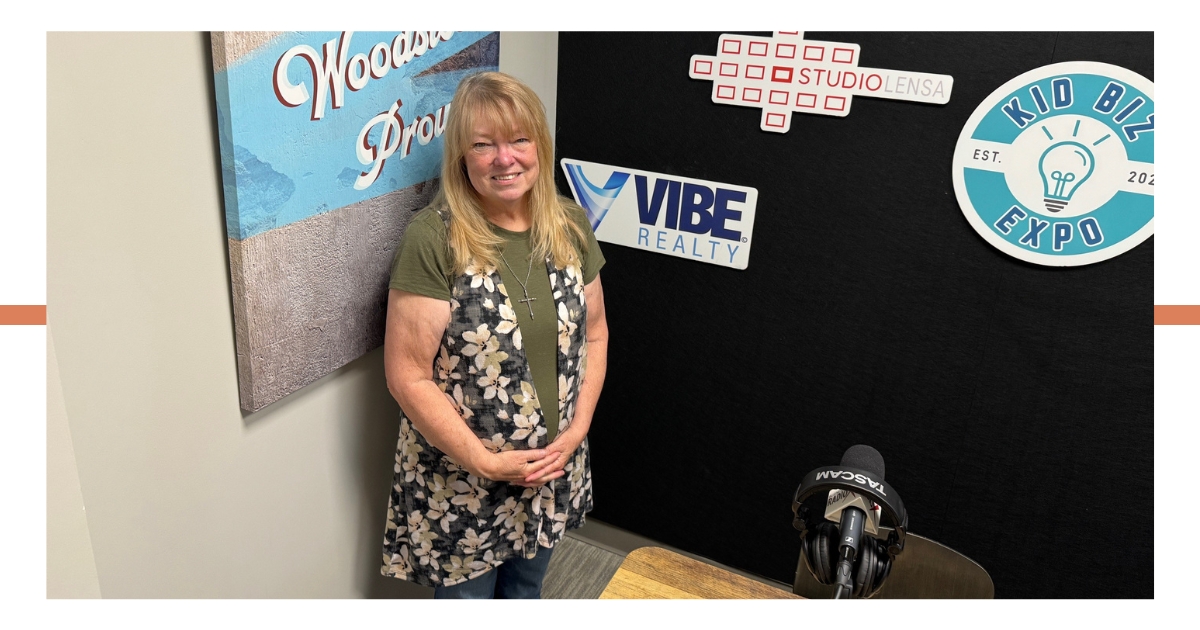
Haden Keen is a team member with Haden-Keen-bwCircle of Friends coffee shop. Circle of Friends provides supportive employment for adults with intellectual and developmental disabilities.

Our goal is to foster appropriate and supportive employment opportunities so that they may gain valuable skills and earn a fair wage through mentoring relationships.

Proceeds support Circle of Friends endeavors, including an affordable, inclusive living community!

Connect with Haden on Facebook and follow Circle of Friends on Facebook and Instagram.

Transcript-iconThis transcript is machine transcribed by Sonix


TRANSCRIPT

Intro: [00:00:07] Broadcasting live from the Business RadioX studios in Woodstock, Georgia. It’s time for Cherokee Business Radio. Now, here’s your host.

Stone Payton: [00:00:24] Welcome to another exciting and informative edition of Cherokee Business Radio. Stone Payton here with you this afternoon, and today’s episode is brought to you in part by our Community Partner program, the Business RadioX Main Street Warriors Defending Capitalism, promoting small business and supporting our local community. For more information, go to Main Street warriors.org and a special note of thanks to our title sponsor for the Cherokee chapter of Main Street Warriors, Diesel David, Inc. Please go check them out at diesel. david.com. You guys are in for a real treat this afternoon. Please join me in welcoming to the broadcast Mr. Haden Keen. How are you man?

Haden Keen: [00:01:11] I am good. How are you Stone?

Stone Payton: [00:01:13] I am doing well. I’ve really been looking forward to this conversation. I got a ton of questions. I know we’re not going to get to them all, but I think a good place to start might be what you shared with me when we were visiting over at the circuit the other day. This is Autism Month or something. Yeah, talk about that.

Haden Keen: [00:01:32] Yeah, it is Autism Awareness Month. Uh, for me, uh, I have, uh, high functioning autism. Uh, I’m not gonna lie, I’m a bit nervous right now. So, uh, autism is flying, like, uh, a good example of how I’m feeling right now is like Tom Cruise behind an F-14 Tomcat for the first time. Just be like, oh my gosh. Like, yeah. So, uh, yeah, it’s Autism Awareness Month. Uh, I’ve been I’m 31 years old. Uh, I’ve been dealing with high functioning autism all my life. Uh, I’ve got my mother in the studio with me. Uh, and, uh, boy, I was not an easy child. Let’s just say that, um, my mom, she basically told me she’s just like. I mean, people with autism. Um. My mom basically told me she’s just like, you’re just different from the rest. Like I always had to. I wasn’t really good at math. Um. Took me eight times to pass the math graduation test, just that portion of it, right, to get my diploma. And it was. I’ve always, um, in high school, um, I always had to have what’s called a parapro with me taking me from class to class to class. Um, and I got picked on for that, you know, I got to ride, um, in the high school realm, they call it the, uh, the sped bus or the special bus, whatever they call it now, I don’t know. Mhm. Um, but.

Stone Payton: [00:03:09] You knew or recognized that there was something different about your life and the way things worked for you than, than the other kids. You might not have had a moniker for it. Something to call it. Yeah.

Haden Keen: [00:03:20] It, it got to my, it got so bad, my, uh, my being picked on in high school, it got so bad until my senior year. Um, the beginning of my senior year, I said, mom, it’s my senior year. I don’t want a paraprofessional. I don’t want someone walking to me to my classes. I want to live my life as a regular student. And she’s like, okay. Uh, so honestly, the. Pinnacle point of my, uh, high school year was my senior year. My fourth year. Huh? Um, really got to meet a lot of people. Um, because every time when I met somebody, my parapro was always with me, and they’re like, why is she always following you? It’s like it was just a barrier for me. So I was just like, I want to go on. That way I can just focus. And, uh, senior year I did good. Um, I did my classes very better than, uh, before. Yeah. Um, I was failing in a few classes.

Stone Payton: [00:04:23] All right, so there’s that. So there’s for at least for you, there was an academic challenge, at least in the area of math, maybe in some other areas. Uh, did you find it that you were drawn to some other areas of school that maybe you were at least on par with everyone else? Or. Wow, I’m really good at this. It may be better than some other folks.

Haden Keen: [00:04:40] Uh, I was really good at, um. I did a, uh, JROTC. Oh, okay. Uh, for four years in high school and that kind of. Built the courage I have. I’ll bet. And, um. So one day, uh, my colonel, um, decided to. He was just like, I’m gonna form up a rifle team. So, uh, we shot, uh, CO2 cartridge. Oh, not not.

Stone Payton: [00:05:10] Flipping the rifle. Shooting. No. Shooting the rifle. Okay. Yeah. So you’re a good shot.

Haden Keen: [00:05:14] I, I did, um, all right. Am, uh, I out shot my colonel? Um, and he’s been in Desert Storm. Uh.

Stone Payton: [00:05:24] Oh, my God, he drove. You don’t beat the customer at golf, Haden. You’re not supposed to shoot the colonel.

Haden Keen: [00:05:29] I’m not supposed to shoot the colonel. Right. But it was good, though, because he was like, I have seen. He’s like, I used to be a tank driver. I used to drive the M1 Abrams tanks, the big the big boys. And I was the gunner. So, uh, and he’s like, the amount of years that I’ve done this, uh, rifle team, I have never been out shot. Wow. Until today.

Stone Payton: [00:05:56] What a confidence builder.

Haden Keen: [00:05:57] I was just like, oh my God. She’s like, yeah, I want to I want to, um, recruit you. And I was like. And so I was like, okay, so but during that process of me getting recruited, um, I had a, uh. What would you call it? Stigmatism. Yeah, I had a disease called keratoconus. And for those of you who don’t know what that is, it’s a. Retinal disease, its attacks, the vision in your retina.

Stone Payton: [00:06:29] Not good for a rifle guy.

Haden Keen: [00:06:31] Not good for a rifle guy. Um, so unfortunately, I didn’t. I’ve been dealing with that. Um, so because of it, it was during my process of getting recruited for the Army, um, I couldn’t I wasn’t eligible, I even if I did, uh, get eligible, I knew I was going to get a medical discharge anyway, because. Right, right. I have autism and the probably the psych training, or I would have been flagged for something, so it just wouldn’t have been a good fit.

Stone Payton: [00:07:08] So do you feel like those experiences, some of them clearly very negative though, may have had a little bit of a positive lining to them. And the reason I’m asking is it occurs to me you must be an incredibly resilient person at this, at this point in your life, someone who can come back from adversity and, you know, whatever it is, I can, you know, if you get a minor wreck on a on the way home, I can bounce back from this or whatever.

Haden Keen: [00:07:35] I’ve been in two wrecks.

Stone Payton: [00:07:36] Oh, okay. I just struck a chord. No, no, but some people that would just I mean, it would just crush them, you know, like. Yeah, or so, but it sounds. Is that accurate? Then you you’re resilient.

Haden Keen: [00:07:48] It has um, when I haven’t been resilient until I haven’t been really resilient until, um. I think it was. Before the first gala. I spoke about that.

Stone Payton: [00:08:07] The first gala for the Circle of Friends thing. And we’re going to talk. Yeah, we’re going to.

Haden Keen: [00:08:11] Talk about Circle of Friends in a little bit. Uh, but but the.

Stone Payton: [00:08:14] First gala was a was a turning point for you.

Haden Keen: [00:08:18] The gala wasn’t just I’ll. I’ll jump into this story. Yeah, yeah. So, uh, it was what, 2022. Mhm. Of last year. Um, I have been for a while now I have been dealing with suicidal depression.

Stone Payton: [00:08:38] Okay.

Haden Keen: [00:08:38] And it’s been because of me being picked on through elementary middle and high. Yeah. Until my again my senior year in high school. And then even after that, um, I’ve, um, just been just people have been picking on my autism. It’s just like you’re different. You’re you’re this you can’t do this. It’s like, well, actually I can it would take me some time. And just people weren’t like that back then. They didn’t really understand it. And so they shunned me. The the whole community is shunned kind of. It’s just like. Anyway, um. So yeah, for a while I’ve been dealing with suicidal depression. Uh, to the point where. I’ve attempted to kill myself like three times. I’ve tried to take my life. Uh, you can name it. Um.

Stone Payton: [00:09:38] And do you feel like you’re surely not the only person know had those feelings for this reason? Yeah. So that is then a challenge in the autistic. It is community. It is. Wow. I guess I did not realize that it is.

Haden Keen: [00:09:53] Um, and I personally want to shout out to if you are ever going through something. Don’t ever be afraid to ask. Um, I know people nowadays think like they want to be tough, and, uh. You know, not. Um. Speak out. Uh, but seriously, speak out. Like there nowadays there are people willing to help you. There’s a hotline. There’s a suicide hotline. Uh, get that number. Um, so what was.

Stone Payton: [00:10:26] The catalyst for you? Because you mentioned the gala. Was it getting ready for the gala? Was it something that happened at the gala?

Haden Keen: [00:10:31] It was before the gala, or actually, it was after it. Um, because I. Before the gala I was in Florida. I was in a whole nother state dealing with my mental depression. Um, uh, suicidal depression. I was in like the perfect place. I was in Delray Beach in Florida. That sounds awful. I know right? Um, but they’re they did what was called, um, they did an operation or not an operation. They did a. Test theory that the FDA approved in Florida. It was called brain mapping. Okay. It was called brain mapping. And so what they did. What they did was they hooked electrodes to my brain. Right. And it I felt no shock. It wasn’t like shock therapy. Um, but it was just you’re just watching actual television or you, they say, like, watch a Netflix show and they on the screen, it shows your brain. Being remapped like all the.

Stone Payton: [00:11:41] Based on the input, based.

Haden Keen: [00:11:43] On the input of the show you’re watching. Wow. They remap your brain. And, uh, they said I was down there for three months during doing this treatment. And, uh, and.

Stone Payton: [00:11:55] So in this mapping and you may not know all this detail, but if you and I sat down and we both watched a Netflix that’s in a genre we both like, right. And would would our maps look similar? Very different. They would certainly they both respond to the stimuli, right? Yeah, they.

Haden Keen: [00:12:11] Respond to the stimuli.

Stone Payton: [00:12:12] Of course. I’m assuming I don’t have autism. I don’t know, we may find out that I do by the end of the show. Yeah. Go ahead.

Haden Keen: [00:12:18] But yeah, they did. They showed me on this computer screen of my brain and how it was active. And they were like, you see this firing neuron right here? I’m like, yeah, they’re like, that’s your active stimuli. And while you’re watching the TV, it’s going crazy, huh? And they’re like, what do you have? I said, well, I have autism. And they saw one of them was a nurse, a medical professional or a CRN. And she’s like, what’s this like indentation in your brain right here? They saw it on the screen and I’m like, that’s my autism. And they’re like, really? I’m like, yeah. And they’re like, I never knew. I’m like, physically, you would think that I don’t have autism. But if you look at my brain, it’s there.

Stone Payton: [00:13:07] Okay, so you got some education. You were informed you had an experience with people that were trying to help you get a handle on things. So that was a part of the this, uh, this switch in mindset. Yeah, it maybe it’s not fair to represent it as a switch. It occurs to me it was a switch.

Haden Keen: [00:13:23] You can say that. Yeah, it was a switch in my brain. And it didn’t really get affected until I was. It really didn’t. I really didn’t see the concept of it working until the last. The the day after the first gala we had, because I was there physically, right? But mentally I was not there mentally. My mind was still in Florida during this treatment. And so here comes the this goes into the story I’m sitting at my at. Hartsfield-jackson International Airport. Waiting on my flight to go back to Florida to finish up my treatment because I wasn’t done yet. I still had three more months to go. It was a total of six month process. So I’m so as I’m sitting in that airport at my gate waiting for to go back to Florida, it gets delayed. So I’m like, you know, nothing of it. Okay, ten minute delay. Okay. Another ten minutes goes by, gets delayed again. This happened a total of seven times stone seven.

Stone Payton: [00:14:35] Like people that would drive me nuts. Oh my God. Yeah, I’m a pretty happy go lucky resilient guy. Yeah. So did it set you on edge or did you.

Haden Keen: [00:14:43] It did. It did set me on edge. I’m like, God, I call my mom. And I said, I, I’m on the phone with her and I say, mom, my flight has been delayed seven times and at this time it’s about 7:00 at night, right? Right. My flight was supposed to leave at three, so I’m just like, there is no way I am staying at this airport overnight just to catch this flight. Yeah. And she’s like, well, just wait one more. Just, you know, I’m I’m working. I can’t drive to the airport to come get you, you know? Can you wait a little bit? I said, sure, I guess at this time I’m already pissed. Like I’m just gonna.

Stone Payton: [00:15:28] Well, seven delays would equal seven Bourbons for me, so they wouldn’t have let me on the plane. Yeah, yeah.

Haden Keen: [00:15:34] Um, but yeah. So I’m at this seventh time. Uh oh. Um, I said to her, um, I said, mom, I think it’s a sign from God saying that I’m not getting on this flight. And I said, and at that moment I had every I’m going to be honest with you. I don’t know if you’re a Christian person. I don’t know your religion. But anyway, whatever it is, I accept. But I’m just going to tell you what I experienced. I experienced the voice of God at that airport. Wow. And, um, or the voice of Jesus. Actually, he came and spoke to me and it all got quiet around me. I couldn’t hear nothing. And it was just like him and I having a conversation. Um, and, um, he was just like, what are you doing? I said, what do you mean, I’m doing? What do you think I’m doing? I’m going to Florida to finish my treatment. He’s like, you don’t need it. I said what? He’s like, you don’t need it. Granted to you. I got taken aback and he’s like, look, you don’t need it, Haden. You have a community around you. You went to an. A massive organization that your parents did for you. Mhm. Granted, you didn’t know that aspect of it. You didn’t know the general girth of it. But I’m giving you. Like. I’m giving you the gift of sight. And not through your eyes, but through my eyes. And I’m going to give you. Um, a gift. And I said, is it sight because I need it? And he’s like, yes, but also it’s going to be the gift of voice. I said, Why? I can speak pretty fine. He’s like, not through your eyes. I’m going to give you the voice to speak through mine. And. Then I it everything stopped. He left or everything stopped. And he’s like, now go home. I’m like, okay. So, uh.

Stone Payton: [00:17:44] And so you call mom. Look, mom, I’ve talked to Jesus, and you need to knock off work early and come get me. Uh, me and Jesus got this whole other plan. Oh, yeah, but no, you’ve got to at this point, you’ve got a new sense of purpose. Yes, yes, yes. Boy, what a powerful yes antidote purpose is to a lot of these things we’re talking about, right? Yes.

Haden Keen: [00:18:04] And he gave me the courage to speak out on this. He gave me the courage to, uh. He gave me the love to have for people. He gave me the love that I have for people he gave me. My mom and my dad who I’m just overwhelmed with joy with. So are.

Stone Payton: [00:18:24] You. You’re really you’re really trying to live into this, and you are trying to be more outspoken. You’re trying to support other people with autism. You’re talking more about it. You’re not ducking it. You’re not know as much. Woe is me. That guy’s looking at me funny because I have autism. You’re no a lot less of that, right?

Haden Keen: [00:18:39] Because of because of that. Because of that encounter, I have overcome my suicidal ideations. Uh, to this day, I have had no thoughts of suicide, no thoughts of harming myself or others. And I am completely. Changed.

Stone Payton: [00:19:00] That is fantastic, man. What a testimony.

Haden Keen: [00:19:03] Because of their their program, their brain mapping, I have.

Stone Payton: [00:19:08] Right, right.

Haden Keen: [00:19:08] And it was sitting at that airport, I had that realization to come on, be who I am today.

Stone Payton: [00:19:15] That’s a great endorsement. We’ll send them a bill. Yeah. Uh, all right, so let’s.

Haden Keen: [00:19:21] Dive into Florida Recovery group, Florida.

Stone Payton: [00:19:23] Recovery group, Florida.

Haden Keen: [00:19:24] Recovery group in Delray Beach or in Boca Raton, Florida, or no, in Delray Beach, Florida. Yeah, they they’ve helped me out. Um, I want to go back and. Seriously. Just thank them all for helping me.

Stone Payton: [00:19:40] Absolutely. All right. So let’s talk more about we. You touched on the gala, but let’s talk a little bit about Circle of Friends. I know it’s had a tremendous impact on your life.

Haden Keen: [00:19:49] Circle of friends man. Let’s let’s dive into that. Uh, circle of friends is an organization for young adults with intellectual disabilities. Um. Uh, in layman’s terms, intellectual disabilities are is basically young adults with special needs such as autism, cerebral palsy, uh, nonverbal autism. I don’t really know that technical terms, but.

Stone Payton: [00:20:14] And these folks, in my experience and help me through this, may or may not have, um, like a lower IQ than other segments of the population. In fact, they may have a standard or above standard IQ, but they may have other challenges in expressing their thoughts. Or is that accurate? Okay.

Haden Keen: [00:20:33] Yeah. That’s accurate. Okay. Um. Hold on.

Stone Payton: [00:20:36] All right. We’re sourcing our.

Haden Keen: [00:20:38] Yeah. We’re sourcing everything.

Stone Payton: [00:20:39] Do you have your personal chat GPT over. Yeah.

Haden Keen: [00:20:43] Chat GPT.

Stone Payton: [00:20:44] That’s fantastic. Yeah. No. Go on. Yes.

Haden Keen: [00:20:47] Um, okay. It’s for, um, kids with intellectual disabilities and development such as cerebral palsy. Um. Down. Thank you. Down syndrome. Uh, and all that. It’s a place where they can be in the workforce. Um, uh, learn, uh, you know the job, right? The classic 9 to 5 or whatever. Your hours are, right. And get paid actual money. Like what your parents do all the time, right?

Stone Payton: [00:21:24] Right.

Haden Keen: [00:21:24] And, um, it’s a. You know, it’s a coffee shop. We we built a coffee shop. Um, so you’ll actually be in a. Uh, business system. It’s called square. And you will get a paycheck, like actual money. And you can actually put that in your bank account and save and. Be able to spend and do all that. All because of circle of friends.

Stone Payton: [00:21:53] And there again, one of the gifts. And there are many, I suspect, in becoming a part of that is you’re helping these folks gain that sense of purpose. Exactly. Yes.

Haden Keen: [00:22:06] Because like I said, people with autism can do every can do basically. Yet people with autism basically can do what you and I can. It would just take them a little bit. Some people do it in threes like I’ve, I, I’m not going to lie I, I will be honest. I was talking to a friend on another app uh, earlier today about autism and he’s like. Hey, I do things in threes. I said, well, that’s cool because, um, you know, it’s just like. And I’m like, how do you know that you have autism? He’s self-diagnosed himself. Okay. I’m just like, geez, mostly you have to have a doctor for that. But no, he did it himself. He researched what it was like. Uh, there’s a list, uh, an FDA approved list of what classifies as autism. And he looked it all up and he diagnosed himself. He’s like, dude, I keep closing the door three times. I said, well, there you go, that’s autism. And he’s like, how is that autism? I’m like, because you’re doing it in the Chronicle system of three, right? And then once you’re done with three, you can continue on with what you’re doing. Yeah. And he’s just like, wow, I never really thought of that. I’m like, yeah.

Stone Payton: [00:23:27] So when you’re at Circle of Friends, you’ve mentioned a couple of times, and not that I would know, but I suspect that you’re accurate. You’ve characterized yourself as high functioning. Yes. And that suggests to me that you are in you’re around folks that aren’t as highly functioning. It sounds like you’ve taken on some responsibility for supporting them, celebrating them, helping them feel better about themselves, helping. That’s got to that’s got to feel good, man.

Haden Keen: [00:23:53] My gosh. Now before before I was just like, okay, I’m around a bunch of people, you know. Mhm. And but I got to meet them and talk with them and just be like. You’re freaking awesome. Like, I have this great friend at the coffee shop. Uh, if you guys are in Woodstock, shout out to our coffee shop. Um, at the circuit. Uh, come in there Monday through Friday, 8 to 1.

Stone Payton: [00:24:27] Um, at least a third of my coffee budget is dedicated to that. And, uh, and they take the credit card. So actually, it’s not coming out of my budget. It’s Holly’s credit card. And I’m very generous with that. You know, I like the two people behind me. I don’t I buy them a cup of coffee. Yeah.

Haden Keen: [00:24:42] Yeah. And if I’m working, I’ll just give you a free cup. Hey. Sorry, mom. I have the owner in here. We have the owner, right, right. She’s just like, oh my God, just shut up. It’s funny. All right.

Stone Payton: [00:24:57] So let’s do let’s talk a little. You’ve touched on your journey in general. What is a day in the life of of Haden like like what are some activities in which you might engage?

Haden Keen: [00:25:08] Uh, I’m a gamer. Uh, I like to play video games. Uh, I used to be really good at it until I’ve, you know, grew up and body started. My body started saying, yeah, um, I have, uh, really? Yeah, I have Game keeper thumbs, um, because of it. Uh, well, technically it’s because I didn’t stop, suck up my thumb until I was 18.

Stone Payton: [00:25:33] And that was being a gamer. Was that a challenge, though, or was that something that came easy? That too was a challenge.

Haden Keen: [00:25:39] Because I have, um. And not only do I have autism, I have ADHD. So ADHD is like giving somebody and giving somebody an energy drink. It’s it’s basically the classic cartoon character, Speedy Gonzalez. He never just stops. He just constantly goes.

Stone Payton: [00:26:00] And some people with autism may, uh, display other characteristics, but they may not be ADHD or they may be very withdrawn. Yes. And not.

Haden Keen: [00:26:10] Some. Okay. Yeah. Some with autism, they can be like. There’s other aspects like I have. I know a friend who’s autistic, but he’s very highly OCD. Like you can give him a box of crayons and mix it all up and he will put those he’s not going to he’s not going to walk away for murder.

Stone Payton: [00:26:30] All right. So back to a day in the life of Haden. What would you do on a typical Tuesday, Thursday or whatever?

Haden Keen: [00:26:36] Uh, Tuesday, um, you would possibly find me sleeping, okay? Because, uh, Tuesday, sleeping in.

Stone Payton: [00:26:44] You don’t have to be at the coffee shop.

Haden Keen: [00:26:46] No, I have to be at the coffee shop. Oh, okay. At 745 and open it. Right. And you got you morning people like.

Stone Payton: [00:26:55] Well, Thursday morning, I know, you know, that’s that’s.

Haden Keen: [00:26:58] Thursday morning is like 10:00, 10 a.m. like sun’s shining and birds are chirping, but you.

Stone Payton: [00:27:04] Make Kyle run the register on Thursday morning.

Haden Keen: [00:27:06] Oh yeah. Oh yeah.

Stone Payton: [00:27:08] He’s always early on.

Haden Keen: [00:27:09] Thursday for.

Stone Payton: [00:27:09] Kyle.

Haden Keen: [00:27:10] You’re after Kyle after Kyle and Stephen. Okay. Uh, Kyle and Stephen are two, uh, employees at our coffee shop. Just fun, fun people to be around. Yeah. You got to go see them there. Uh, at Thursday from, I don’t know, their schedule, but Thursday mornings.

Stone Payton: [00:27:27] Yeah. Come to young professionals at Woodstock House. Yeah, and order some coffee. All right. So so you might go to Circle of Friends. What are some other things that you do? And I guess I’m also looking for a little insight on how your day may go differently than mine. I’m kind of semi-retired, and I do a lot of what I want to do, but I’m active.

Haden Keen: [00:27:45] I try to be very active in the community. Um, okay. Circle of friends. We have a social. We have a social group. Mhm. Uh, so it’s the first Thursday of every Thursday or the first Thursday of every month. We do a big social event. Oh, wow. Whether it’s, uh, playing board games or, uh, tossing cornhole, playing cornhole. Um, so, uh, we have a cooking class, uh, for. Yeah. Bowling.

Stone Payton: [00:28:17] Have you recently been to a cooking class?

Haden Keen: [00:28:19] I have, I’ve been to two of them, actually. We’re on our third season, uh, this year, uh, season three of young adult cooking class. What’d you cook? Uh, we’ve cooked, uh, meatloaf? Yeah, I made meatloaf for the first time. Um, we did pinwheels. Uh. We’ve done. Uh, desserts. We’ve done parfaits. We’ve done pizza. We did. We just finished, actually, last Thursday. We just had, uh, an Italian, a Italian baker, Italian chef. Come. Oh, baby. Yeah, come. And we made personal pan pizza or personal pan pizzas and. Oh, my gosh, Stone, you should have been there. They were so, so good.

Stone Payton: [00:29:08] Well, I would like very much to be there, but you know where this is heading. I’m glad you’ve had a positive experience with that. But well, mom’s going to say, look, you know how to cook. Yeah, yeah. And you don’t need me.

Haden Keen: [00:29:18] Of course.

Stone Payton: [00:29:19] Yeah. You make dinner tonight?

Haden Keen: [00:29:21] Uh, yeah, um, I do, I make dinner for myself and. Okay, I live by myself. Uh, unfortunately, I don’t live with my parents anymore. I moved, I.

Stone Payton: [00:29:31] Did not realize that, but there’s another, uh, set of challenges and opportunities for people depending on where they are on the spectrum. Is that the right is that spectrum? Yeah.

Haden Keen: [00:29:43] On the spectrum.

Stone Payton: [00:29:43] So yeah, that too. That’s a whole nother set of things to be thinking about and trying to aspire toward. If it’s practical. Yeah. To, to be able to, to live on.

Haden Keen: [00:29:54] That’s, that’s one of our uh, strands honestly, is to do a. Is to have community development. Um, for people like you, for people like me, for people like my mom or whoever, it’s. We want to be an intergenerational community. Um, that way, um, and it doesn’t have to be people with autism or special needs. Uh, it could just be regular human beings. Um, that’s basically what we are. Um, we’re not different people, right? Um, because I’m going to get historic on you. Um, because in the constitution of it, honestly, in the Declaration of Independence, it says we the people, not. You know we the non. Yeah we the non alienated people know it says we the people including people with special needs and including with people with disabilities. Right. They classify as people too. Mhm. And so. I have, we have that aspect is like people with disabilities or people with autism are people too, so why not? Put them or not really put them, why not integrate them into communities where there are people who don’t have disabilities? And see, I.

Stone Payton: [00:31:23] Think that’s a fascinating idea because as I’m not quite there yet, maybe, but but my folks are getting closer and closer. As people age, their world gets a lot smaller, right? Like, how great would it be if my mom and dad were living in proximity to a group of people that had some some of these special needs because they believe me, they have special needs and I’m sure I have special needs, but you probably do. I you know what? The more we’re talking about this, we probably all have special needs. Yeah. Uh, just maybe some of yours are more visible in the traditional society, but this. But isn’t that. That is part of the people who.

Haden Keen: [00:32:02] Load dishwashers, I swear to God, have OCD issues. Yeah. Dishwasher people. I don’t know how you guys properly load a dishwasher. I just throw my dishes in there. All right, well.

Stone Payton: [00:32:17] We kind of brushed over it, and you mentioned it as a strand. But isn’t this part of the grand plan is to create a community like you’re describing? We have.

Haden Keen: [00:32:26] Three strands. Actually, we have one that is uh, encouragement. Mhm. Uh, we have uh, social opportunities, which is our big events. Right, right. Our gala is more uh, the gala is more of our big fundraiser. Right. Um, but we have, um, every Friday. Every Friday we have what’s called cards with friends.

Stone Payton: [00:32:52] Okay, I stumbled onto this. I had a meeting with one of our main Street warriors. You know, you heard me talk about our community partner program at the circuit. And a lot of the people I recognize, some of them I didn’t because they may not actually work in the coffee shop where there was some playing. Uno. There were some. Yeah. Okay. Yeah. That was on a Friday. Yeah.

Haden Keen: [00:33:09] It’s it’s our game day. Sweet. Uh, and stones not lying. We’ve had we have three giant white tables filled with, uh, young adults with disabilities playing a simple game of uno. Uh huh. And it’s awesome. It is literally awesome to see. And that’s why, I mean, I don’t well, I participate sometimes, but most of the time I’m just like talking to the people around me, like, yeah, this is what we do every Friday. So if, you.

Stone Payton: [00:33:39] Know, that’s where you pulled me aside, said, hey, you know, we we ought to do an episode.

Haden Keen: [00:33:43] Yeah, we got to do an episode.

Stone Payton: [00:33:44] Just I’ll let the cat out of the bag to me and Haden. We got some designs on, uh, on actually, uh, separate show that may involve some more consistent programing around this and related topics. Yeah.

Haden Keen: [00:33:57] So if you guys want to hear it, let’s don’t know. Spoiler alert. Yeah. Spoiler alert. But, uh, we have social opportunities like the gay like the we call it um, cards with friends on Friday. Mhm. Um, but I might actually change that to being like uno madness or something because it’s crazy or Haden wins. No, I don’t play. That’s why I don’t play because I win. Um, but we also have supportive employment, which is the coffee shop. Um, uh, we’re building another one in Hickory Flat.

Stone Payton: [00:34:30] I cannot wait. I know you guys have been working on this. How far out are we, you think?

Haden Keen: [00:34:34] Oh, we are. End of May. But if you want like numbers, percentages, we’re about maybe 75% of the way down. And, uh, we’re having a big work day on the 25th of April. So if you guys are listening and you guys are sitting at home thinking of what.

Stone Payton: [00:34:54] To do when you said works, I’m busy at work.

Haden Keen: [00:34:58] But for those of you who don’t in spirit. Yeah, there we go. Well, we’ll we’ll bring you in. We’ll do we’ll probably do a radio session at the location.

Stone Payton: [00:35:08] You know what? That actually is a great idea. We should do Radio day at one or both locations. That would be fun. That would be cool. All right. Put that in the hopper. We’re going to do. All right. So you got the you’ve got all these social opportunities. You’ve got supportive employment.

Haden Keen: [00:35:21] Support social opportunities tons supportive employment. And then we also have we’re trying to develop a community. We’re trying to find land whether in Hickory Flat we kind of hope we kind of want hickory flat because that’s really where it blossomed. That’s really where it started. Right? That’s kind of like our ground zero. Um, um, or we’re looking in Woodstock, where the circuit is, um, you know, the new development around in downtown Woodstock. It’s getting crazy. Um, and in this.

Stone Payton: [00:35:53] Development, would it kind of look and feel like we were talking about, uh, yes. There may be some autistic people, people with intellectual.

Haden Keen: [00:36:01] But it won’t be.

Stone Payton: [00:36:03] Exclusively.

Haden Keen: [00:36:04] It won’t be exclusive. There is a community in Roswell.

Stone Payton: [00:36:08] Right. We’re going to do what they do. But better, we’re.

Haden Keen: [00:36:10] Going to do what they do, but better. Yeah.

Stone Payton: [00:36:12] There you go. We are.

Haden Keen: [00:36:13] Um, we’re not going to. It’s not going to be apartment kind of outlook. It’s going to be more individual community housing. Right. Um, and uh, the community will be open to the public.

Stone Payton: [00:36:27] What a neat.

Haden Keen: [00:36:28] Idea. It’s going to be inclusive, intergenerational for all you big turn people out there. Uh, my mom is over here in the studio. She’s just texting me over her phone of the notes right now. It’s pretty comical. I wish you could see this. It’s pretty funny, but, yeah, it’s, uh, intergenerational. So that means people like you or me or my mom, whoever, um, can be in that organization with us. I love it. And the thing is, the very funny thing about people with autism is, um, some are very quiet, um, and some are very open. Uh, they just want a friend. Um, well, I’m.

Stone Payton: [00:37:13] Glad you’re going there, because what I’d like to do, you know, this is my show. Let’s talk about me for a minute. Yeah. Let’s go. No, as a as a layperson with some appreciation for and some some genuine desire to serve this constituency, this group of people. Um, I but I have questions, right? Like, okay, somehow, some way, I know the guy over there or the lady over here is autistic. What would you want me to know in general about autism or autistic people? And are there any like solid pro tips like do this, don’t do that or patience.

Haden Keen: [00:37:51] Patience. Patience is key. All right. Um, you have people who stutter and who get very excited very easily. So, um, my piece of advice for people who want to know how to deal with somebody with autism is patience. Just give it time. Like, everyone’s so like, rush rush rush rush rush, like on the on the go. Um. That’s okay. Like, I’m not saying that’s a bad thing, but just patience when you’re trying to talk to somebody who has autism. Tell them it’s okay. You’re in a safe space because here at the studio, I mean, I know now I’m in a safe space, but before I was very nervous, like, I came on the show. I said, I’m not going to lie to you guys. I’m like, Tom cruise first in first in that f f 14 Tomcat, you know, in Top Gun like that thing can book. But now I’m just relaxed. I’m calm, I’m chilled. Because I know I’m in a safe space and all. It was because of patience, you know? We could have had this done in like 20 minutes. But no, we just we’re just sitting here relaxing, chilling, talking. That’s all. That’s that’s basically what autism is all about. Just sit down, have a conversation with somebody and open your mind. Really. Don’t be like all questionI just let it flow. Like they’ll talk to you. They want to talk to you. We want to talk to you. We want to. Be informed. So patience, that’s one thing. And then let them know that they’re safe. To be around you.

Stone Payton: [00:39:37] Back to earlier parts of the conversation. Some of these folks have lived through some external pressures, like you talked about. Maybe they’ve been bullied, maybe they’ve felt bad about themselves. Maybe they’ve been in states of depression and recognize there’s a story behind all these people that goes perhaps, well, maybe adjacent to but well beyond just the fact that they have this right challenge. Right?

Haden Keen: [00:40:01] Right, right. Yeah. Um, you spoke about trauma. Um, um, I have, you know, I suffered with suicidal depression. Uh, there are people who go through, um, PTSD, childhood trauma, um, and, uh, you know, just even talking to somebody who’s been, uh. Say like abuse since they were a child. I’m going to go down this route. Um, they want someone who is very kind, very loving and very understanding, and they want them to know that. You need to tell them that. Like if you want to talk to them, be like, hey, you’re in a safe place. It’s okay. I am not going to judge you. I’m not going to discriminate you. I’m going to hear and I’m going to listen. And so tell me your story. And that’s what brought me here today. Honestly, I, I me being the social butterfly I am, um, my mom can tell me. It’s like he didn’t talk. He didn’t use to talk until he was like ten. Now he just doesn’t shut up. Five? Yeah. It’s like he didn’t used to talk until he was five. Now he never shuts up like that’s true. I don’t know when to start talking, but because of that, I. I use it to my advantage. I’ll be like. You know, I’ve always had no problem talking to people. I could go up to a random stranger and have a ten minute conversation with them.

Stone Payton: [00:41:36] Well, you have started to use it to your advantage, but you also have some real designs on using it to other people’s advantage. You’ve shared with me, and if it’s okay with you, I’ll. I’ll share with our listening audience. You have some real desire to continue to give, uh, this group of people a voice. Yes. And to comfort them and give them a safe space to share their stories. So we we’ve already mentioned we’re talking about possibly a radio show concept really dedicated to this set of topics. But you also mentioned, uh, maybe wanting to be on the on the speaking circuit. You would like to go out to groups. Want to go.

Haden Keen: [00:42:17] Out? Yeah. Um, I will be honest with you, uh, Stone, I have been, uh, trying to honestly get what’s called a Ted, a Ted talk. It’s now a Ted x. I think it is. Um, because every time I see it, it’s like Ted. And.

Stone Payton: [00:42:32] Yeah, they stole that from us. Business RadioX Ted.

Haden Keen: [00:42:35] Business RadioX with the big giant X. Um, but, yeah, I’ve been wanting to do Ted talks. Um, okay.

Stone Payton: [00:42:42] So it’s an unfair question, but I’m going to ask it anyway because I think you’re up for it. If you had to do a Ted talk tomorrow, that’s not how the process works. I’m a little bit familiar with it, but if you had to do a Ted talk tomorrow, uh, that I believe, uh, what? What are a couple of topics that you might want to make sure you cover? Uh, in that talk tomorrow morning.

Haden Keen: [00:43:01] I definitely want to cover autism and just be like, look, guys, you’re not alone. Like, I have autism, and I’m 31 years old. You know, my life, um, I was I was born in a country called Romania, in Bucharest, Romania. I did not.

Stone Payton: [00:43:19] Realize.

Haden Keen: [00:43:20] That I am adopted. Um, I came over here on, uh, not by boat, by most people. Um, I came here by plane. Um, uh, I was two years old when I got adopted here. Didn’t know anything. Not even a lick of English. And now look at me. Now I’m just talking on the radio. Um, I didn’t know who my parents were. Um, my adopted parents. My mom was sitting with me in the studio right now. Uh. I didn’t know her, so I bit her. Um, yeah. I’m going to be playing honest with you. Got off.

Stone Payton: [00:43:59] On the wrong foot there.

Haden Keen: [00:43:59] Buddy. Yeah. Um, and then for for all of that, like, just. You know, all of that. I mean, I was just a nightmare to take around. I, my mom can basically classify it as I was the Tasmanian devil. Like, I was nice, but, uh. You know, I was just. Havoc everywhere I go.

Stone Payton: [00:44:27] I started so you would tell this group about that. You’d give them your backstory all the way back to to day one Romania, as much as you can recreate for them, and you would share that with them. But but why? Why, what is it you’re wanting them to walk away from that, to.

Haden Keen: [00:44:42] Know that, to know that even you, even if you have autism and even if you have a disability, no matter what it is, you can overcome it. Or if not overcome it, you can learn to live with it. And that’s what I think a lot of people don’t understand. Yeah, is. Living with your disability. Most people are discriminated because of it.

Stone Payton: [00:45:07] Mhm.

Haden Keen: [00:45:08] But look at look at people in history. Look at Albert Einstein. He had autism. Did he really. He did. And he created one of the most deadliest weapons of all the atom bomb.

Stone Payton: [00:45:21] He wasn’t great with the hair.

Haden Keen: [00:45:22] He wasn’t great with the hair. Right? No, I think he stuck a little too many forks in electricity outlets.

Stone Payton: [00:45:27] I did not realize.

Haden Keen: [00:45:28] He was a child, but. Yeah. Look at, um. Uh, who else but.

Stone Payton: [00:45:34] You know, 50 years from now, somebody is going to be on a holographic version of this show, and they’re going to say Haden Keene was autistic. You’d never know it. But that guy that did all those Ted talks, Haden Keene, was autistic. They’re going to say the same thing. Yeah.

Haden Keen: [00:45:47] Um, and then you look at, um, just. Um, even, uh. Even people, even Hollywood stars who have disabilities. You look at, um. Uh, who’s a good example? Adam Sandler. He has bipolar. And he’s the funniest guy you will ever see.

Stone Payton: [00:46:10] Um, no. He’s built a tremendous, tremendous career. The talk you just described, and particularly if you could figure out how it begins and lands on that thought of living with it and maybe even more than living with it, leveraging it to serve other people.

Haden Keen: [00:46:26] Understanding it to. Okay, for me, it’s been a really hard, hard, um. And I’m just embracing it really. Just be like, okay, not not giving it a just a blow off a shirt, a blow off the shoulder. It’s a burden to live with autism. And I’m not saying that in a bad way. I’m not saying people with autism are this, that, that left, right and center. No. Learn to live with your autism or learn to live with your disability. I have tons of people. There’s a girl named Zoe. She’s bound to a wheelchair. But you look at her, she is the brightest uppity thing we were. We had a basketball event. Um, you know, some people can’t play basketball. Okay. Zoe is. I think. I think 100% disabled. She can’t speak. She. I don’t know about eating, but she can’t speak. She is completely bound to a wheelchair. She has 100% cerebral palsy. But when you see her, she has the brightest smile and she loves it. Why? Because she’s in a safe community like circle of friends. And we don’t discriminate. We don’t be like, oh no, you have this. No, you have this.

Stone Payton: [00:47:51] No, no. Or you don’t have enough of this, or.

Haden Keen: [00:47:53] You don’t have enough of this. You can’t shoot a basketball. Really? No. We accommodate for you. And that’s one thing that I think a lot of people don’t do is they don’t accommodate to people with different.

Stone Payton: [00:48:06] Well, I’m excited for your future, man. I see you speaking. I see you writing. I see you using all kinds of platforms to to to help people. Yeah, just.

Haden Keen: [00:48:18] Honestly, um, it’s it’s the little things that are the. It’s the little drops in the ocean that, uh, start. The wave. It’s not you. It’s. It’s just. Well, it is you. But I think if people. Really. Tune in on their aspects and enjoy. What? Pretty much God gave them, you’re going to live a better life. And I want to jump on this too, like the classic 9 to 5. You know, everybody wants that 9 to 5 job. Everybody wants that job.

Stone Payton: [00:48:59] Well not everybody.

Haden Keen: [00:48:59] Well, not everybody. But there are some people, but there are some people who are not happy, who are not satisfied with what they have. They want more. Yeah. They think, oh, I’m not you know, I have, you know, a car from like 2004. It still takes me to A and B, but I want that Lamborghini. Right. It’s like, yeah, we all want that Lamborghini. We all want to be that person. But learn to be humble with what you have, with what you have in your life. So far. Most people want bigger houses. Most people want. If you guys discriminate me, okay? Most people say they want a better wife. They want a better life. Why not just be humble with what you got? You have a house. You have a job you’re providing. Whether it’s for you, your partner or your family. Why do you want more?

Stone Payton: [00:49:55] I think you’re going to be a marvelous speaker. And I think you’re going to reach not only people that are experiencing the challenges that you’re directly relating to them, but I think people who don’t have those challenges are going to be, uh, more appreciative of what they do have and more inspired to work through whatever their bag of hammers is. You know, I think it was Michael J. Fox who said, everybody’s got their own bag of hammers. Yep. That they’re that they’re toting around.

Haden Keen: [00:50:20] Uh, a good, um, good example is, um, I live on my own. I don’t live with my parents no more.

Stone Payton: [00:50:29] Um, how clean is the place, Haden?

Haden Keen: [00:50:32] Uh, it it actually is pretty clean. Is it all right? Yes.

Stone Payton: [00:50:35] Again. What, are your OCD friends over there? Yeah.

Haden Keen: [00:50:37] No, it was just me.

Stone Payton: [00:50:39] There are advantages in in knowing people in the community.

Haden Keen: [00:50:41] Yes, yes. And knowing this community, you’d be like, hey, can you clean my house? I’ll pay you. I don’t want to clean it. But no.

Stone Payton: [00:50:48] You live on. You live on your own.

Haden Keen: [00:50:50] I live on my own. Mhm. Um, I live in Holly Springs. Uh, I have a. Uh, facilitator. I have a support person. Mhm. Um, who comes every, uh, Wednesday and, uh, takes me out in the community. Uh, I’m going to tell everybody I’m about to go bowling today. Like, sweet. I was, uh, I had a, a basketball injury. I tore a muscle in my leg so I couldn’t, you know, bowl as great.

Stone Payton: [00:51:22] Well, you got past that. Just like I got past my first.

Haden Keen: [00:51:25] My first time bowling in a long time. I bowled a 140. That in the bowling world, that’s pretty good. It’s not a 200 or 300, but it’s pretty good for a kid with autism at 31. Bowling 140. Let’s go. Um, and that gives me the drive. That gives me the power to do better. It’s like, okay, I bowl a 140. How about I bowl a 145? You know, let’s try to bowl 145. Right. And that’s well.

Stone Payton: [00:51:54] You touched on this a minute ago. It’s um, I think sometimes we, we hear conversations like this, and if anything, from wanting to do something for me personally to better my own situation or to try to help this group of people that were learning about, I think sometimes the initial reaction is, I’ve got to make this big grand gesture, but but you really don’t.

Haden Keen: [00:52:18] You really don’t. You could like people like nowadays. I think now there is more of a mood. There is more of a movement now, I think because of. You know. I mean, because of Covid. Now everybody. Is just trying to get like. I’m going to be honest with you, Stone. People are trying to get money like really fast. Mhm. And you have the government did the stimulus checks. Mhm. And I think people I personally believe um I’m on the fence with those honestly. I mean yes they were a good idea sending it out to people who really need it. Mhm. And then there were and then I think it was a bad thing because. You sent it out to everyone, and which was a good thing. You know, people used it wisely. And then there are people out there who used it not wisely. Like. You know, you get $1,400 to help with bills. Rent. Uh, groceries. And then there were people. It was all of it was just.

Stone Payton: [00:53:39] Are you suggesting some people didn’t spend that on. Yes. Groceries?

Haden Keen: [00:53:42] Yes. I’m suggesting because there are, there have.

Stone Payton: [00:53:46] But yeah, where I was headed with that with that comment is that you really don’t have to make this grand gesture in your own life. You know, just change up one little habit, you know, do one little thing. Or if you’re trying to serve somebody, you don’t need to write them this great big no check. We don’t slide by and have a conversation with some one, you know, back up a coffee.

Haden Keen: [00:54:05] Exactly. I have I have a friend, I have a friend. He is my best friend. And he told me one day he said, Haden, you want to know what the problem is with this world? I said, oh my God.

Stone Payton: [00:54:19] You said, no, I really don’t know.

Haden Keen: [00:54:20] No, I really don’t. But he’s like, no, no, no no no no, listen, listen, understand me? I’m like, okay. So I took a deep breath and I listened to him. He said, Haden, the biggest problem with this world is, is that nobody is willing to sit down and talk. They always want to get the next best thing. They always want to get the next big jump. Or everything.

Speaker4: [00:54:43] Yeah.

Stone Payton: [00:54:44] Well, that’s definitely something to think about there. Look at your.

Haden Keen: [00:54:47] Friends. I guarantee you, if I will. My mom’s tapping me here. She’s like, talk about your girlfriend. I’m like, I will, I’ll get there. Um, but the biggest thing is. Sit. Look at your friends list. Look on Facebook. I guarantee you, nowadays people have 1000 or 3.5 K followers on Facebook, right? Do you really know all of them?

Stone Payton: [00:55:16] I certainly know.

Haden Keen: [00:55:17] All of your friends know. I don’t. I think I have like 135 on my Facebook, and the reason why I’m not into the thousands or into the K’s is because I don’t want to. I have my I have my.

Stone Payton: [00:55:32] In real life and real genuine in real.

Haden Keen: [00:55:35] Life. I wish I had more friends, I do, but I’m happy. I’m humble. If I get friends, cool. All right. If I don’t, then okay.

Stone Payton: [00:55:44] Before we wrap, let’s talk about one last friend because I think mom wanted you to mention.

Haden Keen: [00:55:48] Oh, yeah, my my girlfriend. Speaking of friends, I have a girlfriend. Yeah. Her name is Lily. Okay. He is the most wonderful thing I have ever met in my life.

Stone Payton: [00:55:58] Oh, shout out to Lily.

Haden Keen: [00:55:59] Yes. Hi, honey. Um. She came to me when I was in my darkest and I said, look, I am not what you want right now. I am broken, I am hurt. I’ve been through in relationships where people have taken advantage of me. Most mostly it’s been money or. Um, when I do have the money and I do want to spend my time with you, it’s either I’ve been stood up on dates. Mhm. And all that.

Stone Payton: [00:56:34] And you had the presence of mind to tell her, look, yeah.

Haden Keen: [00:56:38] I had the present. Yeah. I said, look, this is not the right time for me. I don’t want a girlfriend. She’s like, I don’t want to be your girlfriend. I want you to be my boyfriend. I said, well, first of all, I’m not even boyfriend material. I haven’t even got my shit together. I’m still living with my mom. And she’s like, that’s okay. I want you for you. I don’t want you for what you can become. And I said. Can I, can I think about it? She’s like, yeah, you can think about it. Stone ice thought real hard for three days if I wanted to be in this relationship with her. And the thing that made me jump to her, like within the snap of a finger is because when I said, can I have three days to think about it during those three days, Stone, she she she texted me, she’s like, hey. Are you okay? Are you okay? I didn’t she knew that I was going through stuff, but she put it upon herself to say, hey, are you okay? I am with you through this step, through this journey you are going through, I am here.

Stone Payton: [00:57:48] That is fantastic. Hey, listen, we’re going to continue this conversation. Maybe, ah, maybe on the Haden Kean Show or whatever you decide to call it. But for right now, let’s leave our listeners with a way to get in touch with you or to learn more about Circle of Friends, whatever you think is appropriate, a website or whatever.

Haden Keen: [00:58:05] If you’re one of those people that if you’re a website person, um, I don’t have a website up for me at least. But I do have a Facebook. It’s, uh. Haden. That’s h a d e n. Uh, Kean. Um, Kean. Like the shoe brand. Kean. Um, I think those are Kean’s with the s, but. No. Is it? It is. Kean k e n. Yeah or circle of Friends inc.org. Fantastic. Or you can go onto Google and type in Circle of Friends. Um Cherokee County we’re there. Or if you want to get me directly and like, okay, maybe not. They’re all saying no, no, no, no in the booth, whatever. Um, if you want to find me, uh, find me on Facebook at Haden Keene. Uh, I have a what’s my profile? Oh, you’re.

Stone Payton: [00:59:07] Going to be so easy to find. Now you’re a rock star. You’ve been on the Business RadioX network, man, I know all I gotta do is Google you.

Haden Keen: [00:59:12] It’s, uh, me and a Kennesaw sweatshirt. Um, my cover picture is me and my girlfriend on the cover photo as soon as you pop it up. Uh, so, yeah, I hope to hear from you again.

Stone Payton: [00:59:25] Well, I got to tell you, man, it’s been a real pleasure having you in the studio today. We are going to continue the conversation. Thank you so much for sharing your story, your insight, your perspective. Uh, this has been great fun, man.

Haden Keen: [00:59:39] It all started with you. You were the one who said yes.

Stone Payton: [00:59:42] My pleasure.

Haden Keen: [00:59:43] But thank you. I want to from me personally. Thank you, Stone, for doing everything that you’ve done for Circle of Friends. Like you hosted our, uh. Uh, cornhole tournament. Like from me. I want to say thank you for hosting it, because people probably would never have heard of us if you didn’t talk about us on your radio station.

Stone Payton: [01:00:05] Well, you are welcome, sir. I’ve enjoyed every minute of it. All right, until next time. This is Stone Payton for our guest today, Haden keen by. And everyone here at the business Radio X family saying we’ll see you again on Cherokee Business Radio.


Tagged With: Circle of Friends

Larry Gaynor With TNG Worldwide

April 12, 2024 by Jacob Lapera

High Velocity Radio
High Velocity Radio
Larry Gaynor With TNG Worldwide
Loading
00:00 /
RSS Feed
Share
Link
Embed

Download file

Larry Gaynor, author of Take a Chance!: 101 Entrepreneurial Lessons for Making It Big, is the founder and CEO of TNG Worldwide, the beauty-product supplier whose best-selling signature brands include ForPro Professional Collection and Ginger Lily Farms.

TNG manufactures more than 1,000 products in several countries and launches between 50 and 100 new products annually. Gaynor has won numerous awards, including the Ernst & Young Entrepreneur of the Year Award.

Connect with Larry on LinkedIn.

What You’ll Learn In This Episode

  • How to be flexible in the developmental stages of new products or services
  • How to react to moments of chaos that entrepreneurs inevitably encounter
  • What to do to keep customers excited and engaged
  • The importance of learning our strengths through such assessments as Gallup’s StrengthsFinder 2.0 test.

Transcript-iconThis transcript is machine transcribed by Sonix.


TRANSCRIPT

Intro: [00:00:05] Broadcasting live from the Business RadioX studios in Atlanta, Georgia. It’s time for High Velocity Radio.

Lee Kantor: [00:00:14] Lee Kantor here. Another episode of High Velocity Radio, and this is going to be a good one. Today on the show we have Larry Gaynor, and he is CEO and founder of TNG worldwide and author of the new book, Take a Chance a 101 Entrepreneurial Lessons for Making It Big. Welcome, Larry.

Larry Gaynor: [00:00:32] Thank you. Welcome, and thank you for inviting me.

Lee Kantor: [00:00:35] I am so excited to learn what you’re up to. Before we dig into the book, tell us a little bit about TNG worldwide. How are you serving folks?

Larry Gaynor: [00:00:43] Well, it’s a long story. That’s why I wrote my book about. But currently we are a manufacturer of personal care and beauty products. I manufacture over 1000 products and they’re primarily sold on Amazon.com.

Lee Kantor: [00:00:56] So what’s the back story? Were you always involved in the beauty industry?

Larry Gaynor: [00:01:00] I was involved in the beauty industry since I was 12 years old. I started my grandfather’s hardware store in Detroit and in the late 60s. I don’t know how old, how old you are, but I’m really, really old. Do you remember the show The Mod Squad? Sure. You do? What’s the guy’s name? What was the guy’s name?

Lee Kantor: [00:01:23] Link.

Larry Gaynor: [00:01:24] Yes, link. You’re showing your age. Um, okay. So. Okay. Hairstyle. Did he have.

Lee Kantor: [00:01:31] Well, somebody had an afro, and they had the afro.

Larry Gaynor: [00:01:35] That’s it. So, you know, back in the 60s, all the black guys were wearing afros, and all our customers were black. And they’re walking into the hardware store with their afros, and all of our employees had afros. And I asked her, how do you take care of those afros? And they said, well, we got to use the shine spray. So I kind of thought there were three manufacturers of shine sprays, and I contacted all three manufacturers to come into the store because I wanted to buy direct. They all came in. They said, this is a hardware store, why are you selling hair shine spray? Well, you can see all our customers are black and wearing afros. So they agreed to open me up. And after we opened up, we became the single biggest retailer in Michigan for black hair care.

Lee Kantor: [00:02:13] Added the hardware store.

Larry Gaynor: [00:02:15] I added the hardware store. So that’s how I got into beauty when I was 16. From the hardware store I went, my father and I did not. Get along in business because, you know, I was into cosmetics. I introduce, you know, lipstick in the hardware store. He almost had a heart attack and killed me. That was the last time that we had to open up a second store. So opened up a discount health and beauty store to suburbs, uh, which was called gainers. And, uh, from there, uh, I opened, uh, the current company inside that store based on demand for manicurists for professional nail supplies. And then TNG started in 1985 as a wholesale distributor of beauty products to Manicurists. So the story evolves? Uh, yeah. Over the years.

Lee Kantor: [00:03:06] Now, were you ever a creator of products or always a reseller of products?

Larry Gaynor: [00:03:11] Well, that’s a great question. So as a distributor, you’re reselling someone else’s brand. And over the years we got cut off so many times from our manufacturers, it was forced to create my own brands. So over time, 3,040% of our business was our own brands and 60% was distributor brands. And then came 2020.

Lee Kantor: [00:03:35] And was that good? I mean, was the pandemic good for you because or bad? Because people weren’t kind of showing off how they look. So maybe they were staying in so they didn’t need cosmetics as much.

Larry Gaynor: [00:03:47] So the pandemic was the biggest turning point for the company. My biggest pivot because as we were manufacturing PPE before the pandemic, so we were manufacturing nitrile gloves and hand sanitizer and disinfectant and face masks. And when the pandemic came, every, every all the businesses got shut down that were essential. All our competitors got shut down because they weren’t essential. We were the only really business that was open. And the demand for PPE, as you know, went through the roof and all of a sudden we’re starting to funeral homes and nursing homes and doctors and nurses and makeshift hospitals are opening up, but they can’t find PPE and they’re calling us for PPE and we’re supplying them. And I had to make a decision to focus 100% on manufacturing or keep the distribution business. And I decided to get rid of all the distribution business in March of 2020. It was like over 50% of our business, and it was a huge decision. And then we just manufactured more and more PPE, uh, during the pandemic. I even chartered a Fedex jet in China to bring seven containers over of face masks and gloves, because our customers needed so many face masks and gloves. Uh, just to help keep up with the demand.

Lee Kantor: [00:05:06] But then after two years, then what did you do at that point?

Larry Gaynor: [00:05:10] Well, actually it wasn’t two years. The the the country opened in June of 2020. We were still manufacturing PPE. Everyone started to try to get into the PPE business and they shouldn’t have. Uh, but because of the pandemic and because we were manufacturing PPE and because we were open, our products at Amazon took off exponentially. We started selling on Amazon in 2013. We’re one of the first beauty companies to sell on Amazon. And because of that, our business on Amazon grew and grew. And today, over 95% of our business is Amazon.com.

Lee Kantor: [00:05:47] So, um, was that just kind of being in the right place at the right time, or have you done something to kind of crack the code on how to be successful on Amazon?

Larry Gaynor: [00:05:58] It’s a little bit of both. As I said, we’ve been selling our products on Amazon for more than ten years. 12 years. We have more best selling beauty products than any other manufacturer on Amazon. And because of the pandemic and because of the demand for our products, uh, the brands gingerly farms and for professional collection continues to grow and grow. And today they’re just both, uh, mega hits on Amazon. And, uh, I think it’s all because of the pandemic and because we no longer focus on distributing other people’s brands, and we focus on our own brands instead, which in the book I tell, I tell my readers, if you have your choice between being a retailer, a distributor or a manufacturer, and you’re into products, definitely be a manufacturer.

Lee Kantor: [00:06:47] So, um, does the knowledge transfer. Like, if I have a product and I go, hey, Larry, I got a product I want to put on Amazon, like, would your learnings help accelerate my growth? Or is this something that because you are in an industry, you already have kind of been there for a decade plus, so you already have kind of a brand, so then you’re going to be successful in your brand. But it it wouldn’t necessarily transfer to my brand or what I’m doing in Amazon or the techniques and tactics similar.

Larry Gaynor: [00:07:20] That’s a great question. And the truth is, you can launch your brand tomorrow and it could be successful. Yeah, I had a head start, but there’s millions and millions and millions of resellers and Amazon and tens of millions of products on Amazon. But if you come up with a good product, a good value proposition. A competitive edge. You could be highly successful. And if you ask me which platform, which retailer, if you had a product that you want to sell to, which should you select? 100% I would say Amazon first, second and third. The. The fourth one I would recommend would be Walmart.com. But there’s still 5 to 10 years behind Amazon when it comes to what Amazon can do for resellers. Uh, other than that, if you’re thinking it goes, try to sell to Target or Kohl’s or another type of store like that. Uh, you’re spinning your wheels.

Lee Kantor: [00:08:14] So you would do online before you attempted to get into a retail store?

Larry Gaynor: [00:08:19] 100%. Not only would I do online first, but we have our own website and at one point we had over 100,000 customers. Our customers don’t even want to buy direct from us anymore. They want to buy our products at Amazon because they’re all Prime shoppers with Amazon, as you know. I mean, you’re an Amazon shopper, right? Sure. Of course we all are. There’s 170 million prime shoppers in the US alone, and they’re all Prime shoppers because they want their products same day or next day with us. If we ship Fedex or UPS, they get the products in two days to a week. But with Amazon, they could order everything they get and they can get it same day or next day. So yeah, I mean, we don’t even need our website anymore, right?

Lee Kantor: [00:09:01] But what about the trade off that you don’t really have access to those customers? Like you can’t go to Mary and say, hey, Mary, I got this new special or hey, Mary, sign up for my club where you I’ll send you something every month.

Larry Gaynor: [00:09:15] 100%. We had the best loyalty program in the professional beauty industry for more than 20 years, giving away millions and millions of dollars worth of rewards. Mary doesn’t care about a reward program anymore. Mary doesn’t care about her email blast anymore. Mary doesn’t care about our education. Mary doesn’t care about our trade shows, and Mary doesn’t care about dealing with our sales reps. All Mary wants to do is go on her computer, her smartphone or device and order the products that she wants and get them the next day.

Lee Kantor: [00:09:39] So that’s the way.

Larry Gaynor: [00:09:40] The world has changed.

Lee Kantor: [00:09:41] Well, that’s a big shift because, I mean, a lot of businesses, um, you know, are thinking in kind of a counterintuitive way, but you’re saying or what I’m hearing you say is that convenience kind of trumps everything, and Amazon has the most convenient way to buy something online.

Larry Gaynor: [00:09:57] That’s why Amazon, for the first time ever, is overtaking. Walmart is the largest retailer in the world. And when Bezos and Jeff started his company almost went broke during the.com crash, he was a bookseller. Nobody thought that he would get close to catching Walmart. Nobody would get catched close to catching Walmart in business. Walmart’s going to do over $600 billion a year in sales and Amazon’s going to overtake that. It’s it’s a phenomenal. Something that you. It’s like the solar eclipse yesterday. It’s like something that you rarely can envision happening and it happening. And not only that, Amazon has momentum because of I and I. You can take the smartphone, the PC and the internet. Those three amazing technological innovations combined won’t be as great as I is going to be in the next 5 to 10 years, and Amazon is at the forefront of that as well.

Lee Kantor: [00:10:57] So now how, as an entrepreneur, do you plug into this, uh, Amazon behemoth in order to maximize your chances of success? Because the stuff you’re saying that isn’t important, you know, in terms of email list and membership and things like that, Amazon is doing all of those things. They have my email information, they contact me constantly. They have a membership that I’m a member of. I’m a Prime member. So I get access to like movies and things like that. So they’re trying to add more value to my membership, that I get special delivery privileges and access to certain things. So how as an entrepreneur, do I use Amazon to further my needs but still have some control over the outcome? If Amazon decides to change the rules, which a lot of these third party platforms change the rules when it’s convenient for them.

Larry Gaynor: [00:11:49] Well, let me ask you about the rules. I mean, the politicians change the rules. You know, the Starbucks changes the rules when, you know, to their loyalty program. Mcdonald’s changes the rules. That’s that’s just that’s part of the game. And you’re Amazon has no requirements for. Styling your products. So as a entrepreneur, you can go on Amazon today and start selling your products tomorrow. There isn’t a single retailer that you that you can do that with. If you want to get into a retailer, you have to deal with a rep group. You have to deal with the buyer. Then you have to deal with other rules and regulations. And if the product doesn’t sell the markdowns and the returns, they don’t pay you for 90 to 120 days. Amazon pays you in 30 days. Amazon rules are straight and clear, and if you play their game and you understand their game, which is the best game you can succeed, you could take a chance and you can win, but you have to have a product that resonates with consumer. And what’s great about the Amazon story and the website in the millions of products is you can search and analyze every category, every product, every algorithm that you need to to figure out which attribute you need to succeed to introduce and launch your product.

Lee Kantor: [00:13:13] So is that part of your process when you launch a new product?

Larry Gaynor: [00:13:16] 100%. I launched between 50 and 100 products a year.

Lee Kantor: [00:13:20] So what? So what is your process? What are the you know, what’s the first three steps you’re doing when you launch a new product?

Larry Gaynor: [00:13:28] Okay, so let’s say Ginger Lily farms. Good question. Uh, we have the number one selling products for hospitality, Airbnbs. Gallons of shampoo, conditioner, body wash, hand lotion, dish soap, and so forth. And now we want to launch a new launch, a new product. So it could be a fragrance free product. Because dermatologists recommend fragrance free products to their patients who are allergic or eczema or psoriasis or whatever it is, and they recommend cerophyl. They recommend these high cost products. Well, uh, you go on Amazon and you look for fragrance free products. You see that they’re very expensive. And I said, okay, so how do I launch a new product that consumers want? Well, I know that they want fragrance free products, but they also want a value. So I introduce Zerodium, which is a dermatologist recommended, uh, fragrance free natural care line of personal care products. And it’s one of our best selling products. Now we have four amazing fragrances we want introduce another new amazing fragrance. So what do I do? Well, I go to Amazon. I look at retail sizes of personal care products and I see which brands are selling. The best selling fragrances, what the fragrances are that they’re selling. I also go to Bath and Body Works. I also go to the Body Shop. I also go to, uh, lush. I look at what their new fragrances are, what their best selling fragrances are, and then I say, oh, well, you know what? I’m going to add one of those fragrances to my line and that’s what I do. So you do your research with the best of the competition, steal the best ideas and apply it to your product. That’s what they do.

Lee Kantor: [00:15:06] But then how do you stand out kind of in the sea of things that look similar?

Larry Gaynor: [00:15:13] So the secret. Wow. There’s many secrets in my book that I share, but I think the biggest secret for your listeners is to develop a niche category and dominate it. So let’s say, you know, I started in the professional beauty business with nails. Well, the professional beauty industry includes hair care, uh, spas, nails, massage, facials. But the manicure part of the business is only 2%. So it’s a very, very small, niche business. But when you’re the leader in a niche business, you make a lot of money, and you could be much more successful than being a small guy in a in a big business. So look for the niche category. And try to dominate it. That’s my, uh, that’s my secret for your listeners.

Lee Kantor: [00:16:03] So that’s where you would start, is find a niche that is attractive, that there aren’t a lot of players in it, and then you go in there with something innovative and then try to dominate it to the best of your ability.

Larry Gaynor: [00:16:17] 100%. And you know all you need is a fragrance or no fragrance, a specific size that no one is offering. You need to offer a value proposition that consumers are looking for. And the thing about Amazon, if you search their algorithms, you learn so much information from them. And I search it every day. And the more you search, the more you learn, the more ideas you get for a product. And of course, you know, I’m in the product business. Uh. It will launch my book. I did a. Big interview. Extensive, extensive research program looking at Inc 500 companies Inc 5000 companies. 85% of those companies are tech. Very few percentage of those companies 2%, 3% actually manufactured products. So, you know, your listeners might be into tech offerings, apps and things like that. I and not so much into products. But Amazon of course is a product company. And that’s that’s really my focus with entrepreneurs is those entrepreneurs that are launching products and how they can be successful. And that’s why I wrote the book for.

Lee Kantor: [00:17:28] And then the book, um, what was there something, uh, that happened in your life that you’re like, I better write some of this down. Like, did you have a near-death experience? Was there some, uh, something happened. Somebody said, hey, you got too many ideas. Why don’t you share it? Like, what was the impetus to writing the book? Because writing a book is hard.

Larry Gaynor: [00:17:48] Well, you know, I started the first blog in the industry. Uh. I’ve been writing. I started and sold three different magazines for the professional beauty industry, so I’ve always been a writer. But last year, uh, January, I was on vacation with my son, middle son, and my wife, and I said, you know what? I’m gonna write a book. And they said, you can write a book. Are you crazy? I said, of course I’m crazy. I’m an entrepreneur. So let me tell you the date. Let’s say you drop dead tomorrow, right? What’s going to happen to you the next day after you drop dead?

Lee Kantor: [00:18:24] Nothing’s going to happen to me.

Larry Gaynor: [00:18:26] Of course something’s going to happen to you. The same thing that happened to you is the same thing that happens to everyone the day they die. What happens the next day?

Lee Kantor: [00:18:33] That life goes on.

Larry Gaynor: [00:18:35] No. You get your accolades. Oh, you were the best father.

Lee Kantor: [00:18:40] Really? You were the. Is that.

Larry Gaynor: [00:18:41] Everyone says how great everybody is after the day after they die. Okay. Famous people, when someone’s famous, like Jimmy Buffett, you know, passed away, you know, September 1st, last year, all the accolades came out as soon as he died. And I said, I said, you know what? I don’t want the accolades to come out for me after I die. I want them to come out while I’m still alive. So that’s one reason I wrote the book.

Lee Kantor: [00:19:03] For your legacy.

Larry Gaynor: [00:19:05] Uh huh. For my legacy. My kids to read my my employees, uh, my, uh. And then, of course, I wrote the book for the 5.4 million people who started a business every year in America. In three years time, that’s over 16 million people. And, uh, I said, you know what? I’m going to write this and write this book to help them out and help them succeed in that fail, because 75% of businesses fail within five years. And, uh, yeah, why not? Why not give back to that community while I’m still while I still can?

Lee Kantor: [00:19:36] Now in your background?

Larry Gaynor: [00:19:37] I wrote the book.

Lee Kantor: [00:19:38] Now in your background. You, um, have done some work with the Gallup Strengthsfinder folks.

Larry Gaynor: [00:19:44] Oh, my God, we’re at Gallup. Trade organization. Love, Gallup. Uh, it focuses on your strengths, not your weaknesses. Uh, your strengths are actually your talents. Uh, you ever wonder how, you know, the kid gets in the movies and they’re six years old? You wonder what makes an athlete. An amazing athlete at 12 years old, like, you know, Tiger Woods, how he became one of the greatest golfers of all time or someone that could sing, you know, like Kenny Chesney or Jimmy Buffett or Taylor Swift? They’re born with these genes. And they actually somehow, some way through, the parents figured out that they have these genes and they can be a professional athlete or musician or singer or acrobatic, whatever it is. Gallup focuses on your strengths as well. And there’s 34 talents that they identify that anyone can own. And you take the Strain Finders 2.0 test, which you can buy on Amazon. Uh, 20 bucks, $20.75. And you learn your top five and from your top five strengths, uh, that’s what you develop to be great at. And there’s two ways of developing your strengths, and that is coaching and training. And that’s why athletes are always coached and they’re always training and practicing, because that’s how you get better and better. And, you know, the thing with Gallup is, uh, you don’t worry about what you suck at. You you only are concerned with what you’re great at and how you can make yourself greater. And, uh, if you took that mindset to all our employees and, uh, you know, employees are you have good ones, you have bad ones, they have their strengths, they have their weaknesses. But if you only focus on their strengths and their what they’re great at, you develop a core team in a business environment that is second to none. So yeah, it was a it’s a remarkable organization. And, uh, you might think of them as the Gallup poll, but really, most of their business, over 95% of the business is, is is helping other companies, uh, just customer engagement, employee engagement and community engagement.

Lee Kantor: [00:21:57] And then a lot of that kind of the the theory behind it is, is focus on your strengths and kind of minimize your weaknesses, rather than just pick at your weaknesses and try to improve them to be strengths. It’s just double down on your strengths.

Larry Gaynor: [00:22:10] Yeah. I mean, do you have kids? I do. How old are they?

Lee Kantor: [00:22:14] I have one child that’s, uh, 26.

Larry Gaynor: [00:22:17] Okay, so let’s go back. When that child was 15 years old from high school, came home with a report card. There’s three A’s and a C. What’s the first thing that you say to the kid that has three A’s and a C?

Lee Kantor: [00:22:29] Great job.

Larry Gaynor: [00:22:31] Great job. That’s true. But most people say, what’s up with the city now?

Lee Kantor: [00:22:36] Well, I’m a big believer in Gallup, so you pick the wrong guy. I’m all in on your thinking there. I am a big believer in in, you know, having a superpower and doubling down and then eliminate or delegate your weaknesses.

Larry Gaynor: [00:22:51] Okay, so that 100% and focus on those three A’s and get that kid to develop those A’s even greater because that’s what they’re most interested in. They’re not interested in the C and forget about it. So yeah, I mean that’s what Gallup is all about.

Lee Kantor: [00:23:08] Yeah I, I’ve read their their first book and then there’s their second book and I take all that to heart I, I’m that resonates a lot with me. And it’s funny because before the show you mentioned my early podcast, Doctor Fitness and I, I was always the believer of focus on your strengths. And he was a believer in bringing up your weaknesses. We would battle about this regularly, that he thinks that you should be focused, investing time in making your weaknesses at least neutral, if not a strength. And I’d say you should be doubling down on your strengths and just be, you know, uh, as good as you can be with your strengths and forget about your weaknesses.

Larry Gaynor: [00:23:52] That’s right. You know, the world would be so much better if we all focused on what we did great and not what we sucked at.

Lee Kantor: [00:24:01] Yeah, I think mentally you’d feel better. You’d give yourself a lot more grace.

Larry Gaynor: [00:24:07] You do. And your engagement. I mean, you think about two people that get married. What’s the period called before they actually get married?

Lee Kantor: [00:24:17] What’s the period? I don’t know what. Engagement. Engagement. Right.

Larry Gaynor: [00:24:21] They’re engaged. Right? I mean, that’s like, the best time of someone’s life is when they’re engaged. Before they get married, 50% of the marriages end up in divorce. But engagement is the most fun, the best time of someone’s life when two people are engaged. And whatever that time period is, they don’t get married during the engagement if they break off the engagement. But the engagement is it’s just it’s just like you said, it’s just the greatest feeling that you can own.

Lee Kantor: [00:24:48] Yeah. And and I think that, um, I love the way in your practice that you take this thinking and you, um, make it an action in terms of your mission of 100% customer success, when you put that much energy and on a mission that is making sure your customers are satisfied, that motivates the whole team. And everybody on the team is clear on what the true north is for the organization.

Larry Gaynor: [00:25:16] Did you? Are you by coauthor? Did you write the book too? Did you think exactly like I do? But yeah, you’re right, I mean that that’s that’s it. And, you know, we haven’t hired a single employee since 2019. Our average tenure at the company is now 19 years. People just get it. They love what they do. They 100% customer success. I mean, and again, our customers are the internal customers, the external customers and community. And we take care of all three. 100% amazing.

Lee Kantor: [00:25:52] So, um, was out of the 101 lessons, was there one that was kind of, uh. Wow, that that left a mark. I got to make sure I write that one down. Was there something, uh, that was maybe a challenge that you overcame or something you can share that maybe isn’t one of the most easier or fun one of the 101 lessons, but one that was painful and that you learned from and were able to kind of grow from.

Larry Gaynor: [00:26:20] The reader is going to identify with most, if not all, of the lessons an entrepreneur learns his lessons the hard way. And of course, one of my favorite lessons is not how many times you fall down that count, it’s how many times you get back up.

Lee Kantor: [00:26:39] Right? I mean, I know.

Larry Gaynor: [00:26:40] I said that I think it’s important for entrepreneurs is starting out. Money is always an issue. And you know, money is an issue in families. Money is an issue in so many instances. But. To alleviate the money issue. A lot of entrepreneurs partner up with people and partners is a terrible way of starting a business. Because. You have the passion, you have the idea. You know, you have the gut instinct. Your partners don’t have the same passion, the same gut instinct that you do, but they have money. So invariably, a lot of entrepreneurs will get into business with partners and they’ll be a minority shareholder. And if it’s not a public company, it’s a closed corporation. One of my life lessons in the book is don’t be a minority shareholder in a closed corporation, because it’s just nothing good comes from it.

Lee Kantor: [00:27:34] Right with the right partner, you can do a lot of things, but with the wrong partner it becomes not a lot of fun pretty quickly.

Larry Gaynor: [00:27:43] Not only that, but the chances of starting a business and lasting a business with a good partner is very, very small.

Lee Kantor: [00:27:51] Yeah. So, um, for you, what’s next? After this book I saw on your website, you do some coaching, too? Is that, um, something just to give back as well? Because you’re. I mean, you’re running a big business.

Larry Gaynor: [00:28:06] You know, the coaching on my website, my publisher said, Larry, you know what? If you want to be an author, you have to be an authority figure. And to be an authority figure, you have to be a coach and public speaker and blah, blah, blah, blah, blah, blah. And you know what? I coach hundreds of entrepreneurs. Because I want to. I haven’t charged for my coaching services. That’s not my not my gig. Uh, so what’s next? Uh, right now, I launched a one of the biggest pitch competitions in the US for entrepreneurs. It’s called Take a Chance. Uh, ironically, uh, pitch competition is for Michigan residents only. One $51,000 grand prize money. First prize is $101,000, and then there are six categories, and each category has a $20,000 first prize and $5,000 second prize. And to give back to the community and entrepreneurs, I’m finding it 100% myself.

Lee Kantor: [00:28:59] Wow.

Larry Gaynor: [00:29:01] So that competition is going on now in Michigan. Applications are open to take a chance that biz. The finals will take place September 6th in Detroit, and based on how that goes, I might expand it regionally in the US and take it from there. But yeah, I mean, I love supporting entrepreneurship at the university level and coaching and working with students. Uh, so yeah, I mean, that’s that’s really my passion right now.

Lee Kantor: [00:29:28] And then, uh, for those who want to get the book, obviously, I’m sure it’s available at Amazon. Um, is there a website for your company, for the book, for everything, or is there a central location for all your stuff or where should they go?

Larry Gaynor: [00:29:43] You could buy the book at any major bookseller. So it’s available. It’s available. It just launched today. It’s on Amazon, Barnes and Noble. You know, you can buy it at Walmart, target. Uh, my website is Larry Gainer. Com and the company website for product information is TNG worldwide. Com.

Lee Kantor: [00:30:02] Well, Larry.

Larry Gaynor: [00:30:03] Larry, Larry Gardenerd.com, uh, gained our, uh, you’ll learn about my you’ll see my podcasts that I’ve done, uh, the book, the competition and, uh, my blogs. I’ve been doing blogs for over 20 years.

Lee Kantor: [00:30:17] Well, congratulations on all the success and thank you so much for the work that you do. It’s so important and we appreciate you.

Larry Gaynor: [00:30:25] Well, I really appreciate the time for the interview, and hopefully your listeners love what we’re saying, because, you know, you’ve been doing this for a long time. And the thing about engagement and your strengths and doing things that you like, and you wake up and smile every day and, you know, I go to Mexico for a week and, you know. I come back. And so how is your vacation? And you know what I say every day is a vacation.

Lee Kantor: [00:30:51] That’s right.

Larry Gaynor: [00:30:52] And people just get so worked up and people are angry and they’re not happy. And, you know, you wake up breathing, it’s it’s it certainly breaks beats not waking up breathing. Right. Absolutely. You gotta be optimistic. You got to be happy with what you got. And, uh, you know, I’m in Detroit right now. Today it’s 73 and sunny. Uh, after we hang up, I’m going to, you know, go up and, you know, take a bike ride or take a walk. Well, yeah. I mean, you really being an optimist versus a pessimist, it just makes life you smile more. Uh, they say if you smile for 3/10 of a second and someone sees that smile, you brighten up that person’s day. Yeah. And if we just smiled more, I think the world would be just a much better place.

Lee Kantor: [00:31:39] I’m with you. Larry Gainor, author of the book Take a Chance a 101 Entrepreneurial Lessons for Making It Big. It’s available now on Amazon and wherever books are sold. Larry Gainor, thank you so much for sharing your story this Lee Kantor we’ll see you all next time on High Velocity Radio.

Tagged With: Larry Gaynor

April Reed Crews With Reed Financial Group

April 12, 2024 by Jacob Lapera

Reed-Financial-Group-logo
Atlanta Business Radio
April Reed Crews With Reed Financial Group
Loading
00:00 /
RSS Feed
Share
Link
Embed

Download file

April-Reed-CrewsApril Reed Crews is Co-CEO of Reed Financial Group. As an Investment Advisor Representative, she has a fiduciary responsibility to put her clients’ interests above her own, avoid misleading clients and provide full and fair disclosure of all material facts to clients and prospective clients.

Any conflicts of interest must be disclosed to ensure a client is not being misled. She holds a Life, Accident and Sickness License and her Series 65. April has insurance licenses in multiple states and serves clients throughout the country.

Reed Financial Group is a local, family owned company founded in 1979 by April’s father, Gary W. Reed. April works closely with both her father, as well as her husband, Daniel Crews, and sister, Abby Reed, in the specialized areas of retirement. She focuses on strategies that may reduce taxes and could create income to help ensure that her clients keep an income stream.

Reed Financial Group was featured in the September 2014 issue of Forbes Magazine as one of Georgia’s Financial Leaders and has received the “Best of Gwinnett” award every year since 2015. April holds the designation of Ed Slott Master Elite IRA Advisor. Additionally, April has achieved the National Social Security Advisor Certification.

As an NSSA certified advisor, April assists her clients with making informed decisions regarding their Social Security by providing comprehensive Social Security analysis and guidance. She has also been named a Five Star Wealth Manager in Atlanta Magazine seven times.

In her spare time, April enjoys spending time with her husband and daughters, reading, volunteering as a wish granter for Make-A-Wish, and serving on 12Stone’s church’s hospitality team.

Connect with April on LinkedIn.

What You’ll Learn In This Episode

  • Strategies for how women can overcome common obstacles and increase their financial obstacles.
  • The Great Wealth Transfer
  • How The Great Wealth Transfer will impact women
  • Why money is especially stressful for women

Transcript-iconThis transcript is machine transcribed by Sonix.


TRANSCRIPT

Intro: [00:00:04] Broadcasting live from the Business RadioX studios in Atlanta, Georgia. It’s time for Atlanta Business Radio. Brought to you by On pay. Atlanta’s new standard in payroll. Now, here’s your host.

Lee Kantor: [00:00:25] Lee Kantor here, another episode of Atlanta Business Radio, and this is going to be a good one. But before we get started, it’s important to recognize our sponsor, Onpay. Without them, we couldn’t be sharing these important stories. Today on Atlanta Business Radio, we have April Reed Crews with Reed Financial Group. Welcome.

April Reed Crews: [00:00:43] Thank you for having me. Lee.

Lee Kantor: [00:00:44] I am so excited to learn what you’re up to. Tell us about your practice. How are you serving folks?

April Reed Crews: [00:00:49] We are a family owned and operated company. We’ve been in the Greater Gwinnett area for over 40 years and originally founded by my father, Gary Reed, and current operations are still all in the family. Um, I’m blessed to work with my sister every day. She is my co CEO, Abby Reed, and my husband as well, who’s our COO, Daniel Cruz. We have a team of fiduciary advisors, and our primary goal is educating our clients to and through their retirement.

Lee Kantor: [00:01:20] So was it kind of destiny you were going to get involved in this organization, or was this something that it just seemed organic and natural for you to follow in your family’s footsteps?

April Reed Crews: [00:01:31] Very organic and natural to follow in the footsteps. I like to say that the industry chose me. I didn’t necessarily choose it. The pieces just really fell into place. And after I finished college, I really just fell in love with it. And you know, here we are almost 20 years later and, uh, couldn’t, couldn’t enjoy what I do anymore than I do today. Very blessed to to work with the wonderful clients that we do on a, on a daily basis.

Lee Kantor: [00:01:59] Now, for the listener out there that maybe hasn’t worked with the financial advisor before, can you share? Like when would you begin for to, uh, consult with a financial advisor? Is this something that people should be doing, like right out of college, or is it something that they should be doing even before that? Maybe their their parent’s financial advisor should be advising the children to at least give them some sort of a roadmap. But when would that first point of entry be in an ideal world for you?

April Reed Crews: [00:02:29] It’s never too early to start. We talked to our clients children frequently, and at least helping them understand and begin to understand the time value of money, the importance of budgeting and having a spending plan, and really monitoring and tracking those things. The earlier that you start those steps, the better off that you will be in the long run and the needs just change from there. Initially, whether it’s in college or right out of college, it can really be as simple as what we just described. And then from there, it really transforms into an ongoing education process of understanding the options of where to invest, how to invest, how much to invest, and beginning to understand the different tax repercussions, both short Tum and Long Terme for those investment dollars. And then once that continues to build and that education process just continues, then we move into more advanced investment planning, retirement planning. If we’re talking specifically about retirement planning, I love when I see people who are in their 40s, early 50s really starting to dig in and make some projections about what is realistic for them, for the lifestyle that they want, making sure that they’re still on track for meeting those goals, understanding Social Security and pension options that might be available to them, and continually adjusting their path along the way to make sure that they have a high probability of getting to where they’d like to be.

Lee Kantor: [00:04:10] Now, um, you know, now that we live in this internet age and there’s so much information out there, um, do you find that your average, uh, client or prospective client is knowledgeable and educated with kind of what you believe, or is there a lot of myths and misconceptions out there?

April Reed Crews: [00:04:31] Great question. There are certainly a lot of myths and misconceptions, and as a part of our education process, with our clients and with our prospective clients, we find it’s very important to include education about understanding biased sources of information. If there’s a source of information that’s out there that is, um, you know, has an ulterior motive or, you know, they’re they’re um. They’re geared towards all towards one area of specialty, or 100% against it all or nothing. As I like to look at it. A lot of times that can be a red flag because we’re not believers, that there’s a universal solution for everyone. There are a lot of different tools and investments that need to be closely considered, and often what might seem to be a reliable source might have an ulterior motive. So understanding where the information is coming from and understanding what good, unbiased sources are available is a really important step in making sure that those myths and misconceptions can be weeded out. Then having a process in place to make sure that you know what questions to ask of anyone you might be considering working with. We have a great library of questions and resources to help people make sure that the firm and or the advisor who they choose to work with is someone who is a good fit, in alignment with their beliefs, and that they have a good holistic understanding of any agreement that they might make.

Lee Kantor: [00:06:14] Now, are you finding that, um, your clients that say you’ve worked with them since maybe they were executives, or maybe they’re, you know, well into their working career, but they want some advice from you, but they get to the point of, okay, it’s time to retire. And the to go from that kind of world where your client is accumulating wealth is a certain strategy. And then this de accumulating wealth is a different strategy and it’s a different mindset. Do you have a heart? Do you find that people have a hard time kind of shifting gears into going from saving to spending as they age, especially when there’s so many unknowns when it comes to how long you’ll live? You know, what kind of health concerns you’ll have and things like that.

April Reed Crews: [00:06:59] We do and it is a difficult transition. It’s not a natural transition for most individuals who are accustomed to committed savings and not touching those funds their entire working life. And then there’s this transition that happens that you mentioned between that accumulation phase. And then for most, it becomes about preservation and distribution. What those strategies look like, what those. Those social security strategies, filing strategies look like income tax planning. Uh, you know, how do we begin with determining how long that retirement might be and making sure that we’re going to be able to be comfortable during those years? Those are the primary questions that that we hear and the concerns that we see. A lot of people are very concerned about inflation, just about general cost of living at this time and how they can adequately project those into the future. Having a road map and a place to start to make sure that taxes and inflation and of course, health care, uh, primarily long terme care costs, that there are strategies in place and a road map in place for those. Typically the biggest exposures can really help people through that transition and knowing where they’re going and how they need to get there. But it’s not always an easy or a natural transition. Having a process in place and and a hand to hold, so to speak, can be very valuable.

Lee Kantor: [00:08:30] Now, a lot of people, um, try to save up to a certain number. Uh, and then they think they’ve had that number, then that’s going to be good, and then they won’t run out of money. I know that’s a fear for a lot of people who’s running out of money. Do you find that people who have professional help like you and your firm, they have a less likelihood of running out of money?

April Reed Crews: [00:08:53] Absolutely. And a lot of times people exactly what you just mentioned, Lee. They have a number in mind, whether it’s a number that they heard on some, you know, ancient commercial or it was instilled by the parent or a friend or a spouse, whoever that individual may be, where they they are fixated on a number. And the way that we educate is that it is not necessarily about the number of what you’ve accumulated. Retirement and the success of retirement isn’t solely what you’ve accumulated. It’s your spending strategy and the the adequate planning for income taxes, making sure that you’ve saved enough to pay yourself and Uncle Sam and and have a strategy in place for all of those income sources not to be taxable, can provide a lot of peace of mind, taking some of that off of the table with some advanced planning, making sure that. You. You know, what your expenses are now is is key. A lot of people have no idea what they’re spending. And if you don’t know what you’re spending now, it’s awfully difficult to project what you will spend during retirement once you retire. Another way we like to look at it every day is Saturday, and the day that you spend the most money is Saturday. What are you going to be doing to fill your time during retirement? Is it more golfing? Is it more traveling? All of these things, of course, have have an expense and making sure that we know where we are, that we have our spending under control and and having a good idea of what retirement looks like for an individual situation is essential in making sure that you’re going to be able to retire comfortably. And it’s not only about that number, it’s about that holistic retirement income plan and having someone who is an expert at helping you lay that out. We see it’s like a a weight lifted off of people’s shoulders when they, they see where they’re going and how they’re going to get there.

Lee Kantor: [00:10:59] Now, as the baby boomers are aging and, um, hopefully at some point retiring and, uh, and maybe passing on a bunch of money, is this something that you’re seeing as a trend that all of a sudden there’s going to be an influx of lots of money? I don’t know the number, but I would imagine it’s billions of dollars, maybe even larger than that, hundreds of billions of dollars that will be transferred to a group of people that are probably doing okay, but all of a sudden they could be doing extremely okay.

April Reed Crews: [00:11:31] Well, the estimates range a lot, but the most recent metrics that I’ve seen project that 30 trillion will be passed on by 2030. And some of those estimates show by 2045 it could be as high as 73 trillion. That is a wealth transfer. They’re calling now the great wealth transfer that will take place primarily between baby boomers and millennials, who, as you mentioned, millennials, who might be doing okay now, but they’ve never seen this type of money before. A lot of people now have a lot of of debt. Um, they have a lot of debt for school, for credit cards. Um, and they don’t have a strategy to handle this amount of money that they’re about to receive. So this goes back to the conversation about educating the the child as well. And not so much children anymore. A lot of these, you know, of course, these millennials are all now adults, but younger adults and making sure that they have the tools in advance before they receive this kind of wealth to make sure they’re equipped to handle it in a prudent manner. Um, and they have a track to run on.

Lee Kantor: [00:12:45] Now are these younger people? Are they kind of in the dark that they don’t know this is going to happen because money and a lot of families is kind of hush hush, you know, that people don’t know how much money their parents have that, that are they going to be kind of blindsided by, wow, all of a sudden I get, you know, $3 million or $5 million.

April Reed Crews: [00:13:05] It’s likely to be the case for a lot of people, and that’s why we strongly encourage family discussions, not only about the amount that’s going to be inherited, but about estate planning, about wishes for if you’re ill. Um, what? Just overall what your wishes are and and so that people know what they’re what they’re going to receive what the tax implications of that some might be. There have been a lot of recent changes to tax laws with the Secure act, the Secure act 2.0 and the transfer of wealth is not going to be as efficient as it might have been. Pre 2019 pre secure Act 2.0 as well beneficiaries of qualified assets. So we’re now talking about assets that haven’t been taxed yet. Most of those beneficiaries. And in this instance the millennials that we’re talking about are going to have to have a forced payout over ten years of qualified assets. And that could be a tax burden that they’re not anticipating at that point. A lot of these people might be really reaching a peak in their earning power, have a pretty high level of income, and then all of a sudden they’ll have a period of time where they have to empty out taxable accounts that are coming to them. So the more planning that can be done in advance for that transfer of wealth, the more that we’re going to be able to keep inside each family.

Lee Kantor: [00:14:32] Now, are you finding that people are open or understanding the ramifications? Like, I, I know a lot of people that are older and they don’t want to think about, well, I’m going to die. And, you know, what am I going to do when I die? Like, that’s the last thing they want to think about. So by asking them to go through these exercises where you start planning that stuff, I would imagine is a little trickier. Like it sounds very matter of fact. Of course you should be doing this type of planning. It’s going to benefit your kids and you don’t want to do anything to hurt your kids. But on the other hand, these are people that are like, they don’t want to think about death and the end, that it’s a difficult thing for them to even consider. So I would imagine that sometimes they are hesitant to even engage in these conversations with you.

April Reed Crews: [00:15:21] Know, what I find is that people are very relieved to have somebody who can liaise on that conversation. It’s not a comfortable topic to broach. A lot of times people just really don’t know how to even bring it up. And sometimes it’s not the parents who don’t want to talk about it. Sometimes the parents do want to talk about it. And what we find is that their adult children just they don’t even want to talk about it. They don’t want to have the conversation. They don’t want to think about it. So we we a lot of times will serve as a form of a liaison where we can help facilitate at least the beginning portions of those conversations and kind of, you know, try to make light of it in some way that, you know, there are only two things in life that are certain, as as we’ve all heard, uh, for, for a long time, that that famous adage, death and taxes and the better prepared that we are, the more efficient we can be. Uh, a lot of times it becomes about not leaving a burden. And the less communication there is between generations, the less preparation there is between generations, the more likely it is that a burden will get left, whether it’s a tax burden or whether it’s a caregiving role that hasn’t been adequately prepared for. And when we’re able to shift that paradigm and make it proactive and positive and cohesive team who has an approach to solve these problems before they happen, we find that it’s a much more comfortable position for both sides of that conversation.

Lee Kantor: [00:16:49] Now, I would imagine that it’s also a tricky conversation for the spouses. Uh, a lot of the baby boomers, maybe the male was the primary breadwinner and they were handling this type of thing, and then this might be the first time the spouse has had to deal with the complexity of these kind of financial issues.

April Reed Crews: [00:17:14] Absolutely. And of course, we can’t wind back the clock. But whenever possible, we try to engage both spouses from the beginning of our relationship with a couple for that exact reason. Because when one person handles everything, it can be a immensely more stressful and more difficult time for that surviving spouse, which, statistically speaking, women live six years longer than men, approximately. It’s it’s a lot of time’s going to be the surviving spouse and who is a the wife. And a lot of times it’s it’s they have no relationship with the financial services professional. They have not been the one who has handled the household budgeting or investments or updates to estate planning and beneficiary documents and all of that coming together at a time that is already emotionally challenging and very difficult just adds another layer of immense stress. So if at all possible, even if it’s just at a relationship level, and to start dipping the toe in the water to understand some of the bigger picture items for a spouse that hasn’t been involved, we strongly encourage that from the beginning can make that process a lot easier. Um, when that day does come.

Lee Kantor: [00:18:33] And I would imagine it can be as simple as just putting a book together that lists all the accounts and passwords and things like that. Um, so the person is aware of it.

April Reed Crews: [00:18:43] Yeah, exactly. A lot of times it’s the little things that that really add up and can make a big difference. And, um, you know, those types of things can be very difficult administratively. There are, um, you know, making sure that there is a checklist of things that will need to be addressed at that time, whether there are items that might deal with vehicles, with the home, with beneficiary changes, those get overlooked a lot. A lot of times we talked earlier about misconceptions. A lot of times people feel that as long as their estate plan is updated, then everything is good to go and that is not the case. The beneficiary documents are critical documents to update as well. So a lot of moving parts and we’ve never been there before until that day comes. So having a checklist like you mentioned, a book of passwords of where things are, the more details there, the better to make everything a lot more seamless during those transitions.

Lee Kantor: [00:19:45] And um, for your firm, do you have a sweet spot in the type of clients you serve?

April Reed Crews: [00:19:51] We specialize in retirement planning, so our average client is 60 to 65 years old. Um, and we deal with a lot of different types of professionals. We have a lot of widows. We help, um, and a lot of couples that we help also. But that area that we really focus in on is 60 to 65 is our average clientele. Like I said, you know, if we can, the earlier we can get the ball rolling and, and get everything in good order the better. But that’s really our, our sweet spot, um, of area where we, we can still do a lot of advanced tax planning to help lead and guide through retirement where, where we can really get a hold of social Security strategies before filing has taken place. So that’s that’s a really good sweet spot for us. And there if if not a bidder here.

Lee Kantor: [00:20:42] Now, are they high net worth individuals or is it, um, you know working class folks. Like do you have a mix? Are they, um, you know, entrepreneurs, are they celebrities and athletes or are they, uh, you know, teachers?

April Reed Crews: [00:20:56] We have a really good blend of of types of people that we work with. Um, high net worth, I think is, you know, a bit of a different definition for, for everybody. A lot of the strategies that we utilize do appeal to those that are classified as high net worth, because typically those are the individuals who are going to have the most concern from a tax perspective and retirement income taxes when they have to start taking their required minimum distributions, what that tax impact is going to look like if they have a higher asset base. So by nature, a lot of the folks that we work with are classified as higher net worth. But we deal a lot with middle class individuals, um, who are working towards retirement. And most of those individuals are those who have a 401 K or a 403 B, or some combination where they are contributing the majority of their their savings during their working years exclusively to those types of plans. And they don’t have an overall retirement plan or strategy. A lot of those people are relying on target funds and their retirement plans that adjust the closer they get to retirement. Recent years and the bond market that we have had, the stock market volatility that we’ve seen have really been a challenge for a lot of target date funds. So we find ourselves working a lot with people who fit into that classification as well.

Lee Kantor: [00:22:25] And, um, any advice for the person who maybe is, um, it’s time for them to switch financial advisors? What are what some advice on how to identify and find that next financial advisor? And what are some of the red flags that maybe your financial advisor isn’t doing all they could be doing for you?

April Reed Crews: [00:22:45] Uh, first thing that I recommend is doing a good bit of research, making sure that you understand the the level of responsibility and the type of licensure that the individual that you’re considering has. Uh, do a broker check, make sure there are no ghosts in the closet, so to speak. And we have a list that we provide to prospective clients of specific questions to ask to make sure there’s a very good understanding of the way that the the pricing is, the fee structure is is put together, making sure that there are mutual expectations on both sides of what that relationship is going to look like, what the role is moving forward with ongoing monitoring. A lot of times what we find is that things can fall through the cracks. If someone has a tax preparer and an advisor, and it’s important to have a cohesive team to make sure that all of the boxes are checked when it comes to tax planning and investment planning, that there isn’t an assumption or a gray area of what’s being delegated. And we we always recommend having a process where you you vet those individuals by both research and personally anytime. As far as red flags go, any time that someone wants you to move your assets immediately without seeing any sort of a comprehensive plan that’s customized to you at all. To me is is a red flag. I like to see a very well defined process where, uh, like what we do, where we have an introduction call to make sure we might be a fit, and then a three step process of analysis, recommendation and implementation to make sure that education is a part of that process and that all of your questions have been answered before any changes take place. There should be a very streamlined process for those things that you’re comfortable with, and that you feel like you’ve been well educated to make decisions that are in your best interest.

Lee Kantor: [00:24:48] Now, what’s a reasonable amount of time that, uh, you and your financial advisor should at least have a phone conversation, if not a face to face meeting, to make any adjustments to the plan?

April Reed Crews: [00:25:00] We have an introduction called that lasts for about 15 minutes. That’s really a way for us to get to know an individual and determine whether or not we might be a fit, philosophically needs that they have, or whether there might be another structure that might be a better fit for them. And from there, a week or two after that, typically we will schedule an introduction meeting. We really prefer for that introduction and discovery session to be in person whenever possible. This is a very relationship based business and should be. We do have some times where we do those by webinar, but it is not our first preference. We can do it that way and at the end of that meeting, we have a very good idea of where we might be able to assist. We put together a list of priorities along with that individual or that couple, and we spend a couple of weeks going through analysis, recommendation and putting together a customized written recommendation that we provide in that second in-person meeting, typically. And we go over that in detail and send it home with them so that they can read through it, come back to us with any questions. And in that third meeting is where clarification and implementation take place. We find that process helps make sure that we’re a very good fit for the long terme, and that our clients are very comfortable with the decisions that they’re making without feeling rushed to make decisions.

Lee Kantor: [00:26:27] And then once I have you as part of my team, how often, like, you know, were year three, year five into the relationship, do I check in with you every month, every six months, every year? How often do I, you know, stay in contact with you to let you know if anything has changed?

April Reed Crews: [00:26:44] Any time there’s a triggering life event, a job change, a divorce, a marriage, a death, uh, those, of course, can’t be on any set schedule, but it’s very important to make sure that you reach out to your financial service professional any time that any of those triggering life events take place. And as far as a cadence of meetings, we customize that. Um, sometimes people don’t like to do it more than once a year. We have some folks who like quarterly. The most common cadence that we fall into is semiannually with with most of the folks that we work with, and we find that allows us to stay in contact with them close enough to make sure that we’re proactive about any adjustments that might need to be made. And we believe in ongoing education. So the portfolio adjustments that are taking place, the projections that we see alongside our investment committee, that we have those conversations proactively and we’re able to to make any adjustments that are pertinent for each household.

Lee Kantor: [00:27:45] So if somebody wants to learn more, have a more substantive conversation with you or somebody on your team, what’s the website? What’s the best way to connect?

April Reed Crews: [00:27:53] You can visit with us at the Retirement family.com, and you will find both of our phone numbers for both of our offices in Suwanee and Snellville there, as well as the contact us form. If you would like to schedule an introduction, call or learn more. Then that’s a wonderful place to start.

Lee Kantor: [00:28:08] Well, April, thank you so much for sharing your story today. You’re doing such important work and we appreciate you.

April Reed Crews: [00:28:14] Thank you again for having me, Lee.

Lee Kantor: [00:28:15] All right. This is Lee Kantor. We’ll see you all next time on Atlanta Business Radio.

About Our Sponsor

OnPay’sOnPay-Dots payroll services and HR software give you more time to focus on what’s most important. Rated “Excellent” by PC Magazine, we make it easy to pay employees fast, we automate all payroll taxes, and we even keep all your HR and benefits organized and compliant.

Our award-winning customer service includes an accuracy guarantee, deep integrations with popular accounting software, and we’ll even enter all your employee information for you — whether you have five employees or 500. Take a closer look to see all the ways we can save you time and money in the back office.

Follow OnPay on LinkedIn, Facebook, and Twitter

Tagged With: April Reed Crews, Reed Financial Group

Tom Kosnik with Visus Group

April 12, 2024 by angishields

HVR-Visus-Group-Feature
High Velocity Radio
Tom Kosnik with Visus Group
Loading
00:00 /
RSS Feed
Share
Link
Embed

Download file

Tom-KosnikTom Kosnik, founder and president of the Visus Group is one of the staffing industry’s leading experts in organizational design, profitability improvement and work culture transformation. With a commitment to empowering staffing firms with the knowledge and tools to help business owners increase the value of their enterprise asset by helping them grow their business. Tom has coached and consulted hundreds of staffing executives throughout North America using his empirical based “Organizational Development Business Model” (ODBM). Most notably, Tom is the founder of the Presidents RoundTable, a nationwide leadership forum program strategically aimed at helping staffing professionals collaborate and solve industry challenges.

With over 25 years of consulting experience in the staffing industry, Tom’s diverse array of services have helped numerous staffing firms across the country improve their operations and bottom lines. As a RoundTable facilitator, Tom leads real world business problem-solving sessions in which he advises top executives on a variety of matters, including how to make winning business decisions; achieve profitability benchmarking; and reach peak performance through best practices. To date, he has conducted over thousands of RoundTable forums for all types of staffing professionals, including presidents and CEO’s, CFO’s, CRO’s, and CMO’s.

Throughout the course of his career, Tom has been a frequent speaker for many world-renowned industry organizations and corporate groups, including the American Staffing Association (Staffing World); National Independent Staffing Association (NISA); Illinois Staffing Association (ISSA); California Staffing Professionals (CSP); Missouri and Kansas Search and Staffing Association (MKSSA); and Massachusetts Staffing Association (MSA). He has presented on a variety of topics, including leadership development; strategic planning for small and large staffing firms; compensation planning; best management techniques; and mergers and acquisitions, among countless other topics.

Tom’s research and expertise has been published in dozens of national industry publications, including Staffing Industry Review; International Human Resource Management Journal; and Chicago Law Journal, just to name a few.

Tom holds an M.A. from Bowling Green State University in Organizational Development and a B.A. in Psychology from Seattle University. In addition, he is certified with the Center for Creative Leadership and a leading sales enhancement organization, MH Group.

Connect with Tom on LinkedIn.

The Harvard Business Review Article

Transcript-iconThis transcript is machine transcribed by Sonix.


TRANSCRIPT

Intro: [00:00:04] Broadcasting live from the Business RadioX studios in Atlanta, Georgia. It’s time for High Velocity Radio.

Stone Payton: [00:00:14] Welcome to the High Velocity Radio show, where we celebrate top performers producing better results in less time. Stone Payton here with you this afternoon. You guys are in for a real treat. Please join me in welcoming to the broadcast with the Visus Group, Mr. Tom Kosnik. How are you, man?

Tom Kosnik: [00:00:34] I’m doing fantastic. Thank you so much for having me on the show. It’s, uh, the day after the eclipse, and, uh, I am just full of positive energy.

Stone Payton: [00:00:47] Well, we are delighted to have you on the show. When I first saw that we were going to have a chance to to visit I, in my mind, I was thinking we would be talking to a staffing company. But no, you’re actually consulting to helping staffing firms produce better results in less time, aren’t you?

Tom Kosnik: [00:01:05] That’s absolutely correct.

Stone Payton: [00:01:07] Well, I got a ton of questions. We’re probably not going to get to them all, Tom. But. But maybe that’s a good place to start is just mission. Purpose? What you and, uh, you and your team are really out there trying to do for folks, man.

Tom Kosnik: [00:01:19] Yeah, yeah, great. We, uh, work with the senior leadership of staffing companies, uh, predominantly privately held staffing companies. And, uh, it from the outside, it looks like an easy industry, but, uh, Stone, you’ve got you got candidates and, uh, contract employees that walk and talk and have their idiosyncrasies, and you have clients that walk and talk and have their idiosyncrasies. And the staffing companies are really the mediator between those two entities. It’s the only it’s the only business where, uh, where, where the, the product that you’re representing is, uh, is a live, live, uh, person. And uh, so the staffing we, we help staffing companies grow and we have about 120 active staffing businesses across the United States and, and the Canada and, uh, yeah, it, uh, it’s great work.

Stone Payton: [00:02:18] Well, it sounds like noble and probably lucrative work, if you can get it, but I got to know what, uh, what’s the backstory, man? How in the world did you find yourself doing this kind of work for these kind of people?

Tom Kosnik: [00:02:31] Yeah, yeah, it’s a it’s a great question. I was making a career change, and I connected my, uh, my father in law, who’s a serial entrepreneur, he introduced me to a gentleman out of Cincinnati that taught in some of the business schools, and he was managing a small peer to peer round table program. And he he was interested in expanding and my, uh, buddy. But he wasn’t interested in managing people. So we struck a deal, and he taught me how to develop these, uh, these roundtables, these peer to peer roundtables. And at that, at that point, uh, the staffing industry was growing at 12% a year. And off we went. And and three years later, we had over 100 staffing companies and 8 or 10 different, uh, peer roundtables that, uh, that I was facilitating. And that’s all we did at that time was manage the peer roundtables. And, uh, and today now we have president roundtables, CFO roundtables, CRO roundtables, and CMO roundtables and, uh, yeah, no, no, uh, no dull moment. So it was a was a career change and, uh, just worked the network and, uh, lucked into it. And, uh, and here we are. Here we are today.

Stone Payton: [00:03:53] Well, I am genuinely intrigued with this peer to peer learning discovery growth model. Can you speak to the the virtues, the advantages of a peer to peer model for people who are trying to accomplish more?

Tom Kosnik: [00:04:10] Yeah, our our clients tell us that the most effective learning that they can get, and we do have a lot of we do have a lot of clients that read books and take classes and do things online. Uh, but they tell us that the most effective, uh, way that they learn how to grow their business is peer learning. And that is people that have that are in the same industry that have tried, uh, tried certain things, have accomplished certain goals, have climbed certain mountains. And to learn from that experience, uh, is is invaluable. And that’s so that’s, that’s one side of the coin. And the other side of the coin is is what? We do, how we break open these these questions, these topics, these issues, these challenges that that the men and women that own and manage these businesses have and trying to get them to see things differently. So Stone, the the Einstein said, you cannot solve a problem at the same by thinking at the problem the same way you’ve been thinking. So you really have to change the way that you think about the the problem in order to come up with a creative, creative solution.

Stone Payton: [00:05:40] So it’s certainly one thing to get a group of people like that together. And even if we got them together over a glass of bourbon, there’s probably something good that would come out of it. But but for you to to do your work, there must be structure, methodology, rigor, discipline around all this. Can you speak to to that a little bit?

Tom Kosnik: [00:05:58] Absolutely, absolutely. We one of our differentiators is that we facilitate through a creative problem solving process. There are a lot of really good peer to peer, uh, roundtables and, uh, things like that. But but what what differentiates us is the creative problem solving process that, that we facilitate through. And the way that that works. It’s, uh, a little bit of a touch of organizational development, but but Arthur Van Gundy, who was the grandfather of creative problem solving, he taught at the University of Nebraska and Lincoln and and I was trained by him. And he connected me with a bunch of, uh, his associates that taught me all kinds of great things about creative problem solving. But it’s really a process of allowing somebody to unpack an issue. And then for the rest of us that are in the room to ask questions, you know, the five level deep questioning, uh, where tell me more about that. Tell me more about that. Tell me more about that. And Stone, here’s here’s what we never talk about. And this is this applies to your your life with your kids, your spouse, your your business associates, anything that you’re trying. I want to lose weight. I want to run a marathon. Uh, we have certain assumptions about the way that the world works, about the way that men and women relate about the economy, about employees, about how sales are done. And in order to get somebody to, uh, resolve, resolve an issue at a different level, we have to ask questions, good questions deep enough where we get those unspoken assumptions out on the table.

Tom Kosnik: [00:07:57] And if, if, if once those assumptions come out on the table, then the person who is in the batter’s box, so to speak, that’s trying to resolve an issue or trying to get past an issue, uh, which if we get those assumptions out on the table and then put those assumptions under the microscope, and if we can get them to change those assumptions, two things, two things happen. One, the whole construct of what they’re trying to achieve changes. They see the world differently and they behave differently towards the problem. And ultimately, you’ve heard it, uh, how many times do people try to solve a problem by doing the same thing that they’ve always done before? And it’s not a it’s just it’s human nature. But the reason that one of the reasons that is, is because they are operating under the same unspoken assumptions that they have about how the world and business and people, uh, work together. And so that’s that’s what we do at, uh, at the roundtable and, uh, many, many, many times, uh, the business owners that are with us, uh, say the, the, uh, that phase of our creative problem discussion where people are asking really deep, thoughtful. Moving questions becomes even more important than somebody telling me, well, I did this and these were the results. And if I were in Usher’s shoes, I would do that. They tell us that that’s that’s almost more important than getting actual responses from from other attendees in the, in the group. Uh.

Stone Payton: [00:09:45] So I have an observation from admittedly very limited experience in some kind of group setting where, you know, a small group of us were genuinely trying to help another person think through, through their, uh, through their challenges. Well, a couple of observations. One, we didn’t have to be geniuses about their thing. We just kind of made it easier for them to to talk about and ask themselves some questions. So that was one observation that was kind of revealing for me. But also I came away from that, even though the purpose of that period of time was to help Bill, I felt like I came away from it better to like like my thinking was more crystallized, solidified in my it made me that much better of a practitioner in my cases. Is that something that you see a lot? Is that a unique.

Tom Kosnik: [00:10:35] Oh, absolutely. Yeah, absolutely. I mean, there are some times where, uh, yeah, where people come where people come to the roundtable and they may not have an issue at all. Yet they come up to me and say, Tom, this was the best roundtable I’ve been to in the last five years. Uh, because they learned something. Somebody else had an issue that they may have not even realized was an issue for their business also. And, uh, and then, of course, their, their mind is, is is reeling and then look, uh, we, we, we do want to help people. So at, uh, most most individuals do want to help each other. And there’s that sense of giving and that sense of building community and a sense of of helping one another. That really is a it’s a good, a good, uh, not an ego, but just a good human development sort of thing. And I should say the other the other piece of it, stone, is the, the what we call the leadership development piece of it. And that is that. Uh. Uh, no. Well, of course you’re going to be thinking about things differently, you know, upon your departure. But the leadership development is that one one is developing as a leader, one is growing, one is developing particular competencies about about. So for example, I have a, a client that’s been in the roundtable for, you know, maybe 12 years. And he recently shared with me, uh, I’m really Tom. I’m really trying to slow down, really understand what’s going on in my business and just ask, observe and ask much better questions, not only of myself, but my key reports so that we can not just make a decision, but that we can make a prudent decision. That’s, that’s that’s not just based on hearsay, not based on emotion, not based on solely on fact, but just good, solid decision making. So there’s that dynamic of of leadership development that happens as a result of these of these peer groups as well.

Stone Payton: [00:12:54] So now that you’ve been at this a while, what’s the most rewarding? What’s what’s the most fun about it for you?

Tom Kosnik: [00:13:02] You would think that after 30 years of facilitating these, these roundtables, that that I would be bored and would want to move on. But it’s more exciting now than it has ever been because things are changing so fast. But the most, the most rewarding is really to see, see our clients develop and grow and become the leaders that they were called to become. And it’s a it’s a it’s a very great thing when, you know, a company that’s got 350 employees or 525 employees, you know, is that is that company grows and becomes more profitable, there’s more opportunity all the way down from the leader down. So we’re really affecting opportunity for all those individuals within those within that organization. And it’s a it’s a very honorable, very honorable thing to, to be to be a part of.

Stone Payton: [00:14:05] You must sleep very well at night because, I mean, clearly you’re doing important, important work, and I’m sure it’s financially lucrative, but I, I just I get the sense that a great deal of your comp package is, uh, what I would characterize as emotional compensation. Yeah, yeah.

Tom Kosnik: [00:14:20] Yeah, yeah, that would be fair. That would be fair to say. That’d be fair to say.

Stone Payton: [00:14:24] So how does the whole sales and marketing thing work for a guy like you? A practice like yours that is mature as it is, do you still find yourself out there with a need for a systemic methodology or strategy for getting new clients? The stuff just come in over the transom.

Tom Kosnik: [00:14:45] Oh yeah. No, absolutely. I mean methodology, discipline, there’s there’s freedom and discipline, right. That uh uh, so we we have a method, we have two selling methodologies, one, uh, for bringing in new roundtable guests to, uh, to find out if they would make for a good member in a roundtable program. And then we also do a lot of consulting, organizational development, consulting work. And so that’s a different, uh, different. And it all starts with knowing knowing the ideal client, knowing the buyer persona, knowing the buyer journey, uh, not getting ahead of ourselves or too far behind ourselves in terms of that. There’s alignment between, you know, the buyer journey and what we’re presenting to, to the buyer, uh, and, uh, and then managing that, having a CRM and doing things on LinkedIn and doing posts and social media, all those, you really have to have some kind of a game plan and a methodology and consistent execution. That’s where a lot of, unfortunately, a lot of companies, uh. They get going on something and then they it goes by the wayside or, uh. But consistency is is the big thing consistent and persistent is.

Stone Payton: [00:16:11] Sounds like you’ve been reading my mail because, you know, uh, my business partner, Lee and I, we run the business radio network, and we’ll latch on to to something, a methodology, a framework. And it just it works so well, we stopped doing it, you know? Yeah. Right.

Tom Kosnik: [00:16:27] How is it? How does that happen? Right. Uh, it’s it’s funny.

Stone Payton: [00:16:32] Speaking of methodology and framework, you’ve kind of handcrafted and refined. Refined your own model for the odd work. Right. The organizational development work in, in I’m operating under the impression you, um, you establish and execute on that model, but you’re probably at a point now where you’ve also got to bring on other people that can execute that without. Uh, correct. Too much dilution. Yeah. Yeah.

Tom Kosnik: [00:16:57] We’ll we’ll get involved in strategic planning, financial analysis, some mergers and acquisitions, work compensation development. Uh, interim interim CFO, interim sales manager. But that’s not me. Uh, we, uh, I was three years into this, and I decided to get a master’s in organizational development from Bowling Green State University, which which is in a top three, uh, organizational development programs in the country. Uh, so now, uh, you get you we have over over 100 independently owned companies as clients. They all have challenges and issues and things that we can help them with. Uh, and so now it yes, we we, we have people that have competencies and expertise in certain ways, whether that’s valuation work, whether that’s interim sales management, whether that’s coaching CFO, whether that’s looking at a tax tech stack, whether that’s doing an internal assessment on the business overall, like all those all those projects, we we have people on staff that are that are that are executing on on those. So it’s it’s a good spot. It’s a good spot to be to be in.

Stone Payton: [00:18:12] It sounds like you’re able to keep the work fresh. And at the same time, I got to believe that you must run into some, uh, patterns, I guess, like with. And maybe you don’t vocalize that just yet this early in the conversation with them, but you’re thinking to yourself, yep, I’ve seen this one. Oh yeah.

Tom Kosnik: [00:18:31] Yeah yeah yeah, yeah. Although every time I say I’ve seen it all, uh, sure enough, uh, something gets said or something gets shown to me and I’m like, wow, I thought I seen it all, but that’s. I never, never seen that. Uh, there are some similarities. Uh, and I would say, uh, the, uh, the plateaus that, uh, there’s a lot of entrepreneurs that start a business and they hit a plateau. And there are various levels of plateaus. Uh, there’s the owner operator that gets in his own way or can’t not delegate or, uh, or doesn’t doesn’t, uh, doesn’t believe in methodologies and processes and, uh, and then there’s the middle market guys, the guys that are too big to be small, but too small to be big. And and they get what, what we call stuck in the middle. And then they start stagnating at 50 million or 80 million in revenue. And they can’t seem to they can’t seem to to grow past that. And, and and the funny thing is, is that, uh, oftentimes they, they make the same mistakes. Stone. All I need is a one more rainmaker. I just need to hire the lucky charm. And then somebody comes by who says I’m the rainmaker. And my salary needs to be 150 K, and I need to make 350,000. And I want to guarantee in the first year. And and they a lot of entrepreneurs fall for that. And, uh. In any year later. There’s no deals closed.

Stone Payton: [00:20:11] Yeah, another year and a half million dollars later.

Tom Kosnik: [00:20:14] Another. Another common. Another common mistake is, uh, is is, uh, uh, these businesses will go out and hire a president that came from a much larger organization. Well, if they were in that kind of an organization, they can come in and teach us how to go from here to there. But, you know, companies are made up of people. Every company has a different culture. Every company has a different mission and vision that they’re trying to accomplish. And and a lot of times, the execs that are coming from those big companies, they actually didn’t build anything. They they got on board after the business was a certain size. And they may have a lot of competencies and a lot of areas. But when it comes to, well, how do you take the business from 50 million to a half a billion? They’ve never done that before. And so I see I see that that’s another common, common error that that business owners will, will make as they’re trying to trying to grow the business. But yeah, we do see a lot of we do see a lot of common commonality in some of these things.

Stone Payton: [00:21:22] Well, with your pedigree, your experience base and I dare say maybe some scar tissue that you can call up when needed. I got to believe you’re called on to to speak. Do you find yourself on the dais talking to companies associations as a professional speaker?

Tom Kosnik: [00:21:39] Sure. Yeah. We we speak at, uh, state associations. National associations. We do a lot of podcasts like this. We do. We do quite a bit of that, uh, that work. Yeah. Well, the.

Stone Payton: [00:21:50] Reason I’m asking is I’m curious to know, like when you started speaking in front of large groups and you. And you’ve got this depth of knowledge, did it take you a while to figure out how to distill it to, to where it would be very beneficial for that short time period, but set the foundation to go do some real work at the opportunity presented it. So like, what was it like? What kind of shifts, if any, do you have to make when you’re speaking as opposed to facilitating? Because I think there is a pretty good distinction there, right? Oh, the first, the first.

Tom Kosnik: [00:22:24] When I first started speaking, I was terrible, terrible. Uh, and uh, a good friend of mine, I did a, I did a short stint. It was like a 15 minute thing and I thought I did well. And, uh, so I asked an associate of mine, hey, on a scale of 1 to 10, what would you rate me? And, uh, he rated me like, a four. Like four. And, well, you know, tell me why you rated me a four. And so then I went and got a, uh, a coaching for a, uh, to, uh, speaking, coaching and the best money I ever spent. And I try to I try to invest in myself, try to develop, uh, every year there’s certain things that I’m trying to learn or get better at. And so I’ll either I’ll either invest in, in a class or a coach or a program. And, uh, so anyway, I went ahead and, and, uh, and, and found a speaking coach and. My gosh, you just don’t know what you don’t know. You don’t know all the mistakes that you’re making. And and she was has has been continues to be a tremendous help. She’s helped me with speaking in front of groups of people, developing the outlines, uh, the execution, the and not just not just like in front of groups of people, but when I’m on camera, on, on, on video, when I’m doing these kinds of things, she really has, has educated me tremendously. I, you know, so that was that was my my experience.

Stone Payton: [00:24:02] Well, what a marvelous reminder. And I think important piece of counsel for anybody who’s listening out there. I don’t care how accomplished you are. The, the good ones, the great ones, man. They continue getting coaching and they’re life learners. And that’s the.

Tom Kosnik: [00:24:21] Yeah that’s the Stephen Covey right. Always be sharpening the saw.

Speaker4: [00:24:24] Yeah.

Tom Kosnik: [00:24:26] There’s a there’s a great you can put I don’t know if you have notes in your, in your uh in your podcast. But there’s a HBR Harvard Business Review, uh, uh, uh, paper that was written and I can’t remember the author’s name right now, but the, the, the title of it is The Power to see ourselves, the power to See ourselves. And it is I was written back in 1962. And Stone, let me tell you, if you read it, you would say, this is so applicable to to today, to every executive out there. Uh, and it just it really talks about taking ownership of my own development, uh, becoming a professional leader, a professional manager, and the whole that whole process. And there’s too much in that article for me to kind of go into. But it, uh, yeah, it’s such a great read. I yeah, such a great read. Well, believe.

Stone Payton: [00:25:28] Me when I tell you I’m going to read it. But speaking of reading, is there a a book in you? Do you have any designs on on writing a book?

Tom Kosnik: [00:25:37] Yeah, I’d love to. I’d love to. Yes. Uh, the, uh, in fact, I’ve got a little project going on right now. Uh, and, uh, once we get through that, I have an editor. Once I get to that, uh, I’ve got a couple more ideas, but I’m hoping to, uh, hoping to be able to to get a little bit more published. I’ve been published in magazines and things like that, but, uh, but a book. Book? Uh, I, uh, I’d love to some some of my lessons learned. I’ve got a handful of ideas that I want to, I want to process. So I’m on the front end, front end of that one stone.

Stone Payton: [00:26:13] Well, I look forward to reading that and following the story. And if you’re up for it, when you get ready to to release that, let’s let’s have you back on the show and talk about it.

Tom Kosnik: [00:26:23] Yeah. Yeah, we’d love to. I’d love to.

Stone Payton: [00:26:25] All right. What’s the best way for our listeners to tap into your work touch base, have a conversation with you or someone on your team.

Tom Kosnik: [00:26:32] You can look you can look us up on, uh, on LinkedIn or on the internet. We’ve got all the contact information and ways to to reach us. Uh, the website is Vise’s group. That’s v like Victor I s u s group. Group.com. Uh, and you can look you can also find us on LinkedIn. We post pretty regularly on LinkedIn. Uh, we’ve got a page, uh, Vise’s group page on LinkedIn, and I’m on LinkedIn. It’s, uh, it’s such a great, great tool for us.

Stone Payton: [00:27:04] Well, it has been an absolute delight to have you on the show, man. I really appreciate you sharing your insight and your perspective. You’re doing really important work and we sure appreciate you, man.

Tom Kosnik: [00:27:16] Thank you. Thank you so much. I, uh, I appreciate you saying so.

Stone Payton: [00:27:20] My pleasure. All right, until next time. This is Stone Payton for our guest today, Tom Kosnik with Vise’s Group and everyone here at the Business RadioX family saying, we’ll see you in the fast lane.


Tagged With: Visus Group

Georgia Technology Summit 2024

April 8, 2024 by angishields

GA-Technology-Summit-2024-feature
Atlanta Business Radio
Georgia Technology Summit 2024
Loading
00:00 /
RSS Feed
Share
Link
Embed

Download file

GA-Technology-Summit-2024

The Georgia Technology Summit is THE preeminent, regional technology conference highlighting innovation and leaders driving our local and global economy. For 2024, in honor of TAG’s 25th anniversary – this year’s theme is Innovation in the South, where community meets technology.

Max-ReedMax Reed, Moveworks

https://stats.businessradiox.com/40261.mp3

DOWNLOAD HERE

TRANSCRIPT

Intro: [00:00:06] Broadcasting live from the Georgia Technology Summit 2024 at the Signia Hotel in Atlanta. This is Business RadioX. And now here’s your host.

Stone Payton: [00:00:21] We are broadcasting live from Signia Hotel in downtown Atlanta. We’re actually at the Georgia Technology Summit 2024. The halls are teaming. People are going into sessions. First up today, please join me in welcoming to the broadcast with Moveworks.ai, Mr. Max Reed. How you doing, man?

Max Reed: [00:00:43] I’m doing good. Thank you for having me here.

Stone Payton: [00:00:45] Well, it’s good to have you, man. What brings you guys to this summit?

Max Reed: [00:00:48] You know, we have a lot of great relationships and a lot of great partners in the area. So when there’s a chance to come out and actually see them face to face, we we love the opportunity.

Stone Payton: [00:00:59] So I just confessed to you before we came on air, Sharon and I were just talking about I maybe some applications for our work in the media industry. Are you guys finding that a lot of folks are really embracing this, have a ton of questions, and are coming to you just to start to get educated about AI? Yeah.

Max Reed: [00:01:18] You know, just coming into 2024, over 70% of CIOs had some top down initiative around AI and improving their business and making it more efficient. So a lot of the times when people reach out to us, it’s not really about anything specific that we do, but more about their overall AI strategy and just how to incorporate in the business where the low hanging fruit is and just how to fix up what is easiest first, and then getting to the hard stuff later.

Stone Payton: [00:01:46] Well, to me that sounds like great council, right? Start with that low hanging fruit. Some easy applications because, you know, Sharon and I were over here with world domination plans of AI, and we don’t even know what we’re talking about. I’m not even sure we really understand what AI is, but I’ll bet there are some misconceptions or some some doe eyed ideas about what to do. And then you guys can swing and say, hey, you know, what about if we go over here in this little corner and take a swing at this, is that more usually the scenario?

Max Reed: [00:02:11] Yeah. Every I think everyone uh, after ChatGPT, they think that AI is advancing at this extremely rapid pace and it is to an extent. But now it’s much more, you know, open AI and all these other large companies developing these LMS that’s really just kind of the engine for any AI product. At the end of the day, it’s all about how you utilize those LMS, what data. And in terms of like the vertex stores that you’re putting on them for specific applications. And so when we’re talking to a lot of these high level executives about how they’re how they want to incorporate it, I, we kind of have to ask them to take a step back at first and think of, you know, what use cases you want to go for, and then we can tackle it that way.

Stone Payton: [00:02:56] What a marvelous opportunity for me to show off. Maybe because I think I know what Lim is large language model that I get that right.

Max Reed: [00:03:04] 100%.

Stone Payton: [00:03:05] So I know just enough to be dangerous, right? I read a few articles. I’ve been talking to Sharon, I’ve been talking to my business partner Lee about it. All right, so what are you guys hoping to accomplish with your time here at the summit? What, uh, what would be a big win for you? What would be success for you guys here?

Max Reed: [00:03:20] For us, it’s all about just building relationships. So, you know, if we can have a few good conversations here, learn a little bit more about what people want to accomplish in 24, in terms of AI, what’s on their roadmap? Uh, then that would be a big win for us personally.

Stone Payton: [00:03:36] Okay, I got to back up. I got to know the backstory, man. How does one find themselves working in such a cool arena? Did you? I mean, when when I was playing cowboys and Indians, were you playing like AI guy or. But because this is also a reason you may not have even gone to school for AI. I don’t know what’s the back story, man.

Max Reed: [00:03:52] Yeah, I actually went to school to be a science education major. Uh, nothing remotely close to AI, but, uh, you know, when the opportunity came up, I was working in sales at a startup accelerator, and I was talking to a lot of AI companies. Obviously, once ChatGPT came around and everyone was using one of their plugins for their products. So, uh, you know, just through connections, working on accelerator, I was meeting all the startups in the space. Move works is the only, uh, startup on the Forbes Cloud 100. That’s an AI company. And so when I got the opportunity to kind of connect with some of the people there and possibly come on board, I took it.

Stone Payton: [00:04:33] That sounds like a really big deal to me. I confess, I don’t know what the Forbes 100 cloud thing is, but that’s that’s a big deal, huh?

Max Reed: [00:04:40] Yeah, it’s probably the top Forbes list, I’m going to say for any enterprise companies out there that are on the cloud.

Stone Payton: [00:04:49] Wow. Impressive. So you’ve been at this a little while now, right after you after you achieved some escape velocity from the startup world.

Max Reed: [00:04:57] About a year.

Stone Payton: [00:04:58] Okay. All right. So now that you’re a year in, what’s the most fun about it for you, man? What’s the what’s the most rewarding, you think?

Max Reed: [00:05:05] I think, you know, the most fun thing by far is that we’re. It’s not boring. It’s not boring. It’s not like we’re selling an air platform. For example, no offense to air platforms.

Stone Payton: [00:05:18] Uh, there goes our air sponsor.

Max Reed: [00:05:21] It’s, you know, you’re talking to people about something that’s exciting, something that they’re genuinely interested about. They want to learn about it. They want to hear about all the different applications. So you’re talking to people that have a lot of energy at the end of the day that want to make big transformations in their company. So just kind of getting to hear their overall strategy where they want to go with their business, it’s it’s great conversations. And I think, you know, I wouldn’t be having nearly as much fun with those conversations at any other company.

Stone Payton: [00:05:51] I’ll bet. All right. What’s the best way for folks to reach out, have a conversation with you or someone on your team kind of tap into your work and start to learn more. Website or some other magic place? I don’t know, you guys may have some other cool place to go. What’s the best way?

Max Reed: [00:06:06] Yeah. Uh great question. So you can obviously go to our site. We have it’s just move works.i or move Works.com one or the other. Uh, but we have a lot of different if you’re looking to learn, we just have a lot of customer use cases on our site, a lot of different articles about, you know, how you can get started in terms of building a copilot. If you are deciding to use ChatGPT to build a chatbot at your company right now? Uh, and that’s a great way to learn there. If you want to demo, there’s obviously, you know, a way to sign up for getting a demo on the site, but what is going to be a little bit more fun and is coming out in a month is we’re going to have a platform where you can just type in questions to our conversational AI engine online, just through your web browser. So if you really just want to play around with what we have, I’d say wait a month and then use that.

Stone Payton: [00:06:59] I love it. You’re eating your own chili there, right? Yeah. If you’re going to be in the AI world, you got to do the AI thing, right?

Max Reed: [00:07:05] We use our stuff all internally. Uh, you know, it’s it’s nice when you have a decent product and you actually get to see it in action.

Stone Payton: [00:07:13] Absolutely. Well, Max, it’s been a delight having you on the show, man. Thanks for joining us.

Max Reed: [00:07:19] No, I appreciate the opportunity. Thanks for having me.

Stone Payton: [00:07:21] Our pleasure. All right. We’ll be back in a few at Georgia Technology Summit 2024.


Alyssa-TichenorAlyssa Tichenor, 7Factor

https://stats.businessradiox.com/40262.mp3

DOWNLOAD HERE

TRANSCRIPT

Intro: [00:00:06] Broadcasting live from the Georgia Technology Summit 2024 at the Signia Hotel in Atlanta. This is Business RadioX. And now here’s your host.

Stone Payton: [00:00:20] And we’re not in the studio at all. They let Sharon and I out to come to the Georgia Technology Summit 2024, celebrating their 25th anniversary. So that’s fun. Maybe there’ll be cake dancing girls. I don’t know, we’ll see. But it’s a lot of fun here. There’s a lot of activity already, but we’ve caught a spot here where a lot of folks are in session. So we’re talking to some of the folks that are here exhibiting and, uh, an old friend. So please join me in welcoming to the show with seven factor.io. Alyssa Tichenor, how are you doing?

Alyssa Tichenor: [00:00:52] I’m good. Yes. I’m here bright and early. Excited to be here. Yeah.

Stone Payton: [00:00:56] I think you beat us here.

Alyssa Tichenor: [00:00:58] Yes. And thankfully I had yes, some of my crew stayed overnight, so they beat me down here. But yes, bright and early for sure.

Stone Payton: [00:01:04] So not your first rodeo because I think this is how we’ve met over the last year or two. Uh, what are you hoping to accomplish while you’re here this time?

Alyssa Tichenor: [00:01:12] Yeah, definitely. Um, so, yeah, seven factor has been a member of Tag for a few years. Technology Association of Georgia. So yeah, this is I think our second or third round being here at the Tag Tech Summit. So yeah, definitely just hoping to learn more about industry trends, what’s going on. And obviously spread the good word about seven factor. Shake some hands and just see you know what everyone else is up to in the tech industry. And make sure that we’re all communicating and seeing what’s on par and sharing some ideas.

Stone Payton: [00:01:35] So tell us a little bit about seven factor mission purpose. What are you out there trying to do for folks.

Alyssa Tichenor: [00:01:40] Yeah for sure. So seven factor software. Um, we’re in short, a software consulting firm. Um, so we contract out small teams of software engineers to go and work with clients, and that capacity can really look at anything. We kind of do solutions at scale. So whether that’s a small business that needs a mobile app starting from the ground up, a greenfield project like we call it, or a very large enterprise that’s maybe moving to the cloud or wants to move to a different cloud, needs some infrastructure work, maybe just update a legacy system, kind of anything in there. So we partner with businesses getting on the ground, either being their software team or working with their internal teams to help bring custom solutions to life.

Stone Payton: [00:02:13] So I got to ask, and this may save me a lot of money, but when a when a small business or a medium sized business like the Business RadioX network, when we start looking at maybe getting some software built, where does a project like that come off the rails? If we don’t know what we’re doing or we’re not talking to the right people? Yes.

Alyssa Tichenor: [00:02:32] So I think there can be a lot of gatekept thought in the software industry and in the tech industry in general. As someone who’s on the marketing side, I very much thought that tech was not for everyone. Seems to be like, you kind of have to know it to know it, but we don’t like to think that way. We think definitely software is for everyone. So I think what can happen with business leaders who need software help, it can seem very overwhelming. And then you can kind of get lost in the sales cycle of other companies. So seven factor is completely onshore, meaning all of our software engineers are here in the United States. They’re real people. Um, we don’t deal with offshore teams. So what can happen a lot is you pay for what you get. So you can as a small business, you want to be cost efficient, and you’re looking at a solution that might take a lot longer, but maybe be a lot cheaper. And you’re not really sure how exactly it’s going to work for you, but that might just be all you can afford. We definitely want to break down those stereotypes again. We do solutions at scale. We have programs for smaller businesses called our Force Multiplier Program, to really offer what you need in that capacity and to get you across that finish line and have it be built. Custom for longevity to work with your goals in the future. So definitely don’t get scared with all the buzzwords that I would say, definitely just do your do your research and just know that if something maybe sounds too good to be true in terms of price point, that it might actually be because there’s a lot going on here in the tech world.

Stone Payton: [00:03:47] That sounds like wise counsel is. Sure. So always. Have you always been in the software world or did you transition from a different industry?

Alyssa Tichenor: [00:03:55] Um, definitely. Well, I’m the director of marketing and operations here at Seven Factor, so I can talk the talk. Don’t put me in front of the code base. I might do a little bit so I can play my game just as well as I can, but, um, no. Never really thought that I was going to be in the tech space. Was a marketing person, really just wanted to connect with companies that had a story and a mission and a value that I could see in their end result, and got connected with our founder, Jeremy Duvall, fresh out of college. Um, and just saw the good work that they were doing. And he told me what it was like. I came in to see, and I saw that in the real world, in action, saw our software engineers caring about the code and the quality and the solutions that they were bringing, because this is helping people in the real world. And then I just never looked back. I’ve been here for almost five years now and wow. Yeah, watched us grow from a team of 18 to a team of 60. Now we’re in 17 different states across the United States helping clients of all sizes. It’s been an amazing ride. But yeah, definitely, if obviously someone listening to this probably in the tech world. But I do truly believe that tech is for everyone. And it’s been great to watch myself grow in it.

Stone Payton: [00:04:52] Well, that’s an encouraging message to hear because I definitely don’t identify as a as a techie. But I have some appreciation and it continues to evolve for the the high impact that tech done properly can have on my business and my ability to, to serve other people. So I think that’s, uh, that’s fantastic for sure.

Alyssa Tichenor: [00:05:13] There’s definitely a piece of it for everyone, as I’m sure we’re going to see here today. Yeah, there’s so many slices you can find. What inspires you in tech anywhere. So yeah, just go for.

Stone Payton: [00:05:20] So you’re in the marketing arena. How does the whole sales and marketing thing work for a firm like yours? I got to believe the sale. My instincts are that it’s more complex. It’s far more relationship driven. It’s not this transaction. You’re not selling popcorn here. I mean, this is.

Alyssa Tichenor: [00:05:37] Yes. You might have cracked the code of why we’re here today. Shaking hands? Very much so, yes. Okay. Um, yes, definitely. Thinking through the marketing strategy for seven factors, I was kind of there from the humble beginnings as this is challenging because our product is humans and we’re a very human centric company. So we want to talk about them in the light that these are real people. We have quality standards of our partnerships. We see our clients as our partners. We see our humans as trusted advisors. So we’re not order takers. We’re not just going to have the client say like we think it needs to be this. We’re not going to nod our heads yes. So there needs to be that like psychological safety in place. Um, so getting those messages across and really that was by doing showcasing what we’ve already done in the solutions and seeing how what we’re doing is kind of different in this space, especially for a company of our size and that it’s working. So I just keep continuing to tell the good stories, leaning on what’s factual and the data that we can use to support it. Um, and just investing more in our people. And I think our founder does that from the top down.

Stone Payton: [00:06:30] Well, I can tell you, after five minutes with you on air, I can see why Jeremy Duvall said, yes, we want you on this team. So congratulations on the success, the momentum. Enjoy today. And, uh, thanks for joining us on air. This has been fun to catch up.

Alyssa Tichenor: [00:06:45] Yeah. Of course. Thanks for having me.

Stone Payton: [00:06:46] All right. We’ll be back in a few at Georgia Technology Summit 2024.


EricMeadowsBrendanKeeganEric Meadows and Brendan Keegan, Cisco

https://stats.businessradiox.com/40263.mp3

DOWNLOAD HERE

TRANSCRIPT

Intro: [00:00:06] Broadcasting live from the Georgia Technology Summit 2024 at the Signia Hotel in Atlanta. This is Business RadioX. And now here’s your host.

Stone Payton: [00:00:20] And we are back broadcasting live from Signia Hotel. And we’re not in the studio. Sharon and I, they let us out to come talk to the folks at the Georgia Technology Summit 2024. They’re celebrating their 25th anniversary. We’re getting a chance to talk to some very interesting people. We’ve caught up with some old friends and making some new ones. Please join me in welcoming to the broadcast for this session, Mr. Brendan Keegan and Eric Meadows. They are with Cisco Systems. Good morning gentlemen.

Eric Meadows: [00:00:51] That’s right.It’s not Cisco Foods, it’s Cisco Systems right?

Brendan Keegan: [00:00:53] Right.

Stone Payton: [00:00:55] That’s good to know man. All right. We’ll start with you, Brendan. Tell us a little bit about what brings you out here this morning, man.

Brendan Keegan: [00:01:00] Yeah, sure. So, um, I yeah, like like you said, work for Cisco Systems. Uh, we are a, I believe, a gold sponsor here today for the, uh, Technology Summit.

Stone Payton: [00:01:09] I did not get a check from Cisco, so I don’t know what.

Eric Meadows: [00:01:12] Our names are on the bag.

Stone Payton: [00:01:14] You’re not the radio sponsor.I can tell you that.

Brendan Keegan: [00:01:16] Somebody paid a little bit of money for this, uh, this sponsorship, but, yeah, we’re here just, uh, representing the company, saying hello to a lot of people. We’ve got some nice little giveaways and talking a little bit about what we’re doing here in the state and, you know, in the US and broadly too.

Stone Payton: [00:01:30] So fine, Eric, you’re just hanging out with him. You’re just hanging on to his coattails or.

Eric Meadows: [00:01:35] Pretty much I just follow Brendan around. That’s my job. Yeah.

Brendan Keegan: [00:01:38] It’s my assistant.

Eric Meadows: [00:01:39] Here I love. You know, Cisco has made a huge investment in Atlanta as a whole. Yeah, we have a regional, regional headquarters here, and we’re here to basically support that initiative along with what we do individually within the company.

Stone Payton: [00:01:52] So Cisco, you guys individually, are you members of this Technology association of Georgia?

Eric Meadows: [00:01:58] Yeah, actually, our CFO, Scott Heron, is on the board of GTA.

Stone Payton: [00:02:01] I feel like I’ve run across that name before. Maybe we’ve even conned him into coming on air over the years. We’ve been at this a while. I feel like I know that name.

Brendan Keegan: [00:02:09] He’s around here somewhere today. Yeah, yeah.

Eric Meadows: [00:02:11] We’ll send him over. Okay.

Stone Payton: [00:02:13] Fair enough. So, yeah. So tell me about being a member of the organization. Do you feel like it served you? Served you. Well, what’s the benefit in your in your mind?

Eric Meadows: [00:02:22] Um, yeah. Gta is a fantastic organization. You know, when you can unify all the voices around technology, um, in the state, um, you know, share, you know, what you’re doing, how you’re doing it. It’s funny, I was just in the Fedex office picking up some stuff, and, uh, a guy from a local company. Right. Cisco’s a global company. Yeah. He’s like, oh, you know, uh, you guys are a top 40. And I’m like, I don’t really know what that means, but thanks. Um, but it’s good to connect with people, right? And I was like, yeah, I’ll come over to your booth and talk to you and see what you’re doing. Um, I think he might think I have more power than I really do, but either way, he’s. You know, it’s that kind of connection that GTA drives, which I think is very valuable.

Stone Payton: [00:03:00] So you just carry yourself that way, man. You just exude power when you walk down the carpet. I told Sharon, go get that guy. We need him on the air. So, uh, how will you attack the day or the conference? Do you guys kind of divide and conquer? Do you try to make an effort to visit a lot of the exhibitors? Like what’s do you have a plan?

Brendan Keegan: [00:03:19] I think we’re my plan is to just kind of hang around the booth and say hello to as many people as I can. Yeah. Uh, kind of get the word out about what we’re doing. Um, and then, uh, yeah, just meet with some, you know, potential customers to maybe drive some more opportunities and business. But, uh, you know, we also have, I believe, a couple speakers that are going to be doing some of the keynotes, um, conversations today that actually are from Cisco, so. Oh, wow. Our, uh, senior vice president, she runs our Americas sales organization. She’s running the, uh, 10:00 session today. So, uh, Rachel Barger, we’re going to probably pop in there and watch her present today.

Stone Payton: [00:03:55] So. All right, so please forgive my ignorance. I really don’t know what it is you sell. And it’s probably this big, you know, breadth and depth of product and service. But as an example, what might someone come here learn about, end up having a conversation with you guys or somebody on your team about and end up doing with you guys?

Brendan Keegan: [00:04:14] Yeah. So I would say our primary business is networking, and that’s a very broad, you know, thing that we do for technology. But we have, you know, everything from switching and wireless and routers all the way to collaboration tools like WebEx, uh, meetings, uh, WebEx, video conferencing, call center, uh, you know, WebEx calling, which is our cloud calling platform.

Stone Payton: [00:04:37] So my wife has a real job and she’s on WebEx all the time. That’s like in a big company. So I’ve heard this. That’s right. Go ahead. I’m sorry I interrupted you. Oh, no, of course.

Brendan Keegan: [00:04:47] And, yeah, I mean, it’s very broad. So we have, uh, wireless, uh, we have security tools, we have collaboration. Like I said, we kind of really do it all. Um, and I think that’s kind of the power of Cisco. It’s. We’re not really. Too narrow in what we can offer. We can offer our customers really anything, you know, on the technology suite.

Eric Meadows: [00:05:05] Side, essentially, if you use the internet, you use Cisco. You just don’t know it. Ah, okay. Every, you know, 90 something, it wasn’t like 95% of the internet traffic in the world flows over Cisco. Mhm. Wow.

Brendan Keegan: [00:05:16] Sounds about right. Yeah.

Stone Payton: [00:05:17] That is impressive. So it sounds like fun and and noble work as a person who has kind of gravitated to the sales side of whatever industry I was in at one time, it was consulting. Now it’s media. Uh, it also though strikes me as a, a far more complex, um, sales process marketing that, you know, like the Business RadioX you, you underwrite a show or you don’t, you know, or maybe you sponsor a house show or something, but I mean, the, the this, um, selling what you do is, uh, there’s all the technology, but it must be firmly grounded in building real relationships. And so, yeah, speak to that a little bit if you would.

Brendan Keegan: [00:06:01] Yeah. I mean, I think that’s kind of where it starts is, you know, making connections with people. Yeah. You know, it’s a, uh, it’s a business where we do a lot of talking and a lot of relationship building.

Stone Payton: [00:06:13] Nobody’s going to write you a check this afternoon. I don’t care how good today goes. Right.

Eric Meadows: [00:06:16] That would be. Probably not. Yeah, we’d love that.

Brendan Keegan: [00:06:19] I yeah, I don’t see that happening today.

Stone Payton: [00:06:21] Right, right.

Brendan Keegan: [00:06:22] But yeah. And I think it’s you know people they say you know, you buy from who you like. And I think that’s kind of what we’re here to do is, you know, get to know a lot of our people in the local Atlanta community. Um, you know, get our name out there a little bit. And, you know, ideally the the technology sales will come from there on out. So. Yeah. Um, yeah.

Eric Meadows: [00:06:42] I mean, if we’re solving helping people solve their problems daily, everything’s getting better. That that’s kind of where we’re coming from, right? We want to build those relationships and then help people solve their pain, uh, if whatever that might be, across any of the things that we do within our company, from a technology perspective, even outside of technology, we do a lot of charitable work. Um, really.

Stone Payton: [00:07:02] We’ll speak to that a little bit. Yeah.

Eric Meadows: [00:07:03] So Cisco does a lot of charity work. Well, first of all, we’re all empowered individually to give up to like $25,000 a year that the company will match so we can have a 50,000 impact. Wow. On, you know, on any given charity that we care for. Um, you know, I support ones called the Cumberland Academy here in Georgia. The Clean Water Project, which is, uh, creates, uh, it’s called Wheels and Water in Africa. Basically, we drill wells in remote, um, remote villages in Uganda. So we have the power to help really make an impact on the world, which is one of the great things about Cisco is that it’s not just about the company, but it’s about the community.

Stone Payton: [00:07:39] That is incredible. Are you familiar with the Stone Payton Foundation? We’ll talk after the show. No, I don’t mean to make light of it, because I think that is that is, uh, it’s moving for me. Yeah, and it’s intriguing. I would have never. I mean, I guess I would have anticipated some big PR push that. Hey, look, Cisco gave away a bunch of money over here or there, but it sounds like they are really making it real and accessible and empowering. The the the team. Yeah. To be a real a very.

Eric Meadows: [00:08:12] The beauty of it is it gives you the opportunity to support what you want. Right. There’s a lot of diversity within Cisco of of people. Right. You have people who are bald like me. You have people who have hair like Brendan. Right? Um, actually, yeah. Yeah. So, you know, but we have the opportunity to give to who we want to. And there’s also concerted efforts like, you know, going and doing things with, uh, um, you know, habitat for humanity or the covenant House, which are supported both locally. Right. Um, you know, that I can speak to when we go our sales conference, we actually do a whole session, uh, about a half a day of give back, like bagging toiletries for homeless people or, you know, things like that. So there’s a lot more to Cisco than just, hey, we’re a business. We want to make money. There’s a lot of giving back. And it’s great that we get to define kind of in our own ways how we give back.

Stone Payton: [00:09:01] Yeah. And you’re local. Yeah. Brendan, are you local or is you’re both here? Local?

Brendan Keegan: [00:09:05] I live about 20 minutes away from here.

Stone Payton: [00:09:07] Yeah. Oh, sweet. Yeah, well, we’re in Woodstock, so Sharon and I Business RadioX studios all over town, but Sharon and I drove in from Woodstock. But we’ll call ourselves local.

Eric Meadows: [00:09:16] How was 575 this morning? Was it a complete nightmare?

Stone Payton: [00:09:18] We came early enough that that it was fine, but I wouldn’t want to make this drive every morning. Next time we do this, you come to my studio. Yeah.

Eric Meadows: [00:09:25] I live in Smyrna, so I’ll be. Oh, sweet. Easy. That works.

Stone Payton: [00:09:27] Perfect. So, uh, how long have you guys been at this?

Brendan Keegan: [00:09:30] I’ve been with Cisco for about three years now. Yeah. Um, yeah, it’s been great. Been the highlight of my career so far.

Stone Payton: [00:09:37] So what’s the most fun about it for you, man? What’s the most rewarding?

Brendan Keegan: [00:09:40] You know, I think I like the. I love being out able to kind of get out and set my own schedule and do what I want. Yeah, there’s a lot of, you know, Cisco, actually, you know, we talked earlier about collaboration tools like that’s kind of a big part of what we do as our own companies. We enable our employees to kind of work from wherever and set their schedules and, you know, really embrace what we call hybrid work. So, um, I, you know, woke up today. I didn’t need to be at an office at 8 a.m. to kind of clock in and do all that stuff. Yeah. Um, they really, you know, give us the freedom and responsibility to, to, you know, do what we want and make the most of our day, you know, obviously, you know, making an impact on our job and all. But, uh, but yeah, I think that’s kind of my favorite thing is they really give you that autonomy to do what you want.

Stone Payton: [00:10:27] So, you know, in my line of work, because we do business interviews as business people, interviewing business people, I, I hear a lot about culture. I hear a lot of people speak about culture. We haven’t actually used that word at all. But the the Cisco culture sounds to me like something to really be proud of.

Eric Meadows: [00:10:44] And it is.

Stone Payton: [00:10:45] It is for me.

Eric Meadows: [00:10:47] You know, it’s funny because when you talk to people outside of Cisco, they’re like, oh, Cisco, they’re a sales driving organization. They, you know, they crack the whip. It’s a high performance organization, no doubt. But it’s really got a a caring culture. And I think that’s the best way to describe it.

Brendan Keegan: [00:11:03] And yeah, I mean, not to brag, but fortune magazine rated us the number one workplace in the US.

Eric Meadows: [00:11:09] Wow.

Brendan Keegan: [00:11:10] Number one. Number one. Wow. Last three years actually.

Stone Payton: [00:11:12] Man that’s better than your top 40 stat. That’s right.

Eric Meadows: [00:11:14] I was like, hey, Todd, I thought we were in top 40.

Stone Payton: [00:11:16] We were going to lead with that. We were going to make that the title of the thing, but not now.

Speaker5: [00:11:20] Yeah, we moved.

Eric Meadows: [00:11:20] From 40 to 1.

Stone Payton: [00:11:21] He’s he’s what we call a topper. Brendan is you know, you come in with a cool story and Brendan just comes in with one. He says.

Speaker5: [00:11:28] I know.

Eric Meadows: [00:11:28] This is like.

Brendan Keegan: [00:11:29] We’re talking culture.

Speaker5: [00:11:30] Yeah. Just fits. Yeah.

Stone Payton: [00:11:33] Oh my goodness. So, uh, so again, you’ve got at least one of your execs doing a talk or a session.

Eric Meadows: [00:11:40] Several of them.

Speaker5: [00:11:40] Several, several.

Brendan Keegan: [00:11:41] And I think so we were talking about our presence in Georgia here. So Cisco is, uh, a San Jose based company that’s we started, um.

Eric Meadows: [00:11:50] That’s our bridge on our logo.

Speaker5: [00:11:51] Yeah, it’s the bridge. Sweet.

Brendan Keegan: [00:11:52] Okay, Cisco is San Francisco.

Speaker5: [00:11:55] Oh, um. All right. Few people put that together.

Stone Payton: [00:11:58] All right. I’m in the truck with you now as we stay down here. Yeah.

Speaker5: [00:12:01] And, um.

Brendan Keegan: [00:12:01] So so we, you know, we started out there, but we opened our space here in Atlanta, uh, last year. It was last April, actually, and we kind of planted our flag. This is going to be our East Coast hub. Um, our CEO actually is a Georgia native, and he has since moved back to Georgia. Oh, wow. Um, we have our CFO. Like I mentioned before, he’s here today somewhere. Uh, he lives in Atlanta. He’s a Georgia Tech alum himself. Um. That’s okay.

Stone Payton: [00:12:26] I bet he’s a nice guy.

Eric Meadows: [00:12:28] Hey, hey, slow down there.

Brendan Keegan: [00:12:29] Go jackets.

Speaker5: [00:12:30] Everybody.

Stone Payton: [00:12:31] Probably a lot of Georgia Tech folks walking these halls. I mean.

Speaker5: [00:12:34] Our.

Eric Meadows: [00:12:35] Our our office is actually on technically the Georgia Tech campus, isn’t it? It is. We share the space with Georgia Tech.

Speaker5: [00:12:40] It’s a Georgia.

Brendan Keegan: [00:12:40] Tech building too, actually.

Eric Meadows: [00:12:42] Yeah. The coda building center of. I don’t even know what Coda stands for.

Brendan Keegan: [00:12:46] I don’t know if it’s an acronym or not. Actually, somebody asked me that yesterday.

Eric Meadows: [00:12:49] It’s the center of something.

Speaker5: [00:12:51] Yeah.

Eric Meadows: [00:12:52] Center of our universe.

Stone Payton: [00:12:53] Uh, I was just teasing. I’m sure if I could have achieved some different test score on some of those tests coming out of high school, I would have been delighted to go to Georgia Tech.

Speaker5: [00:13:03] Join the club. You can try it now. Yeah.

Stone Payton: [00:13:06] I’m a lost cause. Well, gentlemen, it’s been a real pleasure visiting with you. I can see why you’re successful. I can see why Cisco is successful. It’s, uh. It’s been great having you on the show, man. Thanks.

Eric Meadows: [00:13:18] We appreciate being.

Speaker5: [00:13:19] Here. Yeah. Thanks so much.

Stone Payton: [00:13:20] Our pleasure. All right. We’ll be back in a few from the show floor here at Georgia Technology Summit 2020 for.


Kal-SriramaneniKalyan Sriramaneni (Kal), INDESTRL

https://stats.businessradiox.com/40264.mp3

DOWNLOAD HERE

TRANSCRIPT

Intro: [00:00:06] Broadcasting live from the Georgia Technology Summit 2024 at the Signia Hotel in Atlanta. This is Business RadioX. And now here’s your host.

Stone Payton: [00:00:20] And we are back broadcasting live from Georgia Technology Summit 2024. Stone Payton, Sharon Cline here with you. Our next guest. Please join me in welcoming to the program with Indestrl, Kal, how are you doing, man?

Kalyan Sriramaneni : [00:00:35] Doing great, doing great.

Stone Payton: [00:00:37] Well, it is a pleasure to have you on the show. Tell us a little bit about this organization. What are you out there trying to do for folks.

Kalyan Sriramaneni : [00:00:44] As an organization? What we are trying to do is democratize innovation, make it accessible to as many people as possible. At a broad level, that is what the company is about.

Stone Payton: [00:00:56] So what inspired you to pursue this this mission? I sense that you saw a gap, a void, an injustice or something, or just maybe just a way to help people to make money, I don’t know.

Speaker4: [00:01:07] Nah. Yeah.

Kalyan Sriramaneni : [00:01:09] Money is always there. Don’t money. Nothing runs right. But what made me get into this is when I was working in the corporate world. I was always motivated when I was doing something innovative, something new, something that energizes me. I wanted to spread that same joy that I felt by making it accessible to as many people as possible. So at a broad level, that is what the company is about.

Stone Payton: [00:01:37] So why is it not accessible for some or many, do you think?

Kalyan Sriramaneni : [00:01:42] I would say I’m fortunate, right? I had a good education, good background overall, right? I was supported by my family and friends and all the mentors along the way. I want to give back. So why it is not accessible. There can be multiple reasons, you know. There are too many to mention, but making it more accessible is what I am behind.

Stone Payton: [00:02:06] So why tag? Why? Why are you part of this organization?

Kalyan Sriramaneni : [00:02:10] This is the biggest organization of all the technology folks to come together great minds and share their experiences, as well as motivate other other folks as well as, you know, uplifting our great state of Georgia.

Stone Payton: [00:02:23] So the people here are some of them prospective clients, some of them prospective partners. What are some of the the folks walking the carpet here? Why do you want to get to know them better and build those relationships? You think?

Kalyan Sriramaneni : [00:02:37] For a business to thrive. You need to be a known entity, right? So building those partnerships and relationships at a personal level is really important in my mind. And that’s why I’m here just learning and sharing.

Stone Payton: [00:02:53] So you’re exhibiting are you an exhibitor or you’re just you’re visiting everyone else who is exhibiting or.

Kalyan Sriramaneni : [00:03:00] I don’t think what I sell is exhibiting here.

Stone Payton: [00:03:04] Okay, okay.

Speaker4: [00:03:05] All right, all right.

Kalyan Sriramaneni : [00:03:06] We need to get permission. Yeah.

Stone Payton: [00:03:07] All right. So. So you’re. But you are visiting with people who are offering these products and services, and do you plan to attend some sessions or listen to some of the, the keynotes, that kind of thing? What are you going to do with your time here?

Kalyan Sriramaneni : [00:03:19] I attended the keynotes, and I’m looking forward for the evening session where the top ten, uh, startup companies are, uh, presenting, and I’m excited to see what they are doing and how they are innovating.

Stone Payton: [00:03:31] So for you, is there an ideal kind of, uh, client, is there a profile of someone that that you want to be working with or a certain type of industry?

Kalyan Sriramaneni : [00:03:42] Absolutely. I would say my key industry that I’m targeting right now is apart from B to C in the B to B space would be manufacturing and uh, also construction.

Stone Payton: [00:03:55] Okay. So let’s let’s take manufacturing for example. What if I were running a small to medium sized manufacturing operation. What are some things that I might see in my operation that would make me think, you know what, maybe we ought to reach out and have a conversation with Cal. Like, what are some some symptoms of things that could be better that, you know, maybe Cal can help us out with this.

Kalyan Sriramaneni : [00:04:18] Yeah, that’s a tall order. But let me explain what I think, okay?

Stone Payton: [00:04:22] Okay.

Kalyan Sriramaneni : [00:04:23] The way I look at any business, manufacturing is operational efficiency, right? Mm. Uh, let’s drill down a little bit there. Let’s say there is a company or a factory with, uh, multiple work centers. End of the day, it is overall equipment efficiency. Right? Then how do we keep the uptime? And, uh, using the latest technology? That is an innovation that is out there. Uh, I don’t want to use any buzzwords, the current trends. But at the same time, it is about the bottom line. The more efficient the process is, the better the bottom line will be, and that will be helping the companies grow their top line as well.

Stone Payton: [00:05:01] So do you find when you come into a situation like that? The answer really isn’t I don’t want to call it simple, but it’s not all this crazy complex, you know, save the world answer and you can see it pretty quickly. It’s just that because you have a fresh set of eyes and a different perspective, maybe a more objective perspective, you’re able to see it, call it out and help them take some action on it. Uh, that maybe it’s difficult for them because they’re just right there in the weeds of it.

Speaker4: [00:05:30] Yeah.

Kalyan Sriramaneni : [00:05:30] That’s a very good way to put it. Right. People who are in the weeds and, uh, if you can’t, there is a saying you can’t see the picture if you are inside the frame. So I.

Speaker4: [00:05:41] Like it. Yeah.

Kalyan Sriramaneni : [00:05:42] You need somebody external to come in and take a look at it. It need not be me, but anybody. Right. Um, then what we bring to the table is extensive experience in various industries. Uh, and, uh, look at the overall business process and understand the human element of the business process, where there are levers that can be pulled or triggered to make it more efficient.

Stone Payton: [00:06:09] It’s interesting that you bring up the human element, because one of the things I’m, uh, beginning to open my my eyes and I guess my heart too, because we’ve had a handful of conversations this morning, already on air with several people in different aspects of the technology world. And I guess I came here this morning thinking that technology was so transactional and mechanistic, and every conversation has been so heavily laced with the human element. Right? The at the end of the day, there’s still that the human element is a critical part, maybe the most important part of all of it, isn’t it?

Kalyan Sriramaneni : [00:06:44] Yeah, absolutely.

Speaker4: [00:06:46] I mean.

Kalyan Sriramaneni : [00:06:47] Everybody is a little bit apprehensive of the way the world is going on in terms of technology. Right. Mhm. Uh, take the case of generative AI right now with uh, ChatGPT that came up in 2022, uh, November and uh, became uh, pervasive right now. And there are so many things going on. People are a little bit afraid that we will eventually end up in a society similar to the movie Wall-E. But, you know, it might happen. It might not. I’m not the guy to predict that, number one. And, um. No matter what we do, we have to stay grounded. And, um, human element is one of the key ingredient that we need to focus on. End of the day, no matter what technology we bring to the table, to the businesses to make them more efficient, it is still the human on the other side looking at how can I make this business more efficient? And let’s say the factory workforce, they are looking at more better ways to do their jobs and get some satisfaction and, uh, newer ways, innovative ways of handling their work. So then again, it boils down to democratizing innovation.

Stone Payton: [00:08:00] Very well said. All right. What’s the best way for our listeners to learn more? Is there a website or some way to connect with you?

Kalyan Sriramaneni : [00:08:07] Absolutely. I have a website. Uh it’s www.industrial.com I and s.r.l. dot com.

Stone Payton: [00:08:16] Well Cal thanks for coming to visit with us man. Enjoy the event and don’t be a stranger. Swing back by sometime and catch us up on what you’re learning, okay?

Kalyan Sriramaneni : [00:08:25] Absolutely. Thanks a lot for the opportunity.

Stone Payton: [00:08:27] Our pleasure. All right. We’ll be back in a few from Georgia Technology Summit 2024.


Luis-GuzmanLuis Guzman, System Technology Works

https://stats.businessradiox.com/40265.mp3

DOWNLOAD HERE

TRANSCRIPT

Intro: [00:00:06] Broadcasting live from the Georgia Technology Summit 2024 at the Signia Hotel in Atlanta. This is Business RadioX. And now here’s your host.

Stone Payton: [00:00:20] And we are back broadcasting live from Georgia Technology Summit 2024. The halls are buzzing. They got out of the session, they’re visiting all the tables. And we are going to have a great time in this one. Please join me in welcoming to the show with System Technology Works, Mr. Luis Guzman. How are you, man?

Luis Guzman: [00:00:41] I’m doing all right. I’m doing all right. Enjoying the place.

Stone Payton: [00:00:44] So did you attend the keynote? The session that just let out a little while ago?

Luis Guzman: [00:00:48] Uh, I was not able to attend the keynote. I was more attending to my table. Yeah. Presentation of the robot.

Stone Payton: [00:00:55] All right, so tell us a little bit about that. So you were presenting?

Luis Guzman: [00:00:59] Yeah. Yes. We, um, one of the 40 top 40, uh, innovative companies of of Georgia. And we are a robotics company which are producing humanoid robots and implementing AI to it.

Stone Payton: [00:01:13] Well, it’s got to feel good to be one of the top 40. Yeah.

Luis Guzman: [00:01:15] Oh, yes. Yes.

Stone Payton: [00:01:17] So tell us a little bit about your association with Tag. Has this been have you been part of Tag for a long time?

Luis Guzman: [00:01:24] Just being part of Tag for a while. But it has been a wonderful experience. Yeah. Yes.

Stone Payton: [00:01:29] So what do you feel like it brings to the party? Is that the relationships? Is it the events.

Luis Guzman: [00:01:34] It brings people at the high, uh, high level technical and understanding of the business and trying to the true business of, uh, Georgia.

Stone Payton: [00:01:44] A lot of IQ points work in this carpet, I think. Maybe. Huh. Yeah. So smart folks and some good folks. So what is the what’s a win for you coming out of this. Like come this weekend, you look back on it and you say, you know what, I’m really glad I was there. We got this accomplished. We got that accomplished. What would be a win for you, you think?

Luis Guzman: [00:02:02] I think the connections and the people actually seeing the the product, uh, working live, uh, I think is a big win. You can never get this many people coming into an office space. So this is this is the office space right now.

Stone Payton: [00:02:20] So how did you get into this space? What were you doing before you were working with this robot technology?

Luis Guzman: [00:02:25] So before I started working with robot technology, I used to work for the Weather Channel. I was at a, um. Software. Yeah. Yes.

Stone Payton: [00:02:34] I got to know what prompted the switch. Man, that was a bold move. I think.

Luis Guzman: [00:02:39] Um, to me is, uh, you know, I’m a I like the hardware, the software, and, uh, always fascinated with robotics. Yeah. Uh, humanoid robots, I think right now is that they’re taking off. But, um, it’s been a passion of mine for eight years, so I’ve been working on it for quite some time.

Stone Payton: [00:02:58] It’s it’s been.

Luis Guzman: [00:02:58] Brewing. It’s been brewing. Exactly.

Stone Payton: [00:03:00] The storm was. Yes. Was brewing.

Luis Guzman: [00:03:04] Yes.

Stone Payton: [00:03:04] So how does the whole sales and marketing thing work? Are there people here who might at some point write you a check, or is this more of a the people you need to collaborate with to get to people who will write you checks, or how is that going to work?

Luis Guzman: [00:03:18] Uh, that’s.

Stone Payton: [00:03:19] Twofold. Yeah.

Luis Guzman: [00:03:20] Okay. Right now, um, I’m already meeting people to do the POCs, so, uh, proof of concepts. Okay, so I got, uh, already a couple lined up. Um, and those are the people. Then you start talking about how can we, uh, write a check for it?

Stone Payton: [00:03:35] See, I’m getting smarter already, if you ask me. Ten minutes ago. What’s a POC? I don’t know, but in my next interview, I’m going to say, well, tell me about your POC. Tell me about that process. Oh my gracious, what fun. So, uh, going forward, what are your world domination plans? Six months, nine months, 18 months? How do you think?

Luis Guzman: [00:03:54] So the world domination plan is more having a robot that does multi languages. Um, uh, receptionist to and also upper uh, promoting peace and at the same time, uh, an educational product uh, for young um students like, uh, high school seniors and college students to be able to program AI into the robot.

Stone Payton: [00:04:19] I thought I was being facetious when I asked that question. I think you are going to take over the world with that. All right. So let’s drill down and just take a fun use case, because there must be a gazillion. But let’s just let’s just take a fun use case that you’re either excited about, hoping to come to fruition one day and drill down a little bit, or, um, one that you already have in play this further along than we might realize.

Luis Guzman: [00:04:41] So right now, um, every, um, every semester I have a group of, um, interns, uh, about six interns, um, uh, that come from the Fulton County to work, uh, work their, um, internship program. In my, uh, in my office. They are programing this robot, seeing the excitement of these kids as they’re programing I and seeing it, uh, how you call it respond because it’s actually they see a live the robot responds with what they programing it into. And um, that is uh, I think, uh, that’s a fulfilling feeling that, you know, is is working like, you know, I imagined it.

Stone Payton: [00:05:26] You must sleep really well at night. It’s got to be incredibly rewarding work.

Luis Guzman: [00:05:30] Yeah, it is, it is.

Stone Payton: [00:05:33] Oh my goodness. And I have that kind of impact on people that, you know, are going to have impact on other people’s lives. You just you really can’t even anticipate how that continues to, to evolve and.

Luis Guzman: [00:05:43] How that’s going to.

Stone Payton: [00:05:44] Grow. Yeah. Yes. All right. So are there particular people you want to meet while you’re here, particular, uh, talks. You do want to try to catch or you just kind of going with the flow.

Luis Guzman: [00:05:56] I am a newbie. I’m going with the flow and letting it letting it ride.

Stone Payton: [00:06:01] Well, congratulations on hitting the top 40, man. That’s got to feel good.

Luis Guzman: [00:06:05] It does.

Stone Payton: [00:06:06] Well, keep up the good work. Congratulations on the momentum. Let us know if there’s anything we can be doing at the Business RadioX family to support your efforts. But one of the things I hope you’ll do is keep us posted. Let let us kind of continue to follow the story and something that might be fun. If you’d like to do it sometime, maybe we can set up a special, uh, segment. Maybe we sit down with some of your interns and you and maybe one of your early adopters, maybe. And, uh, kind of chronicle that, uh, proof of concept journey. That might be fun, huh?

Luis Guzman: [00:06:36] That would be awesome.

Stone Payton: [00:06:37] That’d be all right, man. Well, thank you so much for joining us.

Luis Guzman: [00:06:40] Thank you for inviting me.

Stone Payton: [00:06:42] All right. We’ll be back in a few from Georgia Technology Summit 2024.


Christian-HyattChristian Hyatt, risk3sixty

https://stats.businessradiox.com/40266.mp3

DOWNLOAD HERE

TRANSCRIPT

Intro: [00:00:06] Broadcasting live from the Georgia Technology Summit 2024 at the Signia Hotel in Atlanta. This is Business RadioX. And now here’s your host.

Stone Payton: [00:00:20] Well, we are broadcasting live. We’re nowhere near the studio. Sharon Cline and Stone Payton here with you. We got out of our hole there in Woodstock, Georgia and came down to the Signia Hotel. We are broadcasting live from Georgia Technology Summit 2024, and it’s, uh, it’s just buzzing with activity. We’re catching up with some old friends, making some new ones. Please join me in welcoming back to the Business RadioX microphone with risk3sixty?

Christian Hyatt: [00:00:48] That’s right.

Stone Payton: [00:00:49] All right, Mr. Christian Hyatt. Good to see you, man.

Christian Hyatt: [00:00:53] Thank you. I’m happy to be here.

Stone Payton: [00:00:54] Well, we’re glad to have you. I know you didn’t just come for me. So what were you hoping to accomplish by being here, man? Yeah.

Christian Hyatt: [00:01:01] So our company was top ten of the innovative company. So we’re here to receive an award, and I have to get on that huge stage out there for five minutes.

Stone Payton: [00:01:08] All right, we’re shutting the production down. When they when they hand that out, we’re going to be like entourage. Now you.

Christian Hyatt: [00:01:12] Can start a wave in the crowd or.

Stone Payton: [00:01:14] Something. I love top ten. Congratulations very much. Yeah. Oh yeah. That is cool. All right. So tell us a little bit about about this organization. What are you out there trying to do for folks. Yeah.

Christian Hyatt: [00:01:24] So, uh, wrist 360 people might not be aware, but cybercrime is a $12 trillion industry. If it was an economy, it’d be the third largest economy after the US and China. So one of the things that’s happened is, uh, companies have a huge amount of regulation and compliance because of the cybersecurity threat. And that’s what our company does. We help companies navigate the regulations and the compliance and take what is typically a multi-million dollar endeavor for a very large company. Try to cut that in half through software, through people, save them a lot of money, help them build a great program. And that’s really our mission.

Stone Payton: [00:01:55] Christian, you’re scaring me because. No, it’s that important, right. And and I guess when I think when I hear words like cybersecurity, I think of the bank, or occasionally I’ll get a note that says, hey, we had or I’ll get something in the mail. We had to notify you. There’s some breach and some other system on the day to day basis. It feels like, oh, that’s a big company problem. Yeah, but it’s not just a great big, huge company problem. Is it? Like it’s a very individual problem.

Christian Hyatt: [00:02:20] Like everyone’s already aware of the things like social media. Like your information is out there, your emails, uh, your personal information. And that is getting breached. You see that in a headline that goes to the dark web. So it has a very real personal application for each of us. But what a lot of people don’t know is it has a huge business implication, because all of our businesses rely on other businesses to do business. So we’re outsourcing our HR, we’re outsourcing our accounting system, so on and so forth. And it’s our third parties that are getting breached that are impacting our companies. So there’s a really important trust relationship between the company and the third party. And the way the industry is solving that is through these security certifications through, uh, through the compliance exercises that I mentioned. And we’re trying to help those companies build that trust so that they know that they’re doing right by each other.

Stone Payton: [00:03:05] I would think that would be incredibly important now, and will only continue to get more and more important when I’m trying to sell a B2B service or really nail down a long strategic partnership, an enduring strategic partnership, I got to have this in my back. If I don’t, it’s going to be like the Carfax. When you’re buying a car, you can’t show me the Carfax. I’m not interested. Right?

Christian Hyatt: [00:03:26] That’s just like how it is. So like, I make the joke and I don’t mean this, but I say, hey, no one does cybersecurity because they’re good folks. They’re not just building a cybersecurity program, although some do. The reason they’re doing it is because there’s a multi-million dollar contract on the line. You know, they can’t do business with this really big business unless they have these certifications, because it’s required in contract. So by the time a company is calling us, they either have a whole slew of compliance requirements or a new, uh, compliance requirement they’re trying to navigate. And we try to make that easy, easy for them and kind of remove the hidden tax of this whole ecosystem that exists.

Stone Payton: [00:03:58] So are you working then with relatively small midsize companies? Not necessarily the great big huge ones. Is there a place in your world for the or do you refer them out to a different type of?

Christian Hyatt: [00:04:08] We do work with some smaller companies. Most of the companies that we work with are companies who’ve never heard with their B2B technology companies, okay, that don’t necessarily serve consumers, but they’re typically pretty large. Um, our target market is the enterprise because they have very complex, uh, important issues. But you’re seeing more and more like startups are seeing this because you’re a startup tech company. You want to do business with this big company, and suddenly they’re throwing these regulations at you. Right? Right. So it’s really interesting how small the companies that are impacted. We work with a couple companies that are 2 or 3 people, and just to do their first ever contract, they have to do this stuff. Mostly we work with the big enterprises though.

Stone Payton: [00:04:43] All right. So your personal role in all of this, are you out? Are you like on the sales and marketing side of most of this, or are you in the back room eating Cheetos and writing code like.

Christian Hyatt: [00:04:52] I’m the I’m the founder and CEO? Oh, wow. Yeah. So I started this company about eight years ago. Uh, my role today is really just leading through people. So although we’re a tech. Organization. We’re a people organization. So almost all day I’m thinking about how to get the best people in the door, how to motivate people, how to lead through others. And we just try to build what we call craftsmen, people who are excellent at their job. They can go off and serve customers really, really well, build great technology and solve hard problems. So my number one job really is just to harness the energy of our team to go serve those clients and do important things. I see.

Stone Payton: [00:05:22] I’m so biased, Sharon. He’s just too young and too handsome to be running an organization like this. So I just I just figured he was like the hotshot sales guy right on the on the I do I.

Christian Hyatt: [00:05:31] Do sells out of necessity, I guess. But mostly it’s just telling people the good word, you know?

Stone Payton: [00:05:36] Oh, but no, this is great. This is very fortuitous because I got a ton that I want to learn from you. And one is creating a culture like the one that you’ve described. Uh, I guess you’ve had to you’ve had to get good at recruiting, developing, not just going and getting them, but then keeping them. Any, any counsel you have to offer. Yeah. Any of us on that front, man.

Christian Hyatt: [00:05:58] That’s where I spend most of my time thinking, uh, yeah. I’ll tell you, one of the things that had a huge influence on me is, uh, probably the most famous, one of the most famous business authors ever, Jim Collins, who wrote good to. Great. Yeah, yeah, but he wrote a lesser known book that’s a 40 page, 46 page book called Turning the Flywheel. And if you think about a flywheel, it’s really hard to get momentum at first. You’re trying to pull this flywheel, but over time, if you focus your energy, you get momentum. So we built our flywheel as a business all around people. So it’s hiring strange renegades, hiring the best people, developing craftsmen. So, you know, paying for their certifications, training programs. And then we try to let those craftsmen build artisan products, which is our great software, all of our services. Then we build an inimitable brand based on those great projects. I mean, just like people, when people love your products, your brand gets better. And if you have a great brand, well, you can recruit more great people. So it’s a very people centric business model. So whenever we make investment decisions as an organization, if it’s not one of those core elements of the flywheel, we have to rethink why we’re doing that thing. So it just helps me maintain a lot of focus and discipline on what I’m trying to focus on as a CEO.

Stone Payton: [00:07:01] I just want to read your book whenever you write it, if you haven’t yet, and I do have a.

Christian Hyatt: [00:07:05] Book coming out in in May. It’s called Security Team Operating System. Oh, sweet. It takes all the lessons that I’ve learned as a CEO of a security company and reapplies them for security leaders in their context.

Stone Payton: [00:07:17] Oh, I can’t wait. And when you do, you come join us in one of the studios. Or if we have to, we’ll do a virtual interview, but we’ll get the word out about that. So what are you hoping to accomplish this week being down here? What’s a what’s a win for you being here?

Christian Hyatt: [00:07:28] Um, gratitude. Like, I was born raised here in Atlanta, uh, educated at University of Georgia, did my MBA at Georgia Tech. So the Georgia Technology Summit for me is just an opportunity to, like, be with other tech leaders and appreciate that moment and, uh, getting a little bit of recognition, which is really nice and unexpected. So, I mean, I think just gratitude is what we’re here for today.

Stone Payton: [00:07:48] Oh, man. Well, I’m certainly filled with gratitude. It’s really been a delight having you on the program. And you, uh, you know, I’m a little long in the tooth than you are. Uh, and it sounds like maybe not quite as accomplished, but I just hanging out with you is fun. So much. Yes. Well, congratulations on the momentum. Congratulations on the honors that are well deserved. Keep us posted. Let us know what’s happening in your world. I’m quite sincere. Uh, I really would like to catch up with you when you get ready to release that book. I would love to. And, uh, I definitely will be, uh, will be reading. Well, thank you for joining us, man. Thank you so much.

Christian Hyatt: [00:08:21] It’s been a pleasure to be here.

Stone Payton: [00:08:22] All right. We’ll be back in a few from Georgia Technology Summit 2024.


Ravi-VenkatesanRavi Venkatesan, Cantaloupe

https://stats.businessradiox.com/40267.mp3

DOWNLOAD HERE

TRANSCRIPT

Intro: [00:00:06] Broadcasting live from the Georgia Technology Summit 2024 at the Signia Hotel in Atlanta. This is Business RadioX. And now here’s your host.

Stone Payton: [00:00:20] And we are back broadcasting live from Georgia Technology Summit 2024. Stone Payton here with you. No, we’re not in studio. We are here at the Signia Hotel and this thing is just brimming with activity. People are starting to fall into the next set of sessions, I believe. But you guys are in for a real treat. Please join me in welcoming to the broadcast CEO with Cantaloupe. Ravi, how are you, man?

Ravi Venkatesan: [00:00:45] Stone, it’s great to be here. Doing wonderful. It’s been an incredible summit so far.

Stone Payton: [00:00:50] So yeah, we’re only kind of late morning and it looks like a lot’s been accomplished. Yeah, yeah.

Ravi Venkatesan: [00:00:55] It’s been, uh, it’s been rocking out of the gate. You know, we, uh, we are first time exhibitors here, and our booth has been humming. You know, I brought six people here, and I’m thinking I should have brought 60.

Stone Payton: [00:01:07] Wow. So what is the key? Because, you know, not everyone has that kind of success in a exhibit environment. Did you just get lucky or did you set up a strategy that going into this that you think really helped you get the most out of being here?

Ravi Venkatesan: [00:01:21] I think from an Atlanta technology companies, we are one of the best kept secrets. We actually are the largest technology company on the planet in terms of powering self-service commerce storefronts in plain English cases like vending, laundromats, parking, car wash, dog wash, anywhere where you can buy a product or a service and make a payment without a store clerk helping you or an attendant helping you. That’s what we build, and we have 1.2 million such storefronts and do over a billion transactions a year. So we are kind of, you know, under the radar a lot of times, but but very cool technology that is becoming more and more relevant as people want to buy without interacting with another human being to, to pay and get their products or services.

Stone Payton: [00:02:10] Well, it’s impressive and it is. At least it was a secret to me. I you know, of course, I’ve, uh, interacted with all of those things, right? Except not the dog wash for a while. I’ve grown out of the dogs, but, you know, the parking and all that. Yeah, sure. Every day. So coming here are there are there people here you’re looking to partner with? Are there people here who might at some point be doing business directly with you? What are some of the objectives I guess, yeah.

Ravi Venkatesan: [00:02:33] When it comes to software and particularly payments, you know, what’s now? Contemporary terms is fintech or financial technology. Atlanta has practically become the world’s capital. 80% of the world’s payments actually in one shape or form, run through an Atlanta company. So, you know, it’s just a great ecosystem to be here for recruiting talent, for finding partners, uh, you know, for just working with even customers. Uh, we do a lot with companies here. So it’s it’s been nice to be here. Uh, our company was traditionally or historically headquartered in Malvern, Pennsylvania. But now most of the executive team is here, and our major presence is started shifting, uh, to Atlanta. And so I’m proud to say we are kind of an Atlanta based company, but I’ve been in Atlanta 22 years, my whole professional career. So. Oh, have you really? I like having our base here.

Stone Payton: [00:03:27] So you’ve always been involved with technology or commerce or or or both or did you kind of make some big shifts along the way?

Ravi Venkatesan: [00:03:36] Um, always with technology in one shape or form. I kind of grew up at Accenture, early part of my career, and then moved to a company, public company called Seebeyond, where we did cloud based infrastructure as a service, and then, uh, moved to a company called bridge two, where we did a lot of loyalty, rewards, redemption, and then to a company called backed, you.

Stone Payton: [00:03:56] Can’t hold a job, Robbie.

Ravi Venkatesan: [00:03:58] Where it was well backed was crypto options and futures. And then then I came to cantaloupe from there. So different, different things. But all in technology and all in financial technology of one, one kind or another.

Stone Payton: [00:04:10] It seems like a very exciting field. Uh, I mentioned in a conversation earlier a lot of IQ points walk in these carpets here. It’s like a lot of a lot of smart, passionate, dedicated folks who just have some cool stuff going on. Yeah.

Ravi Venkatesan: [00:04:23] I, you know, again, I think that’s where, uh, even financial technology in Atlanta and that ecosystem sometimes flies under the radar. You know, people look at Silicon Valley and how vibrant it is. I think fintech in Atlanta is equally vibrant or more. And the future is really bright.

Stone Payton: [00:04:41] So being a CEO, you got you got a lot in your field of view. And you have to make some choices about where you’re going to spend time, energy, resources. But I have to believe that, uh, a very important aspect of that must be trying to, uh, architect the culture, like creating what you want the environment to, to be like. Do you spend a lot of energy thinking about that and trying to to shape the culture going forward?

Ravi Venkatesan: [00:05:09] Absolutely. I mean, that’s job number one, right? It’s the old saying culture eats strategy for breakfast. I think it’s literally true. Yeah. Uh, I certainly try to live that every day from a cantaloupe culture perspective. What I’ve tried to do since I’ve been in the role is really build a culture of adaptability and resilience, because that’s what today’s extreme uncertainty world, where, you know, we’re moving from a trend of globalization to a trend of de globalization. Supply chains are completely, you know, re swizzling themselves. A lot of my sourcing of electronics and components that go into payment terminals is shifted from China to, uh, to Mexico and to five other places. So, so with that kind of uncertainty, the the culture we’ve tried to build is people that are nimble and that are collaborative and that are comfortable with not knowing and figuring it out and, you know, finding the people that can help them. So that’s that’s how I would describe it in a nutshell.

Stone Payton: [00:06:12] Well, it sounds like a noble pursuit. And I can see why that would get you energized to, to try to find, to recruit those folks. And then you’ve got to develop them. And to your point, whatever success looks like today, I mean, that’s a lot of it is a moving target, isn’t it?

Ravi Venkatesan: [00:06:28] It is a moving target. And, you know, one of the things I’ve seen companies do, which I’ve learned from, you know, you always try to learn from doing it wrong and learn from mistakes. Mistakes teach you more than success does. Right? So. Right, right. The the biggest mistake I’ve seen companies make is they set very aggressive short tum goals and then they set not very aggressive if at all long Tum goals. And I do it the opposite way. I said very realistic and very uh achievable short tum goals. And I set very lofty and audacious longer Tum goals because that works way better. And by the way research proves that people underestimate what they can do in the long tum and overestimate what they can do in the short tum.

Stone Payton: [00:07:13] Interesting. I’m sure that’s true. I’ve never really thought about it in that frame, but that makes a lot, makes a lot of sense. So you obviously get a great deal out of your participation in tag. And I can I can see it in your eyes. I can hear it in your voice. And, uh, anecdotally, through some of the ways that you’re sharing that you’re interacting with folks, what tips, if any, would you have for other people who are entering into this ecosystem to. What would you encourage them to do or not do to help them get the most out of a resource like like tag?

Ravi Venkatesan: [00:07:45] So I’ve been associated with Tag for many years, being in technology and being in Atlanta. Um, and I’m a recent board member at Tag as well. So I’m very passionate about what the organization does and how it serves the technology community in Atlanta, but more importantly, how it’s creating a bridge between technology and other non technology businesses in the Atlanta ecosystem. And more specifically, when we think about where businesses are going, especially with the advent of artificial intelligence, there’s going to be no business that is not a technology business. Everybody is going through. You know, an overused Tum is digital transformation. But in plain and simple terms, everybody is looking at everything that they do as part of their operations and what can be automated and what can be technology enabled to make themselves more efficient, more productive. And I think the technology companies that are in Atlanta and as well as elsewhere, can play a big role in helping Atlanta and Georgia companies go through that transformation, and Tag plays a pivotal role in connecting those dots.

Stone Payton: [00:08:56] Well, I feel like you’ve answered that question before. You’re very articulate about that and passionate. Let’s just say.

Ravi Venkatesan: [00:09:01] I’ve thought about it.

Stone Payton: [00:09:03] Well, Robbie, it has been a real delight having you on the show, man. Thanks for making the time. I’m going to let you get back to it, but I can’t thank you enough for joining us. Keep up the good work, man.

Ravi Venkatesan: [00:09:13] Absolutely. Thank you. So I appreciate it.

Stone Payton: [00:09:15] Our pleasure. All right. We’ll be back in a few from Georgia Technology Summit 2020 for.


Kyle-TothillKyle Tothill, Collective Insights Consulting

https://stats.businessradiox.com/40268.mp3

DOWNLOAD HERE

TRANSCRIPT

Intro: [00:00:06] Broadcasting live from the Georgia Technology Summit 2024 at the Signia Hotel in Atlanta. This is Business RadioX. And now here’s your host.

Stone Payton: [00:00:20] And we are back broadcasting live from Georgia Technology Summit 2024. Stone Payton Sharon Cline here with you. We are not in studio. We are here at the Signia Hotel. It is so much fun. There’s a I’ve mentioned in the last couple of conversations, there are a lot of IQ points walking this carpet here, and, uh, it’s been so much fun catching up with some old friends, making some new ones. This is going to be a fun one. Please join me in welcoming back to the Business RadioX microphone, Founder of Collective Insights Consulting and the man himself, Kyle Tothill. How are you, man?

Kyle Tothill: [00:00:58] Stone Payton: I’m doing great. What an exciting day. Super energized to have the mayor and the governor come. And as the board chair for Tag for 2024, I couldn’t be more excited and happy with the results so far. It’s it’s a packed house. We sold out all of our tickets. Uh, and it’s super exciting.

Stone Payton: [00:01:14] I can only begin to imagine what it must take time, energy, resources just to get something like this in motion, much less pull it off. And you guys have done it, man. It’s a.

Kyle Tothill: [00:01:25] Process. It starts. It starts many, many, many, many months, in some cases years in advance. And, uh, it takes a committee of very committed volunteers and tag staff to plan it. The logistics, you know, the invitations, the sponsorship, raising the money. And Tag is primarily a volunteer led organization. It has a staff, but most of the big events that we we pull off are led by our board members or our executive committee members or volunteers.

Stone Payton: [00:01:55] So whenever we are talking to an organization about coming out and doing an on site broadcast, we tell them, you know, we’d really like to visit with a handful of bright, passionate people. If you’ve got any anybody like that in mind, line them up for us. We never run short of that at a tag event. Yeah.

Kyle Tothill: [00:02:11] This is, uh, this organization was started 25 years ago. Wow. Yeah. And, uh, a handful of the technology community stakeholders, people from, you know, wind or from the Southeastern Software Association or a handful of smaller groups, you know, decided that it’d be way better to get together, put together a collaborative ecosystem and, and manage that from a single platform. And they named it tag and started it right after the Olympics, like maybe a couple of years after that, give or take. And, uh, it’s amazing to see the power of a connected ecosystem and what the power of a sharing ecosystem really can do. Uh, and those founders and early tag leaders had no idea what was in store, but they knew there was a wave coming and they wrote it. And so, um, there’s a lot of brilliant people that have moved to Atlanta. There’s a lot of folks that, uh, companies that have come to Atlanta and, uh, you said IQ points. I tell you, it’s it’s an honor just to be around a lot of these folks, um, and some of our great entrepreneurs and great tech leaders, great, uh, business leaders. Um, it’s great.

Stone Payton: [00:03:13] So you’ve clearly chosen to take on some leadership responsibility here in the Tag organization, and you’ve done it long enough now to know better if you didn’t enjoy it and not and not continue to do it. So I’m operating under the impression that you do enjoy it a great deal. What is the most rewarding about that part of your life? What are you? What’s the most fun about being that integrally involved in Tag for you?

Kyle Tothill: [00:03:37] Well, number one, you know, I’m committed to being, uh, a stakeholder in the community in which I serve. And I think that’s just utterly natural for me. Um, I’m an extrovert. It’s like the ultimate extrovert extroverts Paradise. Uh, so, um, but I think what gives me a lot of joy is seeing the impact that this community can have. And, you know, as the, as the chair and someone that’s been on the executive committee for a while and been focused on shaping the vision of the organization, um, I really have encouraged the organization to open open its aperture tag is, uh, really now kind of the Innovation Association of Georgia. We’re serving such a broader community of people, and we’re making a lot of change. And, you know, I mean, what’s not to like being a part of ATL, being part of our success story, being here at these transformative times and being involved with all these great people doing amazing things, you know, from from scoring big and making big money and making people wealthy all the way to mobilizing people’s careers that weren’t in tech, that now are in tech and have access to, you know, to the richness of this, of this type of career.

Stone Payton: [00:04:45] All right. Let’s talk a little bit about collective insights, man. Tell us what you’re up to with that.

Kyle Tothill: [00:04:49] Well, Collective Insights uh, started in 2015. We we founded it out of, uh, EIA, uh, which is, uh, you know, a professional recruiting organization. We help. Build high performance technology and sales organizations and do search work for a pretty diverse set of organizations around, around the country and around the world. And collective insights came out of that organization. So Collective Insights is a business transformation, technology modernization, and talent solutions business.

Stone Payton: [00:05:15] Wow, that’s a mouthful. But you said you were working on shrinking it.

Kyle Tothill: [00:05:18] Nice. I’m trying to I’m trying to make it more elegant. But I tell you, it’s that’s what we do. And, uh, you know, we serve global enterprise. So, uh, most of the organizations that collective insight serves are billion dollar plus organizations. Okay.

Stone Payton: [00:05:30] Yeah. So what do you enjoy about that?

Kyle Tothill: [00:05:32] Wow. Um, what do I enjoy about that I enjoy building I’m a builder. I’m a I’m a visionary, uh, entrepreneur. Uh, I’m not a management consultant. Right, right. Um, I love helping people achieve their objectives. And I love helping leaders transform their businesses. Uh, and I love being a part of the story. I mean, I think that’s kind of what you get with me. If you know me, you’re like, yeah, man, you just want to be in, don’t you? You just want to be part of the know and part of the do and get after it. And I think that that’s that’s amazing. And when you’re around people that are excellent, you know, like you said, high IQ points, high driven people, ambitious a-players it’s infectious. Right. So, um. I love collective insights. I love my IR team. I love the impact that we’ve made on the community and in the lives of our constituents. And you know, I couldn’t be happier and more passionate about it.

Stone Payton: [00:06:18] So I know you’re wearing a couple of different hats while you’re here, but how will you attack the day? What will you do with your time?

Kyle Tothill: [00:06:25] I’m going to meet a lot of people like this guy.

Stone Payton: [00:06:27] Yeah, it’s hard to interview this guy and not be distracted because everybody knows him and he’s paparazzi covering the whole area, but it’s fun.

Kyle Tothill: [00:06:35] So, uh, number one, I wanted to get, you know, I introduced the mayor had the great honor of introducing our technology. Mayor Andre Dickens, who’s a total ba, uh, if, uh, if you’ve gotten a chance to know him, he’s one of us. He went to Georgia Tech. I went to Auburn, but he went to Georgia Tech, which I call close to home. Uh, I grew up here in Georgia as well, in Roswell, and, uh, he’s amazing. Governor Kemp has been amazing. So bringing those guys and getting those guys engaged, having both of them unite under one flag, um, it’s pretty rare. And it’s a model for the rest of the country. So I get pretty I get pretty excited about that. Yeah. Um, you know, so that was a big part of the day. And then, you know, I’ve got an opportunity to introduce our tag Impact award, uh, which is the award for the top volunteers inside of our organization. Oh, neat. So that’s super cool. Um, you know, I’ve got I’ve got some dignitary responsibilities there, but my number one thing that I’m going to be doing today is pressing the flesh, man. Yeah. Connecting with great people. You know, hugging people that I know. You know, this is the one opportunity, you know, uh, in the, you know, in of the year that all of us come together in this disparate ecosystem and, uh, it’s great, man. You know, I get a lot of energy from it.

Stone Payton: [00:07:43] Well, I can tell that you actually draw energy from it. I know tomorrow you’re probably going to crash. Or the day after I’m getting on a.

Kyle Tothill: [00:07:48] Plane and going to Costa Rica tomorrow with my family. So, like, this is like, full burnout. Like Max. Max burnout. My thank yous will go out tomorrow on the plane, and then I’m going to unplug for a few days.

Stone Payton: [00:07:58] All right. Well, we’re going to let you get back to it, but let’s do leave our listeners with some easy, uh, coordinates for getting to learning more about collective insights or connecting and learning more about Dag. Well, the number.

Kyle Tothill: [00:08:08] One thing you can do if you want to learn a little bit about Collective Insights, is follow us on LinkedIn. We push out a lot of content around some of the things that we’re doing for our customers. We love to share our thoughts and our collective insights with everybody. So that’s number one. And of course, you can visit the website or you can just connect with me on LinkedIn. I’m at Kyle Tothill at LinkedIn. It’s pretty easy for me. I was original LinkedIn guy many, many, many decades ago. Um, so that’s pretty easy. You know, if you want to learn about Ehya, you can go to the website. It’s really easy if to schedule, you know, an appointment with one of our top recruiters or one of our top, you know, account managers to learn about how we can help you. Um, if you want to engage with tag, it’s tag online. Org I highly recommend that you look through tag, look through some of the things that we’re doing from a major events perspective. There’s always an opportunity to lean in there, join tag, or, you know, get engaged. With our societies. We have 18 amazing societies. Some of them are tech related, some of them are functional related. Whether you’re marketing or sales leadership or our cloud society or infosec. If you’re into it, get connected with that and get in and volunteer. Get your hands dirty. You know, you’re, uh, you’re not going to get a ton out of tag just coming to the events. I mean, you’ll get connections and make some catalytic connections, but you really get a lot of value out of it when you lean in lead. And it really does transform you, um, into a leader when you get engaged with this organization. It’s amazing actually.

Stone Payton: [00:09:24] Well, keep up the good work. Enjoy some well deserved time. Time off. Don’t be a stranger. You know, we’re quite sincere when we say, let’s do this again and let’s stay. Stay connected. But it’s it’s been a real pleasure having you stop by and visit with us, man.

Kyle Tothill: [00:09:37] Thank you very much, I appreciate it. Thanks for having.

Stone Payton: [00:09:39] Me. Our pleasure. All right. We’ll be back in a few from Georgia Technology Summit 2024.


John-WilsonJohn Wilson, First Ignition

https://stats.businessradiox.com/40269.mp3

DOWNLOAD HERE

TRANSCRIPT

Intro: [00:00:06] Broadcasting live from the Georgia Technology Summit 2024 at the Signia Hotel in Atlanta. This is Business RadioX. And now here’s your host.

Stone Payton: [00:00:20] So actually, nowhere near the Business RadioX Studios in Atlanta, Georgia are Stone Payton and Sharon Cline here with you? We’re actually broadcasting live from the Signia hotel, and it’s for the Georgia Technology Summit 2024. They’re celebrating a lot of things, including their 25th anniversary. So it’s an exciting time. The place is brimming. You got people coming and going from sessions. You got people visiting tables. And I got to tell you, we do a lot of conference and trade show work. We have for almost 20 years now. And, uh, it’s usually not, not this busy in teaming. And, and, you know, you’re not seeing people at the booths throwing the frisbees back and forth with each other. They’re actually engaging and are having real conversations. So we’re delighted to have you join us. And you guys are in for a real treat for this segment. Please join me in welcoming to the show with First Ignition, Managing Director John Wilson. How you doing man?

John Wilson: [00:01:12] Doing great, Stone.

Stone Payton: [00:01:13] And, uh, you know, I might have done you a disservice because I know from talking to you before we went on air, that’s about one of nine hats that you wear, right? That’s just like one of your day jobs.

John Wilson: [00:01:23] Well, if you live long enough, you can actually have a few.

Stone Payton: [00:01:27] So we’ve got a lot to talk about. Or at least I’d like to, but let’s start there. At first ignition. Tell us a little bit about that organization.

John Wilson: [00:01:34] So that’s just my my in-house shop that I use for advising and working with start up technologies, you know, that I’ve done over the years. I’ve had the luxury of being a serial founder and investor and advisor and, and you know, you give back. And so tag is a great way to do that. And so for quite a while, I’ve been working with Dennis Ax and the other members of the top ten selection committee. We’ve uh, we’ve got a little process underway always that each year looks at, you know, you know, over 100 companies whittles it down to the top 40 innovative companies. And we, you know, they’re here at the show and then we choose the top ten after a kind of a tough selection process to get down from 40 to 10. And they’re on stage today. And so it’s a it’s just a great it’s a great day to visit all these people. And like you said you see everybody.

Stone Payton: [00:02:32] Oh that’s going to be fun. So we’ll actually be able to see the ten that make the cut. But it’s what an honor to even be considered in 100, much less make the 40. Uh oh. That’s going to be an exciting. Well, I don’t know. I’m saying exciting. I guess part of it could be a little bit arduous because you feel like, oh, man, number 42 was really good, you know? Right. Is there some of that emotional pull?

John Wilson: [00:02:53] Well, there is, and in fact, we’ve been tracking, uh, we’ve been doing this from, you know, for over a decade. And, and the fun thing is to watch companies return to the competition. We’ve got companies that have cycled through, been a top 40 a couple of times, then won a top ten. We’ve got we keep track of those that become unicorns. We’ve had a lot of unicorns here and several of them that were named along the way. You’ll see sitting at the the table of the Hall of Fame, they’ve already been inducted into the Hall of Fame. I had pleasure talking to a couple of people over there this morning. And it just it just it’s a great community.

Stone Payton: [00:03:31] So I got a quick unicorn side story for you. My business partner. His name is Lee Kantor. He actually founded Business RadioX. He’s the CEO. I jumped on his coattails 20 years ago. Uh, but he has designed and commissioned a design of a t shirt with a rhinoceros on it. And the slogan is. What do you mean I’m not a unicorn? But I like the sentiment of that because. Because maybe all of us can be, in our own way, a unicorn. Right?

John Wilson: [00:03:57] Exactly. Yeah. And, you know, we I remind people good businesses are good businesses. Yes.

Stone Payton: [00:04:02] Yes, absolutely. All right. So I can’t imagine how you even had time to come talk to us. So so thank you for that. But like what are you going to do. You got to be running around like crazy today with all your responsibilities. Or is it now that was all up till last night. And now you can just kind of ah.

John Wilson: [00:04:18] No, it’s a nice it’s a nice way to see everybody in the community that’s here. It is busy. You hope people get work done by, you know, doing a deal here or there in the, in the corners. But but this is a day to celebrate the fact that George is such an innovative state. I mean, it’s amazing. The governor started off this morning. Uh, we we really are lucky and blessed to have a governor and a mayor that are so focused on technology as an underpinning part of the the state’s economy. And, you know, it’s it’s very unusual to have a, you know, a good large city mayor and a good governor working together on things like this. So we. We should be. We should count our blessings well.

Stone Payton: [00:05:01] And even if they aren’t together, and I don’t know that they aren’t on a on a lot of other stuff, they certainly seem to be together around this. That’s right. Right.

John Wilson: [00:05:09] That’s right. Economic development brings everybody together. It does do a deal.

Stone Payton: [00:05:14] So you’re seeing a lot, uh, you know, we’ve already picked up on some trends, a lot of, uh, conversation around AI, some conversation around robotics and all kinds of things that maybe hasn’t made it to our table yet, but, um, I’m picking up some, some stuff around national security. There’s some cool stuff happening in that space.

John Wilson: [00:05:32] Yeah, well, it’s interesting Georgia’s had a role in some key national security plays for many, many years. Remember we Georgia Tech, you know, was the the home of a number of inventions that came to radio, to television, to broadcasting towers, to radar and the like. And, and they’re both our commercial and national security implications of all of those. And we are you know, this was one of the early nodes of the backbone of the internet on the East Coast called Arpanet at the time. And wow, before that, this little piece was called Suranet. The Southeastern University Research Association and Georgia Tech was the was the endpoint. And so there’s a there’s a long history of national security here. I mean, I moved back here at the time when the C-5a was flying around in the air, and you saw that we produced a number of them here. Uh, there are some more recent, uh, jets that have come off the line at Lockheed. But what’s most interesting to me are the number of startup companies that are in the space, whether they’re in satellites, satellite imagery. There’s a company over in industrious right now, over in Ponce City Market called Dante. That’s that literally does a fusion of all the different systems that satellites provide for both commercial and for national security, uh, customers. So it’s it’s very, very impressive. Uh, we also, if you’ve heard the name of a company called Anduril, which is really big in the defense technology world, um, they make a lot of drones are, um, Anduril acquired a little local Atlanta company called area I. And that’s why you see Anduril logos all around town. Um hum. Um, and they, uh, they make a variety of things that are available in commercial settings as well as national security settings. So, so we play a role and that’s, that’s nice to see.

Stone Payton: [00:07:37] It must be fun for a guy like you. You must run into new and exciting and fresh ideas or applications of older ideas all the time.

John Wilson: [00:07:48] Well, that’s one of the interesting things. There’s a startup, uh, here today that’s working in a space in the payment space that that started as another startup and then evolved into a second one. First one was a success, got sold. Second one is is in a specific vertical. Um, we’ve got another startup that, um, you’ll see that is in the aerospace sector that will deliver a piece of news today, um, to this stage about their work. And they’re out at PDK, uh, and they have a hypersonics company. So if you’ve heard of the concept of, of very, very fast airplanes, missiles, things of that nature operating above, uh, say Mach five, that’s, uh, that’s exactly the space this company Hermeus is involved in. And you’ll just you will be very, very surprised. Their goal is to do a hypersonic commercial airliners. So you could leave. You could leave Atlanta and be in London in 90 minutes. Wow. You could cross the Pacific in three hours. So, you know, kind of a different way of thinking about, um, about how we can move people and goods. But there are also national security implications of that. And so they they are a major, uh, recipient of funds from the Defense Innovation Unit, which is the government’s large investor in startups in this space.

Stone Payton: [00:09:25] So for me, I haven’t interviewed anyone at this type of conference this last since this time last year. So my head’s been exploding all morning for you. It’s like a it’s a Tuesday morning. Yeah. Oh, here’s a supersonic thing. Here’s a national security. Oh look what they’re doing at I. But that is part of, uh, I’m operating under the impression, part of the distinct advantage, um, and value in being part of tag. Yes. Just speak to what from your perspective, what are some of the advantages of being part of Tag?

John Wilson: [00:09:54] So in the case of of Atlanta, we’re really blessed to have, uh, organizations like Tag here because they provide the communications network the backbone for all the growth in this space for us. And so, uh, tag gives a way for, for individuals who are involved in the startup community to get involved, people in existing large firms to also give back. And so it’s quite a it’s quite a good network. Um, you know, there are tons of committees. There’s, you know, dozens of ways to be involved in tag. And Larry’s done an incredible job. Larry. And the board, uh, just worked very hard on on bringing this to the table. And so a new technology will pop up, say, in the biotech space or in the, uh, aeronautics space, and they’ll they’ll bump into tag one way or another.

Stone Payton: [00:10:50] Right? Right. So, uh, but you bring something up that strikes me as a genius model and maybe just evolved over time, or maybe somebody really, you know, crafted this from day one. You got this huge organization, tons of people, people fly in and, you know, to join all this, but you’ve also got these small kind of focus groups. So it’s a it seems like it would be a very approachable way to be part of a very powerful organization, if you just will stick your toe in and start getting involved in.

John Wilson: [00:11:20] Yeah, exactly. I mean, there are, you know, dozens of, of, uh, societies and organizations within Tag societies.

Stone Payton: [00:11:27] That’s the word I was searching for. Yeah.

John Wilson: [00:11:29] If you’re focused on the concept of, of, uh, employee, uh, growing a workforce, um, uh, there are multiple ways within tag to do it. And Larry talked from the stage earlier about that. Um, if you’re interested in AI, if you’re interested in in machine learning, all of those things are there. In fact, you know, one of the one of the best presentations I’ve heard in a long time on AI, uh, was the Gartner presentation a few minutes ago, just before the break when I walked in here and, uh, the the presenter gave a vision by asking a question. And the question was, if you, uh, woke up and I’m going to I’m going to trash his his description, but I’m going to try to tell the joke again. If you woke up one morning and the person that, uh, was your significant other for the last 20 years turned out to be a machine, would you stay or would you go, or would you try to reprogram them? And so is he as he as he shared that that that paradox. Everybody okay. Raise your hands. So it’s pretty evenly split between the stay and go types and the the go types are the ones who are really scared of the stay types are more curious. And the can you program just don’t get it. Because if that person’s a machine, you’re not going to be able to program them.

Stone Payton: [00:12:52] Oh, wow. That is funny. All right. What’s the best way for people to connect? I had a couple of different levels. If they’d like to reach out and have a conversation with you about any of these trends, or about the work that you’re doing to help individually, I want to leave them with some coordinates, a way to do that, but also best way to get, you know, plugged in to tag this whole, this whole ecosystem.

John Wilson: [00:13:13] Well, there’s there’s just, you know, go tag online. Org I think is the is the website for tag and and just take a quick look at all of the opportunities to, to be involved. Uh, in my case, I’m easy to reach. I’ve got a little website called First ignition.com and that’ll, that’ll tell you how to find me and better than anything else. But, you know, I encourage everybody, no matter how small or how large your entity is, uh, to, you know, reach out to these different resources and to become involved.

Stone Payton: [00:13:47] Yeah. Well, thanks for coming to visit with us, man. Thanks so much.

John Wilson: [00:13:50] John, I enjoyed this.

Stone Payton: [00:13:51] So did I. All right. We’ll be back in a few from Georgia Technology Summit 2024.


JaLorean-HayesJaLorean Hayes, Meal Maps

https://stats.businessradiox.com/40270.mp3

DOWNLOAD HERE

TRANSCRIPT

Intro: [00:00:06] Broadcasting live from the Georgia Technology Summit 2024 at the Signia Hotel in Atlanta. This is Business RadioX. And now here’s your host.

Sharon Cline: [00:00:20] And we are broadcasting live here at the Georgia Technology Summit, the 25th anniversary of the summit here on 2024. We’re really lucky to have some really great people to chat with who are associated with TAG and one of our happy people in the booth, this is JaLorean Hayes with MealMaps.Org. Welcome.

JaLorean Hayes: [00:00:41] Hi. Thank you for having me.

Sharon Cline: [00:00:43] You’re welcome. So how long have you been associated with I guess, um, the Technology Association of Georgia, has this been a new association for you?

JaLorean Hayes: [00:00:53] Yes, it’s actually pretty new. I found out about them a few months back, when they were looking for companies to see how innovative they were, to see if they were one of the top 40. So just about 2 or 3 months ago, I found out about them.

Sharon Cline: [00:01:07] Wow. That’s amazing. And now look, here you are.

JaLorean Hayes: [00:01:09] Yes, here I am.

Sharon Cline: [00:01:10] So tell me about your company meal maps.

JaLorean Hayes: [00:01:13] So meal maps is a platform for people with chronic health conditions. So what we do is provide recipes for people with eight conditions that we cover right now. So they create their account. They’ll select from one to all eight conditions. And the only thing they see are recipes that have been created by a team of health professionals specifically for those chronic conditions. So we pretty much take the guesswork out of what a person can eat.

Sharon Cline: [00:01:38] Wow. That’s amazing. And it’s such a great idea when you’re considering someone who’s not feeling 100%. The last thing that they need to worry about is whether or not they have the energy to try to find the right food for themselves.

JaLorean Hayes: [00:01:52] Definitely. And it’s so easy to get lost in the sauce. As they say, when you’re looking for recipes online, to find something specific for high blood pressure is fine, or specific for diabetes is fine. But when you start to consider a person with 2 or 3 health conditions and it gets even harder.

Sharon Cline: [00:02:11] So how did you come up with the concept of this of meal maps?

JaLorean Hayes: [00:02:15] Um, a few years ago, I was actually visiting my mom in Houston, and I had to force her to go to the doctor. Uh, she wasn’t doing well, and she was actually diagnosed with three conditions at once. And so I was in the grocery store just standing there, completely lost. I have a master’s degree in public health, and I’m also a registered nurse, and I, I just was lost. And, um, when I went back to work a few days later, I just started listening more intently to my clients, and they were having the same issues. I was doing disease management at the time, and they were having the same issues. They knew what they could eat for one condition, but when it came to the, um, second or third condition, they they weren’t sure. And so that’s how maps was born.

Sharon Cline: [00:02:57] But such a great idea. Um, given that people who are struggling in any way their main resource can be the internet, right? So to be able to have access to information right away is so smart of you to harness technology like that, to give them options for the betterment of their health.

JaLorean Hayes: [00:03:14] Yes. Well thank you.

Sharon Cline: [00:03:15] You’re welcome. So how did you create your platform and get get into actually having your own business that you actually can go to?

JaLorean Hayes: [00:03:24] Um, so I hired a developer. Um, we kind of walked through what my, my goals were with the business, and, um, we mapped out how that would work as far as the algorithm in the background, because the client should have the easy part, which is to log in and see what they can eat. So we just mapped out how that would look in the background. And then, um, what that would look like down the road with us doing different integrations. Like right now, one of the integrations we have is being able to order the groceries from the meal plans that you set up. So it’s a lot easier than like, I don’t like to shop out.

Sharon Cline: [00:03:59] Yeah, you may know the recipe, but you still have to get all of the ingredients, right?

JaLorean Hayes: [00:04:03] Right. So being able to get the ingredients makes it a lot easier to get it right from the recipe instead of having to, um, go to the store. But if you do like to stop and shop in the store, then we also have where you can create your grocery list from your your meal plans and everything.

Sharon Cline: [00:04:19] So how are you marketing yourself as you are, um, promoting this, this company?

JaLorean Hayes: [00:04:25] Um, most of our marketing right now is on social media. Um, and then we do some events similar to this, but not as large of a scale, but, um, events just where we can meet people, um, do different, like, educational events. So, uh, because that’s one of our main components too, is actually learning. Um, I don’t want to just show somebody what they can eat. I want them to know how they can create those recipes themselves. Or if they decide to go out to eat, then they know what it is that they’re looking for whenever they go out to eat. So I’m doing education in various places as.

Sharon Cline: [00:04:59] Well. So how has your experience been here at Tag? Has there been any kind of surprise to you as you’ve been walking around?

JaLorean Hayes: [00:05:07] Uh, it’s been good to see a lot of different companies. Uh, I don’t think I was as aware of how much technology really takes over our lives, but seeing the tech in all of these different companies, it has been a little mind blowing.

Sharon Cline: [00:05:23] But, you know, you’re right in there with them, with your company.

JaLorean Hayes: [00:05:27] Funny enough, I didn’t know I was a tech company until October. Oh.

Sharon Cline: [00:05:31] Well, congrats.

Speaker3: [00:05:34] Thank you. Well, when you.

Sharon Cline: [00:05:35] Think about it, you are using exactly what technology is is for, you know, for the betterment of people.

JaLorean Hayes: [00:05:41] Yes, definitely. I, um, I thought I was just a health and wellness company until I went to an event, um, in October, um, with this company. Her sweet spot is my my mentor. And. Yeah, that’s when she told me, no, you’re a tech company. And which is how I even ended up looking at tag and thinking, oh.

Speaker3: [00:06:02] I should be associated here. Yeah, that’s what you’re.

Sharon Cline: [00:06:05] Amongst really good company. Everyone that has got their niche, of course, but I haven’t heard of of one that’s exactly like yours. And it kind of makes me think how, how important this is and how, um, so many people’s lives can be affected by it. And it’s it’s not there. I’ve never seen it yet. So it’s so exciting.

JaLorean Hayes: [00:06:23] Well, thank you. So just, uh, some quick statistics.

Speaker3: [00:06:26] Let’s hear it.

JaLorean Hayes: [00:06:27] 60% of Americans have at least one chronic health condition, and then 42% have two or more. So it’s definitely something that’s needed.

Sharon Cline: [00:06:37] Absolutely. Are you finding it to be successful? Are you surprised at how well it’s going or any anything that you would wish you had known before you got started?

JaLorean Hayes: [00:06:49] Uh, uh, probably that, uh, the work would be very intensive.

Speaker3: [00:06:56] Uh.

Sharon Cline: [00:06:56] Well, yeah. Right. It’s 24, seven kind of work, you know.

JaLorean Hayes: [00:07:00] Yes. And I mean, I knew it would be hard. I’m not afraid of hard work by any means, but, um, being a founder CEO just requires a lot more than being a worker bee.

Sharon Cline: [00:07:12] Well, that’s so true. Well, and with social media being 24 seven, you never do really feel like you can have a complete downtime or a vacation. You know, if you’re kind of handling everything on your own. Well, we’re so excited to have you come in and let everyone know that this exists. And I think it just seems so important given the statistics that you have. But even just people in my own personal life, I’m sure they would love to know that they have a resource to be able to set them up for their best health.

Speaker3: [00:07:40] Yes.

JaLorean Hayes: [00:07:41] Well, we are at meal maps.org mil maps.org.

Sharon Cline: [00:07:46] Well, I can’t thank you enough. Jillian, you’re just a pleasure to talk to and it’s so inspiring to see that you’re doing something that is really, truly, um, helpful for everyone. And everyone knows someone who’s got a health issue. So giving a resource that can make them better, it’s actually very inspiring. Thank you for having such a good heart.

JaLorean Hayes: [00:08:05] Thank you, and thank you for having me here today.

Sharon Cline: [00:08:08] You are welcome. And thank you again, all for listening. And we will be back, uh, with our next interviewer at the Georgia Technology Summit 2020 for.


Megan-HeinzeMegan Heinze

https://stats.businessradiox.com/40271.mp3

DOWNLOAD HERE

TRANSCRIPT

Intro: [00:00:06] Broadcasting live from the Georgia Technology Summit 2024 at the Signia Hotel in Atlanta. This is Business RadioX. And now here’s your host.

Sharon Cline: [00:00:20] And welcome back to the Georgia Technology Summit 2024 here at the Signia Hotel. We’re so excited to have Megan Heinze. That’s how you say your name, right?

Mega Heinze: [00:00:30] Heinze.

Sharon Cline: [00:00:31] Heinze. Got it. Megan Heinze here in the booth. I’m so excited to talk to you. Because you were just saying you’re the co-host here.

Mega Heinze: [00:00:38] Yes, I am the co-host. This was amazing. This year, we had over a thousand attendees at the Georgia Technology Summit. And what is even more amazing to me is that how quickly we all got it together. So 90 days ago, I was nominated again to be the co-host for three years in a row and we didn’t have a staff, uh, tag yet. A brand new staff came on 60 days before the event. So everybody together, the whole entire tag board, um, including the tag staff, got together and kicked off this amazing event. We got the governor to come in, the mayor, Monica Kaufman Pearson, who was just amazing. I heard it was, oh my God, so inspiring. It was inspiring. And the fact that she thought, okay, back in the day, you know, you’re talking about 1973. She’s like, all right, I’m going to get that job. She’s like, all right. Somebody already told me I was bad at the news. I’m going to be a reporter and I’m going to do it however I can. And the fact that she took modeling, she’s like, I’m going to be the best speaker in the world. I’m going to do anything I can. And the fact in 1975, she beat out Oprah Winfrey was just.

Sharon Cline: [00:01:50] Oh, that’s a feather in her cap. I imagine I would take that as a large feather in my cap.

Mega Heinze: [00:01:56] I think she does. But she gets really upset because Oprah always digs into her like, oh, you took my job. Oh.

Sharon Cline: [00:02:03] Well, listen, she was where she was supposed to be looking at how successful she’s been and some of the adversity that she’s had. Um, just knowing that even though she’s somewhat retired, you know, she still is affecting the world in a positive way. It is inspiring.

Mega Heinze: [00:02:17] Absolutely. Um, I think there’s two things on that is one is also talking about what’s important from a news perspective to making sure that you actually know where you’re getting your news from. And then the second thing, being a powerful woman as well. So yesterday I thought was really interesting. She talked to 350 women at the Cherokee, um, and Country Club, and she was talking about breast cancer awareness. And today, you know, this month, the month of March is women. Um, and one of the things that I think is important is a lot of people forget about breast cancer awareness. Um, a lot of us just don’t think about it. I’m also a breast cancer survivor as well. And she’s 27 years. I’m only three years. Well, congratulations. Well thank you, but it’s not about that. But women need to be advocates for their own health. And oftentimes we don’t because we’re worried about our kids. We’re worried about jobs. We’re worried about everybody else but ourselves. And at the end of the day, if you’re not healthy, it’s just like when you’re on the plane, if you don’t put that oxygen mask on first, you got to take care of yourself first.

Sharon Cline: [00:03:20] It’s true. I love that there’s that promotion of helping each other and reminding each other how those are important things to keep track of. You’re right, it’s very easy for most people, like in our in an industry, even technology industry, no matter what, you’re putting other people and other thoughts ahead of yourself. I mean, I love the fact that you are like, I’m going to dig in to make this work this year and I’m going to get people together. I don’t care what it costs me. And look at how successful you’ve been now, like having this over a thousand attendees. It’s incredible.

Mega Heinze: [00:03:50] Yes, we sold out, so we had 1175. Holy cow.

Sharon Cline: [00:03:55] Could you believe it? I’m thinking how stressful that must have been 90 days ago to not even have any of this put together. And then now you’re looking around at. Yeah, all the people’s lives that you’re affecting.

Mega Heinze: [00:04:06] So the hotel was just finished. I don’t know if you know that I didn’t. So when I went to go visit in January, I was a little bit nervous. Uh, but they said John Lennon sang here, you’re going to be fine, because that last year at the Georgia World Congress Center and the acoustics were terrible at the very beginning, it sounded like we were all the adults from peanuts, and I wanted to make sure the acoustics were perfect. And so I came down here. I had just had knee surgery, so I had a big brace on and crutches because I wanted to make sure this was the best place to have it. And it is.

Sharon Cline: [00:04:39] Look at you. Look how much you’re accomplishing. You know, even putting putting things that are important for yourself, you know, kind of aside so that you can really make sure that this is as successful as it possibly can be.

Mega Heinze: [00:04:51] Well, when I sign up for something, I want to make sure it’s successful.

Sharon Cline: [00:04:53] Well it is, don’t you feel like it is? I mean, it’s so impressive.

Mega Heinze: [00:04:57] Yes, it is successful and. Again, I just want to thank everybody that helped out. I mean, we have our sponsors, we have the fabulous tag board, the fabulous people that work at Tag, but even the employees of the Signia Hotel, I mean, they were just phenomenal when I was walking around here saying, we’ll help you with anything you need. And I love that. And the fact that you guys are here too, just promoting us, we really appreciate it.

Sharon Cline: [00:05:19] How long have you been associated with Tag?

Mega Heinze: [00:05:21] So I joined in December of 2020 and you know, during Covid and I was like, I need to meet people. So right before Covid, I closed my offices here in March of 2020. Um, but that was already thought of because there was only 60 people in the area. And I was like, okay, we’re going to save some money. Well, I didn’t know that I wasn’t going to be able to travel after I know.

Sharon Cline: [00:05:44] Right. That was the exact moment, right? Ground zero of pandemic.

Mega Heinze: [00:05:48] So I joined the board in 2020, December 2020. And right away they said, okay, you get to be the content chair for the Georgia Technology Summit. And I guess they liked my content so well that for three years in a row now, I’ve been the co-host for the Georgia Technology Summit, uh, which has been phenomenal. I mean, it’s just a great way to meet people through the Technology Association of Georgia and all the different societies. You know, really when we say we’re like networking, engaging, etc., I think it’s important because we all learn from each other.

Sharon Cline: [00:06:22] It’s true. Is there anything been surprising to you this year that you’ve seen with vendors or with some of the speakers in terms of technology?

Mega Heinze: [00:06:32] I think Daryl with the artificial intelligence, artificial intelligence is so big this year after ChatGPT and while watching the video grow, etc., there’s so much focus on it. Um, and the fact that, you know, he’s a little bit more like, okay, yes, there’s 50% of us that are fine with technology and artificial intelligence, the other 50% are not fine with it. A few years ago, which is funny, at the Georgia Technology Summit, you know, I was talking about content. I did lead the panel on the rise of the machines and artificial intelligence. No kidding. So it’s kind of funny that we’re going full circle, that people are now really, really talking about it. Yeah. It’s so pervasive, isn’t it?

Sharon Cline: [00:07:12] It’s kind of everywhere as it is. Um, well, that’s actually really exciting to see that, how much you’re able to promote something that is affecting so many people’s lives, you know. Yes.

Mega Heinze: [00:07:24] And people don’t realize it, that artificial intelligence and machine learning has been there forever. Um, so it’s not a brand new concept. We’ve had it for a long time, but people don’t realize it. Not really. Until ChatGPT came out was like really public awareness, which is kind of crazy. But we’ve had machine learning and artificial intelligence for a very long time, and it gets better every single day. Um, yeah, it could be scary. But as Daryl said from Gartner, if you put some governance around it, you can control it.

Sharon Cline: [00:07:53] What would make this feel like a complete home run of an event for you?

Mega Heinze: [00:07:57] I want everybody to post on their social media that they came, um, and they’re back here next year. And I hopefully every single vendor that we see here today will be back next year as well. Um, you know, that’s to me is that if there’s that engagement from the day you leave here to all the way to next year, um, that would be exciting. And that you want to join the Technology Association of Georgia?

Sharon Cline: [00:08:22] You know, it’s I think you might be needing a bigger space at some point, given that you sold out this year, and it just gets bigger and bigger every year. How exciting. Yes. Well, I mean, you’re doing good work. You’re working really hard. You’re encouraging people to have an open minds about the different ways technology affects our lives. And so I thank you so much for for being such an advocate for not just the vendors, but for people like the average people who lives are going to be affected, whether we’re ready or not, with the technology that’s coming.

Mega Heinze: [00:08:50] Absolutely. Thank you.

Sharon Cline: [00:08:52] You’re welcome. And thank you all again for, uh, tuning in. And we will have our next, uh, interview in just a little bit from the Georgia Technology Summit 2024.


Sam-ReaginSam Reagin, CoreSite

https://stats.businessradiox.com/40272.mp3

DOWNLOAD HERE

TRANSCRIPT

Intro: [00:00:06] Broadcasting live from the Georgia Technology Summit 2024 at the Signia Hotel in Atlanta. This is Business RadioX. And now here’s your host.

Sharon Cline: [00:00:20] And we are broadcasting live from the Georgia Technology Summit 2024. We are so excited to have another vendor here. This is Sam Reagin from CoreSight. And what’s really cool about your company is that what we’re talking about a lot of times is an actual product that people can touch or purchase exactly to be able to use on their home computers. But you’ve got something kind of a different concept here that I’m kind of curious about. Tell me about it. Yeah.

Sam Reagin: [00:00:48] So CoreSight is a data center company. We have two data centers here in Atlanta. We’re in 11 markets around the country, and we have 28 data centers total. So what we sell really is a very simple product. It’s space and power for business customers to put their IT equipment, servers, storage, that kind of stuff in a data center that allows them to have access to carriers, uh, cloud infrastructure that they can then build their, uh, data center products within, within our data centers.

Sharon Cline: [00:01:21] Right. So it’s like you were saying, you’re selling real estate, which is an interesting concept when we’re talking about technology. Yeah.

Sam Reagin: [00:01:27] So we’re a real estate investment trust. And really we do sell real estate. We sell, you know, uh, for real estate investment trusts, the important thing is to deploy capital. So they raise capital, they deploy that capital and they charge rent. So, you know, instead of doing a big, uh, you know, mall or, uh, uh, rental property, we do data centers.

Sharon Cline: [00:01:49] Does it just grow exponentially year after year?

Sam Reagin: [00:01:53] Uh, basically the the if you think about it, the metric that everyone talks about is the the amount of data in the world doubles every year. Holy cow. So it doubles every year. So if you think about just yourself, how much more pictures do you take? How much more storage do you need on your iPhone every time you upgrade it? Data doubles every year.

Sharon Cline: [00:02:12] So here you are at the Technology Summit. How long have you been associated with the Technology Association of Georgia?

Sam Reagin: [00:02:18] Uh, I’ve been through a couple of different companies for over the last ten years.

Sharon Cline: [00:02:22] Wow, that’s a long time. You must have seen a lot of changes over the years, haven’t you?

Sam Reagin: [00:02:25] I have, it’s a great organization. It’s a really good way from a sales person perspective, which is what I am, to meet new people and meet prospects and to network.

Sharon Cline: [00:02:34] So how long have you been in the industry then? It’s been over ten years.

Sam Reagin: [00:02:37] Yeah. So I’ve been in the industry for 30 years plus. Wow. Um, you know, started mostly in telecom and worked my way into data centers.

Sharon Cline: [00:02:45] So here you are at the summit. You’re meeting a whole bunch of other people that are obviously in the same industry as you. Is anything surprised you as you’ve been here this year?

Sam Reagin: [00:02:53] You know, I’ve been able to meet with two prospects that I’ve been trying to get in touch with over the last, you know, two months. Both of them just showed up at the booth and said, hello. So what are the. That was awesome.

Sharon Cline: [00:03:05] That’s what’s the benefit of having this organization. And yeah, and being part of the summit. So tell me about American Tower.

Sam Reagin: [00:03:11] So American Tower is our parent company. Uh, there are the largest real estate, one of the largest real estate investment trusts in the world. They own cell phone towers. We own about 50,000 cell phone towers in the United States. We? Oh, we own 180,000 towers of globally. So it’s a it’s a company you’ve never heard of before, but it’s a $100 billion market cap company.

Sharon Cline: [00:03:33] What do you think people don’t know about your industry?

Sam Reagin: [00:03:36] You know, I think most people don’t know where their data is stored. So, you know, if they’re if they’re a customer of AWS or Google or, you know, uh, Azure, Microsoft Azure, they don’t really know where their data is stored. If so, what I always tell people is, you know, the cloud lives in our data centers. So in most cases that’s not exactly true. Those guys Google, Microsoft and Amazon have their own data centers, but it’s the same concept.

Sharon Cline: [00:04:03] So how do you feel that, um, artificial intelligence is affecting your industry?

Sam Reagin: [00:04:08] Artificial intelligence for the data center industry is great, mainly because if you think about the standard we have today for equipment that people put in these racks that we sell, that we, you know, lease to them, it’s usually 5 to 10kW, uh, per rack, but the AI racks are 20 to 40kW. So for us, it’s really just we can pack more equipment into the data centers that we have as long as we can get the power.

Sharon Cline: [00:04:36] So you were talking about native Onramps. What is a native onramp?

Sam Reagin: [00:04:40] So one of the things that makes that’s one of the things that makes Corsette unique, is that we have gone through the process to have these cloud companies Google, Microsoft, uh, AWS, Alibaba, Oracle, IBM, they build what’s called a cloud on ramp within our data center. And that’s really a direct connection from our customers in that data center directly into the cloud. So it’s just like instead of having to go to the public internet to get to your AWS instance, you can get to your instance directly from our data center into into the cloud. We also have built a private software defined network that connects all of our data centers together, and also connects. So you can buy in Atlanta. We don’t have a direct connect yet for AWS, but you can direct connect in in Virginia or in Chicago or in Los Angeles. So it allows customers to have a lot of times if they’re a big AWS user, they want an East presence and a central and a West or East and West. We can offer them that on this private network.

Sharon Cline: [00:05:41] Do you, um, how do you, uh, navigate, um, security in this, in this technology?

Sam Reagin: [00:05:49] So for us security, we are we’re very big on compliance. So we’re there’s a industry standard called Soc2 type two, where a soc2 type two data center. Really for us, it’s more physical security because we don’t actually touch customer’s data. We they bring their own servers and storage and stuff and put it into our racks, but we don’t touch any of that stuff.

Sharon Cline: [00:06:09] That’s so interesting, isn’t it?

Sam Reagin: [00:06:10] Yeah. So what we do is provide security as far as perimeter security. So fences around our around our data centers, then actual security people in each data center and then, you know, things like what used to be called a mantrap. Now it’s a security vestibule where you go into one door. That other door has to stop. You have to use your badge. So we use badge and bio. So it’s, uh, it’s like in the.

Sharon Cline: [00:06:29] Movies, right?

Sam Reagin: [00:06:30] Yep. It’s like a bat scanning the retina. Uh, some data centers do use retina scan. We use. We use fingerprints.

Sharon Cline: [00:06:36] Oh, wow. So that’s amazing, actually. You know, it’s funny you say that because, of course, it’s conceptual. Like, oh, my pictures are in the cloud. But if something actually happens to that cloud, so to speak, then my pictures are technically gone.

Sam Reagin: [00:06:49] They are. Or you might not have access to them for a couple of days until they, you know, restore.

Sharon Cline: [00:06:53] Are there backups to the backups to the backups?

Sam Reagin: [00:06:55] Yep. That’s all to our customers do that though. We only provide, like I said, so a very simple business model, just space and power and interconnect.

Sharon Cline: [00:07:02] What are you hoping to accomplish here at the.

Sam Reagin: [00:07:05] For me it’s I’m in sales. So for me it’s really just, you know, having good conversations with either people at, you know, prospects or, you know, just anybody. Right. Just tell the story. Make sure they know we’re here. Make sure they know about us. As a company.

Sharon Cline: [00:07:19] Where would you like to see yourself in five years? Ten years? What would you like to see your company grow to do.

Sam Reagin: [00:07:24] So our company is continuing to grow, right? We’re in a very big growth mode. So we’re looking at this, what we’re calling in the next five years a double double. We’re going to double the size of the company and then double it again in the next five years. So that’s what we’re looking for.

Sharon Cline: [00:07:37] Oh my goodness. Sounds like you’re in the right place. Right time right people around you. Yeah.

Sam Reagin: [00:07:42] It’s a really fun job here in Atlanta.

Sharon Cline: [00:07:44] You’re here in Atlanta here in Atlanta.

Sam Reagin: [00:07:45] So I’m yeah, I’m here in Atlanta. And I am the salesperson for the two data centers that we have here.

Sharon Cline: [00:07:51] Wow. Well, I mean, I feel like I kind of know a little bit more than I did five minutes ago. Well, I feel a little smarter. Listen, I appreciate that, because you’re right. I actually never really thought about the physical location because everything is so conceptual with a cloud. It’s in the cloud or it’s out there in the universe somewhere. Right. But you actually have a physical location that you protect.

Sam Reagin: [00:08:10] Exactly. So clouds live in data centers.

Sharon Cline: [00:08:13] Who’s your ideal customer, then?

Sam Reagin: [00:08:14] Our ideal customer. We you know, we are, uh, we sell to all sizes of customers. So everything from a startup company that only has one rack of equipment up to customers that buy megawatts. So for us, it’s really just technology focused customers that need to have space and power.

Sharon Cline: [00:08:33] Well, maybe next year when you come in, your company is doubled in size. What? No. Next year, five years, five years, doubled. Doubled. Doubled in size. You’ll have your own little wing. There you go. We’ll come by. Well, I can’t thank you enough for sitting down with us and giving us kind of a glimpse into what it’s like to be you and your business. Thank you very.

Sam Reagin: [00:08:48] Much for having me.

Sharon Cline: [00:08:49] You’re welcome. And we’ll be back shortly with more interviews at the Georgia Technology Summit 2020 for.


Elkanah-REedElkanah Reed, WORKOPTI

https://stats.businessradiox.com/40273.mp3

DOWNLOAD HERE

TRANSCRIPT

Intro: [00:00:06] Broadcasting live from the Georgia Technology Summit 2024 at the Signia Hotel in Atlanta. This is Business RadioX. And now here’s your host.

Sharon Cline: [00:00:20] And we are broadcasting live from the Georgia Technology Summit 2024 down in Atlanta, Georgia, the heart of downtown. And we’ve got another interview we’re excited to have in our booth. Elkanah Reed with work opti. I don’t know anything about WORKOPTI. Tell me about your company.

Elkanah Reed: [00:00:39] Okay, well very quickly, what WORKOPTI does is that we allow leaders to see it and solve it. How we do that is that work? Opti is technology that will connect into your tenant. So typically the tenant in a mid-market company or an enterprise is going to be like a Microsoft, a uh, Google, GCP, AWS and all downstream SaaS to pull all the information leaders need into one dashboard utilizing AI so that they can see it and solve it.

Sharon Cline: [00:01:12] So you’re giving them more control.

Elkanah Reed: [00:01:14] And more visibility and accountability, because not only are we showing what is being done, but who’s doing it.

Sharon Cline: [00:01:21] Well, my goodness, you’re in the right place here at the Georgia Technology Summit.

Elkanah Reed: [00:01:25] I am really blessed because not only, um, am I blessed to be surrounded by such innovators and such luminaries like Kyle Porter of Salesloft and David Cummings. But work was selected as one of the top 40 innovative companies in Georgia this year.

Sharon Cline: [00:01:43] Oh my gosh, you must be so proud.

Elkanah Reed: [00:01:45] Oh no, I’m super proud.

Sharon Cline: [00:01:46] Super proud. How long have you been associated with the Technology Association of Georgia?

Elkanah Reed: [00:01:50] Uh, that’s a good question. A number of years. So last year they selected our company as one of the top five early stage startups in all of Georgia. And then also I was a part of the Tag Pathways to Leadership. So when Doctor Daniels recently was talking on stage about really optimizing every level of the workforce in Georgia, I’m a part of that process.

Sharon Cline: [00:02:10] So how did you come up with the concept of your company?

Elkanah Reed: [00:02:12] That’s a very good question. So this company actually came out of a different company. So in 2020 I had built a branded content workflow management solution. So I’m also a CTO and I have two kids under the age of six, five year old, four year old. They need to eat, so I need to sell it. So I’m meeting with executives in what I’ll call high Covid. And normally meetings that would be in person were now online. And executives at places like Viacom, CBS, now known as Paramount Network, C-suite leaders at PepsiCo were saying, Elkanah, I’m getting 65 page PDF documents expected to log into multiple video meetings. And I’m not necessarily getting the information that I need easily to make decisions. I like an aspect of that branded content workflow management system that you built, which was a Kanban board at its core, but I would love to use it for strategy. And so as I heard, all of these leaders tell me that across sectors, I was like, maybe there’s something here. So I decided, well, if you will use it for free and let me monitor you by you having a meeting with me once a week, 15 minutes to let me understand how you want to manage your strategy using my technology. Then I can actually build a solution to help you see it and solve it. So we did that, gave it out to leaders at places like Amazon, Adidas, Twitter produced over 55 case studies, and our software has been proven to increase productivity by 93% and decrease meetings by 25% on average for 93%.

Sharon Cline: [00:03:50] Yeah.

Elkanah Reed: [00:03:50] Outliers. We’ve seen them increase their productivity by like 115% others. You know, some people are decreasing meetings by 40%. You know. And what that really means is that literally if you’ve got. Five meetings. Two of them don’t belong there. We’re trying to find those two that don’t belong.

Sharon Cline: [00:04:09] So who’s your ideal client? Let’s say I come to you and I’m your ideal client. Describe me.

Elkanah Reed: [00:04:16] So my ideal client is the growth minded functional executive. So they’re a business unit leader at a mid-sized or large enterprise. And they understand that if I don’t have alignment, this business doesn’t grow. So they’re already proactively investing in technology. They may not be technical, but they understand that if I can see it. Then I can solve it. And so with a simple Kanban board we’re talking like three columns to do in progress. Done. Our software is a very approachable. So we can go in and solve some really hard technical problems like edge computing, really connecting everything within the business. But the leader can see it in a way where it’s very accessible. And so we’re looking for those people that really want to make innovation pay. That’s your ideal client.

Sharon Cline: [00:05:12] Gotcha. And it’s interesting too, because you’re talking about technology that’s growing and growing and growing every year.

Elkanah Reed: [00:05:17] Exactly. Exponentially, exponentially, especially in the age of AI. Um, we’re in the business of making AI pay. So it’s not just having generative solutions that will help you write code better or let you summarize meetings. It’s about how does those efficiencies attach to strategy to make you more money. That’s what work is about.

Sharon Cline: [00:05:41] Do you do you feel like there’s something that people don’t really understand about the basic concept of you? What would you want to tell people?

Elkanah Reed: [00:05:49] I love people. That’s really if you really think about me as a person. And that’s a good question. And how I built this company were very relational. One of our greatest relationships that we have was with the Hyperscaler Microsoft. Right? I was recently last week in three cities in five days with them, but it really was the people that caused me to leave. My wife and my kids fly across the US to really connect in person, because it’s really your people that are driving your business, and we want to give you the visibility into people, processes and technology in a simple Kanban board with worked so that you can see it and solve it.

Sharon Cline: [00:06:32] I always think it’s fascinating that technology is so focused on non on computers on, you know, obviously not human brain but how important humans are to this industry. Can you talk a little bit about that.

Elkanah Reed: [00:06:44] So right now we’re here live at the Georgia Technology Summit. Our governor was here. And what you’ll see as the. Connective tissue between all the companies, all the people is a desire to put humanity first. As we build Georgia into a tier one innovation, economy and technology ecosystem. So I would encourage all of the listeners to really start to think about that. If you have a technical problem, who are the people that we can bring around the metaphorical table to have conversations so that collectively we can create solutions?

Sharon Cline: [00:07:29] What are you hoping to get out of the Technology Summit today? What would you what would make it feel like a home run being here today?

Elkanah Reed: [00:07:36] Honestly, I’ve already had a home run. I’ve been able to authentically connect with leaders across sectors and have some really good conversations around what the future of AI looks like within enterprises. But then also, I just want to be open to serendipity. So like as long as I’m having continuous serendipity today, it’s a home run.

Sharon Cline: [00:08:01] And that’s, you know, that has nothing to do with computers, does it has nothing to do with technology. Really?

Elkanah Reed: [00:08:05] Exactly. I am an interesting type of CTO. I’m getting laughs here.

Sharon Cline: [00:08:13] Yeah, but isn’t that your unique selling product?

Elkanah Reed: [00:08:15] Exactly. Because I love people.

Sharon Cline: [00:08:17] Yeah, people are still the heart of what we’re doing. Exactly. Protecting and helping. Um, I always think about what you’re talking about with AI, you know, are there concerns about nefarious people using AI in ways that are are not going to be beneficial?

Elkanah Reed: [00:08:33] No. Of course. And so, like, I think of AI as something that needs to be continuously monitored. And so it’s important that we as leaders take a responsible scope to how we deploy AI. So I’m actually working with like some of the foremost AI ethicists to make sure in how we develop AI solutions here at work and how we deploy them is in line with ethical standards that we believe are going to become paramount, like globally, especially with what’s coming out of Europe.

Sharon Cline: [00:09:09] You’re still talking about humans, too. It’s like you’re talking about the monitoring is actually human brains.

Elkanah Reed: [00:09:14] No, exactly. We need that. Like. And the interesting thing about artificial intelligence, and I believe Daryl from Gartner alluded to it, is that AI does not work without humans. We’ve done studies that once you have an AI feeding an AI, there is a high amount of hallucinations. Basically it lies. So what’s going to be its truth, though? Um, what’s going to be essential is that the human input remains consistent. And so if we can insert our humanity into this new age of technology or this new paradigm, I think we’re going to get as much value as we got from the smartphone.

Sharon Cline: [00:09:57] When you’re talking about lying, are you referring to the fact that a computer decided to lie in order to get bypass the Captcha code?

Elkanah Reed: [00:10:06] No, I’m talking about lying. As in like so. A GPT GPT generative pre-trained transformer right chat GPT can only aggregate data from the internet. It does not know whether that data is true or not. Yes, that’s what I mean by lie.

Sharon Cline: [00:10:24] Yeah, it’s not actively lying. It’s just grabbing what it could be. True or not true. And no one’s monitoring that.

Elkanah Reed: [00:10:28] And it’s about exactly. It’s about the human saying, you know what? That’s not true. That’s not even factual.

Sharon Cline: [00:10:36] All right, well, where would you like to see your company in five years? When we come here with Business RadioX booth. Where are you going to be, huh? With your big team.

Elkanah Reed: [00:10:43] Oh, no.

Sharon Cline: [00:10:44] No, no, with your team.

Elkanah Reed: [00:10:45] That that is going to be the blessing. So, like, right now we’re in 2024. So we’re talking like 2029. So we’re got the 2029. We’re doing hundreds of millions of dollars in revenue close to $1 billion. And we’ve created ten x value for our customers.

Sharon Cline: [00:11:05] All right. The Georgia Technology Summit 2029 Sharon will be the COO. Sorry I had to throw that in there. That’s cool. I’m excited. I’m excited to see where you go. I mean, you clearly are making huge strides in this industry. It’s very exciting. Are you an Atlanta native? Georgia native?

Elkanah Reed: [00:11:25] Oh, that’s a good question. I went to Morehouse College on a full academic scholarship. Congrats to Morehouse. Um, but I am a New York native, so native grew up in New York, married my eighth grade prom date. She also was a New Yorker.

Sharon Cline: [00:11:37] This is so sweet.

Elkanah Reed: [00:11:38] No, she is the love of my life, the co-founder of my family and all that I do. And actually, the reason that I’m still here in Georgia, because she made the executive decision. We got back in 2019 that my kids have a backyard. Um, and we’re coming from LA and New York. Um, so Georgia is amazing. And then being integrated into the Technology Association of Georgia, I am incubated over at, uh, Atlanta Tech Village under Ali and David Cummings. These ecosystems allow me to believe that we can HQ in Georgia and fan out. So like I’m big on Georgia. I love it well.

Sharon Cline: [00:12:15] And also promote a healthy family environment, you know.

Elkanah Reed: [00:12:18] 100% like I do this for my wife and my kids, and I want other people to have the same ability to create the family that they want to. And I think that it’s important that as it’s already been shared here, that we have the jobs of the future that can create the economy of the future.

Sharon Cline: [00:12:36] Well, this is so exciting. It’s I’m excited to see where you’re going to be next year and in 2029 as well. If there’s anything that Business RadioX can do to help promote your company. And if we’re we can be any, any kind of help to you. That’s our that’s our joy. So just having you here today, giving us an insight in what it’s like to be you, it’s been so much fun for us. Thank you.

Elkanah Reed: [00:12:56] Oh, thank you for this moment. And, um, I look forward to continuing to be a guest on business radio. This is fun, and I’m excited for how you all tell the stories of leaders at every phase.

Sharon Cline: [00:13:08] It’s one of our. The best things about Business RadioX is like from the smallest to the biggest companies, we don’t care. We’re just happy. People are following their dreams, believing in what they want. The American Dream.

Elkanah Reed: [00:13:19] 100%.

Sharon Cline: [00:13:20] Well, thank you so much, I really appreciate thank you so very much.

Elkanah Reed: [00:13:23] This is amazing. Yeah, this is great.

Sharon Cline: [00:13:25] We’ll be we’ll we’ll be back shortly with the Georgia Technology Summit 2024.


Renee-BoureauRenee Bourbeau, Kennesaw State University

https://stats.businessradiox.com/40274.mp3

DOWNLOAD HERE

TRANSCRIPT

Intro: [00:00:06] Broadcasting live from the Georgia Technology Summit 2024 at the Signia Hotel in Atlanta. This is Business RadioX. And now here’s your host.

Sharon Cline: [00:00:20] And we are broadcasting live from the Georgia Technology Summit 2024 here in downtown Atlanta. So excited to have something near and dear to my heart, which is Kennesaw State University, where I got my degree. We are excited to interview Renee Bourbeau. Tell me how you’re associated with the Georgia Technology Summit.

Renee Bourbeau: [00:00:40] Sharon, thanks so much. And hootie hoo.

Sharon Cline: [00:00:42] Hootie hoo.

Sharon Cline: [00:00:43] Our alum,

Sharon Cline: [00:00:45] My daughter’s an alum as well. This is very exciting for me. So.

Renee Bourbeau: [00:00:48] Oh great. Well it’s a pleasure to be here. We are so proud to partner with Technology Association of Georgia and be here at the summit. We believe obviously in innovation and technology advancements and with artificial intelligence as well.

Sharon Cline: [00:01:03] So it’s interesting because I get emails sometimes about the fact that you have this artificial intelligence and digital marketing program that you can sign up for, and I think you completed in nine weeks, 12 weeks, something like that. It just seems like such a great place to go. If you’re looking for a new way to be involved in this digital technology landscape.

Renee Bourbeau: [00:01:23] For sure. We have a variety of certificates at Coles College of Business, the second largest business school in the state of Georgia, I might add. And in addition to that, we also, for our MBA, have a new concentration in digital marketing.

Renee Bourbeau: [00:01:38] So we are really making an effort to incorporate artificial intelligence into all of our existing concentrations. And with digital marketing coming online in the fall and information security and assurance and also entrepreneurship and innovation.

Sharon Cline: [00:01:53] So I graduated in 2012, 12 years ago. Technology has changed so much in that time. What are you seeing as the main ways that technology is changing, not only in the business sense, but in as as a student?

Renee Bourbeau: [00:02:07] Well, that’s a great question. I mean, obviously technology and with the advancements in artificial intelligence and business intelligence or business analytics, um, there’s really something for everyone, regardless of your hard skill set. Um, I somewhat levels the playing field in terms of hard skills and coding skills. And so we’re really seeing that students have an opportunity, whatever their forte is, to sort of pursue that, um, as it relates to technology. And so I do believe that there’s an opportunity for MBAs to capitalize on their notorious soft skills, um, by incorporating AI to maybe bridge some gaps.

Sharon Cline: [00:02:47] Well, so you were in the perfect place in order to kind of be right on the cutting edge here at the Georgia Technology Summit to see what, um, different ways they’re being used as well. Correct?

Renee Bourbeau: [00:02:57] Absolutely. And, um, just came from the generative AI panel, which was standing room only and very interesting. And, um, one of my key takeaways from it is, um, the ability for the mastery of language to be kind of an emerging major asset and skill. And, and I wholeheartedly agree with that.

Sharon Cline: [00:03:19] So you were saying, like the mastery of language in terms of prompts that you use?

Renee Bourbeau: [00:03:23] Yes, prompts. And of course, using that language to research, uh, in order to get the correct answer, um, of course, we need to have that maybe domain expertise to know what the correct answer is. But I believe that an MBA can also ultimately help someone achieve that.

Sharon Cline: [00:03:40] So is that what you do at Kennesaw is you help to promote all of all of the advanced technologies that we’re using these days.

Renee Bourbeau: [00:03:46] We do. I mean, we really we partner with industry. We have an advisory board full of industry experts on these topics, and we listen to them. We stay curious. We embrace innovation. We want to provide a qualified workforce, uh, to really help, I would say local businesses to hire local.

Sharon Cline: [00:04:08] Wow. That’s I mean, it’s so encouraging. That doesn’t mean you have to be global. You can still affect people that are directly around you in your geographic area.

Renee Bourbeau: [00:04:17] Yeah. For sure. I mean, Kennesaw State is largely, uh, regional in population. Of course, we do have the MBA, the web MBA, where a student can ultimately be anywhere and join in virtually. But most of our students for the evening, MBA and executive MBA are in person with a high flex option. And so we are attracting students from the regional area.

Sharon Cline: [00:04:39] It’s kind of nice, like, you know, to be able to go somewhere and know that someone graduated from KSU like I did, it’s kind of like, I don’t know, heartwarming to me. I’m like, look, we went through the same kind of experience and the football team doing so well and just seeing things grow. It’s I mean, it’s the second largest university in Georgia these days, right?

Renee Bourbeau: [00:04:56] Yeah, absolutely. And last year our basketball team was in March Madness. For the first time, so that was very exciting as well. But, you know, it’s interesting as I walk around the the expo hall here today at the TAG summit, everyone that I interact with knows someone either in their family or friend who went to Ccsu, and it just really makes me proud.

Sharon Cline: [00:05:16] So how long have you has Kennesaw been associated with Tag?

Renee Bourbeau: [00:05:21] Uh, for several years. And we expect that the the relationship will continue to grow. Um, of course, we also have a new degree, a master’s degree in AI coming online through the College of Computing, which we’re excited about as well. That will probably be down in the Marietta campus.And so we see a lot of opportunities, a lot of synergies here.

Sharon Cline: [00:05:40] What are you seeing as you’re here that has been very surprising at the summit? Is there anything that you’re sort of like, oh, we need to be be more involved in this? Because that’s what’s cool about the summit is, is seeing kind of cutting edge technologies and what’s happening these days. Um, that is never even something that’s in my mind, I couldn’t imagine.

Renee Bourbeau: [00:05:59] Great question. I think there is a slight return to relationship building. Uh, I really picking up on that today. I mean, and just in recent months, people are happy to be back in person. They’re happy to be in the same room with one another, maybe reconnecting with old friends or making new friends, new partnerships or relationships. So I I’ve been very pleasantly surprised by that today. But, um, you know, just being a technology summit, I wasn’t sure what to expect with that, but, um, you know, happy to see that here. And I see that to continue.

Sharon Cline: [00:06:32] We have been talking to some of the other vendors and people who are participating today about how important it is to still have that human factor, because so many people consider technology as something taking away a job or taking away a human person, but actually it’s still incredibly important. Can you talk about that aspect of technology? Yeah, the human side.

Renee Bourbeau: [00:06:53] Absolutely. I mean, at the end of the day, business is about people. And so having that, you know, whether you’re serving people or whether people are involved in building the business, people are involved. And so it’s really nice to see that partnership with technology. I think this is a great example of that, how people ultimately can fuel advancements. People can feel innovation.

Sharon Cline: [00:07:17] Well, what would make today feel like a very successful day for you? Well, thanks. I mean, I think people just learning a little more about Kennesaw State and learning that Ccsu’s MBA program is committed to innovation, technology, and that we want our students to be prepared with all of the skills that they’re going to need to add value to their employer immediately, or maybe start their own business. They can do that here as well.

Sharon Cline: [00:07:41] So if I were a student considering different colleges, what would you want to tell a student to encourage them to go to KSU?

Renee Bourbeau: [00:07:47] The premium value of KSU is just extraordinary. Our MBA program costs only around $20,000 total, and the return on investment is phenomenal for our students.

Sharon Cline: [00:08:00] Well, I look at myself and I think, and this is the truth, I would not be here on the radio with Stone and Business RadioX had I not gotten my, um, education with Kennesaw State University.

Sharon Cline: [00:08:12] It opened so many doors for me that I never imagined would have happened, and I really do credit it to the school and to the different internships that I was associated with. I have met some of the most wonderful professors, just people. The whole experience was so positive for me. I was sad to leave. I didn’t want to be a career, you know, student, but I definitely was sad to leave it behind because I felt like I really got so much from my value as a student there. I really did.

Renee Bourbeau: [00:08:39] Well, Sharon, I don’t think we could have a better testimonial.

Sharon Cline: [00:08:42] Oh well, it’s the truth. I’m a huge fan and now I have a really great magnet that I can put on the back of my Prius that says, Hootie hoo! I’m so excited you don’t know.

Renee Bourbeau: [00:08:54] It’s a pleasure to be here. Great to meet you.

Sharon Cline: [00:08:57] Thank you so much for being here and giving us a little insight into what’s happening behind the scenes at Kennesaw State University. So much to look forward to as technology continues to evolve, and I can’t wait to come back and hopefully see what else is on the horizon for you all.

Renee Bourbeau: [00:09:10] Absolutely. Come check us out anytime.

Sharon Cline: [00:09:12] Well, thank you all too for listening at this latest interview at the Georgia Technology Summit. We’ll be back.


Noelle-LondonNoelle London, Illoominus

https://stats.businessradiox.com/40275.mp3

DOWNLOAD HERE

TRANSCRIPT

Intro: [00:00:06] Broadcasting live from the Georgia Technology Summit 2024 at the Signia Hotel in Atlanta. This is Business RadioX. And now here’s your host.

Stone Payton: [00:00:20] And we are back from the Georgia Technology Summit 2024. Stone Payton, Sharon Cline here with you. They let us out of the studio to come and mix and mingle with some smart, passionate folks. We’re kind of winding it down. I feel like we’re we’re hitting our home stretch. And, uh, we have had some marvelous conversations. This is going to be no exception. Please join me in welcoming back to the Business RadioX microphone with Illoominus, Ms. Noelle London. How have you been doing?

Noelle London: [00:00:51] Well, it’s been a minute and it’s really fun to be back.

Stone Payton: [00:00:54] Well, you’re looking great. You’re sounding great. I get the idea that you’ve had a very productive day here.

Noelle London: [00:01:00] Yeah, yeah, we, uh, just got off the stage. Um, we were a part of the top ten companies that were pitching, and so, um, just got off the stage, and so you’re you’re catching me. But I’m, uh, excited to be here, and, um, it’s really fun to hear about all of the amazing technology that’s being created in Georgia, um, just across so many different industries and, and applications.

Stone Payton: [00:01:26] So I’m so humbled and inspired at the same time. We’ve had these marvelous conversations with these 12 year olds. They they come to the microphone and they and they built this company and they sold off that company, and they’re doing this thing.

Noelle London: [00:01:38] I’m going to give a shout out to my eye cream, uh, give them an endorsement. Uh, if you’re saying 12 year olds.

Stone Payton: [00:01:47] Uh, all right. So luminous, tell us a little bit about this outfit. What are y’all doing? Yeah.

Noelle London: [00:01:52] So with the luminous, we’re an Atlanta based company. We are a turnkey people insights platform that essentially sits on top of, integrates and learns from a disparate HR technology stack. We bring that information together and then pair your internal information with companies across the market. So essentially what we’re doing is turnkey people analytics for companies so that they can become more people first and make better strategic air decisions. Wow, what.

Stone Payton: [00:02:24] A noble pursuit. It sounds like a very tall order to me to be able to go out and get that information, um, aggregate it, assimilate it, and then put it in a form that that a layperson like I can actually use to better my company.

Noelle London: [00:02:37] Exactly, exactly. So that piece around so many companies have a lot of different tools that aren’t talking to each other. Um, so they’re not set up for success when you have a dozen different tools and important parts of that data live in different places. So essentially what we’re doing is bringing that information together, making normalizing it. So apples are talking to apples, and then we visualize that data and tell you where to focus your efforts.

Stone Payton: [00:03:04] So if I’m neck deep in an organization, I’m, you know, kind of I’m in the weeds. Right. And I’m and I’m running my, my organization. What are some things that I might see or be on the lookout for that suggest to me that, you know what? We probably ought to have a conversation with Noel. We got we got to we got to be doing better at this and less of this and more of that.

Noelle London: [00:03:24] Yeah, it’s I mean, most organizations that over are over about 500 employees. But those organizations that maybe they just, you know, implemented a new tool and, you know, hey, I’ve got important data living in this tool, but then I’ve got another tool over here that I need to use because I love it and it’s helping me do my work better. Basically, what we’re saying is use all the tools that you want to use that help you do the work best, but we really want to give you that visibility about what’s happening across those tools. So especially if you’ve implemented something new in the last year or so and you’re starting to see some gaps of, hey, this is great for certain parts of the puzzle, but I still have some questions. That’s a great time to come to us. Um, I’d also say, you know, what we notice is a lot of companies are growing through acquisition, especially right now. And so what that means is you want to integrate that company as fast as possible. So being able to bring together those multiple systems from different companies and have them talk to each other and say, say, um, be able to interpret that important information that’s coming through that. That’s another great time to come to us.

Noelle London: [00:04:32] You know, one thing that we’ve really noticed in particular lately is, um, working with companies that have a large front line workforce. So thinking about companies like retail organizations, media and entertainment organizations, those organizations have a large front line workforce. Um, it also is really hard for organizations to retain a front line workforce. Right now, you think about a retailer, you know, sometimes they’re losing up to 70. Percent of their workforce every single 90 days, they might lose someone for a store across the street that’s paying $2 more per hour. So really understanding that’s expensive to a business to hire someone, train someone onboard someone. So really being able to look at how do we keep our high performers, how do we better understand what makes these employees tick? Um, so that, you know, by being able to use something like an illuminous platform where you’re able to understand which sources of candidates are more likely to stay longer. So I know to double down in those areas, or if I’m having issues and I’m noticing that I’m having hot spots of attrition, can I start to pull in that engagement data, those surveys, to really understand why individuals might be leaving. So I can solve for the root causes?

Stone Payton: [00:05:48] Well, if you guys were anywhere near this articulate about what you’re doing, how you’re doing it, and why in these presentations you described, uh, I think you’re going to go away with the trophy or.

Noelle London: [00:06:00] I think you have about four more minutes of voting. So, uh, we want to send out your show notes, get your votes in, everyone go vote.

Stone Payton: [00:06:08] So. But what has that experience been like? And the reason I’m asking is I got to believe, you know, win, lose or draw, just living through that experience and helping you solidify your own thinking and crystallizing, uh, the way that you articulate the value that you’re bringing that has to have its own rewards. Just participating in the process.

Noelle London: [00:06:26] Yeah, yeah. Yeah, absolutely. I mean, this has been a, uh, yeah, a long time coming. I think that you and I had the chance to talk some years ago when we were working on another project with, uh, one of your friends from Georgia State, Lexie Newhouse. But, um, you know, this is, uh, it’s, uh, been been a long time coming of knowing, you know, uh, just waiting on what’s the right thing that we want to go solve for. What’s the thing we want to wake up every single day and, uh, and try and solve.

Stone Payton: [00:06:57] So you’ve got that on your plate while you’re here. But, uh, I’m also operating under the impression that you’re here to connect, build relationships, uh, continue to to cultivate existing relationships. Have you had an opportunity to focus on that yet? Yet much?

Noelle London: [00:07:11] Yeah, we have a, um, a booth as a part of the tag, uh, Technology Summit. And so it’s been a great opportunity for us to show our platform, um, and show the capabilities of what we have. We have some fun, uh, swag over there, you know, matches of lighting the way first to people, first workplaces. So, um, it’s been fun. We also have, um, we have a community. So I talked a little bit about the software, uh, and the technology platform that we have to support organizations. Another thing that we do at Illuminous is we have a community of people, leaders that we bring together regularly to share their expertise and to share best practices. Because a lot of the times within organizations, people are sometimes feeling like they’re on their own. You know, I’m I’m dealing with attrition in my frontline workers. Is this number good? Is it bad? I have no idea. And so it’s really important to, um, you know, bring those leaders together so that they can support each other. So our head of community, Courtney Bird Swafford, um, she’s here with us today. Um, and so we’re talking a little bit about some of the upcoming events that we have on May 1st, bringing together a couple of different communities of people leaders here in Atlanta. Uh, and then we also have a webinar upcoming on May 16th on root causes of attrition. So in addition to talking about the technology, because we are at a technology summit, of course, we’re also just talking about how we can bring leaders together so they don’t feel so alone as they’re going through some of these key challenges in their organizations.

Stone Payton: [00:08:40] And it strikes me that if you can impact retention even just a little bit, and it sounds to me like you can impact it a lot, but even if you can just impact it a little bit, it must have tremendous implications for the for the bottom line. You are.

Noelle London: [00:08:52] So right. And I think that, um, you know, so much of the expense when you think about an HR budget is on hiring someone, training them, onboarding them, and especially if you’re thinking about someone’s not staying 100 days, that’s an extremely high budget, um, to be spending for people to walk straight out the door. So sometimes what we find within retailers, um, is it’s up to about 3% of their annual store revenue. Um, is the cost of this frontline worker attrition. So even if you think about a small family owned grocer that’s out of North Carolina, that’s a $2 billion company. I mean, that’s $100 million plus issue every single year. And so if an organization is saying, hey, this is a problem, I’m going to stand up a team to try and solve this for me. Uh, we’re going to stand up our own kind of visualization of that tool that’s a year later that that’s oftentimes going to be implemented, and that’s $100 million later even for that midsize company. So absolutely has business impacts. And I think that that’s something that’s really, um, important to us. Um, and what we’re seeing with our customers, you know, we work with people first organizations. And those organizations realize that there is a direct correlation between their people’s experience and their overall business productivity and the overall, you know, performance of the business as well. So we’re really helping to tell that story because I think that anecdotally, we know that there’s a linkage there. Um, and now because we’re able to bring that business data together with the people data, we’re able to tell that story.

Stone Payton: [00:10:38] Well, and you tell it extremely well. Is that your formal role in the organization or do you wear some other hats as well?

Noelle London: [00:10:45] We wear all the hats. We’re an early stage company, right? Right. Uh, yeah. So I’m founder and CEO of the company. And so that means, uh, we do a little bit of everything.

Stone Payton: [00:10:54] And take out the trash. Yeah.

Noelle London: [00:10:56] Oh, yeah. My favorite is, uh, you know, you get a lot of inbound emails when you have the, the title of CEO. And so my favorite inbound is, uh, asking me whether we need janitorial services. I was like, you’re going to take my job. You know, that’s what I do.

Stone Payton: [00:11:11] So what do you feel like it has meant for you and your team to be a part of Tag?

Noelle London: [00:11:16] Yeah. I mean, I think that building in Atlanta, it’s, um. It’s a special place. Um, I moved here about six years ago to actually work with the mayor’s office of helping to attract, uh, technology startups to move to Atlanta. And, um, you know, I think that Atlanta’s a very special place to build and that we have so many companies here across so many different industries. And so, as you are, um, thinking about, you know, getting to product market fit, finding your ideal customers, you get so much exposure by being in Atlanta. And, you know, organizations like Tag with bringing people together so that you’re getting that feedback from potential customers. It’s really invaluable. Um, so this is a great, uh, event and example of that of, um, you know, bringing, uh, people are, you know, just kind of a couple of, uh, points of separation away and, uh, tagged as a great job of bringing us together in Atlanta.

Stone Payton: [00:12:14] So I got to confess to you, I was kind of hitting my afternoon low. I was seeking out a cup of coffee, maybe some dessert. But you’ve got me re-energized. Now I’m ready to attack the world. It’s such an inspiring story. It’s so fun to to follow what you’re doing. Congratulations on the momentum, and thanks for coming and visiting with us. And, uh, we’ll be listening intently here in a little while. But regardless of how that vote comes out, you’ve, uh, you’ve accomplished so much in such a short period of time and really appreciate you sharing your insight and your perspective.

Noelle London: [00:12:44] Absolutely. Thanks for helping to tell the story of, uh, innovators like ourselves. It matters and it makes a difference. So appreciate.

Stone Payton: [00:12:52] It. Absolutely. Our pleasure. All right. We’ll be back in a bit at Georgia Technology Summit 2024.


Tagged With: Georgia Technology Summit 2024

Author and Speaker Scott De Long

April 3, 2024 by angishields

Scott-De-Long
Workplace Wisdom
Author and Speaker Scott De Long
Loading
00:00 /
RSS Feed
Share
Link
Embed

Download file

Scott-De-LongDr. Scott De Long is a serial entrepreneur who has built three previous companies from the ground up.

The successful exit from each has positioned him to continue his thirst for knowledge and experience and cultivated a return to the education system where he not only received his doctorate in leadership studies, but also taught courses in both communications and entrepreneurship at the university level.

Dr. De Long’s latest book, “I Thought I Was A Leader…A Journey to Building Trust, Leading Teams & Inspiring Change” details his journey and explores the power of transformational leadership. I-Thought-I-Was-a-Leader-book-cover

He is also the co-host of The CEO Podcast, a biweekly show delving into the most important topics and issues facing today’s business leaders.

For more insightful content from Dr. Scott De Long, visit http://ScottDeLong.net, follow him on Instagram @ScottDeLongPhD, LinkedIn and Facebook, or catch his show Lead2Goals and TheCEOpodcast on YouTube.

Transcript-iconThis transcript is machine transcribed by Sonix


TRANSCRIPT

Intro: [00:00:07] Broadcasting live from the Business RadioX studios in Atlanta, Georgia. It’s time for workplace wisdom, sharing insight, perspective, and best practices for creating the planet’s best workplaces. Now, here’s your host.

Stone Payton: [00:00:32] Welcome to another exciting and informative edition of Workplace Wisdom. Stone Payton here with you this afternoon. You guys are in for a real treat. Please join me in welcoming to the broadcast author, speaker, educator, entrepreneur with Lead2Goals, Dr. Scott De Long. How are you man?

Scott De Long: [00:00:52] I’m doing great, man. I really appreciate you having me on here. I just I just love talking about building better organizations.

Stone Payton: [00:00:59] Well, I have really been looking forward to this conversation. I got a ton of questions, Scott, and I know we’re not going to get to them all, but, uh, I think a great place to start would be if you could articulate for me and our listeners, mission. Purpose. What are you and your team really out there trying to do for folks, man.

Scott De Long: [00:01:18] And the real thing that we’re trying to do is to get people to recognize that work doesn’t have to be work. Work, work can be fun. And having people looking forward to getting into the office on Monday morning, or getting with their people, and then figuring out a way of making that work together so that, that that our our bigger purpose, the organization’s bigger purpose comes alive. Everyone’s on the same page and having a great time doing it.

Stone Payton: [00:01:47] Well, it sounds like noble work if you can get it. A fun and enjoyable pursuit. I got to know, man, what is the back story? How did you find yourself doing this and serving these constituencies?

Scott De Long: [00:02:02] Man, that’s going to be there is a story behind that. Um, I grew up, I’m 64 years old, so I grew up in the boomer generation and with all command and control leaders in my life, whether they were my coaches on the athletic field, the first bosses, even my father. Right. I had all these people that were just the smartest men in the room. You just do what they say. And then it would get done. And as I was starting out, my my business career, um, I kind of embodied that. I was I was that guy as well. And it worked for me. It worked for me in a sense that the work got done. It was about the time and unfortunately it took to late in my life. But about the time that I turned 50 that a light bulb came on and I realized that it’s that it’s not about being the smartest guy in the room. And it’s not about command and control, but it’s about the people that you’re with. I craved having people in my life, and I found that while I was while I was a value to them, whether it’s I’m helping them with their career or providing a paycheck or on the sports world, I could hit a tennis ball, you know, if I could help people when people were calling me. Something happened about that time I got injured and I couldn’t play tennis anymore.

Scott De Long: [00:03:25] And when I was getting phone calls daily about, hey, can you come out and play with me? Can you come out and help my team? Can you come out? All that I got hurt and the phone stopped ringing. And I realized that people weren’t around me for who I was. It was for what I could do for him. And that was tough. That was real tough. So I’ve been on this journey ever since to create this path for myself and then to transfer it to others to to get people to recognize and understand what true leadership really is. And we have a process that we call principled leadership. And there’s three elements. I mean, it has everything that that that transformational leadership has and servant leadership has. It has all of those things. You still need to be that type of leader. But there’s three principles that I came up with in my life that transformed who I was, how I go about things and my business. And those are humility, empathy, and probably the most controversial one vulnerability. Um, and I’ve been and I’ve been not just. Preaching those. I’ve been working to live those values, and I’m getting better at it, and I’m not where I want to be yet. 14 years later. But man, am I so much further up that path than where I started, you know, 14 years ago.

Stone Payton: [00:04:53] So as I understand it, one of the areas that you’ve developed some specific expertise and specialized knowledge in and have found a way to serve organizations and the people who lead them, is on this topic of bridging generation gaps in the in the workplace. Can you speak a little bit to what drew you to that, uh, that specific niche, I guess, and what you’re trying to do there?

Scott De Long: [00:05:21] Well, what drew me there was the need. It was what people were talking about. I hear so many people, especially older folks, whether those are in the gen older joke books and the Gen X or the boomers talking about the younger people, the millennials and the Gen Z’s, and and they talk about all the negative things about them. Right? They were the generations that had a trophy for everything. And and they don’t have a strong work ethic or not the same work ethic that that we had when we were growing up. And in fact, I’ve heard several people call them lazy and and I just don’t buy it. I don’t buy it. It’s not that these young people don’t want to work. They just don’t want to work for us, for the way that we thought work should be for that command and control structure. They’ve got more to their lives than that. So we take it even further. And I say that, listen, these Gen Z’s. Then they’re not just our our employees, they’re also our customers. So shouldn’t we have more of these folks around us to teach us what it is that our future customers are going to want? But even more than that, these Gen Z’s are more than just customers and employees. They’re our future. So my point is this that there’s a lot we can teach younger generations, no doubt about it. Right. The things that we learned growing up that that serve us well. But there’s so much more that we can learn from them, too. If we would just eliminate some of the biases that we have. And work and treating these people as who they are individuals and as people, not as a group of people. Right? You can make all kinds of of bias and prejudices against groups of people. We do it all the time, inadvertently or directly. We do that. These are human beings. And they’re individuals. They have individual talents. They have individual ideas, and those are ideas that we should want and we do need.

Stone Payton: [00:07:32] So I’m operating under the impression that a I don’t know if it’s fair to call it cornerstone, but an important piece of, uh, generating meaningful results with and through these individuals. An important piece of this must be the way we frame up our communication. And now I’m thinking, because I’m getting educated by you, not framing up our communication for a generation, but but framing up our communications so that it serves our intent with Susie. With Billy. Right.

Scott De Long: [00:08:05] Exactly. Exactly true. In fact, we’ve created something that we call the communication hierarchy. And the communication hierarchy suggests this, that the that the more the greater the potential for conflict. And and I and I use conflict a little differently. The conflict doesn’t have to be a war or a battle or fight. A conflict could be just be a difference of opinion. So the greater the chance of a difference of opinion, the higher up this communication hierarchy should go. The top of the of the top of the hierarchy is a face to face communication. It just is. And the reason for that is because I can see your body language. I can I can read your facial tone, see your body language. I can hear the inflection in your voice. All the things that that that are important for full communication. It’s not just the words I say, how I say them, and the actions and the and the emotions that are in my face or my body while I’m saying them. Below that is having a zoom call or a teams call where you have some kind of video transfer of communication. And the reason being is because I can still see your body language, your facial expressions, and I can hear your tone of voice. And if you can’t do either of those, then pick up the phone and call, because now I can at least hear the inflection, the pace at which you’re talking.

Scott De Long: [00:09:24] So we’re three levels down already on this communication hierarchy before we get to the fourth, which is the primary source of business communication today. And that’s email. Mm. That’s way down the list below that is text. Below that is smoke signals and carrier pigeons. And there’s even one thing below that. And that is making an assumption I know what you’re thinking or what you’re going to say. The lowest form of communication is assumption. Mm. So let’s take a look at the generational differences. So the Gen Zs and the millennials, the digital natives if you will, their preference is is texting right. Or SMS or typing with their thumbs on their phones. That’s just their preference. That’s what they grew up with. That’s what they know. And they’re not very good at that face to face communication, which boomers I mean, that’s what we prefer. We prefer getting in the same room with somebody and talking to them. So those are the kinds of things that we can teach them, which is the value of this face to face communication or being closer in proximity or not looking at a screen to talk to somebody but looking in somebody’s eyes. Certainly there’s some things that they can learn from us. At the same time, there’s things that we can learn from them.

Scott De Long: [00:10:46] Not everything has to be a face to face talk. We can use short message services and text and slack and things like that for non-controversial issues. And in fact, emails go to email. I’m not an anti email guy. I like email, but I think email, instead of how it is used as a primary form of communication, should be used to memorialize a conversation. I tell you, face to face is the top. The problem with face to face communication? There’s no written record of it, right? Yeah, people’s memories fade and all of that. So. So what I suggest to folks is that that if there’s a chance for conflict or a difference of opinion, pick up the phone, get on a zoom, or better yet, go face to face. And then afterwards send an email. Thanks for the call. Here’s the things we discussed. We agreed that you would do A, B and C, and I would do D, E, and F. I really appreciate your time. Thank you. That memorializes that conversation and it’s clear and. If I’ve got it wrong, if I didn’t understand. Which happens all the time in communications. Right? You you say something, I hear something different. If I’ve got it wrong, it’s there in black and white. And that person could pick up the phone and say, hey, hey, Scott, both of those points are right, but the other two, I’m not quite sure we’re on target.

Scott De Long: [00:12:05] Let’s talk that through. Right. So it gives us the tools. We have the tools available if we use them all in the appropriate manner to bridge some of these gaps that we have in communication and within the generations. So let me tell you, one of the things that I think is really important about how can a boomer, you know, get along with a Gen Z. Talk to him. Find out who they are, what makes them tick, what’s important to them, what do they like and what do they dislike? And not just on the tactical level, not just on the level that says, hey, here’s what we need to get done by Friday at 2:00. But to find out who they are and what makes them tick by asking them some open ended questions about them and what’s important to them. Treat them as people. Treat them as the people like you’d like to be treated. There’s the the golden rule, which you treat people like you want to be treated. Then there’s the platinum rule, which treat people the way they want to be treated. Find out how they want to be treated. And you do that through communication. It just it just sounds so simple to me.

Stone Payton: [00:13:11] Well, it does sound simple and maybe it is at some level, but in my experience, it’s not always easy. Well, now that you’ve been at this a while, what are you finding the most rewarding? What’s the most fun about the work for you? Ah.

Scott De Long: [00:13:26] I you know. I don’t do drugs, but when I get through working with clients and I see the light bulb come on with them, it’s like I’m high. It’s it’s it’s just so cool. I mean, when I first start talking with clients. I’m a little backwards in my thought process. To them they say, well, what are you talking about? This, this, uh, this open communication and stuff. Just tell people what you want them to do and they’ll do it. And I talk about getting commitment versus compliance and how to go about doing that. And and I’m very hard to argue with on these points, but it’s completely different than what people are used to doing in their business lives, especially managers. After three four weeks and I see the light bulb comes on and they say, wow, I tried that and I tried it at home. And boy, it worked at home too. Like it’s I get such a high from that. Like my heart just pounds. And I mean, there’s times like I was with a client this morning and my eyes welled up with something that he said about something that he tried and that it worked. Right. It was just so cool.

Stone Payton: [00:14:29] So how does the the whole sales and marketing thing work for a practice like yours? Like how do you get the new clients? Are you at a point now where they’re kind of coming to you, or do you still are you still out there shaking the trees a little bit?

Scott De Long: [00:14:44] Combination of both. Um, most of my clients throughout my career, um, doing this work have been come, come through word of mouth. Folks that I had worked with in companies that I’d worked with in the past saying, hey, you know, I got the guy for you. Um, or, um, uh, individuals that that know the kind of work, work that I do and say you need to talk to my boss, things like that. Um, but we still do social media marketing, and, um, we’ve got a couple lead funnel things that we do. We do webinars and bring people in and give them a taste of the work. Um, and then we have another thing that we use is what we call quiz funnel. So we, we produce these quizzes about either leadership ability or conflict resolution or dealing with with something in your workforce, whether it’s intergenerational or not. Uh, communications, all that. We have quizzes specifically for this, for you to rate yourself and to see where you fall as compared to other people in your line of work or in your in your position. And that provides a source of it’s kind of fun and it gives them some things to think about, but that those turn into leads. People read that and say, yes, this is interesting. I need to know more. And they pick up the phone and call and um, so we get some, some business like that. But honestly, most of it’s word of mouth people that have worked with me in the past will tell other people, I’ve got the guy for you, and especially when it comes to conflict resolution. I had one just recently where a friend of mine, um, who was a coach himself, was given this this guy and the guy as the guy was telling about his problems with his partner. The guy goes, yeah, you need to talk to Scott and how to work through the conflict between the partners. And so even people that are you’d consider my competitors will will hand me some folks that if it fits in my in the area that I, that they think I can help them.

Stone Payton: [00:16:46] Yeah. Doing good work is a marvelous sales tool and it’s got.

Scott De Long: [00:16:50] It seems to help. Yeah, it seems to help.

Stone Payton: [00:16:53] Well, let’s dive into that for a moment if we can. The work. And it sounds to me that you can address a broad array of issues, but let’s kind of go back to this generational thing. What would uh, especially I’m, I’m intrigued to know, like what the early steps of, I don’t know, I guess you’d call it an engagement. Like what happens? I guess you got to sit down with the the people in leadership first, right? You got to get them really bought into this for it to work and be sustainable. Yeah. Just walk us through a little bit about what an engagement might look like, especially on the on the front end.

Scott De Long: [00:17:24] They come one of two ways. And and the one that’s most typical. And I work with a lot of entrepreneurial companies, people with 50 to 200 employees. Mhm. And um, the entrepreneur who is great at launching something, getting it off the ground all of a sudden finds himself stuck, either doing too much work or beyond his ski, you know, out skiing out beyond his skis. So he starts hiring. He I say he it’s not always a he but women, frankly are better at this work than we are about this. The dealing with people than, than men are especially men that grew up with this command and control structure. So the CEO will call me and say, I’ve got a problem with this, with my team. I’ve hired some really smart people to do some of these management jobs, and they’re just not meeting my expectations. So we diagnose and figure out what some of the problems that that he’s experiencing are. And then I start working with the teams, usually in a group setting. I like doing the group setting, and we teach either a course or a workshop on whatever that issue relates to. If it’s conflict, if it’s teams, if it’s trust, if it’s communication. Um, we have about eight different courses that we teach, but during the course of that, uh, time that I’m together with their team, I come to find out these people all are smart and they all want to work, and they’re not the problem.

Scott De Long: [00:18:51] The problem is the guy at the top not letting go. Right? So those that almost while I’m getting hired to help the team, it almost always goes back into individual coaching with the C level person that hired me, because that’s the bottleneck of these people being able to really do what they want to do. And then one of the things that I teach is that no matter what the issue is, it is 100% on you to fix it, even if that other person is completely wrong. And you ask yourself this, what is my part in this? And then we work on that part, that thing that you could be doing better because you can’t control people, you can’t change people, but you certainly can influence people through your actions if your actions are appropriate. And when they’re not appropriate, you influence them in another way, right? It just gets worse. It makes the conflicts even even more difficult to deal with. So, uh, the other way that it comes in is, is the CEO say I will do some coaching, so we do some coaching and then he says, can you do this with my team too? And then we bring it down. And then with the teams it’s almost always um, in a group setting.

Scott De Long: [00:20:01] Although lately there’s been a few folks and this and this was interesting, there’s been a few folks that have asked me to work with some of their VP level folks to get them ready to take to get to the C level. And in three cases in a row they were all women. So it was really strange to have an old white guy write teaching young women 40 year old, 42 year old women. Where their power really lies. And it’s not. In the barrier has always been what it took for them to get to where they were and that this, this dominance that they had to, to, to do, to, to get there, to kind of live in this man’s world that they had to is not the thing that’s going to get them to the sea level. It’s the use their natural beauty, uh, talents and their femininity. And I’m not talking about sexual femininity. I’m not talking about flirting. I’m talking about the things that make women better at this than us. To get to that sea level, go back to your roots and get into that vulnerability, that that humility, that empathy, that there’s so much better than men are at anyway. And they break some barriers and then they get themselves freed up to get into that sea level. That’s really cool.

Stone Payton: [00:21:16] Well, it occurs to me, as you’re describing your work and I and I can hear the passion in your voice, and I know our listeners can as well, that the but it occurs to me that the, the more of this work that you do, the better at it you get, the more equipped you are to serve. And it’s like a flywheel, right? It’s it’s, uh, it’s that is uh, that’s got to be incredibly rewarding and a real, uh, ongoing growth process for you yourself.

Scott De Long: [00:21:45] It absolutely is. It does a few things. I’m a lifelong learner. I didn’t get my doctorate until I was 60 years old. Wow. Um, so I like education. So I approach my clients to find out what it is that that I can learn from them, too. That’s part of the humility piece, right? That and I define humility as this, that there is value in every human being. And I can learn something from everybody. I’m even talking about that homeless guy on the street. There’s something that that guy can teach me. And for me to go and learn from them is really important. So learning from my clients constantly and upping my game and just like. I believe we are smarter than me. So the combination of us. Right. So. So I ask a lot of questions. My my coaching is all about questions. It’s not about giving the answers. It’s about asking the questions. And in that two things happen. One, the people realize that they have it within them as well. And two, I get smarter in the process. It’s just a wonderful job.

Stone Payton: [00:22:52] So I’m going to switch gears on you for a moment if it’s okay, because I want to hear a little bit more about this book. I thought I was a leader and, uh, yeah. So what prompted you to to write the book? What’s it about? Tell us a little bit about that.

Scott De Long: [00:23:07] Well, it’s a combination of a lot of what we talked about already, but a combination of my journey and, and where I came from and this and this, um, always being in leadership positions and whether it’s on the athletic field where I was named the captain or the or in the in the business world, where at 25 years old, I was given a job where I was in managing people that had been with a company 25 years. Even at a young age, I was always in this leadership, in these leadership positions. About the second or third. Um. Page. In the book, there’s a line that I wrote and it goes along with I thought I was a leader. Dot, dot dot is what the is, what the cover says. But in the book I write, I thought I was a leader. It turns out I was just an asshole. And honestly, that was walking into the room believing you’re the smartest guy in the room and telling people what to do as opposed to helping them build up. I think there’s three functions of a CEO. I think. I think they’re there to help cast a vision that people can get excited about.

Scott De Long: [00:24:14] I think they need to provide the resources for the organization time, money, whatever it might be. And I think the third and maybe the most important of the three is for them to build future leaders. I didn’t do that in my early career. I didn’t build future leaders, I built people, I built followers, people that would do what I said I was going to do. And what I found in these past 14 years is that my life is so much more rewarding now with this new approach than it ever was before, when I was making money getting things done. I call it GSD getting stuff done. I don’t use stuff like that. But um, I was good at GSD and through other people fine. But that didn’t enhance their lives. It just got them their paycheck. And what I find is that when I’m when I have some influence with others and that it’s to their benefit as well, that’s when, uh, you remember the Grinch who Stole Christmas when the Grinch’s heart grew three times, you know, around Christmas. Like, that’s how I feel. That’s how I get to feel now.

Stone Payton: [00:25:24] Did and did.

Scott De Long: [00:25:25] It’s great.

Stone Payton: [00:25:26] Did you find that some parts of the book came together real easy for you, and you struggled with some other parts, and did it all come together easy for what was the process of writing the book like for you?

Scott De Long: [00:25:38] It it was a lot more difficult and encompassing than I thought. I am not a natural writer. I had to learn to write when I was getting my graduate degrees, but I was learning to write in an academic style. But writing a book, you know, 6000 words per chapter, getting ten chapters in plus an introduction. You’re putting 66,000 working the formula, understood the formula, but combining the lesson with the the right story and then putting it in the right order to keep and captivate the the reader’s imagination was difficult. It absolutely was. I thought, well, he could write 2000 words a day of chapter 6000 words. I can write a chapter every three days. No I couldn’t, it didn’t work like that. It it took almost a year for me to put this book together. And, you know, sometimes you just you go sit at the desk and there’s just this writer’s block. It’s like, I don’t know how to start. Right. And and there’s ways of getting around that. But but there’s days I just didn’t feel like it. There’s there’s times where I said, I wrote a whole bunch of stuff and I said, that’s crap. I had to throw it away. Um, I had I was fortunate enough to have a former client who is a writer who agreed to become a developmental editor with me, and so I would send her the work, and she just did such a great job of keeping me on task that I actually made her the coauthor. Uh, while the content is mine, she made it work better. She just did. And, um, and and Sarah became the coauthor. And when in fact, she was probably more of an editor. But but it helped me so much having that person there that I think she needed the credit or I believe that she needed to have credit.

Stone Payton: [00:27:36] Yeah, well, I got to believe that as much as this book is surely serving other people and organizations, I got to believe it. Probably living through that process of having to commit those ideas to to paper probably helped solidify and crystallize your own thinking and equip you to be that much better in the field. Yeah.

Scott De Long: [00:27:57] Absolutely. Agree, I no doubt. In fact, I talked to my wife about this all the time, you know, not all the time, but often. And she says you needed to write that book. It was good for you to do that. And I can’t agree any more than that, that it was good for me to write it. As much as I hated the process, I really didn’t enjoy writing it. I loved getting it done, but I didn’t like writing it.

Stone Payton: [00:28:26] So I don’t know when you’d find the time. I mean, you’ve got a radio show. You’re you’re an author, a speaker. Uh, but I’m going to ask anyway, outside the scope of the your field of work, hobbies, interests that you pursue that you know, my listeners know that I like to hunt fish and and travelers. There’s something that you nerd out about outside this space.

Scott De Long: [00:28:51] My my passion these days, and it’s been fairly recent is pickleball.

Speaker4: [00:28:55] Are.

Scott De Long: [00:28:56] I am getting out playing a couple hours a day, probably five days a week, just smacking the crap out of this little plastic ball and having fun. And there’s a community here in my town that, um, you know, I show up to the courts, there’s eight courts. There’s always people there. Put your paddle up and you get in a game and people welcome you. Like people are having fun smiling. I get some exercise, I get to chase a ball around. Uh, and I’ve been doing that for almost a year now, and, um. The learning curve was was steep and now it’s slowing down because the better I get at it, right. I’m not going to grow as fast as I did at at the beginning, and it’s just been a blast. I love we love to travel too. I mean, I love to go places and see things and see how other people live. Um, but pickleball is my daily, uh, passion. And then travel is my, you know, a couple times a year, get out and take extended trips and do some fun stuff.

Stone Payton: [00:29:55] Well, I’m so glad I asked. I do think, though, it sounds like you would you would second this emotion that giving yourself that, um, that white space I call it is important for, you know, the rest of your life and family and all that. But I think for me at least, it kind of, it sort of recharges me so I can get back at the core work and that much more energized. Is that true for you as well?

Scott De Long: [00:30:19] Absolutely. I there’s very little, very few things in my life now that I, that I have to do that aren’t fun. I love my work, I love pickleball, I love travel, I get to see kids and grandkids. That’s all fun. Yeah, you know, crap happens once in a while, but big deal. Just do that and move on. But most of my life is filled with things that bring me joy.

Stone Payton: [00:30:43] So, you know, I can’t just glide by the radio show thing when I was stalking you on the internet earlier. I learned that you that you have a radio show. Talk about that a little bit. What are you doing with that?

Scott De Long: [00:30:55] Well, it’s called the CEO podcast. And it started because a good friend of mine who’s actually a client, um, I had heard that he was thinking about moving on from his business, and I was trying to and he’s probably 14 years younger than I am. Um, so I thought, I’ll go over to his house. It was only a mile and a half away, go over his house, will share a beer, and we’ll have some conversation. And it was just such a great time. I hadn’t done that before with him. And we just we talked about business and personal and we just talked. Right. It was great. The very next week he said, we need to do that again. So he came over to my house and we sat in my backyard and same thing. Had a beer, um, had a bite to eat. And we were just talking halfway through that, uh, conversation. Was such intense conversation that I said, people need to hear this. They need to hear what we’re talking about. So we put together a podcast and we just finishing up our our fifth season. Wow. And uh, and it is it is called the CEO podcast. It was first cocktails entrepreneurs and opportunity. And we thought, yeah, we’re drinking too much. So let’s make it conversations with entrepreneurs about opportunity. And um, we just in the last two seasons we brought on guests about every other time as well.

Scott De Long: [00:32:15] So before it was just Vince and I having a conversation in the backyard. And then, uh, season four, we brought on guests, but they had to come to my house. Like, we had to be sitting around the cocktail table having, you know, coffee or a drink or whatever and having fun. And then this last season, we finally started doing some on zoom so that we didn’t limit our circle of who we can talk to. And so the guests reengaging and interesting is all it’s just, again, the starts. It’s not in detail. Interview. It’s a conversation, and it’s the kind of conversation you’d have sitting around the cocktail table with friends. But we talk about business stuff. Um, sometimes it’s nonprofit world, sometimes it’s the for profit world. Sometimes it’s about developing trust. Sometimes it’s about working with employees. There’s the conversations go from wide range events. And I are both entrepreneurial, uh, CEOs. And so we’ve we’ve had to wear all the hats in the company. We’ve been the janitor. We’ve been the guy that built the thing. We’ve been the sales person. So we have a wide range of experience. And then both of us kind of believe in this leadership philosophy that I espouse. And again, I call it principled leadership because of those three principles that need to be added in in order to really bring it to life. And again, humility, empathy and vulnerability are the key.

Stone Payton: [00:33:44] Well, I think it’s marvelous that you’re doing that. And I can speak firsthand at how rewarding it is to get on the air with smart, passionate people. You meet some terrific folks, you learn a lot. You capture a great deal of thought leadership that you can turn around and share with other people that can profit from it. So I’m gonna I’m gonna, uh, continue to follow your story and tap into that show as well. But before we wrap, I wonder if we could leave our listeners with a couple of actionable tips, and it could be around this bridging the the generational gap in the workforce or something broader, if you like. But I’d love to leave. Leave our folks with, you know, something to read, something to do or or not do, but just leave them with a little something. They can walk out of this and look, gang number one tip is reach out and have a conversation with Scott or somebody on his, uh, team and get your hands on his book. But, uh, yeah, let’s leave him with a couple of tips if we could.

Scott De Long: [00:34:44] Sure. And the things that I’ve already talked about, um, but I really want to reinforce, especially with this generational workforce issues that we have, you know, it’s so easy to point down and say, look at the problem with these people, right. Um. What we’re missing in that is that they’re people. So we need to treat people as individuals and not lump them into a group. Not everybody who’s in Gen Z has the same traits. These are individuals, so treat them as individuals and find out who they are. So that’s the first tip. The second tip is to think about this communication hierarchy and recognize that the the the greater chance for conflict or a difference of opinion, the less you want to send an email. At least pick up the phone. If you can get on a zoom call, do that. Better yet, if you can walk down the hall and go talk to them, go talk to them. The communication increases exponentially the higher up that communication hierarchy that you go. And while texting is great to say, hey, meet you at 5:00 or I’m five minutes late or just kind of noncontroversial things, it’s fine. But when you get into subjects that are deep, when you get into subjects that have emotion, when you get into subjects that have differing opinions, and especially if the stakes are high. Climb that ladder, go higher in the communication hierarchy and you’ll do much better.

Stone Payton: [00:36:15] Well, that is terrific, Council. I am so glad that I asked. All right. What’s the best way for our listeners to have a more substantive conversation with you or someone on your team? Tap into your work, get their hands on this book, get to the radio, show whatever coordinate coordinates you feel like are appropriate.

Scott De Long: [00:36:32] Yeah, there’s there’s lots of ways. I mean, my company is called Lead to Goals. Lead the number two goals. Comm you can get to the website on there’s phone numbers and emails and all those kind of things you can get in touch with. But I answer every email I get as well. Scott at lead Tools.com send me something. I will answer that. I’m also on LinkedIn. It’s Scott DeLong, PhD on LinkedIn. We have Instagram. Like there’s so many channels that people can get Ahold of us. Um, but I really suggest just sending an introductory email. Then we could pick up the phone or have a zoom call, and we can chat about whatever it is that you want to chat about.

Stone Payton: [00:37:14] Well, Scott, it has been an absolute delight having you on the program. Thank you for your insight, your perspective. Keep up the good work, man. What you’re doing is so important and we sure appreciate you, man.

Scott De Long: [00:37:29] Thank you Stone, I appreciate you inviting me on.

Stone Payton: [00:37:32] My pleasure. All right, until next time. This is Stone Payton for our guest today, Doctor Scott DeLong. With lead to goals and everyone here at the Business RadioX family saying we’ll see you again on workplace wisdom.


Tagged With: Scott De Long

WBE Feature – Women’s Month & Stress Awareness: On-Site Physical Therapy

April 2, 2024 by angishields

On-Site-Physical-Therapy-Redefining-Workplace-Wellness-featurev3
Women in Motion
WBE Feature - Women's Month & Stress Awareness: On-Site Physical Therapy
Loading
00:00 /
RSS Feed
Share
Link
Embed

Download file

In this episode of Women in Motion, Lee Kantor interviews Dr. Christine McCallum from McCallum Physical Therapy, P.C. Dr. McCallum discusses her unique business model of providing on-site physical therapy and injury prevention services to companies, particularly in manual labor industries.

She shares her motivations for leaving the traditional insurance-based clinic model, her success in treating workers and preventing serious health issues, and her book “On-Site Physical Therapist: Direct to Employer Care,” which promotes this care model.  Dr. McCallum highlights the importance of companies prioritizing employee health and how her services can address workplace health concerns.

Christine-McCallumDr. Christine McCallum wanted to be a physical therapist since she was in 8th grade. Fortunately, the path she chose placed her in a great position to help employees stay healthy and pain-free.

Christine attended UC San Diego and then the University of Southern California to get her Masters in Physical Therapy. She moved to Colorado immediately after graduation and has made Denver Metro her home. Christine traveled as a PT for a while to North Carolina, California, Arizona & Virginia. Ultimately, she returned to Colorado and Regis University to complete her Doctorate of Physical Therapy in 2013.

For the two decades Christine has worked on promoting and improving services for employees, at their place of work. She’s the owner of McCallum Physical Therapy, P.C. and they work directly with employers to provide on-site services for their employees. From Injury Prevention, Ergonomic Analysis, and Work Conditioning to Physical Therapy care: their services lower employee injuries, OSHA recordables, Workers Compensation claims and save employers money.

Connect with Christine on LinkedIn and X.

Music Provided by M PATH MUSIC

Transcript-iconThis transcript is machine transcribed by Sonix


TRANSCRIPT

Intro: [00:00:11] Broadcasting live from the Business RadioX studios. It’s time for Women in Motion, brought to you by WBEC West. Join forces. Succeed together. Now here’s your host.

Lee Kantor: [00:00:31] Lee Kantor here, another episode of Women in Motion and this is going to be a good one. But before we get started, it’s important to recognize our sponsor, WBEC West. Without them, we couldn’t be sharing these important stories. Today on Women in Motion, we have Dr. Christine McCallum with McCallum Physical Therapy,P.C. Welcome.

Christine McCallum: [00:00:53] Hi. Thanks for having me.

Lee Kantor: [00:00:54] I am so excited to learn what you’re up to. Tell us about your practice. How you serving folks?

Christine McCallum: [00:01:00] So my company provides physical therapy and injury prevention services at company locations. So we set up a clinic so their workers have easy access to care and services.

Lee Kantor: [00:01:14] So what’s your backstory? How did you get involved in this line of work?

Christine McCallum: [00:01:18] Well, I was kind of tired of the insurance model in which you have to prove over and over to get paid less and less, essentially, and treat more and more patients to match your bottom line. And so I stumbled upon a clinic that served an employer, uh, alcohol, uh, producer. And so I went to work for their, uh, for them. And then I branched out on my own.

Lee Kantor: [00:01:48] And then did you find that certain companies or industries are more open to this?

Christine McCallum: [00:01:56] Yeah, definitely. So, not exclusively, but companies that have a lot of manual labor, uh, companies that do production and fabrication where the employees really are stuck to their job, they can’t leave for an hour appointment. They’re working hard, and might be in an underserved community, like, socioeconomically. It’s really a great place to provide these services.

Lee Kantor: [00:02:27] So how does it work when you meet with the company and you explain this to them, is it something that they’ve heard of before, or is this a new thing when you start working with a company?

Christine McCallum: [00:02:40] Well, it’s not new. The military has proven this model since the Vietnam War, and BTS are in every unit in the military. So,it seems unusual, I think, to companies in the main sector. So companies that are self-funded, meaning they pay for their own insurance claims, they’re very interested in trying to keep their bottom line down for health care costs. And so, I can promote injury prevention services, I can promote decreased portables, decreased worker’s comp claims, but also improved employee health and awareness of their health. And so those are the kind of the cost, uh, items that I mentioned. And I work directly with the employers, so we don’t go through any insurance, there’s no insurance reimbursement. We just talk about how many hours they might need on site. And that’s what we contract for.

Lee Kantor: [00:03:39] And then is it something that they know that. Okay, Chris and her team are there every Tuesday and Thursday, or they come on a regular rhythm.

Christine McCallum: [00:03:48] Yes, exactly. We usually have a regular rhythm because the employees, it helps them to see you there on a regular basis. There’s a little bit of a learning curve, usually for the employees, but once they figure out what physical therapy can do for them, which is just not an acre of pain, but help them get the care they needed. You’re pretty busy most of the time.

Lee Kantor: [00:04:13] Now, can you explain? I mean, physical therapy? I guess people hear that word and maybe they are unclear on what it means. Like what does it mean in this context?

Christine McCallum: [00:04:22] So physical therapists are educated at a doctoral level, and we are positioned to be the first provider for any pain issues, minor health issues and musculoskeletal issues. And that’s just discounting any of the injury prevention and ergonomics. So a physical therapist, if you have a headache, a physical therapist is appropriate to screen you for something that might be more serious and they would refer you out, or to determine if it’s a tension headache or coming from your jaw or something like that. So,if you think about going to a primary care physician, usually they’re going to refer you out without much actual care. And a physical therapist can provide you with some care. And if you need to be referred out, we we know when that is.

Lee Kantor: [00:05:15] And can you also, like give me homework, like if I have like a lower back pain, can you say, you know, what do these stretches every evening before you go to bed or something like that as well.

Christine McCallum: [00:05:28] Yes. Great question. Ultimately, physical therapists, we want you to walk away with tools to manage your own condition. And we are movement specialists. So we’re going to help determine why you are not moving well, why you don’t feel well. And we’re going to get we’re going to help you do the right things and send you off independently, so that you don’t need us over and over.

Lee Kantor: [00:05:54] And now, is there a story you can share? Maybe that kind of maybe an anecdote? Obviously don’t name the person, but can you explain like a reason that they came to you and then some things that you recommended that helped them get on a better track?

Christine McCallum: [00:06:11] Sure. Yeah, absolutely. A very dramatic story is someone that I knew from the workplace. I had seen them walking around and interacted with them, and they were going on vacation the next day, and they had a pain in one of their muscles in their back. And so, we talked about that, the person they started mentioning some other symptoms, like. A little bit of blurred vision and some other things. Found out that they had had a ski crash eight weeks prior with a helmet on. As it turned out, the issue that this person needed help with was they had a small bleed in their brain. So but their the fact that they could come to me because they had this rib pain or this muscle pain, and then I found this other thing might have saved their life. And so we got them the care they needed. They’re doing fine. They’re back to work. But if they had not had access to health care at their work site, they probably would have ignored it. And it could have been a very bad outcome.

Lee Kantor: [00:07:14] And that’s really where the value of this. I would think the value comes in a couple of fronts. One is you’re going to share information to help them be proactive with their health. Number one, but also you can triage these things that in real life, if this wasn’t there, like you said, they’d ignore it or they’d push it off to, oh, well, you know, I go every year to a doctor, so I’ll wait till then to mention it. And, and they could be missing out in an opportunity to really improve their health. If they kind of dealt with it sooner than later.

Christine McCallum: [00:07:47] Yes, absolutely. On both fronts. You know, sometimes a musculoskeletal issue, it just takes one session and a stretch or two to get somebody feeling better and moving better to avoid something that you classify as an injury. And on that same front, people can’t leave their job if they’re on a some kind of production line. And if they do leave their job for a medical appointment, they are not getting paid. So then the company loses money, the employee loses money, so they just don’t go. And so having that access, telling them you need to go see a doctor because I think it’s this or I can help you come today, come tomorrow, and you’ll feel better, you know, in a few days. So.

Lee Kantor: [00:08:31] This must be such a rewarding work because you see the results, because you’re there all the time of your work pretty quickly, where a lot of people are in your field, you know they treat someone. They may never see them again.

Christine McCallum: [00:08:43] Oh yeah. Totally. I mean, I have patients that I have employee friends I would say that I’ve saw years ago, and I see them and their kids are in high school now, and it’s so awesome. One to help people to, to really know their whole, um, social structure and to have a relationship with them. It’s super rewarding.

Lee Kantor: [00:09:04] Now, recently you published a book. Can you talk a little bit about your book, the on site physical therapist direct to employer care?

Christine McCallum: [00:09:12] Yeah, absolutely. The reason I published this book, wrote and published this book is. During the pandemic. I really understood how underserved our essential workers are, because I was in some of those places where people were working, or 15 or 18 hours a day. And I really wanted more BTS to understand that this is a viable practice model. Most recently, I learned that the average career for a physical therapist once they graduate from school is five years because they get burnt out, and that burnout comes from super high patient volumes. They might have to see 15 patients a day. And then the pay scale is certainly not going up at the rate that they would expect. Insurance reimbursement is going down. So, you have to see more patients to make your clinic profitable. And none of those things are relevant when you’re providing direct to employer care. Every patients can see a physical therapist in every state of in the US without a physician prescription. So there’s no barrier there. The reason you have to get a prescription when you use insurance is because the insurance requires it. Well that’s silly. Your primary care doctor is not going to help you with a biceps strain, and you’ve just wasted time and money. So we’re direct to employer care really takes away all of those barriers. And I really want to know that this works well and it’s super rewarding. It’s a bit more lucrative than working in a clinic. Everybody wins.

Lee Kantor: [00:10:58] Now, what was the process like writing a book that seems pretty overwhelming, especially, you know, you have a full time job running a company. So how did you how did you make that happen? Can you share a little bit about that for the folks who might be considering writing their own book?

Christine McCallum: [00:11:13] Sure. Yeah. It would not be written if I hadn’t hired a book coach. And I happen to have a friend who is a book coach. And so she told me what she could do for me. And essentially, we had multiple conversations about what this book was about, what my goals were. And she we developed an outline together. And so she kept that process moving. And so then I went to self publishing, and I chose a company where you can select what you need. Do I need editing? No. Do I need proofreading? Yes. And then they work. They provide the distribution services for you, and I get to keep all the rights to the book, which was important to me. When you go through a standard publisher, you don’t. Your royalties are pretty low. But the bigger thing is you don’t get to keep your content. So get a book coach, do a lot of research, and I would utilize self publishing. That’d be my recommendation. But do it. It was fun.

Lee Kantor: [00:12:19] Now, what was the like time commitment? Like, how much time were you spending on this every day? Is it something that you were like, okay, every morning I’m going to spend an hour writing, or how did you fit into your schedule?

Christine McCallum: [00:12:32] Well, I think I think the book coach helped with that. I because I’m my own boss and I have two, two clinics, two different companies. I could ask one of the employees to work another day or another half day a week, and then that would give me time at home to do some writing. But, you know, there’s a lot of nighttime and weekend writing as well. So but being your own boss is kind of nice to have that, uh, schedule flexibility.

Lee Kantor: [00:12:59] So you just fit it in when you could fit it in. But your coach was holding you accountable to so much production over a certain period of time.

Christine McCallum: [00:13:06] Yeah, yeah, it was a little looser than that. But every now and then I’d get, get a, you know, an email. How’s chapter three going? I got you know, so.

Lee Kantor: [00:13:16] So now in your business, is there any, uh, events or anything coming up that you’d like to talk about?

Christine McCallum: [00:13:25] Wwell, I’ll be at the Webbank conference in two weeks. Super excited about that. Get to see all my lady wives. I don’t have anything else coming up. We just finished the National Conference for Physical Therapy that was in Boston, and we did some book promo there and lots of networking with people in direct to employer care and occupational health, which is occupational health, is what we would what we call working with employees. It’s not just workers comp, but it aligns well with total worker health. So, I have an employee going on a paternity leave, so I’ll be doing some extra clinic work, which is great because I love being in the clinic, too.

Lee Kantor: [00:14:10] Now, can you, uh, share with our listeners why it was important to you to get involved with WBEC West? And how has that organization helped you?

Christine McCallum: [00:14:20] Well, it was important to me, on a couple of different fronts. When I first started this business eight years ago, I really needed some mentorship and I needed a community. And I certainly got that from some of the local courses that I took with wBEC West. One being, how to become a platinum supplier and working on procurement and understanding that, but we ended up with a little, I’ll just call it a little posse. And so we reach out to each other if we had a question and, you know, all different industries, but we were all in it together because we’d taken these courses. Supplier diversity is very important to me. And, and I’m understanding now how important it is to a lot of companies. And so to be able to get into that pipeline and make some great connections to help business has been invaluable as well.

Lee Kantor: [00:15:18] Now, can you talk a little bit about your ideal customer who would be a good fit? A perfect fit for you as a client?

Christine McCallum: [00:15:29] The company would be a company that really cares about employee health. It’s not just something that they write on a piece of paper and has employees that are less likely to seek care or to seek help and, and need some education on what good health and what feeling good and what working good is. The company might have some problems with presenteeism or some higher worker’s comp costs related to musculoskeletal issues. And again, it could be, you know, it could be anything in production or warehousing or transportation or manual labor construction. Those are all very viable places that I might seek out.

Lee Kantor: [00:16:20] Now, is it are some symptoms that an organization might want to have a conversation with you? Uh, like if a lot of workman’s comp issues are coming up or they have some absenteeism, uh, are those kind of symptoms that, hey, maybe we ought to have somebody come in here and be on site.

Christine McCallum: [00:16:39] Yes, yes for sure. So people that have aches and pains that they don’t know why they have them. A lot of retention issues. Presenteeism. I think probably more than absenteeism and presenteeism being that their productivity just isn’t great and the morale is kind of trickling down from someone that’s not happy. They might might be unhappy because they don’t feel well or because they don’t feel cared for. And being on site allows, allows them to feel cared for, and then they understand that the company is on their side.

Lee Kantor: [00:17:17] Now, if somebody wants to learn more, have a more substantive conversation with you or somebody on the team, what is the website? What is the best way to get a hold of you?

Christine McCallum: [00:17:27] Two ways. My website is MacCallumpt.com. Or they can email me directly at chris@maccallum.com.

Lee Kantor: [00:17:40] And MacCallum is MacCallumpt.com.

Christine McCallum: [00:17:46] You got it.

Lee Kantor: [00:17:47] Well Chris thank you so much for sharing your story today. You’re doing such important work and we appreciate you.

Christine McCallum: [00:17:53] Thank you. I love doing the work and I’m super happy you asked me on.

Lee Kantor: [00:17:57] All right. This is Lee Kantor. We’ll see you all next time on Women in Motion.


Tagged With: McCallum Physical Therapy, P.C.

Navigating the Intersection of Art and Business with Lola Okunola

April 2, 2024 by angishields

SSBRX-Lola-Okunola-Feature
Sandy Springs Business Radio
Navigating the Intersection of Art and Business with Lola Okunola
Loading
00:00 /
RSS Feed
Share
Link
Embed

Download file

SSBRX-Lola-Okunola-banner

In this episode of Sandy Springs Business Radio, Lee Kantor interviews Lola Okunola, the Director of Growth at the Sandy Springs Perimeter Chamber and a mixed media artist. They explore Lola’s role in creating programs for business owners, her transition from entrepreneur to chamber director, and the benefits of chamber membership for businesses. Lola discusses balancing her Chamber duties with her art, which is inspired by her Nigerian heritage and fashion. She shares her success in promoting her art through social media and galleries, and the importance of quality in business. The episode highlights the significance of sharing one’s work and the Chamber’s role in fostering business growth.

Lola-OkunolaLola Okunola, an award-winning mixed media artist, draws her creative inspiration from the rich tapestry of African culture and fashion. Born in Knoxville, raised in Atlanta and Lagos, Lola’s roots trace back to Nigeria through her parents.

With a diverse professional background in IT and informatics, Lola embarked on a unique artistic journey that blended her love for technology with her passion for art. She holds degrees from both Georgia State University and DeVry University’s Keller Graduate School of Management, where she honed her skills and developed a multifaceted approach to her creative endeavors.

Lola’s artistic vision has taken her to the forefront of the contemporary art scene, with exhibitions and shows hosted at prestigious venues such as The Scene Art Gallery, Zari Gallery London, Jennifer Balcos Gallery, Spotlight on Art at Trinity School, and West Elm Stores in Atlanta and Houston. Her work has been celebrated for its ability to bridge the gap between traditional African aesthetics and contemporary artistic expressions. 41BE5BA2-09A8-440D-A773-BC49237F0F06

In addition to gallery exhibitions, Lola’s art has graced the walls of Northpoint Mall, where her captivating pieces have invited shoppers to immerse themselves in the vibrant fusion of African and global cultures. Lola’s artistic journey took an exciting turn when her work was featured on the hit CBS show, “Bob Hearts Abishola.” This exposure catapulted her into the spotlight, allowing her art to reach a broader audience and inspiring viewers to explore the rich complexities of cultural fusion.

Lola’s dedication extends beyond the canvas; She is the Director of Growth for the Sandy Springs Perimeter Chamber. She serves on the Arts and Culture Commission for the City of Brookhaven, and is a loving wife and mother to two teenage sons. Her family provides unwavering support for her artistic endeavors and serves as a constant source of inspiration.

Connect with Lola on LinkedIn and Instagram.

Transcript-iconThis transcript is machine transcribed by Sonix


TRANSCRIPT

Intro: [00:00:07] Broadcasting live from the Business RadioX studios in Sandy Springs, Georgia. It’s time for Sandy Springs Business Radio. Now, here’s your host.

Lee Kantor: [00:00:24] Lee Kantor here, another episode of Sandy Springs Business Radio, and this is going to be a good one. Today on the show we have Lola Okunola. She is the Director of Growth with the Sandy Springs Perimeter Chamber and an award winning mixed media artist. Welcome, Lola.

Lola Okunola: [00:00:42] Hi, Lee. It’s great to be in your chair today.

Lee Kantor: [00:00:47] I know you’re on the other side of the mic, so it’s a little tricky, huh?

Lola Okunola: [00:00:50] It is. I generally tell my guests to relax and here I am like, okay, what do I do? But I’m just going to relax. This is going to be fun.

Lee Kantor: [00:00:58] Exactly. So for those who don’t know, can you share a little bit about your work at the chamber? How are you serving folks there?

Lola Okunola: [00:01:05] Well, so as you mentioned, I am the Director of growth here at the Sandy Springs perimeter chamber. And because of my serial entrepreneurship background and passion for business, it is the perfect role for me because I understand the pain points of business owners. And what I do here is I create programs that help them to. Meet people that they’re trying to meet. Identify who their target market is. Bring them closer to the community. We create events. We convene. We. It’s all about connections. So that’s what I do here.

Lee Kantor: [00:01:54] Now, how did what led you to the chamber? I mean, you mentioned being a serial entrepreneur. I know you’re an artist. So is your work as an artist bring you here, or do you also have experience in other businesses?

Lola Okunola: [00:02:06] Yeah. So I actually used to run my own digital marketing firm, and I was doing digital marketing for small to midsize businesses, restaurants managing their social media and their websites. And so I was doing this with a company that happened to be a member of the chamber, and that’s how I kind of came in contact with them. And I just fell in love with the concept of just meeting and networking and connecting with the community and talking about what we do and meeting people and selling. And then the pandemic came, and as you know, lots of businesses closed down. I lost every single one of my clients and poured myself into my art. And then when it was time to get back into work, I realized that the chamber was there was a role open for me, and I applied, and here I am. It’s been almost two years and I’m loving it.

Lee Kantor: [00:03:08] Now, for folks who maybe haven’t joined the chamber yet or aren’t even aware that there is a Sandy Springs chamber, can you talk a little bit about how to get the most out of a chamber experience? Because some folks think, you know, this is just another thing I got to join, but it’s an important component to a lot of people’s businesses. And there’s a in order to get the most out of it, you kind of have to lean into it a little bit, right?

Lola Okunola: [00:03:33] Absolutely. I mean, I think first of all, we take for granted the fact that we think people know what a chamber does. I think some people think the chamber is an old concept. It’s something for your parents or, you know, it’s not for you. Now, what the chamber really does is it pulls together businesses, um, community leaders, business leaders, anyone that that is in business that is looking for, whether it’s a customer or a client or something, it pulls everyone together and represents them in that community. How do we do that? We do that with events. We do that through advocacy. We do that through workshops. Um, so what we do here is we like I said earlier, we have various networking events, um, for young professionals, for business owners, for business leaders, for community leaders.

Lee Kantor: [00:04:37] But it’s businesses of all size, right? It’s not just for mom and pop. There’s a place for enterprise level, you know, billion dollar businesses or members of the chamber too, right? Like there’s something for everybody. If you’re in business in Sandy Springs, um, there’s a place for you here.

Lola Okunola: [00:04:53] Absolutely. I mean, Sandy Springs has six fortune 500 companies here. I mean, Sandy Springs is actually unique, right? There aren’t that many cities that have that many fortune 500 companies within.

Lee Kantor: [00:05:07] Like, you can throw a rock and hit a couple of them right from there.

Lola Okunola: [00:05:09] Yeah, right from where we’re sitting. And then, you know, we have a plethora of restaurants and then, you know, there’s just there’s the malls and there’s retail. I mean, there’s just so much here. And then we have the medical center right here in Sandy Springs. So it’s a very unique city in that sense. I mean, you have big companies, you have small companies. So because of that, you know, we we put them together, we liaise. You know, the small companies want to do business with the big companies. And so we pull them together. And the big companies want to be part of their community. And we we help them with that as well.

Lee Kantor: [00:05:43] So it must be really rewarding work to make that kind of an impact on the business community here. It’s so, like you said, diverse and thriving.

Lola Okunola: [00:05:52] Yes, it definitely is rewarding. Um, you know, I love to be able to put people together in a room and give people the opportunity to meet people that they ordinarily wouldn’t have met. Um, so it’s just great that we have that ability and that platform to help people convene.

Lee Kantor: [00:06:13] Now, let’s talk a little bit about your art. Uh, have you always been an artist?

Lola Okunola: [00:06:18] Okay. So. Well, my, I’ve always been an artist, but I didn’t know, um, I have for the longest time, um, loved to create, love to mix things. I think before I was even ten, I would get my mom’s, um, beauty products and mix different things together because I was going to come up with my own beauty line, or I would get Kool-Aid and mix it up and put them in bags and freeze them and sell them at. The, you know, grocery store do my own little stand in the summertime. So I’ve always wanted to create and sell. And I think, you know, I didn’t realize that that was my artistic side at the time. But now that I’m older, you know, it all makes sense. But I wouldn’t say that I didn’t consider I didn’t consider myself as an artist until maybe about six years ago. So you can call me a late bloomer, really?

Lee Kantor: [00:07:19] Because, um, I’ve interviewed folks in the past, um, about art specifically, and it’s kind of sad in my mind. Like if you talk to children at a young age, like kindergarten, they all think they’re artists like, or an artist. They like to do all the kind of stuff. And then just, I think it’s either third or fifth grade. Only a few people think they’re an artist, but only the ones that can draw interesting, like everybody else kind of takes that hat off. And they don’t, um, consider themselves artists anymore, which I think is kind of terrible. But I think that, um, you know, there’s an artistic capability in everybody. They just don’t either kind of lean into it or believe that they really are creative or an artist.

Lola Okunola: [00:08:04] I think I think you’re right about that. And I and that’s where encouragement is very, very, very important. Um, aside from the access to, um, skill development, I think encouragement is very, very, very important. Um, when I was in high school, we had an art teacher and that was like my really my I would say it was my first encounter with mixed media art.

Lee Kantor: [00:08:37] And what is mixed media art for people who aren’t familiar.

Lola Okunola: [00:08:40] So it is for me anyway. I use various mediums. So it’s not just a paint, it’s not just paint and a brush. It is other mediums, whether it is rocks or glass or rice or paper or whatever it is, or oil and acrylic, you are mixing media to create a piece of art. And so this art teacher. He had us do this project where we used paper and we used rice and we used glass. And I was so amazed at what I did that I just, I fell in love, I got home and I just would create all these things. And then after about a year, as you know, art is the first thing that kind of gets cut when you know when budgets need to be cut. So I never saw the art teacher again and, you know, never really did anything with art until I would say I want to start having kids. You know, I would like, do little things with them. But still, I didn’t consider myself as an artist. I was just being a mom that was doing arts and crafts.

Lee Kantor: [00:09:48] But even though you were very passionate about it at a young age, there was something that a light bulb went off and said, I really enjoy this. Yeah, but you kind of left it behind because there was no more structure around it.

Lola Okunola: [00:09:57] There was no more structure. There wasn’t any real encouragement per se. Um, but I think that I did have the opportunity to sort of express it in other ways. So, you know, I went on to create a business, a popsicle business overseas where I started from the ground up. I mean, just the art of mixing flavors, right? And packaging it and designing the packaging and, you know, doing the social media. My artistic side came out again there.

Lee Kantor: [00:10:31] So you were getting fulfillment from that side.

Lola Okunola: [00:10:33] I was getting fulfillment. I again, I didn’t think that I was an artist, right. I just thought, oh, wow, I’m building something and I’m making something and people love it. And so I did that. And then because I was doing that so well and I saw how it was working, then I decided to do it as a business and started helping other businesses with their marketing and social media.

Lee Kantor: [00:10:57] And so that’s so that kind of evolved just naturally.

Lola Okunola: [00:10:59] It evolved naturally. Yeah.

Lee Kantor: [00:11:01] And then so then when you got back to kind of creating artistic pieces, uh huh, uh, that was through your children kind of inspired that to just at least take some of the baby steps to get that.

Lola Okunola: [00:11:13] Sort of, I would say. So we, we sort of had this thing that we would do. We love to travel. So every time we would travel, I would tell them, hey, when we get back, instead of writing about our trip, we’re going to create a piece of art that sort.

Lee Kantor: [00:11:29] Of that symbolizes, that.

Lola Okunola: [00:11:30] Symbolizes where we went to. So when we went to Tokyo and Hong Kong, we did that. When we went to D.C., when we went to Italy, just wherever we’ve gone, we’ve come back and we’ve done something. So as.

Lee Kantor: [00:11:43] A family.

Lola Okunola: [00:11:44] As a family.

Lee Kantor: [00:11:44] Yeah. Kind of built this piece.

Lola Okunola: [00:11:46] Well, no. So each person did their own individually. Yeah. Individually. And you know, the kids would always be like, wow, mom, you did that. That looks great, you know? But then again, I just felt like, oh, it’s this is baby stuff. Anybody can do this. I didn’t really. Accepted until I got sick about six, five, six years ago. And I had to have surgery and I was bedridden. I couldn’t really get up, and I had this weird feeling where I wanted to draw. I just I told my husband I was like, I need to, I need to draw. I’m craving it. And he’s like, what’s going on? Anyway, when I was finally able to get up, I went to the art store and I just, I didn’t stop. I just kept creating and my kids and my husband were like, did you do that? What? This is unbelievable. And so I started sending the pictures to friends. At first I was like, hey, what do you think about these things? I didn’t even say that they were my creations. And within a day I sold a piece for $500. Wow. And there’s nothing like money for encouragement. I was like, oh, okay. And, um, the person that bought it for me was a good friend. And she said to me, so how.

Lee Kantor: [00:13:09] Did like, did she say, I’ll give you $500? Or did you say she’d say, how much is this? And you’re like $500 like, because that the pricing of art, to me is an art form because, um, there’s a guy I read, uh, Seth Godin, who’s a marketer, and he says, price is a story. Yeah. So like, there, you know, you can get you can get a shirt at Walmart, you can get a shirt at Nordstrom, you can get a shirt at a boutique. And it could be the same material, but it could be, you know, $5, $10, $1,000 for the same exact garment.

Lola Okunola: [00:13:44] The same thing.

Lee Kantor: [00:13:44] So how did you come up with $500 as a price? And was that your it was it the customer?

Lola Okunola: [00:13:50] Me really? I mean, and I would say, so there’s this saying, um, and I’m going to try and translate it. It’s a Yoruba saying and it’s uh, basically what it means is if you if I ask you to give me a shirt, right. If I, if I say, hey, Lee, pass me that rag, you’re going to throw it at me, right? But if I say, hey, Lee, could you pass me that design, a shirt of mine, you’re going to carefully hand it to me, right? Right. So it’s the way you describe it. It’s the way you see it. I saw my work at the time as it was worth $500. I didn’t think she would pay for it, but I just that’s just what I thought I was worth, right?

Lee Kantor: [00:14:39] And then it becomes, that’s what it’s worth.

Lola Okunola: [00:14:41] And that’s what it’s worth. You know, it’s my time. You know, the effort, the design.

Lee Kantor: [00:14:46] But it’s not. It was never in your mind about the material, because that’s where I think a lot of entrepreneurs and artists kind of get, um, they sell themselves short because they’re like, well, the canvas cost $20 and the paint costs $6. So then it’s worth, you know, $50, like. No. And it isn’t that it’s it’s because it’s what value does it provide to the buyer. Yeah. And that’s subjective. And that’s where it becomes a story. And if you position it like you did, as this is my work of art and it’s a $500 piece of art, which today probably that could be 5000 or 50,000 or 500,000. And it’s the same.

Lola Okunola: [00:15:25] It’s the same.

Lee Kantor: [00:15:25] Piece. Piece. Right.

Lola Okunola: [00:15:27] Yeah. So yeah. But she said to me something that kept me going. She said, keep painting, right. Just keep painting. And I haven’t stopped since. I tried my best to paint and to create as often as I can and to plant seeds. That’s another thing I tell myself and I tell other people is every day plant a seed. A seed could be creating. It could be talking about your work. It could be, you know, looking for opportunities for your work to advance, to give yourself more exposure. Just don’t stop. Don’t stop. Even on the hard days, right?

Lee Kantor: [00:16:09] That you got to do the work right? Like every day you have to do the work in some form or fashion. Now what? Do you have a theme around your art like? What inspires you?

Lola Okunola: [00:16:19] So, um, I am my heritage is Nigerian and so and I don’t know if you’ve ever seen Nigerian attire, but it’s very colorful and very, very beautiful. And I love fashion, so I draw my inspiration from Nigerian or African culture and fashion. And I’m also very intrigued by Asian culture and fashion. Um, even though they seem to be very different, I see lots of similarities. And so I like to fuze the two. So in a lot of my work, you’ll see lots of color and you’ll see a blend of African and Asian in my pieces. So yeah.

Lee Kantor: [00:17:01] So that’s what. And then. Is it on a canvas? Or it can be.

Lola Okunola: [00:17:05] It can be on on wood. It can be on canvas. Um. To be on fabric could be on like my jacket. I have some art behind me. Yeah. So that’s it on Hand-bags. You know where anything can be my canvas.

Lee Kantor: [00:17:21] And then, um, so now how do you kind of marry your work as an artist and your work here at the chamber?

Lola Okunola: [00:17:28] Well, so I think okay, so my work here at the chamber, I think with my personality, I love to meet people, I love to talk to people, and I love learning about what people are doing. I am an entrepreneur at heart, for sure. I’m an artist. But there is also the business of art. Um, so, you know, there’s some people that are artists, but they’re, they’re they they may have never sold a piece of art, right, but they’re still artists. That doesn’t, you know, whether you sell or not, you’re an artist. Um, I think working at the chamber gives me that, um, ability to to know how to go about the business of art. Right? Because I’m, I’m meeting artists every day, as you said earlier. Business is art. Entrepreneurship is art. Whether you are selling a product or selling a service, whatever it is, you are building something, creating something for other people to find attractive enough to pay you for it. Right? And I’m learning from other people as as much as I am helping businesses, I am also learning from them. So it’s it’s a win win, right?

Lee Kantor: [00:18:42] And that’s the beauty of a chamber is where it’s so collaborative and everybody is kind of helping each other raise everybody up.

Lola Okunola: [00:18:50] Exactly.

Lee Kantor: [00:18:51] It isn’t, uh, kind of that zero sum mentality that a lot of people have very transactional. It’s very relationship driven and it’s very collaborative.

Lola Okunola: [00:19:00] Yeah. And I’ve made some amazing connections here at the chamber, obviously. And and what I tell people is this, you know, like you said earlier, you get what you put in, you have to be engaged. I mean, nobody goes to the ATM to withdraw when they haven’t deposited. Right? So, you know, if you’re a member of a chamber, be involved. If you’re not a member of a chamber, join one. It’s your network is your net worth. We hear it all the time. It sounds cliche, but it’s true.

Lee Kantor: [00:19:32] So now regarding your art, how do you kind of get it out there? Do you, um, or is it a galleries if somebody wanted to see it, is it online where they can go to your website and they can see some of it there and buy it there, like, how does that part work?

Lola Okunola: [00:19:45] Yeah. So, um, when I first started, my, my son, who was 13 at the time, was like, mom, you need an Instagram page. I was like, are you? Why do I need that? Anyway? I, I did it and I had so much success with that. So many people have contacted me on, um, Instagram. I mean, I’ve had my work in London and an art gallery there. I’ve been my my work has been on a prime time TV show. I’ve done interviews on live TV. Um, my work has been in galleries here in Atlanta, in Florida and West Elm stores. I mean, I’ve just so had a lot of success.

Lee Kantor: [00:20:27] Like, how does a gallery in London even know you exist? Like, how does that how like that doesn’t happen accidentally, right? Like there has to be some intention and some proactive. Well, you know.

Lola Okunola: [00:20:39] Honestly, in some cases, yes. And sometimes they literally just find you. Right. But you have.

Lee Kantor: [00:20:45] To put something.

Lola Okunola: [00:20:46] Out. You have to put something out there like, yes, you.

Lee Kantor: [00:20:48] Can’t just paint and leave it in your house and wait for someone to knock on the door and say, hey, I want this. No.

Lola Okunola: [00:20:55] And this is what planting seeds is all about, you know? I mean, you your son Max is an artist. You know, I would love to to talk about him as well. Like, it’s all part of the work. Yes. You’re an artist. Yes, you’re a business owner. You paint a picture, you’ve got to put it out there, you’ve got to put it out there. So I post even on days where I’m like, I don’t really like that, or I’m a little shy or I don’t know if I should. And I put it out there and and then you never know who’s going to see it. Um, you never know who’s going to forward it. You never know who it is. I mean, just last week I posted something that I created a year ago, and I just thought, you know what? It’s the first day of spring. I’m just going to put it out there. And I did. And within 24 hours, I got a message from a hotel saying they want to have my work in their hotel, and it’s and it was going to.

Lee Kantor: [00:21:52] Happen, but it was sitting in it was.

Lola Okunola: [00:21:54] Sitting in my studio for a whole year.

Lee Kantor: [00:21:57] A whole year, and no one knew it existed.

Lola Okunola: [00:21:58] No one knew it existed.

Lee Kantor: [00:22:00] And you put it out to the universe and somebody knows it exists now, and they raise their hand and say, hey.

Lola Okunola: [00:22:05] I want it right. I want to have it in my hotel.

Lee Kantor: [00:22:08] And that’s a great lesson for entrepreneurs. Like your fear is holding you back a lot of times when just take the risk and share and you don’t know what’s going to happen next once you put it out. And as the Seth Godin another you know, I mentioned him earlier, he says you have to publish, you have to put it out to the world. You can’t just hold this stuff in and then expect anything good to happen. You have to put it out there. And sure, there’s a risk. It may be crickets and nobody does anything, but.

Lola Okunola: [00:22:40] At least you didn’t.

Lee Kantor: [00:22:42] Say I want it to. That could happen as well.

Lola Okunola: [00:22:44] That could happen as well. You know. You just don’t know until you try. So I’ve had lots I have lots of stories like that where, you know, I just put something out there or I send an email to someone and, or I just pick up the phone and call and say, hey, I want to do this. And they’re like, yeah, we’d love to have you, right?

Lee Kantor: [00:23:03] The world is more welcoming than I think a lot of people.

Lola Okunola: [00:23:07] Think you’re right.

Lee Kantor: [00:23:08] They think like, oh, this person doesn’t care, or they would never take my call or they would. Never be interested, and a lot of times they will be interested and you don’t know until you put in the effort to try.

Lola Okunola: [00:23:19] Yeah, yeah, you just never know. And another thing that, you know, I think people don’t say enough of is, you know, there’s there going to be rejections. Right. So I just told you this wonderful story. But like, yeah, out of maybe every 50 emails I send, maybe I get one response, right? And sometimes the response is not even a yes, right? But don’t stop, right?

Lee Kantor: [00:23:47] No, I agree 100%. And that’s the hardest part for entrepreneurs, that fear of rejection holds them back a lot of times, and they don’t take the full swing to try. And they think that doing the art is enough and doing the art is super important. You can’t do anything without that part of it. But you have to share too. You have to publish. You have to put it out to the world and then let it just play out and and get the feedback from the world and then say, look, maybe I have to adjust some of this. I got to do some of this, or else I can say, look, you know what? I’m going to just keep doing my thing. And and if an audience comes from that, that’s great. If it doesn’t, it’s great to.

Lola Okunola: [00:24:26] Not only do you think, though, that that that what we just talked about is not taught because I don’t think I learned that part, like you hear a lot about, you know, honing in on your craft, you know, making it better, doing the best work you can. But people don’t really talk a lot about showing your work. Right? Right. I agree, because, I mean, I come from a generation where, you know, tooting your own horn is tacky, right? And I think a lot of people are, you know, in that place where it’s like, is this, you know, am I being tacky? You know, I’m supposed to be humble. People are supposed to discover me. Right? Um, and I think maybe, you know, people aren’t taught enough that this is how you show your work, like, do the work, but then you’ve got to show the work you had to show up. You have to be ready.

Lee Kantor: [00:25:25] I think that when it comes to showing your work, there’s an elegant way to do that, and there’s an inelegant way. And I think that the the part people don’t like, the icky part of self-promotion is if it comes across as, look at me how great I am, look at me how great I am. But if you do work and you share and go, hey, this is something I’ve worked on and let the person have the opinion, whether they like it or not, whether they want it or not. I think that’s a more elegant way than than coming across and saying, hey, look at how great of an artist I am. Look at, look at this great piece I did. You know, you should buy this. You know, like that comes across, I think in my opinion too. Forward where put it out there and let the market decide, you know, if they like it or not. But you don’t have to kind of force it down someone’s throat like a like a used car salesman.

Lola Okunola: [00:26:16] Yeah, yeah.

Lee Kantor: [00:26:17] But it’s a I think it’s a tough lesson and it takes it takes practice. And the only way to do it is by putting it out there.

Lola Okunola: [00:26:24] You gotta try.

Lee Kantor: [00:26:25] I mean, like, you put stuff in a gallery, like you invite people to the gallery, you don’t invite them, you know, you don’t tell them to to buy the thing. No.

Lola Okunola: [00:26:35] Come and see my work. Right?

Lee Kantor: [00:26:36] That’s all you’re asking. The ask is just look at it.

Lola Okunola: [00:26:38] Yeah, just look at it.

Lee Kantor: [00:26:39] You’re not asking to buy it.

Lola Okunola: [00:26:40] Feel like it’s nice enough for you to to want in your home. Oh that’s wonderful. Right. But come and see because I’m proud of what I’ve done. Right. And whether you buy it or not, I’m still proud of it.

Lee Kantor: [00:26:52] Exactly. And that’s the thing. You’re doing it for you. Really? Yeah. And you hope that other people come along for the ride, but you’re not forcing them to. I mean, you can’t force anyone to do anything, really. I mean, so you want to just give them the opportunity to participate if they want. Um, and that’s really the ask. And that’s the same with in business too, you know, you might have like you have the popsicle shop, you can’t make someone buy the popsicle, but you can do things to get them to come in the store. And hopefully they come in and try it and they buy it at some point.

Lola Okunola: [00:27:25] Yeah. You know, you create the product or the art piece or the business and you know, and you quality is very, very important. It’s very important to me.

Lee Kantor: [00:27:35] Right. Like that’s table stakes though in today’s world. Like you have to have a good quality you’ve got or you’re never going to get a repeat customer. You can convince somebody once maybe to try something that’s bad, but they’re not going to tell their friends to come back. They’re not going to come back. They’re not going to share it. They’re not going to do any of the things that a business, a thriving business, needs to happen. So quality is table stakes in today’s world, I think. I think it’s very difficult to get away with having a bad product.

Lola Okunola: [00:28:00] Yeah, but I do see a lot of businesses though, that, you know, they, they, they’ve mastered the craft of getting you in the door, but maybe not necessarily the quality. So I think there’s a way. To, you know, you got to learn the getting people in the door, getting people to come out and see and keeping them there, you know, and getting them to tell other people. Right.

Lee Kantor: [00:28:22] But that’s where the good quality, you know, it’s one of those, you know, fool me once, shame on you. Fool me twice. Shame on me, you know, you can get. If a restaurant’s food is no good, you’re not going there twice. You know, they get one shot at that, right? And you’re not posting it on Instagram and you’re not sharing it with your friends. Hey, this place is, you know, in fact.

Lola Okunola: [00:28:42] You might be sharing the.

Lee Kantor: [00:28:43] Opposite.

Lola Okunola: [00:28:44] The opposite. Yeah.

Lee Kantor: [00:28:45] So that’s, um, you know, that’s just the reality. And especially today. And when it’s so easy to share things, people are quick to share if it’s a good or bad. So, yeah, you know, you better be on your game.

Lola Okunola: [00:28:59] Yeah. Yeah that’s for sure. That is very, very true. But yeah, I mean.

Lee Kantor: [00:29:04] Well, um, before we wrap, if somebody wants to learn more about the chamber, what’s a website there?

Lola Okunola: [00:29:09] So if you want to learn more about the chamber go to Sandy Springs perimeter chamber.com. Um, you can also follow us on Instagram at SSP, c ssp chamber. Um, we are also on Facebook, Sandy Springs Perimeter chamber. And if you would like to learn about my artwork, uh, please go to my website, Contempo Africana.com. I’m also on Instagram at Contempo Africano.

Lee Kantor: [00:29:48] Good stuff. Well, Lola, thank you so much for sharing your story today. You’re doing such important work and we appreciate you.

Lola Okunola: [00:29:53] Thank you. Thank you for having me, Lee.

Lee Kantor: [00:29:56] All right. This is Lee Kantor. We’ll see y’all next time on Sandy Springs Business Radio.


Tagged With: Lola Okunola, Sandy Springs Perimeter Chamber

Laughter and Lessons: Balancing Business and the Desire to Help Others

April 1, 2024 by angishields

CBRX-32624-feature
Cherokee Business Radio
Laughter and Lessons: Balancing Business and the Desire to Help Others
Loading
00:00 /
RSS Feed
Share
Link
Embed

Download file

CherokeeBusinessRadio032624banner

Brought to you by Diesel David and Main Street Warriors

CherokeeSponsorImageDieselDavidMSW

In this episode of Cherokee Business Radio, host Stone Payton is joined by Myrna Cesar, Chase King, and Dan Adkins. Myrna shares her expertise in elderly care, emphasizing respect for their independence and the importance of marketing in this sector. She also talks about her role in founding Senior Chronicle magazine.

Chase discusses the business of being an artist, and how it’s not to be taken lightly. He also talks about doing live paintings at events and being a two-entrepreneur family.

Dan shares effective tactics for fundraising and the need to monetize services for sustainability. He introduces his innovative “chatter boxing” method for business expansion and reflects on his book, “Gifts from My Father,” drawing parallels between his father’s dementia and broader life and business lessons.

Acti-Kare-logo

Myrna-Cesar-bwMyrna Cesar, Director of Acti-Kare,  is a graduate of University of Massachusetts with a Bachelor of Science in Clinical Psychology/Marketing. She worked and graduated from Harvard School of Public Health with a with a Master of Public Health (MPH) – an additional Master in Healthcare Informatics from Capella University.

Myrna has a well-rounded background, with many years of experience in multi-media marketing, Artificial Intelligence (AI), project management, and customer relations. After working in the corporate world, Myrna decided to start a business that would have a meaningful impact on the community by providing seniors, families, and those needing in-home care services with a full continuum of care.

Myrna and her team are compassionate and tenacious in providing high quality in-home care that makes it possible for people to age in place gracefully. She knows how important it is for our clients and their families to have reliable, trusted, and affordable in-home care to help the lives of aging adults and their families.

Myrna and her team look forward to helping you and your family!

Follow Actikare on Facebook.

Chase-King-Art-logo

Chase-King-bwChase King, a Woodstock, Georgia native, is 33 years old and received a Bachelors of Fine Arts with a concentration in Painting and Drawing from Kennesaw State University in 2017.

Currently, Chase uses traditional media in his art, oil paint being his primary medium. He has been exhibiting his work regionally and nationally since the age of 17.

Chase is a full time artist based in Woodstock with his wife Madeline, their daughters Lucy and Della , as well as their chiweenies Lando and Yoda. Visit www.chasekingart.com for more artwork and information.

Strategystix-logo

Dan-Adkins-bwDan Adkins, Innovative Coach with Strategystix, devoted many years working on Saturday Night Live, over 40 feature films (Malcolm X, As Good As It Gets), plays, and television, but was eventually led back to the business world.

After a brief stint, his father was diagnosed with dementia and he authored “Gifts From My Father.” Simultaneously, Dan was consulting with non-profit organizations, small businesses and large corporations across industry. Dan has maintained a resilient sense of humor and gleaned valuable lessons from each success and setback. He found that his true passion lies in empowering individuals, non-profits, and businesses to succeed.

Toward this end, he has been an adjunct professor at Belmont University’s Massey School of Business, a guest lecturer at Indiana University’s Ernie Pyle School of Journalism and a consultant and the Kelley School of Business at Indiana University. Dan has coached a wide variety corporate executives and Methodist ministers and has spoken on Leadership, Teamwork and FUNdraising.

Dan holds a BMUSE from the University of Florida and earned his MBA from the Owen Graduate School of Management at Vanderbilt University. In 2000, for reasons known best to him, Dan embarked on the London Marathon to support the Leukemia/Lymphoma Society. To this day, his legs and lungs are in recovery mode!

Whether you seek coaching or a compelling speaker for your company or organization, don’t hesitate to reach out to Dan at dan@strategystix.com to explore potential synergies.

Connect with Dan on LinkedIn.

Transcript-iconThis transcript is machine transcribed by Sonix


TRANSCRIPT

Intro: [00:00:07] Broadcasting live from the Business RadioX studios in Woodstock, Georgia. It’s time for Cherokee Business Radio. Now, here’s your host.

Stone Payton: [00:00:24] Welcome to another exciting and informative edition of Cherokee Business Radio. Stone Payton here with you this morning, and today’s episode is brought to you in part by our Community Partner program, the Business RadioX Main Street Warriors Defending Capitalism, promoting small business and supporting our local community. For more information, go to Main Street warriors.org and a special note of thanks to our title sponsor for the Cherokee chapter of Main Street Warriors Diesel David Inc. Please go check them out at diesel.david.com. You guys are in for a real treat this morning. We’ve got a studio full. Please join me in welcoming to the broadcast, first up on today’s episode director with Acti-Kare Marietta, Cherokee and North Fulton. Ms. Myrna Cesar. How are you?

Myrna Cesar: [00:01:19] I am doing awesome. So glad to be here.

Stone Payton: [00:01:22] It’s a delight to have you in studio. We’re neighbors here at a co-working spot, uh, called the Innovation Spot.

Myrna Cesar: [00:01:28] Yes we are.

Stone Payton: [00:01:29] We’ve had lots of conversations. This has been in the planning for some time. I’ve got a ton of questions. I know we’re not going to get to them all, but I think a great place to start might be if you could paint for me and our listeners a bit of a picture of mission purpose. What you and your team are, are really out there trying to do for folks.

Myrna Cesar: [00:01:49] Well, um, Acti-Kare of Marietta is basically our focus is to, um, keep client as active as possible in their home. Um, the the age range varies depending on their needs. So our main focus is keeping a client at home safe and providing awesome service.

Stone Payton: [00:02:15] Well, it sounds like noble work and fun work, if you can get it. What, uh, what’s the backstory? How did you find yourself doing this?

Myrna Cesar: [00:02:22] Um, I, my aunt, uh, who lives in Florida. Um, we went to visit my mom and I. So I have to say, it was my mom who dragged me in this space.

Stone Payton: [00:02:35] Way to go, Mom.

Myrna Cesar: [00:02:36] I know, so, um, we went to visit her in Florida. Um, she has at the time, a slight case of Alzheimer’s dementia. Mm. Um, I didn’t like the service that, um, the agency that was providing the service, the way they talked to her, the way they were engaging with her. So, um, I let them go, and then I stayed a couple of months, and at the time, I was working in corporate, um, so I can pretty much work anywhere in the US. So I set space for about three months, um, and trying to, um, get engaged, engage with her and see, um, the best service and agency that can provide care once we leave. So I had a slew of them that came through, and an active care was one of them. So I like the way, uh, they engaged us from start to finish and how they incorporate her into the decision making, um, care plans and all of that. So, um, my mom was sitting next to me. She said, oh, you can. She has a very French accent. Oh, you can do this. This is you. I said, no, mommy, I have a I have a nice little cushy job in corporate America. I don’t want to do this. She’s like, oh, you can do this. Um, so a few months went by and she came back again. She’s like, have you decided what to do? Because you want to leave corporate because you want to do your own stuff? I’m like, no, I don’t, I’m okay. So finally I did, um, and and I did all my research and, and so active care it didn’t break the bank, so I didn’t have to sell my first born child to buy into a franchise. And and I’m glad I did.

Stone Payton: [00:04:36] And you made the decision to join a formal franchise. Did you ever consider, hey, I’m going to do this, but I’m just going to be, you know, CSR chair.

Myrna Cesar: [00:04:46] No, because I didn’t know the the ins and out of the business. And I needed to be part of a of a family that’s been around for a while. Um, and so I needed that structure and that knowledge before I could have, but it would have taken me a while to get, you know, dirt under the fingernails type of. Yeah. So. Yeah. Right.

Stone Payton: [00:05:16] And there’s, uh, I’m operating under the impression there’s some brand equity, if that’s the right phrase, there’s some recognition, there’s some procedures back into the house. All that.

Myrna Cesar: [00:05:25] Exactly, exactly. It, um, they educate you to a point where it makes the process dealing with the red tapes. Um, from, you know, state to state, way better. So now, if I wanted to, you know, consult with someone who wants to do it on their own, I can definitely help them, because now I know the, uh, all the nitty gritty of what to do, how to do it. Yeah.

Stone Payton: [00:05:51] So now that you’ve been at it a while, what’s the what’s the most rewarding? What’s the most fun about it for you?

Myrna Cesar: [00:05:57] For me, it’s, um, uh, working with not just my team, but learning from, uh, the seniors and their life, uh, uh, understanding what makes them tick. And they’re funny as heck. So to me, it’s the, the relationship, um, with a client and also their family, because we’re not only providing care to them, but also making sure that their family feels comfortable and they know that, you know, their loved ones safe. So because one of the, uh, slogan of active care, when you can’t be with the one, your loved one, we can. And so so we’re kind of like an extension of, of their family.

Stone Payton: [00:06:44] Well, that’s an excellent point. Um, we’re not there yet for me, but my parents, they now live two minutes away. They were down in Florida. I grew up in Pensacola, Florida, and they’re not there yet. But when they are, yeah, I guess I’m going to be a client too, right? I’m the client, too. Not just not just Mom and dad.

Myrna Cesar: [00:07:03] Exactly, exactly, exactly. So what we do and what I. What I’ve been doing is really educating the public on if you have, um, an aging parent, um, what to do, um, how to engage them, because we seem to think a lot of people think and even I’m I’m definitely guilty of that, that now that my mom is, uh, is older now, I’m taking, you know, rein of this now she’s my child that I’m taking care of, and I can tell what to do. But no, they’re not. They’re grown adults. They raised she raised me. So I have to follow a certain line that she needs help. And I’m there to provide help. But she’s also an independent person, so you have to respect those boundaries as children of an older parent.

Stone Payton: [00:08:00] So you talked about educating. How does the whole sales and marketing thing work for a business like yours? Is that a big part of the the strategy, the way that you meet your market is by educating people and maybe ideally early rather than late.

Myrna Cesar: [00:08:17] That that’s definitely one aspect. Uh, the other aspect is really, um, you know, door to door going down, meeting, going to senior facilities and, and talking, reaching out to them, providing free service. Um, I do a lot of bingos and a lot of facilities. Um, uh, so I’m in the community and, and they just they see me as the brand of active care of Marietta. So that’s one aspect of this. Then I also have leads, um, that we received, um, another.

Stone Payton: [00:08:55] Benefit of being part of this formal franchise. Okay.

Myrna Cesar: [00:08:57] Exactly, exactly. So and then we have, you know, um, a bootstrap marketing, um, I have, you know, a couple of sales, uh, ladies that goes out and sell our services, uh, facilities, um, doctor’s office. We have all our marketing material all over the place beside myself, you know, doing the show and dance.

Stone Payton: [00:09:23] Well, no, it’s a good lesson and a good conversation for, uh, budding entrepreneurs. Aspiring entrepreneurs. I don’t care how great the franchise is or how cool the idea is. You know, you’re not going to build it, and they come. You gotta have some kind of approach to go to.

Myrna Cesar: [00:09:39] That is a that’s exactly what I tell people. Don’t, don’t, um, put in your head that, um, I provide all these services and people will just going to be knocking at my door. That doesn’t happen. You have to you have to be out there promoting it and sometimes giving free services, uh, going to expos wherever I said wherever a senior is, Myrna is there with the banner of active care. This is who we are, what we do and how we do it. All right.

Stone Payton: [00:10:10] So let’s talk about who you are, where you are, how you do it. Uh, the work itself. And if we if you want, you can use me as a case study. Although maybe I’m too early in the. But I would like to know. Let’s talk more about the work itself.

Myrna Cesar: [00:10:23] So normally, um, a client will, um, uh, son or daughter will call me and said, I have mom. She lives alone. Um, we want to respect her space and have provide service at home, which is awesome because that’s where you want them to be. Yeah. Facilities. Um, you know, sometime, you know, uh, family can help, but put someone in a facility. But there are, you know, 1 or 2 caregivers, and they’re taking care of 24 people. So that one on one, that connection is not there. Um, the level of care is not there. So when someone calls me and said, okay, mom is 80 years old and, um, you know, she has no major, um, no major health concern, but we want to have someone that comes and provide companionship that makes sure that she’s eating the right food, um, making sure that she’s dressed, she’s showering. Uh, she can do that. All those things by herself. And sometimes she’s afraid that, you know, she may, you know, she may slip and fall in the shower. Right? So, um, I will go and I will do an assessment, um, to make sure that there’s no, uh, no rugs around, that she can easily fall. There’s some grab bars in the bathrooms. Um, things are easily accessible to her in the kitchen. Um, so I will look at all of that and.

Stone Payton: [00:12:01] See that never even was on my radar. None of what you just said was on my radar. I mean, the idea of a companion and someone there. Yes, but not the. I need to check their house for rugs when I go later today.

Myrna Cesar: [00:12:13] Well, we we we have a we have a checklist that I can share with you. Uh, so there’s a checklist that I go through the house and I make sure that things are okay. Yeah. Um, so once that happens, then I kind of get a feel for how many days of the week that you want this? Um, we don’t impose, um, you know, that you have to have 40 hours. You have to have someone here because they may not need someone 24 hours a day. They just need someone three hours a week, 2 or 3 times a week. So we’ll go and we’ll kind of fine tune that. Um, and then talk to mom. My engagement is really to, uh, mom or a dad, uh, just to get into their head, um, if they’re okay with this. Now, I’ve talked to son. Now I’m talking to. How are you okay with this? Um, what are some of your concerns? Because sometimes I’m like, I don’t need anybody. And then now my job is to really say, okay, we’re not going to intrude. We’re just here for some help. We’ll help you. If you need, uh, help with the laundry, we’ll do that for you. If you need, uh, a good cook meal instead of going to Wendy’s, we’ll do that. Um, a little vacuuming. He’s like, oh, yeah. Yeah, yeah. And. Usually I put it in such a way that this is really to help your daughter, because your daughter is at work in the office, so she doesn’t have to worry that you’re going slip and fall. She doesn’t have to worry that you’re not eating the right stuff, but it clicks for them automatically.

Stone Payton: [00:13:54] That’s a great way to frame it. Yeah, because that would be meaningful. That would be far more meaningful to my parents that it’s helping me. Yeah, I love it.

Myrna Cesar: [00:14:02] Yes. So kind of take that burden off of you. Um, and then so once that happens and like, oh yeah, we yeah, we’re going to do it. They make the decision. Yeah. We want you. Let’s do it. Before they sign any any, um, uh, agreements. So I go back to my office, called the nurse, and have the nurse do an assessment that is a requirement by the state of Georgia that if you are licensed by the state of Georgia, you are required to do a nurse supposed to come and do an assessment. So we scheduled the nurse to do the assessment. They signed the agreement. The agreement. Is this a list out all the, you know, three days a week, the time we’re going to be here from ten to 10 to 12, and we’re going to provide X services. Um, and then um, and then you sign. Now you can try it out for whenever, whenever you decide to say, you know what, mom is okay, we don’t need the services anymore. So you’re not locked into a two year contract. It’s as needed basis. Um, so once that happens, and then I also, um, try to connect, uh, the personality of the client with the caregiver.

Stone Payton: [00:15:19] Oh, I bet that chemistry would be important.

Myrna Cesar: [00:15:21] Exactly.

Stone Payton: [00:15:22] Dans over here, nodding his head. And we’re going to visit with Dan in a little bit, but he’s he’s living through very much a lot of what you’re describing.

Myrna Cesar: [00:15:29] Awesome. Because even for even for Dan because he’s providing care to for your mom. Right. So even respite care, we do provide that service to caregiver home caregivers, um, so they can go to their doctor’s appointment or do the kind of thing or go have a lunch with a friend. Uh, so we also that’s all underneath that umbrella and all.

Stone Payton: [00:15:53] Of this, uh, I’m under the impression that we may start with program A, and it’s outlined like this. But as we get further and further in, we kind of we can dial it in and fine tune it, right? The needs evolve or we’re now we’re a lot smarter a month or two in. But what we really need and want.

Myrna Cesar: [00:16:10] Exactly, exactly. And and at times it, sometimes it, it just grew from three days to five, seven days, uh, depending on the level of care that the client needs.

Stone Payton: [00:16:26] And this didn’t have anything at all to do with your corporate job.

Myrna Cesar: [00:16:31] No. No. Actually, I have to say, my mom reminded me the other day, she’s like, well, you know, you when you were in, uh, when you were in high school, you work in a nursing home. I was like, oh, yeah, your major was a pre-med major. I’m like, oh, yeah. Um, you’re you’re it’s like your degree is in clinical clinical psych. You work with autistic kids and da da da. And now that you, you know, you you have forgotten. That’s what you remind me. So you have forgotten the gifts that was planted in your heart. I’m like, okay, I’m done.

Stone Payton: [00:17:07] I feel like you’ve described a lot of the elements and I’m connecting the dots, but in short form. How would you articulate the difference in in active care and what you guys do and the way you approach it versus maybe the rest of what we might find in the general market?

Myrna Cesar: [00:17:24] I think the way we approach, um, uh, dealing with, um, our care partners, that’s what we call them, our care partners is that, um, that one on one is always there. They have my number at any time they can call me. Not a not a whole lot of agency. You can call the owner.

Stone Payton: [00:17:49] Yeah, I bet.

Myrna Cesar: [00:17:50] You can call me. Um, the type of care plan that we provide, we, we create for our client. Um, they, they are part of not just the client, but also the family. When we create the care plan, we incorporate them into that so they know exactly when a caregiver walk into their home, what they what they’re supposed to do. In addition, uh, we leave a communication log in every home. That communication log has my direct number. It has, uh, our liability insurance. Um, so you know that if something happens to a caregiver in your home, you’re not going to be burdened with the costs of making health care. Yes. So we incorporate all of that in that communication log. So if I’m a daughter and I live in Texas, which I do have clients, and we’re taking care of their family, they live in Texas. If they walk in two weeks from now, they can tell exactly what happened, what mom ate, when when we do laundry for her, when we took her to a appointments, doctor’s appointment, all of that. In that communication lock and it goes back. So that’s a requirement of mine. So I know so I know as a daughter who has an aging parent that that’s what I would like to have to see when I walk in I want to see, okay, mom did this. She did that. Oh, she ate this this morning. Oh, okay. Okay. We did this exercise. So we incorporate all of that in that communication log.

Stone Payton: [00:19:32] All right I’m going to switch gears on you okay. For a moment before we before we wrap your segment, I don’t know when you’d find the time because it sounds to me like you got a lot going on. Uh, but passions, pursuits, interests, hobbies outside the scope of your of your work, anything you have a tendency to. My listeners know I like to hunt, fish and travel. Okay, but is there something like that that you nerd out about?

Myrna Cesar: [00:19:52] I am, um, I come from a technical world, and I’m still in there, and I’m a creative person, so, um, uh, last year I created this magazine called Senior Chronicle, which we’ll talk about. Um, it was a way for me to highlight all these, um, uh, aging seniors that have so much to, to offer. And they’re just sitting at home, um, looking at the shiny object we call television. So. But I wanted to put them up front in terms of who they are, as fabulous as they are on a magazine cover, so they can have something to talk about. So, um, so that is the creative piece of me in terms of what I do on a daily basis. I’m a big, uh, hot yoga fan. Um, I, I also play pickleball.

Stone Payton: [00:20:55] We were chatting about that before we came on here. The whole studio, everybody but Stone plays pickleball. I’m gonna have to look into this.

Myrna Cesar: [00:21:01] Yes. So, um, there’s a wonderful indoor pickleball place, uh, in Roswell that I go to, uh, some friends of mine. So. Yeah. So I’m learning pickleball. Uh, it’s awesome.

Stone Payton: [00:21:13] All right, let’s leave our listeners with a couple of actionable tips. Maybe they’re in my situation where it’s early, but, you know, the parents are getting a little bit older, and they need a little help. I thought, like, just like what you mentioned earlier about just around the home. Well, a couple of of tips so that we could practical, actionable tips to help them just be better at communicating with and working with, uh, aging family members.

Myrna Cesar: [00:21:38] Yeah. One tip I would like to leave, and I think I, I, I alluded to that earlier, um, that your parents or your parents, um, and, uh, rather than coming and take over. Um. They need more guidance than for you to take over their lives. You will get a lot of pushback, so I would suggest not to do that. I’ve, I created actually a, um, a presentation on how to talk to an aging parent on receiving services from agencies. Mm. Uh, it’s, um, and I usually send that out, uh, to potential leads or people that have called me. I send that out. Um, in addition to how to select the best care agency that fits your fam for your family. Um, there are certain things that the certain questions you need to ask because they’re coming into your space, they’re coming into your parents space. You need to know, um, the the questions to ask, like, you know, what kind of, uh, training does your caregivers have? What how do you, uh, make sure that the caregiver is who they say they are? I know I act a care. Uh, although we run them through the, the database and the state of Georgia. But I do a statewide check because you can be beautiful in Georgia and not so beautiful in North Carolina. Yeah, yeah. So you have to know, and I know for some it’s, uh, it’s new territory and they get really, uh, you know, trying to figure it out. Mhm. Call actor care will help you figure that out.

Stone Payton: [00:23:36] I love it. And when you come back and you are coming back we’re going to dive in more on this magazine I could see like a periodic uh, installment, almost like an audio column of what’s going on with Senior Chronicle.

Myrna Cesar: [00:23:47] Senior Chronicle. Yeah.

Stone Payton: [00:23:49] Right. So we’re going to have you back and we’re going to dive into that. But for now, let’s make sure that our listeners know how they can tap into your work, where they can get their hands on some of this educational material, have a more substantive conversation with you or somebody on your team, whether it’s a website, whatever. Uh, coordinates make sense?

Myrna Cesar: [00:24:06] Um, the the the number is, um, (678) 559-5887. Uh, you can send me an email. It’s mce sa at acti k a r e. Acti-Kare. Kare with a k, not a c where you can go to, um, to our website www.actikare.com slash marietta.

Stone Payton: [00:24:32] What a pleasure to have you in studio and visiting with us.

Myrna Cesar: [00:24:37] It was awesome. Thank you.

Stone Payton: [00:24:38] Well thank you for joining us. Really appreciate you sharing your insight, your perspective. And uh, I’m quite sincere. We’re going to have you back in here and we’ll, uh, we’ll explore that later. We’re neighbors anyway, so we’ll grab some coffee and and talk it through. How about hanging out with us while we visit with our other guest?

Myrna Cesar: [00:24:53] I would love to because you have some really cool people here.

Stone Payton: [00:24:56] I do. All right. Next up on Cherokee Business Radio this morning, please join me in welcoming to the show with Chase King Art the man himself, Mr. Chase King. Good morning sir.

Chase King: [00:25:07] Good morning.

Stone Payton: [00:25:08] Hey, did you learn anything in that last segment?

Chase King: [00:25:12] I did. You have, uh, you offer some personalized care for seniors, and that’s a great thing.

Speaker4: [00:25:16] Thank you. Yeah.

Chase King: [00:25:16] We’ve got an aging population, and they need it.

Stone Payton: [00:25:19] Some of the folks in this room are a little longer in the tooth than Chase, but let’s not get too personal. Tell us about Chase King Art man.

Chase King: [00:25:29] Well, it started, uh, started when I was about 15 years old. I was, um. I had a great art teacher in high school. Um, we he took me under his wing. And at the time I needed a little bit of guidance. I just lost my mother to, uh, to cancer, to a brain tumor. It’s kind of like a. It happened pretty fast about, I guess, six, eight months. It just kind of swept over and took over. But it was a kind of a traumatic event. But I had my grandparents with me and they raised me and they took me, took me under and helped me out. But I needed a little bit of guidance. And at the time I was skateboarding and I loved skateboarding. I had some good friends in the all the way up through high school, but we, uh, I needed some something to do, and painting became that. And it was a good outlet for me to express my emotions and angst at the time and just kind of figure out life. And from there, it hasn’t stopped.

Stone Payton: [00:26:28] So have you landed on a niche, a style, a type of painting? A I don’t even know the right questions to ask. I’m just asking questions like the like, do you paint oils or watercolor?

Chase King: [00:26:40] Yeah, I do just about all of that. Uh, my primary my primary medium would be oil painting. Uh, but I do work in a lot of graphite watercolors, pastels. I like to draw a lot, so I just kind of bring that into the fold as I do my drawing. And then the oil painting is like the, like the pinnacle of my ideas. Whenever I get to a point where I’m going to do something major, I’ll do it in oil.

Stone Payton: [00:27:04] And your painting people, landscapes, uh, you know, hot rod cars. Yeah.

Chase King: [00:27:09] Pretty horses. Um, I like I’m a, I’m an observer. And my life, I just like to watch things and look and see. And I’ll just pull from just about any resource that I can, if it’s interesting enough to me, or if it’s not interesting, and I want to figure out a little bit more about it, I’ll paint it and see what I can.

Stone Payton: [00:27:25] Make it interesting. Yeah, right.

Chase King: [00:27:27] So, uh, just about anything, but I have a I have a very expressionistic style, and I use a lot of color, and I take a lot of liberties with form. So it may not look like as realistic as, as it could, but it’s identifiable and it gets your attention.

Stone Payton: [00:27:44] Now you do something that seems very unique to me. At least I haven’t come across it. Where you’ll paint. Is it live painting? You paint like at events? Yeah. And you capture what’s going on at the event. Mhm.

Chase King: [00:27:56] Yeah. So I’ll, um I’ll. I’ll either be on the fringes of the of the audience, or I’ll be slap dab in the middle. It just depends on what? All events are so different. So I just have to coordinate with with who’s organizing the event. But yeah, I take in the entire audience. Um, everything that’s going on and I’m either working from my sketchbook or I’m working from scene and I’m just painting. And people love watching stuff evolve in front of them. It’s like you could watch a tree grow, but it’s a painting instead. It’s just super fast and it’s, you know, some events can be an hour or two hours or less. So it happens fast. And I’ve been doing this for about half my life, so I’ve been able to develop speed. And it was kind of a natural way for me to to showcase what I do to the public.

Stone Payton: [00:28:50] Well, I’m so enamored with the idea. I mean, even in my world where we in studio like this or like a Thursday, we’re going on site to do what we call a remote broadcast. Yeah. You know, we’ll be broadcasting live. It’s a big technology summit kind of thing. I just how cool would it be if you were kind of off to the side painting the action? Maybe at the whole event, but even just the Business RadioX action, I’m really I’m intrigued with this. Yeah. You get it’s.

Chase King: [00:29:15] A great opportunity for me to meet people. It’s also a great opportunity for other peoples to be around creativity in a way that you wouldn’t expect. It’s kind of surprising, and I like that about it, and I think other people do too. And I’m just trying to grow a business model around that. And it’s been exciting. It’s been really fun and it makes me tick. It really does.

Stone Payton: [00:29:35] So that’s the other side of all this. You’re an artist. Marvelous. I’m sure you’ll continue to get better and better and and enjoy all that, but oh, by the way, you got to run a business. Yeah. What are you learning about the business of being an artist?

Chase King: [00:29:50] Yeah, I’ve spent again half my life just developing my craft. I haven’t, I mean, I’ve sold paintings here and there, not consistently, but I’ve taken a leap as of 2 or 3 months ago now to do this full time. So I’ve been I’m in the midst of it. Oh, wow. Things as I’m going. Running a business is not, um, it’s not anything to take lightly, especially if you’ve got people who are depending on you to provide. So there’s there’s aspects involved that I have to learn and. Figure out. So I’ve been able to do I’ve had a I have a a business. My wife is a business owner. Madeline was on here a few weeks ago. Oh, she did.

Stone Payton: [00:30:31] A marvelous job. So you gotta have a high bar to clear here. Chase.

Chase King: [00:30:34] She’s a really great, uh. She’s so inspirational. So I have heard of in my corner to help me with figuring things out as the business goes on. Um, but, yeah, there’s, uh, lots to learn, but I’m getting it, all right?

Stone Payton: [00:30:50] So as a potential customer, I could come to you and say, hey, we’re doing this remote broadcast, or I’d love to have you come in this studio. We’re throwing a block party. So this live painting thing, I, uh, I can what a great, uh, accent to a party, huh? Darn right. Yeah. Very cool.

Myrna Cesar: [00:31:04] I think one of my questions for you is when you do these type of event, that energy must be, like, blinding. And because you’re you’re absorbing it, you’re absorbing it as you’re doing it. So that must be really hyped.

Chase King: [00:31:21] Yeah. No it is. And and there’s a lot of nerves involved. But as I get started it’s just those kind of simmer down and I get to get focused. And also I get healthy distractions from the audience members and they get to talk. And it just kind of takes my mind off of the nerves a little bit, too. It’s just a really cool, immersive experience for everybody.

Stone Payton: [00:31:42] I gotta agree, man. I don’t think I’ll throw another party without maybe reaching out to. I did a.

Chase King: [00:31:47] I did an event at a deer park, uh, Christmas around Christmas time. They had Santa Claus there, and they set me right up next to the fireplace where the kids were lining up, and I just was painting the Christmas tree in front of me. It was a big, grand Christmas tree they had decorated, and I just was painting that as the kids were lining up and I would let them paint on it and I would just kind of work it in a little bit. So it’s not didn’t turn into a mess. Not all of them. I mean, it just it was an experiment to say the least. We just made it made it something and it was pretty cool. And then we raffled it off. So there’s just so many different possibilities to get involved. Uh, get the community involved with painting too. So that was a that was kind of the first event that made me realize, like, this is something I really need to be doing.

Stone Payton: [00:32:32] Very cool. So how were you finding the Cherokee area business climate? Do you find that other business owners are trying to find ways to help, or ways to get you incorporated into things? Or if you need an accountant or a lawyer, are you finding them in the community, embracing you on this?

Chase King: [00:32:51] They’re, uh, they’re there for a lot of there’s there for support and friendship. And I’ve been I’ve been able to do business with quite a few of them, especially, um, the Woodstock arts organization. Oh, yeah. They were the ones who pretty much kick started my live painting suite idea, because they asked me to do it during 2020, right before I was getting shut down.

Chase King: [00:33:13] Just got back from, uh, from Mardi Gras. I was, I was riding high, you know, it was I saw a lot of theatrics out there. It was cool. So I got up on stage and it was 400 people behind me, so.

Stone Payton: [00:33:24] Wow.

Chase King: [00:33:24] I was like, that was nerve wracking. That was the first time I’d ever done that. And I was crazy. But the nerves went away after I just got locked in. Awesome. But, um, yeah, Woodstock Arts has been a great supporter of mine as far as getting my, uh. Career going. Honestly, I’ve taught there to painting live for their galas. Um, it’s been it’s been good. And then, I mean, there’s a number of other ones. I’m trying to think Capital Mortgage Solutions helped me out with that Adair Park event. And then, um. Uh, collaborative co-working space at Adair Park. They had, uh, hosted an event a couple two weeks ago, I believe so, yeah, they’re it’s all coming. They’re all coming together and seeing what’s going on, and and any way that they can help, they do. And I try to do the same.

Stone Payton: [00:34:08] And then what I’m viewing as the more traditional artists work, like can someone come to you and is commission, is that the right word? Like, yeah, hire you to paint a specific thing.

Chase King: [00:34:18] Um, the more traditional, uh, route of my business is commissions or custom art, and I sell my original work too, and I do a lot of that, and I have a lot of that.

Stone Payton: [00:34:28] So you give yourself plenty of latitude to sit down and do what Chase wants to do and then take that to market. But then you’ve got these other avenues.

Chase King: [00:34:36] Yep, yep. That’s the that’s the idea. I want to be able to hopefully just sell my artwork and do commissions and live paint. I love it.

Stone Payton: [00:34:46] Yeah.

Stone Payton: [00:34:48] So how about you? Outside of painting you enjoy other stuff or that really is your thing? That’s my.

Chase King: [00:34:52] Thing. But I love, uh, I have a growing family. We, uh, like I mentioned, my wife. Yeah. And we have, uh, very two little girls, two and a half and one.

Stone Payton: [00:35:02] Oh, my. Oh, you can’t have a hobby for 15 years.

Speaker4: [00:35:05] There’s a little bit of.

Stone Payton: [00:35:06] Right, Dan?

Dan Adkins: [00:35:08] I think it’s all about the girls at home, huh? I say, and then the hobby is all about keeping the girls intact. After 14 or 15 years, they keep us busy.

Chase King: [00:35:18] They’re so much fun, though. I mean, we it’s so up and down and chaotic, though. It’s. You just can’t predict any kind of behaviors. It’s just whatever you get. So we can be feeding them dinner one night and they love it the next night. They hate it. It’s the same food just drives us up the walls. But then we have moments where it’s just watching them play together and they’re so sweet.

Stone Payton: [00:35:38] So I do know your wife and I think the world of her. Uh, Madeline, it’s a two entrepreneur family. Have you have you have you come across begun to build some? I don’t know what you call them. Disciplines or, like, here’s how we’re going to conduct our, our lives. Because have have you is it too early or have you kind of you’re figuring your way on that. Yeah.

Chase King: [00:35:59] I mean we we’re we’re getting some things in order. We we started doing that a little while ago. We got life insurance policies and stuff that we’ve been investing in. And just like trying to keep our house somewhat ordered as far as, like getting necessary things we need, like food and paying our bills and our mortgage and all that, just making sure that all that’s taken care of as far as like the growing business, it’s it’s a crapshoot. Sometimes it’s just whatever works works. We try to capitalize on what doesn’t or what works, and then kind of put things to the side that don’t work and try to refine things. So it is a learning curve for both of us to entrepreneurial spirits in the house. One’s pretty fresh off the block too. So right. Madeline’s got an upper upper hand I think. And I’m I’m learning a lot from her.

Stone Payton: [00:36:47] I’ll bet you are. So, uh, like Myrna are are you out there shaking the trees and networking and talking to people? And I mean, you you got to do that, right? In addition to all the art.

Chase King: [00:36:59] Yeah, yeah, I learned that you have to do that. And there’s so many ways to do that. But, um, I’m a pretty shy, reserved, shy person, naturally. But I’ve been able to go to some networking events and just listen to people and talk with people and tell them what I do. It’s got me out of my shell a little bit good, and doing this is a pretty big deal for me too, because I don’t know. But doing the live painting thing that was like, I didn’t think I would be able to do that. But then again, I’m internally, though, I’m a pretty shy person.

Stone Payton: [00:37:29] But you.

Chase King: [00:37:30] Mentioned try to get it out though.

Stone Payton: [00:37:32] But you mentioned listening, and I think all of us who have been at it a while as entrepreneurs have learned that while being able to articulate ideas and frame up and all that, that’s that’s certainly helpful. But I think the most powerful tool you can utilize in a, in a sales and marketing capacity, and I think I see the other two nodding their head, is just being good at listening. Yeah. Um, so it’s good to hear.

Chase King: [00:37:57] It’s reaffirming. Yeah.

Stone Payton: [00:37:59] And you’ll, you’ll, uh, profit from the law of contrast because not every. Yeah. A lot of folks who may be think they’re listening are actually waiting. They’re just waiting till you’re done talking. Then they want to. They’re not actually listening. Yeah.

Chase King: [00:38:14] Yeah that’s a good, good point.

Myrna Cesar: [00:38:16] I think for me as a as a business owner in this space. Yeah. Um, and I don’t know if you, if you come across this because I want to help so much and sometimes I’m like, okay, um, uh, I’ll do it for free. Do you find that? And and then I have my staff will stop me and said, well, no, well, we’ll do it for free today. And then because I have this, this, this yearning to help, I want to save everybody. Do you find that? And not so it’s the humanness of it. And then. But you have to. Balance the business side of it, and that’s what I’m learning. Um, uh, now that I have to do the I have to do the balancing act, it’s.

Dan Adkins: [00:39:04] Pretty typical of entrepreneurs. Yeah, I don’t know how to price themselves. And they they want to give it away. It’s a dart game. It is.

Myrna Cesar: [00:39:12] Yeah. Yeah, yeah.

Dan Adkins: [00:39:13] And a lot of that is because they’re they do want to serve as people. That’s why they do what they do.

Myrna Cesar: [00:39:18] Yeah. And it’s not even the pricing. It’s just oh I feel so bad right. Yeah. Well we’ll do it for free.

Chase King: [00:39:27] And I just tried to take what I do and, and educate people on the value of it. I’m not trying to boast or anything, but what what people do for their livelihood is important. And you got to try to exercise that and and display that to people and present it in a way that they’re going to understand how valuable it is. Yeah. Otherwise they’re going to want to deal. Yeah. And if you keep giving them deals, they’re going to keep expecting that. And that word spreads.

Dan Adkins: [00:39:53] Well. And and also you have to explain how valuable it is to them because it’s wiifm. What’s in it for me is so often the case. Yeah. And um, and you’re selling the value not not anything else. Yeah.

Chase King: [00:40:10] Sometimes you’re even selling yourself, right?

Myrna Cesar: [00:40:12] Yes.

Dan Adkins: [00:40:12] That’s usually what you’re selling in the value. But, um, people sometimes ask me, why am I different? It’s because I’m me and nobody else is. And that’s what one of the things I offer. It’s not the key thing necessarily. But if somebody doesn’t buy into me, they don’t buy into what I do. Sure.

Myrna Cesar: [00:40:33] Well, I like that.

Stone Payton: [00:40:34] Sounds to me like.

Dan Adkins: [00:40:36] Well, I’m sorry. Go ahead.

Stone Payton: [00:40:37] I was just going to say, it sounds to me like Chase has accumulated or already came to the table with a great deal more wisdom than I would have thought. For someone who is very early in their entrepreneurial journey, I think he’s got a good handle on it.

Myrna Cesar: [00:40:50] Yes, yes.

Dan Adkins: [00:40:51] And you, you had a phrase that I really liked when you said, and I’ve forgotten the first word, which was the crucial word, but you were talking about distractions and healthy distractions, healthy distractions. That is such a great term. Um, because, uh, it’s getting ahead.

Chase King: [00:41:07] A lot, and you just have to let things come to you.

Dan Adkins: [00:41:10] And as opposed to trying to fight them off, which doesn’t work very well, or, uh, you know, get away from them. And that also doesn’t work very well when you’re doing things in the public eye. Yeah.

Chase King: [00:41:25] I’m a pretty firm believer of the law of attraction. I think if you can. Believe something and think something. Um, you’re going to keep attracting that to you, whether good or bad. So if someone comes up to you and is interested in what you’re doing, it’s because you’re thinking about something that you’re doing that’s interesting and the people want to know. So embrace it, right? Right. Or if you’re doing something wrong, you’re going to get something to come at you that’s going to teach you a lesson. So accept it.

Stone Payton: [00:41:52] Well, I can tell you I turned 60 in August, and I do have a lot of anecdotal evidence that there is something to this law of attraction, or whatever you call it.

Chase King: [00:42:02] God or what? Something something’s in the works that is facilitating all this.

Stone Payton: [00:42:09] Well, I think the universe is conspiring to help you. Uh, and I think the universe should conspire to help you. Chase, I was inspired on this pricing and doing work for money and not getting caught in the free trap. Uh, by something that happened last night. Uh, my wife Holly, we’re always looking for a new series to binge. And so we binge watched a series called tracker. And this guy, and it’s a network show, but we can watch it on Paramount+ without the commercials. And he calls himself a rewards. But, you know, like, if your kid goes missing or whatever and you offer a $20,000 reward, he goes and finds them, you know, or somebody stole your, you know, 1967 Mustang. Yeah. He goes and finds it. And every episode I thought to myself, okay, on this one, he’s not going to charge him. He’s going to say, here, you keep this and get, you know, get your life back or whatever, buddy, on every one and every one of them. I had like that draw to not charge them or and every one of them, buddy, he took the check. He put in his backpack. I was so inspired by that. So. But it’s it’s hard to help people if you don’t make money. Yeah.

Chase King: [00:43:17] You get sometimes you have to be less personal about it and just sort of, you know, but you’re in the business of being personal, right? So am I.

Chase King: [00:43:25] So are you, I’m sure.So there’s a balance like you mentioned. And that is so special. I’m learning that too as I go.

Stone Payton: [00:43:33] Sounds to me like you’re off to a marvelous, marvelous start. All right. What’s the best way for folks to connect with you?

Chase King: [00:43:39] You can find me at Chase King Art.com and you from there you can find my Instagram is linked to my website. You can also find me on Facebook at Chase King Art.

Dan Adkins: [00:43:52] Can we can we see your art in those places?

Chase King: [00:43:55] Yeah, yeah.

Dan Adkins: [00:43:55] Wonderful.

Chase King: [00:43:56] If you want to see more of my process and you can see everything on my website because my Instagram is linked. But if you want to see my process in more, in greater detail, follow me on Instagram because I’m sharing my process and how I’m creating. It’s not just finished products. Instagram. I’m kind of like behind the behind the scenes and what I’m doing, and that that can be interesting for some folks.

Myrna Cesar: [00:44:20] I like Chase.

Stone Payton: [00:44:21] I do too, and I like what he’s doing, and he’s got plenty of ideas for you. Uh, or if you come to him with a general idea, he can probably help you make it a reality. Yeah?

Stone Payton: [00:44:31] I mean, why not? All right, one more time. Those coordinates.

Chase King: [00:44:34] Chase King art. Com.

Stone Payton: [00:44:36] Fantastic. Are you gonna hang out with us while we talk with our next guest? Well, thank you, man, this has been fun. All right, y’all ready for the headliner?

Myrna Cesar: [00:44:46] Well, you know, I was going to clap for Chase.

Stone Payton: [00:44:48] All right, we can do that.

Stone Payton: [00:44:49] I think we clap for Chase. There we go. I’m all for it.

Myrna Cesar: [00:44:52] And people can’t see him. He’s cute.

Chase King: [00:44:56] Yeah. They can.

Stone Payton: [00:44:57] That might be a first clap for Chase. You know, that could be a whole movement. Clap for Chase. That’s a new meme. Clap for chase.

Myrna Cesar: [00:45:04] Clap for Chase.

Stone Payton: [00:45:06] No. Our headliner, he’s he’s been very patient. He’s been nodding his head. He’s been very, uh, supportive. Uh, please join me in welcoming to the show innovative coach with Strategystix, LLC, Mr. Dan Adkins. How are you Man?

Dan Adkins: [00:45:22] I am great. I’m happy to be here. I didn’t know what to expect. I’m here with two wonderful people and yourself, which makes three. And, uh, I just feel, uh, blessed to be here, particularly at this hour of of the day. I had to get up a little earlier than my normal waking hour, but, uh, but I was happy to do it, and I. It’s like discovering a new world, so.

Stone Payton: [00:45:47] Well, I’ve been doing this for right at 20 years, Dan and I didn’t know what to expect this morning either. So if that brings you any comfort. And that’s.

Dan Adkins: [00:45:54] What I think is great about it.

Dan Adkins: [00:45:57] Excuse me. It must be morning. Um, yeah. It’s I when I was working in the film business, and I would have to get up at 4 or 430 in the morning to be on set by six. And I would think, what was I thinking? You know, I mean, that’s just not my hour of the day. And yet getting up was terrible. But I loved being up once I was there. It just took a while for me to appreciate that. So, um.

Stone Payton: [00:46:26] So, tell us about Strategystix. What you out there doing, man?

Dan Adkins: [00:46:28] Well, it’s pronounced Strategystix, but everybody. But everybody seems to want to pronounce his strategy stick. Okay, so one day I’m going to go out and buy about 6000 drum sticks and put little strategies for strategies on him and hand them out. But, um, but, uh, a Strategystix is a, uh, we’re kind of a strange company in that we focus on strategies, but on a lot of different things. Uh, for the most part, I’m focusing on nonprofits right now, helping them with leadership, helping them with fundraising, which actually overlap. If you have good leadership, you’ll have successful fundraising if your leaders are not quite where they need to be or you’re not developing leaders, your fundraising will suffer. So, uh, as you were saying, you know, people people hire are they hire you because a lot of it is about you. That’s the same thing with people giving money to nonprofits. They they give people. They give money to people, not necessarily to cause sometimes to causes. But a lot of times it’s to people if they don’t trust the people, that cause goes down, down the tubes. So I work with them on that. I work with them on developing plans, strategic plans and on key investors or potential investors into their, uh, organization, people who will lead the parade, both with their leadership and also with their pocketbook because they can’t survive without having, uh, people contribute. But there’s a tiring effort for many executive directors because they are constantly asking for money, and they’re going back to the same people over and over and over and over again. And, uh, it it is, you know, almost a daily or weekly challenge for them because they’ve got to find money for this, that or the other.

Dan Adkins: [00:48:31] So what I try to do is I have a system that will lead them toward a, uh, a five year capital campaign or a capital campaign that will fund them for five years for their programs. Uh, a lot of nonprofits don’t realize that they can do that. They think that a capital campaign means I need to build a building, or I’m. I have to buy some extension on this building. Uh, it doesn’t it means that you have a secure five year budget, and you can apply that to your programs, if that’s what you’ve told the people who are investing in it. And, uh, and I believe it’s not donors that you want. You want investors. They want to invest their money. They want to you want them to invest their energy, their time, their brainpower, their contacts and and all of those things. And so that’s that’s what I go through. Um, it’s not magic. I was a professional fundraiser for a number of years and, um, fortunately had some successes. I also, unfortunately, had some failures, but the failures taught me how the successes worked and why the failures did not. And it usually stems from leadership and from an understanding of how to conduct a proper campaign or even proper asks. So, uh, that’s what I focus on. And, um, I have a new course that I’ve just developed to help, uh, nonprofits and to help executive directors who might want to enhance their leadership, want to enhance their teamwork effort, want to grow leaders within their organization, and, uh, and extend their financial situation by focusing on key, uh, potential investors and not just random, uh, investors into the Or donors, depending on how you word it.

Stone Payton: [00:50:32] So when you approached this five year frame initially, uh, do you often get some pushback or are people like, hey, that’s novel? That makes a lot of sense. Let’s dive in or.

Dan Adkins: [00:50:43] Well, it’s a combination because there are people who understand a capital campaign and, uh, they just don’t necessarily understand that it would apply to their budget for five years. It would. So it’s not so much pushback as as it is their, um. Reticent about a campaign because they don’t really know how to conduct it or how it works. Right, necessarily. And if that’s what they’re striving for, a lot of times they’re not in a position to do it, and you have to kind of prepare your way, which is not an overnight preparation. You have to get the right people involved. You have to get the right people that are supporting your organization from a non-financial standpoint, as well as a financial standpoint, and very difficult to just walk in and go, okay, I’m going to do a five year campaign and I want to raise all this money. Well, that’s great, but you also have to do a feasibility study to see how much money is reasonable to to actually raise. And by that you you go to your community and ask them. And so you go through that, then you have to actually ask them to contribute. Uh, but it’s, it’s not something you just, you know, grab a figure out of the air. Some do. And they said, well, we want to raise $5 million. And it’s like, well, good luck with that because your community says you’re going to max out at a million or or a little, you know, maybe a little more than that. And there’s just no way on the planet that you’re going to reach that dollar figure in, in, in a campaign. But you have to even prepare that. I mean, that has to be and a lot of nonprofits don’t do that.

Dan Adkins: [00:52:34] Um, and it’s painful. It’s painful to do a campaign. It’s all all hands on deck. Everybody’s involved. And it usually takes, uh, eight months to a year. So it’s not something that a lot of people want to do. And particularly when you have a board that is predominantly business people and they’ve got their own lives, they’ve got their own businesses, and suddenly you’re going, well, I want you to put a lot of time in this. And and also you’re asking them to call perhaps their friends to, uh, be as generous as they should be in terms of the campaign. And a lot of boards think that, yeah, you hire a professional fundraiser and go raise money. In the case that that I found myself in, I was going to cities that I’d never been to small, smaller towns and smaller cities. In the southeast, where I’d never been, and people would say, okay, go raise money. Most did not because they they understood it by that point, but. If they do that. Nobody in that town knows me. There’s no reason for them to give me a penny. Right? But if their best friend walks in and says, you know, I’m on the board of this organization. I’m thinking I’m going to contribute. Maybe they’ll say a dollar figure, maybe not. But I’m going to contribute to this effort. And I’d like you to listen to Dan so that he can tell you what it’s all about. I’ll carry it from there. So I’ll tell them what the story is. I’ll tell them what the strategies are. I’ll tell them what the idea is behind it, why it’s important to them, why it’s important to their community. And then I’ll shut up and I’ll say, how’s.

Stone Payton: [00:54:29] That for a pro tip on selling? I’ll say it and shut up.

Dan Adkins: [00:54:33] I’ll ask them for a dollar figure. But then I’m quiet and just sit and wait and listen. He who talks first loses the argument. Um, so so someone will then respond often. You know, I have to check with my board. I have to check with my wife. I have to check with, you know, my dog, whatever. And then sometimes I’ll respond and say, yeah, I’m in. But a lot of times, um, they’ll, they’ll have to check with somebody. I’ll do all the follow up. The person who introduced me is now. Pretty much out of it, unless I’m just getting nothing from that person and I may call them and say, hey, can you just give them a little prompt to make a decision? It can be yes, no, whatever the decision is, but could you prompt them so that if they’re not going to participate, I don’t have to keep bothering them? And if they’re going to participate, let’s get it rolling.

Stone Payton: [00:55:31] So I have a tendency to see a lot of things through a sales lens. I came from the training consulting world, but I kind of gravitated to the sales side of that world. And it occurs to me that you are constantly selling. You got to sell the work to get the gig, then you got to sell them on doing it this way, and then you’re going to go out there and help them sell to get you do a lot of selling, don’t you?

Dan Adkins: [00:55:54] Well, actually, it’s not that much because they understand if they decide, well, if I’m going to do a capital campaign, which frankly, I’m not interested in doing, I’m interested in doing the prep, okay. But if I’m going to do a capital campaign, they understand the need. They’re happy to have me there to do it. So I don’t have to sell them on that. Mm. Um. The main thing I have to sell them on is participating at a hot, uh, a fairly high level.

Stone Payton: [00:56:23] You got to get me to reach out to Chase and say, hey, Chase, you know, and I’d like you to listen to Dan for a while. I think you ought to get involved with. Let’s just. Whatever.

Dan Adkins: [00:56:31] Let’s get together for 30 minutes and give him a shot. That’s it. And, um, a lot of people are reticent to do that to their friends, and they’re also reticent to do it to people who aren’t their friends because they know it’s money and they they really don’t want to get into that. I don’t mind asking for money. I’ll ask anybody for money and I’ll ask him for a lot. So if it’s determined that that that’s what we do. But there are strategies for different people because those people who know them may say, well, you know, they’ve had a rough year this year. And we really I think what we’re asking is too high or they listen, they’re making money hand over fist. They can afford to jump in on this. And and I know that they have an affinity for this organization. So you you have to figure out how to approach them in the best way. And um, and that’s, that’s why you have a friend help you. Right? Right. They just point me in the right direction. Then I can be the dog after me.

Chase King: [00:57:38] So this is fascinating.

Stone Payton: [00:57:40] It is, isn’t it?

Stone Payton: [00:57:41] How do you get the business in the first place? Have you just been at it long enough that you’ve helped one organization and they’re also on the board of another one, and they go, oh, we ought to talk to Dan. Kind of.

Dan Adkins: [00:57:51] Well. Um. No.

Dan Adkins: [00:57:54] Uh, there is some of that, but it’s very limited in my case. Uh, but I do a thing that, uh, I call chatter boxing, and that’s I call people cold and just say, hey, you know, I have some questions for you. Uh, I’m doing this, this and this, and I’m wondering if I’m headed in the right direction, if your organization would think this was a good idea. And I have 6 or 8 questions. I never make it past the third question because people say, well, what do you what are you doing exactly? I’ll say, well, I just developed a course mainly for executive directors to understand, uh, better leadership and how that influences their fundraising. And I’m going to start the course at a certain time, and I’m just trying to make sure that I’m focused properly on the right things. And, uh. Is that something you’d have any interest in? And, you know, people tell me. Yes. No or indifferent. Um, I had one fella say, no, I don’t want to take your course, but I want you to coach me. And I’m like, okay, that’d be fine. I’m happy to do that. Um, and others have said, yeah, that sounds like something we need. So that’s that’s how I develop that is. And the same with my coaching. It just. I just talked to people and I’ll talk to, you know, the guy in the grocery store. I’ll talk to, uh, I’ll talk to a tree, you know? So, um, it’s it’s mainly that. Yes, ma’am.

Myrna Cesar: [00:59:26] Yes. Um, it. Is there a the company? Does it have to be worth a certain amount of money for you to work? Let’s say I don’t work with a company that’s less than.

Dan Adkins: [00:59:37] I would never negate any any organization. However, the key with nonprofit is they do have to have the money to pay me. If they don’t have the money to pay me, then obviously that’s not going to work out very well because I am not one who gives. I give some services away, but it’s limited and because this is my income. And so, uh, and the course in, in terms of. This type of offer and coaching. I’m I’m in the inexpensive level of that. However, that’s not necessarily inexpensive for nonprofits depending on their budget, and they don’t often budget for things of this nature. So I have to get them to either re funnel some of their budgeting or, uh, find the money. Some of them, you know, there are a number of nonprofits and it’s fairly significant that do have money like that, but there are a lot who don’t. So that’s the only qualification is they have to pay me. I’m happy to have him aboard. Awesome. In fact, I’d like to work with a lot of beginning nonprofits, uh, because I think I could help them a great deal.

Myrna Cesar: [01:00:55] So your the focus is mostly with nonprofits? Not necessarily, you know, uh, small business. Yeah. Um hum.

Dan Adkins: [01:01:05] Yeah, I do small businesses as well. I’ve just been focusing on nonprofits because I developed this course. Uh, my plan is to develop a course for small businesses as well, particularly startups. But even beyond startups.

Myrna Cesar: [01:01:17] Well, let us.

Dan Adkins: [01:01:18] Know. Okay. I have no fear. Okay. Um, and of course, the other thing is, is my book that I recently launched, and I want to say that Arktocara sounds like a fabulous service. My book is called gifts from My Father. It’s about my dad’s, uh, journey in dementia and the things that we had to accommodate, but it’s also walking away from it. With positive things, and I applied some of those to business and some of those to life. I have ten business gifts and 11 business lines. Uh, 11 life gifts. I’m sorry. And, you know, listening to you, um, describe your services is is fantastic. Uh, I have, uh, a, uh, a bonus within the book. Uh, you can also get it outside of the book, but it’s called 39 Questions to ask when you are looking to put, uh, a loved one in a facility. And, um, and it’s questions for the person or the family to answer. And then they’re also the majority of questions are about the facility. And you brought some up about, you know, are whose are you? Do you have trained personnel. Are they are they nurses? Do you have a nurse on staff? Am I able to call people at all hours? What happens? And and all of those things and.

Myrna Cesar: [01:02:52] And how you communicating to the family? Yes. Um, to make sure that, um, they know, uh, mom or dad that they’ve been they taken care of, um, facilities. I tried to, um, uh, as I do consult because I do consultant work with, um, children. So I, uh, when they asked me my opinion, I, I my preference is to keep a loved one at home. It’s a familiar. It’s a familiar place. Um, they’re more comfortable, and they’re able to live longer. Um, uh, when, uh, when they, when they stay it within the confines of, of their home and they can still provide, you know, you can still provide in the exercise the, um, you know, outings and all of that. Sure. Um, but they’re at home and they feel more comfortable there. So, um, so, yeah, uh, facilities for me are just kind of, uh.

Dan Adkins: [01:03:58] Well, I think you certainly have to make sure that you have a facility that is structured in the way that you were talking about your company being structured, um, and, and, uh, there are good ones and there are some that are not as wonderful, but, uh, it’s so important and I believe that they should stay at home as long as possible. In our case, my mother was my dad’s caregiver. Well, my mother was no young spring chicken and he was wearing her out. She just couldn’t do that. And so we eventually decided to put dad in a memory care facility where he had people there who theoretically were trained and were there 24 hours a day, and they were in eight hour shifts, not 24 hour shifts, like my mom, because she was just worn out. And my dad was, uh, in his early 90s and my mom was, uh, 90 as well. So, you know, she was just getting hammered. Um, now, in the case of my mom, now, I do take care of her, uh, for part of the time. We do have a companion that comes in, but I take care of her on certain days, all day, and, um. But she’s ambulatory, and she has mental capacity. She’s very sharp, even though she’s a hundred years old. She’s amazing.

Stone Payton: [01:05:24] Wow.

Dan Adkins: [01:05:25] And, uh, so she gets around, she visits, she goes and socializes, and, um.

Myrna Cesar: [01:05:31] I love that.

Dan Adkins: [01:05:33] Yeah. I’m really blessed. Uh huh. And so it’s it’s a little different than, uh, someone who is not capable of doing those things. Um, so. And my mom has to have a walker, but.

Myrna Cesar: [01:05:47] Which is fine. Which is fine.

Dan Adkins: [01:05:49] She gets on that walker, and she. She moves out.

Dan Adkins: [01:05:52] I have trouble keeping up with her.

Myrna Cesar: [01:05:54] Our focus is is is dementia. My focus is is dementia Alzheimer’s and dementia. Sure. Yeah. And we train our caregiver on that.

Dan Adkins: [01:06:02] That’s my book. I wrote my book because I ran into so many people who had parents who had dementia. And they would get so angry with them and they’d say, oh man, my mom was pulling my chain today. And I’d say, well, what do you mean? Oh? She kept saying, you know, you were a blond when you were a kid, and this, that and the other. I’ve never been a blond. And my I would say, well, who cares? What difference does it make? And if you’re not living in their reality, then you’re not living in a reality because their reality is the only one around when you’re with them. And and so I was very frustrated by some of that. And I’d say that’s the disease. Your mom’s not trying to pull your chain. She’s she has a disease. And I ended up I didn’t plan to write the book. I just ended up writing it. And and it was mainly because of people not understanding. And, um, and also because of the stages that happen. Uh, I include a lot of that in the book so that people are not shocked by the fact that my dad, who as a, for instance, who was well educated, he was an engineer, he was a brilliant musician. And, you know, toward the end, he didn’t know what a knife and a fork and a spoon. And, you know, as sad as that is, and it is tragically sad when it’s someone you love, the the point is that you have to help them through that in some form or fashion. And that’s that’s where he lives. So you just have to be aware and and not abuse him about it or anything.

Myrna Cesar: [01:07:51] Yes. I’m sorry. What did you learn? Um, as you were, um, uh, birthing all the book.

Stone Payton: [01:08:00] That’s a good word for it. I wrote a book a hundred years ago. To birthing is a great word for that.

Myrna Cesar: [01:08:05] What did you learn?

Dan Adkins: [01:08:07] Well, I kind of learned what I had learned.

Dan Adkins: [01:08:10] Uh, in other words, you know, my, uh, an example is, um, my dad, uh, when he was at home with my mom, and he would say, uh, isn’t it about dinnertime, honey? What’s for dinner? And my mom would say, spaghetti, and my dad would say, uh, spaghetti. As if he had it was.

Myrna Cesar: [01:08:30] Never heard it before.

Dan Adkins: [01:08:31] And and it was gold.

Dan Adkins: [01:08:33] And and I, I thought, you know, we lose touch with simple what we consider to be simple things. You go around the world and see how many people get spaghetti, you know, or or other things that we have here in this country, as, for instance. And they may not have that, but we have it. That’s just like a staple. And you go, oh yeah, spaghetti. Okay, fine. But dad would go, oh, he’d just be so amazed and ready to go. Yeah. Um, I learned that when he was, uh. Are you familiar with Sundowning? I’m sure you are.

Dan Adkins: [01:09:09] There are, uh, to kind of explain, um, to someone who may be listening. Sundowning is when a person with dementia will. A lot of times they revert to something that happened earlier in life and they have they have a need to get somewhere or find someone or do something. So in my dad’s case, he had to get to the place where they were doing the thing.

Dan Adkins: [01:09:39] And I said, what thing are they doing? Well, you know, they’re doing the thing. Uh, who’s doing it, dad? Well, the guy’s there doing it.

Myrna Cesar: [01:09:45] And where’s my keys? You gotta drive to that place to go to that thing.

Dan Adkins: [01:09:49] That’s right.

Myrna Cesar: [01:09:50] Yes.

Dan Adkins: [01:09:50] And so, um. What I would find is that we would go round and round in this circular conversation for 2 or 3 hours and, you know, I would want to take a gun and shoot both of us just to get out of the misery. Um, and I finally found a way, an understanding that my job was not to solve the problem of the guys doing the thing down at the place. My job was to give him comfort. And so what I started doing, I would go through one iteration of it, and then the second time it would come about, which was, you know, two minutes later, I’d say, hey, dad, do you trust me? And he’d look at me and he’d go, well, of course I trust you, son. So well, why don’t you let me take care of this for you? I can take care of it. And he’d say, you would do that? I’d say, yep, yep. Well, okay. And I’d leave. I’d go back in my room for five minutes. I’d come back out. My dad was fine. What I learned was that I really had to listen to him. It was so, so specific and pick up on a word to to utilize in my part of the conversation. And I thought, am I doing that with my clients? Am I listening to them well enough? When I ask a guy to give me $250,000, am I really listening to what he’s telling me? Or am I just going on my path and thinking, well, he’s he’s just making up an excuse or something of that nature? And it really caused me to refocus in my work and start really being in the moment with that person.

Myrna Cesar: [01:11:38] So yeah, that we call in our world redirecting. Yeah. Listening to him and then while he’s in his head, it’s all fire and kind of redirect him and bring him back into the present moment. Awesome.

Dan Adkins: [01:11:53] And a lot of these things sound simple. Um, but with my dad as a, for instance, going to the place to where the guys were doing the thing, this was almost a matter of life and death. He would he would feel like he had failed, that he was a failure. And, I mean, it was so traumatic for him that the intensity of it draws you in and and it’s just it’s amazing you’d be worn out.

Myrna Cesar: [01:12:25] And so it’s basically it’s the same story for a lot of people with dementia. They go through that sundown effect and it’s just it’s every evening. Yes. It’s from between 4:00, four and 6:00. It’s every day. So it’s different story, but it’s the same thing, same thing. So it’s all about redirecting redirecting them and kind of and in a lot of time we use uh music to, to, to do to, to help them kind of bring it down and then so we can kind of, you know, put them back into the present moment.

Dan Adkins: [01:13:00] Yeah. It’s it, it is an amazing thing. And I used music with my dad a lot because he and I, I grew up playing music with my dad. That’s how I got to know him. Uh, I’m a musician. I studied it in college, I taught it, I’m still songwriting and compose every now and then. And, um, you know, his. I could if I played something that he and I had played together. 40 years ago or whenever, you know, he could, uh, he would he would stop pretty much everything and focus on that. But in the midst of what we were doing, I couldn’t just get up and go play the piano. Um, so I, I would try and find other ways to get him just to, to refocus or not only refocus, which is what he would be doing, of course, but so he would relax and not worry about the problem that he had built into this incredible mountain.

Myrna Cesar: [01:14:01] Mhm. Yeah.

Dan Adkins: [01:14:02] So anyway that that’s the I thank you for that. Didn’t mean to get off on that but.

Myrna Cesar: [01:14:06] Thank you for that.

Dan Adkins: [01:14:07] I love what you were saying and I would, I would hire you guys in a heartbeat.

Myrna Cesar: [01:14:10] Well thank you.

Stone Payton: [01:14:11] So did the did the book come together easy or was it hard to get what was going on in your head committed to paper? What was the process of writing a book like? That’s a.

Dan Adkins: [01:14:20] Good question. Um, it it came together fairly easily, but over a period of years, because I didn’t start out to write a book, I just started writing and it became somewhat, uh, cathartic and therapeutic. And so I thought, well, you know, what about this? Well, I’ll write about that, and I’d write about that. It’s a it’s a series of essays. So they’re not necessarily connected. They’re not necessarily in order. And it came over a period of years. So I actually have a disclaimer at the beginning of the book saying, I don’t know what’s going to happen in the future by the time I finish this book, but I’m not changing the I’m not following the chronology. I’m following what what happened. And you can, you know, take it from there. But, uh, and I also make another disclaimer, which is this is not a scientific or medical book. I do have some studies that are quoted in there, but it is more the the soft skills of dealing with, you know, how dementia happens. There are a lot of people who can tell you that better than I, uh, what what the issue is in the brain. There are people who are disagreeing with some of it at this point. Um, that’s up to them, I don’t care. I just know that my dad was having a problem and I needed to solve these problems. And in the in the course of that, he taught me. And so it became something that was, uh, meaningful for my life and that I try and think about and continue to invest in those gifts.

Stone Payton: [01:15:57] What a gift for so many of us to have access to the book. I’m looking forward to reading it. But I was, uh, intrigued and inspired by the idea that it was also a gift to yourself. And it even you found parallels to your work life lessons that you drew from really diving into this.

Dan Adkins: [01:16:16] Well and and it it. Uh, it’s where I felt a lot of people that I knew who had parents with dementia particularly, were were missing the boat. They they weren’t drawing from it. They were. It would just upset them. And it would either upset them because it would anger them, or it would be so sad that they would be upset. And I understand that. I miss my dad tremendously. We were very close, but at the same time, he would have wanted me to, to learn and and to, uh, be able to feasibly help others. In in the course of that. So why not give him that legacy? And I will say that I gave a speech. Um, a couple months after my dad died. And it was a speech on teamwork, um, that I have, and it’s called everything I learned about teamwork, I learned in prison. And, um.

Stone Payton: [01:17:22] Nice title.

Dan Adkins: [01:17:24] Yeah. Well, it’s it’s, uh, it makes another.

Chase King: [01:17:26] Podcast, I think. Yeah, I think so.

Stone Payton: [01:17:28] Obviously we’re having you back as well.

Dan Adkins: [01:17:30] Um, I’d be happy to come back. Uh, so anyway, I was giving that, and toward the end of it, it’s about my dad. And I was giving this to a bunch of medical professionals, and, uh, I started talking about my dad, and I started crying, and I got almost hysterically crying and couldn’t stop. And I was still trying to finish this speech, and I thought, well, okay, this is not going to work out well. And, and I finally finished it and moved on. But I, you know, I’ll never forget that because it just crept up on me suddenly that and and part of what I was telling them was about the, you know, some of the gifts that my dad had imparted and, and the next thing I knew, I was a mess. So, uh, I don’t think I’ll do that again. Um, not the not the imparted part, but the crying part.

Myrna Cesar: [01:18:26] That’s okay.

Myrna Cesar: [01:18:27] It’s it’s okay. It’s okay to cry.

Dan Adkins: [01:18:29] It is okay to cry. But you don’t want that to dominate your speech. Um, well.

Myrna Cesar: [01:18:34] At the time, you may have needed to do that.

Dan Adkins: [01:18:36] Well, apparently my body felt that way. Yes, my brain was going. What are you doing, fool? Uh, so.

Stone Payton: [01:18:43] All right, where can we get our hands on this book? And where can people connect with you on on your work?

Dan Adkins: [01:18:48] I will, uh, tell you that the book is available on Amazon.com. Gifts from My Father by Dan Adkins. Adkins. Um. And it’s available in an e-book as well that you can download, uh, as well as the paperback and I am available at my email is Dan at strategists or strategists.com. And I will spell that because it is strategy s t r a t e g y s t I x.com. And uh, my my, um, uh, you can go to strategists, uh, strategists.com and that’s my website as well.

Stone Payton: [01:19:38] Fantastic. Dan, I am so glad that you joined us this morning.

Dan Adkins: [01:19:41] I appreciate your allowing me and and with such a good crew here as well. I, I’m just so happy to meet you all and a pleasure to listen to you.

Chase King: [01:19:53] Let’s clap for Dan.

Stone Payton: [01:19:54] Hey clap, clap for Dan. All right.

Dan Adkins: [01:19:58] Thank you much.

Stone Payton: [01:19:59] Well on that note, until next time. This is Stone Payton for our guest today. And everyone here at the Business Radio X family saying we’ll see you again on Cherokee Business Radio.


Tagged With: Acti-Kare, Chase King Art, Strategystix

  • « Previous Page
  • 1
  • …
  • 46
  • 47
  • 48
  • 49
  • 50
  • …
  • 162
  • Next Page »

Business RadioX ® Network


Our Most Recent Episode

CONNECT WITH US

  • Email
  • Facebook
  • LinkedIn
  • Twitter
  • YouTube

Our Mission

We help local business leaders get the word out about the important work they’re doing to serve their market, their community, and their profession.

We support and celebrate business by sharing positive business stories that traditional media ignores. Some media leans left. Some media leans right. We lean business.

Sponsor a Show

Build Relationships and Grow Your Business. Click here for more details.

Partner With Us

Discover More Here

Terms and Conditions
Privacy Policy

Connect with us

Want to keep up with the latest in pro-business news across the network? Follow us on social media for the latest stories!
  • Email
  • Facebook
  • Google+
  • LinkedIn
  • Twitter
  • YouTube

Business RadioX® Headquarters
1000 Abernathy Rd. NE
Building 400, Suite L-10
Sandy Springs, GA 30328

© 2026 Business RadioX ® · Rainmaker Platform

BRXStudioCoversLA

Wait! Don’t Miss an Episode of LA Business Radio

BRXStudioCoversDENVER

Wait! Don’t Miss an Episode of Denver Business Radio

BRXStudioCoversPENSACOLA

Wait! Don’t Miss an Episode of Pensacola Business Radio

BRXStudioCoversBIRMINGHAM

Wait! Don’t Miss an Episode of Birmingham Business Radio

BRXStudioCoversTALLAHASSEE

Wait! Don’t Miss an Episode of Tallahassee Business Radio

BRXStudioCoversRALEIGH

Wait! Don’t Miss an Episode of Raleigh Business Radio

BRXStudioCoversRICHMONDNoWhite

Wait! Don’t Miss an Episode of Richmond Business Radio

BRXStudioCoversNASHVILLENoWhite

Wait! Don’t Miss an Episode of Nashville Business Radio

BRXStudioCoversDETROIT

Wait! Don’t Miss an Episode of Detroit Business Radio

BRXStudioCoversSTLOUIS

Wait! Don’t Miss an Episode of St. Louis Business Radio

BRXStudioCoversCOLUMBUS-small

Wait! Don’t Miss an Episode of Columbus Business Radio

Coachthecoach-08-08

Wait! Don’t Miss an Episode of Coach the Coach

BRXStudioCoversBAYAREA

Wait! Don’t Miss an Episode of Bay Area Business Radio

BRXStudioCoversCHICAGO

Wait! Don’t Miss an Episode of Chicago Business Radio

Wait! Don’t Miss an Episode of Atlanta Business Radio